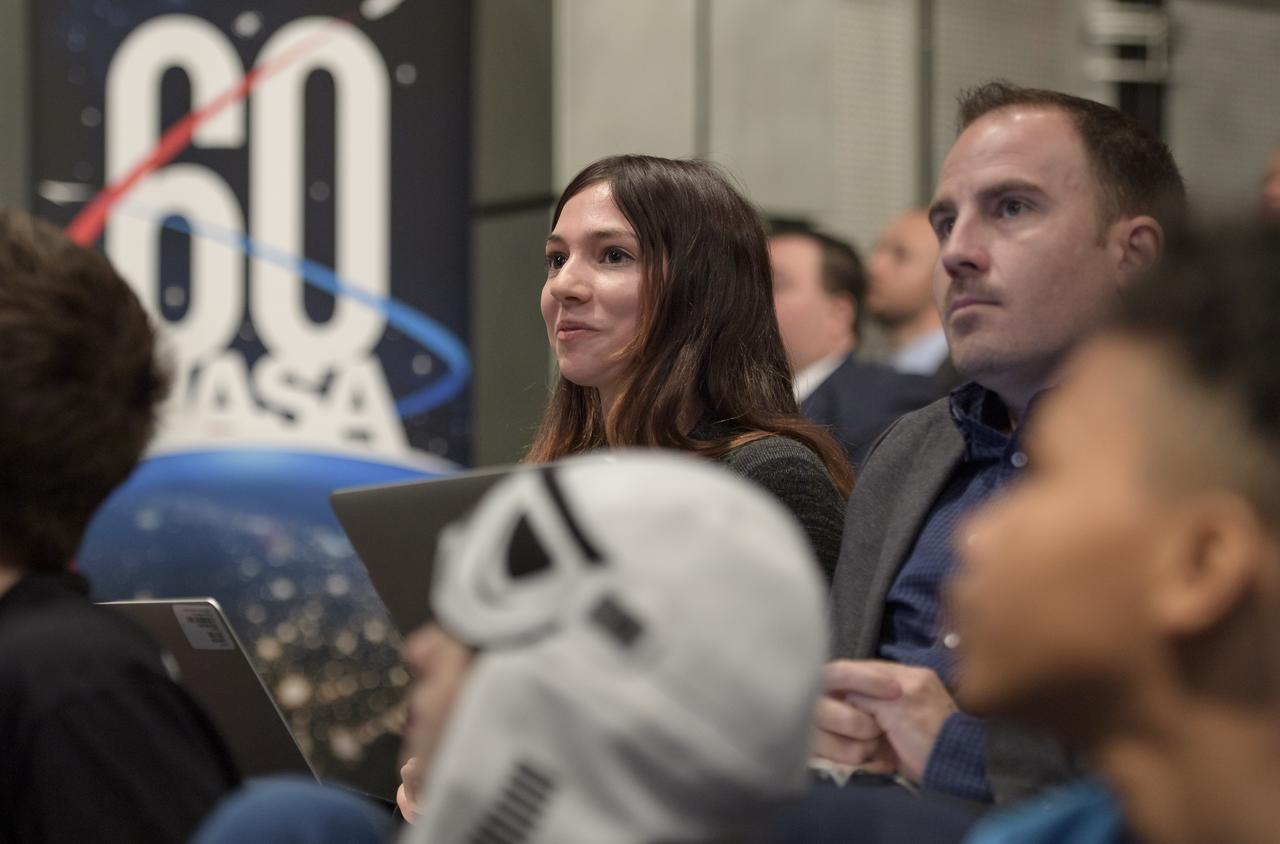
Thalia Patrinos, and Jason Townsend from NASA's Social Media Teamm monitor questions coming in from social media during an event where nine U.S. companies where named as eligible to bid on NASA delivery services to the lunar surface through Commercial Lunar Payload Services (CLPS) contracts, Thursday, Nov. 29, 2018 at NASA Headquarters in Washington. The companies will be able to bid on delivering science and technology payloads for NASA, including payload integration and operations, launching from Earth and landing on the surface of the Moon. NASA expects to be one of many customers that will use these commercial landing services. Photo Credit: (NASA/Bill Ingalls)

Jason Townsend, NASA's Deputy Social Media Manager, kicks off the Lunar Atmosphere and Dust Environment Explorer (LADEE) NASA Social at Wallops Flight Facility, Thursday, Sept. 5, 2013 on Wallops Island, VA. Fifty of NASA's social media followers are attending a two-day event in support of the LADEE launch. Data from LADEE will provide unprecedented information about the environment around the moon and give scientists a better understanding of other planetary bodies in our solar system and beyond. LADEE is scheduled to launch at 11:27 p.m. Friday, Sept. 6, from NASA's Wallops Flight Facility. Photo Credit: (NASA/Carla Cioffi)
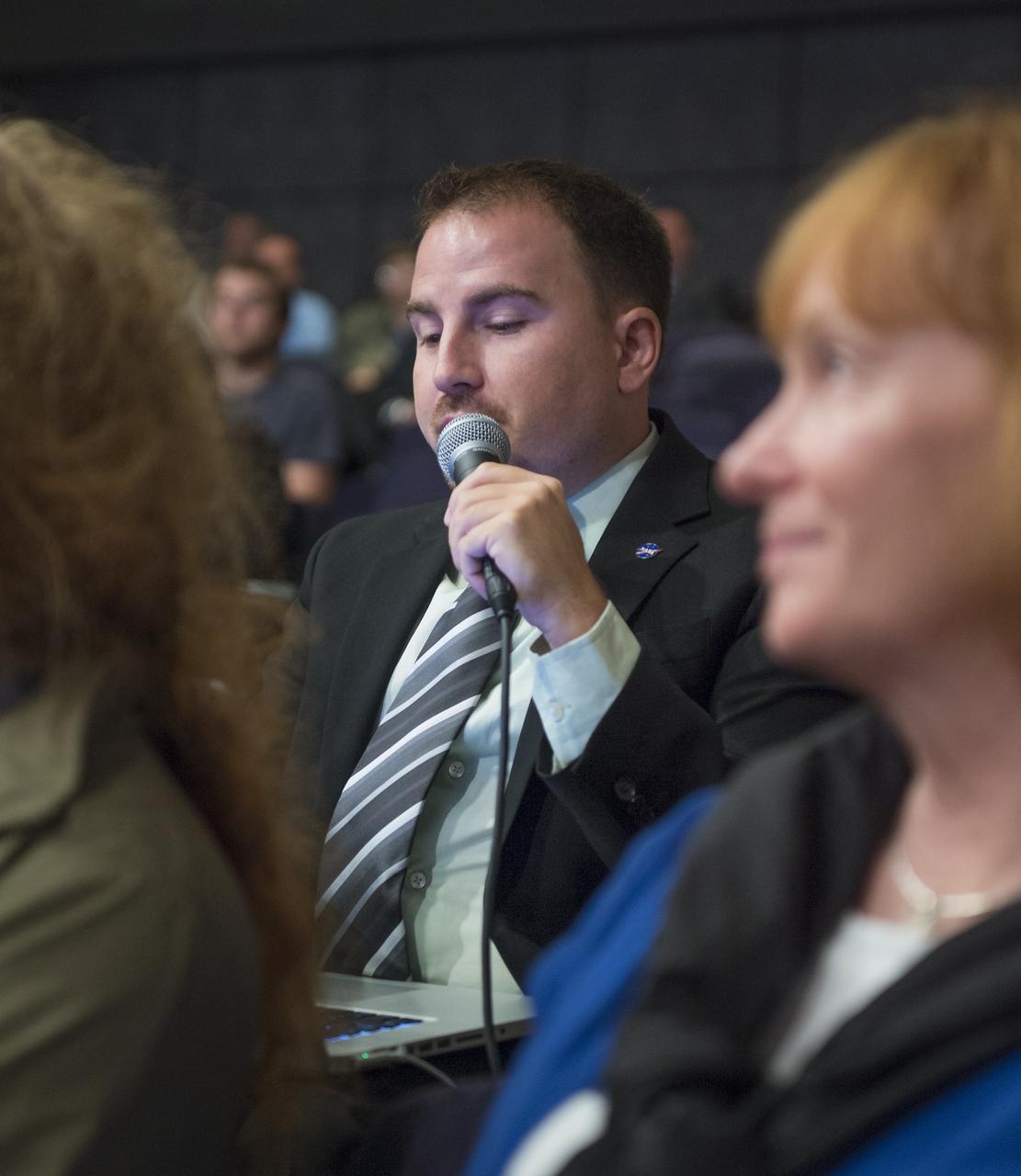
Jason Townsend, NASA's Deputy Social Media Manager, asks a question on behalf of a NASA Twitter follower at a public event at NASA Headquarters observing the first anniversary of the Curiosity rover's landing on Mars, Tuesday, August 6th, 2013 in Washington. The Mars Science Laboratory mission successfully placed the one-ton Curiosity rover on the surface of Mars on Aug. 6, 2012, about 1 mile from the center of its 12-mile-long target area. Within the first eight months of a planned 23-months primary mission, Curiosity met its major science objective of finding evidence of a past environment well-suited to support microbial life. Photo Credit: (NASA/Carla Cioffi)
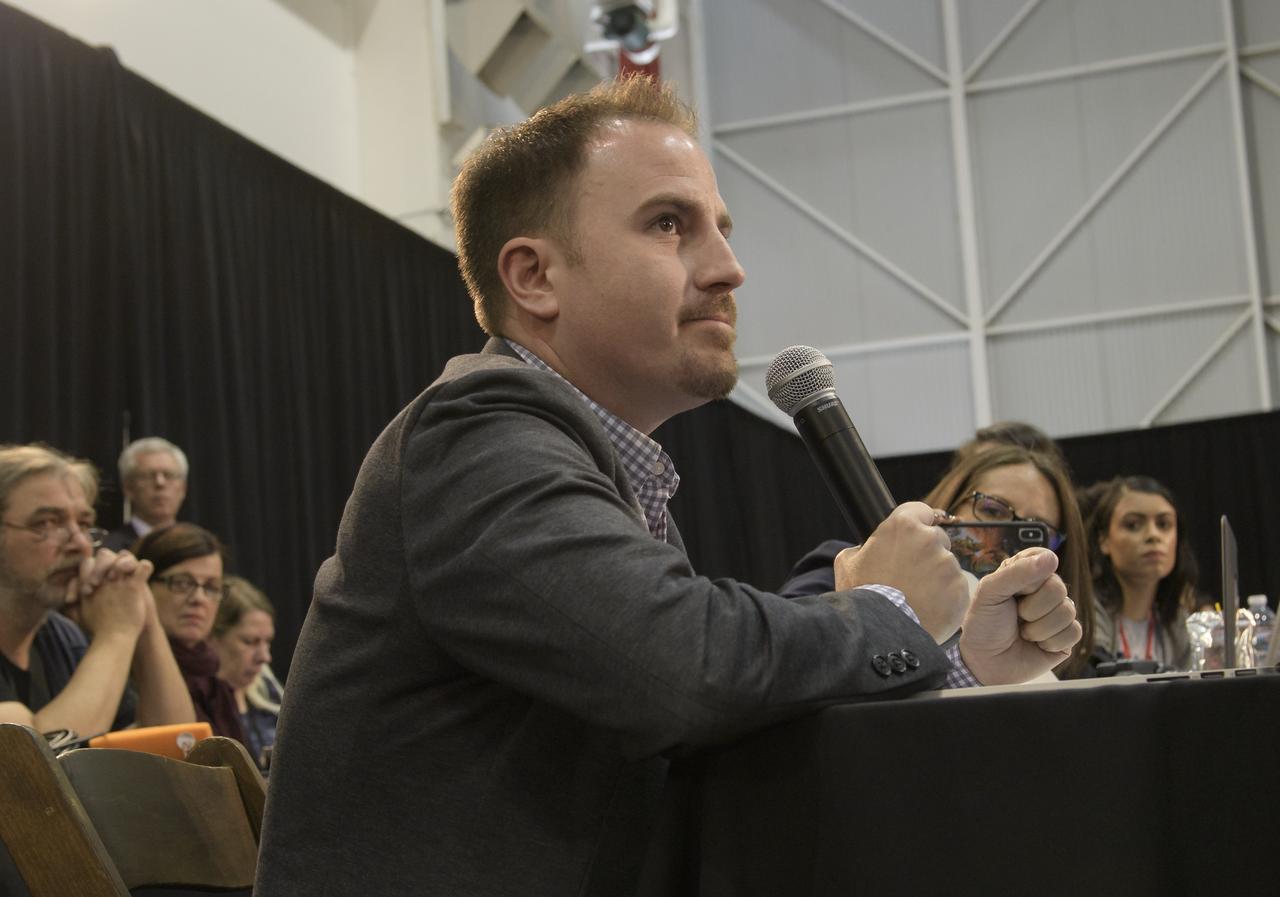
Jason Townsend, NASA's Deputy Social Media Manager, reads questions submitted by online social media followers during a prelaunch media briefing for NASA's InSight mission, Thursday, May 3, 2018, at Vandenberg Air Force Base in California. InSight, short for Interior Exploration using Seismic Investigations, Geodesy and Heat Transport, is a Mars lander designed to study the "inner space" of Mars: its crust, mantle, and core. Photo Credit: (NASA/Bill Ingalls)
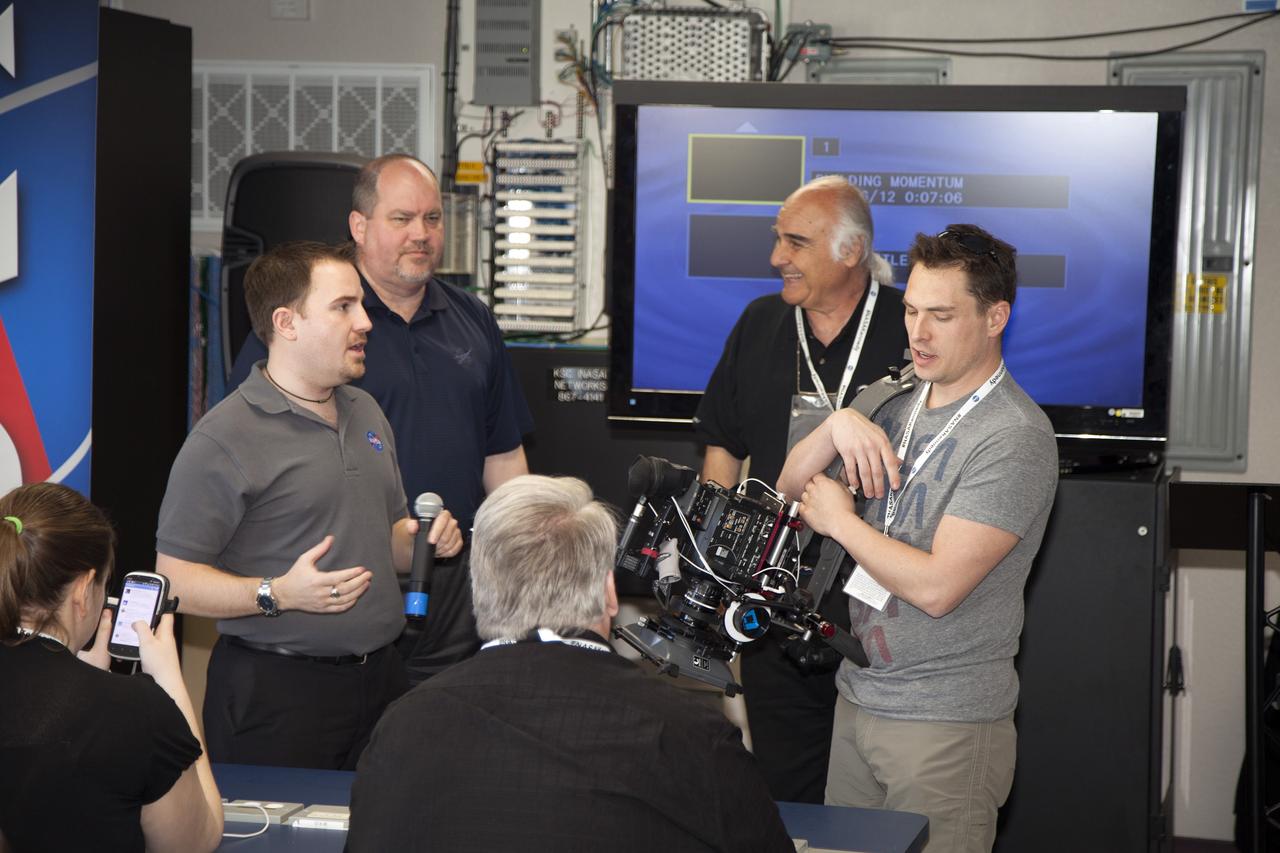
CAPE CANAVERAL, Fla. - At NASA’s Kennedy Space Center in Florida, social media followers, at right, listen to NASA Social media coordinator Jason Townsend, far left, describe the SpaceX 2 Commercial Resupply Mission to the International Space Station. Standing next to Townsend, is Bob Jacobs, NASA Deputy Associate Administrator for Communications. Liftoff of the SpaceX Falcon 9 rocket and Dragon spacecraft is planned for March 1, 2013, at 10:10 a.m. EST, from Space Launch Complex-40 at Cape Canaveral Air Force Station, Fla. Dragon will be making its third trip to the space station. It will carry supplies and experiments to the orbiting laboratory. The mission is the second of 12 SpaceX flights contracted by NASA to resupply the space station. For more information, visit http://www.nasa.gov/mission_pages/station/structure/launch/spacex2-feature.html Photo credit: NASA/Frankie Martin
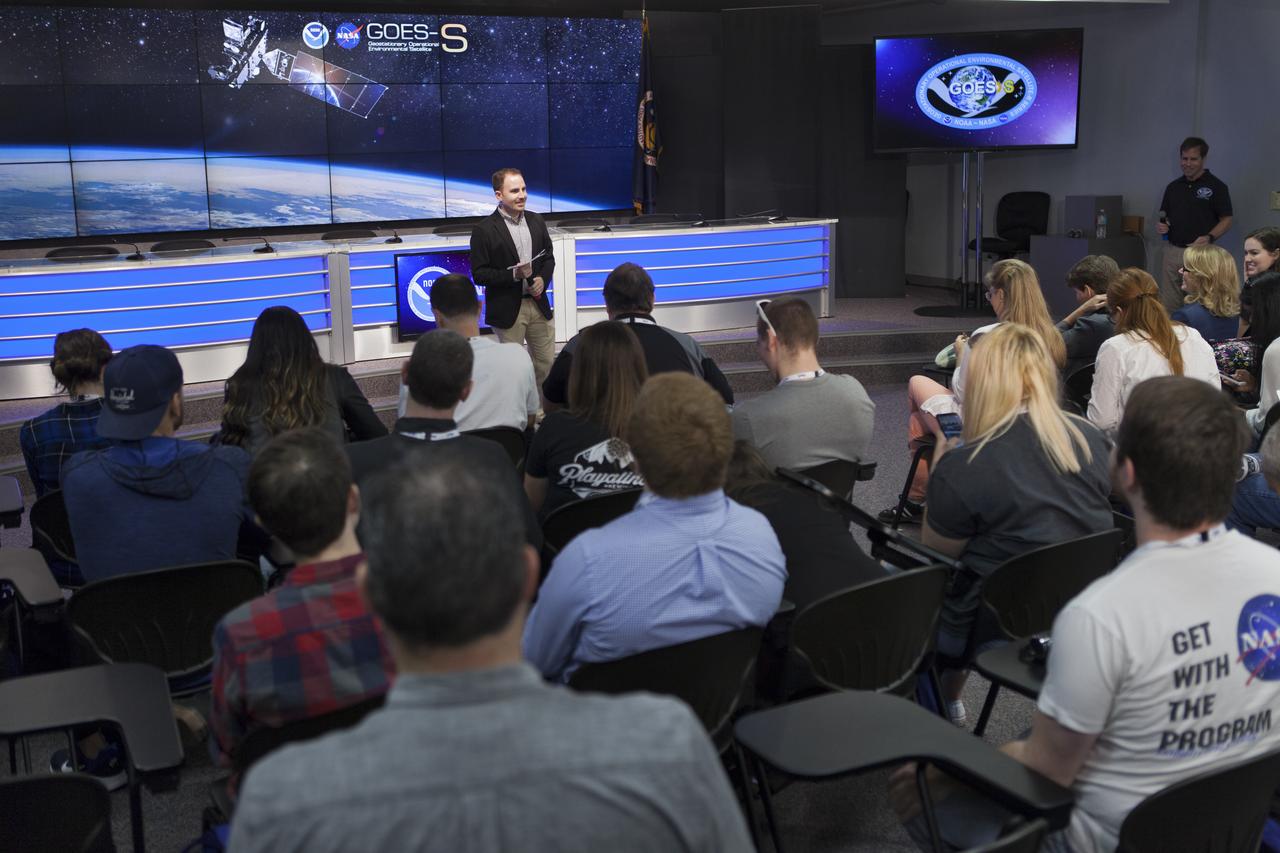
Jason Townsend, NASA's social media manager, speaks to members of social media in the Kennedy Space Center’s Press Site auditorium. The briefing focused on the National Oceanic and Atmospheric Administration's, or NOAA's, Geostationary Operational Environmental Satellite, or GOES-S. The spacecraft is the second satellite in a series of next-generation NOAA weather satellites. It will launch to a geostationary position over the U.S. to provide images of storms and help predict weather forecasts, severe weather outlooks, watches, warnings, lightning conditions and longer-term forecasting. GOES-S is slated to lift off at 5:02 p.m. EST on March 1, 2018 aboard a United Launch Alliance Atlas V rocket.
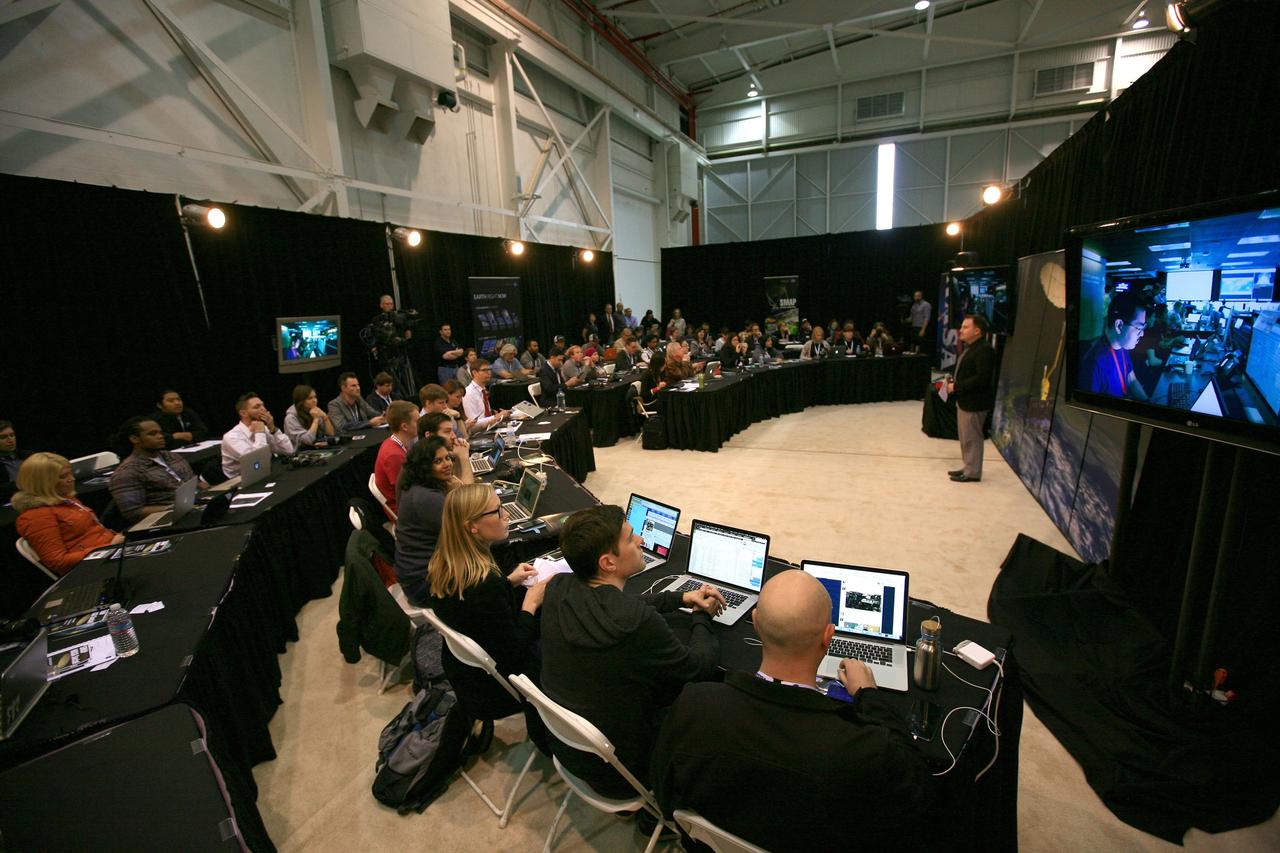
VANDENBERG AIR FORCE BASE, Calif. – Jason Townsend, NASA's deputy social media manager, addresses the audience of a NASA Social held at Vandenberg Air Force Base in California. This NASA Social brought together mission scientists and engineers with an audience of 70 students, educators, social media managers, bloggers, photographers and videographers who were selected from a pool of 325 applicants from 45 countries to participate in launch activities and communicate their experience with social media followers. The SMAP mission is scheduled to launch from Vandenberg on Jan. 29. To learn more about SMAP, visit http://www.nasa.gov/smap. Photo credit: NASA/Kim Shiflett
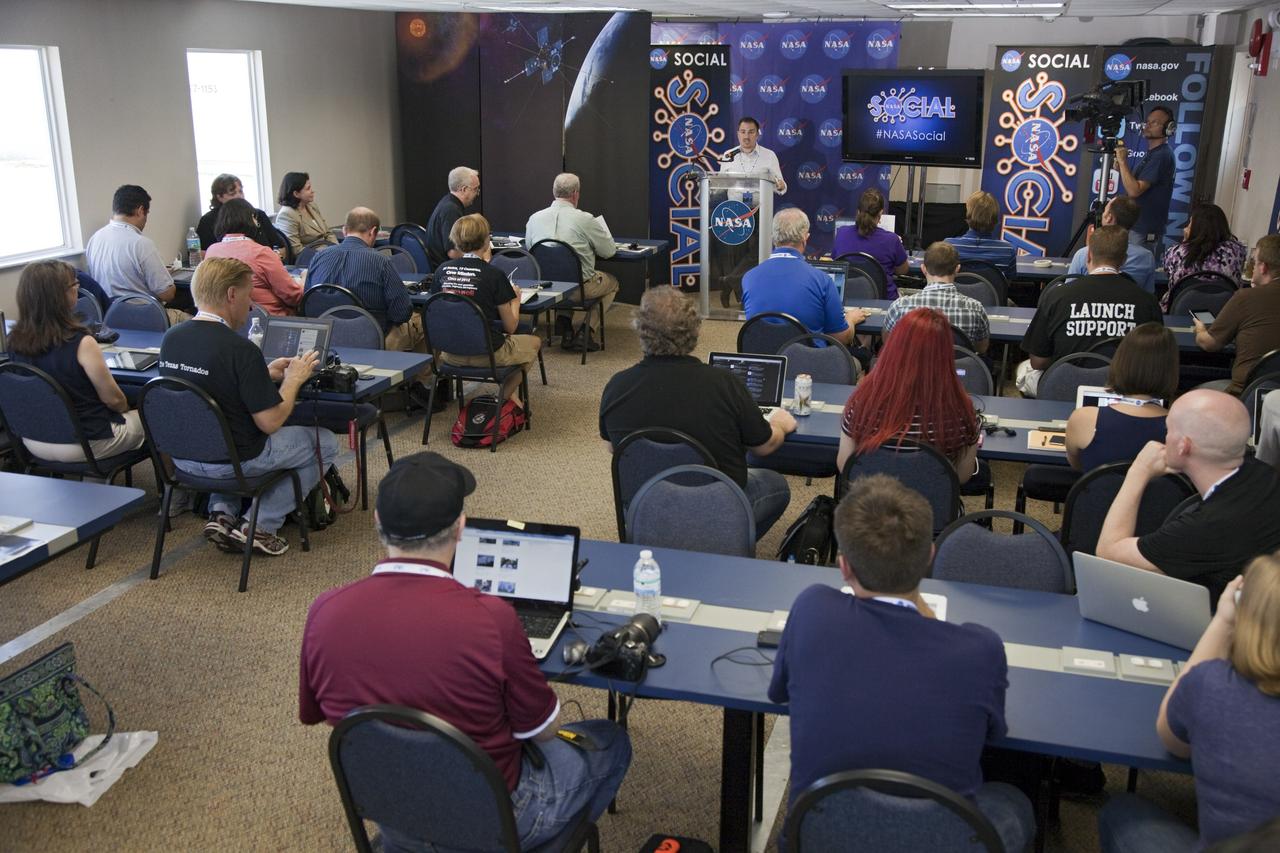
CAPE CANAVERAL, Fla. – At NASA's Kennedy Space Center in Florida, Jason Townsend of NASA's Social Media Team welcomes agency social media followers to the second day of activities revolving around NASA's Radiation Belt Storm Probes, or RBSP, mission. The probes are set to launch aboard a United Launch Alliance, or ULA, Atlas V rocket from nearby Cape Canaveral Air Force Station. About 40 followers were selected to participate in RBSP's prelaunch and launch activities and share them with their own fan base. The RBSP mission will help us understand the sun’s influence on Earth and near-Earth space by studying the Earth’s radiation belts on various scales of space and time. RBSP will begin its mission of exploration of Earth’s Van Allen radiation belts and the extremes of space weather. For more information, visit http://www.nasa.gov/rbsp. Photo credit: NASA/Frankie Martin
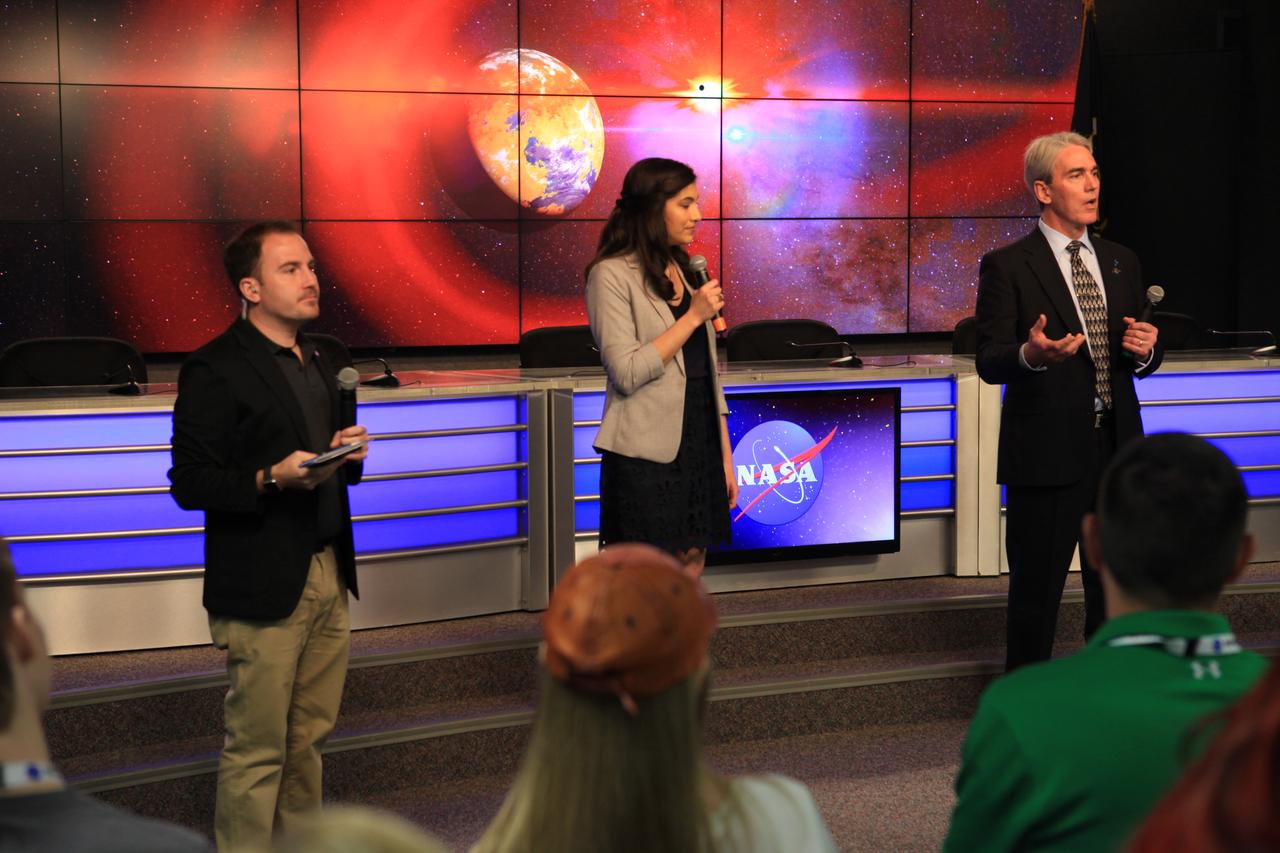
NASA and industry leaders speak to NASA Social participants about the agency's Transiting Exoplanet Survey Satellite (TESS) in the Press Site auditorium at Kennedy Space Center in Florida. Speaking to the group from center are Natalia Guerrero, TESS researcher, Massachusetts Institute of Technology, and Robert Lockwood, TESS Spacecraft Program Manager, Orbital ATK. At far left is Jason Townsend, NASA Communications. TESS is the next step in the search for planets outside of our solar system. The mission will find exoplanets that periodically block part of the light from their host stars, events called transits. The satellite will survey the nearest and brightest stars for two years to search for transiting exoplanets. TESS will launch on a SpaceX Falcon 9 rocket from Space Launch Complex 40 at Cape Canaveral Air Force Station no earlier than 6:32 p.m. EDT on Monday, April 16.
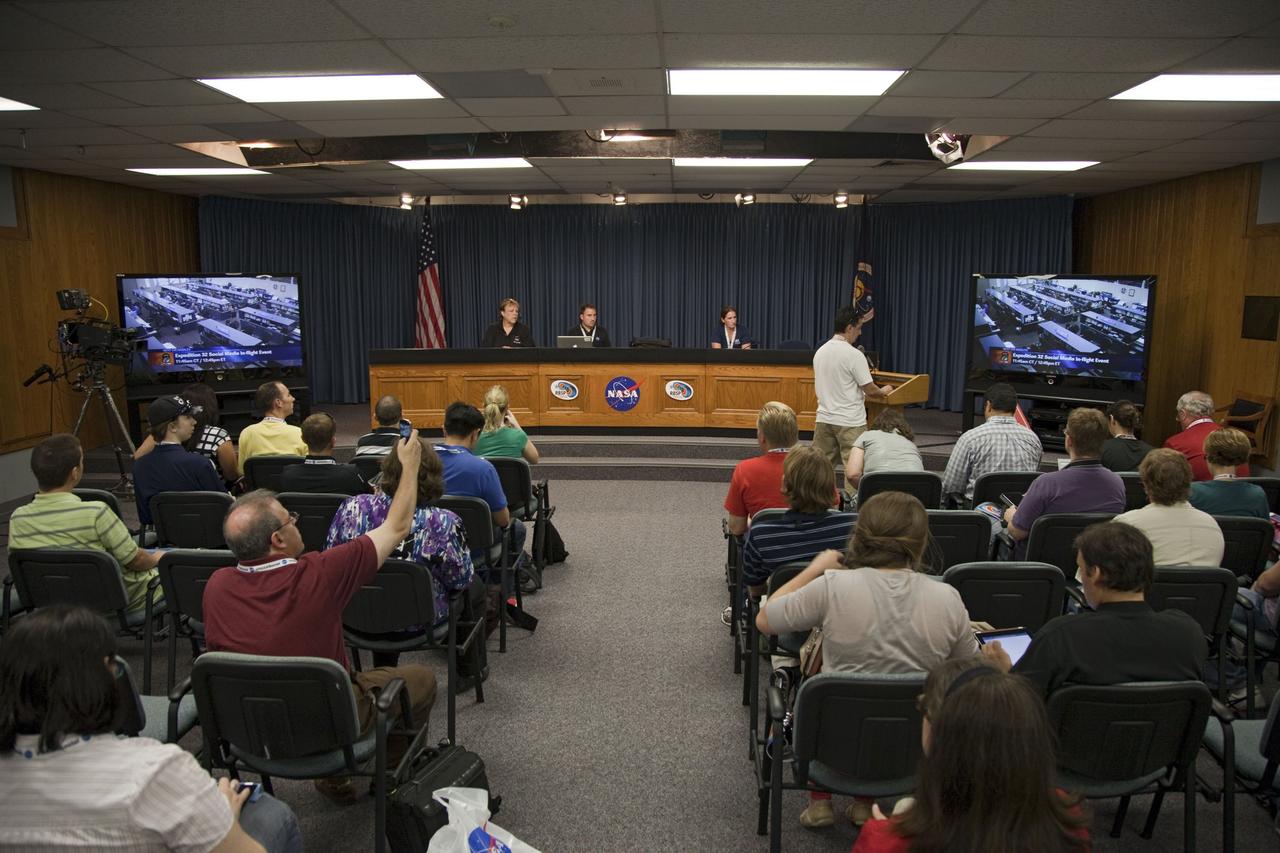
CAPE CANAVERAL, Fla. -- At NASA's Kennedy Space Center in Florida, social media participants take part in a question and answer session with astronauts aboard the International Space Station. At the podium, Ranz Adams asks a question of space station flight engineer Joe Acaba. Leading the activity from the desk at the front of the room are, from the left, Laurel Lichtenberger of NASA Public Affairs, Jason Townsend of the NASA Social Media Team and Kerri Beisser of the Johns Hopkins University Applied Physics Laboratory. The social media gathering at the Florida spaceport took place Aug. 22, 2012 joining a world-wide NASA Social allowing participants to ask questions of NASA astronauts who are living and working aboard the International Space Station. . For more information, visit http://www.nasa.gov/mission_pages/station/main/index.html Photo credit: NASA/ Frankie Martin
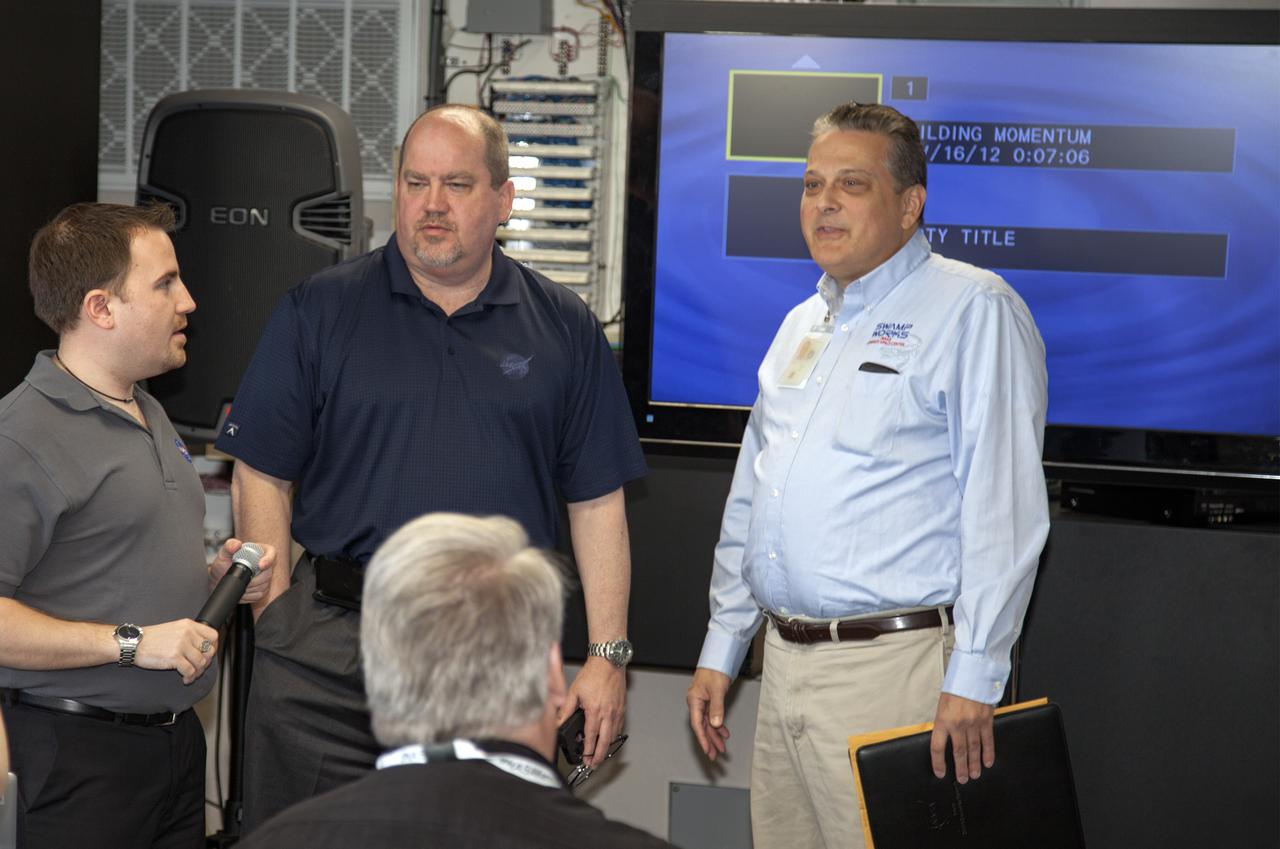
CAPE CANAVERAL, Fla. - At NASA Kennedy Space Center’s Press Site annex building in Florida, social media followers listen to NASA Social media coordinator Jason Townsend, far left, Bob Jacobs, NASA Deputy Associate Administrator for Communications, and Jack Fox, chief of the Surface Systems Office in Kennedy’s Engineering and Technology Directorate, describe the SpaceX 2 Commercial Resupply Mission to the International Space Station. Liftoff of the SpaceX Falcon 9 rocket and Dragon spacecraft is planned for March 1, 2013, at 10:10 a.m. EST, from Space Launch Complex-40 at Cape Canaveral Air Force Station, Fla. Dragon will be making its third trip to the space station. It will carry supplies and experiments to the orbiting laboratory. The mission is the second of 12 SpaceX flights contracted by NASA to resupply the space station. For more information, visit http:__www.nasa.gov_mission_pages_station_structure_launch_spacex2-feature.html Photo credit: NASA_Frankie Martin
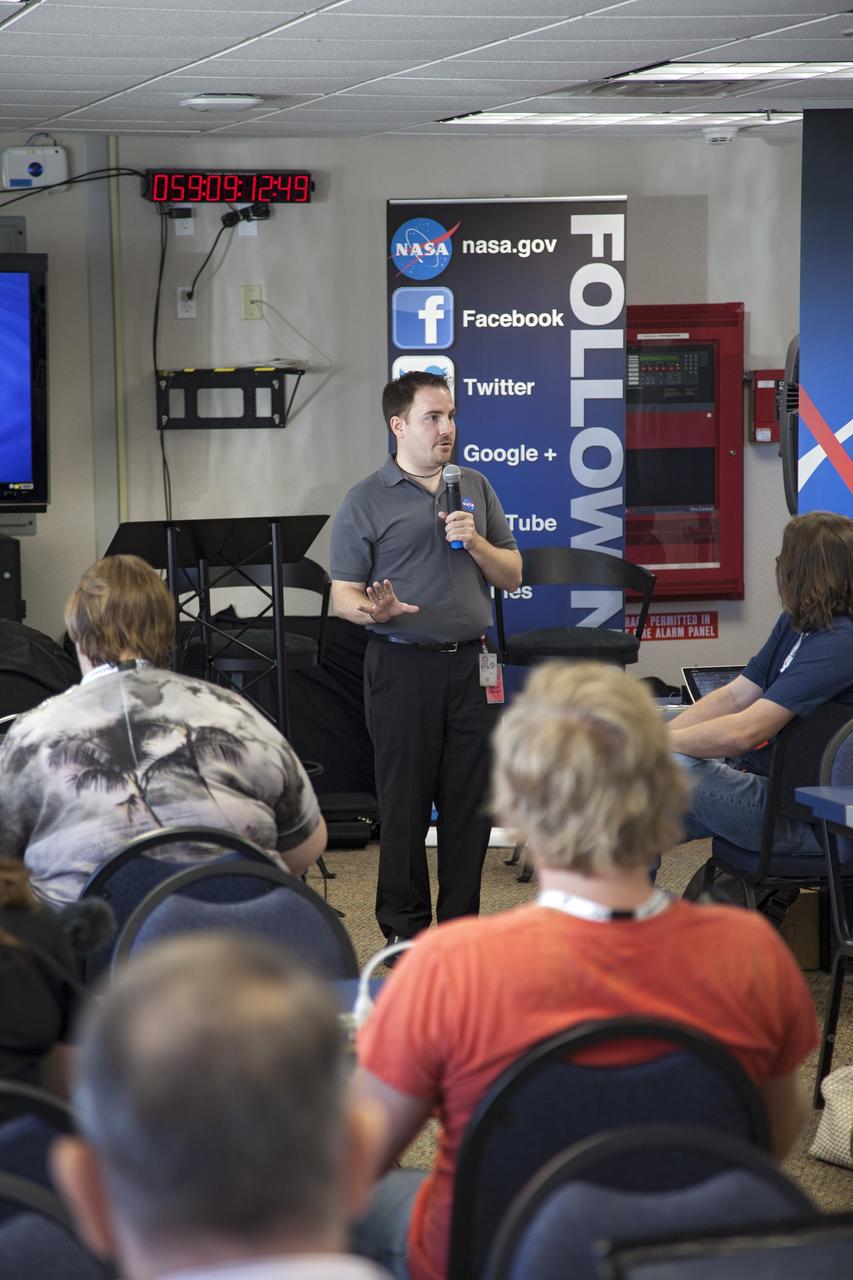
CAPE CANAVERAL, Fla. - At NASA’s Kennedy Space Center in Florida, NASA Social media coordinator Jason Townsend describes the SpaceX 2 Commercial Resupply Mission to the International Space Station to social media followers at the Kennedy Press Site annex building. Liftoff of the SpaceX Falcon 9 rocket and Dragon spacecraft is planned for March 1, 2013, at 10:10 a.m. EST, from Space Launch Complex-40 at Cape Canaveral Air Force Station, Fla. Dragon will be making its third trip to the space station. It will carry supplies and experiments to the orbiting laboratory. The mission is the second of 12 SpaceX flights contracted by NASA to resupply the space station. For more information, visit http://www.nasa.gov/mission_pages/station/structure/launch/spacex2-feature.html Photo credit: NASA/Frankie Martin

NASA and industry leaders speak to NASA Social participants about the agency's Transiting Exoplanet Survey Satellite (TESS) in the Press Site auditorium at Kennedy Space Center in Florida. Speaking to the group from center, are Martin Still, TESS Program Scientist, NASA Headquarters, and Jessie Christiansen, Staff scientist, NASA Exoplanet Science Institute, California Institute of Technology. At far left is Jason Townsend, NASA Communications. TESS is the next step in the search for planets outside of our solar system. The mission will find exoplanets that periodically block part of the light from their host stars, events called transits. The satellite will survey the nearest and brightest stars for two years to search for transiting exoplanets. TESS will launch on a SpaceX Falcon 9 rocket from Space Launch Complex 40 at Cape Canaveral Air Force Station no earlier than 6:32 p.m. EDT on Monday, April 16.
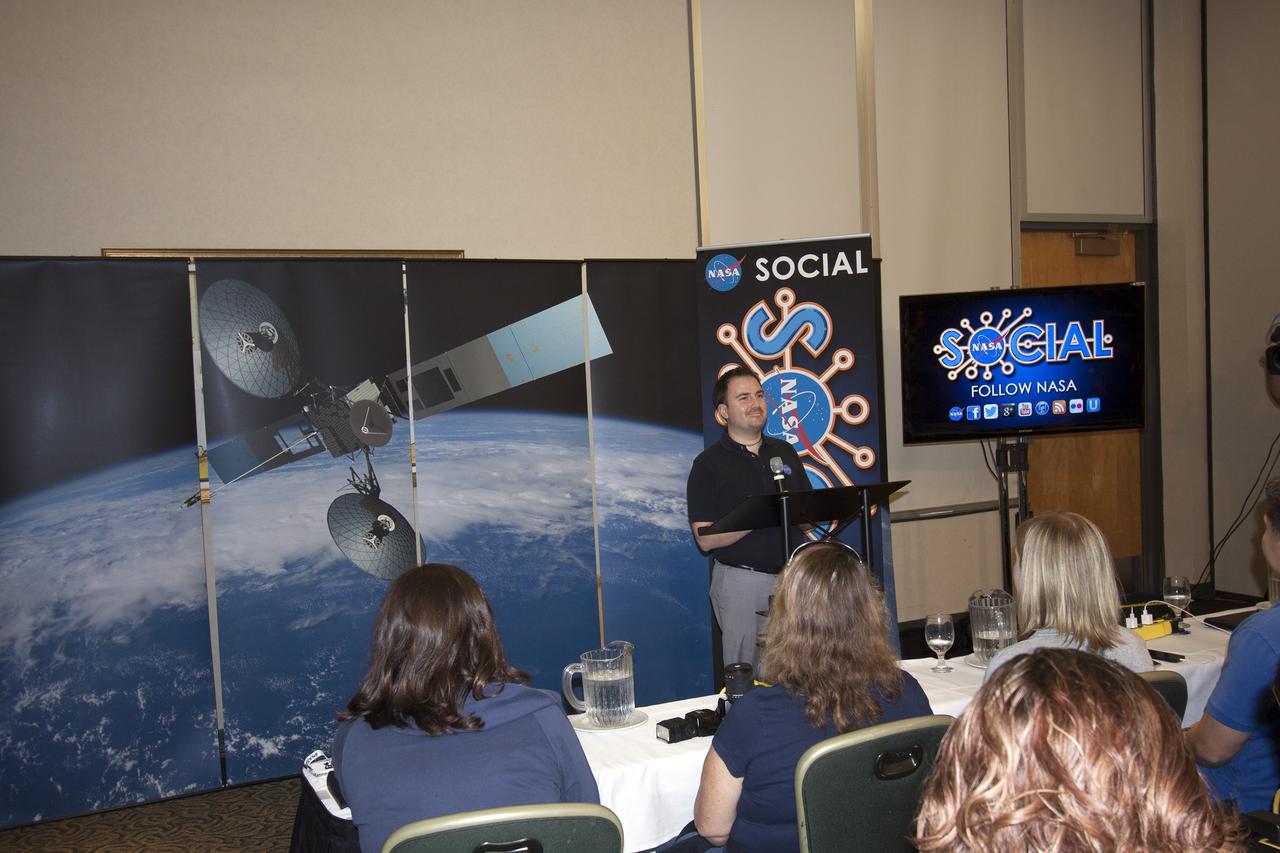
CAPE CANAVERAL, Fla. -- At NASA's Kennedy Space Center in Florida, Jason Townsend of NASA's Social Media Team welcomes agency social media followers to the first day of activities of a NASA Social revolving around NASA's Tracking and Data Relay Satellite-K mission. NASA Socials are in-person meetings for people who engage with the agency through Twitter, Facebook, Google+ and other social networks. The satellite, known as TDRS-K, is set to launch at 8:48 p.m. EST on Jan. 30 aboard a United Launch Alliance Atlas V rocket from Space Launch Complex 41 on nearby Cape Canaveral Air Force Station. About 50 followers were selected to participate in the TDRS-K prelaunch and launch activities and share them with their own fan base. The TDRS-K spacecraft is part of the next-generation series in the Tracking and Data Relay Satellite System, a constellation of space-based communication satellites providing tracking, telemetry, command and high-bandwidth data return services. For more information, visit http://www.nasa.gov/mission_pages/tdrs/index.html. Photo credit: NASA/Jim Grossmann