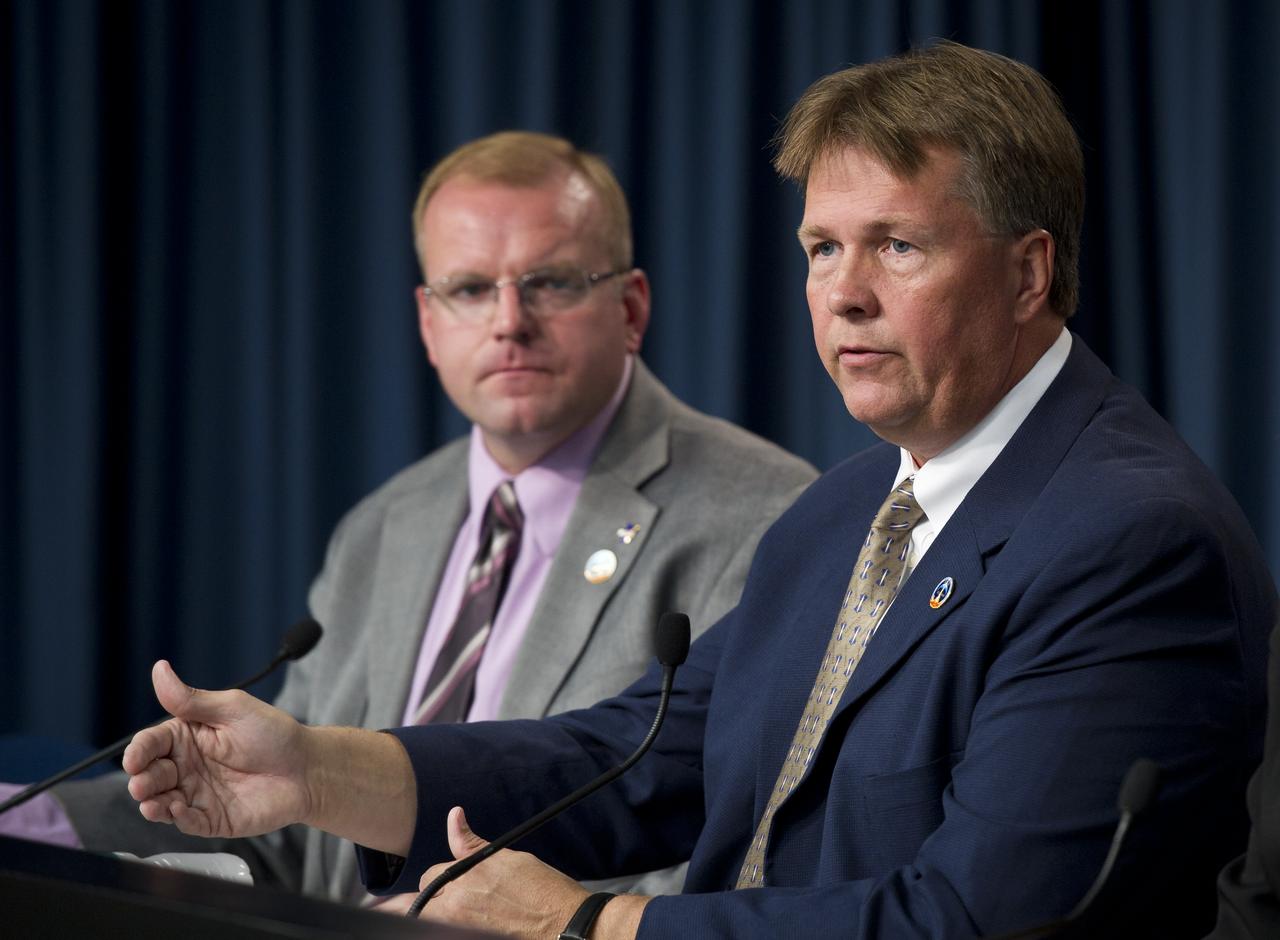
NASA Spokesperson Allard Beutel, left, and NASA Test Director Jeff Spaulding, participate in the space shuttle Discovery launch status briefing on Friday, Oct. 29, 2010 at the NASA Kennedy Space Center in Cape Canaveral, Fla. Discovery and it's STS-133 mission crew of six are currently targeted to launch at 4:17p.m. EDT on Tuesday, Nov. 2, 2010. Photo Credit: (NASA/Bill Ingalls)
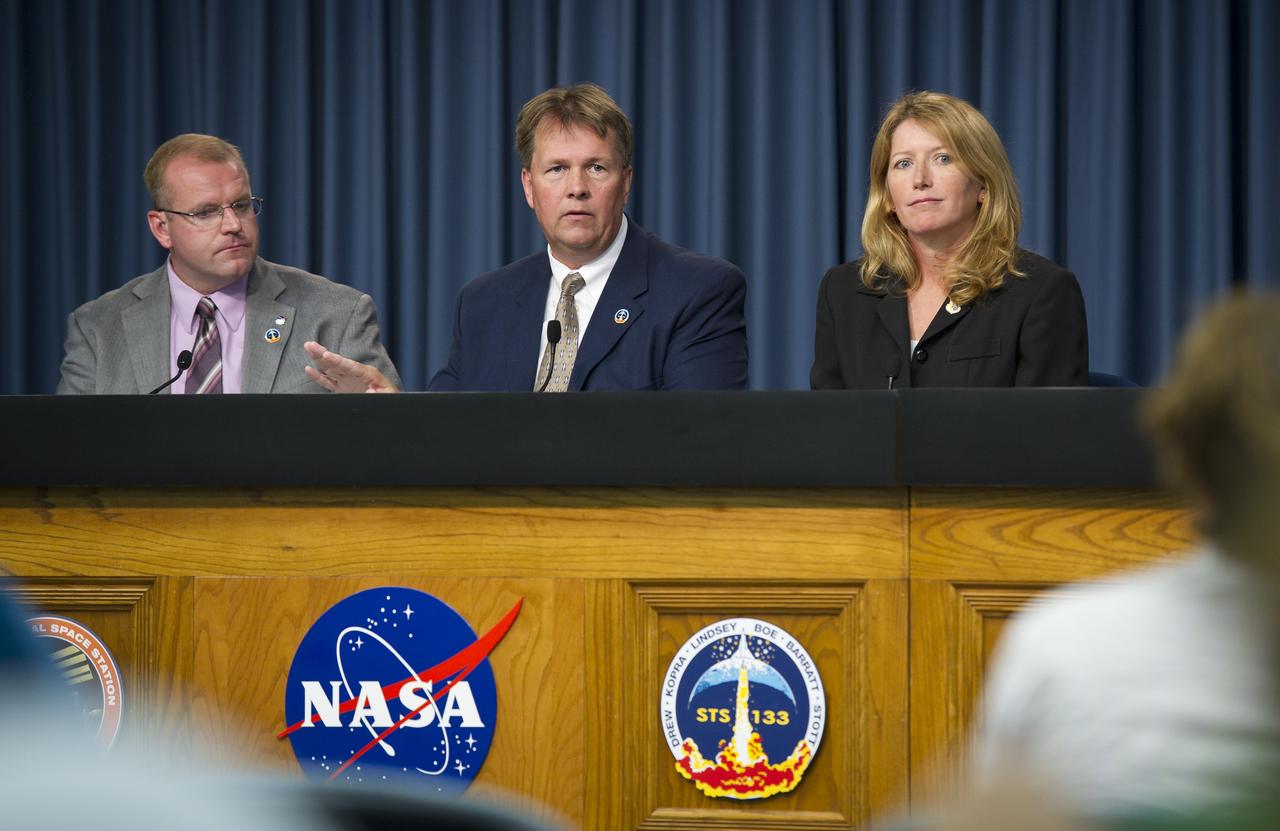
NASA Spokesperson Allard Beutel, left, NASA Test Director Jeff Spaulding and Shuttle Weather Officer Kathy Winters, right, participate in the space shuttle Discovery launch status briefing on Friday, Oct. 29, 2010 at the NASA Kennedy Space Center in Cape Canaveral, Fla. Discovery and it's STS-133 mission crew of six are currently targeted to launch at 4:17p.m. EDT on Tuesday, Nov. 2, 2010. Photo Credit: (NASA/Bill Ingalls)
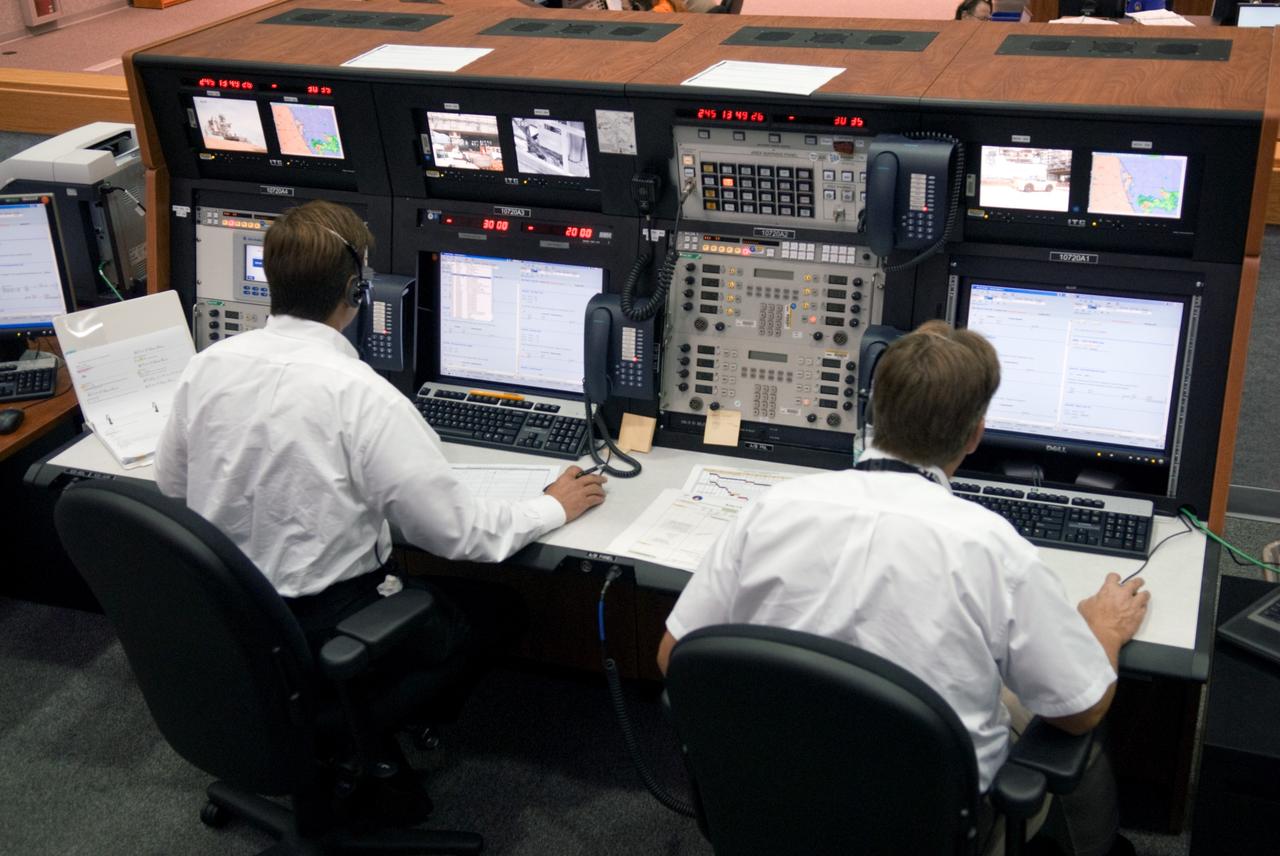
CAPE CANAVERAL, Fla. – In Firing Room 1 at NASA's Kennedy Space Center in Florida, Bob Holl and Jeff Spaulding take part in a countdown simulation for the upcoming Ares I-X flight test. Ares I-X is targeted for the test on Oct. 31. Photo credit: NASA/Kim Shiflett
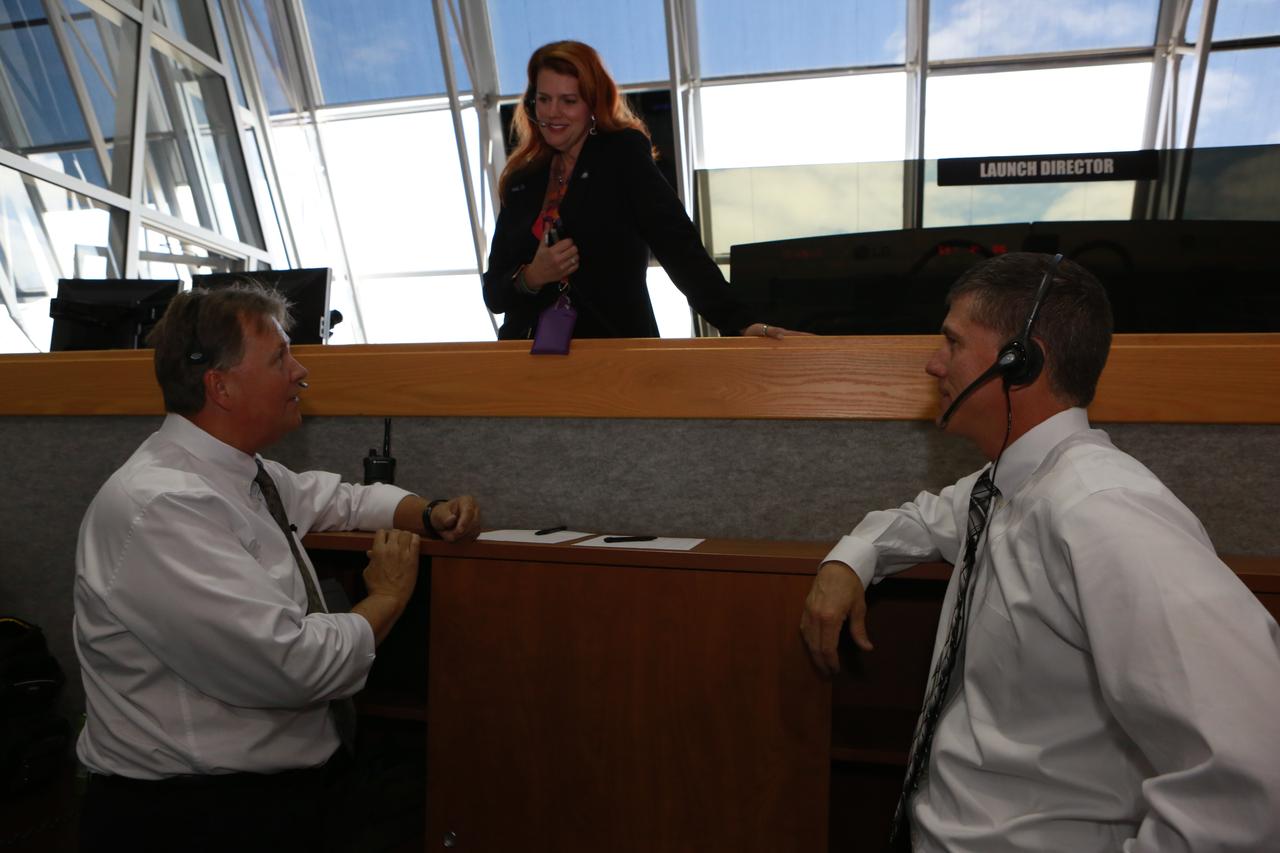
NASA Launch Director Charlie Blackwell-Thompson, above, confers with Senior NASA Test Director Jeff Spaulding, left, and Chief NASA Test Director Jeremy Graeber in Firing Room 1 at the Kennedy Space Center's Launch Control Center during a countdown simulation for Exploration Mission 1. It was the agency's first simulation of a portion of the countdown for the first launch of a Space Launch System rocket and Orion spacecraft that will eventually take astronauts beyond low-Earth orbit to destinations such as the Moon and Mars.
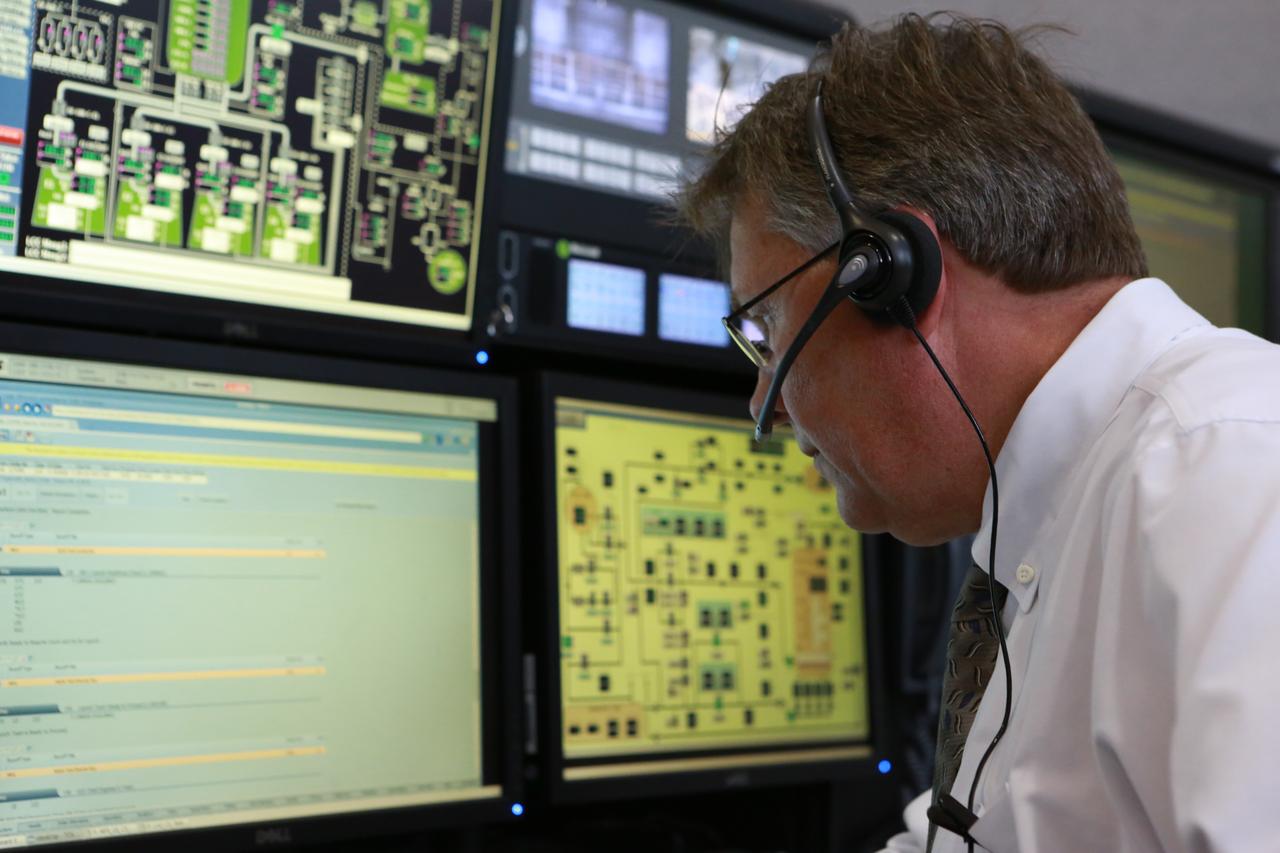
Senior NASA Test Director Jeff Spaulding monitors operations from his position in Firing Room 1 at the Kennedy Space Center's Launch Control Center during a countdown simulation for Exploration Mission 1. It was the agency's first simulation of a portion of the countdown for the first launch of a Space Launch System rocket and Orion spacecraft that will eventually take astronauts beyond low-Earth orbit to destinations such as the Moon and Mars.

Jeff Spaulding, senior NASA test director, Exploration Ground Systems Program, participates in the Artemis III terminal countdown simulation on Thursday, May 7, 2026, inside Firing Room 1 of the Rocco A. Petrone Launch Control Center at NASA’s Kennedy Space Center in Florida. This marked the first simulation the launch team performed ahead of Artemis III.
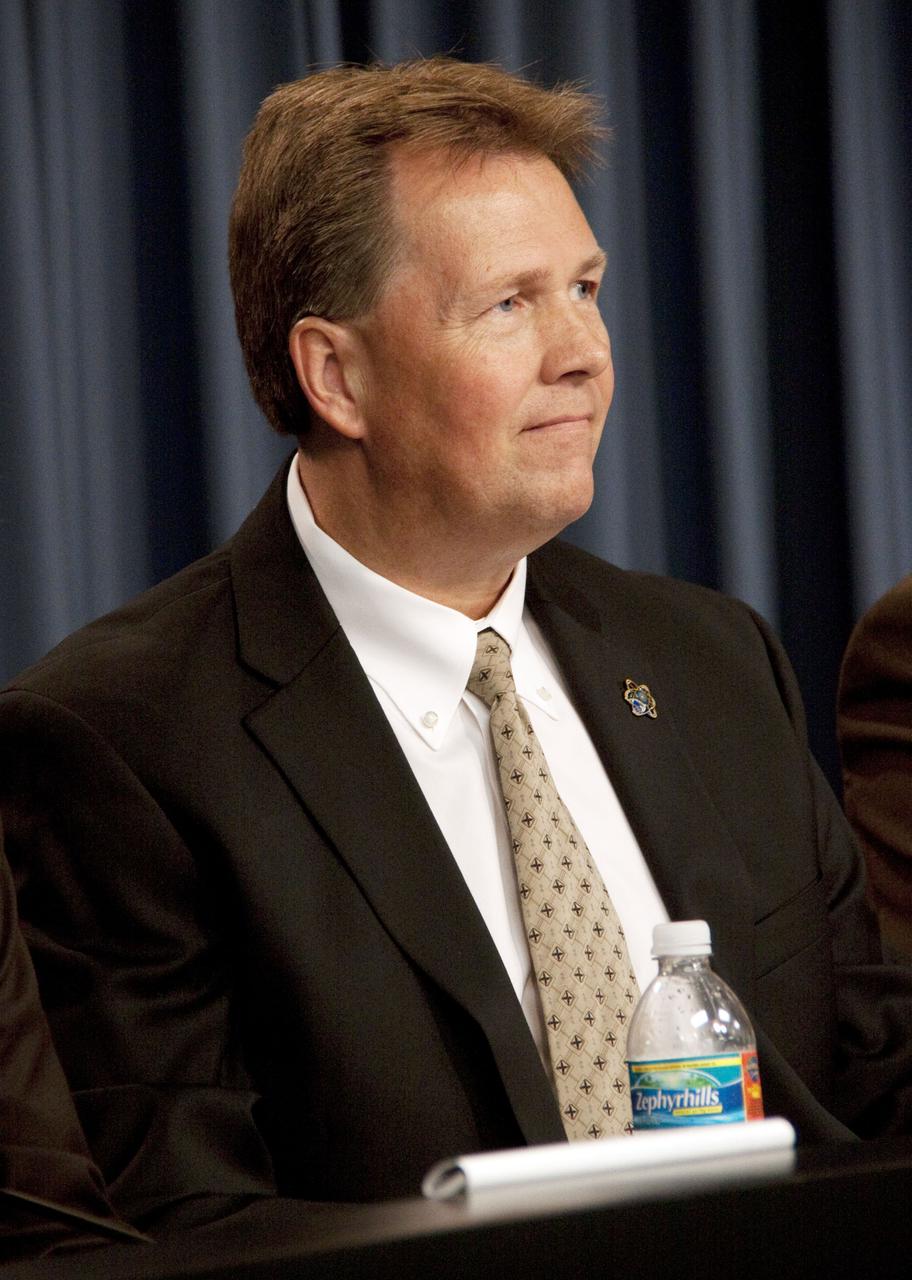
CAPE CANAVERAL, Fla. -- In the Press Site auditorium at NASA's Kennedy Space Center in Florida, NASA Test Director Jeff Spaulding speaks to media about preparations for space shuttle Endeavour's launch on the STS-134 mission. Endeavour and its crew will deliver the Express Logistics Carrier-3, Alpha Magnetic Spectrometer-2 (AMS), a high-pressure gas tank and additional spare parts for the Dextre robotic helper to the International Space Station. Launch is scheduled for April 29 at 3:47 p.m. EDT. This will be the final spaceflight for Endeavour. For more information visit, www.nasa.gov_mission_pages_shuttle_shuttlemissions_sts134_index.html. Photo credit: NASA_Jack Pfaller
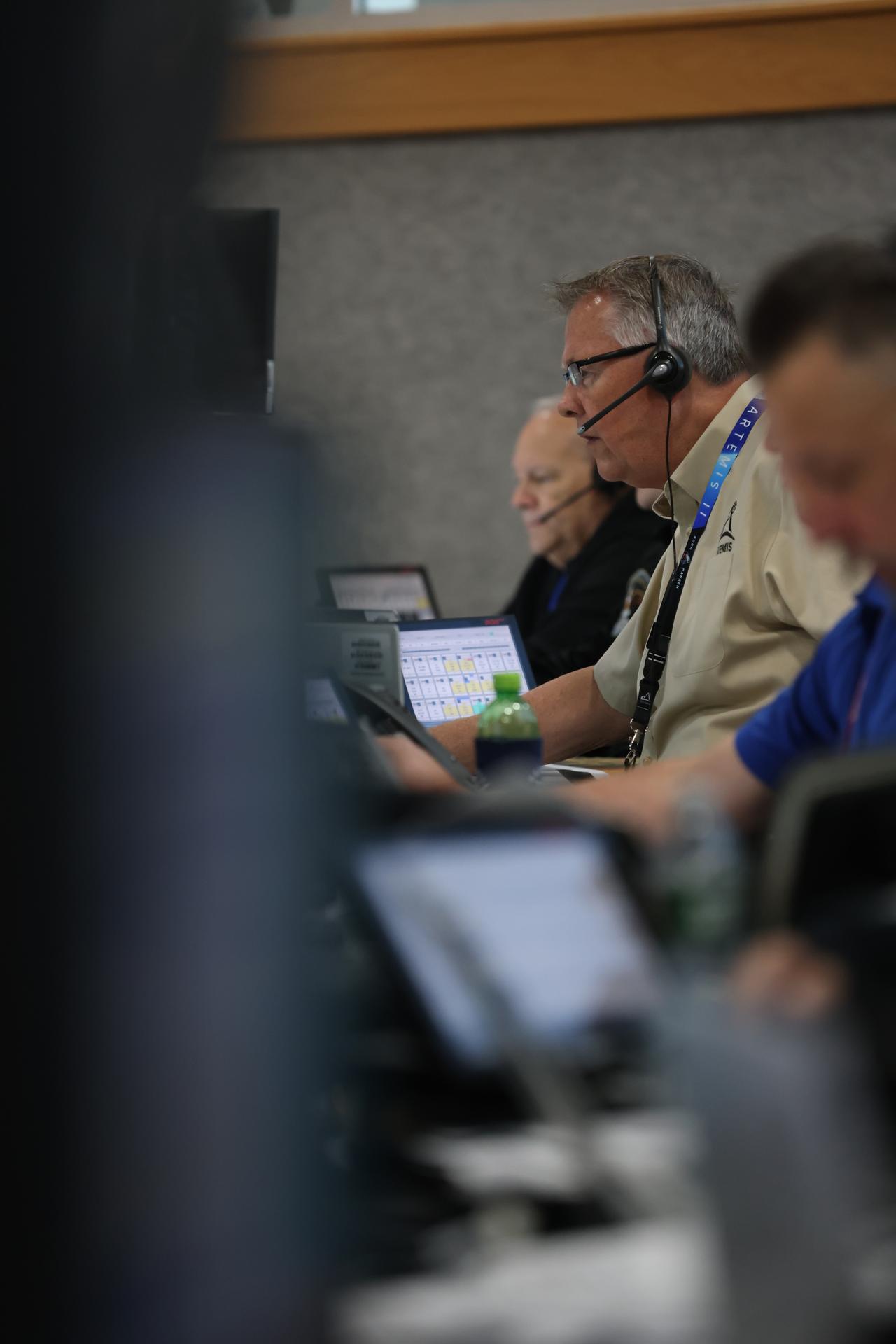
Jeff Spaulding, senior NASA test director for Artemis II at NASA’s Kennedy Space Center in Florida participates in an Artemis II launch countdown simulation inside Firing Room 1 in the Launch Control Center at NASA Kennedy on Wednesday, Oct. 8, 2025. The simulations go through launch day scenarios to help launch team members test software and make adjustments if needed during countdown operations. For Artemis II, four astronauts will venture around the Moon, the first crewed mission on NASA’s path to establishing a long-term presence for science and exploration through Artemis.
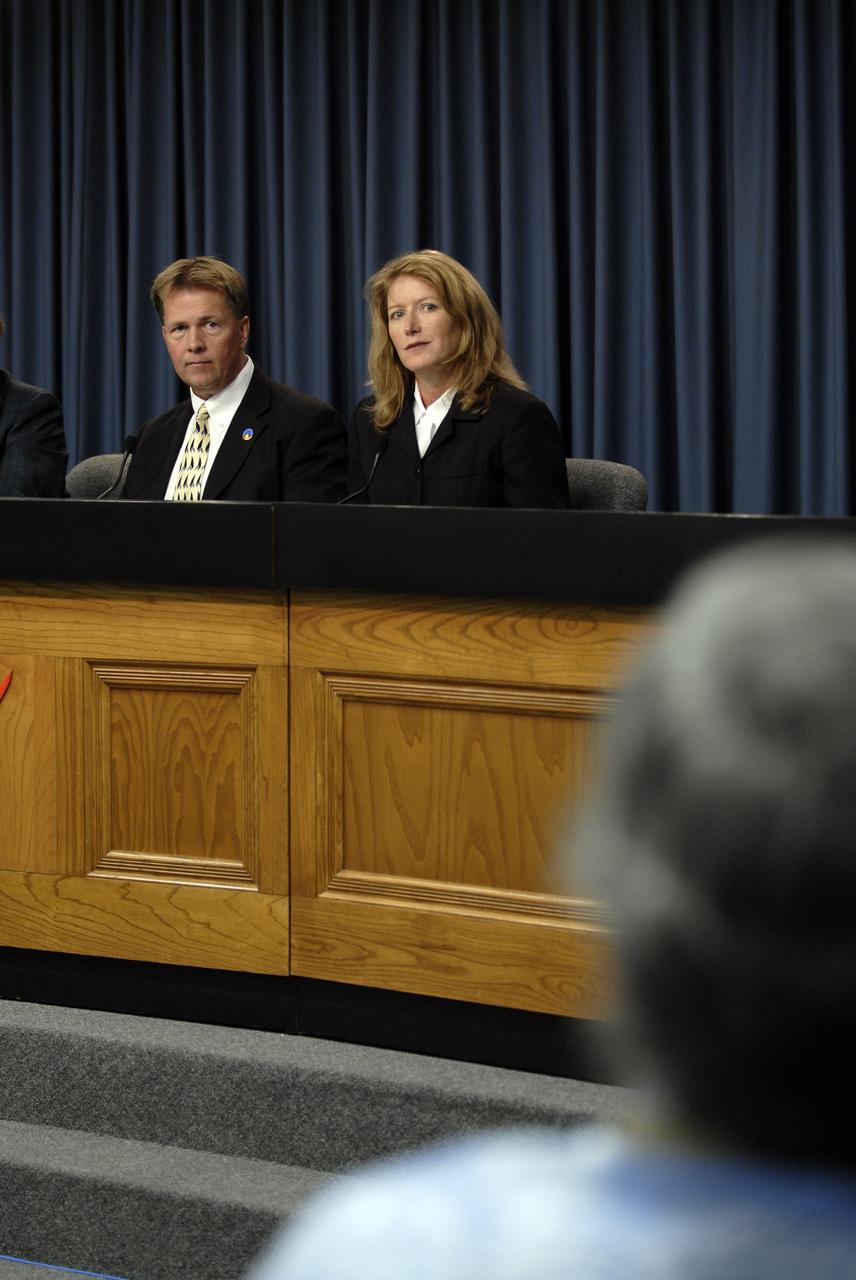
CAPE CANAVERAL, Fla. – In the Press Site auditorium at NASA's Kennedy Space Center in Florida, Jeff Spaulding, NASA test director for Ares I-X, and Kathy Winters, launch weather officer, participate in a launch status briefing for the Ares I-X rocket's flight test. The team is not tracking any problems, the rocket is in great shape, and they are ready for liftoff from Launch Pad 39B on Oct. 27 at 8 a.m. EDT. For information on the Ares I-X vehicle and flight test, visit http://www.nasa.gov/aresIX. Photo credit: NASA/Kim Shiflett
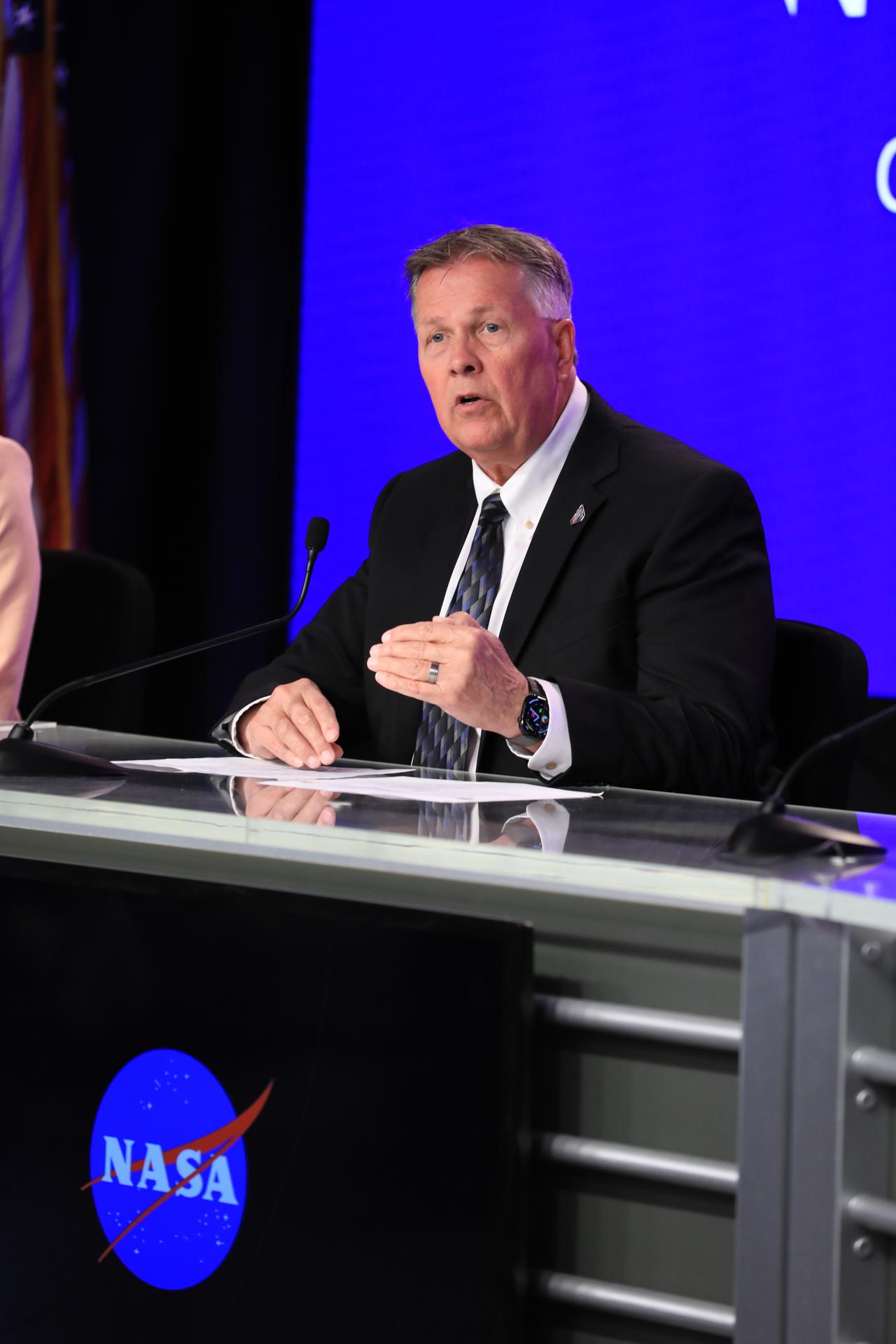
Jeff Spaulding, senior NASA test director, participates in a news conference on Tuesday, March 31, 2026, to discuss the upcoming Artemis II test flight at NASA’s Kennedy Space Center in Florida. The Artemis II mission will take Artemis II Commander Reid Wiseman, Pilot Victor Glover, and Mission Specialist Christina Koch from NASA, and Mission Specialist Jeremy Hansen from the CSA (Canadian Space Agency) on a 10-day journey around the Moon and back aboard NASA’s SLS (Space Launch System) rocket and Orion spacecraft from Launch Complex 39B no earlier than 6:24 p.m. EDT on Wednesday, April 1.
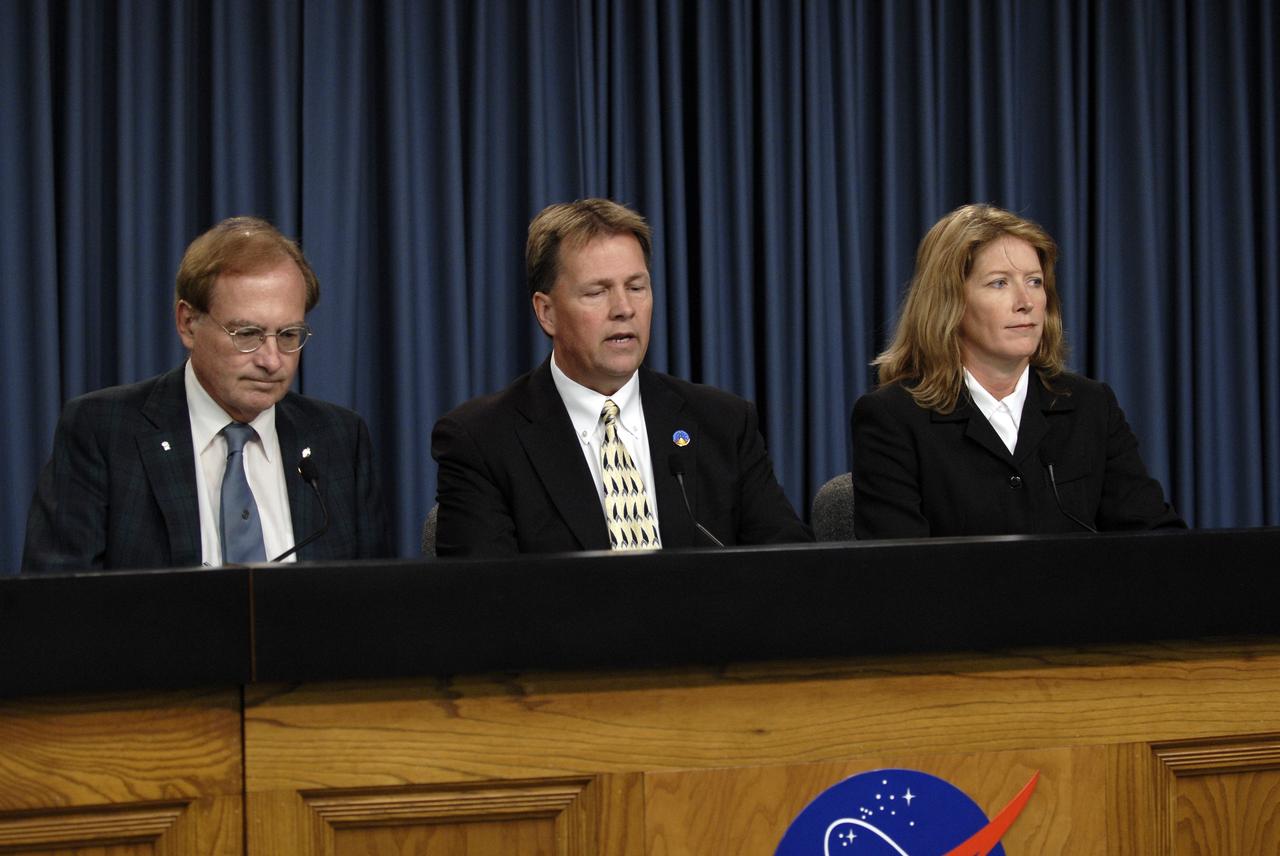
CAPE CANAVERAL, Fla. – At NASA's Kennedy Space Center in Florida, a launch status briefing for the Ares I-X rocket's flight test is held in the Press Site auditorium. From left are moderator George Diller, NASA Public Affairs officer; Jeff Spaulding, NASA test director for Ares I-X; and Kathy Winters, launch weather officer. The team is not tracking any problems, the rocket is in great shape, and they are ready for liftoff from Launch Pad 39B on Oct. 27 at 8 a.m. EDT. For information on the Ares I-X vehicle and flight test, visit http://www.nasa.gov/aresIX. Photo credit: NASA/Kim Shiflett
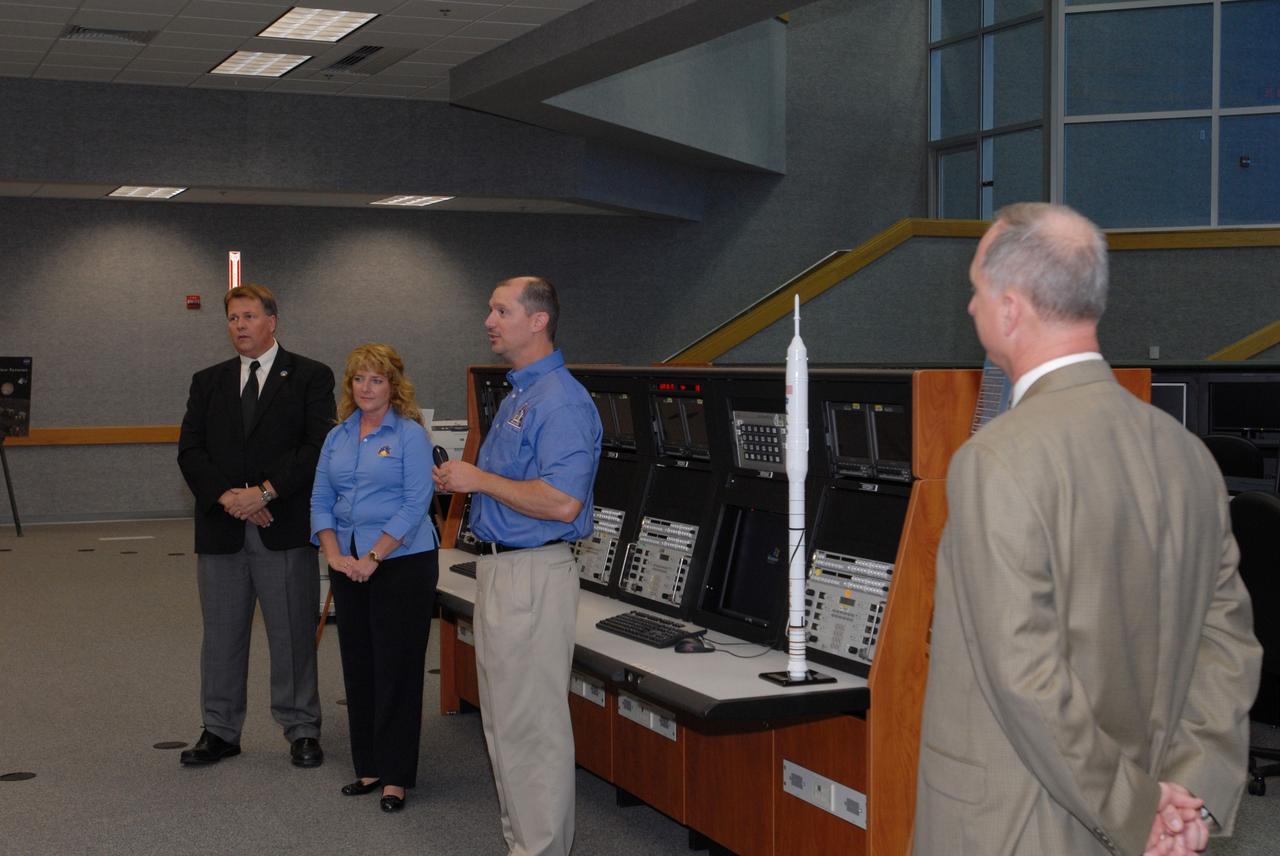
CAPE CANAVERAL, Fla. – At a media event in Firing Room 1 of the Launch Control Center, NASA management talk about the Ares I-X being assembled at NASA's Kennedy Space Center in Florida. From left are Shuttle Test Director Jeff Spaulding, Deputy Mission Manager Carol Scott, Constellation Projects Office Director Pepper Phillips and Chief of the NASA Launch and Landing Division Pete Nickolenko. The upper stage simulators will be used in the test flight identified as Ares I-X in 2009. The segments will simulate the mass and the outer mold line and will be more than 100 feet of the total vehicle height of 327 feet. The simulator comprises 11 segments that are approximately 18 feet in diameter. Most of the segments will be approximately 10 feet high, ranging in weight from 18,000 to 60,000 pounds, for a total of approximately 450,000 pounds. Photo credit: NASA/Jim Grossmann
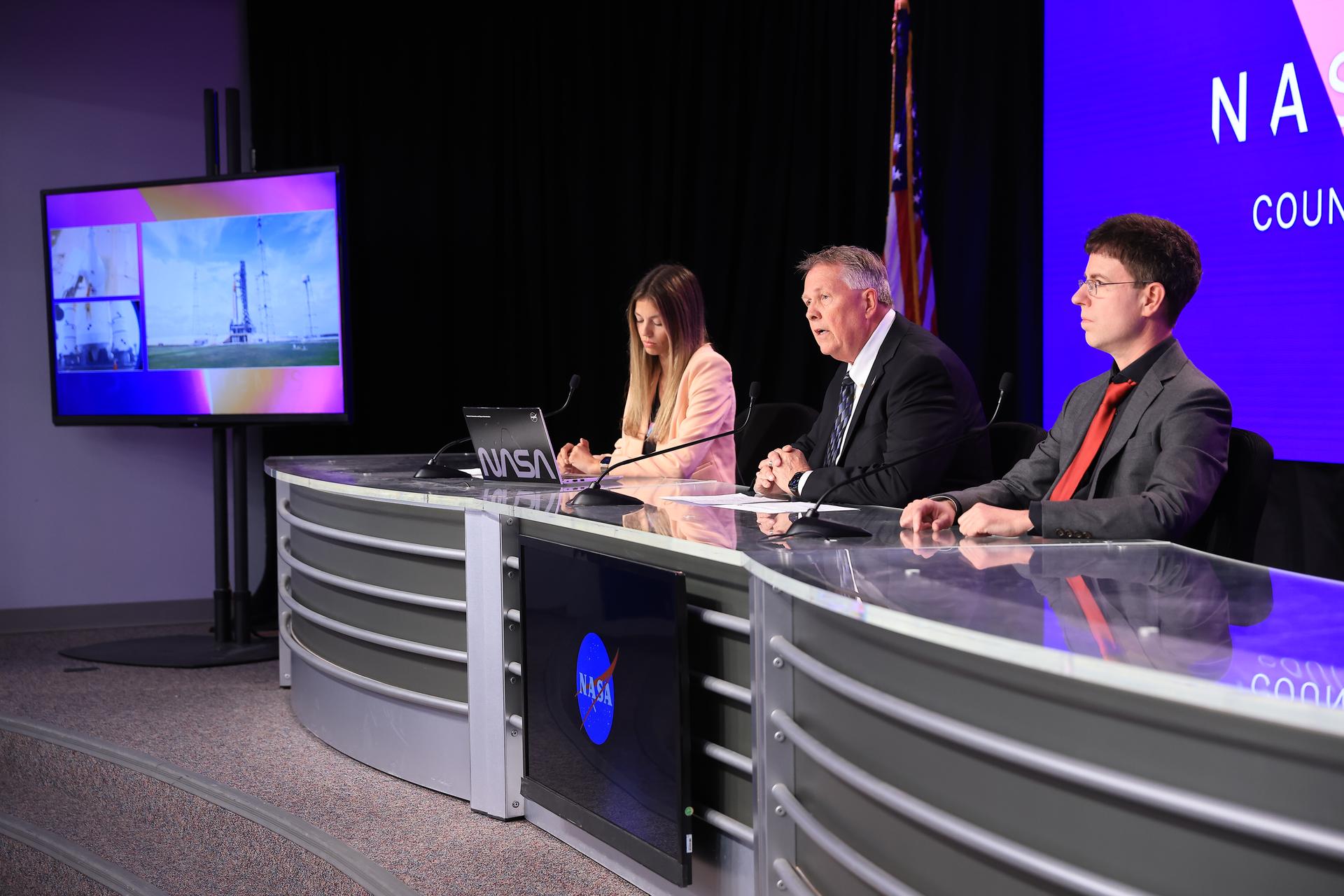
Antonia Jaramillo, NASA communications; Jeff Spaulding, senior NASA test director; and Mark Burger, launch weather officer, 45th Weather Squadron, U.S. Space Force, participates in a news conference on Tuesday, March 31, 2026, to discuss the upcoming Artemis II test flight at NASA’s Kennedy Space Center in Florida. The Artemis II mission will take Artemis II Commander Reid Wiseman, Pilot Victor Glover, and Mission Specialist Christina Koch from NASA, and Mission Specialist Jeremy Hansen from the CSA (Canadian Space Agency) on a 10-day journey around the Moon and back aboard NASA’s SLS (Space Launch System) rocket and Orion spacecraft from Launch Complex 39B no earlier than 6:24 p.m. EDT on Wednesday, April 1.
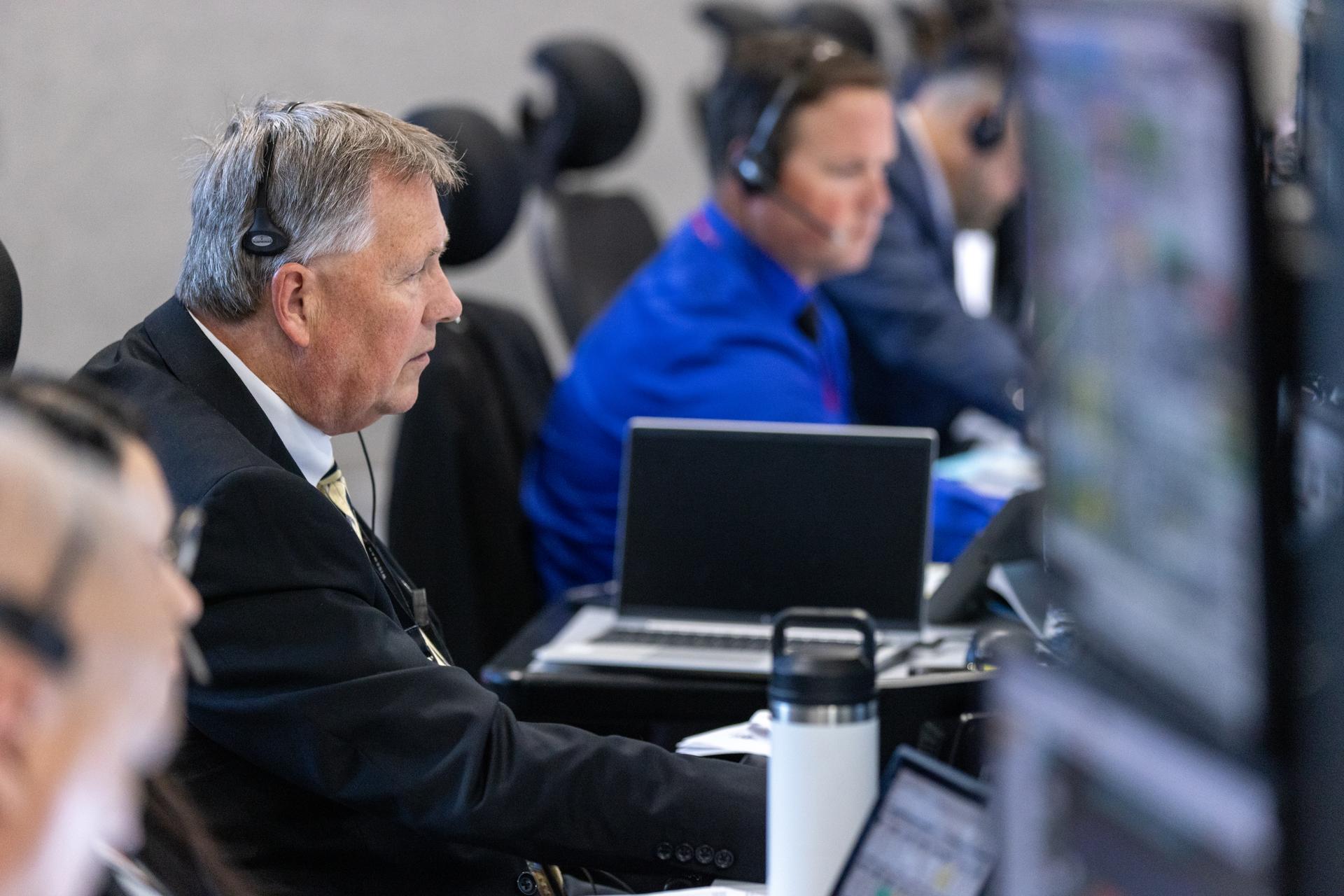
From left, Jeff Spaulding, senior NASA test director, and Wes Mosedale, NASA test director, monitor the progress of a countdown demonstration test with Artemis II crewmembers NASA astronauts Reid Wiseman, commander; Victor Glover, pilot; Christina Koch, mission specialist; and CSA (Canadian Space Agency) astronaut Jeremy Hansen, mission specialist onboard their Orion spacecraft from Firing Room 1 of the Rocco A. Petrone Launch Control Center, Saturday, Dec. 20, 2025, at NASA’s Kennedy Space Center in Florida. For this operation, the Artemis II crew and launch teams are simulating the launch day timeline including suit-up, walkout, and spacecraft ingress and egress. Through the Artemis campaign, NASA will send astronauts to explore the Moon for scientific discovery, economic benefits, and to build the foundation for the first crewed missions to Mars, for the benefit of all.
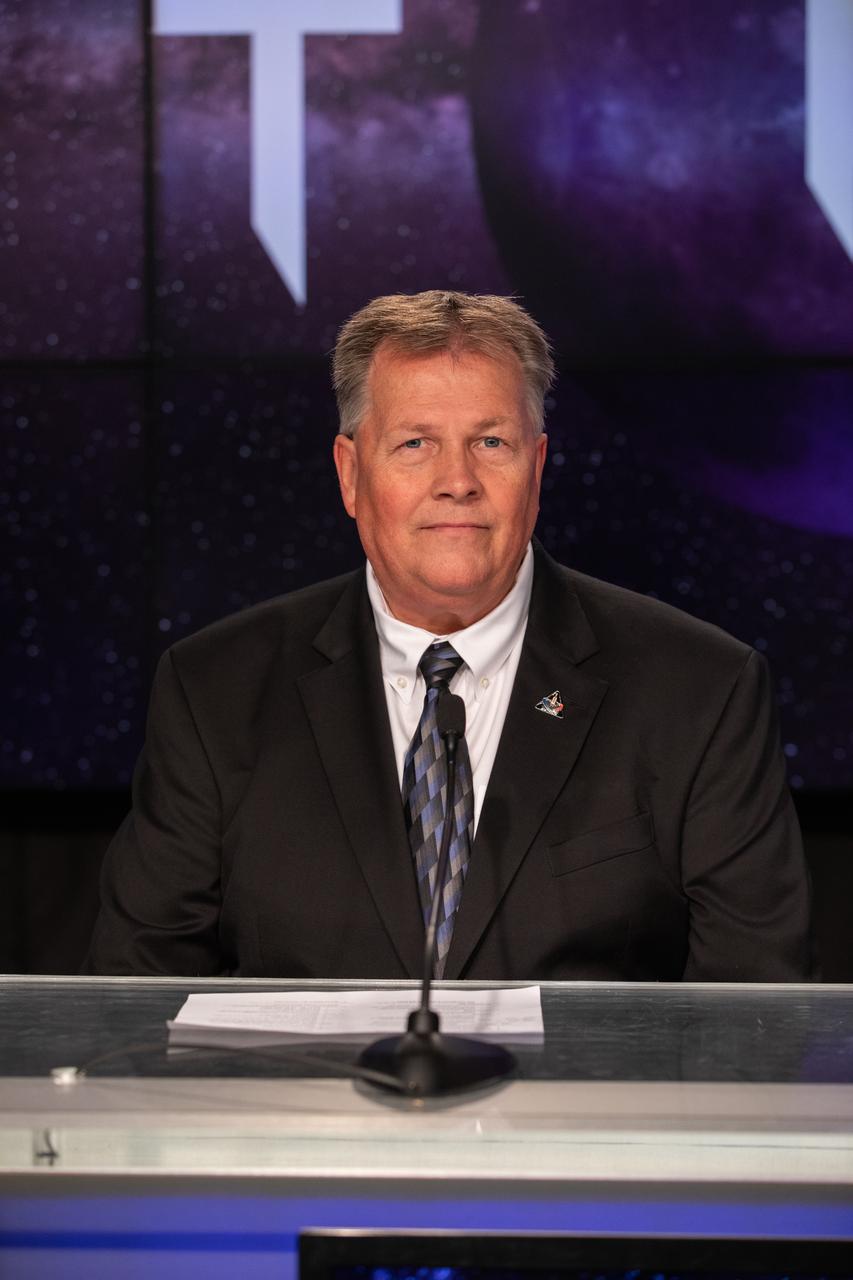
Jeff Spaulding, Artemis I senior NASA test director, participates in a prelaunch media briefing on the status of the Artemis countdown is held on Aug. 28, at NASA’s Kennedy Space Center in Florida. Artemis I is scheduled to launch Aug. 29, at 8:33 a.m. EDT from Kennedy’s Launch Complex 39B. The first in a series of increasingly complex missions, Artemis I will provide a foundation for human deep space exploration and demonstrate our commitment and capability to extend human presence to the Moon and beyond. The primary goal of Artemis I is to thoroughly test the integrated systems before crewed missions by operating the spacecraft in a deep space environment, testing Orion’s heat shield, and recovering the crew module after reentry, descent, and splashdown.

A prelaunch media briefing on the status of the Artemis countdown is held on Aug. 28, at NASA’s Kennedy Space Center in Florida. From left are Megan Cruz, NASA Communications; Jeff Spaulding, Artemis I senior NASA test director; Melody Lovin, weather officer, Space Launch Delta 45. Artemis I is scheduled to launch Aug. 29, at 8:33 a.m. EDT from Kennedy’s Launch Complex 39B. The first in a series of increasingly complex missions, Artemis I will provide a foundation for human deep space exploration and demonstrate our commitment and capability to extend human presence to the Moon and beyond. The primary goal of Artemis I is to thoroughly test the integrated systems before crewed missions by operating the spacecraft in a deep space environment, testing Orion’s heat shield, and recovering the crew module after reentry, descent, and splashdown.
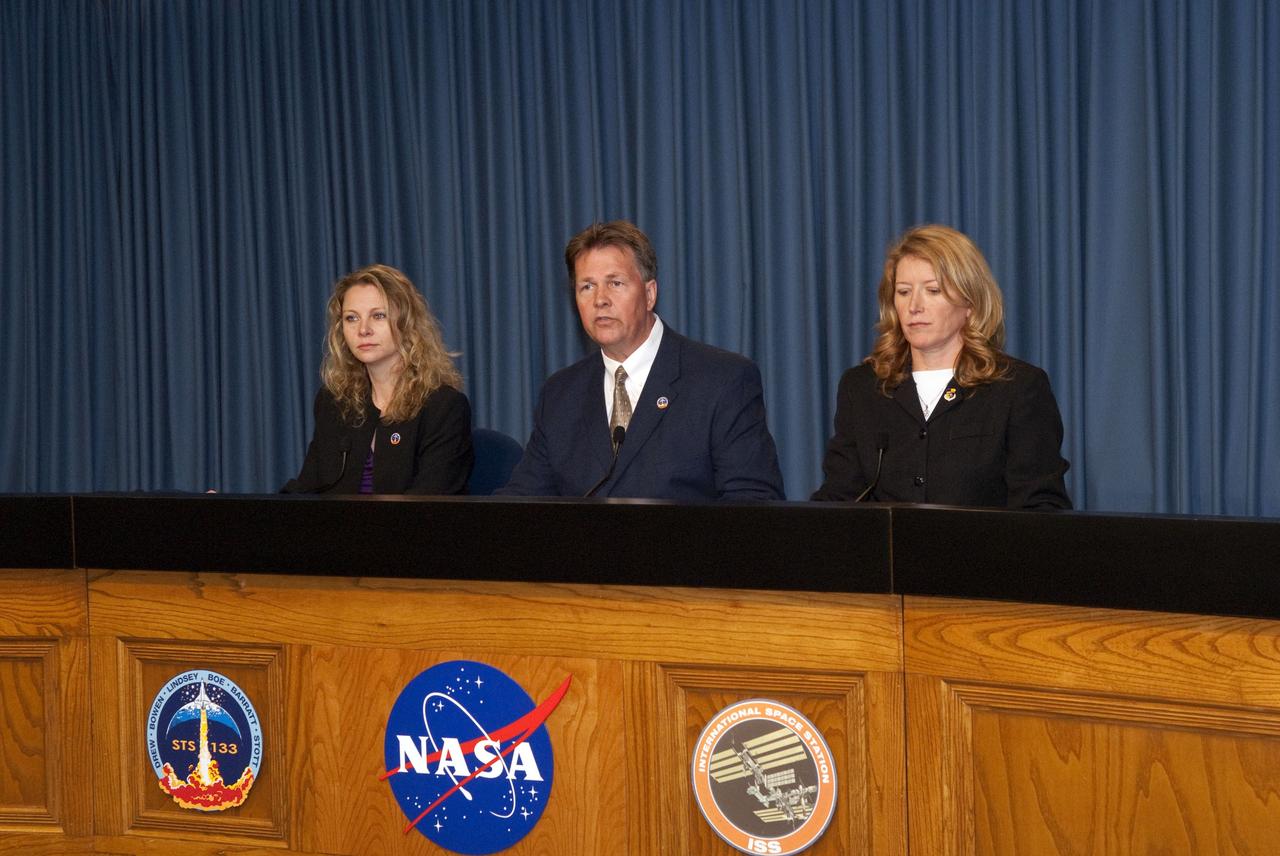
CAPE CANAVERAL, Fla. -- NASA Public Affairs Officer Candrea Thomas, NASA Test Director Jeff Spaulding and Shuttle Launch Weather Officer Kathy Winters talk to media about picking up the countdown to launch space shuttle Discovery on the STS-133 mission to the International Space Station and the launch-day weather forecast. Scheduled to lift off Feb. 24 at 4:50 p.m. EST, Discovery and its six-member crew will deliver the Permanent Multipurpose Module, packed with supplies and critical spare parts, as well as Robonaut 2, the dexterous humanoid astronaut helper, to the orbiting outpost. For more information on the STS-133 mission, visit www.nasa.gov/mission_pages/shuttle/shuttlemissions/sts133/. Photo credit: NASA/Jim Grossmann
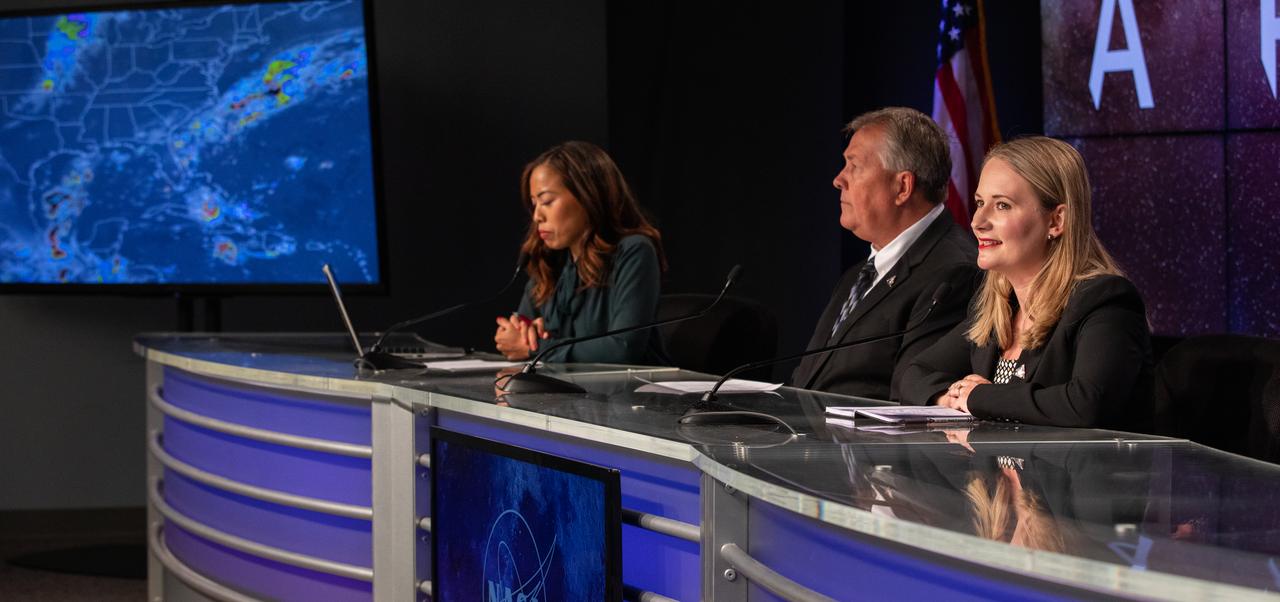
A prelaunch media briefing on the status of the Artemis countdown is held on Aug. 28, at NASA’s Kennedy Space Center in Florida. From left are Megan Cruz, NASA Communications; Jeff Spaulding, Artemis I senior NASA test director; Melody Lovin, weather officer, Space Launch Delta 45. Artemis I is scheduled to launch Aug. 29, at 8:33 a.m. EDT from Kennedy’s Launch Complex 39B. The first in a series of increasingly complex missions, Artemis I will provide a foundation for human deep space exploration and demonstrate our commitment and capability to extend human presence to the Moon and beyond. The primary goal of Artemis I is to thoroughly test the integrated systems before crewed missions by operating the spacecraft in a deep space environment, testing Orion’s heat shield, and recovering the crew module after reentry, descent, and splashdown.
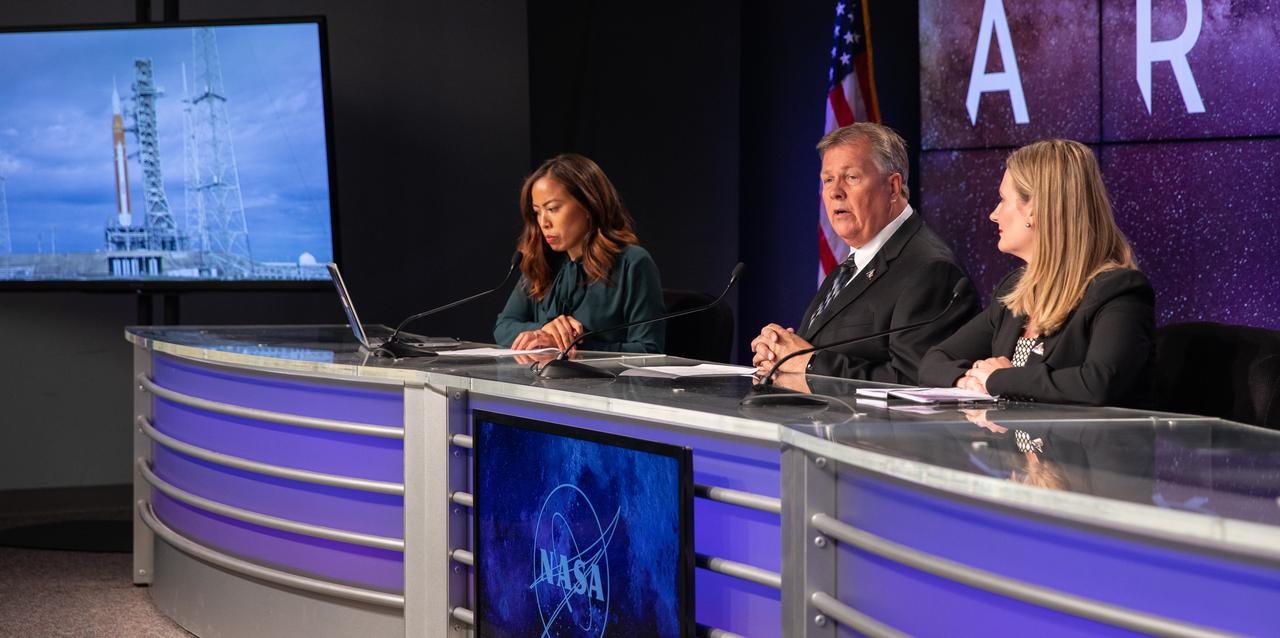
A prelaunch media briefing on the status of the Artemis countdown is held on Aug. 28, at NASA’s Kennedy Space Center in Florida. From left are Megan Cruz, NASA Communications; Jeff Spaulding, Artemis I senior NASA test director; Melody Lovin, weather officer, Space Launch Delta 45. Artemis I is scheduled to launch Aug. 29, at 8:33 a.m. EDT from Kennedy’s Launch Complex 39B. The first in a series of increasingly complex missions, Artemis I will provide a foundation for human deep space exploration and demonstrate our commitment and capability to extend human presence to the Moon and beyond. The primary goal of Artemis I is to thoroughly test the integrated systems before crewed missions by operating the spacecraft in a deep space environment, testing Orion’s heat shield, and recovering the crew module after reentry, descent, and splashdown.
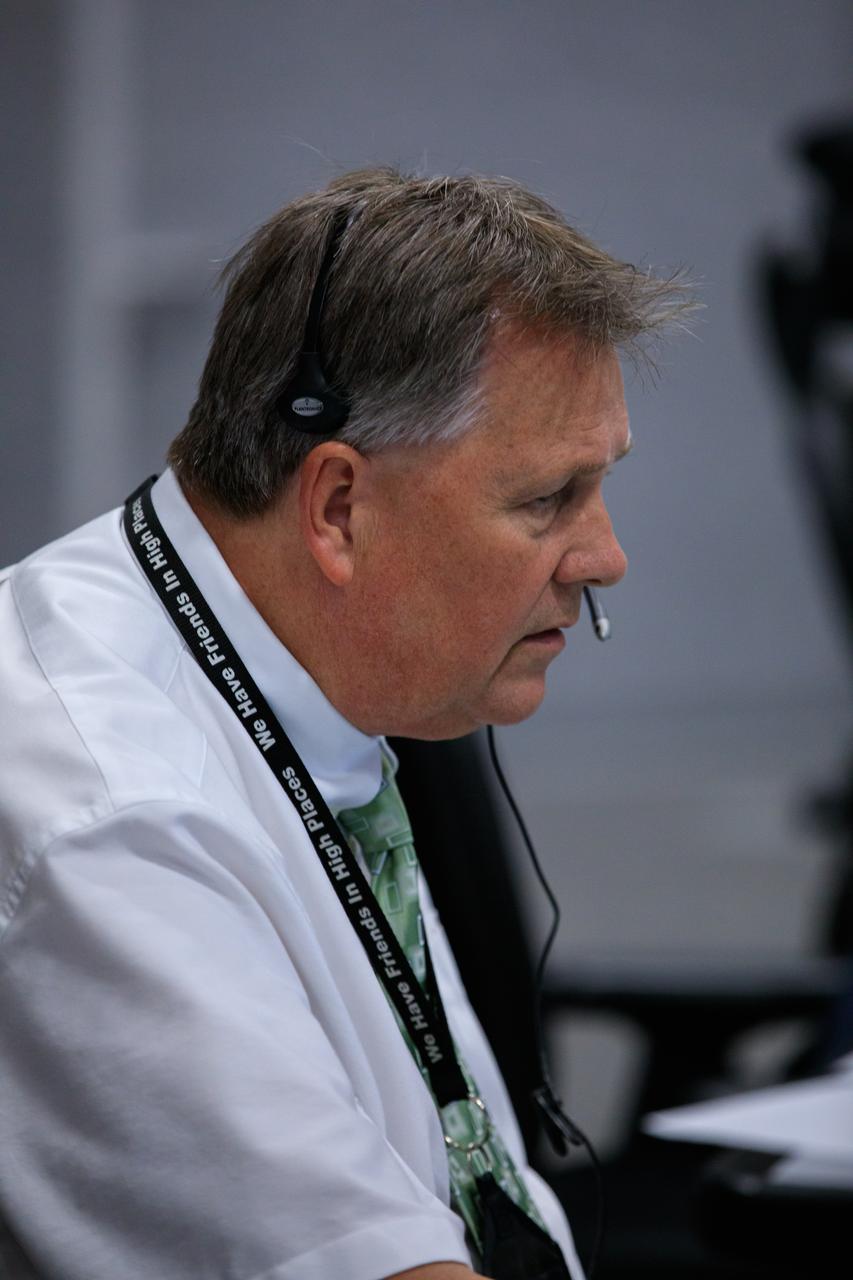
NASA Test Director Jeff Spaulding monitors launch countdown activities inside Firing Room 1 of the Launch Control Center at NASA’s Kennedy Space Center in Florida on Nov. 16, 2022. Liftoff of the agency’s Space Launch System and Orion spacecraft from Launch Complex 39B was at 1:47 a.m. EST. The first in a series of increasingly complex missions, Artemis I will provide a foundation for human deep space exploration and demonstrate our commitment and capability to extend human presence to the Moon and beyond. The primary goal of Artemis I is to thoroughly test the integrated systems before crewed missions by operating the spacecraft in a deep space environment, testing Orion’s heat shield, and recovering the crew module after reentry, descent, and splashdown.
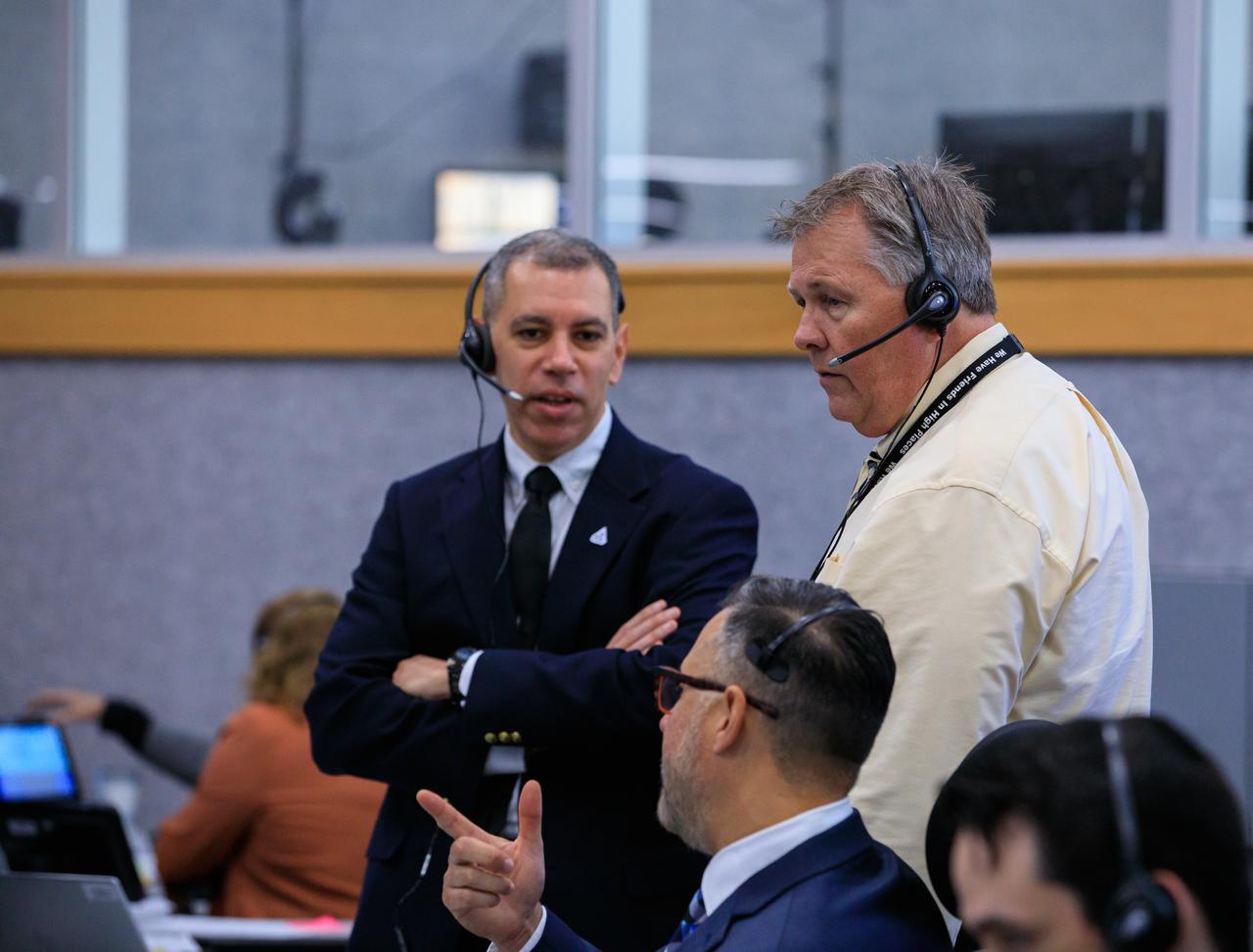
Senior NASA Test Directors Danny Zeno, at left, and Jeff Spaulding monitor Artemis I countdown events inside Firing Room 1 of the Rocco A. Petrone Launch Control Center at NASA’s Kennedy Space Center in Florida on Aug. 29, 2022. Launch of the agency’s Space Launch System and Orion spacecraft was waved off due to an issue during tanking. Launch is now no earlier than Sept. 3, at 2:17 p.m. EDT from Kennedy’s Launch Complex 39B. The first in a series of increasingly complex missions, Artemis I will provide a foundation for human deep space exploration and demonstrate our commitment and capability to extend human presence to the Moon and beyond. The primary goal of Artemis I is to thoroughly test the integrated systems before crewed missions by operating the spacecraft in a deep space environment, testing Orion’s heat shield, and recovering the crew module after reentry, descent, and splashdown.
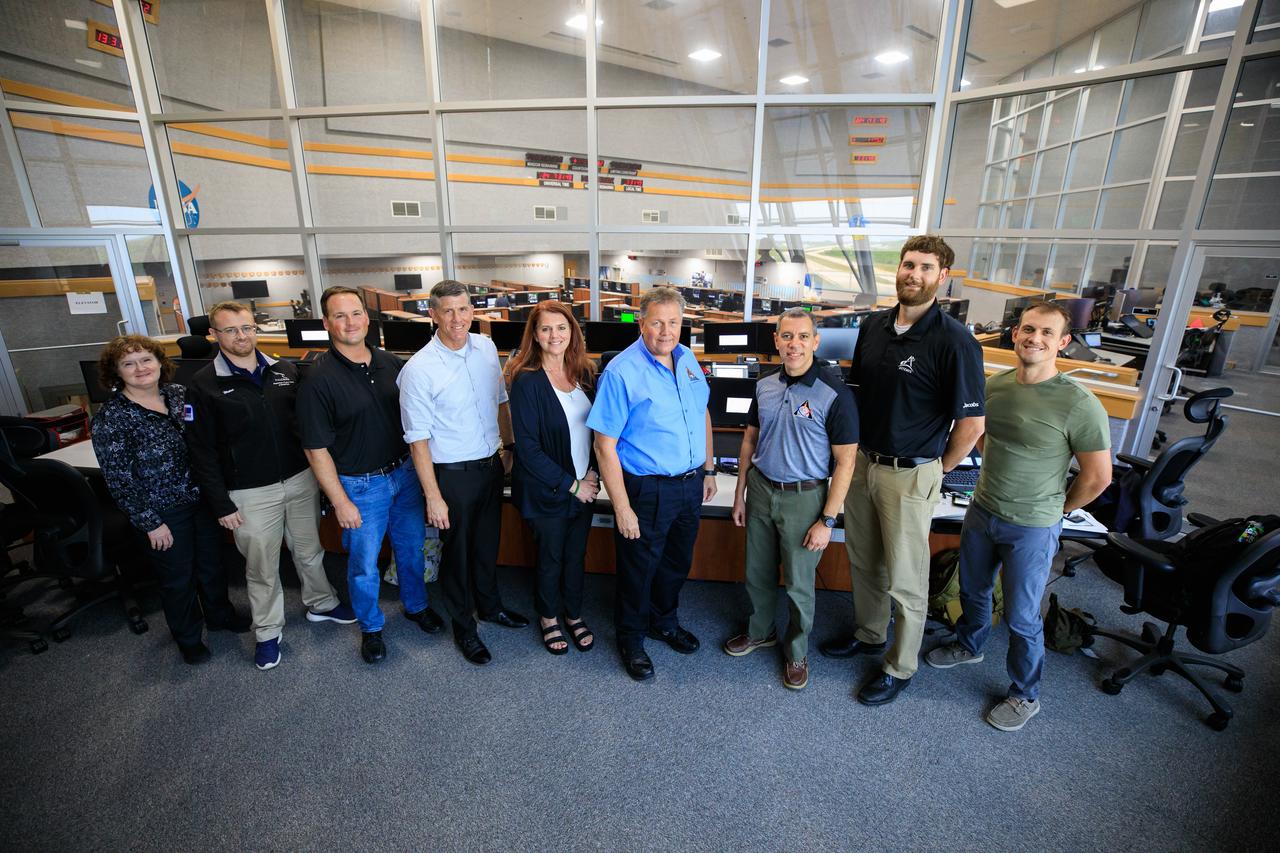
Members of the Artemis I launch team are photographed inside Firing Room 1 of the Rocco A. Petrone Launch Control Center at NASA’s Kennedy Space Center in Florida prior to a certification ceremony on Aug. 12, 2022. From left are Laurie Sally, Space Launch System (SLS) test conductor; Josh Waters, assistant ground test conductor; Wes Mosedale, technical assistant to the launch director; Jeremy Graeber, assistant launch director; Charlie Blackwell-Thompson, launch director; Jeff Spaulding, senior NASA test director; Danny Zeno, NASA test director; Lucas Vojak, assistant Orion test conductor; and Terry Woxberg, Orion test conductor. The ceremony was held to commemorate the certification of the Artemis I launch team following their launch simulation held in December 2021. During the ceremony, senior members of the launch team handed out certificates to individual team members. The first in an increasingly complex series of missions, Artemis I will test the SLS rocket and Orion spacecraft as an integrated system prior to crewed flights to the Moon. Through Artemis, NASA will land the first woman and the first person of color on the lunar surface, paving the way for long-term lunar presence and using the Moon as a steppingstone before venturing to Mars.
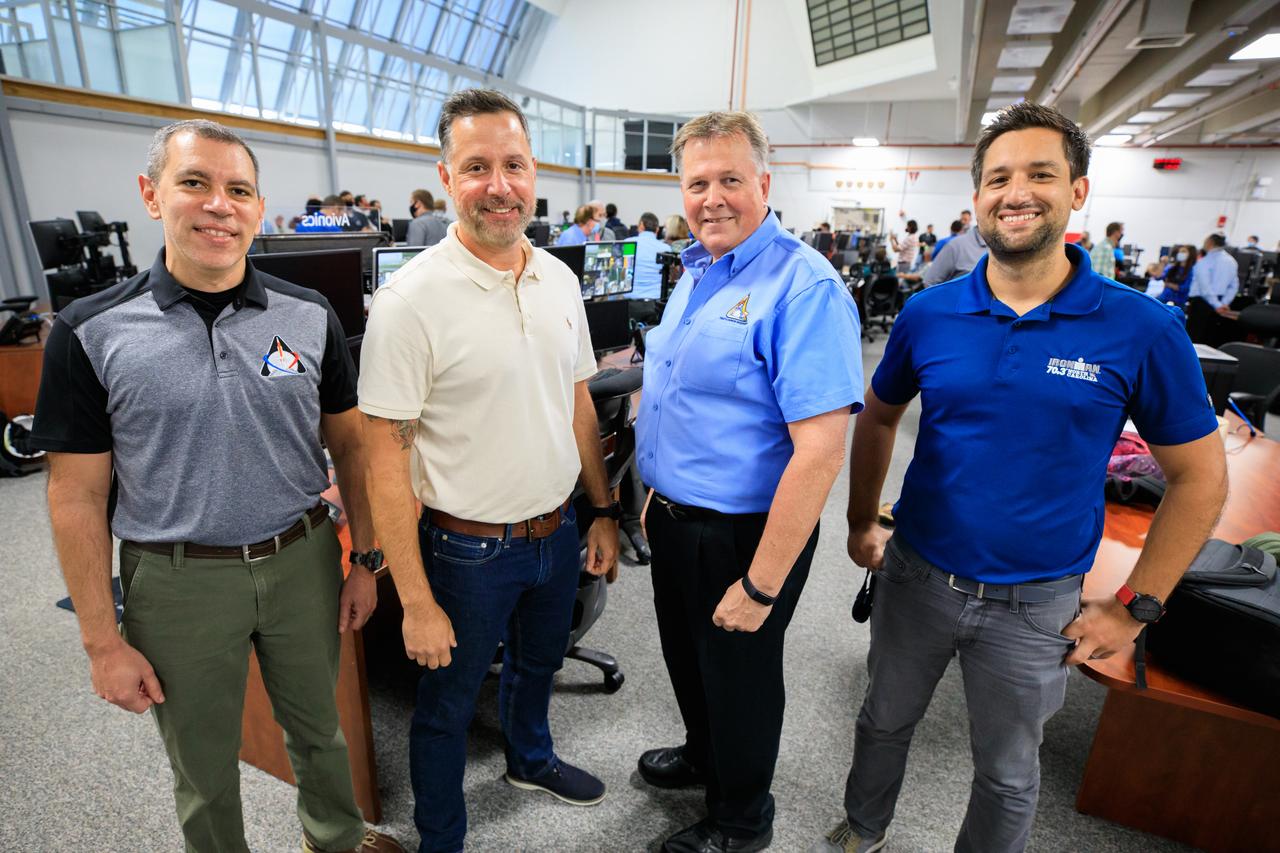
Members of the Artemis I launch team are photographed inside Firing Room 2 of the Rocco A. Petrone Launch Control Center at NASA’s Kennedy Space Center in Florida during a certification ceremony on Aug. 12, 2022. From left are NASA Test Director Danny Zeno, NASA Test Director Carlos Monge, Senior NASA Test Director Jeff Spaulding, and NASA Test Director Dan Florez. The ceremony was held to commemorate the certification of the Artemis I launch team following their launch simulation held in December 2021. During the ceremony, senior members of the launch team handed out certificates to individual team members. The first in an increasingly complex series of missions, Artemis I will test NASA’s Space Launch System rocket and Orion spacecraft as an integrated system prior to crewed flights to the Moon. Through Artemis, NASA will land the first woman and the first person of color on the lunar surface, paving the way for long-term lunar presence and using the Moon as a steppingstone before venturing to Mars.
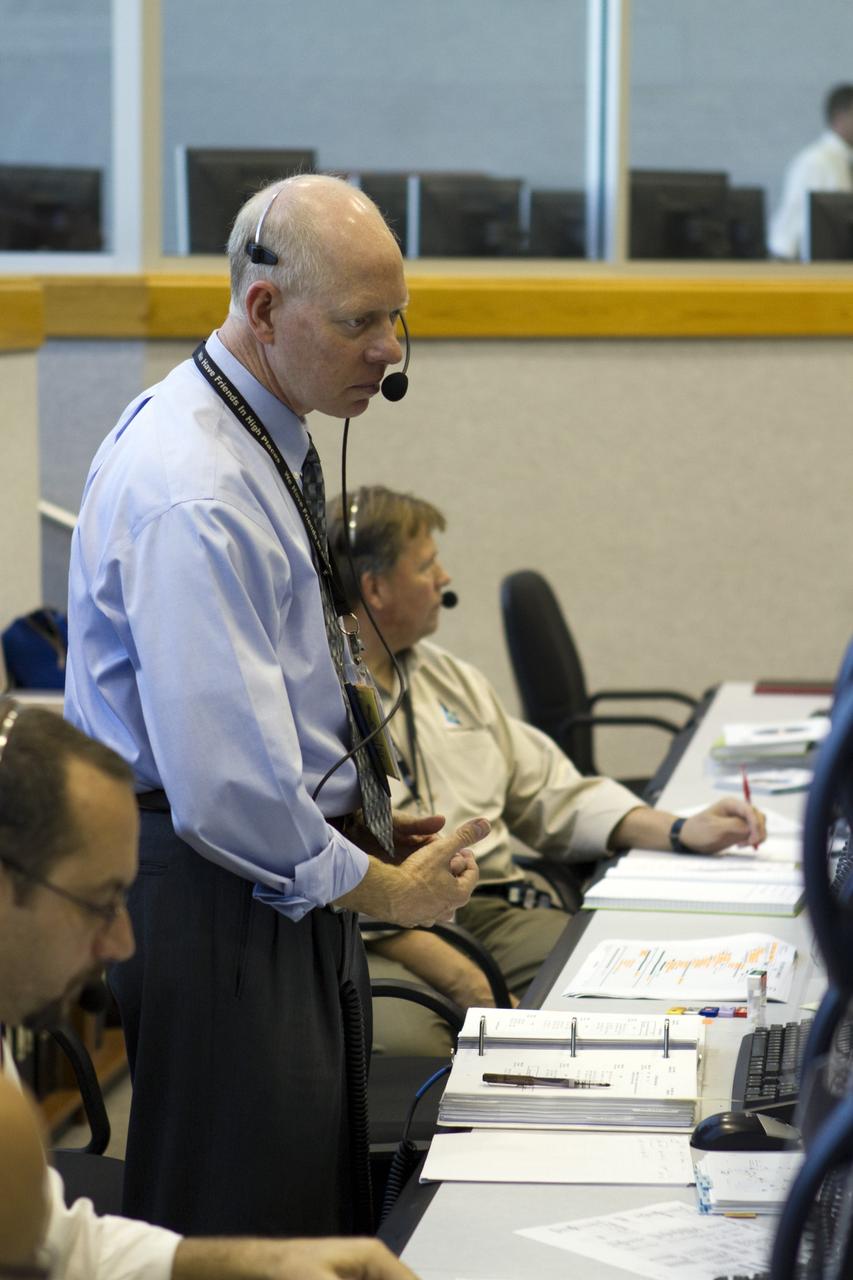
CAPE CANAVERAL, Fla. -- Team members stationed at consoles in the Launch Control Center at NASA's Kennedy Space Center in Florida monitor space shuttle Discovery's external fuel tank as it is loaded with more than 535,000 gallons of cryogenic propellants. From back, are STS-133 Assistant NASA Test Director Jeff Spaulding, STS-133 NASA Test Director Steve Payne and Launch Orbiter Test Conductor John Kracsun. During today's tanking test, the team is paying particular attention to the external tank's ribbed intertank region. Beginning tomorrow, engineers will evaluate data on 21-foot-long, U-shaped aluminum brackets, called stringers, and the newly replaced ground umbilical carrier plate (GUCP). Discovery's first launch attempt for STS-133 was scrubbed in early November due to a hydrogen gas leak at the GUCP. In order to perform additional analysis on the tank, Discovery will be rolled back to the Vehicle Assembly Building, a move that is planned for next week. The next launch opportunity is no earlier than Feb. 3, 2011. For more information on STS-133, visit www.nasa.gov/mission_pages/shuttle/shuttlemissions/sts133/. Photo credit: NASA/Cory Huston
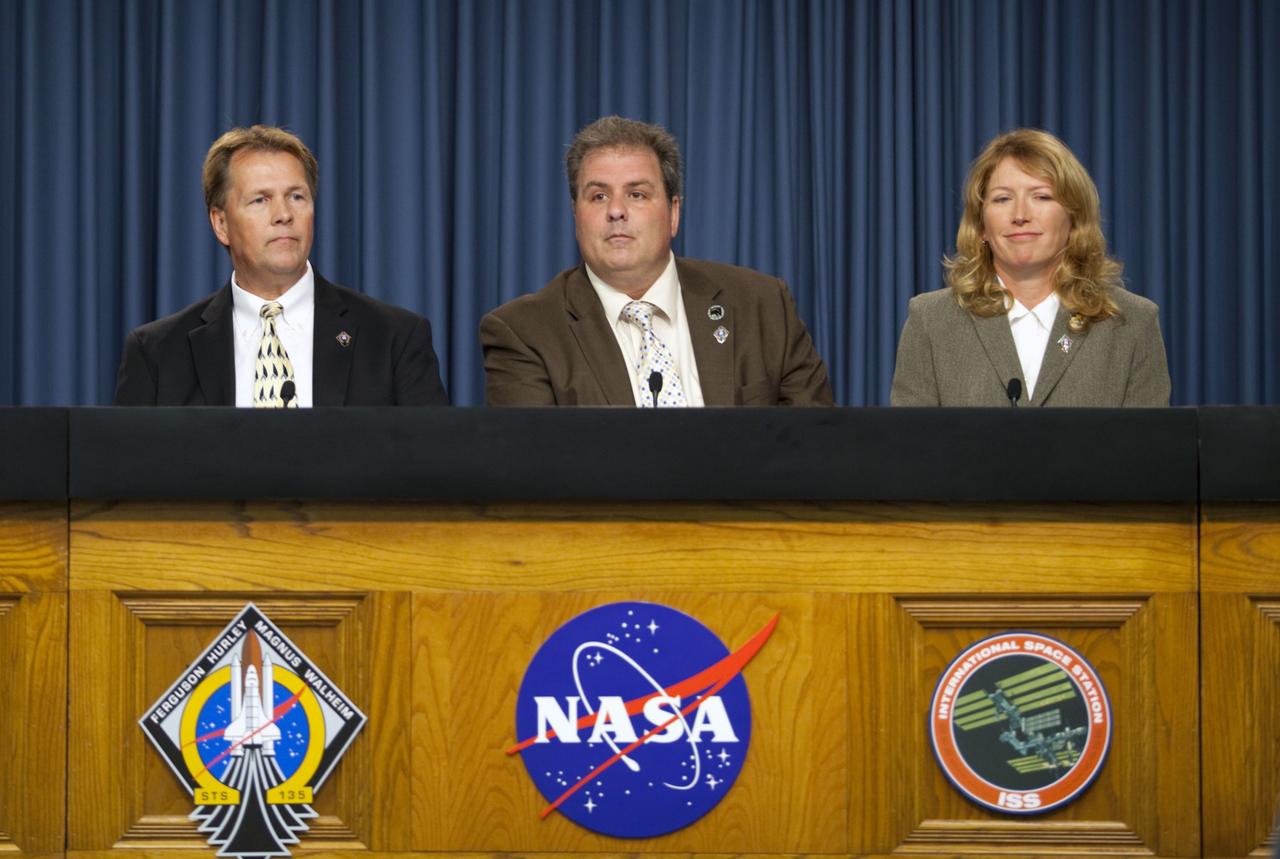
CAPE CANAVERAL, Fla. -- In the Press Site auditorium at NASA's Kennedy Space Center in Florida, NASA managers brief media about the payload and launch status of space shuttle Atlantis' STS-135 mission to the International Space Station. Seen here are NASA Test Director Jeff Spaulding (left), Payload Mission Manager Joe Delai and Shuttle Weather Officer Kathy Winters. Atlantis and its crew of four; Commander Chris Ferguson, Pilot Doug Hurley and Mission Specialists Sandy Magnus and Rex Walheim, are scheduled to lift off at 11:26 a.m. EDT on July 8 to deliver the Raffaello multi-purpose logistics module packed with supplies and spare parts to the station. Atlantis also will fly the Robotic Refueling Mission experiment that will investigate the potential for robotically refueling existing satellites in orbit. In addition, Atlantis will return with a failed ammonia pump module to help NASA better understand the failure mechanism and improve pump designs for future systems. STS-135 will be the 33rd flight of Atlantis, the 37th shuttle mission to the space station, and the 135th and final mission of NASA's Space Shuttle Program. For more information visit, www.nasa.gov/mission_pages/shuttle/shuttlemissions/sts135/index.html. Photo credit: NASA/Frankie Martin
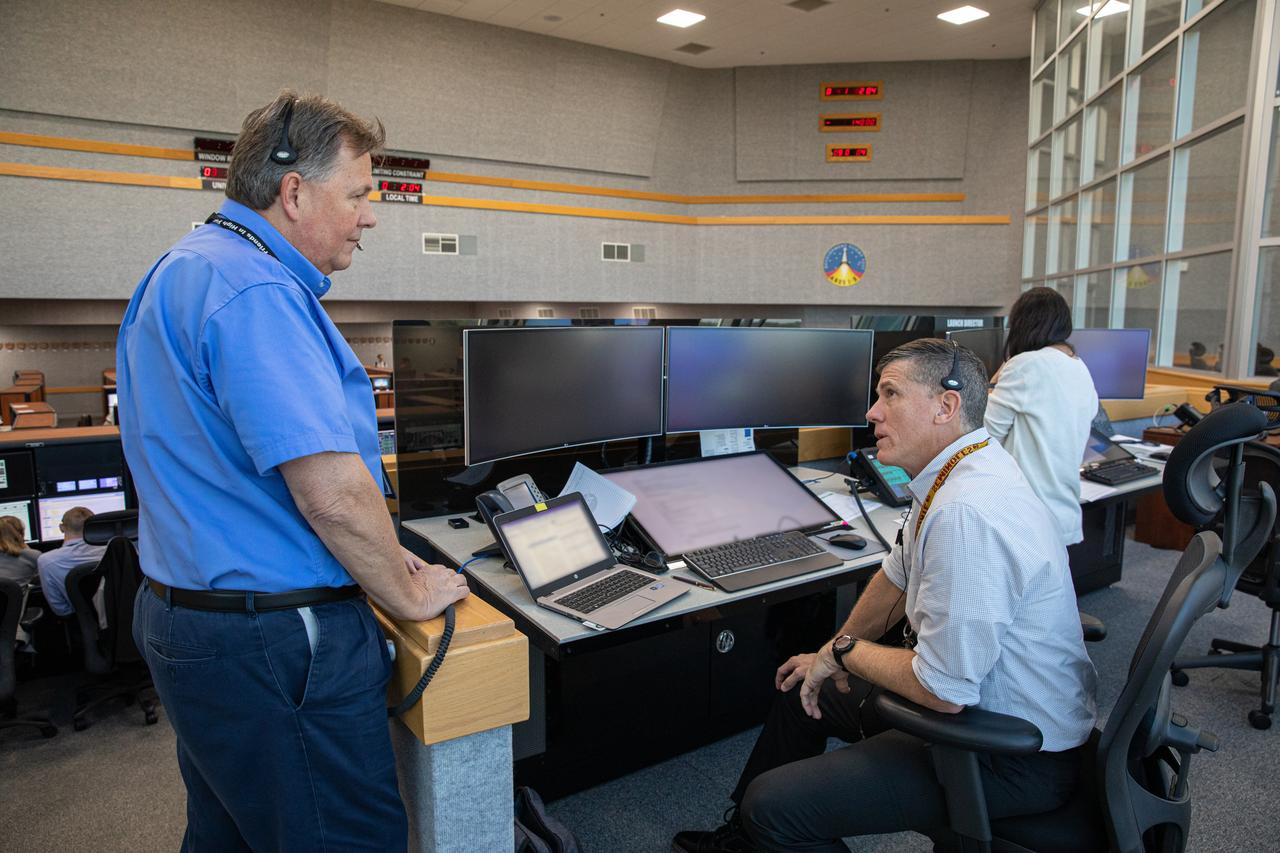
Jeff Spaulding, left, NASA test director, and NASA’s Test, Launch and Recovery Operations Branch Chief Jeremy Graeber, who also serves as the assistant launch director, participate in an Artemis I launch countdown simulation inside the Launch Control Center’s Firing Room 1 at the Kennedy Space Center in Florida. Under the leadership of Launch Director Charlie Blackwell-Thompson, a team of nearly 100 engineers from Orion, Space Launch System (SLS) and the agency’s Exploration Ground Systems came together Feb. 3, 2020, to work through a series of simulated challenges, as well as a final countdown procedure. During these exercises, different issues were introduced to familiarize the team with launch day operations, while providing them with an opportunity to practice how they would handle those issues in real-time. Artemis I will be the first integrated test flight of the Orion spacecraft and SLS rocket – the system that will ultimately land the first woman and the next man on the Moon.
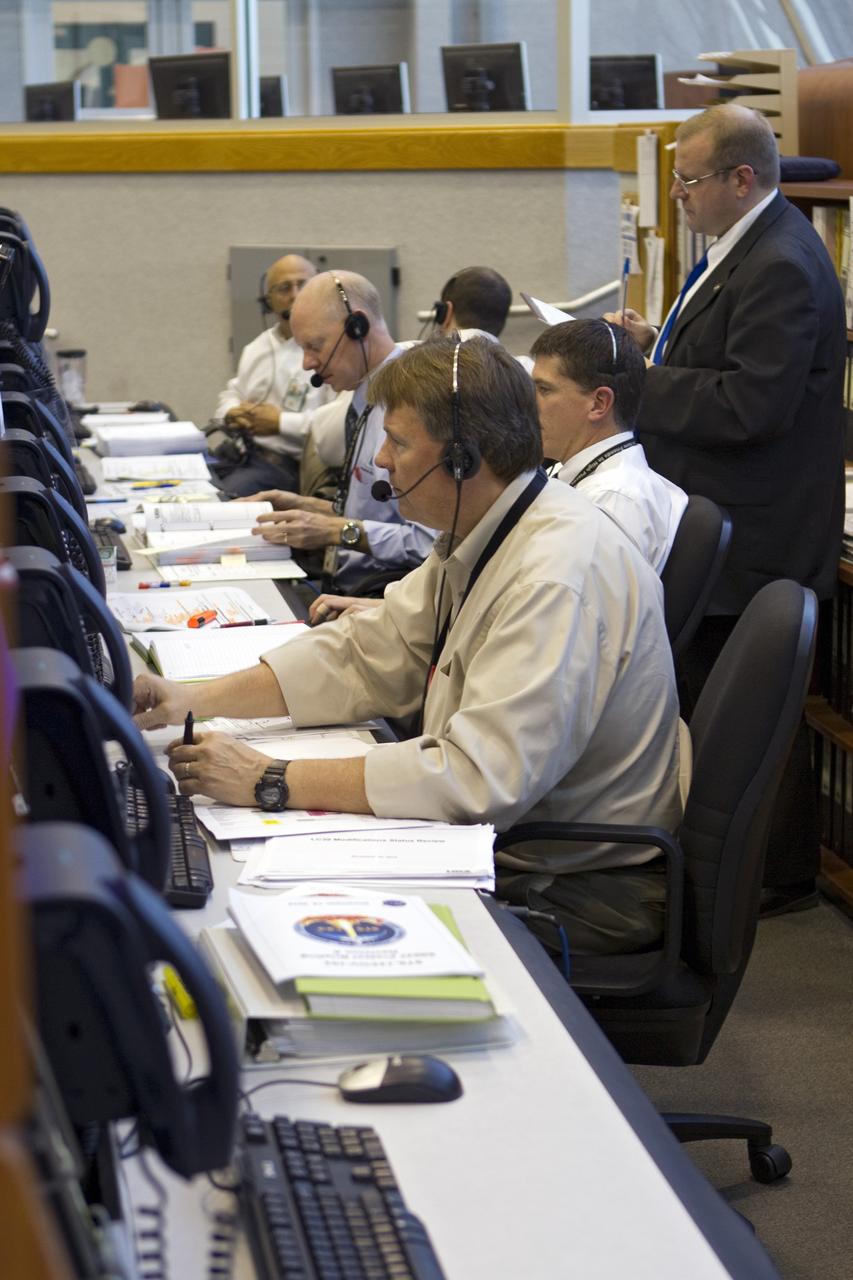
CAPE CANAVERAL, Fla. -- Team members stationed at consoles in the Launch Control Center at NASA's Kennedy Space Center in Florida monitor space shuttle Discovery's external fuel tank as it is loaded with more than 535,000 gallons of cryogenic propellants. From back, are Assistant Launch Orbiter Test Conductor Mark Taffet, Launch Orbiter Test Conductor John Kracsun, STS-133 NASA Test Director Steve Payne, NASA Commentator Allard Beutel, NASA Test Director Jeremy Graeber and STS-133 Assistant NASA Test Director Jeff Spaulding. During today's tanking test, the team is paying particular attention to the external tank's ribbed intertank region. Beginning tomorrow, engineers will evaluate data on 21-foot-long, U-shaped aluminum brackets, called stringers, and the newly replaced ground umbilical carrier plate (GUCP). Discovery's first launch attempt for STS-133 was scrubbed in early November due to a hydrogen gas leak at the GUCP. In order to perform additional analysis on the tank, Discovery will be rolled back to the Vehicle Assembly Building, a move that is planned for next week. The next launch opportunity is no earlier than Feb. 3, 2011. For more information on STS-133, visit www.nasa.gov/mission_pages/shuttle/shuttlemissions/sts133/. Photo credit: NASA/Cory Huston
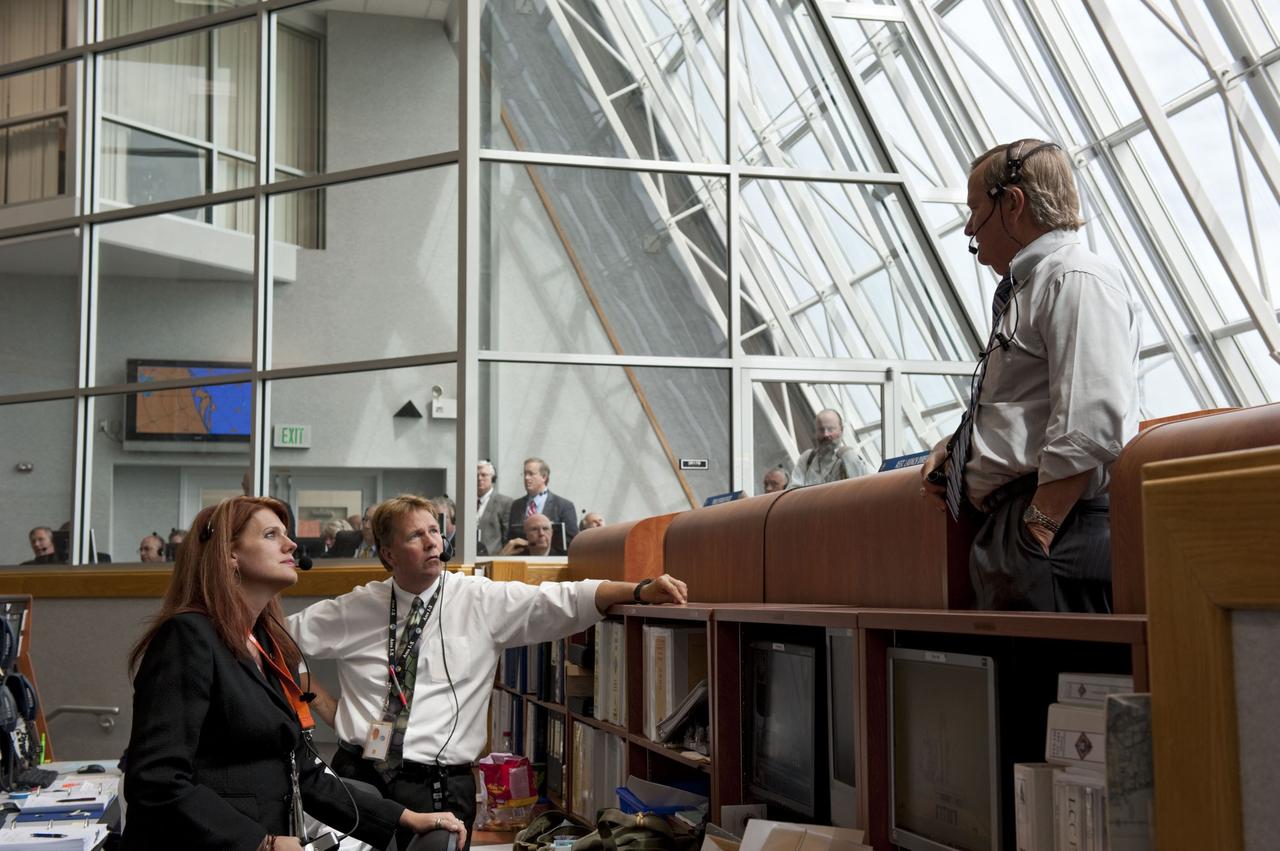
CAPE CANAVERAL, Fla. -- In Firing Room 4 of the Launch Control Center at NASA's Kennedy Space Center in Florida, Shuttle Launch Director Mike Leinbach speaks with NASA Test Directors Jeff Spaulding (center) and Charlie Blackwell-Thompson during the countdown to the launch of space shuttle Atlantis on its STS-135 mission to the International Space Station. Atlantis with its crew of four; Commander Chris Ferguson, Pilot Doug Hurley, Mission Specialists Sandy Magnus and Rex Walheim, lifted off at 11:29 a.m. EDT on July 8, 2011 to deliver the Raffaello multi-purpose logistics module packed with supplies and spare parts for the station. Atlantis also will fly the Robotic Refueling Mission experiment that will investigate the potential for robotically refueling existing satellites in orbit. In addition, Atlantis will return with a failed ammonia pump module to help NASA better understand the failure mechanism and improve pump designs for future systems. STS-135 will be the 33rd flight of Atlantis, the 37th shuttle mission to the space station, and the 135th and final mission of NASA's Space Shuttle Program. For more information, visit www.nasa.gov/mission_pages/shuttle/shuttlemissions/sts135/index.html. Photo credit: NASA/Kim Shiflett
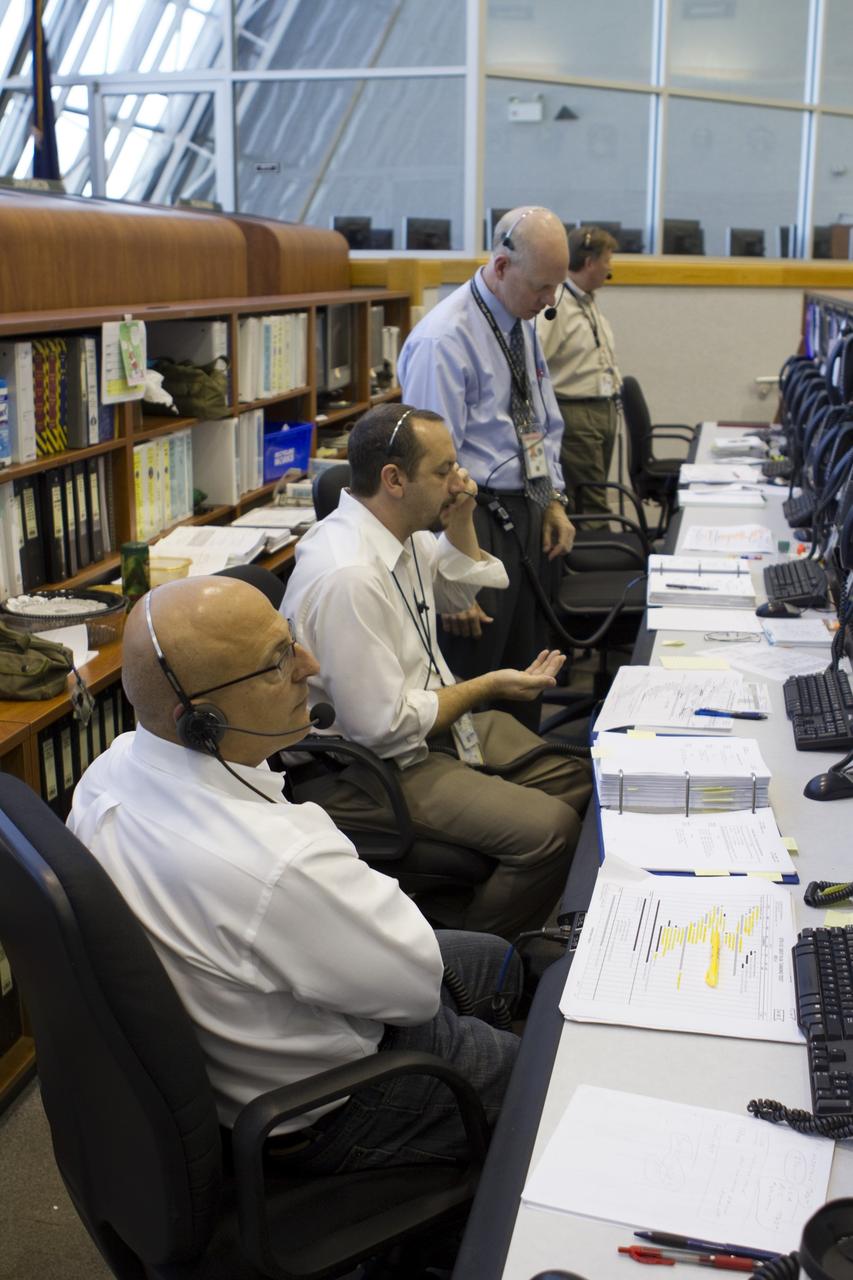
CAPE CANAVERAL, Fla. -- Team members stationed at consoles in the Launch Control Center at NASA's Kennedy Space Center in Florida monitor space shuttle Discovery's external fuel tank as it is loaded with more than 535,000 gallons of cryogenic propellants. From back, are STS-133 Assistant NASA Test Director Jeff Spaulding, STS-133 NASA Test Director Steve Payne, Launch Orbiter Test Conductor John Kracsun and Assistant Launch Orbiter Test Conductor Mark Taffet. During today's tanking test, the team is paying particular attention to the external tank's ribbed intertank region. Beginning tomorrow, engineers will evaluate data on 21-foot-long, U-shaped aluminum brackets, called stringers, and the newly replaced ground umbilical carrier plate (GUCP). Discovery's first launch attempt for STS-133 was scrubbed in early November due to a hydrogen gas leak at the GUCP. In order to perform additional analysis on the tank, Discovery will be rolled back to the Vehicle Assembly Building, a move that is planned for next week. The next launch opportunity is no earlier than Feb. 3, 2011. For more information on STS-133, visit www.nasa.gov/mission_pages/shuttle/shuttlemissions/sts133/. Photo credit: NASA/Cory Huston
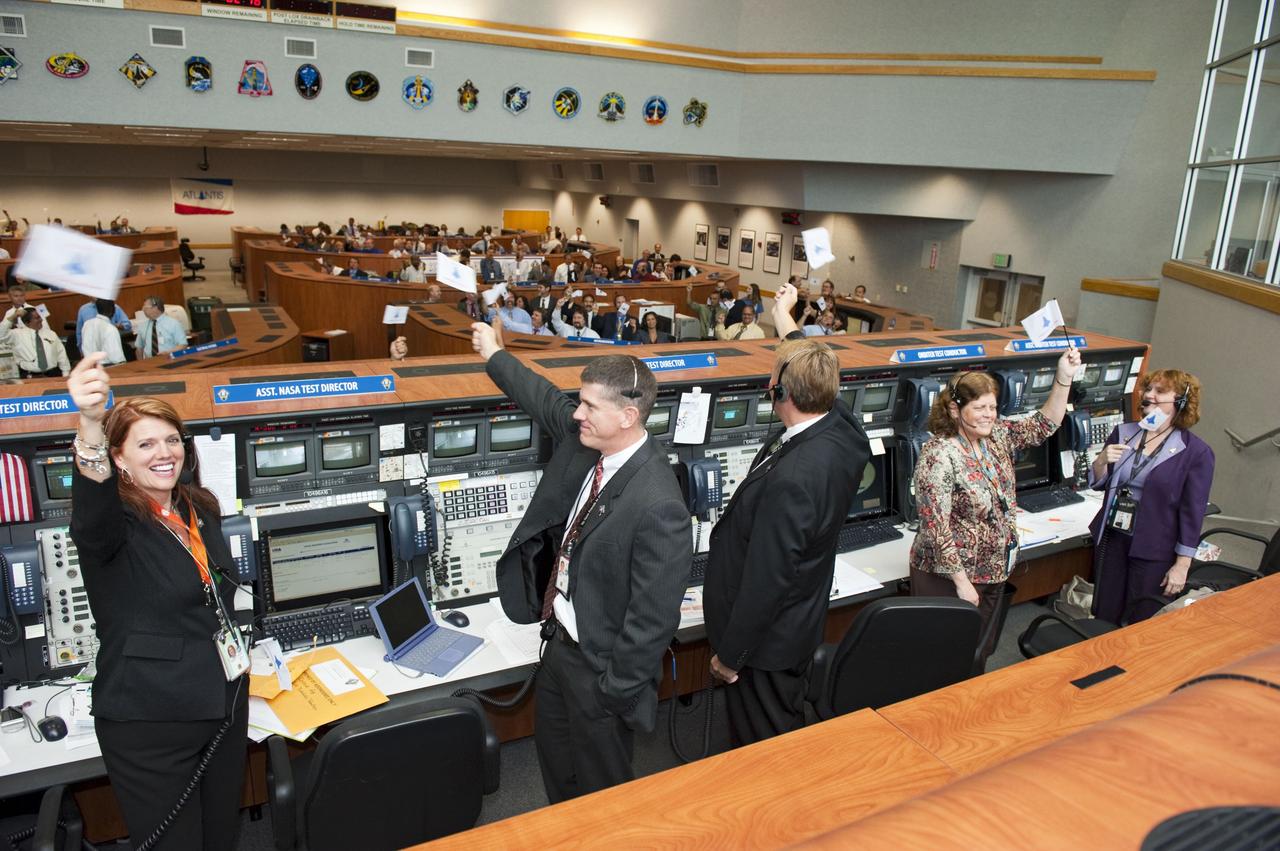
CAPE CANAVERAL, Fla. -- Launch controllers wave their STS-135 shuttle launch team member flags and cheer in Firing Room 4 of the Launch Control Center following the successful launch of space shuttle Atlantis from NASA's Kennedy Space Center in Florida. In the foreground, from left, are NASA Test Directors Charlie Blackwell-Thompson, Jeremy Graeber, and Jeff Spaulding; Orbiter Test Conductor Roberta Wyrick; and Assistant Orbiter Test Conductor Laurie Sally. Atlantis began its final flight, the STS-135 mission to the International Space Station, at 11:29 a.m. EDT on July 8. STS-135 will deliver the Raffaello multi-purpose logistics module packed with supplies and spare parts for the International Space Station. Atlantis also is flying the Robotic Refueling Mission experiment that will investigate the potential for robotically refueling existing satellites in orbit. In addition, Atlantis will return with a failed ammonia pump module to help NASA better understand the failure mechanism and improve pump designs for future systems. STS-135 is the 33rd flight of Atlantis, the 37th shuttle mission to the space station, and the 135th and final mission of NASA's Space Shuttle Program. For more information, visit www.nasa.gov/mission_pages/shuttle/shuttlemissions/sts135/index.html. Photo credit: NASA/Kim Shiflett
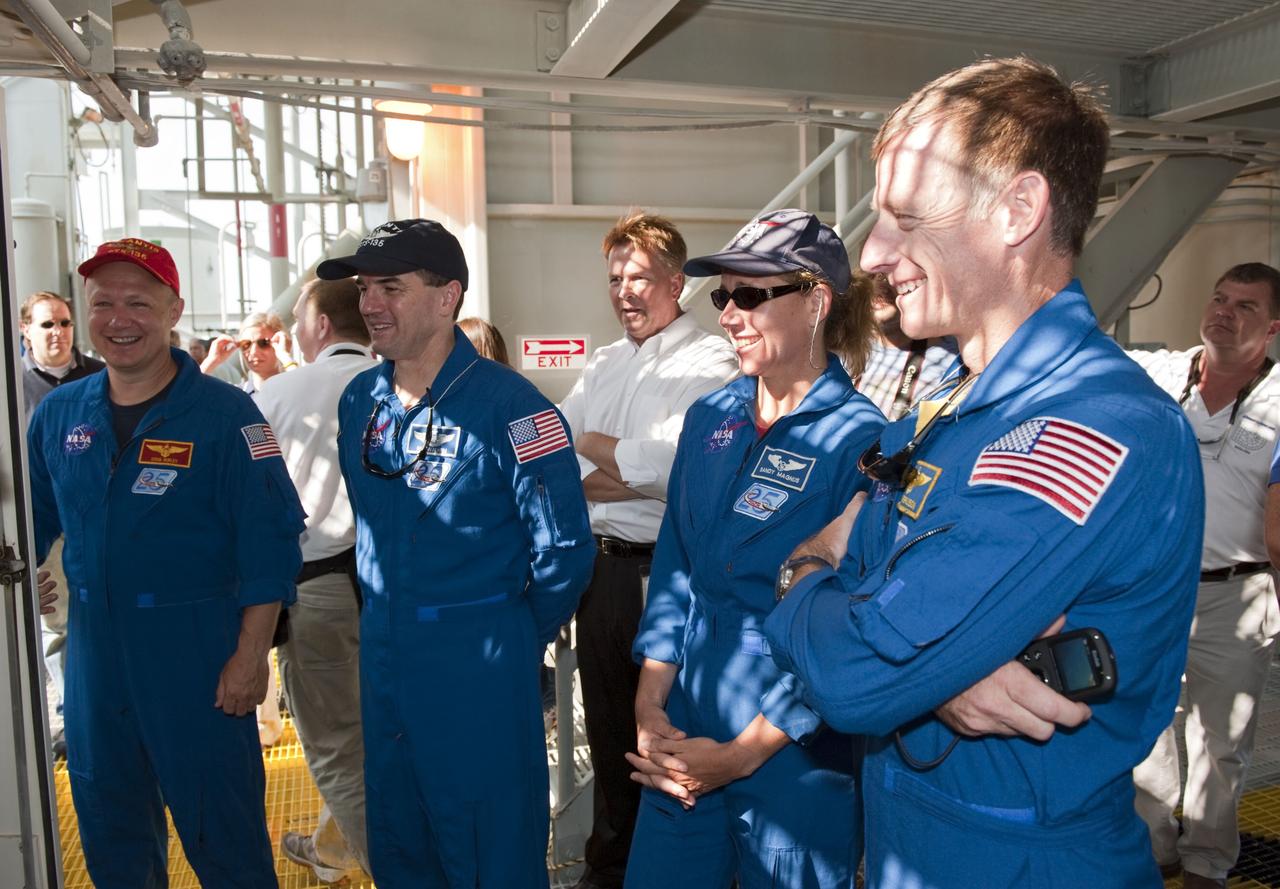
CAPE CANAVERAL, Fla. -- On Launch Pad 39A at NASA's Kennedy Space Center in Florida, members of space shuttle Atlantis' STS-135 crew are instructed on emergency exit procedures. From left are Pilot Doug Hurley, Mission Specialists Rex Walheim and Sandy Magnus, and Commander Chris Ferguson. Also seen in this image is NASA Test Director Jeff Spaulding (center). The astronauts are at Kennedy to participate in a launch countdown dress rehearsal called the Terminal Countdown Demonstration Test (TCDT) and related training. Atlantis and its crew are targeted to lift off July 8, taking with them the Raffaello multi-purpose logistics module packed with supplies and spare parts to the International Space Station. The STS-135 mission also will fly a system to investigate the potential for robotically refueling existing satellites and return a failed ammonia pump module to help NASA better understand the failure mechanism and improve pump designs for future systems. STS-135 will be the 33rd flight of Atlantis, the 37th shuttle mission to the space station, and the 135th and final mission of NASA's Space Shuttle Program. For more information visit, www.nasa.gov/mission_pages/shuttle/shuttlemissions/sts135/index.html. Photo credit: NASA/Kim Shiflett
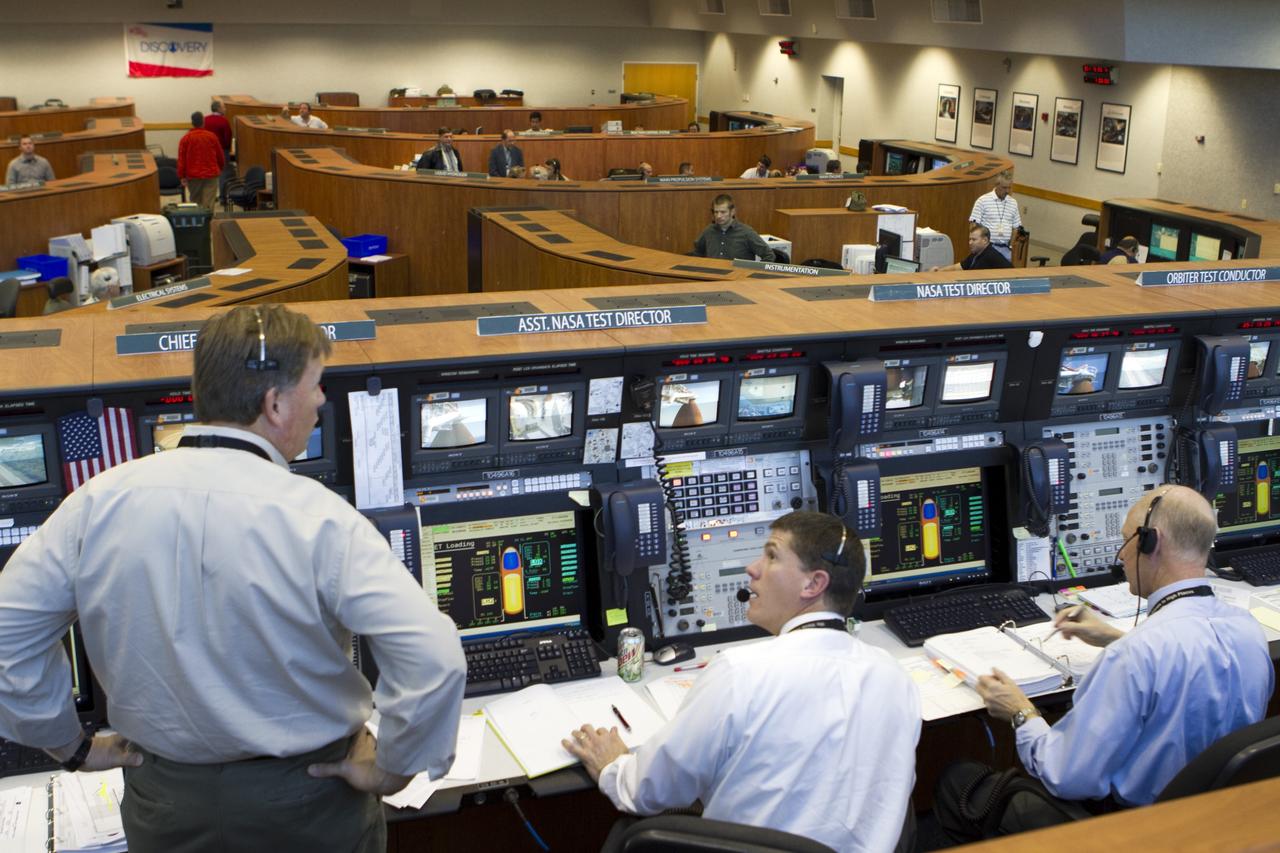
CAPE CANAVERAL, Fla. -- Team members stationed at consoles in the Launch Control Center at NASA's Kennedy Space Center in Florida monitor space shuttle Discovery's external fuel tank as it is loaded with more than 535,000 gallons of cryogenic propellants. From left, are STS-133 Assistant NASA Test Director Jeff Spaulding, NASA Test Director Jeremy Graeber and STS-133 NASA Test Director Steve Payne. During today's tanking test, the team is paying particular attention to the external tank's ribbed intertank region. Beginning tomorrow, engineers will evaluate data on 21-foot-long, U-shaped aluminum brackets, called stringers, and the newly replaced ground umbilical carrier plate (GUCP). Discovery's first launch attempt for STS-133 was scrubbed in early November due to a hydrogen gas leak at the GUCP. In order to perform additional analysis on the tank, Discovery will be rolled back to the Vehicle Assembly Building, a move that is planned for next week. The next launch opportunity is no earlier than Feb. 3, 2011. For more information on STS-133, visit www.nasa.gov/mission_pages/shuttle/shuttlemissions/sts133/. Photo credit: NASA/Cory Huston
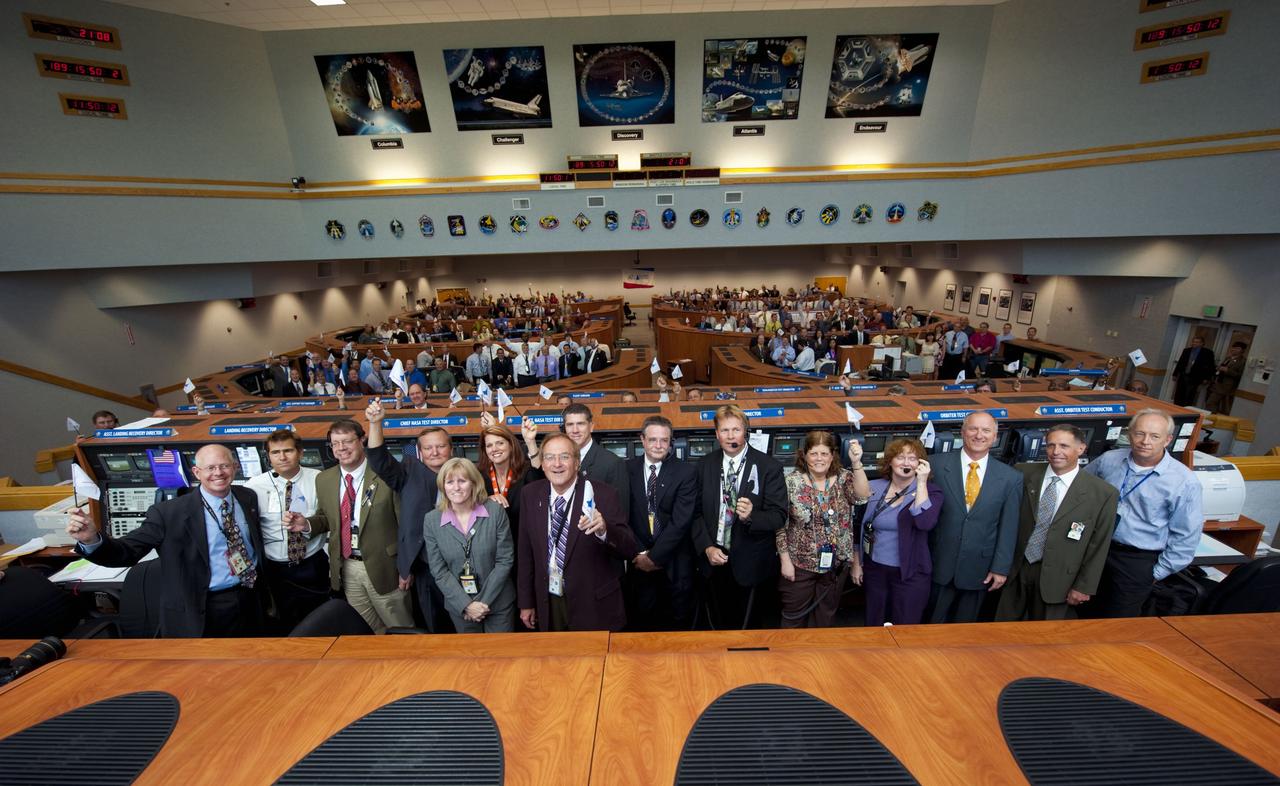
CAPE CANAVERAL, Fla. -- Launch controllers wave their STS-135 shuttle launch team member flags and cheer in Firing Room 4 of the Launch Control Center following the successful launch of space shuttle Atlantis from NASA's Kennedy Space Center in Florida. In the foreground, from left, are NASA Test Directors Steve Payne and Bob Holl; Landing and Recovery Director Greg Gaddis; Shuttle Launch Director Mike Leinbach; Atlantis' NASA Flow Director Angie Brewer; NASA Test Director Charlie Blackwell-Thompson; STS-135 Launch Commentator George Diller; NASA Test Directors Jeremy Graeber, Tim Potter, and Jeff Spaulding; Orbiter Test Conductor Roberta Wyrick; Assistant Orbiter Test Conductor Laurie Sally; Assistant Launch Director Pete Nickolenko; United Space Alliance Vice President of Launch and Recovery Systems Mark Nappi; and United Space Alliance Test Conductor Mark Paxton. Atlantis began its final flight, the STS-135 mission to the International Space Station, at 11:29 a.m. EDT on July 8. STS-135 will deliver the Raffaello multi-purpose logistics module packed with supplies and spare parts for the International Space Station. Atlantis also is flying the Robotic Refueling Mission experiment that will investigate the potential for robotically refueling existing satellites in orbit. In addition, Atlantis will return with a failed ammonia pump module to help NASA better understand the failure mechanism and improve pump designs for future systems. STS-135 is the 33rd flight of Atlantis, the 37th shuttle mission to the space station, and the 135th and final mission of NASA's Space Shuttle Program. For more information, visit www.nasa.gov/mission_pages/shuttle/shuttlemissions/sts135/index.html. Photo credit: NASA/Kim Shiflett