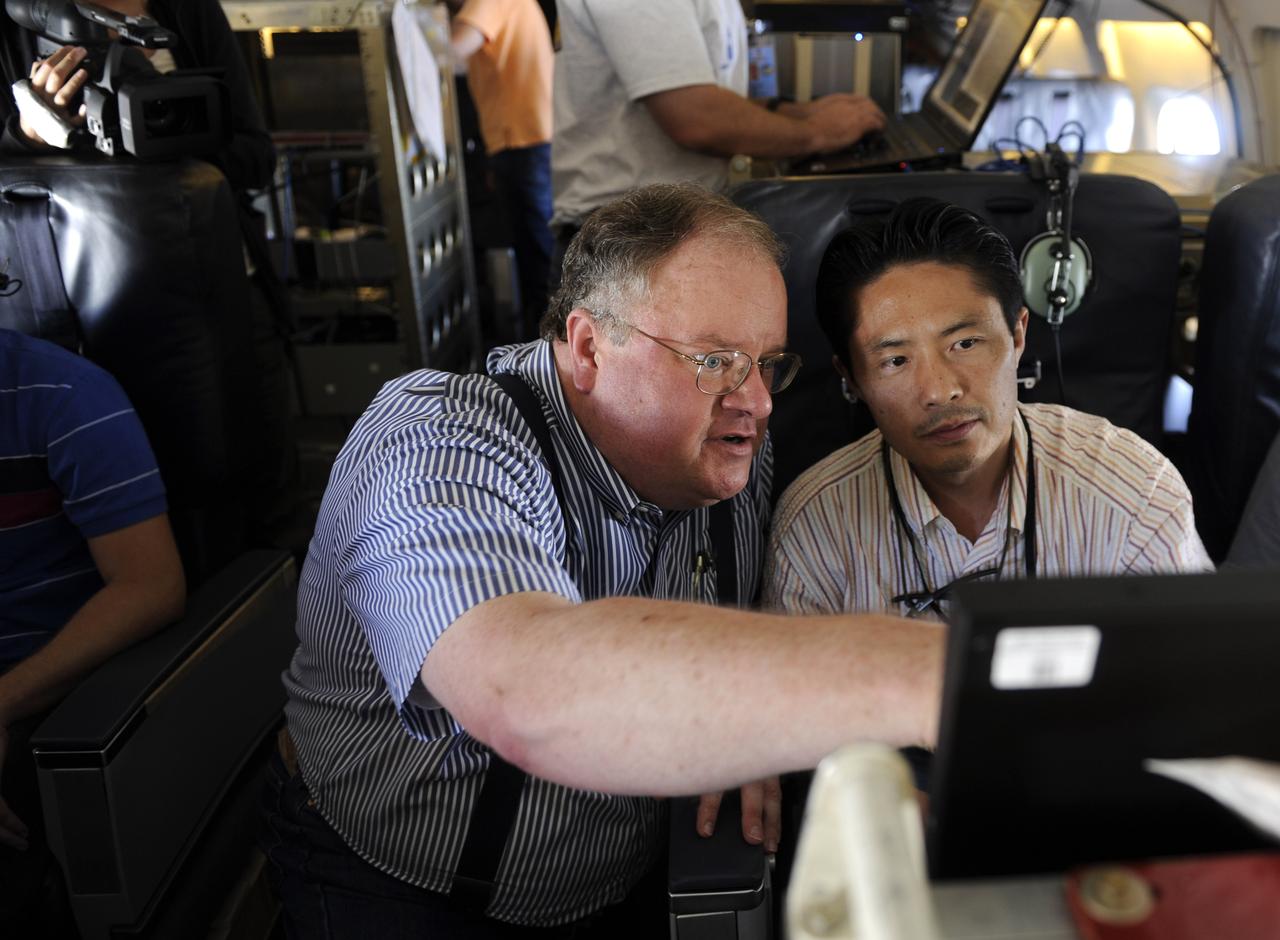
Michael Kavaya, of the NASA Langley Research Center, a Principal Investigator for the DAWN experiment, looks over data with Jeffrey Beyon during a flight of the NASA DC-8, Tuesday, Aug. 17, 2010, in the Gulf of Mexico. The DAWN experiment, also known as the Doppler Aerosol Wind Lidar, is one of many experiments supporting the Genesis and Rapid Intensification Processes (GRIP) experiment, a NASA Earth science field experiment in 2010 that is being conducted to better understand how tropical storms form and develop into major hurricanes. Photo Credit: (NASA/Paul E. Alers)
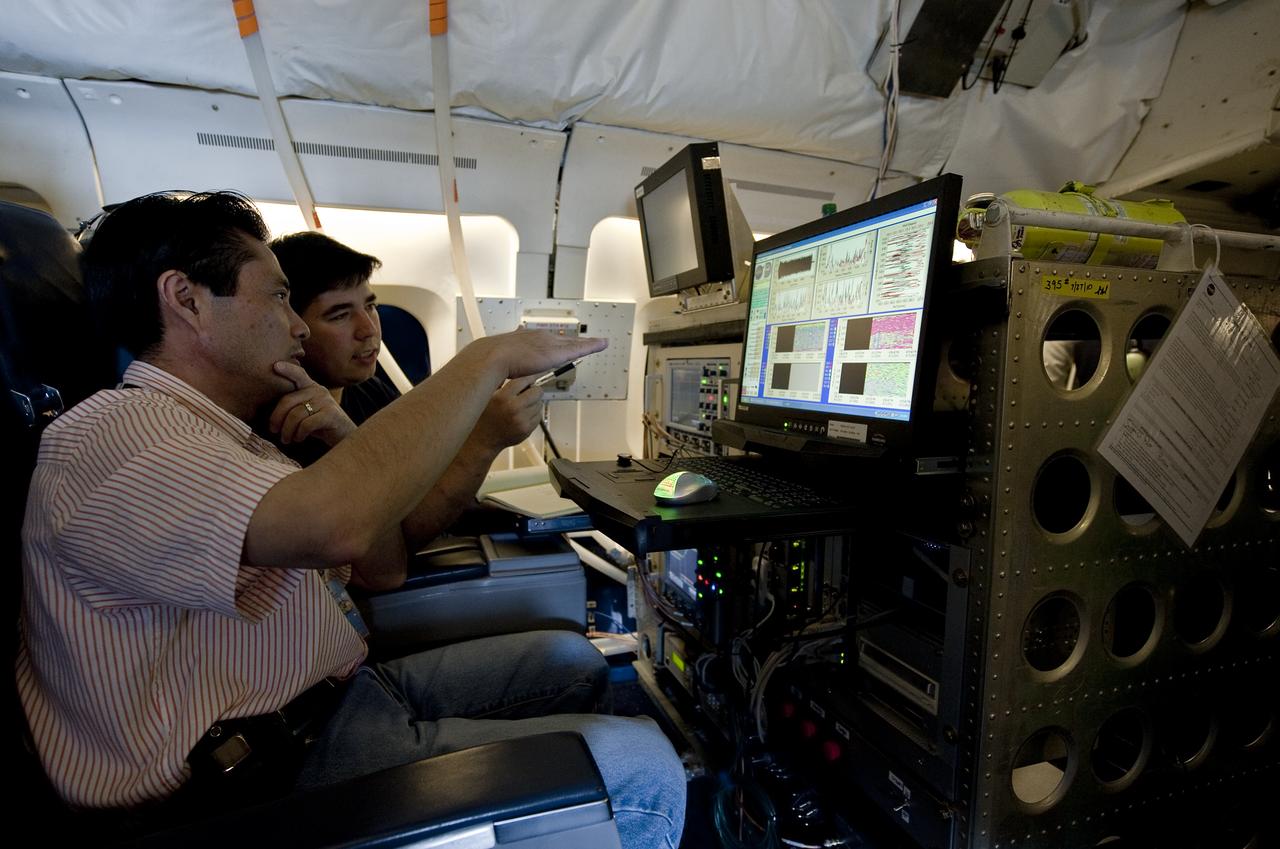
Jeffrey Beyon, left, and Paul Joseph Petzar, right, from NASA's Langley Research Center, work with DAWN Air Data Acquisition and Processing software aboard NASA's DC-8 research aircraft, Sunday, Aug. 15, 2010, in support of the GRIP experiment at Fort Lauderdale International Airport in Fort Lauderdale, Fla. The Genesis and Rapid Intensification Processes (GRIP) experiment is a NASA Earth science field experiment in 2010 that is being conducted to better understand how tropical storms form and develop into major hurricanes. Photo Credit: (NASA/Paul E. Alers)
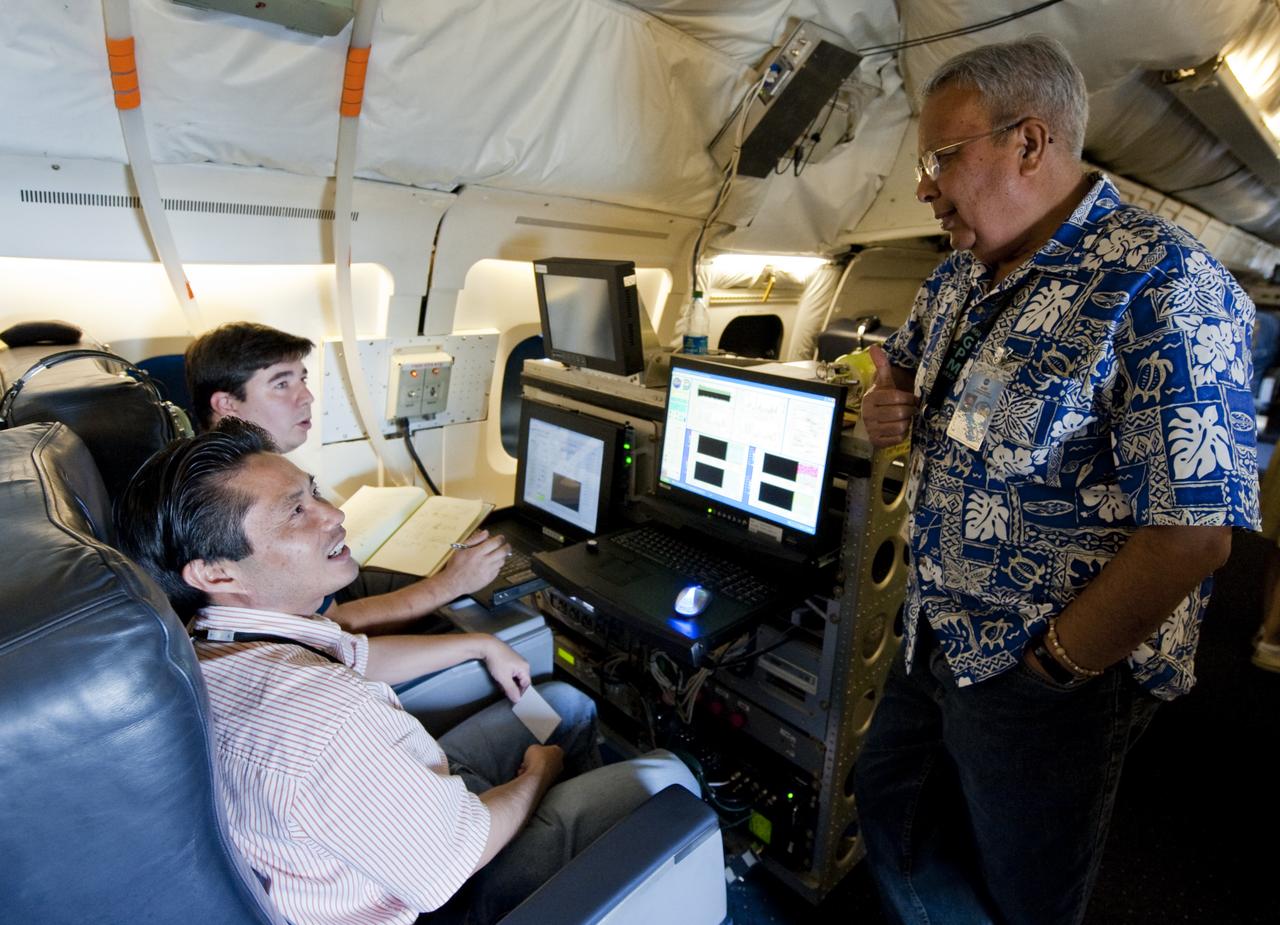
Jeffrey Beyon, lower right, and Paul Joseph Petzar, right, researchers from NASA's Langley Research Center, speak with Ramesh Kakar right, of the NASA Earth Science Division as they work with DAWN Air Data Acquisition and Processing software aboard NASA's DC-8 research aircraft, Sunday, Aug. 15, 2010, in support of the GRIP experiment at Fort Lauderdale International Airport in Fort Lauderdale, Fla. The Genesis and Rapid Intensification Processes (GRIP) experiment is a NASA Earth science field experiment in 2010 that is being conducted to better understand how tropical storms form and develop into major hurricanes. Photo Credit: (NASA/Paul E. Alers)