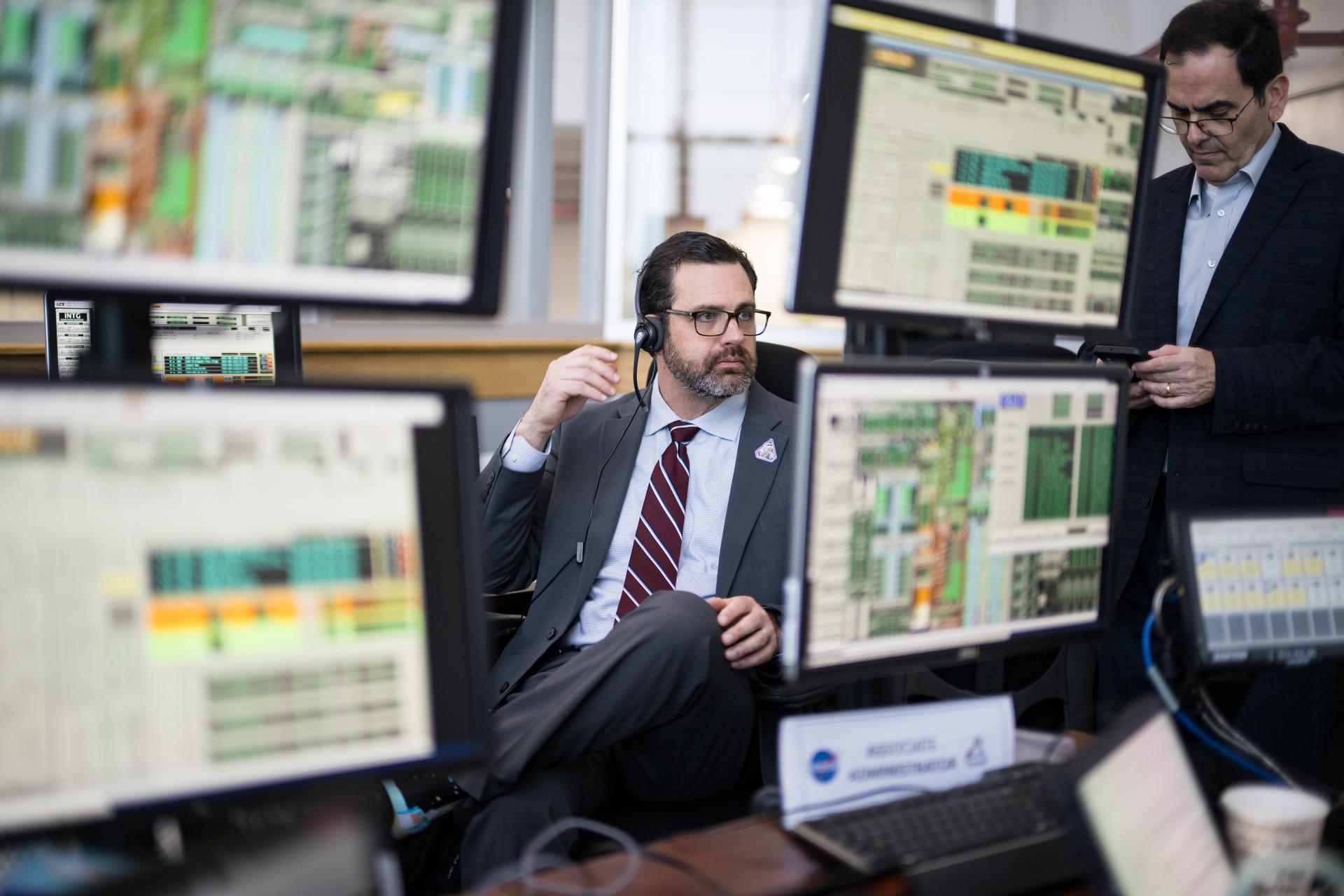
NASA Acting Deputy Associate Administrator for Moon to Mars, Jeremy Parsons, monitors the countdown of the launch of NASA’s Space Launch System (SLS) rocket and Orion spacecraft with NASA astronauts Reid Wiseman, commander; Victor Glover, pilot; Christina Koch, mission specialist; and CSA (Canadian Space Agency) astronaut Jeremy Hansen, mission specialist onboard on the Artemis II mission from Firing Room 2 of the Rocco A. Petrone Launch Control Center, Wednesday, April 1, 2026, at NASA’s Kennedy Space Center in Florida. NASA’s Artemis II mission will take Wiseman, Glover, Koch, and Hansen on a 10-day journey around the Moon and back aboard SLS rocket and Orion spacecraft from Launch Complex 39B. The quartet launched at 6:35pm EDT. Photo Credit: (NASA/Aubrey Gemignani)
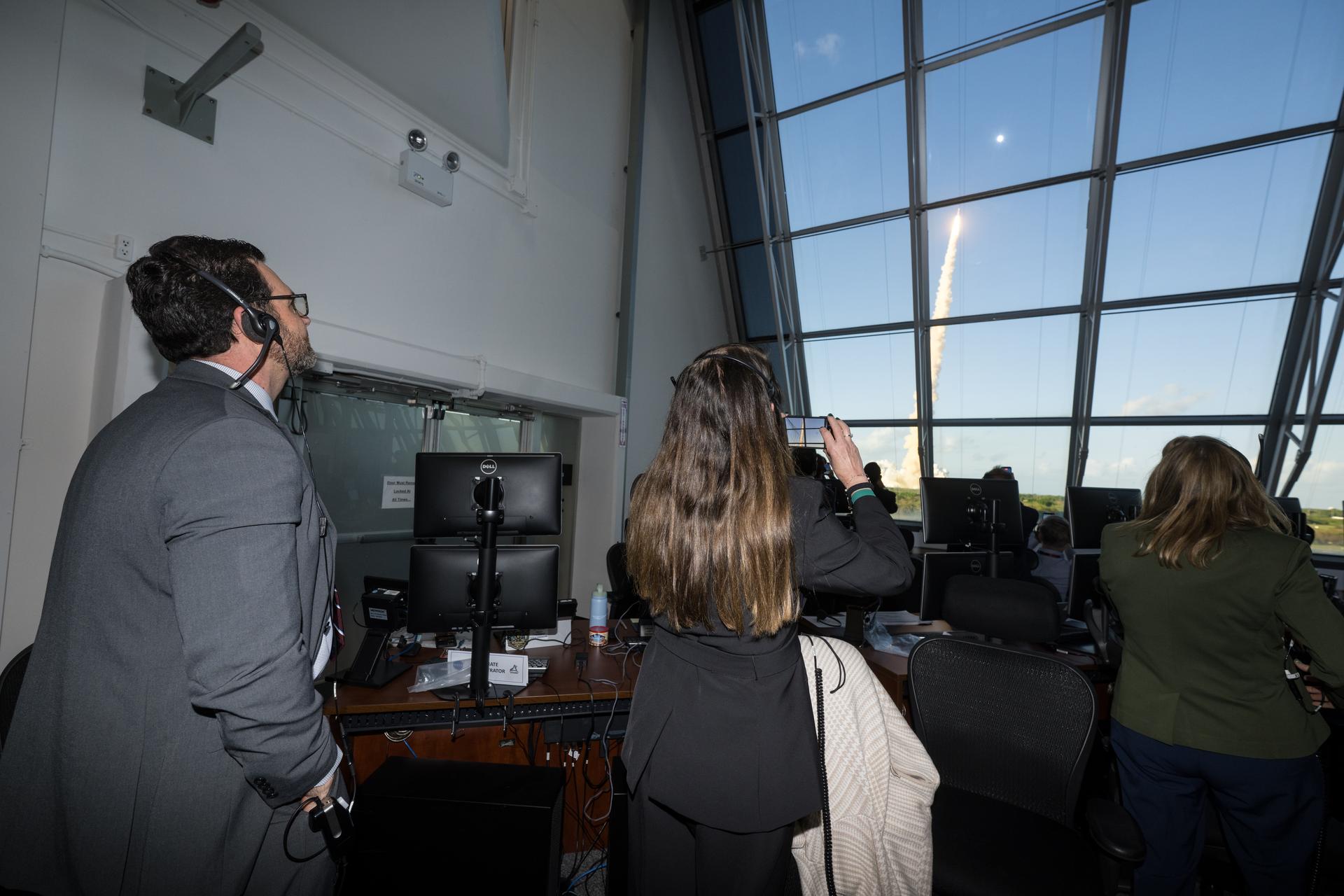
From left to right, NASA Acting Deputy Associate Administrator for Moon to Mars, Jeremy Parsons, Acting Director of NASA's Marshall Space Flight Center, Rae Ann Meyer, and Director of NASA's Kennedy Space Center, Janet Petro, watch the launch of NASA’s Space Launch System (SLS) rocket and Orion spacecraft with NASA astronauts Reid Wiseman, commander; Victor Glover, pilot; Christina Koch, mission specialist; and CSA (Canadian Space Agency) astronaut Jeremy Hansen, mission specialist onboard on the Artemis II mission from Firing Room 2 of the Rocco A. Petrone Launch Control Center, Wednesday, April 1, 2026, at NASA’s Kennedy Space Center in Florida. NASA’s Artemis II mission will take Wiseman, Glover, Koch, and Hansen on a 10-day journey around the Moon and back aboard SLS rocket and Orion spacecraft from Launch Complex 39B. The quartet launched at 6:35pm EDT. Photo Credit: (NASA/Aubrey Gemignani)
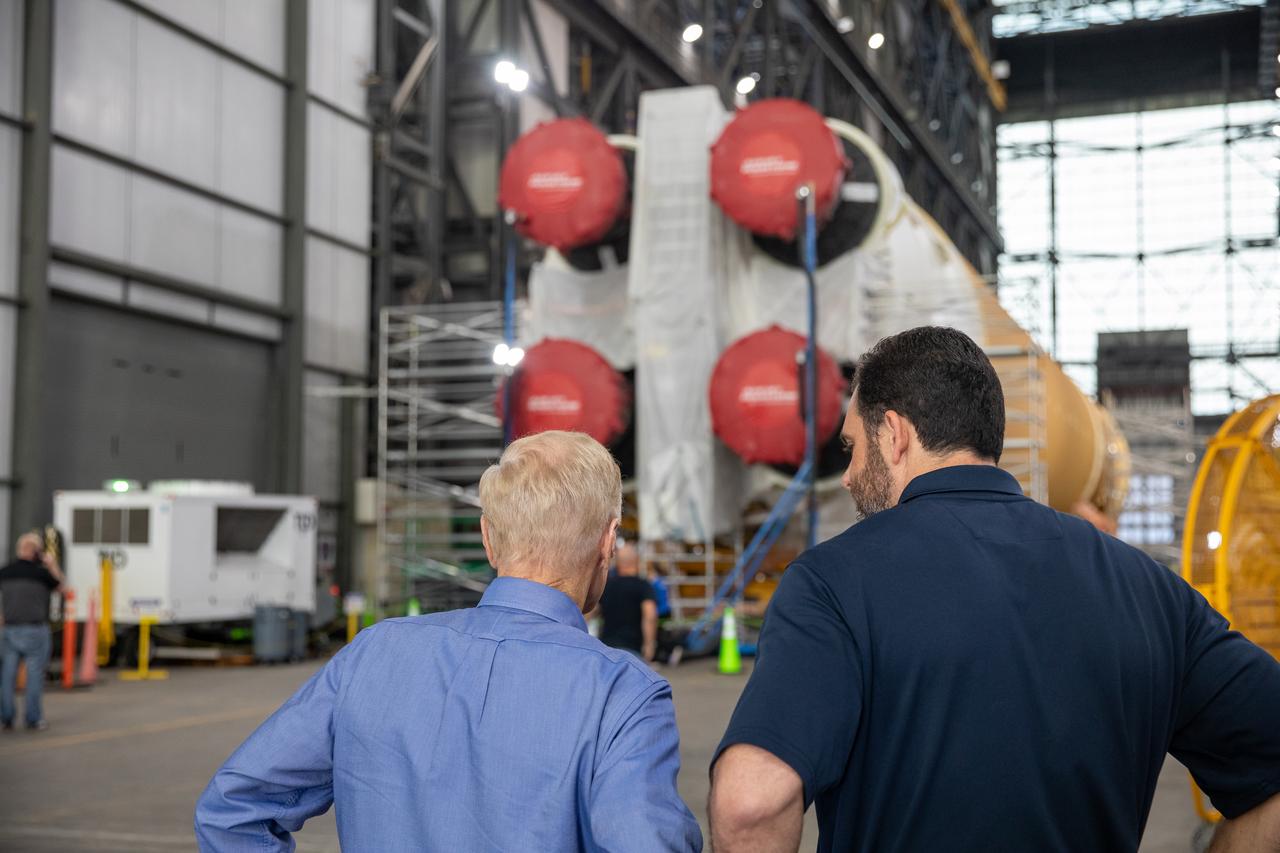
NASA Administrator Bill Nelson and NASA Exploration Ground Systems Program Deputy Manager Jeremy Parsons visit the agency’s SLS (Space Launch System) rocket core stage for the Artemis II mission inside NASA’s Kennedy Space Center in Florida on Thursday, Aug. 29, 2024. In the coming months, teams will integrate the rocket core stage atop the mobile launcher with the additional Artemis II flight hardware, including the twin solid rocket boosters, launch vehicle stage adapter, and the Orion spacecraft.
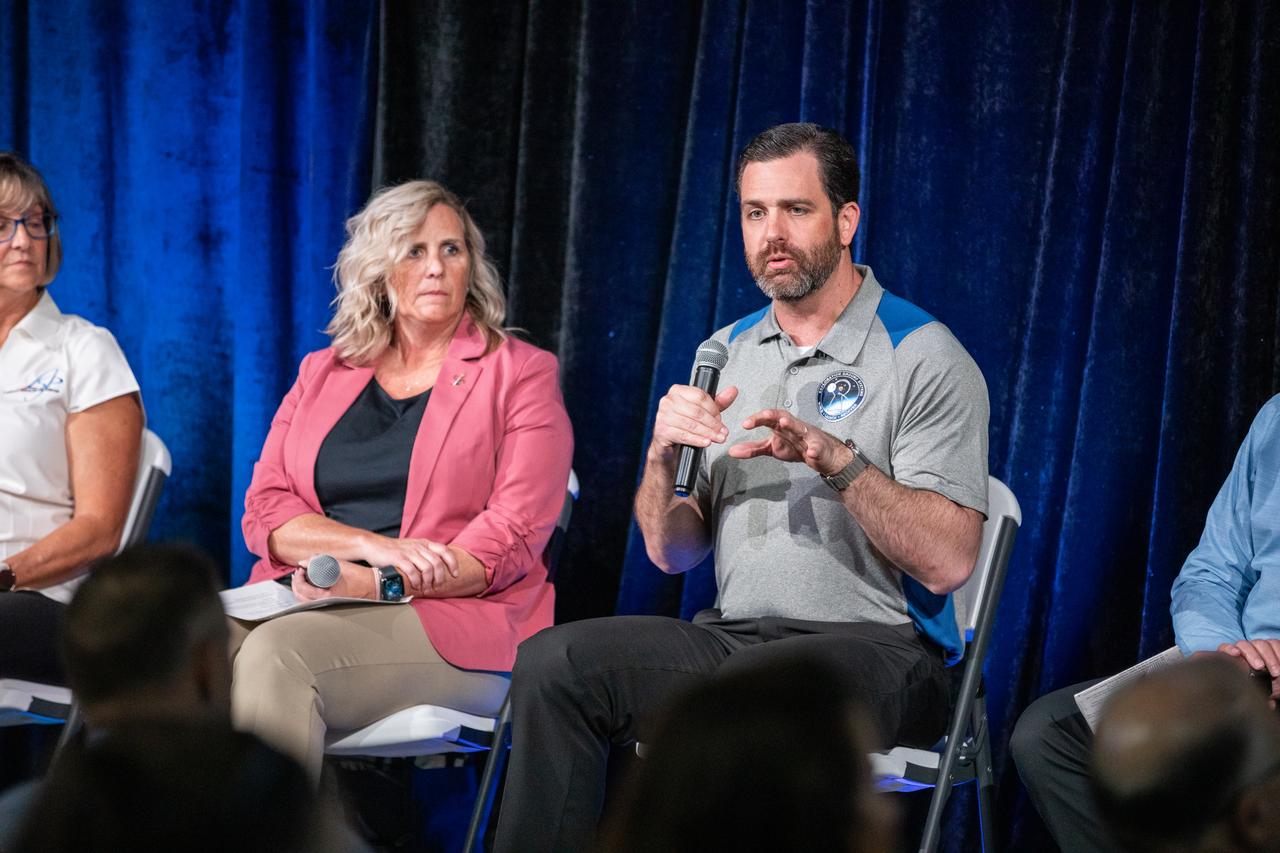
Jeremy Parsons, deputy manager, NASA’s Exploration Ground Systems, speaks to a crowd gathered for the NASA Kennedy Space Center Community Leaders Update on Thursday, May 23, 2024, at the center’s Visitor Complex. At left, Dana Hutcherson, deputy manager, Commercial Crew Program, were among the panelists discussing how programs based at NASA Kennedy support the agency’s efforts to return humans to the Moon in preparation for Mars and answered questions from guests.
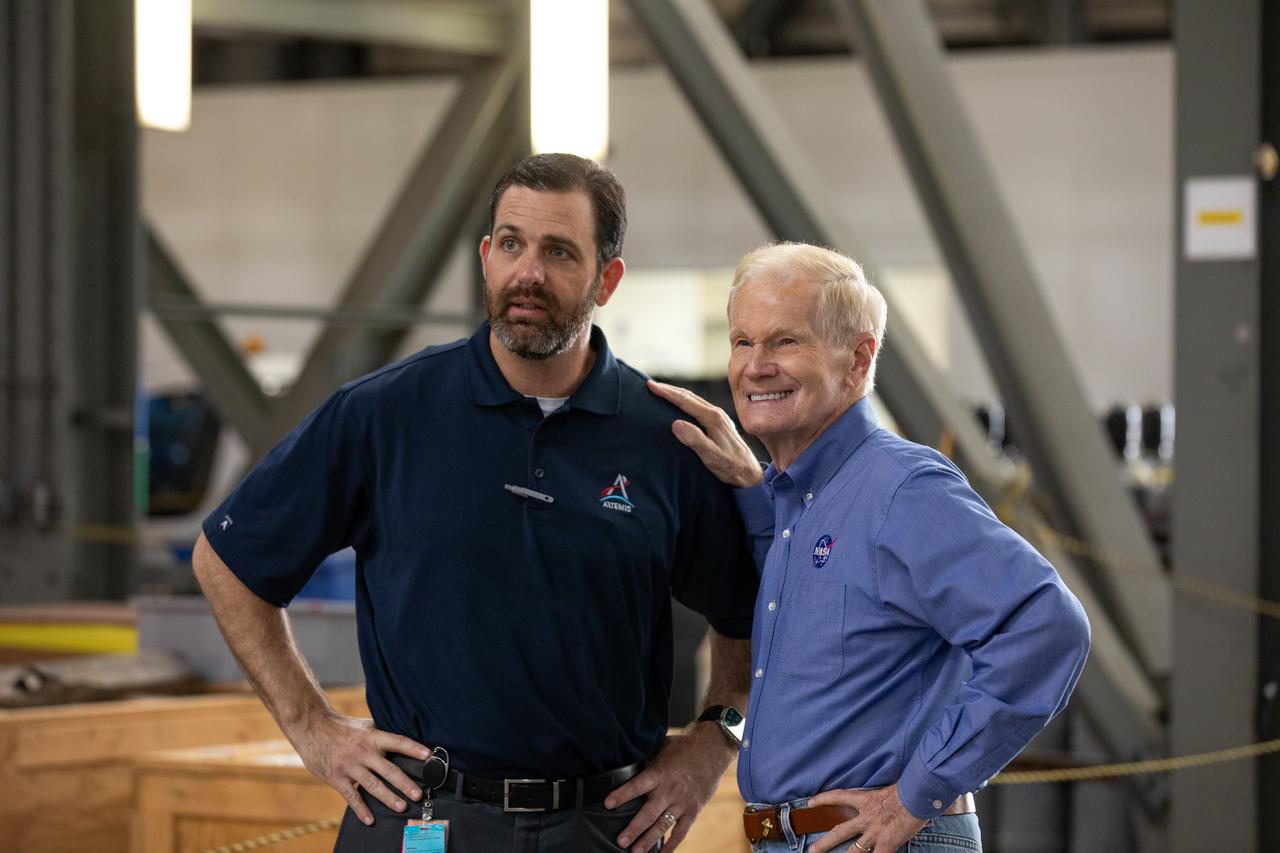
NASA Administrator Bill Nelson and NASA Exploration Ground Systems Program Deputy Manager Jeremy Parsons visit the agency’s SLS (Space Launch System) rocket core stage for the Artemis II mission inside NASA’s Kennedy Space Center in Florida on Thursday, Aug. 29, 2024. In the coming months, teams will integrate the rocket core stage atop the mobile launcher with the additional Artemis II flight hardware, including the twin solid rocket boosters, launch vehicle stage adapter, and the Orion spacecraft.
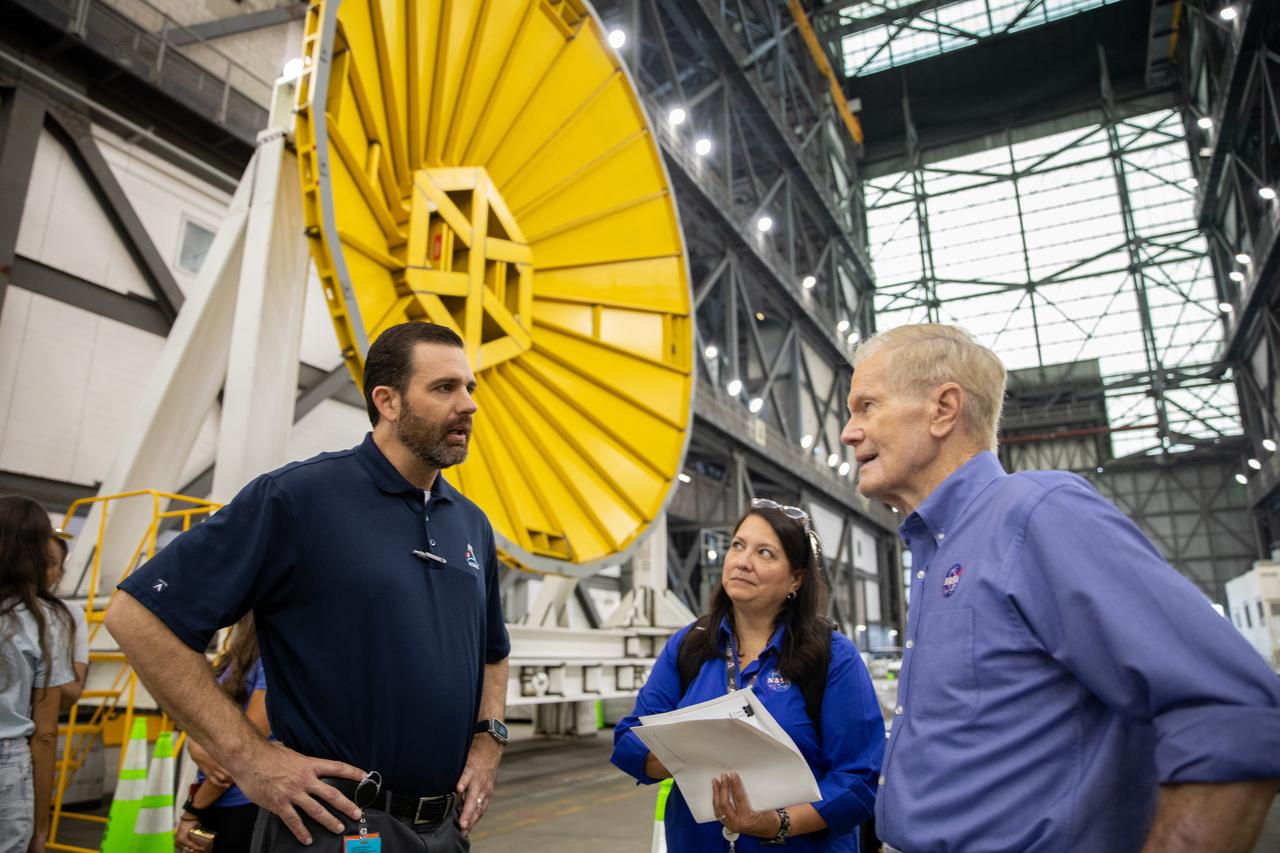
NASA Administrator Bill Nelson and NASA Exploration Ground Systems Program Deputy Manager Jeremy Parsons visit the agency’s SLS (Space Launch System) rocket core stage for the Artemis II mission inside NASA’s Kennedy Space Center in Florida on Thursday, Aug. 29, 2024. In the coming months, teams will integrate the rocket core stage atop the mobile launcher with the additional Artemis II flight hardware, including the twin solid rocket boosters, launch vehicle stage adapter, and the Orion spacecraft.
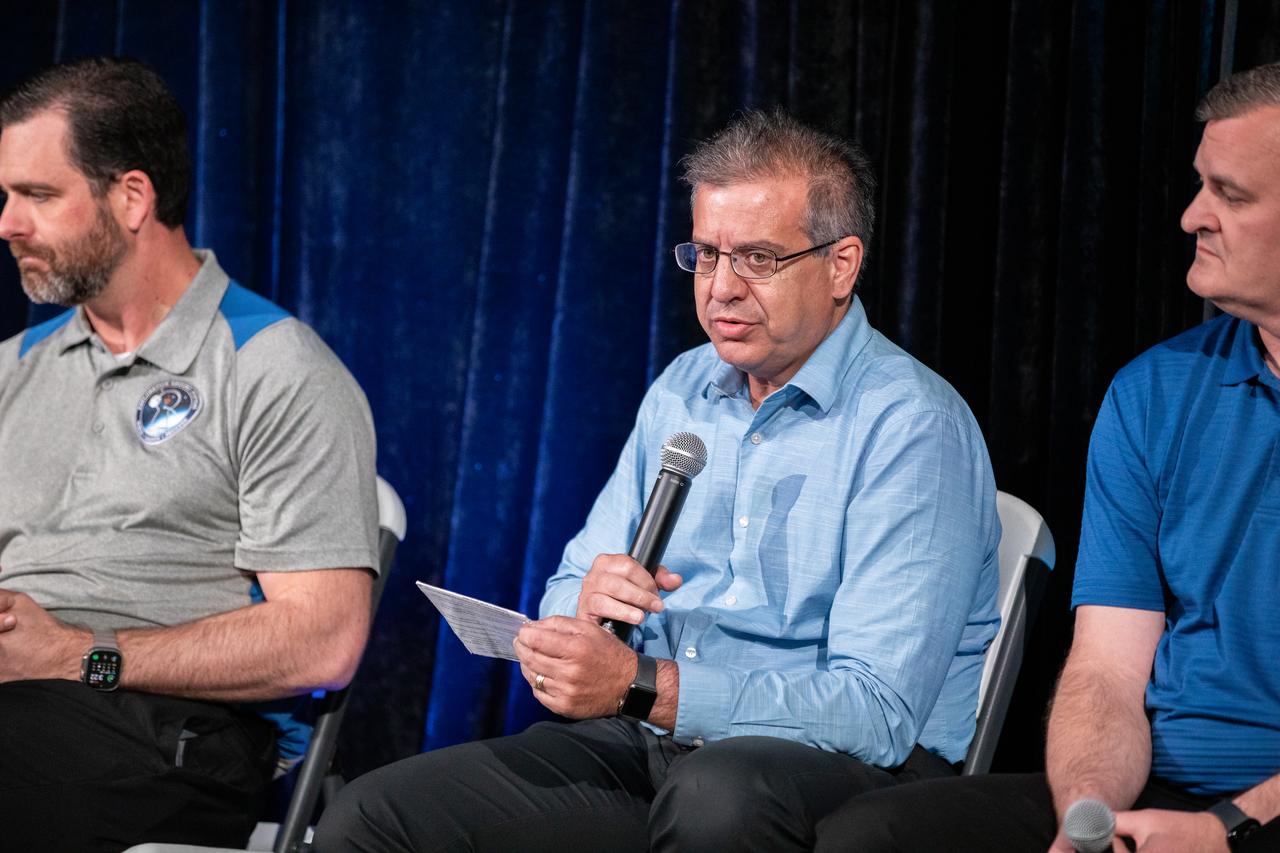
In the middle, Emilio Cruz, deputy director, NASA’s Exploration Research and Technology Programs, speaks to a crowd gathered for the 2024 Kennedy Space Center Community Leaders Update on Thursday, May 23, 2024, held at the center’s Visitor Complex. From left, Jeremy Parsons, deputy manager, NASA’s Exploration Ground Systems, and Mark Weise, manager, Gateway Deep Space Logistics, discussed how programs based at NASA Kennedy support the agency’s efforts to return humans to the Moon in preparation for Mars and answered questions from guests.
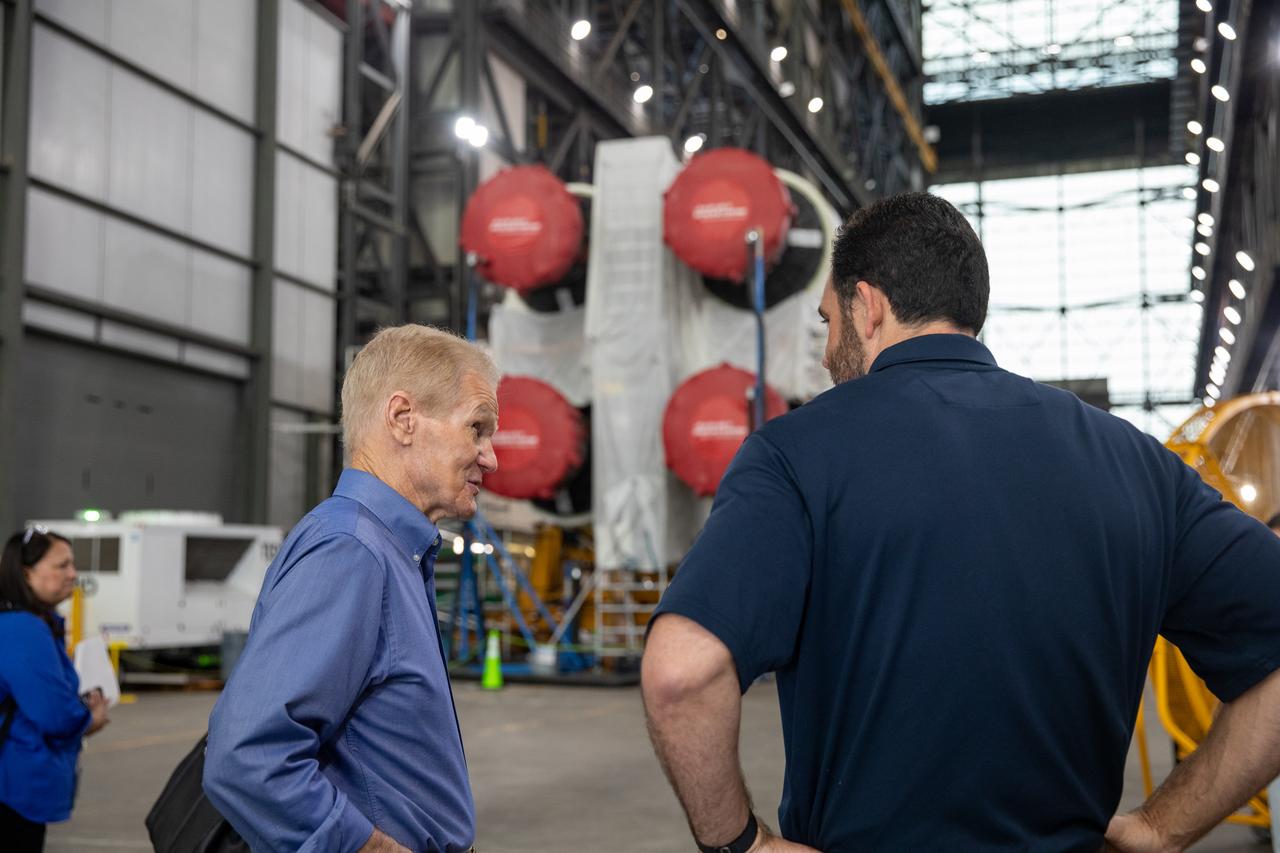
NASA Administrator Bill Nelson and NASA Exploration Ground Systems Program Deputy Manager Jeremy Parsons visit the agency’s SLS (Space Launch System) rocket core stage for the Artemis II mission inside NASA’s Kennedy Space Center in Florida on Thursday, Aug. 29, 2024. In the coming months, teams will integrate the rocket core stage atop the mobile launcher with the additional Artemis II flight hardware, including the twin solid rocket boosters, launch vehicle stage adapter, and the Orion spacecraft.
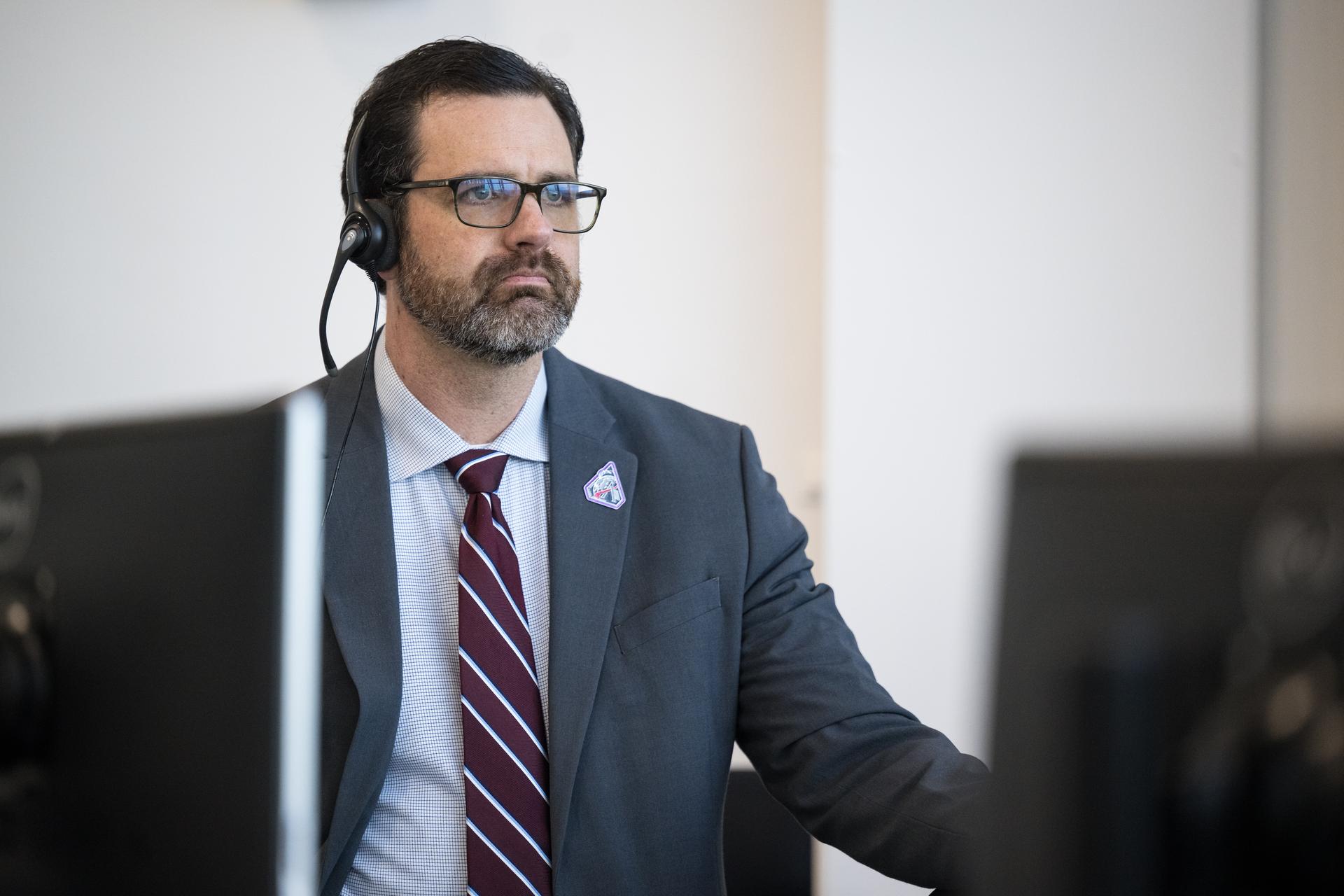
NASA Acting Deputy Associate Administrator for Moon to Mars, Jeremy Parsons, monitors the countdown of the launch of NASA’s Space Launch System (SLS) rocket and Orion spacecraft with NASA astronauts Reid Wiseman, commander; Victor Glover, pilot; Christina Koch, mission specialist; and CSA (Canadian Space Agency) astronaut Jeremy Hansen, mission specialist onboard on the Artemis II mission from Firing Room 2 of the Rocco A. Petrone Launch Control Center, Wednesday, April 1, 2026, at NASA’s Kennedy Space Center in Florida. NASA’s Artemis II mission will take Wiseman, Glover, Koch, and Hansen on a 10-day journey around the Moon and back aboard SLS rocket and Orion spacecraft from Launch Complex 39B. The quartet launched at 6:35pm EDT. Photo Credit: (NASA/Aubrey Gemignani)
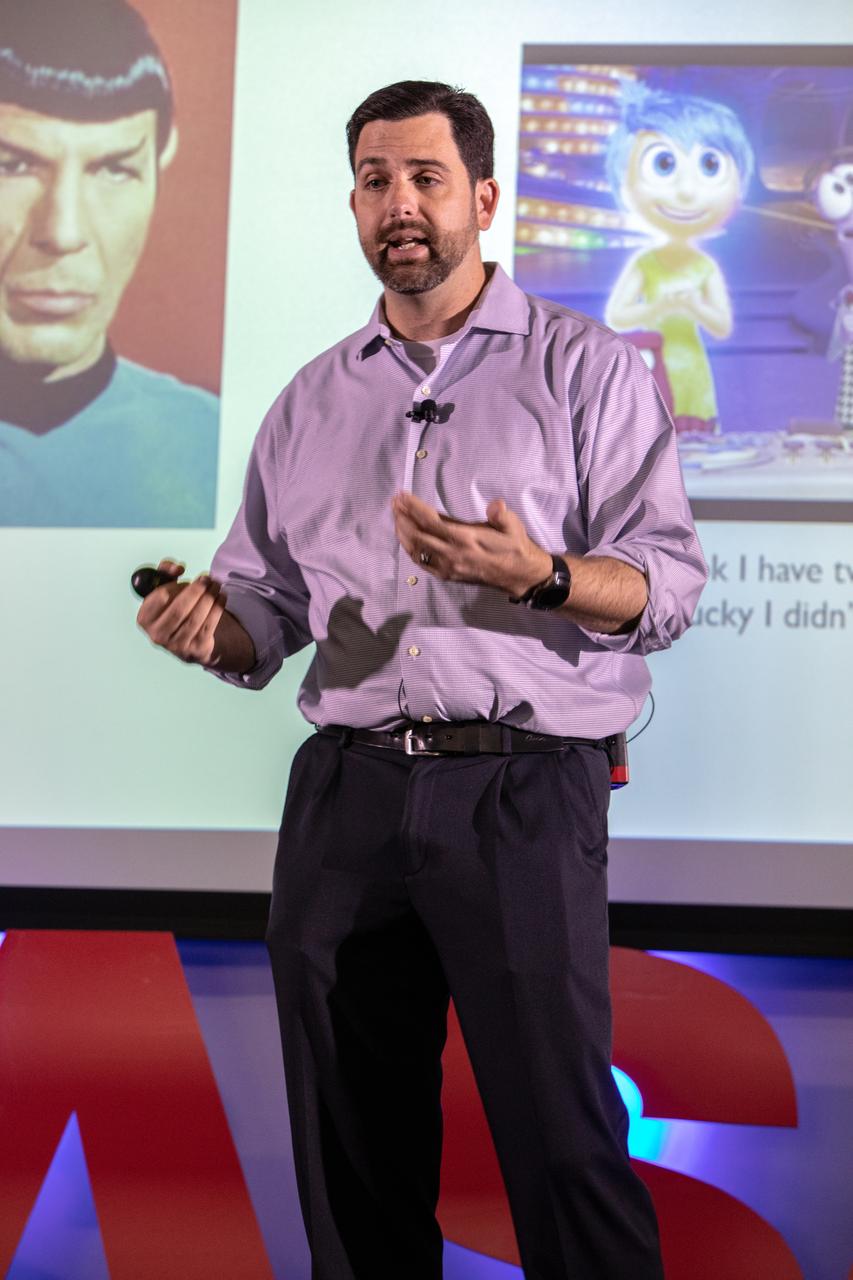
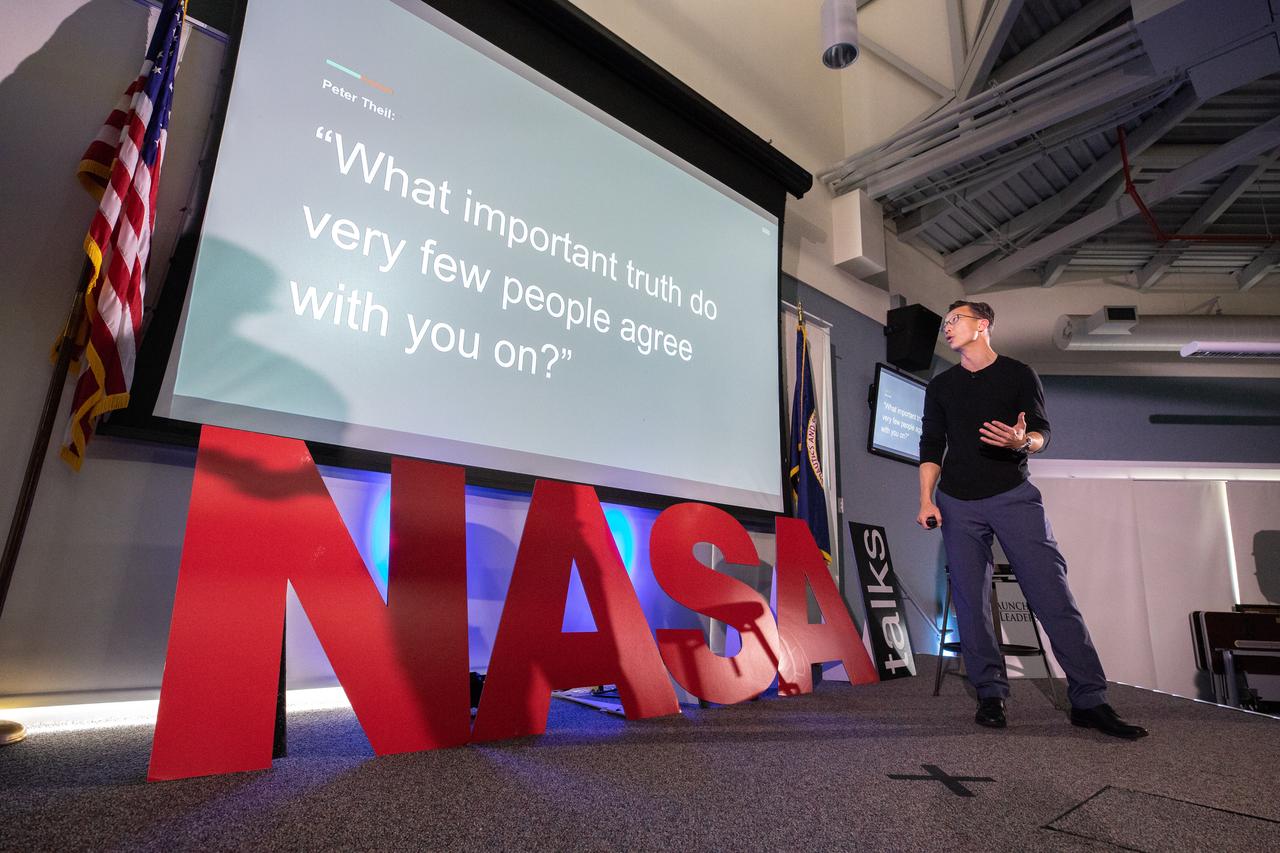
Jeremy Parsons, deputy manager of NASA’s Exploration Ground Systems at the agency’s Kennedy Space Center in Florida, speaks at the fourth in a series of five TED Talk-style informational sessions on Oct. 31, 2019, in the Kennedy Learning Institute. Sponsored by Kennedy’s Launching Leaders and Leadership for the Future, NASAtalks focuses on the topic of intentional careers and aims to provide employees with tools and knowledge that can be utilized for career growth. The theme of this fourth session was employees, and additional speakers included Kennedy’s Johnny Nguyen and Tony Derbyshire, with a skill-building section on vulnerability, authentic self and diverse inclusion by Ronnie Rodriguez.

Barbara Brown, center, chief technologist, Exploration Research and Technology Programs, participates in a panel discussion during a Community Leaders Update hosted by Kennedy Space Center on Feb. 18, 2020, at the Kennedy Space Center Visitor Complex in Florida. At left is Jenny Lyons, deputy manager, Gateway Logistics Element. At right is Jeremy Parsons, deputy manager, Exploration Ground Systems. The panel discussion was moderated by Center Director Bob Cabana. Attendees included community leaders, business executives, partners, educators and government leaders. After the presentation, guests had the opportunity to ask questions and visit displays from the programs and some of the commercial partners.
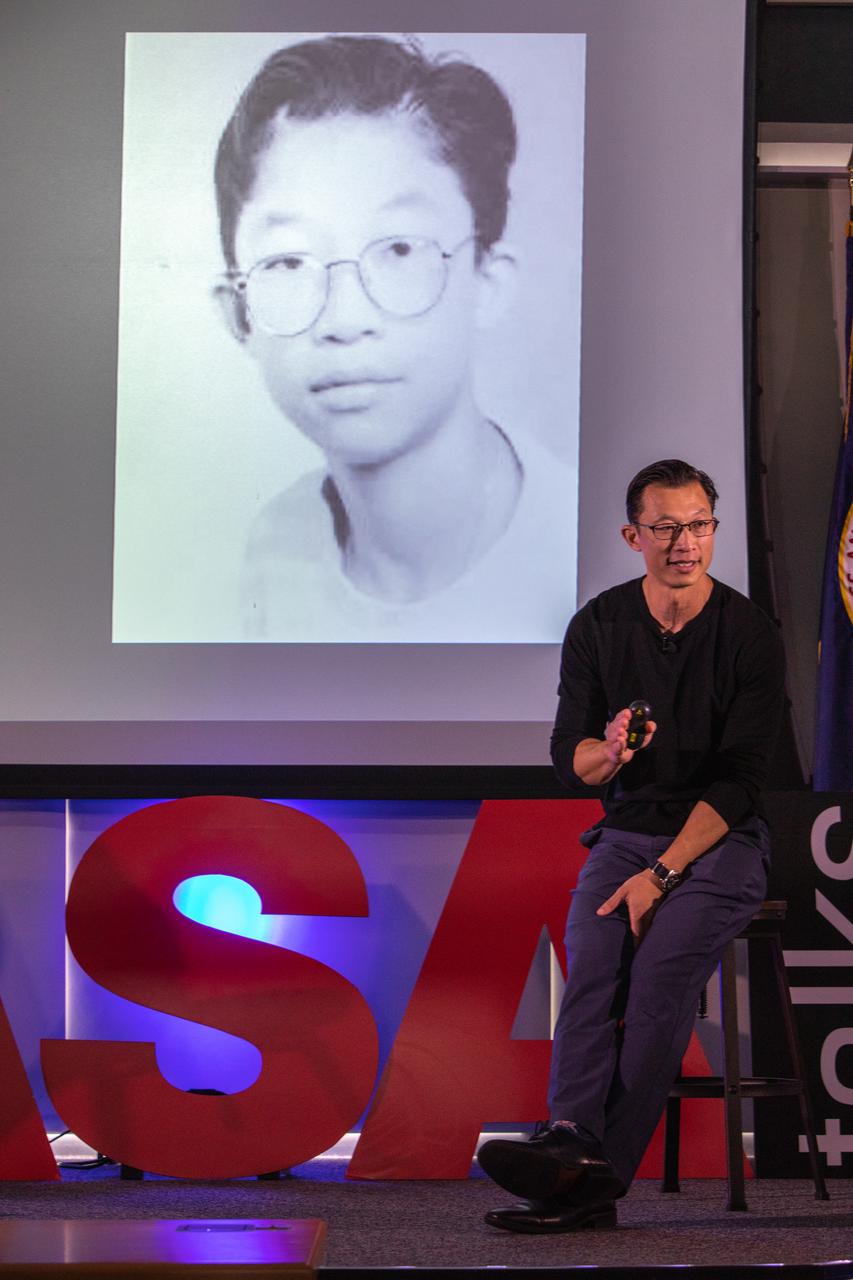
Kennedy Space Center’s Johnny Nguyen speaks at the fourth in a series of five TED Talk-style informational sessions on Oct. 31, 2019, in the Florida spaceport’s Kennedy Learning Institute. Sponsored by Kennedy’s Launching Leaders and Leadership for the Future, NASAtalks focuses on the topic of intentional careers and aims to provide employees with tools and knowledge that can be utilized for career growth. The theme of this fourth session was employees, and additional speakers included Kennedy’s Tony Derbyshire and Deputy Manager of NASA’s Exploration Ground Systems Jeremy Parsons, with a skill-building section on vulnerability, authentic self and diverse inclusion by Ronnie Rodriguez.
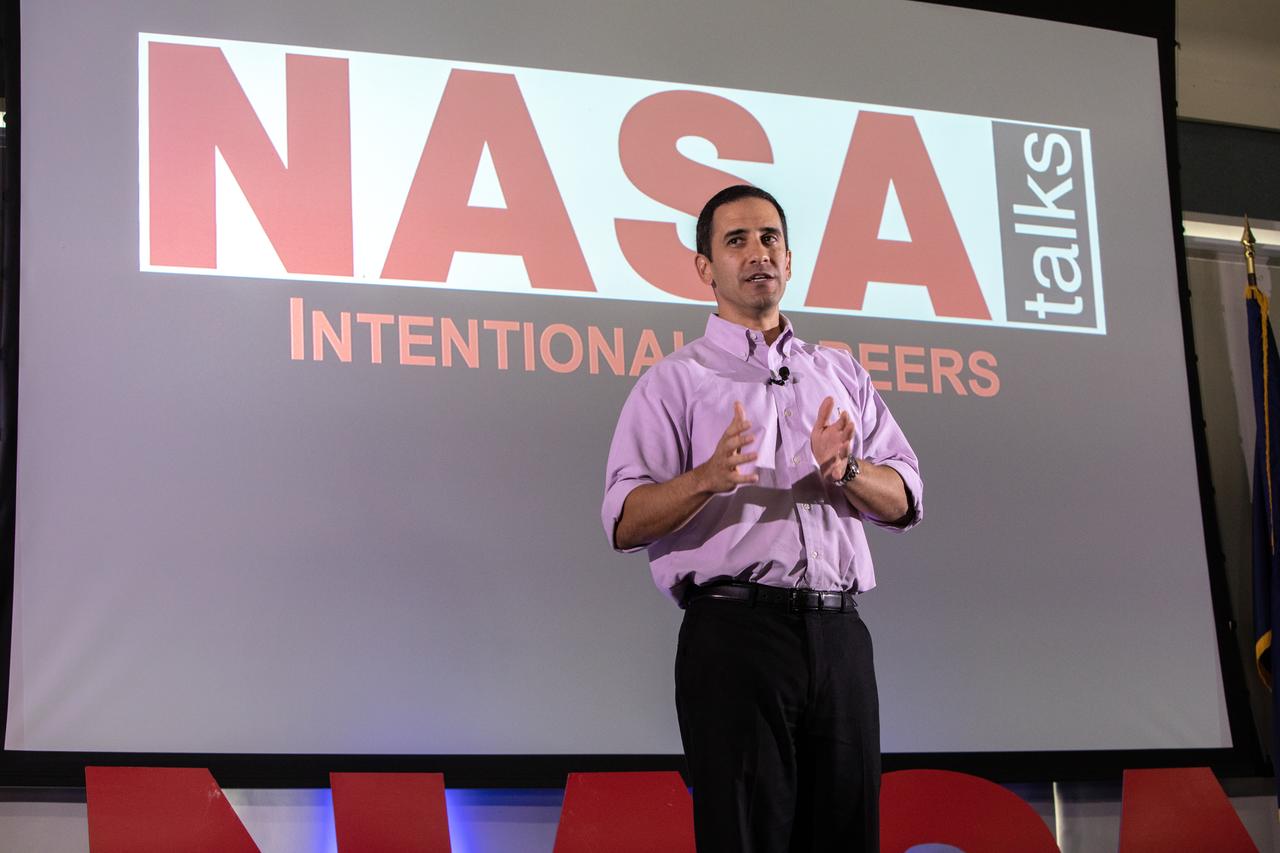
Kennedy Space Center’s Tony Derbyshire speaks at the fourth in a series of five TED Talk-style informational sessions on Oct. 31, 2019, in the Florida spaceport’s Kennedy Learning Institute. Sponsored by Kennedy’s Launching Leaders and Leadership for the Future, NASAtalks focuses on the topic of intentional careers and aims to provide employees with tools and knowledge that can be utilized for career growth. The theme of this fourth session was employees, and additional speakers included Kennedy’s Johnny Nguyen and Deputy Manager of NASA’s Exploration Ground Systems Jeremy Parsons, with a skill-building section on vulnerability, authentic self and diverse inclusion by Ronnie Rodriguez.
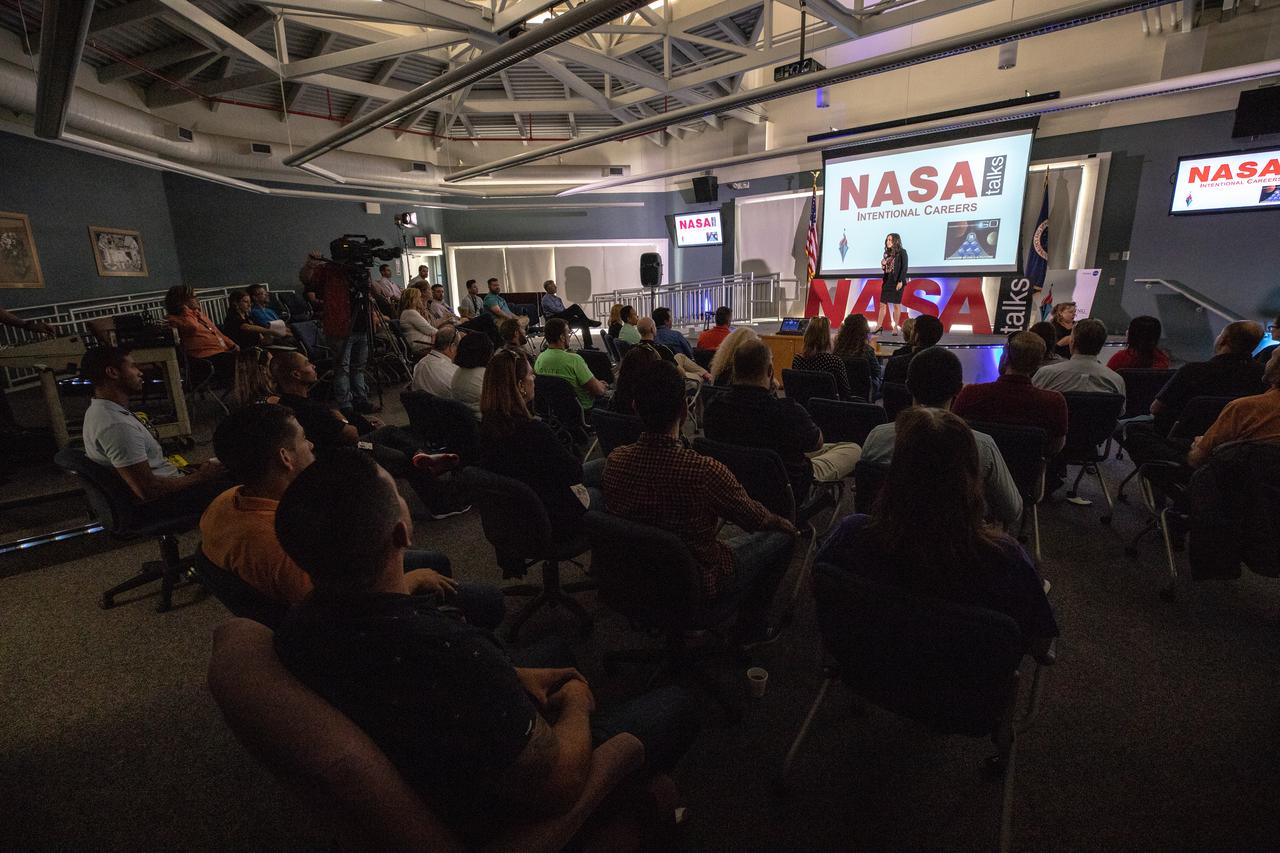
Kennedy Space Center’s Jennifer Lane addresses co-workers inside the Florida spaceport’s Kennedy Learning Institute on Oct. 31, 2019, during the fourth in a series of five TED Talk-style informational sessions. Sponsored by Kennedy’s Launching Leaders and Leadership for the Future, NASAtalks focuses on the topic of intentional careers and aims to provide employees with tools and knowledge that can be utilized for career growth. The theme of this fourth session was employees, and additional speakers included Kennedy’s Johnny Nguyen, Tony Derbyshire and Jeremy Parsons, deputy manager of NASA’s Exploration Ground Systems, with a skill-building section on vulnerability, authentic self and diverse inclusion by Ronnie Rodriguez.
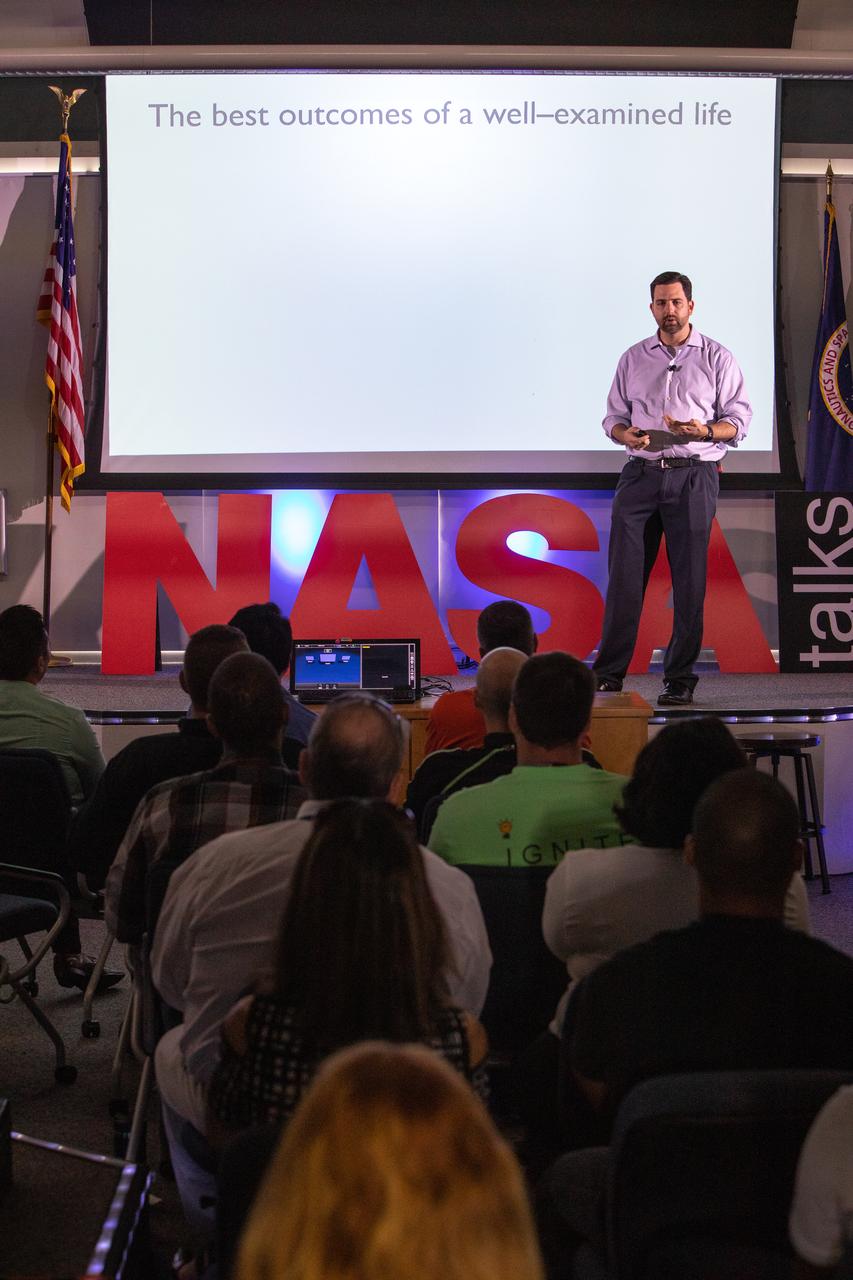
Jeremy Parsons, deputy manager of NASA’s Exploration Ground Systems at the agency’s Kennedy Space Center in Florida, speaks to Kennedy employees on Oct. 31, 2019, in the Kennedy Learning Institute during the fourth in a series of five TED Talk-style informational sessions. Sponsored by Kennedy’s Launching Leaders and Leadership for the Future, NASAtalks focuses on the topic of intentional careers and aims to provide employees with tools and knowledge that can be utilized for career growth. The theme of this fourth session was employees, and additional speakers included Kennedy’s Johnny Nguyen and Tony Derbyshire, with a skill-building section on vulnerability, authentic self and diverse inclusion by Ronnie Rodriguez.
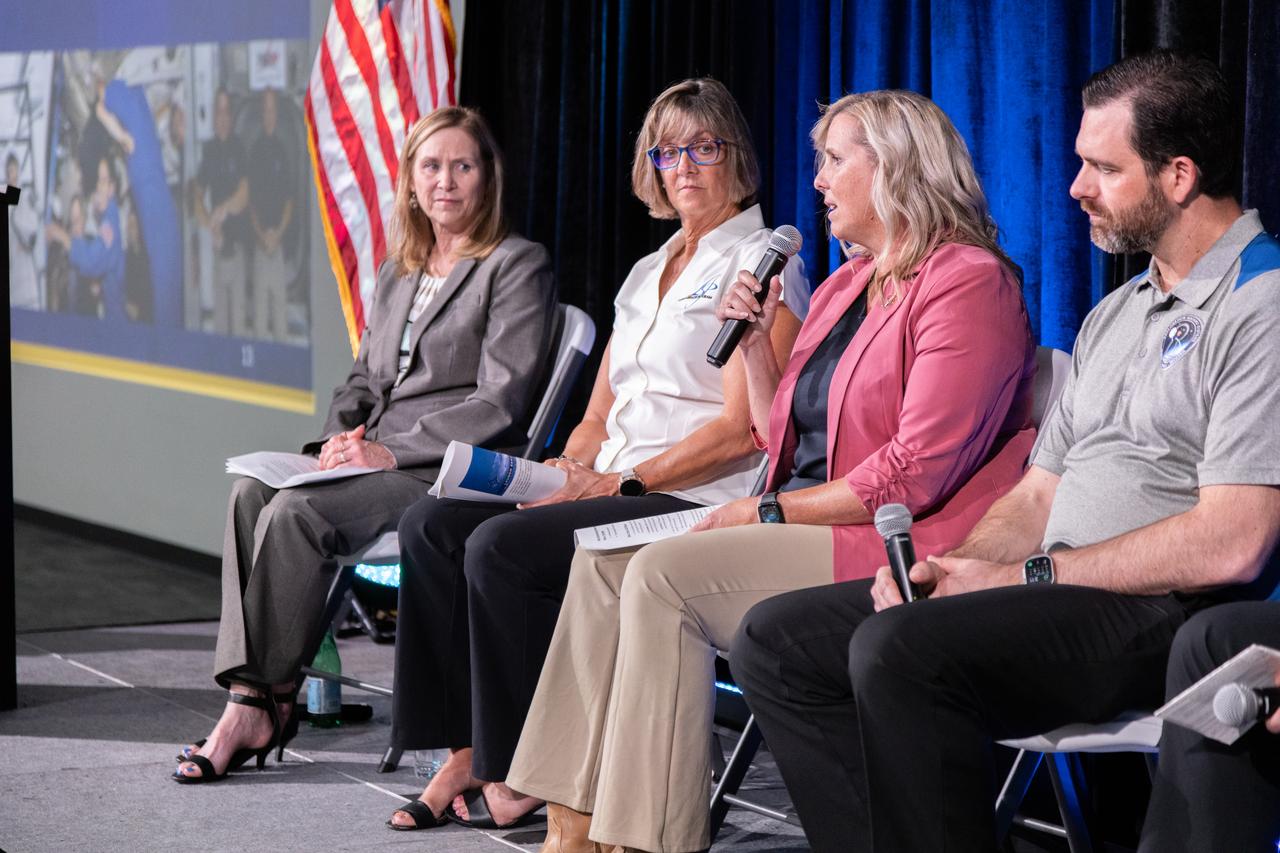
Dana Hutcherson, deputy manager, NASA’s Commercial Crew Program, speaks to a crowd gathered for the 2024 Kennedy Space Center Community Leaders Update on Thursday, May 23, 2024, held at the center’s Visitor Complex. She is joined by, from left, NASA Kennedy Space Center Director Janet Petro, Jenny Lyons, deputy manager, Launch Services Program, and Jeremy Parsons, deputy manager, Exploration Ground System. Together the panelists discussed how programs based at NASA Kennedy support the agency’s efforts to return humans to the Moon in preparation for Mars and answered audience questions.

Kennedy Space Center’s Johnny Nguyen speaks at the fourth in a series of five TED Talk-style informational sessions on Oct. 31, 2019, in the Florida spaceport’s Kennedy Learning Institute. Sponsored by Kennedy’s Launching Leaders and Leadership for the Future, NASAtalks focuses on the topic of intentional careers and aims to provide employees with tools and knowledge that can be utilized for career growth. The theme of this fourth session was employees, and additional speakers included Kennedy’s Tony Derbyshire and Deputy Manager of NASA’s Exploration Ground Systems Jeremy Parsons, with a skill-building section on vulnerability, authentic self and diverse inclusion by Ronnie Rodriguez.
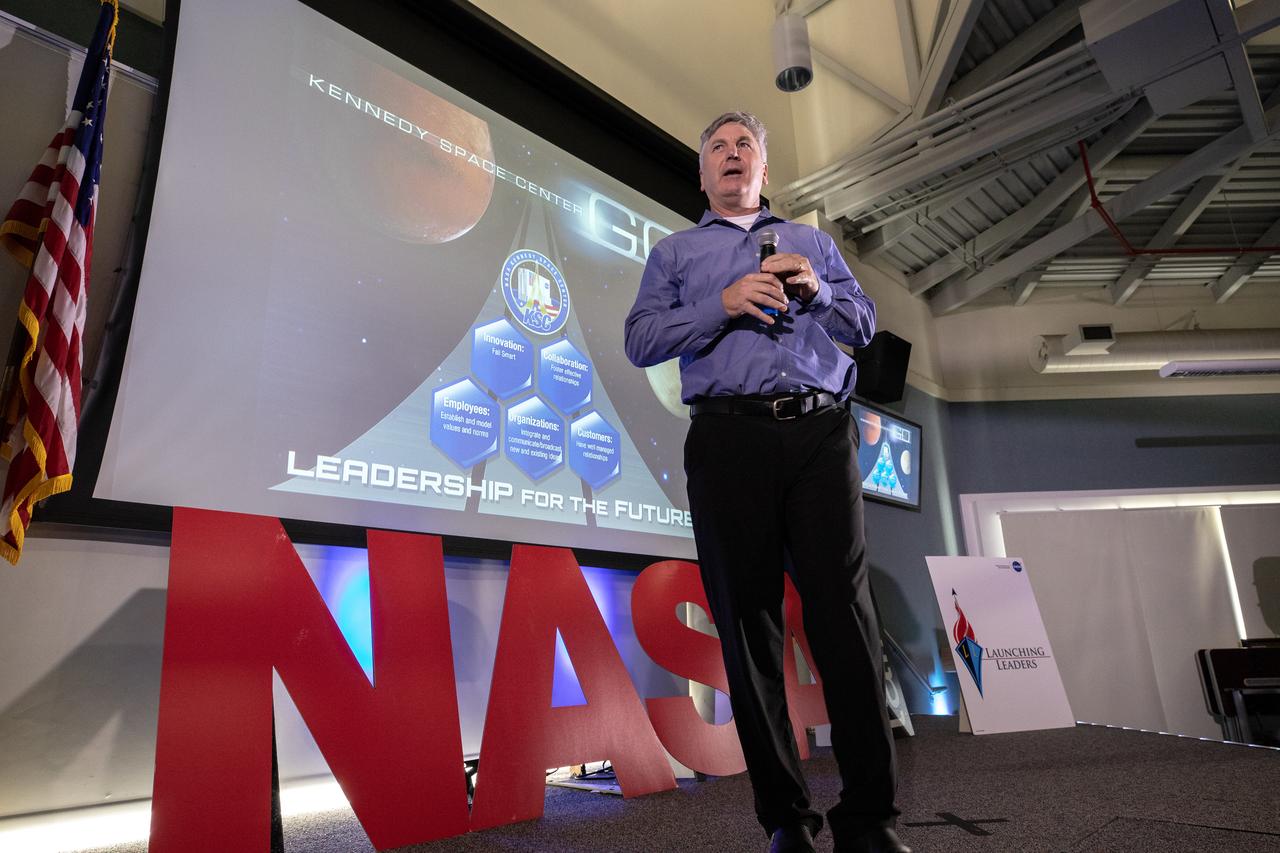
Scott Colloredo, deputy director of Engineering at NASA’s Kennedy Space Center in Florida, speaks at the fourth in a series of five TED Talk-style informational sessions on Oct. 31, 2019, in the Kennedy Learning Institute. Sponsored by Kennedy’s Launching Leaders and Leadership for the Future, NASAtalks focuses on the topic of intentional careers and aims to provide employees with tools and knowledge that can be utilized for career growth. The theme of this fourth session was employees, and additional speakers included Kennedy’s Johnny Nguyen, Tony Derbyshire and Jeremy Parsons, deputy manager of NASA’s Exploration Ground Systems, with a skill-building section on vulnerability, authentic self and diverse inclusion by Ronnie Rodriguez.
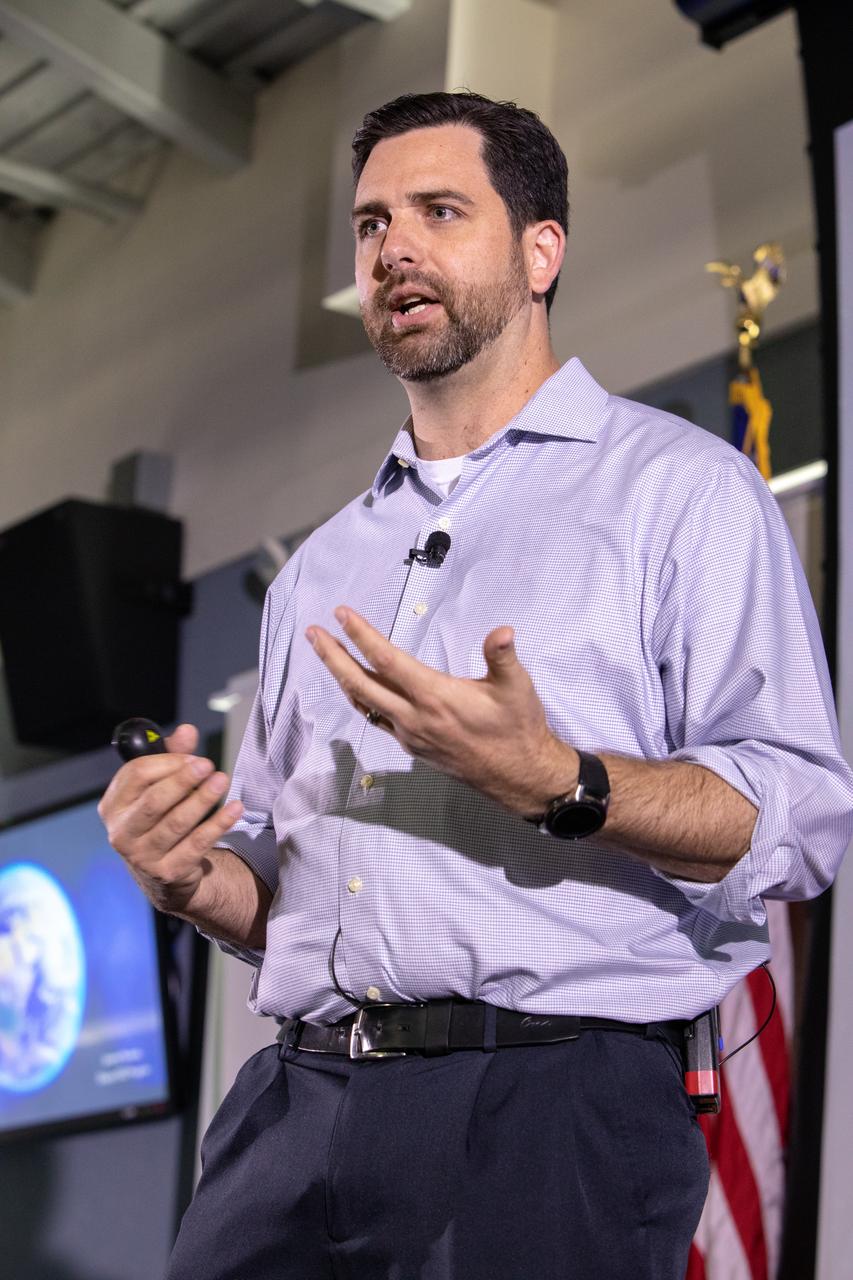
Jeremy Parsons, deputy manager of NASA’s Exploration Ground Systems at the agency’s Kennedy Space Center in Florida, speaks at the fourth in a series of five TED Talk-style informational sessions on Oct. 31, 2019, in the Kennedy Learning Institute. Sponsored by Kennedy’s Launching Leaders and Leadership for the Future, NASAtalks focuses on the topic of intentional careers and aims to provide employees with tools and knowledge that can be utilized for career growth. The theme of this fourth session was employees, and additional speakers included Kennedy’s Johnny Nguyen and Tony Derbyshire, with a skill-building section on vulnerability, authentic self and diverse inclusion by Ronnie Rodriguez.
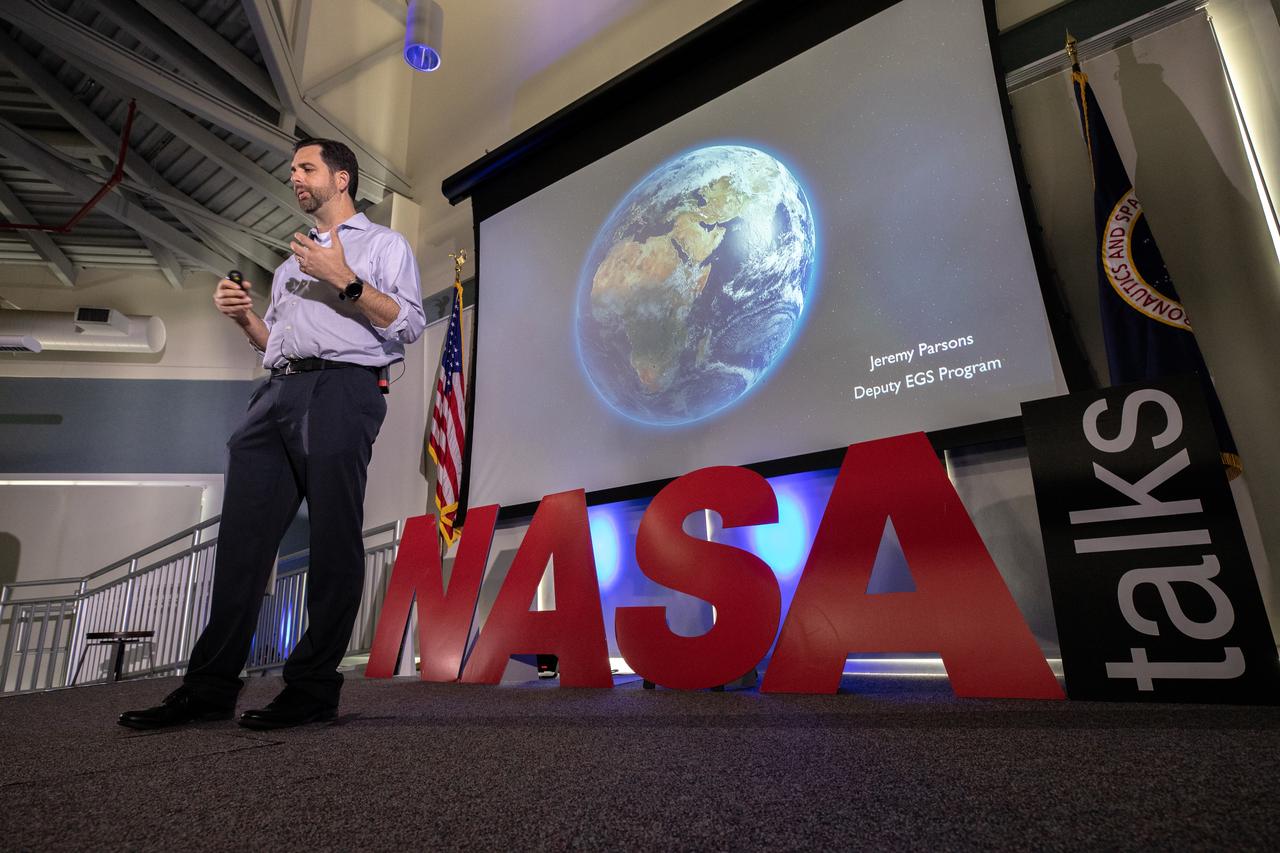
Jeremy Parsons, deputy manager of NASA’s Exploration Ground Systems at the agency’s Kennedy Space Center in Florida, speaks at the fourth in a series of five TED Talk-style informational sessions on Oct. 31, 2019, in the Kennedy Learning Institute. Sponsored by Kennedy’s Launching Leaders and Leadership for the Future, NASAtalks focuses on the topic of intentional careers and aims to provide employees with tools and knowledge that can be utilized for career growth. The theme of this fourth session was employees, and additional speakers included Kennedy’s Johnny Nguyen and Tony Derbyshire, with a skill-building section on vulnerability, authentic self and diverse inclusion by Ronnie Rodriguez.
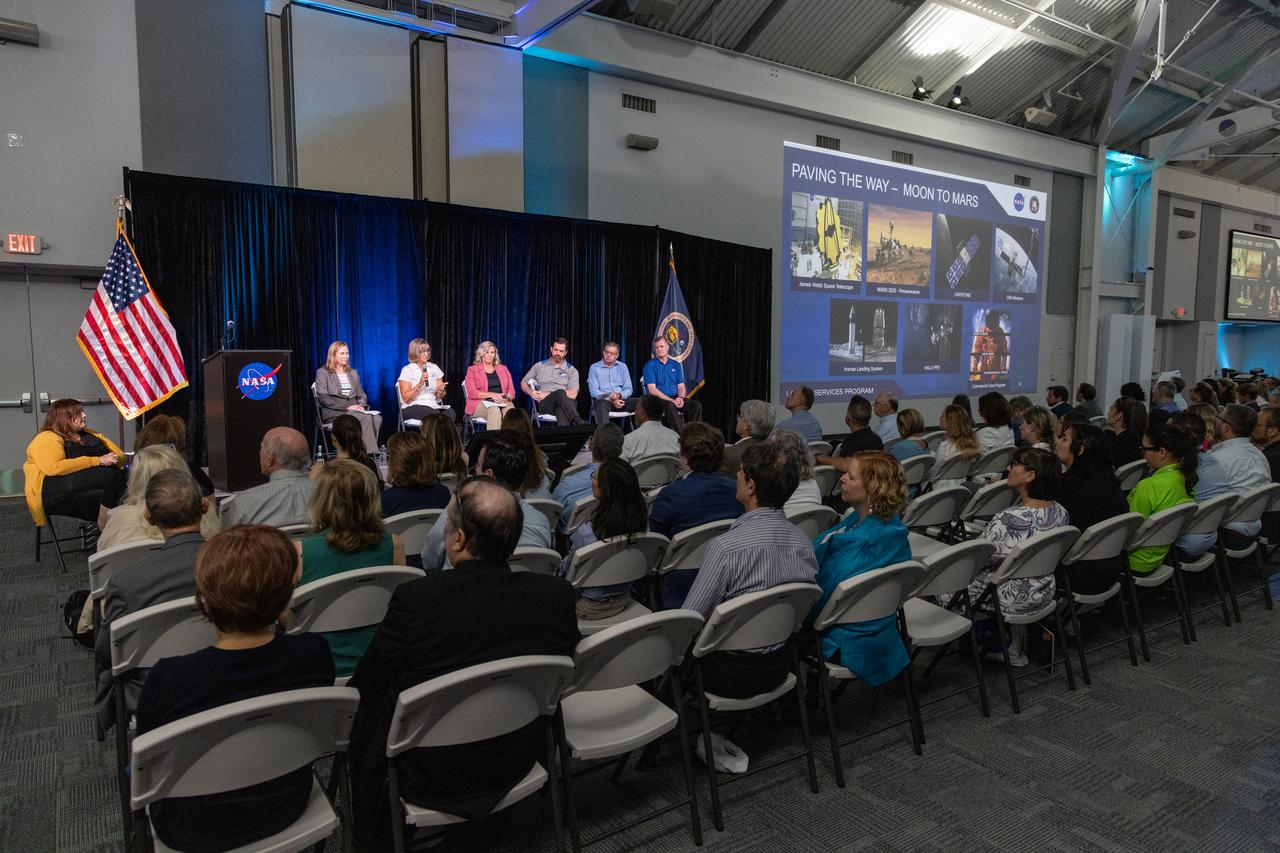
NASA Kennedy Space Center Director Janet Petro, with senior leaders of NASA and center programs, holds a Community Leaders Update on Thursday, May 23, 2024, at the Kennedy Space Center Visitor Complex. The panel discussed how programs based at NASA Kennedy support the agency’s efforts to return humans to the Moon and prepare for Mars, and they answered questions from guests. From second to left, Jenny Lyons, deputy manager, Launch Services Program; Dana Hutcherson, deputy manager, Commercial Crew Program; Jeremy Parsons, deputy manager, Exploration Ground Systems; Emilio Cruz, deputy director, Exploration Research and Technology Programs; and Mark Weise, manager, Gateway Deep Space Logistics.
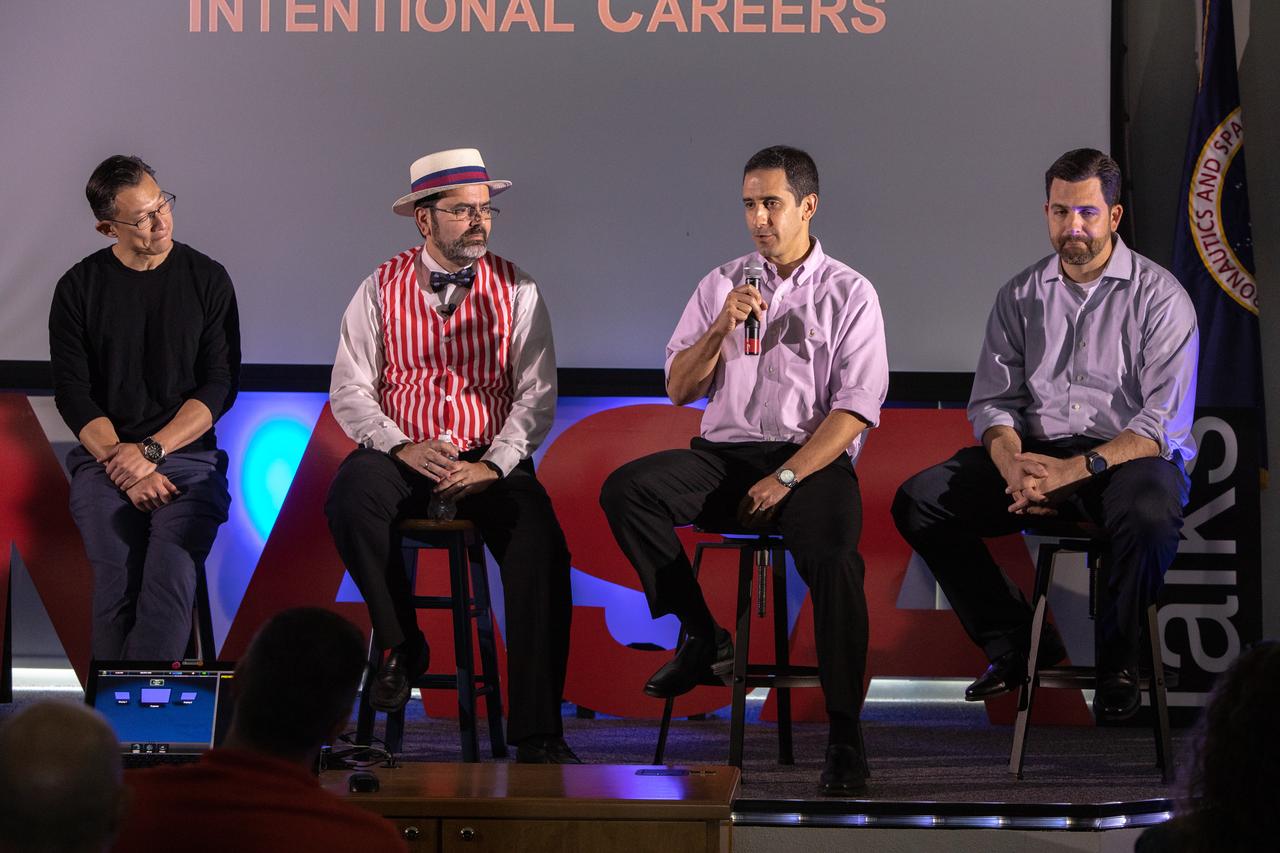
From left, Kennedy Space Center’s Johnny Nguyen, Ronnie Rodriguez, deputy director of Safety and Mission Assurance, Tony Derbyshire and Jeremy Parsons, deputy manager of NASA’s Exploration Ground Systems, participate in the fourth of a series of five TED Talk-style informational sessions on Oct. 31, 2019, inside the Florida spaceport’s Kennedy Learning Institute. Sponsored by Kennedy’s Launching Leaders and Leadership for the Future, NASAtalks focuses on the topic of intentional careers and aims to provide employees with tools and knowledge that can be utilized for career growth. The theme of this fourth session was employees.
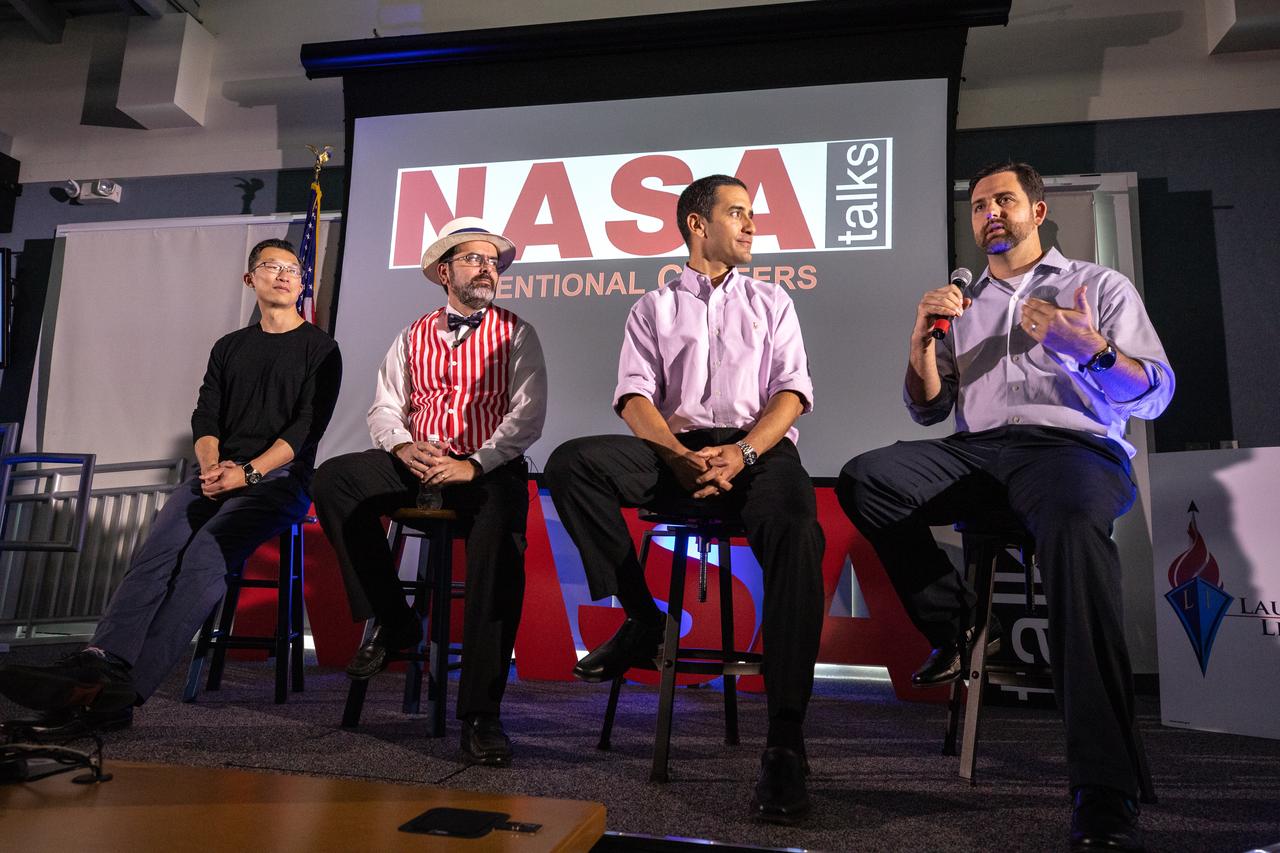
From left, Kennedy Space Center’s Johnny Nguyen, Ronnie Rodriguez, deputy director of Safety and Mission Assurance, Tony Derbyshire and Jeremy Parsons, deputy manager of NASA’s Exploration Ground Systems, participate in the fourth of a series of five TED Talk-style informational sessions on Oct. 31, 2019, inside the Florida spaceport’s Kennedy Learning Institute. Sponsored by Kennedy’s Launching Leaders and Leadership for the Future, NASAtalks focuses on the topic of intentional careers and aims to provide employees with tools and knowledge that can be utilized for career growth. The theme of this fourth session was employees.
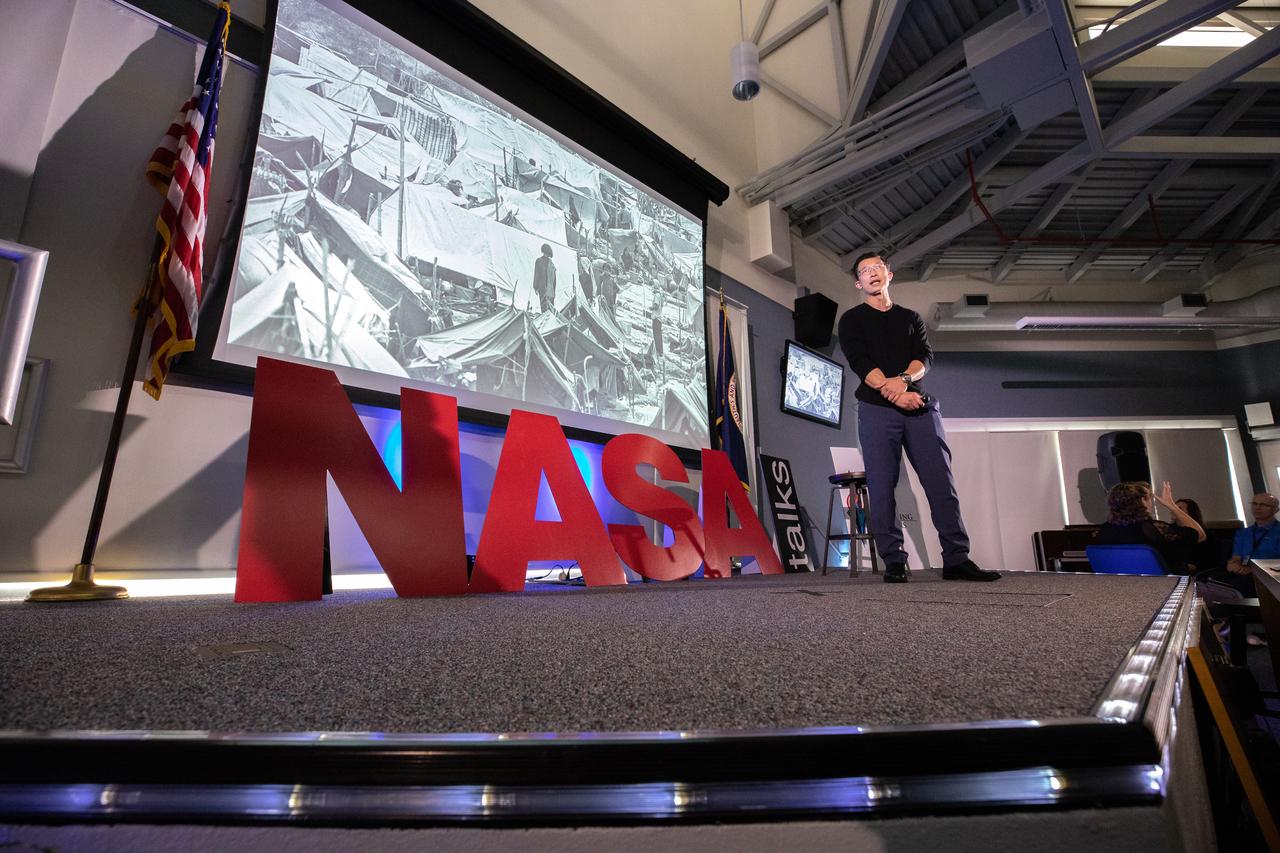
Kennedy Space Center’s Johnny Nguyen addresses co-workers inside the Florida spaceport’s Kennedy Learning Institute on Oct. 31, 2019, during the fourth in a series of five TED Talk-style informational sessions. Sponsored by Kennedy’s Launching Leaders and Leadership for the Future, NASAtalks focuses on the topic of intentional careers and aims to provide employees with tools and knowledge that can be utilized for career growth. The theme of this fourth session was employees, and additional speakers included Kennedy’s Tony Derbyshire and Deputy Manager of NASA’s Exploration Ground Systems Jeremy Parsons, with a skill-building section on vulnerability, authentic self and diverse inclusion by Ronnie Rodriguez.
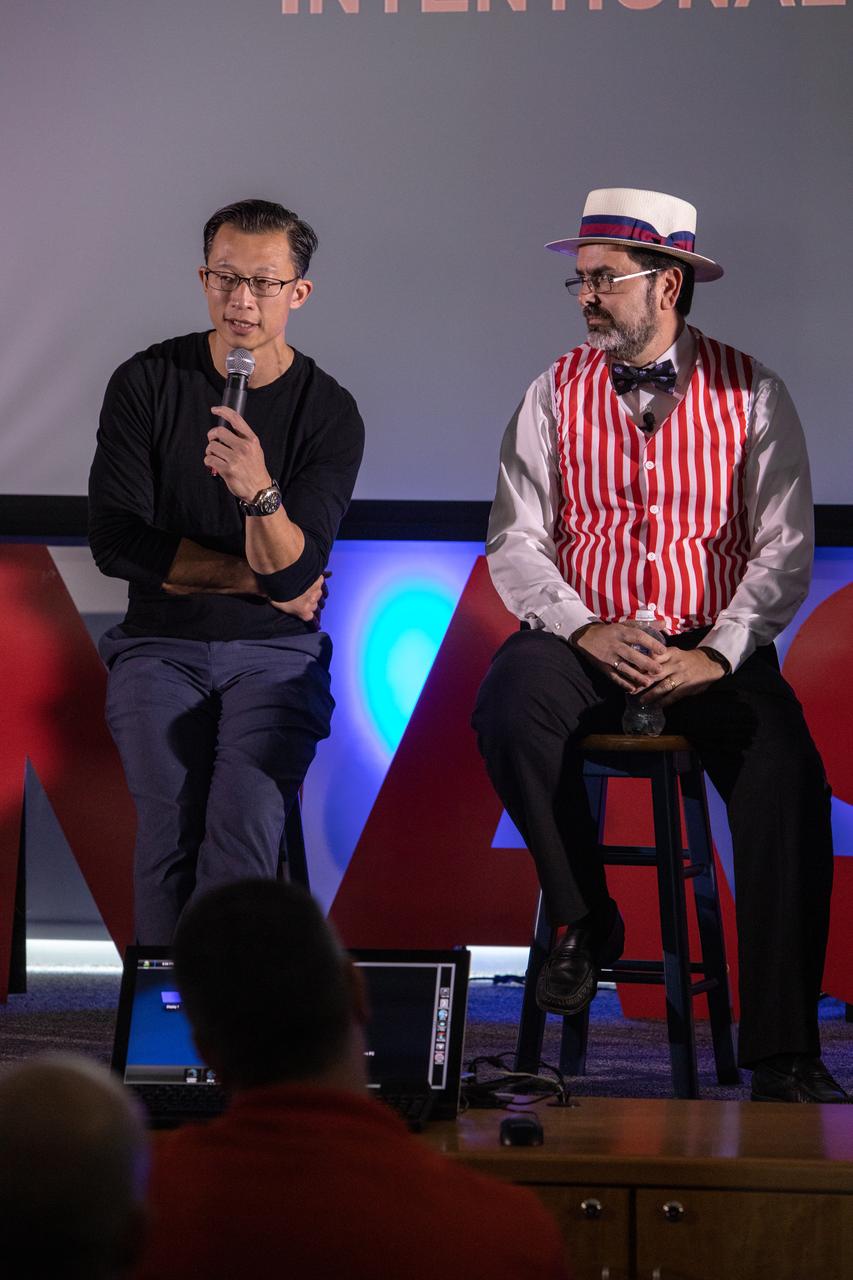
Kennedy Space Center’s Johnny Nguyen (left) and Ronnie Rodriguez, deputy director of Safety and Mission Assurance, participate in the fourth of a series of five TED Talk-style informational sessions on Oct. 31, 2019, inside the Florida spaceport’s Kennedy Learning Institute. Sponsored by Kennedy’s Launching Leaders and Leadership for the Future, NASAtalks focuses on the topic of intentional careers and aims to provide employees with tools and knowledge that can be utilized for career growth. The theme of this fourth session was employees, and additional speakers included Kennedy’s Tony Derbyshire, Deputy Director of Engineering Scott Colloredo and Deputy Manager of NASA’s Exploration Ground Systems Jeremy Parsons.
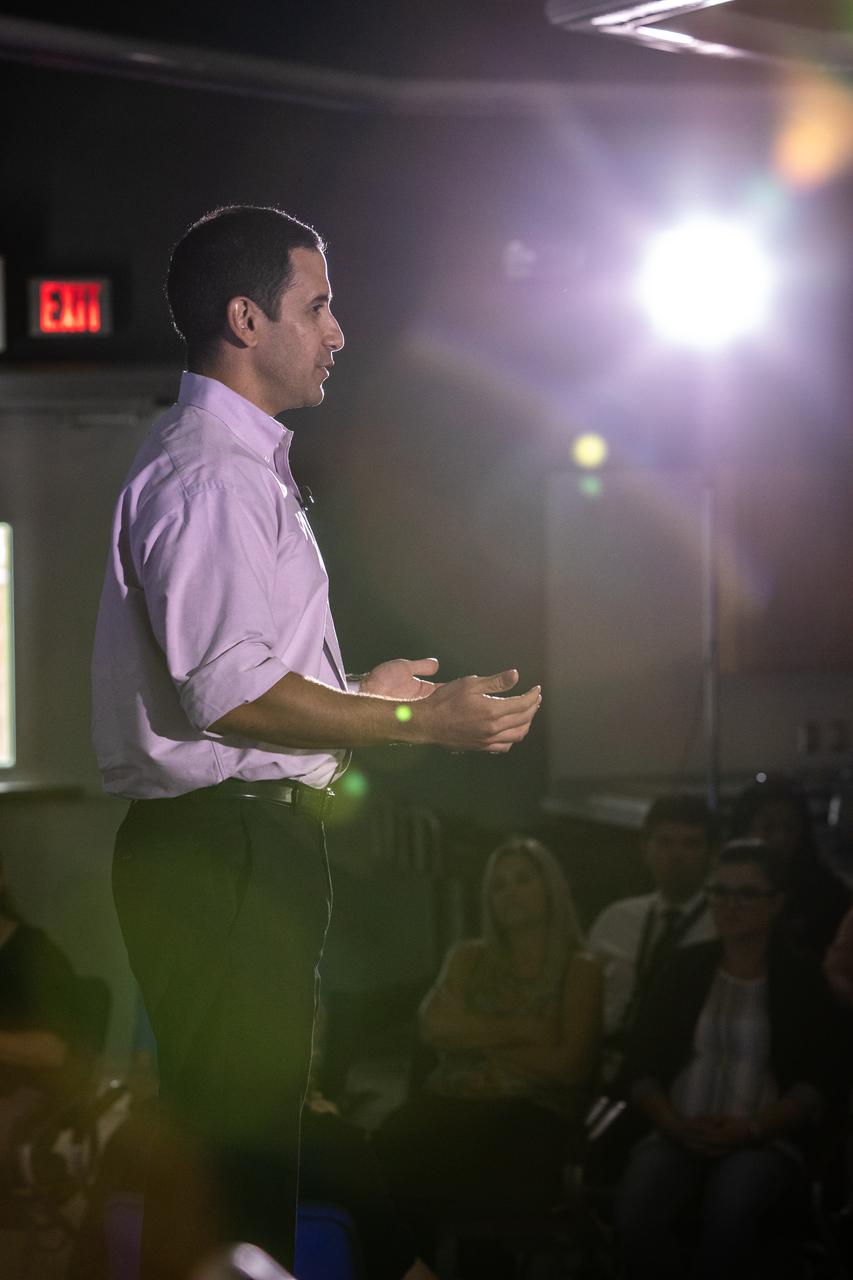
Kennedy Space Center’s Tony Derbyshire addresses co-workers inside the Florida spaceport’s Kennedy Learning Institute on Oct. 31, 2019, during the fourth in a series of five TED Talk-style informational sessions. Sponsored by Kennedy’s Launching Leaders and Leadership for the Future, NASAtalks focuses on the topic of intentional careers and aims to provide employees with tools and knowledge that can be utilized for career growth. The theme of this fourth session was employees, and additional speakers included Kennedy’s Johnny Nguyen and Deputy Manager of NASA’s Exploration Ground Systems Jeremy Parsons, with a skill-building section on vulnerability, authentic self and diverse inclusion by Ronnie Rodriguez.
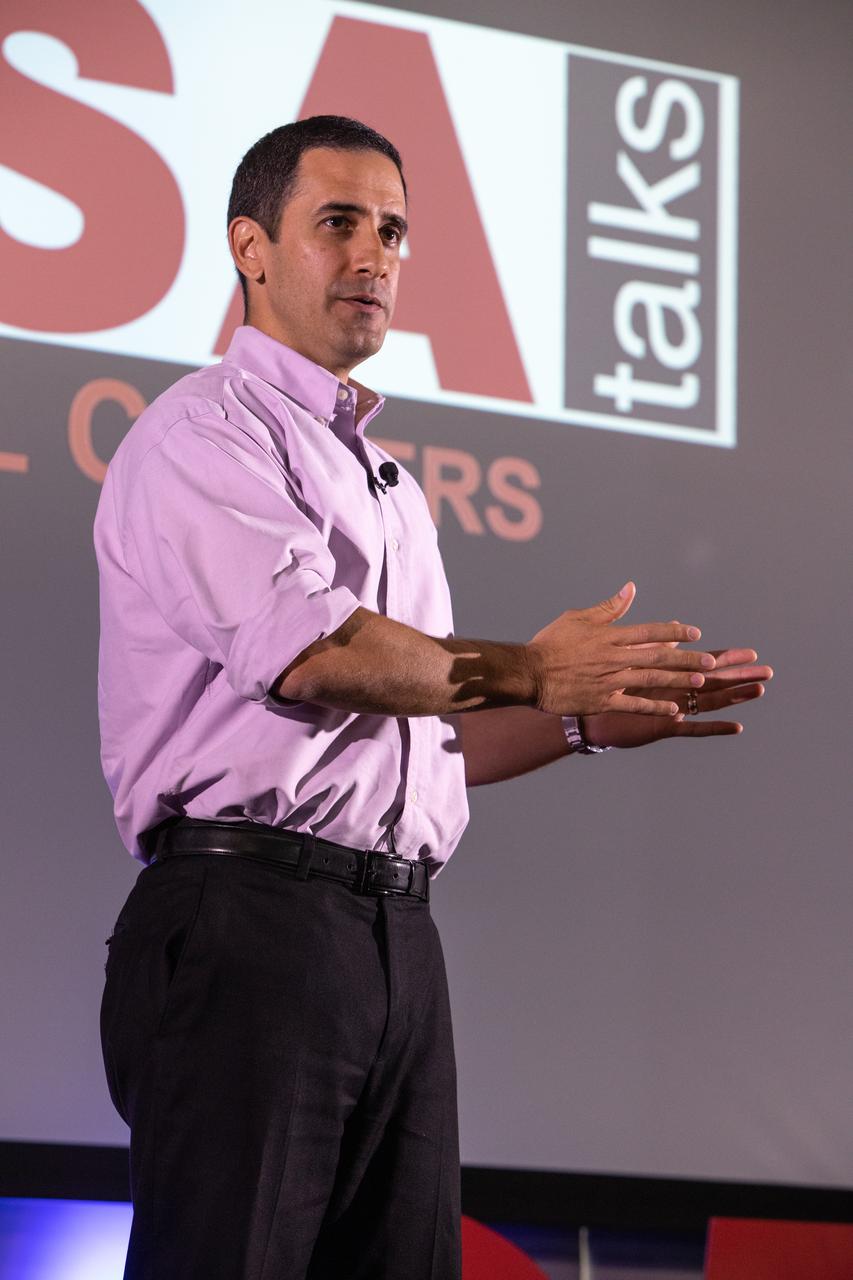
Kennedy Space Center’s Tony Derbyshire speaks at the fourth in a series of five TED Talk-style informational sessions on Oct. 31, 2019, in the Florida spaceport’s Kennedy Learning Institute. Sponsored by Kennedy’s Launching Leaders and Leadership for the Future, NASAtalks focuses on the topic of intentional careers and aims to provide employees with tools and knowledge that can be utilized for career growth. The theme of this fourth session was employees, and additional speakers included Kennedy’s Johnny Nguyen and Deputy Manager of NASA’s Exploration Ground Systems Jeremy Parsons, with a skill-building section on vulnerability, authentic self and diverse inclusion by Ronnie Rodriguez.
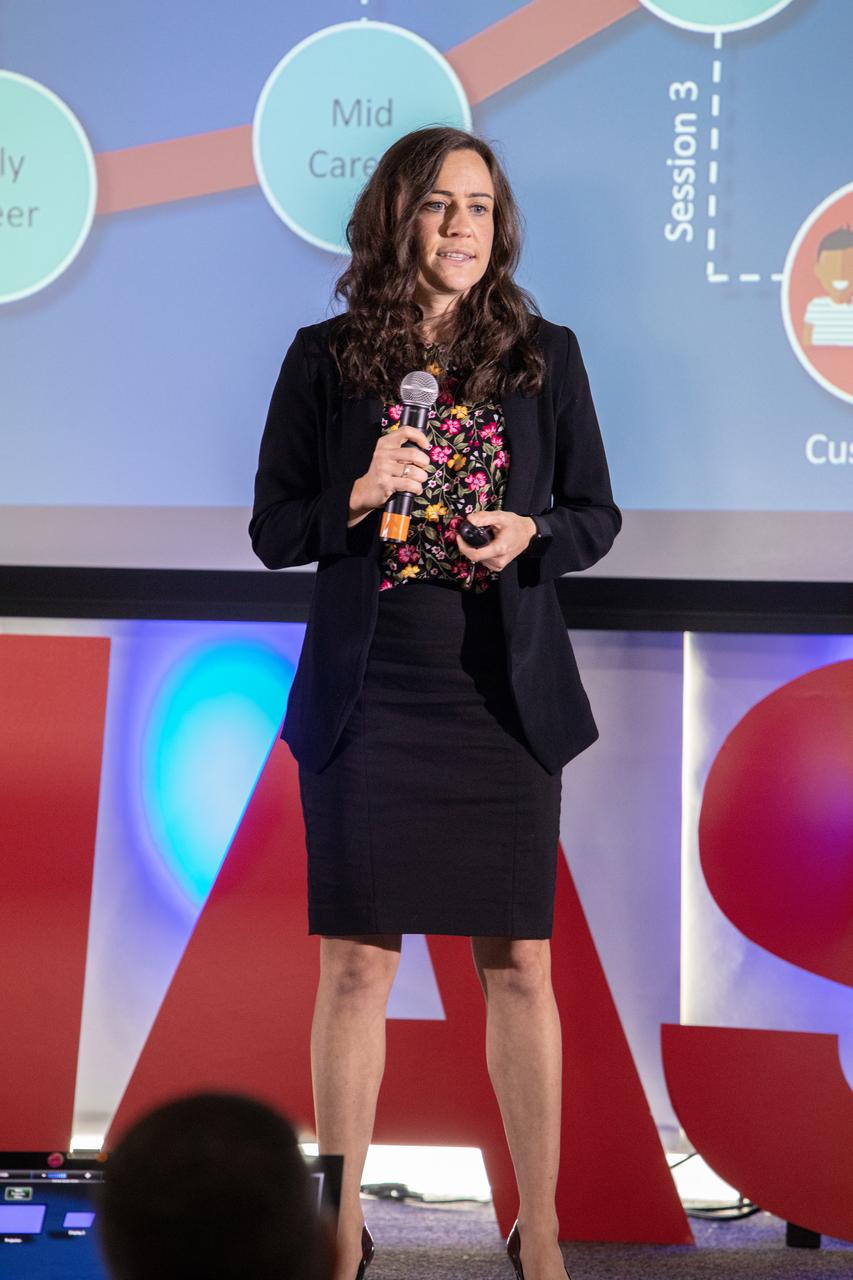
Kennedy Space Center’s Jennifer Lane participates the fourth in a series of five TED Talk-style informational sessions on Oct. 31, 2019, in the Florida spaceport’s Kennedy Learning Institute. Sponsored by Kennedy’s Launching Leaders and Leadership for the Future, NASAtalks focuses on the topic of intentional careers and aims to provide employees with tools and knowledge that can be utilized for career growth. The theme of this fourth session was employees, and additional speakers included Kennedy’s Johnny Nguyen, Tony Derbyshire and Jeremy Parsons, deputy manager of NASA’s Exploration Ground Systems, with a skill-building section on vulnerability, authentic self and diverse inclusion by Ronnie Rodriguez.

Kennedy Space Center’s Johnny Nguyen addresses co-workers inside the Florida spaceport’s Kennedy Learning Institute on Oct. 31, 2019, during the fourth in a series of five TED Talk-style informational sessions. Sponsored by Kennedy’s Launching Leaders and Leadership for the Future, NASAtalks focuses on the topic of intentional careers and aims to provide employees with tools and knowledge that can be utilized for career growth. The theme of this fourth session was employees, and additional speakers included Kennedy’s Tony Derbyshire and Deputy Manager of NASA’s Exploration Ground Systems Jeremy Parsons, with a skill-building section on vulnerability, authentic self and diverse inclusion by Ronnie Rodriguez.
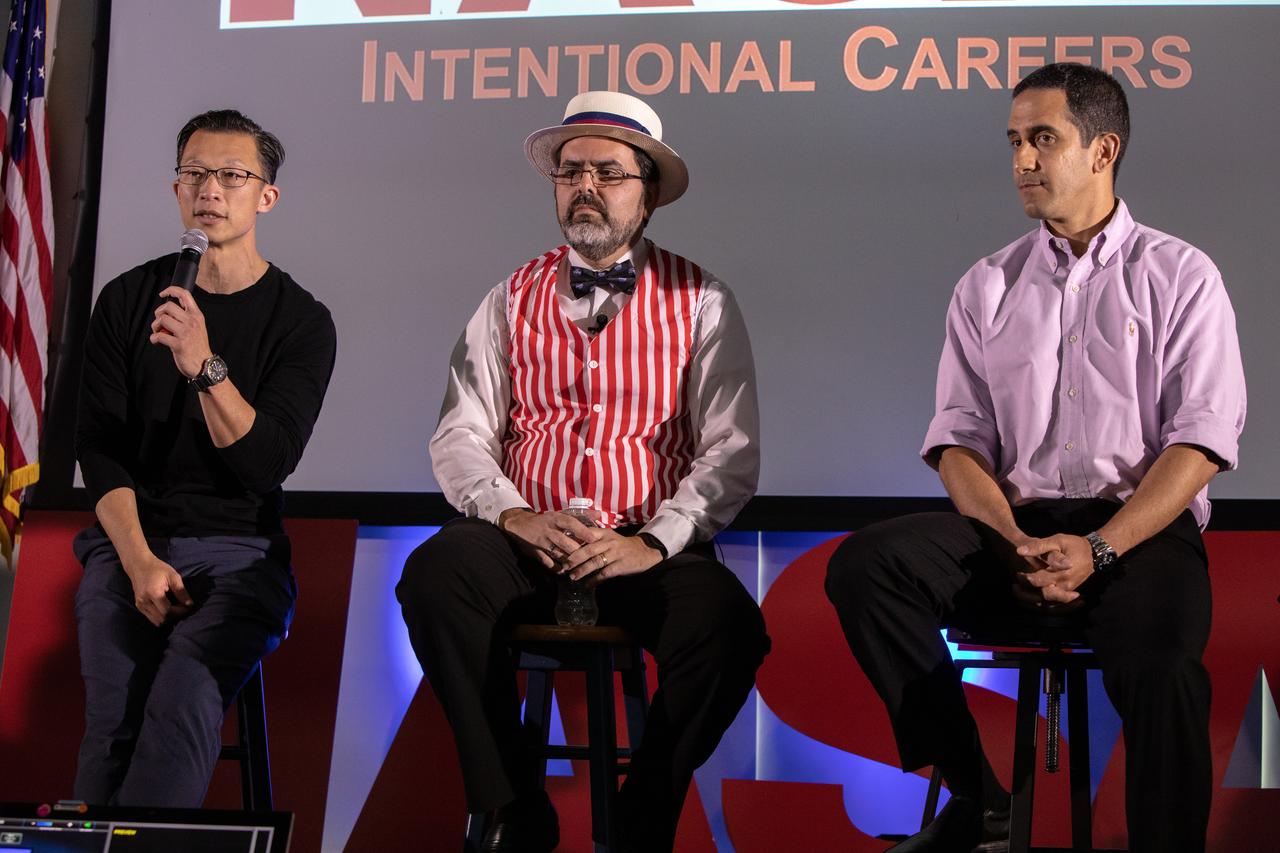
From left, Kennedy Space Center’s Johnny Nguyen, Ronnie Rodriguez, deputy director of Safety and Mission Assurance, and Tony Derbyshire participate in the fourth of a series of five TED Talk-style informational sessions on Oct. 31, 2019, inside the Florida spaceport’s Kennedy Learning Institute. Sponsored by Kennedy’s Launching Leaders and Leadership for the Future, NASAtalks focuses on the topic of intentional careers and aims to provide employees with tools and knowledge that can be utilized for career growth. The theme of this fourth session was employees, and additional speakers included Scott Colloredo, deputy director of Engineering, and Jeremy Parsons, deputy manager of NASA’s Exploration Ground Systems.
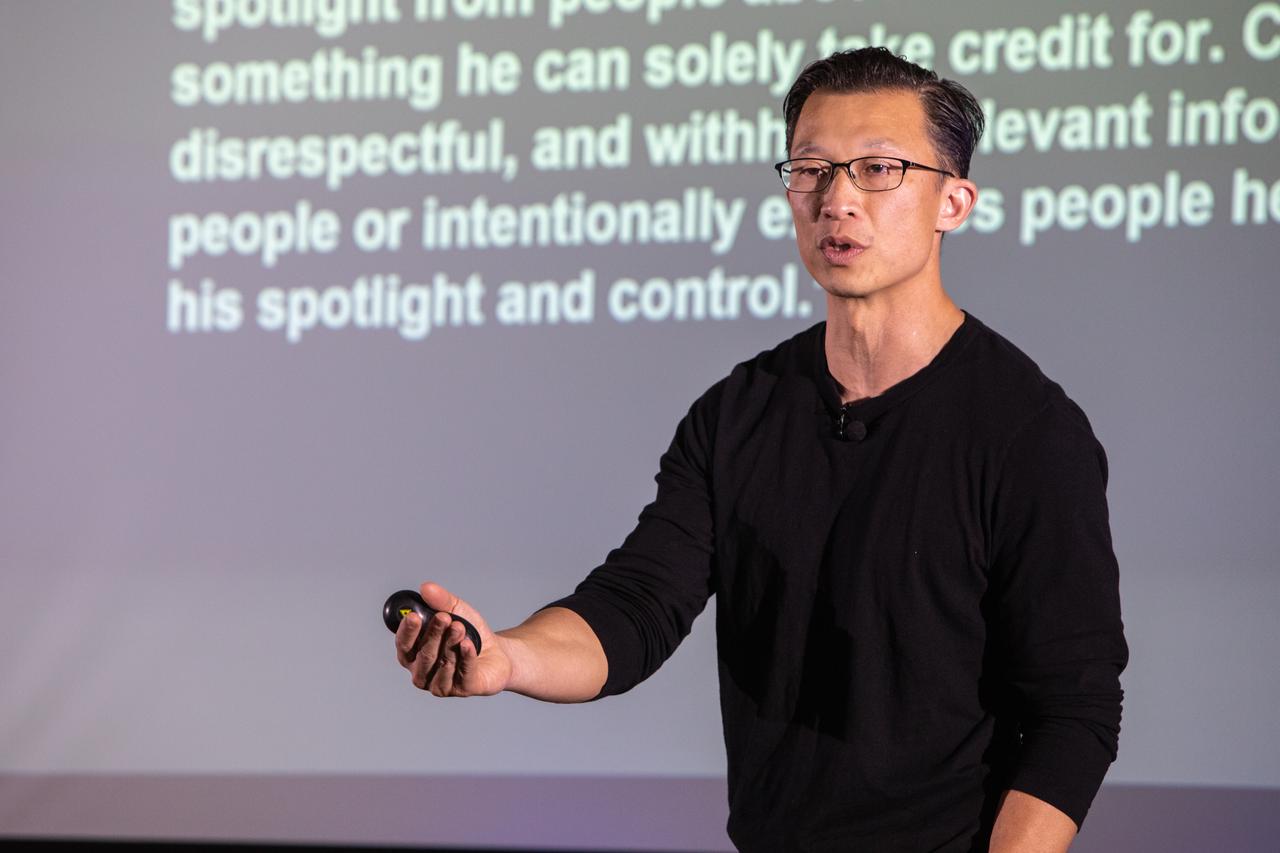
Kennedy Space Center’s Johnny Nguyen speaks at the fourth in a series of five TED Talk-style informational sessions on Oct. 31, 2019, in the Florida spaceport’s Kennedy Learning Institute. Sponsored by Kennedy’s Launching Leaders and Leadership for the Future, NASAtalks focuses on the topic of intentional careers and aims to provide employees with tools and knowledge that can be utilized for career growth. The theme of this fourth session was employees, and additional speakers included Kennedy’s Tony Derbyshire and Deputy Manager of NASA’s Exploration Ground Systems Jeremy Parsons, with a skill-building section on vulnerability, authentic self and diverse inclusion by Ronnie Rodriguez.
Kennedy Space Center’s Johnny Nguyen speaks at the fourth in a series of five TED Talk-style informational sessions on Oct. 31, 2019, in the Florida spaceport’s Kennedy Learning Institute. Sponsored by Kennedy’s Launching Leaders and Leadership for the Future, NASAtalks focuses on the topic of intentional careers and aims to provide employees with tools and knowledge that can be utilized for career growth. The theme of this fourth session was employees, and additional speakers included Kennedy’s Tony Derbyshire and Deputy Manager of NASA’s Exploration Ground Systems Jeremy Parsons, with a skill-building section on vulnerability, authentic self and diverse inclusion by Ronnie Rodriguez.
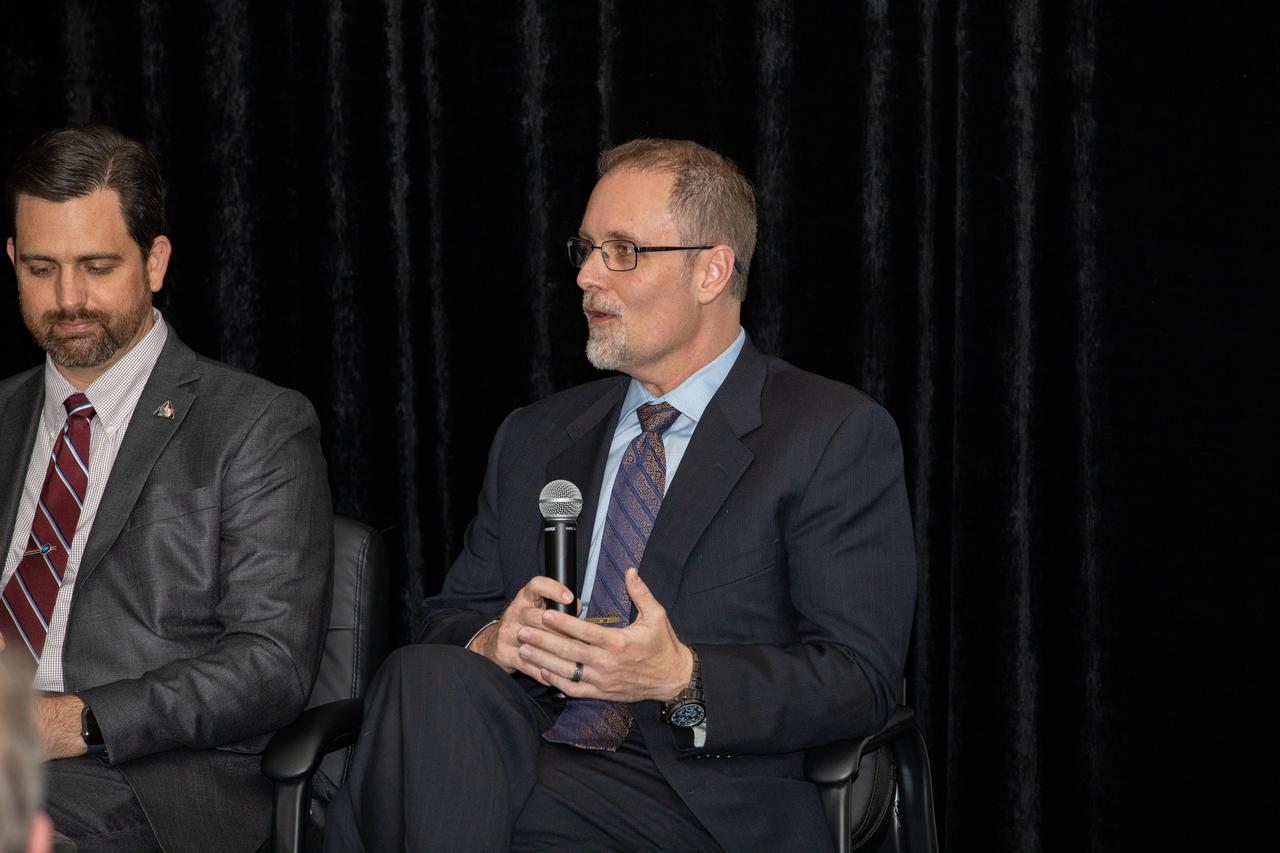
Phil Meade, at right, associate director, Spaceport Integration and Services, participates in a panel discussion during a Community Leaders Update hosted by NASA Kennedy Space Center on Feb. 18, 2020, at the Kennedy Space Center Visitor Complex. At left is Jeremy Parsons, deputy manager, Exploration Ground Systems. Center Director Bob Cabana moderated a panel discussion featuring senior leaders from Exploration Ground Systems, Spaceport Integration and Services, Exploration Research and Technology Programs, Gateway Logistics Element, and Center Planning and Development. Attendees included community leaders, business executives, partners, educators and government leaders. After the presentation, guests had the opportunity to ask questions and visit displays from the programs and some of the commercial partners.
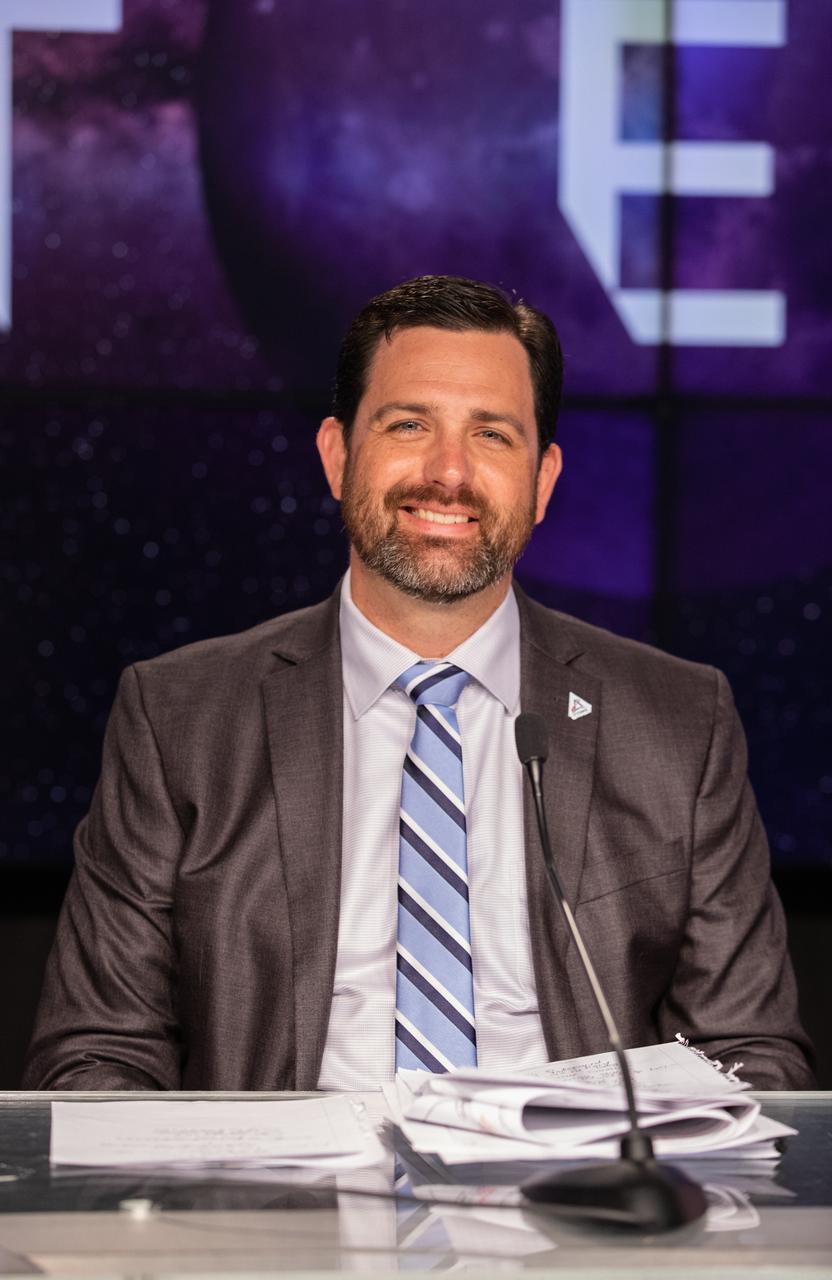
Jeremy Parsons, Exploration Ground Systems, deputy program manager, NASA Kennedy Space Center, participates in a prelaunch media briefing on the status of the Artemis I countdown on Sept. 2, 2022, at Kennedy Space Center in Florida. Artemis I is scheduled to launch at 2:17 p.m. EDT on Sept. 3, from Kennedy’s Launch Complex 39B. Launch was waved off on Aug. 29 due to an issue during tanking. The first in a series of increasingly complex missions, Artemis I will provide a foundation for human deep space exploration and demonstrate NASA’s capability to extend human presence to the Moon and beyond. The primary goal of Artemis I is to thoroughly test the integrated systems before crewed missions by operating the spacecraft in a deep space environment, testing Orion’s heat shield, and recovering the crew module after reentry, descent, and splashdown.
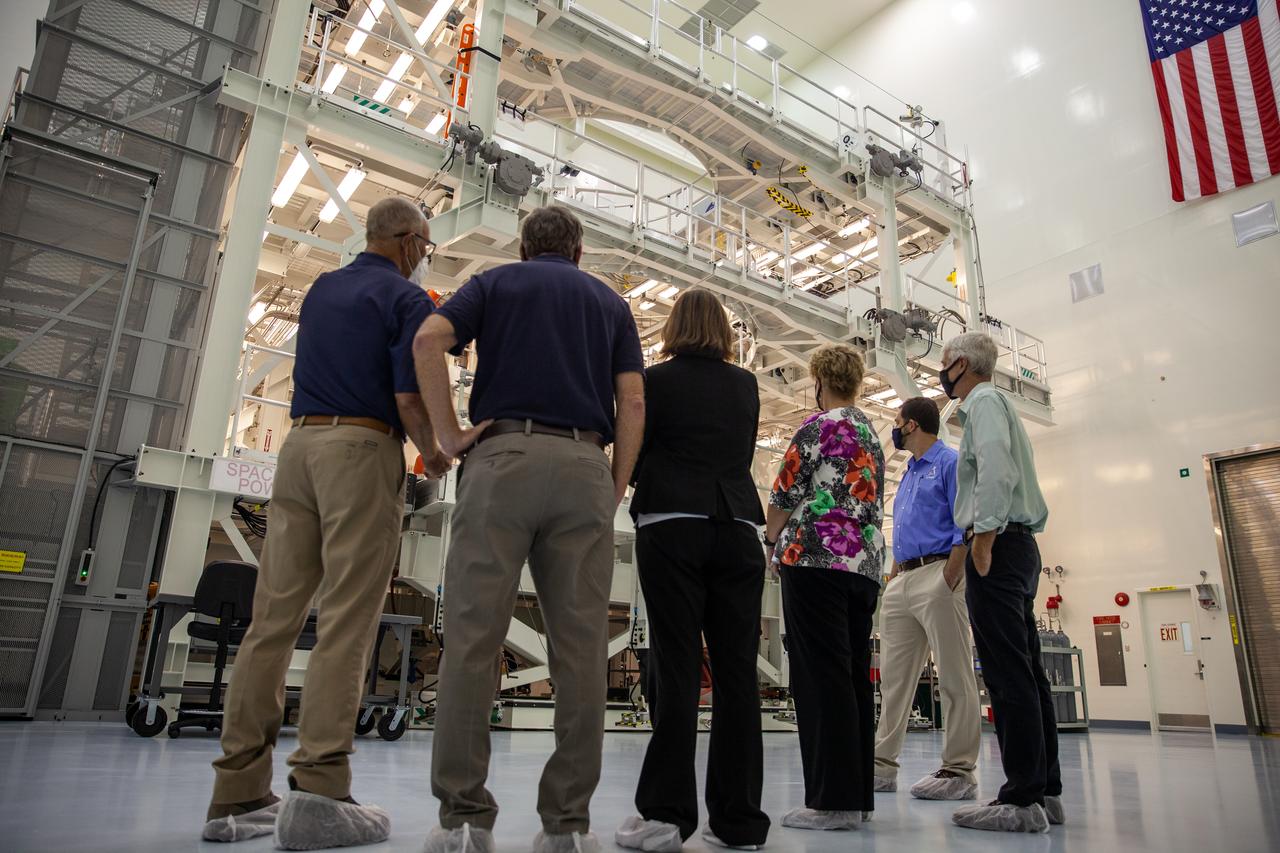
Catherine Koerner, third from left, NASA Orion Program manager, along with senior managers from Orion, and Exploration Ground Systems (EGS), visits the Multi-Payload Processing Facility (MPPF) at NASA’s Kennedy Space Center in Florida on Oct. 5, 2020. Accompanying her, from left are Skip Williams, operations manager for the MPPF spacecraft offline element integration team; Mike Bolger, EGS manager; Annette Hasbrook, Orion Program assistant manager; Scott Wilson, Orion Production Operations manager; and Jeremy Parsons, EGS deputy manager. Koerner viewed spacecraft hardware and processing facilities for the Artemis I and II missions. The first in a series of increasingly complex missions, Artemis I will test the Orion spacecraft and Space Launch System as an integrated system ahead of crewed flights to the Moon. Under the Artemis program, NASA will land the first woman and the next man on the Moon in 2024.

Catherine Koerner, second from right, NASA Orion Program manager, along with senior managers from Orion, Exploration Ground Systems (EGS) and TOSC, tours the Multi-Payload Processing Facility (MPPF) at NASA’s Kennedy Space Center in Florida on Oct. 5, 2020. Accompanying her, from left are Scott Wilson, Orion Production Operations manager; Mike Bolger, EGS manager; and Nicolas Kindred, TOSC flow manager. At right is Jeremy Parsons, EGS deputy manager. Koerner viewed spacecraft hardware and processing facilities for the Artemis I and II missions. The first in a series of increasingly complex missions, Artemis I will test the Orion spacecraft and Space Launch System as an integrated system ahead of crewed flights to the Moon. Under the Artemis program, NASA will land the first woman and the next man on the Moon in 2024.
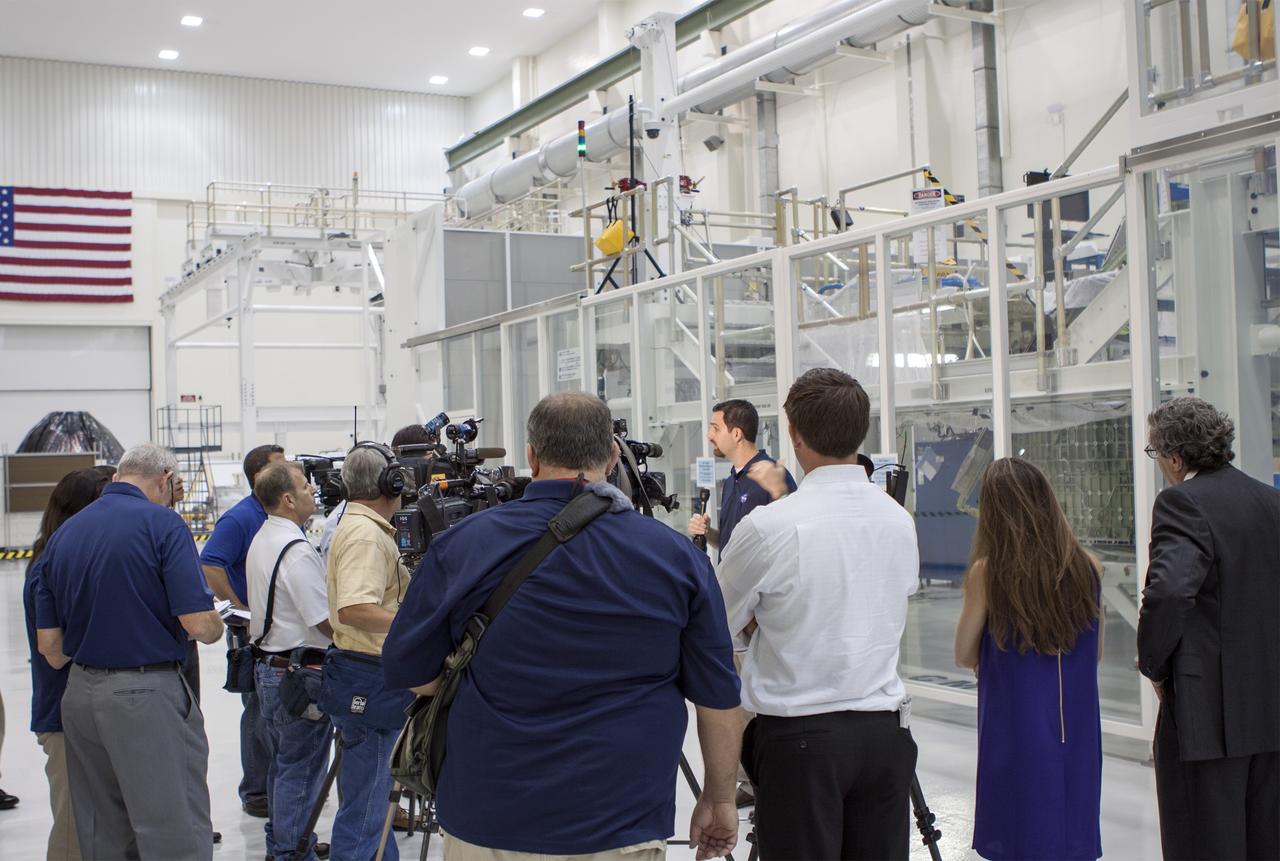
CAPE CANAVERAL, Fla. – Inside the Operations and Checkout Building high bay at NASA’s Kennedy Space Center in Florida, members of the media receive an on activities in NASA’s Ground Systems Development and Operations, or GSDO, Program, Space Launch System and Orion crew module for Exploration Test Flight 1. Speaking to the media is Jeremy Parsons, chief of the GSDO Operations Integration Office at Kennedy. Orion is the exploration spacecraft designed to carry crews to space beyond low Earth orbit. It will provide emergency abort capability, sustain the crew during the space travel and provide safe re-entry from deep space return velocities. Orion’s first unpiloted test flight is scheduled to launch in 2014 atop a Delta IV rocket. A second uncrewed flight test is scheduled for 2017 on NASA’s Space Launch System rocket. For more information, visit http://www.nasa.gov/orion. Photo credit: NASA/Jim Grossmann

Catherine Koerner, in front, NASA Orion Program manager, along with senior managers from Orion, Exploration Ground Systems (EGS) and TOSC, tours the Multi-Payload Processing Facility (MPPF) at NASA’s Kennedy Space Center in Florida on Oct. 5, 2020. Accompanying her, from left are Nicolas Kindred, (partically hidden), TOSC flow manager; Jeremy Parsons, EGS deputy manager; Scott Wilson, Orion Production Operations manager; Mike Bolger, (partially hidden), EGS manager; and Skip Williams, operations manager for the MPPF spacecraft offline element integration team. Koerner viewed spacecraft hardware and processing facilities for the Artemis I and II missions. The first in a series of increasingly complex missions, Artemis I will test the Orion spacecraft and Space Launch System as an integrated system ahead of crewed flights to the Moon. Under the Artemis program, NASA will land the first woman and the next man on the Moon in 2024.
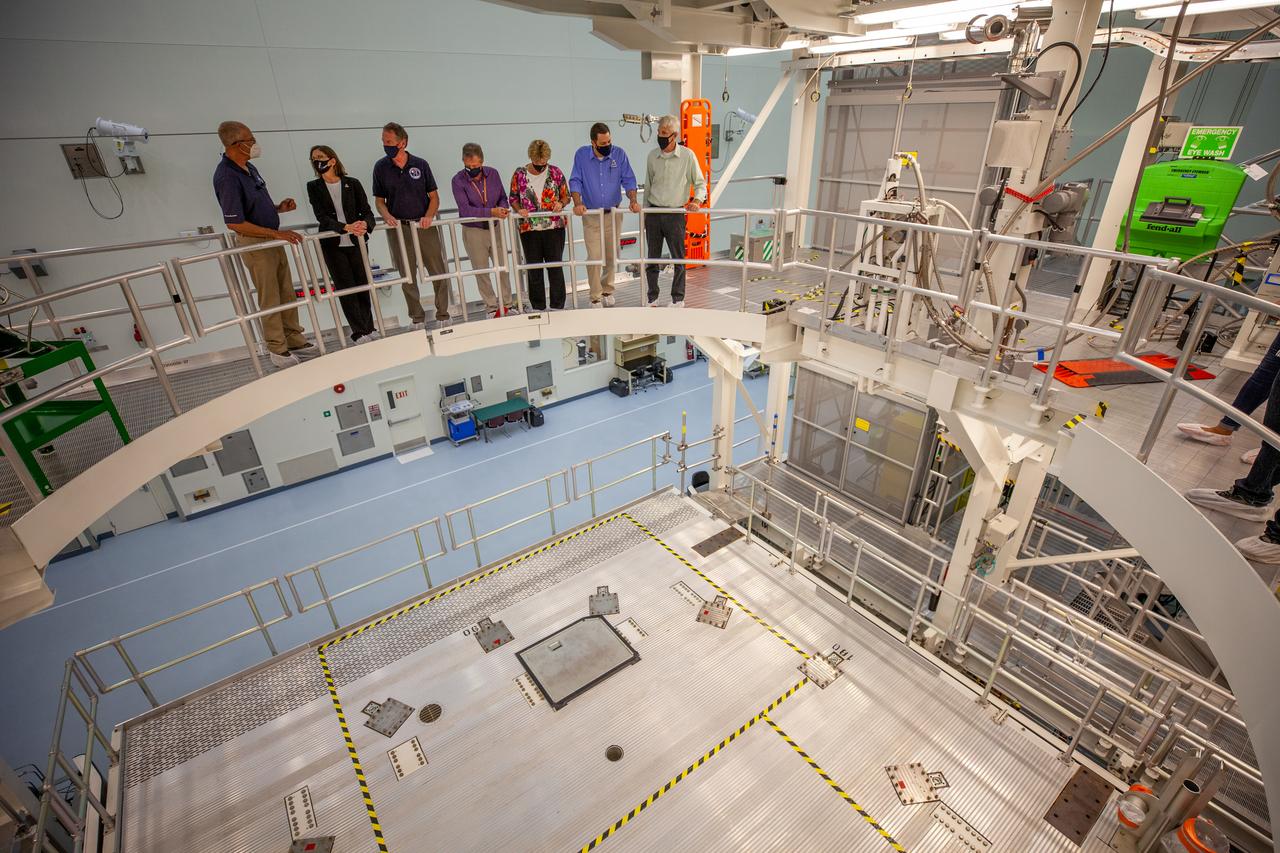
Catherine Koerner, second from left, NASA Orion Program manager, along with senior managers from Orion, Exploration Ground Systems (EGS) and TOSC, tours the Multi-Payload Processing Facility (MPPF) at NASA’s Kennedy Space Center in Florida on Oct. 5, 2020. Accompanying her, from left are Skip Williams, operations manager for the MPPF spacecraft offline element integration team; Mike Bolger, EGS manager; Nicolas Kindred, TOSC flow manager; Annette Hasbrook, Orion Program assistant manager; Jeremy Parsons, EGS deputy manager; and Scott Wilson, Orion Production Operations manager. Koerner viewed spacecraft hardware and processing facilities for the Artemis I and II missions. The first in a series of increasingly complex missions, Artemis I will test the Orion spacecraft and Space Launch System as an integrated system ahead of crewed flights to the Moon. Under the Artemis program, NASA will land the first woman and the next man on the Moon in 2024.
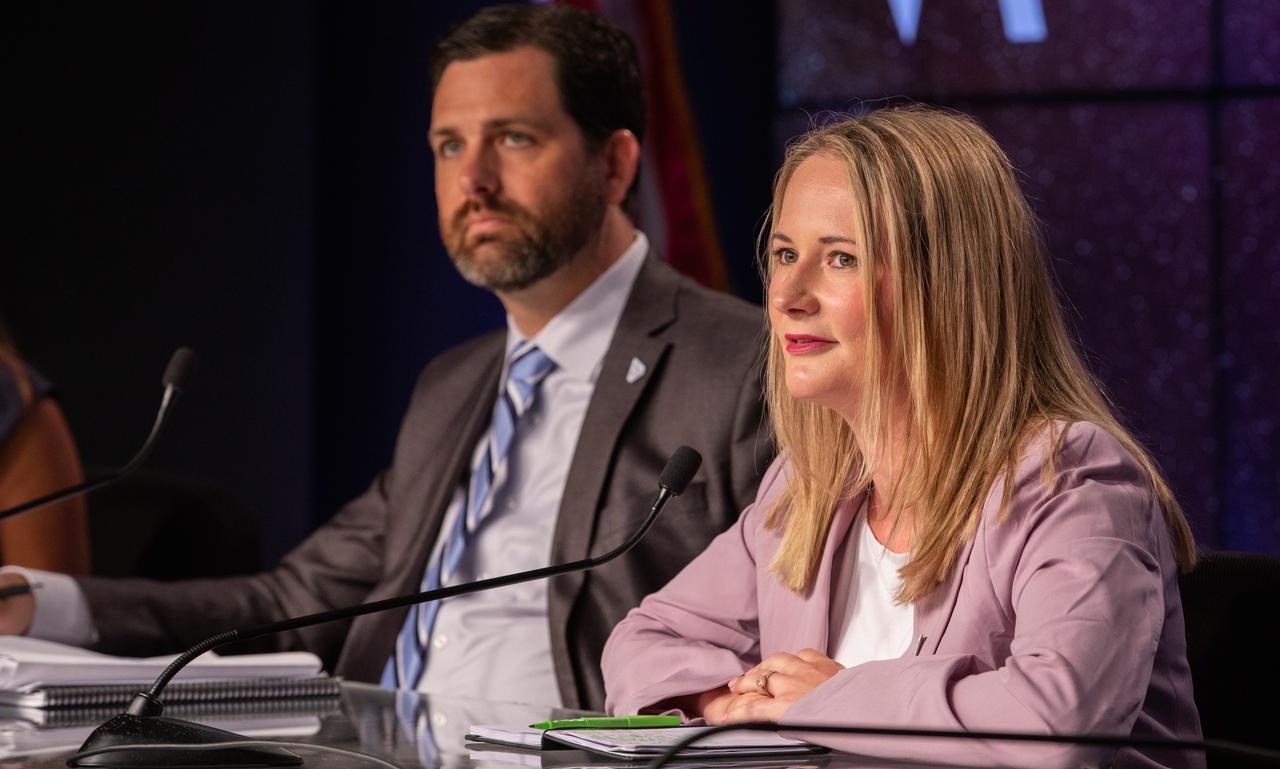
From left, Jeremy Parsons, Exploration Ground Systems, deputy program manager, NASA Kennedy; and Melody Lovin, weather officer, Space Launch Delta 45, participate in a prelaunch media briefing on the status of the Artemis I countdown on Sept. 2, 2022, at NASA’s Kennedy Space Center in Florida. Artemis I is scheduled to launch at 2:17 p.m. EDT on Sept. 3, from Kennedy’s Launch Complex 39B. Launch was waved off on Aug. 29 due to an issue during tanking. The first in a series of increasingly complex missions, Artemis I will provide a foundation for human deep space exploration and demonstrate NASA’s capability to extend human presence to the Moon and beyond. The primary goal of Artemis I is to thoroughly test the integrated systems before crewed missions by operating the spacecraft in a deep space environment, testing Orion’s heat shield, and recovering the crew module after reentry, descent, and splashdown.
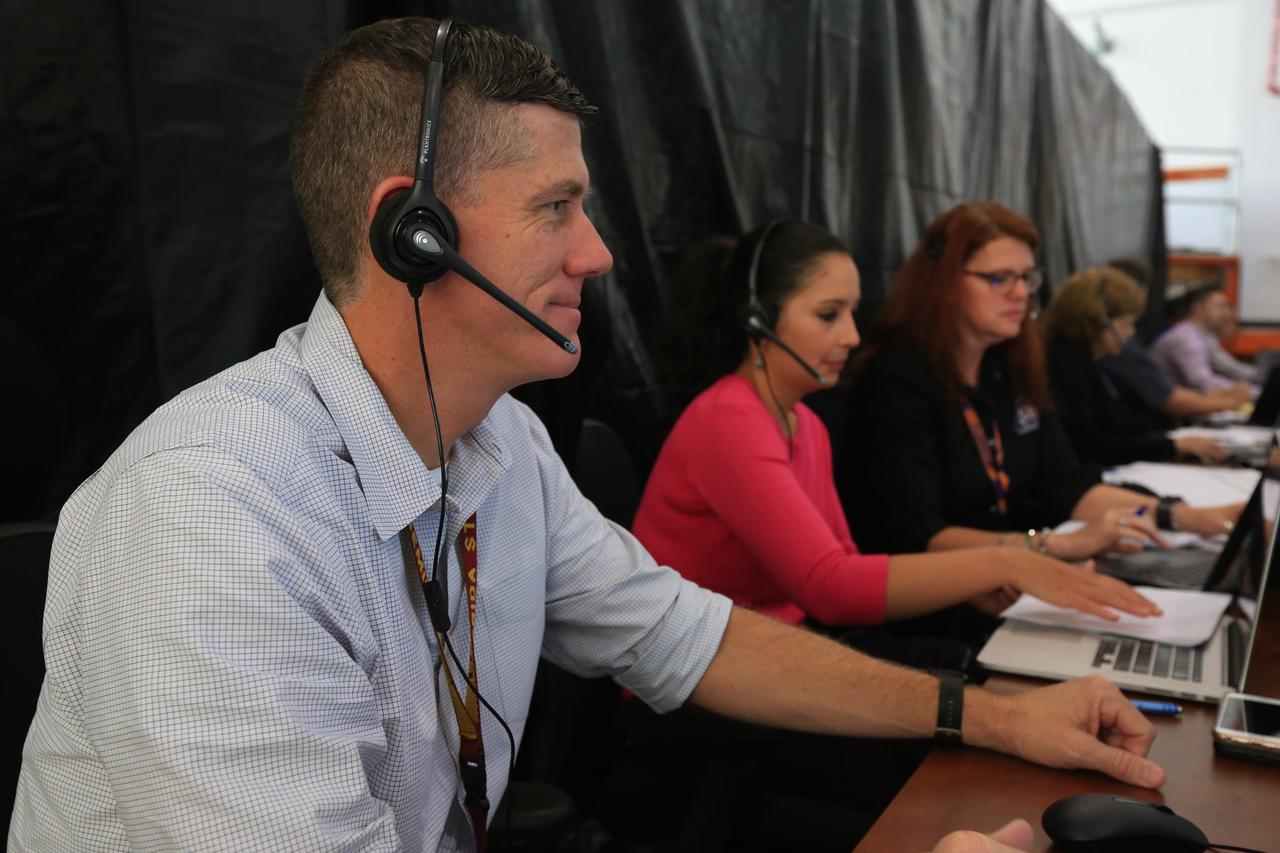
From left, Jeremy Graeber, chief NASA test director; Jessica Parsons, technical assistant to the launch director; and Charlie Blackwell-Thompson, Exploration Mission-1 (EM-1) launch director, participate in a countdown demonstration event of cryogenic propellant loading April 12, 2019, inside Firing Room 2 in the Launch Control Center at NASA’s Kennedy Space Center in Florida. The practice simulation involved loading of liquid hydrogen and liquid oxygen into the Space Launch System rocket’s core and upper stages to prepare for Exploration Mission-1 (EM-1). During the tanking exercise, the team worked through surprise issues in real-time. The practice countdown events are training opportunities coordinated by Blackwell-Thompson with Exploration Ground Systems.
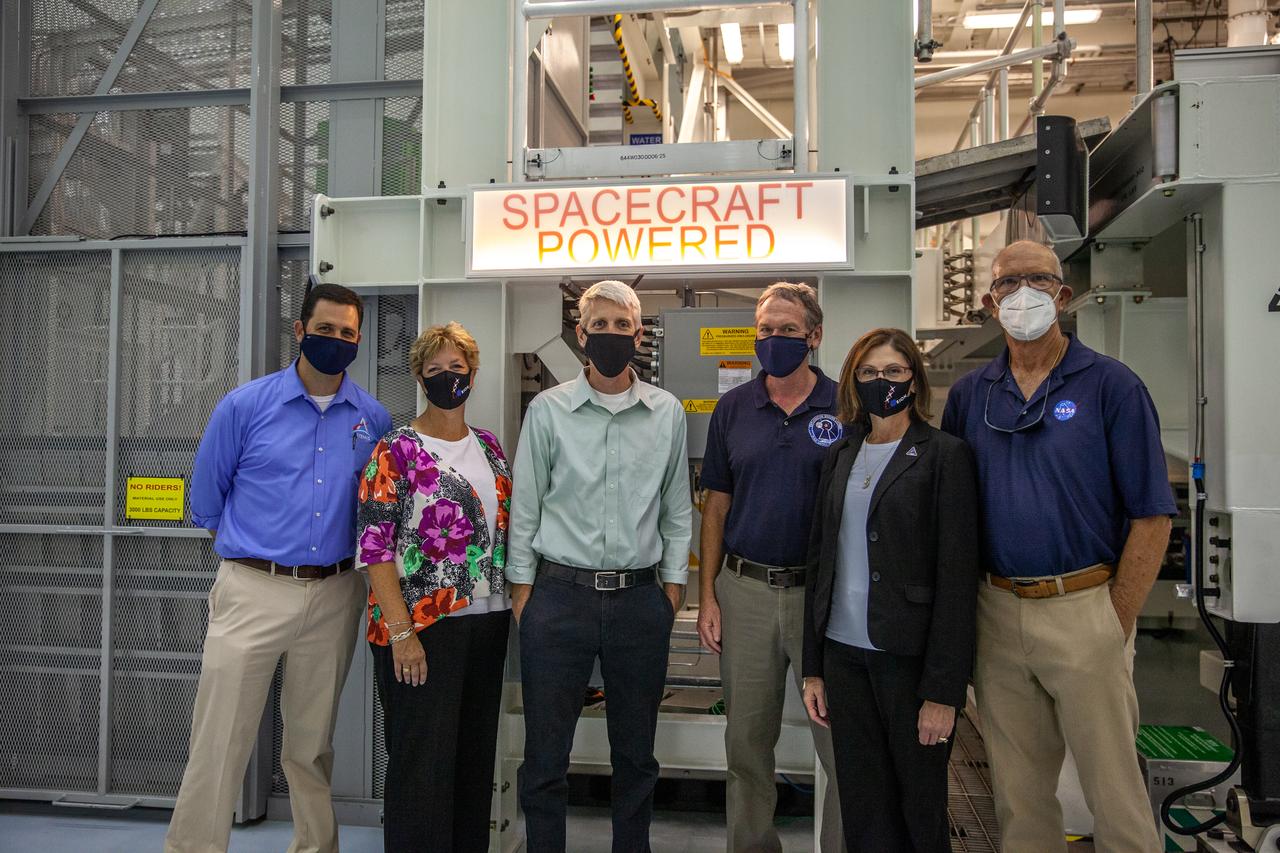
Catherine Koerner, second from right, NASA Orion Program manager, along with senior managers from Orion, and Exploration Ground Systems (EGS), tours the Multi-Payload Processing Facility (MPPF) at NASA’s Kennedy Space Center in Florida on Oct. 5, 2020. Accompanying her, from left are Jeremy Parsons, EGS deputy manager; Annette Hasbrook, Orion Program assistant manager; Scott Wilson, Orion Production Operations manager; and Mike Bolger, EGS manager. At far right is Skip Williams, operations manager for the MPPF spacecraft offline element integration team. Koerner viewed spacecraft hardware and processing facilities for the Artemis I and II missions. The first in a series of increasingly complex missions, Artemis I will test the Orion spacecraft and Space Launch System as an integrated system ahead of crewed flights to the Moon. Under the Artemis program, NASA will land the first woman and the next man on the Moon in 2024.
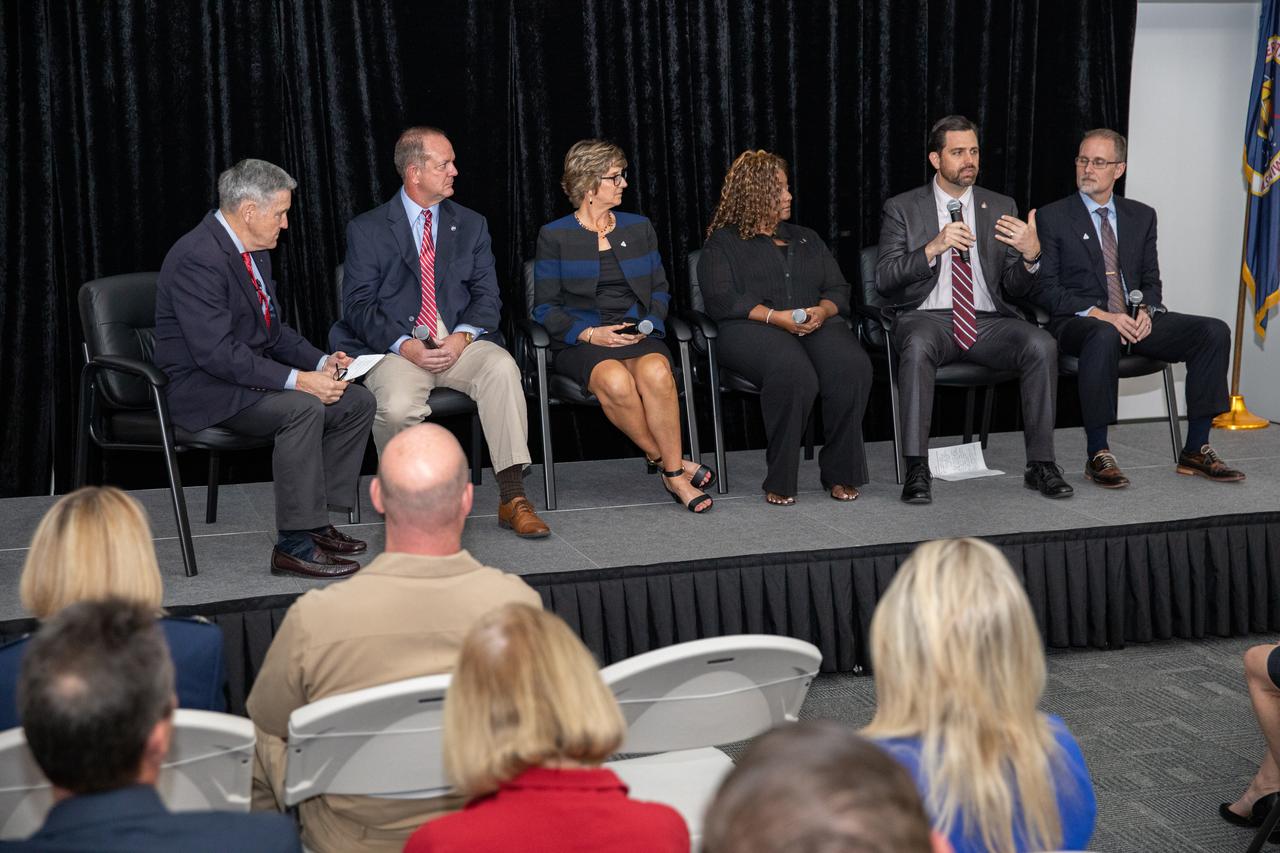
NASA Kennedy Space Center Director Bob Cabana, far left, moderates a panel discussion with senior leaders of NASA and center programs during a Community Leaders Update on Feb. 18, 2020, at the Kennedy Space Center Visitor Complex. From second from left are Tom Engler, director, Center Planning and Development; Jenny Lyons, deputy manager, Gateway Logistics Element; Barbara Brown, chief technologist, Exploration Research and Technology Programs; Jeremy Parsons, deputy manager, Exploration Ground Systems; and Phil Meade, associate director, Spaceport Integration and Services. Attendees included community leaders, business executives, partners, educators and government leaders. After the presentation, guests had the opportunity to ask questions and visit displays from the programs and some of the commercial partners.
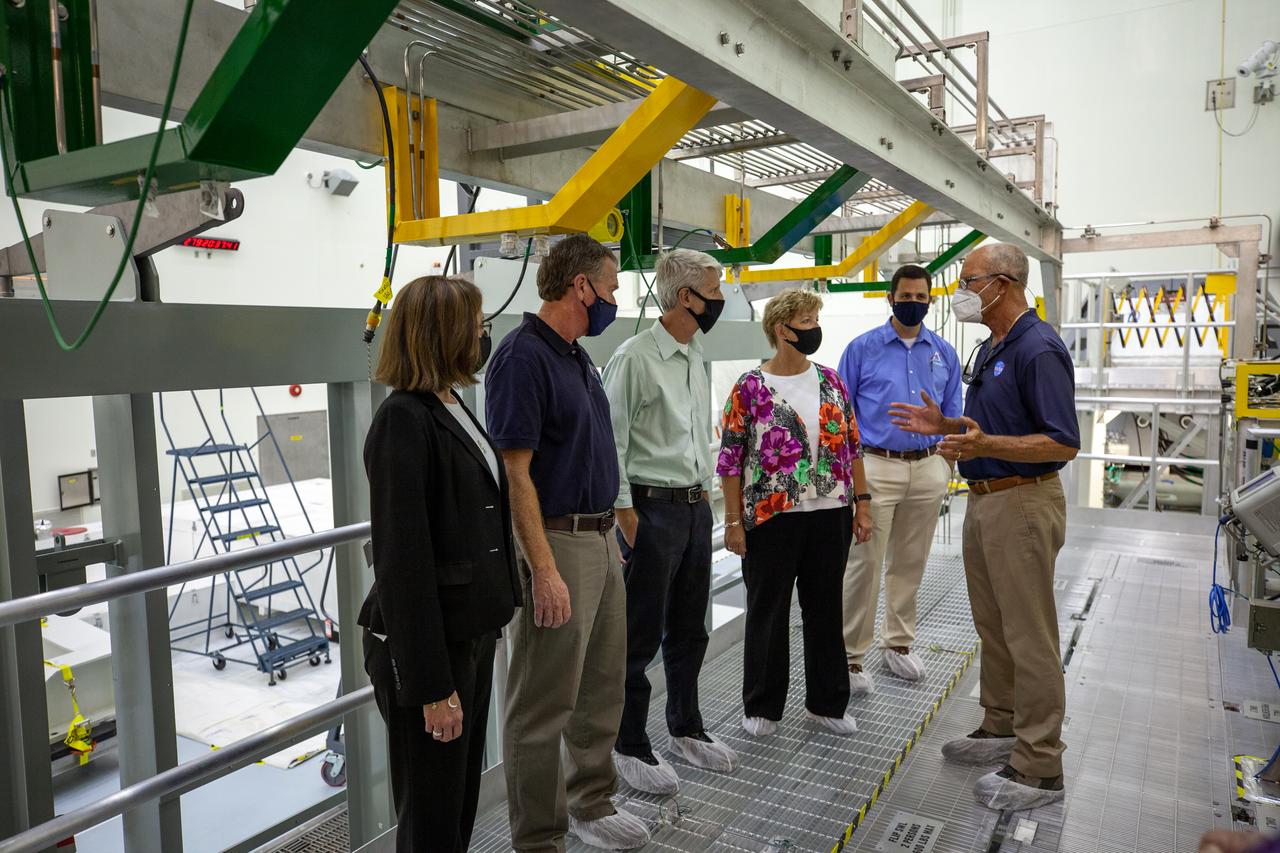
Catherine Koerner, far left, NASA Orion Program manager, along with senior managers from Orion, and Exploration Ground Systems (EGS), tours the Multi-Payload Processing Facility (MPPF) at NASA’s Kennedy Space Center in Florida on Oct. 5, 2020. Accompanying her, from left are Mike Bolger, EGS manager; Scott Wilson, Orion Production Operations manager; Annette Hasbrook, Orion Program assistant manager; and Jeremy Parsons, EGS deputy manager. Speaking to the group is Skip Williams, operations manager for the MPPF spacecraft offline element integration team. Koerner viewed spacecraft hardware and processing facilities for the Artemis I and II missions. The first in a series of increasingly complex missions, Artemis I will test the Orion spacecraft and Space Launch System as an integrated system ahead of crewed flights to the Moon. Under the Artemis program, NASA will land the first woman and the next man on the Moon in 2024.
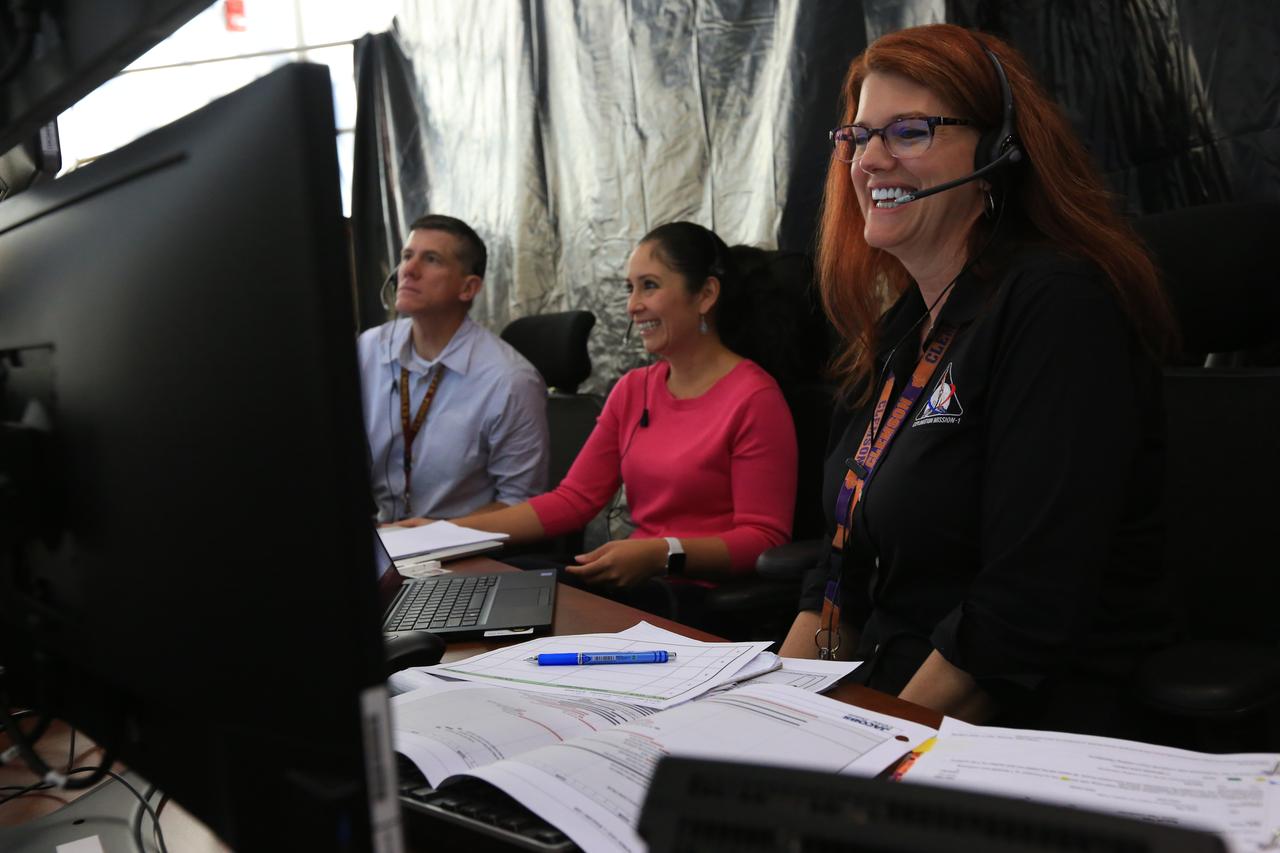
From left, Jeremy Graeber, chief NASA test director; Jessica Parsons, technical assistant to the launch director; and Charlie Blackwell-Thompson, Exploration Mission-1 (EM-1) launch director, participate in a countdown demonstration event of cryogenic propellant loading April 12, 2019, inside Firing Room 2 in the Launch Control Center at NASA’s Kennedy Space Center in Florida. The practice simulation involved loading of liquid hydrogen and liquid oxygen into the Space Launch System rocket’s core and upper stages to prepare for Exploration Mission-1 (EM-1). During the tanking exercise, the team worked through surprise issues in real-time. The practice countdown events are training opportunities coordinated by Blackwell-Thompson with Exploration Ground Systems.
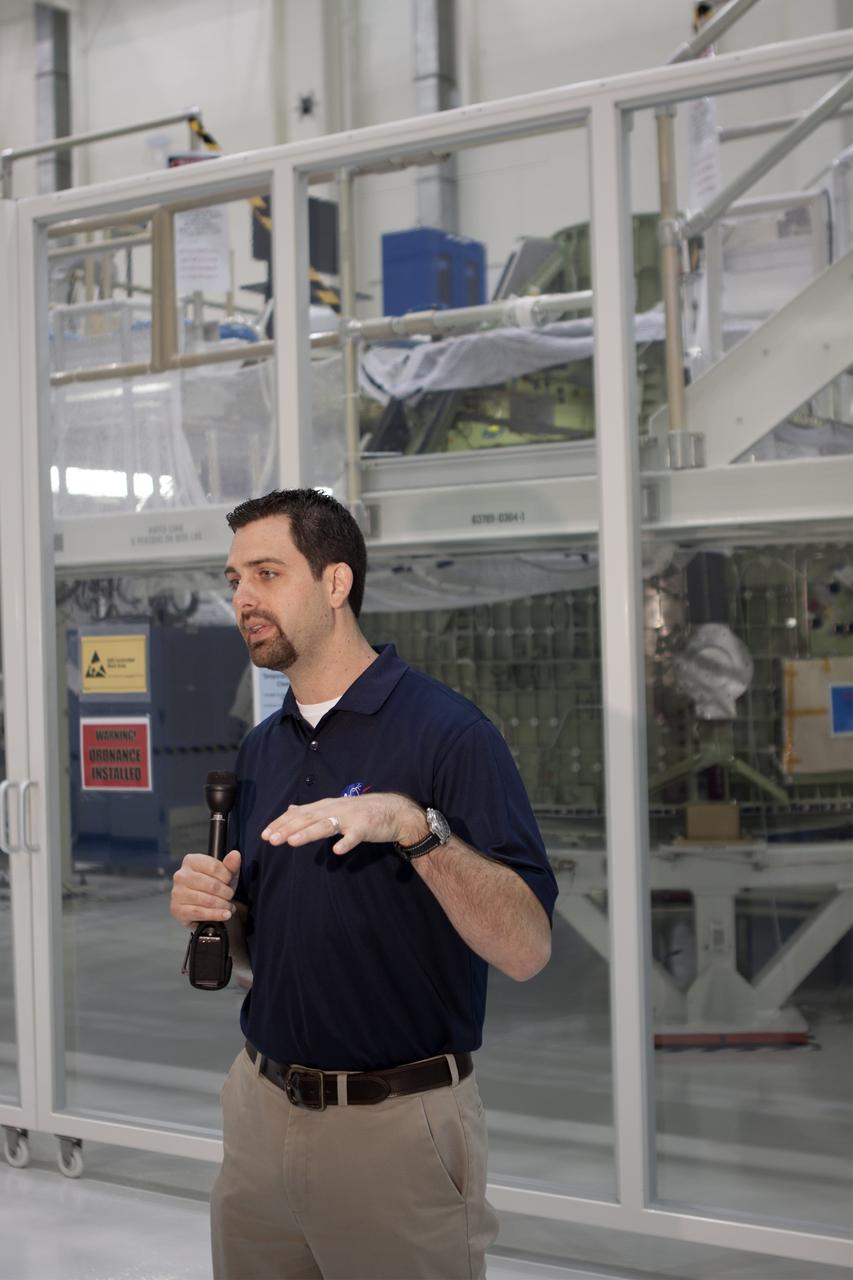
CAPE CANAVERAL, Fla. – Inside the Operations and Checkout Building high bay at NASA’s Kennedy Space Center in Florida, members of the media receive an on activities in NASA’s Ground Systems Development and Operations, or GSDO, Program, Space Launch System and Orion crew module for Exploration Test Flight 1. Speaking to the media is Jeremy Parsons, chief of the GSDO Operations Integration Office at Kennedy. Orion is the exploration spacecraft designed to carry crews to space beyond low Earth orbit. It will provide emergency abort capability, sustain the crew during the space travel and provide safe re-entry from deep space return velocities. Orion’s first unpiloted test flight is scheduled to launch in 2014 atop a Delta IV rocket. A second uncrewed flight test is scheduled for 2017 on NASA’s Space Launch System rocket. For more information, visit http://www.nasa.gov/orion. Photo credit: NASA/Jim Grossmann
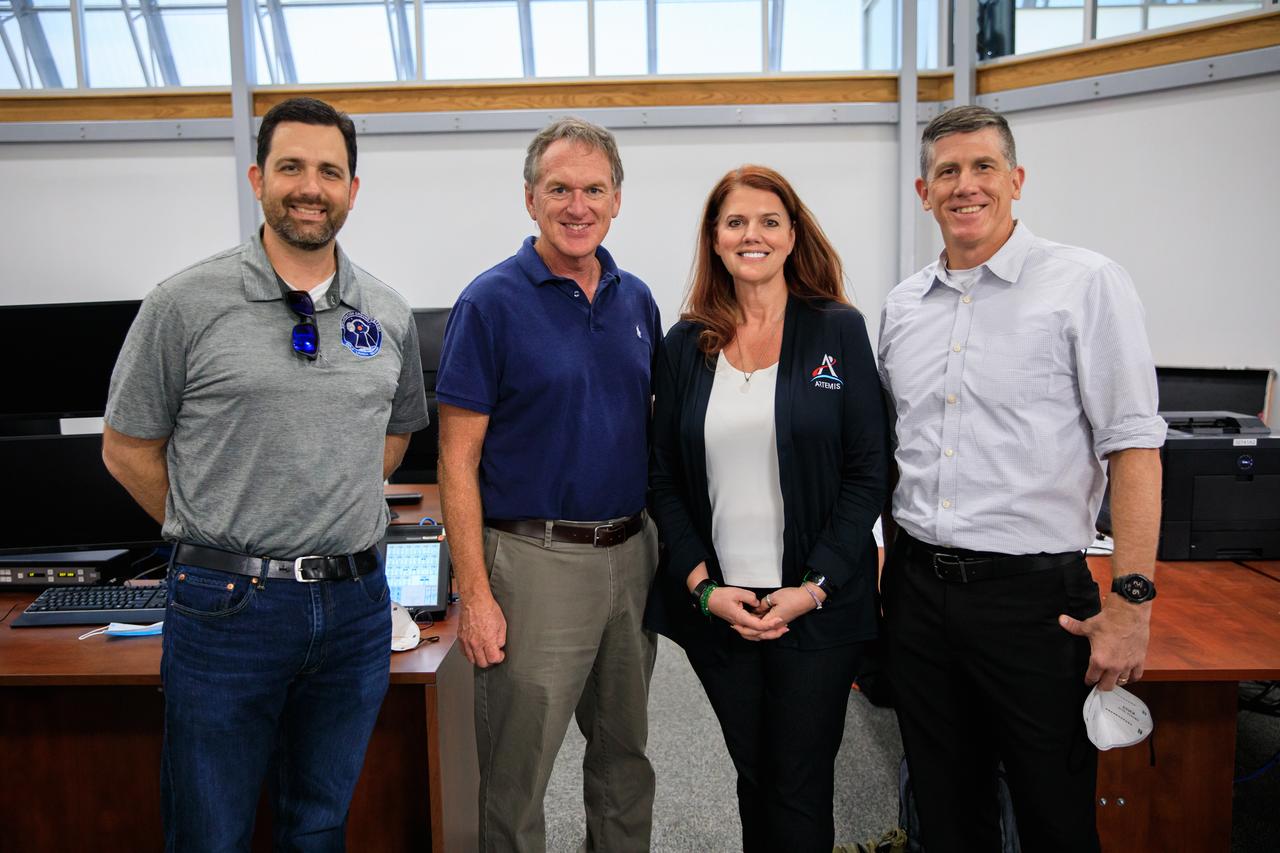
From left, NASA’s Exploration Ground Systems (EGS) Deputy Manager Jeremy Parsons, EGS Manager Mike Bolger, Artemis I Launch Director Charlie Blackwell-Thompson, and Assistant Launch Director Jeremy Graeber are photographed inside Firing Room 2 of the Rocco A. Petrone Launch Control Center at the agency’s Kennedy Space Center in Florida during a certification ceremony on Aug. 12, 2022. The ceremony was held to commemorate the certification of the Artemis I launch team following their launch simulation held in December 2021. During the ceremony, management staff handed out certificates to individual team members. The first in an increasingly complex series of missions, Artemis I will test NASA’s Space Launch System rocket and Orion spacecraft as an integrated system prior to crewed flights to the Moon. Through Artemis, NASA will land the first woman and the first person of color on the lunar surface, paving the way for long-term lunar presence and using the Moon as a steppingstone before venturing to Mars.
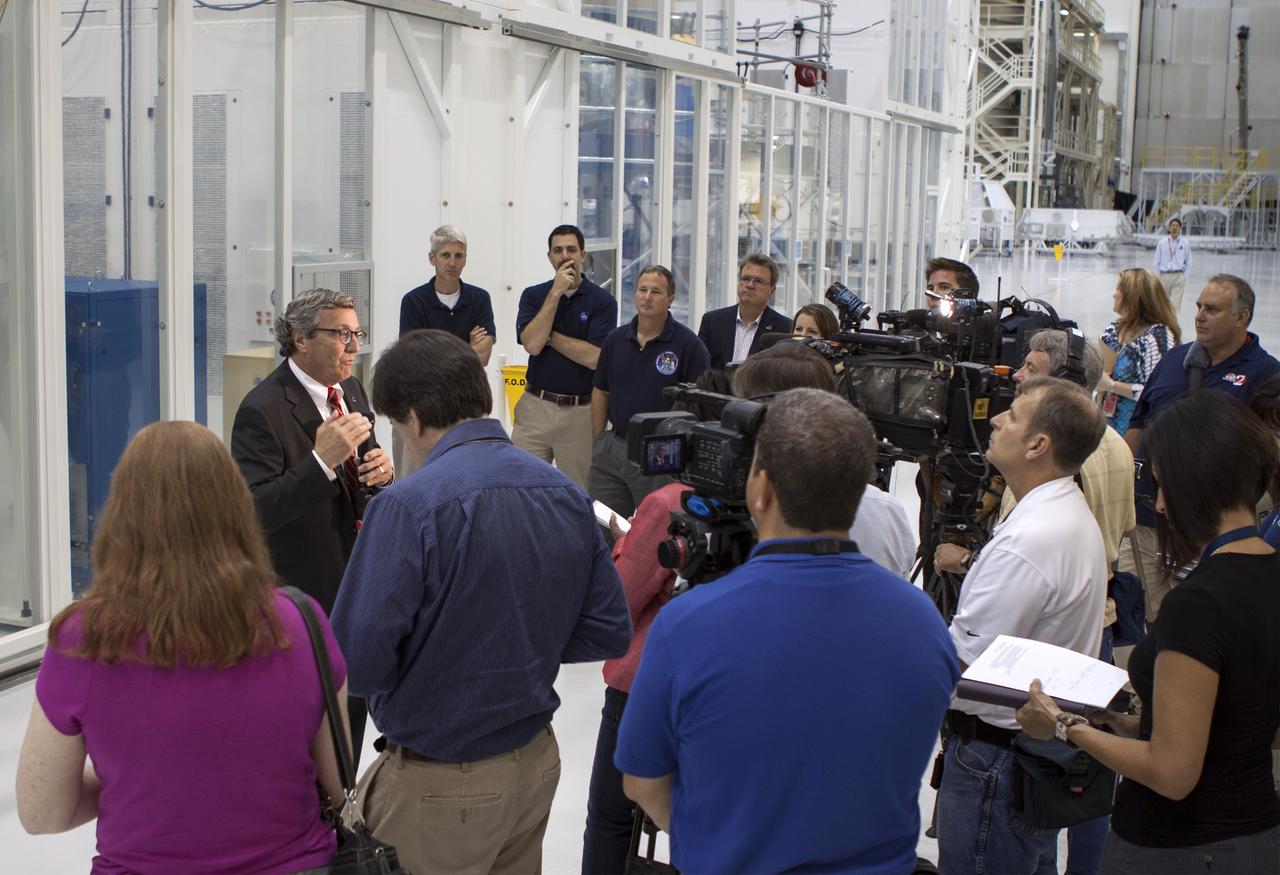
CAPE CANAVERAL, Fla. – Inside the Operations and Checkout Building high bay at NASA’s Kennedy Space Center in Florida, members of the media receive an on activities in NASA’s Ground Systems Development and Operations, or GSDO, Program, Space Launch System and Orion crew module for Exploration Test Flight 1. Speaking to the media is Larry Price, Lockheed Martin deputy program manager for Orion. In the background, from left are Scott Wilson, manager of Orion Production Operations at Kennedy Jeremy Parsons, chief of the GSDO Operations Integration Office at Kennedy Tom Erdman, from Marshall Space Flight Center’s Kennedy resident office and Jules Schneider, Lockheed Martin manager of Orion Production Operations. Orion is the exploration spacecraft designed to carry crews to space beyond low Earth orbit. It will provide emergency abort capability, sustain the crew during the space travel and provide safe re-entry from deep space return velocities. Orion’s first unpiloted test flight is scheduled to launch in 2014 atop a Delta IV rocket. A second uncrewed flight test is scheduled for 2017 on NASA’s Space Launch System rocket. For more information, visit http://www.nasa.gov/orion. Photo credit: NASA/Jim Grossmann
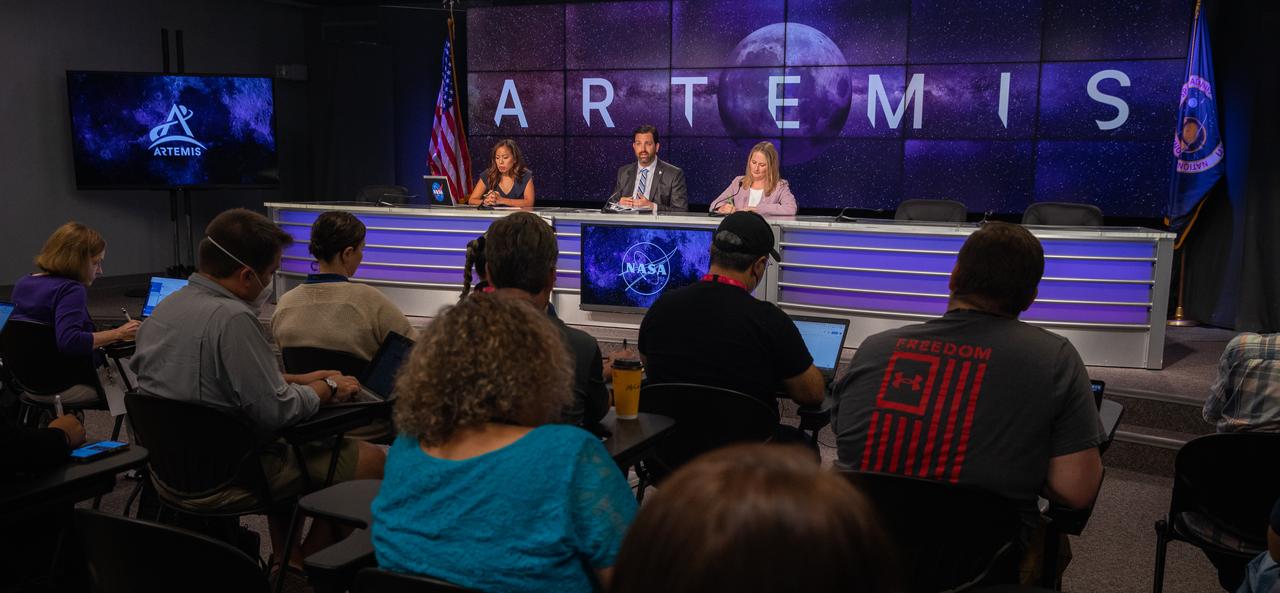
NASA holds a prelaunch media briefing on the status of the Artemis I countdown on Sept. 2, 2022, at NASA’s Kennedy Space Center in Florida. Participants are, from left, Megan Cruz, moderator, NASA Communications; Jeremy Parsons, Exploration Ground Systems, deputy program manager, NASA Kennedy; and Melody Lovin, weather officer, Space Launch Delta 45. Artemis I is scheduled to launch at 2:17 p.m. EDT on Sept. 3, from Kennedy’s Launch Complex 39B. Launch was waved off on Aug. 29 due to an issue during tanking. The first in a series of increasingly complex missions, Artemis I will provide a foundation for human deep space exploration and demonstrate NASA’s capability to extend human presence to the Moon and beyond. The primary goal of Artemis I is to thoroughly test the integrated systems before crewed missions by operating the spacecraft in a deep space environment, testing Orion’s heat shield, and recovering the crew module after reentry, descent, and splashdown.
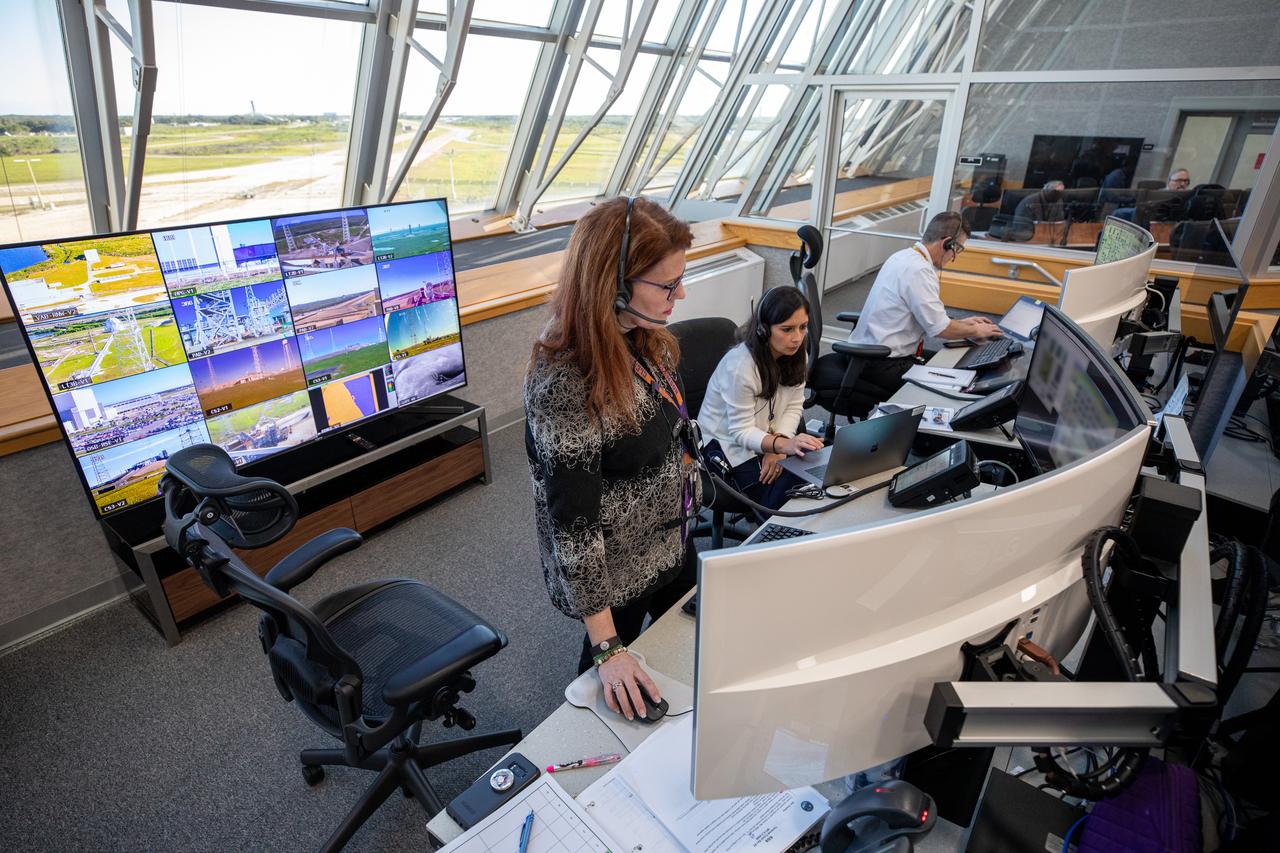
Artemis I Launch Director Charlie Blackwell-Thompson (left) stands at the launch console inside the Launch Control Center’s Firing Room 1 at the Kennedy Space Center in Florida during a countdown simulation. Next to her are Jessica Parsons, technical assistant to the launch director, and Jeremy Graeber, NASA’s Test, Launch and Recovery Operations branch chief, who also serves as the assistant launch director. A team of nearly 100 engineers from Orion, Space Launch System (SLS) and the agency’s Exploration Ground Systems coming together on Feb. 3, 2020, to work through a series of simulated challenges, as well as a final countdown procedure. During these exercises, different issues were introduced to familiarize the team with launch day operations, while providing them with an opportunity to practice how they would handle those issues in real-time. Artemis I will be the first integrated test flight of the Orion spacecraft and SLS rocket – the system that will ultimately land the first woman and the next man on the Moon.
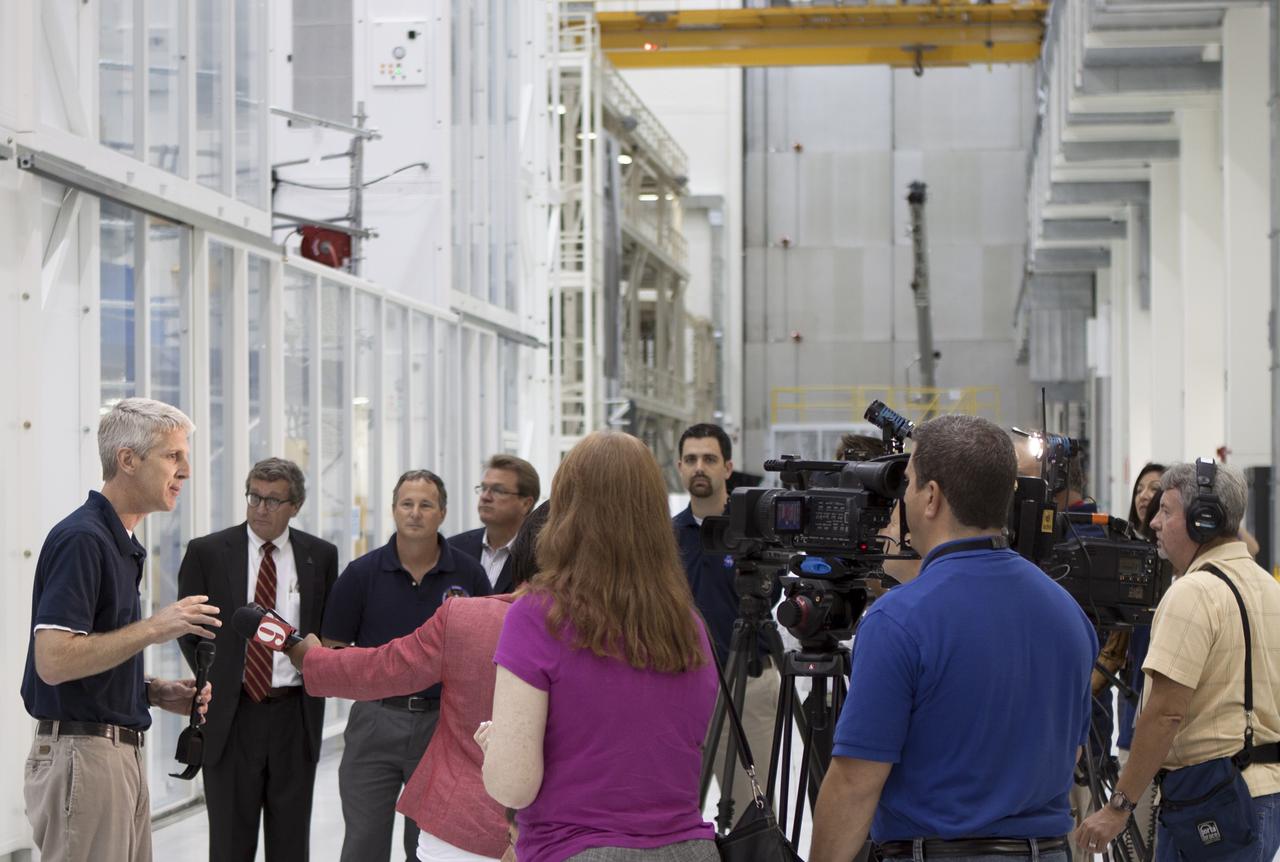
CAPE CANAVERAL, Fla. – Inside the Operations and Checkout Building high bay at NASA’s Kennedy Space Center in Florida, members of the media receive an on activities in NASA’s Ground Systems Development and Operations, or GSDO, Program, Space Launch System and Orion crew module for Exploration Test Flight 1. Speaking to the media, from left are Scott Wilson, manager of Orion Production Operations at Kennedy Larry Price, Lockheed Martin deputy program manager for Orion Tom Erdman, from Marshall Space Flight Center’s Kennedy resident office Jules Schneider, Lockheed Martin manager of Orion Production Operations and Jeremy Parsons, chief of the GSDO Operations Integration Office at Kennedy. Orion is the exploration spacecraft designed to carry crews to space beyond low Earth orbit. It will provide emergency abort capability, sustain the crew during the space travel and provide safe re-entry from deep space return velocities. Orion’s first unpiloted test flight is scheduled to launch in 2014 atop a Delta IV rocket. A second uncrewed flight test is scheduled for 2017 on NASA’s Space Launch System rocket. For more information, visit http://www.nasa.gov/orion. Photo credit: NASA/Jim Grossmann

Jeremy Graeber, NASA’s Test, Launch and Recovery Operations branch chief, who also serves as the assistant launch director, participates in an Artemis I launch countdown rehearsal inside Firing Room 1 in the Launch Control Center at NASA’s Kennedy Space Center in Florida. In the background is Jessica Parsons (front), the technical assistant to the launch director, and Artemis I Launch Director Charlie Blackwell-Thompson. The training involved nearly 100 engineers from Orion, Space Launch System (SLS) and the agency’s Exploration Ground Systems coming together on Feb. 3, 2020, to work through a series of simulated challenges, as well as a final countdown procedure. During these exercises, different issues were introduced to familiarize the team with launch day operations, while providing them with an opportunity to practice how they would handle those issues in real-time. Artemis I will be the first integrated test flight of the Orion spacecraft and SLS rocket – the system that will ultimately land the first woman and the next man on the Moon.
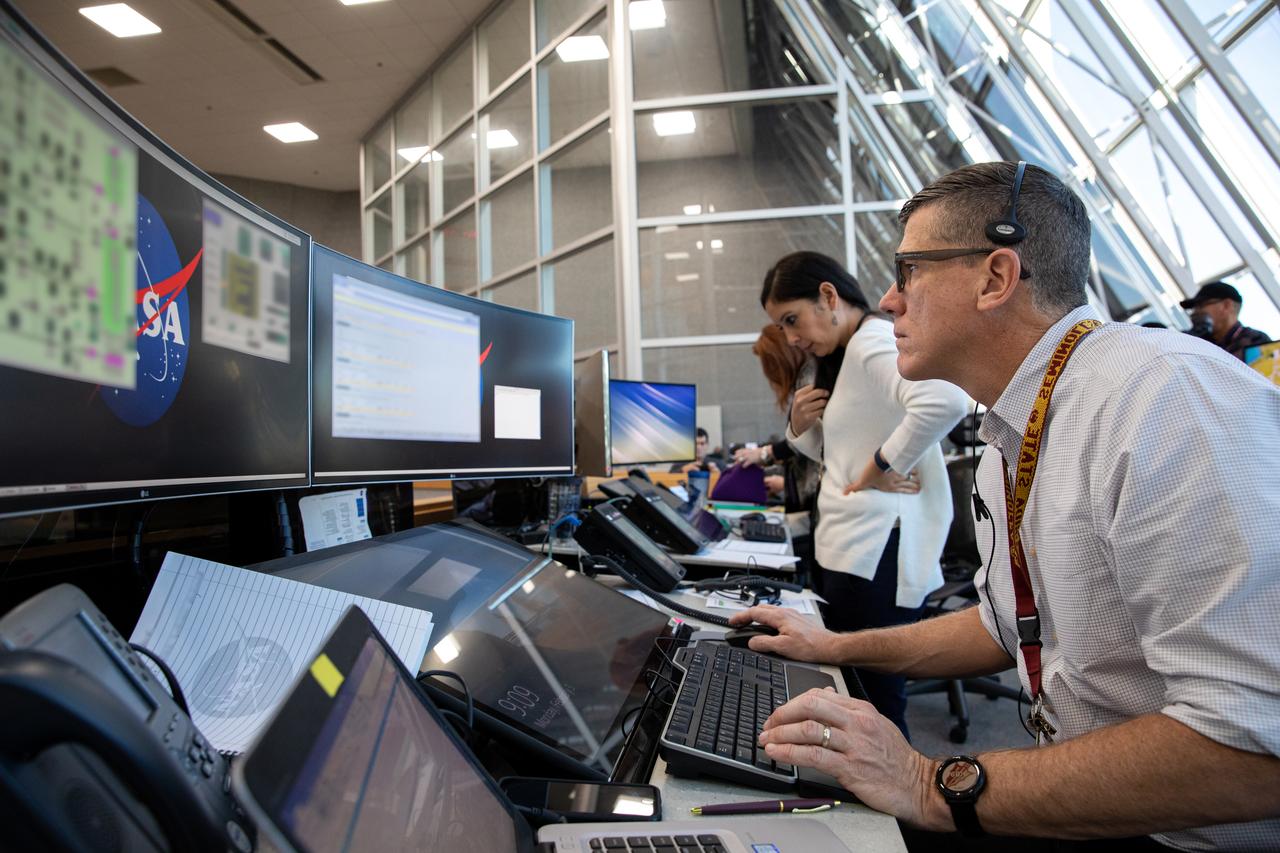
Jeremy Graeber, NASA’s Test, Launch and Recovery Operations branch chief, who also serves as the assistant launch director, participates in an Artemis I launch countdown training simulation inside Firing Room 1 in the Launch Control Center at NASA’s Kennedy Space Center in Florida. In the background is Jessica Parsons, the technical assistant to Artemis I Launch Director Charlie Blackwell-Thompson. The training involved nearly 100 engineers from Orion, Space Launch System (SLS) and the agency’s Exploration Ground Systems coming together on Feb. 3, 2020, to work through a series of simulated challenges, as well as a final countdown procedure. During these exercises, different issues were introduced to familiarize the team with launch day operations, while providing them with an opportunity to practice how they would handle those issues in real-time. Artemis I will be the first integrated test flight of the Orion spacecraft and SLS rocket – the system that will ultimately land the first woman and the next man on the Moon.
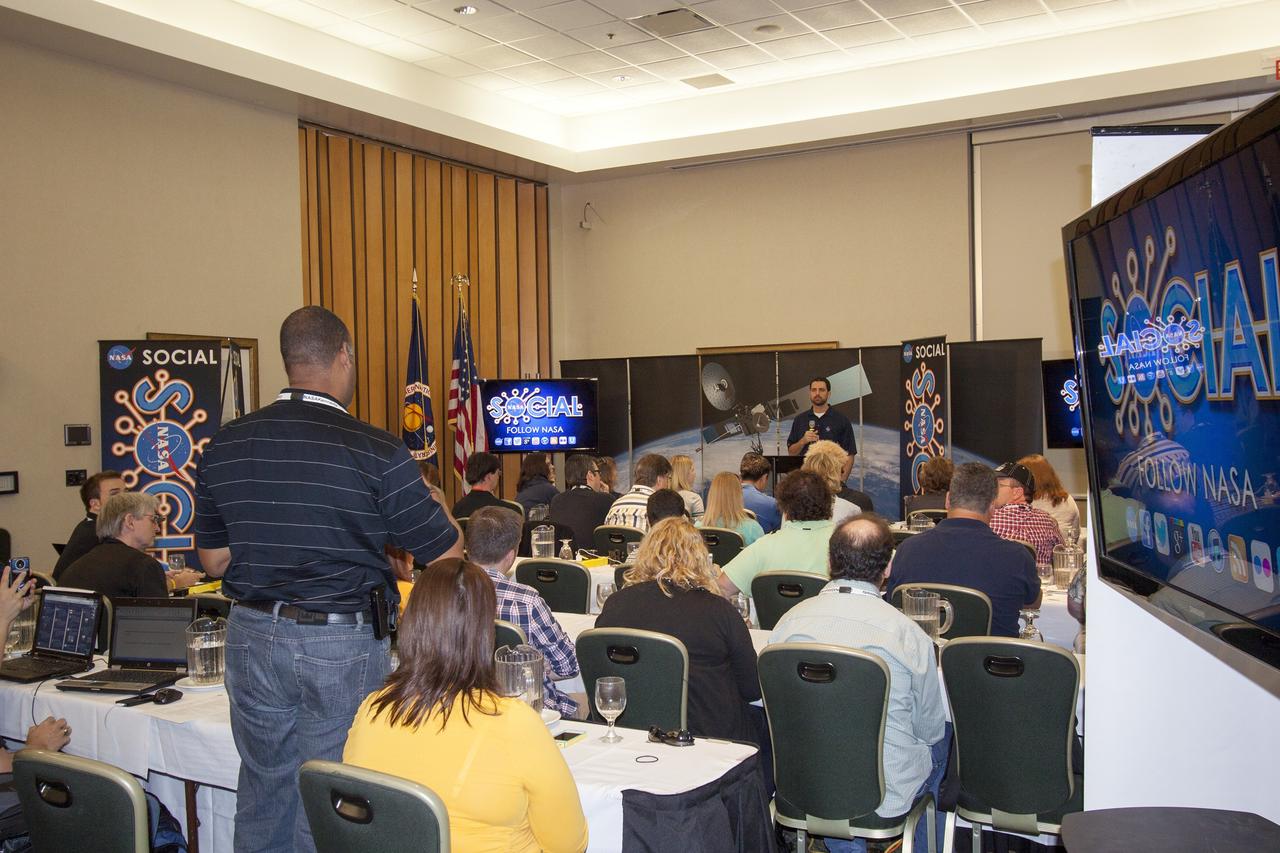
CAPE CANAVERAL, Fla. -- At NASA's Kennedy Space Center in Florida, Jeremy Parsons, technical manager for operations of NASA's Ground Systems Development and Operations Program, takes a question from an agency social media follower participating in the first day of activities of a NASA Social revolving around NASA's Tracking and Data Relay Satellite-K mission. NASA Socials are in-person meetings for people who engage with the agency through Twitter, Facebook, Google+ and other social networks. The satellite, known as TDRS-K, is set to launch at 8:48 p.m. EST on Jan. 30 aboard a United Launch Alliance Atlas V rocket from Space Launch Complex 41 on nearby Cape Canaveral Air Force Station. About 50 followers were selected to participate in the TDRS-K prelaunch and launch activities and share them with their own fan base. The TDRS-K spacecraft is part of the next-generation series in the Tracking and Data Relay Satellite System, a constellation of space-based communication satellites providing tracking, telemetry, command and high-bandwidth data return services. For more information, visit http://www.nasa.gov/mission_pages/tdrs/index.html. Photo credit: NASA/Jim Grossmann
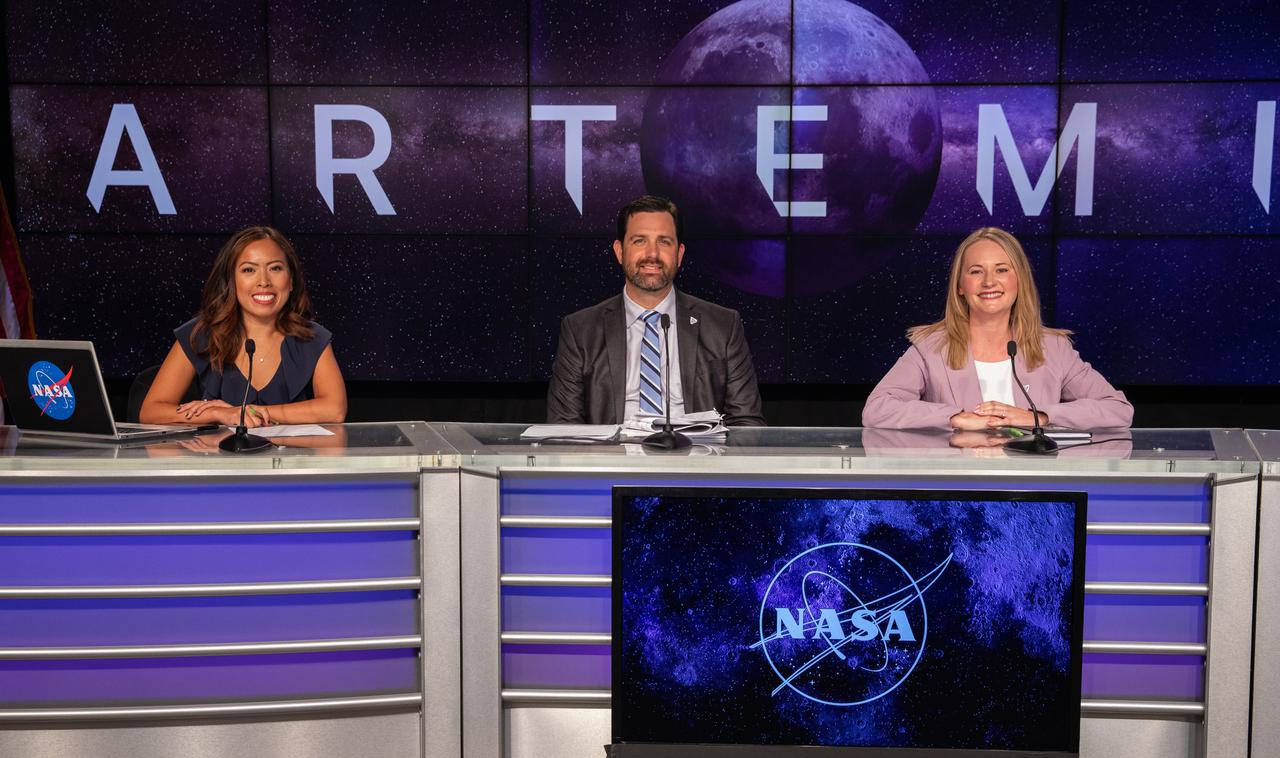
NASA holds a prelaunch media briefing on the status of the Artemis I countdown on Sept. 2, 2022, at NASA’s Kennedy Space Center in Florida. Participants are, from left, Megan Cruz, moderator, NASA Communications; Jeremy Parsons, Exploration Ground Systems, deputy program manager, NASA Kennedy; and Melody Lovin, weather officer, Space Launch Delta 45. Artemis I is scheduled to launch at 2:17 p.m. EDT on Sept. 3, from Kennedy’s Launch Complex 39B. Launch was waved off on Aug. 29 due to an issue during tanking. The first in a series of increasingly complex missions, Artemis I will provide a foundation for human deep space exploration and demonstrate NASA’s capability to extend human presence to the Moon and beyond. The primary goal of Artemis I is to thoroughly test the integrated systems before crewed missions by operating the spacecraft in a deep space environment, testing Orion’s heat shield, and recovering the crew module after reentry, descent, and splashdown.