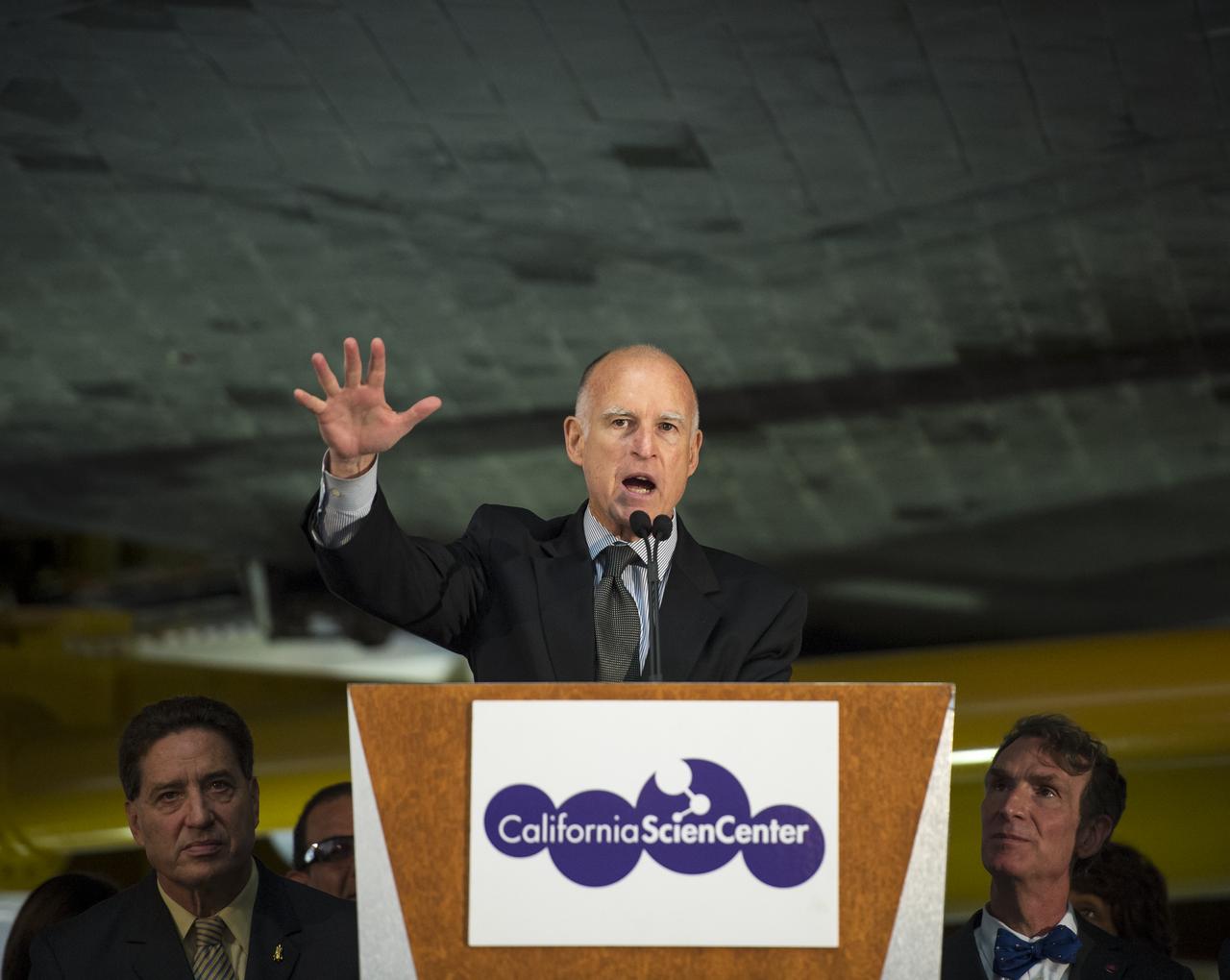
California Governor Jerry Brown speaks from a podium underneath the space shuttle Endeavour during the grand opening ceremony for the California Science center's Samuel Oschin Space Shuttle Endeavour Display Pavilion, Tuesday, Oct. 30, 2012, in Los Angeles. Endeavour, built as a replacement for space shuttle Challenger, completed 25 missions, spent 299 days in orbit, and orbited Earth 4,671 times while traveling 122,883,151 miles. Photo Credit: (NASA/Bill Ingalls)
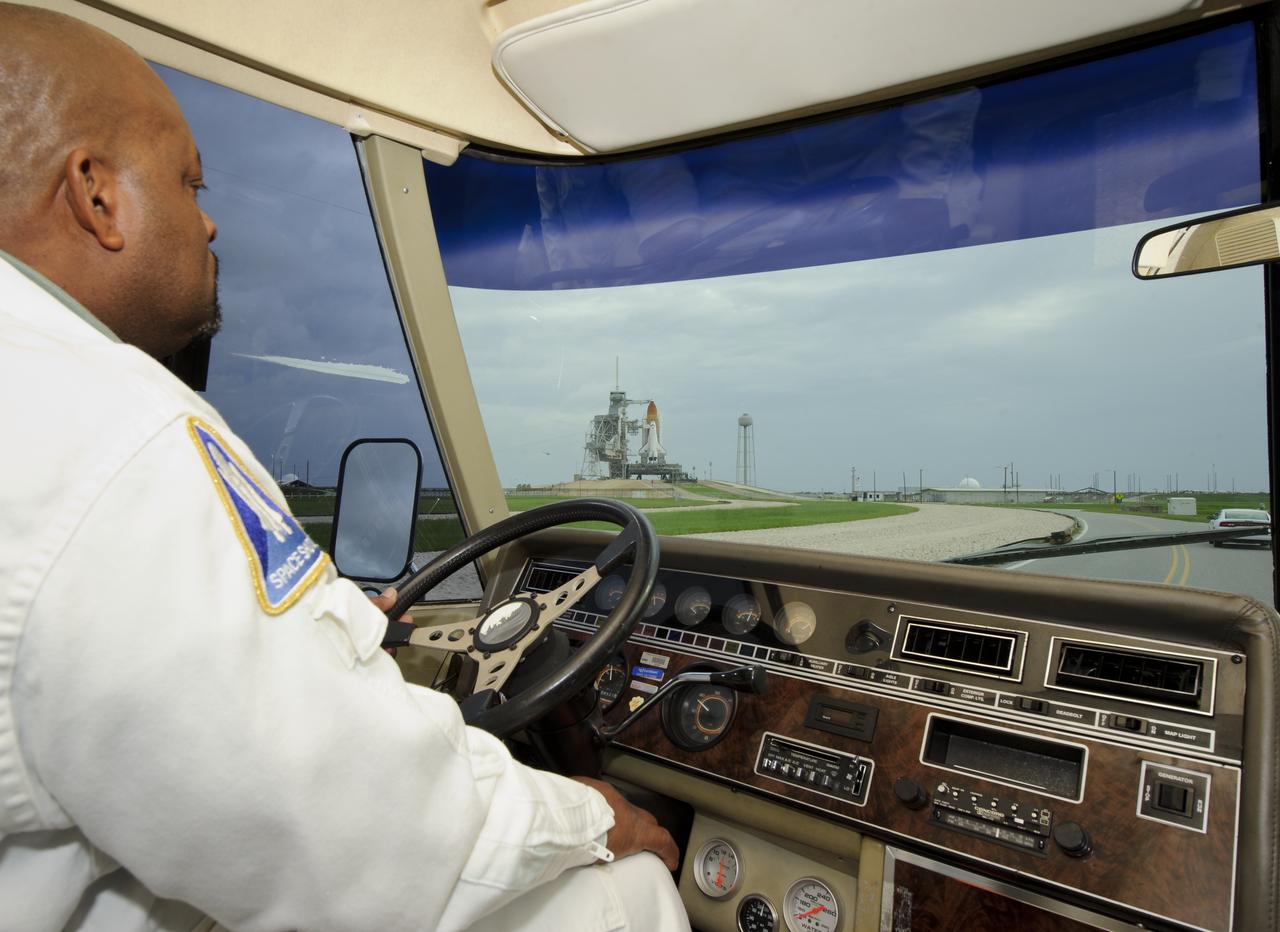
Hiawatha Brown, Heavy Equipment Operator for United Space Alliance (USA), approaches launch pad 39A at the NASA Kennedy Space Center as he drives the Astrovan carrying the STS-135 crew on Friday July 8, 2011 in Cape Canaveral, Fla. The Astrovan is a modified 1983 Airstream and has been in use to carry crews to the launch pads since 1984. A close look at the odometer shows it has a little more than 26,521 miles at the time of this photo. The launch of Atlantis, STS-135, is the final flight of the shuttle program, a 12-day mission to the International Space Station. Photo Credit: (NASA/Jerry Ross)
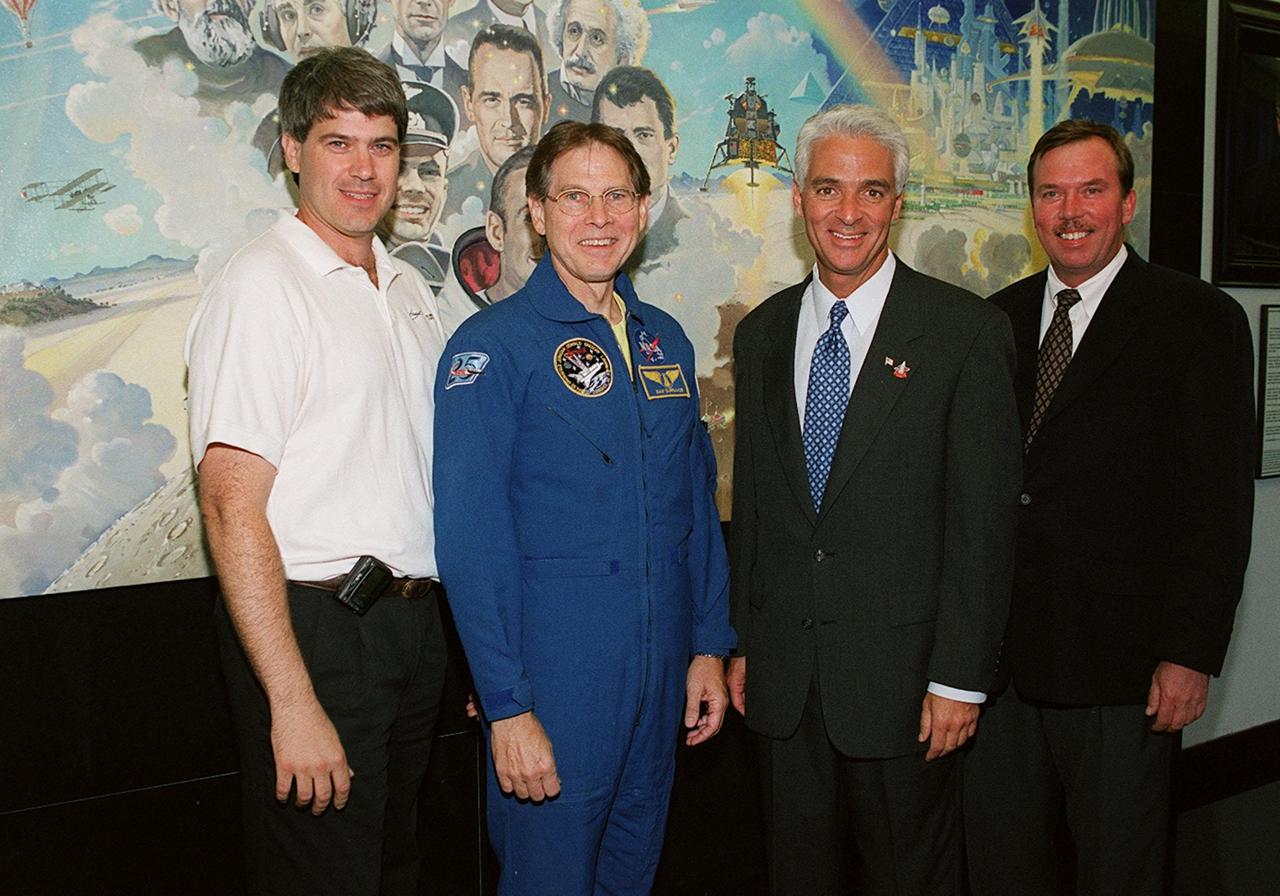
KENNEDY SPACE CENTER, FLA. -- Astronaut Sam Durrance (second from left) and State Education Commissioner Charlie Crist (third from left) pose with Kevin Brown (left), vice president of Command and Control Technologies, Inc., and Jerry Moyer, of Dynamac (Bionetics) at the Center for Space Education in the KSC Visitor Complex. Crist commemorated the 20th anniversary of the Shuttle program with his visit to watch the launch of Space Shuttle Endeavour on mission STS-100. He and Durrance accompanied students from Ronald McNair Magnet School, Cocoa, Fla., for the launch
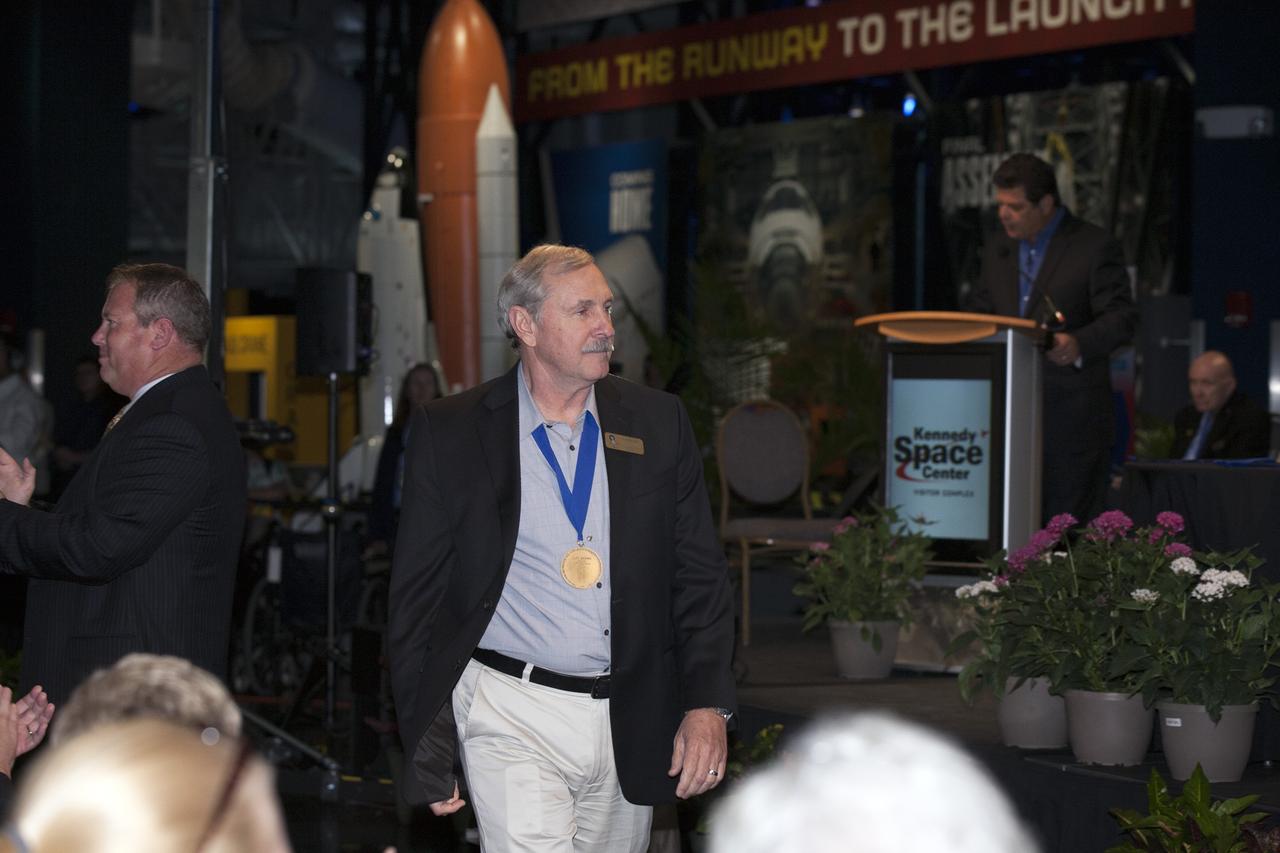
CAPE CANAVERAL, Fla. -- Inside the Space Shuttle Atlantis attraction at NASA’s Kennedy Space Center Visitor Complex in Florida, former NASA astronaut and Hall of Famer Curt Brown walks the red carpet at the 2014 U.S. Astronaut Hall of Fame Induction ceremony. Space shuttle astronauts and space explorers Shannon Lucid and Jerry Ross were inducted into the Hall of Fame Class of 2014. The 2014 inductees are selected by a committee of Hall of Fame astronauts, former NASA officials, flight directors, historians and journalists. The process is administered by the Astronaut Scholarship Foundation. To be eligible, an astronaut must have made his or her first flight at least 17 years before the induction. Candidates must be a U.S. citizen and a NASA-trained commander, pilot or mission specialist who has orbited the earth at least once. Including Lucid and Ross, 87 astronauts have been inducted into the AHOF. Photo credit: NASA/Kim Shiflett
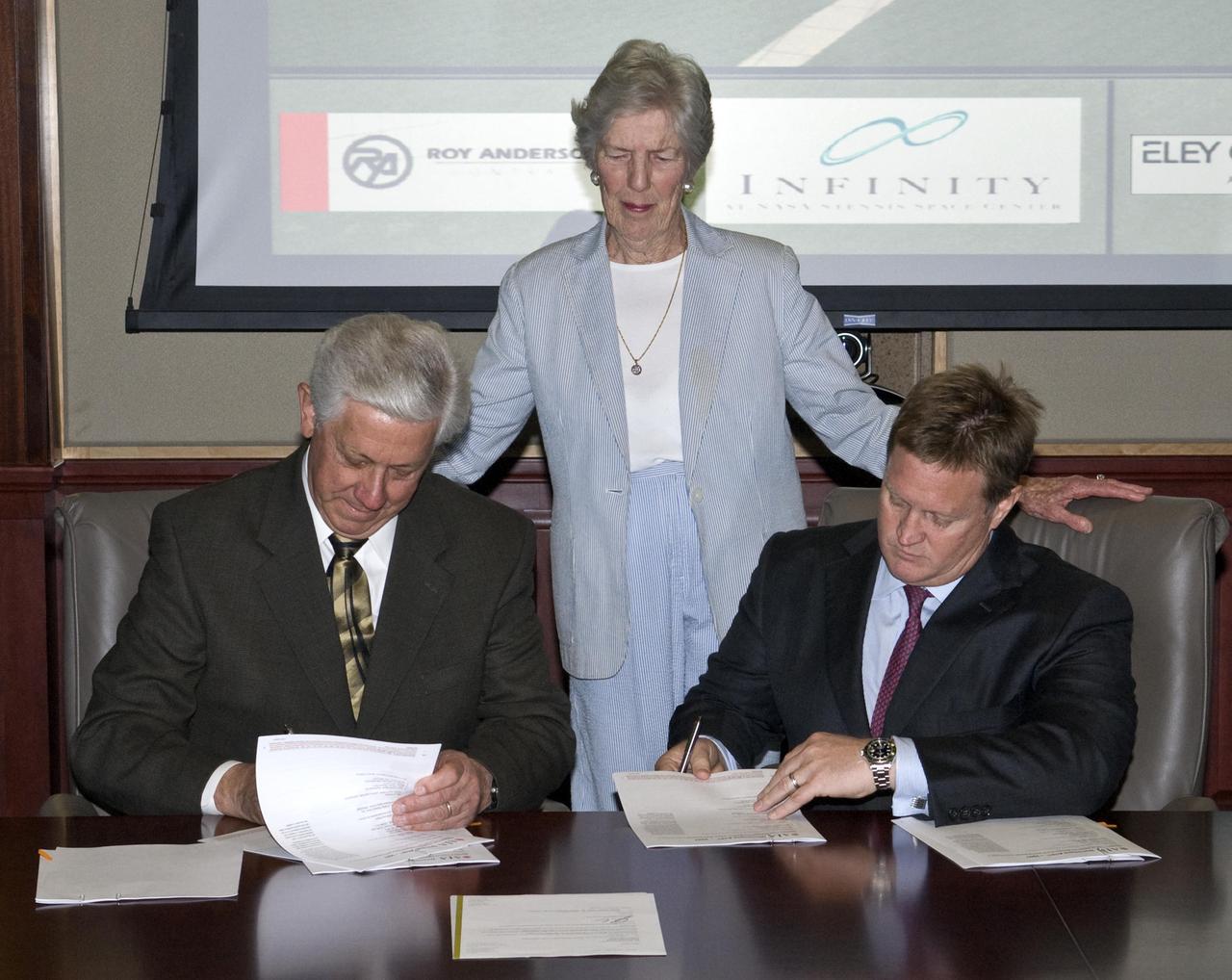
Key state and community leaders celebrated April 6 with the signing of a construction contract for the state-of-the-art INFINITY Science Center planned near John C. Stennis Space Center in south Mississippi. Gulfport Mayor George Schloegel (l to r), chair of non-profit INFINITY Science Center Inc., was joined for the signing ceremony at the Hancock Bank in Gulfport by Virginia Wagner, sister of late Hancock Bank President Leo Seal Jr.; and Roy Anderson III, president and CEO of Roy Anderson Corp. Seal was the first chair of INFINITY Science Center Inc., which has led in development of the project. Roy Anderson Corp. plans to begin construction on the 72,000-square-foot, $28 million science and education center in May. The Mississippi Department of Transportation (MDOT) also is set to begin construction of a $2 million access road to the new center. The April 6 ceremony was attended by numerous officials, including former Stennis Space Center Directors Jerry Hlass and Roy Estess; Mississippi Senate President Pro Tempore Billy Hewes, R-Gulfport; Mississippi Rep. Diane Peranich, D-Pass Christian; and MDOT Southern District Commissioner Wayne Brown.
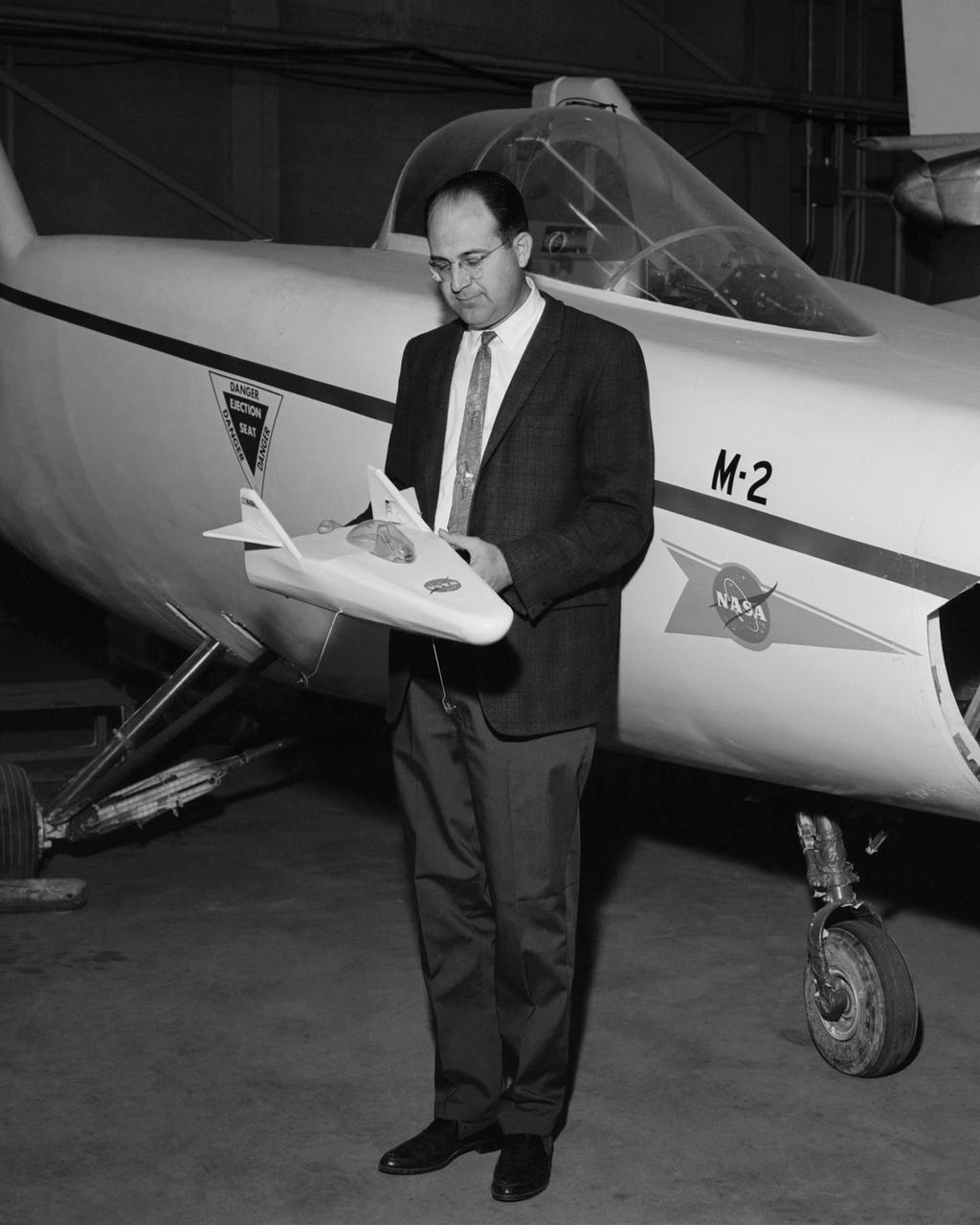
Dale Reed with a model of the M2-F1 in front of the actual lifting body. Reed used the model to show the potential of the lifting bodies. He first flew it into tall grass to test stability and trim, then hand-launched it from buildings for longer flights. Finally, he towed the lifting-body model aloft using a powered model airplane known as the "Mothership." A timer released the model and it glided to a landing. Dale's wife Donna used a 9 mm. camera to film the flights of the model. Its stability as it glided--despite its lack of wings--convinced Milt Thompson and some Flight Research Center engineers including the center director, Paul Bikle, that a piloted lifting body was possible.