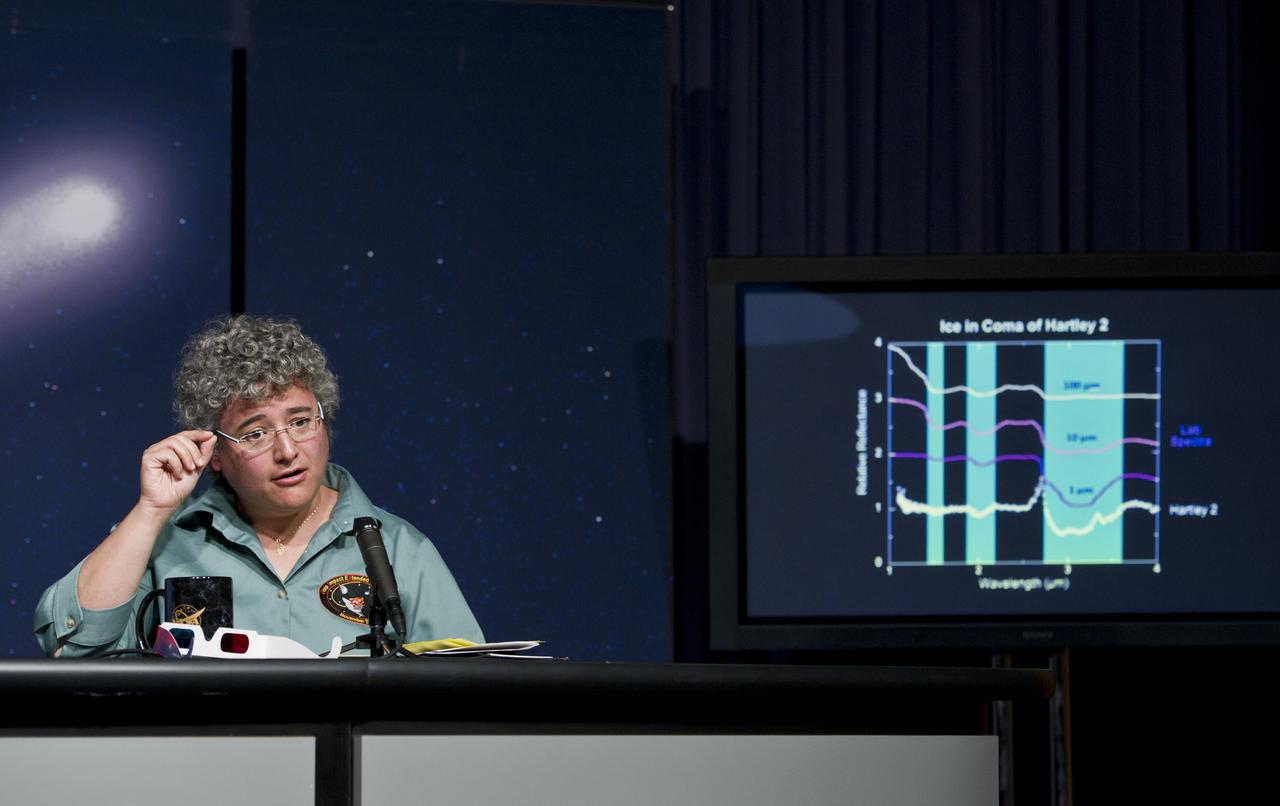
Jessica Sunshine, EPOXI Deputy Principal Investigator, University of Maryland, far right, discusses imagery sent back from the EPOXI Mission spacecraft during a press conference, Thursday, Nov. 18, 2010, at NASA Headquarters in Washington. The press conference was held to discuss the Nov. 4 successful flyby of Comet Hartley 2 by NASA's EPOXI Mission Spacecraft. Images from the flyby provided scientists the most extensive observations of a comet in history. Photo Credit: (NASA/Paul E. Alers)
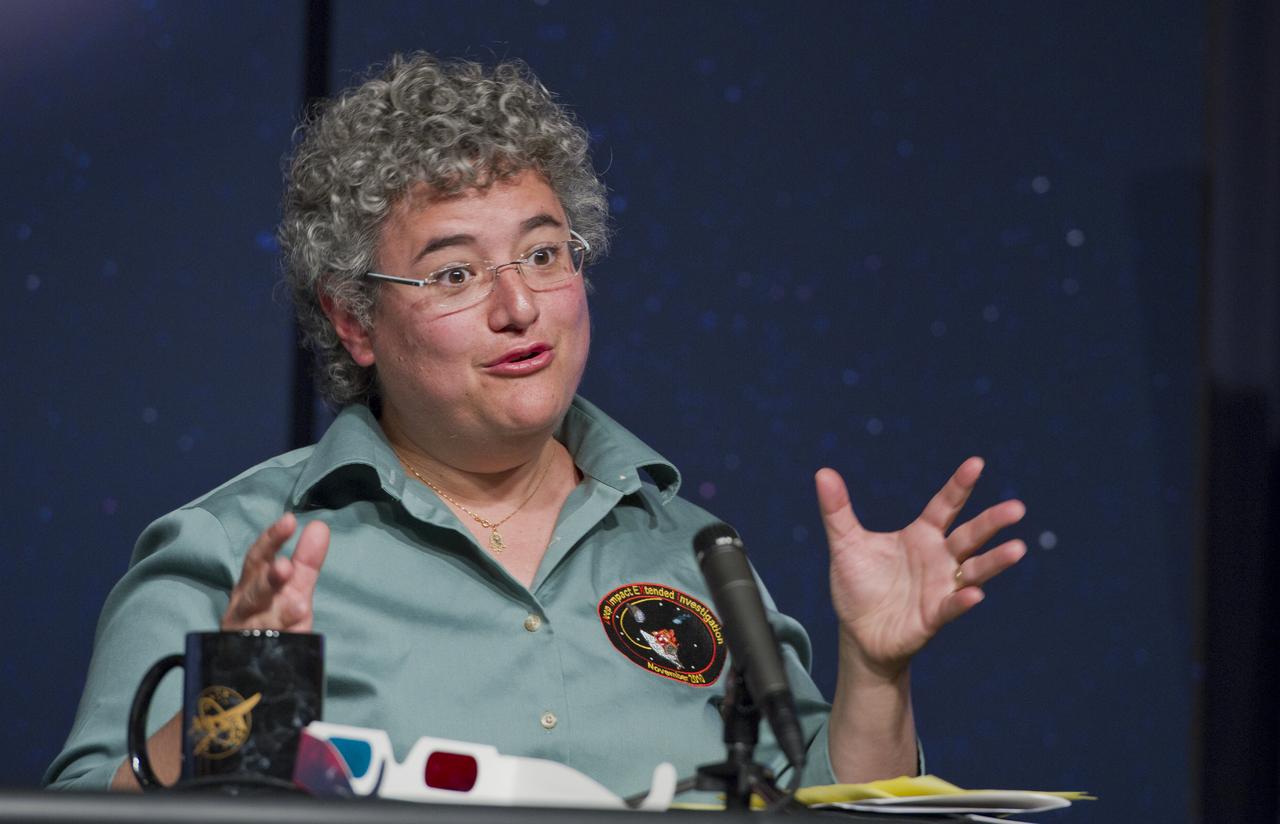
Jessica Sunshine, EPOXI Deputy Principal Investigator, University of Maryland, far right, discusses imagery sent back from the EPOXI Mission spacecraft during a press conference, Thursday, Nov. 18, 2010, at NASA Headquarters in Washington. The press conference was held to discuss the Nov. 4 successful flyby of Comet Hartley 2 by NASA's EPOXI Mission Spacecraft. Images from the flyby provided scientists the most extensive observations of a comet in history. Photo Credit: (NASA/Paul E. Alers)
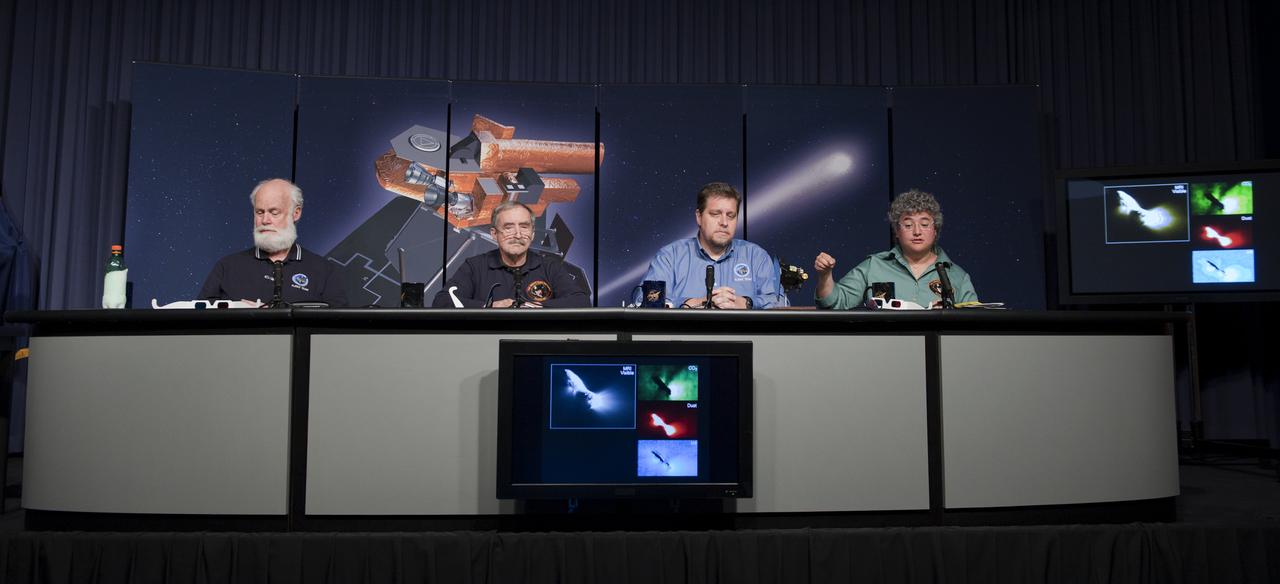
Jessica Sunshine, EPOXI Deputy Principal Investigator, University of Maryland, far right, discusses imagery sent back from the EPOXI Mission spacecraft during a press conference, Thursday, Nov. 18, 2010, at NASA Headquarters in Washington. The press conference was held to discuss the Nov. 4 successful flyby of Comet Hartley 2 by NASA's EPOXI Mission Spacecraft. Images from the flyby provided scientists the most extensive observations of a comet in history. Photo Credit: (NASA/Paul E. Alers)
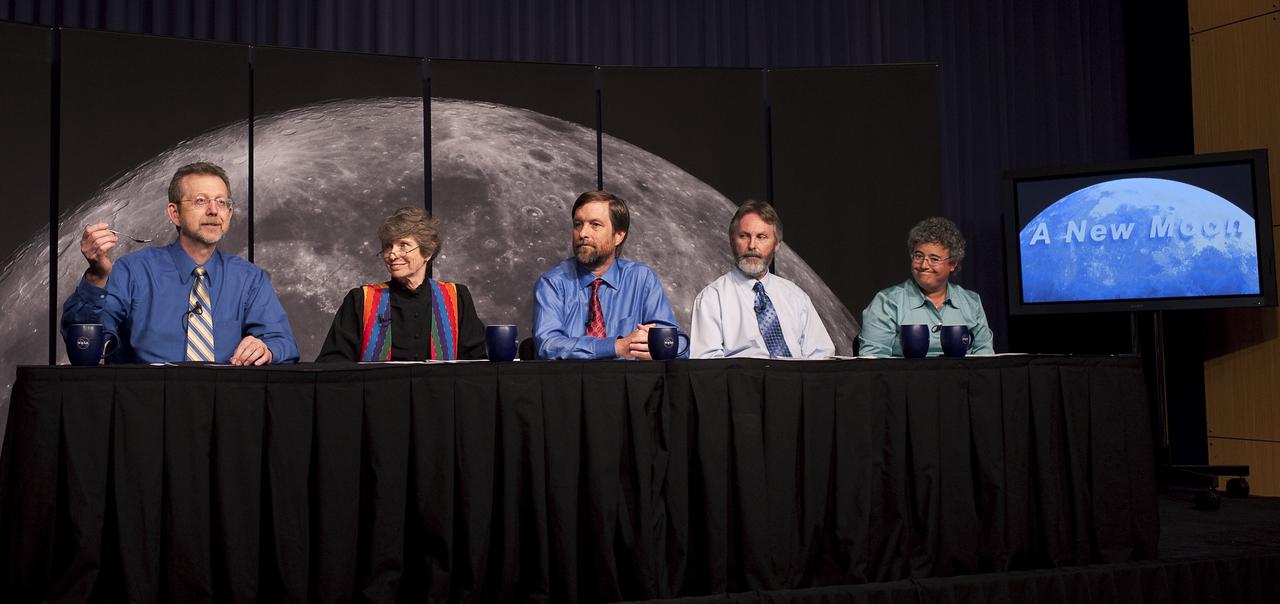
Jim Green (far left), director, Planetary Science Division, Science MissionDirectorate at NASA Headquarters in Washington; Carle Pieters, principal investigator, Moon Mineralogy Mapper, Brown University; Rob Green, project instrument scientist, Moon Mineralogy Mapper, at NASA's Jet Propulsion Laboratory; Roger Clark, team member, Cassini spacecraft Visual and Infrared Mapping Spectrometer and co-investigator, Moon Mineralogy Mapper, U.S. Geological Survey in Denver and Jessica Sunshine (far right), deputy principal investigator for NASA's Deep Impactextended mission and co-investigator for Moon Mineralogy Mapper,Department of Astronomy, University of Maryland discuss their findings of water molecules in the polar regions of the moon at a press conference at NASA Headquarters, September 24, 2009, in Washington. Photo Credit: (NASA/Carla Cioffi)
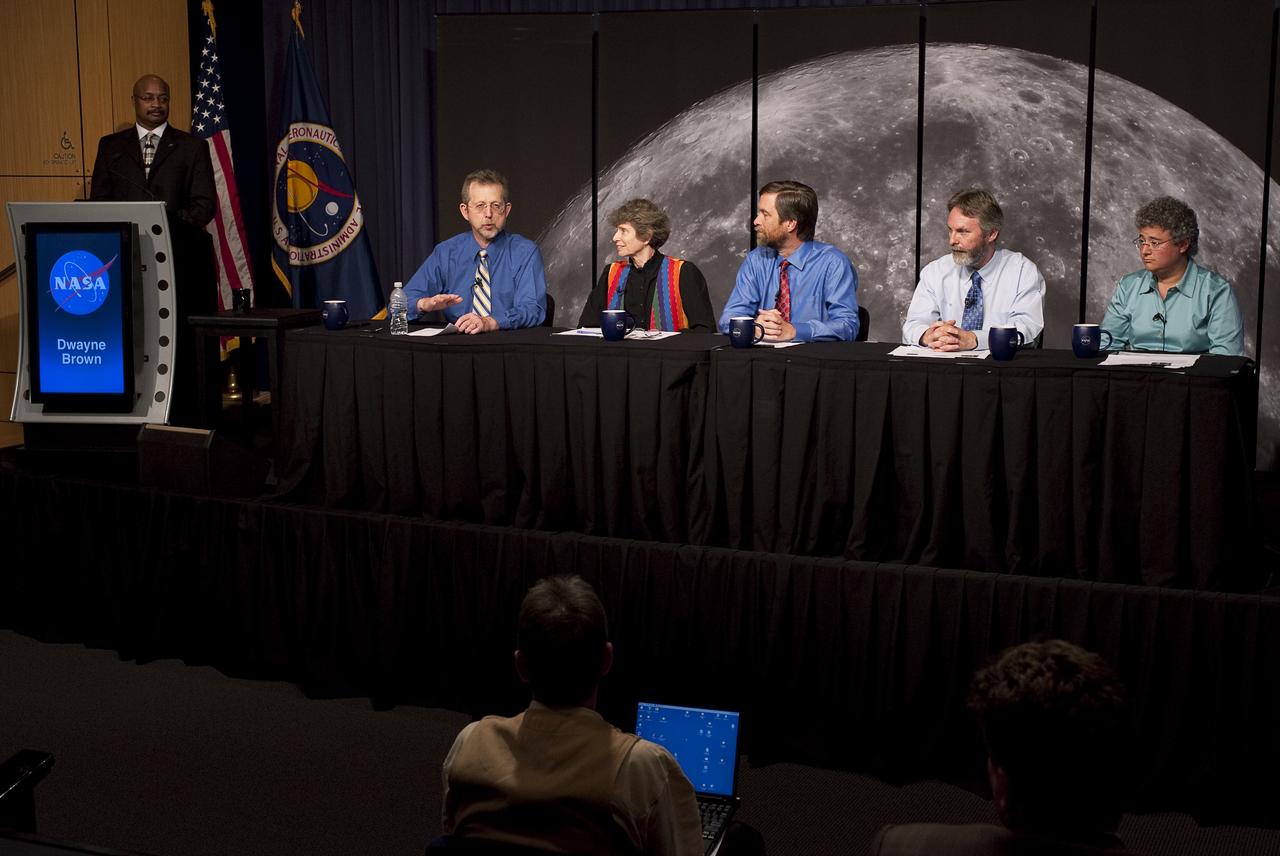
Jim Green (second from left), director, Planetary Science Division, Science Mission Directorate at NASA Headquarters in Washington discusses NASA’s findings of water molecules in the polar regions of the moon at a press conference at NASA Headquarters, September 24, 2009. Photo Credit: (NASA/Carla Cioffi)
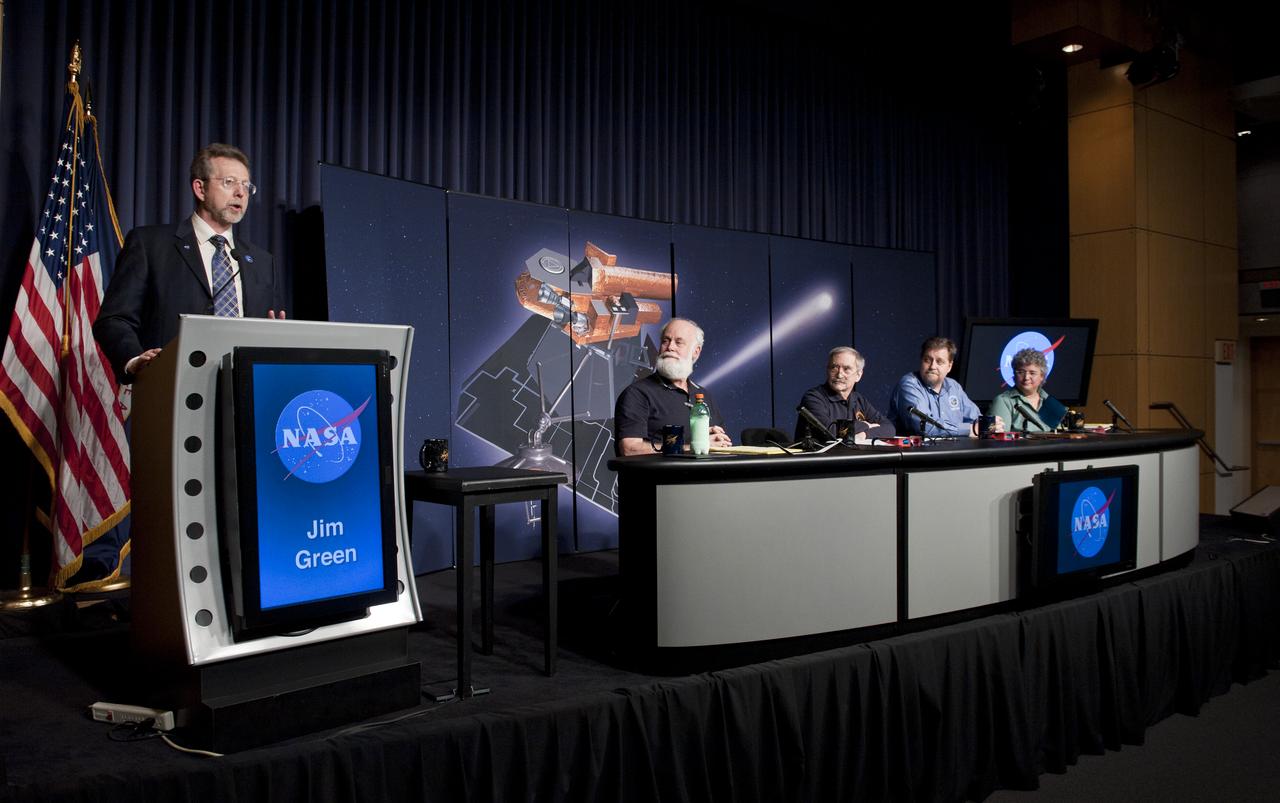
Dr. James Green, Director of Planetary Science, NASA Headquarters, at podium, speaks during a press conference, Thursday, Nov. 18, 2010, at NASA Headquarters in Washington. The press conference was held to discuss the Nov. 4 successful flyby of Comet Hartley 2 by NASA's EPOXI Mission Spacecraft. Images from the flyby provided scientists the most extensive observations of a comet in history. Photo Credit: (NASA/Paul E. Alers)