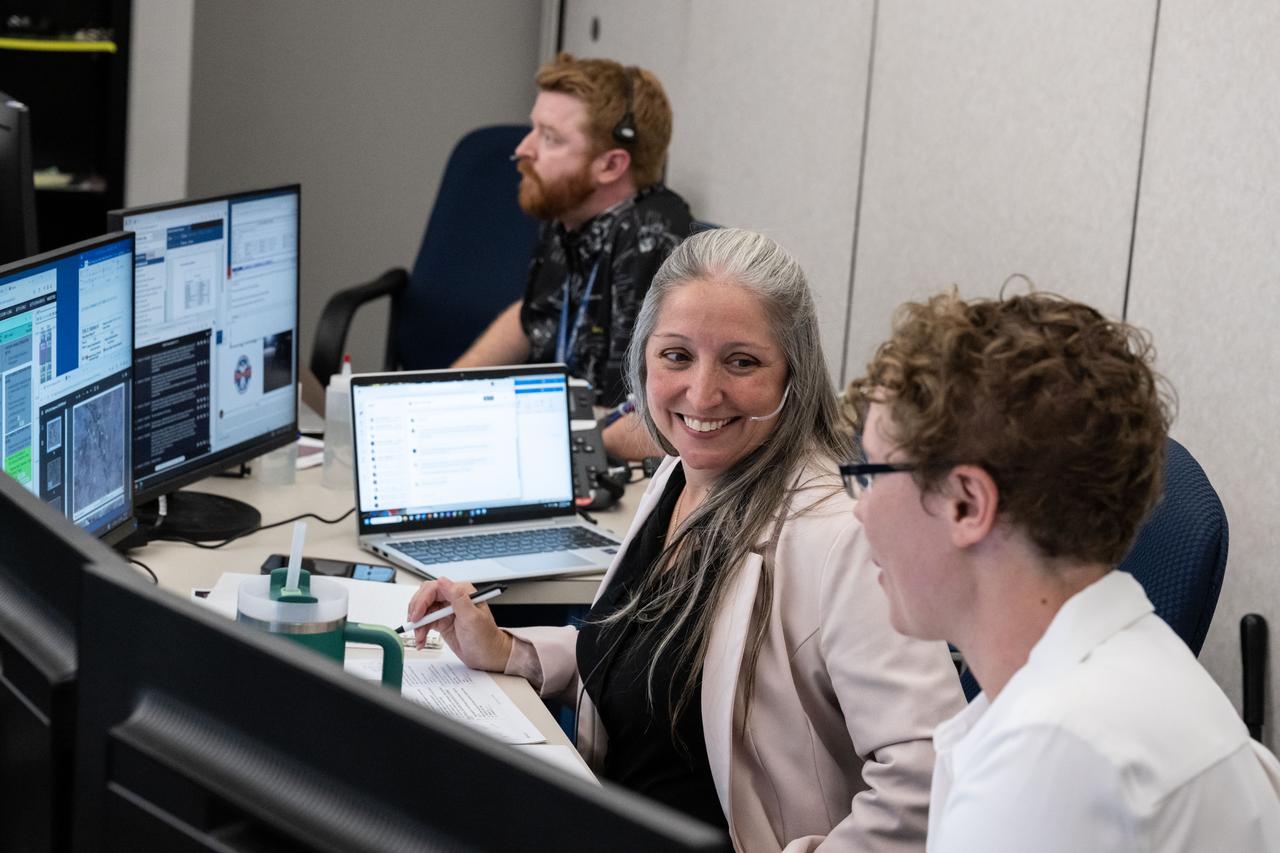
Extravehicular flight controller Jaclyn Kagey, left, and Tess Caswell work in the JETT 5 flight control room during the JETT 5 field test. JETT 5 was a week-long field test in the lunar-like landscape of San Francisco Volcanic Field near Flagstaff, Arizona while a team of flight controllers and scientists at Johnson monitor and guide their activities. Credit NASA/James Blair

A group of scientists are gathered around a table covered in large maps in the Science Evaluation Room (SER) at NASA’s Johnson Space Center in Houston during the JETT 5 field test. JETT 5 was a week-long field test in the lunar-like landscape of San Francisco Volcanic Field near Flagstaff, Arizona while a team of flight controllers and scientists at Johnson monitor and guide their activities. Credit: NASA/Robert Markowitz
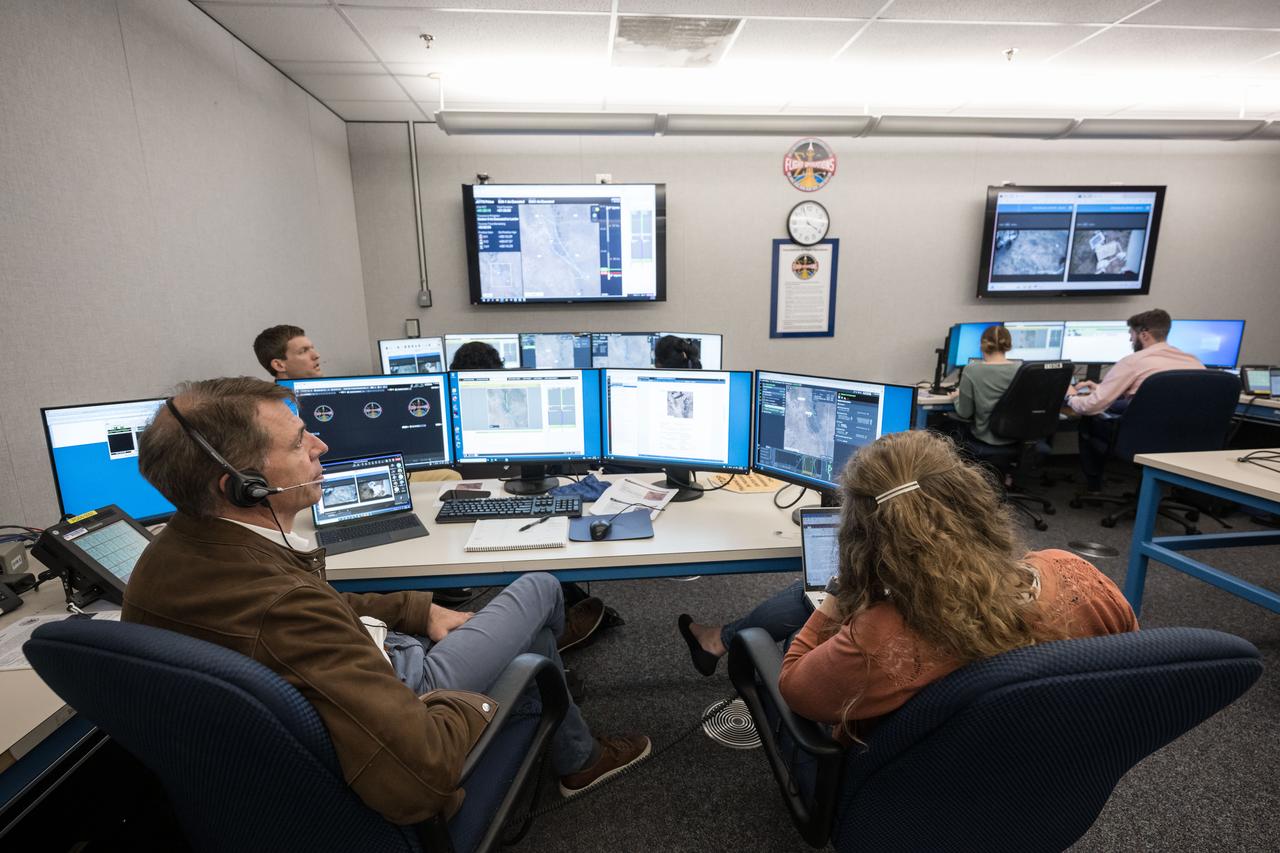
Flight Director Zebulon Scoville, left, and team monitor the JETT 5 extravehicular activities from a mock Mission Control at NASA’s Johnson Space Center in Houston. JETT 5 was a week-long field test in the lunar-like landscape of San Francisco Volcanic Field near Flagstaff, Arizona while a team of flight controllers and scientists at Johnson monitor and guide their activities. Credit: NASA/Robert Markowitz
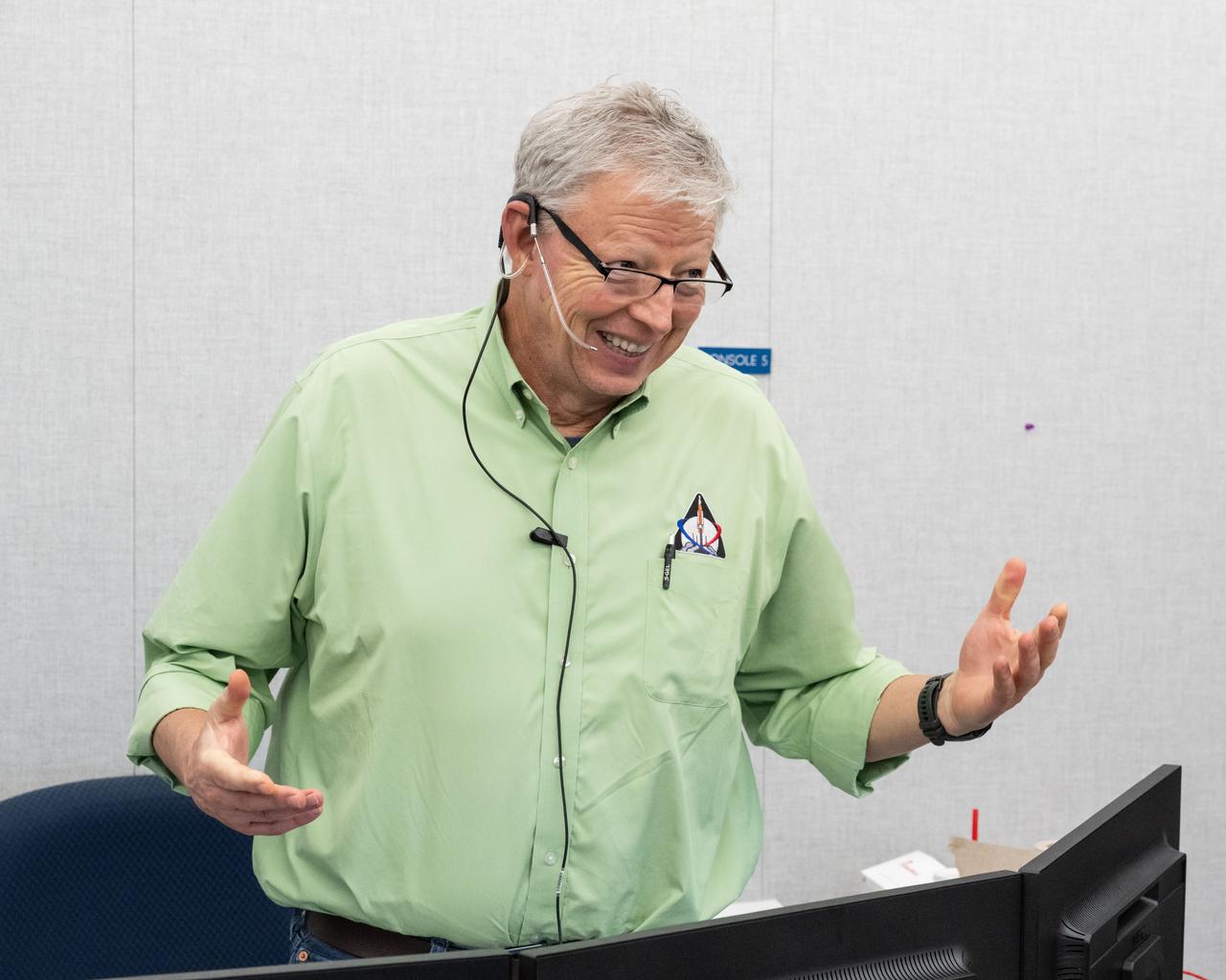
Chief training officer John Ray works in the flight control support room during the JETT 5 field test. JETT 5 was a week-long field test in the lunar-like landscape of San Francisco Volcanic Field near Flagstaff, Arizona while a team of flight controllers and scientists at Johnson monitor and guide their activities. Credit: NASA/James Blair
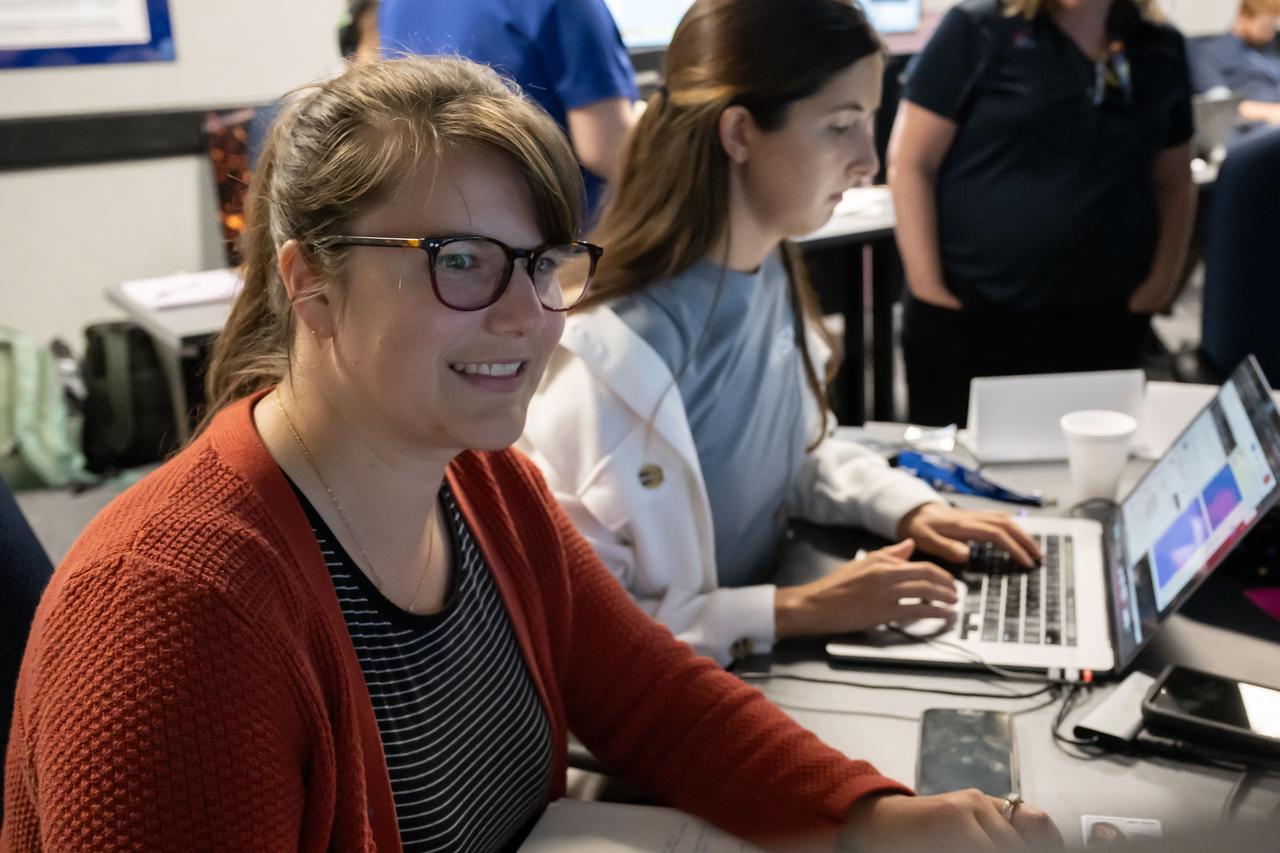
Marie Henderson, from NASA’s Goddard Space Flight Center, foreground, and Ariel Deutsch, from NASA Ames, follow the geology traverses during the JETT 5 field test. JETT 5 was a week-long field test in the lunar-like landscape of San Francisco Volcanic Field near Flagstaff, Arizona while a team of flight controllers and scientists at Johnson monitor and guide their activities. Credit: NASA/Helen Arase Vargas
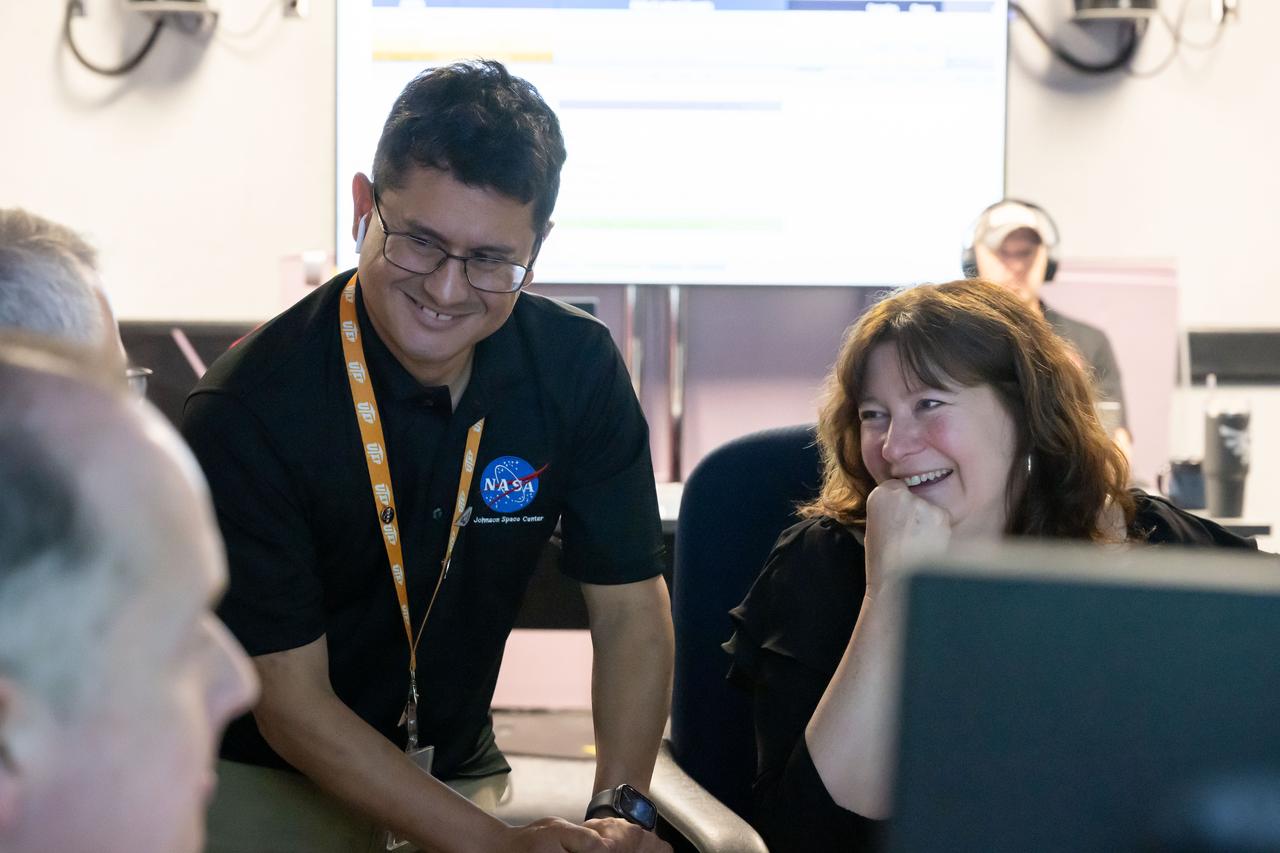
Artemis III Geology Team member, Jose Hurtado from the University of Texas at El Paso, left, and Maria Banks of NASA’s Goddard Spaceflight Center work in the Science Evaluation Room (SER) during the JETT 5 field test. JETT 5 was a week-long field test in the lunar-like landscape of San Francisco Volcanic Field near Flagstaff, Arizona while a team of flight controllers and scientists at Johnson monitor and guide their activities. Credit: NASA/Helen Arase Vargas
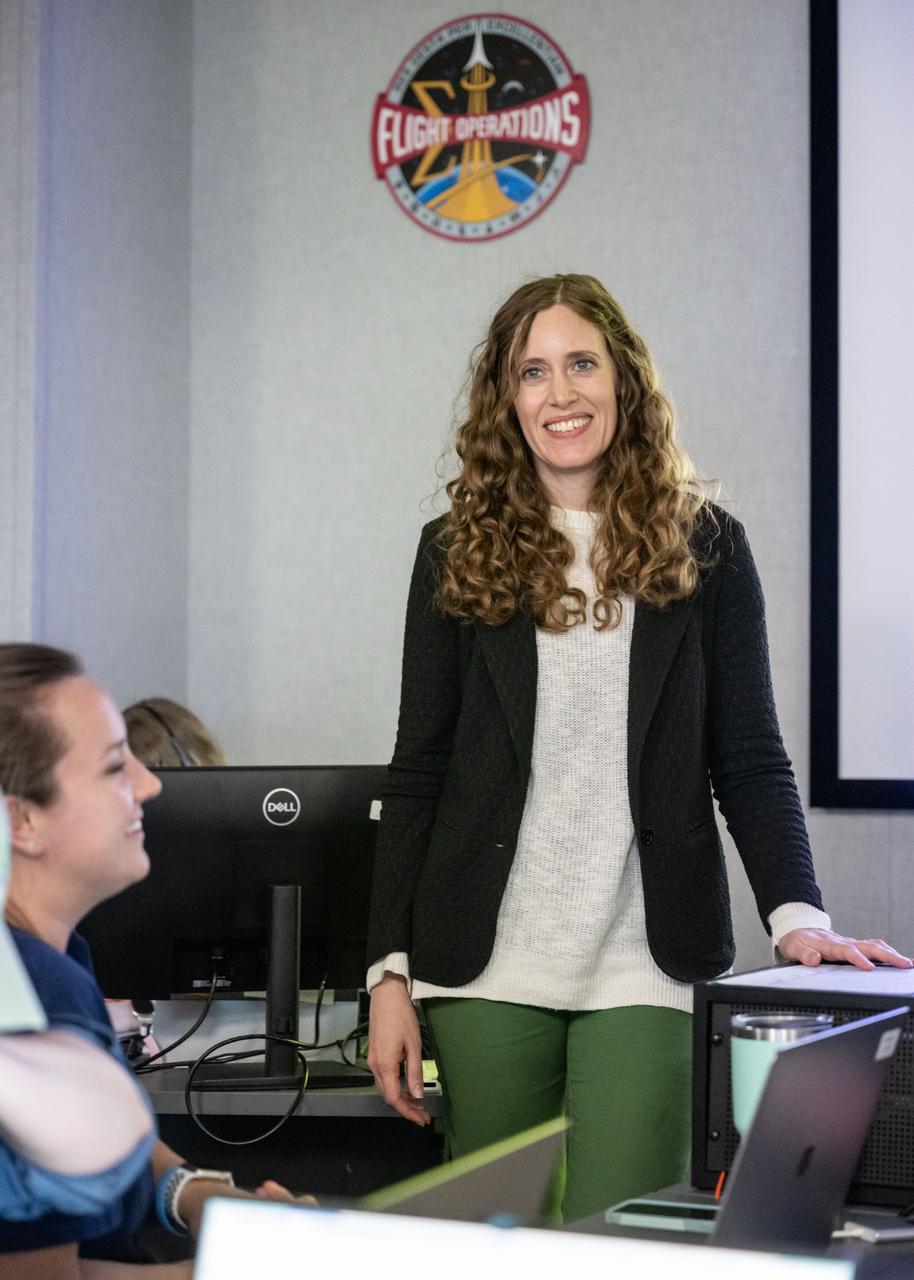
Science Evaluation Room Lead Brett Denevi, Artemis III Geology Team principal investigator for NASA’s Science Mission Directorate, looks over the Science Evaluation Room (SER) during the JETT 5 field test. JETT 5 was a week-long field test in the lunar-like landscape of San Francisco Volcanic Field near Flagstaff, Arizona while a team of flight controllers and scientists at Johnson monitor and guide their activities. Credit: NASA/James Blair
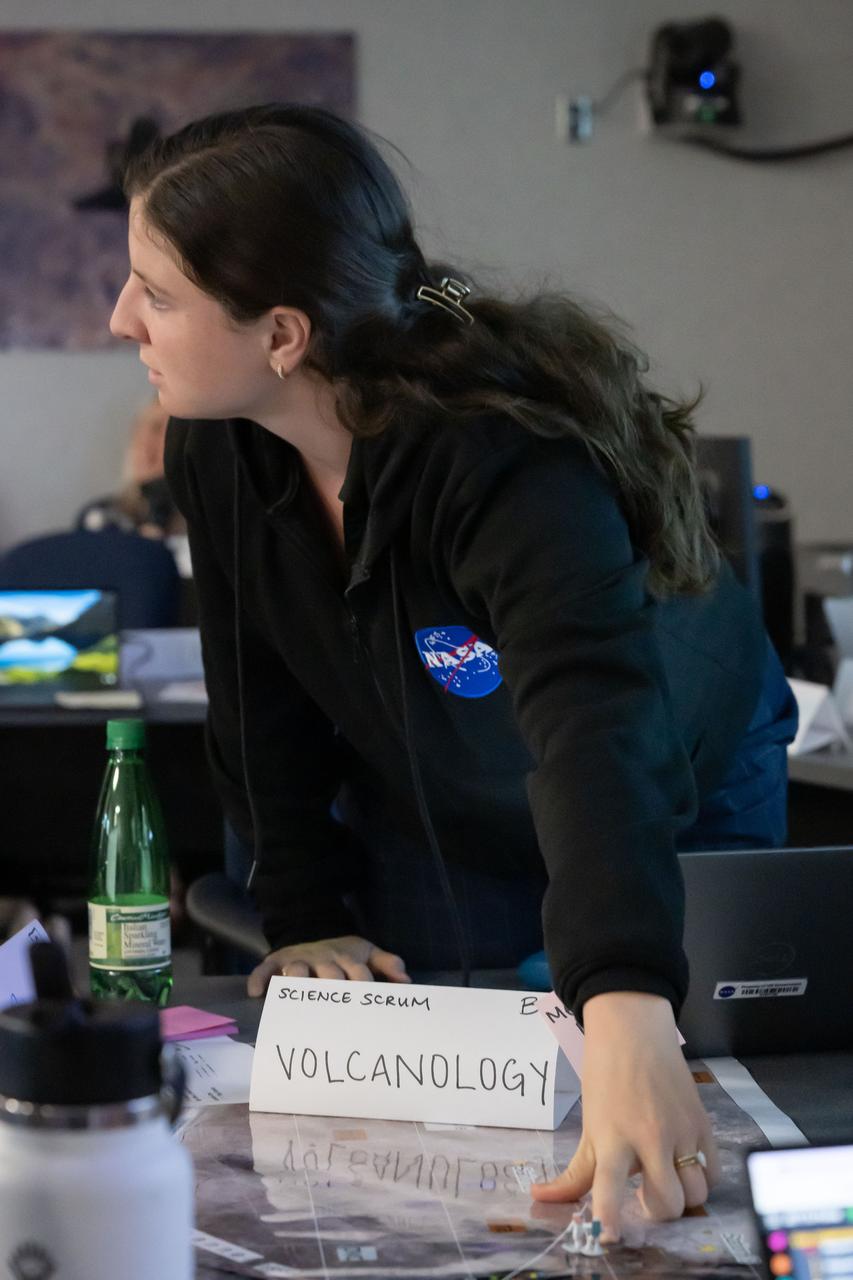
Megan Borel of NASA’s Goddard Space Flight Center points to a location on a map of the San Francisco Volcanic Field in Northern Arizona during a discussion in the Science Evaluation Room (SER) during the JETT 5 field test. JETT 5 was a week-long field test in the lunar-like landscape of San Francisco Volcanic Field near Flagstaff, Arizona while a team of flight controllers and scientists at Johnson monitor and guide their activities. Credit: NASA/Helen Arase Vargas

Artemis Curation Lead Julianne Gross, left, and Brett Denevi, Artemis III Geology Team principal investigator for NASA’s Science Mission Directorate, work in the Science Evaluation Room (SER) during the JETT 5 field test. JETT 5 was a week-long field test in the lunar-like landscape of San Francisco Volcanic Field near Flagstaff, Arizona while a team of flight controllers and scientists at Johnson monitor and guide their activities. Credit: NASA/Helen Arase Vargas
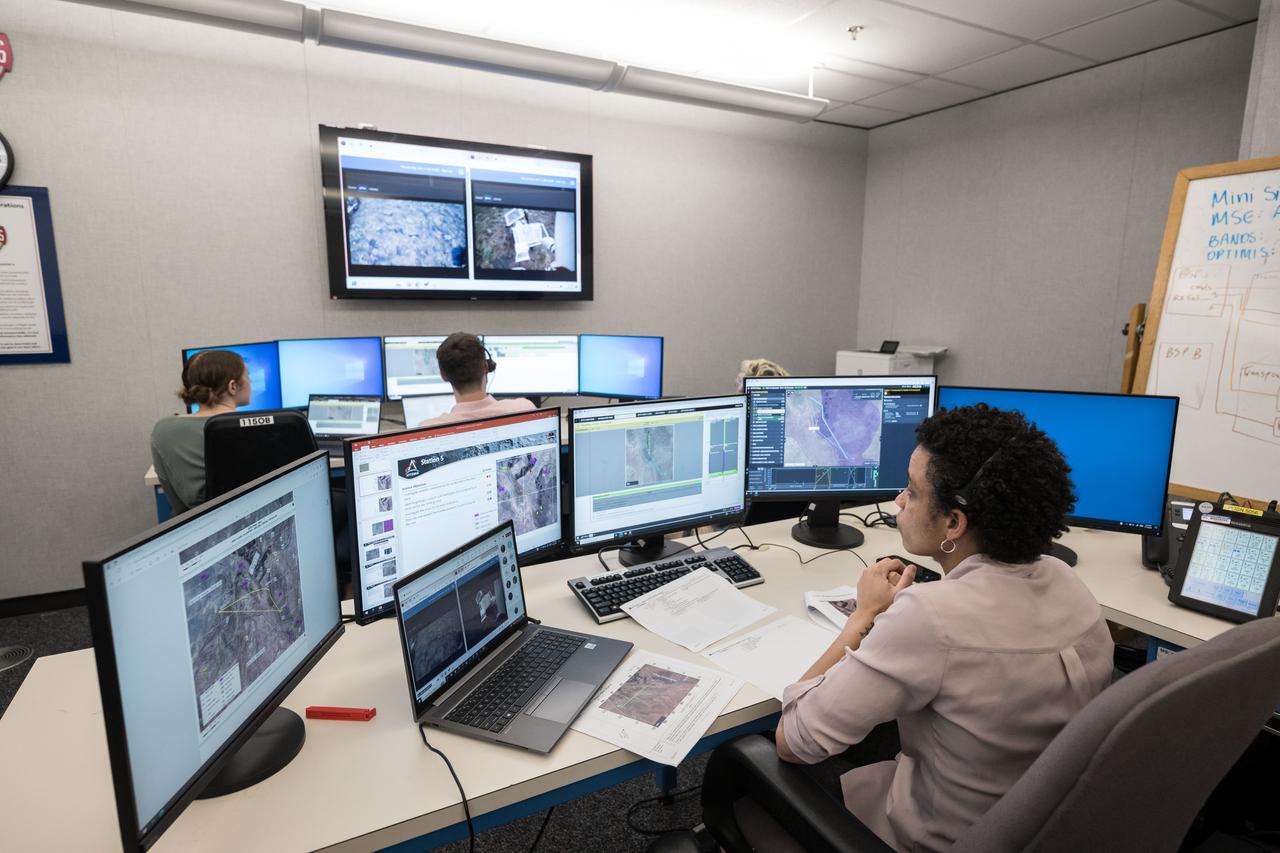
NASA astronaut Jessica Watkins served as the Ground IV for the JETT 5 field test and was the sole point of communications to NASA astronauts Andre Douglas and Kate Rubins who performed simulated moonwalks in the Arizona desert. JETT 5 was a week-long field test in the lunar-like landscape of San Francisco Volcanic Field near Flagstaff, Arizona while a team of flight controllers and scientists at Johnson monitor and guide their activities. Credit: NASA/Robert Markowitz
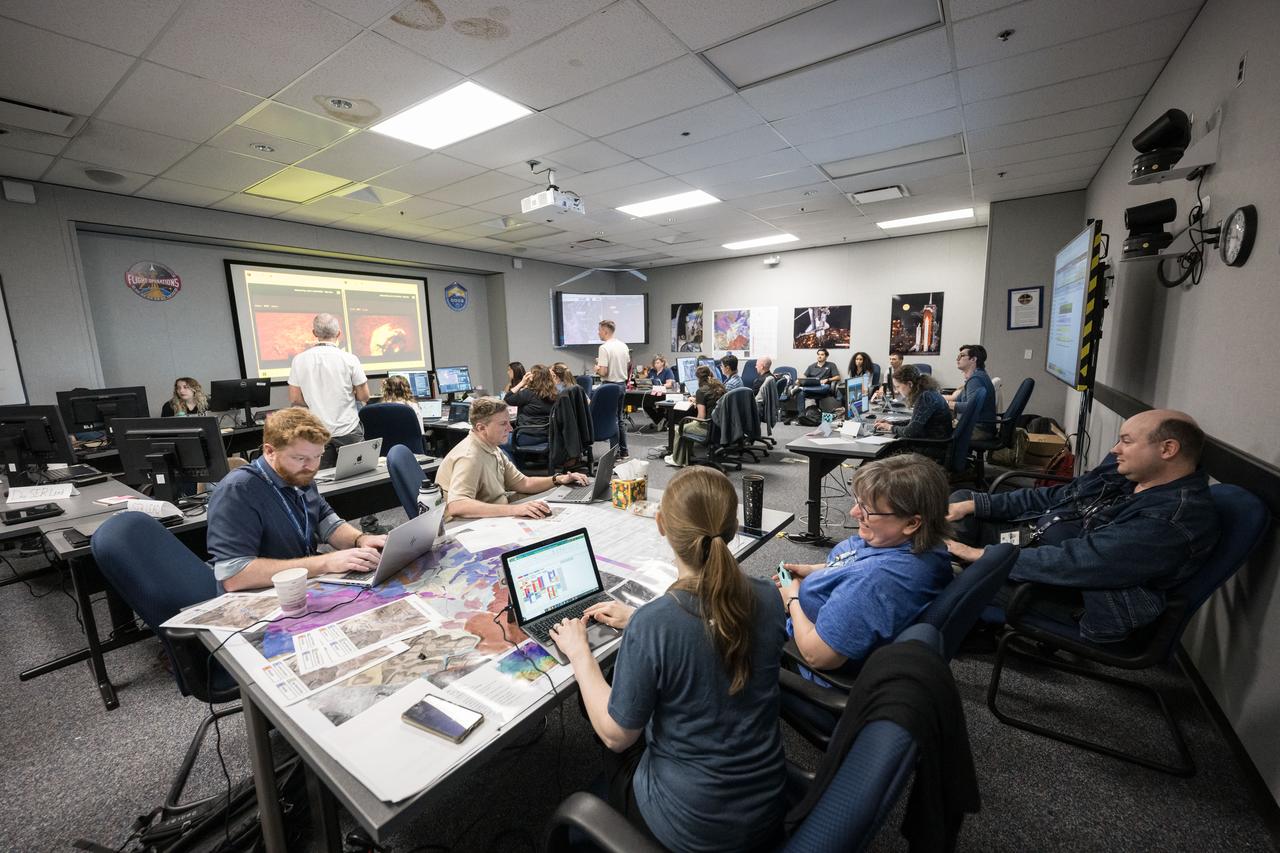
A large group of scientists work in the Science Evaluation Room (SER) at NASA’s Johnson Space Center in Houston during the JETT 5 field test. The SER is the science backroom to mission control during Artemis operations. JETT 5 was a week-long field test in the lunar-like landscape of San Francisco Volcanic Field near Flagstaff, Arizona while a team of flight controllers and scientists at Johnson monitor and guide their activities. Credit: NASA/Robert Markowitz
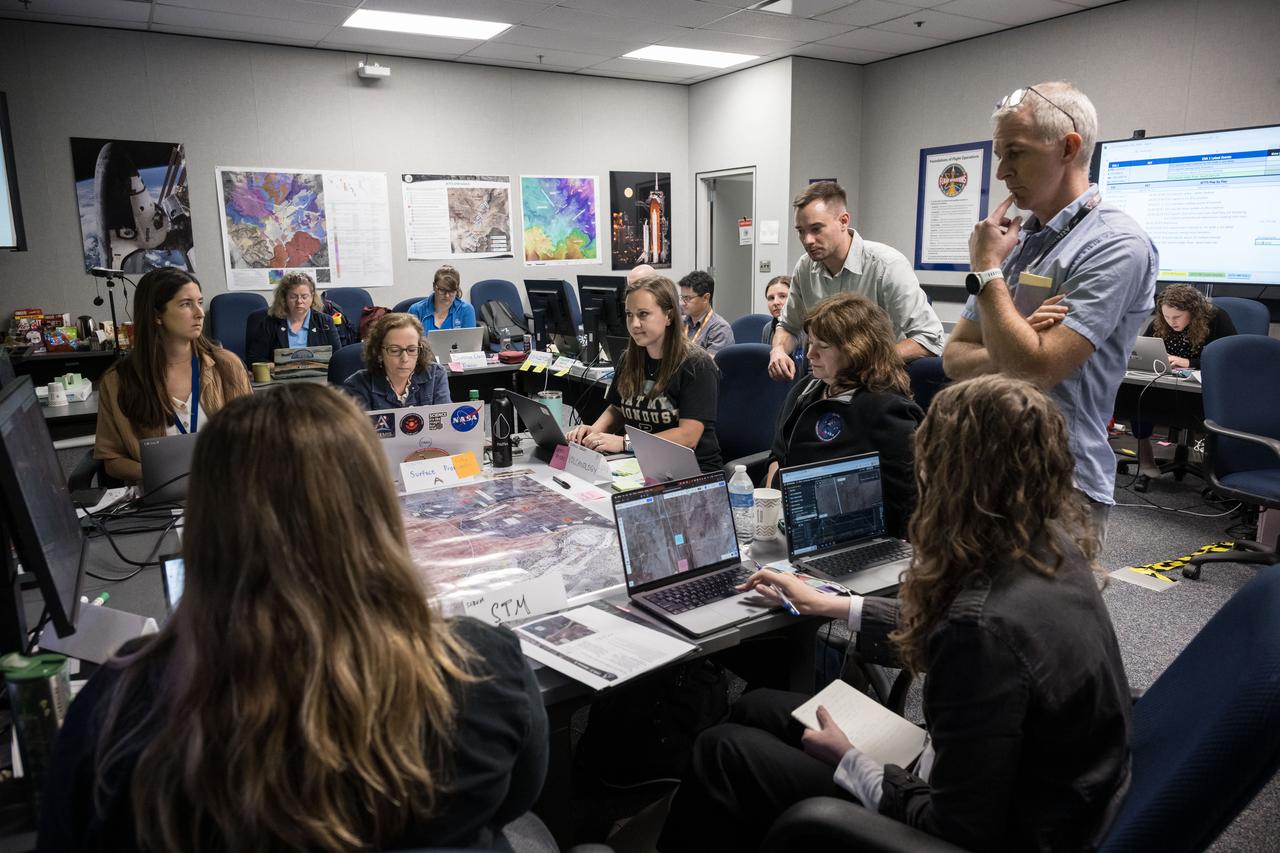
A group of scientists are gathered around a table covered in large maps in the Science Evaluation Room (SER) at NASA’s Johnson Space Center in Houston during the JETT 5 field test. JETT 5 was a week-long field test in the lunar-like landscape of San Francisco Volcanic Field near Flagstaff, Arizona while a team of flight controllers and scientists at Johnson monitor and guide their activities. Credit: NASA/Robert Markowitz
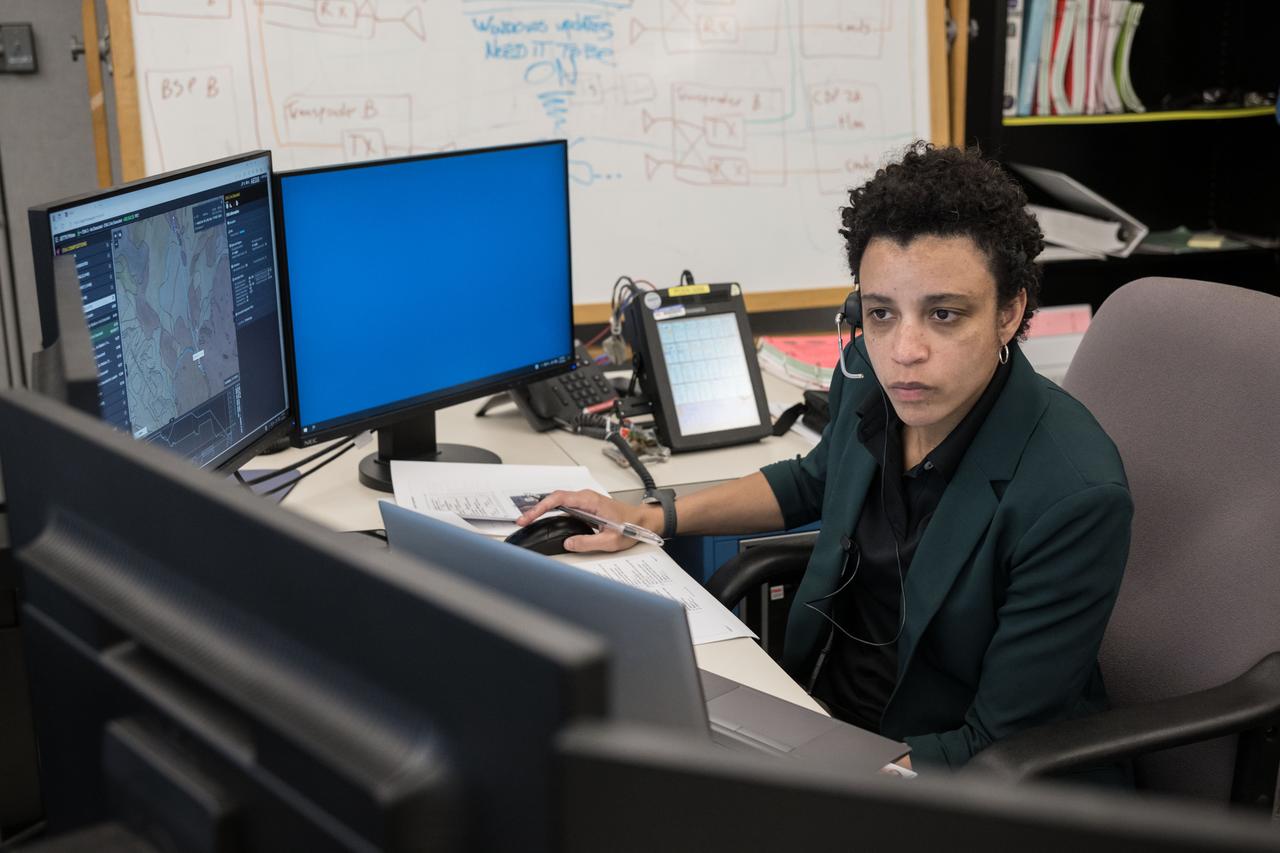
NASA astronaut Jessica Watkins served as the Ground IV for the JETT 5 field test and was the sole point of communications to NASA astronauts Andre Douglas and Kate Rubins who performed simulated moonwalks in the Arizona desert. JETT 5 was a week-long field test in the lunar-like landscape of San Francisco Volcanic Field near Flagstaff, Arizona while a team of flight controllers and scientists at Johnson monitor and guide their activities. Credit: NASA/Robert Markowitz
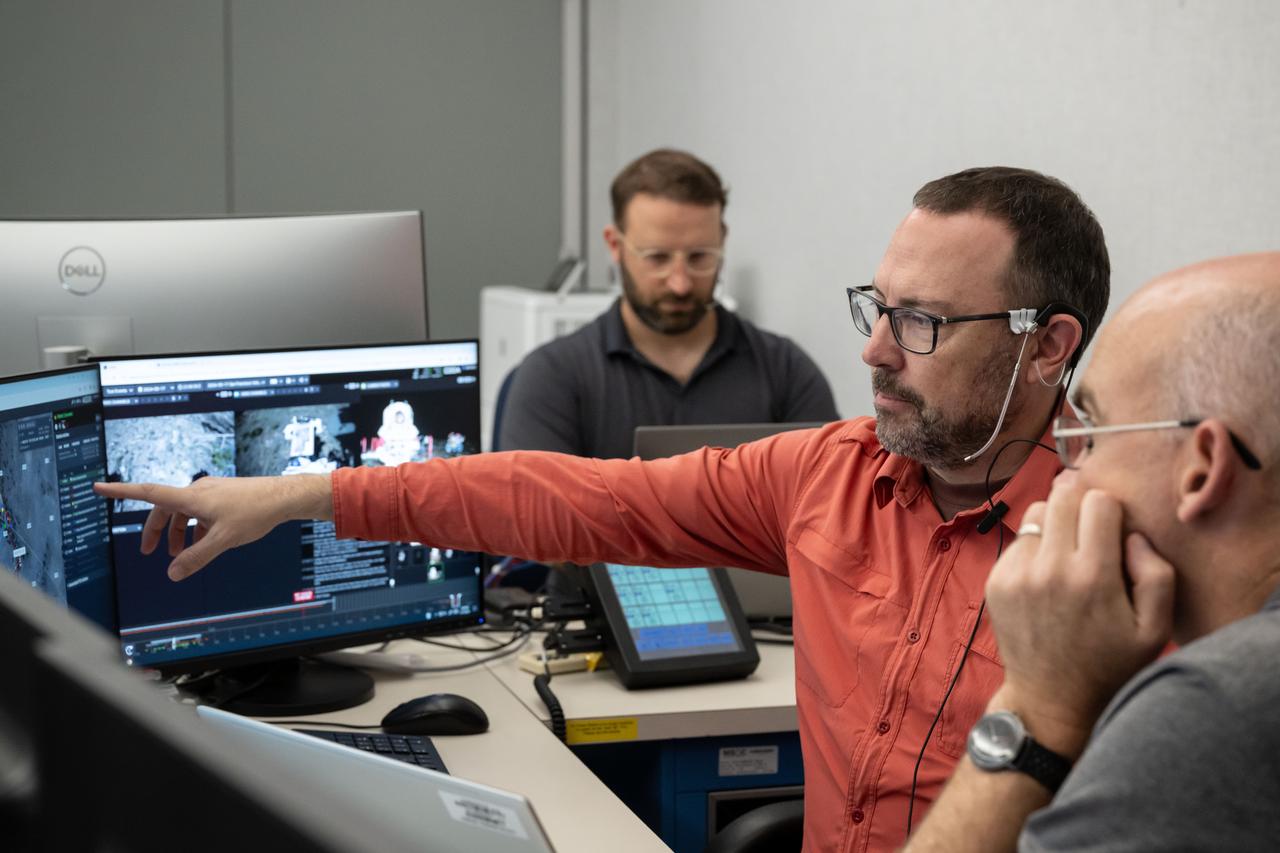
Ben Feist, software engineer on the Extravehicular Activity Mission System Software (EMSS) team, uses the suite of software he and other members of the Astromaterials Research and Exploration Science (ARES) division at NASA's Johnson Space Center in Houston developed to plan and monitor spacewalks. The JETT 5 field test was the first time this software was fully integrated into a simulated mission, supporting both science and mission control operations. JETT 5 was a week-long field test conducted in the lunar-like landscape of the San Francisco Volcanic Field near Flagstaff, Arizona, with a team of flight controllers and scientists at Johnson monitoring and guiding the activities. Credit: NASA/Helen Arase Vargas
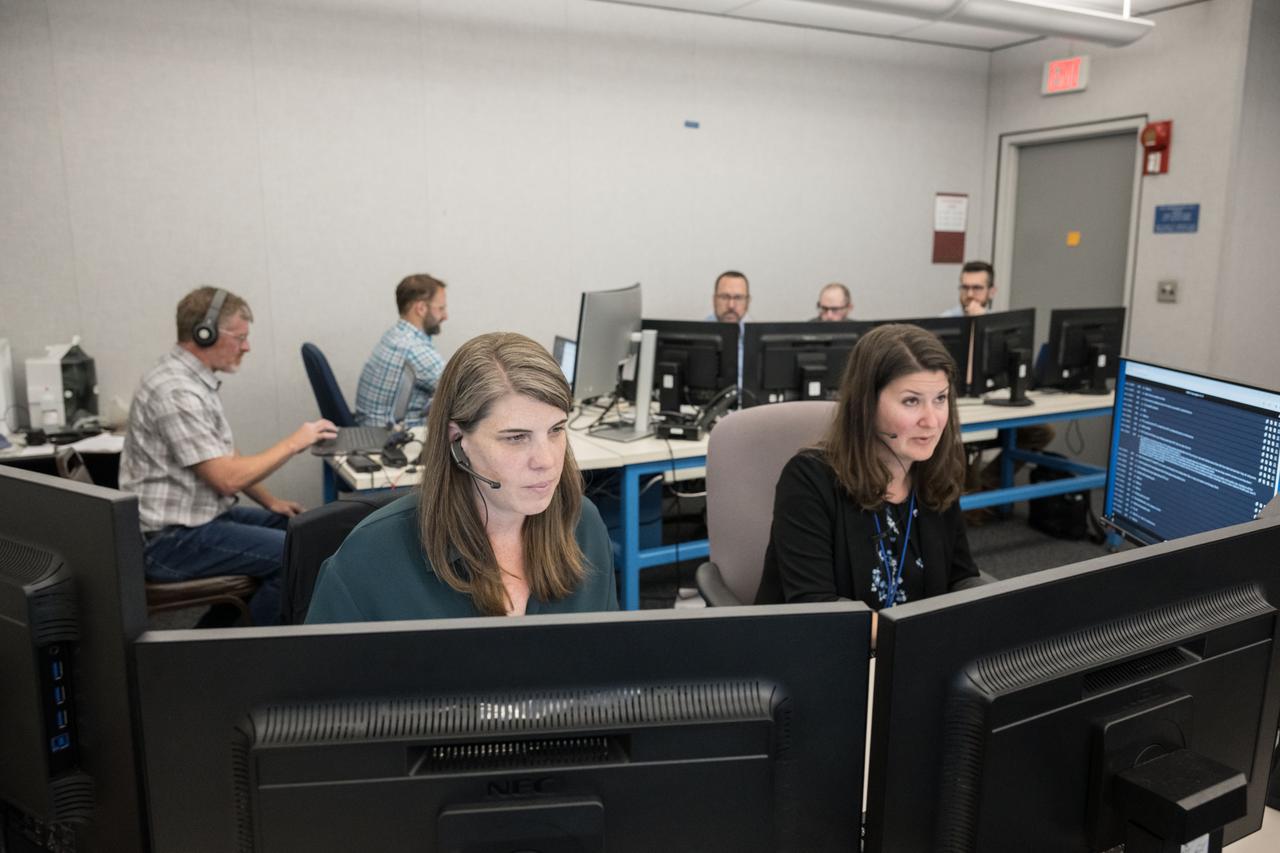
Science Officers Cherie Achilles and Lauren Edgar monitor science operations from a flight control room at NASA’s Johnson Space Center in Houston during a simulated moonwalk field test. JETT 5 was a week-long field test in the lunar-like landscape of San Francisco Volcanic Field near Flagstaff, Arizona while a team of flight controllers and scientists at Johnson monitor and guide their activities. ¬¬ Credit: NASA/Robert Markowitz
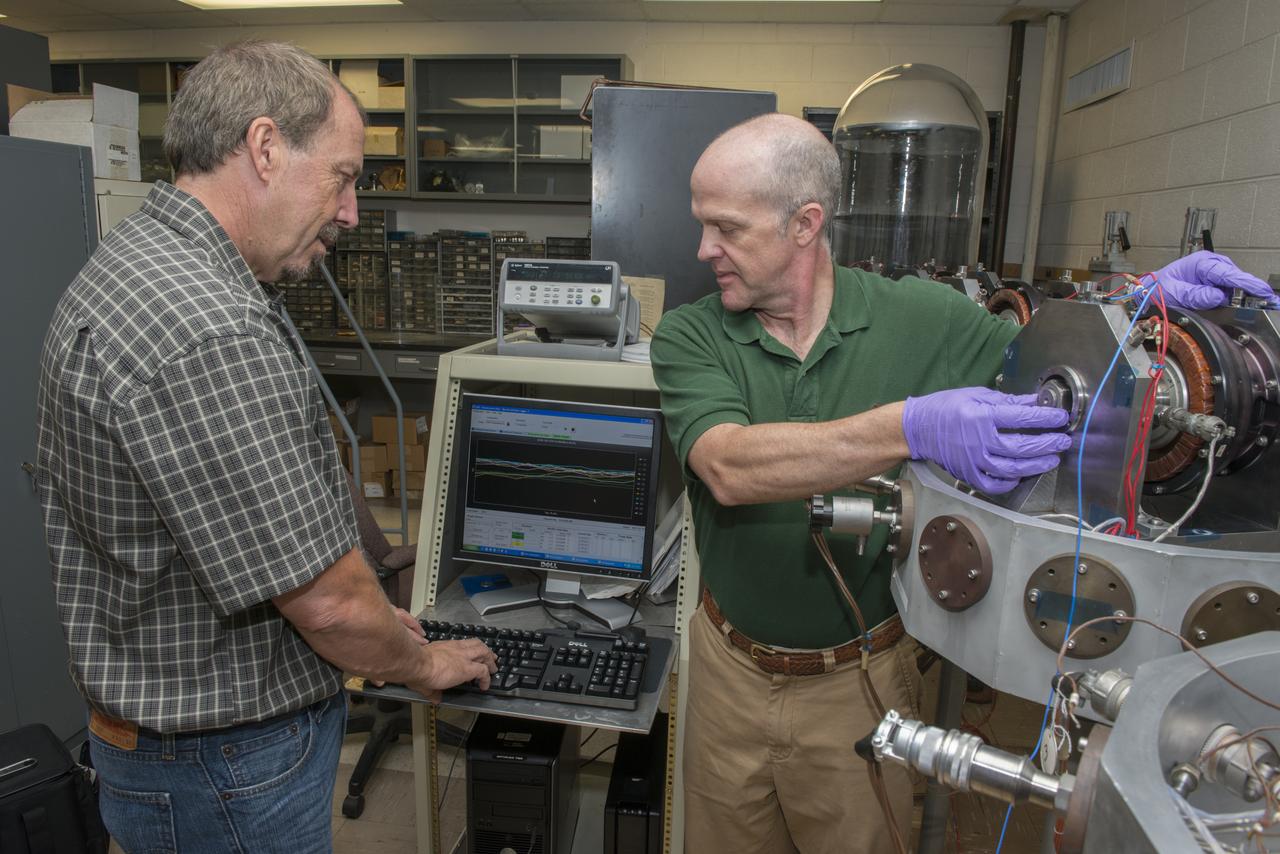
NASA ENGINEERS LEWIS “CHIP” MOORE AND TIM JETT STUDYING BALL BEARING DATA
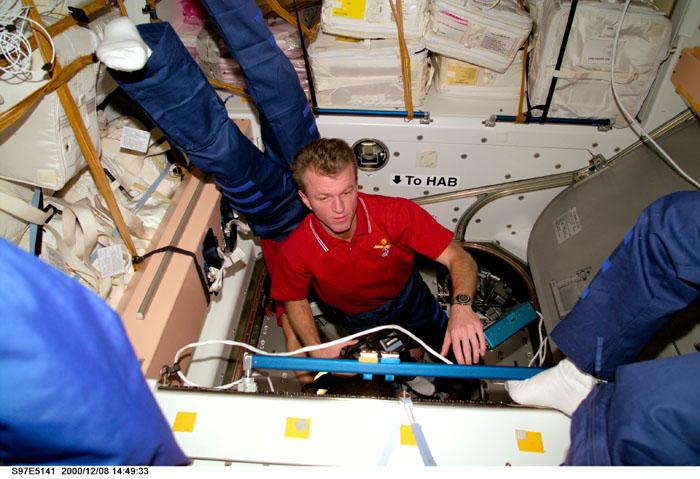
S97-E-5141 (8 December 2000) --- Astronaut Brent W. Jett, Jr., passes another astronaut going the opposite direction in the hatchway that leads from Unity to Pressurized Mating Adapter-3 (PMA-3), which leads to Endeavour. Jett, the STS-97 mission commander, and his four crew mates went into the International Space Station (ISS) following hatch opening. The photograph was taken with a digital still camera.
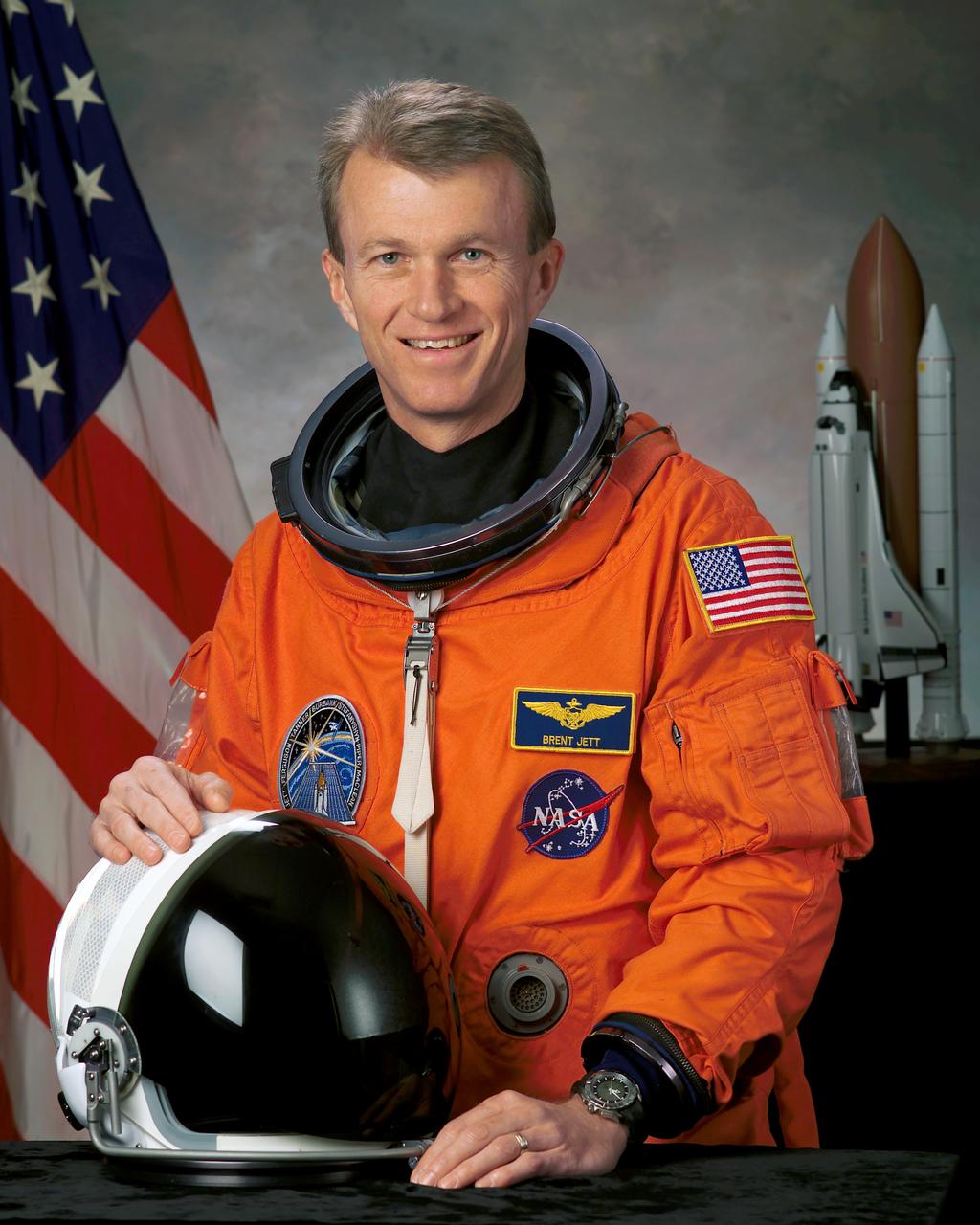
JSC2003-E-01649 (20 Dec. 2002) --- Astronaut Brent W. Jett Jr., mission commander.
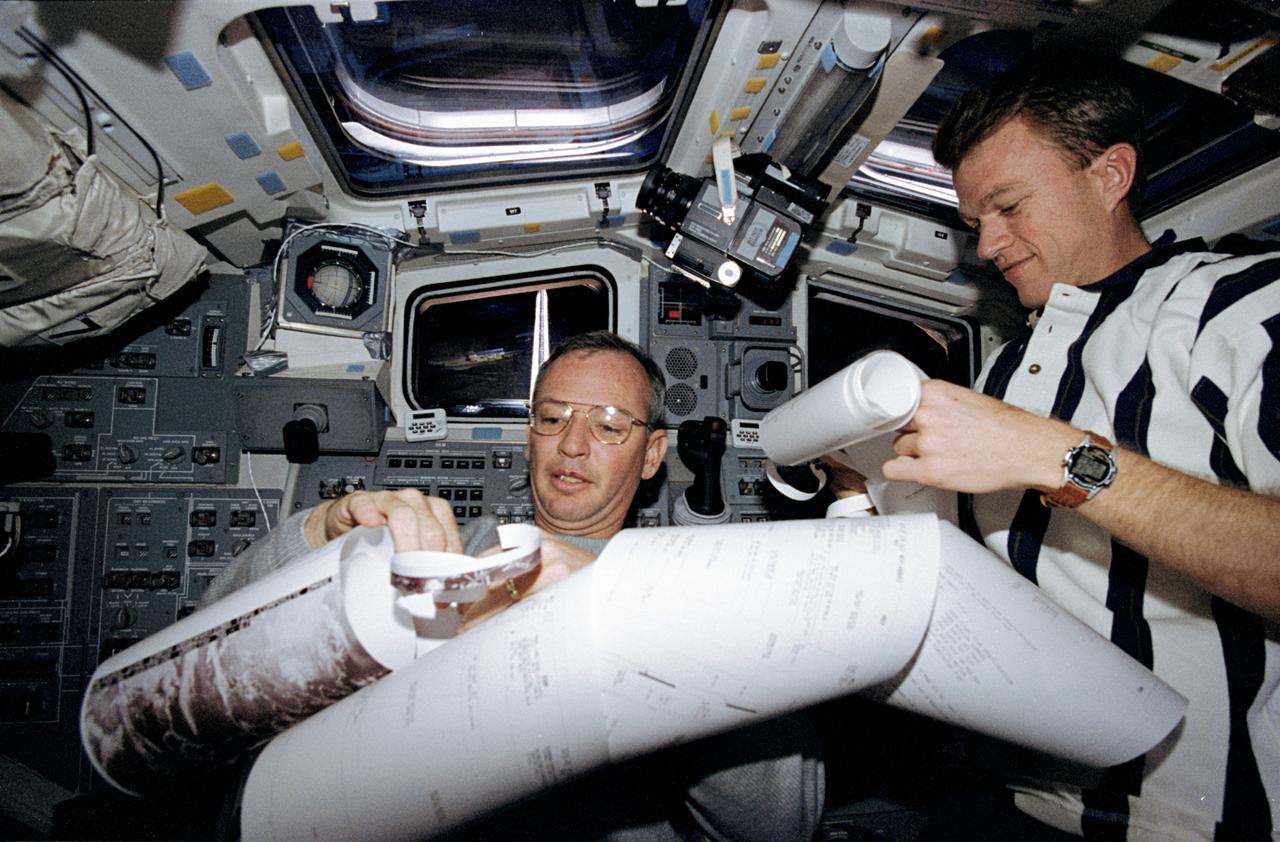
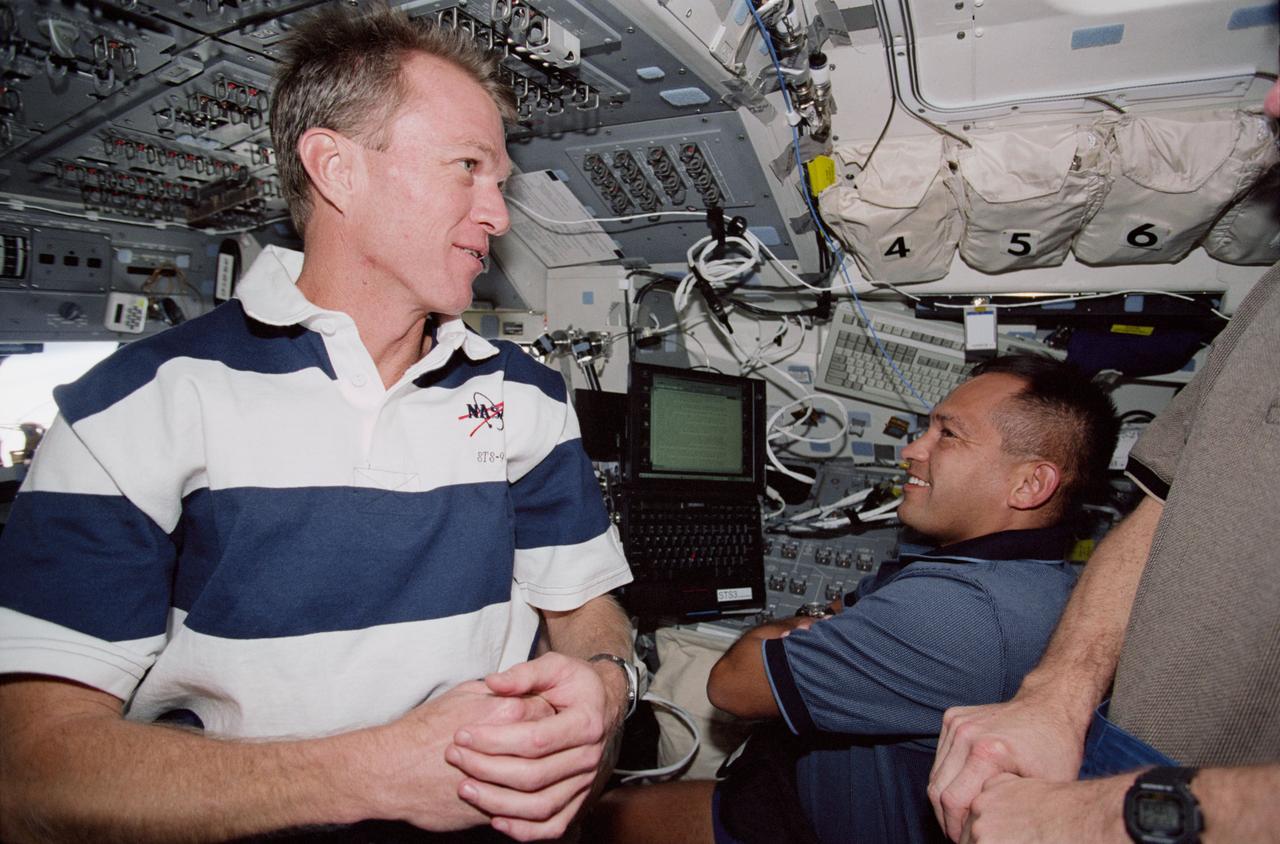
STS072-312-026 (11-20 Jan. 1996) --- Astronauts Brian Duffy (left) and Brent W. Jett Jr. check the latest batch of mail uplinked to the Space Shuttle Endeavour from ground controllers in Houston, Texas. Duffy and Jett served as mission commander and pilot, respectively, for the week and a half mission.
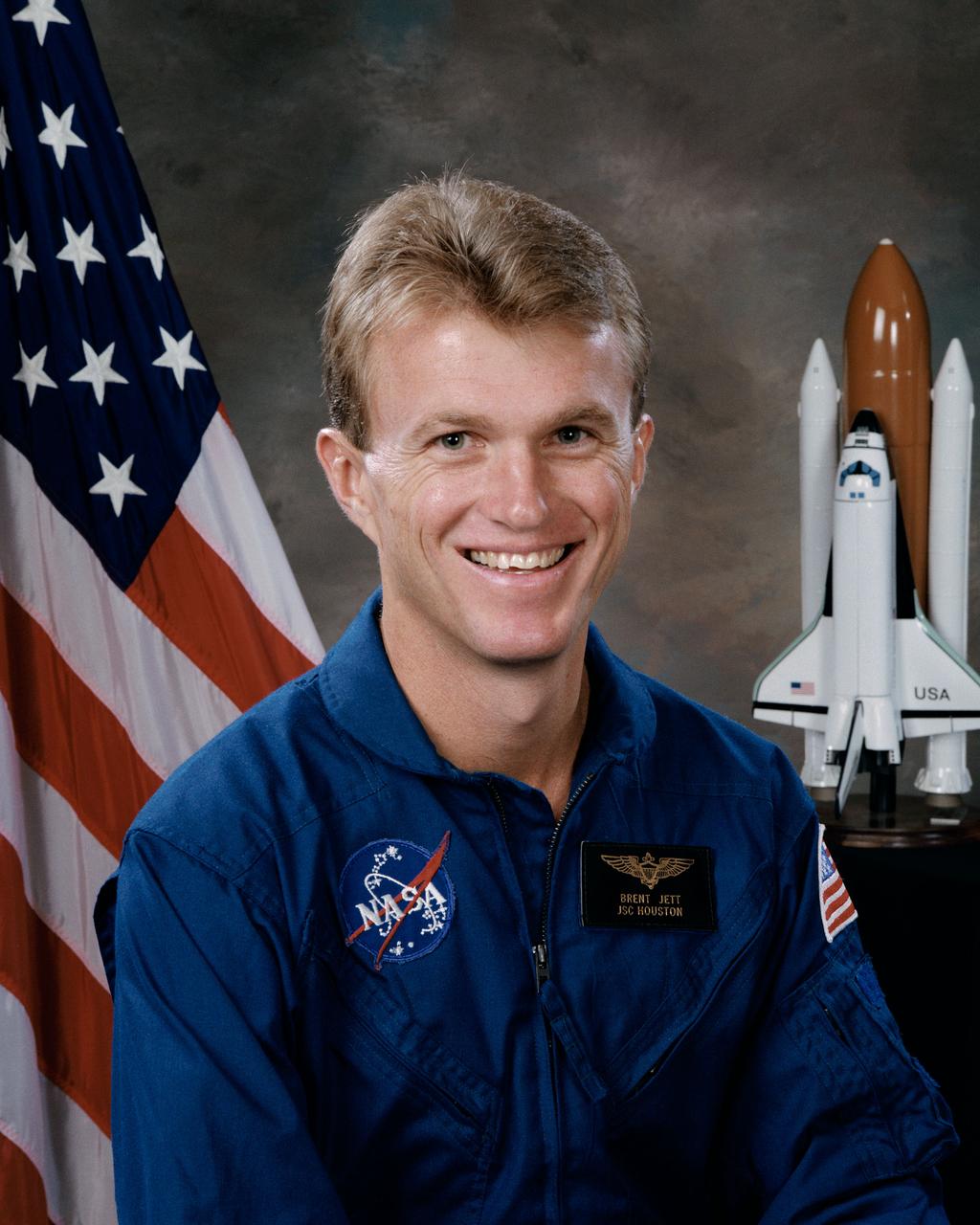
S92-47144 (5 Oct. 1992) --- Astronaut Brent W. Jett Jr., pilot.
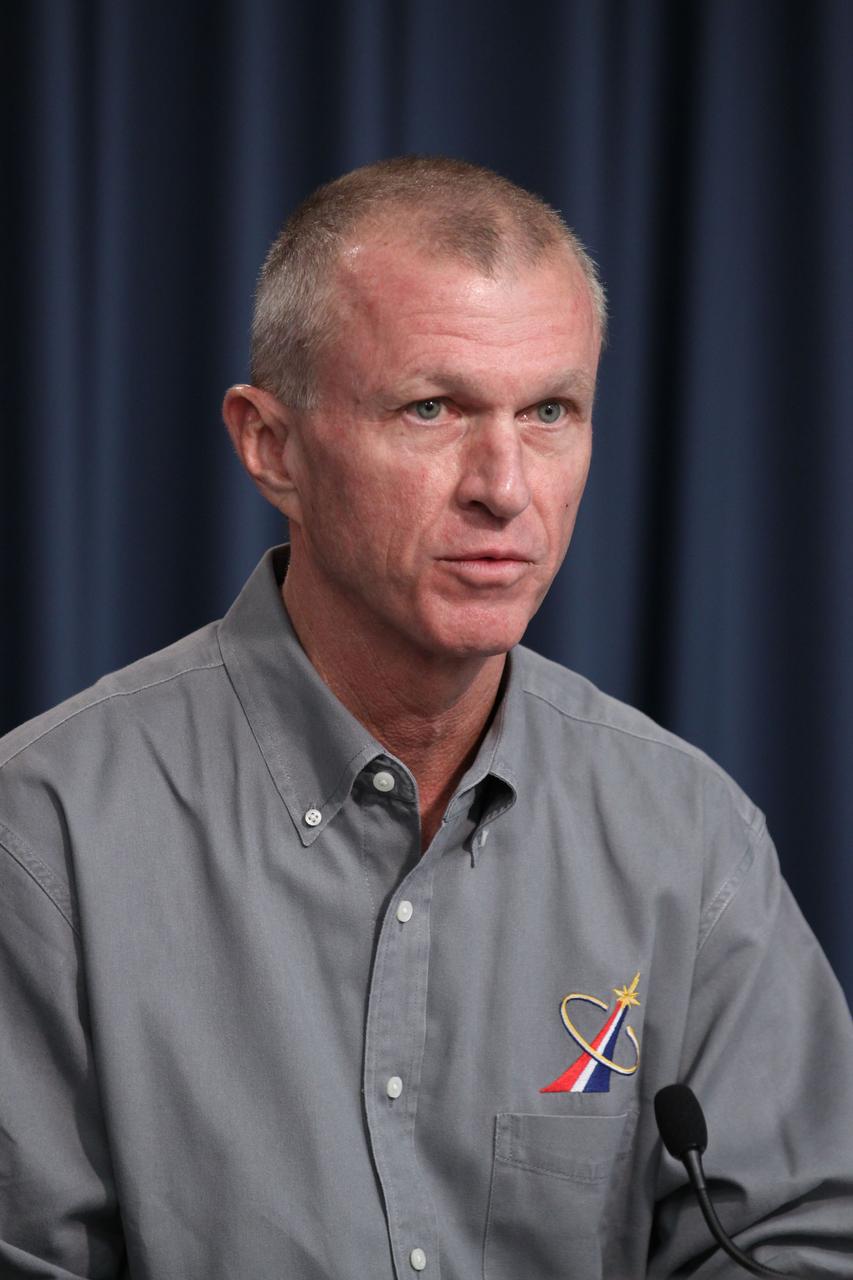
CAPE CANAVERAL, Fla. -- NASA Commercial Crew Program Deputy Manager Brent Jett talks to commercial spaceflight industry representatives about the agency's plans for certifying commercially developed spacecraft and launch systems in support of crewed missions to the International Space Station around the middle of the decade. To learn more about CCP, visit www.nasa.gov/commercialcrew. Photo credit: NASA/Kim Shiflett
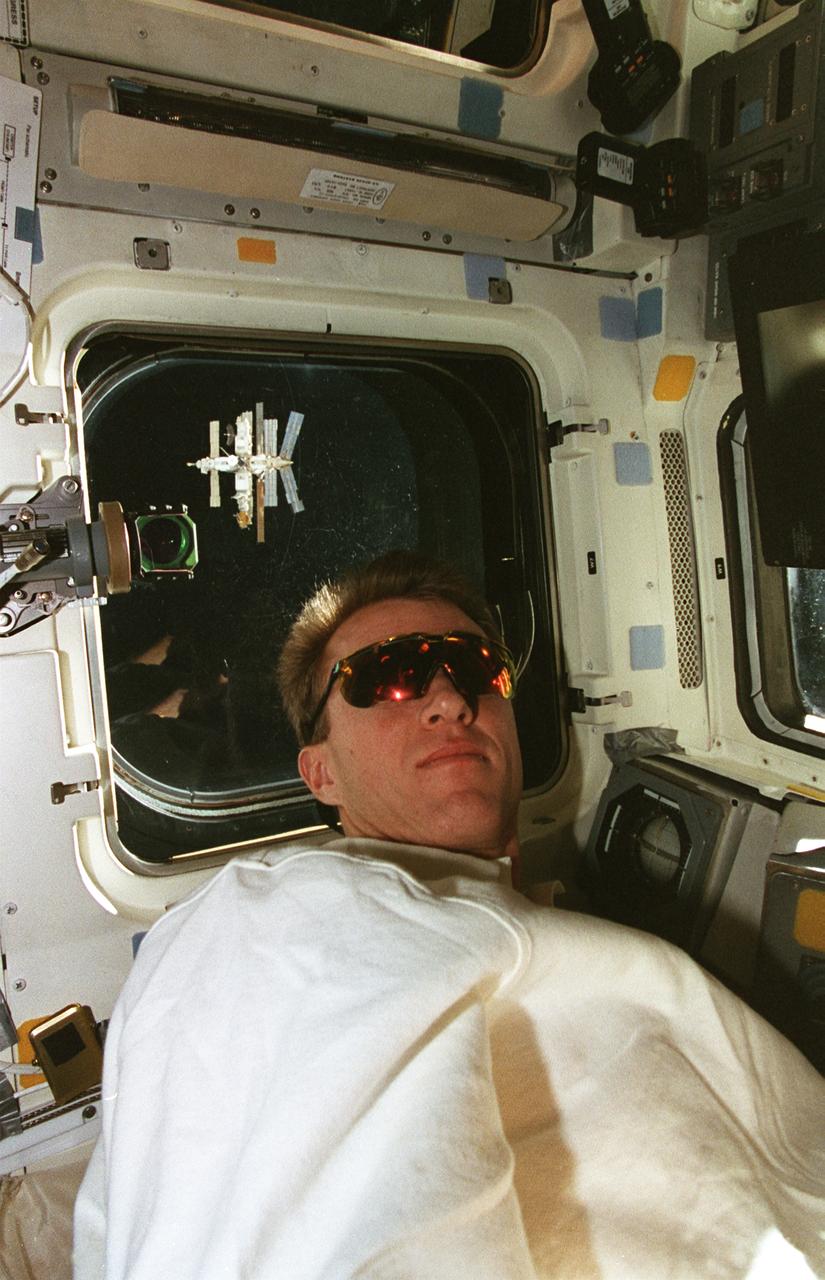
STS081-368-011 (12-22 Jan. 1997) --- Astronaut Brent W. Jett, Jr., STS-81 pilot, appears restful and unfazed as Russia's Mir Space Station appears in the window over his shoulder on the Space Shuttle Atlantis' aft flight deck. Following docking of Mir and Atlantis, Jett and his crew mates went on to spend several days sharing experiments and supply-transfer with the Mir-22 crewmembers.
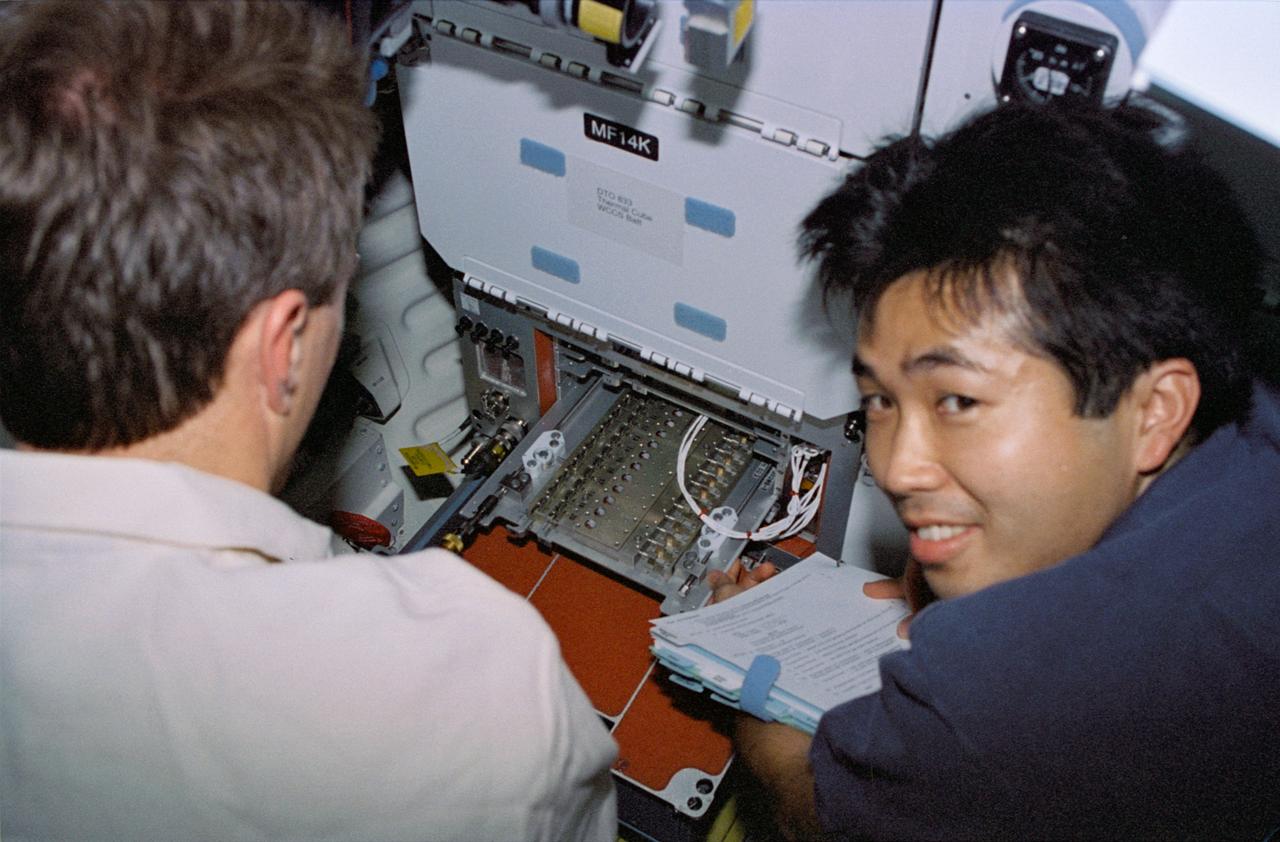
STS072-310-007 (11-20 Jan. 1996) --- Astronauts Brent W. Jett Jr. (left) and Koichi Wakata work with the Protein Crystal Growth (PCG) experiment at the Single Locker Thermal Enclosure System (STES) on the Space Shuttle Endeavour’s mid-deck. Jett, making his first flight in space, served as the crew’s pilot, while Wakata served as a mission specialist. Wakata, also a first time Shuttle crew member, represents Japan’s National Space Development Agency (NASDA).
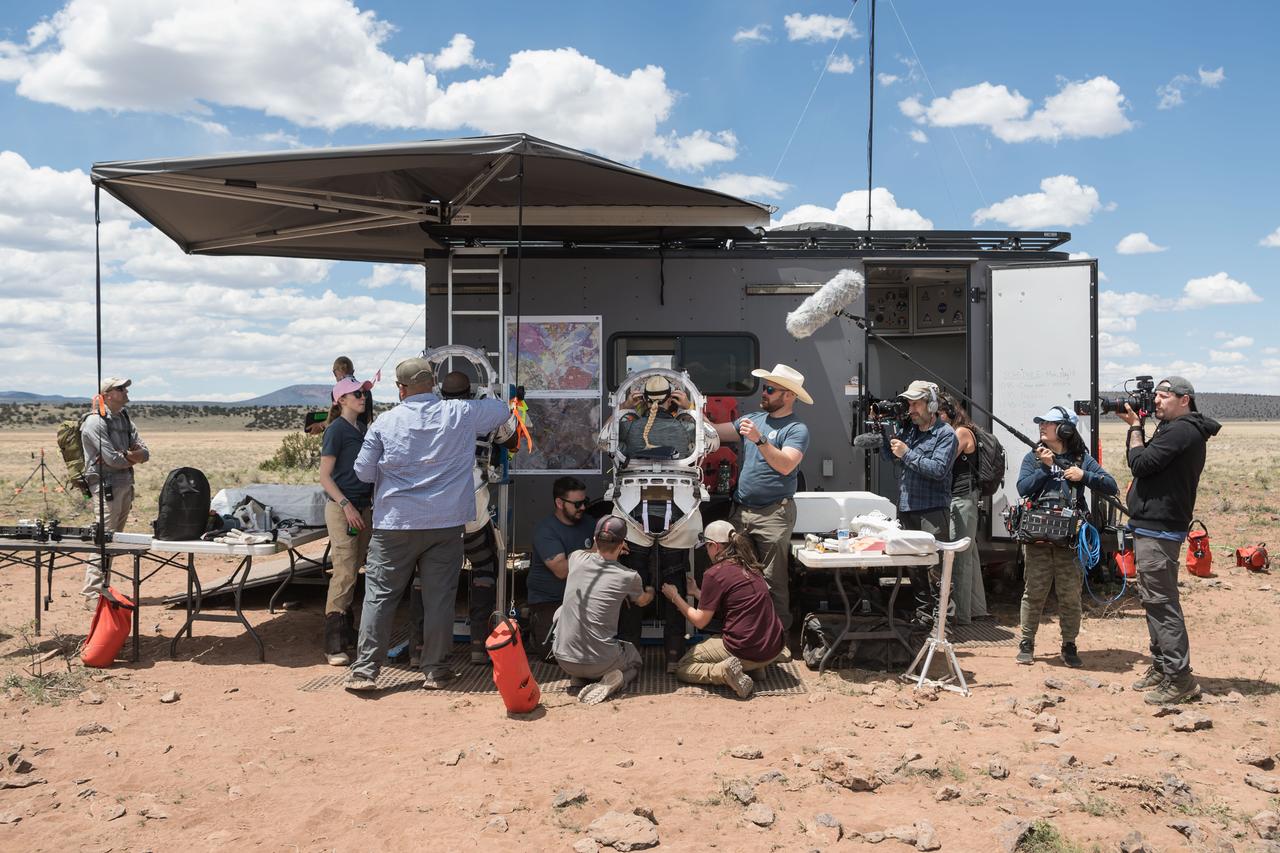
NASA engineering teams help NASA astronauts Andre Douglas (left) and Kate Rubins (right) get into their unpressurized mockup spacesuits before they perform the first of four simulated moonwalks north of Flagstaff, Arizona on May 13, 2024. Credit: NASA/Josh Valcarcel
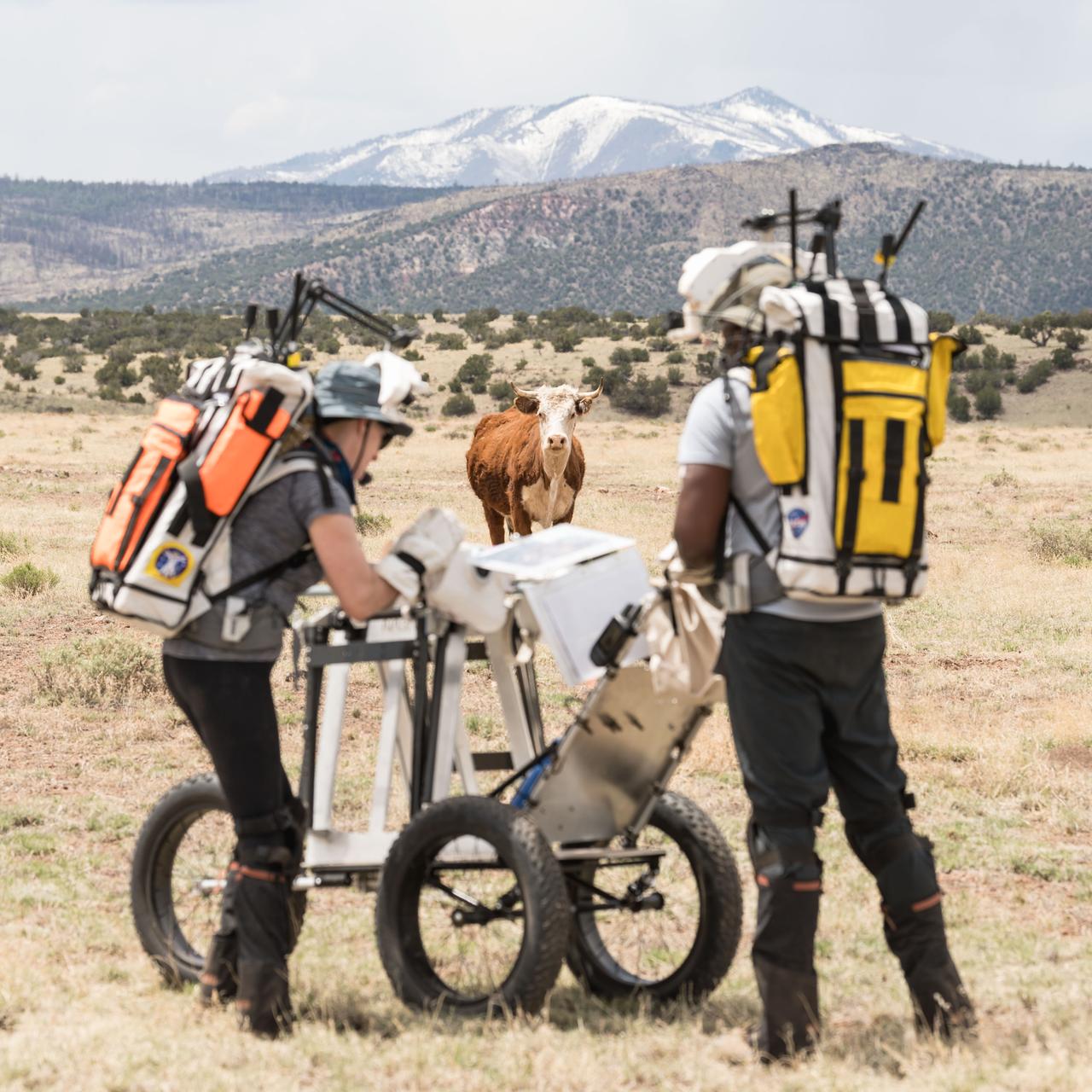
A curious cow watches as NASA astronauts Andre Douglas and Kate Rubins perform a simulated moonwalk in the San Francisco Volcanic Field in Northern Arizona on May 14, 2024. Credit: NASA/Josh Valcarcel
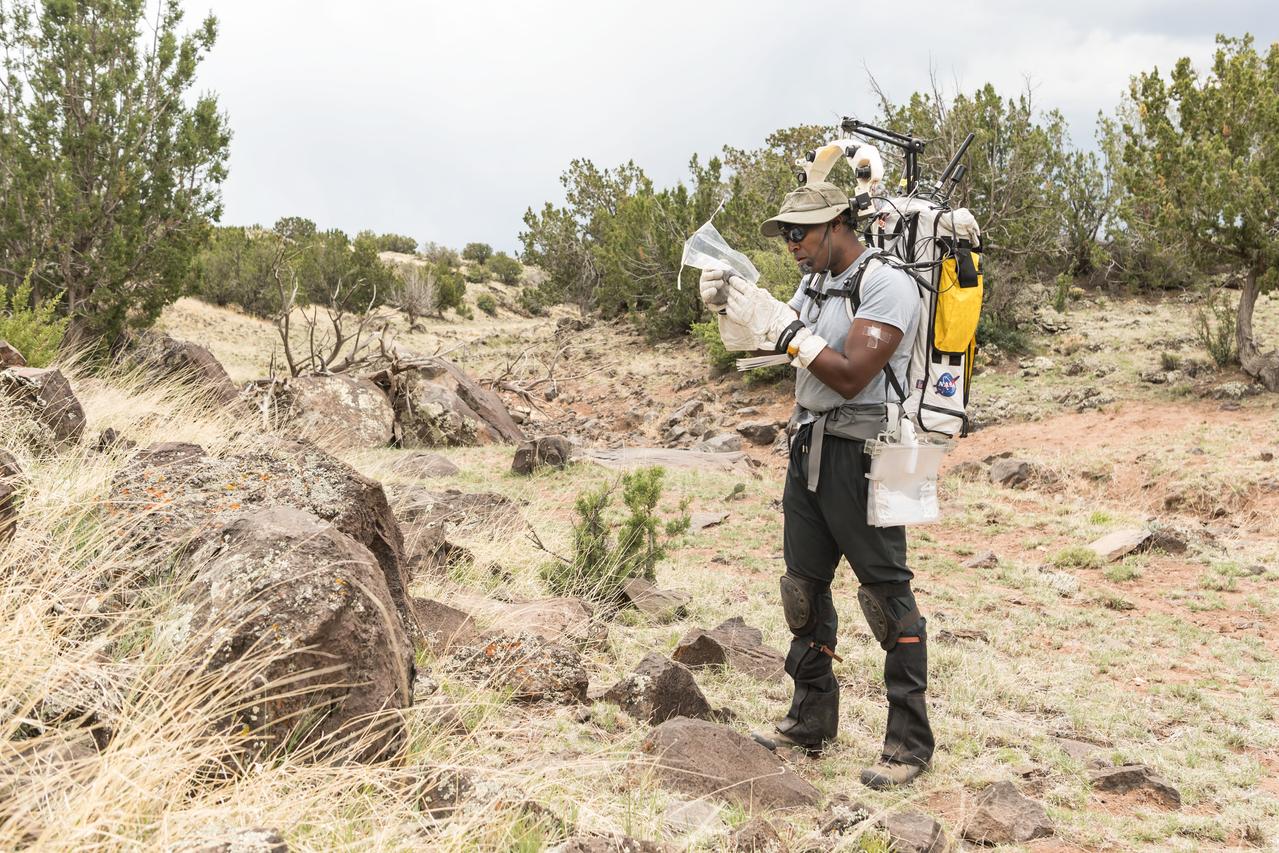
NASA astronaut Andre Douglas examines a geology sample he collected during a simulated moonwalk in the San Francisco Volcanic Field in Northern Arizona on May 14, 2024. Credit: NASA/Josh Valcarcel

NASA astronaut Andre Douglas uses a hammer to chip off a small rock sample to test equipment before the start of a week-long analog consisting of four simulated moonwalks and six advanced technology runs in the San Francisco Volcanic Field in Northern Arizona on May 12, 2024. Credit: NASA/Josh Valcarcel
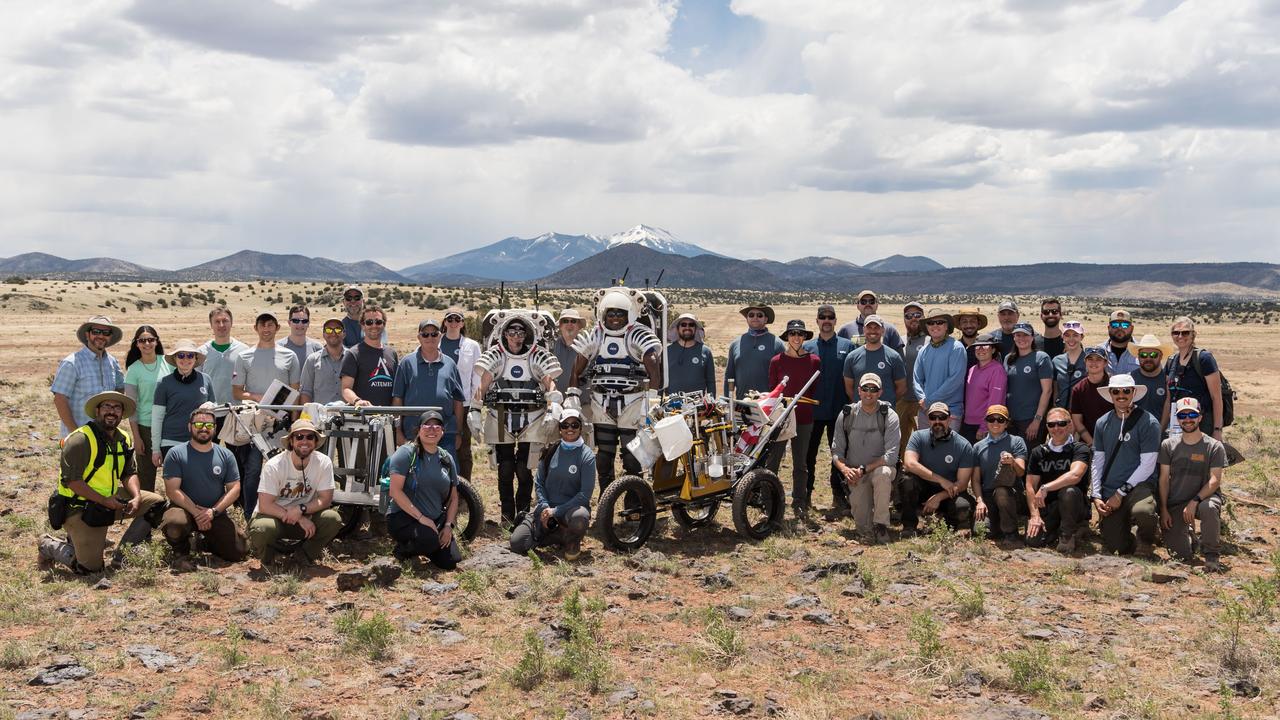
The Joint Extravehicular Activity and Human Surface Mobility Test Team and NASA astronauts Kate Rubins and Andre Douglas before the start of a week-long field test consisting of four simulated moonwalks and six advanced technology runs in the San Francisco Volcanic Field in Northern Arizona on May 13, 2024. Credit: NASA/Josh Valcarcel
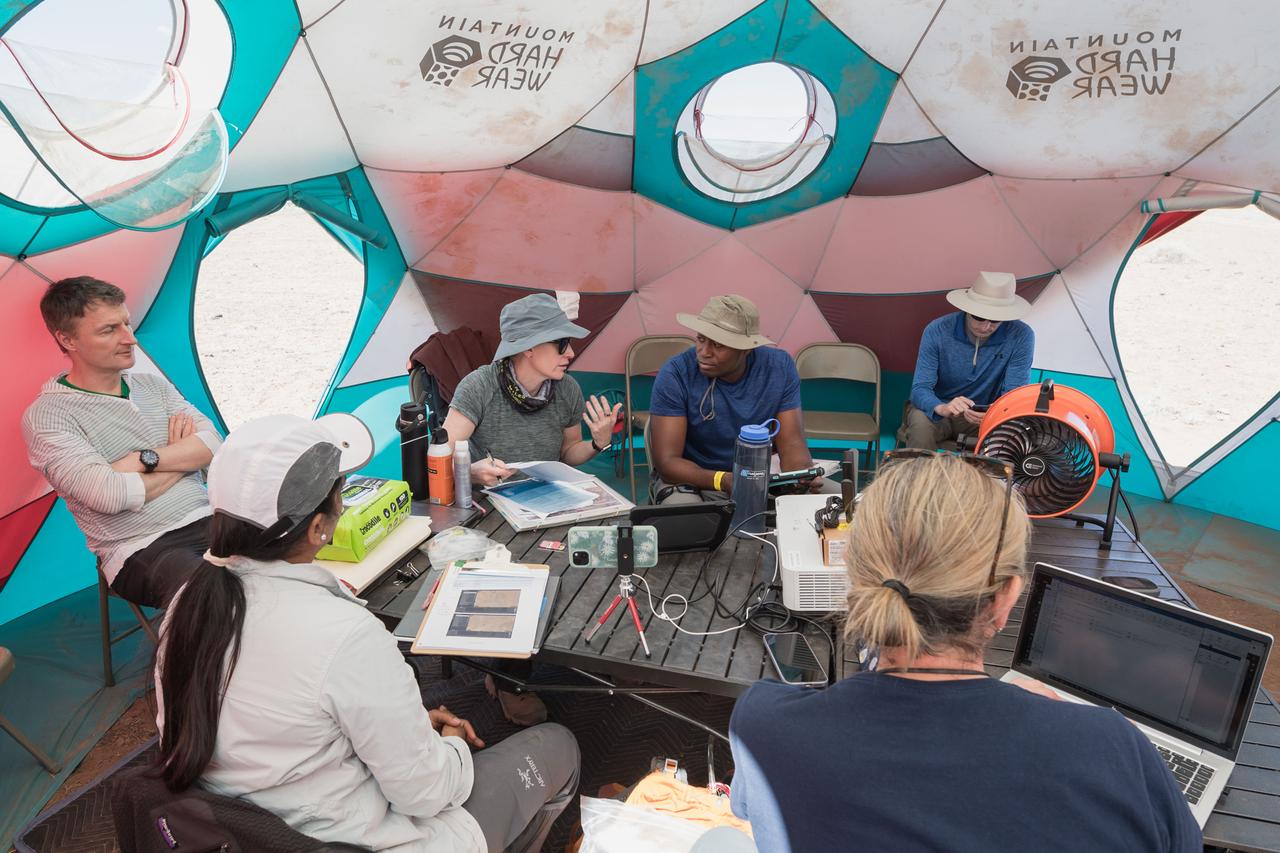
NASA astronauts Kate Rubins and Andre Douglas meet with teams to review test objectives and traverse plans before their first simulated moonwalk in a week-long field test consisting of four simulated moonwalks and six advanced technology runs in the San Francisco Volcanic Field in Northern Arizona on May 13, 2024. Credit: NASA/Josh Valcarcel
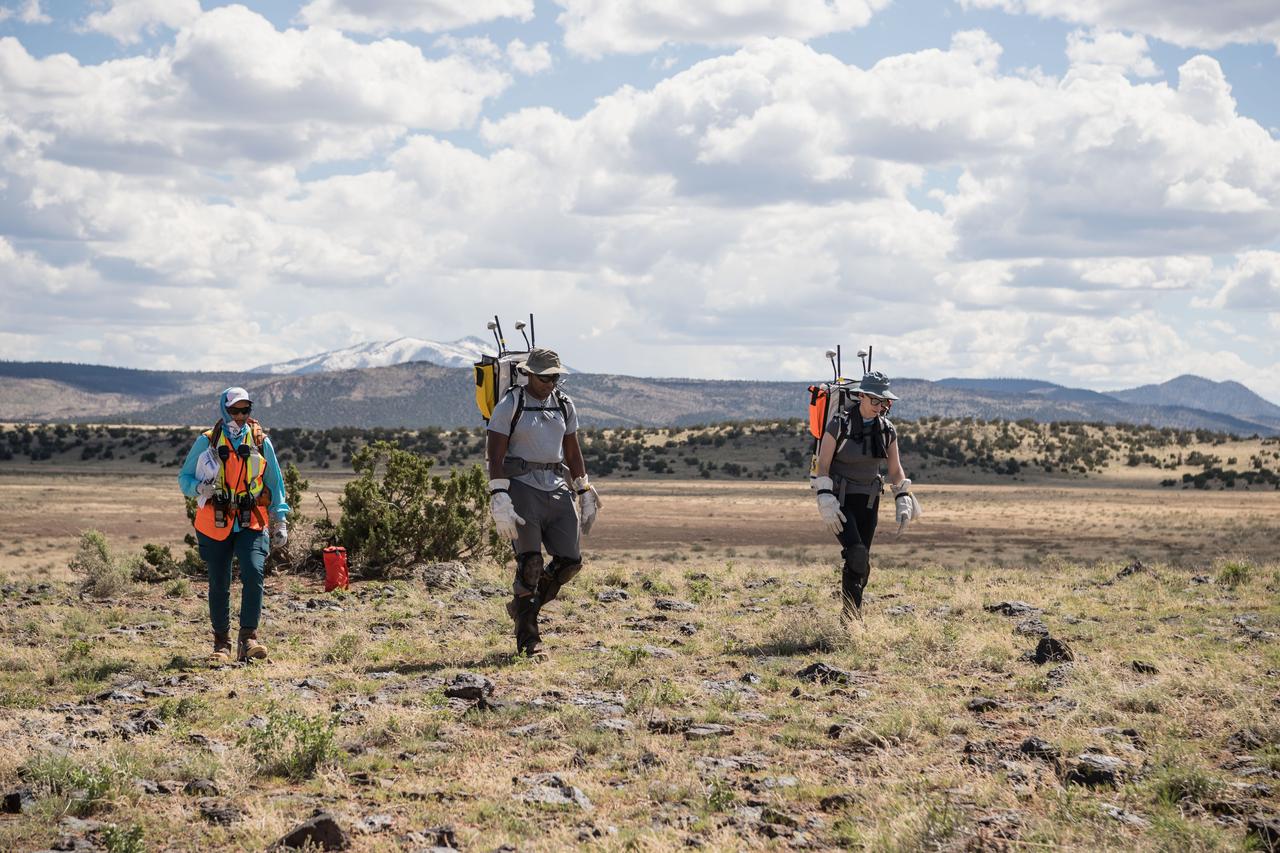
NASA astronauts Andre Douglas (middle) and Kate Rubins (right) walk through the desert during an engineering dry run before the start of a week-long field test consisting of four simulated moonwalks and six advanced technology runs in the San Francisco Volcanic Field in Northern Arizona on May 12, 2024. Image: NASA/Josh Valcarcel
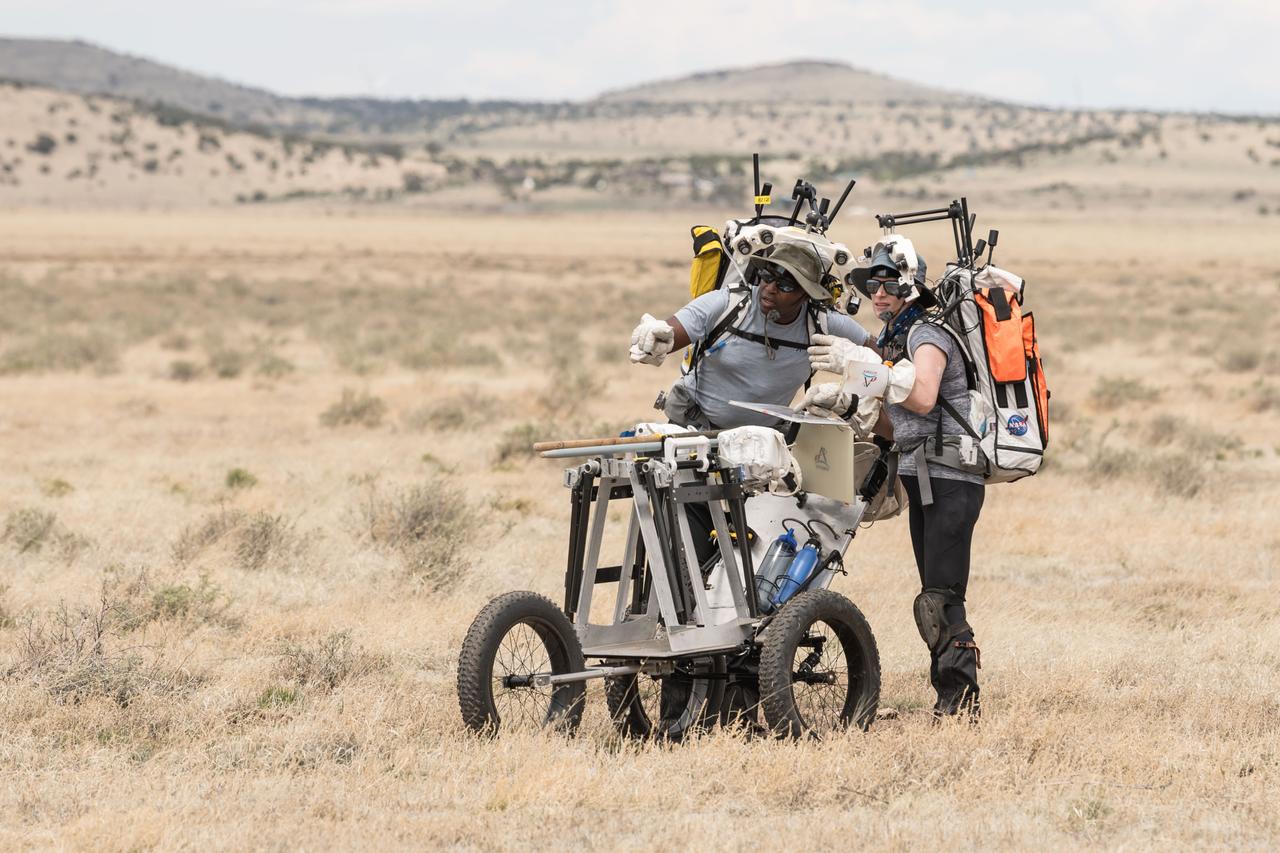
NASA astronauts Andre Douglas and Kate look ahead at their traverse during a simulated moonwalk in the San Francisco Volcanic Field in Northern Arizona on May 14, 2024. Credit: NASA/Josh Valcarcel

NASA astronauts Andre Douglas and Kate Rubins review procedures during a simulated moonwalk in the San Francisco Volcanic Field in Northern Arizona on May 14, 2024. Credit: NASA/Josh Valcarcel

NASA astronaut Kate Rubins closes a sample bag full of soil she collected during a simulated moonwalk in the San Francisco Volcanic Field in Northern Arizona on May 14, 2024. Credit: NASA/Josh Valcarcel
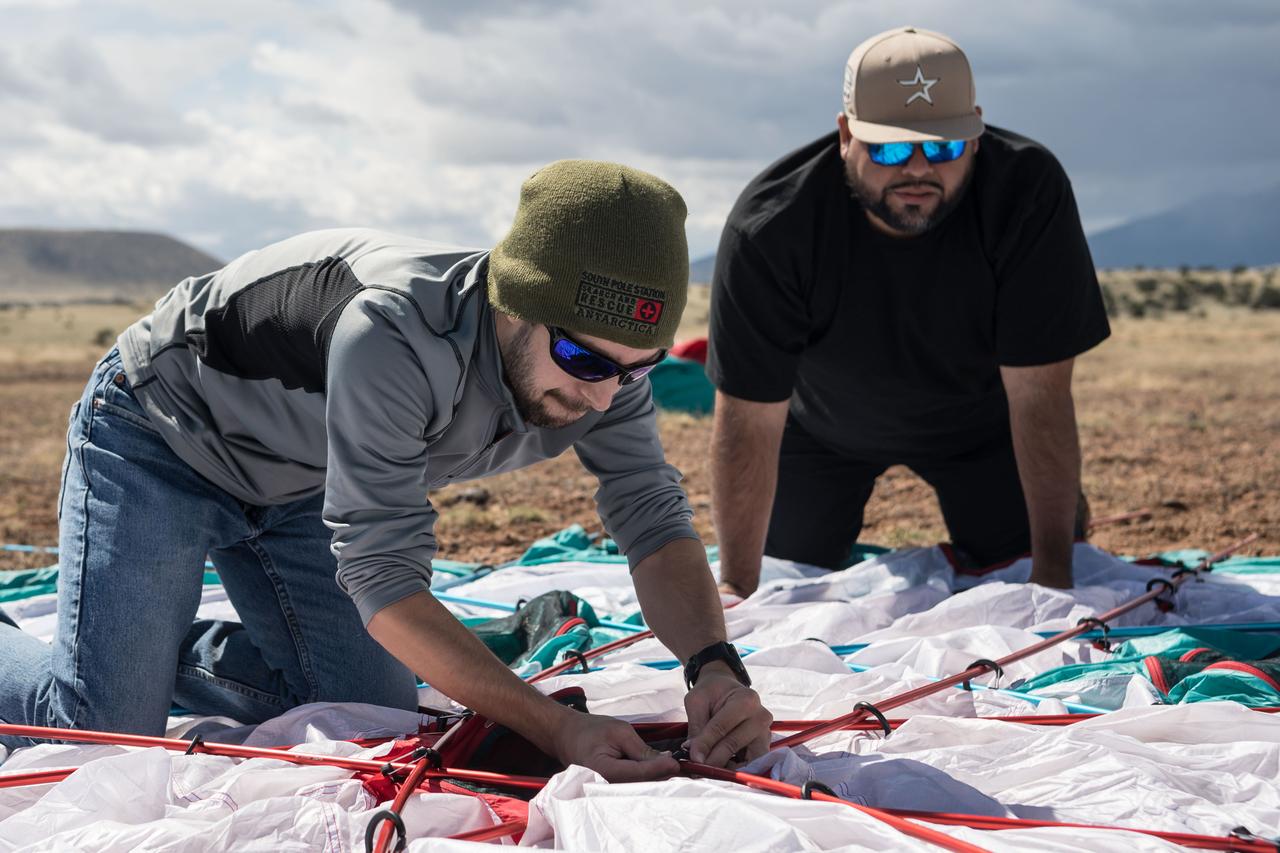
Spacesuit engineers Zach Tejral (left) and Joel Alvarado (right) work to set up the base camp for the Joint Extravehicular Activity and Human Surface Mobility Test Team Field Test 5 in the San Francisco Volcanic Field in Northern Arizona on May 11, 2024. Credit: NASA/Josh Valcarcel
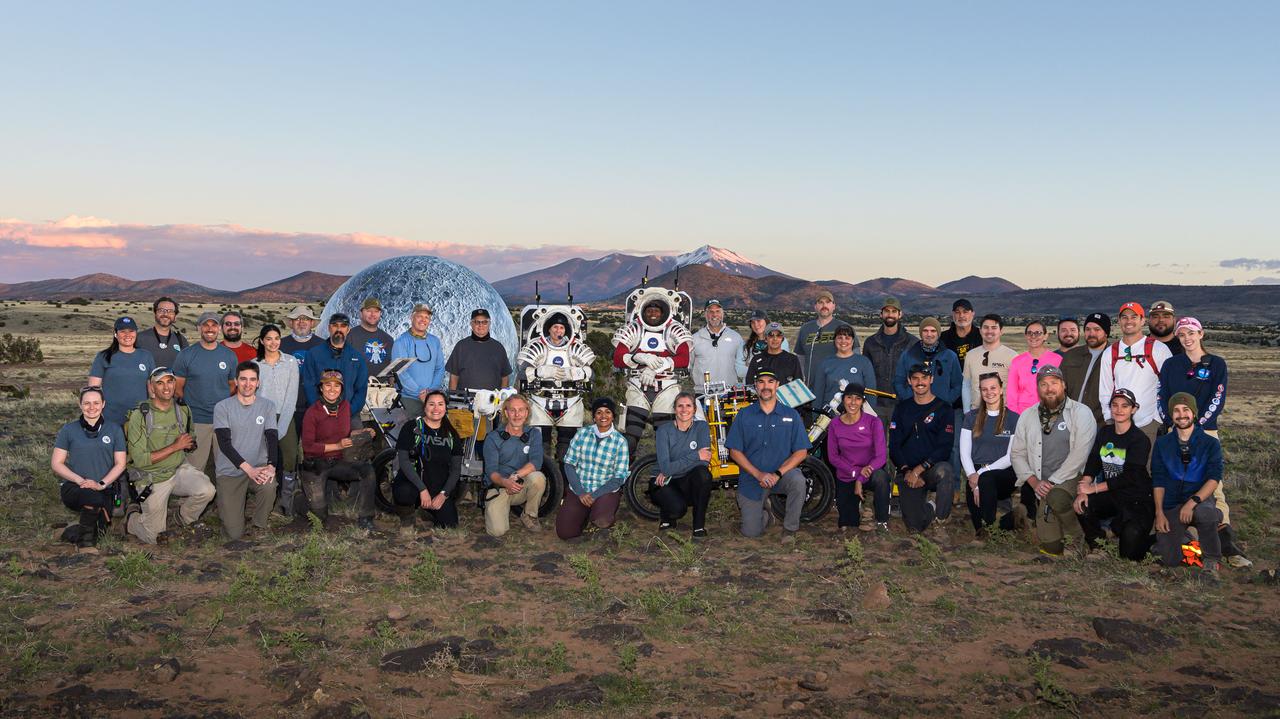
6. The Joint Extravehicular Activity and Human Surface Mobility Test Team poses for a group photo in Northern Arizona after a week-long field test consisting of four simulated moonwalks and six advanced technology runs. Credit: NASA/Josh Valcarcel
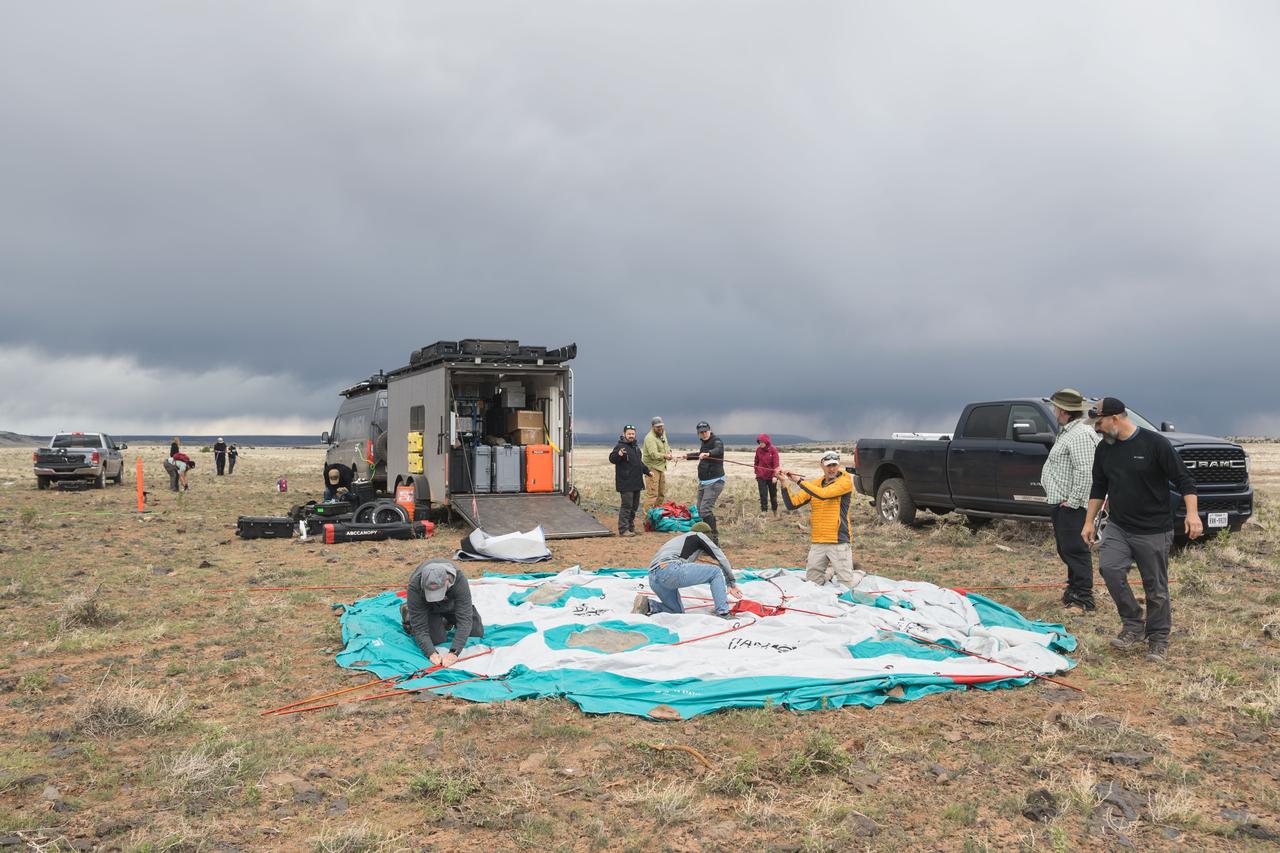
NASA teams work to set up the base camp for the Joint Extravehicular Activity and Human Surface Mobility Test Team Field Test 5 (JETT5) in the San Francisco Volcanic Field in Northern Arizona on May 11, 2024. Credit: NASA/Josh Valcarcel

Engineers Juan Busto (left) and Mike Miller (right) work to install the communications network for the base camp during the Joint Extravehicular Activity and Human Surface Mobility Test Team Field Test 5 (JETT5) in the San Francisco Volcanic Field in Northern Arizona on May 11, 2024. Credit: NASA/Josh Valcarcel
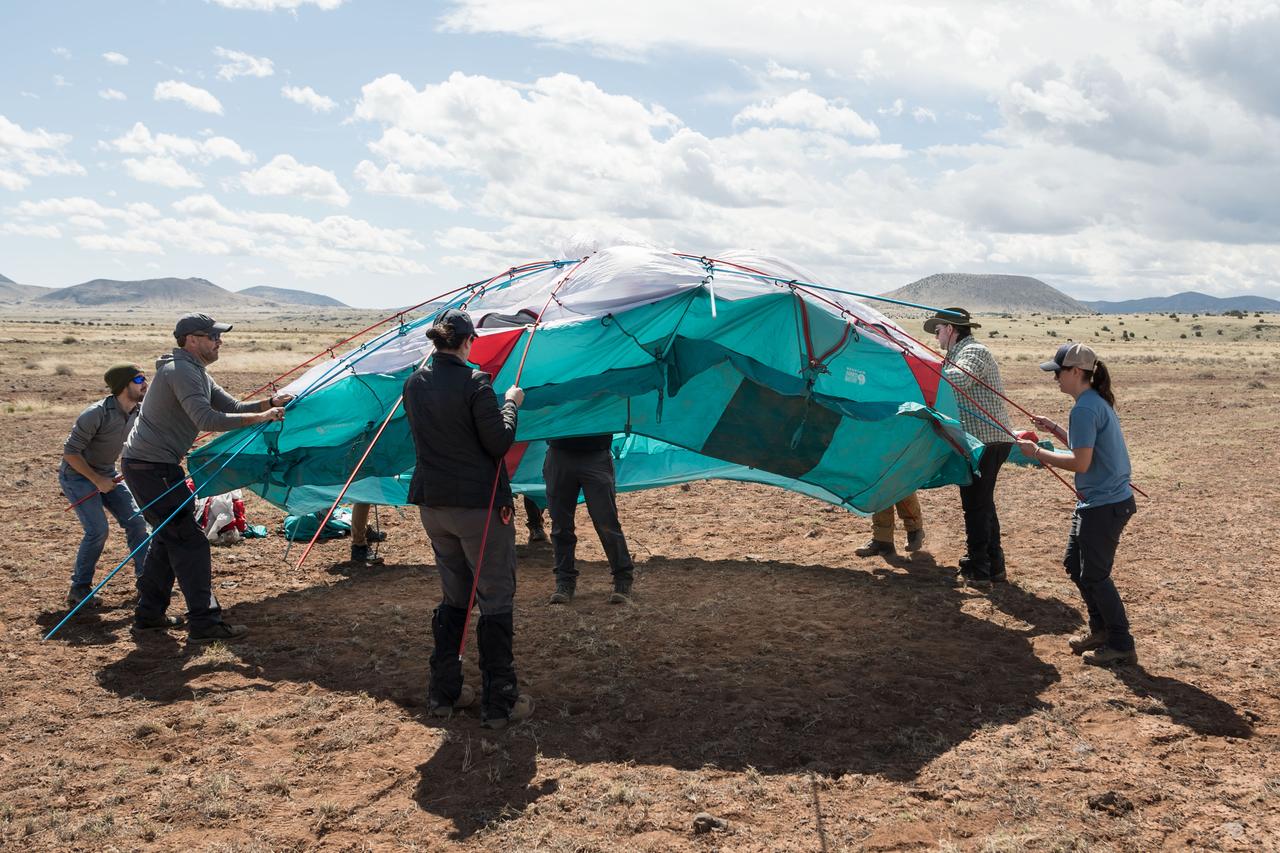
NASA teams work to set up a one of many tents that will serve as the base camp for the Joint Extravehicular Activity and Human Surface Mobility Test Team Field Test 5 (JETT5) in the San Francisco Volcanic Field in Northern Arizona on May 11, 2024. Credit: NASA/Josh Valcarcel

NASA teams work to set up the base camp for the Joint Extravehicular Activity and Human Surface Mobility Test Team Field Test 5 (JETT5) in the San Francisco Volcanic Field in Northern Arizona on May 11, 2024. Credit: NASA/Josh Valcarcel
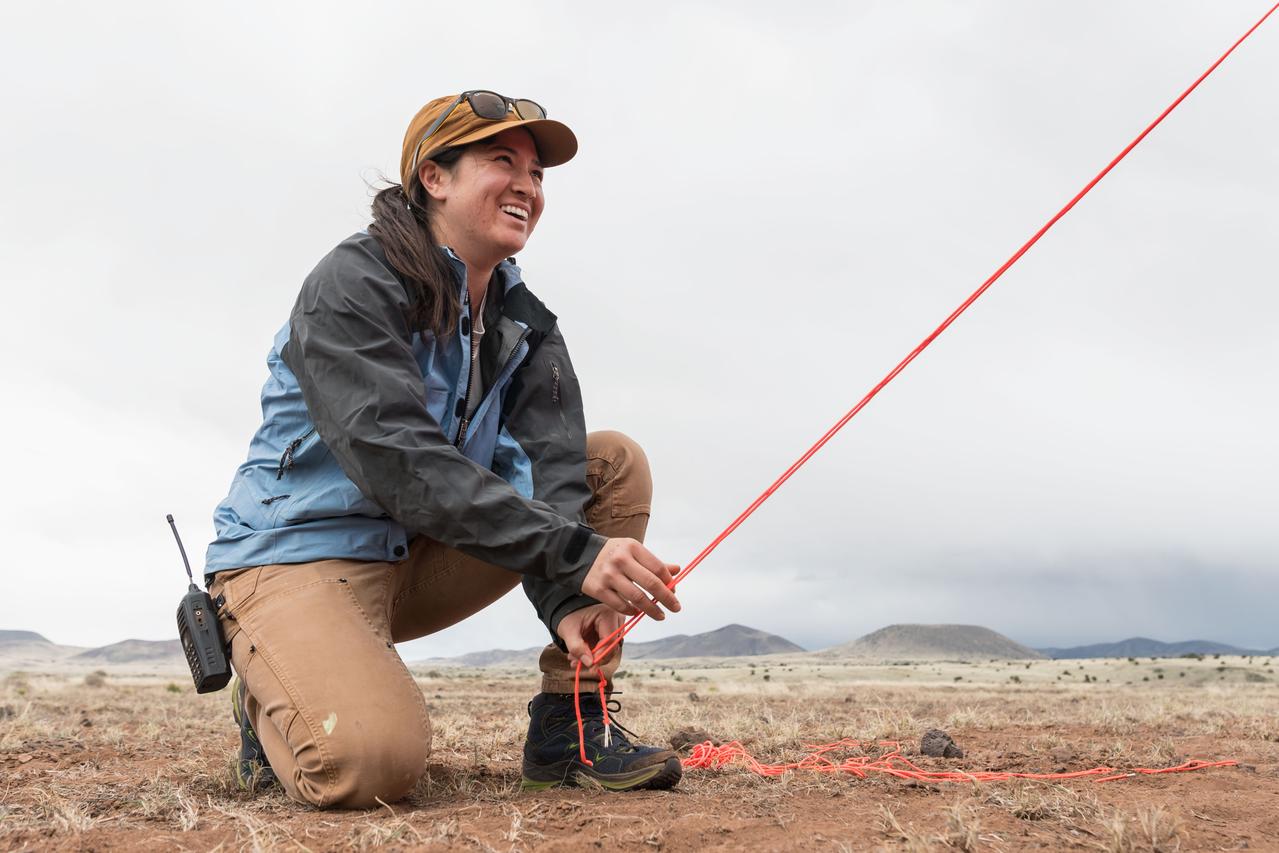
Test deputy field manager Angela Garcia ties down a tent that will serve as the base camp for the Joint Extravehicular Activity and Human Surface Mobility Test Team Field Test 5 (JETT5) in the San Francisco Volcanic Field in Northern Arizona on May 11, 2024. Credit: NASA/Josh Valcarcel

NASA teams work to set up one of many tents that will serve as the base camp for the (JETT5) Joint Extravehicular Activity and Human Surface Mobility Test Team Field Test 5 in the San Francisco Volcanic Field in Northern Arizona on May 11, 2024. Credit: NASA/Josh Valcarcel

Spacesuit engineers Sheldon Stockfleth and Christine Jerome work to set up the base camp for the Joint Extravehicular Activity and Human Surface Mobility Test Team Field Test 5 (JETT5) in the San Francisco Volcanic Field in Northern Arizona on May 11, 2024. Credit: NASA/Josh Valcarcel
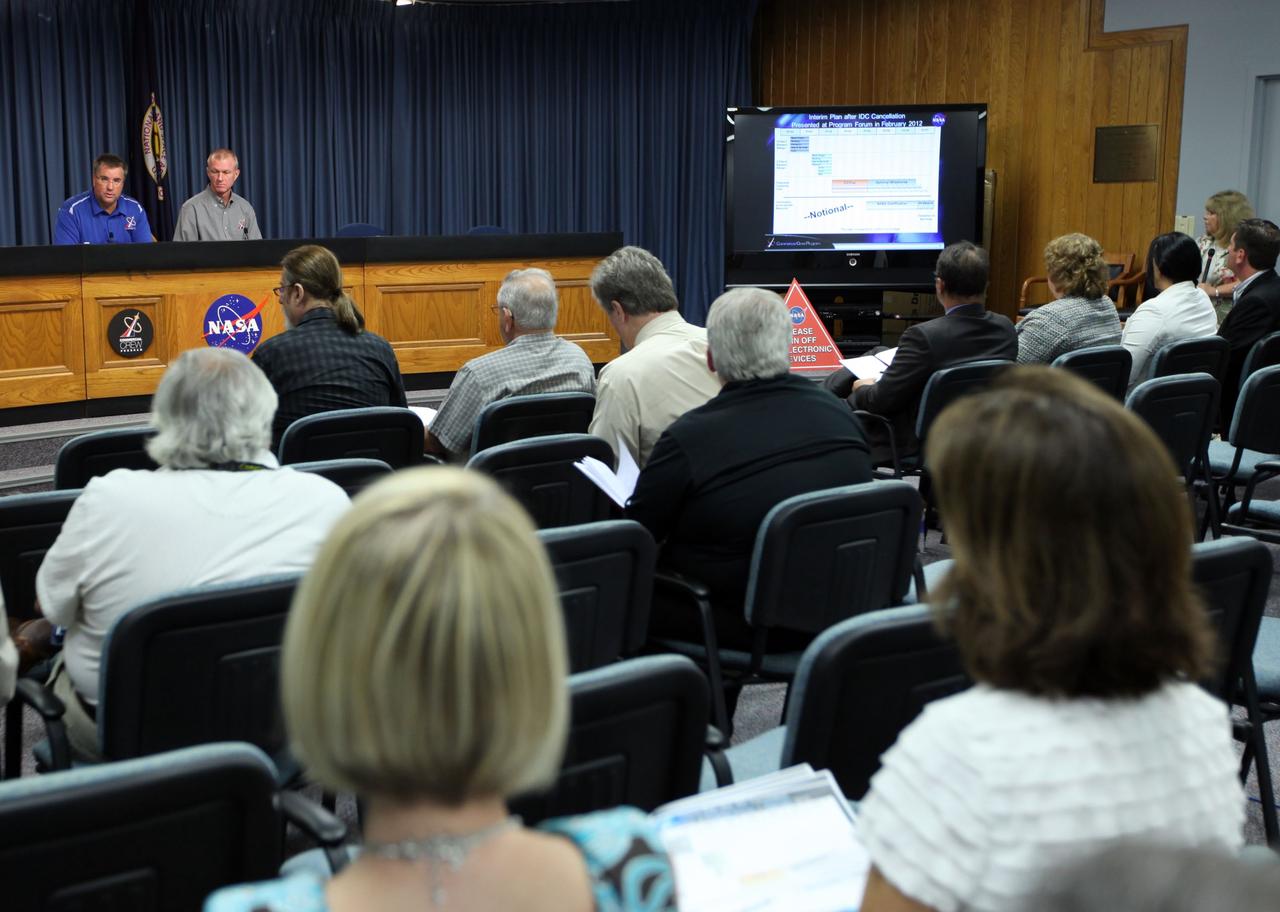
CAPE CANAVERAL, Fla. -- Ed Mango, program manager for NASA's Commercial Crew Program CCP, left, and Brent Jett, CCP's deputy program manager, host a forum for the commercial spaceflight industry to introduce the agency's plans for certifying commercially developed spacecraft and launch systems in support of crewed missions to the International Space Station around the middle of the decade. To learn more about CCP, visit www.nasa.gov/commercialcrew. Photo credit: NASA/Kim Shiflett
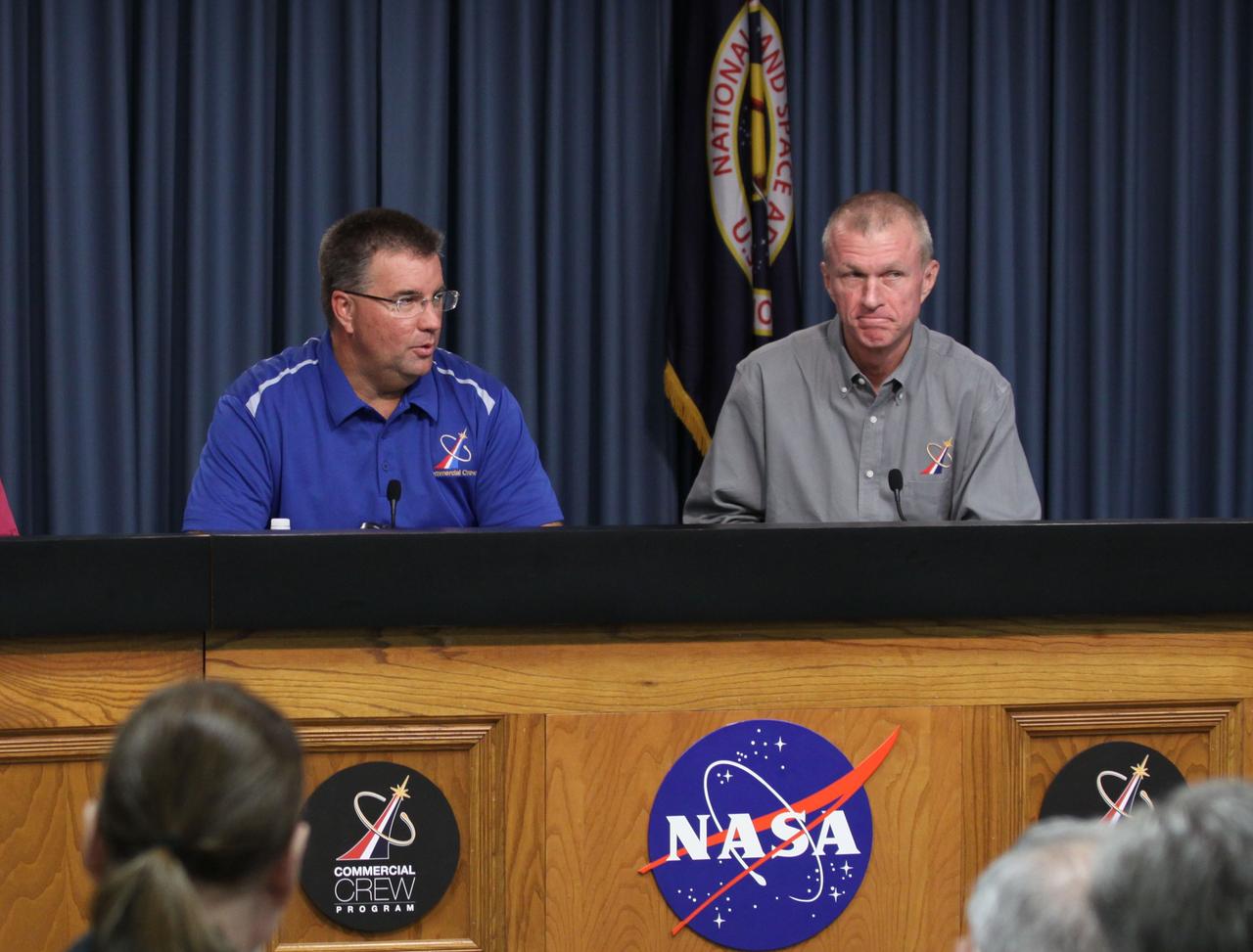
CAPE CANAVERAL, Fla. -- Ed Mango, program manager for NASA's Commercial Crew Program CCP, left, and Brent Jett, CCP's deputy program manager, host a forum for the commercial spaceflight industry to introduce the agency's plans for certifying commercially developed spacecraft and launch systems in support of crewed missions to the International Space Station around the middle of the decade. To learn more about CCP, visit www.nasa.gov/commercialcrew. Photo credit: NASA/Kim Shiflett

NASA astronaut Andre Douglas collects soil samples during the first in a series of four simulated moonwalks in the San Francisco Volcanic Field in Norther Arizona on May 13, 2024. Credit: NASA/Josh Valcarcel

NASA astronaut Andre Douglas uses a hammer and chisel to break off a small sample during a¬¬ nighttime simulated moonwalk in the San Francisco Volcanic Field in Northern Arizona on May 16, 2024. Credit: NASA/Josh Valcarcel
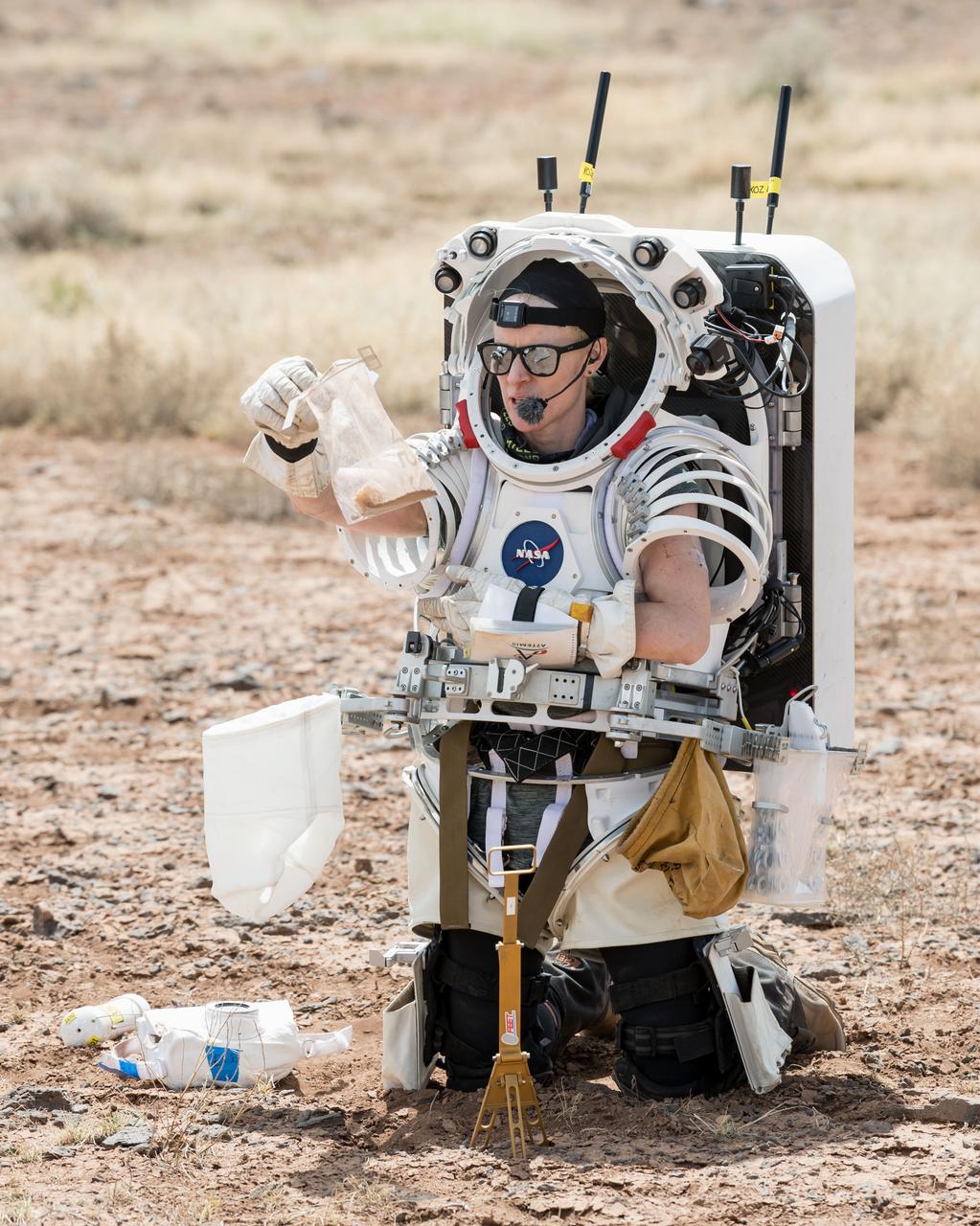
NASA astronaut Kate Rubins examines a geology sample she collected during a simulated moonwalk in the San Francisco Volcanic Field in Northern Arizona on May 13, 2024. Credit: NASA/Josh Valcarcel
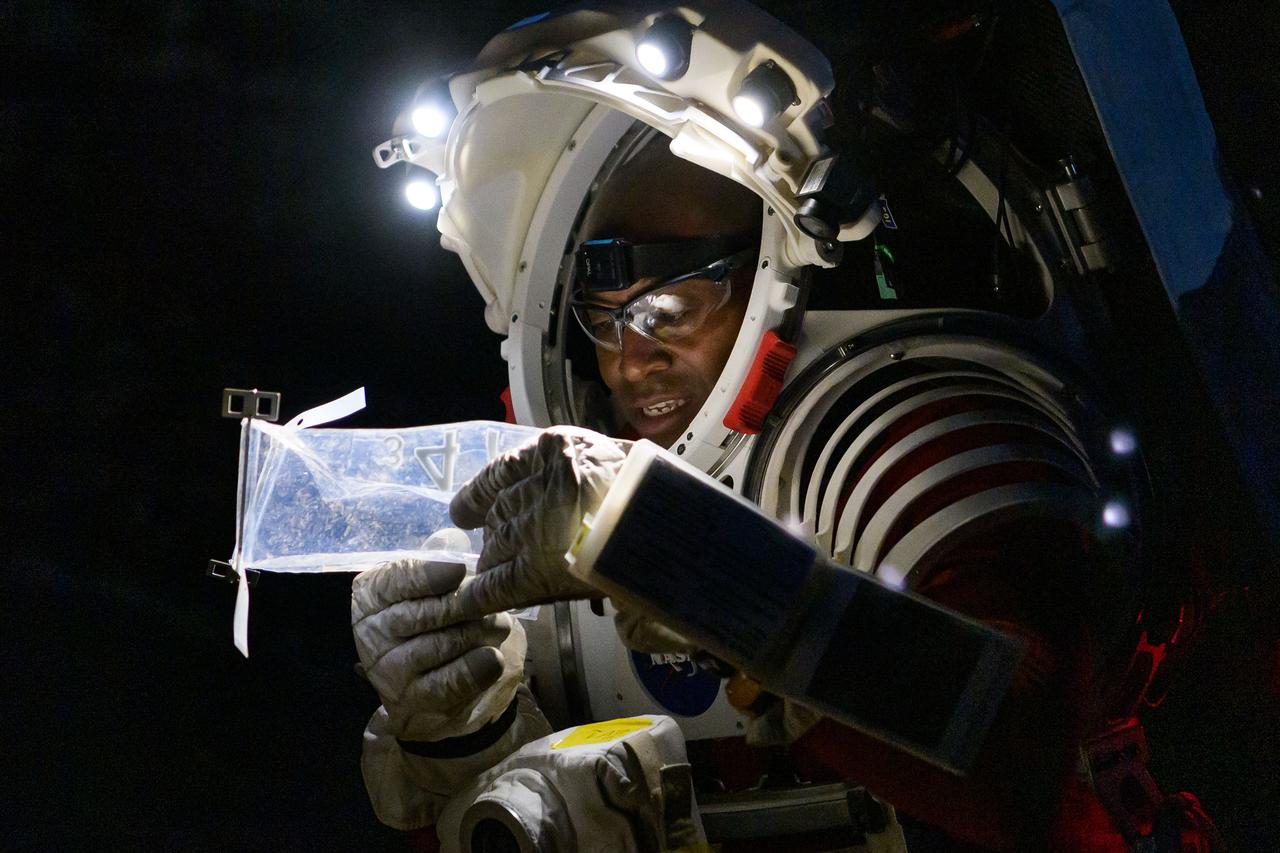
NASA astronaut Andre Douglas examines a geologic sample collected during a nighttime simulated moonwalk in the San Francisco Volcanic Field in Northern Arizona on May 16, 2024. Credit: NASA/Josh Valcarcel

NASA astronaut Kate Rubins walks in the lunar-like landscape during a nighttime simulated moonwalk in the San Francisco Volcanic Field in Northern Arizona on May 16, 2024. Credit: NASA/Josh Valcarcel
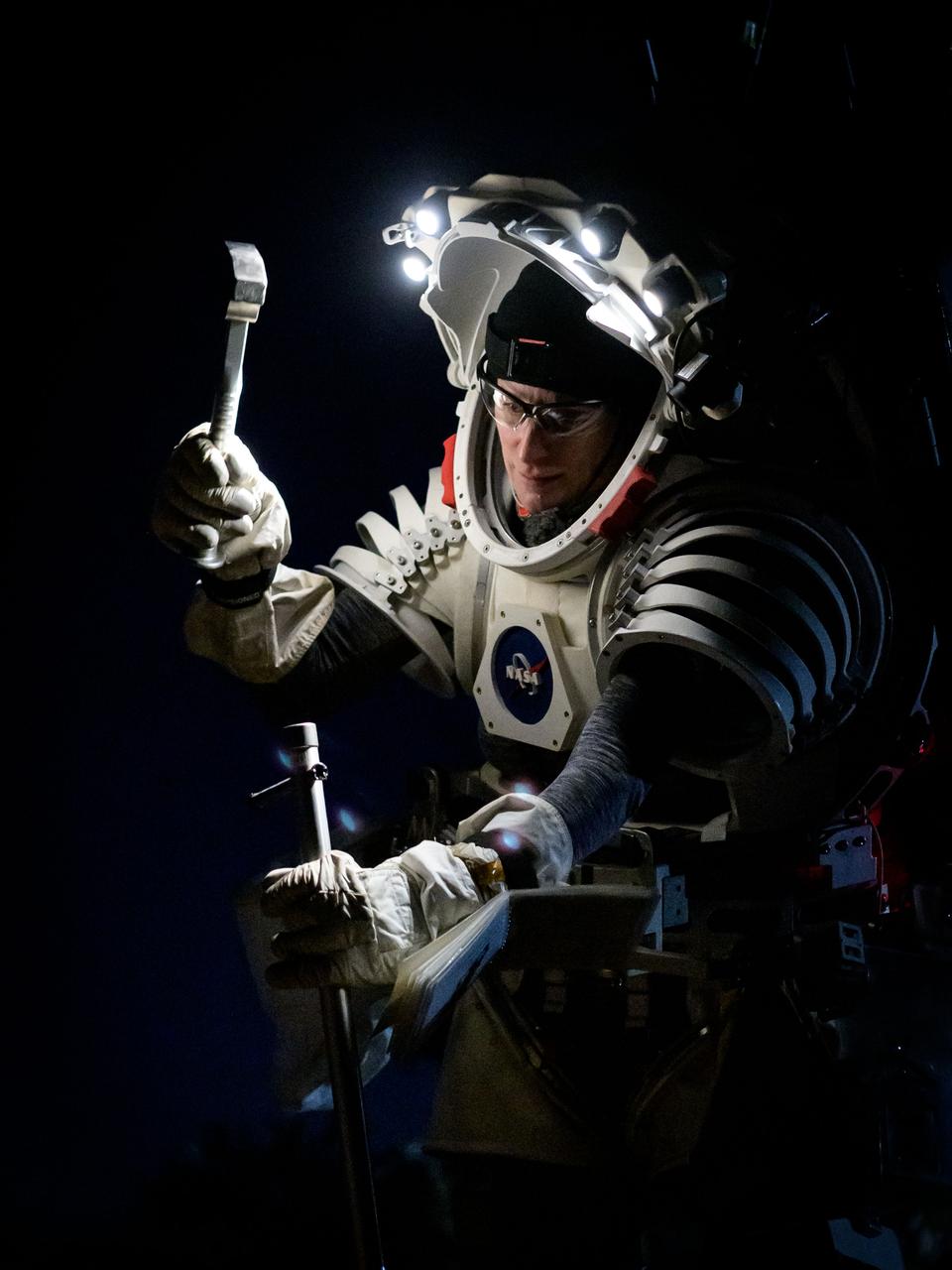
NASA astronaut Kate Rubins uses a hammer to get a drive tube into the ground to collect a pristine soil sample during a¬¬ nighttime simulated moonwalk in the San Francisco Volcanic Field in Northern Arizona on May 16, 2024. The drive tube is the key piece of hardware for preserving the integrity of samples from the Moon. Credit: NASA/Josh Valcarcel
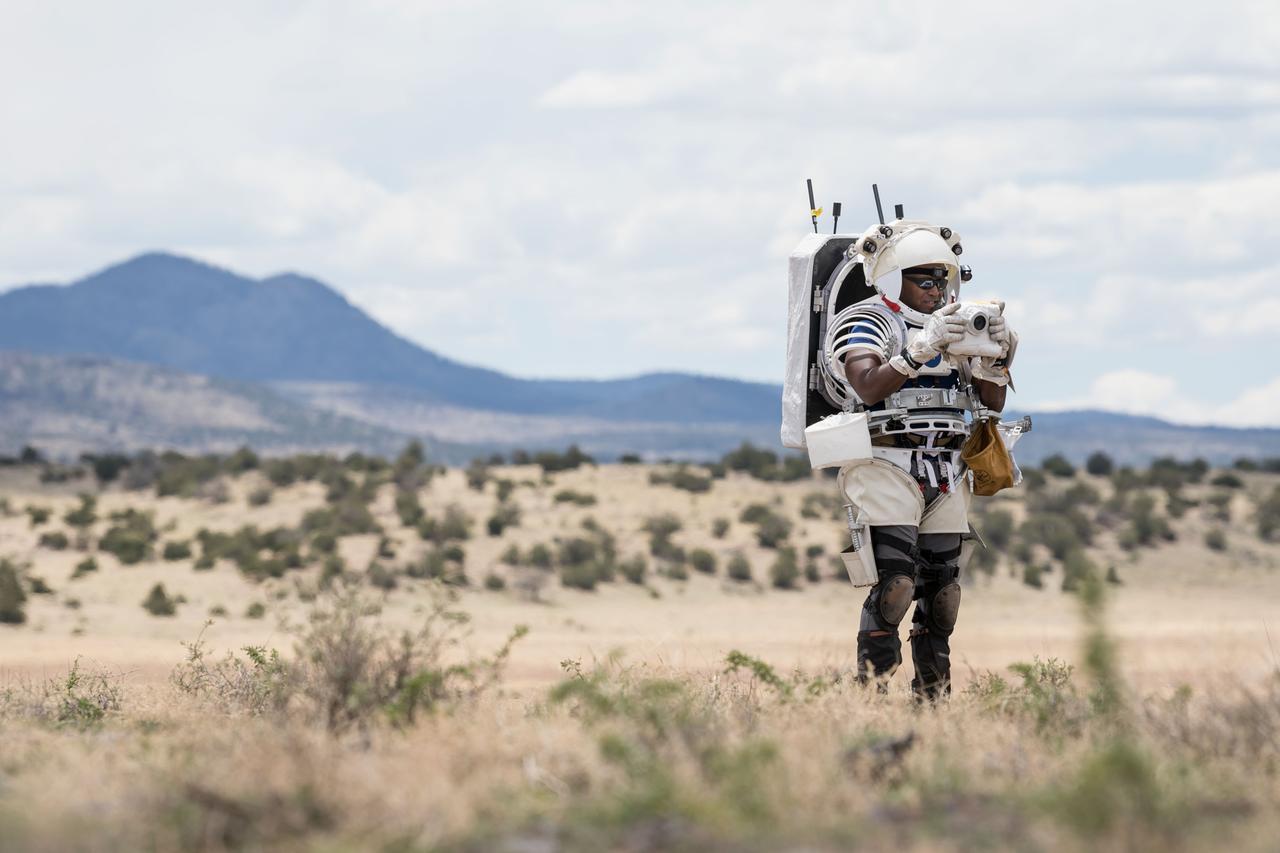
NASA astronaut Andre Douglas takes a picture of the lunar-like landscape during a simulated moonwalk in the San Francisco Volcanic Field in Northern Arizona on May 13, 2024. Credit: NASA/Josh Valcarcel
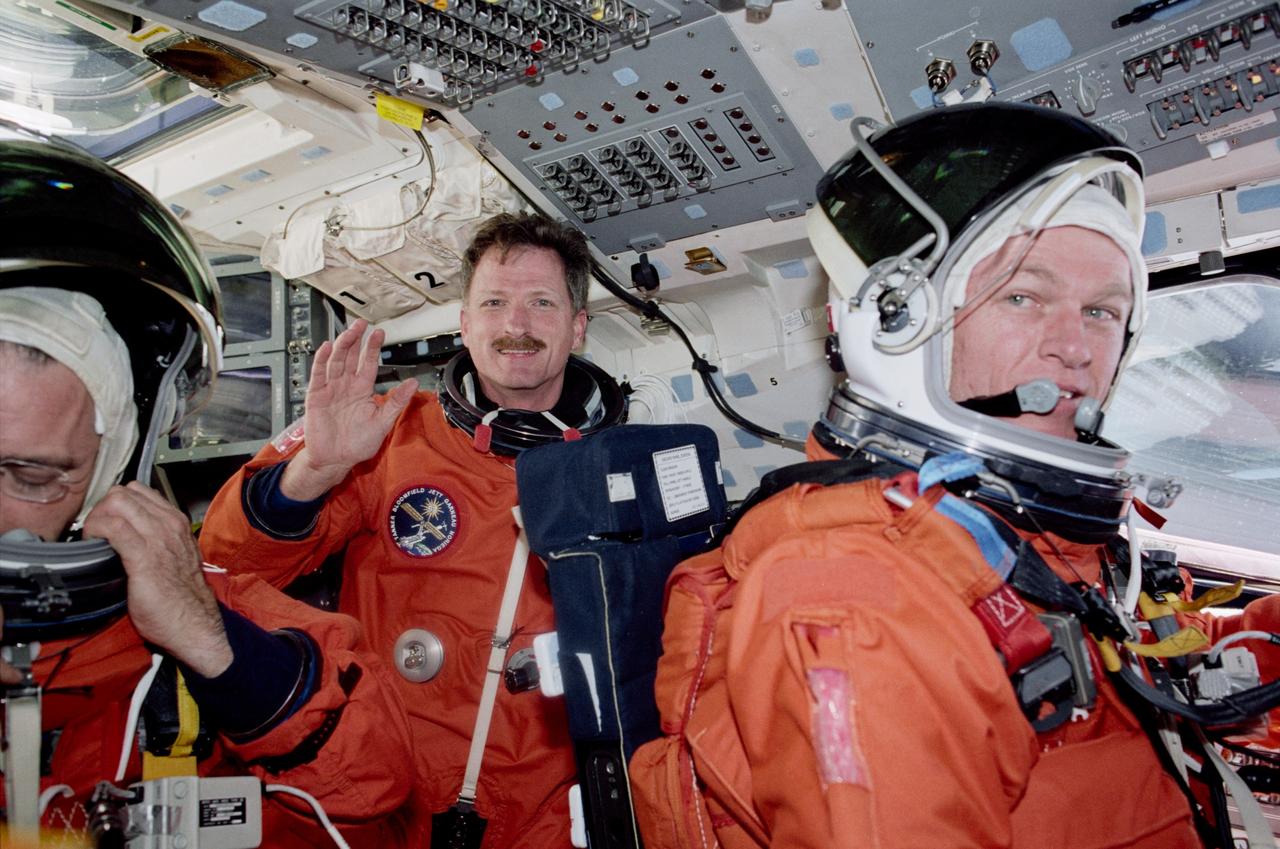
STS097-310-032 (11 December 2000) --- Astronauts (left to right) Marc Garneau, Joseph R. Tanner, both mission specialists, and Brent W. Jett, mission commander, are photographed on the flight deck of the Space Shuttle Endeavour as they prepare for re-entry. Garneau represents the Canadian Space Agency (CSA).
STS097-330-030 (30 Nov.-11 Dec. 2000) --- Astronauts Brent W. Jett (left), mission commander, and Carlos I. Noriega and Joseph R. Tanner (partially out of frame), both mission specialists, discuss mission procedures on the aft flight deck of the Space Shuttle Endeavour.
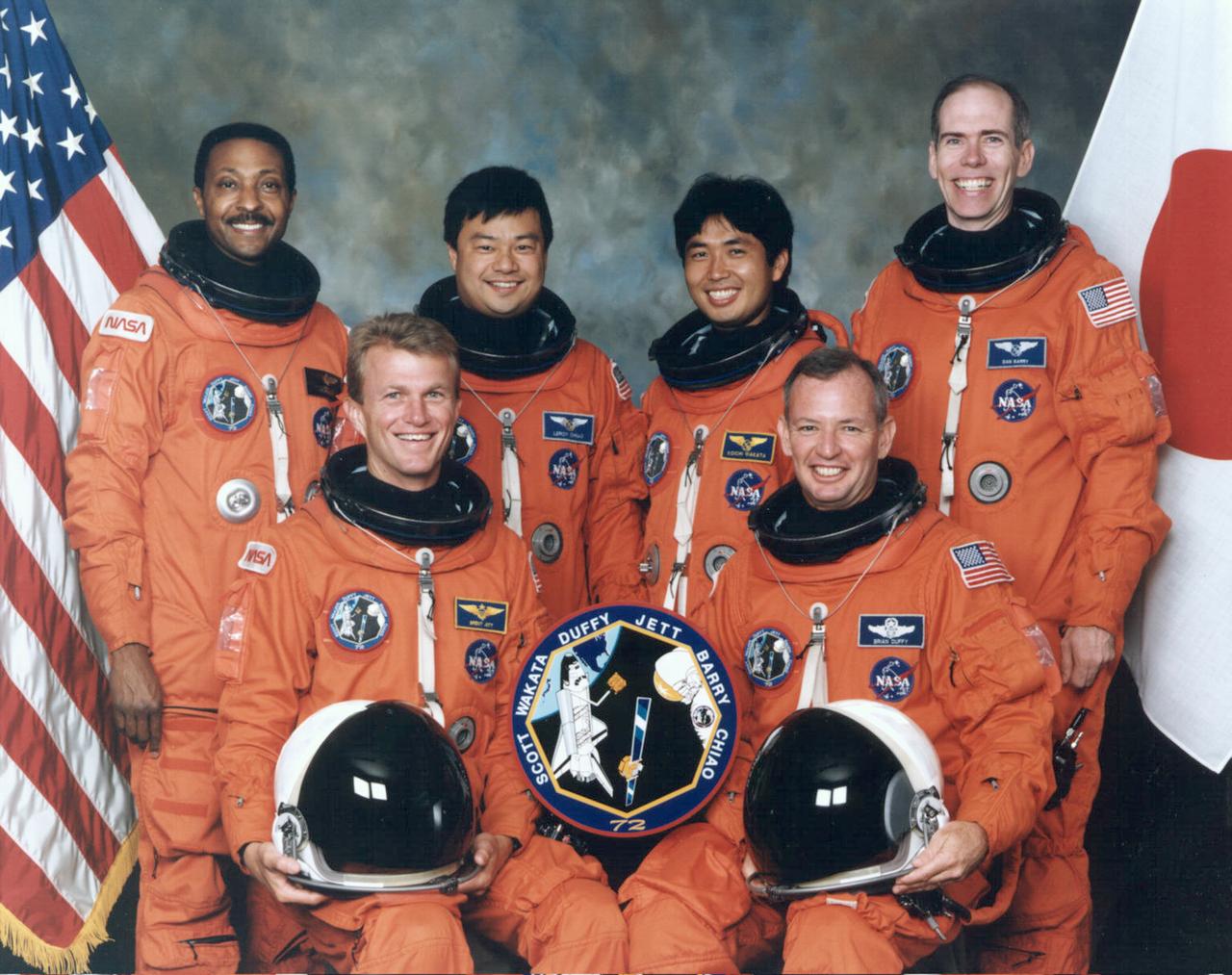
Six astronauts composed the crew for the STS-72 mission that launched aboard the Space Shuttle Endeavour on January 11, 1996. Astronauts Brian Duffy (right front) and Brent W. Jett (left front) are mission commander and pilot, respectively. Mission specialists (back row, left to right) are Winston E. Scott, Leroy Chiao, Koichi Wakata, and Daniel T. Barry. Wakata is an international mission specialist representing Japan’s National Space Development Agency (NASDA) based at the Johnson Space Center (JSC). Mission objectives included the retrieval of the Japanese Space Flyer Unit (SFU), and the deployment of the Office of Aeronautics and Space Technology-Flyer (OAST-Flyer).
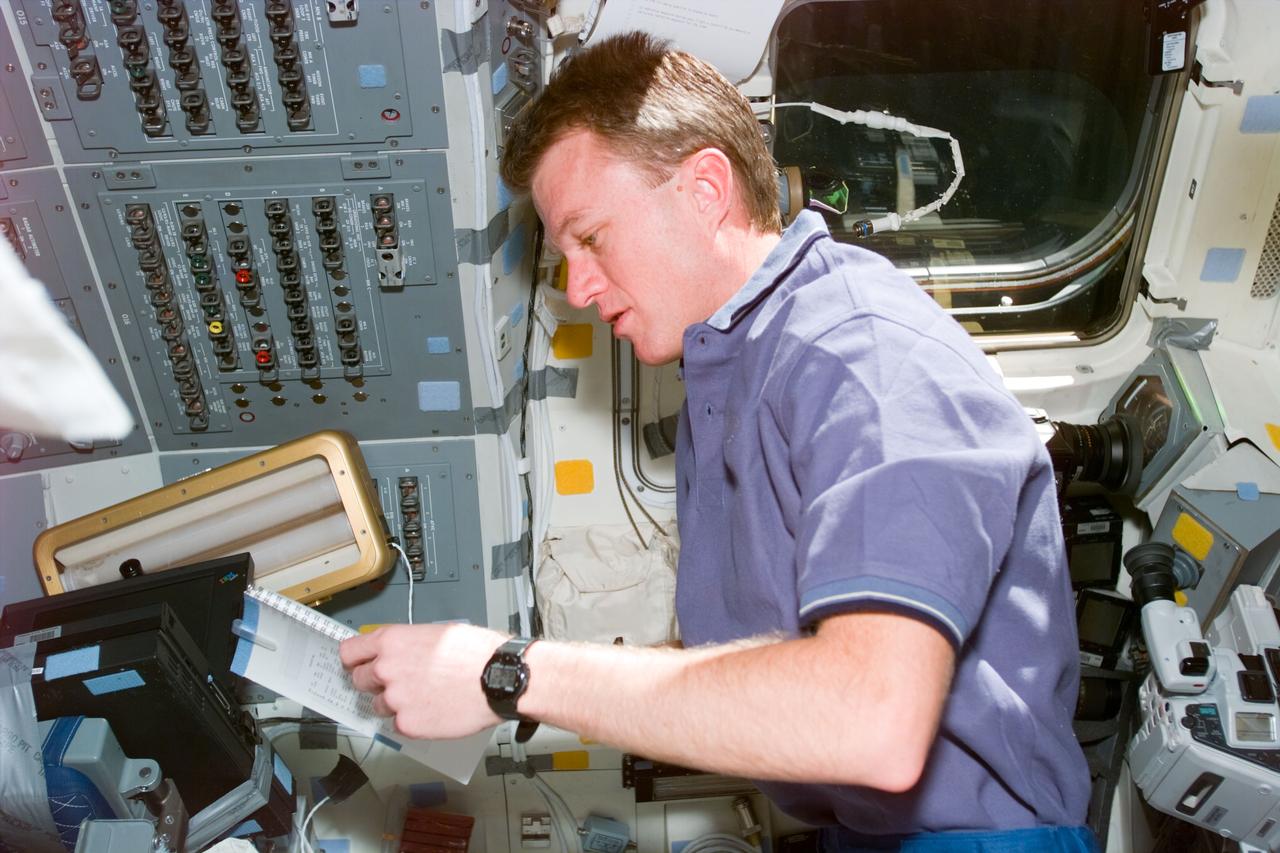
STS081-E-5008 (12 Jan. 1997) --- Astronaut Brent W. Jett, Jr., pilot, looks over a check list on the Space Shuttle Atlantis' aft flight deck as he joins five crew mates (out of frame) in readying the Orbiter for almost ten days in Earth-orbit. Part of that time, Atlantis will be docked with Russia's Mir Space Station. The second exchange of NASA astronauts serving as cosmonaut guest researchers will occur at that time. The scene was recorded with an Electronic Still Camera (ESC) and later downlinked to flight controllers in Houston, Texas.
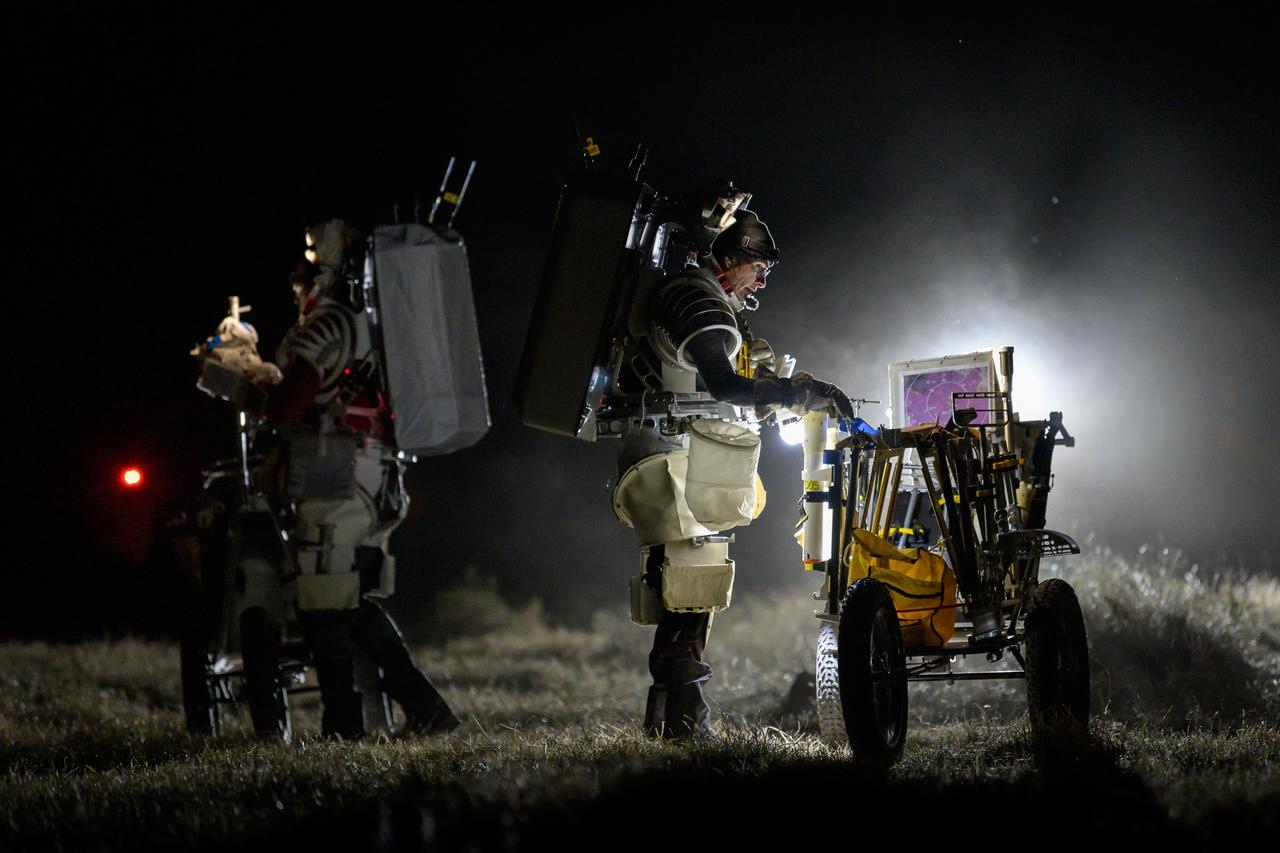
NASA astronaut Kate Rubins conducts a tool audit to ensure she has all of her tools while NASA astronaut Andre Douglas reviews procedures during a nighttime simulated moonwalk in the San Francisco Volcanic Field in Northern Arizona on May 16, 2024. Credit: NASA/Josh Valcarcel
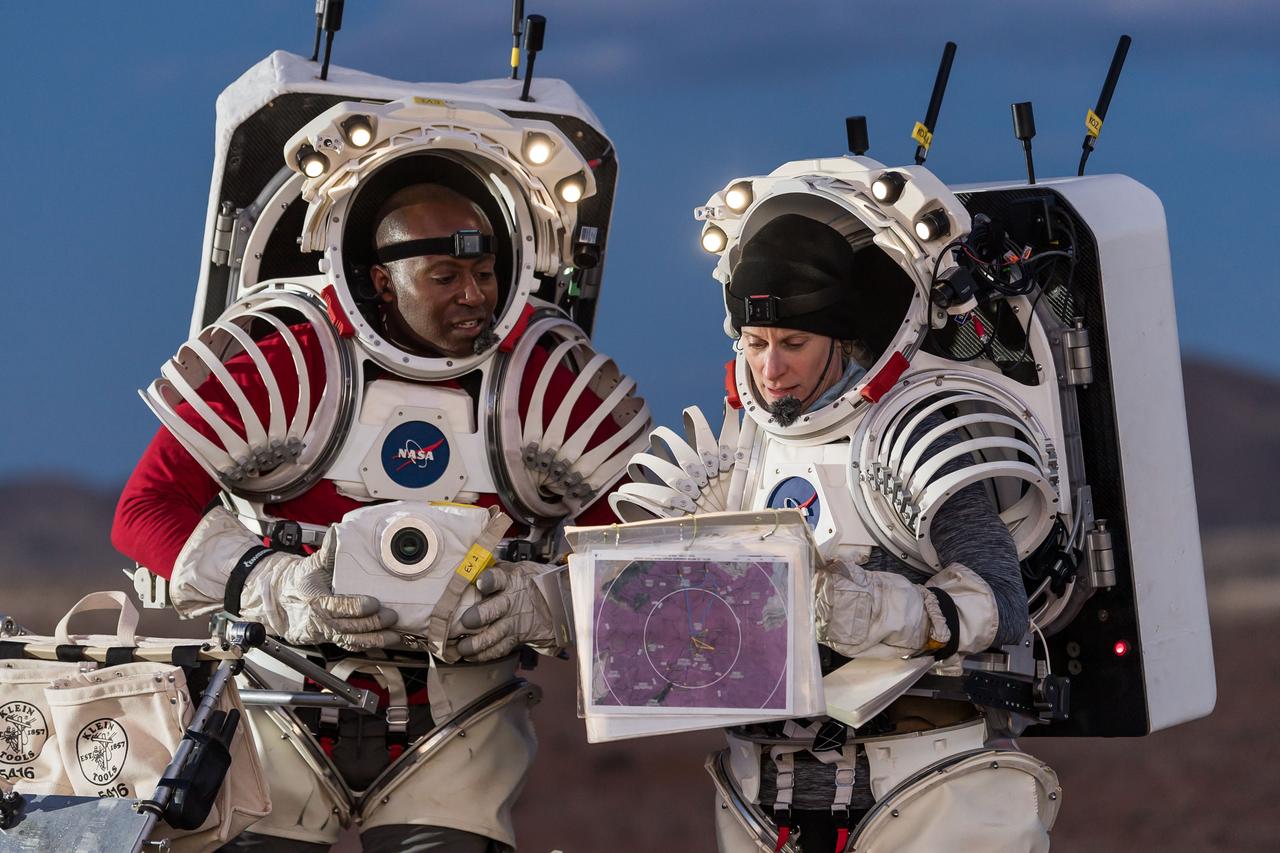
NASA astronauts Andre Douglas, left, and Kate Rubins review traverse plans during a¬¬ nighttime simulated moonwalk in the San Francisco Volcanic Field in Northern Arizona on May 16, 2024. Credit: NASA/Josh Valcarcel
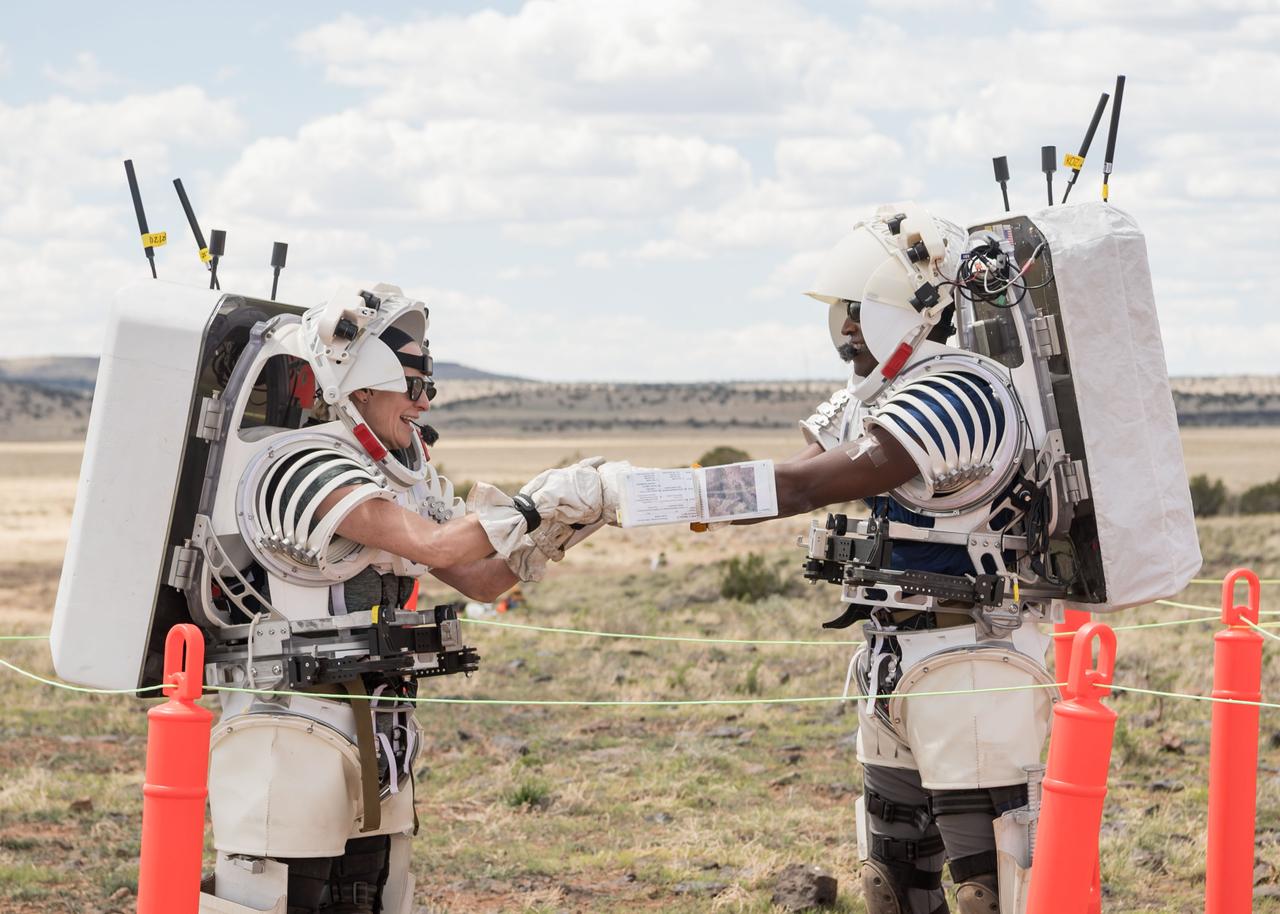
NASA astronauts Kate Rubins and Andre Douglas congratulate each other after the completion of the first simulated moonwalk in a week-long field test consisting of four simulated moonwalks and six advanced technology runs in the San Francisco Volcanic Field in Northern Arizona on May 13, 2024. Credit: NASA/Josh Valcarcel
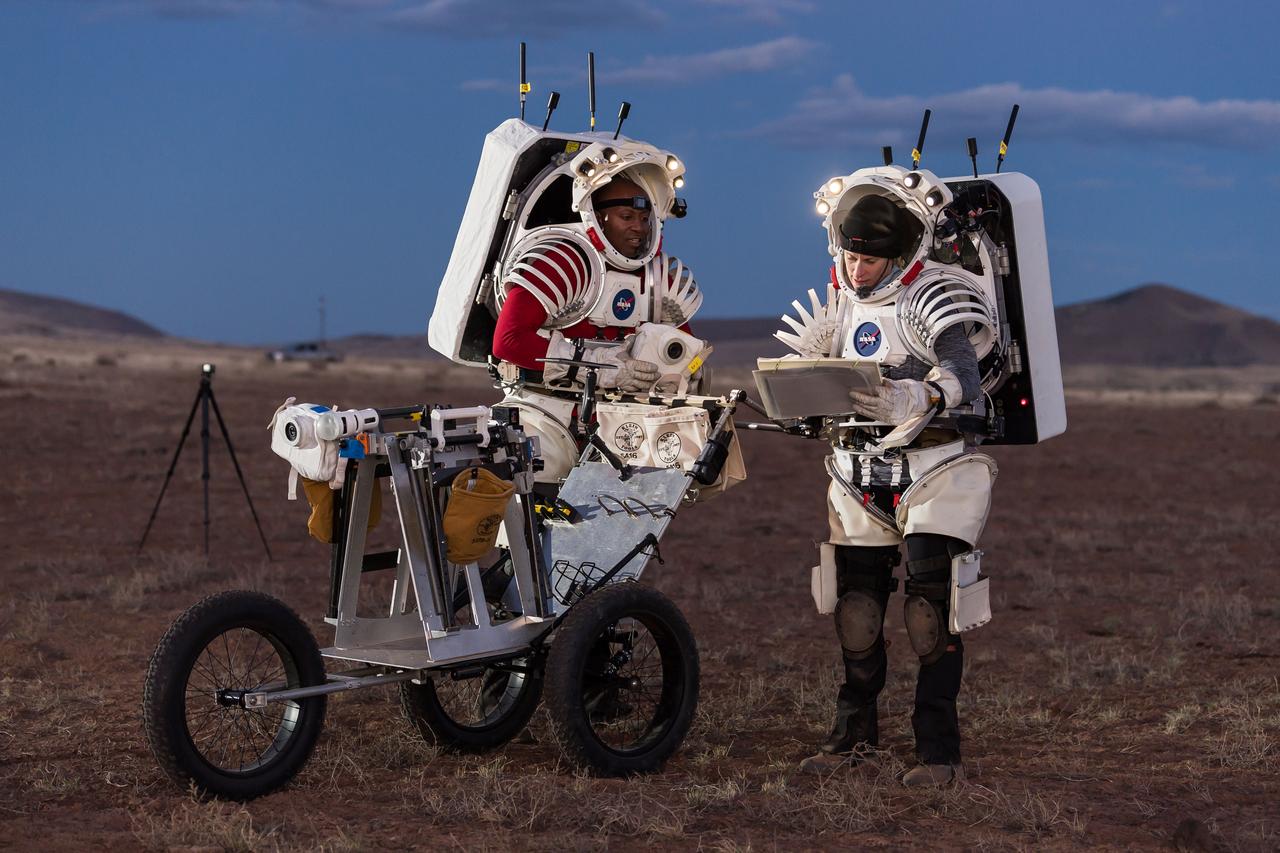
NASA astronauts Andre Douglas, left, and Kate Rubins review procedures during a nighttime simulated moonwalk in the San Francisco Volcanic Field in Northern Arizona on May 16, 2024. Credit: NASA/Josh Valcarcel

NASA astronaut Andre Douglas raises an American flag as NASA astronaut Kate Rubins looks on during their first simulated moonwalk in a week-long field test consisting of four simulated moonwalks and six advanced technology runs in the San Francisco Volcanic Field in Northern Arizona on May 13, 2024. Credit: NASA/Josh Valcarcel
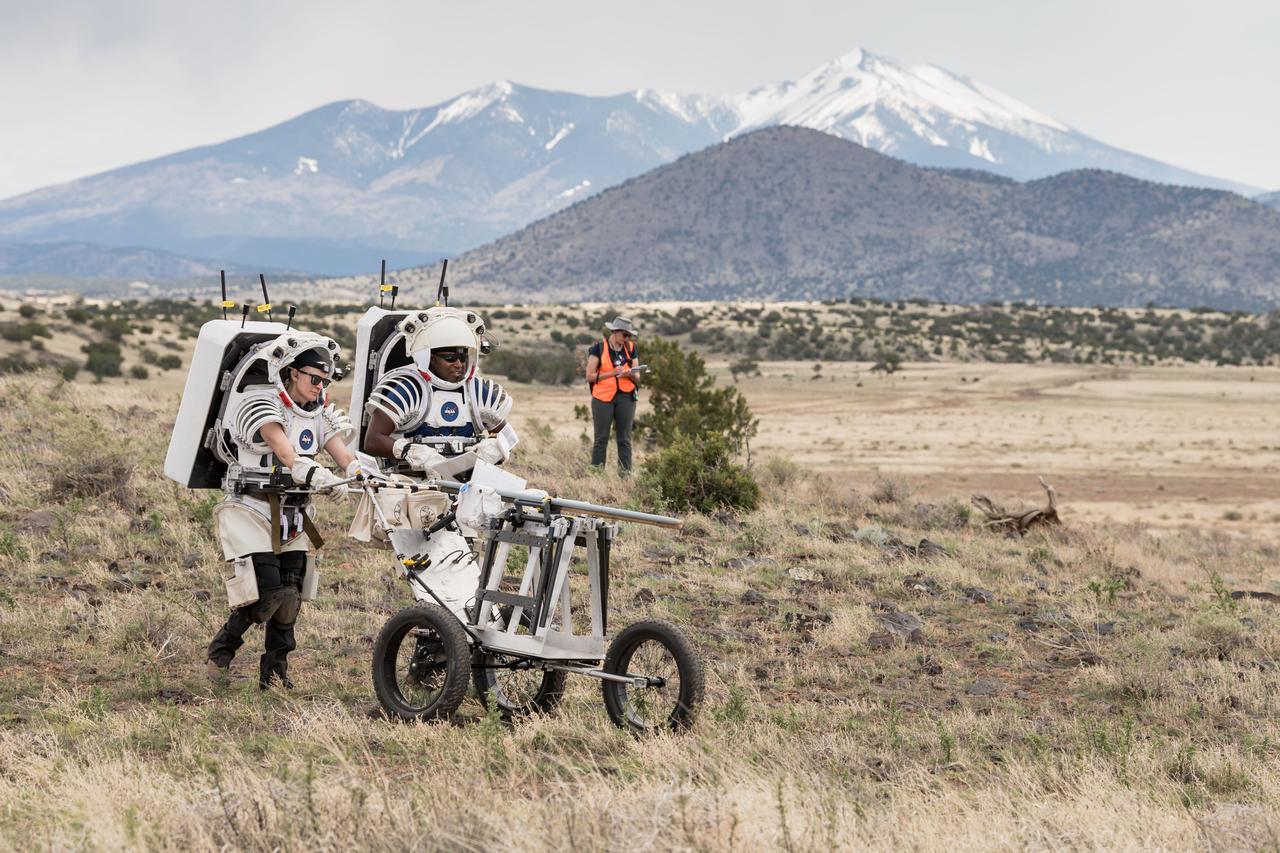
NASA astronauts Kate Rubins and Andre Douglas push a tool cart loaded with lunar tools through the San Francisco Volcanic Field north of Flagstaff, Arizona, as they practice moonwalking operations for Artemis III on May 13, 2024. Credit: NASA/Josh Valcarcel
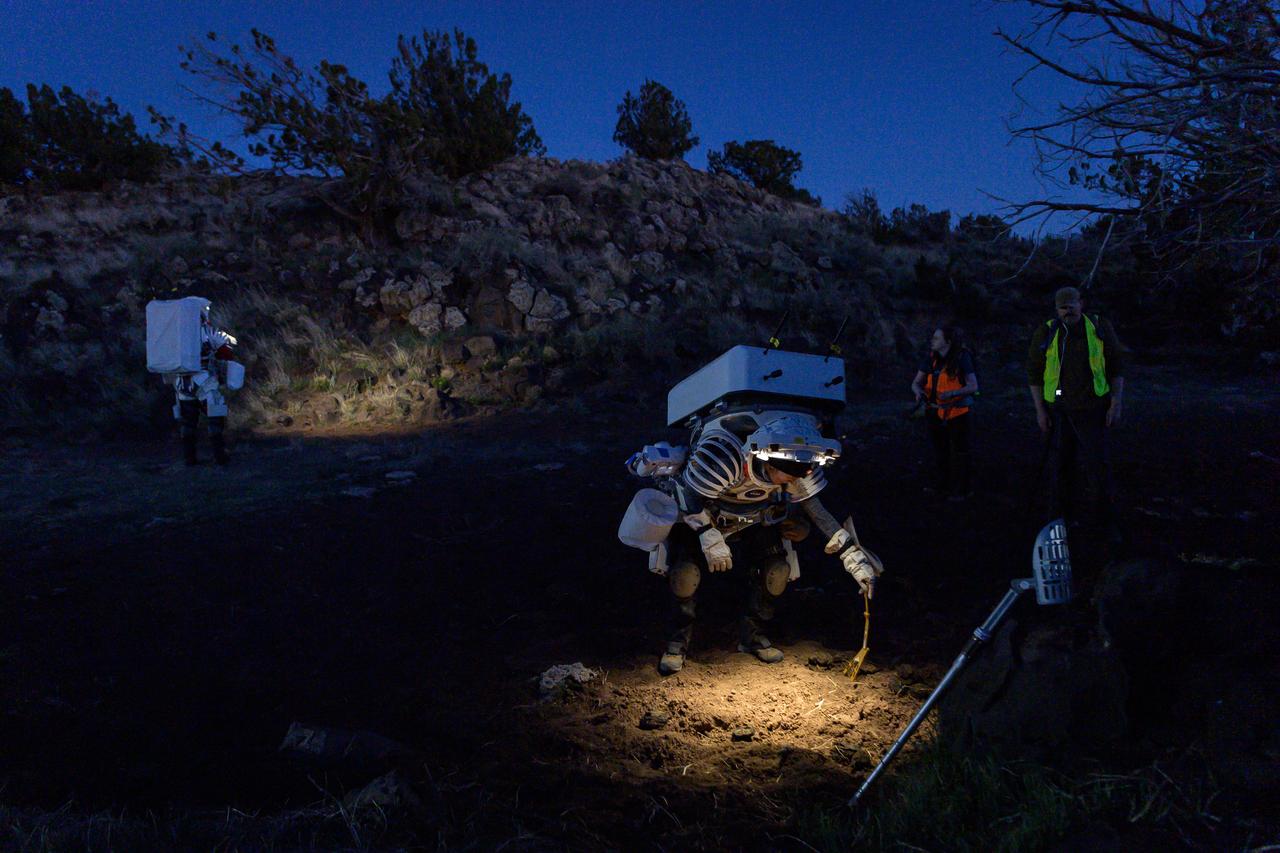
NASA astronaut Kate Rubins places a sample marker in the soil before collecting a sample during a nighttime simulated moonwalk in the San Francisco Volcanic Field in Northern Arizona on May 16, 2024. A sample marker provides a photographic reference point for science samples collected on the lunar surface. Credit: NASA/Josh Valcarcel
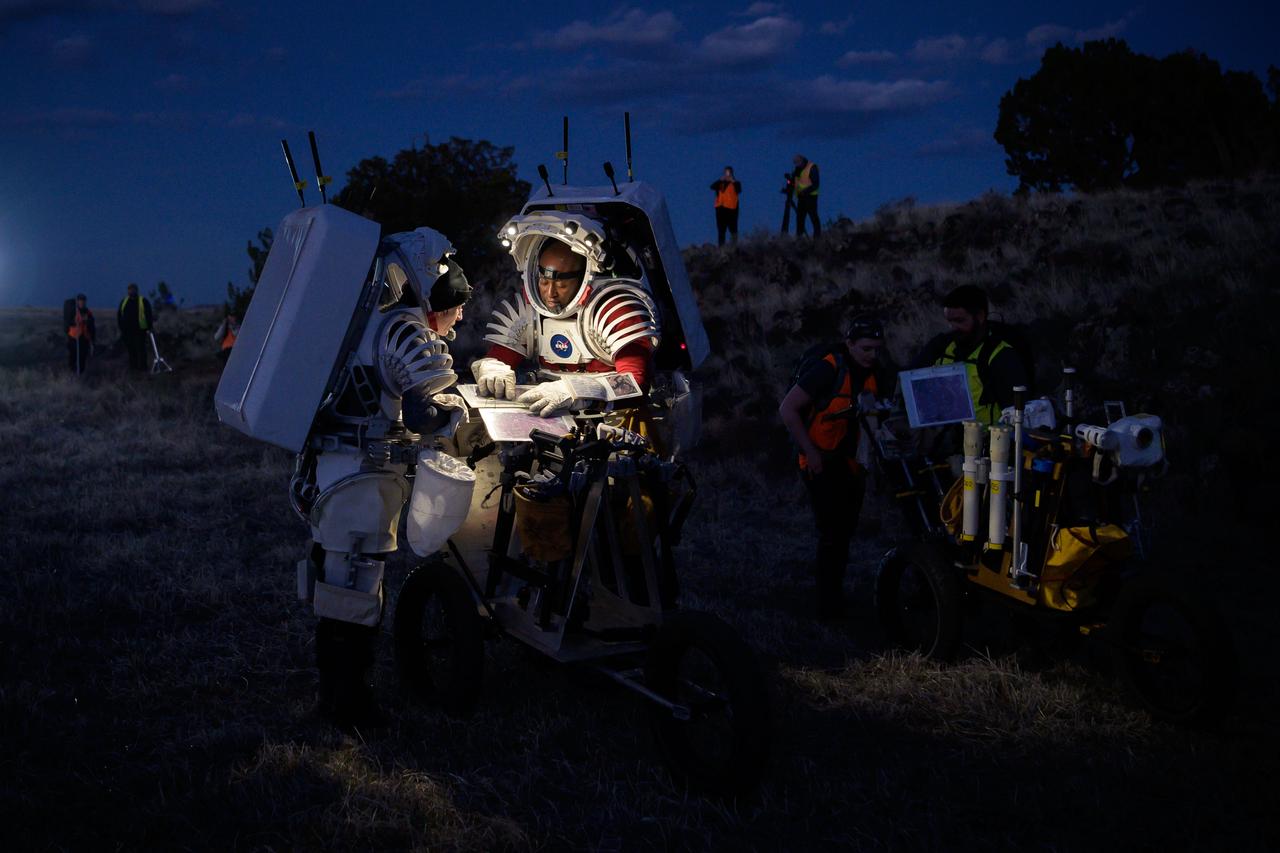
NASA astronauts Kate Rubins, left, and Andre Douglas look at a map that shows their traverse route during a nighttime simulated moonwalk in the San Francisco Volcanic Field in Northern Arizona on May 16, 2024. Credit: NASA/Josh Valcarcel
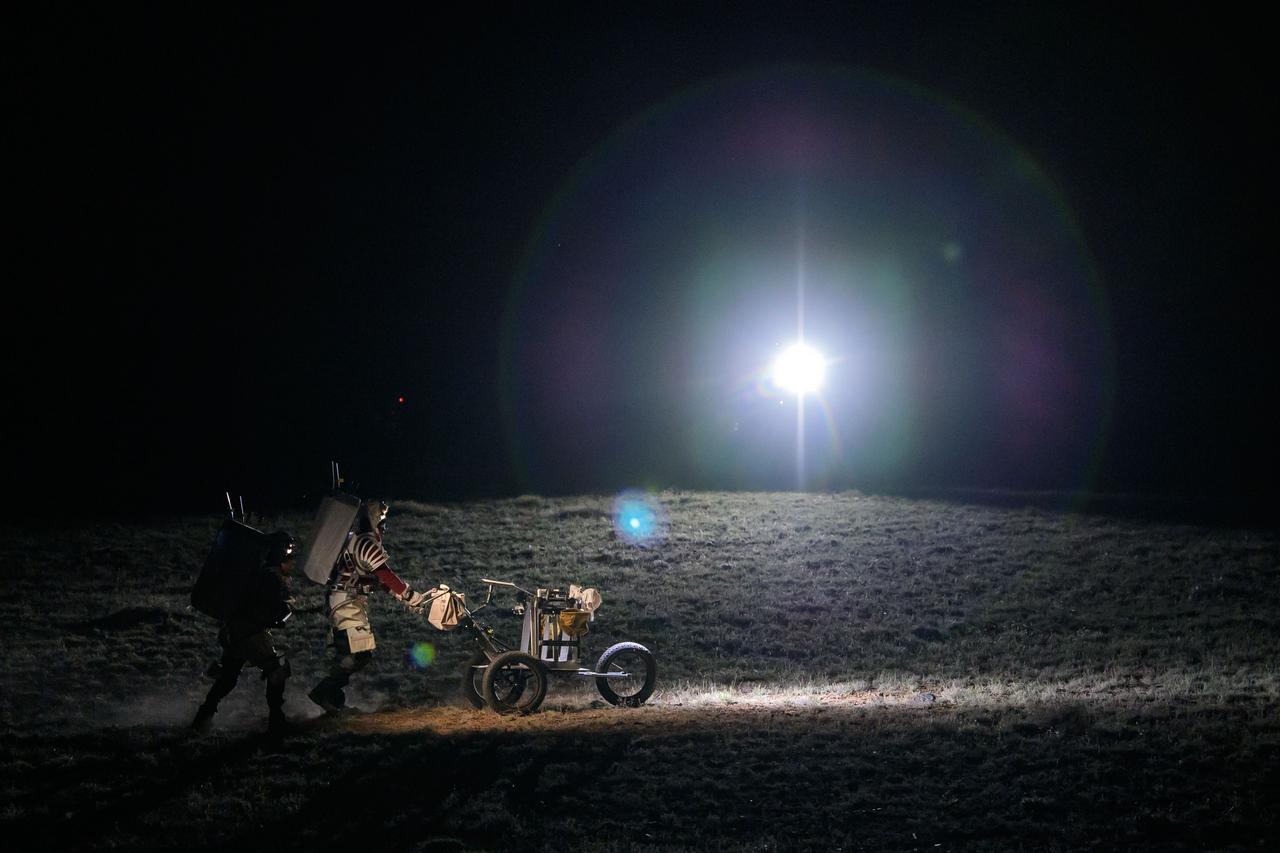
NASA astronaut Andre Douglas pushes a tool cart across the lunar-like landscape while NASA astronaut Kate Rubins follows close behind during a¬¬ nighttime simulated moonwalk in the San Francisco Volcanic Field in Northern Arizona on May 16, 2024. Credit: NASA/Josh Valcarcel
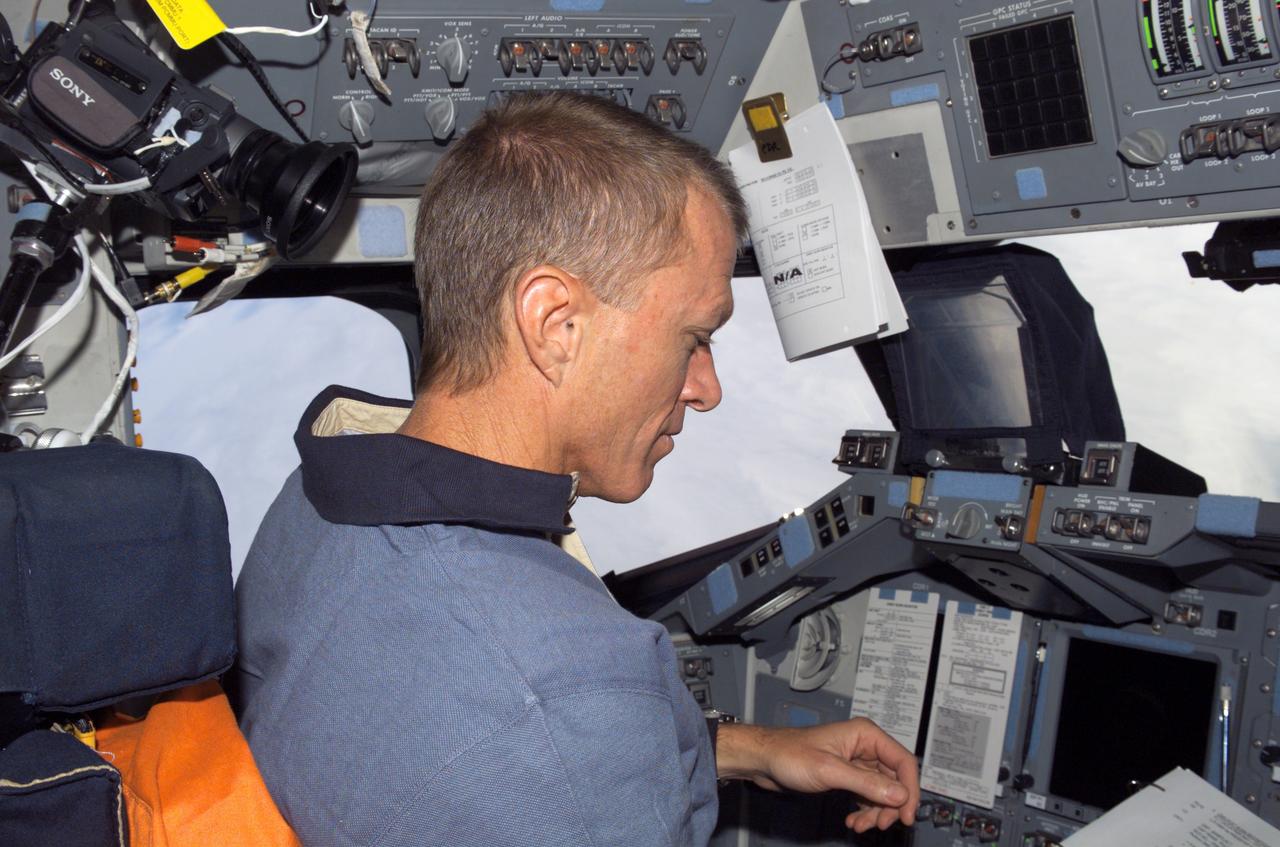
S115-E-05352 (11 Sept. 2006) --- Astronaut Brent W. Jett Jr., STS-115 commander, sits in the port seat on the flight deck of the Space Shuttle Atlantis at it approaches the International Space Station. The subsequent docking will allow the STS-115 astronauts and the Expedition 13 crew to team up for several days of key tasks in space.
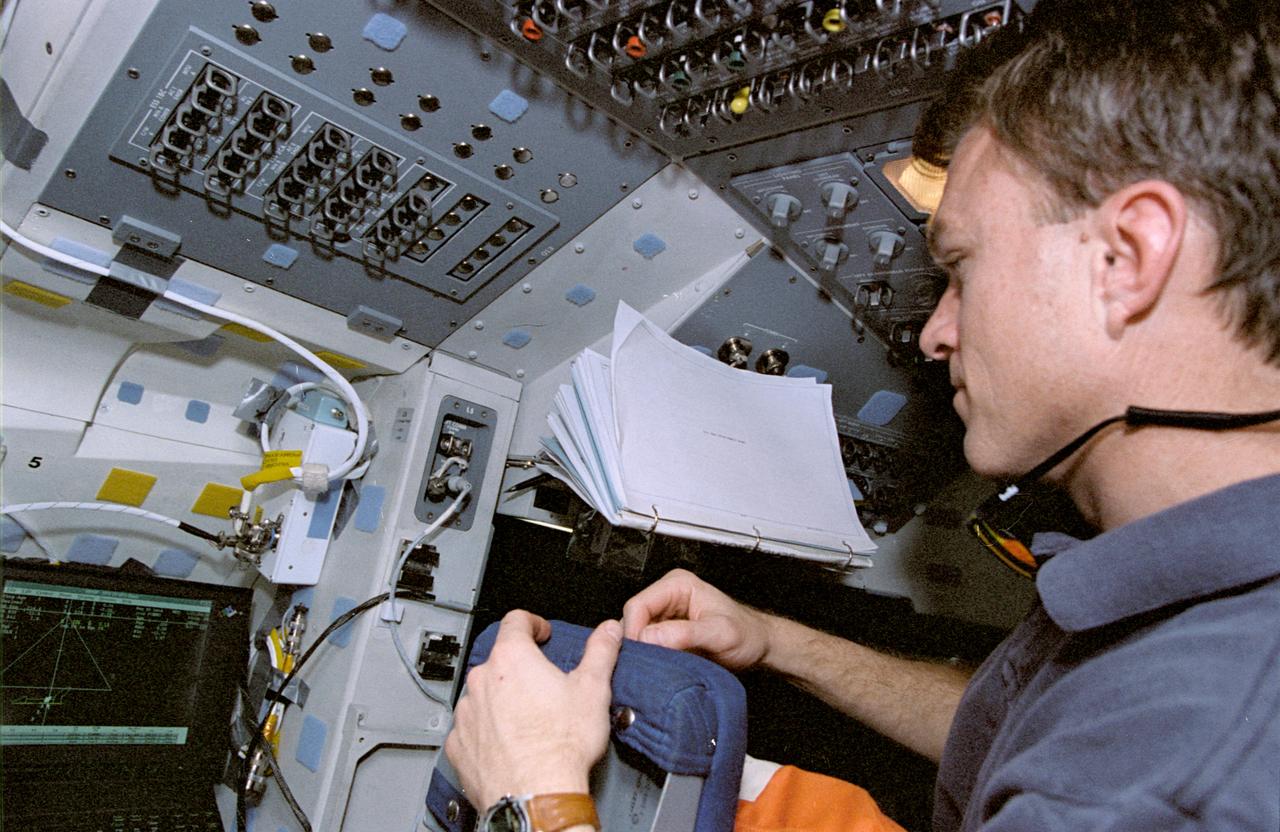
STS072-349-018 (11-20 Jan. 1996) --- On the Space Shuttle Endeavour’s flight deck, astronaut Brett W. Jett Jr., pilot, monitors display of software dealing with proximity operations with one of two satellites. The crew retrieved the Japanese Space Flyer (SFU) and berthed in the aft cargo bay, as well as releasing and re-capturing the Office of Aeronautics and Space Technology (OAST) Flyer satellite.
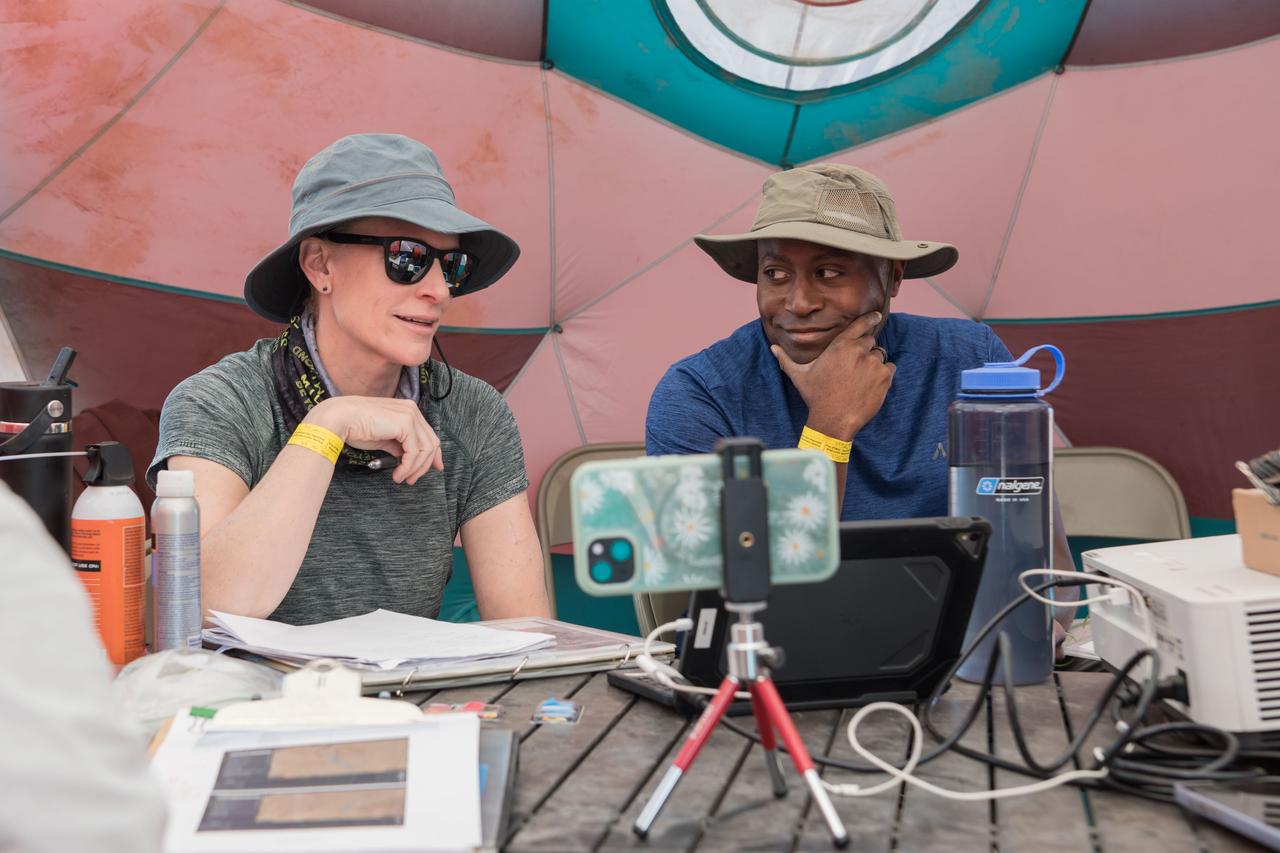
NASA astronauts Kate Rubins and Andre Douglas review test objectives and traverse plans before their first simulated moonwalk in a week-long field test consisting of four simulated moonwalks and six advanced technology runs in the San Francisco Volcanic Field in Northern Arizona on May 13, 2024 Credit: NASA/Josh Valcarcel
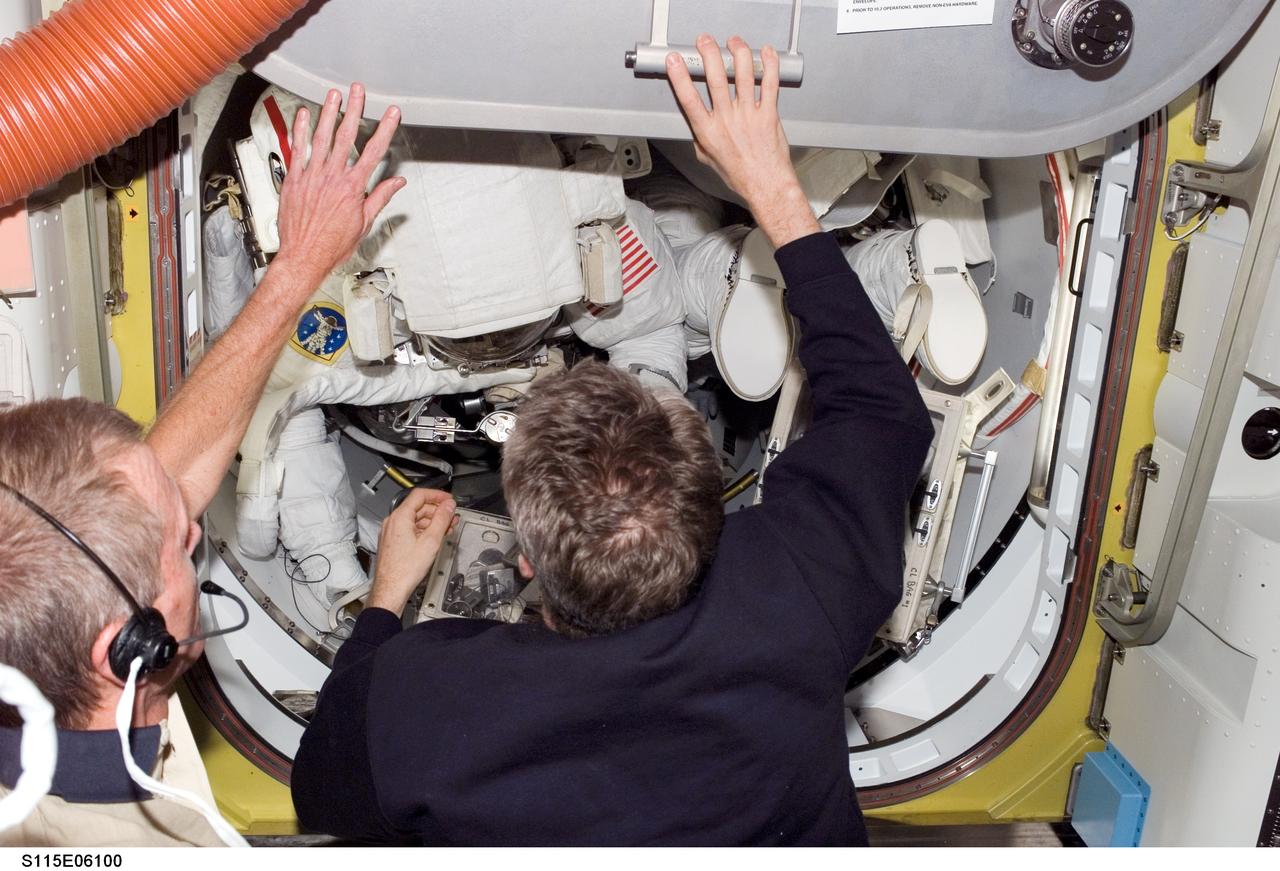
S115-E-06100 (15 Sept. 2006)--- Astronauts Brent W. Jett (left), STS-115 commander, and Thomas Reiter representing the European Space Agency, close the hatch to the airlock where astronauts Joseph R. Tanner and Heidemarie M. Stefanyshyn-Piper are preparing for the third and final of three spacewalks this week on the International Space Station.

PHOTO DATE: 10-04-22 LOCATION: Flagstaff, Arizona SUBJECT: Joint EVA Test Team (JETT) Field Testing - JETT 3 fully integrated mission scale test PHOTOGRAPHER: BILL STAFFORD
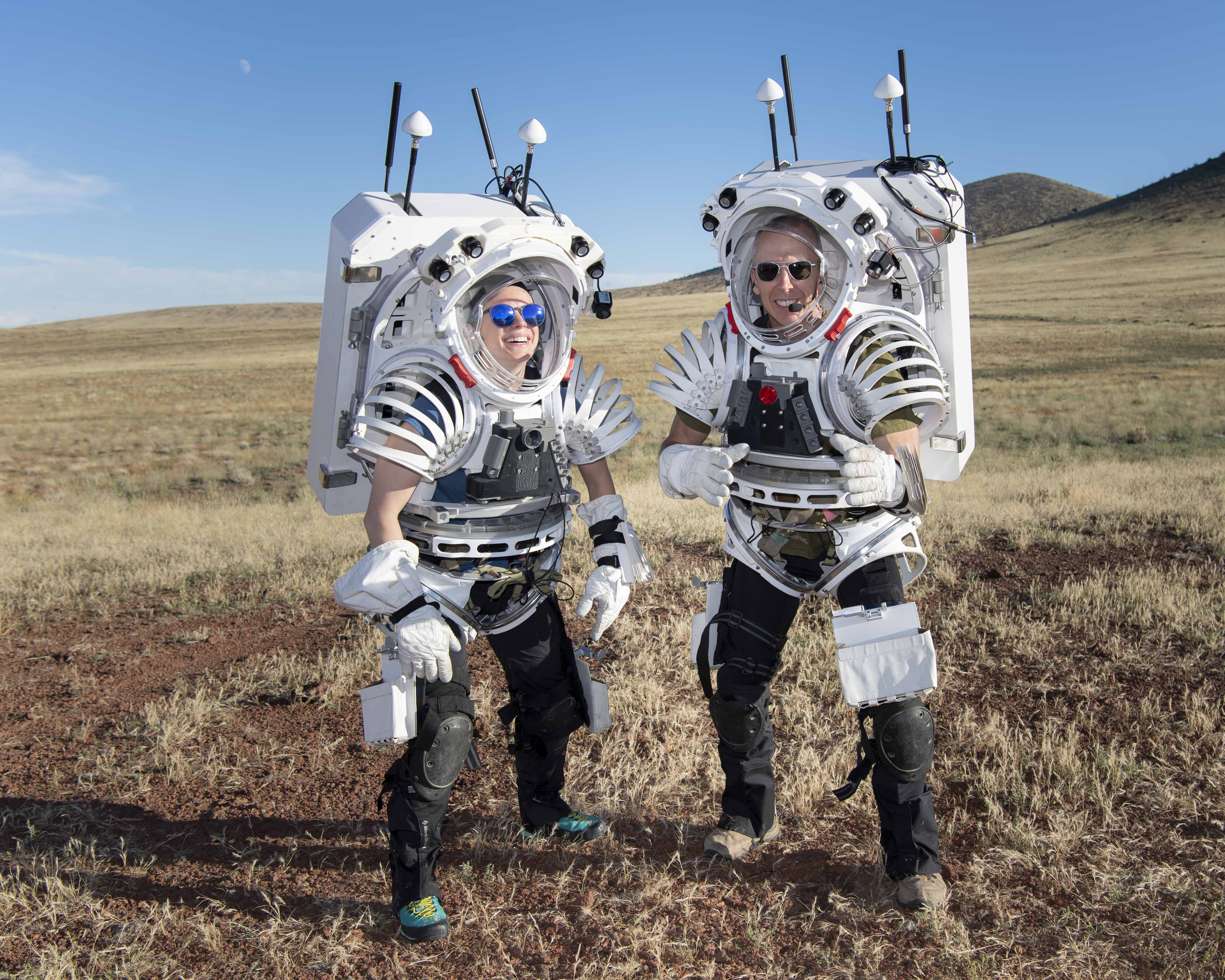
PHOTO DATE: 10-04-22 LOCATION: Flagstaff, Arizona SUBJECT: Joint EVA Test Team (JETT) Field Testing - JETT 3 fully integrated mission scale test PHOTOGRAPHER: BILL STAFFORD
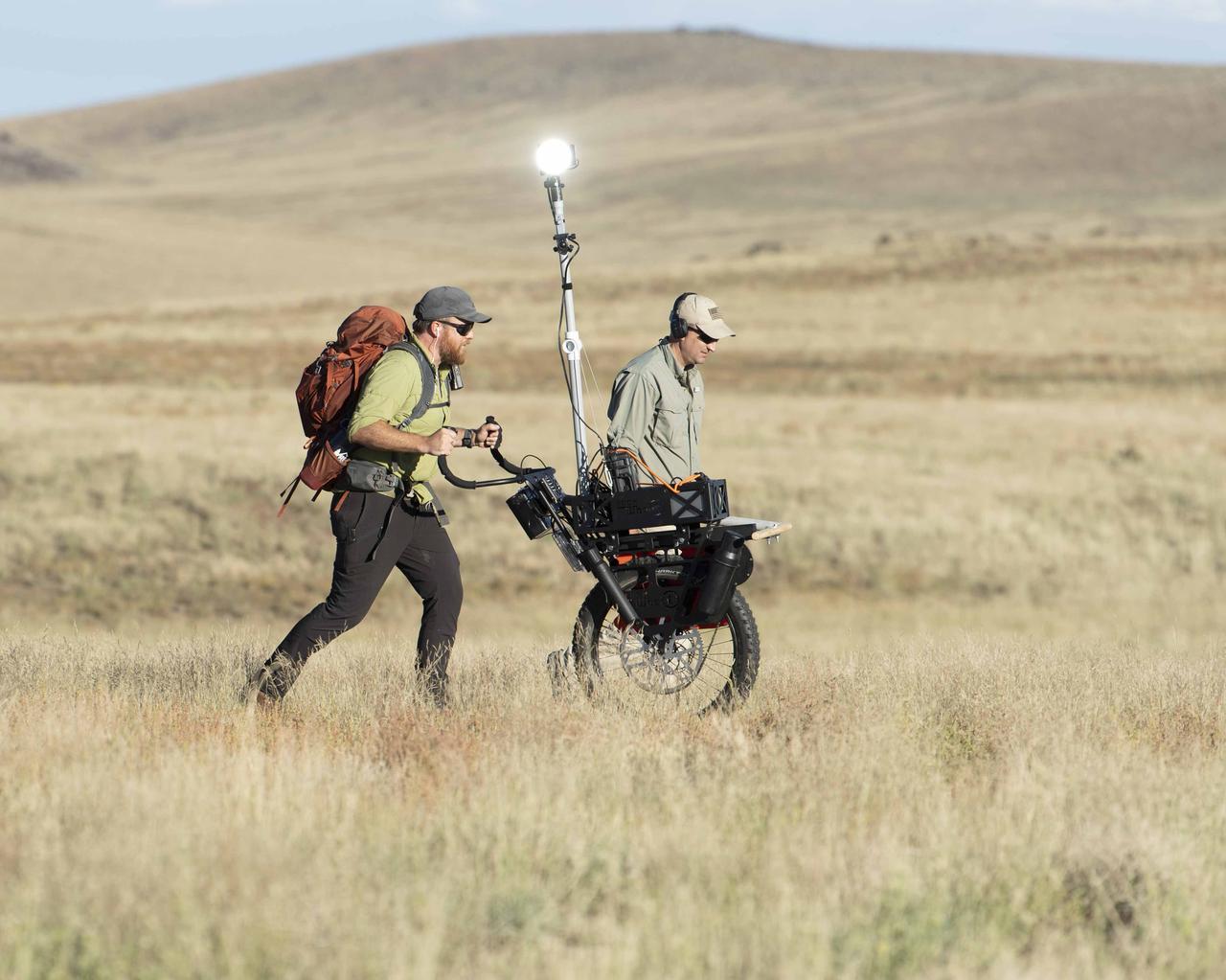
PHOTO DATE: 10-04-22 LOCATION: Flagstaff, Arizona SUBJECT: Joint EVA Test Team (JETT) Field Testing - JETT 3 fully integrated mission scale test PHOTOGRAPHER: BILL STAFFORD
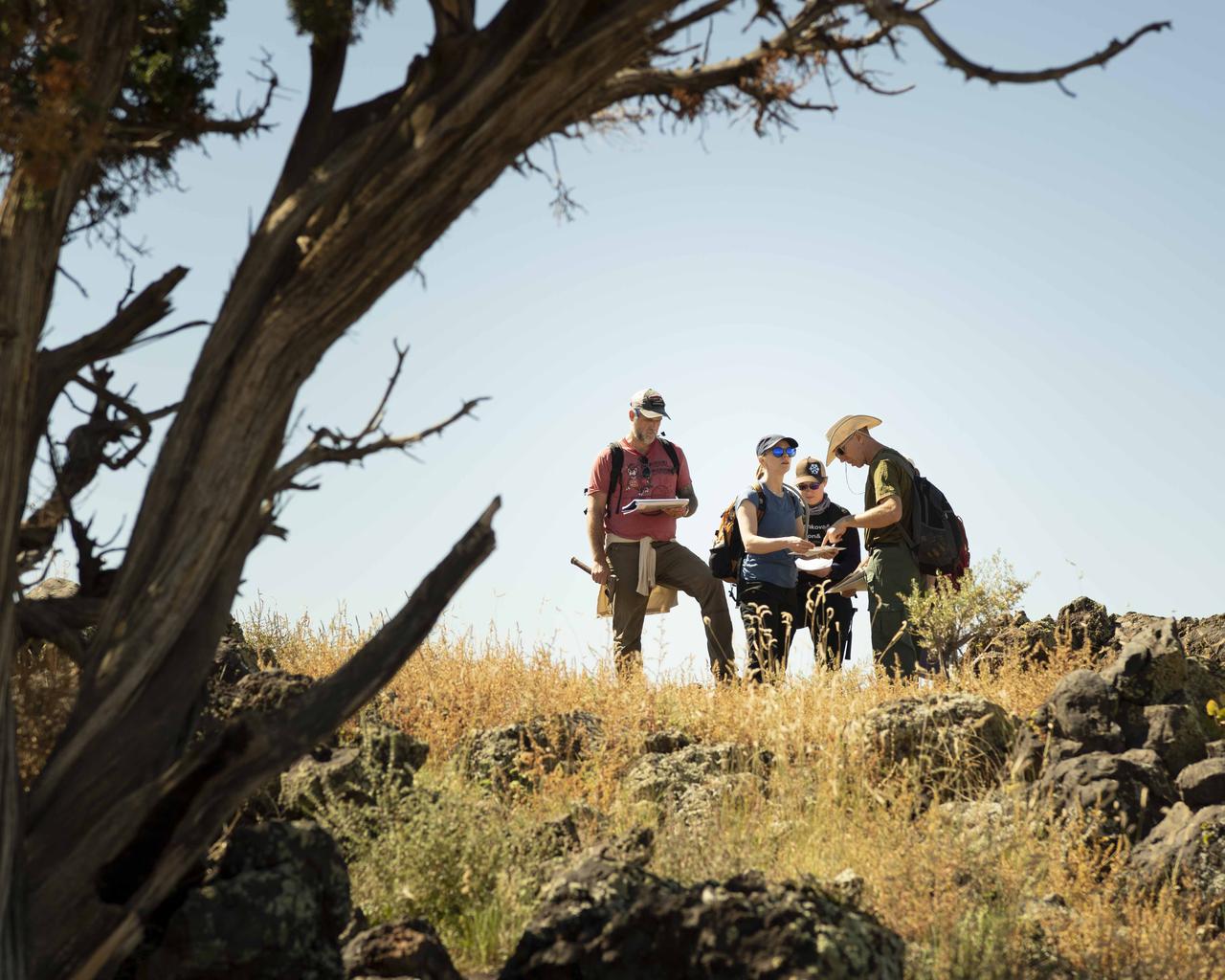
PHOTO DATE: 10-04-22 LOCATION: Flagstaff, Arizona SUBJECT: Joint EVA Test Team (JETT) Field Testing - JETT 3 fully integrated mission scale test PHOTOGRAPHER: BILL STAFFORD
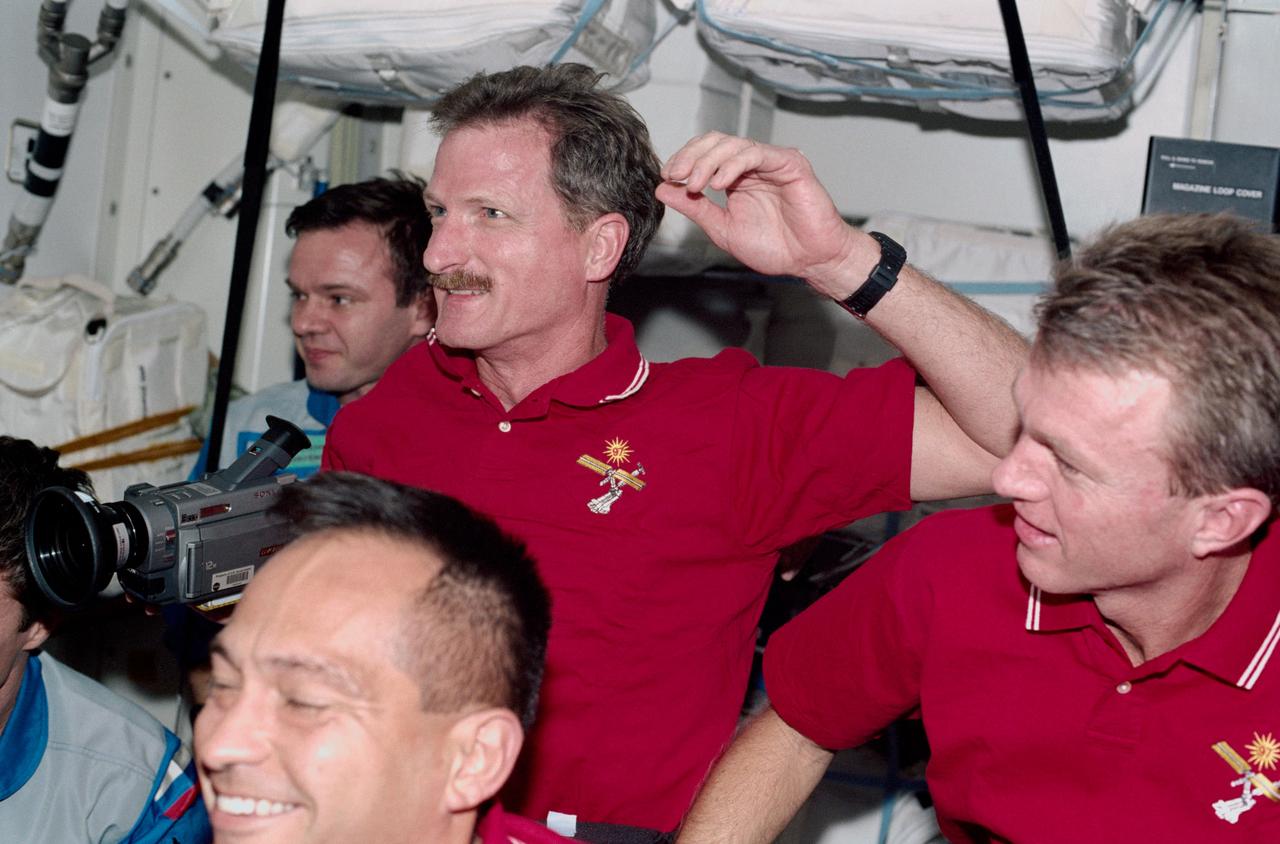
STS097-315-004 (30 Nov. - 11 Dec. 2000) Three STS-97 astronauts reunite with Expedition One crew members in the appropriately-named Unity node aboard the International Space Station (ISS), temporarily docked to the Space Shuttle Endeavour. Dressed in blue flight suits on left side of the frame are cosmonauts Sergei Krikalev (partially out of frame), Expedition One flight engineer; and Yuri P. Gidzenko, Soyuz commander for Expedition One. The visitors are (from left) astronauts Carlos I. Noriega and Joseph R. Tanner, both STS-97 mission specialists, along with Brent W. Jett, Jr., mission commander.
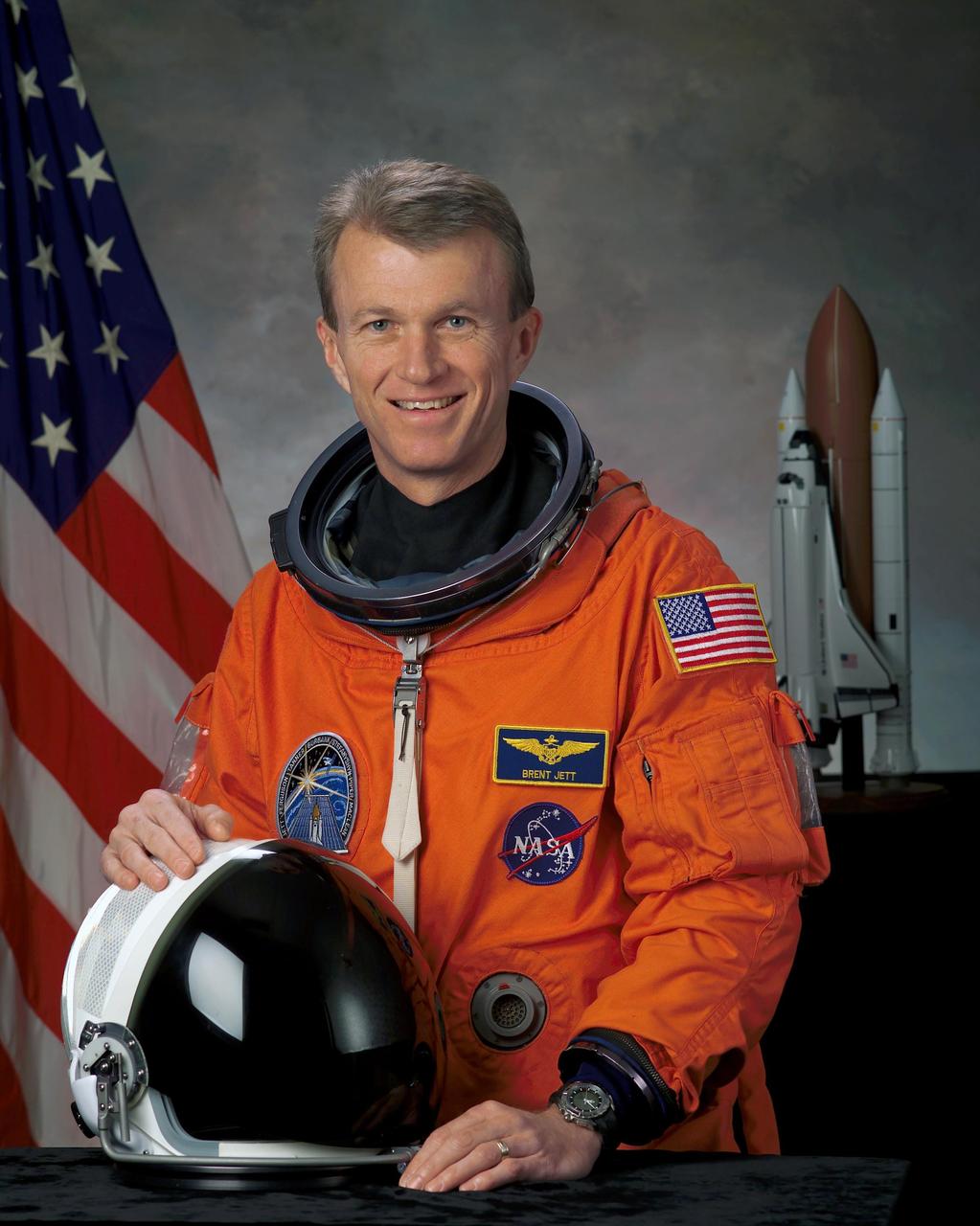
JOHNSON SPACE CENTER, TX - JSC2003-E-01649 (December 20, 2002) -- Astronaut Brent W. Jett Jr., mission commander.
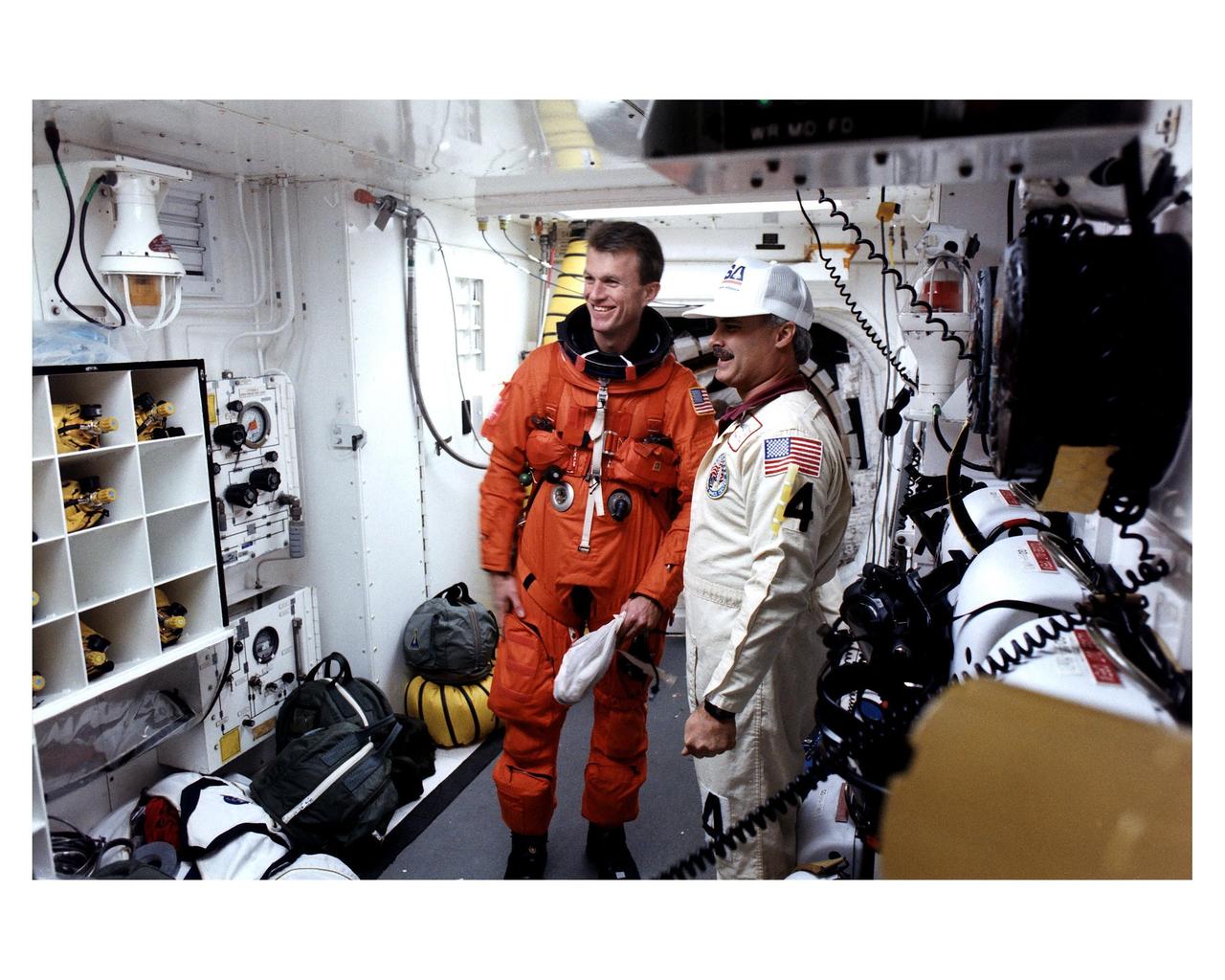
Pilot Jett talks to members of the suiting crew in the white room at Pad 39B before entering the Space Shuttle Atlantis for launch of the STS-81 mission
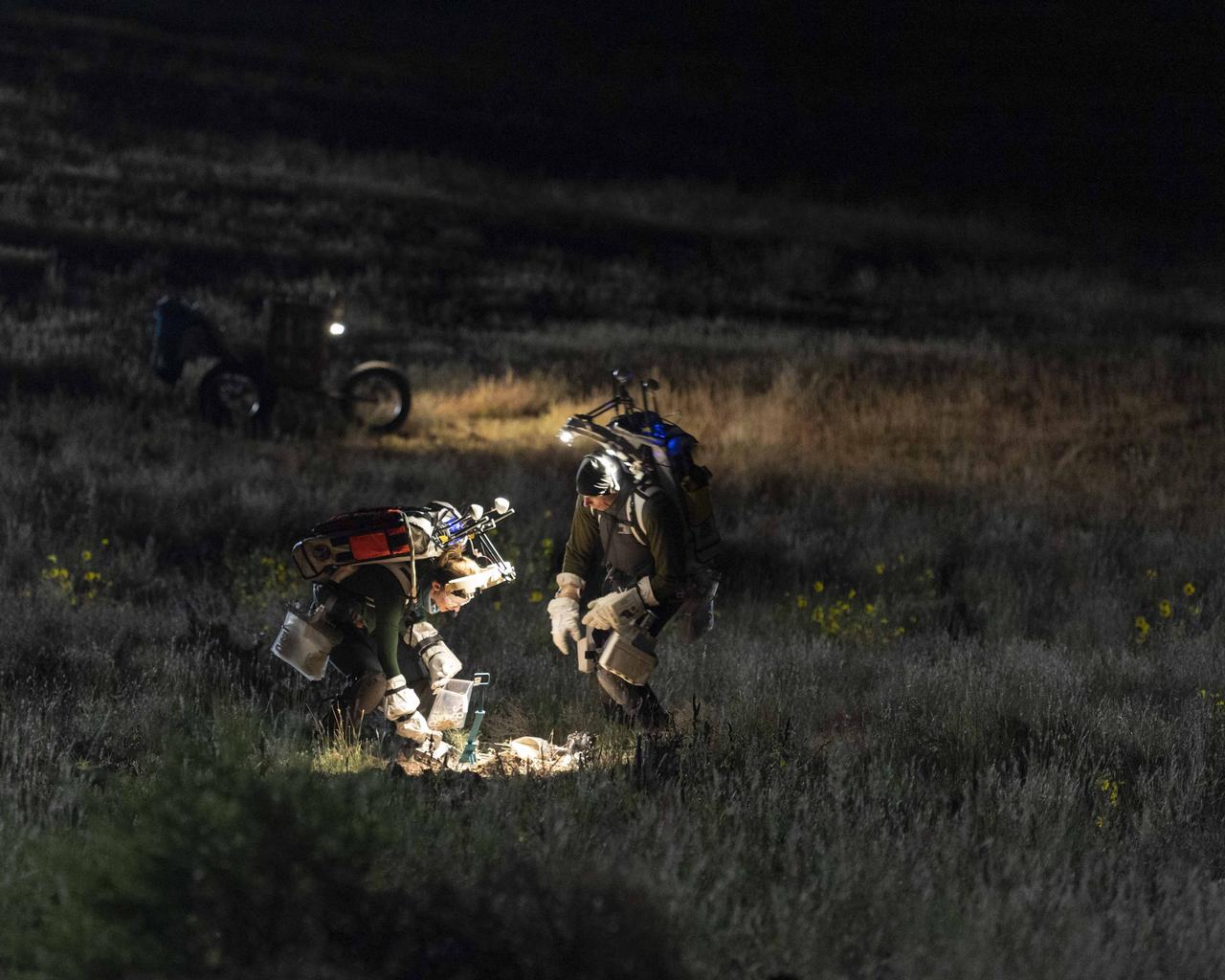
PHOTO DATE: 10-09-22 LOCATION: Flagstaff, Arizona SUBJECT: Photographic coverage of JETTS3 engineering night run 4. Joint EVA Test Team (JETT) Field Testing - JETT 3 fully integrated mission scale test to ensure successful surface operations and technology development for Artemis III. PHOTOGRAPHER: BILL STAFFORD
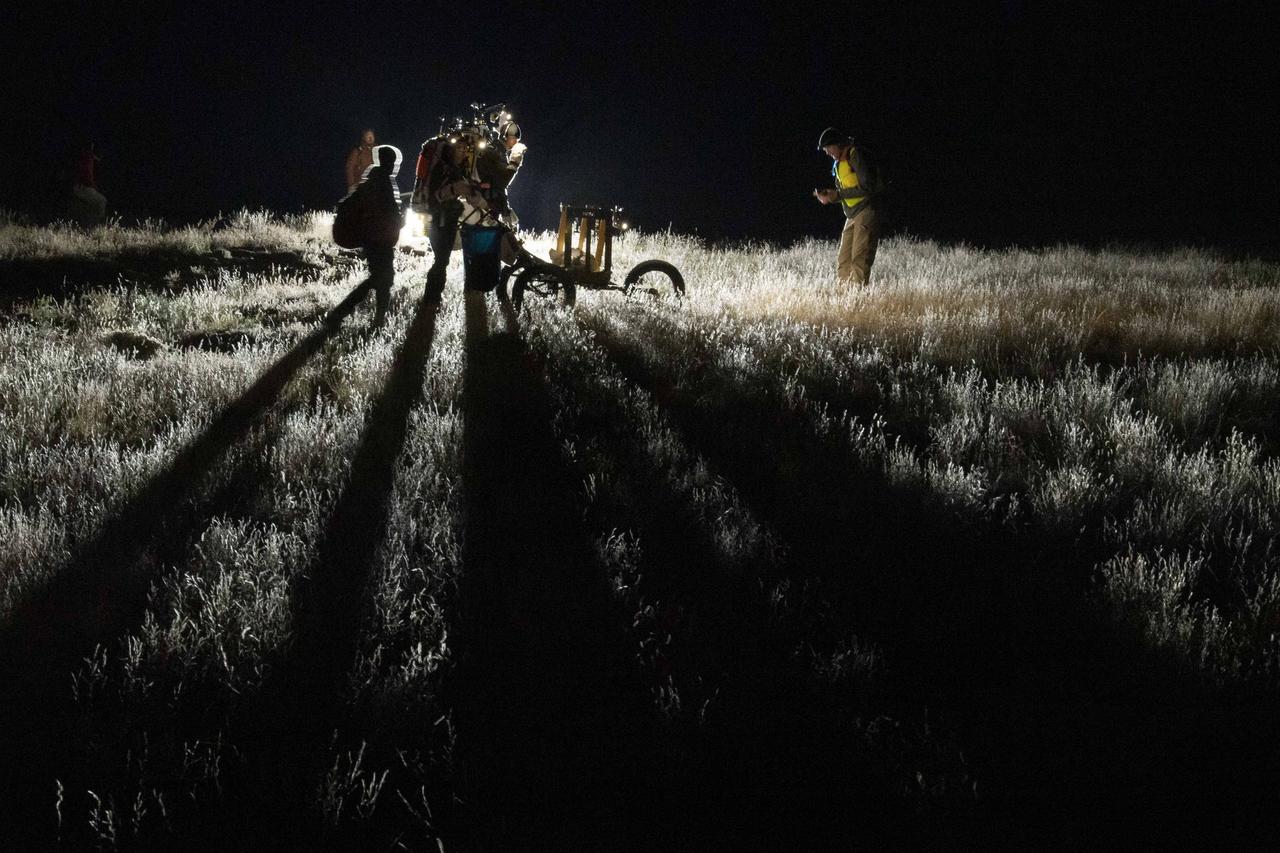
PHOTO DATE: 10-09-22 LOCATION: Flagstaff, Arizona SUBJECT: Photographic coverage of JETTS3 engineering night run 4. Joint EVA Test Team (JETT) Field Testing - JETT 3 fully integrated mission scale test to ensure successful surface operations and technology development for Artemis III. PHOTOGRAPHER: BILL STAFFORD
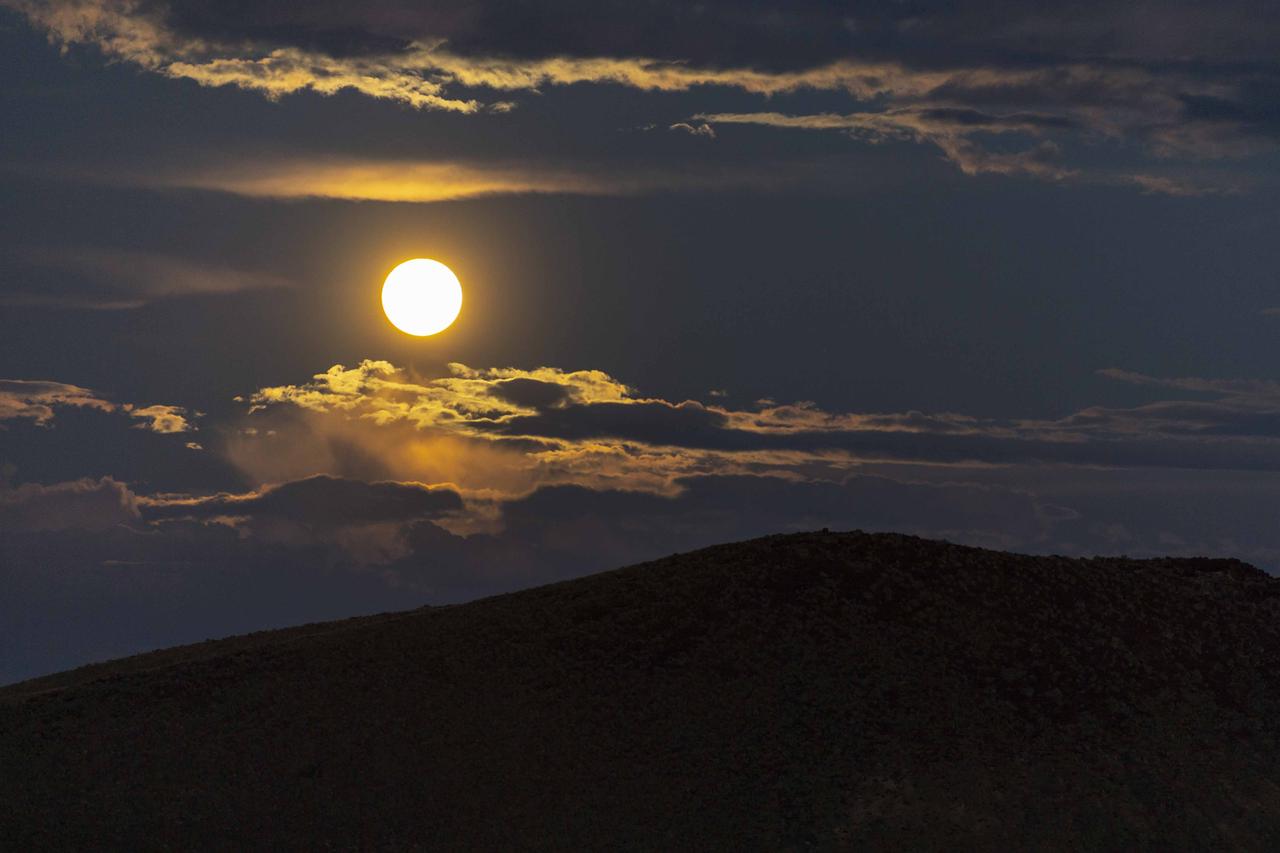
PHOTO DATE: 10-09-22 LOCATION: Flagstaff, Arizona SUBJECT: Photographic coverage of JETTS3 engineering night run 4. Joint EVA Test Team (JETT) Field Testing - JETT 3 fully integrated mission scale test to ensure successful surface operations and technology development for Artemis III. PHOTOGRAPHER: BILL STAFFORD

PHOTO DATE: 10-09-22 LOCATION: Flagstaff, Arizona SUBJECT: Photographic coverage of JETTS3 engineering night run 4. Joint EVA Test Team (JETT) Field Testing - JETT 3 fully integrated mission scale test to ensure successful surface operations and technology development for Artemis III. PHOTOGRAPHER: BILL STAFFORD
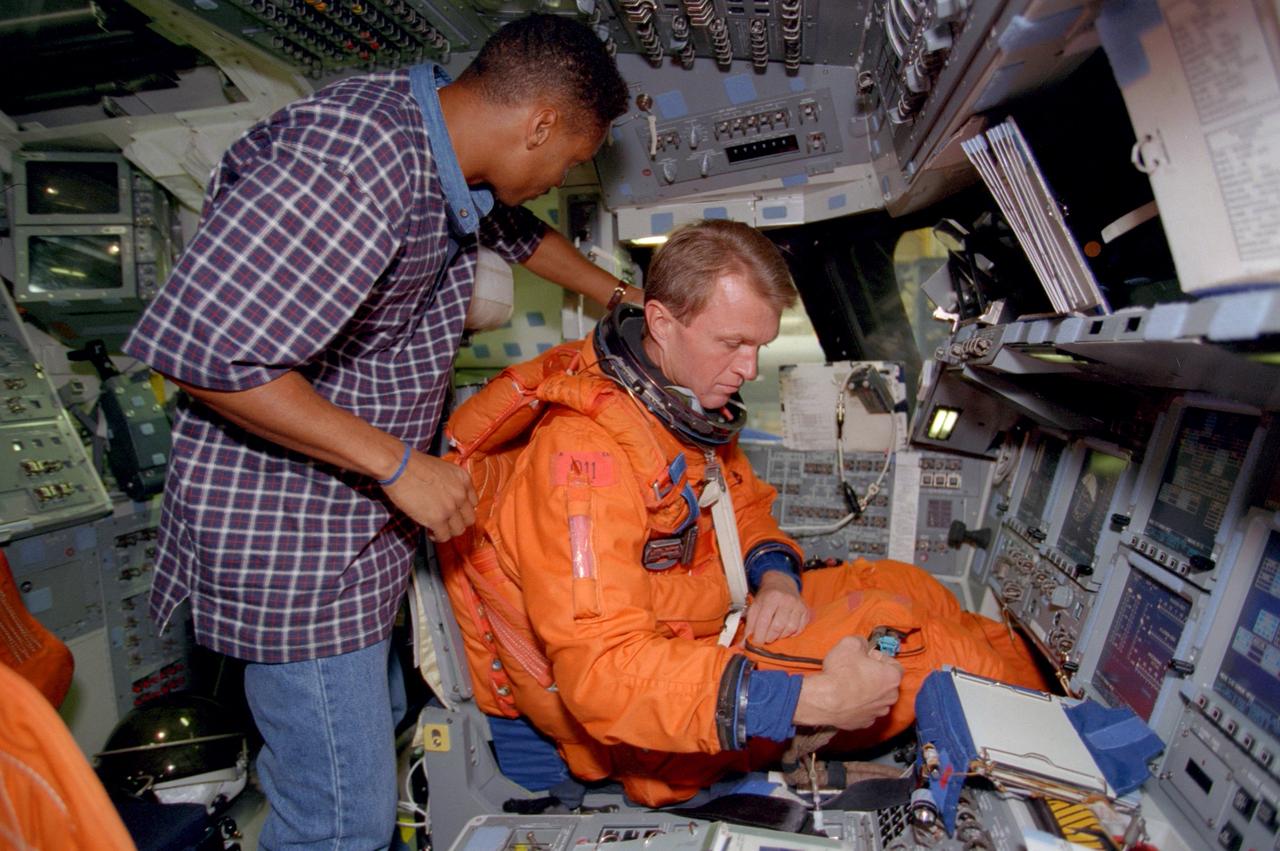
S99-07641 (15 July 1999)--- Carlous Gillis, a technician for United Space Alliance, assists astronaut Brent W. Jett, STS-97 commander, with his launch and entry garment during a training session in the Systems Integration Facility at the Johnson Space Center (JSC). Jett, pictured here in the commander's station on the port side of a shuttle crew compartment trainer (CCT), and four other astronauts are to visit the International Space Station (ISS) late next year
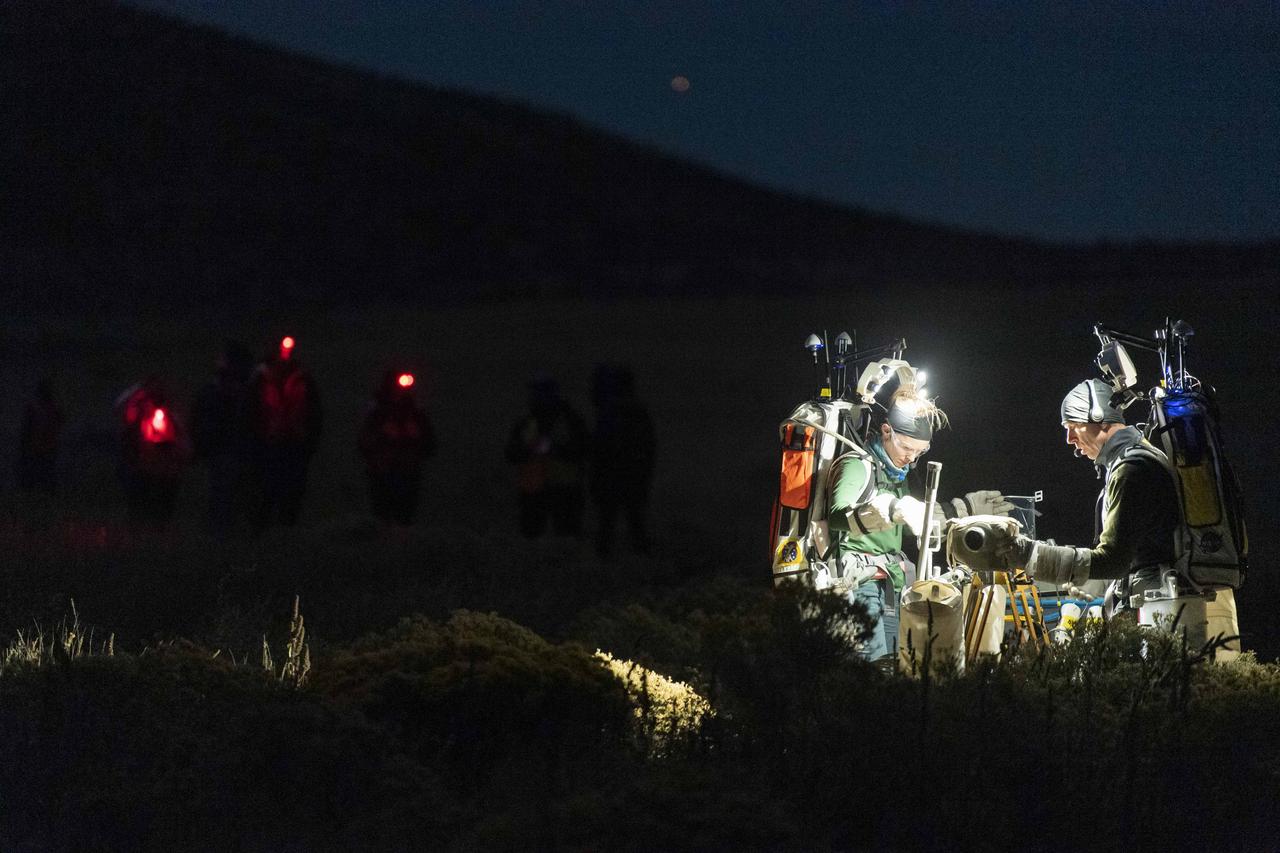
PHOTO DATE: 10-09-22 LOCATION: Flagstaff, Arizona SUBJECT: Photographic coverage of JETTS3 engineering night run 4. Joint EVA Test Team (JETT) Field Testing - JETT 3 fully integrated mission scale test to ensure successful surface operations and technology development for Artemis III. PHOTOGRAPHER: BILL STAFFORD
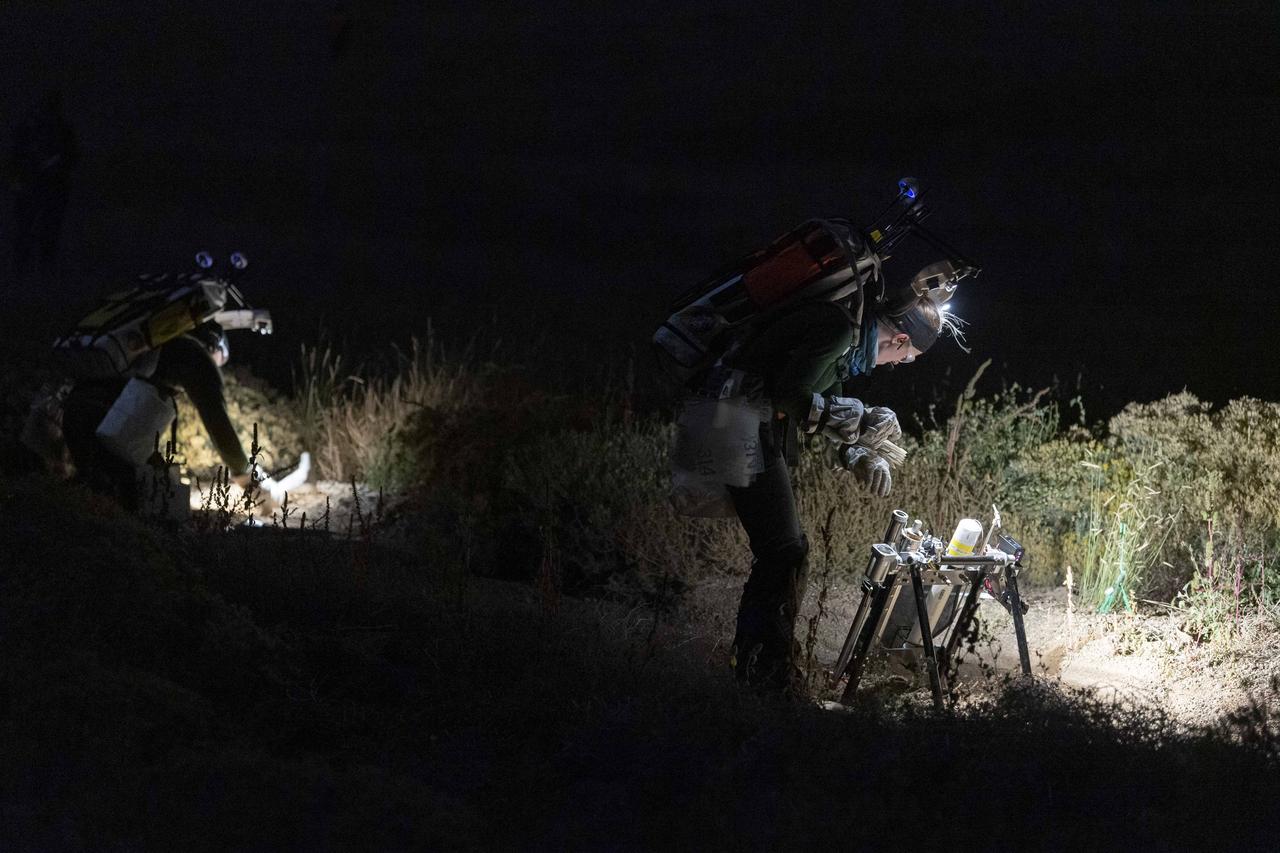
PHOTO DATE: 10-09-22 LOCATION: Flagstaff, Arizona SUBJECT: Photographic coverage of JETTS3 engineering night run 4. Joint EVA Test Team (JETT) Field Testing - JETT 3 fully integrated mission scale test to ensure successful surface operations and technology development for Artemis III. PHOTOGRAPHER: BILL STAFFORD
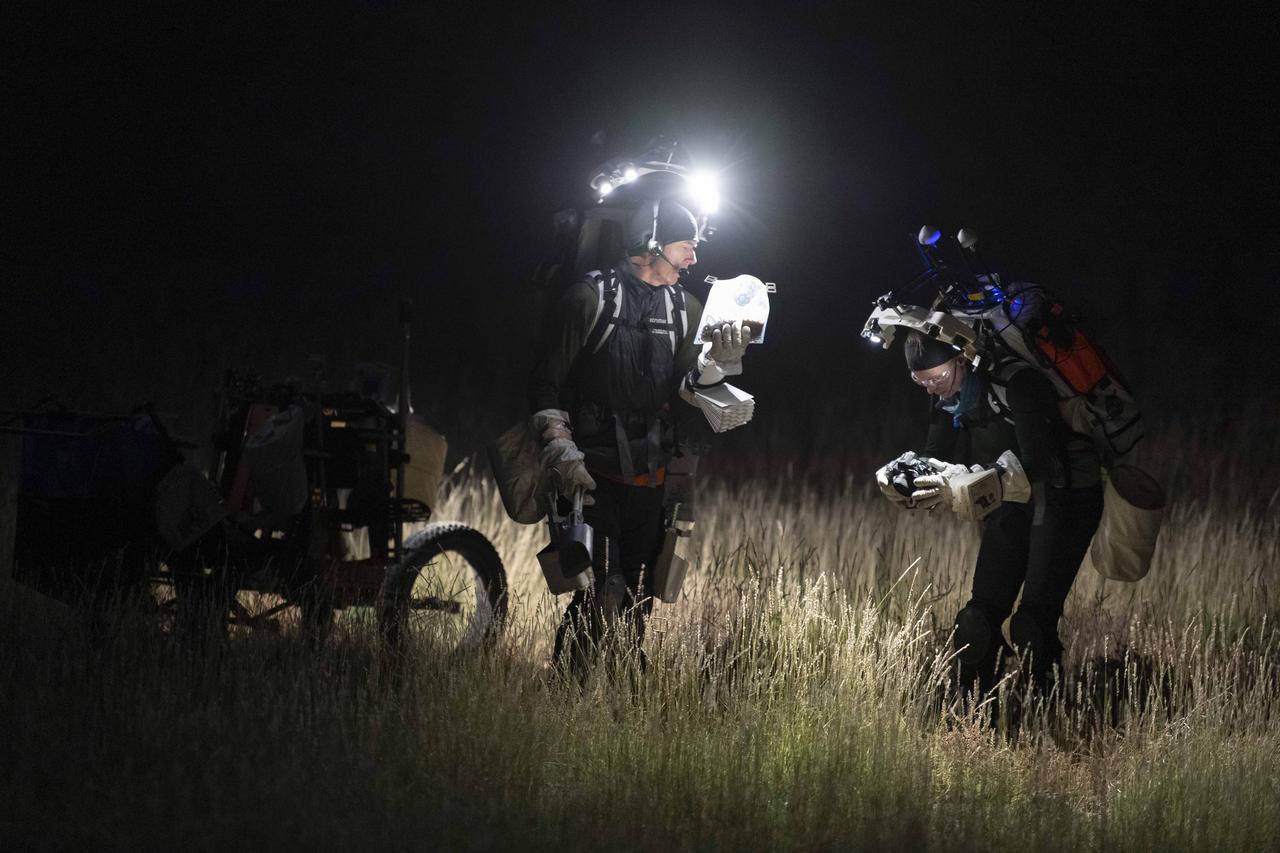
PHOTO DATE: 10-09-22 LOCATION: Flagstaff, Arizona SUBJECT: Photographic coverage of JETTS3 engineering night run 4. Joint EVA Test Team (JETT) Field Testing - JETT 3 fully integrated mission scale test to ensure successful surface operations and technology development for Artemis III. PHOTOGRAPHER: BILL STAFFORD
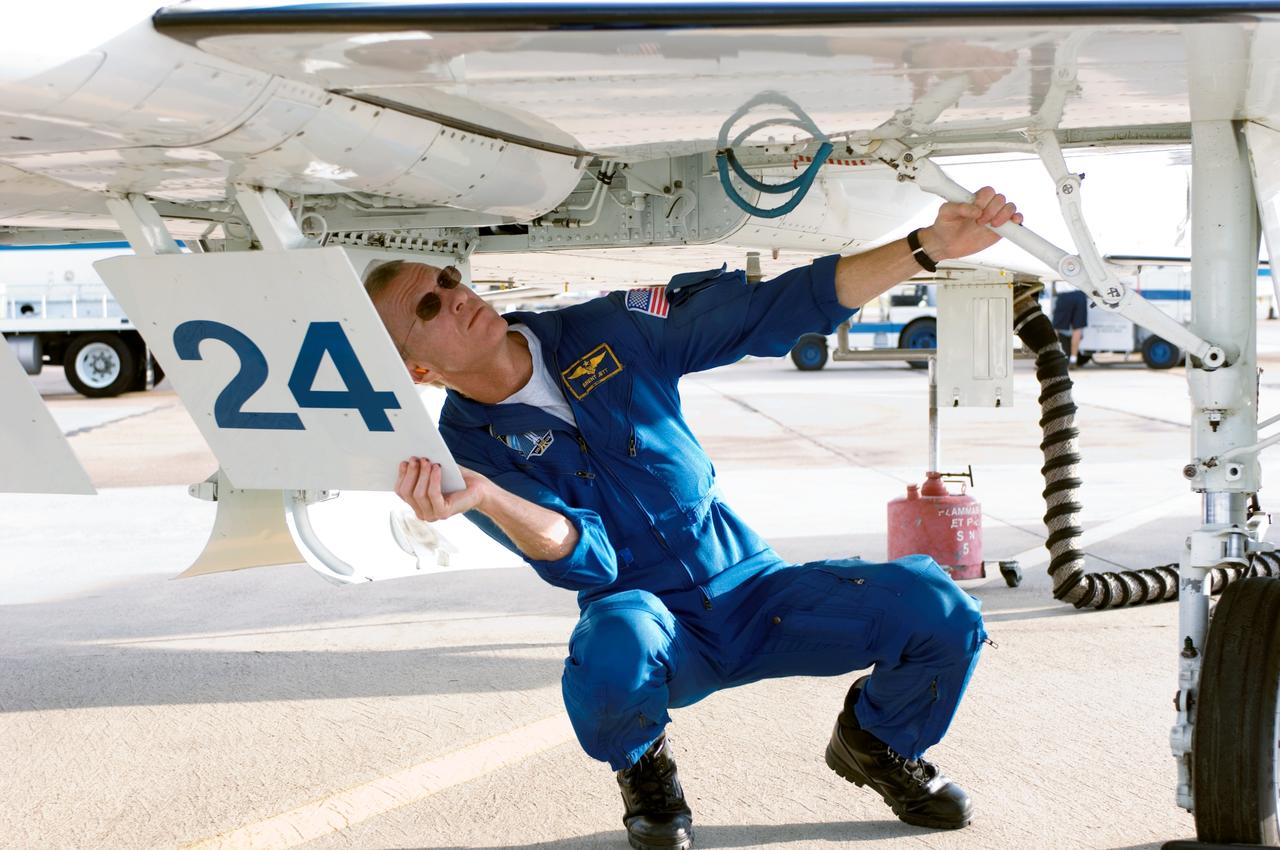
JSC2006-E-27871 (22 June 2006) --- Astronaut Brent W. Jett Jr., STS-115 commander, prepares for a flight in a NASA T-38 trainer jet at Ellington Field near Johnson Space Center.
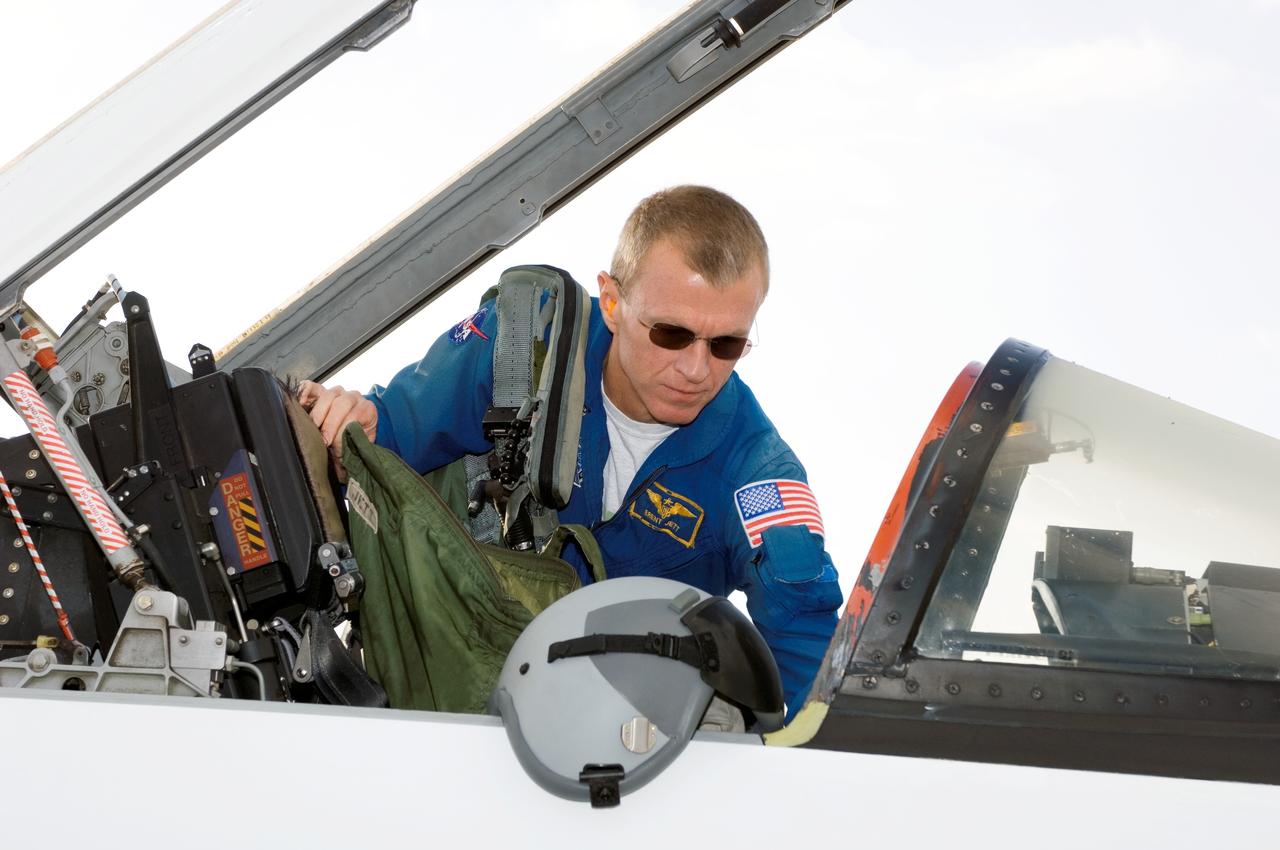
JSC2006-E-27863 (22 June 2006) --- Astronaut Brent W. Jett Jr., STS-115 commander, prepares for a flight in a NASA T-38 trainer jet at Ellington Field near Johnson Space Center.
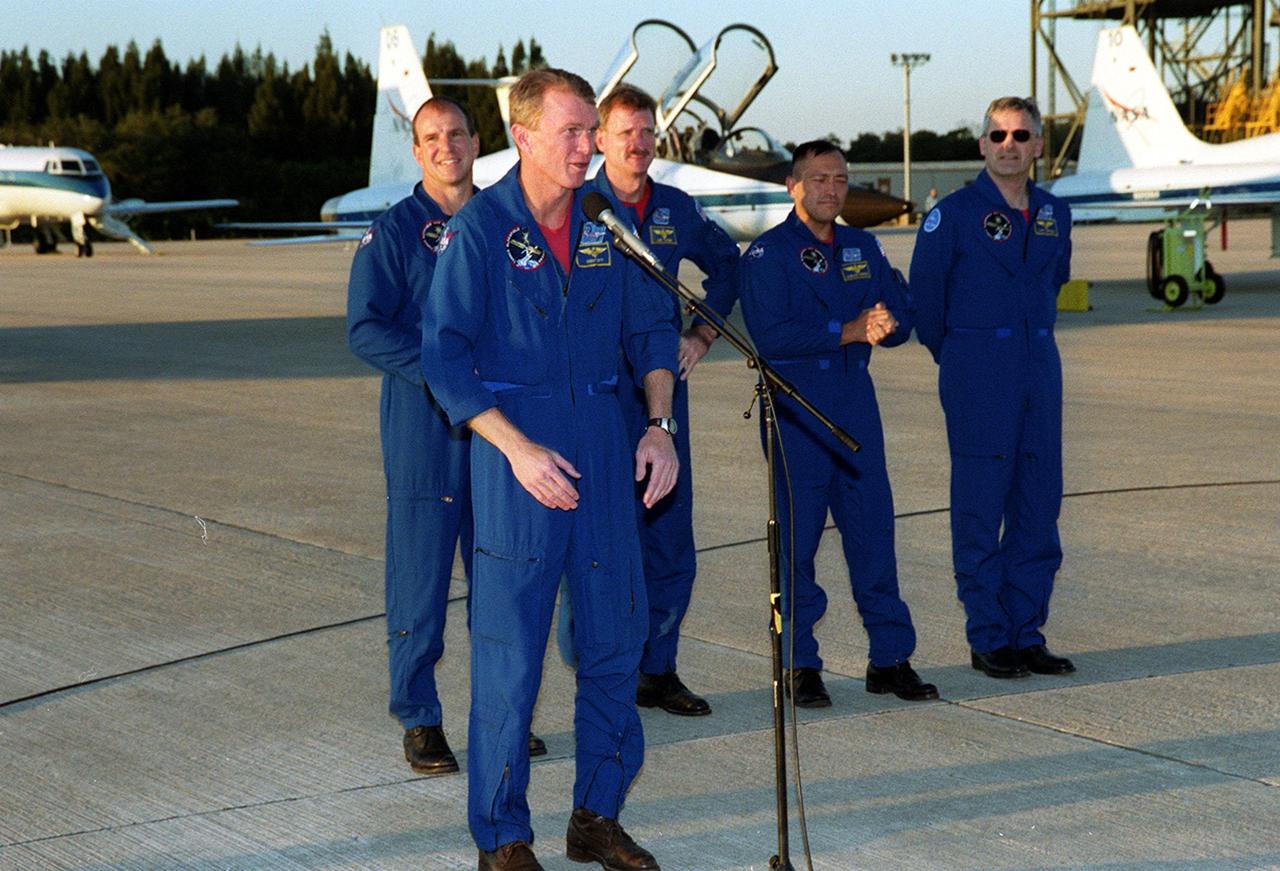
After arriving at the Shuttle Landing Facility, the STS-97 crew gather to address the media. At the microphone, Commander Brent Jett praises the efforts of the KSC workers to get ready for the launch. Behind Jett are Pilot Michael Bloomfield and Mission Specialists Joseph Tanner, Carlos Noriega and Marc Garneau, who is with the Canadian Space Agency. Mission STS-97 is the sixth construction flight to the International Space Station. Its payload includes the P6 Integrated Truss Structure and a photovoltaic (PV) module, with giant solar arrays that will provide power to the Station. The mission includes two spacewalks to complete the solar array connections. STS-97 is scheduled to launch Nov. 30 at about 10:06 p.m. EST
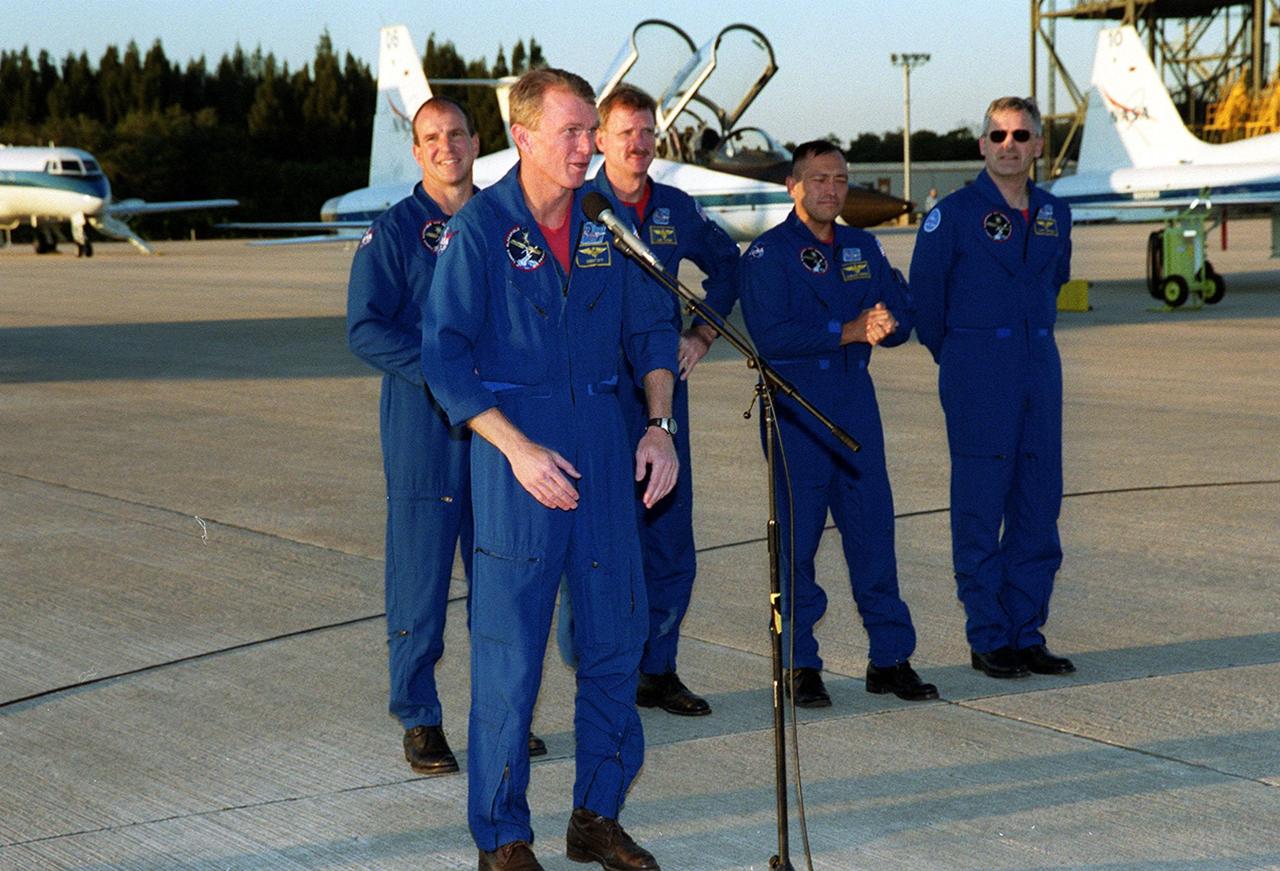
After arriving at the Shuttle Landing Facility, the STS-97 crew gather to address the media. At the microphone, Commander Brent Jett praises the efforts of the KSC workers to get ready for the launch. Behind Jett are Pilot Michael Bloomfield and Mission Specialists Joseph Tanner, Carlos Noriega and Marc Garneau, who is with the Canadian Space Agency. Mission STS-97 is the sixth construction flight to the International Space Station. Its payload includes the P6 Integrated Truss Structure and a photovoltaic (PV) module, with giant solar arrays that will provide power to the Station. The mission includes two spacewalks to complete the solar array connections. STS-97 is scheduled to launch Nov. 30 at about 10:06 p.m. EST
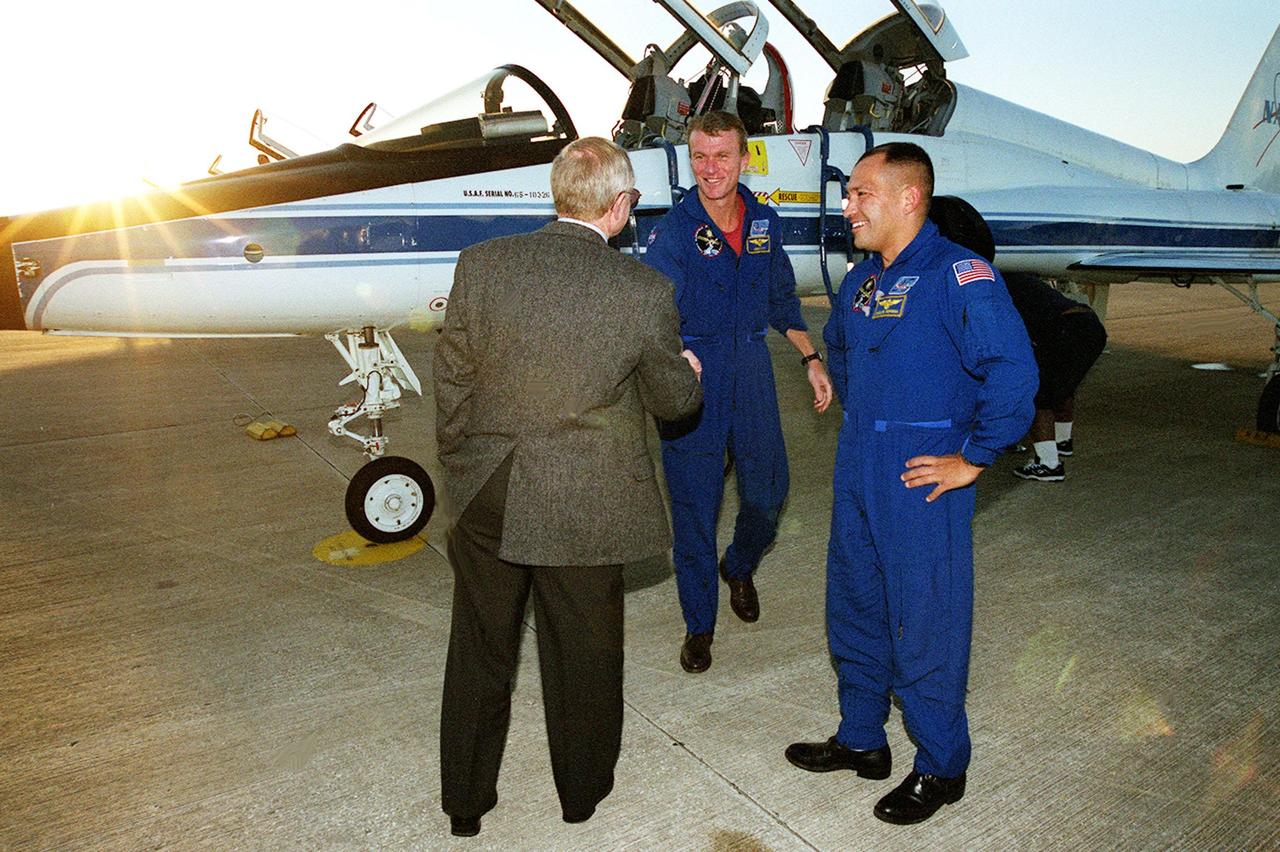
At the Shuttle Landing Facility, Center Director Roy Bridges (left) greets STS-97 Commander Brent Jett on his arrival at KSC for the mission launch. At right is Mission Specialist Carlos Noriega. Jett and Noriega traveled from Johnson Space Center, Houston, Texas, in the T-38 jet aircraft behind them. Mission STS-97is the sixth construction flight to the International Space Station. Its payload includes the P6 Integrated Truss Structure and a photovoltaic (PV) module, with giant solar arrays that will provide power to the Station. The mission includes two spacewalks to complete the solar array connections. STS-97 is scheduled to launch Nov. 30 at about 10:06 p.m. EST
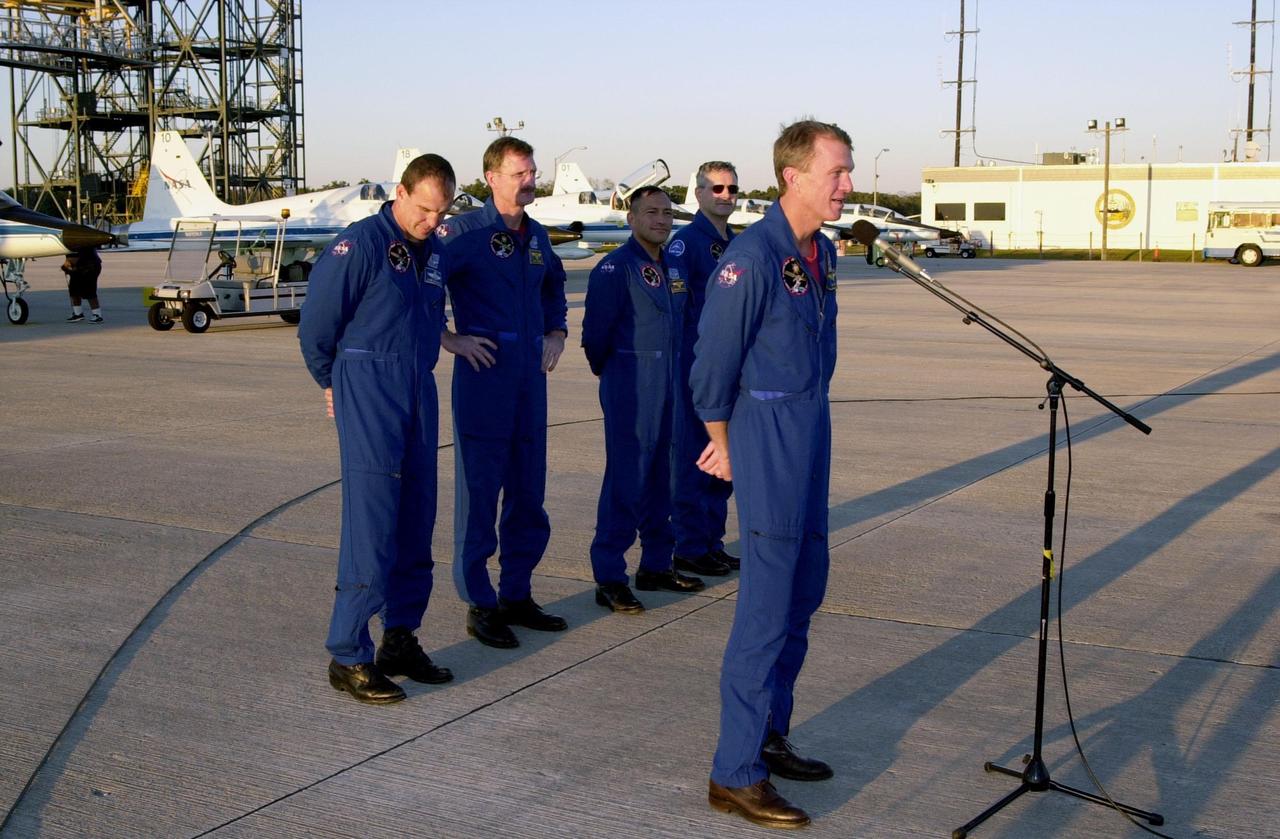
After their arrival at the Shuttle Landing Facility, the STS-97 crew gather to address the media. At the microphone, Commander Brent Jett praises the efforts of the KSC workers to get ready for the launch. Behind Jett are Pilot Michael Bloomfield and Mission Specialists Joseph Tanner, Carolos Noriega and Marc Garneau, who is with the Canadian Space Agency. Mission STS-97is the sixth construction flight to the International Space Station. Its payload includes the P6 Integrated Truss Structure and a photovoltaic (PV) module, with giant solar arrays that will provide power to the Station. The mission includes two spacewalks to complete the solar array connections. STS-97 is scheduled to launch Nov. 30 at about 10:06 p.m. EST
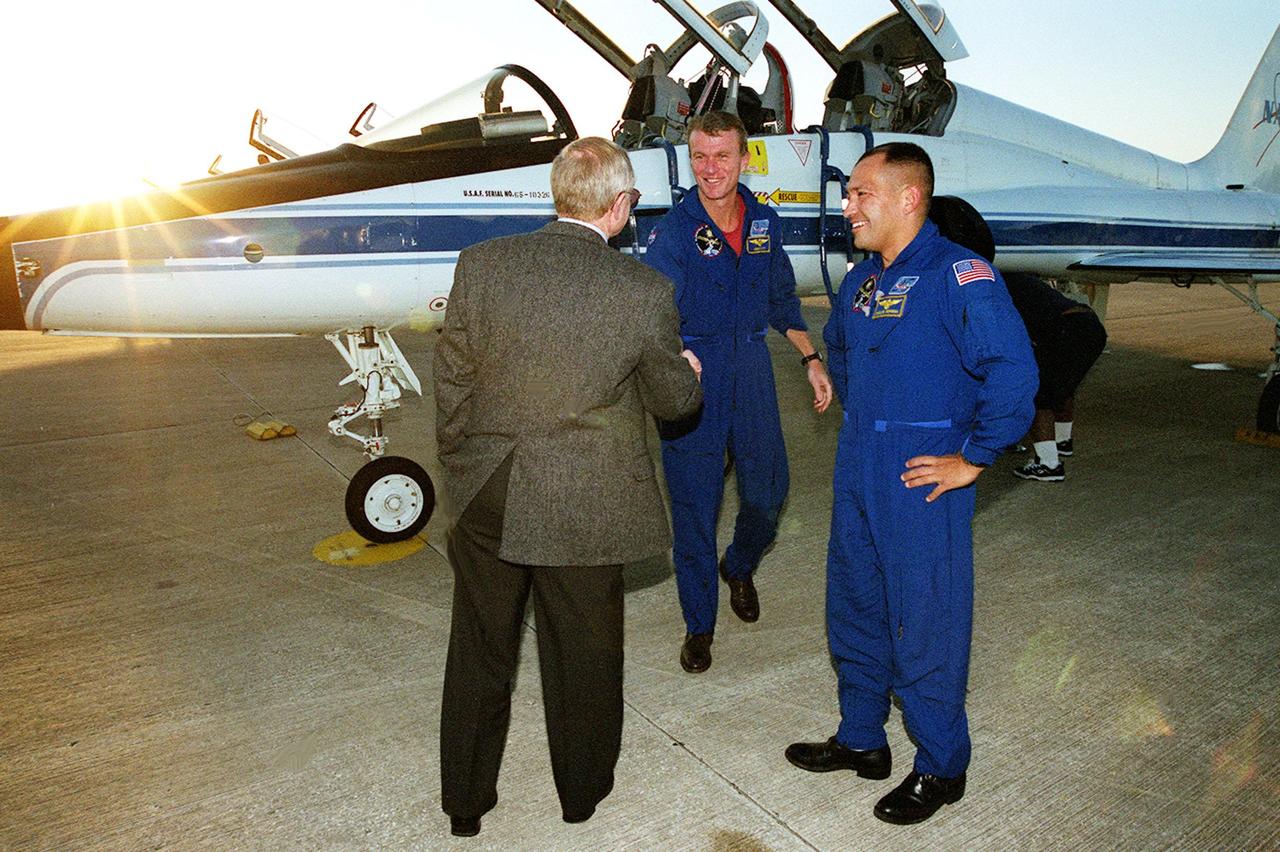
At the Shuttle Landing Facility, Center Director Roy Bridges (left) greets STS-97 Commander Brent Jett on his arrival at KSC for the mission launch. At right is Mission Specialist Carlos Noriega. Jett and Noriega traveled from Johnson Space Center, Houston, Texas, in the T-38 jet aircraft behind them. Mission STS-97is the sixth construction flight to the International Space Station. Its payload includes the P6 Integrated Truss Structure and a photovoltaic (PV) module, with giant solar arrays that will provide power to the Station. The mission includes two spacewalks to complete the solar array connections. STS-97 is scheduled to launch Nov. 30 at about 10:06 p.m. EST
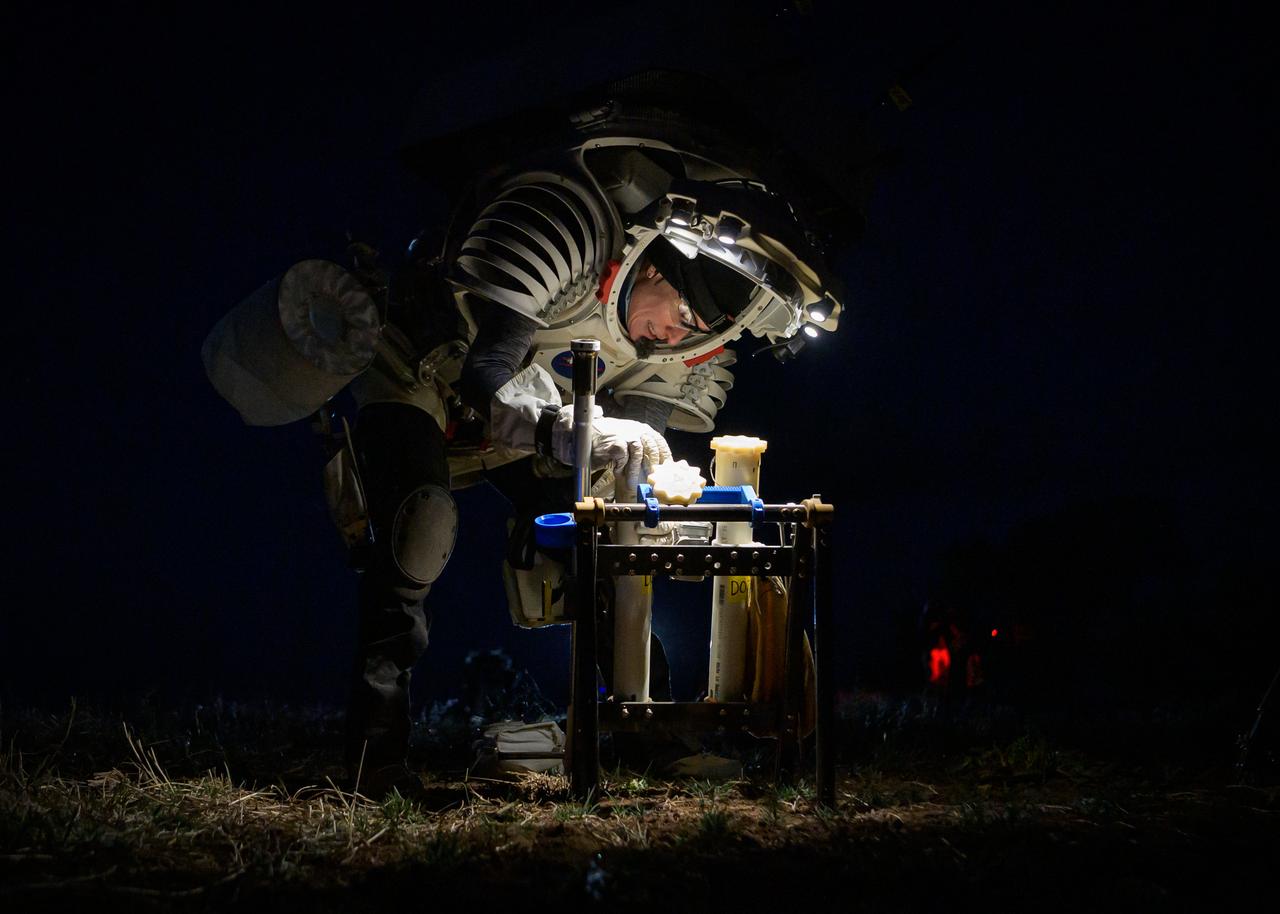
NASA astronaut Kate Rubins selects the geology tool needed during a nighttime simulated moonwalk in the San Francisco Volcanic Field in Northern Arizona on May 16, 2024. Credit: NASA/Josh Valcarcel
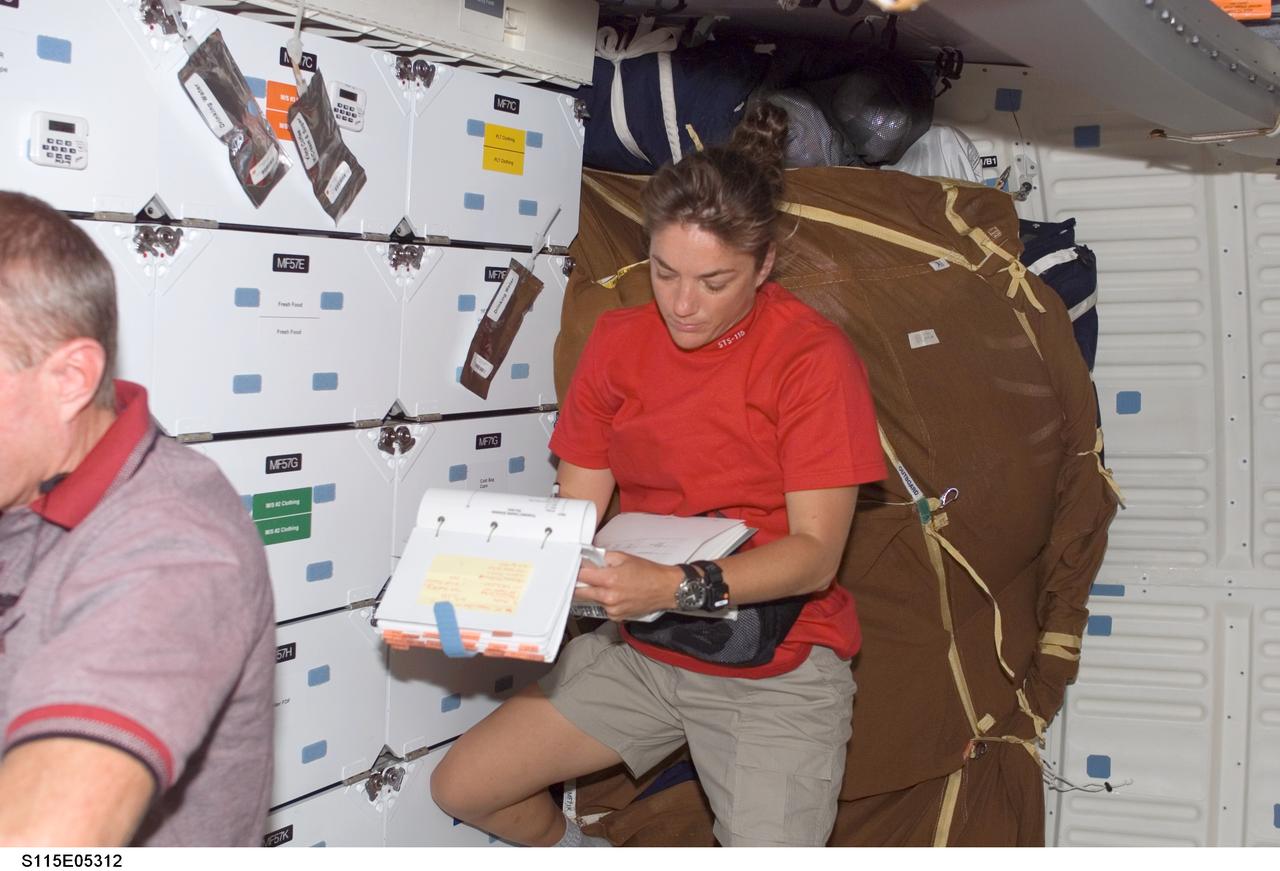
S115-E-05312 (10 Sept. 2006) --- Astronaut Heidemarie M. Stefanyshyn-Piper, STS-115 mission specialist, refers to a manual on the middeck of the Space Shuttle Atlantis during activities on the second flight day. Astronaut Brent W. Jett Jr., commander, is partially in the frame at left.
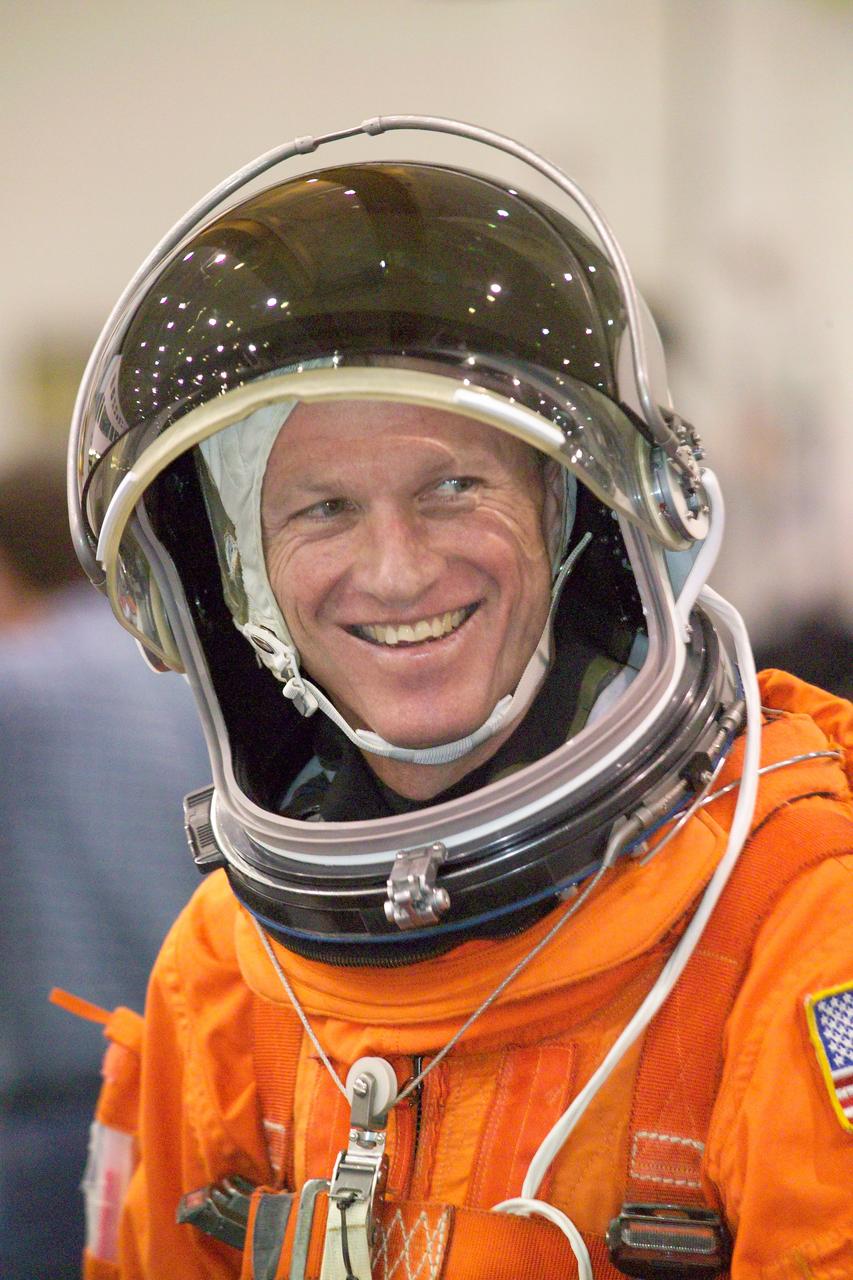
JSC2005-E-19222 (11 May 2005) --- Astronaut Brent W. Jett Jr., STS-115 commander, attired in a training version of the shuttle launch and entry suit, awaits the start of a water survival training session in the Neutral Buoyancy Laboratory (NBL) near Johnson Space Center.
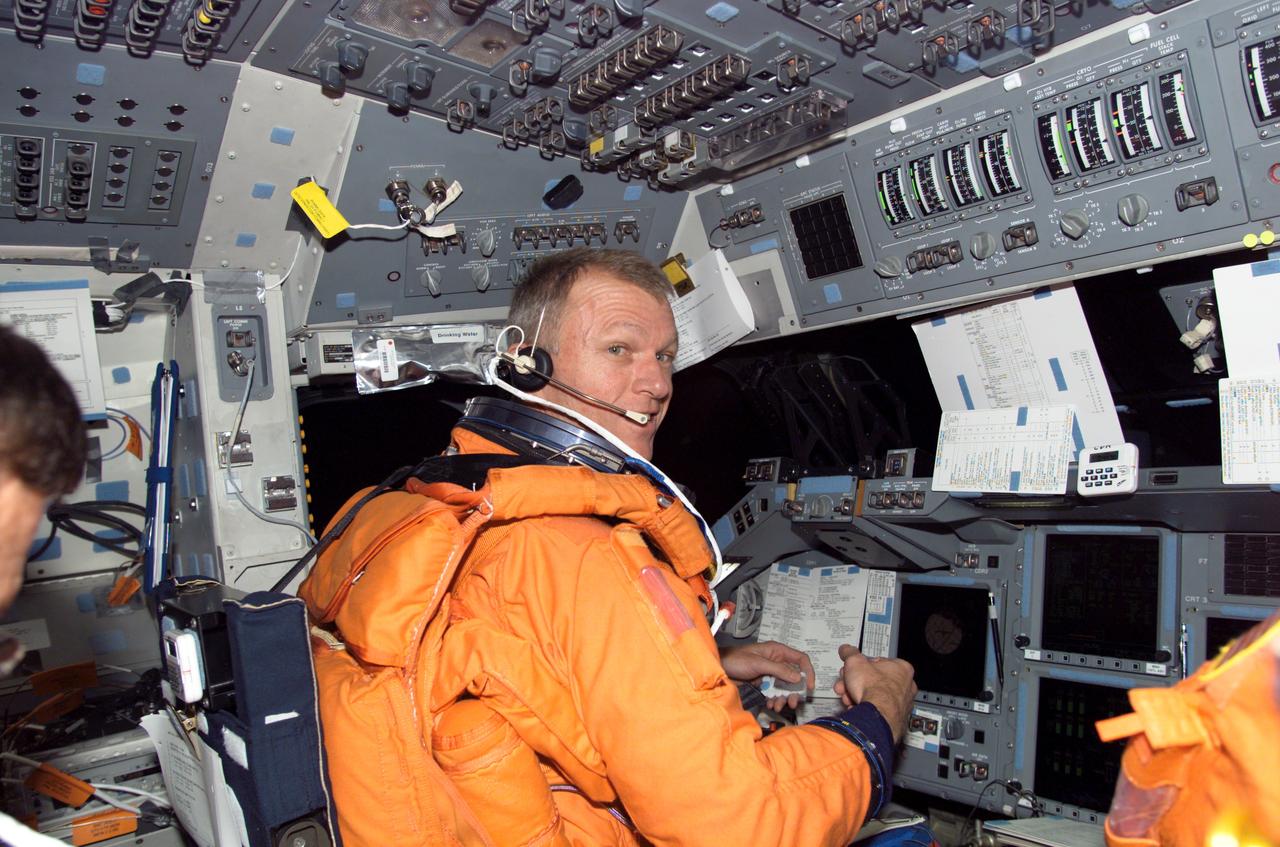
S115-E-07958 (21 Sept. 2006) --- Attired in his shuttle launch and entry suit, astronaut Brent W. Jett, Jr., STS-115 commander, looks over a procedures checklist as he occupies the commander's station on the flight deck of the Space Shuttle Atlantis prior to entry.
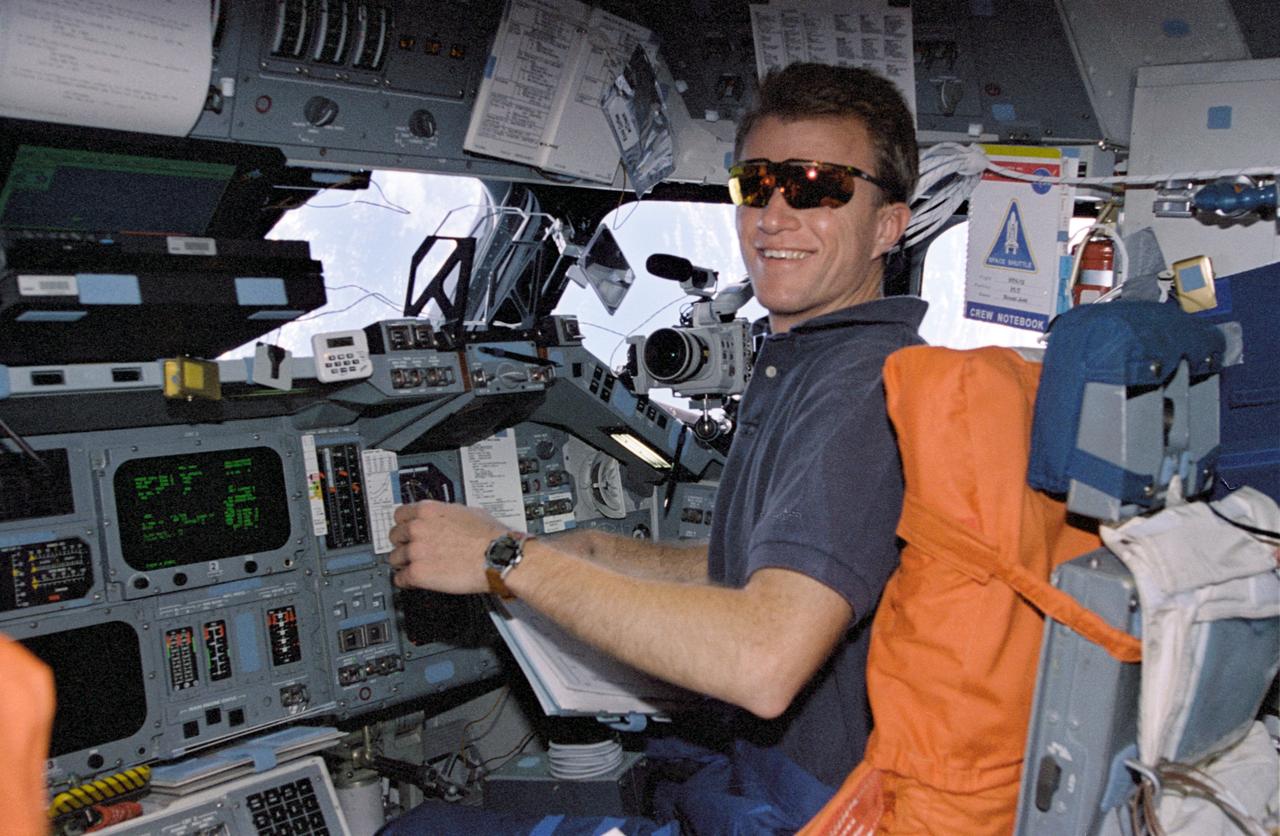
STS072-302-029 (11-20 Jan. 1996) --- Astronaut Brent W. Jett Jr. mans the pilot’s station aboard the Space Shuttle Endeavour during rendezvous operations with the Japanese Space Flyer Unit (SFU). The pilot joined five other astronauts for a week a half aboard Endeavour in Earth-orbit.
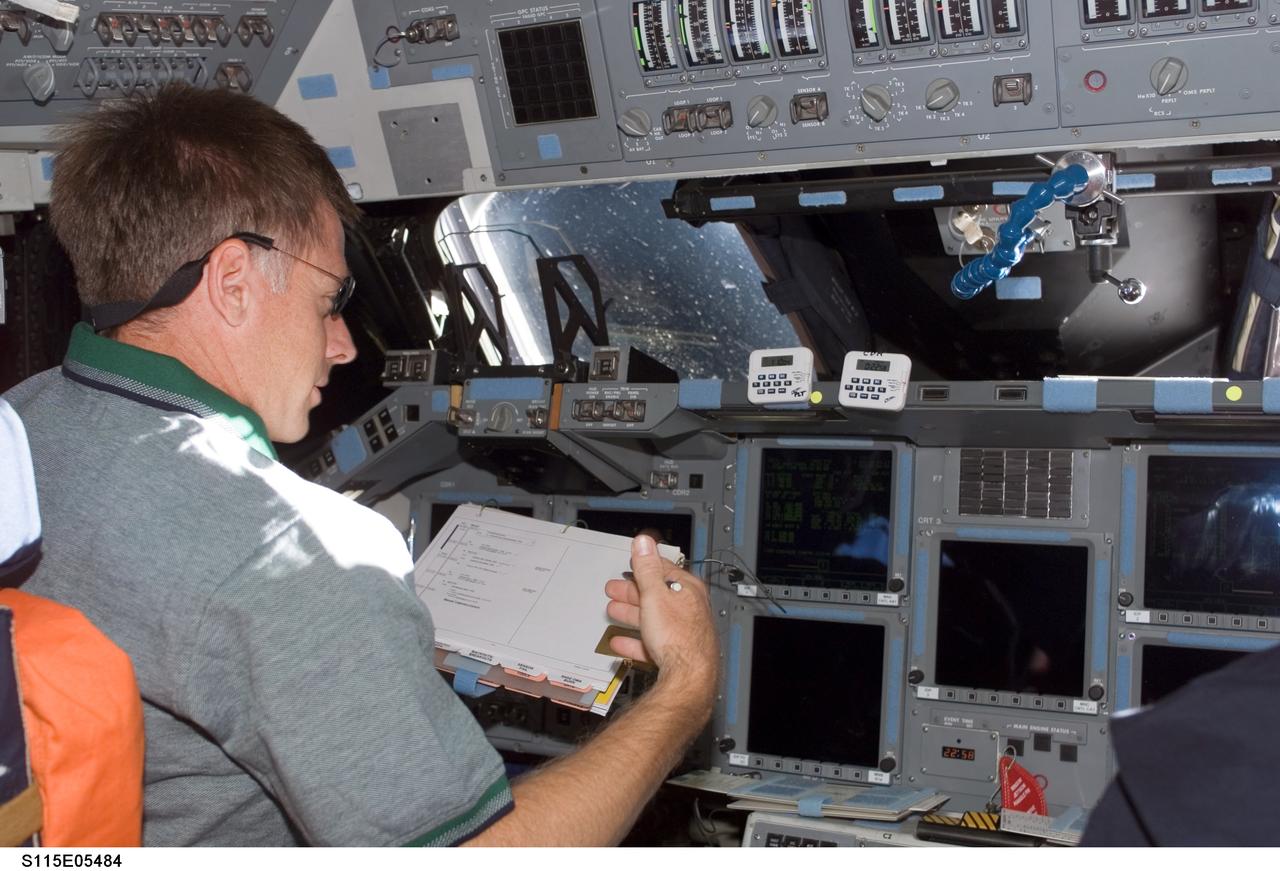
S115-E-05484 (11 Sept. 2006) --- Astronaut Christopher J. Ferguson, STS-115 pilot, temporarily sits in the port station on the flight deck, normally occupied by astronaut Brent W. Jett Jr., the commander for this flight of the Space Shuttle Atlantis.
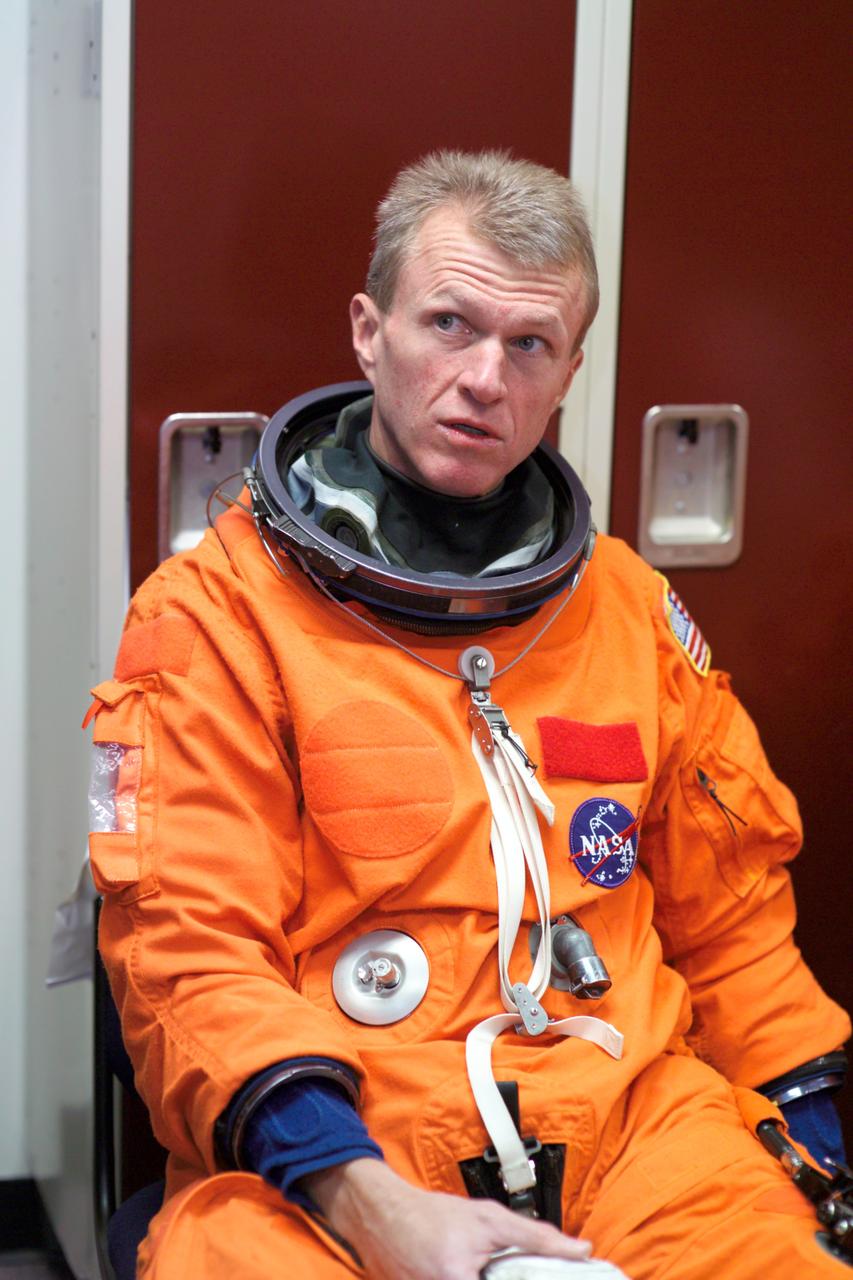
JSC2005-E-13773 (5 April 2005) --- Astronaut Brent W. Jett Jr., STS-115 commander, attired in a training version of the shuttle launch and entry suit, awaits the start of an emergency egress training session in the Space Vehicle Mockup Facility at the Johnson Space Center.
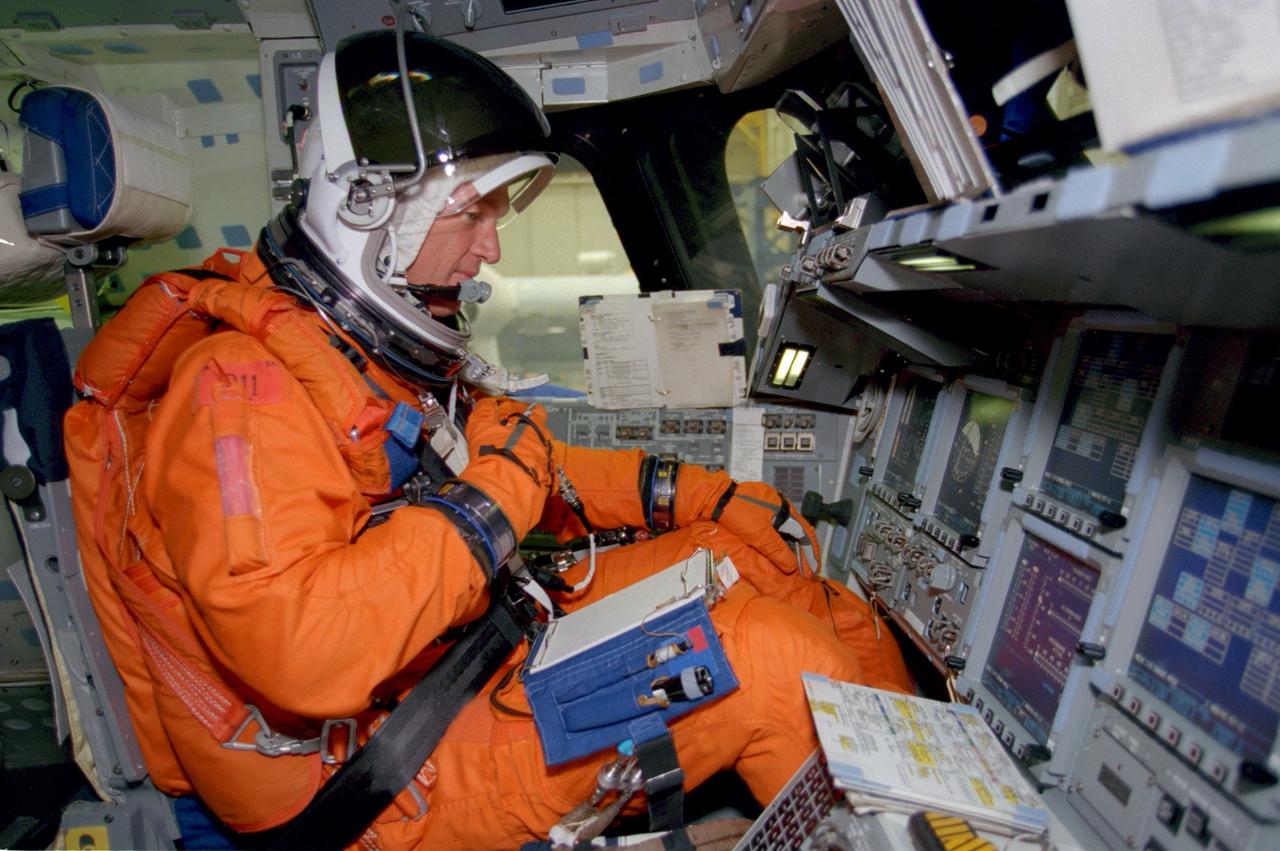
S99-07639 (15 July 1999) --- Astronaut Brent W. Jett, Jr., STS-97 mission commander, goes over a checklist while seated at the commander's station of a trainer/mockup during a dry-run of launch countdown procedures.
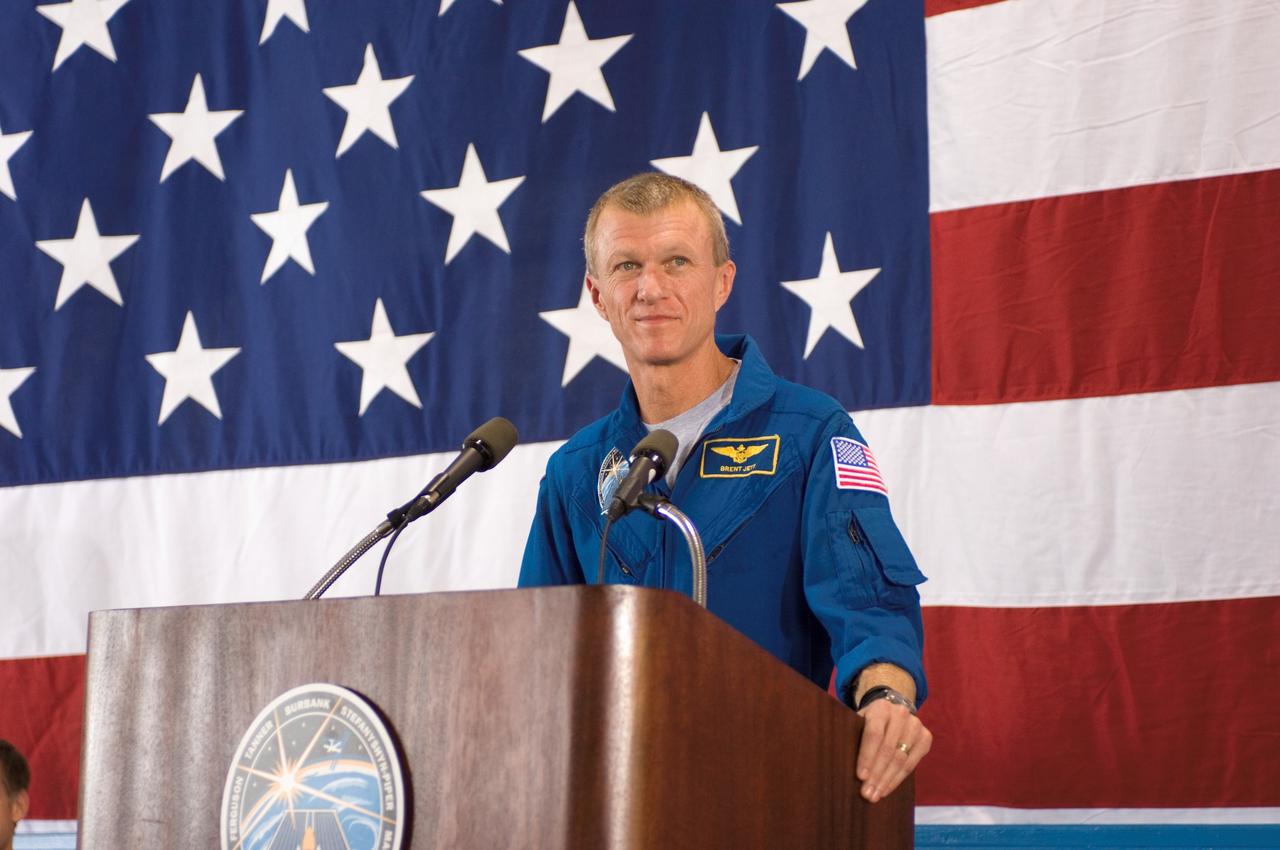
JSC2006-E-41579 (22 Sept. 2006) --- Astronaut Brent W. Jett, Jr., STS-115 commander, speaks from a lectern in Ellington Field's Hangar 276 near Johnson Space Center during the STS-115 crew return ceremonies.
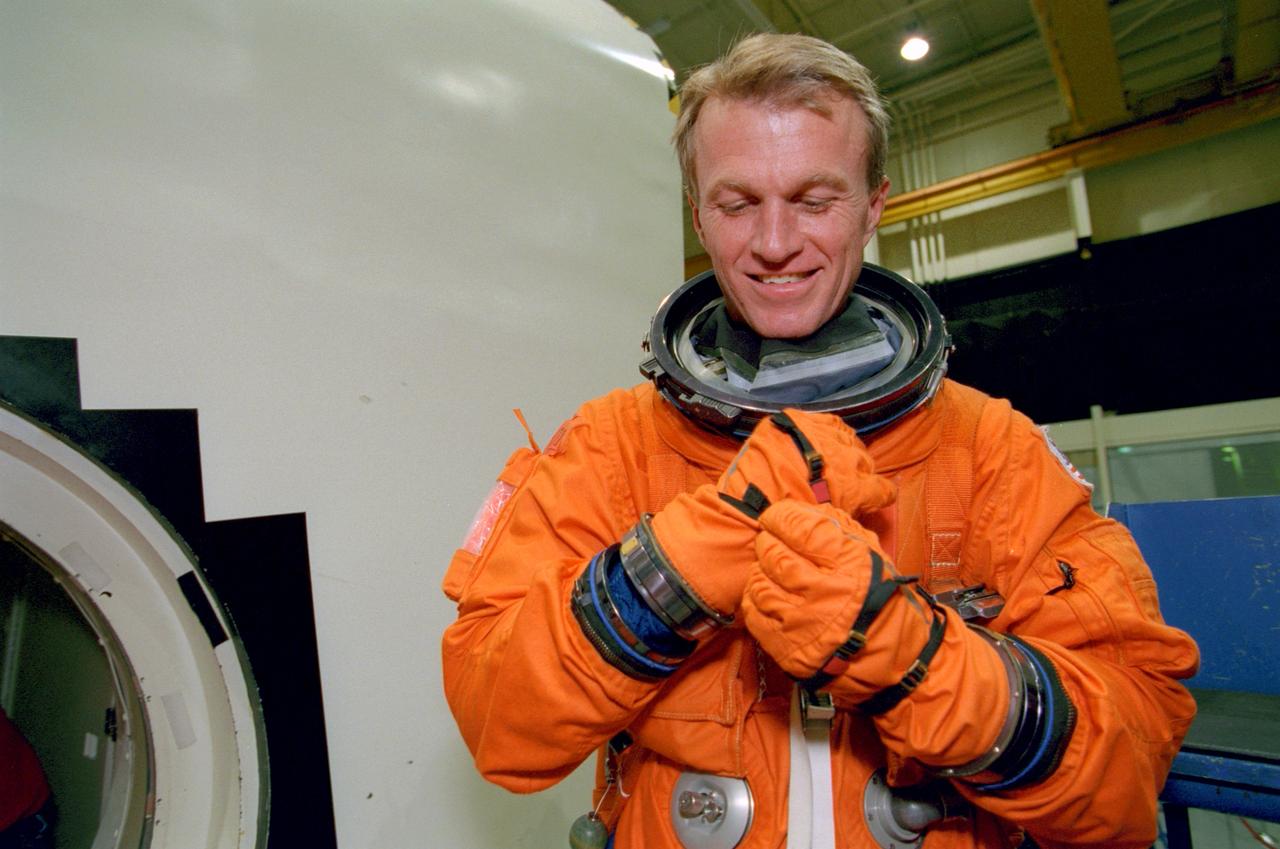
S99-07627 (15 July 1999) --- Astronant Brent W. Jett, STS-97 mission commander, adjusts a glove on his pressure suit during an emergency egress training excercise with the crew compartment trainer (CCT) in the Johnson Space Center's Systems Integration Facility.