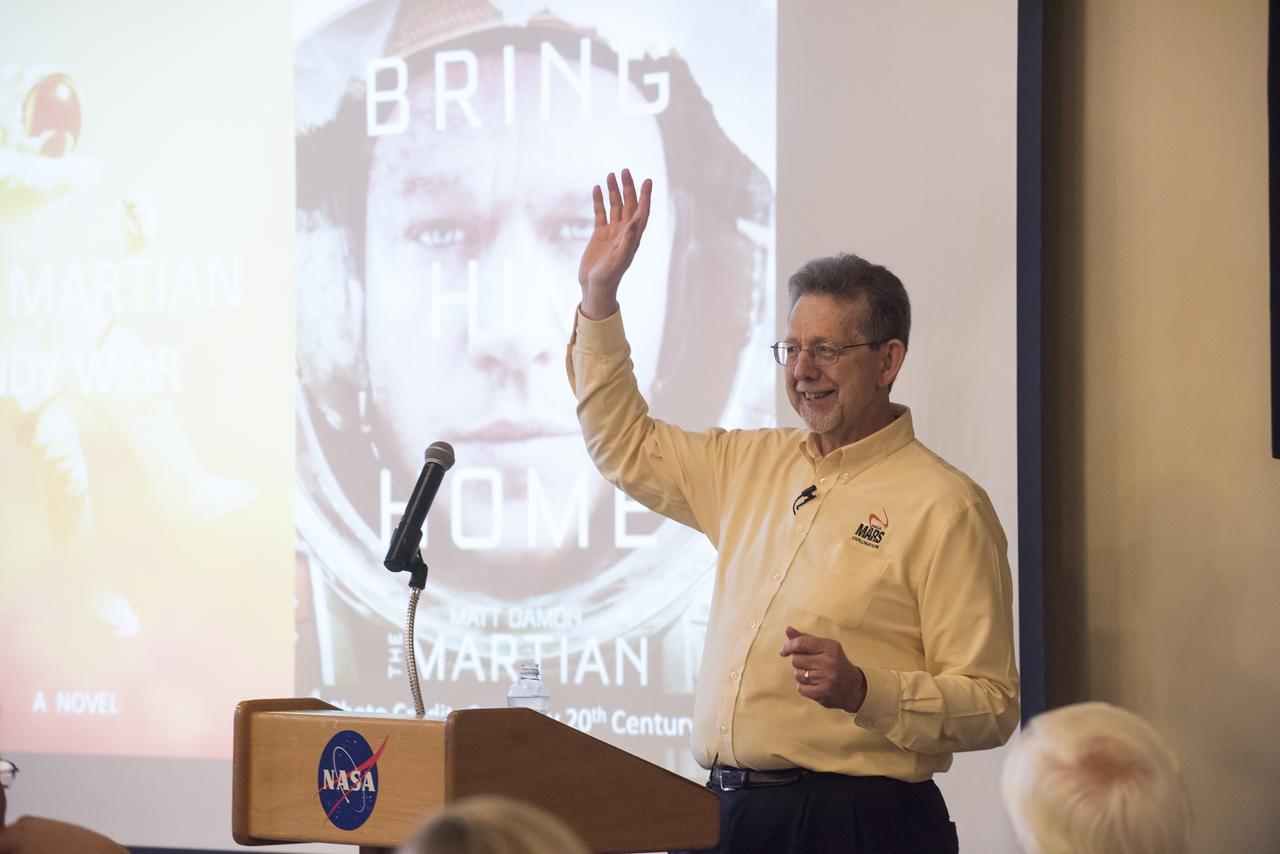
JIM GREEN, DIRECTOR OF PLANETARY SCIENCE AT NASA HEADQUARTERS, ADDRESSES MARSHALL TEAM MEMBERS DURING A JUNE 28 LUNCHEON HOSTED BY THE MARSHALL ASSOCIATION. OVER THE COURSE OF HIS 35-YEAR CAREER AT NASA, HE HAS SUPPORTED A DIVERSE ARRAY OF PLANETARY SCIENCE MISSIONS, AND RECENTLY SERVED AS SCIENCE ADVISOR FOR THE FILM ADAPTATION OF "THE MARTIAN." GREEN'S PRESENTATION WAS TITLED "THE MARTIAN: SCIENCE FICTION VS. SCIENCE FACT," IN WHICH HE DISCUSSED THE MOVIE AND THE NATION'S JOURNEY TO MARS. THE MARSHALL ASSOCIATION IS THE CENTER'S PROFESSIONAL, EMPLOYEE SERVICE ORGANIZATION.
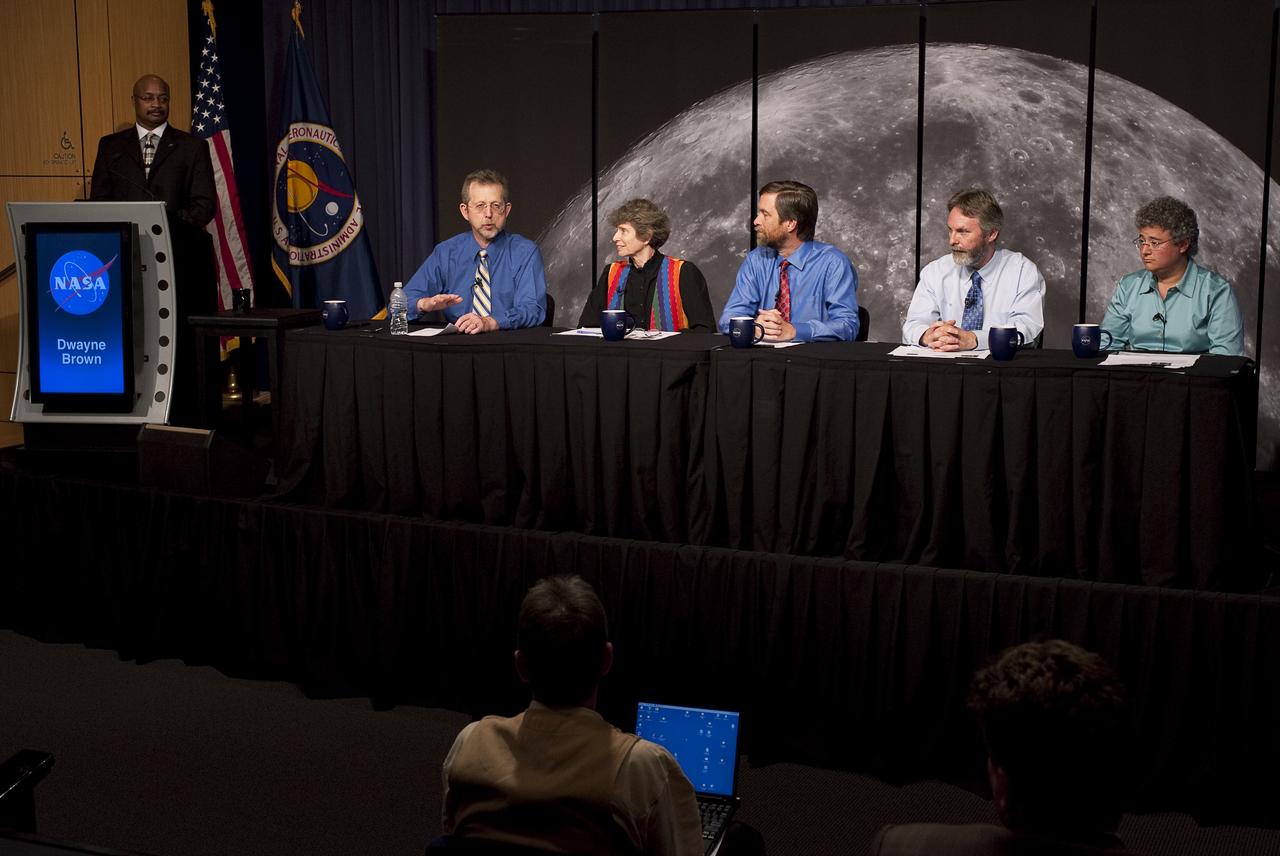
Jim Green (second from left), director, Planetary Science Division, Science Mission Directorate at NASA Headquarters in Washington discusses NASA’s findings of water molecules in the polar regions of the moon at a press conference at NASA Headquarters, September 24, 2009. Photo Credit: (NASA/Carla Cioffi)

NASA Chief Scientist Jim Green asks a question during a NASA town hall on the amendment to the fiscal year 2020 budget request that supports the agency’s plan to land astronauts on the Moon by 2024, Tuesday, May 14, 2019 at NASA Headquarters in Washington, DC. Photo Credit: (NASA/Joel Kowsky)
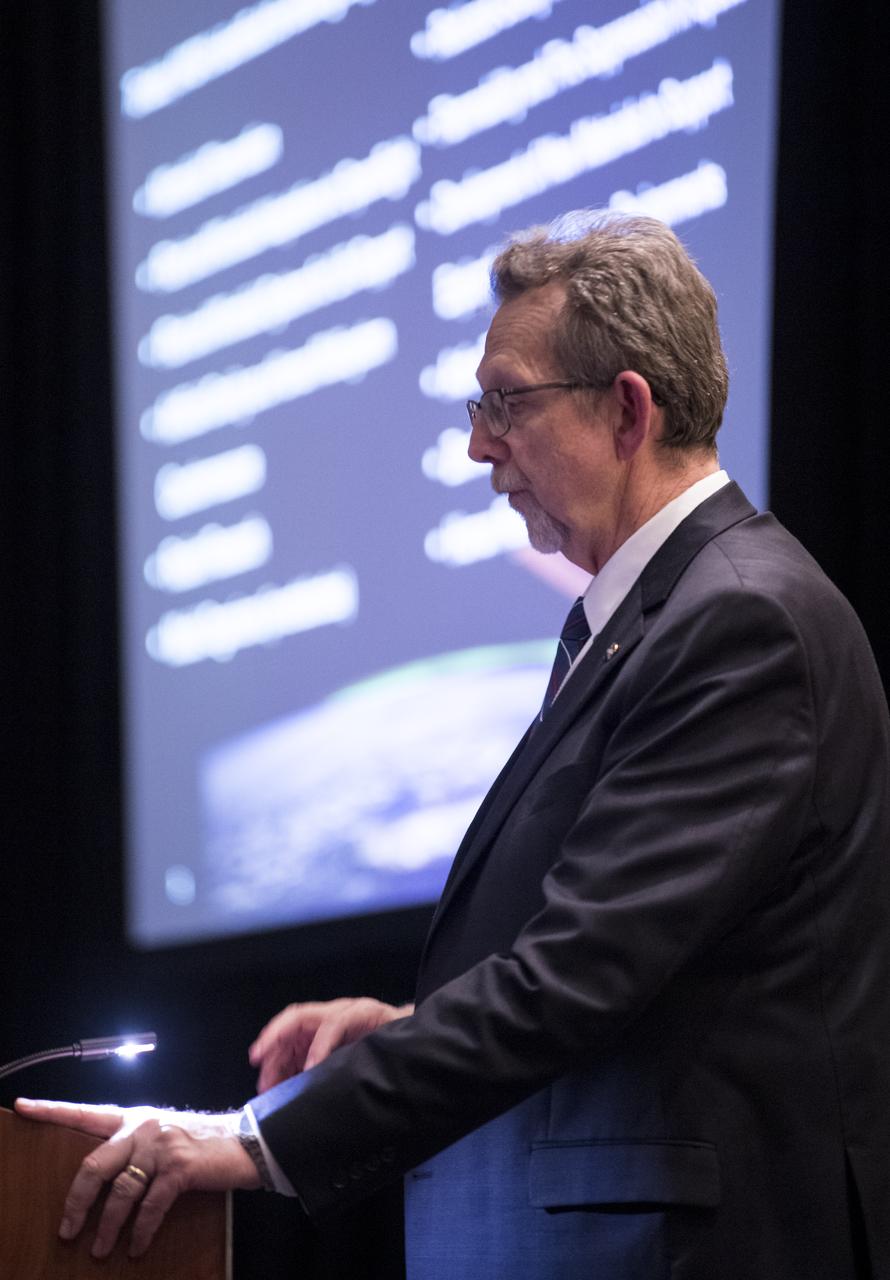
NASA Chief Scientist Jim Green speaks about NASA Science under the National Space Exploration Campaign during a keynote at the 70th International Astronautical Congress, Monday, Oct. 21, 2019 at the Walter E. Washington Convention Center in Washington. Photo Credit: (NASA/Joel Kowsky)
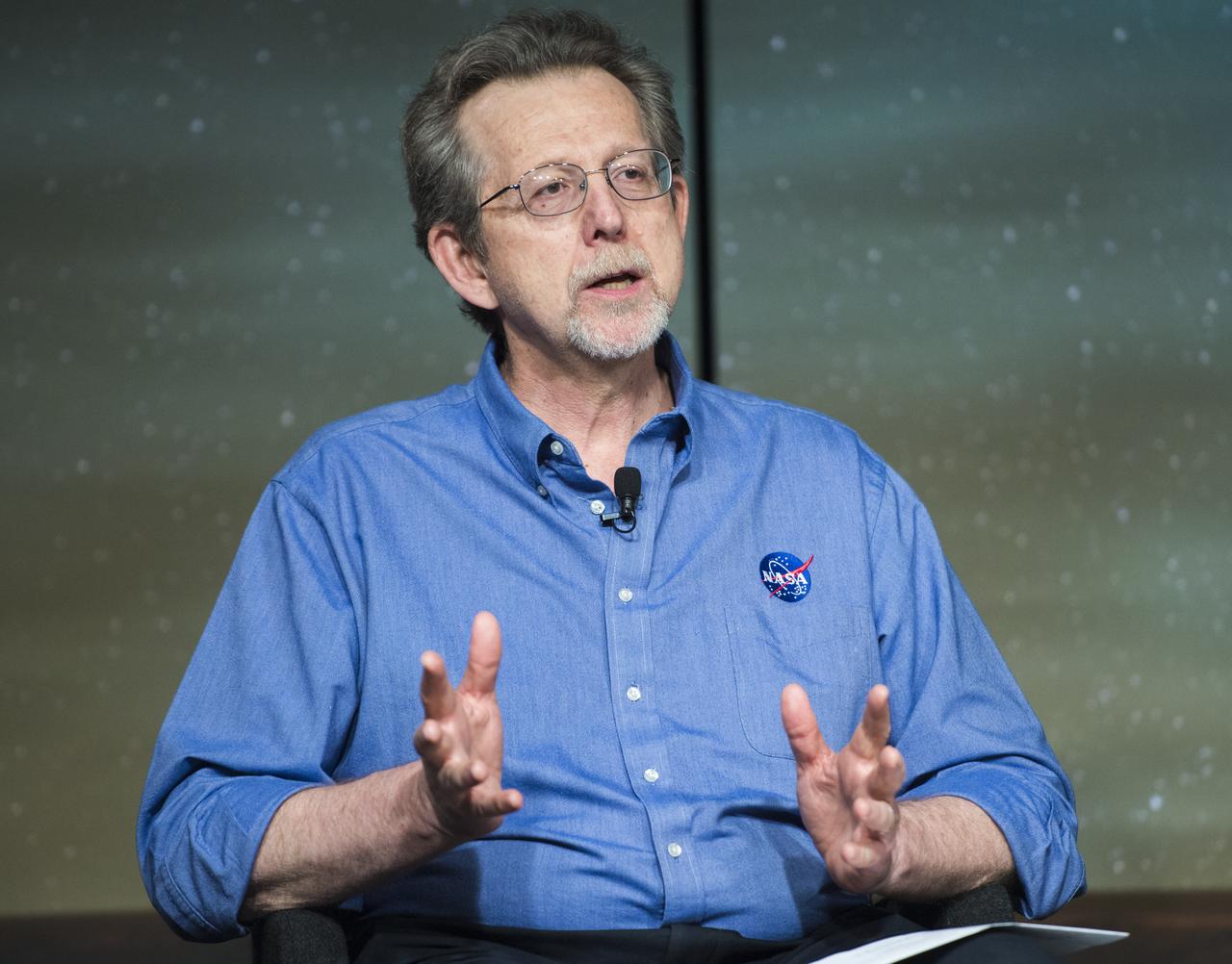
Jim Green, director, Planetary Science Division, NASA Headquarters, Washington gives remarks during a media briefing where he and other panelists outlined how space and Earth-based assets will be used to image and study comet Siding Spring during its Sunday, Oct. 19 flyby of Mars, Thursday, Oct. 9, 2014 at NASA Headquarters in Washington. Photo Credit: (NASA/Joel Kowsky)
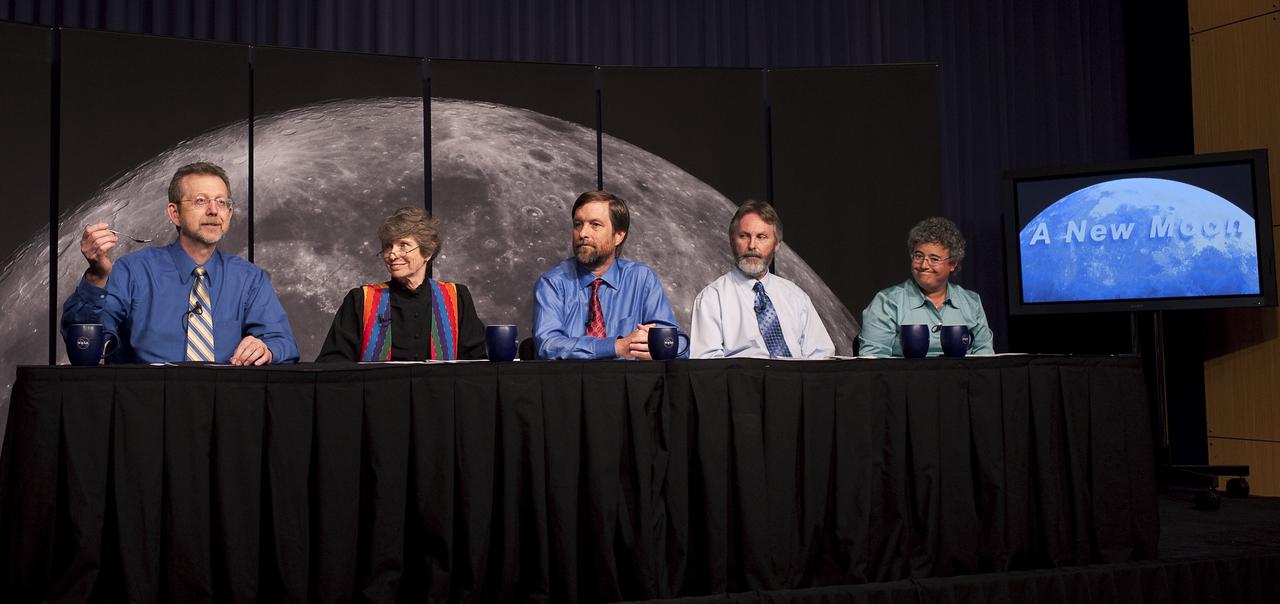
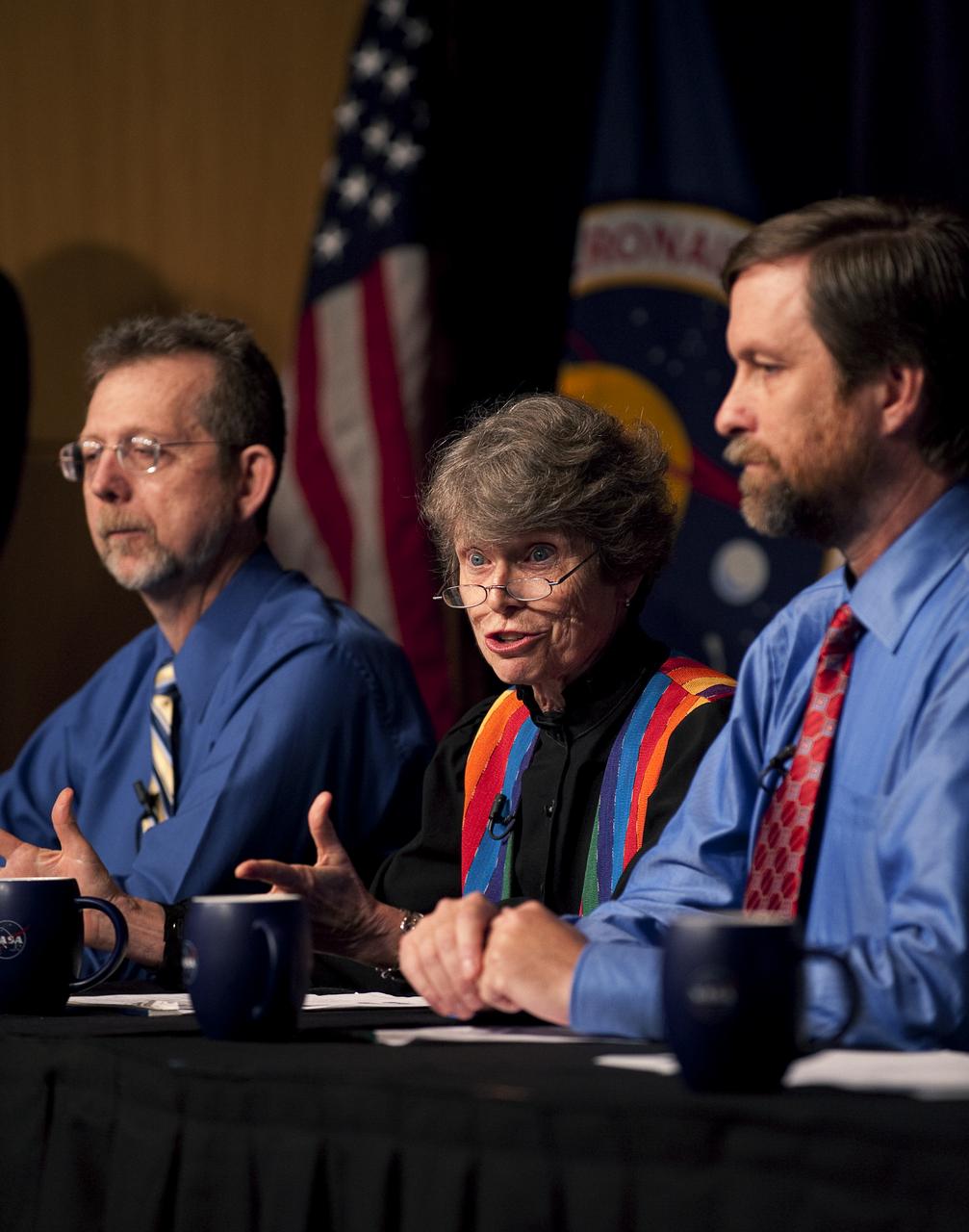
Jim Green (far left), director, Planetary Science Division, Science MissionDirectorate at NASA Headquarters in Washington; Carle Pieters, principal investigator, Moon Mineralogy Mapper, Brown University; Rob Green, project instrument scientist, Moon Mineralogy Mapper, at NASA's Jet Propulsion Laboratory; Roger Clark, team member, Cassini spacecraft Visual and Infrared Mapping Spectrometer and co-investigator, Moon Mineralogy Mapper, U.S. Geological Survey in Denver and Jessica Sunshine (far right), deputy principal investigator for NASA's Deep Impactextended mission and co-investigator for Moon Mineralogy Mapper,Department of Astronomy, University of Maryland discuss their findings of water molecules in the polar regions of the moon at a press conference at NASA Headquarters, September 24, 2009, in Washington. Photo Credit: (NASA/Carla Cioffi)

NASA Chief Scientist Jim Green is seen during a special session titled “Planetary Protection for the Future: Science, Exploration, and Commerce” at the 70th International Astronautical Congress, Thursday, Oct. 24, 2019 at the Walter E. Washington Convention Center in Washington. Photo Credit: (NASA/Joel Kowsky)
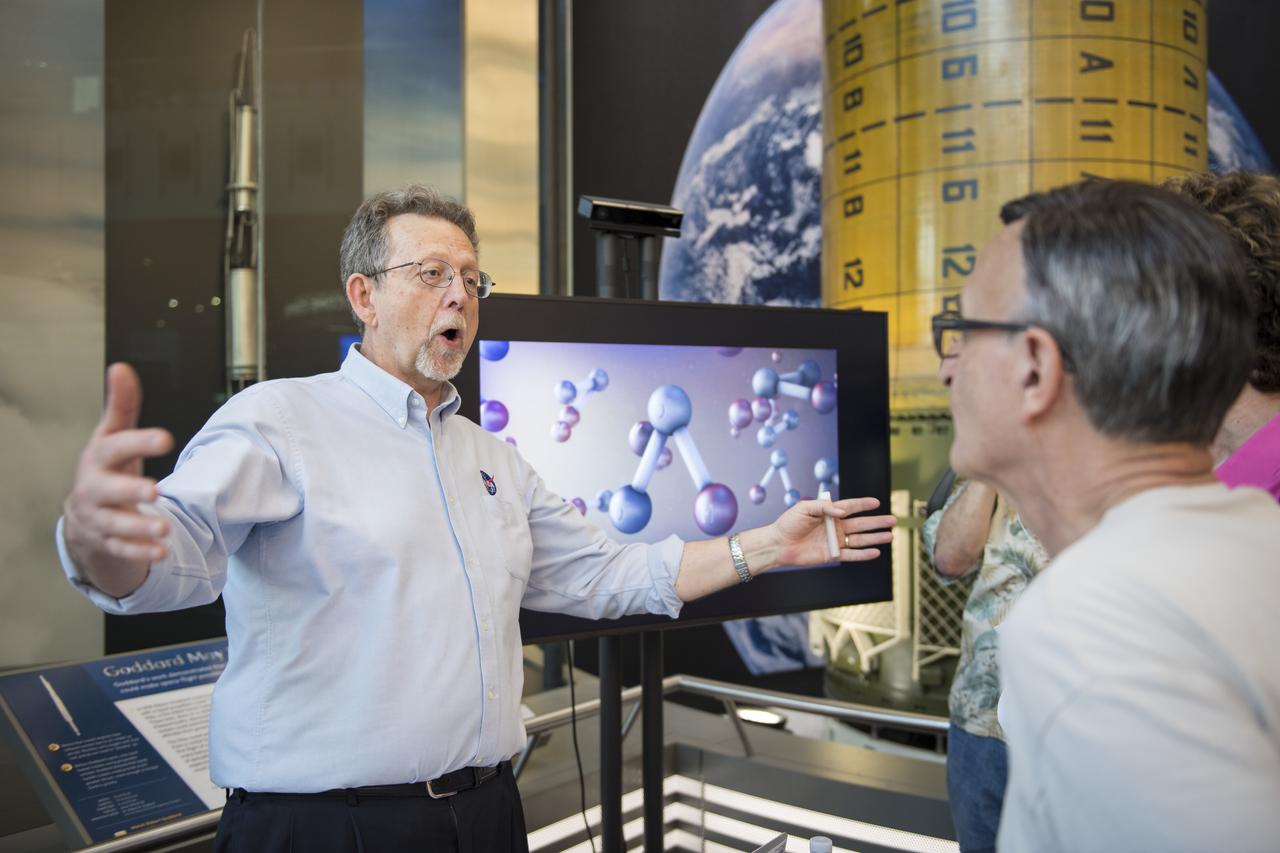
Jim Green, director of NASA’s Planetary Science Division, discusses NASA’s Mars missions with visitors during the Smithsonian Institution’s National Air and Space Museum Mars Day, celebrating the Red Planet with exhibits, speakers, and educational activities, Friday, July 21, 2017 in Washington. Photo Credit: (NASA/Aubrey Gemignani)
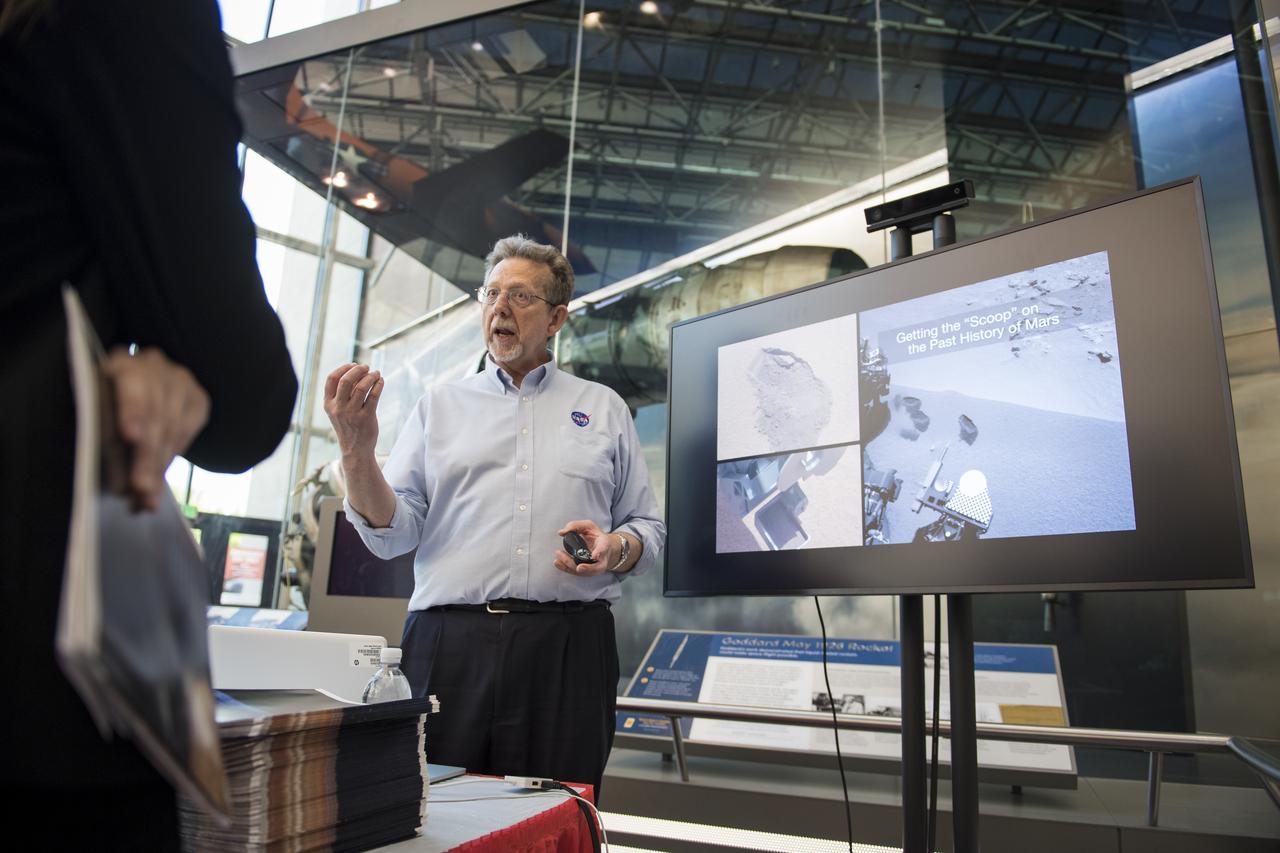
Jim Green, director of NASA’s Planetary Science Division, discusses NASA’s Mars missions with visitors during the Smithsonian Institution’s National Air and Space Museum Mars Day, celebrating the Red Planet with exhibits, speakers, and educational activities, Friday, July 21, 2017 in Washington. Photo Credit: (NASA/Aubrey Gemignani)
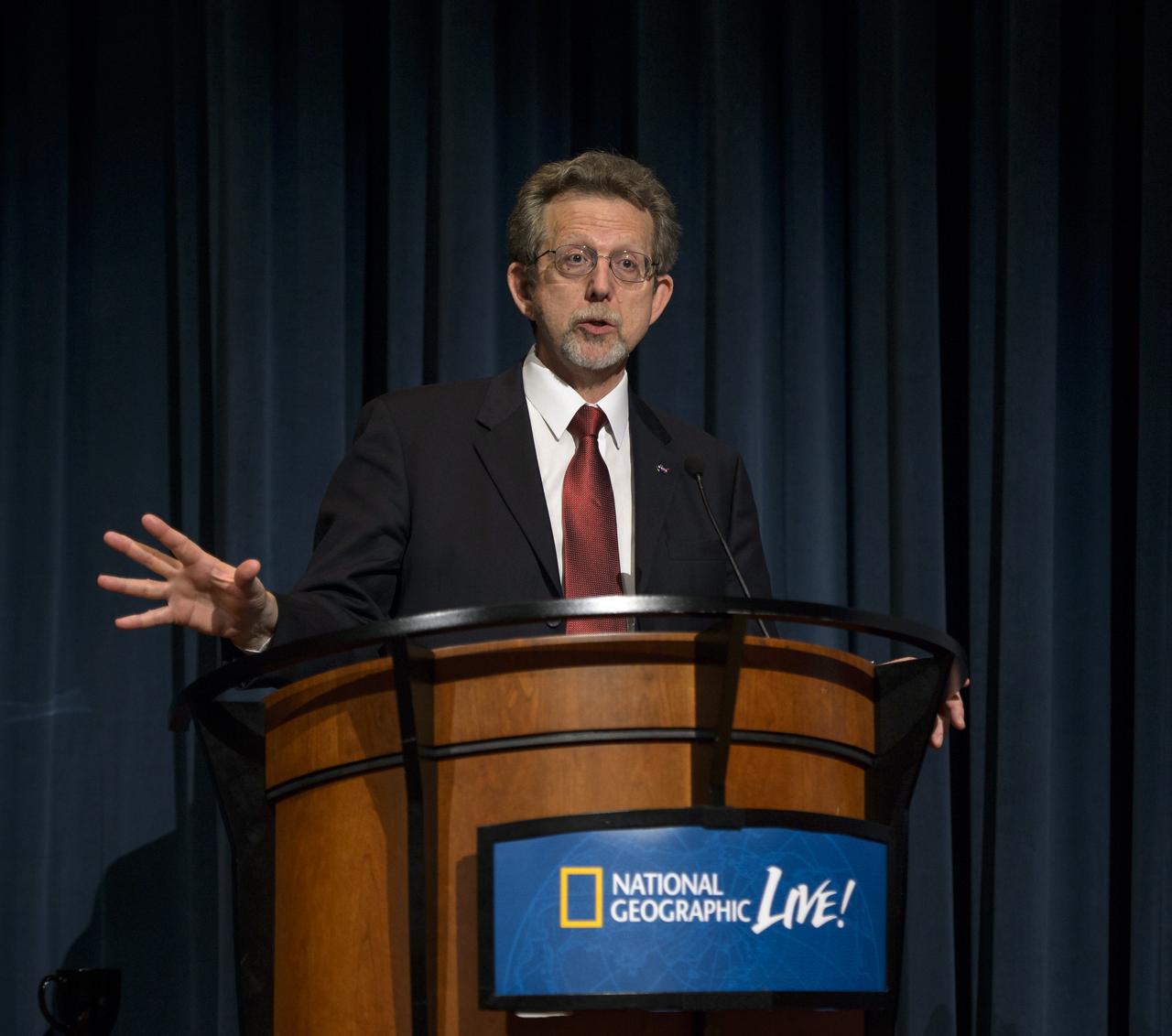
Dr. Jim Green, NASA‘s Planetary Science Division Director and Head of Mars Program, discusses what we’ve learned from Curiosity and the other Mars rovers during a “Mars Up Close” panel discussion, Tuesday, August 5, 2014, at the National Geographic Society headquarters in Washington. Photo Credit: (NASA/Bill Ingalls)

director of NASA's Planetary Science Division, Jim Green answers questions a press conference previewing Cassini's End of Mission, Wednesday, Sept. 13, 2017 at NASA's Jet Propulsion Laboratory in Pasadena, California. Since its arrival in 2004, the Cassini-Huygens mission has been a discovery machine, revolutionizing our knowledge of the Saturn system and captivating us with data and images never before obtained with such detail and clarity. On Sept. 15, 2017, operators will deliberately plunge the spacecraft into Saturn, as Cassini gathered science until the end. The “plunge” ensures Saturn’s moons will remain pristine for future exploration. During Cassini’s final days, mission team members from all around the world gathered at NASA’s Jet Propulsion Laboratory, Pasadena, California, to celebrate the achievements of this historic mission. Photo Credit: (NASA/Joel Kowsky)
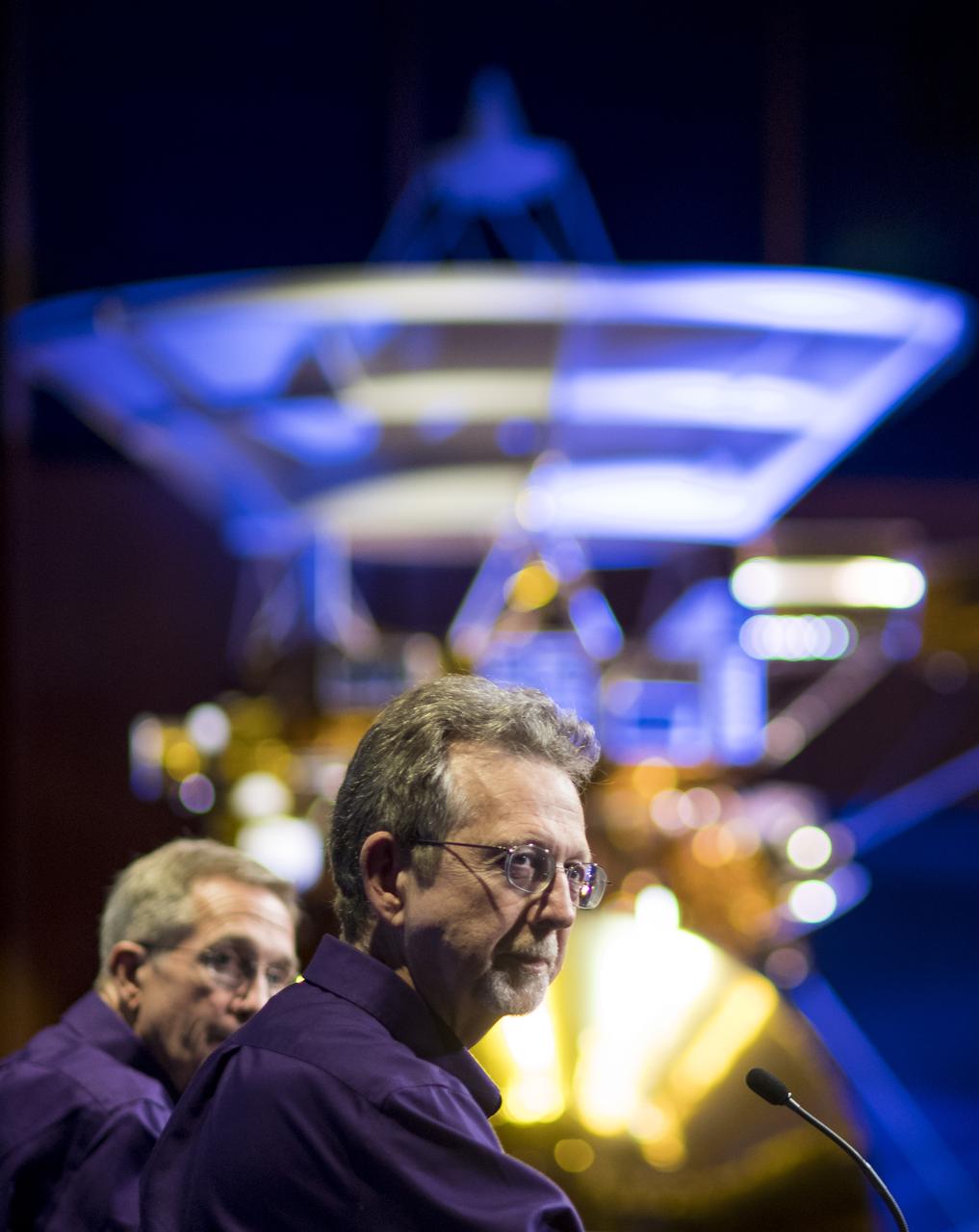
Director of NASA's Planetary Science Division, Jim Green, is seen during a press conference previewing Cassini's End of Mission, Wednesday, Sept. 13, 2017 at NASA's Jet Propulsion Laboratory in Pasadena, California. Since its arrival in 2004, the Cassini-Huygens mission has been a discovery machine, revolutionizing our knowledge of the Saturn system and captivating us with data and images never before obtained with such detail and clarity. On Sept. 15, 2017, operators will deliberately plunge the spacecraft into Saturn, as Cassini gathered science until the end. The “plunge” ensures Saturn’s moons will remain pristine for future exploration. During Cassini’s final days, mission team members from all around the world gathered at NASA’s Jet Propulsion Laboratory, Pasadena, California, to celebrate the achievements of this historic mission. Photo Credit: (NASA/Joel Kowsky)
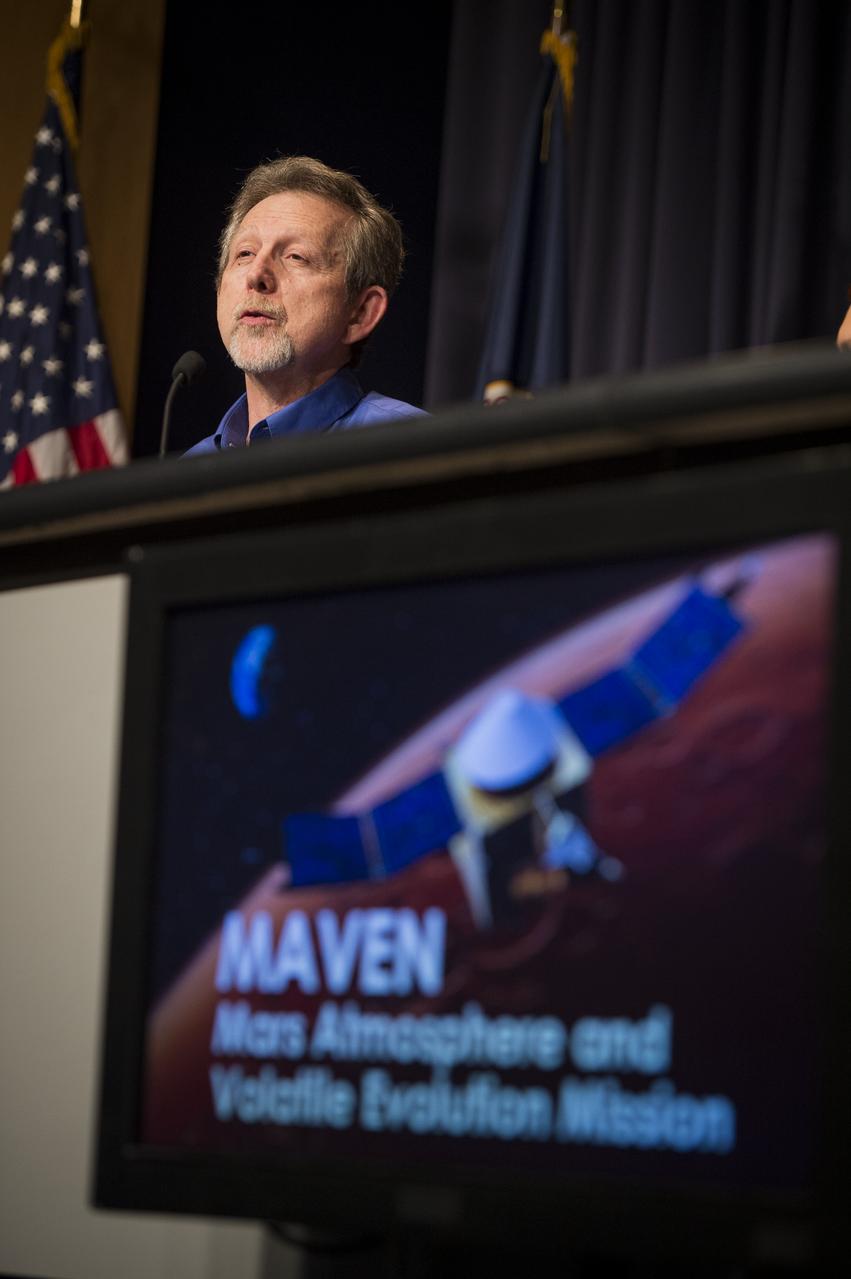
Jim Green, director, Planetary Science Division, NASA Headquarters, discusses the upcoming launch of the Mars Atmosphere and Volatile Evolution (MAVEN) mission, at a press conference at NASA Headquarters in Washington on Monday, Oct. 28th, 2013. MAVEN is the agency's next mission to Mars and the first devoted to understanding the upper atmosphere of the Red Planet. (Photo credit: NASA/Jay Westcott)

PhoEnix Aircraft Pilot Jim Lee poses for a photograph during the 2011 Green Flight Challenge, sponsored by Google, held at the Charles M. Schulz Sonoma County Airport in Santa Rosa, Calif. on Thursday, Sept. 29, 2011. NASA and the Comparative Aircraft Flight Efficiency (CAFE) Foundation are having the challenge with the goal to advance technologies in fuel efficiency and reduced emissions with cleaner renewable fuels and electric aircraft. Photo Credit: (NASA/Bill Ingalls)
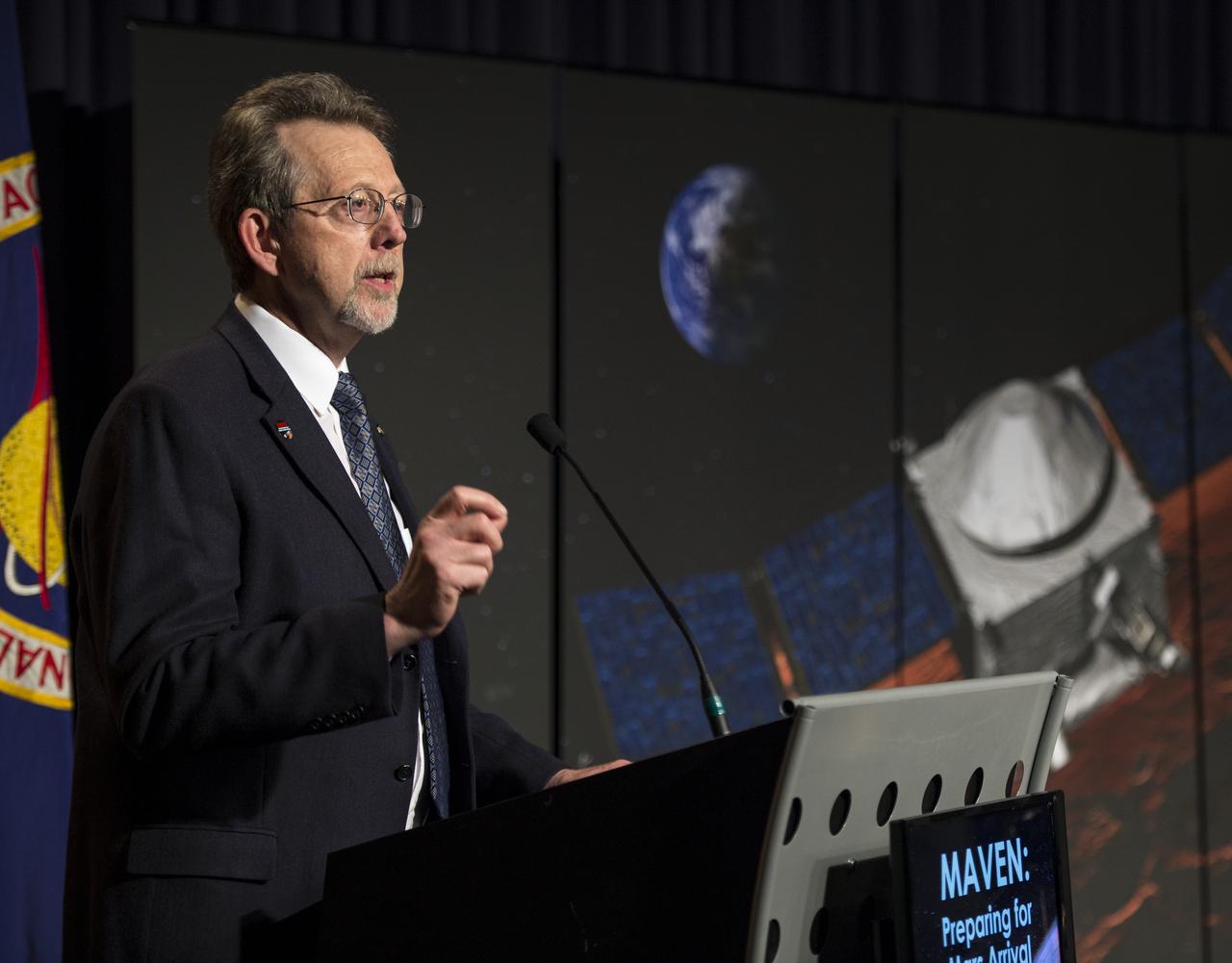
Dr. Jim Green, NASA‘s Planetary Science Division Director and Head of Mars Program, gives opening remarks at a media briefing where panelist outlined activities around the Sunday, Sept. 21 orbital insertion at Mars of the agency’s Mars Atmosphere and Volatile EvolutioN (MAVEN) spacecraft, Wednesday, Sept. 17, 2014 at NASA Headquarters in Washington. (Photo credit: NASA/Bill Ingalls)

NASA Chief Scientist, Jim Green, asks Brian Muirhead, Pre-project Manager of Mars Sample Return at NASA’s Jet Propulsion Laboratory a question after he gave a keynote titled “Mars Sample Return Mission Concept Status” at the 70th International Astronautical Congress, Wednesday, Oct. 23, 2019 at the Walter E. Washington Convention Center in Washington. Photo Credit: (NASA/Aubrey Gemignani)
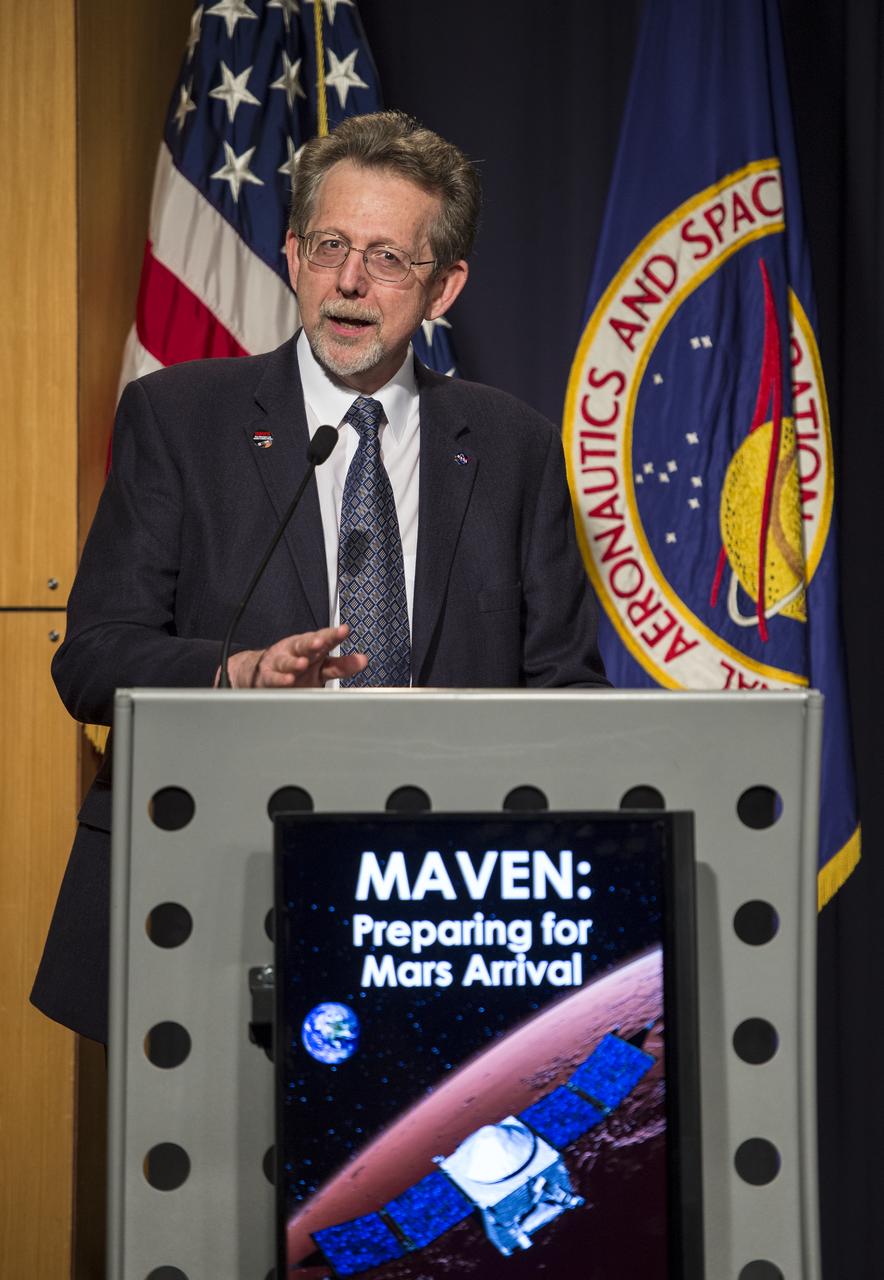
Dr. Jim Green, NASA‘s Planetary Science Division Director and Head of Mars Program, gives opening remarks at a media briefing where panelist outlined activities around the Sunday, Sept. 21 orbital insertion at Mars of the agency’s Mars Atmosphere and Volatile EvolutioN (MAVEN) spacecraft, Wednesday, Sept. 17, 2014 at NASA Headquarters in Washington. (Photo credit: NASA/Bill Ingalls)
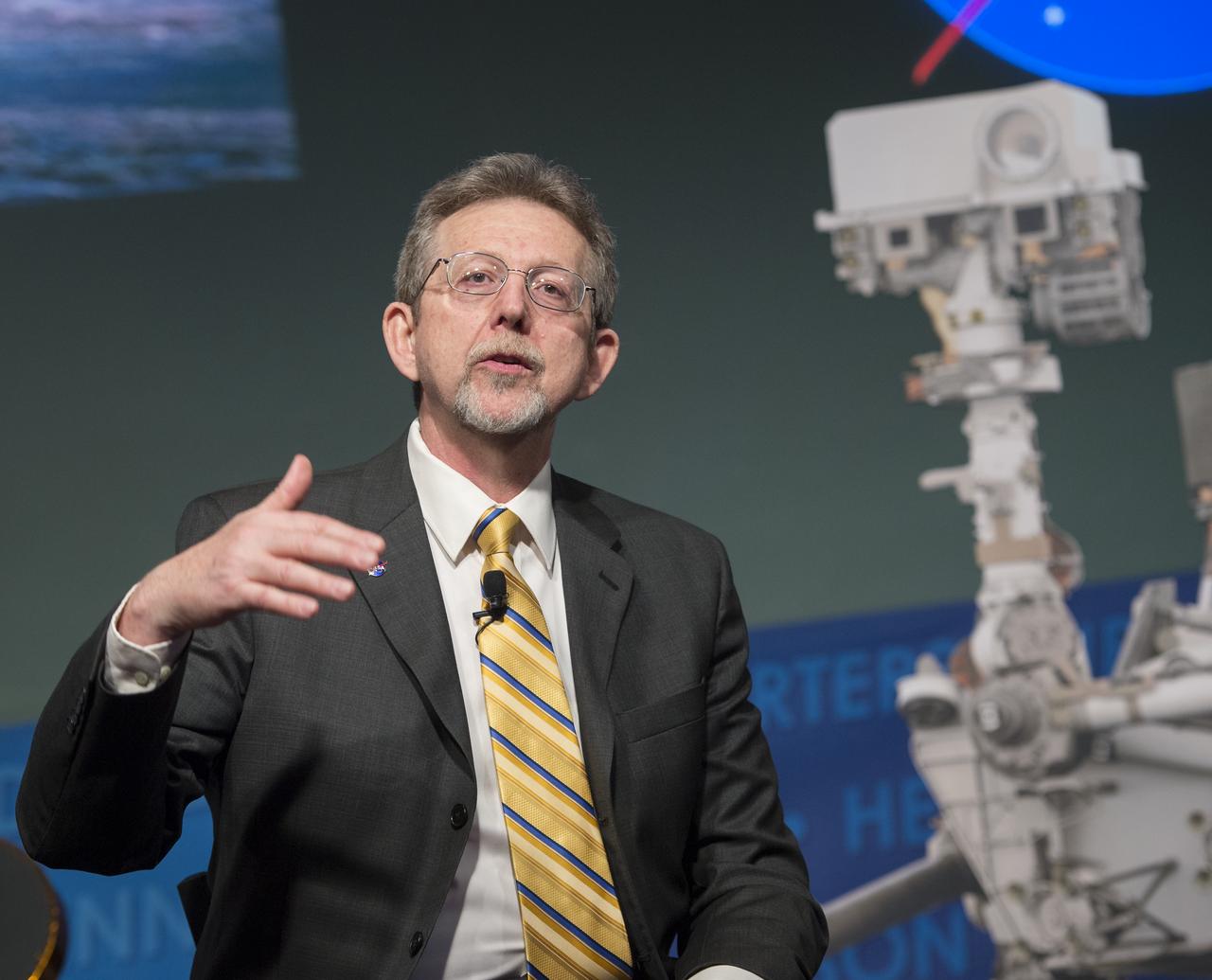
Jim Green, director, Planetary Division, NASA's Science Mission Directorate, speaks at a public event at NASA Headquarters observing the first anniversary of the Curiosity rover's landing on Mars, Tuesday, August 6th, 2013 in Washington. The Mars Science Laboratory mission successfully placed the one-ton Curiosity rover on the surface of Mars on Aug. 6, 2012, about 1 mile from the center of its 12-mile-long target area. Within the first eight months of a planned 23-months primary mission, Curiosity met its major science objective of finding evidence of a past environment well-suited to support microbial life. Photo Credit: (NASA/Carla Cioffi)

Jim Green, director of NASA’s Planetary Science Division, poses for a photo with the Mars rover concept, developed by vehicle designers, the Parker Brothers, with advice from NASA, during the Smithsonian Institution’s National Air and Space Museum’s Mars Day, Friday, July 21, 2017 in Washington. The Mars rover concept is currently on an East Coast tour from its home base at the Kennedy Space Center Visitor’s Center in Florida, and is designed to engage and educate the public by demonstrating the types of features and equipment a future human exploration vehicle may need. Photo Credit: (NASA/Aubrey Gemignani)
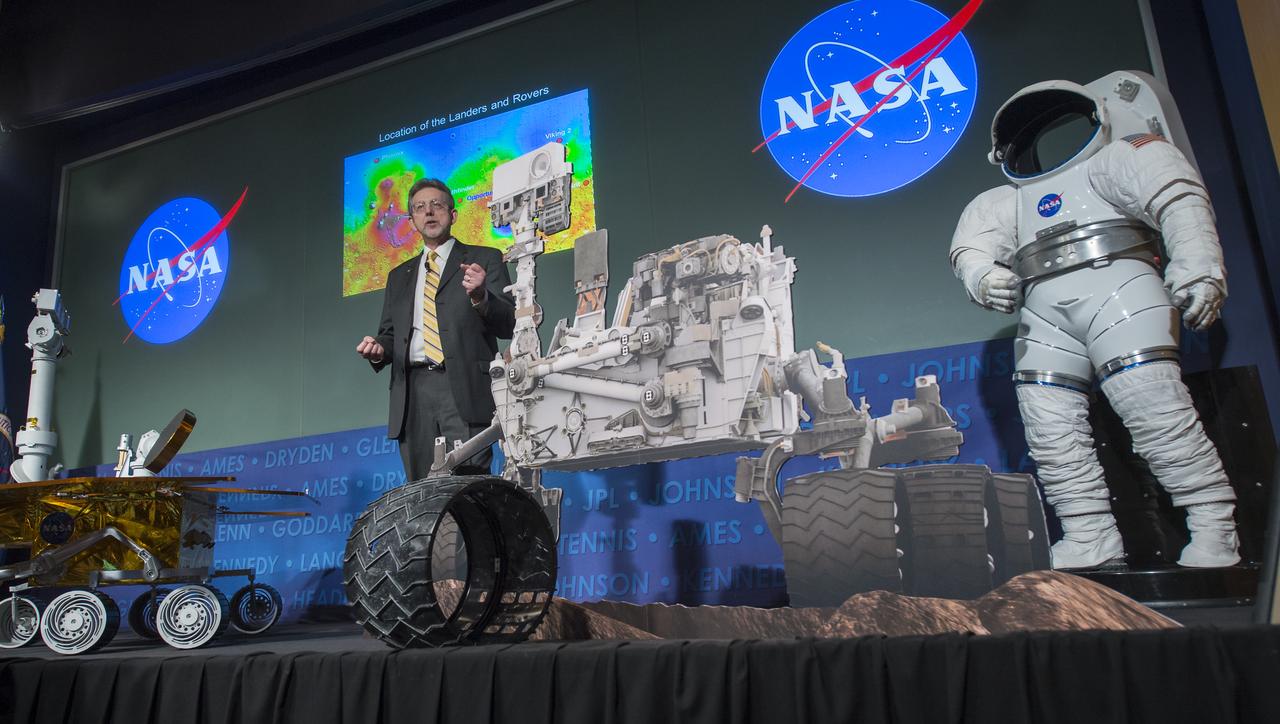
Jim Green, director, Planetary Division, NASA's Science Mission Directorate, speaks at a public event at NASA Headquarters observing the first anniversary of the Curiosity rover's landing on Mars, Tuesday, August 6th, 2013 in Washington. The Mars Science Laboratory mission successfully placed the one-ton Curiosity rover on the surface of Mars on Aug. 6, 2012, about 1 mile from the center of its 12-mile-long target area. Within the first eight months of a planned 23-months primary mission, Curiosity met its major science objective of finding evidence of a past environment well-suited to support microbial life. Photo Credit: (NASA/Carla Cioffi)

Jim Green, director of NASA’s Planetary Science Division, poses for a photo with the Mars rover concept, developed by vehicle designers, the Parker Brothers, with advice from NASA, during the Smithsonian Institution’s National Air and Space Museum’s Mars Day, Friday, July 21, 2017 in Washington. The Mars rover concept is currently on an East Coast tour from its home base at the Kennedy Space Center Visitor’s Center in Florida, and is designed to engage and educate the public by demonstrating the types of features and equipment a future human exploration vehicle may need. Photo Credit: (NASA/Aubrey Gemignani)
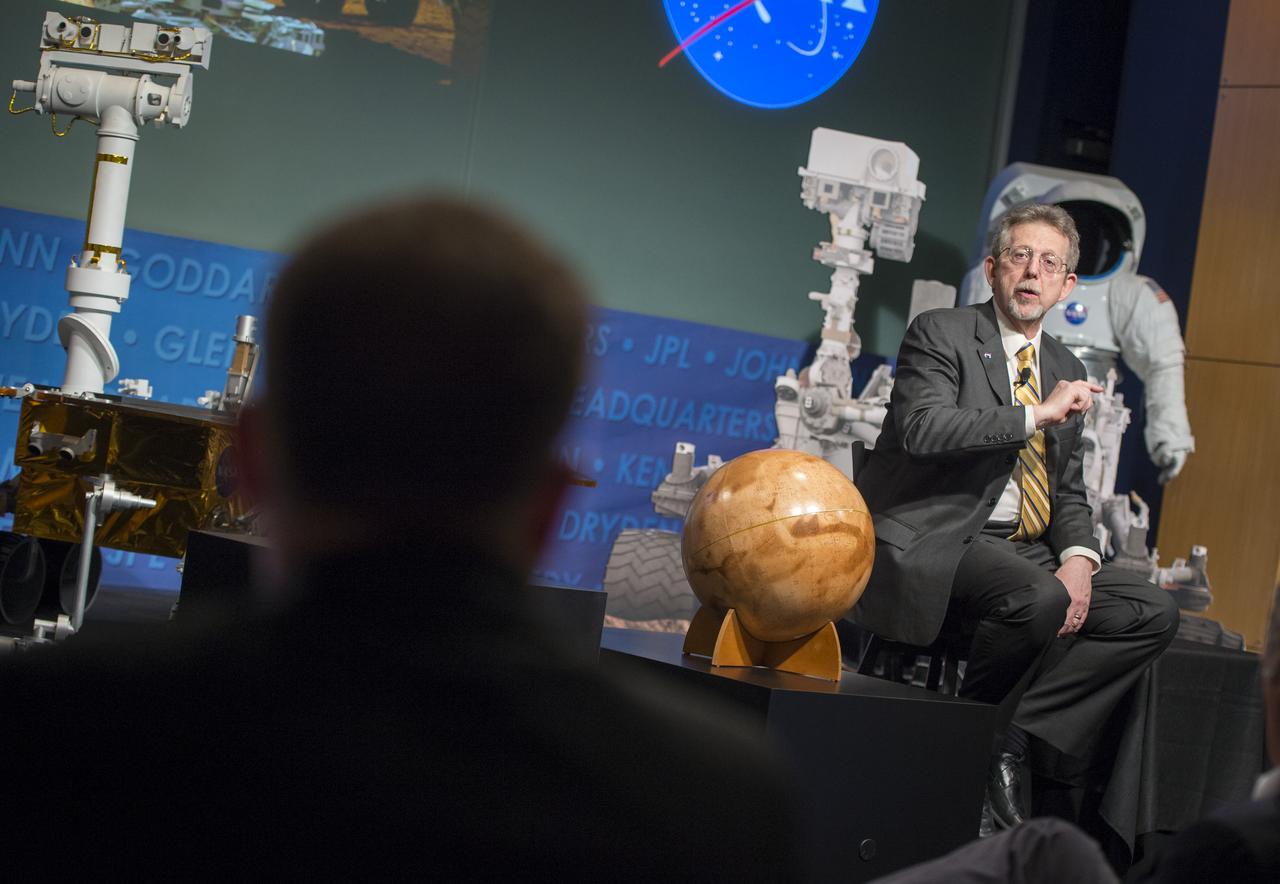
Jim Green, director, Planetary Division, NASA's Science Mission Directorate, answers a question at a public event at NASA Headquarters observing the first anniversary of the Curiosity rover's landing on Mars, Tuesday, August 6th, 2013 in Washington. The Mars Science Laboratory mission successfully placed the one-ton Curiosity rover on the surface of Mars on Aug. 6, 2012, about 1 mile from the center of its 12-mile-long target area. Within the first eight months of a planned 23-months primary mission, Curiosity met its major science objective of finding evidence of a past environment well-suited to support microbial life. Photo Credit: (NASA/Carla Cioffi)

NASA Chief Scientist Jim Green talks about Mars InSight during a social media briefing, Sunday, Nov. 25, 2018 at NASA's Jet Propulsion Laboratory in Pasadena, California. InSight, short for Interior Exploration using Seismic Investigations, Geodesy and Heat Transport, is a Mars lander designed to study the "inner space" of Mars: its crust, mantle, and core. InSight is scheduled to touch down on the Red Planet at approximately noon PST (3 p.m. EST) on Nov. 26. Photo Credit: (NASA/Bill Ingalls)
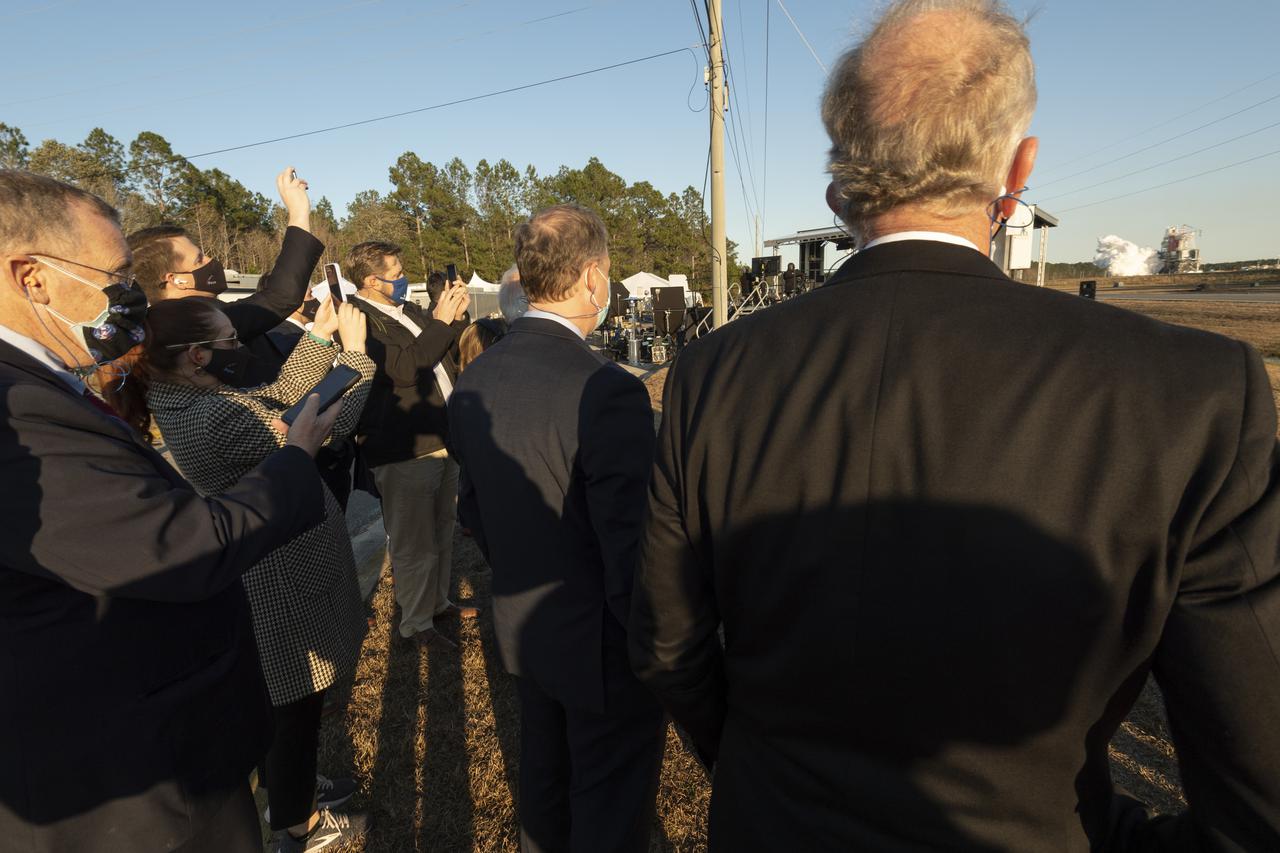
NASA Administrator Jim Bridenstine, 2nd from right, and NASA Deputy Administrator Jim Morhard, left, along with other guest watch as the core stage for the first flight of NASA’s Space Launch System rocket undergoes a scheduled eight minute duration hot fire test in the B-2 Test Stand, Saturday, Jan. 16, 2021, at NASA’s Stennis Space Center near Bay St. Louis, Mississippi. The four RS-25 engines fired for a little more than one minute and generated 1.6 million pounds of thrust. The hot fire is the final test of the Green Run test series, a comprehensive assessment of the Space Launch System’s core stage prior to launching the Artemis I mission to the Moon. Photo Credit: (NASA/Robert Markowitz)

NASA Administrator Jim Bridenstine discusses the upcoming Green Run hot fire test on NASA television, Saturday, January 16, 2021, at NASA's Stennis Space Center near Bay St. Louis, Mississippi. In the background, the core stage for the first flight of NASA’s Space Launch System rocket is seen in the B-2 Test Stand ahead of a scheduled eight minute duration hot fire test. The hot fire test is the final stage of the Green Run test series, a comprehensive assessment of the Space Launch System’s core stage prior to launching the Artemis I mission to the Moon. Photo Credit: (NASA/Robert Markowitz)

NASA Administrator Jim Bridenstine discusses the upcoming Green Run hot fire test on NASA television with Leigh D’Angelo of NASA, Saturday, January 16, 2021, at NASA's Stennis Space Center near Bay St. Louis, Mississippi. In the background, the core stage for the first flight of NASA’s Space Launch System rocket is seen in the B-2 Test Stand ahead of a scheduled eight minute duration hot fire test. The hot fire test is the final stage of the Green Run test series, a comprehensive assessment of the Space Launch System’s core stage prior to launching the Artemis I mission to the Moon. Photo Credit: (NASA/Robert Markowitz)
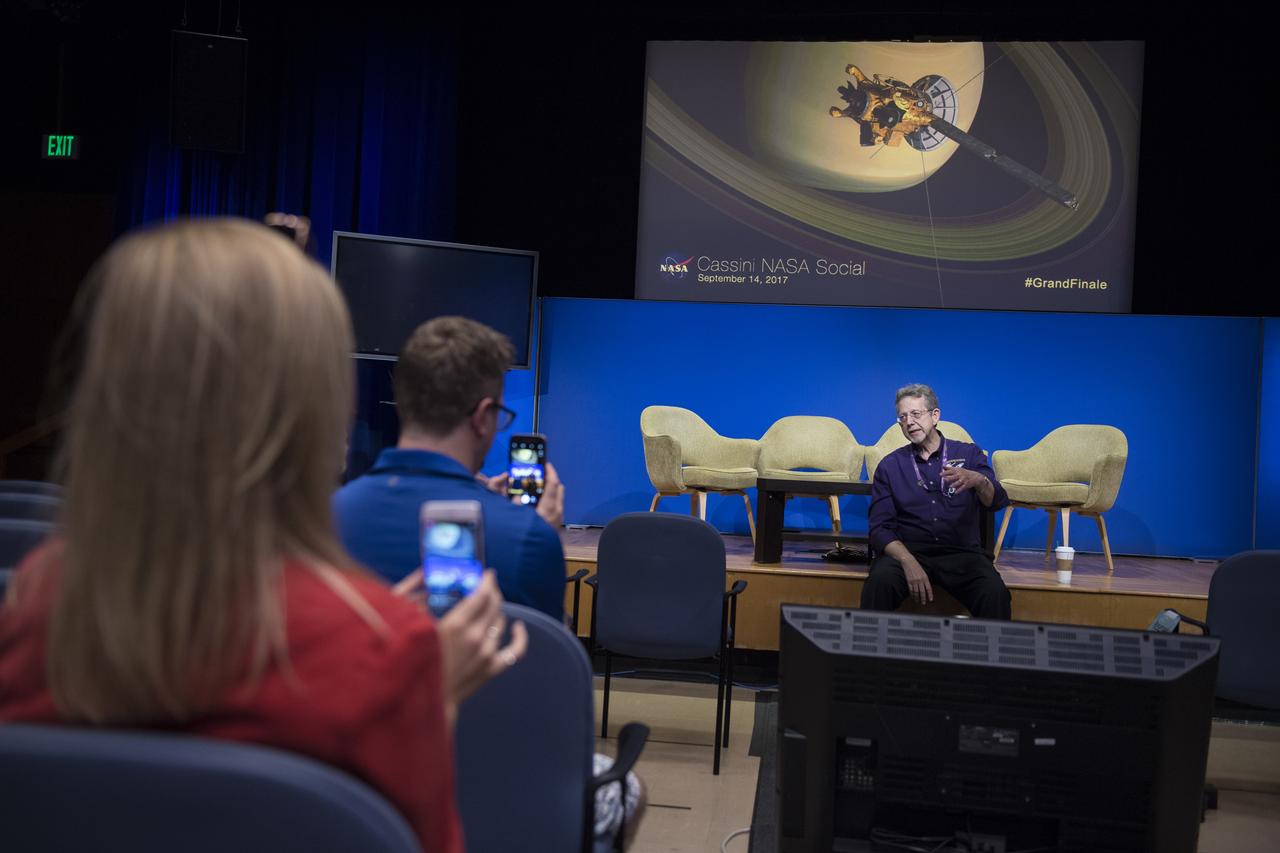
NASA Social attendees film director of NASA's Planetary Science Division, Jim Green as he discusses the Cassini mission, Thursday, Sept. 14, 2017 at NASA's Jet Propulsion Laboratory in Pasadena, California. Since its arrival in 2004, the Cassini-Huygens mission has been a discovery machine, revolutionizing our knowledge of the Saturn system and captivating us with data and images never before obtained with such detail and clarity. On Sept. 15, 2017, operators will deliberately plunge the spacecraft into Saturn, as Cassini gathered science until the end. The “plunge” ensures Saturn’s moons will remain pristine for future exploration. During Cassini’s final days, mission team members from all around the world gathered at NASA’s Jet Propulsion Laboratory, Pasadena, California, to celebrate the achievements of this historic mission. Photo Credit: (NASA/Joel Kowsky)
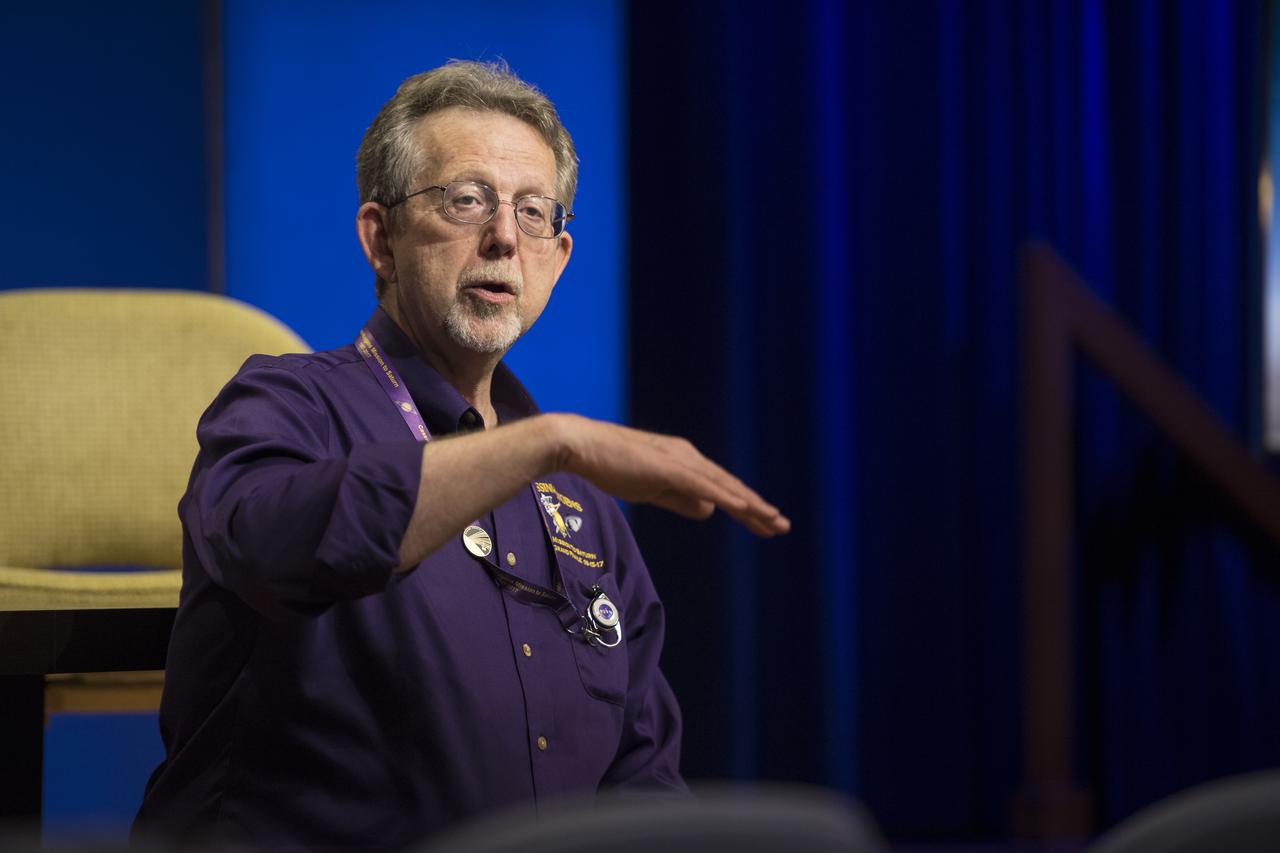
Director of NASA's Planetary Science Division, Jim Green, speaks to NASA Social attendees, Thursday, Sept. 14, 2017 at NASA's Jet Propulsion Laboratory in Pasadena, California. Since its arrival in 2004, the Cassini-Huygens mission has been a discovery machine, revolutionizing our knowledge of the Saturn system and captivating us with data and images never before obtained with such detail and clarity. On Sept. 15, 2017, operators will deliberately plunge the spacecraft into Saturn, as Cassini gathered science until the end. The “plunge” ensures Saturn’s moons will remain pristine for future exploration. During Cassini’s final days, mission team members from all around the world gathered at NASA’s Jet Propulsion Laboratory, Pasadena, California, to celebrate the achievements of this historic mission. Photo Credit: (NASA/Joel Kowsky)
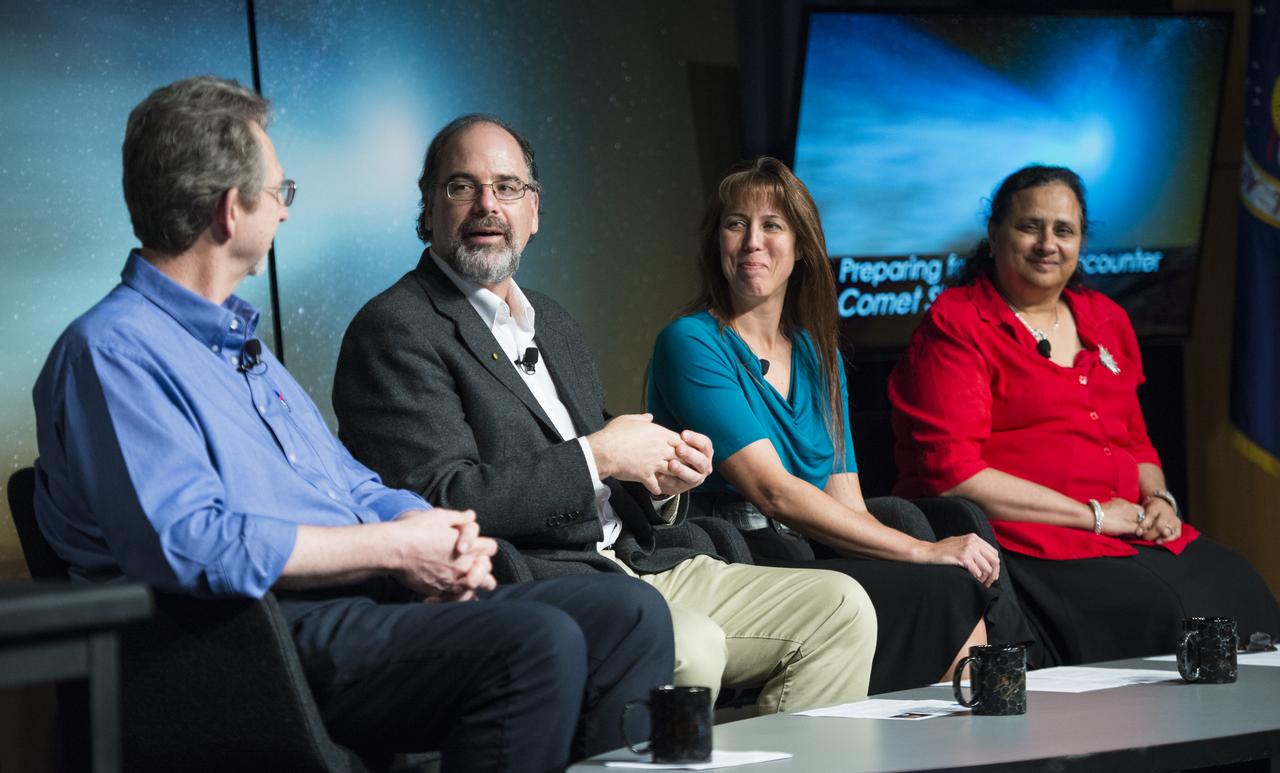
Panelists, from left, Jim Green, director, Planetary Science Division, NASA Headquarters, Washington, Carey Lisse, senior astrophysicist, Johns Hopkins University Applied Physics Laboratory, Laurel, Maryland, Kelly Fast, program scientist, Planetary Science Division, NASA Headquarters, Washington, and Padma Yanamandra-Fisher, senior research scientist, Space Science Institute, Rancho Cucamonga Branch, California, are seen during a media briefing where they outlined how space and Earth-based assets will be used to image and study comet Siding Spring during its Sunday, Oct. 19 flyby of Mars, Thursday, Oct. 9, 2014 at NASA Headquarters in Washington. (Photo credit: NASA/Joel Kowsky)
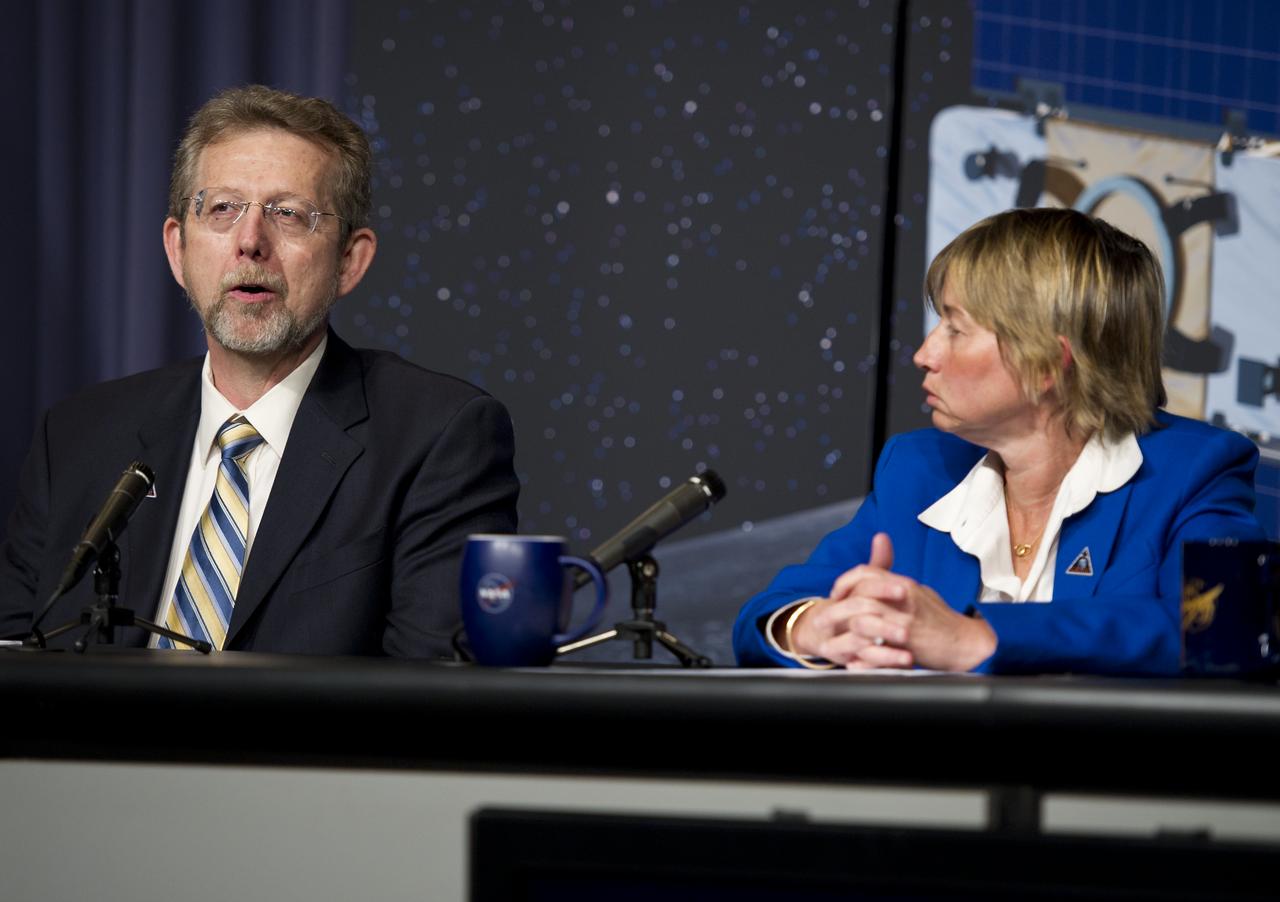
Jim Green (left), director, Planetary Science Division at NASA Headquarters, speaks at a press conference about the upcoming launch to the moon of the Gravity Recovery and Interior Laboratory (GRAIL) mission, Thursday, Aug. 25, 2011 in Washington. GRAIL's primary science objectives are to determine the structure of the lunar interior, from crust to core, and to advance understanding of the thermal evolution of the moon. The mission will place two spacecraft into the same orbit around the moon which will gather information about the its gravitational field enabling scientists to create a high-resolution map. Photo Credit: (NASA/Carla Cioffi)
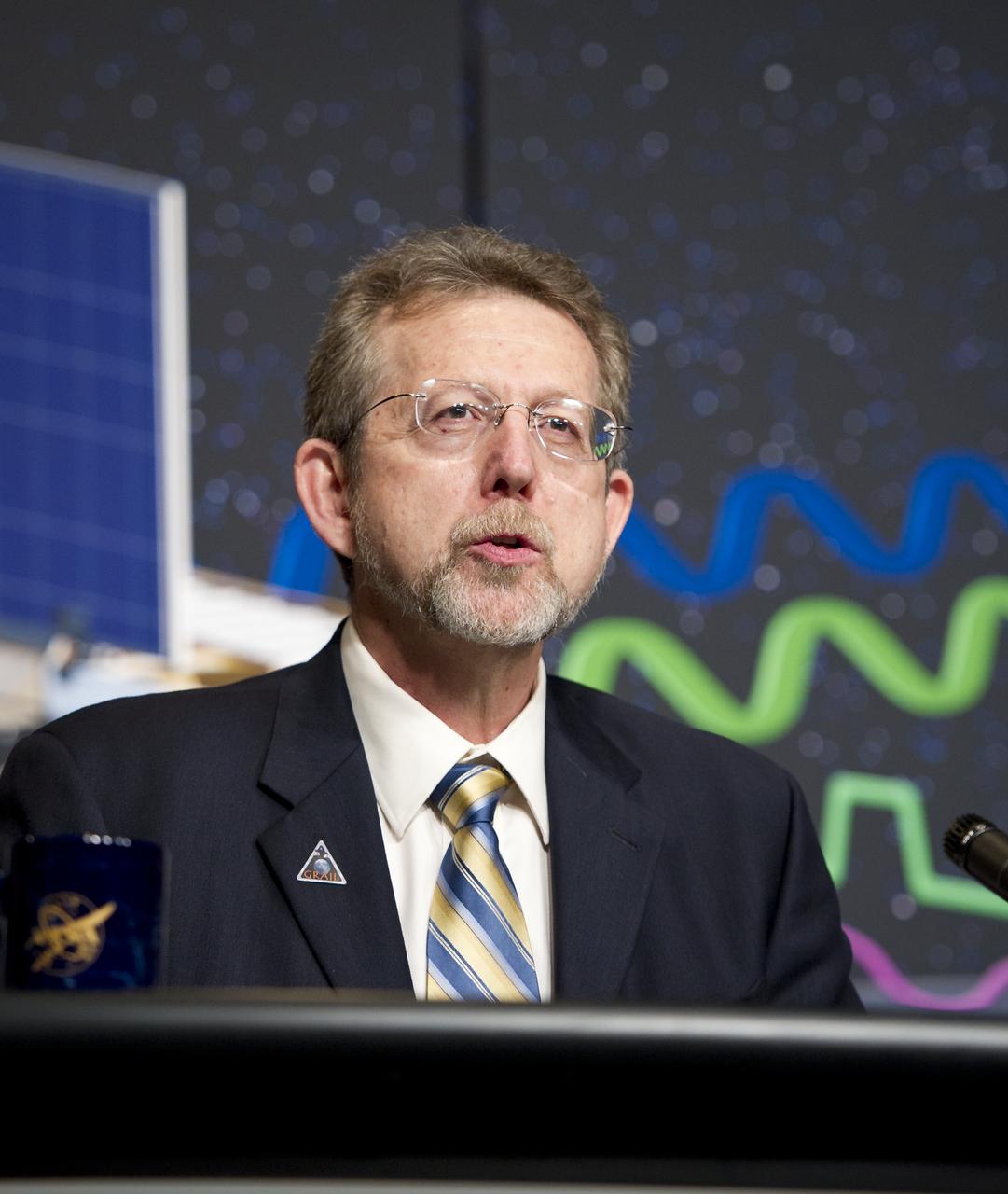
Jim Green, director, Planetary Science Division at NASA Headquarters, speaks at a press conference about the upcoming launch to the moon of the Gravity Recovery and Interior Laboratory (GRAIL) mission, Thursday, Aug. 25, 2011 in Washington. GRAIL's primary science objectives are to determine the structure of the lunar interior, from crust to core, and to advance understanding of the thermal evolution of the moon. The mission will place two spacecraft into the same orbit around the moon which will gather information about the its gravitational field enabling scientists to create a high-resolution map. Photo Credit: (NASA/Carla Cioffi)
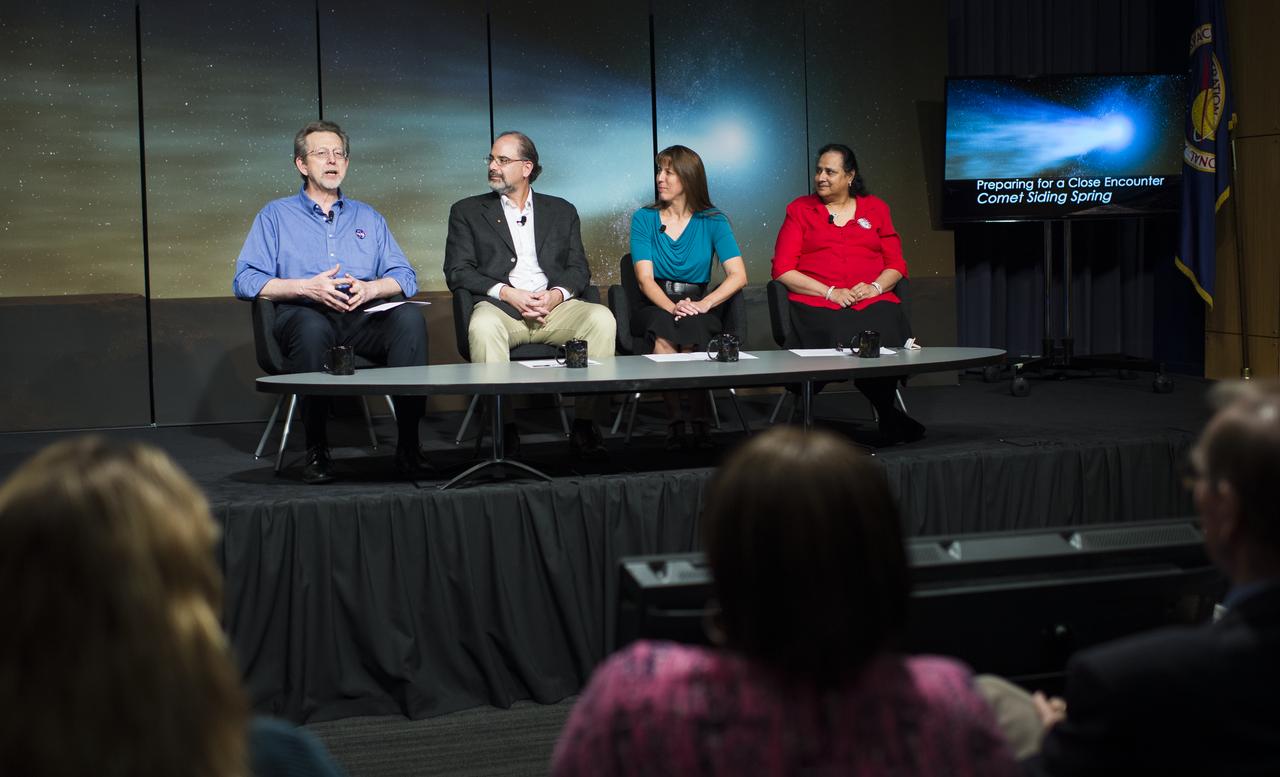
Panelists, from left, Jim Green, director, Planetary Science Division, NASA Headquarters, Washington, Carey Lisse, senior astrophysicist, Johns Hopkins University Applied Physics Laboratory, Laurel, Maryland, Kelly Fast, program scientist, Planetary Science Division, NASA Headquarters, Washington, and Padma Yanamandra-Fisher, senior research scientist, Space Science Institute, Rancho Cucamonga Branch, California, are seen during a media briefing where they outlined how space and Earth-based assets will be used to image and study comet Siding Spring during its Sunday, Oct. 19 flyby of Mars, Thursday, Oct. 9, 2014 at NASA Headquarters in Washington. (Photo credit: NASA/Joel Kowsky)

Jim Green, director, Planetary Science Division, NASA Headquarters, Washington, left, is seen with fellow panelists Carey Lisse, senior astrophysicist, Johns Hopkins University Applied Physics Laboratory, Laurel, Maryland, Kelly Fast, program scientist, Planetary Science Division, NASA Headquarters, Washington, and Padma Yanamandra-Fisher, senior research scientist, Space Science Institute, Rancho Cucamonga Branch, California during a media briefing where they outlined how space and Earth-based assets will be used to image and study comet Siding Spring during its Sunday, Oct. 19 flyby of Mars, Thursday, Oct. 9, 2014 at NASA Headquarters in Washington. Photo Credit: (NASA/Joel Kowsky)
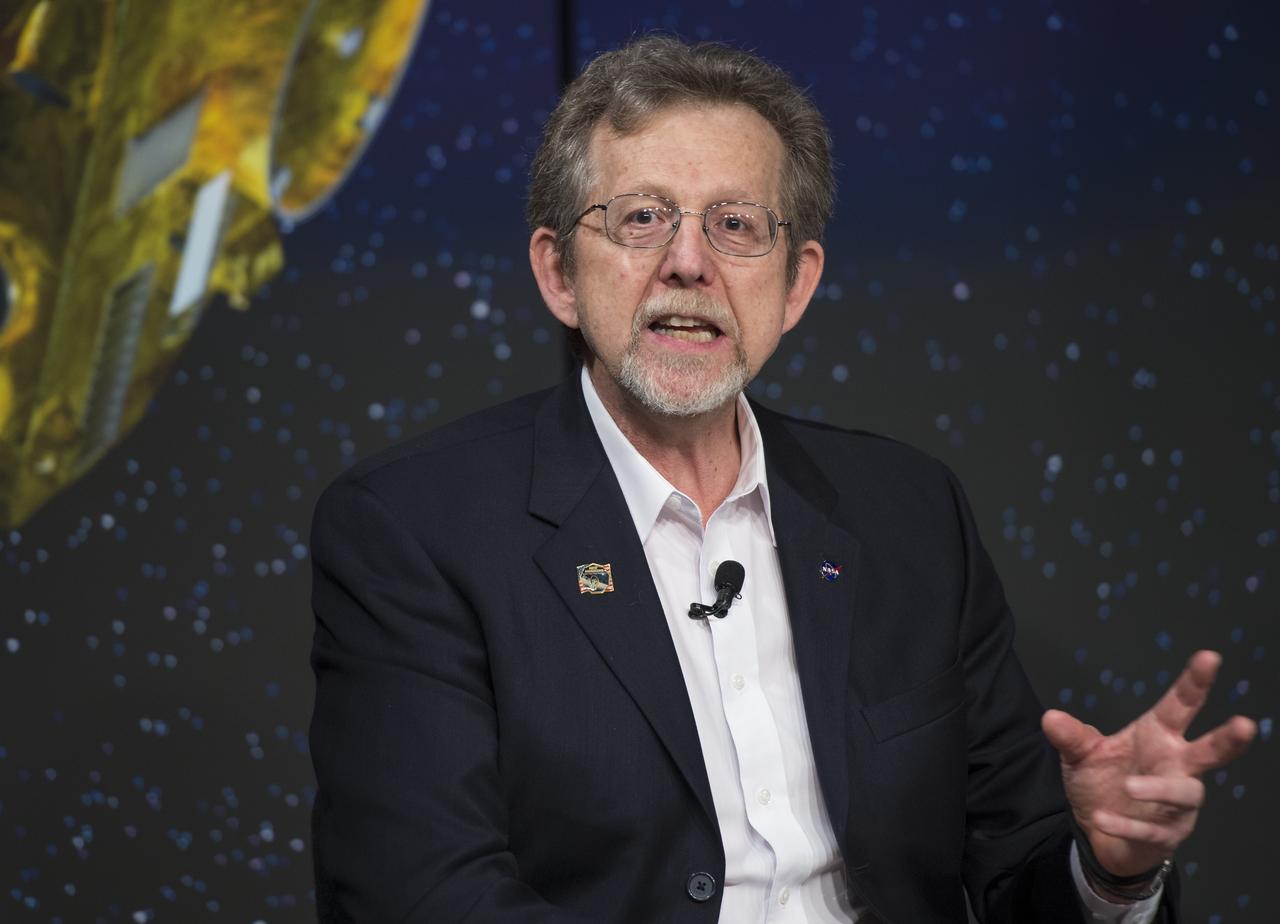
Dr. Jim Green, Director of NASA’s Planetary Division, speaks on a panel at the "New Horizons: The First Mission to the Pluto System and the Kuiper Belt" Event at NASA Headquarters in Washington, DC Monday, August 25, 2014. Scientists discussed how the first images of Pluto and its moons would be captured by the New Horizons spacecraft during a five month long reconnaissance flyby study starting in the summer of 2015. New Horizons launched on January 19, 2006 and is scheduled to make its closest approach to Pluto on July 14, 2015. Photo Credit: (NASA/Aubrey Gemignani)
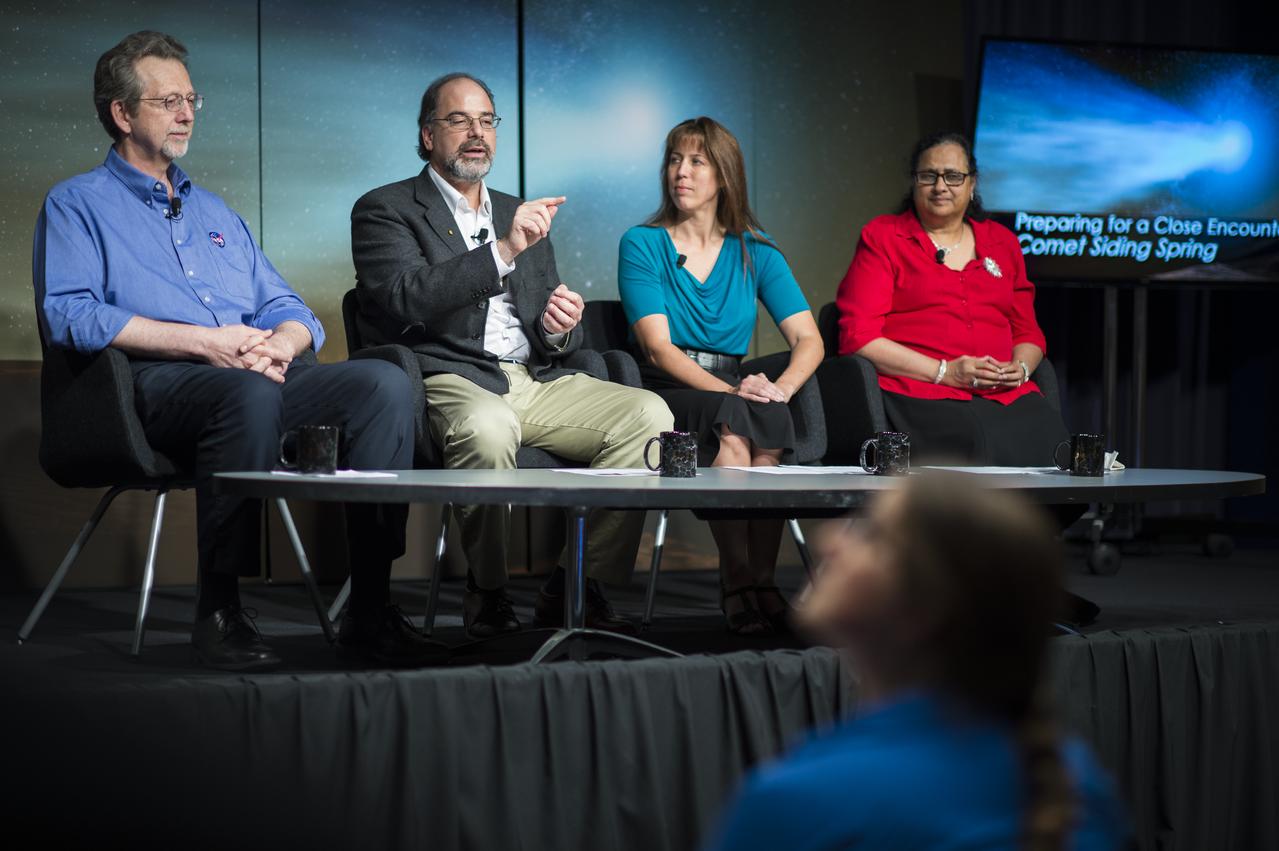
Panelists, from left, Jim Green, director, Planetary Science Division, NASA Headquarters, Washington, Carey Lisse, senior astrophysicist, Johns Hopkins University Applied Physics Laboratory, Laurel, Maryland, Kelly Fast, program scientist, Planetary Science Division, NASA Headquarters, Washington, and Padma Yanamandra-Fisher, senior research scientist, Space Science Institute, Rancho Cucamonga Branch, California, are seen during a media briefing where they outlined how space and Earth-based assets will be used to image and study comet Siding Spring during its Sunday, Oct. 19 flyby of Mars, Thursday, Oct. 9, 2014 at NASA Headquarters in Washington. (Photo credit: NASA/Joel Kowsky)
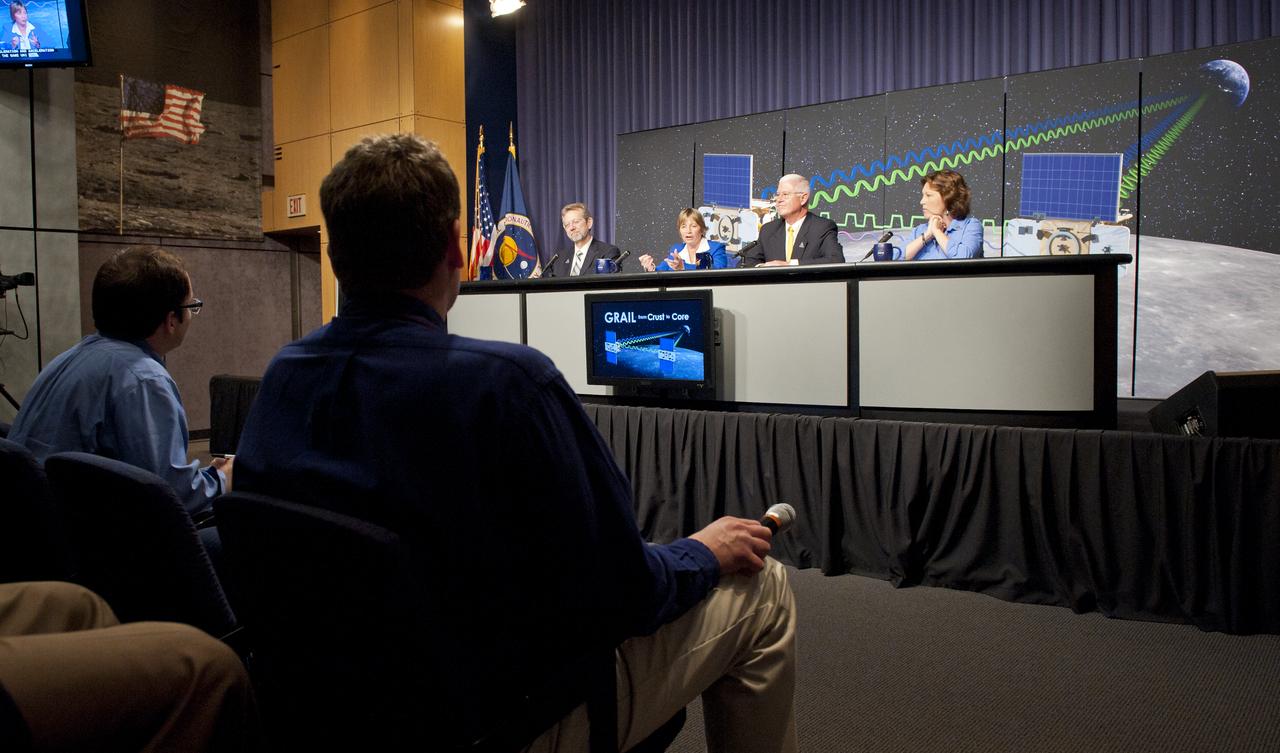
On the panel from right: Leesa Hubbard, teacher in residence, Sally Ride Science, San Diego; David Lehman, GRAIL project manager, NASA's Jet Propulsion Laboratory, Pasadena, Calif.; Maria Zuber, GRAIL principal investigator, Massachusetts Institute of Technology, Cambridge and Jim Green, director, Planetary Science Division, NASA Headquarters, Washington are seen at a press briefing to discuss the upcoming launch to the moon of the Gravity Recovery and Interior Laboratory (GRAIL) mission, Thursday, Aug. 25, 2011 in Washington. Photo Credit: (NASA/Carla Cioffi)
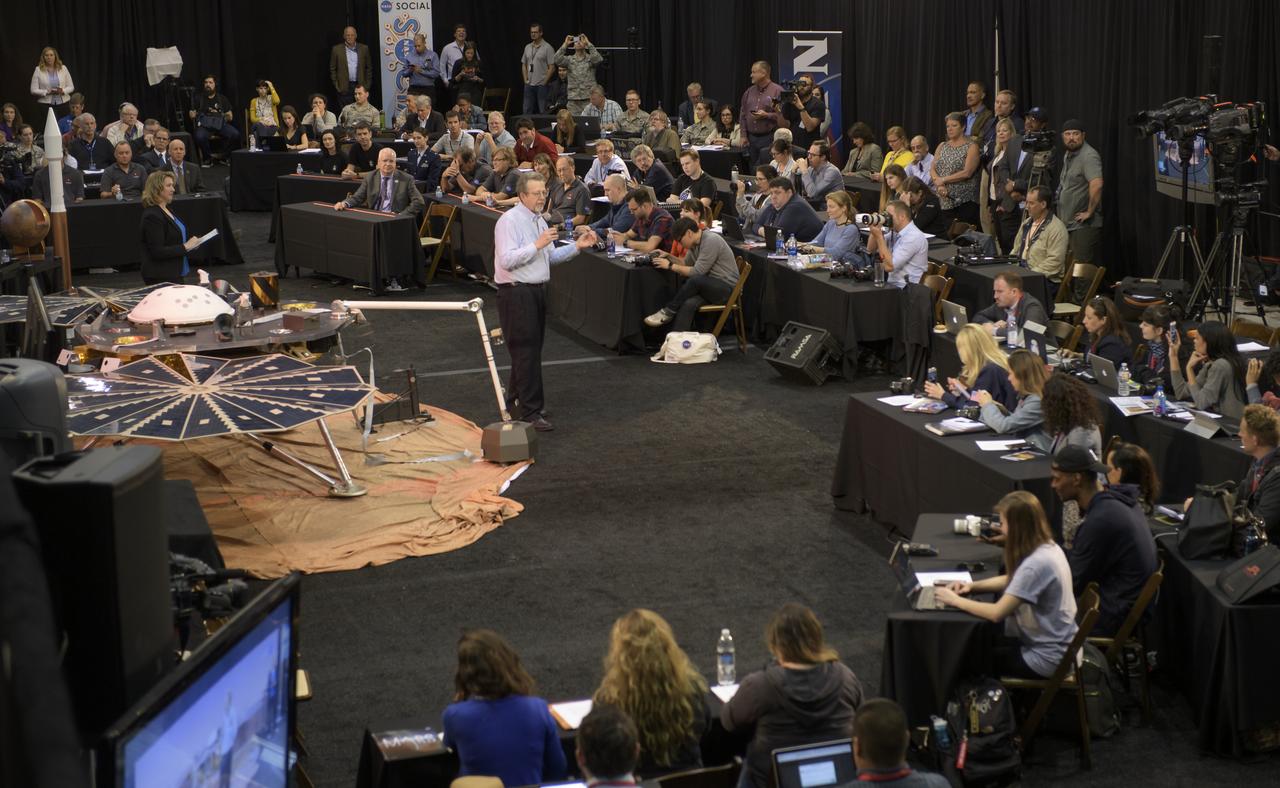
NASA Chief Scientist Jim Green discusses NASA's InSight mission during a prelaunch media briefing, Thursday, May 3, 2018, at Vandenberg Air Force Base in California. InSight, short for Interior Exploration using Seismic Investigations, Geodesy and Heat Transport, is a Mars lander designed to study the "inner space" of Mars: its crust, mantle, and core. Photo Credit: (NASA/Bill Ingalls)
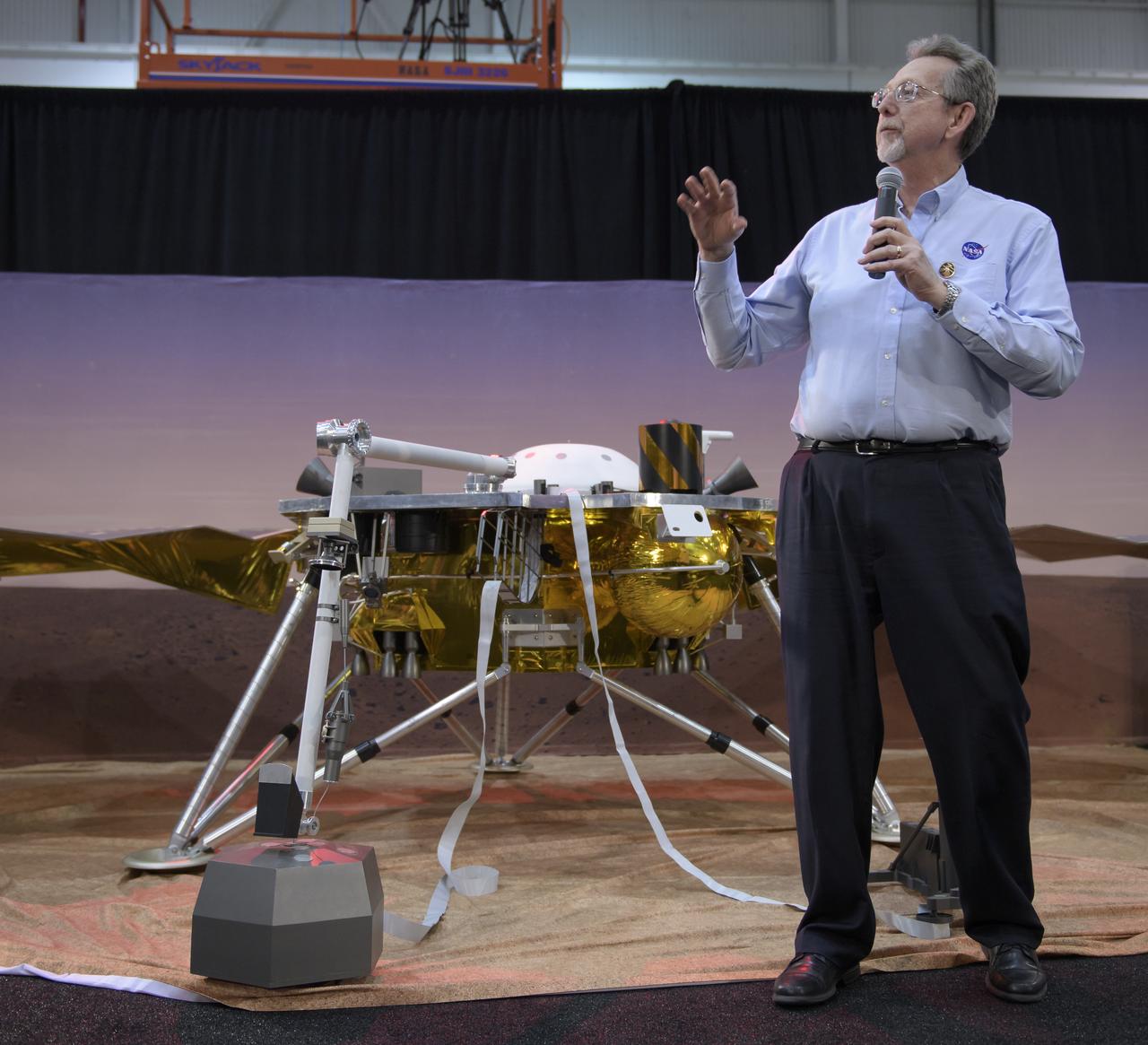
NASA Chief Scientist Jim Green discusses NASA's InSight mission during a prelaunch media briefing, Thursday, May 3, 2018, at Vandenberg Air Force Base in California. InSight, short for Interior Exploration using Seismic Investigations, Geodesy and Heat Transport, is a Mars lander designed to study the "inner space" of Mars: its crust, mantle, and core. Photo Credit: (NASA/Bill Ingalls)
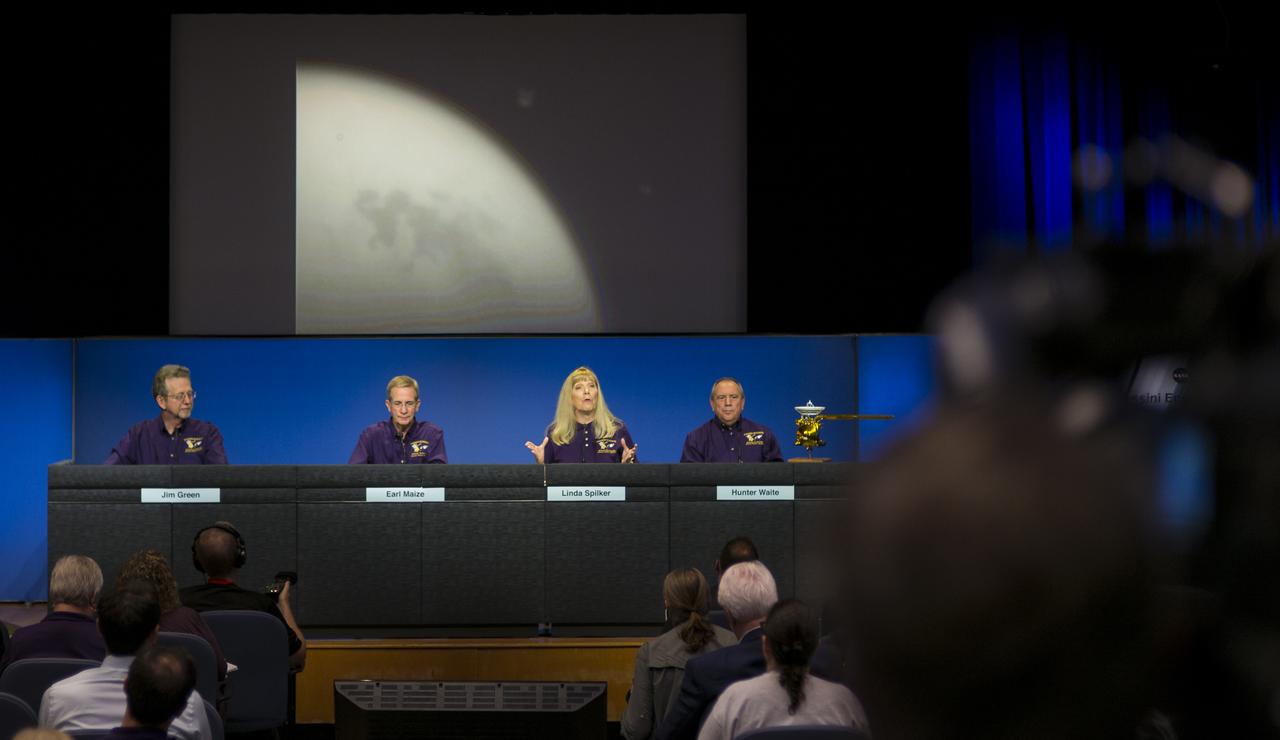
One of the final images of Saturn's moon Titan, that was taken by the Cassini spacecraft on Sept. 11, is seen as Cassini project scientist at JPL, Linda Spilker, second from right, speaks during a press conference previewing Cassini's End of Mission, Wednesday, Sept. 13, 2017 at NASA's Jet Propulsion Laboratory in Pasadena, California. Also participating in the press conference were director of NASA's Planetary Science Division, Jim Green, left, Cassini program manager at JPL, Earl Maize, second from left, and principle investigator for the Neutral Mass Spectrometer (INMS) at the Southwest Research Institute, Hunter Waite, left. Since its arrival in 2004, the Cassini-Huygens mission has been a discovery machine, revolutionizing our knowledge of the Saturn system and captivating us with data and images never before obtained with such detail and clarity. On Sept. 15, 2017, operators will deliberately plunge the spacecraft into Saturn, as Cassini gathered science until the end. The “plunge” ensures Saturn’s moons will remain pristine for future exploration. During Cassini’s final days, mission team members from all around the world gathered at NASA’s Jet Propulsion Laboratory, Pasadena, California, to celebrate the achievements of this historic mission. Photo Credit: (NASA/Joel Kowsky)
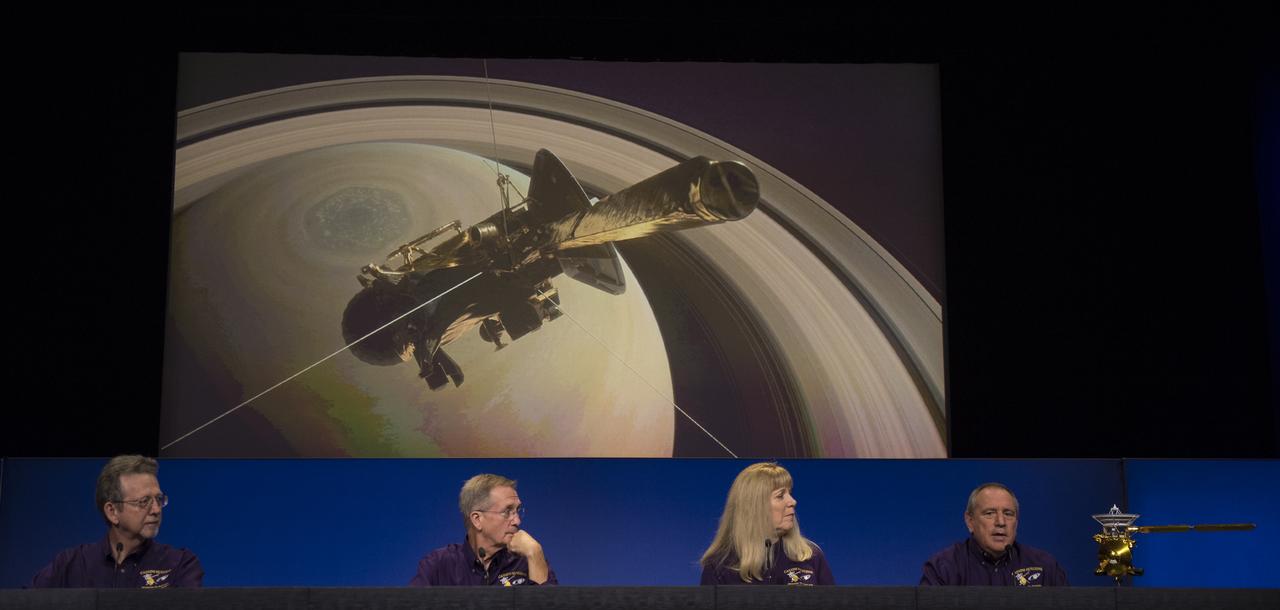
Principle investigator for the Neutral Mass Spectrometer (INMS) at the Southwest Research Institute, Hunter Waite, right, speaks during a press conference previewing Cassini's End of Mission as director of NASA's Planetary Science Division, Jim Green, left, Cassini program manager at JPL, Earl Maize, second from left, and Cassini project scientist at JPL, Linda Spilker, second from right, look on, Wednesday, Sept. 13, 2017 at NASA's Jet Propulsion Laboratory in Pasadena, California. Since its arrival in 2004, the Cassini-Huygens mission has been a discovery machine, revolutionizing our knowledge of the Saturn system and captivating us with data and images never before obtained with such detail and clarity. On Sept. 15, 2017, operators will deliberately plunge the spacecraft into Saturn, as Cassini gathered science until the end. The “plunge” ensures Saturn’s moons will remain pristine for future exploration. During Cassini’s final days, mission team members from all around the world gathered at NASA’s Jet Propulsion Laboratory, Pasadena, California, to celebrate the achievements of this historic mission. Photo Credit: (NASA/Joel Kowsky)
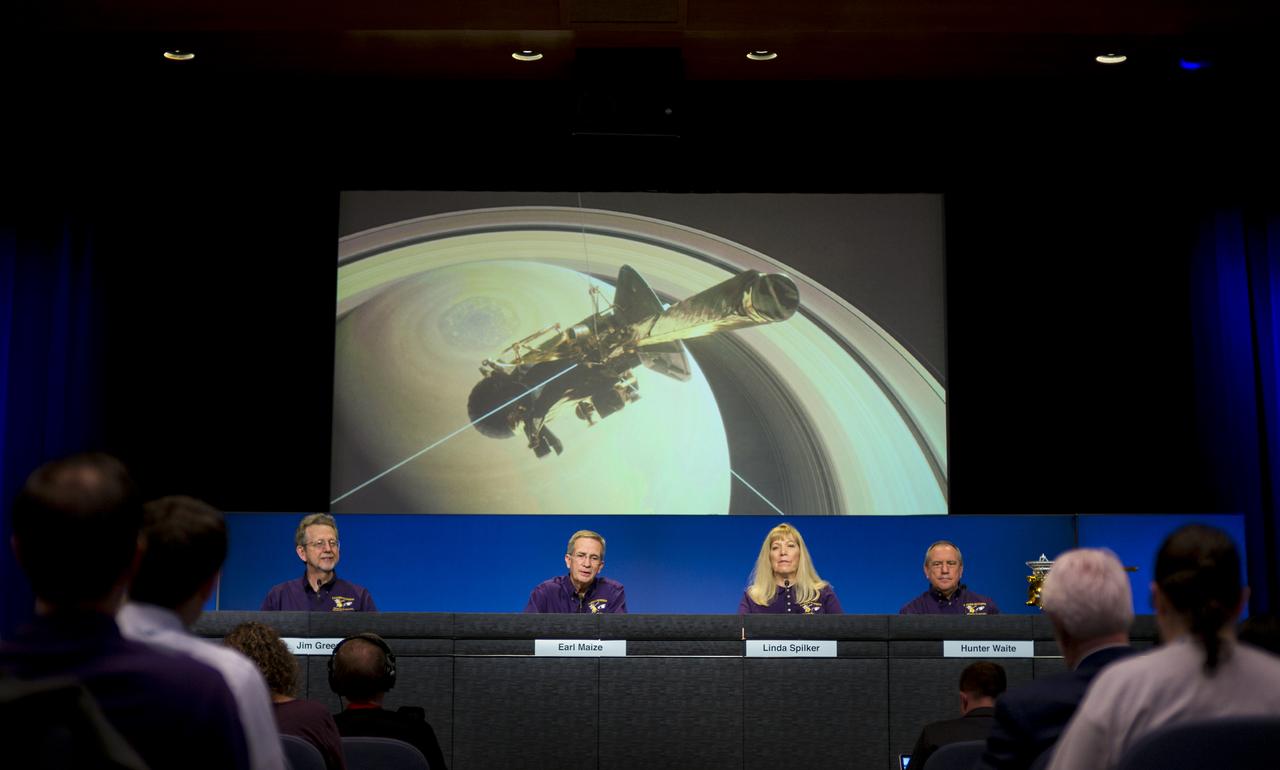
Director of NASA's Planetary Science Division, Jim Green, left, Cassini program manager at JPL, Earl Maize, second from right, Cassini project scientist at JPL, Linda Spilker, second from right, and principle investigator for the Neutral Mass Spectrometer (INMS) at the Southwest Research Institute, Hunter Waite, right, are seen during a press conference previewing Cassini's End of Mission, Wednesday, Sept. 13, 2017 at NASA's Jet Propulsion Laboratory in Pasadena, California. Since its arrival in 2004, the Cassini-Huygens mission has been a discovery machine, revolutionizing our knowledge of the Saturn system and captivating us with data and images never before obtained with such detail and clarity. On Sept. 15, 2017, operators will deliberately plunge the spacecraft into Saturn, as Cassini gathered science until the end. The “plunge” ensures Saturn’s moons will remain pristine for future exploration. During Cassini’s final days, mission team members from all around the world gathered at NASA’s Jet Propulsion Laboratory, Pasadena, California, to celebrate the achievements of this historic mission. Photo Credit: (NASA/Joel Kowsky)
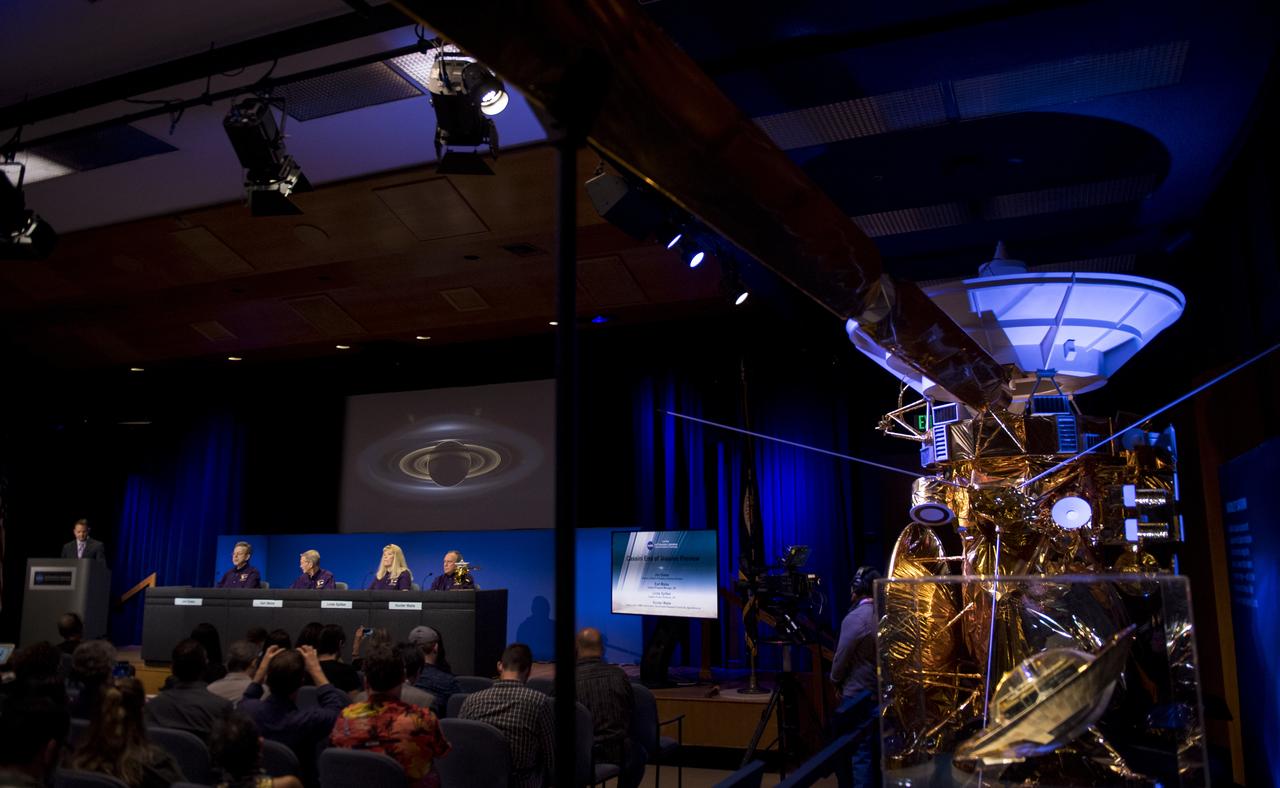
A model of the Cassini spacecraft is seen during a press conference previewing Cassini's End of Mission, Wednesday, Sept. 13, 2017 at NASA's Jet Propulsion Laboratory in Pasadena, California. Participants in the press conference were: Director of NASA's Planetary Science Division, Jim Green, left, Cassini program manager at JPL, Earl Maize, second from right, Cassini project scientist at JPL, Linda Spilker, second from right, and principle investigator for the Neutral Mass Spectrometer (INMS) at the Southwest Research Institute, Hunter Waite, right. Since its arrival in 2004, the Cassini-Huygens mission has been a discovery machine, revolutionizing our knowledge of the Saturn system and captivating us with data and images never before obtained with such detail and clarity. On Sept. 15, 2017, operators will deliberately plunge the spacecraft into Saturn, as Cassini gathered science until the end. The “plunge” ensures Saturn’s moons will remain pristine for future exploration. During Cassini’s final days, mission team members from all around the world gathered at NASA’s Jet Propulsion Laboratory, Pasadena, California, to celebrate the achievements of this historic mission. Photo Credit: (NASA/Joel Kowsky)
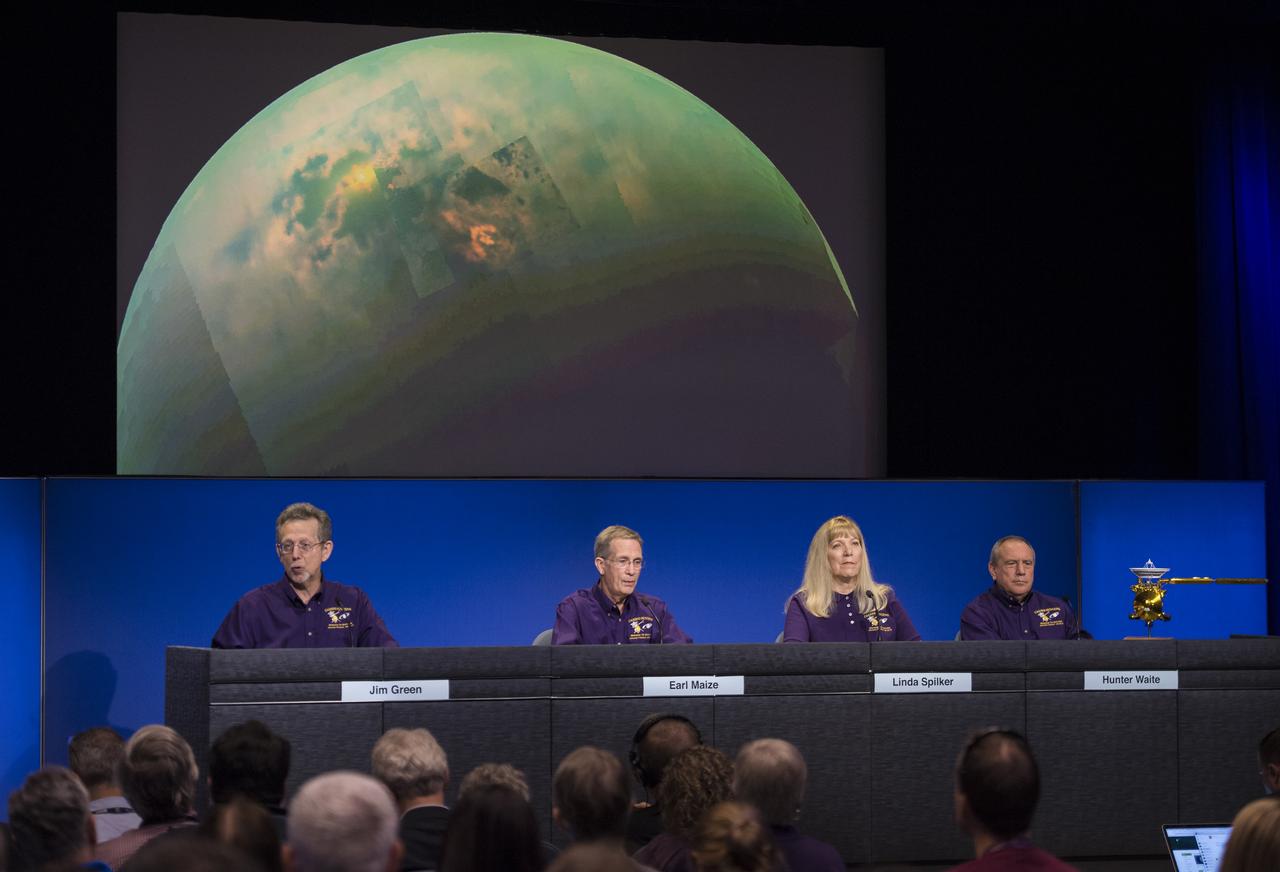
Director of NASA's Planetary Science Division, Jim Green, left, speaks during a press conference previewing Cassini's End of Mission, Wednesday, Sept. 13, 2017 at NASA's Jet Propulsion Laboratory in Pasadena, California. Also participating in the press conference were Cassini program manager at JPL, Earl Maize, second from right, Cassini project scientist at JPL, Linda Spilker, second from left, and principle investigator for the Ion and Neutral Mass Spectrometer (INMS) at the Southwest Research Institute, Hunter Waite, right. Since its arrival in 2004, the Cassini-Huygens mission has been a discovery machine, revolutionizing our knowledge of the Saturn system and captivating us with data and images never before obtained with such detail and clarity. On Sept. 15, 2017, operators will deliberately plunge the spacecraft into Saturn, as Cassini gathered science until the end. The “plunge” ensures Saturn’s moons will remain pristine for future exploration. During Cassini’s final days, mission team members from all around the world gathered at NASA’s Jet Propulsion Laboratory, Pasadena, California, to celebrate the achievements of this historic mission. Photo Credit: (NASA/Joel Kowsky)
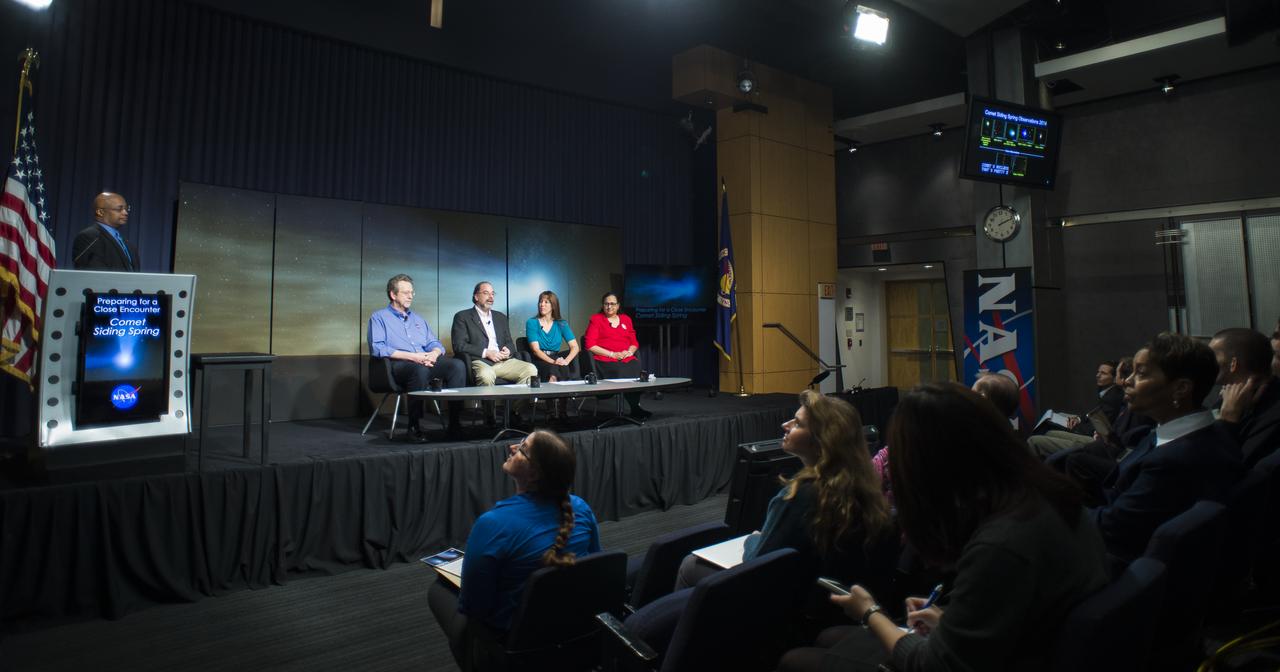
Dwayne Brown, NASA public affairs officer, left, moderates a media briefing where panelist, seated from left, Jim Green, director, Planetary Science Division, NASA Headquarters, Washington, Carey Lisse, senior astrophysicist, Johns Hopkins University Applied Physics Laboratory, Laurel, Maryland, Kelly Fast, program scientist, Planetary Science Division, NASA Headquarters, Washington, and Padma Yanamandra-Fisher, senior research scientist, Space Science Institute, Rancho Cucamonga Branch, California, outlined how space and Earth-based assets will be used to image and study comet Siding Spring during its Sunday, Oct. 19 flyby of Mars, Thursday, Oct. 9, 2014 at NASA Headquarters in Washington. (Photo credit: NASA/Joel Kowsky)
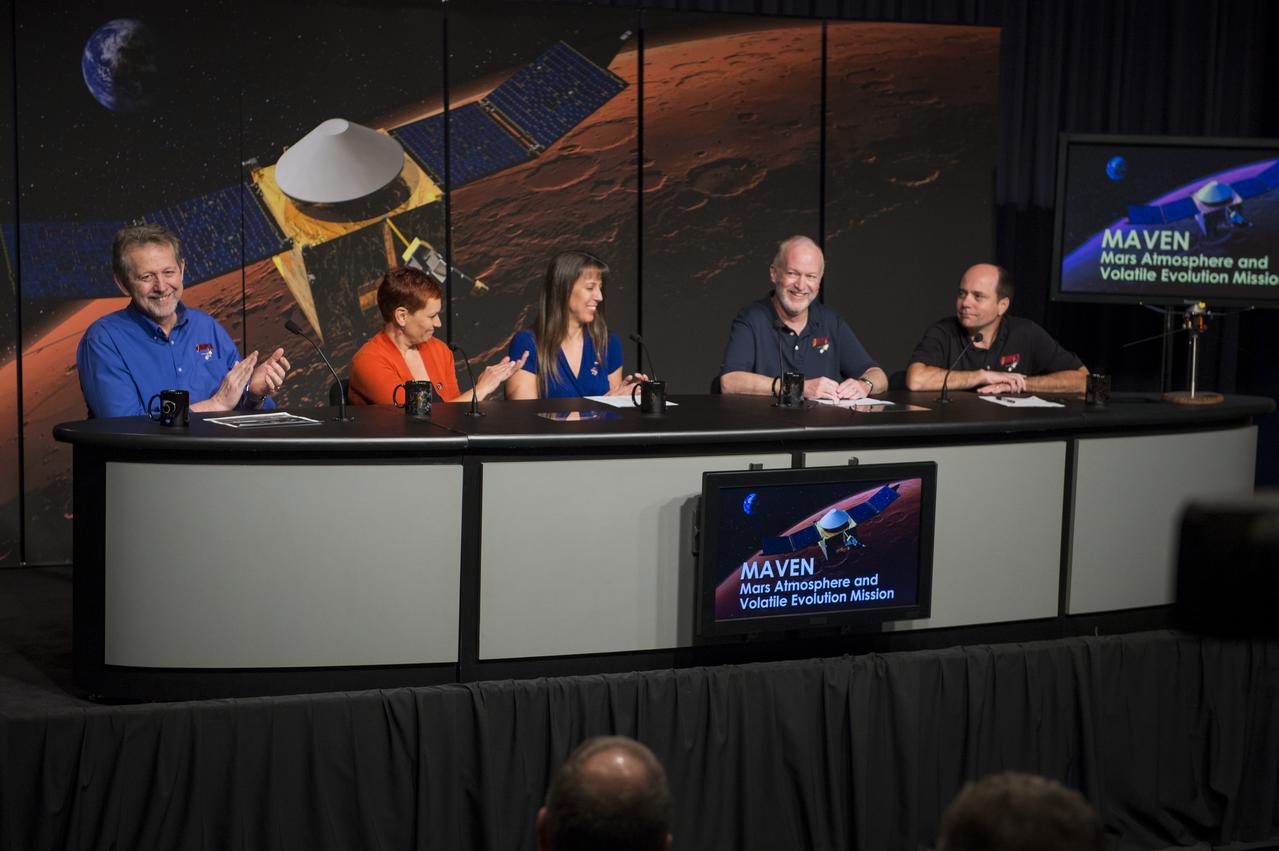
L-R: Jim Green, director, Planetary Science Division, NASA Headquarters, Lisa May, MAVEN program executive, NASA Headquarters, Kelly Fast, MAVEN program scientist, NASA Headquarters, Bruce Jakosky, MAVEN principal investigator, University of Colorado Boulder Laboratory for Atmospheric and Space Physics, and David Mitchell, MAVEN project manager, NASA's Goddard Space Flight Center, Greenbelt, Md. are applauded at the end of a panel discussion on the upcoming launch of the Mars Atmosphere and Volatile Evolution (MAVEN) mission, at a press conference at NASA Headquarters in Washington on Monday, Oct. 28th, 2013. MAVEN is the agency's next mission to Mars and the first devoted to understanding the upper atmosphere of the Red Planet. (Photo credit: NASA/Jay Westcott)
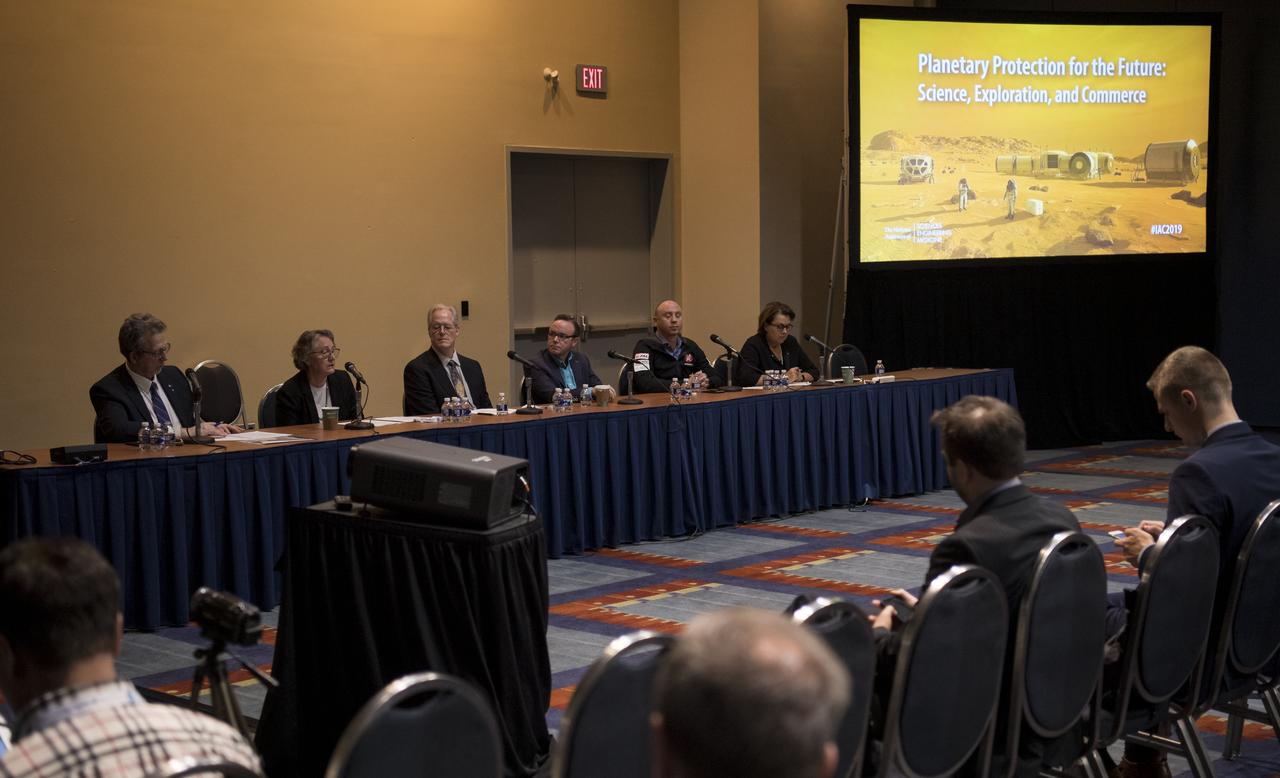
NASA Chief Scientist Jim Green, left, Lisa Pratt, NASA's Planetary Protection Officer, Michael Meyer, Lead Scientist for NASA's Mars Exploration Program, Dan Hendrickson, Vice President of Business Development at Astrobotic Technology, Kyle Acierno, Vice President of Global Sales and Strategy at ispace, and Simonetta Di Pippo, Director of the United Nations Office for Outer Space Affairs, right, are seen during a special session titled “Planetary Protection for the Future: Science, Exploration, and Commerce” at the 70th International Astronautical Congress, Thursday, Oct. 24, 2019, at the Walter E. Washington Convention Center in Washington. Photo Credit: (NASA/Joel Kowsky)

The core stage for the first flight of NASA's Space Launch System rocket is seen in the B-2 Test Stand behind NASA Administrator Jim Bridenstine ahead of a scheduled eight minute duration hot fire test, January 16, 2021, at NASA's Stennis Space Center near Bay St. Louis, Mississippi. The hot fire test is the final stage of the Green Run test series, a comprehensive assessment of the Space Launch System's core stage prior to launching the Artemis I mission to the Moon. Photo Credit: (NASA/Robert Markowitz)
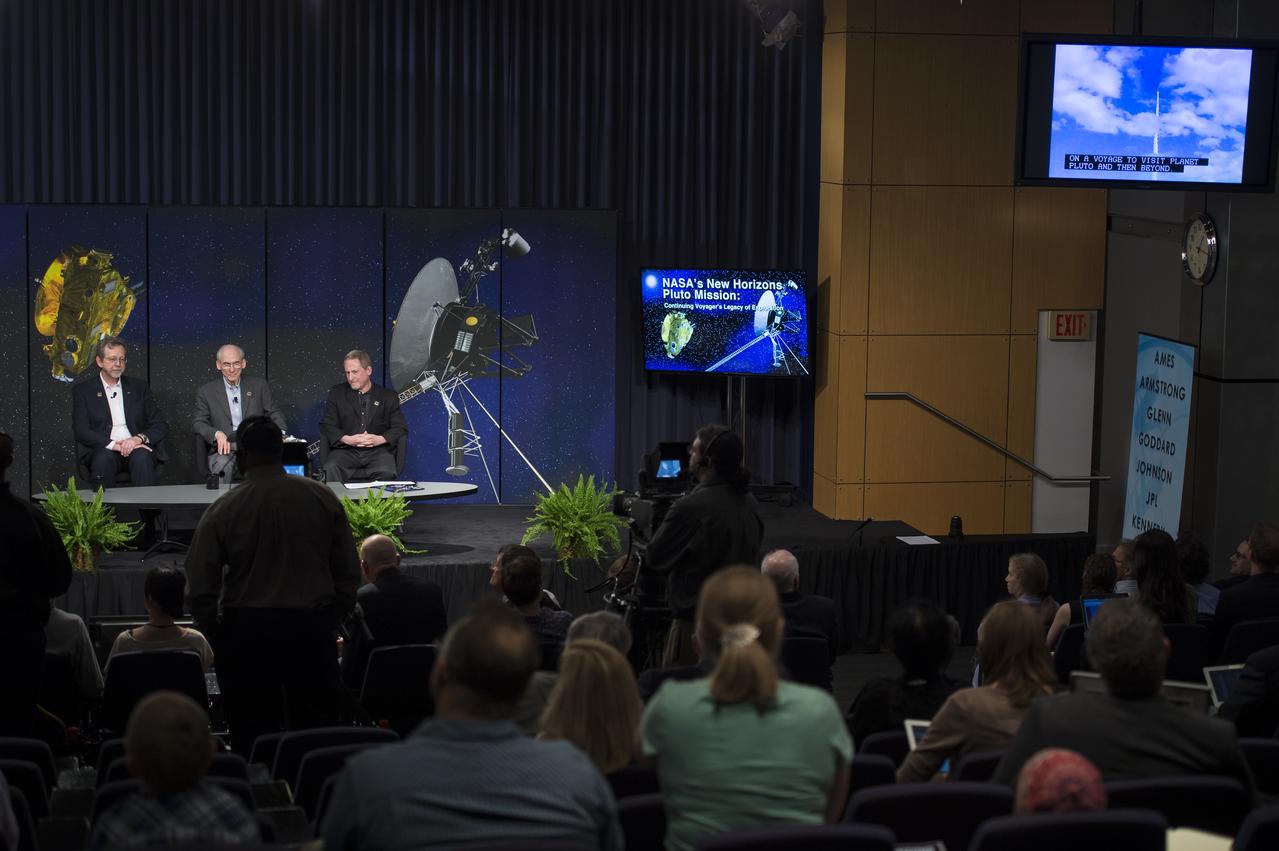
Dr. Jim Green, Dr. Ed Stone, and Dr. Alan Stern speak on a panel at the "New Horizons: The First Mission to the Pluto System and the Kuiper Belt" Event at NASA Headquarters in Washington, DC Monday, August 25, 2014. They discussed how the first images of Pluto and its moons would be captured by the New Horizons spacecraft during a five month long reconnaissance flyby study starting in the summer of 2015. New Horizons launched on January 19, 2006 and is scheduled to make its closest approach to Pluto on July 14, 2015. Photo Credit: (NASA/Aubrey Gemignani)
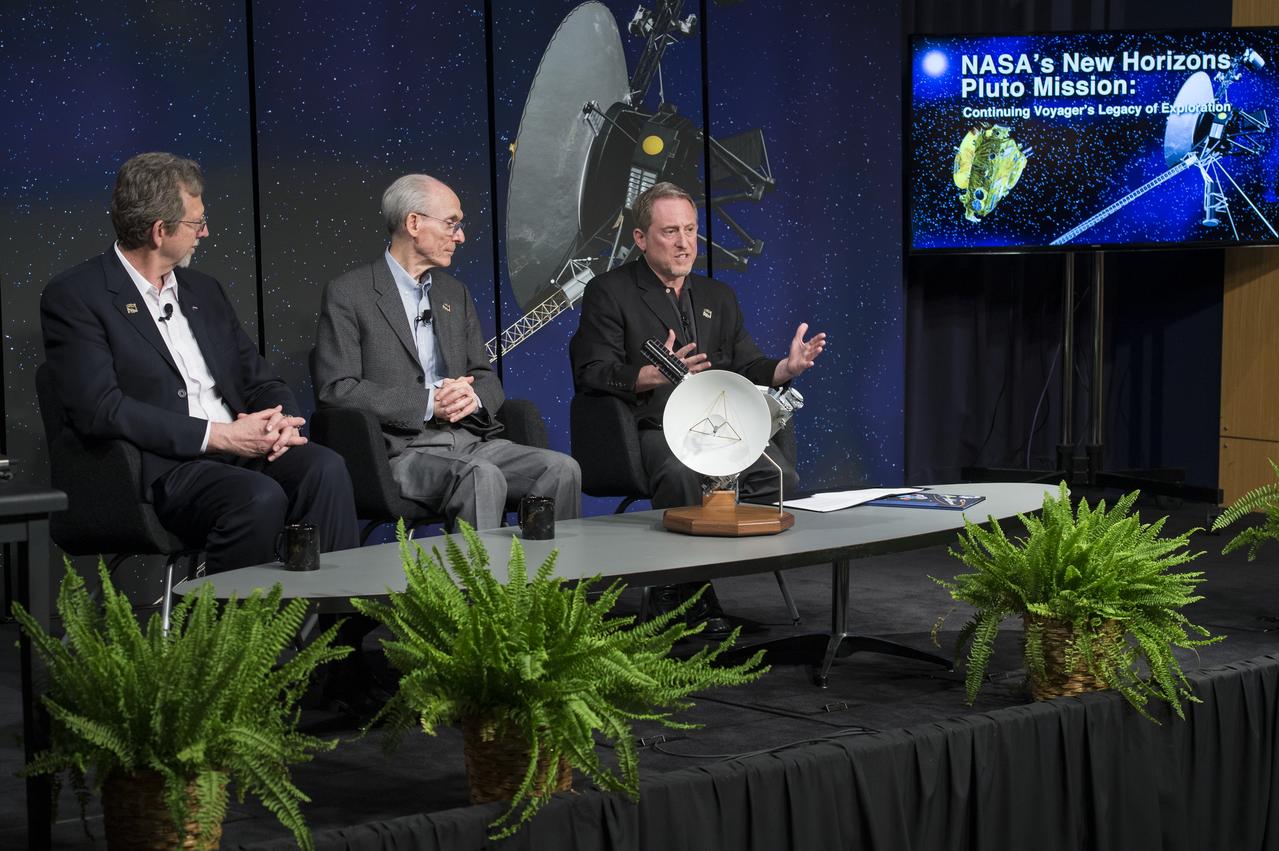
Dr. Jim Green, Dr. Ed Stone, and Dr. Alan Stern speak on a panel at the "New Horizons: The First Mission to the Pluto System and the Kuiper Belt" Event at NASA Headquarters in Washington, DC Monday, August 25, 2014. They discussed how the first images of Pluto and its moons would be captured by the New Horizons spacecraft during a five month long reconnaissance flyby study starting in the summer of 2015. New Horizons launched on January 19, 2006 and is scheduled to make its closest approach to Pluto on July 14, 2015. Photo Credit: (NASA/Aubrey Gemignani)
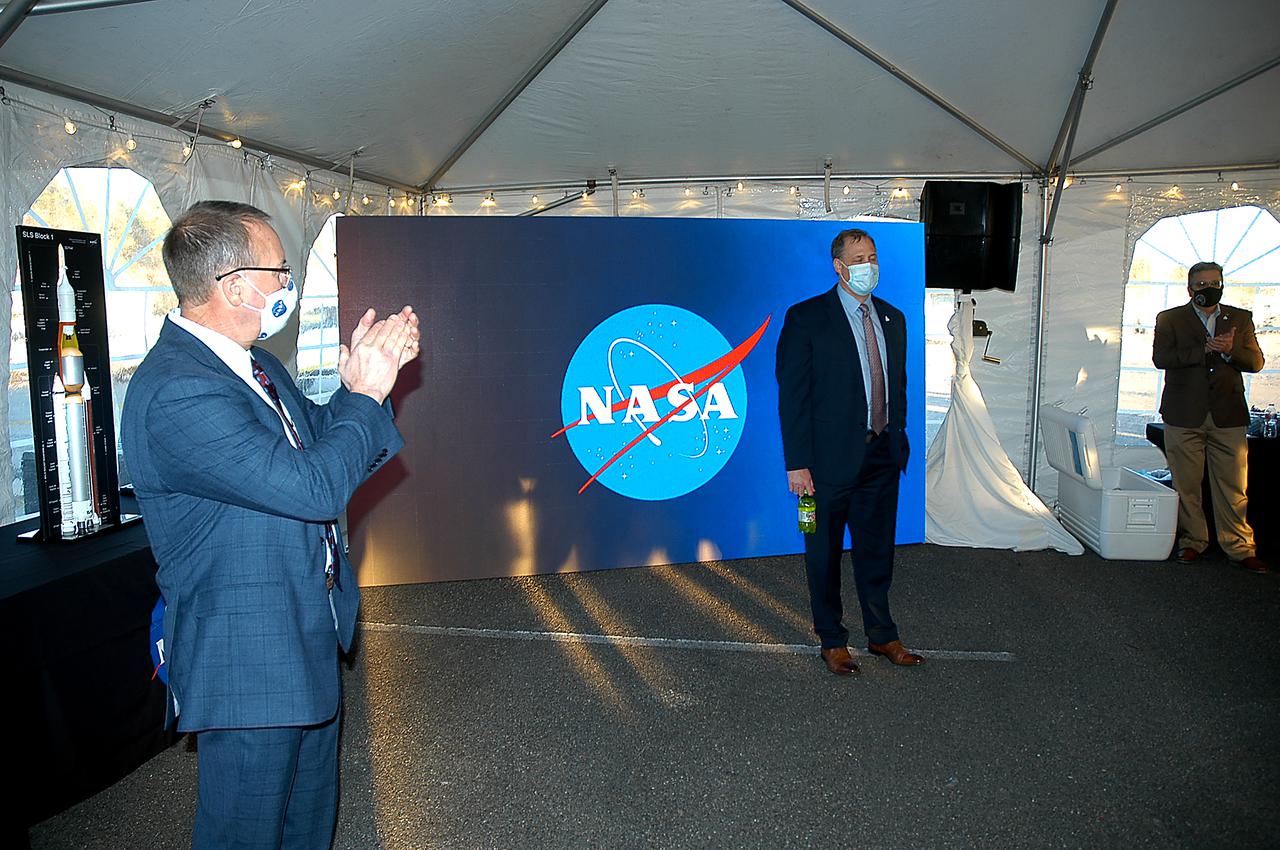
Outgoing NASA Administrator Jim Bridenstine (right) receives a round of applause from Stennis Director Rick Gilbrech and guests for comments following the Green Run hot fire test of the core stage for NASA’s Space Launch System (SLS) rocket at Stennis Space Center near Bay St. Louis, Mississippi, on Saturday, January 16, 2021. NASA conducted a hot fire test of the core stage’s four RS-25 engines on the B-2 Test Stand at Stennis. Scheduled for as long as eight minutes, the engines fired for a little more than one minute to generate a combined 1.6 million pounds of thrust, just as will occur during an actual launch. The hot fire is the final test of the Green Run test series, a comprehensive assessment of the SLS core stage prior to launching the Artemis I mission to the Moon. (NASA/Michael Badon)

Outgoing NASA Administrator Jim Bridenstine (right) and Stennis Space Center Director Rick Gilbrech participate in a press conference following the Green Run hot fire test of the core stage for NASA’s Space Launch System (SLS) rocket on Saturday, January 16, 2021. NASA conducted a hot fire test of the core stage’s four RS-25 engines on the B-2 Test Stand at Stennis Space Center near Bay St. Louis, Mississippi. Scheduled for as long as eight minutes, the engines fired for a little more than one minute to generate a combined 1.6 million pounds of thrust, just as will occur during an actual launch. The hot fire is the final test of the Green Run test series, a comprehensive assessment of the SLS core stage prior to launching the Artemis I mission to the Moon.
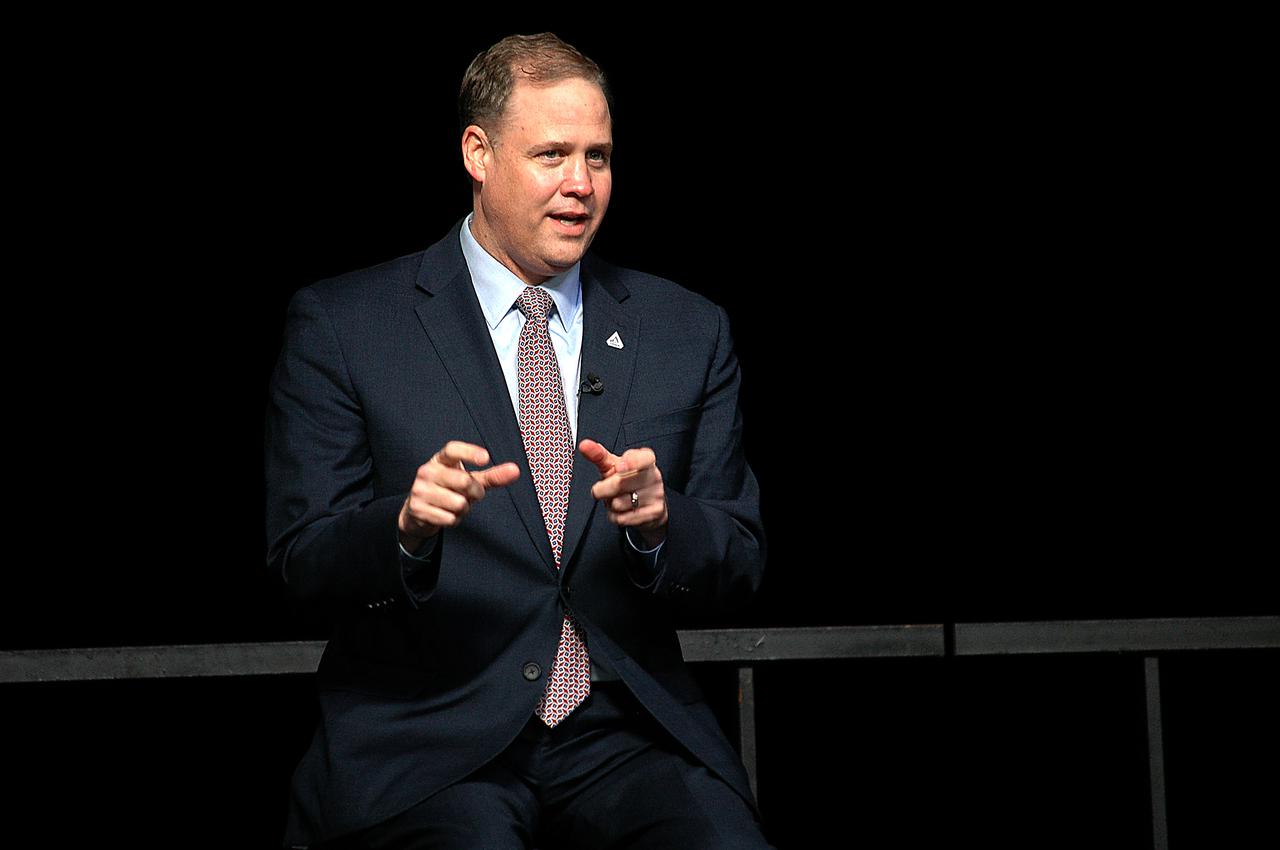
Outgoing NASA Administrator Jim Bridenstine participates in a press conference following the Green Run hot fire test of the core stage for NASA’s Space Launch System (SLS) rocket on Saturday, January 16, 2021. NASA conducted a hot fire test of the core stage’s four RS-25 engines on the B-2 Test Stand at Stennis Space Center near Bay St. Louis, Mississippi. Scheduled for as long as eight minutes, the engines fired for a little more than one minute to generate a combined 1.6 million pounds of thrust, just as will occur during an actual launch. The hot fire is the final test of the Green Run test series, a comprehensive assessment of the SLS core stage prior to launching the Artemis I mission to the Moon.
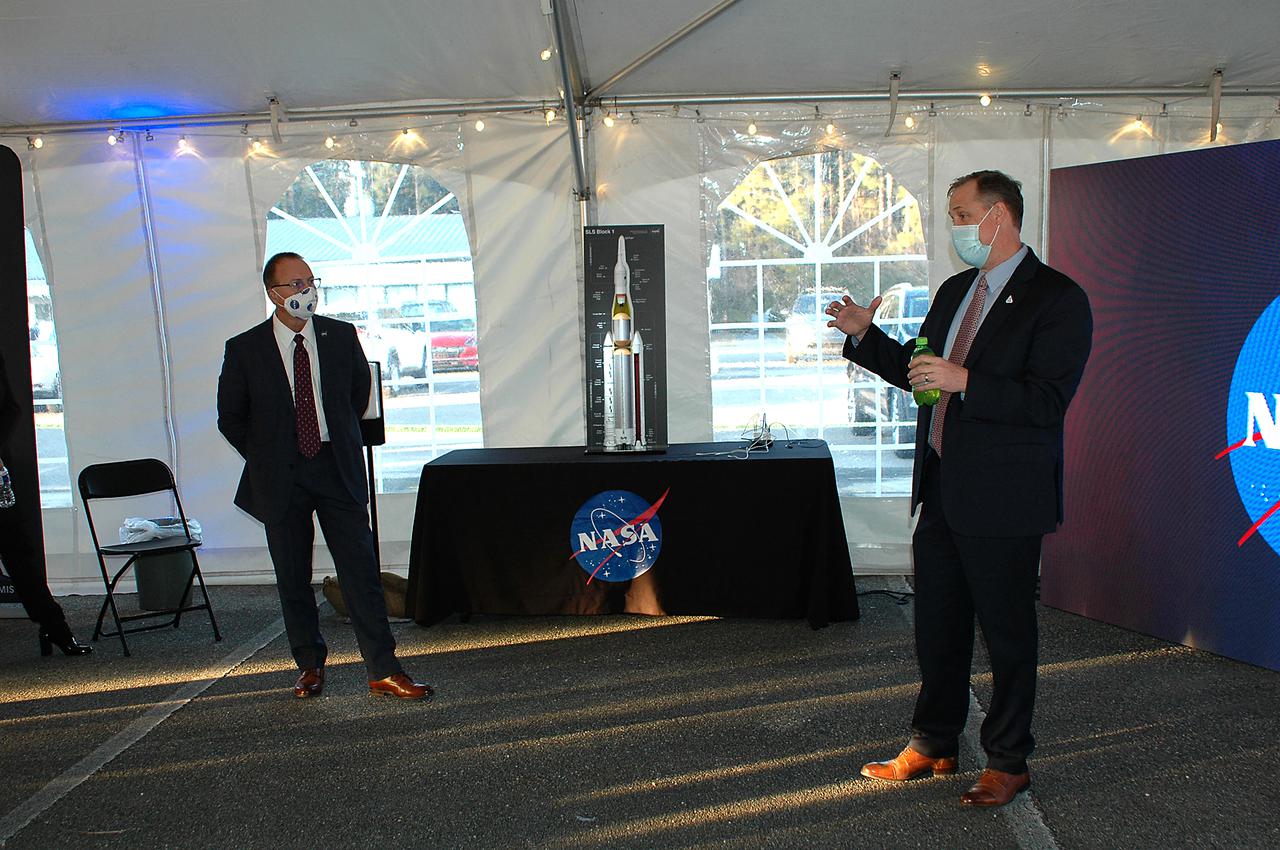
Outgoing NASA Administrator Jim Bridenstine (right), as Stennis Director Rick Gilbrech looks on, speaks to guests following the Green Run hot fire test of the core stage for NASA’s Space Launch System (SLS) rocket at Stennis Space Center near Bay St. Louis, Mississippi, on Saturday, January 16, 2021. NASA conducted a hot fire test of the core stage’s four RS-25 engines on the B-2 Test Stand at Stennis. Scheduled for as long as eight minutes, the engines fired for a little more than one minute to generate a combined 1.6 million pounds of thrust, just as will occur during an actual launch. The hot fire is the final test of the Green Run test series, a comprehensive assessment of the SLS core stage prior to launching the Artemis I mission to the Moon.
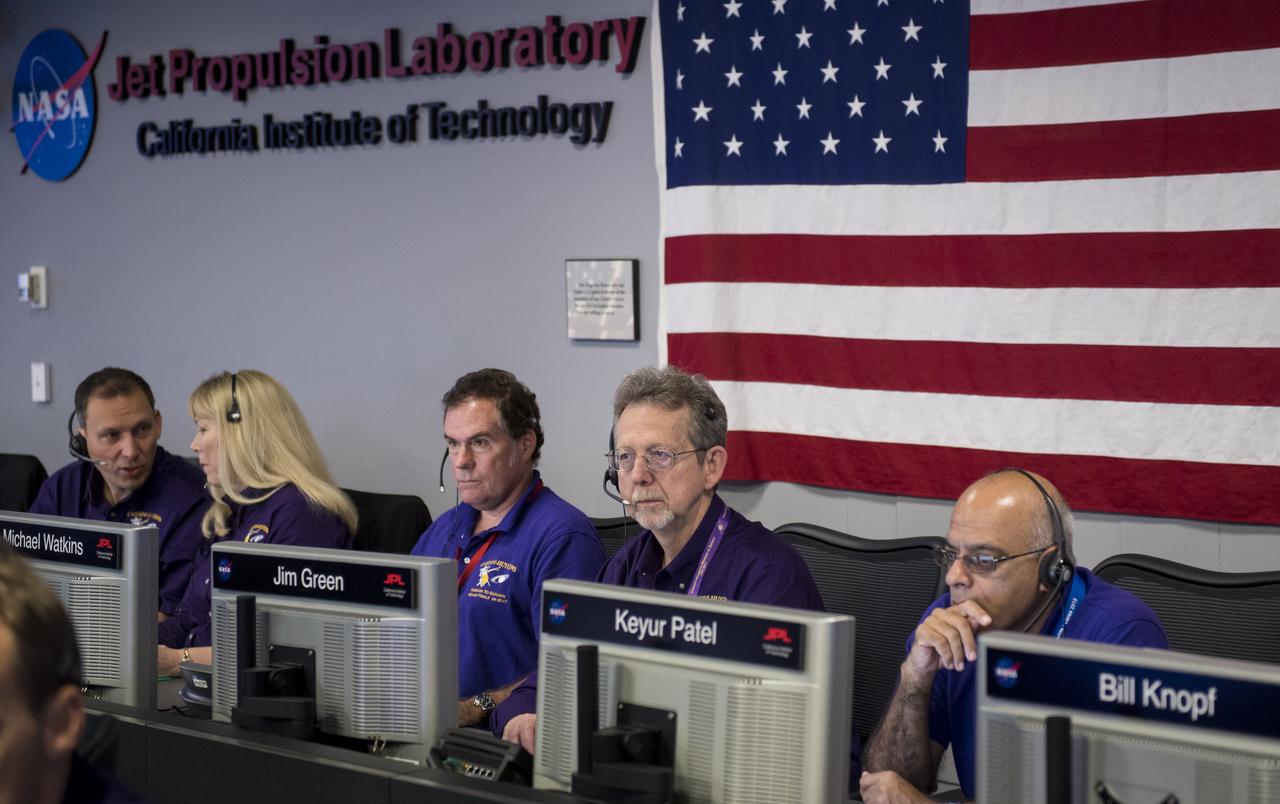
Associate administrator for NASA's Science Mission Directorate Thomas Zurbuchen, left, Cassini project scientist at JPL, Linda Spilker, second from left, director of NASA's Jet Propulsion Laboratory, Michael Watkins, center, director of NASA's Planetary Science Division, Jim Green, second from right, and director of the interplanetary network directorate at NASA's Jet Propulsion Laboratory, Keyur Patel, left, are seen in mission control, Friday, Sept. 15, 2017 at NASA's Jet Propulsion Laboratory in Pasadena, California. Since its arrival in 2004, the Cassini-Huygens mission has been a discovery machine, revolutionizing our knowledge of the Saturn system and captivating us with data and images never before obtained with such detail and clarity. On Sept. 15, 2017, operators deliberately plunged the spacecraft into Saturn, as Cassini gathered science until the end. Loss of contact with the Cassini spacecraft occurred at 7:55 a.m. EDT (4:55 a.m. PDT). The “plunge” ensures Saturn’s moons will remain pristine for future exploration. During Cassini’s final days, mission team members from all around the world gathered at NASA’s Jet Propulsion Laboratory, Pasadena, California, to celebrate the achievements of this historic mission. Photo Credit: (NASA/Joel Kowsky)
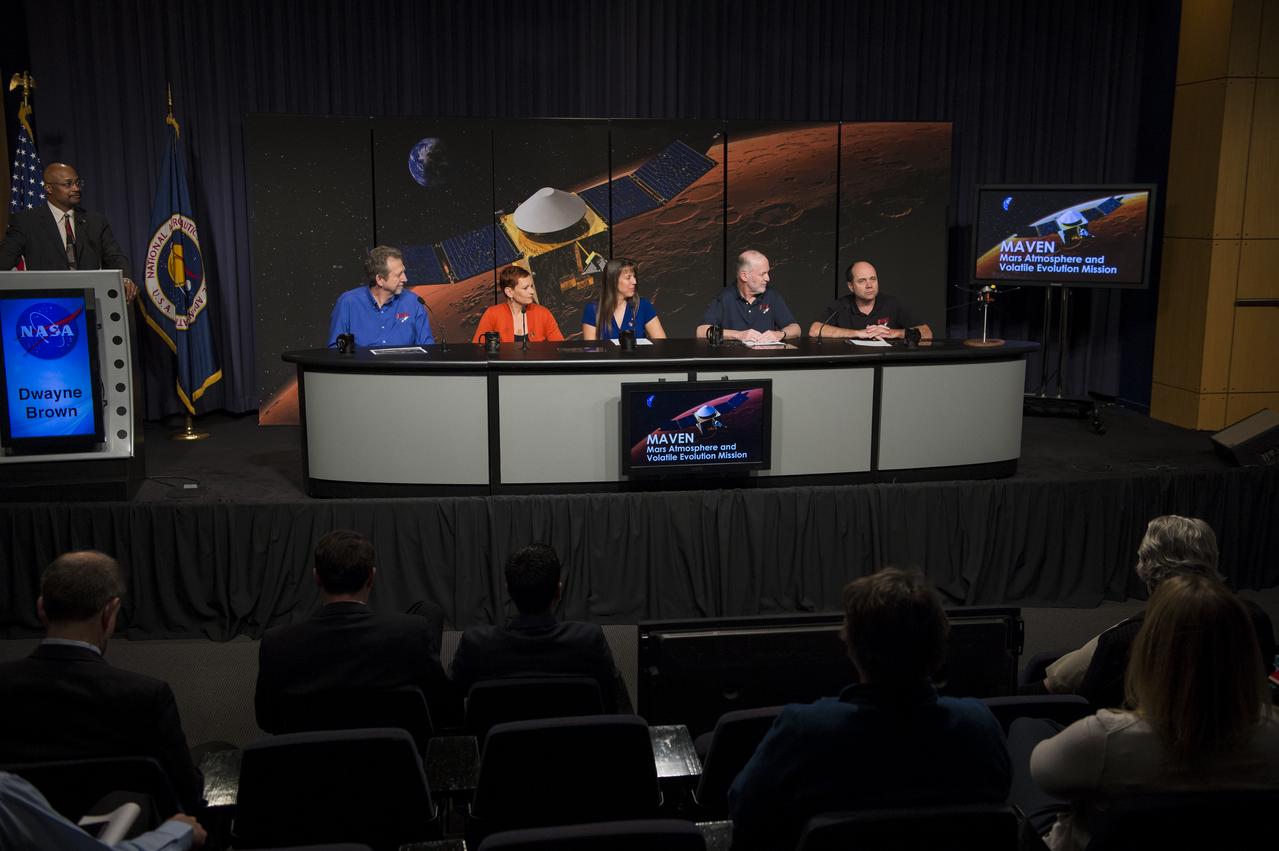
L-R: Dwayne Brown, NASA Public Affairs Officer, Jim Green, director, Planetary Science Division, NASA Headquarters, Lisa May, MAVEN program executive, NASA Headquarters, Kelly Fast, MAVEN program scientist, NASA Headquarters, Bruce Jakosky, MAVEN principal investigator, University of Colorado Boulder Laboratory for Atmospheric and Space Physics, and David Mitchell, MAVEN project manager, NASA's Goddard Space Flight Center, Greenbelt, Md. discuss the upcoming launch of the Mars Atmosphere and Volatile Evolution (MAVEN) mission, at a press conference at NASA Headquarters in Washington on Monday, Oct. 28th, 2013. MAVEN is the agency's next mission to Mars and the first devoted to understanding the upper atmosphere of the Red Planet. (Photo credit: NASA/Jay Westcott)
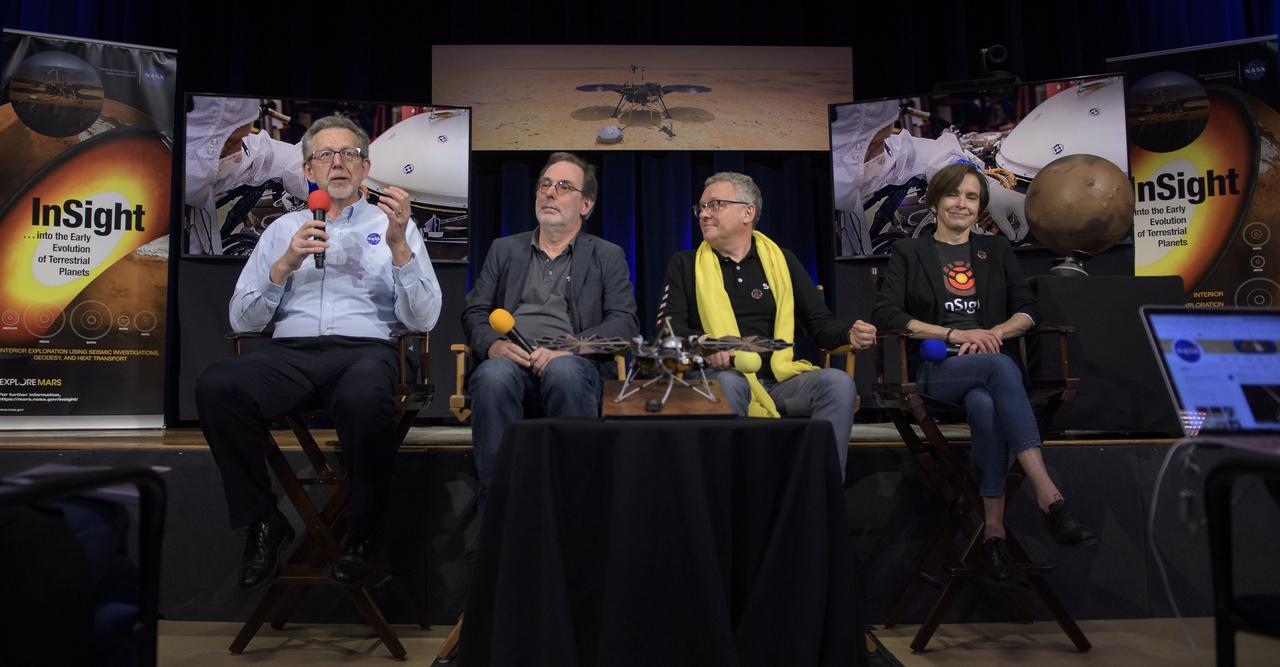
From left to right: NASA Chief Scientist Jim Green; HP3 Principle Investigator, German Aerospace Center (DLR), Tilman Spohn; SEIS Project Manager, French National Space Agency (CNES), Philippe Laudet; and InSight deputy principal investigator, NASA JPL, Sue Smrekar talk about Mars InSight during a social media briefing, Sunday, Nov. 25, 2018 at NASA's Jet Propulsion Laboratory in Pasadena, California. InSight, short for Interior Exploration using Seismic Investigations, Geodesy and Heat Transport, is a Mars lander designed to study the "inner space" of Mars: its crust, mantle, and core. InSight is scheduled to touch down on the Red Planet at approximately noon PST (3 p.m. EST) on Nov. 26. Photo Credit: (NASA/Bill Ingalls)
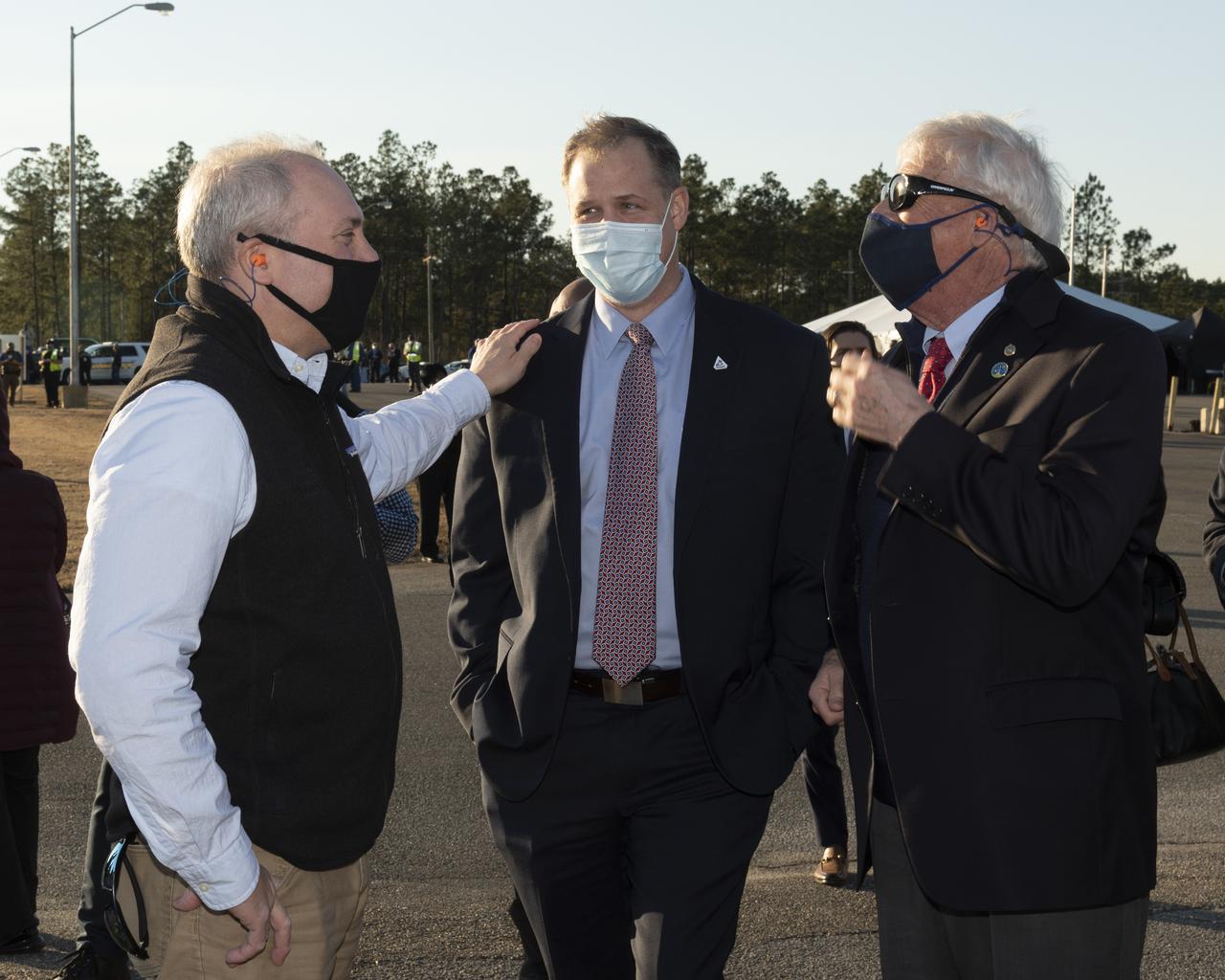
U.S. Representative Steve Scalise, left, NASA Administrator Jim Bridenstine and U.S. Senator Roger Wicker, right gather to watch as the core stage for the first flight of NASA's Space Launch System rocket undergoes a scheduled eight minute duration hot fire test in the B-2 Test Stand, January 16, 2021, at NASA's Stennis Space Center near Bay St. Louis, Mississippi. The four RS-25 engines fired for a little more than one minute and generated 1.6 million pounds of thrust. The hot fire is the final test of the Green Run test series, a comprehensive assessment of the Space Launch System’s core stage prior to launching the Artemis I mission to the Moon. Photo Credit: (NASA/Robert Markowitz)
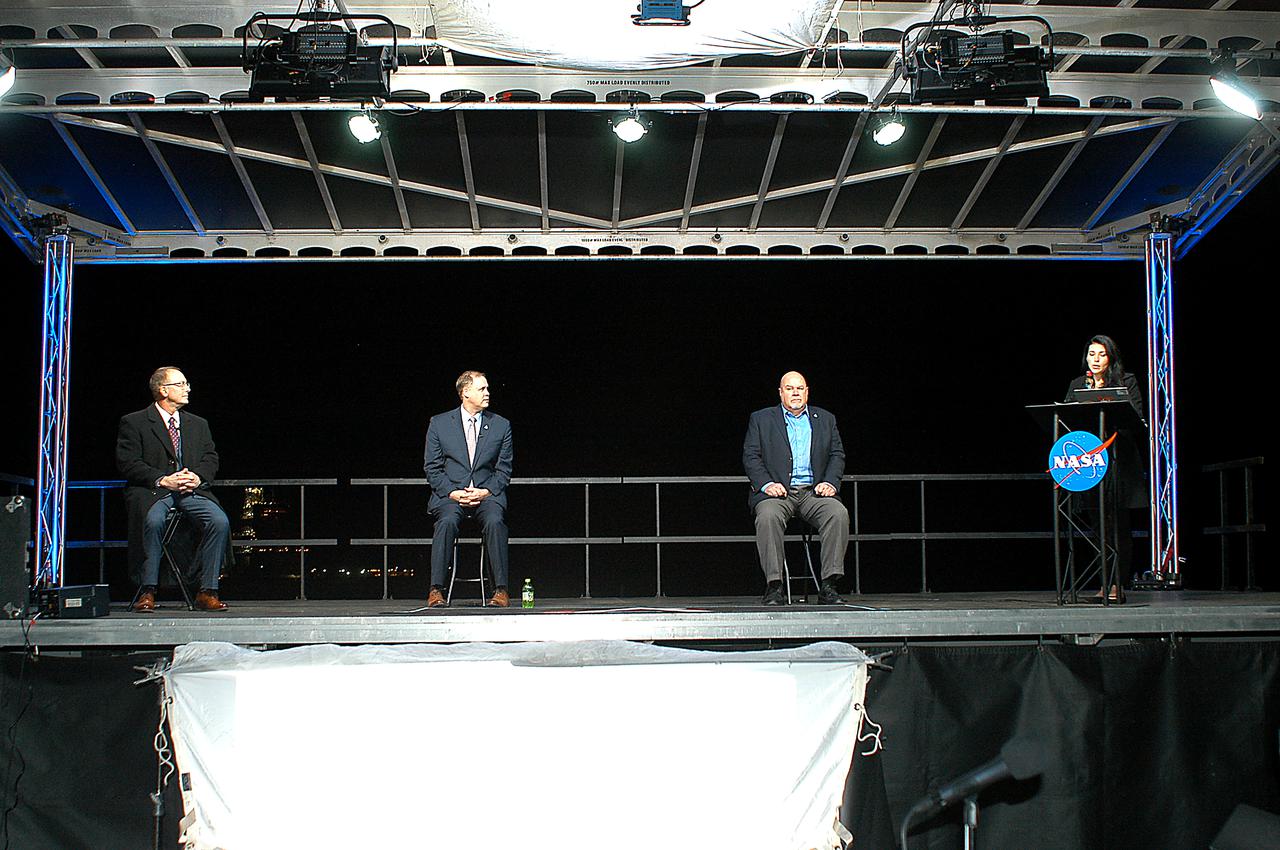
Outgoing NASA Associate Administrator for Communications Bettina Inclan (far right) hosts a press conference following the Green Run hot fire test of the core stage for NASA’s Space Launch System (SLS) rocket on Saturday, January 16, 2021. Seated press conference participants included outgoing NASA Administrator Jim Bridenstine (center), Stennis Space Center Director Rick Gilbrech (left) and SLS Program Manager John Honeycutt from Marshall Space Flight Center. NASA conducted a hot fire test of the core stage’s four RS-25 engines on the B-2 Test Stand at Stennis Space Center near Bay St. Louis, Mississippi. Scheduled for as long as eight minutes, the engines fired for a little more than one minute to generate a combined 1.6 million pounds of thrust, just as will occur during an actual launch. The hot fire is the final test of the Green Run test series, a comprehensive assessment of the SLS core stage prior to launching the Artemis I mission to the Moon.
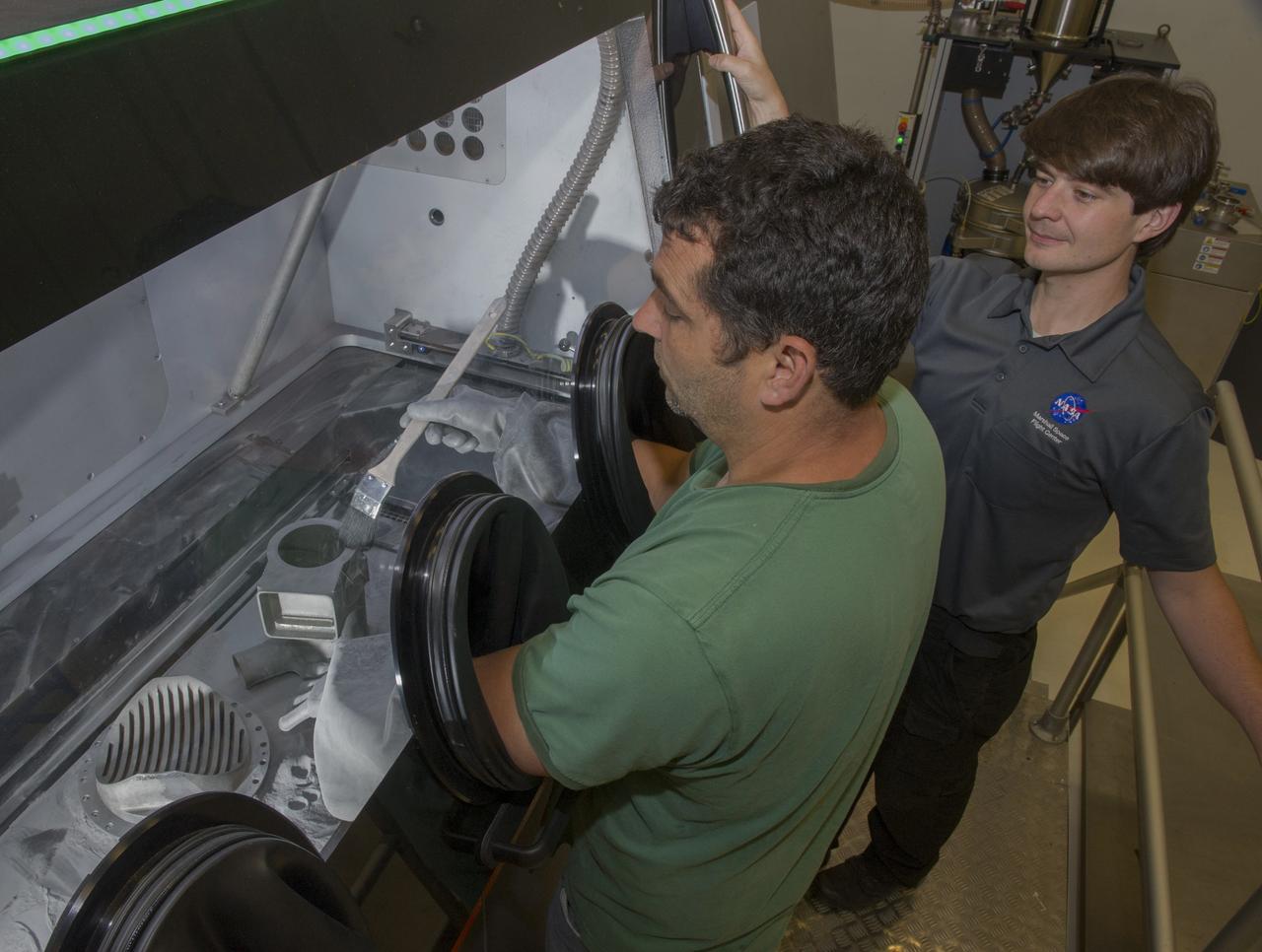
JIM LYDON (LEFT-GREEN SHIRT) BRUSHES METALLIC POWDER OFF OF A RECENTLY PRINTED ROCKET PART EXAMINED BY ZACH JONES, RIGHT, IN MSFC'S ADDITIVE MANUFACTURING LAB
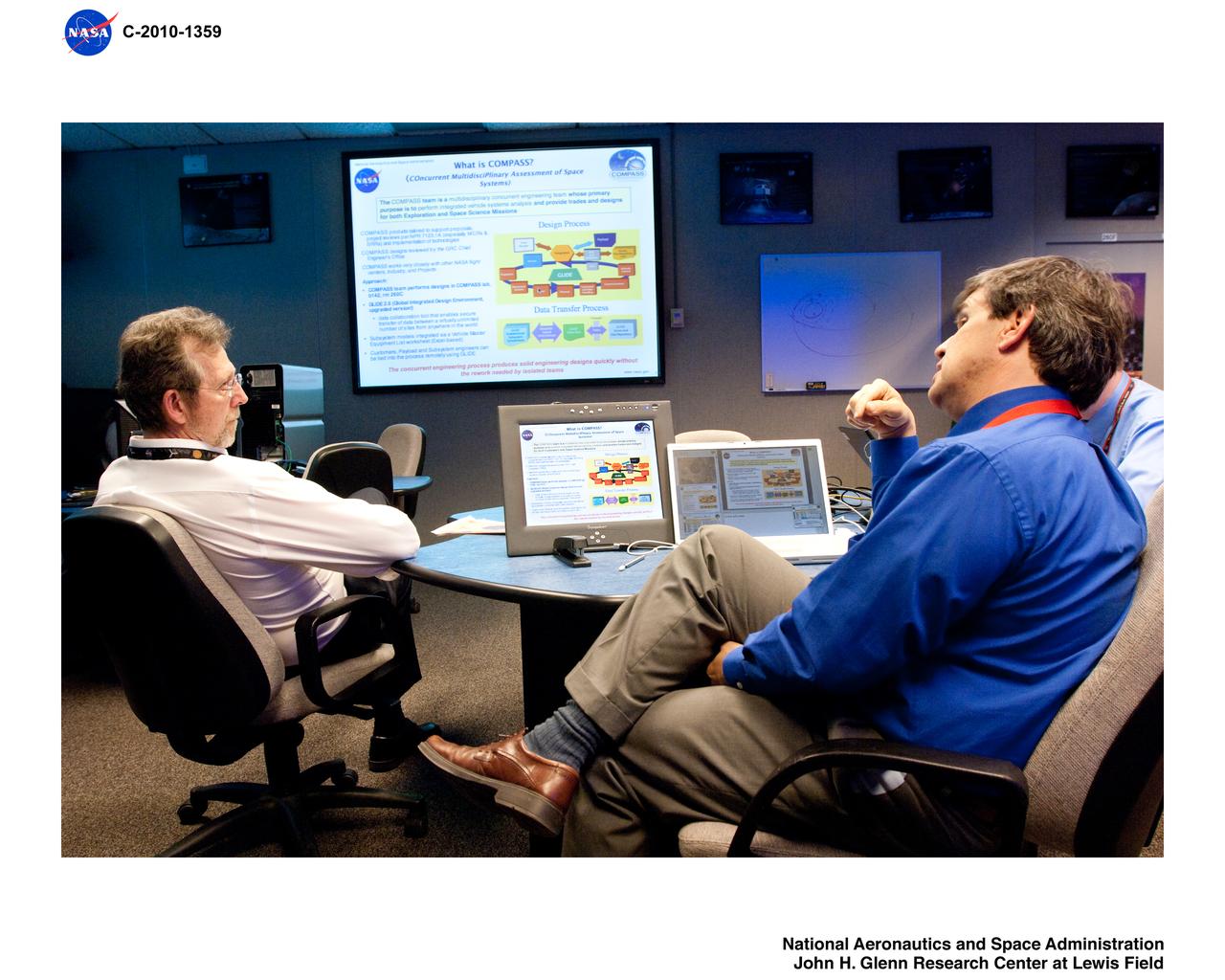
Planetary Science Lead, Jim Green being briefed on recent conceptual designs by the Lead of the COMPASS concurrent engineering design team at NASA Glenn Research Center. COMPASS = COllaborative Modeling for Parametric Assessment of Space Systems

Outgoing NASA Administrator Jim Bridenstine (left) talks with host Leigh D’Angelo during NASA TV live coverage from Stennis Space Center near Bay St. Louis, Mississippi, on Jan. 16, 2021. D’Angelo, from NASA’s Michoud Assembly Facility in nearby New Orleans, hosted the NASA TV coverage prior to the hot fire test of the core stage for the agency’s Space Launch System rocket. The hot fire test of the stage’s four RS-25 engines generated a combined 1.6 million pounds of thrust, just as will occur during an actual launch. The hot fire is the final test of the Green Run test series, a comprehensive assessment of the SLS core stage prior to launching the Artemis I mission to the Moon.

NASA Administrator Jim Bridenstine, center, in the green safety helmet, tours SpaceX Launch Complex 39A, on Aug. 8, 2018, at the agency's Kennedy Space Center in Florida. Bridenstine received updates on SpaceX accomplishments for NASA's Commercial Crew Program.
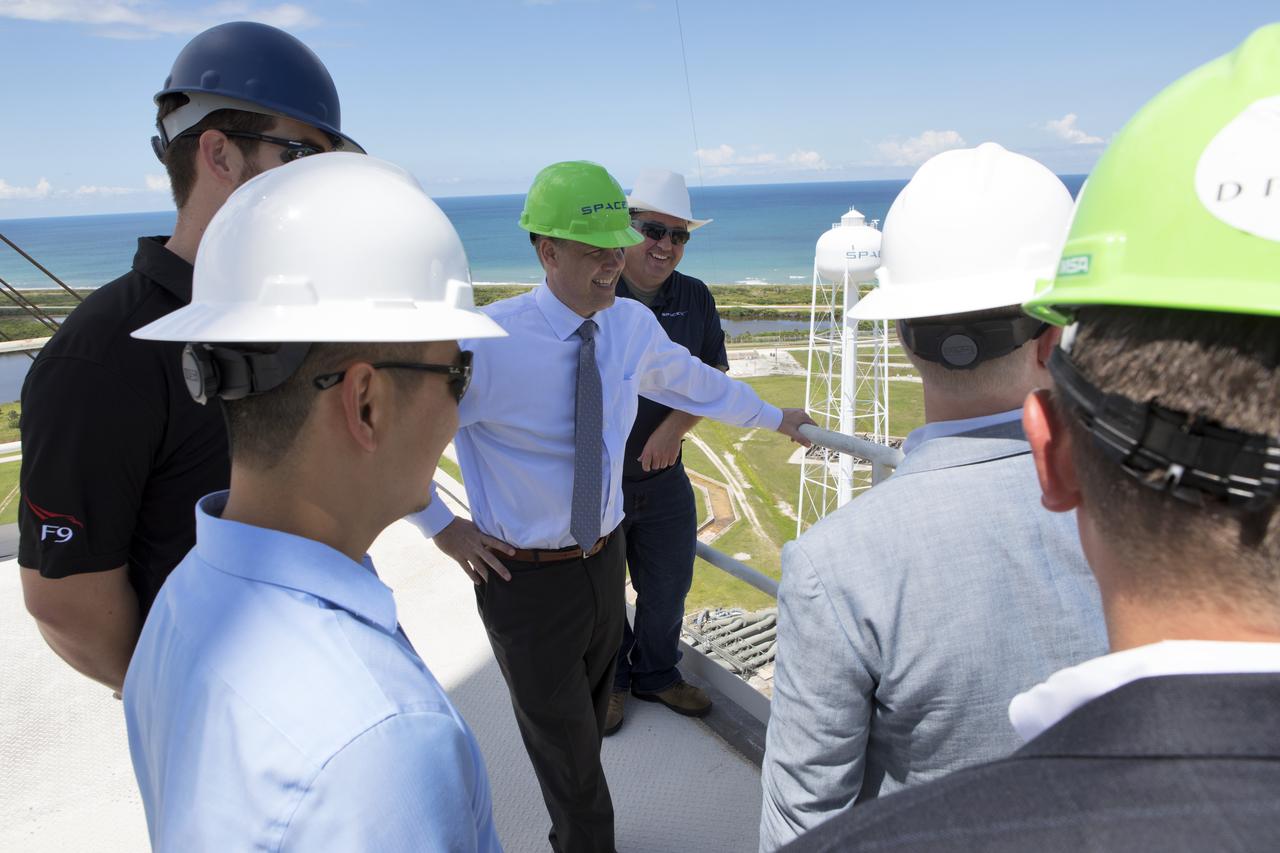
NASA Administrator Jim Bridenstine, center, in the green safety helmet, tours SpaceX Launch Complex 39A, on Aug. 8, 2018, at the agency's Kennedy Space Center in Florida. Bridenstine received updates on SpaceX accomplishments for NASA's Commercial Crew Program.
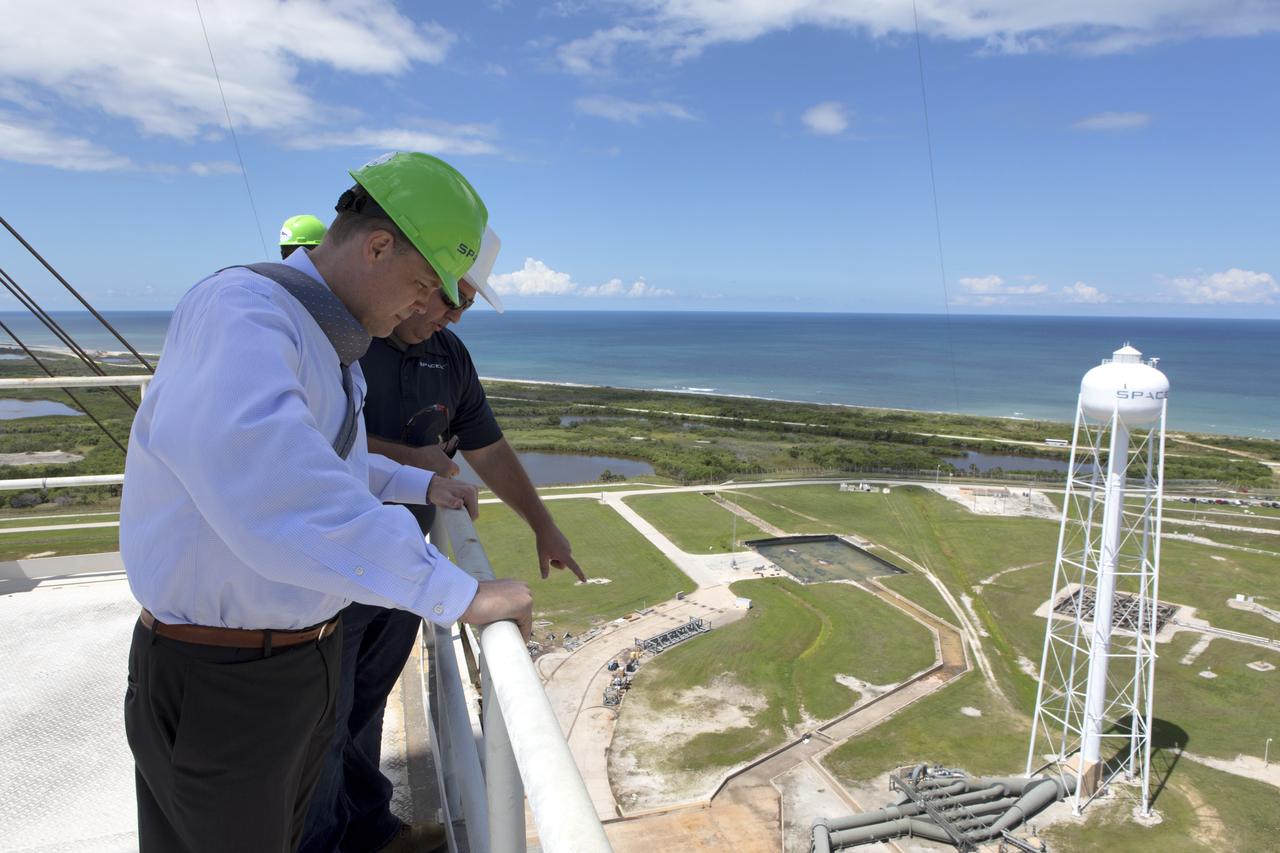
NASA Administrator Jim Bridenstine, in the green safety helmet, tours SpaceX Launch Complex 39A, on Aug. 8, 2018, at the agency's Kennedy Space Center in Florida. Bridenstine received updates on SpaceX accomplishments for NASA's Commercial Crew Program.
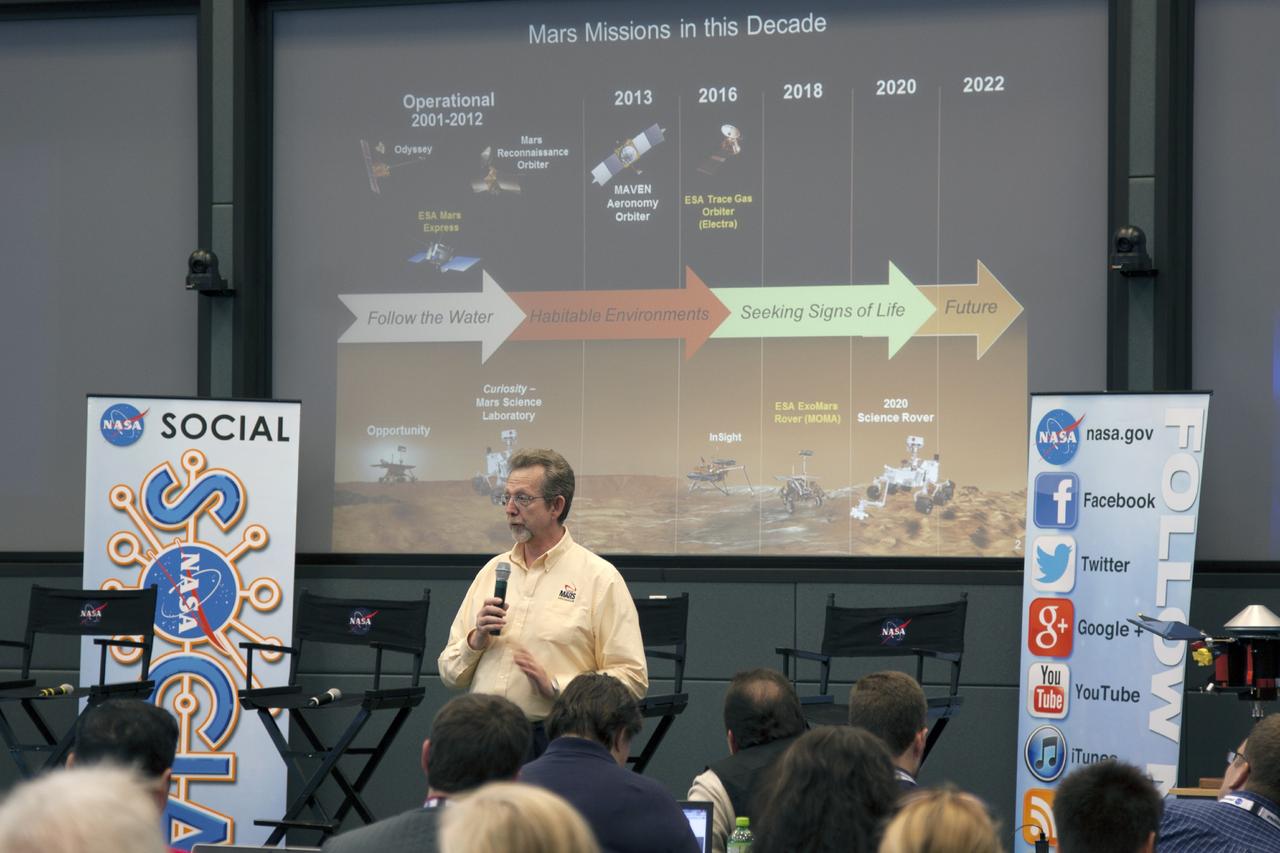
CAPE CANAVERAL, Fla. -- In the conference room of Operations Support Building II at NASA's Kennedy Space Center in Florida, social media participants listen to a briefing on the Mars Atmosphere and Volatile Evolution, or MAVEN, mission by Dr. Jim Green, the agency's Planetary Science director. The social media participants gathered at the Florida spaceport for the launch of the Mars Atmosphere and Volatile Evolution, or MAVEN, spacecraft. Their visit included tours of key facilities and participating in presentations by key NASA leaders who updated the space agency's current efforts. Photo credit: NASA/Jim Grossman
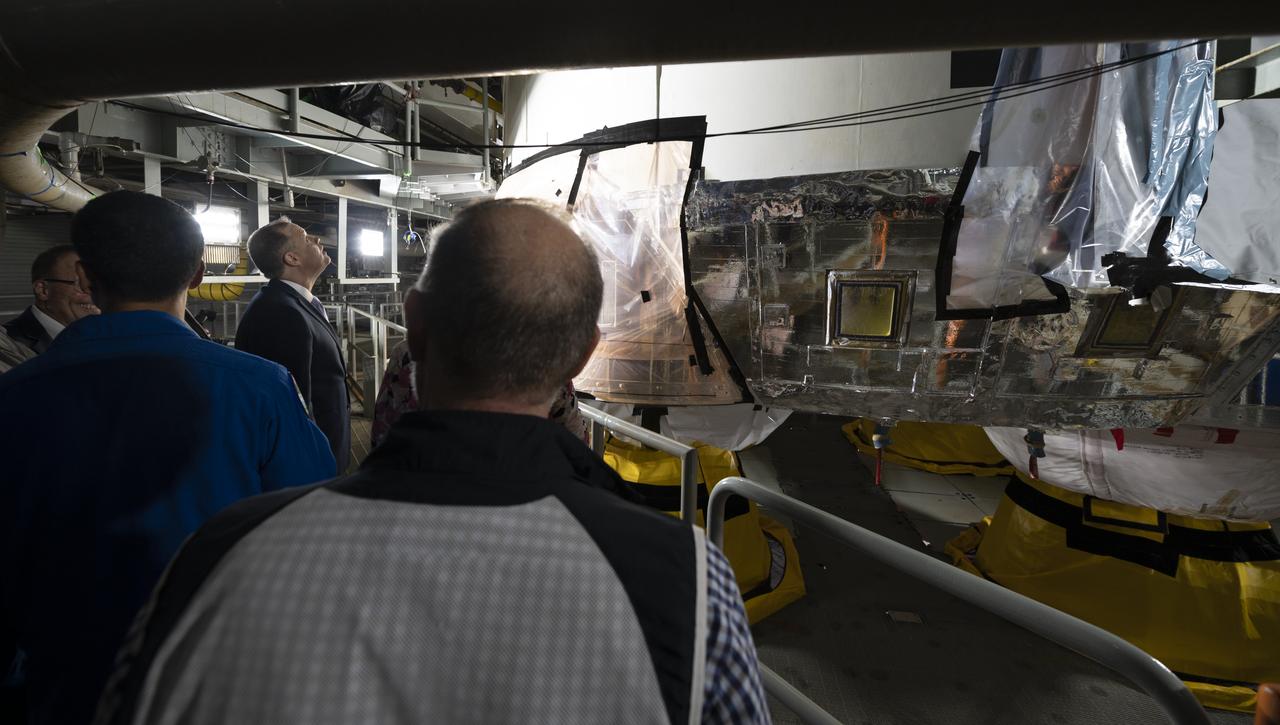
NASA Administrator Jim Bridenstine looks up at the first core stage of the agency’s Space Launch System rocket during a tour of the B-2 Test Stand Monday, Feb. 10, 2020, at NASA’s Stennis Space Center near Bay St. Louis, Mississippi. Over the coming months, the first core stage of the SLS rocket will be undergoing a series of integrated Green Run tests prior to its maiden flight. Photo Credit: (NASA/Joel Kowsky)
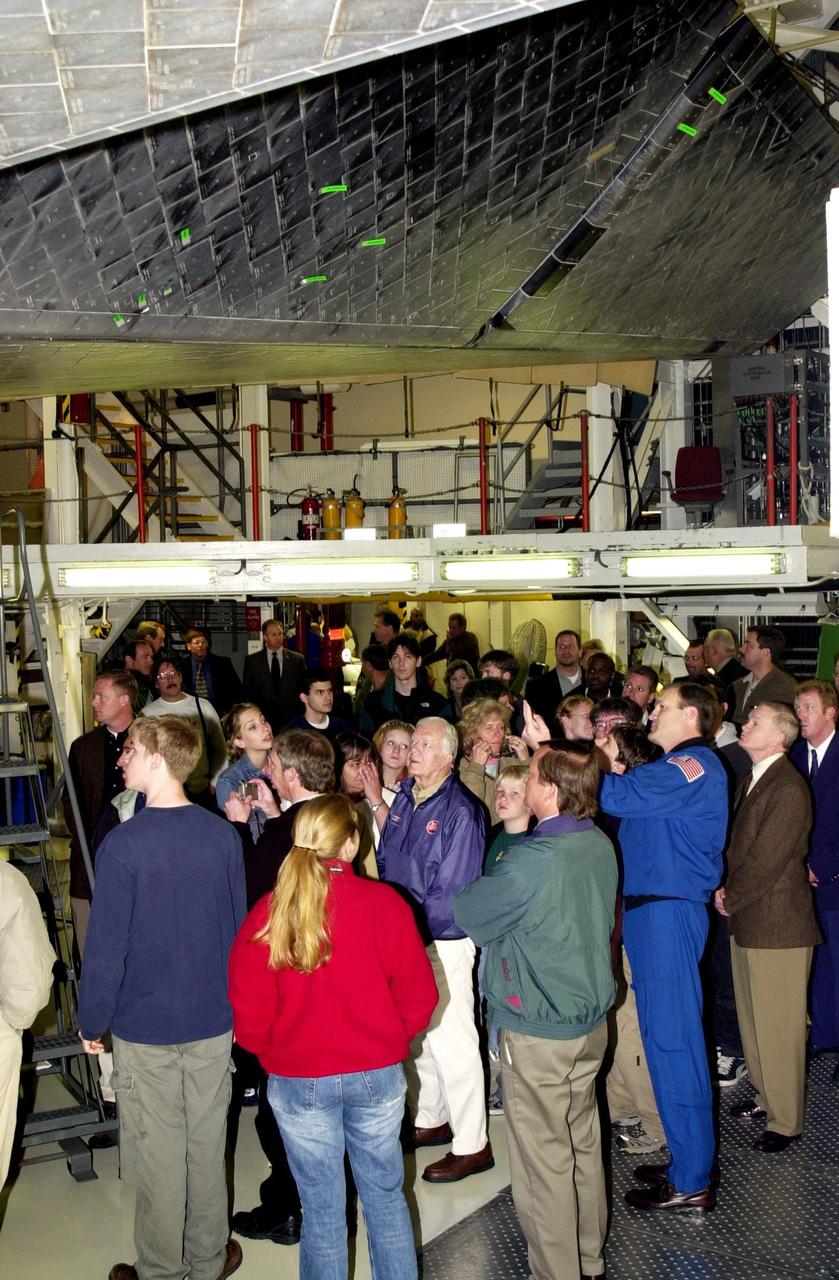
KENNEDY SPACE CENTER, FLA. -- In the Orbiter Processing Facility, former President Jimmy Carter (center) gets a closeup view of the underside of an orbiter space vehicle. On the outer edge of the crowd are (left to riht) Launch Director Mike Leinbach (green jacket), Space Shuttle Launch Integration Manager Jim Halsell and Center Director Roy D. Bridges. Carter and former First Lady Rosalyn Carter are touring KSC

Brian Muirhead, Pre-project Manager of Mars Sample Return at NASA’s Jet Propulsion Laboratory answers a question by NASA Chief Scientist, Jim Green, after giving a keynote titled “Mars Sample Return Mission Concept Status” at the 70th International Astronautical Congress, Wednesday, Oct. 23, 2019 at the Walter E. Washington Convention Center in Washington. Photo Credit: (NASA/Aubrey Gemignani)
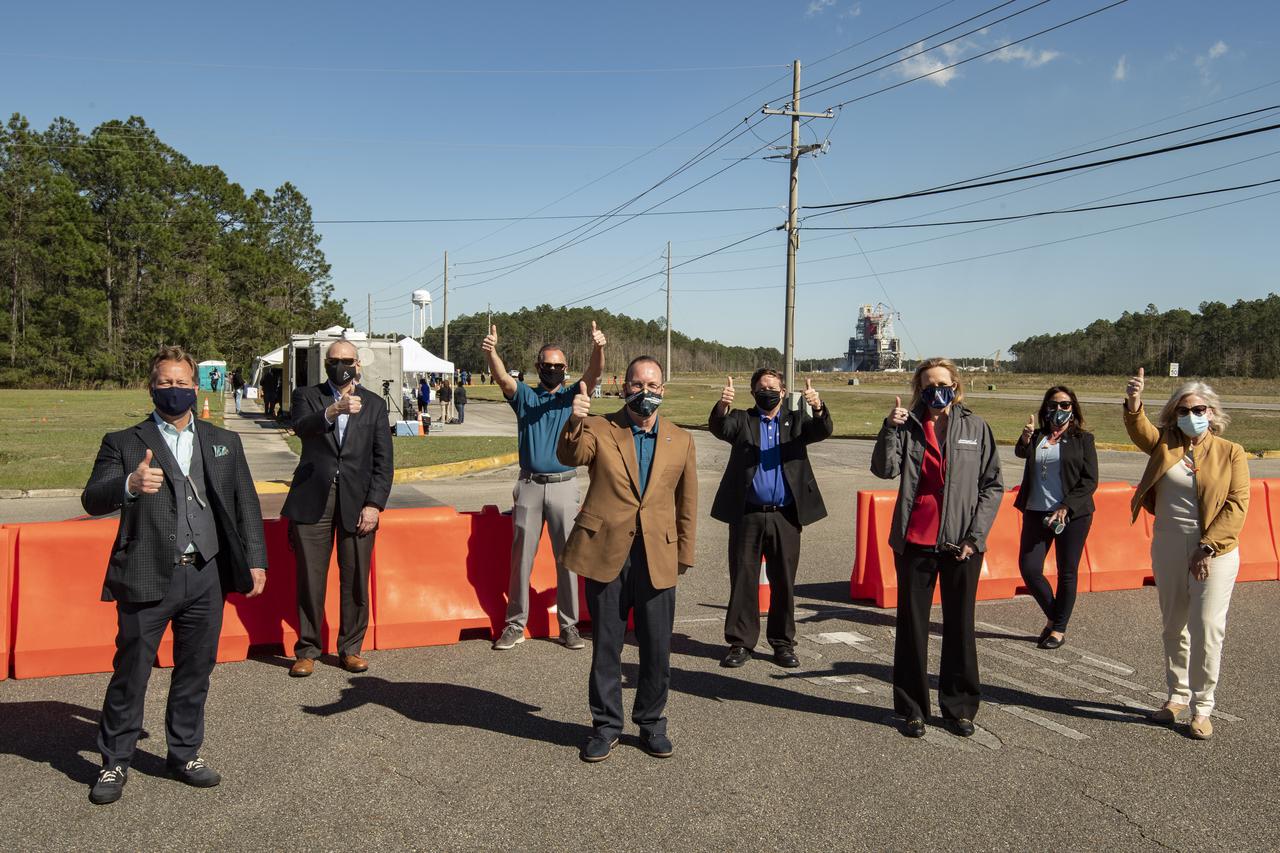
From left: Jim Maser, senior vice president of the Space Business Unit of Aerojet Rocketdyne; acting NASA Administrator Steve Jurzyck; John Bailey, associate director of NASA's Stennis Space Center; Rick Gilbrech, director of NASA's Stennis Space Center; Mike McDaniel, general manager of Aerojet Rocketdyne at Stennis Space Center; Amy Growder, chief operating officer of Aerojet Rocketdyne; Mary Byrd, associate director of NASA’s Marshall Space Flight Center; and Jody Singer, director of NASA's Marshall Space Flight Center; pose for a picture giving a thumbs-up following a second hot fire test of the core stage for the first flight of NASA’s Space Launch System rocket in the B-2 Test Stand, Thursday, March 18, 2021, at NASA’s Stennis Space Center near Bay St. Louis, Mississippi. The four RS-25 engines fired for the full-duration of 8 minutes during the test and generated 1.6 million pounds of thrust. The hot fire test is the final stage of the Green Run test series, a comprehensive assessment of the Space Launch System’s core stage prior to launching the Artemis I mission to the Moon. Photo Credit: (NASA/Robert Markowitz)

CAPE CANAVERAL, Fla. - Workers of Superior Solar LLC in Longwood, Fla., begin to install more than 300 solar panels on the roof of the Propellants North Administrative and Maintenance Facility at NASA's Kennedy Space Center in Florida. Each panel, built in Sharp Corp.'s Memphis, Tenn., plant, will produce 235 watts of clean energy. The green facility in Kennedy's Launch Complex 39 area will have a two-story administrative building to house managers, mechanics and technicians who fuel spacecraft at Kennedy adjacent to a single-story shop to store cryogenic fuel transfer equipment. The facility is striving to qualify for the U.S. Green Building Council’s Leadership in Energy and Environmental Design (LEED) Platinum certification. If successful, it will be the first NASA facility to achieve this highest of LEED ratings after it is completed. The facility was designed for NASA by Jones Edmunds and Associates. H. W. Davis Construction is the construction contractor. Photo credit: NASA/Jim Grossmann
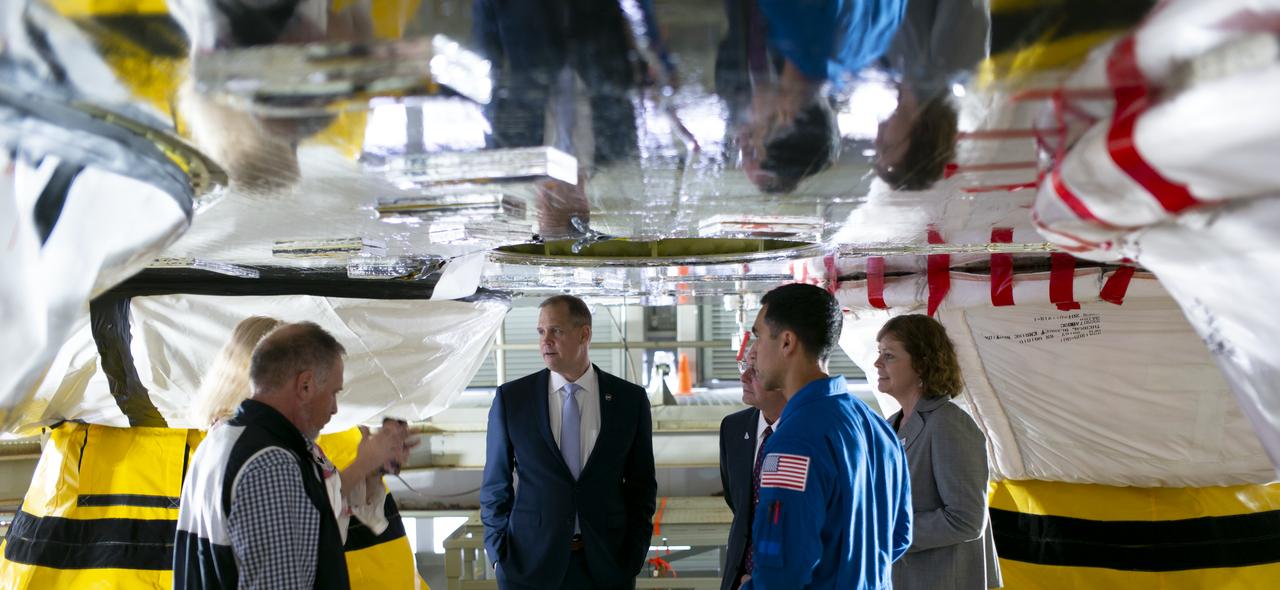
NASA Administrator Jim Bridenstine, center, is seen on a work platform between the four RS-25 engines of the first core stage of the agency’s Space Launch System (SLS) rocket along with Lisa Bates, SLS Deputy Stages Manager at NASA, Mark Nappi, Boeing Green Run Test Manager, Richard Gilbrech, Director of NASA's Stennis Space Center, Julie Bassler, SLS Stages Manager at NASA, and NASA astronaut Raja Chari, during a tour of the B-2 Test Stand, Monday, Feb. 10, 2020, at NASA’s Stennis Space Center near Bay St. Louis, Mississippi. Over the coming months, the first core stage of NASA’s SLS rocket will be undergoing a series of integrated Green Run tests prior to its maiden flight. Photo Credit: (NASA/Joel Kowsky)
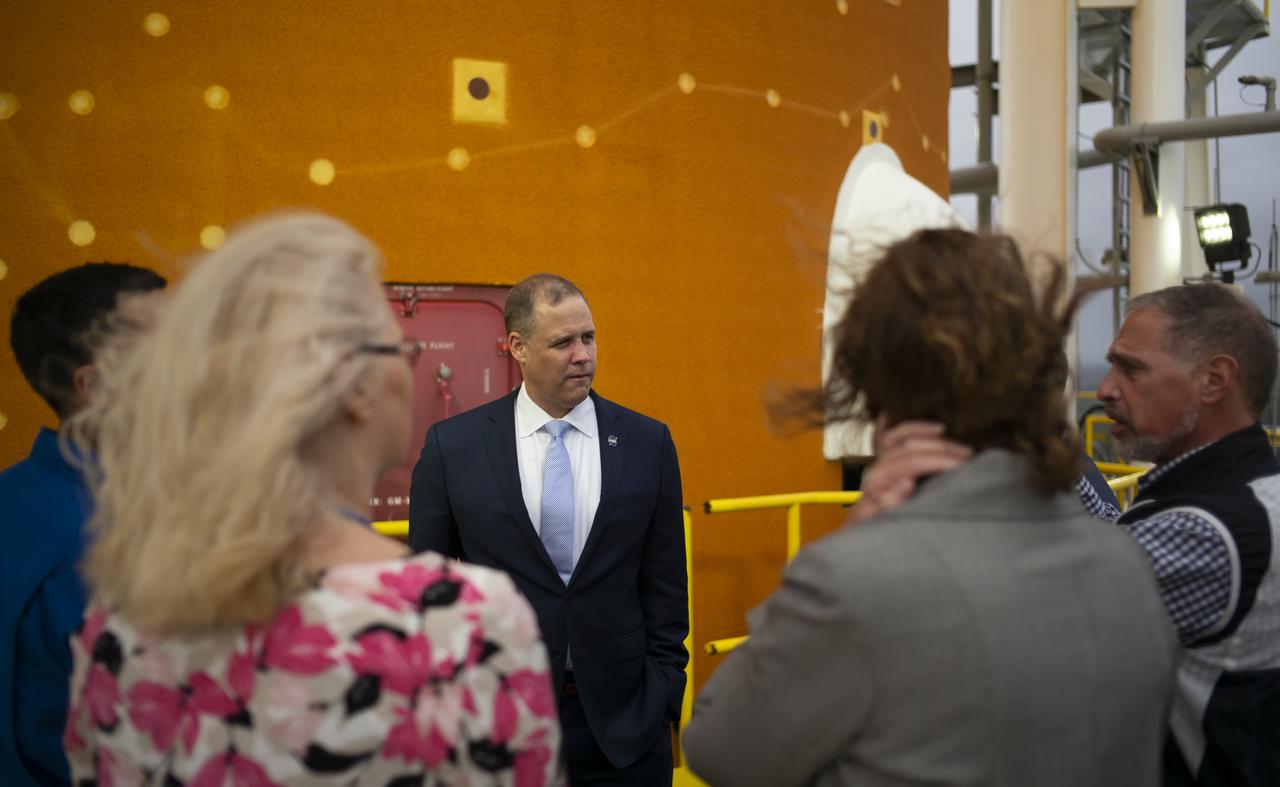
NASA Administrator Jim Bridenstine, center, is seen next to the first core stage of the agency’s Space Launch System (SLS) rocket along with Lisa Bates, SLS Deputy Stages Manager at NASA, Mark Nappi, Boeing Green Run Test Manager, Richard Gilbrech, Director of NASA's Stennis Space Center, Julie Bassler, SLS Stages Manager at NASA, and NASA astronaut Raja Chari, during a tour of the B-2 Test Stand, Monday, Feb. 10, 2020, at NASA’s Stennis Space Center near Bay St. Louis, Mississippi. Over the coming months, the first core stage of NASA’s SLS rocket will be undergoing a series of integrated Green Run tests prior to its maiden flight. Photo Credit: (NASA/Joel Kowsky)
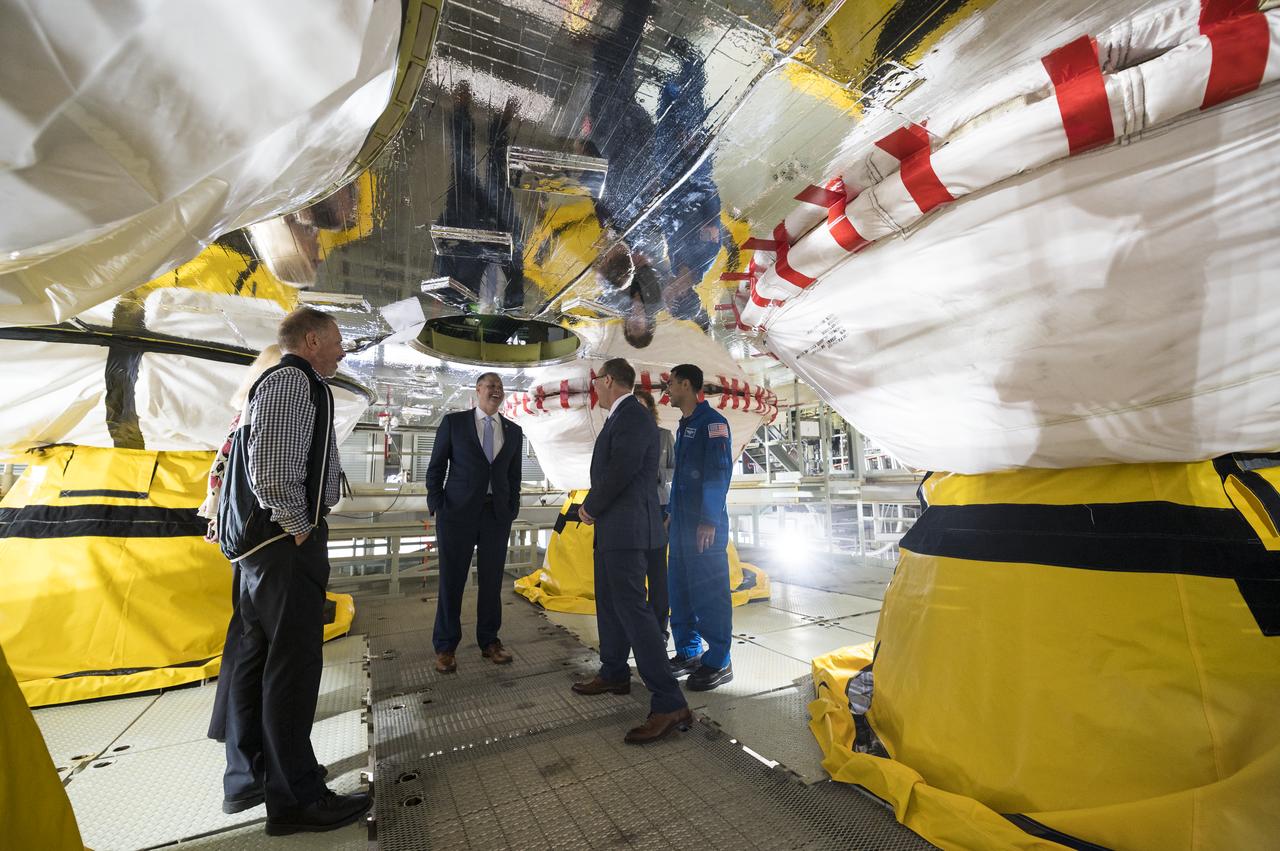
NASA Administrator Jim Bridenstine, center, is seen on a work platform between the four RS-25 engines of the first core stage of the agency’s Space Launch System (SLS) rocket along with Lisa Bates, SLS Deputy Stages Manager at NASA, Mark Nappi, Boeing Green Run Test Manager, Richard Gilbrech, Director of NASA's Stennis Space Center, Julie Bassler, SLS Stages Manager at NASA, and NASA astronaut Raja Chari, during a tour of the B-2 Test Stand, Monday, Feb. 10, 2020, at NASA’s Stennis Space Center near Bay St. Louis, Mississippi. Over the coming months, the first core stage of NASA’s SLS rocket will be undergoing a series of integrated Green Run tests prior to its maiden flight. Photo Credit: (NASA/Joel Kowsky)

CAPE CANAVERAL, Fla. - Workers of Superior Solar LLC in Longwood, Fla., begin to install more than 300 solar panels on the roof of the Propellants North Administrative and Maintenance Facility at NASA's Kennedy Space Center in Florida. Each panel, built in Sharp Corp.'s Memphis, Tenn., plant, will produce 235 watts of clean energy. The green facility in Kennedy's Launch Complex 39 area will have a two-story administrative building to house managers, mechanics and technicians who fuel spacecraft at Kennedy adjacent to a single-story shop to store cryogenic fuel transfer equipment. The facility is striving to qualify for the U.S. Green Building Council’s Leadership in Energy and Environmental Design (LEED) Platinum certification. If successful, it will be the first NASA facility to achieve this highest of LEED ratings after it is completed. The facility was designed for NASA by Jones Edmunds and Associates. H. W. Davis Construction is the construction contractor. Photo credit: NASA/Jim Grossmann
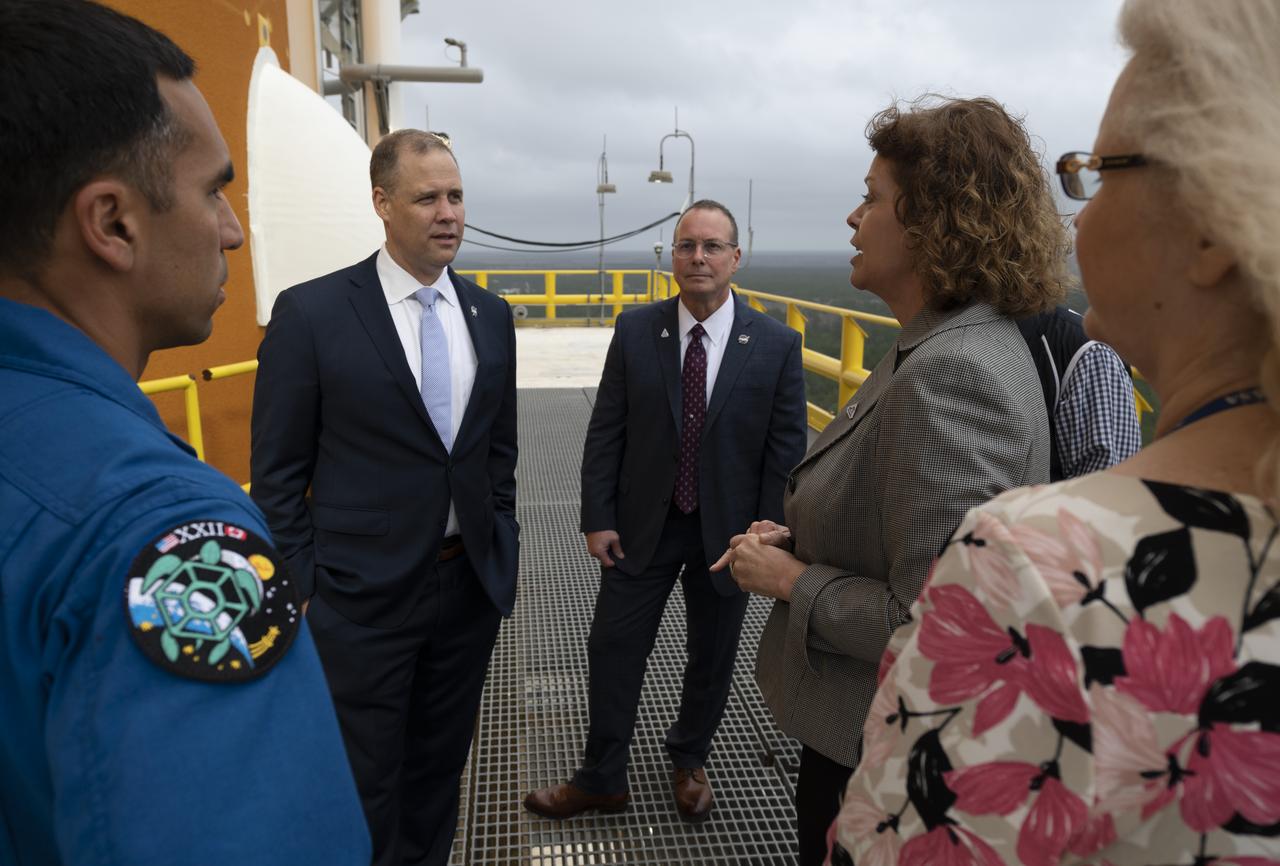
NASA Administrator Jim Bridenstine, center, is seen on a work platform between the four RS-25 engines of the first core stage of the agency’s Space Launch System (SLS) rocket along with Lisa Bates, SLS Deputy Stages Manager at NASA, Mark Nappi, Boeing Green Run Test Manager, Richard Gilbrech, Director of NASA's Stennis Space Center, Julie Bassler, SLS Stages Manager at NASA, and NASA astronaut Raja Chari, during a tour of the B-2 Test Stand, Monday, Feb. 10, 2020, at NASA’s Stennis Space Center near Bay St. Louis, Mississippi. Over the coming months, the first core stage of NASA’s SLS rocket will be undergoing a series of integrated Green Run tests prior to its maiden flight. Photo Credit: (NASA/Joel Kowsky)
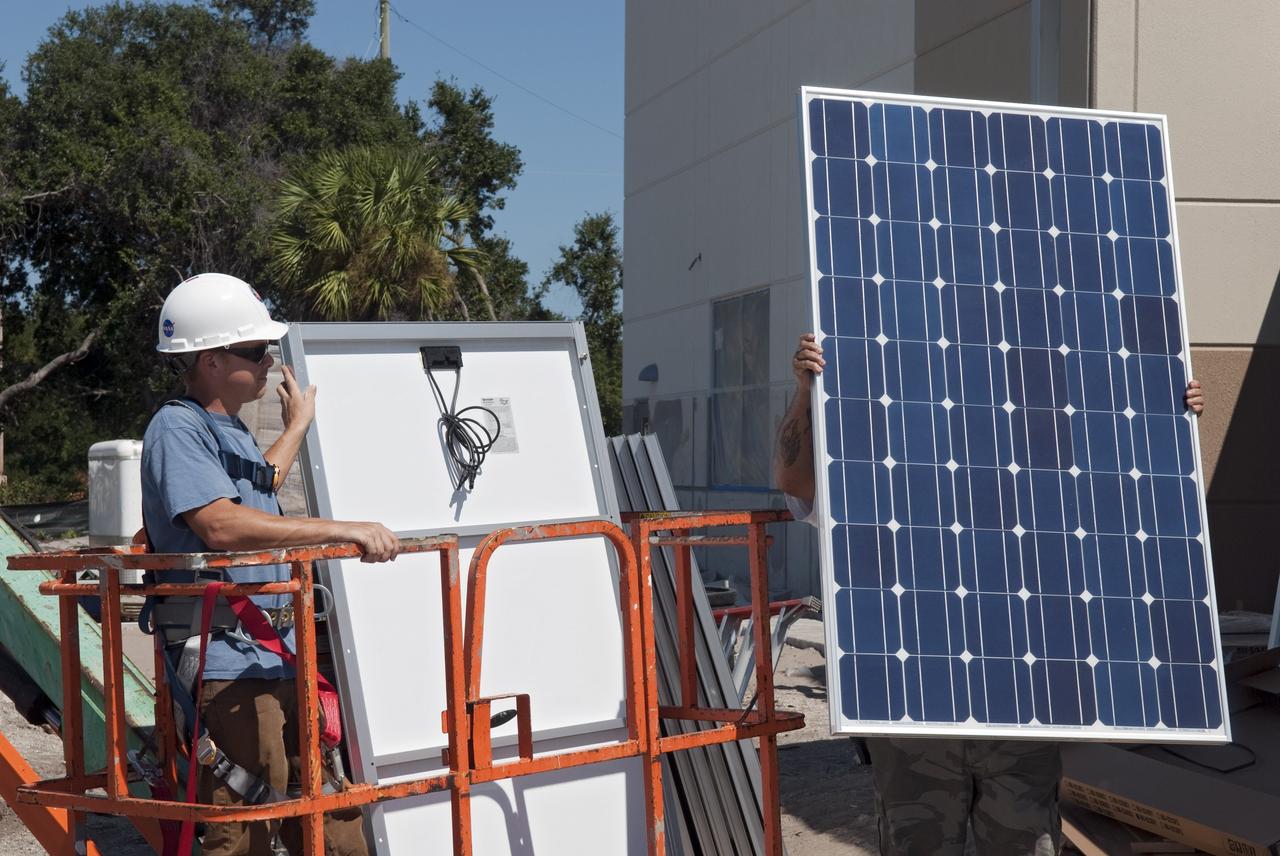
CAPE CANAVERAL, Fla. - Workers of Superior Solar LLC in Longwood, Fla., prepare to install more than 300 solar panels on the roof of the Propellants North Administrative and Maintenance Facility at NASA's Kennedy Space Center in Florida. Each panel, built in Sharp Corp.'s Memphis, Tenn., plant, will produce 235 watts of clean energy. The green facility in Kennedy's Launch Complex 39 area will have a two-story administrative building to house managers, mechanics and technicians who fuel spacecraft at Kennedy adjacent to a single-story shop to store cryogenic fuel transfer equipment. The facility is striving to qualify for the U.S. Green Building Council’s Leadership in Energy and Environmental Design (LEED) Platinum certification. If successful, it will be the first NASA facility to achieve this highest of LEED ratings after it is completed. The facility was designed for NASA by Jones Edmunds and Associates. H. W. Davis Construction is the construction contractor. Photo credit: NASA/Jim Grossmann
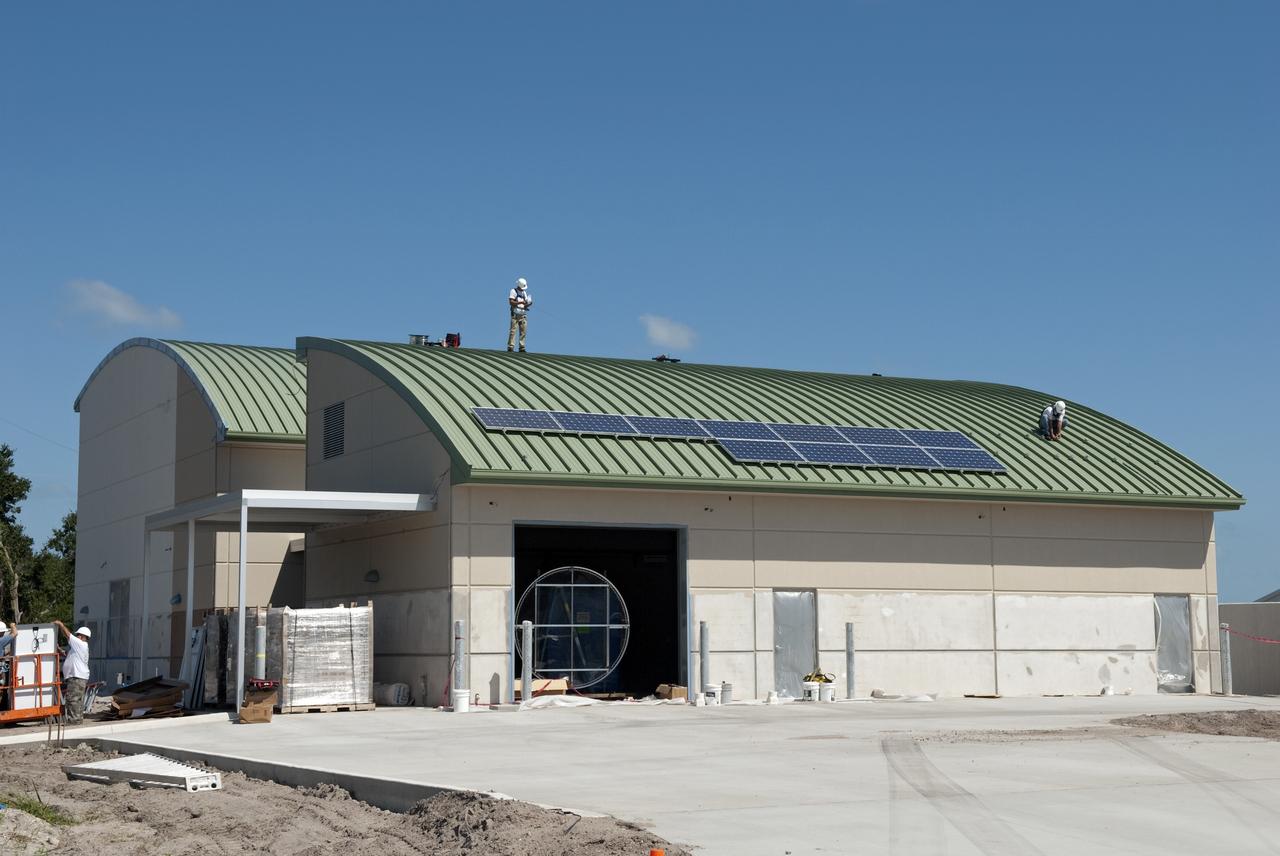
CAPE CANAVERAL, Fla. - Workers of Superior Solar LLC in Longwood, Fla., begin to install more than 300 solar panels on the roof of the Propellants North Administrative and Maintenance Facility at NASA's Kennedy Space Center in Florida. Each panel, built in Sharp Corp.'s Memphis, Tenn., plant, will produce 235 watts of clean energy. The green facility in Kennedy's Launch Complex 39 area will have a two-story administrative building to house managers, mechanics and technicians who fuel spacecraft at Kennedy adjacent to a single-story shop to store cryogenic fuel transfer equipment. The facility is striving to qualify for the U.S. Green Building Council’s Leadership in Energy and Environmental Design (LEED) Platinum certification. If successful, it will be the first NASA facility to achieve this highest of LEED ratings after it is completed. The facility was designed for NASA by Jones Edmunds and Associates. H. W. Davis Construction is the construction contractor. Photo credit: NASA/Jim Grossmann
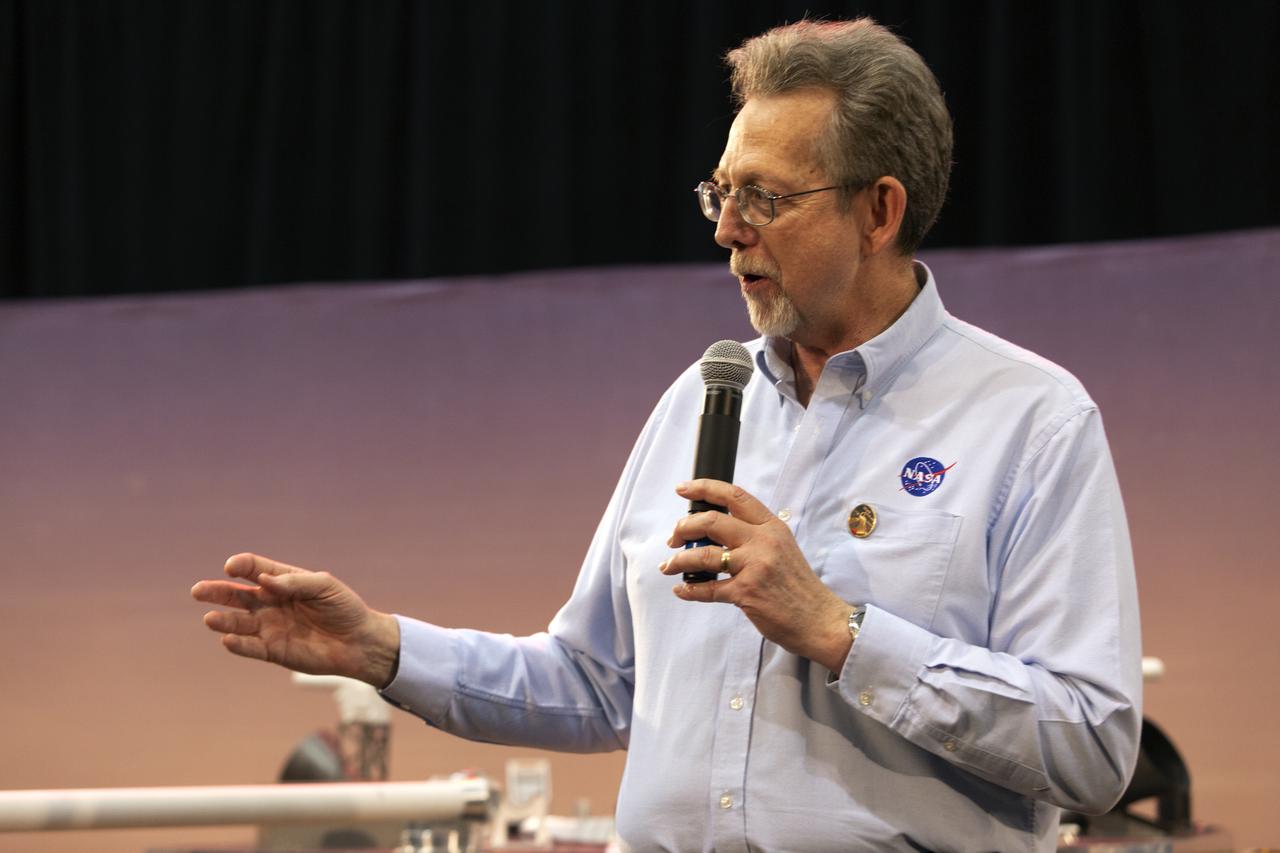
During a prelaunch briefing at Vandenberg Air Force Base in California, Jim Green, NASA Chief Scientist, speaks to members of the media. The presentation focused on NASA's Interior Exploration using Seismic Investigations, Geodesy and Heat Transport, or InSight, Mars lander. InSight is scheduled for liftoff May 5, 2018, atop a United Launch Alliance (ULA) Atlas V rocket from Space Launch Complex 3 at Vandenberg. The spacecraft will be the first mission to look deep beneath the Martian surface studying the planet's interior by measuring its heat output and listen for marsquakes.

From left to right, actor Brad Pitt, NASA Administrator Jim Bridenstine, film producer, co-writer, and director James Gray, and actor Tommy Lee Jones are seen in the green room before a screening of the film "Ad Astra" at National Geographic Society, Monday, September 16, 2019 in Washington. The film stars Pitt, Jones, Ruth Negga, Liv Tyler, and Donald Sutherland. Pitt stars as astronaut Roy McBride who travels deep into the solar system in hopes of solving a mystery that threatens life on Earth. Photo Credit: (NASA/Aubrey Gemignani)

From left to right, actor Brad Pitt, NASA Administrator Jim Bridenstine, film producer, co-writer, and director James Gray, and actor Tommy Lee Jones pose for a photo in the green room before a screening of the film "Ad Astra" at National Geographic Society, Monday, September 16, 2019 in Washington. The film stars Pitt, Jones, Ruth Negga, Liv Tyler, and Donald Sutherland. Pitt stars as astronaut Roy McBride who travels deep into the solar system in hopes of solving a mystery that threatens life on Earth. Photo Credit: (NASA/Aubrey Gemignani)

Audience members view slides from a presentation by Dr. Jim Green, Dr. Ed Stone, and Dr. Alan Stern at the "New Horizons: The First Mission to the Pluto System and the Kuiper Belt" Event at NASA Headquarters in Washington, DC Monday, August 25, 2014. They discussed how the first images of Pluto and its moons would be captured by the New Horizons spacecraft during a five month long reconnaissance flyby study starting in the summer of 2015. New Horizons launched on January 19, 2006 and is scheduled to make its closest approach to Pluto on July 14, 2015. Photo Credit: (NASA/Aubrey Gemignani)
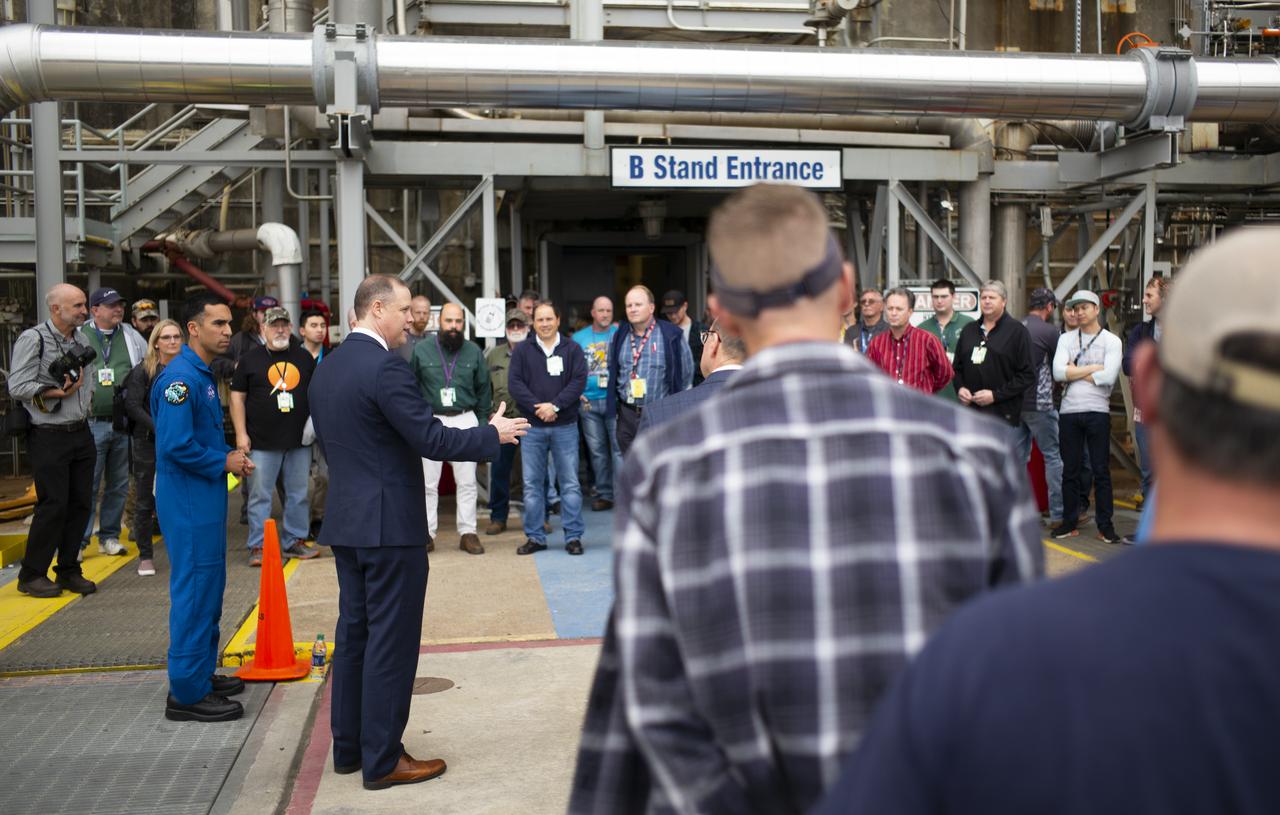
NASA Administrator Jim Bridenstine and NASA astronaut Raja Chari speak with workers involved modal testing of the first core stage of the agency’s Space Launch System (SLS) rocket at the B-2 Test Stand,x3 Monday, Feb. 10, 2020, at NASA’s Stennis Space Center near Bay St. Louis, Mississippi. Over the coming months, the first core stage of NASA’s Space Launch System (SLS) rocket will be undergoing a series of integrated Green Run tests prior to its maiden flight. Photo Credit: (NASA/Joel Kowsky)
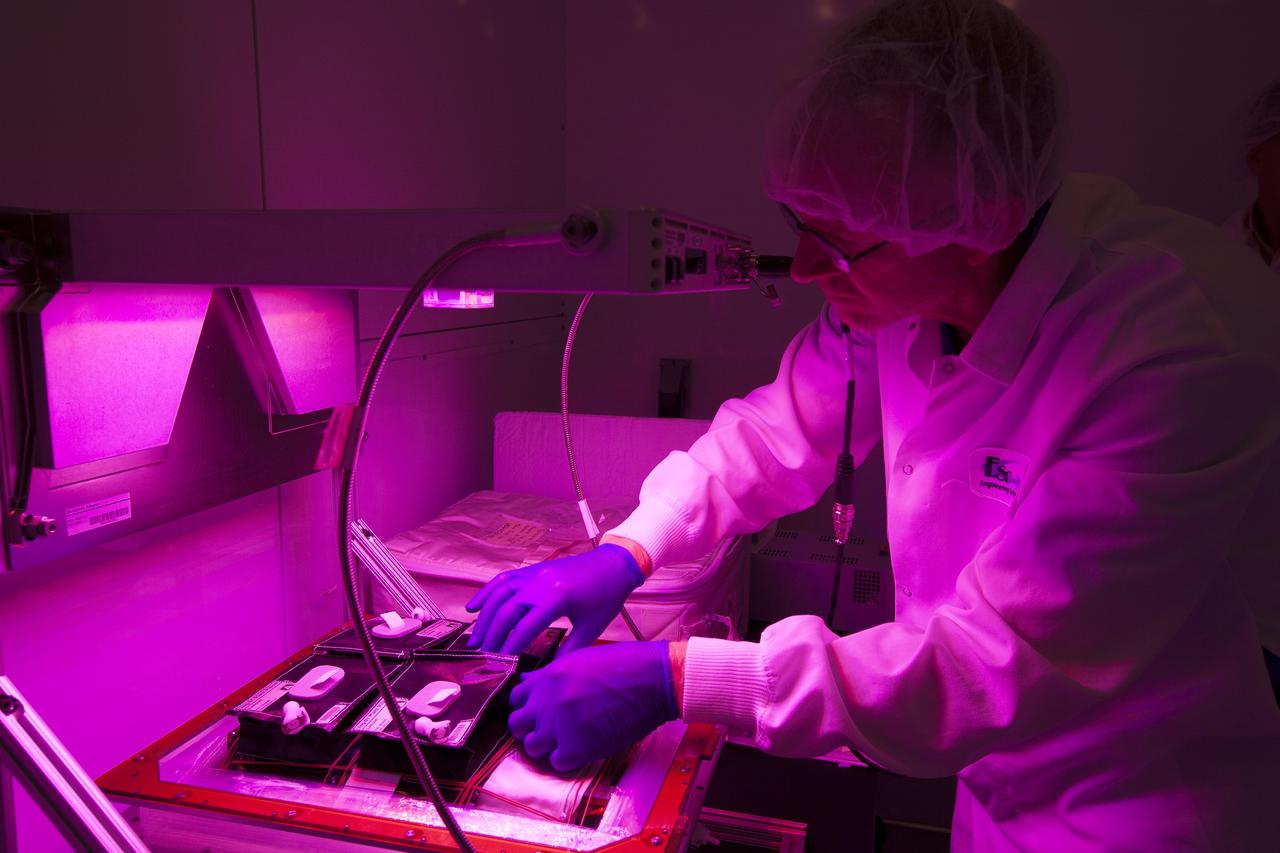
CAPE CANAVERAL, Fla. – Researchers have activated the red, blue and green LED lights on the Veggie plant growth system inside a control chamber at the Space Station Processing Facility at NASA's Kennedy Space Center in Florida. Jim Smodell, a technician with SGT, is securing the plant pillows containing outredgeous red romaine lettuce seeds onto the root mat inside Veggie. The growth chamber will be used as a control unit and procedures will be followed identical to those being performed on Veggie and the Veg-01 experiment on the International Space Station by Expedition 39 flight engineer and NASA astronaut Steve Swanson. Veggie and Veg-01 were delivered to the space station aboard the SpaceX-3 mission. Veggie is the first fresh food production system delivered to the station. Six plant pillows, each containing outredgeous red romaine lettuce seeds and a root mat were inserted into Veggie. The plant chamber's red, blue and green LED lights were activated. The plant growth will be monitored for 28 days. At the end of the cycle, the plants will be carefully harvested, frozen and stored for return to Earth. Photo credit: NASA/Dimitri Gerondidakis

CAPE CANAVERAL, Fla. – Researchers have activated the red, blue and green LED lights on the Veggie plant growth system inside a control chamber at the Space Station Processing Facility at NASA's Kennedy Space Center in Florida. In front, is Jim Smodell, a technician with SGT. Behind him is George Guerra, a quality control engineer with QinetiQ North America. The growth chamber will be used as a control unit and procedures will be followed identical to those being performed on Veggie and the Veg-01 experiment on the International Space Station by Expedition 39 flight engineer and NASA astronaut Steve Swanson. Veggie and Veg-01 were delivered to the space station aboard the SpaceX-3 mission. Veggie is the first fresh food production system delivered to the station. Six plant pillows, each containing outredgeous red romaine lettuce seeds and a root mat were inserted into Veggie. The plant chamber's red, blue and green LED lights were activated. The plant growth will be monitored for 28 days. At the end of the cycle, the plants will be carefully harvested, frozen and stored for return to Earth. Photo credit: NASA/Dimitri Gerondidakis
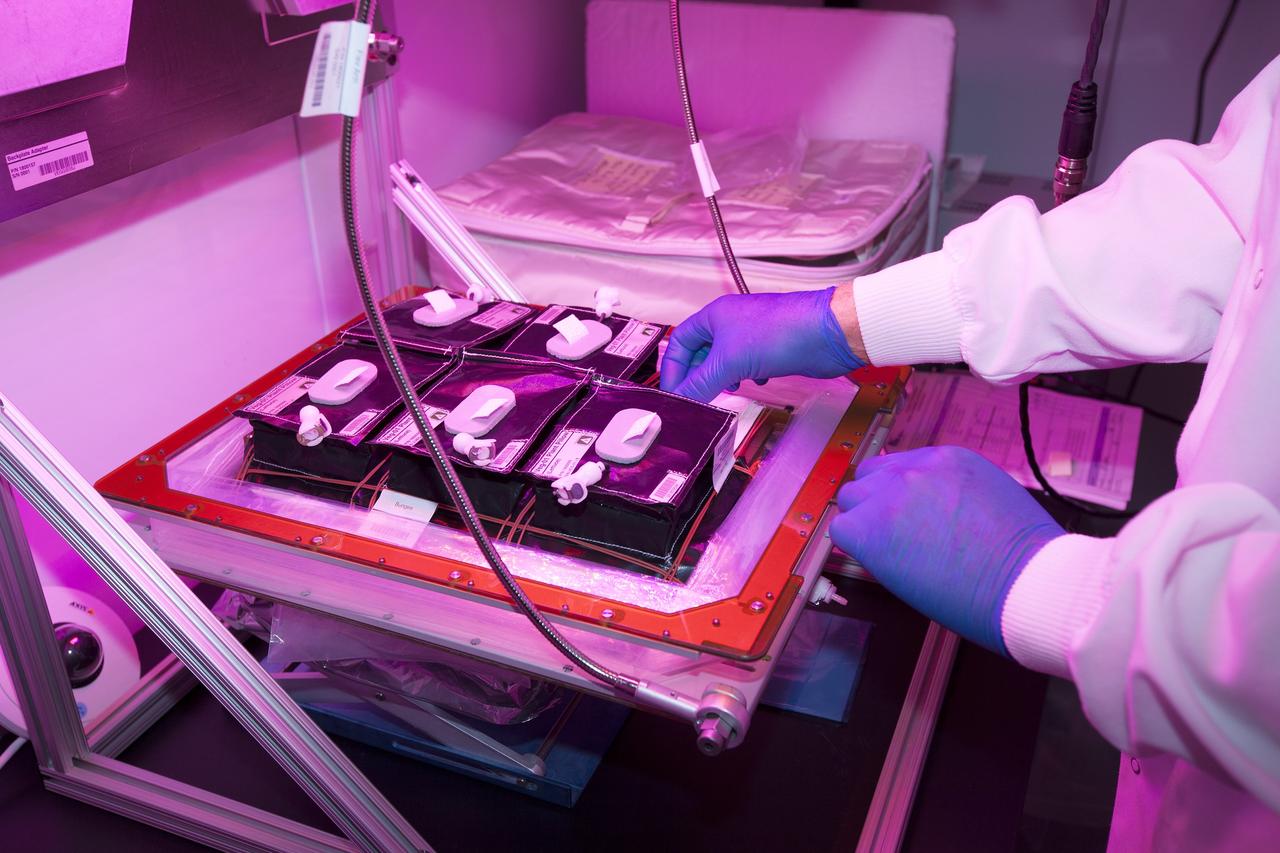
CAPE CANAVERAL, Fla. – Researchers have activated the red, blue and green LED lights on the Veggie plant growth system inside a control chamber at the Space Station Processing Facility at NASA's Kennedy Space Center in Florida. Jim Smodell, a technician with SGT, is securing the plant pillows containing outredgeous red romaine lettuce seeds onto the root mat inside Veggie. The growth chamber will be used as a control unit and procedures will be followed identical to those being performed on Veggie and the Veg-01 experiment on the International Space Station by Expedition 39 flight engineer and NASA astronaut Steve Swanson. Veggie and Veg-01 were delivered to the space station aboard the SpaceX-3 mission. Veggie is the first fresh food production system delivered to the station. Six plant pillows, each containing outredgeous red romaine lettuce seeds and a root mat were inserted into Veggie. The plant chamber's red, blue and green LED lights were activated. The plant growth will be monitored for 28 days. At the end of the cycle, the plants will be carefully harvested, frozen and stored for return to Earth. Photo credit: NASA/Dimitri Gerondidakis
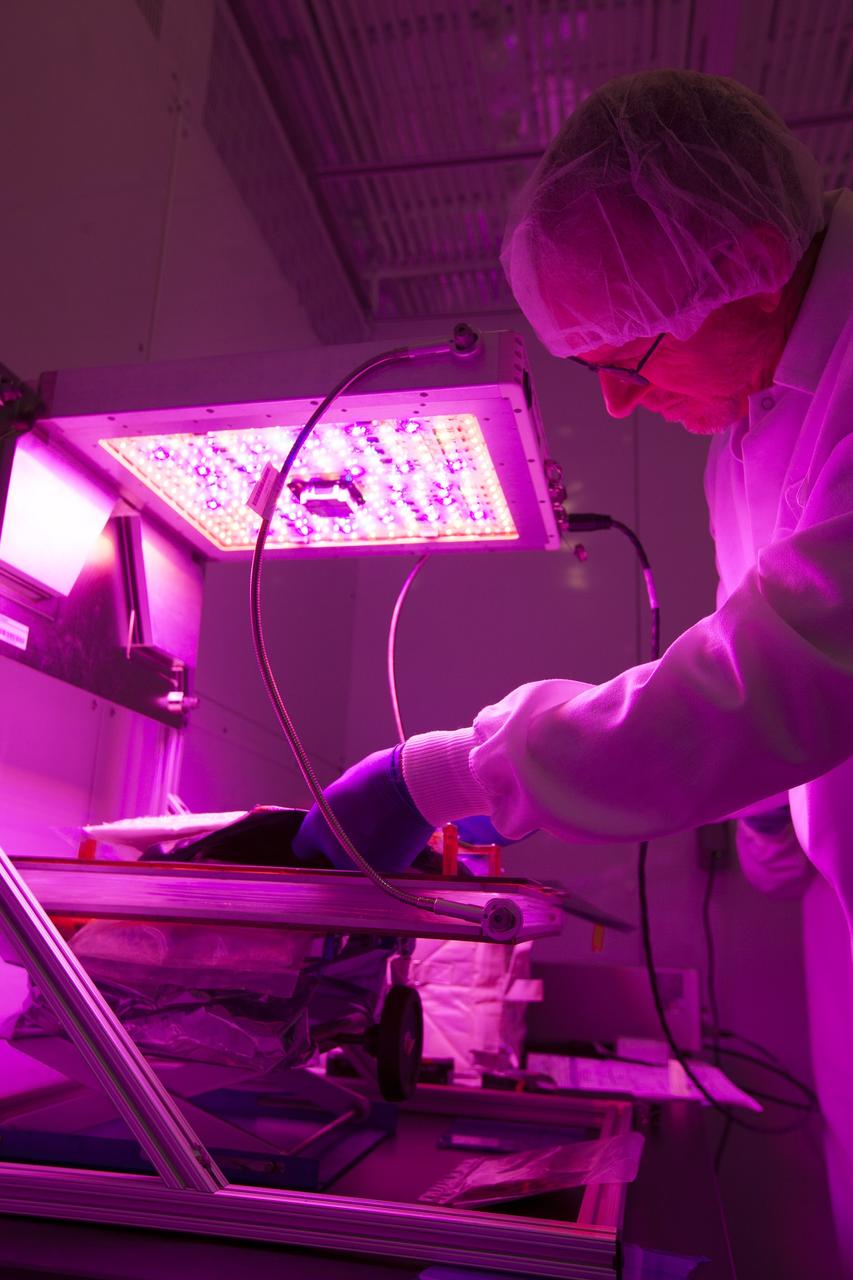
CAPE CANAVERAL, Fla. – Researchers have activated the red, blue and green LED lights on the Veggie plant growth system inside a control chamber at the Space Station Processing Facility at NASA's Kennedy Space Center in Florida. Jim Smodell, a technician with SGT, inserts the root mat and plant pillows containing outredgeous red romaine lettuce seeds into the Veggie unit. The growth chamber will be used as a control unit and procedures will be followed identical to those being performed on Veggie and the Veg-01 experiment on the International Space Station by Expedition 39 flight engineer and NASA astronaut Steve Swanson. Veggie and Veg-01 were delivered to the space station aboard the SpaceX-3 mission. Veggie is the first fresh food production system delivered to the station. Six plant pillows, each containing outredgeous red romaine lettuce seeds and a root mat were inserted into Veggie. The plant chamber's red, blue and green LED lights were activated. The plant growth will be monitored for 28 days. At the end of the cycle, the plants will be carefully harvested, frozen and stored for return to Earth. Photo credit: NASA/Dimitri Gerondidakis
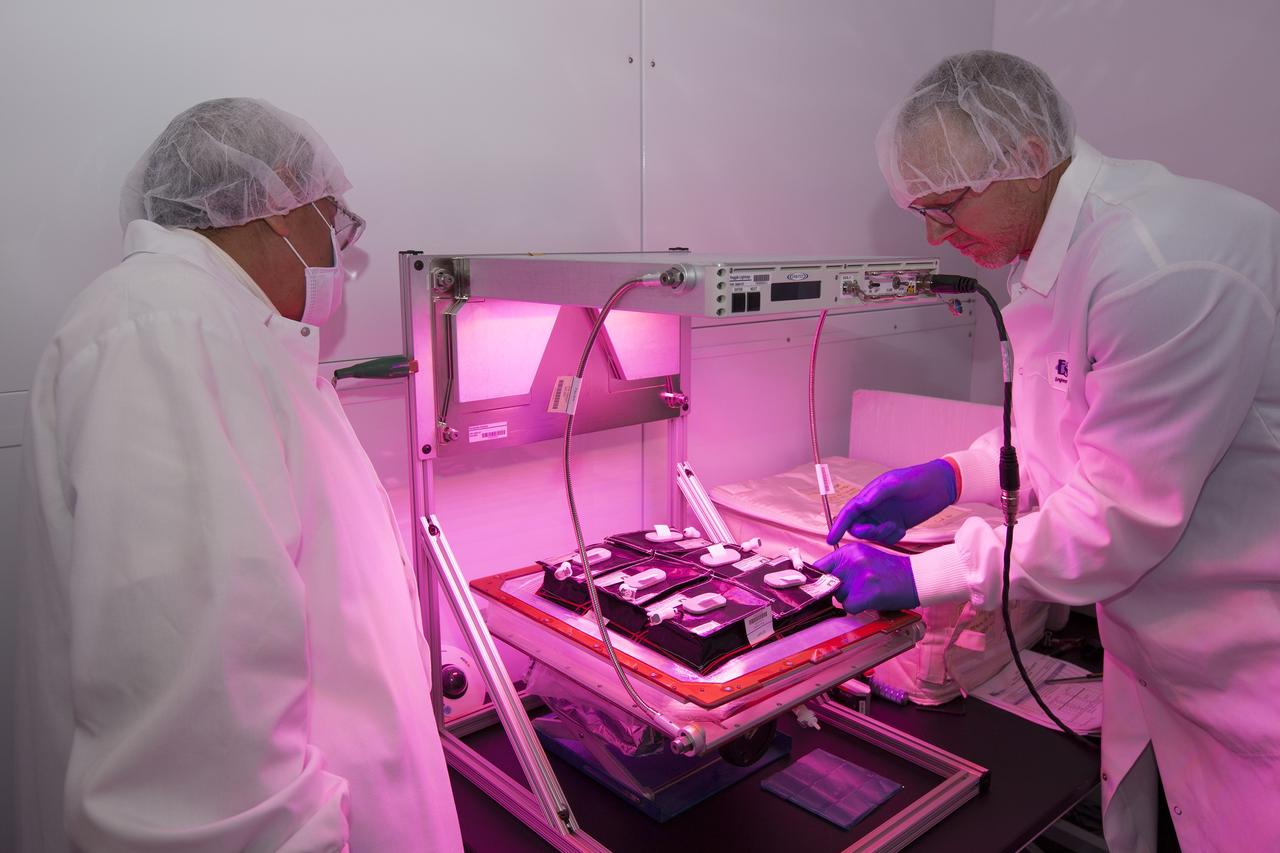
CAPE CANAVERAL, Fla. – Researchers have activated the red, blue and green LED lights on the Veggie plant growth system inside a control chamber at the Space Station Processing Facility at NASA's Kennedy Space Center in Florida. Jim Smodell, a technician with SGT, is securing the plant pillows containing outredgeous red romaine lettuce seeds onto the root mat inside Veggie. To his left, is George Guerra, a quality control engineer with QinetiQ North America. The growth chamber will be used as a control unit and procedures will be followed identical to those being performed on Veggie and the Veg-01 experiment on the International Space Station by Expedition 39 flight engineer and NASA astronaut Steve Swanson. Veggie and Veg-01 were delivered to the space station aboard the SpaceX-3 mission. Veggie is the first fresh food production system delivered to the station. Six plant pillows, each containing outredgeous red romaine lettuce seeds and a root mat were inserted into Veggie. The plant chamber's red, blue and green LED lights were activated. The plant growth will be monitored for 28 days. At the end of the cycle, the plants will be carefully harvested, frozen and stored for return to Earth. Photo credit: NASA/Dimitri Gerondidakis

VANDENBERG AFB, Calif. -- During a news conference at Vandenberg Air Force Base, Calif. prior to the launch of NASA's Landsat Data Continuity Mission, or LDCM, media representative heard from Dr. Jim Irons, LDCM project scientist from NASA's Goddard Space Flight Center, Dr. Thomas Loveland, senior scientist and co-chair of the Landsat Science Team U.S. Geological Survey Earth Resources Observation and Science Center, and Kass Green, Landsat scientist and president of Kass Green and Associates. The Landsat Data Continuity Mission LDCM is the future of Landsat satellites. It will continue to obtain valuable data and imagery to be used in agriculture, education, business, science, and government. The Landsat Program provides repetitive acquisition of high resolution multispectral data of the Earth's surface on a global basis. The data from the Landsat spacecraft constitute the longest record of the Earth's continental surfaces as seen from space. It is a record unmatched in quality, detail, coverage, and value. Liftoff is planned for Feb. 11, 2013 aboard a United Launch Alliance Atlas V rocket. For more information, visit: http:__www.nasa.gov_mission_pages_landsat_main_index.html Photo credit: NASA_Kim Shiflett

VANDENBERG AFB, Calif. -- During a news conference at Vandenberg Air Force Base, Calif. prior to the launch of NASA's Landsat Data Continuity Mission, or LDCM, media representative heard from Rani Gran of NASA Public Affairs, Dr. Jim Irons, LDCM project scientist from NASA's Goddard Space Flight Center, Dr. Thomas Loveland, senior scientist and co-chair of the Landsat Science Team U.S. Geological Survey Earth Resources Observation and Science Center, Kass Green, Landsat scientist and president of Kass Green and Associates, and Dr. Mike Wulder, senior research scientist of the Landsat Science Team Canadian Forest Service, Natural Resources Canada. The Landsat Data Continuity Mission LDCM is the future of Landsat satellites. It will continue to obtain valuable data and imagery to be used in agriculture, education, business, science, and government. The Landsat Program provides repetitive acquisition of high resolution multispectral data of the Earth's surface on a global basis. The data from the Landsat spacecraft constitute the longest record of the Earth's continental surfaces as seen from space. It is a record unmatched in quality, detail, coverage, and value. Liftoff is planned for Feb. 11, 2013 aboard a United Launch Alliance Atlas V rocket. For more information, visit: http:__www.nasa.gov_mission_pages_landsat_main_index.html Photo credit: NASA_Kim Shiflett
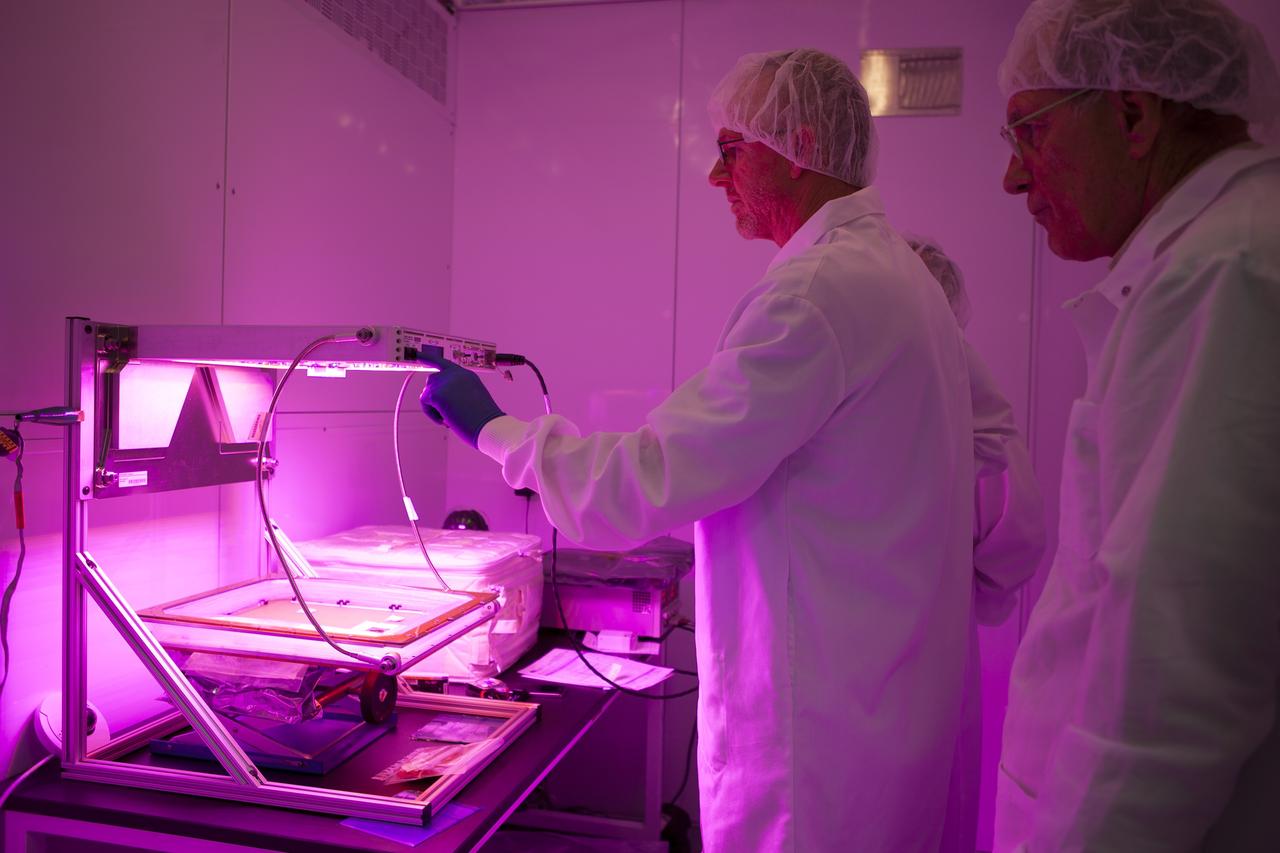
CAPE CANAVERAL, Fla. – Researchers activate the red, blue and green LED lights on the Veggie plant growth system inside a control chamber at the Space Station Processing Facility at NASA's Kennedy Space Center in Florida. From left, are Jim Smodell, a technician with SGT, and Chuck Spern, lead project engineer, with QinetiQ North America. The growth chamber will be used as a control unit and procedures will be followed identical to those being performed on Veggie and the Veg-01 experiment on the International Space Station by Expedition 39 flight engineer and NASA astronaut Steve Swanson. Veggie and Veg-01 were delivered to the space station aboard the SpaceX-3 mission. Veggie is the first fresh food production system delivered to the station. Six plant pillows, each containing outredgeous red romaine lettuce seeds and a root mat were inserted into Veggie. The plant chamber's red, blue and green LED lights were activated. The plant growth will be monitored for 28 days. At the end of the cycle, the plants will be carefully harvested, frozen and stored for return to Earth. Photo credit: NASA/Dimitri Gerondidakis
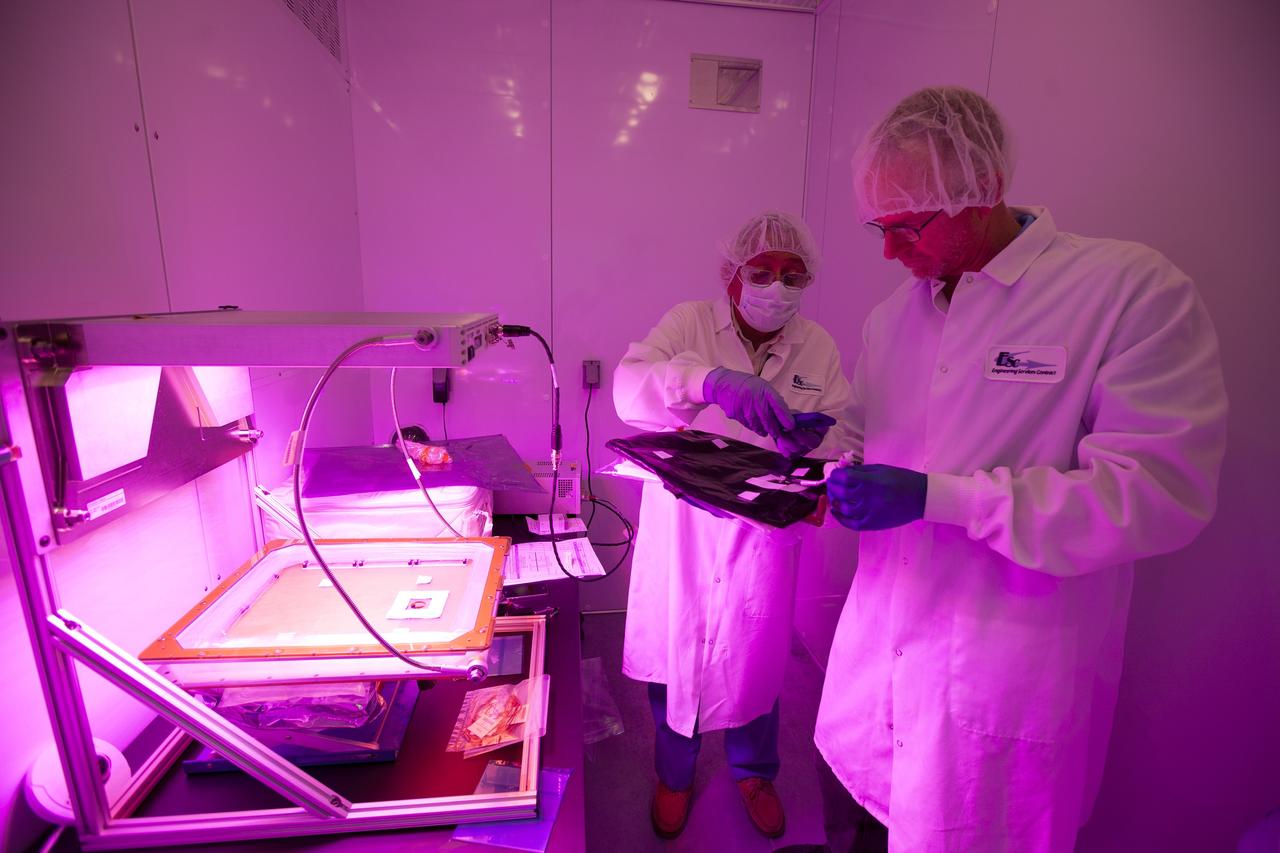
CAPE CANAVERAL, Fla. – Researchers have activated the red, blue and green LED lights on the Veggie plant growth system inside a control chamber at the Space Station Processing Facility at NASA's Kennedy Space Center in Florida. They are checking the plant pillows that contain outredgeous red romaine lettuce seeds. From left, are George Guerra, quality control engineer with QinetiQ North America, and Jim Smodell, a technician with SGT. The growth chamber will be used as a control unit and procedures will be followed identical to those being performed on Veggie and the Veg-01 experiment on the International Space Station by Expedition 39 flight engineer and NASA astronaut Steve Swanson. Veggie and Veg-01 were delivered to the space station aboard the SpaceX-3 mission. Veggie is the first fresh food production system delivered to the station. Six plant pillows, each containing outredgeous red romaine lettuce seeds and a root mat were inserted into Veggie. The plant chamber's red, blue and green LED lights were activated. The plant growth will be monitored for 28 days. At the end of the cycle, the plants will be carefully harvested, frozen and stored for return to Earth. Photo credit: NASA/Dimitri Gerondidakis

CAPE CANAVERAL, Fla. – Researchers have activated the red, blue and green LED lights on the Veggie plant growth system inside a control chamber at the Space Station Processing Facility at NASA's Kennedy Space Center in Florida. From left, are Jim Smodell, a technician with SGT, and Chuck Spern, lead project engineer with QinetiQ North America. The growth chamber will be used as a control unit and procedures will be followed identical to those being performed on Veggie and the Veg-01 experiment on the International Space Station by Expedition 39 flight engineer and NASA astronaut Steve Swanson. Veggie and Veg-01 were delivered to the space station aboard the SpaceX-3 mission. Veggie is the first fresh food production system delivered to the station. Six plant pillows, each containing outredgeous red romaine lettuce seeds and a root mat were inserted into Veggie. The plant chamber's red, blue and green LED lights were activated. The plant growth will be monitored for 28 days. At the end of the cycle, the plants will be carefully harvested, frozen and stored for return to Earth. Photo credit: NASA/Dimitri Gerondidakis
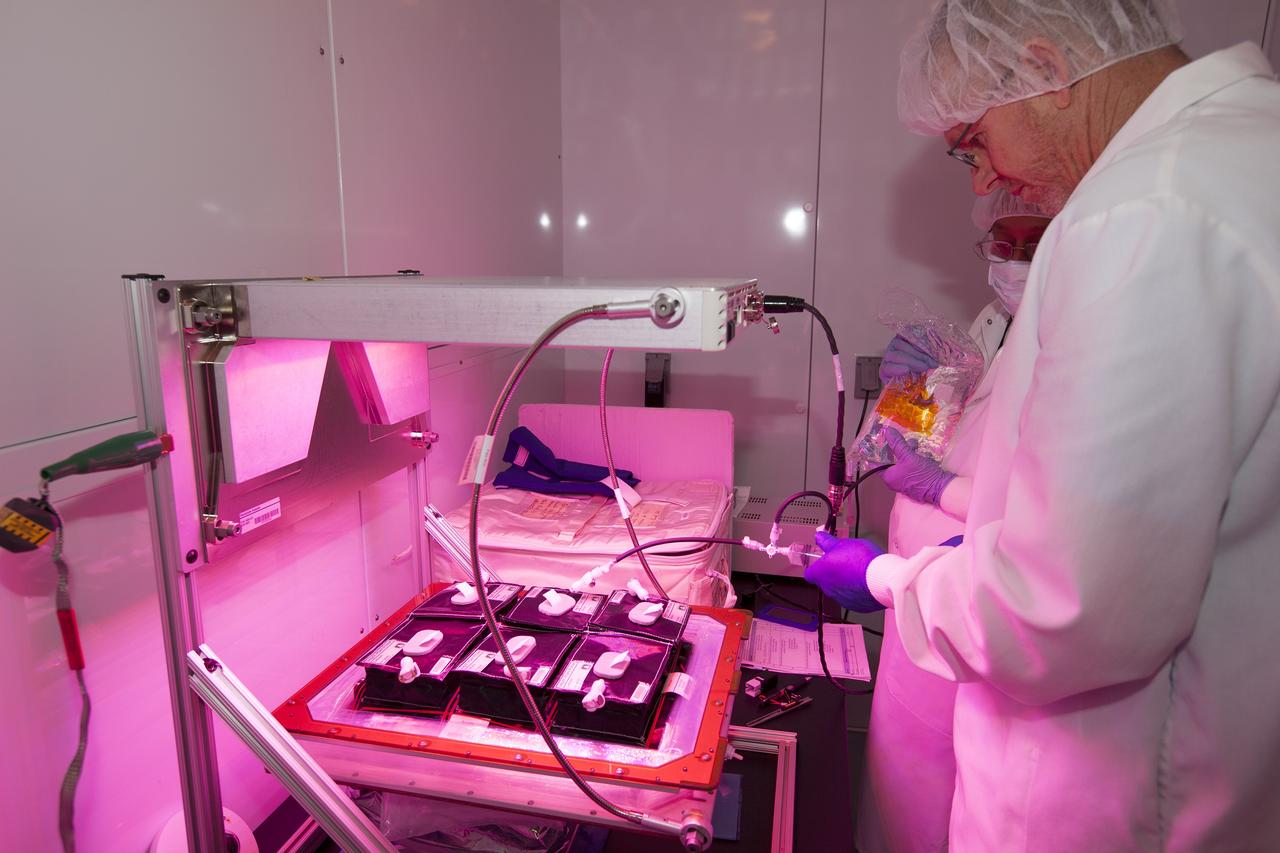
CAPE CANAVERAL, Fla. – Researchers have activated the red, blue and green LED lights on the Veggie plant growth system inside a control chamber at the Space Station Processing Facility at NASA's Kennedy Space Center in Florida. Jim Smodell, a technician with SGT, starts the water supply to the plant pillows containing outredgeous red romaine lettuce seeds inside Veggie. Behind him is George Guerra, a quality control engineer with QinetiQ North America. The growth chamber will be used as a control unit and procedures will be followed identical to those being performed on Veggie and the Veg-01 experiment on the International Space Station by Expedition 39 flight engineer and NASA astronaut Steve Swanson. Veggie and Veg-01 were delivered to the space station aboard the SpaceX-3 mission. Veggie is the first fresh food production system delivered to the station. Six plant pillows, each containing outredgeous red romaine lettuce seeds and a root mat were inserted into Veggie. The plant chamber's red, blue and green LED lights were activated. The plant growth will be monitored for 28 days. At the end of the cycle, the plants will be carefully harvested, frozen and stored for return to Earth. Photo credit: NASA/Dimitri Gerondidakis
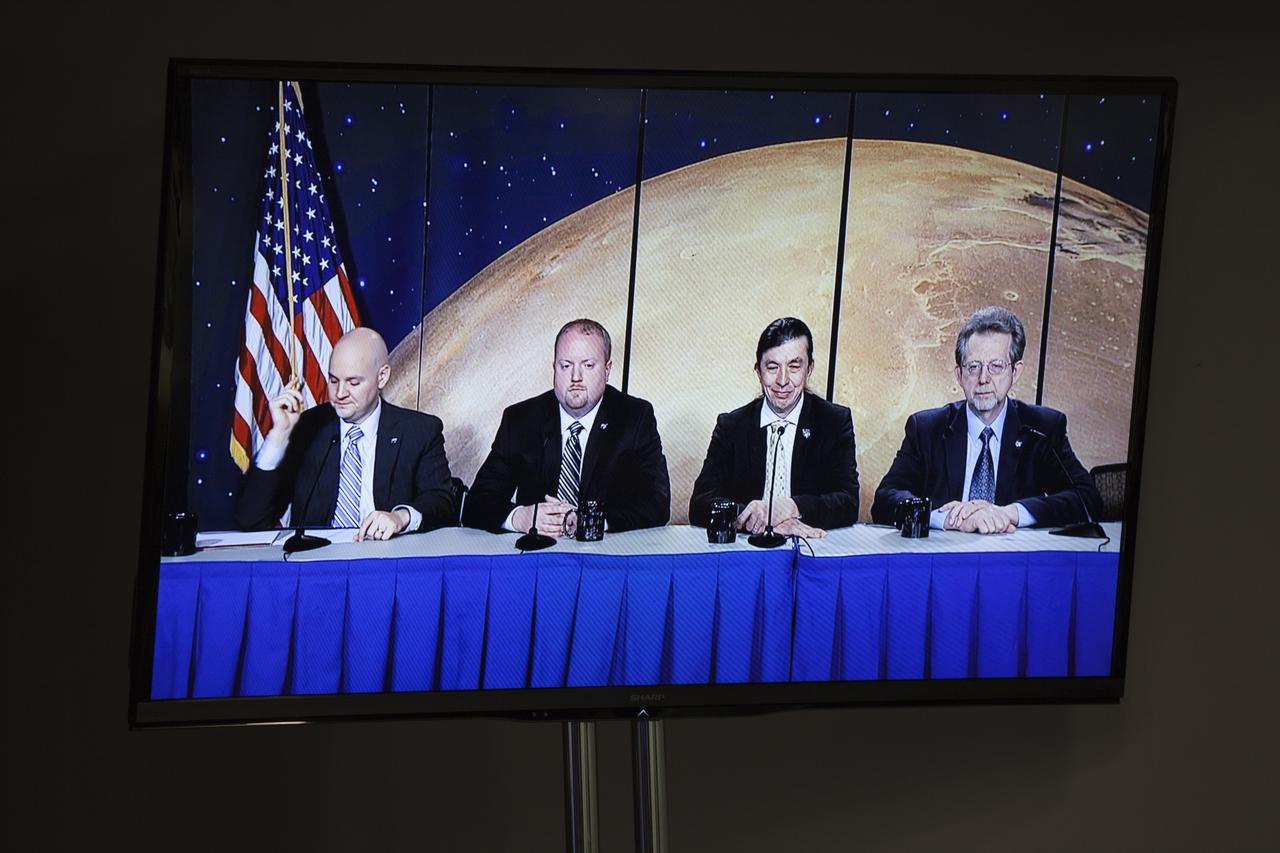
At NASA Headquarters in Washington and the Kennedy Space Center in Florida, NASA leaders spoke to members of the new media about how the first flight of the new Orion spacecraft is a first step in the agency's plans to send humans to Mars. Seen on a video monitor at Kennedy, Headquarter participants, from the left are: Trent Perrotto of NASA Public Affairs, Jason Crusan, director of Advanced Exploration Systems Division of Human Exploration and Operations Mission Directorate, Jim Reuther, deputy associate administrator for Programs, Space Technology Mission Directorate, and Jim Green, director of Planetary Division of the Science Mission Directorate. Orion is the exploration spacecraft designed to carry astronauts to destinations not yet explored by humans, including an asteroid and Mars. It will have emergency abort capability, sustain the crew during space travel and provide safe re-entry from deep space return velocities. The first unpiloted flight test of Orion is scheduled to launch Dec. 4, 2014 atop a United Launch Alliance Delta IV Heavy rocket, and in 2018 on NASA’s Space Launch System rocket.
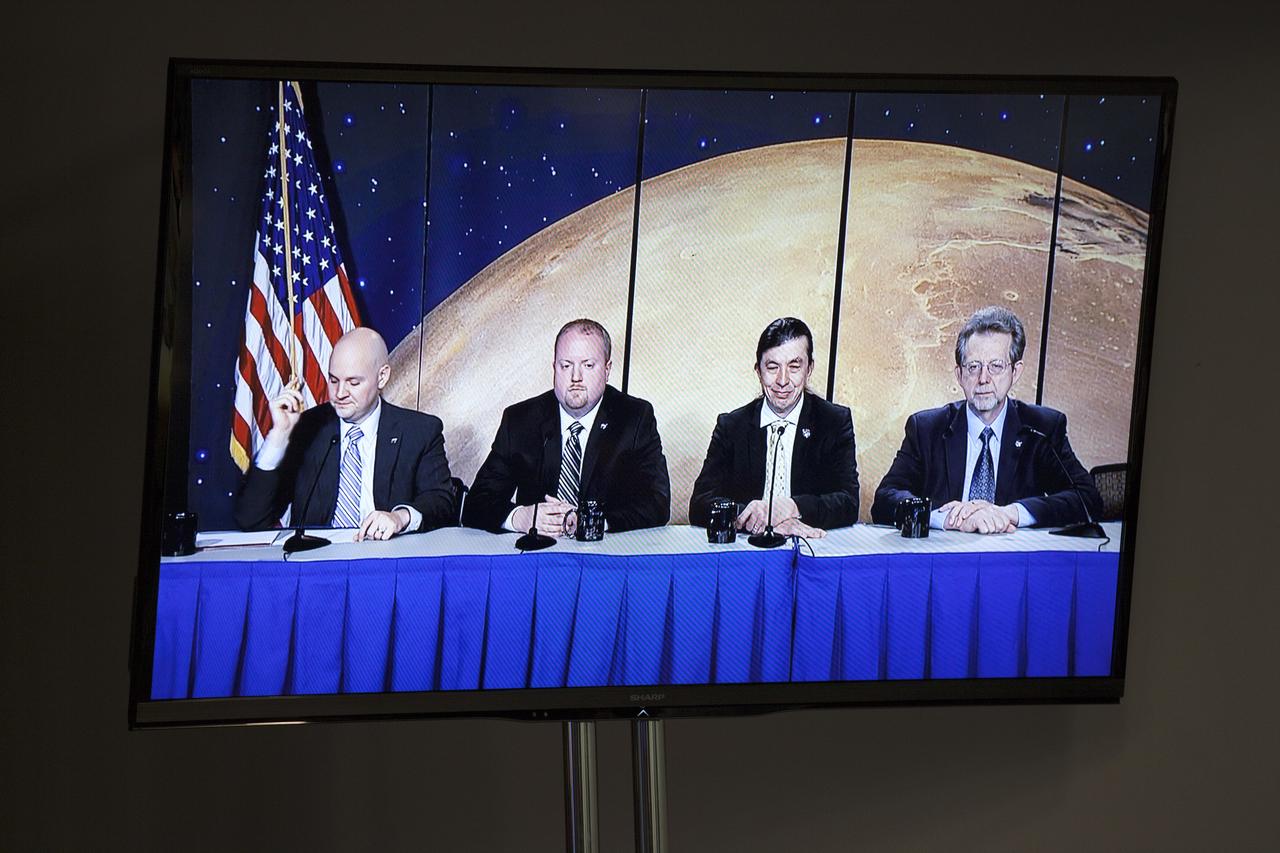
CAPE CANAVERAL, Fla. – At NASA Headquarters in Washington and the Kennedy Space Center in Florida, NASA leaders spoke to members of the new media about how the first flight of the new Orion spacecraft is a first step in the agency's plans to send humans to Mars. Seen on a video monitor at Kennedy, Headquarter participants, from the left are: Trent Perrotto of NASA Public Affairs, Jason Crusan, director of Advanced Exploration Systems Division of Human Exploration and Operations Mission Directorate, Jim Reuther, deputy associate administrator for Programs, Space Technology Mission Directorate, and Jim Green, director of Planetary Division of the Science Mission Directorate. Orion is the exploration spacecraft designed to carry astronauts to destinations not yet explored by humans, including an asteroid and Mars. It will have emergency abort capability, sustain the crew during space travel and provide safe re-entry from deep space return velocities. The first unpiloted flight test of Orion is scheduled to launch Dec. 4, 2014 atop a United Launch Alliance Delta IV Heavy rocket, and in 2018 on NASA’s Space Launch System rocket. For more information, visit www.nasa.gov/orion Photo credit: NASA/Kim Shiflett

KENNEDY SPACE CENTER, FLA. -- A green heron is spotted on a fence in the Launch Complex 39 Area at NASA's Kennedy Space Center. These herons range across the eastern half of the United States, wintering through South Carolina, the Gulf Coast and California. For their habitat, the herons prefer lake margins, streams, ponds and marshes. KSC shares a boundary with the Merritt Island National Wildlife Refuge, which surrounds it. The refuge is a habitat for more than 310 species of birds, 25 mammals, 117 fishes and 65 amphibians and reptiles. In addition, the refuge supports 19 endangered or threatened wildlife species on Federal or State lists, more than any other single refuge in the U.S. Photo credit: NASA/Jim Grossmann
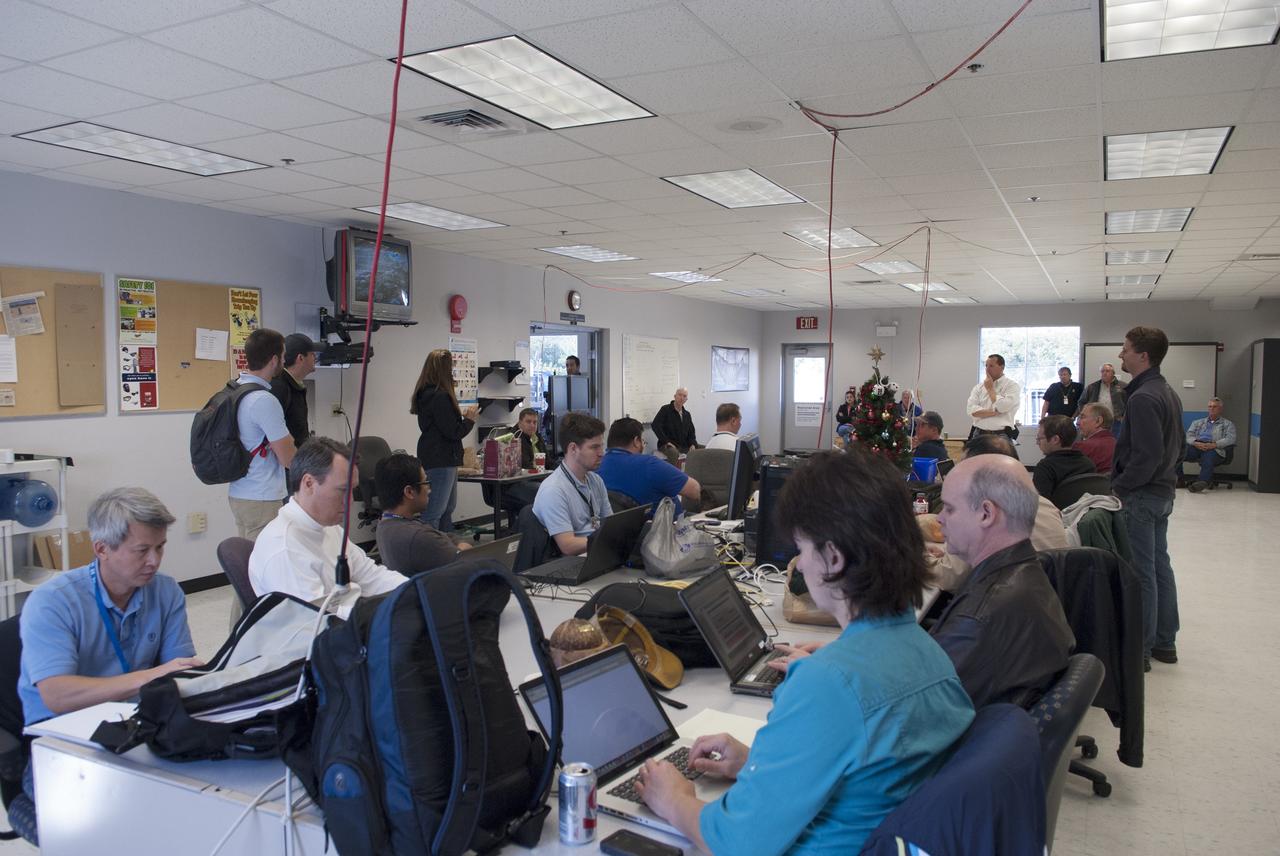
CAPE CANAVERAL, Fla. – Engineers and controllers in a mobile control room prepare for flight number 15 of NASA's Project Morpheus prototype lander at the north end of the Shuttle Landing Facility, or SLF, at NASA’s Kennedy Space Center in Florida. The lander will take off from the ground over a flame trench and use its autonomous landing and hazard avoidance technology, or ALHAT sensors, to survey the hazard field to determine safe landing sites. Project Morpheus tests NASA’s ALHAT and an engine that runs on liquid oxygen and methane, which are green propellants. These new capabilities could be used in future efforts to deliver cargo to planetary surfaces. Project Morpheus is being managed under the Advanced Exploration Systems, or AES, Division in NASA’s Human Exploration and Operations Mission Directorate. For more information on Project Morpheus, visit http://morpheuslander.jsc.nasa.gov/. Photo credit: NASA/Jim Grossmann
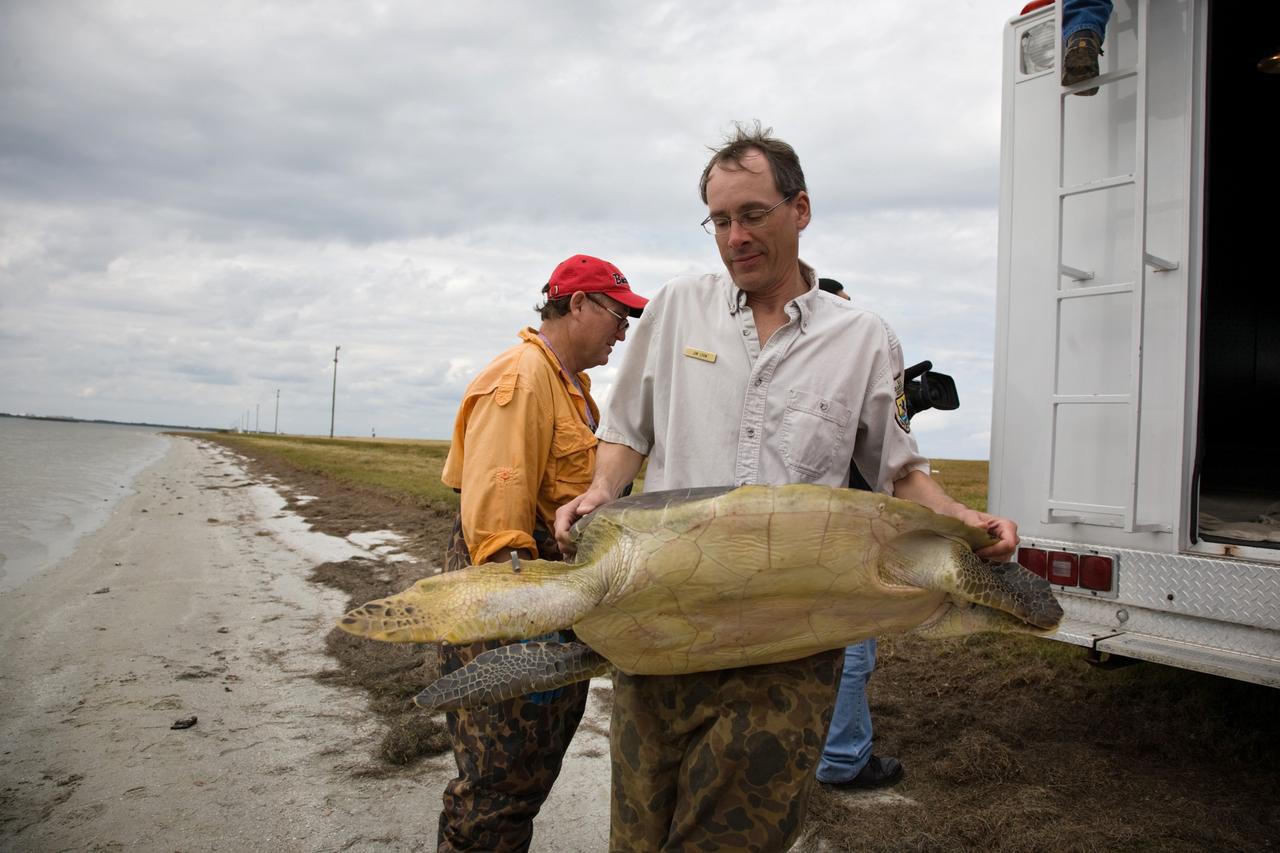
CAPE CANAVERAL, Fla. - Jim Lyon, biological science technician with the Merritt Island National Wildlife Refuge, carries a green sea turtle toward the waterline of the Banana River at NASA's Kennedy Space Center in Florida. A recent cold snap left this turtle and nearly 2,000 others "stunned" and in need of help. Many of the turtles were rescued from the Mosquito Lagoon, with others coming from the Indian River Lagoon and Cocoa Beach. Biologists, environmentalists, wildlife experts and other volunteers joined forces with a massive rescue effort at the Merritt Island National Wildlife Refuge, where the turtles were identified, examined and transported to rehabilitation facilities throughout Florida and South Georgia. The animals stayed at these facilities until local waters warmed up to safe temperatures. Photo credit: NASA/Troy Cryder

CAPE CANAVERAL, Fla. – NASA Project Morpheus prototype lander and support equipment are being transported to the north end of the Shuttle Landing Facility for free flight test number 15 at NASA’s Kennedy Space Center in Florida. The lander will take off from the ground over a flame trench and use its autonomous landing and hazard avoidance technology, or ALHAT sensors, to survey the hazard field to determine safe landing sites. Project Morpheus tests NASA’s ALHAT and an engine that runs on liquid oxygen and methane, which are green propellants. These new capabilities could be used in future efforts to deliver cargo to planetary surfaces. Project Morpheus is being managed under the Advanced Exploration Systems, or AES, Division in NASA’s Human Exploration and Operations Mission Directorate. For more information on Project Morpheus, visit http://morpheuslander.jsc.nasa.gov/. Photo credit: NASA/Jim Grossmann