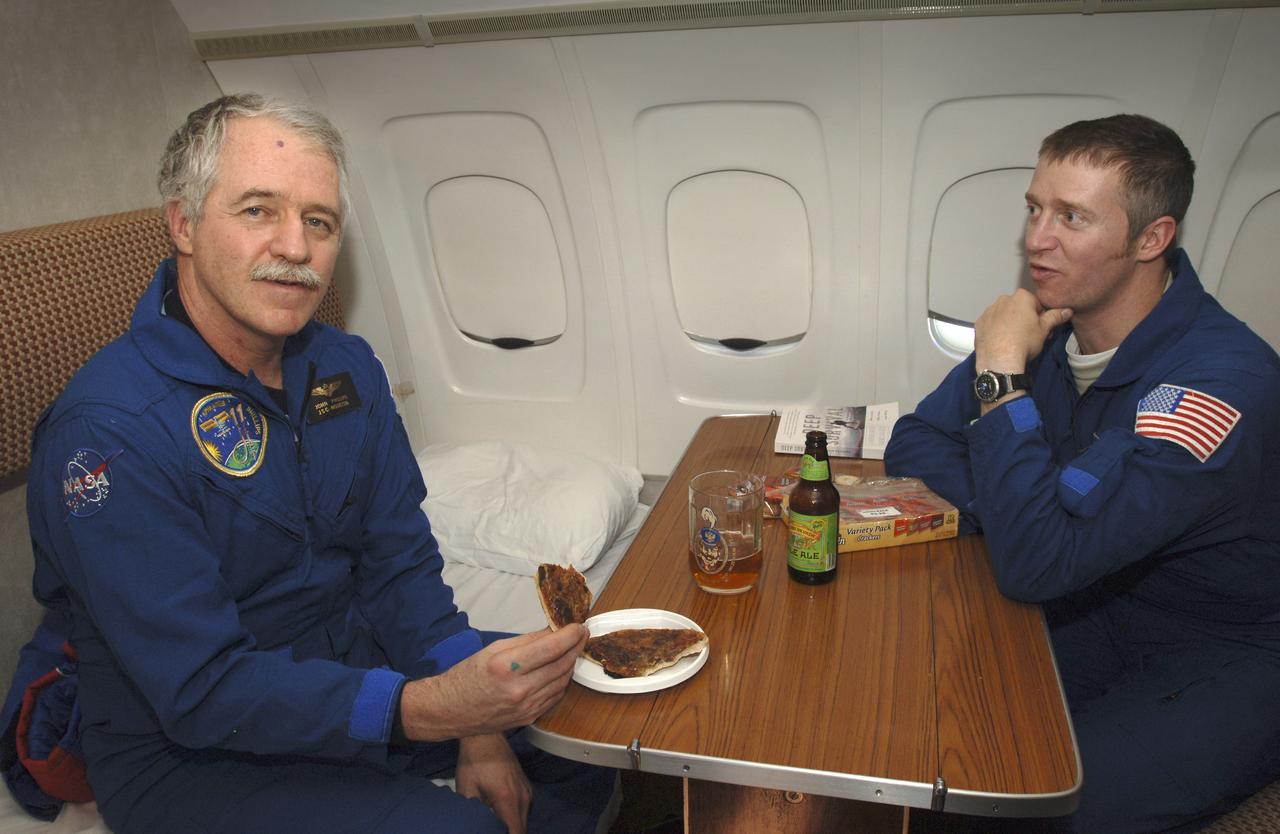
Astronaut John Phillips, left, enjoys a meal onboard a Russian aircraft flying from Kustanay, Kazakhstan to Stary City, Russia, Tuesday, Oct. 11, 2005. Sitting with Philiips is NASA Flight Surgeon Jim Locke. Members of the 11th expedition to the international space station, Phillips and cosmonaut Sergei Krikalev, landed near Arlalyk, Kazakhstan after a six-month mission in orbit. Along with American businessman Greg Olsen, who visited the station for more than a week, Phillips and Krikalev returned to Earth aboard a Russian Soyuz spacecraft. Photo Credit: (NASA/Bill Ingalls)
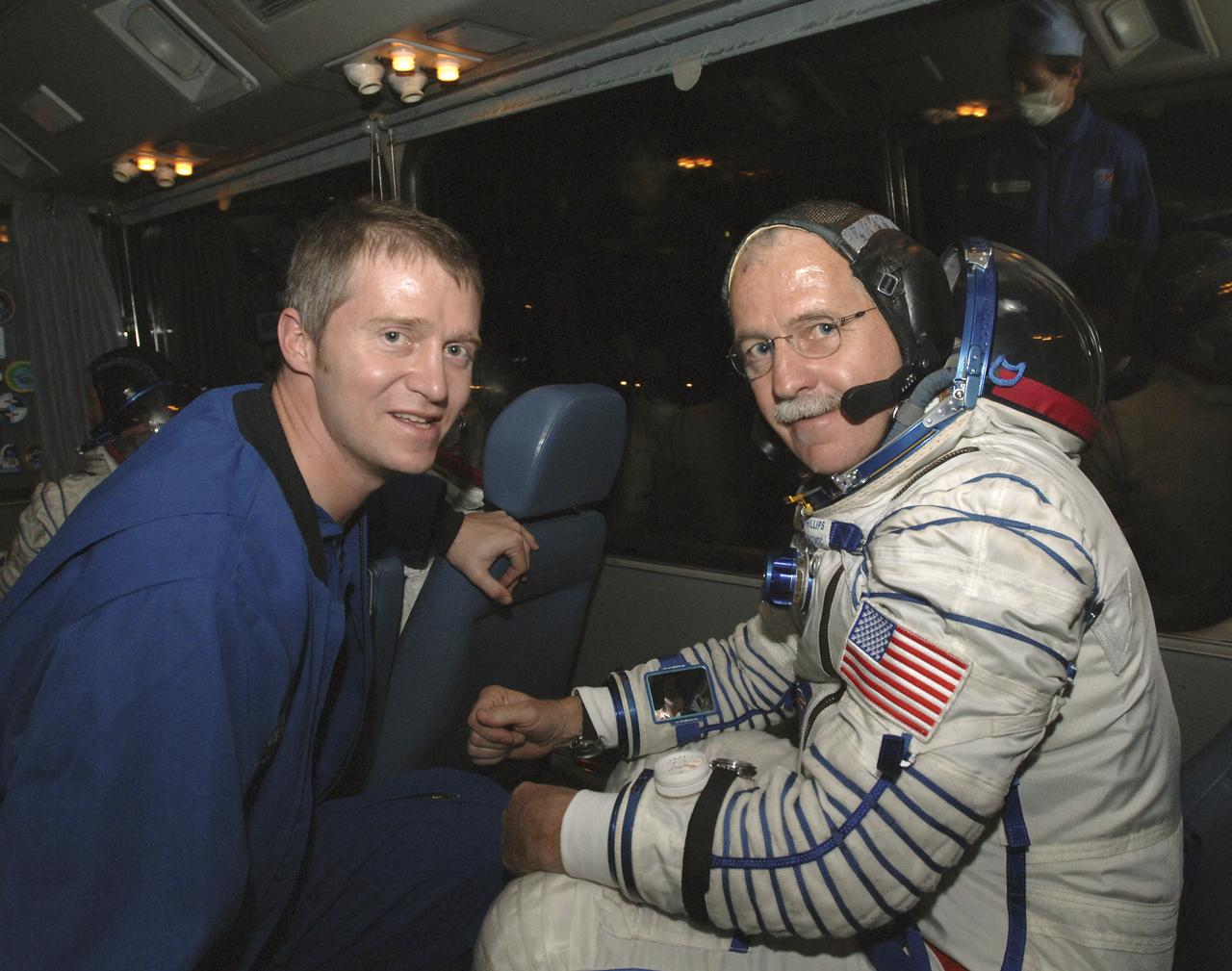
NASA Flight Surgeon Jim Locke is seen with Flight Engineer and NASA Science Officer John Phillips during a bus ride prior to launch, Friday, April 15, 2005 at the Baikonur Cosmodrome in Kazakhstan. Photo Credit: (NASA/Bill Ingalls)
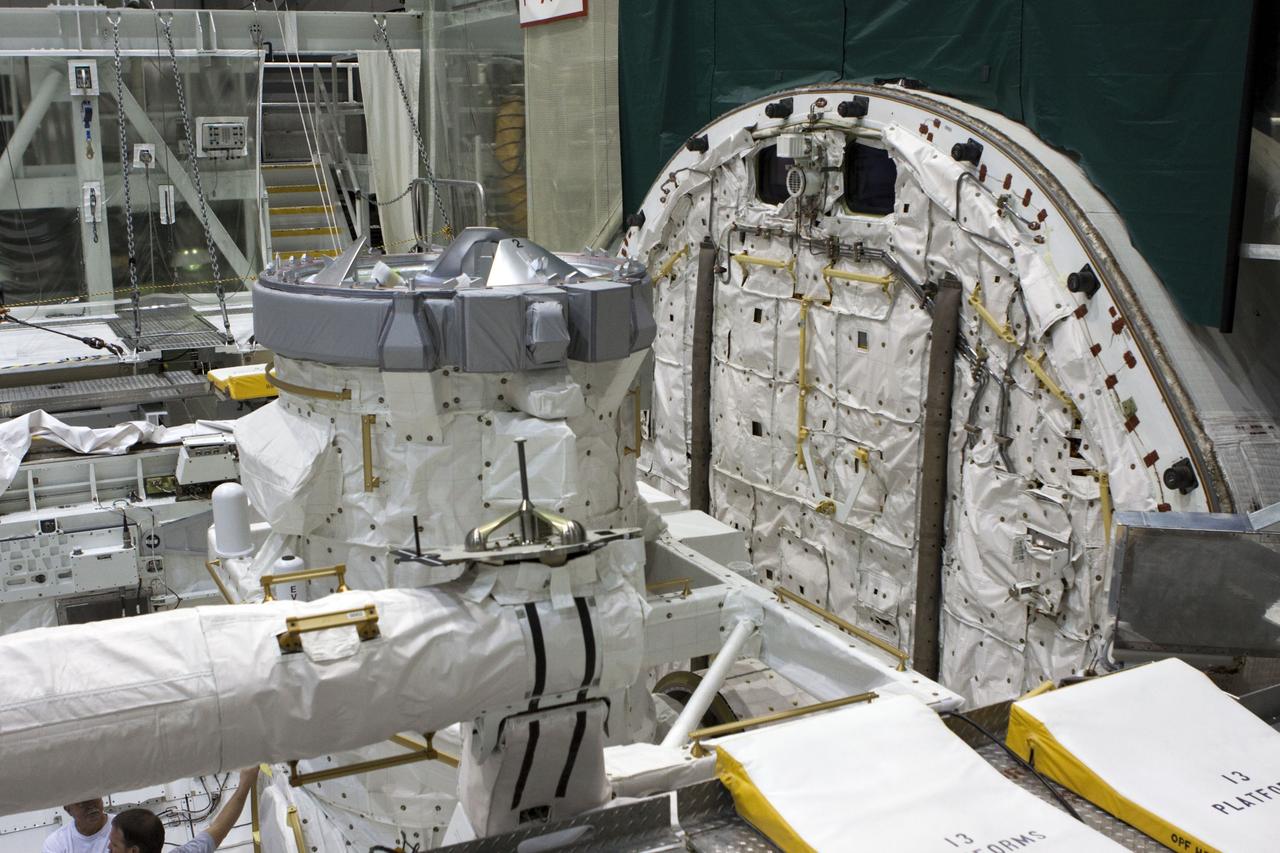
– CAPE CANAVERAL, Fla. – At NASA's Kennedy Space Center in Florida, a mock air lock has been installed in the payload bay of the space shuttle Atlantis in Bay 2 of the Orbiter Processing Facility. Atlantis is undergoing final preparations for its transfer to the Kennedy Space Center Visitor Complex targeted for November. The work is part of Transition and Retirement of the remaining space shuttles, Atlantis and Endeavour. Atlantis is being prepared for public display at Kennedy's Visitor Complex. Over the course of its 26-year career, Atlantis spent 293 days in space during 33 missions. For more information, visit http://www.nasa.gov/transition Photo credit: NASA/Jim Grossmann
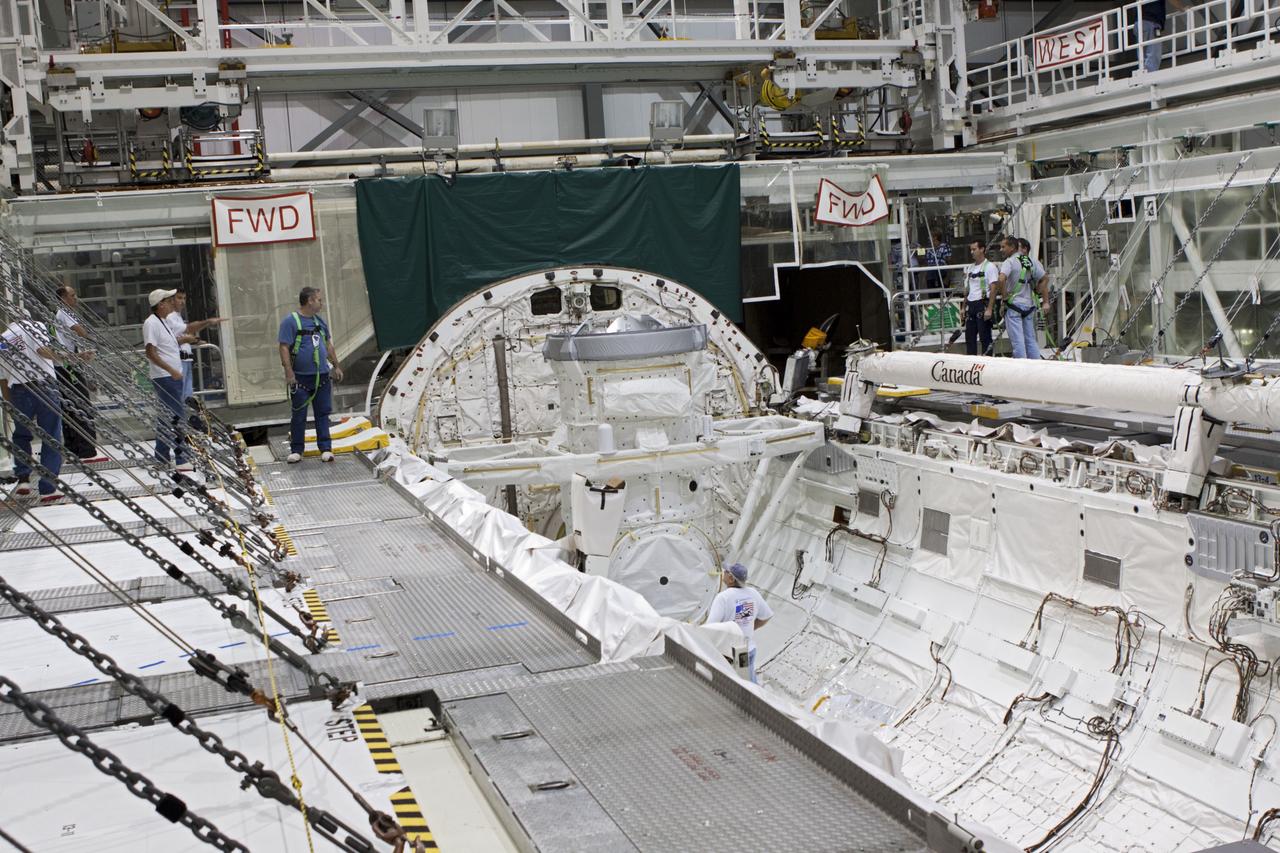
CAPE CANAVERAL, Fla. – At NASA's Kennedy Space Center in Florida, United Space Alliance technicians install a mock air lock in the payload bay of the space shuttle Atlantis in Bay 2 of the Orbiter Processing Facility. Atlantis is undergoing final preparations for its transfer to the Kennedy Space Center Visitor Complex targeted for November. The work is part of Transition and Retirement of the remaining space shuttles, Atlantis and Endeavour. Atlantis is being prepared for public display at Kennedy's Visitor Complex. Over the course of its 26-year career, Atlantis spent 293 days in space during 33 missions. For more information, visit http://www.nasa.gov/transition Photo credit: NASA/Jim Grossmann

CAPE CANAVERAL, Fla. – In Bay 2 of the Orbiter Processing Facility at NASA's Kennedy Space Center in Florida, a mock air lock has been installed in the payload bay of the space shuttle Atlantis. The orbiter is undergoing final preparations for its transfer to the Kennedy Space Center Visitor Complex targeted for November. The work is part of Transition and Retirement of the remaining space shuttles, Atlantis and Endeavour. Atlantis is being prepared for public display at Kennedy's Visitor Complex. Over the course of its 26-year career, Atlantis spent 293 days in space during 33 missions. For more information, visit http://www.nasa.gov/transition Photo credit: NASA/Jim Grossmann
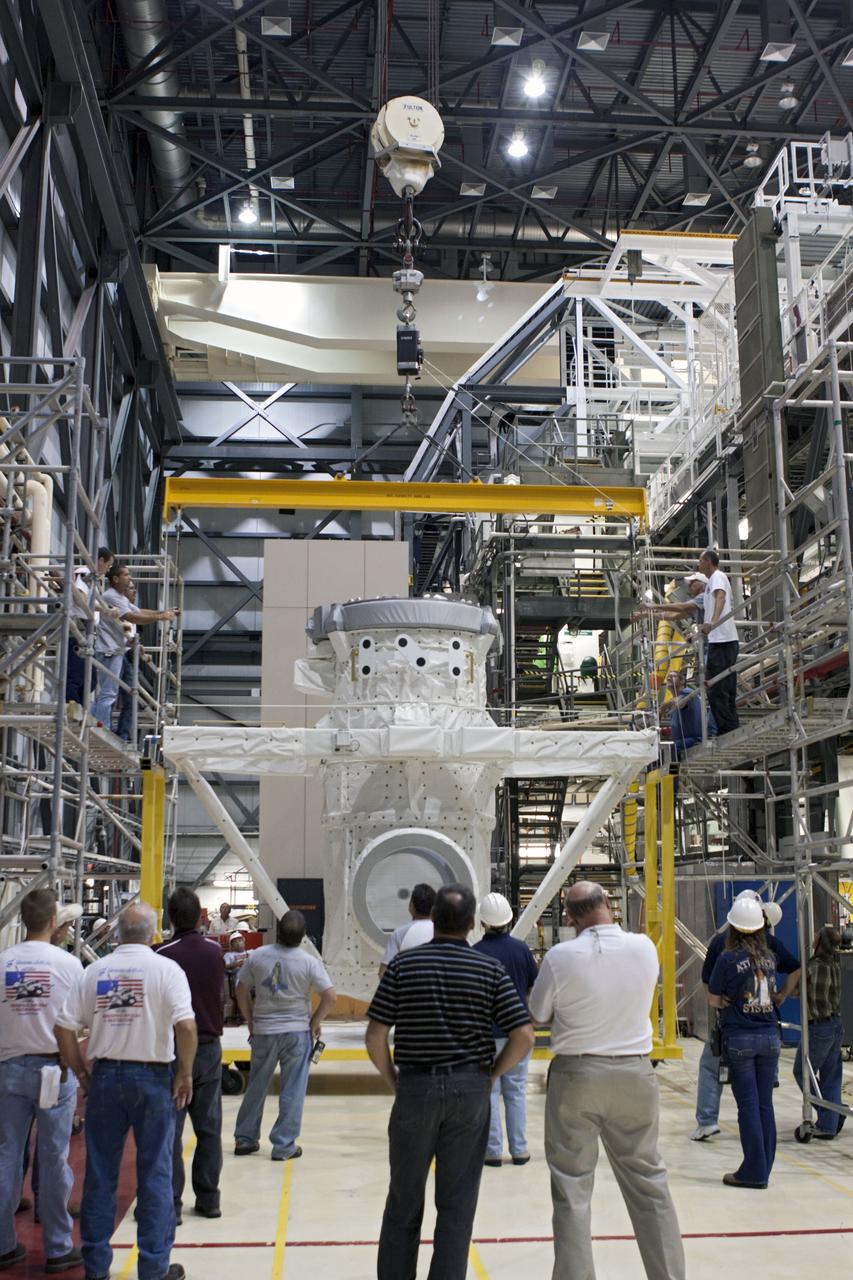
CAPE CANAVERAL, Fla. – At NASA's Kennedy Space Center in Florida, a mock air lock is prepared for installation in the payload bay of the space shuttle Atlantis in Bay 2 of the Orbiter Processing Facility. Atlantis is undergoing final preparations for its transfer to the Kennedy Space Center Visitor Complex targeted for November. The work is part of Transition and Retirement of the remaining space shuttles, Atlantis and Endeavour. Atlantis is being prepared for public display at Kennedy's Visitor Complex. Over the course of its 26-year career, Atlantis spent 293 days in space during 33 missions. For more information, visit http://www.nasa.gov/transition Photo credit: NASA/Jim Grossmann
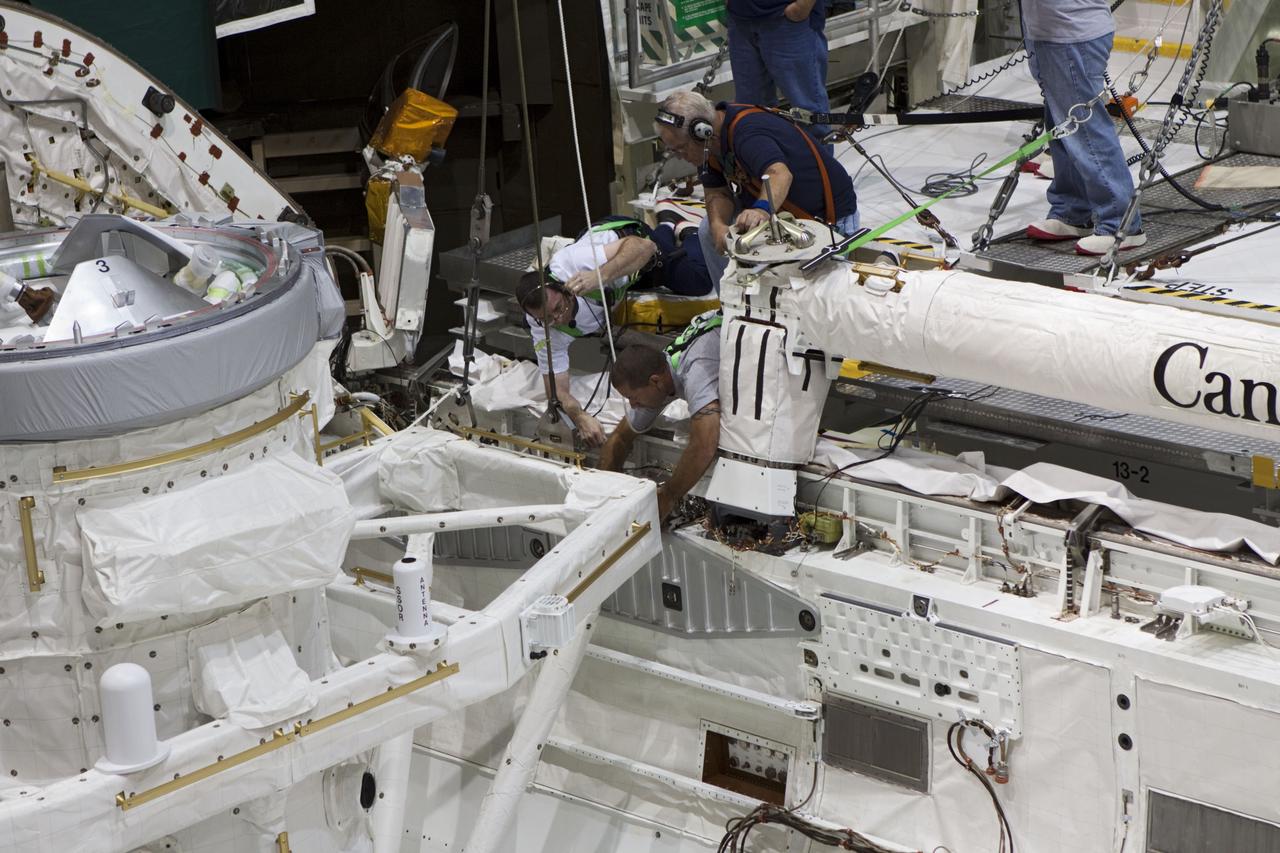
CAPE CANAVERAL, Fla. – At NASA's Kennedy Space Center in Florida, United Space Alliance technicians install a mock air lock in the payload bay of the space shuttle Atlantis in Bay 2 of the Orbiter Processing Facility. Atlantis is undergoing final preparations for its transfer to the Kennedy Space Center Visitor Complex targeted for November. The work is part of Transition and Retirement of the remaining space shuttles, Atlantis and Endeavour. Atlantis is being prepared for public display at Kennedy's Visitor Complex. Over the course of its 26-year career, Atlantis spent 293 days in space during 33 missions. For more information, visit http://www.nasa.gov/transition Photo credit: NASA/Jim Grossmann
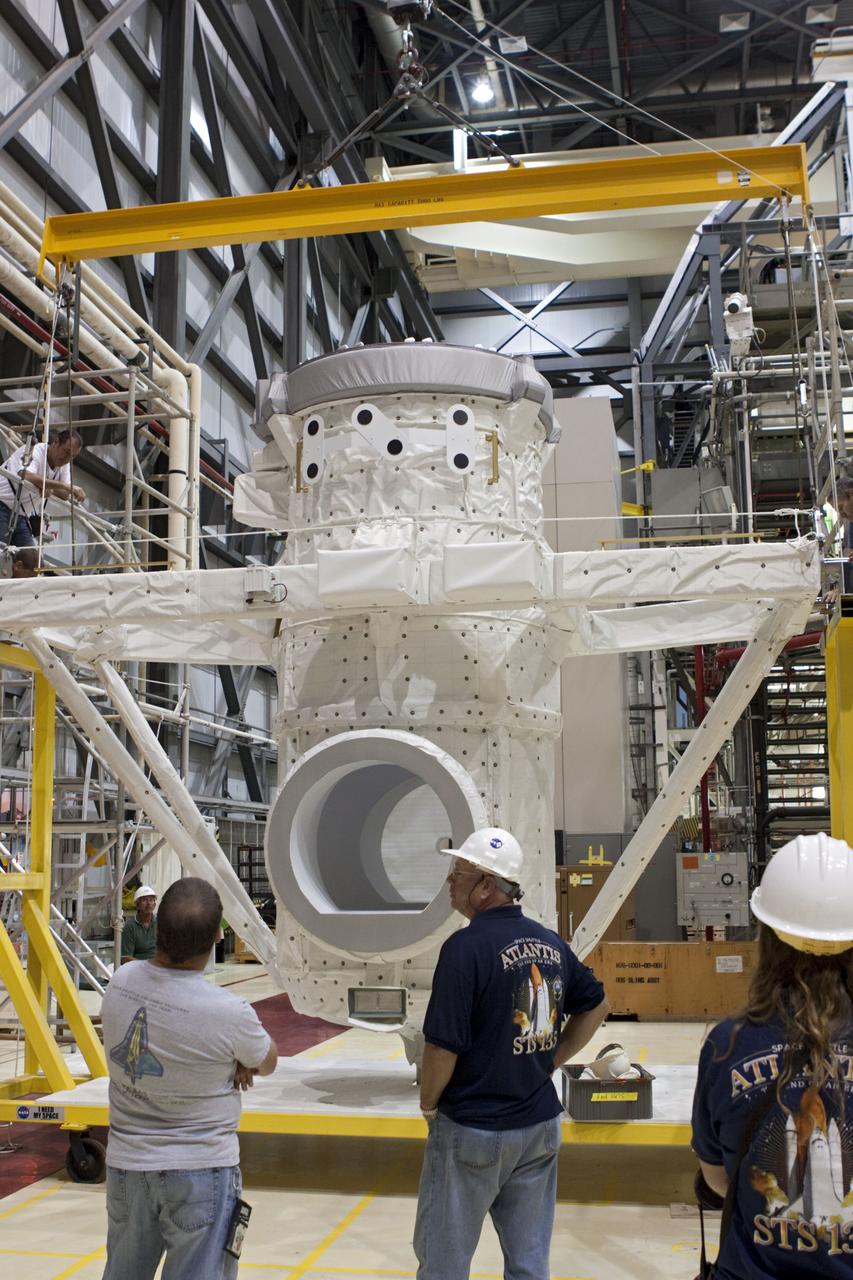
CAPE CANAVERAL, Fla. – At NASA's Kennedy Space Center in Florida, United Space Alliance technicians prepare a mock air lock for installation in the payload bay of the space shuttle Atlantis in Bay 2 of the Orbiter Processing Facility. Atlantis is undergoing final preparations for its transfer to the Kennedy Space Center Visitor Complex targeted for November. The work is part of Transition and Retirement of the remaining space shuttles, Atlantis and Endeavour. Atlantis is being prepared for public display at Kennedy's Visitor Complex. Over the course of its 26-year career, Atlantis spent 293 days in space during 33 missions. For more information, visit http://www.nasa.gov/transition Photo credit: NASA/Jim Grossmann
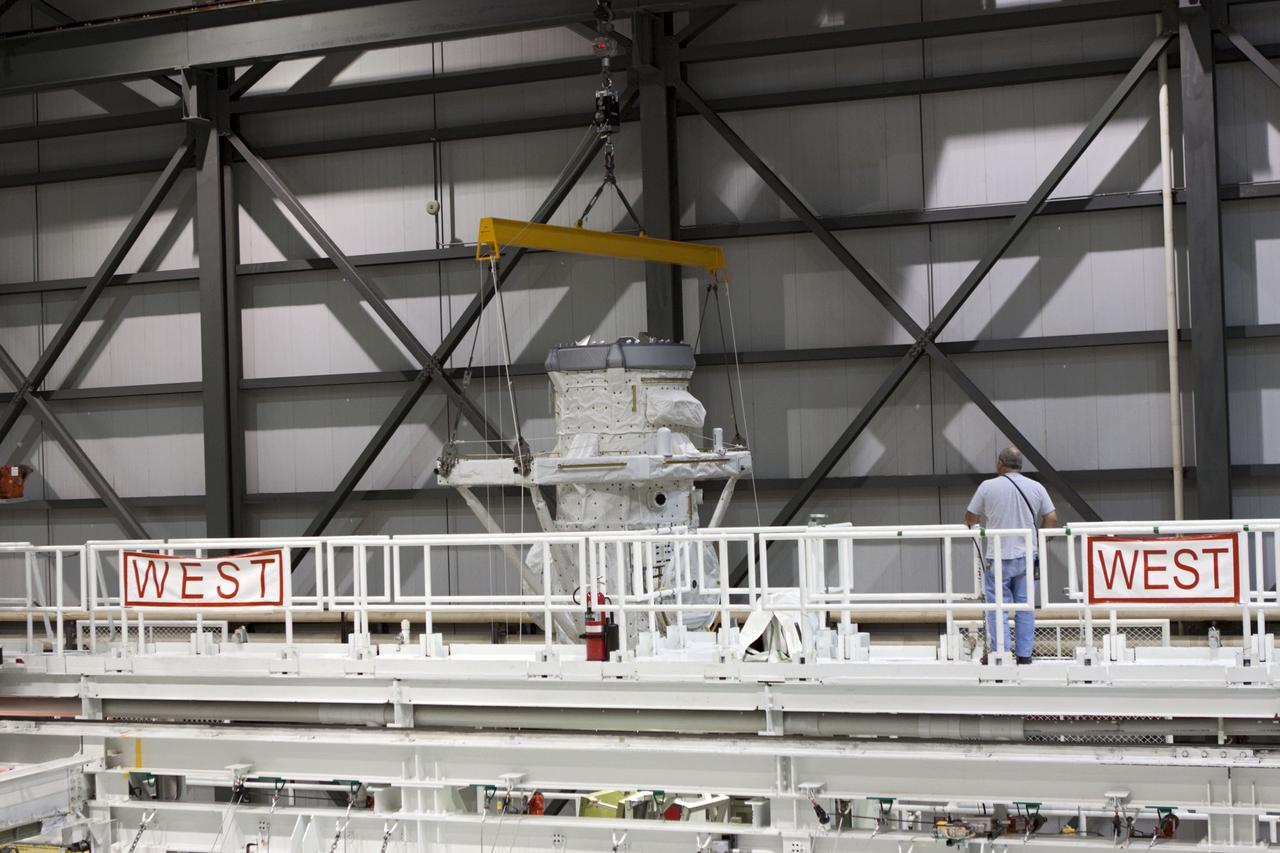
CAPE CANAVERAL, Fla. – At NASA's Kennedy Space Center in Florida, a crane is used to lift a mock air lock being prepared for installation in the payload bay of the space shuttle Atlantis in Bay 2 of the Orbiter Processing Facility. Atlantis is undergoing final preparations for its transfer to the Kennedy Space Center Visitor Complex targeted for November. The work is part of Transition and Retirement of the remaining space shuttles, Atlantis and Endeavour. Atlantis is being prepared for public display at Kennedy's Visitor Complex. Over the course of its 26-year career, Atlantis spent 293 days in space during 33 missions. For more information, visit http://www.nasa.gov/transition Photo credit: NASA/Jim Grossmann
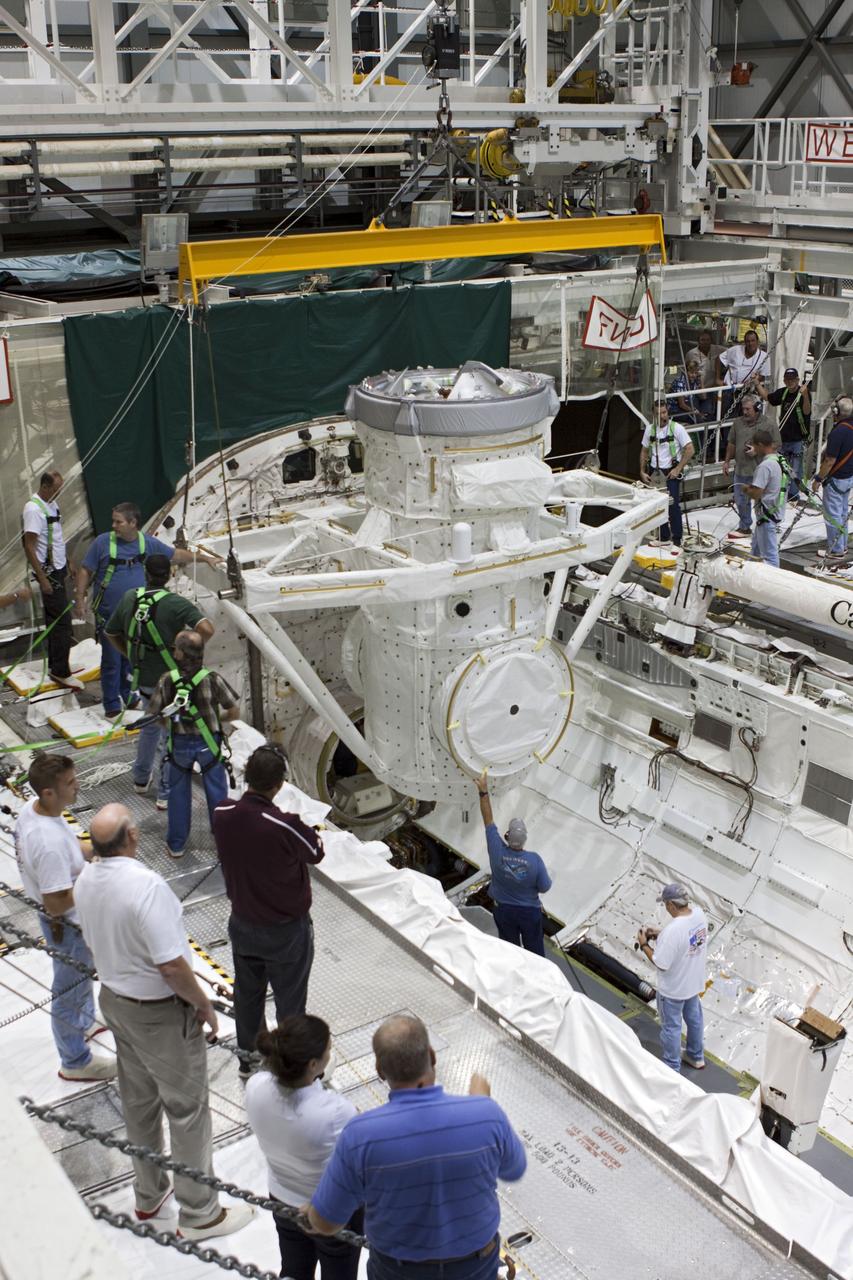
CAPE CANAVERAL, Fla. – At NASA's Kennedy Space Center in Florida, United Space Alliance technicians install a mock air lock in the payload bay of the space shuttle Atlantis in Bay 2 of the Orbiter Processing Facility. Atlantis is undergoing final preparations for its transfer to the Kennedy Space Center Visitor Complex targeted for November. The work is part of Transition and Retirement of the remaining space shuttles, Atlantis and Endeavour. Atlantis is being prepared for public display at Kennedy's Visitor Complex. Over the course of its 26-year career, Atlantis spent 293 days in space during 33 missions. For more information, visit http://www.nasa.gov/transition Photo credit: NASA/Jim Grossmann
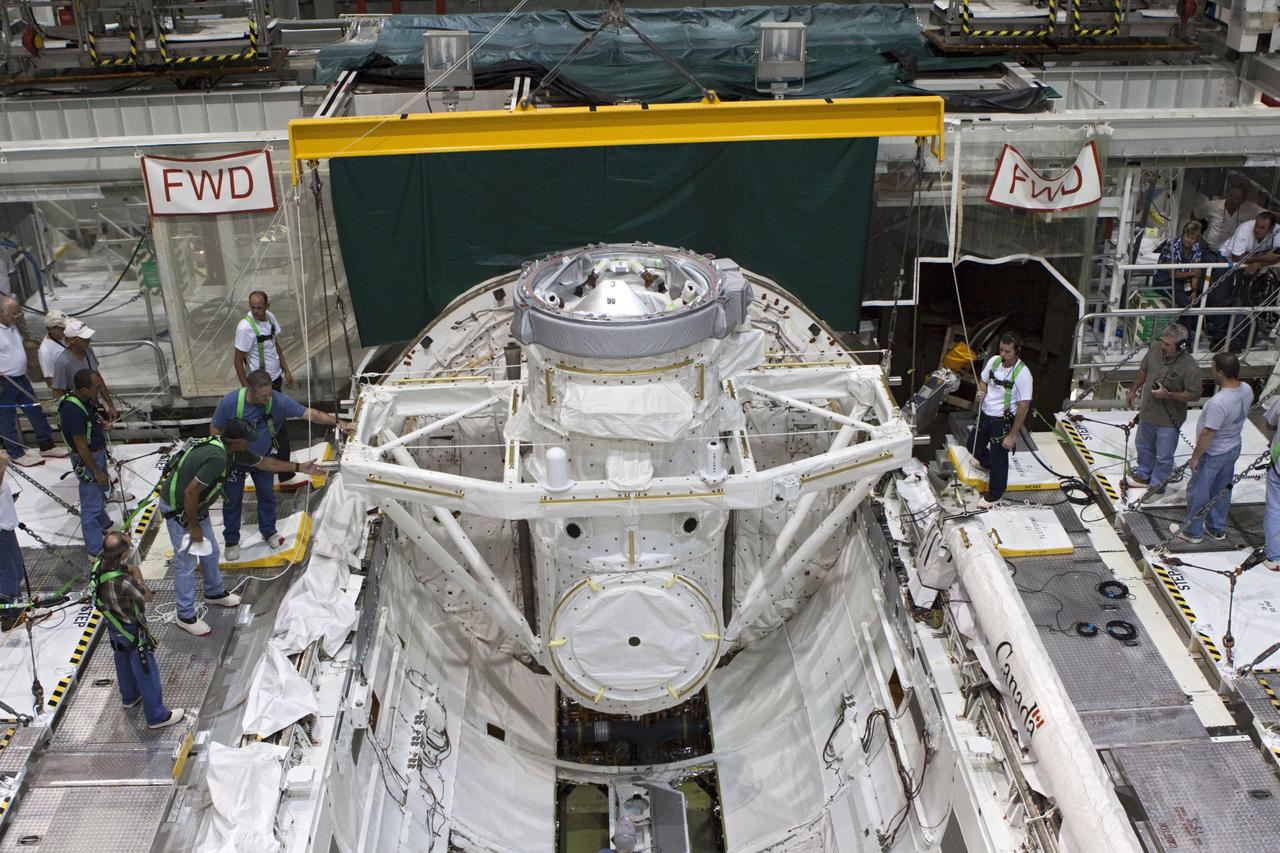
CAPE CANAVERAL, Fla. – At NASA's Kennedy Space Center in Florida, United Space Alliance technicians install a mock air lock in the payload bay of the space shuttle Atlantis in Bay 2 of the Orbiter Processing Facility. Atlantis is undergoing final preparations for its transfer to the Kennedy Space Center Visitor Complex targeted for November. The work is part of Transition and Retirement of the remaining space shuttles, Atlantis and Endeavour. Atlantis is being prepared for public display at Kennedy's Visitor Complex. Over the course of its 26-year career, Atlantis spent 293 days in space during 33 missions. For more information, visit http://www.nasa.gov/transition Photo credit: NASA/Jim Grossmann

CAPE CANAVERAL, Fla. – At NASA's Kennedy Space Center in Florida, United Space Alliance technicians prepare a mock air lock for installation in the payload bay of the space shuttle Atlantis in Bay 2 of the Orbiter Processing Facility. Atlantis is undergoing final preparations for its transfer to the Kennedy Space Center Visitor Complex targeted for November. The work is part of Transition and Retirement of the remaining space shuttles, Atlantis and Endeavour. Atlantis is being prepared for public display at Kennedy's Visitor Complex. Over the course of its 26-year career, Atlantis spent 293 days in space during 33 missions. For more information, visit http://www.nasa.gov/transition Photo credit: NASA/Jim Grossmann
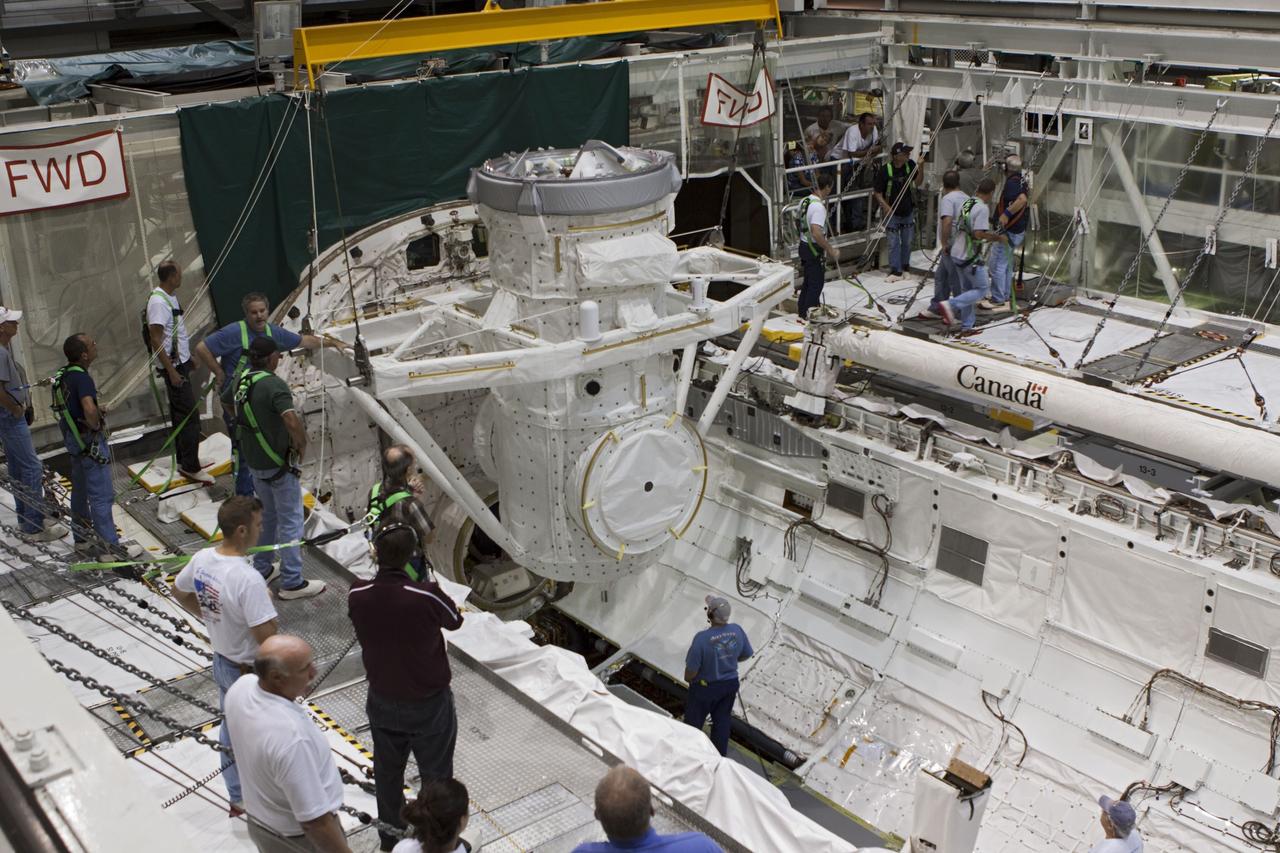
CAPE CANAVERAL, Fla. – At NASA's Kennedy Space Center in Florida, United Space Alliance technicians install a mock air lock in the payload bay of the space shuttle Atlantis in Bay 2 of the Orbiter Processing Facility. Atlantis is undergoing final preparations for its transfer to the Kennedy Space Center Visitor Complex targeted for November. The work is part of Transition and Retirement of the remaining space shuttles, Atlantis and Endeavour. Atlantis is being prepared for public display at Kennedy's Visitor Complex. Over the course of its 26-year career, Atlantis spent 293 days in space during 33 missions. For more information, visit http://www.nasa.gov/transition Photo credit: NASA/Jim Grossmann
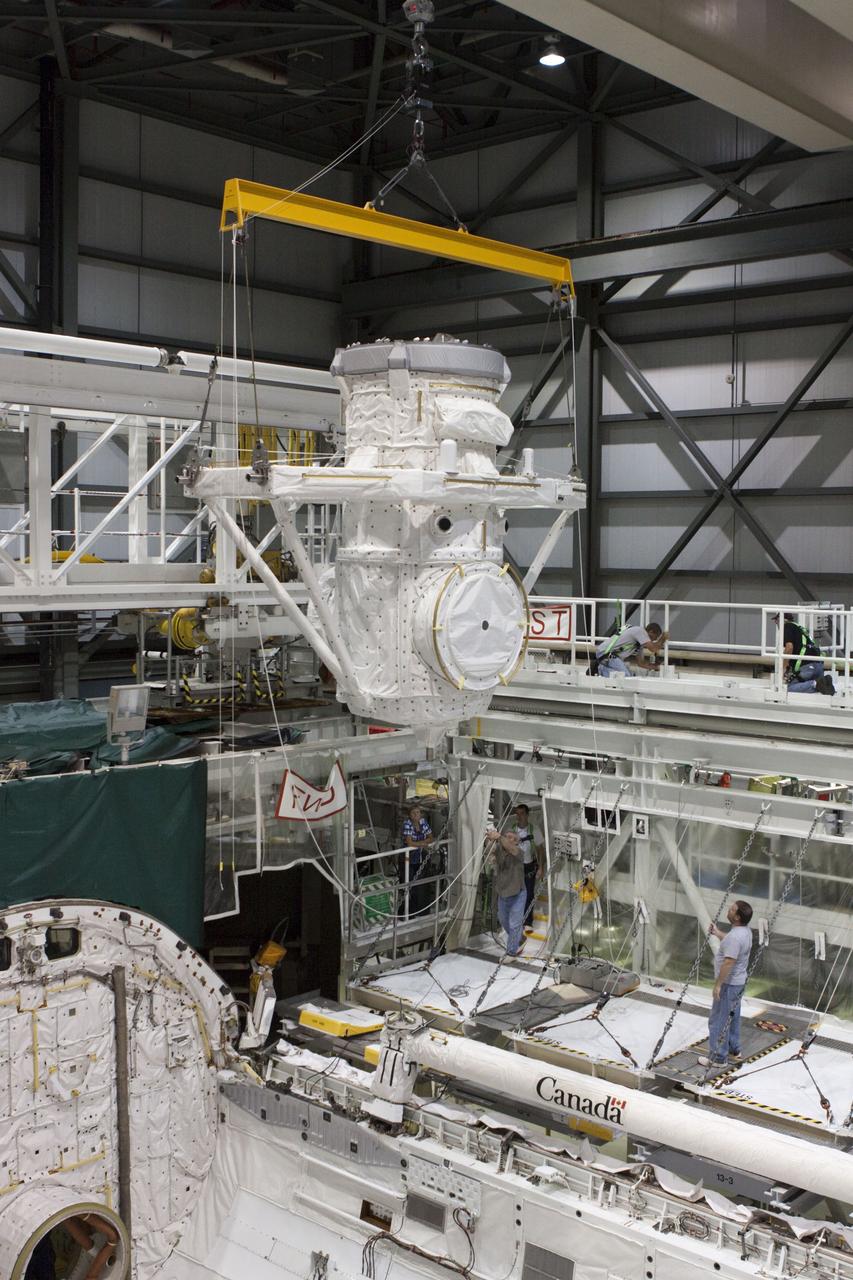
CAPE CANAVERAL, Fla. – At NASA's Kennedy Space Center in Florida, a crane is used to lift a mock air lock being prepared for installation in the payload bay of the space shuttle Atlantis in Bay 2 of the Orbiter Processing Facility. Atlantis is undergoing final preparations for its transfer to the Kennedy Space Center Visitor Complex targeted for November. The work is part of Transition and Retirement of the remaining space shuttles, Atlantis and Endeavour. Atlantis is being prepared for public display at Kennedy's Visitor Complex. Over the course of its 26-year career, Atlantis spent 293 days in space during 33 missions. For more information, visit http://www.nasa.gov/transition Photo credit: NASA/Jim Grossmann
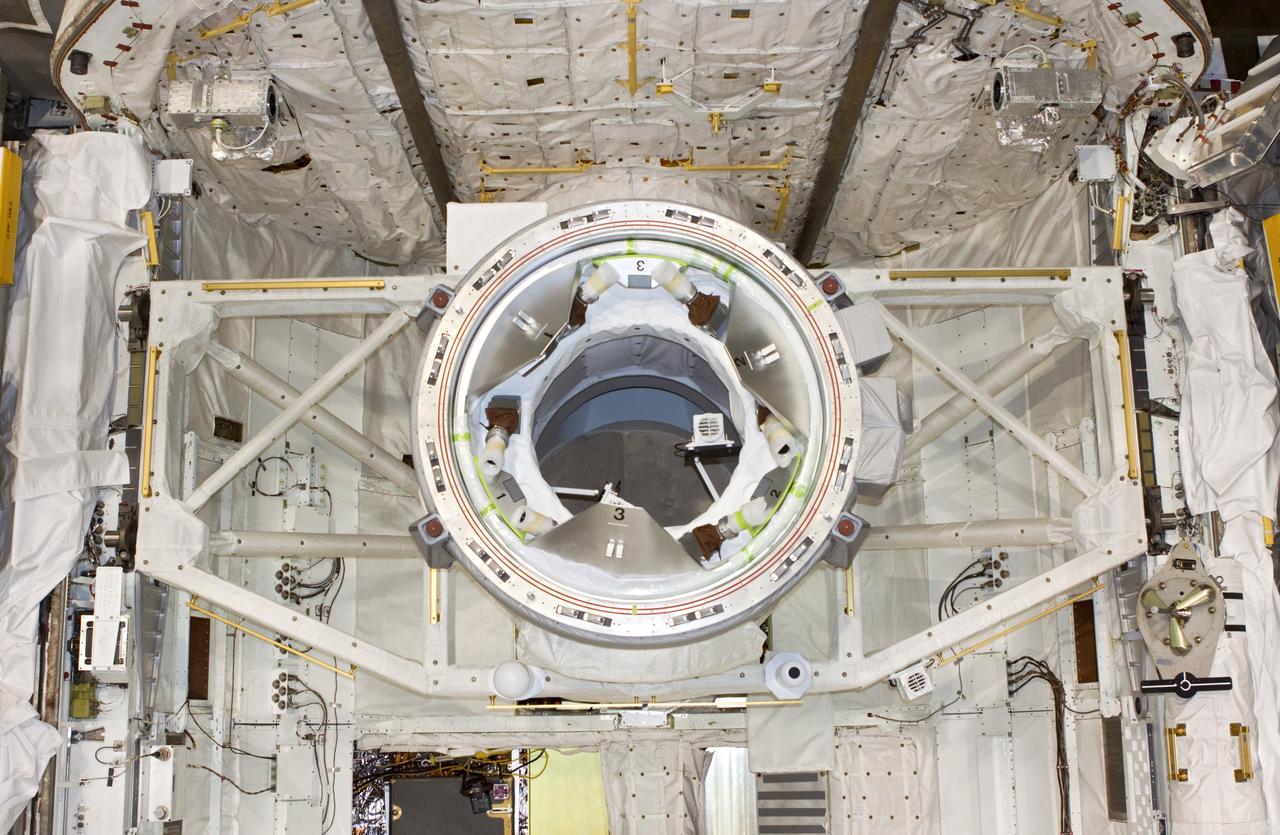
CAPE CANAVERAL, Fla. – In Bay 2 of the Orbiter Processing Facility at NASA's Kennedy Space Center in Florida, a mock air lock, seen in this overhead view, has been installed in the payload bay of the space shuttle Atlantis. The orbiter is undergoing final preparations for its transfer to the Kennedy Space Center Visitor Complex targeted for November. The work is part of Transition and Retirement of the remaining space shuttles, Atlantis and Endeavour. Atlantis is being prepared for public display at Kennedy's Visitor Complex. Over the course of its 26-year career, Atlantis spent 293 days in space during 33 missions. For more information, visit http://www.nasa.gov/transition Photo credit: NASA/Jim Grossmann
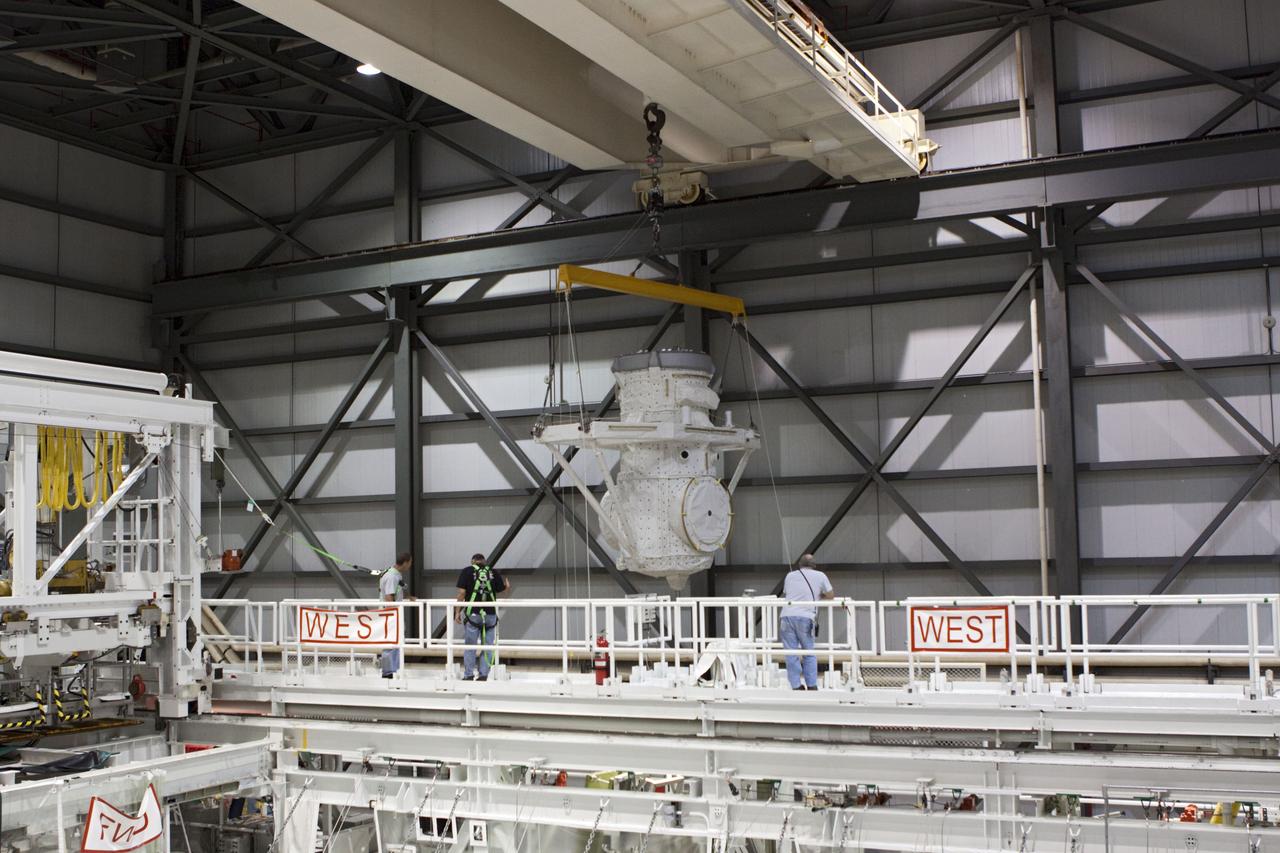
CAPE CANAVERAL, Fla. – At NASA's Kennedy Space Center in Florida, a crane is used to lift a mock air lock being prepared for installation in the payload bay of the space shuttle Atlantis in Bay 2 of the Orbiter Processing Facility. Atlantis is undergoing final preparations for its transfer to the Kennedy Space Center Visitor Complex targeted for November. The work is part of Transition and Retirement of the remaining space shuttles, Atlantis and Endeavour. Atlantis is being prepared for public display at Kennedy's Visitor Complex. Over the course of its 26-year career, Atlantis spent 293 days in space during 33 missions. For more information, visit http://www.nasa.gov/transition Photo credit: NASA/Jim Grossmann
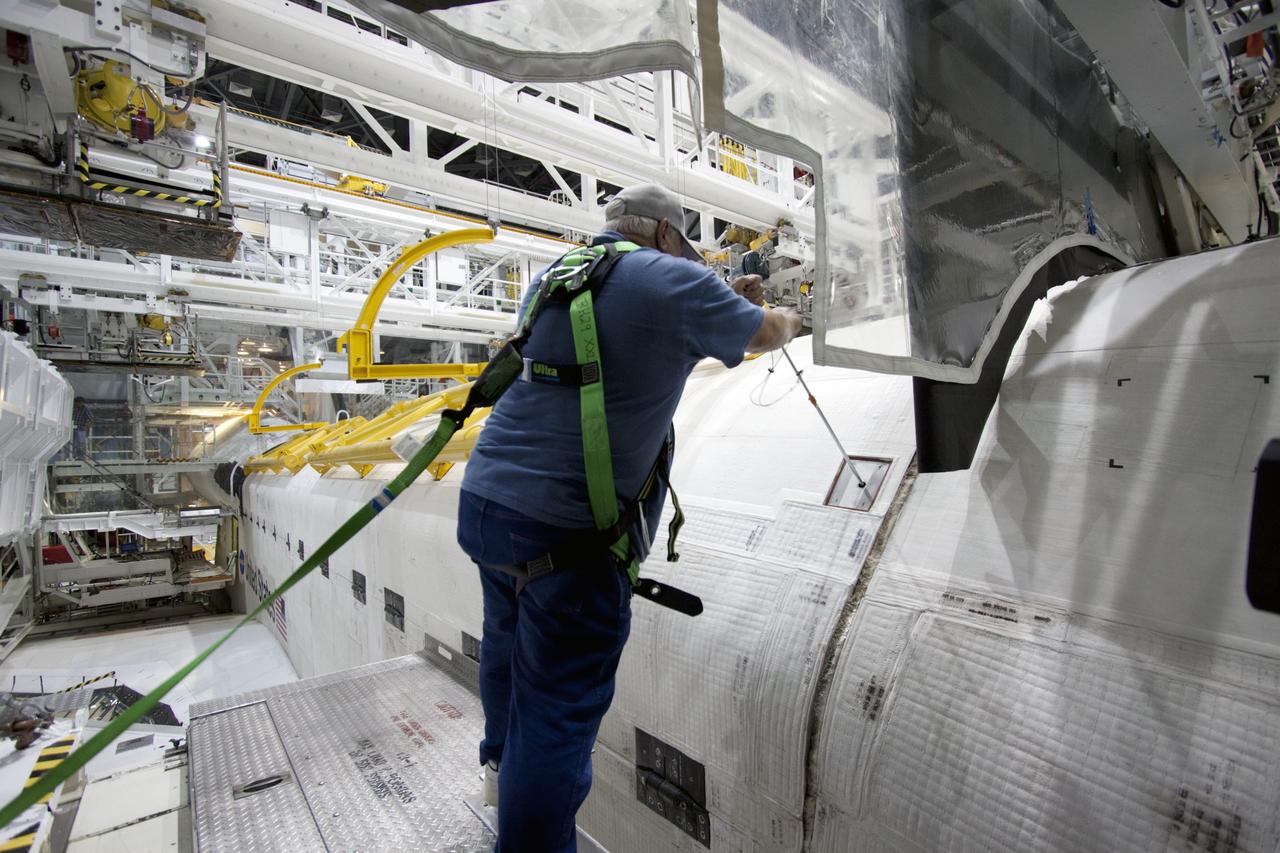
CAPE CANAVERAL, Fla. – Inside Orbiter Processing Facility-2 at NASA’s Kennedy Space Center in Florida, United Space Alliance technician Jim Reed uses a speed wrench in a gear box to lock the left payload bay door in place after it was closed. Both payload bay doors will be closed for the final time. The orbiter is undergoing final preparations for its transfer to the Kennedy Space Center Visitor complex targeted for November. The work is part of Transition and Retirement of the remaining shuttle. Atlantis is being prepared for public display at the visitor complex. Over the course of its 26-year career, Atlantis spent 293 days in space during 33 missions. For more information, visit http://www.nasa.gov/transition. Photo credit: NASA/Jim Grossmann
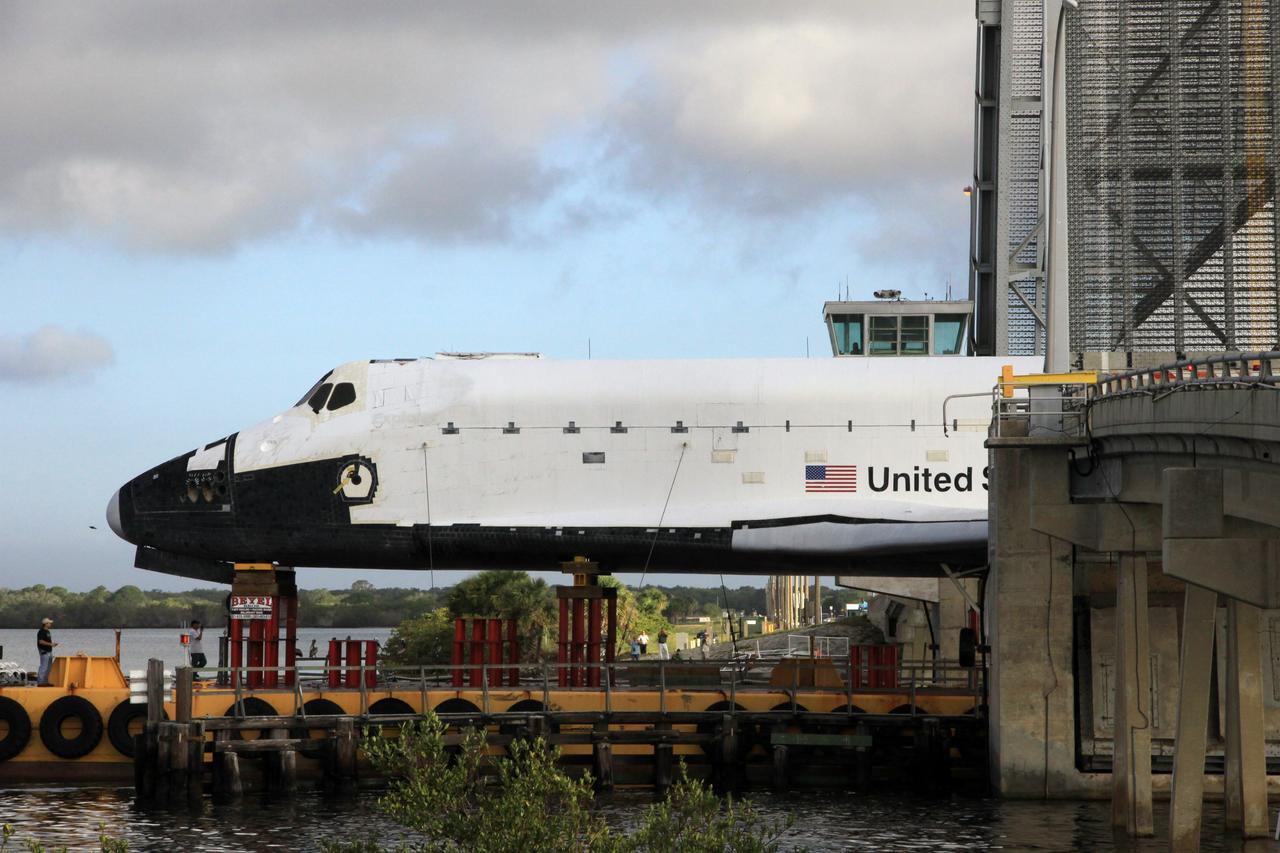
CAPE CANAVERAL, Fla. – The barge transporting the high-fidelity space shuttle model travels through the shallow waters of the locks at Port Canaveral, Fla., during the first leg of their journey from NASA’s Kennedy Space Center in Florida to Johnson Space Center's visitor center in Houston. The model was built in Apopka, Fla., by Guard-Lee and installed at Kennedy Space Center Visitor Complex in 1993.The model has been parked at the turn basin the past five months to allow the Kennedy Space Center Visitor Complex to begin building a new facility to display space shuttle Atlantis in 2013. For more information about Johnson’s visitor center, called Space Center Houston, visit http://www.spacecenter.org. Photo credit: NASA/Jim Grossmann
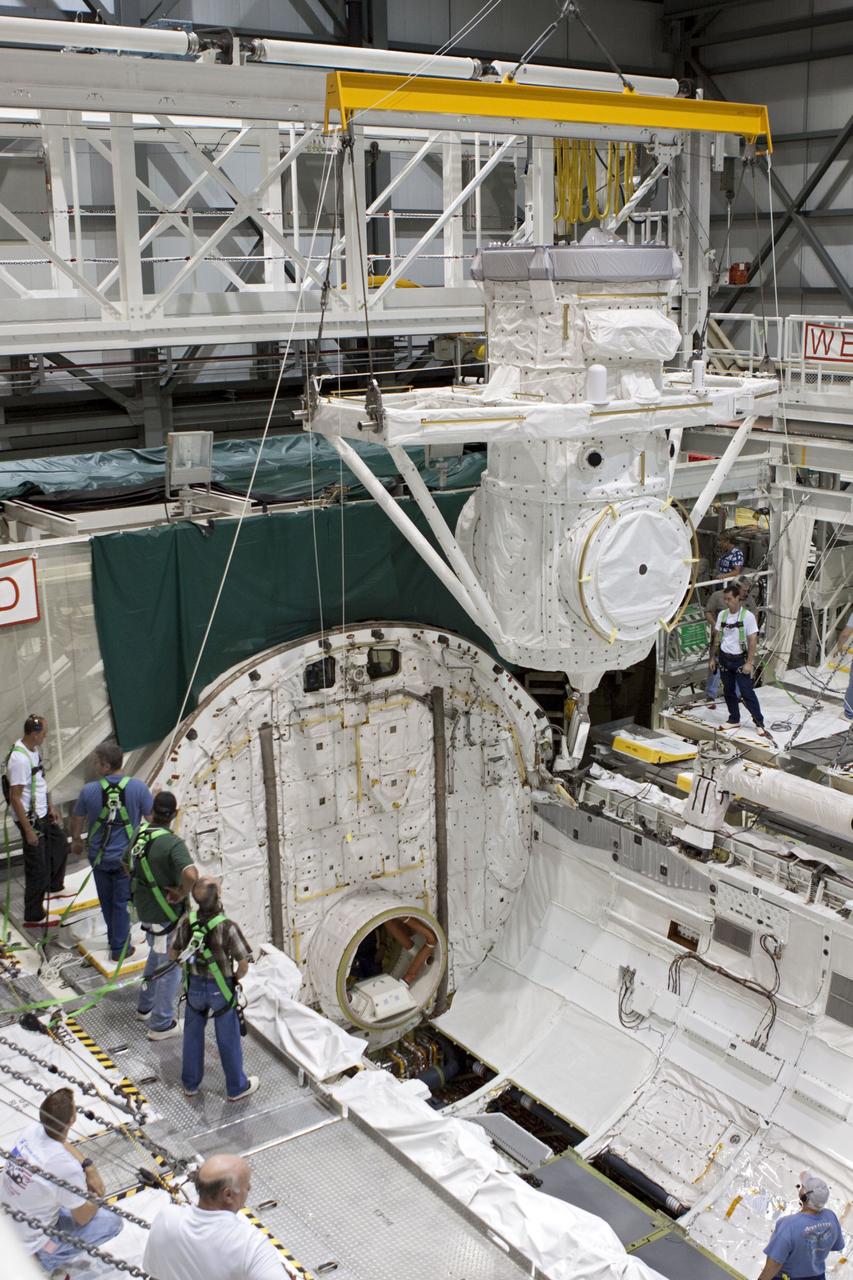
CAPE CANAVERAL, Fla. – At NASA's Kennedy Space Center in Florida, United Space Alliance technicians monitor operations as a crane is used to lift a mock air lock being prepared for installation in the payload bay of the space shuttle Atlantis in Bay 2 of the Orbiter Processing Facility. Atlantis is undergoing final preparations for its transfer to the Kennedy Space Center Visitor Complex targeted for November. The work is part of Transition and Retirement of the remaining space shuttles, Atlantis and Endeavour. Atlantis is being prepared for public display at Kennedy's Visitor Complex. Over the course of its 26-year career, Atlantis spent 293 days in space during 33 missions. For more information, visit http://www.nasa.gov/transition Photo credit: NASA/Jim Grossmann
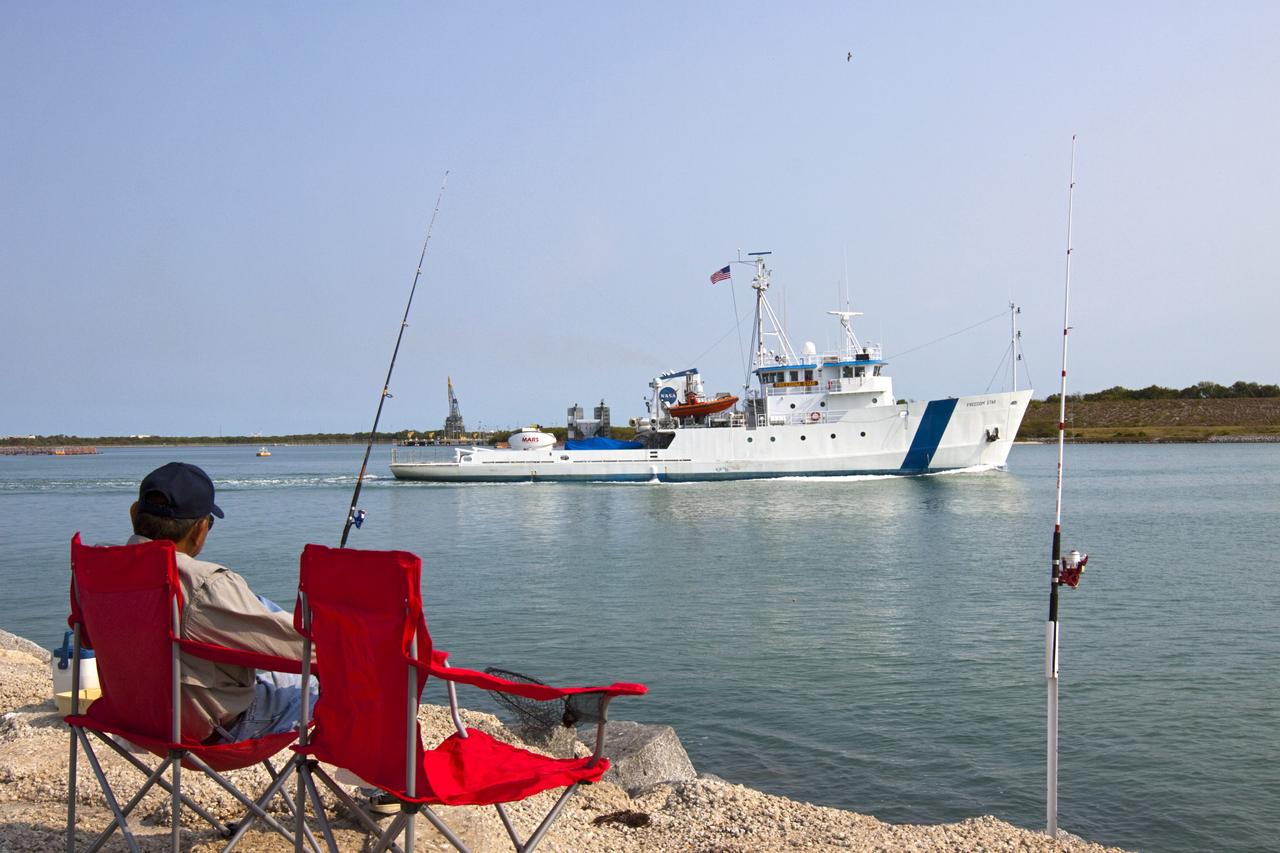
CAPE CANAVERAL, Fla. -- NASA’s Freedom Star boat sets out for a day of testing after departing through Port Canaveral in Florida for the Atlantic Ocean with NASA’s Mobile Aerospace Reconnaissance System, or MARS, secured aboard. MARS, run by NASA’s Langley Research Center in Hampton, Va., with its spatial, hyperspectral, thermal, and directed energy capabilities will be used for thermal imaging testing for the upcoming SpaceX Falcon 9 and Dragon capsule test flight to the International Space Station. During today’s test, the MARS X-band radar and kineto tracking mount KTM were tested to ensure that they were synchronized to receive a rocket launch feed. The radar was used to identify an object to see if the KTM could lock on to and track it. The MARS team performed maintenance on the system, confirmed communications links, and tested the design of the mounting system and environmental enclosure. Photo credit: NASA/Jim Grossmann
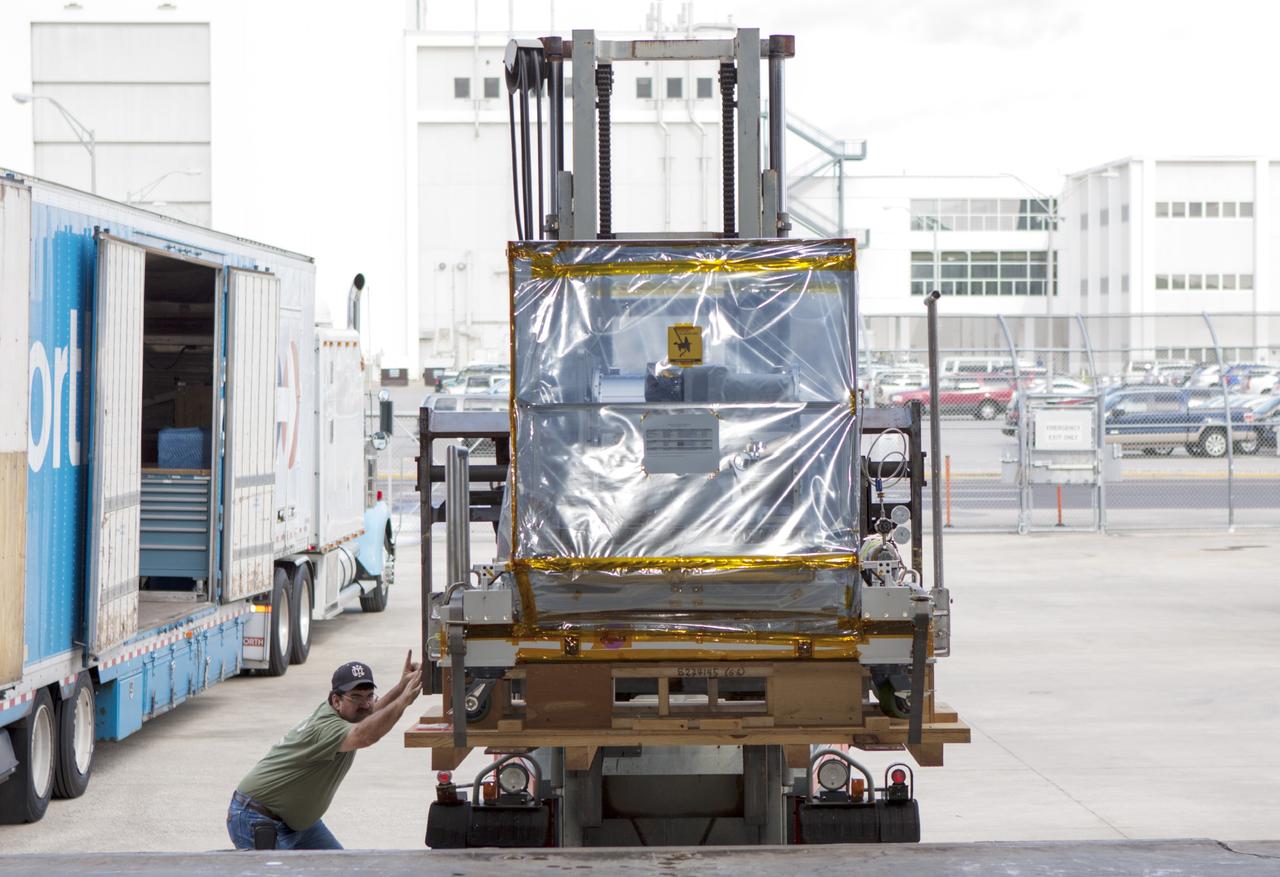
CAPE CANAVERAL, Fla. -- At NASA’s Kennedy Space Center in Florida, a technician monitors the progress as a forklift is used to move the Optical Payload for Lasercomm Science, or OPALS, experiment to the air lock entrance at the Space Station Processing Facility. The optical technology demonstration experiment arrived from the agency’s Jet Propulsion Laboratory in Pasadena, Calif. NASA will use the International Space Station to test OPALS’ communications technology that could dramatically improve spacecraft communications, enhance commercial missions and strengthen transmission of scientific data. The experiment is slated to fly later this year aboard a SpaceX Dragon commercial resupply mission to the space station. The mission is expected to run 90 days after installation on the outside of the station. For more information about OPALS, visit: http://go.nasa.gov/10MMPDO. Photo credit: NASA/Jim Grossmann
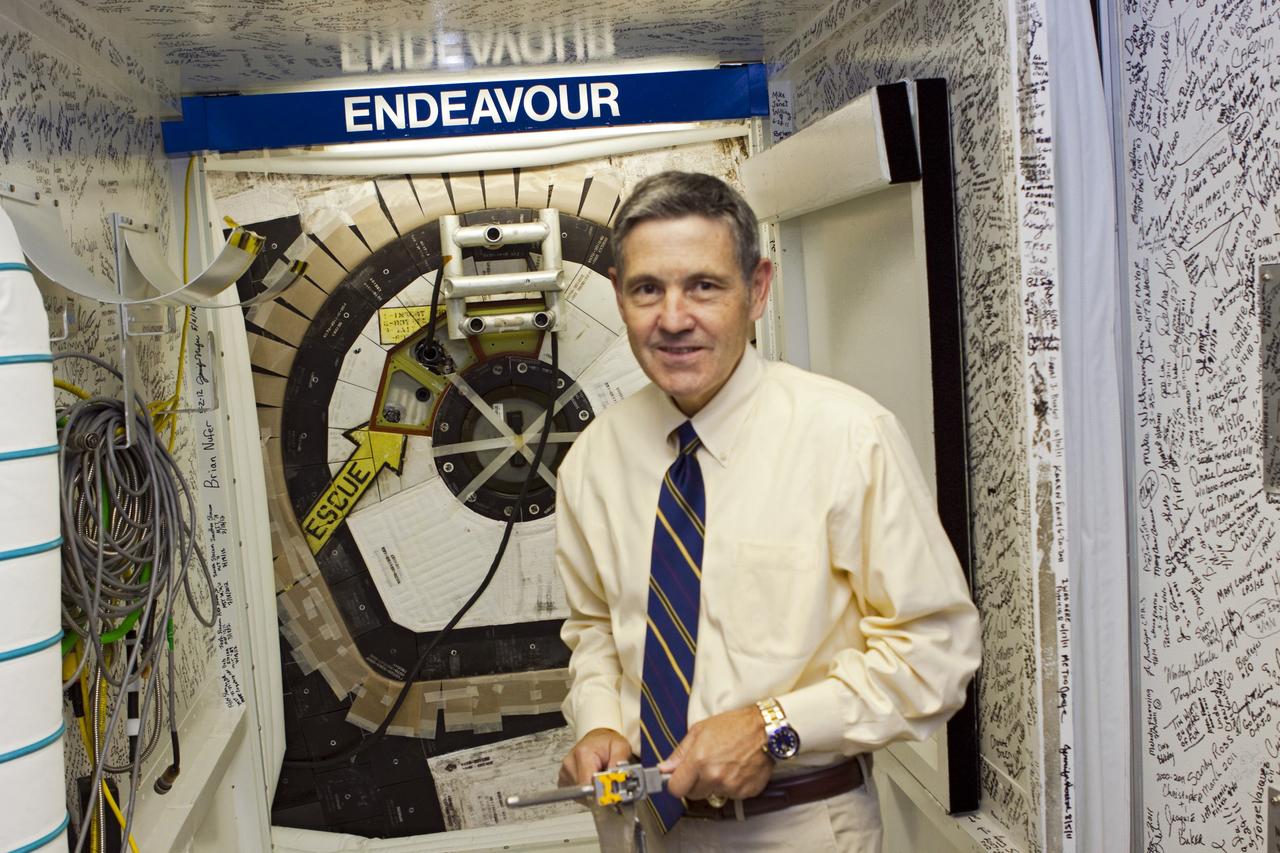
CAPE CANAVERAL, Fla. – In Orbiter Processing Facility Bay 2 at NASA’s Kennedy Space Center in Florida, Kennedy Space Center Director Bob Cabana holds the "T"-shaped tool he used to lock the space shuttle Endeavour's hatch. The orbiter is undergoing final preparations for its cross-country ferry flight to California. The work is part of Transition and Retirement of the remaining space shuttles, Endeavour and Atlantis. Endeavour is being prepared for public display at the California Science Center in Los Angeles. Its ferry flight to California is targeted for mid-September. Endeavour was the last space shuttle added to NASA’s orbiter fleet. Over the course of its 19-year career, Endeavour spent 299 days in space during 25 missions. For more information, visit http://www.nasa.gov/transition Photo credit: NASA/ Jim Grossmann
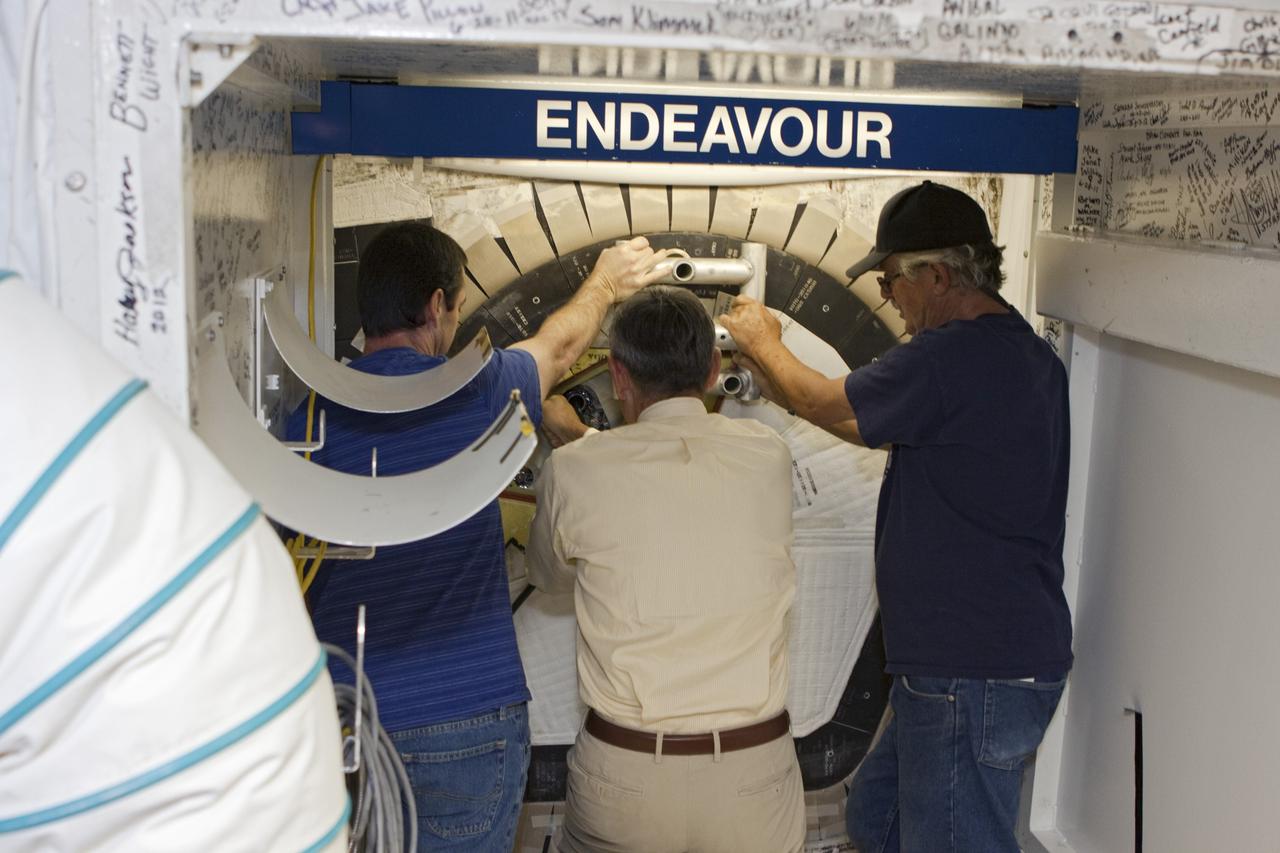
CAPE CANAVERAL, Fla. – In Orbiter Processing Facility Bay 2 at NASA’s Kennedy Space Center in Florida, Kennedy Space Center Director Bob Cabana, center, uses a "T"-shaped tool to lock the space shuttle Endeavour's hatch as United Space Alliance technicians Gary Hamilton, left, and Joe Walsh assist. The orbiter is undergoing final preparations for its cross-country ferry flight to California. The work is part of Transition and Retirement of the remaining space shuttles, Endeavour and Atlantis. Endeavour is being prepared for public display at the California Science Center in Los Angeles. Its ferry flight to California is targeted for mid-September. Endeavour was the last space shuttle added to NASA’s orbiter fleet. Over the course of its 19-year career, Endeavour spent 299 days in space during 25 missions. For more information, visit http://www.nasa.gov/transition Photo credit: NASA/ Jim Grossmann
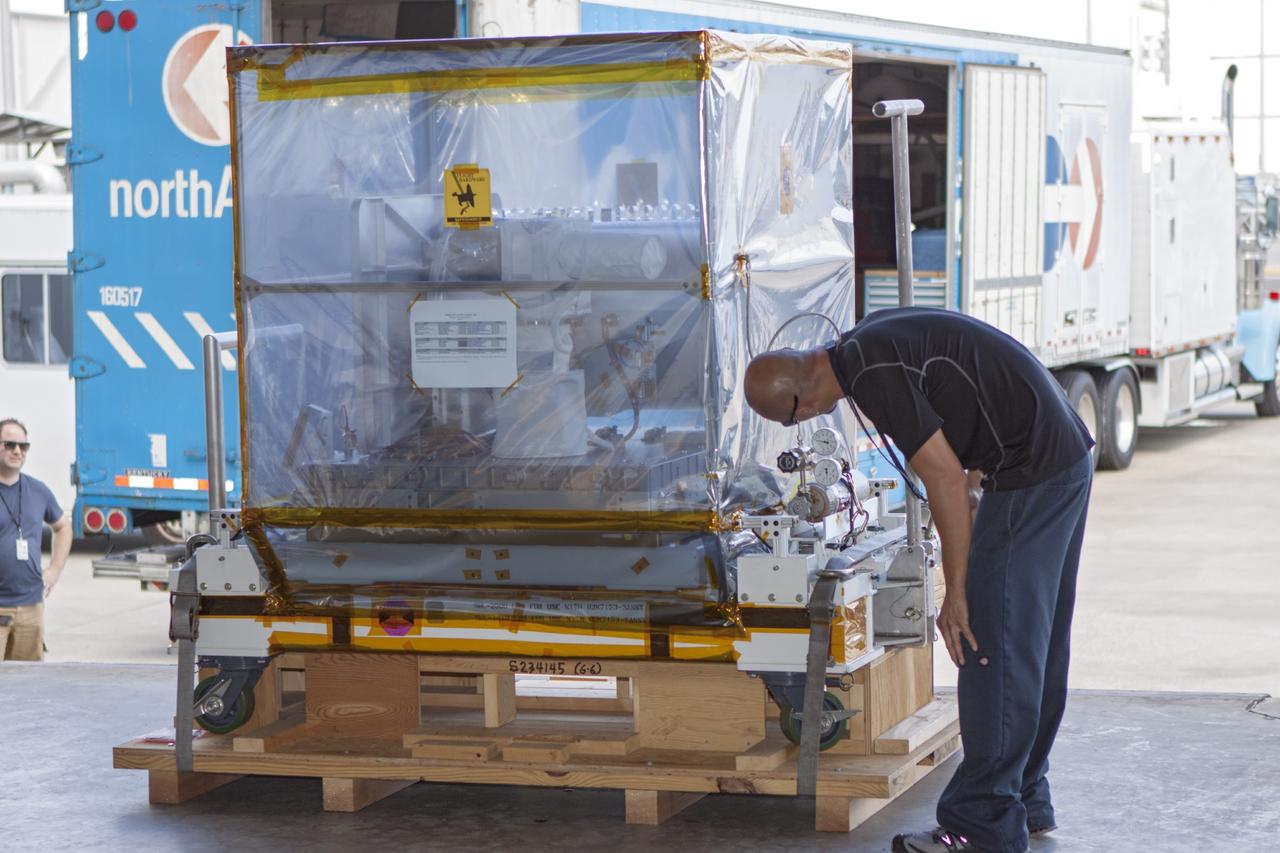
CAPE CANAVERAL, Fla. -- At NASA’s Kennedy Space Center in Florida, a technician monitors the progress as a forklift is used to move the Optical Payload for Lasercomm Science, or OPALS, experiment to the air lock entrance at the Space Station Processing Facility. The optical technology demonstration experiment arrived from the agency’s Jet Propulsion Laboratory in Pasadena, Calif. NASA will use the International Space Station to test OPALS’ communications technology that could dramatically improve spacecraft communications, enhance commercial missions and strengthen transmission of scientific data. The experiment is slated to fly later this year aboard a SpaceX Dragon commercial resupply mission to the space station. The mission is expected to run 90 days after installation on the outside of the station. For more information about OPALS, visit: http://go.nasa.gov/10MMPDO. Photo credit: NASA/Jim Grossmann
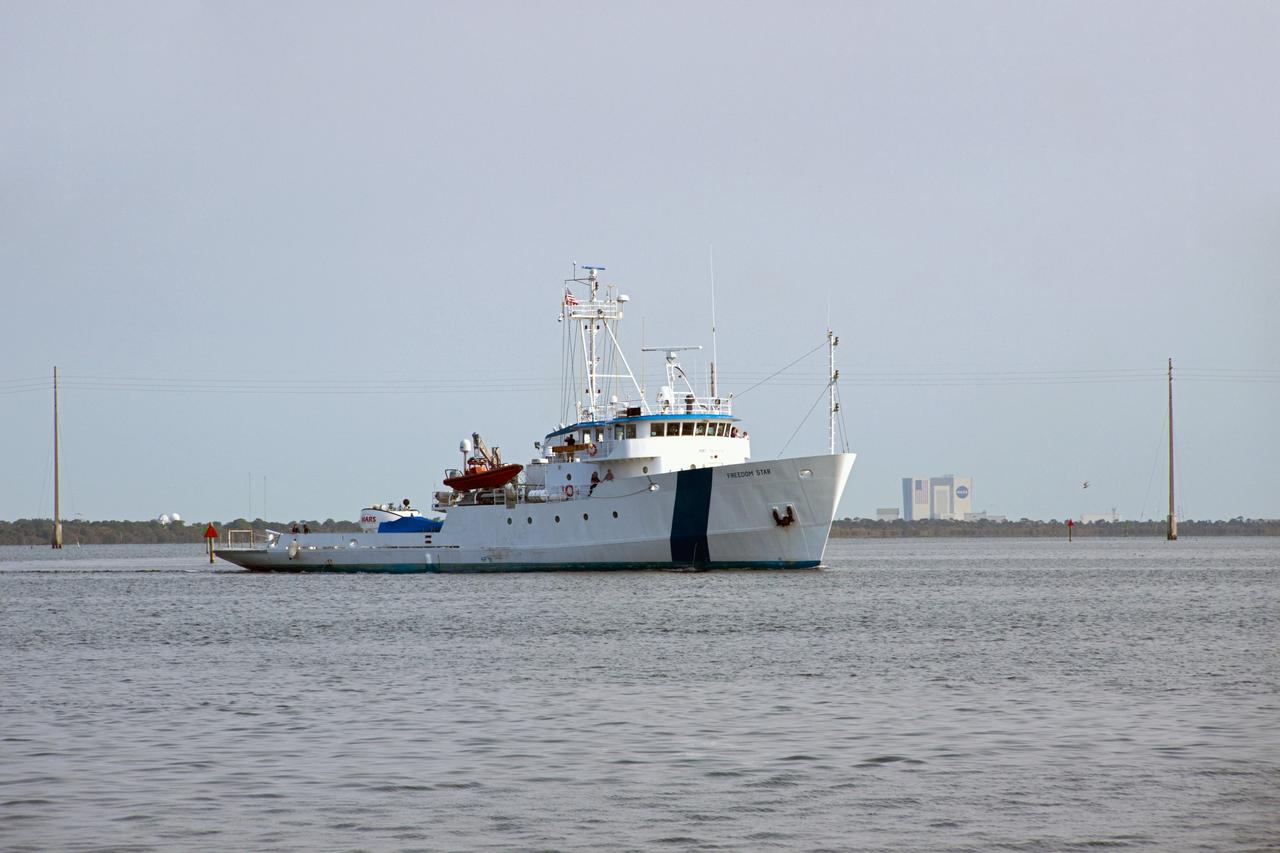
CAPE CANAVERAL, Fla. -- NASA’s Freedom Star boat sets out for a day of testing after departing from port near Cape Canaveral Air Force Station in Florida for the Atlantic Ocean with NASA’s Mobile Aerospace Reconnaissance System, or MARS, secured aboard. MARS, run by NASA’s Langley Research Center in Hampton, Va., with its spatial, hyperspectral, thermal, and directed energy capabilities will be used for thermal imaging testing for the upcoming SpaceX Falcon 9 and Dragon capsule test flight to the International Space Station. During today’s test, the MARS X-band radar and kineto tracking mount KTM were tested to ensure that they were synchronized to receive a rocket launch feed. The radar was used to identify an object to see if the KTM could lock on to and track it. The MARS team performed maintenance on the system, confirmed communications links, and tested the design of the mounting system and environmental enclosure. Photo credit: NASA/Jim Grossmann
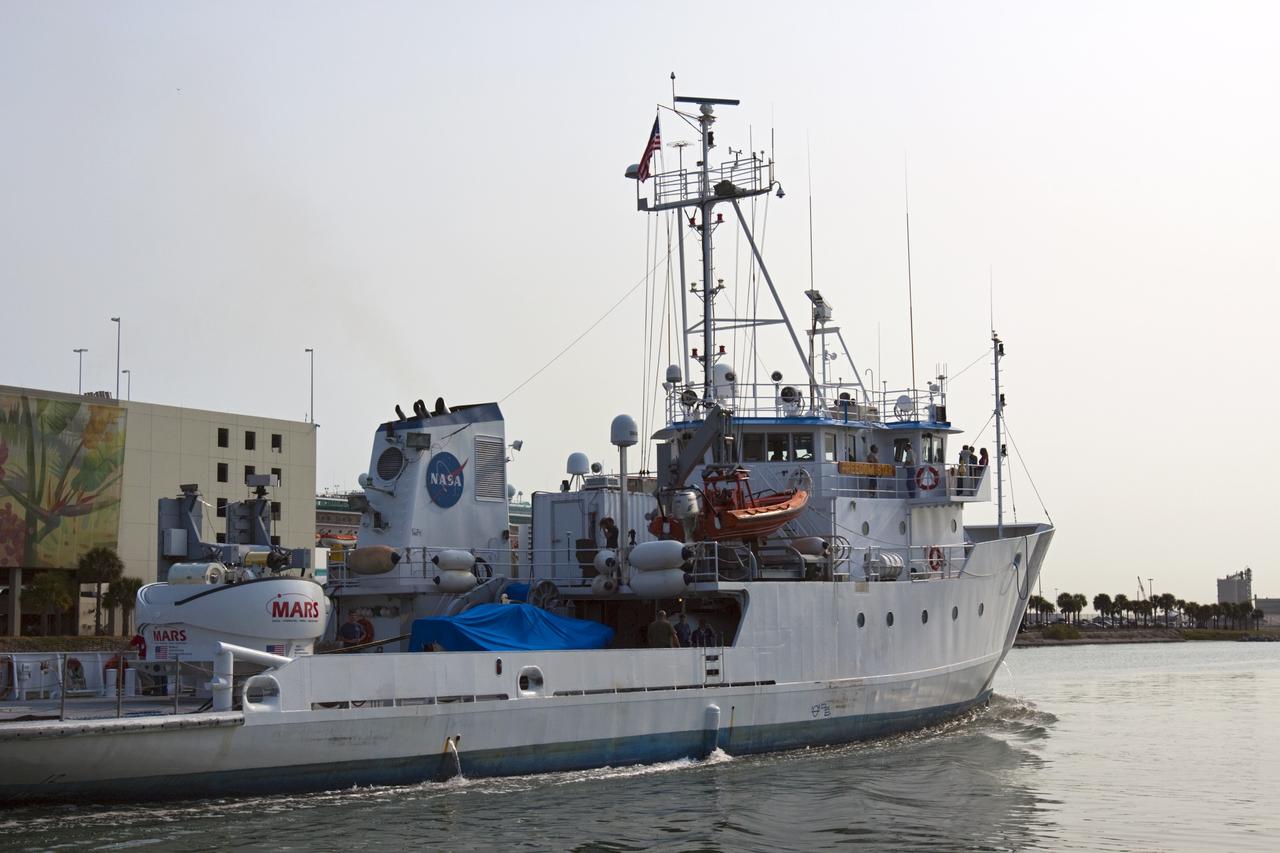
CAPE CANAVERAL, Fla. -- NASA’s Freedom Star boat sets out for a day of testing after departing through Port Canaveral in Florida for the Atlantic Ocean with NASA’s Mobile Aerospace Reconnaissance System, or MARS, secured aboard. MARS, run by NASA’s Langley Research Center in Hampton, Va., with its spatial, hyperspectral, thermal, and directed energy capabilities will be used for thermal imaging testing for the upcoming SpaceX Falcon 9 and Dragon capsule test flight to the International Space Station. During today’s test, the MARS X-band radar and kineto tracking mount KTM were tested to ensure that they were synchronized to receive a rocket launch feed. The radar was used to identify an object to see if the KTM could lock on to and track it. The MARS team performed maintenance on the system, confirmed communications links, and tested the design of the mounting system and environmental enclosure. Photo credit: NASA/Jim Grossmann
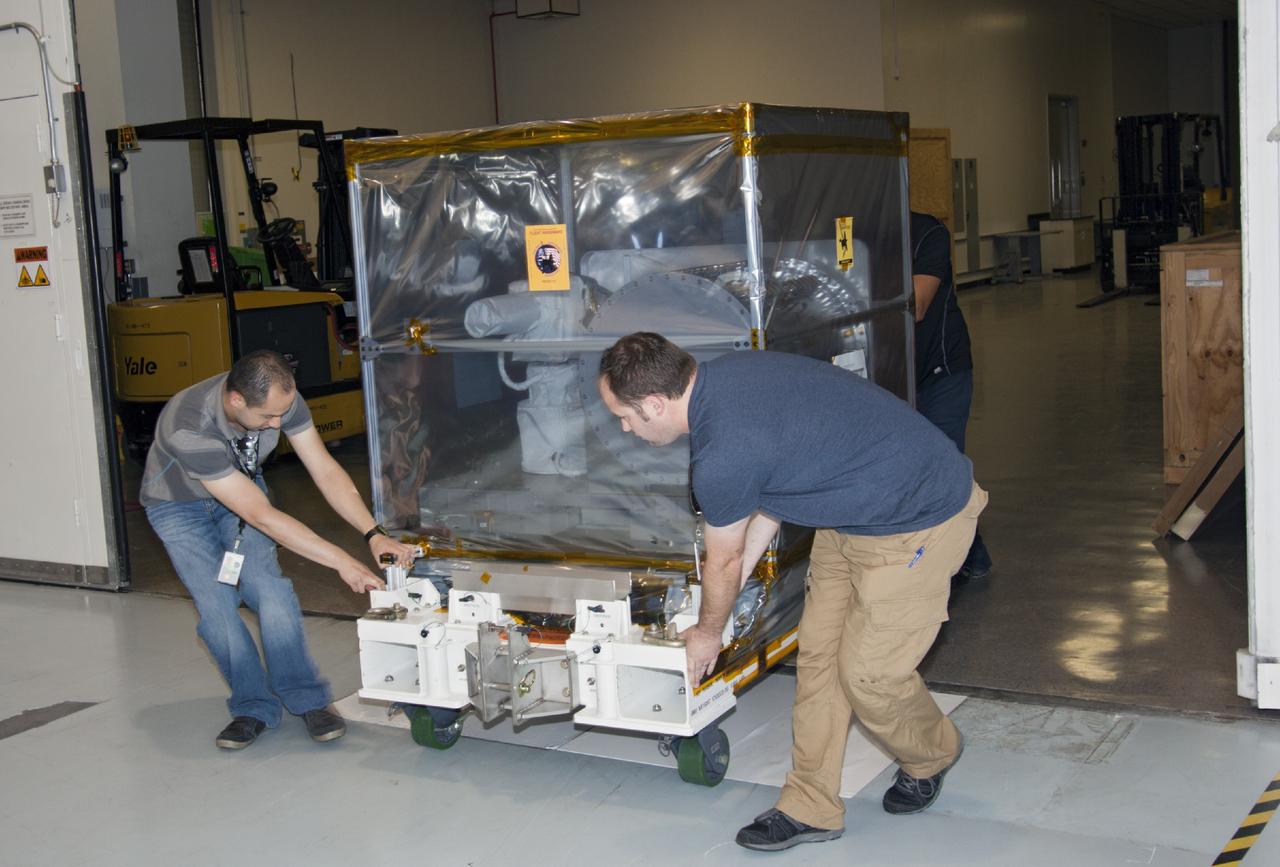
CAPE CANAVERAL, Fla. -- At NASA’s Kennedy Space Center in Florida, technicians move the Optical Payload for Lasercomm Science, or OPALS, experiment from the air lock into an offline laboratory at the Space Station Processing Facility. The optical technology demonstration experiment arrived from the agency’s Jet Propulsion Laboratory in Pasadena, Calif. NASA will use the International Space Station to test OPALS’ communications technology that could dramatically improve spacecraft communications, enhance commercial missions and strengthen transmission of scientific data. The experiment is slated to fly later this year aboard a SpaceX Dragon commercial resupply mission to the space station. The mission is expected to run 90 days after installation on the outside of the station. For more information about OPALS, visit: http://go.nasa.gov/10MMPDO. Photo credit: NASA/Jim Grossmann
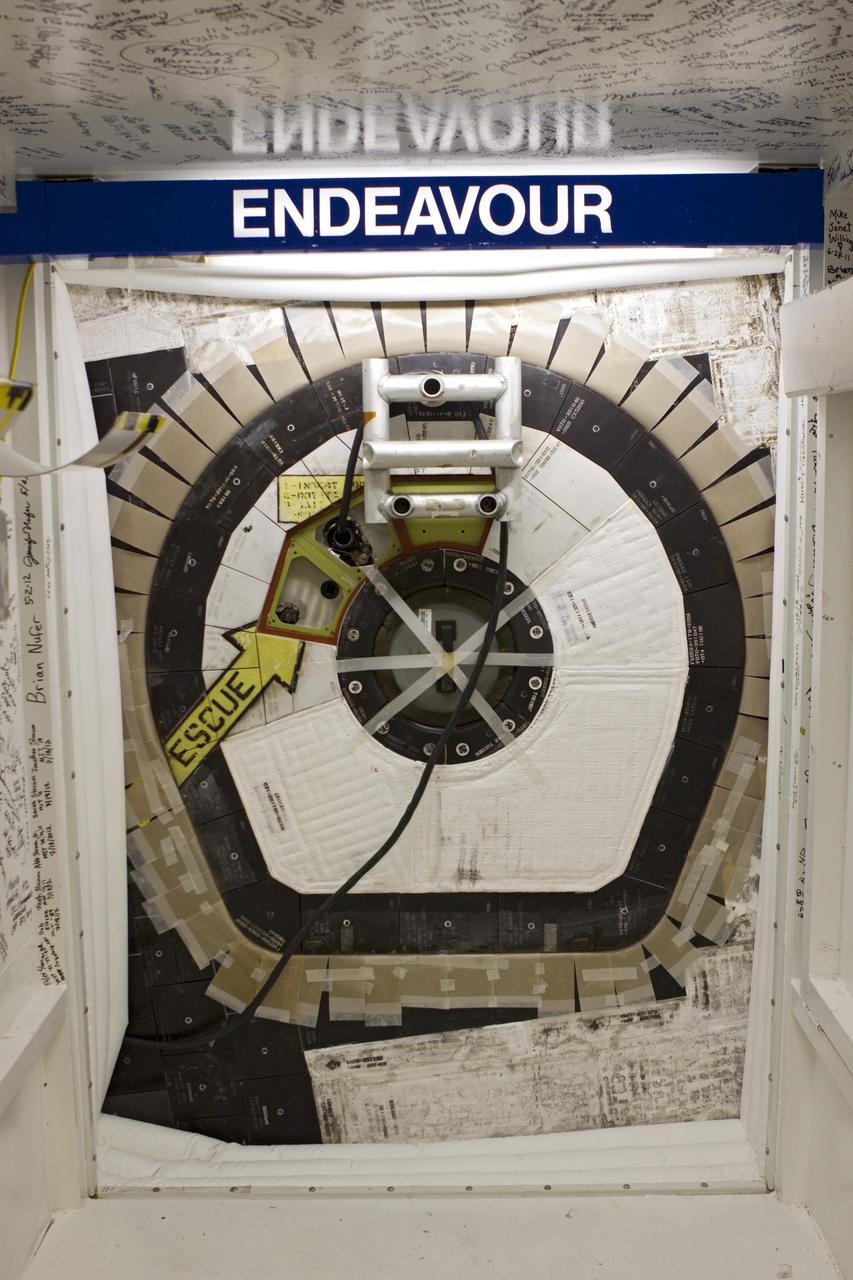
CAPE CANAVERAL, Fla. – In Orbiter Processing Facility Bay 2 at NASA’s Kennedy Space Center in Florida, the space shuttle Endeavour's hatch has been locked and sealed in final preparation for its cross-country ferry flight to California. The work is part of Transition and Retirement of the remaining space shuttles, Endeavour and Atlantis. Endeavour is being prepared for public display at the California Science Center in Los Angeles. Its ferry flight to California is targeted for mid-September. Endeavour was the last space shuttle added to NASA’s orbiter fleet. Over the course of its 19-year career, Endeavour spent 299 days in space during 25 missions. For more information, visit http://www.nasa.gov/transition Photo credit: NASA/ Jim Grossmann
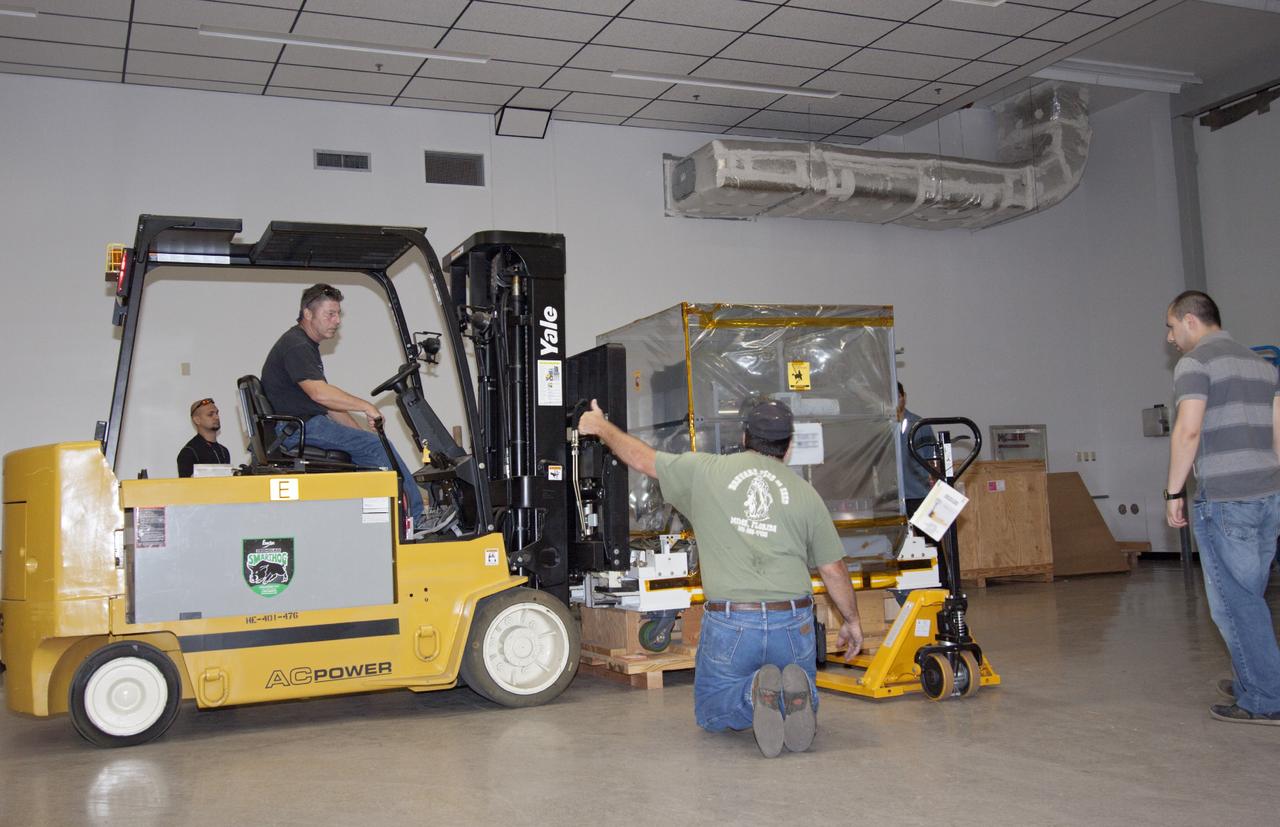
CAPE CANAVERAL, Fla. -- At NASA’s Kennedy Space Center in Florida, a technicians monitor the progress as a forklift is used to lower the Optical Payload for Lasercomm Science, or OPALS, experiment near the air lock entrance at the Space Station Processing Facility. The optical technology demonstration experiment arrived from the agency’s Jet Propulsion Laboratory in Pasadena, Calif. NASA will use the International Space Station to test OPALS’ communications technology that could dramatically improve spacecraft communications, enhance commercial missions and strengthen transmission of scientific data. The experiment is slated to fly later this year aboard a SpaceX Dragon commercial resupply mission to the space station. The mission is expected to run 90 days after installation on the outside of the station. For more information about OPALS, visit: http://go.nasa.gov/10MMPDO. Photo credit: NASA/Jim Grossmann
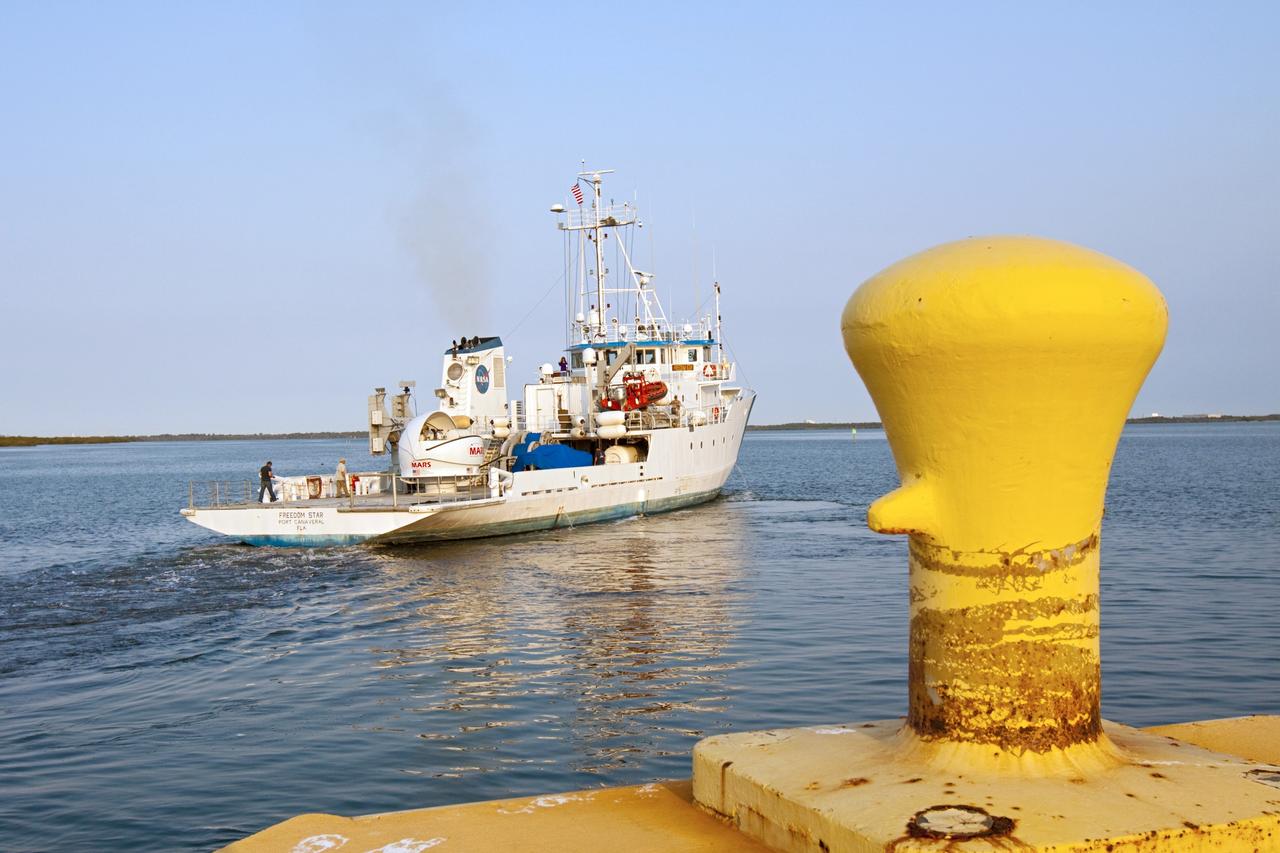
CAPE CANAVERAL, Fla. -- NASA’s Freedom Star boat sets out for a day of testing after departing from port near Cape Canaveral Air Force Station in Florida for the Atlantic Ocean with NASA’s Mobile Aerospace Reconnaissance System, or MARS, secured aboard. MARS, run by NASA’s Langley Research Center in Hampton, Va., with its spatial, hyperspectral, thermal, and directed energy capabilities will be used for thermal imaging testing for the upcoming SpaceX Falcon 9 and Dragon capsule test flight to the International Space Station. During today’s test, the MARS X-band radar and kineto tracking mount KTM were tested to ensure that they were synchronized to receive a rocket launch feed. The radar was used to identify an object to see if the KTM could lock on to and track it. The MARS team performed maintenance on the system, confirmed communications links, and tested the design of the mounting system and environmental enclosure. Photo credit: NASA/Jim Grossmann
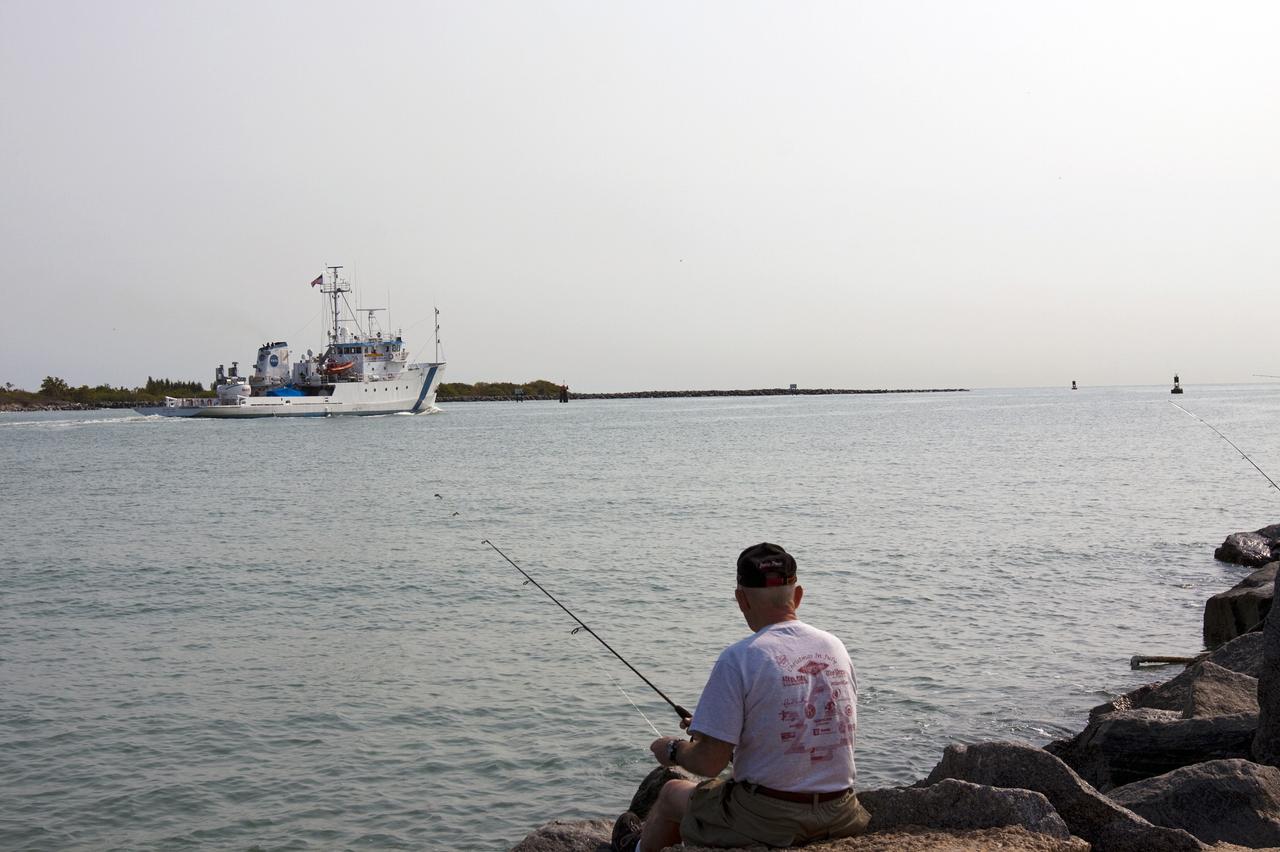
CAPE CANAVERAL, Fla. -- NASA’s Freedom Star boat sets out for a day of testing after departing through Port Canaveral in Florida for the Atlantic Ocean with NASA’s Mobile Aerospace Reconnaissance System, or MARS, secured aboard. MARS, run by NASA’s Langley Research Center in Hampton, Va., with its spatial, hyperspectral, thermal, and directed energy capabilities will be used for thermal imaging testing for the upcoming SpaceX Falcon 9 and Dragon capsule test flight to the International Space Station. During today’s test, the MARS X-band radar and kineto tracking mount KTM were tested to ensure that they were synchronized to receive a rocket launch feed. The radar was used to identify an object to see if the KTM could lock on to and track it. The MARS team performed maintenance on the system, confirmed communications links, and tested the design of the mounting system and environmental enclosure. Photo credit: NASA/Jim Grossmann
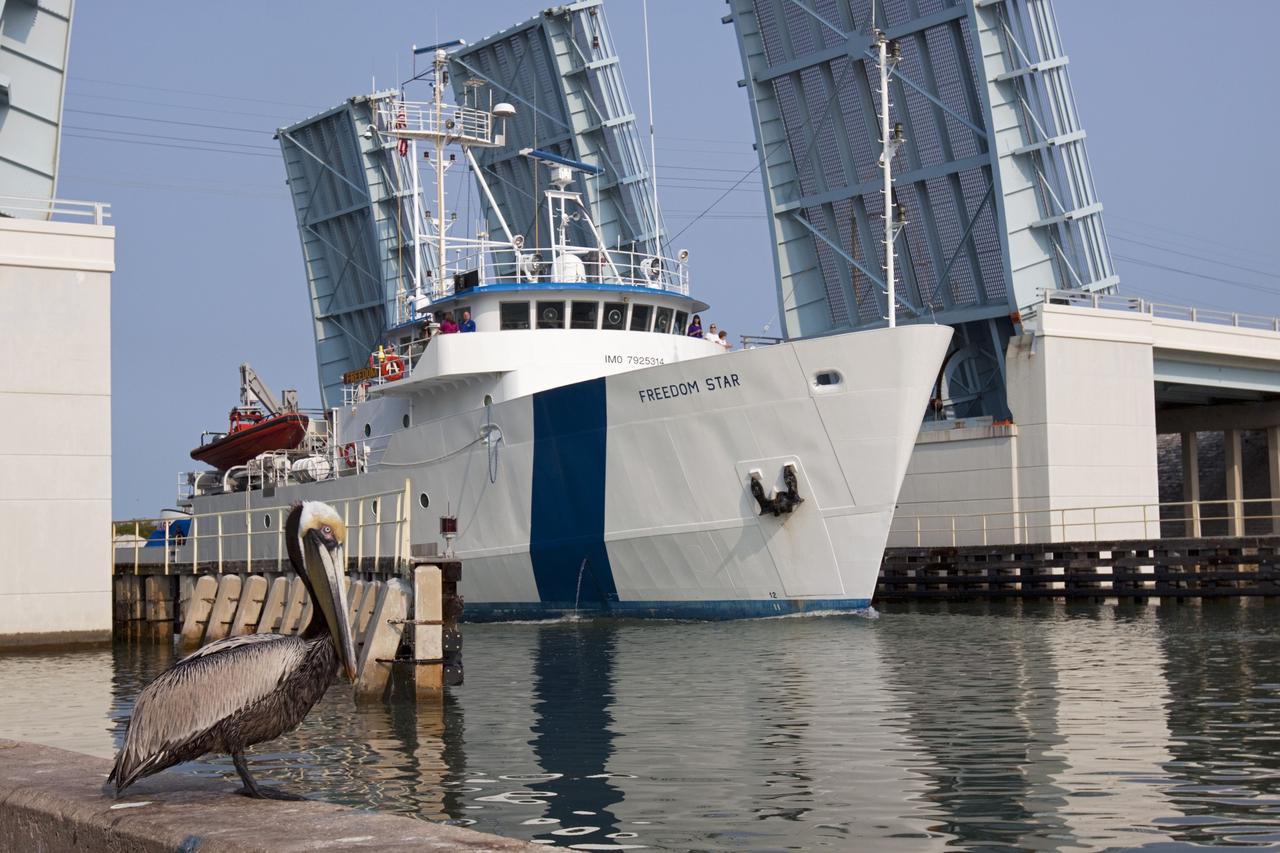
CAPE CANAVERAL, Fla. -- NASA’s Freedom Star boat sets out for a day of testing after departing from port near Cape Canaveral Air Force Station in Florida for the Atlantic Ocean with NASA’s Mobile Aerospace Reconnaissance System, or MARS, secured aboard. MARS, run by NASA’s Langley Research Center in Hampton, Va., with its spatial, hyperspectral, thermal, and directed energy capabilities will be used for thermal imaging testing for the upcoming SpaceX Falcon 9 and Dragon capsule test flight to the International Space Station. During today’s test, the MARS X-band radar and kineto tracking mount KTM were tested to ensure that they were synchronized to receive a rocket launch feed. The radar was used to identify an object to see if the KTM could lock on to and track it. The MARS team performed maintenance on the system, confirmed communications links, and tested the design of the mounting system and environmental enclosure. Photo credit: NASA/Jim Grossmann
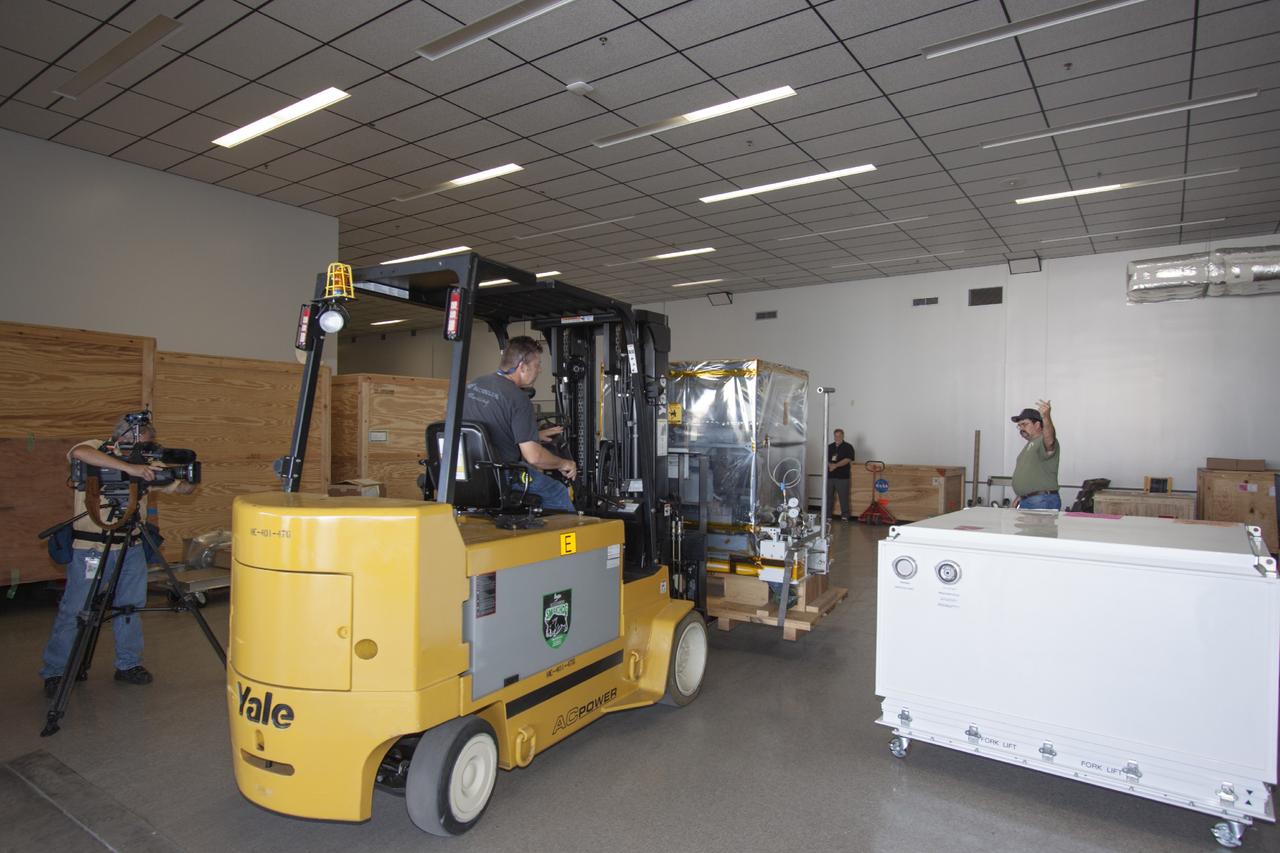
CAPE CANAVERAL, Fla. -- At NASA’s Kennedy Space Center in Florida, a technician uses a forklift to move the Optical Payload for Lasercomm Science, or OPALS, experiment to the air lock entrance at the Space Station Processing Facility. The optical technology demonstration experiment arrived from the agency’s Jet Propulsion Laboratory in Pasadena, Calif. NASA will use the International Space Station to test OPALS’ communications technology that could dramatically improve spacecraft communications, enhance commercial missions and strengthen transmission of scientific data. The experiment is slated to fly later this year aboard a SpaceX Dragon commercial resupply mission to the space station. The mission is expected to run 90 days after installation on the outside of the station. For more information about OPALS, visit: http://go.nasa.gov/10MMPDO. Photo credit: NASA/Jim Grossmann
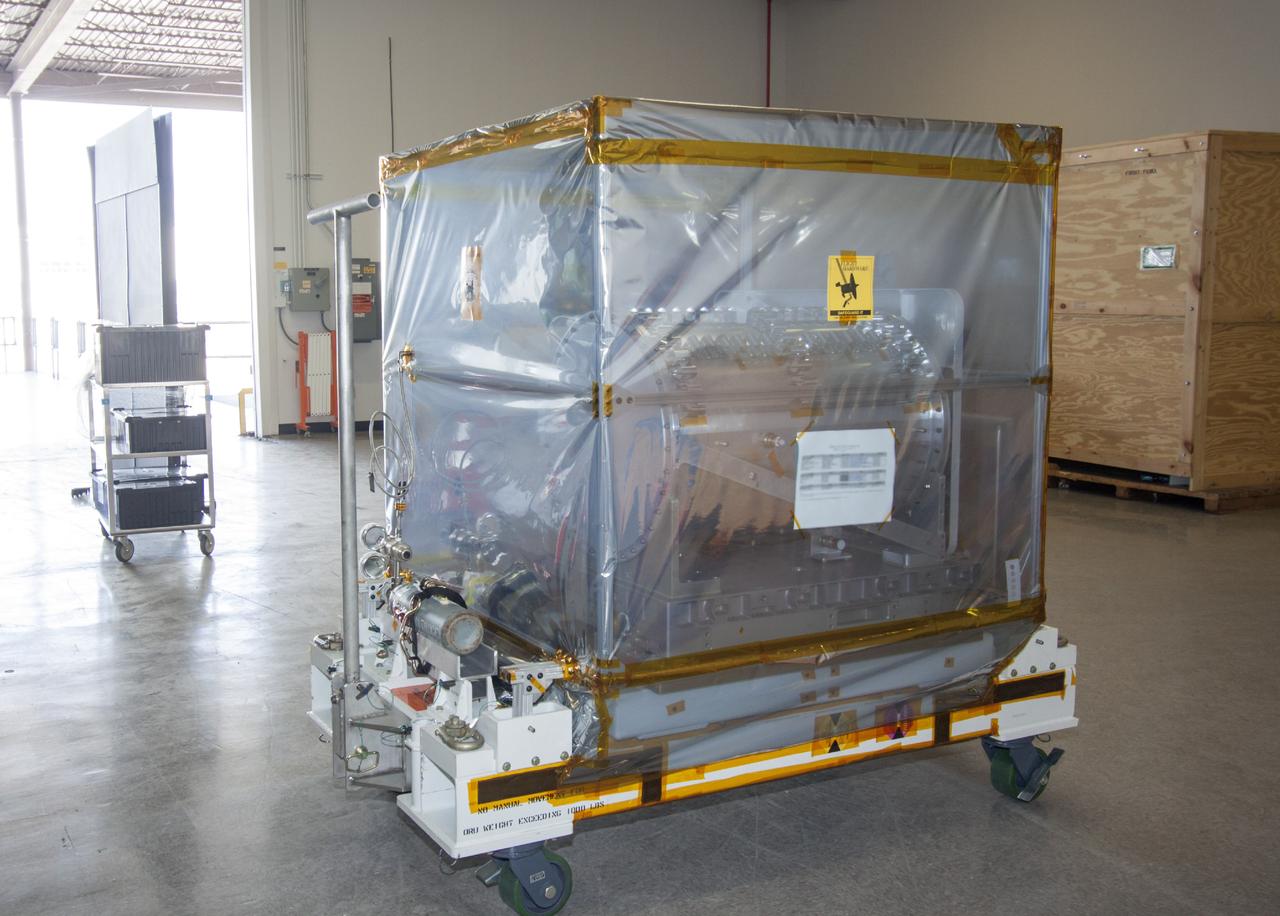
CAPE CANAVERAL, Fla. -- The Optical Payload for Lasercomm Science, or OPALS, an optical technology demonstration experiment, sits on a pallet inside the air lock entrance to the Space Station Processing Facility at NASA’s Kennedy Space Center in Florida. OPALS arrived from the agency’s Jet Propulsion Laboratory in Pasadena, Calif. NASA will use the International Space Station to test OPALS’ communications technology that could dramatically improve spacecraft communications, enhance commercial missions and strengthen transmission of scientific data. The experiment is slated to fly later this year aboard a SpaceX Dragon commercial resupply mission to the space station. The mission is expected to run 90 days after installation on the outside of the station. For more information about OPALS, visit: http://go.nasa.gov/10MMPDO. Photo credit: NASA/Jim Grossmann
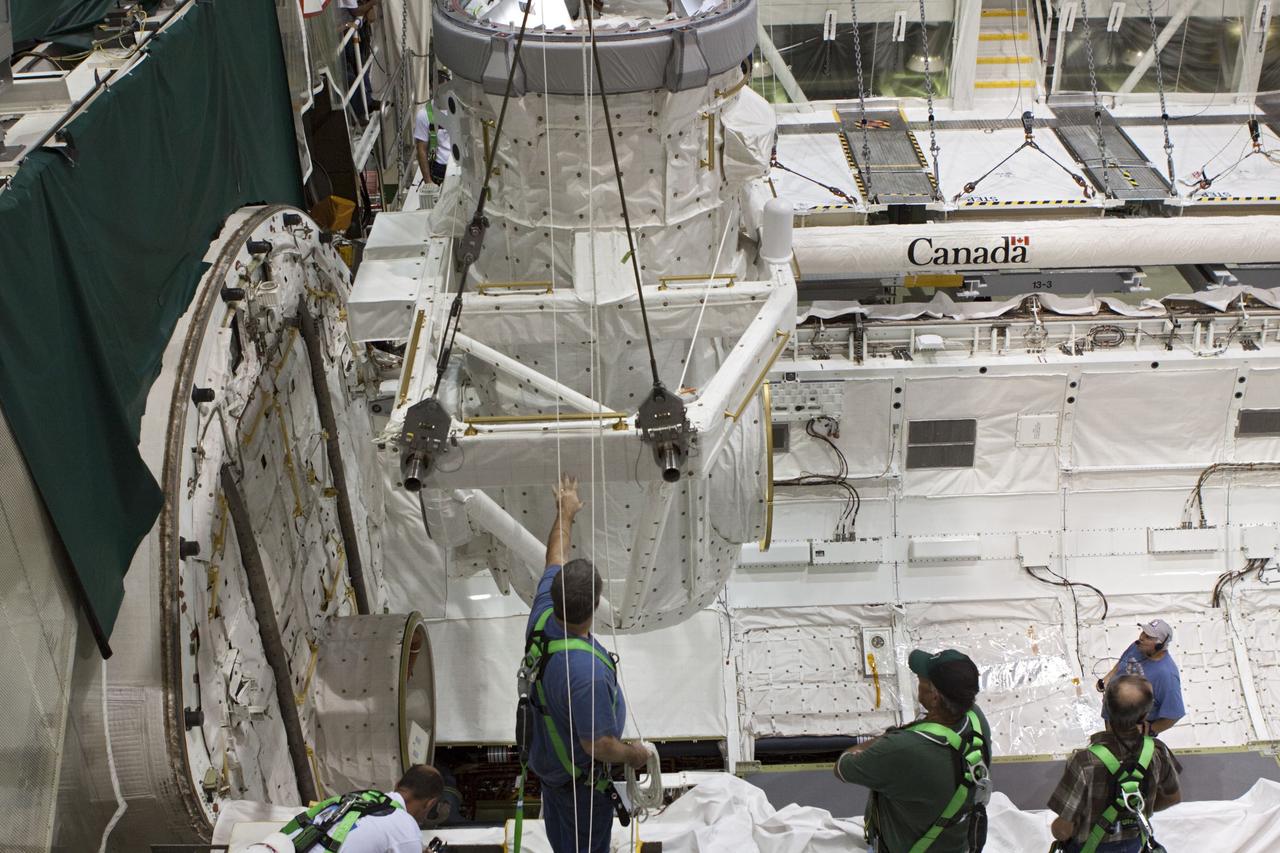
CAPE CANAVERAL, Fla. – At NASA's Kennedy Space Center in Florida, United Space Alliance technicians monitor operations as a crane is used to lift a mock air lock being prepared for installation in the payload bay of the space shuttle Atlantis in Bay 2 of the Orbiter Processing Facility. Atlantis is undergoing final preparations for its transfer to the Kennedy Space Center Visitor Complex targeted for November. The work is part of Transition and Retirement of the remaining space shuttles, Atlantis and Endeavour. Atlantis is being prepared for public display at Kennedy's Visitor Complex. Over the course of its 26-year career, Atlantis spent 293 days in space during 33 missions. For more information, visit http://www.nasa.gov/transition Photo credit: NASA/Jim Grossmann
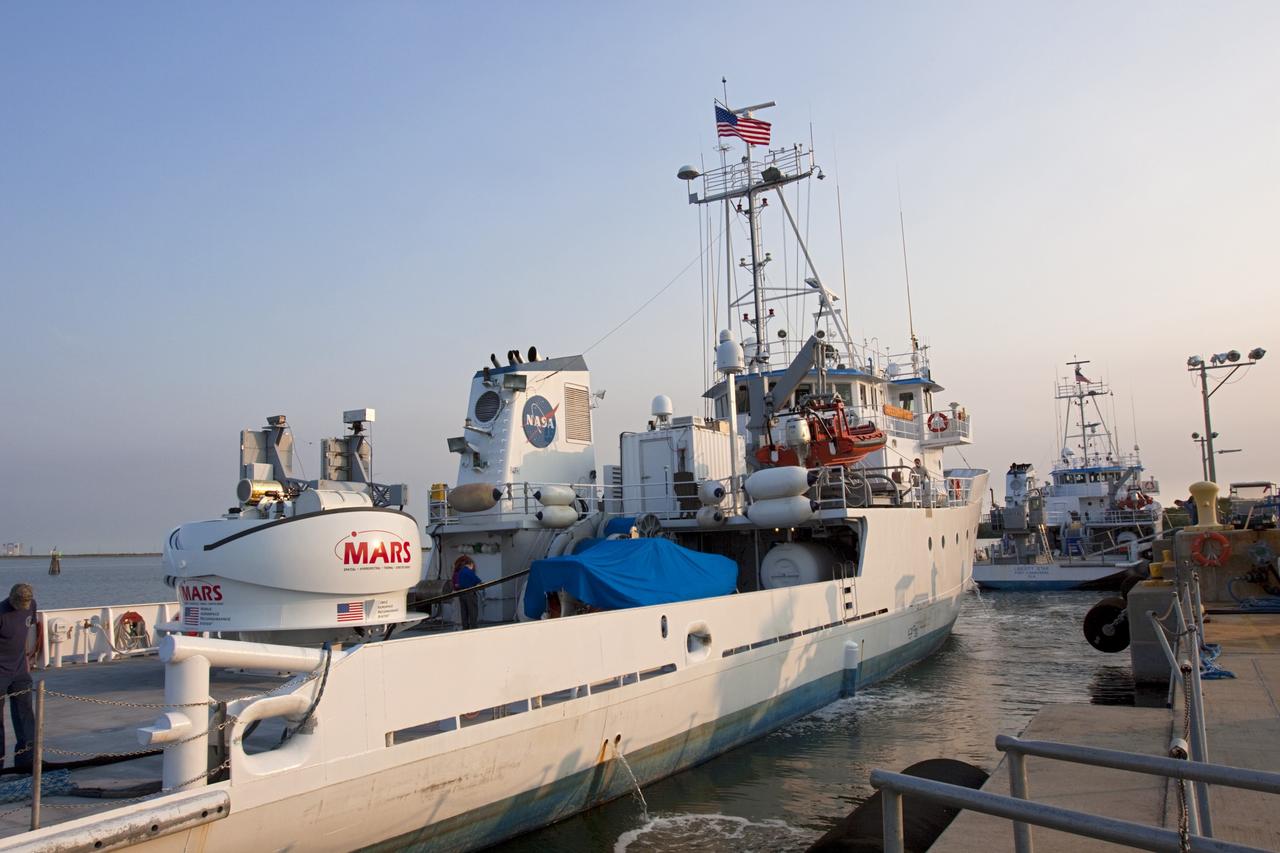
CAPE CANAVERAL, Fla. -- NASA’s Mobile Aerospace Reconnaissance System, or MARS, is secured aboard NASA’s Freedom Star boat near Hangar AE at Cape Canaveral Air Force Station in Florida. MARS is being prepared for a day of testing after departing from Port Canaveral out to the Atlantic Ocean. MARS, run by NASA’s Langley Research Center in Hampton, Va., with its spatial, hyperspectral, thermal, and directed energy capabilities will be used for thermal imaging testing for the upcoming SpaceX Falcon 9 and Dragon capsule test flight to the International Space Station. During today’s test, the MARS X-band radar and kineto tracking mount KTM were tested to ensure that they were synchronized to receive a rocket launch feed. The radar was used to identify an object to see if the KTM could lock on to and track it. The MARS team performed maintenance on the system, confirmed communications links, and tested the design of the mounting system and environmental enclosure. Photo credit: NASA/Jim Grossmann
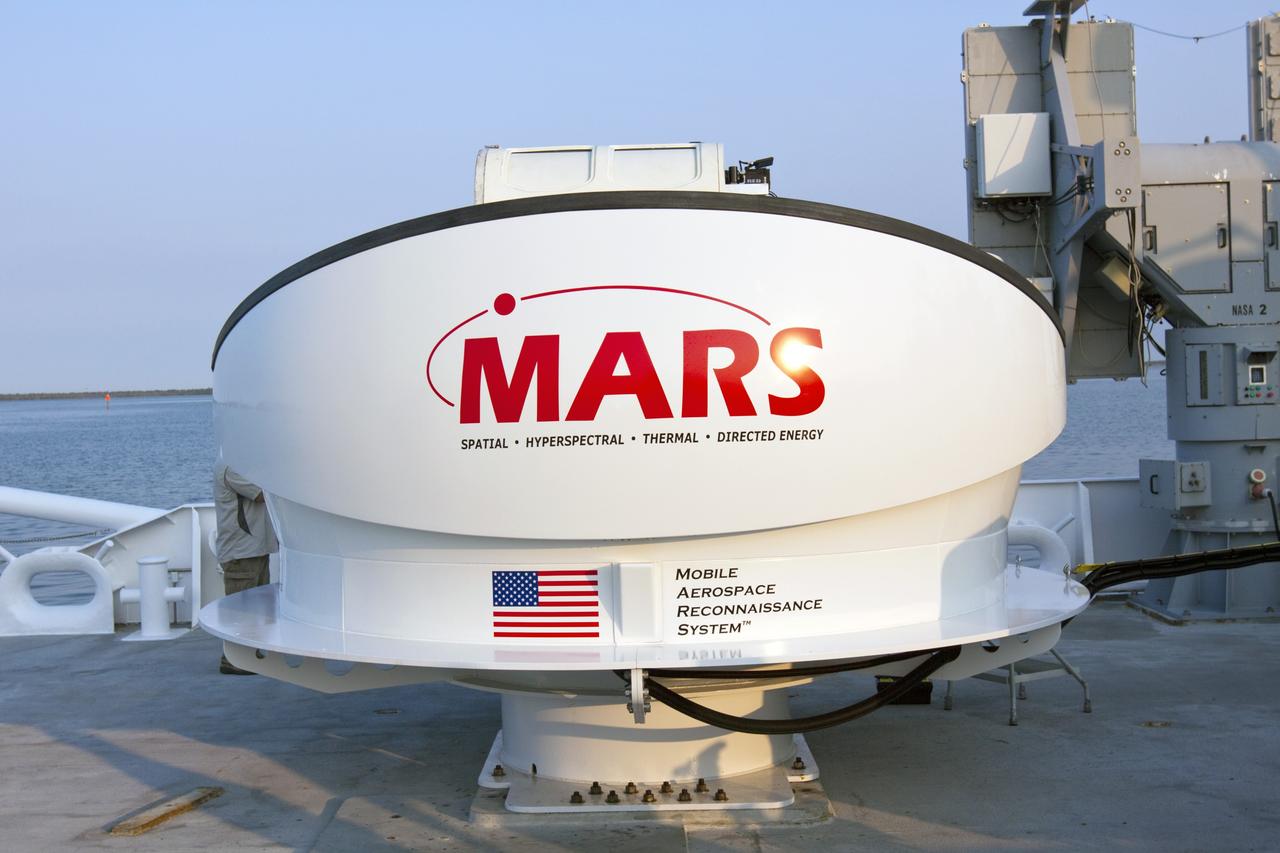
CAPE CANAVERAL, Fla. -- NASA’s Mobile Aerospace Reconnaissance System, or MARS, is secured aboard NASA’s Freedom Star boat near Hangar AE at Cape Canaveral Air Force Station in Florida. MARS is being prepared for a day of testing after departing from Port Canaveral out to the Atlantic Ocean. MARS, run by NASA’s Langley Research Center in Hampton, Va., with its spatial, hyperspectral, thermal, and directed energy capabilities will be used for thermal imaging testing for the upcoming SpaceX Falcon 9 and Dragon capsule test flight to the International Space Station. During today’s test, the MARS X-band radar and kineto tracking mount KTM were tested to ensure that they were synchronized to receive a rocket launch feed. The radar was used to identify an object to see if the KTM could lock on to and track it. The MARS team performed maintenance on the system, confirmed communications links, and tested the design of the mounting system and environmental enclosure. Photo credit: NASA/Jim Grossmann

NASA's Lunar Reconnaissance Orbiter (LRO) recently captured a unique view of Earth from the spacecraft's vantage point in orbit around the moon. "The image is simply stunning," said Noah Petro, Deputy Project Scientist for LRO at NASA's Goddard Space Flight Center in Greenbelt, Maryland. "The image of the Earth evokes the famous 'Blue Marble' image taken by Astronaut Harrison Schmitt during Apollo 17, 43 years ago, which also showed Africa prominently in the picture." In this composite image we see Earth appear to rise over the lunar horizon from the viewpoint of the spacecraft, with the center of the Earth just off the coast of Liberia (at 4.04 degrees North, 12.44 degrees West). The large tan area in the upper right is the Sahara Desert, and just beyond is Saudi Arabia. The Atlantic and Pacific coasts of South America are visible to the left. On the moon, we get a glimpse of the crater Compton, which is located just beyond the eastern limb of the moon, on the lunar farside. LRO was launched on June 18, 2009, and has collected a treasure trove of data with its seven powerful instruments, making an invaluable contribution to our knowledge about the moon. LRO experiences 12 earthrises every day; however the spacecraft is almost always busy imaging the lunar surface so only rarely does an opportunity arise such that its camera instrument can capture a view of Earth. Occasionally LRO points off into space to acquire observations of the extremely thin lunar atmosphere and perform instrument calibration measurements. During these movements sometimes Earth (and other planets) pass through the camera's field of view and dramatic images such as the one shown here are acquired. This image was composed from a series of images taken Oct. 12, when LRO was about 83 miles (134 kilometers) above the moon's farside crater Compton. Capturing an image of the Earth and moon with LRO's Lunar Reconnaissance Orbiter Camera (LROC) instrument is a complicated task. First the spacecraft must be rolled to the side (in this case 67 degrees), then the spacecraft slews with the direction of travel to maximize the width of the lunar horizon in LROC's Narrow Angle Camera image. All this takes place while LRO is traveling faster than 3,580 miles per hour (over 1,600 meters per second) relative to the lunar surface below the spacecraft! The high-resolution Narrow Angle Camera (NAC) on LRO takes black-and-white images, while the lower resolution Wide Angle Camera (WAC) takes color images, so you might wonder how we got a high-resolution picture of the Earth in color. Since the spacecraft, Earth, and moon are all in motion, we had to do some special processing to create an image that represents the view of the Earth and moon at one particular time. The final Earth image contains both WAC and NAC information. WAC provides the color, and the NAC provides high-resolution detail. "From the Earth, the daily moonrise and moonset are always inspiring moments," said Mark Robinson of Arizona State University in Tempe, principal investigator for LROC. "However, lunar astronauts will see something very different: viewed from the lunar surface, the Earth never rises or sets. Since the moon is tidally locked, Earth is always in the same spot above the horizon, varying only a small amount with the slight wobble of the moon. The Earth may not move across the 'sky', but the view is not static. Future astronauts will see the continents rotate in and out of view and the ever-changing pattern of clouds will always catch one's eye, at least on the nearside. The Earth is never visible from the farside; imagine a sky with no Earth or moon - what will farside explorers think with no Earth overhead?" NASA's first Earthrise image was taken with the Lunar Orbiter 1 spacecraft in 1966. Perhaps NASA's most iconic Earthrise photo was taken by the crew of the Apollo 8 mission as the spacecraft entered lunar orbit on Christmas Eve Dec. 24, 1968. That evening, the astronauts -- Commander Frank Borman, Command Module Pilot Jim Lovell, and Lunar Module Pilot William Anders -- held a live broadcast from lunar orbit, in which they showed pictures of the Earth and moon as seen from their spacecraft. Said Lovell, "The vast loneliness is awe-inspiring and it makes you realize just what you have back there on Earth." Credit: NASA/Goddard/Arizona State University <b><a href="http://www.nasa.gov/audience/formedia/features/MP_Photo_Guidelines.html" rel="nofollow">NASA image use policy.</a></b> <b><a href="http://www.nasa.gov/centers/goddard/home/index.html" rel="nofollow">NASA Goddard Space Flight Center</a></b> enables NASA’s mission through four scientific endeavors: Earth Science, Heliophysics, Solar System Exploration, and Astrophysics. Goddard plays a leading role in NASA’s accomplishments by contributing compelling scientific knowledge to advance the Agency’s mission. <b>Follow us on <a href="http://twitter.com/NASAGoddardPix" rel="nofollow">Twitter</a></b> <b>Like us on <a href="http://www.facebook.com/pages/Greenbelt-MD/NASA-Goddard/395013845897?ref=tsd" rel="nofollow">Facebook</a></b> <b>Find us on <a href="http://instagrid.me/nasagoddard/?vm=grid" rel="nofollow">Instagram</a></b>