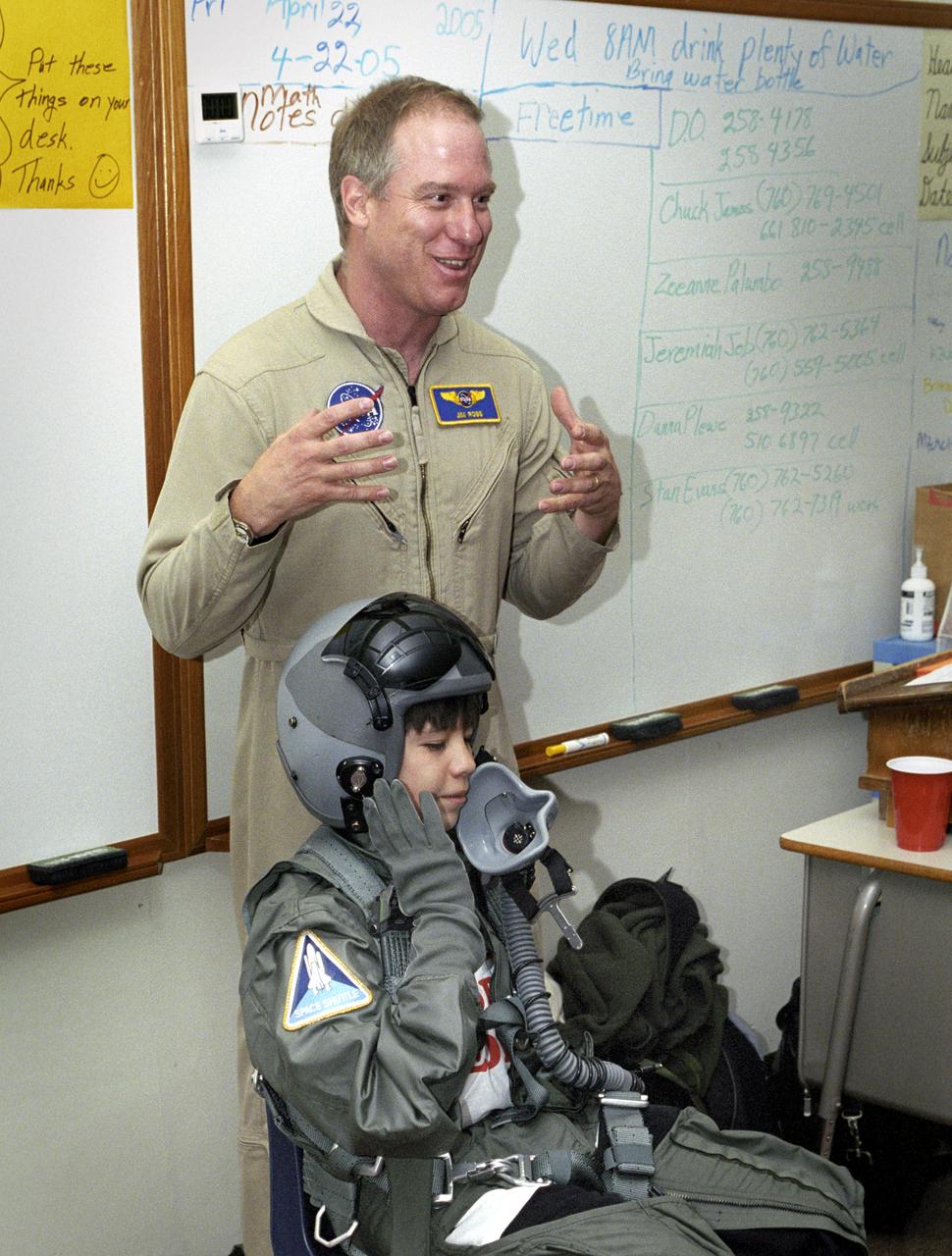
While NASA Dryden's Jim Ross outlined his job as an aerial photographer, sixth-grade student Leo Banuelos learned first-hand about the gear Ross wears in the cockpit.
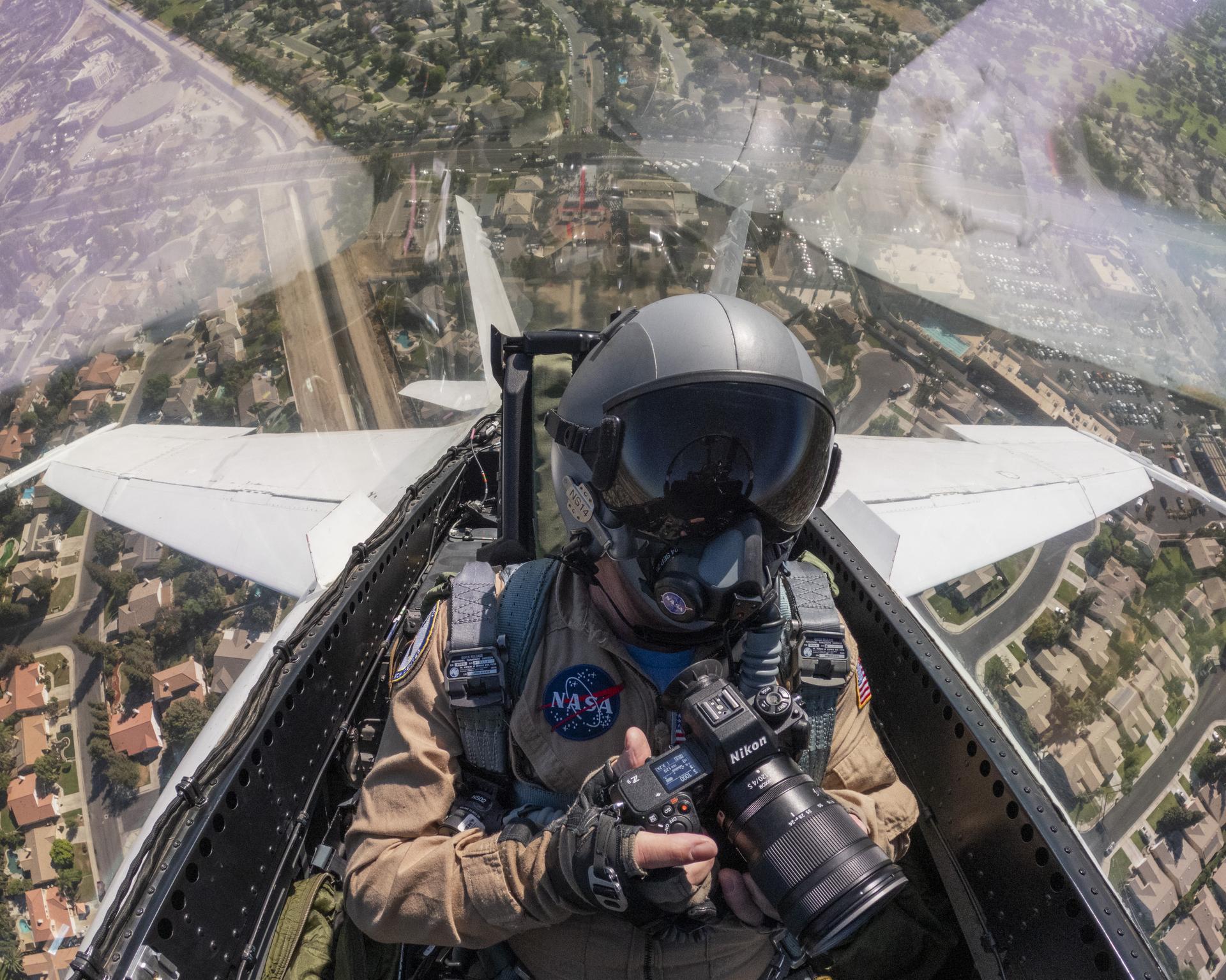
NASA photographer Jim Ross captured this view from inside the cockpit of an F/A‑18 aircraft during a commemorative flyover above the Bakersfield Fire Department and surrounding community in California on Friday, Sept. 11, 2026. The aircraft is based at NASA’s Armstrong Flight Research Center in Edwards, California. The flyover was part of an event honoring the 25th anniversary of Sept. 11, 2001.

NASA photographer Jim Ross captured this shot while pilot Troy Asher flew inverted in an F-15D. The F-15B is seen here flying over the mirror farm, AKA the Abengoa Mojave Solar Project, east of Four Corners off of Highway 58 in Southern California.
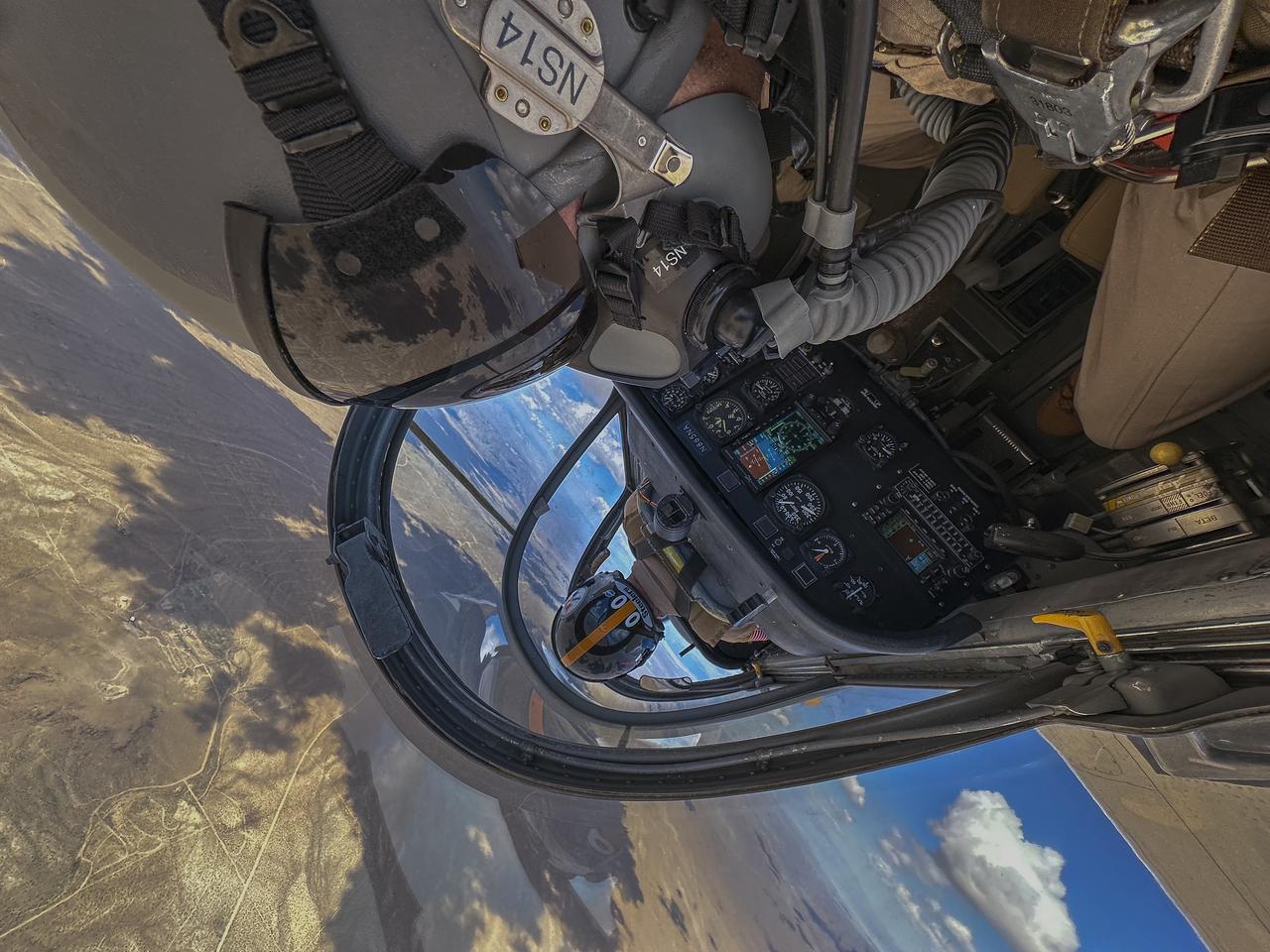
NASA research pilot Nils Larson and photographer Jim Ross complete aerobatic maneuvers in a NASA Armstrong Flight Research Center in Edwards, California owned T-34C aircraft during a proficiency flight.

NASA Administrator Jim Bridenstine, left, gives a thumbs up as Amy Ross, a spacesuit engineer at NASA’s Johnson Space Center, center, high fives Kristine Davis, a spacesuit engineer at NASA’s Johnson Space Center, wearing a ground prototype of NASA’s new Exploration Extravehicular Mobility Unit (xEMU), after a demonstration of the suits enhanced mobility, Tuesday, Oct. 15, 2019 at NASA Headquarters in Washington. The xEMU suit improves on the suits previous worn on the Moon during the Apollo era and those currently in use for spacewalks outside the International Space Station and will be will be worn by first woman and next man as they explore the Moon as part of the agency’s Artemis program. Photo Credit: (NASA/Joel Kowsky)

NASA Administrator Jim Bridenstine, left, and Amy Ross, a spacesuit engineer at NASA’s Johnson Space Center, left, are seen with Kristine Davis, a spacesuit engineer at NASA’s Johnson Space Center, wearing a ground prototype of NASA’s new Exploration Extravehicular Mobility Unit (xEMU), during a demonstration of the suit, Tuesday, Oct. 15, 2019 at NASA Headquarters in Washington. The xEMU suit improves on the suits previous worn on the Moon during the Apollo era and those currently in use for spacewalks outside the International Space Station and will be worn by first woman and next man as they explore the Moon as part of the agency’s Artemis program. Photo Credit: (NASA/Joel Kowsky)

NASA Administrator Jim Bridenstine, left, and Amy Ross, a spacesuit engineer at NASA’s Johnson Space Center, left, are seen with Kristine Davis, a spacesuit engineer at NASA’s Johnson Space Center, wearing a ground prototype of NASA’s new Exploration Extravehicular Mobility Unit (xEMU), during a demonstration of the suit, Tuesday, Oct. 15, 2019 at NASA Headquarters in Washington. The xEMU suit improves on the suits previous worn on the Moon during the Apollo era and those currently in use for spacewalks outside the International Space Station and will be worn by first woman and next man as they explore the Moon as part of the agency’s Artemis program. Photo Credit: (NASA/Joel Kowsky)
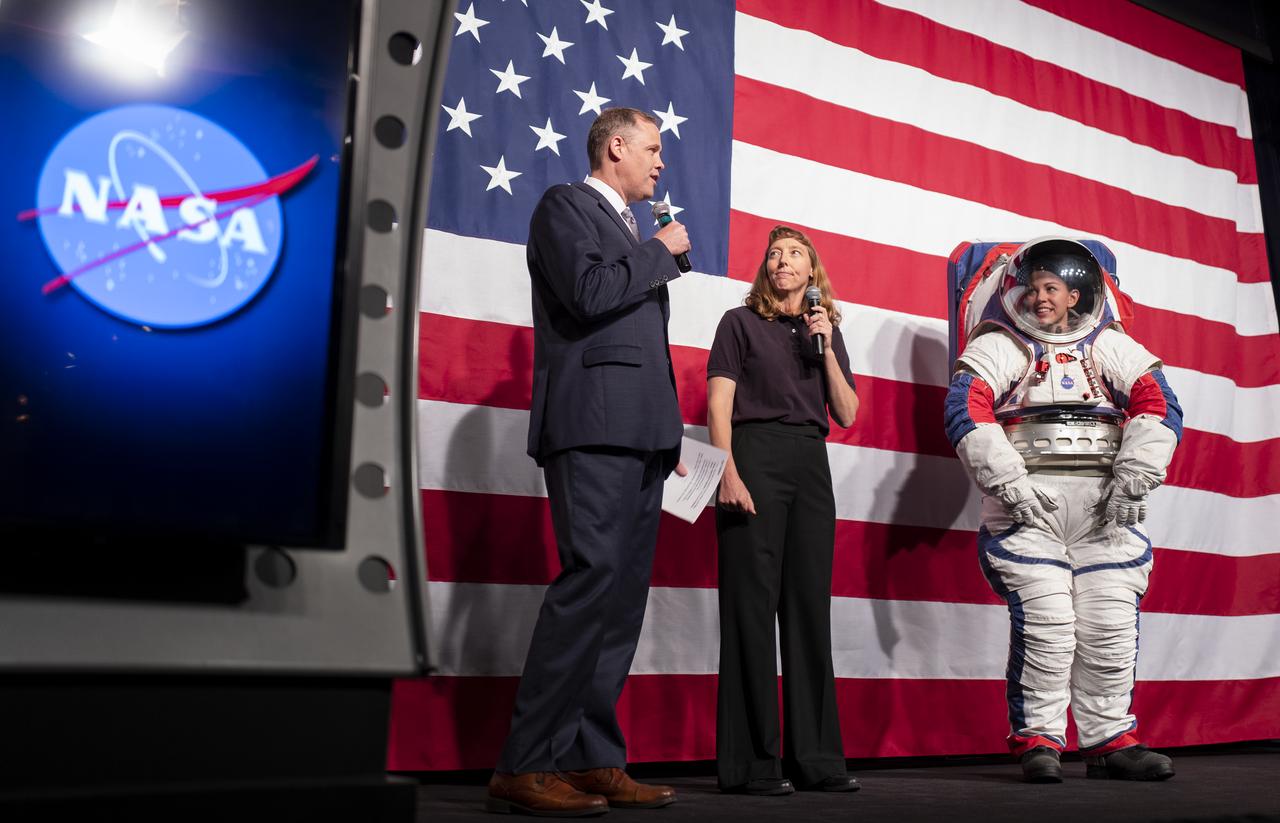
NASA Administrator Jim Bridenstine, left, and Amy Ross, a spacesuit engineer at NASA’s Johnson Space Center, left, are seen with Kristine Davis, a spacesuit engineer at NASA’s Johnson Space Center, wearing a ground prototype of NASA’s new Exploration Extravehicular Mobility Unit (xEMU), during a demonstration of the suit, Tuesday, Oct. 15, 2019 at NASA Headquarters in Washington. The xEMU suit improves on the suits previous worn on the Moon during the Apollo era and those currently in use for spacewalks outside the International Space Station and will be will be worn by first woman and next man as they explore the Moon as part of the agency’s Artemis program. Photo Credit: (NASA/Joel Kowsky)
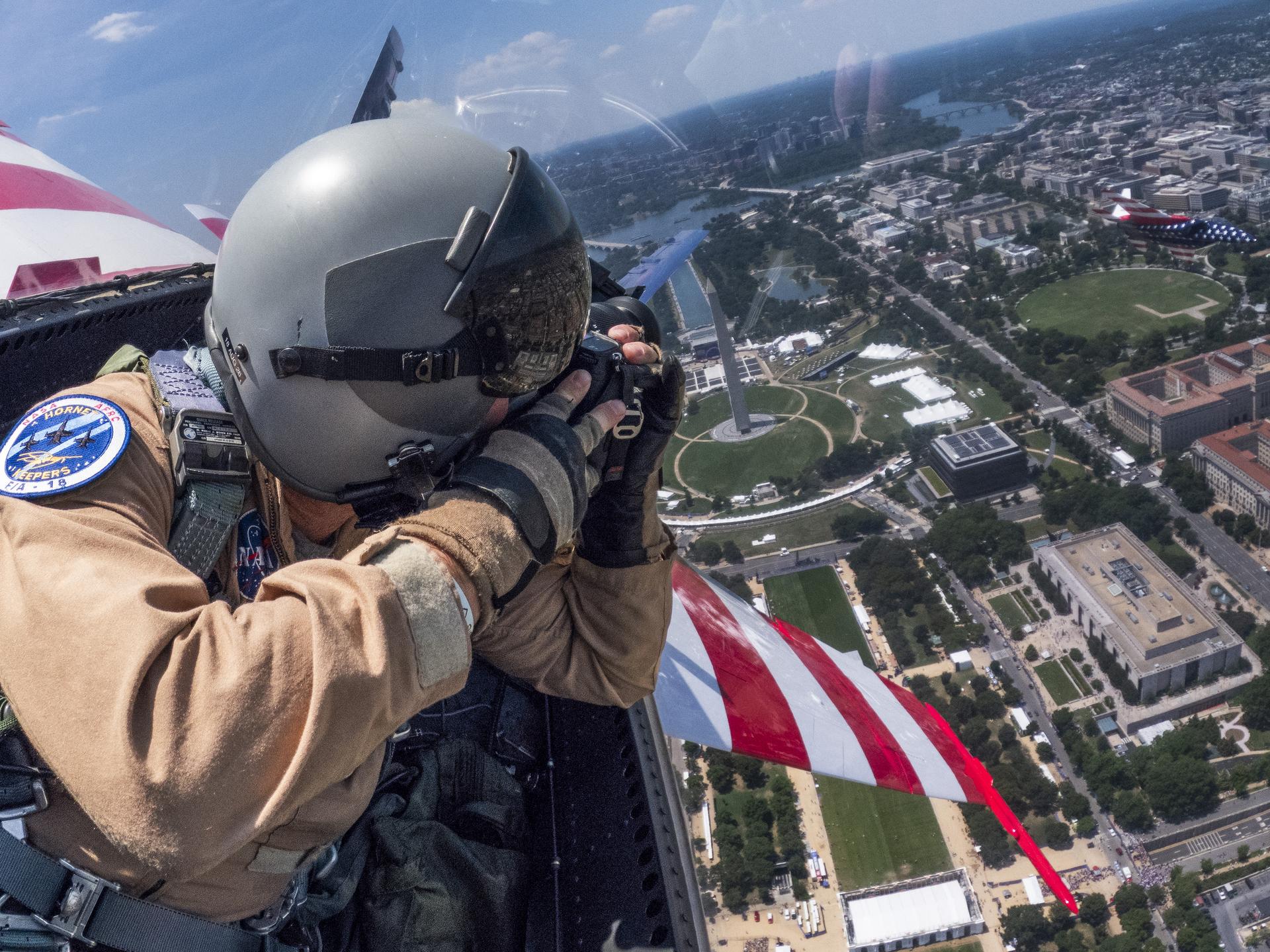
NASA photographer Jim Ross flies above the Washington Monument in Washington on Saturday, July 4, 2026, in an F-18 aircraft, as part of a flyover to celebrate America’s 250th birthday. This aircraft is from NASA’s Armstrong Flight Research Center in Edwards, California, and it joined other NASA aircraft for the flyover.
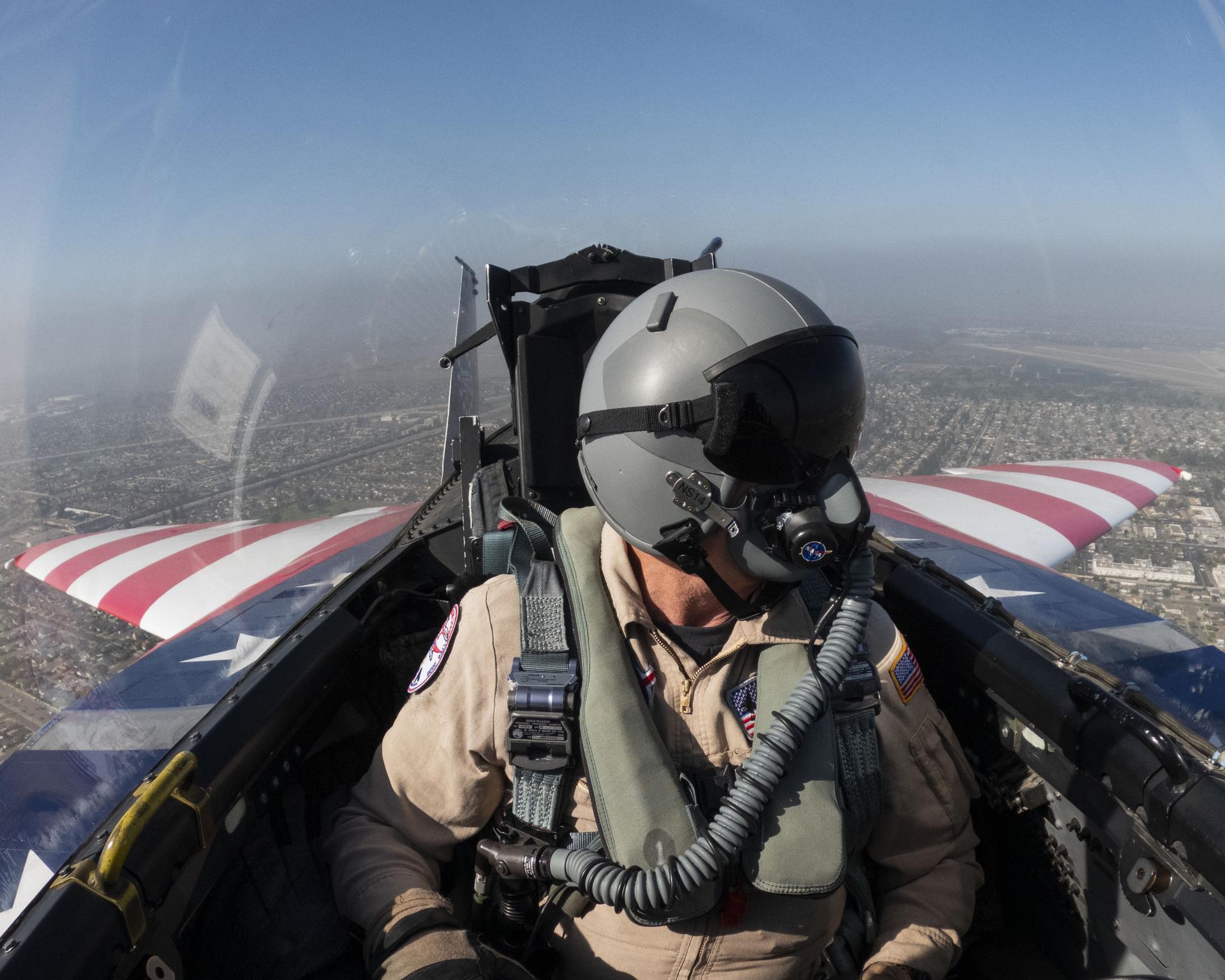
NASA photographer Jim Ross rides in the back seat of the agency’s newly painted F‑15, which honors America’s 250th birthday, during a transit flight to Huntington Beach, California, piloted by NASA test pilot Wayne Ringelberg, Thursday, Oct. 1, 2026. The aircraft will fly in the Pacific Airshow, Oct. 2-4.
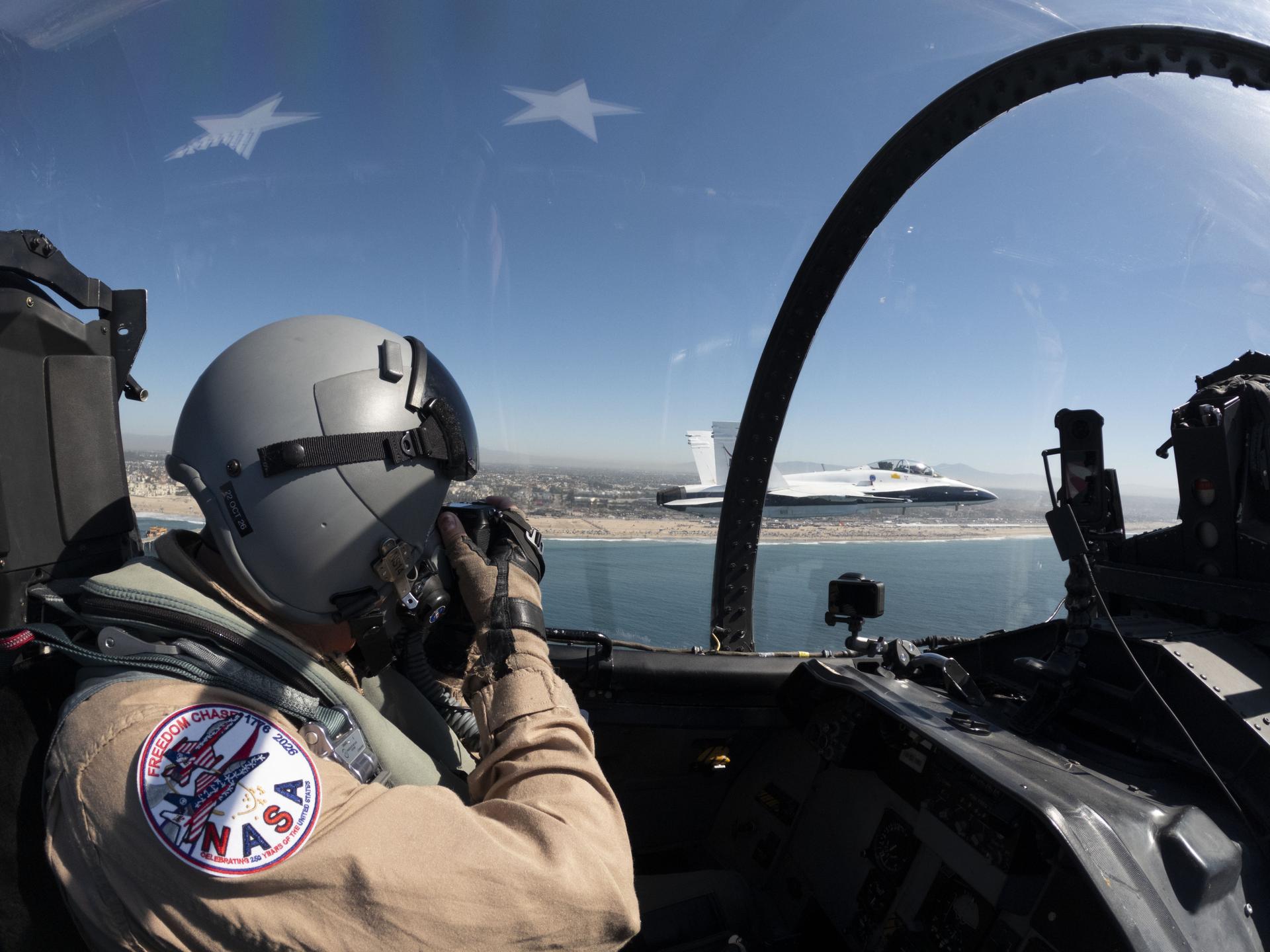
Photographer Jim Ross captures images of NASA’s F/A‑18 from the back seat of an F‑15 flying alongside during the Pacific Airshow at Huntington Beach, California, Friday, Oct. 2, 2026. NASA is also hosting an exhibit featuring Artemis, the X‑59, SkyFall, a lunar globe, and an Apollo 15 Moon rock.
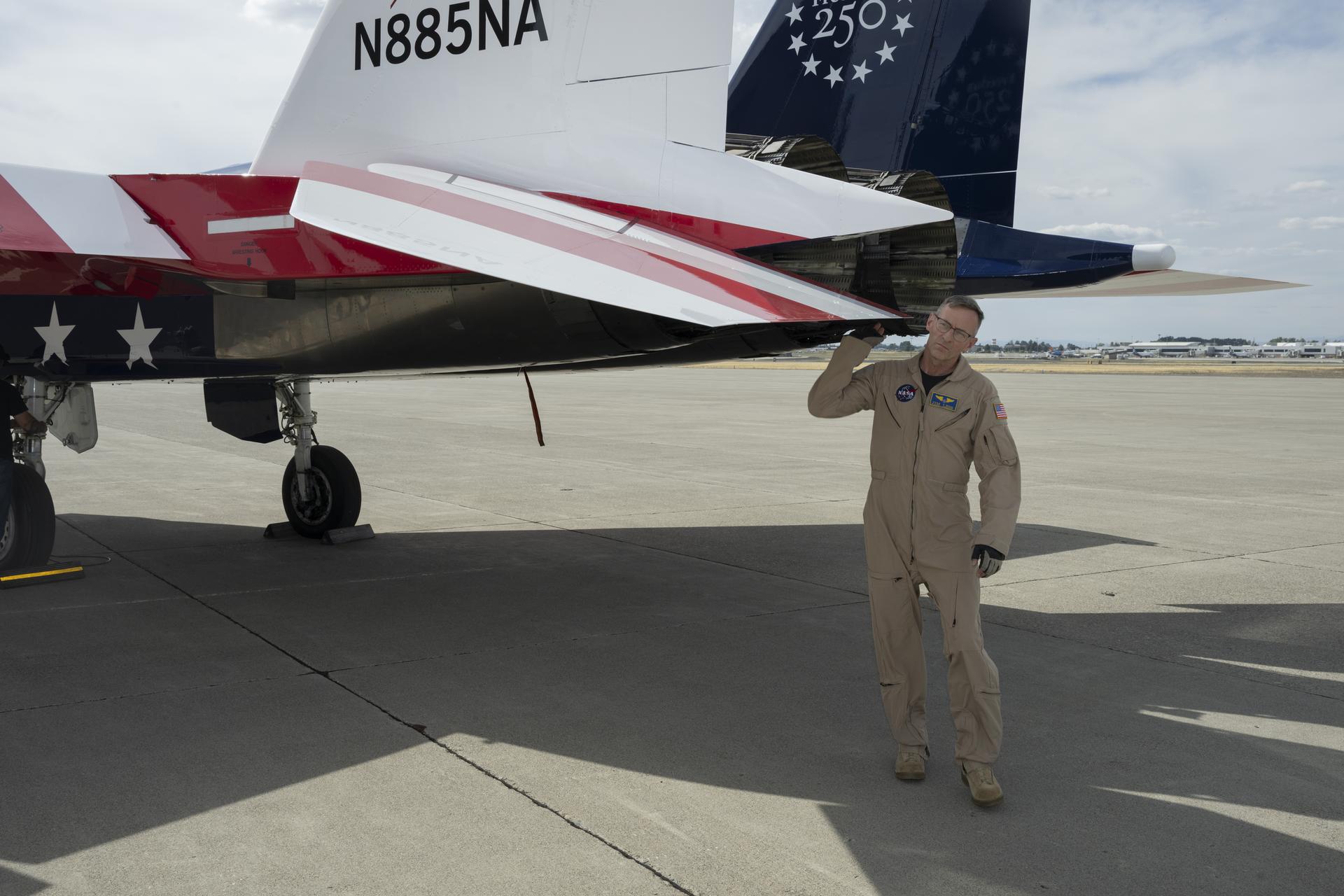
NASA test pilot Jim “Clue” Less completes pre‑flight checks on a NASA F‑15 in Spokane, Washington, on Thursday, July 2, 2026. The aircraft, from NASA’s Armstrong Flight Research Center in Edwards, California, displays new red, white, and blue paint to celebrate America’s 250th birthday and was preparing to fly cross‑country to Washington, D.C., where it participated in the Freedom 250 flyover with other NASA and military aircraft on Saturday, July 4, 2026. NASA/Jim Ross
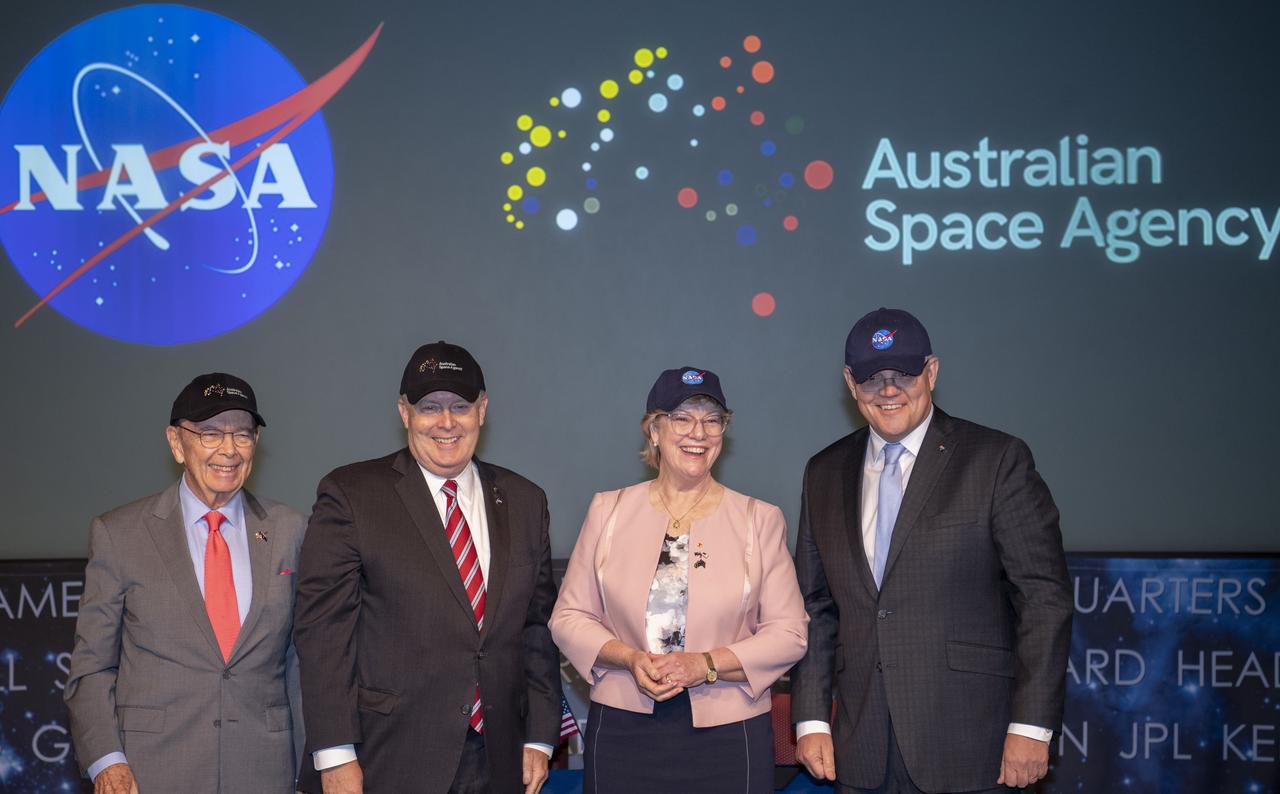
U.S. Secretary of Commerce Wilbur Ross, left, NASA Deputy Administrator Jim Morhard, second from left, Dr. Megan Clark, Head of the Australian Space Agency, second from right, and Australian Prime Minister Scott Morrison, right, pose for a picture after exchanging space agency hats following the signing of a letter of intent between NASA and the Australian Space Agency, Saturday, Sept. 21, 2019 at NASA Headquarters in Washington. NASA and the Australian Space Agency will build on over 60 years of collaboration in space exploration between the two countries and commit to expanding cooperation. Photo Credit: (NASA/Joel Kowsky)
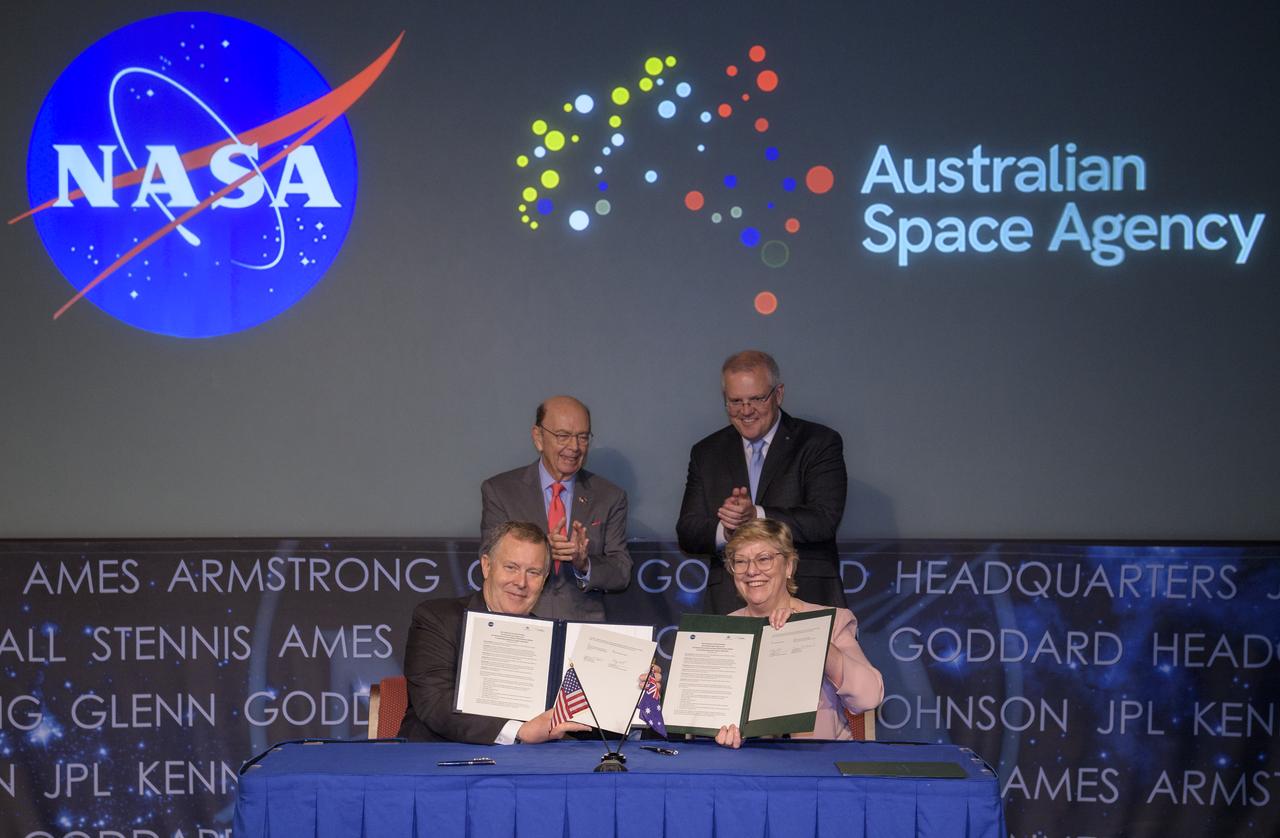
U.S. Secretary of Commerce Wilbur Ross, top left, and Australian Prime Minister Scott Morrison, top right, witness the signing of a letter of intent between NASA and the Australian Space Agency by NASA Deputy Administrator Jim Morhard, left, and Dr. Megan Clark, Head of the Australian Space Agency, right, Saturday, Sept. 21, 2019 at NASA Headquarters in Washington. NASA and the Australian Space Agency will build on over 60 years of collaboration in space exploration between the two countries and commit to expanding cooperation. Photo Credit: (NASA/Joel Kowsky)
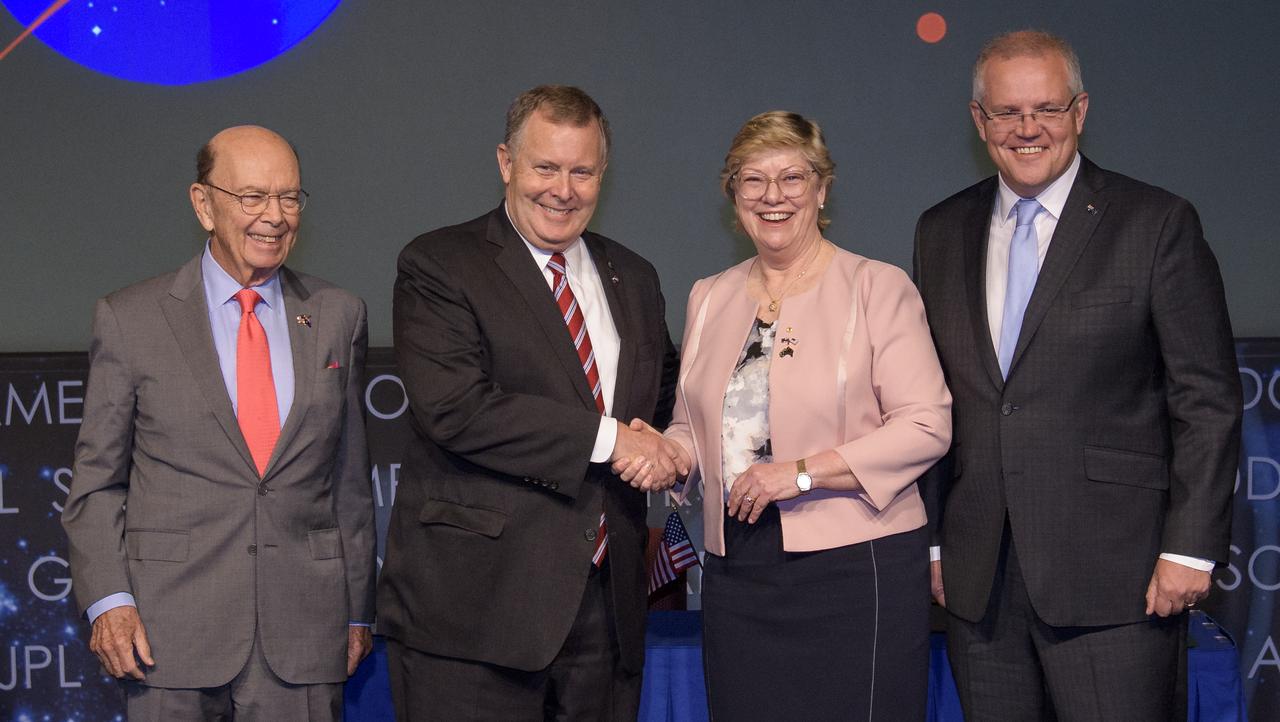
NASA Deputy Administrator Jim Morhard, second from left, shakes hands with Dr. Megan Clark, Head of the Australian Space Agency, second from right, as they pose for a photo with U.S. Secretary of Commerce Wilbur Ross, left, and Australian Prime Minister Scott Morrison, right, following the signing of a letter of intent between NASA and the Australian Space Agency, Saturday, Sept. 21, 2019 at NASA Headquarters in Washington. NASA and the Australian Space Agency will build on over 60 years of collaboration in space exploration between the two countries and commit to expanding cooperation. Photo Credit: (NASA/Joel Kowsky)
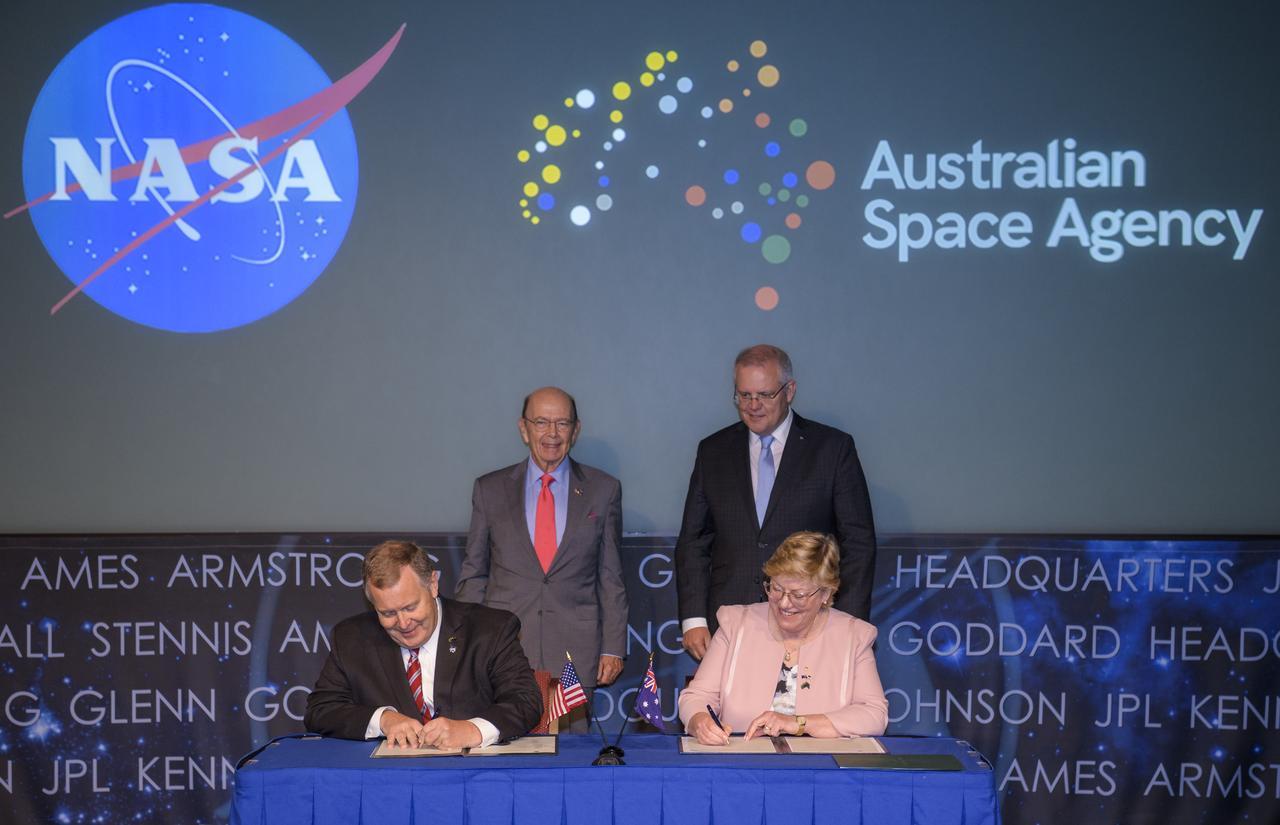
U.S. Secretary of Commerce Wilbur Ross, top left, and Australian Prime Minister Scott Morrison, top right, witness the signing of a letter of intent between NASA and the Australian Space Agency by NASA Deputy Administrator Jim Morhard, left, and Dr. Megan Clark, Head of the Australian Space Agency, right, Saturday, Sept. 21, 2019 at NASA Headquarters in Washington. NASA and the Australian Space Agency will build on over 60 years of collaboration in space exploration between the two countries and commit to expanding cooperation. Photo Credit: (NASA/Joel Kowsky)
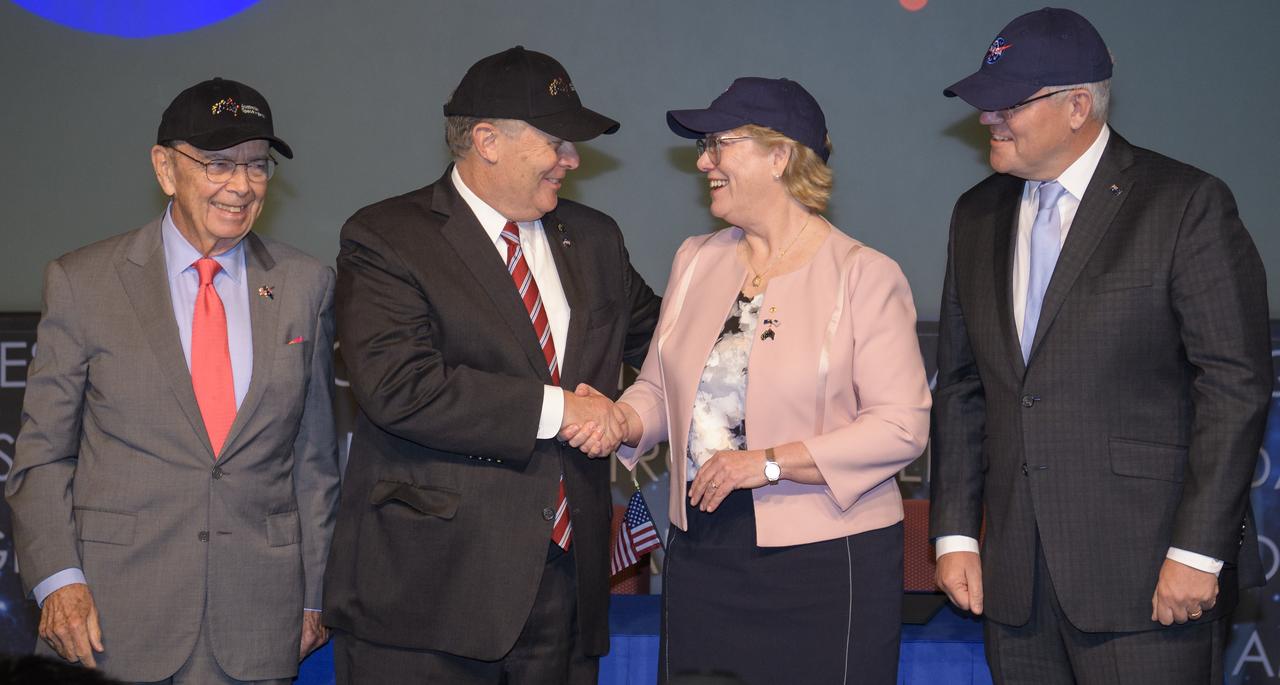
U.S. Secretary of Commerce Wilbur Ross, left, NASA Deputy Administrator Jim Morhard, second from left, Dr. Megan Clark, Head of the Australian Space Agency, second from right, and Australian Prime Minister Scott Morrison, right, pose for a picture after exchanging space agency hats following the signing of a letter of intent between NASA and the Australian Space Agency, Saturday, Sept. 21, 2019 at NASA Headquarters in Washington. NASA and the Australian Space Agency will build on over 60 years of collaboration in space exploration between the two countries and commit to expanding cooperation. Photo Credit: (NASA/Joel Kowsky)
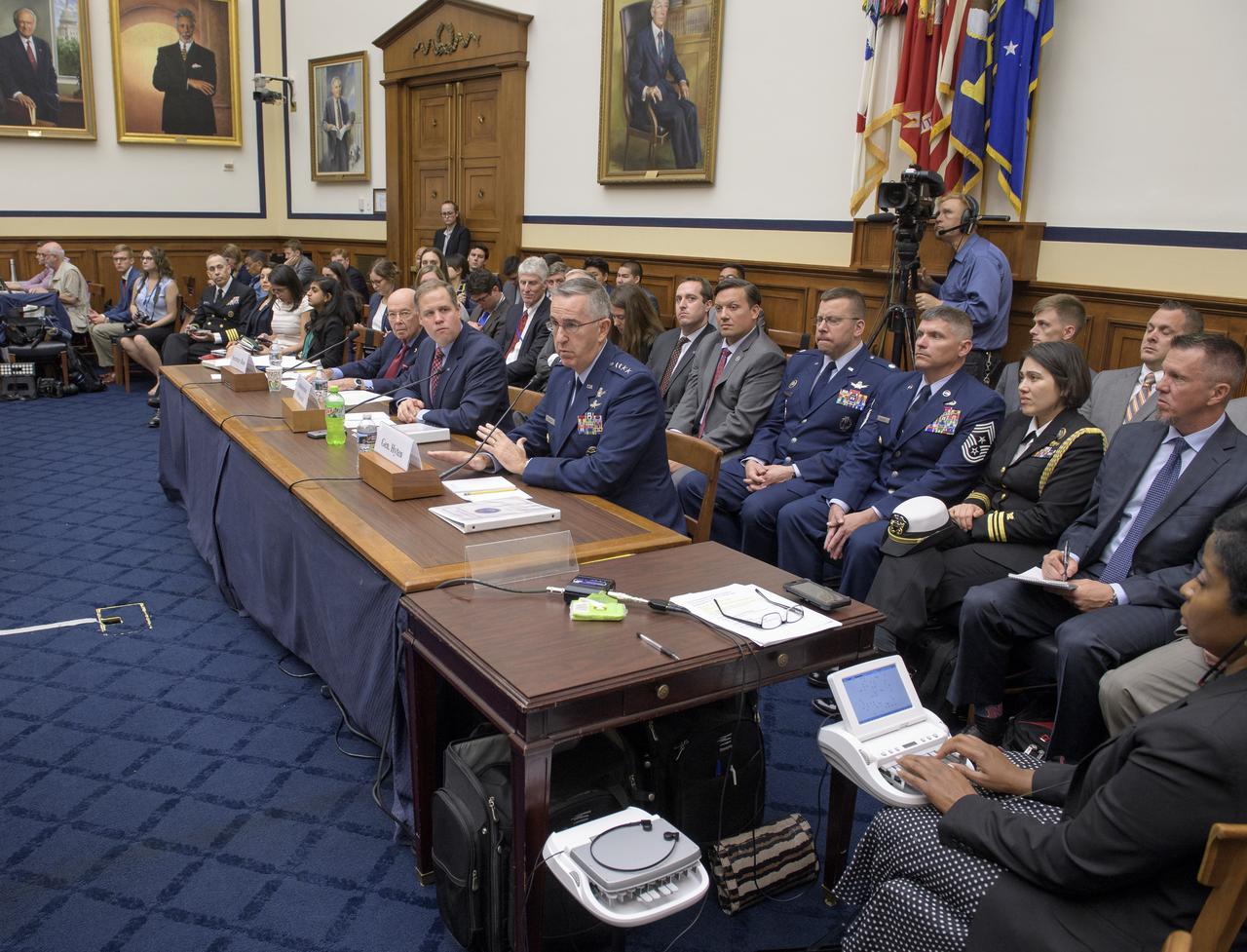
Secretary of Commerce Wilbur Ross, left, NASA Administrator Jim Bridenstine, center, and Commander, U.S. Strategic Command, General John Hyten testify before the House Subcommittee on Strategic Forces during a hearing on Space Situational Awareness: Whole of Government Perspectives on Roles and Responsibilities, Friday, June 22, 2018 at the Rayburn House Office Building in Washington. Photo Credit: (NASA/Bill Ingalls)
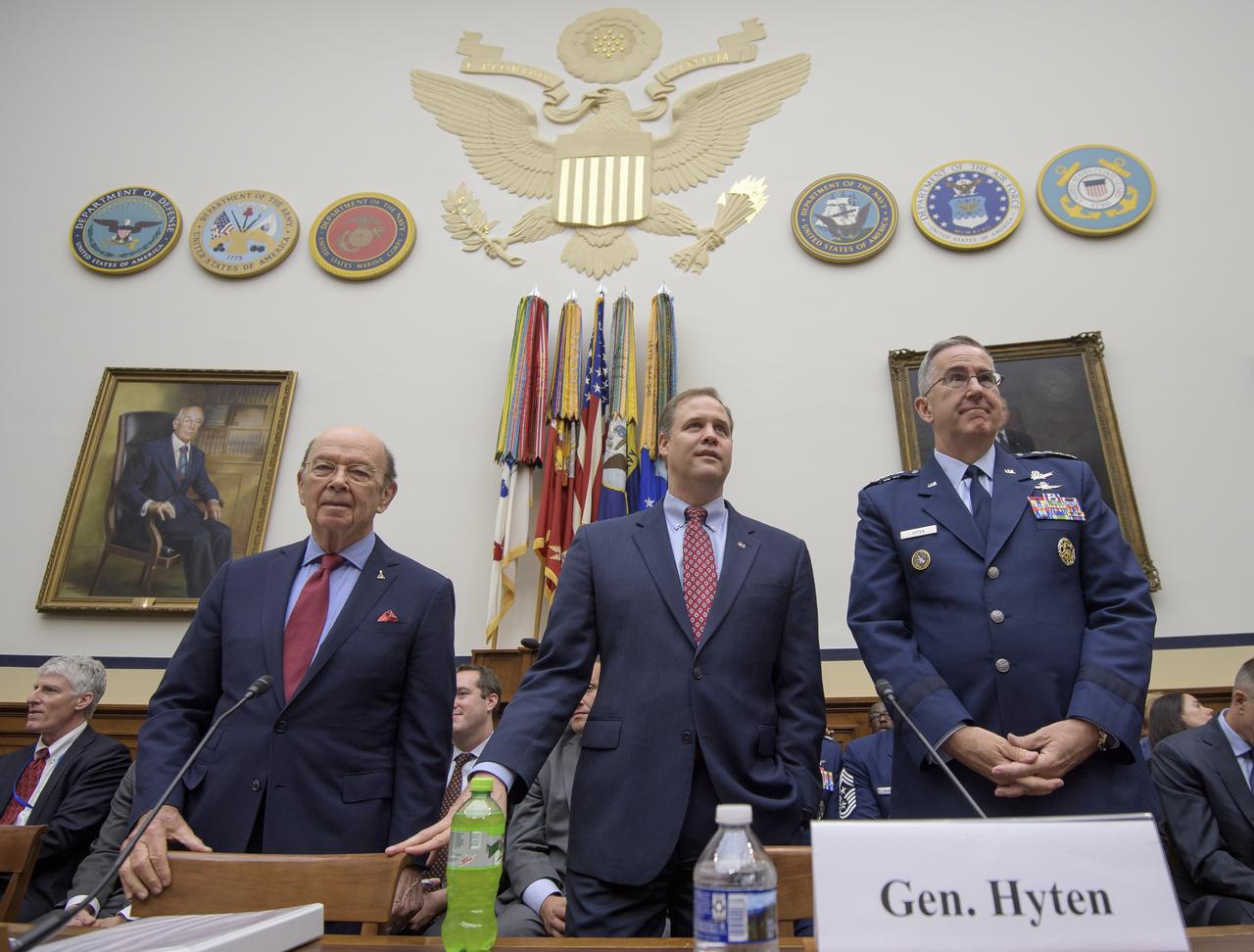
Secretary of Commerce Wilbur Ross, left, NASA Administrator Jim Bridenstine, center, and Commander, U.S. Strategic Command, General John Hyten prepare to testify before the House Subcommittee on Strategic Forces during a hearing on Space Situational Awareness: Whole of Government Perspectives on Roles and Responsibilities, Friday, June 22, 2018 at the Rayburn House Office Building in Washington. Photo Credit: (NASA/Bill Ingalls)
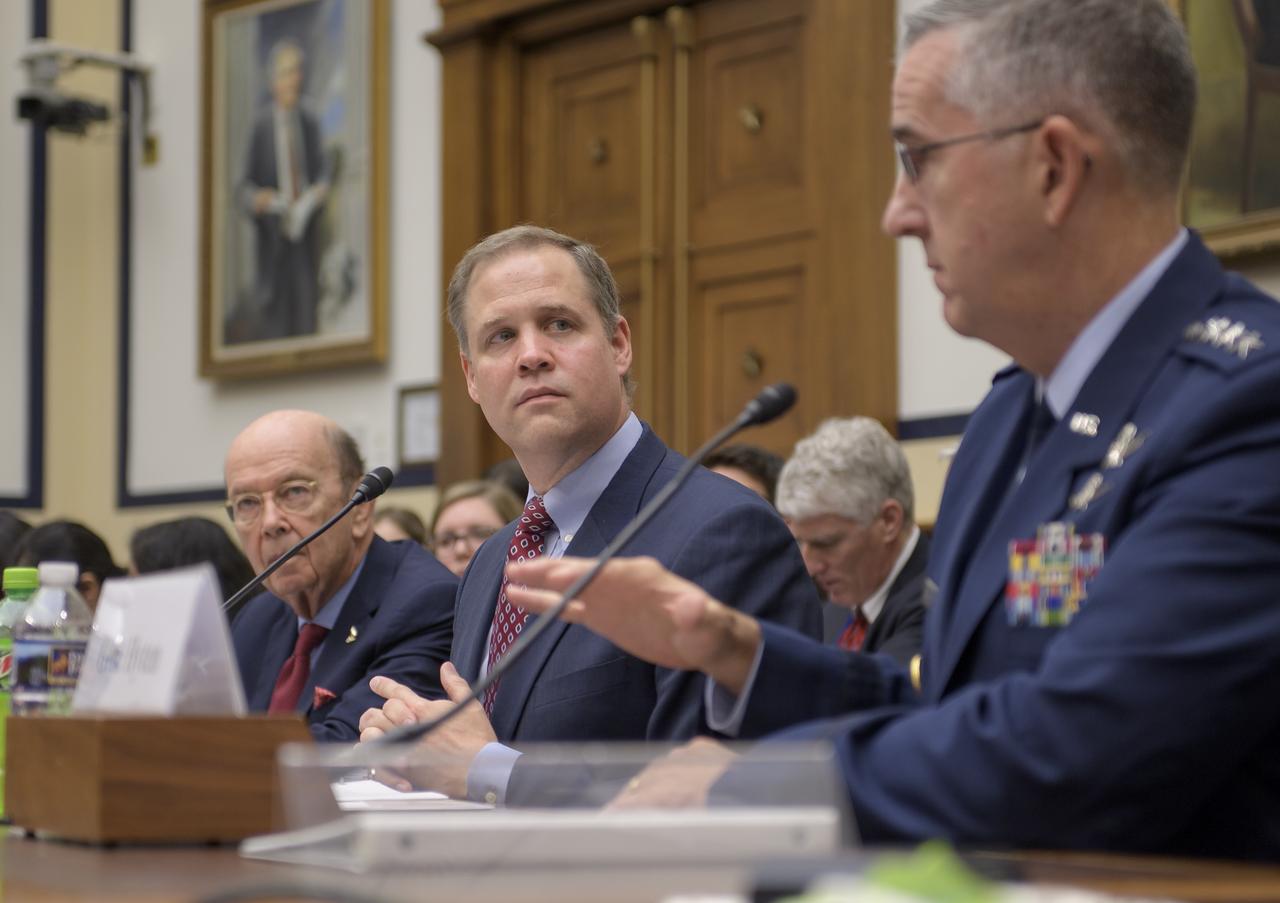
Secretary of Commerce Wilbur Ross, left, NASA Administrator Jim Bridenstine, center, and Commander, U.S. Strategic Command, General John Hyten testify before the House Subcommittee on Strategic Forces during a hearing on Space Situational Awareness: Whole of Government Perspectives on Roles and Responsibilities, Friday, June 22, 2018 at the Rayburn House Office Building in Washington. Photo Credit: (NASA/Bill Ingalls)
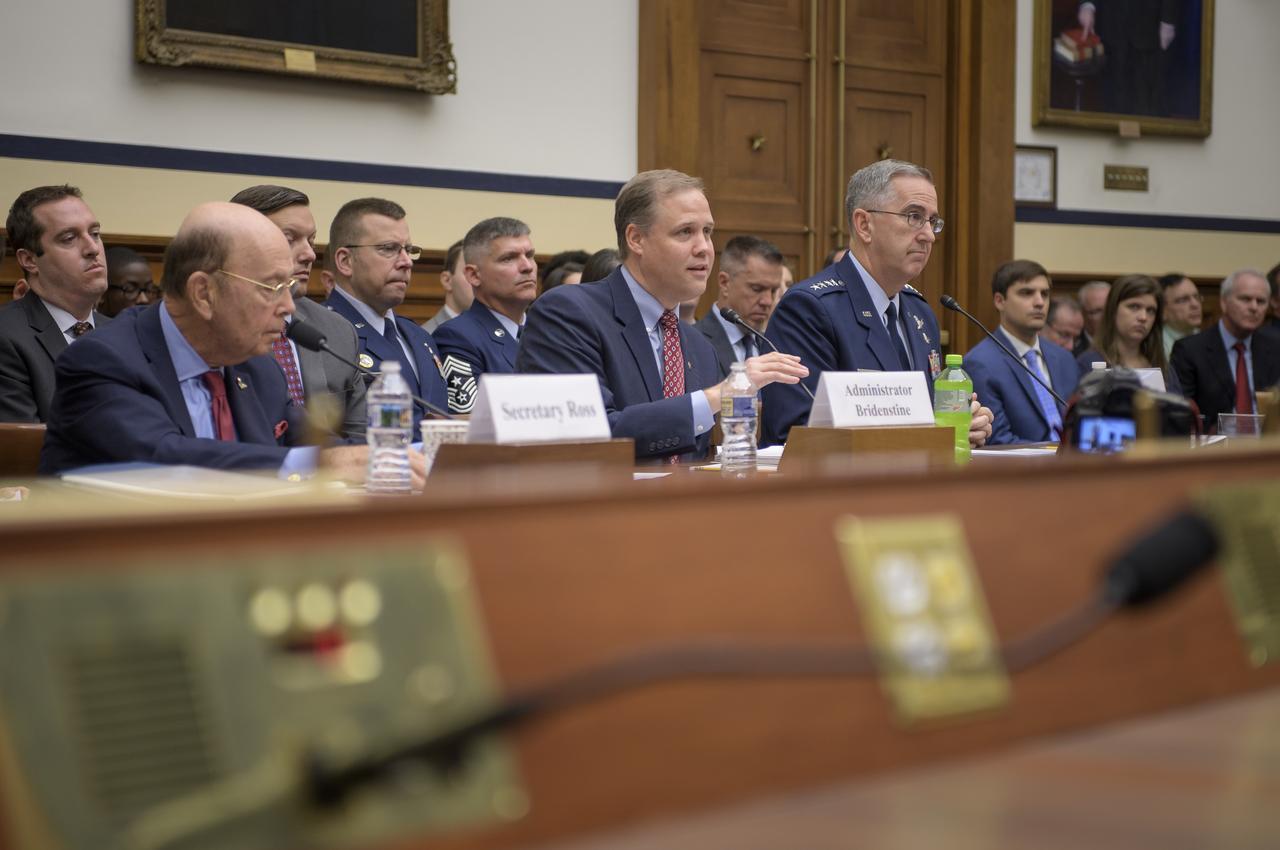
Secretary of Commerce Wilbur Ross, left, NASA Administrator Jim Bridenstine, center, and Commander, U.S. Strategic Command, General John Hyten testify before the House Subcommittee on Strategic Forces during a hearing on Space Situational Awareness: Whole of Government Perspectives on Roles and Responsibilities, Friday, June 22, 2018 at the Rayburn House Office Building in Washington. Photo Credit: (NASA/Bill Ingalls)
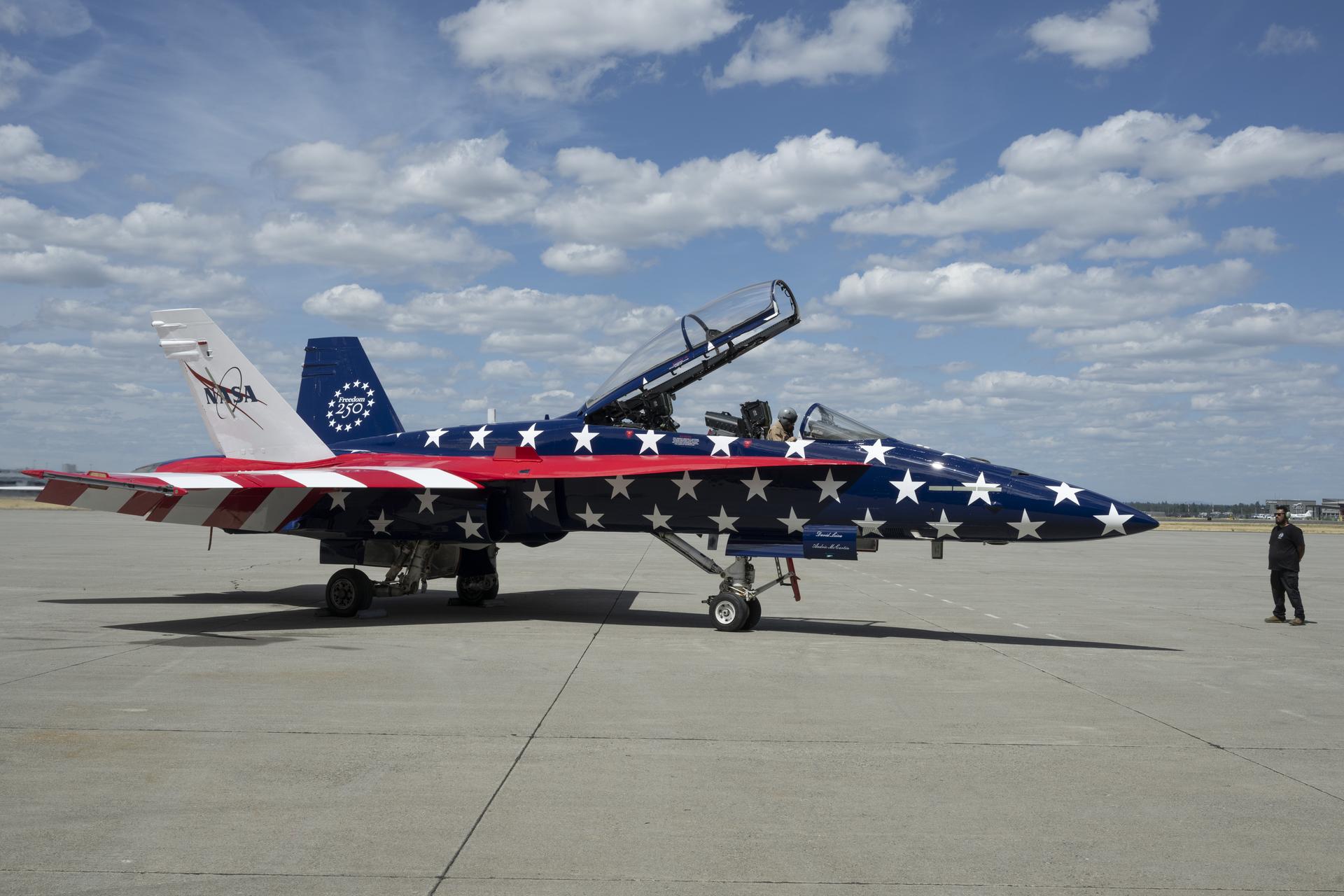
A NASA F/A‑18 aircraft is shown in Spokane, Washington, on Thursday, July 2, 2026, with new red, white, and blue paint to celebrate America’s 250th birthday. The aircraft, from NASA’s Armstrong Flight Research Center in Edwards, California, was preparing to fly cross‑country to Washington, D.C., where it participated in the Freedom 250 flyover with other NASA and military aircraft on Saturday, July 4, 2026. NASA/Jim Ross
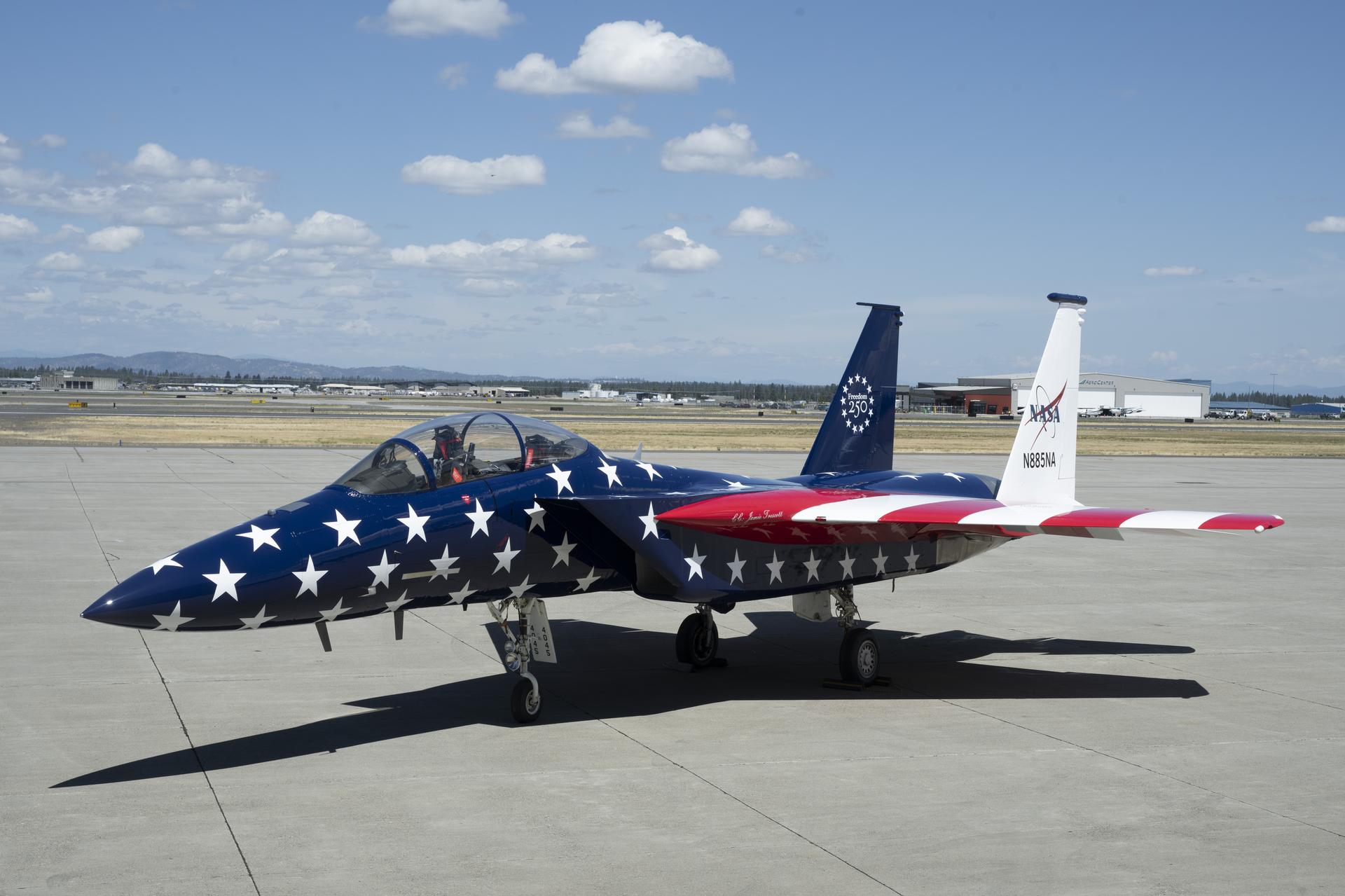
NASA’s F-15 aircraft is shown at International Aerospace Coatings Inc.’s facility in Spokane, Washington, on Thursday, July 2, 2026, with new red, white, and blue paint to celebrate America’s 250th birthday. The aircraft, from NASA’s Armstrong Flight Research Center in Edwards, California, participated in the Freedom 250 flyover in Washington on Saturday, July 4, 2026, with other NASA and military aircraft. NASA/Jim Ross
NASA photographer Jim Ross flies above Washington on Saturday, July 4, 2026, in an F-18 aircraft, as part of a flyover to celebrate America’s 250th birthday. This aircraft is from NASA’s Armstrong Flight Research Center in Edwards, California, and it joined other NASA aircraft for the flyover. A NASA F-15 is seen flying to the side of the NASA F-18.
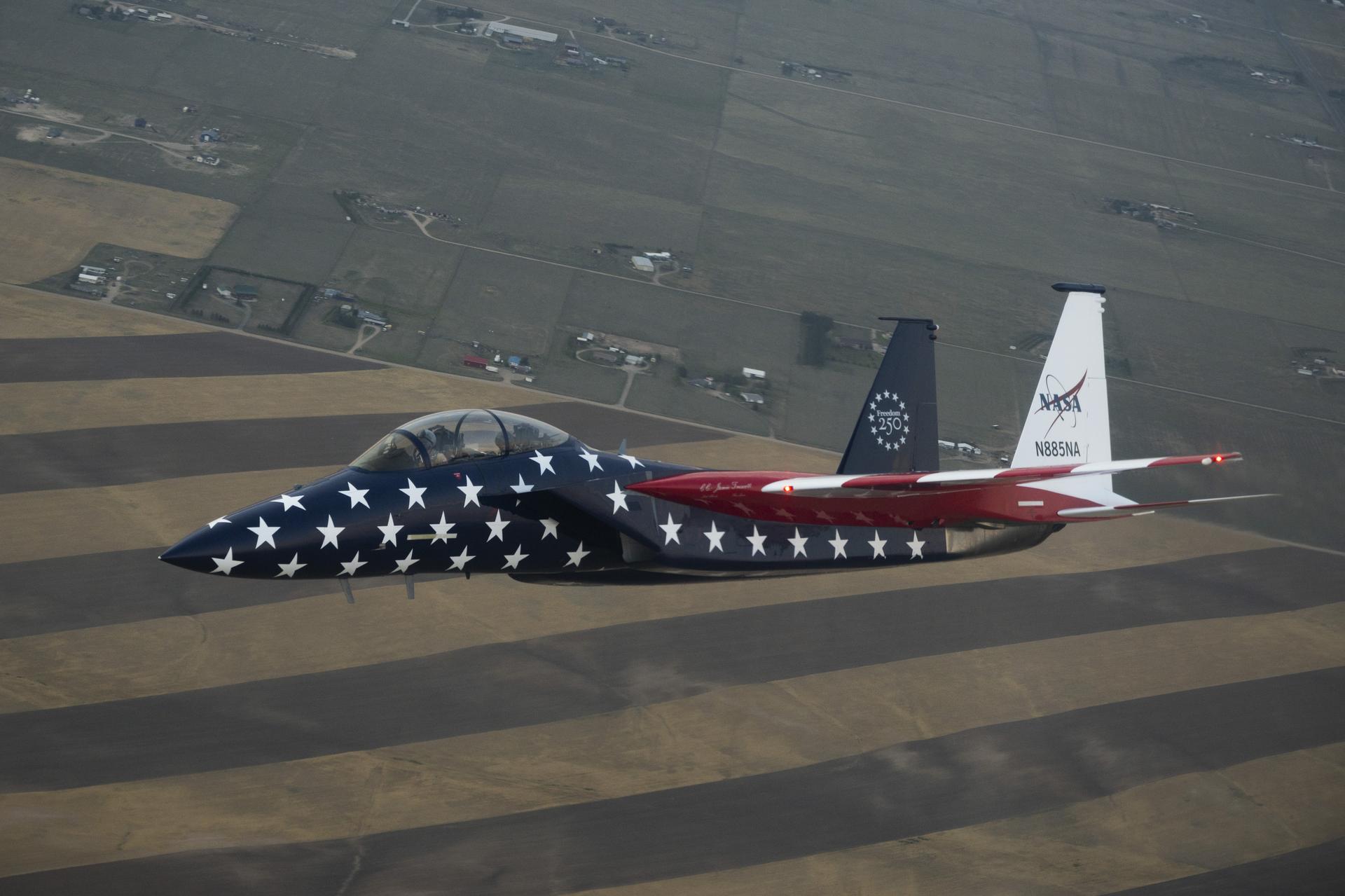
A NASA F‑15 aircraft is shown during a cross‑country flight from Spokane, Washington, to Washington, D.C., on Thursday, July 2, 2026. The aircraft displays new red, white, and blue paint to celebrate America’s 250th birthday. The F‑15, from NASA’s Armstrong Flight Research Center in Edwards, California, participated in the Freedom 250 flyover with other NASA and military aircraft on Saturday, July 4, 2026. NASA/Jim Ross
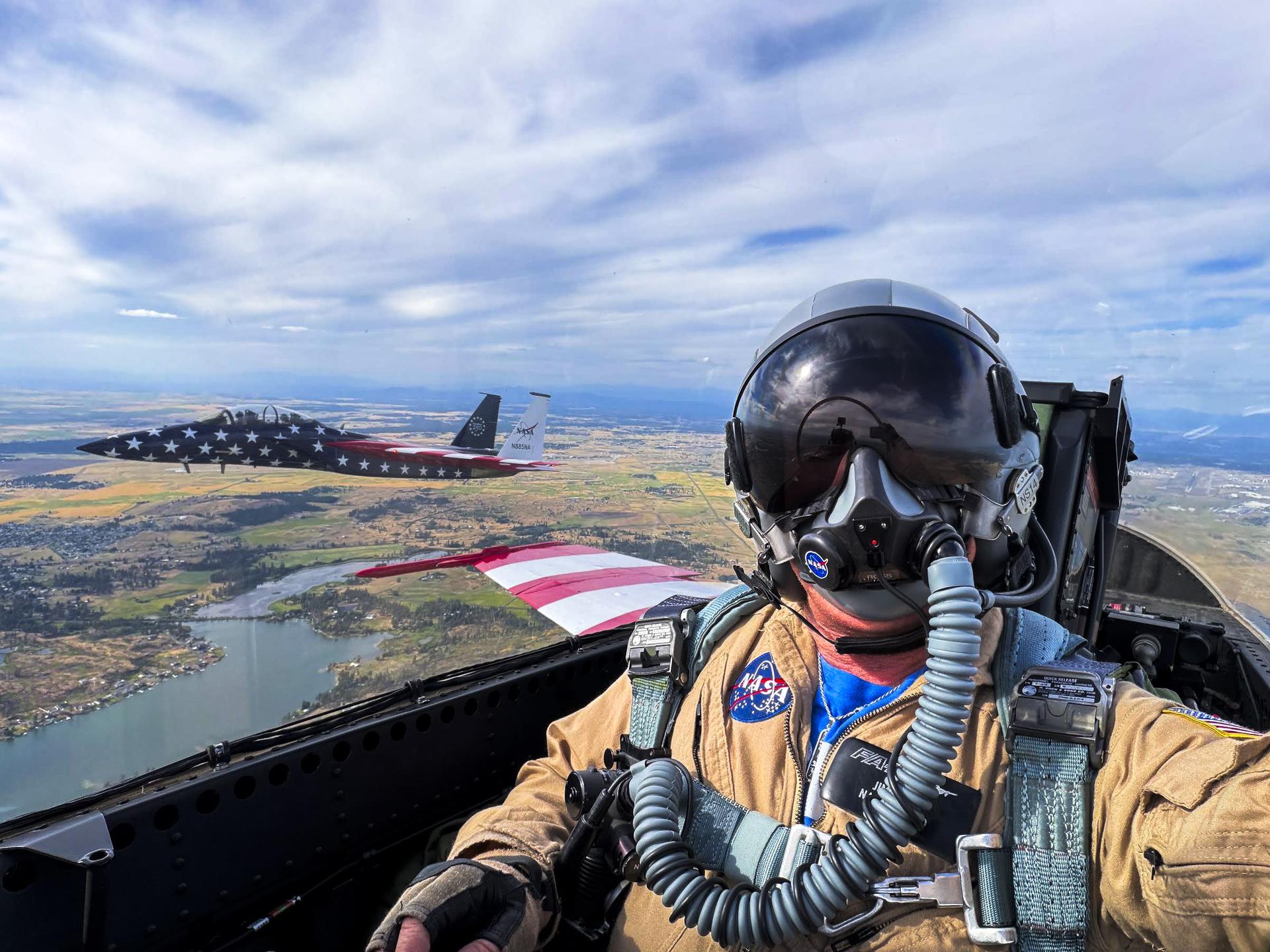
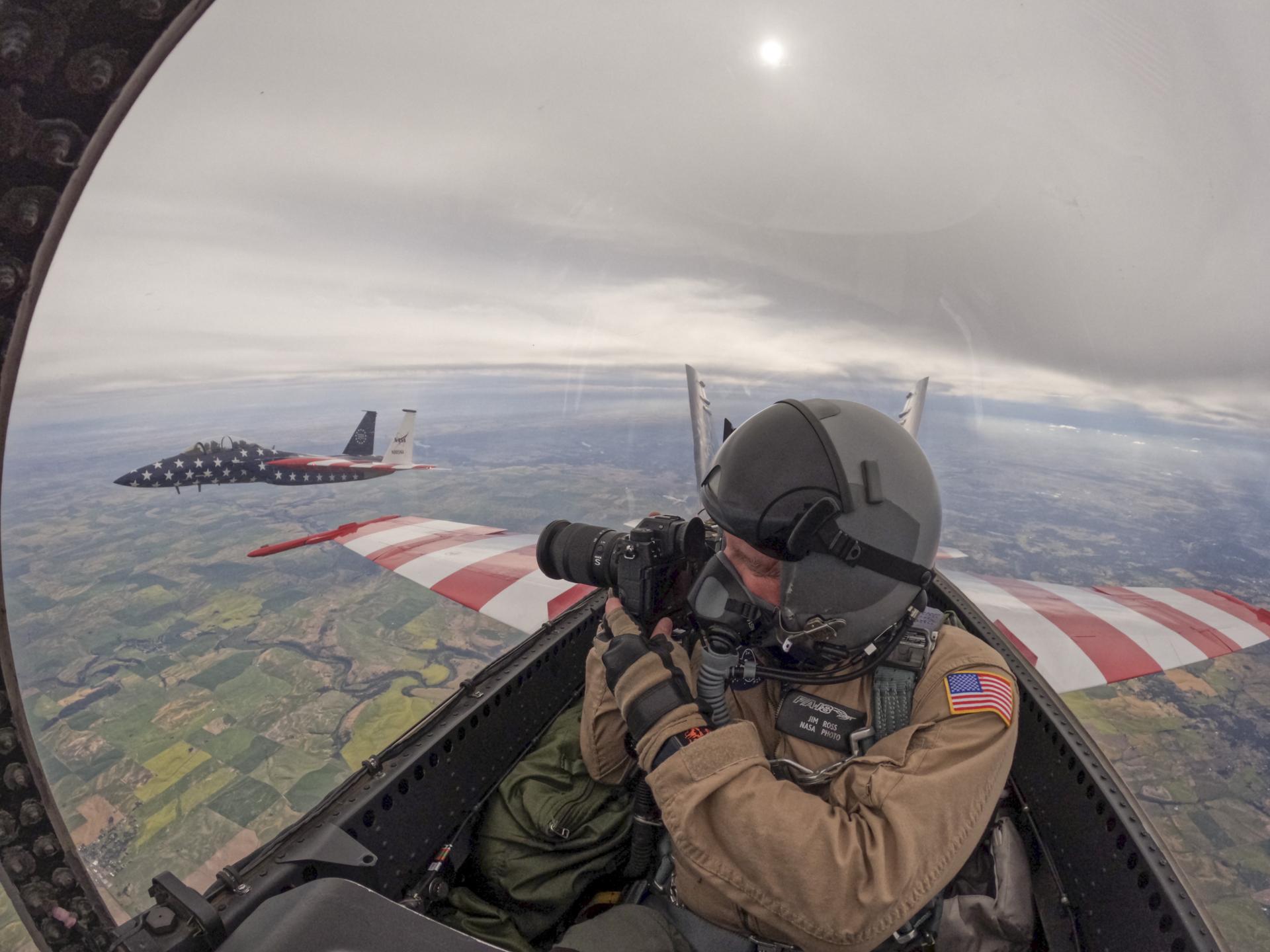
NASA photographer Jim Ross takes a selfie from the rear seat of a NASA F/A‑18 during a cross‑country flight from Spokane, Washington, to Washington, D.C., on Thursday, July 2, 2026. The agency’s F‑15, flying alongside the aircraft, is visible through the window. Both aircraft, from NASA’s Armstrong Flight Research Center in Edwards, California, participated in the Freedom 250 flyover with other NASA and military aircraft on Saturday, July 4, 2026.
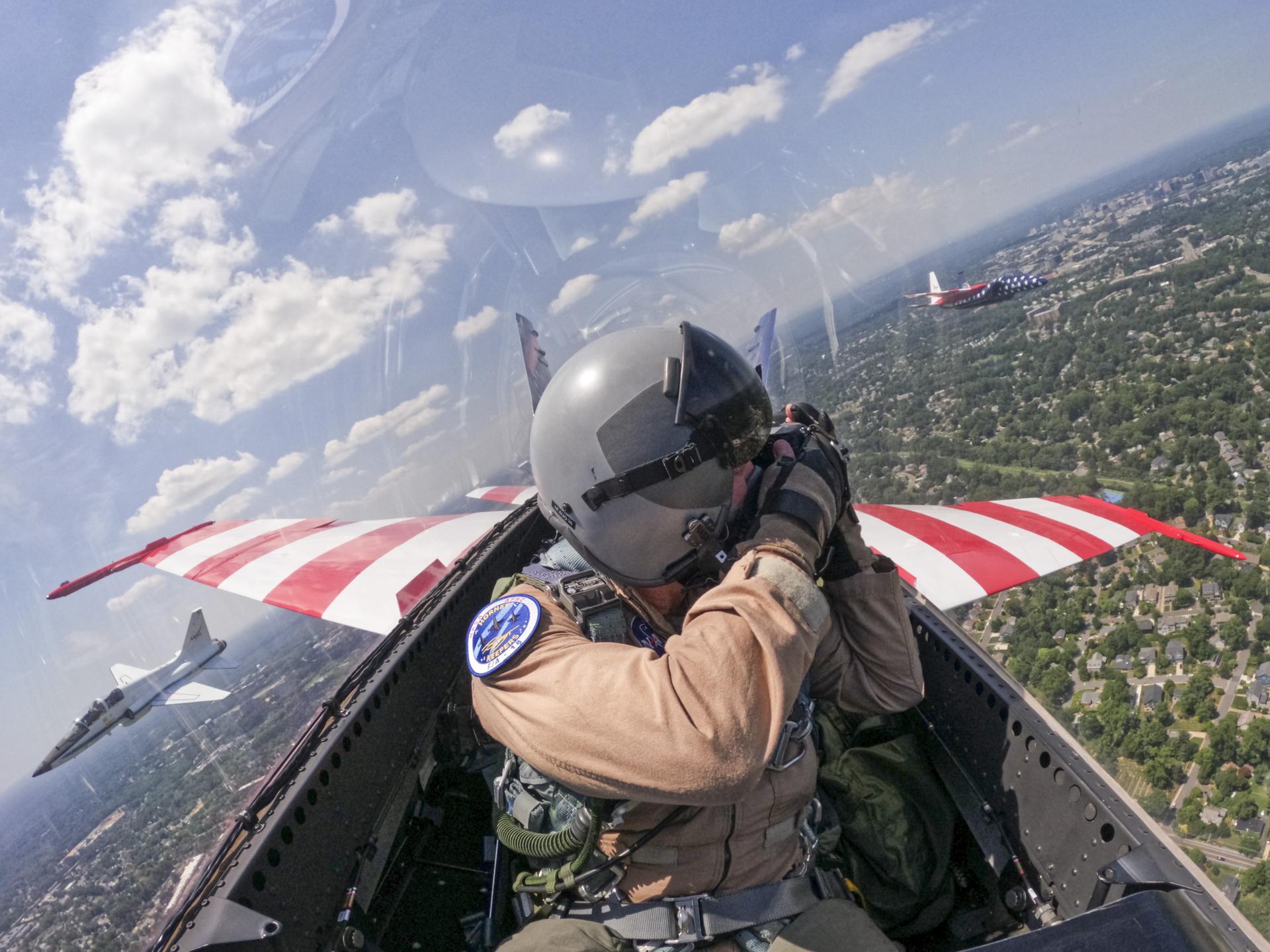
NASA photographer Jim Ross captures photos as he flies above Washington on Saturday, July 4, 2026, in an F-18 aircraft, as part of a flyover to celebrate America’s 250th birthday. This aircraft is from NASA’s Armstrong Flight Research Center in Edwards, California, and it joined other NASA aircraft for the flyover. A NASA F-15 and T-38 are seen flying to the sides of the NASA F-18.
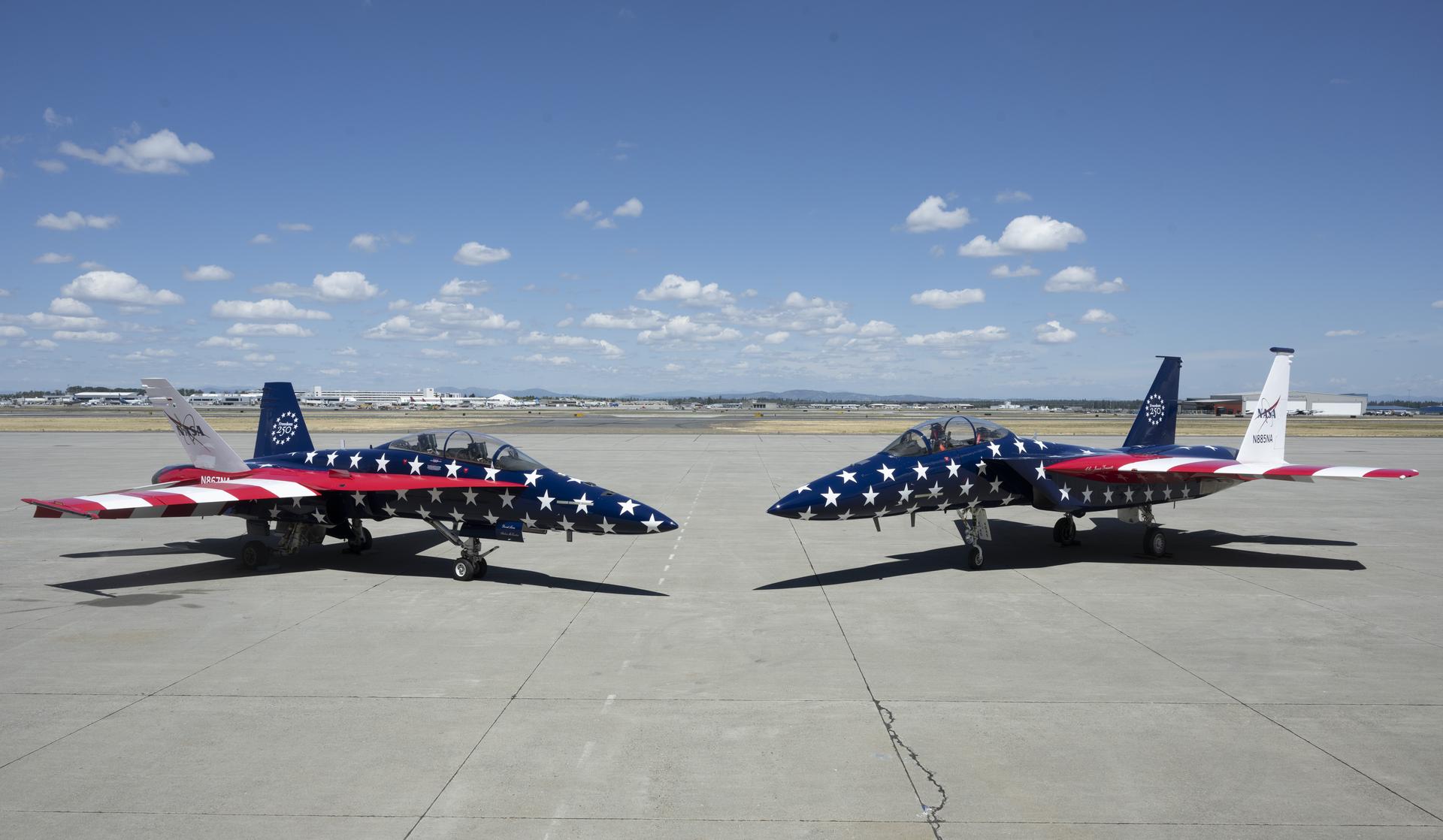
NASA’s F-15, right, and F/A-18 aircraft are shown at International Aerospace Coatings Inc.’s facility in Spokane, Washington, on Thursday, July 2, 2026, with new red, white, and blue paint to celebrate America’s 250th birthday. The aircraft, from NASA’s Armstrong Flight Research Center in Edwards, California, participated in the Freedom 250 flyover in Washington on Saturday, July 4, 2026, with other NASA and military aircraft. NASA/Jim Ross
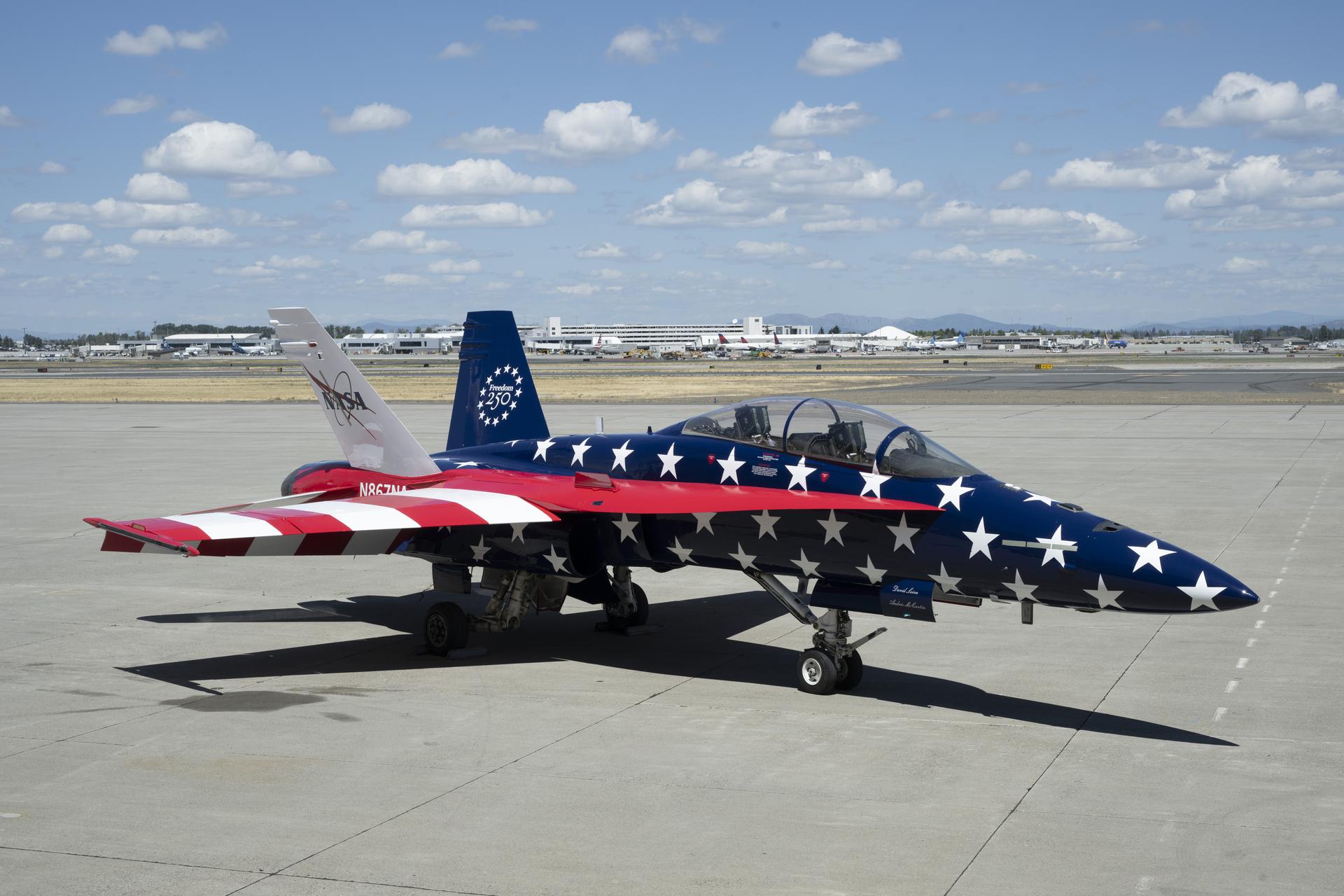
NASA’s F-18 aircraft is shown at International Aerospace Coatings Inc.’s facility in Spokane, Washington, on Thursday, July 2, 2026, with new red, white, and blue paint to celebrate America’s 250th birthday. The aircraft, from NASA’s Armstrong Flight Research Center in Edwards, California, participated in the Freedom 250 flyover in Washington on Saturday, July 4, 2026, with other NASA and military aircraft. NASA/Jim Ross
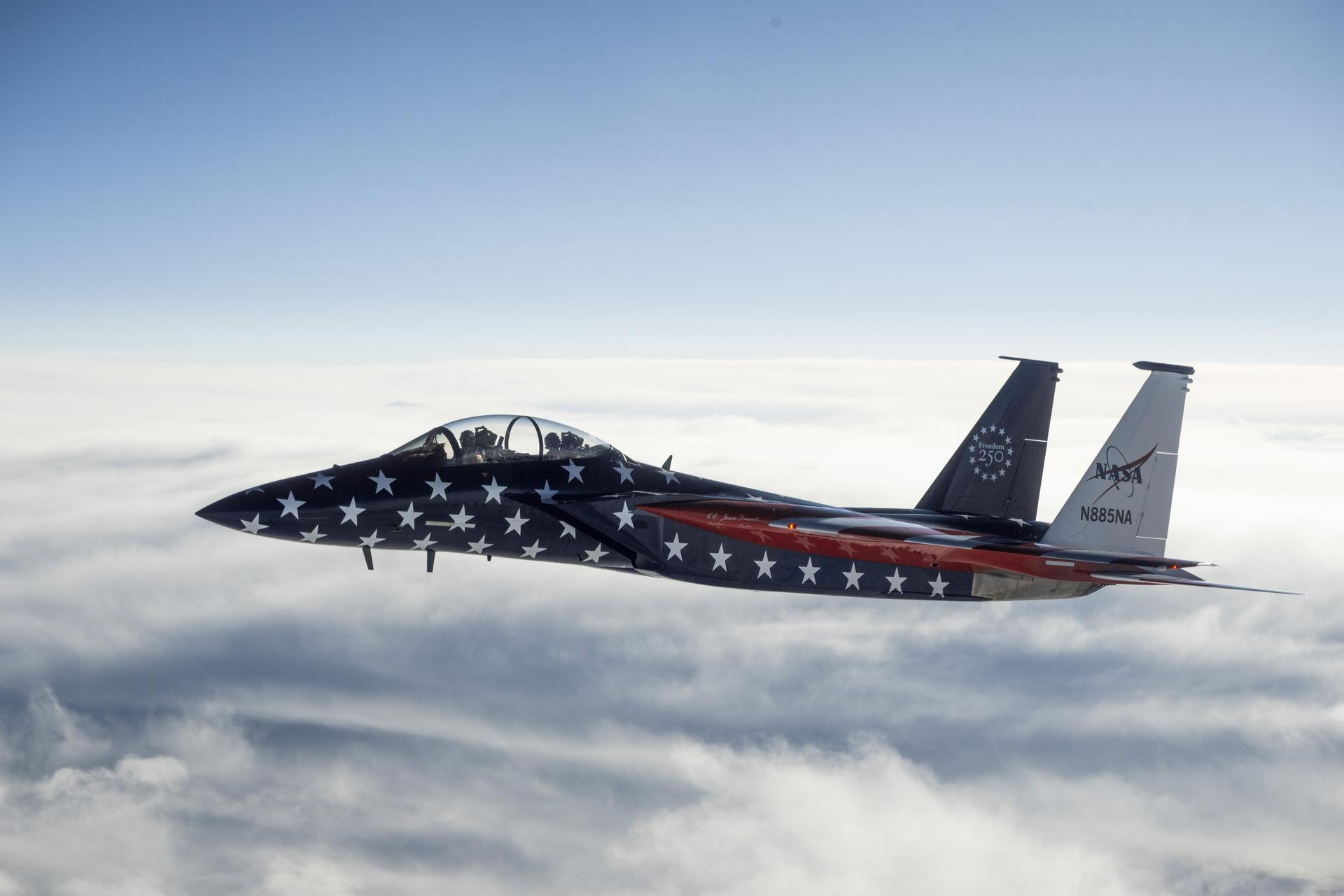
A NASA F‑15 aircraft is shown during a cross‑country flight from Spokane, Washington, to Washington, D.C., on Thursday, July 2, 2026. The aircraft displays new red, white, and blue paint to celebrate America’s 250th birthday. The F‑15, from NASA’s Armstrong Flight Research Center in Edwards, California, participated in the Freedom 250 flyover with other NASA and military aircraft on Saturday, July 4, 2026. NASA/Jim Ross
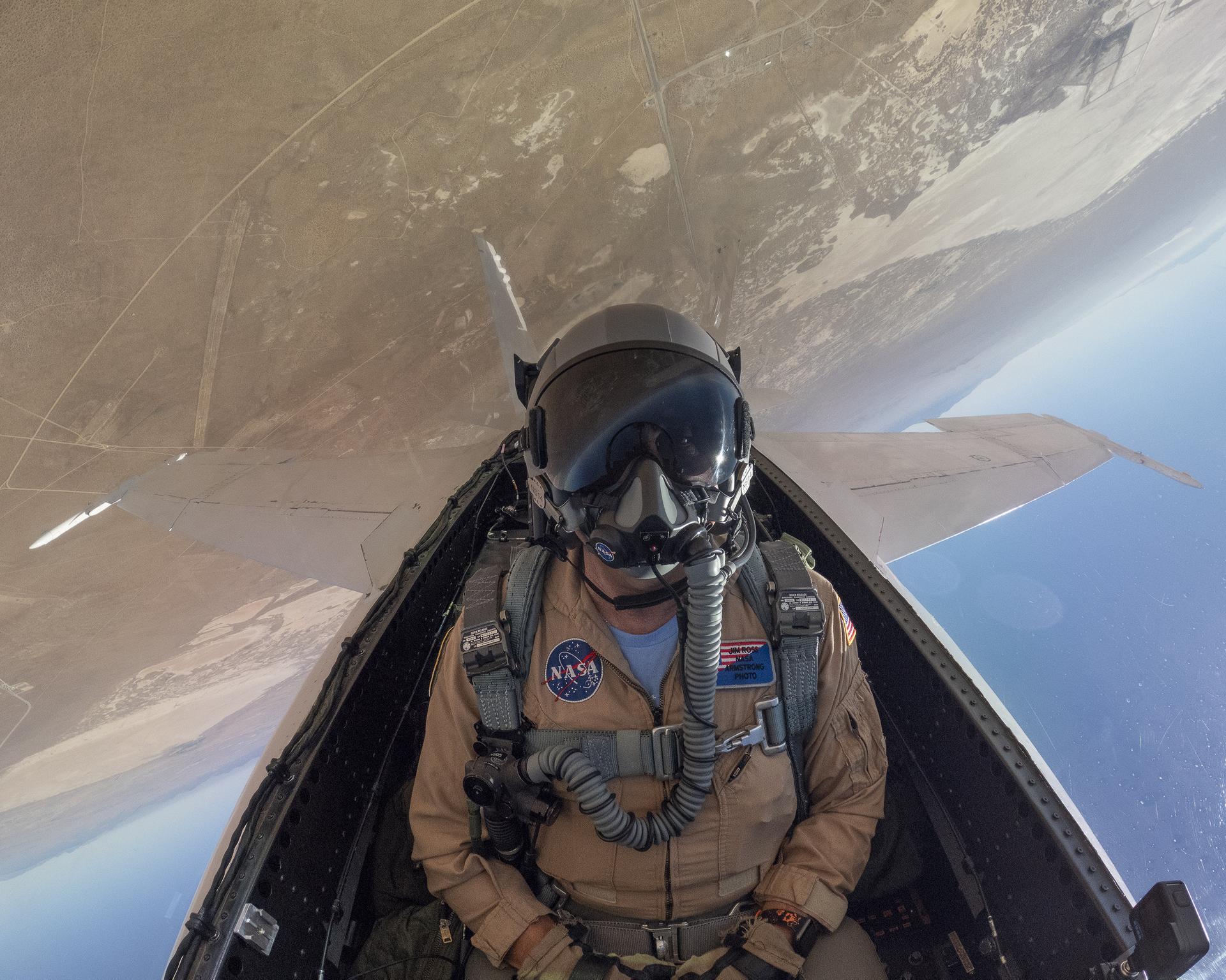
NASA photographer Jim Ross captures a selfie in the rear seat of an F/A-18 during a flyover of the U.S. Air Force Test Center’s Red, White, and Boom celebration of America’s 250th anniversary and NASA Armstrong’s commemoration of its 80th year at Edwards Air Force Base, California, on Friday, Sept. 18, 2026. The event brought together the workforce, families, and the Edwards community for a high‑energy day featuring a Flightline 5K, Ramp Fest and STEM Expo, static aircraft displays, hands‑on STEM activities, and a NASA flyover with a sonic boom.
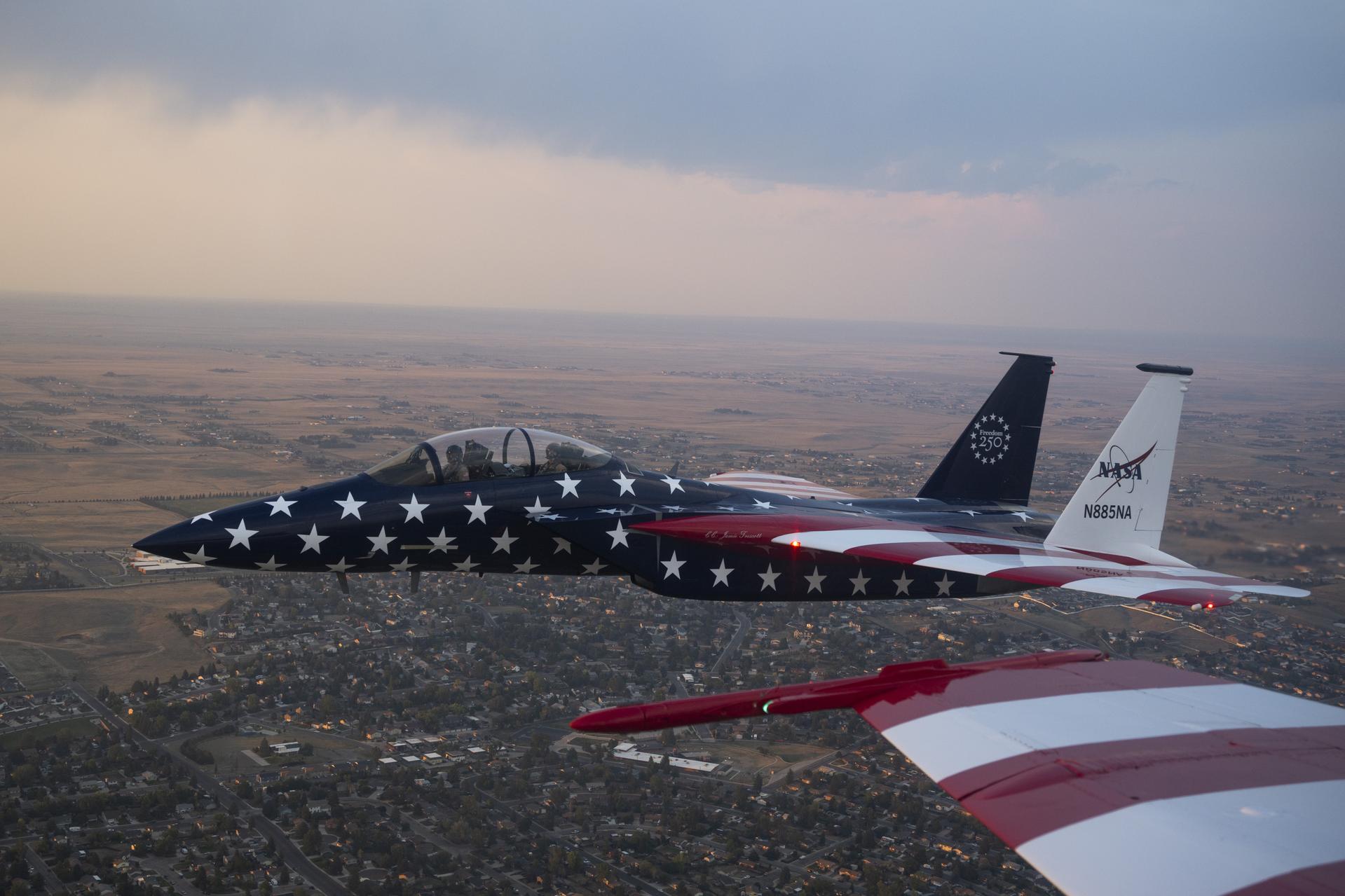
A NASA F‑15 aircraft is shown flying next to a NASA F/A‑18 during a cross‑country flight from Spokane, Washington, to Washington, D.C., on Thursday, July 2, 2026. The full F‑15 is visible, along with a partial view of the F/A‑18’s wing, as both aircraft display new red, white, and blue paint to celebrate America’s 250th birthday. The aircraft, from NASA’s Armstrong Flight Research Center in Edwards, California, participated in the Freedom 250 flyover with other NASA and military aircraft on Saturday, July 4, 2026. NASA/Jim Ross
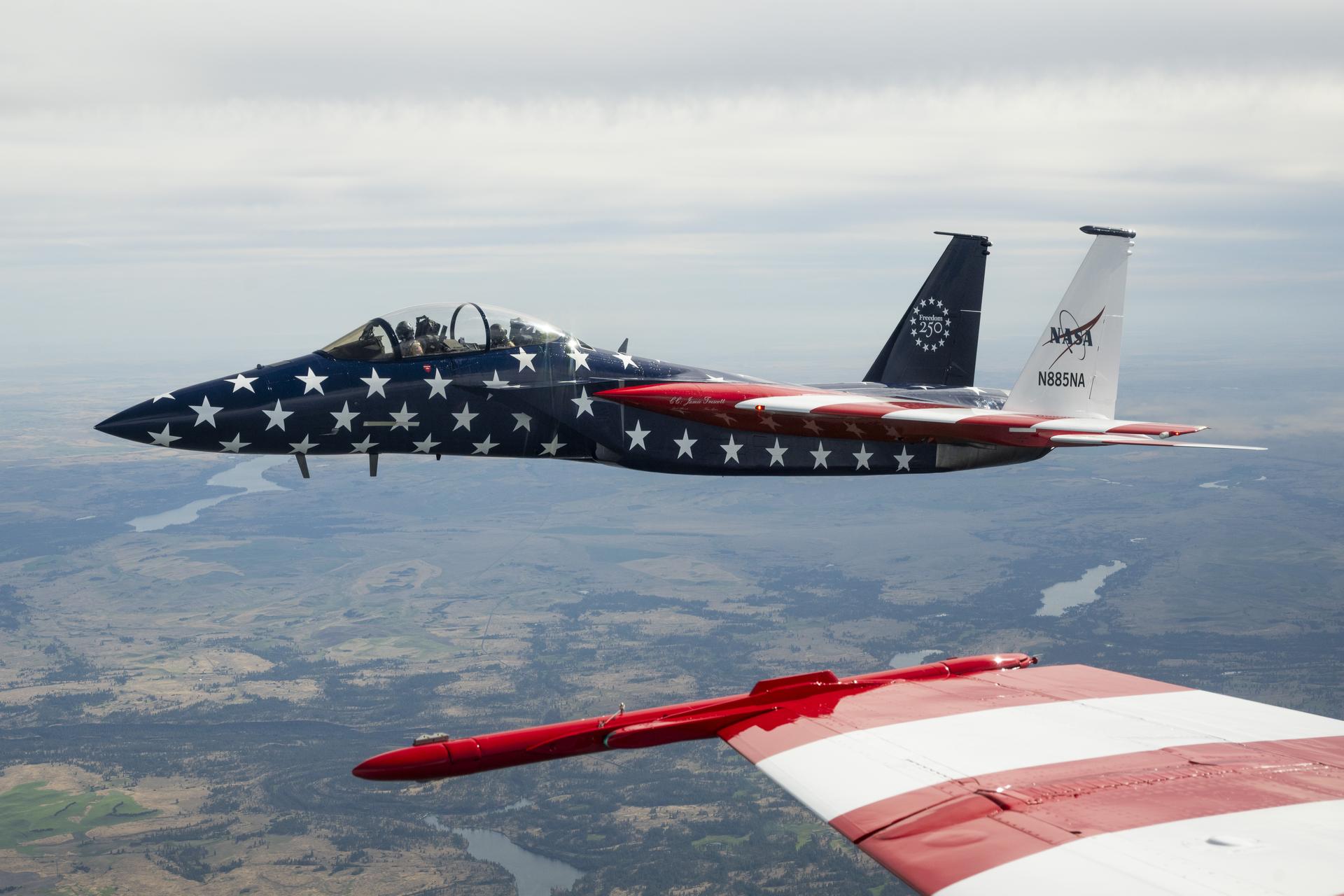
A NASA F‑15 aircraft is shown flying next to a NASA F/A‑18 during a cross‑country flight from Spokane, Washington, to Washington, D.C., on Thursday, July 2, 2026. The full F‑15 is visible, along with a partial view of the F/A‑18’s wing, as both aircraft display new red, white, and blue paint to celebrate America’s 250th birthday. The aircraft, from NASA’s Armstrong Flight Research Center in Edwards, California, participated in the Freedom 250 flyover with other NASA and military aircraft on Saturday, July 4, 2026. NASA/Jim Ross
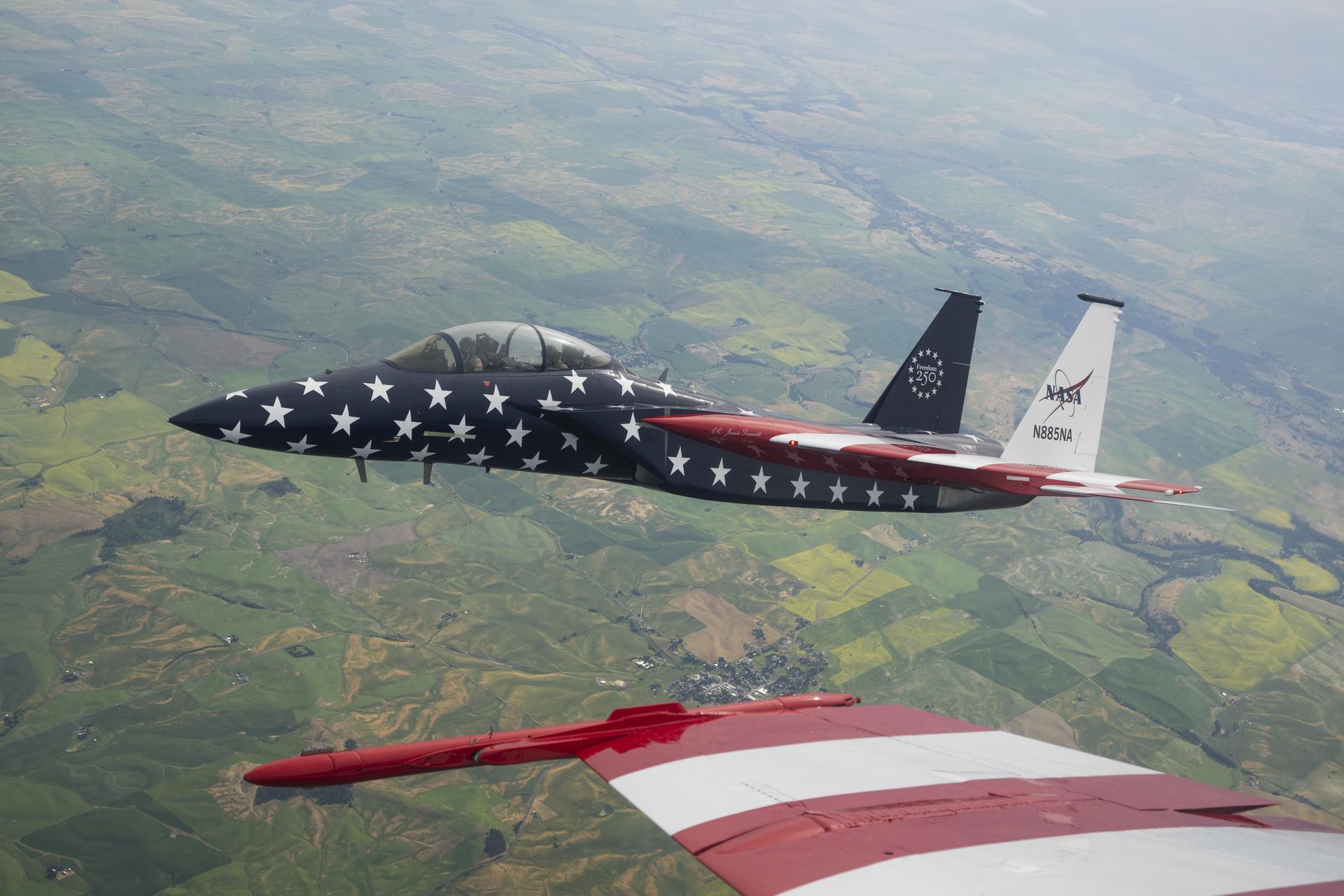
A NASA F‑15 aircraft is shown flying next to a NASA F/A‑18 during a cross‑country flight from Spokane, Washington, to Washington, D.C., on Thursday, July 2, 2026. The full F‑15 is visible, along with a partial view of the F/A‑18’s wing, as both aircraft display new red, white, and blue paint to celebrate America’s 250th birthday. The aircraft, from NASA’s Armstrong Flight Research Center in Edwards, California, participated in the Freedom 250 flyover with other NASA and military aircraft on Saturday, July 4, 2026. NASA/Jim Ross
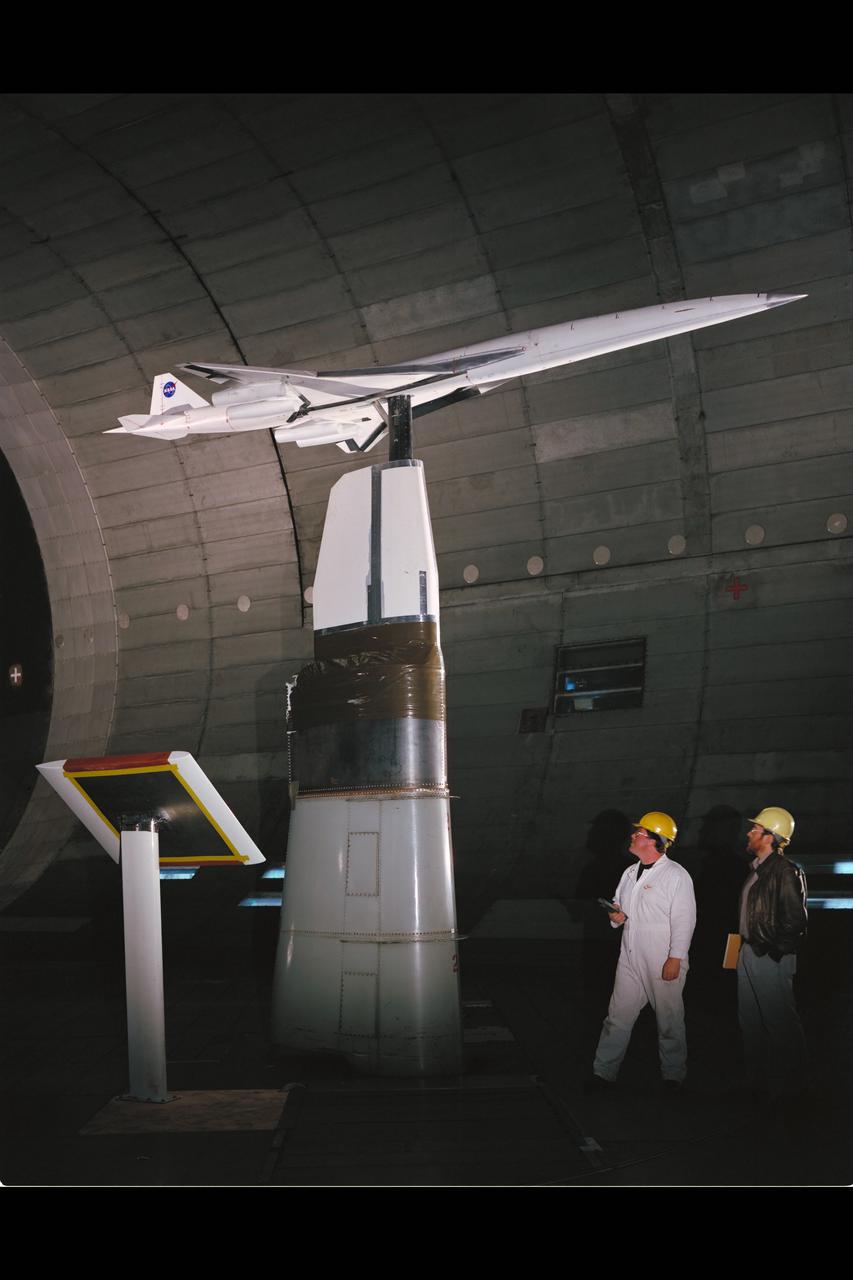
HSCT (High Speed Civil Transport) Ref-H Model test-594 in 40x80ft w.t. with Jim Ross & Boeing Engineer
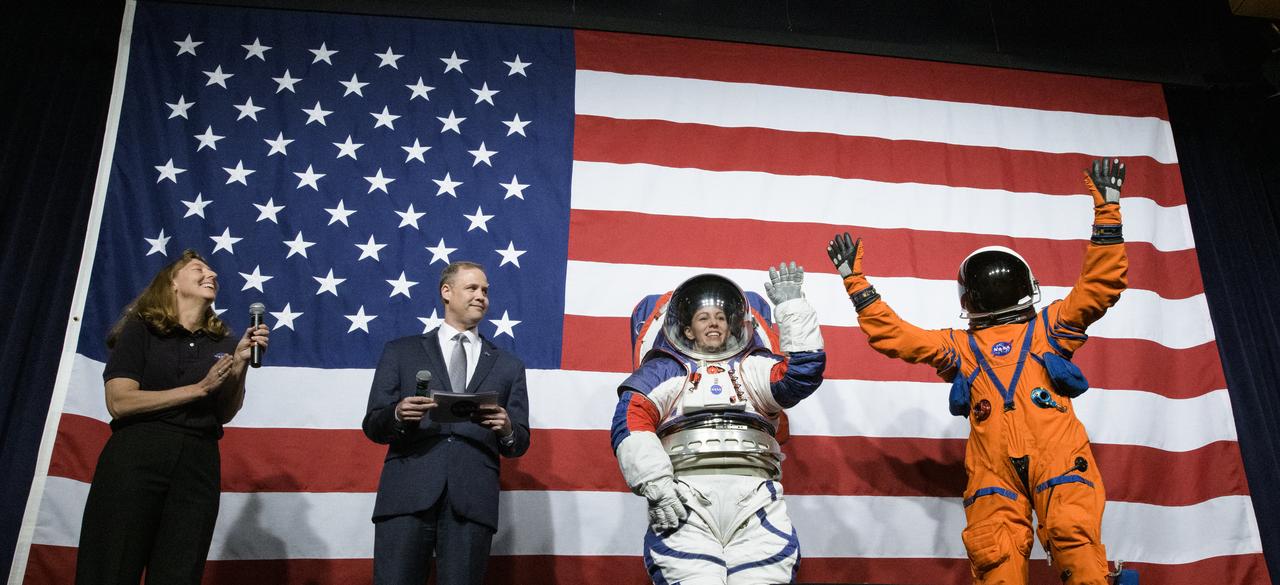
Amy Ross, a spacesuit engineer at NASA’s Johnson Space Center, left, and NASA Administrator Jim Bridenstine, second from left, watch as Kristine Davis, a spacesuit engineer at NASA’s Johnson Space Center, wearing a ground prototype of NASA’s new Exploration Extravehicular Mobility Unit (xEMU), and Dustin Gohmert, Orion Crew Survival Systems Project Manager at NASA’s Johnson Space Center, wearing the Orion Crew Survival System suit, right, wave after being introduced by the administrator, Tuesday, Oct. 15, 2019 at NASA Headquarters in Washington. The xEMU suit improves on the suits previous worn on the Moon during the Apollo era and those currently in use for spacewalks outside the International Space Station and will be worn by first woman and next man as they explore the Moon as part of the agency’s Artemis program. The Orion suit is designed for a custom fit and incorporates safety technology and mobility features that will help protect astronauts on launch day, in emergency situations, high-risk parts of missions near the Moon, and during the high-speed return to Earth. Photo Credit: (NASA/Joel Kowsky)
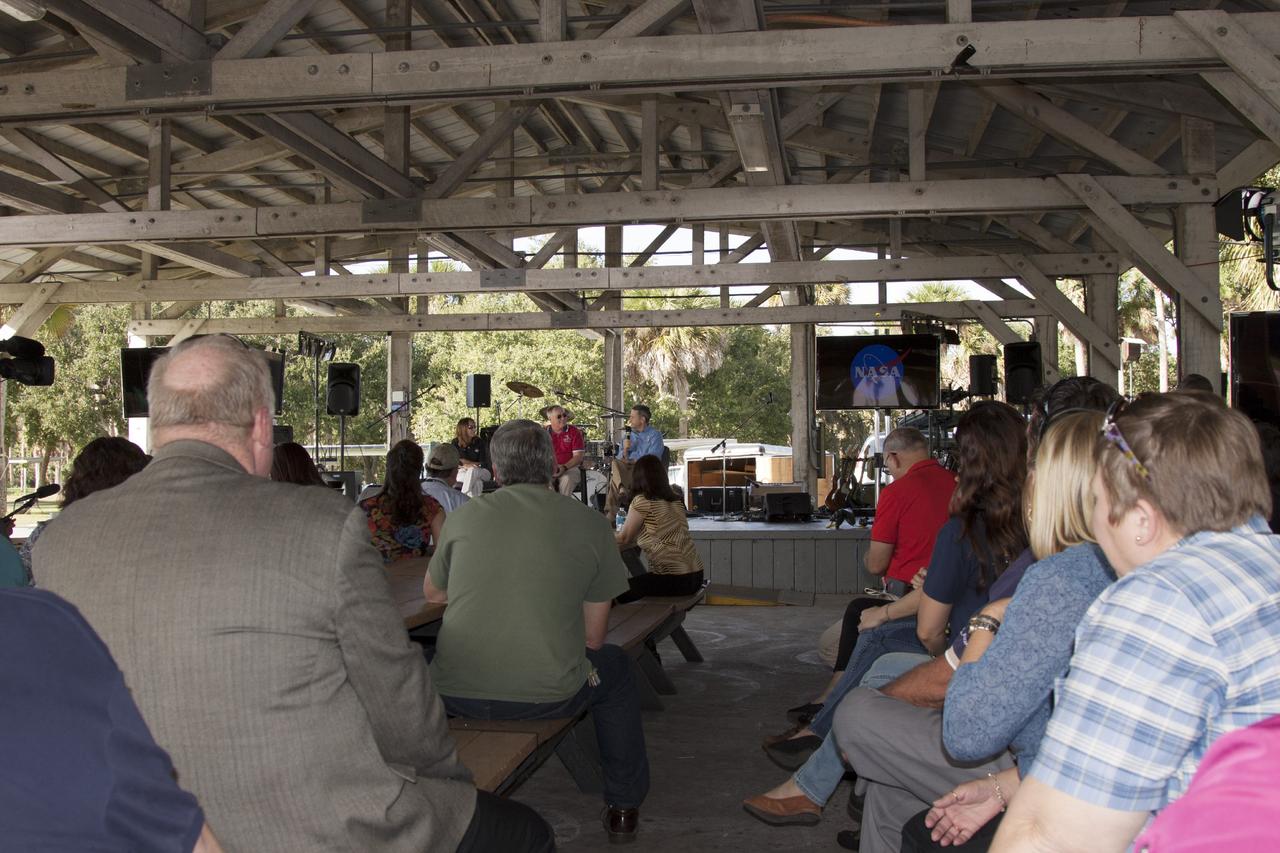
CAPE CANAVERAL, Fla. – At NASA's Kennedy Space Center in Florida, three members of the STS-88 space shuttle crew speak to spaceport employees during a celebration commemorating the 15th anniversary of the start of assembly of the International Space Station. On stage, from the left, are mission specialist Nancy Currie and Jerry Ross, along with and mission commander Bob Cabana, who is Kennedy's director. The Russian Space Agency's Functional Cargo Block, named "Zarya," was launched from the Baikonur Cosmodrome in Kazakhstan on Nov. 20, 1998. Two weeks later, on Dec. 4, 1998, the space shuttle Endeavour lifted off from Kennedy on STS-88 with node 1, called "Unity." In addition to Cabana, Curie and Ross, the crew also included pilot Rick Sturckow, along with mission specialists Jim Newman and Sergei Krikalev, a Russian cosmonaut. For more information, visit: http://www.nasa.gov/mission_pages/station/main/index.html Photo credit: NASA/Jim Grossman
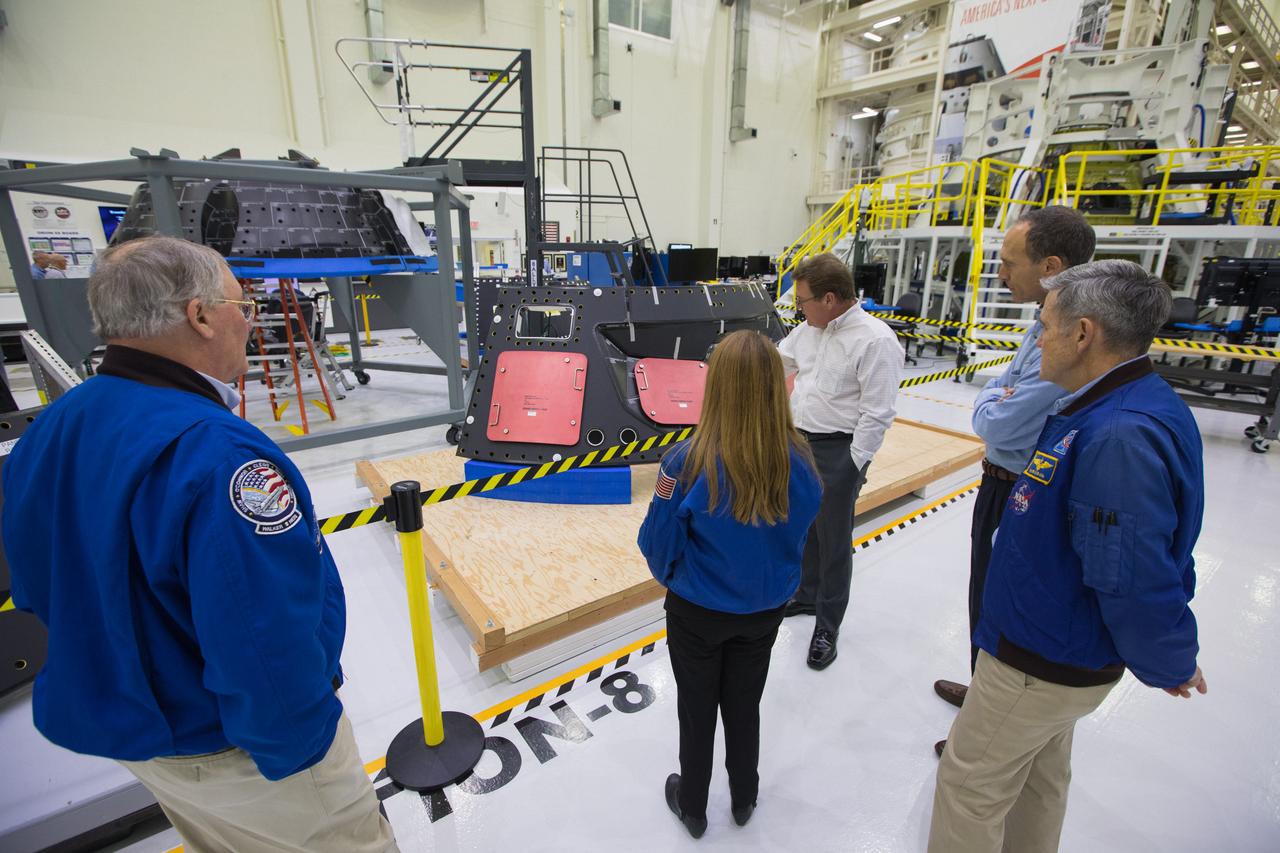
Members of the STS-88 crew tour Kennedy Space Center’s Neil Armstrong Operations & Checkout building on Dec. 10, 2018. Earlier in the day, STS-88 commander Bob Cabana, along with mission specialists Jerry Ross, Nancy Currie-Gregg and Jim Newman, held a panel discussion in recognition of the 20th anniversary of the first International Space Station assembly mission.
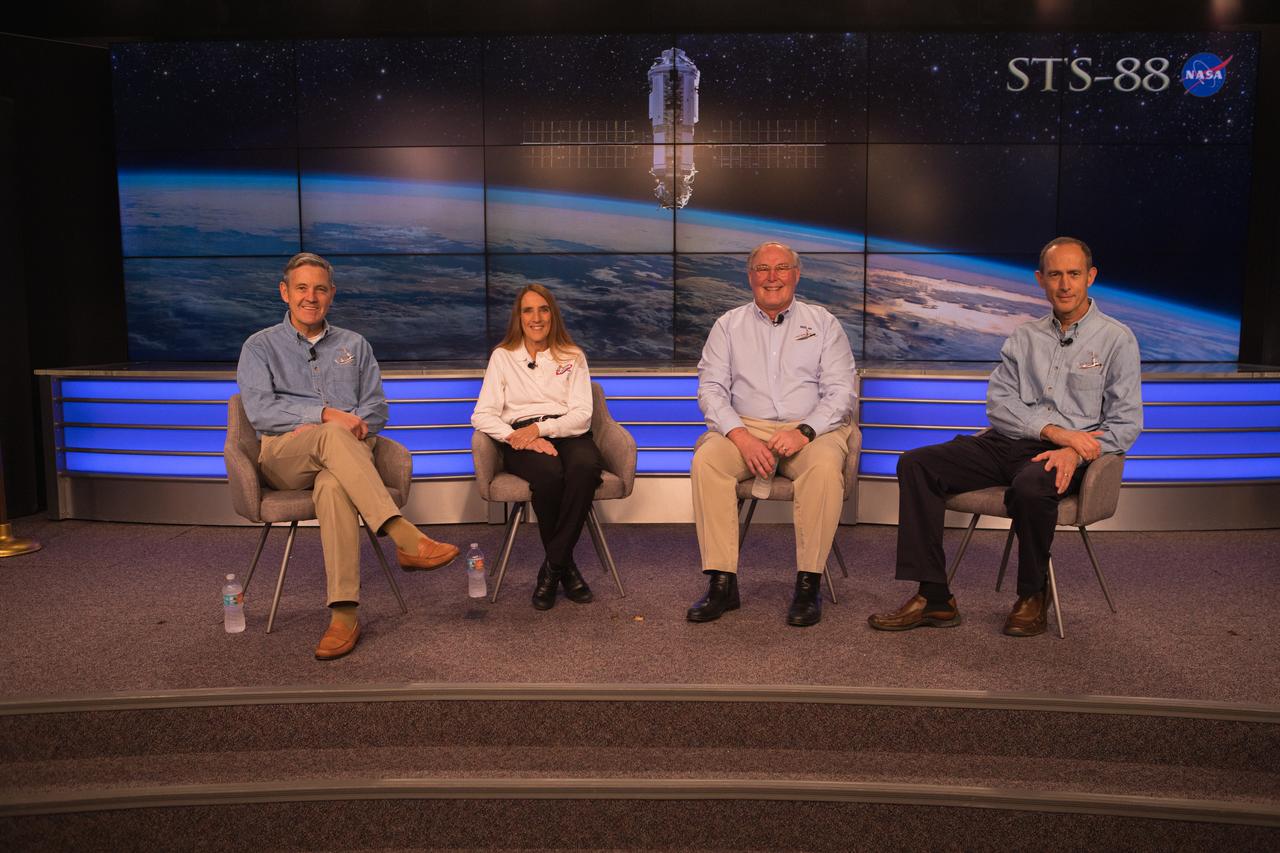
From left, Kennedy Space Center Director and STS-88 commander Bob Cabana, along with STS-88 mission specialists Nancy Currie-Gregg, Jerry Ross and Jim Newman, are recognized Dec. 10, 2018, at Kennedy Space Center in Florida during a 20th anniversary celebration of the first International Space Station assembly mission. The STS-88 mission paved the way for humans to live and work on the space station.
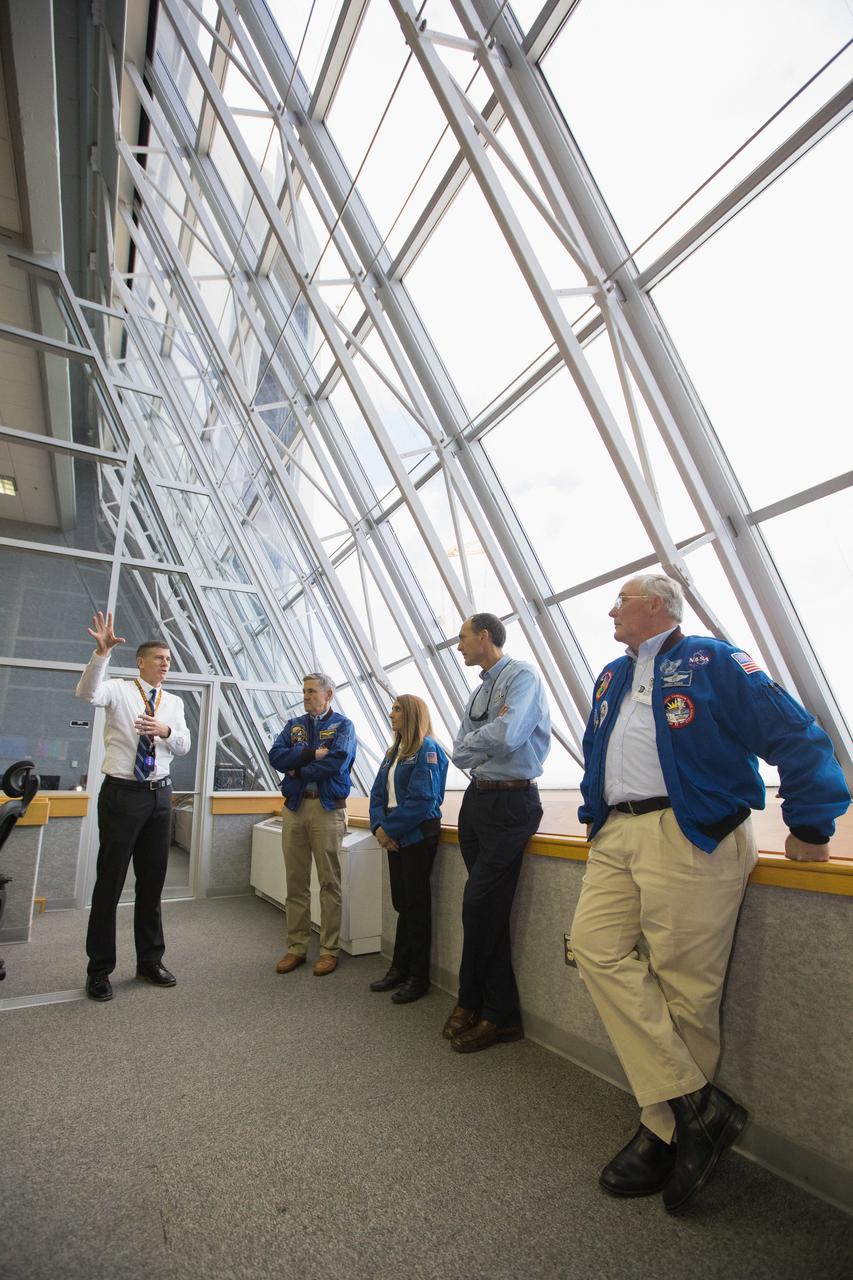
Chief NASA Test Director Jeremy Graeber, left, talks with members of the STS-88 crew inside the Launch Control Center at Kennedy Space Center in Florida on Dec. 10, 2018. They are, from left, Commander Bob Cabana, and mission specialists Nancy Currie-Gregg, Jim Newman and Jerry Ross. Earlier in the day, the group held a panel discussion in recognition of the 20th anniversary of the mission.
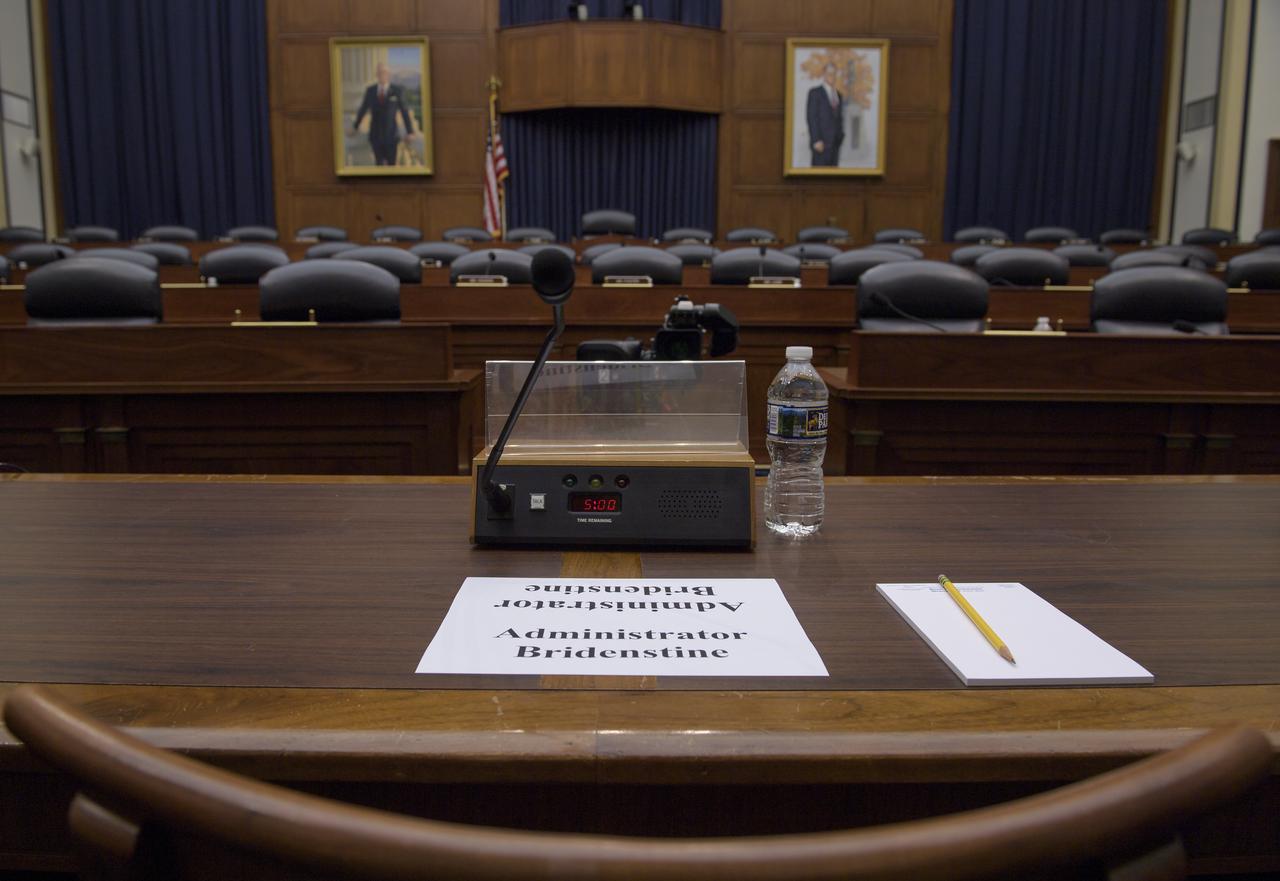
House Subcommittee on Strategic Forces holds a hearing on Space Situational Awareness: Whole of Government Perspectives on Roles and Responsibilities, Friday, June 22, 2018 at the Rayburn House Office Building in Washington. Witnesses: NASA Administrator Jim Bridenstine; Commander, U.S. Strategic Command, General John Hyten; and Secretary of Commerce Wilbur Ross. Photo Credit: (NASA/Bill Ingalls)
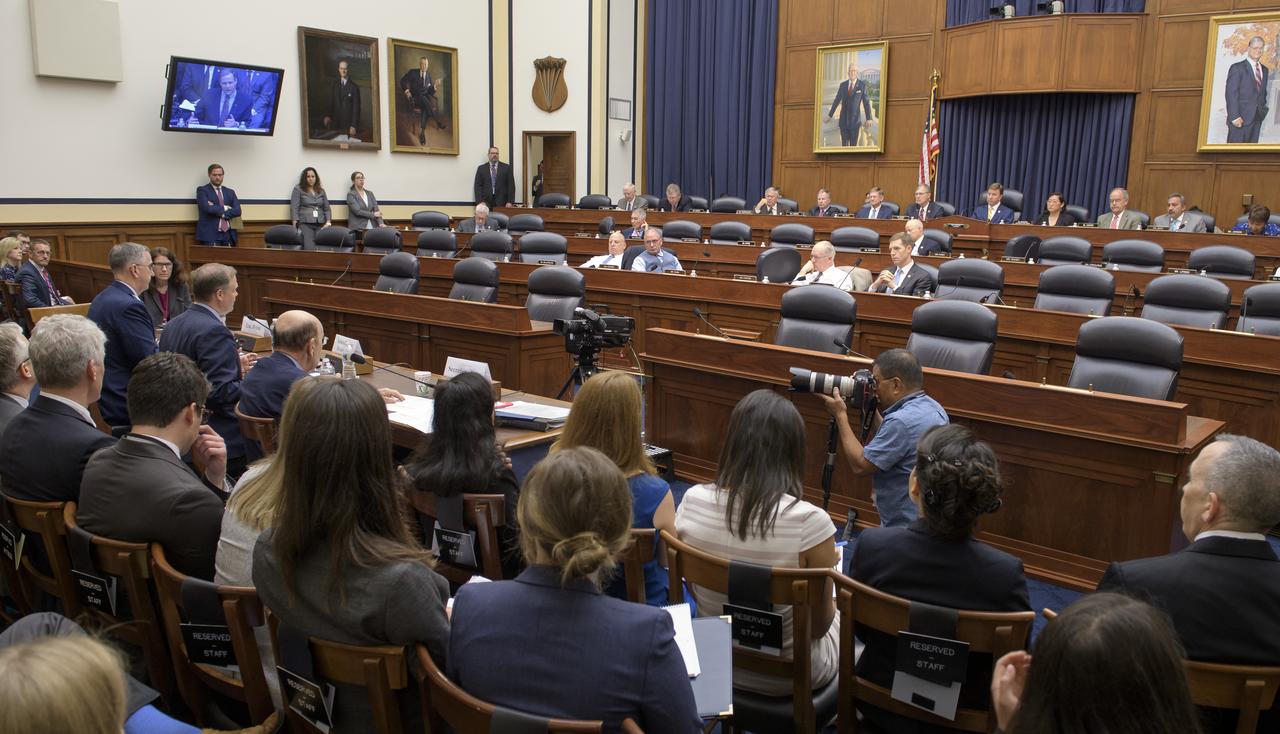
House Subcommittee on Strategic Forces holds a hearing on Space Situational Awareness: Whole of Government Perspectives on Roles and Responsibilities, Friday, June 22, 2018 at the Rayburn House Office Building in Washington. Witnesses: NASA Administrator Jim Bridenstine; Commander, U.S. Strategic Command, General John Hyten; and Secretary of Commerce Wilbur Ross. Photo Credit: (NASA/Bill Ingalls)
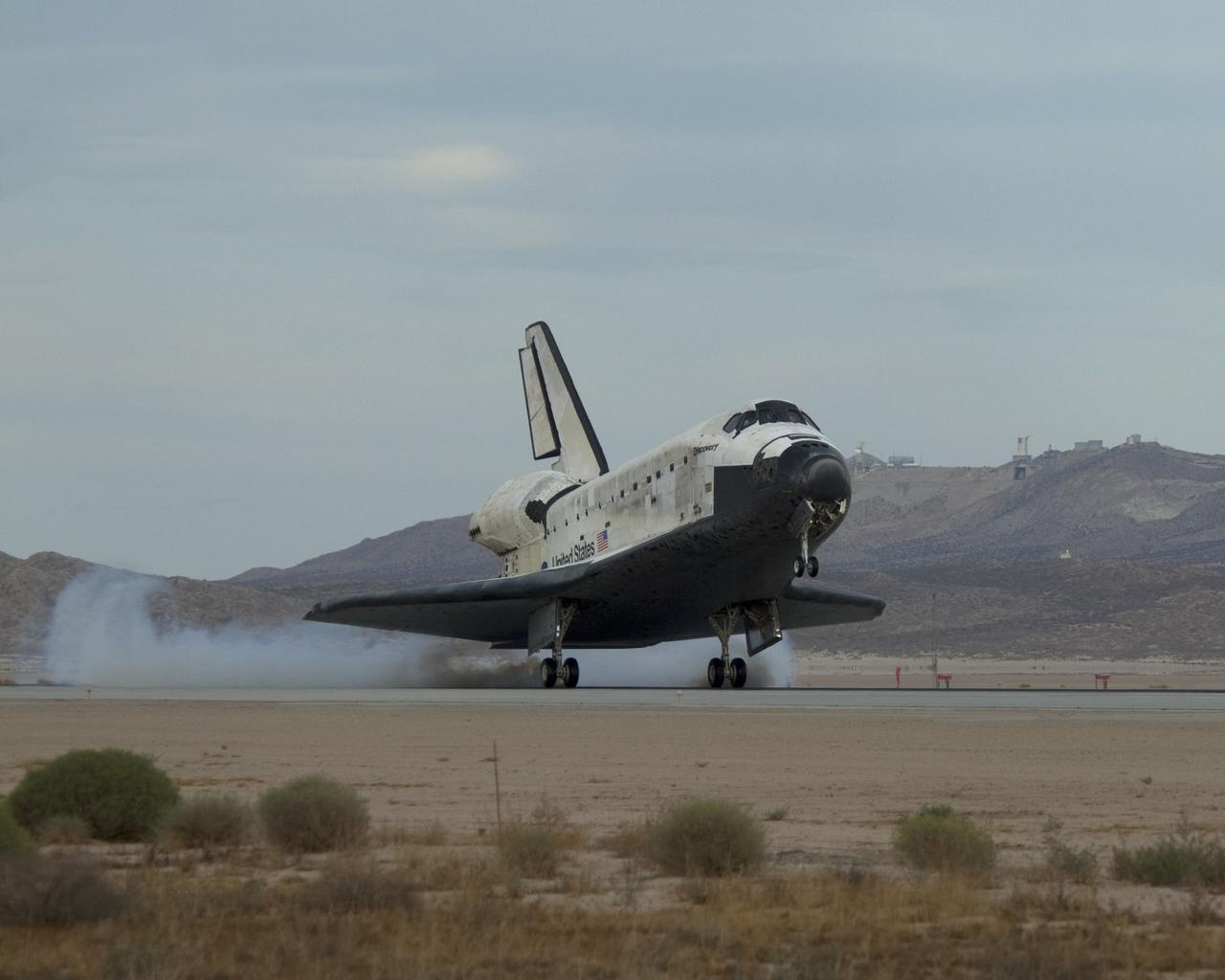
EDWARDS AIR FORCE BASE, Calif. -- (ED09-0253-01) Streams of smoke trail from the main landing gear tires as Space Shuttle Discovery touches down on Runway 22L at Edwards Air Force Base to conclude the almost 14-day STS-128 mission to the International Space Station. (NASA photo / Jim Ross)

Kennedy Space Center Director Bob Cabana, front left, talks with Scott Wilson, manager of production operations for the Orion Program, inside Kennedy’s Neil Armstrong Operations and Checkout building on Dec. 10, 2018. Cabana, who commanded the first International Space Station assembly mission, was accompanied by fellow STS-88 crew members Jim Newman, Nancie Currie-Gregg and Jerry Ross. Earlier in the day, the group held a panel discussion in recognition of the 20th anniversary of the mission.
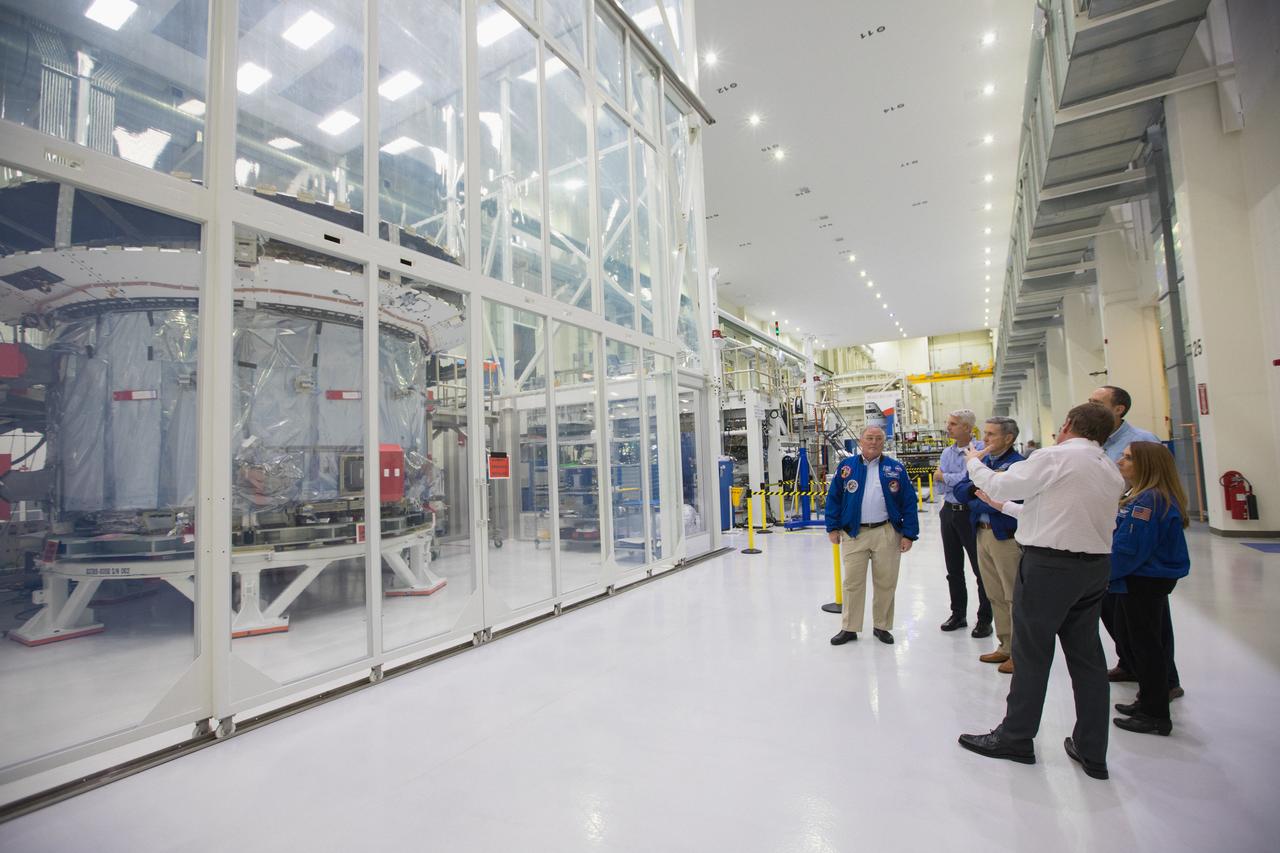
Members of the STS-88 crew tour Kennedy Space Center’s Neil Armstrong Operations & Checkout building on Dec. 10, 2018. Earlier in the day, STS-88 commander Bob Cabana, along with mission specialists Jerry Ross, Nancy Currie-Gregg and Jim Newman, held a panel discussion in recognition of the 20th anniversary of the first International Space Station assembly mission.
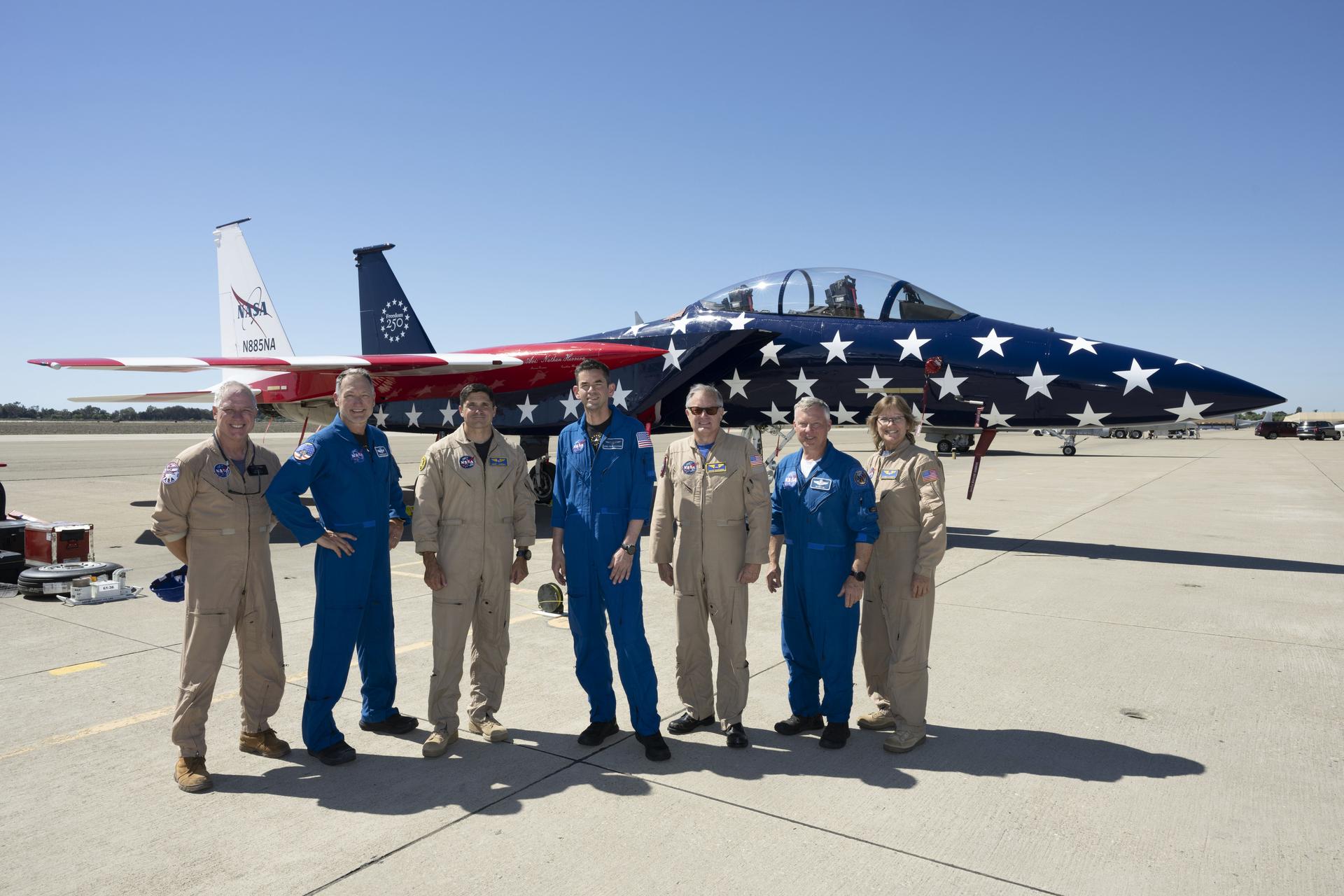
NASA’s 15th Administrator Jared Issacman, center, poses with, from left, NASA photographer Jim Ross; Sean Gustafson, senior advisor to the administrator; NASA pilot Mike Lippert; NASA pilot Wayne Ringelberg; Todd Ericson, senior advisor to the administrator; and videographer Lori Losey in front of agency’s newly painted F‑15, which honors America’s 250th birthday, during the Pacific Airshow in Huntington Beach, California, Saturday, Oct. 3, 2026.
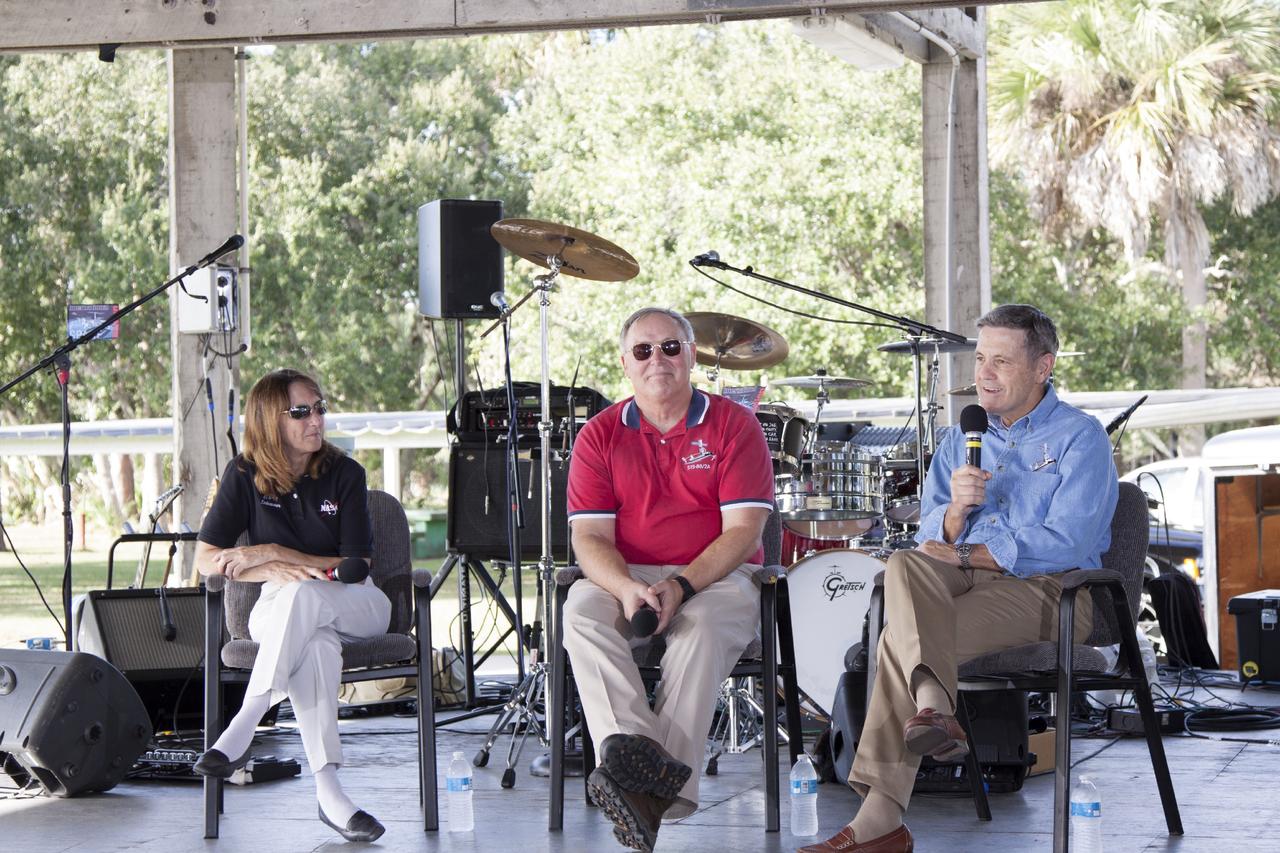
CAPE CANAVERAL, Fla. – At NASA's Kennedy Space Center in Florida, the center's director, Bob Cabana, right, speaks during an employee celebration commemorating the 15th anniversary of the start of assembly of the International Space Station. Cabana served as commander of STS-88, the space shuttle mission that launched the first American-built element of the space station, beginning the effort to construct the orbiting complex. Participating in the presentation, from the left, are STS-88 crew members Nancy Currie, Jerry Ross and Cabana. The Russian Space Agency's Functional Cargo Block, named "Zarya," was launched from the Baikonur Cosmodrome in Kazakhstan on Nov. 20, 1998. Two weeks later, on Dec. 4, 1998, the space shuttle Endeavour lifted off from Kennedy on STS-88 with node 1, called "Unity." In addition to Cabana, Curie and Ross, the crew also included pilot Rick Sturckow, along with mission specialists Jim Newman and Sergei Krikalev, a Russian cosmonaut. For more information, visit: http://www.nasa.gov/mission_pages/station/main/index.html Photo credit: NASA/Jim Grossman
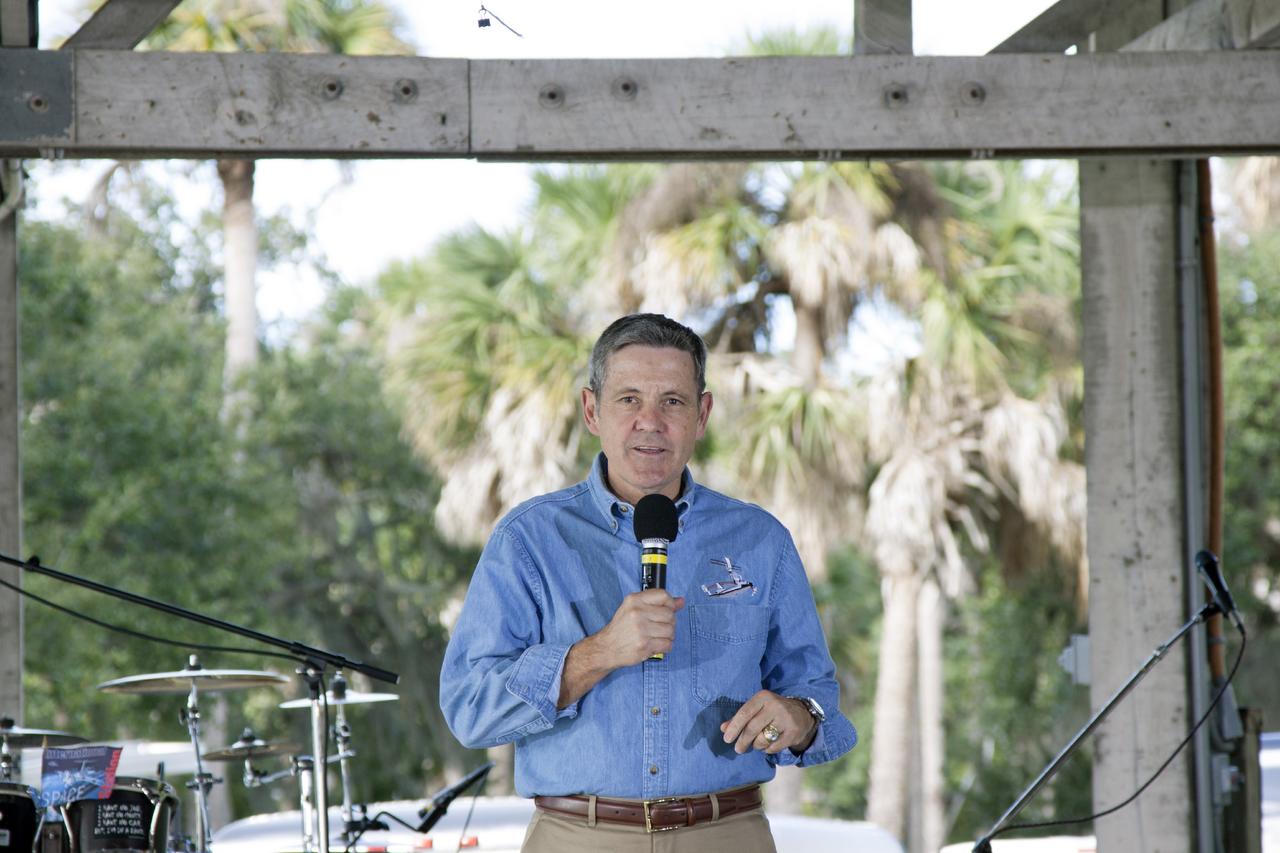
CAPE CANAVERAL, Fla. – At NASA's Kennedy Space Center in Florida, the center's director, Bob Cabana, speaks during an employee celebration commemorating the 15th anniversary of the start of assembly of the International Space Station. Cabana served as commander of STS-88, the space shuttle mission that launched the first American-built element of the space station, beginning the effort to construct the orbiting complex. Also participating in the ceremony were STS-88 mission specialists Nancy Currie and Jerry Ross. The Russian Space Agency's Functional Cargo Block, named "Zarya," was launched from the Baikonur Cosmodrome in Kazakhstan on Nov. 20, 1998. Two weeks later, on Dec. 4, 1998, the space shuttle Endeavour lifted off from Kennedy on STS-88 with node 1, called "Unity." In addition to Cabana, Curie and Ross, the crew also included pilot Rick Sturckow, along with mission specialists Jim Newman and Sergei Krikalev, a Russian cosmonaut. For more information, visit: http://www.nasa.gov/mission_pages/station/main/index.html Photo credit: NASA/Jim Grossman
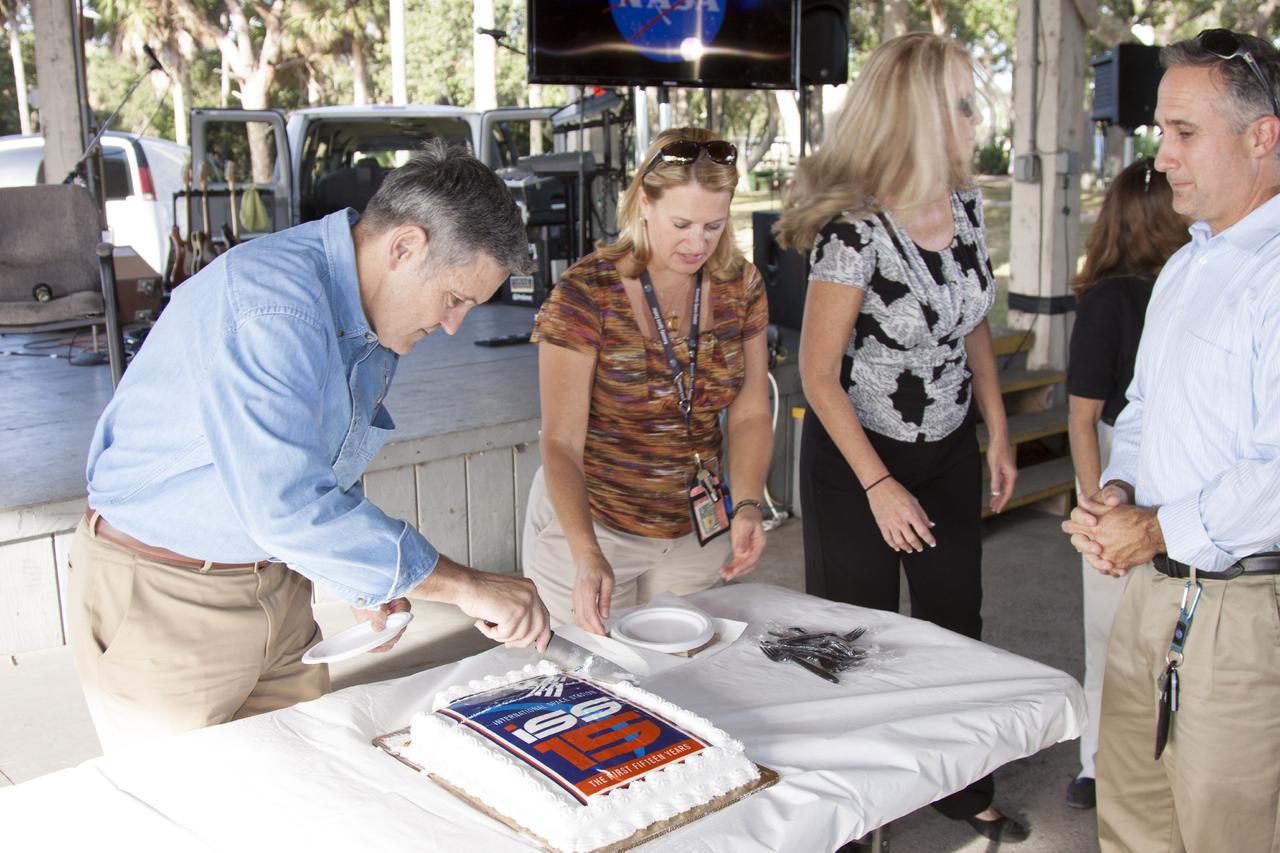
CAPE CANAVERAL, Fla. – At NASA's Kennedy Space Center in Florida, the center's director, Bob Cabana, cuts a 15th anniversary cake during an employee celebration commemorating the start of assembly of the International Space Station. Cabana served as commander of STS-88, the space shuttle mission that launched the first American-built element of the space station, beginning the effort to construct the orbiting complex. Also participating in the ceremony were STS-88 mission specialists Nancy Currie and Jerry Ross. The Russian Space Agency's Functional Cargo Block, named "Zarya," was launched from the Baikonur Cosmodrome in Kazakhstan on Nov. 20, 1998. Two weeks later, on Dec. 4, 1998, the space shuttle Endeavour lifted off from Kennedy on STS-88 with node 1, called "Unity." In addition to Cabana, Curie and Ross, the crew also included pilot Rick Sturckow, along with mission specialists Jim Newman and Sergei Krikalev, a Russian cosmonaut. For more information, visit: http://www.nasa.gov/mission_pages/station/main/index.html Photo credit: NASA/Jim Grossman
![EDWARDS AFB, CALIF. -- After traveling 5.8 million miles in space during 217 orbits, and with drag chute deployed, Endeavour lands on concrete runway 22 at Dryden Flight Research Center, Edwards Air Force Base, Calif., completing mission STS-111. Three days of unfavorable weather conditions at KSC prompted the decision to land at Edwards, which enjoyed pristine, dry conditions.. Main gear touchdown occurred at 1:57:41 p.m. EDT, nose gear touchdown at 1:57:53 p.m. EDT and wheel stop at 1:58:45 p.m. EDT. [Photo by Jim Ross]](https://images-assets.nasa.gov/image/KSC-02pp1114/KSC-02pp1114~medium.jpg)
EDWARDS AFB, CALIF. -- After traveling 5.8 million miles in space during 217 orbits, and with drag chute deployed, Endeavour lands on concrete runway 22 at Dryden Flight Research Center, Edwards Air Force Base, Calif., completing mission STS-111. Three days of unfavorable weather conditions at KSC prompted the decision to land at Edwards, which enjoyed pristine, dry conditions.. Main gear touchdown occurred at 1:57:41 p.m. EDT, nose gear touchdown at 1:57:53 p.m. EDT and wheel stop at 1:58:45 p.m. EDT. [Photo by Jim Ross]
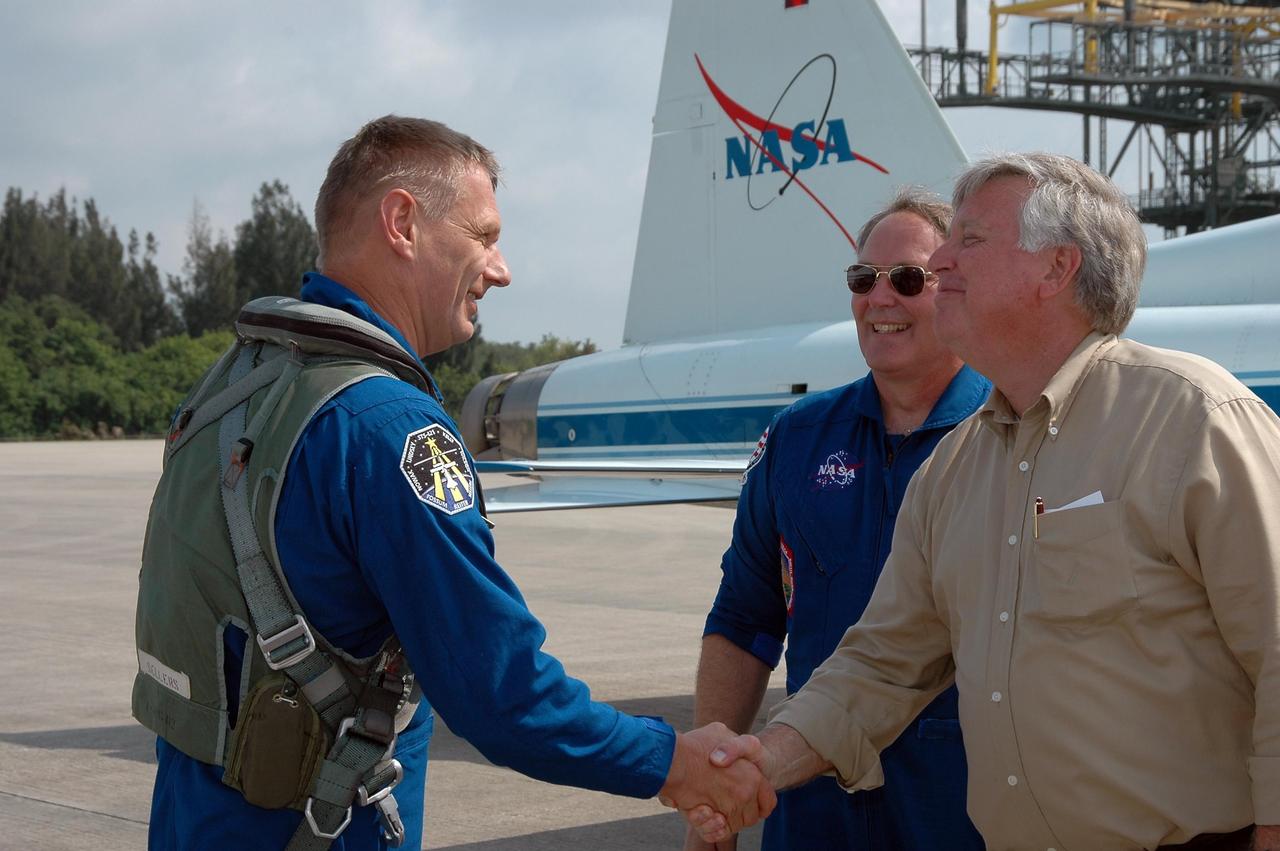
KENNEDY SPACE CENTER, FLA. - After his arrival at KSC, STS-121 Mission Specialist Piers Sellers is greeted by Center Director Jim Kennedy. Behind Kennedy is Jerry Ross, who is chief of the Vehicle Integration Test Office at Johnson Space Center. During the 12-day mission, the STS-121 crew will test new equipment and procedures to improve shuttle safety, as well as deliver supplies and make repairs to the International Space Station. This mission is the 115th shuttle flight and the 18th U.S. flight to the International Space Station. Photo credit: NASA/Kim Shiflett
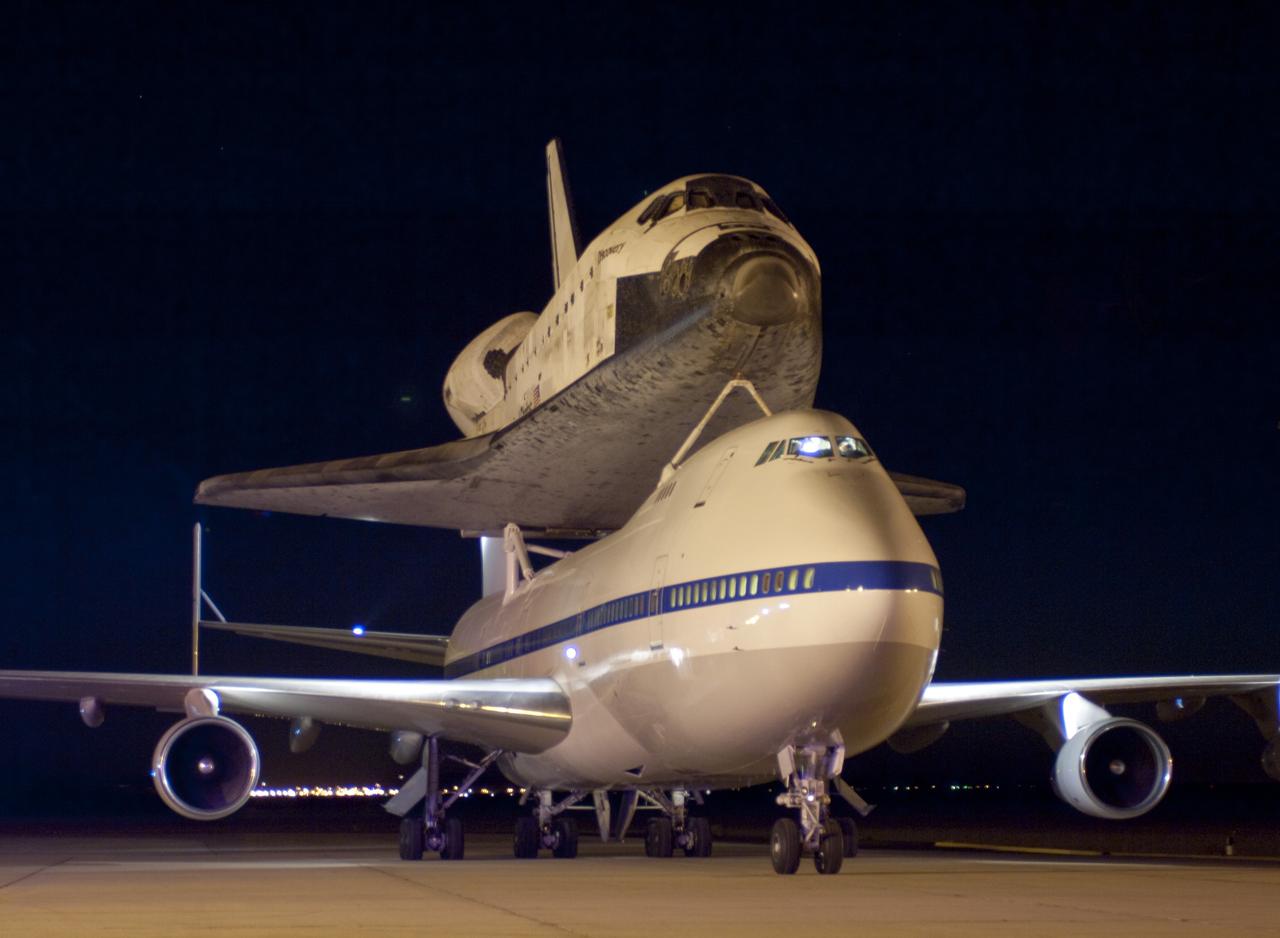
EDWARDS AIR FORCE BASE, Calif. – (ED09-0253-114) NASA’s modified Boeing 747 carrying the space shuttle Discovery taxis toward the runway at Edwards Air Force Base in Southern California shortly before dawn on Sept. 20, 2009 prior to taking off on their two-day ferry flight to the Kennedy Space Center in Florida. Discovery had landed at Edwards Sept. 11 after the almost 14-day mission STS-128 to the International Space Station. The shuttle delivered more than 7 tons of supplies, science racks and equipment, as well as additional environmental hardware to sustain six crew members on the International Space Station. NASA photo /Jim Ross
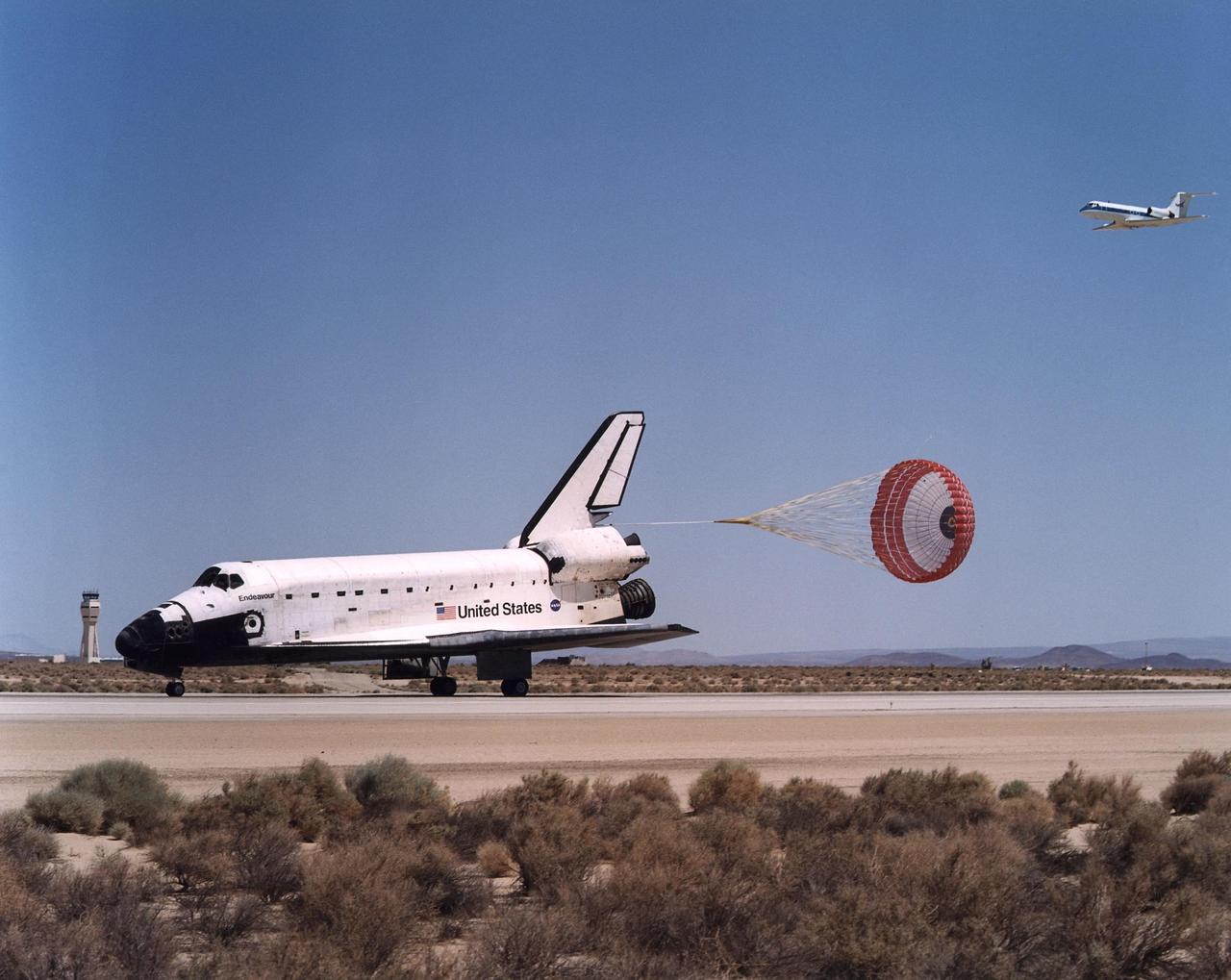
EDWARDS AFB, CALIF. -- A chase plane follows behind Endeavour as it lands on concrete runway 22 at Dryden Flight Research Center, Edwards Air Force Base, Calif., completing mission STS-111. Endeavour traveled 5.8 million miles in space during 217 orbits. Three days of unfavorable weather conditions at KSC prompted the decision to land at Edwards, which enjoyed pristine, dry conditions.. Main gear touchdown occurred at 1:57:41 p.m EDT, nose gear touchdown at 1:57:53 p.m. EDT and wheel stop at 1:58:45 p.m. EDT. [Photo by Jim Ross
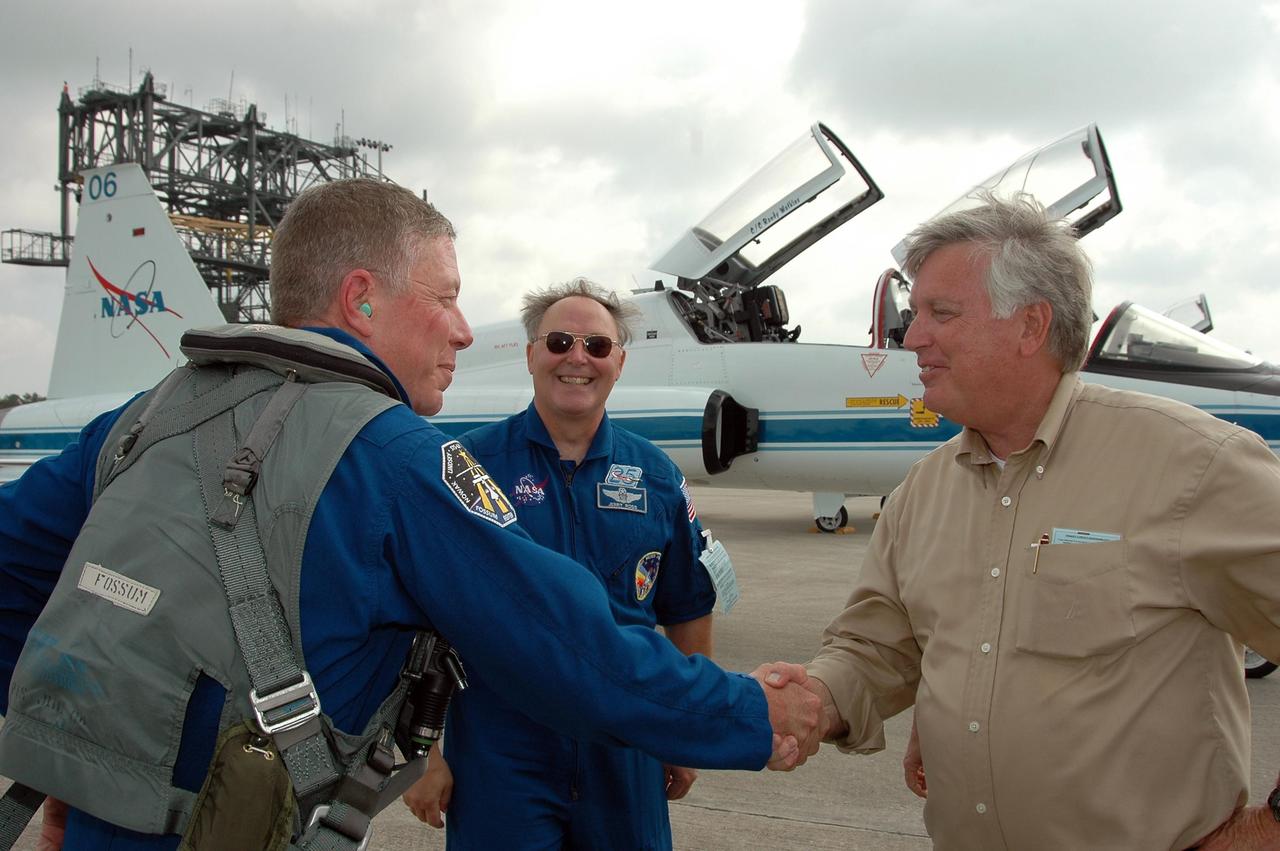
KENNEDY SPACE CENTER, FLA. - STS-121 Mission Specialist Michael Fossum (left) is greeted by Center Director Jim Kennedy after arriving at KSC to get ready for launch on July 1. Behind him is Jerry Ross, who is chief of the Vehicle Integration Test Office at Johnson Space Center. During the 12-day mission, the STS-121 crew will test new equipment and procedures to improve shuttle safety, as well as deliver supplies and make repairs to the International Space Station. This mission is the 115th shuttle flight and the 18th U.S. flight to the International Space Station. Photo credit: NASA/Kim Shiflett
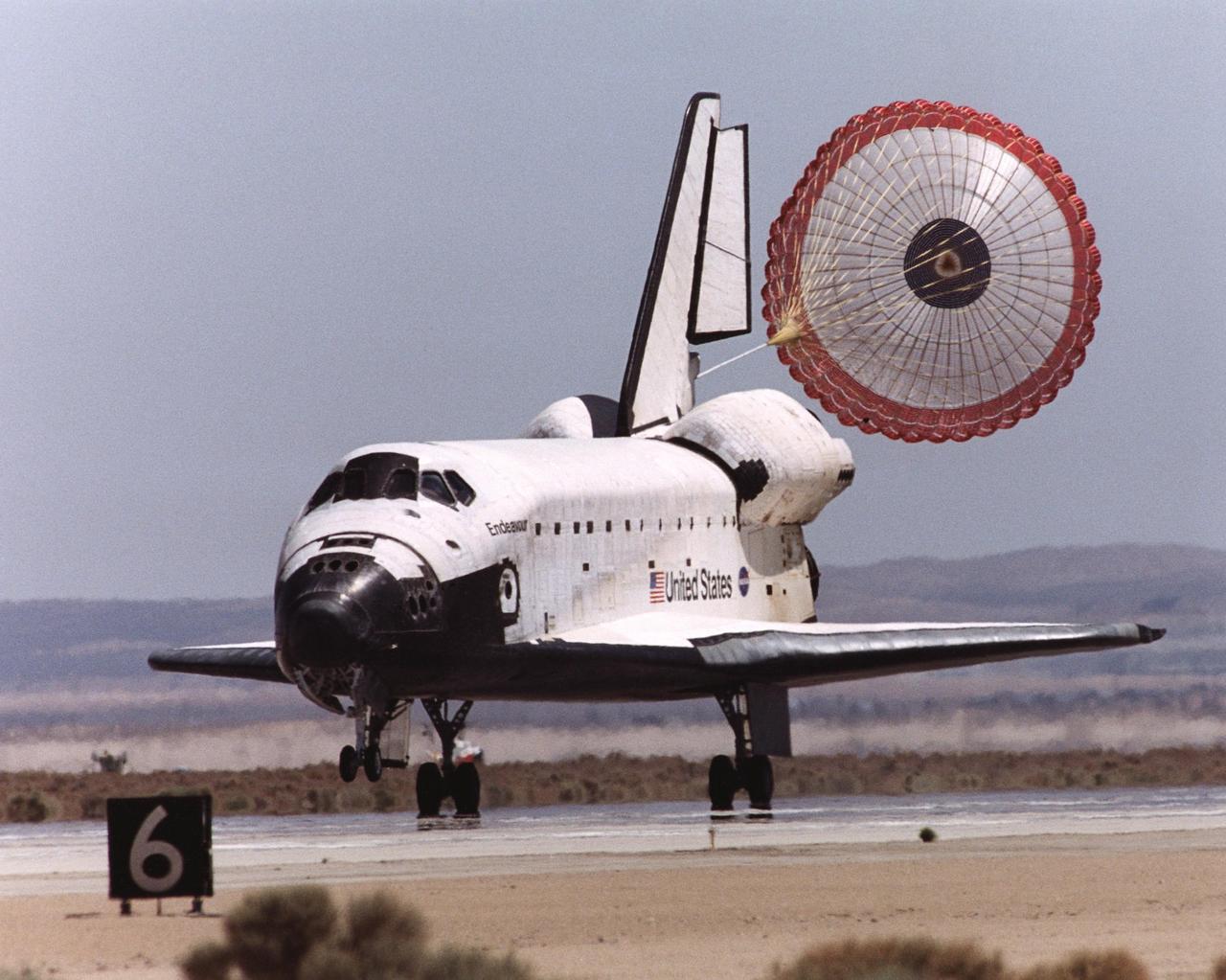
EDWARDS AFB, CALIF. -- After traveling 5.8 million miles in space during 217 orbits, and with drag chute deployed, Endeavour lands on concrete runway 22 at Dryden Flight Research Center, Edwards Air Force Base, Calif., completing mission STS-111. Three days of unfavorable weather conditions at KSC prompted the decision to land at Edwards, which enjoyed pristine, dry conditions.. Main gear touchdown occurred at 1:57:41 p.m EDT, nose gear touchdown at 1:57:53 p.m. EDT and wheel stop at 1:58:45 p.m. EDT. [Photo by Jim Ross
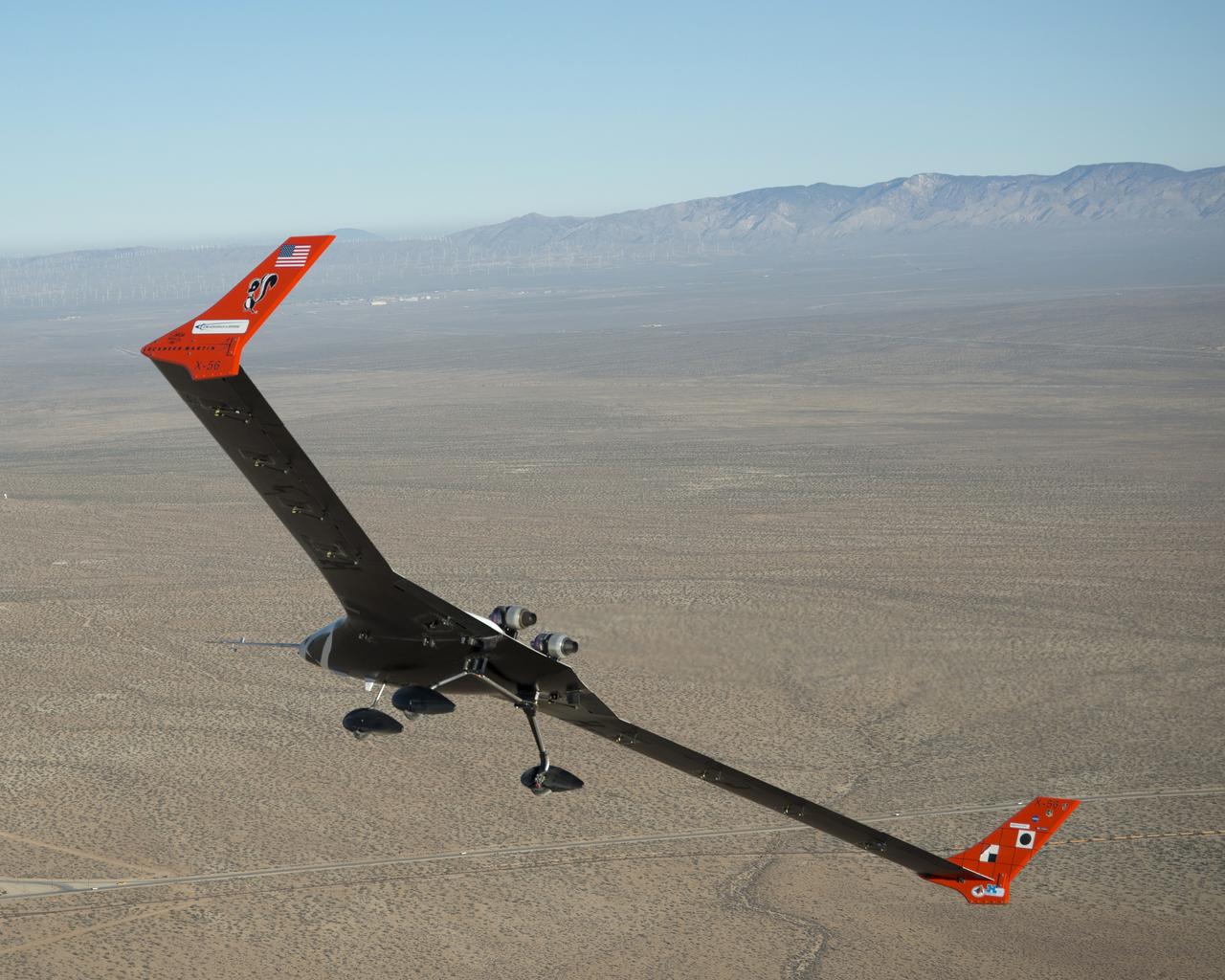
The X-56A flies over the desert near NASA Armstrong Flight Research Center, Edwards, California. NASA researchers are using the remotely piloted X-56A to explore the behavior of lightweight, flexible aircraft structures.
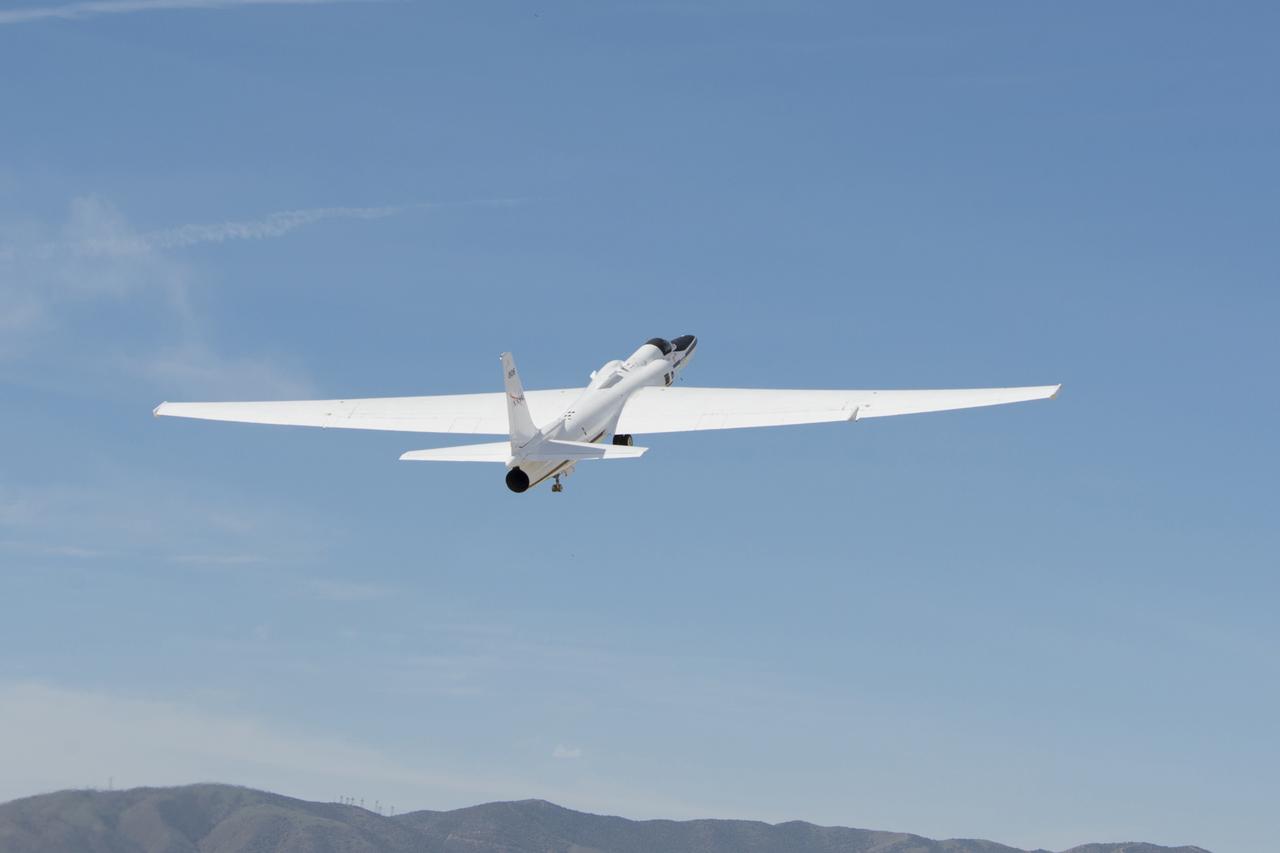
NASA’s ER-2 takes off from its base of operations at NASA’s Armstrong Flight Research Center Building 703 in Palmdale, California to test instruments that will support upcoming science flights for the Geostationary Operational Environmental Satellite-R-series.
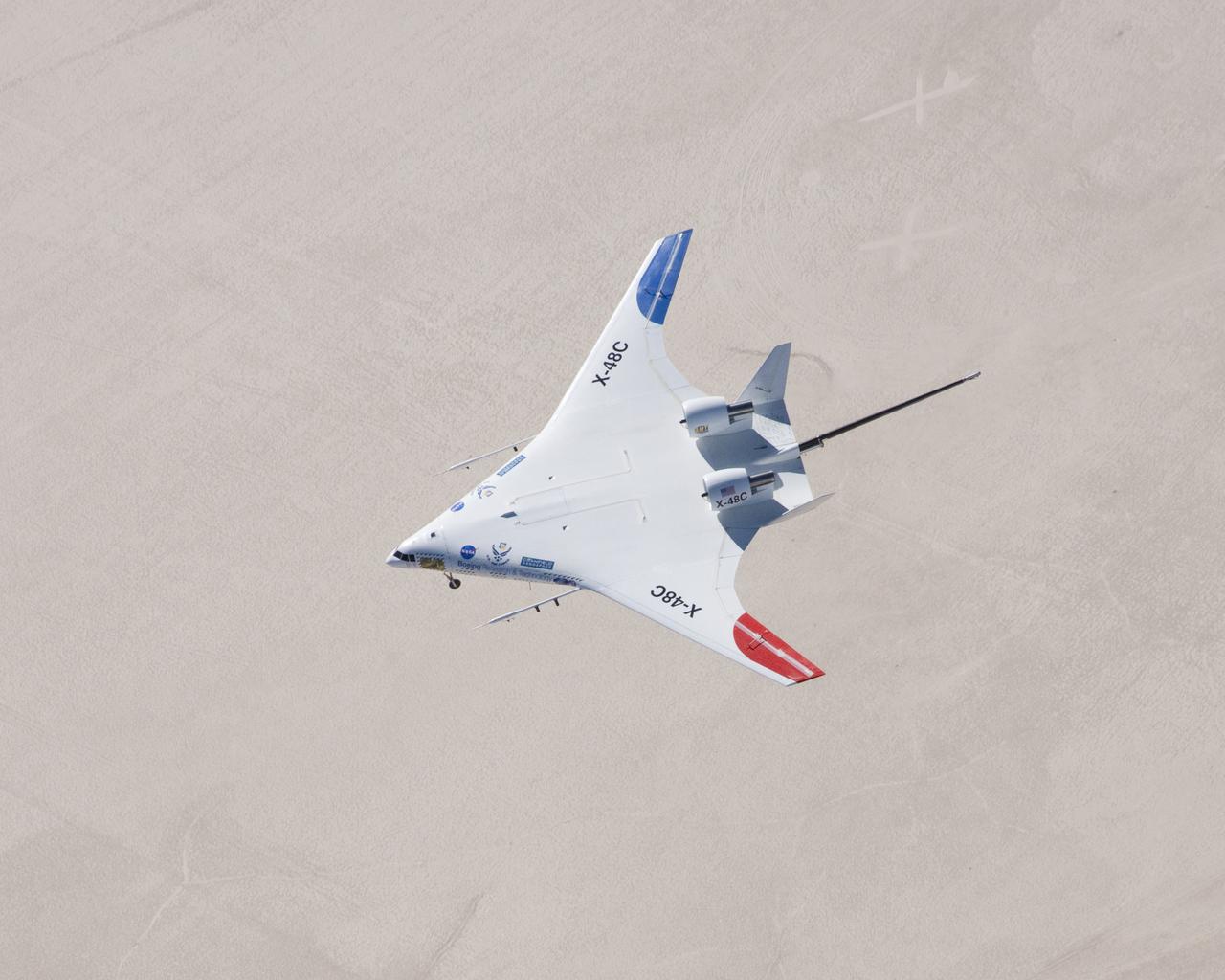
The X-48C Hybrid Wing Body aircraft flew over Rogers Dry Lake on Feb. 28, 2013, from NASA's Dryden Flight Research Center, Edwards, CA. The long boom protruding from between the tails was part of the aircraft's parachute-deployment flight termination system.
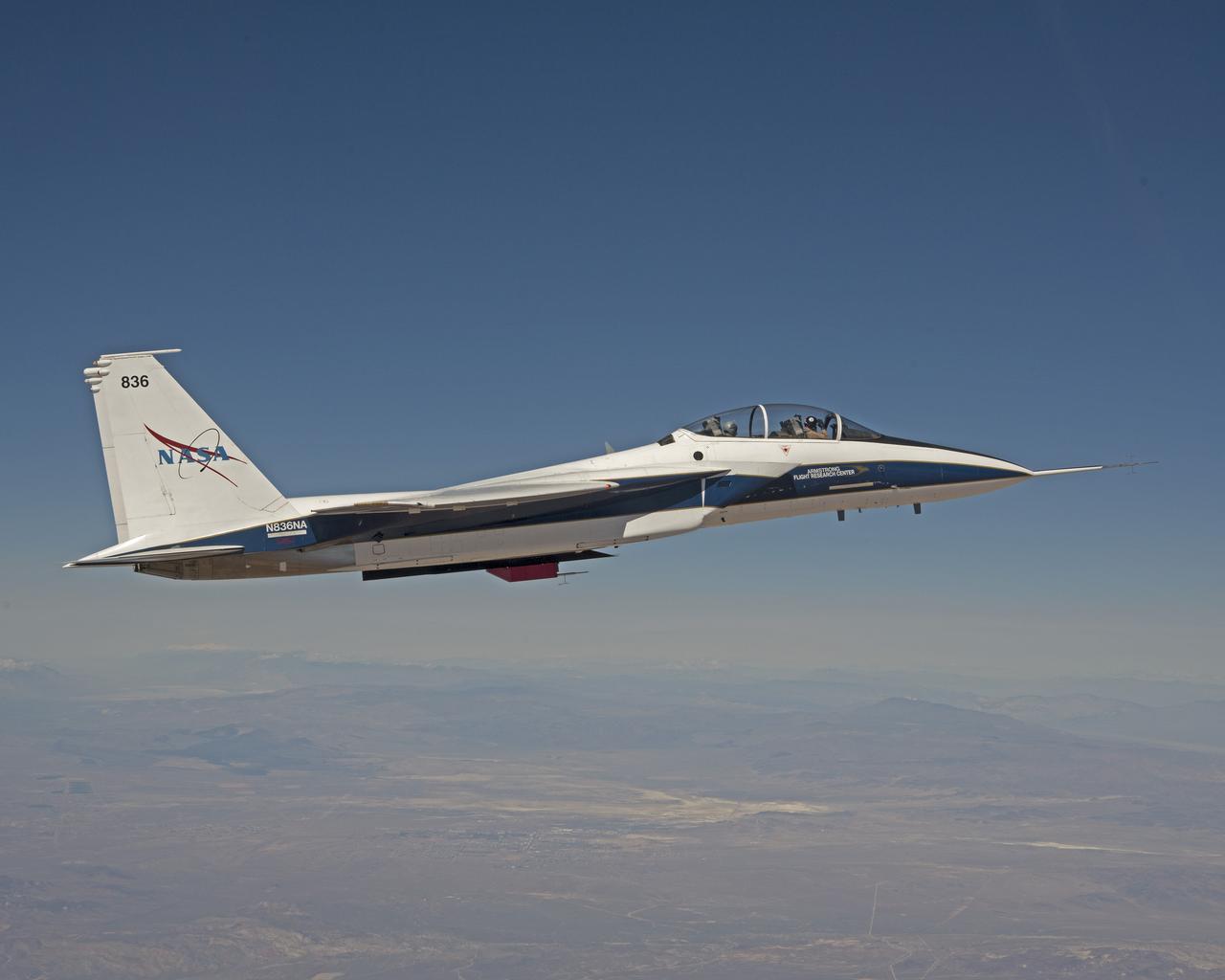
Research on the Eagle Aero Probe is ongoing from an F-15B flight test fixture, as the aircraft flies missions over the high desert.
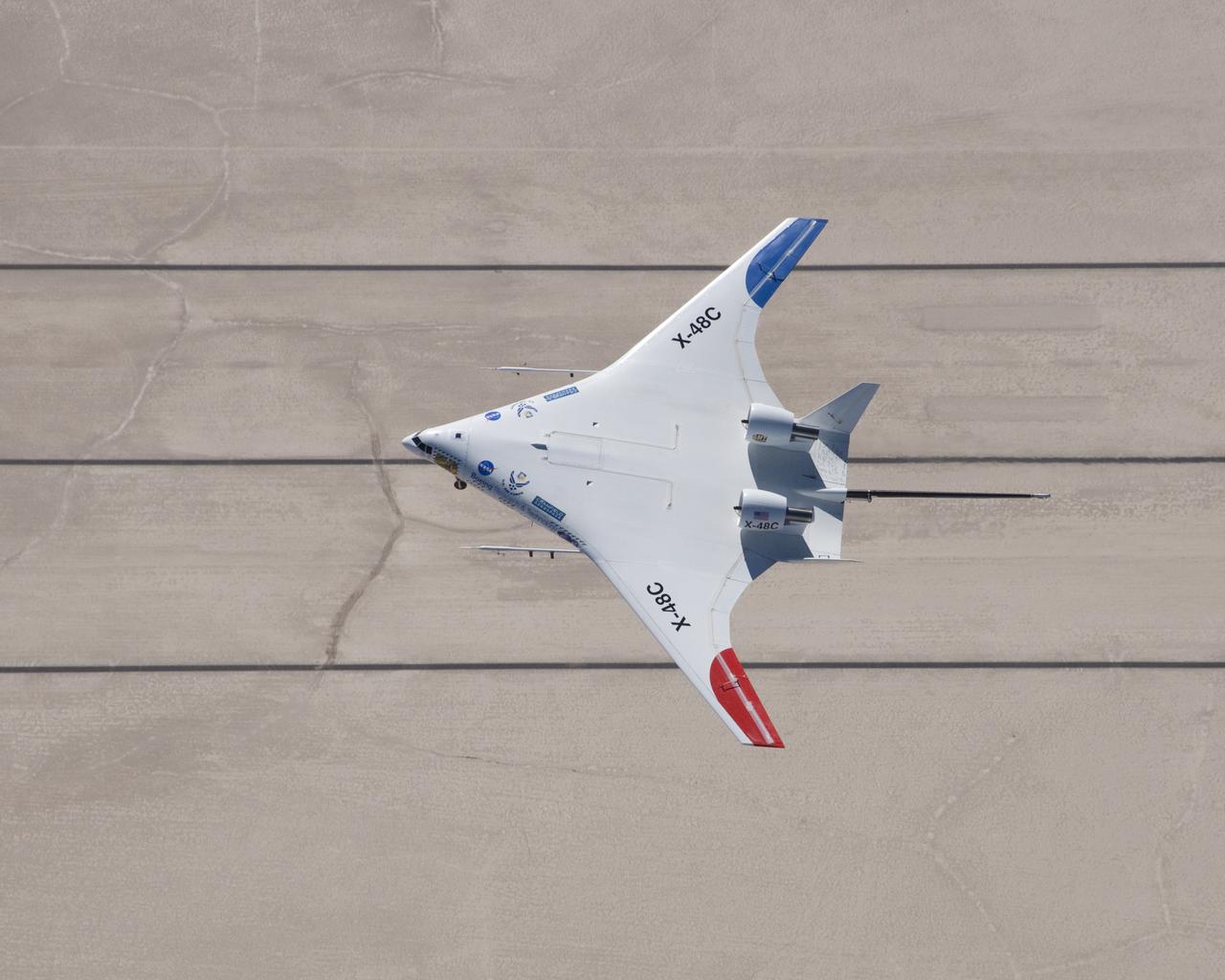
NASA X-48C Hybrid Wing Body aircraft flew over one of the runways laid out on Rogers Dry Lake at Edwards Air Force Base, CA, during a test flight from NASA's Dryden Flight Research Center on Feb. 28, 2013.
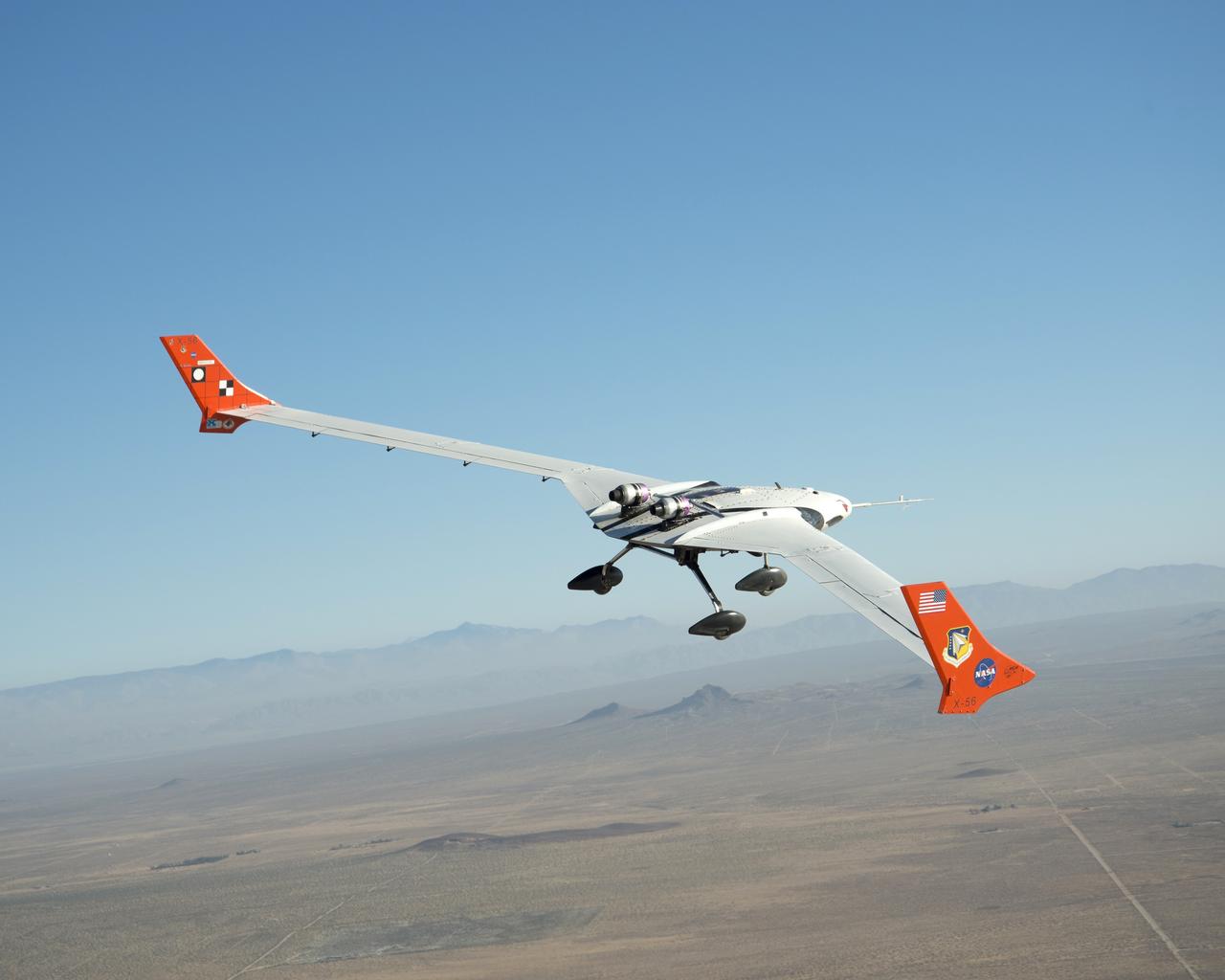
The X-56A flies over the desert near NASA Armstrong Flight Research Center, Edwards, California. NASA researchers are using the remotely piloted X-56A to explore the behavior of lightweight, flexible aircraft structures.

Space Shuttle Endeavour is affixed atop NASA’s 747 Shuttle Carrier Aircraft as it prepares for a landing at Los Angeles International Airport to conclude a final flight on Sept. 21, 2012.
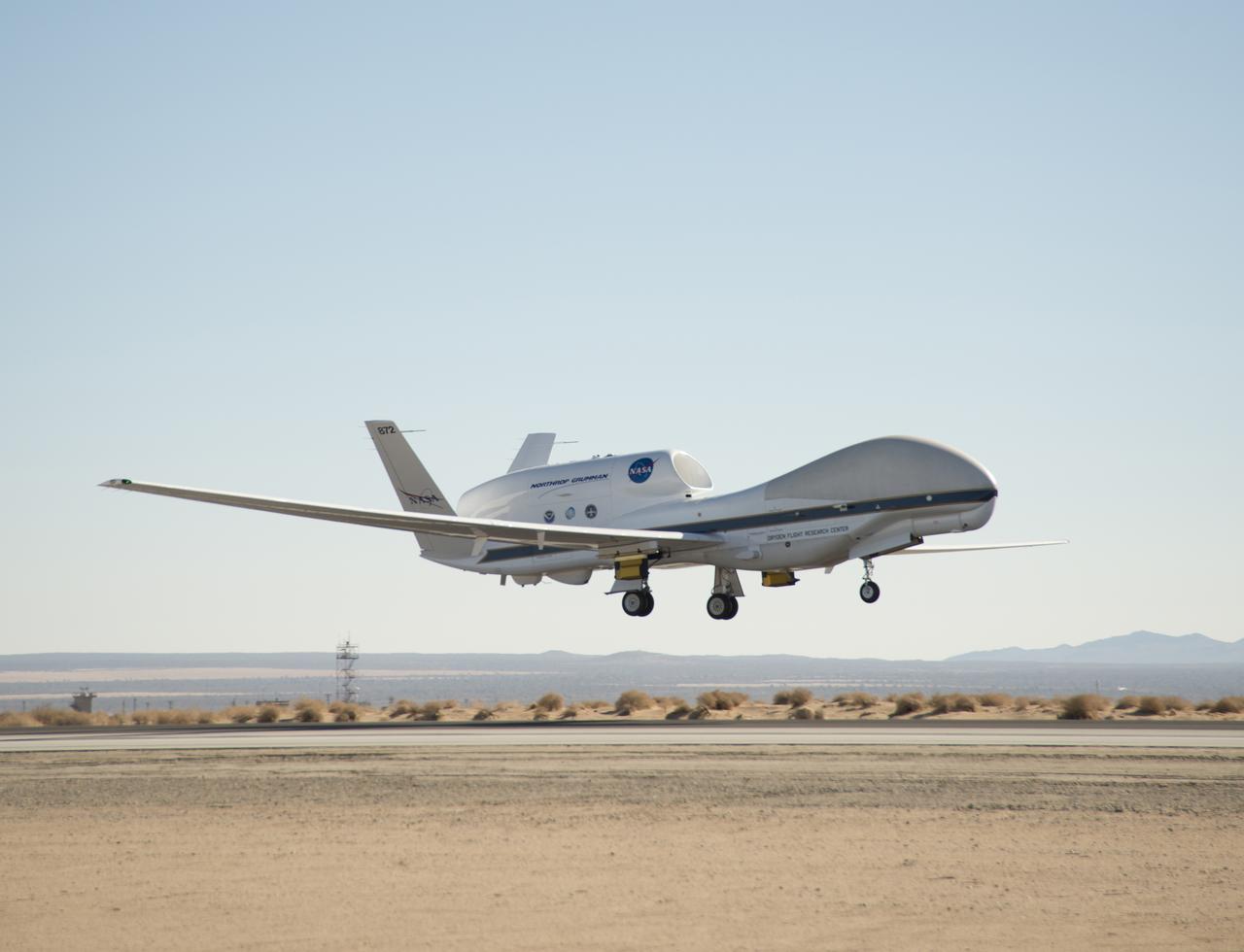
NASA's Global Hawk 872 lifted off the runway at Edwards Air Force Base during a checkout flight of instruments for the 2014 ATTREX mission over the western Pacific Ocean. Yellow and black pods housing the Hawkeye cloud particle probe instruments being used during the mission can be seen underneath the wings.
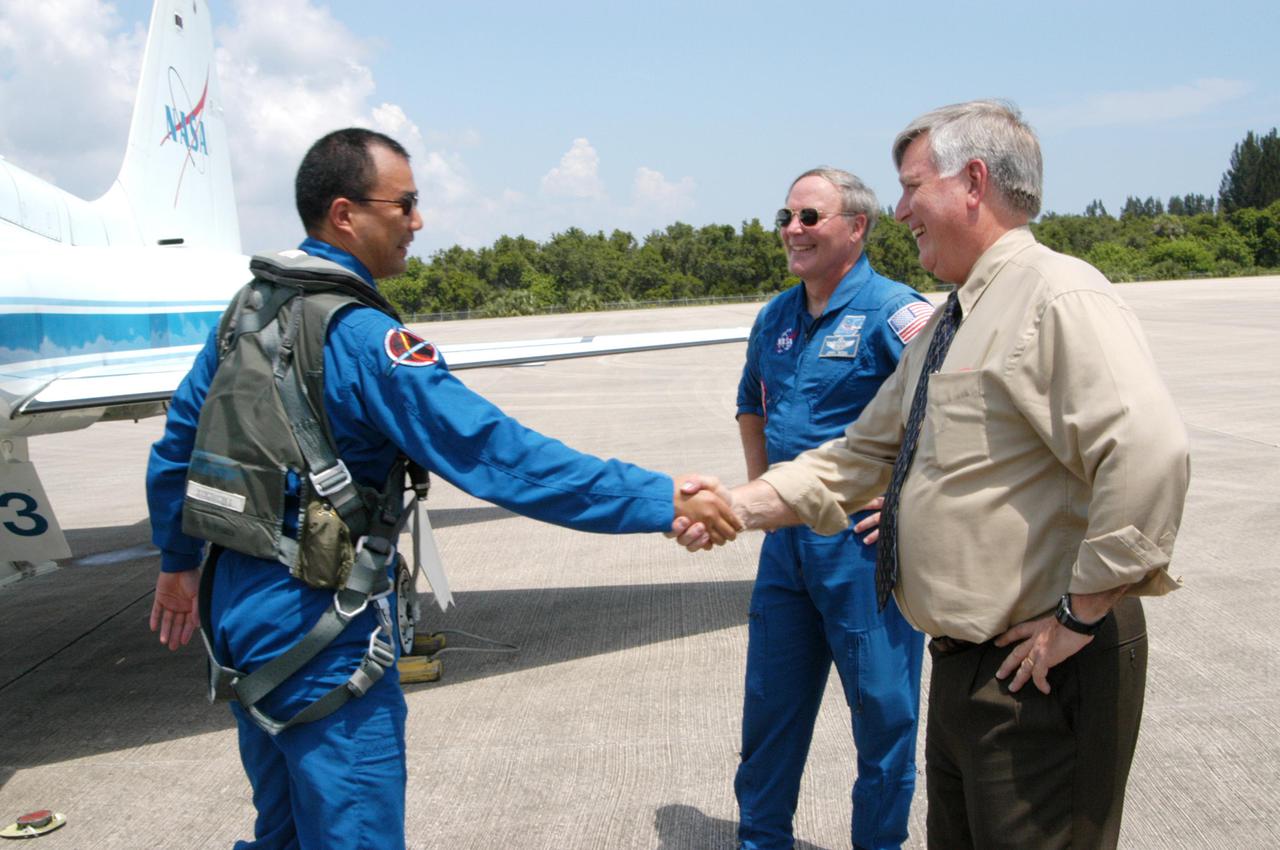
KENNEDY SPACE CENTER, FLA. - Center Director Jim Kennedy (right) greets STS-114 Mission Specialist Soichi Noguchi after his landing at NASA Kennedy Space Center. The Return to Flight STS-114 crew has returned to KSC to get ready for a second launch attempt aboard Space Shuttle Discovery. Behind Noguchi and Kennedy is astronaut Jerry Ross, who serves as chief of the Vehicle Integration Test Office at Johnson Space Center in Houston. Mission Commander Eileen Collins later told the media who waited nearby that since the scrub on July 13, the crew has focused on the on-orbit part of the mission and training for night landings using the Shuttle Training Aircraft. She praised the engineers and technicians who have been troubleshooting the elusive sensor problem and thanked them. STS-114 is scheduled to launch July 26 at 10:39 a.m. EDT from Launch Pad 39B.

NASA’s Artemis II SLS (Space Launch System) rocket with the Orion spacecraft atop a mobile launcher is seen at Launch Complex 39B, Saturday, March 28, 2026, at NASA’s Kennedy Space Center in Florida. The Artemis II test flight will take Commander Reid Wiseman, Pilot Victor Glover, and Mission Specialist Christina Koch from NASA, and Mission Specialist Jeremy Hansen from the CSA (Canadian Space Agency), around the Moon and back to Earth.
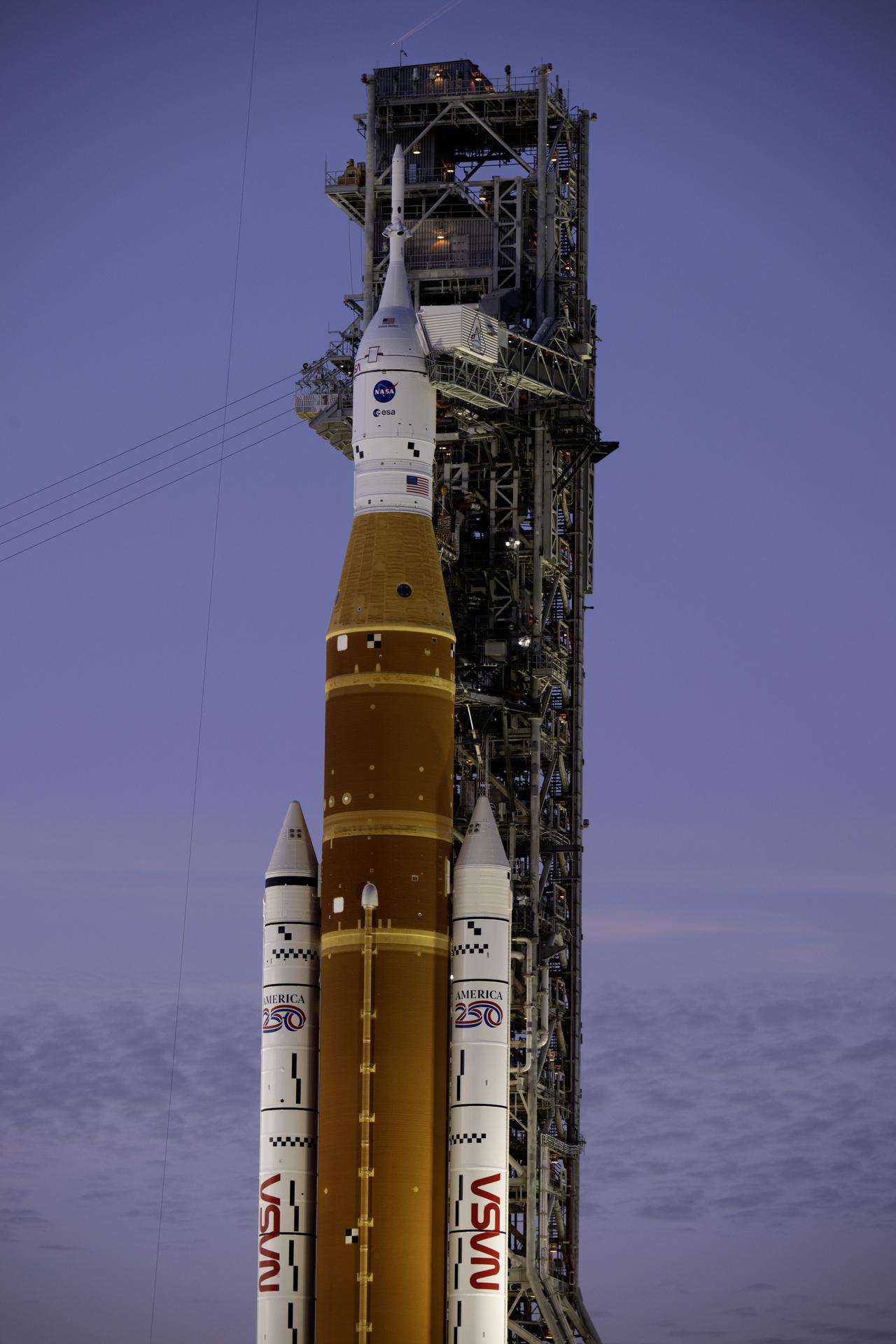
In this Sunset photo, NASA’s Artemis II SLS (Space Launch System) rocket and Orion spacecraft atop a mobile launcher stands vertical at Launch Complex 39B at NASA’s Kennedy Space Center in Florida on Thursday, Jan. 29, 2026. The Artemis II test flight will take Commander Reid Wiseman, Pilot Victor Glover, and Mission Specialist Christina Koch from NASA, and Mission Specialist Jeremy Hansen from the CSA (Canadian Space Agency), around the Moon and back to Earth.
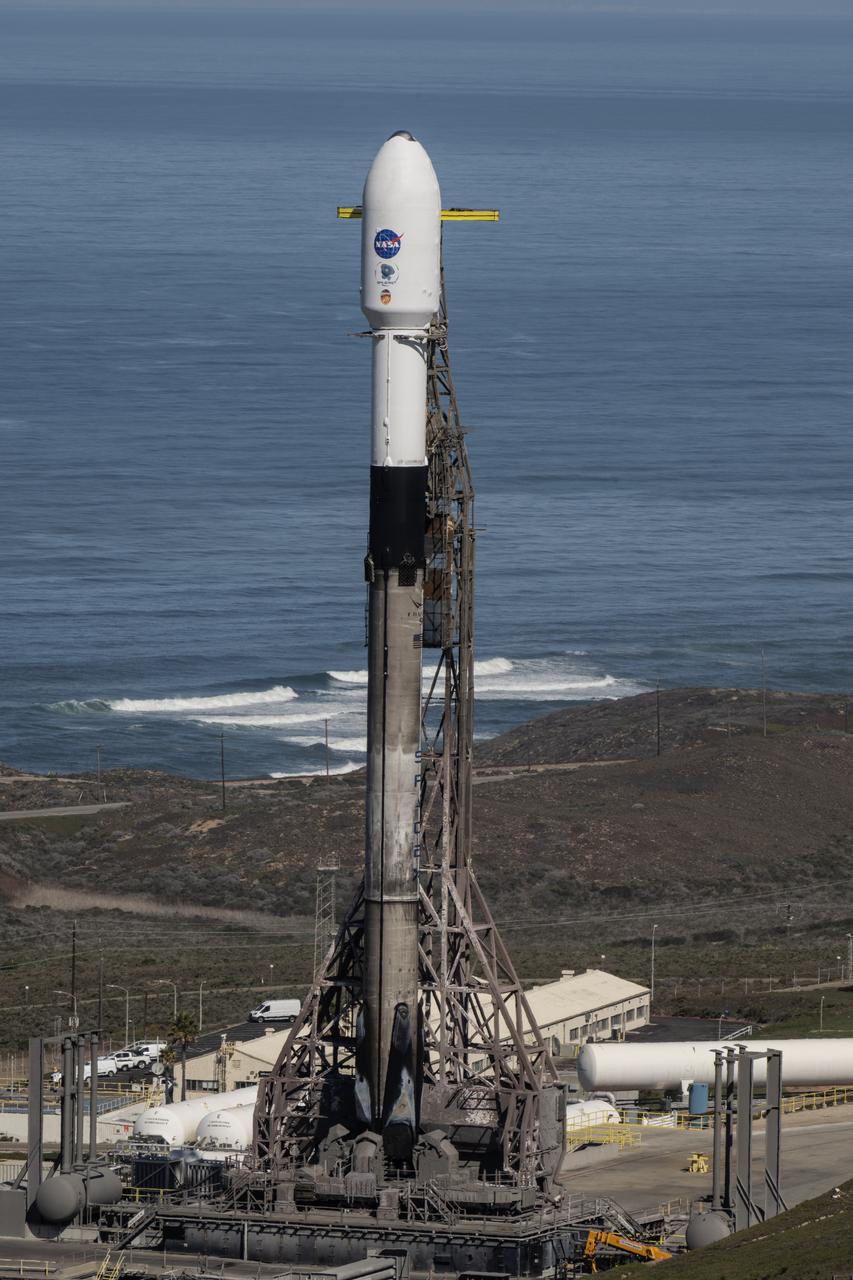
A SpaceX Falcon 9 rocket, carrying NASA’s SPHEREx (Spectro-Photometer for the History of the Universe, Epoch of Reionization and Ices Explorer) observatory and PUNCH (Polarimeter to Unify the Corona and Heliosphere) satellites, is vertical at Space Launch Complex 4 East from Vandenberg Space Force Base in California on Saturday, March 8, 2025. SPHEREx will use its telescope to provide an all-sky spectral survey, creating a 3D map of the entire sky to help scientists investigate the origins of our universe. PUNCH will study origins of the Sun’s outflow of material, or the solar wind, capturing continuous 3D images of the Sun’s corona and the solar wind’s journey into the solar system.
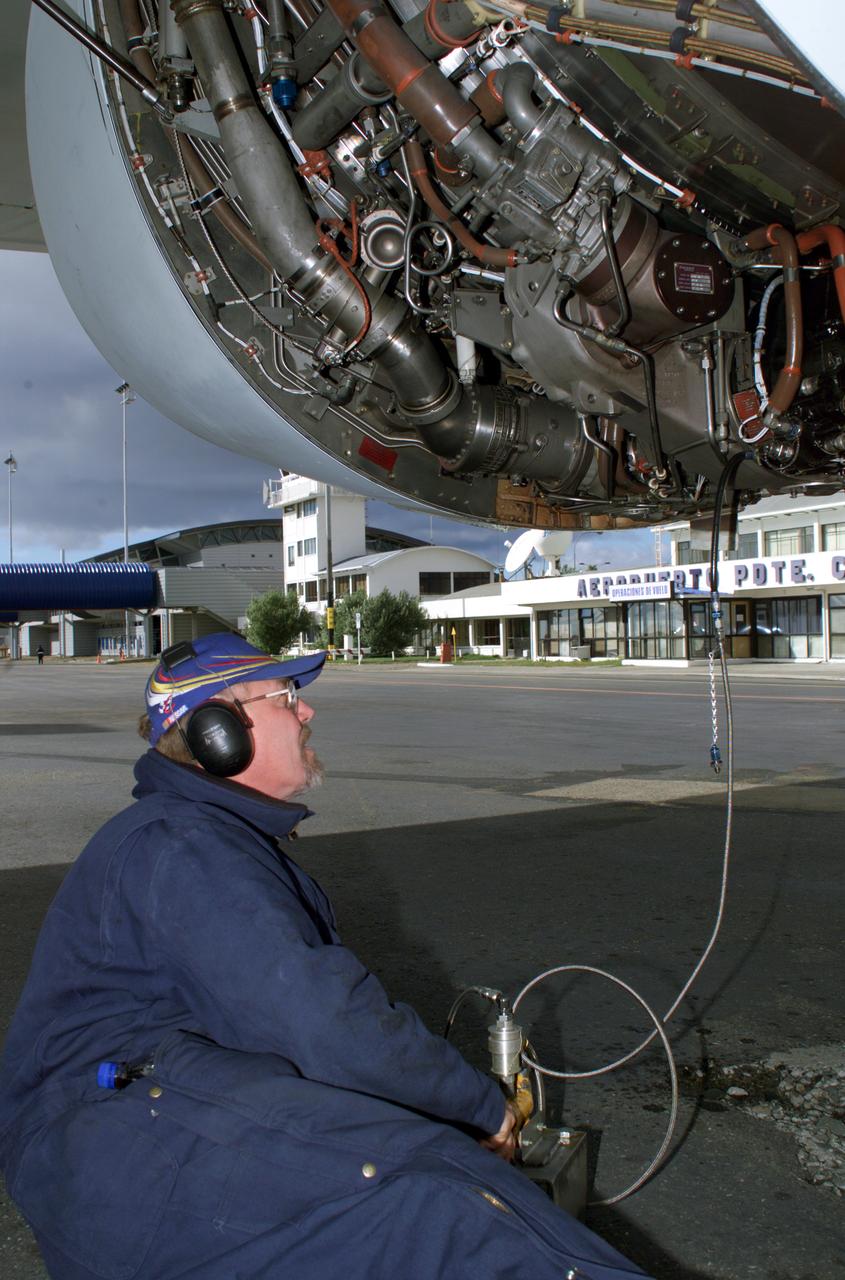
NASA DC-8 Ground Support Technician Joe Niquette performs routine maintenance on the DC-8 aircraft at Carlos Ibanez del Campo International Airport in Punta Arenas, Chile. AirSAR 2004 is a three-week expedition by an international team of scientists that is using an all-weather imaging tool, called the Airborne Synthetic Aperture Radar (AirSAR) which is located onboard NASA's DC-8 airborne laboratory. Scientists from many parts of the world including NASA's Jet Propulsion Laboratory are combining ground research done in several areas in Central and South America with NASA's AirSAR technology to improve and expand on the quality of research they are able to conduct. In South America and Antarctica, AirSAR will collect imagery and data to help determine the contribution of Southern Hemisphere glaciers to sea level rise due to climate change. In Patagonia, researchers found this contribution had more than doubled from 1995 to 2000, compared to the previous 25 years. AirSAR data will make it possible to determine whether that trend is decreasing, continuing or accelerating. AirSAR will also provide reliable information on ice shelf thickness to measure the contribution of the glaciers to sea level.
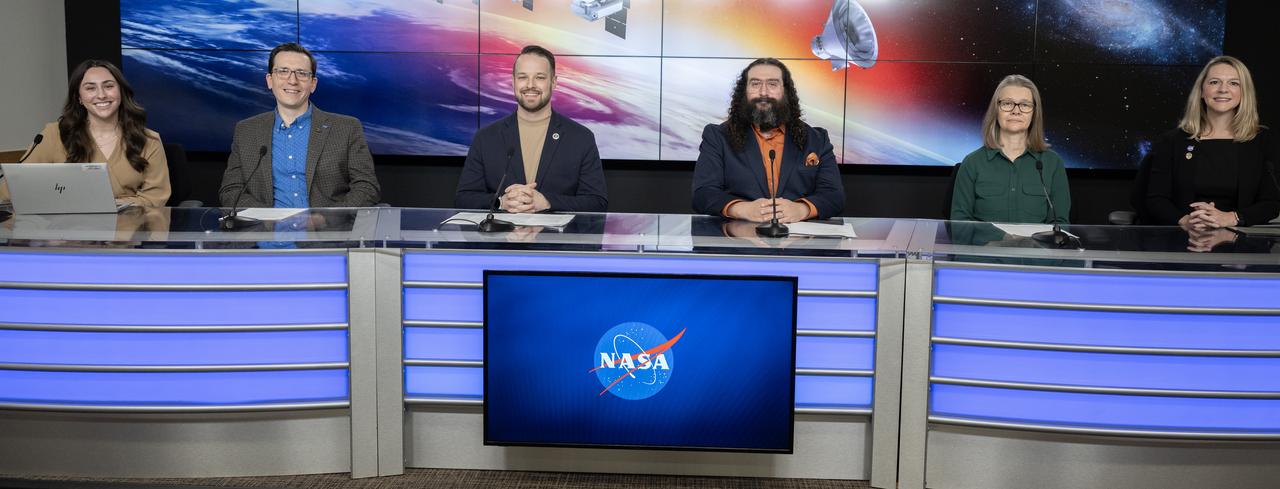
NASA and Caltech participate in a science briefing on Tuesday, Feb. 25, 2025, to discuss the upcoming launch of NASA’s SPHEREx (Spectro-Photometer for the History of the Universe, Epoch of Reionization and Ices Explorer) observatory and PUNCH (Polarimeter to Unify the Corona and Heliosphere) satellites at Vandenberg Space Force Base in California. SPHEREx will use its telescope to provide an all-sky spectral survey, creating a 3D map of the entire sky to help scientists investigate the origins of our universe. PUNCH will study origins of the Sun’s outflow of material, or the solar wind, capturing continuous 3D images of the Sun’s corona and the solar wind’s journey into the solar system.
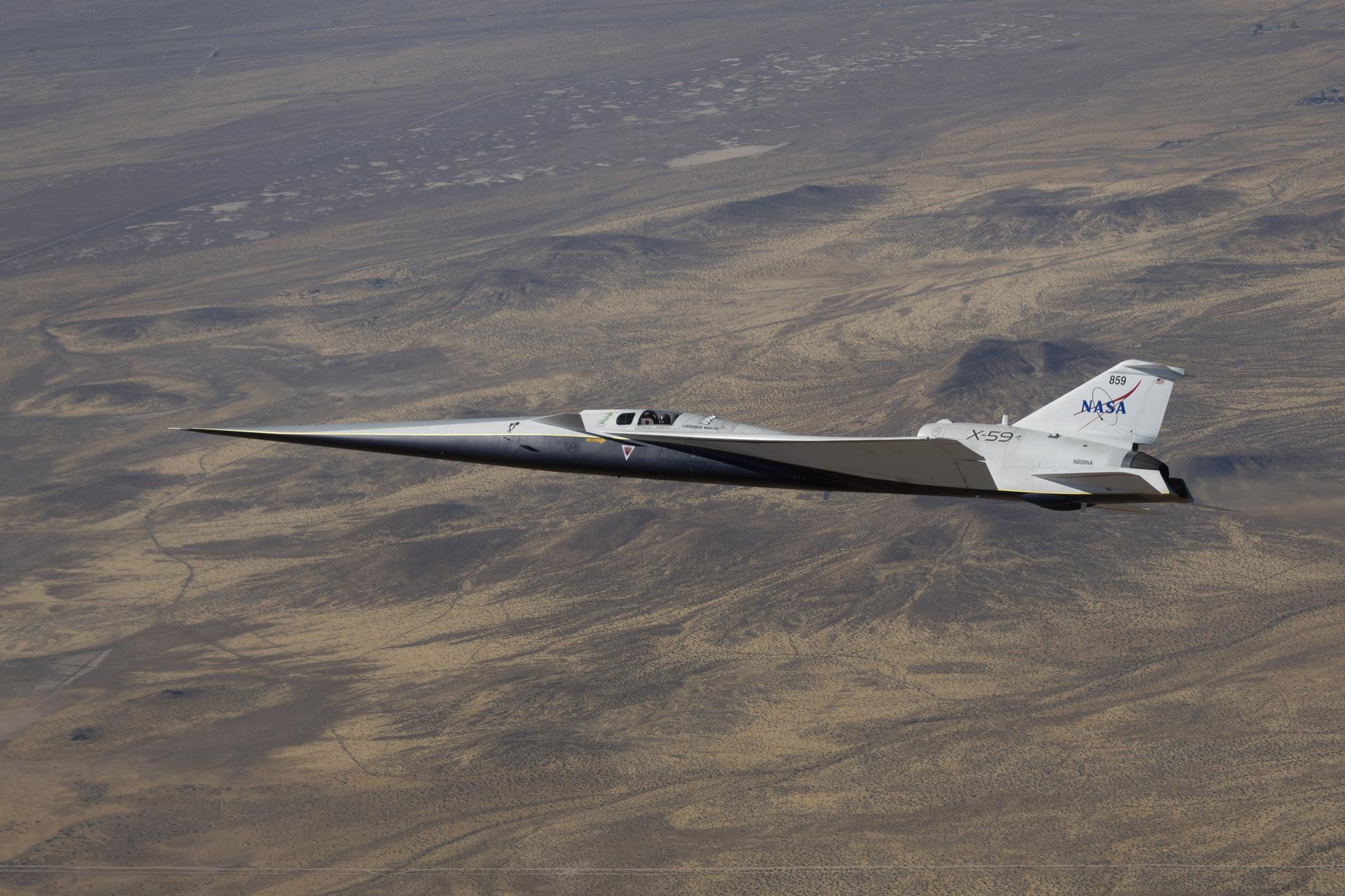
NASA’s X-59 quiet supersonic research aircraft flies along the Bell X-1 Supersonic Corridor in California during continued flight testing on Wednesday, June 10, 2026, in support of NASA’s Quesst mission. Initial supersonic flights help the team evaluate the aircraft’s performance as it progresses toward the speed and altitude planned for future community overflights.
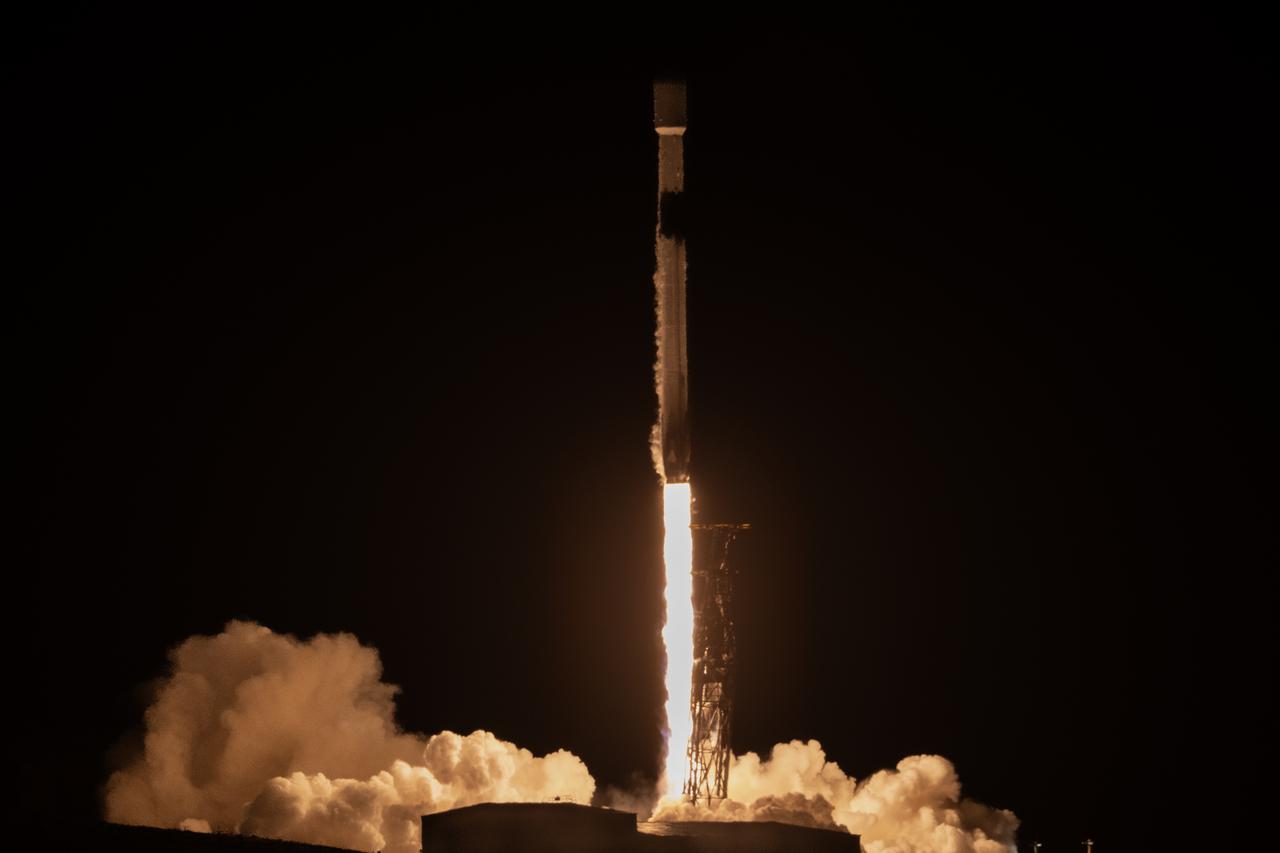
A SpaceX Falcon 9 rocket, carrying NASA’s SPHEREx (Spectro-Photometer for the History of the Universe, Epoch of Reionization and Ices Explorer) observatory and PUNCH (Polarimeter to Unify the Corona and Heliosphere) satellites, launches from Space Launch Complex 4 East at Vandenberg Space Force Base in California on Tuesday, March 11, 2025. SPHEREx will use its telescope to provide an all-sky spectral survey, creating a 3D map of the entire sky to help scientists investigate the origins of our universe. PUNCH will study origins of the Sun’s outflow of material, or the solar wind, capturing continuous 3D images of the Sun’s corona and the solar wind’s journey into the solar system.

The X-59 quiet supersonic research aircraft taxis to NASA’s Armstrong Flight Research Center in Edwards, California, on Tuesday, Oct. 28, 2025, following its landing at Edwards Air Force Base. Ground teams await the aircraft’s arrival at its new home for flight operations in support of NASA’s Quesst mission to generate data on quiet supersonic flight
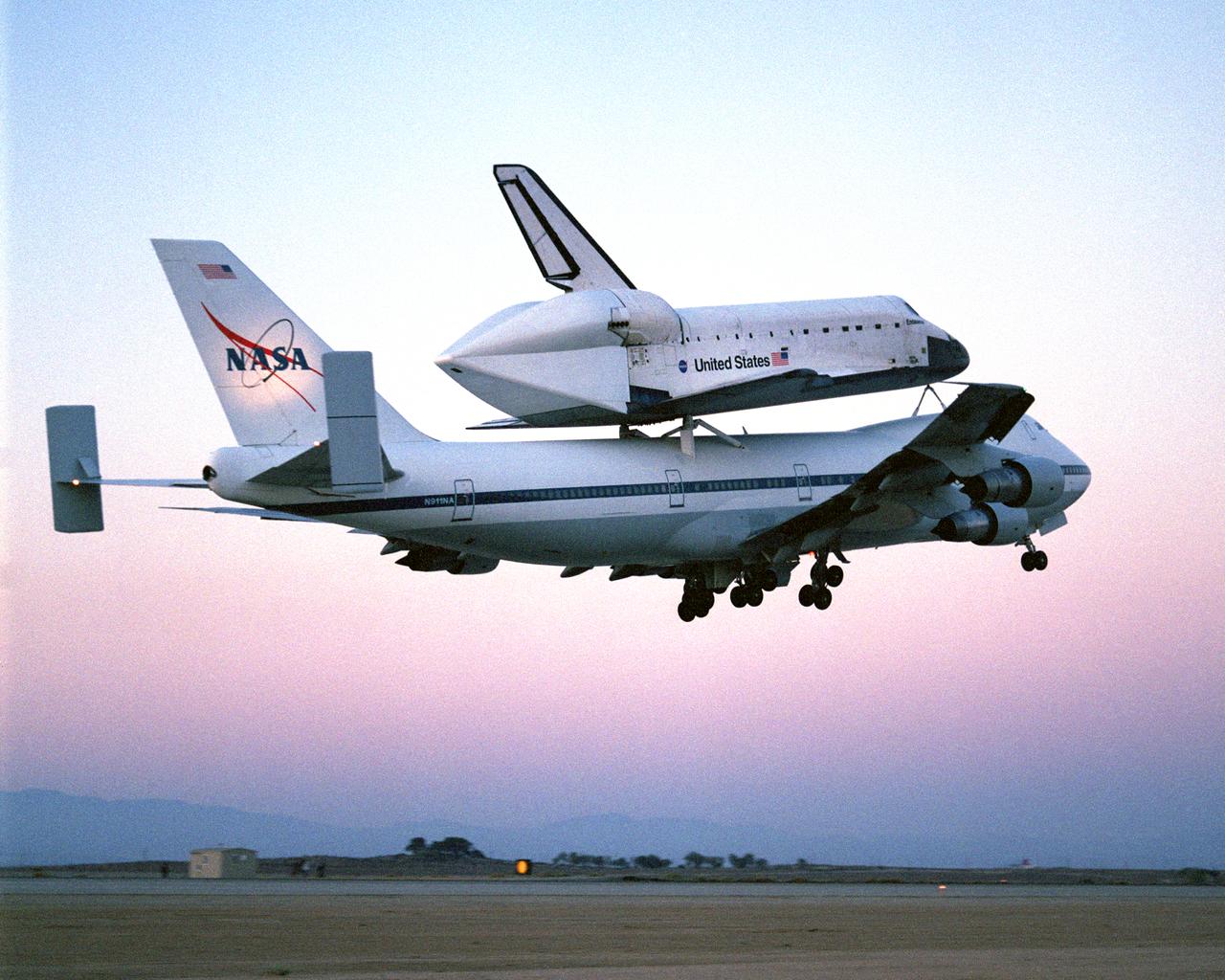
The Space Shuttle Endeavour, mounted securely atop one of NASA's modified Boeing 747 Shuttle Carrier Aircraft, left NASA's Dryden Flight Research Center at Edwards Air Force Base in Southern California at sunrise on Friday, June 28, nine days after concluding mission STS-111 to the International Space Station with a landing at Edwards.
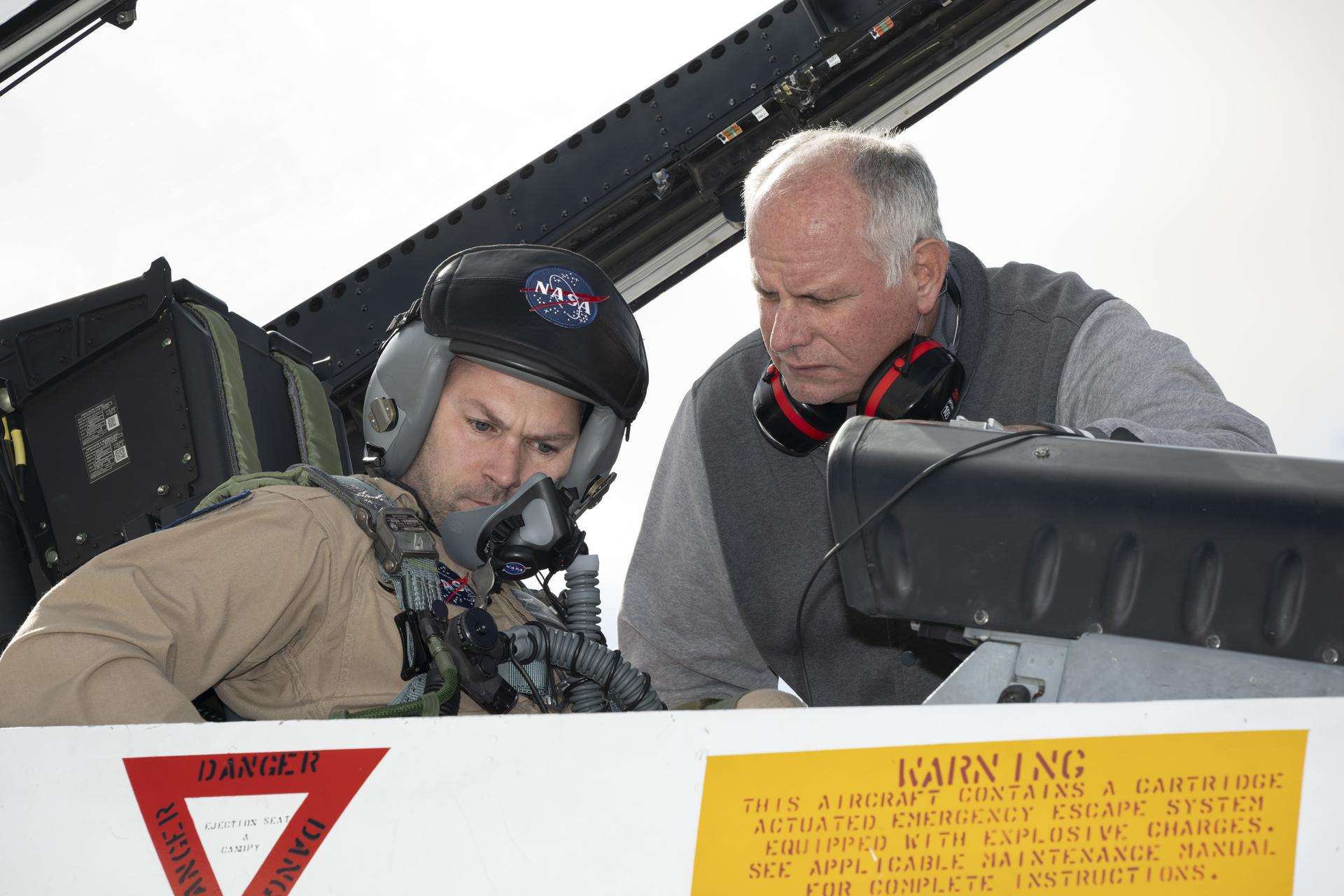
Phil Wellner, aircrew life support technician, help prepare Kelly Jellison, lead avionics technician for NASA’s C-20 and G-V aircraft for an employee incentive flight in an F/A-18 aircraft at NASA’s Armstrong Flight Research Center in Edwards, California, on Wednesday, May 27, 2026. NASA Administrator Jared Isaacman established the ride‑along program to recognize and reward workforce members for their dedication to advancing the agency’s priorities.
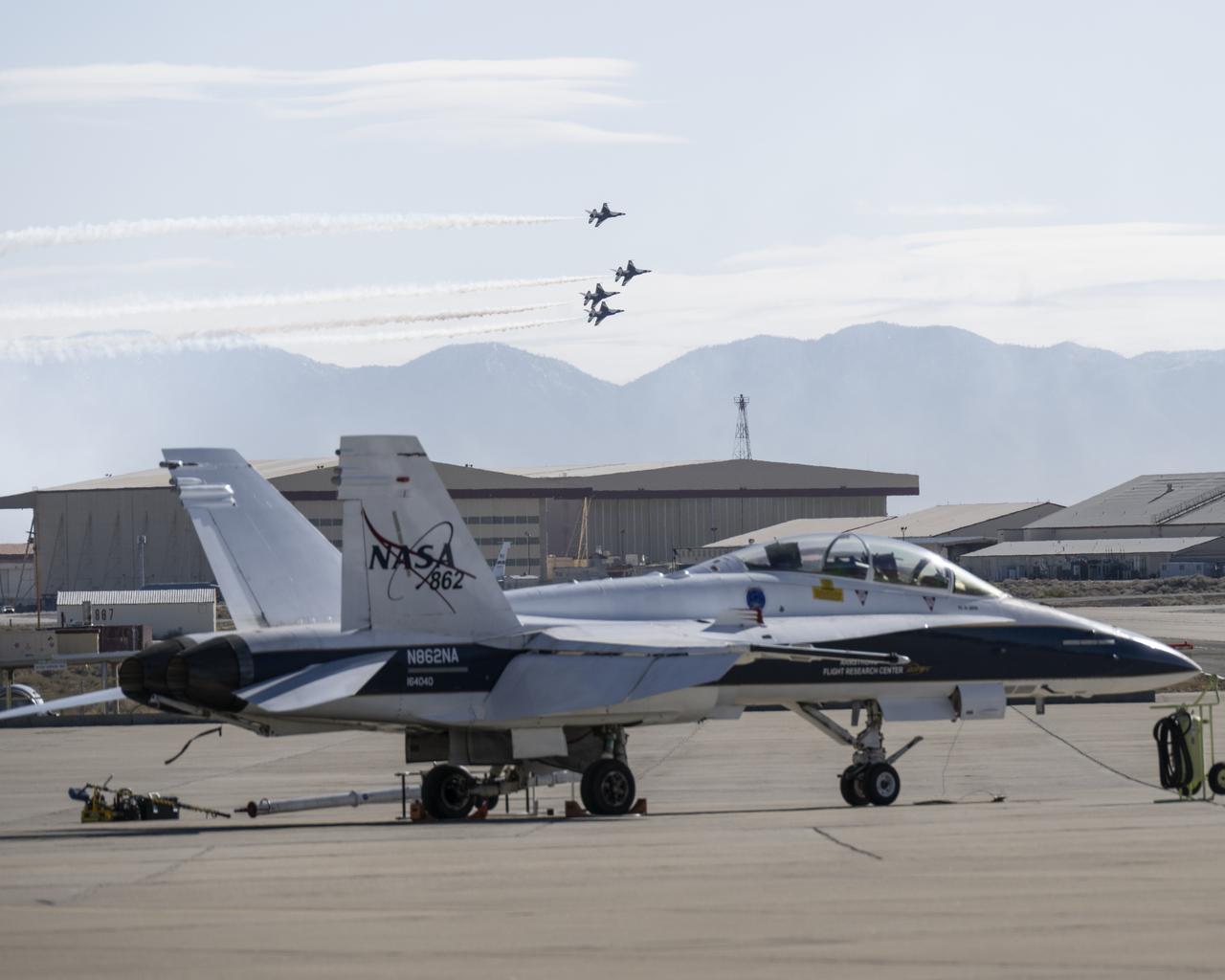
The U.S. Air Force Thunderbirds fly over NASA’s Armstrong Flight Research Center in Edwards, California, during the second phase of its winter training in February 2025 to prepare for the upcoming air show season. The Thunderbirds perform all over the world in F-16 Fighting Falcons, a multi-role fighter jet.
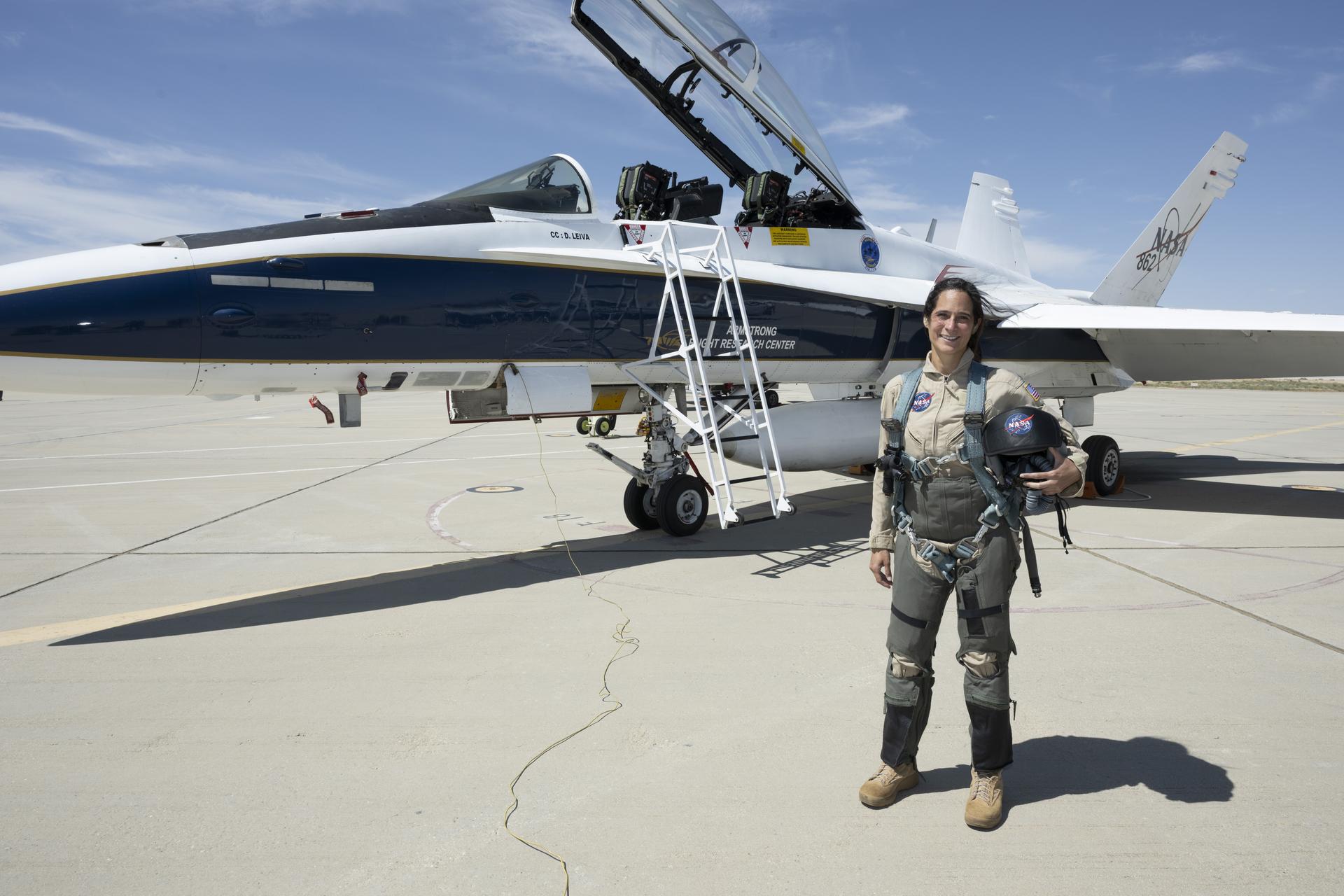
Sarah D’Souza, deputy systems manager for the Orion Thermal Protection System, stands in front of an F/A-18 aircraft at NASA’s Armstrong Flight Research Center in Edwards, California, ahead of her flight through NASA Administrator Jared Isaacman’s ride-along program. The program recognizes and rewards workforce members for their dedication to advancing the agency’s priorities. Credit: NASA
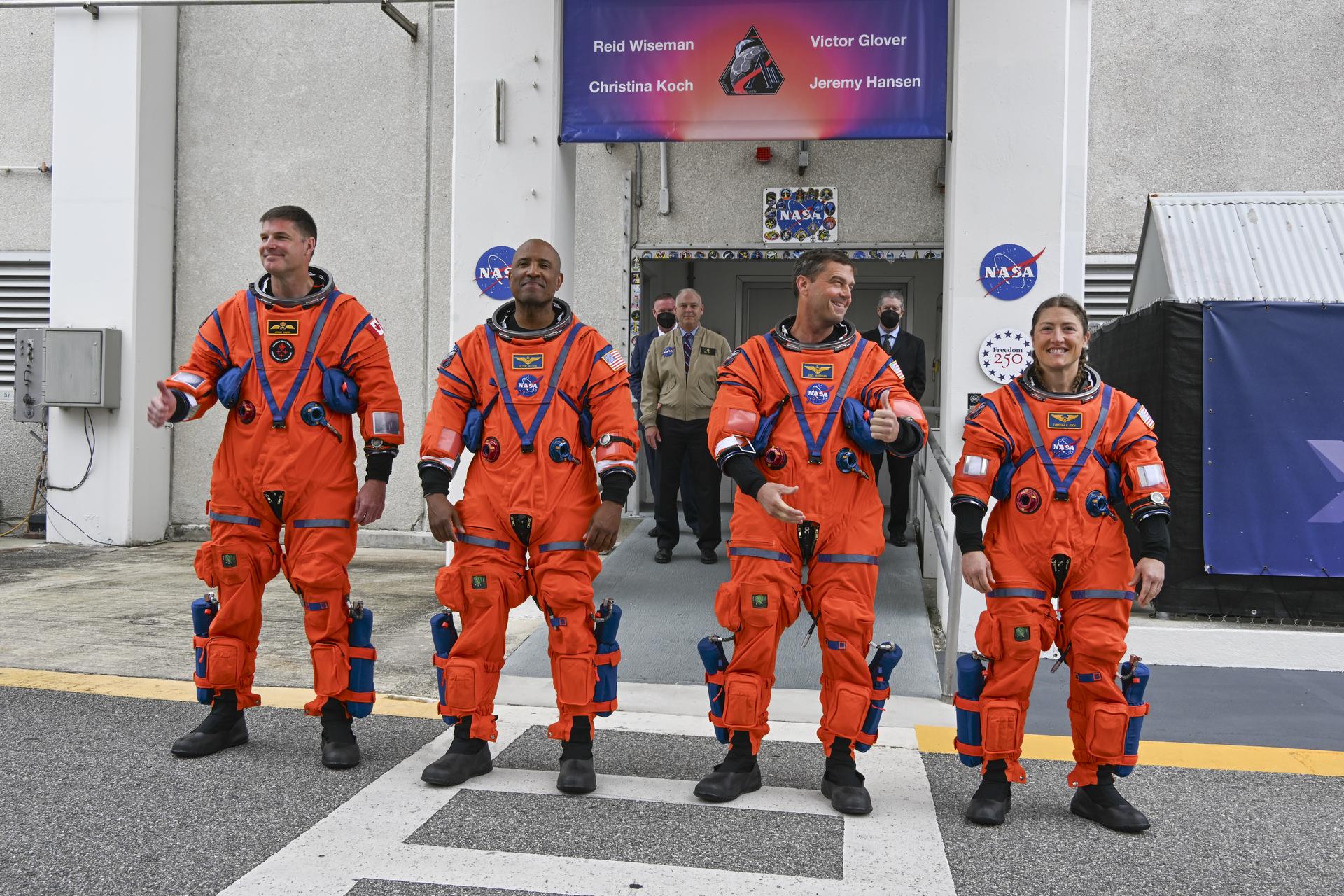
From left to right, Artemis II Mission Specialist Jeremy Hansen from the CSA (Canadian Space Agency), along with Pilot Victor Glover, Commander Reid Wiseman, and Mission Specialist Christina Koch, from NASA, greet family, friends, and NASA employees outside the Neil A. Armstrong Operations and Checkout Building at the agency’s Kennedy Space Center in Florida on Wednesday, April 1, 2026, ahead of the Artemis II test flight. The mission will take the Artemis II crew on a 10-day journey around the Moon and back aboard NASA’s SLS (Space Launch System) rocket and Orion spacecraft with a two hour launch window opening at 6:24 p.m. EDT from Launch Complex 39B at NASA Kennedy.
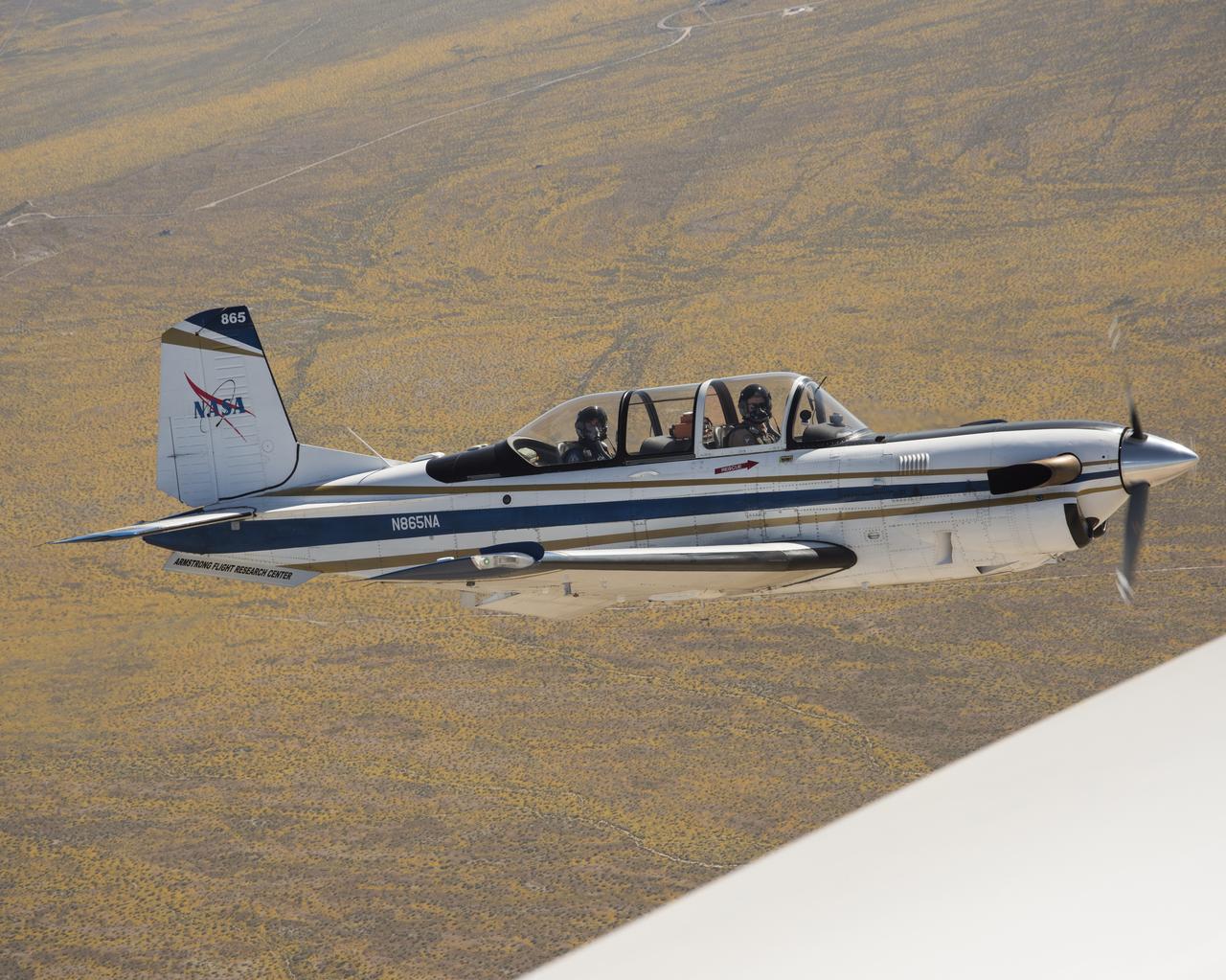
NASA’s T-34 aircraft flown from the agency’s Armstrong Flight Research Center aims the plane toward Southern California’s Antelope Valley Poppy Reserve flying over yellow wildflowers. The aircraft was flown from the agency’s Armstrong Flight Research Center.
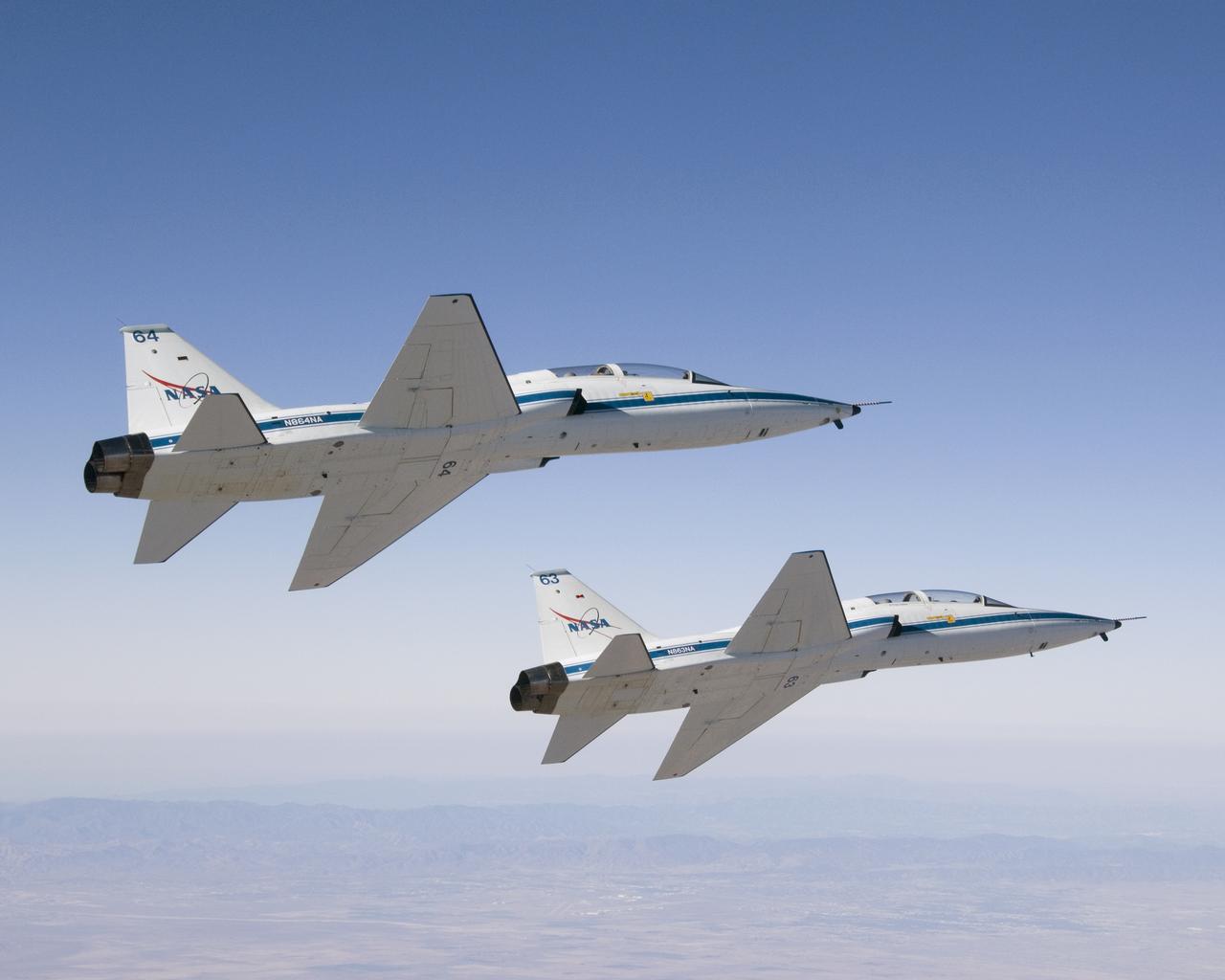
NASA Dryden Flight Research Center's two T-38A Talon mission support aircraft flew together for the first time on Sept. 26, 2007 while conducting pitot-static airspeed calibration checks during routine pilot proficiency flights. The two aircraft, flown by NASA research pilots Kelly Latimer and Frank Batteas, joined up with a NASA Dryden F/A-18 flown by NASA research pilot Dick Ewers to fly the airspeed calibrations at several speeds and altitudes that would be flown by the Stratospheric Observatory for Infrared Astronomy (SOFIA) Boeing 747SP during its initial flight test phase. The T-38s, along with F/A-18s, serve in a safety chase role during those test missions, providing critical instrument and visual monitoring for the flight test series.
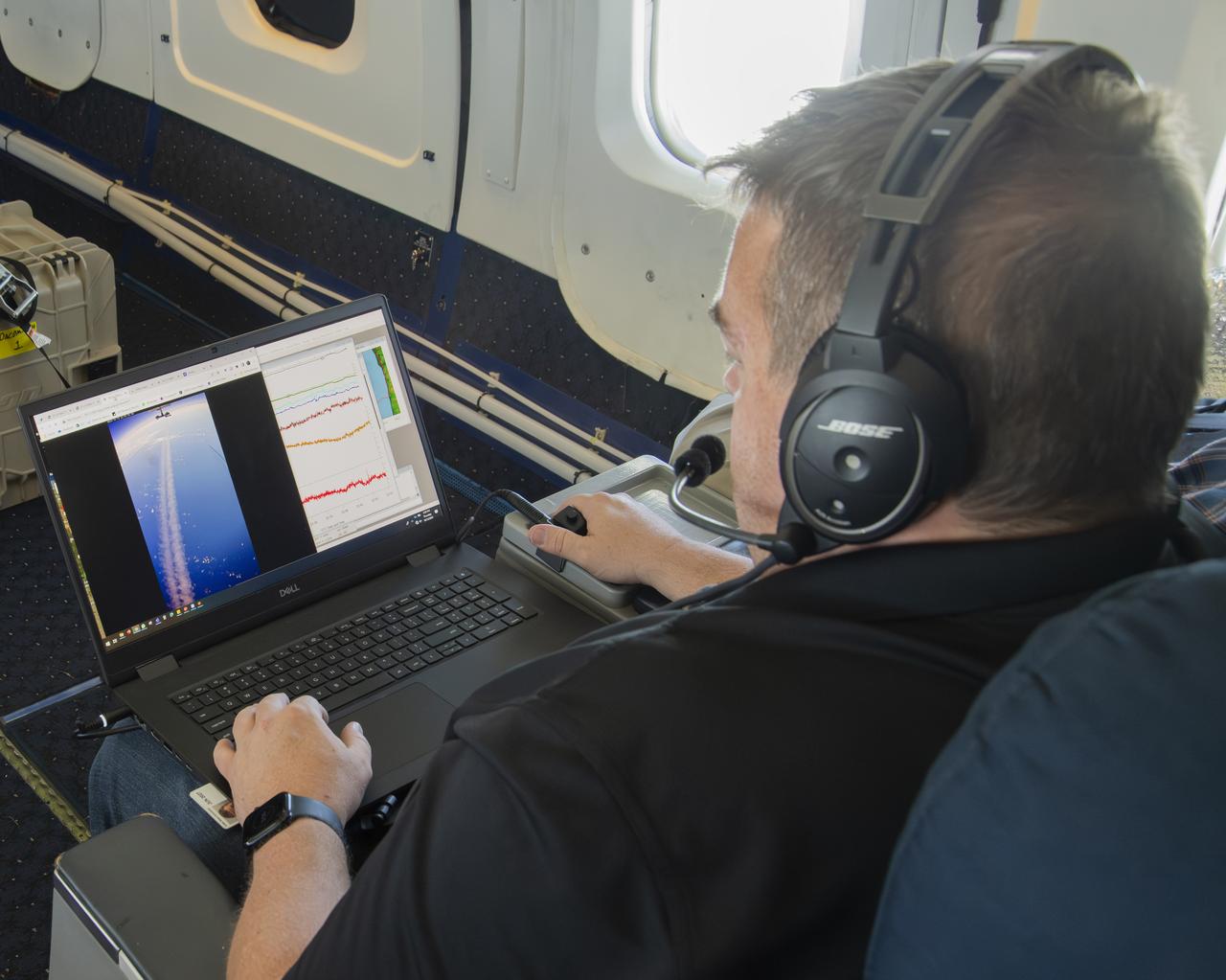
NASA’s DC-8 aircraft from Armstrong Flight Research Center in Edwards, California flies to Everett, Washington to conduct science research about reducing engine particle emissions. Partners include Boeing, United, General Electric Aerospace, German Aerospace Center (DLR), the FAA, and World Energy. Boeing’s new passenger aircraft uses revolutionary Sustainable Aviation Fuel, SAF, and NASA’s DC-8 flies behind the Boeing plane to measure its impact throughout flight. The results of this study will be released publicly to facilitate the improvement of aviation technology worldwide.

NASA Dryden F-18 #843 in flight

The Sun sets behind NASA’s Artemis II SLS (Space Launch System) rocket and Orion spacecraft atop a mobile launcher at Launch Complex 39B at NASA’s Kennedy Space Center in Florida on Friday, March 27, 2026. The Artemis II test flight will take Commander Reid Wiseman, Pilot Victor Glover, and Mission Specialist Christina Koch from NASA, and Mission Specialist Jeremy Hansen from the CSA (Canadian Space Agency), around the Moon and back to Earth.
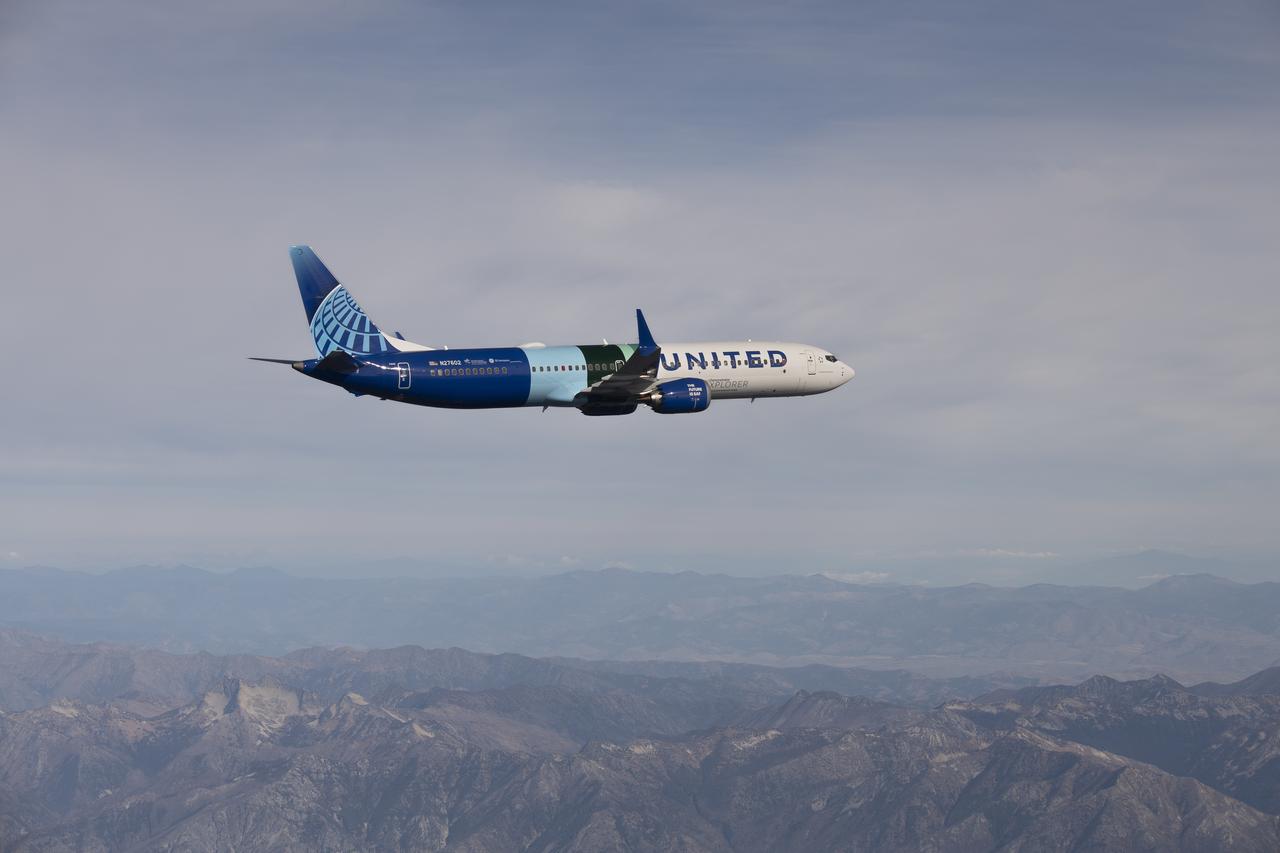
NASA’s DC-8 aircraft from Armstrong Flight Research Center in Edwards, California flies to Everett, Washington to conduct science research about reducing engine particle emissions. Partners include Boeing, United, General Electric Aerospace, German Aerospace Center (DLR), the FAA, and World Energy. Boeing’s new passenger aircraft uses revolutionary Sustainable Aviation Fuel, SAF, and NASA’s DC-8 flies behind the Boeing plane to measure its impact throughout flight. The results of this study will be released publicly to facilitate the improvement of aviation technology worldwide.

The DC-8 flies low for the last time over NASA’s Armstrong Flight Research Center in Edwards, California, before it retires to Idaho State University in Pocatello, Idaho. The DC-8 will provide real-world experience to train future aircraft technicians at the college’s Aircraft Maintenance Technology Program.

A F-15 aircraft owned by NASA’s Armstrong Flight Research Center in Edwards, California, flies above a mountain range on Tuesday, April 21, 2026. The agency’s Crossflow Attenuated Natural Laminar Flow (CATNLF) test article is attached to the bottom of this F-15. This project aims to lower fuel costs for future commercial aircraft by testing a scale-model wing designed to improve laminar flow.
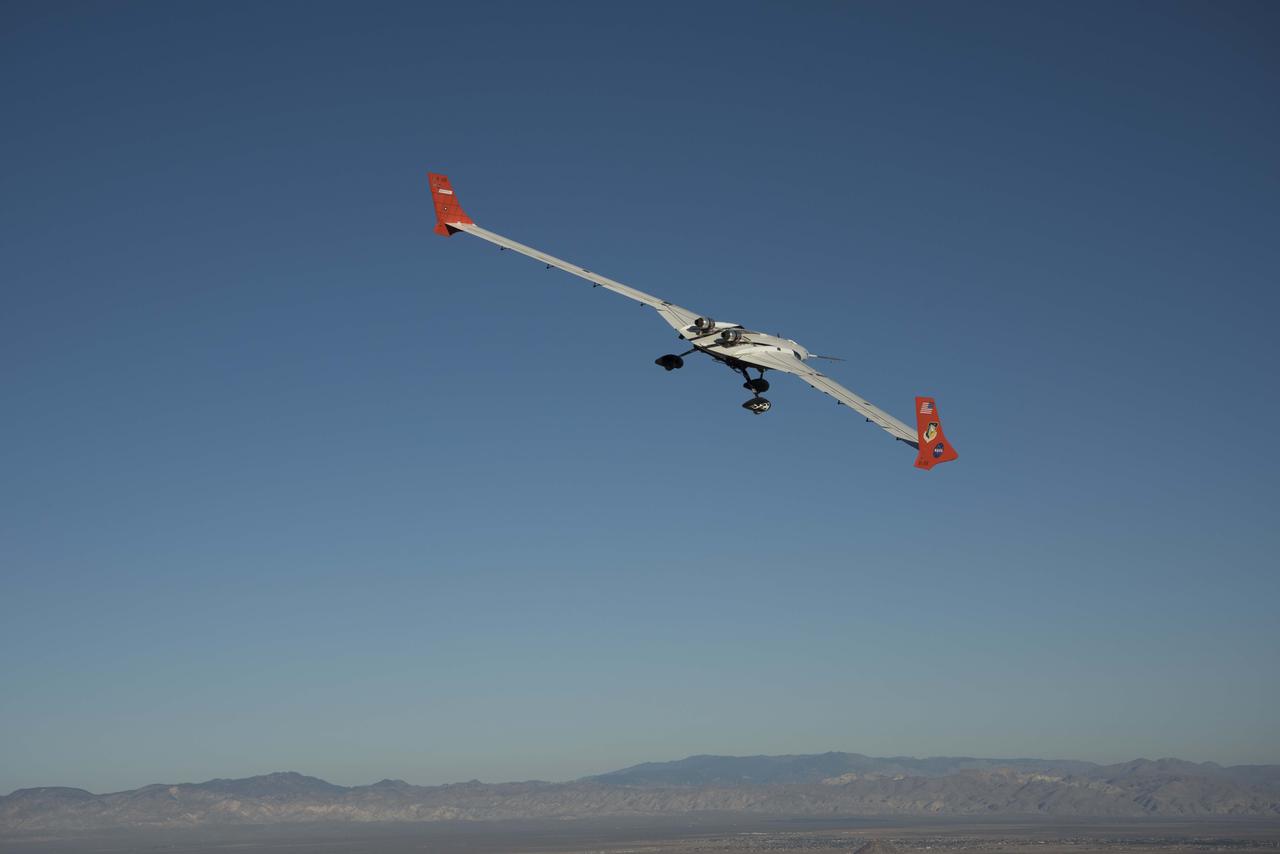
The X-56A flies a mission Oct. 18, 2018.
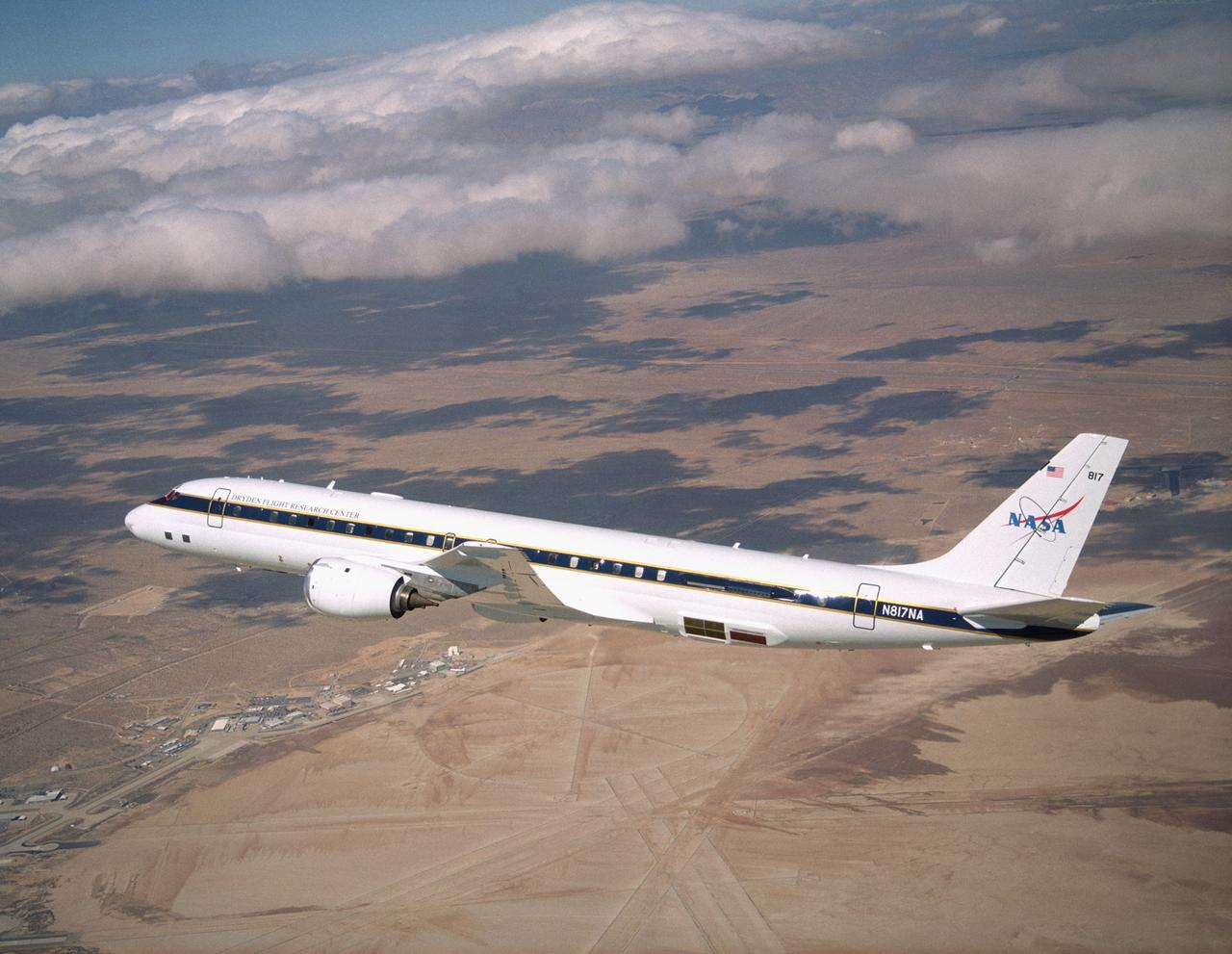
NASA's large Airborne Science research aircraft, a modified DC-8 airliner, displayed new colors in a check flight Feb. 24, 2004, over its home base, the NASA Dryden Flight Research Center at Edwards AFB, California.

NASA’s X-59 quiet supersonic research aircraft sits on the ramp during engine run testing on Thursday, March 12, 2026, at NASA’s Armstrong Flight Research Center in Edwards, California. Engine runs are one of the final tests before the aircraft is ready for its second flight. The data collected from the aircraft during upcoming flight tests could help inform future regulations for commercial supersonic travel over land.

NASA’s Artemis II SLS (Space Launch System) rocket with the Orion spacecraft atop a mobile launcher is seen at Launch Complex 39B, Thursday, Jan. 29, 2026, at NASA’s Kennedy Space Center in Florida. The Artemis II test flight will take Commander Reid Wiseman, Pilot Victor Glover, and Mission Specialist Christina Koch from NASA, and Mission Specialist Jeremy Hansen from the CSA (Canadian Space Agency), around the Moon and back to Earth.
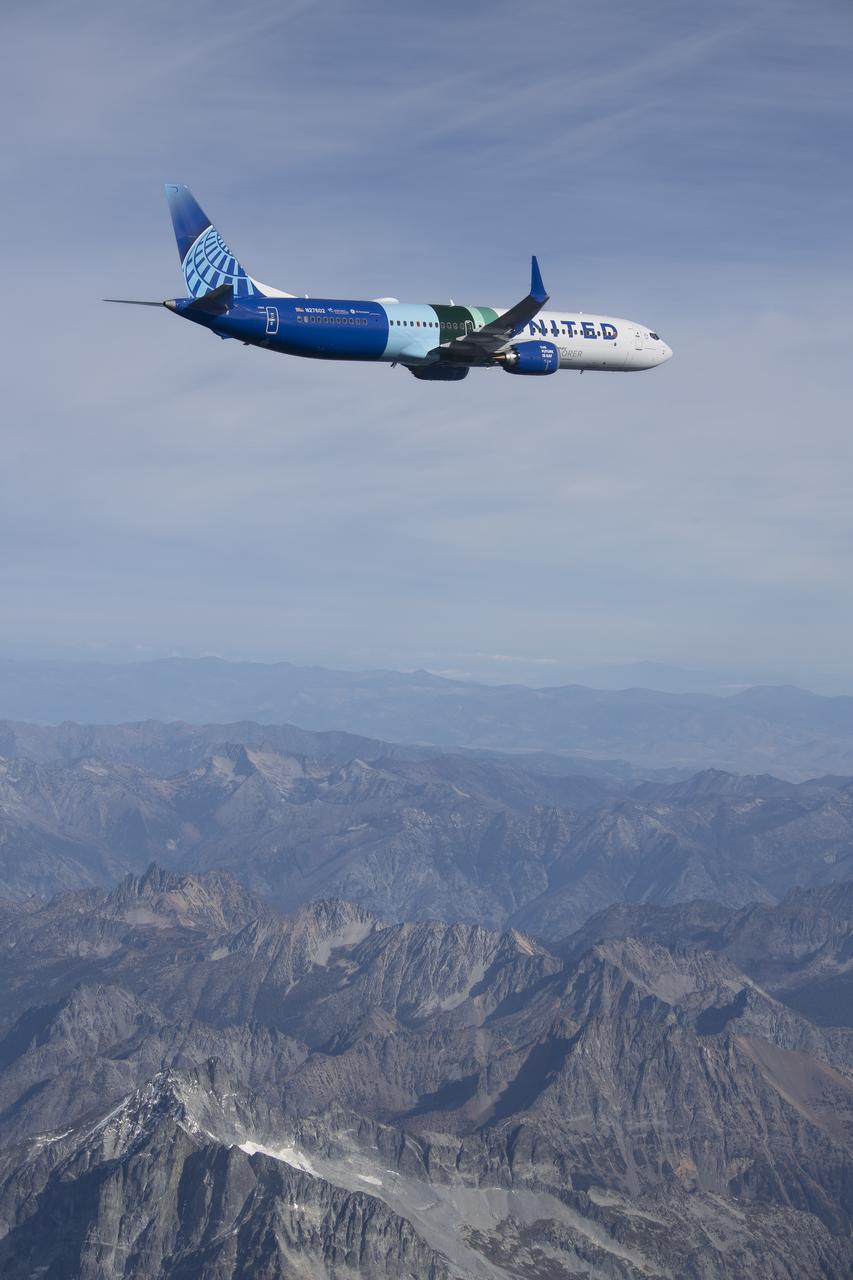
NASA’s DC-8 aircraft from Armstrong Flight Research Center in Edwards, California flies to Everett, Washington to conduct science research about reducing engine particle emissions. Partners include Boeing, United, General Electric Aerospace, German Aerospace Center (DLR), the FAA, and World Energy. Boeing’s new passenger aircraft uses revolutionary Sustainable Aviation Fuel, SAF, and NASA’s DC-8 flies behind the Boeing plane to measure its impact throughout flight. The results of this study will be released publicly to facilitate the improvement of aviation technology worldwide.
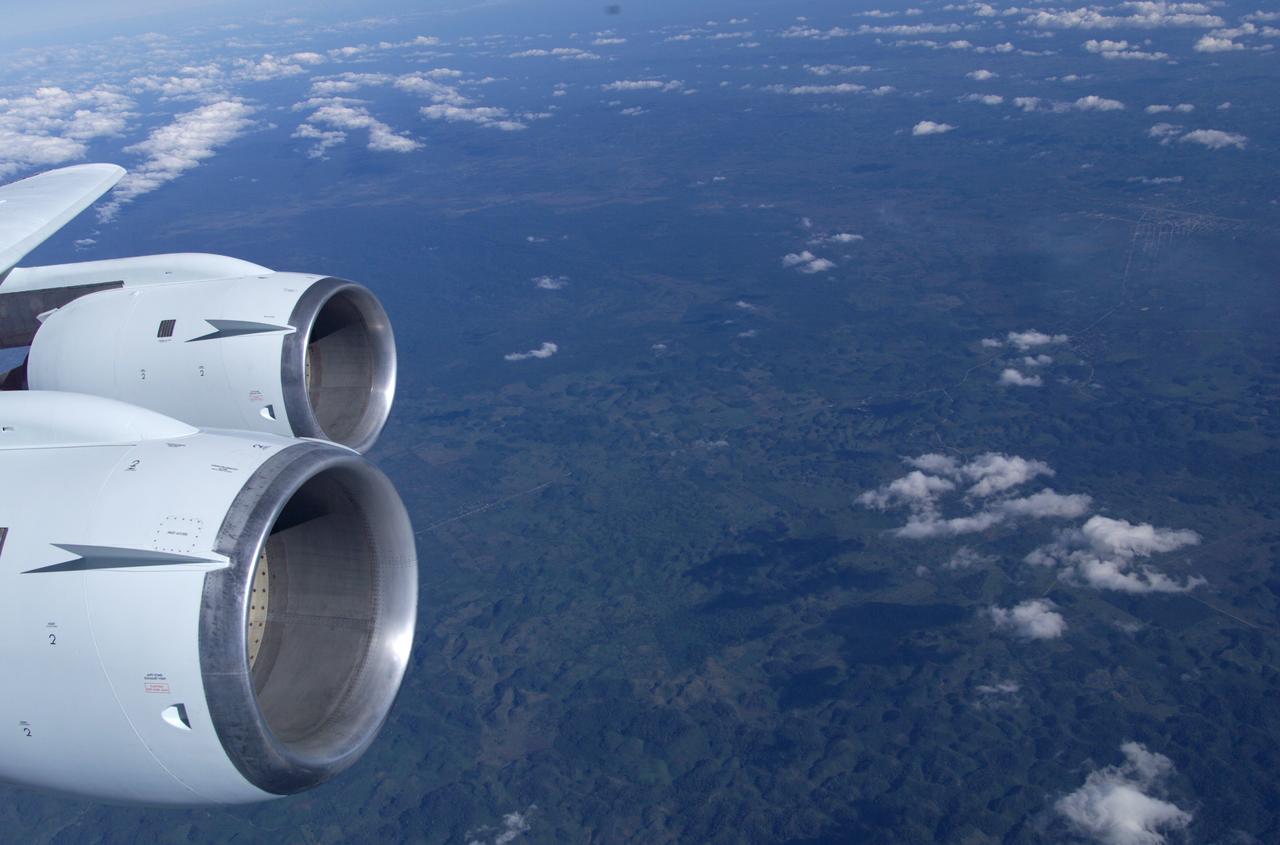
This is a photograph from the left side of the aircraft as NASA's DC-8 does an AirSAR 2004 research "line" over Honduras. AirSAR 2004 is a three-week expedition by an international team of scientists that will use an all-weather imaging tool, called the Airborne Synthetic Aperture Radar (AirSAR), in a mission ranging from the tropical rain forests of Central America to frigid Antarctica.
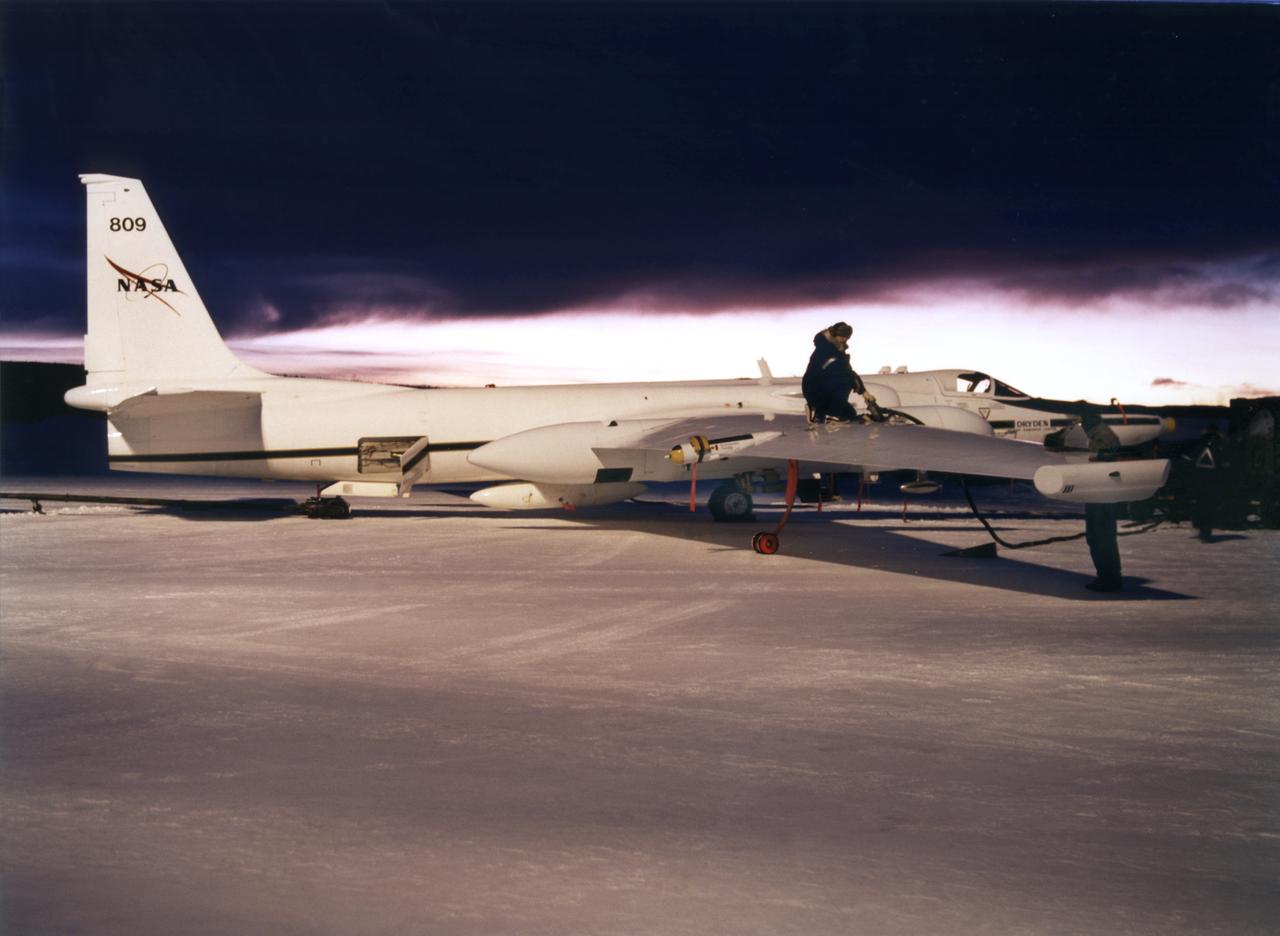
ER-2s bearing tail numbers 806 and 809 are used as airborne science platforms by NASA's Dryden Flight Research Center. The aircraft are platforms for a variety of high-altitude science missions flown over various parts of the world. They are also used for earth science and atmospheric sensor research and development, satellite calibration and data validation. The ER-2s are capable of carrying a maximum payload of 2,600 pounds of experiments in a nose bay, the main equipment bay behind the cockpit, two wing-mounted superpods and small underbody and trailing edges. Most ER-2 missions last about six hours with ranges of about 2,200 nautical miles. The aircraft typically fly at altitudes above 65,000 feet. On November 19, 1998, an ER-2 set a world record for medium weight aircraft reaching an altitude of 68,700 feet. The aircraft is 63 feet long, with a wingspan of 104 feet. The top of the vertical tail is 16 feet above ground when the aircraft is on the bicycle-type landing gear. Cruising speeds are 410 knots, or 467 miles per hour, at altitude. A single General Electric F-118 turbofan engine rated at 17,000 pounds thrust powers the ER-2.

In this Sunset photo, NASA’s Artemis II SLS (Space Launch System) rocket and Orion spacecraft atop a mobile launcher stands vertical at Launch Complex 39B at NASA’s Kennedy Space Center in Florida on Thursday, Jan. 29, 2026. The Artemis II test flight will take Commander Reid Wiseman, Pilot Victor Glover, and Mission Specialist Christina Koch from NASA, and Mission Specialist Jeremy Hansen from the CSA (Canadian Space Agency), around the Moon and back to Earth.
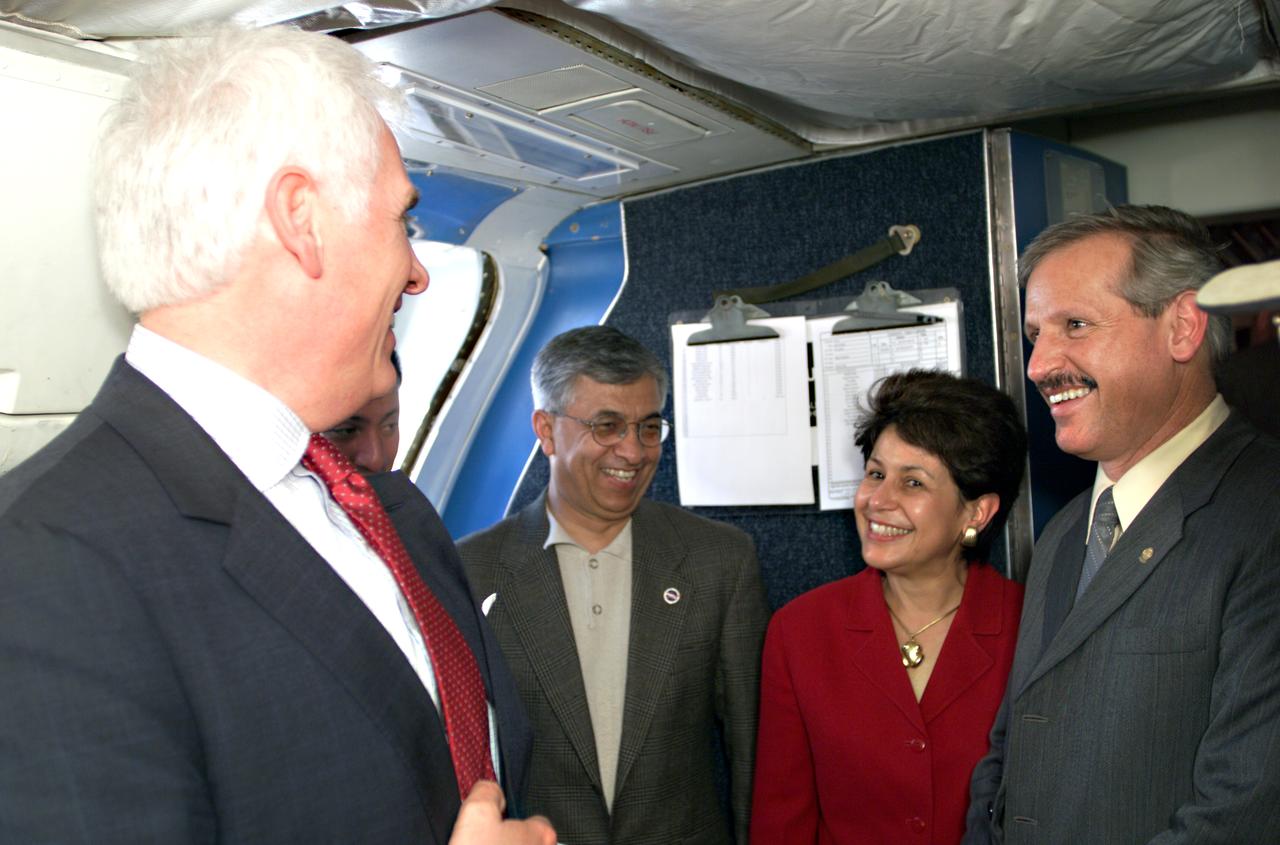
VIP’s onboard NASA's DC-8 aircraft during the AirSAR 2004 Mesoamerica campaign, L-R: Mr. John Danilovich, US Ambassador to Costa Rica; Dr. Gahssem Asrar, NASA Associate Administrator for Earth Science Enterprises; Dr. Sonia Marta Mora, President of the Costa Rican National Rector’s Council; and Fernando Gutierrez, Costa Rican Minister of Science and Technology(MICIT). AirSAR 2004 Mesoamerica is a three-week expedition by an international team of scientists that will use an all-weather imaging tool, called the Airborne Synthetic Aperture Radar (AirSAR), in a mission ranging from the tropical rain forests of Central America to frigid Antarctica.
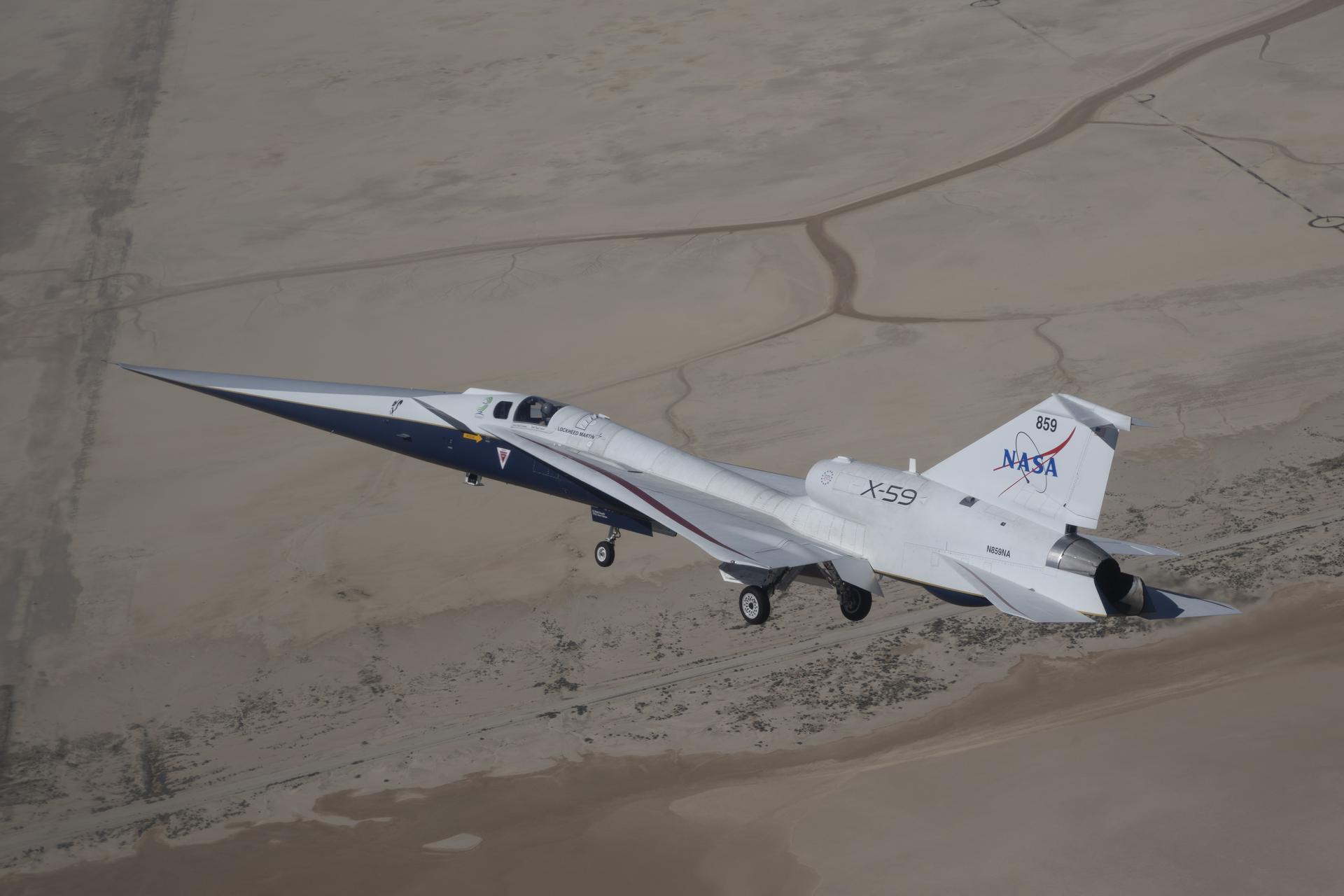
NASA’s X-59 quiet supersonic aircraft flies its second flight Friday, March 20, 2026, near NASA’s Armstrong Flight Research Center in Edwards, California. The X-59 is central to NASA’s Quesst mission, which aims to demonstrate quiet supersonic flight by reducing the loud sonic boom to a softer sonic “thump,” potentially enabling faster commercial air travel over land.
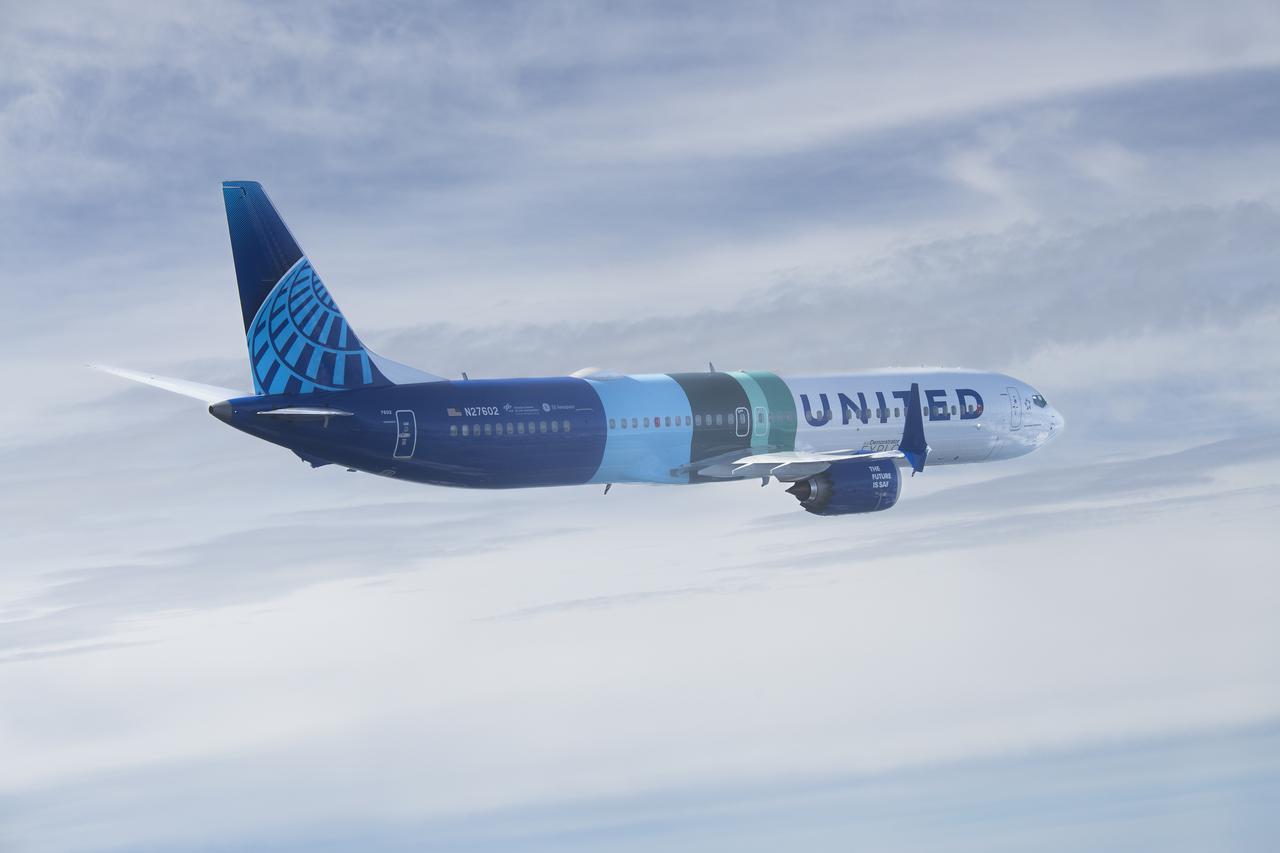
NASA’s DC-8 aircraft from Armstrong Flight Research Center in Edwards, California flies to Everett, Washington to conduct science research about reducing engine particle emissions. Partners include Boeing, United, General Electric Aerospace, German Aerospace Center (DLR), the FAA, and World Energy. Boeing’s new passenger aircraft uses revolutionary Sustainable Aviation Fuel, SAF, and NASA’s DC-8 flies behind the Boeing plane to measure its impact throughout flight. The results of this study will be released publicly to facilitate the improvement of aviation technology worldwide.
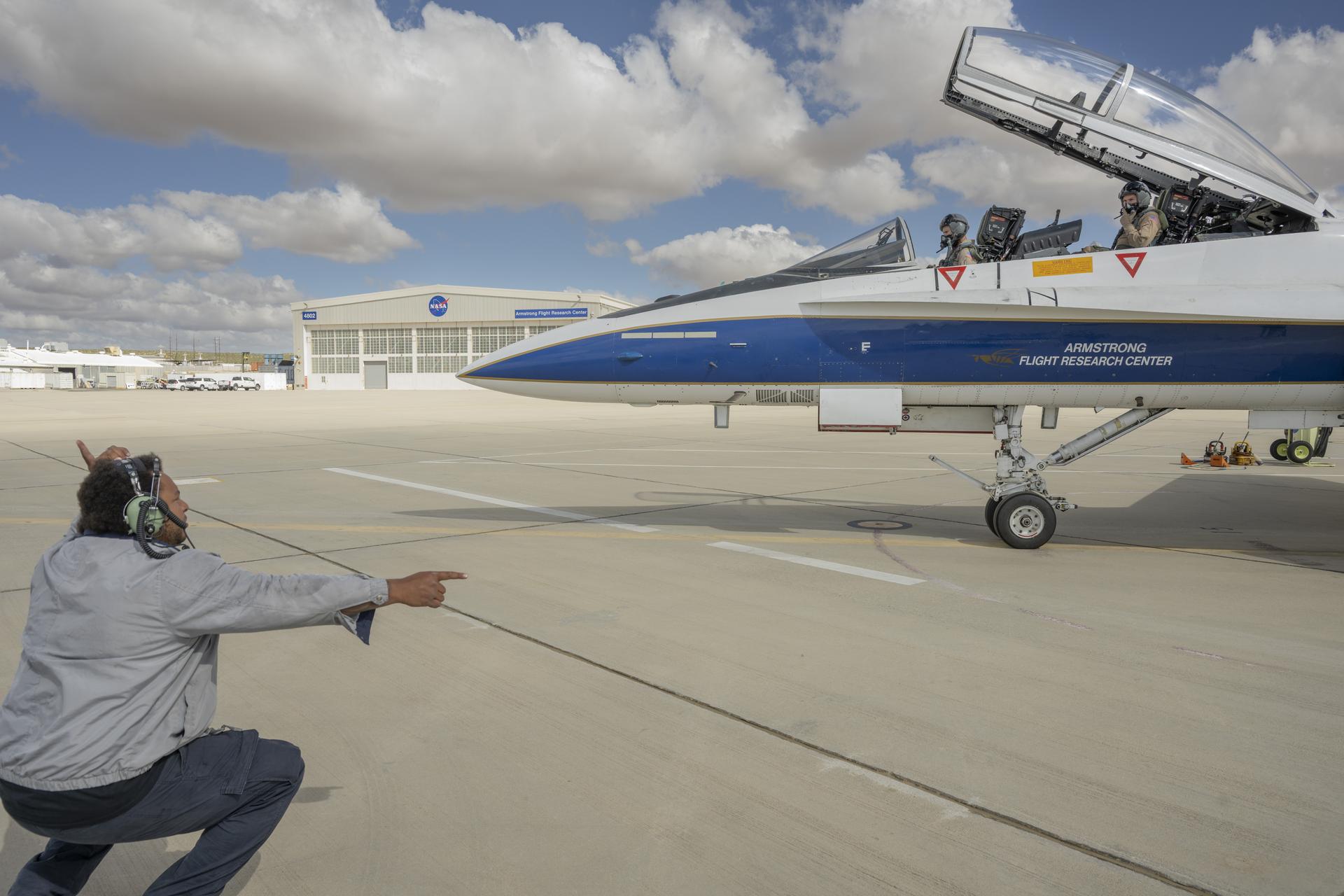
Crew chief, Andric McCartin, prepares NASA pilot Tim Williams and Kelly Jellison, lead avionics technician for NASA’s C-20 and G-V aircraft, for an employee incentive flight in an F/A-18 aircraft at NASA’s Armstrong Flight Research Center in Edwards, California, on Wednesday, May 27, 2026. NASA Administrator Jared Isaacman established the ride‑along program to recognize and reward workforce members for their dedication to advancing the agency’s priorities.
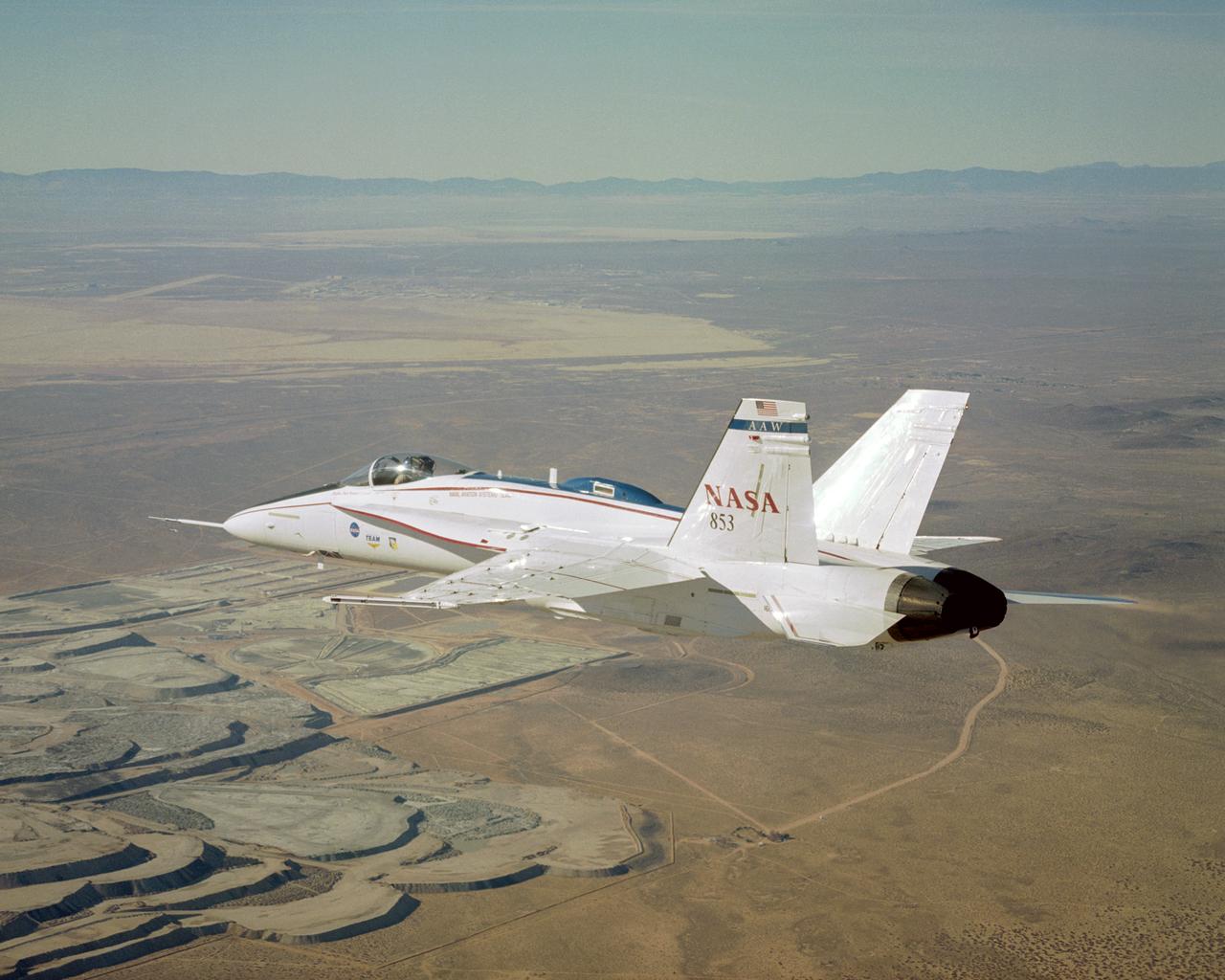
NASA's modified Active Aeroelastic Wing F/A-18 skims over portions of the U.S. Borax mine during a recent mission from the Dryden Flight Research Center.

NASA leadership, ground crew, and support personnel gather to congratulate test pilot Nils Larson following his first flight of the X-59 on Tuesday, Oct. 28, 2025. The moment captures years of design, integration, and ground testing and marks the beginning of a new chapter in NASA’s aeronautics research legacy.

The Sun rises behind NASA’s Artemis II SLS (Space Launch System) rocket and Orion spacecraft atop a mobile launcher at Launch Complex 39B at NASA’s Kennedy Space Center in Florida . The Artemis II test flight will take Commander Reid Wiseman, Pilot Victor Glover, and Mission Specialist Christina Koch from NASA, and Mission Specialist Jeremy Hansen from the CSA (Canadian Space Agency), around the Moon and back to Earth.