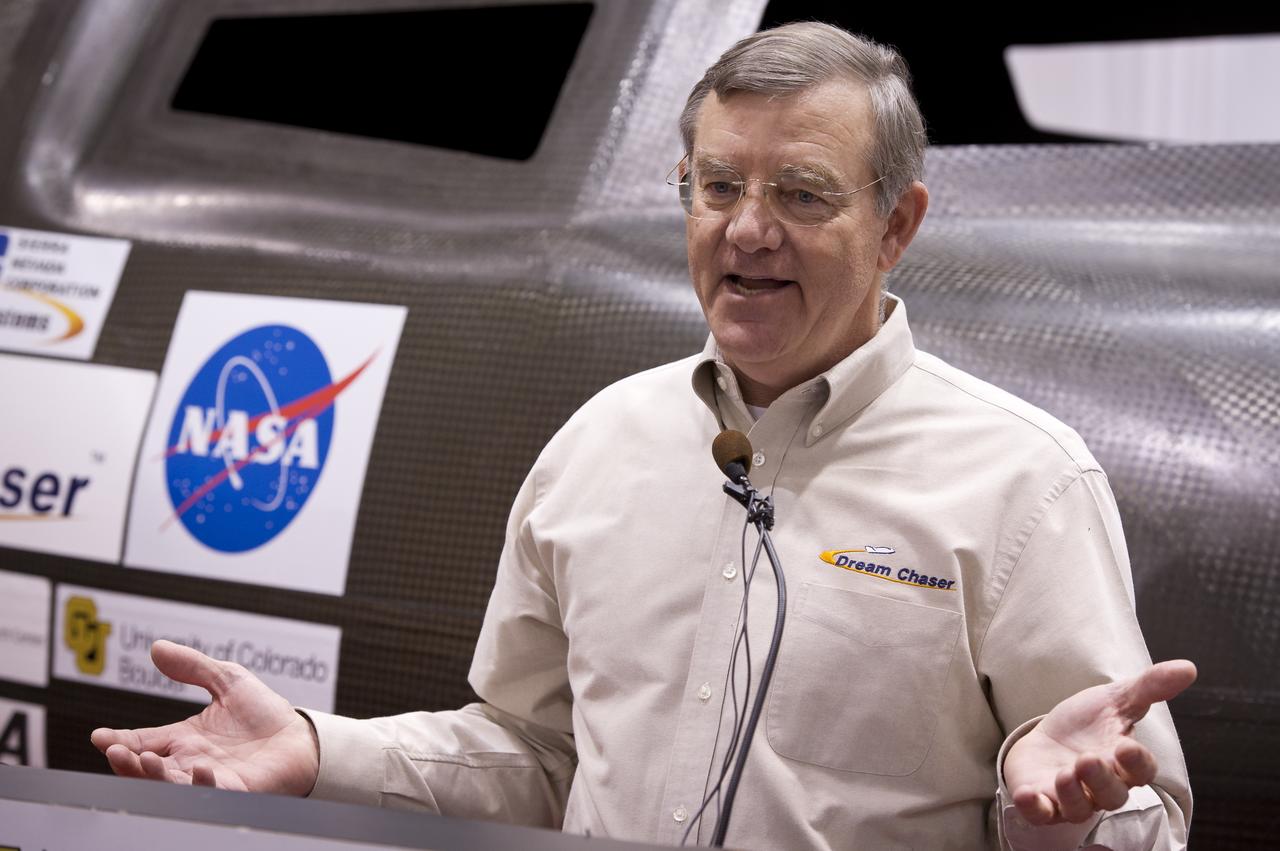
Director of Advanced Programs, Sierra Nevada Corporation, Jim Voss talks during a press conference with Sierra Nevada's Dream Chaser spacecraft in the background on Saturday, Feb. 5, 2011, at the University of Colorado at Boulder. Sierra Nevada's Dream Chaser spacecraft is under development with support from NASA's Commercial Crew Development Program to provide crew transportation to and from low Earth orbit. NASA is helping private companies develop innovative technologies to ensure that the U.S. remains competitive in future space endeavors. Photo Credit: (NASA/Bill Ingalls)
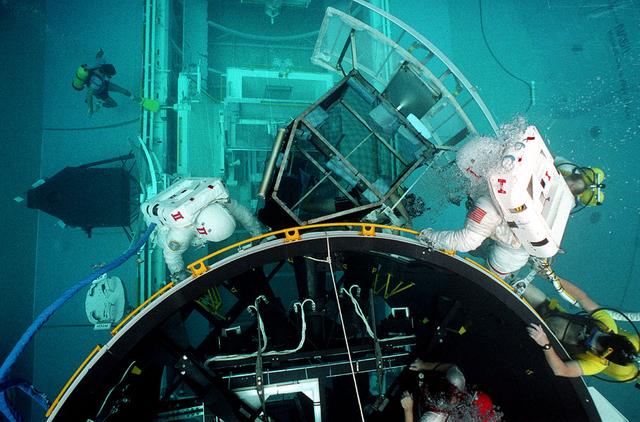
Astronauts Jim Voss and Jay Apt perform check-out procedures on a Hubble Space Telescope mock-up while working in the Marshall Space Flight Center's Neutral Buoyancy Simulator (NBS).
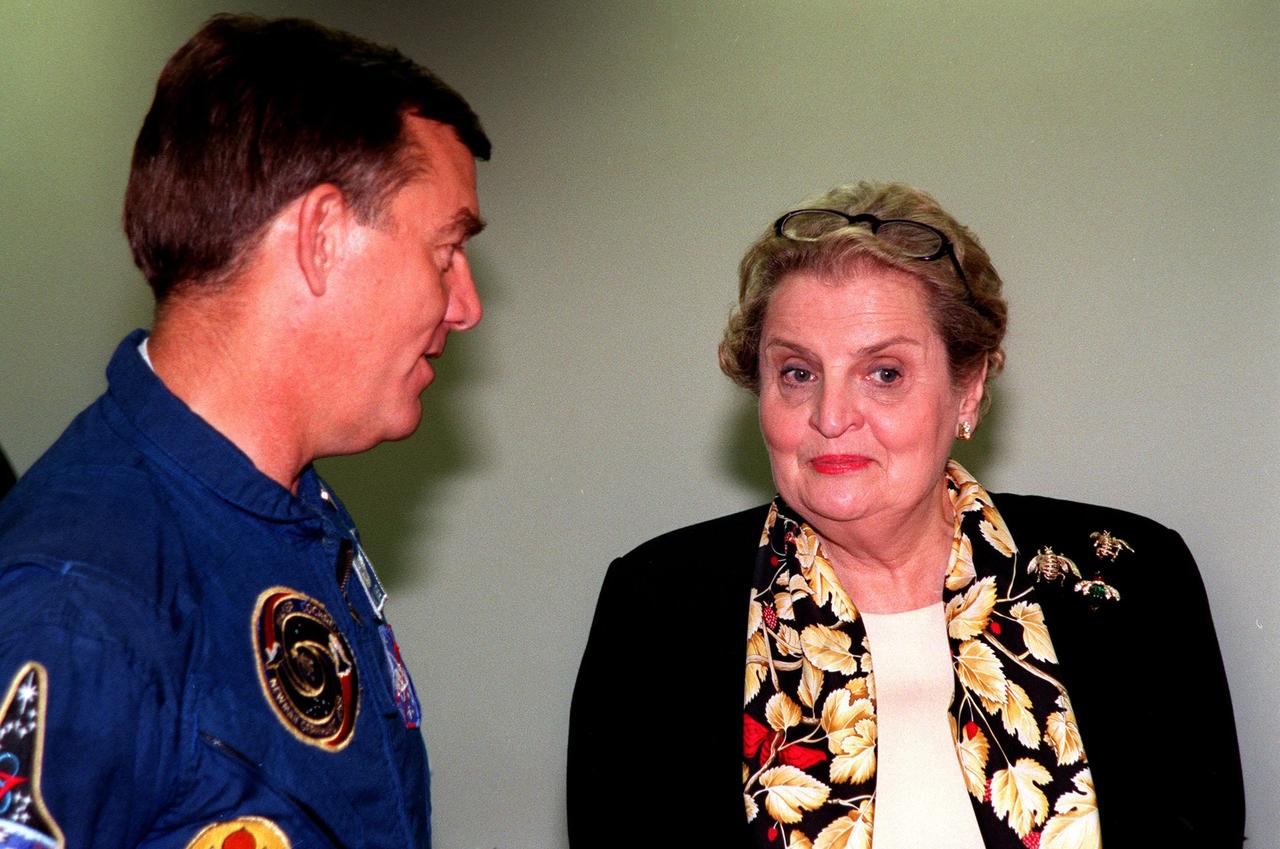
U.S. Secretary of State Madeleine Albright (right) talks with astronaut Jim Voss following the successful launch of Endeavour on Mission STS-88 from Launch Pad 39A at 3:35:34 a.m. EST. STS-88 is the first U.S. mission dedicated to the assembly of the International Space Station (ISS). Voss is a member of the STS-100 crew, the eighth ISS assembly team
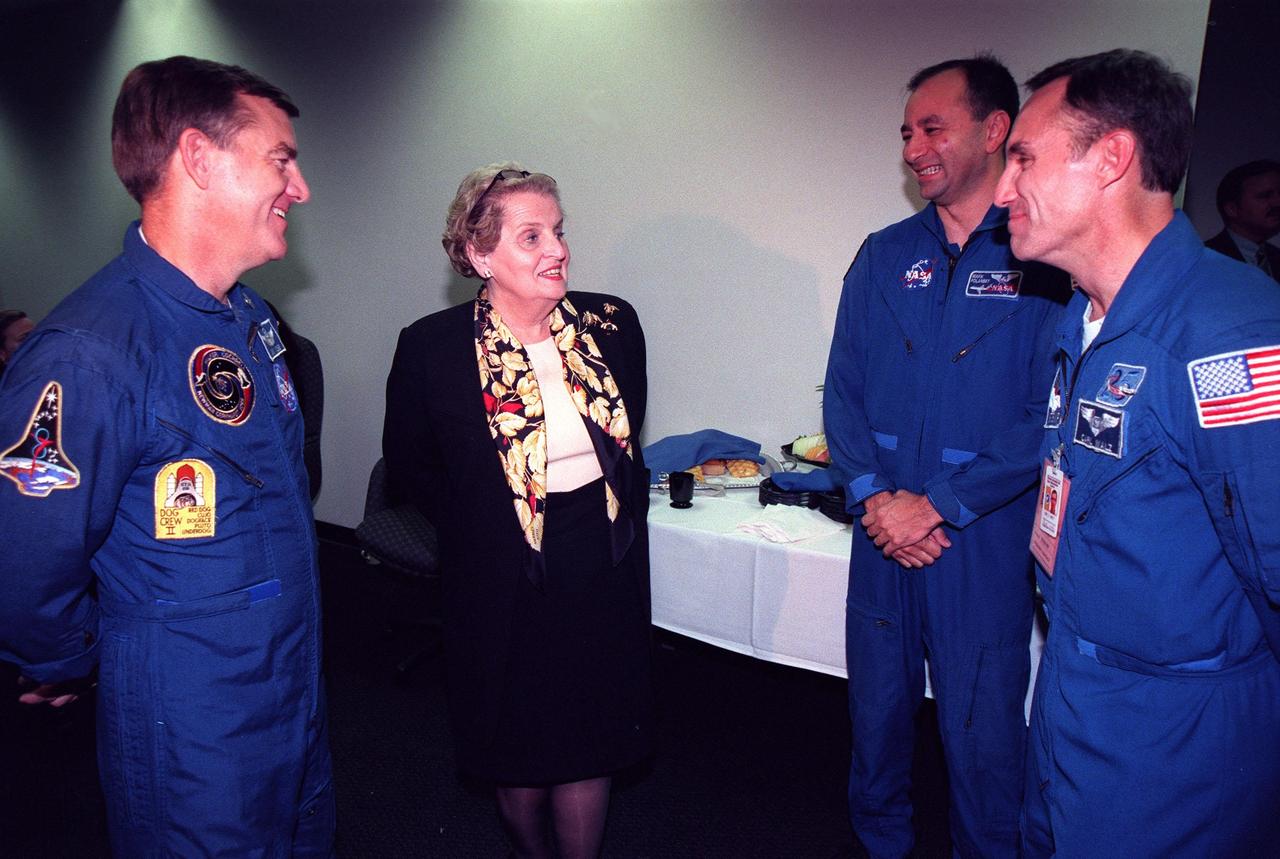
Following the successful launch of the STS-88 crew aboard Endeavour from Launch Pad 39A at 3:35:34 a.m. EST, U.S. Secretary of State Madeleine Albright (second from left) talks with astronauts (left to right) Jim Voss, Mark Polansky and Carl Walz. STS-88 is the first U.S. mission dedicated to the assembly of the International Space Station (ISS). Voss is a member of the STS-100 crew which will be the eighth ISS assembly mission. Polansky is slated to fly on STS-98 which will be the sixth ISS assembly mission. Walz is currently assigned to fly on the ISS on the fourth long duration crew
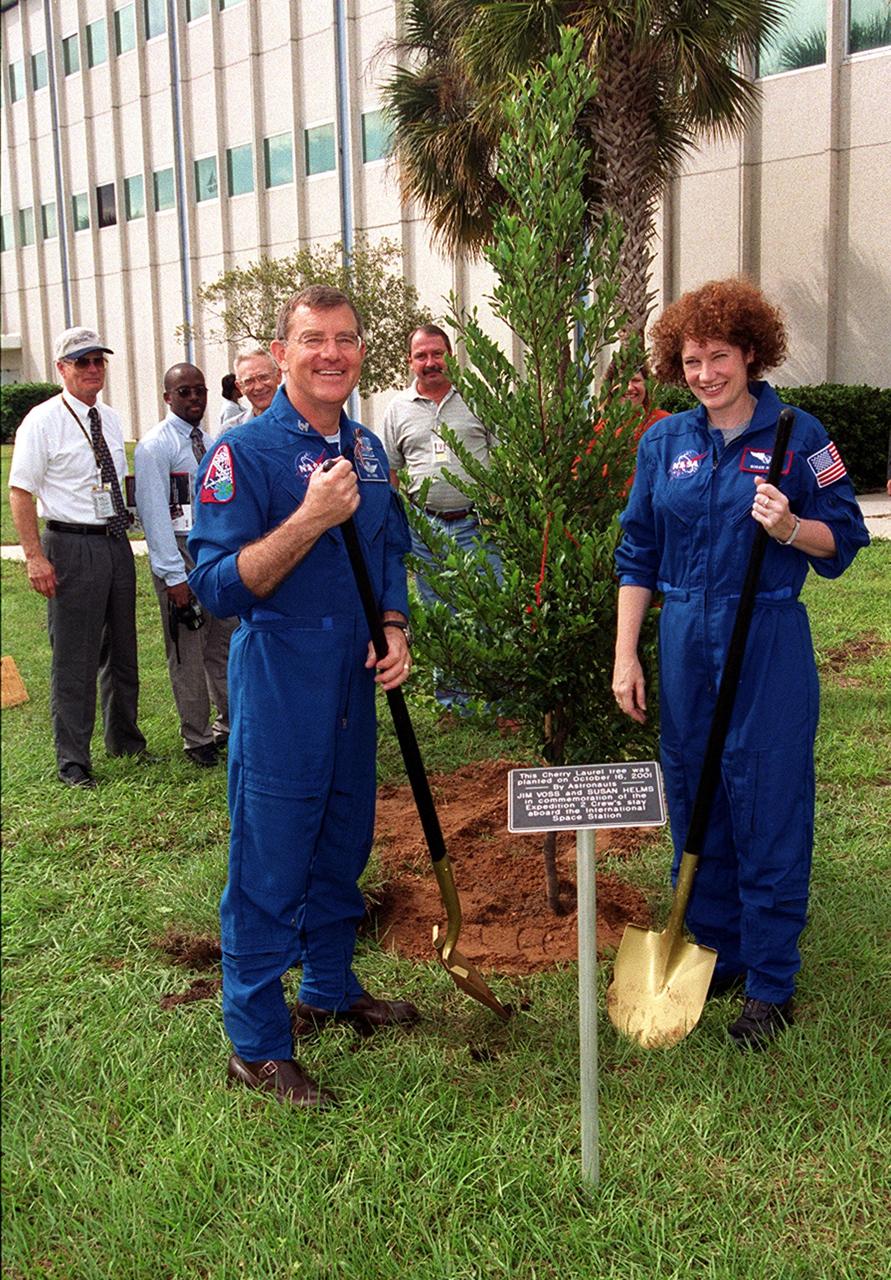
KENNEDY SPACE CENTER, Fla. -- Astronauts Jim Voss (left) and Susan Helms plant a cherry laurel tree outside the KSC Headquarters building to commemorate their stay as Expedition 2 crew members aboard the International Space Station. Expedition 2, which also included cosmonaut Yury Usachev, made the space voyage to the Station on mission STS-102 in March 2001. After five months on the Station, they returned to Earth, at the KSC Shuttle Landing Facility, on mission STS-105 in August 2001

KENNEDY SPACE CENTER, Fla. - J.J. "Tip" Talone Jr., director of KSC's International Space Station/Payload Processing, presents Expedition 2 crew member Susan Helms with a photo plaque from employees commemorating her stay aboard the Space Station. The Expedition 2 crew, which included astronaut Jim Voss and cosmonaut Yury Usachev, made the space voyage to the Station on mission STS-102 in March 2001. After five months on the Station, they returned to Earth, at the KSC Shuttle Landing Facility, on mission STS-105 in August 2001
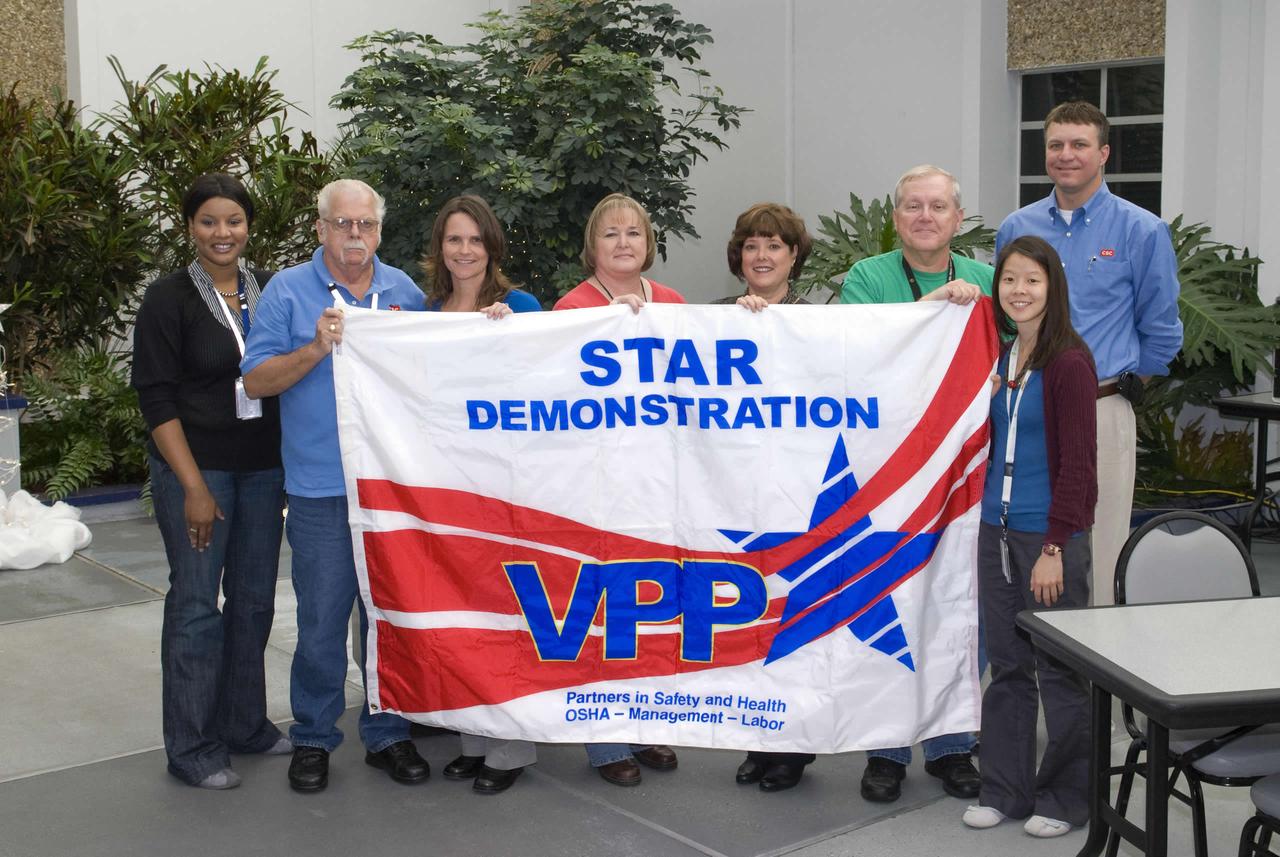
CSC Inc. at NASA's John C. Space Center was presented a Voluntary Protection Programs (VPP) Star Demonstration banner by the Occupational Safety and Health administration (OSHA) during a Dec. 9 ceremony. From left, CSC Employee Safety Committee members LaSonya Pulliam (l to r), Jim Sever, Stacy Brunson, Debbie Duke, Sheliah Wilson, Fred Voss and Beth Nguyen, and CSC Program Manager Tony Lisotta received the banner. OSHA established VPP in 1982 as a proactive safety management model so organizations and their employees could be recognized for excellence in safety and health.
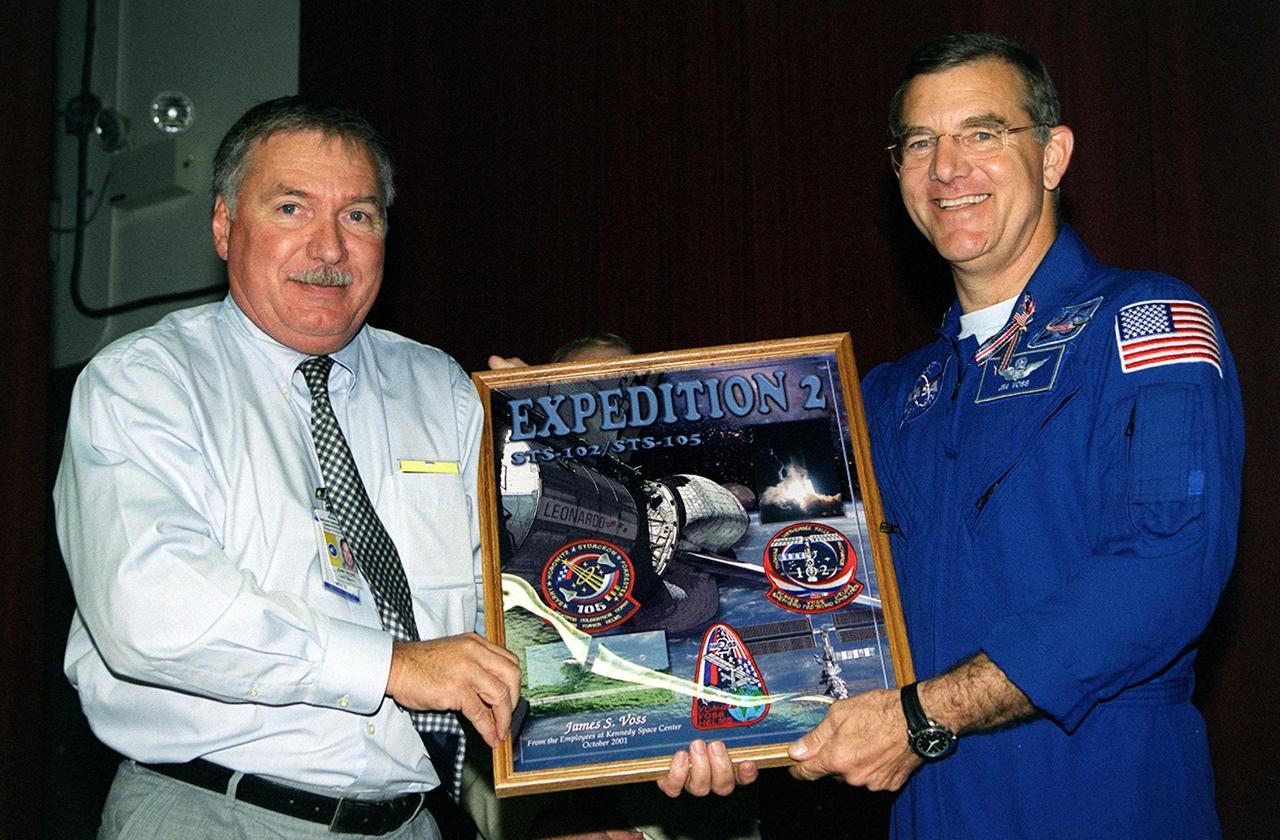
KENNEDY SPACE CENTER, Fla. -- J.J. "Tip" Talone Jr., director of KSC's International Space Station/Payload Processing, presents Expedition 2 crew member Jim Voss with a photo plaque from employees commemorating his stay aboard the Space Station. The Expedition 2 crew, which included astronaut Susan Helms and cosmonaut Yury Usachev , made the space voyage to the Station on mission STS-102 in March 2001. After five months on the Station, they returned to Earth, at the KSC Shuttle Landing Facility, on mission STS-105 in August 2001
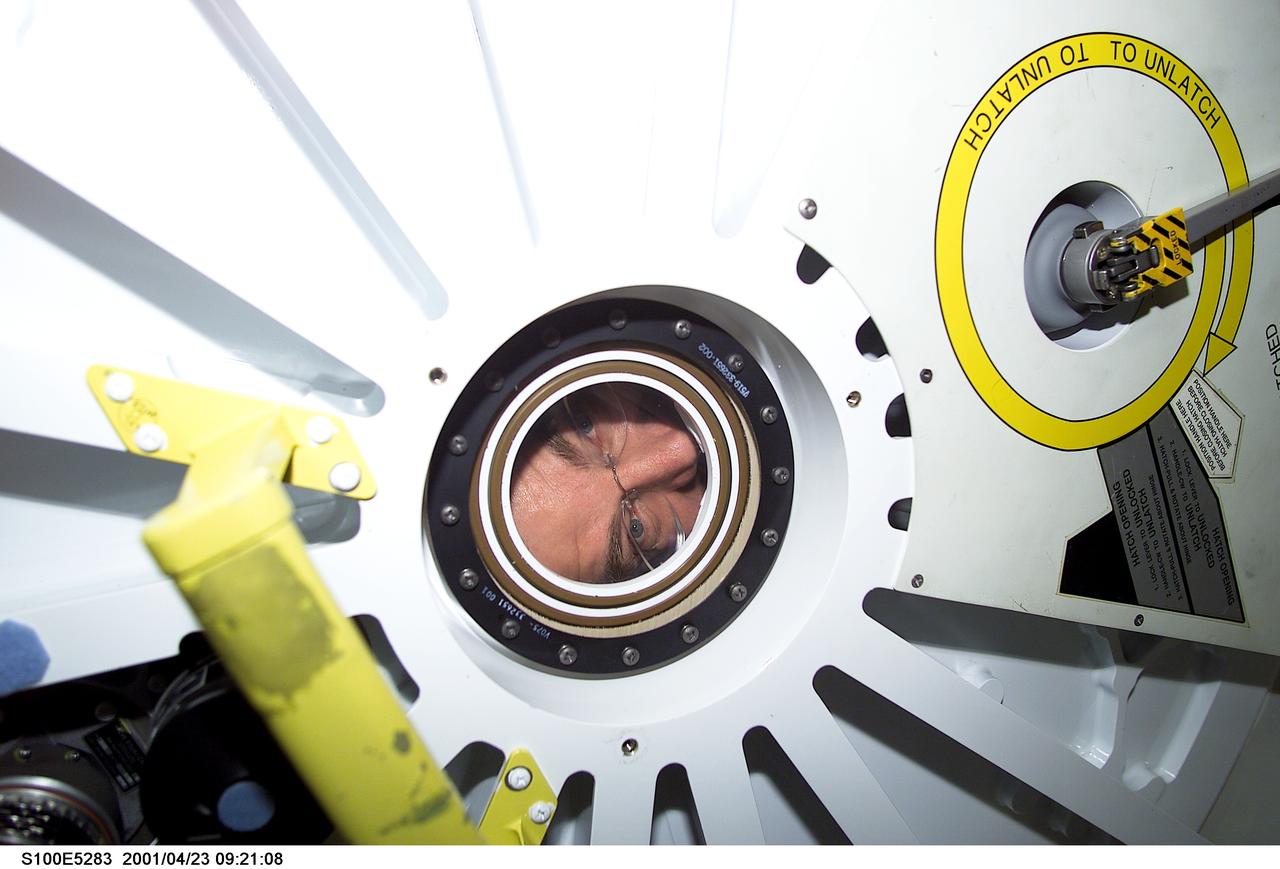
STS100-E-5283 (23 April 2001) --- Astronaut James S. Voss, Expedition Two flight engineer, peers into the Pressurized Mating Adapter (PMA-2) prior to hatch opening. The picture was taken with a digital still camera by one of the STS-100 crew members in the PMA. Photo credit: NASA
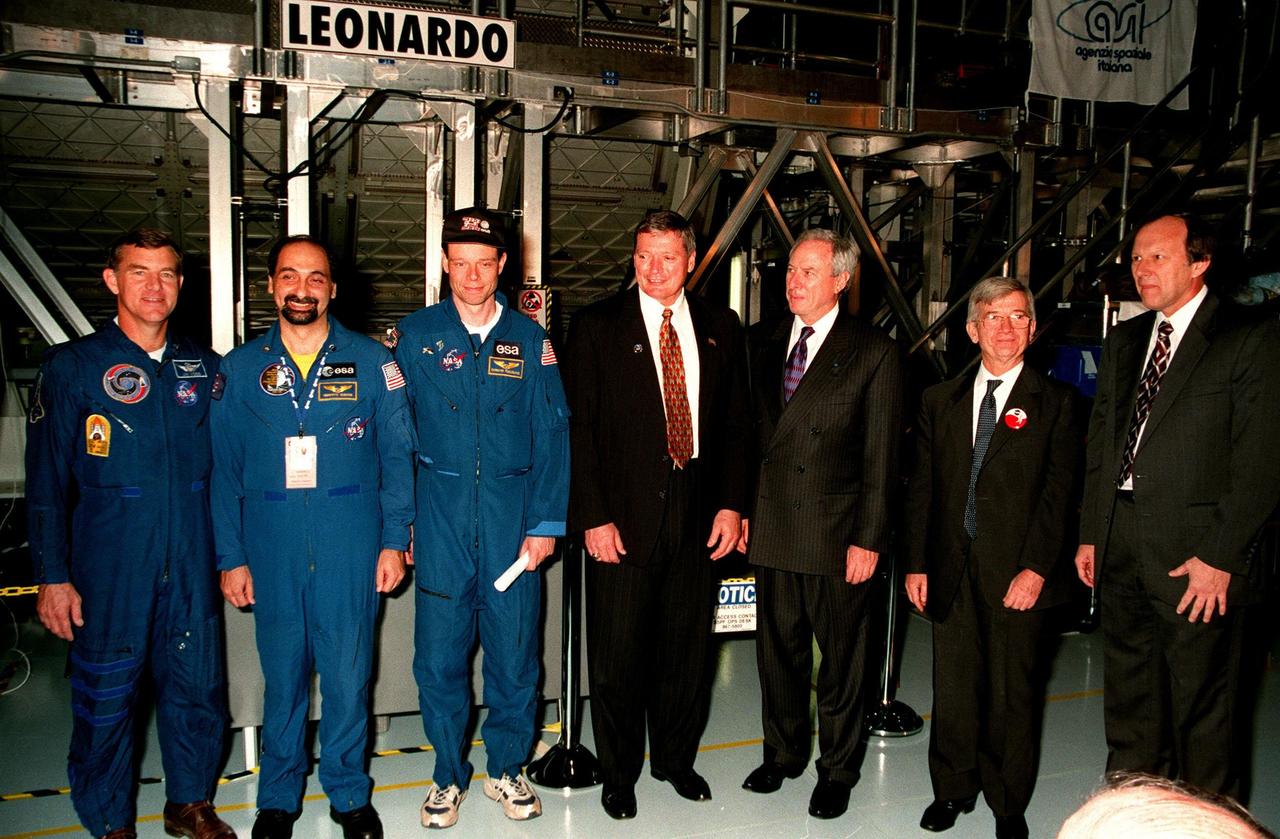
KENNEDY SPACE CENTER, FLA. -- Participants pose for a photo at the Space Station Processing Facility ceremony transferring the "Leonardo" Multipurpose Logistics Module (MPLM) from the Italian Space Agency, Agenzia Spaziale Italiana (ASI), to NASA. From left, they are astronaut Jim Voss, European Space Agency astronauts Umberto Guidoni of Italy and Christer Fuglesang of Sweden, NASA International Space Station Program Manager Randy Brinkley, NASA Administrator Daniel S. Goldin, ASI President Sergio De Julio and Stephen Francois, director, International Space Station Launch Site Support at KSC. The MPLM, a reusable logistics carrier, will be the primary delivery system used to resupply and return International Space Station cargo requiring a pressurized environment. Leonardo is the first of three MPLM carriers for the International Space Station. It is scheduled to be launched on Space Shuttle Mission STS-100, targeted for April 2000
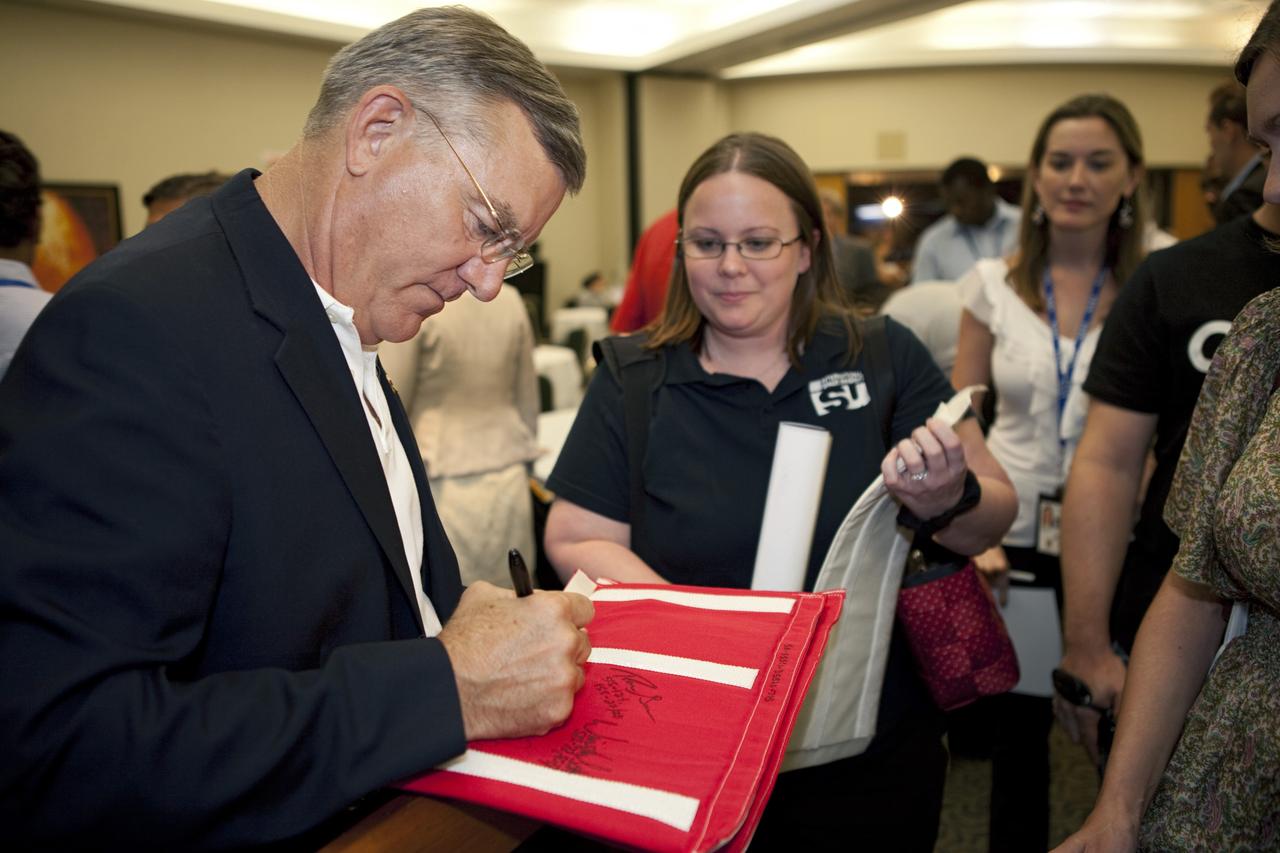
CAPE CANAVERAL, Fla. – Jim Voss, director of advanced programs at Sierra Nevada Corporation and former NASA astronaut, signs autographs and talks with participants of the International Space University during a panel discussion on the future of human spaceflight at the Kennedy Space Center Visitor Complex in Florida. The International Space University is a nine-week intensive course designed for post-graduate university students and professionals during the summer. The program is hosted by a different country each year, providing a unique educational experience for participants from around the world. NASA Kennedy Space Center and the Florida Institute of Technology in Melbourne, Fla., are co-hosting this year’s event which runs from June 4 to Aug. 3. There are about 125 participants representing 31 countries. For more information, visit http://www.isunet.edu. Photo credit: NASA/Kim Shiflett
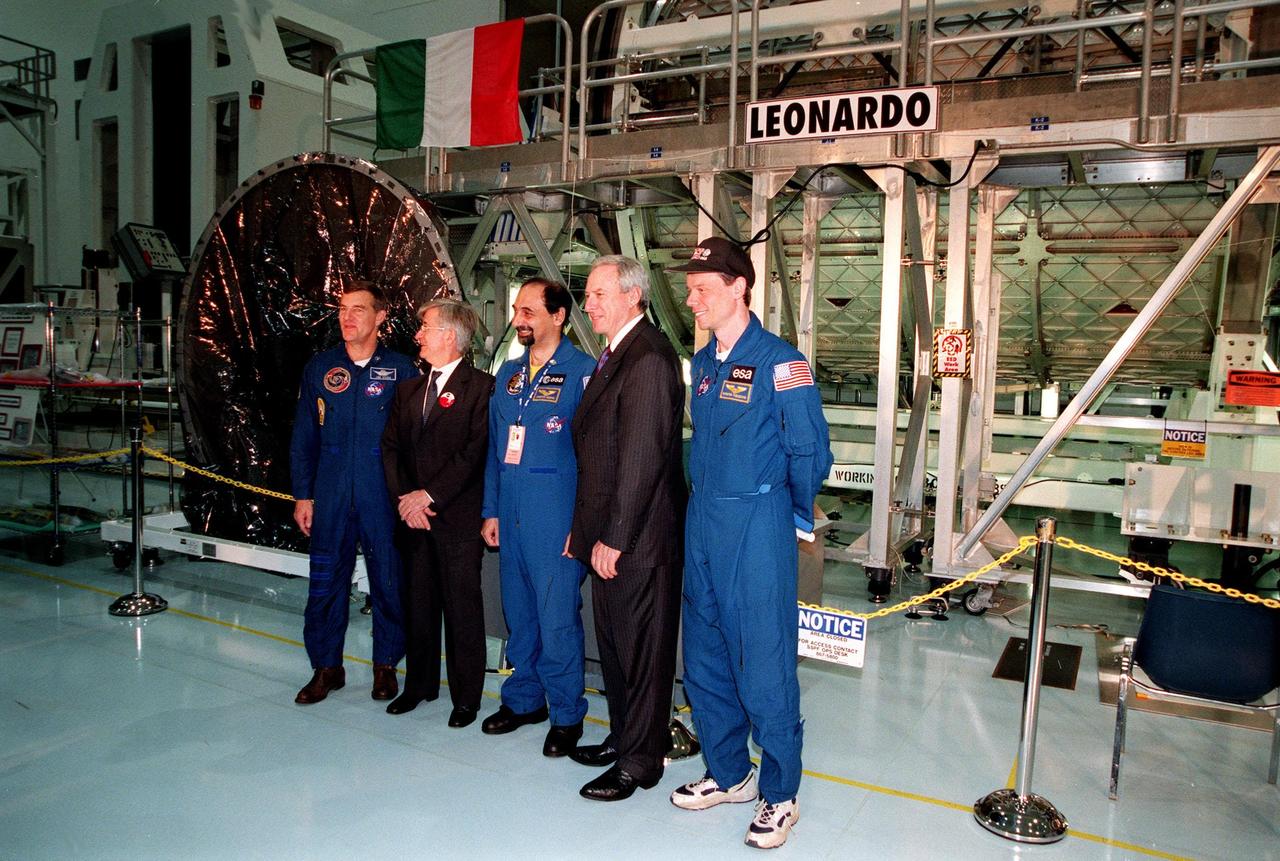
KENNEDY SPACE CENTER, FLA. -- Participants pose for a photo at the Space Station Processing Facility ceremony transferring the "Leonardo" Multipurpose Logistics Module (MPLM) from the Italian Space Agency, Agenzia Spaziale Italiana (ASI), to NASA. From left, they are astronaut Jim Voss, ASI President Sergio De Julio, European Space Agency astronaut Umberto Guidoni of Italy, NASA Administrator Daniel S. Goldin and European Space Agency astronaut Christer Fuglesang of Sweden. The MPLM, a reusable logistics carrier, will be the primary delivery system used to resupply and return International Space Station cargo requiring a pressurized environment. Leonardo is the first of three MPLM carriers for the International Space Station. It is scheduled to be launched on Space Shuttle Mission STS-100, targeted for April 2000
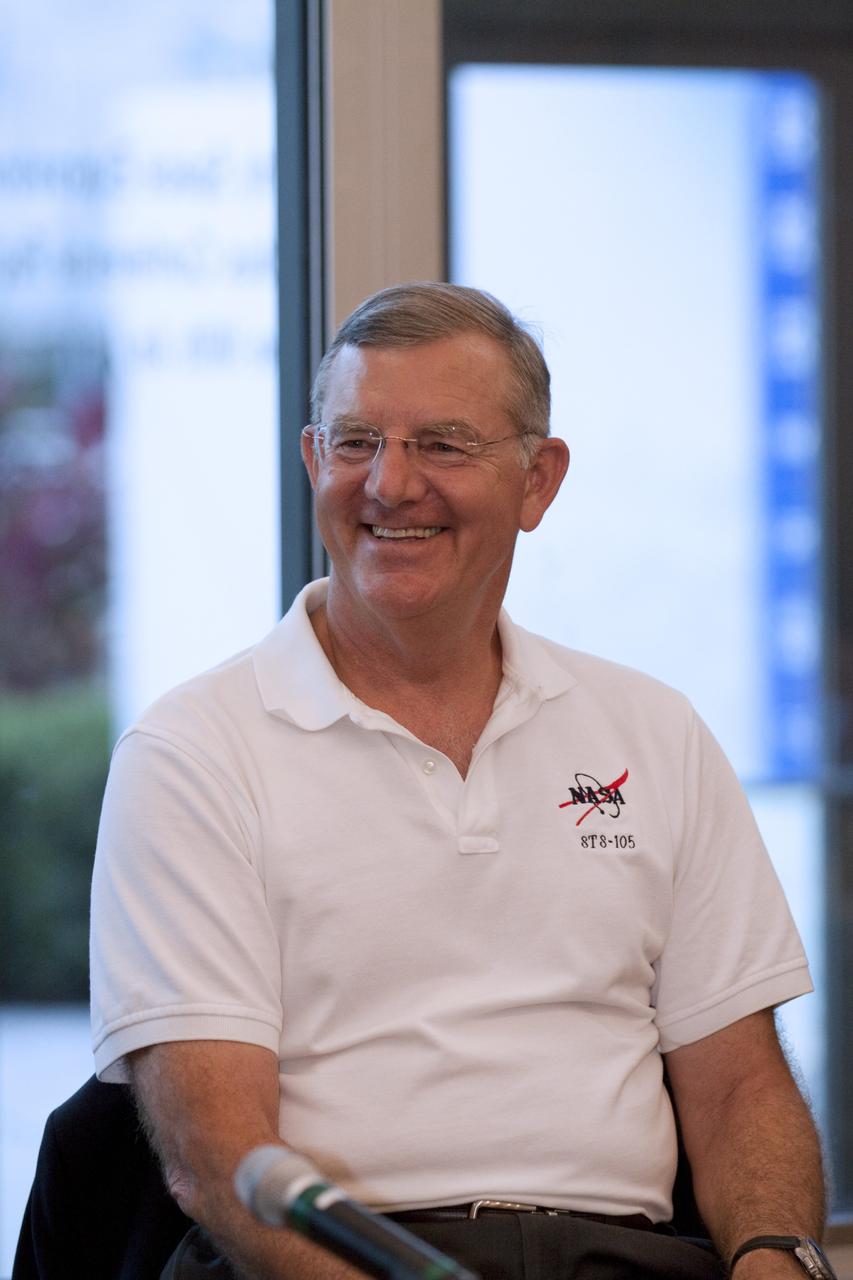
CAPE CANAVERAL, Fla. – Current and former NASA and international astronauts spoke to participants of the International Space University on the future of human spaceflight during a panel discussion at the Kennedy Space Center Visitor Complex in Florida. Participating in the discussion is Jim Voss, director of advanced programs at Sierra Nevada Corporation and former NASA astronaut. The International Space University is a nine-week intensive course designed for post-graduate university students and professionals during the summer. The program is hosted by a different country each year, providing a unique educational experience for participants from around the world. NASA Kennedy Space Center and the Florida Institute of Technology in Melbourne, Fla., are co-hosting this year’s event which runs from June 4 to Aug. 3. There are about 125 participants representing 31 countries. For more information, visit http://www.isunet.edu. Photo credit: NASA/Kim Shiflett
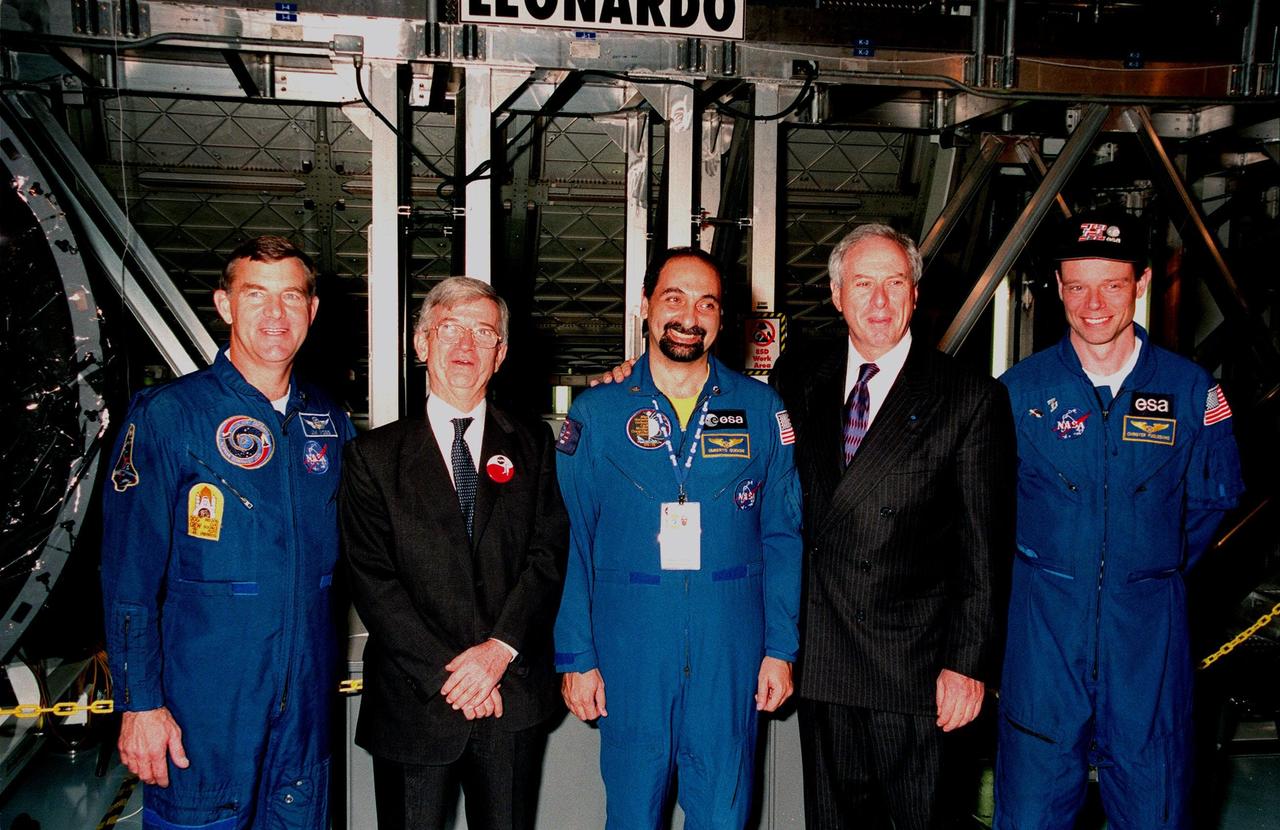
KENNEDY SPACE CENTER, FLA. -- Participants pose for a photo at the Space Station Processing Facility ceremony transferring the "Leonardo" Multipurpose Logistics Module (MPLM) from the Italian Space Agency, Agenzia Spaziale Italiana (ASI), to NASA. From left, they are astronaut Jim Voss, ASI President Sergio De Julio, European Space Agency astronaut Umberto Guidoni of Italy, NASA Administrator Daniel S. Goldin and European Space Agency astronaut Christer Fuglesang of Sweden. The MPLM, a reusable logistics carrier, will be the primary delivery system used to resupply and return International Space Station cargo requiring a pressurized environment. Leonardo is the first of three MPLM carriers for the International Space Station. It is scheduled to be launched on Space Shuttle Mission STS-100, targeted for April 2000
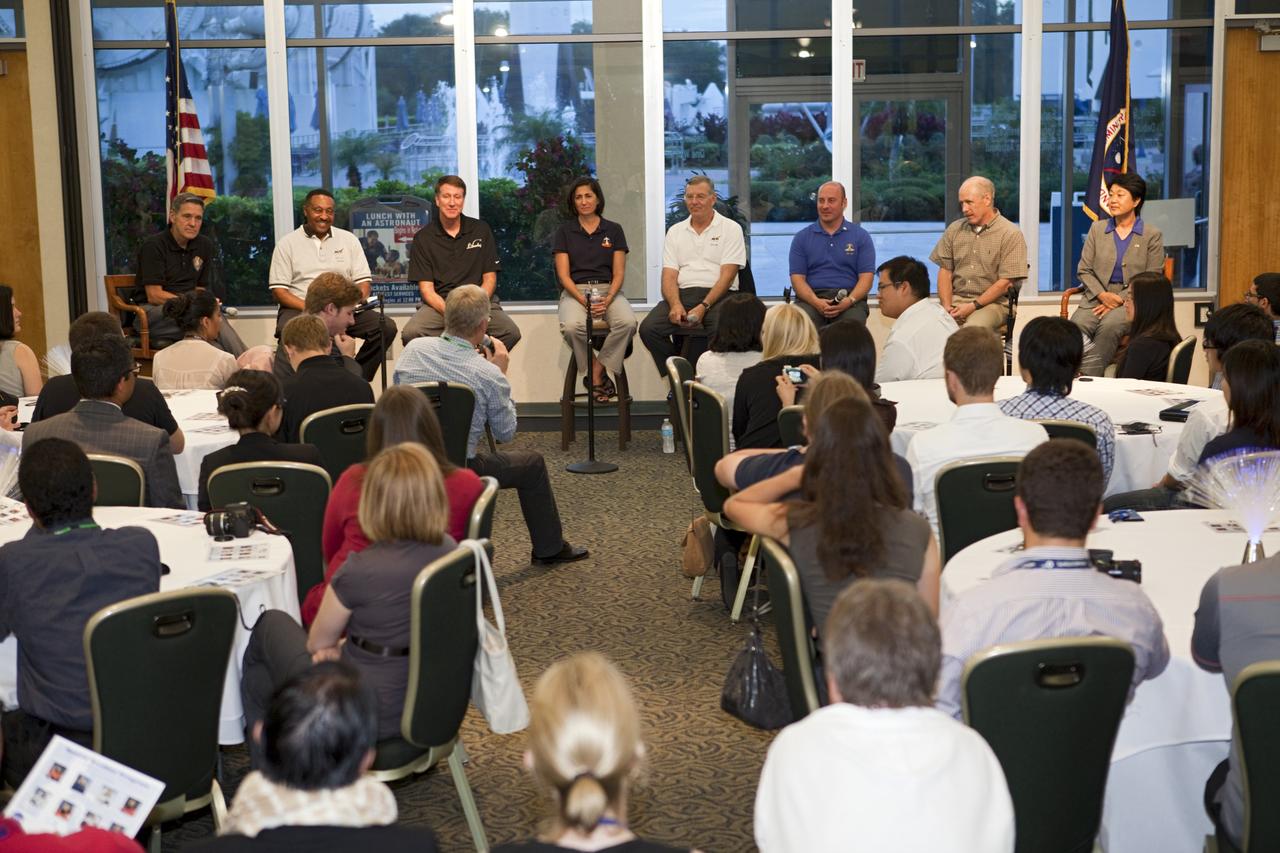
CAPE CANAVERAL, Fla. – Current and former NASA and international astronauts spoke to participants of the International Space University on the future of human spaceflight during a panel discussion at the Kennedy Space Center Visitor Complex in Florida. Participating in the discussion from left, are Kennedy Space Center Director Bob Cabana Winston Scott, dean of the College of Aeronautics at Florida Institute of Technology and former NASA astronaut Kent Rominger, vice president with Alliant Techsystems and former NASA astronaut Nicole Stott, NASA astronaut currently on detail at Kennedy Space Center Jim Voss, director of advanced programs at Sierra Nevada Corporation and former NASA astronaut Garrett Reisman, senior engineer with SpaceX and former NASA astronaut Ken Bowersox, former NASA astronaut and Chiaki Mukai, a Japan Aerospace Exploration Agency astronaut. The International Space University is a nine-week intensive course designed for post-graduate university students and professionals during the summer. The program is hosted by a different country each year, providing a unique educational experience for participants from around the world. NASA Kennedy Space Center and the Florida Institute of Technology in Melbourne, Fla., are co-hosting this year’s event which runs from June 4 to Aug. 3. There are about 125 participants representing 31 countries. For more information, visit http://www.isunet.edu. Photo credit: NASA/Kim Shiflett
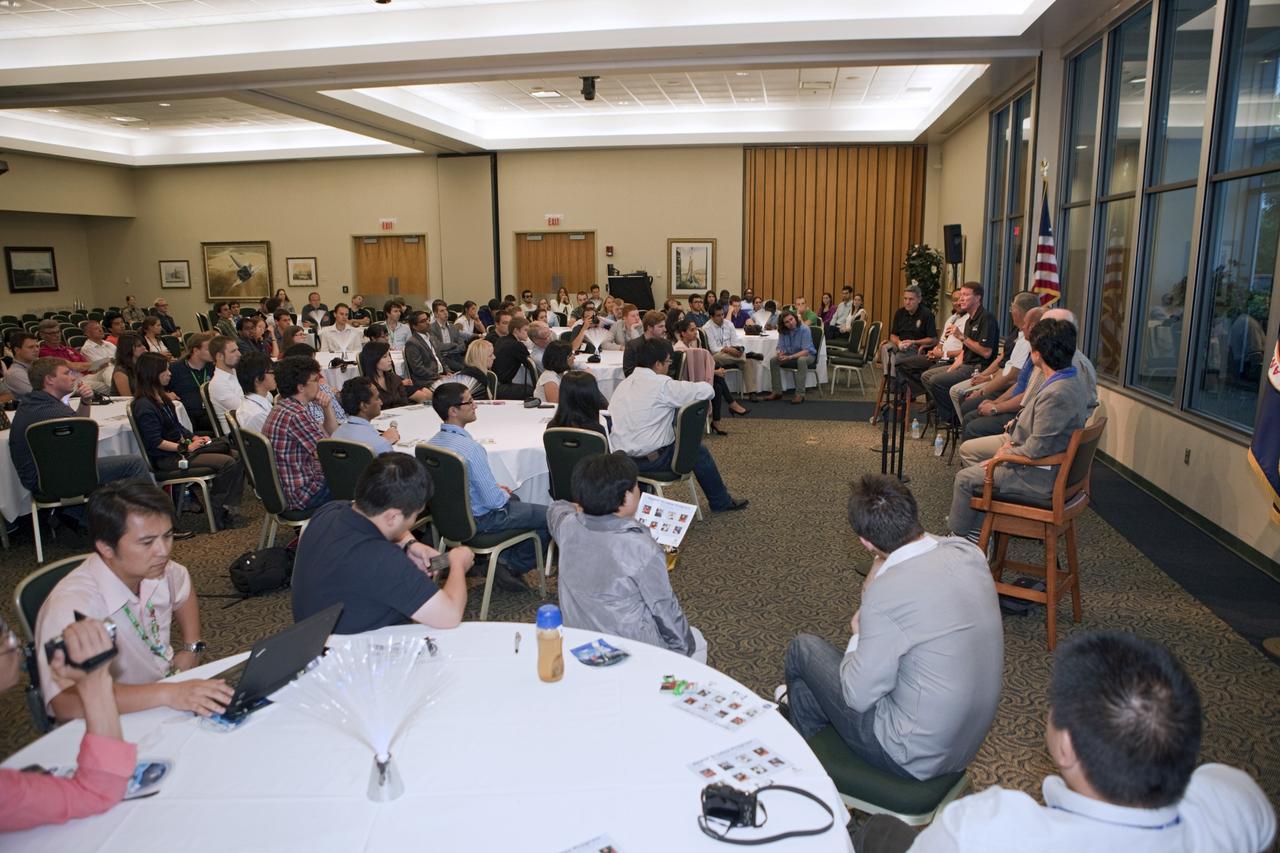
CAPE CANAVERAL, Fla. – Current and former NASA and international astronauts spoke to participants of the International Space University on the future of human spaceflight during a panel discussion at the Kennedy Space Center Visitor Complex in Florida. Participating in the discussion from left, are Kennedy Space Center Director Bob Cabana Winston Scott, dean of the College of Aeronautics at Florida Institute of Technology and former NASA astronaut Kent Rominger, vice president with Alliant Techsystems and former NASA astronaut Nicole Stott, NASA astronaut currently on detail at Kennedy Space Center Jim Voss, director of advanced programs at Sierra Nevada Corporation and former NASA astronaut Garrett Reisman, senior engineer with SpaceX and former NASA astronaut Ken Bowersox, former NASA astronaut and Chiaki Mukai, a Japan Aerospace Exploration Agency astronaut. The International Space University is a nine-week intensive course designed for post-graduate university students and professionals during the summer. The program is hosted by a different country each year, providing a unique educational experience for participants from around the world. NASA Kennedy Space Center and the Florida Institute of Technology in Melbourne, Fla., are co-hosting this year’s event which runs from June 4 to Aug. 3. There are about 125 participants representing 31 countries. For more information, visit http://www.isunet.edu. Photo credit: NASA/Kim Shiflett
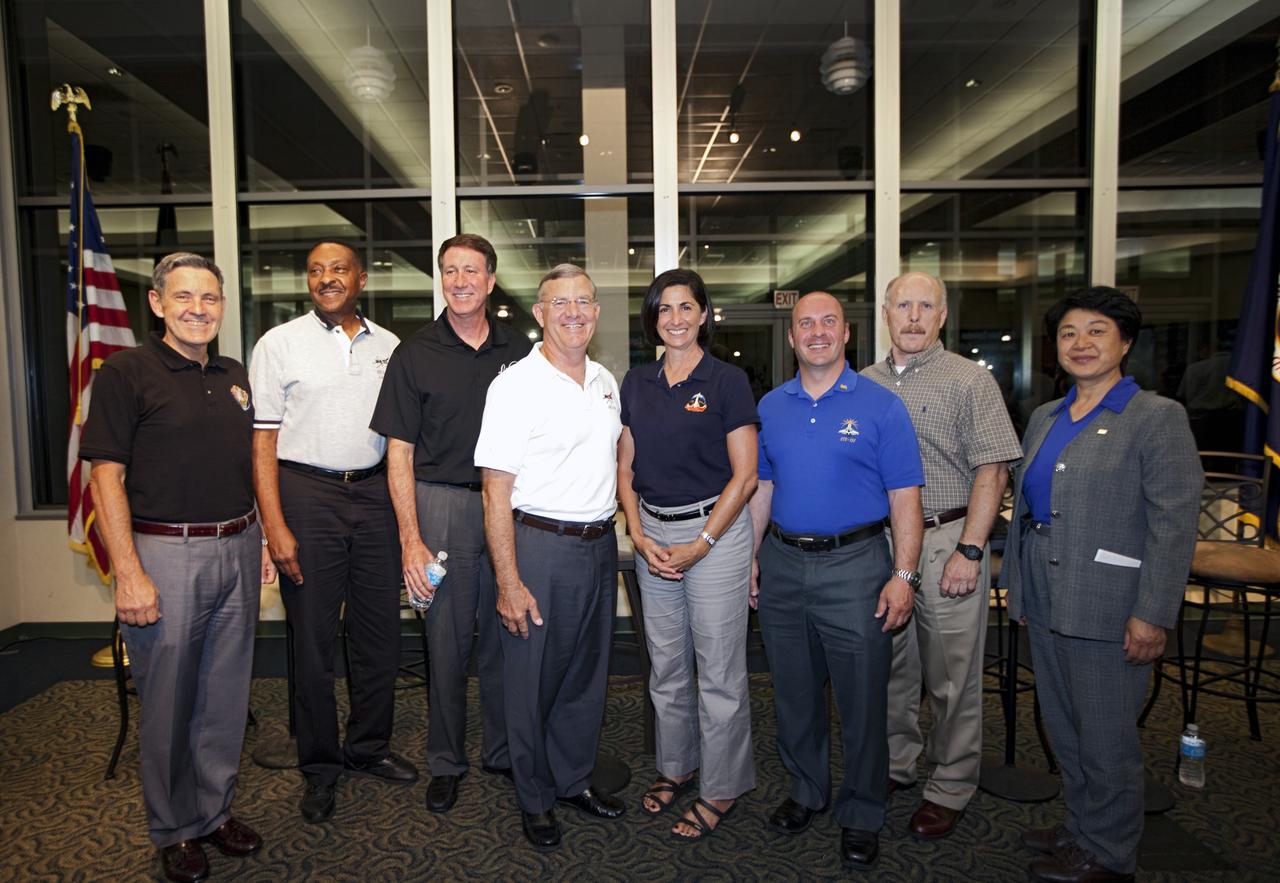
CAPE CANAVERAL, Fla. – Current and former NASA and international astronauts gather for a group photograph after speaking to participants of the International Space University on the future of human spaceflight during a panel discussion at the Kennedy Space Center Visitor Complex in Florida. From left, are Kennedy Space Center Director Bob Cabana Winston Scott, dean of the College of Aeronautics at Florida Institute of Technology and former NASA astronaut Kent Rominger, vice president with Alliant Techsystems and former NASA astronaut Nicole Stott, NASA astronaut currently on detail at Kennedy Space Center Jim Voss, director of advanced programs at Sierra Nevada Corporation and former NASA astronaut Garrett Reisman, senior engineer with SpaceX and former NASA astronaut Ken Bowersox, former NASA astronaut and Chiaki Mukai, a Japan Aerospace Exploration Agency astronaut. The International Space University is a nine-week intensive course designed for post-graduate university students and professionals during the summer. The program is hosted by a different country each year, providing a unique educational experience for participants from around the world. NASA Kennedy Space Center and the Florida Institute of Technology in Melbourne, Fla., are co-hosting this year’s event which runs from June 4 to Aug. 3. There are about 125 participants representing 31 countries. For more information, visit http://www.isunet.edu. Photo credit: NASA/Kim Shiflett
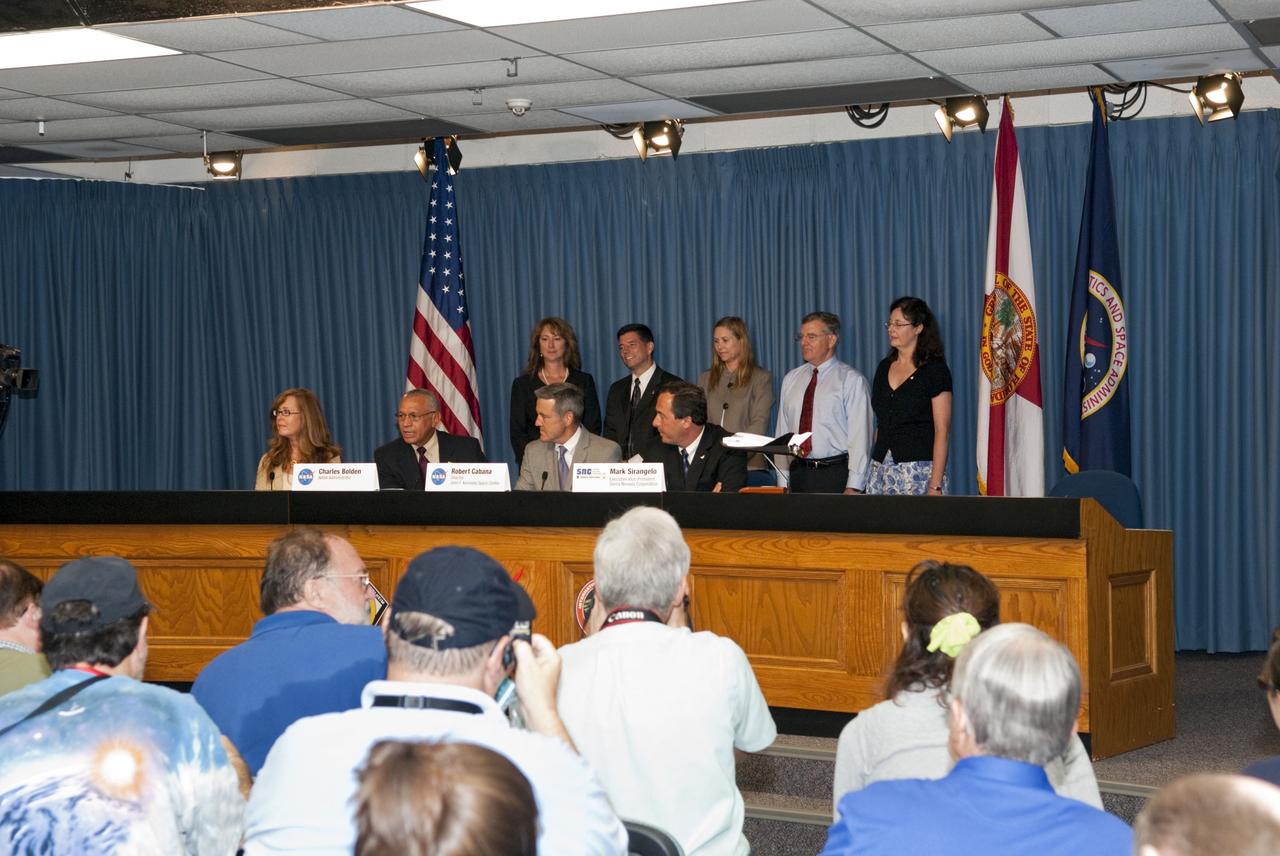
CAPE CANAVERAL, Fla. -- NASA and Sierra Nevada Space Systems (SNSS) of Sparks, Nev., prepare to sign a Space Act Agreement that will offer the company technical capabilities from Kennedy Space Center's uniquely skilled work force. Sitting, from left, are Kennedy Public Affairs Director Lisa Malone; NASA Administrator Charlie Bolden; Kennedy Center Director Bob Cabana; and Mark Sirangelo, head of Sierra Nevada. Standing, from left, are Joyce Riquelme, manager of Kennedy's Center Planning and Development Office; John Curry, director of Sierra Nevada's Systems Integration, Test and Operations; Kennedy Deputy Director Janet Petro; Jim Voss, vice president of Sierra Nevada's Space Exploration Systems; and Merri Sanchez, senior director of Sierra Nevada's Space Exploration Systems. Kennedy will help Sierra Nevada with the ground operations support of its lifting body reusable spacecraft called "Dream Chaser," which resembles a smaller version of the space shuttle orbiter. The spacecraft would carry as many as seven astronauts to the space station. Through the new agreement, Kennedy's work force will use its experience of processing the shuttle fleet for 30 years to help Sierra Nevada define and execute Dream Chaser's launch preparations and post-landing activities. In 2010 and 2011, Sierra Nevada was awarded grants as part of the initiative to stimulate the private sector in developing and demonstrating human spaceflight capabilities for NASA's Commercial Crew Program. The goal of the program, which is based in Florida at Kennedy, is to facilitate the development of a U.S. commercial crew space transportation capability by achieving safe, reliable and cost-effective access to and from the space station and future low Earth orbit destinations. Photo credit: NASA/Jim Grossmann
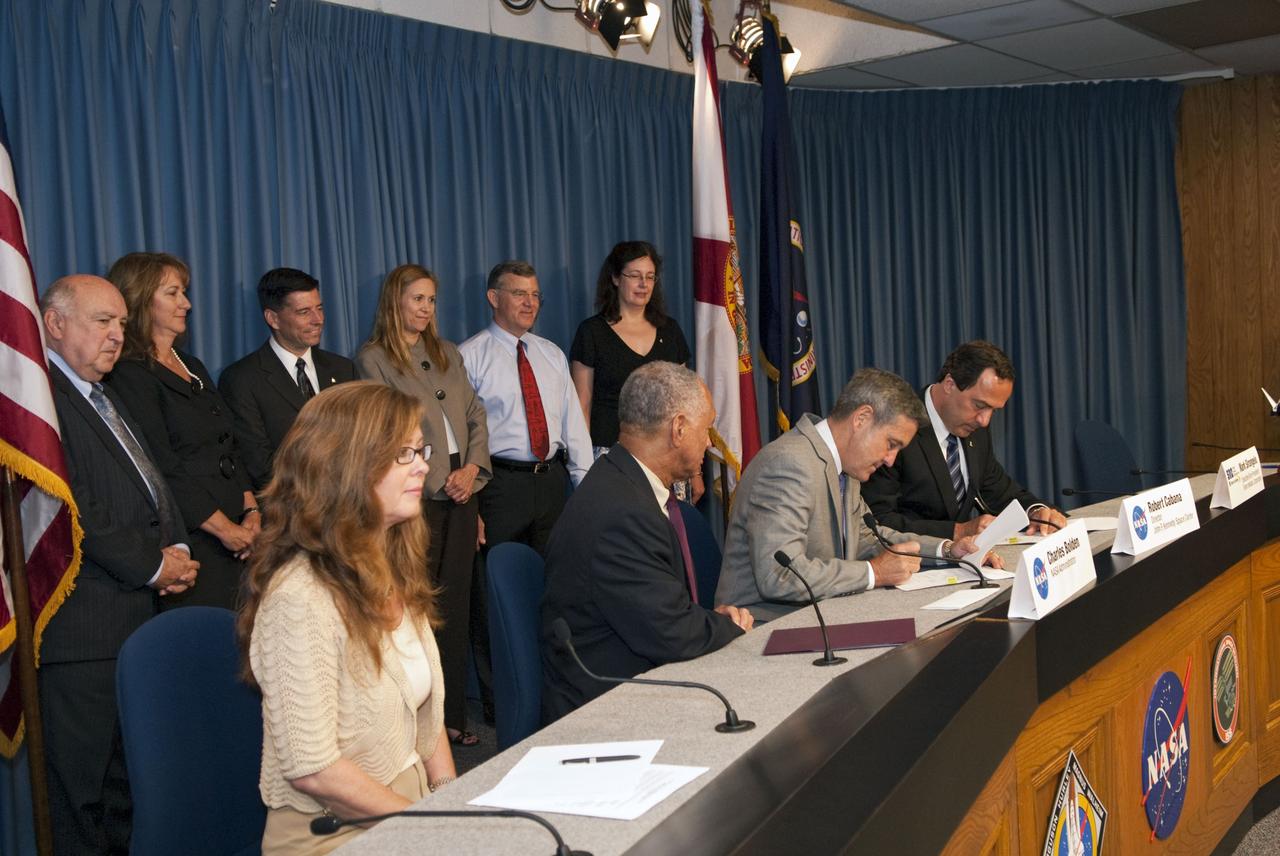
CAPE CANAVERAL, Fla. -- NASA and Sierra Nevada Space Systems (SNSS) of Sparks, Nev., sign a Space Act Agreement that will offer the company technical capabilities from Kennedy Space Center's uniquely skilled work force. Sitting, from left, are Kennedy Public Affairs Director Lisa Malone; NASA Administrator Charlie Bolden; Kennedy Center Director Bob Cabana; and Mark Sirangelo, head of Sierra Nevada. Standing, from left, are Frank DiBello, president of Space Florida; Joyce Riquelme, manager of Kennedy's Center Planning and Development Office; John Curry, director of Sierra Nevada's Systems Integration, Test and Operations; Kennedy Deputy Director Janet Petro; Jim Voss, vice president of Sierra Nevada's Space Exploration Systems; and Merri Sanchez, senior director of Sierra Nevada's Space Exploration Systems. Kennedy will help Sierra Nevada with the ground operations support of its lifting body reusable spacecraft called "Dream Chaser," which resembles a smaller version of the space shuttle orbiter. The spacecraft would carry as many as seven astronauts to the space station. Through the new agreement, Kennedy's work force will use its experience of processing the shuttle fleet for 30 years to help Sierra Nevada define and execute Dream Chaser's launch preparations and post-landing activities. In 2010 and 2011, Sierra Nevada was awarded grants as part of the initiative to stimulate the private sector in developing and demonstrating human spaceflight capabilities for NASA's Commercial Crew Program. The goal of the program, which is based in Florida at Kennedy, is to facilitate the development of a U.S. commercial crew space transportation capability by achieving safe, reliable and cost-effective access to and from the space station and future low Earth orbit destinations. Photo credit: NASA/Jim Grossmann
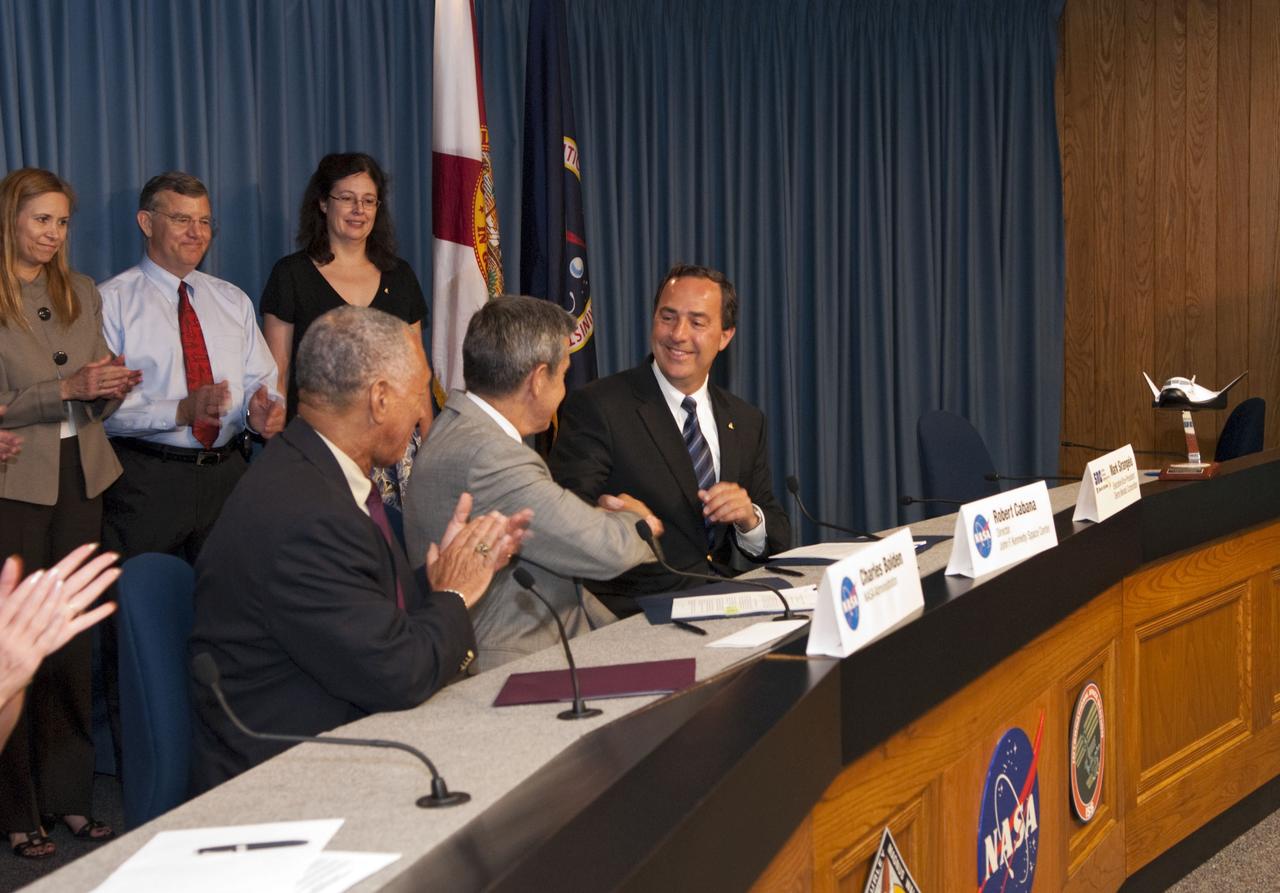
CAPE CANAVERAL, Fla. -- NASA and Sierra Nevada Space Systems (SNSS) of Sparks, Nev., enter into a Space Act Agreement that will offer the company technical capabilities from Kennedy Space Center's uniquely skilled work force. Sitting, from left, are NASA Administrator Charlie Bolden; Kennedy Center Director Bob Cabana; and Mark Sirangelo, head of Sierra Nevada. Standing, from left, Kennedy Deputy Director Janet Petro; Jim Voss, vice president of Sierra Nevada's Space Exploration Systems; and Merri Sanchez, senior director of Sierra Nevada's Space Exploration Systems. Kennedy will help Sierra Nevada with the ground operations support of its lifting body reusable spacecraft called "Dream Chaser," which resembles a smaller version of the space shuttle orbiter. The spacecraft would carry as many as seven astronauts to the space station. Through the new agreement, Kennedy's work force will use its experience of processing the shuttle fleet for 30 years to help Sierra Nevada define and execute Dream Chaser's launch preparations and post-landing activities. In 2010 and 2011, Sierra Nevada was awarded grants as part of the initiative to stimulate the private sector in developing and demonstrating human spaceflight capabilities for NASA's Commercial Crew Program. The goal of the program, which is based in Florida at Kennedy, is to facilitate the development of a U.S. commercial crew space transportation capability by achieving safe, reliable and cost-effective access to and from the space station and future low Earth orbit destinations. Photo credit: NASA/Jim Grossmann