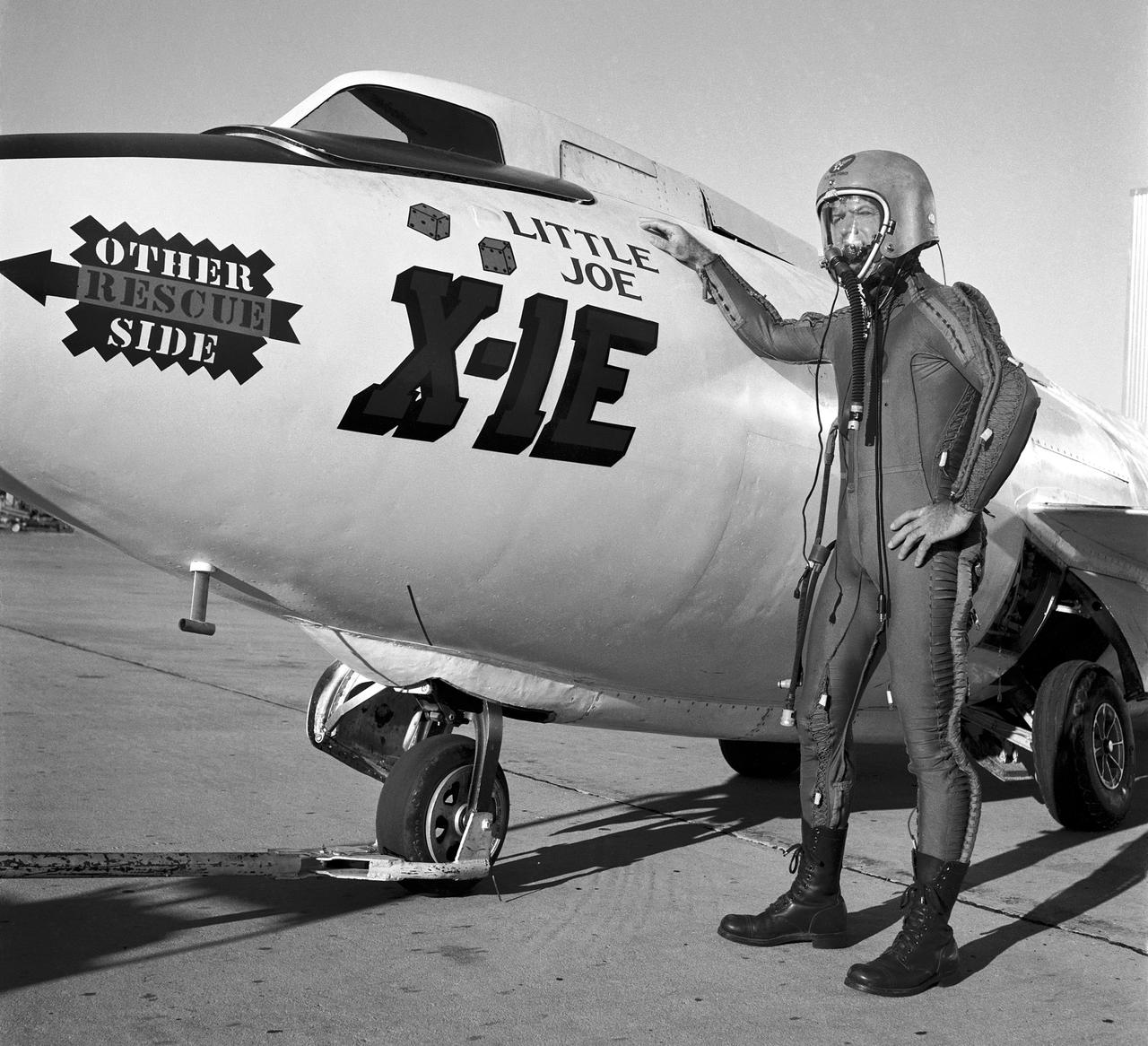
Joe Walker in a pressure suit beside the X-1E at the NASA High-Speed Flight Station, Edwards,California. The dice and "Little Joe" are prominently displayed under the cockpit area. (Little Joe is a dice players slang term for two deuces.) Walker is shown in the photo wearing an early Air Force partial pressure suit. This protected the pilot if cockpit pressure was lost above 50,000 feet. Similar suits were used in such aircraft as B-47s, B-52s, F-104s, U-2s, and the X-2 and D-558-II research aircraft. Five years later, Walker reached 354,200 feet in the X-15. Similar artwork - reading "Little Joe the II" - was applied for the record flight. These cases are two of the few times that research aircraft carried such nose art.
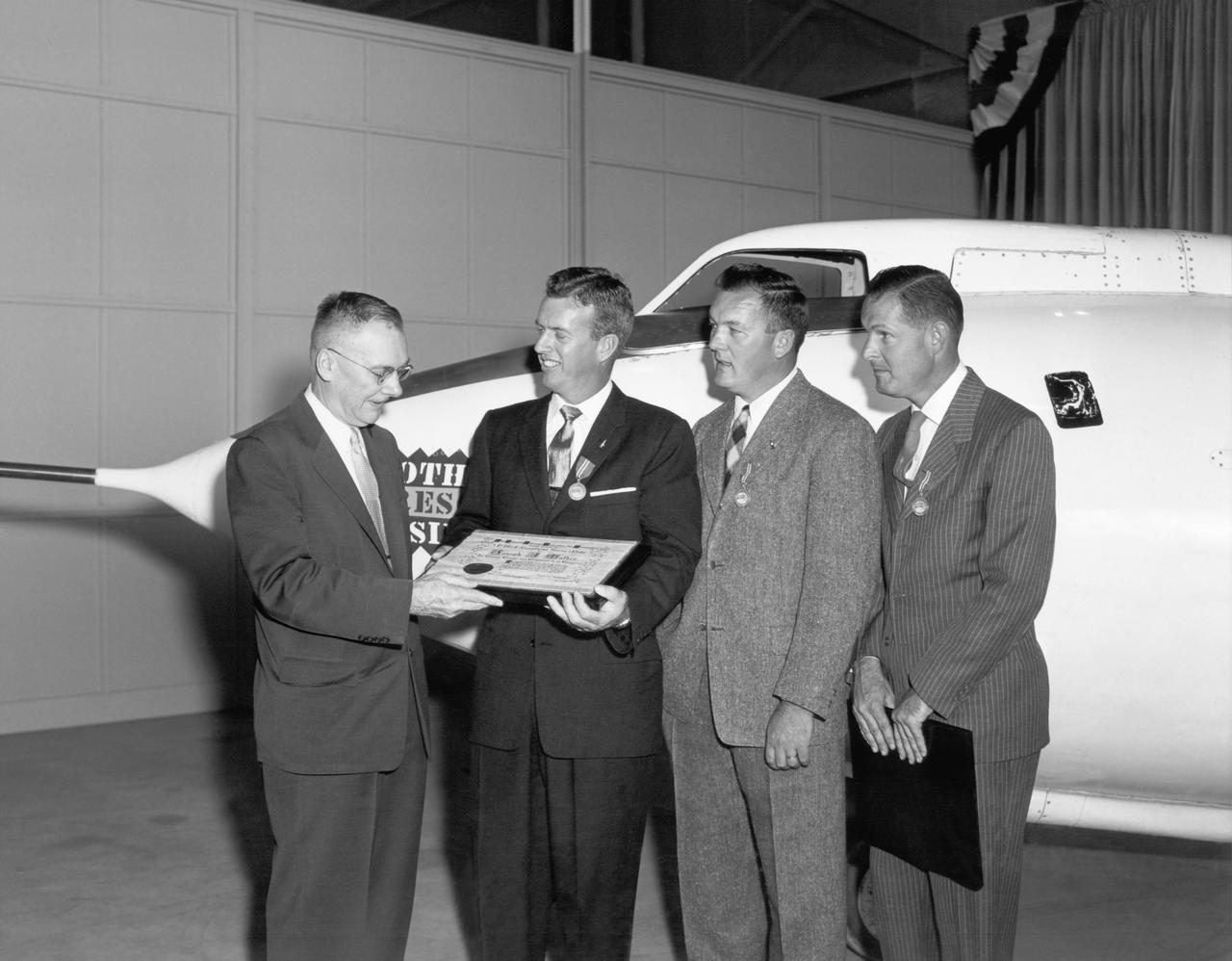
Hugh Dryden (far left) presents the NACA Exceptional Service Medal award at the NACA High Speed Flight Station. He awarded (L-R) Joe Walker (X-1A research pilot), Stan Butchart (pilot of the B-29 mothership),and Richard Payne (X-1A crew chief) in recognition of their research extending knowledge of swept wing flight.
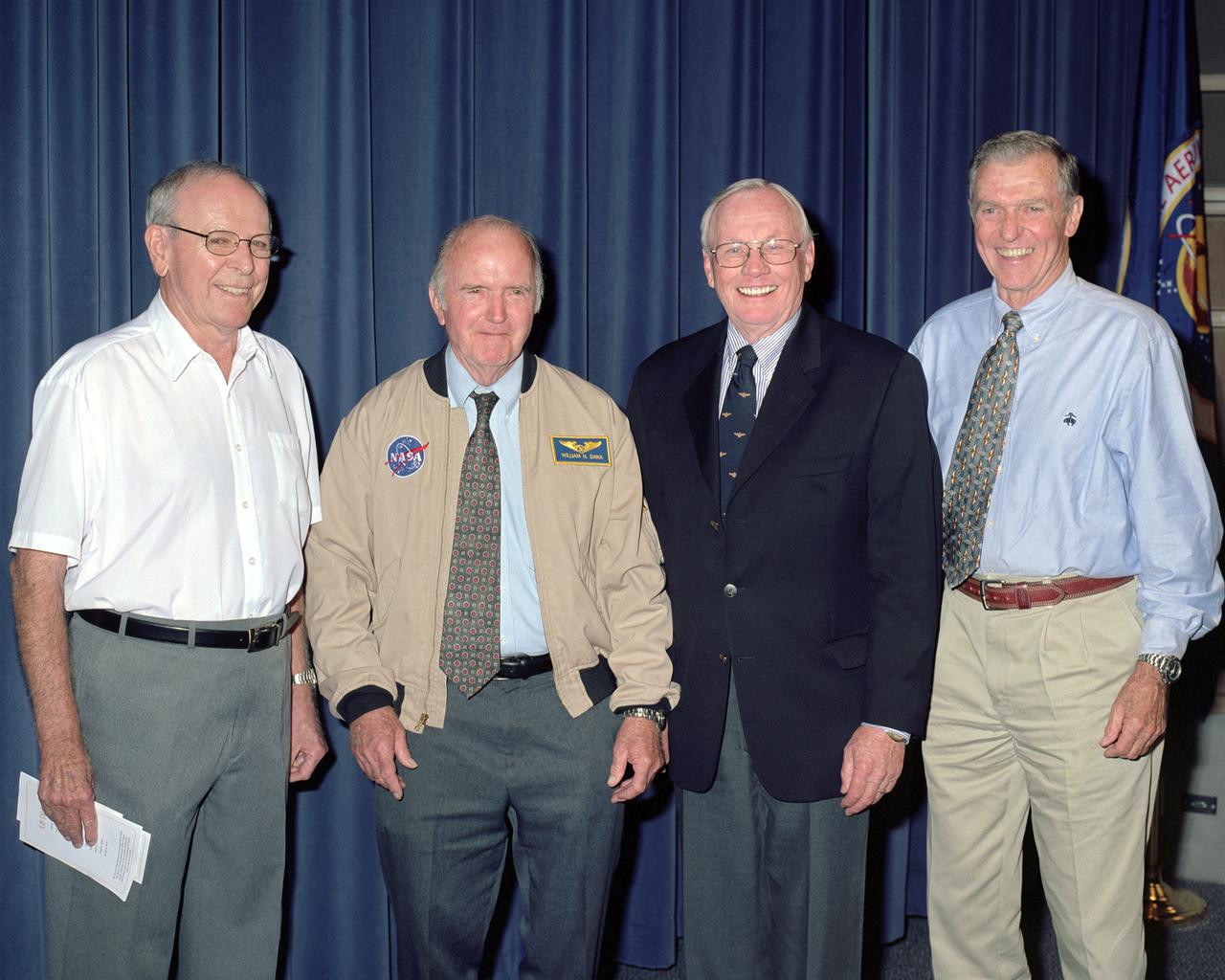
Four of the five surviving X-15 pilots were on hand when astronaut wings were presented to the three NASA pilots who flew the X-15 rocket plane into space in the 1960s, Bill Dana, Joe Walker (deceased) and Jack McKay (deceased). From left, Robert White, Dana, Neil Armstrong, Joe Engle.
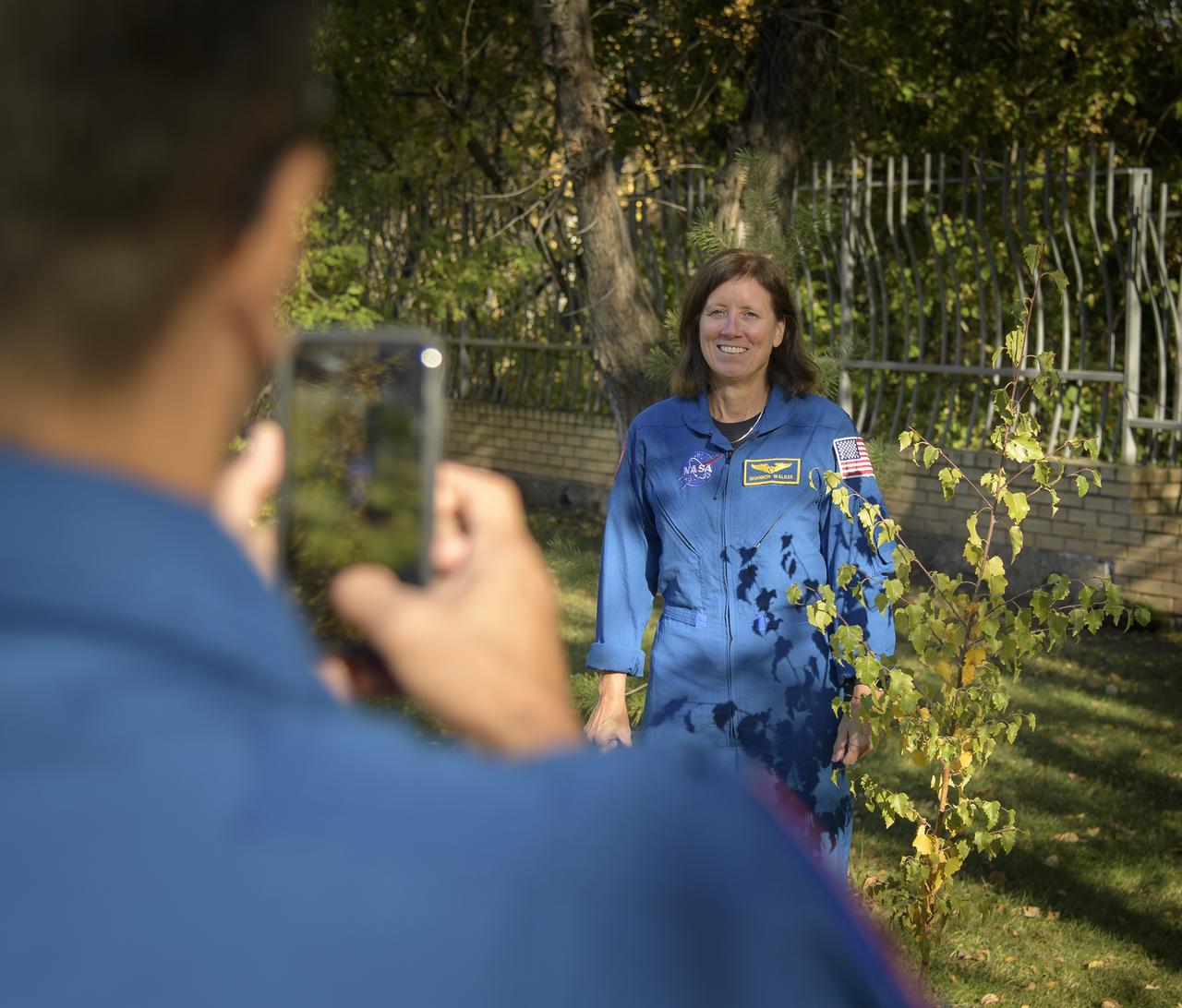
NASA astronaut and Director of Operations, Star City, Russia, Joe Acaba takes a photograph of NASA astronaut and Astronaut Office Representative Shannon Walker after they each planted a tree during a traditional ceremony at the Cosmonaut Hotel in Karaganda, Kazakhstan, Tuesday, Oct. 2, 2018. Acaba and Walker are in Karaganda to help support the Expedition 56 crew Soyuz landing from the International Space Station. Photo Credit: (NASA/Bill Ingalls)
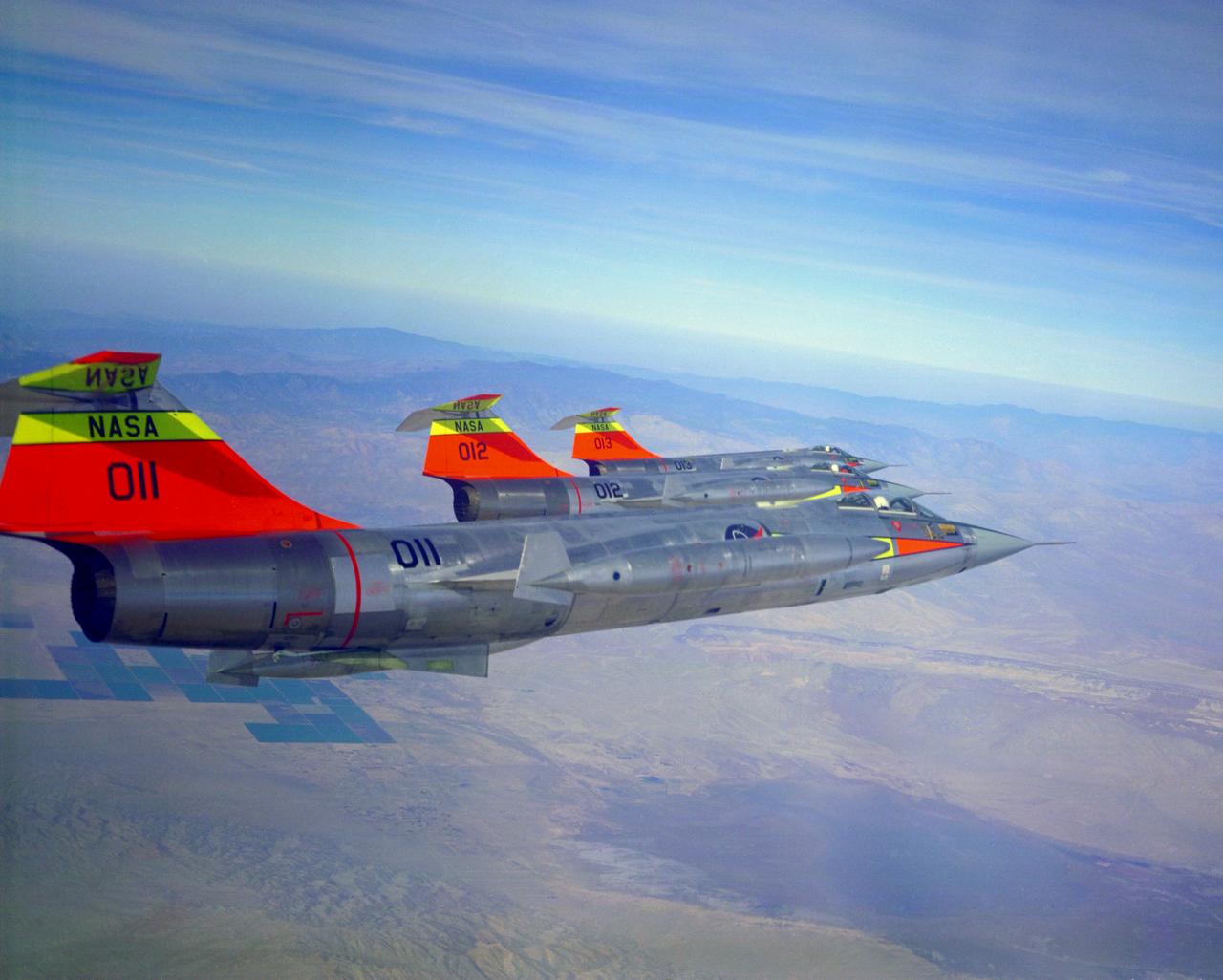
All three NASA F-104N's fly in formation. Aircraft numbers 011, 012 and 013. These would be changed to 811, 812 and 813 in 1965. Pilots are Bruce Peterson in 011, Milt Thompson in 012 and Joe Walker in 013. October 24, 1963
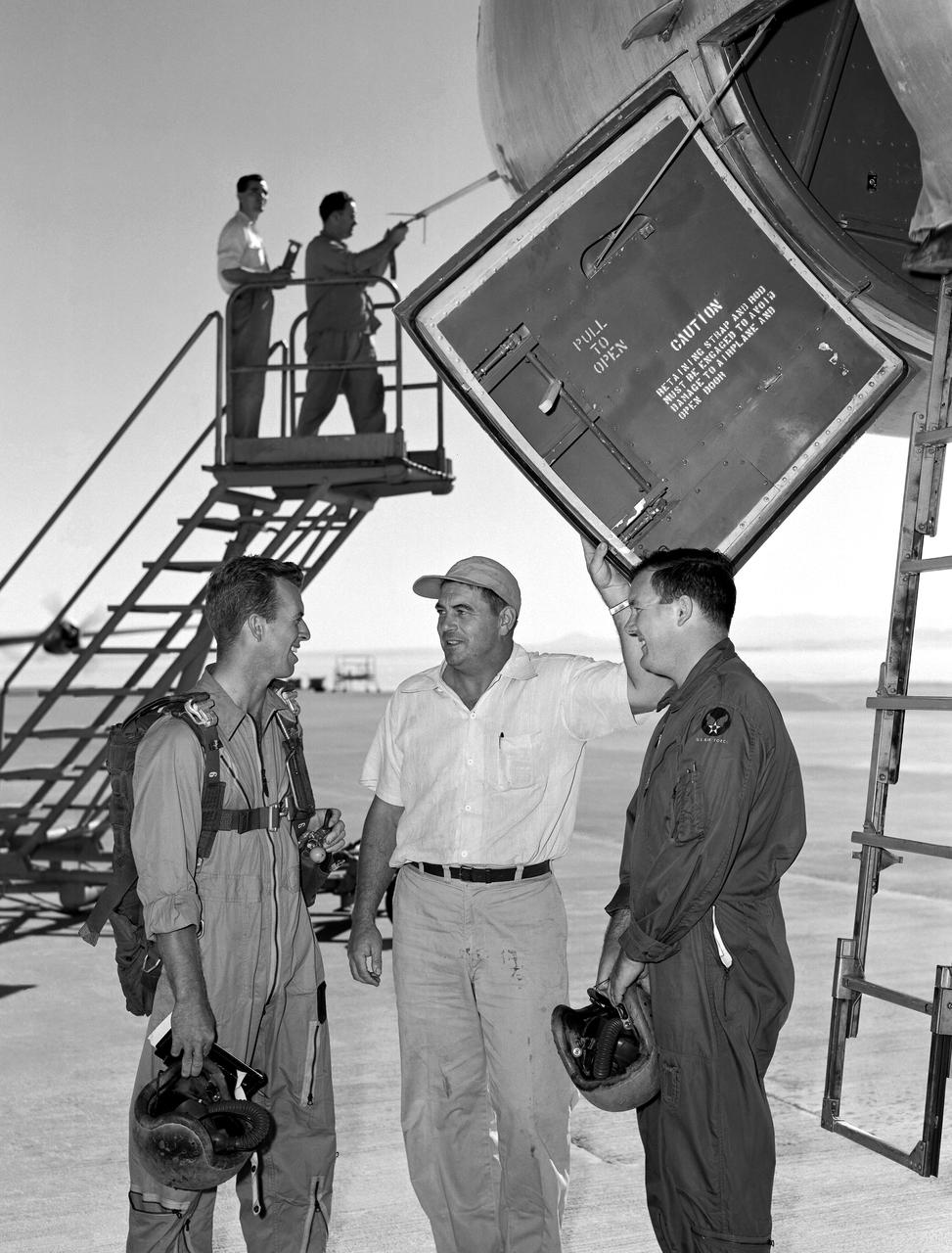
B-47A Stratojet on ramp with pilots and crew. In 1954 after a research flight in the Boeing B-47A Stratojet Crew Chief Wilbur McClenaghan (center) asks of the pilots if there are any "squawks" that should be taken care of before the next flight. Pilots are Joe Walker on the viewer's left and Stanley Butchart on the right. Data system technician Merle Curtis, in coveralls, is busy checking the airdata head mounted on the nose boom with the help of Instrumentation Crew Chief Raymond Langley. The door to the cockpit area is open showing a view of the ladder that folds down to be used by the pilots to enter and leave the area.
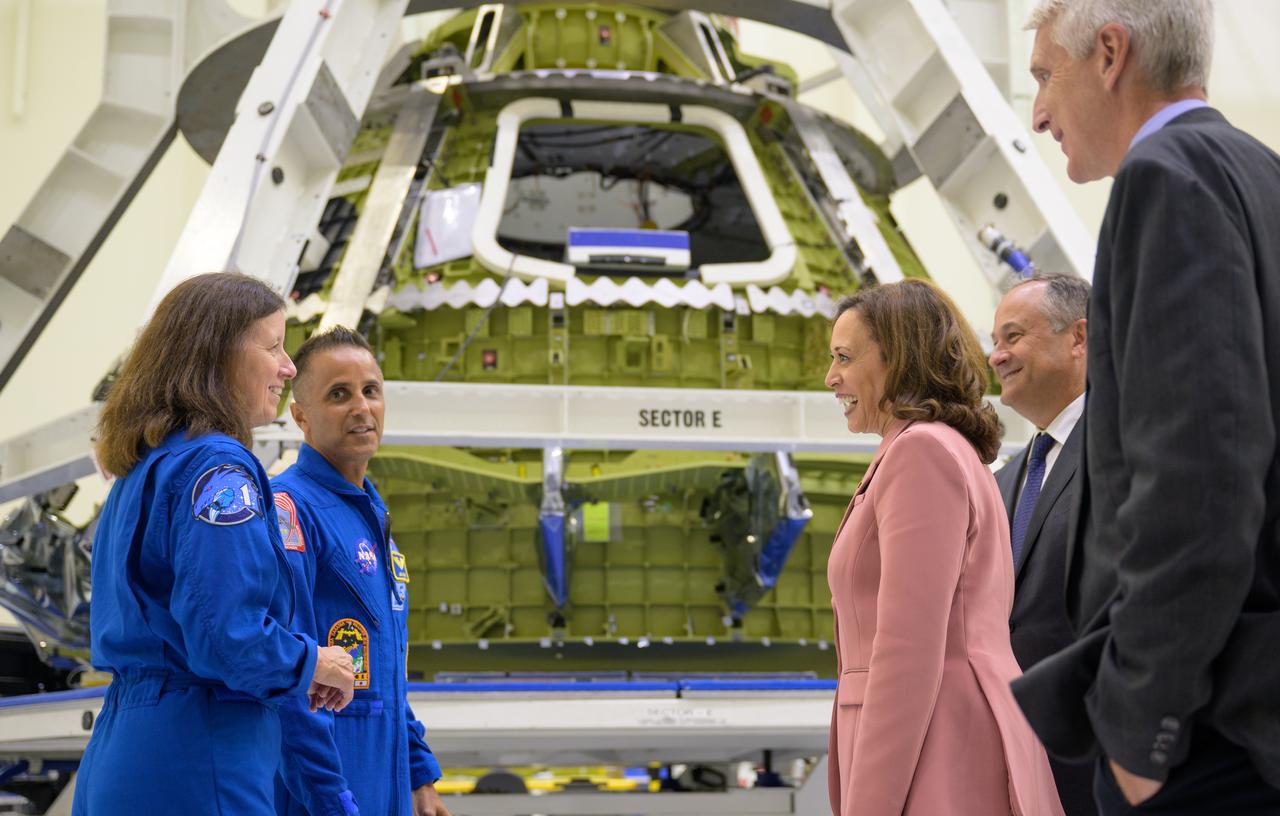
Vice President Kamala Harris meets with NASA astronauts Shannon Walker and Joe Acaba and learned about the Artemis II flight crew module as Second Gentleman Doug Emhoff and Scott Wilson, NASA Kennedy Space Center, Manager of Production, during a tour, Monday, Aug. 29, 2022, at the Neil A. Armstrong Operations and Checkout Building at NASA’s Kennedy Space Center in Florida. Photo Credit: (NASA/Bill Ingalls)
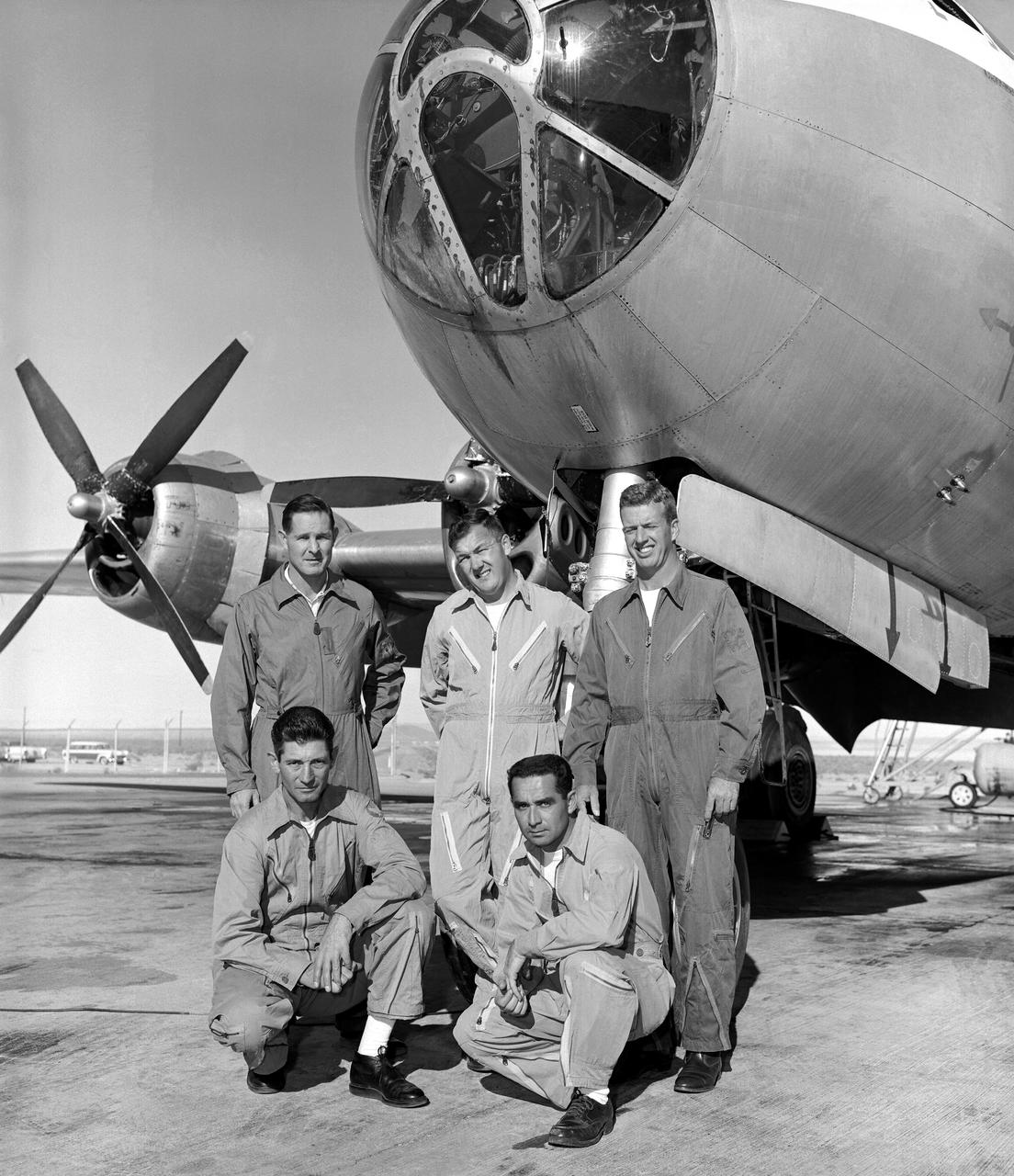
B-29 mothership with pilots - Dick Payne, Stan Butchart, Joe Walker, Charles Littleton, and John Moise
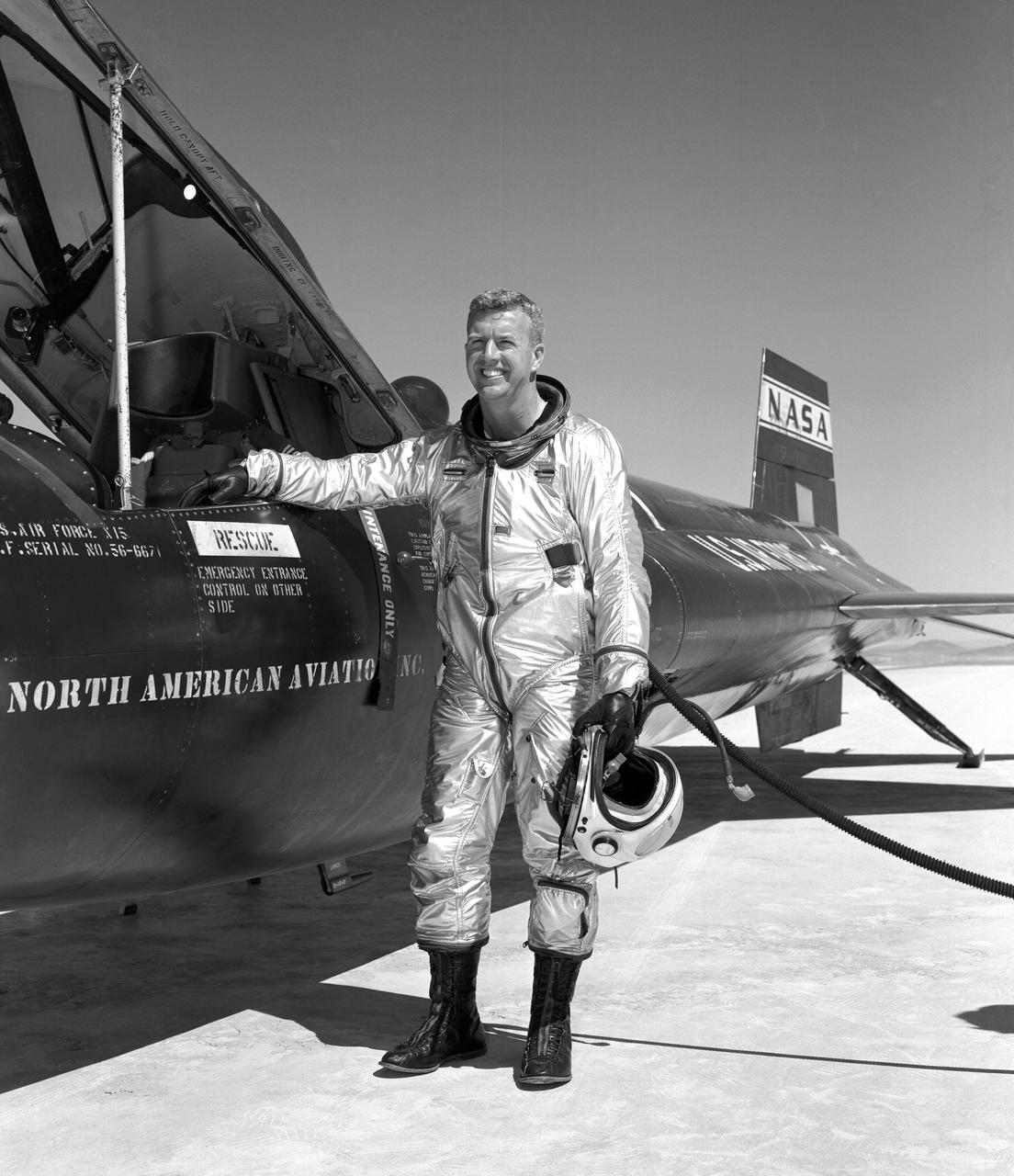
Walker made the first NASA-piloted X-15 flight March 25, 1960, and flew the aircraft 24 times, achieving its highest altitude (354,300 ft.) Aug. 22, 1963. He died piloting a F-104 that was caught up in a vortex of the XB-70.
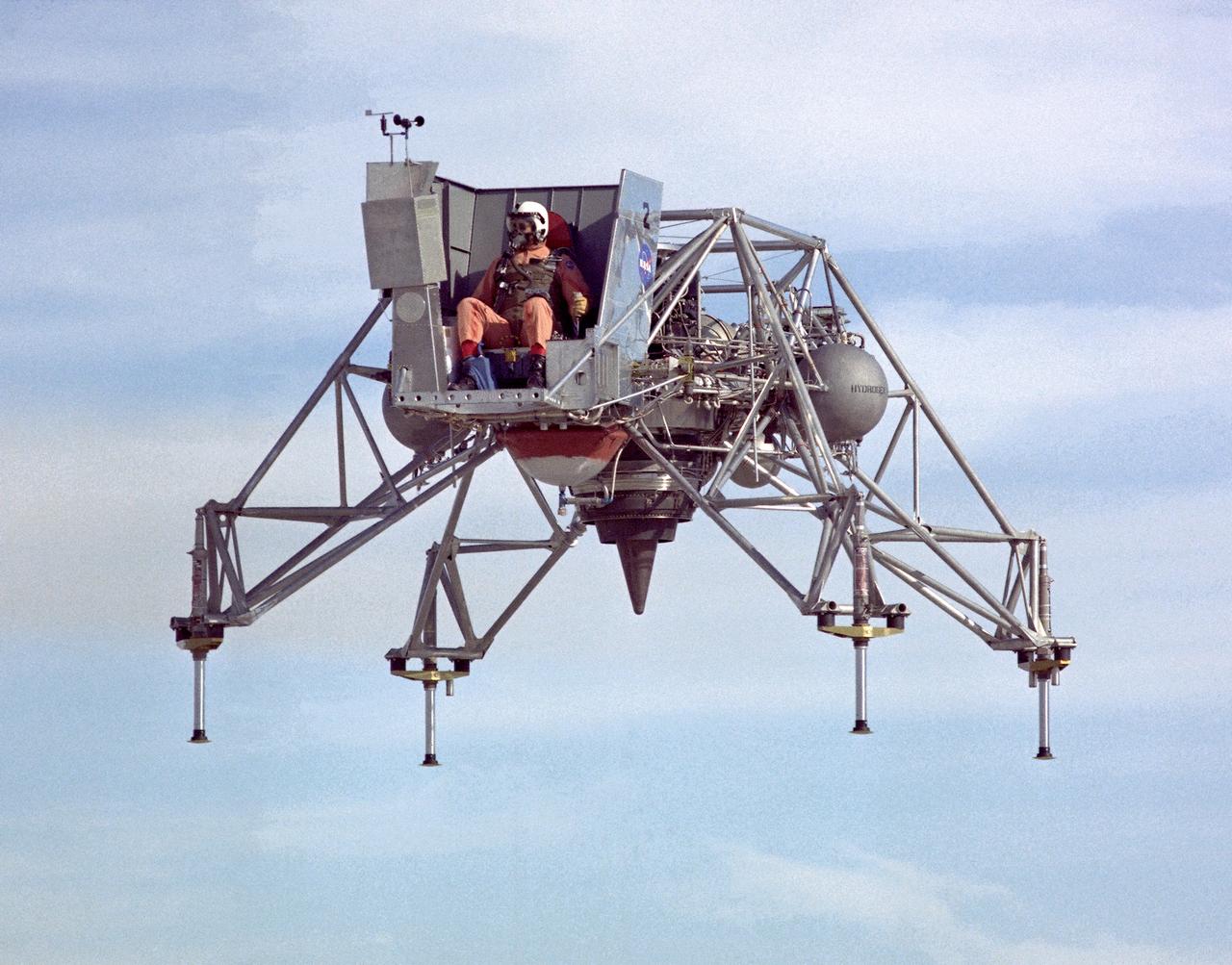
In this 1967 NASA Flight Reserch Center photograph the Lunar Landing Research Vehicle (LLRV) is viewed from the front. This photograph provideds a good view of the pilot’s platform with the restrictive cockpit view like that of he real Lunar Module (LM) When Apollo planning was underway in 1960, NASA was looking for a simulator to profile the descent to the Moon's surface. Three concepts surfaced: an electronic simulator, a tethered device, and the ambitious Dryden contribution, a free-flying vehicle. All three became serious projects, but eventually the NASA Flight Research Center’s (FRC) Lunar Landing Research Vehicle (LLRV) became the most significant one. After conceptual planning and meetings with engineers from Bell Aerosystems Company, Buffalo, N.Y., NASA FRC issued a $3.6 million production contract awarded in 1963, for delivery of the first of two vehicles for flight studies. Built of tubular aluminum alloy like a giant four-legged bedstead, the vehicle was to simulate a lunar landing profile from around 1500 feet to the Moon’s surface. The LLRV had a turbofan engine mounted vertically in a gimbal, with 4200 pounds of thrust. The engine, lifted the vehicle up to the test altitude and was then throttled back to support five-sixths of the vehicle's weight, thus simulating the reduced gravity of the Moon. Two lift rockets with thrust that could be varied from 100 to 500 pounds handled the LLRV's rate of descent and horizontal translations. Sixteen smaller rockets, mounted in pairs, gave the pilot control in pitch, yaw, and roll.. The pilot’s platform extended forward between two legs while an electronics platform, similarly located, extended rearward. The pilot had a zero-zero ejection seat that would then lift him away to safety. The two LLRVs were shipped from Bell to the FRC in April 1964, with program emphasis on vehicle No. 1. The first flight, Oct. 30, 1964, NASA research pilot Joe Walker flew it three times for a total of just under 60 seconds
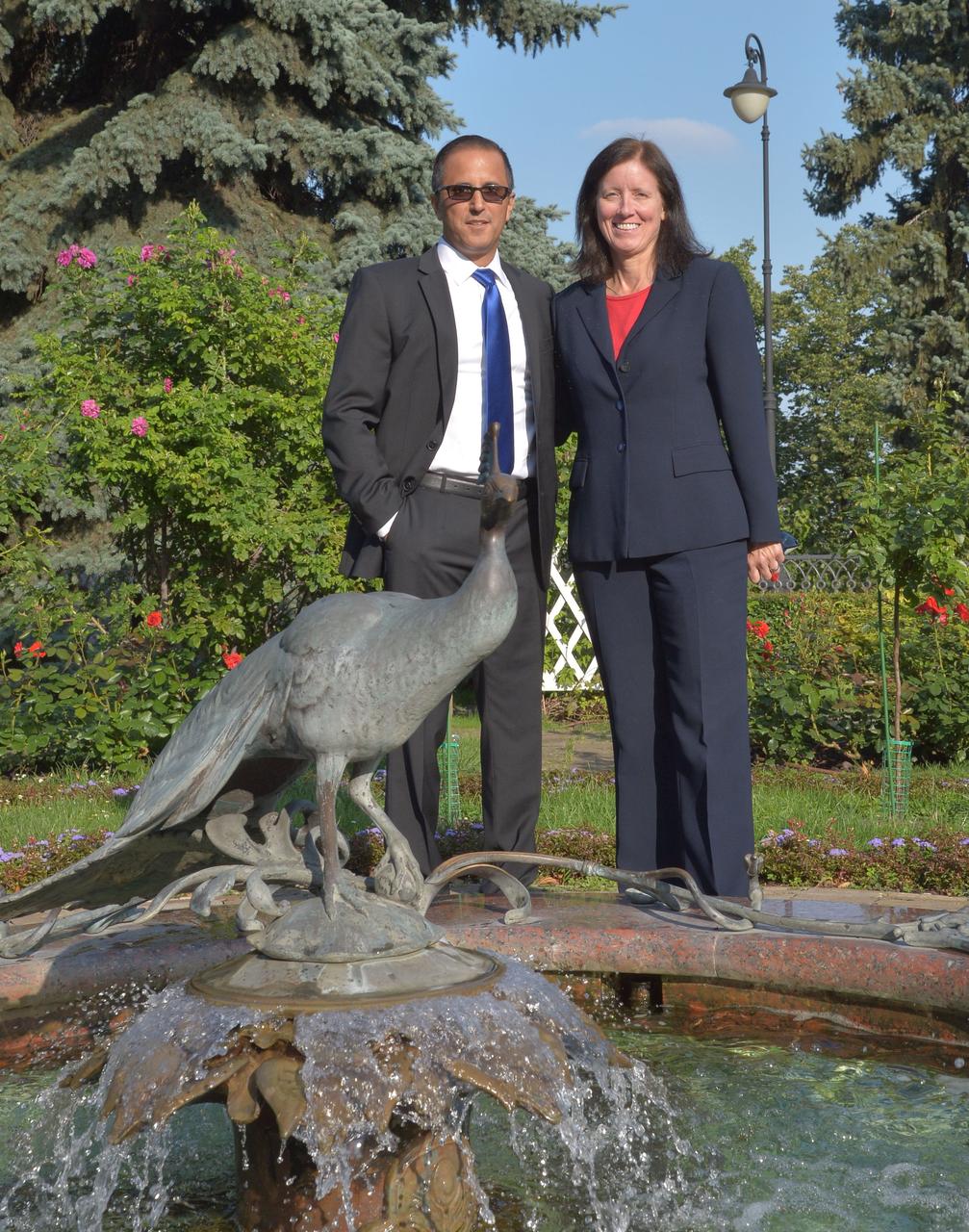
jsc2017e114492 (Sept. 1, 2017) --- NASA astronauts Joe Acaba (left) and Shannon Walker pose for pictures by a statue of a peacock at the Kremlin in Moscow Sept. 1. The statue had special significance for them since they are members of the Astronaut Class of 2004 that bears the nickname “The Peacocks”. Acaba, Alexander Misurkin of Roscosmos and Mark Vande Hei of NASA will launch Sept. 13 from the Baikonur Cosmodrome in Kazakhstan Sept. 13 on the Soyuz MS-06 spacecraft for a five and a half month mission on the International Space Station. Credit: NASA/Elizabeth Weissinger
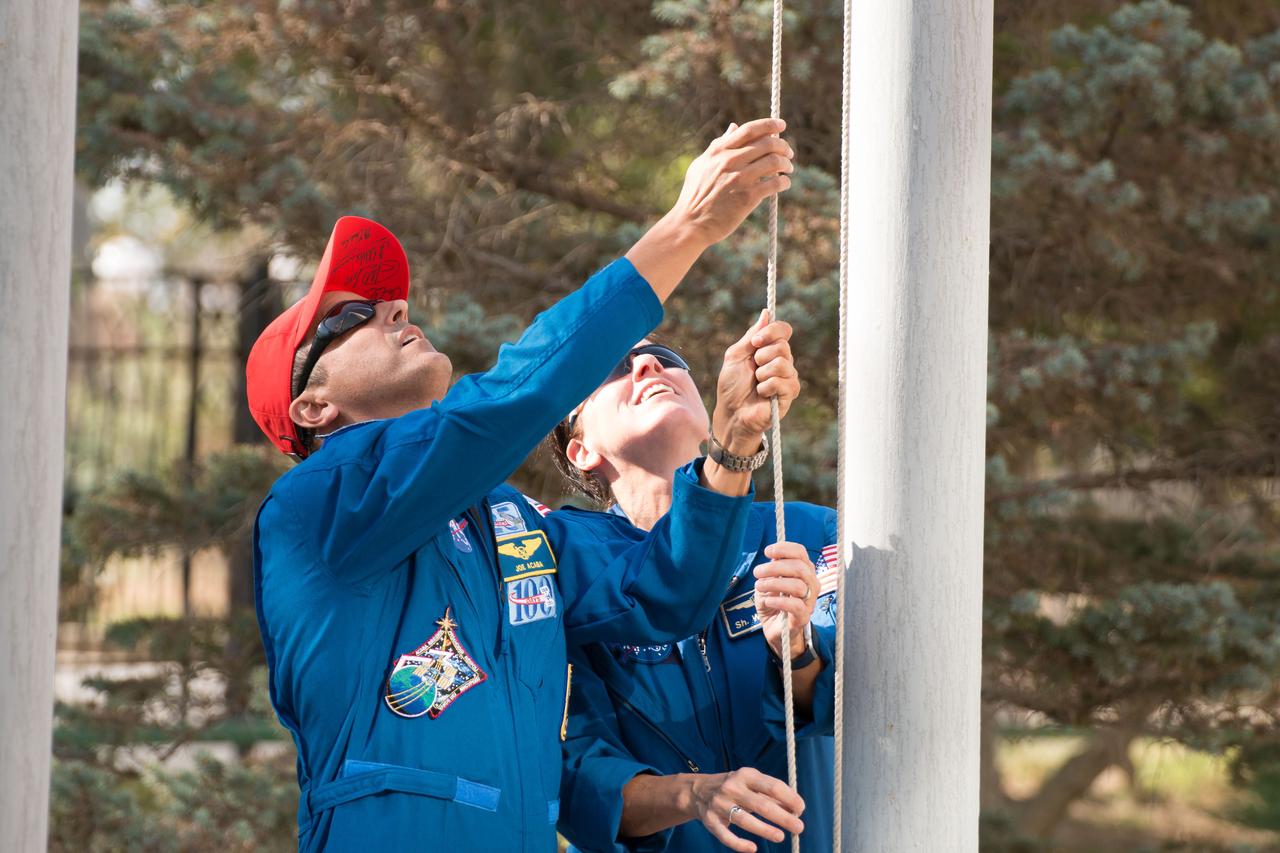
jsc2017e115137 (Sept. 7, 2017) --- At their Cosmonaut Hotel crew quarters in Baikonur, Kazakhstan, Expedition 53-54 prime and backup crewmembers Joe Acaba of NASA (left) and Shannon Walker of NASA (right) raise the United States flag Sept. 7 during traditional pre-launch ceremonies. Acaba, Alexander Misurkin of Roscosmos and Mark Vande Hei of NASA will launch Sept. 13 on the Soyuz MS-06 spacecraft for a five and a half month mission on the International Space Station. Credit: NASA/Victor Zelentsov
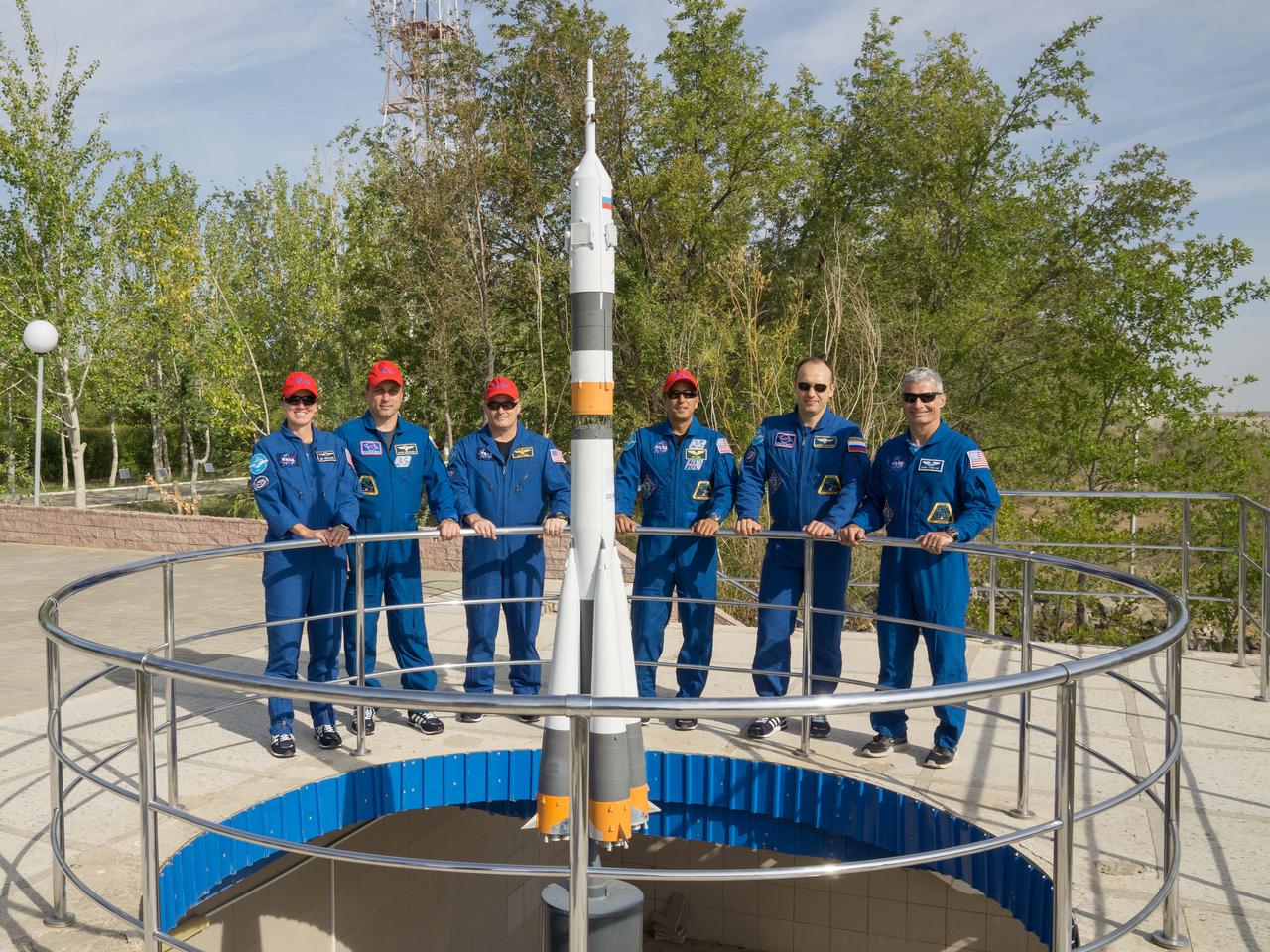
jsc2017e115214 (Sept.. 8, 2017) --- At the Cosmonaut Hotel crew quarters in Baikonur, Kazakhstan, the Expedition 53-54 prime and backup crewmembers pose for photos around a Soyuz rocket mock up Sept. 8 as part of pre-launch activities. From left to right are the backup crewmembers, Shannon Walker of NASA, Anton Shkaplerov of Roscosmos and Scott Tingle of NASA and the prime crewmembers, Joe Acaba of NASA, Alexander Misurkin of Roscosmos and Mark Vande Hei of NASA. Acaba, Misurkin and Vande Hei will launch Sept. 13 from the Baikonur Cosmodrome in Kazakhstan on the Soyuz MS-06 spacecraft for a five and a half month mission on the International Space Station. Credit: NASA/Victor Zelentsov
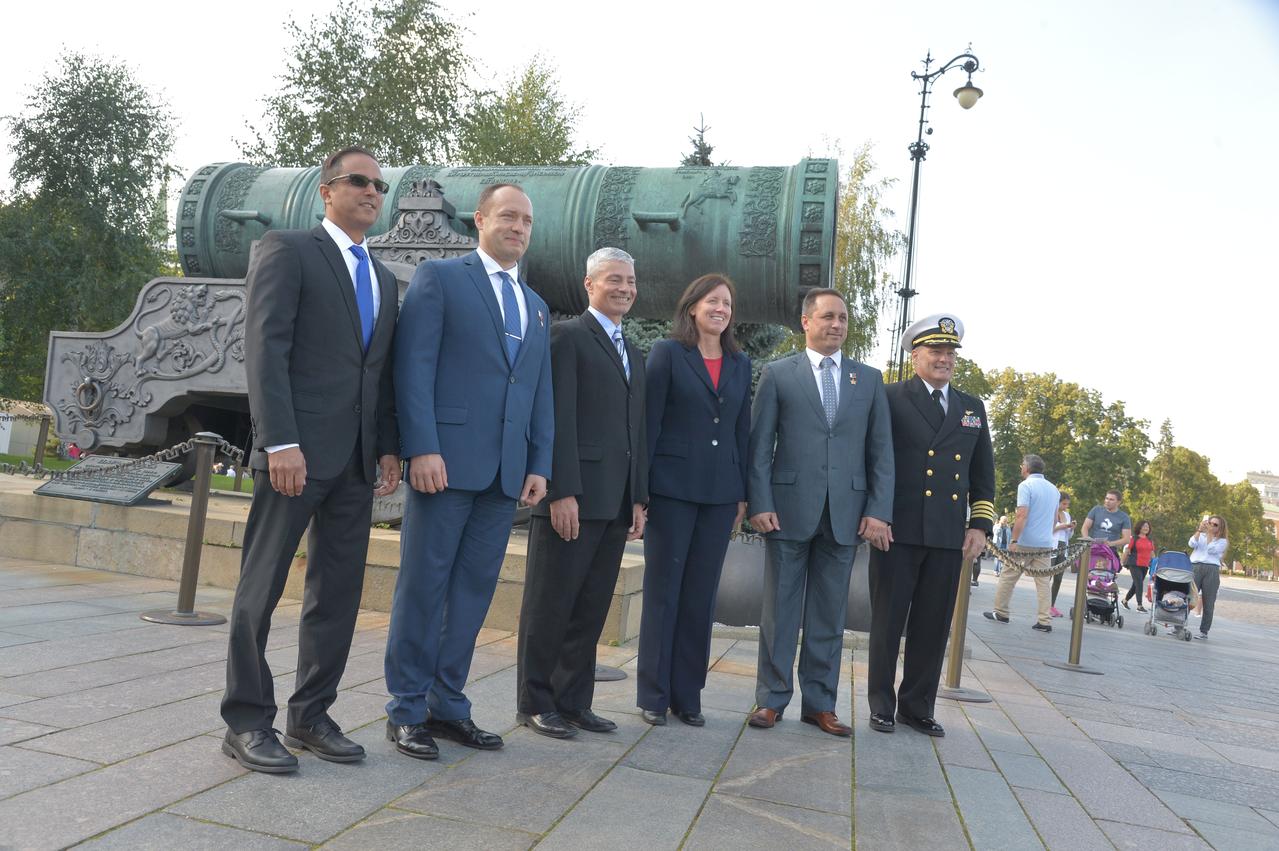
jsc2017e114491 (Sept. 1, 2017) --- The Expedition 53-54 prime and backup crewmembers pose for pictures in front of the Tsar Cannon at the Kremlin in Moscow Sept. 1 as part of their traditional pre-launch visit. From left to right are prime crewmembers Joe Acaba of NASA, Alexander Misurkin of Roscosmos and Mark Vande Hei of NASA and backup crewmembers Shannon Walker of NASA, Anton Shkaplerov of Roscosmos and Scott Tingle of NASA. Misurkin, Acaba and Vande Hei will launch Sept. 13 from the Baikonur Cosmodrome in Kazakhstan Sept. 13 on the Soyuz MS-06 spacecraft for a five and a half month mission on the International Space Station. Credit: NASA/Elizabeth Weissinger
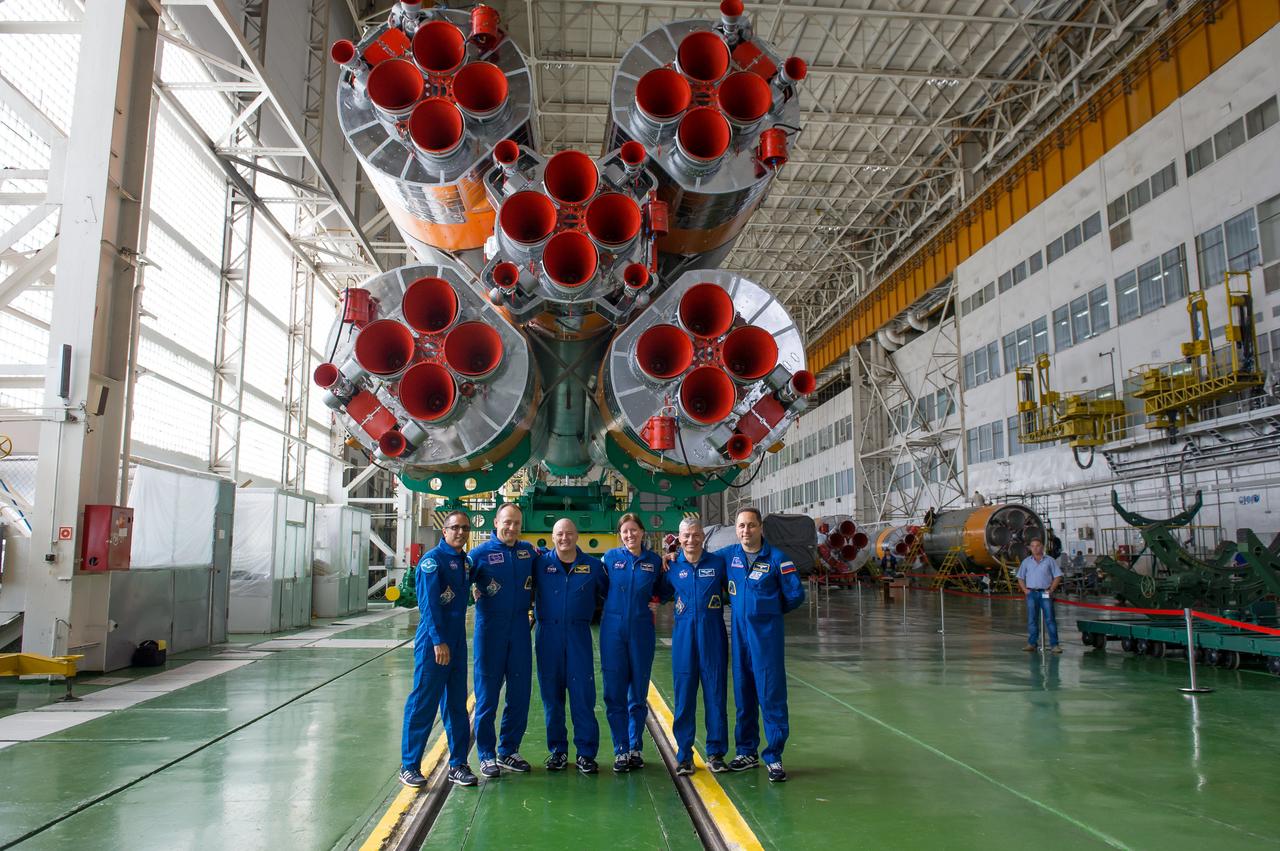
jsc2017e115142 (Sept. 7, 2017) --- At the Baikonur Cosmodrome in Kazakhstan, the Expedition 53-54 prime and backup crewmembers pose for pictures Sept. 7 in front of the first stage engines of the Soyuz booster the prime crew will ride to orbit. From left to right are Joe Acaba of NASA, Alexander Misurkin of Roscosmos , Scott Tingle of NASA, Shannon Walker of NASA, Mark Vande Hei of NASA and Anton Shkaplerov of Roscosmos. Acaba, Misurkin and Vande Hei will launch Sept. 13 on the Soyuz MS-06 spacecraft for a five and a half month mission on the International Space Station. Credit: Gagarin Cosmonaut Training Center/Irina Peshkova
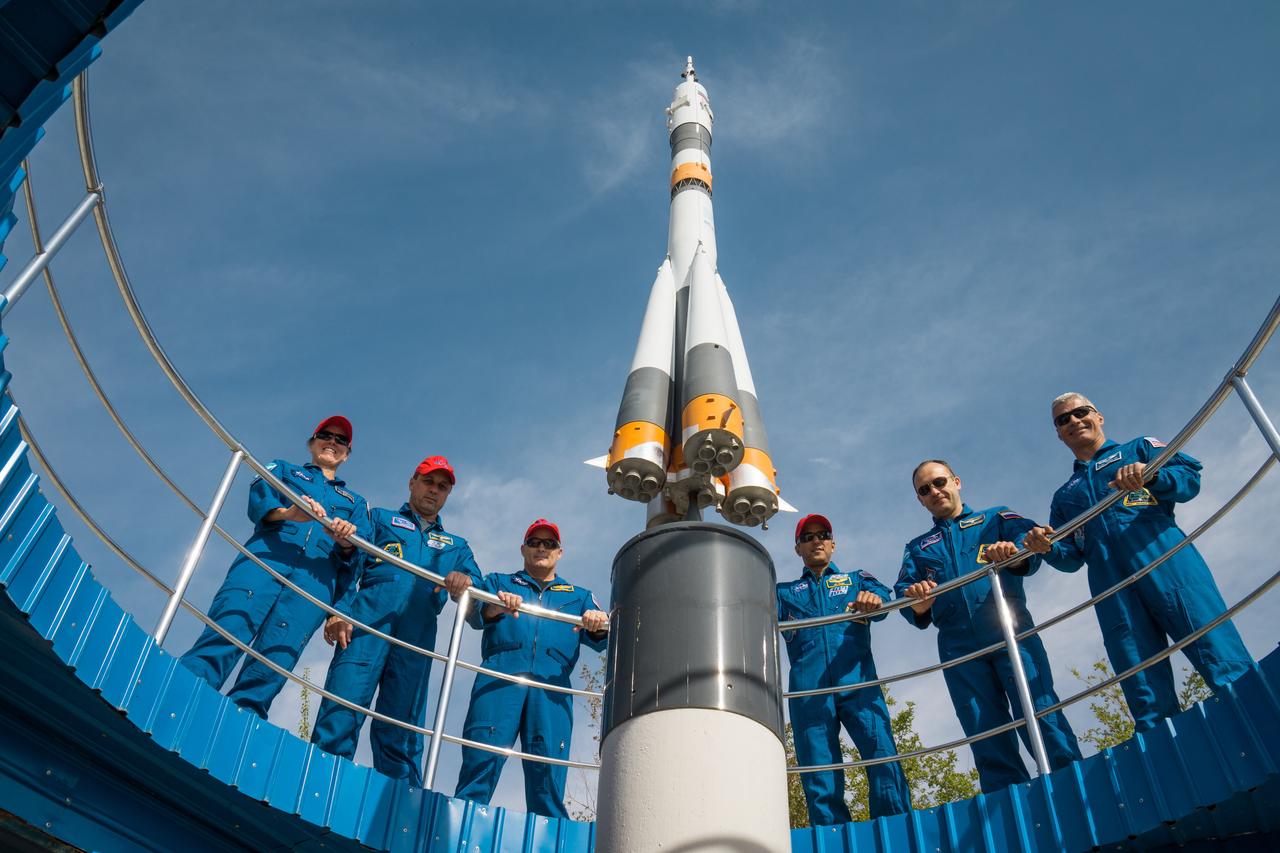
jsc2017e115215 (Sept.. 8, 2017) --- At the Cosmonaut Hotel crew quarters in Baikonur, Kazakhstan, the Expedition 53-54 prime and backup crewmembers pose for photos around a Soyuz rocket mock up Sept. 8 as part of pre-launch activities. From left to right are the backup crewmembers, Shannon Walker of NASA, Anton Shkaplerov of Roscosmos and Scott Tingle of NASA and the prime crewmembers, Joe Acaba of NASA, Alexander Misurkin of Roscosmos and Mark Vande Hei of NASA. Acaba, Misurkin and Vande Hei will launch Sept. 13 from the Baikonur Cosmodrome in Kazakhstan on the Soyuz MS-06 spacecraft for a five and a half month mission on the International Space Station. Credit: NASA/Victor Zelentsov
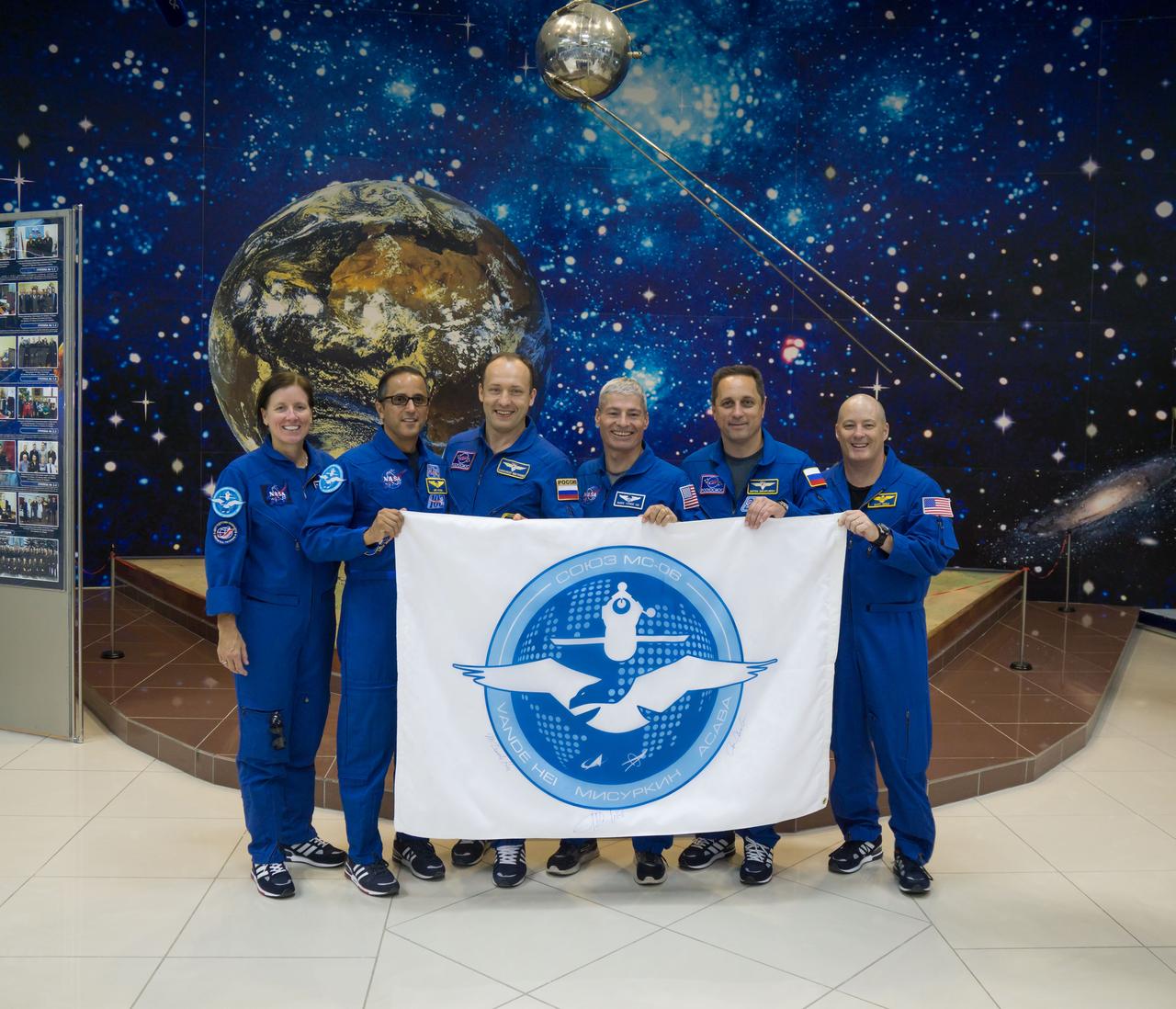
jsc2017e115133 (Sept. 7, 2017) --- In the Korolev Museum at the Baikonur Cosmodrome in Kazakhstan, the Expedition 53-54 prime and backup crewmembers display a flag bearing their Soyuz mission insignia Sept. 7 as part of traditional pre-launch activities. From left to right are Shannon Walker of NASA, Joe Acaba of NASA, Alexander Misurkin of Roscosmos, Mark Vande Hei of NASA, Anton Shkaplerov of Roscosmos and Scott Tingle of NASA. Acaba, Misurkin and Vande Hei will launch Sept. 13 on the Soyuz MS-06 spacecraft for a five and a half month mission on the International Space Station. Credit: NASA/Victor Zelentsov
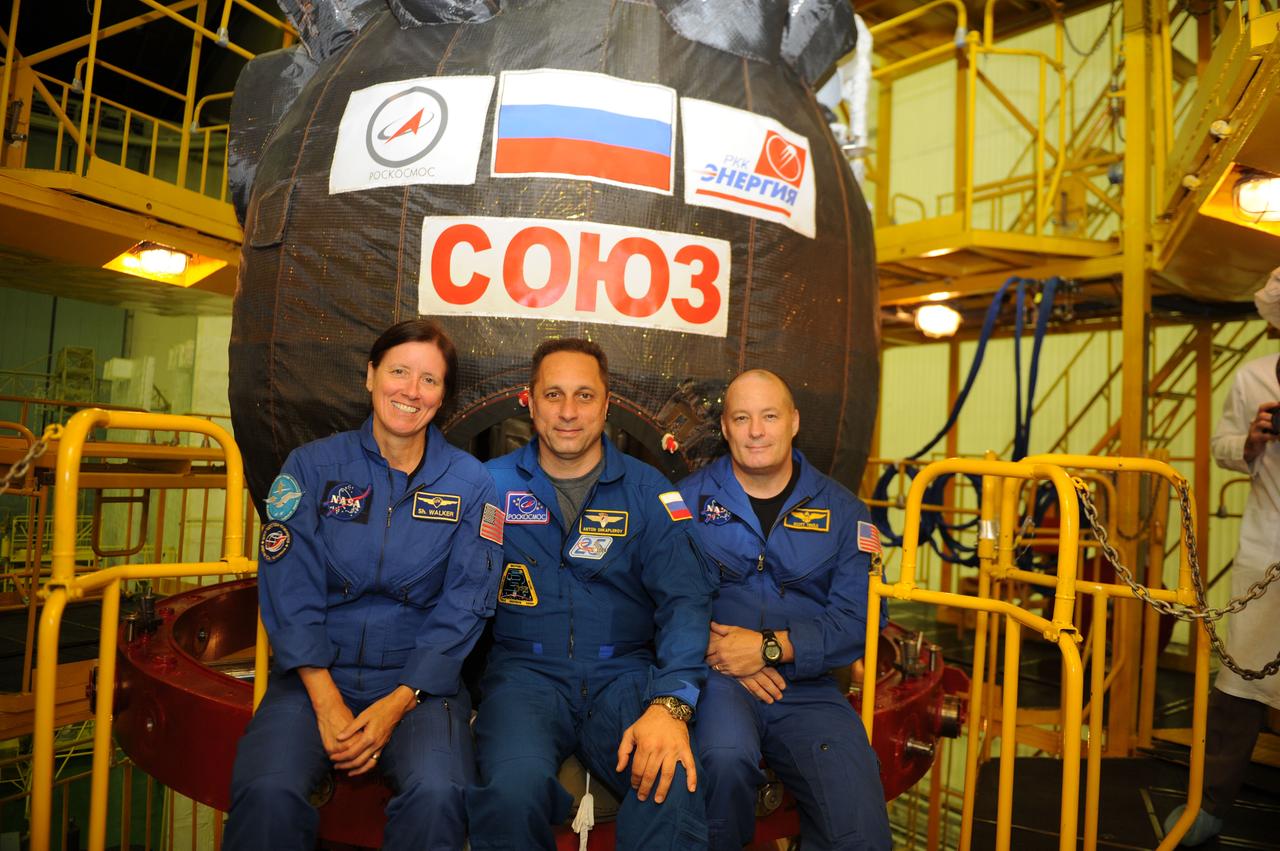
jsc2017e114471 (Aug. 28, 2017) --- At the Baikonur Cosmodrome in Kazakhstan, the Expedition 53-54 backup crewmembers pose for pictures in from of the Soyuz MS-06 spacecraft during pre-launch training activities Aug. 28. Shannon Walker of NASA (left), Anton Shkaplerov of Roscosmos (center) and Scott tingle of NASA (right) are serving as backups to the prime crewmembers, Joe Acaba and Mark Vande Hei of NASA and Alexander Misurkin of Roscosmos, who will launch Sept. 13 on the Soyuz MS-06 for a five and a half month mission on the International Space Station. Credit: Gagarin Cosmonaut Training Center/Irina Peshkova

jsc2017e115216 (Sept.. 8, 2017) --- In the town of Baikonur, Kazakhstan, Expedition 53-54 backup crewmembers Shannon Walker of NASA (left), Anton Shkaplerov of Roscosmos (center) and Scott Tingle of NASA (right) pose for photos Sept. 8 in front of a statue of Yuri Gagarin, the first human to fly in space. They are serving as backups to the prime crewmembers, Joe Acaba of NASA, Alexander Misurkin of Roscosmos and Mark Vande Hei of NASA, who will launch on Sept. 13 from the Baikonur Cosmodrome in Kazakhstan on the Soyuz MS-06 spacecraft for a five and a half month mission on the International Space Station. Credit: NASA/Victor Zelentsov
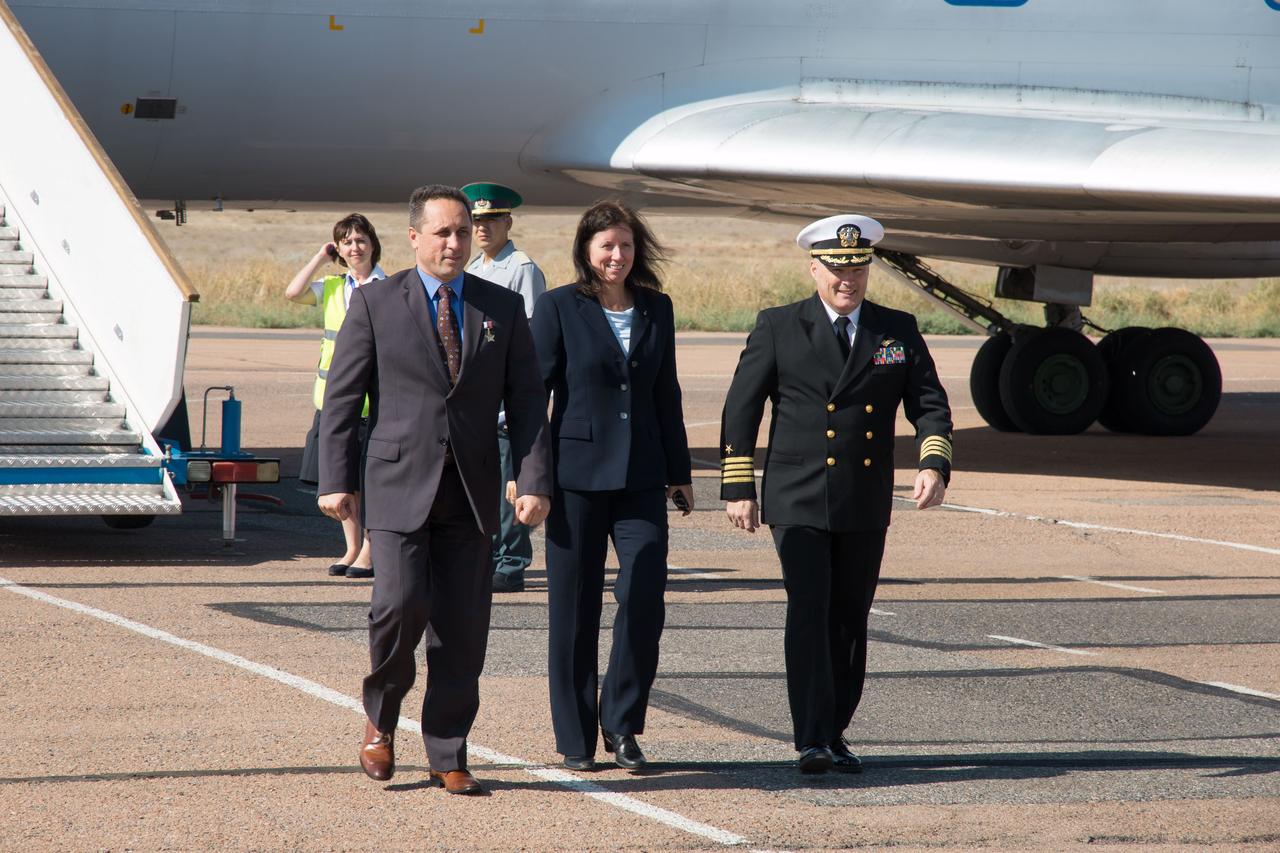
jsc2017e114752 (Sept. 6, 2017) --- Expedition 53-54 backup crewmembers Anton Shkaplerov of Roscosmos (left), Shannon Walker of NASA (center) and Scott Tingle of NASA (right) arrive at the launch site at the Baikonur Cosmodrome in Kazakhstan Sept. 6 after a flight from their training base in Star City, Russia for final pre-launch training. They are serving as backups to the prime crew, Alexander Misurkin of Roscosmos and Joe Acaba and Mark Vande Hei of NASA, who will launch Sept. 13 on the Soyuz MS-06 spacecraft from the Baikonur Cosmodrome for a five and a half month mission on the International Space Station. Credit: NASA/Victor Zelentsov
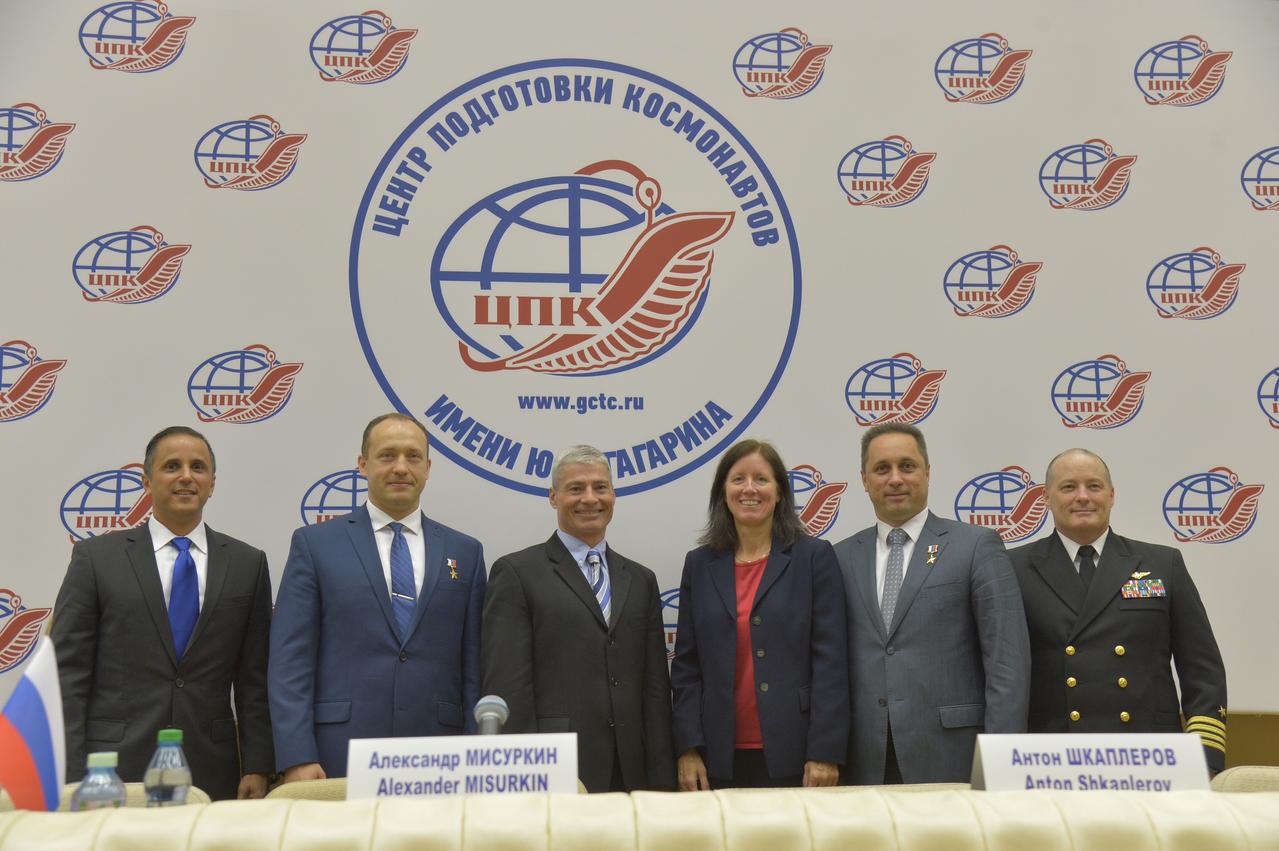
jsc2017e114483 (Sept. 1, 2017) --- At the Gagarin Cosmonaut Training Center in Star City, Russia, the Expedition 53-54 prime and backup crewmembers pose for pictures following a news conference Sept. 1. From left to right are the prime crewmembers, Joe Acaba of NASA, Alexander Misurkin of Roscosmos and Mark Vande Hei of NASA, and the backup crewmembers, Shannon Walker of NASA, Anton Shkaplerov of Roscosmos and Scott Tingle of NASA. Acaba, Misurkin and Vande Hei will launch Sept. 13 on the Soyuz MS-06 spacecraft from the Baikonur Cosmodrome in Kazakhstan on a five and a half month mission aboard the International Space Station. Credit: NASA/Elizabeth Weissinger
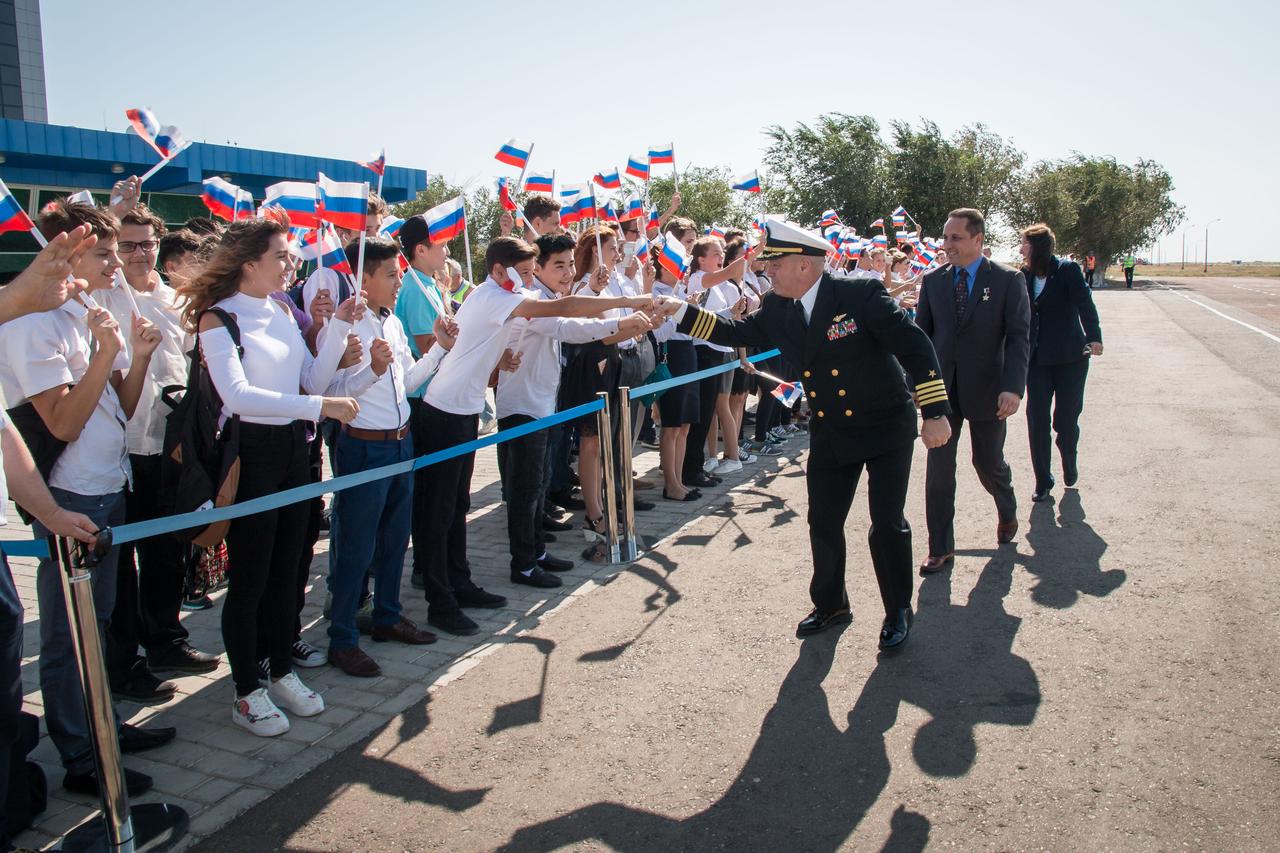
jsc2017e114752 (Sept. 6, 2017) --- Expedition 53-54 backup crewmembers Scott Tingle of NASA (foreground), Anton Shkaplerov of Roscosmos (center), and Shannon Walker of NASA are greeted by local students after arriving at the launch site at the Baikonur Cosmodrome in Kazakhstan Sept. 6 after a flight from their training base in Star City, Russia for final pre-launch training. They are serving as backups to the prime crew, Alexander Misurkin of Roscosmos and Joe Acaba and Mark Vande Hei of NASA, who will launch Sept. 13 on the Soyuz MS-06 spacecraft from the Baikonur Cosmodrome for a five and a half month mission on the International Space Station. Credit: NASA/Victor Zelentsov
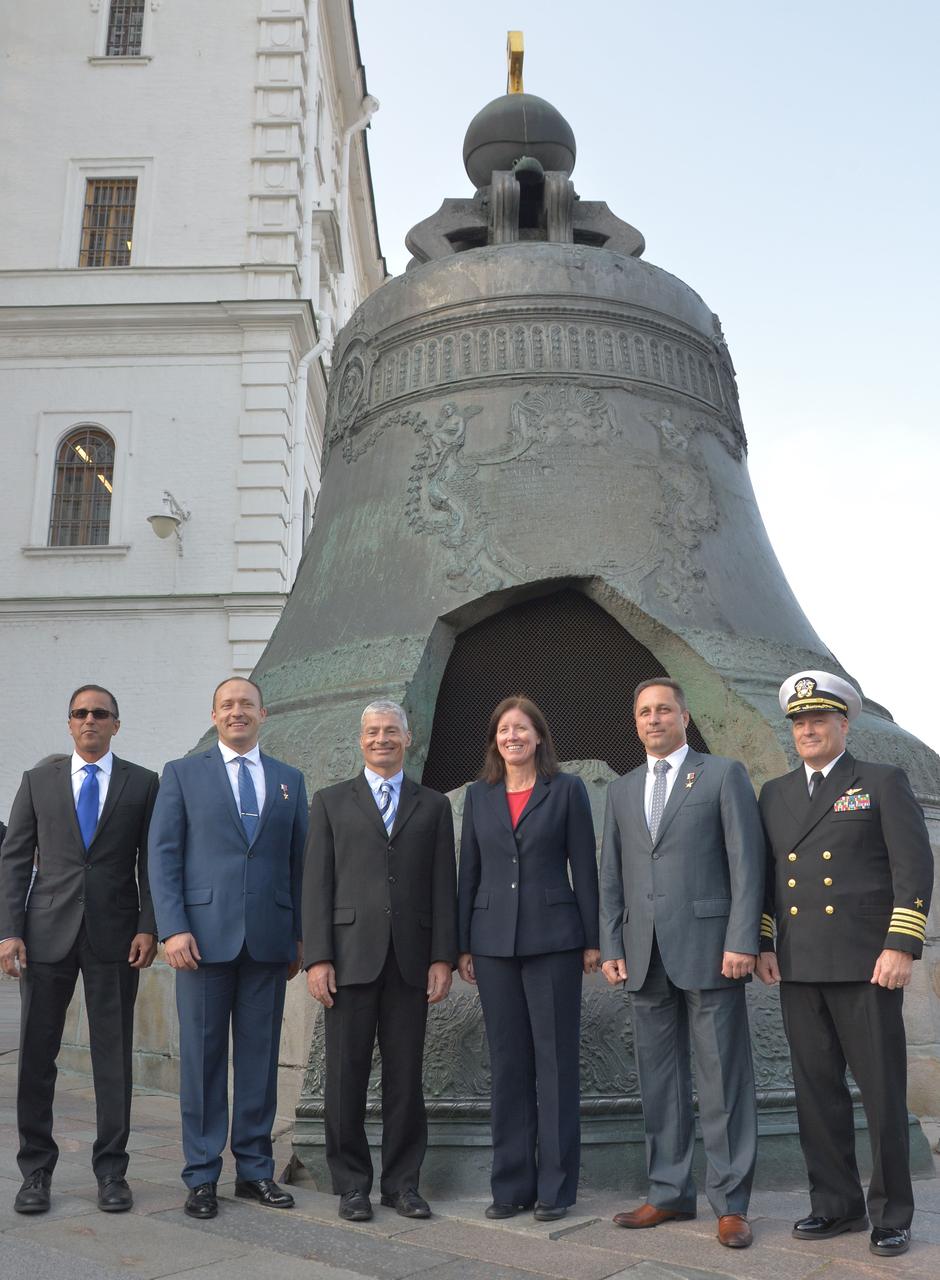
jsc2017e114490 (Sept. 1, 2017) --- The Expedition 53-54 prime and backup crewmembers pose for pictures in front of the Tsar Bell at the Kremlin in Moscow Sept. 1 as part of their traditional pre-launch visit. From left to right are prime crewmembers Joe Acaba of NASA, Alexander Misurkin of Roscosmos and Mark Vande Hei of NASA and backup crewmembers Shannon Walker of NASA, Anton Shkaplerov of Roscosmos and Scott Tingle of NASA. Misurkin, Acaba and Vande Hei will launch Sept. 13 from the Baikonur Cosmodrome in Kazakhstan Sept. 13 on the Soyuz MS-06 spacecraft for a five and a half month mission on the International Space Station. Credit: NASA/Elizabeth Weissinger
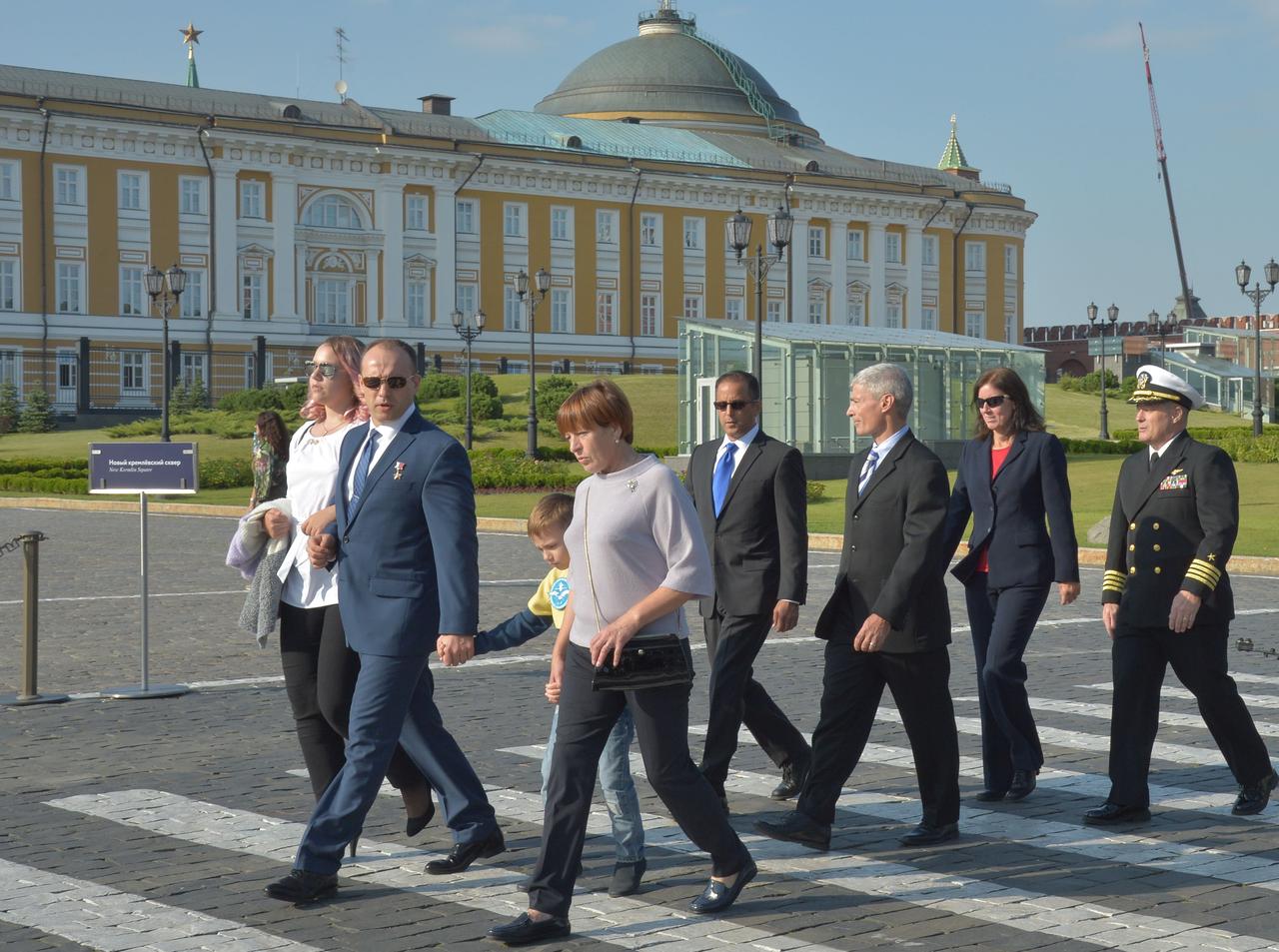
jsc2017e114489 (Sept. 1, 2017) --- Expedition 53-54 prime crewmember Alexander Misurkin of Roscosmos walks through the ground of the Kremlin in Moscow with his family Sept. 1 as part of traditional pre-launch ceremonies. Following Misurkin are NASA astronauts Joe Acaba, Mark Vande Hei, Shannon Walker and Scott Tingle. Misurkin, Acaba and Vande Hei will launch Sept. 13 from the Baikonur Cosmodrome in Kazakhstan Sept. 13 on the Soyuz MS-06 spacecraft for a five and a half month mission on the International Space Station. Credit: NASA/Elizabeth Weissinger
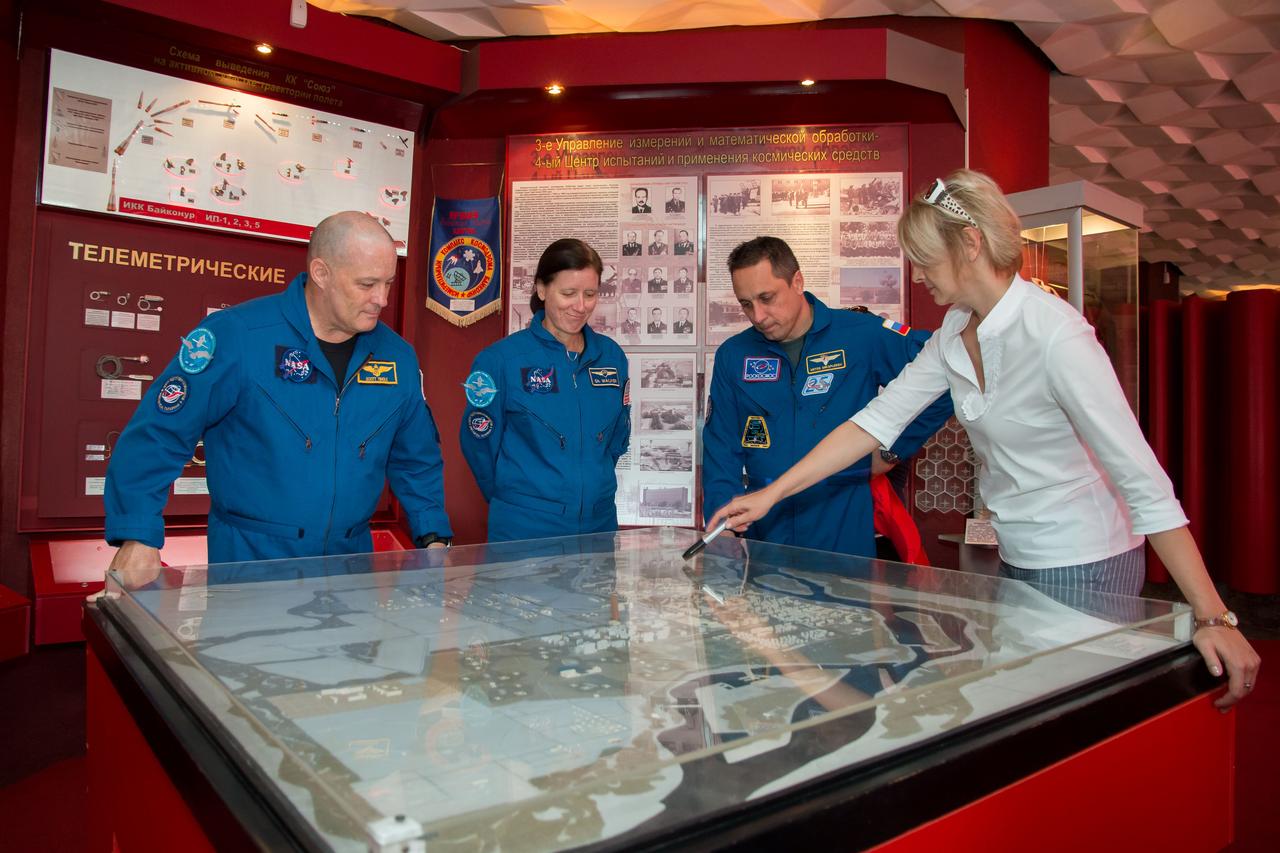
jsc2017e115218 (Sept.. 8, 2017) --- At the Space Museum in the town of Baikonur, Kazakhstan, Expedition 53-54 backup crewmembers Scott Tingle of NASA (left), Shannon Walker of NASA (center) and Anton Shkaplerov of Roscosmos (right) receive a briefing on the layout of the Baikonur Cosmodrome from a museum guide in a traditional pre-launch activity Sept. 8. They are serving as backups to the prime crewmembers, Joe Acaba of NASA, Alexander Misurkin of Roscosmos and Mark Vande Hei of NASA, who will launch on Sept. 13 from the Baikonur Cosmodrome in Kazakhstan on the Soyuz MS-06 spacecraft for a five and a half month mission on the International Space Station. Credit: NASA/Victor Zelentsov
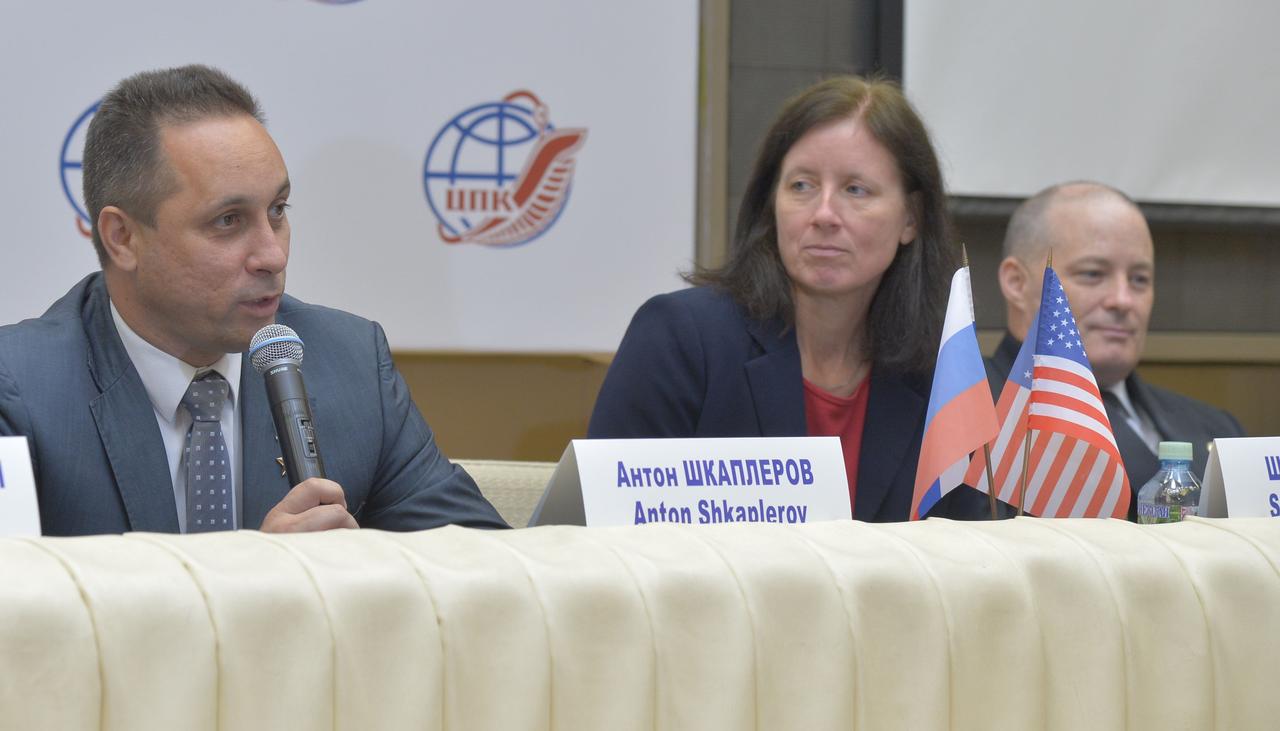
jsc2017e114479 (Sept. 1, 2017) --- At the Gagarin Cosmonaut Training Center in Star City, Russia, Expedition 53-54 backup crewmember Anton Shkaplerov of Roscosmos (left) answers a reporter’s question during a news conference Sept. 1 while backup crewmates Shannon Walker (center) and Scott Tingle (right of NASA look on. They are serving as backups to the prime crew, Mark Vande Hei and Joe Acaba of NASA and Alexander Misurkin of Roscosmos, who will launch Sept. 13 on the Soyuz MS-06 spacecraft from the Baikonur Cosmodrome in Kazakhstan on a five and a half month mission aboard the International Space Station. Credit: NASA/Elizabeth Weissinger
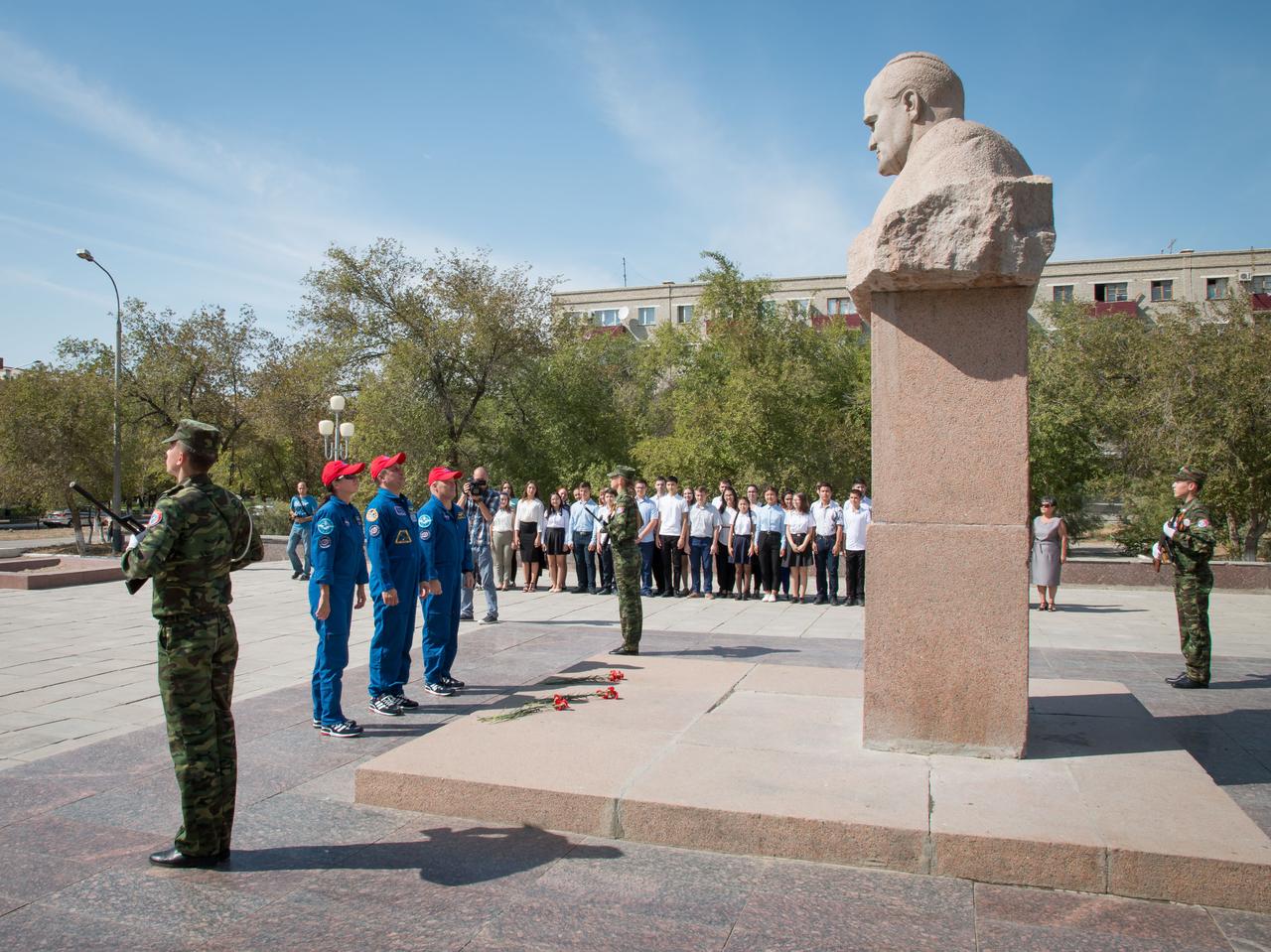
jsc2017e115217 (Sept.. 8, 2017) --- In the town of Baikonur, Kazakhstan, Expedition 53-54 backup crewmembers Shannon Walker of NASA, Anton Shkaplerov of Roscosmos and Scott Tingle of NASA pay tribute after laying flowers at the statue of Russia’s great space designer Sergey Korolev in a traditional ceremony Sept. 8. They are serving as backups to the prime crewmembers, Joe Acaba of NASA, Alexander Misurkin of Roscosmos and Mark Vande Hei of NASA, who will launch on Sept. 13 from the Baikonur Cosmodrome in Kazakhstan on the Soyuz MS-06 spacecraft for a five and a half month mission on the International Space Station. Credit: NASA/Victor Zelentsov
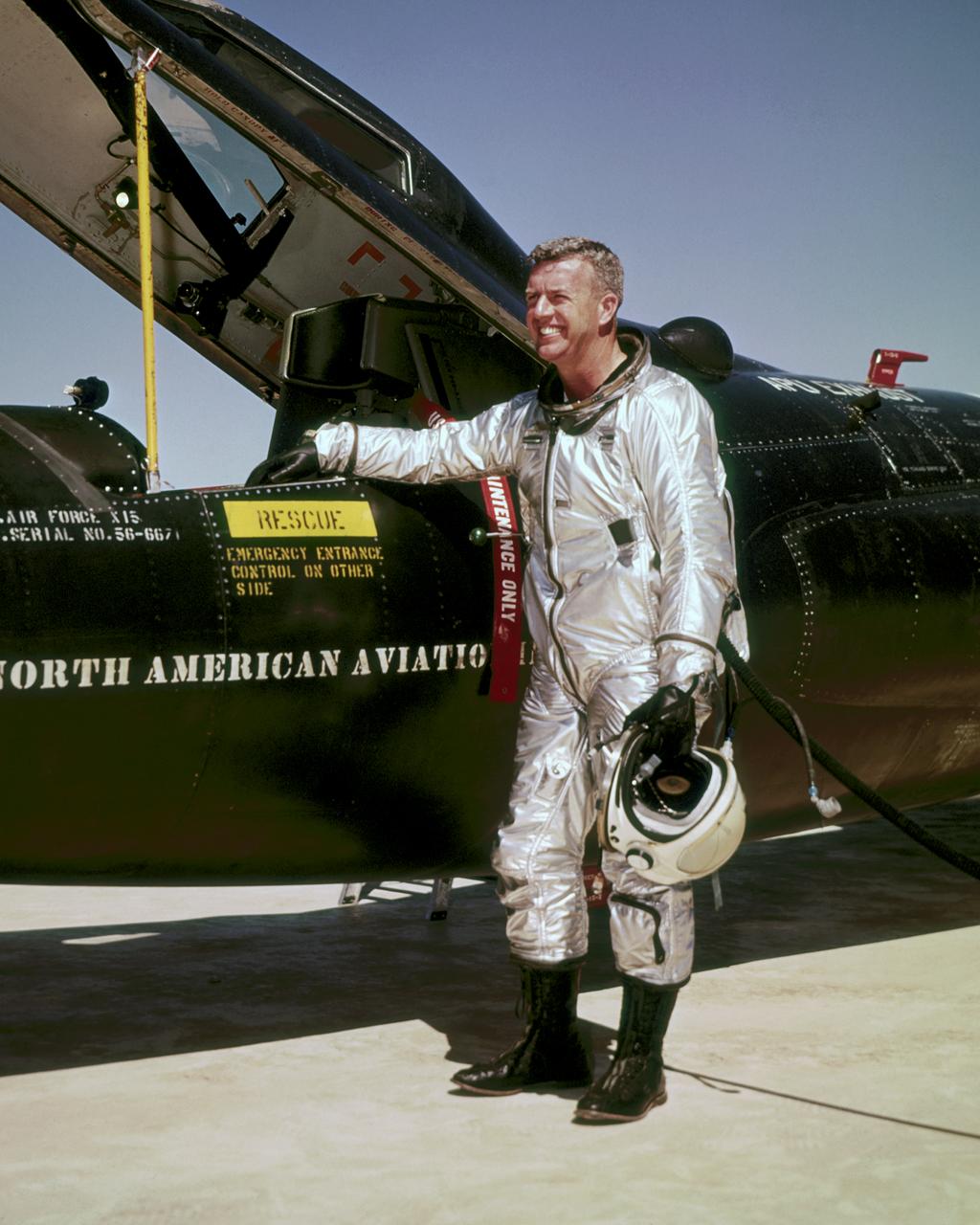
Joseph A. Walker was a Chief Research Pilot at the NASA Dryden Flight Research Center during the mid-1960s. He joined the NACA in March 1945, and served as project pilot at the Edwards flight research facility on such pioneering research projects as the D-558-1, D-558-2, X-1, X-3, X-4, X-5, and the X-15. He also flew programs involving the F-100, F-101, F-102, F-104, and the B-47. Walker made the first NASA X-15 flight on March 25, 1960. He flew the research aircraft 24 times and achieved its fastest speed and highest altitude. He attained a speed of 4,104 mph (Mach 5.92) during a flight on June 27, 1962, and reached an altitude of 354,300 feet on August 22, 1963 (his last X-15 flight). He was the first man to pilot the Lunar Landing Research Vehicle (LLRV) that was used to develop piloting and operational techniques for lunar landings. Walker was born February 20, 1921, in Washington, Pa. He lived there until graduating from Washington and Jefferson College in 1942, with a B.A. degree in Physics. During World War II he flew P-38 fighters for the Air Force, earning the Distinguished Flying Cross and the Air Medal with Seven Oak Clusters. Walker was the recipient of many awards during his 21 years as a research pilot. These include the 1961 Robert J. Collier Trophy, 1961 Harmon International Trophy for Aviators, the 1961 Kincheloe Award and 1961 Octave Chanute Award. He received an honorary Doctor of Aeronautical Sciences degree from his alma mater in June of 1962. Walker was named Pilot of the Year in 1963 by the National Pilots Association. He was a charter member of the Society of Experimental Test Pilots, and one of the first to be designated a Fellow. He was fatally injured on June 8, 1966, in a mid-air collision between an F-104 he was piloting and the XB-70.
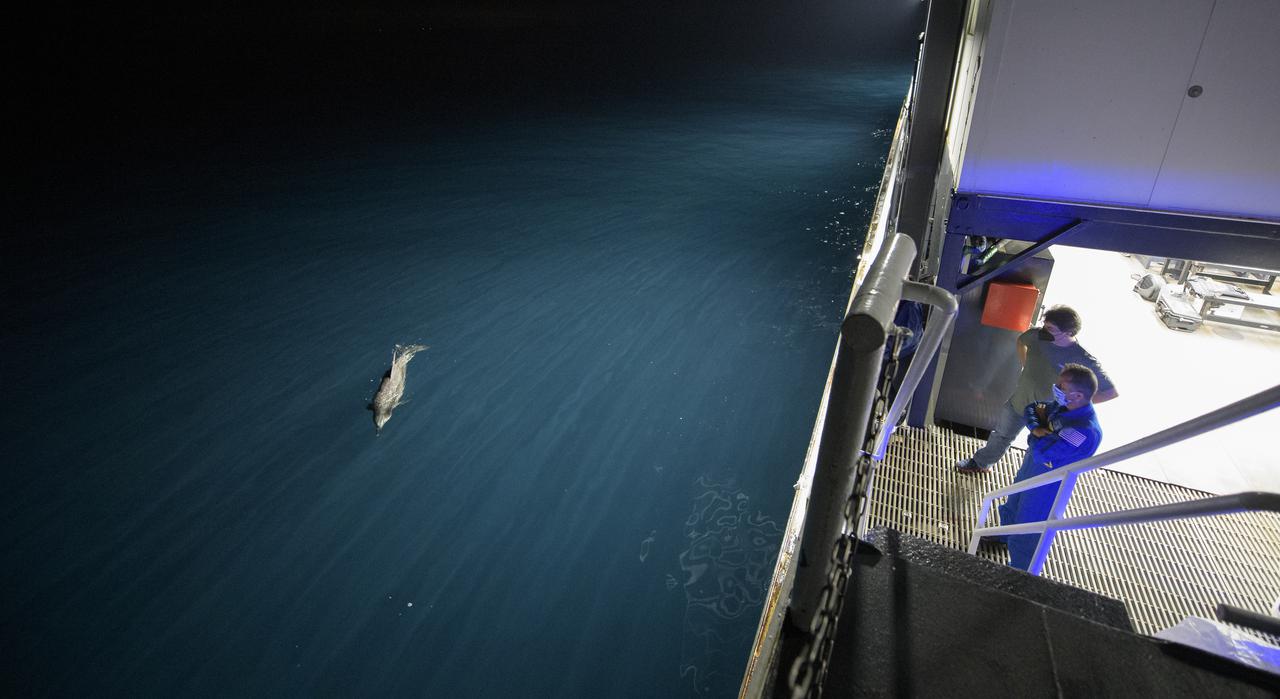
Manager, NASA ISS Transportation Integration Office, Bill Spetch and NASA astronaut representative Joe Acaba watch dolphin swim along with the SpaceX GO Navigator recovery ship as NASA and SpaceX teams prepare for the landing of the SpaceX Crew Dragon Resilience spacecraft with NASA astronauts Mike Hopkins, Shannon Walker, and Victor Glover, and Japan Aerospace Exploration Agency (JAXA) astronaut Soichi Noguchi aboard in the Gulf of Mexico off the coast of Panama City, Florida, Saturday, May 1, 2021. NASA’s SpaceX Crew-1 mission is the first crew rotation flight of the SpaceX Crew Dragon spacecraft and Falcon 9 rocket with astronauts to the International Space Station as part of the agency’s Commercial Crew Program. Photo Credit: (NASA/Bill Ingalls)
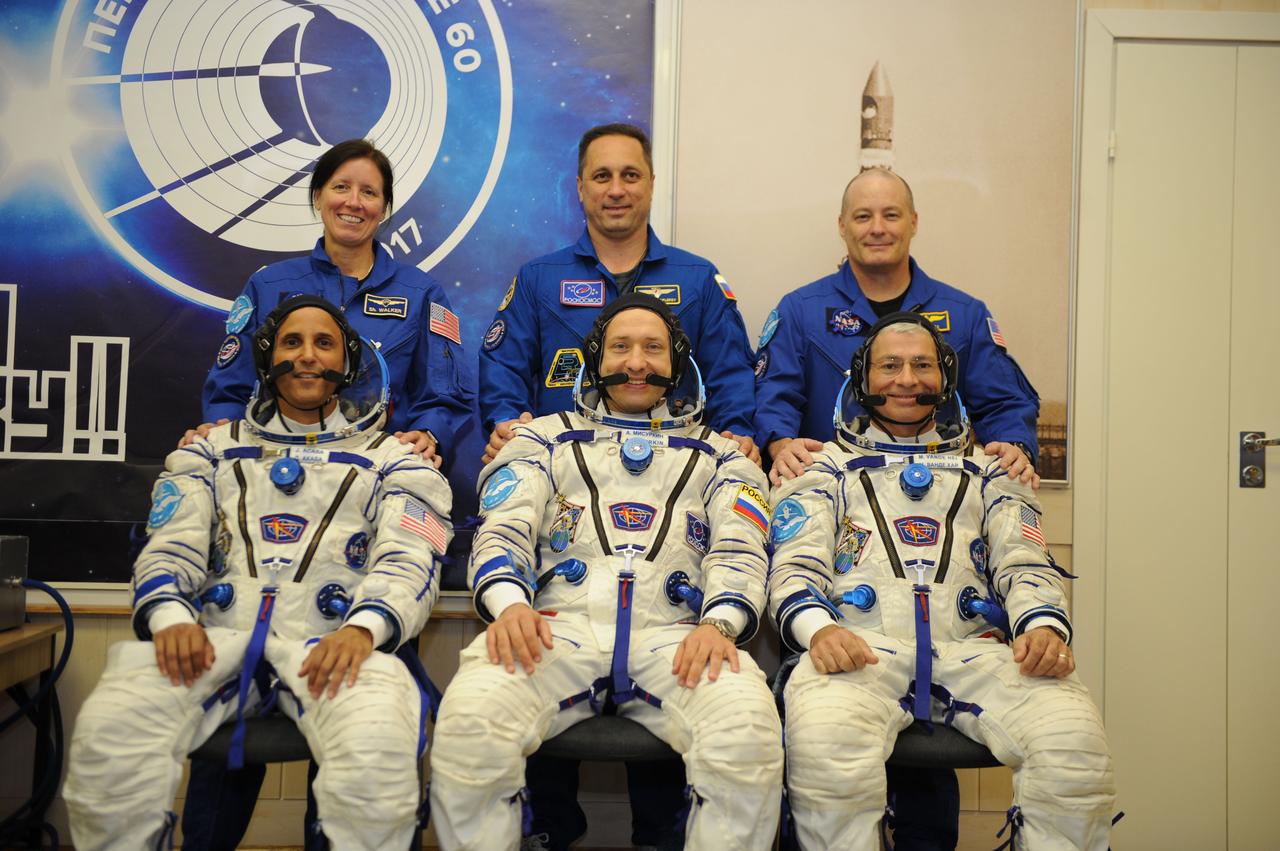
jsc2017e114472 (Aug. 28, 2017) --- In the Integration Facility at the Baikonur Cosmodrome in Kazakhstan, the Expedition 53-54 prime and backup crewmembers pose for pictures Aug. 28 during pre-launch training activities. Clad in their Sokol launch and entry suits in the front row are the prime crewmembers, Joe Acaba of NASA (left), Alexander Misurkin of Roscosmos (center) and Mark Vande Hei of NASA (right). Behind them are their backups, Shannon Walker of NASA (left), Anton Shkaplerov of Roscosmos (center) and Scott Tingle of NASA (left). Acaba, Vande Hei of NASA and Misurkin will launch Sept. 13 on the Soyuz MS-06 spacecraft for a five and a half month mission on the International Space Station. Credit: Gagarin Cosmonaut Training Center/Irina Peshkova
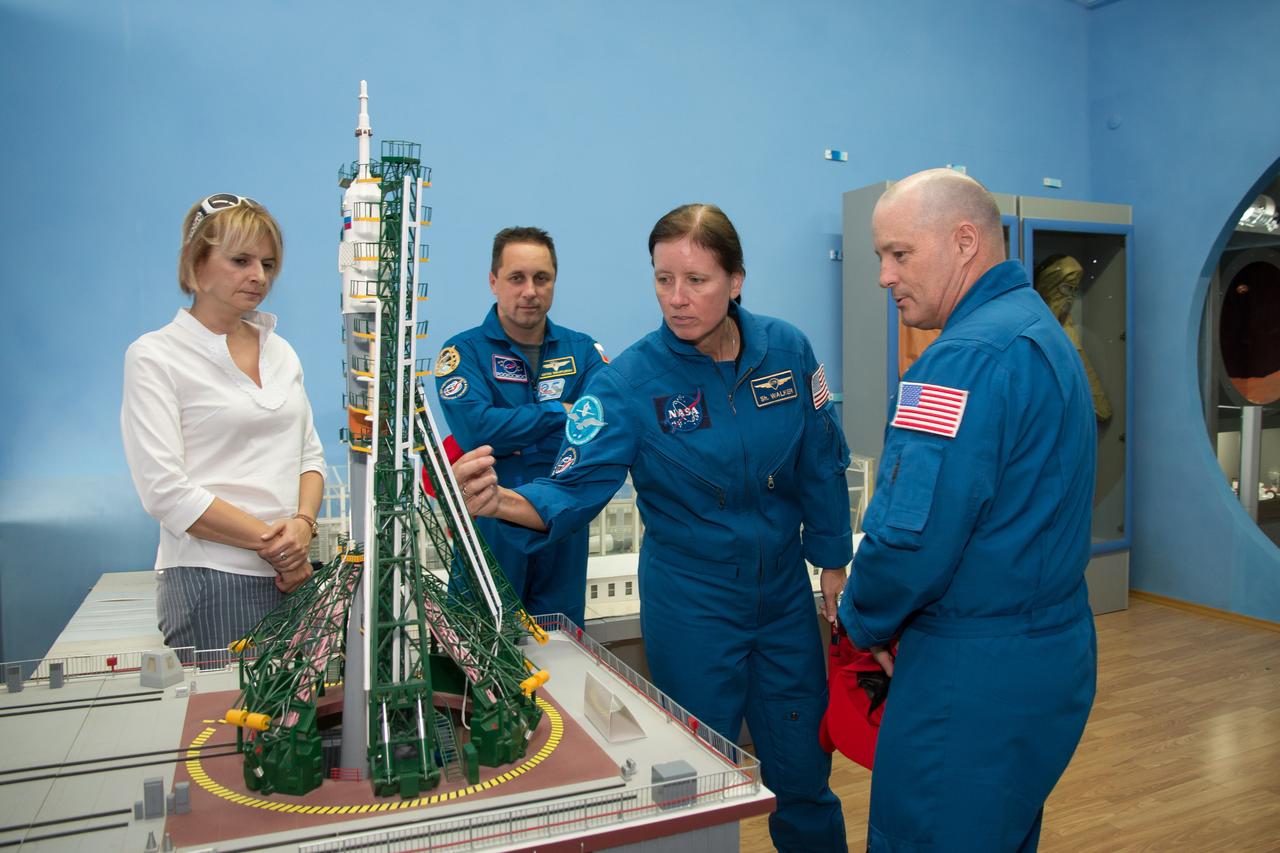
jsc2017e115219 (Sept.. 8, 2017) --- At the Space Museum in the town of Baikonur, Kazakhstan, Expedition 53-54 backup crewmembers Anton Shkaplerov of Roscosmos (second from left), Shannon Walker of NASA (second from right) and Scott Tingle of NASA (right) receive a briefing on a mockup of a Soyuz rocket on its launch pad from a museum guide in a traditional pre-launch activity Sept. 8. They are serving as backups to the prime crewmembers, Joe Acaba of NASA, Alexander Misurkin of Roscosmos and Mark Vande Hei of NASA, who will launch on Sept. 13 from the Baikonur Cosmodrome in Kazakhstan on the Soyuz MS-06 spacecraft for a five and a half month mission on the International Space Station. Credit: NASA/Victor Zelentsov
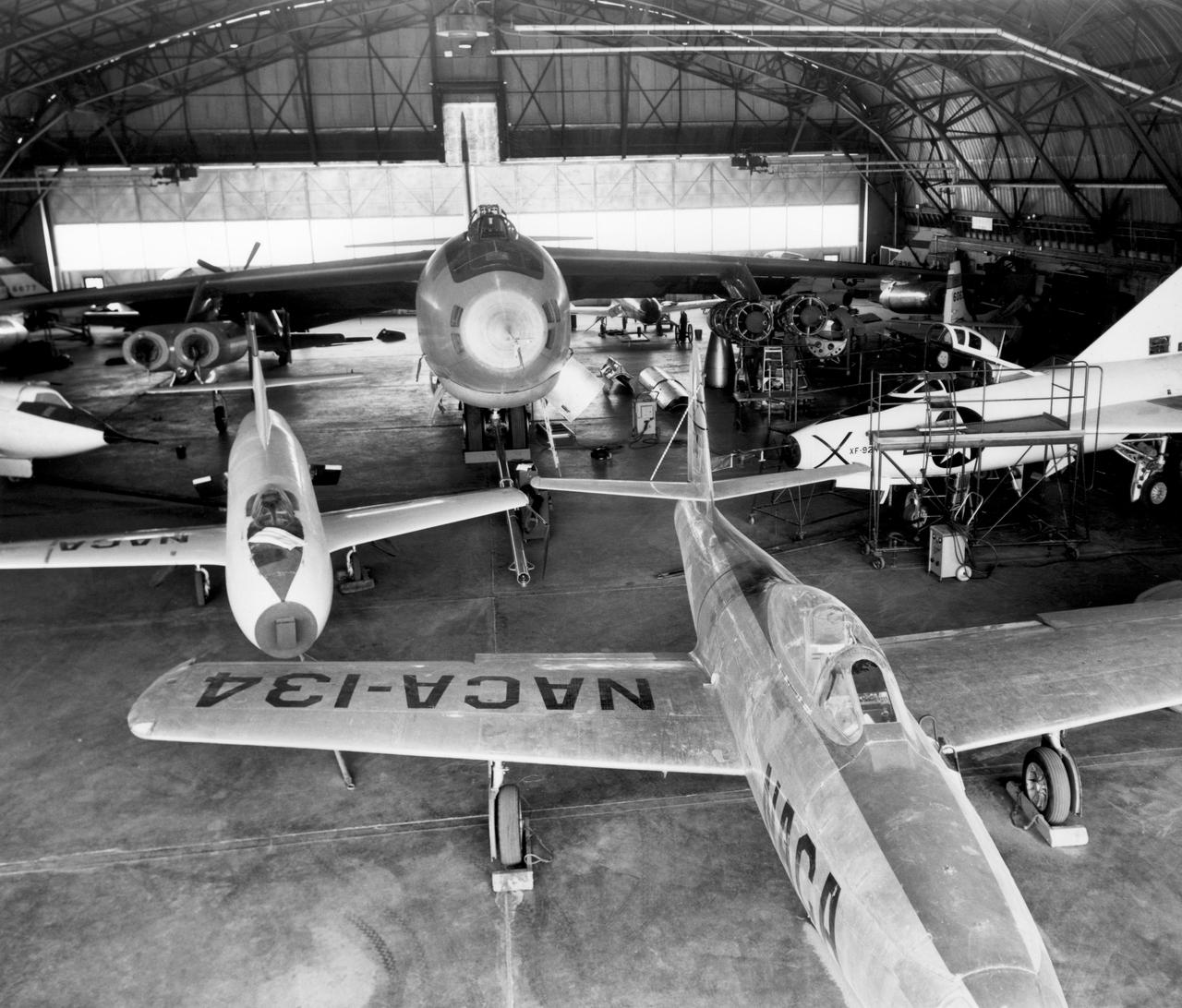
In the center foreground of this 1953 hangar photo is the YF-84A (NACA 134/Air Force 45-59490) used for vortex generator research. It arrived on November 28, 1949, and departed on April 21, 1954. Beside it is the third D-558-1 aircraft (NACA 142/Navy 37972). This aircraft was used for a total of 78 transonic research flights from April 1949 to June 1954. It replaced the second D-558-1, lost in the crash which killed Howard Lilly. Just visible on the left edge is the nose of the first D-558-2 (NACA 143/Navy 37973). Douglas turned the aircraft over to NACA on August 31, 1951, after the contractor had completed its initial test flights. NACA only made a single flight with the aircraft, on September 17, 1956, before the program was cancelled. In the center of the photo is the B-47A (NACA 150/Air Force 49-1900). The B-47 jet bomber, with its thin, swept-back wings, and six podded engines, represented the state of the art in aircraft design in the early 1950s. The aircraft undertook a number of research activities between May 1953 and its 78th and final research flight on November 22, 1957. The tests showed that the aircraft had a buffeting problem at speeds above Mach 0.8. Among the pilots who flew the B-47 were later X-15 pilots Joe Walker, A. Scott Crossfield, John B. McKay, and Neil A. Armstrong. On the right side of the B-47 is NACA's X-1 (Air Force 46-063). The second XS-1 aircraft built, it was fitted with a thicker wing than that on the first aircraft, which had exceeded Mach 1 on October 14, 1947. Flight research by NACA pilots indicated that this thicker wing produced 30 percent more drag at transonic speeds compared to the thinner wing on the first X-1. After a final flight on October 23, 1951, the aircraft was grounded due to the possibility of fatigue failure of the nitrogen spheres used to pressurize the fuel tanks. At the time of this photo, in 1953, the aircraft was in storage. In 1955, the aircraft was extensively modified, becoming the X-1E. In front o
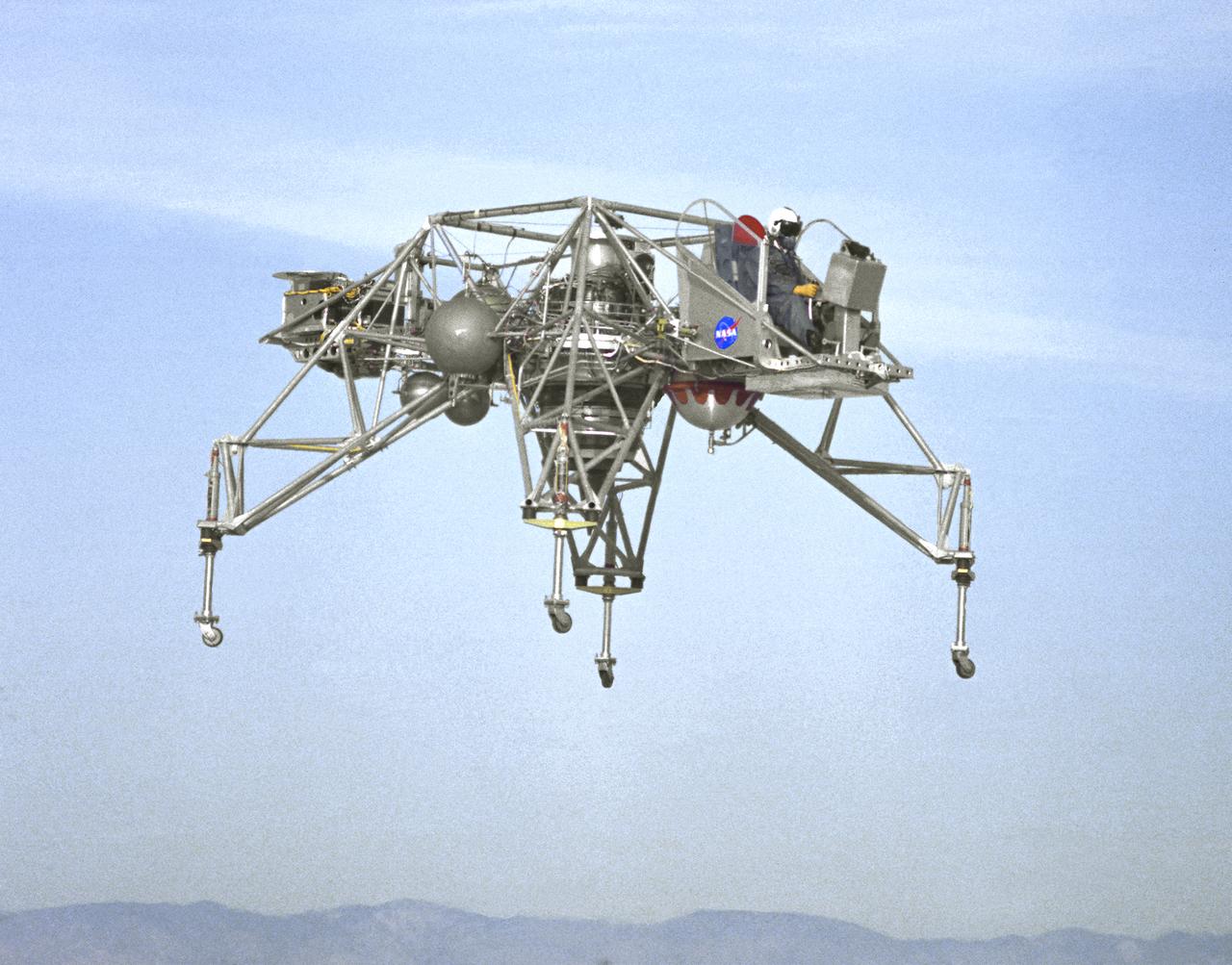
In this NASA Flight Reserch Center photograph the Lunar Landing Research Vehicle (LLRV) number 1 is shown in flight. When Apollo planning was underway in 1960, NASA was looking for a simulator to profile the descent to the Moon's surface. Three concepts surfaced: an electronic simulator, a tethered device, and the ambitious Dryden contribution, a free-flying vehicle. All three became serious projects, but eventually the NASA Flight Research Center's (FRC) Landing Research Vehicle (LLRV) became the most significant one. Hubert M. Drake is credited with originating the idea, while Donald Bellman and Gene Matranga were senior engineers on the project, with Bellman, the project manager. Simultaneously, and independently, Bell Aerosystems Company, Buffalo, N.Y., a company with experience in vertical takeoff and landing (VTOL) aircraft, had conceived a similar free-flying simulator and proposed their concept to NASA headquarters. NASA Headquarters put FRC and Bell together to collaborate. The challenge was; to allow a pilot to make a vertical landing on Earth in a simulated Moon environment, one sixth of the Earth's gravity and with totally transparent aerodynamic forces in a "free flight" vehicle with no tether forces acting on it. Built of tubular aluminum like a giant four-legged bedstead, the vehicle was to simulate a lunar landing profile from around 1500 feet to the Moon's surface. To do this, the LLRV had a General Electric CF-700-2V turbofan engine mounted vertically in gimbals, with 4200 pounds of thrust. The engine, using JP-4 fuel, got the vehicle up to the test altitude and was then throttled back to support five-sixths of the vehicle's weight, simulating the reduced gravity of the Moon. Two hydrogen-peroxide lift rockets with thrust that could be varied from 100 to 500 pounds handled the LLRV's rate of descent and horizontal translations. Sixteen smaller hydrogen-peroxide rockets, mounted in pairs, gave the pilot control in pitch, yaw, and roll. On the LLRV,
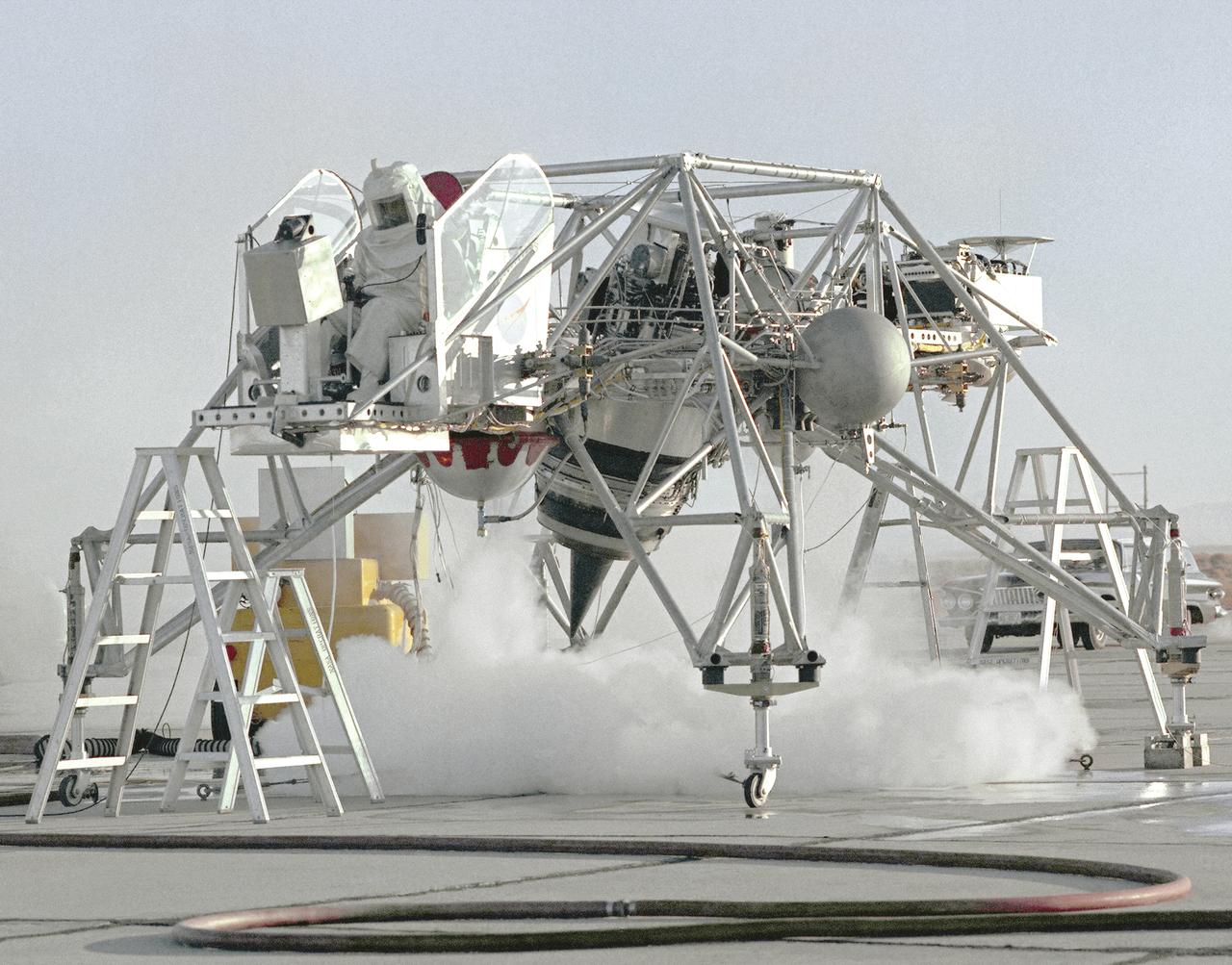
This 1964 NASA Flight Reserch Center photograph shows a ground engine test underway on the Lunar Landing Research Vehicle (LLRV) number 1. When Apollo planning was underway in 1960, NASA was looking for a simulator to profile the descent to the Moon's surface. Three concepts surfaced: an electronic simulator, a tethered device, and the ambitious Dryden contribution, a free-flying vehicle. All three became serious projects, but eventually the NASA Flight Research Center's (FRC) Landing Research Vehicle (LLRV) became the most significant one. Hubert M. Drake is credited with originating the idea, while Donald Bellman and Gene Matranga were senior engineers on the project, with Bellman, the project manager. Simultaneously, and independently, Bell Aerosystems Company, Buffalo, N.Y., a company with experience in vertical takeoff and landing (VTOL) aircraft, had conceived a similar free-flying simulator and proposed their concept to NASA headquarters. NASA Headquarters put FRC and Bell together to collaborate. The challenge was; to allow a pilot to make a vertical landing on Earth in a simulated Moon environment, one sixth of the Earth's gravity and with totally transparent aerodynamic forces in a "free flight" vehicle with no tether forces acting on it. Built of tubular aluminum like a giant four-legged bedstead, the vehicle was to simulate a lunar landing profile from around 1500 feet to the Moon's surface. To do this, the LLRV had a General Electric CF-700-2V turbofan engine mounted vertically in gimbals, with 4200 pounds of thrust. The engine, using JP-4 fuel, got the vehicle up to the test altitude and was then throttled back to support five-sixths of the vehicle's weight, simulating the reduced gravity of the Moon. Two hydrogen-peroxide lift rockets with thrust that could be varied from 100 to 500 pounds handled the LLRV's rate of descent and horizontal translations. Sixteen smaller hydrogen-peroxide rockets, mounted in pairs, gave the pilot control in pitch, yaw,
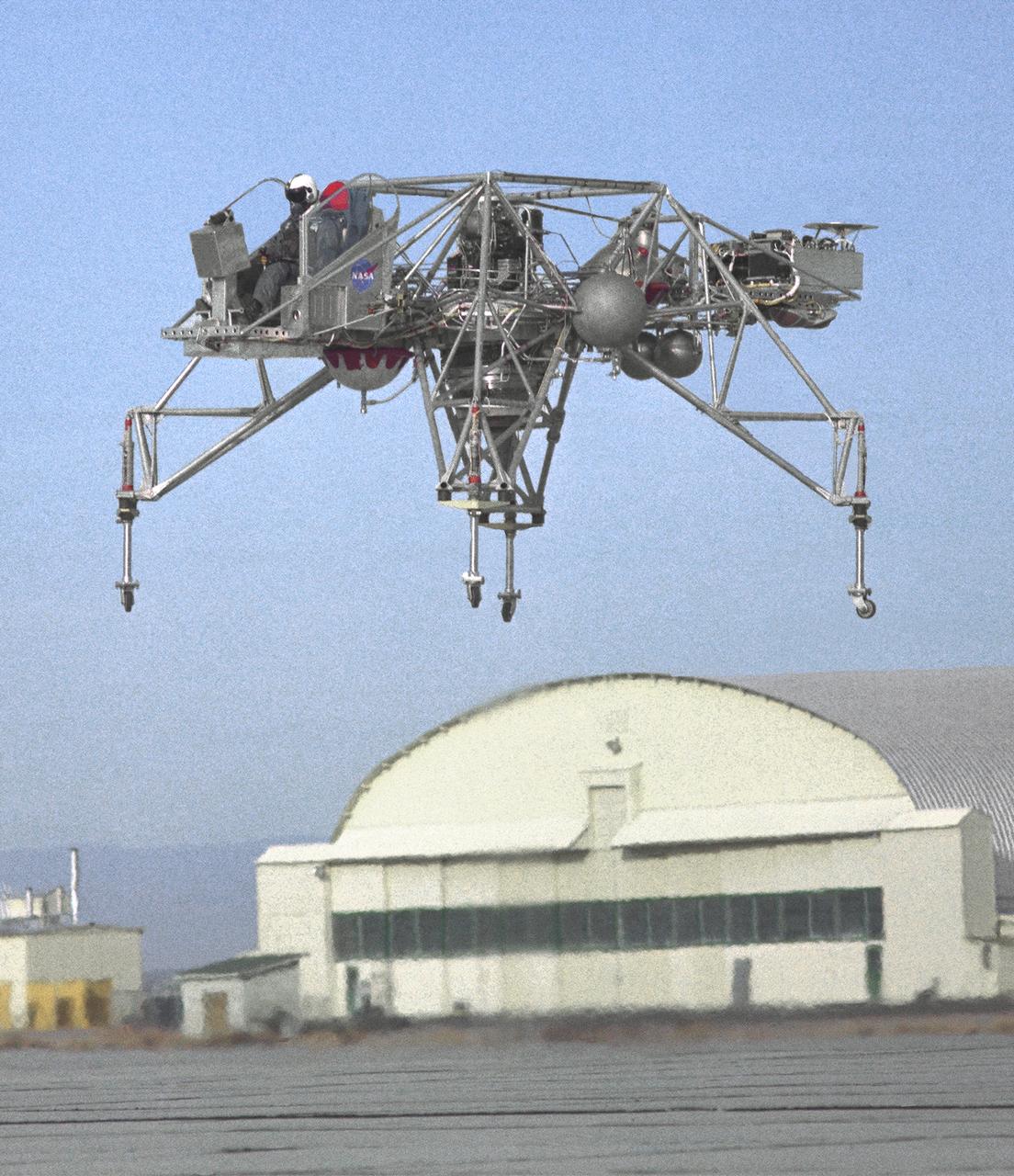
An inflight view from the left side of the Lunar Landing Research Vehicle, is shown in this 1964 NASA Flight Research Center photograph. The photograph was taken in front of the old NACA hangar located at the South Base, Edwards Air Force Base. When Apollo planning was underway in 1960, NASA was looking for a simulator to profile the descent to the Moon's surface. Three concepts surfaced: an electronic simulator, a tethered device, and the ambitious Dryden contribution, a free-flying vehicle. All three became serious projects, but eventually the NASA Flight Research Center's (FRC) Landing Research Vehicle (LLRV) became the most significant one. Hubert M. Drake is credited with originating the idea, while Donald Bellman and Gene Matranga were senior engineers on the project, with Bellman, the project manager. Simultaneously, and independently, Bell Aerosystems Company, Buffalo, N.Y., a company with experience in vertical takeoff and landing (VTOL) aircraft, had conceived a similar free-flying simulator and proposed their concept to NASA headquarters. NASA Headquarters put FRC and Bell together to collaborate. The challenge was; to allow a pilot to make a vertical landing on earth in a simulated Moon environment, one sixth of the earth's gravity and with totally transparent aerodynamic forces in a "free flight" vehicle with no tether forces acting on it. Built of tubular aluminum like a giant four-legged bedstead, the vehicle was to simulate a lunar landing profile from around 1500 feet to the Moon's surface. To do this, the LLRV had a General Electric CF-700-2V turbofan engine mounted vertically in gimbals, with 4200 pounds of thrust. The engine, using JP-4 fuel, got the vehicle up to the test altitude and was then throttled back to support five-sixths of the vehicle's weight, simulating the reduced gravity of the Moon. Two hydrogen-peroxide lift rockets with thrust that could be varied from 100 to 500 pounds handled the LLRV's rate of descent and horizontal transla
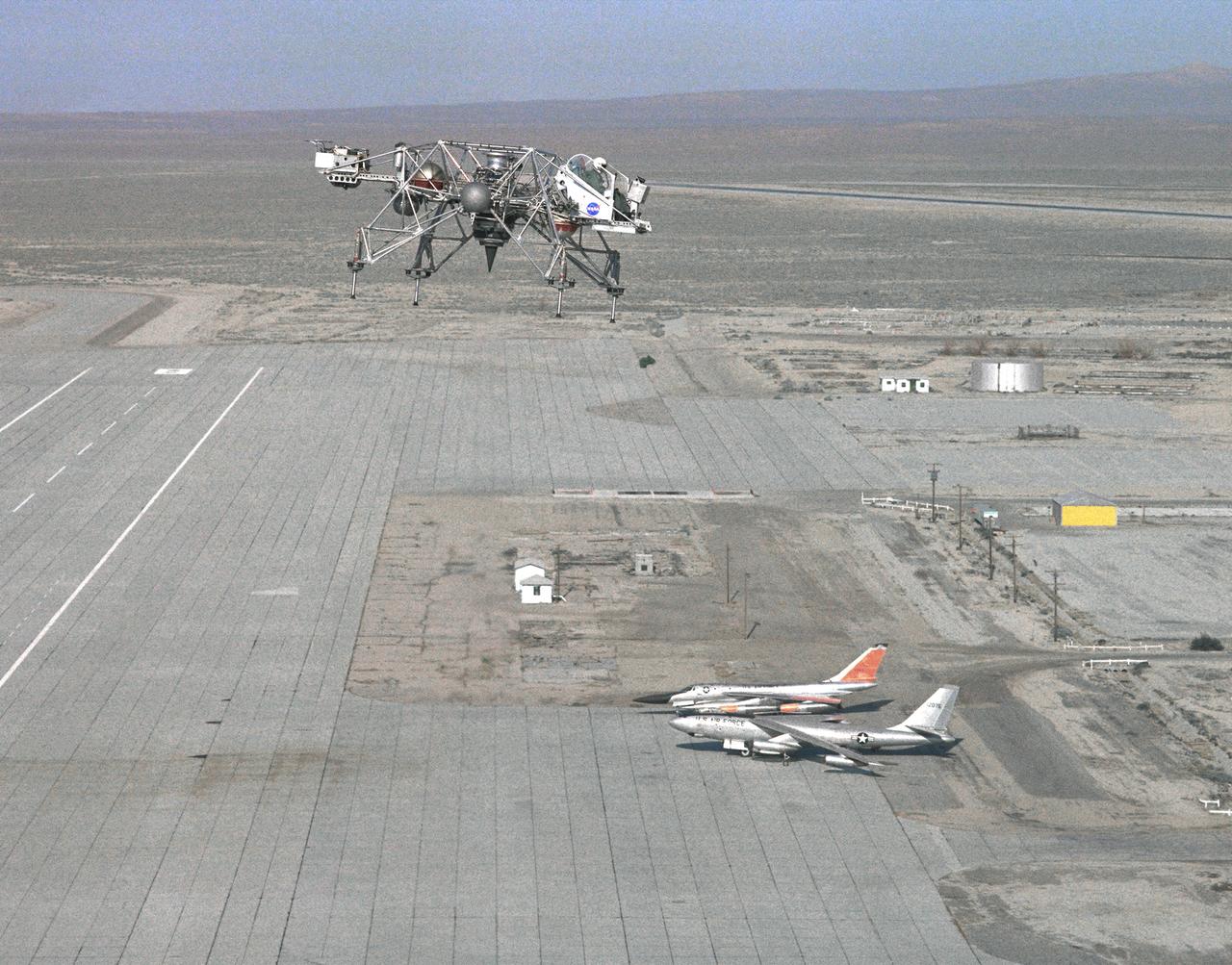
In this 1965 NASA Flight Reserch Center photograph the Lunar Landing Research Vehicle (LLRV) is shown at near maximum altitude over the south base at Edwards Air Force Base. When Apollo planning was underway in 1960, NASA was looking for a simulator to profile the descent to the moon's surface. Three concepts surfaced: an electronic simulator, a tethered device, and the ambitious Dryden contribution, a free-flying vehicle. All three became serious projects, but eventually the NASA Flight Research Center's (FRC) Landing Research Vehicle (LLRV) became the most significant one. Hubert M. Drake is credited with originating the idea, while Donald Bellman and Gene Matranga were senior engineers on the project, with Bellman, the project manager. Simultaneously, and independently, Bell Aerosystems Company, Buffalo, N.Y., a company with experience in vertical takeoff and landing (VTOL) aircraft, had conceived a similar free-flying simulator and proposed their concept to NASA headquarters. NASA Headquarters put FRC and Bell together to collaborate. The challenge was; to allow a pilot to make a vertical landing on Earth in a simulated moon environment, one sixth of the Earth's gravity and with totally transparent aerodynamic forces in a "free flight" vehicle with no tether forces acting on it. Built of tubular aluminum like a giant four-legged bedstead, the vehicle was to simulate a lunar landing profile from around 1500 feet to the moon's surface. To do this, the LLRV had a General Electric CF-700-2V turbofan engine mounted vertically in gimbals, with 4200 pounds of thrust. The engine, using JP-4 fuel, got the vehicle up to the test altitude and was then throttled back to support five-sixths of the vehicle's weight, simulating the reduced gravity of the moon. Two hydrogen-peroxide lift rockets with thrust that could be varied from 100 to 500 pounds handled the LLRV's rate of descent and horizontal translations. Sixteen smaller hydrogen-peroxide rockets, mounted in pairs, gav
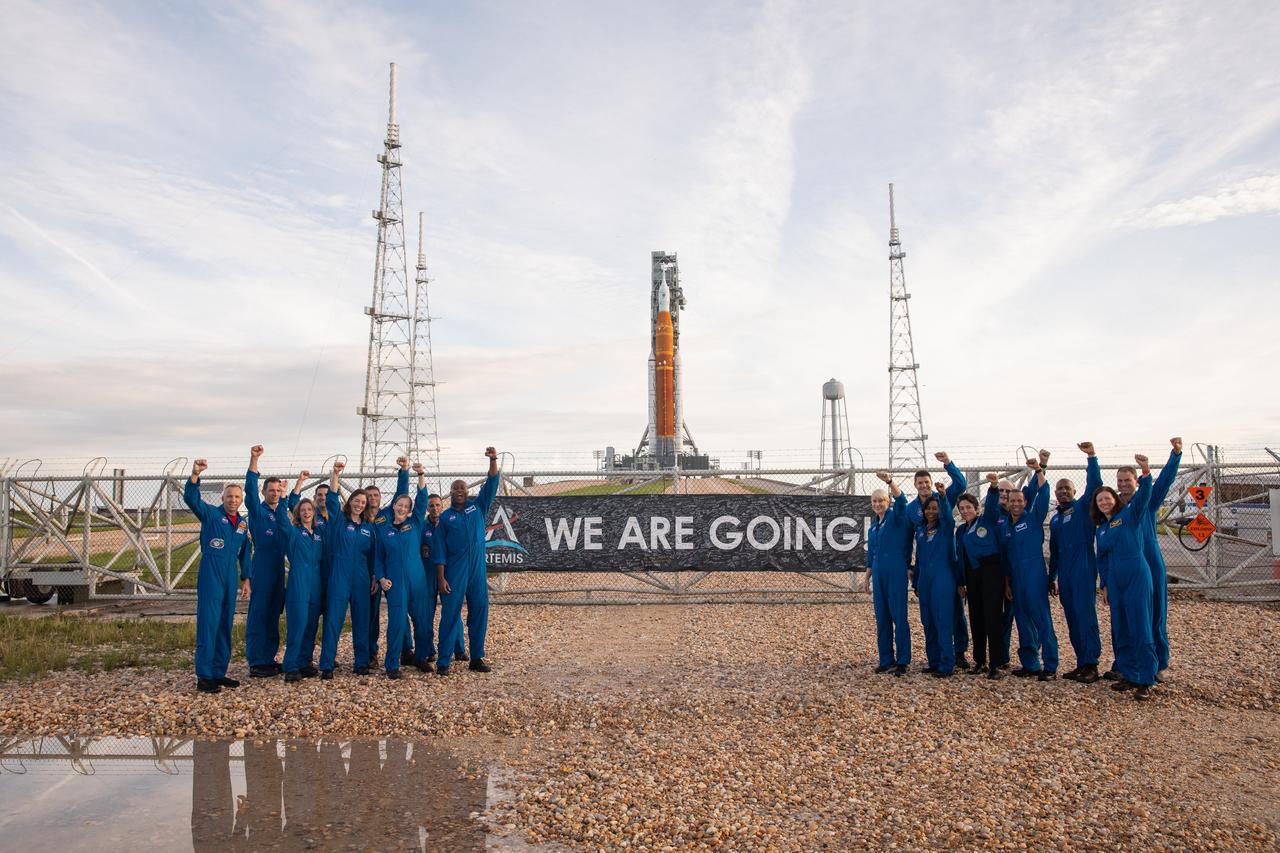
Astronauts and astronaut candidates from NASA and the Canadian Space Agency pose for a photograph in front of NASA’s Artemis I Space Launch System and Orion spacecraft atop the mobile launcher on the pad at Launch Complex 39B on Aug. 28, 2022. The astronauts are, from left to right: Randy Bresnik, NASA astronaut; Joshua Kutryk, Canadian Space Agency astronaut; Zena Cardman, NASA astronaut; Jack Hathaway, NASA astronaut candidate; Christina Birch, NASA astronaut candidate; Reid Wiseman, NASA astronaut; Jessica Wittner, NASA astronaut candidate; Joe Acaba, NASA astronaut; Andre Douglas, NASA astronaut candidate; Kate Rubins, NASA astronaut; Jeremy Hansen, Canadian Space Agency astronaut; Stephanie Wilson, NASA astronaut; Jessica Meir, NASA astronaut; Don Pettit, NASA astronaut; Chris Williams, NASA astronaut candidate; Victor Glover, NASA astronaut; Shannon Walker, NASA astronaut; Stan Love, NASA astronaut. Artemis I is scheduled to launch Aug. 29, at 8:33 a.m. EDT. The first in a series of increasingly complex missions, Artemis I will provide a foundation for human deep space exploration and demonstrate our commitment and capability to extend human presence to the Moon and beyond. The primary goal of Artemis I is to thoroughly test the integrated systems before crewed missions by operating the spacecraft in a deep space environment, testing Orion’s heat shield, and recovering the crew module after reentry, descent, and splashdown.
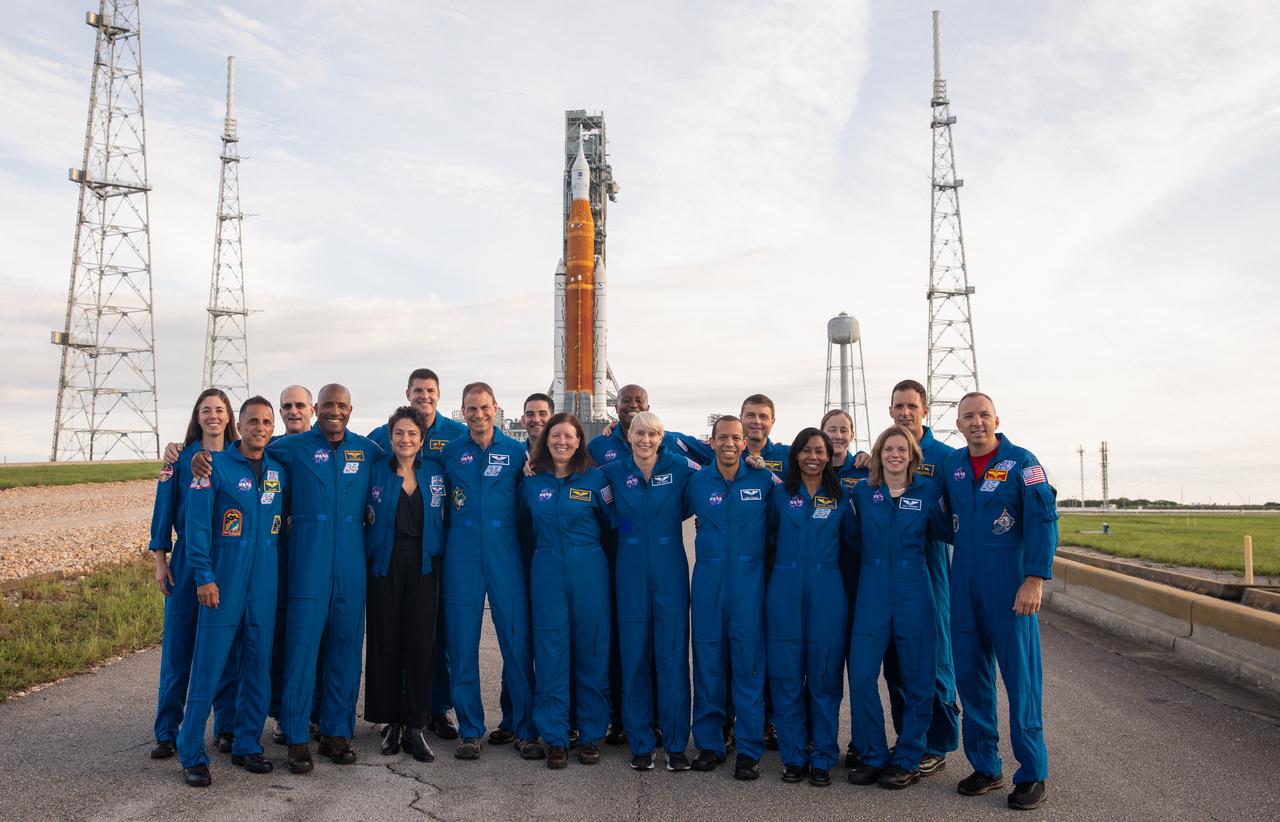
Astronauts and astronaut candidates from NASA and the Canadian Space Agency pose for a photograph in front of NASA’s Artemis I Space Launch System and Orion spacecraft atop the mobile launcher on the pad at Launch Complex 39B on Aug. 28, 2022. The astronauts are, from left to right: Christina Birch, NASA astronaut candidate; Joe Acaba, NASA astronaut; Don Pettit, NASA astronaut; Victor Glover, NASA astronaut; Jessica Meir, NASA astronaut; Jeremy Hansen, Canadian Space Agency astronaut; Stan Love, NASA astronaut; Jack Hathaway, NASA astronaut candidate; Shannon Walker, NASA astronaut; Andre Douglas, NASA astronaut candidate; Kate Rubins, NASA astronaut; Chris Williams, NASA astronaut candidate; Reid Wiseman, NASA astronaut; Stephanie Wilson, NASA astronaut; Jessica Wittner, NASA astronaut candidate; Zena Cardman, NASA astronaut; Joshua Kutryk, Canadian Space Agency astronaut; Randy Bresnik, NASA astronaut. Artemis I is scheduled to launch Aug. 29, at 8:33 a.m. EDT. The first in a series of increasingly complex missions, Artemis I will provide a foundation for human deep space exploration and demonstrate our commitment and capability to extend human presence to the Moon and beyond. The primary goal of Artemis I is to thoroughly test the integrated systems before crewed missions by operating the spacecraft in a deep space environment, testing Orion’s heat shield, and recovering the crew module after reentry, descent, and splashdown.
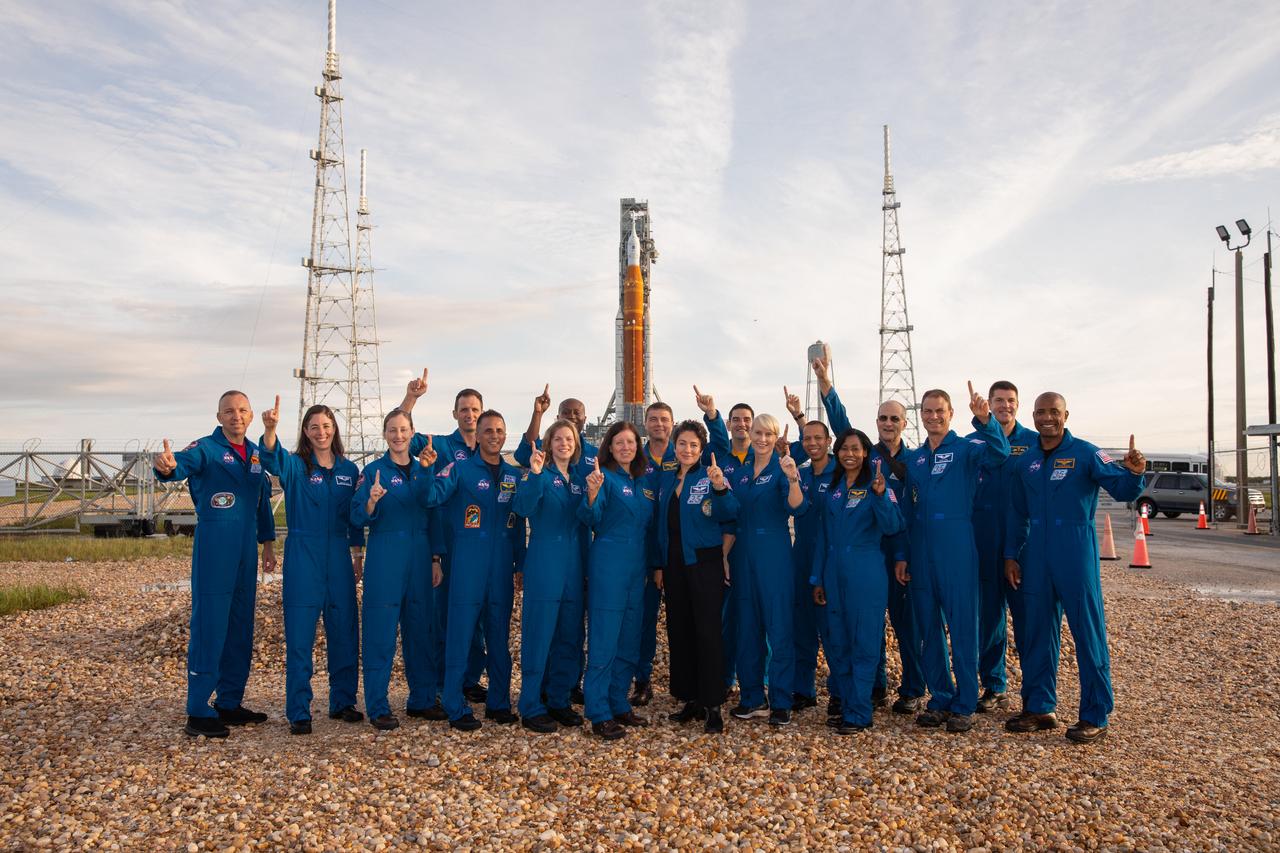
Astronauts and astronaut candidates from NASA and the Canadian Space Agency pose for a photograph in front of NASA’s Artemis I Space Launch System and Orion spacecraft atop the mobile launcher on the pad at Launch Complex 39B on Aug. 28, 2022. The astronauts are, from left to right: Randy Bresnik, NASA astronaut; Christina Birch, NASA astronaut candidate; Jessica Wittner, NASA astronaut candidate; Joshua Kutryk, Canadian Space Agency astronaut; Joe Acaba, NASA astronaut; Zena Cardman, NASA astronaut; Andre Douglas, NASA astronaut candidate; Shannon Walker, NASA astronaut; Reid Wiseman, NASA astronaut; Jessica Meir, NASA astronaut; Jack Hathaway, NASA astronaut candidate; Kate Rubins, NASA astronaut; Chris Williams, NASA astronaut candidate; Stephanie Wilson, NASA astronaut; Don Pettit, NASA astronaut; Stan Love, NASA astronaut; Jeremy Hansen, Canadian Space Agency astronaut; Victor Glover, NASA astronaut. Artemis I is scheduled to launch Aug. 29, at 8:33 a.m. EDT. The first in a series of increasingly complex missions, Artemis I will provide a foundation for human deep space exploration and demonstrate our commitment and capability to extend human presence to the Moon and beyond. The primary goal of Artemis I is to thoroughly test the integrated systems before crewed missions by operating the spacecraft in a deep space environment, testing Orion’s heat shield, and recovering the crew module after reentry, descent, and splashdown.
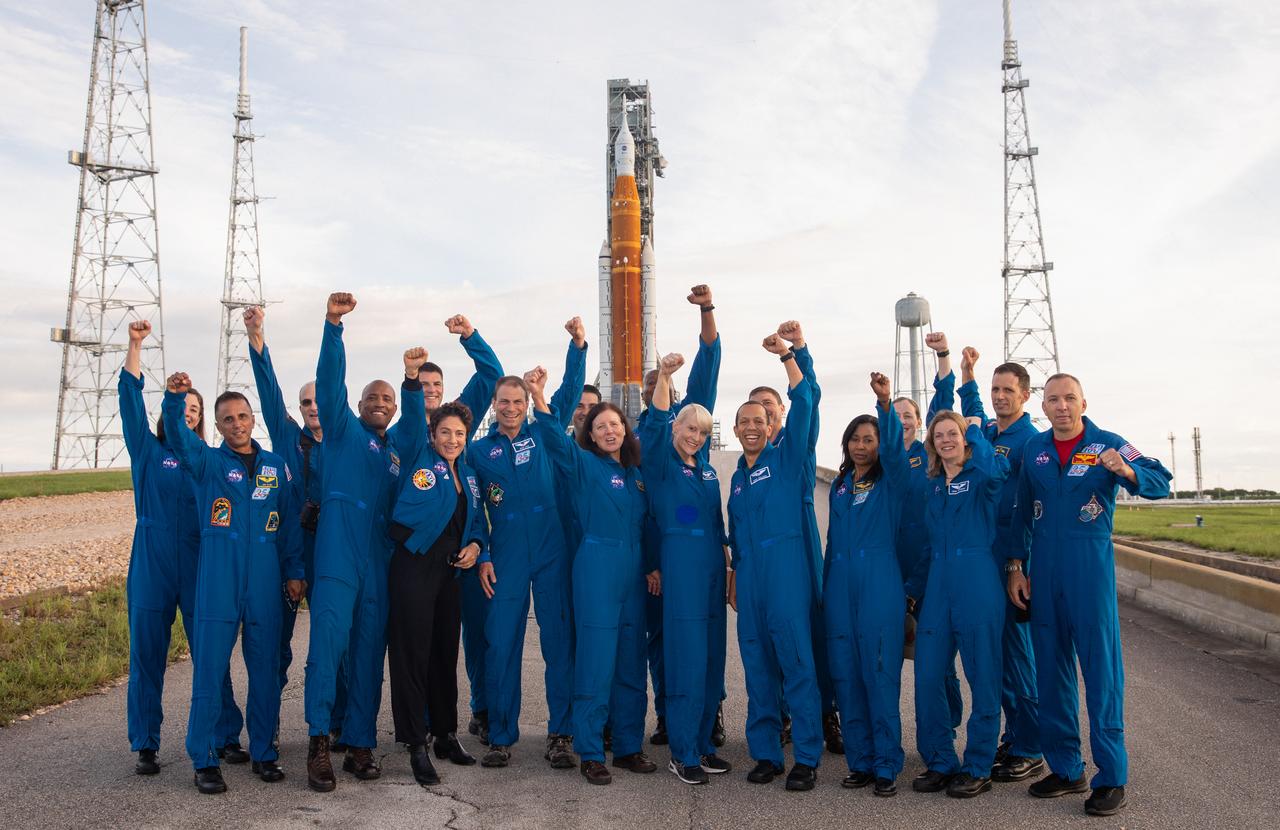
Astronauts and astronaut candidates from NASA and the Canadian Space Agency pose for a photograph in front of NASA’s Artemis I Space Launch System and Orion spacecraft atop the mobile launcher on the pad at Launch Complex 39B on Aug. 28, 2022. The astronauts are, from left to right: Christina Birch, NASA astronaut candidate; Joe Acaba, NASA astronaut; Don Pettit, NASA astronaut; Victor Glover, NASA astronaut; Jeremy Hansen, Canadian Space Agency astronaut; Jessica Meir, NASA astronaut; Stan Love, NASA astronaut; Jack Hathaway, NASA astronaut candidate; Shannon Walker, NASA astronaut; Andre Douglas, NASA astronaut candidate; Kate Rubins, NASA astronaut; Chris Williams, NASA astronaut candidate; Reid Wiseman, NASA astronaut; Stephanie Wilson, NASA astronaut; Jessica Wittner, NASA astronaut candidate; Zena Cardman, NASA astronaut; Joshua Kutryk, Canadian Space Agency astronaut; Randy Bresnik, NASA astronaut. Artemis I is scheduled to launch Aug. 29, at 8:33 a.m. EDT. The first in a series of increasingly complex missions, Artemis I will provide a foundation for human deep space exploration and demonstrate our commitment and capability to extend human presence to the Moon and beyond. The primary goal of Artemis I is to thoroughly test the integrated systems before crewed missions by operating the spacecraft in a deep space environment, testing Orion’s heat shield, and recovering the crew module after reentry, descent, and splashdown.
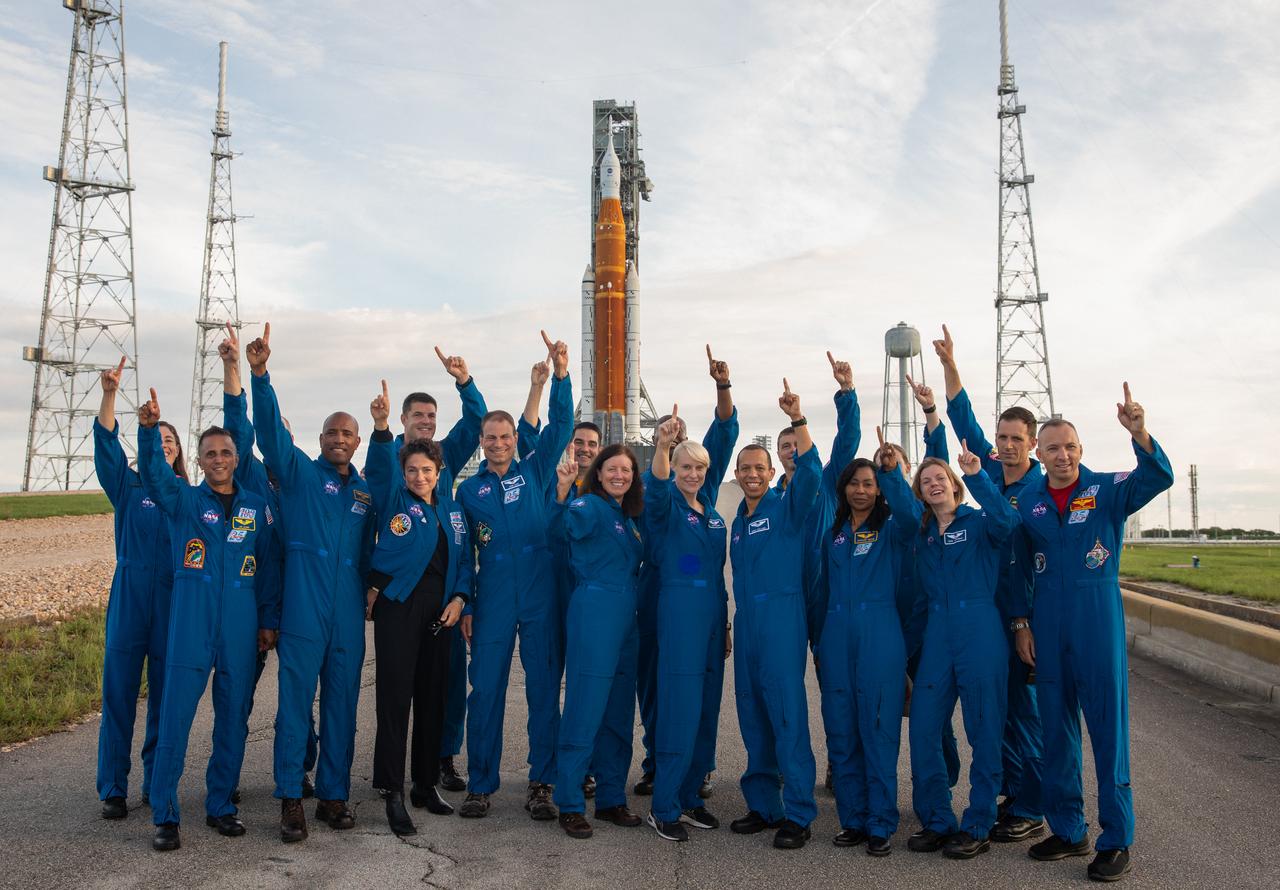
Astronauts and astronaut candidates from NASA and the Canadian Space Agency pose for a photograph in front of NASA’s Artemis I Space Launch System and Orion spacecraft atop the mobile launcher on the pad at Launch Complex 39B on Aug. 28, 2022. The astronauts are, from left to right: Christina Birch, NASA astronaut candidate; Joe Acaba, NASA astronaut; Don Pettit, NASA astronaut; Victor Glover, NASA astronaut; Jeremy Hansen, Canadian Space Agency astronaut; Jessica Meir, NASA astronaut; Stan Love, NASA astronaut; Jack Hathaway, NASA astronaut candidate; Shannon Walker, NASA astronaut; Andre Douglas, NASA astronaut candidate; Kate Rubins, NASA astronaut; Chris Williams, NASA astronaut candidate; Reid Wiseman, NASA astronaut; Stephanie Wilson, NASA astronaut; Jessica Wittner, NASA astronaut candidate; Zena Cardman, NASA astronaut; Joshua Kutryk, Canadian Space Agency astronaut; Randy Bresnik, NASA astronaut. Artemis I is scheduled to launch Aug. 29, at 8:33 a.m. EDT. The first in a series of increasingly complex missions, Artemis I will provide a foundation for human deep space exploration and demonstrate our commitment and capability to extend human presence to the Moon and beyond. The primary goal of Artemis I is to thoroughly test the integrated systems before crewed missions by operating the spacecraft in a deep space environment, testing Orion’s heat shield, and recovering the crew module after reentry, descent, and splashdown.
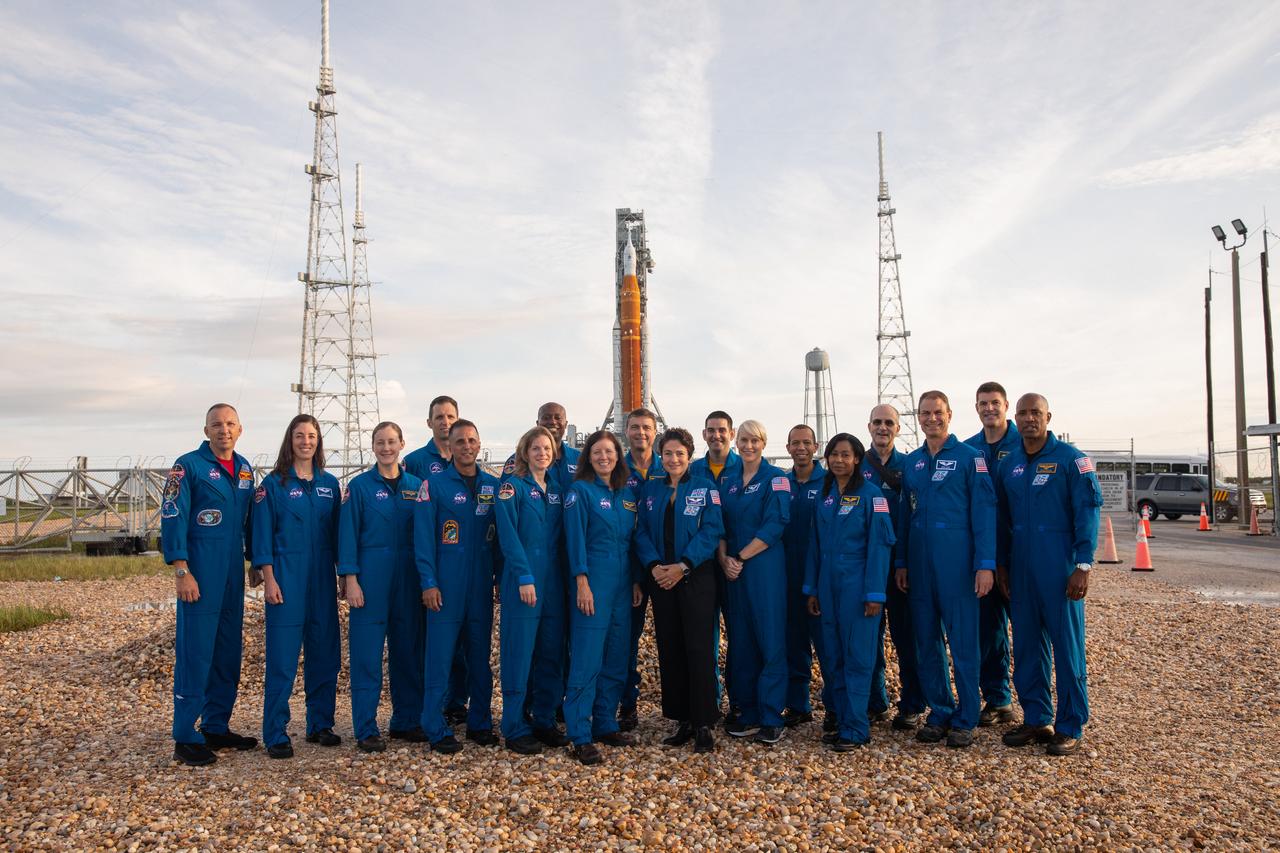
Astronauts and astronaut candidates from NASA and the Canadian Space Agency pose for a photograph in front of NASA’s Artemis I Space Launch System and Orion spacecraft atop the mobile launcher on the pad at Launch Complex 39B on Aug. 28, 2022. The astronauts are, from left to right: Randy Bresnik, NASA astronaut; Christina Birch, NASA astronaut candidate; Jessica Wittner, NASA astronaut candidate; Joshua Kutryk, Canadian Space Agency astronaut; Joe Acaba, NASA astronaut; Zena Cardman, NASA astronaut; Andre Douglas, NASA astronaut candidate; Shannon Walker, NASA astronaut; Reid Wiseman, NASA astronaut; Jessica Meir, NASA astronaut; Jack Hathaway, NASA astronaut candidate; Kate Rubins, NASA astronaut; Chris Williams, NASA astronaut candidate; Stephanie Wilson, NASA astronaut; Don Pettit, NASA astronaut; Stan Love, NASA astronaut; Jeremy Hansen, Canadian Space Agency astronaut; Victor Glover, NASA astronaut. Artemis I is scheduled to launch Aug. 29, at 8:33 a.m. EDT. The first in a series of increasingly complex missions, Artemis I will provide a foundation for human deep space exploration and demonstrate our commitment and capability to extend human presence to the Moon and beyond. The primary goal of Artemis I is to thoroughly test the integrated systems before crewed missions by operating the spacecraft in a deep space environment, testing Orion’s heat shield, and recovering the crew module after reentry, descent, and splashdown.
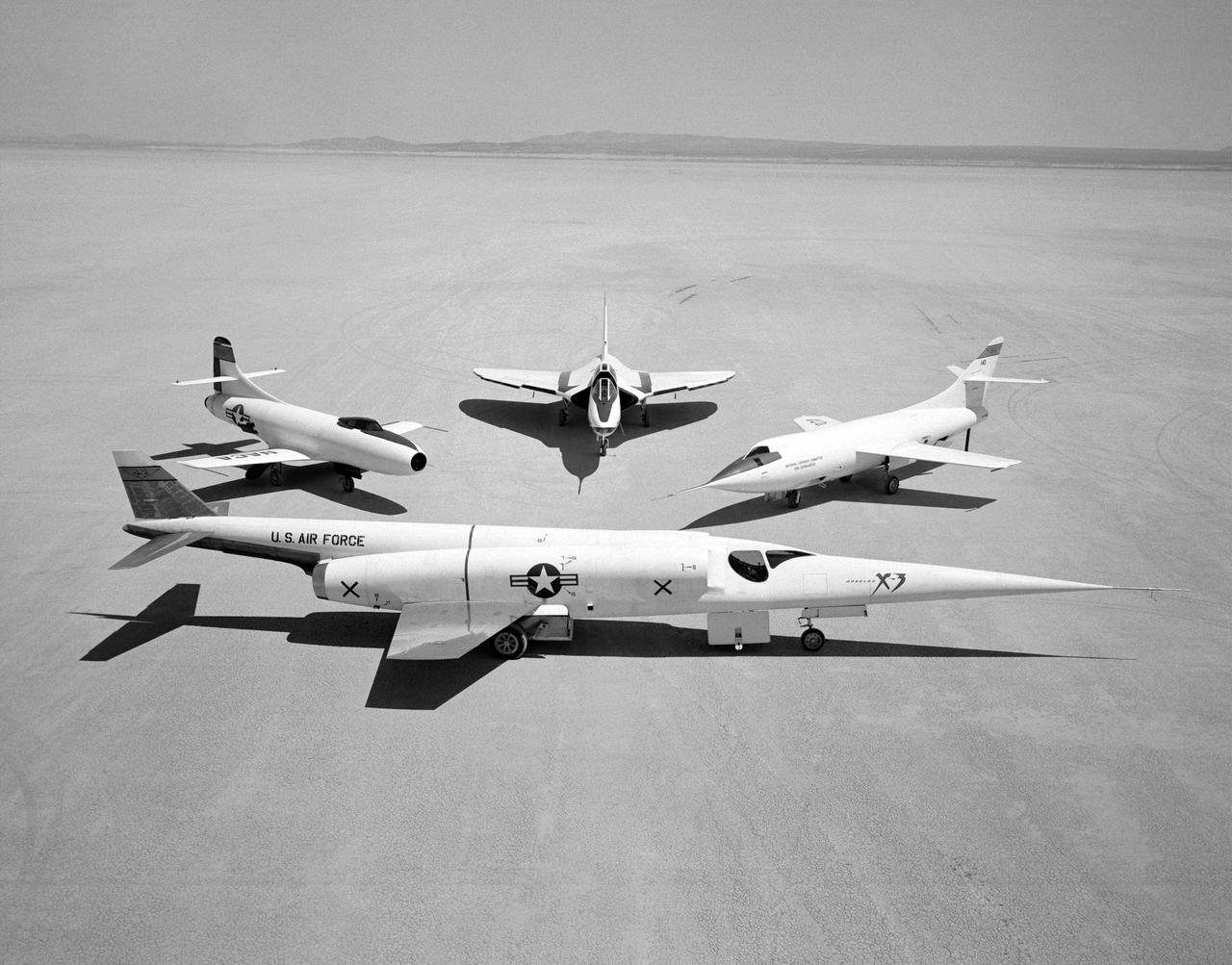
A group picture of Douglas Airplanes, taken for a photographic promotion in 1954, at what is now known as the Dryden Flight Research Center at Edwards Air Force Base, California. The photo includes the X-3 (in front--Air Force serial number 49-2892) then clockwise D-558-I, XF4D-1 (a Navy jet fighter prototype not flown by the NACA), and the first D-558-II (NACA tail number 143, Navy serial number 37973), which was flown only once by the NACA.