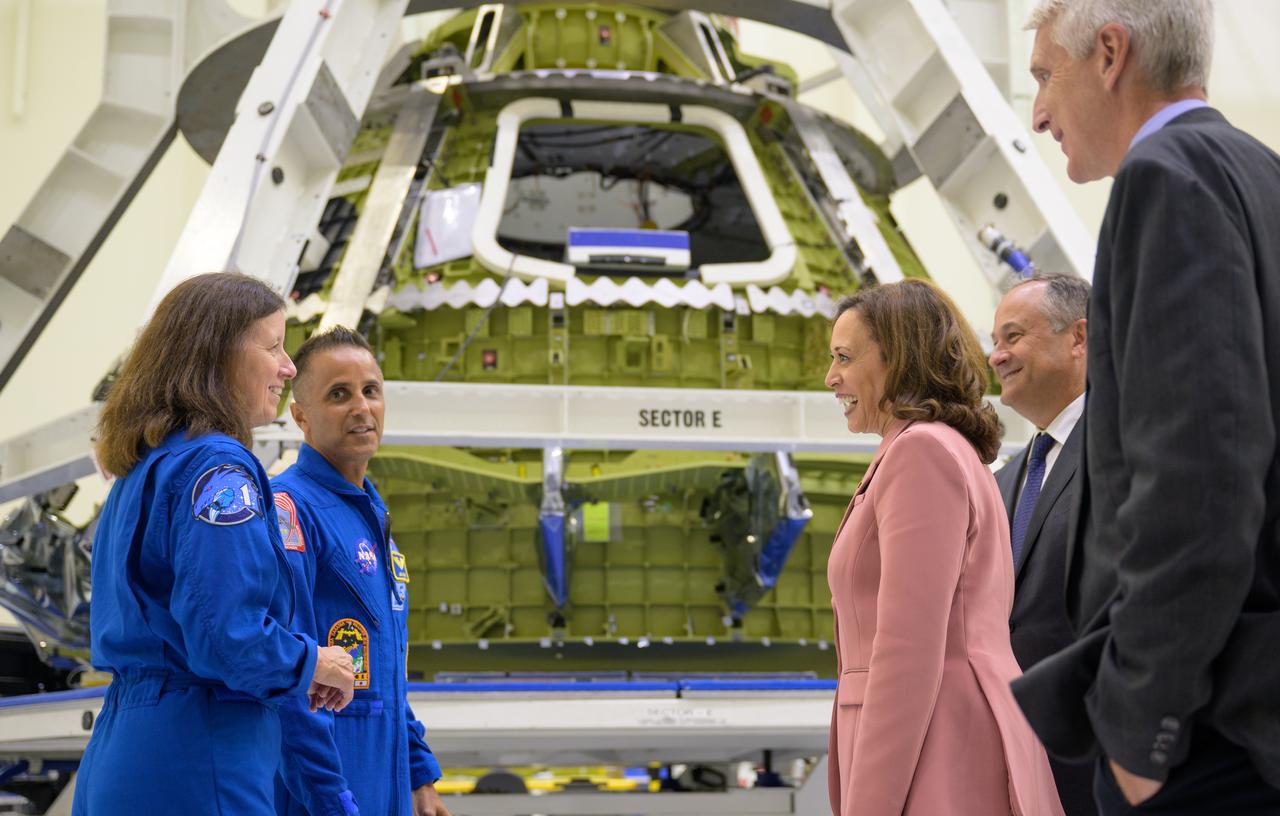
Vice President Kamala Harris meets with NASA astronauts Shannon Walker and Joe Acaba and learned about the Artemis II flight crew module as Second Gentleman Doug Emhoff and Scott Wilson, NASA Kennedy Space Center, Manager of Production, during a tour, Monday, Aug. 29, 2022, at the Neil A. Armstrong Operations and Checkout Building at NASA’s Kennedy Space Center in Florida. Photo Credit: (NASA/Bill Ingalls)
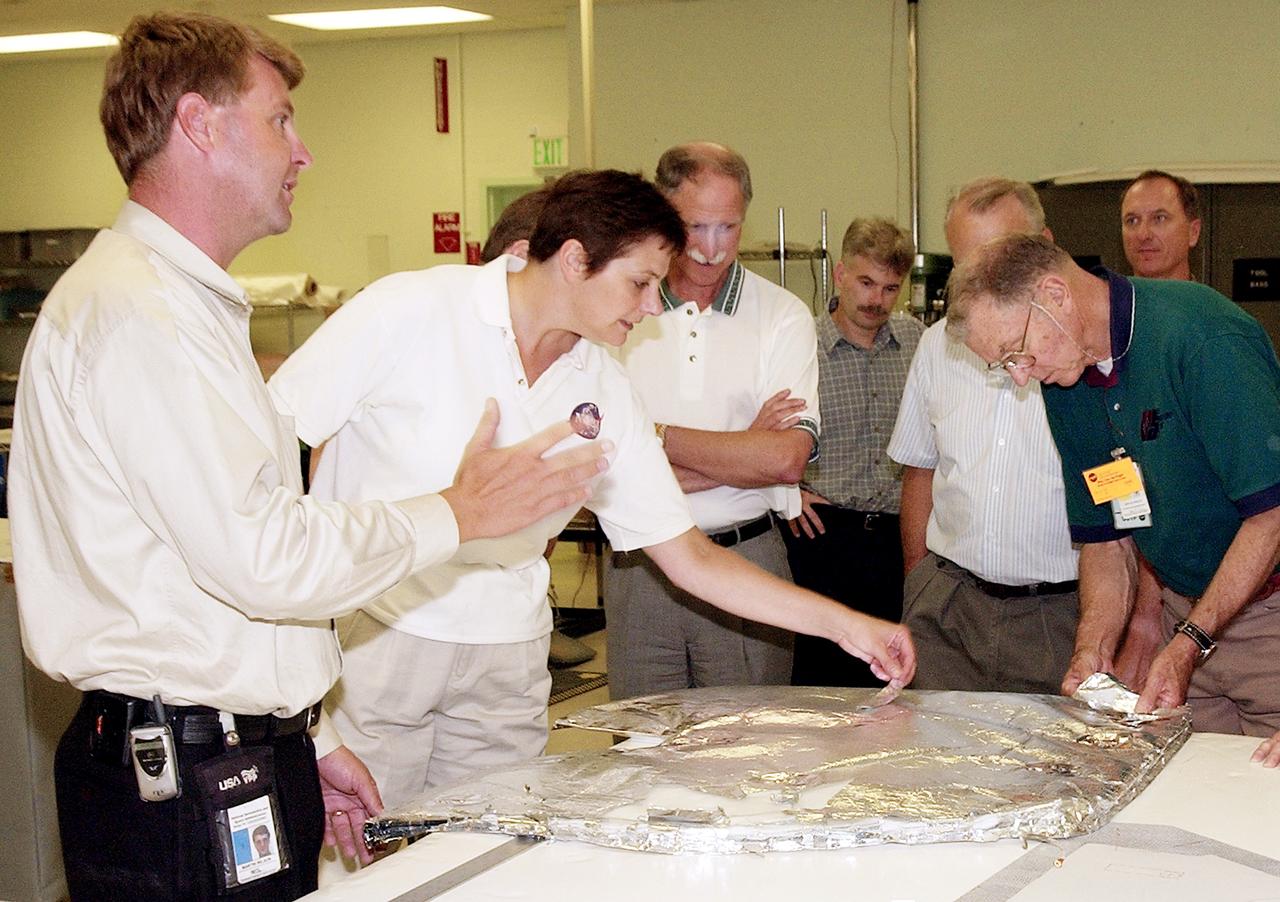
KENNEDY SPACE CENTER, FLA. - Martin Wilson, with United Space Alliance, describes an orbiter’s Thermal Protection System for members of the Stafford-Covey Return to Flight Task Group (SCTG). Handling some of the blanket insulation are Dr. Kathryn Clark and Joe Engle. Third from left is Richard Covey, former Space Shuttle commander, who is co-chair of the SCTG, along with Thomas P. Stafford, Apollo commander. Chartered by NASA Administrator Sean O’Keefe, the task group will perform an independent assessment of NASA’s implementation of the final recommendations by the Columbia Accident Investigation Board.
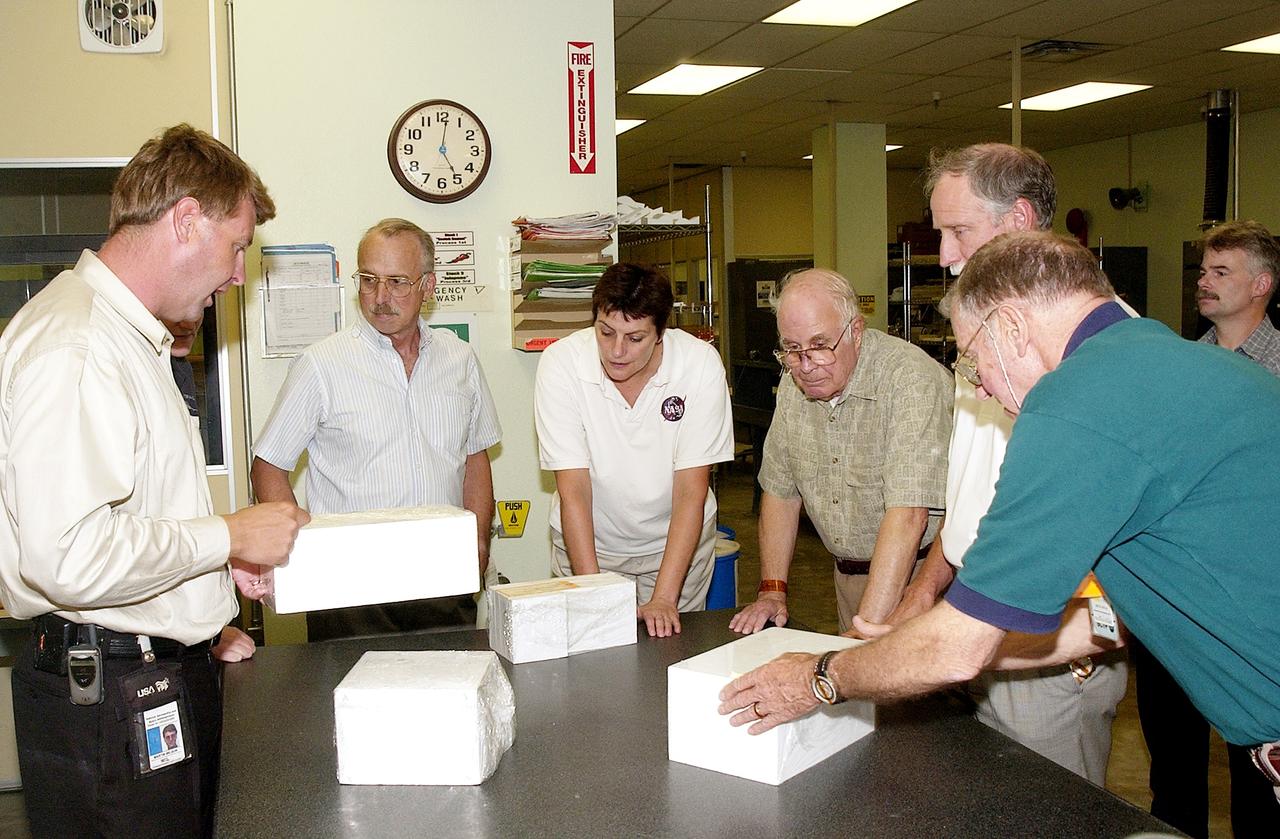
KENNEDY SPACE CENTER, FLA. - On a tour of the Tile Shop, members of the Stafford-Covey Return to Flight Task Group (SCTG) learn about PU-tiles, part of an orbiter’s Thermal Protection System. At left is Martin Wilson, with United Space Alliance. Others (left to right) around the table are James Adamson, Dr. Kathryn Clark, William Wegner, Richard Covey and Joe Engle. Covey, former Space Shuttle commander, is co-chair of the SCTG, along with Thomas P. Stafford, Apollo commander. Chartered by NASA Administrator Sean O’Keefe, the task group will perform an independent assessment of NASA’s implementation of the final recommendations by the Columbia Accident Investigation Board.
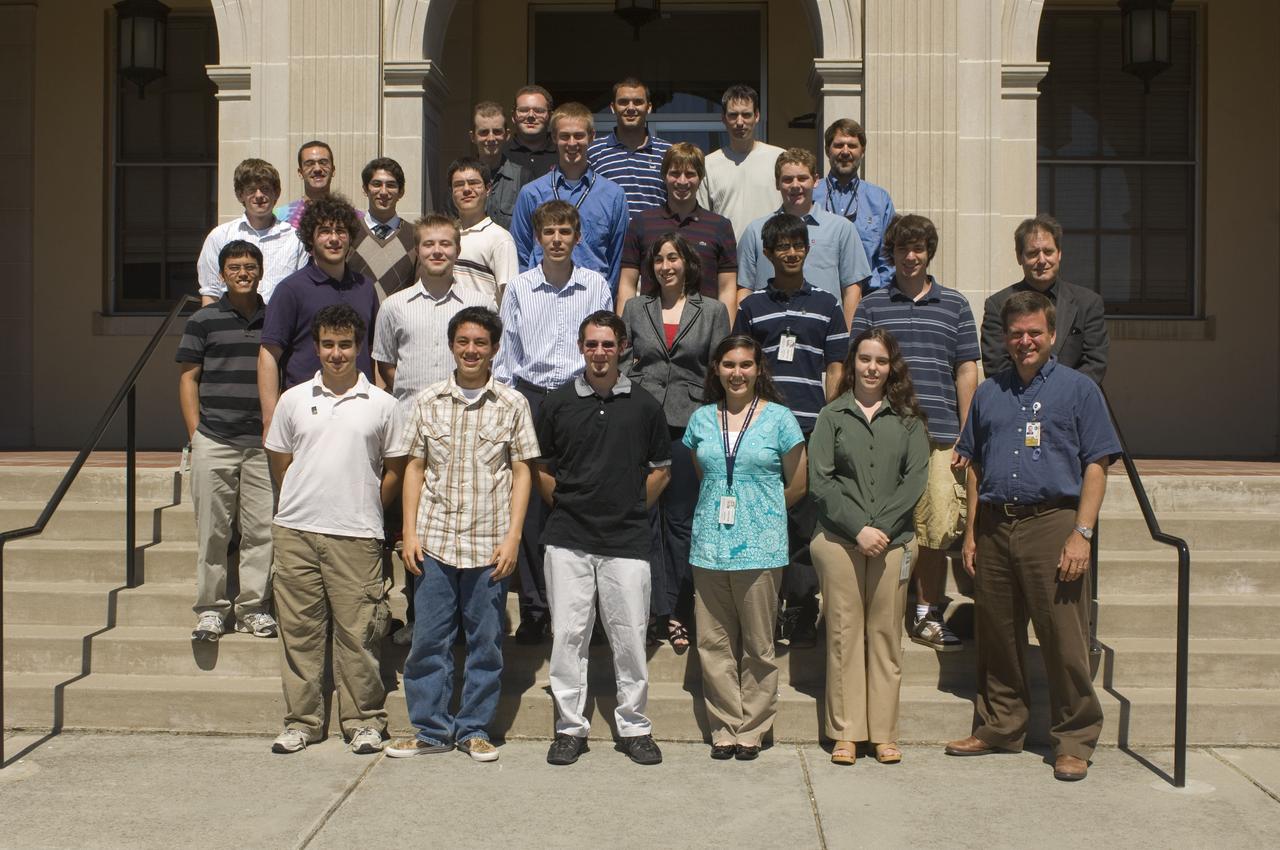
NASA Ames Robotics Academy Interns at the Lunar Science Institute (LSI) building 17 Interns: David Black, Michael Zwach, Guy Chriqui, Mark Mordarski Jr., Katy Levinson, Daniela Buchman, Scott Strutner, Patrick Crownover, Neil Bhateja, Michael Buchman, John Mueller, Michelle Grau, Ben Silver, Jacques Dolan, Alex Golec Windell Jones, Colin Wilson, Joe DeBlasio, Nick Hayes, Jordan Olive, William Shaw, Ames Education Dept., Mark Leon, Ames Robotics, Josh Weiner, jack Biesiadecki, Andrew Pilloud
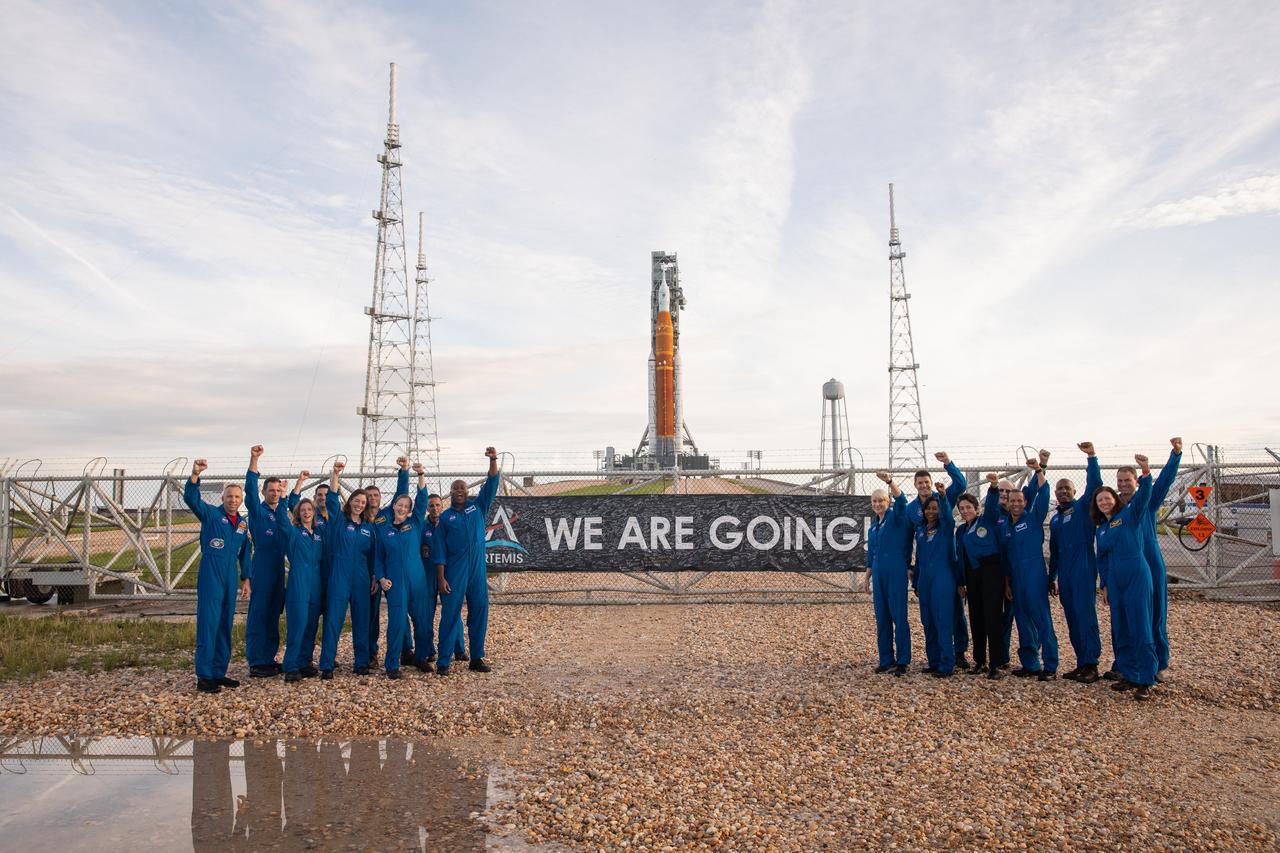
Astronauts and astronaut candidates from NASA and the Canadian Space Agency pose for a photograph in front of NASA’s Artemis I Space Launch System and Orion spacecraft atop the mobile launcher on the pad at Launch Complex 39B on Aug. 28, 2022. The astronauts are, from left to right: Randy Bresnik, NASA astronaut; Joshua Kutryk, Canadian Space Agency astronaut; Zena Cardman, NASA astronaut; Jack Hathaway, NASA astronaut candidate; Christina Birch, NASA astronaut candidate; Reid Wiseman, NASA astronaut; Jessica Wittner, NASA astronaut candidate; Joe Acaba, NASA astronaut; Andre Douglas, NASA astronaut candidate; Kate Rubins, NASA astronaut; Jeremy Hansen, Canadian Space Agency astronaut; Stephanie Wilson, NASA astronaut; Jessica Meir, NASA astronaut; Don Pettit, NASA astronaut; Chris Williams, NASA astronaut candidate; Victor Glover, NASA astronaut; Shannon Walker, NASA astronaut; Stan Love, NASA astronaut. Artemis I is scheduled to launch Aug. 29, at 8:33 a.m. EDT. The first in a series of increasingly complex missions, Artemis I will provide a foundation for human deep space exploration and demonstrate our commitment and capability to extend human presence to the Moon and beyond. The primary goal of Artemis I is to thoroughly test the integrated systems before crewed missions by operating the spacecraft in a deep space environment, testing Orion’s heat shield, and recovering the crew module after reentry, descent, and splashdown.
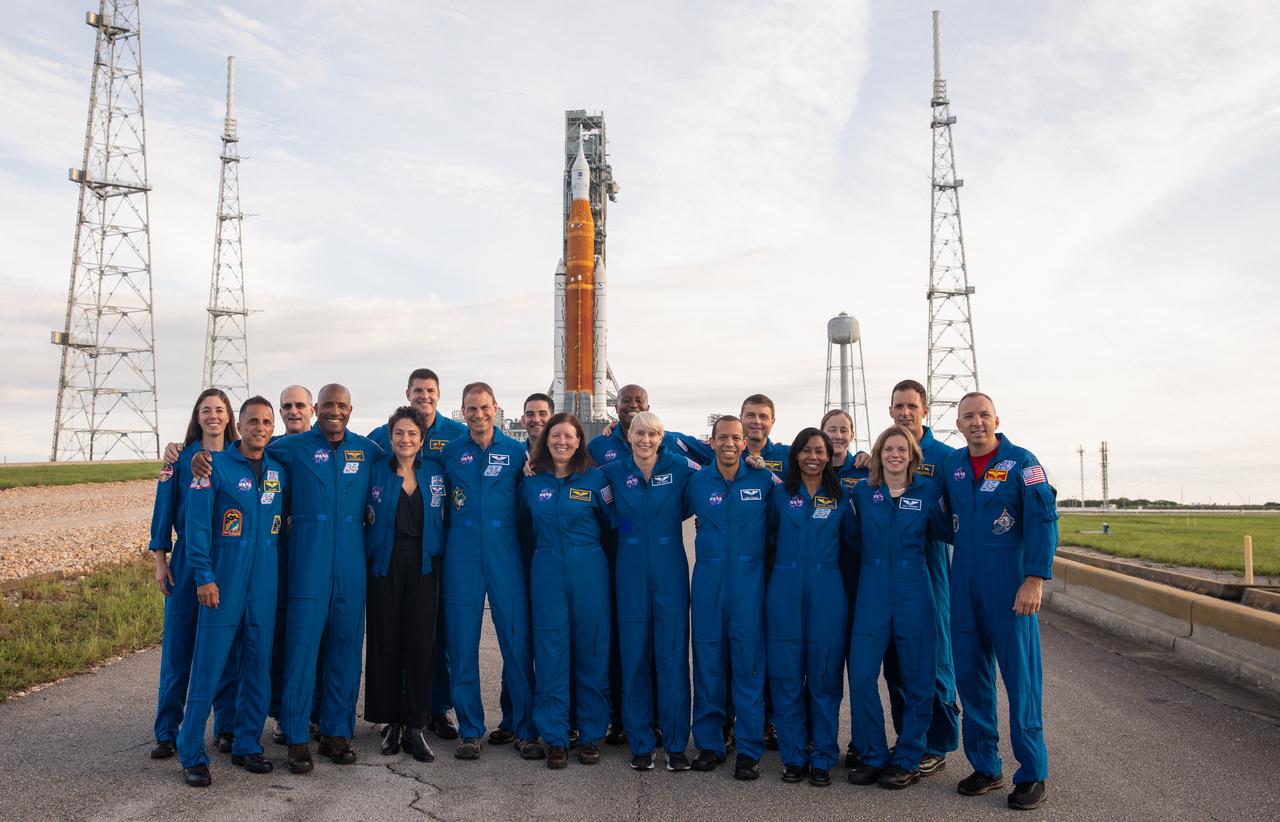
Astronauts and astronaut candidates from NASA and the Canadian Space Agency pose for a photograph in front of NASA’s Artemis I Space Launch System and Orion spacecraft atop the mobile launcher on the pad at Launch Complex 39B on Aug. 28, 2022. The astronauts are, from left to right: Christina Birch, NASA astronaut candidate; Joe Acaba, NASA astronaut; Don Pettit, NASA astronaut; Victor Glover, NASA astronaut; Jessica Meir, NASA astronaut; Jeremy Hansen, Canadian Space Agency astronaut; Stan Love, NASA astronaut; Jack Hathaway, NASA astronaut candidate; Shannon Walker, NASA astronaut; Andre Douglas, NASA astronaut candidate; Kate Rubins, NASA astronaut; Chris Williams, NASA astronaut candidate; Reid Wiseman, NASA astronaut; Stephanie Wilson, NASA astronaut; Jessica Wittner, NASA astronaut candidate; Zena Cardman, NASA astronaut; Joshua Kutryk, Canadian Space Agency astronaut; Randy Bresnik, NASA astronaut. Artemis I is scheduled to launch Aug. 29, at 8:33 a.m. EDT. The first in a series of increasingly complex missions, Artemis I will provide a foundation for human deep space exploration and demonstrate our commitment and capability to extend human presence to the Moon and beyond. The primary goal of Artemis I is to thoroughly test the integrated systems before crewed missions by operating the spacecraft in a deep space environment, testing Orion’s heat shield, and recovering the crew module after reentry, descent, and splashdown.
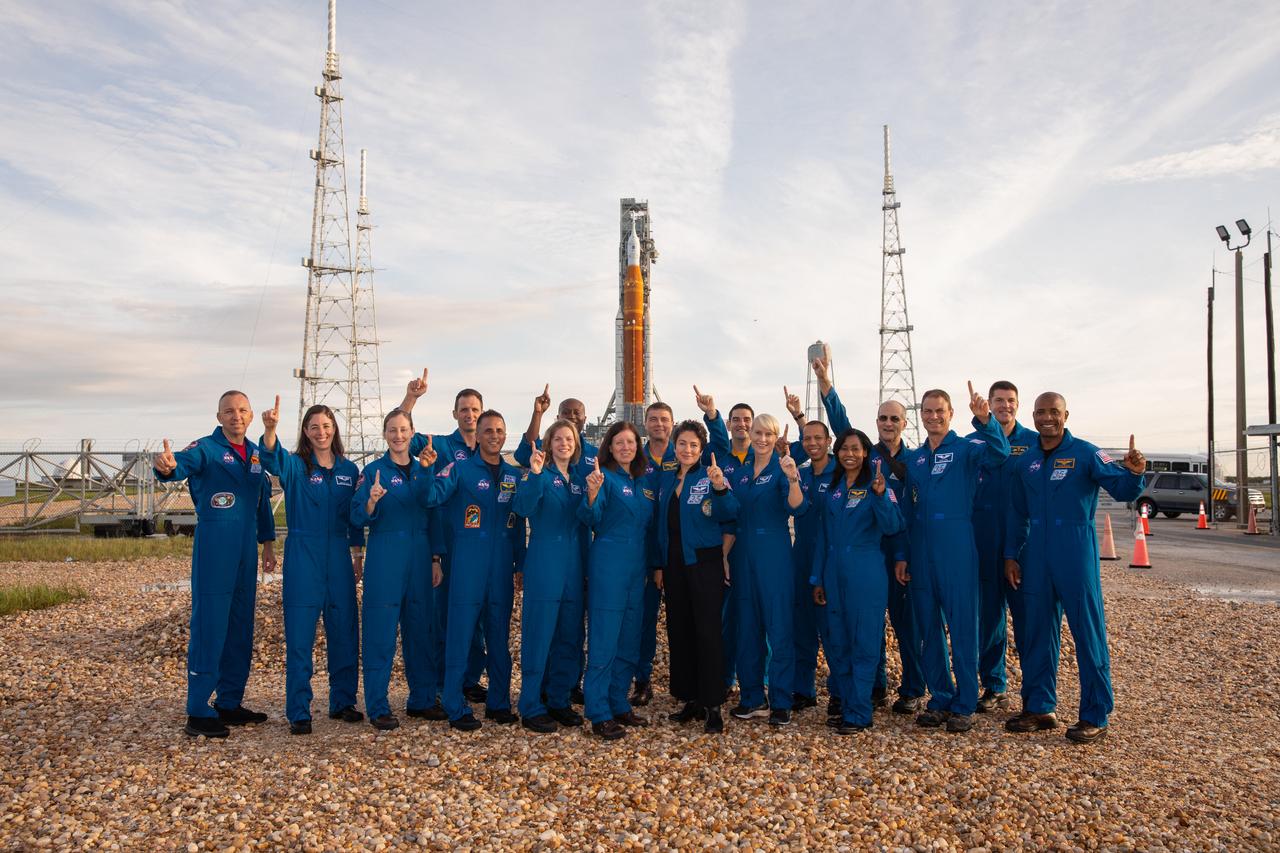
Astronauts and astronaut candidates from NASA and the Canadian Space Agency pose for a photograph in front of NASA’s Artemis I Space Launch System and Orion spacecraft atop the mobile launcher on the pad at Launch Complex 39B on Aug. 28, 2022. The astronauts are, from left to right: Randy Bresnik, NASA astronaut; Christina Birch, NASA astronaut candidate; Jessica Wittner, NASA astronaut candidate; Joshua Kutryk, Canadian Space Agency astronaut; Joe Acaba, NASA astronaut; Zena Cardman, NASA astronaut; Andre Douglas, NASA astronaut candidate; Shannon Walker, NASA astronaut; Reid Wiseman, NASA astronaut; Jessica Meir, NASA astronaut; Jack Hathaway, NASA astronaut candidate; Kate Rubins, NASA astronaut; Chris Williams, NASA astronaut candidate; Stephanie Wilson, NASA astronaut; Don Pettit, NASA astronaut; Stan Love, NASA astronaut; Jeremy Hansen, Canadian Space Agency astronaut; Victor Glover, NASA astronaut. Artemis I is scheduled to launch Aug. 29, at 8:33 a.m. EDT. The first in a series of increasingly complex missions, Artemis I will provide a foundation for human deep space exploration and demonstrate our commitment and capability to extend human presence to the Moon and beyond. The primary goal of Artemis I is to thoroughly test the integrated systems before crewed missions by operating the spacecraft in a deep space environment, testing Orion’s heat shield, and recovering the crew module after reentry, descent, and splashdown.
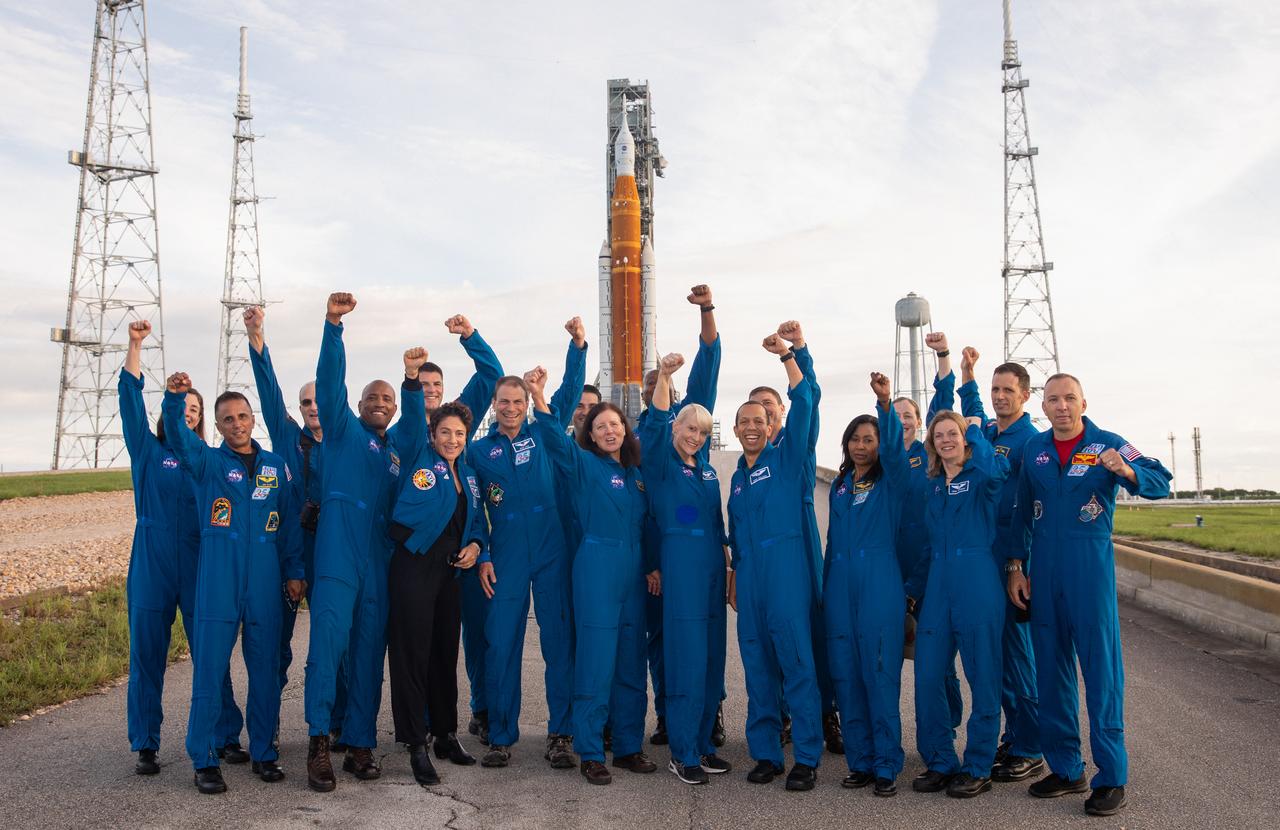
Astronauts and astronaut candidates from NASA and the Canadian Space Agency pose for a photograph in front of NASA’s Artemis I Space Launch System and Orion spacecraft atop the mobile launcher on the pad at Launch Complex 39B on Aug. 28, 2022. The astronauts are, from left to right: Christina Birch, NASA astronaut candidate; Joe Acaba, NASA astronaut; Don Pettit, NASA astronaut; Victor Glover, NASA astronaut; Jeremy Hansen, Canadian Space Agency astronaut; Jessica Meir, NASA astronaut; Stan Love, NASA astronaut; Jack Hathaway, NASA astronaut candidate; Shannon Walker, NASA astronaut; Andre Douglas, NASA astronaut candidate; Kate Rubins, NASA astronaut; Chris Williams, NASA astronaut candidate; Reid Wiseman, NASA astronaut; Stephanie Wilson, NASA astronaut; Jessica Wittner, NASA astronaut candidate; Zena Cardman, NASA astronaut; Joshua Kutryk, Canadian Space Agency astronaut; Randy Bresnik, NASA astronaut. Artemis I is scheduled to launch Aug. 29, at 8:33 a.m. EDT. The first in a series of increasingly complex missions, Artemis I will provide a foundation for human deep space exploration and demonstrate our commitment and capability to extend human presence to the Moon and beyond. The primary goal of Artemis I is to thoroughly test the integrated systems before crewed missions by operating the spacecraft in a deep space environment, testing Orion’s heat shield, and recovering the crew module after reentry, descent, and splashdown.
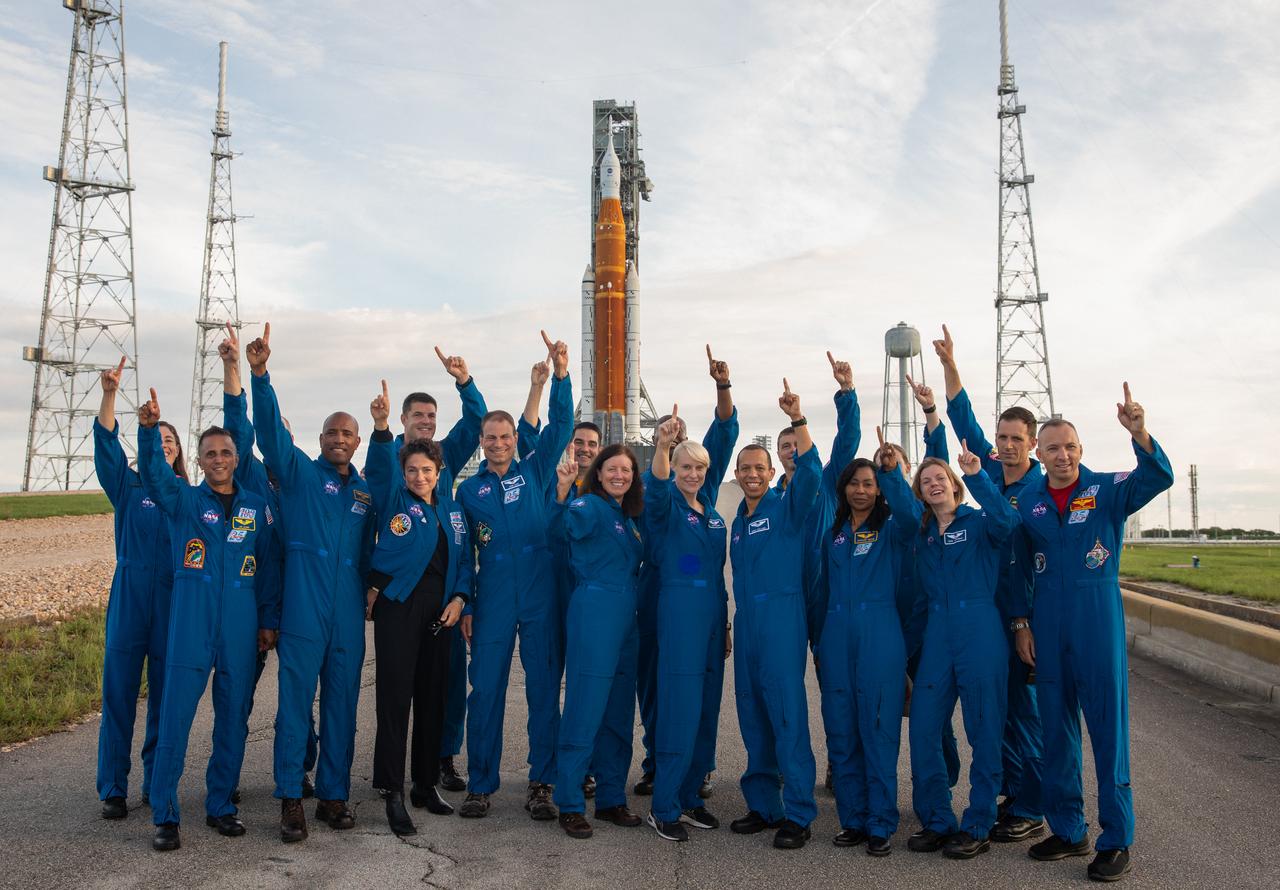
Astronauts and astronaut candidates from NASA and the Canadian Space Agency pose for a photograph in front of NASA’s Artemis I Space Launch System and Orion spacecraft atop the mobile launcher on the pad at Launch Complex 39B on Aug. 28, 2022. The astronauts are, from left to right: Christina Birch, NASA astronaut candidate; Joe Acaba, NASA astronaut; Don Pettit, NASA astronaut; Victor Glover, NASA astronaut; Jeremy Hansen, Canadian Space Agency astronaut; Jessica Meir, NASA astronaut; Stan Love, NASA astronaut; Jack Hathaway, NASA astronaut candidate; Shannon Walker, NASA astronaut; Andre Douglas, NASA astronaut candidate; Kate Rubins, NASA astronaut; Chris Williams, NASA astronaut candidate; Reid Wiseman, NASA astronaut; Stephanie Wilson, NASA astronaut; Jessica Wittner, NASA astronaut candidate; Zena Cardman, NASA astronaut; Joshua Kutryk, Canadian Space Agency astronaut; Randy Bresnik, NASA astronaut. Artemis I is scheduled to launch Aug. 29, at 8:33 a.m. EDT. The first in a series of increasingly complex missions, Artemis I will provide a foundation for human deep space exploration and demonstrate our commitment and capability to extend human presence to the Moon and beyond. The primary goal of Artemis I is to thoroughly test the integrated systems before crewed missions by operating the spacecraft in a deep space environment, testing Orion’s heat shield, and recovering the crew module after reentry, descent, and splashdown.
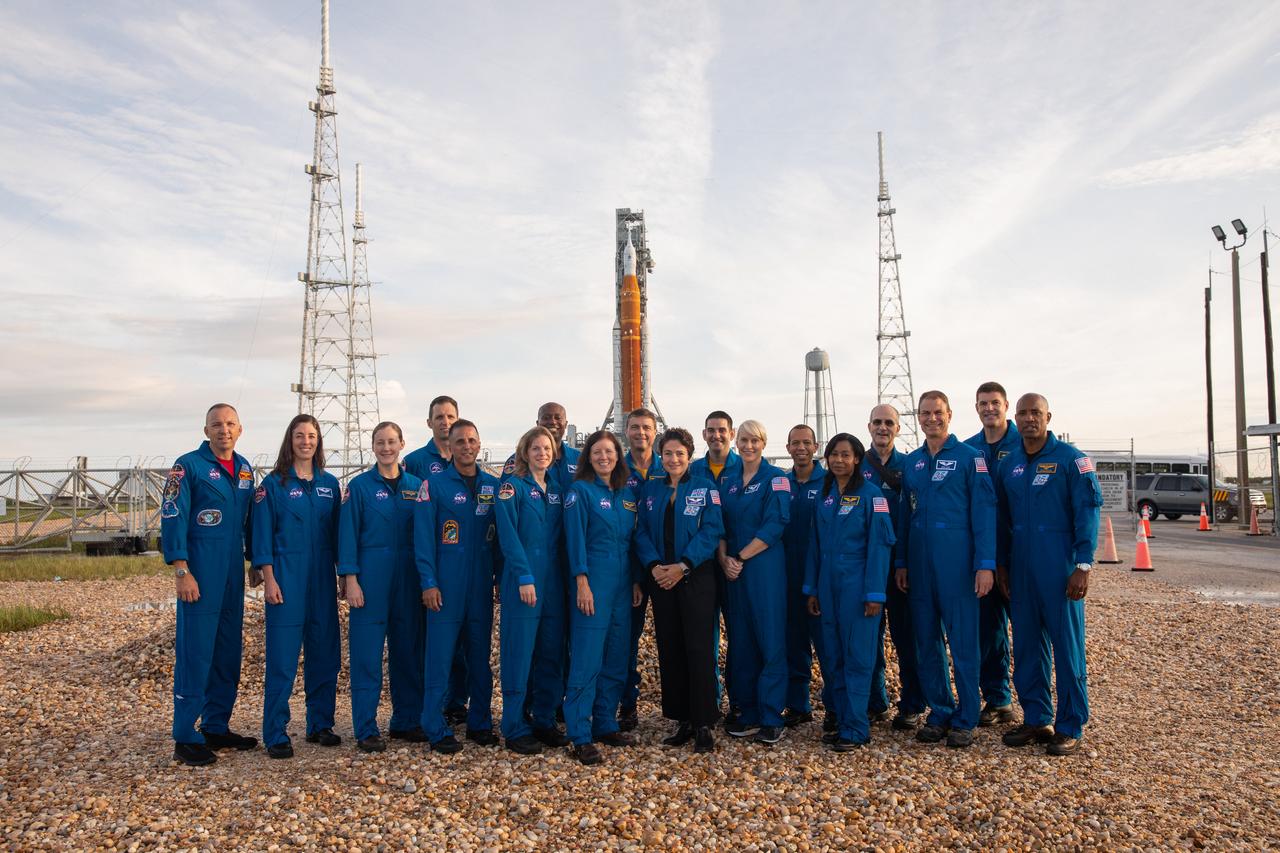
Astronauts and astronaut candidates from NASA and the Canadian Space Agency pose for a photograph in front of NASA’s Artemis I Space Launch System and Orion spacecraft atop the mobile launcher on the pad at Launch Complex 39B on Aug. 28, 2022. The astronauts are, from left to right: Randy Bresnik, NASA astronaut; Christina Birch, NASA astronaut candidate; Jessica Wittner, NASA astronaut candidate; Joshua Kutryk, Canadian Space Agency astronaut; Joe Acaba, NASA astronaut; Zena Cardman, NASA astronaut; Andre Douglas, NASA astronaut candidate; Shannon Walker, NASA astronaut; Reid Wiseman, NASA astronaut; Jessica Meir, NASA astronaut; Jack Hathaway, NASA astronaut candidate; Kate Rubins, NASA astronaut; Chris Williams, NASA astronaut candidate; Stephanie Wilson, NASA astronaut; Don Pettit, NASA astronaut; Stan Love, NASA astronaut; Jeremy Hansen, Canadian Space Agency astronaut; Victor Glover, NASA astronaut. Artemis I is scheduled to launch Aug. 29, at 8:33 a.m. EDT. The first in a series of increasingly complex missions, Artemis I will provide a foundation for human deep space exploration and demonstrate our commitment and capability to extend human presence to the Moon and beyond. The primary goal of Artemis I is to thoroughly test the integrated systems before crewed missions by operating the spacecraft in a deep space environment, testing Orion’s heat shield, and recovering the crew module after reentry, descent, and splashdown.
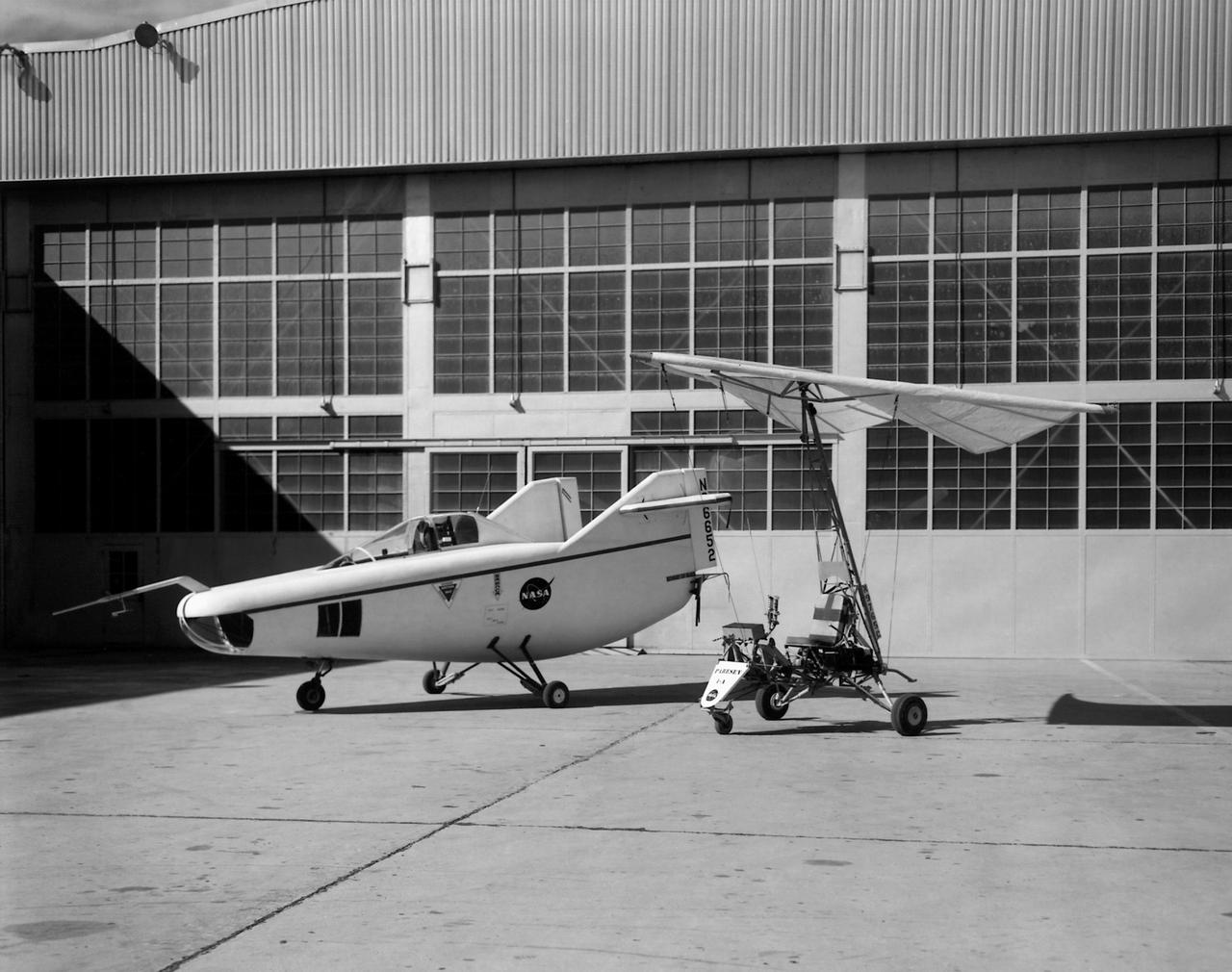
In this photo of the M2-F1 lifting body and the Paresev 1B on the ramp, the viewer sees two vehicles representing different approaches to building a research craft to simulate a spacecraft able to land on the ground instead of splashing down in the ocean as the Mercury capsules did. The M2-F1 was a lifting body, a shape able to re-enter from orbit and land. The Paresev (Paraglider Research Vehicle) used a Rogallo wing that could be (but never was) used to replace a conventional parachute for landing a capsule-type spacecraft, allowing it to make a controlled landing on the ground.