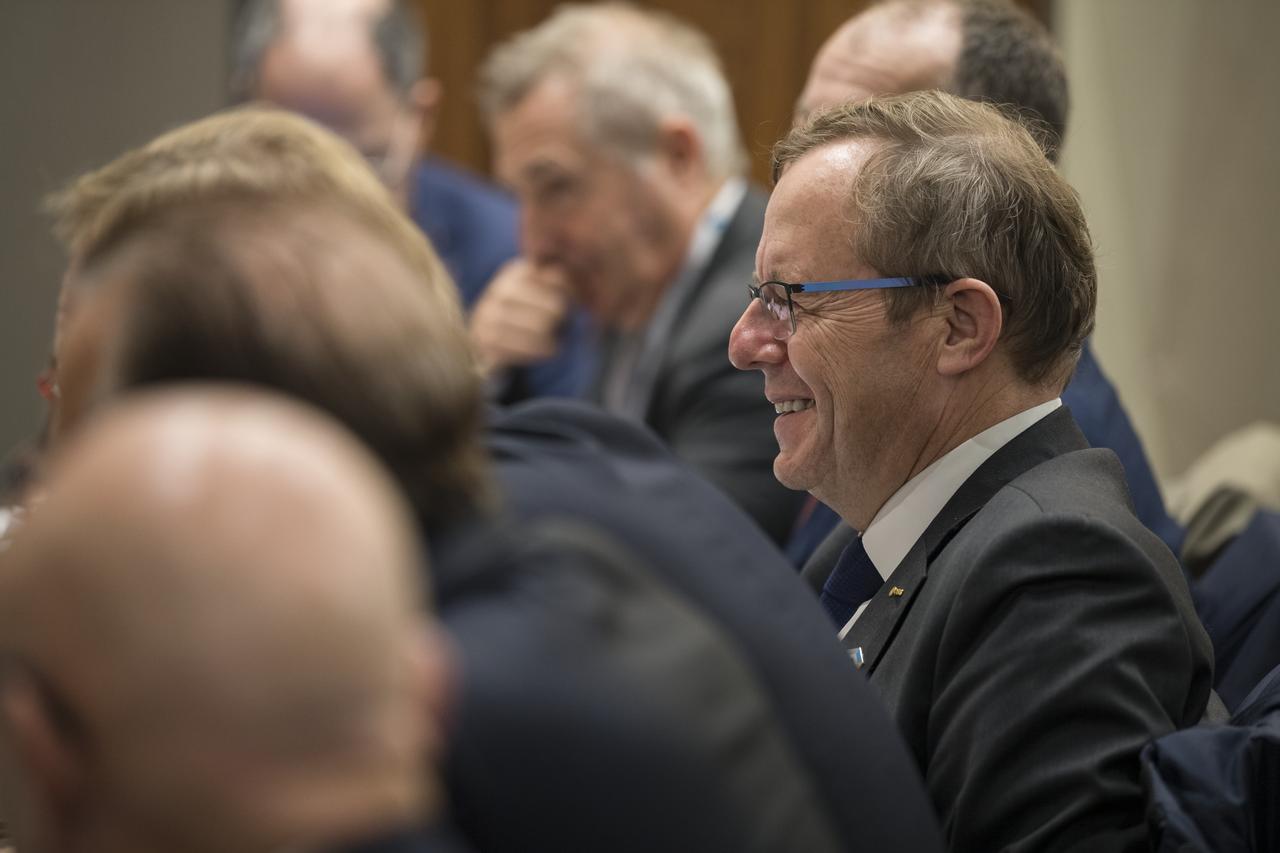
Professor Johann-Dietrich Worner, Director General of ESA (European Space Agency), reacts to something NASA Administrator Jim Bridenstine said during the 70th International Astronautical Congress, Tuesday, Oct. 22, 2019 in Washington. Photo Credit: (NASA/Aubrey Gemignani)
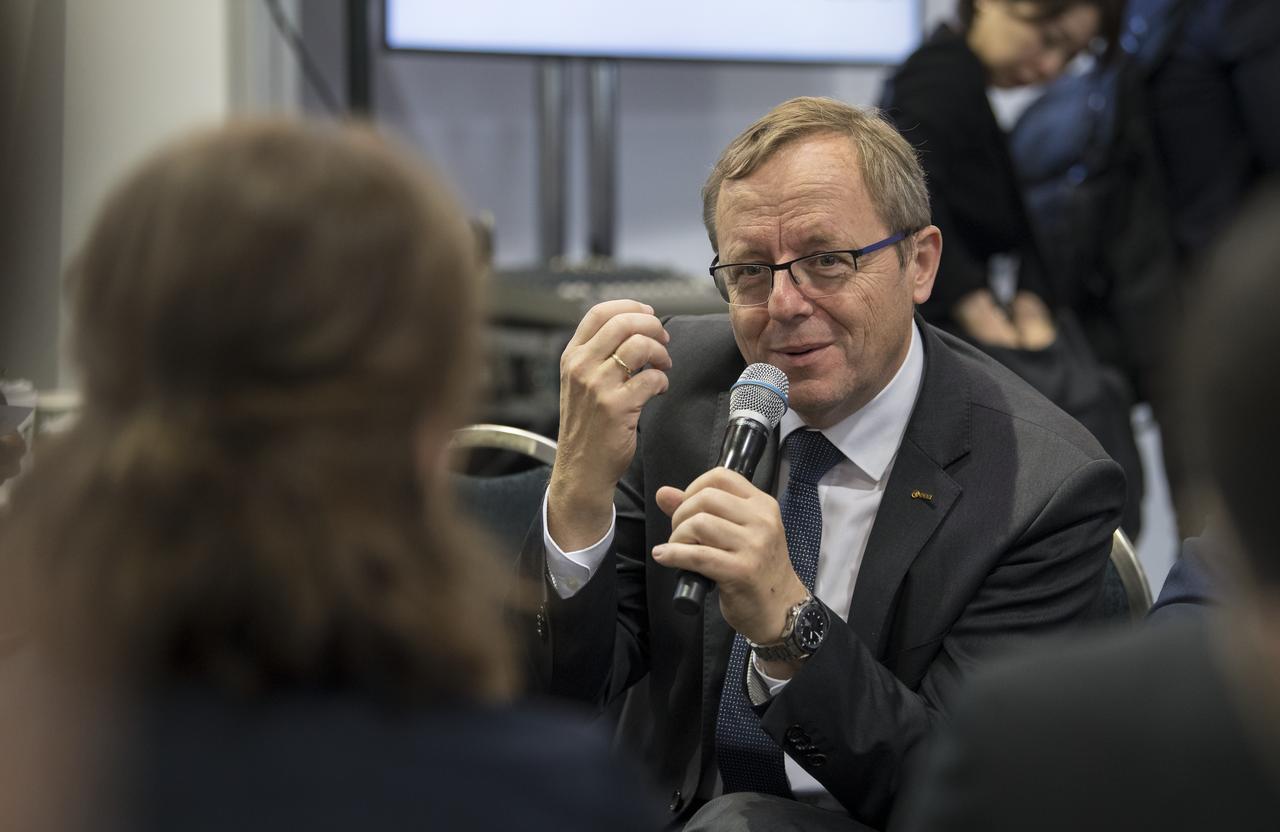
Dr Johann-Dietrich Worner, Director General, European Space Agency (ESA), answers questions during a Heads of Agency interactive session with students at the 70th International Astronautical Congress, Monday, Oct. 21, 2019 at the Walter E. Washington Convention Center in Washington. Photo credit: (NASA/Aubrey Gemignani)
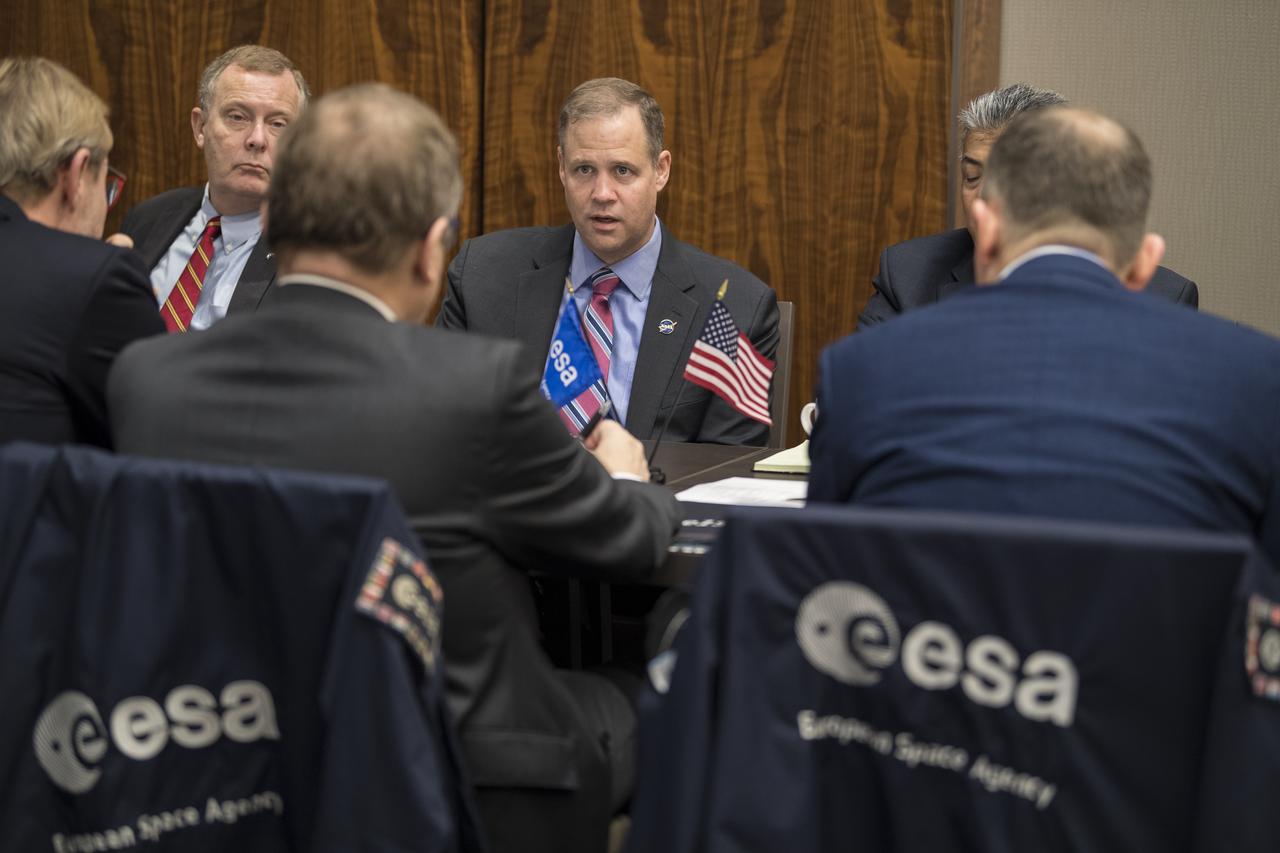
NASA Administrator Jim Bridenstine, center, and Deputy Administrator Jim Morhard, left, speak with Professor Johann-Dietrich Worner, Director General of ESA (European Space Agency), during the 70th International Astronautical Congress, Tuesday, Oct. 22, 2019 in Washington. Photo Credit: (NASA/Aubrey Gemignani)
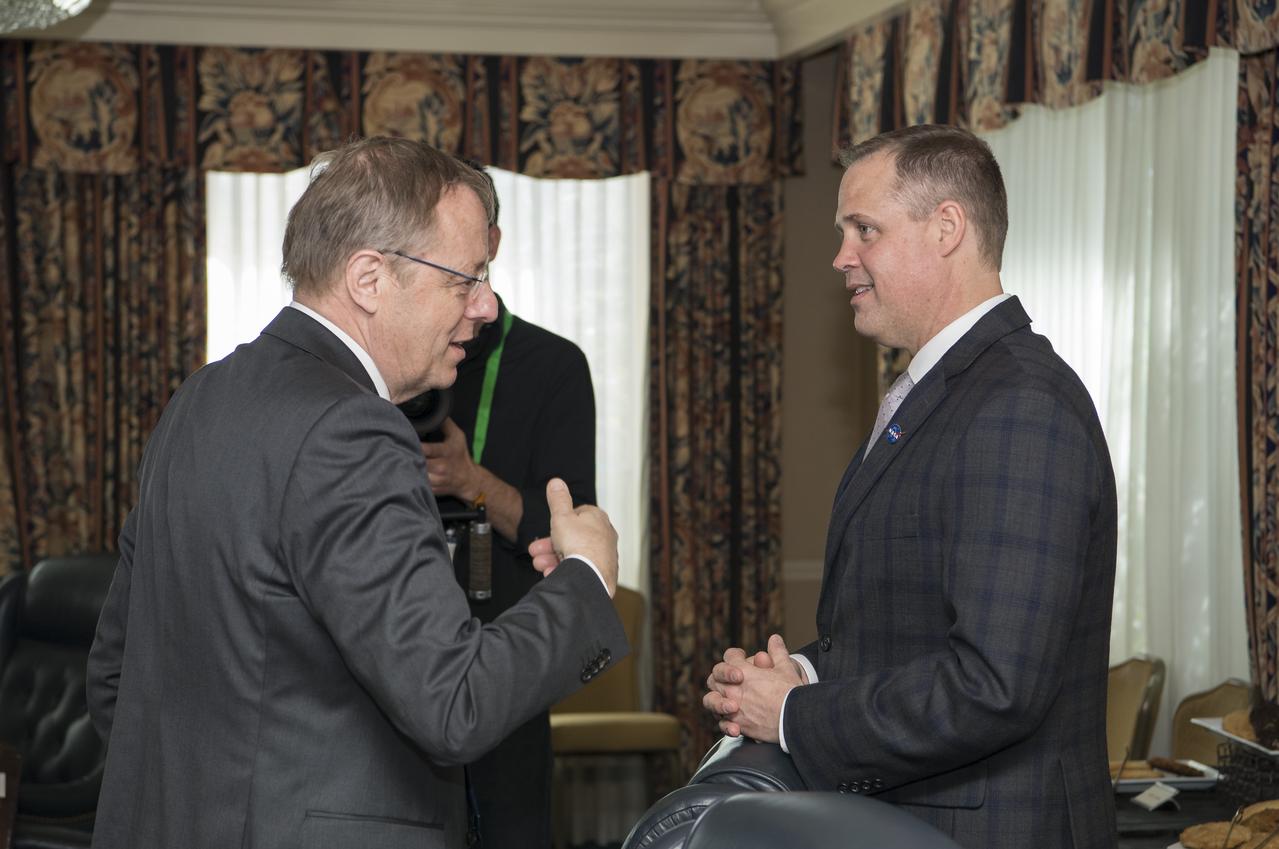
NASA Administrator Jim Bridenstine, right, speaks with Johann-Dietrich Wörner, director general of ESA (European Space Agency), about NASA’s plans to land humans on the Moon by 2024 and prospective collaboration in human and robotic lunar and Mars exploration activities, at the Space Symposium, Monday, April 8, 2019 in Colorado Springs, Colorado, They also discussed their continued successful cooperation on the International Space Station and the service module for the Orion spacecraft that will take us to the Moon and beyond. Photo Credit: (NASA/Aubrey Gemignani)

NASA Administrator Jim Bridenstine and Dr. Johann-Dietrich Worner, Director General, European Space Agency (ESA), answer questions during a Heads of Agency interactive session with students during the 70th International Astronautical Congress, Monday, Oct. 21, 2019 at the Walter E. Washington Convention Center in Washington. Photo credit: (NASA/Aubrey Gemignani)
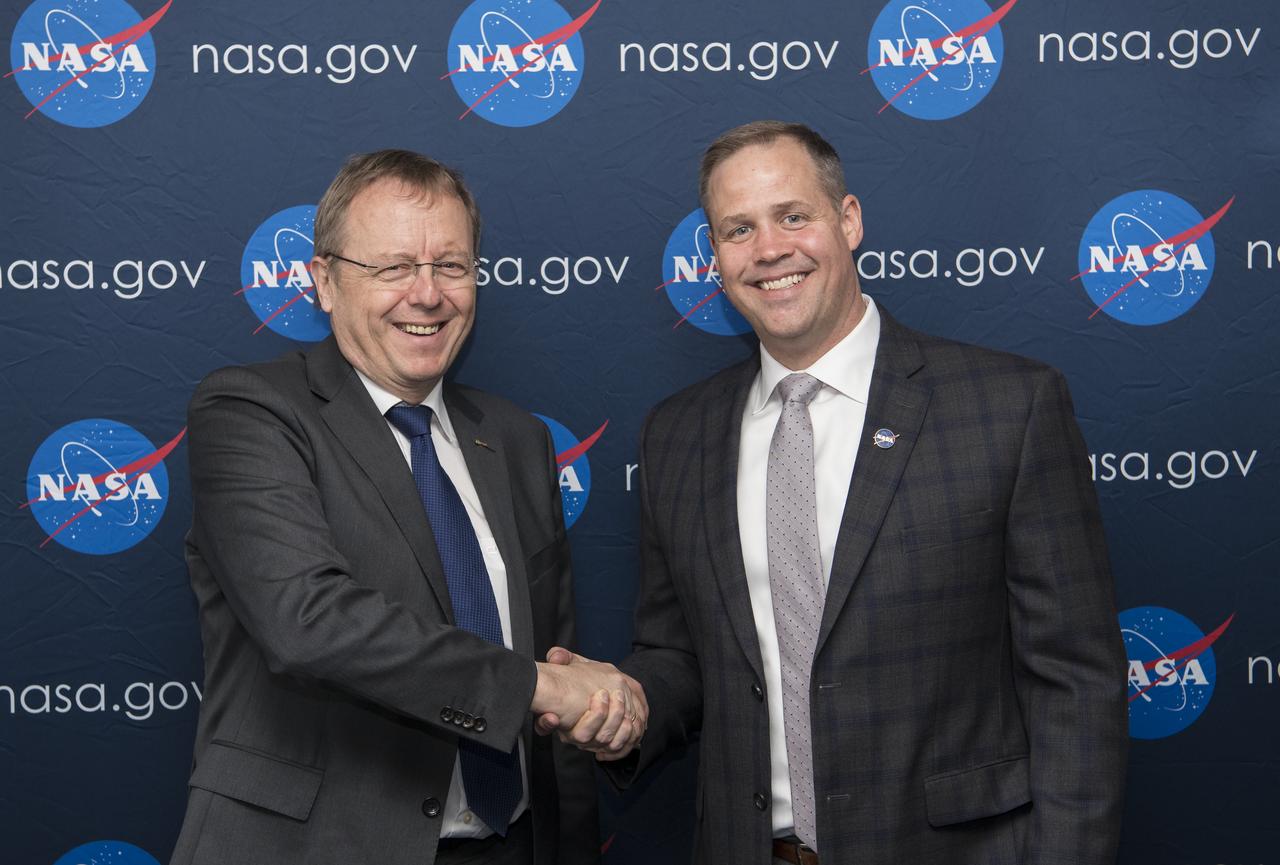
NASA Administrator Jim Bridenstine, right, poses with Johann-Dietrich Wörner, director general of ESA (European Space Agency), just before meeting to discuss NASA’s plans to land humans on the Moon by 2024 and prospective collaboration in human and robotic lunar and Mars exploration activities, at the Space Symposium, Monday, April 8, 2019 in Colorado Springs, Colorado, They also discussed their continued successful cooperation on the International Space Station and the service module for the Orion spacecraft that will take us to the Moon and beyond. Photo Credit: (NASA/Aubrey Gemignani)
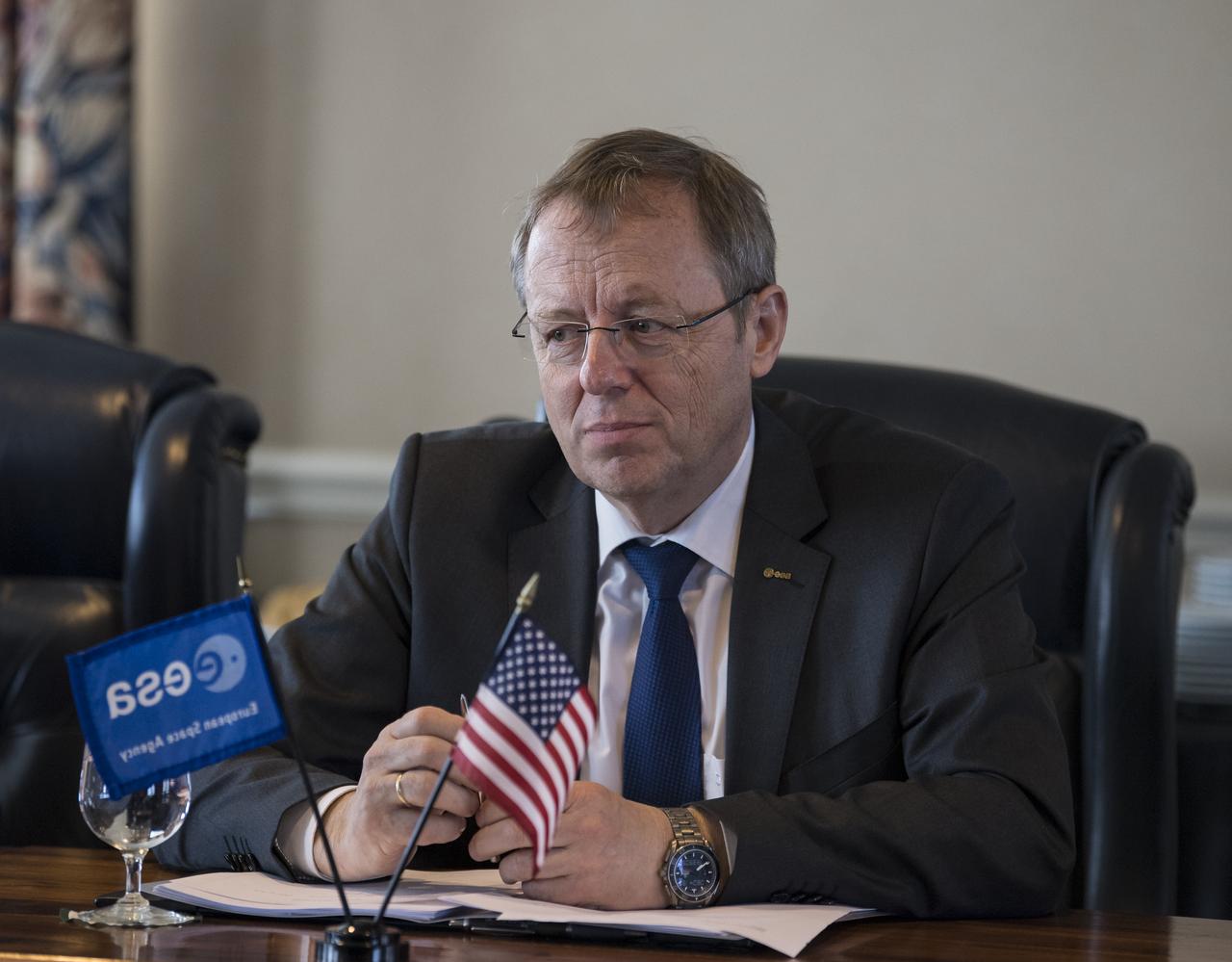
Johann-Dietrich Wörner, director general of ESA (European Space Agency), speaks at a bi-lateral meeting about NASA’s plans to land humans on the Moon by 2024 and prospective collaboration in human and robotic lunar and Mars exploration activities, at the Space Symposium, Monday, April 8, 2019 in Colorado Springs, Colorado. They also discussed their continued successful cooperation on the International Space Station and the service module for the Orion spacecraft that will take us to the Moon and beyond. Photo Credit: (NASA/Aubrey Gemignani)
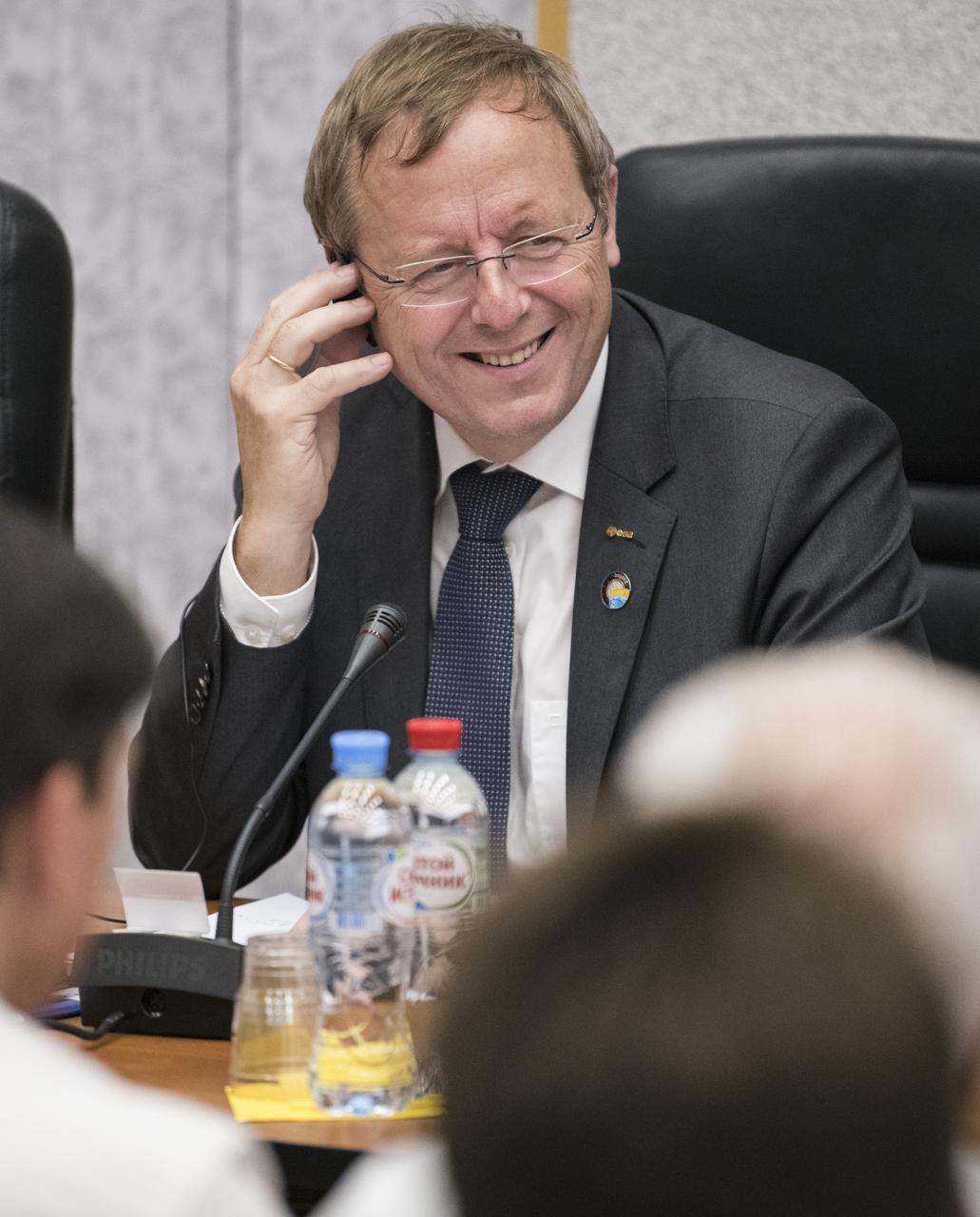
Johann-Dietrich Wörner, Director General of ESA (European Space Agency), is seen during the State Commission meeting to approve the Soyuz launch of Expedition 60 to the International Space Station, Friday, July 19, 2019 at the Cosmonaut Hotel in Baikonur, Kazakhstan. Expedition 60 Soyuz Commander Alexander Skvortsov of Roscosmos, Andrew Morgan of NASA, and Luca Parmitano of ESA (European Space Agency) are scheduled to launch to the International Space Station aboard the Soyuz MS-13 spacecraft on Saturday, July 20. Photo Credit: (NASA/Joel Kowsky)
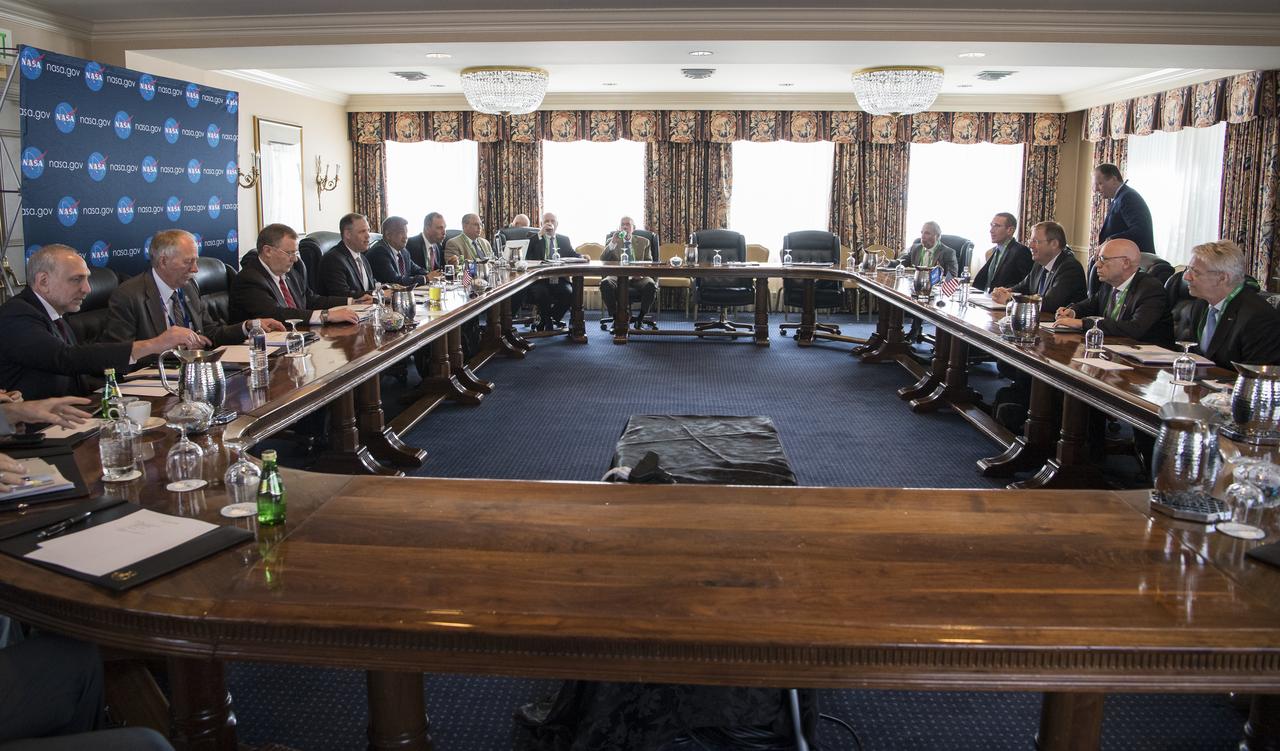
NASA Administrator Jim Bridenstine, fourth from left, speaks with Johann-Dietrich Wörner, director general of ESA (European Space Agency), third from right, about NASA’s plans to land humans on the Moon by 2024 and prospective collaboration in human and robotic lunar and Mars exploration activities, at the Space Symposium, Monday, April 8, 2019 in Colorado Springs, Colorado, They also discussed their continued successful cooperation on the International Space Station and the service module for the Orion spacecraft that will take us to the Moon and beyond. Photo Credit: (NASA/Aubrey Gemignani)
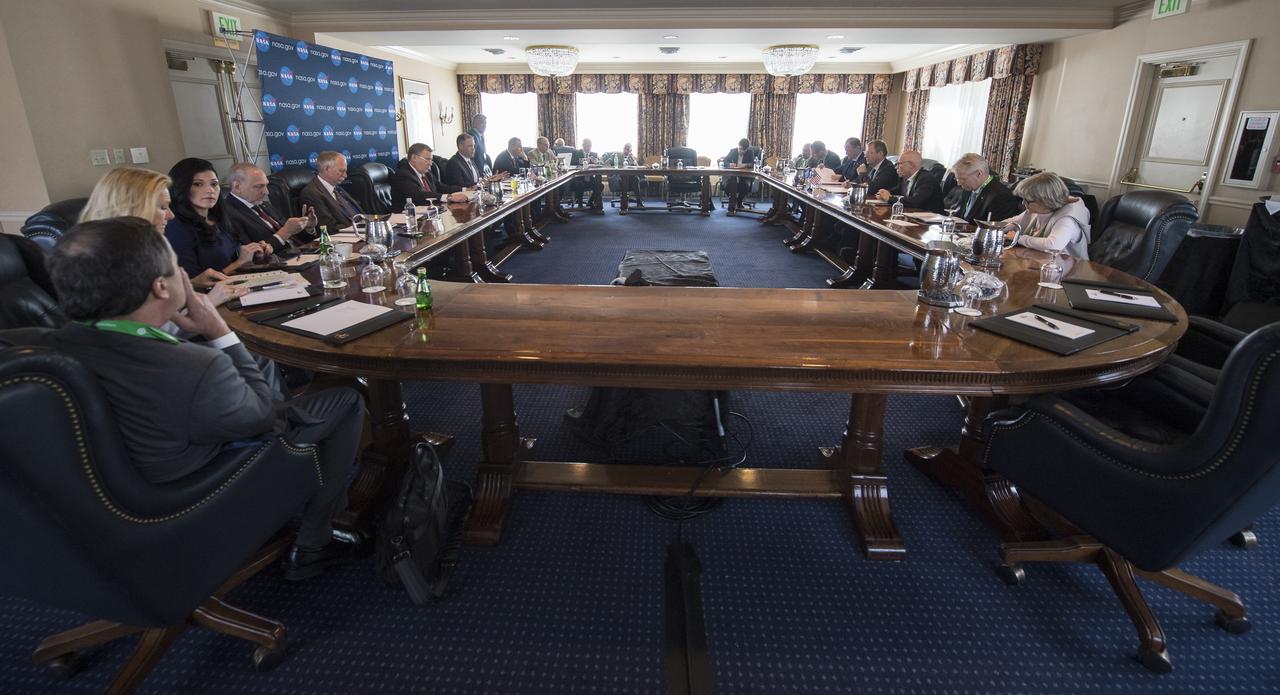
NASA Administrator Jim Bridenstine, seventh from left, speaks with Johann-Dietrich Wörner, director general of ESA (European Space Agency), fourth from right, about NASA’s plans to land humans on the Moon by 2024 and prospective collaboration in human and robotic lunar and Mars exploration activities, at the Space Symposium, Monday, April 8, 2019 in Colorado Springs, Colorado, They also discussed their continued successful cooperation on the International Space Station and the service module for the Orion spacecraft that will take us to the Moon and beyond. Photo Credit: (NASA/Aubrey Gemignani)
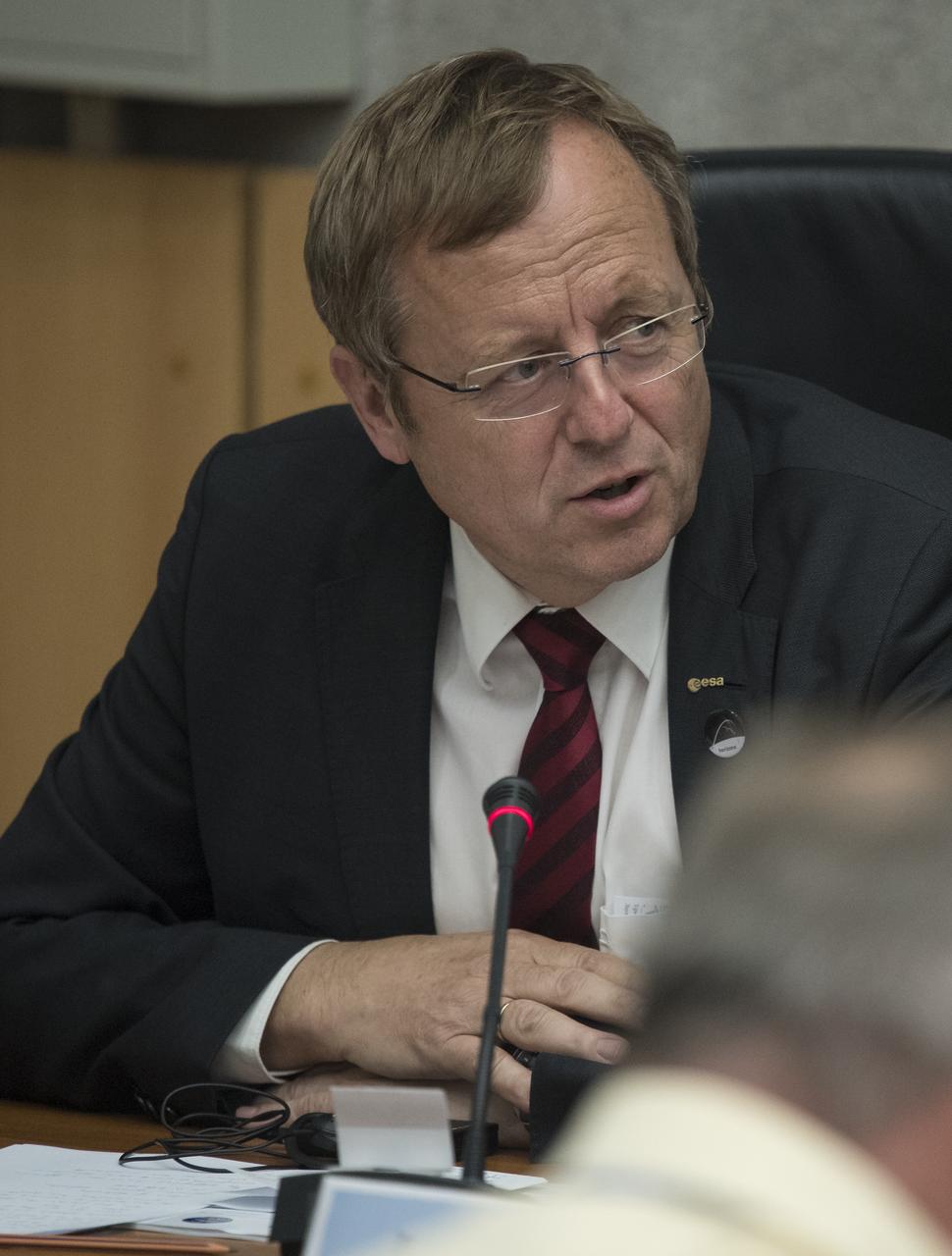
ESA (European Space Agency) Director General Johann-Dietrich Wörner is seen during the State Commission meeting to approve the Soyuz launch of Expedition 56 to the International Space Station, Tuesday, June 5, 2018 at the Cosmonaut Hotel in Baikonur, Kazakhstan. Expedition 56 Soyuz Commander Sergey Prokopyev of Roscosmos, Serena Auñón-Chancellor of NASA, and Alexander Gerst of ESA (European Space Agency) are scheduled to launch to the International Space Station aboard the Soyuz MS-09 spacecraft on Wednesday, June 6. Photo Credit: (NASA/Joel Kowsky)

NASA Administrator Jim Bridenstine, third from right, and Deputy Administrator Jim Morhard, fourth from right, speak with Professor Johann-Dietrich Worner, Director General of ESA (European Space Agency), fourth from left, during the 70th International Astronautical Congress, Tuesday, Oct. 22, 2019 in Washington. Photo Credit: (NASA/Aubrey Gemignani)

Dr. Johann-Dietrich Worner, Director General, European Space Agency (ESA), second from right, and NASA Administrator Jim Bridenstine, right, answer questions during a Heads of Agency interactive session with students during the 70th International Astronautical Congress, Monday, Oct. 21, 2019 at the Walter E. Washington Convention Center in Washington. Photo credit: (NASA/Aubrey Gemignani)
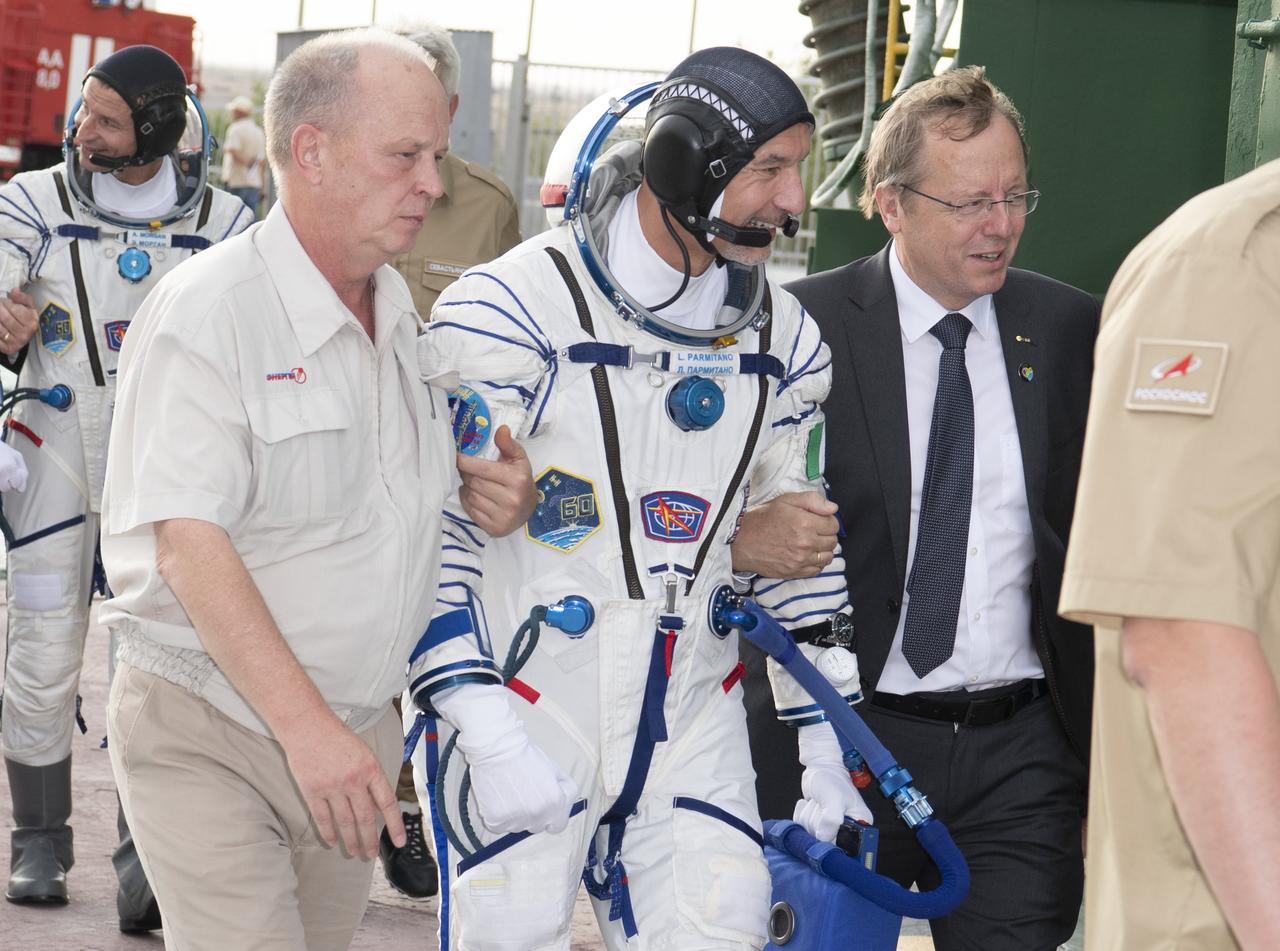
Expedition 60 flight engineer Luca Parmitano of ESA (European Space Agency) is escorted by Johann-Dietrich Wörner, Director General of ESA (European Space Agency) as he prepares to board the Soyuz MS-13 spacecraft for launch, Saturday, July 20, 2019 at the Baikonur Cosmodrome in Kazakhstan. Parmitano, Alexander Skvortsov of Roscosmos, and Andrew Morgan of NASA launched aboard the Soyuz MS-13 spacecraft at 12:28 p.m. Eastern time (9:28 p.m. Baikonur time) on July 20 to begin their journey to the International Space Station. Photo Credit: (NASA/Joel Kowsky)
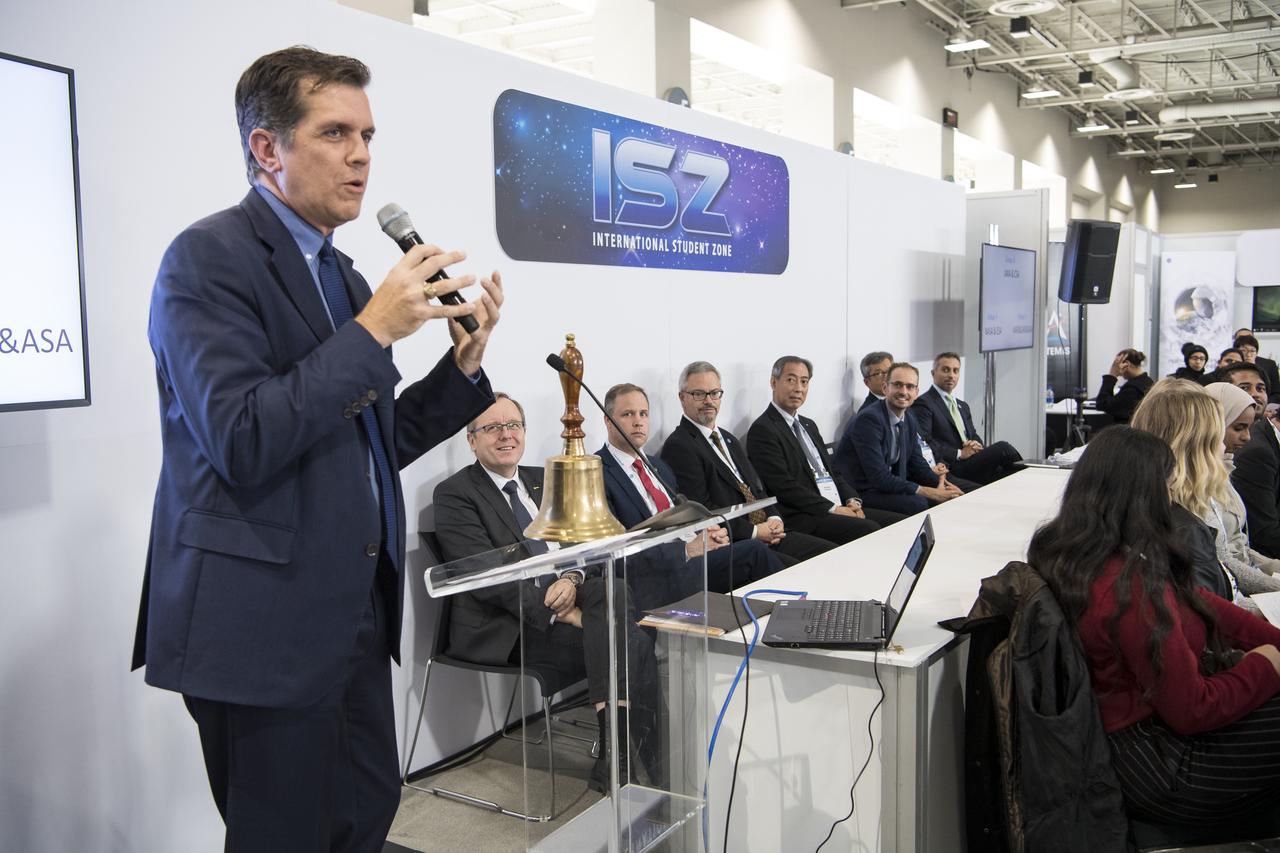
NASA Associate Administrator for STEM Engagement, Mike Kincaid, introduces the heads of agencies that will be participating in an interactive session with students, from left to right, Dr. Johann-Dietrich Worner, director general of the European Space Agency (ESA); NASA Administrator Jim Bridenstine; Sylvain Laporte, president of the Canadian Space Agency (CSA); Dr. Hiroshi Yamakawa, president of the Japan Aerospace Exploration Agency (JAXA); Anthony Murfett, deputy head fo the Australian Space Agency (ASA); Jeong Joo Park, Vice President fo the Korean Aerospace Research Institute (KARI); and H.E. Dr. Ahmad bin Abdulla Humaid Belhoul Al Falasi, Minister of State for Higher Education and Advanced Skills and Chairman of the UAE Space Agency (UAESA), during the 70th International Astronautical Congress, Monday, Oct. 21, 2019 at the Walter E. Washington Convention Center in Washington. Photo credit: (NASA/Aubrey Gemignani)
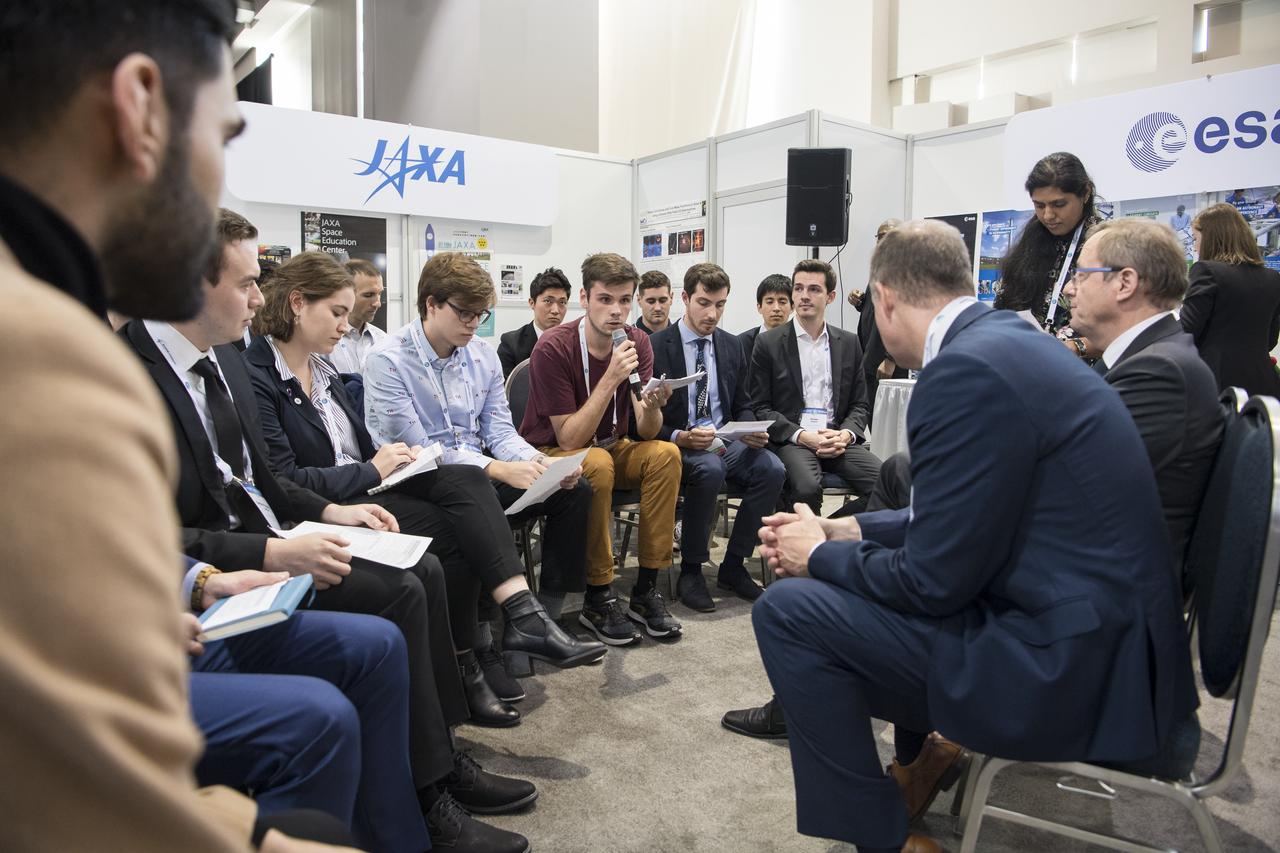
A student asks NASA Administrator Jim Bridenstine a question during a Heads of Agency interactive session with students at the 70th International Astronautical Congress, Monday, Oct. 21, 2019 at the Walter E. Washington Convention Center in Washington. Photo credit: (NASA/Aubrey Gemignani)

NASA Administrator Jim Bridenstine answers questions during a Heads of Agency interactive session with students at the 70th International Astronautical Congress, Monday, Oct. 21, 2019 at the Walter E. Washington Convention Center in Washington. Photo credit: (NASA/Aubrey Gemignani)

NASA Administrator Jim Bridenstine answers questions during a Heads of Agency interactive session with students at the 70th International Astronautical Congress, Monday, Oct. 21, 2019 at the Walter E. Washington Convention Center in Washington. Photo credit: (NASA/Aubrey Gemignani)
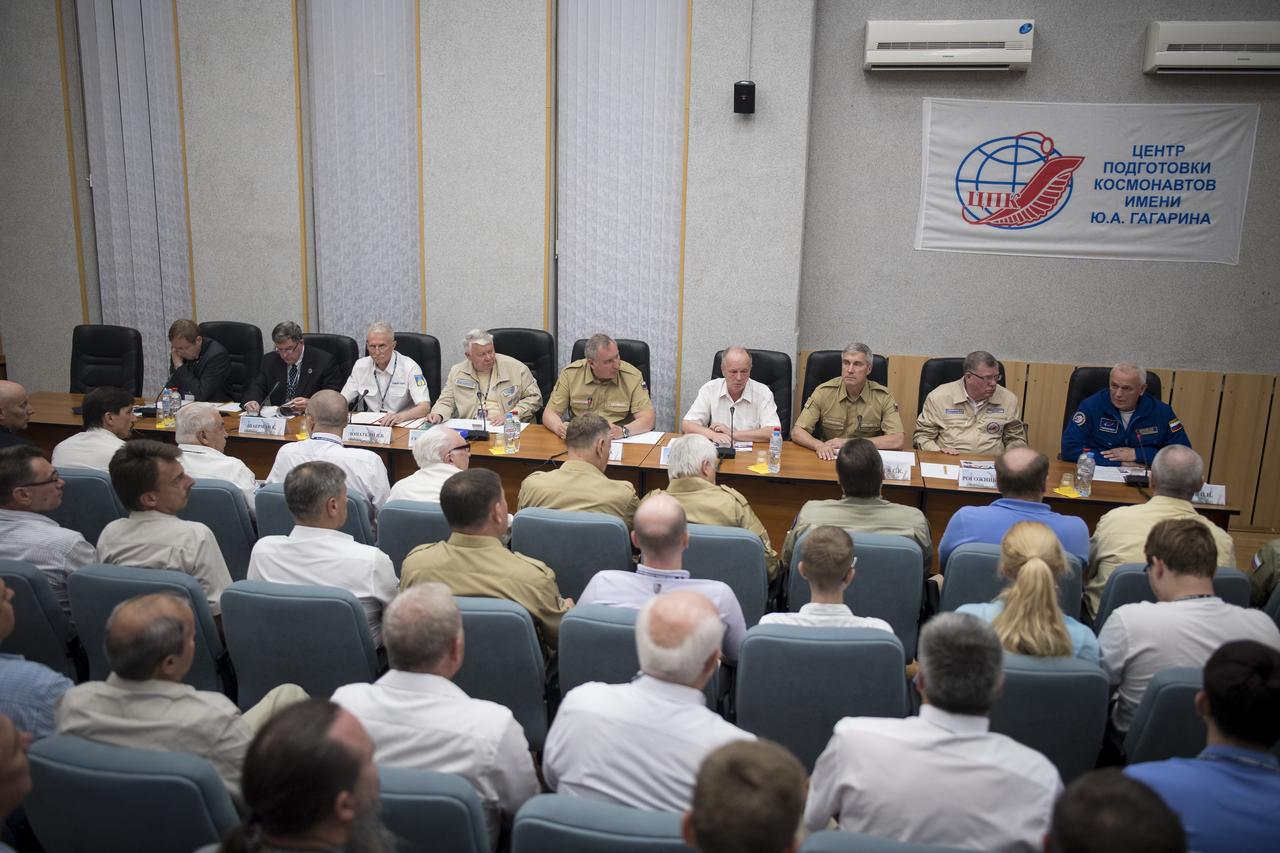
Members of the State Commission meet to approve the Soyuz launch of Expedition 60 to the International Space Station, Friday, July 19, 2019 at the Cosmonaut Hotel in Baikonur, Kazakhstan. Expedition 60 Soyuz Commander Alexander Skvortsov of Roscosmos, Andrew Morgan of NASA, and Luca Parmitano of ESA (European Space Agency) are scheduled to launch to the International Space Station aboard the Soyuz MS-13 spacecraft on Saturday, July 20. Photo Credit: (NASA/Joel Kowsky)
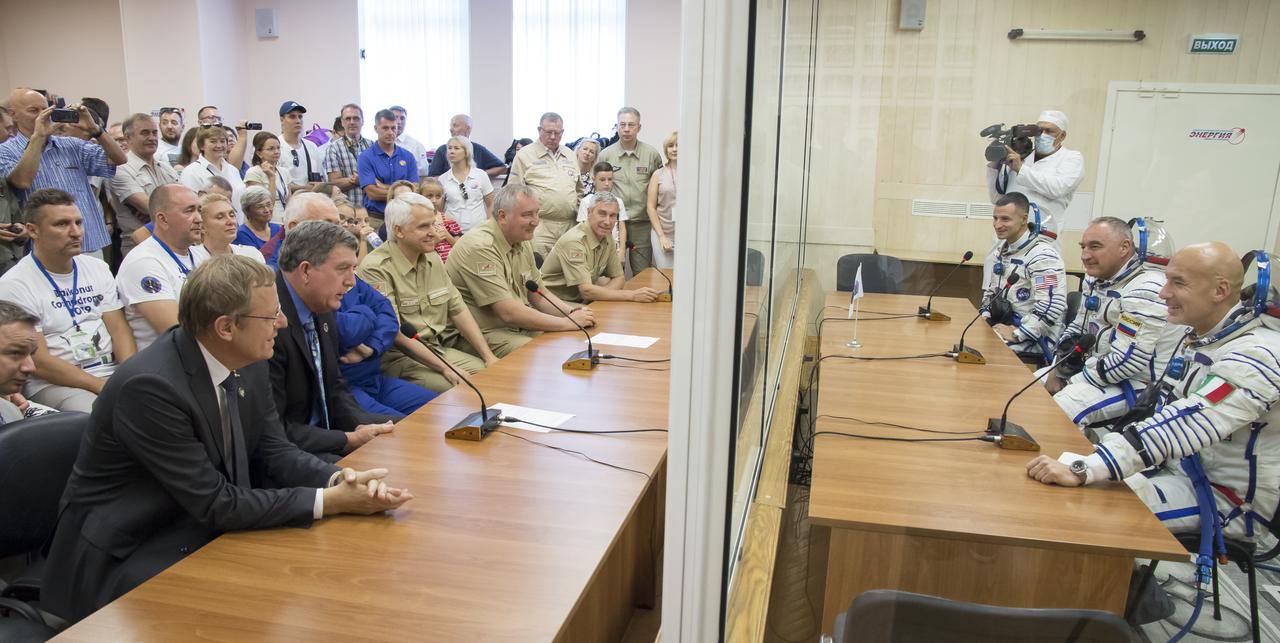
Expedition 60 flight engineer Andrew Morgan of NASA, Soyuz Commander Alexander Skvortsov of Roscosmos, and flight engineer Luca Parmitano or ESA (European Space Agency) speak with Roscosmos, NASA, and ESA (European Space Agency) management after having their Russian Sokol suits pressure checked in preparation for launch aboard the Soyuz MS-13 spacecraft, Saturday, July 20, 2019 at the Baikonur Cosmodrome in Kazakhstan. Launch of the Soyuz MS-13 spacecraft with Skvortsov, Morgan, and Parmitano occurred at 12:28 p.m. Eastern time (9:28 p.m. Baikonur time) on July 20 beginning their mission to the International Space Station. Photo Credit: (NASA/Victor Zelentsov)
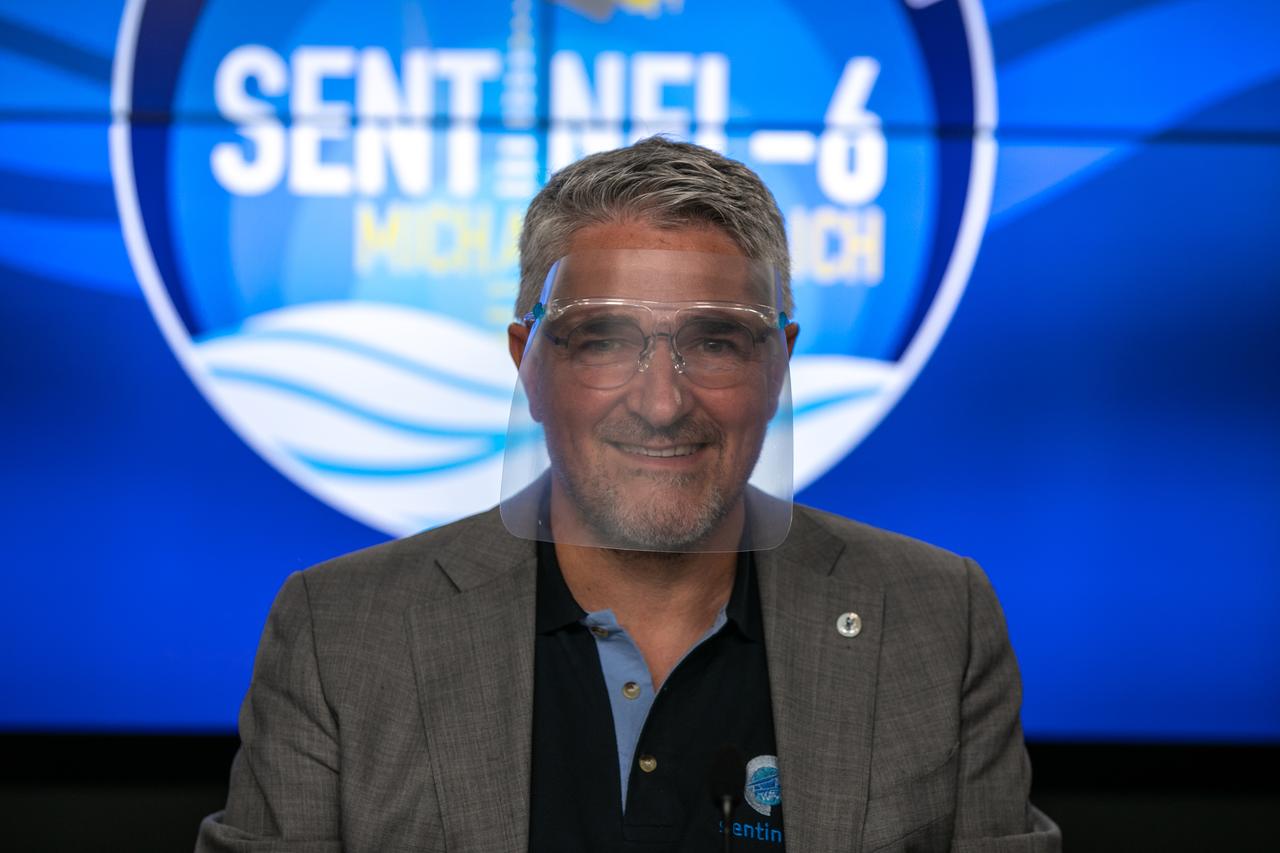
Pierrik Vuilleumier, project manager, European Space Agency (ESA), participates in a prelaunch news conference for the Sentinel-6 Michael Freilich mission at Vandenberg Air Force Base in California on Nov. 20, 2020. The Sentinel-6/Jason-CS (Continuity of Service) mission consists of the Sentinel-6 Michael Freilich satellite, which will be followed by its twin, the Sentinel-6B satellite, in 2025. The Sentinel-6/Jason-CS mission is part of Copernicus, the European Union’s Earth observation program, managed by the European Commission. Continuing the legacy of the Jason series missions, Sentinel-6/Jason-CS will extend the records of sea level into their fourth decade, collecting accurate measurements of sea surface height for more than 90% of the world’s seas, and providing crucial information for operational oceanography, marine meteorology, and climate studies. Sentinel-6 Michael Freilich launched Nov. 21, 2020, at 9:17 PST (12:17 EST). NASA’s Launch Services Program at Kennedy Space Center was responsible for launch management.
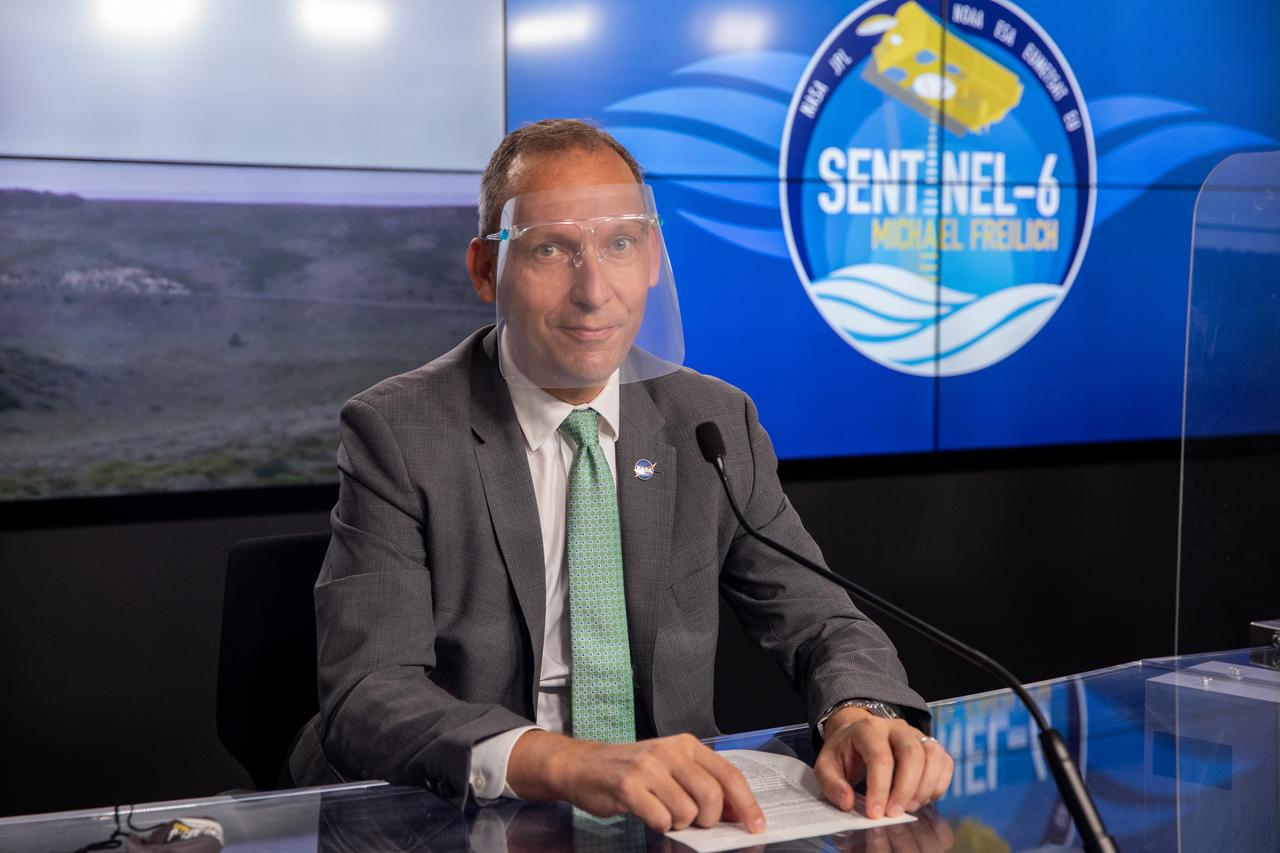
Thomas Zurbuchen, associate administrator for Science Mission Directorate at NASA Headquarters, participates in a prelaunch news conference for the Sentinel-6 Michael Freilich mission at Vandenberg Air Force Base in California on Nov. 20, 2020. The Sentinel-6/Jason-CS (Continuity of Service) mission consists of the Sentinel-6 Michael Freilich satellite, which will be followed by its twin, the Sentinel-6B satellite, in 2025. The Sentinel-6/Jason-CS mission is part of Copernicus, the European Union’s Earth observation program, managed by the European Commission. Continuing the legacy of the Jason series missions, Sentinel-6/Jason-CS will extend the records of sea level into their fourth decade, collecting accurate measurements of sea surface height for more than 90% of the world’s seas, and providing crucial information for operational oceanography, marine meteorology, and climate studies. Sentinel-6 Michael Freilich launched Nov. 21, 2020, at 9:17 PST (12:17 EST). NASA’s Launch Services Program at Kennedy Space Center was responsible for launch management.
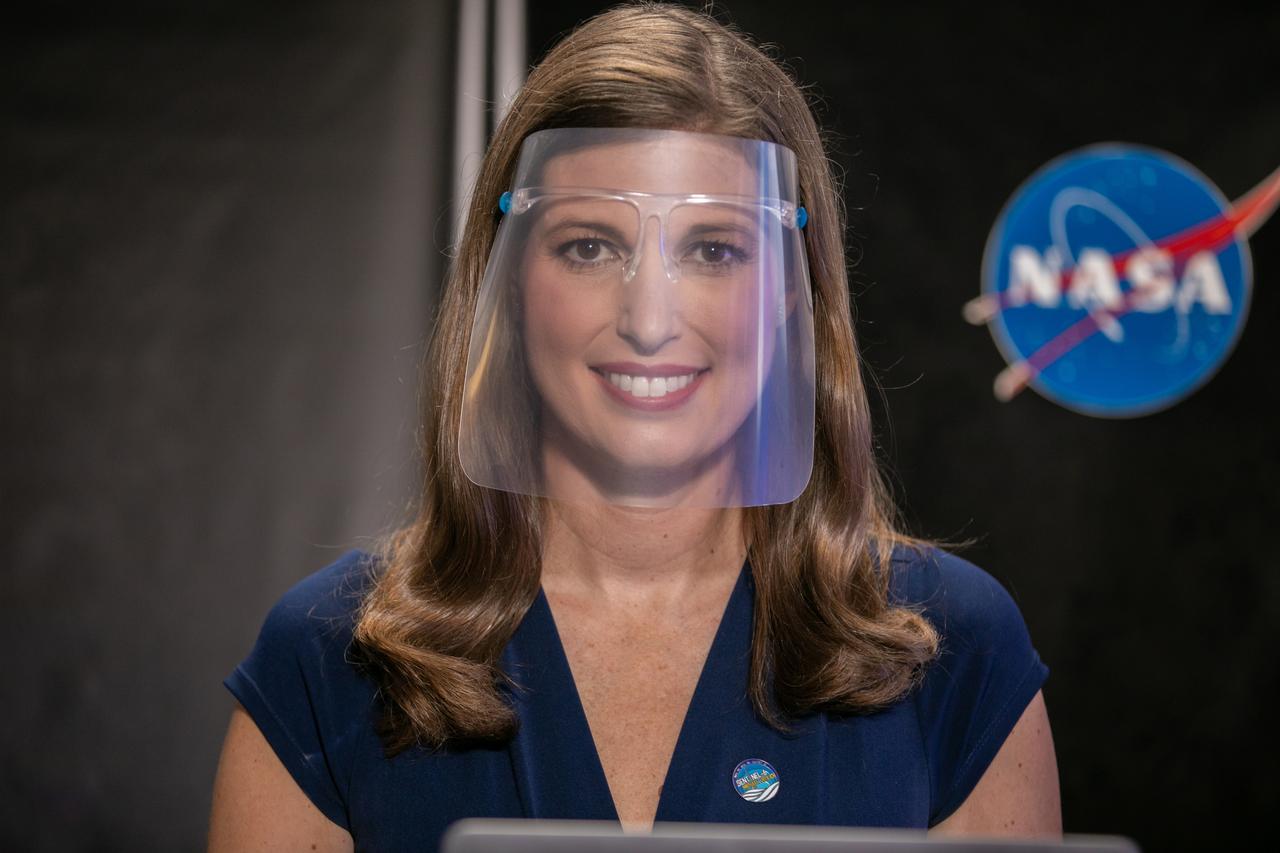
Marina Jurica of NASA’s Jet Propulsion Laboratory in Pasadena moderates a prelaunch news conference for the Sentinel-6 Michael Freilich mission at Vandenberg Air Force Base in California on Nov. 20, 2020. The Sentinel-6/Jason-CS (Continuity of Service) mission consists of the Sentinel-6 Michael Freilich satellite, which will be followed by its twin, the Sentinel-6B satellite, in 2025. The Sentinel-6/Jason-CS mission is part of Copernicus, the European Union’s Earth observation program, managed by the European Commission. Continuing the legacy of the Jason series missions, Sentinel-6/Jason-CS will extend the records of sea level into their fourth decade, collecting accurate measurements of sea surface height for more than 90% of the world’s seas, and providing crucial information for operational oceanography, marine meteorology, and climate studies. Sentinel-6 Michael Freilich launched Nov. 21, 2020, at 9:17 PST (12:17 EST). NASA’s Launch Services Program at Kennedy Space Center was responsible for launch management.
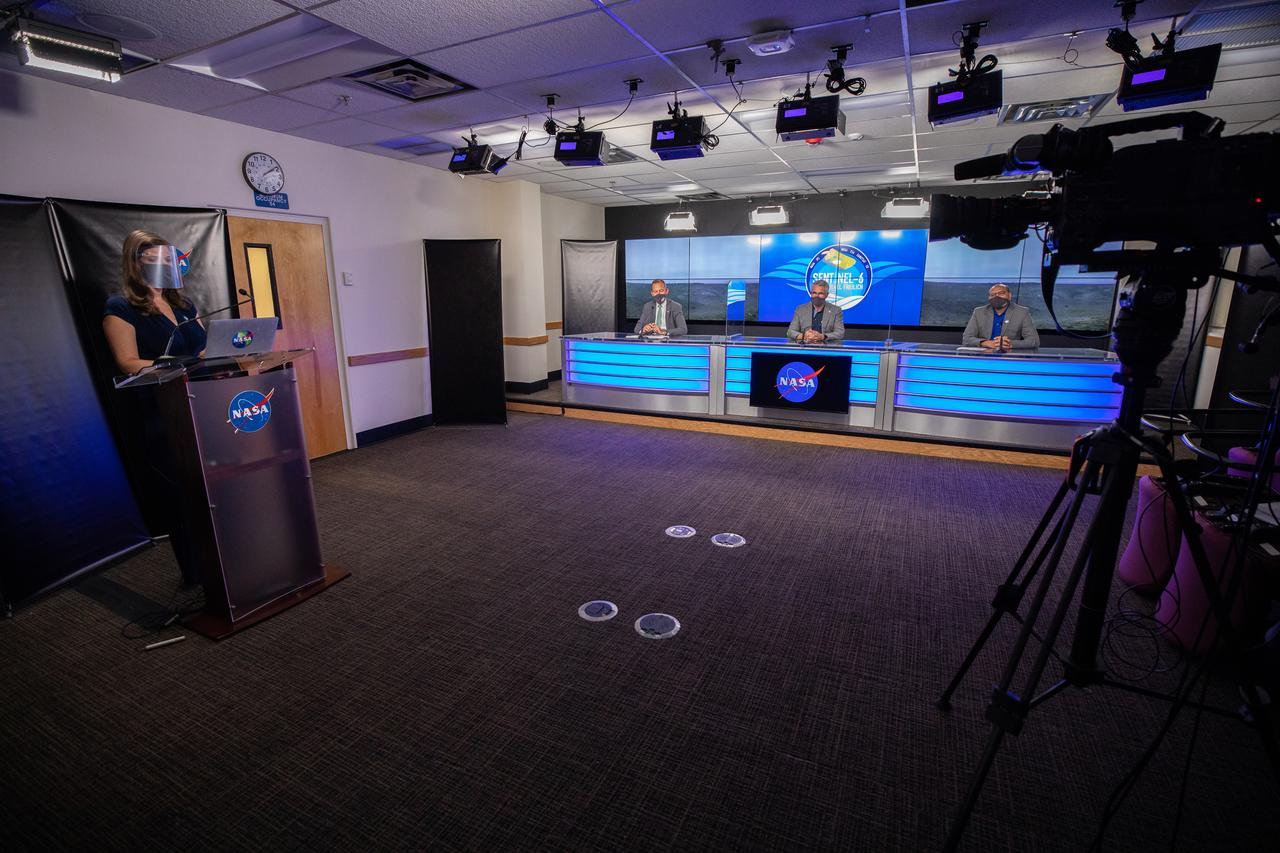
Mission and launch officials participate in a prelaunch news conference for the Sentinel-6 Michael Freilich mission at Vandenberg Air Force Base in California on Nov. 20, 2020. From left are Marina Jurica of NASA’s Jet Propulsion Laboratory in Pasadena; Thomas Zurbuchen, associate administrator for Science Mission Directorate at NASA Headquarters; Pierrik Vuilleumier, project manager, European Space Agency (ESA); and Parag Vaze, project manager, NASA’s Jet Propulsion Laboratory in Pasadena. The Sentinel-6/Jason-CS (Continuity of Service) mission consists of the Sentinel-6 Michael Freilich satellite, which will be followed by its twin, the Sentinel-6B satellite, in 2025. The Sentinel-6/Jason-CS mission is part of Copernicus, the European Union’s Earth observation program, managed by the European Commission. Continuing the legacy of the Jason series missions, Sentinel-6/Jason-CS will extend the records of sea level into their fourth decade, collecting accurate measurements of sea surface height for more than 90% of the world’s seas, and providing crucial information for operational oceanography, marine meteorology, and climate studies. Sentinel-6 Michael Freilich launched Nov. 21, 2020, at 9:17 PST (12:17 EST). NASA’s Launch Services Program at Kennedy Space Center was responsible for launch management.
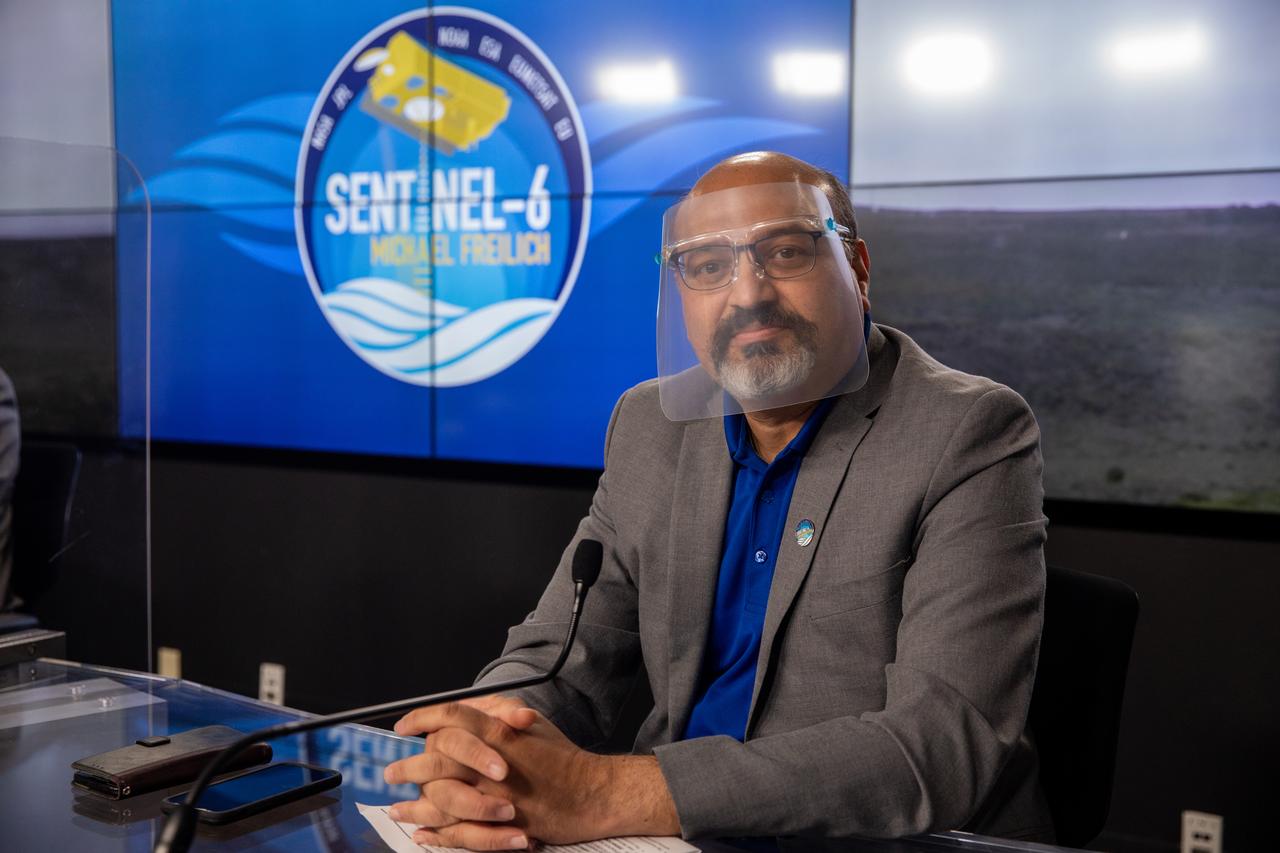
Parag Vaze, project manager, NASA’s Jet Propulsion Laboratory in Pasadena, participates in a prelaunch news conference for the Sentinel-6 Michael Freilich mission at Vandenberg Air Force Base in California on Nov. 20, 2020. The Sentinel-6/Jason-CS (Continuity of Service) mission consists of the Sentinel-6 Michael Freilich satellite, which will be followed by its twin, the Sentinel-6B satellite, in 2025. The Sentinel-6/Jason-CS mission is part of Copernicus, the European Union’s Earth observation program, managed by the European Commission. Continuing the legacy of the Jason series missions, Sentinel-6/Jason-CS will extend the records of sea level into their fourth decade, collecting accurate measurements of sea surface height for more than 90% of the world’s seas, and providing crucial information for operational oceanography, marine meteorology, and climate studies. Sentinel-6 Michael Freilich launched Nov. 21, 2020, at 9:17 PST (12:17 EST). NASA’s Launch Services Program at Kennedy Space Center was responsible for launch management.
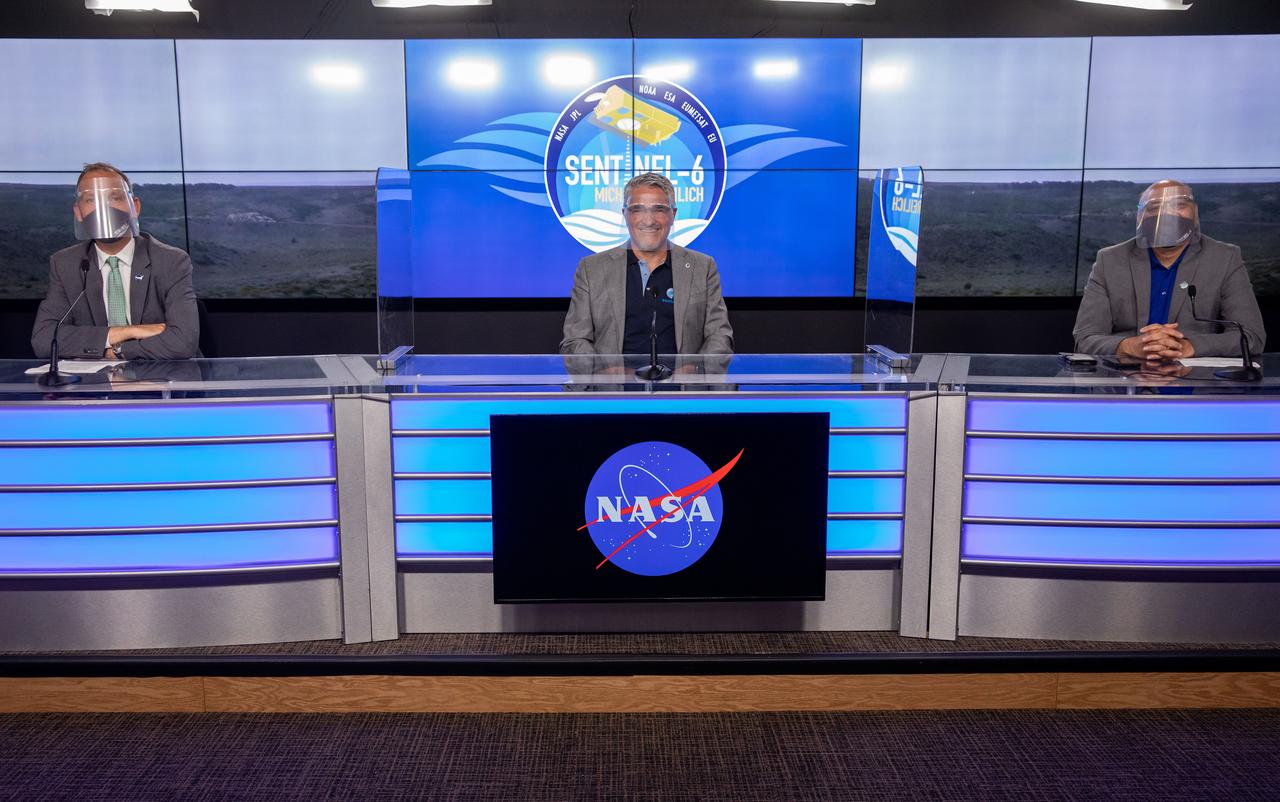
Mission and launch officials participate in a prelaunch news conference for the Sentinel-6 Michael Freilich mission at Vandenberg Air Force Base in California on Nov. 20, 2020. From left are Thomas Zurbuchen, associate administrator for Science Mission Directorate at NASA Headquarters; Pierrik Vuilleumier, project manager, European Space Agency (ESA); and Parag Vaze, project manager, NASA’s Jet Propulsion Laboratory in Pasadena. The Sentinel-6/Jason-CS (Continuity of Service) mission consists of the Sentinel-6 Michael Freilich satellite, which will be followed by its twin, the Sentinel-6B satellite, in 2025. The Sentinel-6/Jason-CS mission is part of Copernicus, the European Union’s Earth observation program, managed by the European Commission. Continuing the legacy of the Jason series missions, Sentinel-6/Jason-CS will extend the records of sea level into their fourth decade, collecting accurate measurements of sea surface height for more than 90% of the world’s seas, and providing crucial information for operational oceanography, marine meteorology, and climate studies. Sentinel-6 Michael Freilich launched Nov. 21, 2020, at 9:17 PST (12:17 EST). NASA’s Launch Services Program at Kennedy Space Center was responsible for launch management.