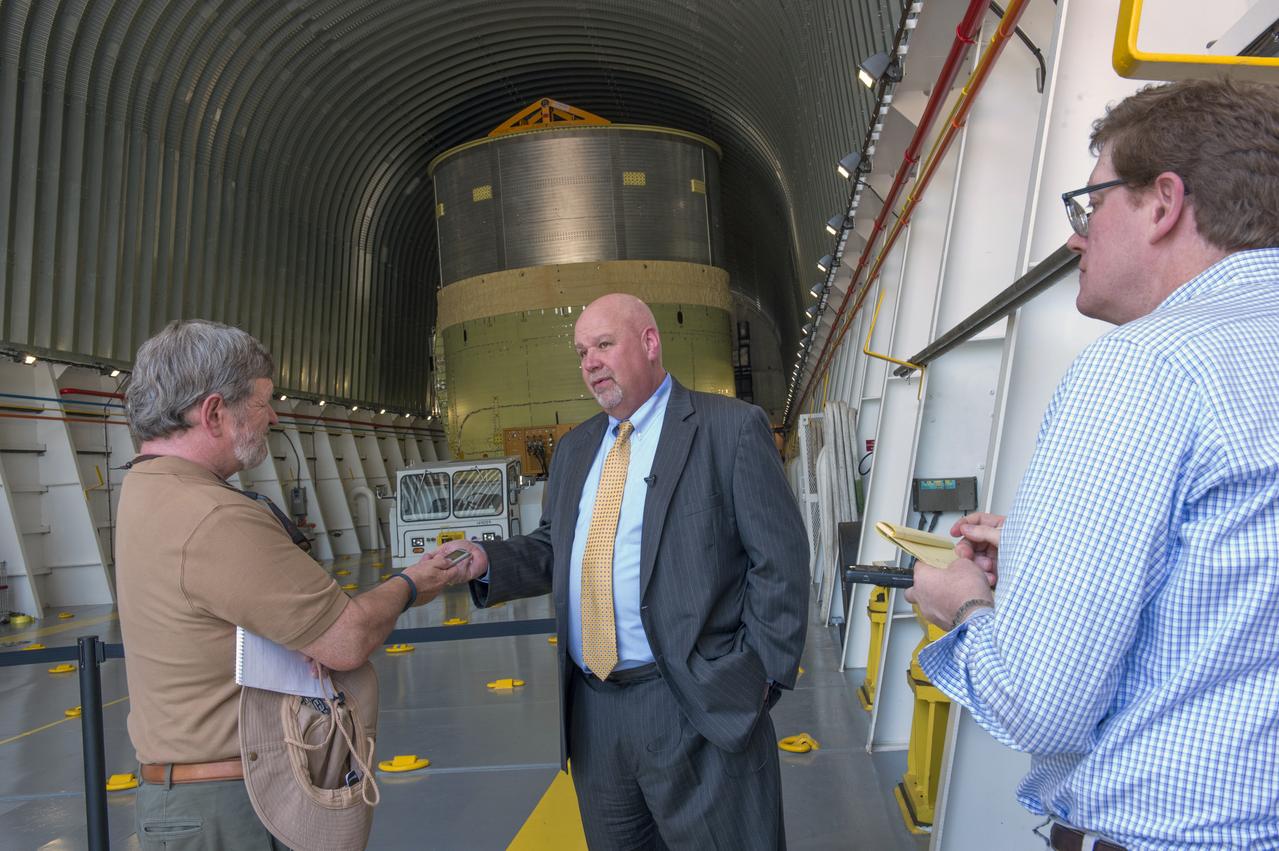
John Honeycutt talks with reporters on NASA Barge Pegasus
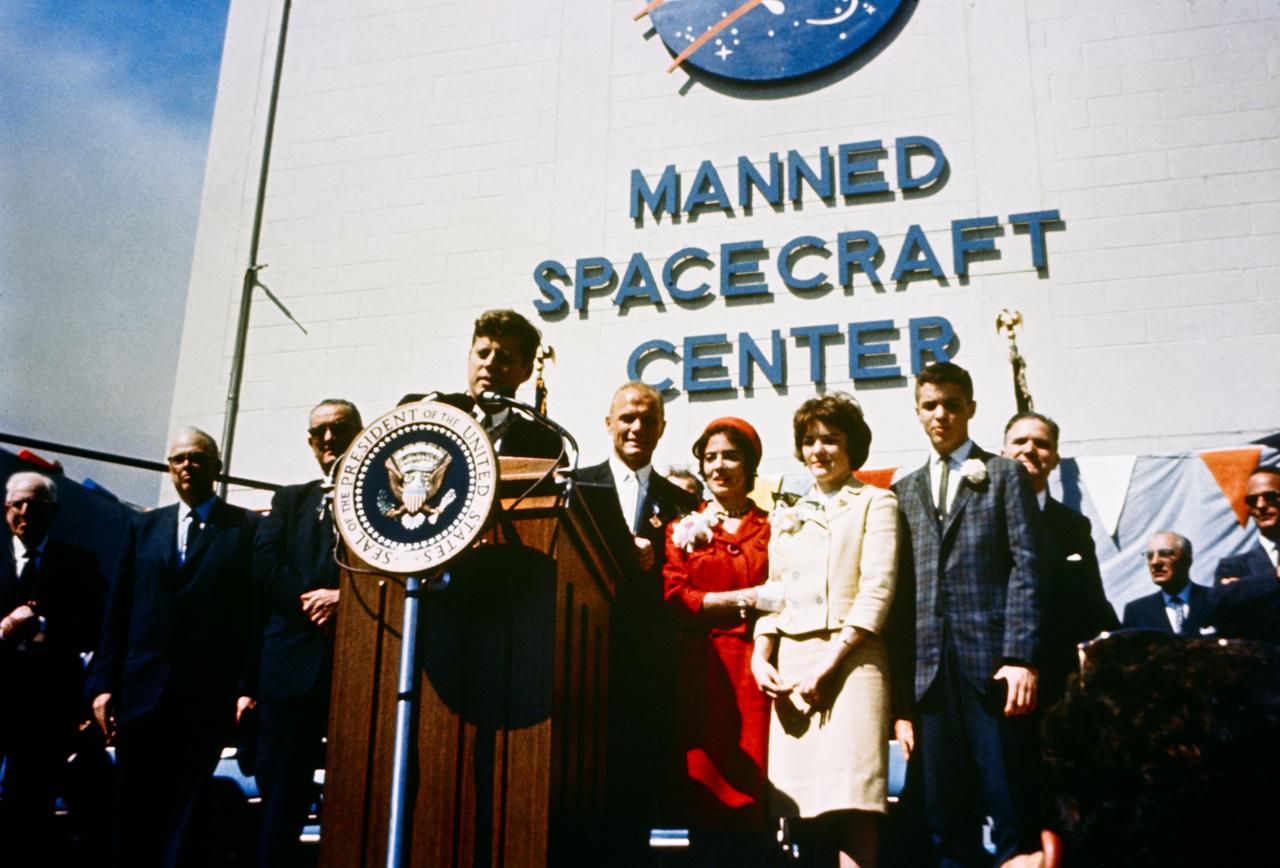
Astronaut John Glenn Jr. is honored by President John F. Kennedy after Glenn's historical first manned orbital flight, Mercury-Atlas 6. The ceremony was held in front of Hangar S at Cape Canaveral Air Force Station. To Glenn's left are his wife, Annie, daughter, Lyn, and his son, David.
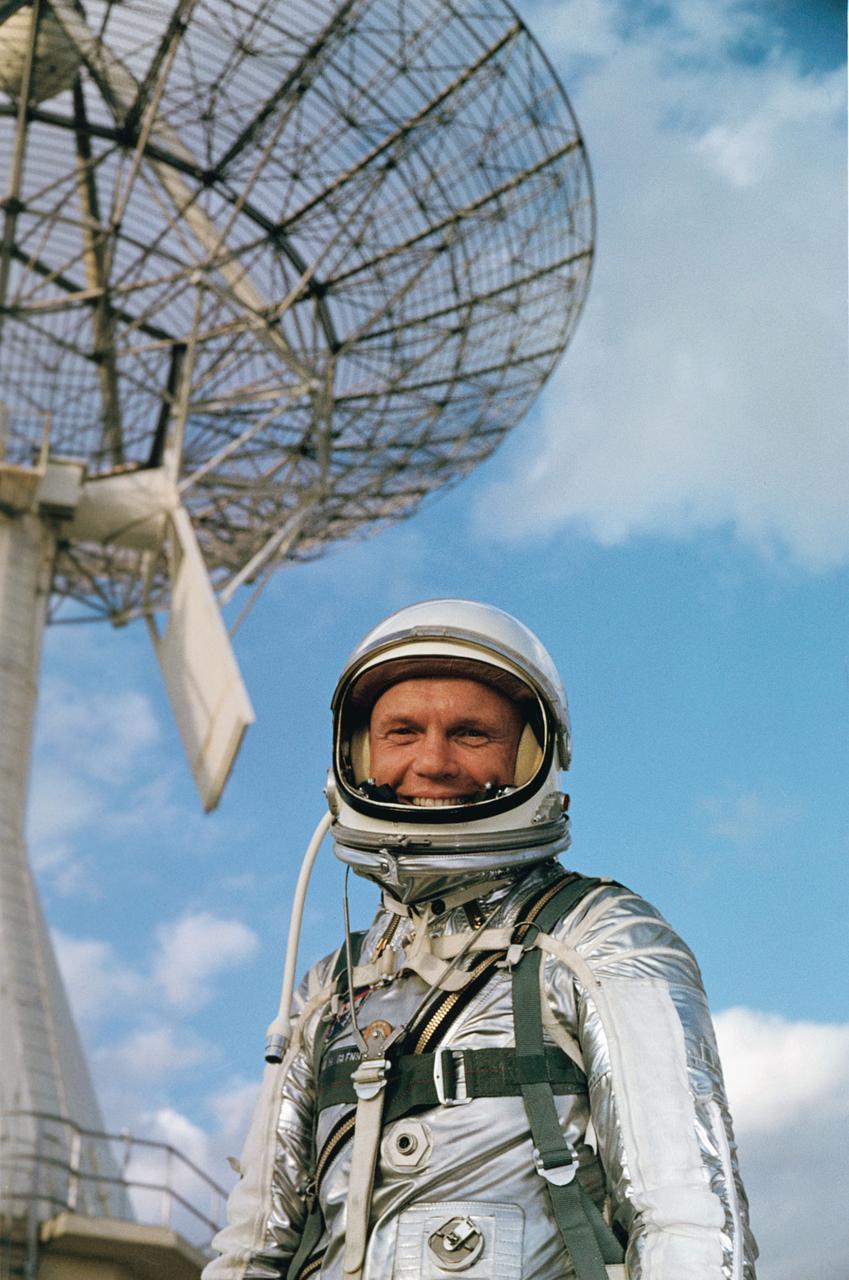
January 1962 -- Project Mercury Astronaut John H. Glenn Jr., prime pilot for the MA-6 mission.
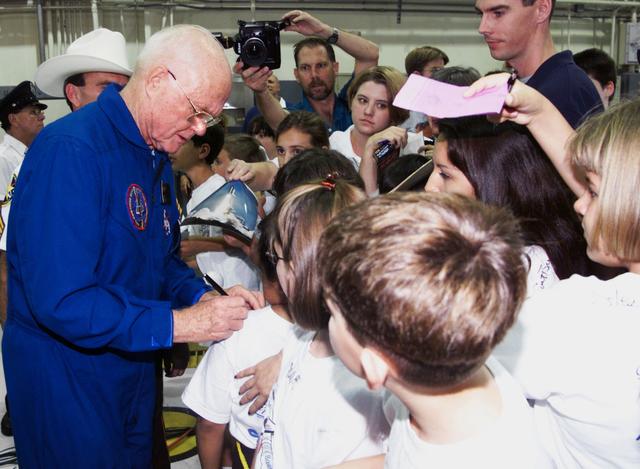
John Glenn signs autographs for school children following his STS-95 flight aboard the space shuttle Discovery.
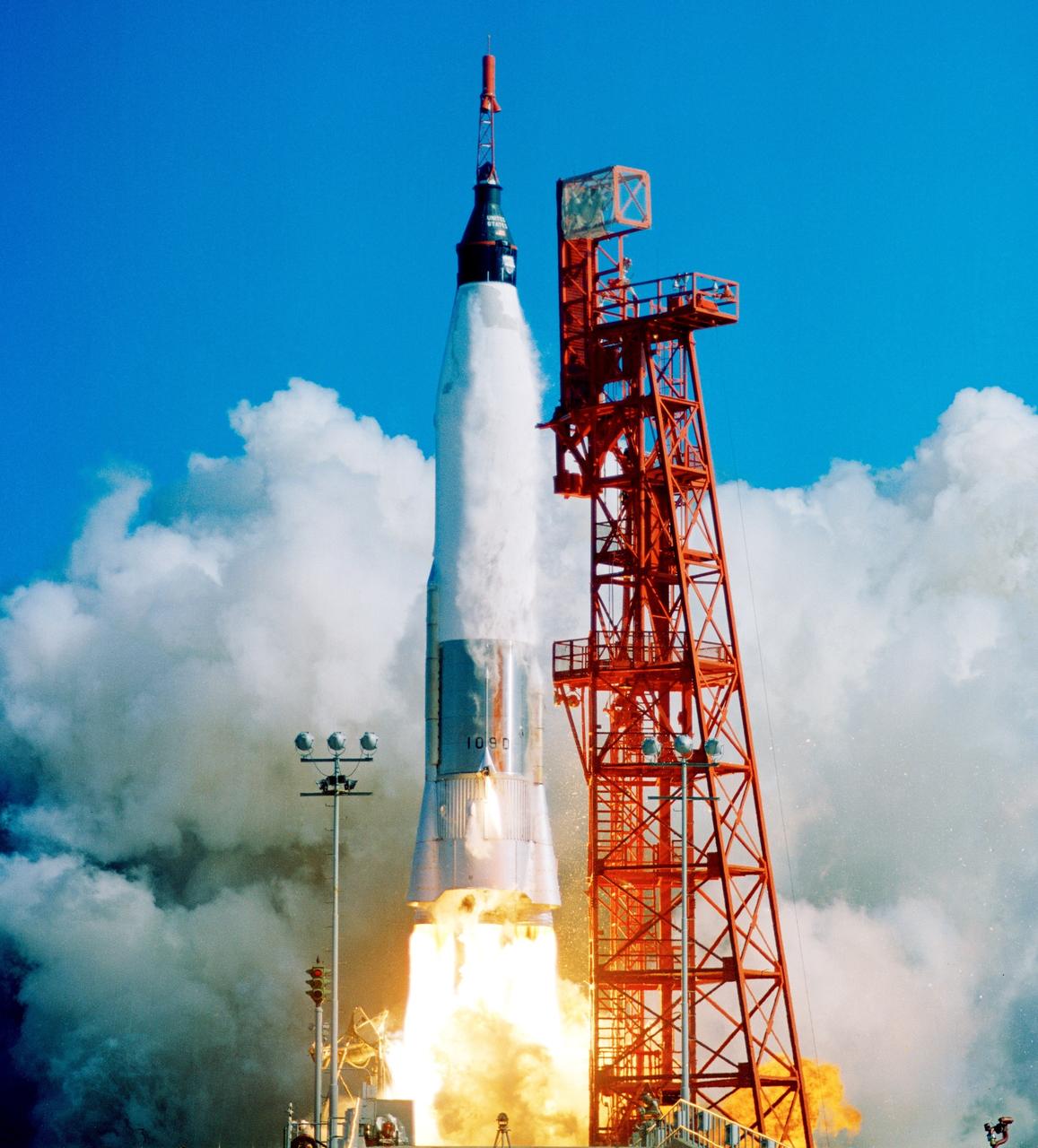
Mercury Atlas-6 lifts off on Feb. 20, 1962 carrying astronaut John Glenn on America's first orbital spaceflight.
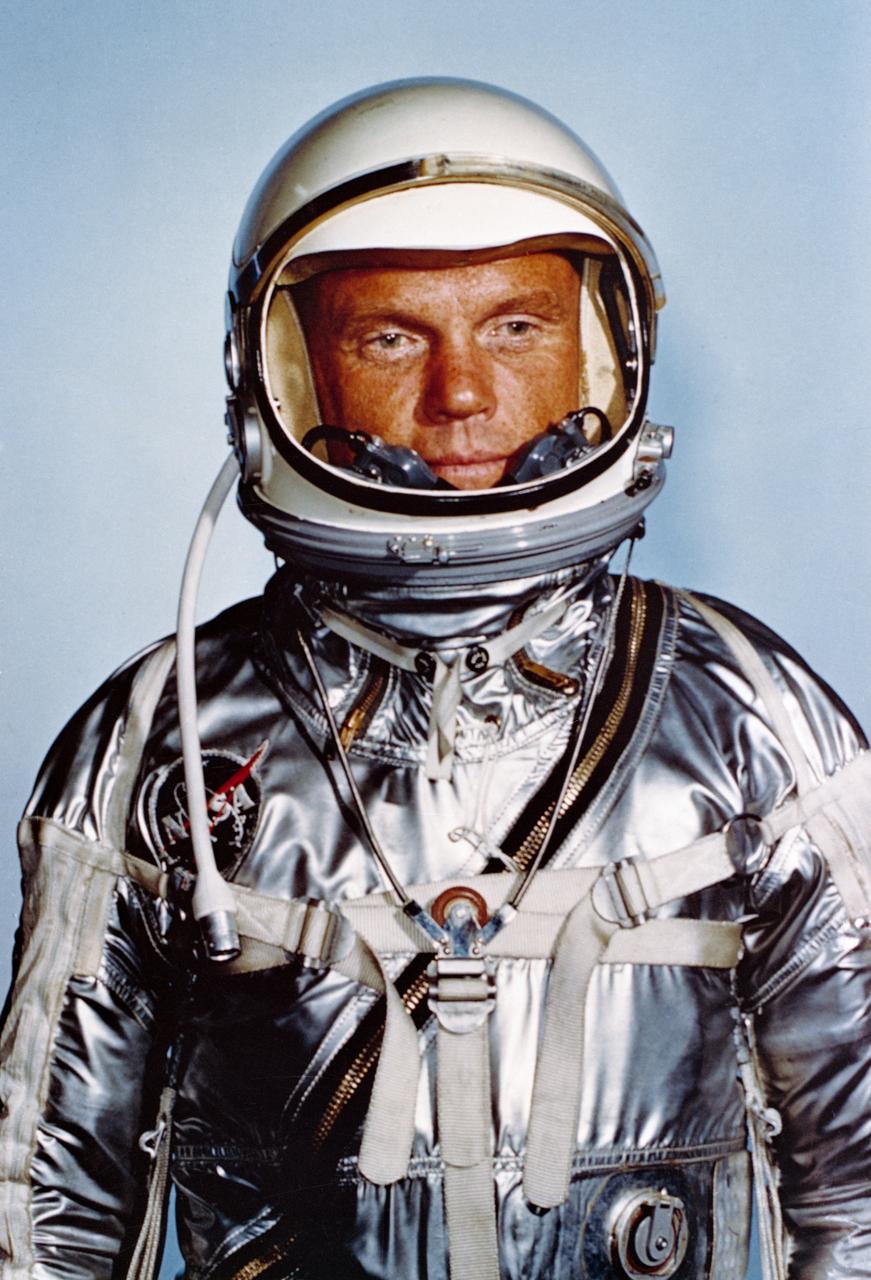
February 1962 -- Astronaut John H. Glenn Jr., Mercury-Atlas 6 pilot.
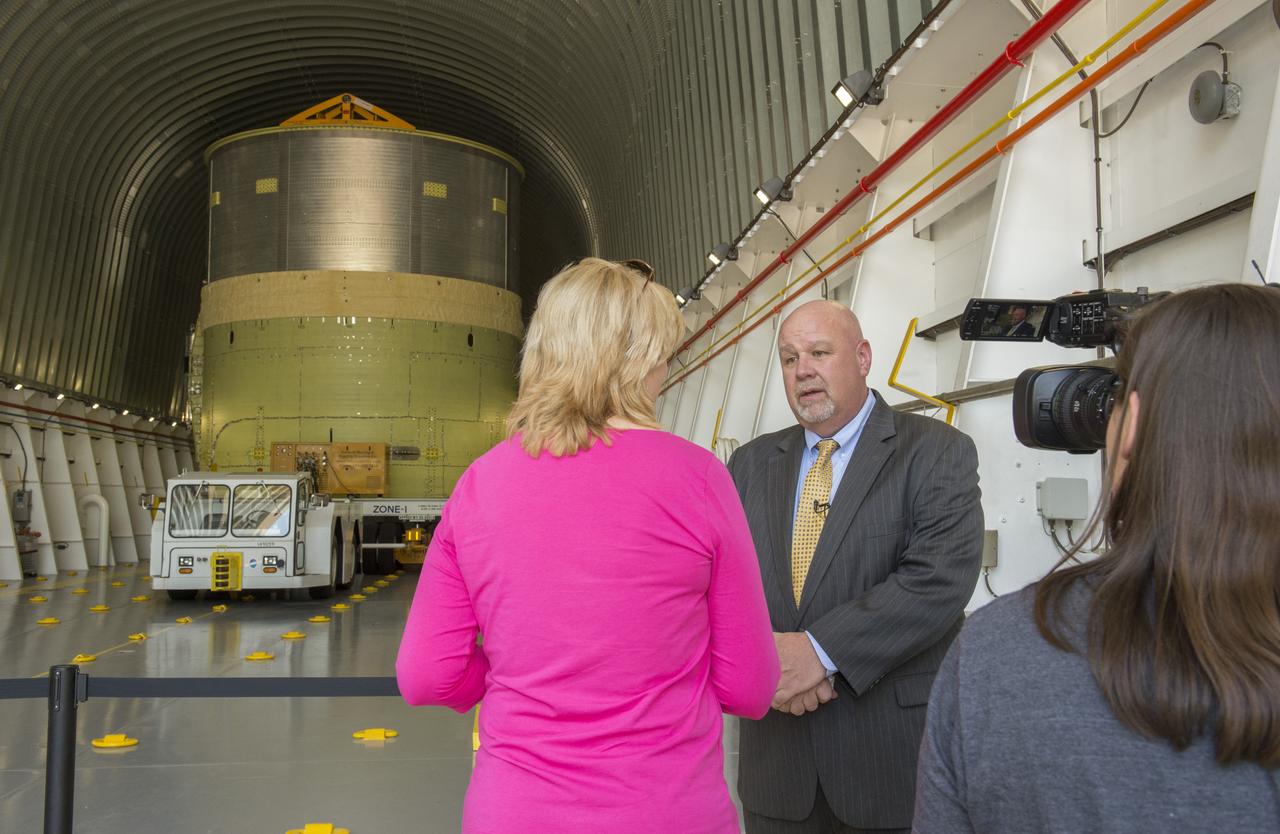
John Honeycutt talks with reporters on NASA Barge Pegasus

John Honeycutt talks with reporters on NASA Barge Pegasus
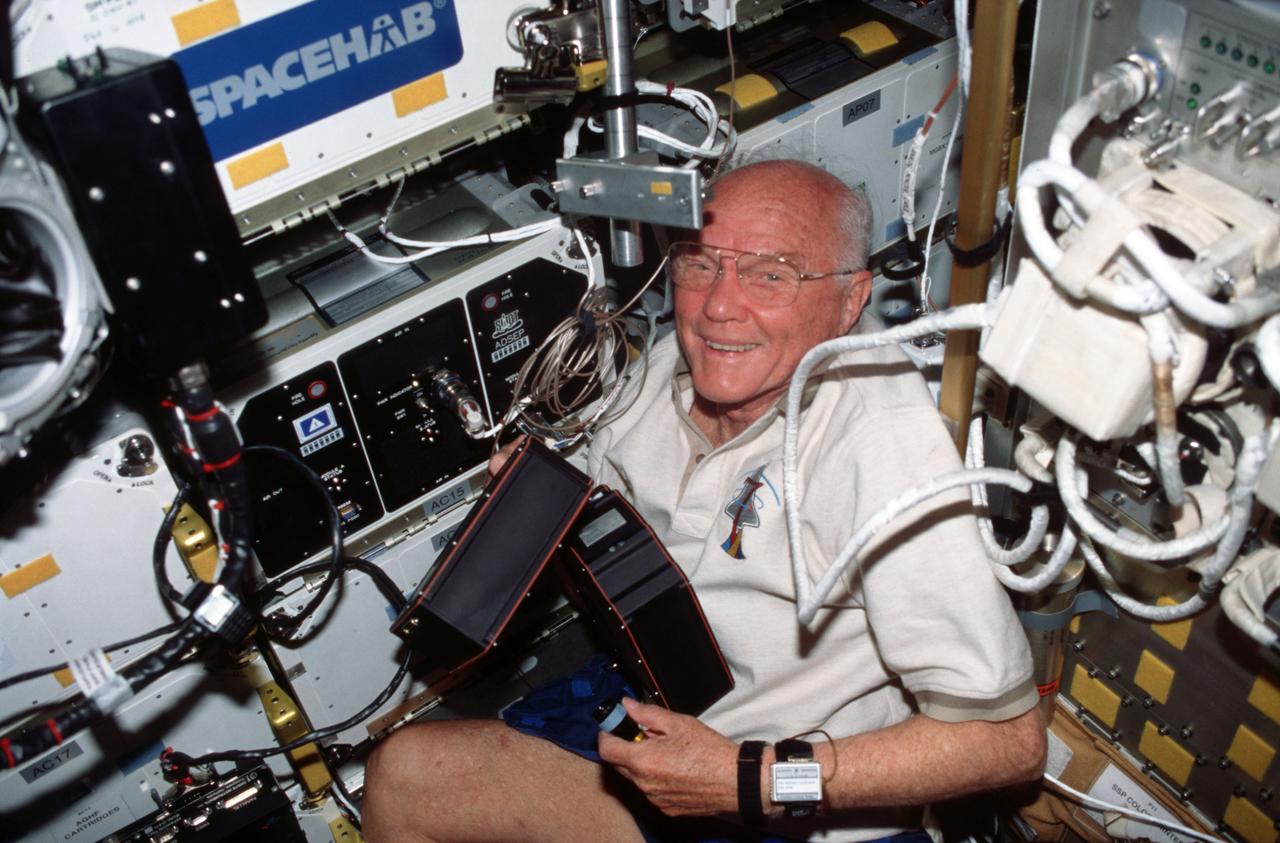
Oct. 1998 -- STS-95 payload specialist John Glenn removes the Advanced Organic Separation (ADSEP) cartridges and moves them to the Spacehab module.
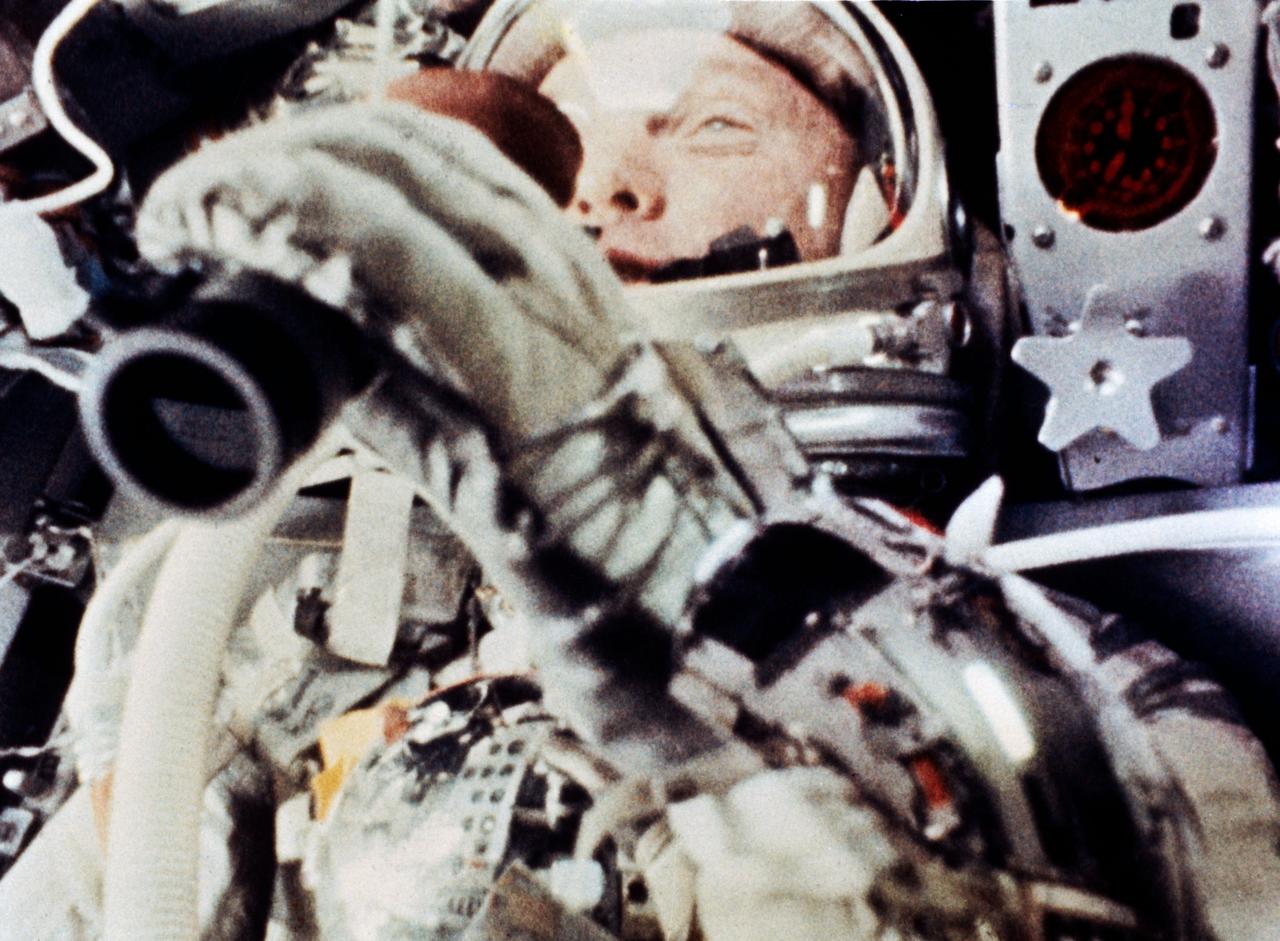
Astronaut John H. Glenn Jr. uses binoculars to view the Earth through the window of the Mercury-Atlas (MA-6) Friendship 7 capsule during the U.S.'s initial orbital flight.
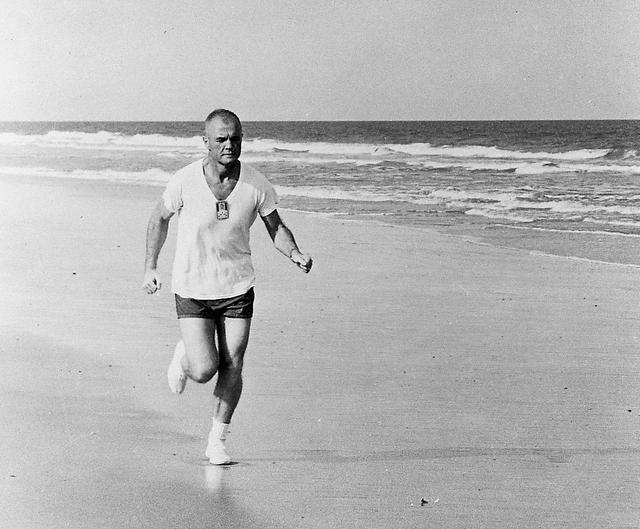
1962 -- Running along the beach at Cape Canaveral, Florida, astronaut John H. Glenn Jr., pilot of the Mercury-Atlas 6 mission, participates in a strict physical training program, as he exemplifies by frequent running.
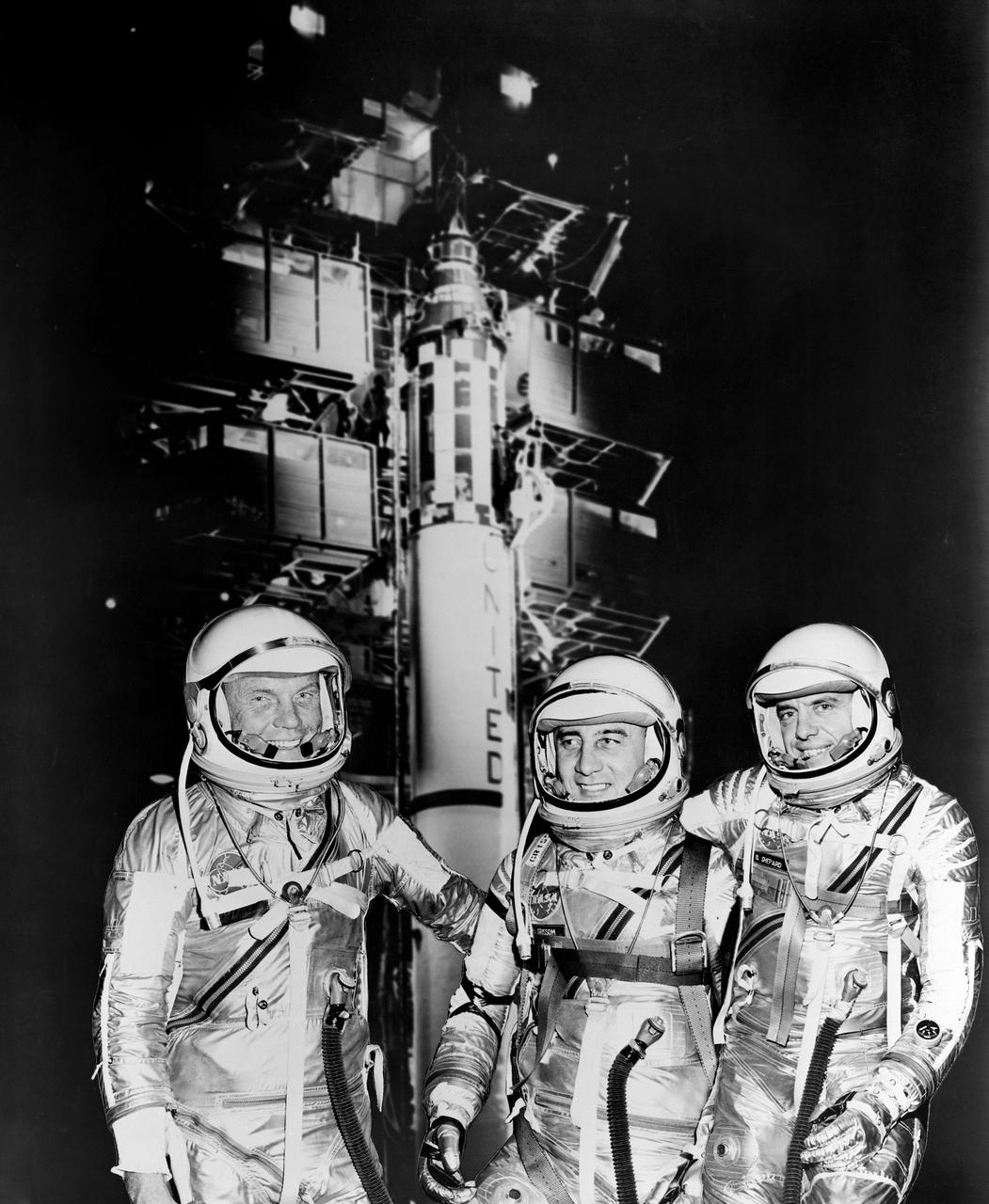
1961 -- The first three Americans in space, Mercury astronauts, from the left, John H. Glenn Jr., Virgil I. (Gus) Grissom and Alan B. Shepard Jr. standing by Redstone rocket in their spacesuits.
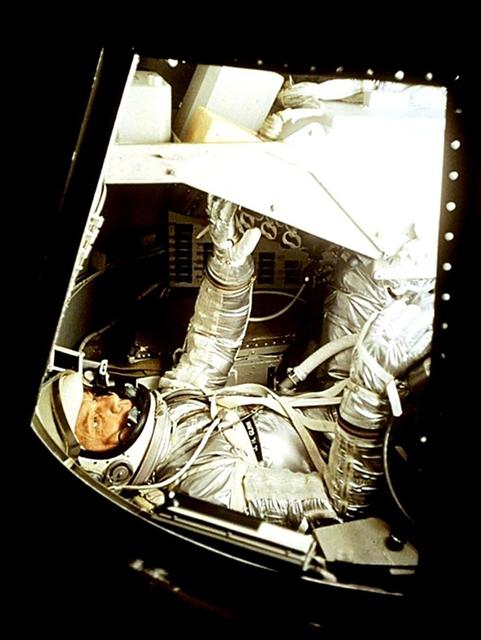
January 1962 -- Project Mercury Astronaut John H. Glenn Jr., prime pilot for the MA-6 mission, takes a work-out in the procedures trainer in preparation for the flight.
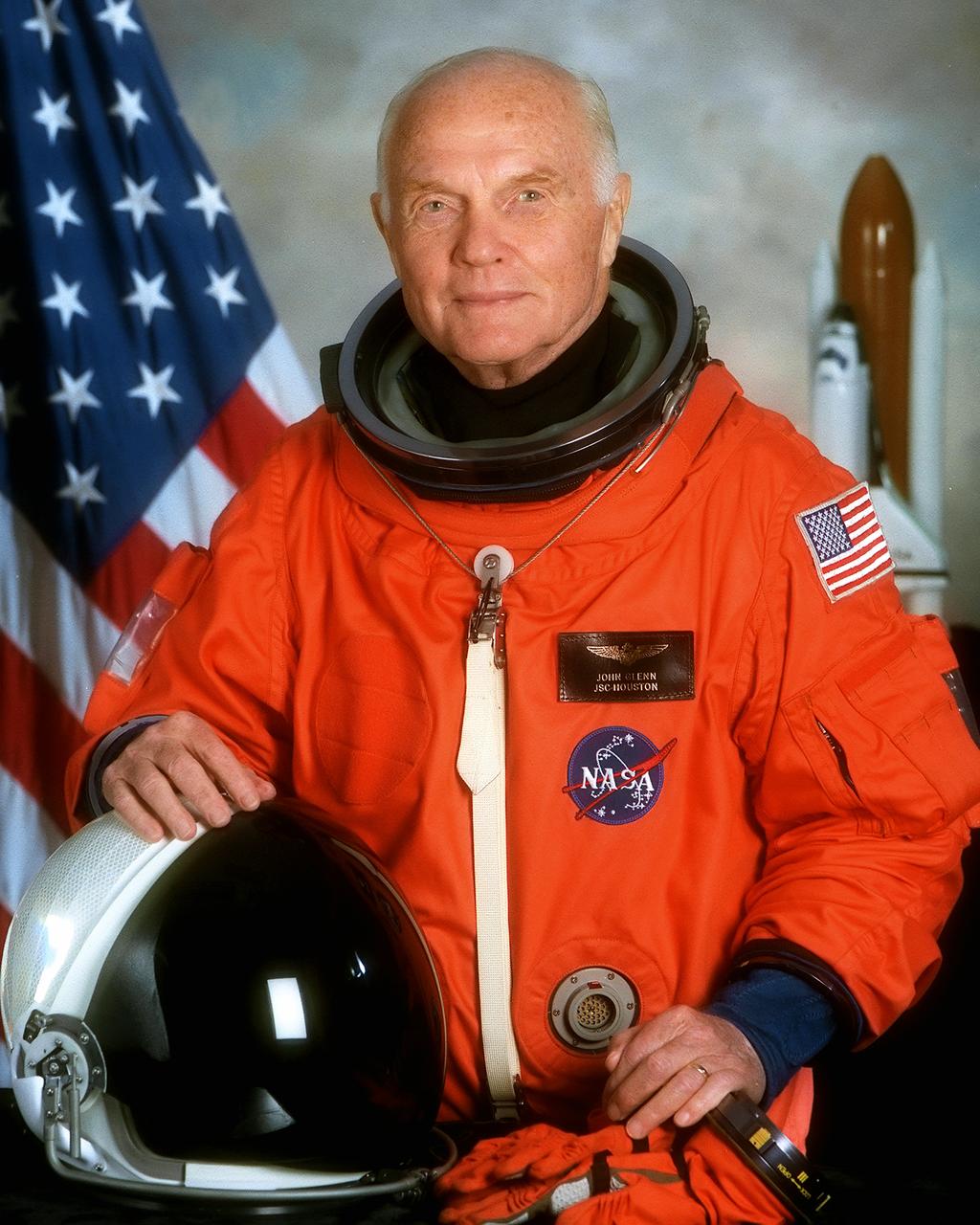
1998 -- John H. Glenn Jr. is a former American astronaut, Marine Corps fighter pilot, and United States Senator. He was the third American to fly in space and the first American to orbit the Earth. This photo for his second space flight on Oct. 29, 1998, on Space Shuttle Discovery's STS-95.
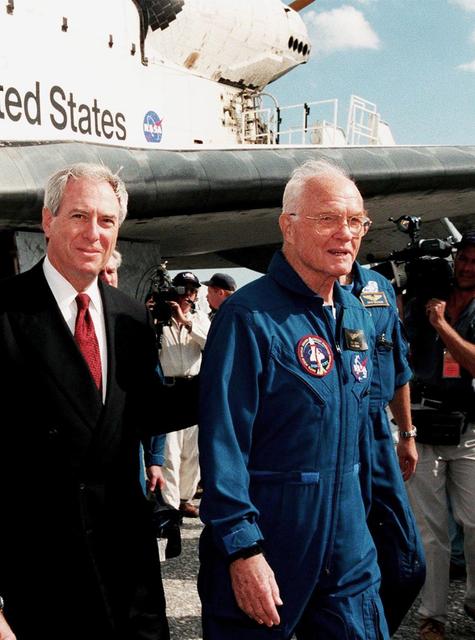
NASA Administrator Dan Goldin, left, walks with Sen. John Glenn (D-Ohio) on Nov. 7, 1998. Glenn had just returned to Earth following the STS-95 space shuttle mission. Glenn's initial trip into space on Feb. 20, 1962 aboard Mercury 6 made him the first American in orbit.
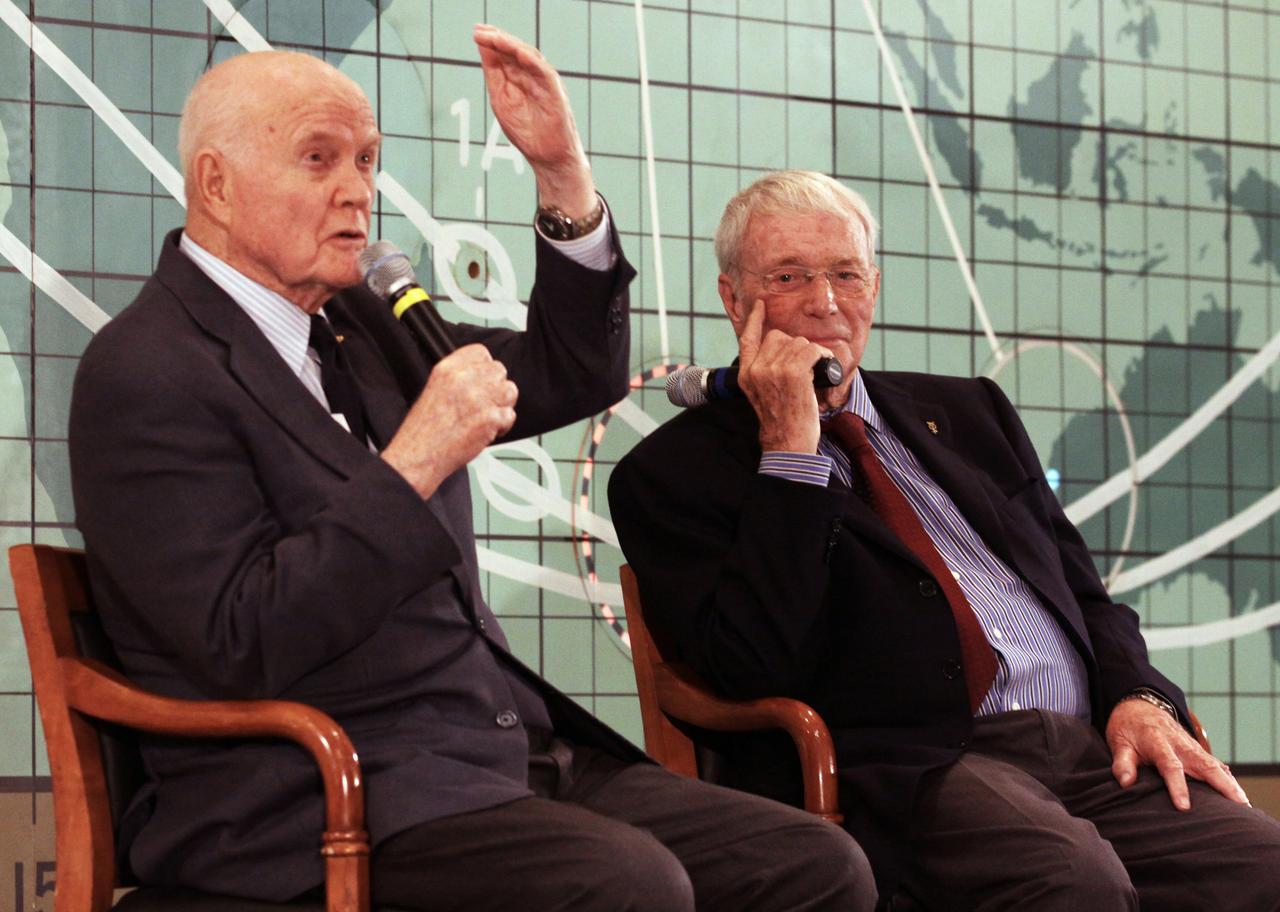
Mercury astronauts John Glenn, left, and Scott Carpenter sit in front of the plot board from the Mercury control center on display at the Kennedy Space Center Visitor Complex. The astronauts, part of the original class of seven astronauts chosen by NASA, were taking part in a question-and-answer session with the media as part of events celebrating 50 years of Americans in orbit, an era which began with John Glenn's Mercury mission MA-6, on Feb. 20, 1962. Glenn's launch aboard an Atlas rocket took with it the hopes of an entire nation and ushered in a new era of space travel that eventually led to Americans walking on the moon by the end of the 1960s. Glenn soon was followed into orbit by Carpenter, Walter Schirra and Gordon Cooper. Their fellow Mercury astronauts Alan Shepard and Virgil "Gus" Grissom flew earlier suborbital flights. Deke Slayton was grounded by a medical condition until the Apollo-Soyuz Test Project in 1975.
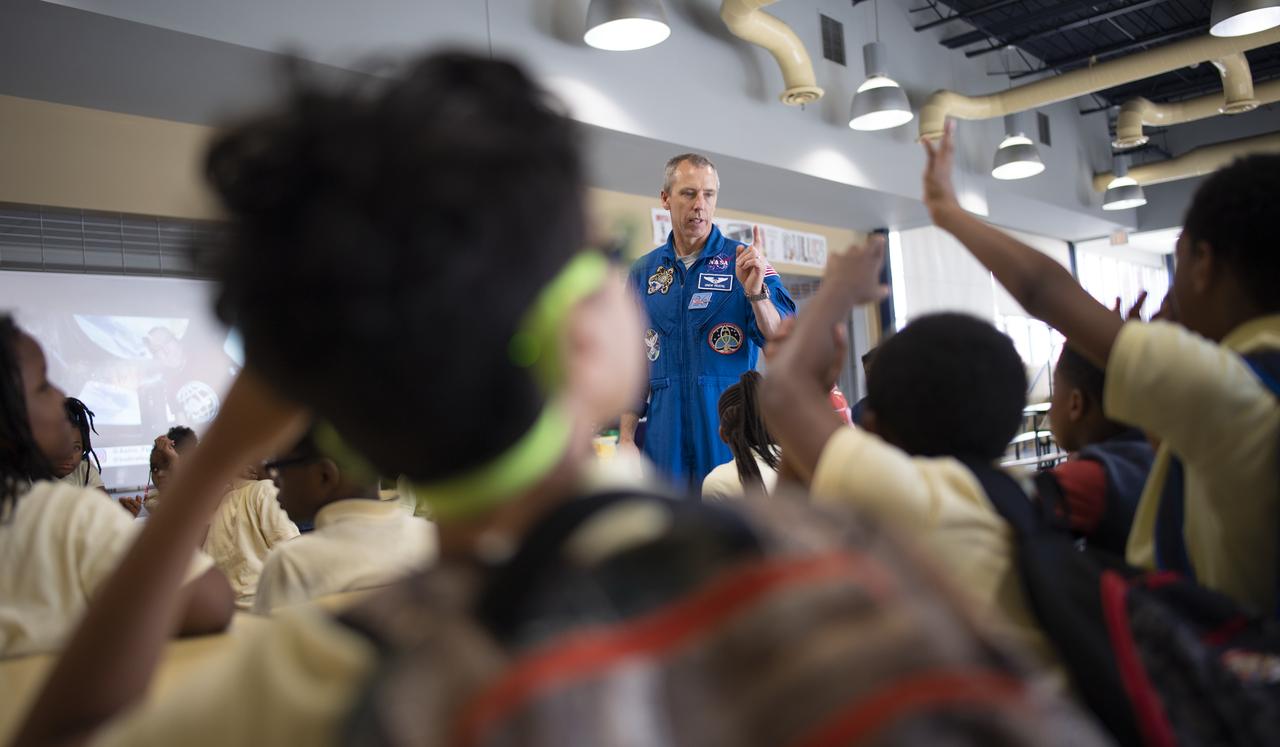
NASA astronaut Drew Feustel speaks to students at John Burroughs Elementary School about his experiences on two space shuttle missions, STS-125 and STS-134, and a long duration mission onboard the International Space Station, Tuesday, May 7, 2019 in Washington, DC. Feustel most recently spent 197 days living and working onboard the International Space Station as part of Expedition 55 and as commander of Expedition 56. Feustel ventured outside the space station on three spacewalks, moving him up to second among U.S. spacewalkers with a cumulative time of 61 hours 48 minutes over nine spacewalks. Photo Credit: (NASA/Joel Kowsky)
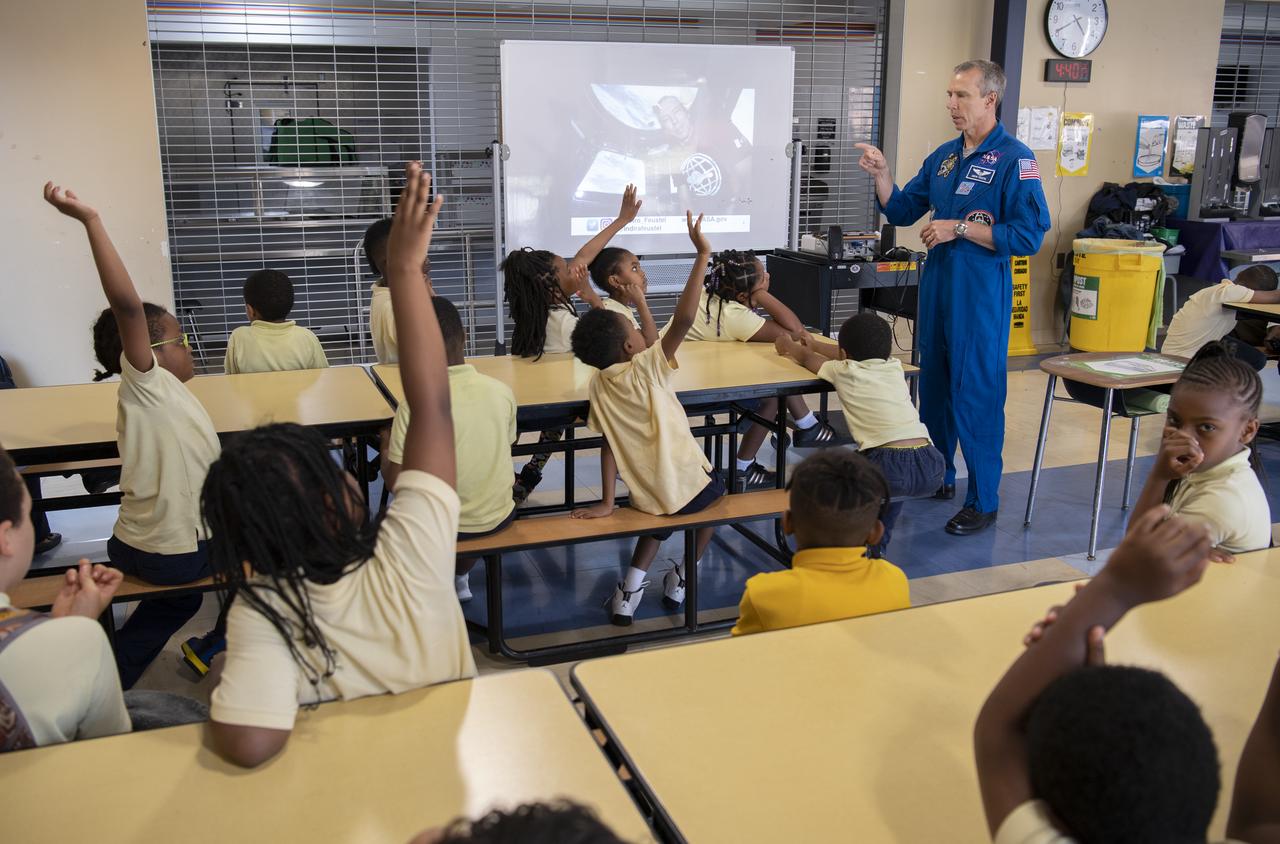
NASA astronaut Drew Feustel speaks to students at John Burroughs Elementary School about his experiences on two space shuttle missions, STS-125 and STS-134, and a long duration mission onboard the International Space Station, Tuesday, May 7, 2019 in Washington, DC. Feustel most recently spent 197 days living and working onboard the International Space Station as part of Expedition 55 and as commander of Expedition 56. Feustel ventured outside the space station on three spacewalks, moving him up to second among U.S. spacewalkers with a cumulative time of 61 hours 48 minutes over nine spacewalks. Photo Credit: (NASA/Joel Kowsky)
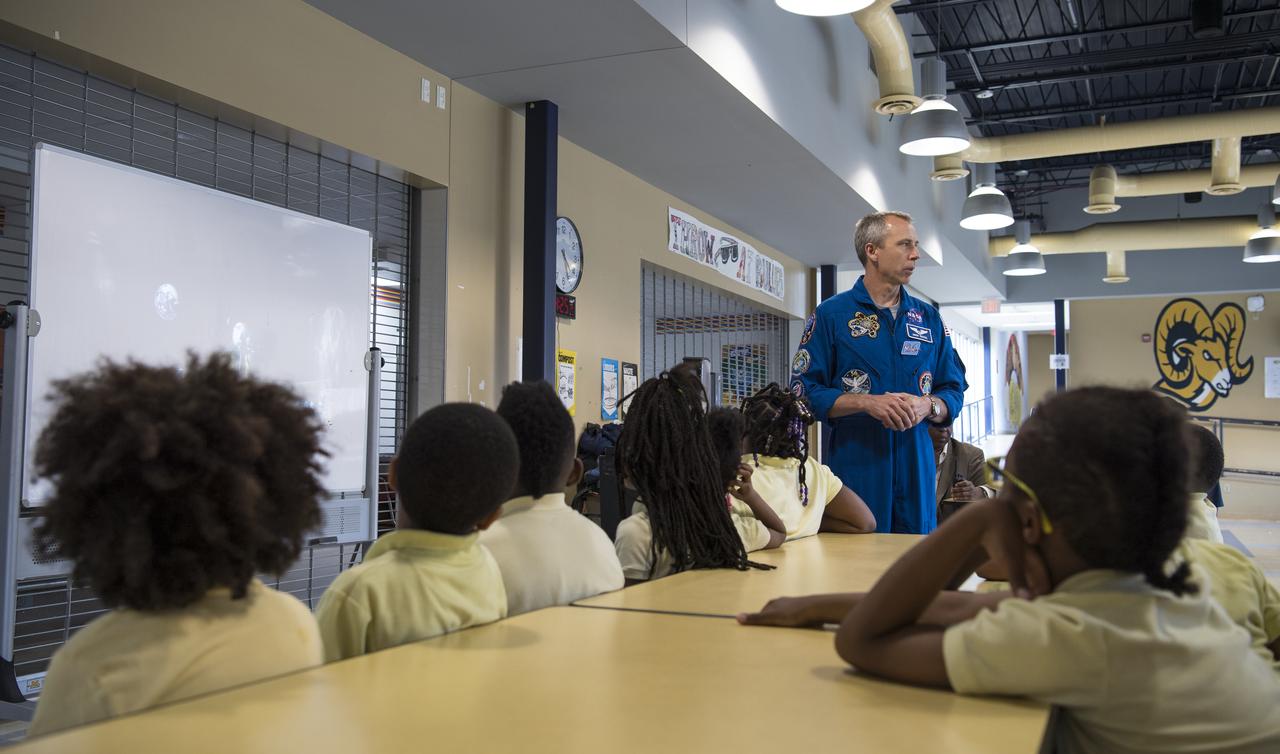
NASA astronaut Drew Feustel speaks to students at John Burroughs Elementary School about his experiences on two space shuttle missions, STS-125 and STS-134, and a long duration mission onboard the International Space Station, Tuesday, May 7, 2019 in Washington, DC. Feustel most recently spent 197 days living and working onboard the International Space Station as part of Expedition 55 and as commander of Expedition 56. Feustel ventured outside the space station on three spacewalks, moving him up to second among U.S. spacewalkers with a cumulative time of 61 hours 48 minutes over nine spacewalks. Photo Credit: (NASA/Joel Kowsky)
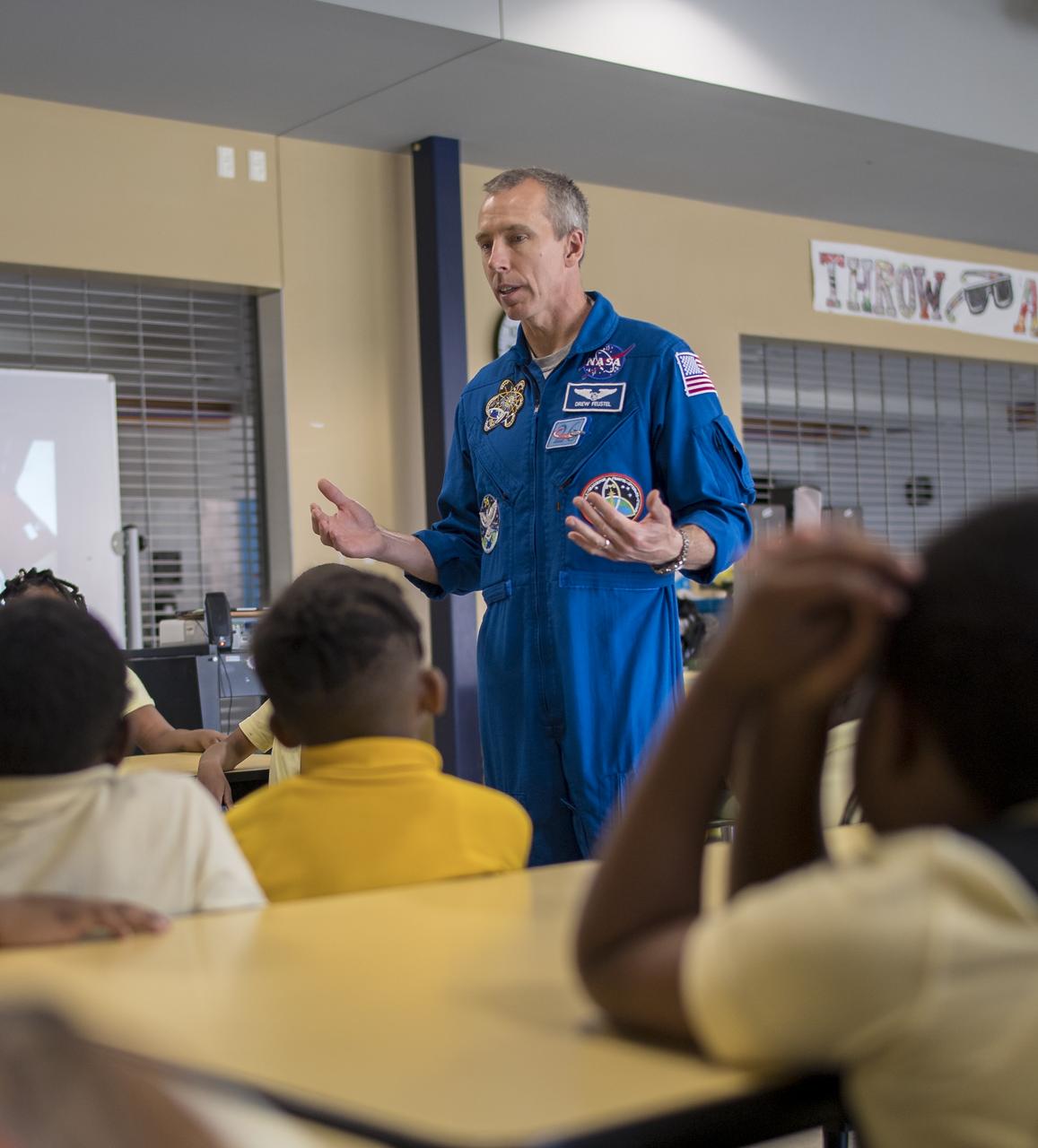
NASA astronaut Drew Feustel speaks to students at John Burroughs Elementary School about his experiences on two space shuttle missions, STS-125 and STS-134, and a long duration mission onboard the International Space Station, Tuesday, May 7, 2019 in Washington, DC. Feustel most recently spent 197 days living and working onboard the International Space Station as part of Expedition 55 and as commander of Expedition 56. Feustel ventured outside the space station on three spacewalks, moving him up to second among U.S. spacewalkers with a cumulative time of 61 hours 48 minutes over nine spacewalks. Photo Credit: (NASA/Joel Kowsky)
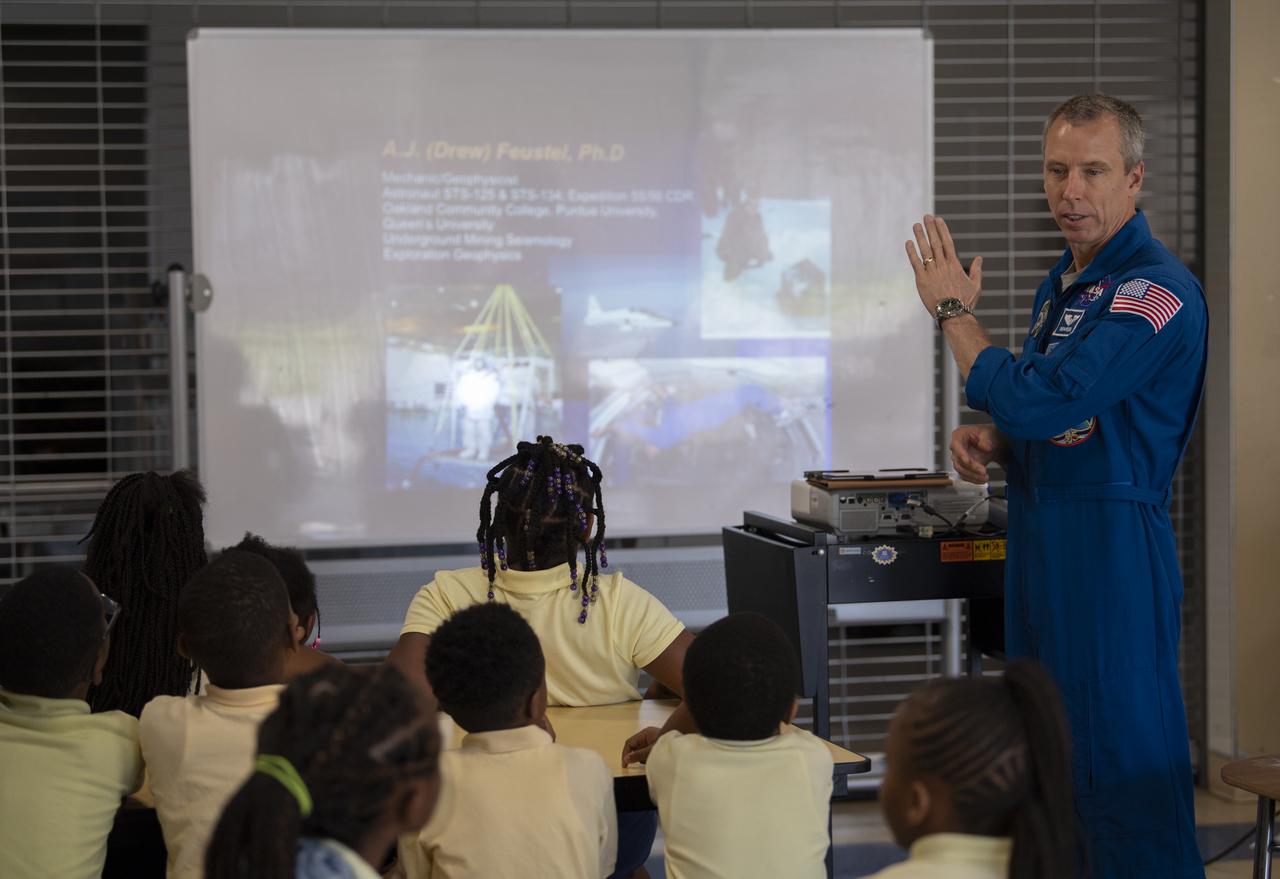
NASA astronaut Drew Feustel speaks to students at John Burroughs Elementary School about his experiences on two space shuttle missions, STS-125 and STS-134, and a long duration mission onboard the International Space Station, Tuesday, May 7, 2019 in Washington, DC. Feustel most recently spent 197 days living and working onboard the International Space Station as part of Expedition 55 and as commander of Expedition 56. Feustel ventured outside the space station on three spacewalks, moving him up to second among U.S. spacewalkers with a cumulative time of 61 hours 48 minutes over nine spacewalks. Photo Credit: (NASA/Joel Kowsky)
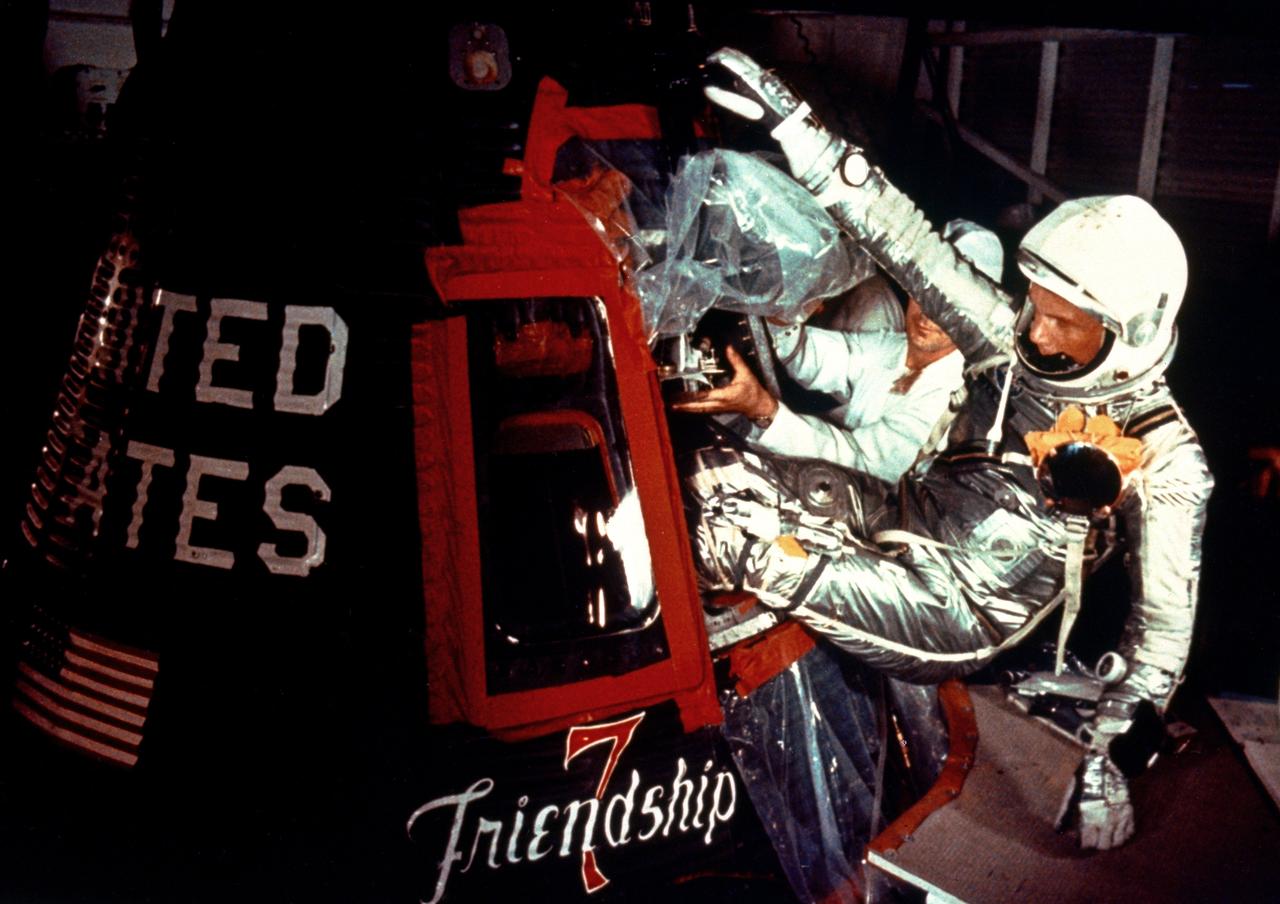
Project Mercury astronaut John H. Glenn Jr., enters the Friendship 7 spacecraft during the last part of the countdown on Feb. 20, 1962. At 9:47 a.m. EST, the Atlas launch vehicle lifted the spacecraft into orbit for a three-orbit mission lasting four hours, 55 minutes and 23 seconds. Glenn and his spacecraft were recovered by the destroyer Noa just 21 minutes after landing in the Atlantic near Grand Turk Island, to successfully complete the nation's first manned orbital flight.

John Mather, Project Scientist for JWST, faces the James Webb Space Telescope primary mirror, taking a selfie, NASA/Goddard Space Flight Center, Greenbelt, MD, May 4, 2016
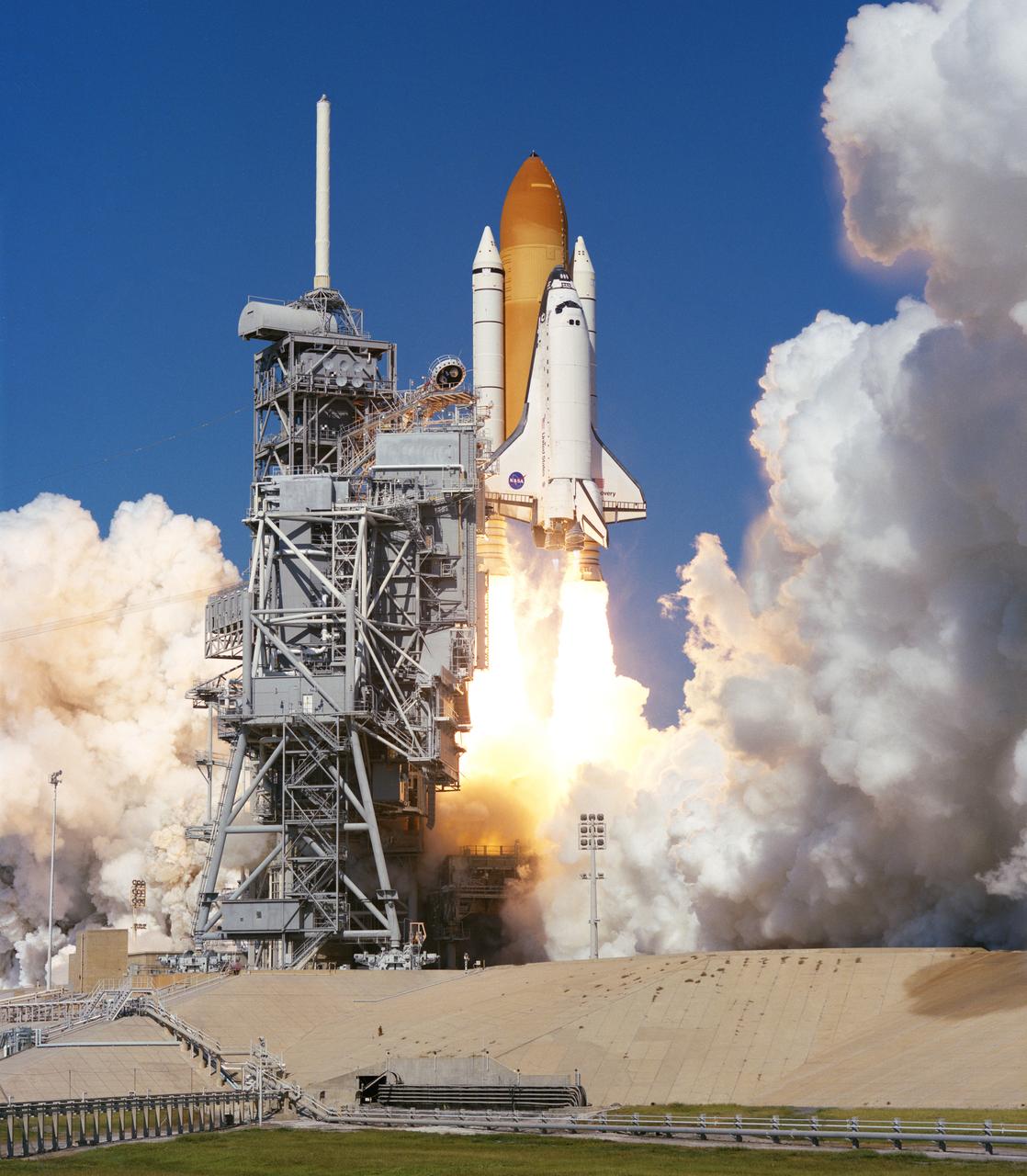
The space shuttle Discovery lifts off Launch Pad 39B to begin a nine-day mission in Earth-orbit. Launch was at 2:19 p.m. EST, Oct. 29, 1998. Onboard were Curtis L. Brown Jr., Steven W. Lindsey, Scott F. Parazynski, Steven K. Robinson, Pedro Duque, United States Senator John H. Glenn Jr. and Chiaki Naito-Mukai. Duque is a mission specialist representing the European Space Agency (ESA) and Mukai is a payload specialist representing Japan's National Space Development Agency (NASDA). Glenn, making his second spaceflight but his first in 36 years, joins Mukai as a payload specialist on the mission.
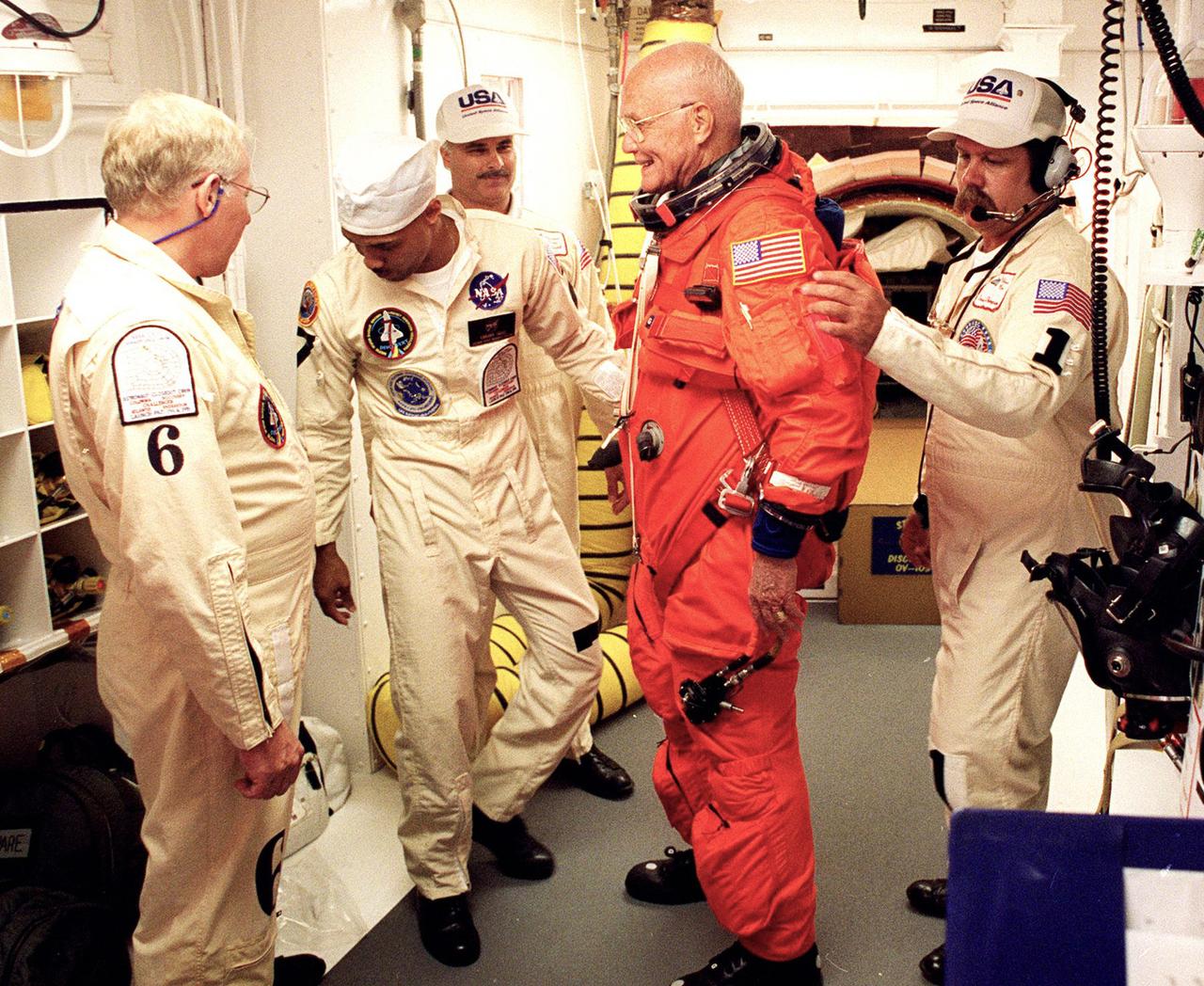
In the white room at the Kenndy Space Center's Launch Pad 39B, STS-95 Payload Specialist John H. Glenn Jr., senator from Ohio, is prepared by closeout room crew members Danny Wyatt (left to right), Carlous Gillis, Jim Kelly and Travis Thompson for entry into the Space Shuttle Discovery for his second flight into space after 36 years. The STS-95 mission, targeted for launch at 2 p.m. EST on Oct. 29, is expected to last 8 days, 21 hours and 49 minutes, and return to KSC at 11:49 a.m. EST on Nov. 7.
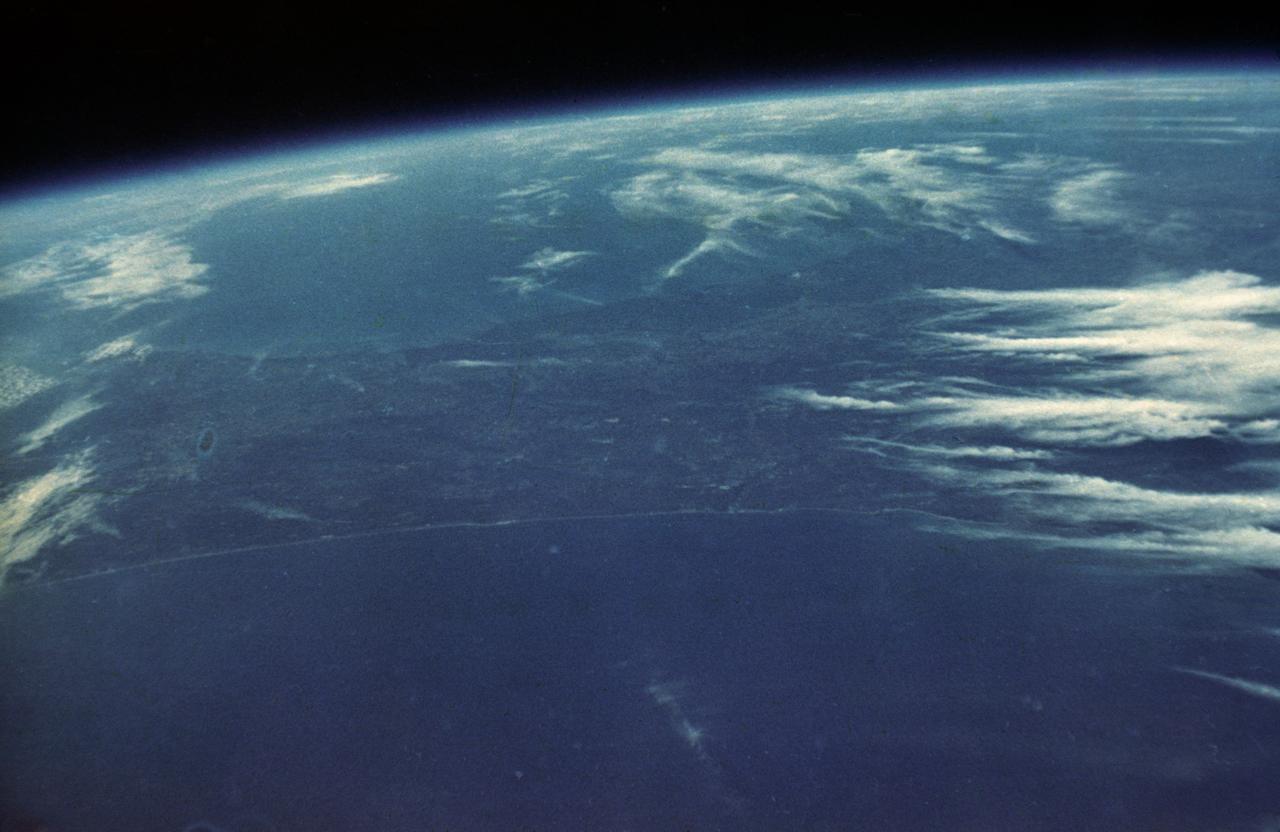
S62-06009 (20 Feb. 1962) --- View of Earth taken by astronaut John H. Glenn Jr. during his Mercury Atlas 6 (MA-6) spaceflight. Photo credit: NASA
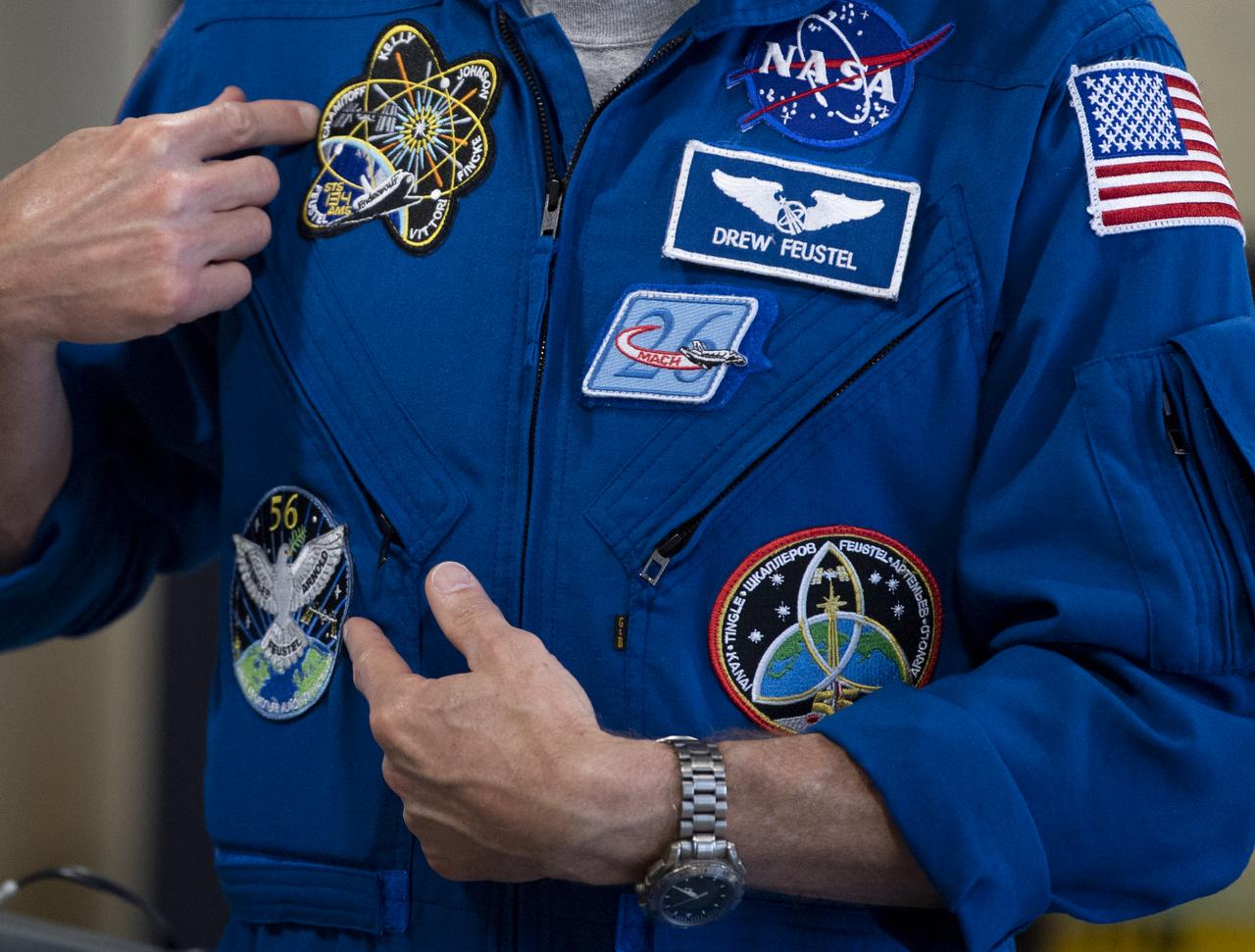
NASA astronaut Drew Feustel points to mission patches on his flight suit as he speaks to students at John Burroughs Elementary School about his experiences on two space shuttle missions, STS-125 and STS-134, and a long duration mission onboard the International Space Station, Tuesday, May 7, 2019 in Washington, DC. Feustel most recently spent 197 days living and working onboard the International Space Station as part of Expedition 55 and as commander of Expedition 56. Feustel ventured outside the space station on three spacewalks, moving him up to second among U.S. spacewalkers with a cumulative time of 61 hours 48 minutes over nine spacewalks. Photo Credit: (NASA/Joel Kowsky)
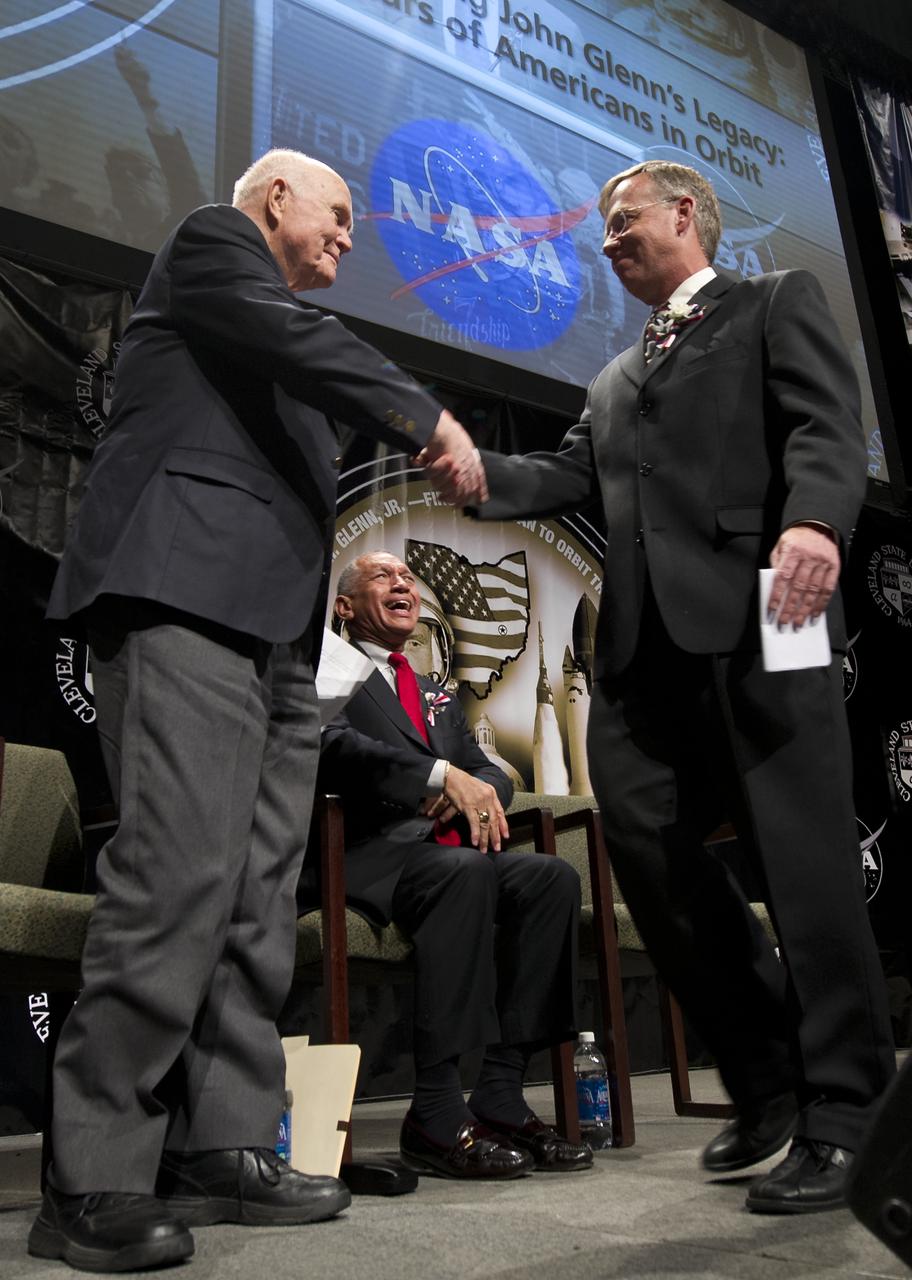
Sen. John Glenn, left, shakes hands with former Astronaut Steve Lindsey as NASA Administrator Charles Bolden smiles at an event celebrating John Glenn's legacy and 50 years of americans in orbit held at the Cleveland State University Wolstein Center on Friday, March 3, 2012 in Cleveland, Ohio. In 1998 Lindsey flew onboard the space shuttle Discovery along with then 77 year-old Sen. John Glenn for the STS-95 mission. Glenn became the first American to orbit Earth in 1962. Photo Credit: (NASA/Bill Ingalls)
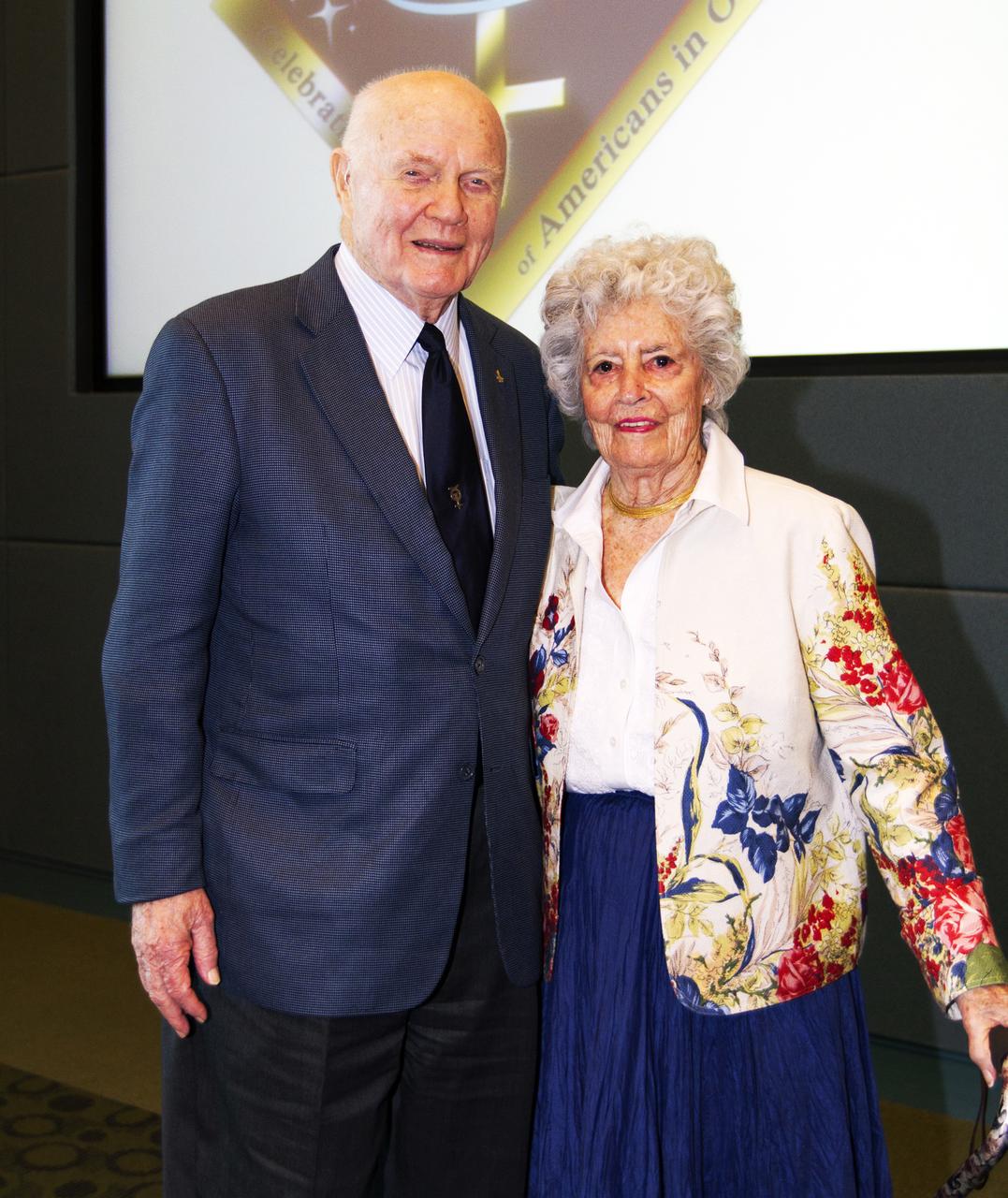
Mercury astronaut John Glenn and his wife, Annie, pose during a luncheon Feb. 17, 2012, celebrating 50 years of Americans in orbit, an era which began with Glenn's Mercury mission MA-6, on Feb. 20, 1962. Glenn's launch aboard an Atlas rocket took with it the hopes of an entire nation and ushered in a new era of space travel that eventually led to Americans walking on the moon by the end of the 1960s. Glenn soon was followed into orbit by Scott Carpenter, Walter Schirra and Gordon Cooper. Their fellow Mercury astronauts Alan Shepard and Virgil "Gus" Grissom flew earlier suborbital flights. Deke Slayton, a member of NASA's original Mercury 7 astronauts, was grounded by a medical condition until the Apollo-Soyuz Test Project in 1975.
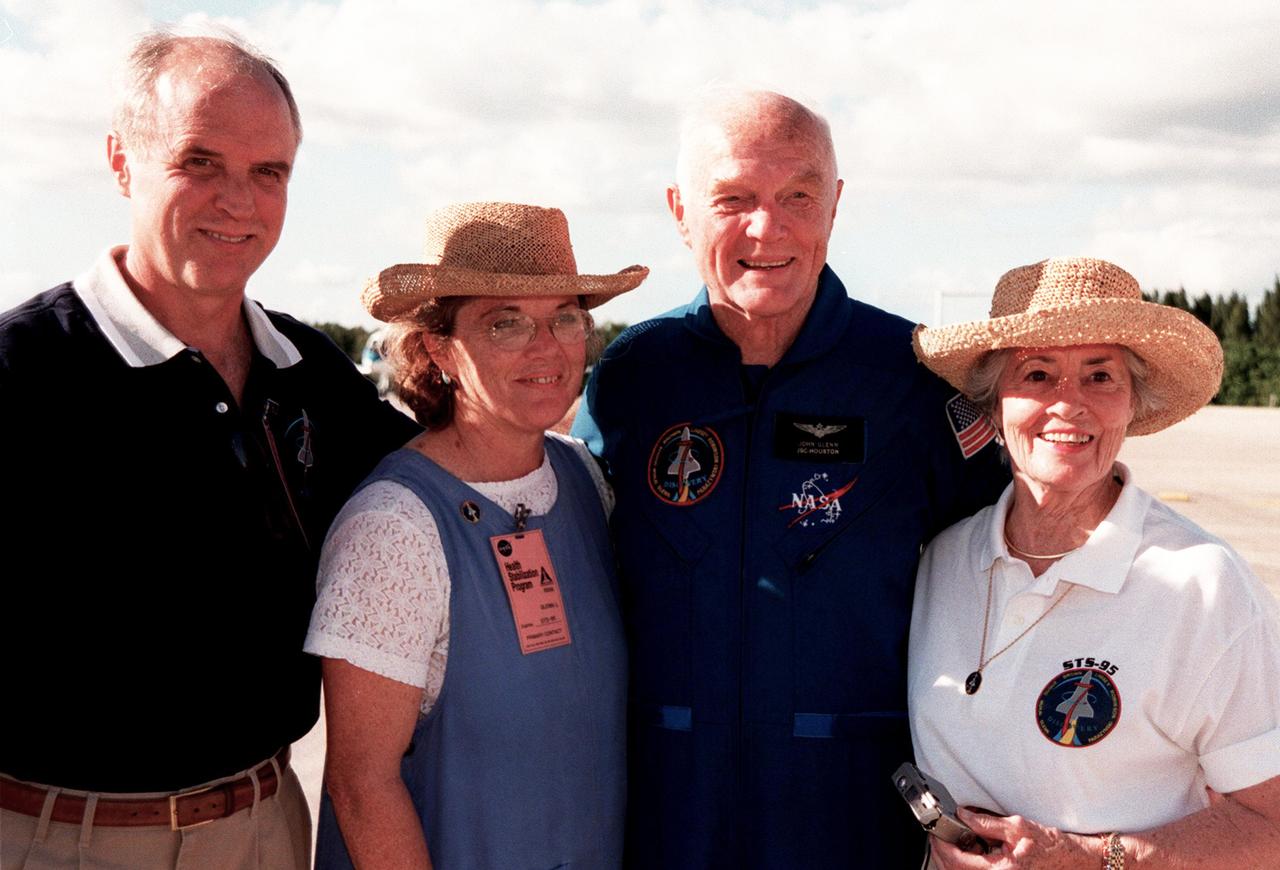
STS-95 Payload Specialist John H. Glenn Jr. (second from right), senator from Ohio, poses (left to right) with his son, David, daughter, Lyn, and (far right) his wife, Annie, after landing at Kennedy Space Center's Shuttle Landing Facility aboard a T-38 jet. Glenn and other crewmembers flew into KSC to make final preparations for launch. Targeted for liftoff at 2 p.m. on Oct. 29, the STS-95 mission includes research payloads such as the Spartan solar-observing deployable spacecraft, the Hubble Space Telescope Orbital Systems Test Platform, the International Extreme Ultraviolet Hitchhiker, as well as the SPACEHAB single module with experiments on space flight and the aging process.
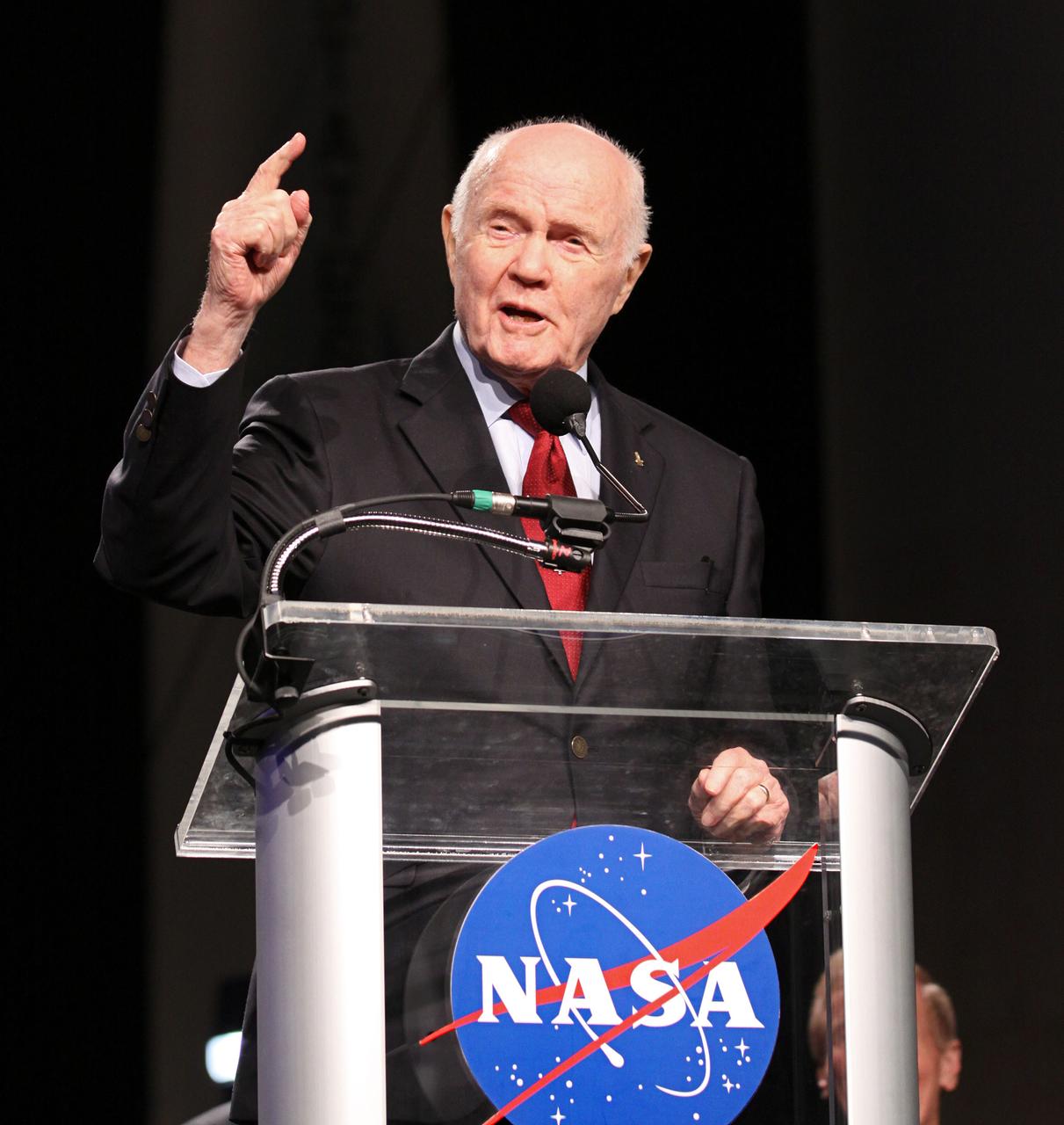
Mercury astronaut John Glenn speaks during the "On Shoulders of Giants" program celebrating 50 years of Americans in orbit, an era which began with Glenn's MA-6 mission on Feb. 20, 1962. The event was conducted in the Rocket Garden at the Kennedy Space Center Visitor Complex in Florida a few miles from the launch pad where Glenn and Scott Carpenter took flight in Mercury spacecraft. Glenn's launch aboard an Atlas rocket took with it the hopes of an entire nation and ushered in a new era of space travel that eventually led to Americans walking on the moon by the end of the 1960s. Glenn soon was followed into orbit by Scott Carpenter, Walter Schirra and Gordon Cooper. Their fellow Mercury astronauts Alan Shepard and Virgil "Gus" Grissom flew earlier suborbital flights. Deke Slayton, a member of NASA's original Mercury 7 astronauts, was grounded by a medical condition until the Apollo-Soyuz Test Project in 1975.
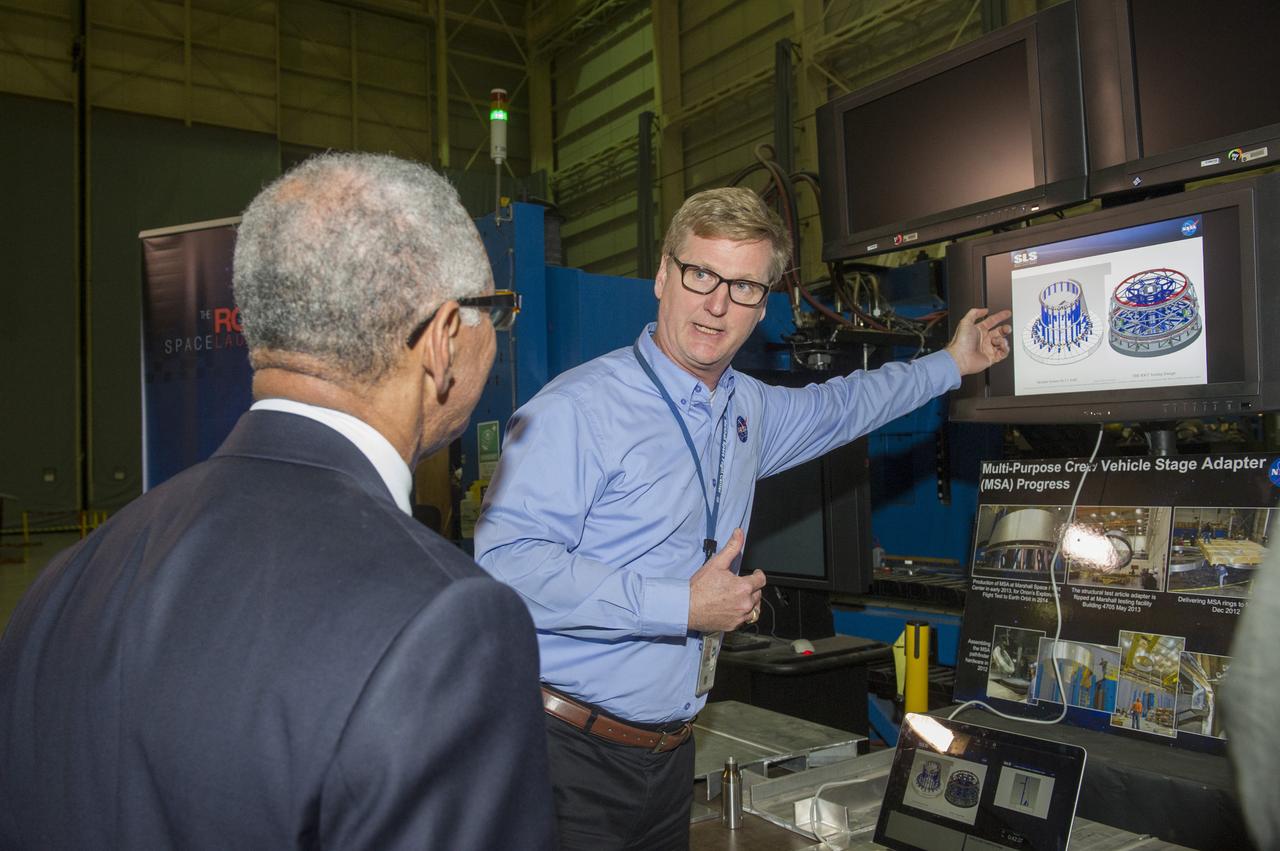
NASA ADMINISTRATOR BOLDEN GETS SLS HARDWARE UPDATE FROM JOHN STREET
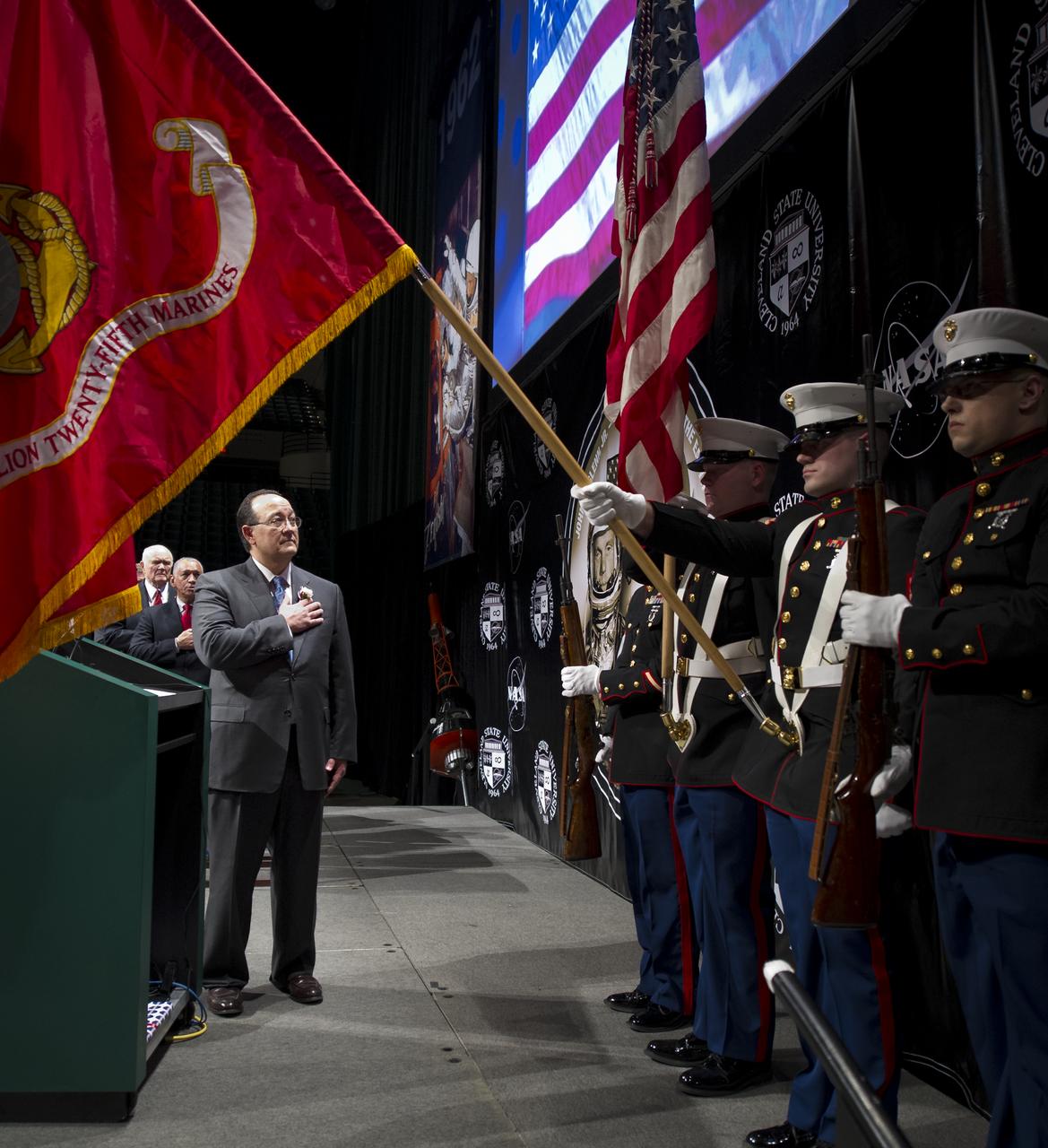
NASA Glenn Research Center Director Ray Lugo, foreground, NASA Administrator Charles Bolden, and Sen. John Glenn, background, stand during the presentation of colors by the 3rd Battalion, 25th Marine Regiment, at the start of an event celebrating John Glenn's legacy and 50 years of americans in orbit held at the Cleveland State University Wolstein Center on Friday, March 3, 2012 in Cleveland, Ohio. Photo Credit: (NASA/Bill Ingalls)
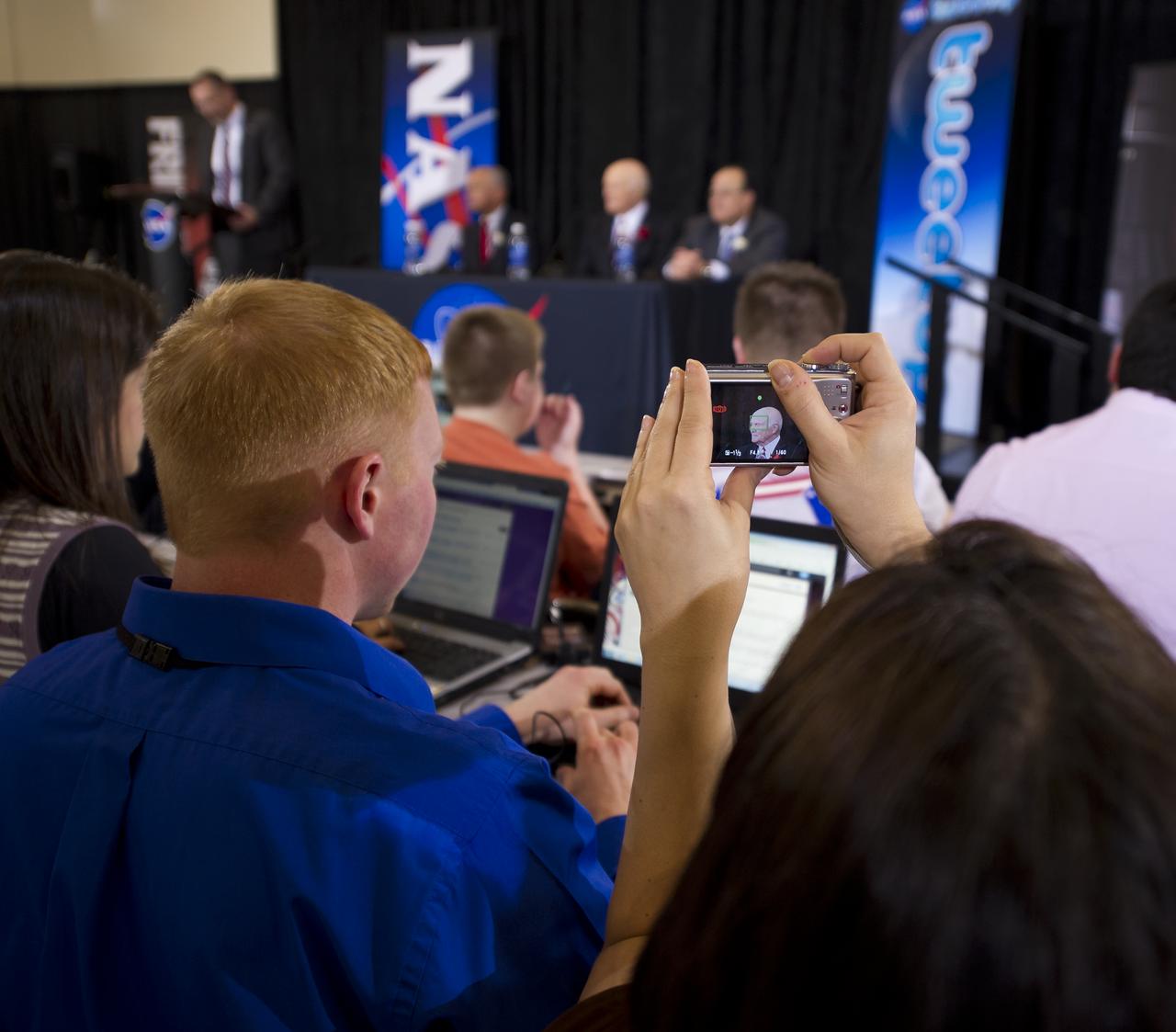
A NASA Tweetup attendee frames a picture of Sen. John Glenn at an event celebrating John Glenn's legacy and 50 years of americans in orbit held at the Cleveland State University Wolstein Center on Friday, March 3, 2012 in Cleveland, Ohio. Glenn became the first American to orbit Earth in 1962. Photo Credit: (NASA/Bill Ingalls)
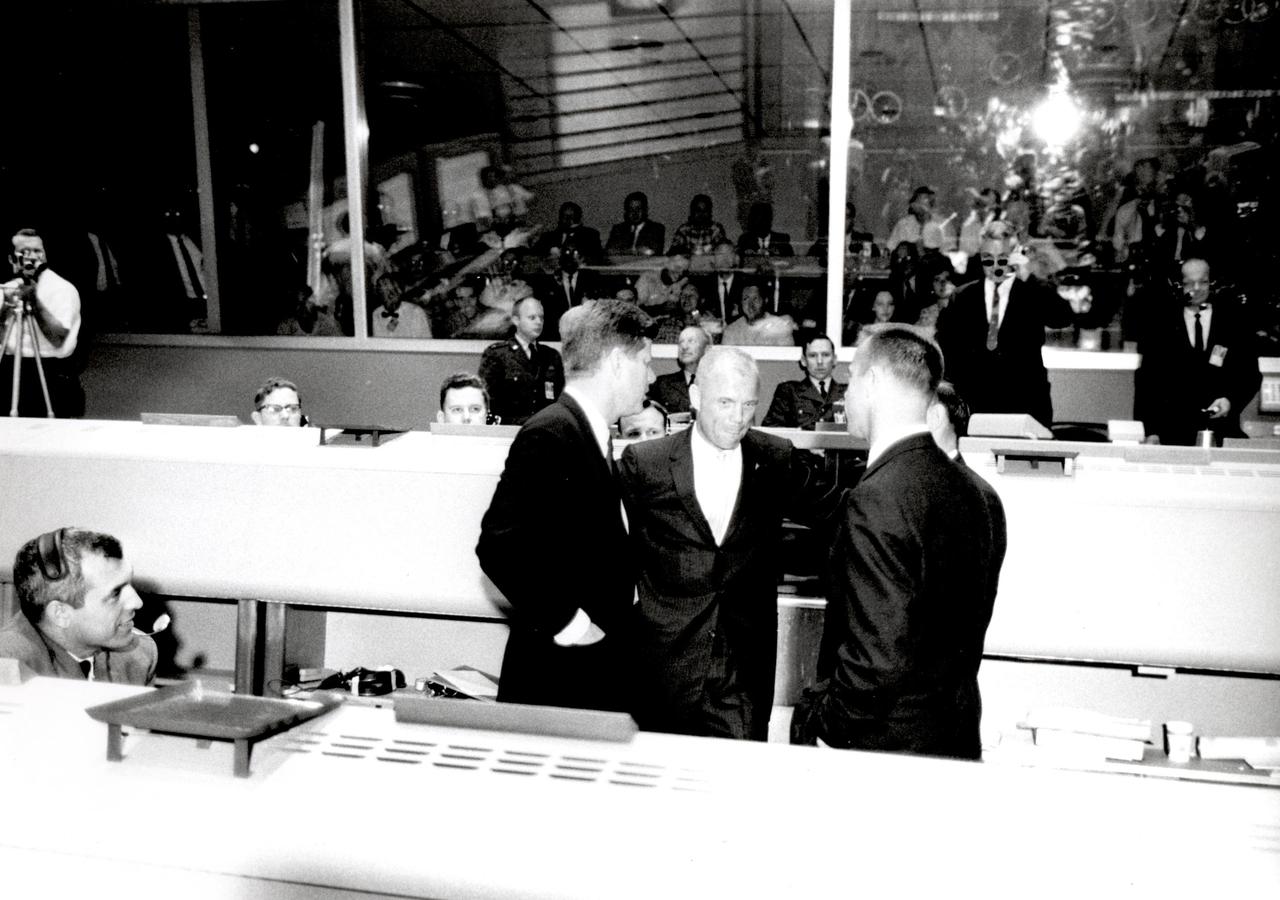
President John F. Kennedy (left) visits Mercury's Flight Control Area a few days after John Glenn's flight in February 1962. To Kennedy's right are Glenn and astronaut Alan Shepard.
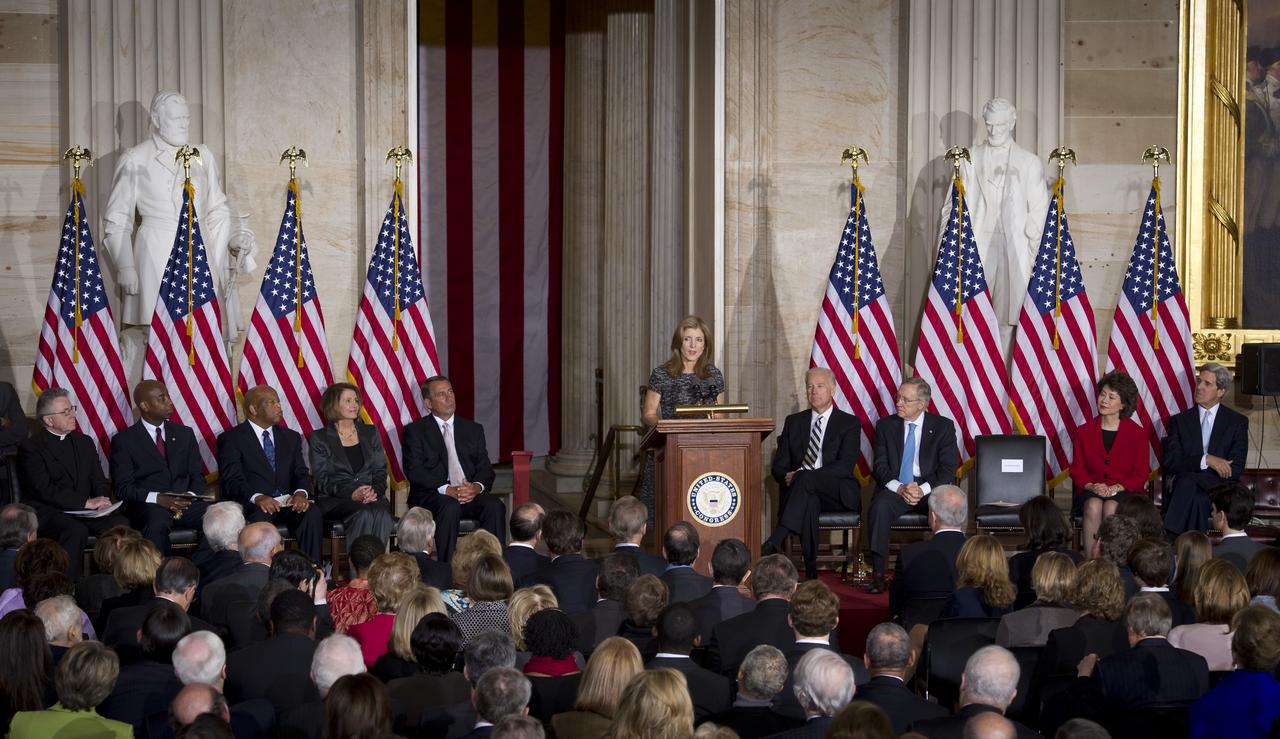
Caroline Kennedy speaks at an event recognizing the 50th anniversary of the inauguration of John F. Kennedy as President of the United States, Thursday, Jan. 20, 2011 in the rotunda at the U.S. Capitol. Also participating in the event, seated from left, Reverend Daniel P. Coughlin, Dr. Barry Black, U.S. Congressman John Lewis (D-GA), U.S. House Minority Leader Nancy Pelosi (D-CA), House Speaker John Boehner (R-OH), U.S. Vice President Joe Biden, Senate Majority Leader Harry Reid (D-NV), former U.S. Labor Secretary Elaine Chao, and U.S. Senator John Kerry (D-MA). Photo Credit: (NASA/Bill Ingalls)

John Honeycutt and Mark White compare model of SLS test stand with actual test stand
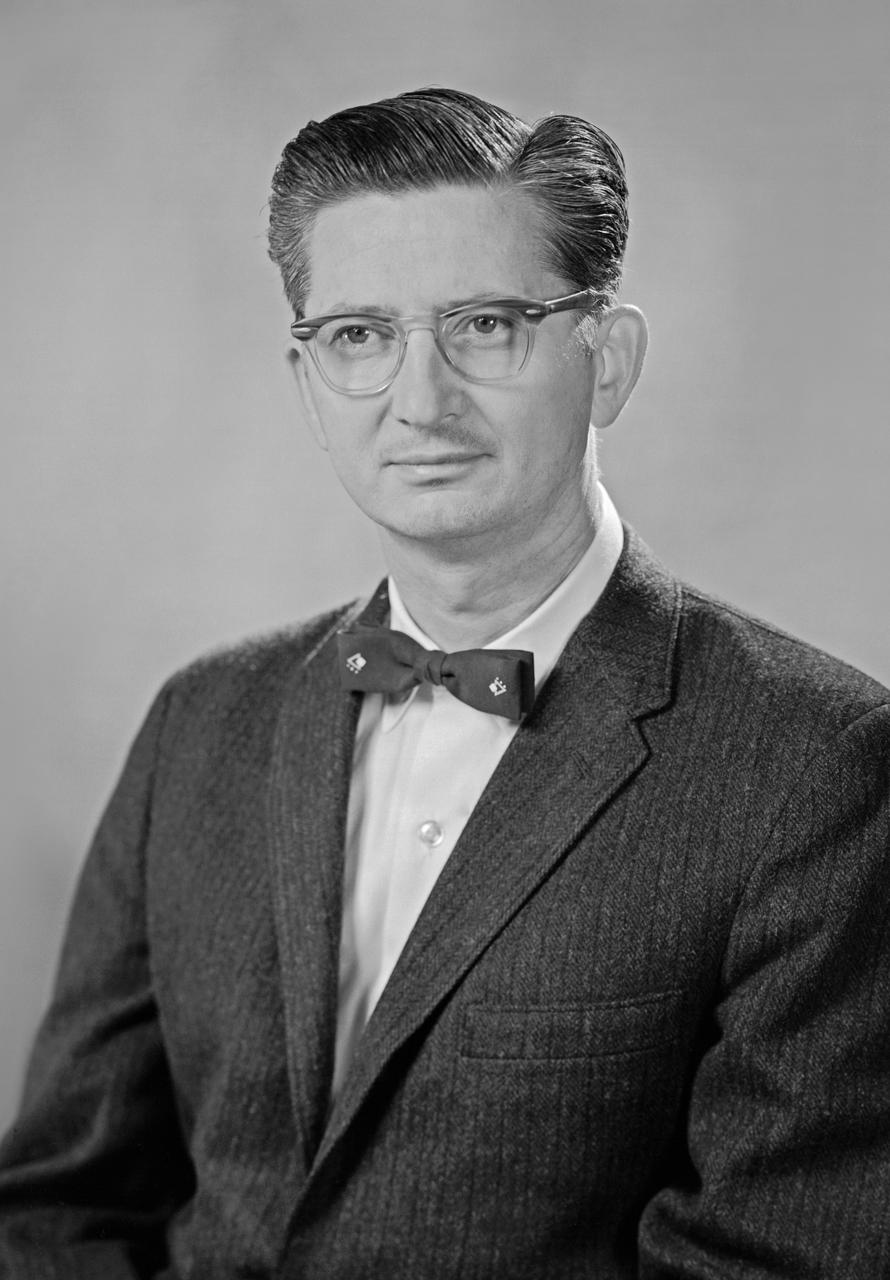
Portrait of John D. Bird "Jaybird" designed the LOR Lunar Orbit Rendezvous. Published in NASA SP-4308 Page 229.
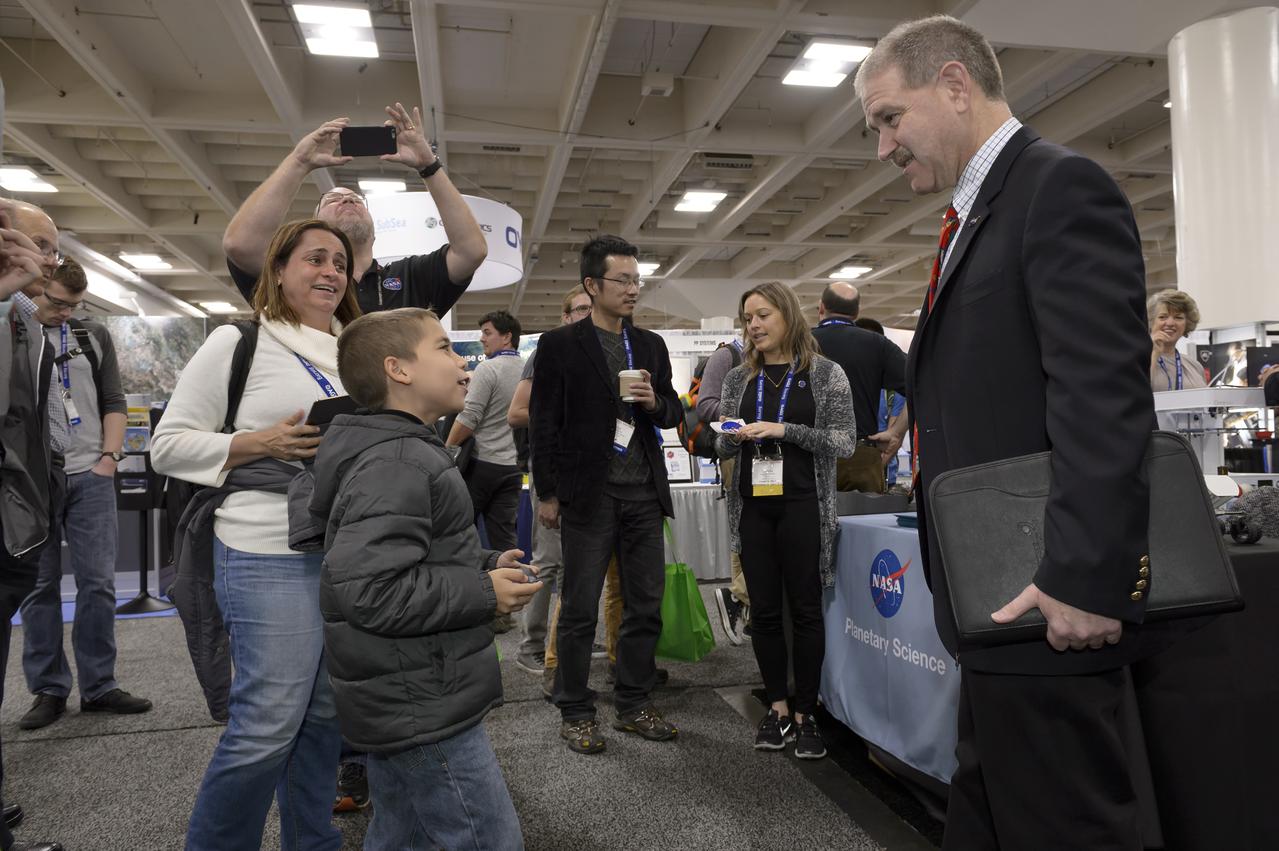
Associate Administrator for NASA's Science Mission Directorate and former astronaut John M. Grunsfeld talked to the attendees of the The American Geophysical Union (AGU) meet at the Moscone Center in San Francisco, California. New results presented at the meeting show atmospheric rivers, significant sources of rainfall, tend to intensify during Nino events, and this years strong El Nino likely will bring more precipitation to California and some relief for the drought.
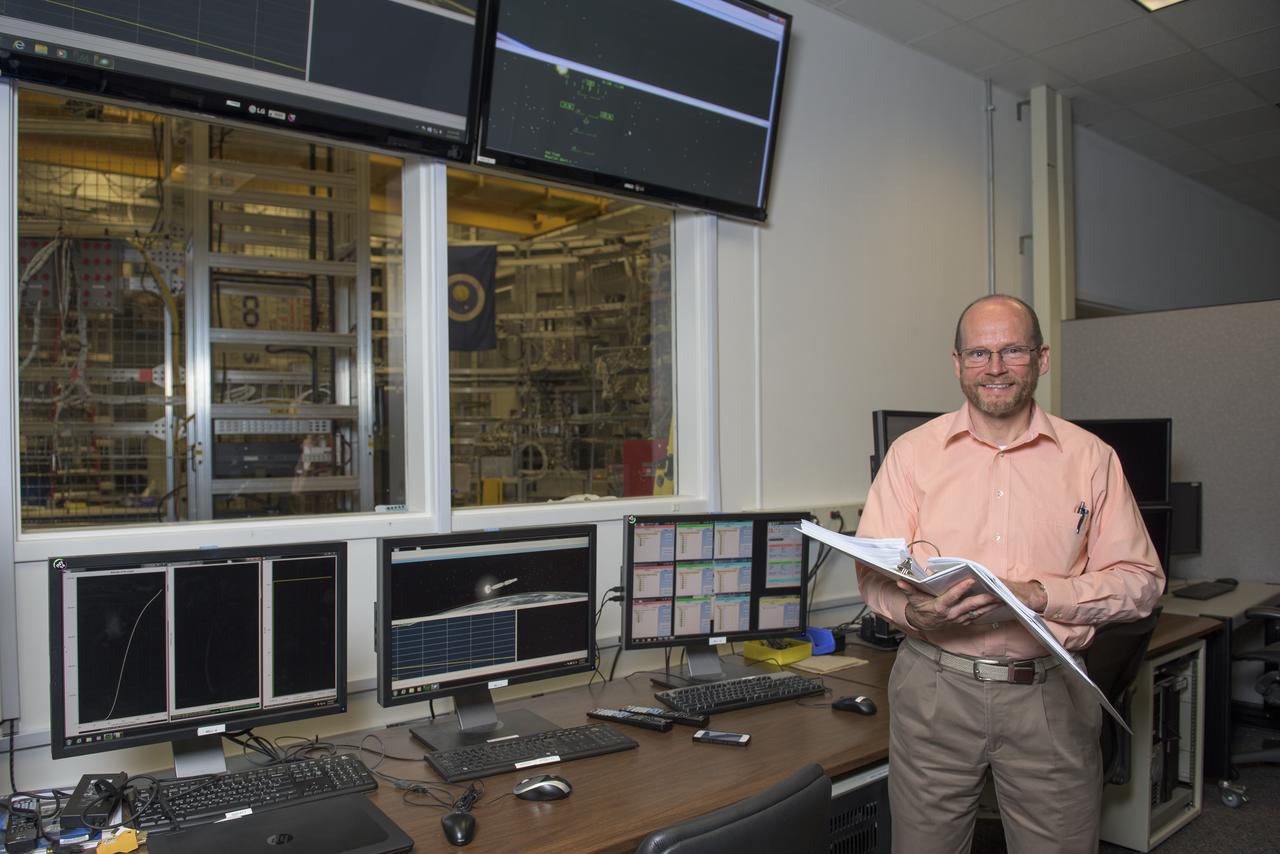
John Hanson, Alternate Lead Systems Engineer in the Spacecraft and Vehicle Systems department of the Engineering Directorate at MSFC has been honored by the American Institute of Aeronautics and Astronautics (AIAA) with the 2016 De Florez Award for flight simulation
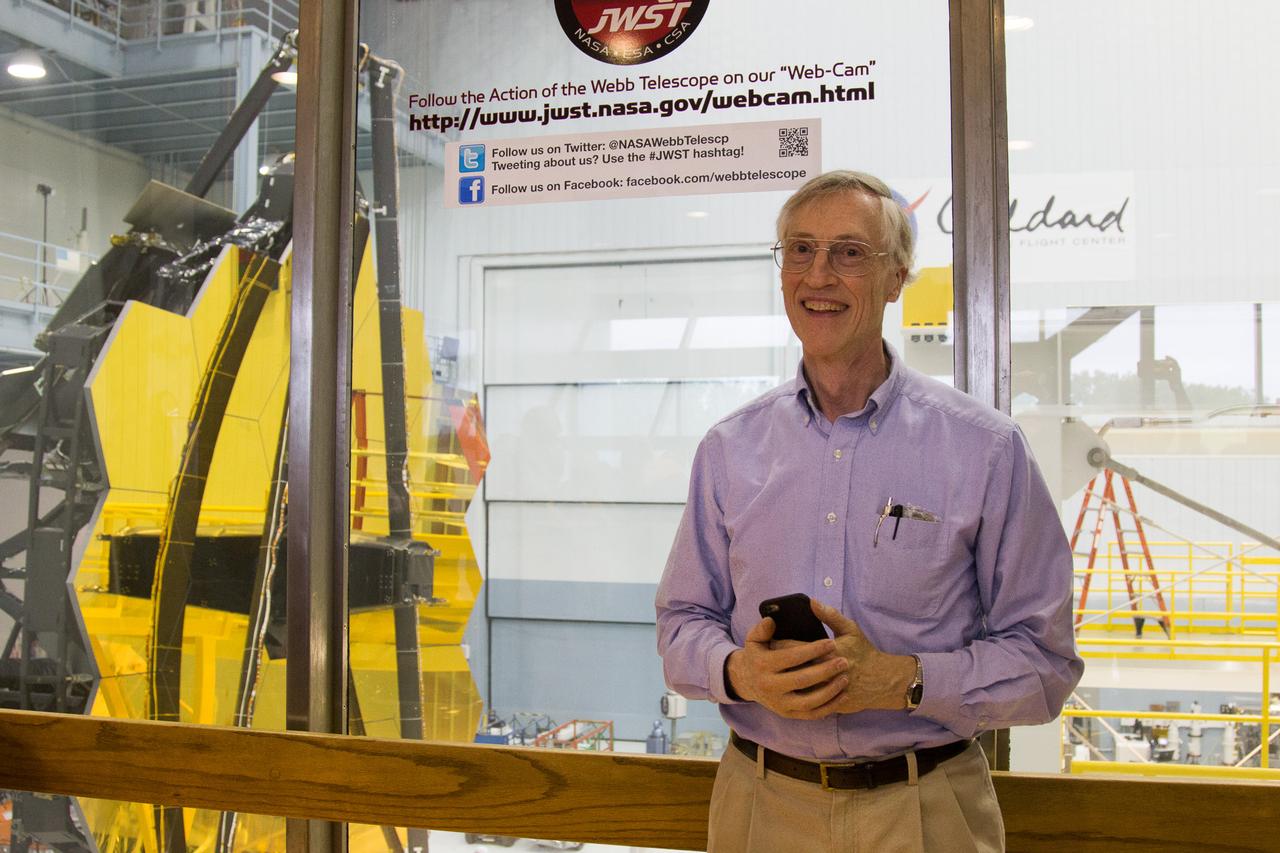
John Mather, Project Scientist for JWST, faces the James Webb Space Telescope primary mirror, NASA/Goddard Space Flight Center, Greenbelt, MD, May 4, 2016
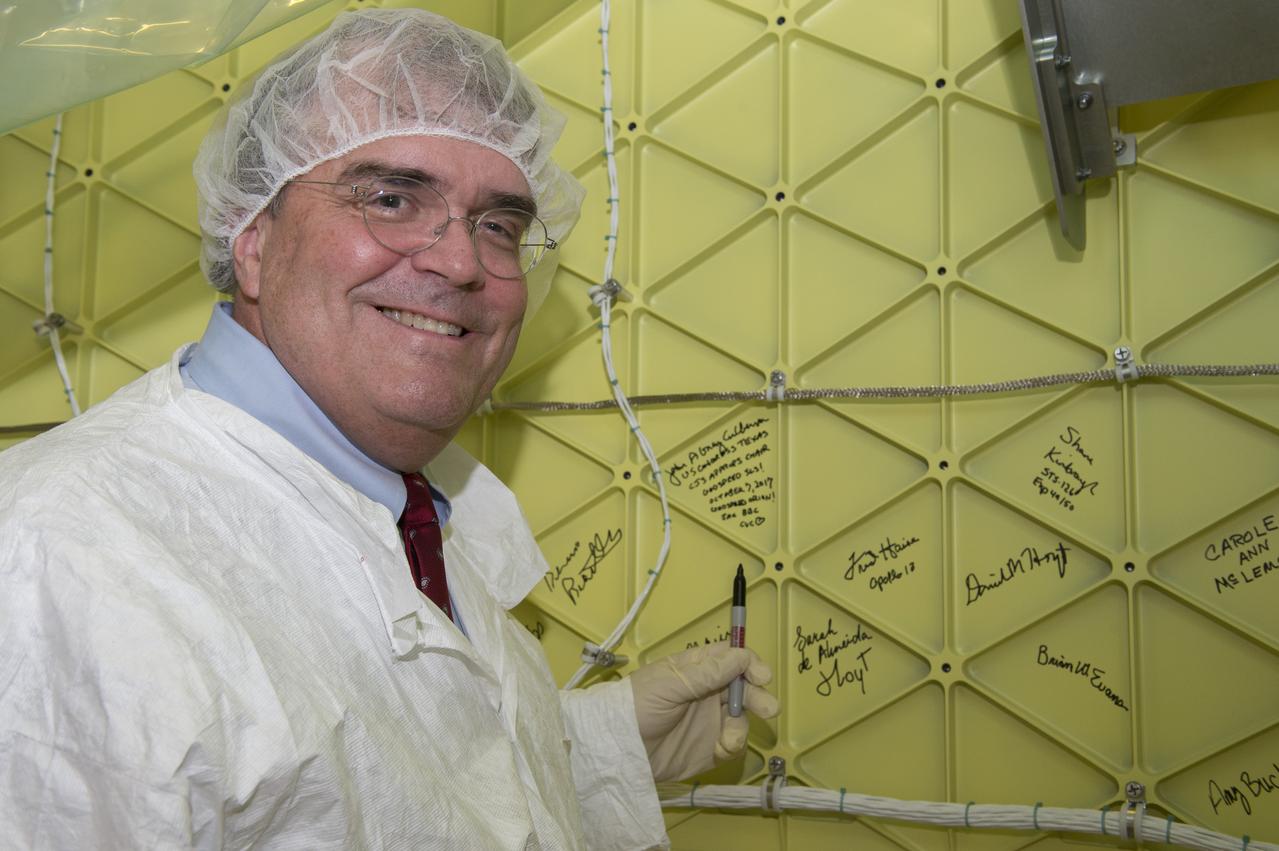
John Culberson, U.S. Congressman, 7th District Texas & Chairman, House Appropriations CJS Committee signs his name on the Orion Stage Adapter while touring MSFC on October 6, 2017.
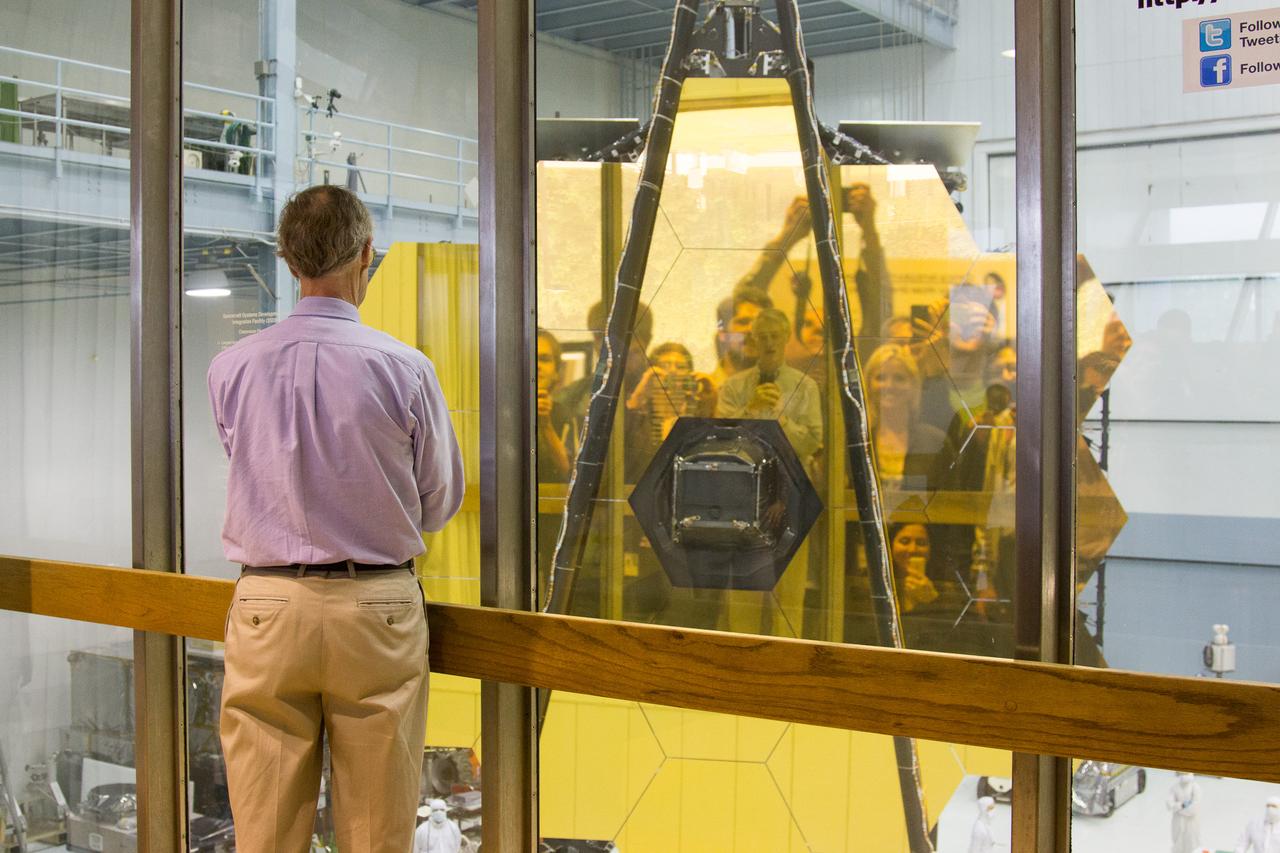
John Mather, Project Scientist for JWST, faces the James Webb Space Telescope primary mirror, taking a selfie, NASA/Goddard Space Flight Center, Greenbelt, MD, May 4, 2016
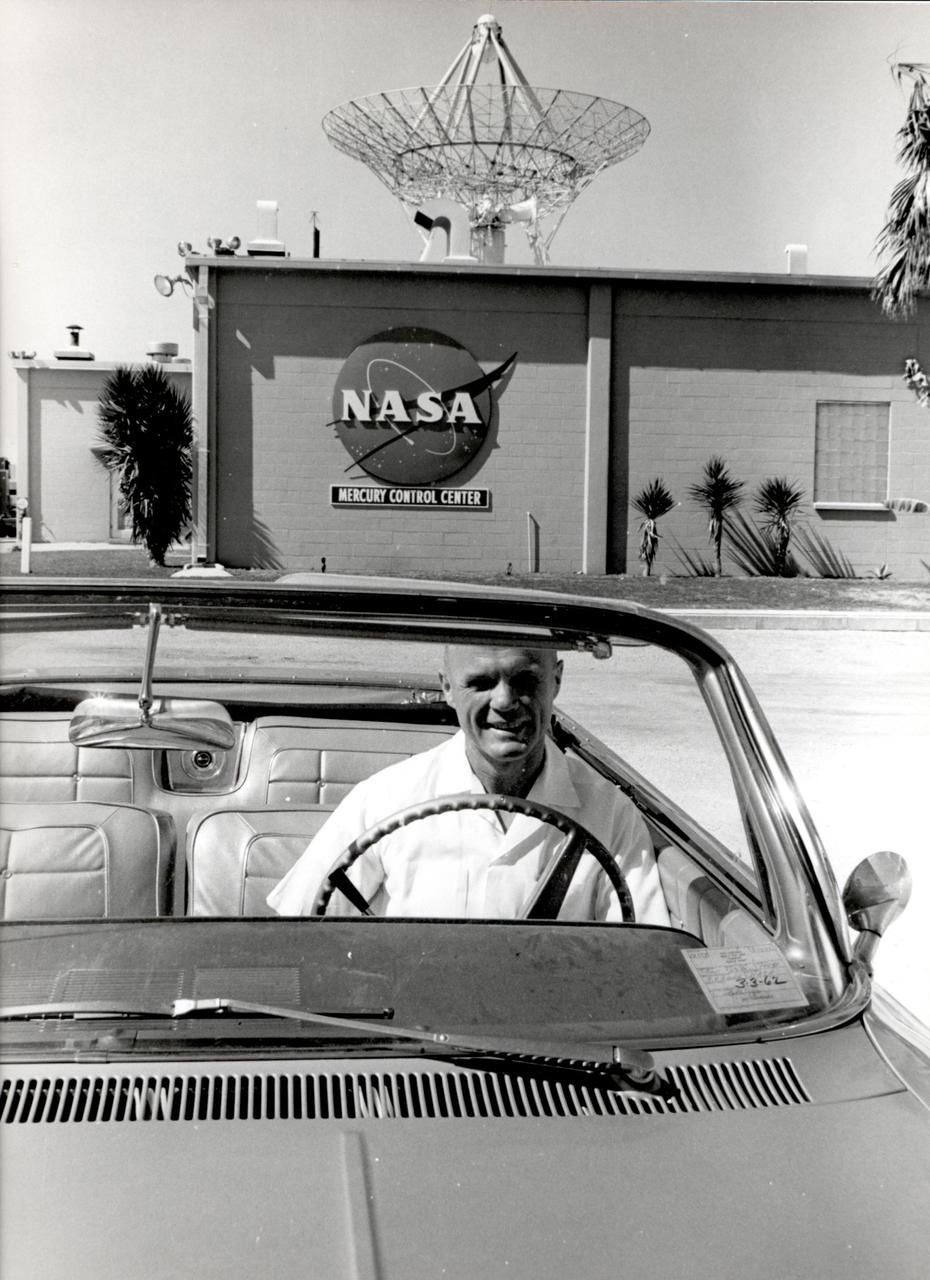
Astronaut John H. Glenn sits in a car in front of the east side of the Mercury Mission Control building. Glenn was the pilot for the Mercury-Atlas 6 mission aboard Friendship 7, which launched Feb. 20, 1962.
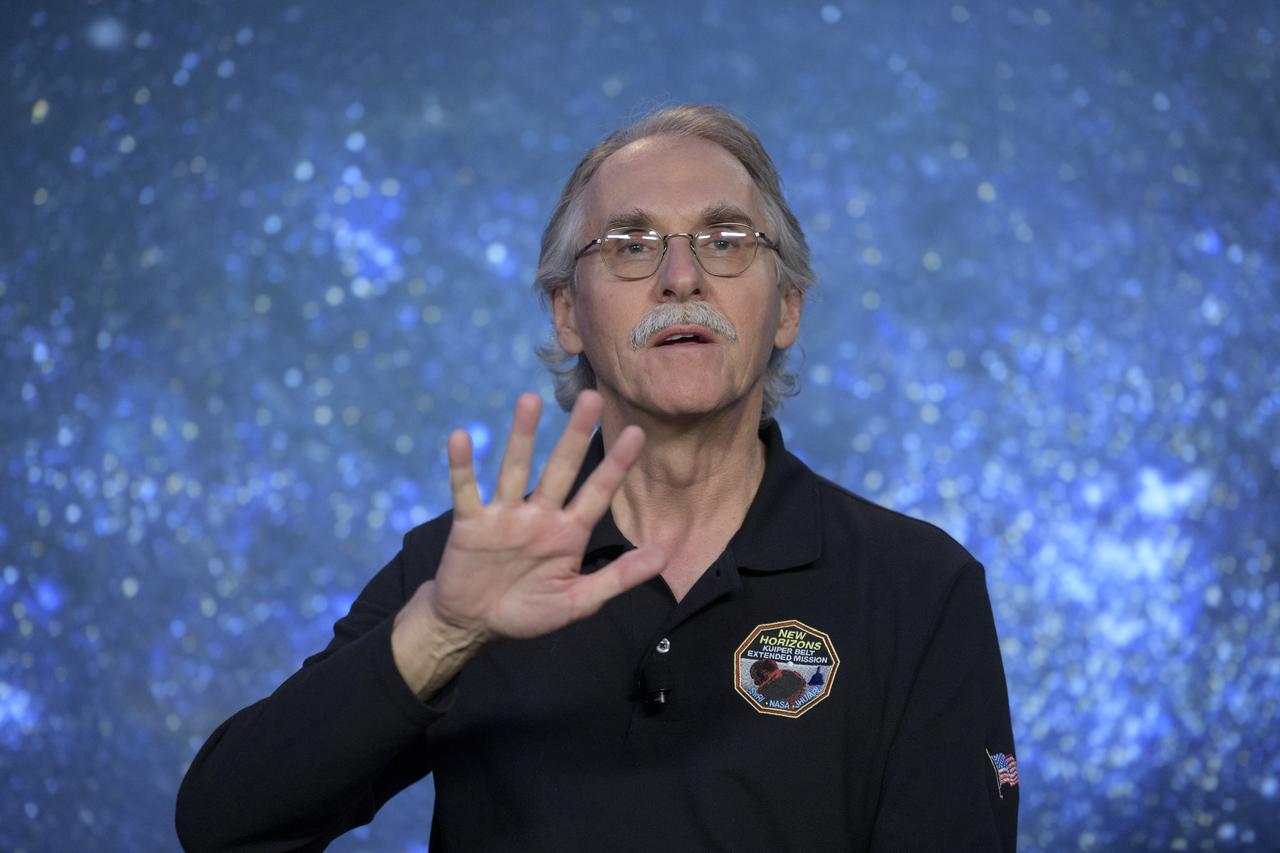
New Horizons deputy project scientist John Spencer of the Southwest Research Institute (SwRI), Boulder, CO discusses what they hope to learn from the flyby of Ultima Thule, Monday, Dec. 31, 2018 at Johns Hopkins University Applied Physics Laboratory (APL) in Laurel, Maryland. Photo Credit: (NASA/Bill Ingalls)

New Horizons co-investigator John Spencer of the Southwest Research Institute (SwRI), Boulder, CO, speaks about the flyby of Ultima Thule during an overview of the New Horizons Mission, Monday, Dec. 31, 2018 at Johns Hopkins University Applied Physics Laboratory (APL) in Laurel, Maryland. Photo Credit: (NASA/Joel Kowsky)
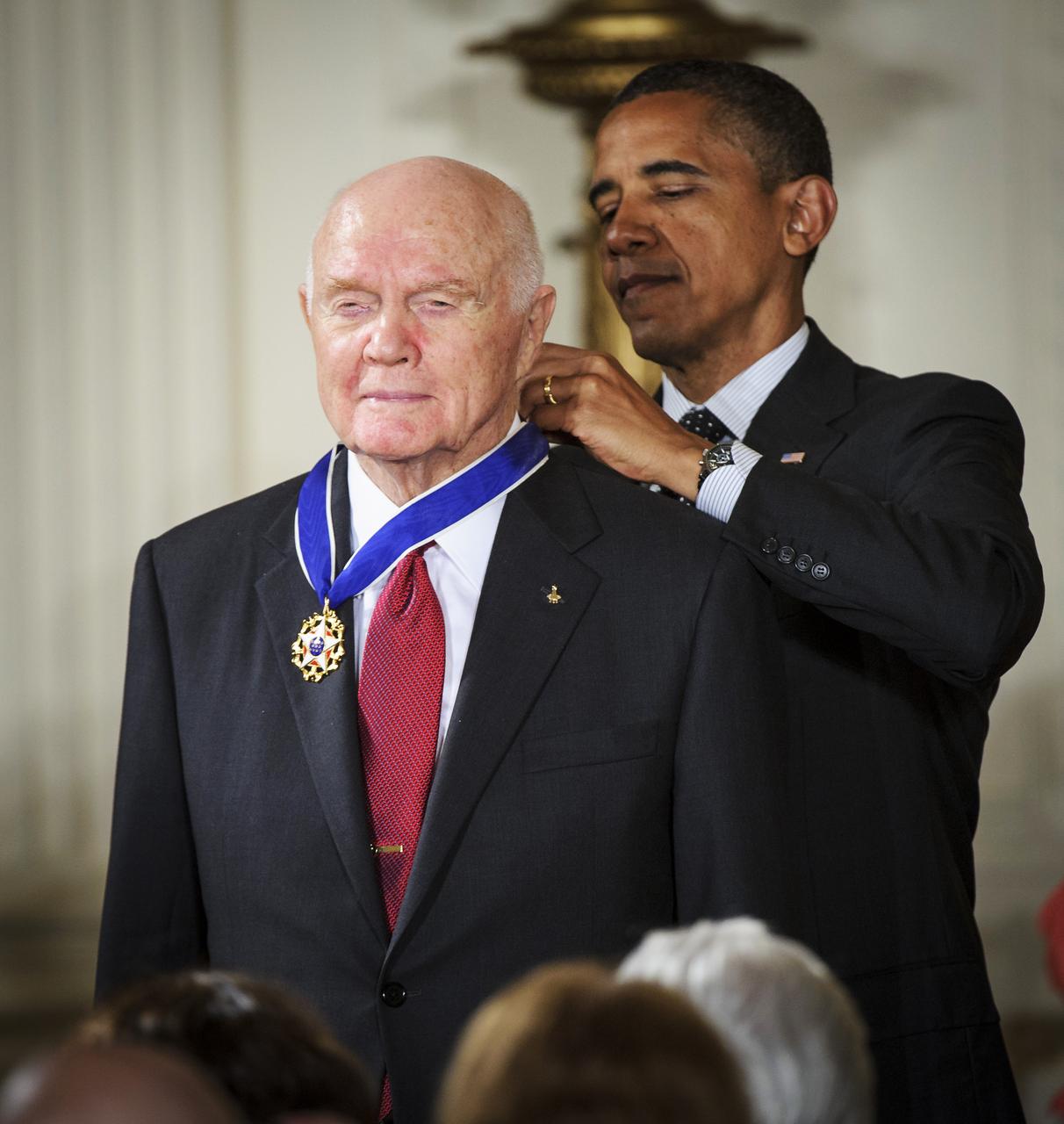
President Barack Obama presents former United States Marine Corps pilot, astronaut and United States Senator John Glenn with a Medal of Freedom, Tuesday, May 29, 2012, during a ceremony at the White House in Washington.
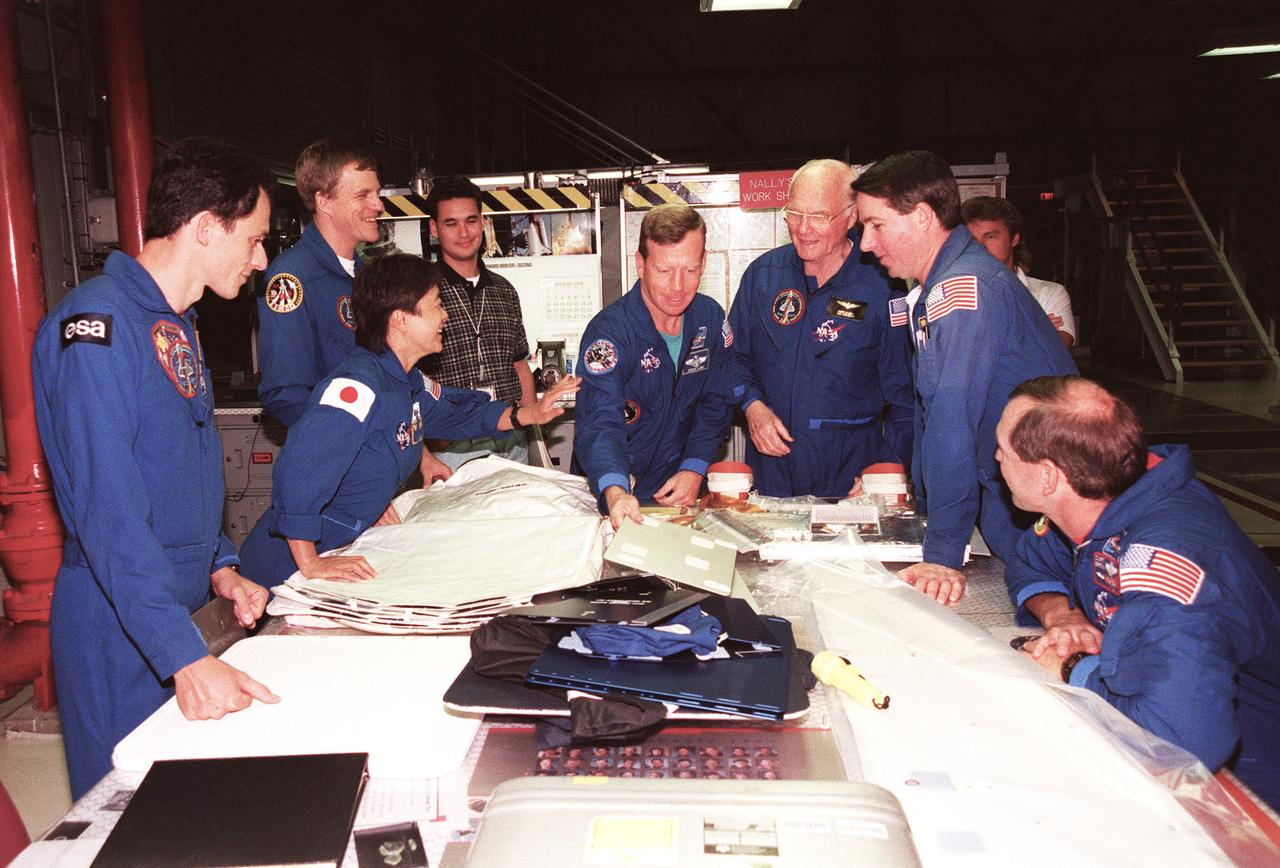
Around a table in Bay 2 Orbiter Processing Facility at NASA's Kennedy Space Center in Florida, STS-95 crew members look over equipment during the Crew Equipment Interface Test (CEIT) for their mission. From left, they are Mission Specialist Pedro Duque, of the European Space Agency; Payload Specialist Chiaki Mukai, of the National Space Development Agency of Japan (NASDA); Mission Specialist Scott E. Parazynski, M.D.; Pilot Steven W. Lindsey; Payload Specialist John H. Glenn Jr., senator form Ohio; Mission Specialist Stephen K. Robinson; and Mission Commander Curtis L. Brown Jr. The CEIT gives astronauts an opportunity for a hands-on look at the payloads and equipment with which they will be working on orbit. The launch of the STS-95 mission, aboard Space Shuttle Discovery, is scheduled for Oct. 29, 1998. The mission includes research payloads such as the Spartan solar-observing deployable spacecraft, the Hubble Space Telescope Orbital Systems Test Platform, the International Extreme Ultraviolet Hitchhiker, as well as the SPACEHAB single module with experiments on space flight and the aging process.
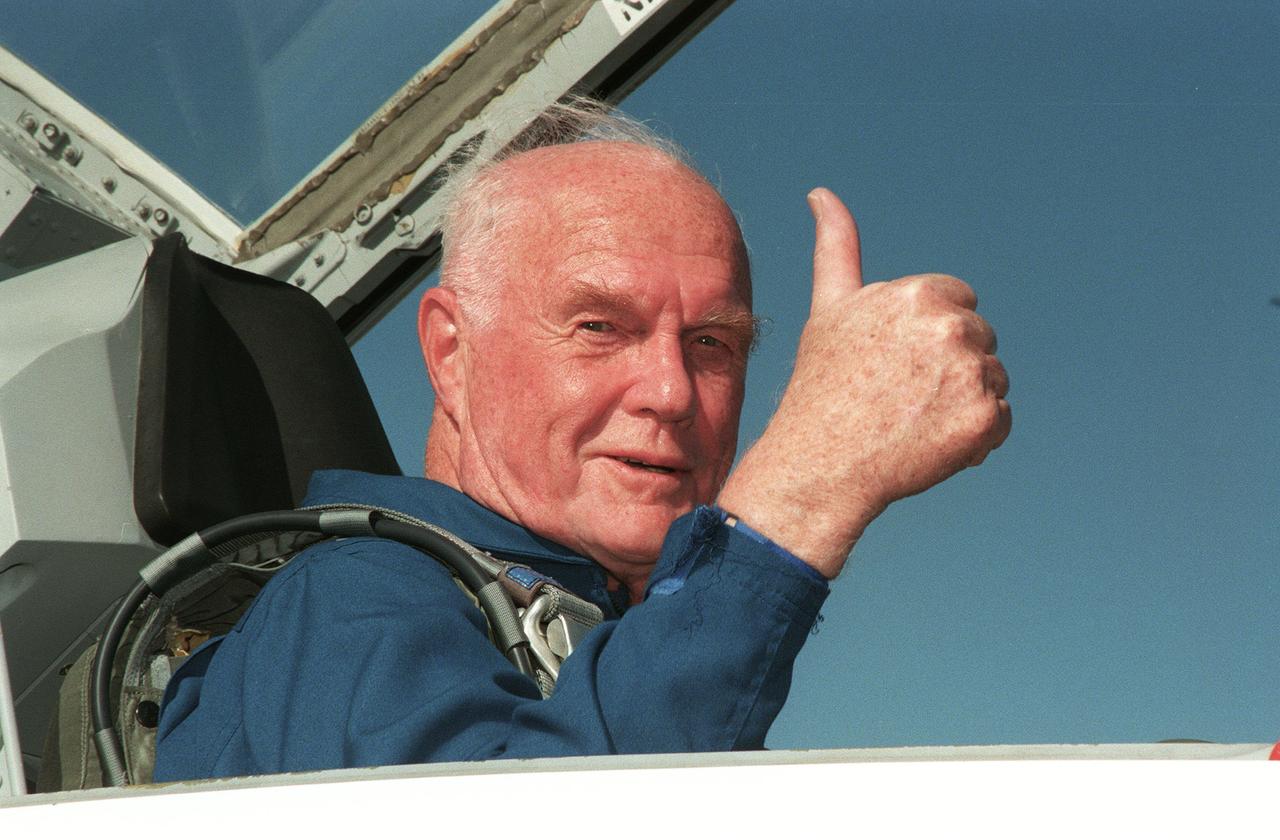
STS-95 Payload Specialist John H. Glenn Jr., senator from Ohio, gives a thumbs up on his arrival at Kennedy Space Center's Shuttle Landing Facility aboard a T-38 jet. He and other crewmembers will be making final preparations for launch, targeted for liftoff at 2 p.m. on Oct. 29. The STS-95 mission includes research payloads such as the Spartan solar-observing deployable spacecraft, the Hubble Space Telescope Orbital Systems Test Platform, the International Extreme Ultraviolet Hitchhiker, as well as the SPACEHAB single module with experiments on space flight and the aging process. The mission is expected to last 8 days, 21 hours and 49 minutes, and return to KSC on Nov. 7. The other STS-95 crew members are Mission Commander Curtis L. Brown Jr., Pilot Steven W. Lindsey, Mission Specialist Scott E. Parazynski, Mission Specialist Stephen K. Robinson, Mission Specialist Pedro Duque, with the European Space Agency (ESA), and Payload Specialist Chiaki Mukai, with the National Space Development Agency of Japan (NASDA).
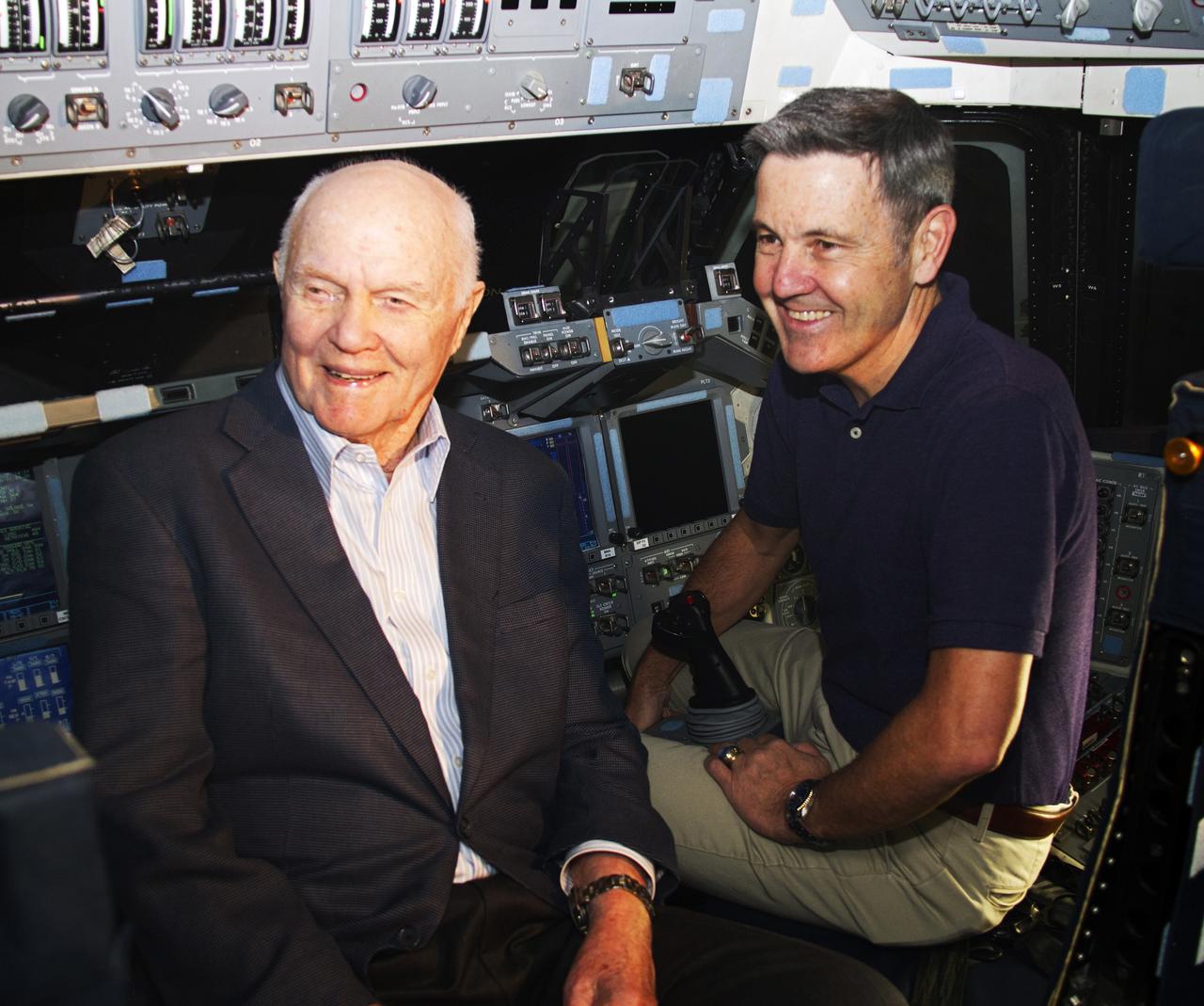
John Glenn and NASA Kennedy Space Center Director Bob Cabana sit in the flight deck of space shuttle Discovery in Bay 1 of the Orbiter Processing Facility at NASA's Kennedy Space Center in Florida. Glenn is at the space center to mark the 50th anniversary of being the first American astronaut to orbit the Earth inside the NASA Mercury Project's Friendship 7 capsule on Feb. 20, 1962. Glenn later returned to space in October 1998 as a payload specialist aboard Discovery's STS-95 mission. Glenn's launch aboard an Atlas rocket took with it the hopes of an entire nation and ushered in a new era of space travel that eventually led to Americans walking on the moon by the end of the 1960s. Glenn soon was followed into orbit by Scott Carpenter, Walter Schirra and Gordon Cooper. Their fellow Mercury astronauts Alan Shepard and Virgil "Gus" Grissom flew earlier suborbital flights. Deke Slayton, a member of NASA's original Mercury 7 astronauts, was grounded by a medical condition until the Apollo-Soyuz Test Project in 1975. Shuttle Discovery currently is being prepared for display at Smithsonian’s National Air and Space Museum, Steven F. Udvar-Hazy Center in Chantilly, Virginia.
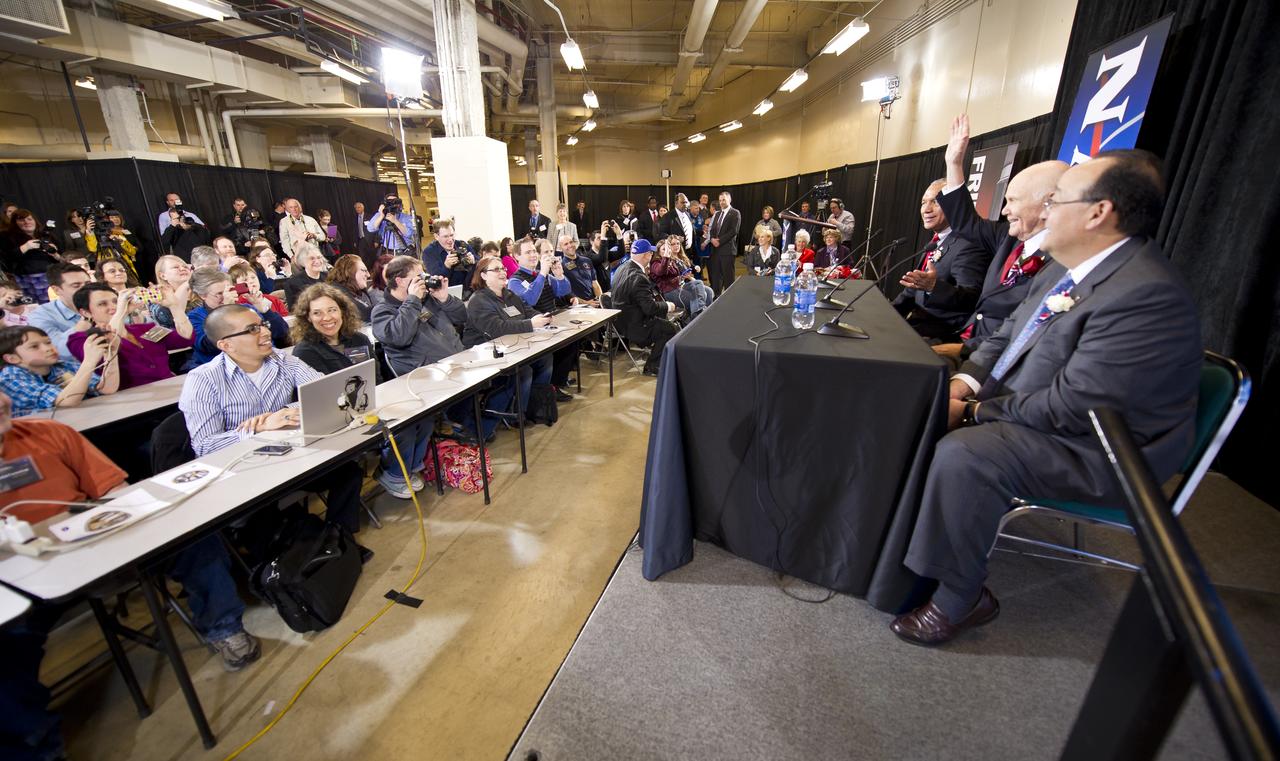
Sen. John Glenn waves to a group of media and Twitter users as he takes the stage with NASA Administrator Charles Bolden and NASA Glenn Research Center Director Ray Lugo, right, at a Tweetup event celebrating John Glenn's legacy and 50 years of americans in orbit held at the Cleveland State University Wolstein Center on Friday, March 3, 2012 in Cleveland, Ohio. Glenn became the first American to orbit Earth in 1962. Photo Credit: (NASA/Bill Ingalls)
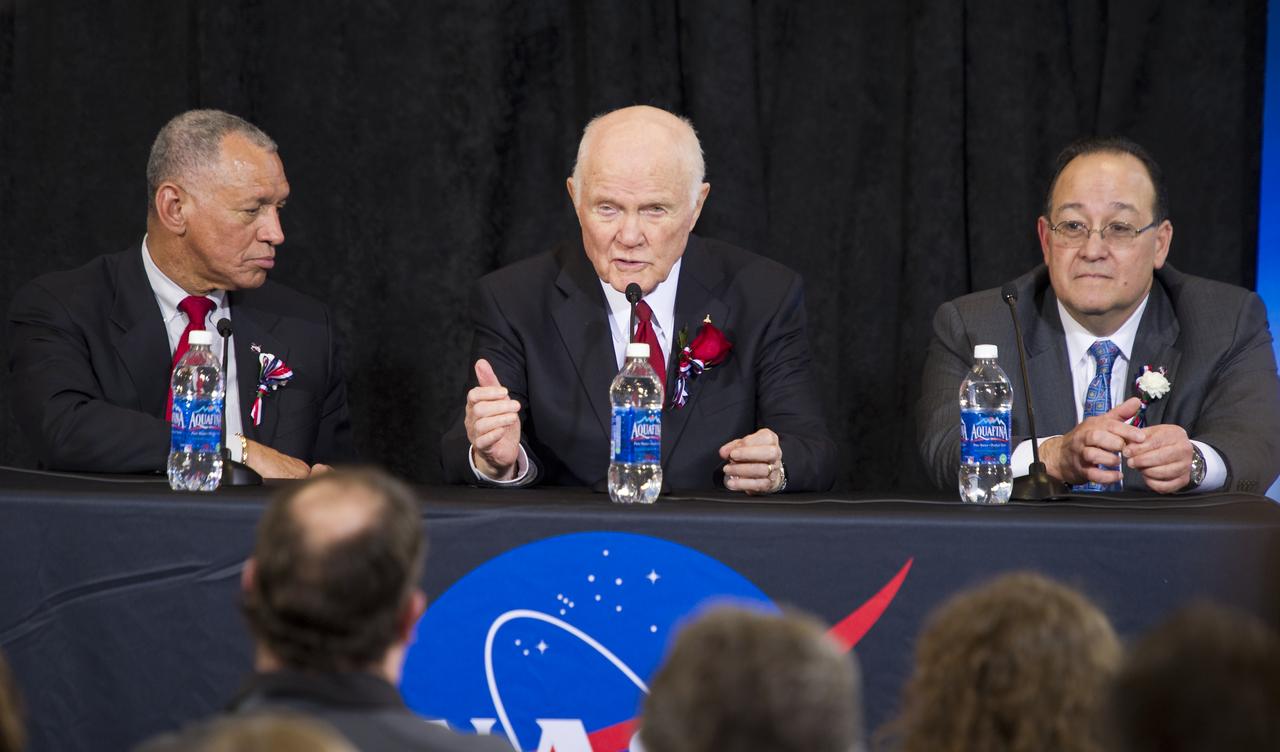
NASA Administrator Charles Bolden, left, Sen. John Glenn, and NASA Glenn Research Center Director Ray Lugo, right, answer questions at a NASA Tweetup event celebrating John Glenn's legacy and 50 years of americans in orbit held at the Cleveland State University Wolstein Center on Friday, March 3, 2012 in Cleveland, Ohio. Glenn became the first American to orbit Earth in 1962. Photo Credit: (NASA/Bill Ingalls)
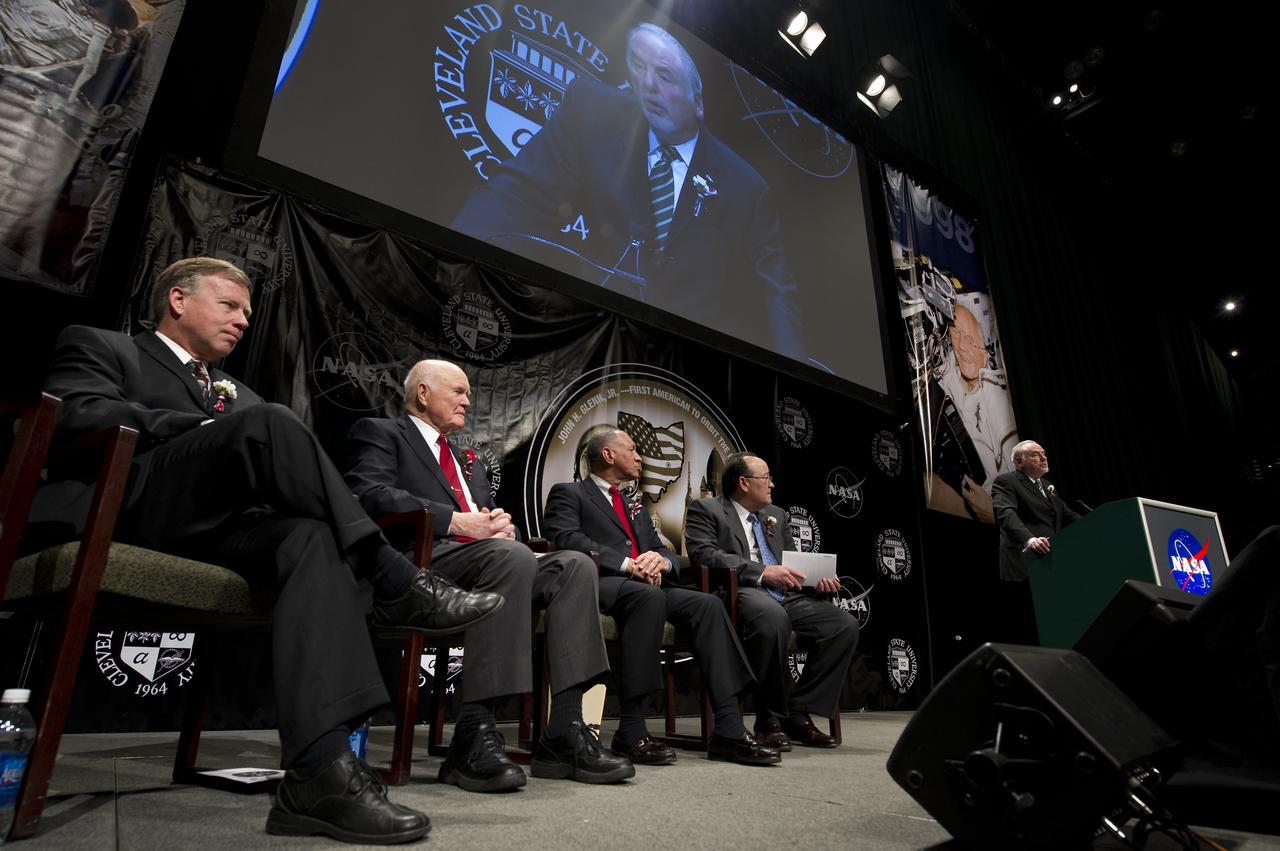
Dr. Ronald M. Berkman, CSU President gives remarks while former Astronaut Steve Lindsey, left, Sen. John Glenn, NASA Administrator Charles Bolden, and NASA Glenn Research Center Director Ray Lugo, seated right, look on at an event celebrating John Glenn's legacy and 50 years of americans in orbit held at the Cleveland State University Wolstein Center on Friday, March 3, 2012 in Cleveland, Ohio. Glenn became the first American to orbit Earth in 1962. Photo Credit: (NASA/Bill Ingalls)
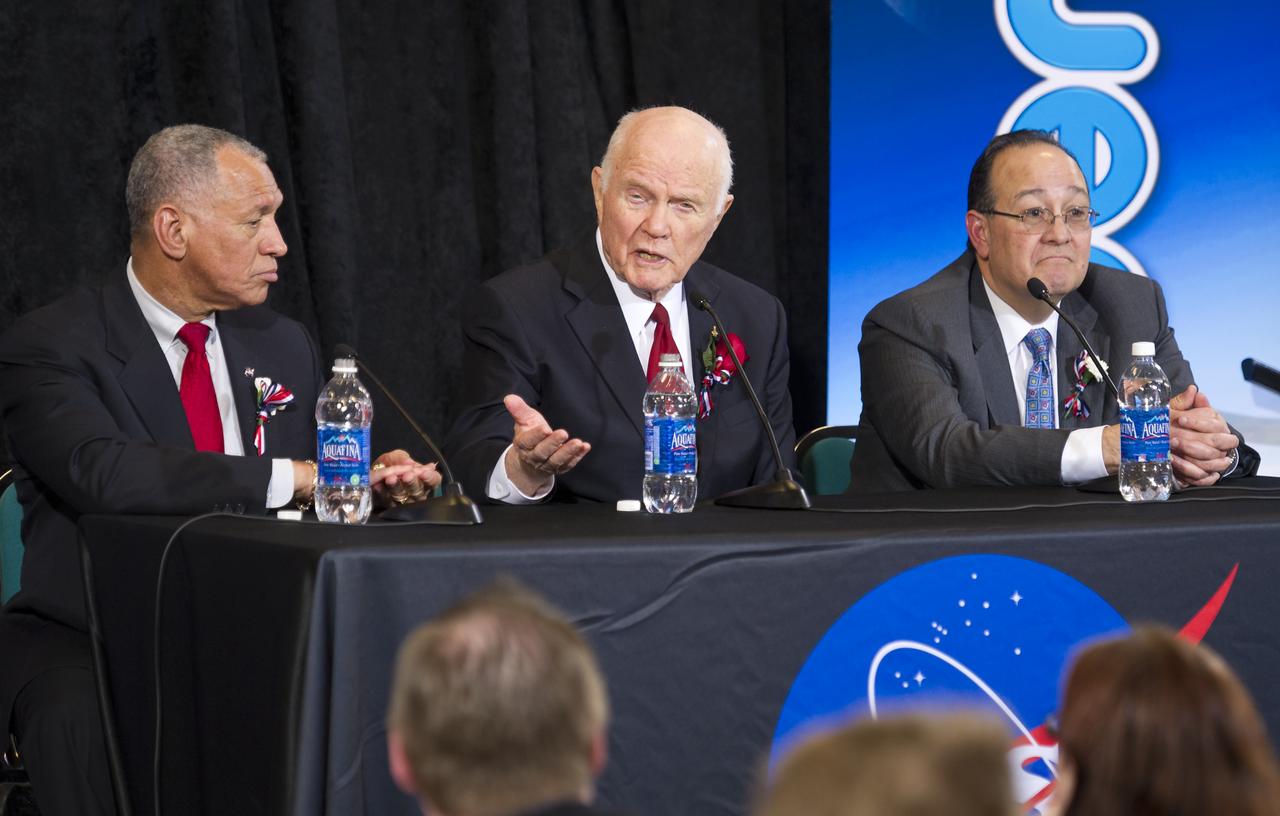
NASA Administrator Charles Bolden, left, Sen. John Glenn, and NASA Glenn Research Center Director Ray Lugo, right, answer questions at a NASA Tweetup event celebrating John Glenn's legacy and 50 years of americans in orbit held at the Cleveland State University Wolstein Center on Friday, March 3, 2012 in Cleveland, Ohio. Glenn became the first American to orbit Earth in 1962. Photo Credit: (NASA/Bill Ingalls)
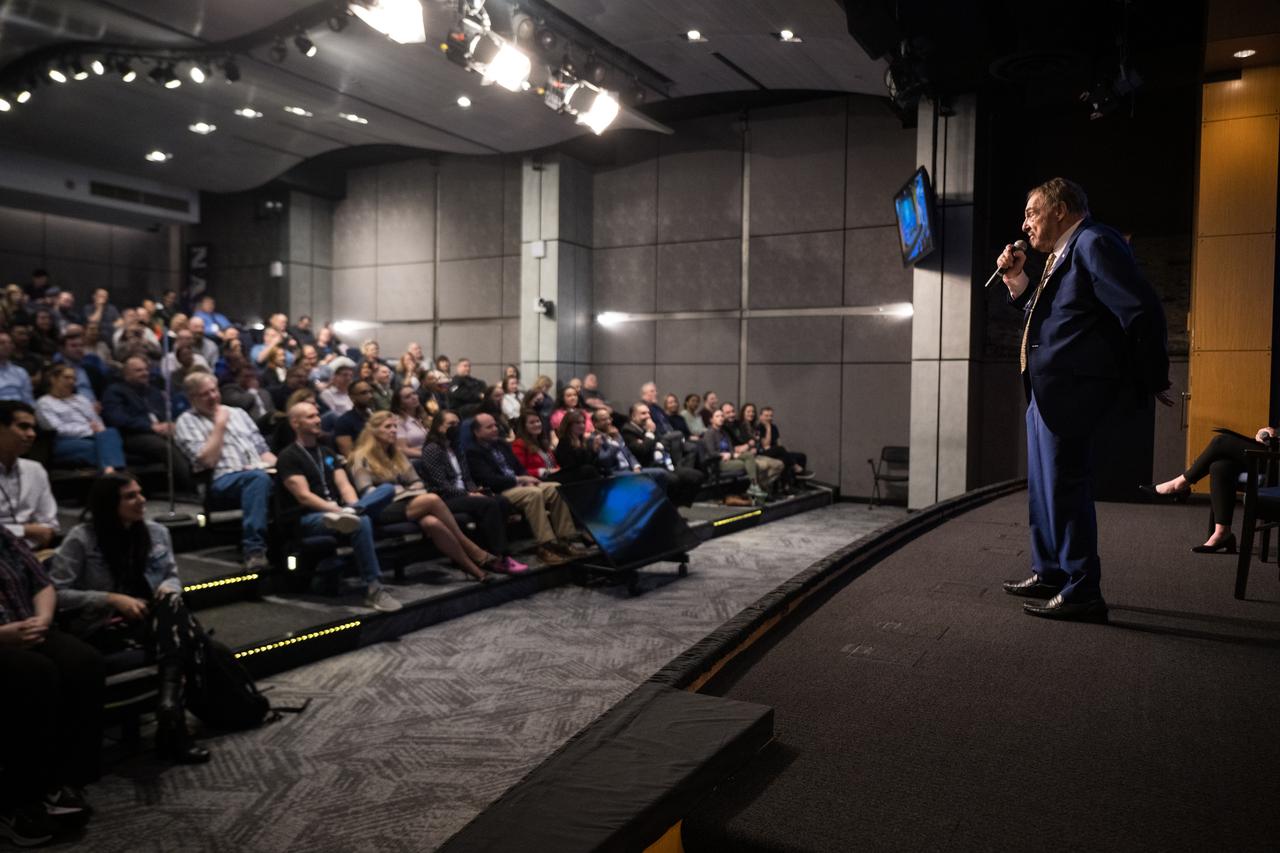
John Rhys-Davies, the actor best known for his roles as Gimli in The Lord of the Rings trilogy and Sallah in the Indiana Jones franchise provides remarks during an employee event, Friday, March 28, 2025 at the Mary W. Jackson NASA Headquarters building in Washington, DC. Photo Credit: (NASA/Aubrey Gemignani)
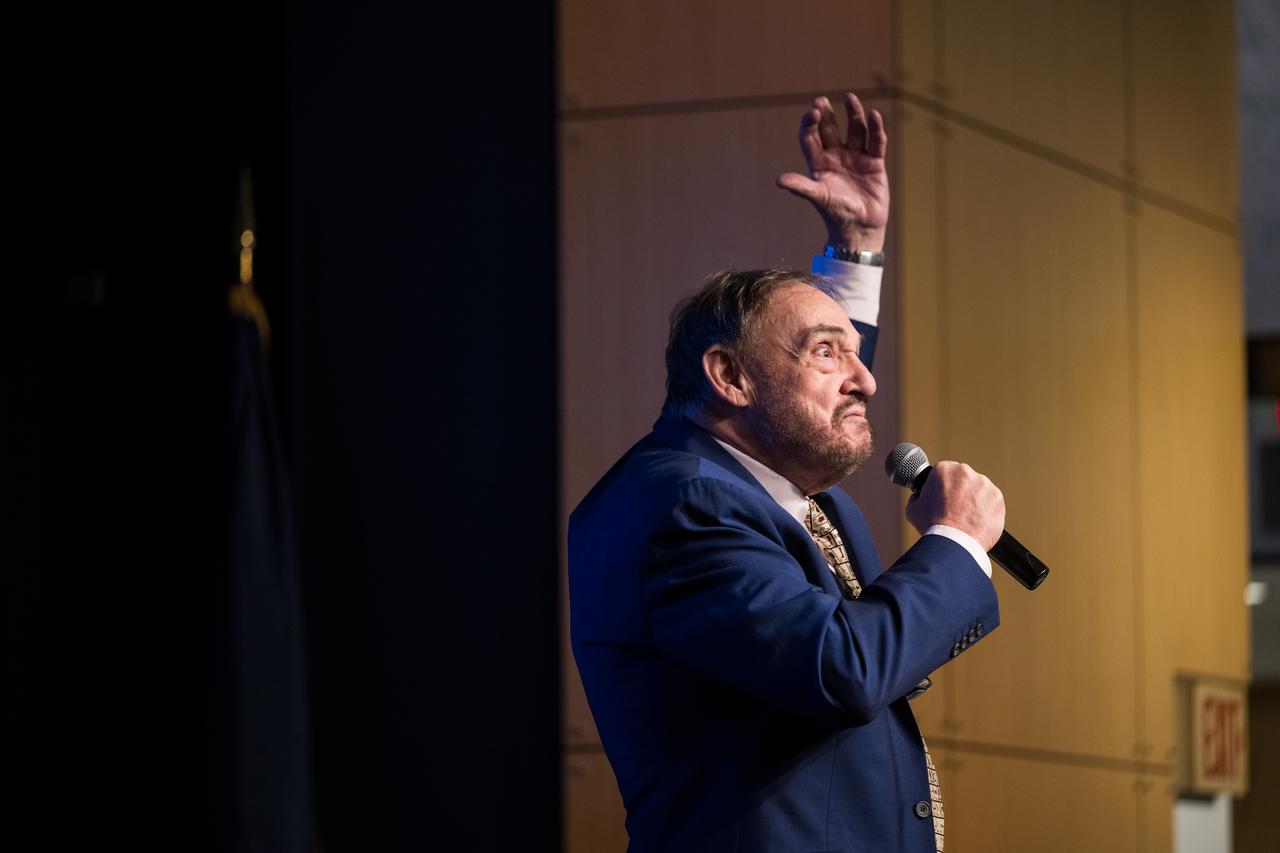
John Rhys-Davies, the actor best known for his roles as Gimli in The Lord of the Rings trilogy and Sallah in the Indiana Jones franchise provides remarks during an employee event, Friday, March 28, 2025 at the Mary W. Jackson NASA Headquarters building in Washington, DC. Photo Credit: (NASA/Aubrey Gemignani)
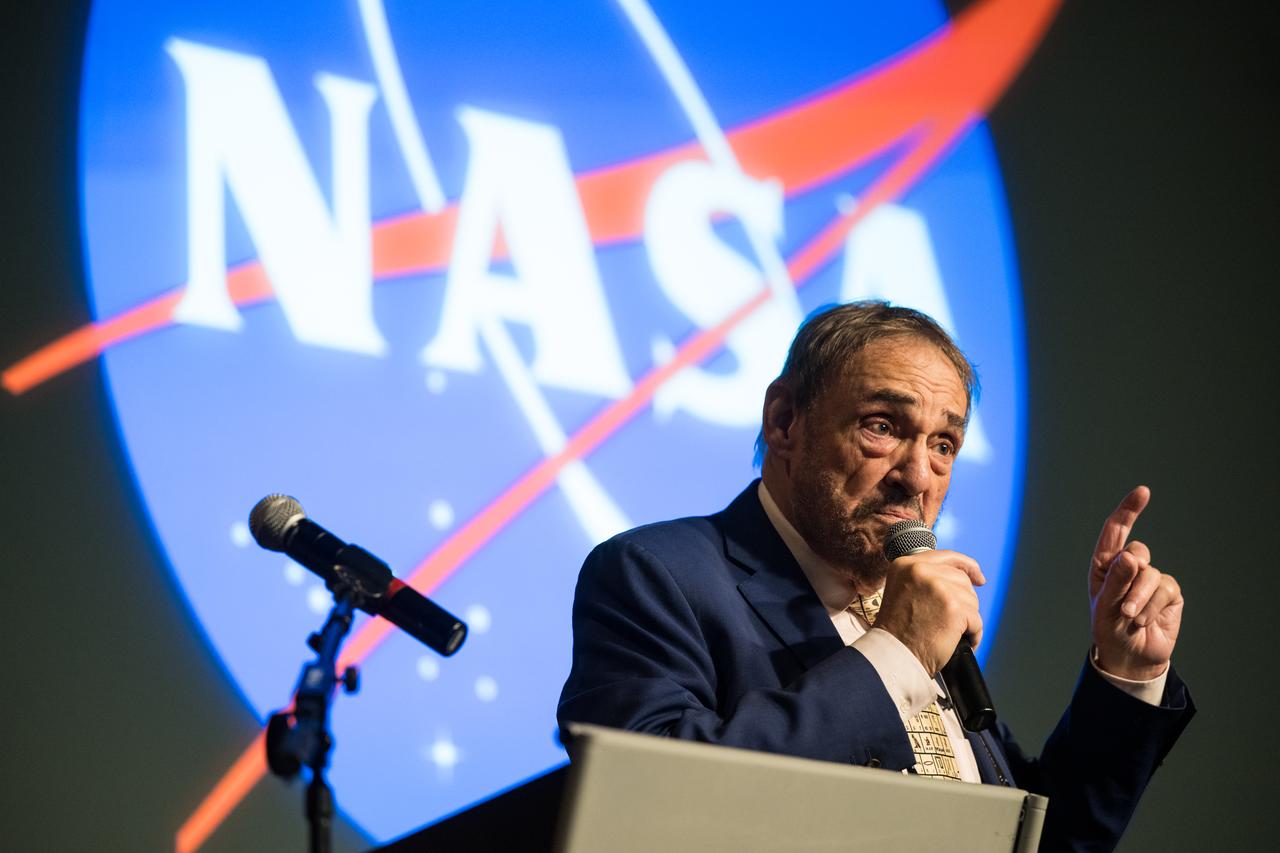
John Rhys-Davies, the actor best known for his roles as Gimli in The Lord of the Rings trilogy and Sallah in the Indiana Jones franchise provides remarks during an employee event, Friday, March 28, 2025 at the Mary W. Jackson NASA Headquarters building in Washington, DC. Photo Credit: (NASA/Aubrey Gemignani)
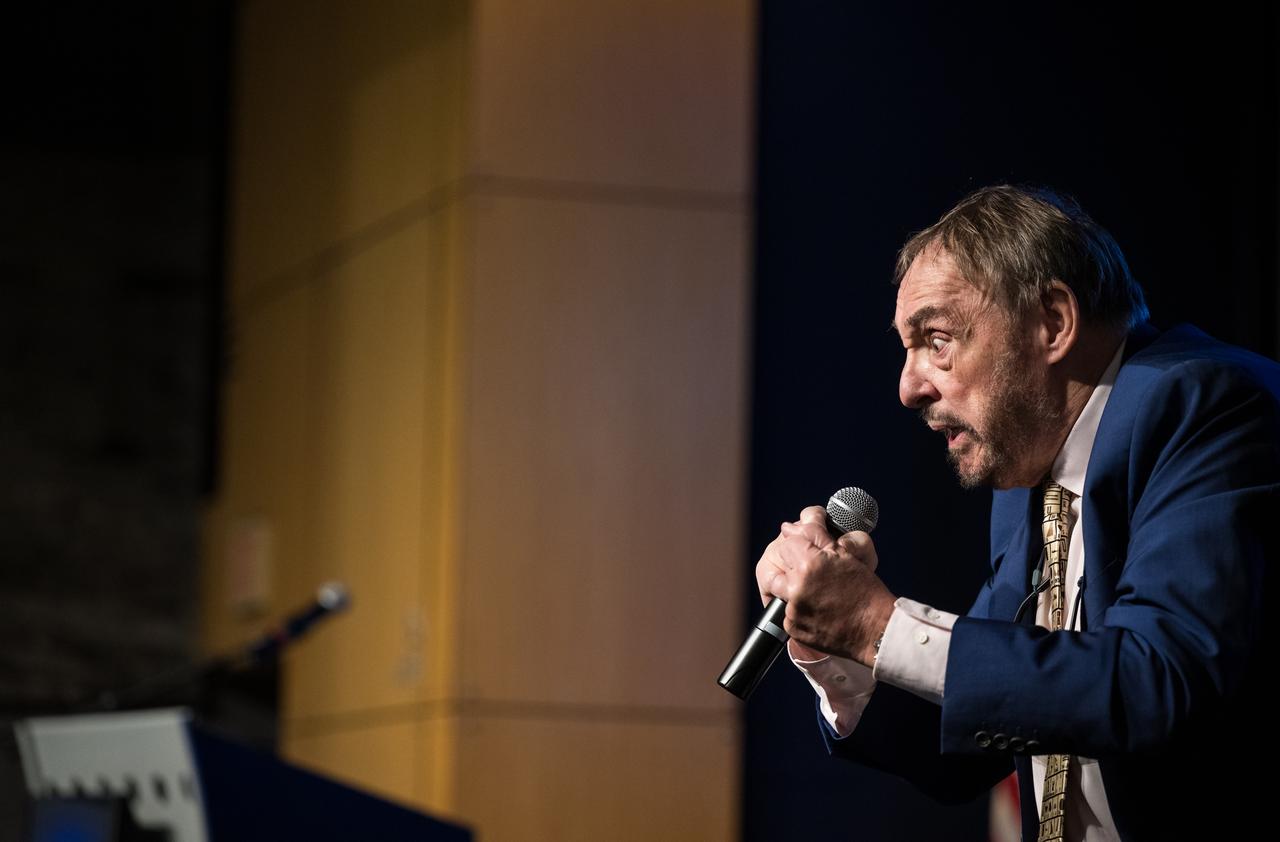
John Rhys-Davies, the actor best known for his roles as Gimli in The Lord of the Rings trilogy and Sallah in the Indiana Jones franchise provides remarks during an employee event, Friday, March 28, 2025 at the Mary W. Jackson NASA Headquarters building in Washington, DC. Photo Credit: (NASA/Aubrey Gemignani)
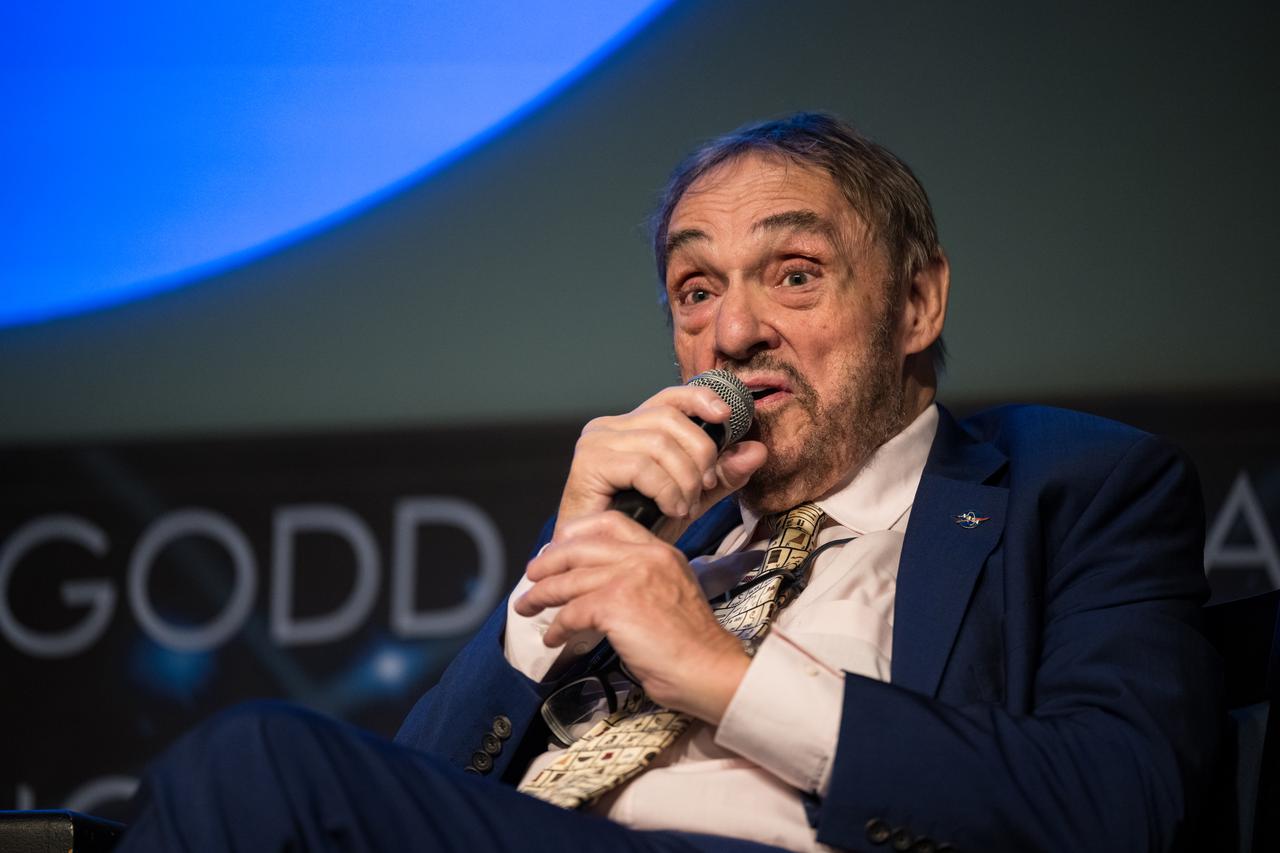
John Rhys-Davies, the actor best known for his roles as Gimli in The Lord of the Rings trilogy and Sallah in the Indiana Jones franchise provides remarks during an employee event, Friday, March 28, 2025 at the Mary W. Jackson NASA Headquarters building in Washington, DC. Photo Credit: (NASA/Aubrey Gemignani)
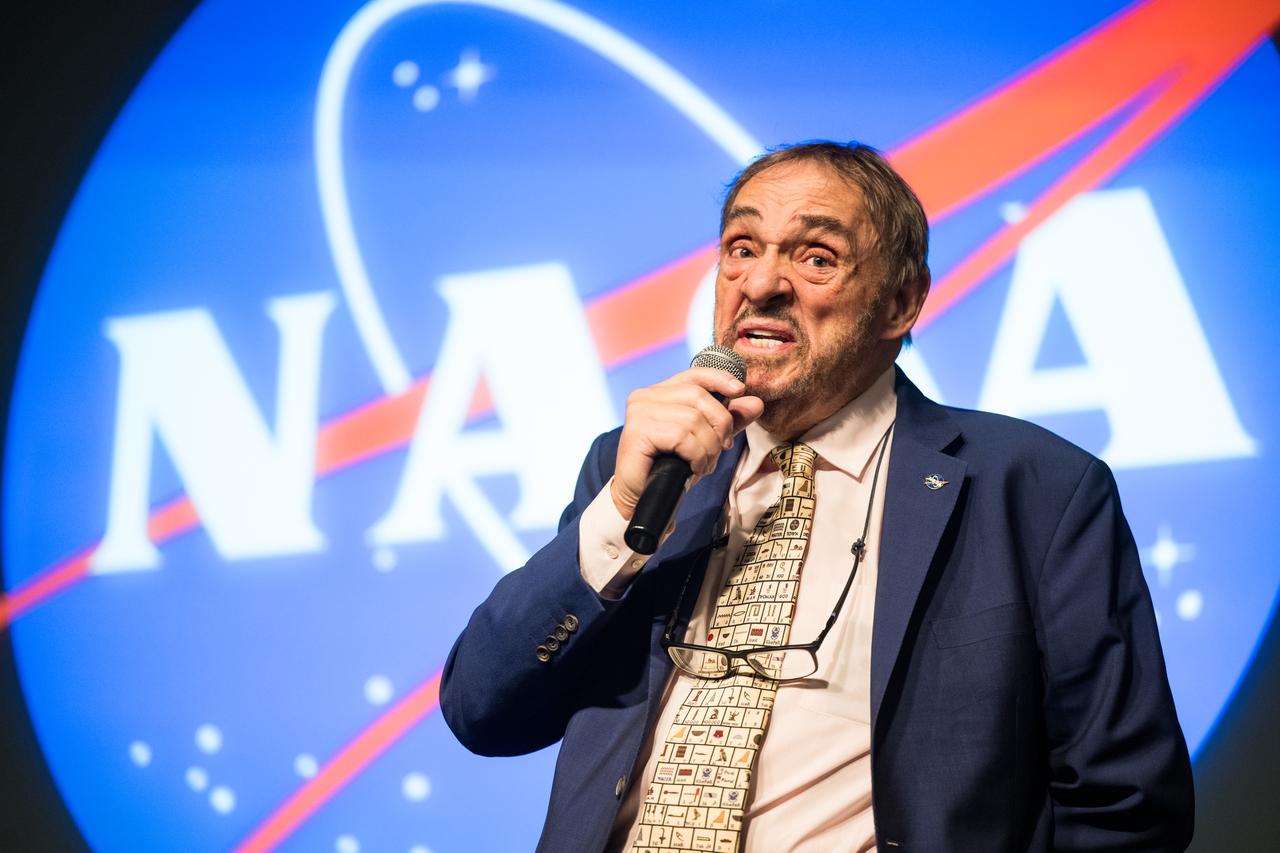
John Rhys-Davies, the actor best known for his roles as Gimli in The Lord of the Rings trilogy and Sallah in the Indiana Jones franchise provides remarks during an employee event, Friday, March 28, 2025 at the Mary W. Jackson NASA Headquarters building in Washington, DC. Photo Credit: (NASA/Aubrey Gemignani)
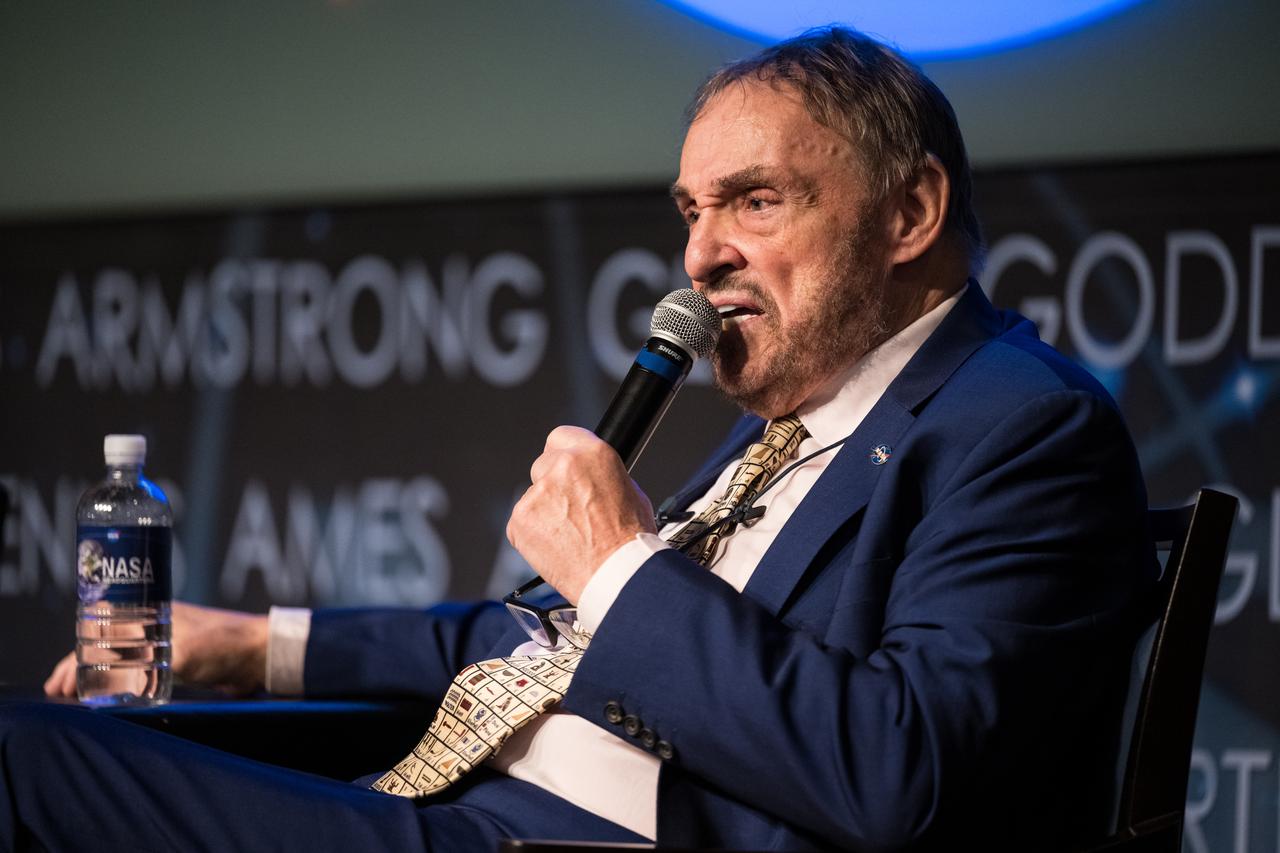
John Rhys-Davies, the actor best known for his roles as Gimli in The Lord of the Rings trilogy and Sallah in the Indiana Jones franchise provides remarks during an employee event, Friday, March 28, 2025 at the Mary W. Jackson NASA Headquarters building in Washington, DC. Photo Credit: (NASA/Aubrey Gemignani)
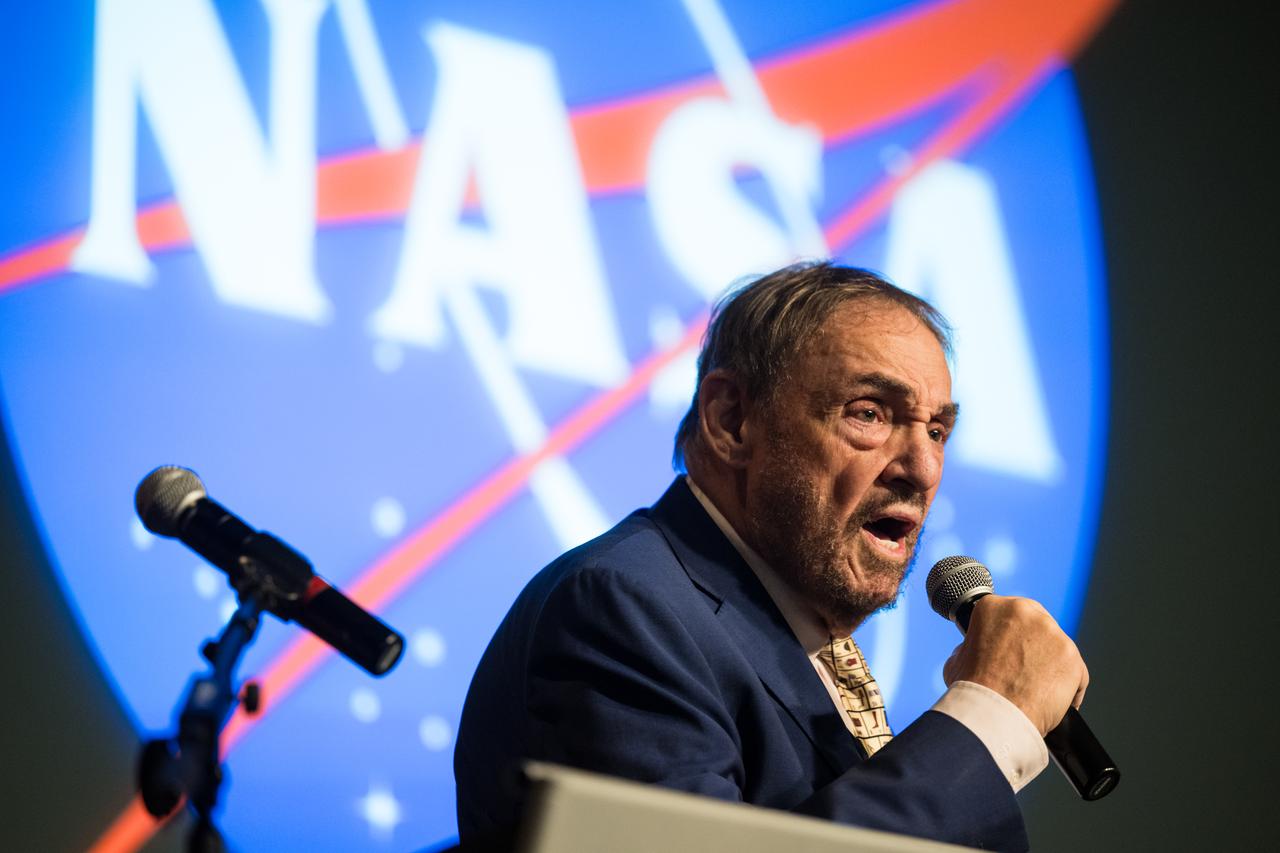
John Rhys-Davies, the actor best known for his roles as Gimli in The Lord of the Rings trilogy and Sallah in the Indiana Jones franchise provides remarks during an employee event, Friday, March 28, 2025 at the Mary W. Jackson NASA Headquarters building in Washington, DC. Photo Credit: (NASA/Aubrey Gemignani)
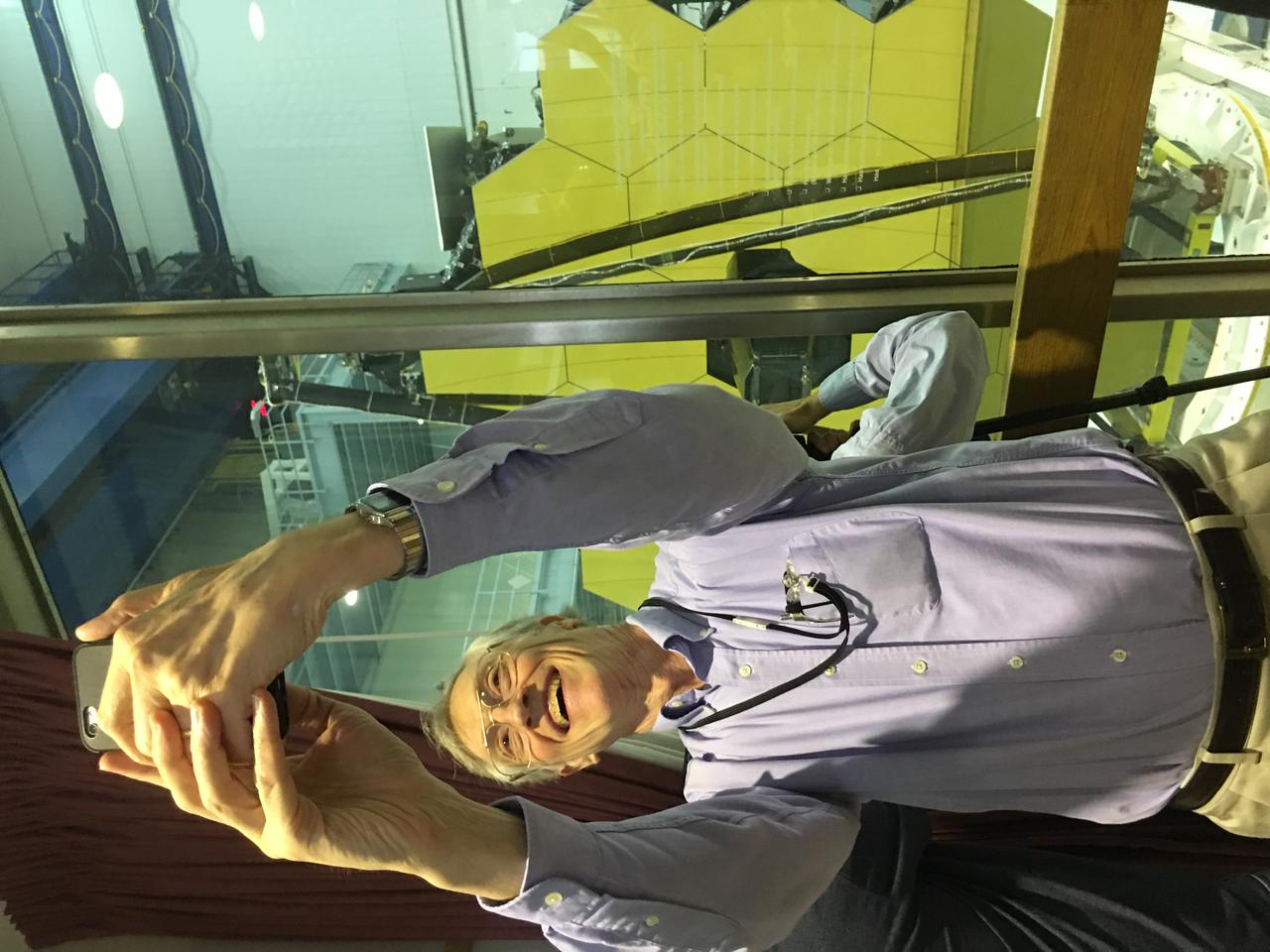
Nobel Laureate and James Webb Space Telescope project scientist Dr. John Mather takes a selfie with the telescope. May 4, 2016 was a rare day for JWST, as it briefly faced the cleanroom observation window. The telescope was eventually rotated face-down in prep for the installation of the flight instruments. Credit: Meredith Gibb
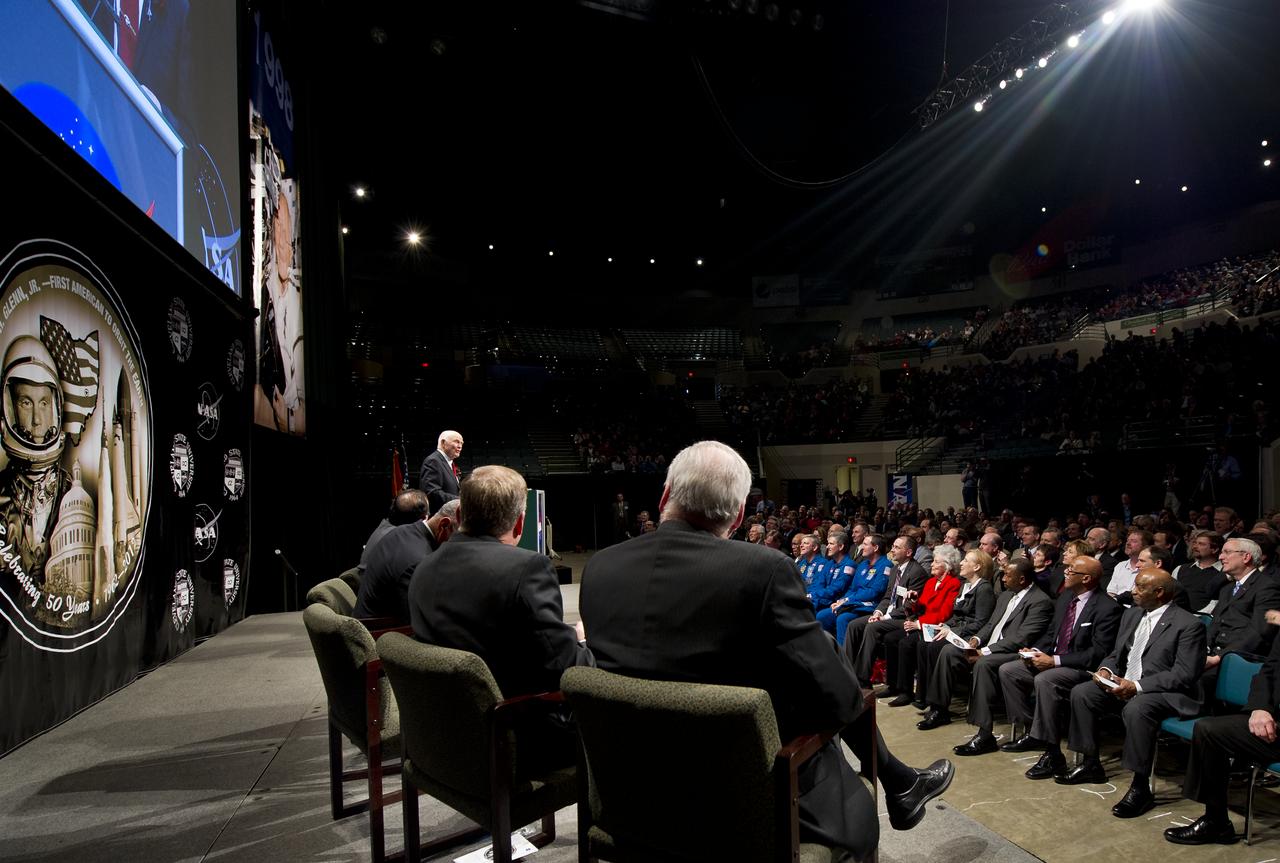
Sen. John Glenn gives remarks at an event celebrating his legacy and 50 years of americans in orbit held at the Cleveland State University Wolstein Center on Friday, March 3, 2012 in Cleveland, Ohio. Glenn became the first American to orbit Earth in 1962. Photo Credit: (NASA/Bill Ingalls)
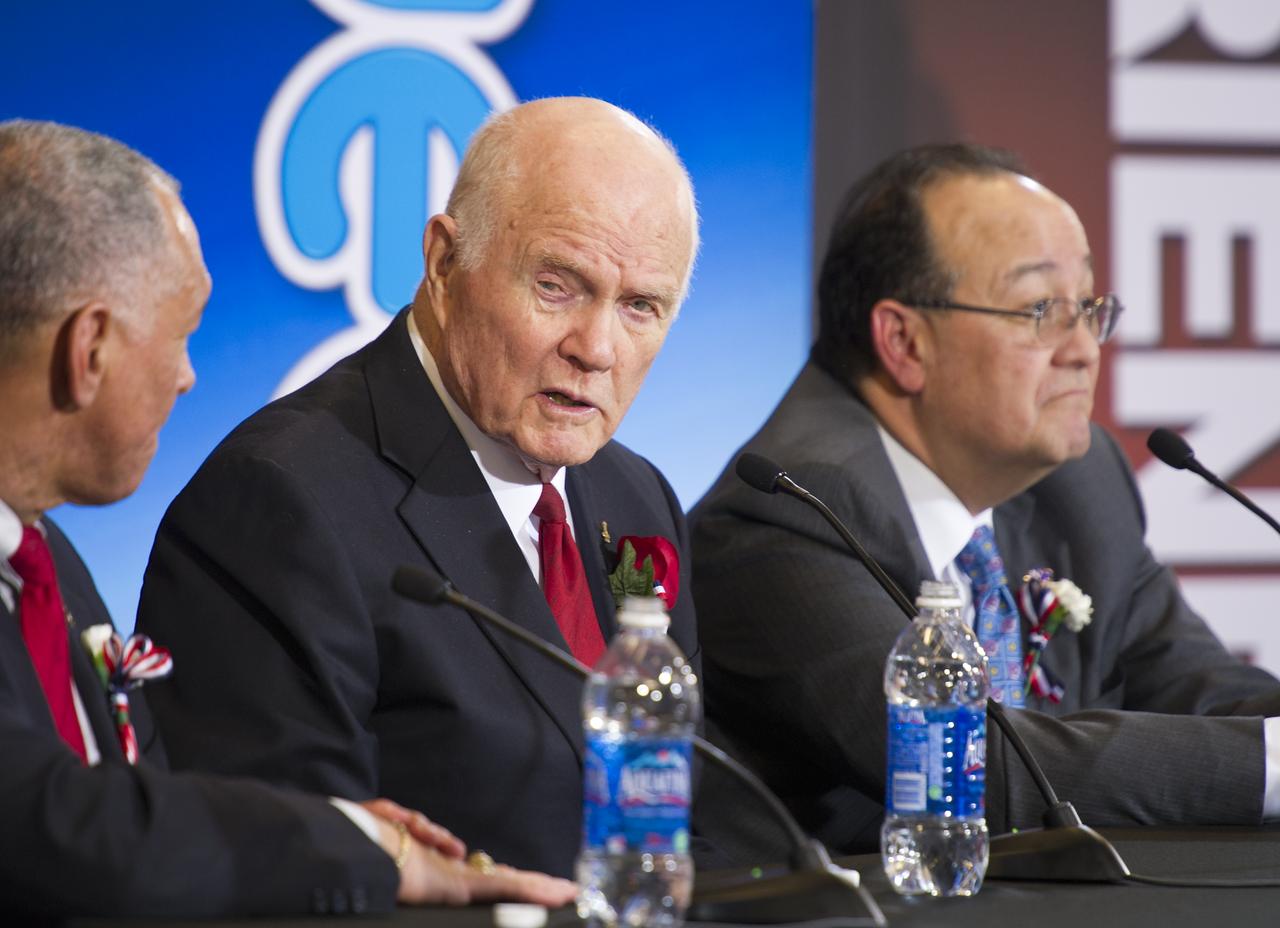
Sen. John Glenn answers questions at a NASA Tweetup event celebrating Glenn's legacy and 50 years of americans in orbit held at the Cleveland State University Wolstein Center on Friday, March 3, 2012 in Cleveland, Ohio. Glenn became the first American to orbit Earth in 1962. Photo Credit: (NASA/Bill Ingalls)
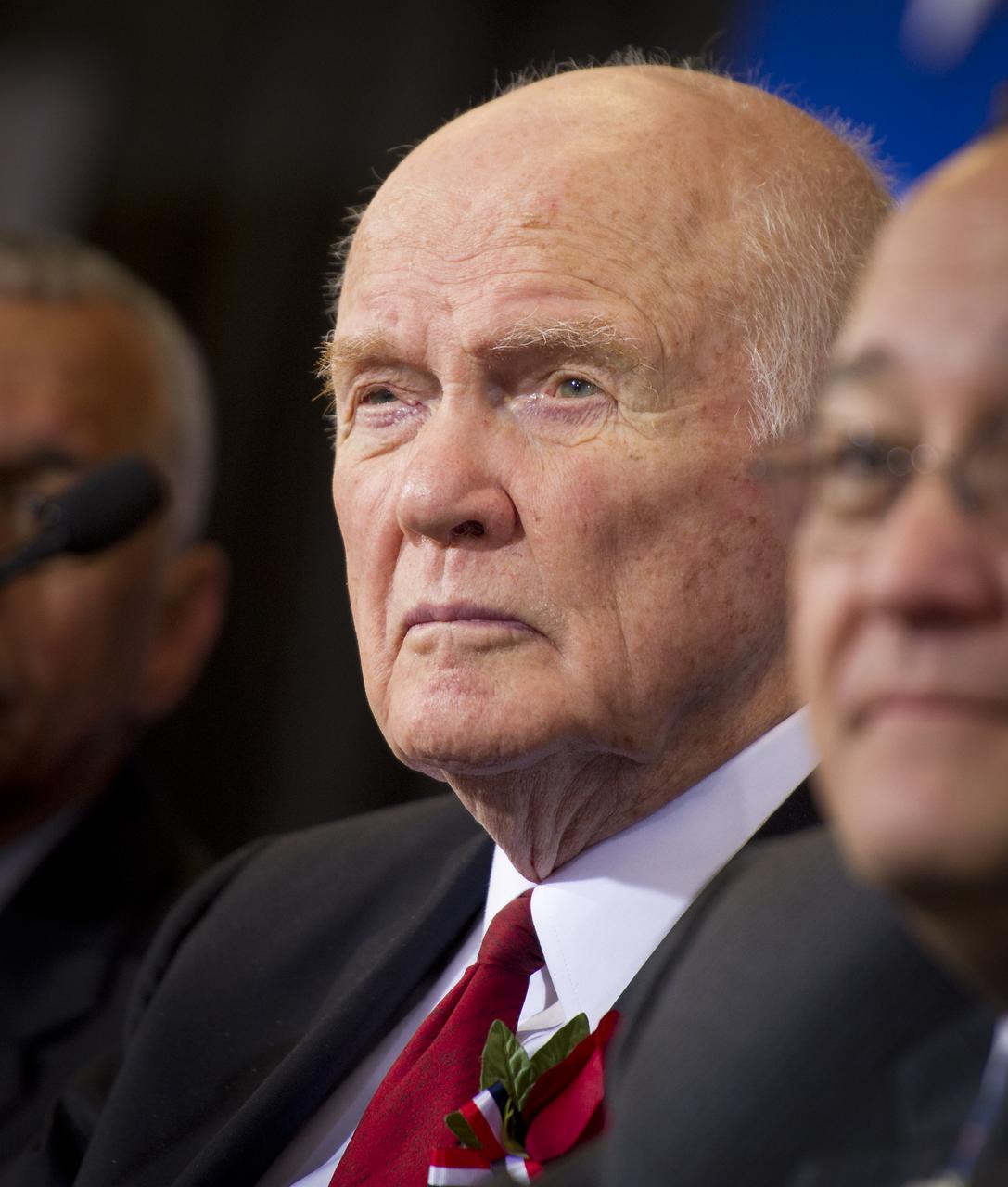
Sen. John Glenn listens to a question at a NASA Tweetup event celebrating Glenn's legacy and 50 years of americans in orbit held at the Cleveland State University Wolstein Center on Friday, March 3, 2012 in Cleveland, Ohio. Glenn became the first American to orbit Earth in 1962. Photo Credit: (NASA/Bill Ingalls)
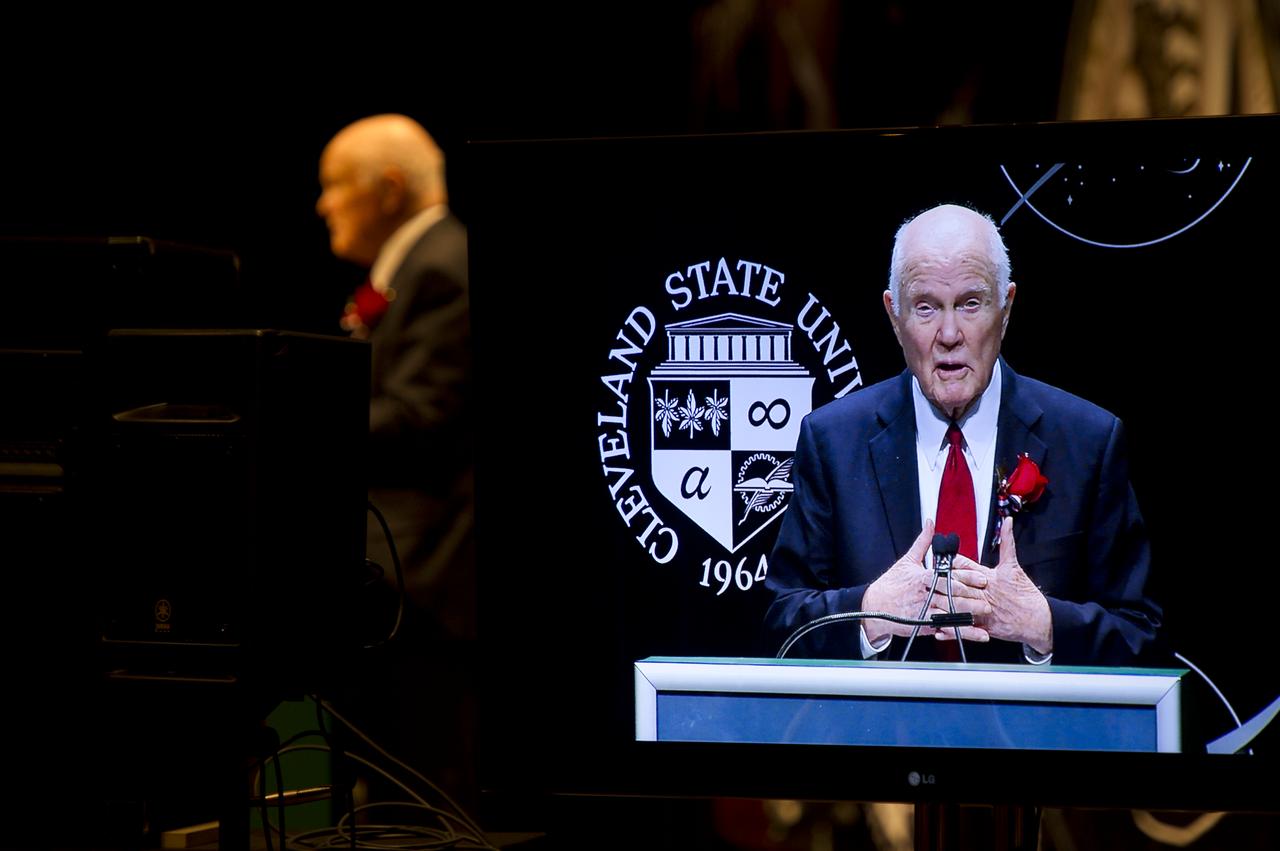
Sen. John Glenn is seen on a monitor as he gives remarks at an event celebrating his legacy and 50 years of americans in orbit held at the Cleveland State University Wolstein Center on Friday, March 3, 2012 in Cleveland, Ohio. Glenn became the first American to orbit Earth in 1962. Photo Credit: (NASA/Bill Ingalls)
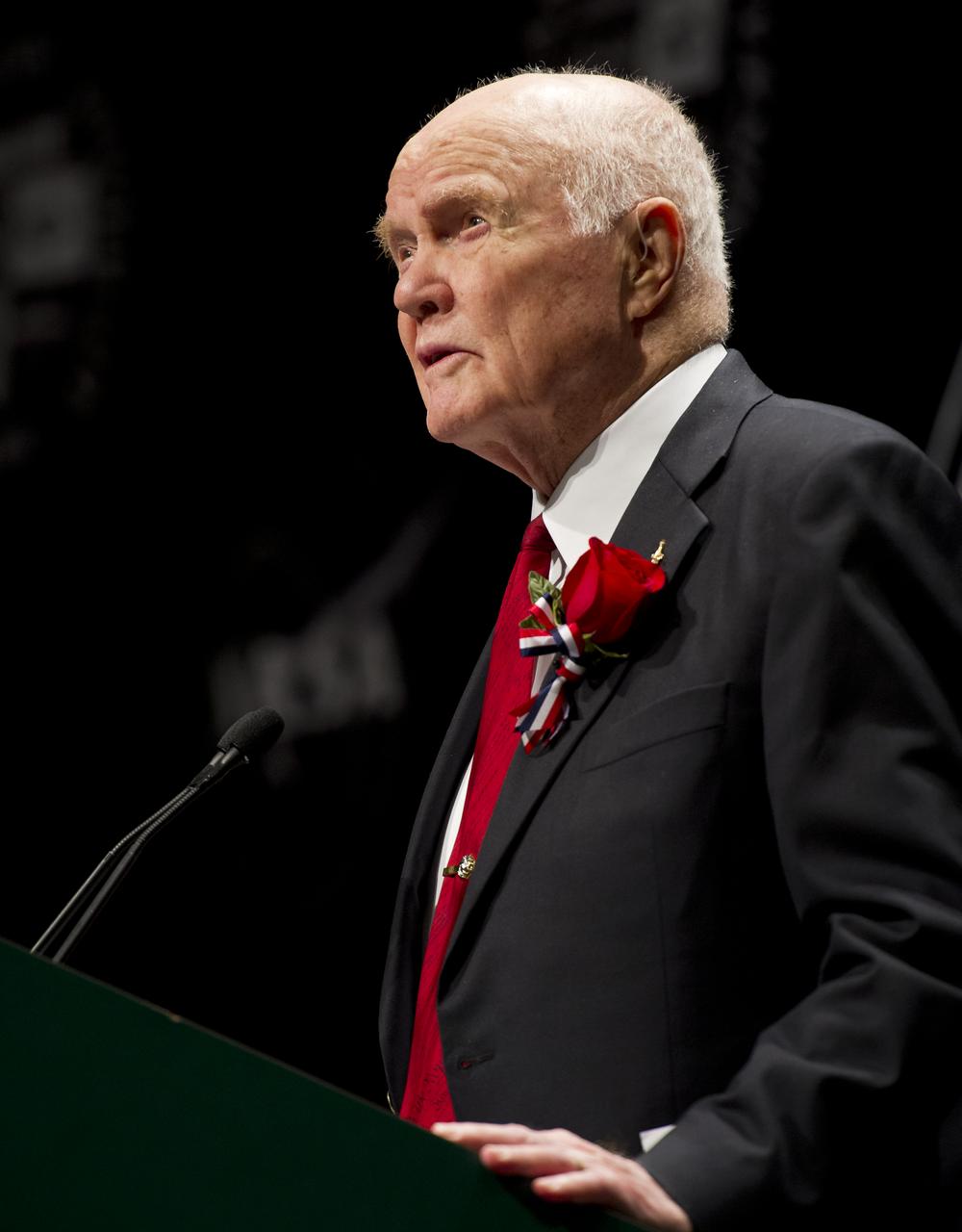
Sen. John Glenn gives remarks at an event celebrating his legacy and 50 years of americans in orbit held at the Cleveland State University Wolstein Center on Friday, March 3, 2012 in Cleveland, Ohio. Glenn became the first American to orbit Earth in 1962. Photo Credit: (NASA/Bill Ingalls)
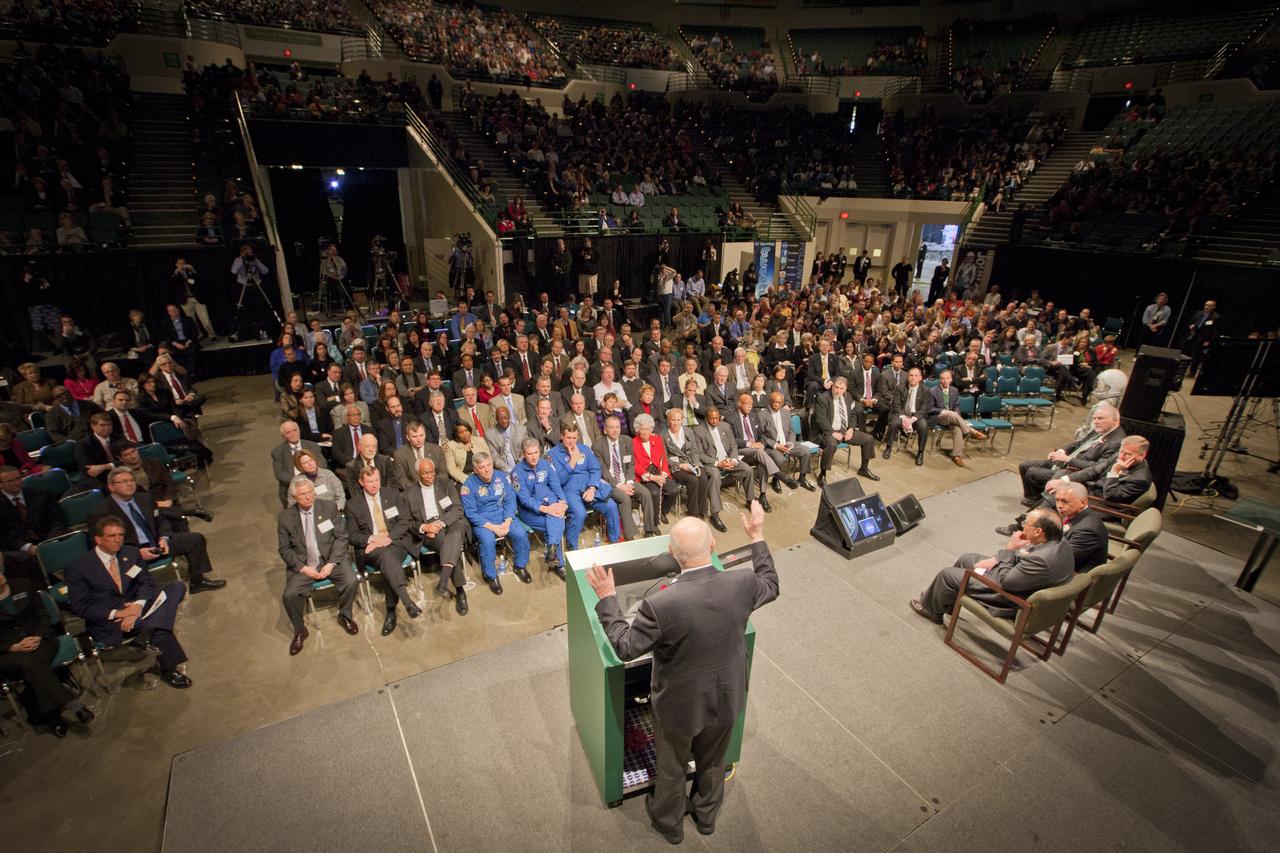
Sen. John Glenn gives remarks at an event celebrating his legacy and 50 years of americans in orbit held at the Cleveland State University Wolstein Center on Friday, March 3, 2012 in Cleveland, Ohio. Glenn became the first American to orbit Earth in 1962. Photo Credit: (NASA/Chris Lynch)
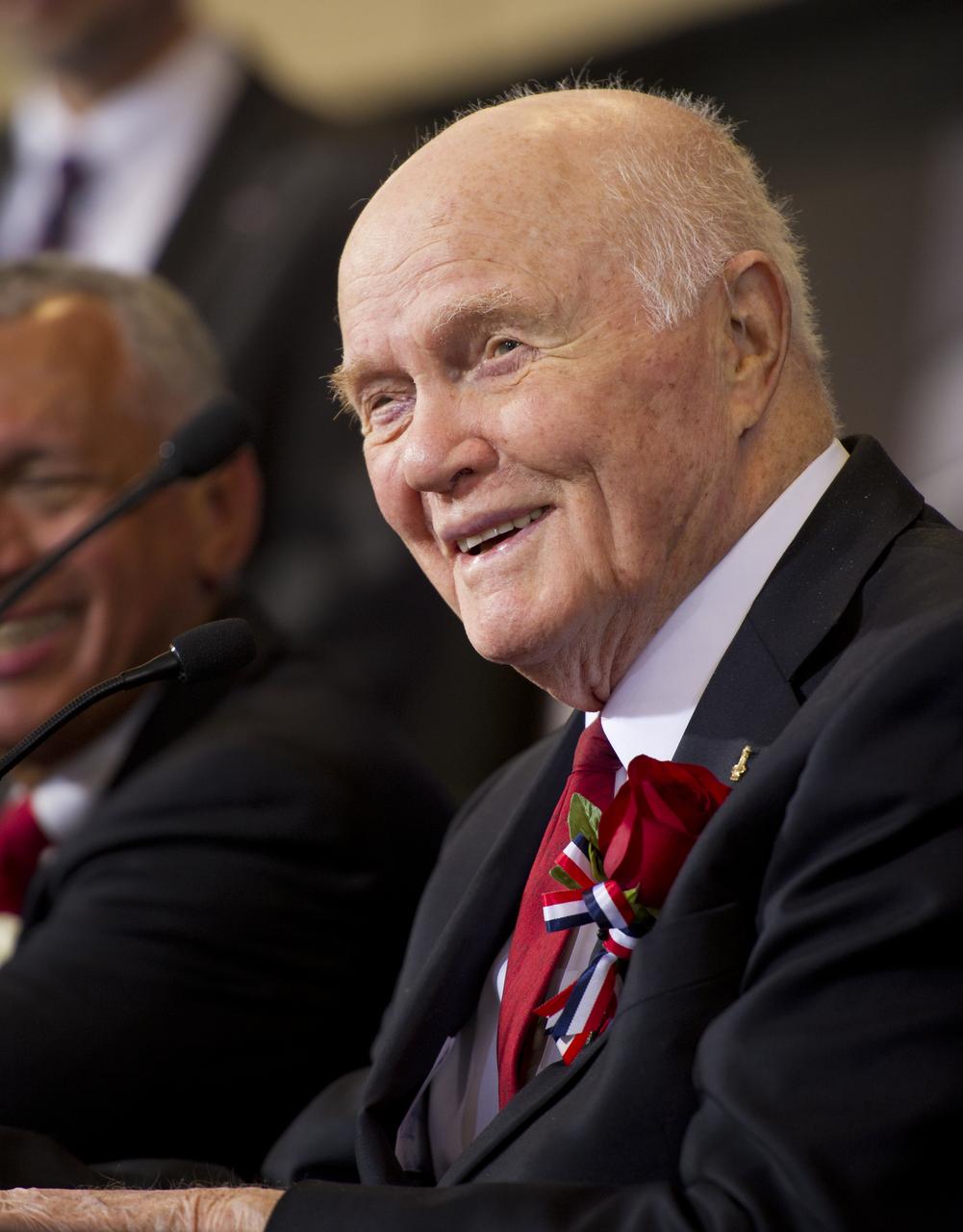
Sen. John Glenn listens to a question at a NASA Tweetup event celebrating Glenn's legacy and 50 years of americans in orbit held at the Cleveland State University Wolstein Center on Friday, March 3, 2012 in Cleveland, Ohio. Glenn became the first American to orbit Earth in 1962. Photo Credit: (NASA/Bill Ingalls)
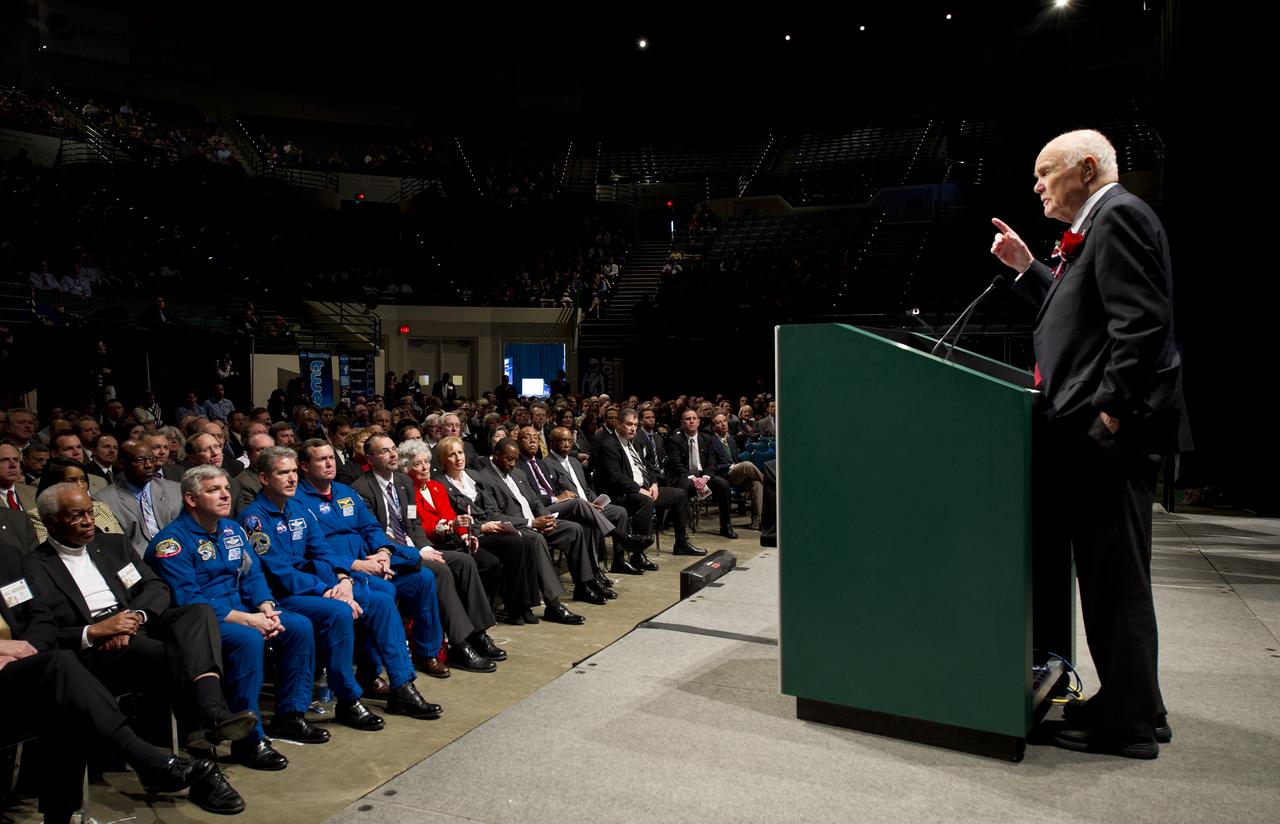
Sen. John Glenn gives remarks at an event celebrating his legacy and 50 years of americans in orbit held at the Cleveland State University Wolstein Center on Friday, March 3, 2012 in Cleveland, Ohio. Glenn became the first American to orbit Earth in 1962. Photo Credit: (NASA/Bill Ingalls)
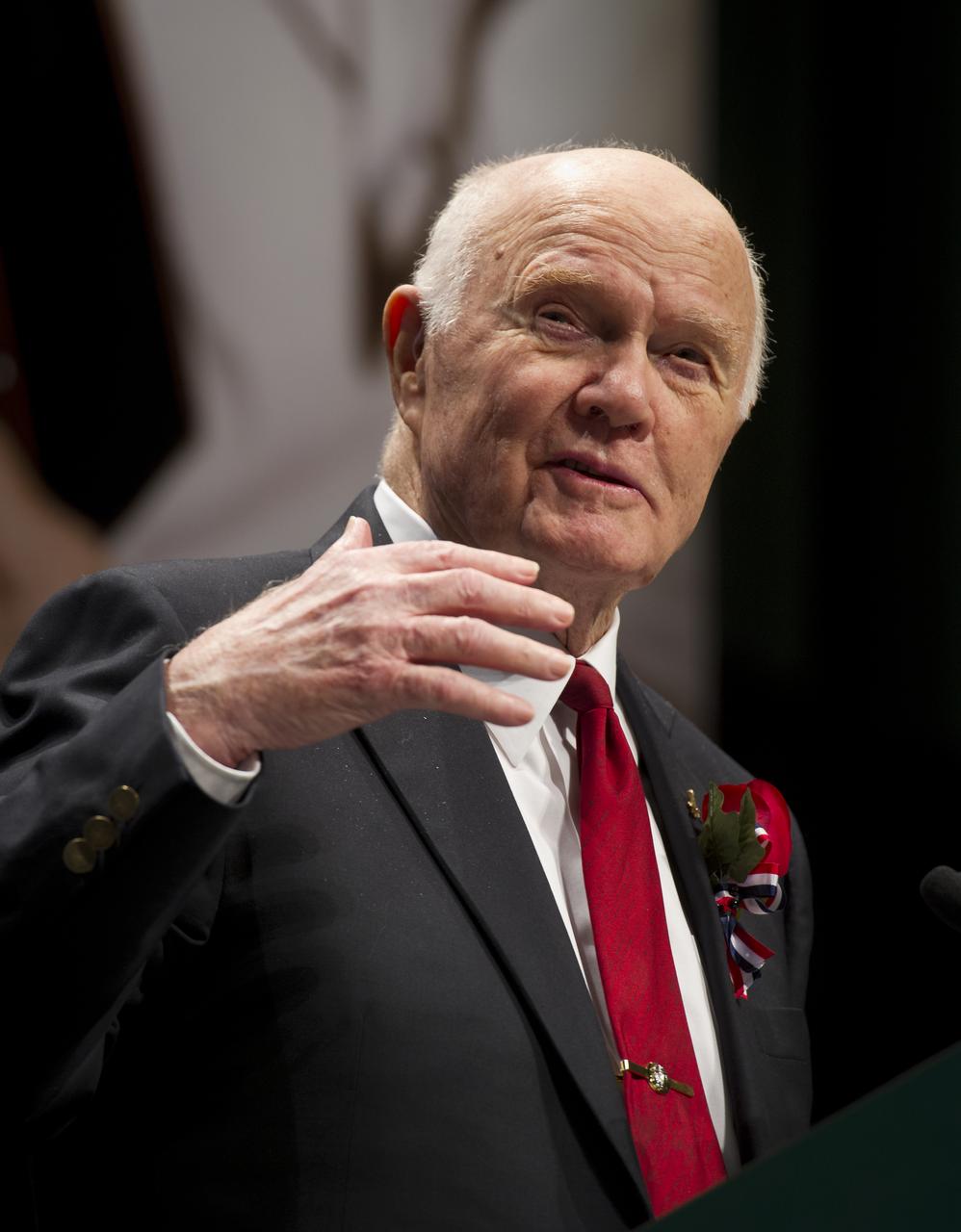
Sen. John Glenn gives remarks at an event celebrating his legacy and 50 years of americans in orbit held at the Cleveland State University Wolstein Center on Friday, March 3, 2012 in Cleveland, Ohio. Glenn became the first American to orbit Earth in 1962. Photo Credit: (NASA/Bill Ingalls)
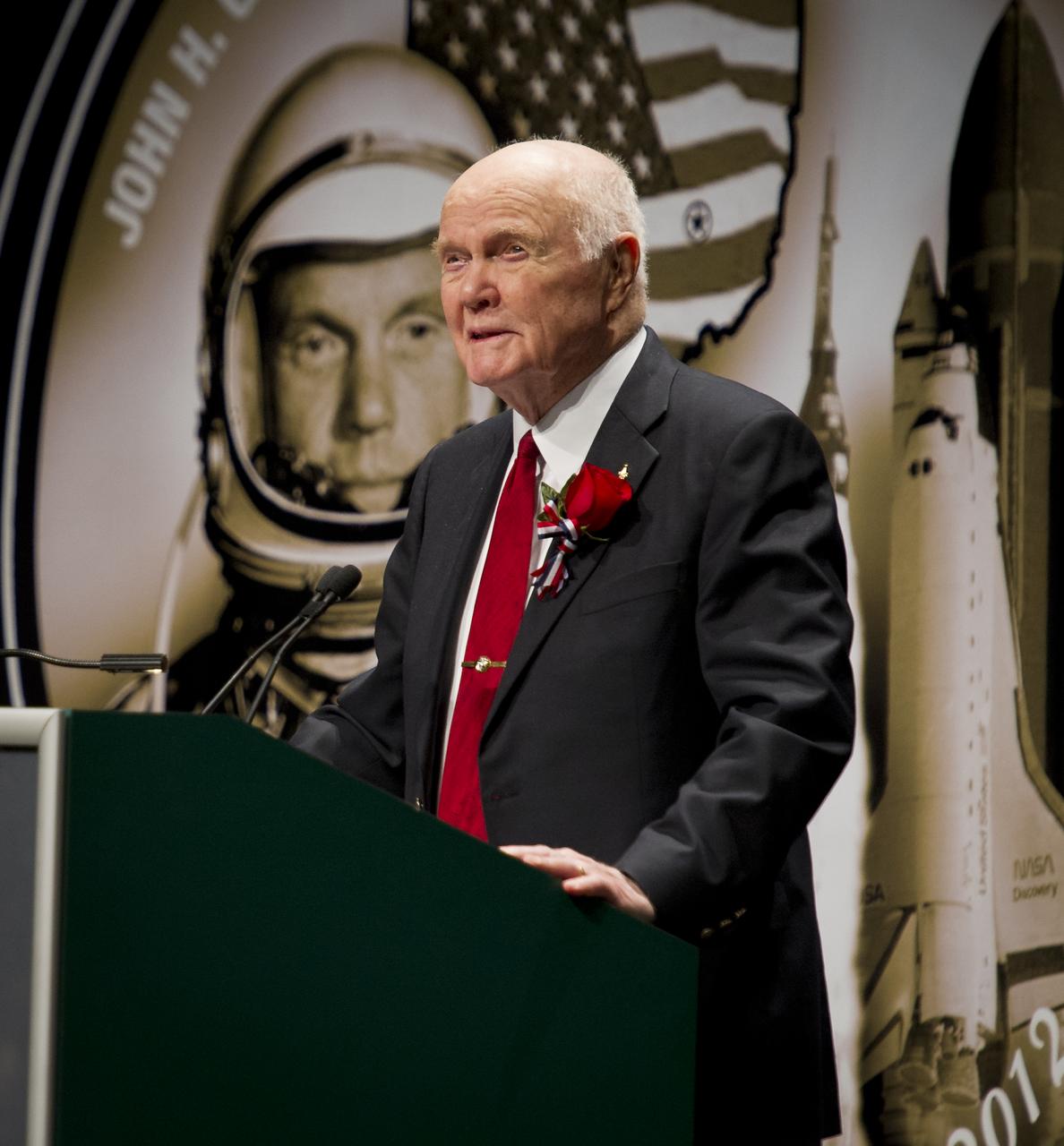
Sen. John Glenn gives remarks at an event celebrating his legacy and 50 years of americans in orbit held at the Cleveland State University Wolstein Center on Friday, March 3, 2012 in Cleveland, Ohio. Glenn became the first American to orbit Earth in 1962. Photo Credit: (NASA/Bill Ingalls)
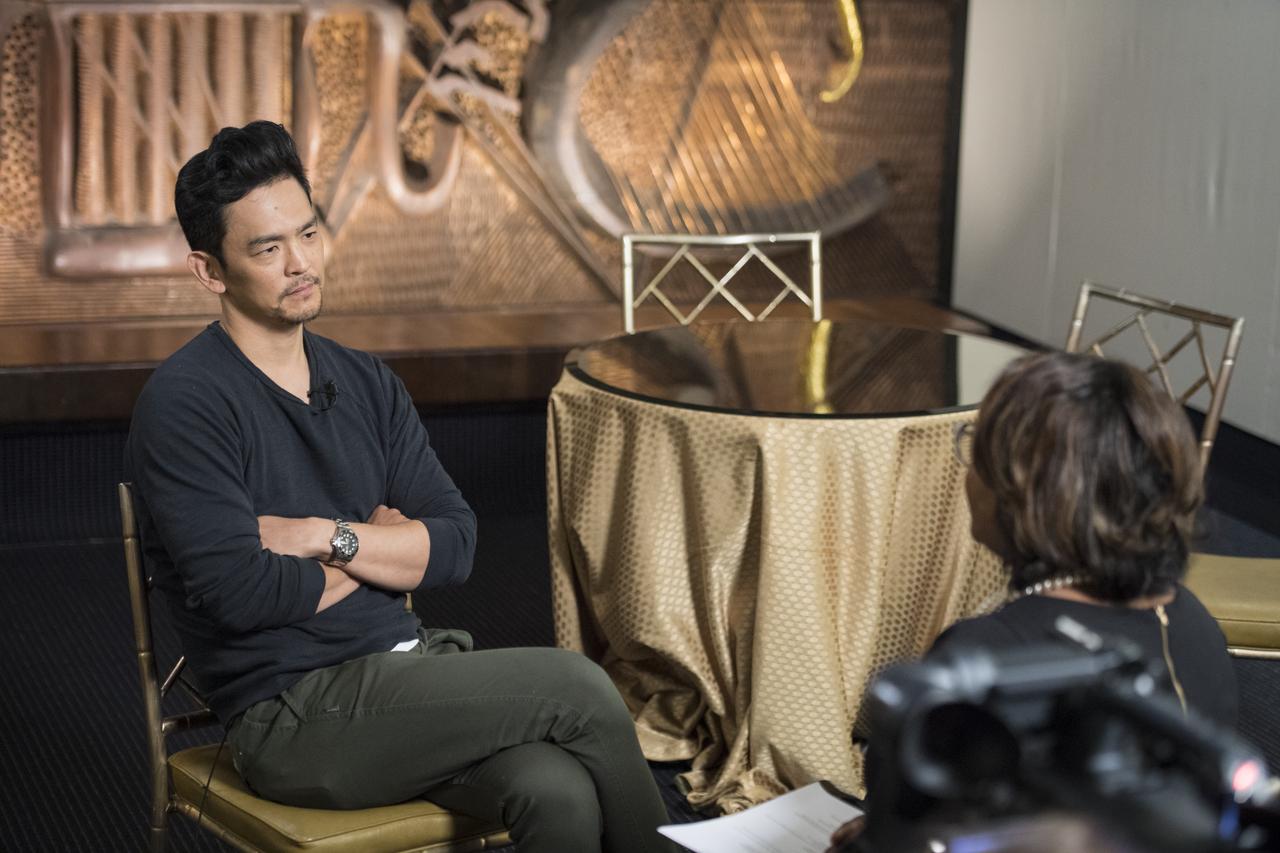
Actor John Cho in interviewed by NASA's Social Video Producer, Brittany Brown, Friday, June 1, 2018 at the John F. Kennedy Center for the Performing Arts ahead of the "National Symphony Orchestra Pops: Space, the Next Frontier," celebrating NASA's 60th Anniversary in Washington DC. The event featured music inspired by space including artists Will.i.am, Grace Potter, Coheed & Cambria, John Cho, and guest Nick Sagan, son of Carl Sagan. Photo Credit: (NASA/Aubrey Gemignani)
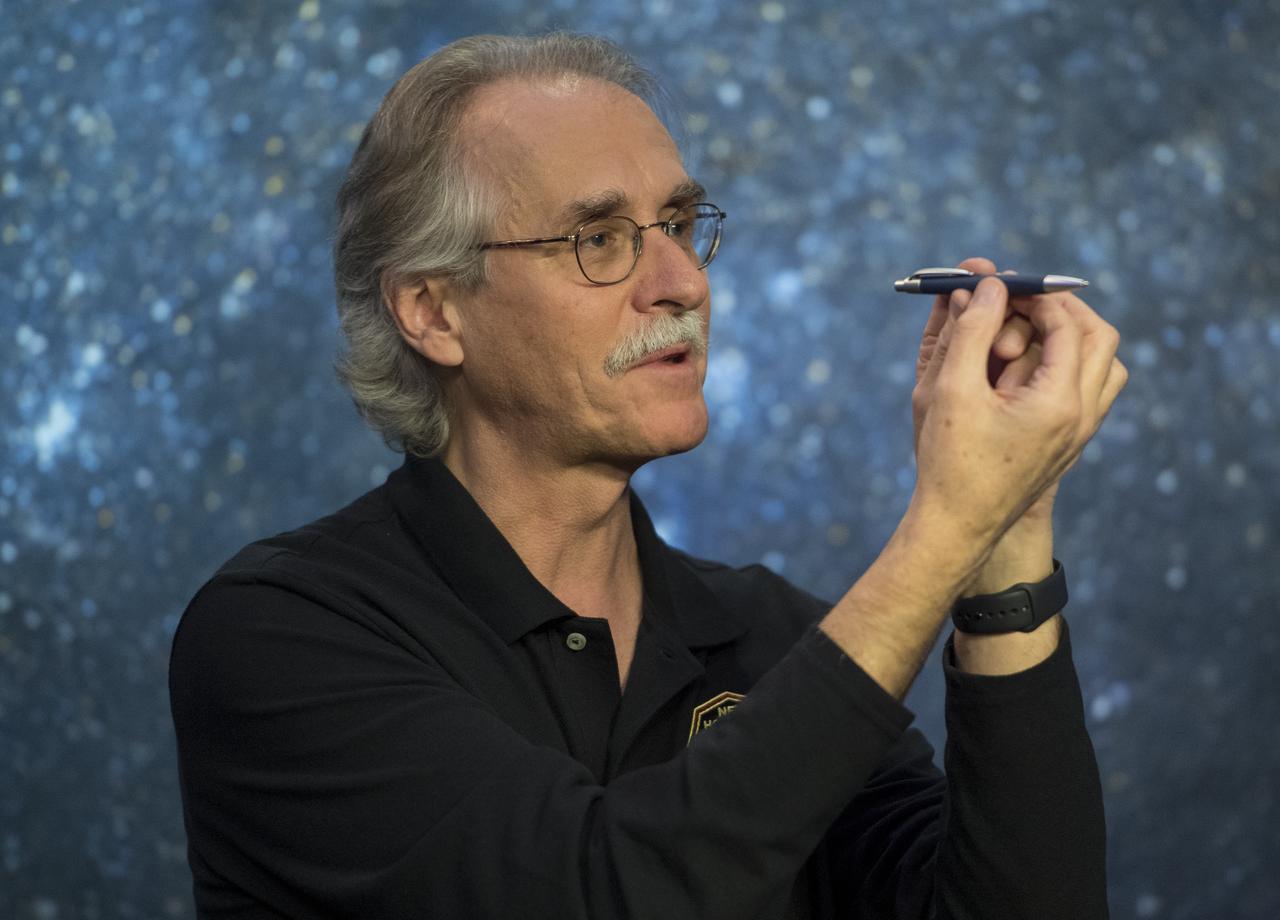
New Horizons co-investigator John Spencer of the Southwest Research Institute (SwRI), Boulder, CO, uses a pen to demonstrate how Ultima Thule might be rotating during a press conference prior to the flyby of the Kuiper Belt object by the New Horizons spacecraft, Monday, Dec. 31, 2018 at Johns Hopkins University Applied Physics Laboratory (APL) in Laurel, Maryland. Photo Credit: (NASA/Joel Kowsky)

New Horizons co-investigator John Spencer of the Southwest Research Institute (SwRI), Boulder, CO speaks during a press conference prior to the flyby of Ultima Thule by the New Horizons spacecraft, Monday, Dec. 31, 2018 at Johns Hopkins University Applied Physics Laboratory (APL) in Laurel, Maryland. Photo Credit: (NASA/Joel Kowsky)
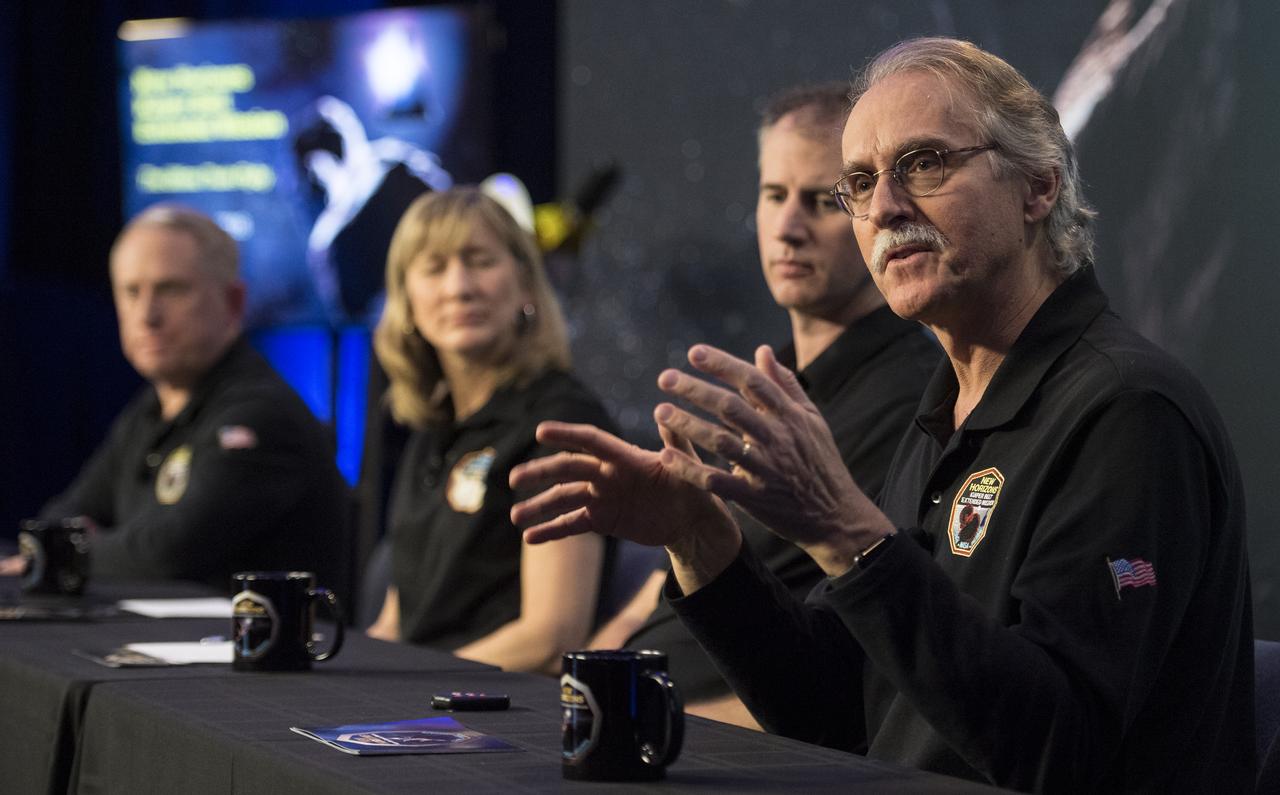
New Horizons co-investigator John Spencer of the Southwest Research Institute (SwRI), Boulder, CO speaks during a press conference prior to the flyby of Ultima Thule by the New Horizons spacecraft, Monday, Dec. 31, 2018 at Johns Hopkins University Applied Physics Laboratory (APL) in Laurel, Maryland. Photo Credit: (NASA/Joel Kowsky)
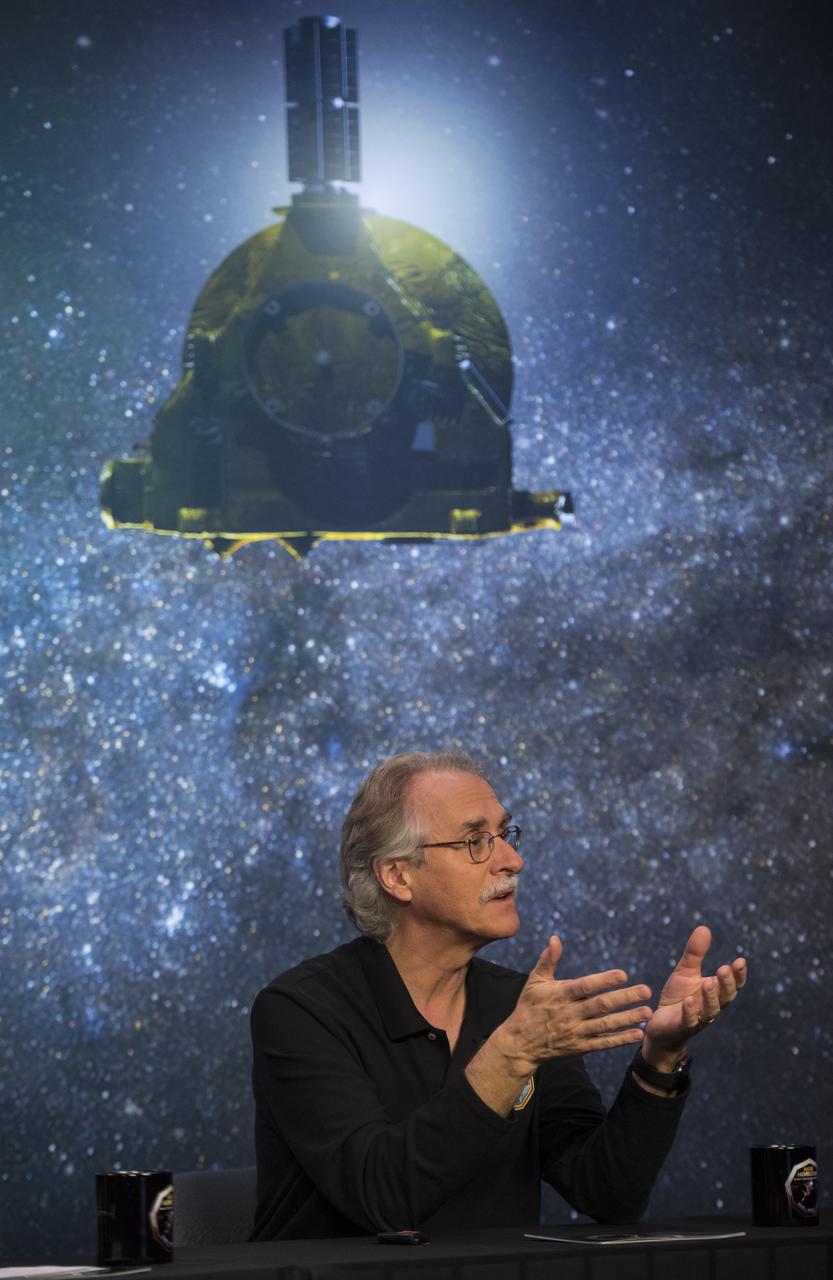
New Horizons co-investigator John Spencer of the Southwest Research Institute (SwRI), Boulder, CO speaks during a press conference prior to the flyby of Ultima Thule by the New Horizons spacecraft, Monday, Dec. 31, 2018 at Johns Hopkins University Applied Physics Laboratory (APL) in Laurel, Maryland. Photo Credit: (NASA/Joel Kowsky)
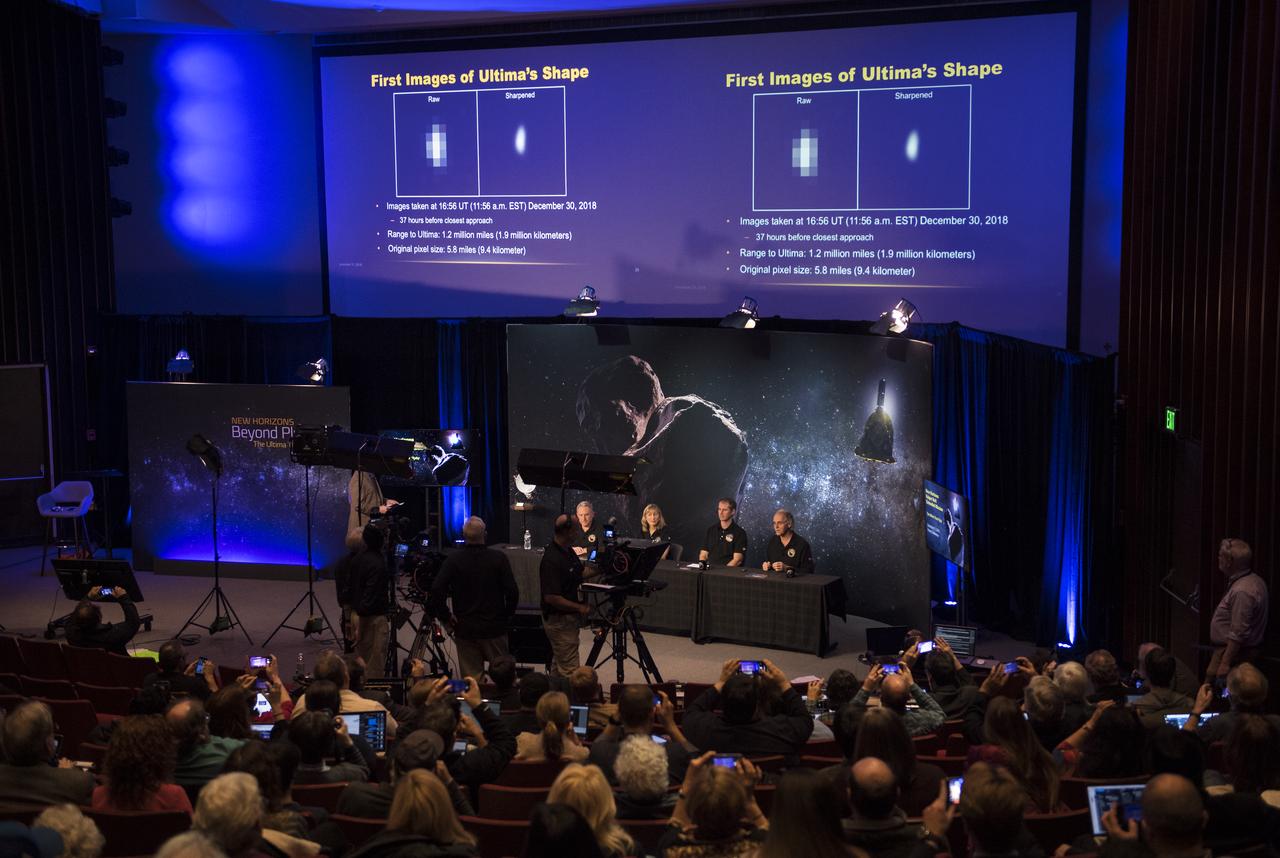
New Horizons co-investigator John Spencer of the Southwest Research Institute (SwRI), Boulder, CO, right, speaks during a press conference prior to the flyby about the first images received from the New Horizons spacecraft of Ultima Thule that were captured on Dec. 30 as the spacecraft was 1.2 million miles away from Ultima Thule, Monday, Dec. 31, 2018 at Johns Hopkins University Applied Physics Laboratory (APL) in Laurel, Maryland. Photo Credit: (NASA/Joel Kowsky)
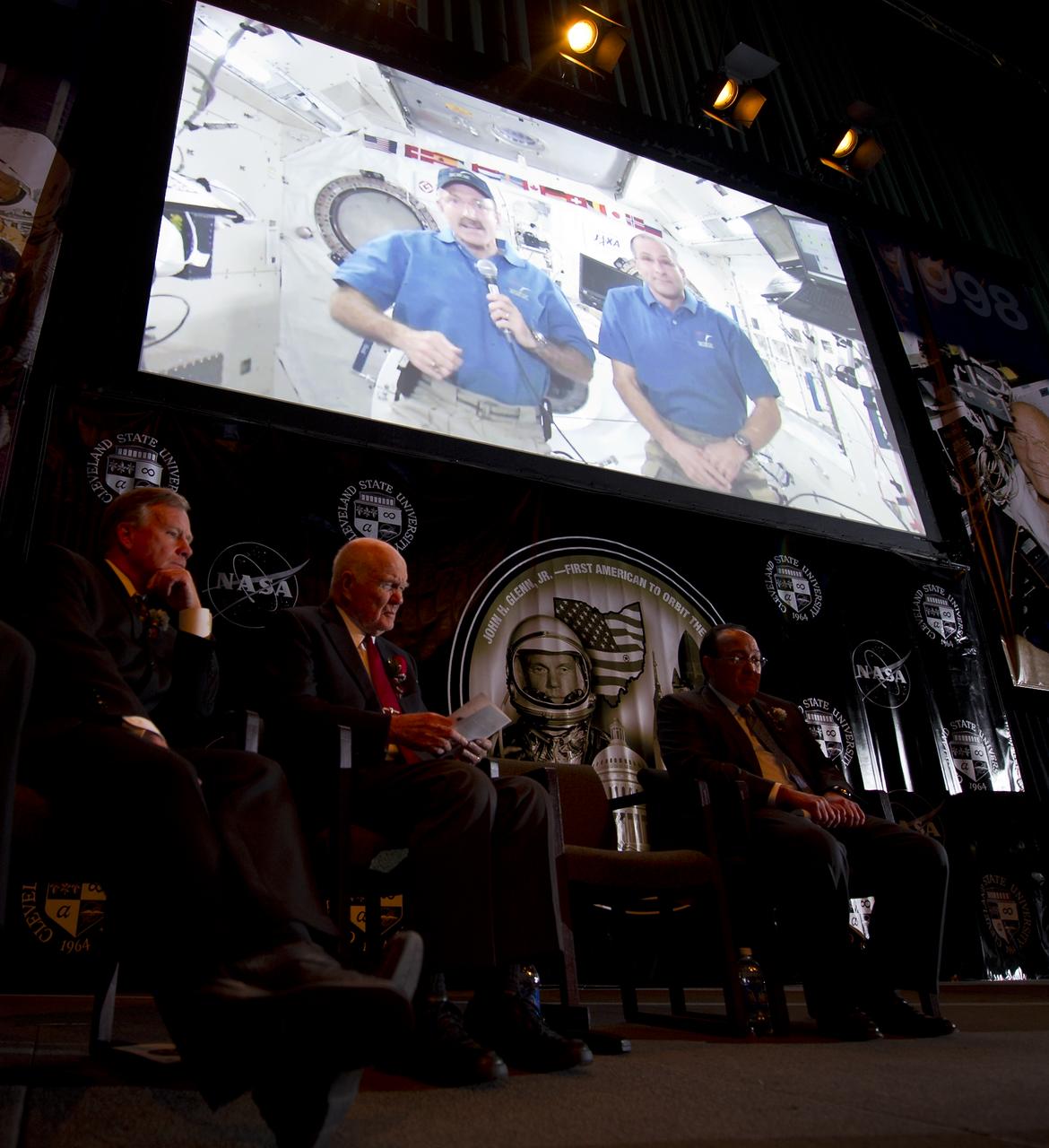
A pre-recorded message from International Space Station, Expedition 30 crew Commander Dan Burbank, on screen left, and Expedition 30 Flight Engineer Don Pettit is shown while former Astronaut Steve Lindsey, seated left, Sen. John Glenn, and NASA Glenn Research Director Ray Lugo look on at an event celebrating John Glenn's legacy and 50 years of americans in orbit held at the Cleveland State University Wolstein Center on Friday, March 3, 2012 in Cleveland, Ohio. Glenn became the first American to orbit Earth in 1962. Photo Credit: (NASA/Bill Ingalls)
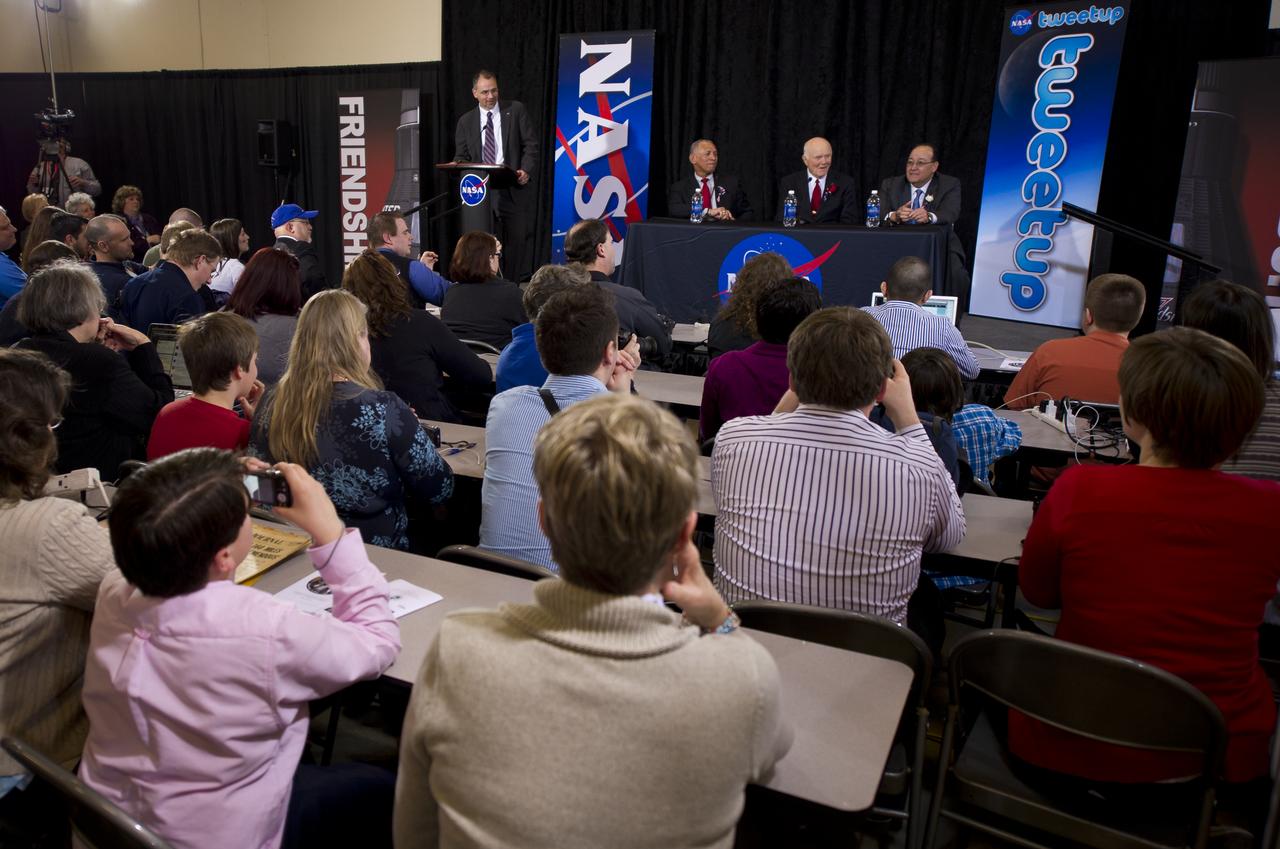
NASA Glenn Research Center Deupty Director James Free moderates a combined media briefing and NASA Tweetup with NASA Administrator Charles Bolden, seated left, Sen. John Glenn, and NASA Glenn Research Center Director Ray Lugo, seated right, at an event celebrating John Glenn's legacy and 50 years of americans in orbit held at the Cleveland State University Wolstein Center on Friday, March 3, 2012 in Cleveland, Ohio. Glenn became the first American to orbit Earth in 1962. Photo Credit: (NASA/Bill Ingalls)
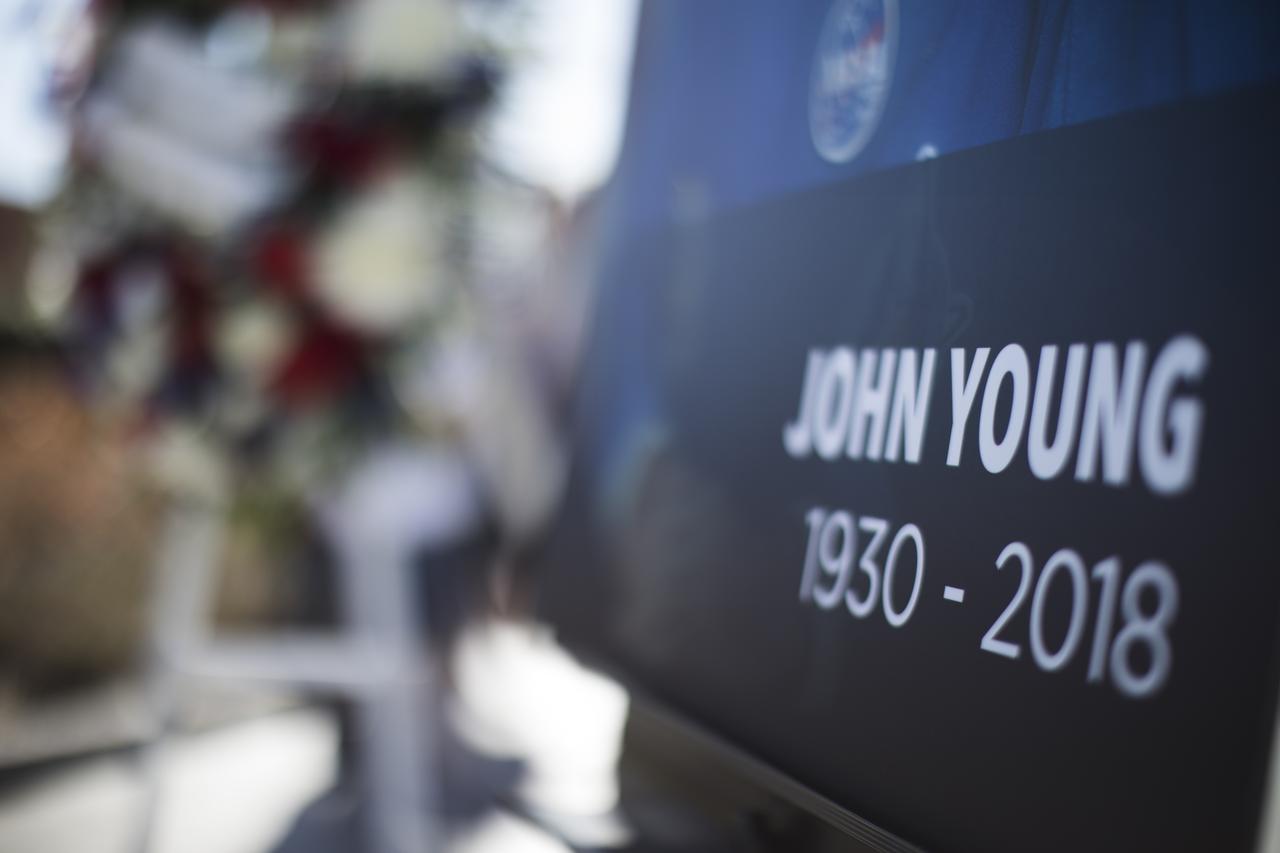
NASA astronaut John Young was remembered in a ceremony at the Heroes and Legends exhibit at the Kennedy Space Center Visitor Complex. The brief memorial took place on the afternoon of Jan. 11, 2018. Young died Jan. 5, 2018, in Houston at the age of 87. He was the only astronaut to fly in NASA's Gemini, Apollo and Space Shuttle Programs.
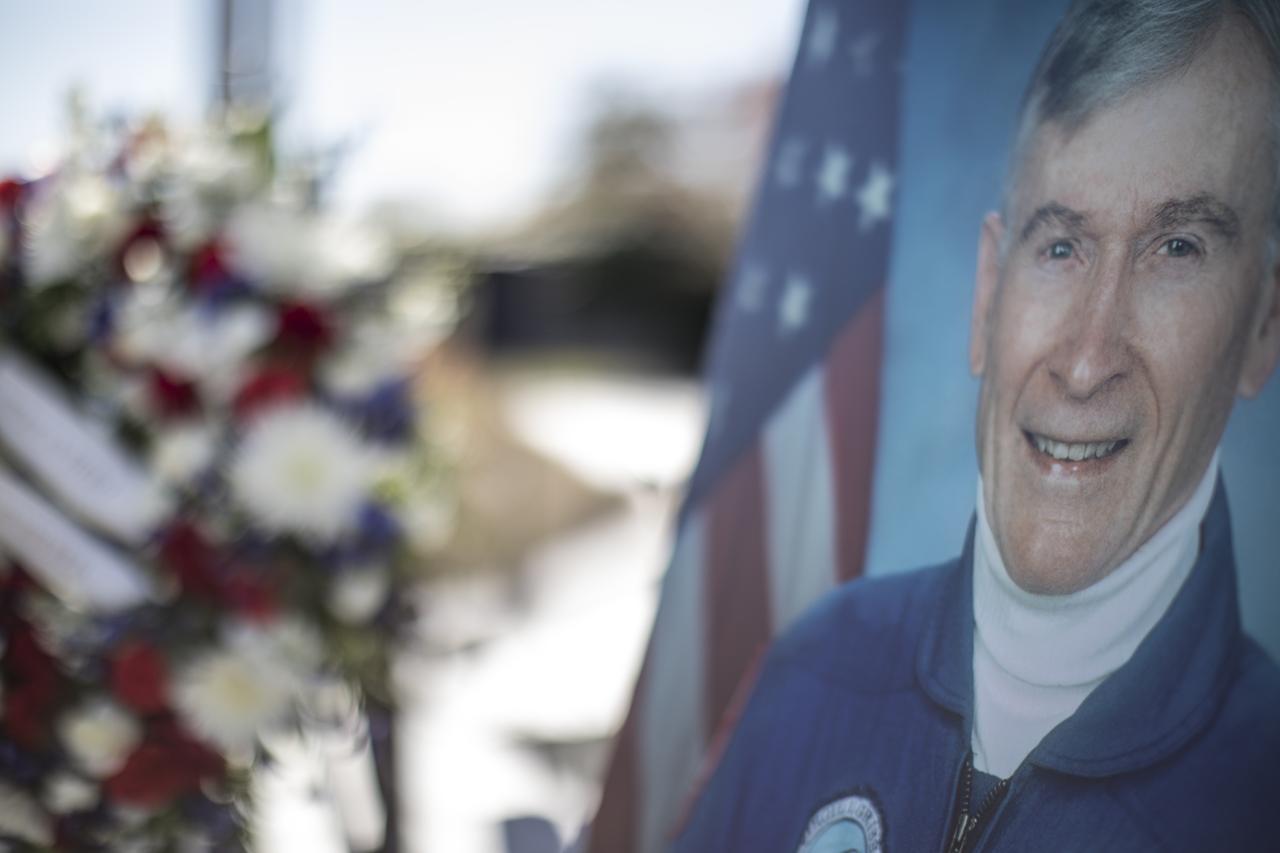
NASA astronaut John Young was remembered in a ceremony at the Heroes and Legends exhibit at the Kennedy Space Center Visitor Complex. The brief memorial took place on the afternoon of Jan. 11, 2018. Young died Jan. 5, 2018, in Houston at the age of 87. He was the only astronaut to fly in NASA's Gemini, Apollo and Space Shuttle Programs.
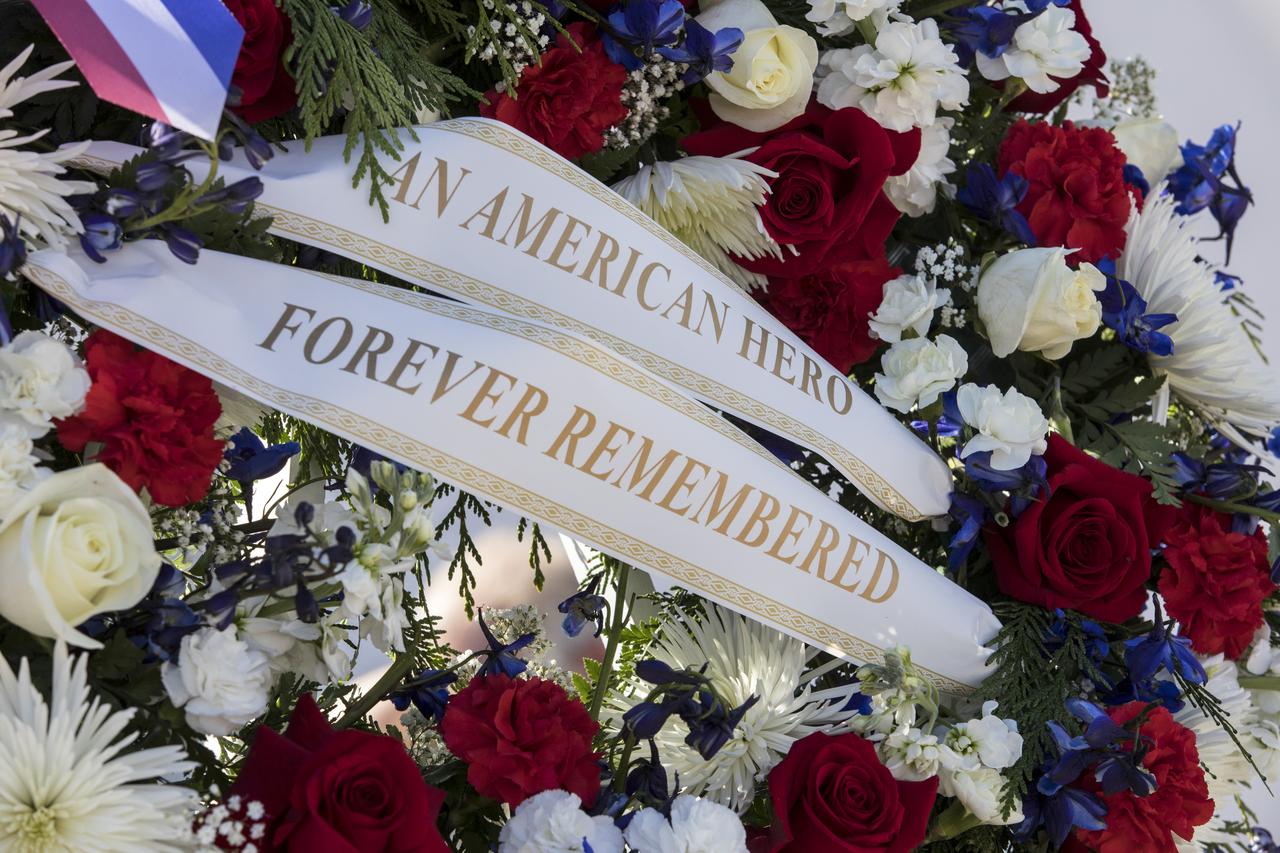
NASA astronaut John Young was remembered in a ceremony at the Heroes and Legends exhibit at the Kennedy Space Center Visitor Complex. The brief memorial took place on the afternoon of Jan. 11, 2018. Young died Jan. 5, 2018, in Houston at the age of 87. He was the only astronaut to fly in NASA's Gemini, Apollo and Space Shuttle Programs.
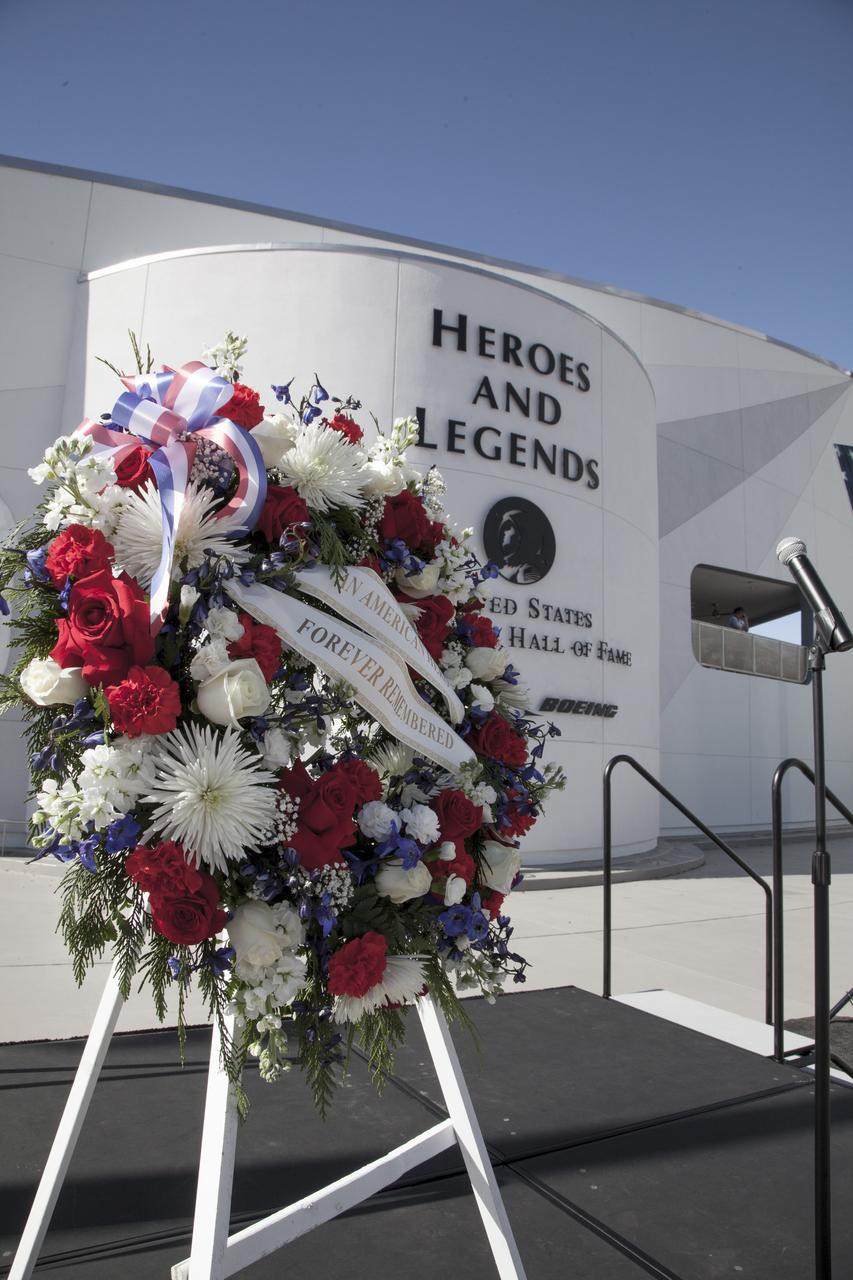
NASA astronaut John Young was remembered in a ceremony at the Heroes and Legends exhibit at the Kennedy Space Center Visitor Complex. The brief memorial took place on the afternoon of Jan. 11, 2018. Young died Jan. 5, 2018, in Houston at the age of 87. He was the only astronaut to fly in NASA's Gemini, Apollo and Space Shuttle Programs.
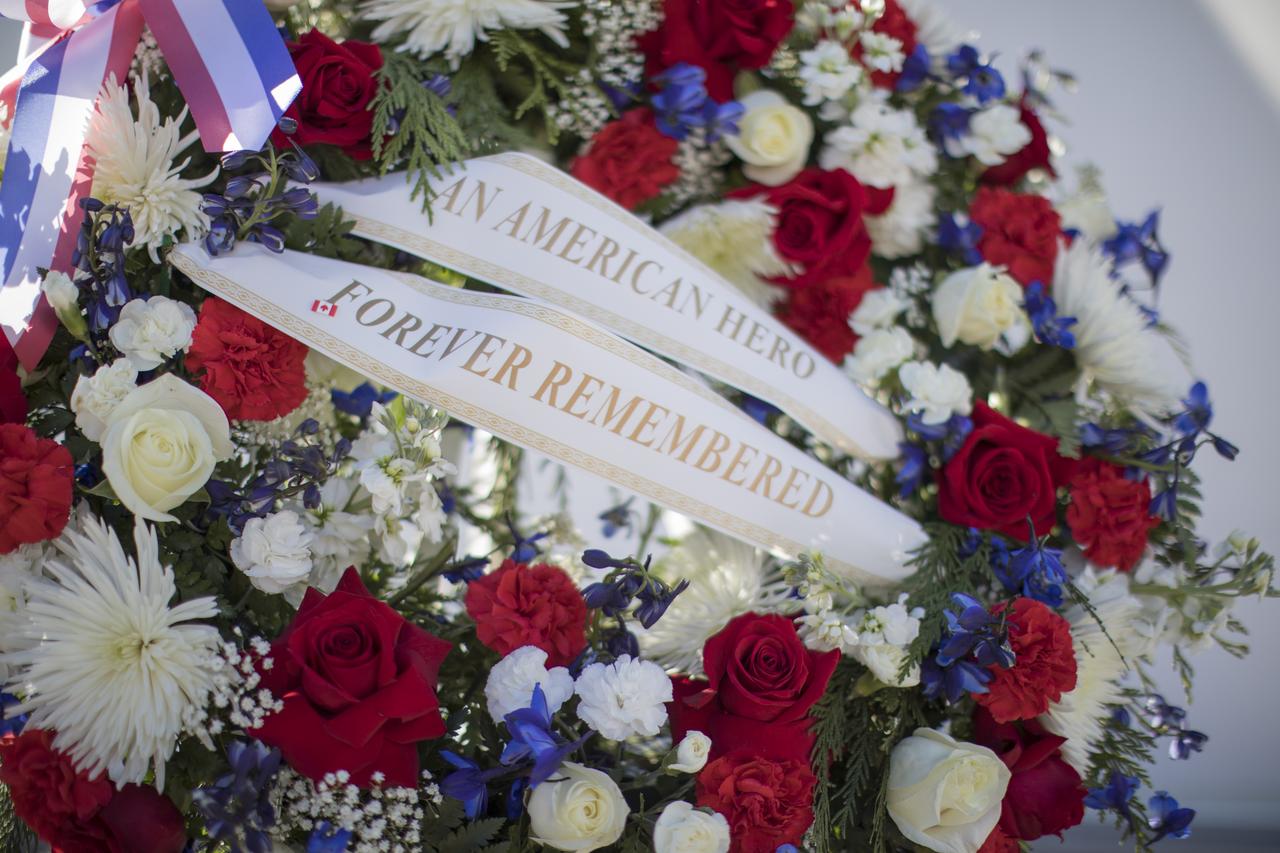
NASA astronaut John Young was remembered in a ceremony at the Heroes and Legends exhibit at the Kennedy Space Center Visitor Complex. The brief memorial took place on the afternoon of Jan. 11, 2018. Young died Jan. 5, 2018, in Houston at the age of 87. He was the only astronaut to fly in NASA's Gemini, Apollo and Space Shuttle Programs.
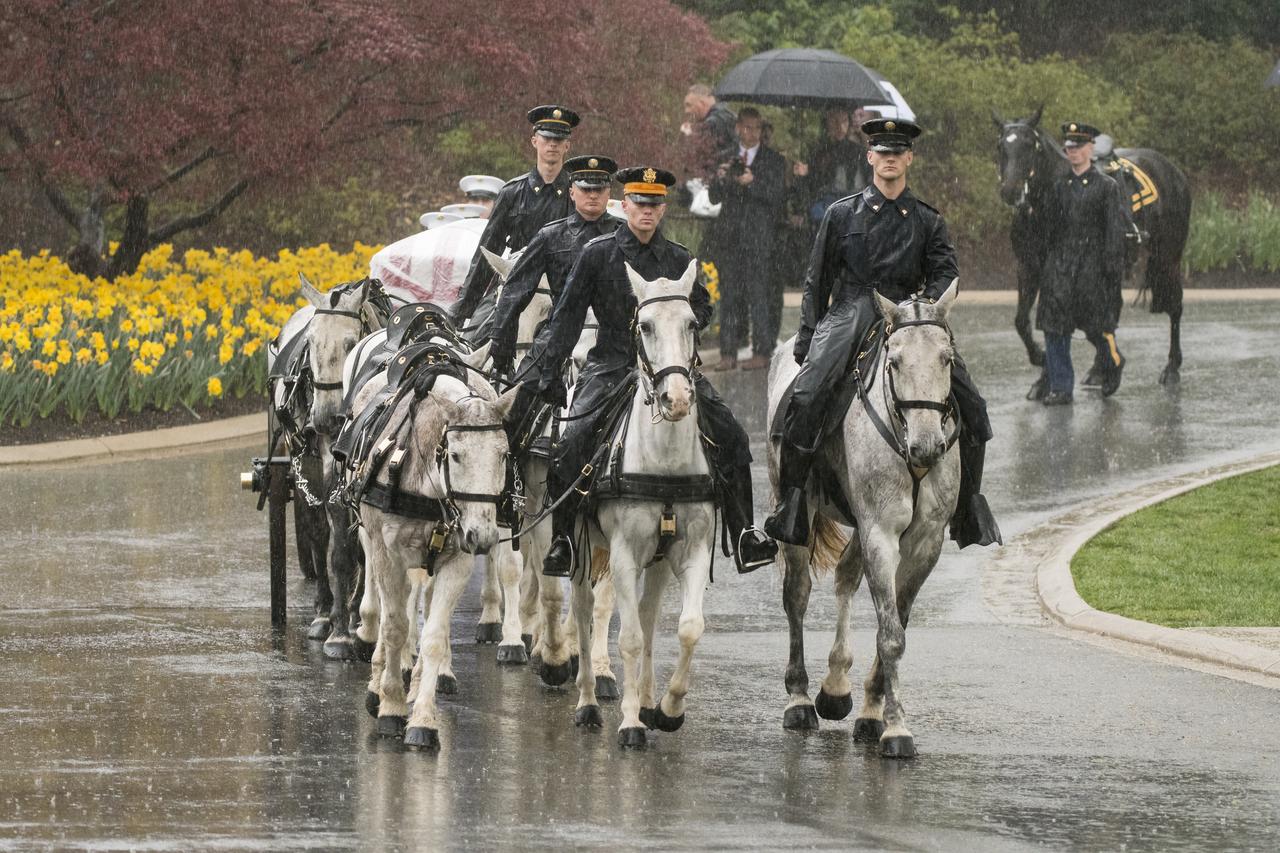
A horse drawn caisson carries former astronaut and U.S. Senator John Glenn to his final resting place during the interment ceremony at Arlington National Cemetery on Thursday, April 6, 2017 in Virginia. Glenn was the first American to orbit Earth on Feb. 20, 1962, in a five-hour flight aboard the Friendship 7 spacecraft. In 1998, he broke another record by returning to space at the age of 77 on the Space Shuttle Discovery. Photo Credit: (NASA/Aubrey Gemignani)
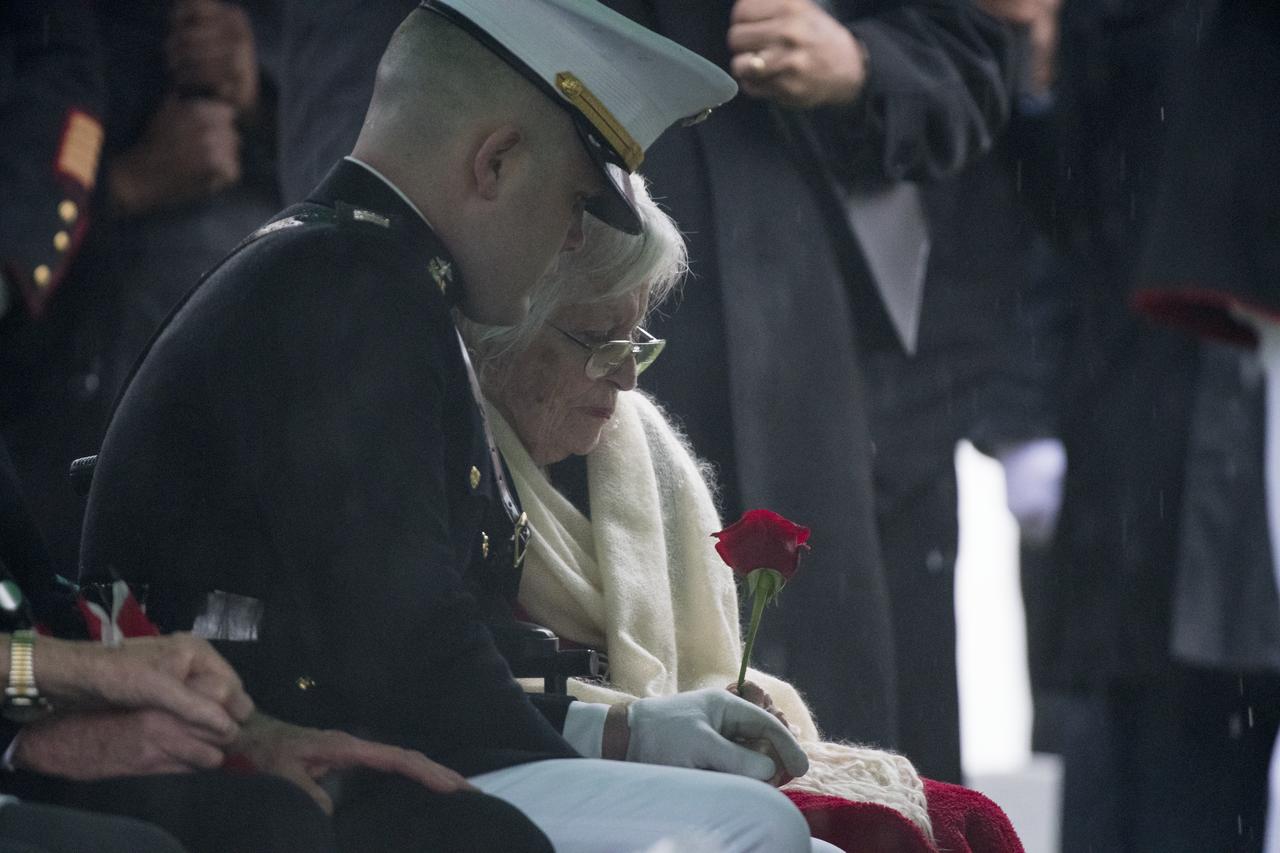
Annie Glenn, wife of former astronaut and U.S. Senator John Glenn is seen as her husband is laid to rest during a full military honors interment ceremony at Arlington National Cemetery on Thursday, April 6, 2017 in Virginia. He was the first American to orbit Earth on Feb. 20, 1962, in a five-hour flight aboard the Friendship 7 spacecraft. In 1998, Glenn broke another record by returning to space at the age of 77 on the Space Shuttle Discovery. Photo Credit: (NASA/Aubrey Gemignani)
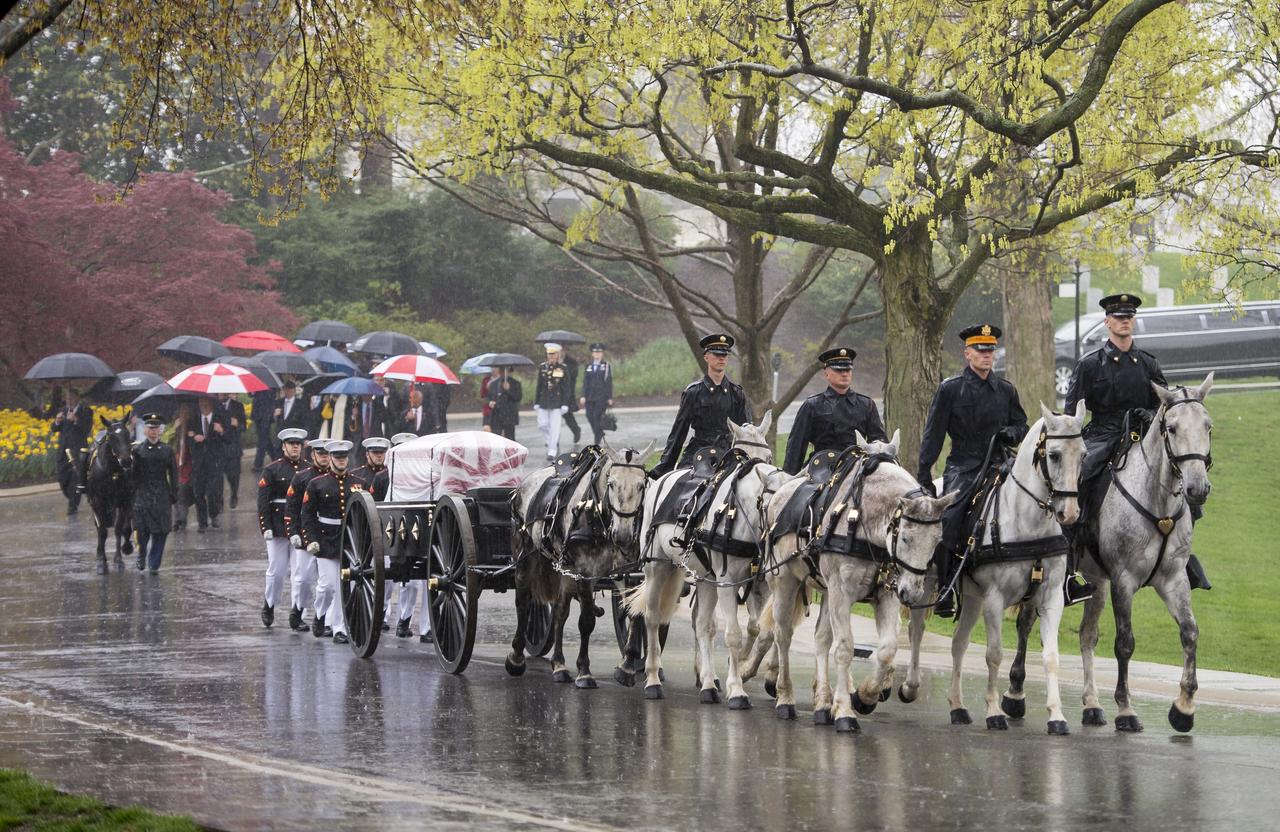
A horse drawn caisson carries former astronaut and U.S. Senator John Glenn to his final resting place during the interment ceremony at Arlington National Cemetery on Thursday, April 6, 2017 in Virginia. Glenn was the first American to orbit Earth on Feb. 20, 1962, in a five-hour flight aboard the Friendship 7 spacecraft. In 1998, he broke another record by returning to space at the age of 77 on the Space Shuttle Discovery. Photo Credit: (NASA/Aubrey Gemignani)
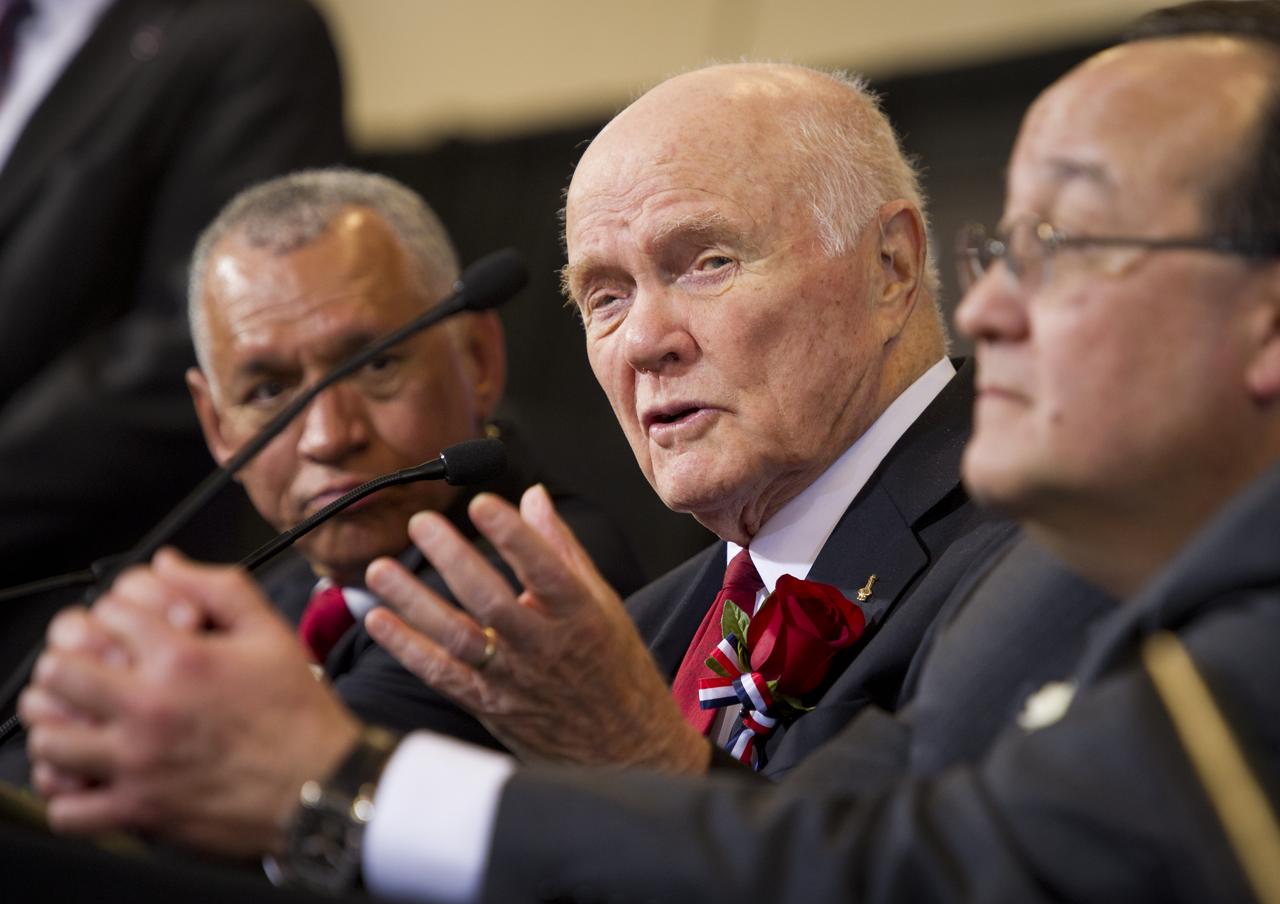
Sen. John Glenn answers questions as NASA Administrator Charles Bolden, left, and NASA Glenn Research Center Ray Lugo look on at a NASA Tweetup event celebrating Glenn's legacy and 50 years of americans in orbit held at the Cleveland State University Wolstein Center on Friday, March 3, 2012 in Cleveland, Ohio. Glenn became the first American to orbit Earth in 1962. Photo Credit: (NASA/Bill Ingalls)
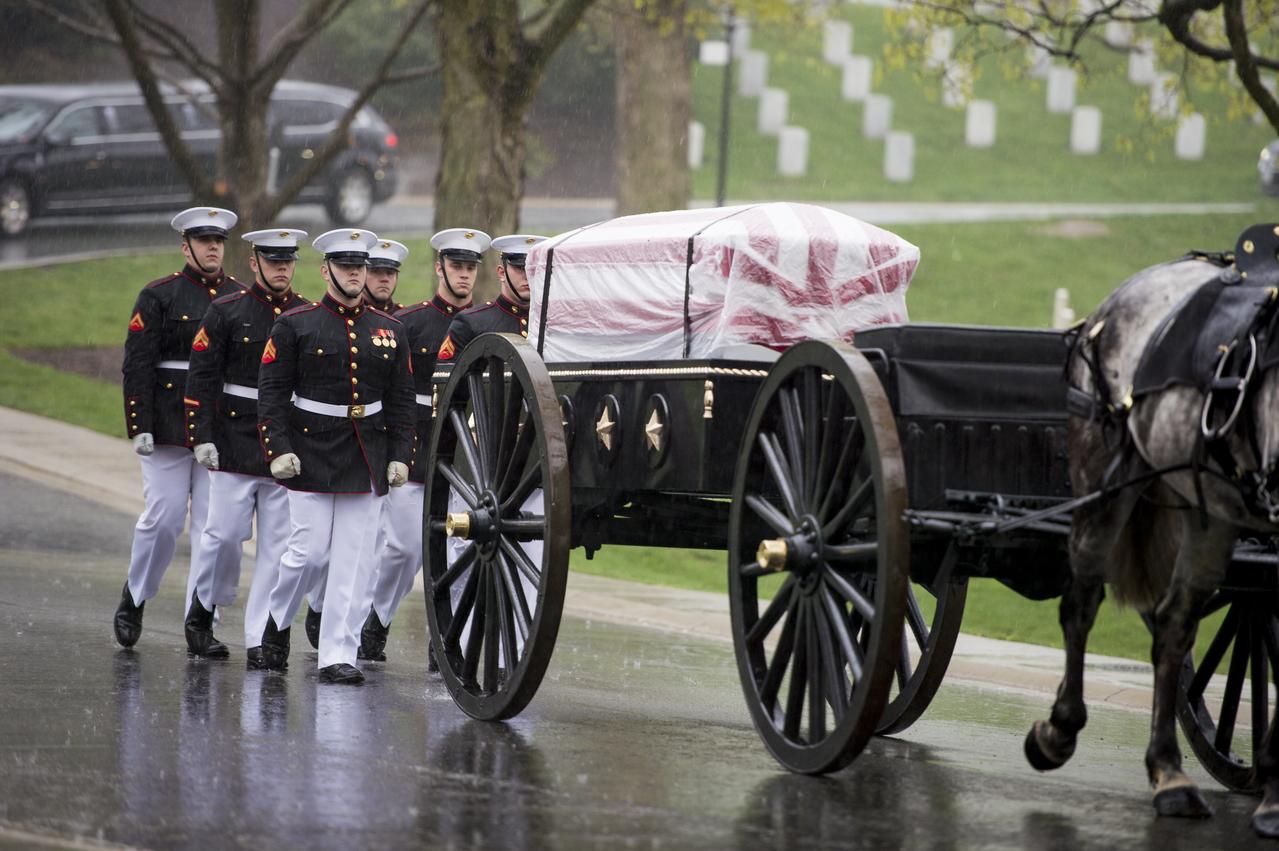
A horse drawn caisson carries former astronaut and U.S. Senator John Glenn to his final resting place during the interment ceremony at Arlington National Cemetery on Thursday, April 6, 2017 in Virginia. Glenn was the first American to orbit Earth on Feb. 20, 1962, in a five-hour flight aboard the Friendship 7 spacecraft. In 1998, he broke another record by returning to space at the age of 77 on the Space Shuttle Discovery. Photo Credit: (NASA/Aubrey Gemignani)
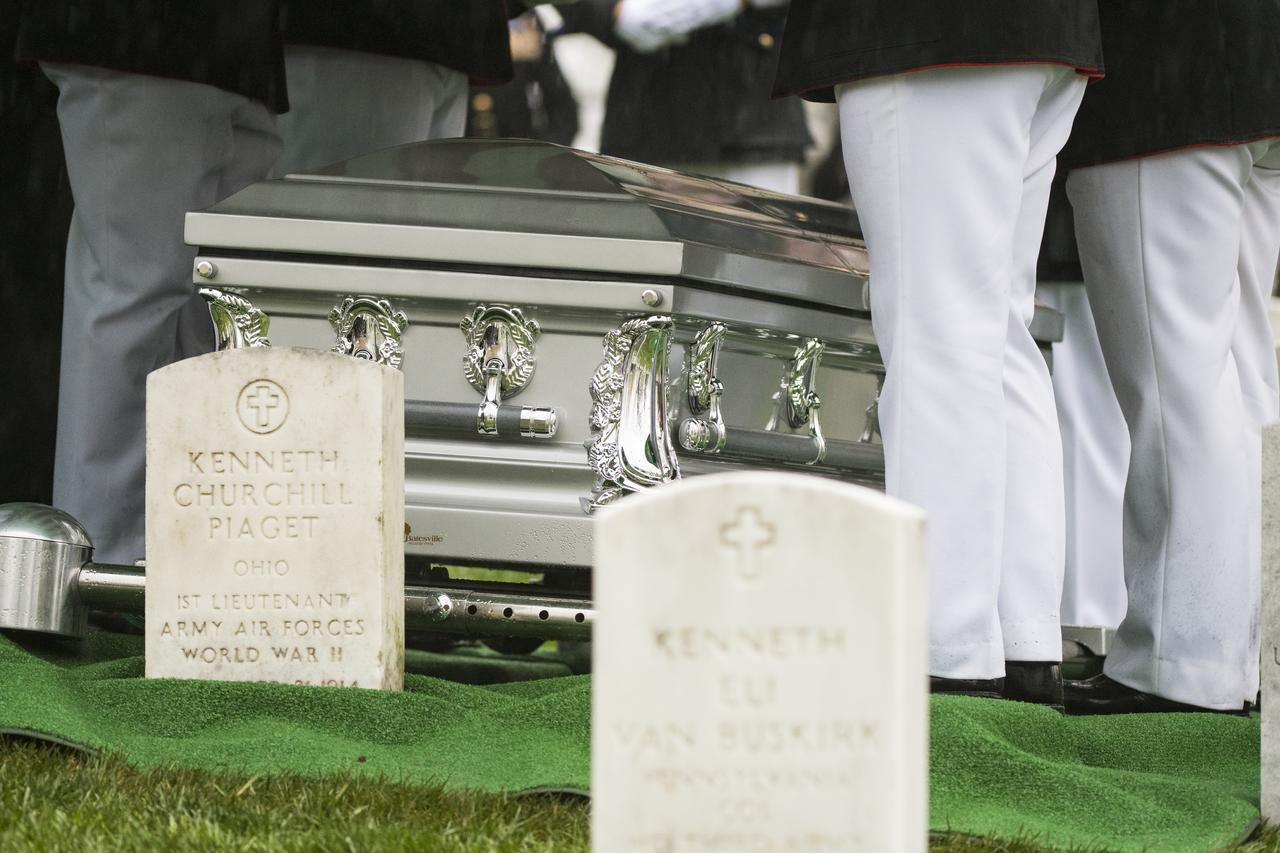
Former astronaut and U.S. Senator John Glenn's casket is seen as he is laid to rest at Arlington National Cemetery in Virginia on Thursday, April 6, 2017, the day on which he and his wife Annie were married in 1943. Glenn was the first American to orbit Earth on Feb. 20, 1962, in a five-hour flight aboard the Friendship 7 spacecraft. In 1998, he broke another record by returning to space at the age of 77 on the Space Shuttle Discovery. Photo Credit: (NASA/Aubrey Gemignani)
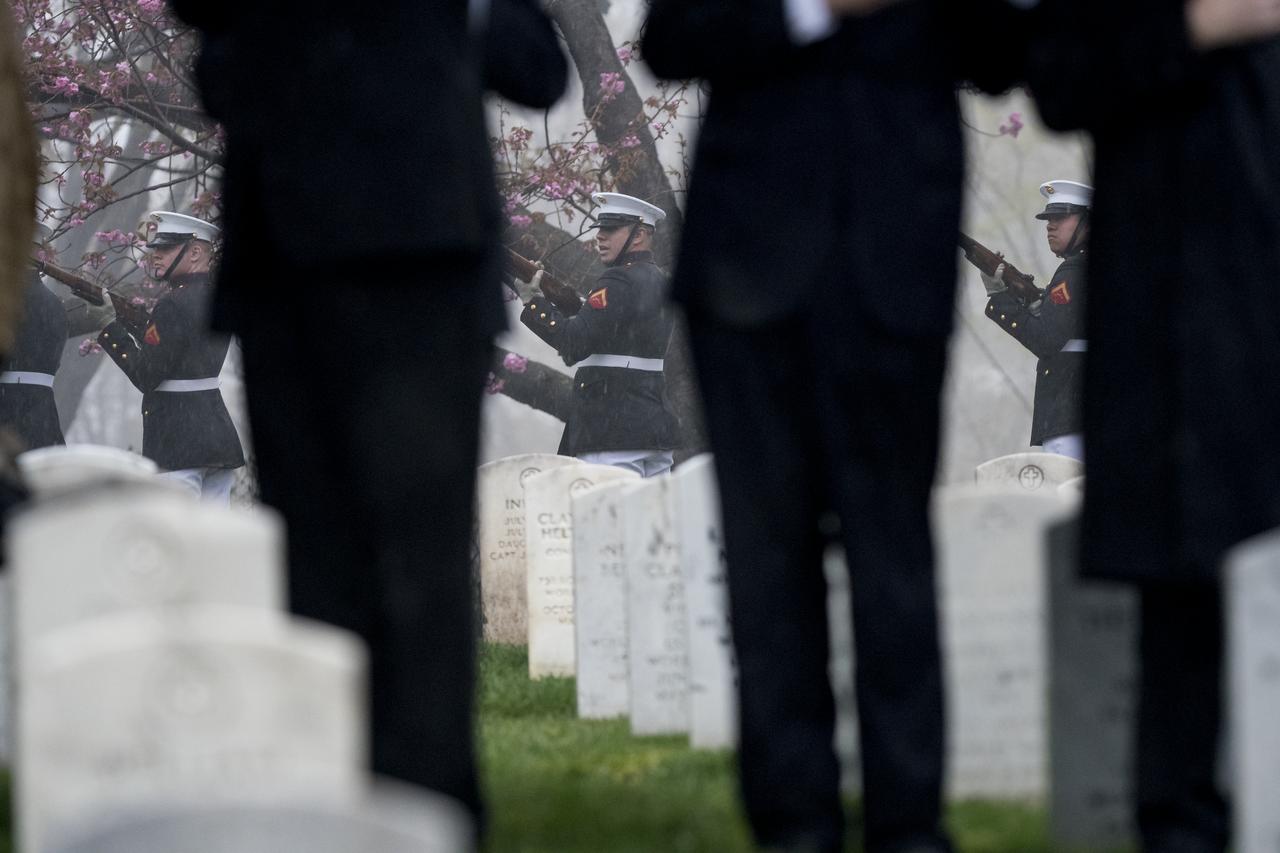
The traditional firing of three volleys each by seven service members is carried out to honor former astronaut and U.S. Senator John Glenn at his interment Thursday, April 6, 2017 at Arlington National Cemetery in Virginia. Glenn was the first American to orbit Earth on Feb. 20, 1962, in a five-hour flight aboard the Friendship 7 spacecraft. In 1998, he broke another record by returning to space at the age of 77 on the Space Shuttle Discovery. Photo Credit: (NASA/Aubrey Gemignani)
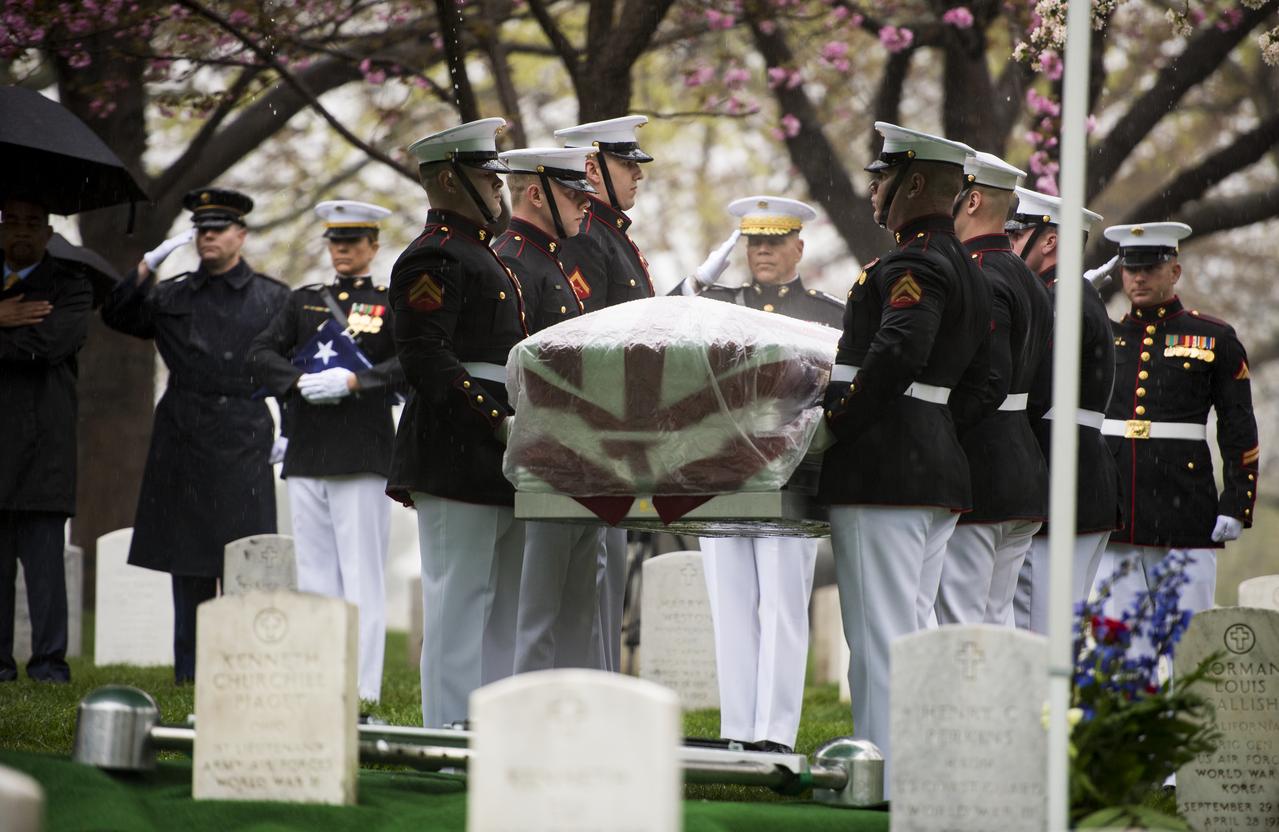
Marine Corp pallbearers carry former astronaut and U.S. Senator John Glenn to be laid to rest at Arlington National Cemetery in Virginia on Thursday, April 6, 2017, the day on which he and his wife Annie were married in 1943. Glenn was the first American to orbit Earth on Feb. 20, 1962, in a five-hour flight aboard the Friendship 7 spacecraft. In 1998, he broke another record by returning to space at the age of 77 on the Space Shuttle Discovery. Photo Credit: (NASA/Aubrey Gemignani)
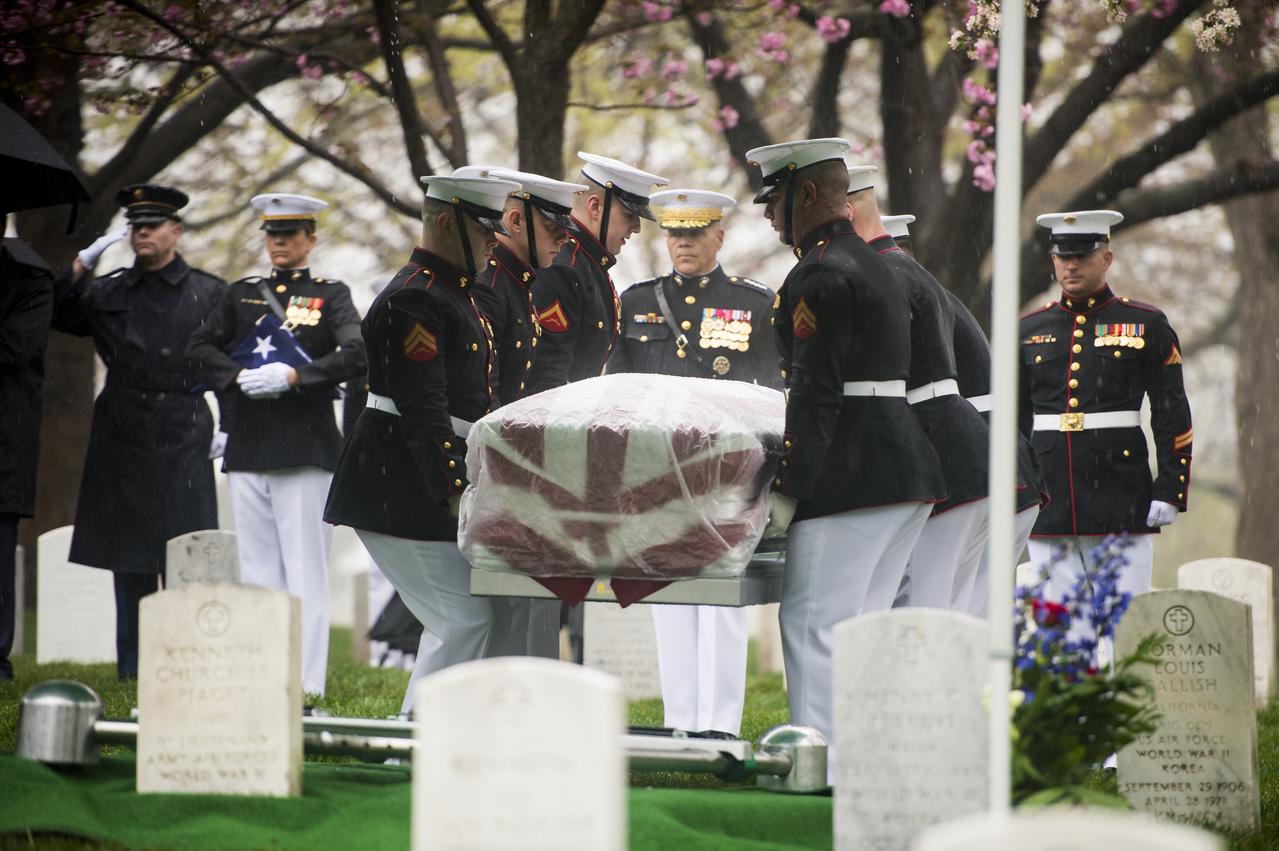
Marine Corps pallbearers lower the casket of former astronaut and U.S. Senator John Glenn at his interment at Arlington National Cemetery in Virginia on Thursday, April 6, 2017, the day on which he and his wife Annie were married in 1943. Glenn was the first American to orbit Earth on Feb. 20, 1962, in a five-hour flight aboard the Friendship 7 spacecraft. In 1998, he broke another record by returning to space at the age of 77 on the Space Shuttle Discovery. Photo Credit: (NASA/Aubrey Gemignani)
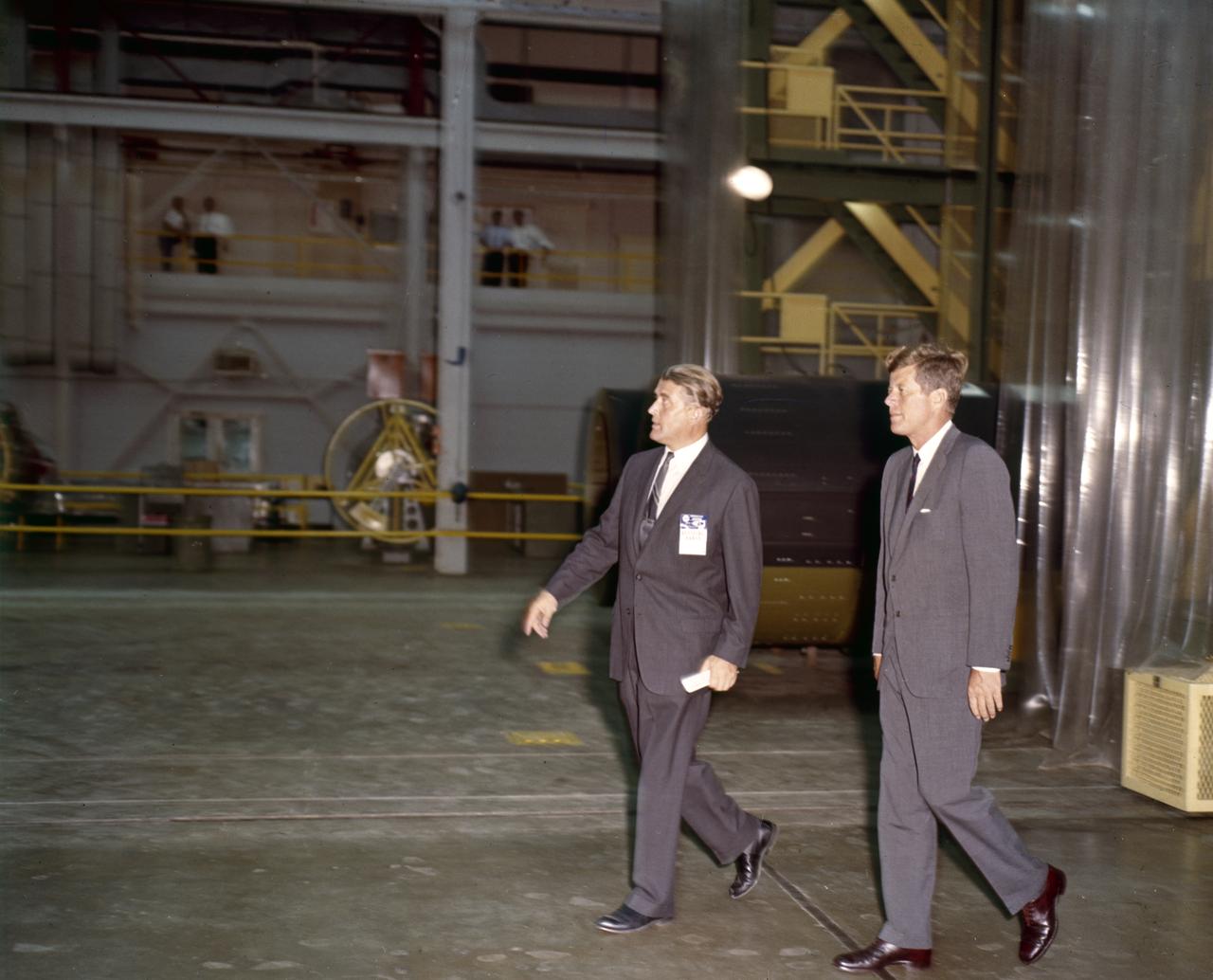
President John Kennedy and Dr. von Braun tour one of the laboratories at Marshall Space Flight Center, September 11, 1962.
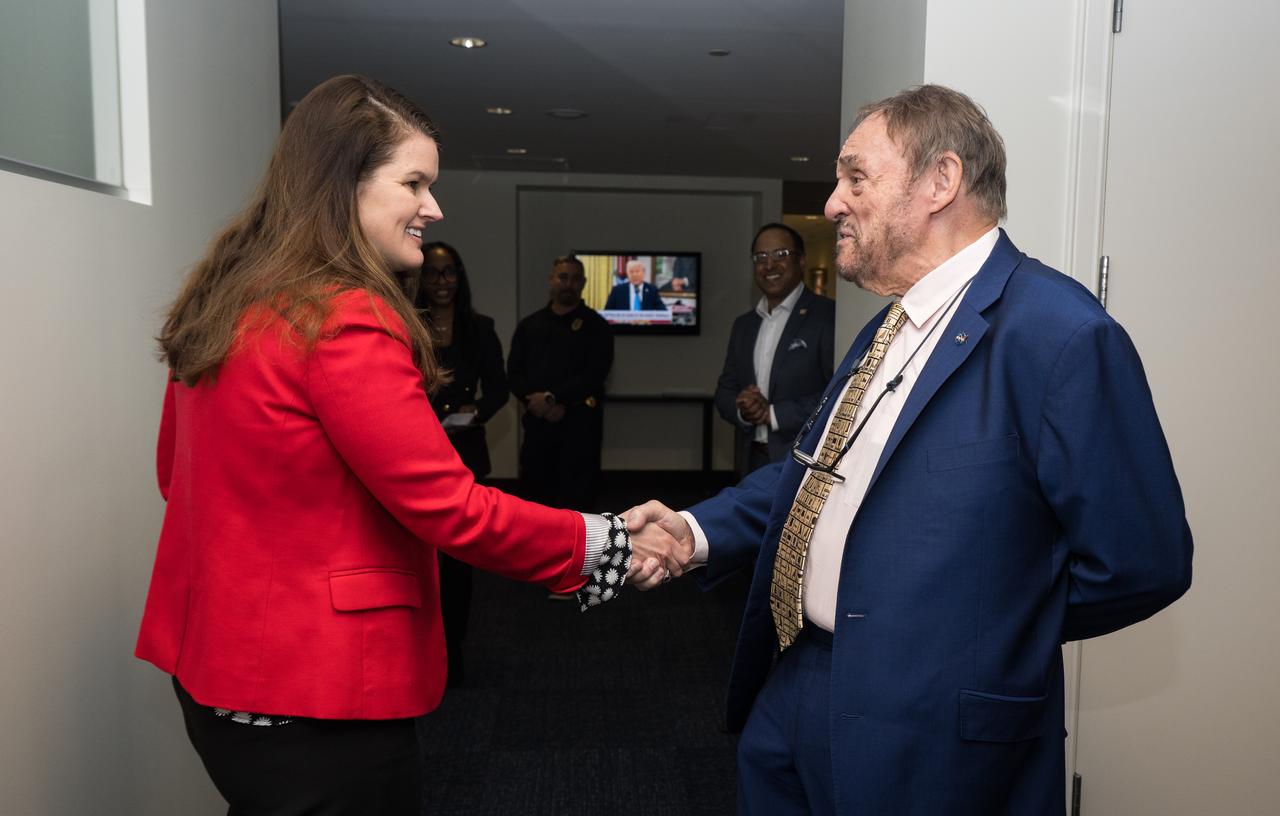
Casey Swails, NASA Deputy Associate Administrator greets John Rhys-Davies, the actor best known for his roles as Gimli in The Lord of the Rings trilogy and Sallah in the Indiana Jones franchise, Friday, March 28, 2025 at the Mary W. Jackson NASA Headquarters building in Washington, DC. Photo Credit: (NASA/Aubrey Gemignani)
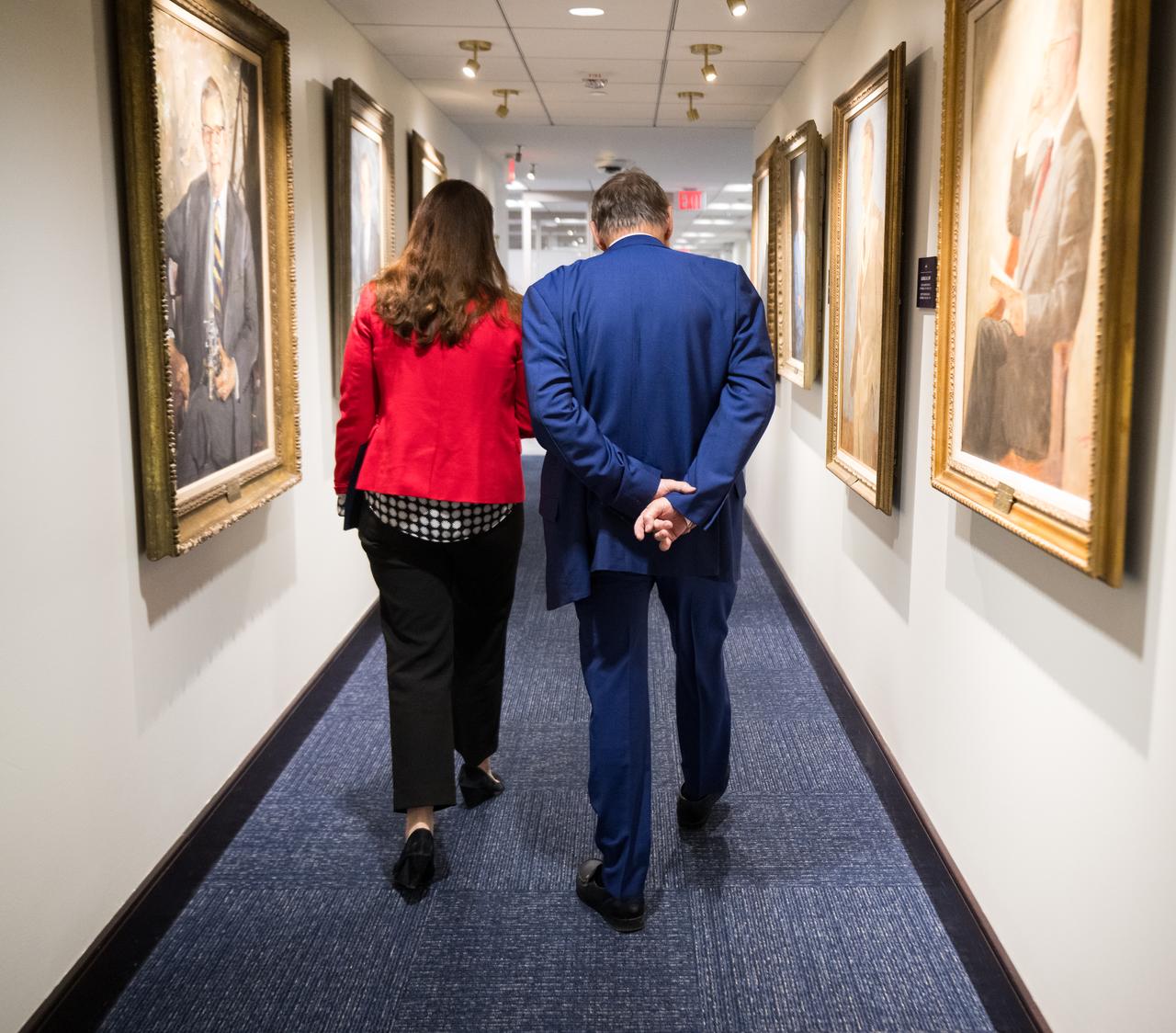
Casey Swails, NASA Deputy Associate Administrator walks with John Rhys-Davies, the actor best known for his roles as Gimli in The Lord of the Rings trilogy and Sallah in the Indiana Jones franchise, Friday, March 28, 2025 at the Mary W. Jackson NASA Headquarters building in Washington, DC. Photo Credit: (NASA/Aubrey Gemignani)
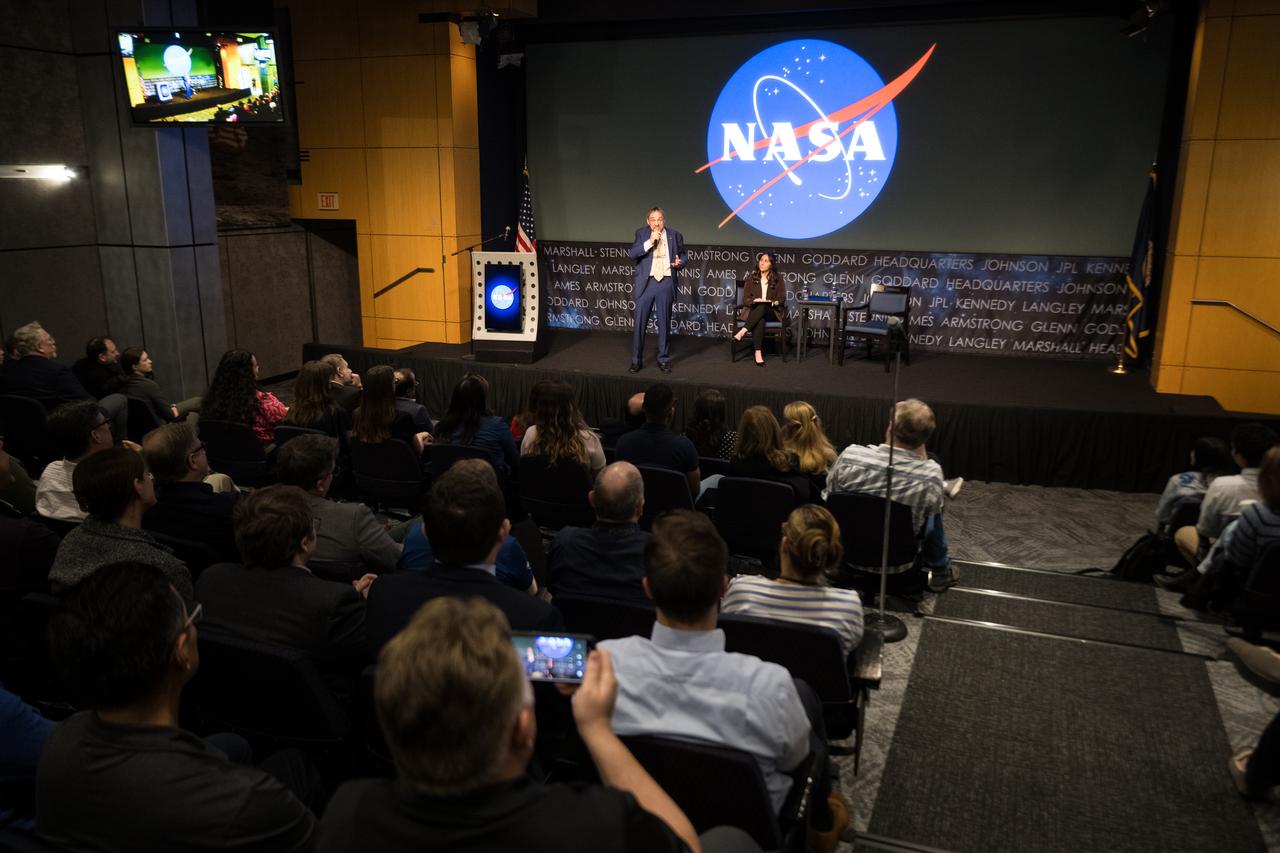
John Rhys-Davies, the actor best known for his roles as Gimli in The Lord of the Rings trilogy and Sallah in the Indiana Jones franchise provides remarks during an employee event, Friday, March 28, 2025 at the Mary W. Jackson NASA Headquarters building in Washington, DC. Photo Credit: (NASA/Aubrey Gemignani)
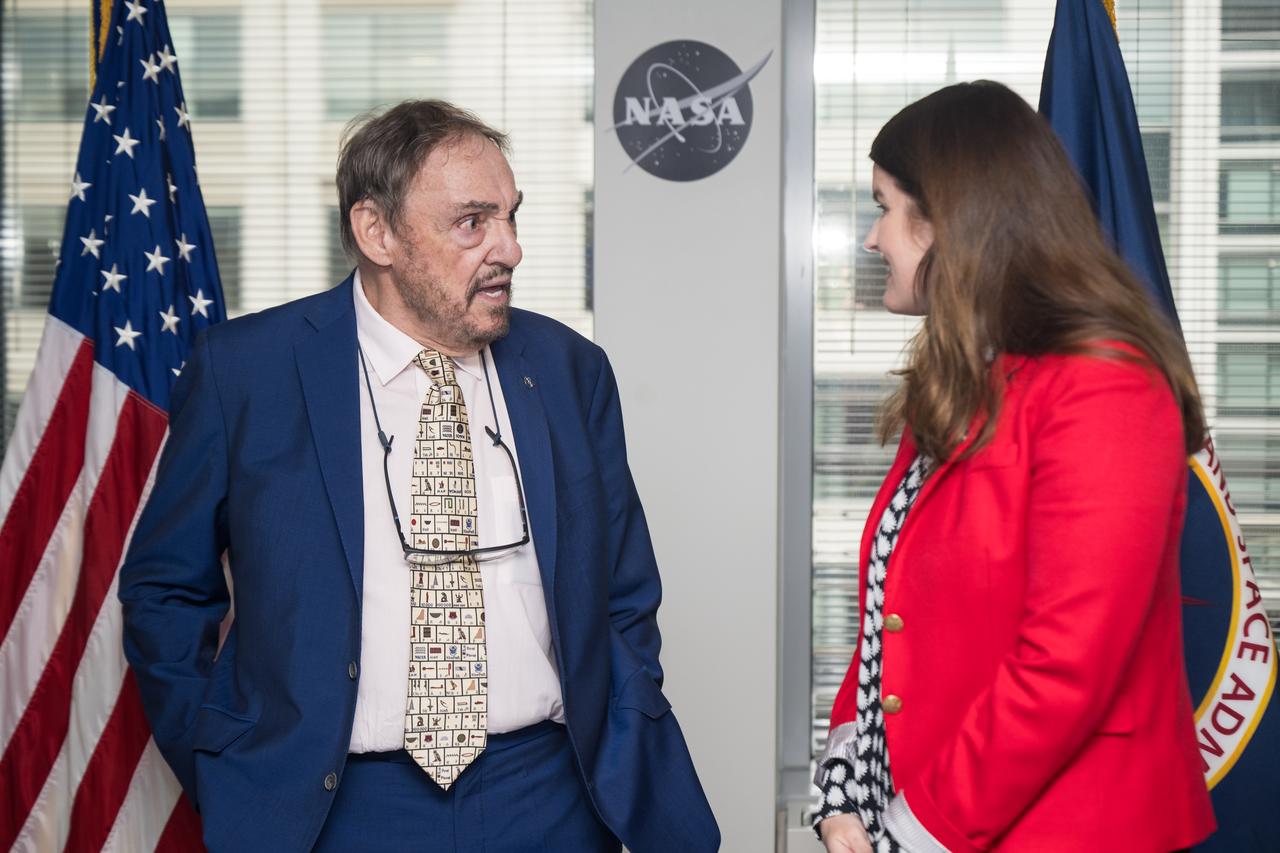
Casey Swails, NASA Deputy Associate Administrator speaks with John Rhys-Davies, the actor best known for his roles as Gimli in The Lord of the Rings trilogy and Sallah in the Indiana Jones franchise, Friday, March 28, 2025 at the Mary W. Jackson NASA Headquarters building in Washington, DC. Photo Credit: (NASA/Aubrey Gemignani)