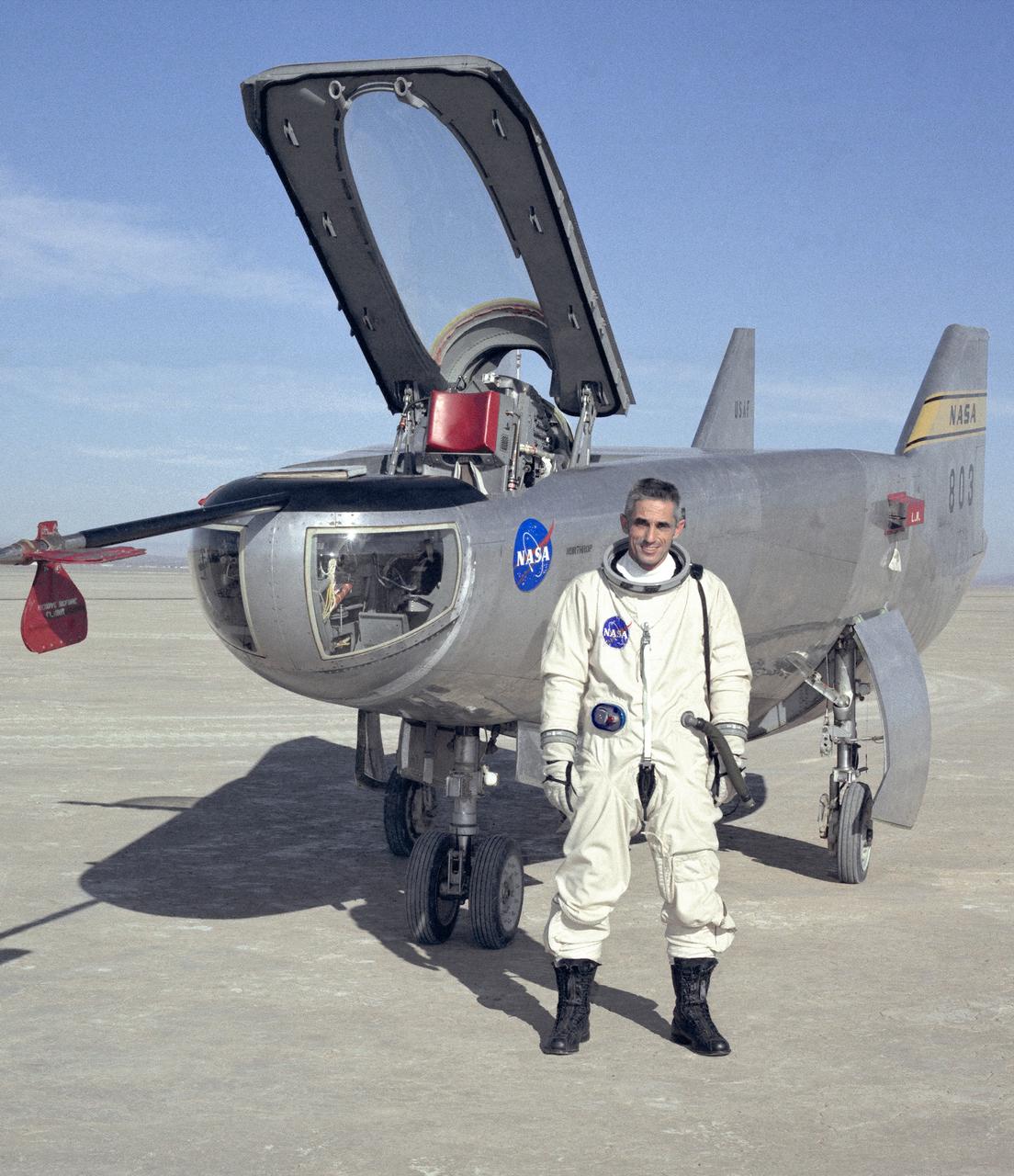
NASA research pilot John A. Manke is seen here in front of the M2-F3 Lifting Body. Manke was hired by NASA on May 25, 1962, as a flight research engineer. He was later assigned to the pilot's office and flew various support aircraft including the F-104, F5D, F-111 and C-47. After leaving the Marine Corps in 1960, Manke worked for Honeywell Corporation as a test engineer for two years before coming to NASA. He was project pilot on the X-24B and also flew the HL-10, M2-F3, and X-24A lifting bodies. John made the first supersonic flight of a lifting body and the first landing of a lifting body on a hard surface runway. Manke served as Director of the Flight Operations and Support Directorate at the Dryden Flight Research Center prior to its integration with Ames Research Center in October 1981. After this date John was named to head the joint Ames-Dryden Directorate of Flight Operations. He also served as site manager of the NASA Ames-Dryden Flight Research Facility. John is a member of the Society of Experimental Test Pilots. He retired on April 27, 1984.
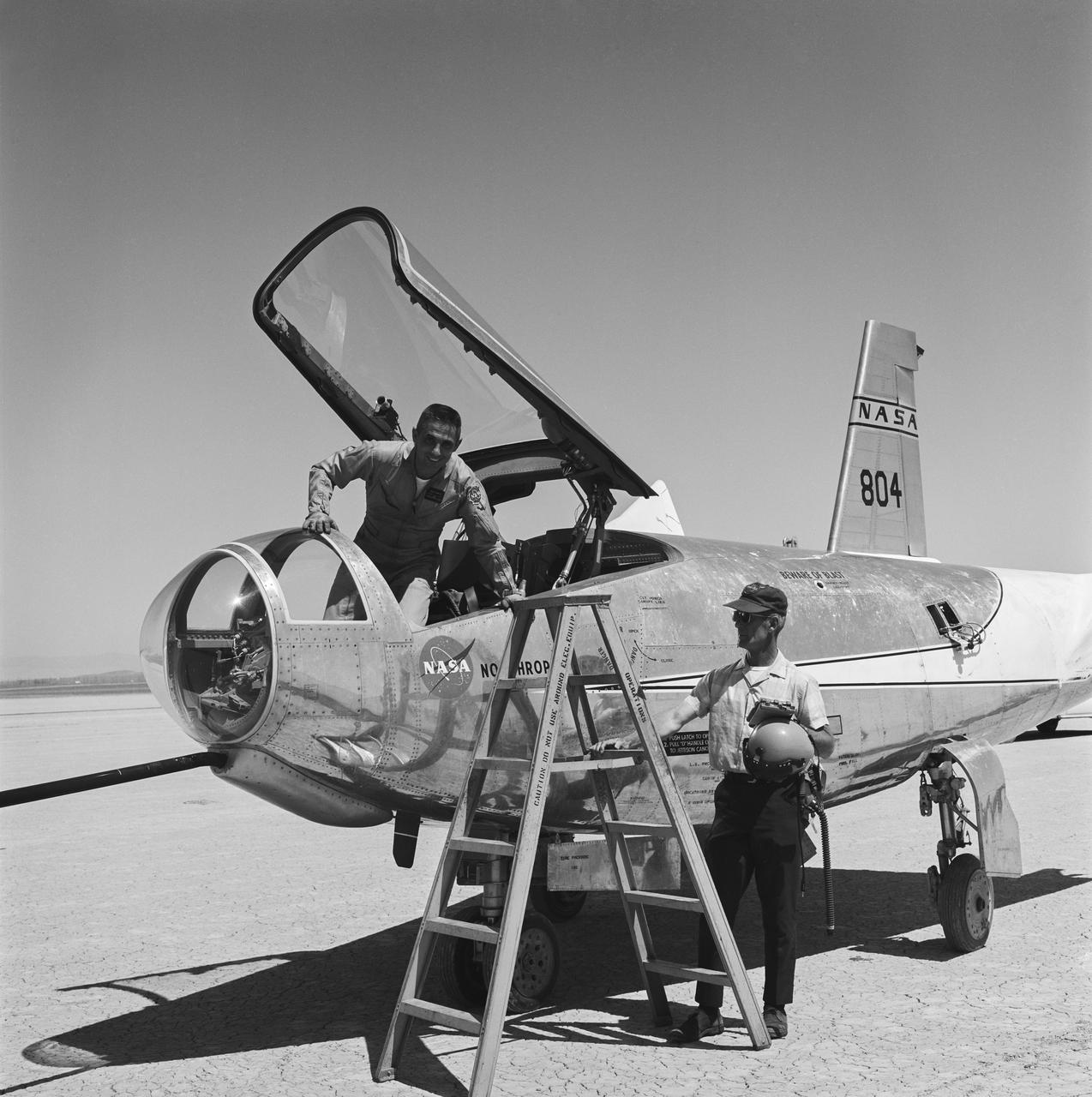
Armstrong research pilot (and future center director) John Manke emerges from the HL-10, NASA Langley’s 10th horizontal lander (lifting body).
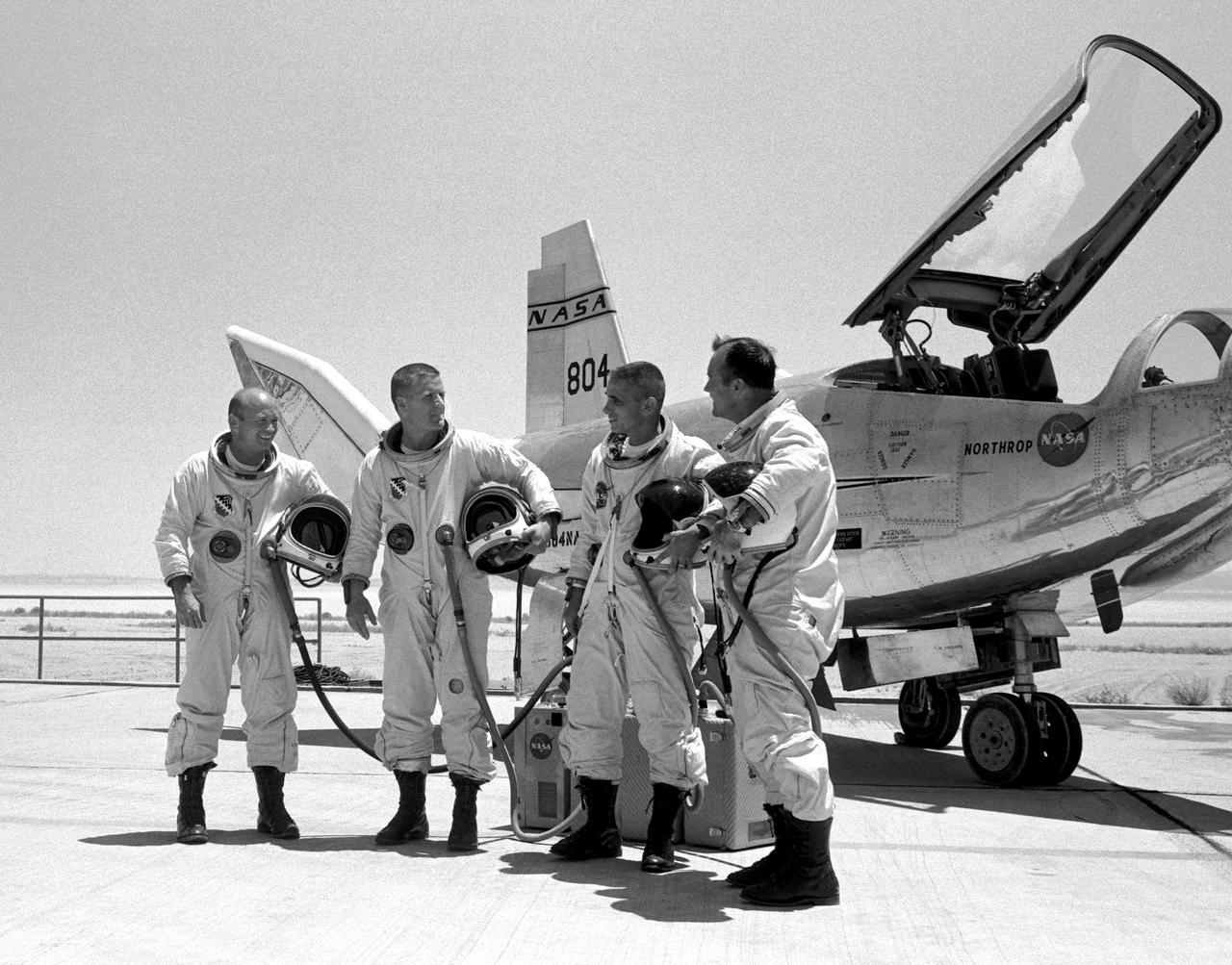
The four principal HL-10 pilots are seen here with the lifting body aircraft. They are, left to right; Air Force Major Jerauld R. Gentry, Air Force test pilot Peter Hoag, and NASA pilots John A. Manke and Bill Dana. All are wearing the pressure suits needed for flying above 50,000 feet.
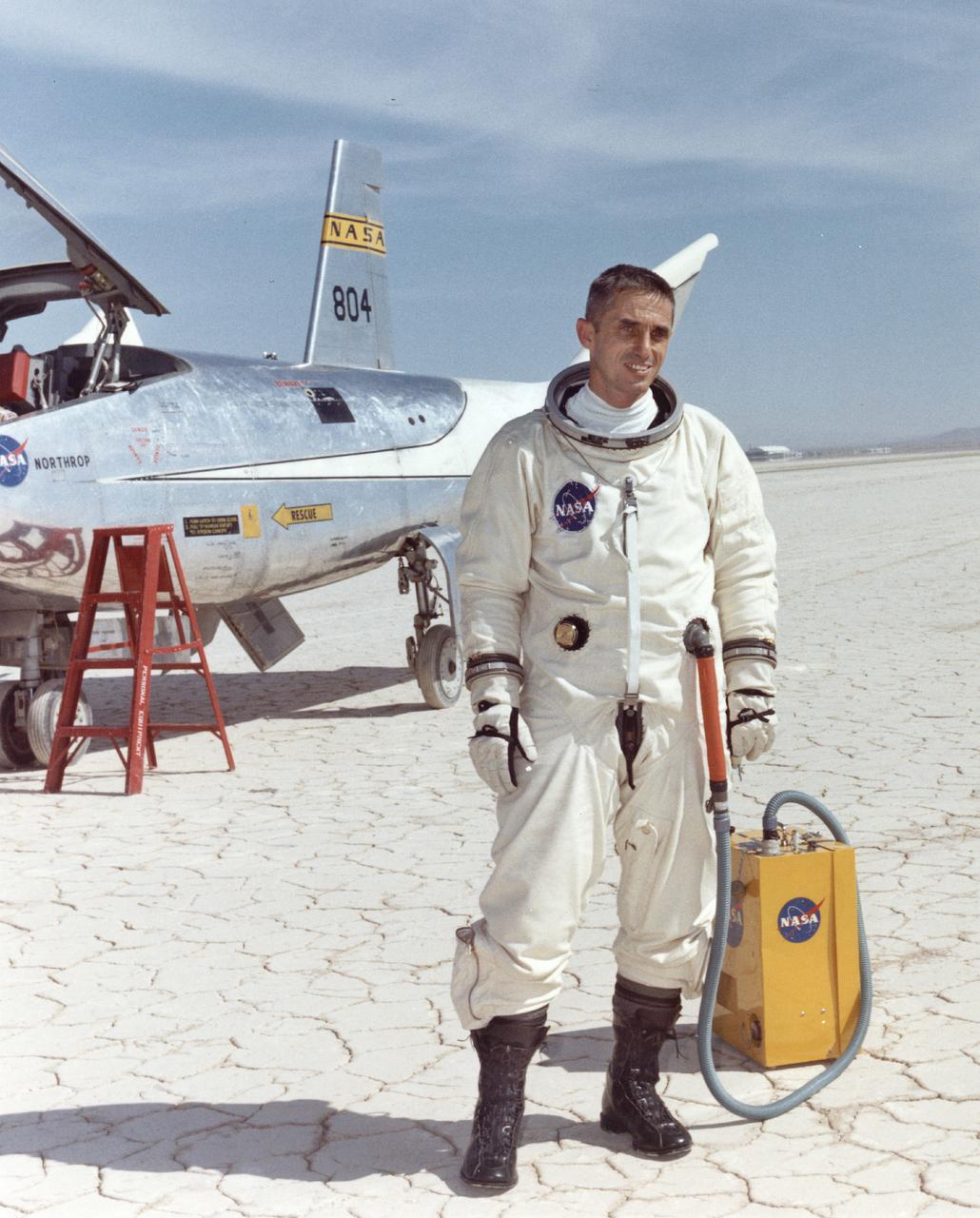
John Manke is shown here on the lakebed next to the HL-10, one of four different lifting-body vehicles he flew, including the X-24B, which he flew 16 times. His final total was 42 lifting-body flights.
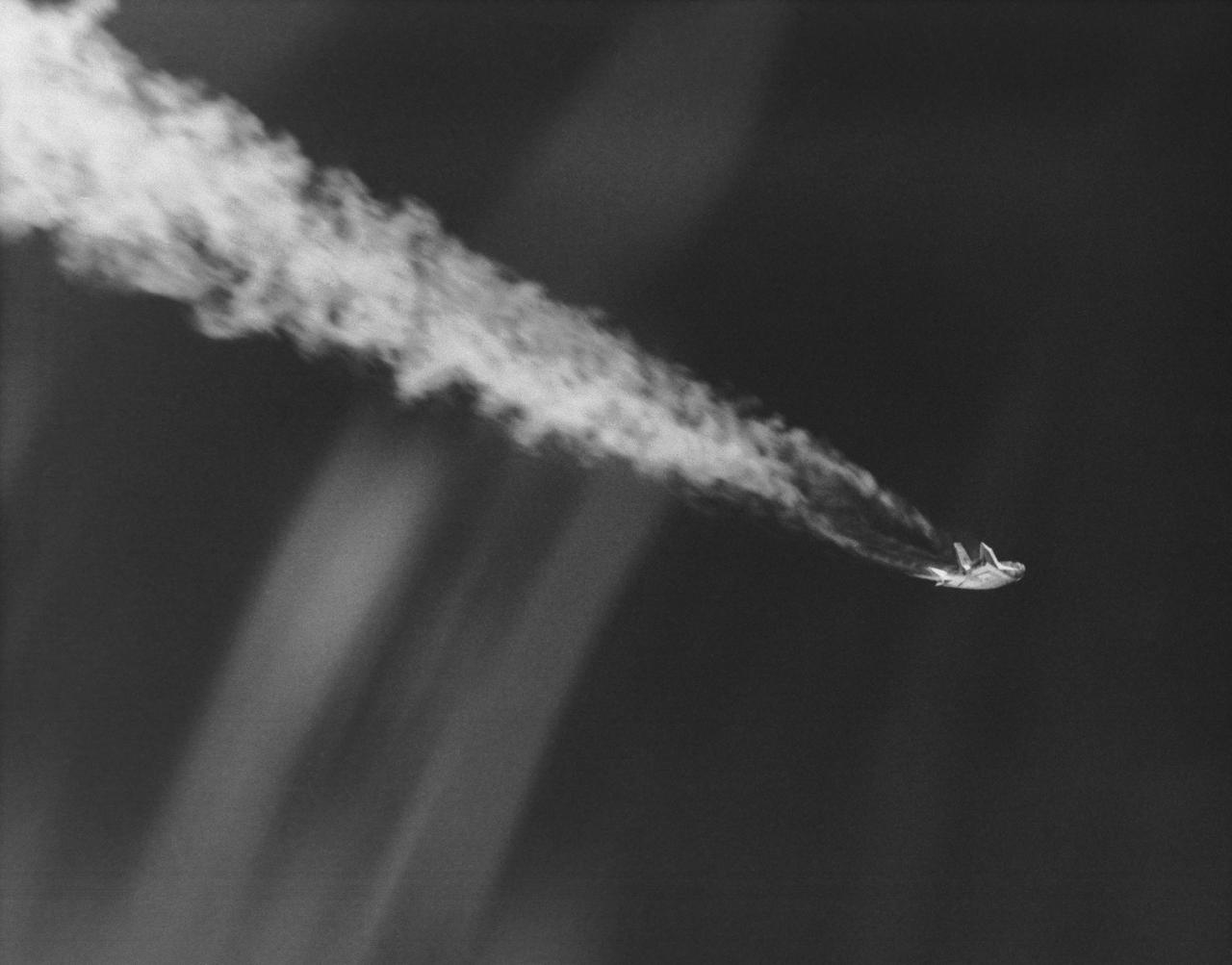
The HL-10 Lifting Body is seen here in powered flight shortly after launch from the B-52 mothership. When HL-10 powered flights began on October 23, 1968, the vehicle used the same basic XLR-11 rocket engine that powered the original X-1s. A total of five powered flights were made before the HL-10 first flew supersonically on May 9, 1969, with John Manke in the pilot's seat.
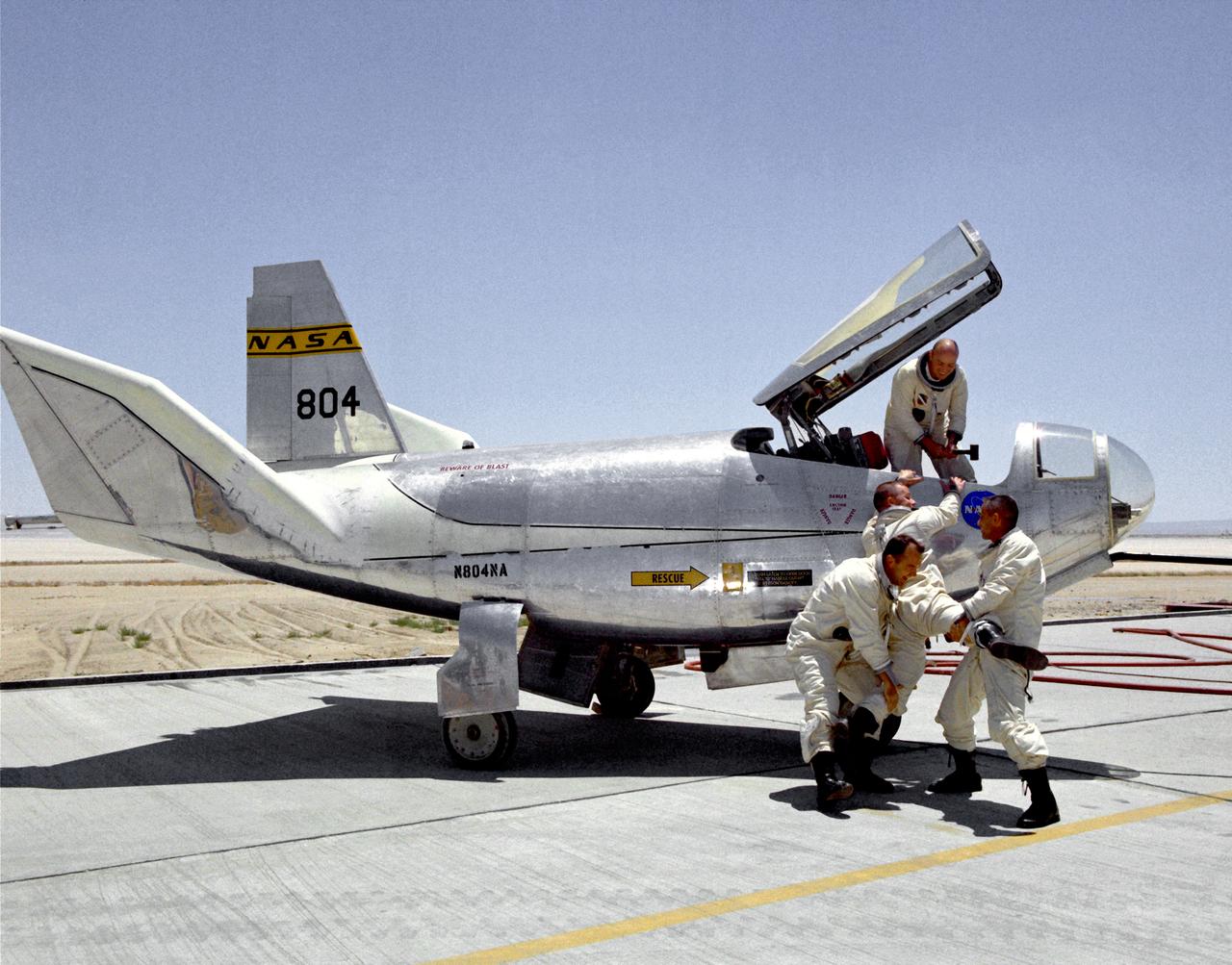
Not every moment of a test pilot's day is serious business. In a moment of levity, NASA pilots Bill Dana (left) and John A. Manke try to drag Air Force test pilot Peter Hoag away from the HL-10 lifting body while Air Force Major Jerauld R. Gentry helps from the cockpit. These four men were the principal pilots for the HL-10 program. This was not the only prank involving the HL-10 and its pilots. Once "Captain Midnight" (Gentry) and the "Midnight Skulkers" sneaked into the NASA hangar and put "U.S. Air Force" on the aircraft using stick-on letters. Later, while Gentry was making a lifting-body flight, his 1954 Ford was "borrowed" from the parking lot, painted with yellow-green zinc-chromate primer, and decorated with large stick-on flowers about one foot in diameter. After Gentry returned from the flight, he was surprised to see what had happened to his car.
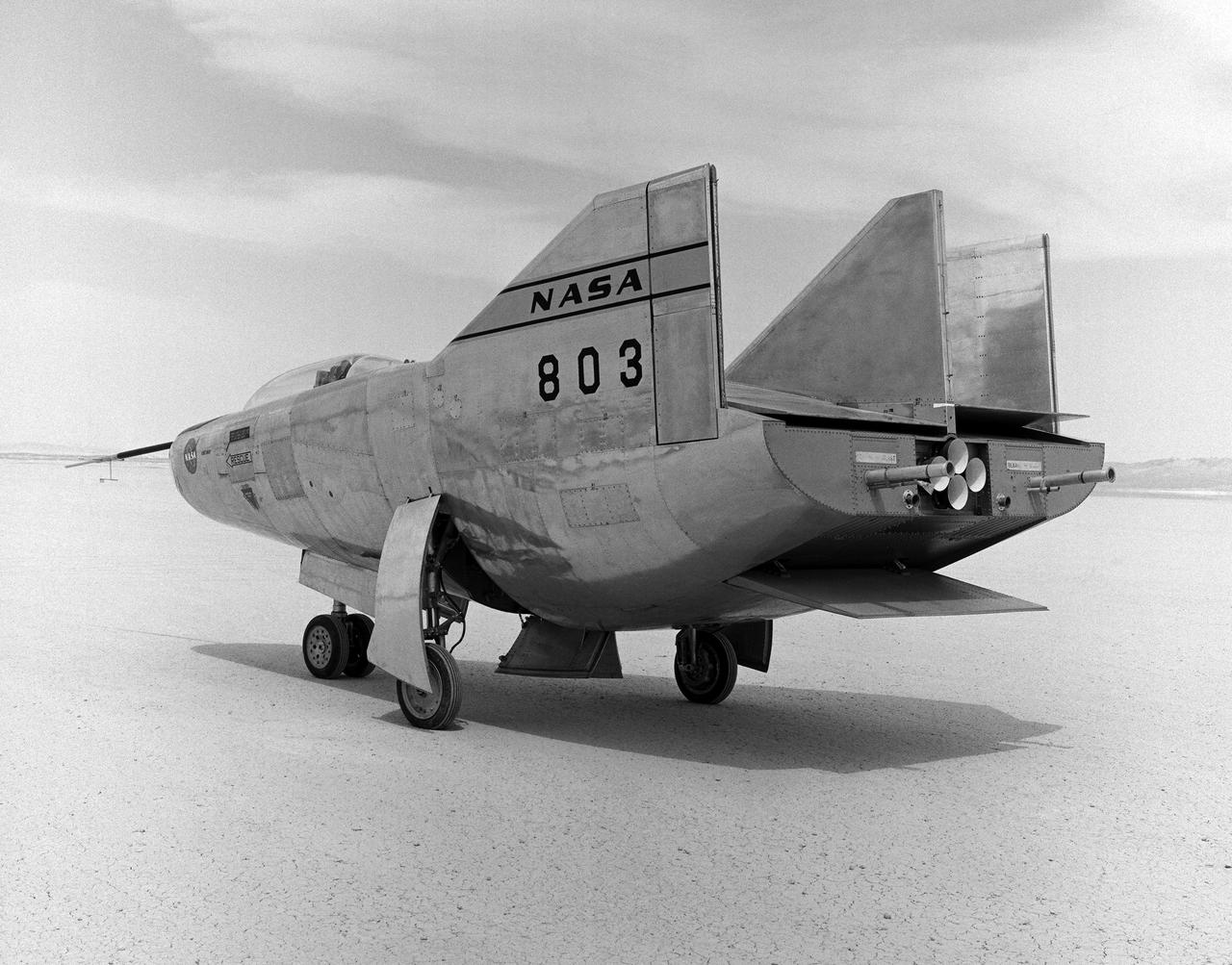
The M2-F3 Lifting Body is seen here on the lakebed next to the NASA Flight Research Center (later the Dryden Flight Research Center), Edwards, California. Redesigned and rebuilt from the M2-F2, the M2-F3 featured as its most visible change a center fin for greater stability. While the M2-F3 was still demanding to fly, the center fin eliminated the high risk of pilot induced oscillation (PIO) that was characteristic of the M2-F2.