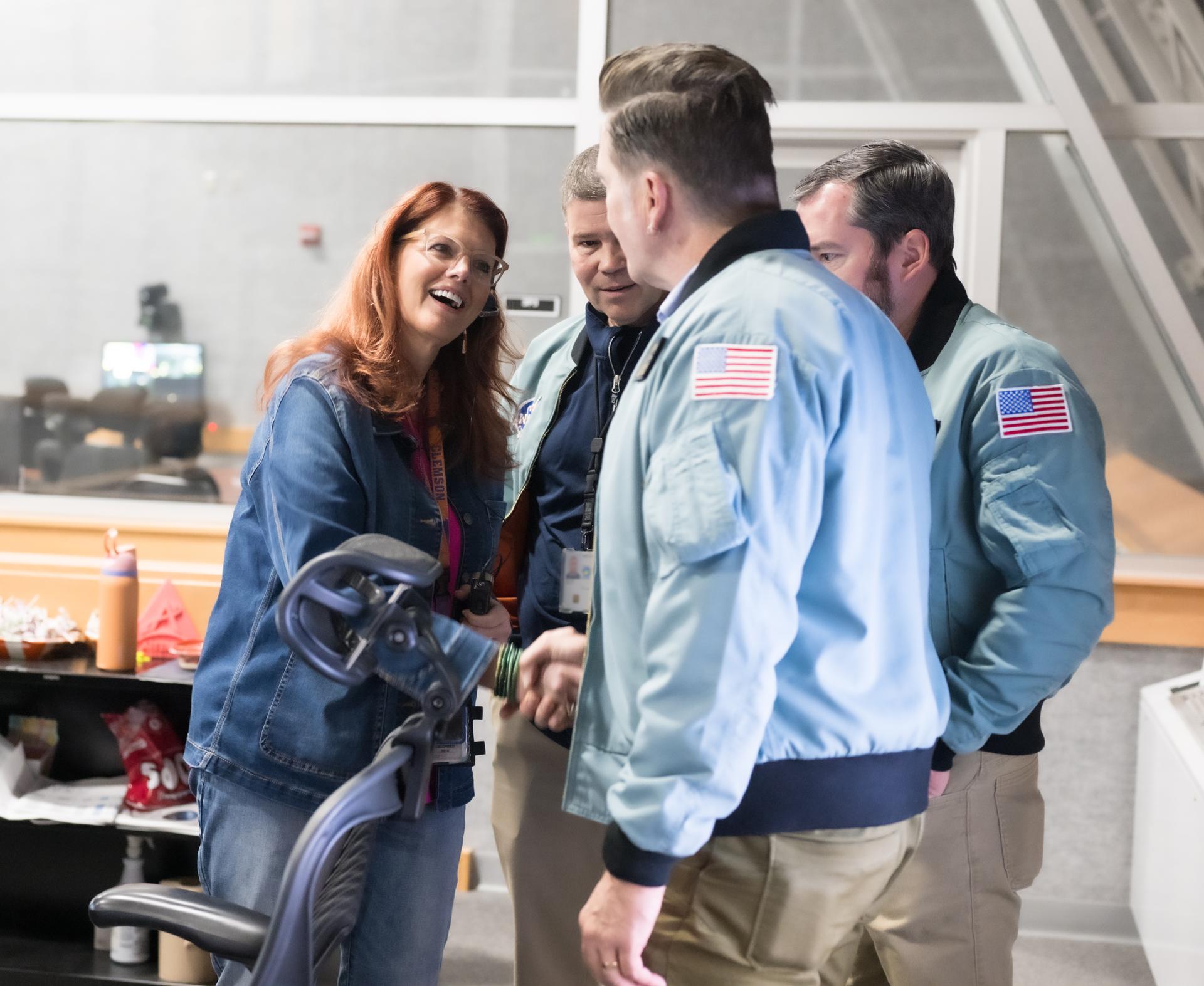
Charlie Blackwell-Thompson, Artemis II launch director at NASA's Kennedy Space Center greets Space Launch Systems (SLS) Chief Engineer John Blevins, second from left, SLS Deputy Chief Engineer Phillip Allen, center, and Engineering Advisor to the NASA Associate Administrator Adam Steltzner, right, in Firing Room One of the Rocco A. Petrone Launch Control Center as NASA’s Artemis II Space Launch System (SLS) rocket and Orion spacecraft, secured to the mobile launcher, roll out of High Bay 3 of the Vehicle Assembly Building to Launch Complex 39B, Saturday, Jan. 17, 2026, at NASA’s Kennedy Space Center in Florida. NASA’s Artemis II test flight will take Commander Reid Wiseman, Pilot Victor Glover, and Mission Specialist Christina Koch from NASA, and Mission Specialist Jeremy Hansen from the CSA (Canadian Space Agency), around the Moon and back to Earth no later than April 2026. Photo Credit: (NASA/Aubrey Gemignani) Portions of this image have been blurred for security reasons.
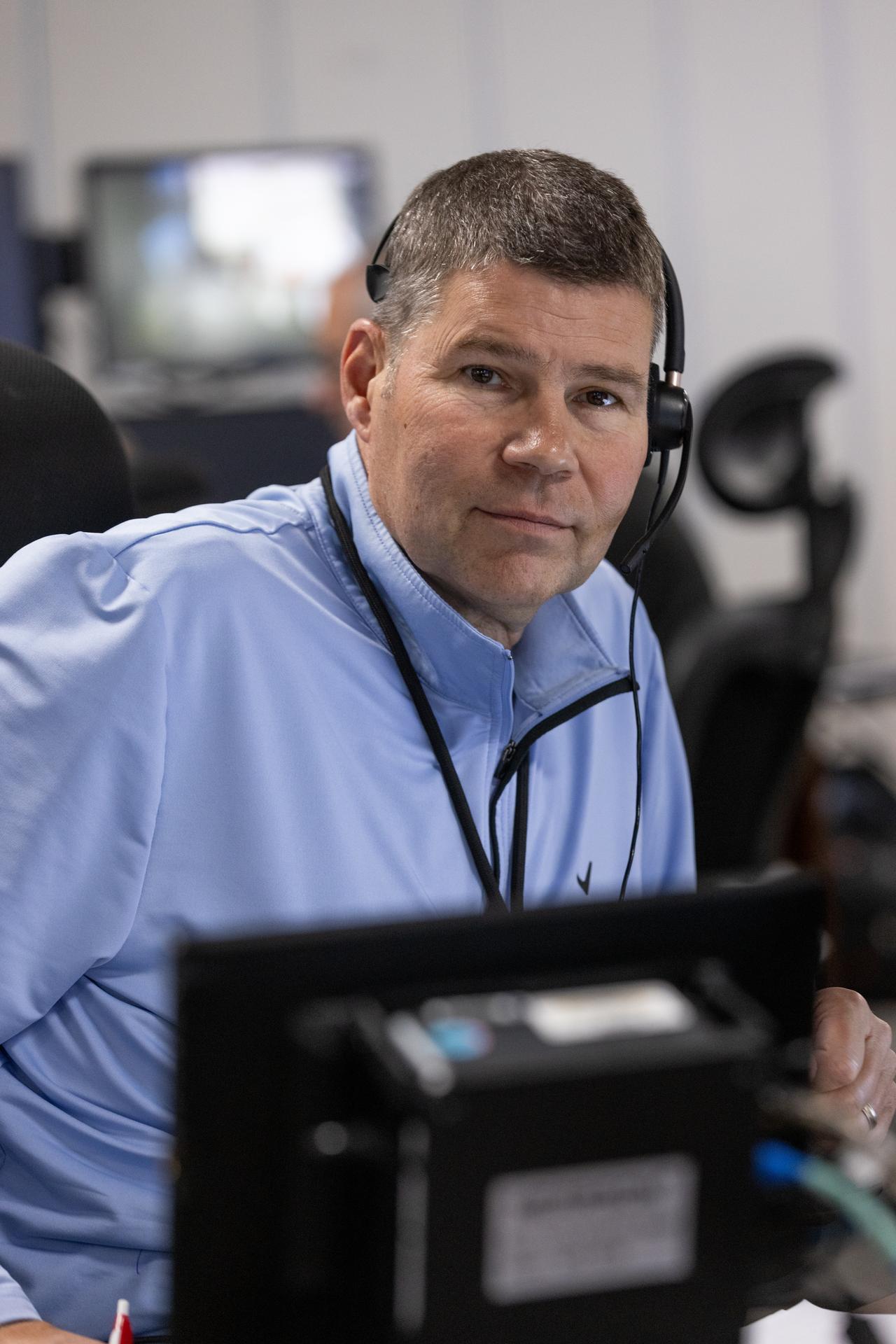
John Blevins, SLS (Space Launch System) rocket chief engineer, participates in an Artemis II launch countdown simulation inside Firing Room 2 in the Launch Control Center at NASA’s Kennedy Space Center in Florida on Wednesday, Nov. 5, 2025. The simulations go through launch day scenarios to help launch team members test software and make adjustments if needed during countdown operations. For Artemis II, four astronauts will venture around the Moon, the first crewed mission on NASA’s path to establishing a long-term presence for science and exploration through Artemis.
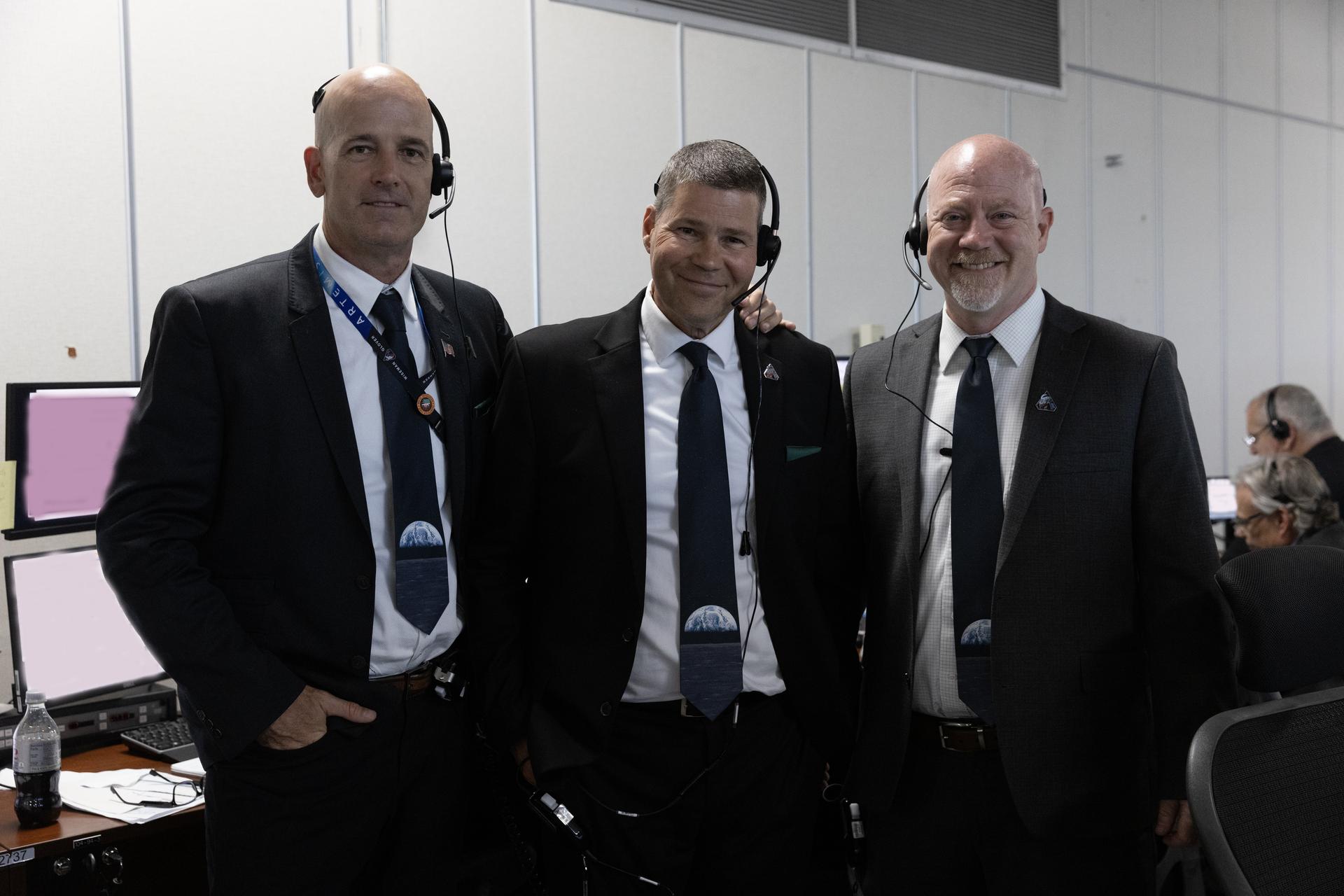
From left to right, Eric Gore, chief engineer; John Blevins, Space Launch System chief engineer; and Ronald Baccus, Orion chief engineer, each from NASA’s Exploration Ground Systems Program, pose for a photograph inside Firing Room 1 of the Rocco Petrone Launch Control Center following the launch of the Artemis II test flight on Wednesday, April 1, 2026. The tie-cutting is a NASA tradition those who have a new role launch. The Artemis II mission launched Commander Reid Wiseman, Pilot Victor Glover, and Mission Specialist Christina Koch from NASA, and Mission Specialist Jeremy Hansen from the CSA (Canadian Space Agency), aboard NASA’s SLS (Space Launch System) rocket and Orion spacecraft to journey for 10 days around the Moon and back to Earth.
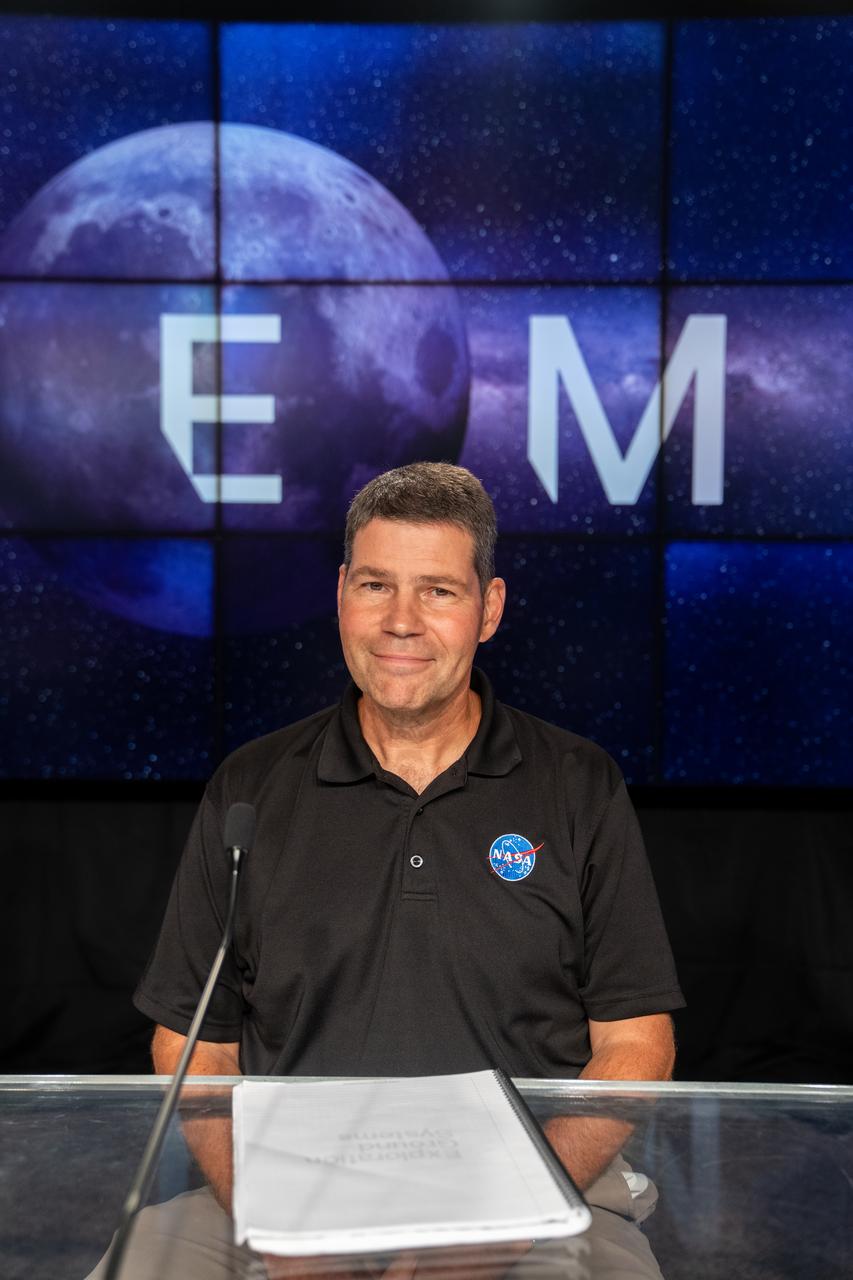
John Blevins, Space Launch System chief engineer, participates in a prelaunch media briefing following a mission management team meeting for Artemis I on Sept. 1, 2022, at NASA’s Kennedy Space Center in Florida. Artemis I is scheduled to launch at 2:17 p.m. EDT on Sept. 3, from Kennedy’s Launch Complex 39B. Launch was waved off on Aug. 29 due to an issue during tanking. The first in a series of increasingly complex missions, Artemis I will provide a foundation for human deep space exploration and demonstrate NASA’s capability to extend human presence to the Moon and beyond. The primary goal of Artemis I is to thoroughly test the integrated systems before crewed missions by operating the spacecraft in a deep space environment, testing Orion’s heat shield, and recovering the crew module after reentry, descent, and splashdown.
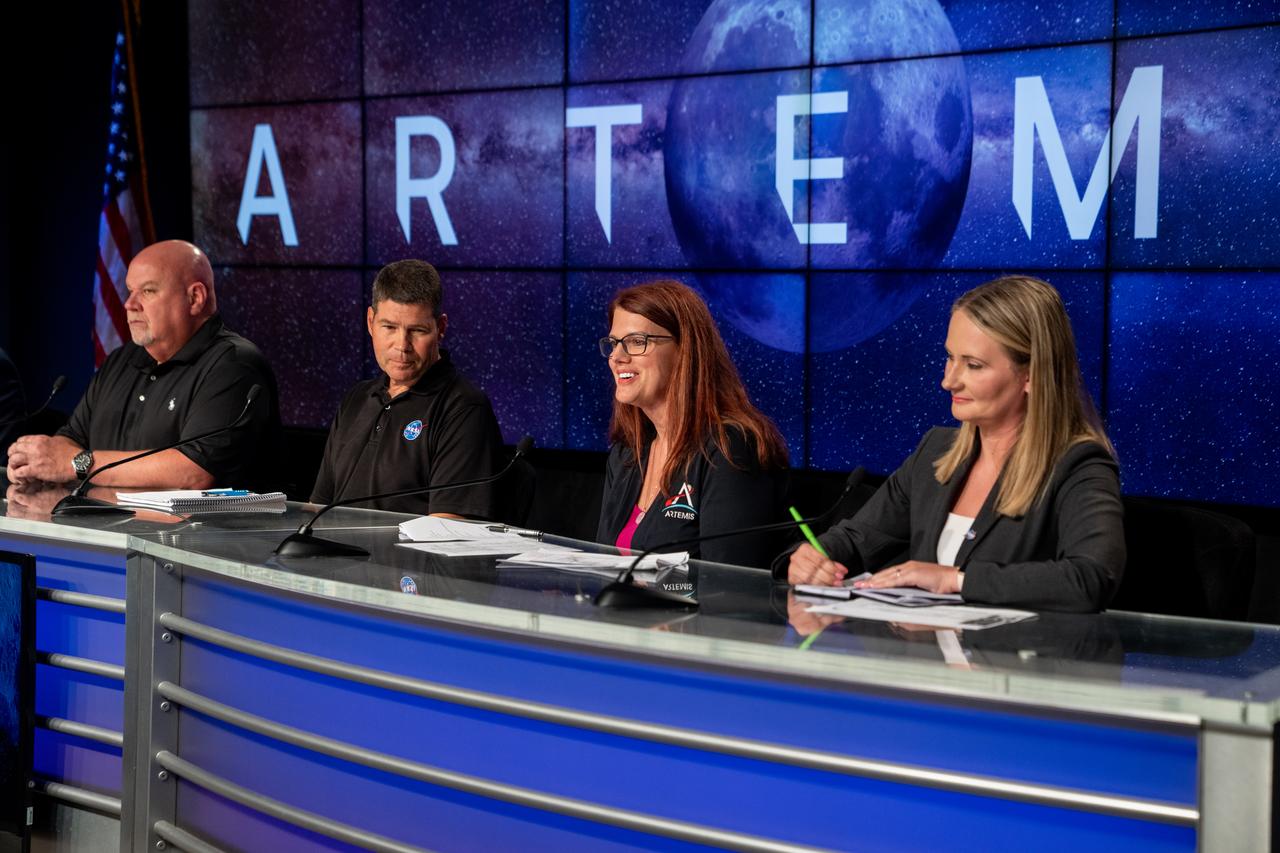
A prelaunch media briefing is held following a mission management team meeting for Artemis I on Sept. 1, 2022, at NASA’s Kennedy Space Center in Florida. Participants are, from left, John Honeycutt, Space Launch System (SLS) program manager; John Blevins, SLS chief engineer; Charlie Blackwell-Thompson, Artemis launch director; and Melody Lovin, Space Launch Delta 45 weather officer. Artemis I is scheduled to launch at 2:17 p.m. EDT on Sept. 3, from Kennedy’s Launch Complex 39B. Launch was waved off on Aug. 29 due to an issue during tanking. The first in a series of increasingly complex missions, Artemis I will provide a foundation for human deep space exploration and demonstrate NASA’s capability to extend human presence to the Moon and beyond. The primary goal of Artemis I is to thoroughly test the integrated systems before crewed missions by operating the spacecraft in a deep space environment, testing Orion’s heat shield, and recovering the crew module after reentry, descent, and splashdown.
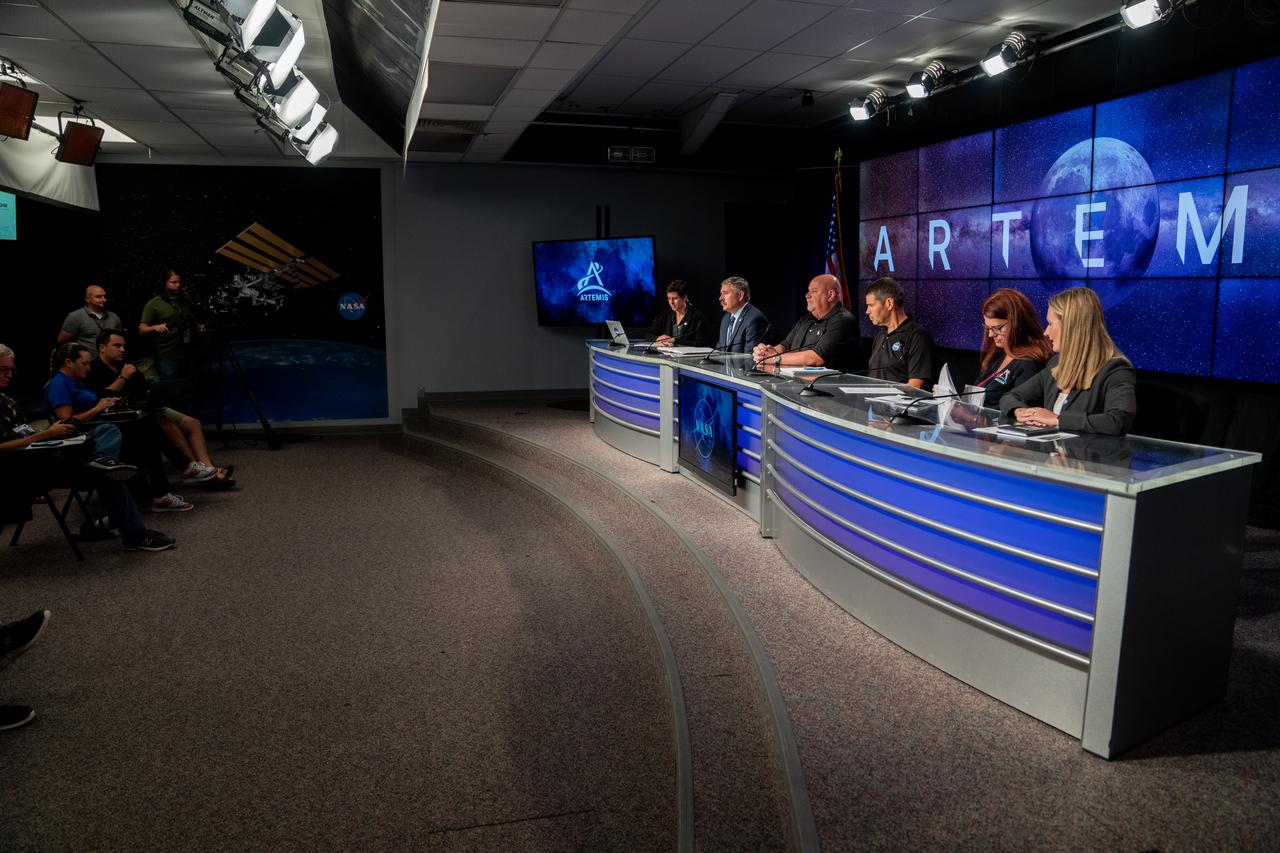
A prelaunch media briefing is held following a mission management team meeting for Artemis I on Sept. 1, 2022, at NASA’s Kennedy Space Center in Florida. Participants are, from left, Rachel Kraft, NASA Communications; Mike Sarafin, Artemis mission manager; John Honeycutt, Space Launch System (SLS) program manager; John Blevins, SLS chief engineer; Charlie Blackwell-Thompson, Artemis launch director; and Melody Lovin, Space Launch Delta 45 weather officer. Artemis I is scheduled to launch at 2:17 p.m. EDT on Sept. 3, from Kennedy’s Launch Complex 39B. Launch was waved off on Aug. 29 due to an issue during tanking. The first in a series of increasingly complex missions, Artemis I will provide a foundation for human deep space exploration and demonstrate NASA’s capability to extend human presence to the Moon and beyond. The primary goal of Artemis I is to thoroughly test the integrated systems before crewed missions by operating the spacecraft in a deep space environment, testing Orion’s heat shield, and recovering the crew module after reentry, descent, and splashdown.
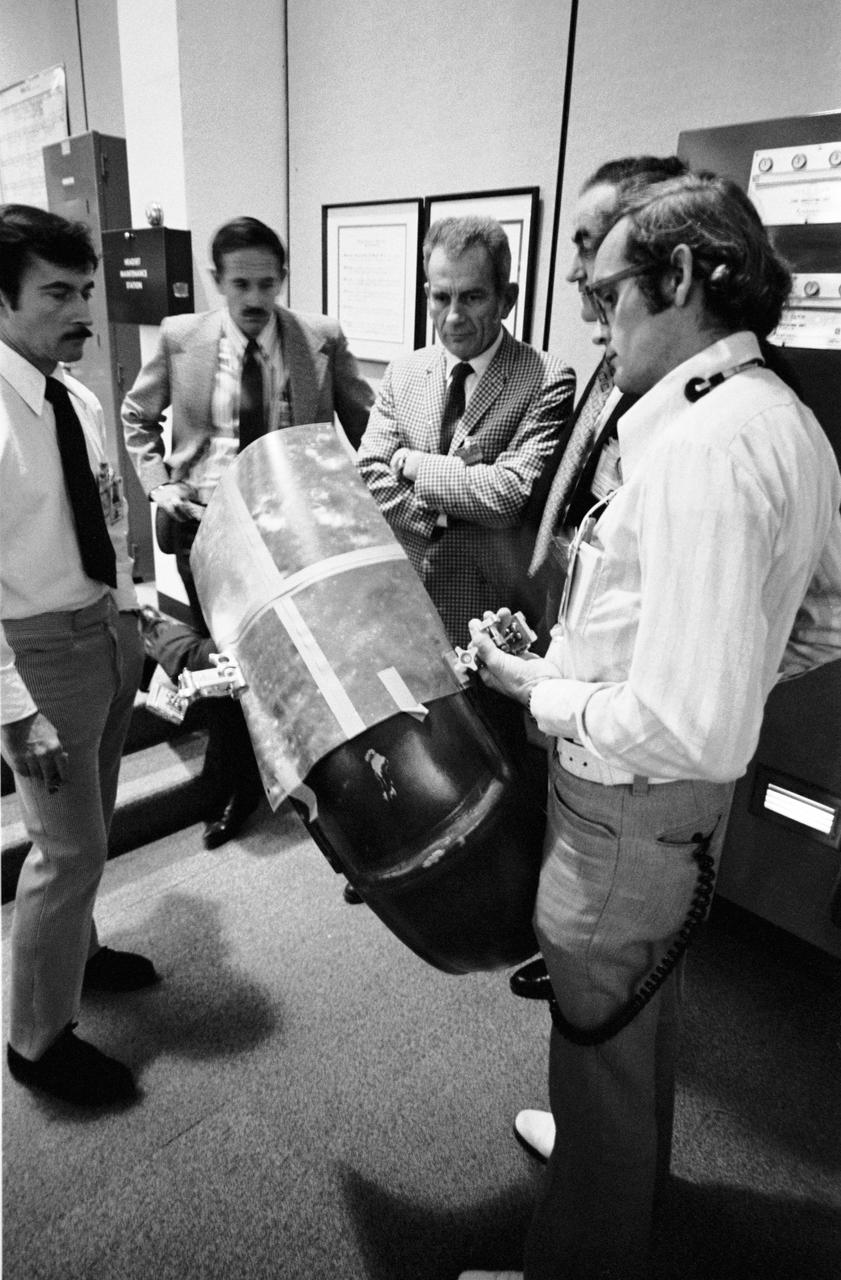
S72-55170 (11 Dec. 1972) --- These five men in the Mission Control Center ponder the solution to the problem of the damage to the right rear fender of the Apollo 17 Lunar Roving Vehicle at the Taurus-Littrow landing site. During the first lunar surface extravehicular activity a hammer got underneath the fender and a part of it was knocked off. Astronauts Eugene A. Cernan and Harrison H. Schmitt were reporting a problem with lunar dust because of the damaged fender. They sought some way to repair the broken fender. Clockwise are astronauts John W. Young and Charles M. Duke Jr., two Apollo 17 CAPCOM; Donald K. Slayton, director of flight crew operations at MSC; Dr. Roco A. Petrone, Apollo program director, Office of Manned Space Flight, NASA HQ; and Ronald V. Blevins, an EVA-1 flight controller with General Electric. They are looking over a makeshift repair arrangement which uses lunar maps and clamps from the optical alignment telescope lamp, a repair suggestion made by astronaut Young. The suggestion was relayed to Cernan and Schmitt and the repair made at the beginning of EVA-2. The problem was solved satisfactorily.