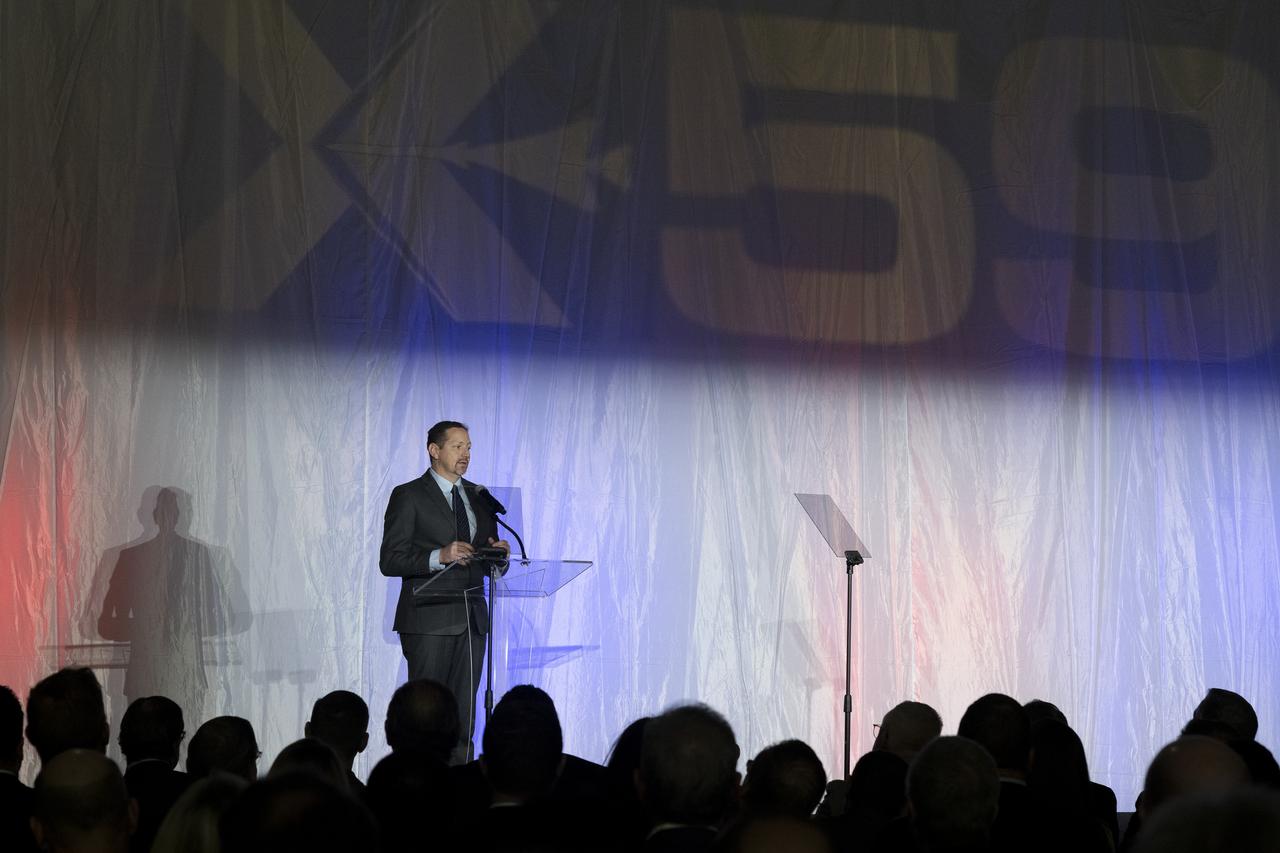
Lockheed Martin Skunk Works Vice President and General Manager John Clark speaks on stage prior to the unveiling of the agency’s X-59 quiet supersonic research aircraft at a January 12, 2024 event at Lockheed Martin Skunk Works in Palmdale, California. The X-59 is the centerpiece of NASA’s Quesst mission, which seeks to solve one of the major barriers to supersonic flight over land, currently banned in the United States, by making sonic booms quieter.
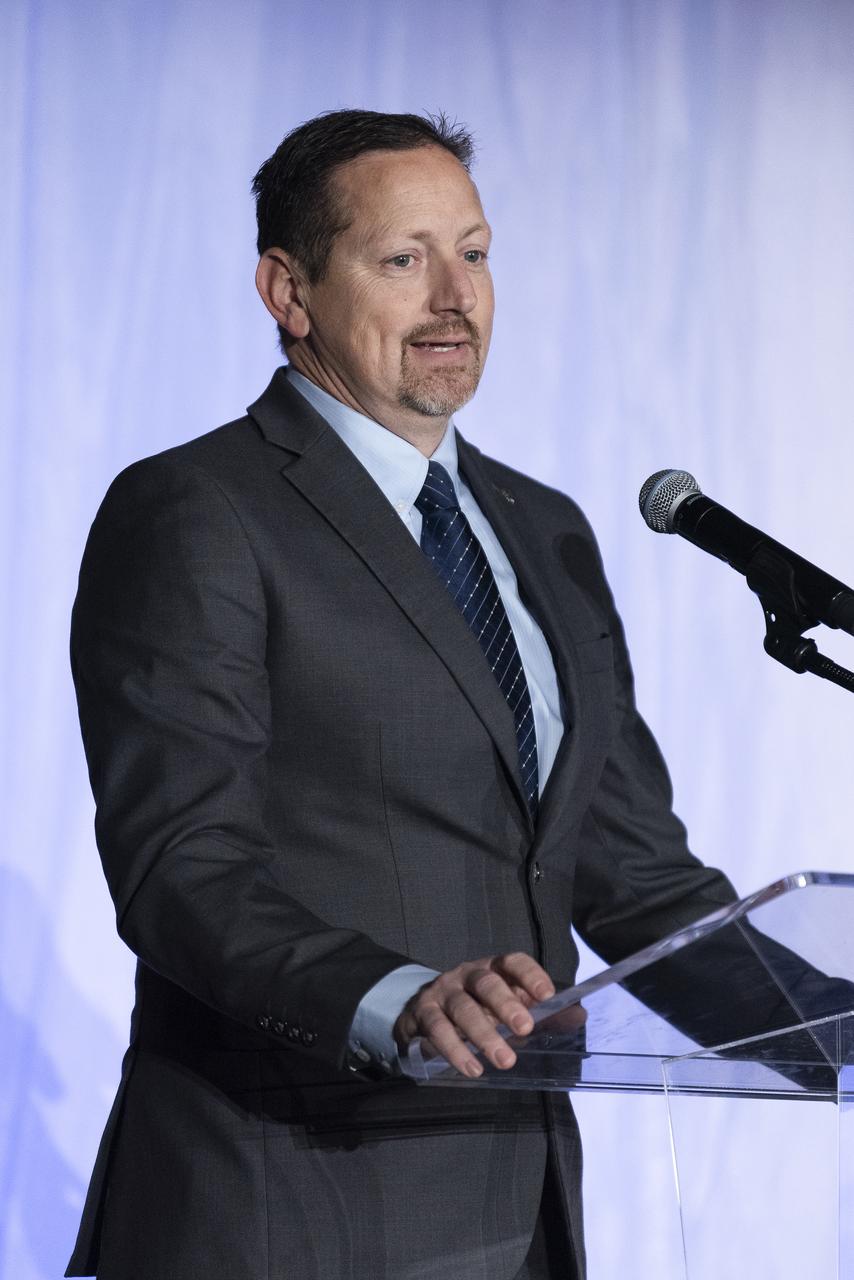
Lockheed Martin Skunk Works Vice President and General Manager John Clark speaks on stage prior to the unveiling of the agency’s X-59 quiet supersonic research aircraft at a January 12, 2024 event at Lockheed Martin Skunk Works in Palmdale, California. The X-59 is the centerpiece of NASA’s Quesst mission, which seeks to solve one of the major barriers to supersonic flight over land, currently banned in the United States, by making sonic booms quieter.
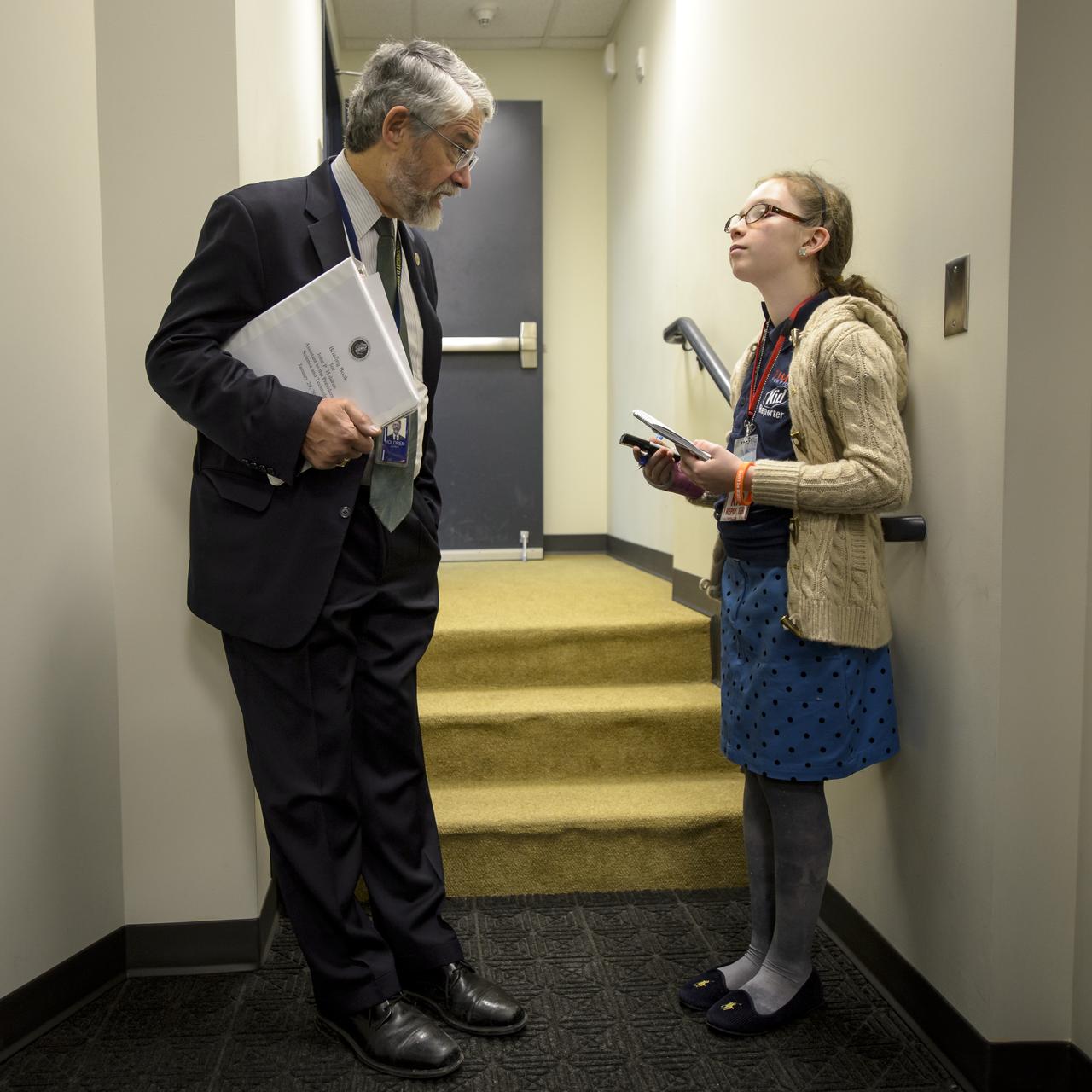
Dr. John P. Holdren, Assistant to the President for Science and Technology and Director of the White House Office of Science & Technology Policy, left, is interviewed by TIME for Kids reporter Grace Clark ahead of the annual White House State of Science, Technology, Engineering, and Math (SoSTEM) address, Wednesday, Jan. 29, 2014, in the South Court Auditorium in the Eisenhower Executive Office Building on the White House complex in Washington. Photo Credit: (NASA/Bill Ingalls)
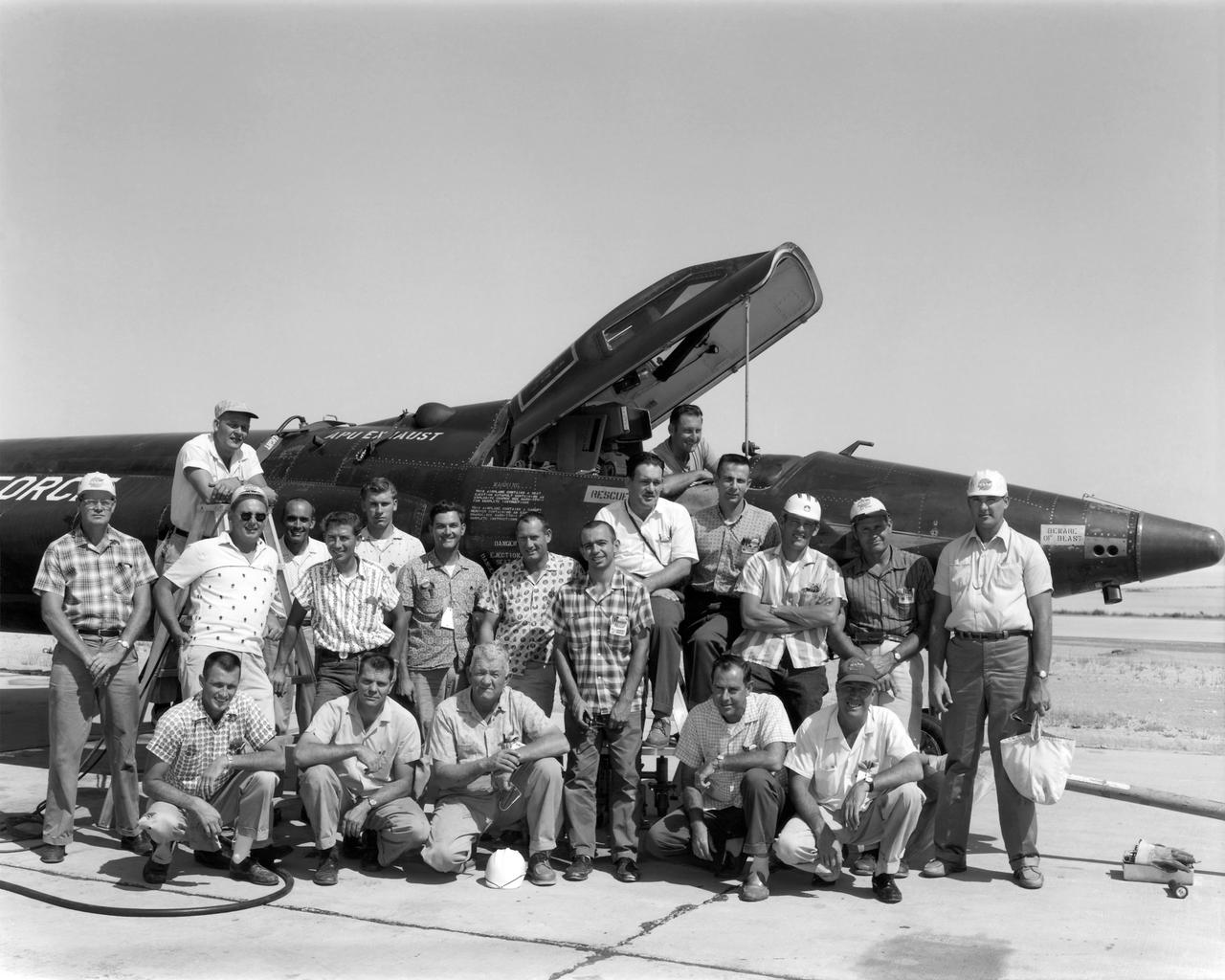
X-15 personnel July 1962 Cockpit: Edward "Ed" Nice Ladder: Thomas "Tom" McAlister Back Row, left to right: William Clark, Edward "Ed" Sabo, Donald "Don" Hall, Billy Furr, Allen Dustin, Raymond "Ray" White, George E. Trott, Alfred "Al" Grieshaber, Merle Curtis, LeRoy "Lee" Adelsbach, Allen Lowe, Jay L. King, Lorenzo "Larry" Barnett. Kneeling, left to right: Byron Gibbs, Price "Bob" Workman, Ira Cupp, unidentified, John Gordon.
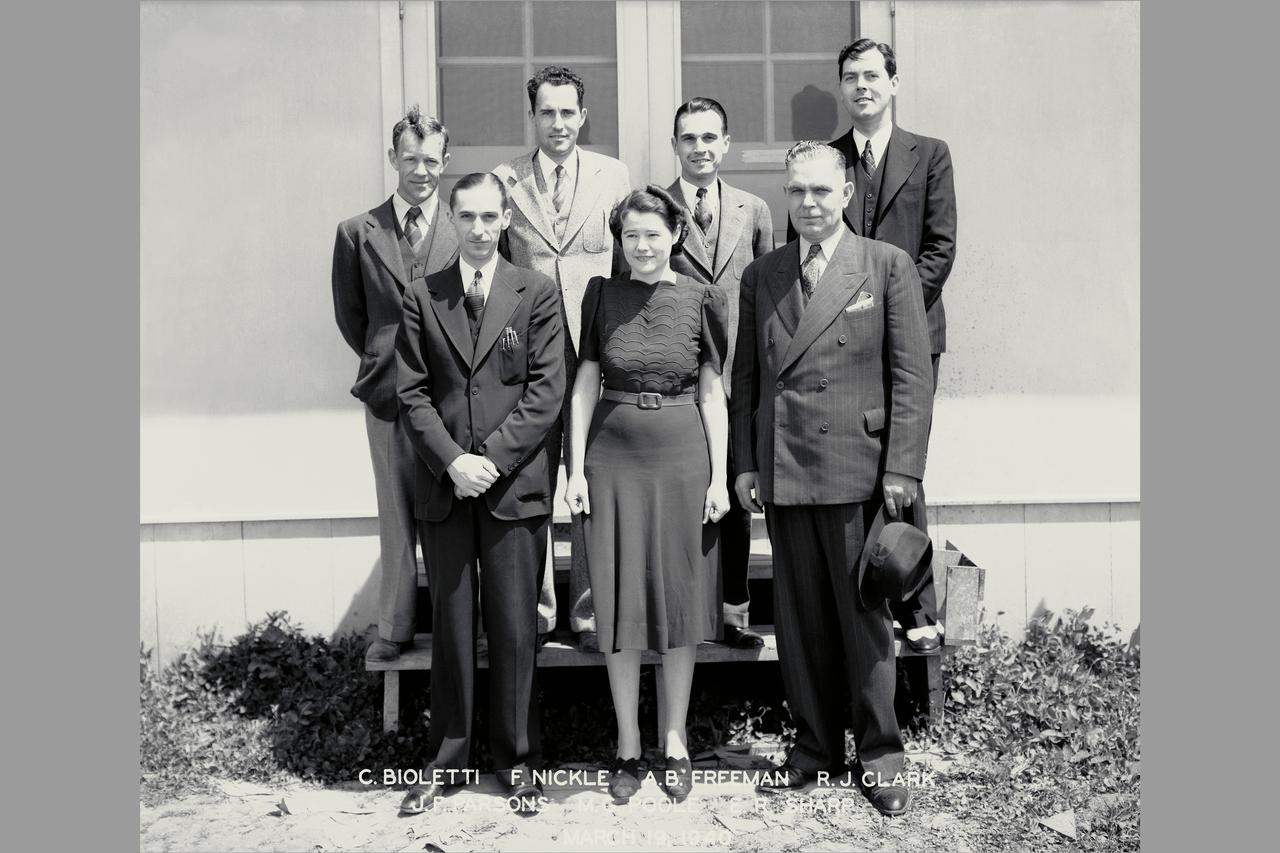
AMES PERSONNEL: Front Row; John Parsons, Manie Poole, Edward Sharp, Back Row; Carlson Bioletti, Ferril Nickle, Arthur Freeman, R J Clark
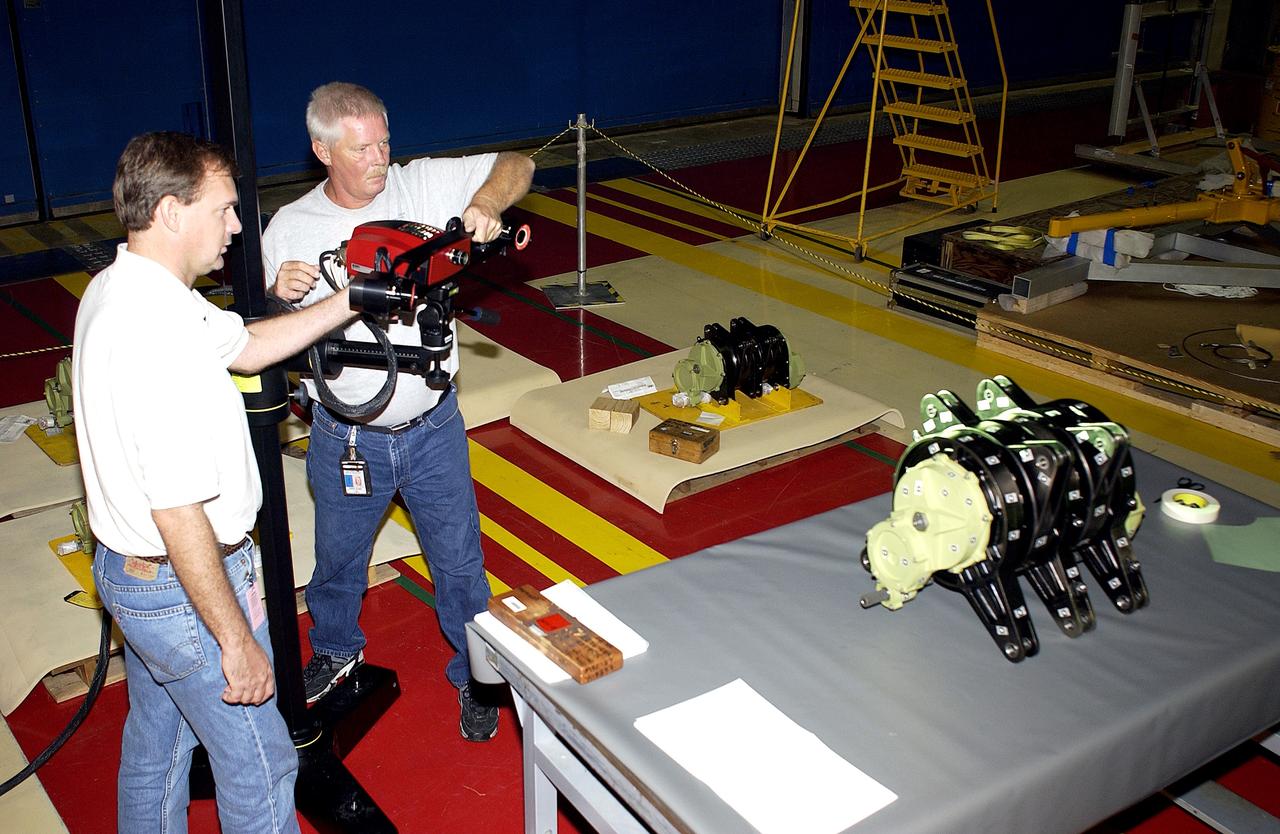
KENNEDY SPACE CENTER, FLA. - Boeing workers get ready to perform a 3D digital scan of the actuator on the table. At left is John Macke, from Boeing, St. Louis. At right is Dan Clark.. There are two actuators per engine on the Shuttle, one for pitch motion and one for yaw motion. The Space Shuttle Main Engine hydraulic servoactuators are used to gimbal the main engine.
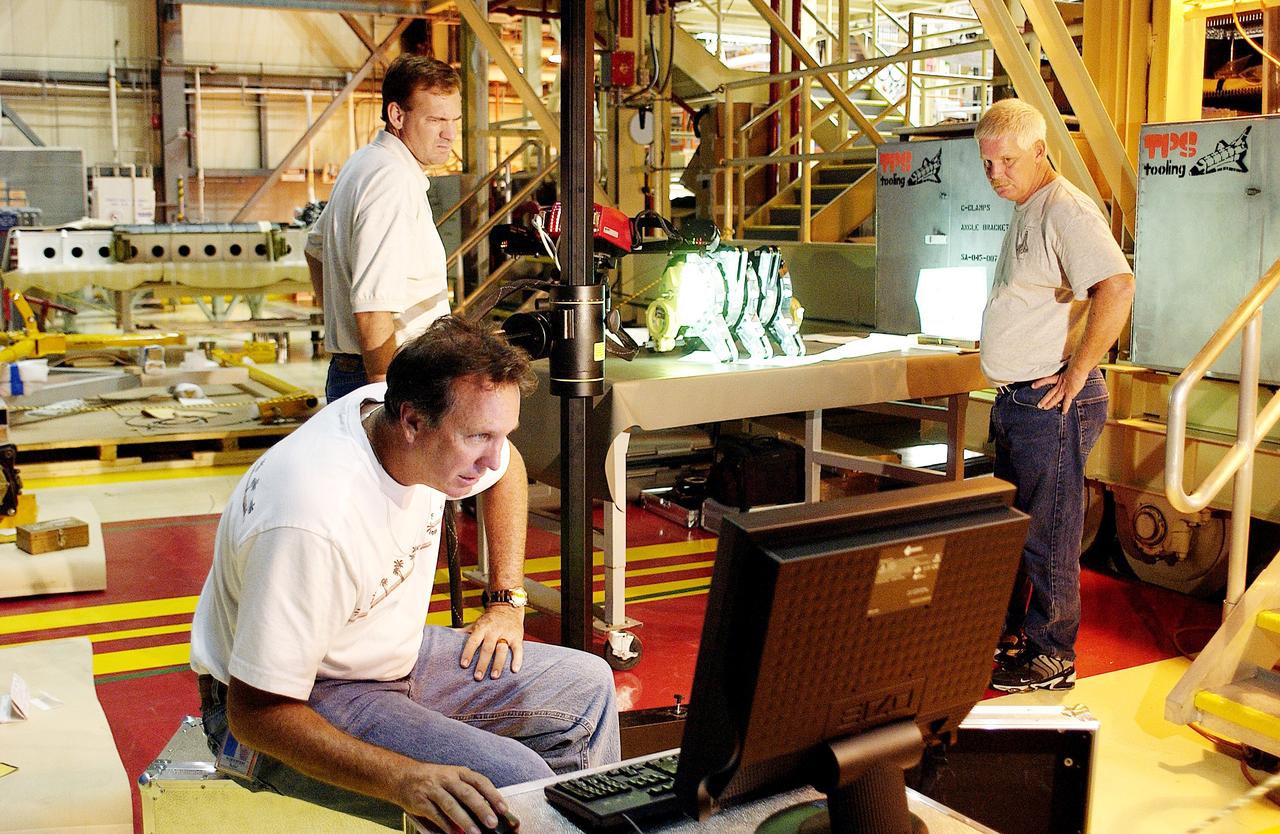
KENNEDY SPACE CENTER, FLA. - John Macke (standing, left), with Boeing St. Louis, Alden Pitard (seated, left) and Dan Clark (right), with KSC Boeing, look at a monitor after 3D digital scanning of actuators in the Orbiter Processing Facility. There are two actuators per engine on the Shuttle, one for pitch motion and one for yaw motion. The Space Shuttle Main Engine hydraulic servoactuators are used to gimbal the main engine.
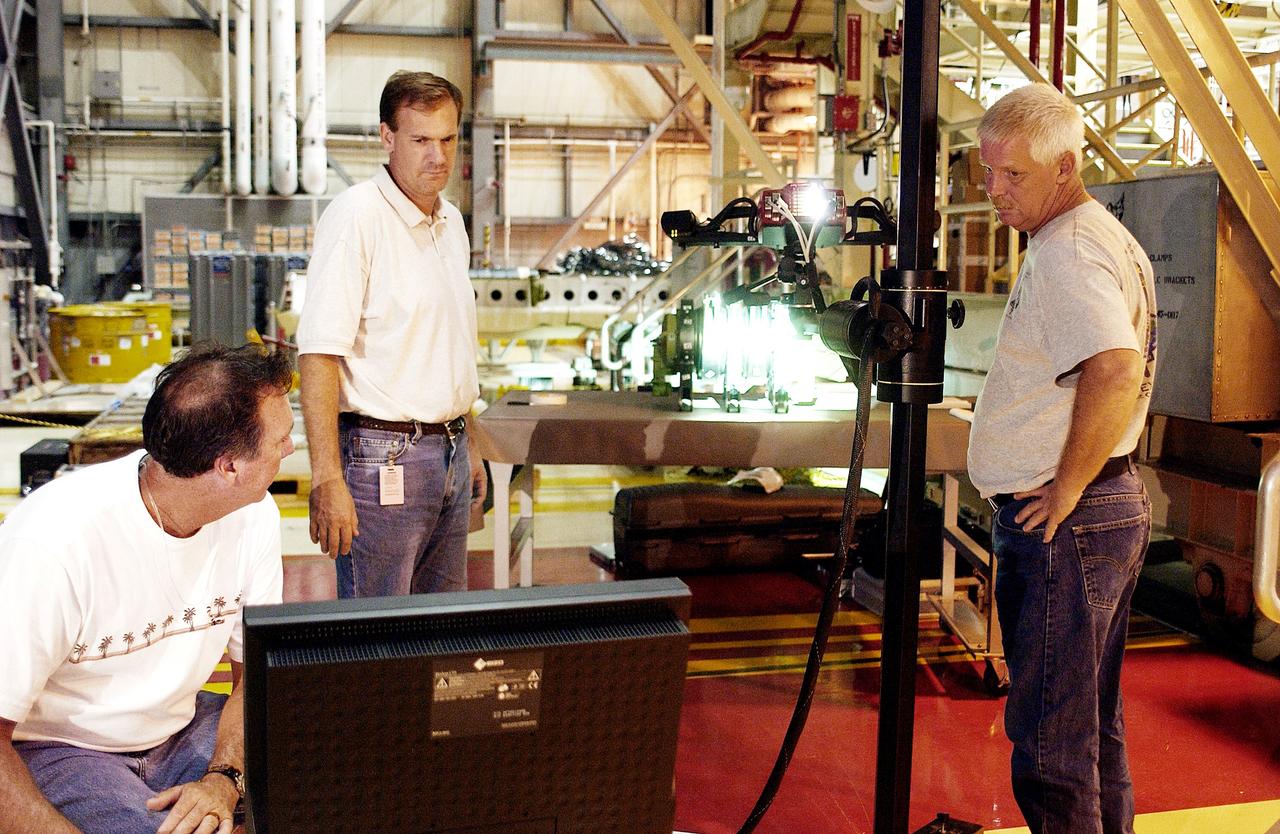
KENNEDY SPACE CENTER, FLA. - John Macke (standing, center), with Boeing St. Louis, Alden Pitard (seated, left) and Dan Clark (right), with KSC Boeing, check results after 3D digital scanning of actuators in the Orbiter Processing Facility. There are two actuators per engine on the Shuttle, one for pitch motion and one for yaw motion. The Space Shuttle Main Engine hydraulic servoactuators are used to gimbal the main engine.
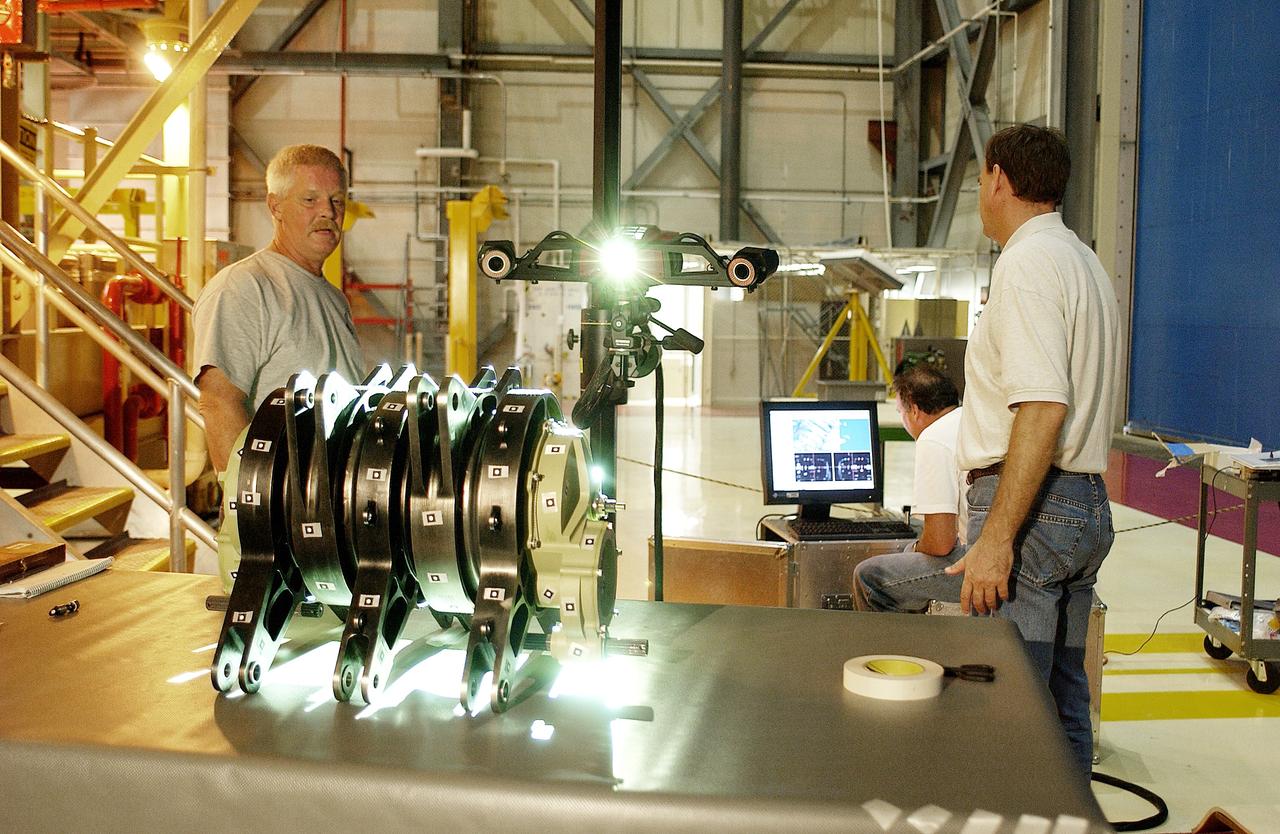
KENNEDY SPACE CENTER, FLA. - Boeing workers perform a 3D digital scan of the actuator on the table. At left is Dan Clark. At right are Alden Pitard (seated at computer) and John Macke, from Boeing, St. Louis. . There are two actuators per engine on the Shuttle, one for pitch motion and one for yaw motion. The Space Shuttle Main Engine hydraulic servoactuators are used to gimbal the main engine.
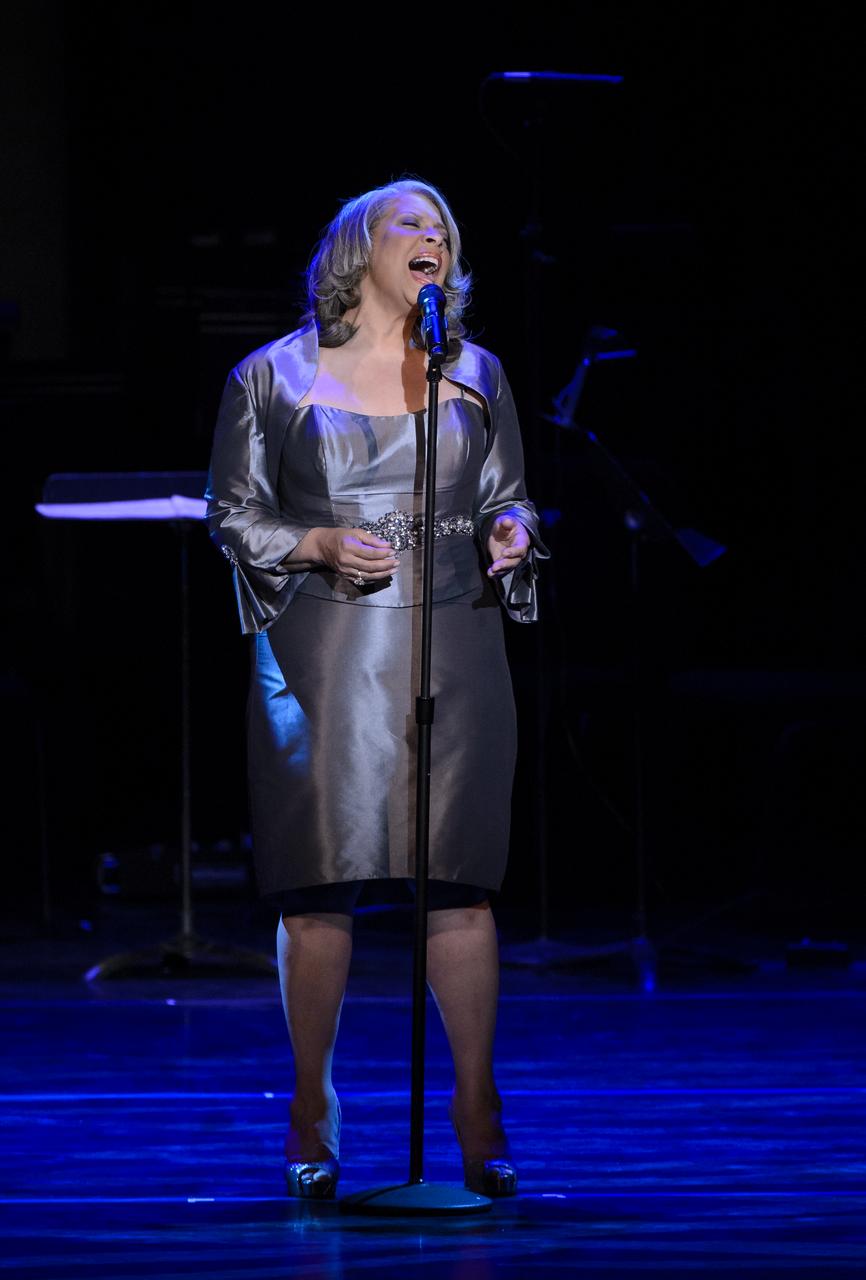
Singer Patti Austin performs Tena Clark's "Way Up There" during the National Tribute to Sally Ride at the John F. Kennedy Center for the Performing Arts, Monday, May 20, 2013 in Washington. Photo Credit: (NASA/Bill Ingalls)
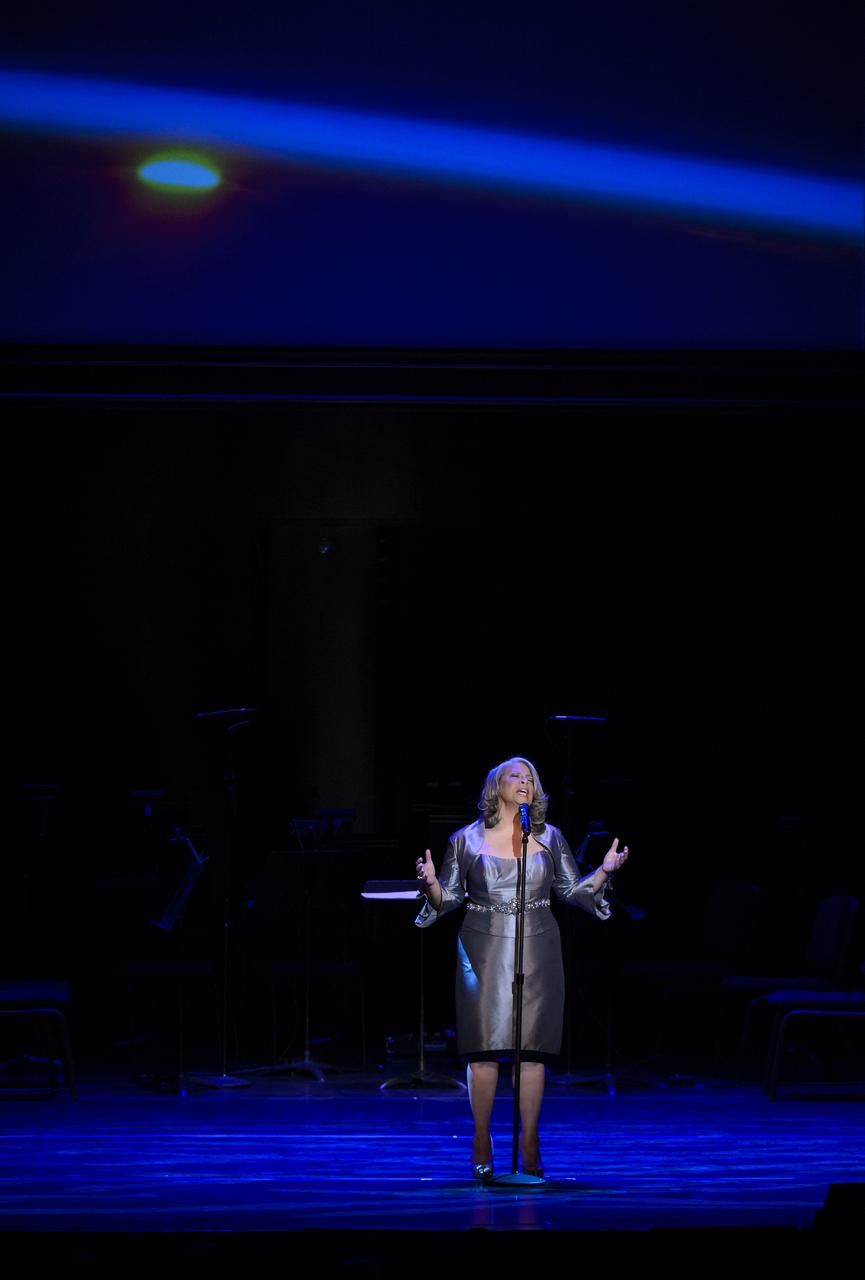
Singer Patti Austin performs Tena Clark's "Way Up There" during the National Tribute to Sally Ride at the John F. Kennedy Center for the Performing Arts, Monday, May 20, 2013 in Washington. Photo Credit: (NASA/Bill Ingalls)
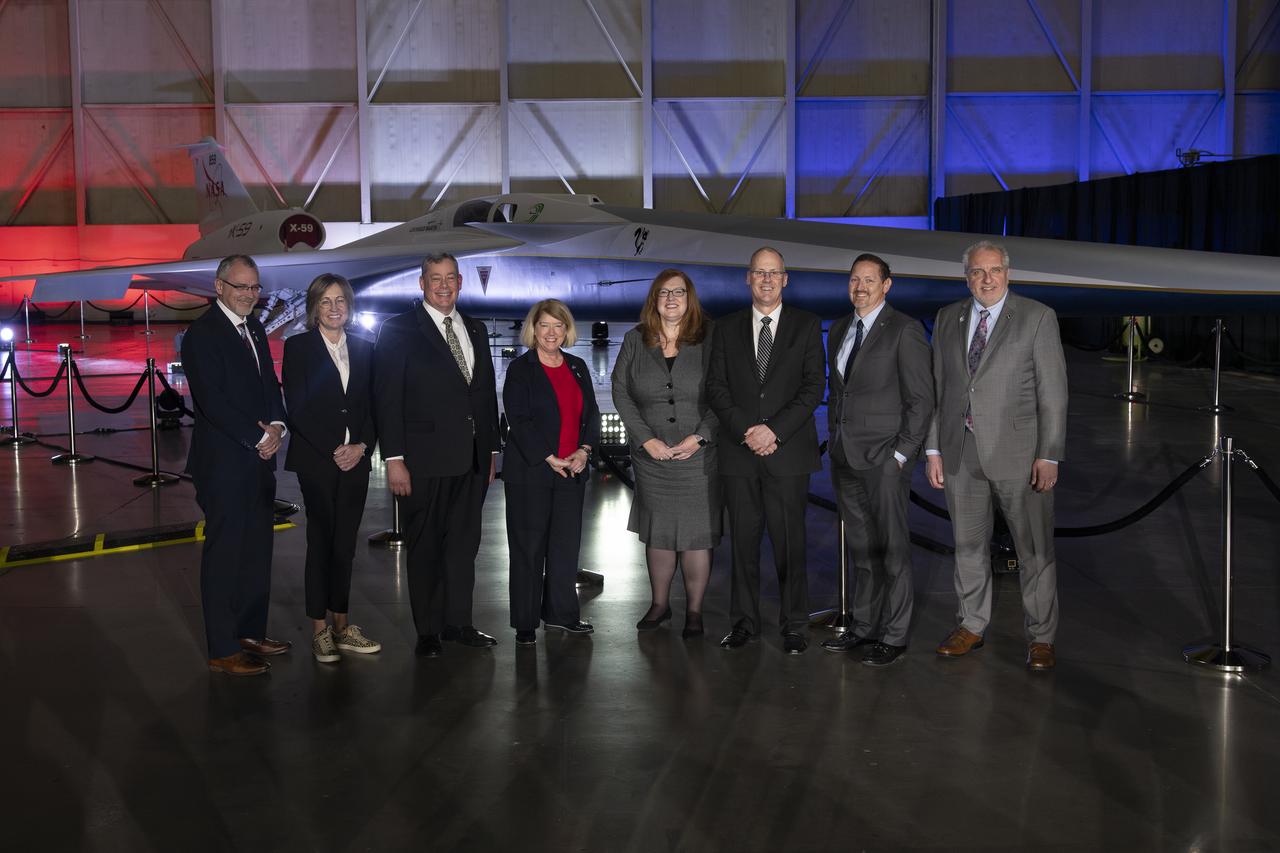
(from left to right) NASA Associate Administrator Jim Free, California Senior Economic Advisor to the Governor Dee Dee Myers, Lockheed Martin Executive Vice President of Aeronautics Greg Ulmer, NASA Deputy Administrator Pam Melroy, Low Boom Flight Demonstrator Project Manager Cathy Bahm, Lockheed Martin X-59 Project Manager David Richardson, Lockheed Martin Skunk Works Vice President and General Manager John Clark, and NASA Associate Administrator for the Aeronautics Research Mission Directorate Bob Pearce pose in front of the agency’s X-59 quiet supersonic research aircraft at a January 12, 2024 event at Lockheed Martin Skunk Works in Palmdale, California. The X-59 is the centerpiece of NASA’s Quesst mission, which seeks to solve one of the major barriers to supersonic flight over land, currently banned in the United States, by making sonic booms quieter.
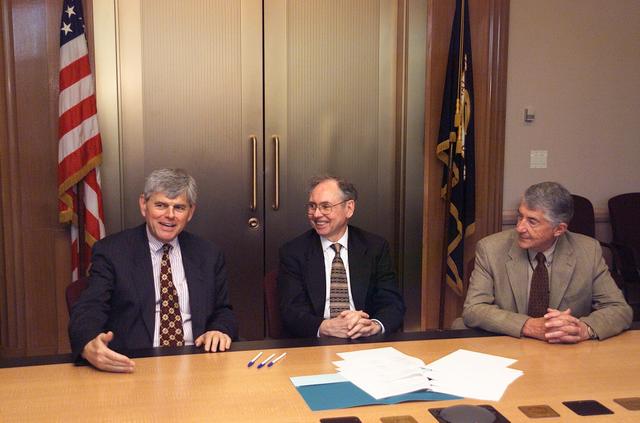
Memorandum of Understanding (MOU) to establish a Unmanned Aerial Vehicles (UAV) Applications Center at NASA Research Park (NRP) was signed into being by (L-R) John Bassett Clark University, Worcester, Mass., Dr. Henry McDonald, Director of Ames Research Center and Paul Coleman, Girvan Institute (a non-profit organization lockated in NASA Research Park).
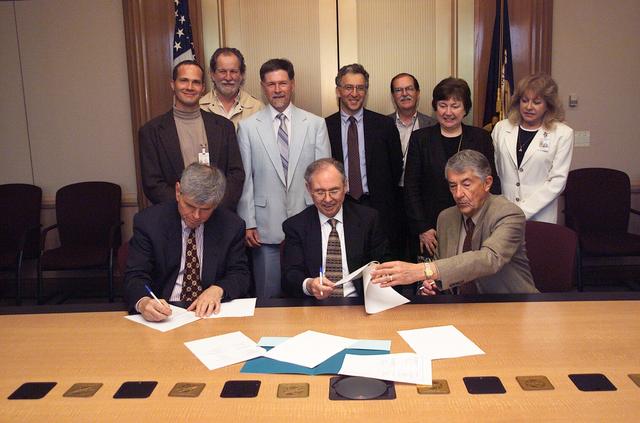
Memorandum of Understanding (MOU) to establish a Unmanned Aerial Vehicles (UAV) Applications Center at NASA Research Park (NRP) was signed into being by (L-R) John Bassett Clark University, Worcester, Mass., Dr. Henry McDonald, Director of Ames Research Center and Paul Coleman, Girvan Institute (a non-profit organization lockated in NASA Research Park). Witnessed by (Back Row, L-R) Steve Douagan, Dave Peterson, Jim Brass, Stan Herwitz, Ken Souza, Estelle Condon, Carolina Blake.
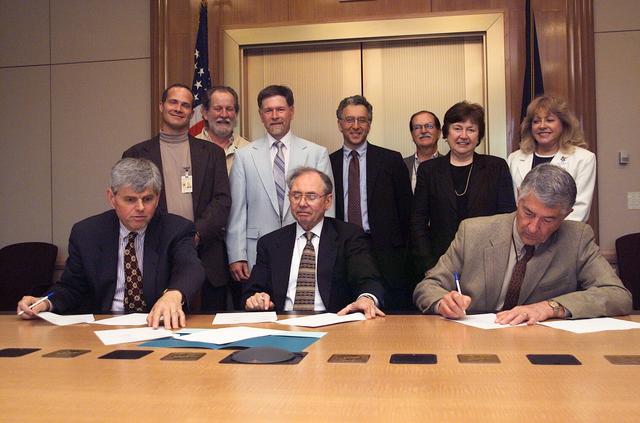
Memorandum of Understanding (MOU) to establish a Unmanned Aerial Vehicles (UAV) Applications Center at NASA Research Park (NRP) was signed into being by (L-R) John Bassett Clark University, Worcester, Mass., Dr. Henry McDonald, Director of Ames Research Center and Paul Coleman, Girvan Institute (a non-profit organization lockated in NASA Research Park). Witnessed by (Back Row, L-R) Steve Douagan, Dave Peterson, Jim Brass, Stan Herwitz, Ken Souza, Estelle Condon, Carolina Blake.

Sean Clarke, NASA technical fellow for electric power for the NASA Engineering and Safety Center (NESC), based at NASA’s Armstrong Flight Research Center, participates in an employee incentive flying event with NASA Administrator Jared Isaacman's personal F-5 aircraft, Friday, March 27, 2026, at NASA’s Kennedy Space Center in Florida. Photo Credit: (NASA/John Kraus)
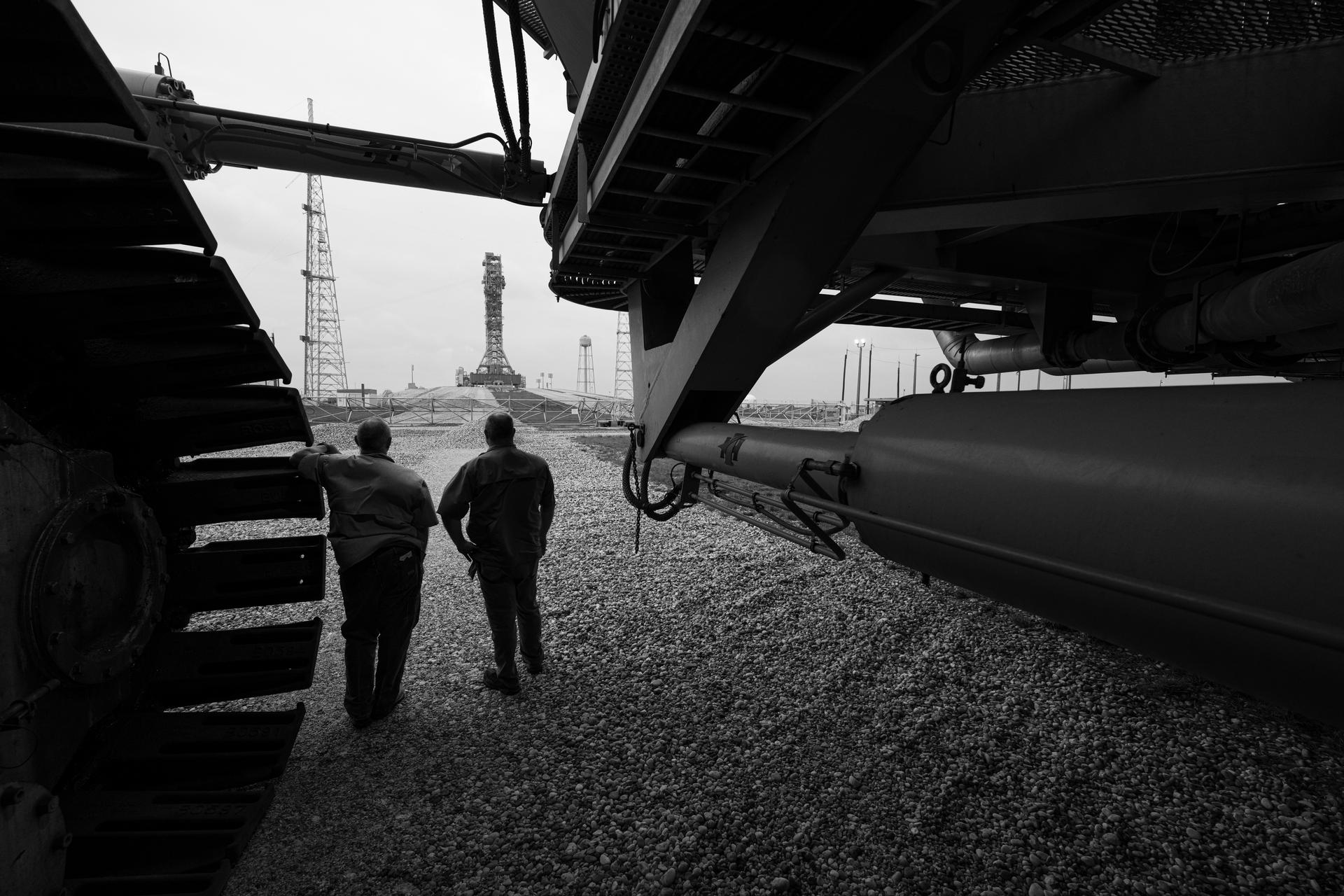
Clark Ford, element operations manager at NASA's Kennedy Space Center, left, and Doug Levine, contractor security manager at NASA's Kennedy Space Center, right, pose for a photograph with Crawler Transporter 2 outside the gate of Launch Complex 39B, Wednesday, Apr. 8, 2026, at NASA’s Kennedy Space Center in Florida. Photo Credit: (NASA/John Kraus)
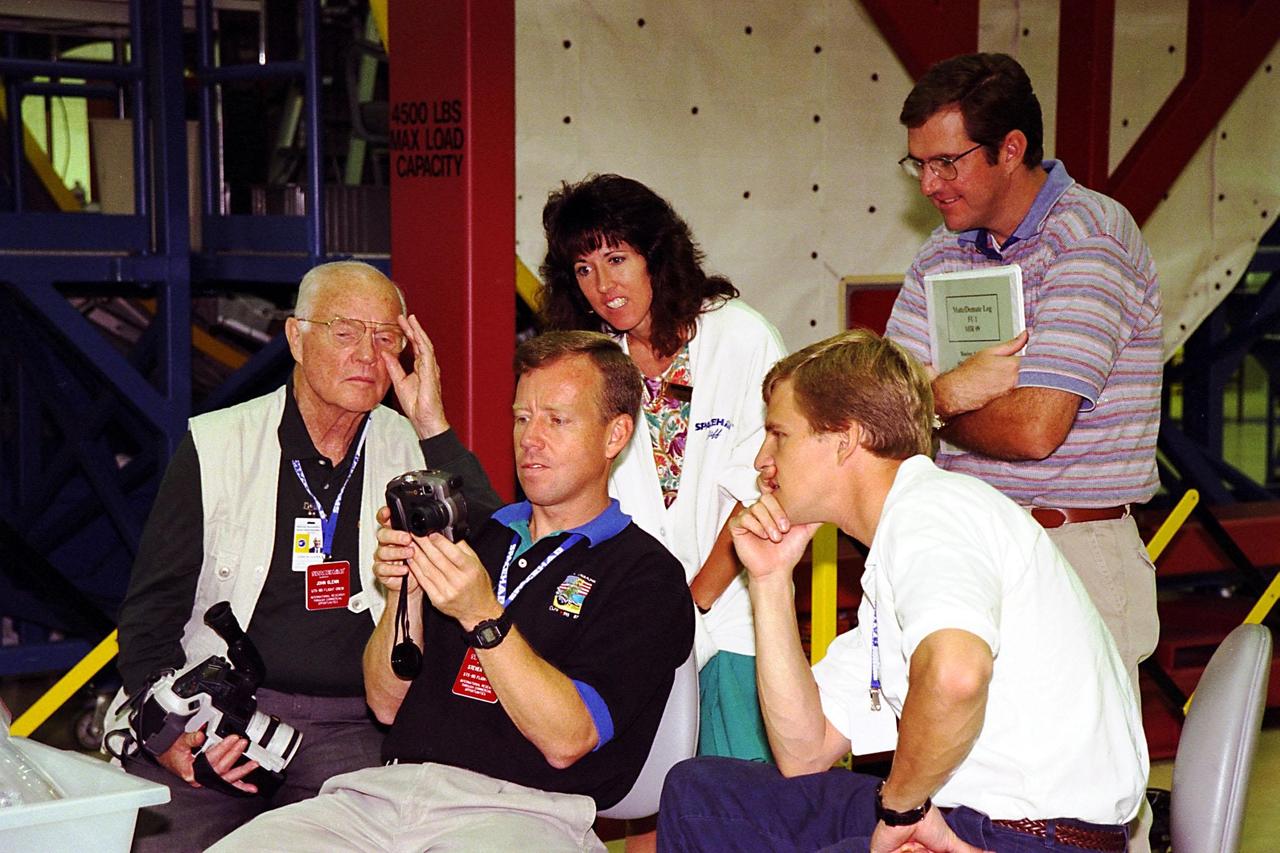
KENNEDY SPACE CENTER, FLA. -- STS-95 crew members check out camera equipment they will use on the mission during a SPACEHAB familiarization tour and briefing at the SPACEHAB Payload Processing Facility in Cape Canaveral. Seated, from left, are Payload Specialist John H. Glenn Jr., who also is a senator from Ohio; Pilot Steven W. Lindsey; and Mission Specialist Scott E. Parazynski. Standing in back are Boeing employees LaDonna Neterer and Scott Clark. STS-95 will feature a variety of research payloads, including the Spartan solar-observing deployable spacecraft, the Hubble Space Telescope Orbital Systems Platform, the International Extreme Ultraviolet Hitchhiker, and experiments on space flight and the aging process. STS-95 is targeted for an Oct. 29 launch aboard the Space Shuttle Discovery
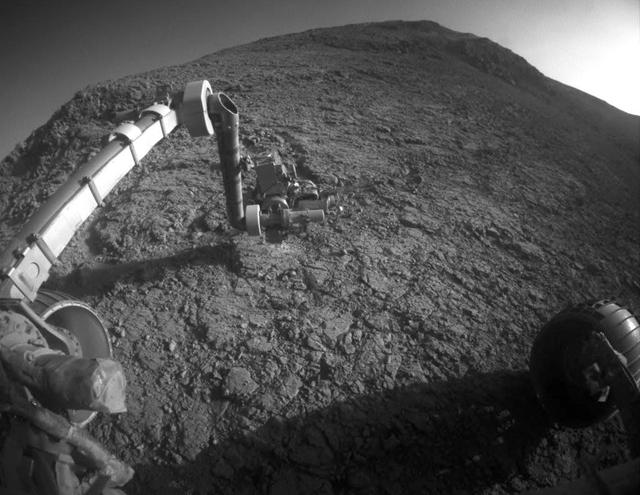
The target beneath the tool turret at the end of the rover's robotic arm in this image from NASA's Mars Exploration Rover Opportunity is "Private John Potts." It lies high on the southern side of "Marathon Valley," which slices through the western rim of Endeavour Crater. The target's informal name refers to a member of the Lewis and Clark Expedition's Corps of Discovery. The image was taken by Opportunity's front hazard avoidance camera on Jan. 5, 2016, during the 4,248th Martian day, or sol, of the rover's work on Mars. This camera is mounted low on the rover and has a wide-angle lens. In this image, the microscopic imager on the turret is pointed downward. Opportunity's examination of this target also used the turret's rock abrasion tool for removing the surface crust and alpha particle X-ray spectrometer for identifying chemical elements in the rock. http://photojournal.jpl.nasa.gov/catalog/PIA20285

Foreground, from left: Teresa Nieves-Chinchilla, director of the Moon to Mars Space Weather Analysis Office at NASA’s Goddard Space Flight Center; Kyle Back, director of the business management office at the Office of the Chief Financial Officer Enterprise at NASA Headquarters; NASA Administrator Jared Isaacman; and Luis Muniz, radiation safety officer at NASA’s Goddard Space Flight Center; background: Sean Clarke, NASA technical fellow for electric power for the NASA Engineering and Safety Center, based at NASA’s Armstrong Flight Research Center, center, and Ryan Fishel, pilot, right, pose for a photograph following an employee incentive flying event with Isaacman's personal F-5 aircraft, Friday, March 27, 2026, at NASA’s Kennedy Space Center in Florida. Photo Credit: (NASA/John Kraus)
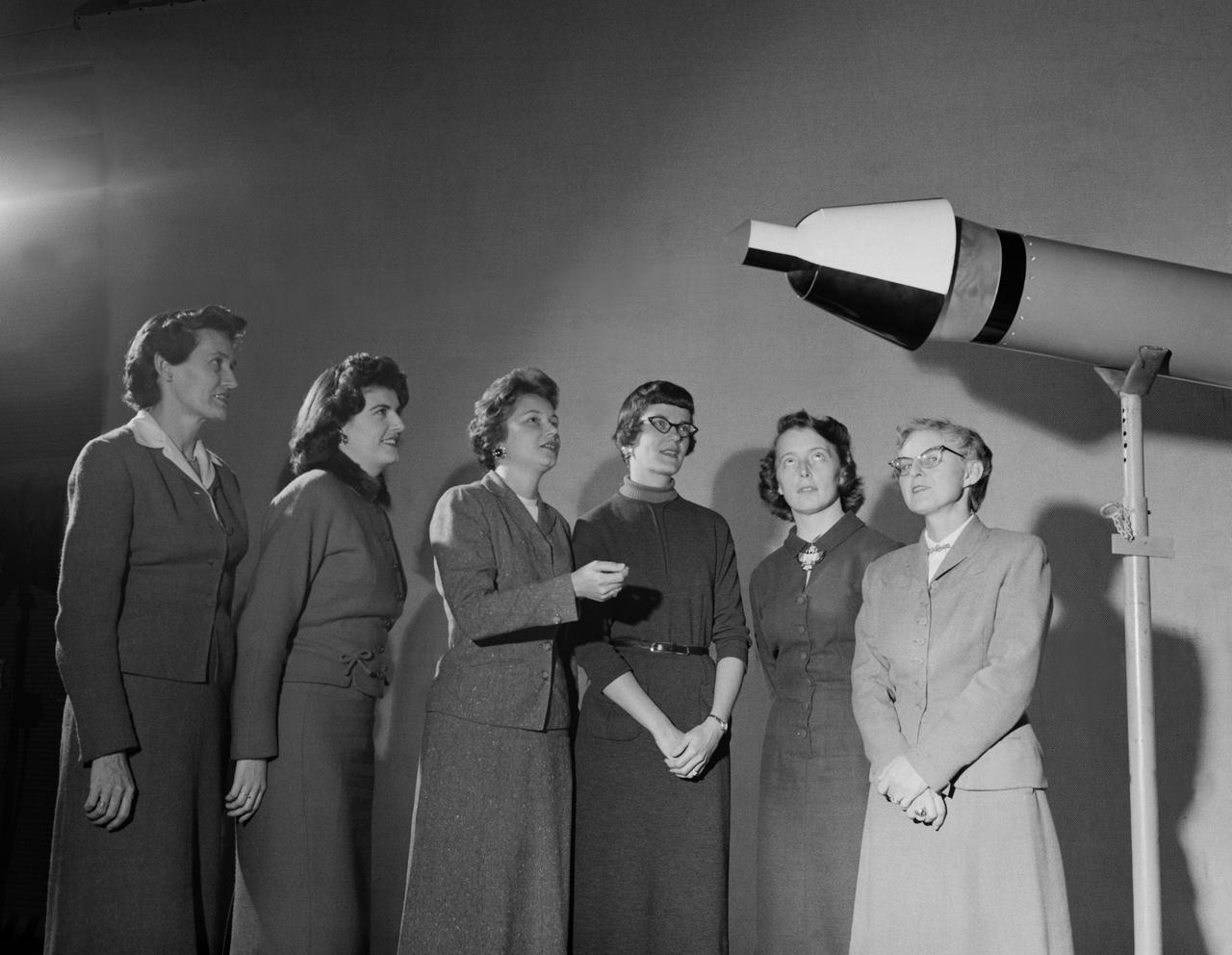
Women Scientists: Lucille Coltrane, Jean Clark Keating, Katherine Cullie Speegle, Doris 'Dot' Lee, Ruth Whitman, and Emily Stephens Mueller,Lucille Coltrane is at the far left. She was a computer and worked for Norm Crabill who provided positive identification. Lucille authored a NACA Research Memorandum, Investigation of Two Bluff Shapes in Axial Free Flight Over a Mach Number Range From 0.35 to 2.15 in 1958. Next to Lucille is Jean Clark Keating. Jean was identified by Mary Woerner who said that both Jean and her husband Jerry are now deceased. The third woman from the left is Katherine Cullie Speegle. Katherine co-authored two research papers: Preliminary Results From a Free-Flight Investigation of Boundary-Layer Transition and Heat Transfer on a Highly Polished 8-Inch-Diameter Hemisphere-Cylinder at Mach Numbers up to 3 and Reynolds Numbers Based on a Length of 1 Foot up to 17.7 x 10 to the 6th and Heat Transfer For Mach Numbers Up to 2.2 and Pressure Distributions for Mach Numbers Up to 4.7 From Flight Investigations of a Flat-Face Cone and a Hemisphere-Cone. Norm remembered the woman standing as Doris. Mary Alice identified her as Doris 'Dot' Lee, who worked with Katherine Speegle. Dot was married to a NASA engineer named John Lee. Next to Doris is Ruth Whitman. Norm remembered she and her husband owned a Howard DGA 15 at the airport in WEst Point. That prompted Mary Alice to remember her name and that her husband was Jim. The woman seated on the right is Emily Stephens Mueller. Norm remembers that Emily went to Houston as part of the Space Task Group, but retired back here on the peninsula. In 2008, Emily attended the NACA Reunion X11. She walked over to a table of books about the history of NACA, former NACA facilities and the organization's aviation pioneers and saw a book about women of flight from the Dryden Research Center and paused, then pointed somewhat in amazement. "That’s me," she said of a picture on the cover of her on the far left of a li
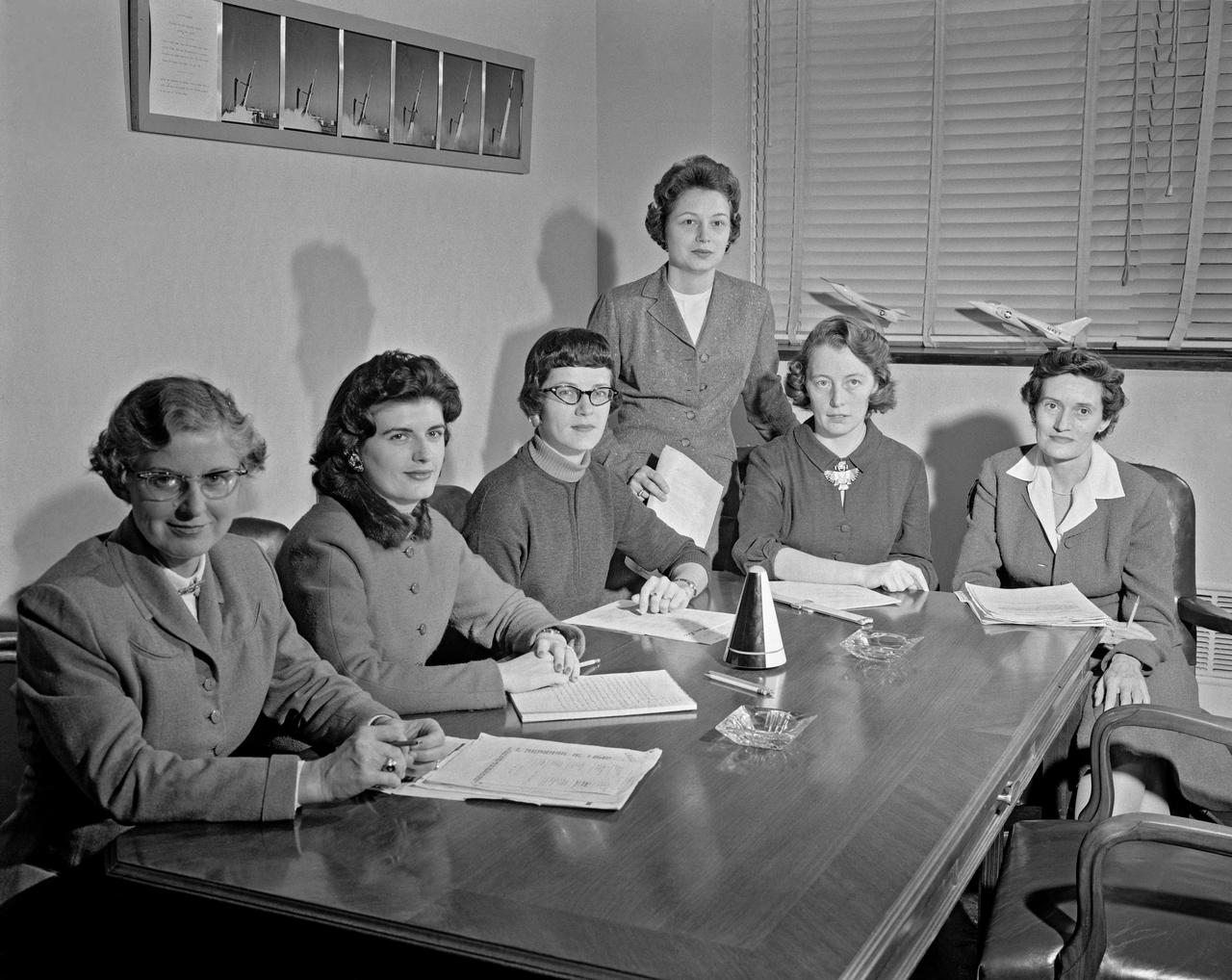
Women Scientists: Lucille Coltrane, Jean Clark Keating, Katherine Cullie Speegle, Doris 'Dot' Lee, Ruth Whitman, and Emily Stephens Mueller,Lucille Coltrane is at the far left. She was a computer and worked for Norm Crabill who provided positive identification. Lucille authored a NACA Research Memorandum, Investigation of Two Bluff Shapes in Axial Free Flight Over a Mach Number Range From 0.35 to 2.15 in 1958. Next to Lucille is Jean Clark Keating. Jean was identified by Mary Woerner who said that both Jean and her husband Jerry are now deceased. The third woman from the left is Katherine Cullie Speegle. Katherine co-authored two research papers: Preliminary Results From a Free-Flight Investigation of Boundary-Layer Transition and Heat Transfer on a Highly Polished 8-Inch-Diameter Hemisphere-Cylinder at Mach Numbers up to 3 and Reynolds Numbers Based on a Length of 1 Foot up to 17.7 x 10 to the 6th and Heat Transfer For Mach Numbers Up to 2.2 and Pressure Distributions for Mach Numbers Up to 4.7 From Flight Investigations of a Flat-Face Cone and a Hemisphere-Cone. Norm remembered the woman standing as Doris. Mary Alice identified her as Doris 'Dot' Lee, who worked with Katherine Speegle. Dot was married to a NASA engineer named John Lee. Next to Doris is Ruth Whitman. Norm remembered she and her husband owned a Howard DGA 15 at the airport in WEst Point. That prompted Mary Alice to remember her name and that her husband was Jim. The woman seated on the right is Emily Stephens Mueller. Norm remembers that Emily went to Houston as part of the Space Task Group, but retired back here on the peninsula. In 2008, Emily attended the NACA Reunion X11. She walked over to a table of books about the history of NACA, former NACA facilities and the organization's aviation pioneers and saw a book about women of flight from the Dryden Research Center and paused, then pointed somewhat in amazement. "That’s me," she said of a picture on the cover of her on the far left of a li
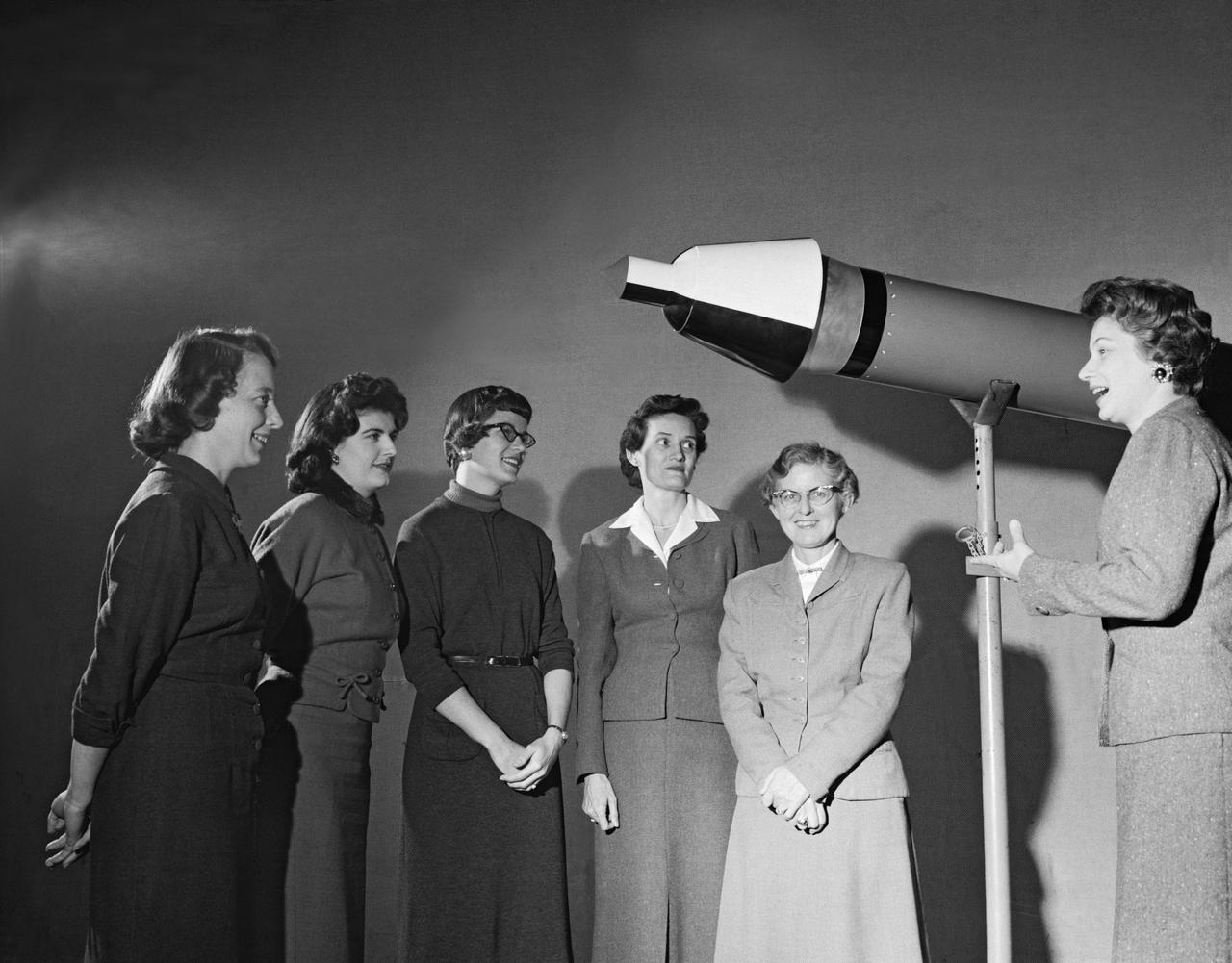
Women Scientists: Lucille Coltrane, Jean Clark Keating, Katherine Cullie Speegle, Doris "Dot" Lee, Ruth Whitman, and Emily Stephens Mueller,Lucille Coltrane is at the far left. She was a computer and worked for Norm Crabill who provided positive identification. Lucille authored a NACA Research Memorandum, Investigation of Two Bluff Shapes in Axial Free Flight Over a Mach Number Range From 0.35 to 2.15 in 1958. Next to Lucille is Jean Clark Keating. Jean was identified by Mary Woerner who said that both Jean and her husband Jerry are now deceased. The third woman from the left is Katherine Cullie Speegle. Katherine co-authored two research papers: Preliminary Results From a Free-Flight Investigation of Boundary-Layer Transition and Heat Transfer on a Highly Polished 8-Inch-Diameter Hemisphere-Cylinder at Mach Numbers up to 3 and Reynolds Numbers Based on a Length of 1 Foot up to 17.7 x 10 to the 6th and Heat Transfer For Mach Numbers Up to 2.2 and Pressure Distributions for Mach Numbers Up to 4.7 From Flight Investigations of a Flat-Face Cone and a Hemisphere-Cone. Norm remembered the woman standing as Doris. Mary Alice identified her as Doris 'Dot' Lee, who worked with Katherine Speegle. Dot was married to a NASA engineer named John Lee. Next to Doris is Ruth Whitman. Norm remembered she and her husband owned a Howard DGA 15 at the airport in WEst Point. That prompted Mary Alice to remember her name and that her husband was Jim. The woman seated on the right is Emily Stephens Mueller. Norm remembers that Emily went to Houston as part of the Space Task Group, but retired back here on the peninsula. In 2008, Emily attended the NACA Reunion X11. She walked over to a table of books about the history of NACA, former NACA facilities and the organization's aviation pioneers and saw a book about women of flight from the Dryden Research Center and paused, then pointed somewhat in amazement. "ThatÕs me," she said of a picture on the cover of her on the far left of a line of women. She was at Dryden from 1948-49.
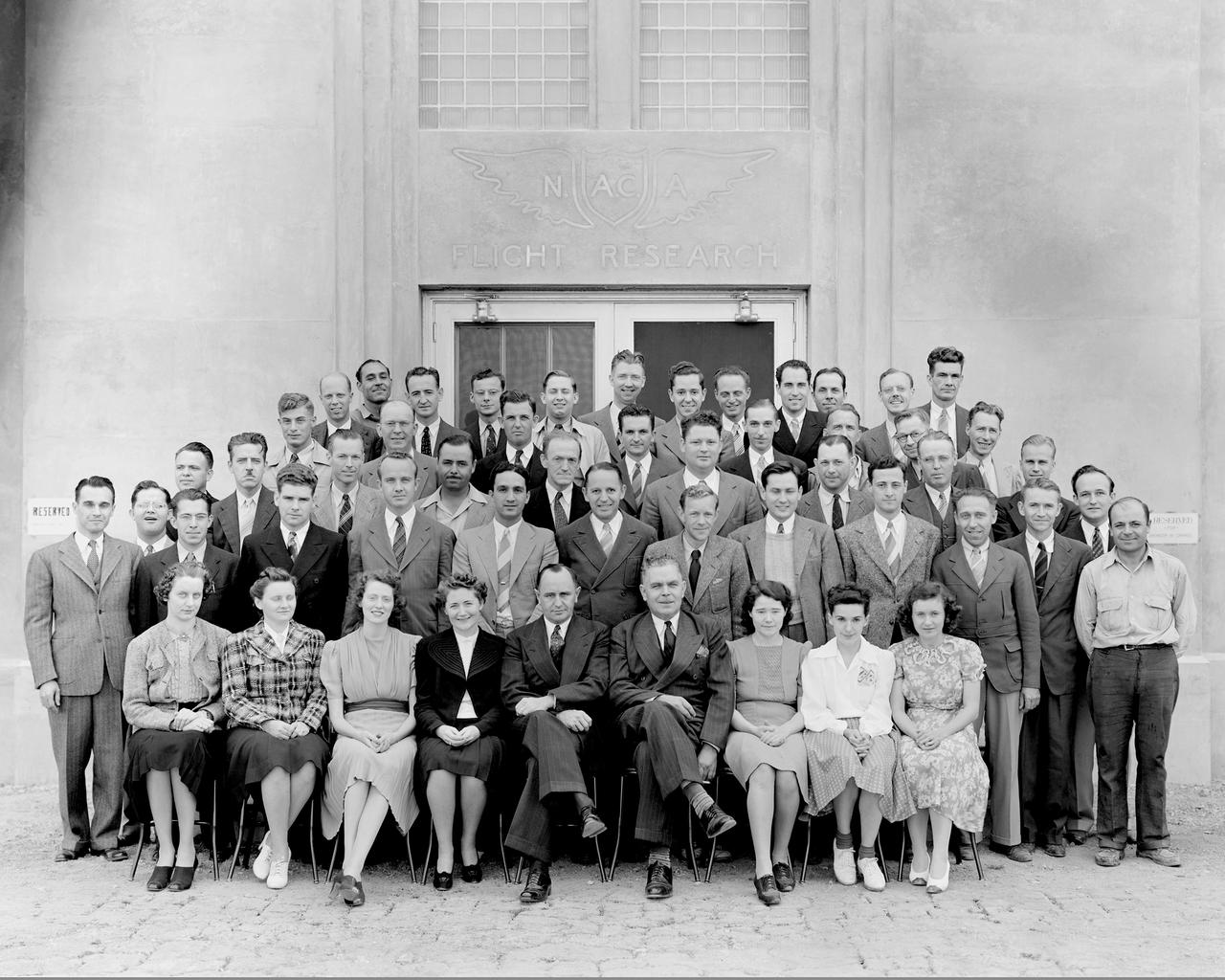
AMES STAFF STANDING IN FRONT OF THE NEW FLIGHT RESEARCH BUILDING. FROM LEFT TO RIGHT: FIRST ROW: M.U. NETTLE, M.A. WILLEY, M.H. DAVIES, M.W. ST. JOHN, S.J. DEFRANCE, E.R. SHARP, M.G. POOLE, V. BURGESS, R.A. PIPKIN. SECOND ROW: A.B. FREEMAN, T.W. O'BRIANT, L.T. VIDELL, C. F. WILSON, R.M. FOSTER, M.C. MASSA, M.J. HOOD, C. BIOLETTI, C.W. FRICK, W.G. VINCENTI, H.W. KIRSCHBAUM, L. A. RODERT, E.C. BRAIG, C. GERBO. THIRD ROW: R.E. BROWNING, E.H. WOOD, R HUGHES, G BULIFANT, J.V. KELLEY, H.J. ALLEN, J. P. HOUSTON, K.S. BURCHARD, M. A. GREENE, FOURTH ROW: A. G. BUCK, E.W. BETTS, R.E. BRAIG, H.J. GOETT, J.F. PARSONS, H.S. DUNLAP, L.E. MINDEN, R.J. CLARKE. FIFTH ROW: W.O. PETERSON, W. WALKER, C.H. HARVEY, J.C. DELANEY, T.W. MACOMBER, A.L. BLOCKER, N.K. DELANY, A.S. HERTZOG, R.R. NICKLE, P.T. PRIZLER, R.R. BENN, E.H.A. SCHNITKER.
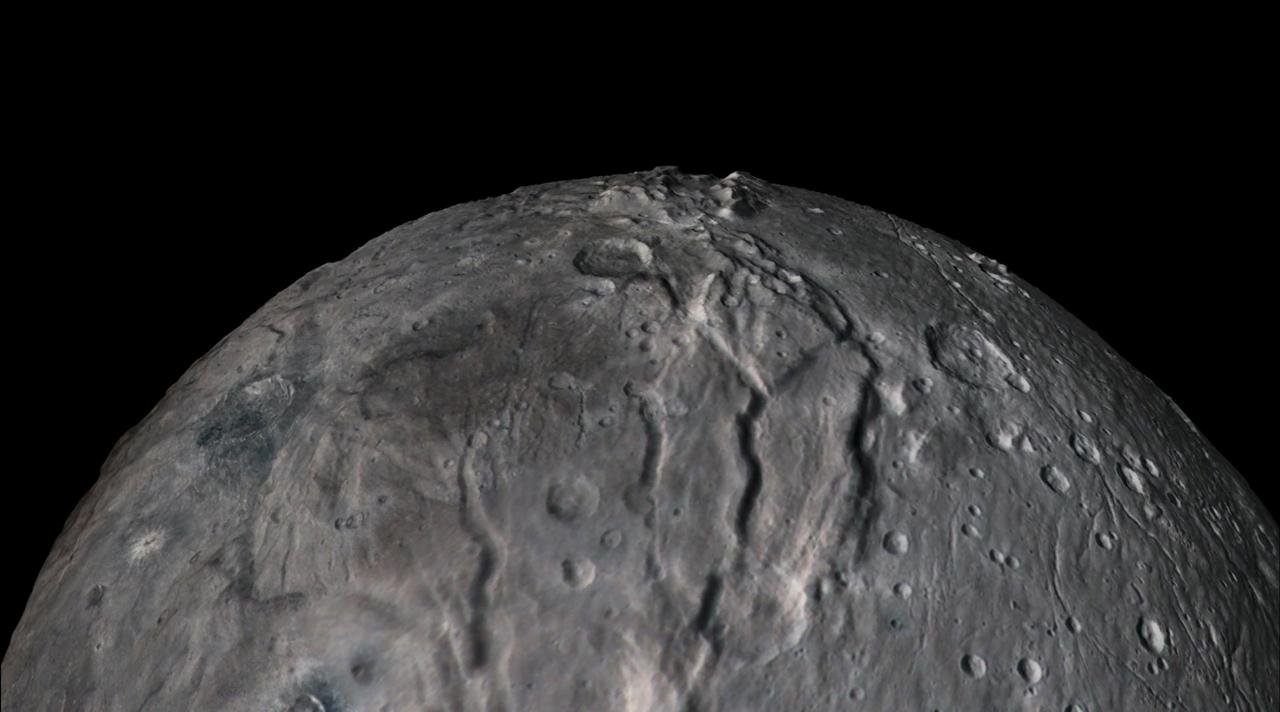
In July 2015, NASA's New Horizons spacecraft sent home the first close-up pictures of Pluto and its moons. Using actual New Horizons data and digital elevation models of Pluto and its largest moon, Charon, mission scientists created flyover movies that offer spectacular new perspectives of the many unusual features that were discovered and which have reshaped our views of the Pluto system -- from a vantage point even closer than a ride on New Horizons itself. The flight over Charon begins high over the hemisphere New Horizons saw on its closest approach, then descends over the deep, wide canyon of Serenity Chasma. The view moves north, passing over Dorothy Gale crater and the dark polar hood of Mordor Macula. The flight then turns back south, covering the northern terrain of Oz Terra before ending over the relatively flat equatorial plains of Vulcan Planum and the "moated mountains" of Clarke Montes. (Note that all feature names are informal.) The topographic relief is exaggerated by a factor of 2 to 3 in these movies to emphasize topography; the surface colors have also been enhanced to bring out detail. Digital mapping and rendering were performed by Paul Schenk and John Blackwell of the Lunar and Planetary Institute in Houston. A video is available at https://photojournal.jpl.nasa.gov/catalog/PIA21864
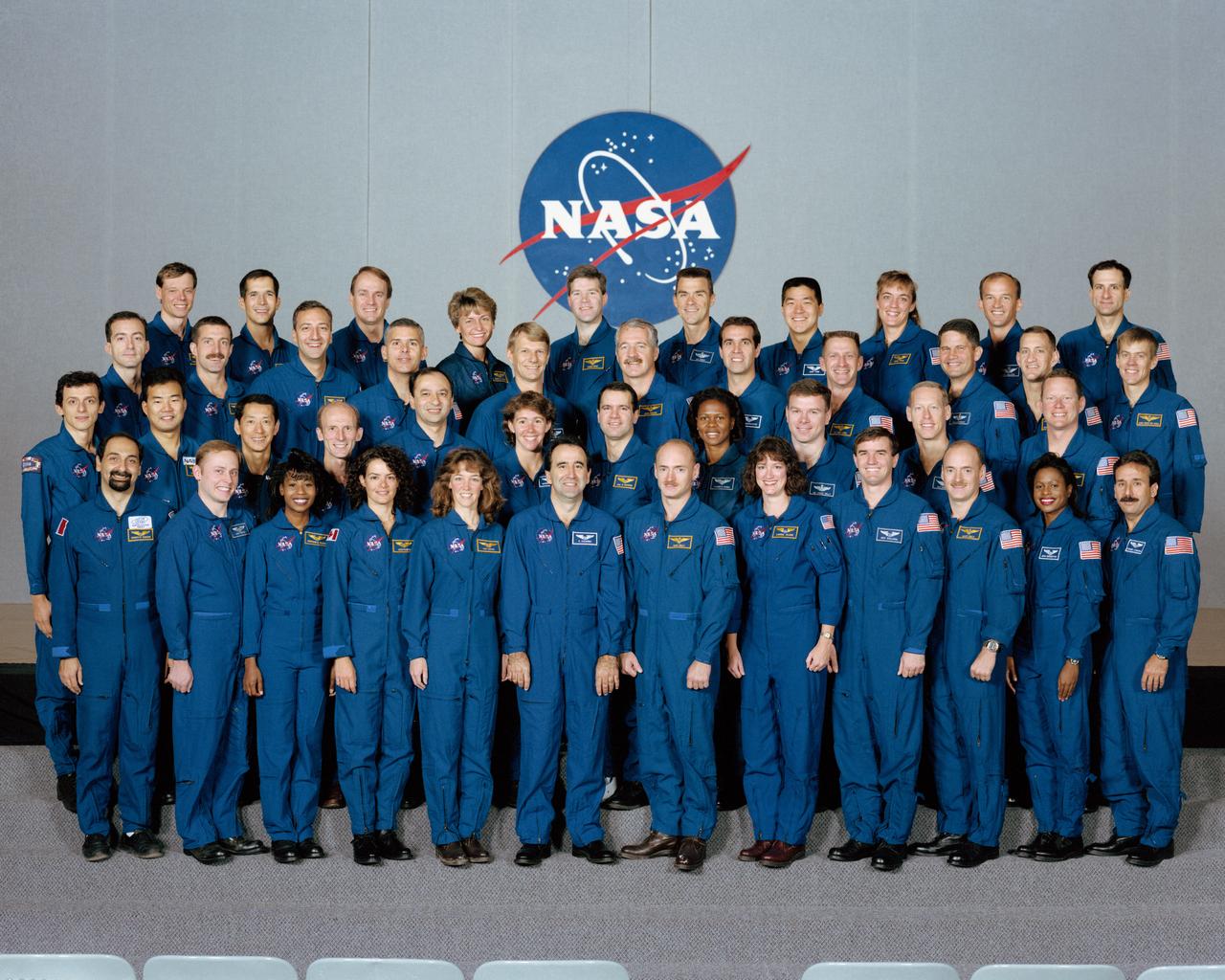
S96-18546 (5 Nov. 1996) --- Following their selection from among 2,400 applicants, the 44 astronaut candidates begin a lengthy period of training and evaluation at NASA's Johnson Space Center as they gather for their group portrait. This year?s class is the largest in the history of space shuttle astronauts and their early program predecessors. Ten pilots and 25 mission specialists make up the internationally diverse class. The international trainees represent the Canadian, Japanese, Italian, French, German and European space agencies. Back row ? from the left, Christer Fuglesang, John Herrington, Steve MacLean, Peggy Whitson, Stephen Frick, Duane Carey, Daniel Tani, Heidemarie Stefanyshyn-Piper, Jeffrey Williams and Donald Pettit. Second to back row ? from the left, Philippe Perrin, Daniel Burbank, Michael Massimino, Lee Morin, Piers Sellers, John Phillips, Richard Mastraccio, Christopher Loria, Paul Lockhart, Charles Hobaugh and William McCool. Second to front row ? from the left, Pedro Duque, Soichi Noguchi, Mamoru Mohri, Gerhard Thiele, Mark Polansky, Sandra Magnus, Paul Richards, Yvonne Cagle, James Kelly, Patrick Forrester and David Brown. Front row ? from the left, Umberto Guidoni, Edward Fincke, Stephanie Wilson, Julie Payette, Lisa Nowak, Fernando Caldeiro, Mark Kelly, Laurel Clark, Rex Walheim, Scott Kelly, Joan Higginbotham and Charles Camarda. Guidoni represents the Italian Space Agency (ASI). Fuglesang and Duque represent the European Space Agency (ESA). Mohri and Noguchi represent the Japanese Space Agency (NASDA). MacLean and Payette are with the Canadian Space Agency. Perrin is associated with the French Space Agency (CNES) and Thiele represents the German Space Agency (DARA). Photo credit: NASA or National Aeronautics and Space Administration

Satellite Footprints Seen in Jupiter Aurora