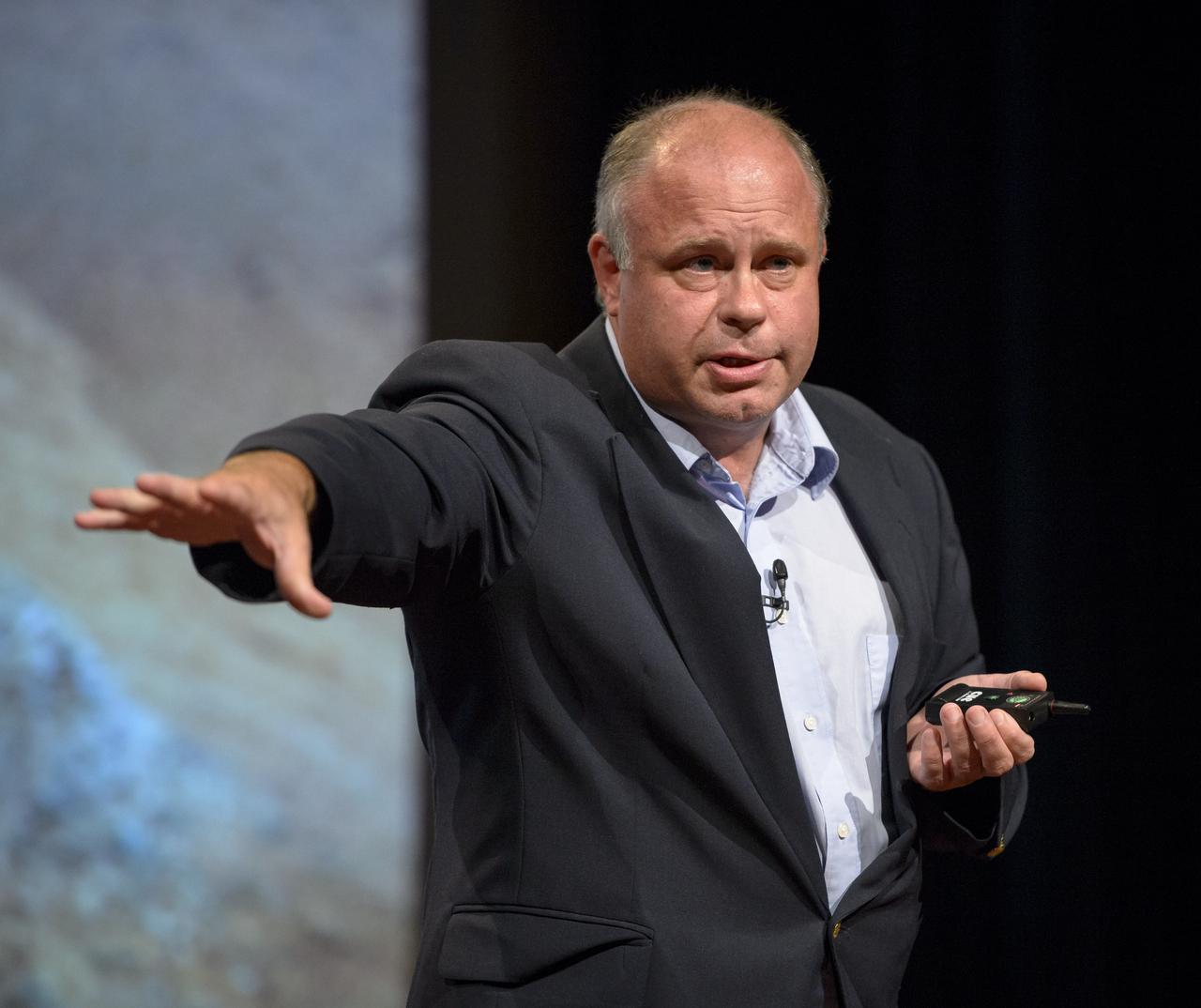
John Grant, geologist and long-term planner, Curiosity Mars Science Laboratory, discusses what we’ve learned from Curiosity and the other Mars rovers during a “Mars Up Close” panel discussion, Tuesday, August 5, 2014, at the National Geographic Society headquarters in Washington. Photo Credit: (NASA/Bill Ingalls)

John Grant, geologist and long-term planner, Curiosity Mars Science Laboratory, discusses what we’ve learned from Curiosity and the other Mars rovers during a “Mars Up Close” panel discussion, Tuesday, August 5, 2014, at the National Geographic Society headquarters in Washington. Photo Credit: (NASA/Bill Ingalls)
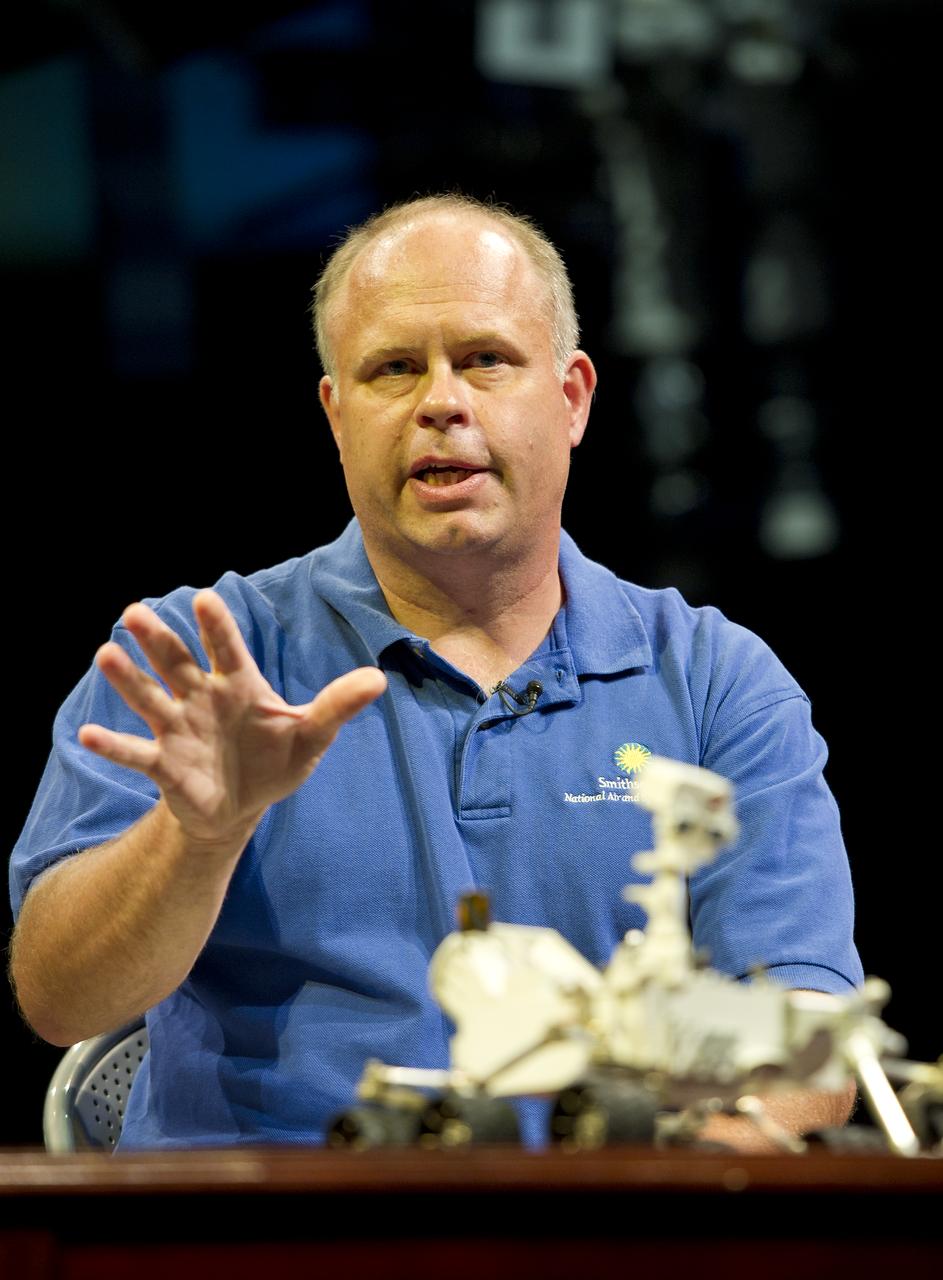
John Grant, geologist, Smithsonian National Air and Space Museum in Washington, speaks at a Mars Science Laboratory (MSL) press conference at the Smithsonian's National Air and Space Museum on Friday, July 22, 2011 in Washington. The Mars Science Laboratory (MSL), or Curiosity, is scheduled to launch late this year from NASA's Kennedy Space Center in Florida and land in August 2012. Curiosity is twice as long and more than five times as heavy as previous Mars rovers. The rover will study whether the landing region at Gale crater had favorable environmental conditions for supporting microbial life and for preserving clues about whether life ever existed. Photo Credit: (NASA/Carla Cioffi)
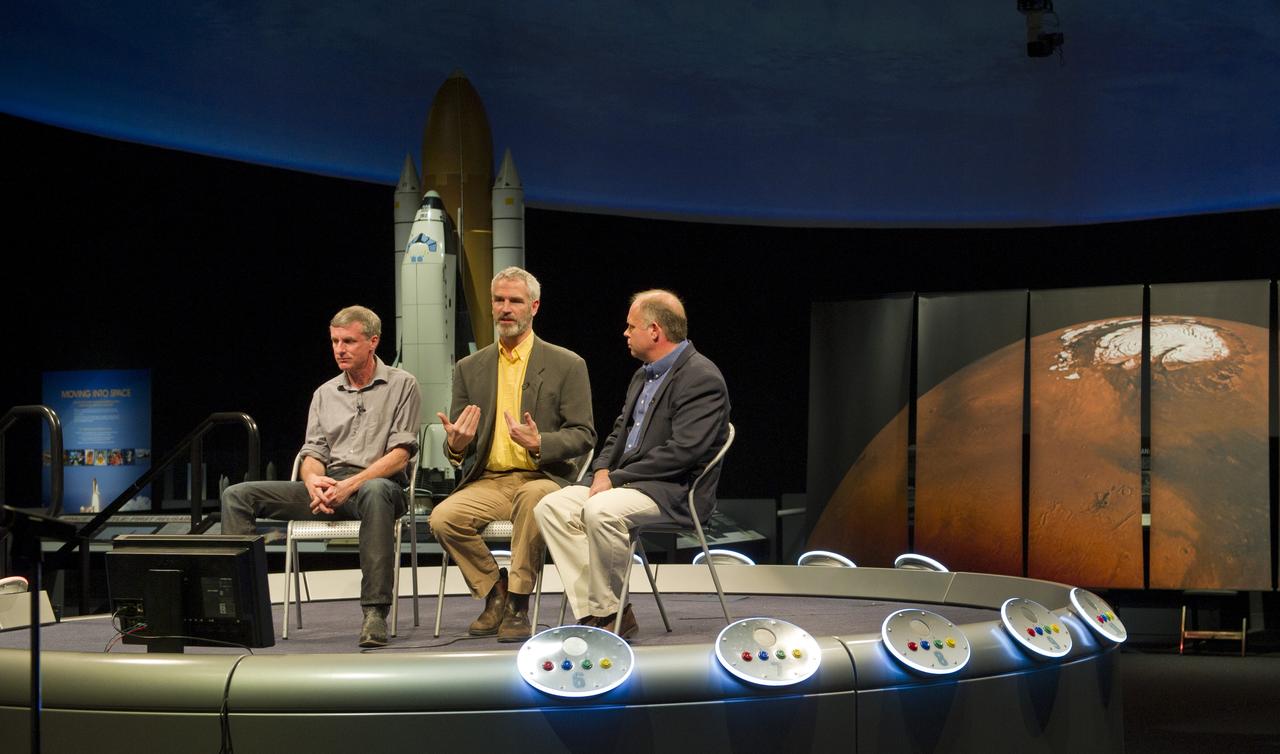
Dr. John Grant, seated right, moderates a discussion with Dr. Jack Mustard, from Brown University, and Dr. Steve Squyres, from Cornell University, seated left, during a Mars Program Update, Thursday, Jan. 13, 2011, at the Smithsonian National Air and Space Museum in Washington. Prominent scientists discussed evidence of water on Mars, current Program status, including the 7th Anniversary of the Mars rovers and the upcoming Mars Science Laboratory mission and previewed exciting discoveries to come. Photo Credit: (NASA/Paul E. Alers)
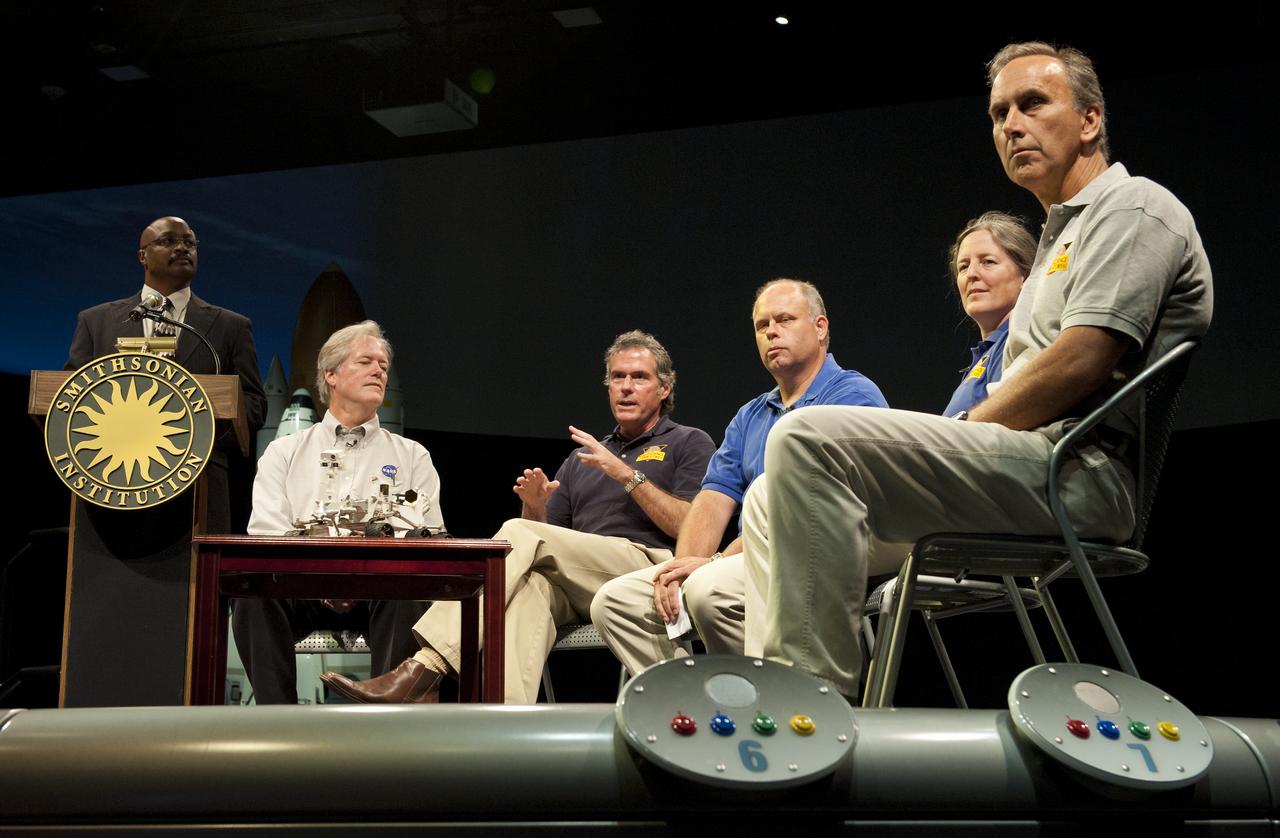
Michael Watkins (third from left), mission manager and project engineer, Mars Science Laboratory (MSL), Jet Propulsion Lab, Pasadena, Calif., speaks at a press conference at the Smithsonian's National Air and Space Museum on Friday, July 22, 2011 in Washington. From left to right, Watkins is joined by Dwayne Brown, NASA Headquarters public affairs officer; Michael Meyer, lead scientist Mars Exploration Program, NASA Headquarters; Watkins; John Grant, geologist, Smithsonian National Air and Space Museum in Washington; Dawn Sumner, geologist, University of California, Davis and John Grotzinger, MSL project scientist, JPL. Photo Credit: (NASA/Carla Cioffi)
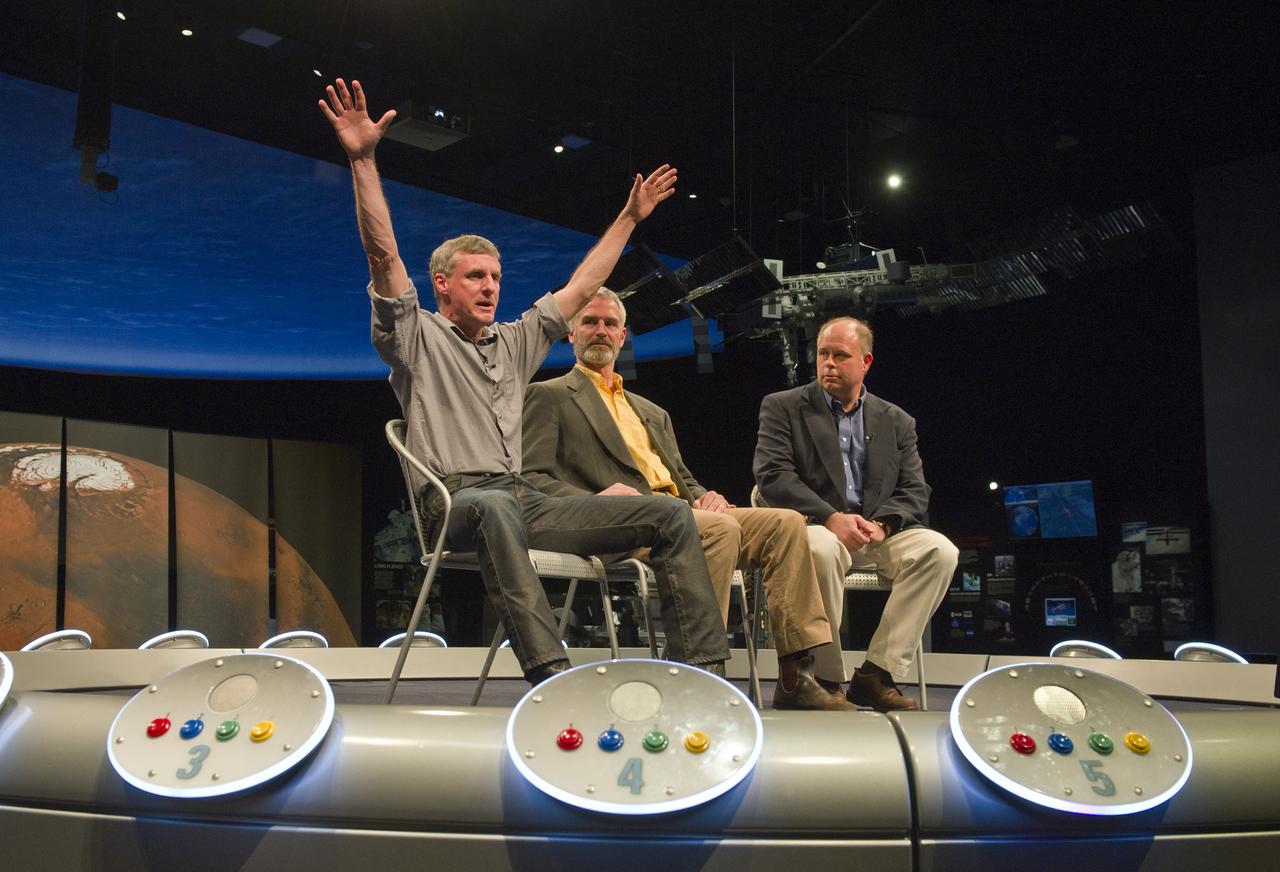
Dr. Steve Squyres, from Cornell University, left, talks during a panel discussion on the Mars Program, Thursday, Jan. 13, 2011, at the Smithsonian National Air and Space Museum in Washington as Dr. Jack Mustard, from Brown University and Dr. John Grant, moderator, right, look on. Prominent scientists and the head of the Mars Exploration Program gathered at the Smithsonian to discuss evidence of water on Mars; current Program status, including the 7th Anniversary of the Mars rovers and the upcoming Mars Science Laboratory mission also giving previews of the exciting discoveries to come. Photo Credit: (NASA/Paul E. Alers)
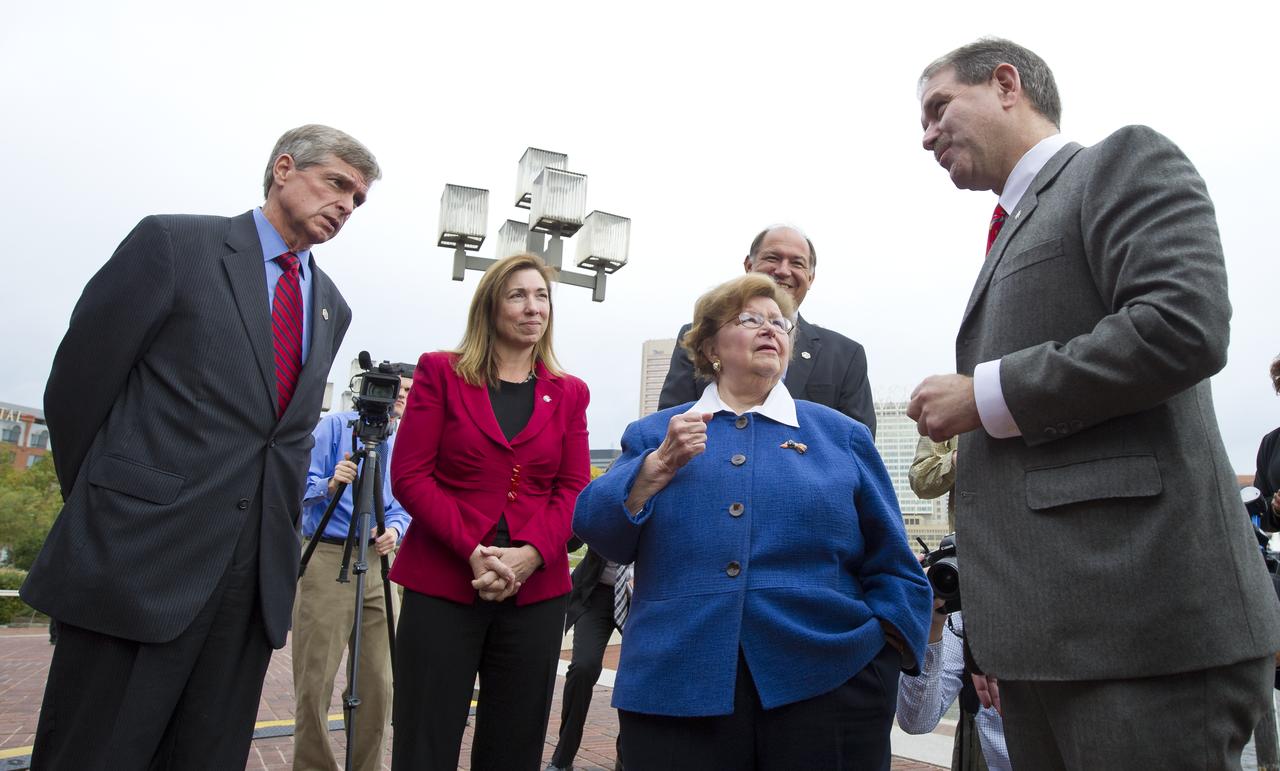
Dr. John Grunsfeld, former astronaut and Deputy Director, Space Telescope Science Institute (STScI), Baltimore, far right, speaks with U.S. Senator Barbara Mikulski about the James Webb Space Telescope at the Maryland Science Center in Baltimore on Wednesday, Oct. 26, 2011. Looking on are Van Reiner, President and CEO of the Maryland Science Center, Baltimore, far left; NASA Deputy Administrator Lori Garver and Jeffrey Grant, VP and General Manager of the Space Systems Division, Northrop Grumman. Photo Credit: (NASA/Carla Cioffi)
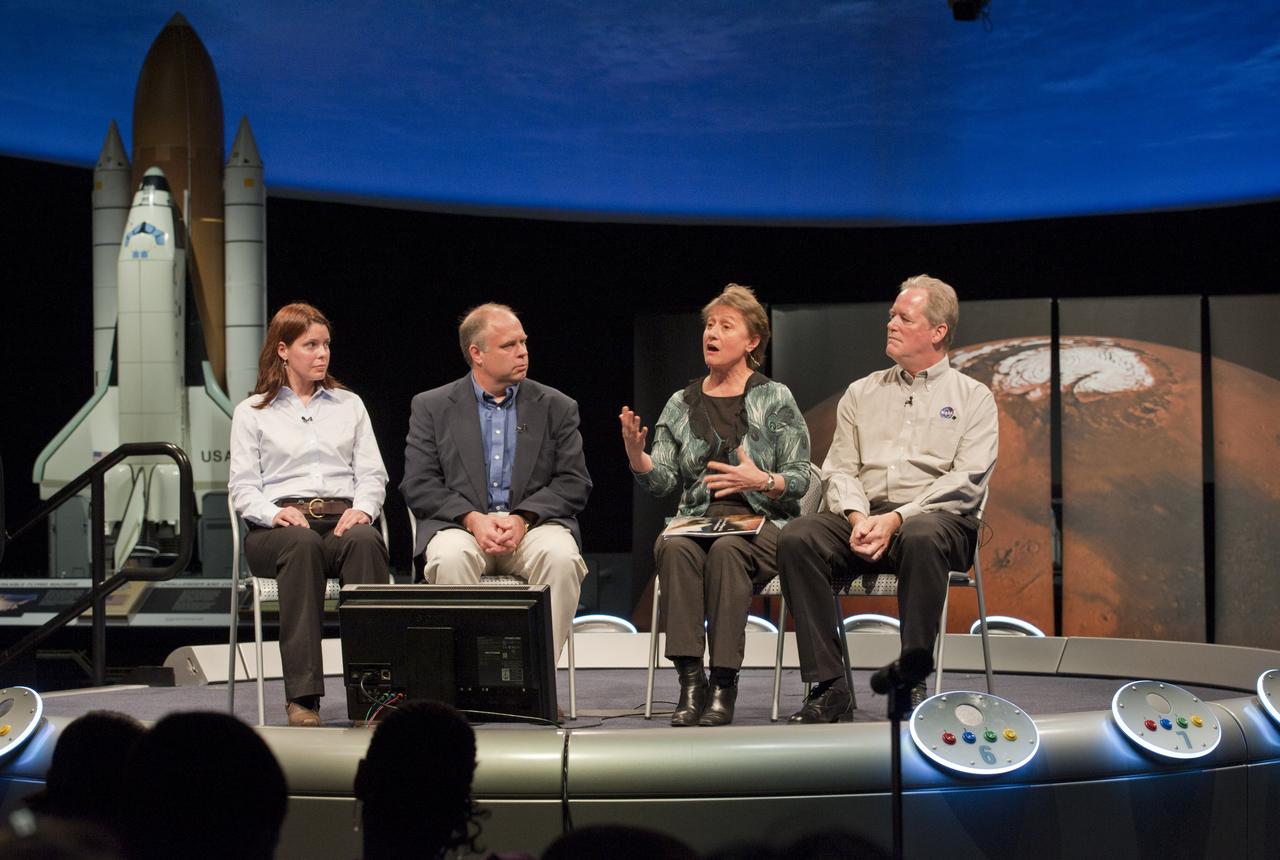
Dr. Mary Voytek, NASA Astrobiology Program Manager, second from right, talks during panel discussion as Dr. Jennifer Elgenbrode, from Goddard Space Flight Center, left, Dr. John Grant and Dr. Michael Meyer, NASA Mars lead scientist, right look on during a Mars Program Update where prominent scientists discussed evidence of water on Mars, current Program status, including the 7th Anniversary of the Mars rovers and the upcoming Mars Science Laboratory mission and previewing exciting discoveries to come, Thursday, Jan. 13, 2011, at the Smithsonian National Air and Space Museum in Washington. Photo Credit: (NASA/Paul E. Alers)
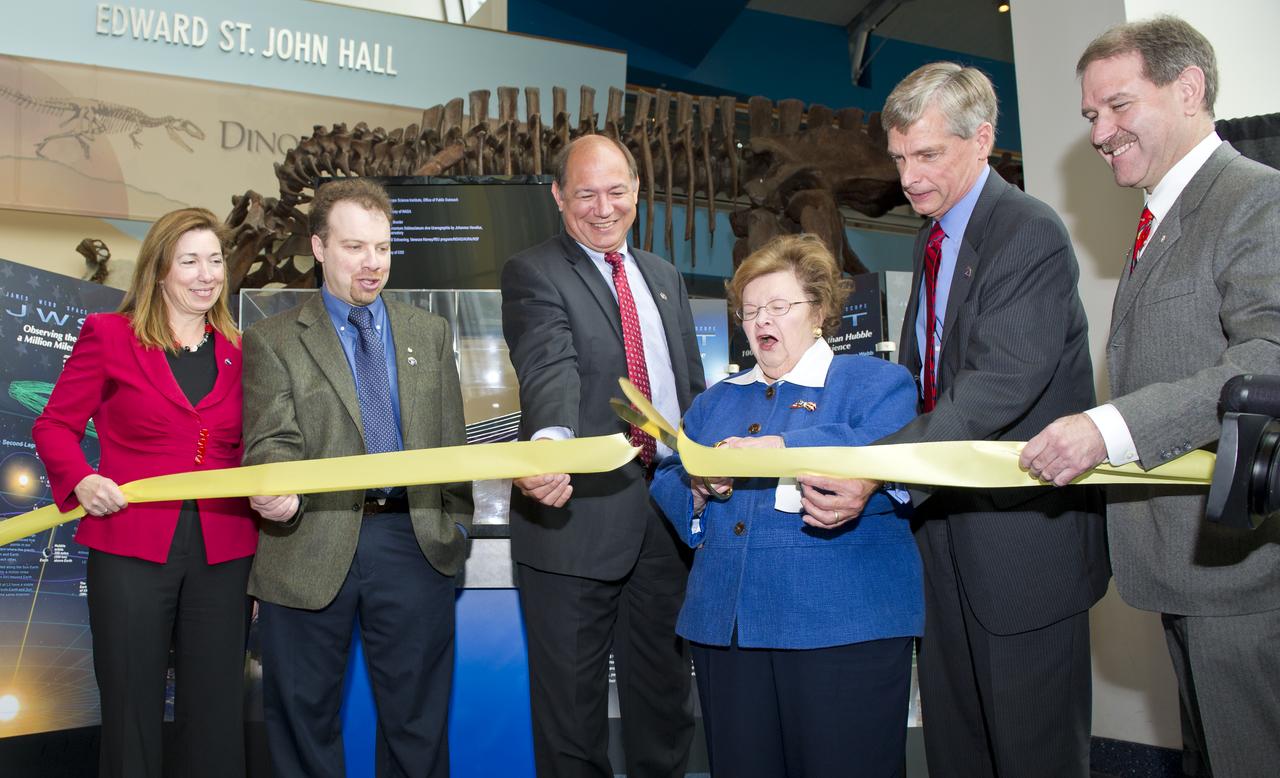
U.S. Senator Barbara Mikulski (D-Md.), third from right, cuts the yellow ribbon presenting the James Webb Space Telescope permanent exhibit at the Maryland Science Center on Wednesday, Oct. 26, 2011 in Baltimore. Mikulski is joined by NASA Deputy Administrator Lori Garver, far left; Adam Reiss, recipient of the 2011 Nobel Prize in Physics and professor of astronomy and physics at Johns Hopkins University; Jeffrey Grant, VP and General Manager of the Space Systems Division, Northrop Grumman; Van Reiner, President and CEO of the Maryland Science Center, Baltimore and Dr. John Grunsfeld, former astronaut and Deputy Director, Space Telescope Science Institute (STScI), Baltimore. The Webb telescope will provide images of the first galaxies ever formed and explore planets around distant stars. Photo Credit: (NASA/Carla Cioffi)
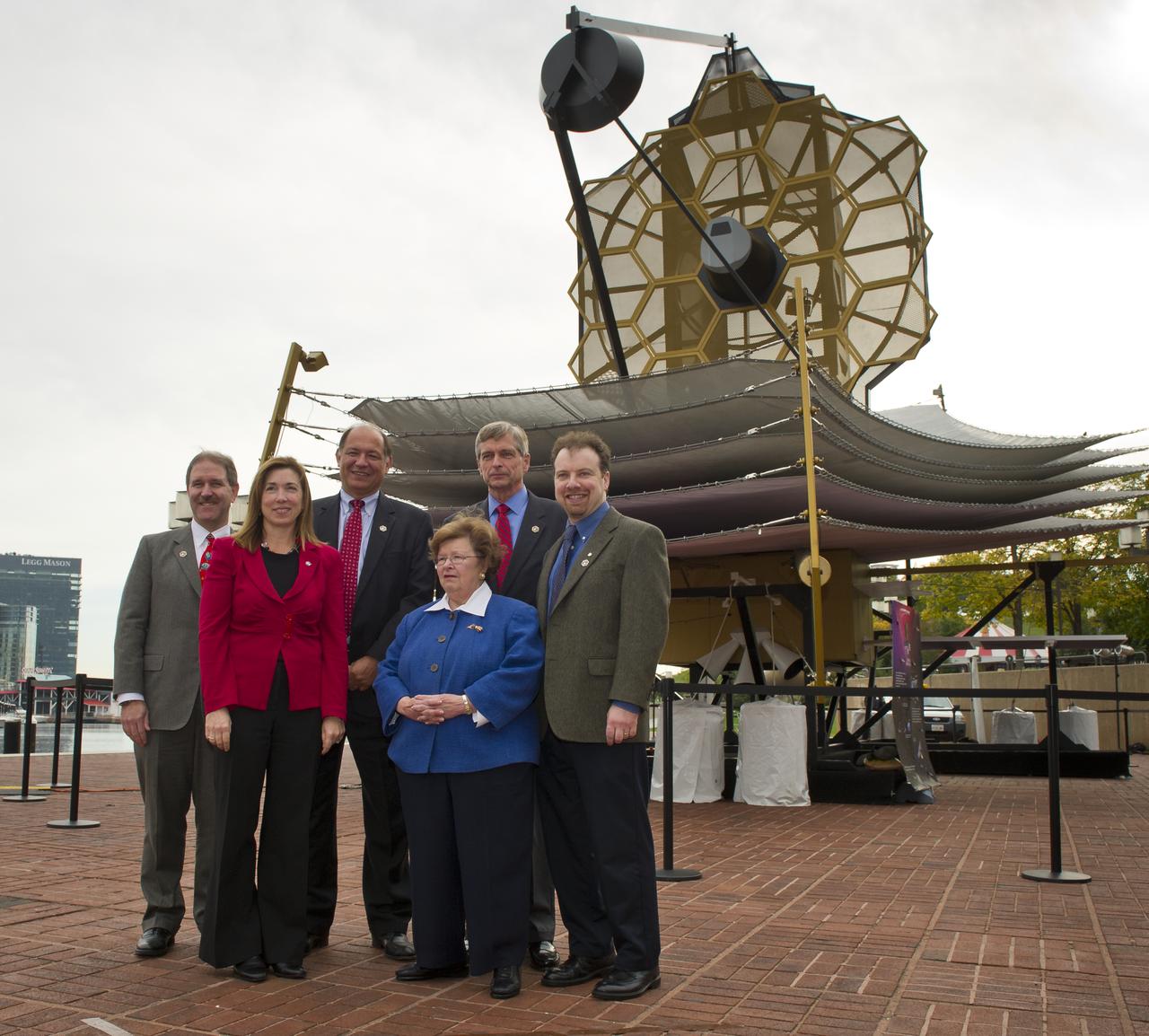
NASA, space science industry and government officials are seen in front of a full-size model of NASA's James Webb Space Telescope at the Maryland Science Center in Baltimore, Wednesday, Oct. 26, 2011. From left, back row are: Dr. John Grunsfeld, former astronaut and Deputy Director, Space Telescope Science Institute (STScI), Baltimore; Jeffrey Grant, VP and General Manager of the Space Systems Division, Northrop Grumman; Van Reiner, President and CEO of the Maryland Science Center, Baltimore and Adam Reiss, recipient of the 2011 Nobel Prize in Physics and professor of astronomy and physics at Johns Hopkins University. In the front row are NASA Deputy Administrator Lori Garver, left, and U.S. Senator Barbara Mikulski (D-Md.). Photo Credit: (NASA/Carla Cioffi)
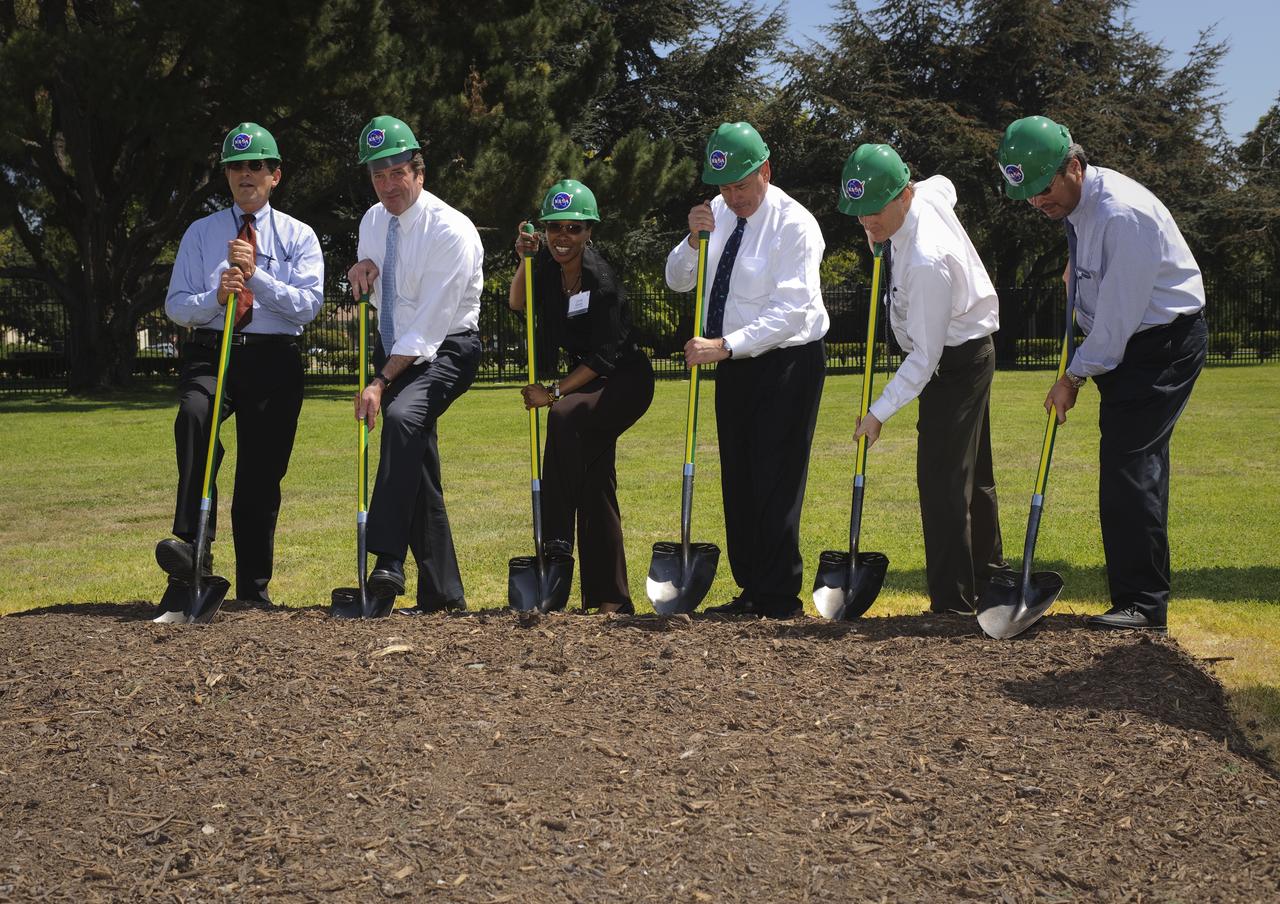
Sustainability Base Ground Breaking ceremony with Steve Zornetzer, Associate Director Ames Research Center, Lt. Governor John Garamendi of California, Jane Grant, Architect AECOM, Pete Worden, Director Ames Research Center, Kenvin Burke, Swinerton Builders Rep. ready to turn the first shovel.
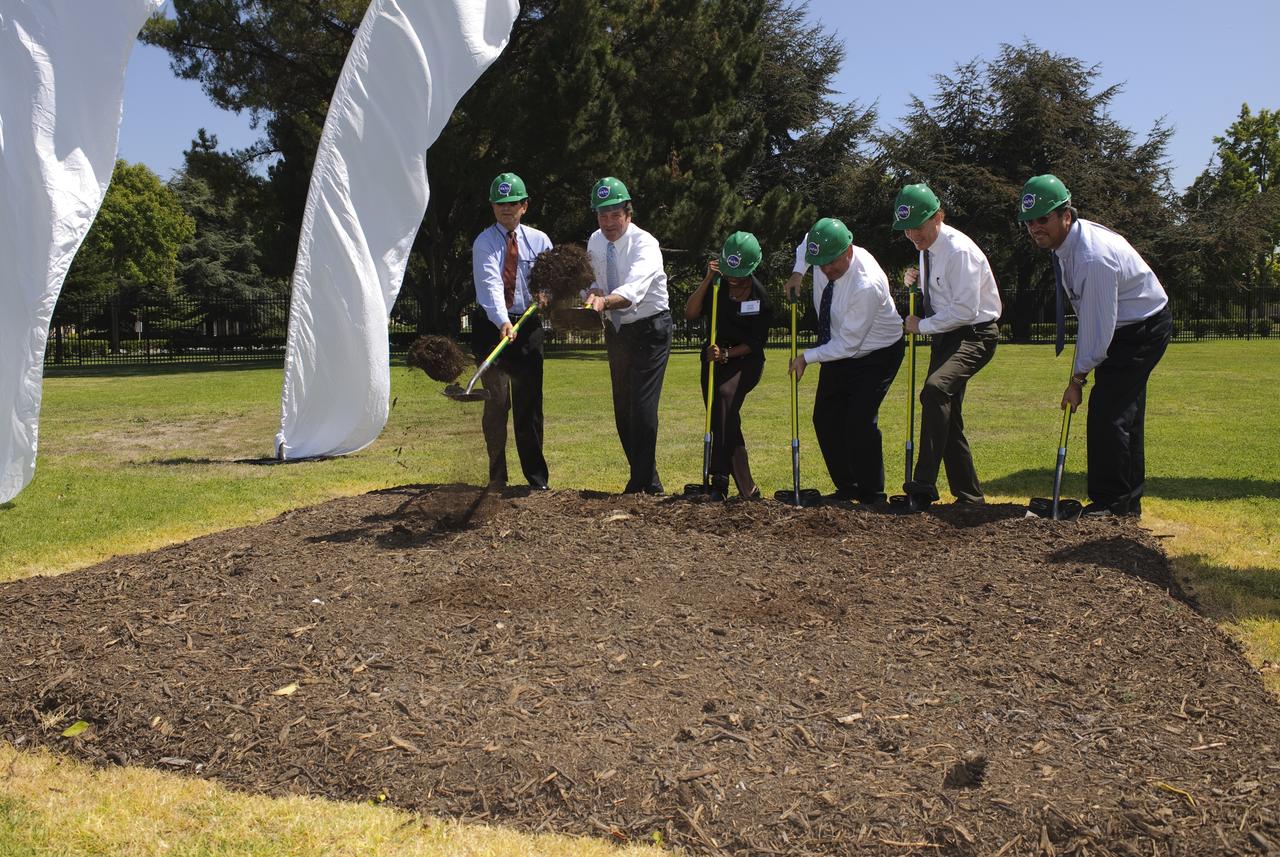
Sustainability Base Ground Breaking ceremony with Steve Zornetzer, Associate Director Ames Research Center, Lt. Governor John Garamendi of California, Jane Grant, Architect AECOM, Pete Worden, Director Ames Research Center, Kenvin Burke, Swinerton Builders Rep. ready to turn the first shovel.
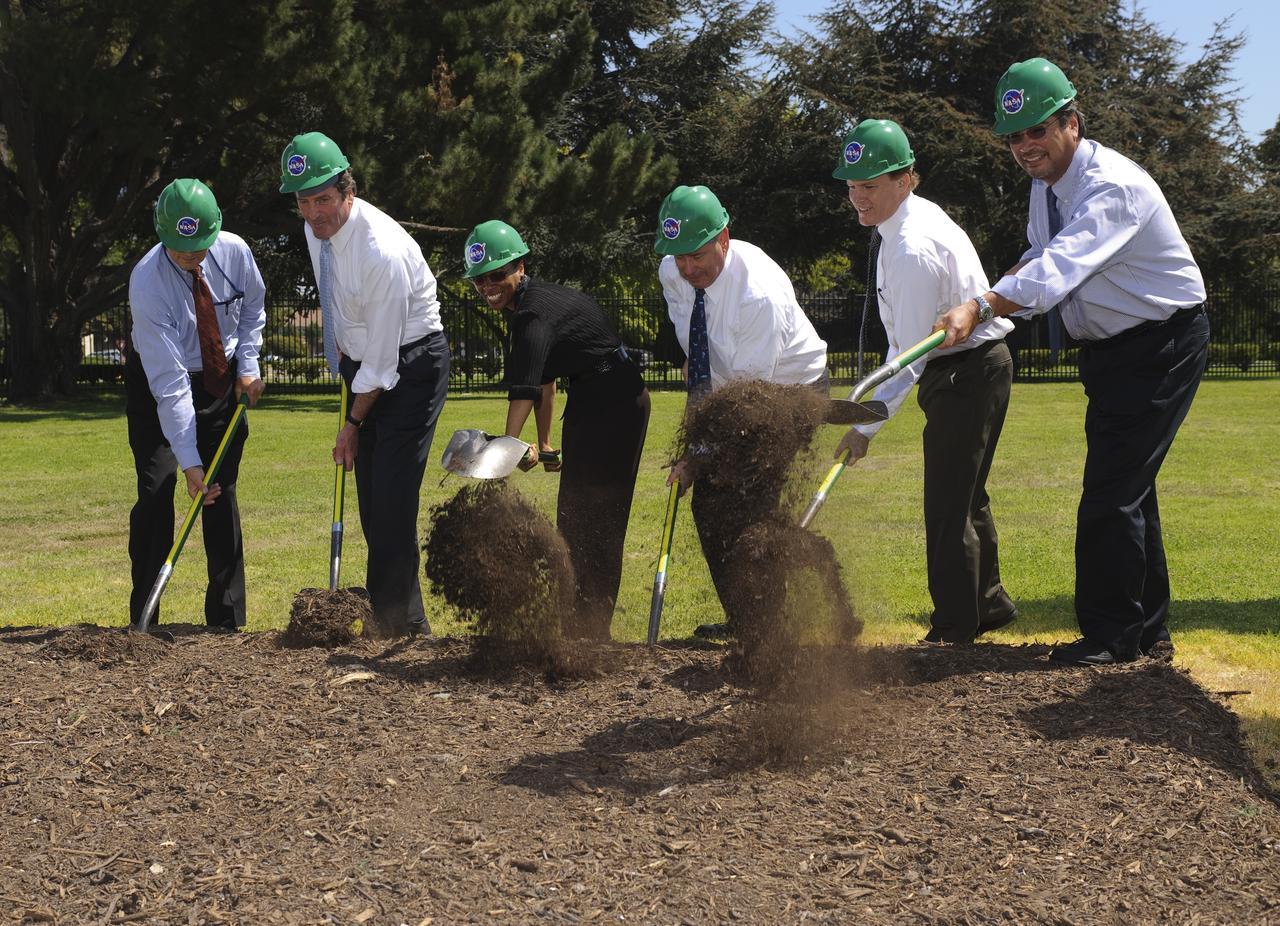
Sustainability Base Ground Breaking ceremony with Steve Zornetzer, Associate Director Ames Research Center, Lt. Governor John Garamendi of California, Jane Grant, Architect AECOM, Pete Worden, Director Ames Research Center, Kenvin Burke, Swinerton Builders Rep. ready to turn the first shovel.
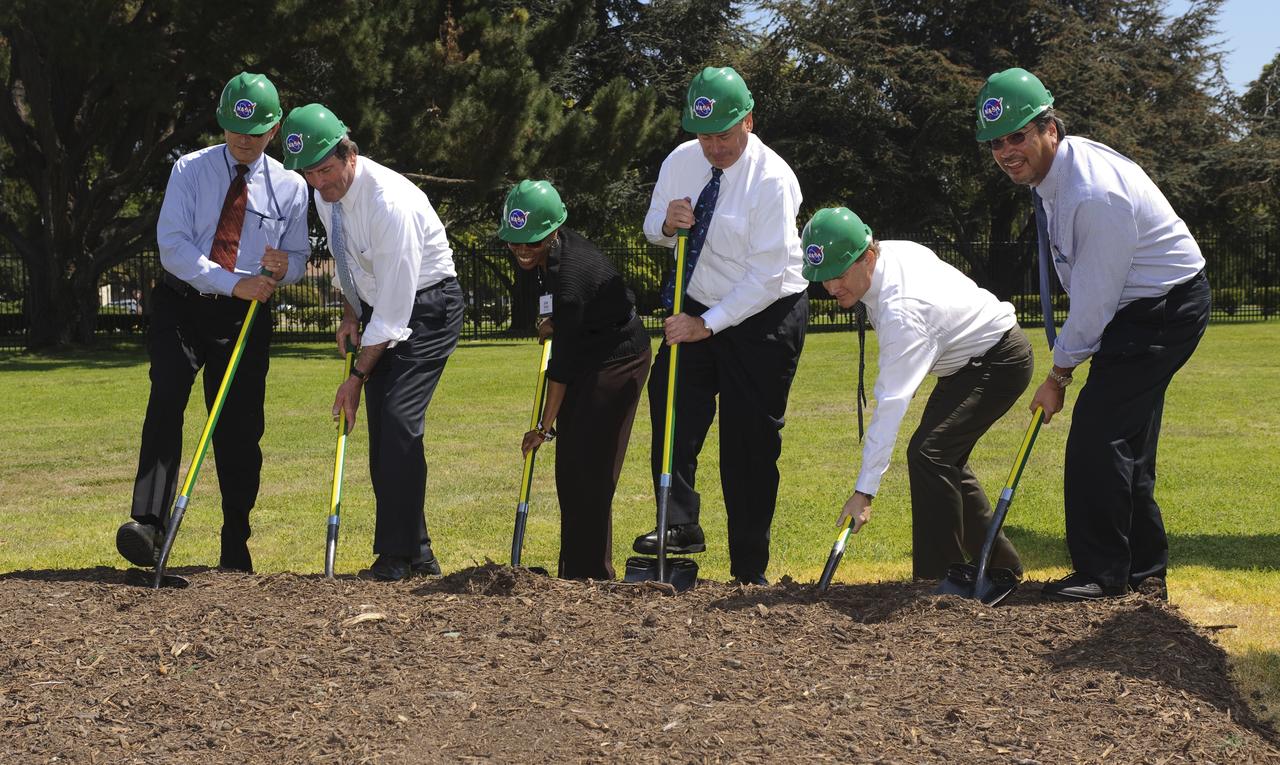
Sustainability Base Ground Breaking ceremony with Steve Zornetzer, Associate Director Ames Research Center, Lt. Governor John Garamendi of California, Jane Grant, Architect AECOM, Pete Worden, Director Ames Research Center, Kenvin Burke, Swinerton Builders Rep. ready to turn the first shovel.
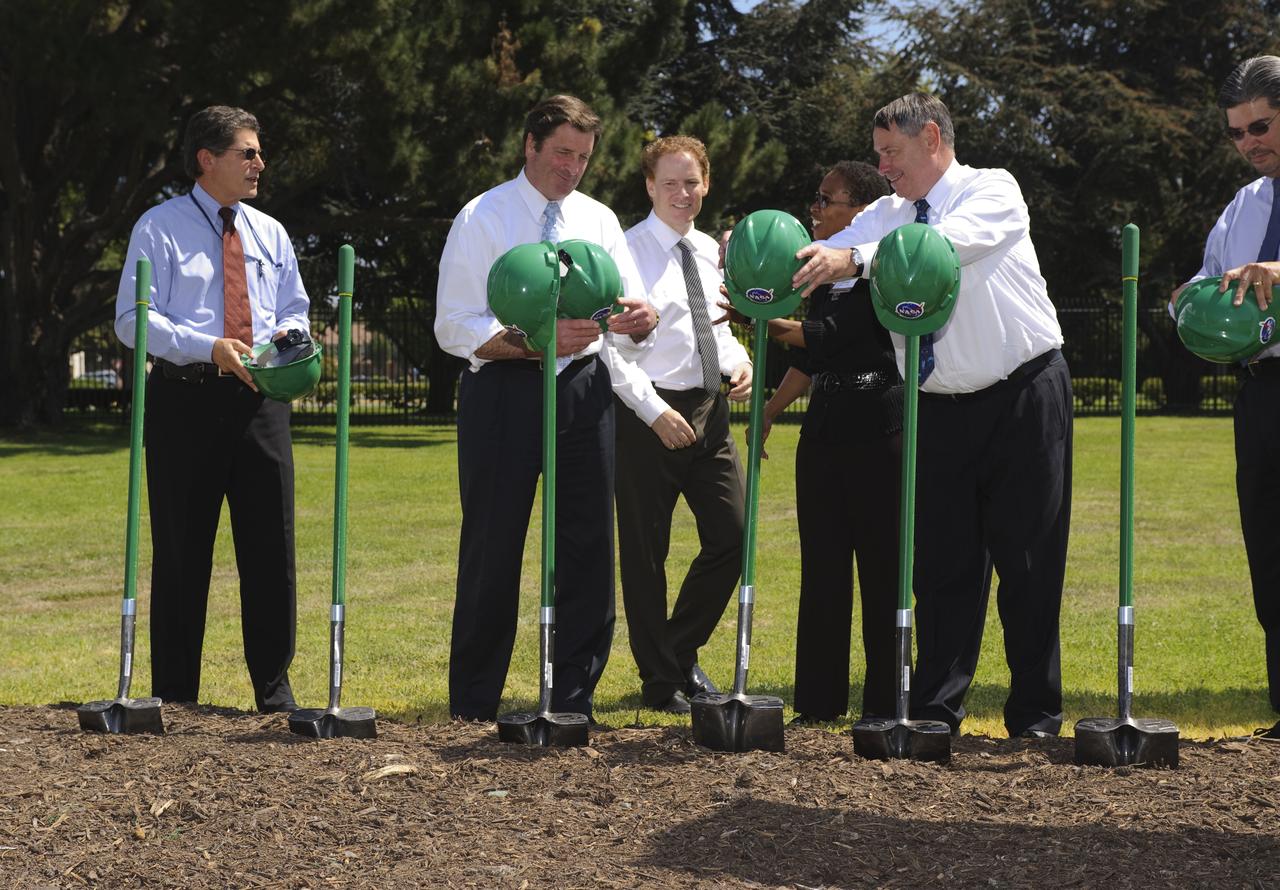
Sustainability Base Ground Breaking ceremony with Steve Zornetzer, Associate Director Ames Research Center, Lt. Governor John Garamendi of California, Kenvin Burke, Jane Grant, Architect AECOM, Pete Worden, Director Ames Research Center, Swinerton Builders Rep. ready to turn the first shovel.
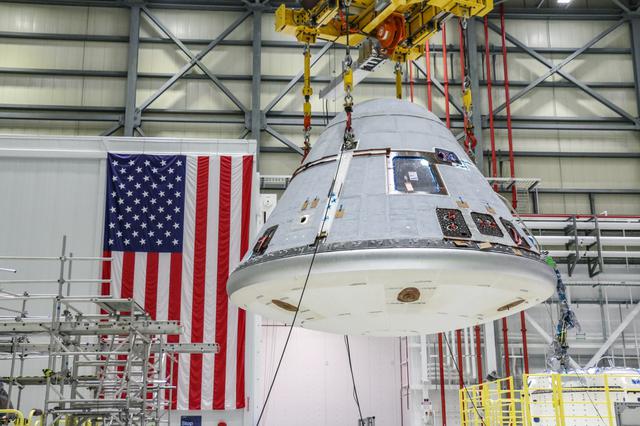
Boeing’s Starliner crew module for the company’s second Orbital Flight Test (OFT-2) is lifted Wednesday, Jan. 13, 2021, in the Commercial Crew and Cargo Processing Facility at Kennedy Space Center in Florida prior to the vehicle having a weight and center of gravity test. OFT-2 is a critical developmental milestone on the company’s path toward flying crew missions for NASA, as part of the agency’s Commercial Crew Program.
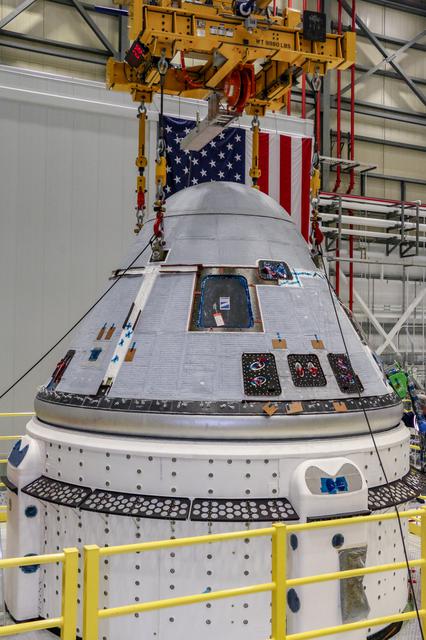
The completed Boeing Starliner vehicle for the second Orbital Flight Test (OFT-2) is seen in the Commercial Crew and Cargo Processing Facility at NASA’s Kennedy Space Center in Florida following the mating of the crew module and service module on Jan. 14, 2021. As part of the agency’s Commercial Crew Program, OFT-2 is a critical developmental milestone on the company’s path to fly crew missions for NASA.
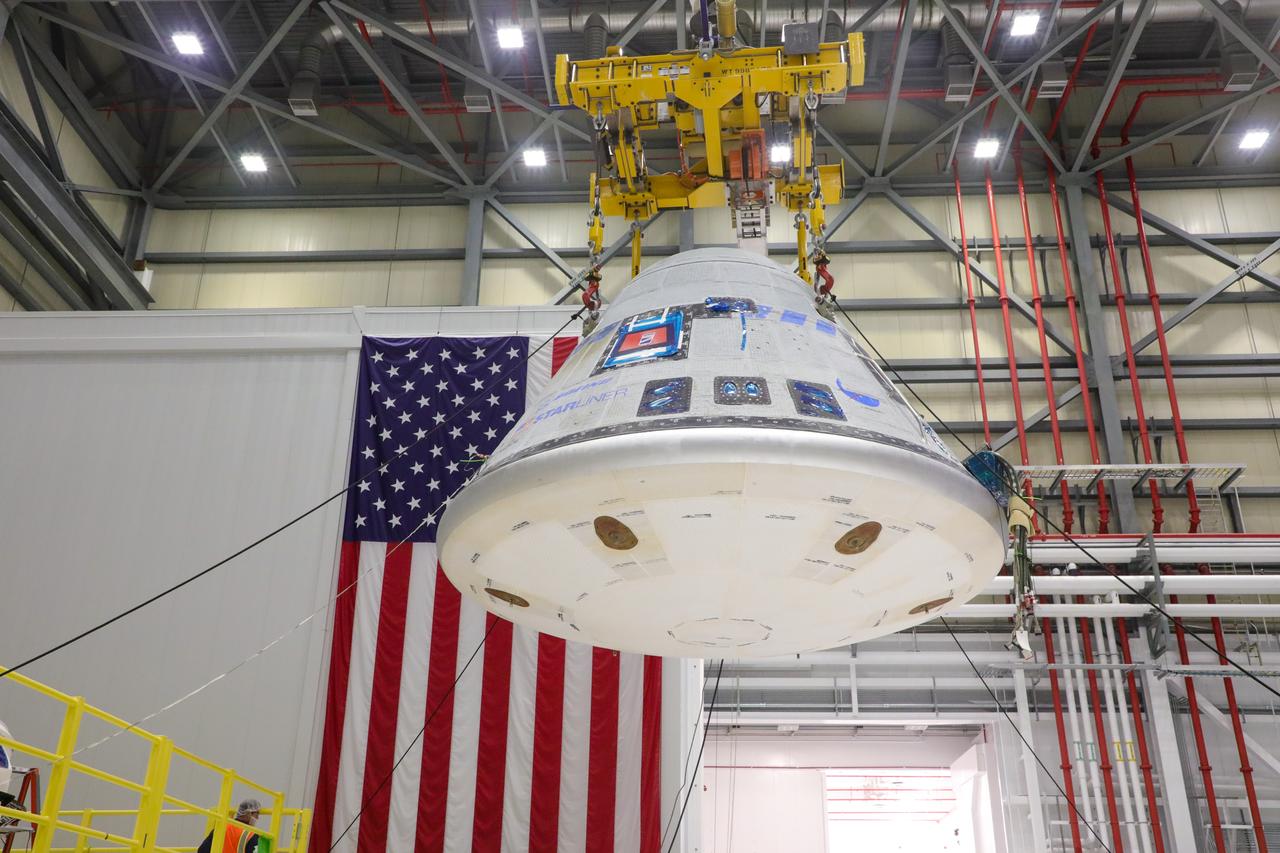
The Starliner crew module is hoisted in Boeing’s Commercial Crew and Cargo Processing Facility on Jan. 19, 2023 before being mated to a new service module for NASA’s Boeing Crew Flight Test.
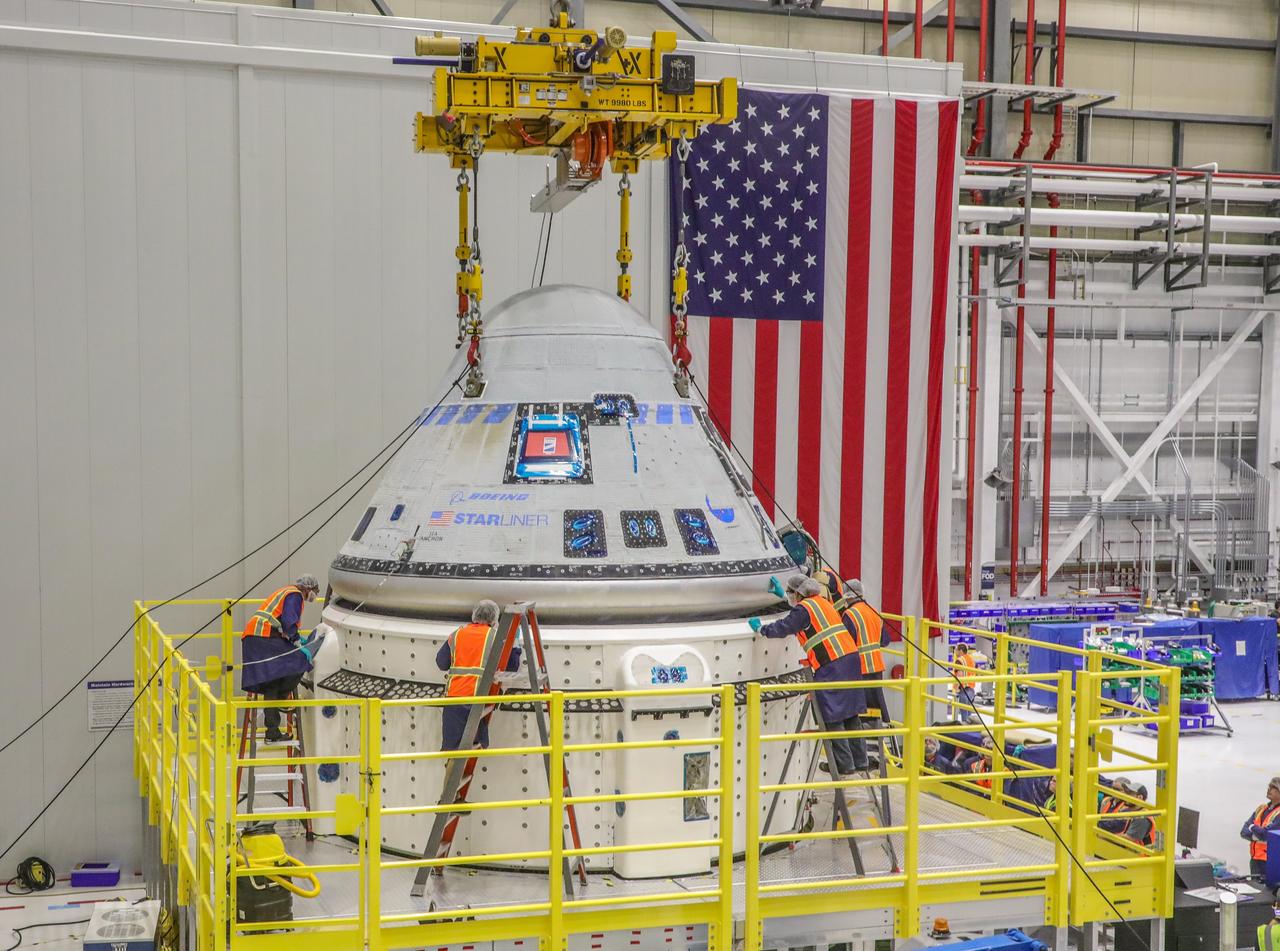
The Starliner team works to finalize the mate of the crew module and new service module for NASA's Boeing Crew Flight Test that will take NASA astronauts Barry “Butch” Wilmore and Sunita “Suni” Williams to and from the International Space Station.
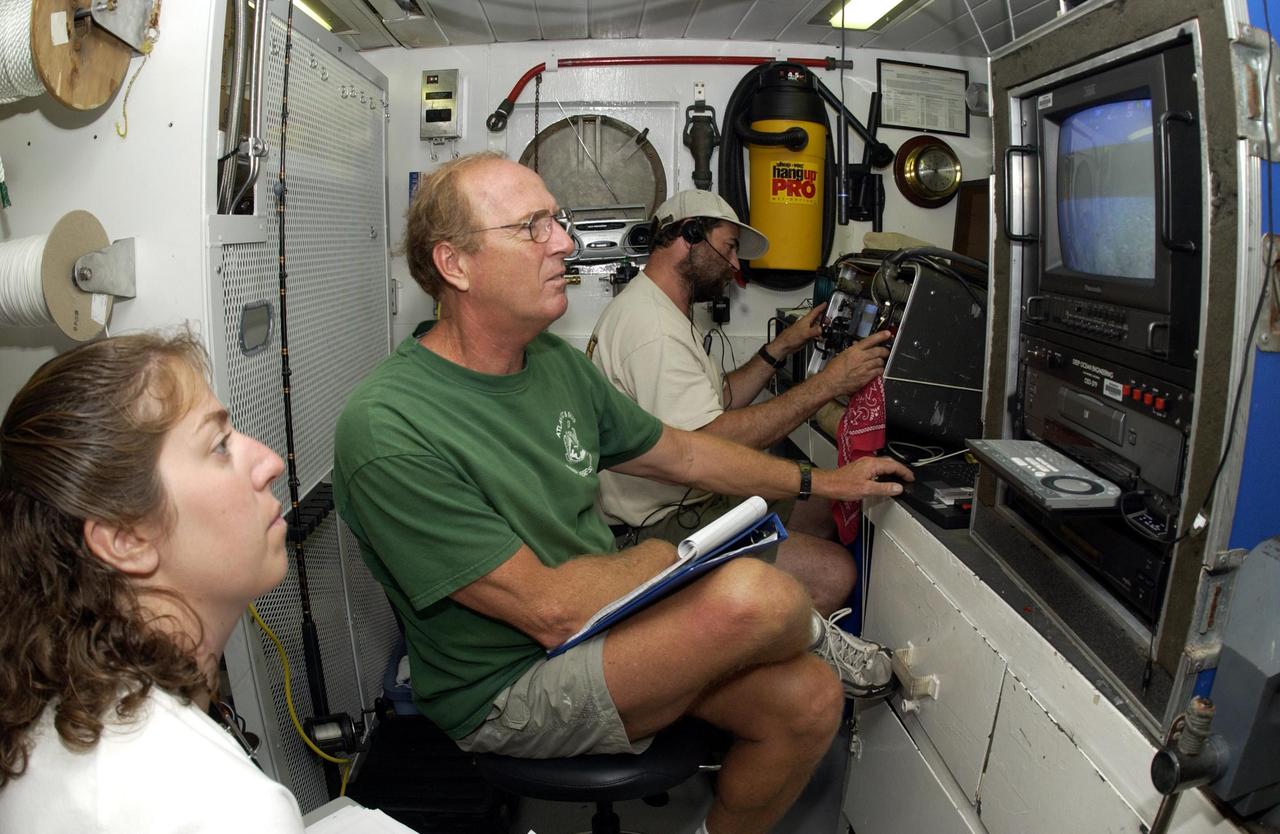
KENNEDY SPACE CENTER, FLA. - John Reed, co-principal investigator, Harbor Branch Oceanographic Institution, checks out equipment on the Liberty Star, which will be the site of an undersea expedition to characterize the condition of the deep-sea coral reefs and reef fish populations in the Oculina Banks, a marine protected area, 20 miles offshore of the east coast of Florida. He and other scientists will be deploying an underwater robot, a seafloor sampler, and the Passive Acoustic Monitoring System (PAMS). Dr. Grant Gilmore was co-principle investigator of the PAMS, originally developed by NASA to monitor the impact of rocket launches on wildlife refuge lagoons at KSC. The research is sponsored by NOAA Fisheries. The ship departed from Port Canaveral April 29 and will return May 9.
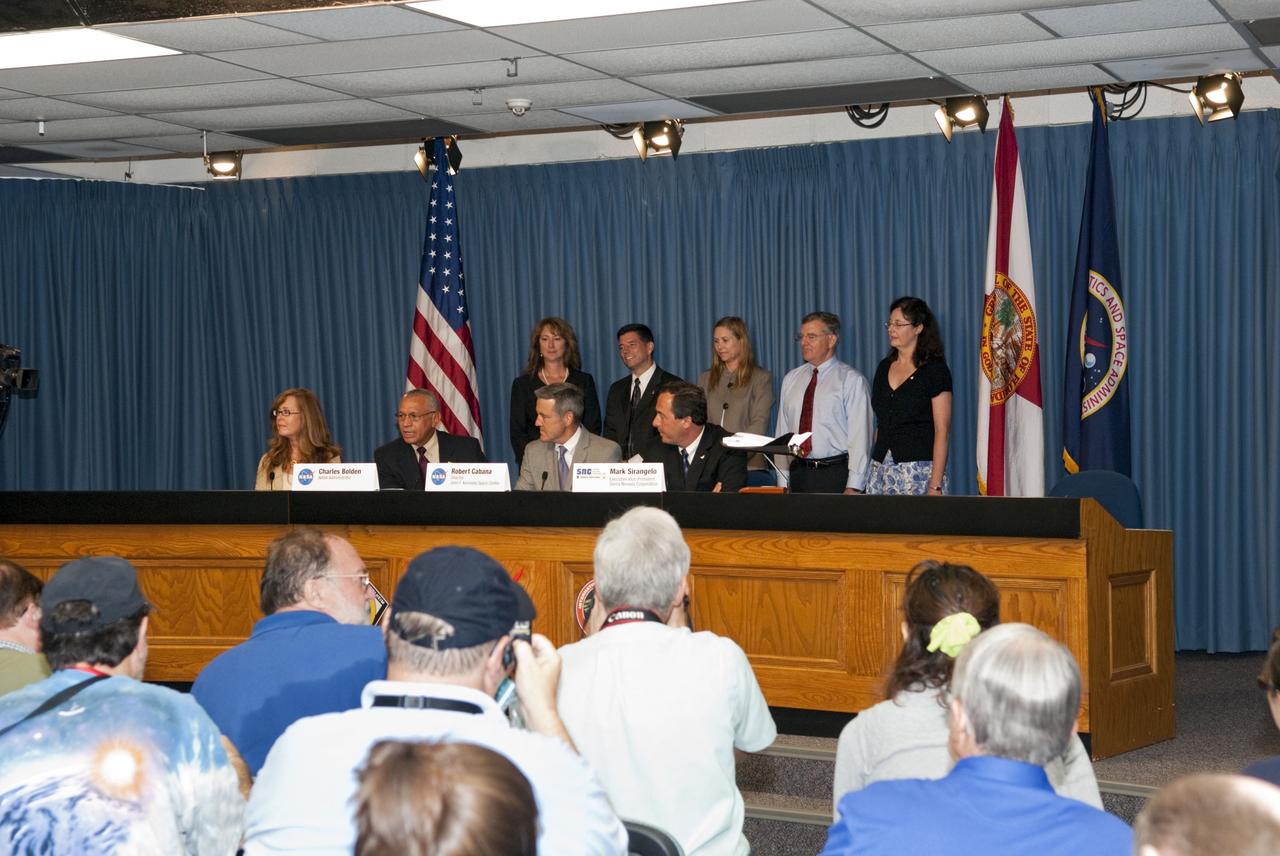
CAPE CANAVERAL, Fla. -- NASA and Sierra Nevada Space Systems (SNSS) of Sparks, Nev., prepare to sign a Space Act Agreement that will offer the company technical capabilities from Kennedy Space Center's uniquely skilled work force. Sitting, from left, are Kennedy Public Affairs Director Lisa Malone; NASA Administrator Charlie Bolden; Kennedy Center Director Bob Cabana; and Mark Sirangelo, head of Sierra Nevada. Standing, from left, are Joyce Riquelme, manager of Kennedy's Center Planning and Development Office; John Curry, director of Sierra Nevada's Systems Integration, Test and Operations; Kennedy Deputy Director Janet Petro; Jim Voss, vice president of Sierra Nevada's Space Exploration Systems; and Merri Sanchez, senior director of Sierra Nevada's Space Exploration Systems. Kennedy will help Sierra Nevada with the ground operations support of its lifting body reusable spacecraft called "Dream Chaser," which resembles a smaller version of the space shuttle orbiter. The spacecraft would carry as many as seven astronauts to the space station. Through the new agreement, Kennedy's work force will use its experience of processing the shuttle fleet for 30 years to help Sierra Nevada define and execute Dream Chaser's launch preparations and post-landing activities. In 2010 and 2011, Sierra Nevada was awarded grants as part of the initiative to stimulate the private sector in developing and demonstrating human spaceflight capabilities for NASA's Commercial Crew Program. The goal of the program, which is based in Florida at Kennedy, is to facilitate the development of a U.S. commercial crew space transportation capability by achieving safe, reliable and cost-effective access to and from the space station and future low Earth orbit destinations. Photo credit: NASA/Jim Grossmann
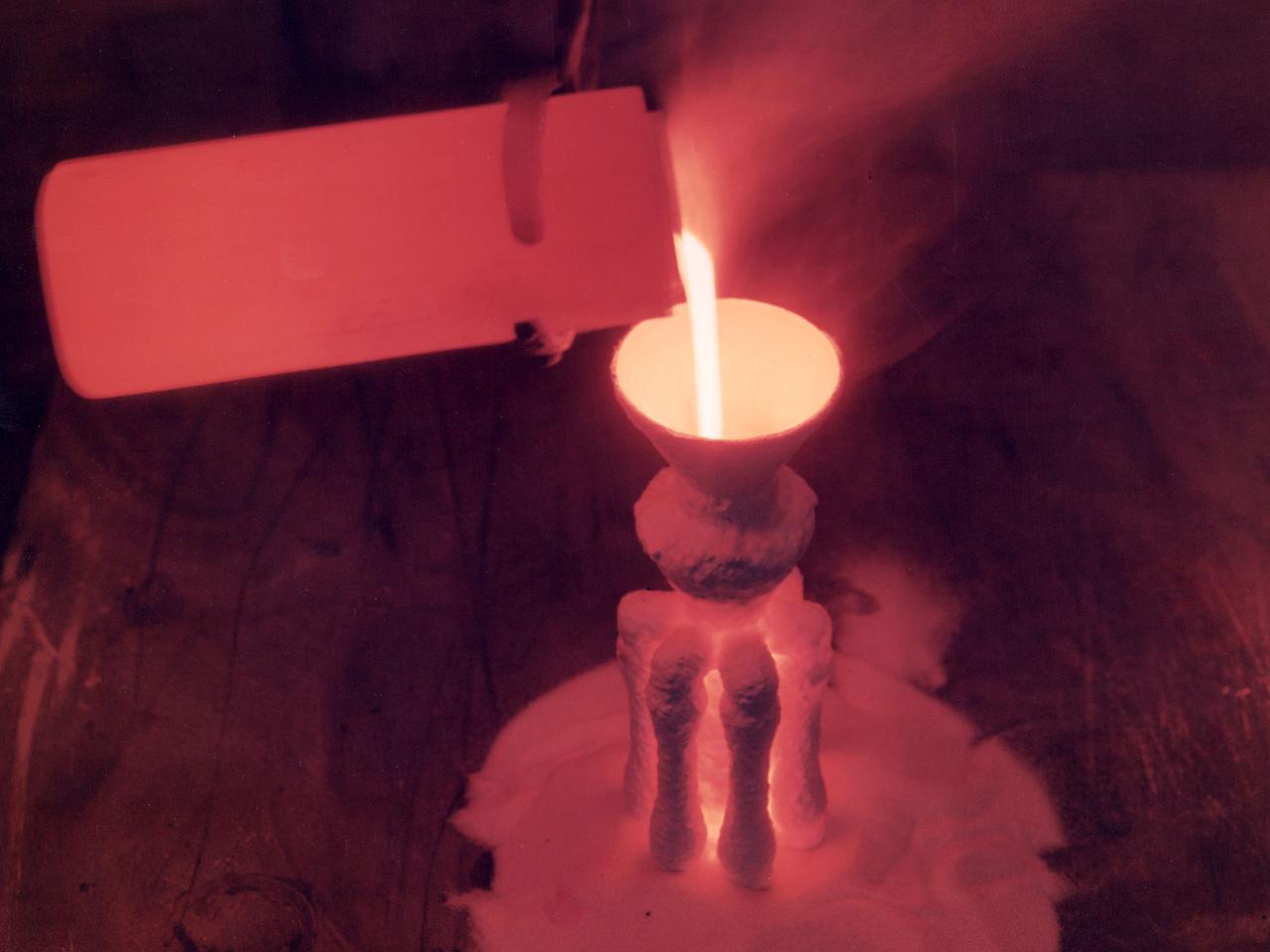
A nickel alloy developed at the National Aeronautics and Space Administration (NASA) Lewis Research Center being poured in a shop inside the Technical Services Building. Materials technology is an important element in the successful development of both advanced airbreathing and rocket propulsion systems. An array of dependable materials is needed to build different types of engines for operation in diverse environments. NASA Lewis began investigating the characteristics of different materials shortly after World War II. In 1949 the materials research group was expanded into its own division. The Lewis researchers studied and tested materials in environments that simulated the environment in which they would operate. Lewis created two programs in the early 1960s to create materials for new airbreathing engines. One concentrated on high-temperature alloys and the other on cooling turbine blades. William Klopp, Peter Raffo, Lester Rubenstein, and Walter Witzke developed Tungsten RHC, the highest strength metal at temperatures over 3500⁰ F. The men received an IR-100 Award for their efforts. Similarly a cobalt-tungsten alloy was developed by the Fatigue and Alloys Research Branch. The result was a combination of high temperature strength and magnetic properties that were applicable for generator rotor application. John Freche invented and patented a nickel alloy while searching for high temperature metals for aerospace use. NASA agreed to a three-year deal which granted Union Carbide exclusive use of the new alloy before it became public property.
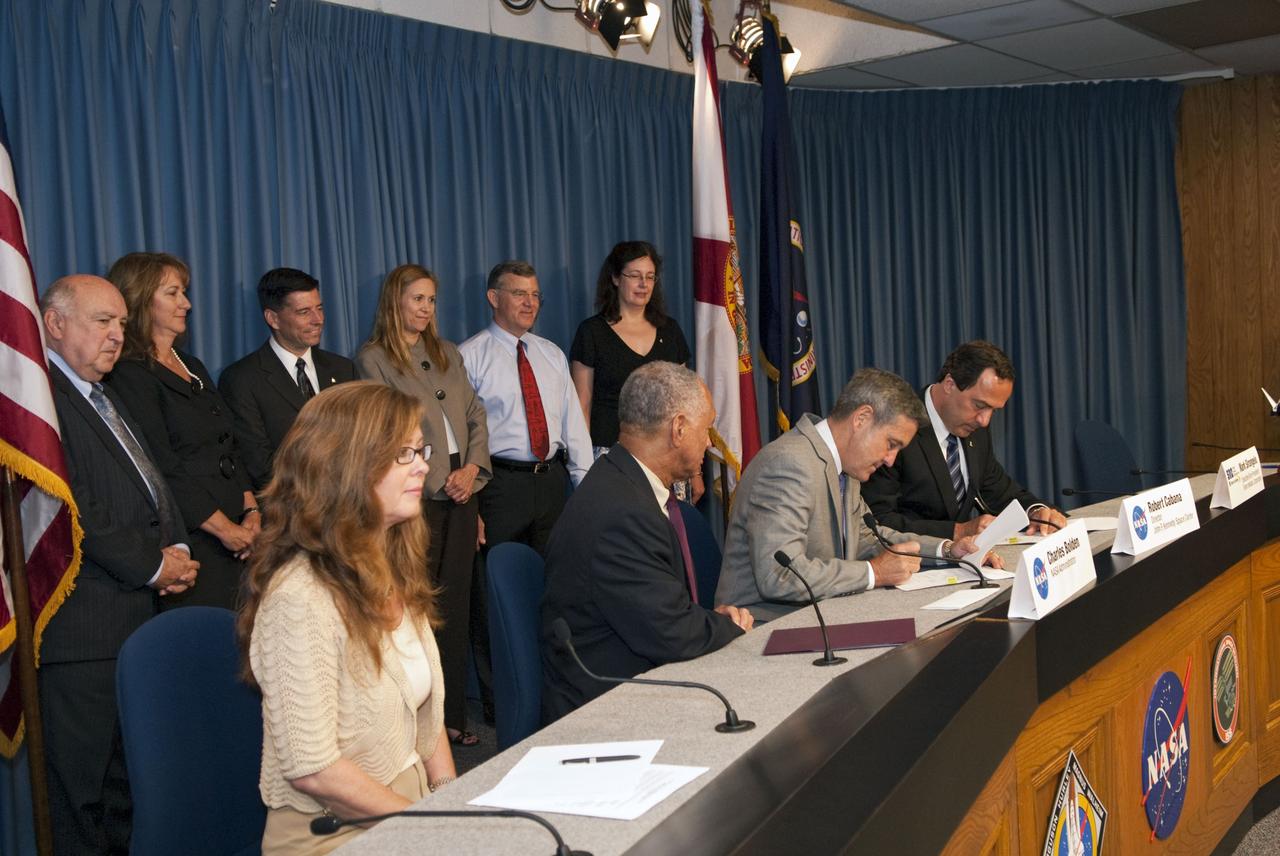
CAPE CANAVERAL, Fla. -- NASA and Sierra Nevada Space Systems (SNSS) of Sparks, Nev., sign a Space Act Agreement that will offer the company technical capabilities from Kennedy Space Center's uniquely skilled work force. Sitting, from left, are Kennedy Public Affairs Director Lisa Malone; NASA Administrator Charlie Bolden; Kennedy Center Director Bob Cabana; and Mark Sirangelo, head of Sierra Nevada. Standing, from left, are Frank DiBello, president of Space Florida; Joyce Riquelme, manager of Kennedy's Center Planning and Development Office; John Curry, director of Sierra Nevada's Systems Integration, Test and Operations; Kennedy Deputy Director Janet Petro; Jim Voss, vice president of Sierra Nevada's Space Exploration Systems; and Merri Sanchez, senior director of Sierra Nevada's Space Exploration Systems. Kennedy will help Sierra Nevada with the ground operations support of its lifting body reusable spacecraft called "Dream Chaser," which resembles a smaller version of the space shuttle orbiter. The spacecraft would carry as many as seven astronauts to the space station. Through the new agreement, Kennedy's work force will use its experience of processing the shuttle fleet for 30 years to help Sierra Nevada define and execute Dream Chaser's launch preparations and post-landing activities. In 2010 and 2011, Sierra Nevada was awarded grants as part of the initiative to stimulate the private sector in developing and demonstrating human spaceflight capabilities for NASA's Commercial Crew Program. The goal of the program, which is based in Florida at Kennedy, is to facilitate the development of a U.S. commercial crew space transportation capability by achieving safe, reliable and cost-effective access to and from the space station and future low Earth orbit destinations. Photo credit: NASA/Jim Grossmann