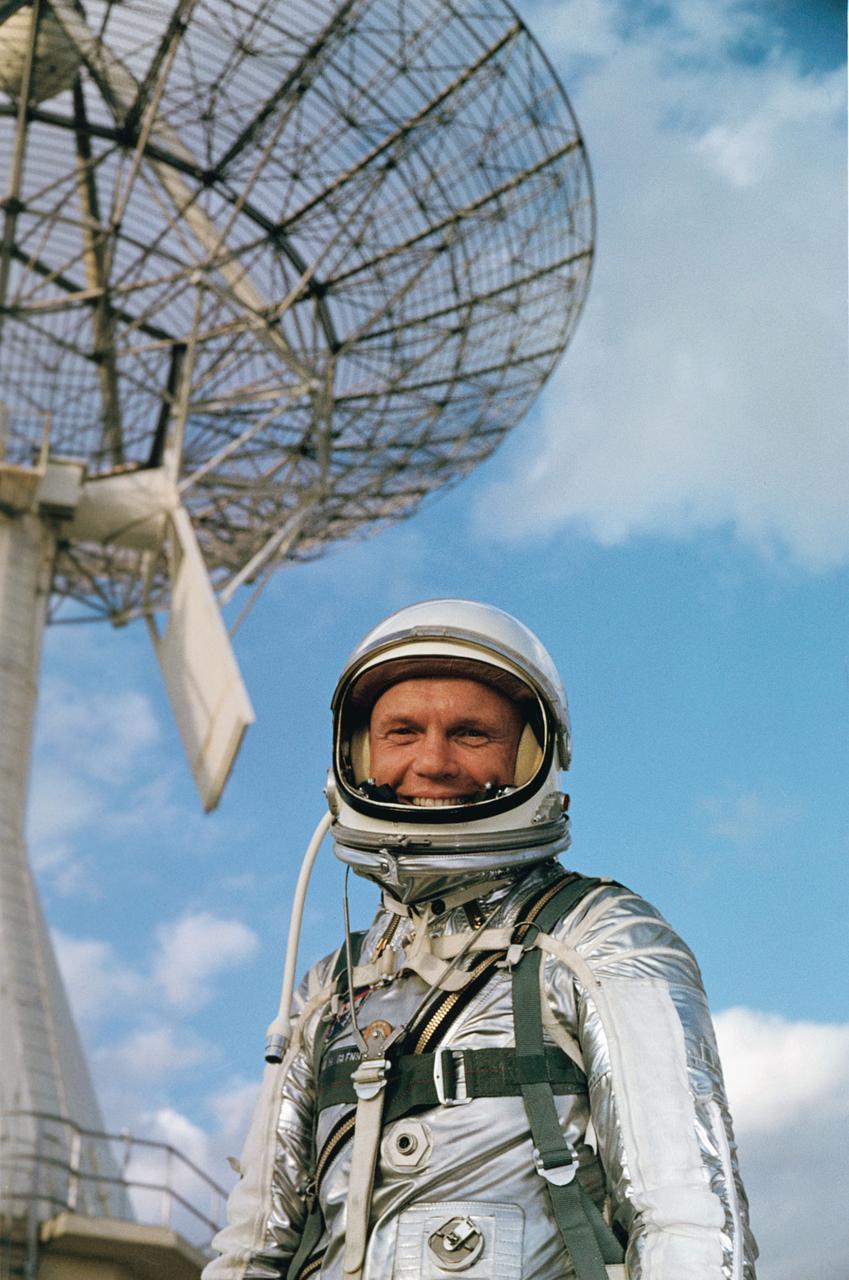
January 1962 -- Project Mercury Astronaut John H. Glenn Jr., prime pilot for the MA-6 mission.
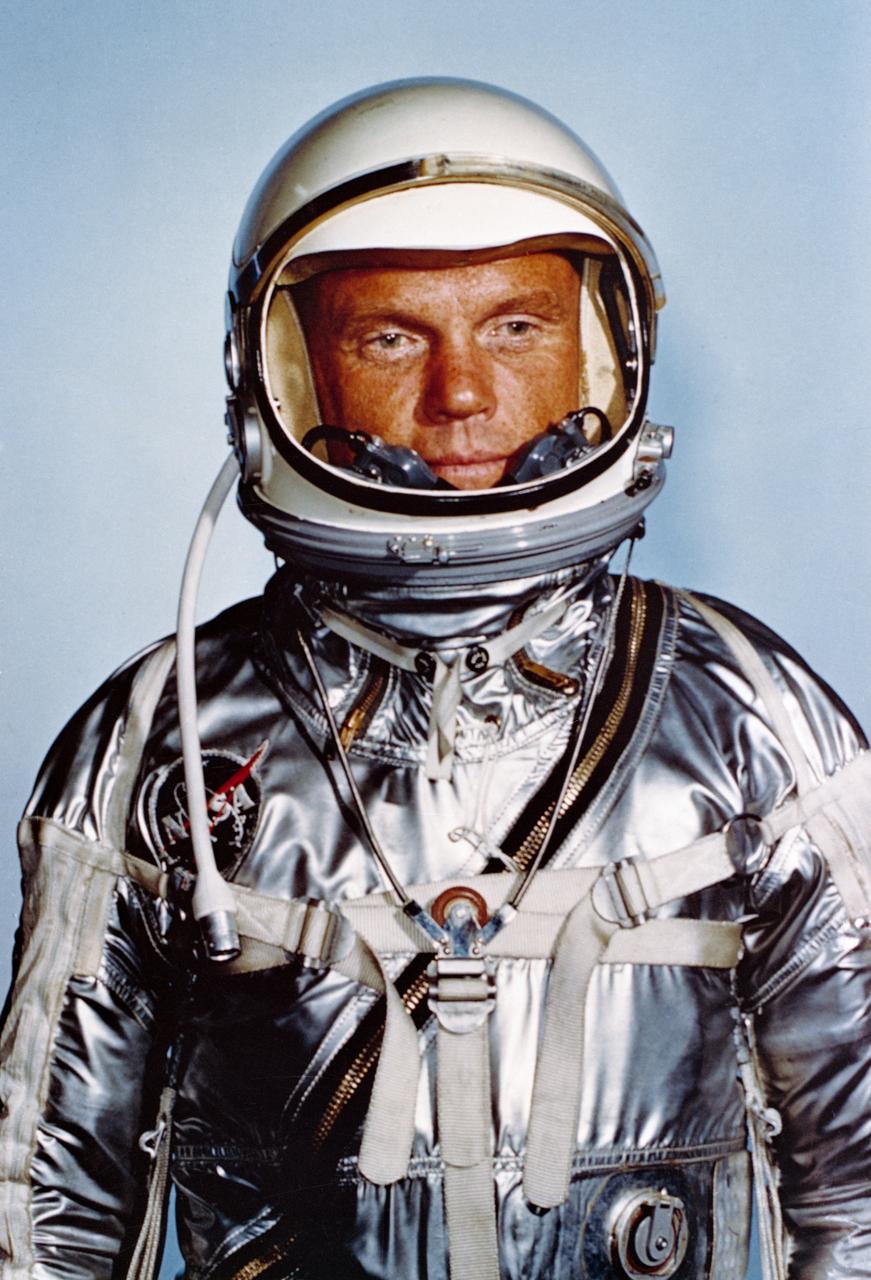
February 1962 -- Astronaut John H. Glenn Jr., Mercury-Atlas 6 pilot.
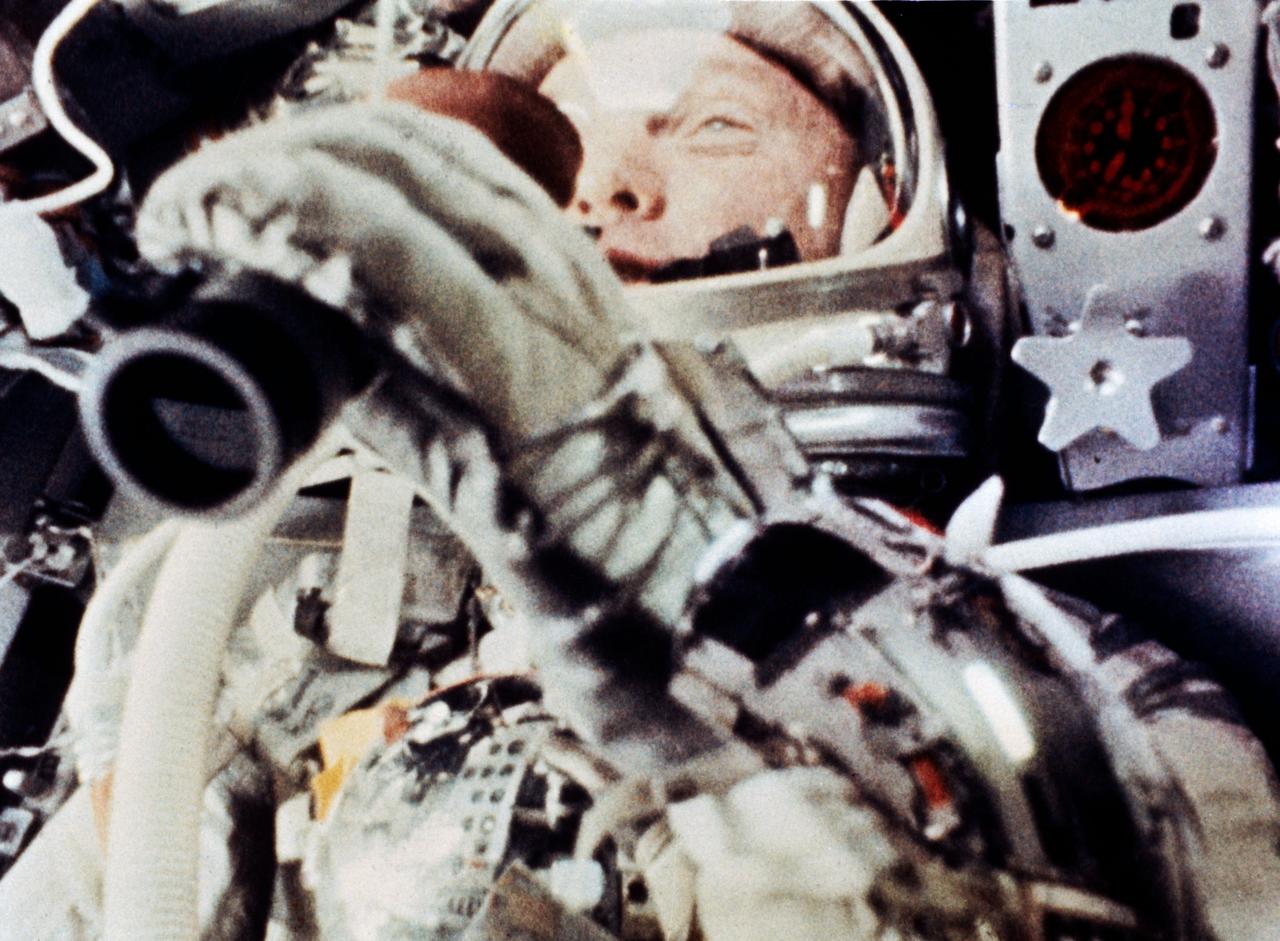
Astronaut John H. Glenn Jr. uses binoculars to view the Earth through the window of the Mercury-Atlas (MA-6) Friendship 7 capsule during the U.S.'s initial orbital flight.
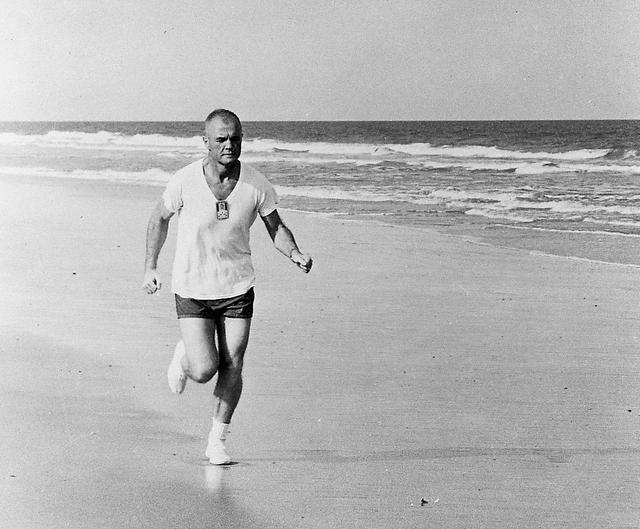
1962 -- Running along the beach at Cape Canaveral, Florida, astronaut John H. Glenn Jr., pilot of the Mercury-Atlas 6 mission, participates in a strict physical training program, as he exemplifies by frequent running.
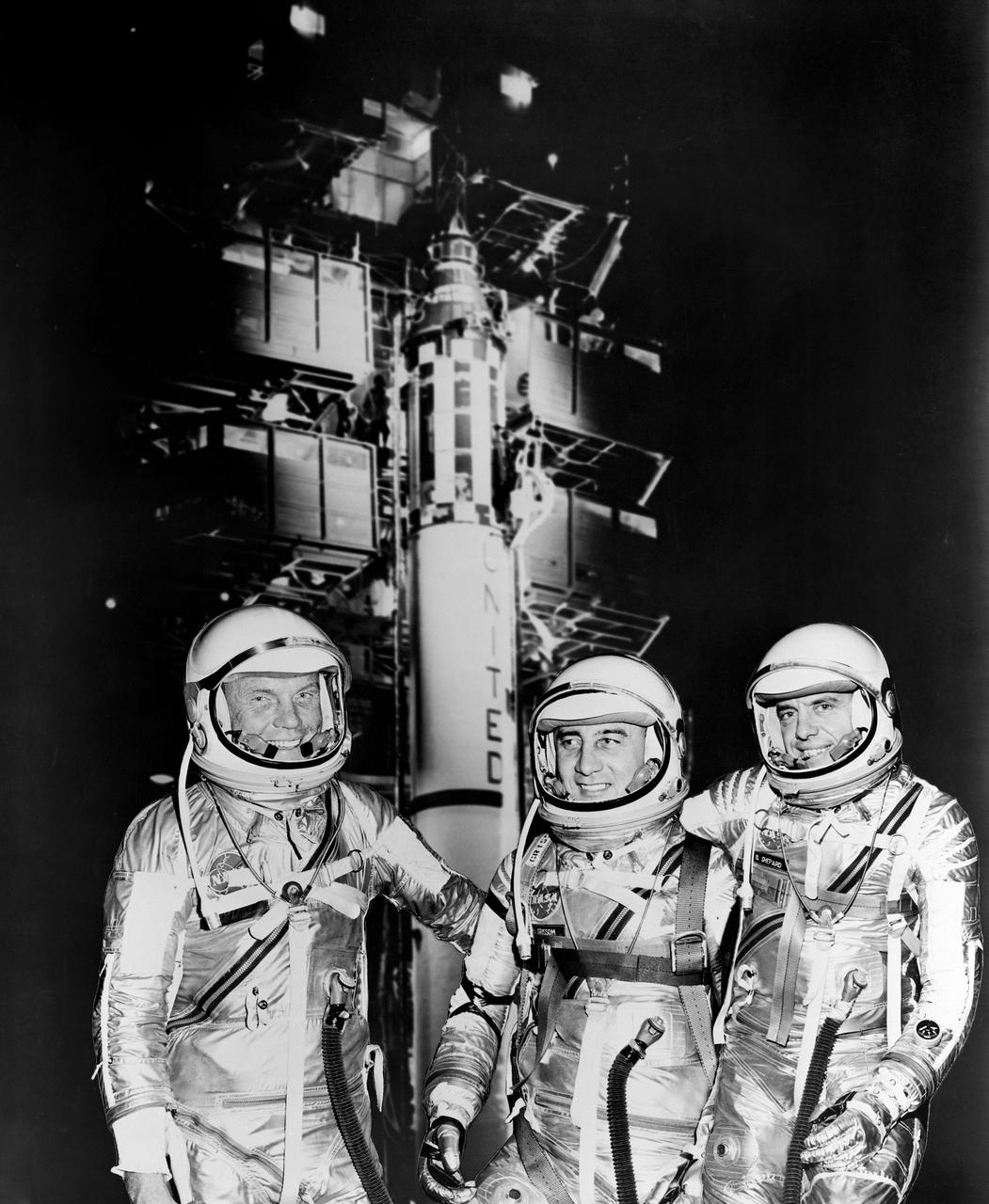
1961 -- The first three Americans in space, Mercury astronauts, from the left, John H. Glenn Jr., Virgil I. (Gus) Grissom and Alan B. Shepard Jr. standing by Redstone rocket in their spacesuits.
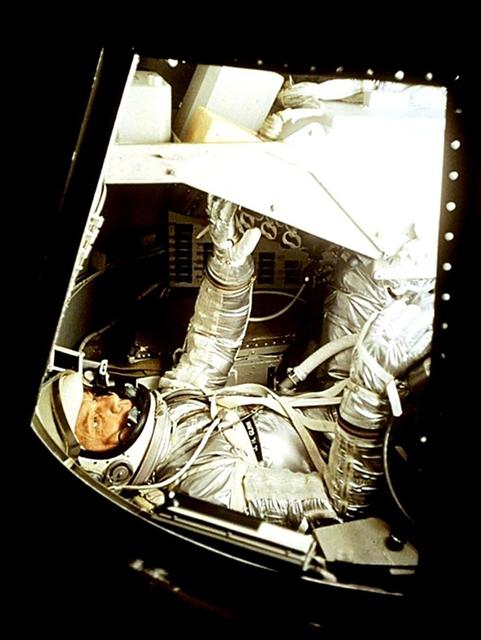
January 1962 -- Project Mercury Astronaut John H. Glenn Jr., prime pilot for the MA-6 mission, takes a work-out in the procedures trainer in preparation for the flight.
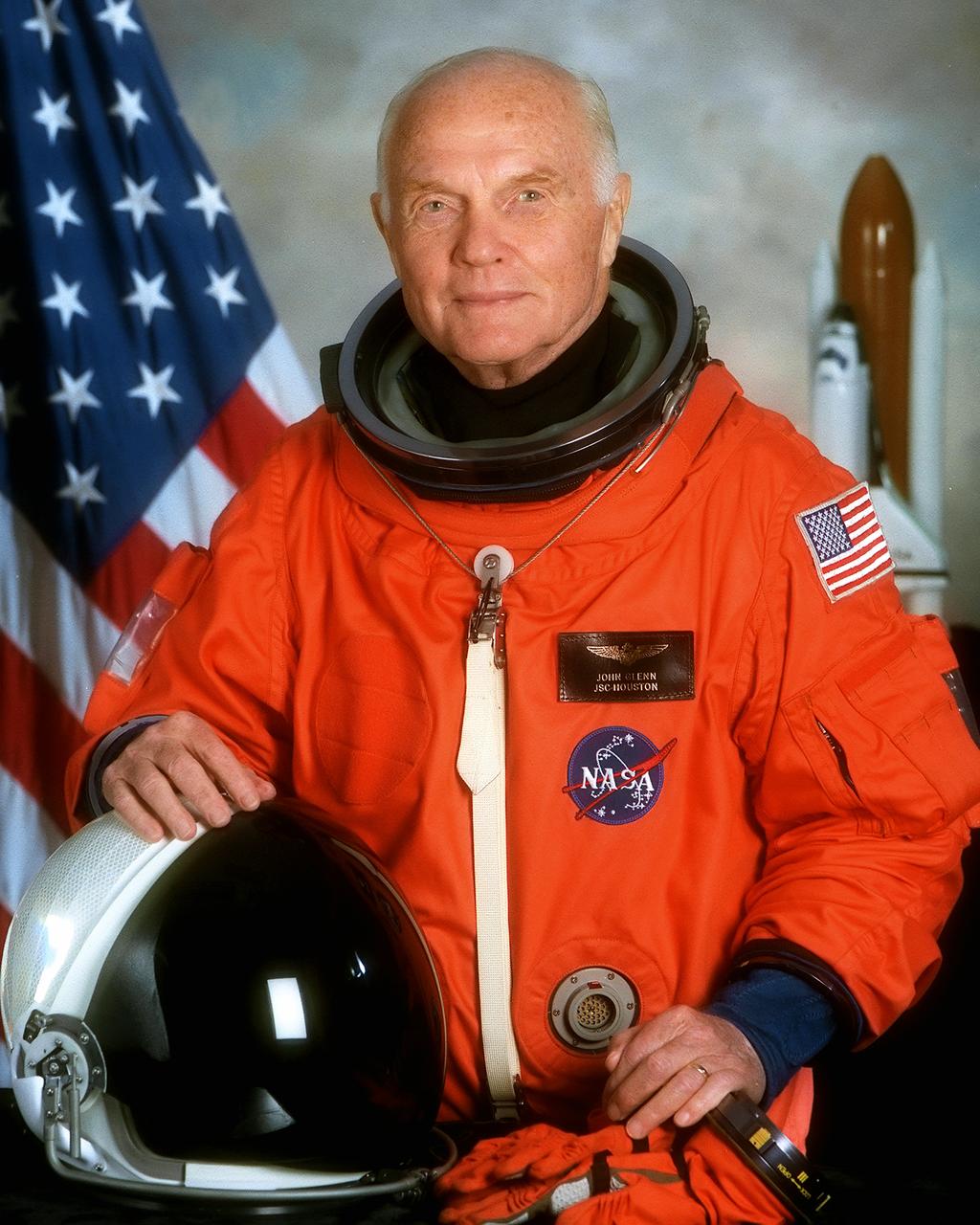
1998 -- John H. Glenn Jr. is a former American astronaut, Marine Corps fighter pilot, and United States Senator. He was the third American to fly in space and the first American to orbit the Earth. This photo for his second space flight on Oct. 29, 1998, on Space Shuttle Discovery's STS-95.
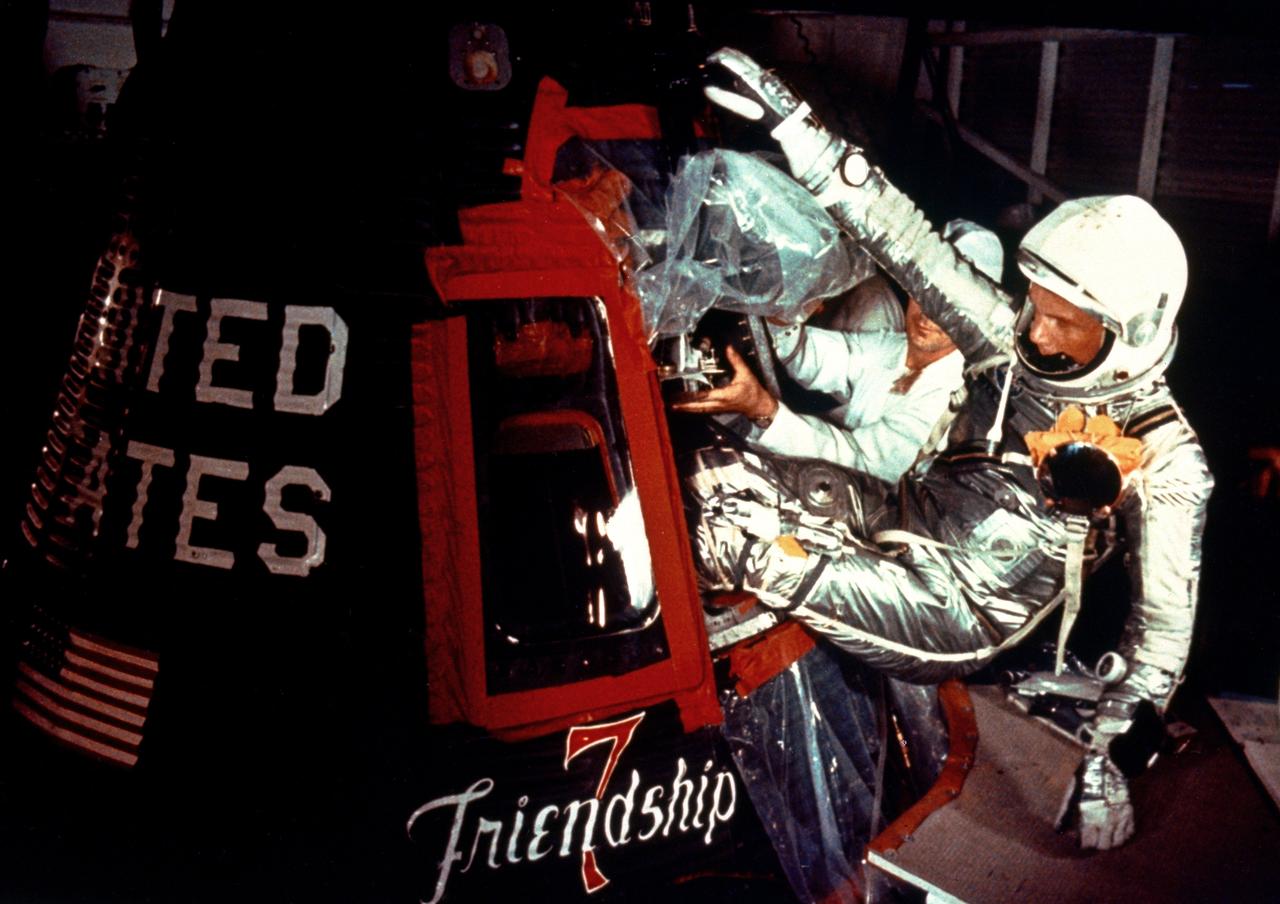
Project Mercury astronaut John H. Glenn Jr., enters the Friendship 7 spacecraft during the last part of the countdown on Feb. 20, 1962. At 9:47 a.m. EST, the Atlas launch vehicle lifted the spacecraft into orbit for a three-orbit mission lasting four hours, 55 minutes and 23 seconds. Glenn and his spacecraft were recovered by the destroyer Noa just 21 minutes after landing in the Atlantic near Grand Turk Island, to successfully complete the nation's first manned orbital flight.
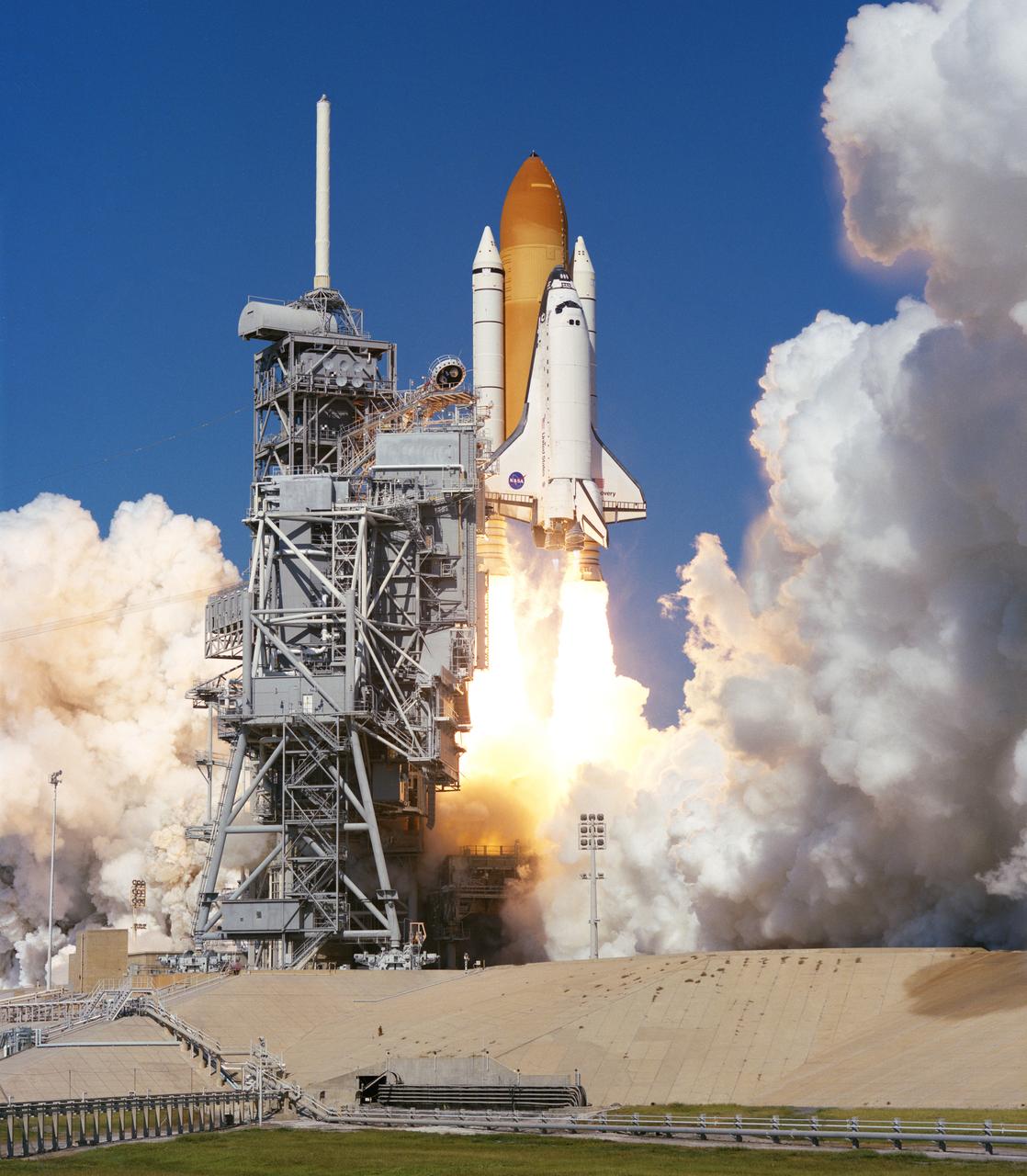
The space shuttle Discovery lifts off Launch Pad 39B to begin a nine-day mission in Earth-orbit. Launch was at 2:19 p.m. EST, Oct. 29, 1998. Onboard were Curtis L. Brown Jr., Steven W. Lindsey, Scott F. Parazynski, Steven K. Robinson, Pedro Duque, United States Senator John H. Glenn Jr. and Chiaki Naito-Mukai. Duque is a mission specialist representing the European Space Agency (ESA) and Mukai is a payload specialist representing Japan's National Space Development Agency (NASDA). Glenn, making his second spaceflight but his first in 36 years, joins Mukai as a payload specialist on the mission.
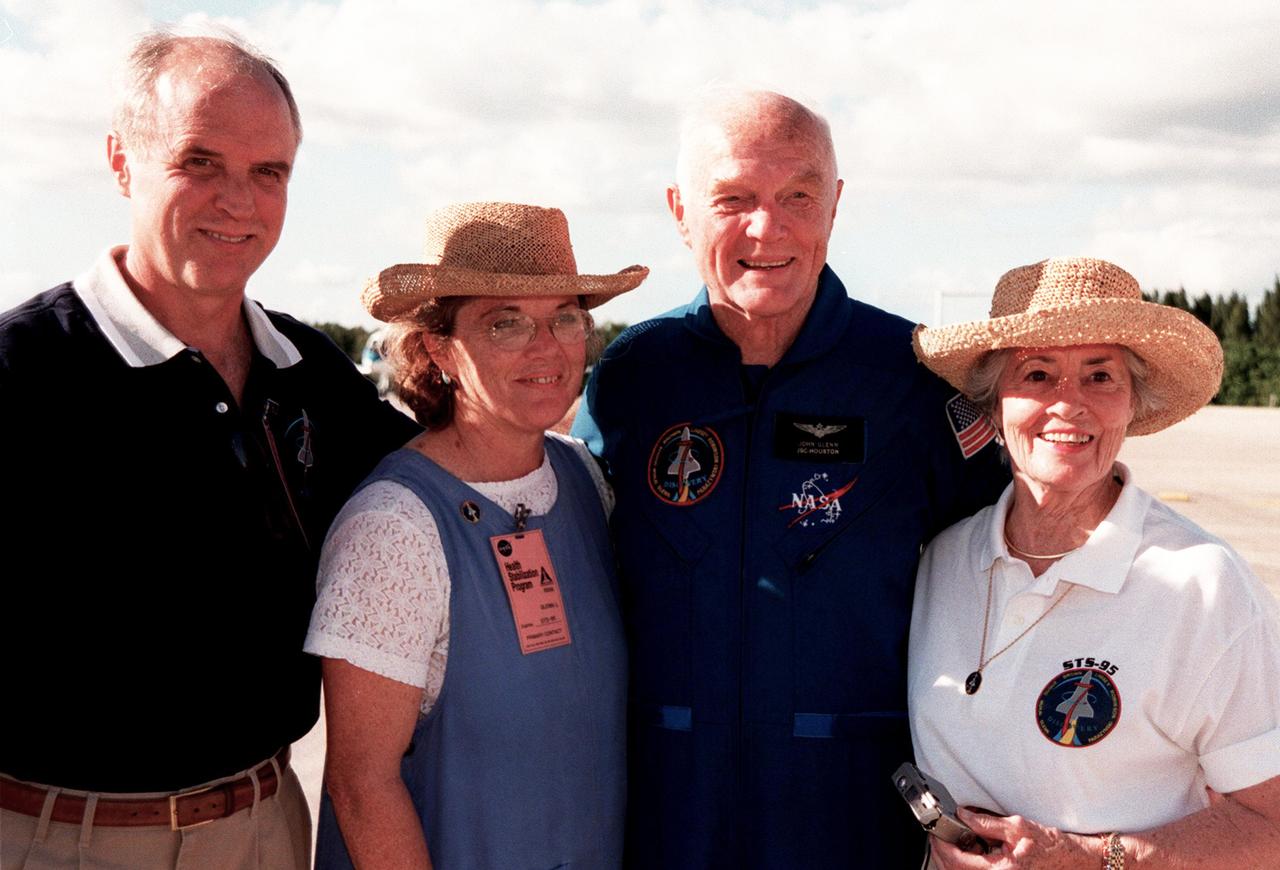
STS-95 Payload Specialist John H. Glenn Jr. (second from right), senator from Ohio, poses (left to right) with his son, David, daughter, Lyn, and (far right) his wife, Annie, after landing at Kennedy Space Center's Shuttle Landing Facility aboard a T-38 jet. Glenn and other crewmembers flew into KSC to make final preparations for launch. Targeted for liftoff at 2 p.m. on Oct. 29, the STS-95 mission includes research payloads such as the Spartan solar-observing deployable spacecraft, the Hubble Space Telescope Orbital Systems Test Platform, the International Extreme Ultraviolet Hitchhiker, as well as the SPACEHAB single module with experiments on space flight and the aging process.
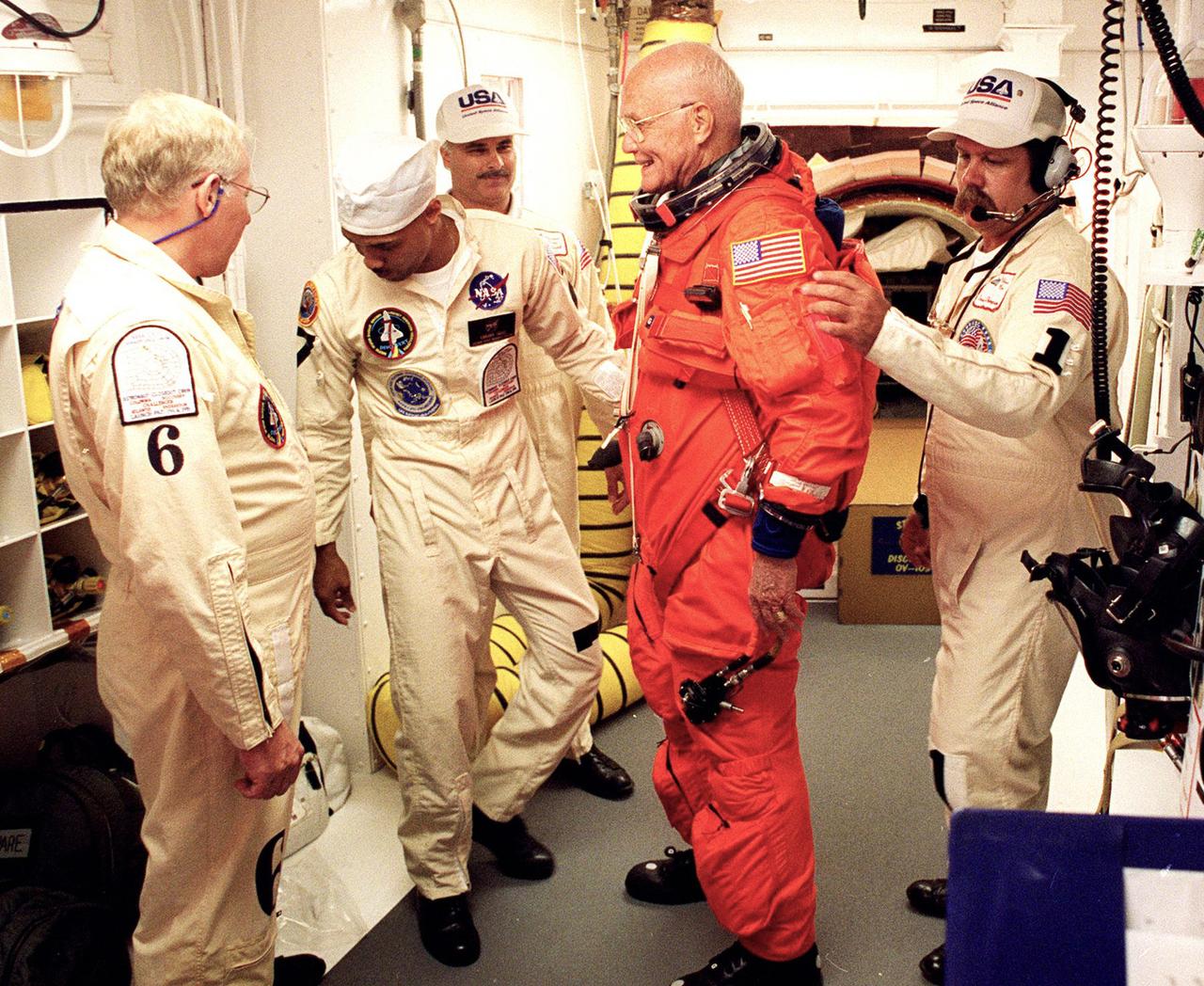
In the white room at the Kenndy Space Center's Launch Pad 39B, STS-95 Payload Specialist John H. Glenn Jr., senator from Ohio, is prepared by closeout room crew members Danny Wyatt (left to right), Carlous Gillis, Jim Kelly and Travis Thompson for entry into the Space Shuttle Discovery for his second flight into space after 36 years. The STS-95 mission, targeted for launch at 2 p.m. EST on Oct. 29, is expected to last 8 days, 21 hours and 49 minutes, and return to KSC at 11:49 a.m. EST on Nov. 7.
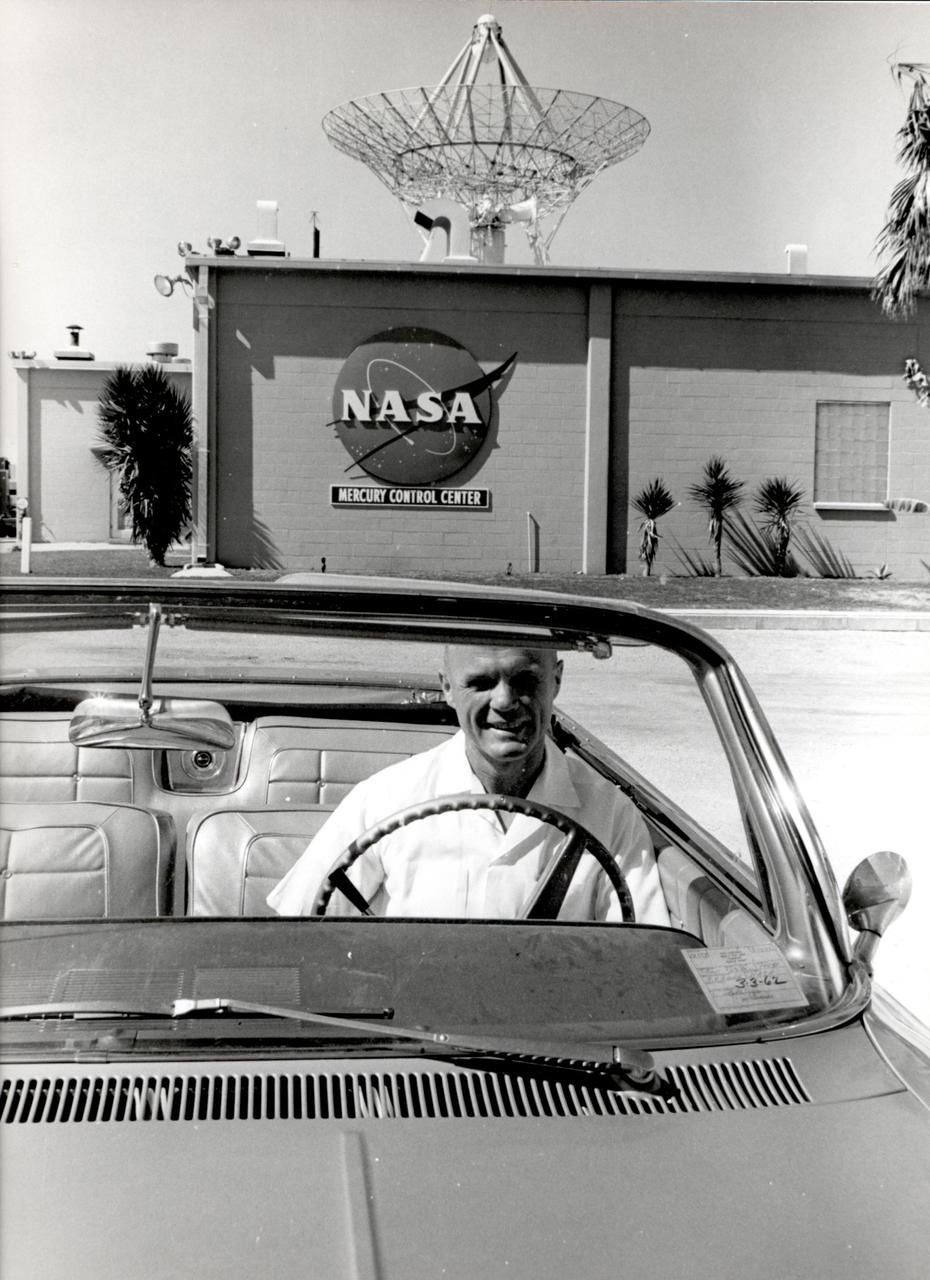
Astronaut John H. Glenn sits in a car in front of the east side of the Mercury Mission Control building. Glenn was the pilot for the Mercury-Atlas 6 mission aboard Friendship 7, which launched Feb. 20, 1962.
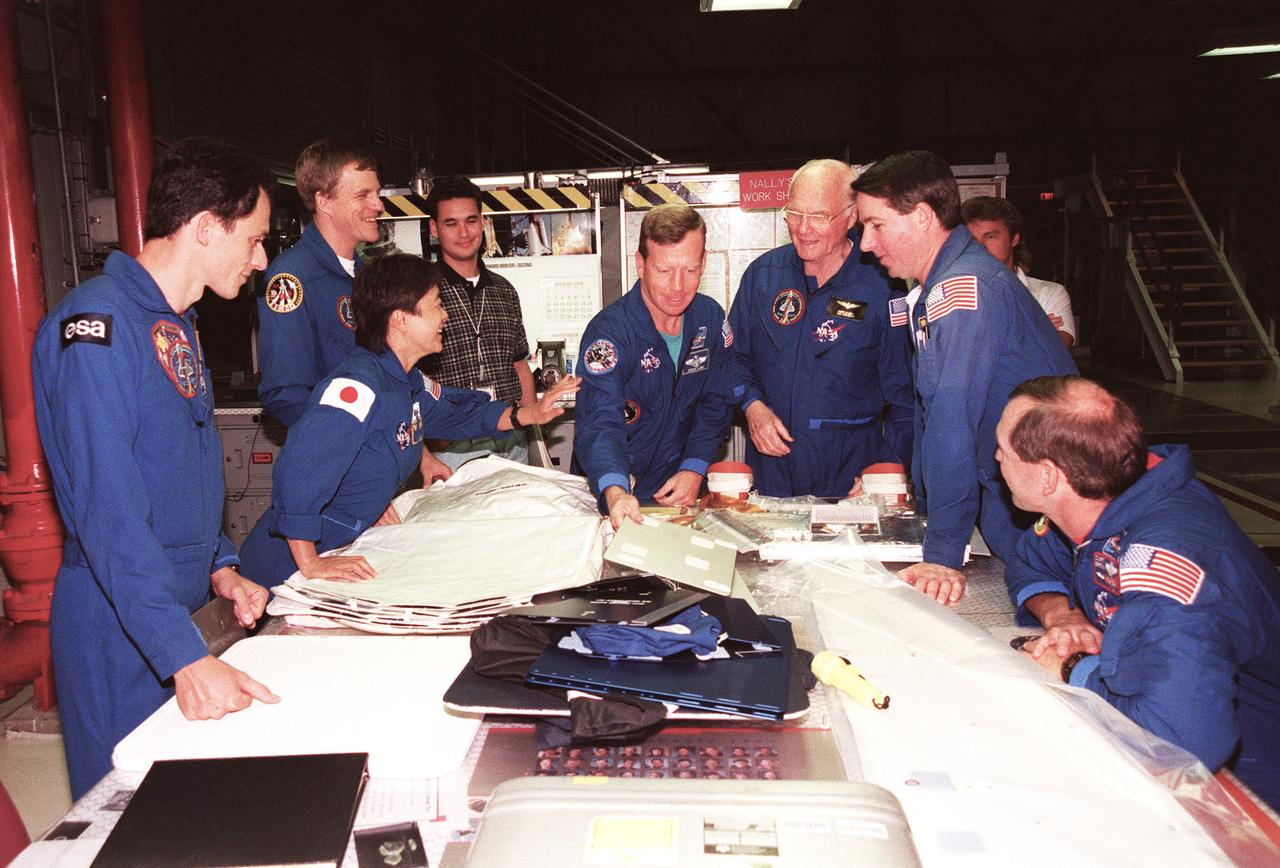
Around a table in Bay 2 Orbiter Processing Facility at NASA's Kennedy Space Center in Florida, STS-95 crew members look over equipment during the Crew Equipment Interface Test (CEIT) for their mission. From left, they are Mission Specialist Pedro Duque, of the European Space Agency; Payload Specialist Chiaki Mukai, of the National Space Development Agency of Japan (NASDA); Mission Specialist Scott E. Parazynski, M.D.; Pilot Steven W. Lindsey; Payload Specialist John H. Glenn Jr., senator form Ohio; Mission Specialist Stephen K. Robinson; and Mission Commander Curtis L. Brown Jr. The CEIT gives astronauts an opportunity for a hands-on look at the payloads and equipment with which they will be working on orbit. The launch of the STS-95 mission, aboard Space Shuttle Discovery, is scheduled for Oct. 29, 1998. The mission includes research payloads such as the Spartan solar-observing deployable spacecraft, the Hubble Space Telescope Orbital Systems Test Platform, the International Extreme Ultraviolet Hitchhiker, as well as the SPACEHAB single module with experiments on space flight and the aging process.
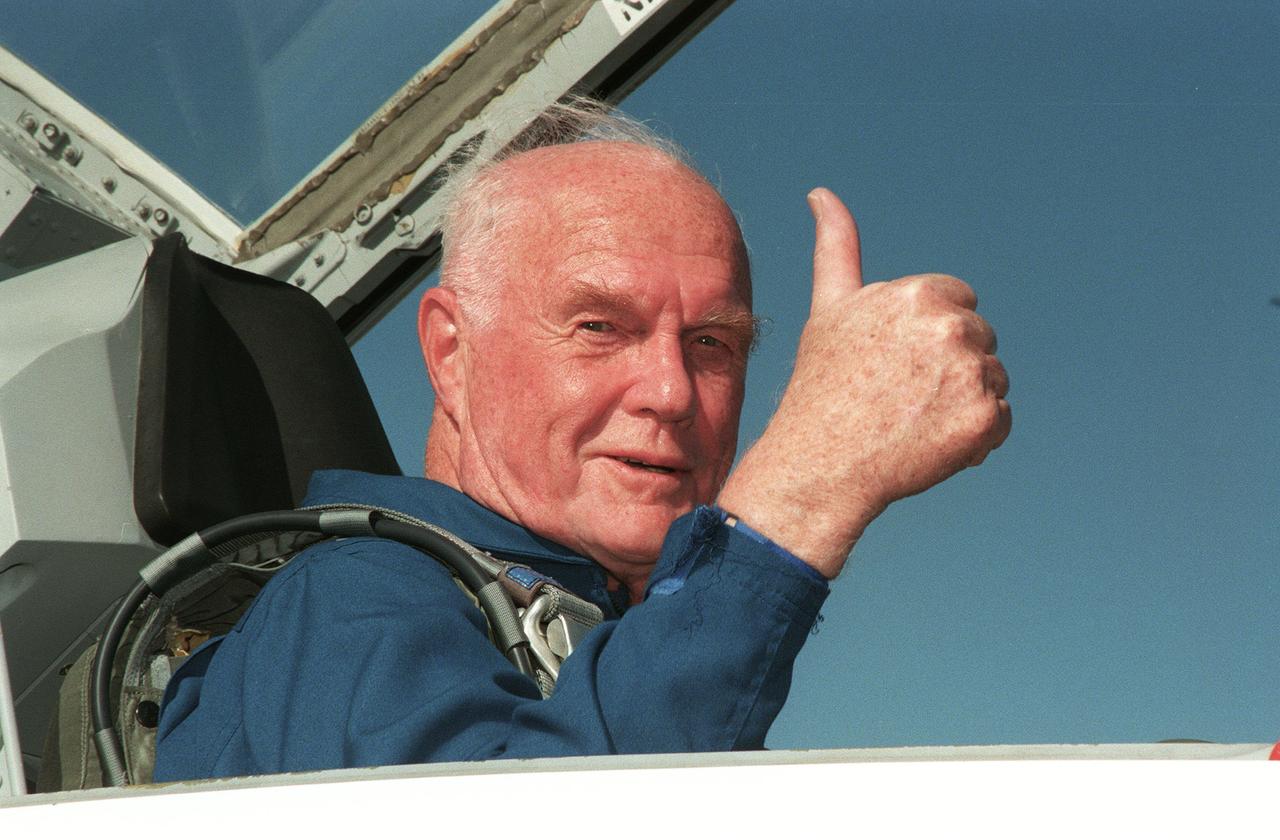
STS-95 Payload Specialist John H. Glenn Jr., senator from Ohio, gives a thumbs up on his arrival at Kennedy Space Center's Shuttle Landing Facility aboard a T-38 jet. He and other crewmembers will be making final preparations for launch, targeted for liftoff at 2 p.m. on Oct. 29. The STS-95 mission includes research payloads such as the Spartan solar-observing deployable spacecraft, the Hubble Space Telescope Orbital Systems Test Platform, the International Extreme Ultraviolet Hitchhiker, as well as the SPACEHAB single module with experiments on space flight and the aging process. The mission is expected to last 8 days, 21 hours and 49 minutes, and return to KSC on Nov. 7. The other STS-95 crew members are Mission Commander Curtis L. Brown Jr., Pilot Steven W. Lindsey, Mission Specialist Scott E. Parazynski, Mission Specialist Stephen K. Robinson, Mission Specialist Pedro Duque, with the European Space Agency (ESA), and Payload Specialist Chiaki Mukai, with the National Space Development Agency of Japan (NASDA).
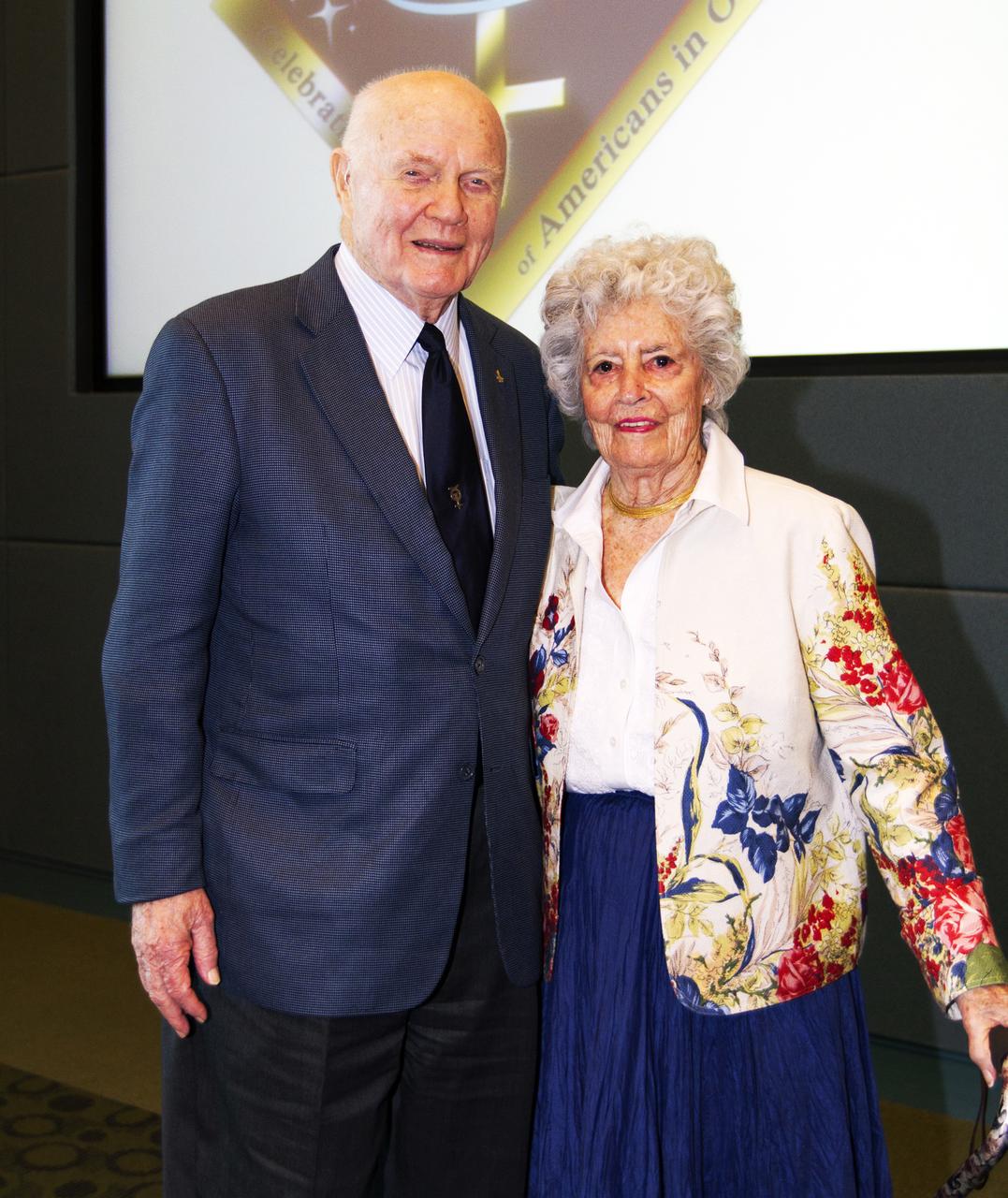
Mercury astronaut John Glenn and his wife, Annie, pose during a luncheon Feb. 17, 2012, celebrating 50 years of Americans in orbit, an era which began with Glenn's Mercury mission MA-6, on Feb. 20, 1962. Glenn's launch aboard an Atlas rocket took with it the hopes of an entire nation and ushered in a new era of space travel that eventually led to Americans walking on the moon by the end of the 1960s. Glenn soon was followed into orbit by Scott Carpenter, Walter Schirra and Gordon Cooper. Their fellow Mercury astronauts Alan Shepard and Virgil "Gus" Grissom flew earlier suborbital flights. Deke Slayton, a member of NASA's original Mercury 7 astronauts, was grounded by a medical condition until the Apollo-Soyuz Test Project in 1975.
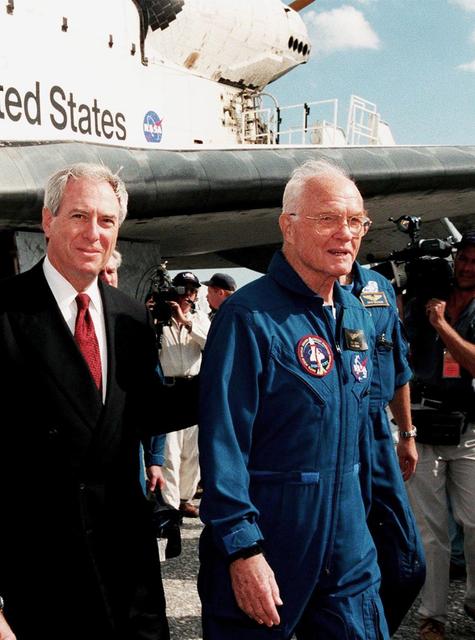
NASA Administrator Dan Goldin, left, walks with Sen. John Glenn (D-Ohio) on Nov. 7, 1998. Glenn had just returned to Earth following the STS-95 space shuttle mission. Glenn's initial trip into space on Feb. 20, 1962 aboard Mercury 6 made him the first American in orbit.
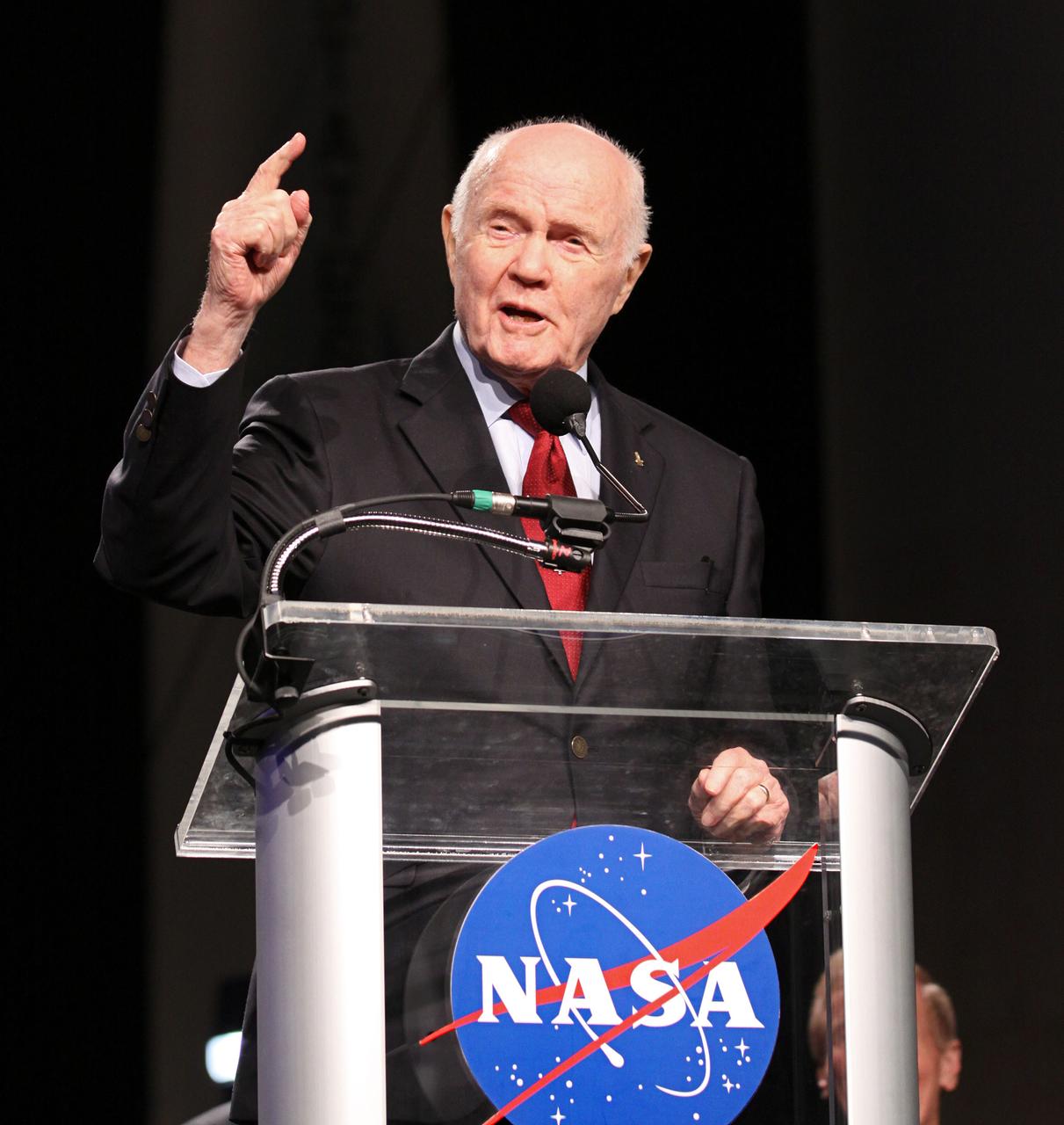
Mercury astronaut John Glenn speaks during the "On Shoulders of Giants" program celebrating 50 years of Americans in orbit, an era which began with Glenn's MA-6 mission on Feb. 20, 1962. The event was conducted in the Rocket Garden at the Kennedy Space Center Visitor Complex in Florida a few miles from the launch pad where Glenn and Scott Carpenter took flight in Mercury spacecraft. Glenn's launch aboard an Atlas rocket took with it the hopes of an entire nation and ushered in a new era of space travel that eventually led to Americans walking on the moon by the end of the 1960s. Glenn soon was followed into orbit by Scott Carpenter, Walter Schirra and Gordon Cooper. Their fellow Mercury astronauts Alan Shepard and Virgil "Gus" Grissom flew earlier suborbital flights. Deke Slayton, a member of NASA's original Mercury 7 astronauts, was grounded by a medical condition until the Apollo-Soyuz Test Project in 1975.
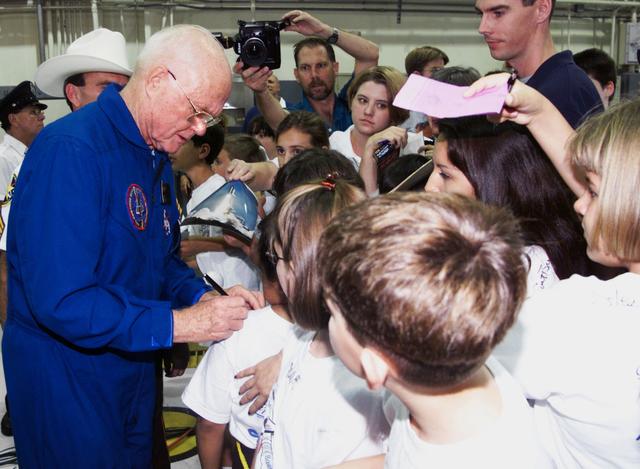
John Glenn signs autographs for school children following his STS-95 flight aboard the space shuttle Discovery.
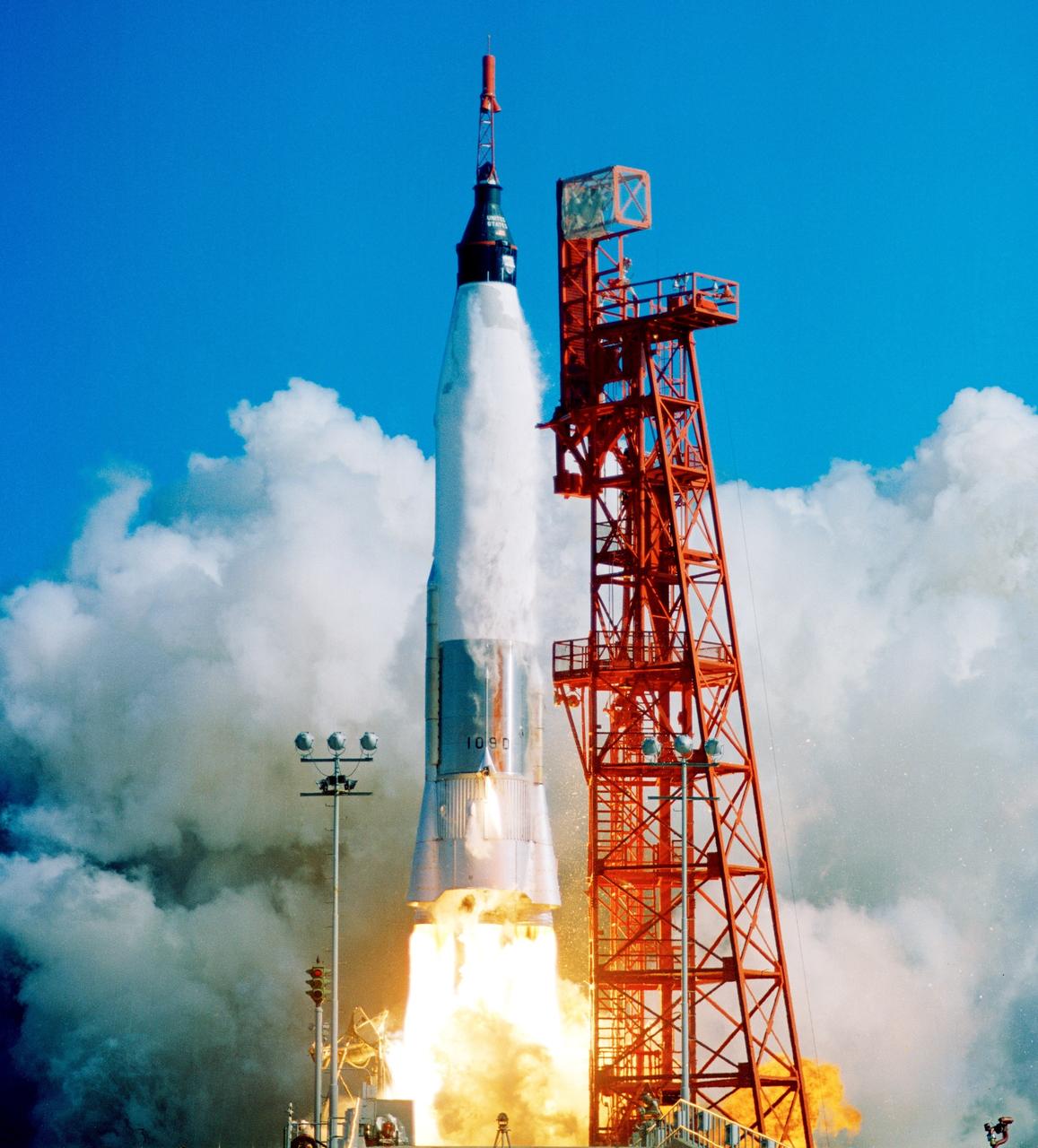
Mercury Atlas-6 lifts off on Feb. 20, 1962 carrying astronaut John Glenn on America's first orbital spaceflight.
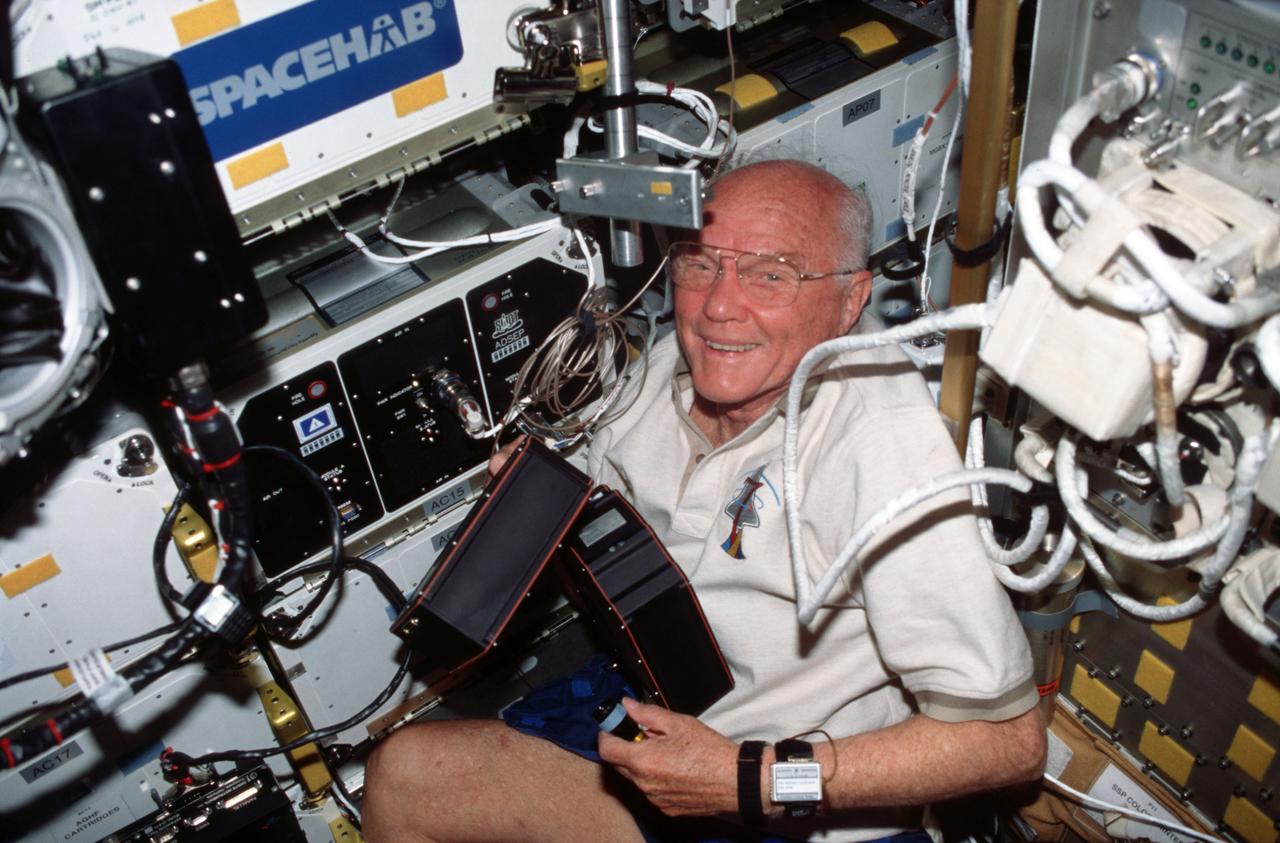
Oct. 1998 -- STS-95 payload specialist John Glenn removes the Advanced Organic Separation (ADSEP) cartridges and moves them to the Spacehab module.
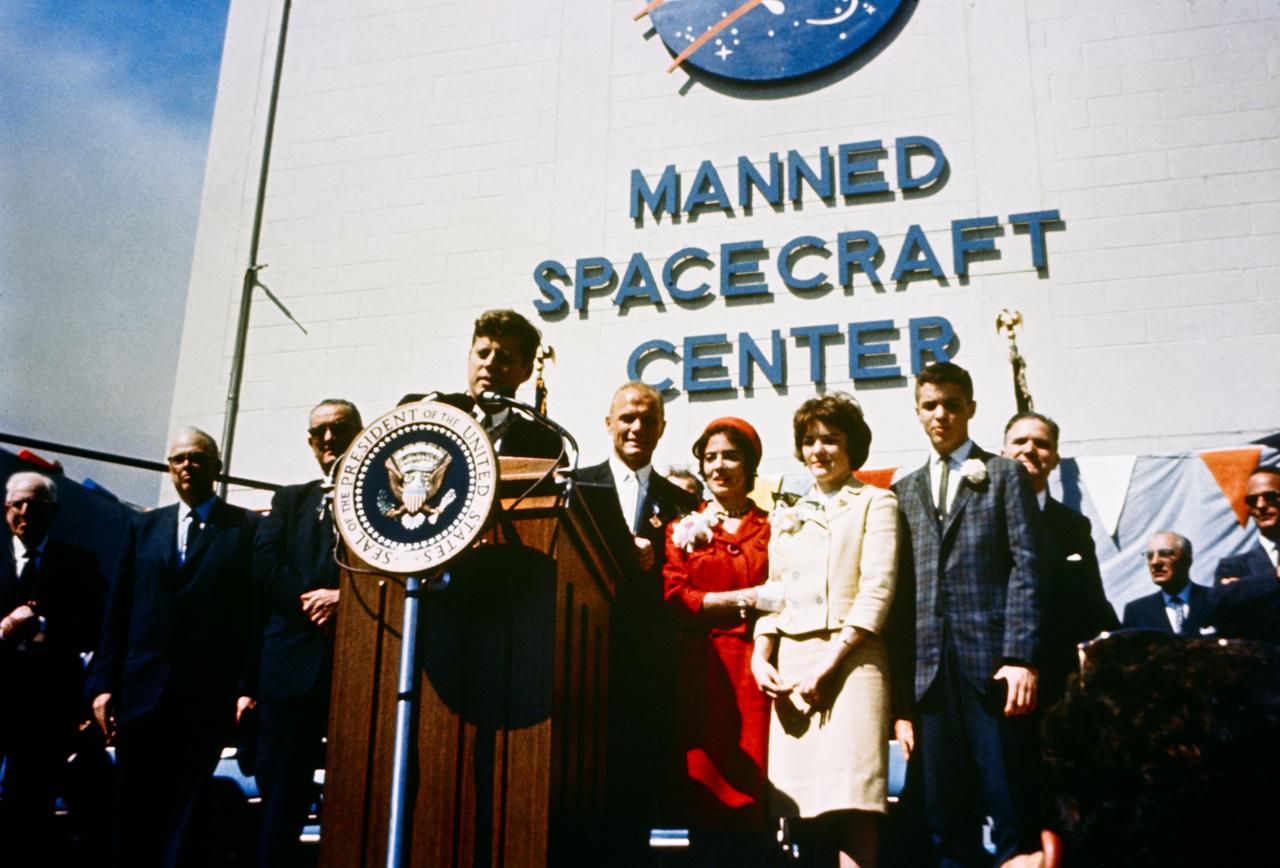
Astronaut John Glenn Jr. is honored by President John F. Kennedy after Glenn's historical first manned orbital flight, Mercury-Atlas 6. The ceremony was held in front of Hangar S at Cape Canaveral Air Force Station. To Glenn's left are his wife, Annie, daughter, Lyn, and his son, David.
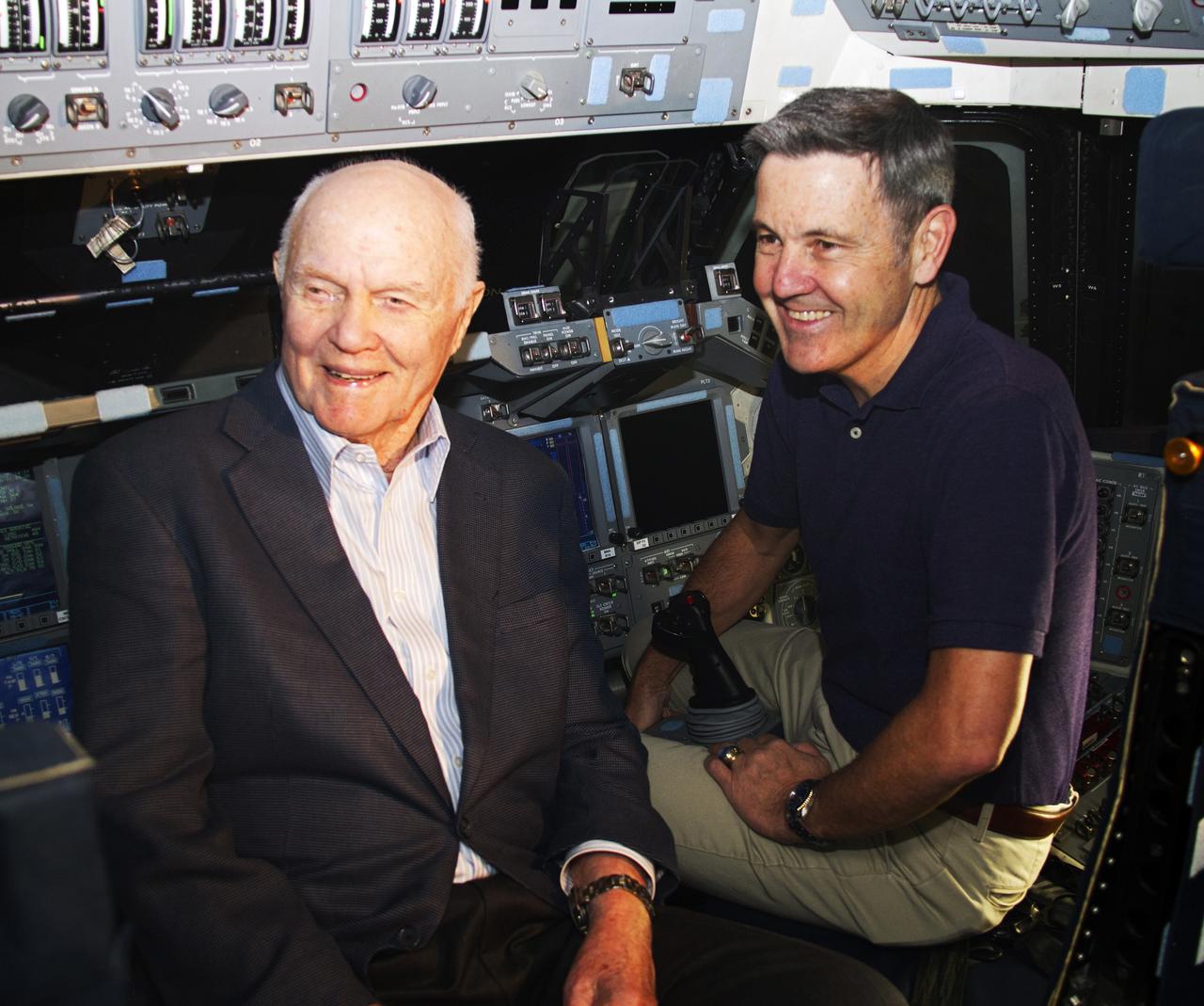
John Glenn and NASA Kennedy Space Center Director Bob Cabana sit in the flight deck of space shuttle Discovery in Bay 1 of the Orbiter Processing Facility at NASA's Kennedy Space Center in Florida. Glenn is at the space center to mark the 50th anniversary of being the first American astronaut to orbit the Earth inside the NASA Mercury Project's Friendship 7 capsule on Feb. 20, 1962. Glenn later returned to space in October 1998 as a payload specialist aboard Discovery's STS-95 mission. Glenn's launch aboard an Atlas rocket took with it the hopes of an entire nation and ushered in a new era of space travel that eventually led to Americans walking on the moon by the end of the 1960s. Glenn soon was followed into orbit by Scott Carpenter, Walter Schirra and Gordon Cooper. Their fellow Mercury astronauts Alan Shepard and Virgil "Gus" Grissom flew earlier suborbital flights. Deke Slayton, a member of NASA's original Mercury 7 astronauts, was grounded by a medical condition until the Apollo-Soyuz Test Project in 1975. Shuttle Discovery currently is being prepared for display at Smithsonian’s National Air and Space Museum, Steven F. Udvar-Hazy Center in Chantilly, Virginia.
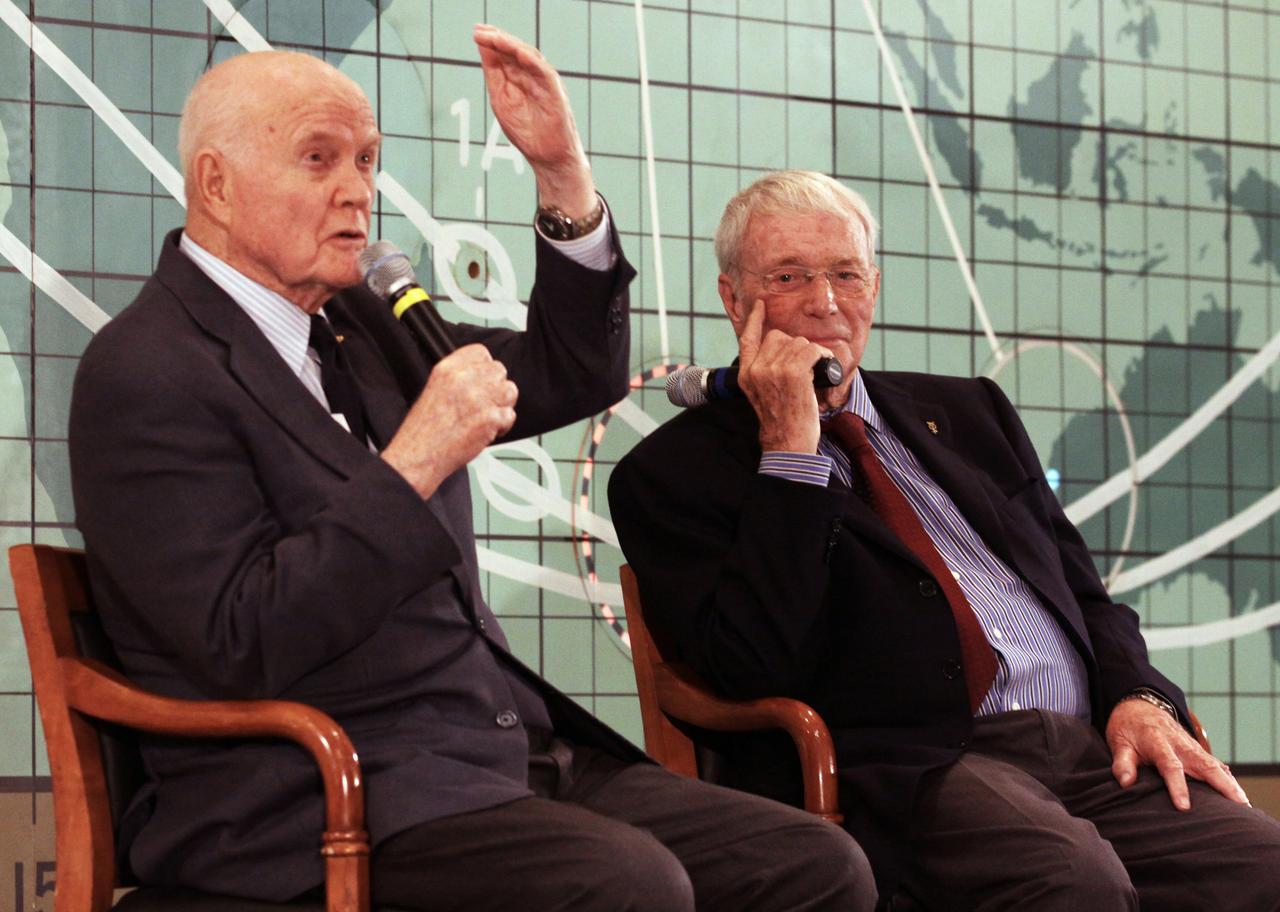
Mercury astronauts John Glenn, left, and Scott Carpenter sit in front of the plot board from the Mercury control center on display at the Kennedy Space Center Visitor Complex. The astronauts, part of the original class of seven astronauts chosen by NASA, were taking part in a question-and-answer session with the media as part of events celebrating 50 years of Americans in orbit, an era which began with John Glenn's Mercury mission MA-6, on Feb. 20, 1962. Glenn's launch aboard an Atlas rocket took with it the hopes of an entire nation and ushered in a new era of space travel that eventually led to Americans walking on the moon by the end of the 1960s. Glenn soon was followed into orbit by Carpenter, Walter Schirra and Gordon Cooper. Their fellow Mercury astronauts Alan Shepard and Virgil "Gus" Grissom flew earlier suborbital flights. Deke Slayton was grounded by a medical condition until the Apollo-Soyuz Test Project in 1975.
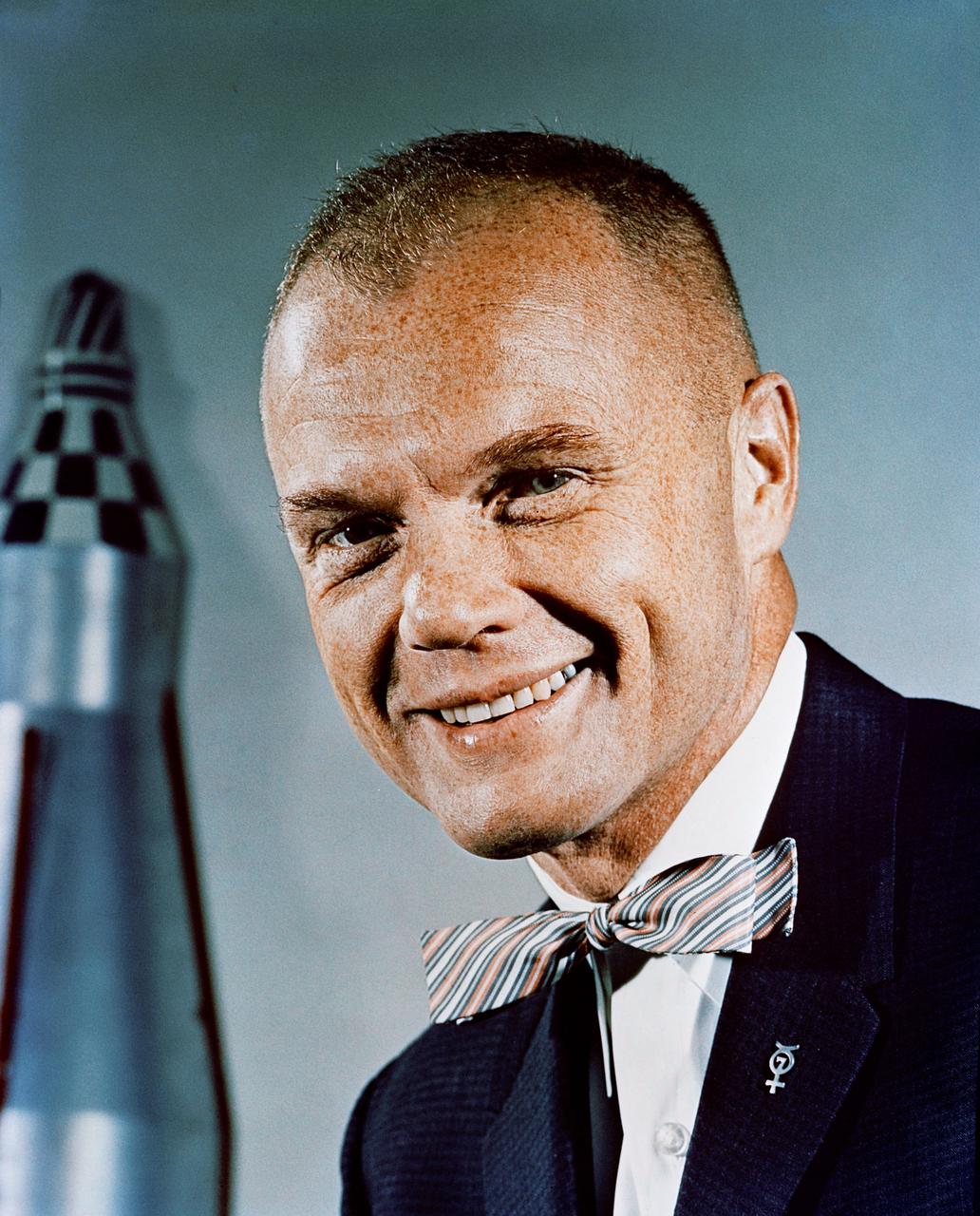
G60-02739 (May 1960) --- Astronaut John H. Glenn Jr.
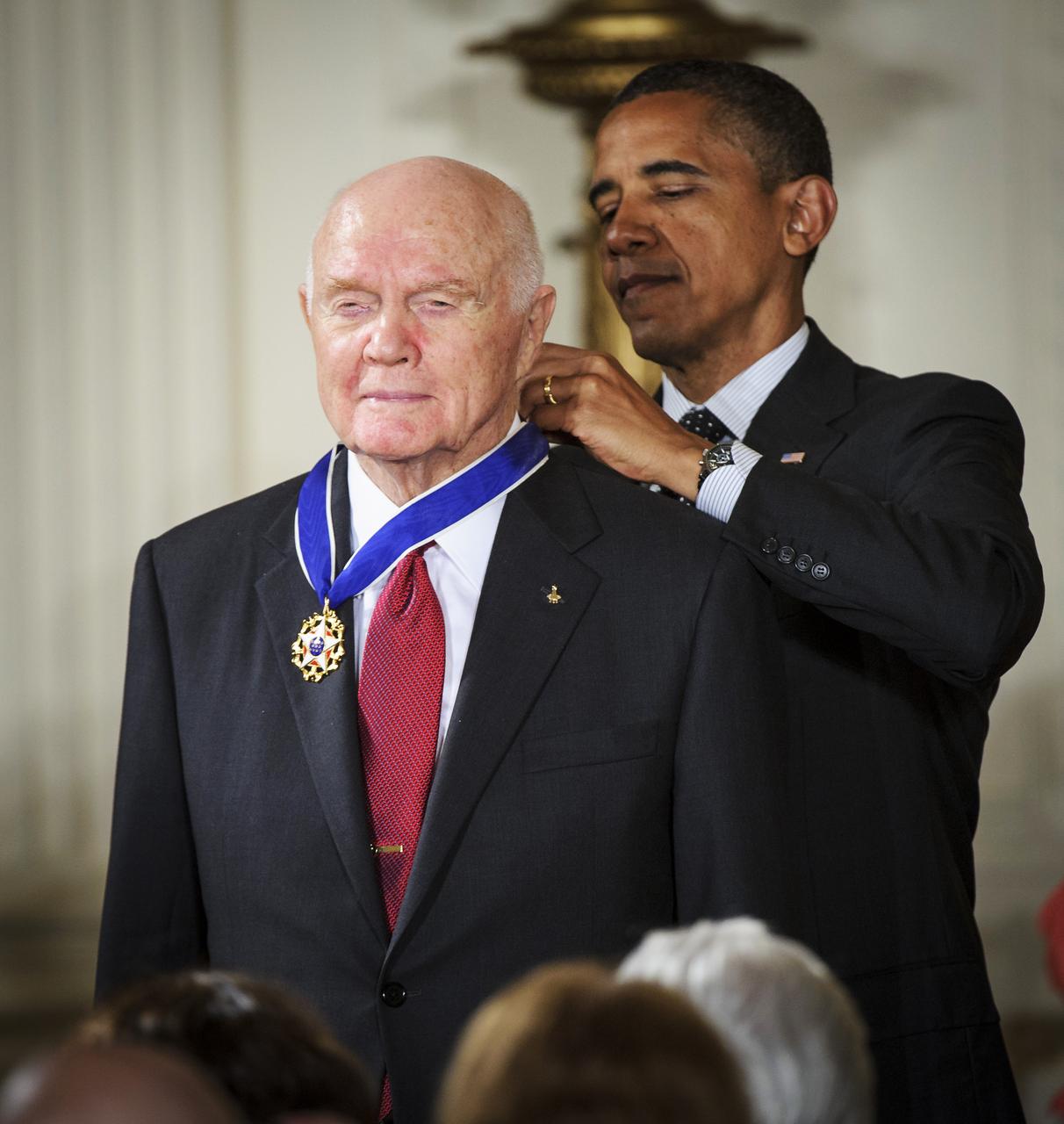
President Barack Obama presents former United States Marine Corps pilot, astronaut and United States Senator John Glenn with a Medal of Freedom, Tuesday, May 29, 2012, during a ceremony at the White House in Washington.
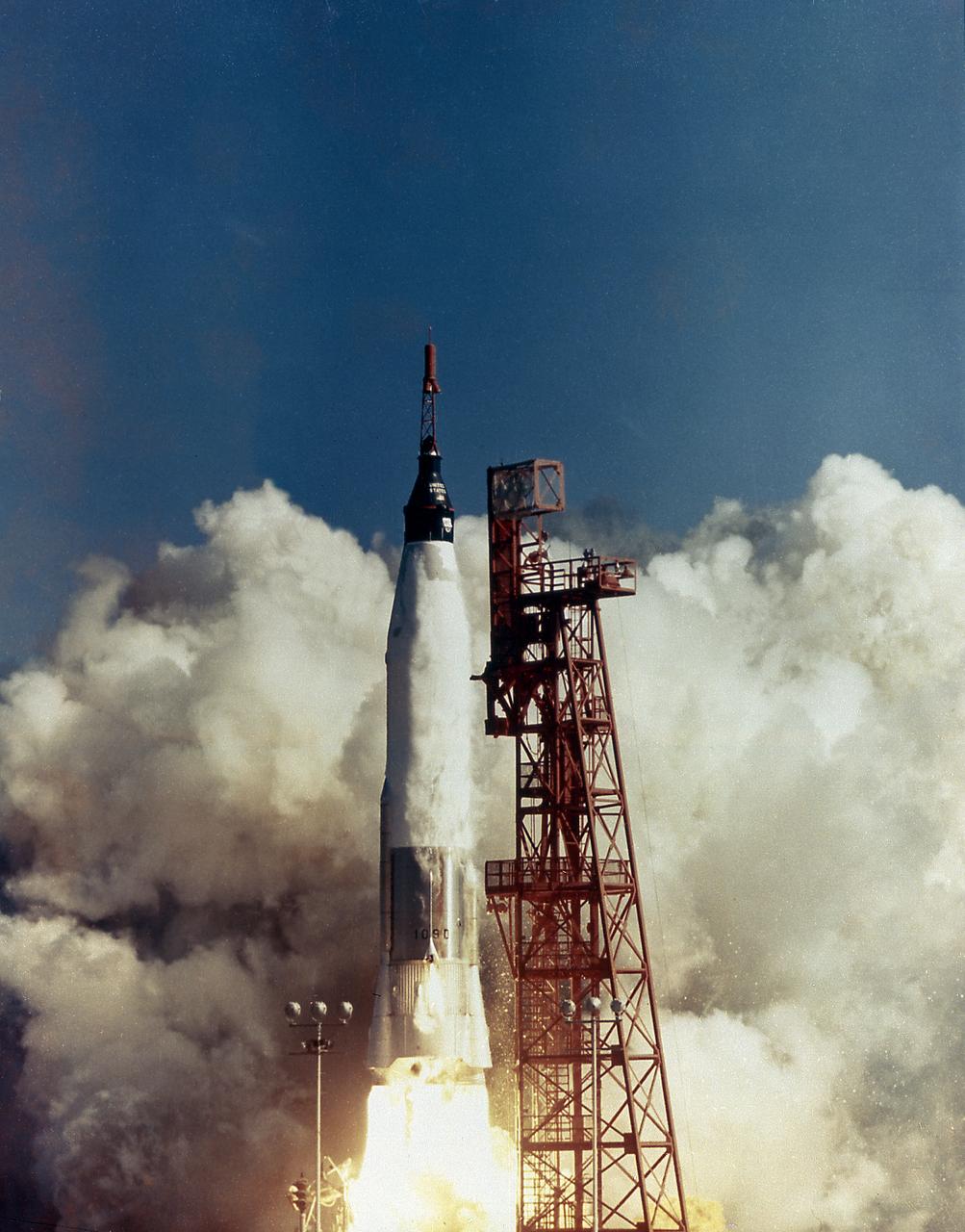
The launch of the MA-6, Friendship 7, on February 20, 1962. Boosted by the Mercury-Atlas vehicle, a modified Atlas Intercontinental Ballistic Missile (ICBM), Friendship 7 was the first U.S. marned orbital flight and carried Astronaut John H. Glenn into orbit. Astronaut Glenn became the first American to orbit the Earth.
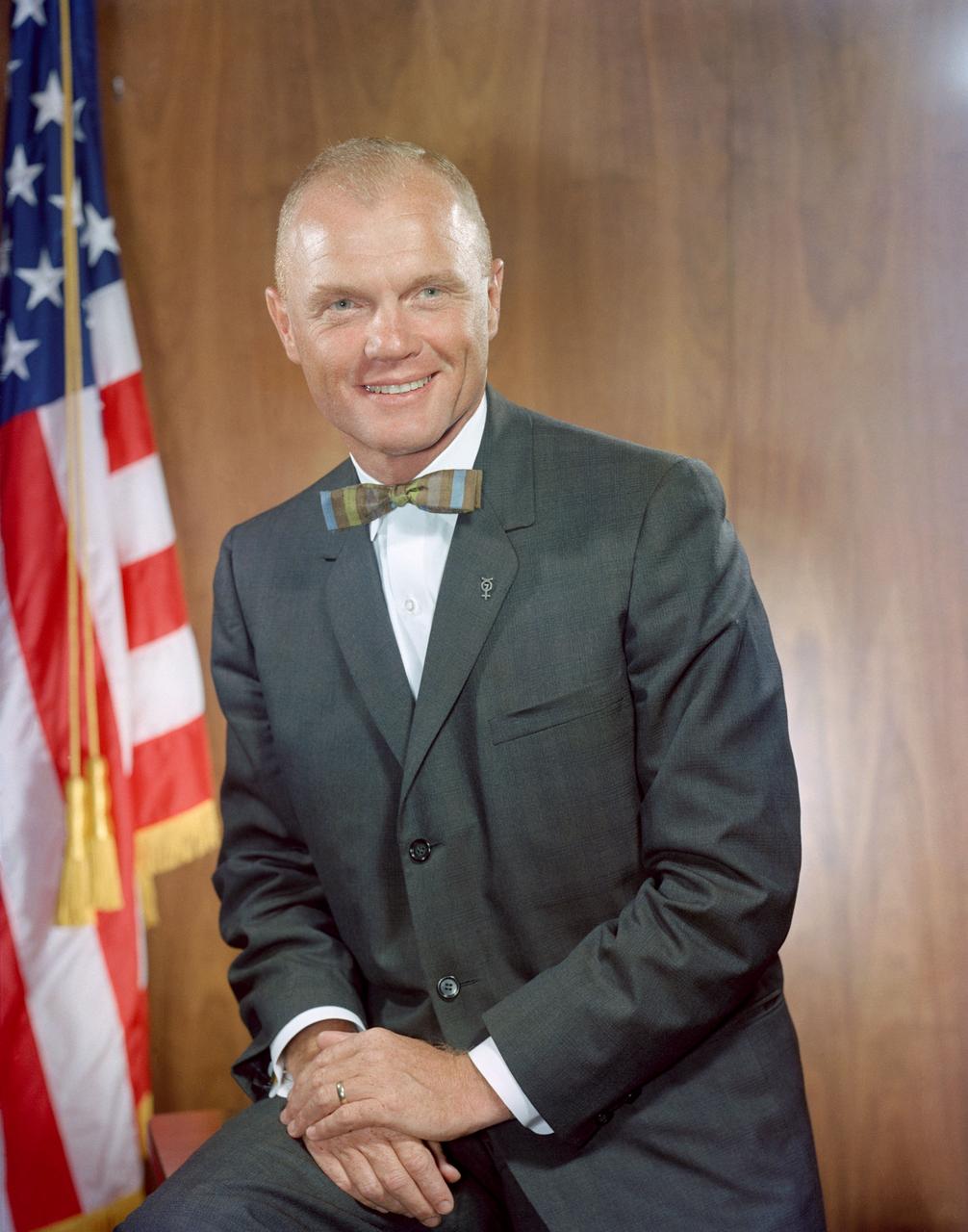
S62-05540 (December 1962) --- Official portrait of astronaut John H. Glenn Jr., the first American to orbit Earth in a Project Mercury spacecraft. Photo credit: NASA
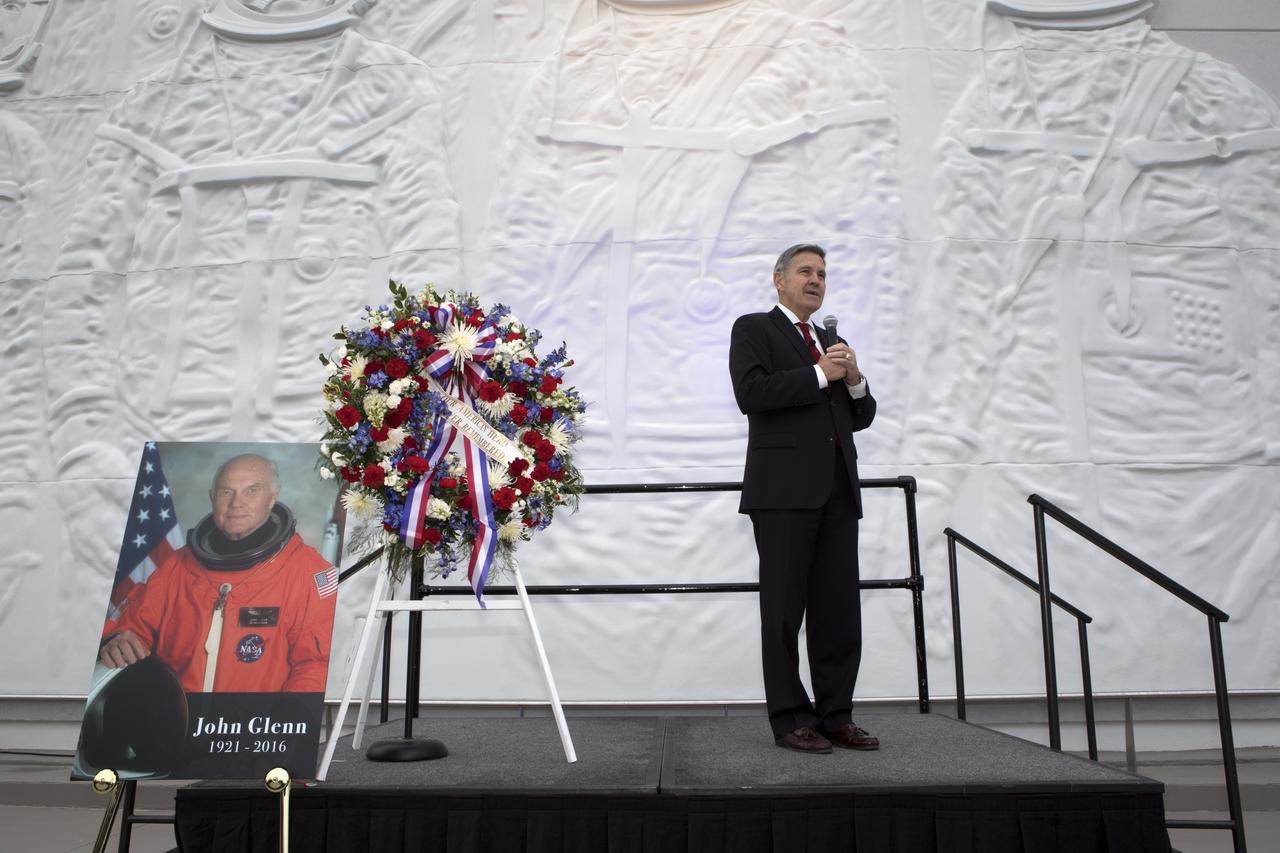
Former astronaut Bob Cabana, director of NASA's Kennedy Space Center in Florida, speaks at the Heroes and Legends exhibit hall at the Kennedy Space Center Visitor Complex during a ceremony remembering astronaut Sen. John Glenn who passed away Dec. 8, 2016 at age 95. Glenn, one of the first seven astronauts NASA chose to fly the first missions of the Space Age, gained worldwide acclaim during his Mercury mission that made him the first American to orbit the Earth. He flew again in 1998 aboard space shuttle Discovery at age 77.
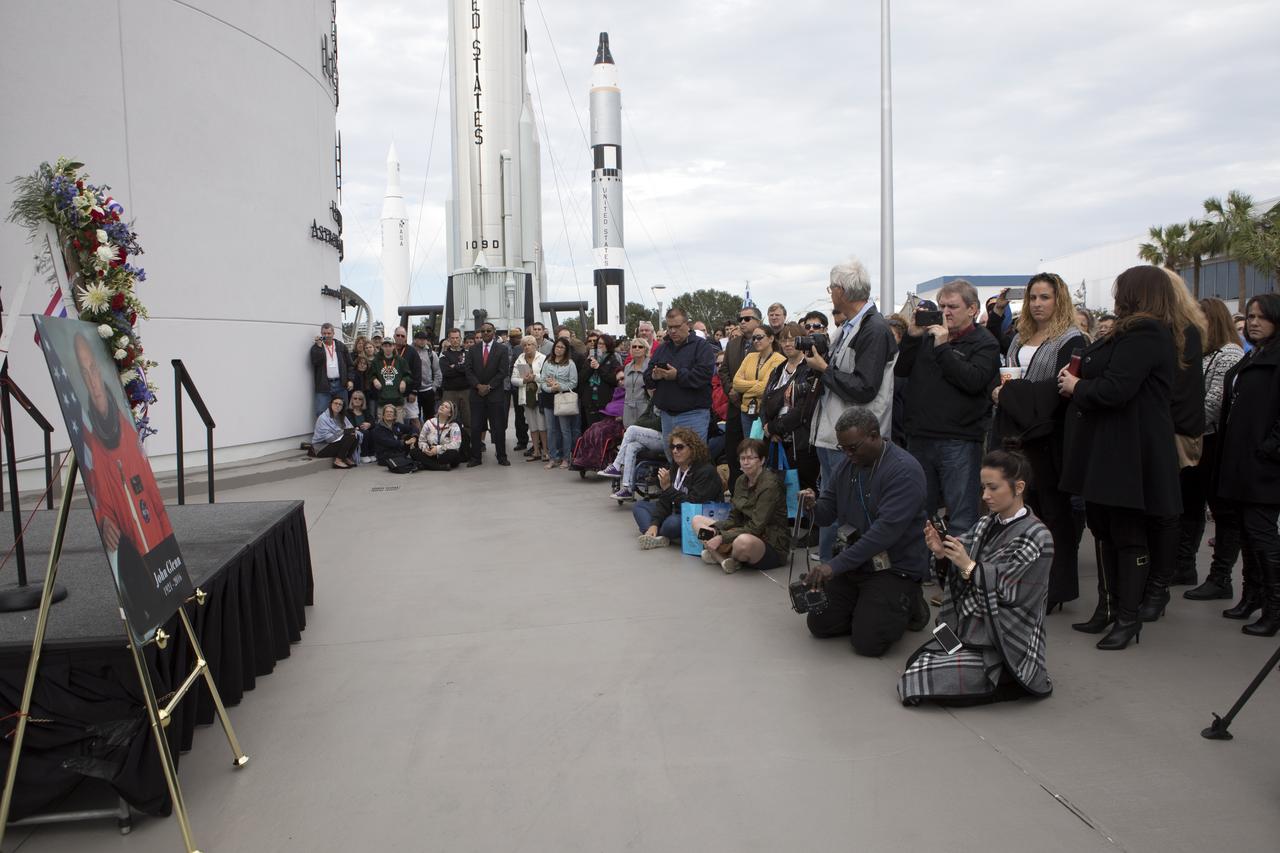
News media members and visitors gather at the Heroes and Legends exhibit hall at the Kennedy Space Center Visitor Complex during a ceremony remembering astronaut Sen. John Glenn who passed away Dec. 8, 2016 at age 95. Glenn, one of the first seven astronauts NASA chose to fly the first missions of the Space Age, gained worldwide acclaim during his Mercury mission that made him the first American to orbit the Earth. He flew again in 1998 aboard space shuttle Discovery at age 77.

Former astronaut Bob Cabana, director of NASA's Kennedy Space Center in Florida, speaks at the Heroes and Legends exhibit hall at the Kennedy Space Center Visitor Complex during a ceremony remembering astronaut Sen. John Glenn who passed away Dec. 8, 2016 at age 95. Glenn, one of the first seven astronauts NASA chose to fly the first missions of the Space Age, gained worldwide acclaim during his Mercury mission that made him the first American to orbit the Earth. He flew again in 1998 aboard space shuttle Discovery at age 77.
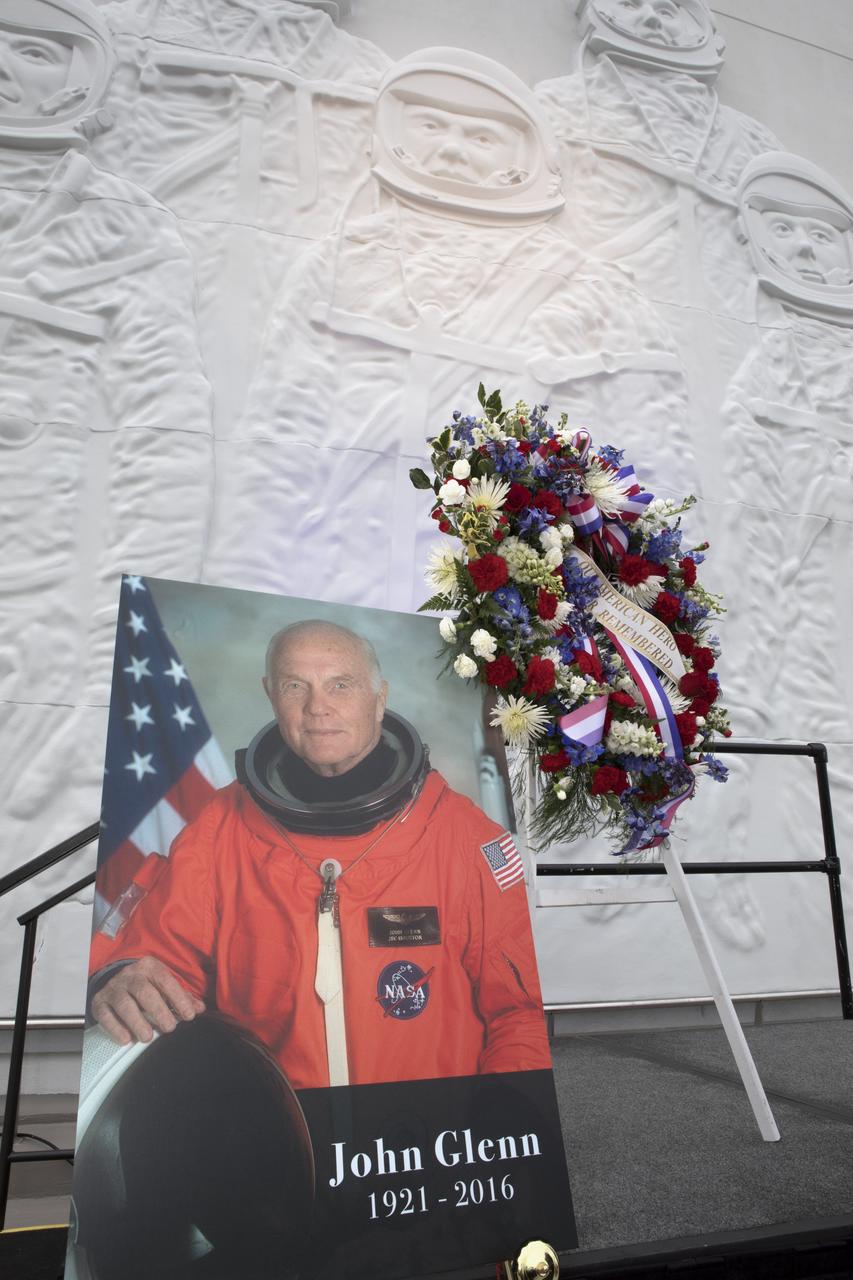
A portrait of Sen. John Glenn and a memorial wreath stand at the Heroes and Legends exhibit hall at the Kennedy Space Center Visitor Complex before a ceremony remembering the iconic astronaut who passed away Dec. 8, 2016 at age 95. Glenn, one of the first seven astronauts NASA chose to fly the first missions of the Space Age, gained worldwide acclaim during his Mercury mission that made him the first American to orbit the Earth. He flew again in 1998 aboard space shuttle Discovery at age 77.
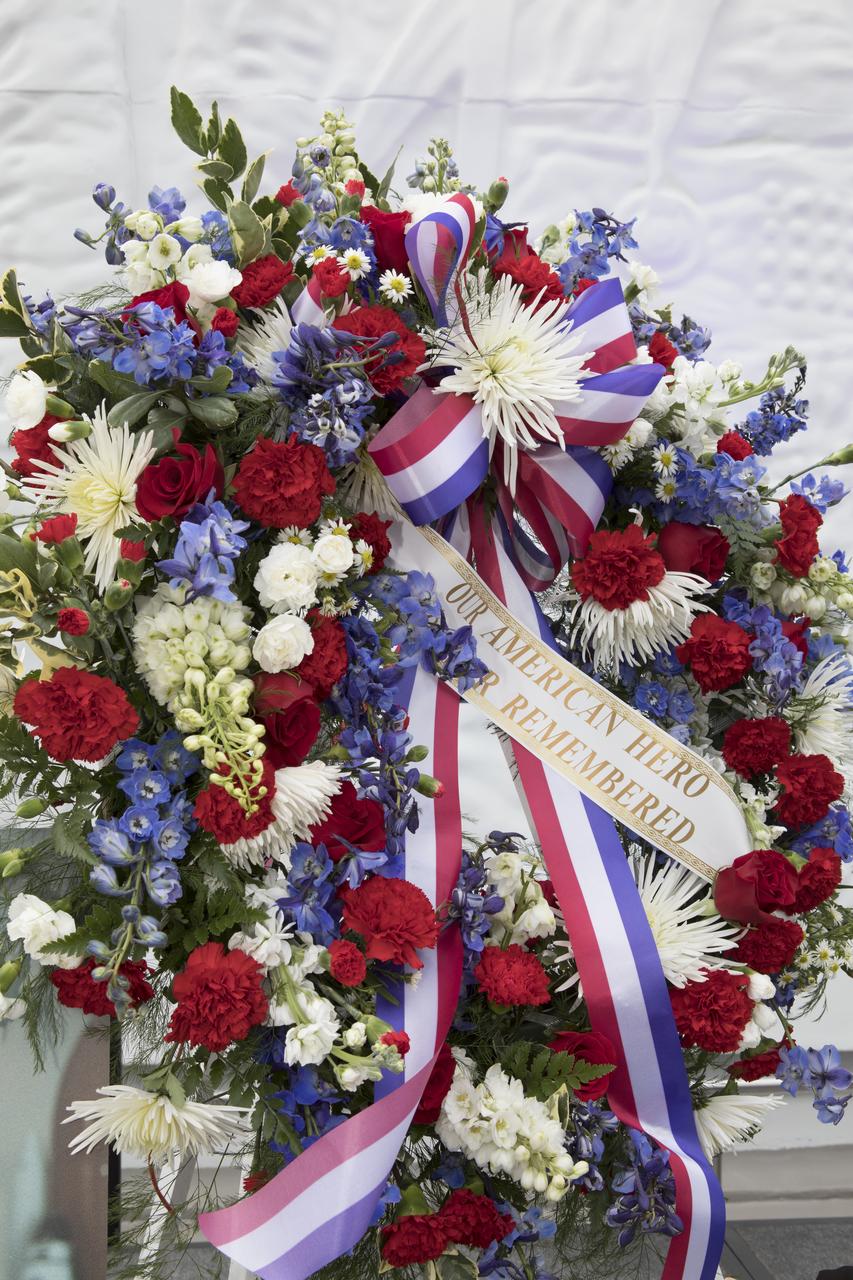
A memorial wreath stands at the Heroes and Legends exhibit hall at the Kennedy Space Center Visitor Complex before a ceremony remembering astronaut Sen. John Glenn, who passed away Dec. 8, 2016 at age 95. Glenn, one of the first seven astronauts NASA chose to fly the first missions of the Space Age, gained worldwide acclaim during his Mercury mission that made him the first American to orbit the Earth. He flew again in 1998 aboard space shuttle Discovery at age 77.
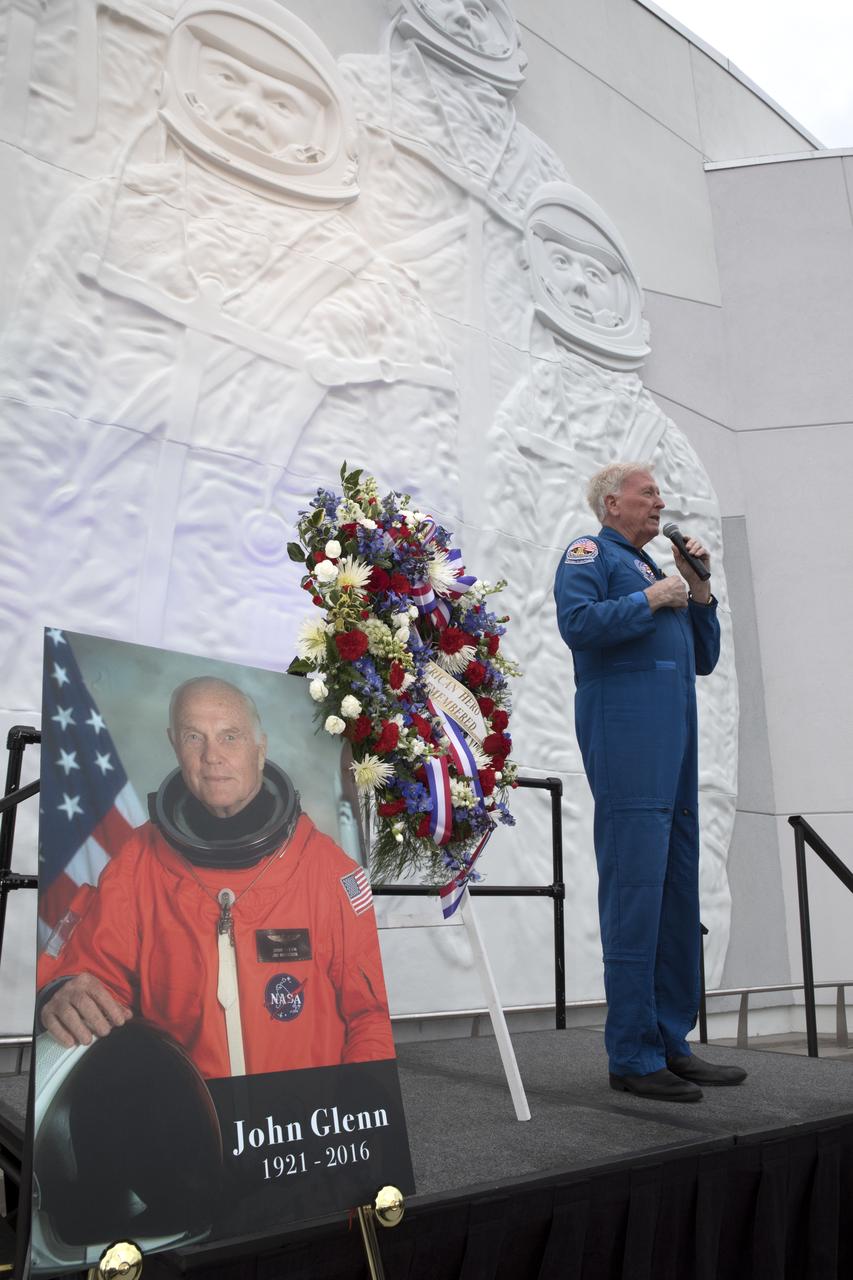
Former space shuttle astronaut Jon McBride speaks at the Heroes and Legends exhibit hall at the Kennedy Space Center Visitor Complex during a ceremony remembering astronaut Sen. John Glenn who passed away Dec. 8, 2016 at age 95. Glenn, one of the first seven astronauts NASA chose to fly the first missions of the Space Age, gained worldwide acclaim during his Mercury mission that made him the first American to orbit the Earth. He flew again in 1998 aboard space shuttle Discovery at age 77.
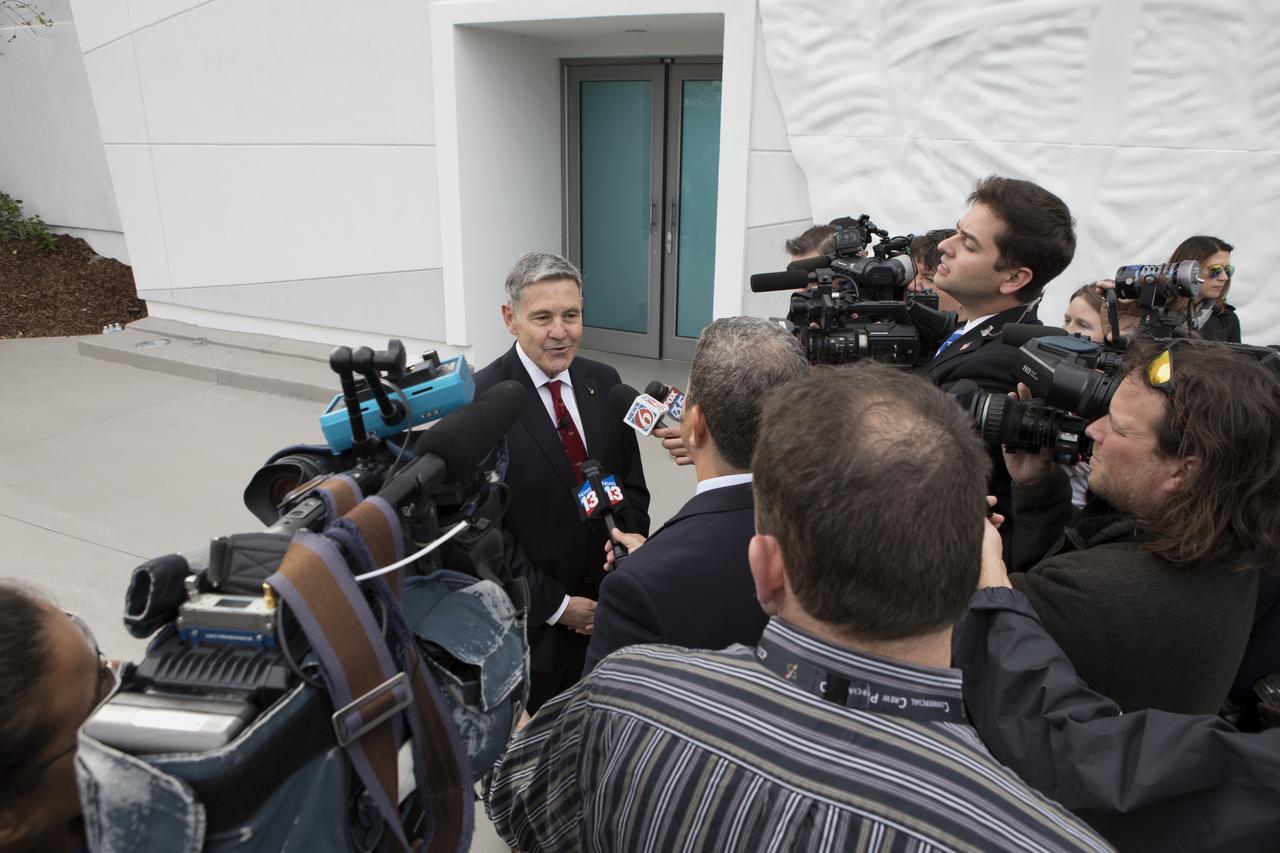
Former astronaut Bob Cabana, director of NASA's Kennedy Space Center in Florida, speaks with news media members at the Heroes and Legends exhibit hall at the Kennedy Space Center Visitor Complex following a ceremony remembering astronaut Sen. John Glenn, who passed away Dec. 8, 2016 at age 95. Glenn, one of the first seven astronauts NASA chose to fly the first missions of the Space Age, gained worldwide acclaim during his Mercury mission that made him the first American to orbit the Earth. He flew again in 1998 aboard space shuttle Discovery at age 77.
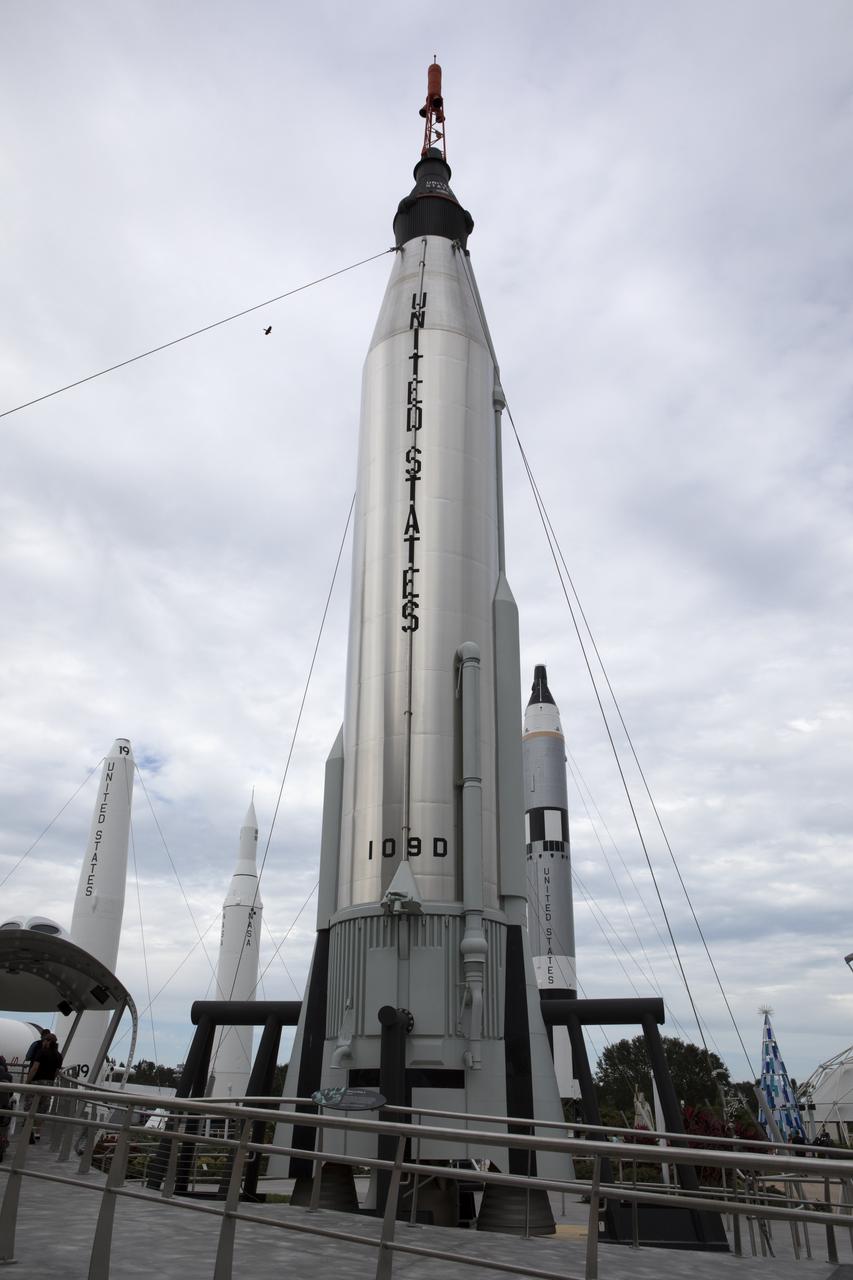
An Atlas rocket and Mercury capsule like the ones that carried Sen. John Glenn into Earth orbit in February 1962 stand in the Rocket Garden at the Kennedy Space Center Visitor Complex adjacent to the Heroes and Legends exhibit hall where Glenn was remembered during a ceremony Dec. 9, 2016. Glenn, one of the Mercury Seven astronauts NASA chose to fly the first missions of the Space Age, passed away on Dec. 8, 2016, at age 95. He gained worldwide acclaim during his Mercury mission that made him the first American to orbit the Earth. He flew again in 1998 aboard space shuttle Discovery at age 77.
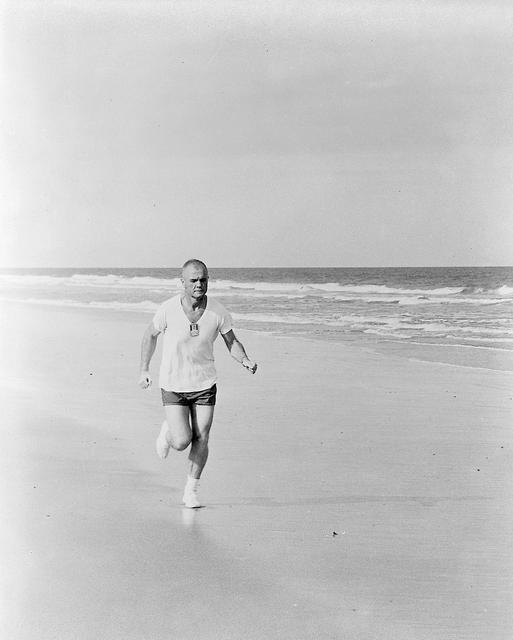
S62-00470 (1962) --- Astronaut John H. Glenn Jr., pilot of the Mercury-Atlas 6 mission, participates in a strict physical training program, as he exemplifies by frequent running. Photo credit: NASA
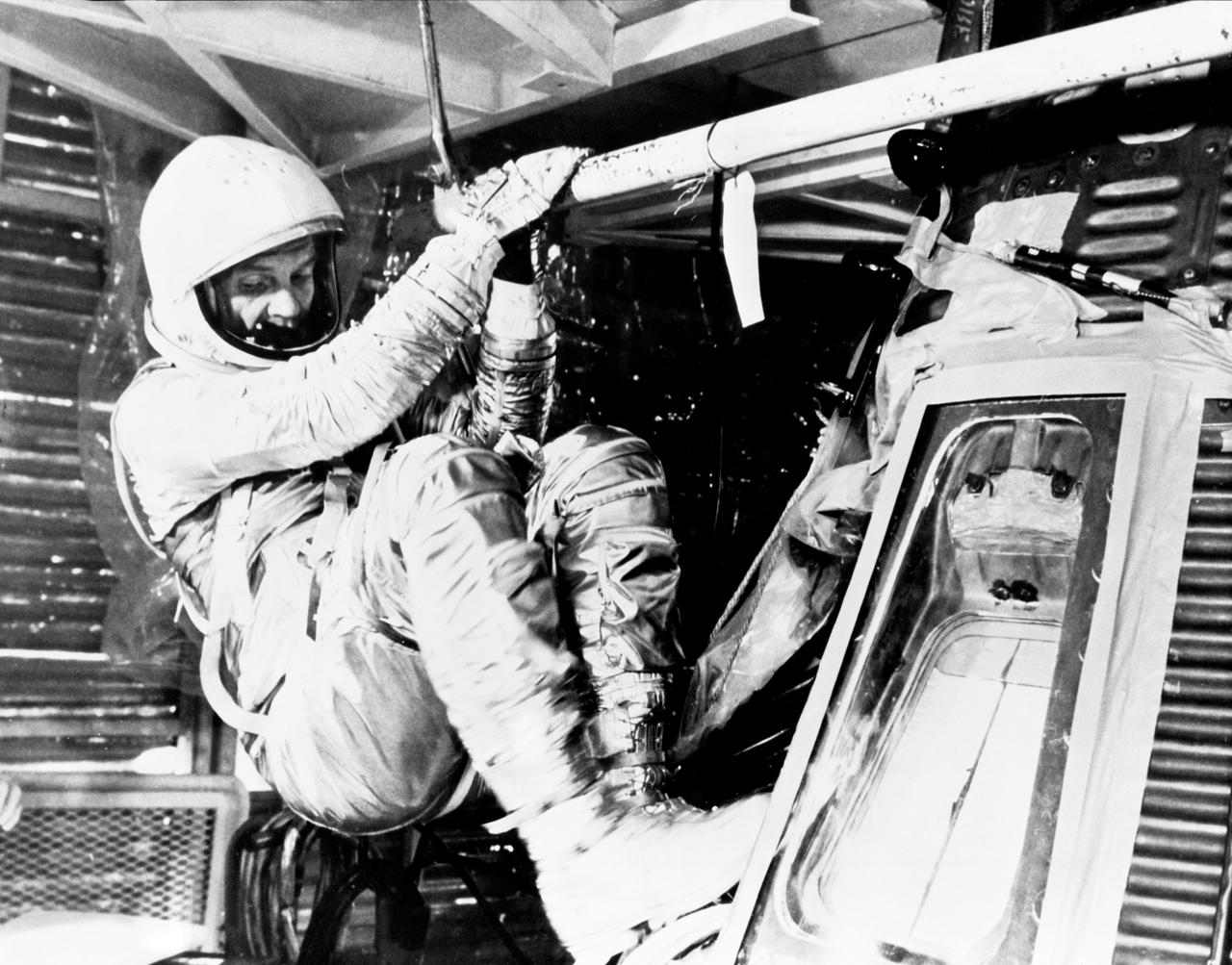
S62-00993 (1962) --- Astronaut John H. Glenn Jr., pilot of the Mercury-Atlas 6 (MA-6) mission, practices insertion into the Mercury "Friendship 7" spacecraft during MA-6 preflight training activity at Cape Canaveral, Florida. He is wearing the full pressure suit and helmet. Photo credit: NASA

S61-04546 (1961) --- Astronaut John H. Glenn Jr., pilot of the Mercury-Atlas 6 (MA-6) "Friendship 7" mission, takes part in spacecraft systems briefing during preflight activity at Cape Canaveral, Florida. Photo credit: NASA
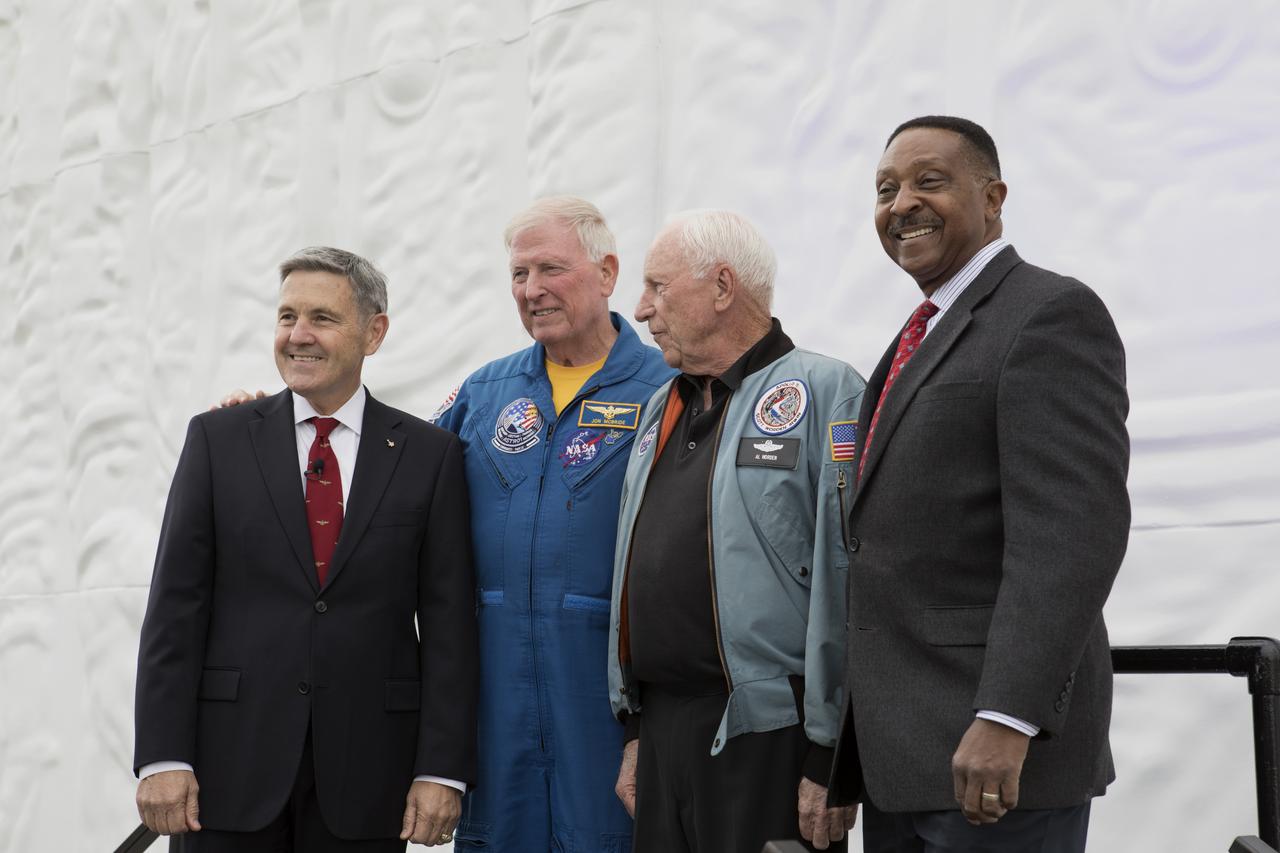
Former astronauts Bob Cabana, director of NASA's Kennedy Space Center in Florida, from left, Jon McBride, Al Worden and Winston Scott pose outside the Heroes and Legends exhibit hall at the Kennedy Space Center Visitor Complex following a ceremony remembering astronaut Sen. John Glenn, who passed away Dec. 8, 2016 at age 95. Glenn, one of the first seven astronauts NASA chose to fly the first missions of the Space Age, gained worldwide acclaim during his Mercury mission that made him the first American to orbit the Earth. He flew again in 1998 aboard space shuttle Discovery at age 77.
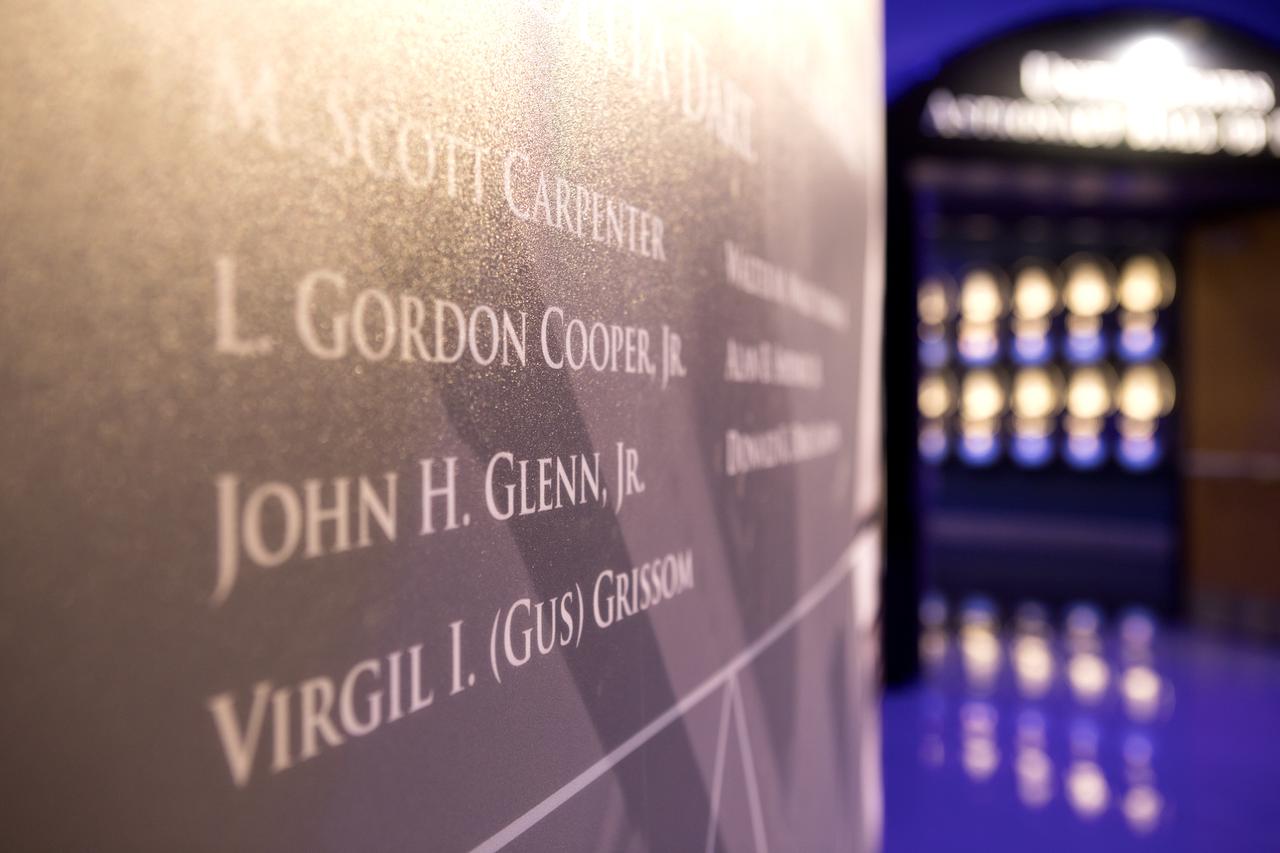
A plaque inside the Heroes and Legends exhibit hall at the Kennedy Space Center Visitor Complex shows the name of astronaut Sen. John Glenn. Glenn, who passed away Dec. 8, 2016 at age 95, was the last surviving member of NASA's original astronaut class. He gained worldwide acclaim during his Mercury mission that made him the first American to orbit the Earth. He flew again in 1998 aboard space shuttle Discovery at age 77.
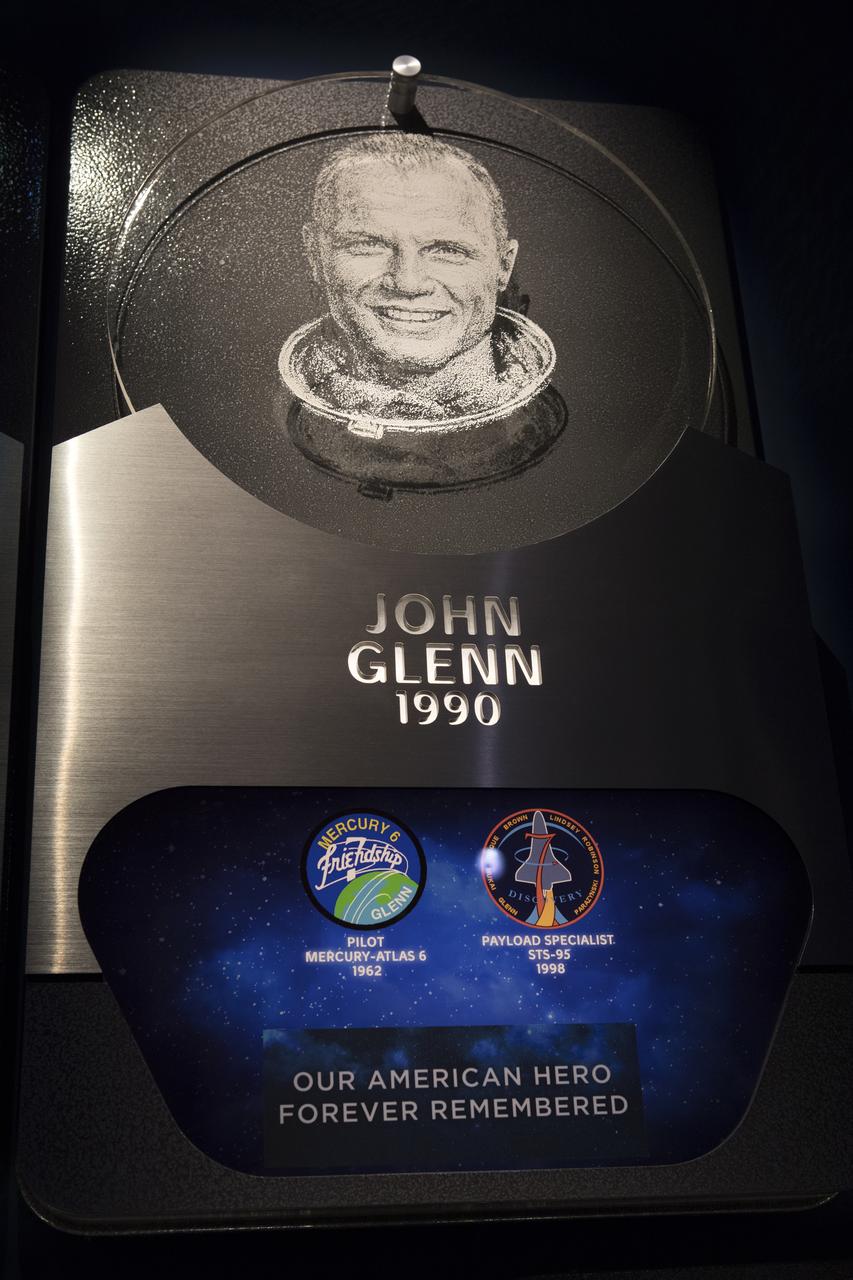
A plaque inside the Heroes and Legends exhibit hall at the Kennedy Space Center Visitor Complex shows astronaut Sen. John Glenn, along with his mission insignias for Friendship 7 and STS-95, the two flights he made into space. Glenn, who passed away Dec. 8, 2016 at age 95, was the last surviving member of NASA's original astronaut class. He gained worldwide acclaim during his Mercury mission that made him the first American to orbit the Earth. He flew again in 1998 aboard space shuttle Discovery at age 77.
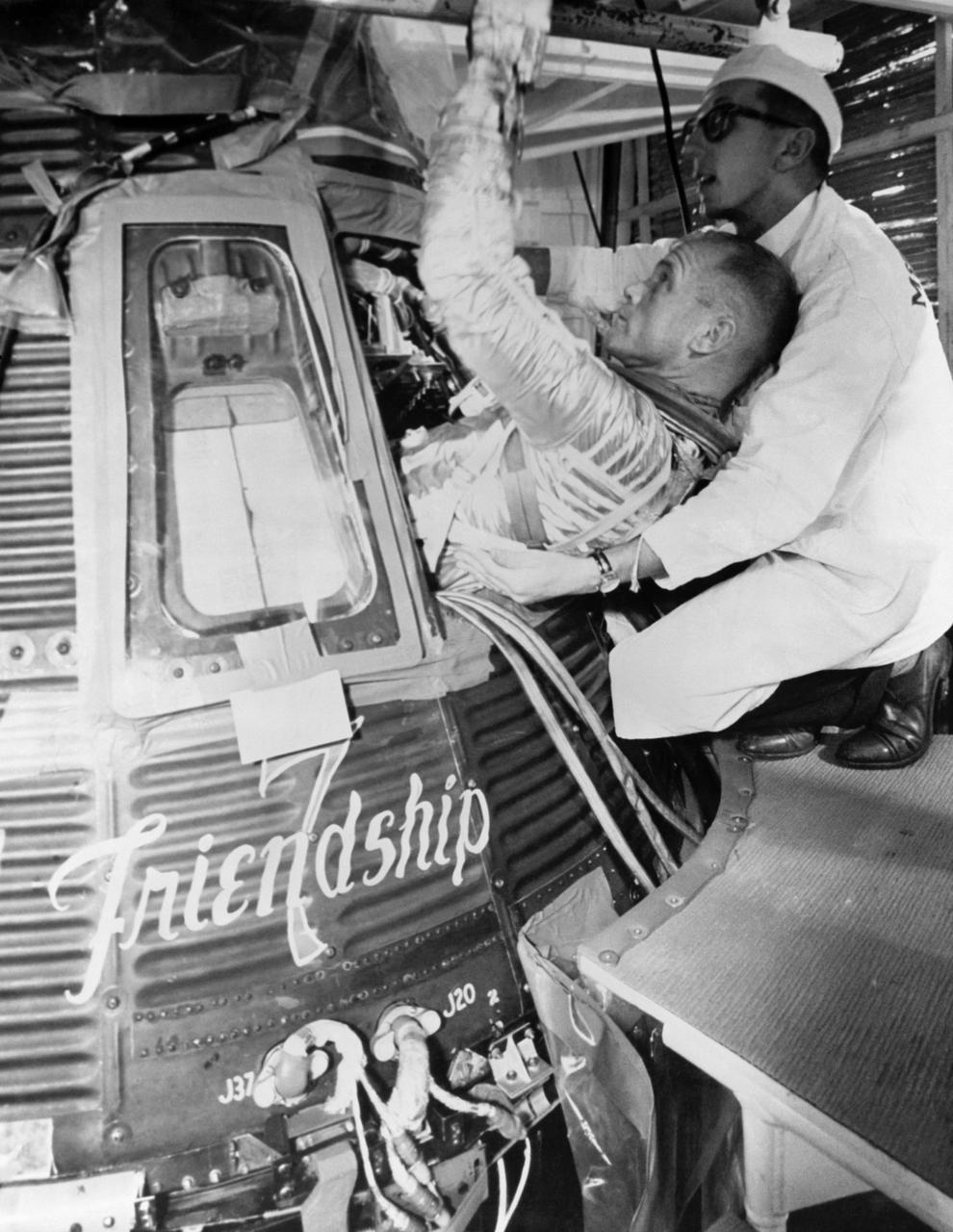
S62-00994 (1962) --- Astronaut John H. Glenn Jr., pilot of the Mercury-Atlas 6 mission, practices insertion into the Mercury "Friendship 7? spacecraft, with help of a McDonnell Aircraft Corporation technician, during MA-6 preflight training activity at Cape Canaveral, Florida. He is wearing the full pressure suit. Photo credit: NASA
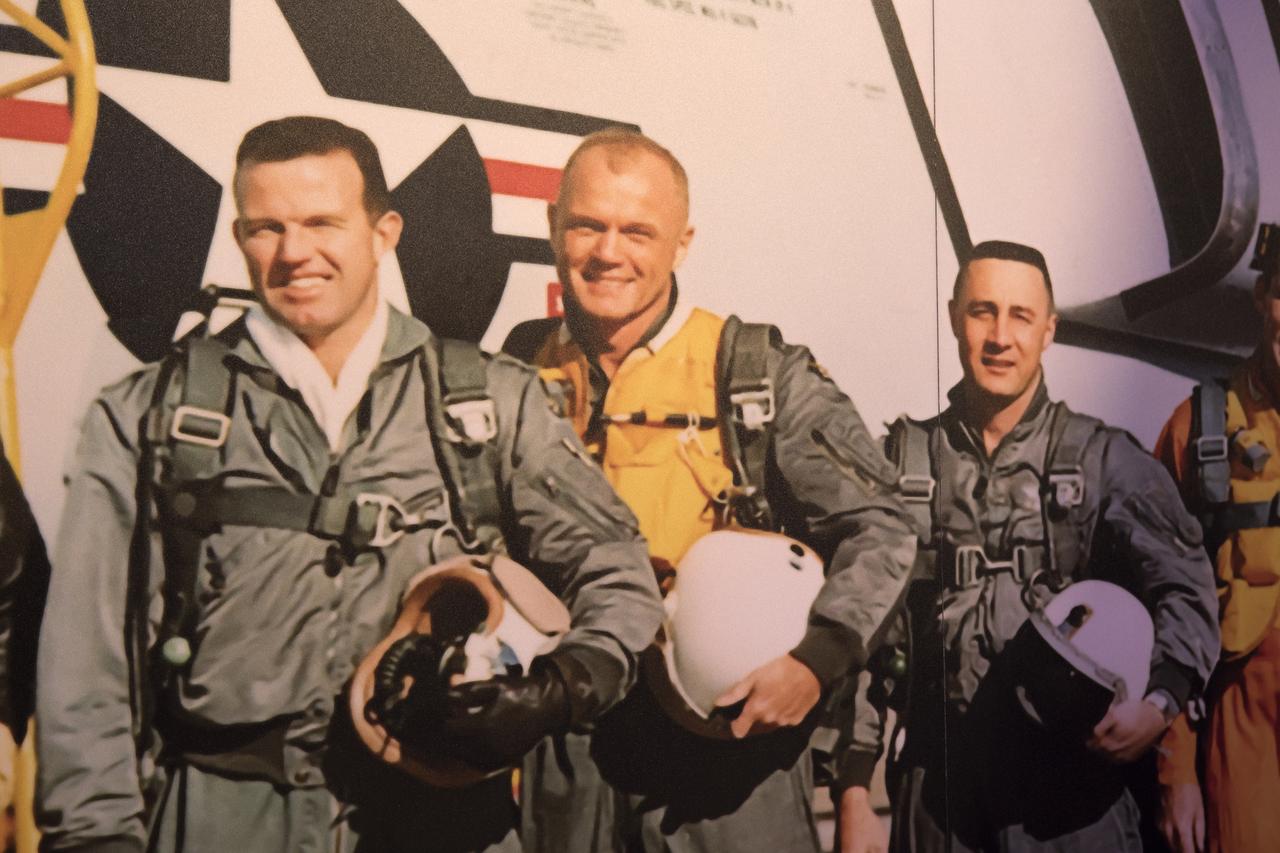
A life-size photo inside the Heroes and Legends exhibit hall at the Kennedy Space Center Visitor Complex shows astronaut Sen. John Glenn, center, with fellow Mercury Seven astronauts Gordon Cooper, left, and Gus Grissom. Glenn, who passed away Dec. 8, 2016 at age 95. Glenn, was the last surviving member of NASA's original astronaut class. He gained worldwide acclaim during his Mercury mission that made him the first American to orbit the Earth. He flew again in 1998 aboard space shuttle Discovery at age 77.
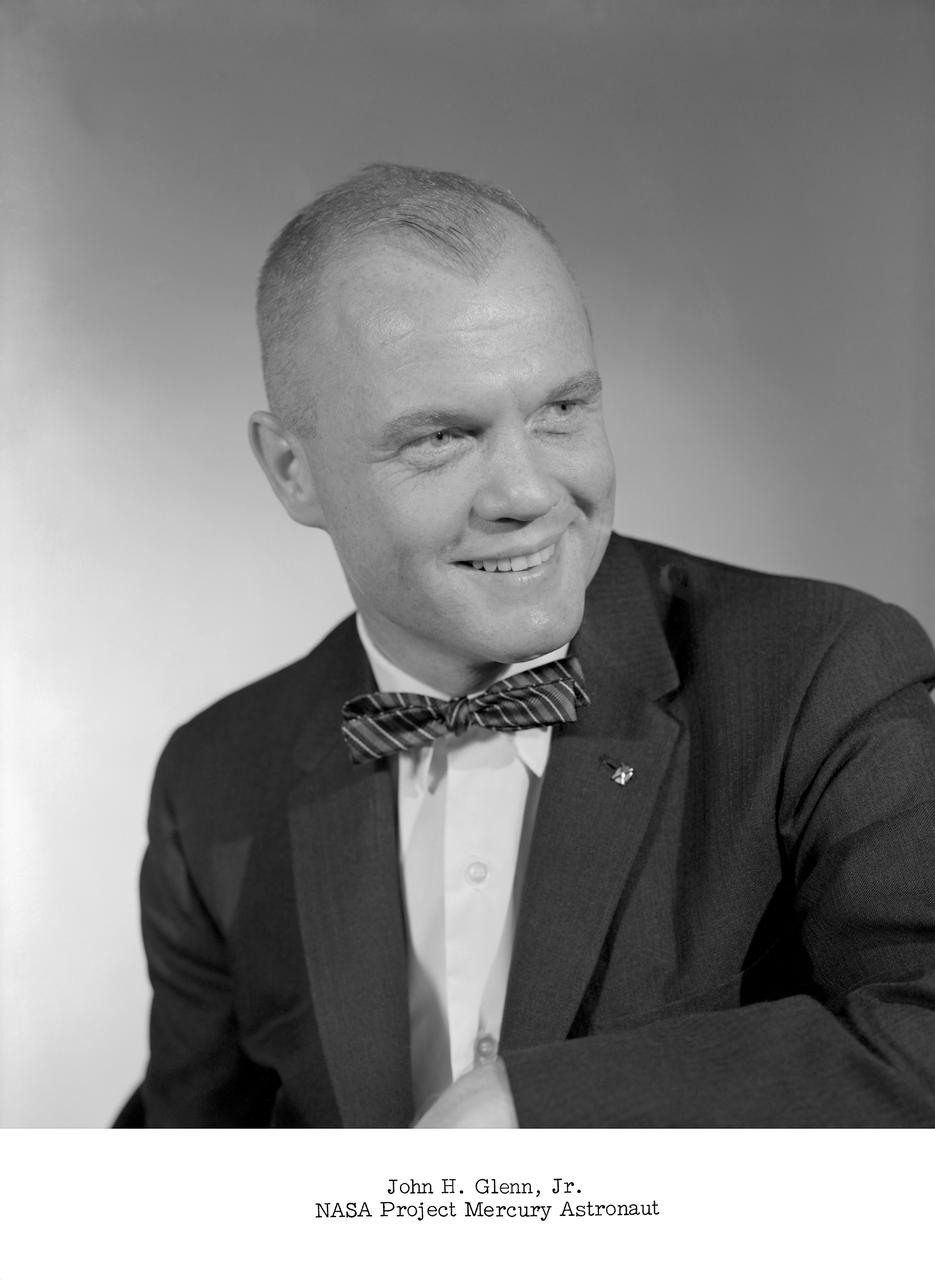
NASA Project Mercury astronaut.
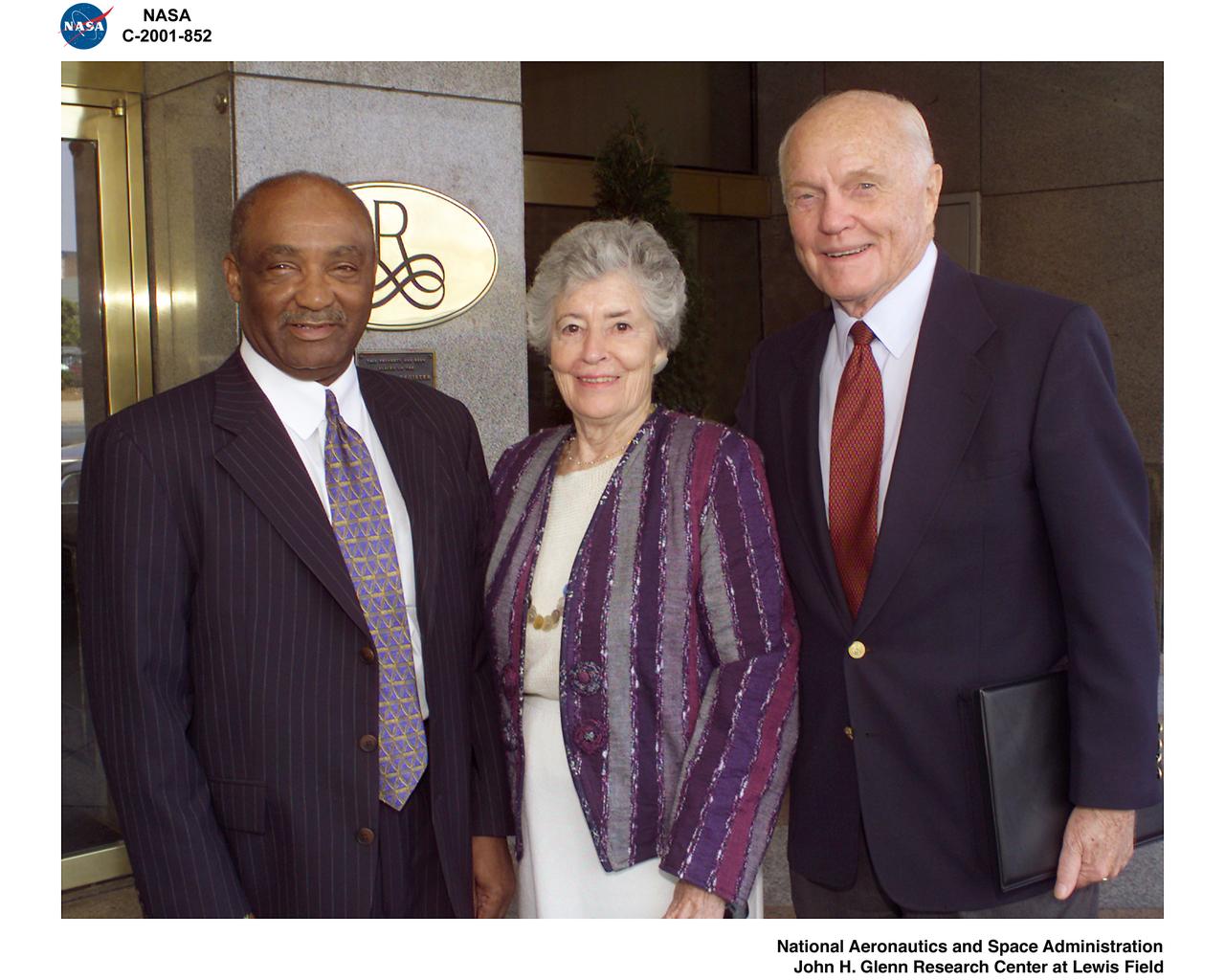
NASA JOHN H GLENN RESEARCH CENTER DIRECTOR DONALD CAMPBELL - ANNIE GLENN - JOHN GLENN AT THE GREATER CLEVELAND GROWTH ASSOCIATION MEETING
Astronauts at 1959 Langley Inspection. Astronauts at 1959 Langley Inspection: The seven are shown in the Unitary Plan Wind Tunnel NASA Langley. The astronauts left to right: John H. Glenn Jr., M.Scot Carpenter, Virgil I.Grissom, Walter M. Schirra Jr., L. Gordon Cooper, Alan B. Shepard Jr.and Donald K. Slayton.
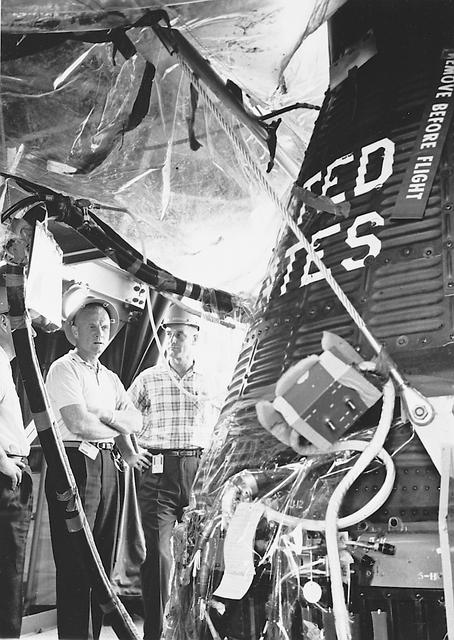
Astronauts John H. Glenn Jr. (center), and John Peterson (right), in gantry viewing Mercury Spacecraft during assembly. CAPE CANAVERAL, FL B&W
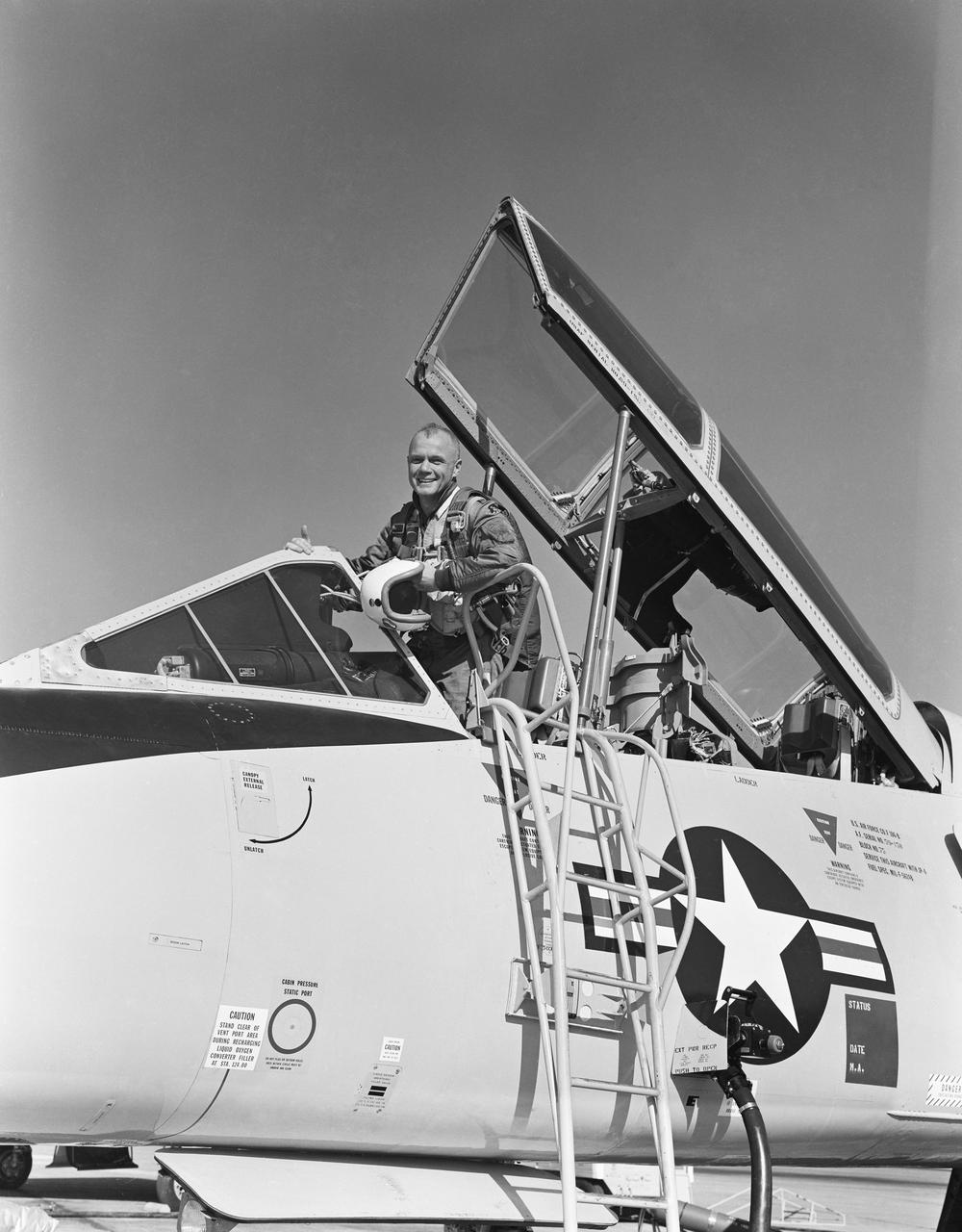
M61-00007 (1961) --- Astronaut John H. Glenn Jr. in the cockpit of a T-106. Photo credit: NASA
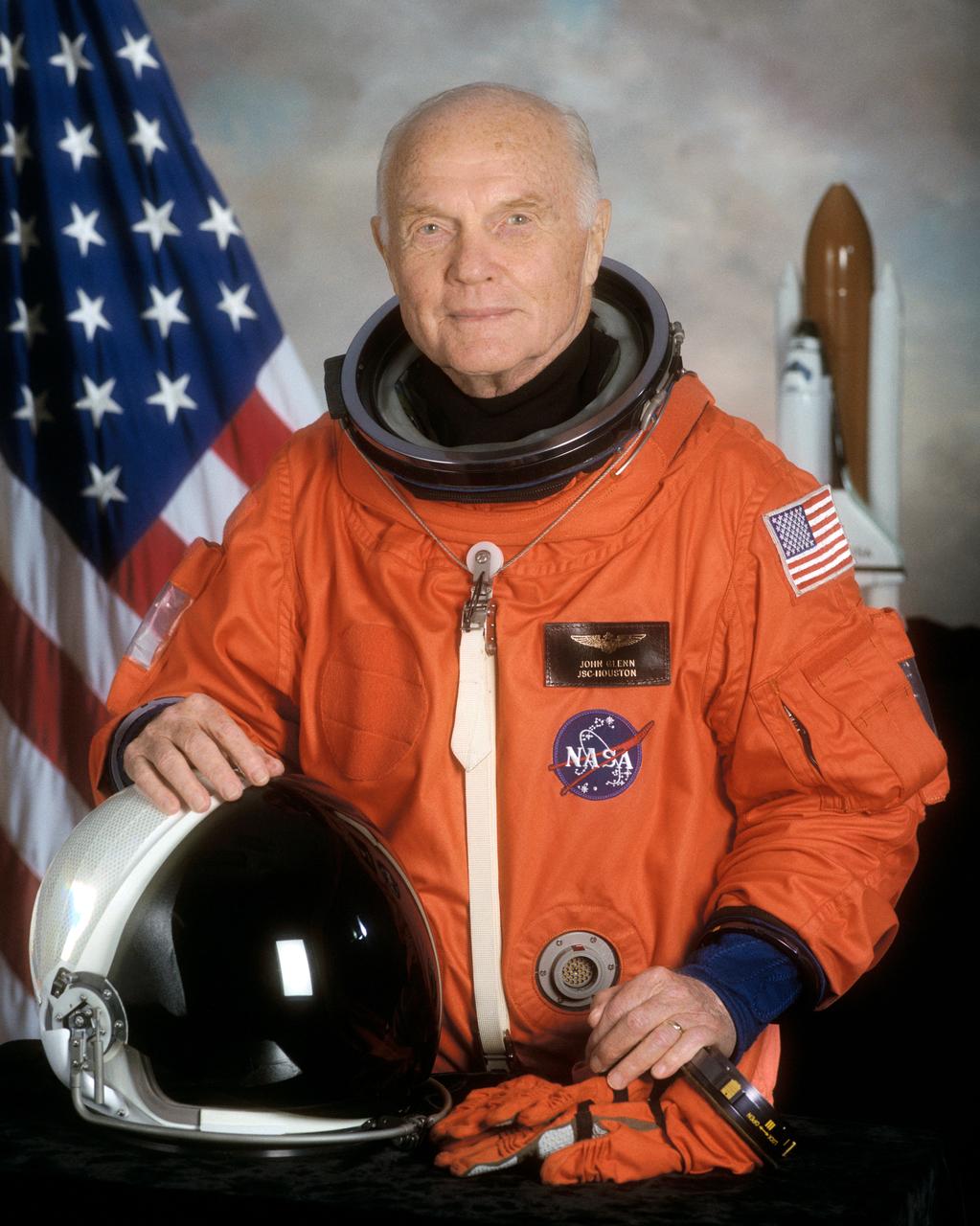
S98-06862 (May 1998) --- Senator John H. Glenn Jr., (Democrat-Ohio); STS-95 payload specialist.
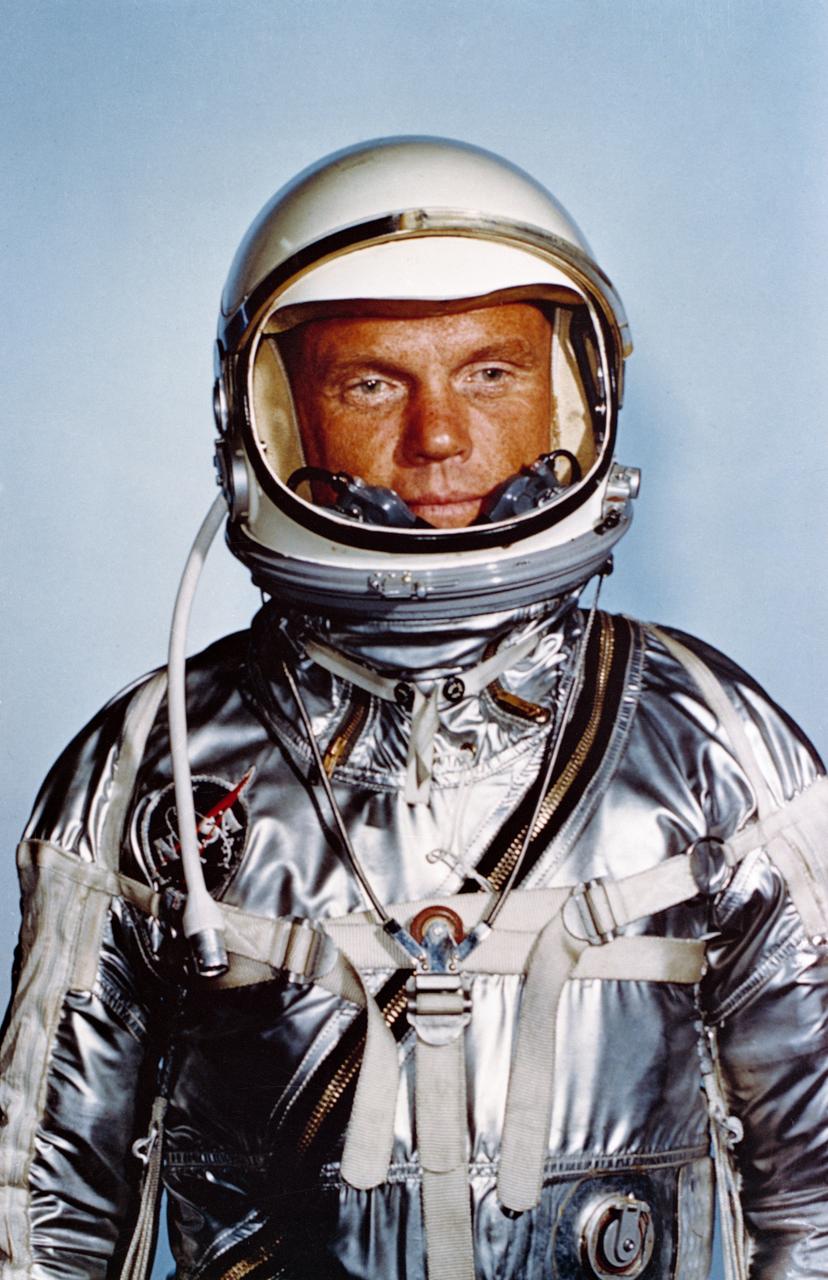
S87-41328 (February 1962) --- Astronaut John H. Glenn Jr., Mercury-Atlas 6 (MA-6) pilot. EDITOR'S NOTE: Astronaut Glenn was the first American to orbit Earth. Photo credit: NASA
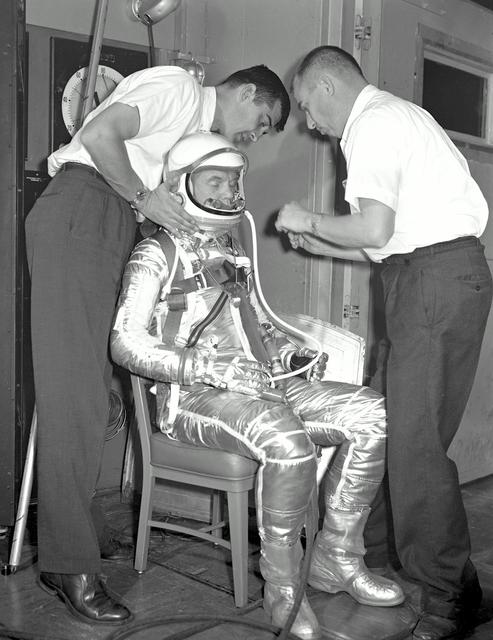
G60-02424 (1960) --- John H. Glenn Jr., one of the seven recently selected Mercury astronauts, participates in a suit-fitting session. Photo credit: NASA
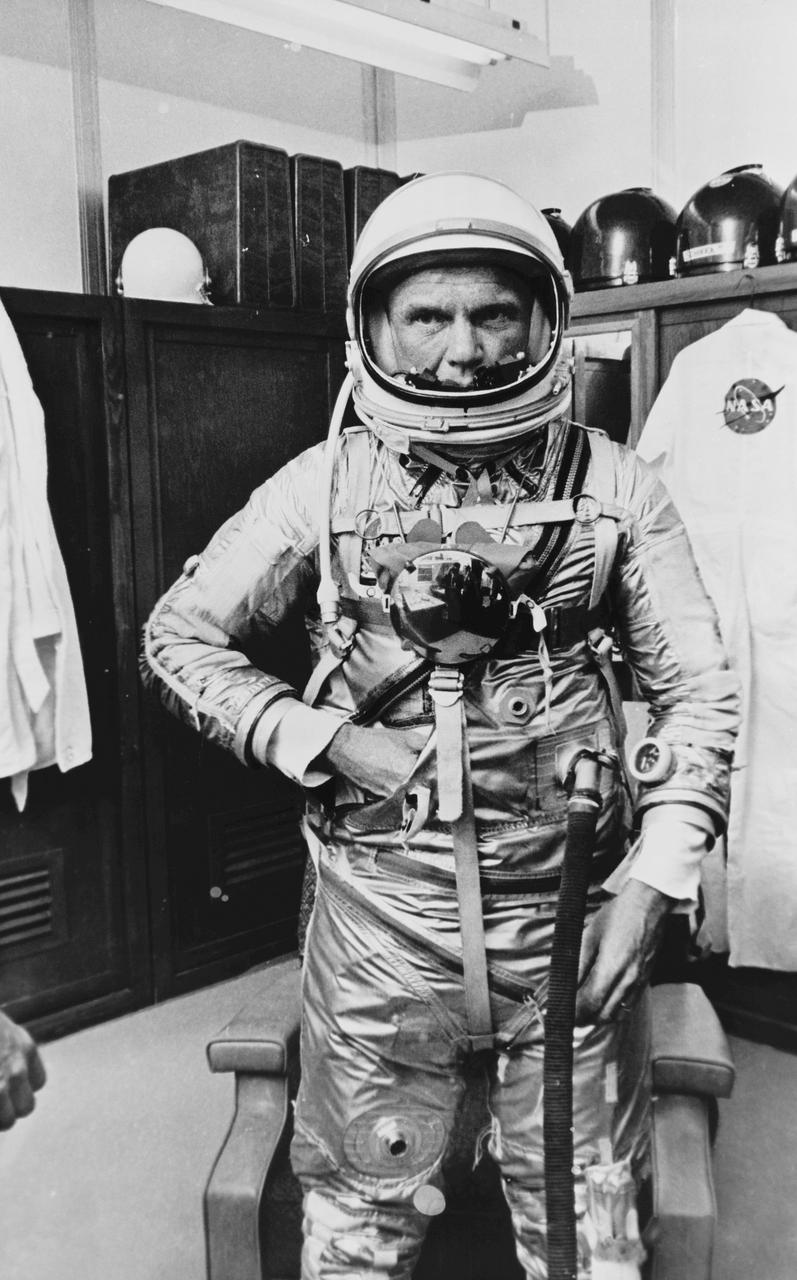
S62-00961 (20 Feb. 1962) --- Mercury astronaut John H. Glenn Jr., suited in full Mercury suit, prepares for launch. Photo credit: NASA
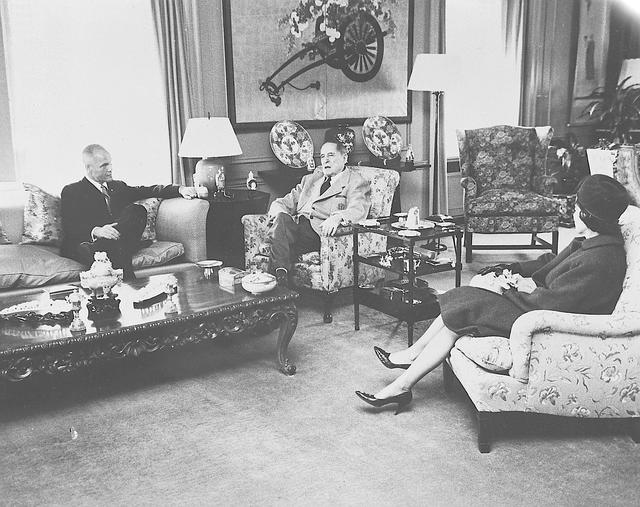
S62-02270 (1962) --- Astronaut John H. Glenn Jr. and wife visit with General Douglas McArthur in the Waldorf Astoria hotel. Photo credit: NASA
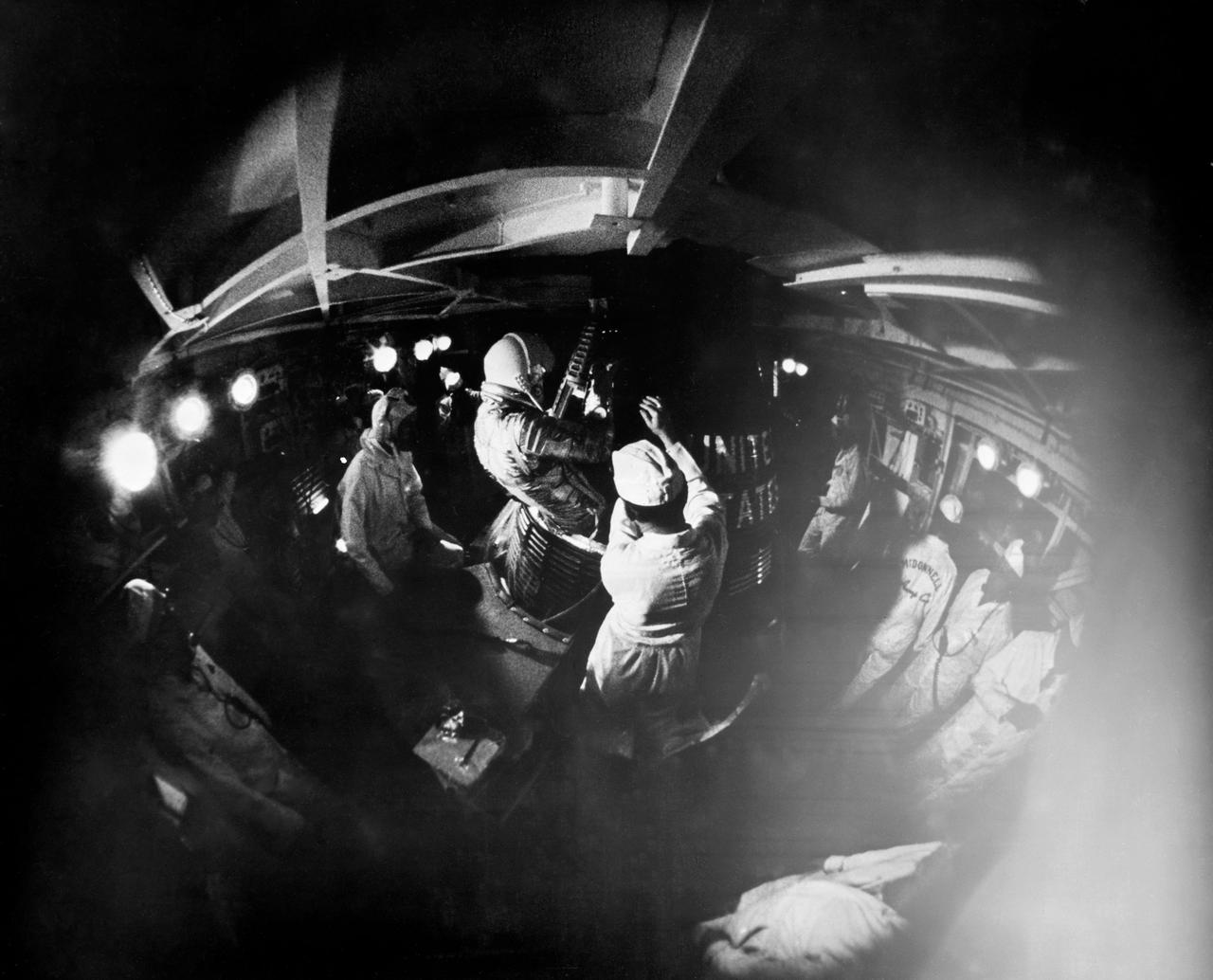
S62-00955 (February 1962) --- This is a view of John H. Glenn Jr. ingressing the Mercury-Atlas 6 spacecraft. Photo credit: NASA
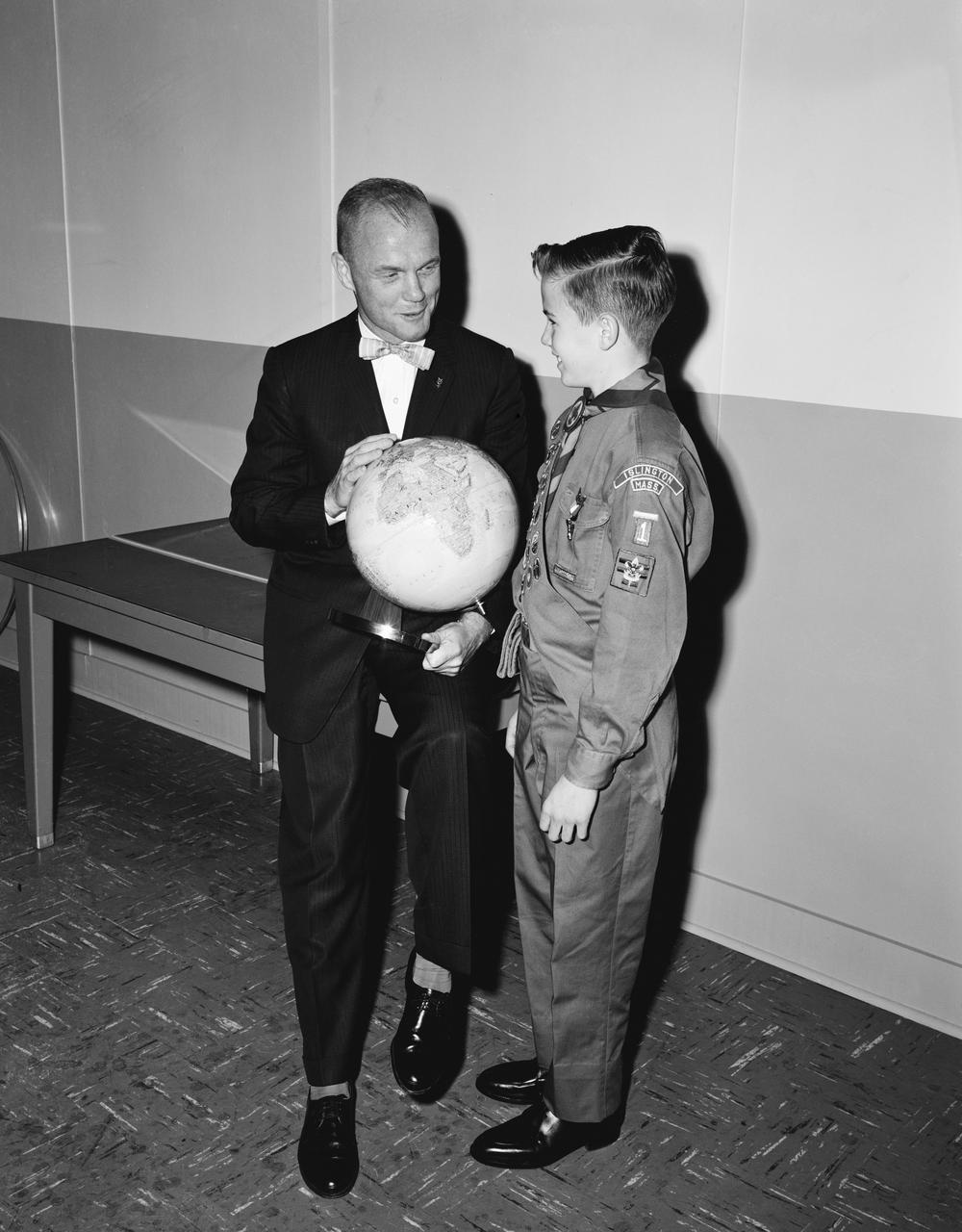
S62-00492 (1962) --- Astronaut John H. Glenn Jr. points out an area on the globe to a Boy Scout. Photo credit: NASA
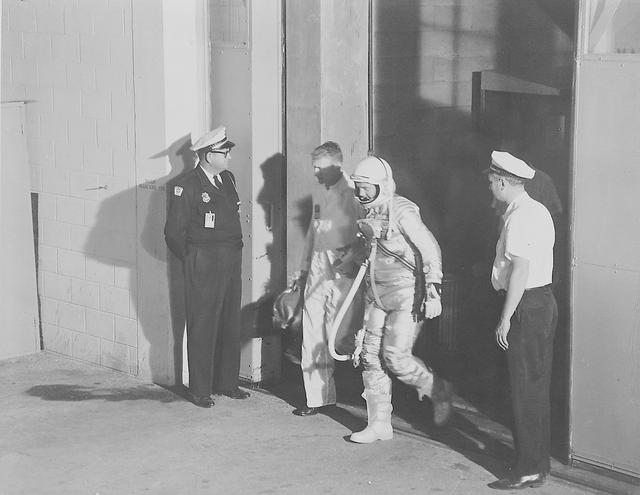
S62-00222 (20 Feb. 1962) --- View of astronaut John H. Glenn Jr. and equipment specialist Joe Schmitt leaving crew quarters prior to Mercury-Atlas 6 (MA-6) mission. Glenn is in his pressure suit and is carrying the portable ventilation unit. Photo credit: NASA
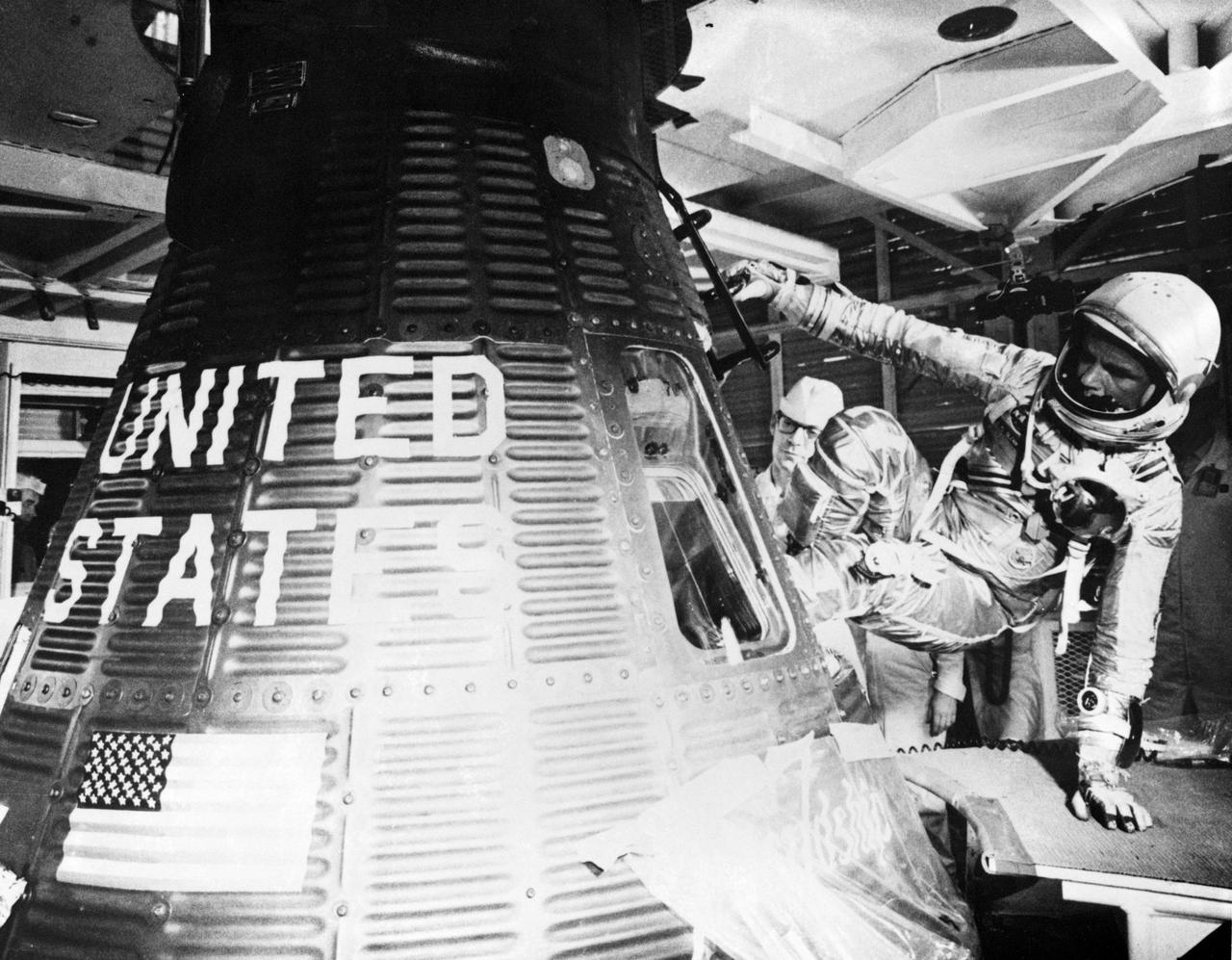
S62-00371 (20 Feb. 1962) --- Mercury astronaut John H. Glenn Jr., pilot of the Mercury-Atlas 6 (MA-6) spaceflight, enters the Mercury "Friendship 7" spacecraft during the MA-6 prelaunch preparations at Cape Canaveral, Florida. Glenn became the first American to orbit Earth. Photo credit: NASA
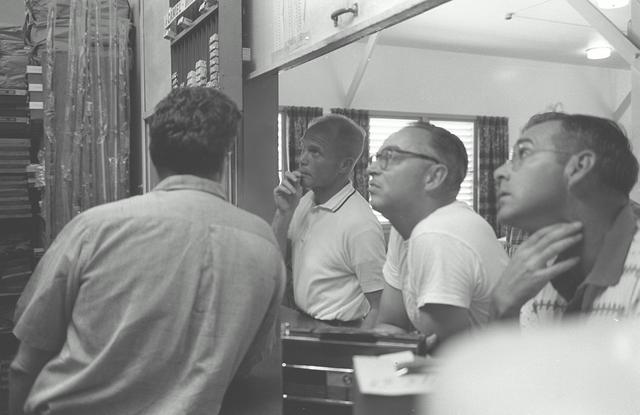
S64-10801 (1962) --- Astronauts M. Scott Carpenter (far left) and John H. Glenn Jr. relax following breakfast during Mercury Atlas 6 (MA-6) preflight activity. Glenn is the MA-6 pilot. Carpenter is the MA-6 backup pilot. Photo credit: NASA

S62-00330 (1962) --- Astronaut John H. Glenn Jr. (left), Dr. William Douglas, astronauts flight surgeon, and equipment specialist Joe Schmitt leave crew quarters prior to Mercury-Atlas 6 (MA-6) mission. Glenn is in his pressure suit and is carrying the portable ventilation unit. Photo credit: NASA
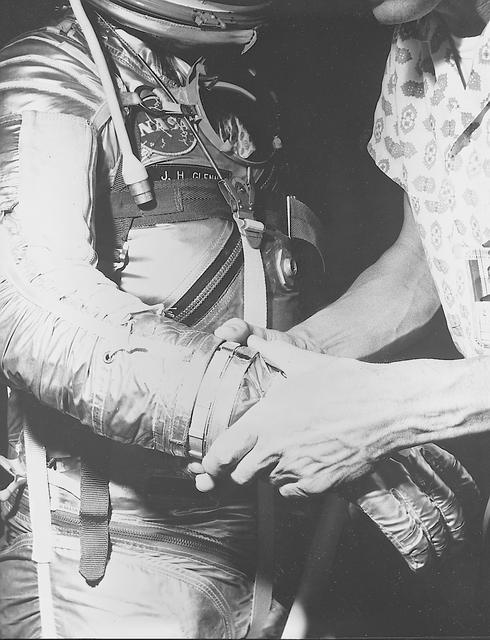
S62-00249 (1962) --- View of astronaut John H. Glenn Jr. being fitted with gloves for his spacesuit during preflight training activities at Cape Canaveral, Florida. Glenn is assisted by suit technician Joe Schmitt. Photo credit: NASA

S62-01004 (1962) --- Astronaut John H. Glenn Jr., pilot of the Mercury Atlas 6 (MA-6) mission, participates in Mercury egress training during MA-6 preflight preparations. Glenn made the free world's first manned Earth-orbital flight on Feb. 20, 1962. Photo credit: NASA

Astronaut John H. Glenn, one of the original seven astronauts for Mercury Project selected by NASA on April 27, 1959. The MA-6 mission, boosted by the Mercury-Atlas vehicle, was the first manned orbital launch by the United States, and carried Astronaut Glenn aboard the Friendship 7 spacecraft to orbit the Earth.
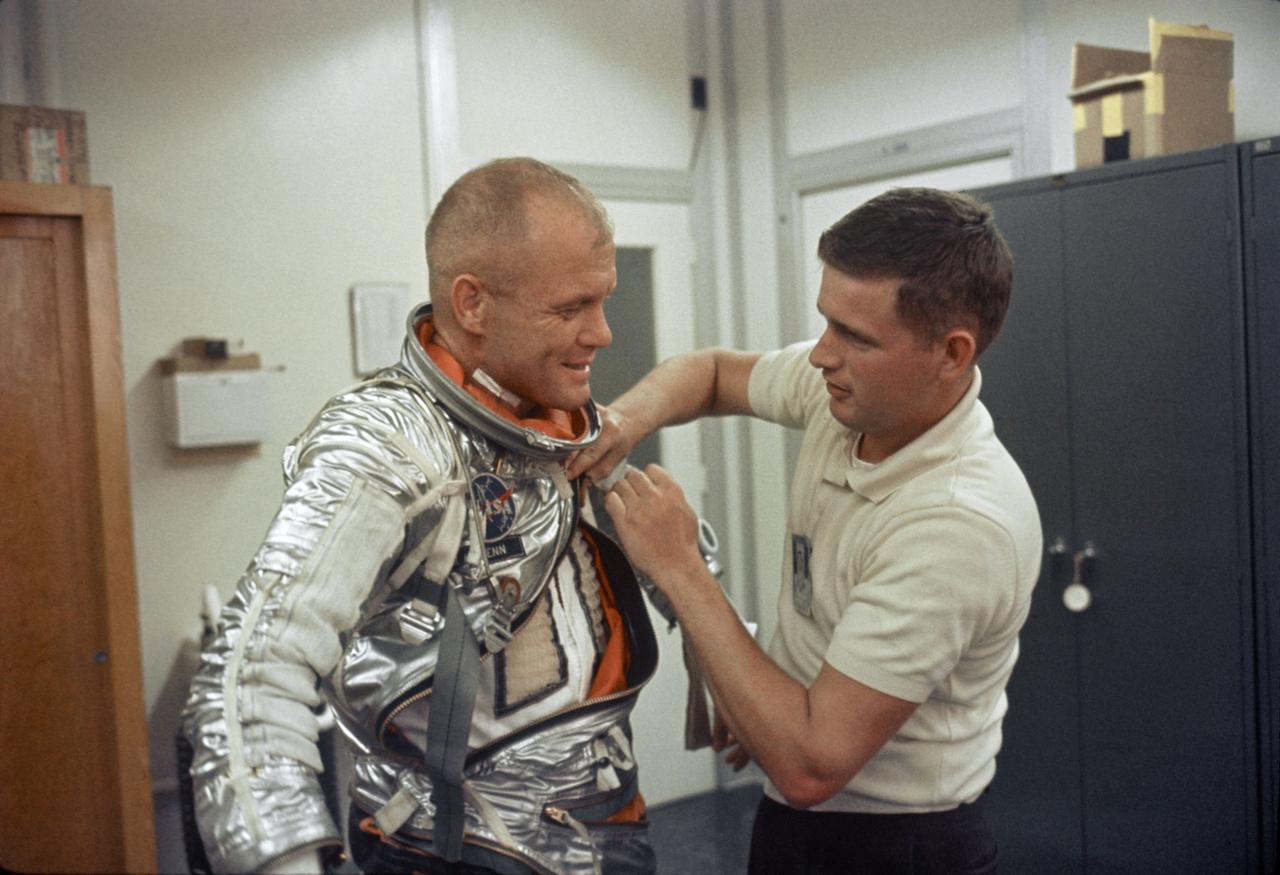
S64-14843 (1962) --- Astronaut John H. Glenn Jr., pilot of the Mercury-Atlas 6 Earth-orbital space mission, is suited up at Cape Canaveral, Florida, during MA-6 preflight activities. Assisting Glenn is suit technician Al Rochford. Photo credit: NASA
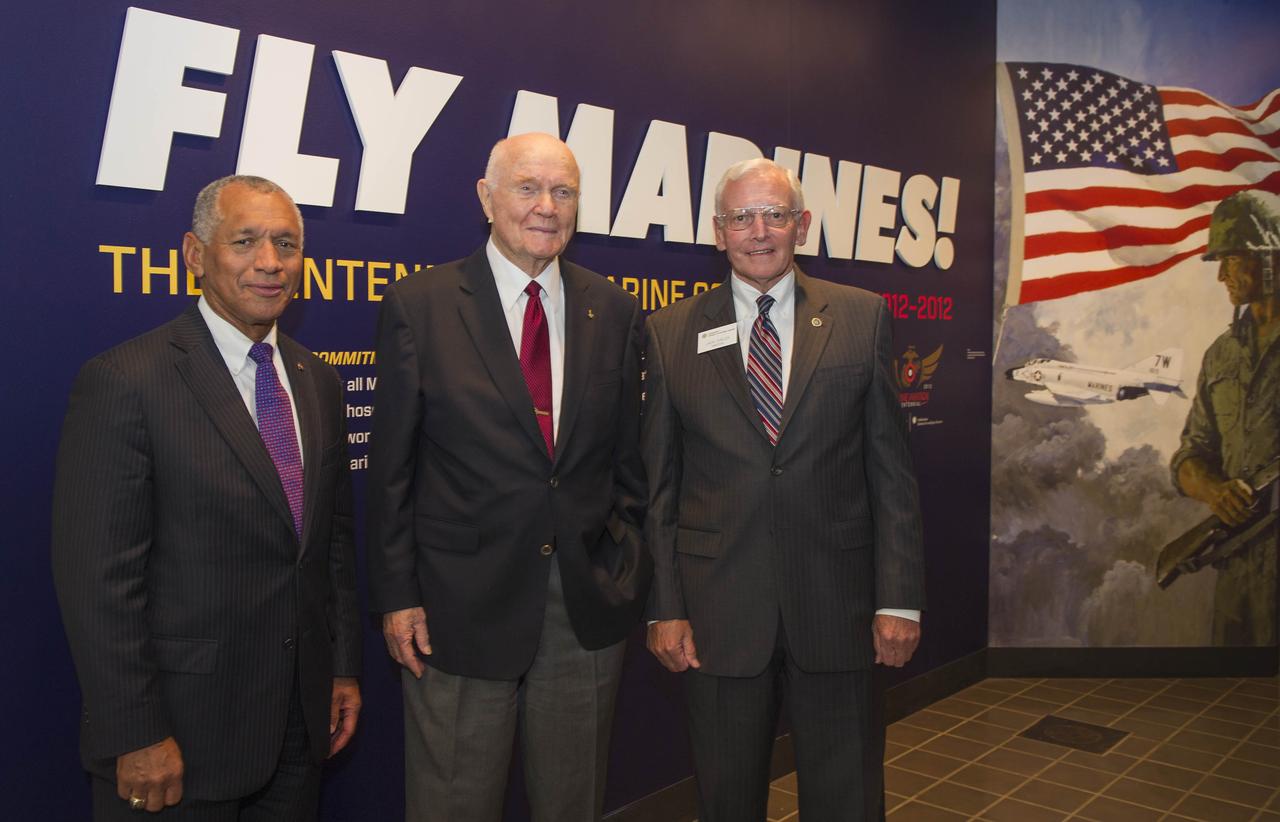
NASA Administrator Charles Bolden, left, stands with former United States Marine Corps pilot, astronaut, and United States Senator John Glenn and Gen. John R. Dailey, director of the National Air and Space Museum, in the Fly Marines exhibit at the museum, Wednesday evening, June 27, 2012, in Washington. Bolden spoke later at the 2012 John H. Glenn Lecture in Space History. Photo Credit: (NASA/Paul E. Alers)
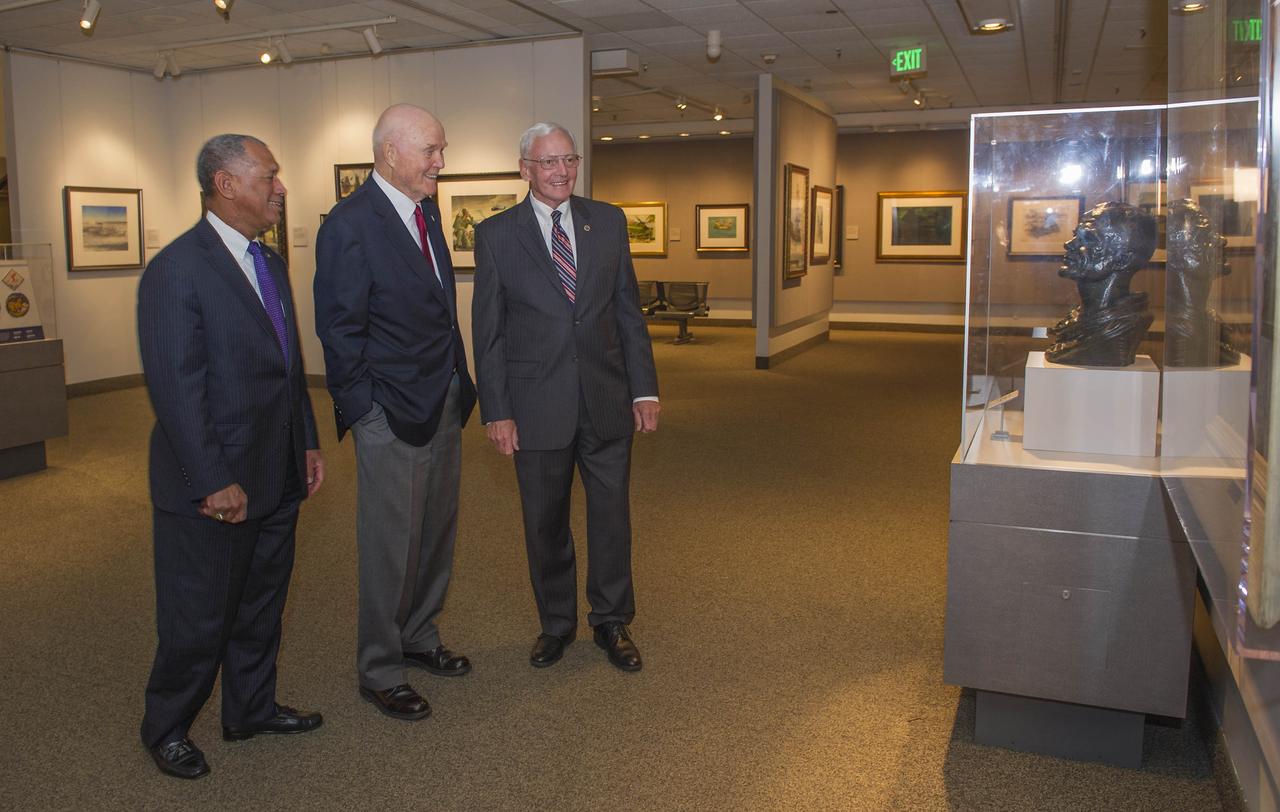
NASA Administrator Charles Bolden, left, along with former United States Marine Corps pilot, astronaut, and United States Sen. John Glenn and Gen. John R. Dailey, director of the National Air and Space Museum, right, look around the Fly Marines exhibit at the museum, Wednesday evening, June 27, 2012, in Washington. Bolden spoke later at the 2012 John H. Glenn Lecture in Space History. Photo Credit: (NASA/Paul E. Alers)
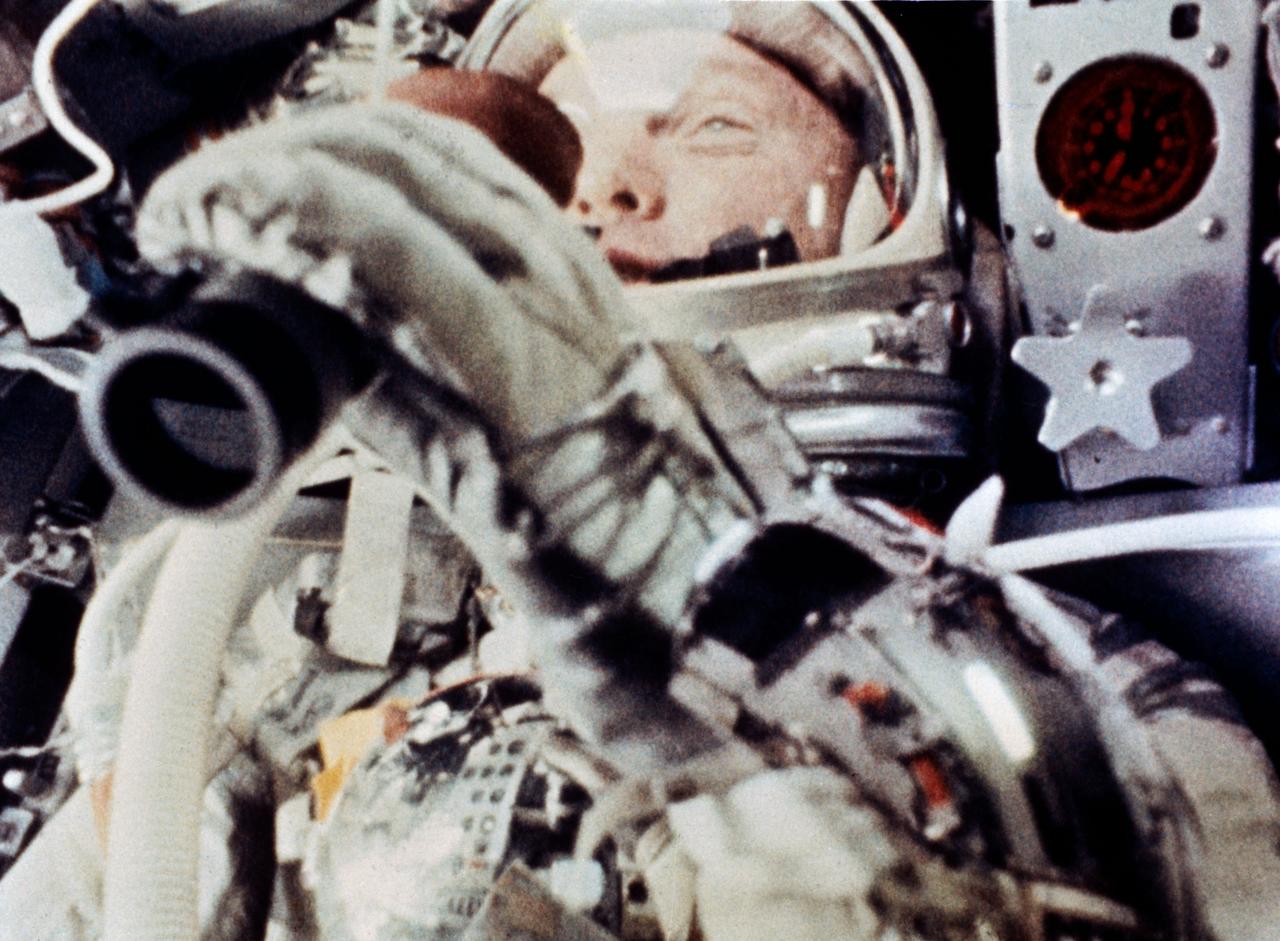
S62-00304 (20 Feb. 1962) --- Astronaut John H. Glenn Jr. is pictured aboard the Mercury-Atlas (MA-6) Friendship 7 capsule during the U.S.'s initial orbital flight. Photo credit: NASA
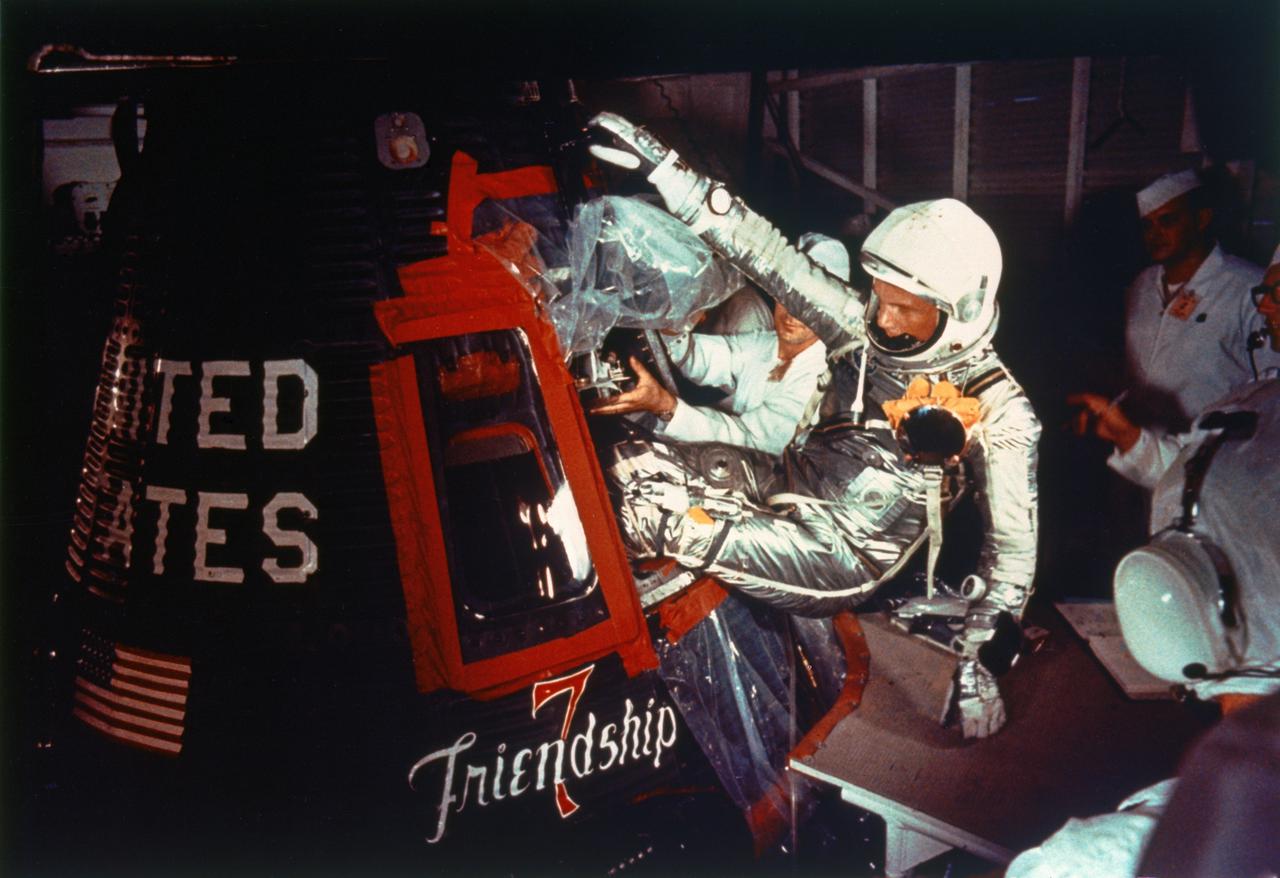
CAPE CANAVERAL, Fla. -- Overall view of astronaut John H. Glenn Jr. as he commences entrance into spacecraft Friendship 7 prior to MA-6 launch operations. Photo credit: NASA
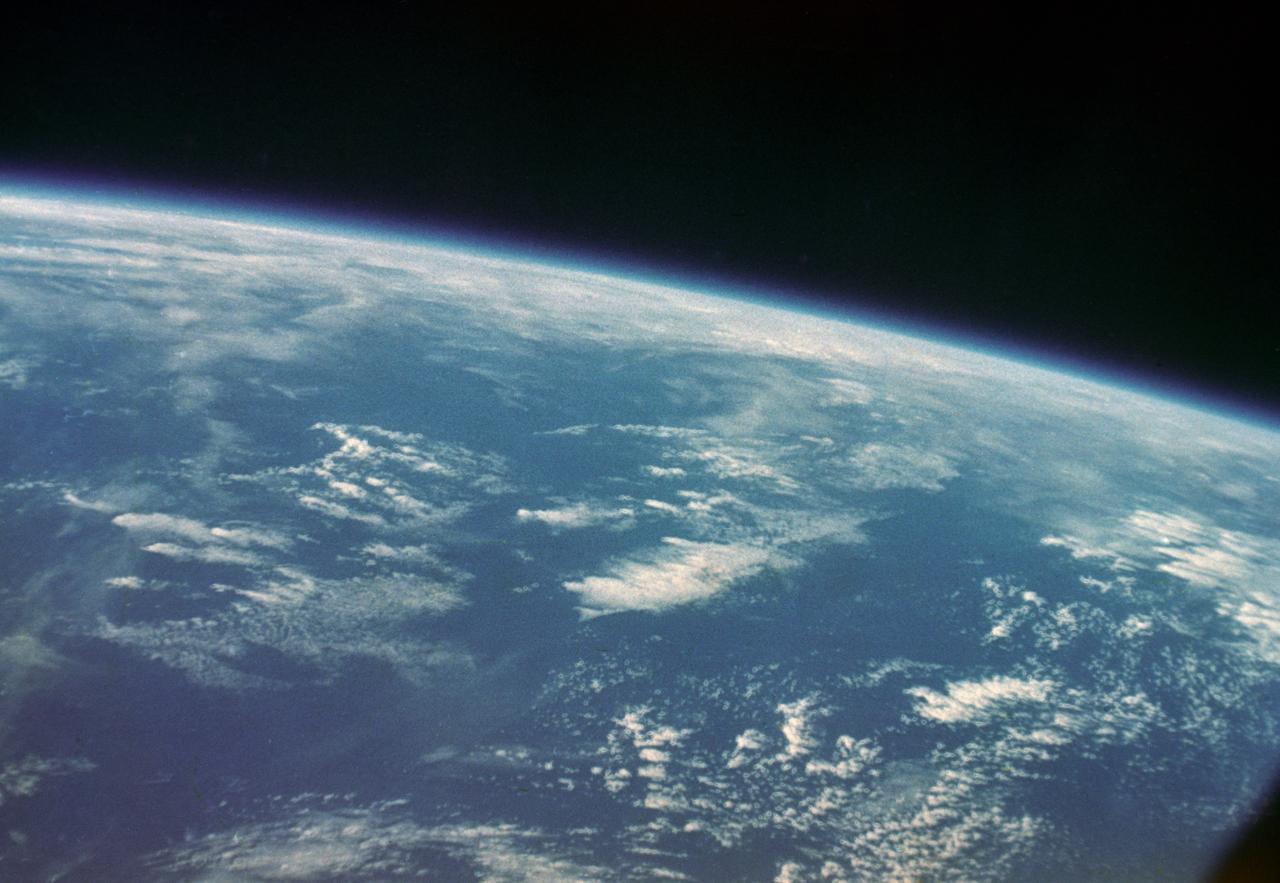
S62-06029 (20 Feb. 1962) --- View of Earth taken by astronaut John H. Glenn Jr. during his Mercury Atlas 6 (MA-6) spaceflight. Photo credit: NASA
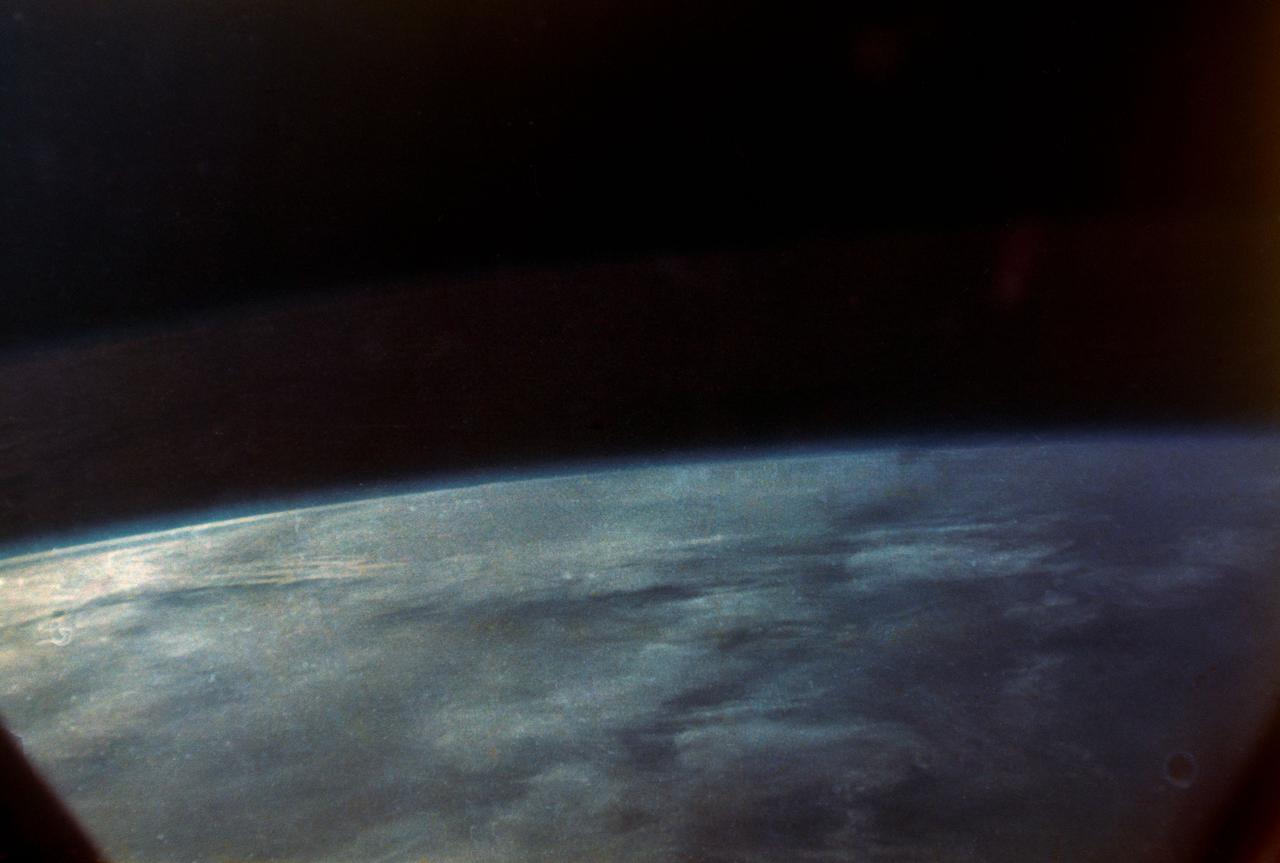
S62-06026 (20 Feb. 1962) --- View of Earth taken by astronaut John H. Glenn Jr. during his Mercury Atlas 6 (MA-6) spaceflight. Photo credit: NASA
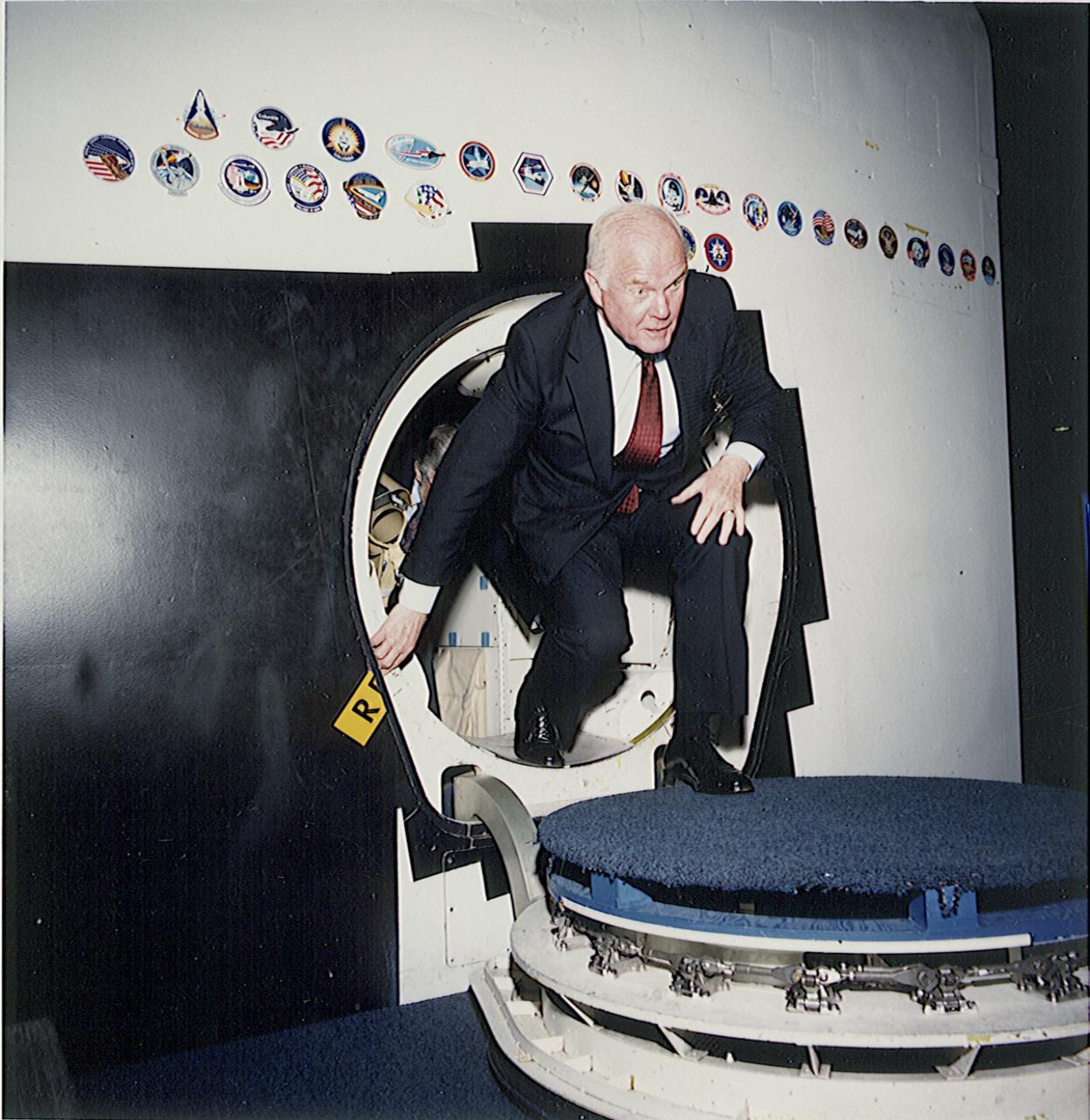
98-E-01183 (24 April 1989) -- U.S. Senator John H. Glenn Jr. (D., Ohio) egresses a shuttle trainer in the shuttle mockup and integration facility during a tour on April 24, 1989.
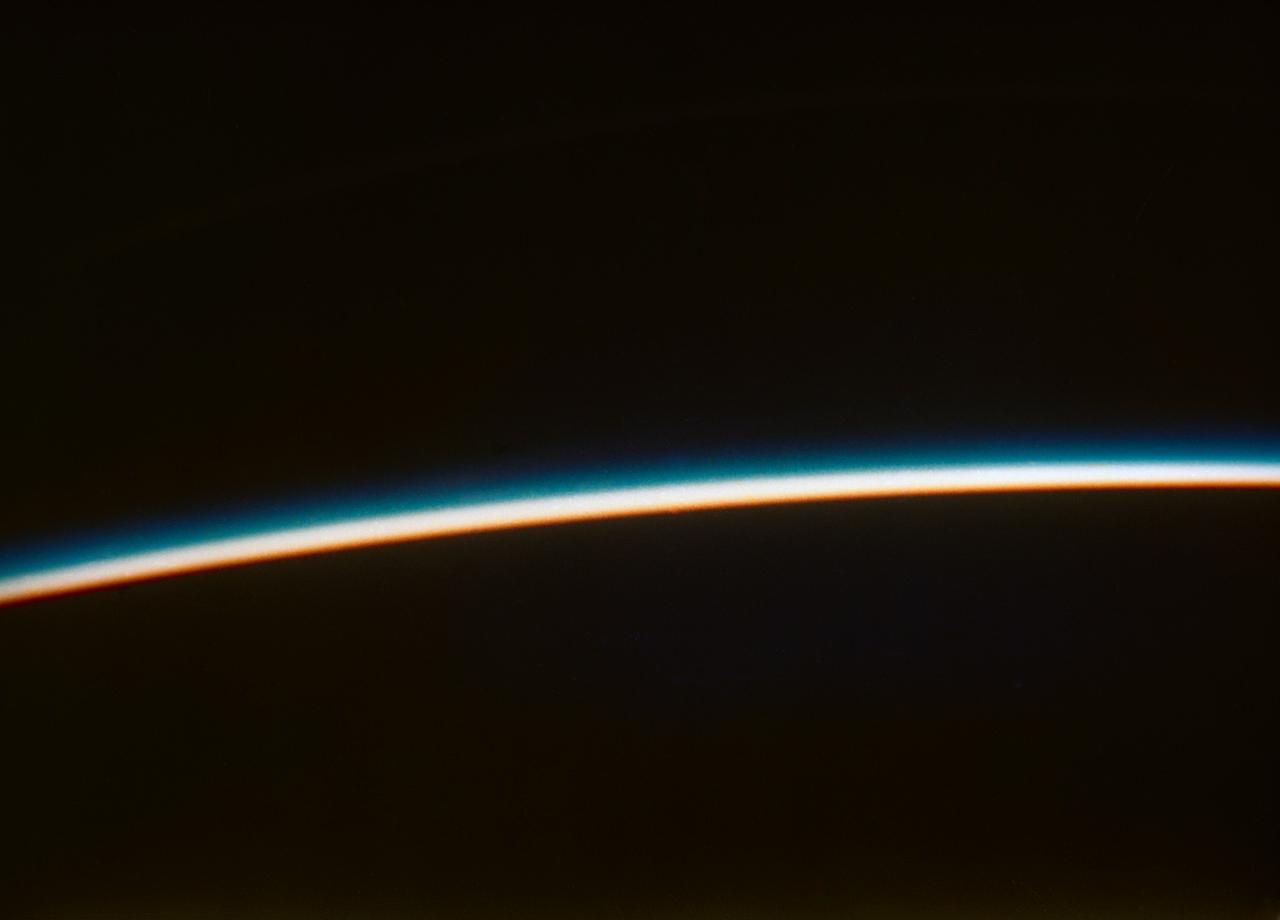
S62-06040 (20 Feb. 1962) --- Orbital sunset photographed by astronaut John H. Glenn Jr. aboard the "Friendship 7" during his Mercury-Atlas 6 (MA-6) spaceflight. Photo credit: NASA

This test conducted in May 1988 shows what happens during launch if a space shuttle main engine fails. The test was conducted in the 10X10 supersonic wind tunnel at the John H. Glenn Research Center.
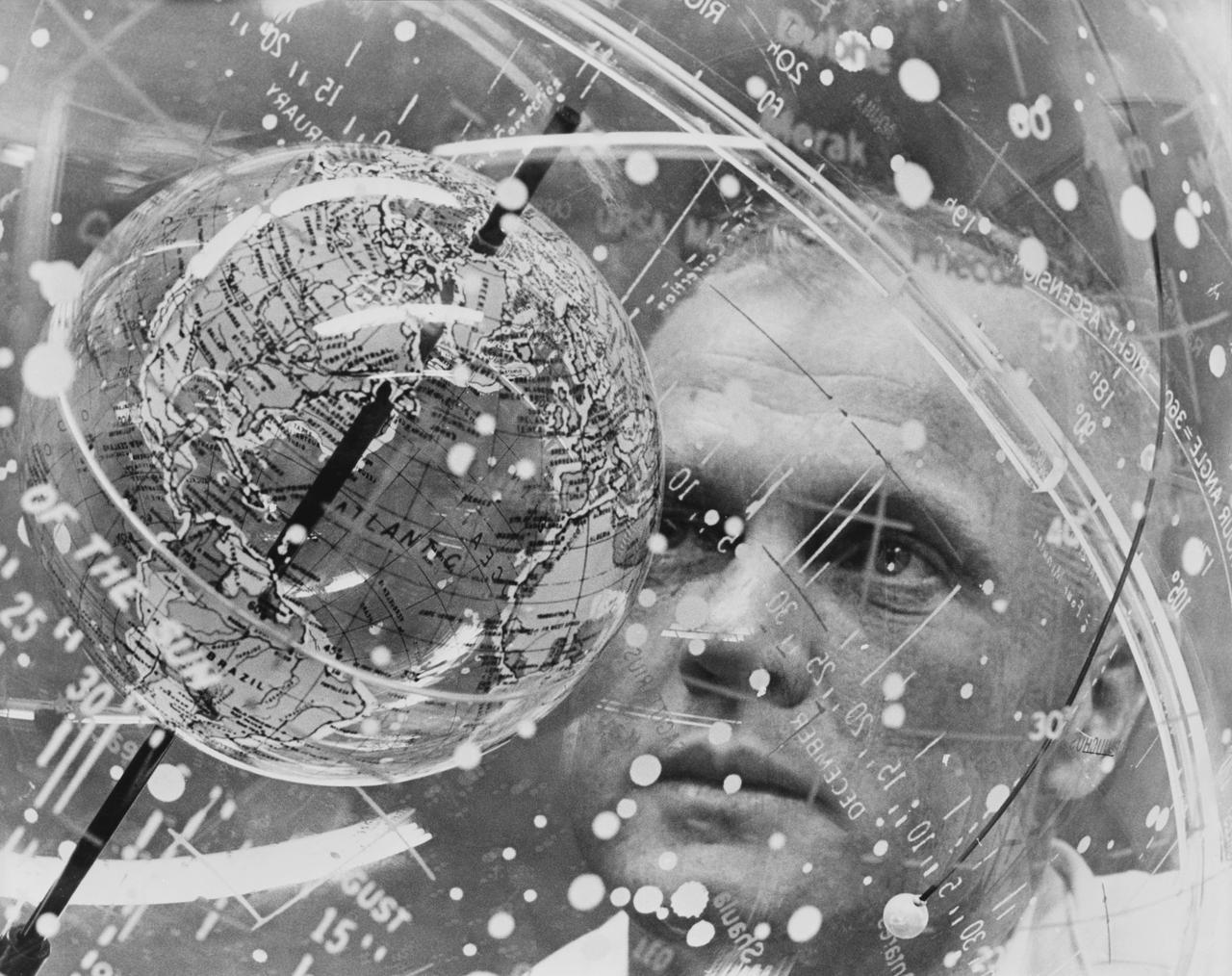
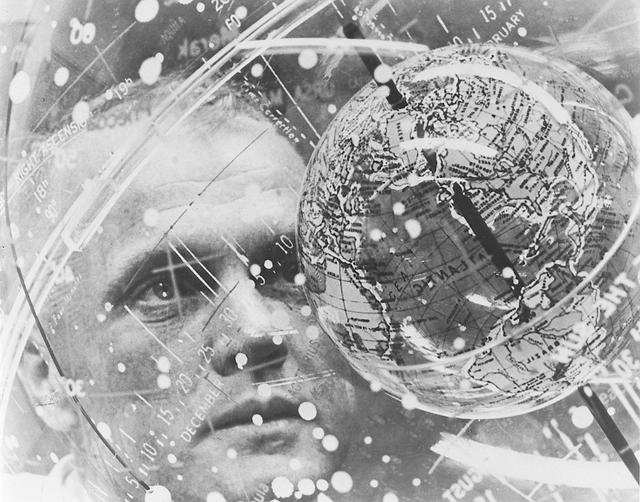
S61-04623 (1961) --- Astronaut John H. Glenn Jr. looks into a Celestial Training Device (globe) during training in the Aeromedical Laboratory at Cape Canaveral, Florida. Photo credit: NASA
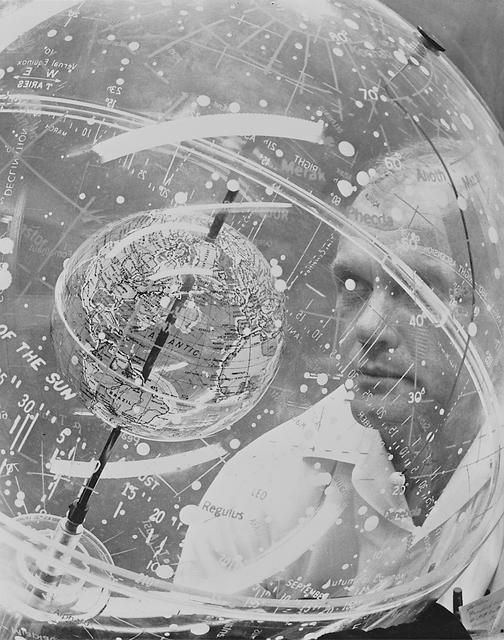
S61-04622 (1961) --- Mercury astronaut John H. Glenn Jr. looks into a Celestial Training Device (globe) during training in the Aeromedical Laboratory at Cape Canaveral, Florida. Photo credit: NASA
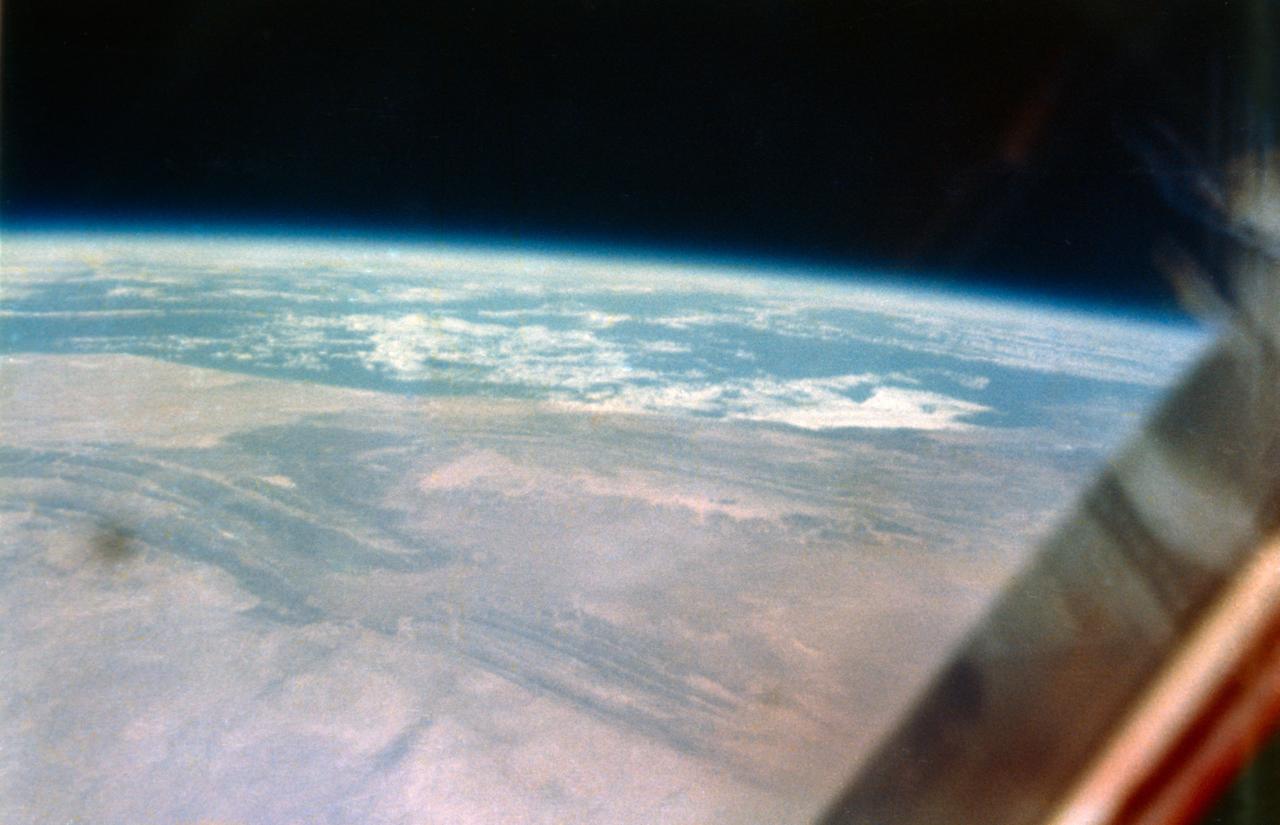
S62-06014 (20 Feb. 1962) --- View of Earth taken by astronaut John H. Glenn Jr. during his Mercury Atlas 6 (MA-6) spaceflight. Photo credit: NASA

CAPE CANAVERAL, Fla. -- Astronaut M. Scott Carpenter assists astronaut John H. Glenn Jr. with equipment adjustments during MA-6 activities. Photo credit: NASA
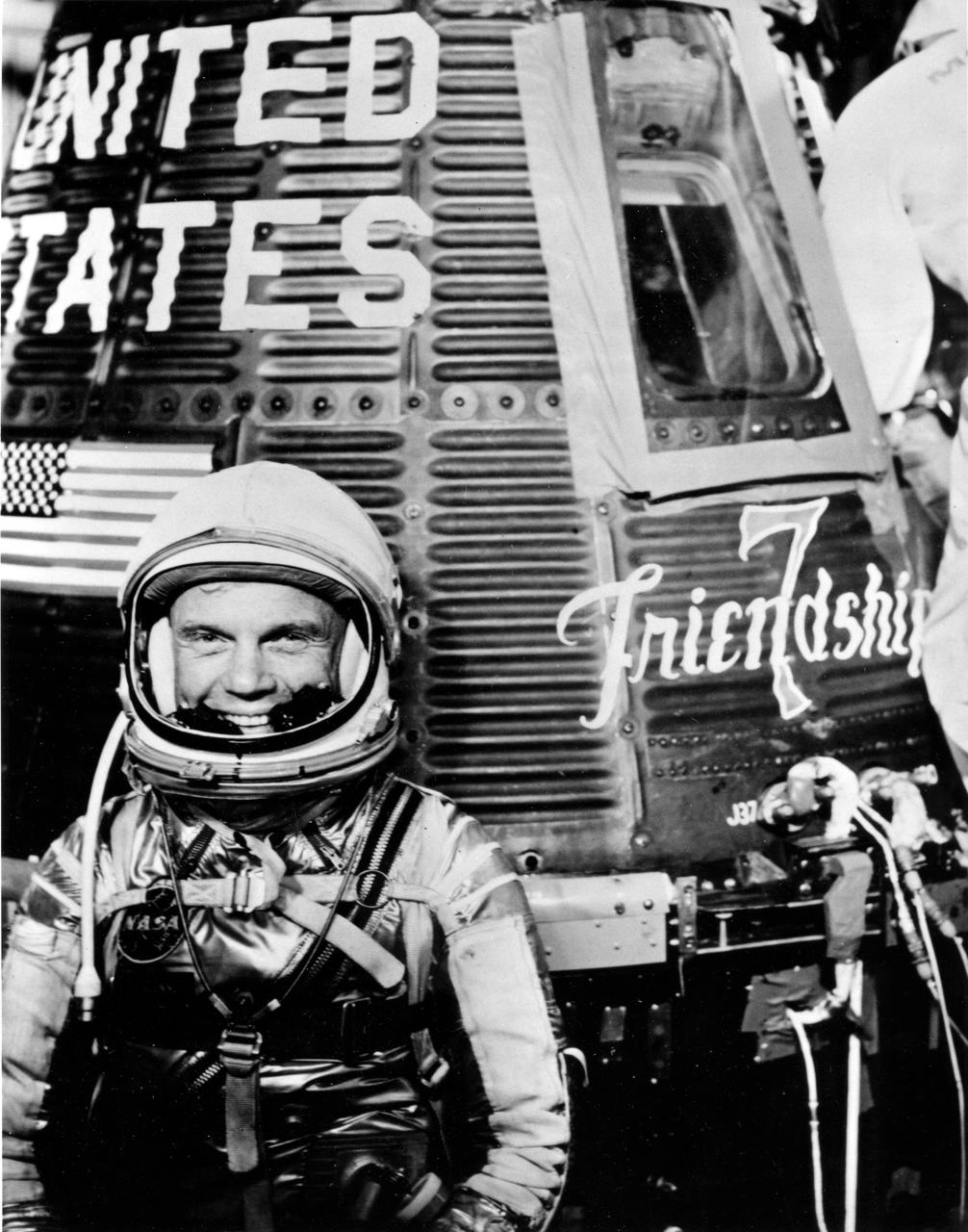
62-MA6-55 (1962) --- Astronaut John H. Glenn Jr., pilot of the Mercury Atlas 6 (MA-6) spaceflight, poses for a photo with the Mercury "Friendship 7" spacecraft during preflight activities. Photo credit: NASA
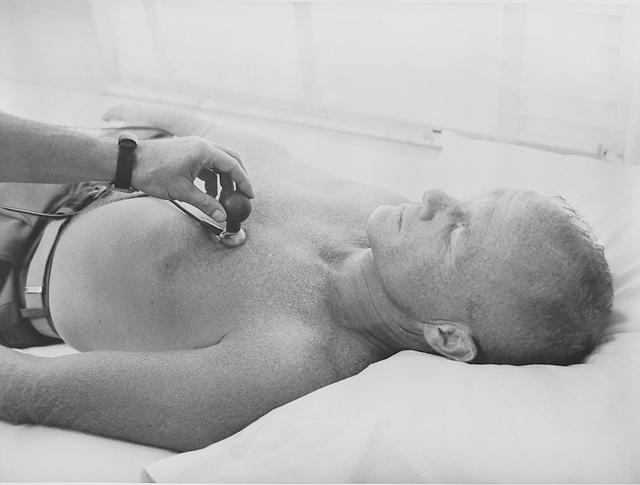
S61-03622 (1961) --- Mercury astronaut John H. Glenn Jr. has a biosensor attached to his body during astronaut training activities at Cape Canaveral, Florida. Photo credit: NASA

This test conducted in May 1988 shows what happens during launch if a space shuttle main engine fails. The test was conducted in the 10X10 supersonic wind tunnel at the John H. Glenn Research Center.
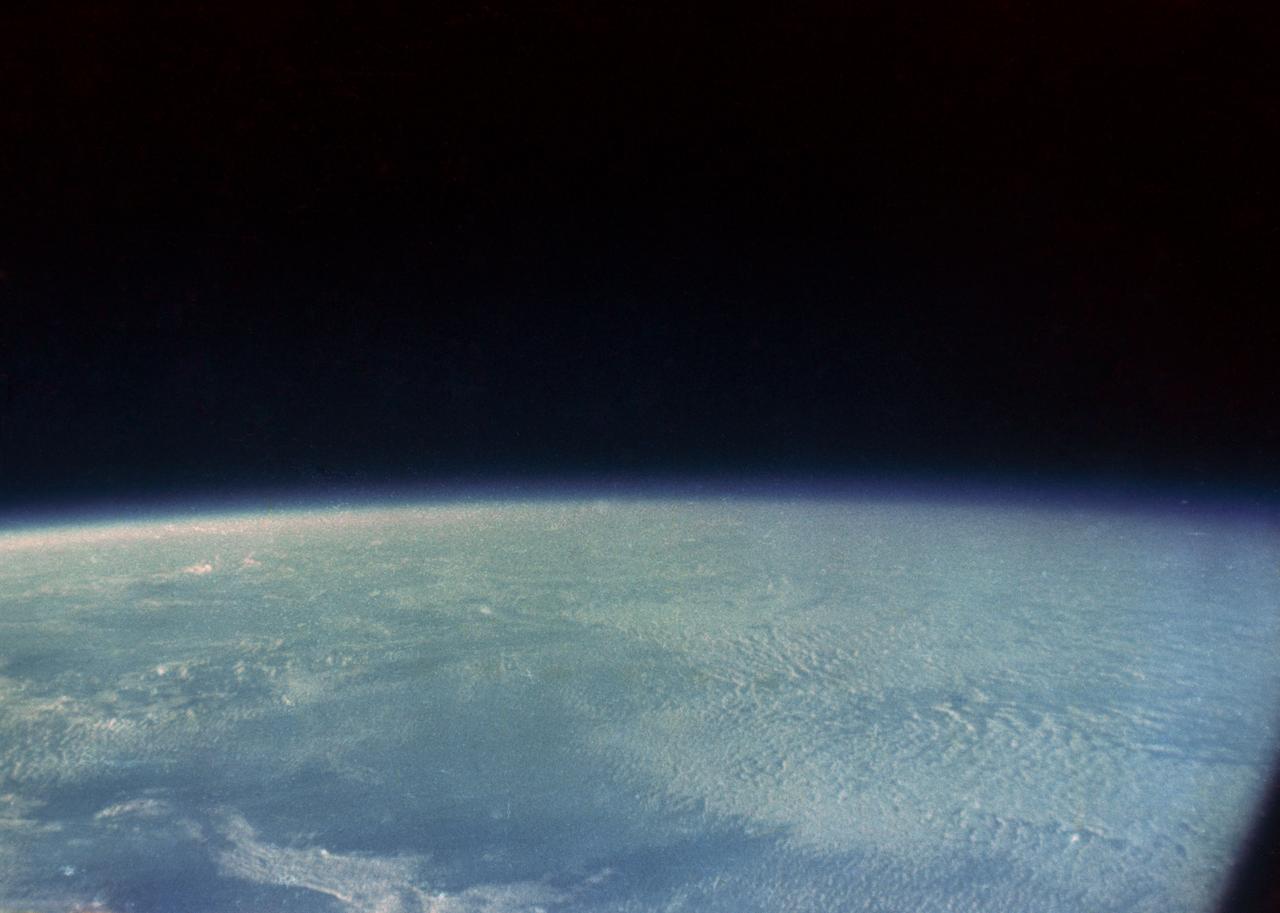
S62-06020 (20 Feb. 1962) --- View of Earth taken by astronaut John H. Glenn Jr. during his Mercury Atlas 6 (MA-6) spaceflight. Photo credit: NASA
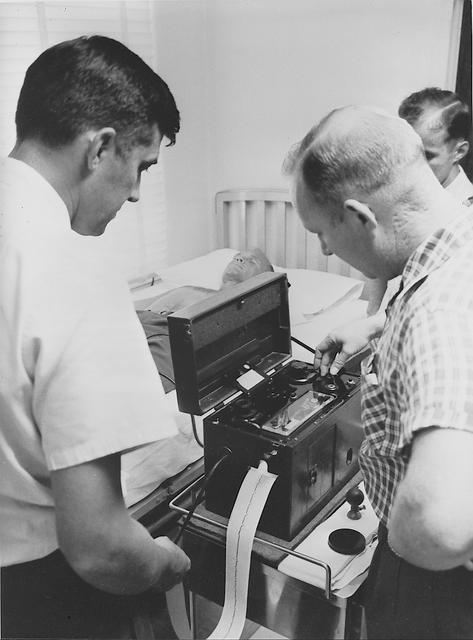
S61-03621 (1961) --- Astronaut John H. Glenn Jr. having an electrocardiograph done by Dr. Jackson during medical testing at the Pensacola Naval Station. Photo credit: NASA
S65-42454 (February 1962) --- Mercury astronaut John H. Glenn, Jr. inside the Mercury Atlas 6 (MA-6) during training at Cape Canaveral, Florida.
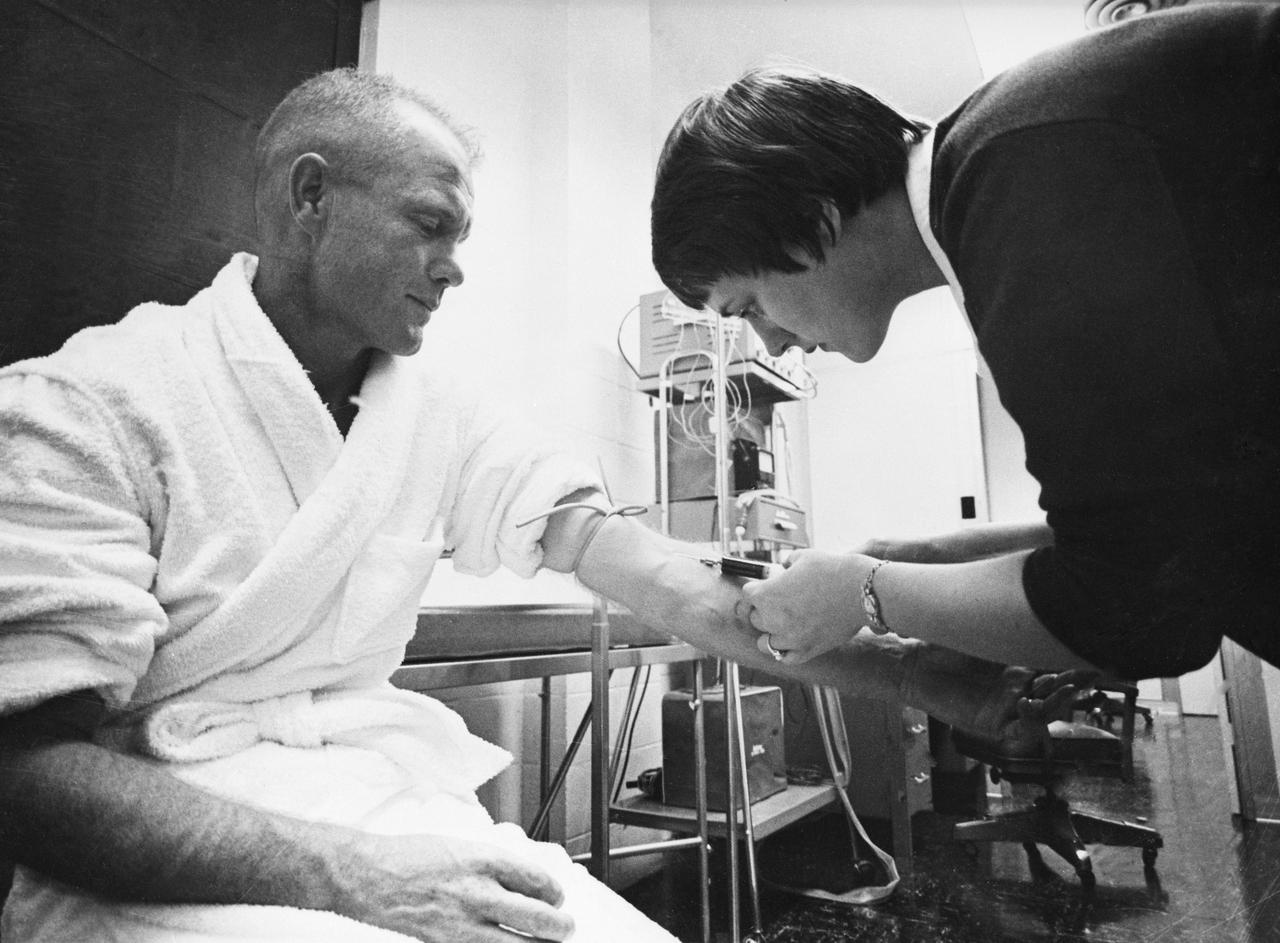
S61-02579 (1961) --- Astronaut nurse Delores B. O'Hara, R.N., in the Aeromedical Laboratory at Cape Canaveral, Florida, takes a blood sample from Mercury astronaut John H. Glenn Jr. Photo credit: NASA
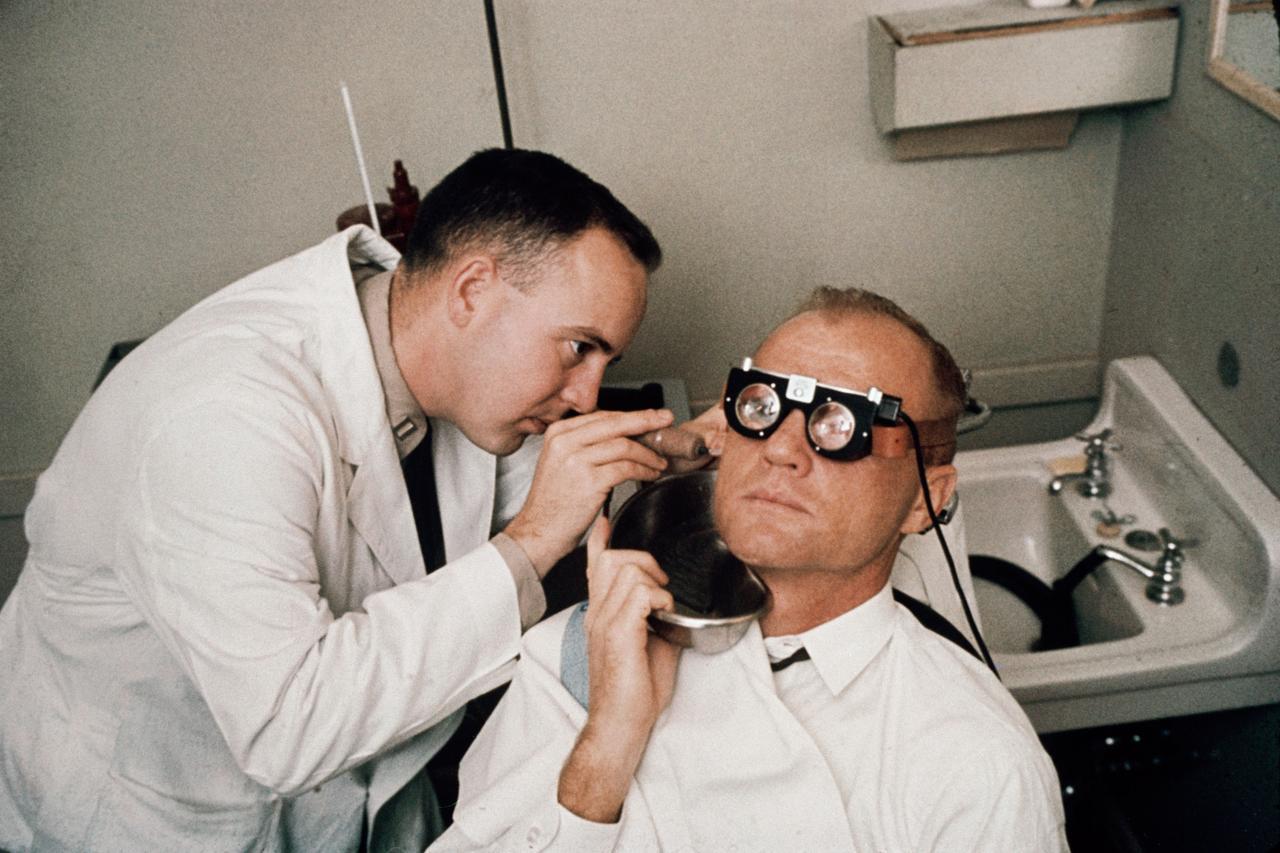
S64-14849 (1962) --- Astronaut John H. Glenn Jr.'s balance mechanism (semi-circular-canals) is tested by running cool water into his ear and measuring effect on eye motions (nystagmus). Photo credit: NASA
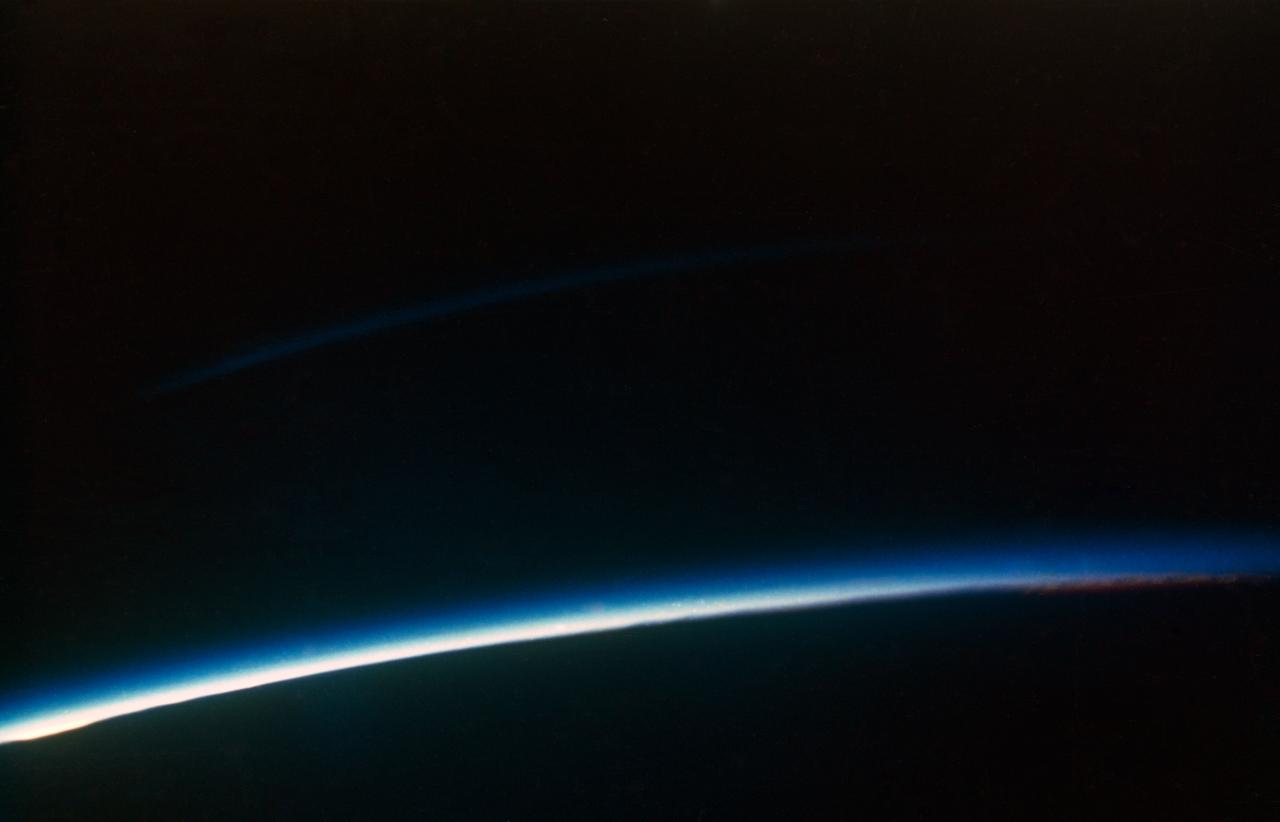
S62-06012 (20 Feb. 1962) --- Orbital sunset photographed by astronaut John H. Glenn Jr. aboard the "Friendship 7" during his Mercury-Atlas 6 (MA-6) spaceflight. Photo credit: NASA
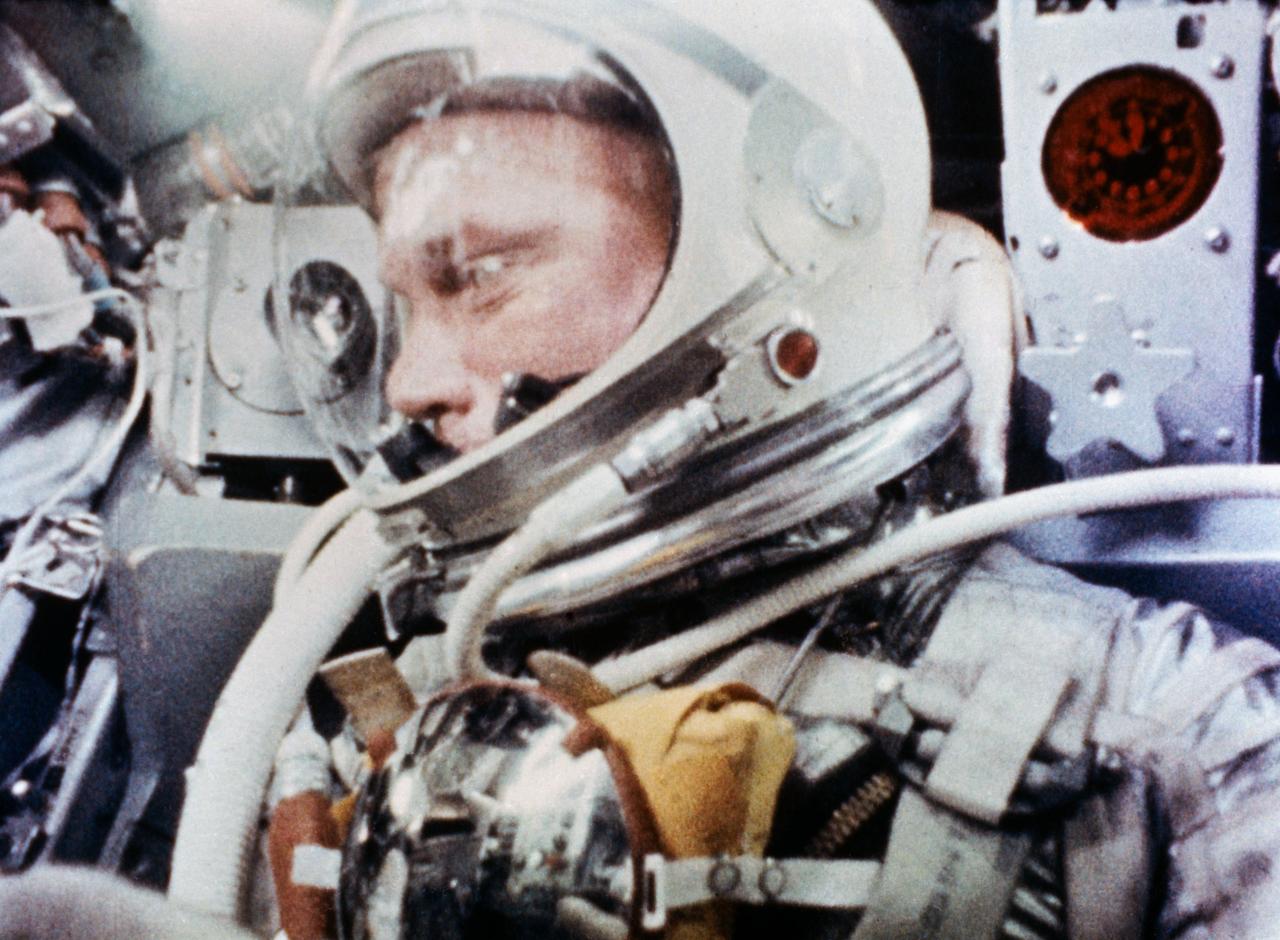
S62-00302 (20 Feb. 1962) --- A camera onboard the "Friendship 7" Mercury spacecraft photographs astronaut John H. Glenn Jr. during his Mercury-Atlas 6 spaceflight. Photo credit: NASA
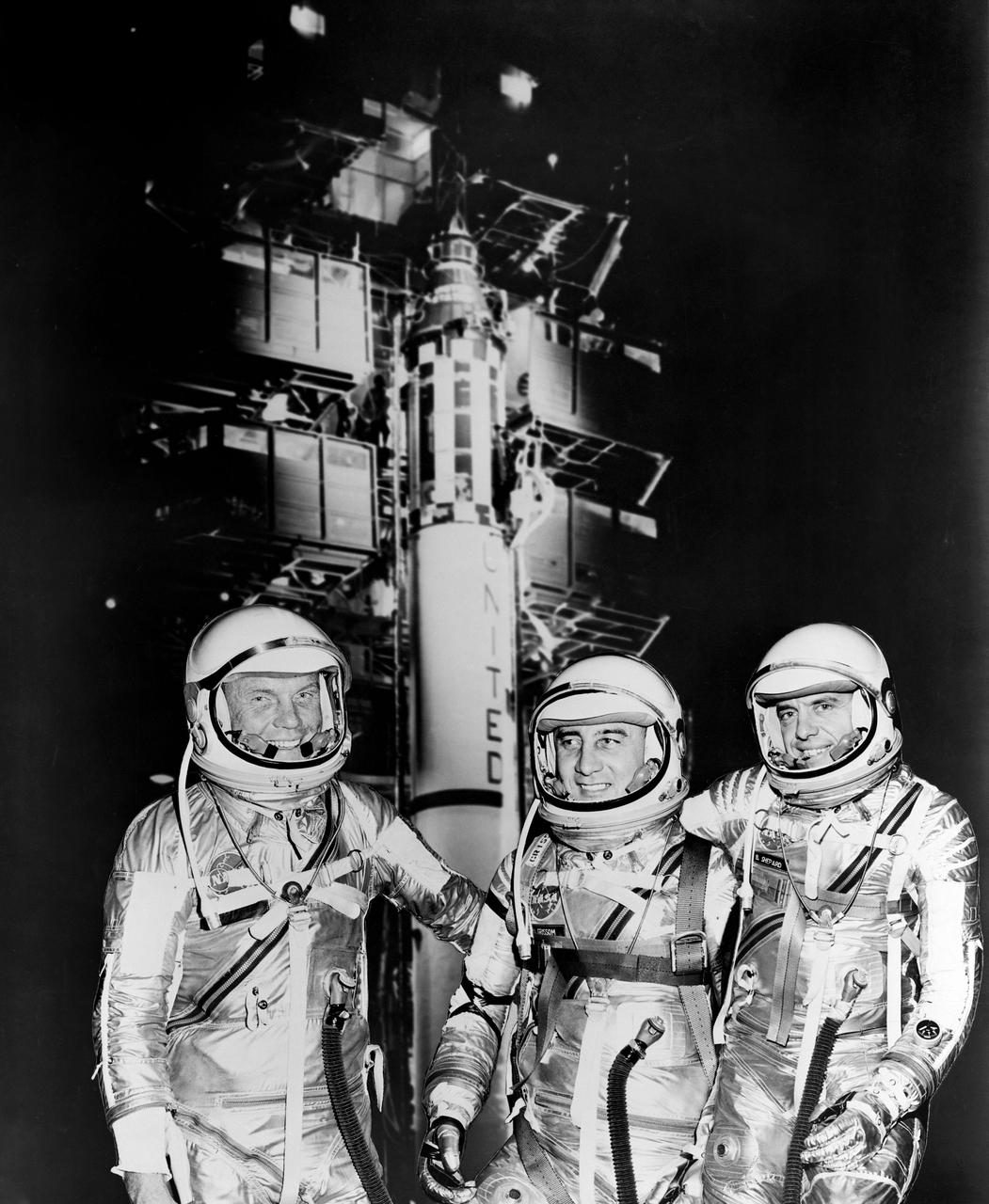
S61-00239 (1961) --- Mercury astronauts John H. Glenn Jr., Virgil I. Grissom and Alan B. Shepard Jr. standing by Redstone rocket in their spacesuits. Photo credit: NASA
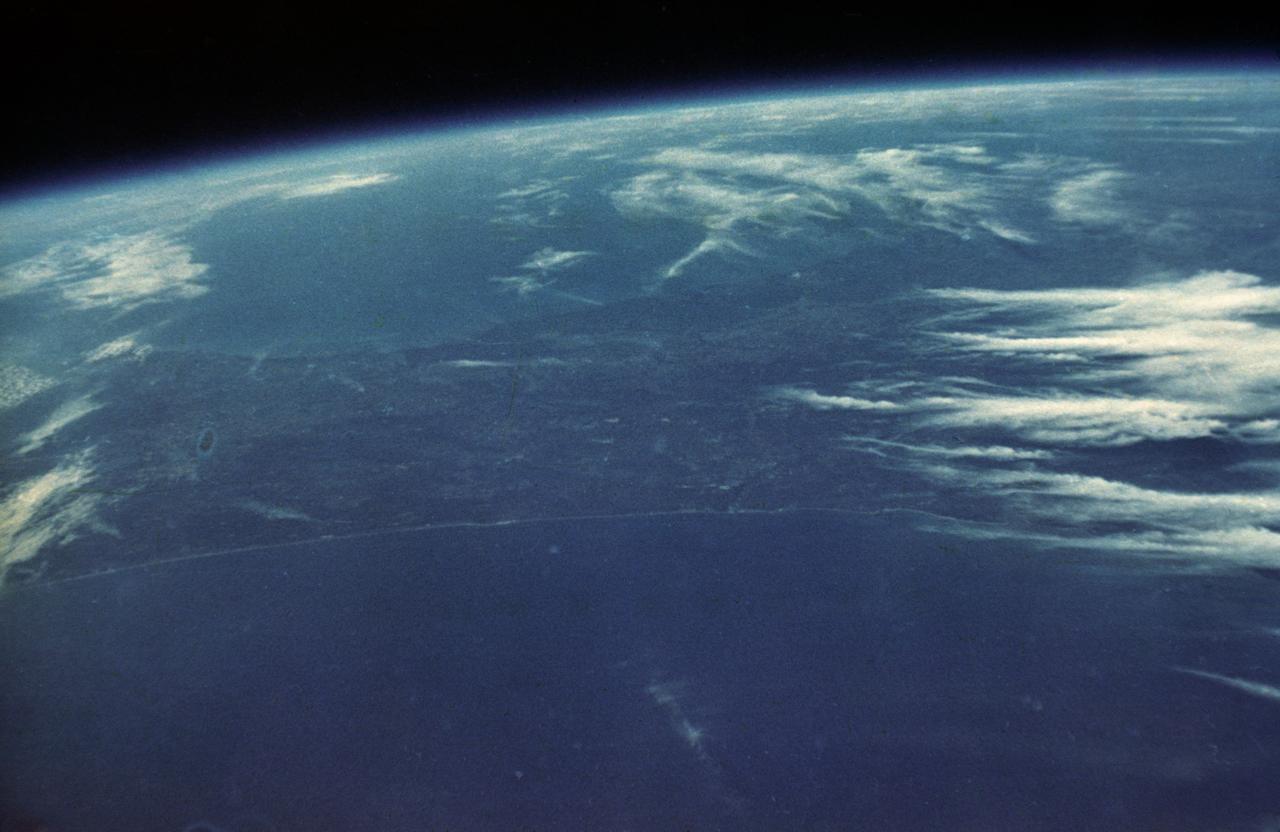
S62-06009 (20 Feb. 1962) --- View of Earth taken by astronaut John H. Glenn Jr. during his Mercury Atlas 6 (MA-6) spaceflight. Photo credit: NASA
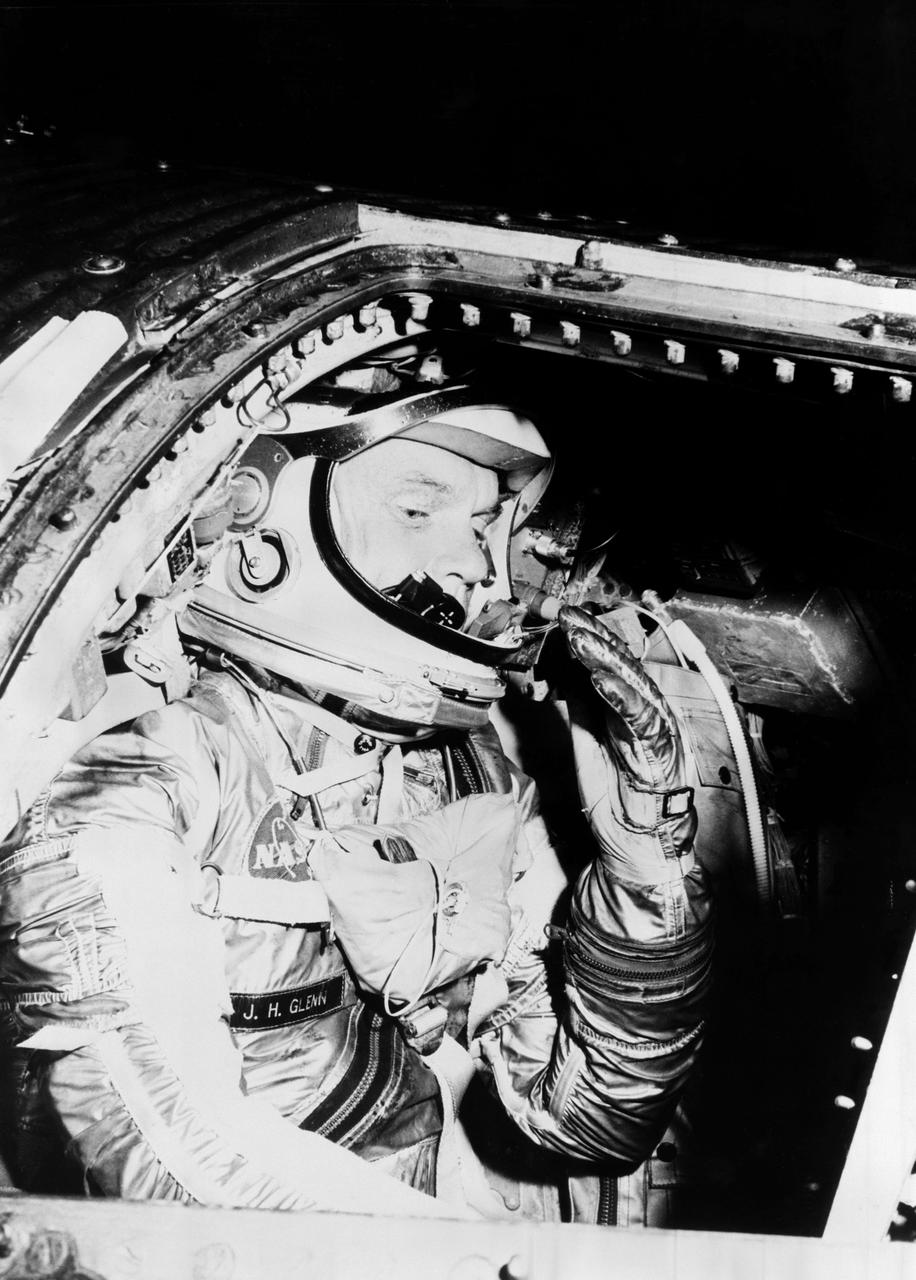
S62-01021 (1962) --- Astronaut John H. Glenn Jr. during training procedures in a trainer at the McDonnell Douglas training facility in St. Louis, Missouri. Photo credit: NASA
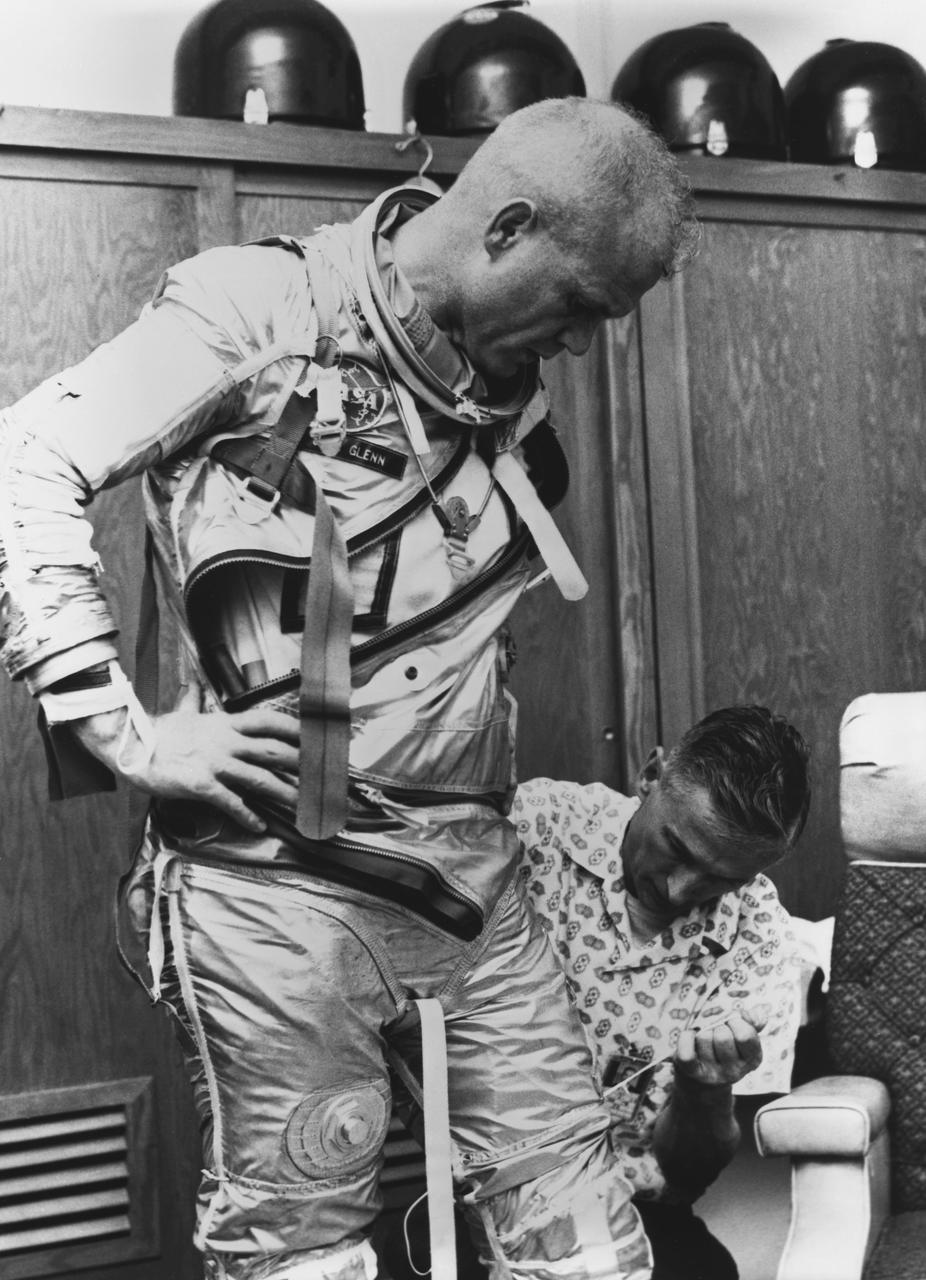
S62-00246 (5 Feb. 1962) --- Astronaut John H. Glenn Jr. is assisted by Joe W. Schmitt as he suits up in practice for the preparation of Mercury-Atlas 6 (MA-6) mission. Photo credit: NASA
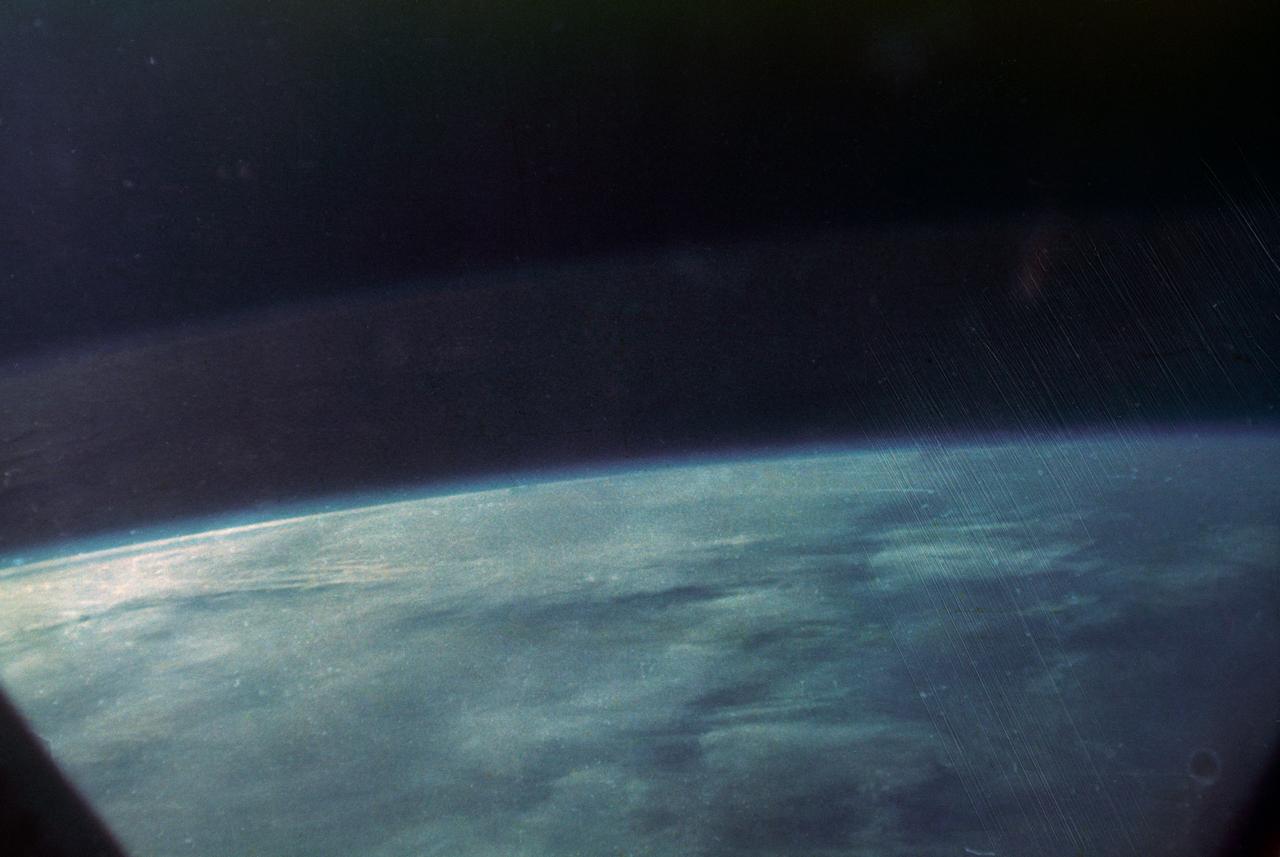
S62-06019 (20 Feb. 1962) --- View of Earth taken by astronaut John H. Glenn Jr. during his Mercury Atlas 6 (MA-6) spaceflight. Photo credit: NASA
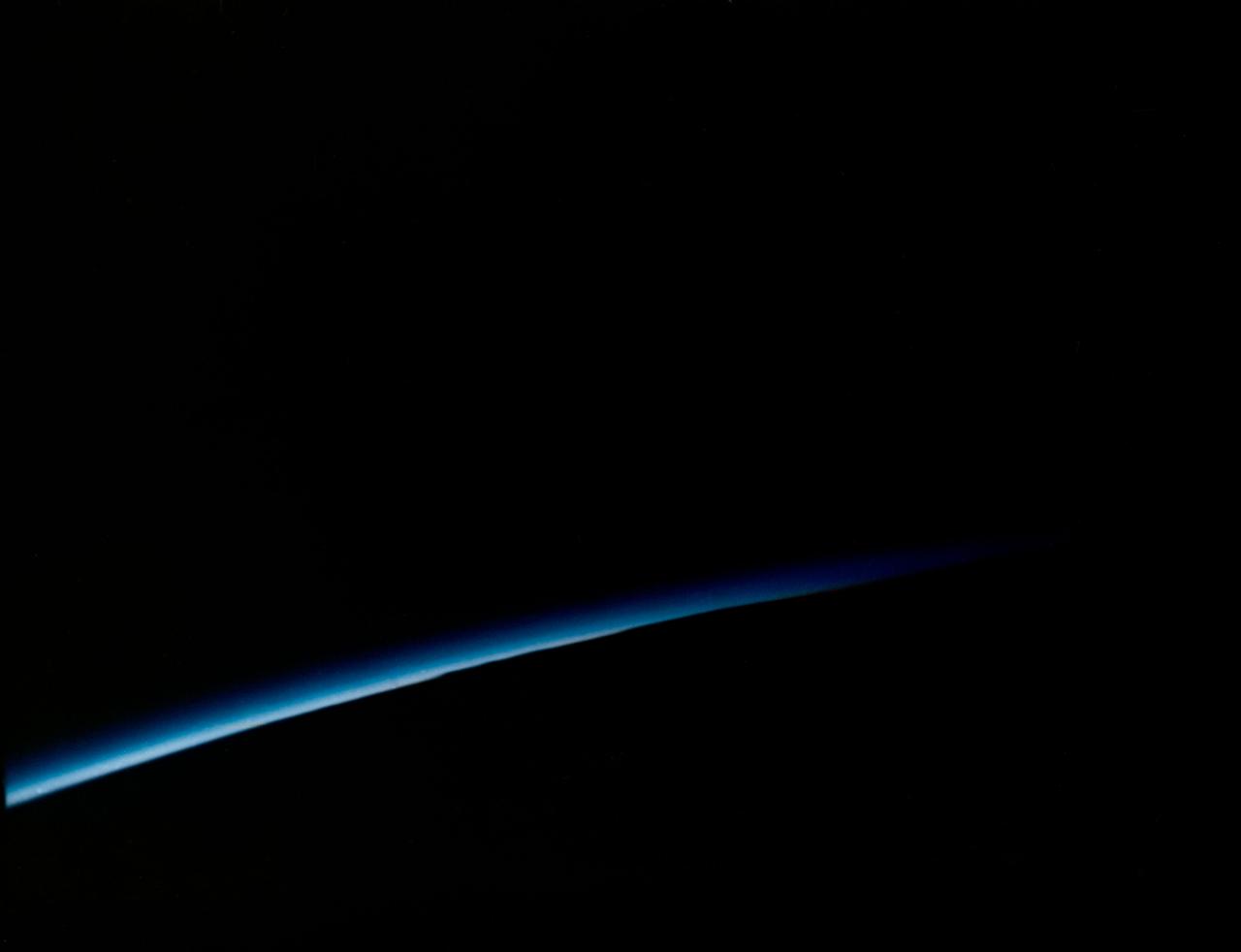
S62-06011 (20 Feb. 1962) --- Orbital sunset photographed by astronaut John H. Glenn Jr. aboard the "Friendship 7" during his Mercury-Atlas 6 (MA-6) spaceflight. Photo credit: NASA
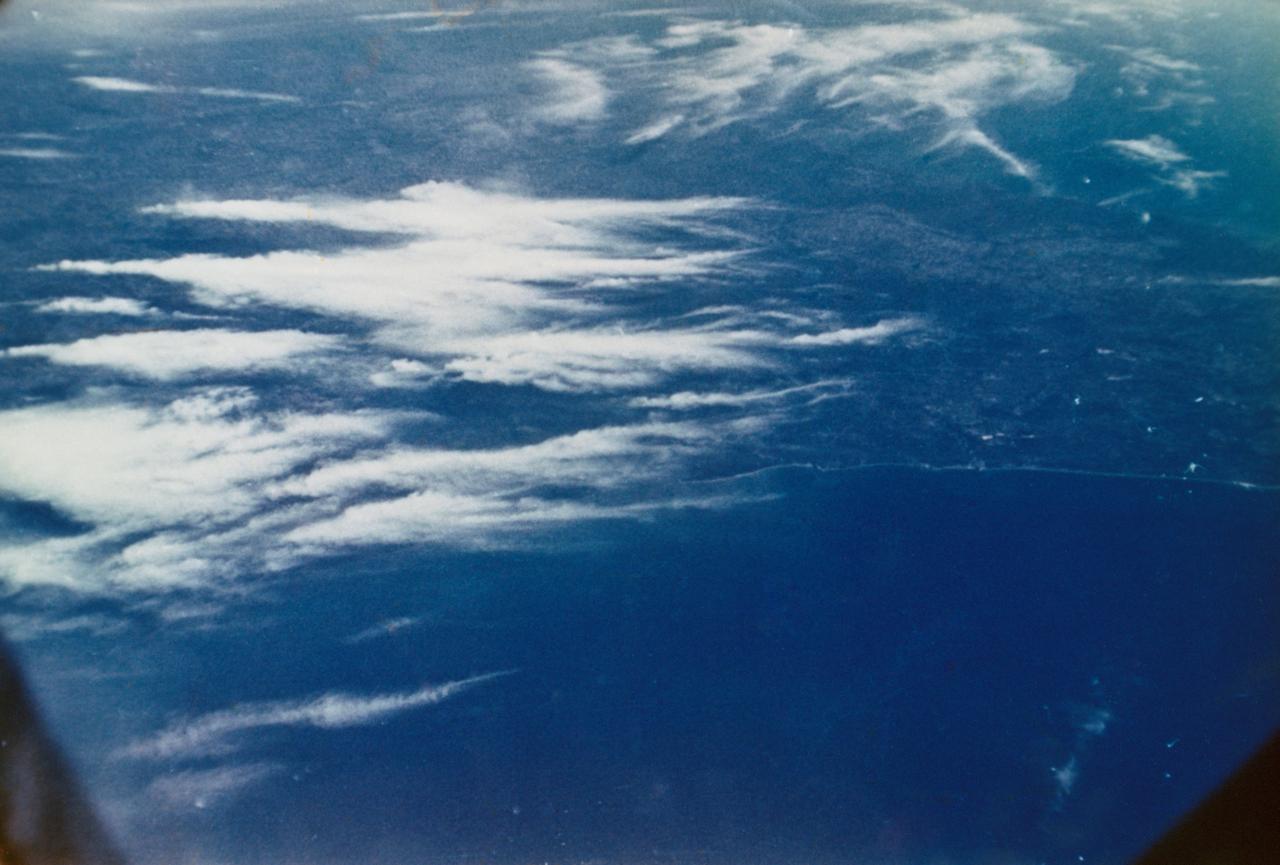
S88-50997 (20 Feb. 1962) --- View of Earth taken by astronaut John H. Glenn Jr. during his Mercury Atlas 6 (MA-6) spaceflight. Photo credit: NASA
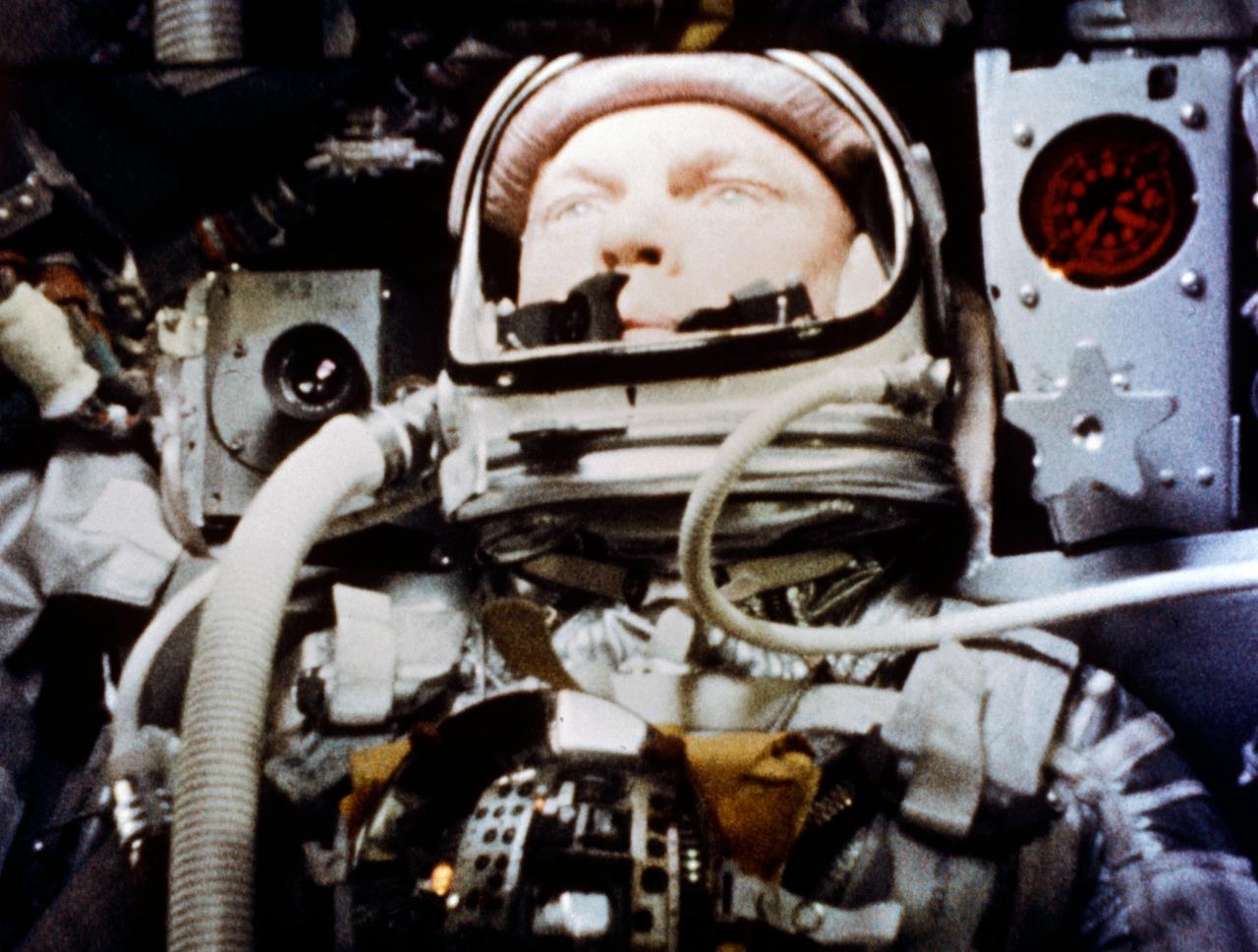
S62-00303 (20 Feb. 1962) --- A camera onboard the "Friendship 7" Mercury spacecraft photographs astronaut John H. Glenn Jr. during the Mercury-Atlas 6 spaceflight. Photo credit: NASA
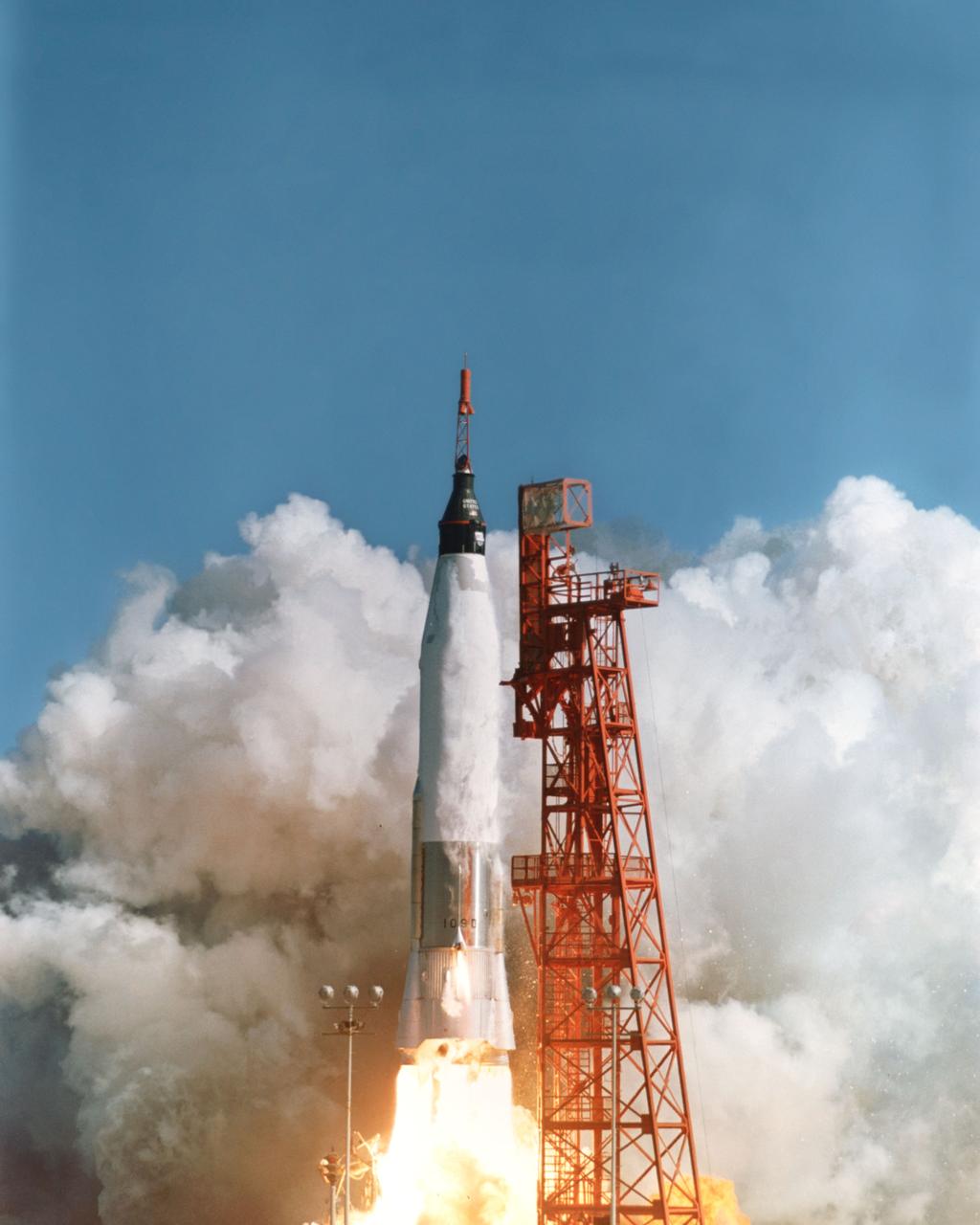
S62-00337 (20 Feb. 1962) --- Liftoff of Mercury-Atlas 6, Feb. 20, 1962, carrying astronaut John H. Glenn Jr. Photo credit: NASA
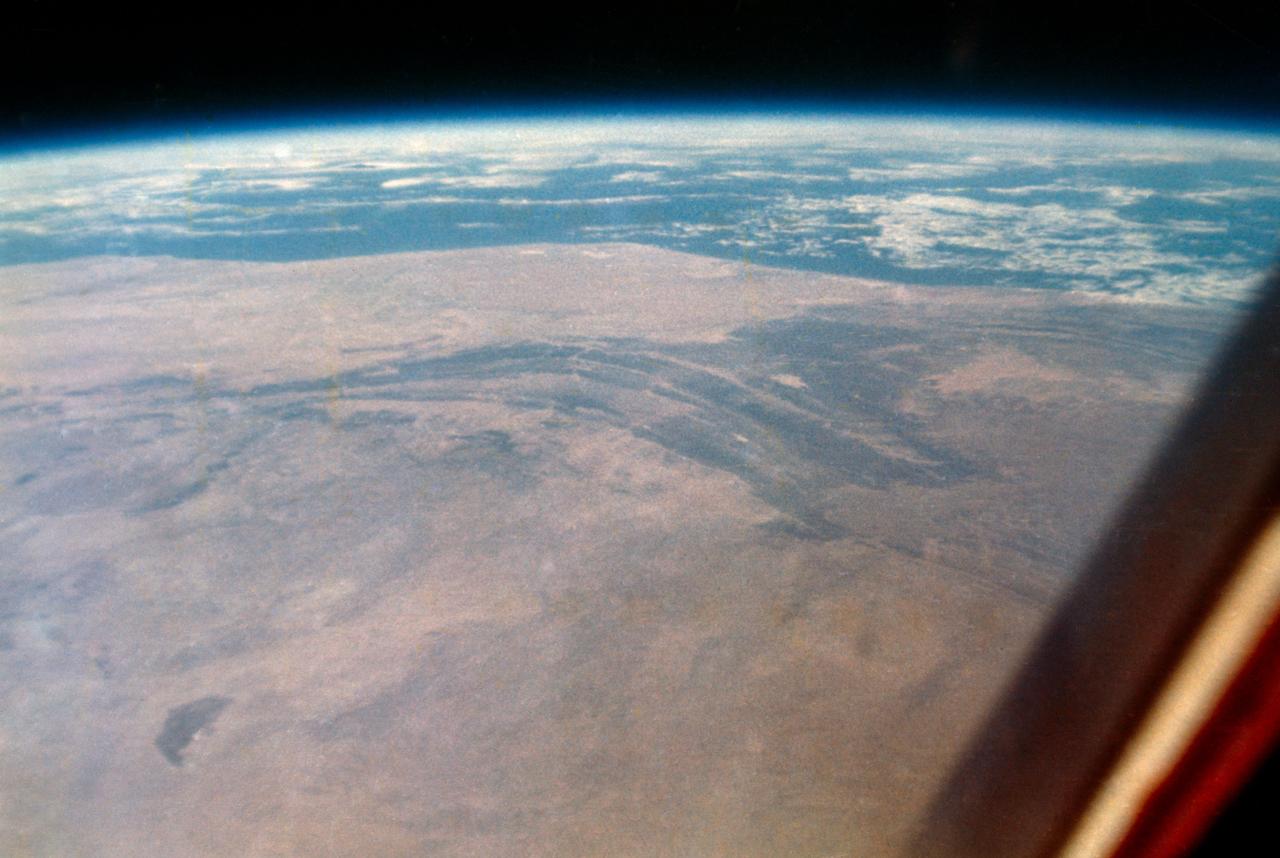
S62-06018 (20 Feb. 1962) --- View of Earth taken by astronaut John H. Glenn Jr. during his Mercury Atlas 6 (MA-6) spaceflight. Photo credit: NASA
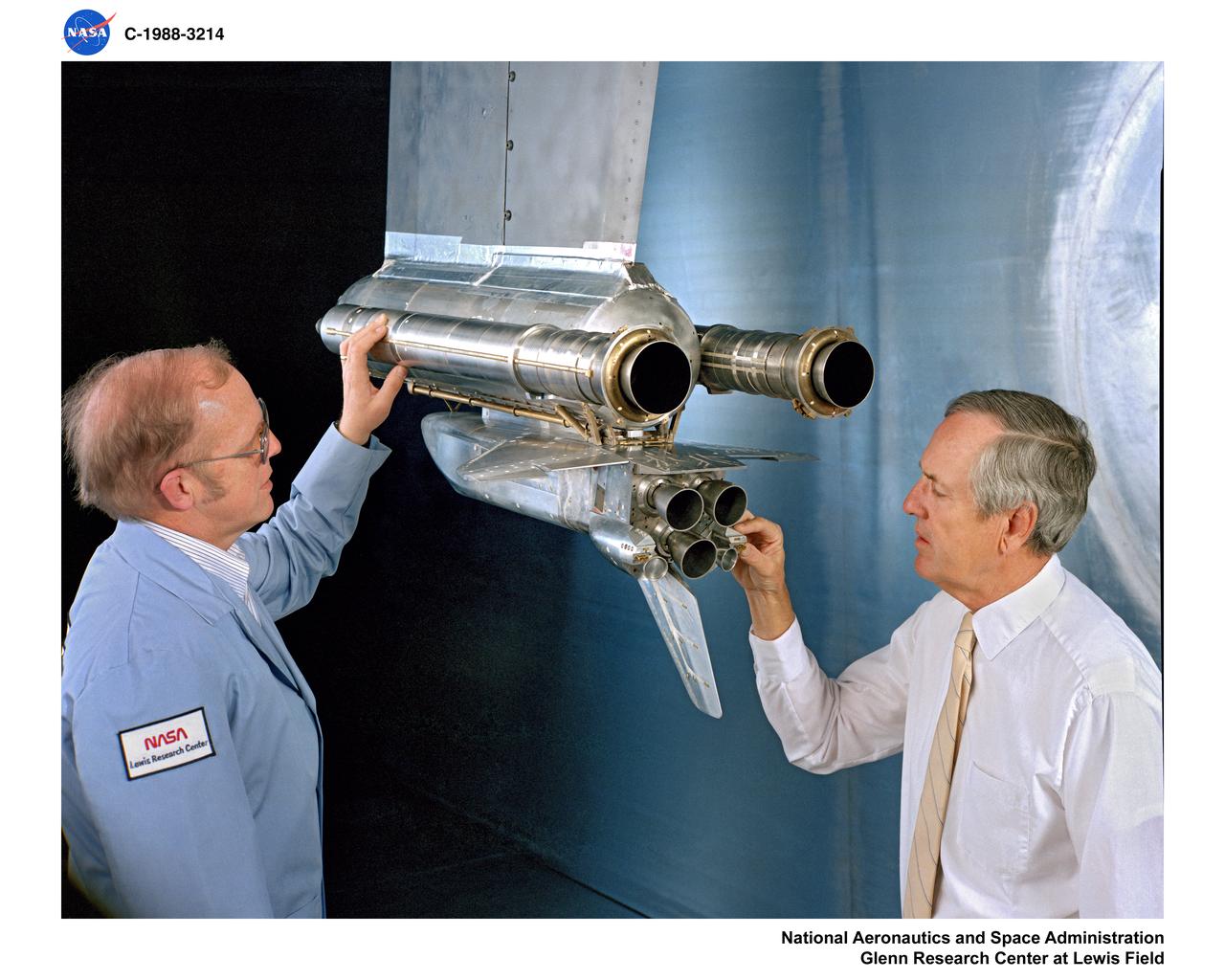
This test conducted in May 1988 shows what happens during launch if a space shuttle main engine fails. The test was conducted in the 10X10 supersonic wind tunnel at the John H. Glenn Research Center.
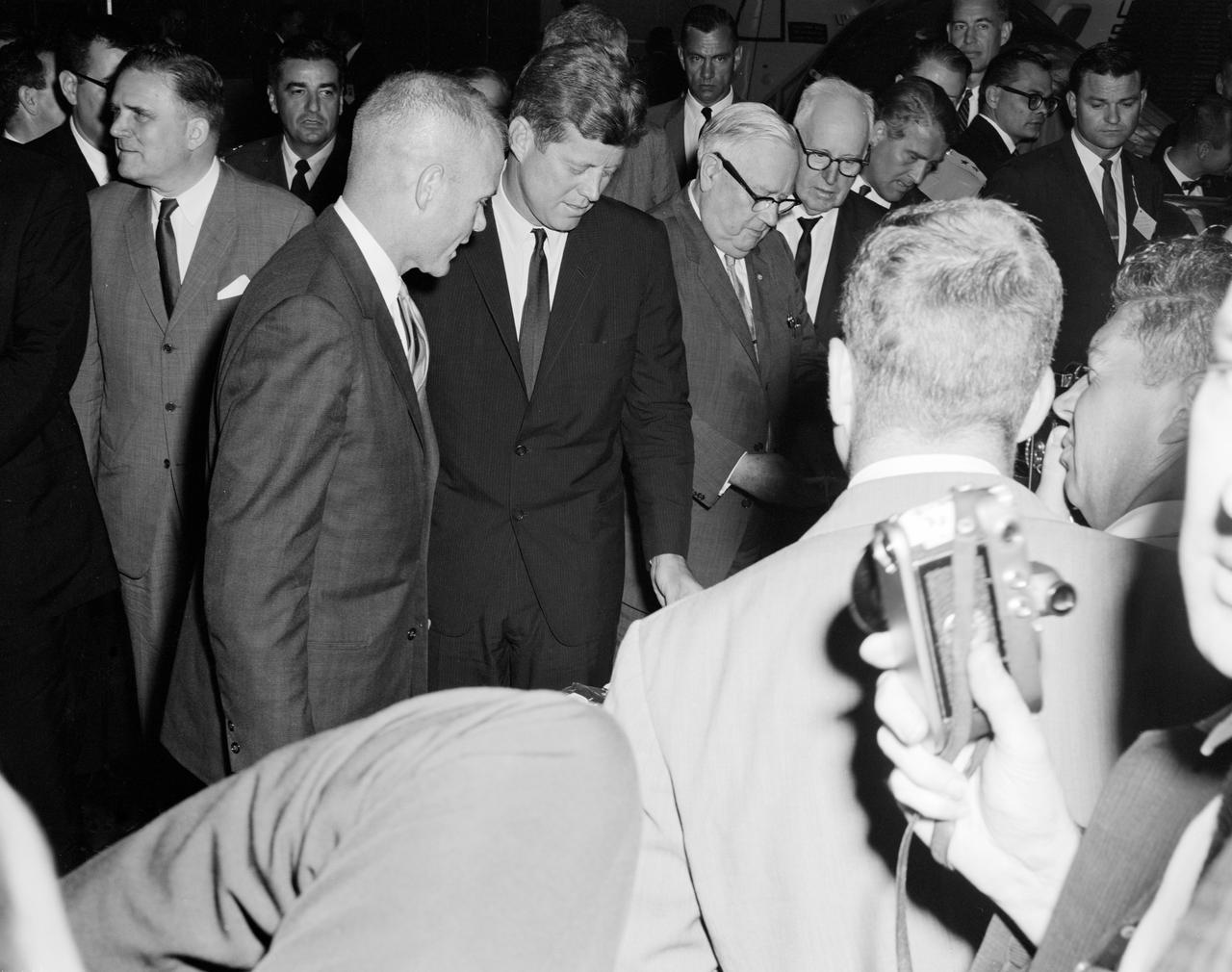
S62-03987 (1962) --- Astronaut John H. Glenn Jr., gives United States President John F. Kennedy a quick run-down on the display of survival gear. The Chief Executive took a quick tour of a dozen NASA displays set up for him after the classified briefing. Photo credit: NASA
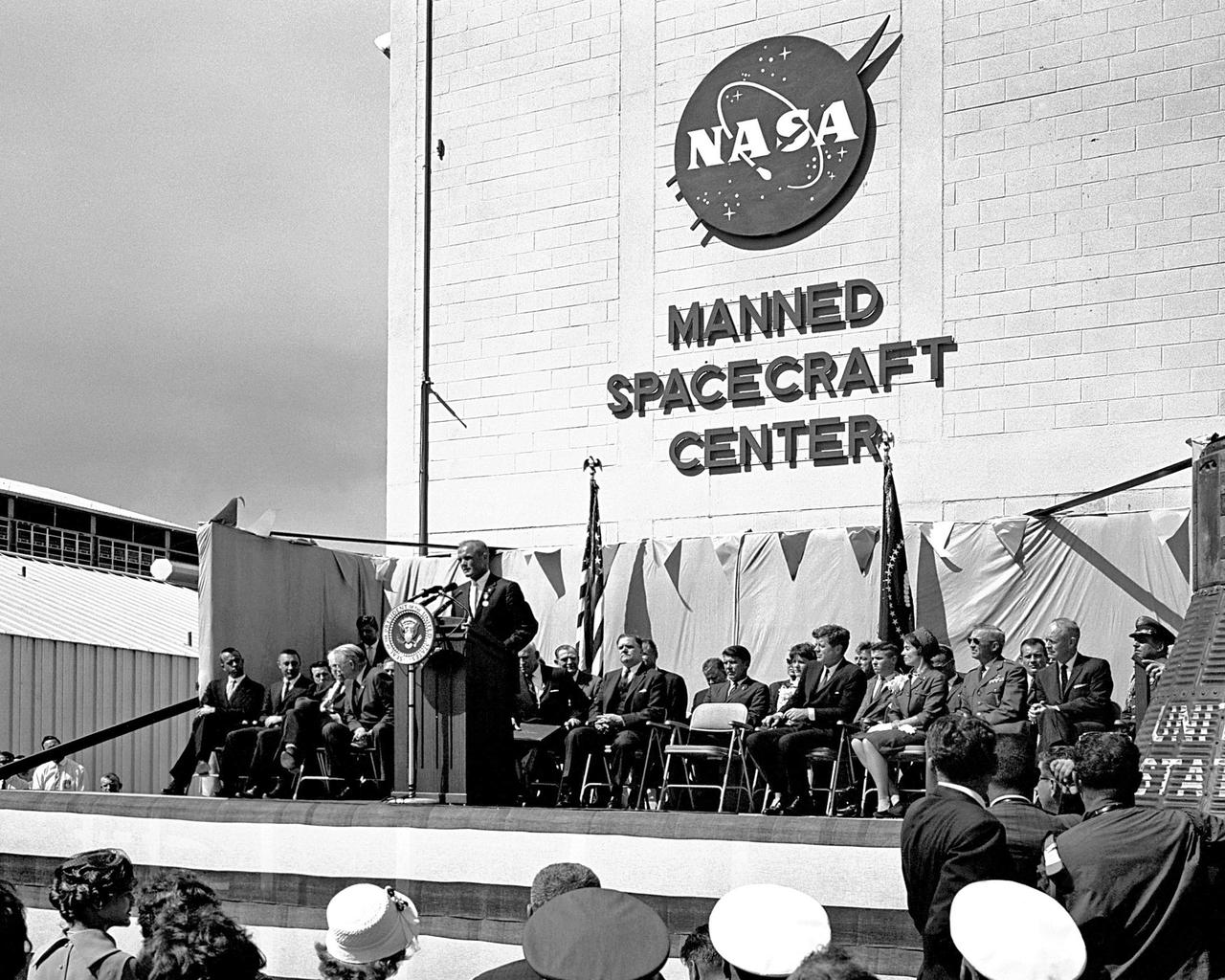
CAPE CANAVERAL, Fla. -- President John F. Kennedy honors John H. Glenn Jr. at Hangar S, Cape Canaveral, Florida, after his historic three-orbit mission aboard Friendship 7. Photo credit: NASA
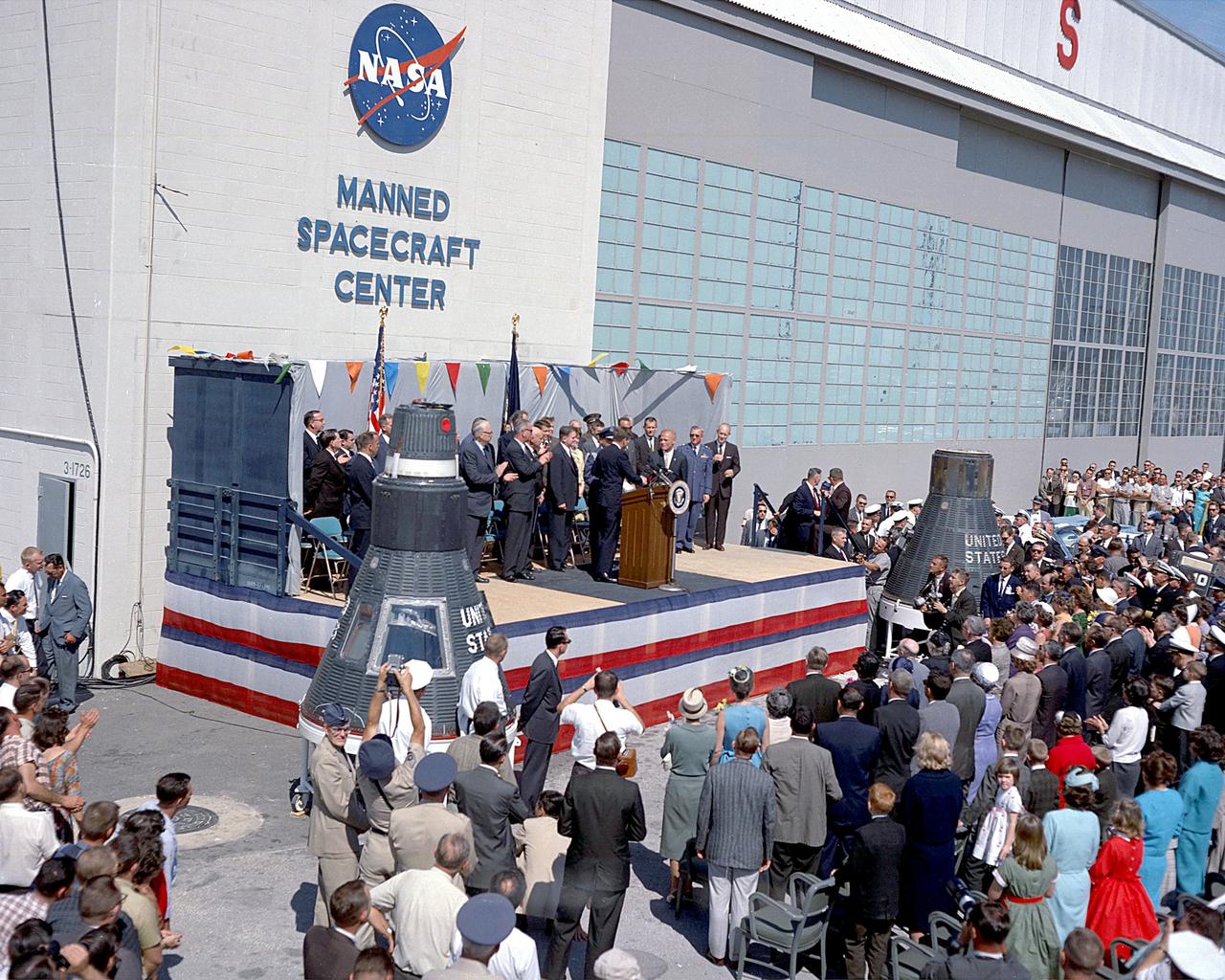
CAPE CANAVERAL, Fla. -- President John F. Kennedy honors John H. Glenn Jr. at Hangar S, Cape Canaveral, Florida, after his historic three-orbit mission aboard Friendship 7. Photo credit: NASA