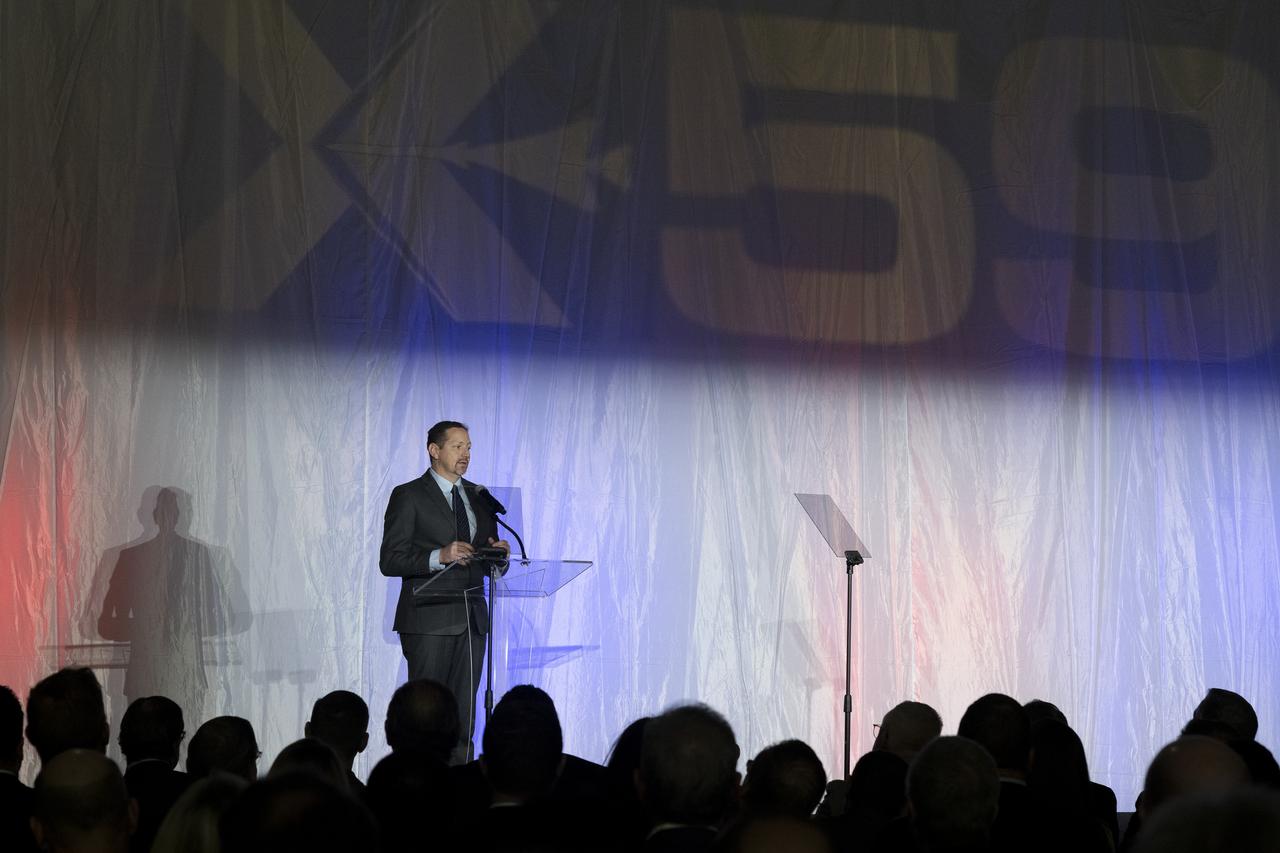
Lockheed Martin Skunk Works Vice President and General Manager John Clark speaks on stage prior to the unveiling of the agency’s X-59 quiet supersonic research aircraft at a January 12, 2024 event at Lockheed Martin Skunk Works in Palmdale, California. The X-59 is the centerpiece of NASA’s Quesst mission, which seeks to solve one of the major barriers to supersonic flight over land, currently banned in the United States, by making sonic booms quieter.
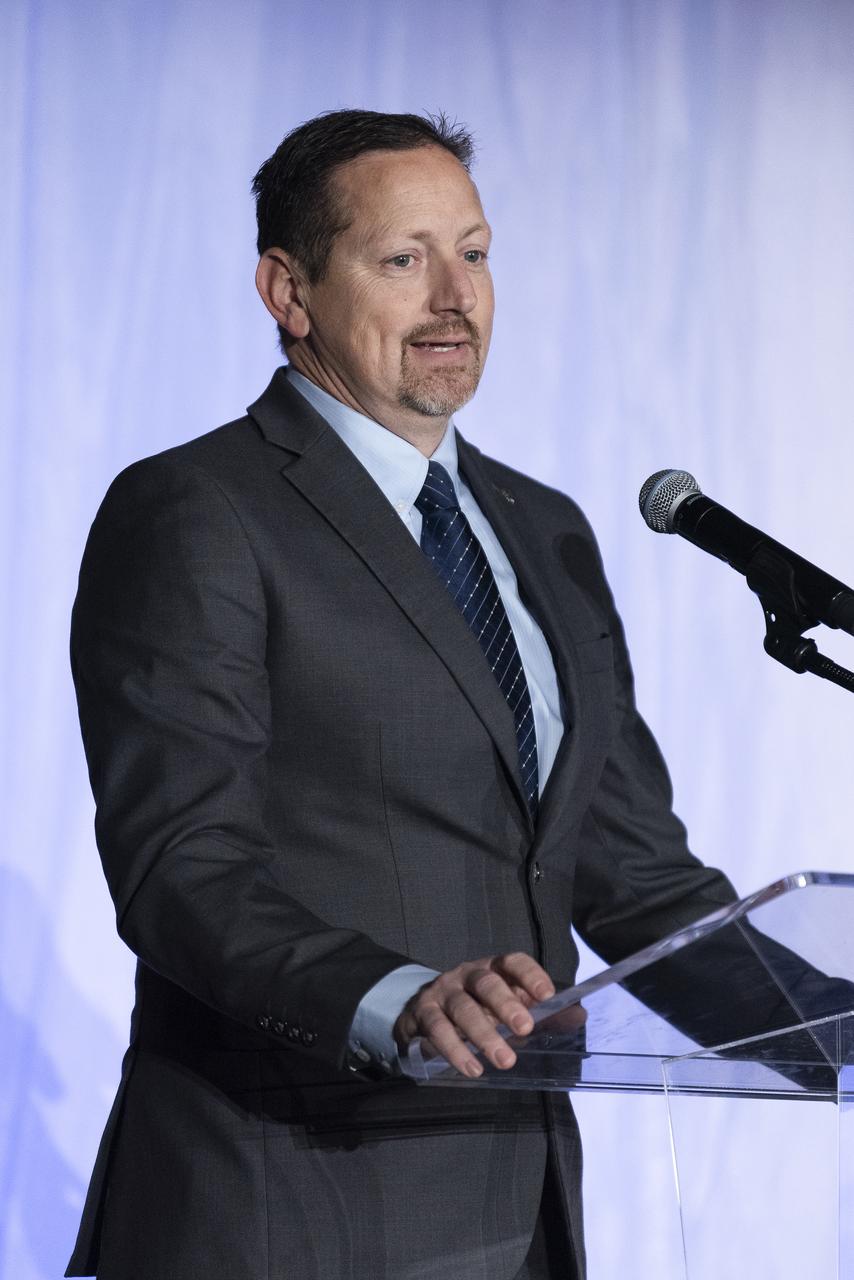
Lockheed Martin Skunk Works Vice President and General Manager John Clark speaks on stage prior to the unveiling of the agency’s X-59 quiet supersonic research aircraft at a January 12, 2024 event at Lockheed Martin Skunk Works in Palmdale, California. The X-59 is the centerpiece of NASA’s Quesst mission, which seeks to solve one of the major barriers to supersonic flight over land, currently banned in the United States, by making sonic booms quieter.
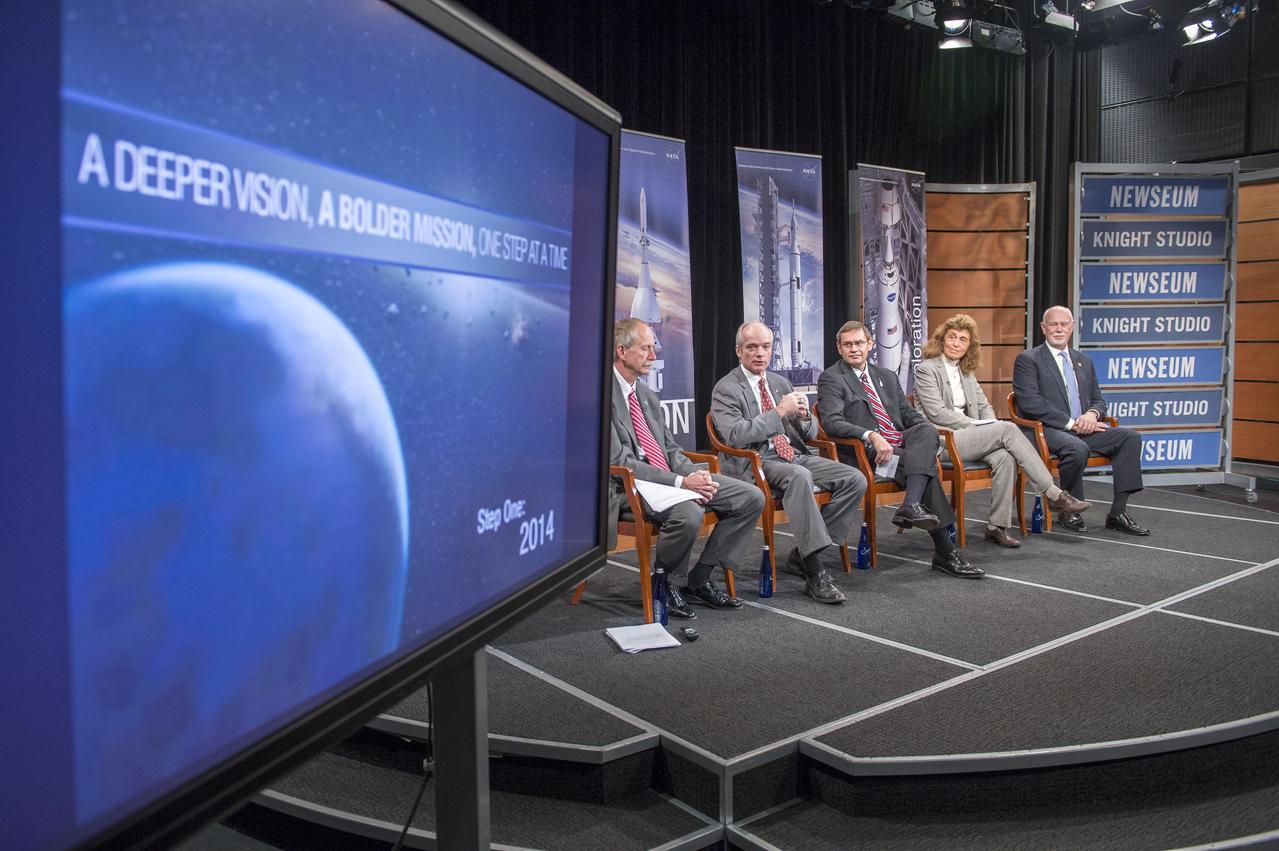
L-R: William Gerstenmaier, NASA Associate Administrator for human exploration and operations; Charlie Precourt, Vice President and General Manager, ATK Space Launch Division; John Elbon, Vice President and General Manager, Boeing Space Exploration; Julie Van Kleek, Vice President, space programs, Aerojet Rocketdyne; and Jim Crocker, Vice President and General Manager, civil space, Lockheed Martin Space Systems, participate in a panel discussion on deep space exploration using the Space Launch System and Orion spacecraft at the Newseum in Washington on Tuesday, November 12, 2013. Photo Credit: (NASA/Jay Westcott)
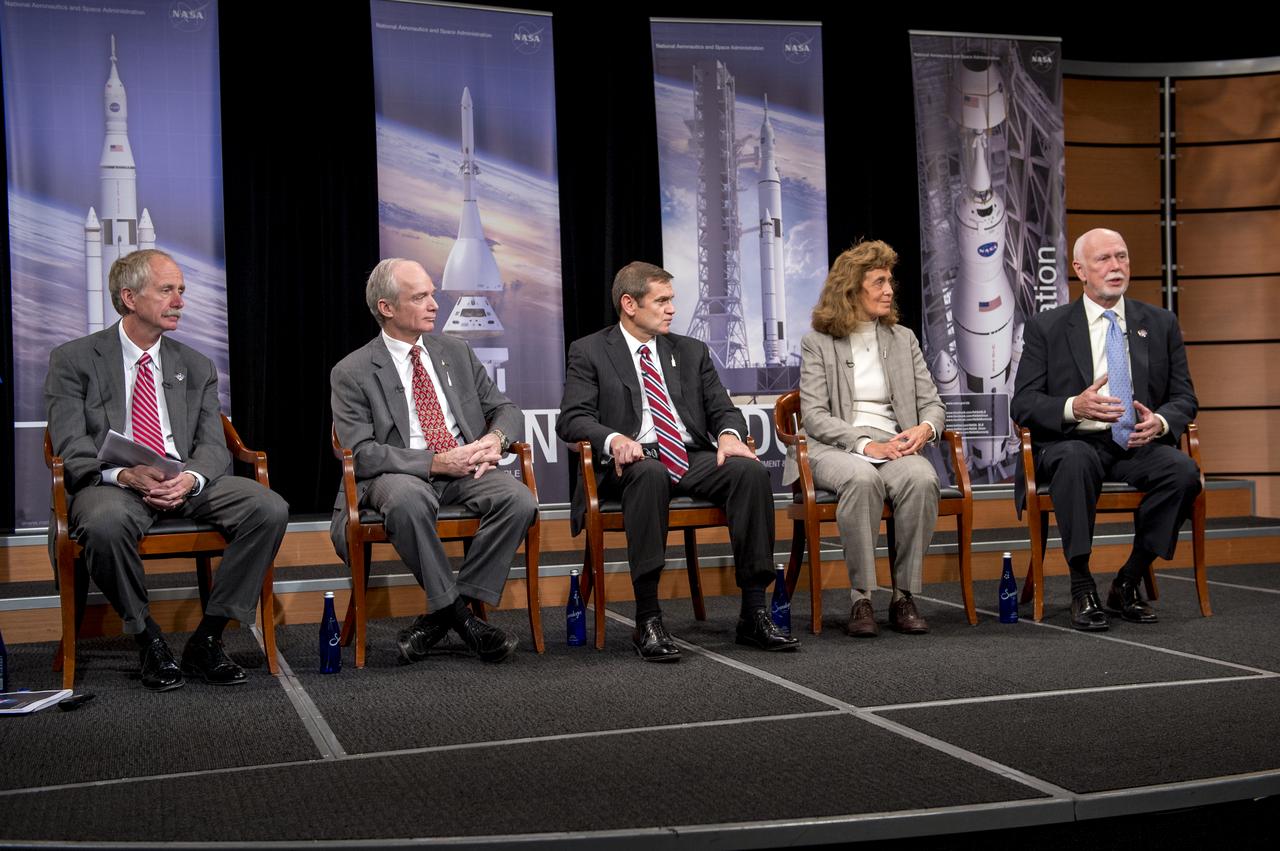
L-R: William Gerstenmaier, NASA Associate Administrator for human exploration and operations; Charlie Precourt, Vice President and General Manager, ATK Space Launch Division; John Elbon, Vice President and General Manager, Boeing Space Exploration; Julie Van Kleek, Vice President, space programs, Aerojet Rocketdyne; and Jim Crocker, Vice President and General Manager, civil space, Lockheed Martin Space Systems, participate in a panel discussion on deep space exploration using the Space Launch System and Orion spacecraft at the Newseum in Washington on Tuesday, November 12, 2013. Photo Credit: (NASA/Jay Westcott)
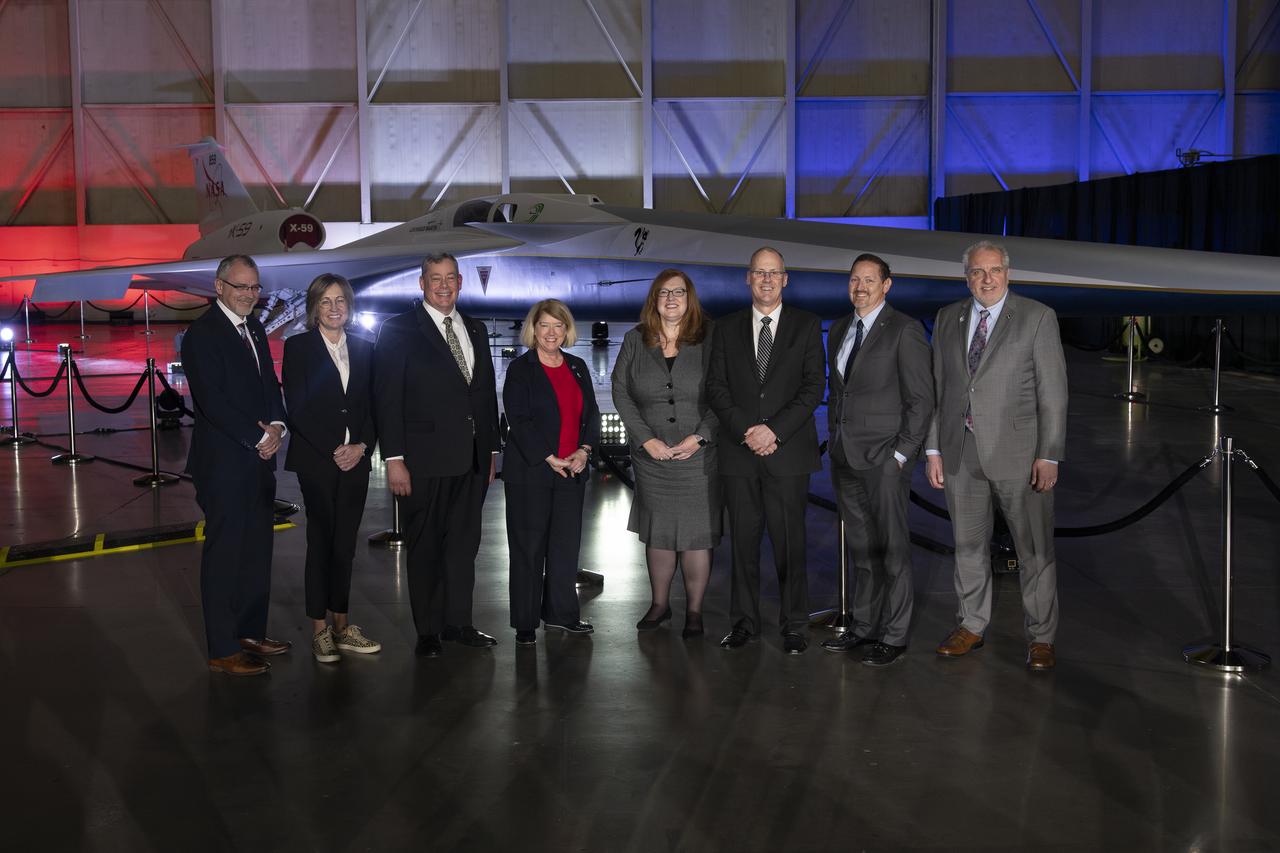
(from left to right) NASA Associate Administrator Jim Free, California Senior Economic Advisor to the Governor Dee Dee Myers, Lockheed Martin Executive Vice President of Aeronautics Greg Ulmer, NASA Deputy Administrator Pam Melroy, Low Boom Flight Demonstrator Project Manager Cathy Bahm, Lockheed Martin X-59 Project Manager David Richardson, Lockheed Martin Skunk Works Vice President and General Manager John Clark, and NASA Associate Administrator for the Aeronautics Research Mission Directorate Bob Pearce pose in front of the agency’s X-59 quiet supersonic research aircraft at a January 12, 2024 event at Lockheed Martin Skunk Works in Palmdale, California. The X-59 is the centerpiece of NASA’s Quesst mission, which seeks to solve one of the major barriers to supersonic flight over land, currently banned in the United States, by making sonic booms quieter.
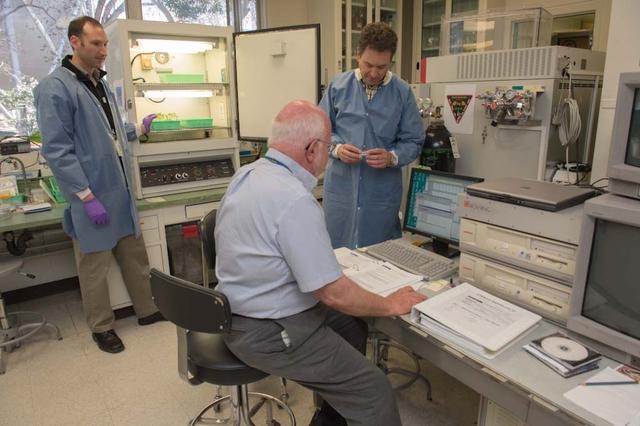
TROPI Seed Growth-1 payload (will fly to ISS on Space X 2) from left to right are Krisofer Vogelsong, Project Science Lead, Tropi SG-1, Lockheed Martin, NASA Ames, John Freeman Plant Scientist, Tropi SG-1, intrinsyx, NASA Ames, seated Dave Heathcote, ISS Payload Support, Lockheed Martin, NASA Ames
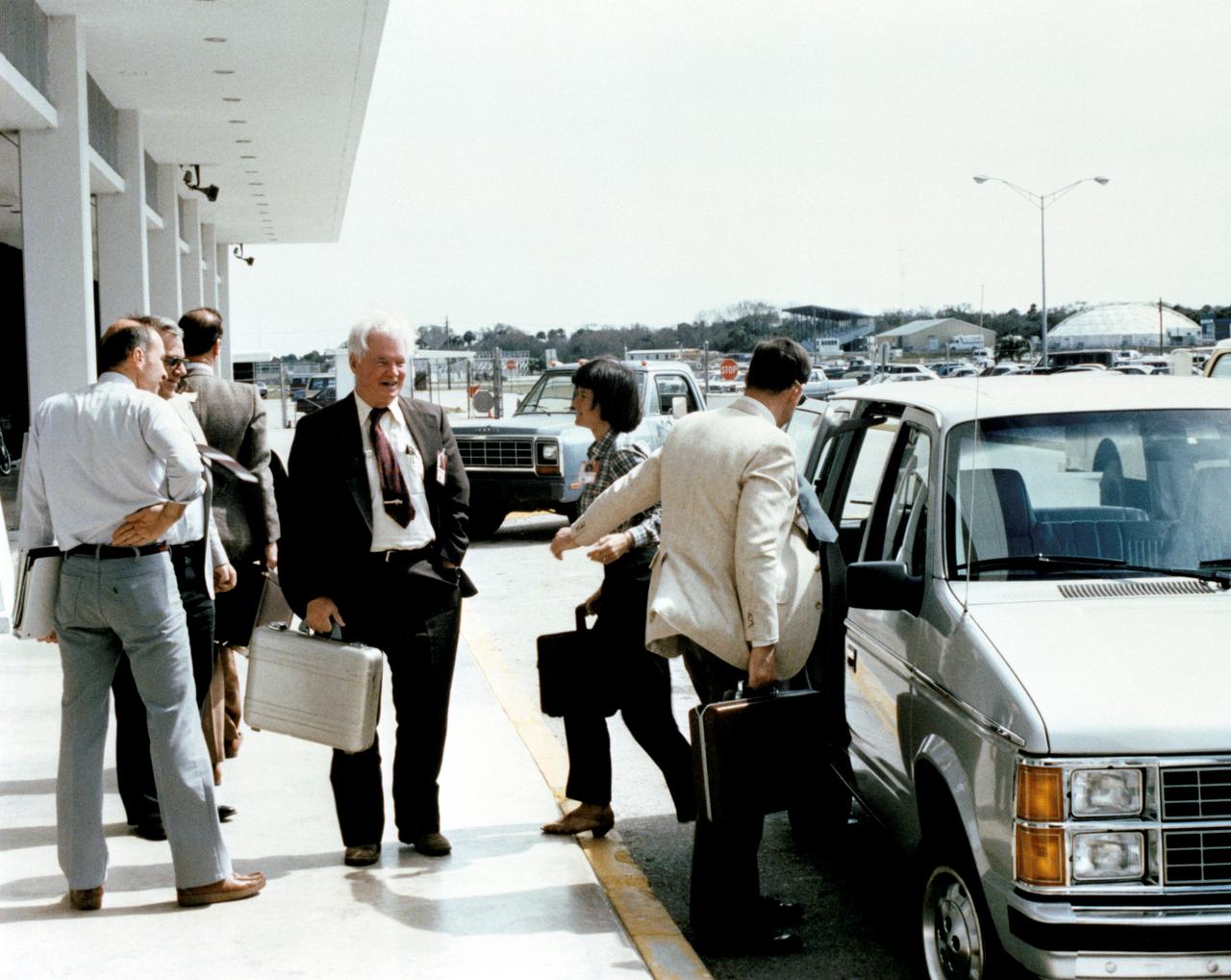
51L-10166 (4 March 1986) --- Members of the Presidential Commission on the space shuttle Challenger accident arrive at the Launch Control Center at Kennedy Space Center (KSC). Commission members present are Robert Hotz (center) and Dr. Sally Ride. Others pictured are John Chase, staff assistant to the Commission (far right) and from left to right: Bob Sieck, Director of Shuttle operations; Jack Martin and John Fabian.
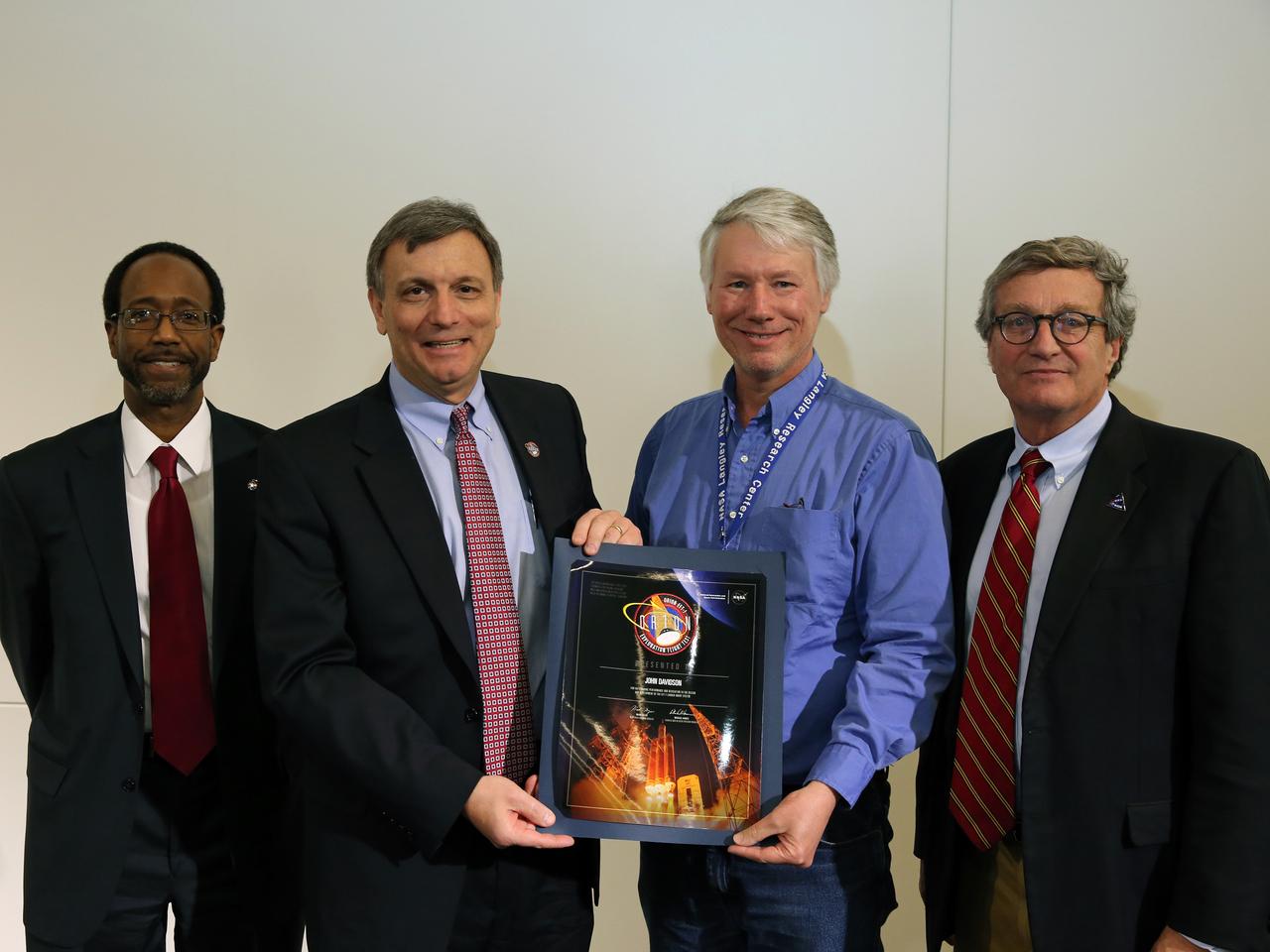
NASA and Lockheed Martin Orion leadership visit Langley Research Center in Hampton, VA on March 19, 2015 to celebrate the center's contribution to Orion's Exploration Flight Test-1 (EFT-1). Award presented to John Davidson. Part of Batch image transfer from Flickr.
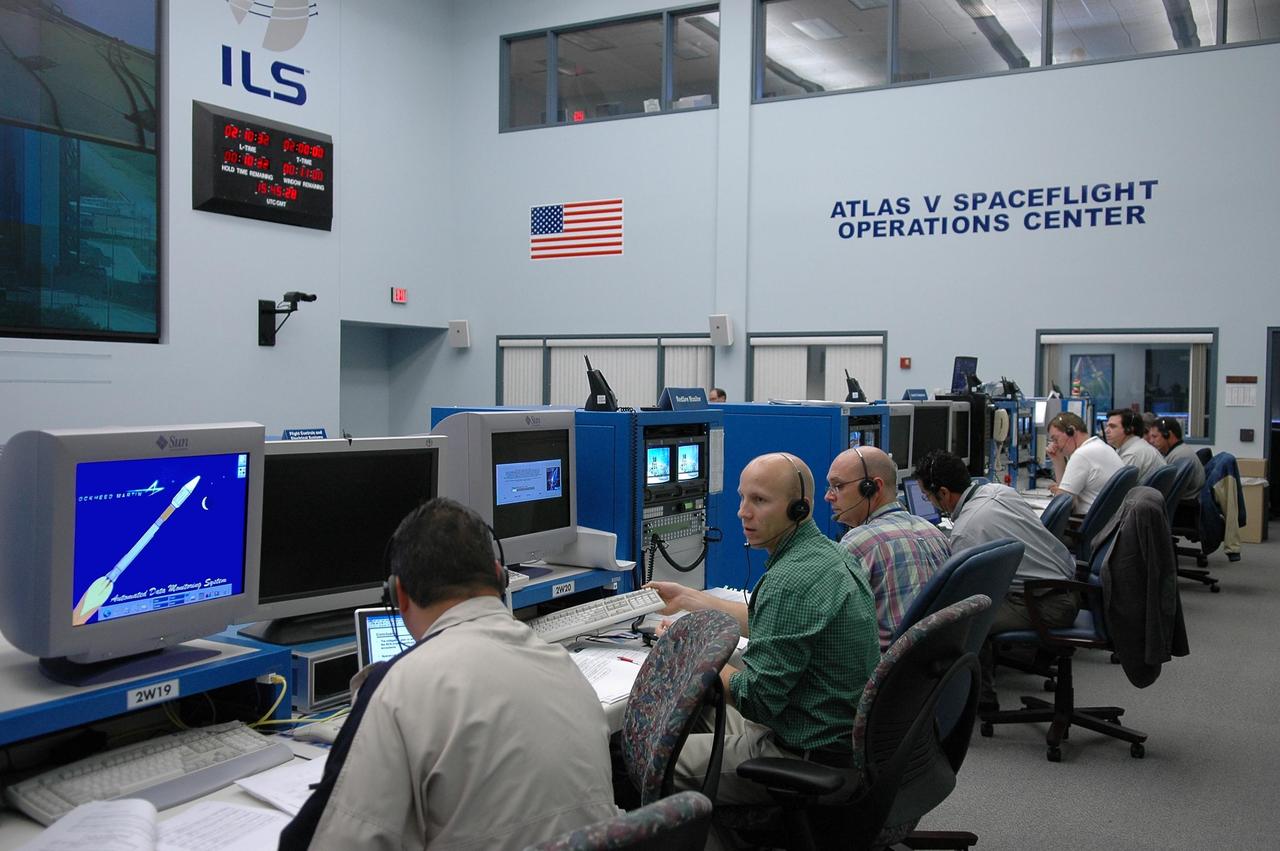
KENNEDY SPACE CENTER, FLA. - At their consoles in the Atlas V Spaceflight Operations Center on Cape Canaveral Air Force Station, members of the New Horizons team take part in a dress rehearsal for the launch scheduled in mid-January. From left are Lockheed Martin's Program Manager John Crocker; Michael Kubiak with the U.S. Air Force, participating with Lockheed Martin on the Education with Industry program; and Lockheed Martin's Carlos Prado. New Horizons carries seven scientific instruments that will characterize the global geology and geomorphology of Pluto and its moon Charon, map their surface compositions and temperatures, and examine Pluto's complex atmosphere. After that, flybys of Kuiper Belt objects from even farther in the solar system may be undertaken in an extended mission. New Horizons is the first mission in NASA's New Frontiers program of medium-class planetary missions. The spacecraft, designed for NASA by the Johns Hopkins University Applied Physics Laboratory in Laurel, Md., will launch aboard a Lockheed Martin Atlas V rocket and fly by Pluto and Charon as early as summer 2015.
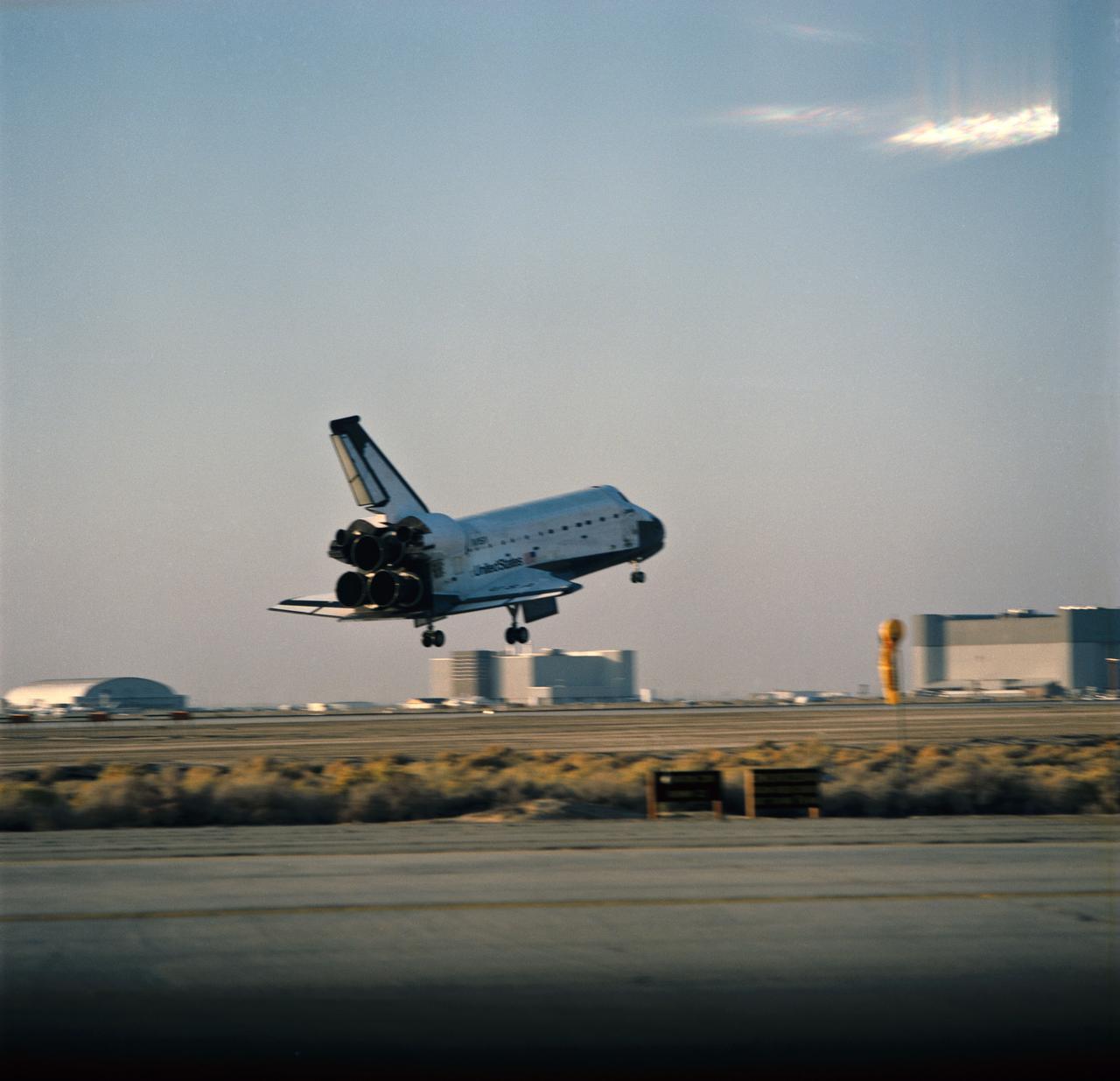
STS58-S-126 (1 Nov 1993) --- The Space Shuttle Columbia is about to touch down on the runway at Edwards Air Force Base (EAFB) in California. The landing, which occurred at 7:06 a.m. (PST), November 1, 1993, completed a two week mission in space devoted to medical research. Onboard the spacecraft were astronauts John E. Blaha, Richard A. Searfoss, Rhea Seddon, Shannon W. Lucid, David A. Wolf and William S. McArthur along with payload specialist Martin J. Fettman, DVM.
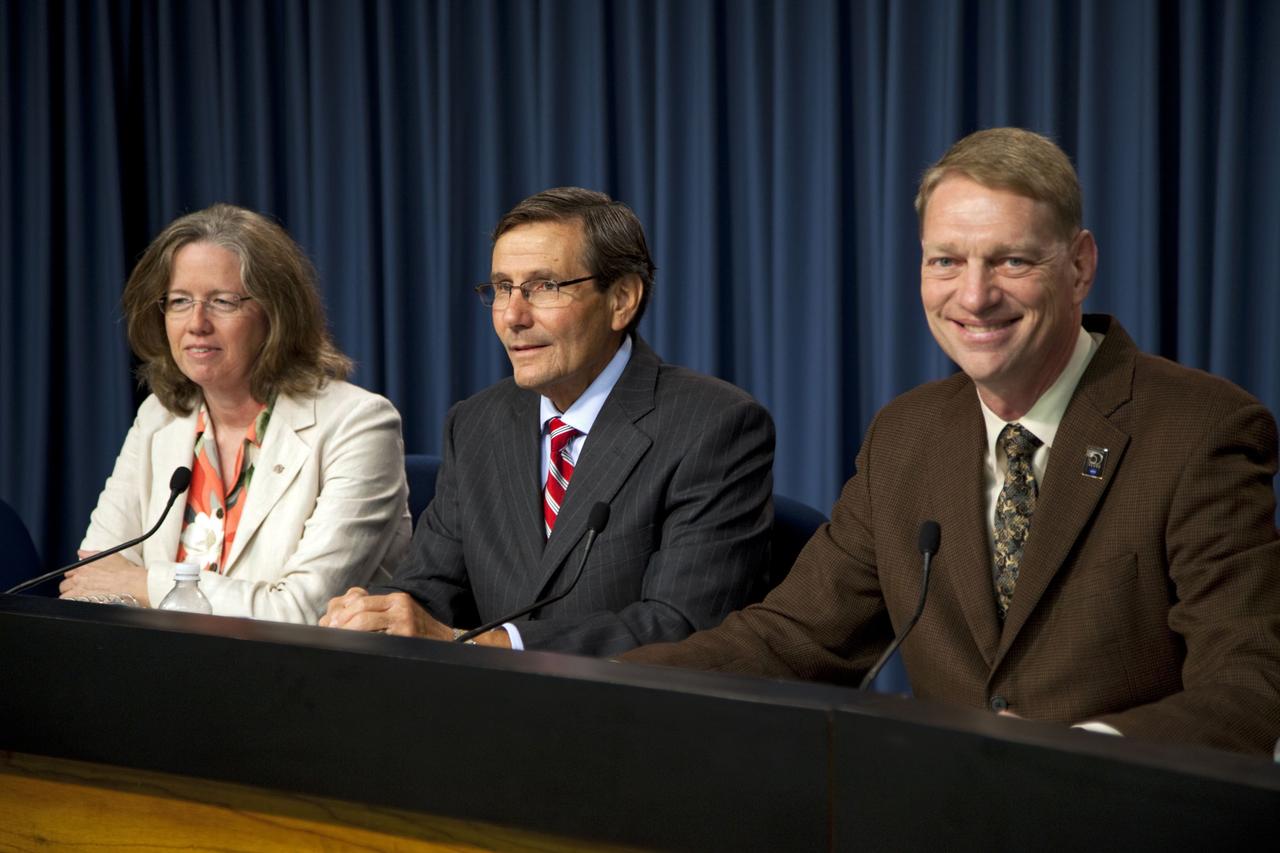
CAPE CANAVERAL, Fla. -- In the Press Site auditorium at NASA's Kennedy Space Center in Florida, media were briefed about updates to aeronautics research at NASA. Seen here are NASA Public Affairs Officer Beth Dickey, Edgar G. Waggoner, director of the Integrated Systems Research Program Office, Aeronautics Research Mission Directorate and John Cavolowsky, director of the Airspace Systems Program Office, Aeronautics Research Mission Directorate. Photo credit: NASA/Frankie Martin
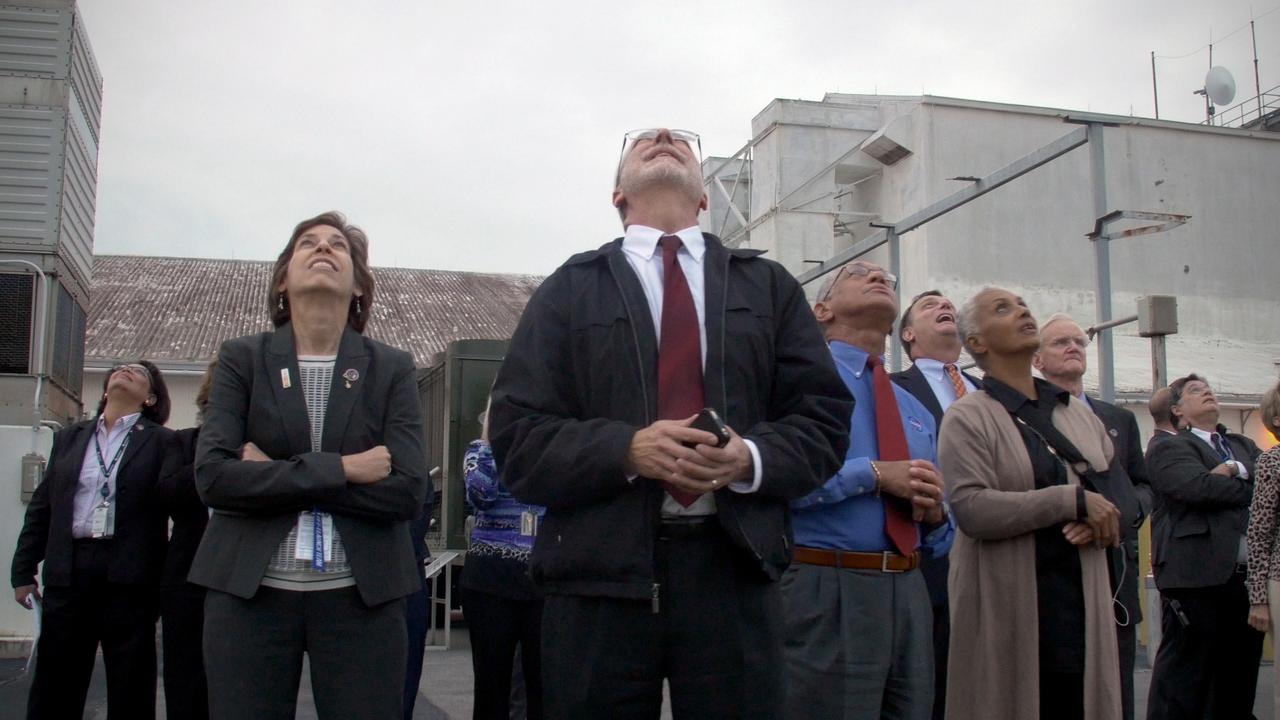
The NASA/Lockheed Martin leadership team watches the Exploration Flight Test-1 (EFT-1) launch outside Hanger AE at the Cape Canaveral Air Force Station in Florida on Dec. 5, 2014. Johnson Space Center Director Ellen Ochoa, Orion Program Manager Mark Geyer, NASA Administrator Charles Bolden and Jackie Bolden, Orion Deputy Program Manager Mark Kirasich, NASA Astronaut John Casper. Part of Batch image transfer from Flickr.
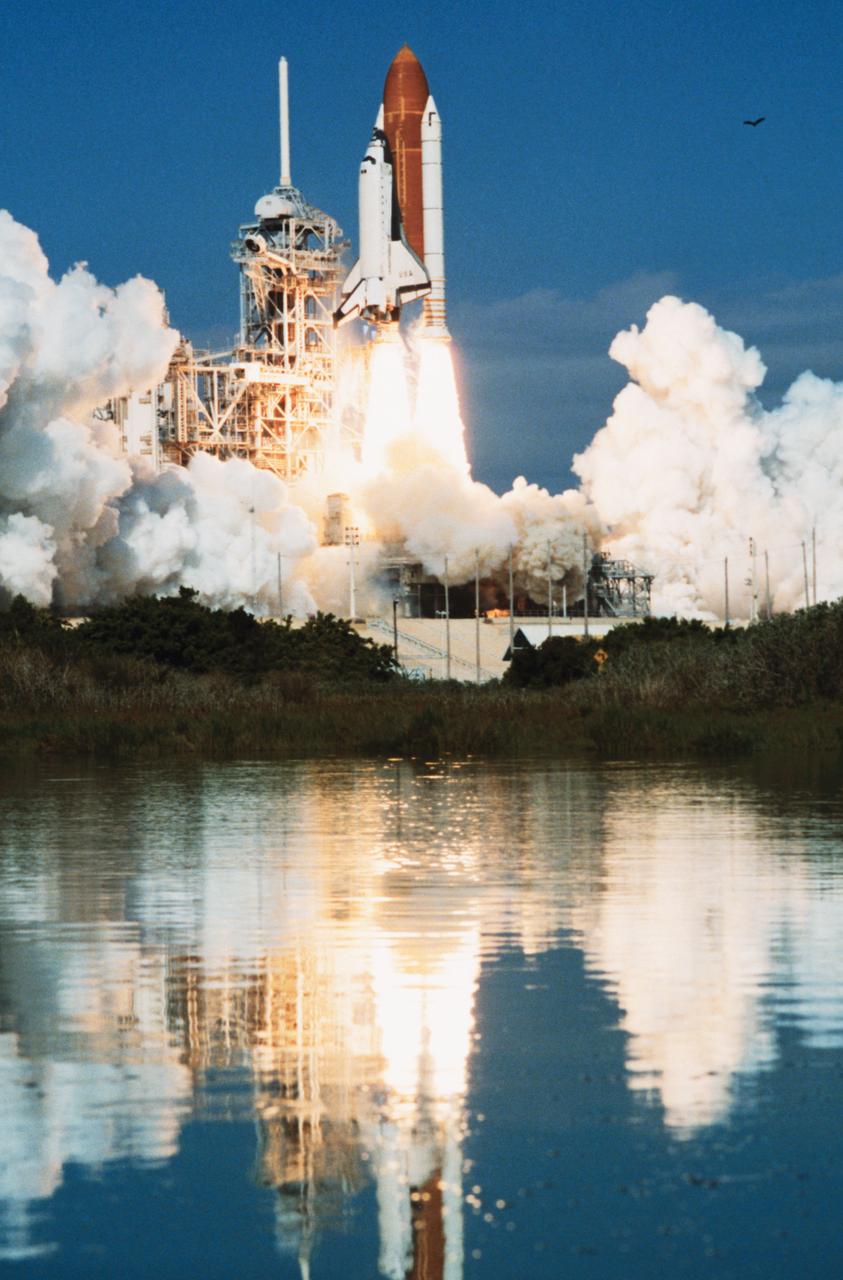
STS058-S-092 (18 Oct 1993) --- The Space Shuttle Columbia, with a crew of seven and a science module aboard, lifts off from Launch Complex 39 at Kennedy Space Center (KSC), leaving its reflection in nearby marsh. Launch occurred at 10:53 a.m. (EDT), October 18, 1993. Onboard were astronauts John E. Blaha, Richard A. Searfoss, Rhea Seddon, Shannon W. Lucid, David A. Wolf and William S. McArthur along with payload specialist Martin J. Fettman.
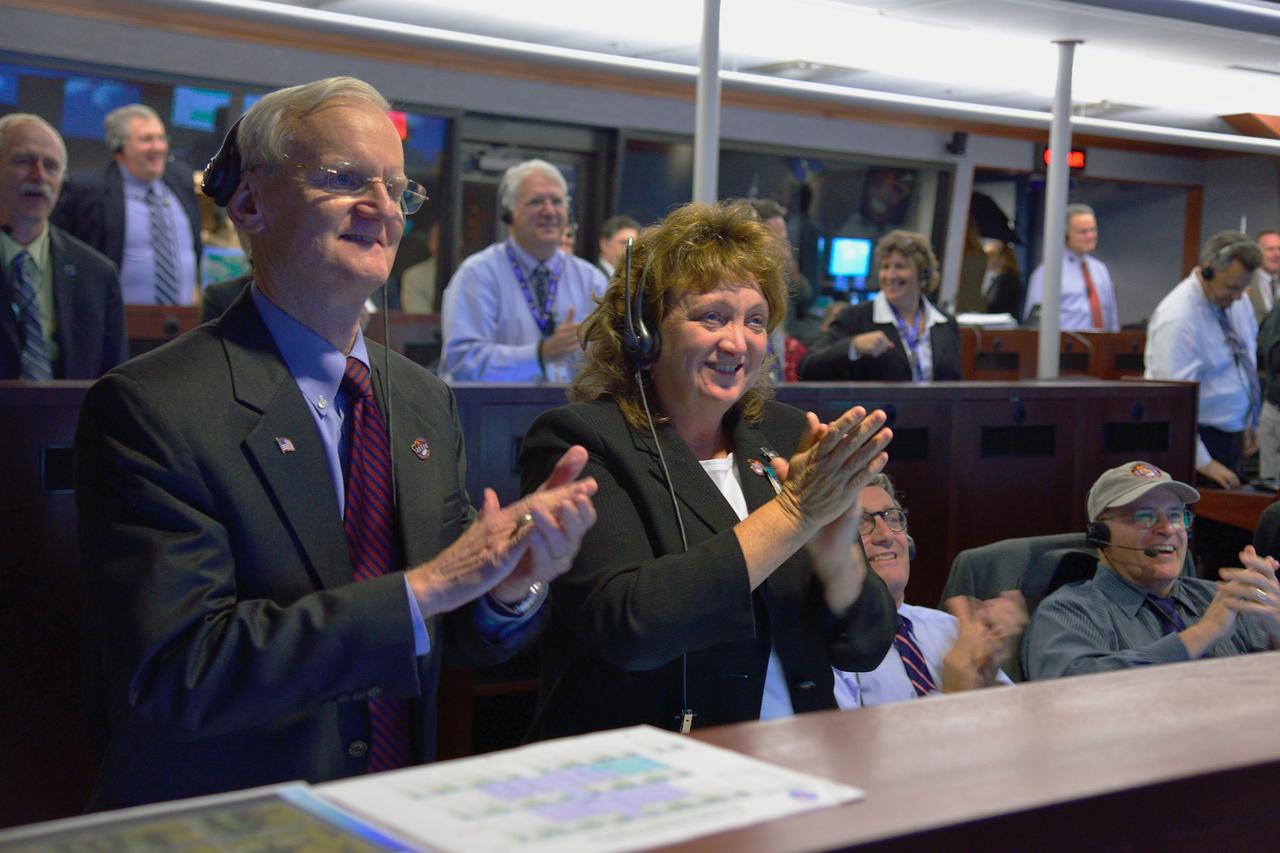
Astronaut John Casper and Lockheed Martin's Carol Webber watch Orion's parachutes open during the Exploration Flight Test-1 (EFT-) landing sequence on Dec. 5, 2014. The Orion spacecraft orbited Earth twice, reaching an altitude of approximately 3,600 miles above Earth before landing. No one was aboard Orion for this flight test, but the spacecraft is designed to allow us to journey to destinations never before visited by humans, including an asteroid and Mars. Part of Batch image transfer from Flickr.
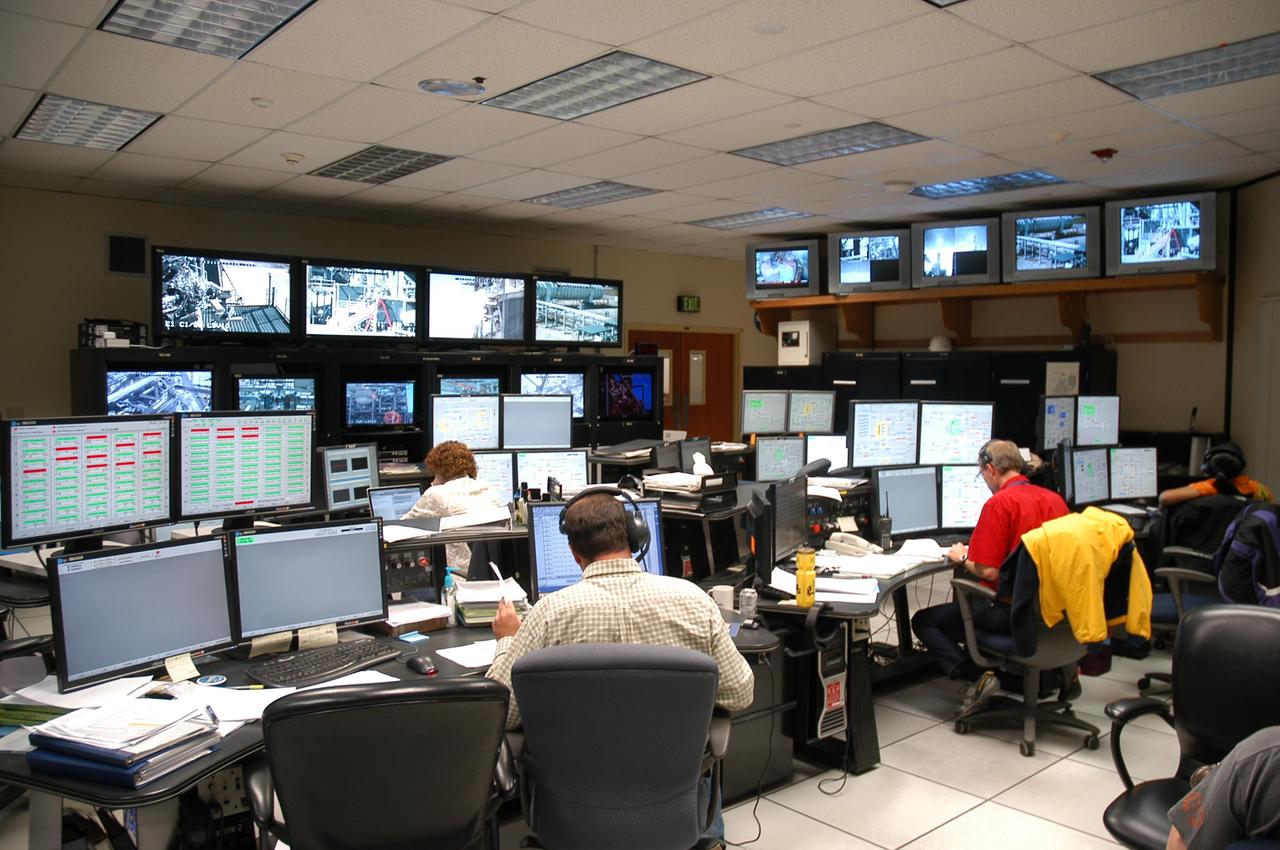
Jason Hopper of NASA (front row), Jody Ladner of Lockheed Martin (back row, left) and Chris Mulkey of NASA prepare to test the Blue Origin BE-3 engine thrust chamber in the E-1 Test Stand Control Center at John C. Stennis Space Center on Nov. 8. The test was one of 27 conducted in Stennis' E Test Complex the week of Nov. 5.
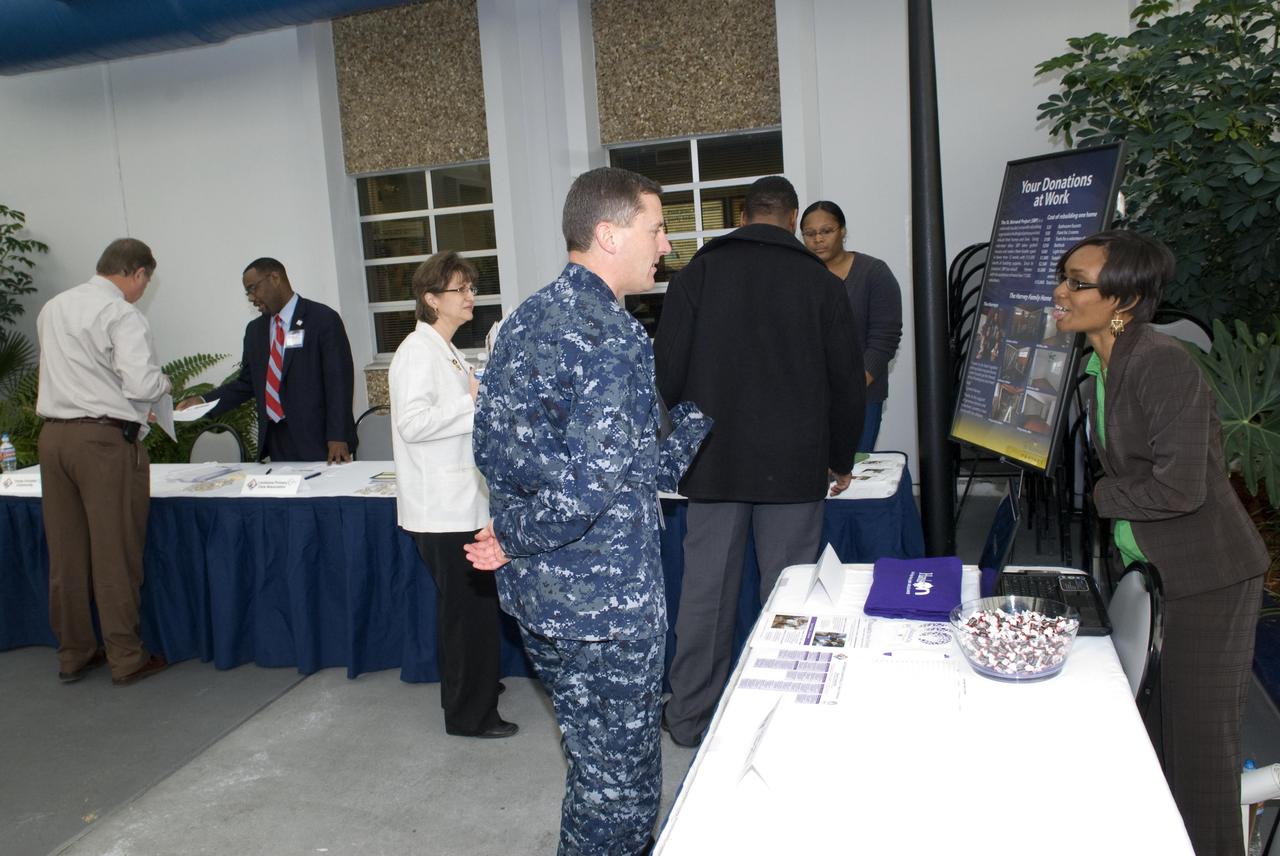
Rich Delgado, commanding officer of the Fleet Survey Team located at NASA's John C. Stennis Space Center, visits with Kertrina Watson Lewis, executive director of the HandsOn volunteer organization in New Orleans, during Day of Service activities Jan. 12. The Day of Service was part of the annual Martin Luther King Jr. Day observance at Stennis. During the day, Mississippi and Louisiana organizations visited the center to encourage employees to register and serve as volunteers for various community activities.
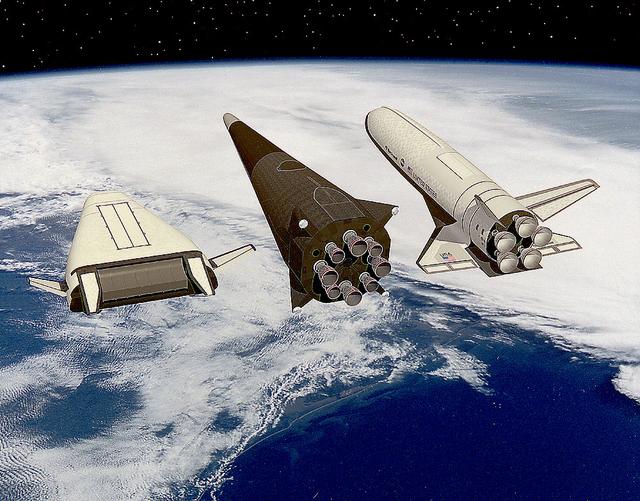
Artist John Frassanito's concept of three Single-Stage-to-Orbit (SSTO) Reusable Launch Vehicles (RLV's). Depicted from the left are: The Lockheed-Martin lifting body configuration that uses an integrated linear aerospike main engine; the McDornell Douglas vertical landing configuration; and the Rockwell wing body configuration that uses liquid oxygen and hydrogen bell engines.
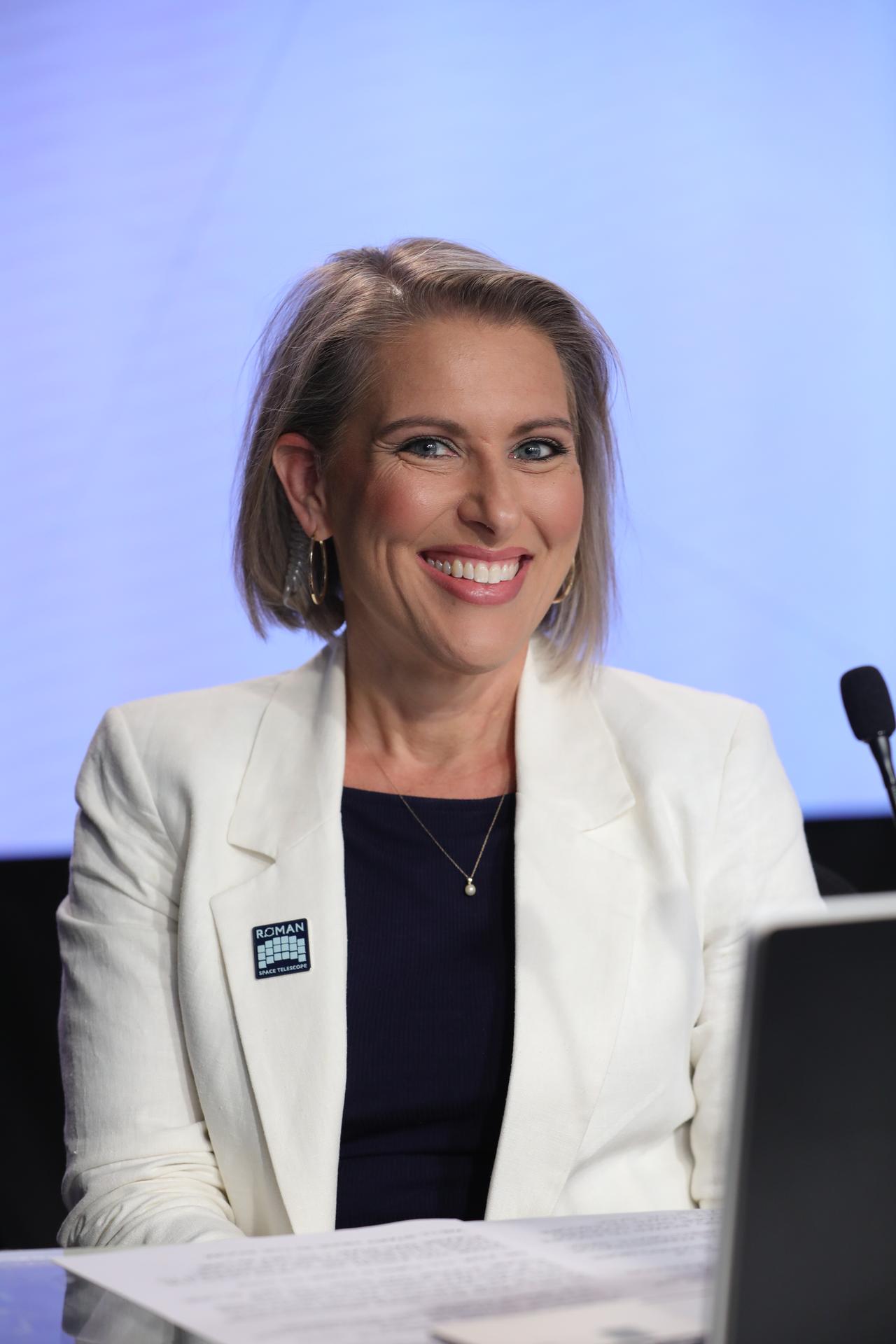
Leah Martin, NASA Communications, participates in a prelaunch news conference for the agency’s Nancy Grace Roman Space Telescope inside the NASA News Center’s John Holliman Auditorium at Kennedy Space Center in Florida, on Saturday, Aug. 29, 2026. Roman will investigate dark energy and dark matter, conduct a statistical census of planetary systems, and enable a broad range of additional astrophysics research. Liftoff from Launch Complex 39A at Kennedy is targeted for no earlier than Sunday, Aug. 30, 2026.

CAPE CANAVERAL, Fla. -- John Livingston, a United Space Alliance engineer at NASA's Kennedy Space Center in Florida, describes the properties of the heat shield tiles that will be installed to the backshell of the Orion Multi-Purpose Crew Vehicle's Exploration Flight Test EFT-1 capsule. The tiles are being manufactured and inspected in Kennedy's Thermal Protection System Facility. EFT-1 will be used during Orion's first test flight in space. For more information, visit www.nasa.gov/orion. Photo credit: Frankie Martin
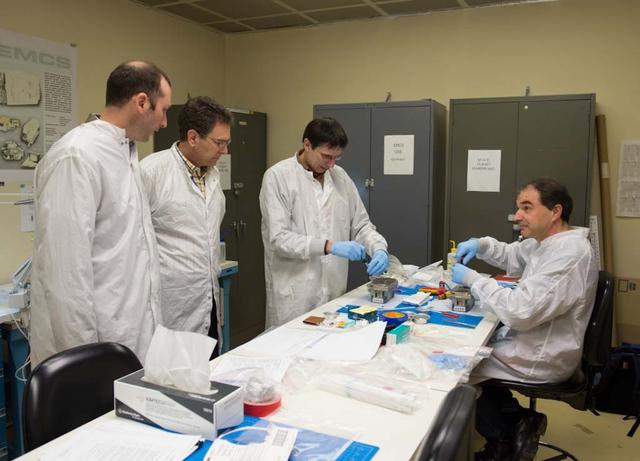
TROPI Seed Growth-1 payload (will fly to ISS on Space X 2) from left to right are Krisofer Vogelsong, Project Science Lead, Tropi SG-1, Lockheed Martin, NASA Ames, John Freeman Plant Scientist, Tropi SG-1, intrinsyx, NASA Ames, Reinhard Born, Europeon Modular Culitivation System Payload Engineering Manager standing and Thomas Neidermaier, Europeon Modular Culitivation System Payload Intergration Manager both from Astrium Space Transportaton ESA, Friedrichshafen, Germany.
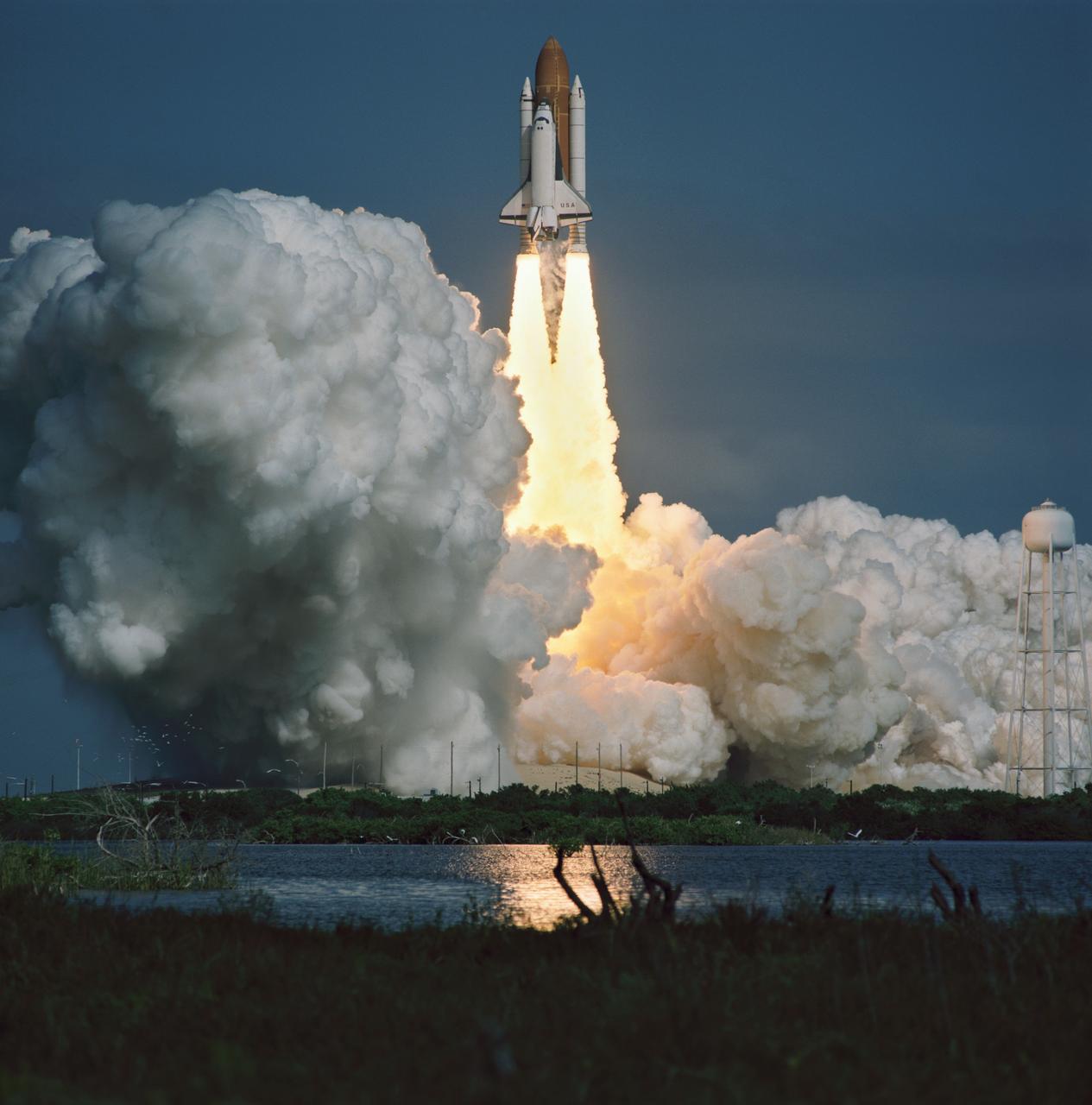
STS058-S-090 (18 Oct 1993) --- Creating large clouds of smoke the Space Shuttle Columbia lifts off from Launch Complex 39 at Kennedy Space Center (KSC). Liftoff occurred at 10:53 a.m. (EDT), October 18, 1993. Along with its Spacelab Life Sciences-2 payload, Columbia carries astronauts John E. Blaha, Richard A. Searfoss, Rhea Seddon, Shannon W. Lucid, David A. Wolf and William S. McArthur along with payload specialist Martin J. Fettman.
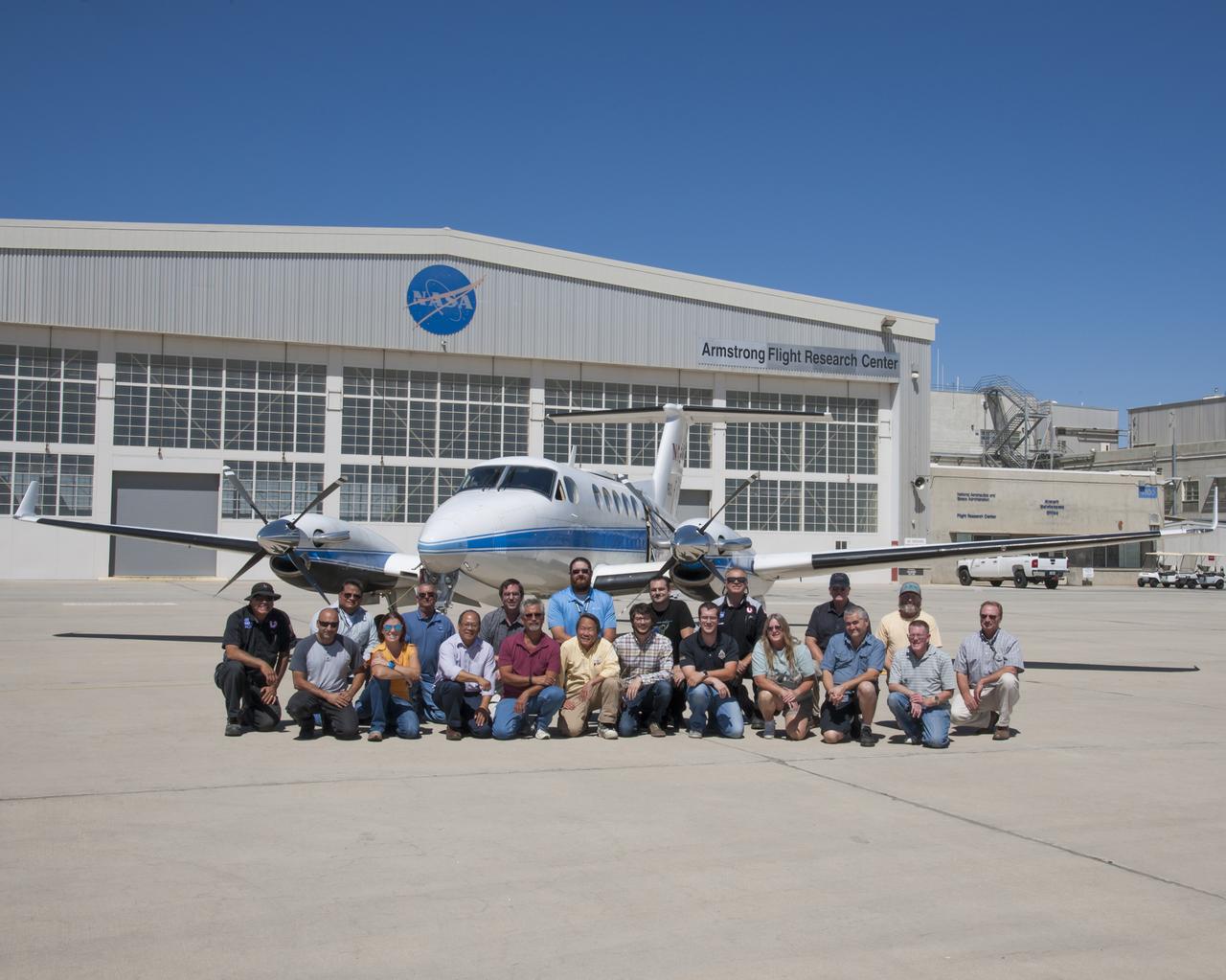
The Advanced Data Acquisition and Telemetry System team includes front row from left Mario Soto, Sam Habbal, Tiffany Titas, RIchard Hang, Randy Torres, Thang Quach, Otto Schnarr, Matthew Waldersen, Karen Estes, Andy Olvera, Stanley Wertenberger and Rick Cordes. In the second row from left are John Atherly, Doug Boston, Tom Horn, Brady Rennie, Chris Birkinbine, Jim McNally, Martin Munday and Tony Lorek.
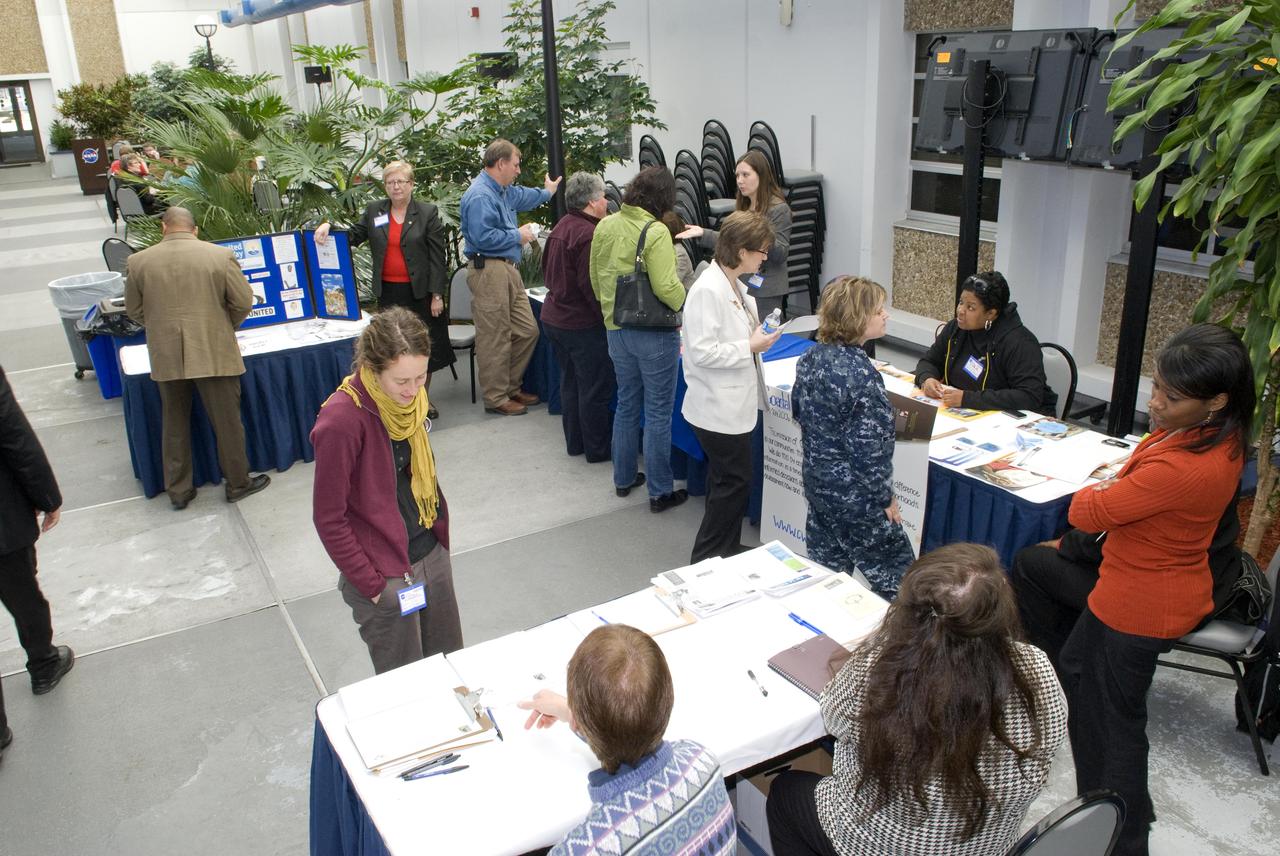
Employees at NASA's John C. Stennis Space Center visit exhibits of volunteer organizations during their observance of Martin Luther King Jr. Day with a Day of Service on Jan. 12. During the day, Mississippi and Louisiana organizations visited the center to encourage employees to register and serve as volunteers for various community activities. The day's focus was emphasized again and again - great things can happen when individuals work together toward a common goal.
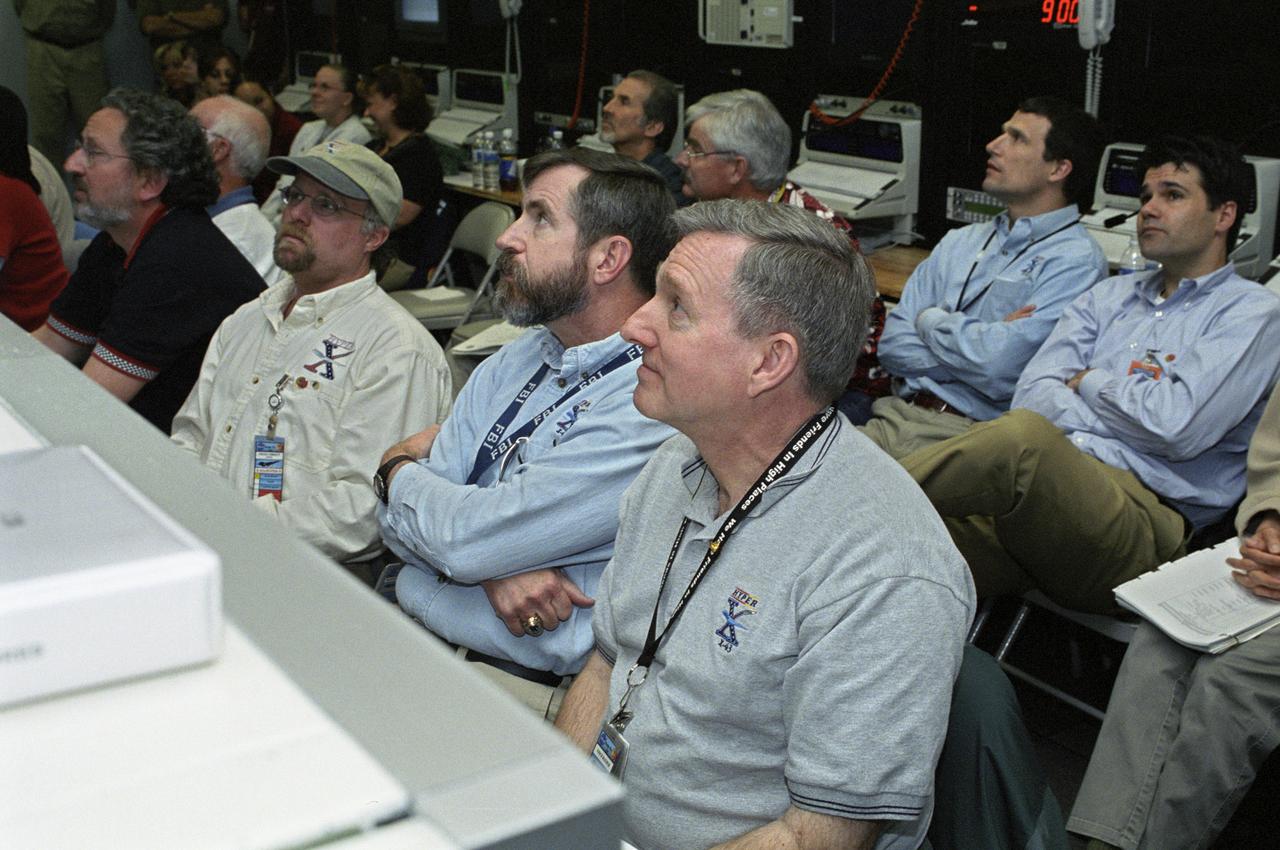
NASA personnel in a control room during the successful second flight of the X-43A aircraft. front row, left to right: Randy Voland, LaRC Propulsion; Craig Christy, Boeing Systems; Dave Reubush, NASA Hyper-X Deputy Program Manager; and Vince Rausch, NASA Hyper-X Program Manager. back row, left to right: Bill Talley, DCI/consultant; Pat Stoliker, DFRC Director (Acting) of Research Engineering; John Martin, LaRC G&C; and Dave Bose, AMA/Controls.
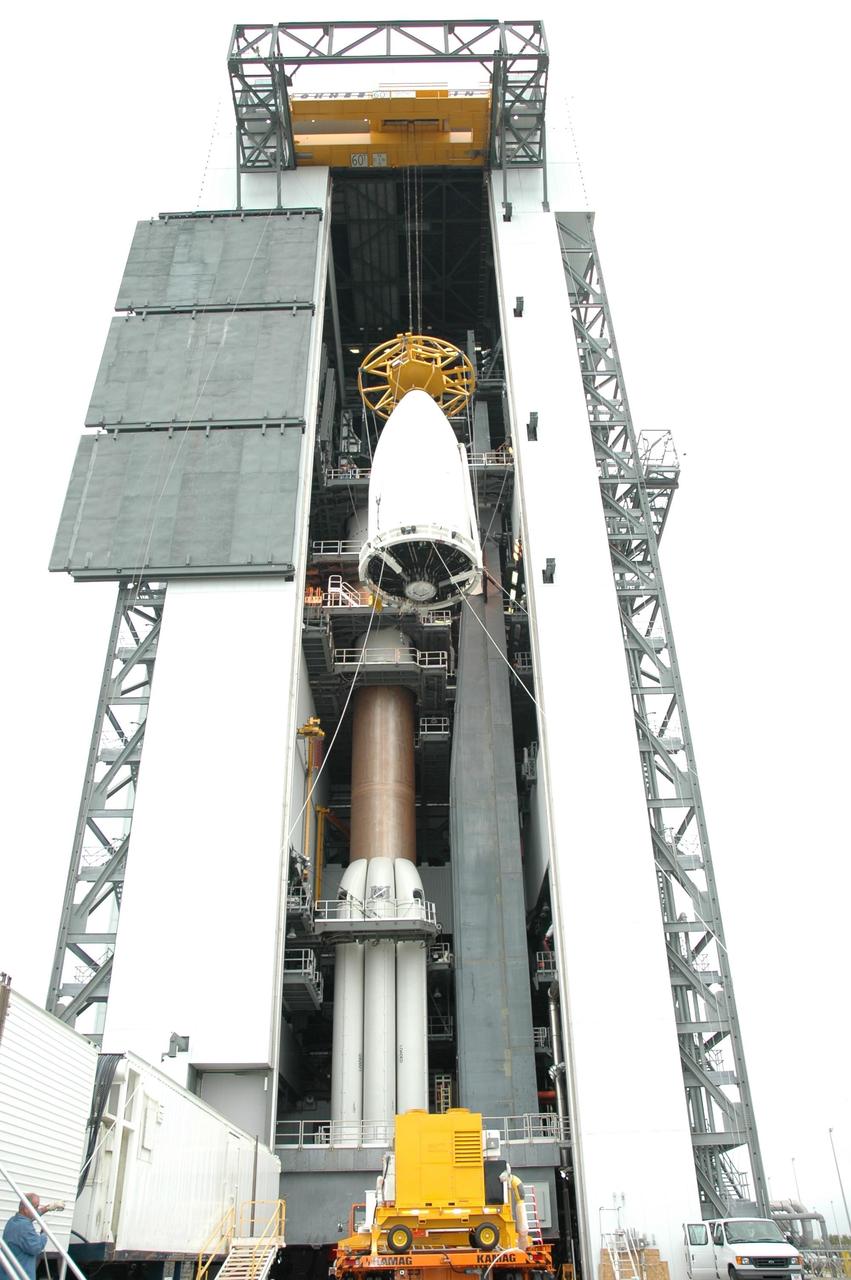
KENNEDY SPACE CENTER, FLA. - The fairing lifting fixture raises the fairing enclosing New Horizons to the top of a Lockheed Martin Atlas V launch vehicle in the Vertical Integration Facility at Complex 41 on Cape Canaveral Air Force Station. New Horizons carries seven scientific instruments that will characterize the global geology and geomorphology of Pluto and its moon Charon, map their surface compositions and temperatures, and examine Pluto's complex atmosphere. After that, flybys of Kuiper Belt objects from even farther in the solar system may be undertaken in an extended mission. New Horizons is the first mission in NASA's New Frontiers program of medium-class planetary missions. The spacecraft, designed for NASA by the Johns Hopkins University Applied Physics Laboratory in Laurel, Md., will launch aboard a Lockheed Martin Atlas V rocket and fly by Pluto and Charon as early as summer 2015.
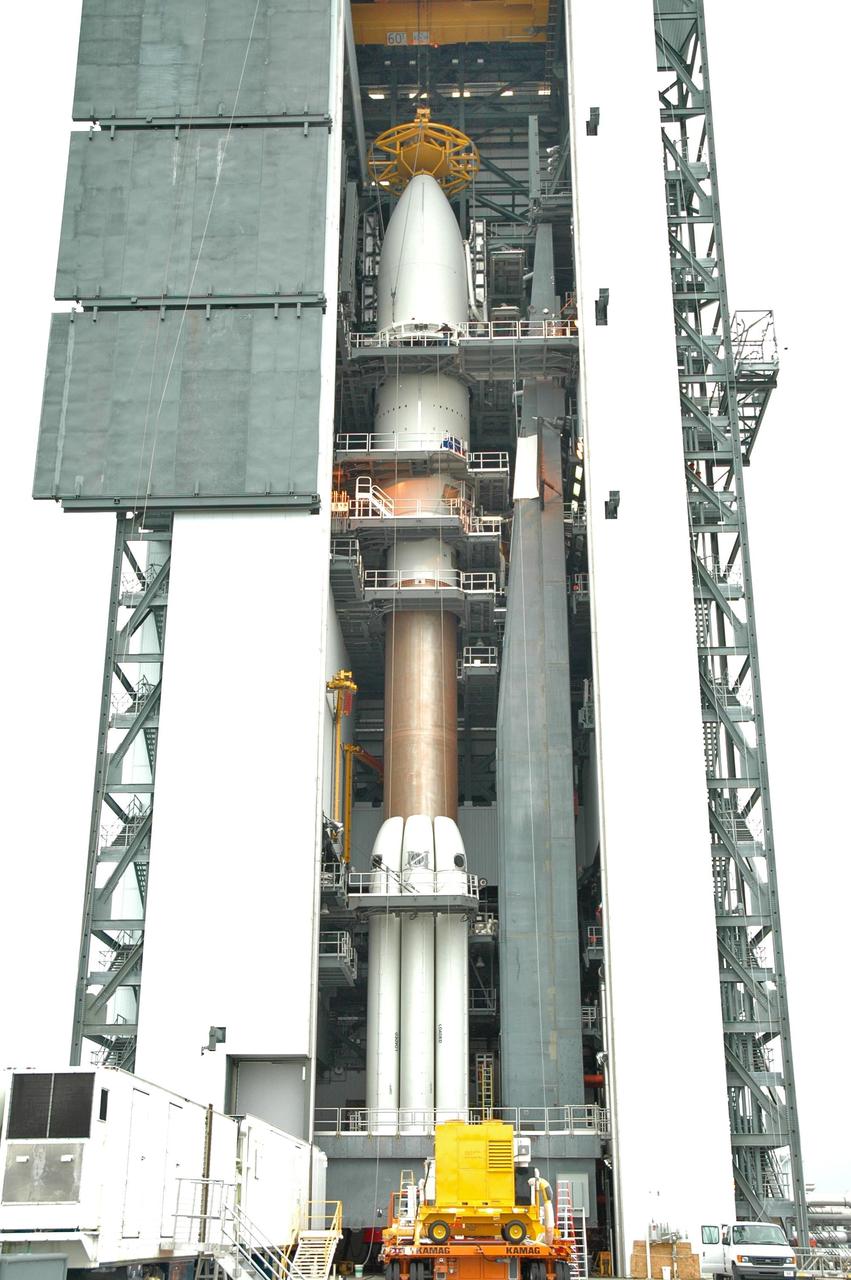
KENNEDY SPACE CENTER, FLA. - The fairing enclosing New Horizons awaits further processing upon its arrival atop a Lockheed Martin Atlas V launch vehicle in the Vertical Integration Facility at Complex 41 on Cape Canaveral Air Force Station. New Horizons carries seven scientific instruments that will characterize the global geology and geomorphology of Pluto and its moon Charon, map their surface compositions and temperatures, and examine Pluto's complex atmosphere. After that, flybys of Kuiper Belt objects from even farther in the solar system may be undertaken in an extended mission. New Horizons is the first mission in NASA's New Frontiers program of medium-class planetary missions. The spacecraft, designed for NASA by the Johns Hopkins University Applied Physics Laboratory in Laurel, Md., will launch aboard a Lockheed Martin Atlas V rocket and fly by Pluto and Charon as early as summer 2015.
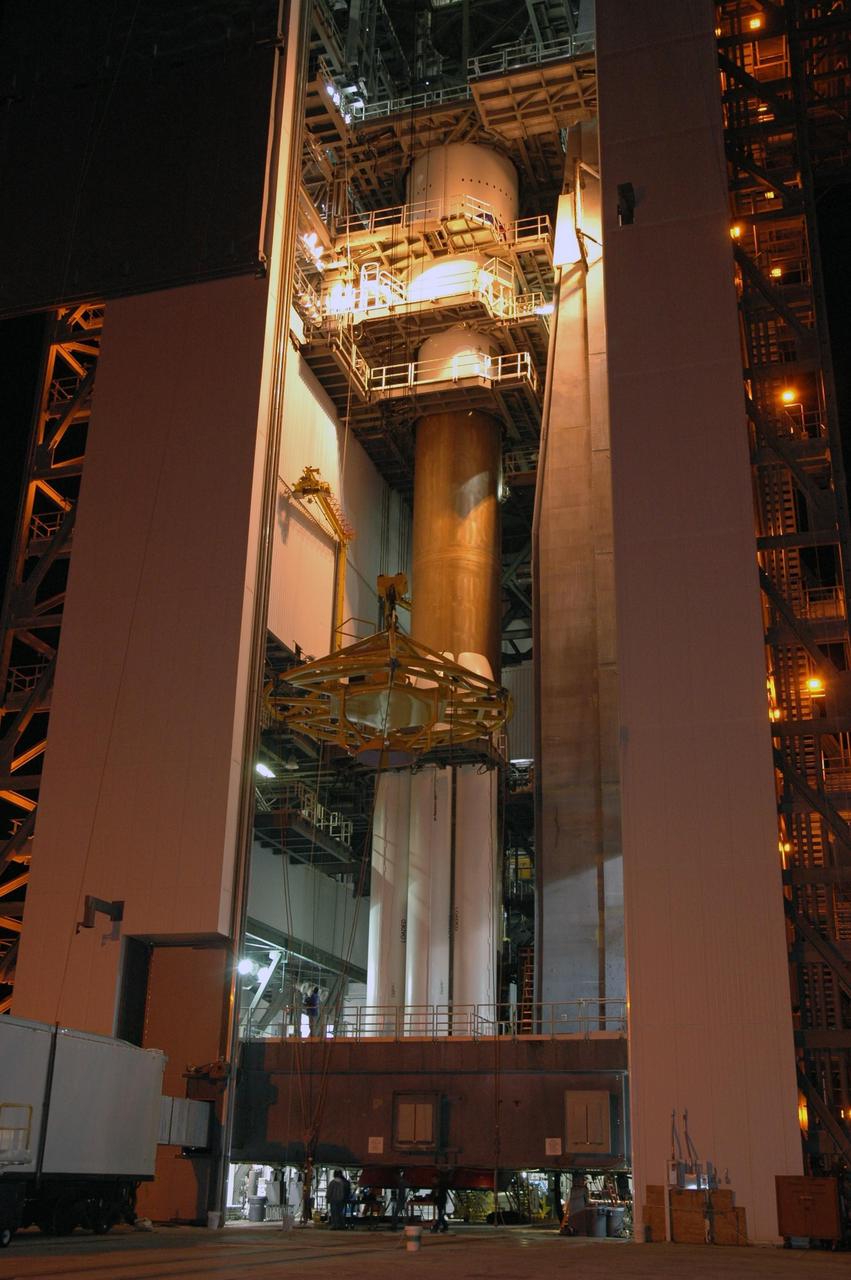
KENNEDY SPACE CENTER, FLA. - A Lockheed Martin Atlas V launch vehicle in the Vertical Integration Facility awaits the arrival of New Horizons at Complex 41 on Cape Canaveral Air Force Station. New Horizons carries seven scientific instruments that will characterize the global geology and geomorphology of Pluto and its moon Charon, map their surface compositions and temperatures, and examine Pluto's complex atmosphere. After that, flybys of Kuiper Belt objects from even farther in the solar system may be undertaken in an extended mission. New Horizons is the first mission in NASA's New Frontiers program of medium-class planetary missions. The spacecraft, designed for NASA by the Johns Hopkins University Applied Physics Laboratory in Laurel, Md., will launch aboard a Lockheed Martin Atlas V rocket and fly by Pluto and Charon as early as summer 2015.
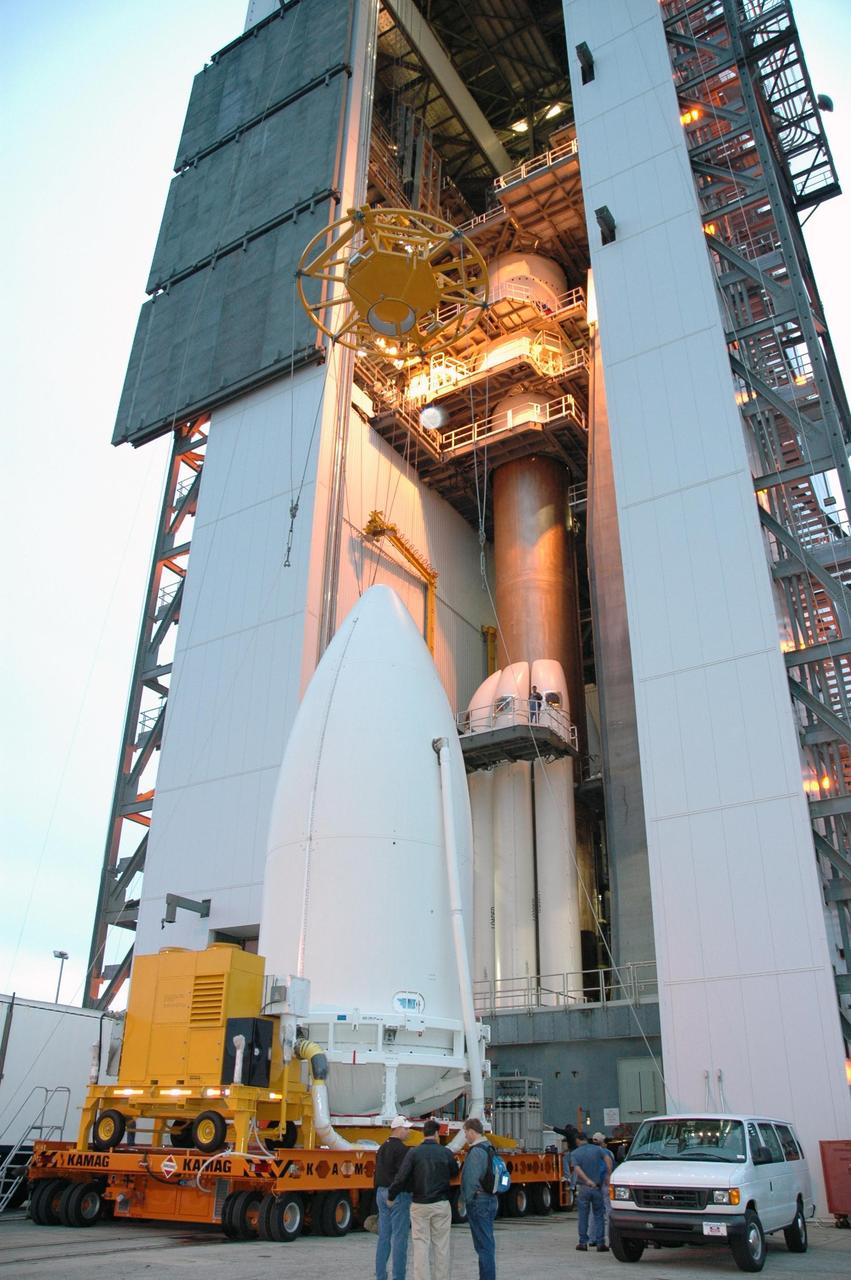
KENNEDY SPACE CENTER, FLA. - The fairing lifting fixture is lowered toward the nose of the fairing enclosing New Horizons upon its arrival at the Vertical Integration Facility at Complex 41 on Cape Canaveral Air Force Station. A Lockheed Martin Atlas V launch vehicle stands ready to receive it in the background. New Horizons carries seven scientific instruments that will characterize the global geology and geomorphology of Pluto and its moon Charon, map their surface compositions and temperatures, and examine Pluto's complex atmosphere. After that, flybys of Kuiper Belt objects from even farther in the solar system may be undertaken in an extended mission. New Horizons is the first mission in NASA's New Frontiers program of medium-class planetary missions. The spacecraft, designed for NASA by the Johns Hopkins University Applied Physics Laboratory in Laurel, Md., will launch aboard a Lockheed Martin Atlas V rocket and fly by Pluto and Charon as early as summer 2015.
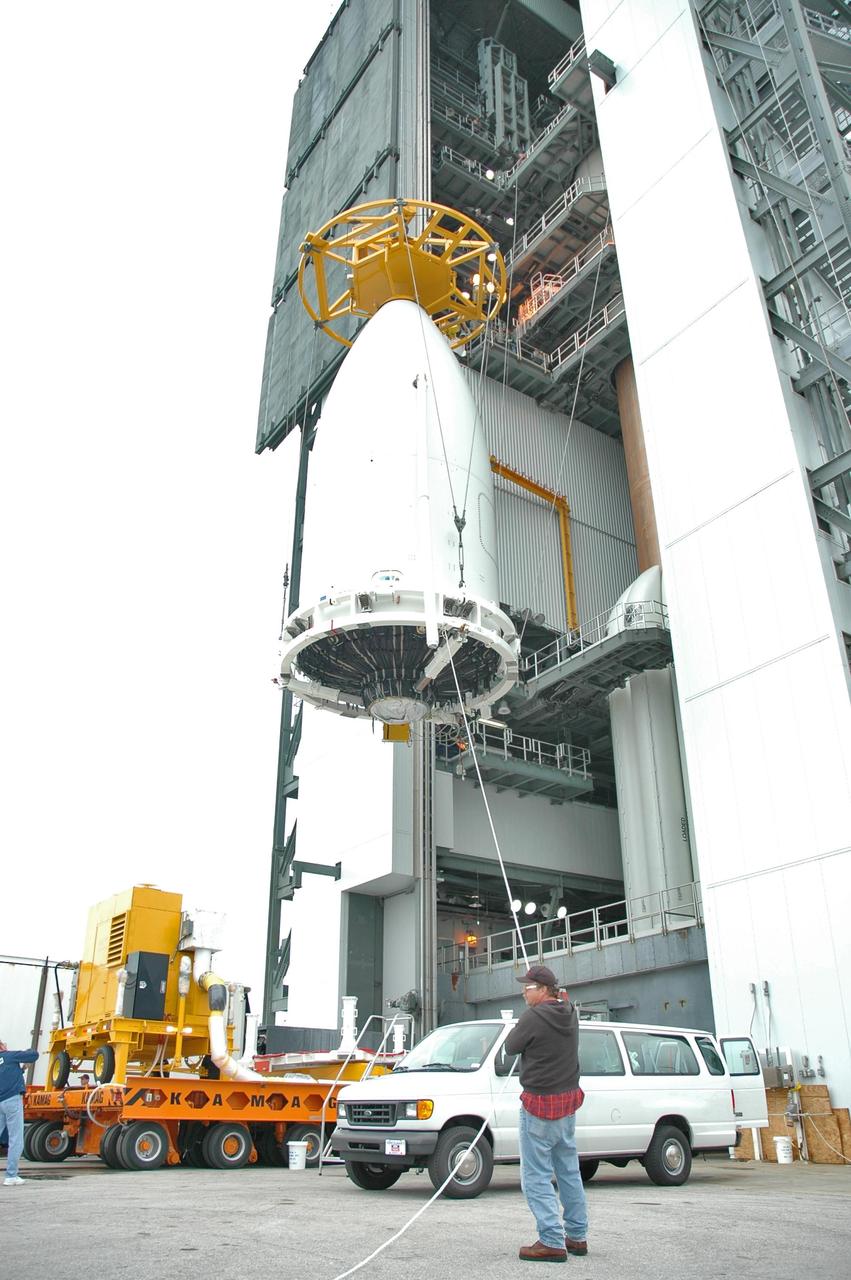
KENNEDY SPACE CENTER, FLA. - The fairing lifting fixture lifts the fairing enclosing New Horizons to the top of a Lockheed Martin Atlas V launch vehicle at the Vertical Integration Facility at Complex 41 on Cape Canaveral Air Force Station. New Horizons carries seven scientific instruments that will characterize the global geology and geomorphology of Pluto and its moon Charon, map their surface compositions and temperatures, and examine Pluto's complex atmosphere. After that, flybys of Kuiper Belt objects from even farther in the solar system may be undertaken in an extended mission. New Horizons is the first mission in NASA's New Frontiers program of medium-class planetary missions. The spacecraft, designed for NASA by the Johns Hopkins University Applied Physics Laboratory in Laurel, Md., will launch aboard a Lockheed Martin Atlas V rocket and fly by Pluto and Charon as early as summer 2015.
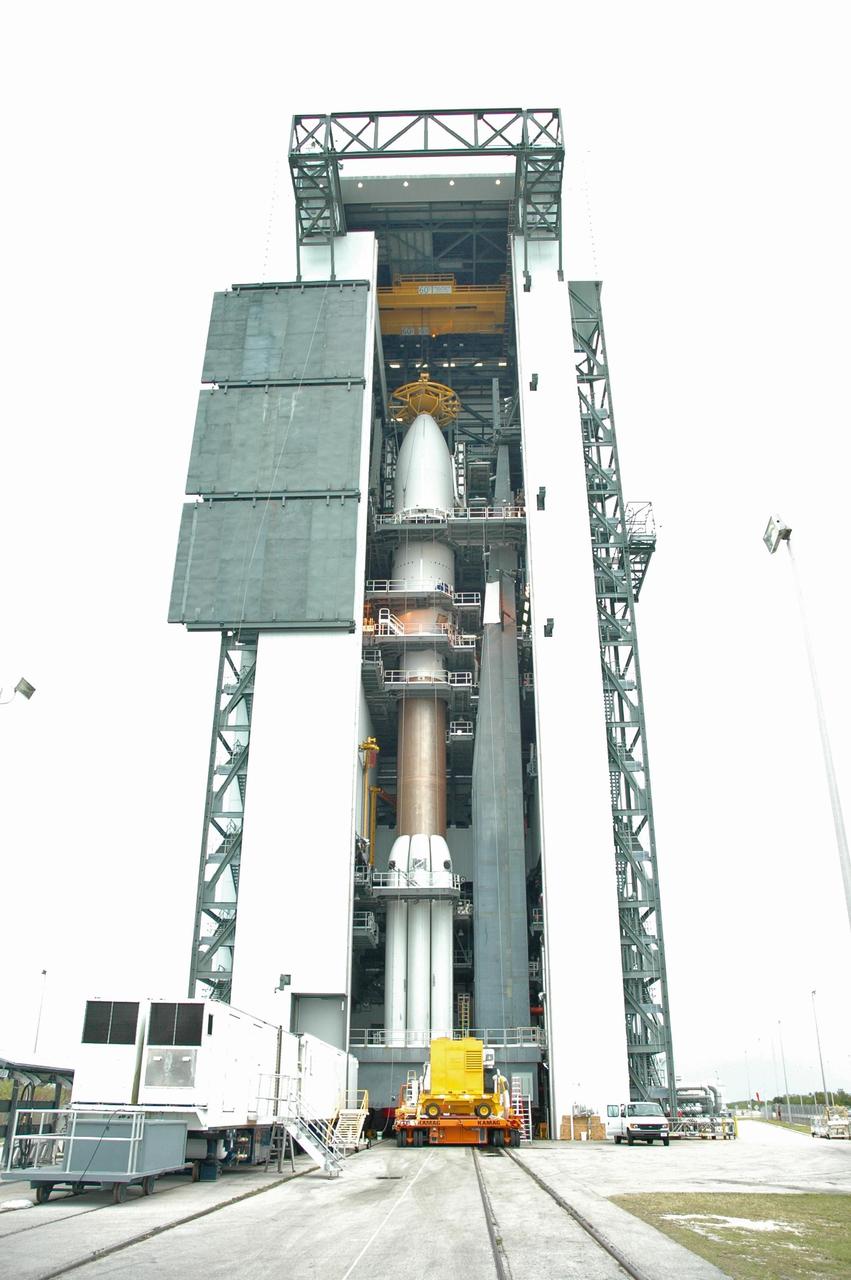
KENNEDY SPACE CENTER, FLA. - The fairing enclosing New Horizons awaits further processing upon its arrival atop a Lockheed Martin Atlas V launch vehicle in the Vertical Integration Facility at Complex 41 on Cape Canaveral Air Force Station. New Horizons carries seven scientific instruments that will characterize the global geology and geomorphology of Pluto and its moon Charon, map their surface compositions and temperatures, and examine Pluto's complex atmosphere. After that, flybys of Kuiper Belt objects from even farther in the solar system may be undertaken in an extended mission. New Horizons is the first mission in NASA's New Frontiers program of medium-class planetary missions. The spacecraft, designed for NASA by the Johns Hopkins University Applied Physics Laboratory in Laurel, Md., will launch aboard a Lockheed Martin Atlas V rocket and fly by Pluto and Charon as early as summer 2015.
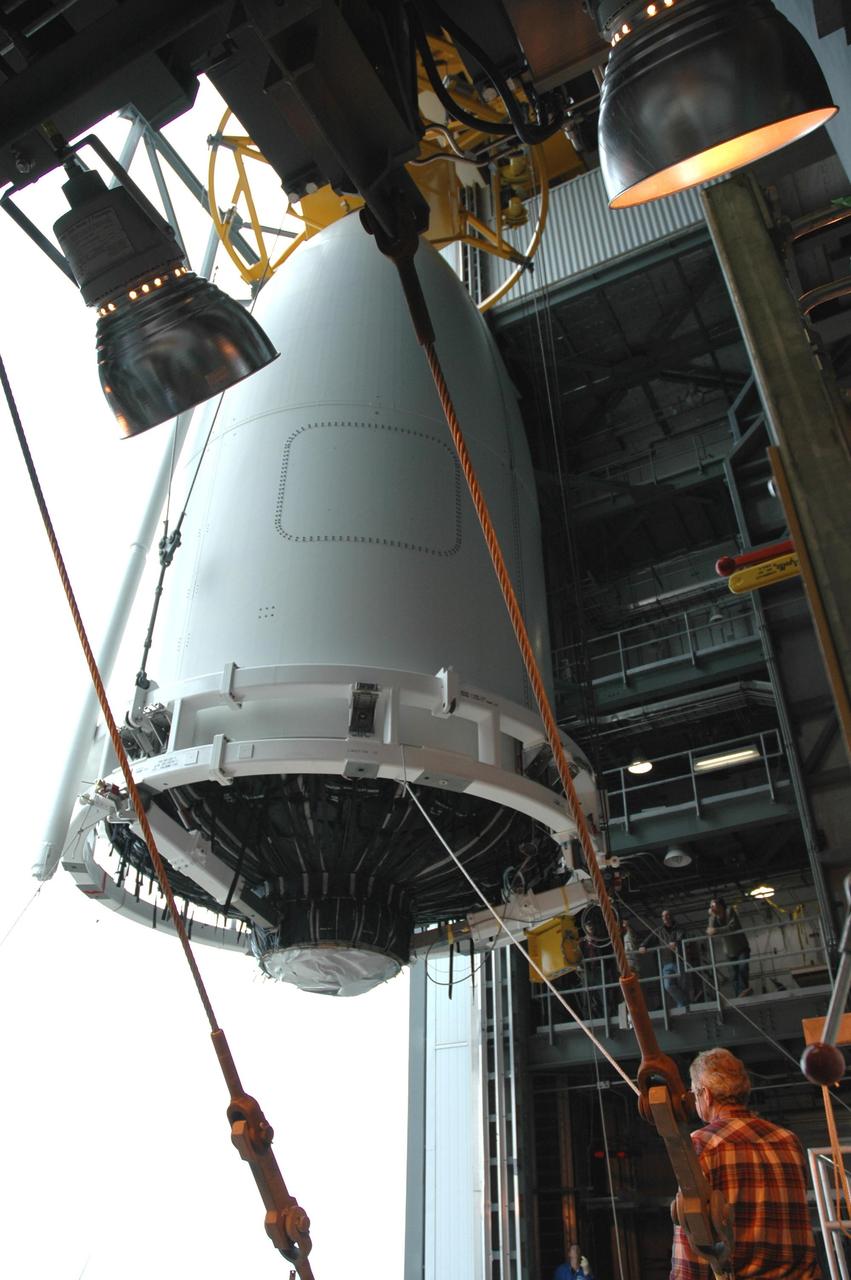
KENNEDY SPACE CENTER, FLA. - The fairing enclosing New Horizons arrives at the top of a Lockheed Martin Atlas V launch vehicle in the Vertical Integration Facility at Complex 41 on Cape Canaveral Air Force Station. New Horizons carries seven scientific instruments that will characterize the global geology and geomorphology of Pluto and its moon Charon, map their surface compositions and temperatures, and examine Pluto's complex atmosphere. After that, flybys of Kuiper Belt objects from even farther in the solar system may be undertaken in an extended mission. New Horizons is the first mission in NASA's New Frontiers program of medium-class planetary missions. The spacecraft, designed for NASA by the Johns Hopkins University Applied Physics Laboratory in Laurel, Md., will launch aboard a Lockheed Martin Atlas V rocket and fly by Pluto and Charon as early as summer 2015.
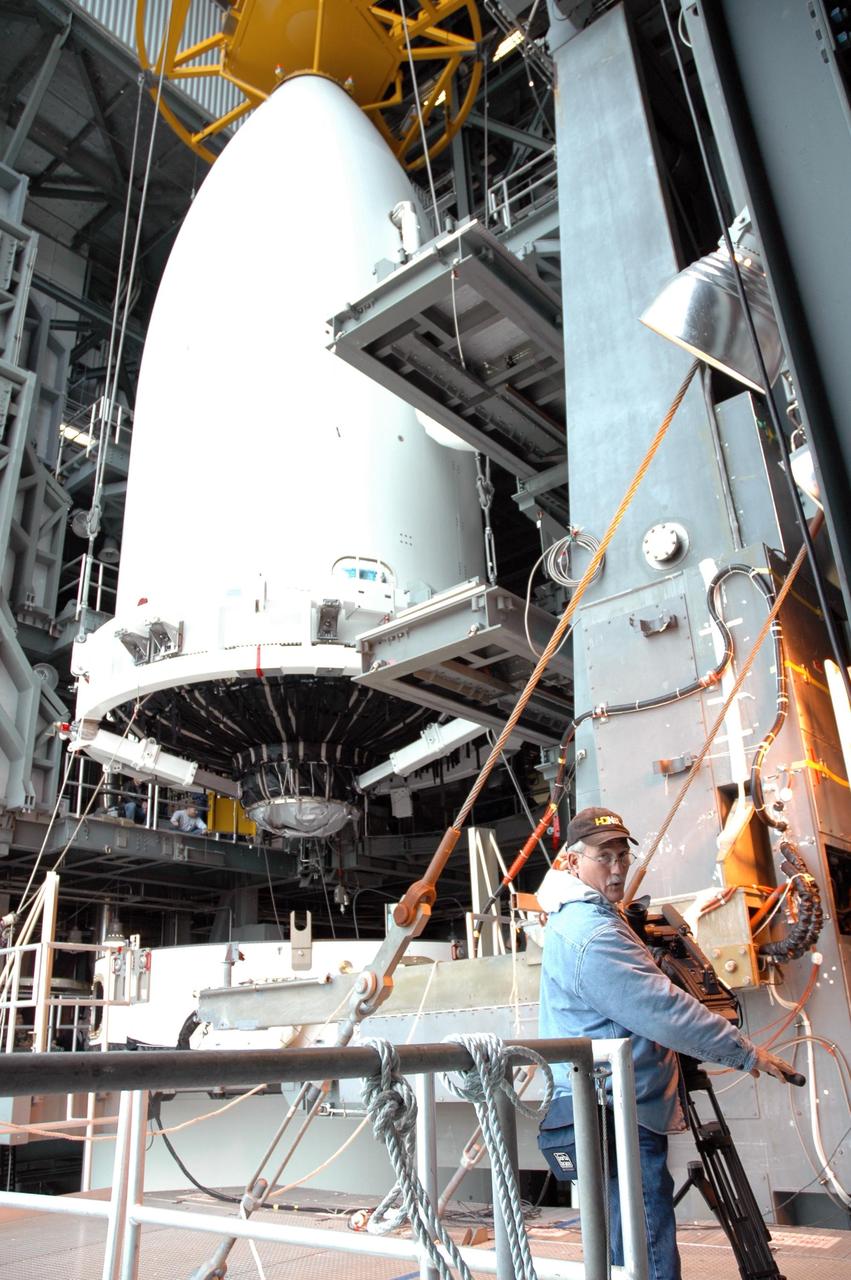
KENNEDY SPACE CENTER, FLA. - InDyne employee Mic Miracle captures on video the arrival of the fairing enclosing New Horizons at the top of a Lockheed Martin Atlas V launch vehicle in the Vertical Integration Facility at Complex 41 on Cape Canaveral Air Force Station. New Horizons carries seven scientific instruments that will characterize the global geology and geomorphology of Pluto and its moon Charon, map their surface compositions and temperatures, and examine Pluto's complex atmosphere. After that, flybys of Kuiper Belt objects from even farther in the solar system may be undertaken in an extended mission. New Horizons is the first mission in NASA's New Frontiers program of medium-class planetary missions. The spacecraft, designed for NASA by the Johns Hopkins University Applied Physics Laboratory in Laurel, Md., will launch aboard a Lockheed Martin Atlas V rocket and fly by Pluto and Charon as early as summer 2015.
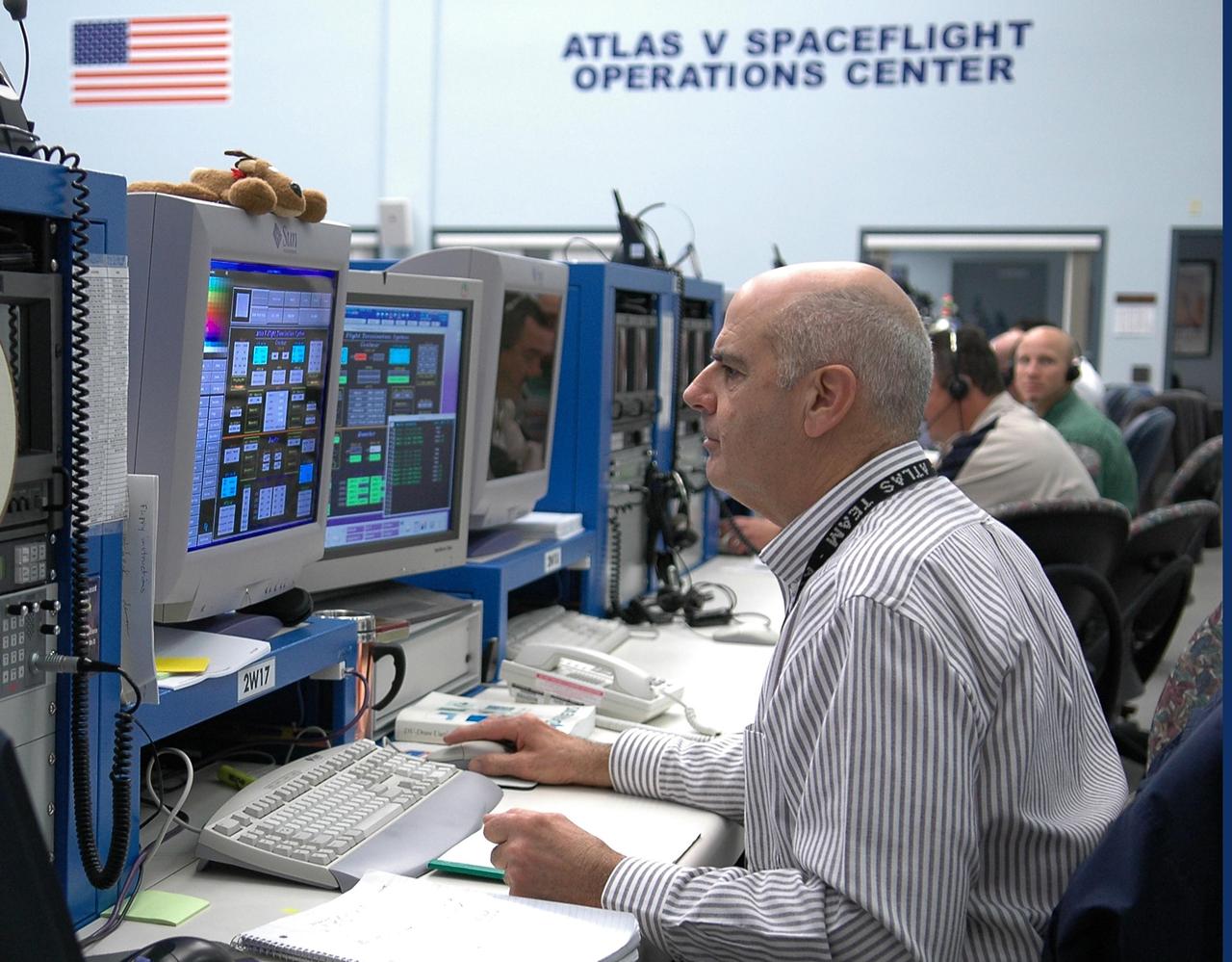
KENNEDY SPACE CENTER, FLA. - In the Atlas V Spaceflight Operations Center on Cape Canaveral Air Force Station, Ed Biggs (foreground), a fluids software engineer for Lockheed Martin, and other members of the New Horizons team take part in a dress rehearsal for the launch scheduled in mid-January. New Horizons carries seven scientific instruments that will characterize the global geology and geomorphology of Pluto and its moon Charon, map their surface compositions and temperatures, and examine Pluto's complex atmosphere. After that, flybys of Kuiper Belt objects from even farther in the solar system may be undertaken in an extended mission. New Horizons is the first mission in NASA's New Frontiers program of medium-class planetary missions. The spacecraft, designed for NASA by the Johns Hopkins University Applied Physics Laboratory in Laurel, Md., will launch aboard a Lockheed Martin Atlas V rocket and fly by Pluto and Charon as early as summer 2015.
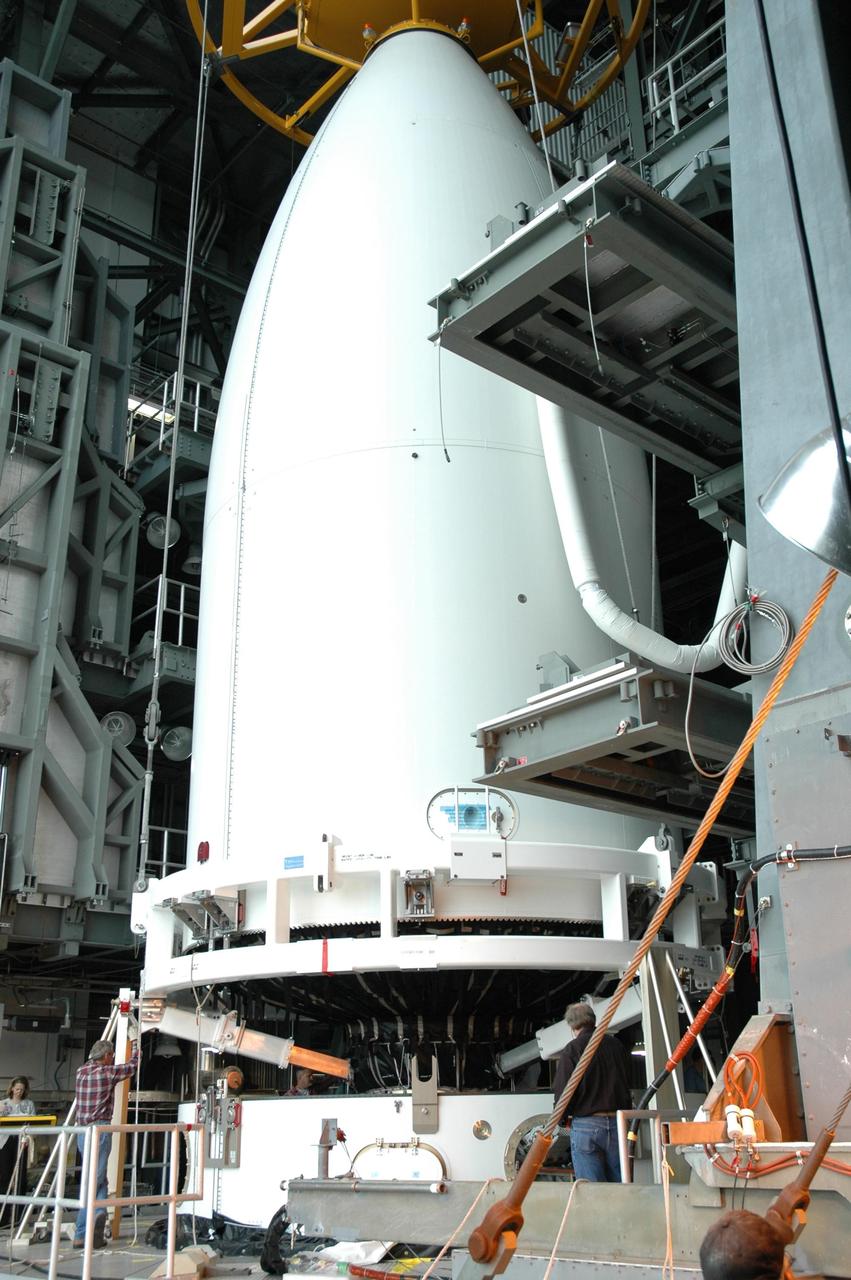
KENNEDY SPACE CENTER, FLA. - Technicians monitor the fairing enclosing New Horizons as it is lowered onto the top of a Lockheed Martin Atlas V launch vehicle in the Vertical Integration Facility at Complex 41 on Cape Canaveral Air Force Station. New Horizons carries seven scientific instruments that will characterize the global geology and geomorphology of Pluto and its moon Charon, map their surface compositions and temperatures, and examine Pluto's complex atmosphere. After that, flybys of Kuiper Belt objects from even farther in the solar system may be undertaken in an extended mission. New Horizons is the first mission in NASA's New Frontiers program of medium-class planetary missions. The spacecraft, designed for NASA by the Johns Hopkins University Applied Physics Laboratory in Laurel, Md., will launch aboard a Lockheed Martin Atlas V rocket and fly by Pluto and Charon as early as summer 2015.

KENNEDY SPACE CENTER, FLA. - New Horizons arrives at the Vertical Integration Facility at Complex 41 on Cape Canaveral Air Force Station where buildup of its Lockheed Martin Atlas V launch vehicle is complete. New Horizons carries seven scientific instruments that will characterize the global geology and geomorphology of Pluto and its moon Charon, map their surface compositions and temperatures, and examine Pluto's complex atmosphere. After that, flybys of Kuiper Belt objects from even farther in the solar system may be undertaken in an extended mission. New Horizons is the first mission in NASA's New Frontiers program of medium-class planetary missions. The spacecraft, designed for NASA by the Johns Hopkins University Applied Physics Laboratory in Laurel, Md., will launch aboard a Lockheed Martin Atlas V rocket and fly by Pluto and Charon as early as summer 2015.

KENNEDY SPACE CENTER, FLA. - Technicians monitor the fairing enclosing New Horizons as it is positioned atop a Lockheed Martin Atlas V launch vehicle in the Vertical Integration Facility at Complex 41 on Cape Canaveral Air Force Station. New Horizons carries seven scientific instruments that will characterize the global geology and geomorphology of Pluto and its moon Charon, map their surface compositions and temperatures, and examine Pluto's complex atmosphere. After that, flybys of Kuiper Belt objects from even farther in the solar system may be undertaken in an extended mission. New Horizons is the first mission in NASA's New Frontiers program of medium-class planetary missions. The spacecraft, designed for NASA by the Johns Hopkins University Applied Physics Laboratory in Laurel, Md., will launch aboard a Lockheed Martin Atlas V rocket and fly by Pluto and Charon as early as summer 2015.
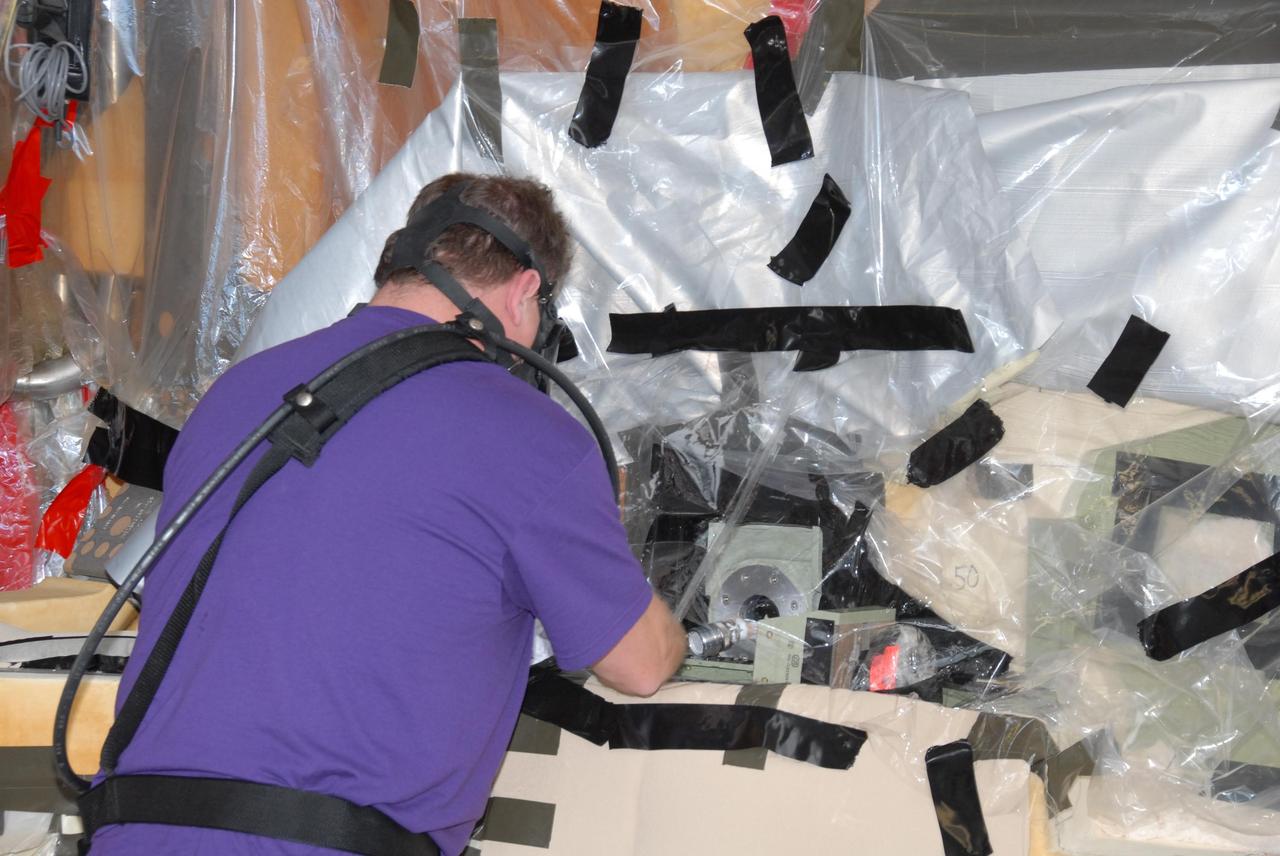
KENNEDY SPACE CENTER, FLA. -- Lloyd Johns, with Lockheed Martin, prepares the area where the replacement feed-through connector in the engine cutoff, or ECO, sensor system on space shuttle Atlantis' external tank will be installed. Seen next to Johns' arm is the internal connector. The area is wrapped in material for weather protection. Berger wears safety equipment as helium gas is employed to keep the equipment under wrap dry. The feed-through connector passes the wires from the inside of the tank to the outside. Results of a tanking test on Dec. 18 pointed to an open circuit in the feed-through connector wiring, which is located at the base of the tank. The pins in the replacement connector have been precisely soldered to create a connection that allows sensors inside the tank to send signals to the computers onboard Atlantis. The work is being done on Launch Pad 39A. Space shuttle Atlantis is now targeted for launch on Feb. 7. Photo credit: NASA/George Shelton

L-R: William Gerstenmaier, NASA Associate Administrator for human exploration and operations; Charlie Precourt, Vice President and General Manager, ATK Space Launch Division; John Elbon, Vice President and General Manager, Boeing Space Exploration; Julie Van Kleek, Vice President, space programs, Aerojet Rocketdyne; and Jim Crocker, Vice President and General Manager, civil space, Lockheed Martin Space Systems, participate in a panel discussion on deep space exploration using the Space Launch System and Orion spacecraft at the Newseum in Washington on Tuesday, November 12, 2013. Photo Credit: (NASA/Jay Westcott)
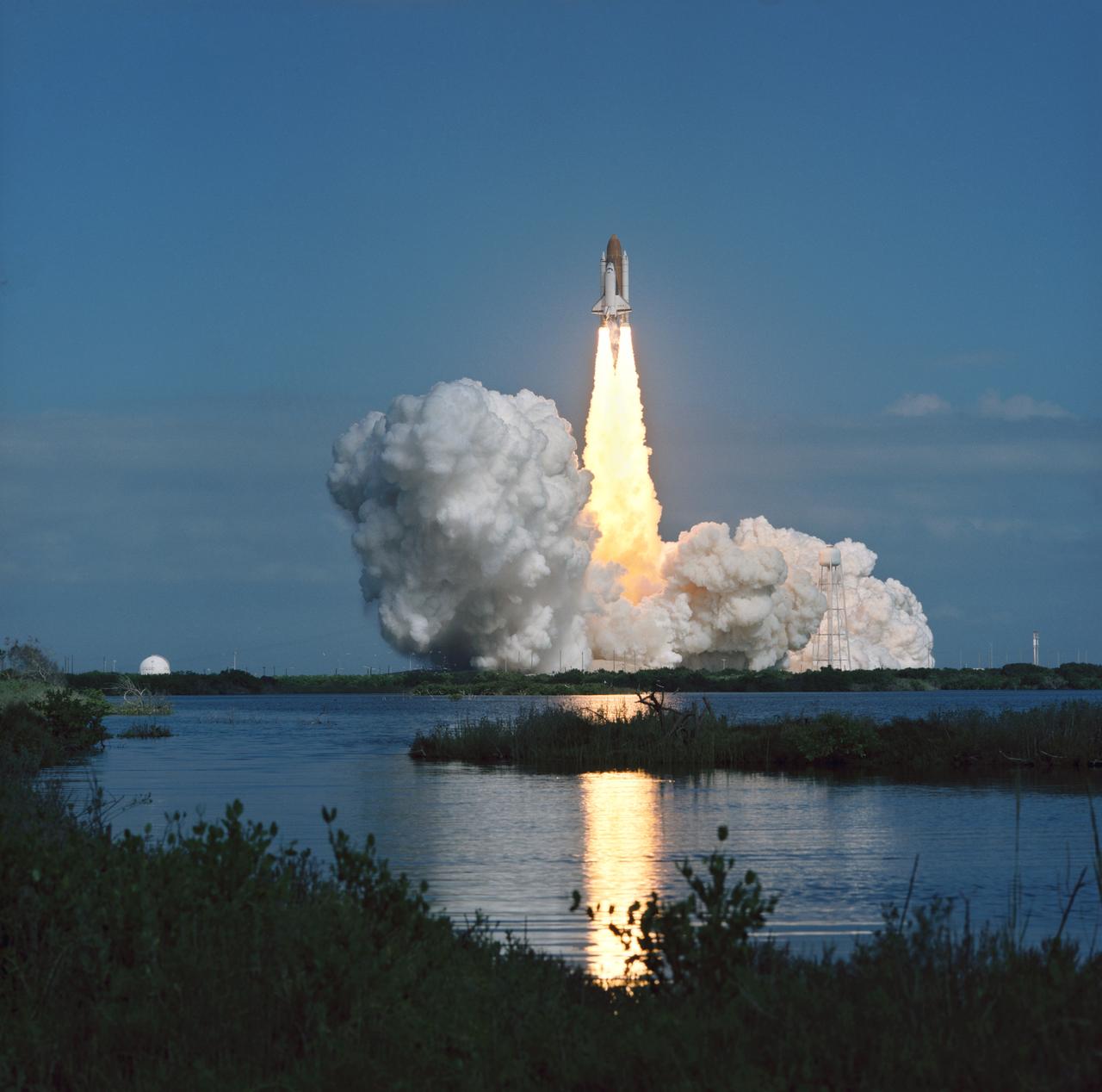
STS058-S-091 (18 Oct 1993) --- A distant shot shows the Space Shuttle Columbia, lifting off from Launch Complex 39 at Kennedy Space Center (KSC), reflecting its image in nearby marsh waters. Launch occurred at 10:53 a.m. (EDT), October 18, 1993. Along with six NASA astronauts and a veterinarian from the private sector, the Spacelab Life Sciences-2 (SLS-2) science module was aboard. Onboard were astronauts John E. Blaha, Richard A. Searfoss, Rhea Seddon, Shannon W. Lucid, David A. Wolf and William S. McArthur along with payload specialist Martin J. Fettman.
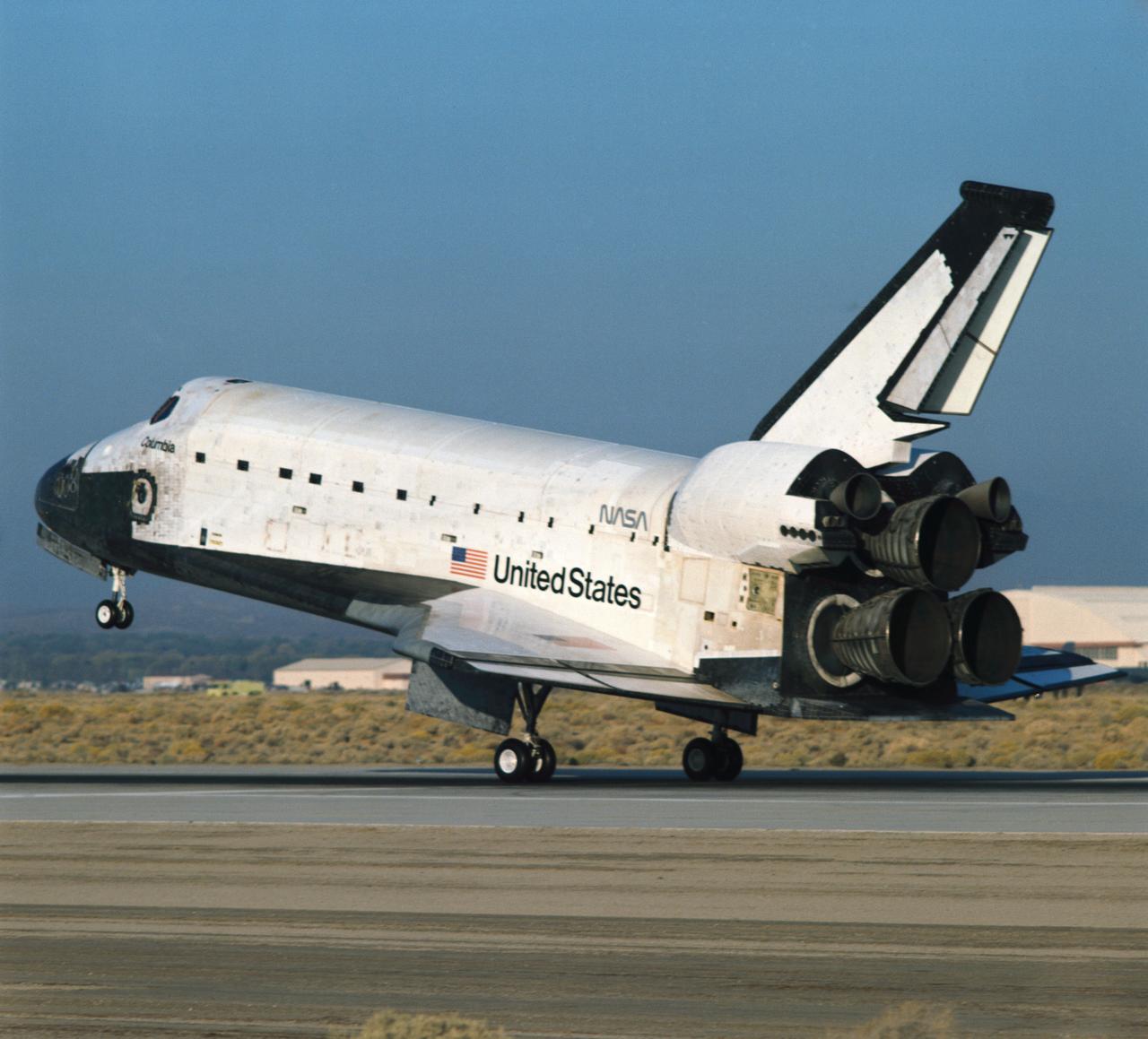
STS058-S-128 (1 Nov 1993) --- The nose gear of the Space Shuttle Columbia is about to touch down on the runway at Edwards Air Force Base (EAFB) in California. The landing, which occurred at 7:06 a.m. (PST), November 1, 1993, completed a two week mission in space devoted to medical research. Onboard the spacecraft were astronauts John E. Blaha, Richard A. Searfoss, Rhea Seddon, Shannon W. Lucid, David A. Wolf and William S. McArthur along with payload specialist Martin J. Fettman, DVM.
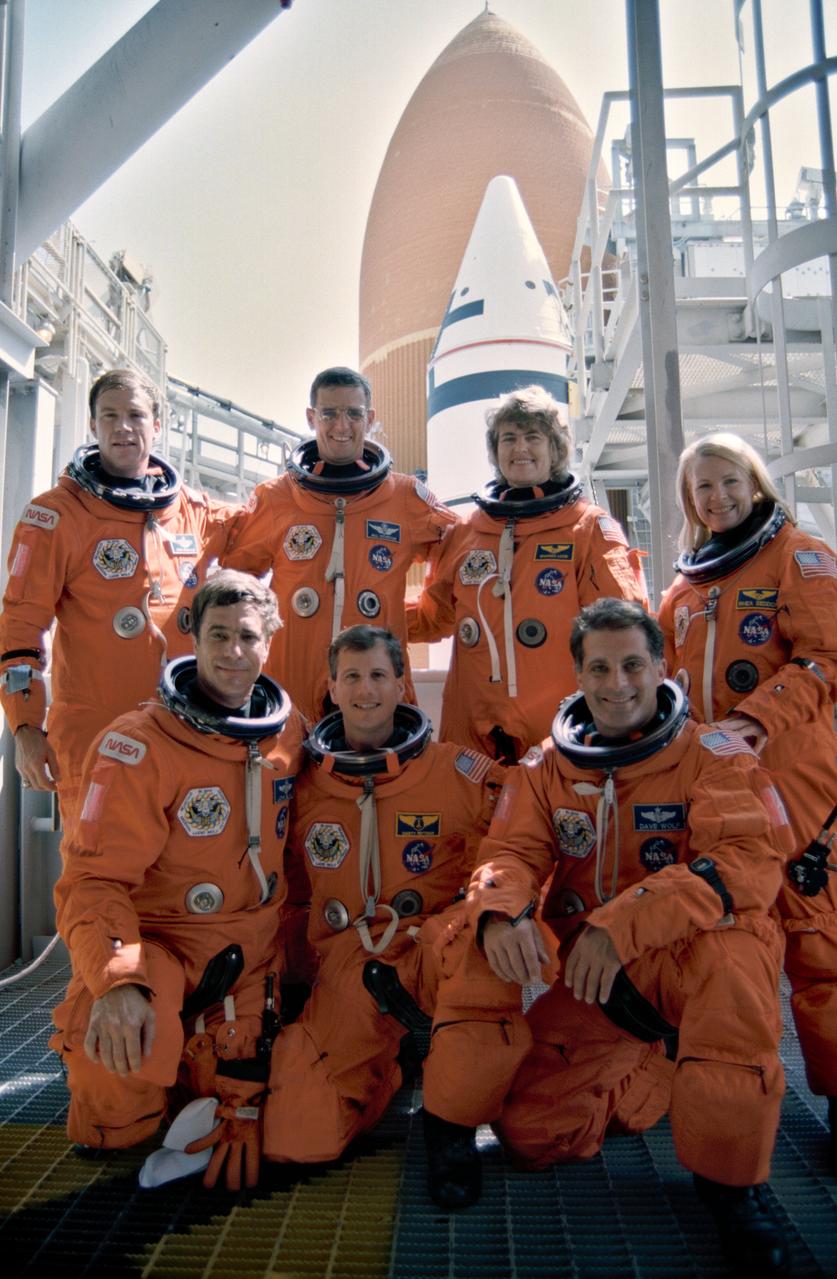
S93-45004 (20 Sept 1993) --- Posing for a crew portrait, with the Space Shuttle Columbia at Launch Pad 39B, are the seven STS-58 astronauts. They are, front row left to right, John E. Blaha, mission commander; Martin J. Fettman, payload specialist; and David A. Wolf, mission specialist. Back row, left to right, are Richard A. Searfoss, pilot; William S. McArthur and Shannon W. Lucid, mission specialists; and Rhea Seddon, payload commander. The crew was in Florida for the Terminal Countdown Demonstration Test (CDDT) in preparation for next month's launch aboard Columbia.
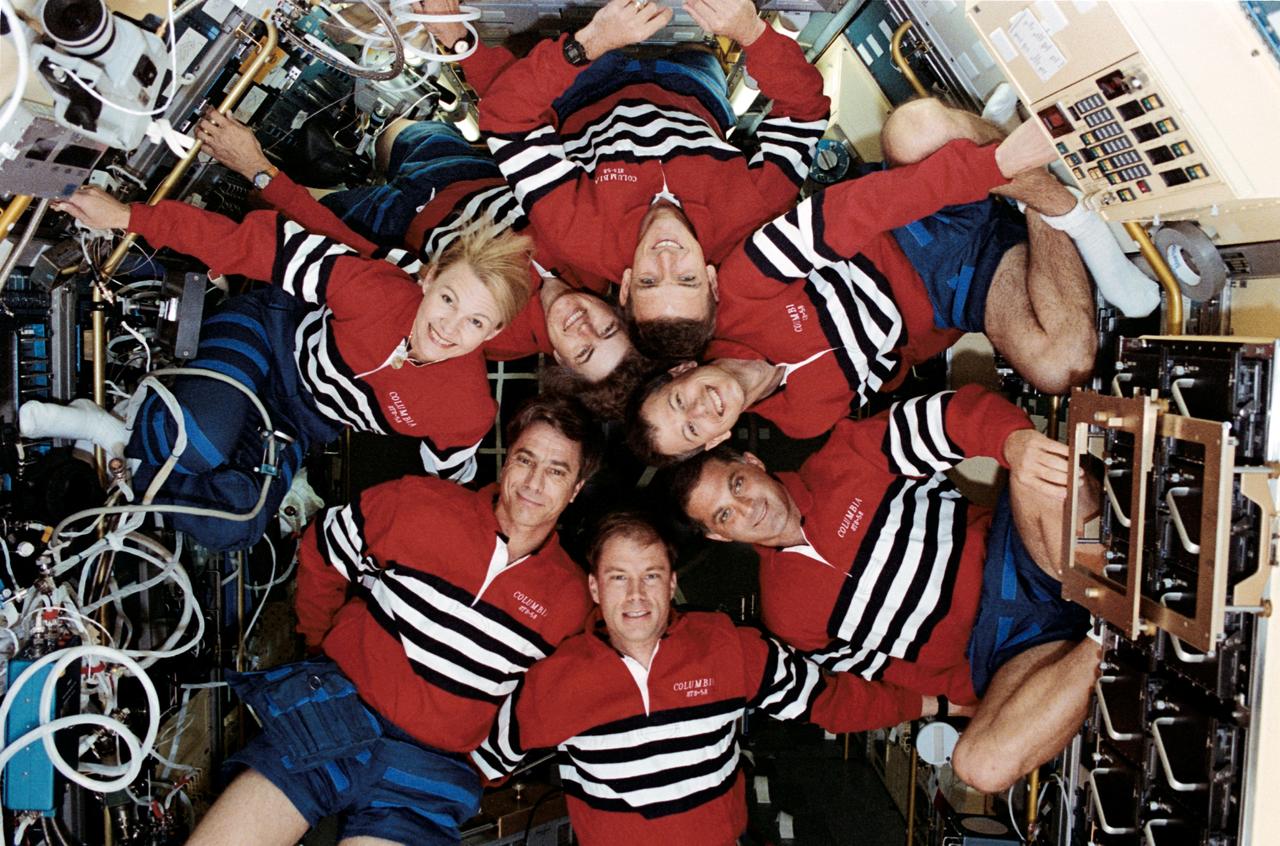
STS058-16-008 (18 Oct.-1 Nov. 1993) --- Inside the science module aboard the Earth-orbiting space shuttle Columbia, a pre-set 35mm camera recorded the traditional inflight portrait of the STS-58 crew. Pictured are (counter-clockwise from the roll of tape at upper right) payload specialist Martin J. Fettman, DVM; William S. McArthur and Shannon W. Lucid, mission specialists; Rhea Seddon, payload commander; John E. Blaha, mission commander; Richard A. Searfoss, pilot; and David A. Wolf, mission specialist. Photo credit: NASA
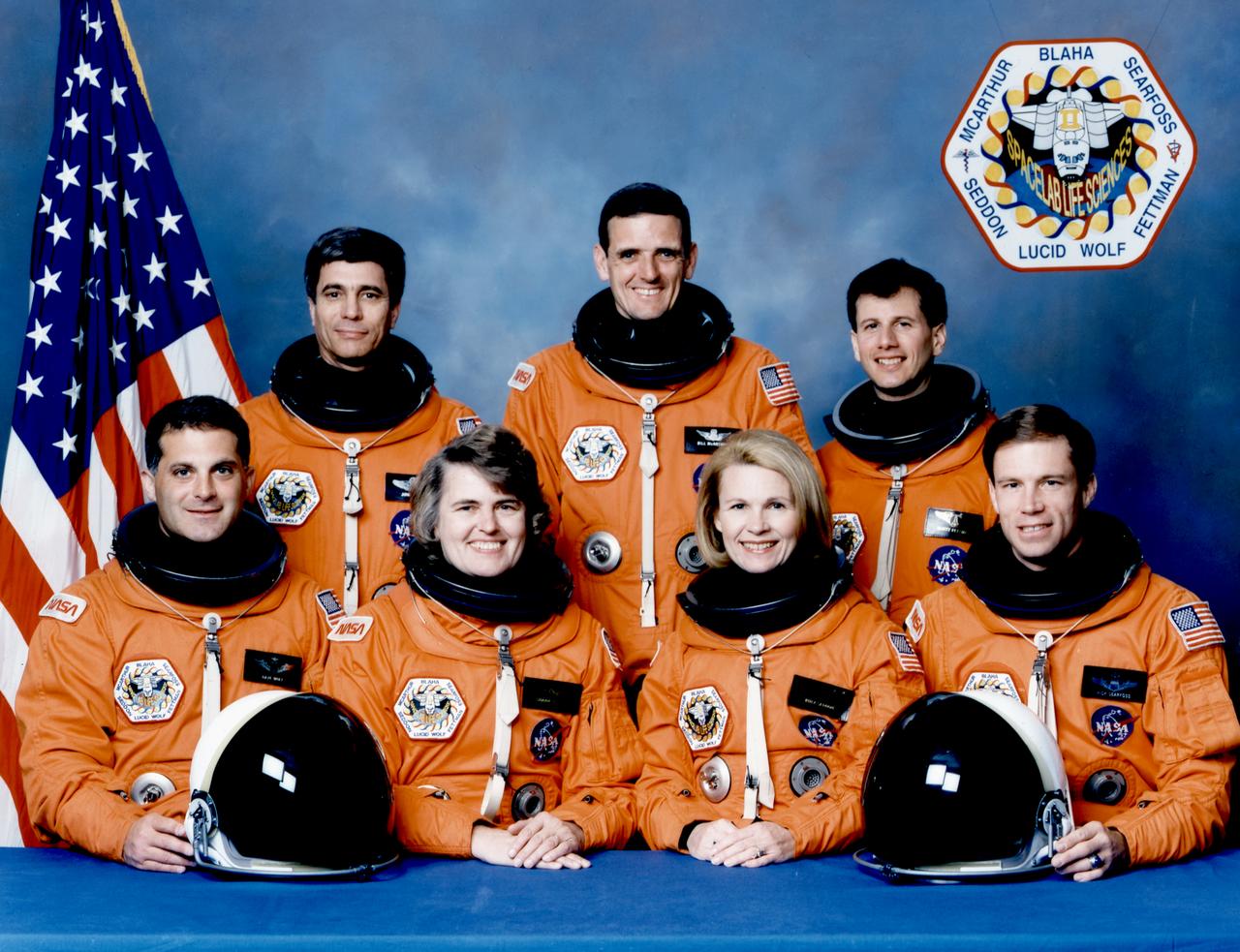
The STS-58 crew portrait includes astronauts (seated left to right) David A. Wolf, Shannon W. Lucid, and Rhea Seddon, all mission specialists; and Richard A. Searfoss, pilot. Standing in the rear, left to right, are John E. Blaha, commander; William S. McArthur, Jr., mission specialist; and Martin J. Fettmen, payload specialist. Launched aboard the Space Shuttle Columbia on October 18, 1993 at 10:53:10 a.m. (EDT), STS-58 served as the second dedicated Spacelab Life Sciences (SLS-2) mission.
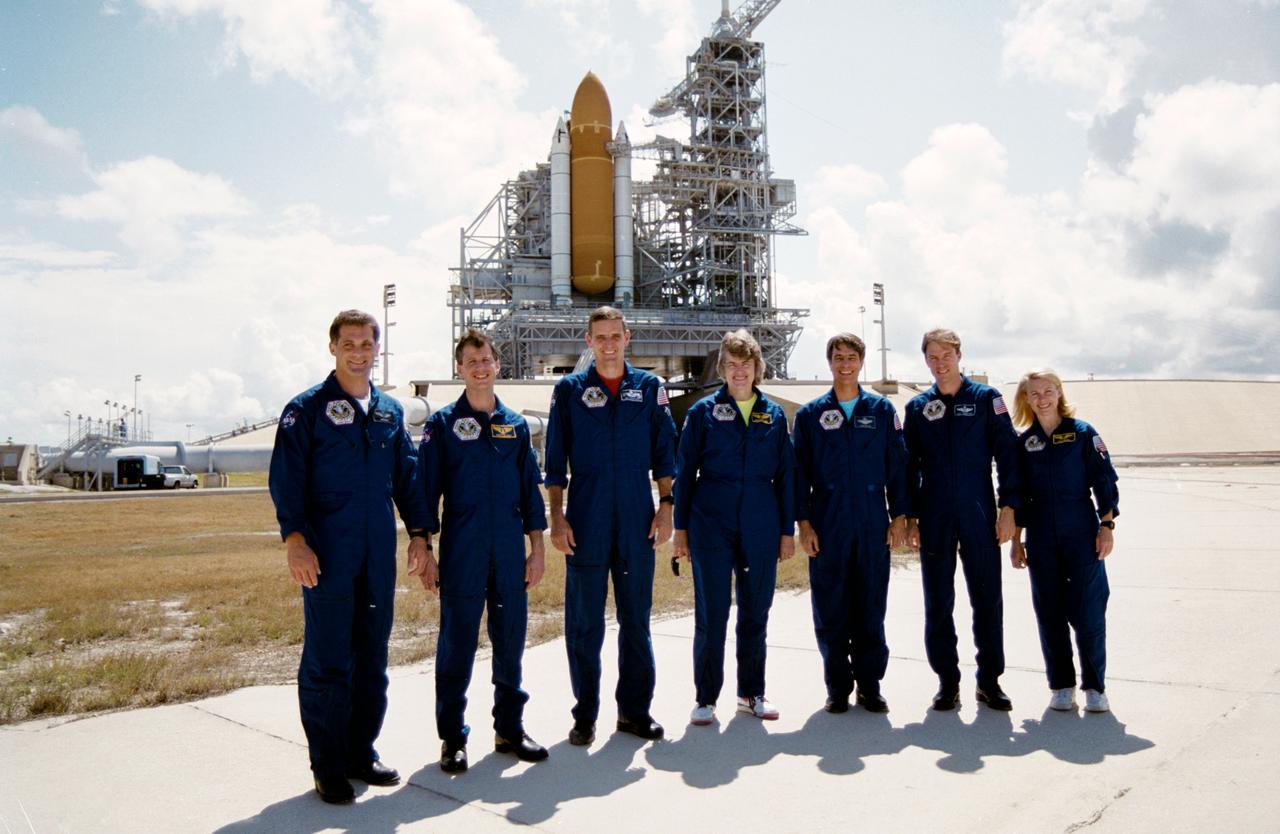
S93-45003 (20 Sept 1993) --- Posing for a crew portrait, in front of the Space Shuttle Columbia at Launch Pad 39B, are the seven STS-58 astronauts. They are, left to right, David A. Wolf, mission specialist; Martin J. Fettman, payload specialist; William S. McArthur and Shannon W. Lucid, mission specialists; John E. Blaha, mission commander; Richard A. Searfoss, pilot; and Rhea Seddon, payload commander. The crew was in Florida for the Terminal Countdown Demonstration Test (CDDT) in preparation for next month's launch aboard Columbia. (Kennedy Space Center Photo ID: KSC-93-PC-1253)
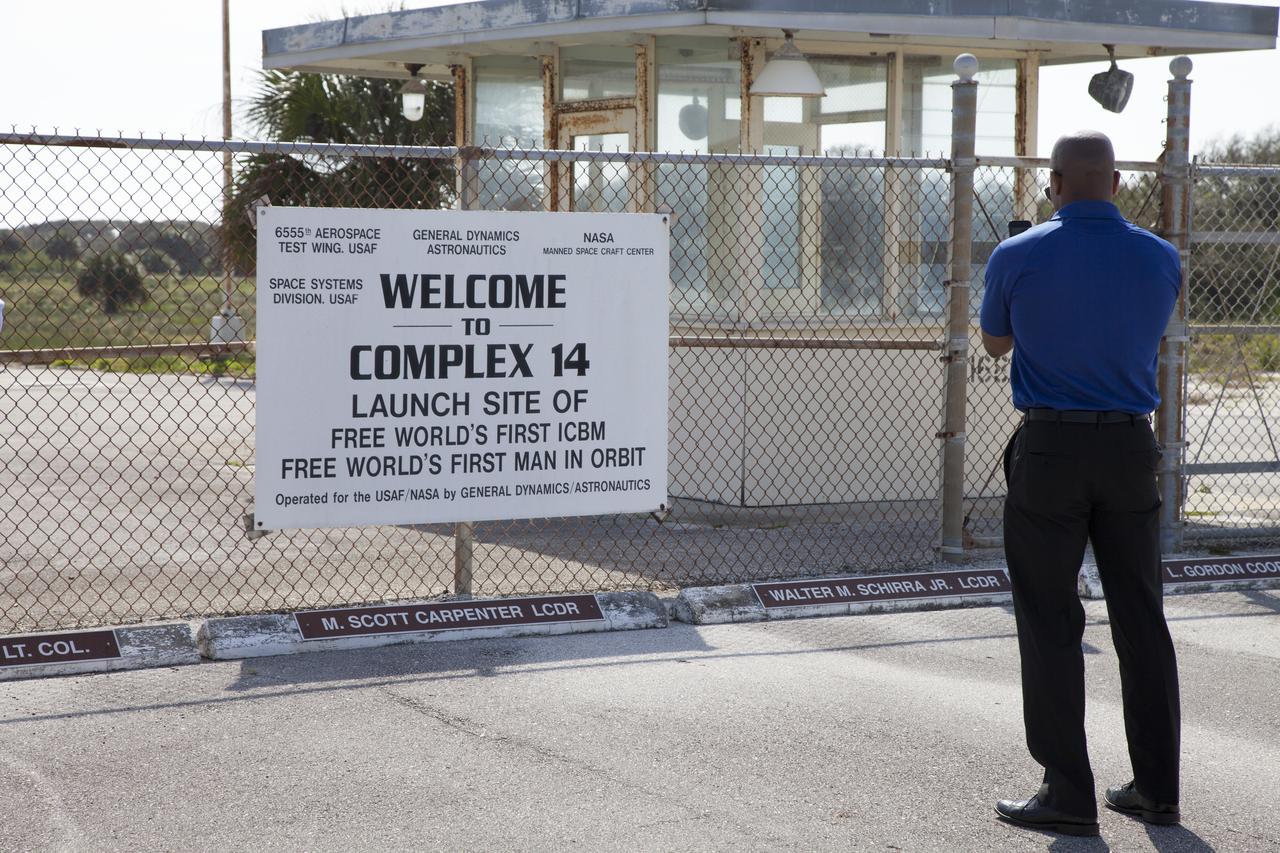
CAPE CANAVERAL, Fla. – NASA astronaut candidate Victor Glover reviews a sign at the entrance to Complex 14 at Cape Canaveral Air Force Station in Florida, adjacent to NASA's Kennedy Space Center. Complex 14 served as the launch pad for Mercury astronaut John Glenn when he lifted off in 1962 to orbit the Earth, becoming the first American to do so. The astronaut class of 2013 was selected by NASA after an extensive year-and-a-half search. The new group will help the agency push the boundaries of exploration and travel to new destinations in the solar system. To learn more about the astronaut class of 2013, visit: http://www.nasa.gov/astronauts/2013astroclass.html Photo credit: NASA/Frankie Martin
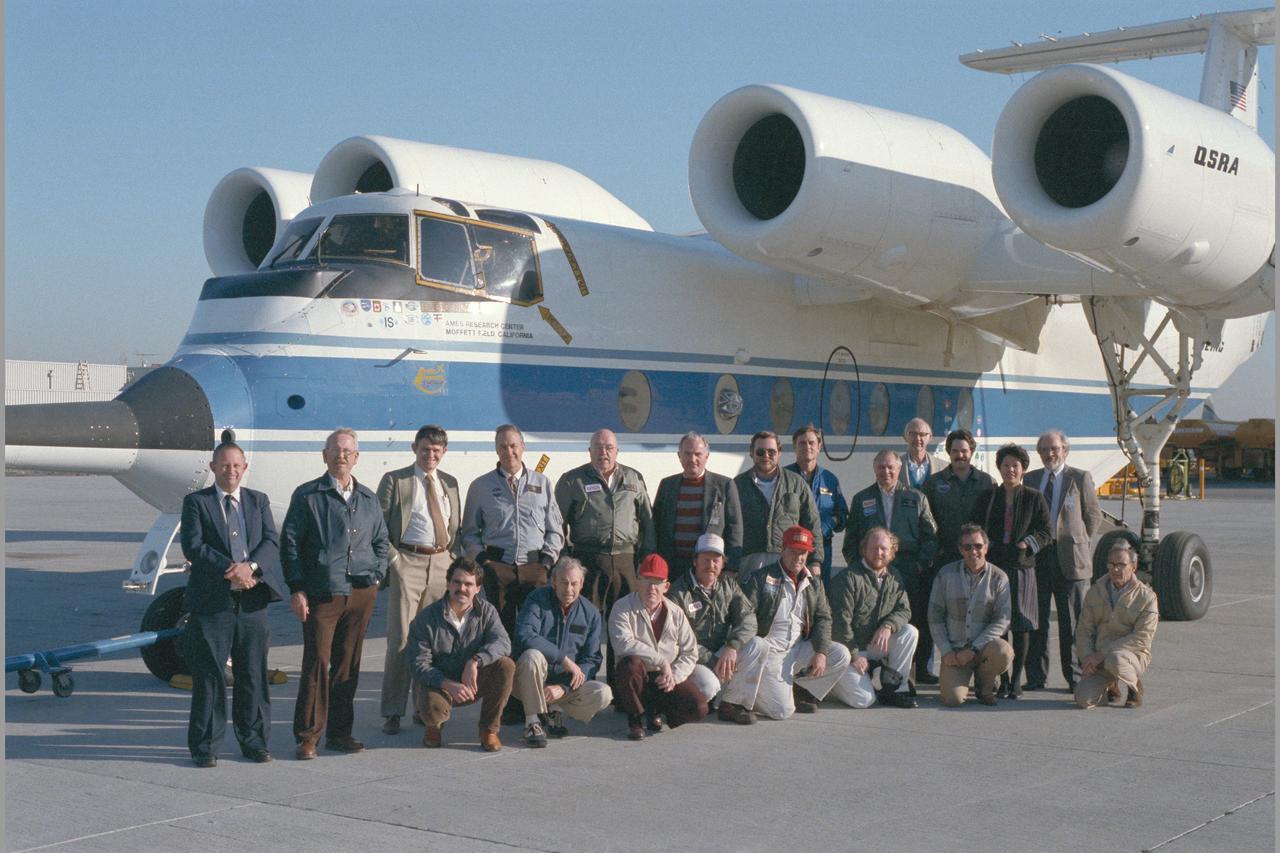
QSRA (NASA 715) 400TH FLIGHT PARTICIPANTS. L-R: front row: Jim Ahlman, Bob Innis, Del Watson, Jim Lesko, Lee Mountz, Mike Herschel, Tom Kaisersatt, Jack Stephenson, Back row: Dennis Riddle, Neis Watz, Jack Franklin, Gordon Hardy, Bob Hinds, Charlie Hynes, Richard Young, Jim Martin, Joe Eppel, John White, Bob America, Hien Tran, Bill Bjorkman. Note: Used in publication in Flight Research at Ames; 57 Years of Development and Validation of Aeronautical Technology NASA SP-1998-3300 fig. 112
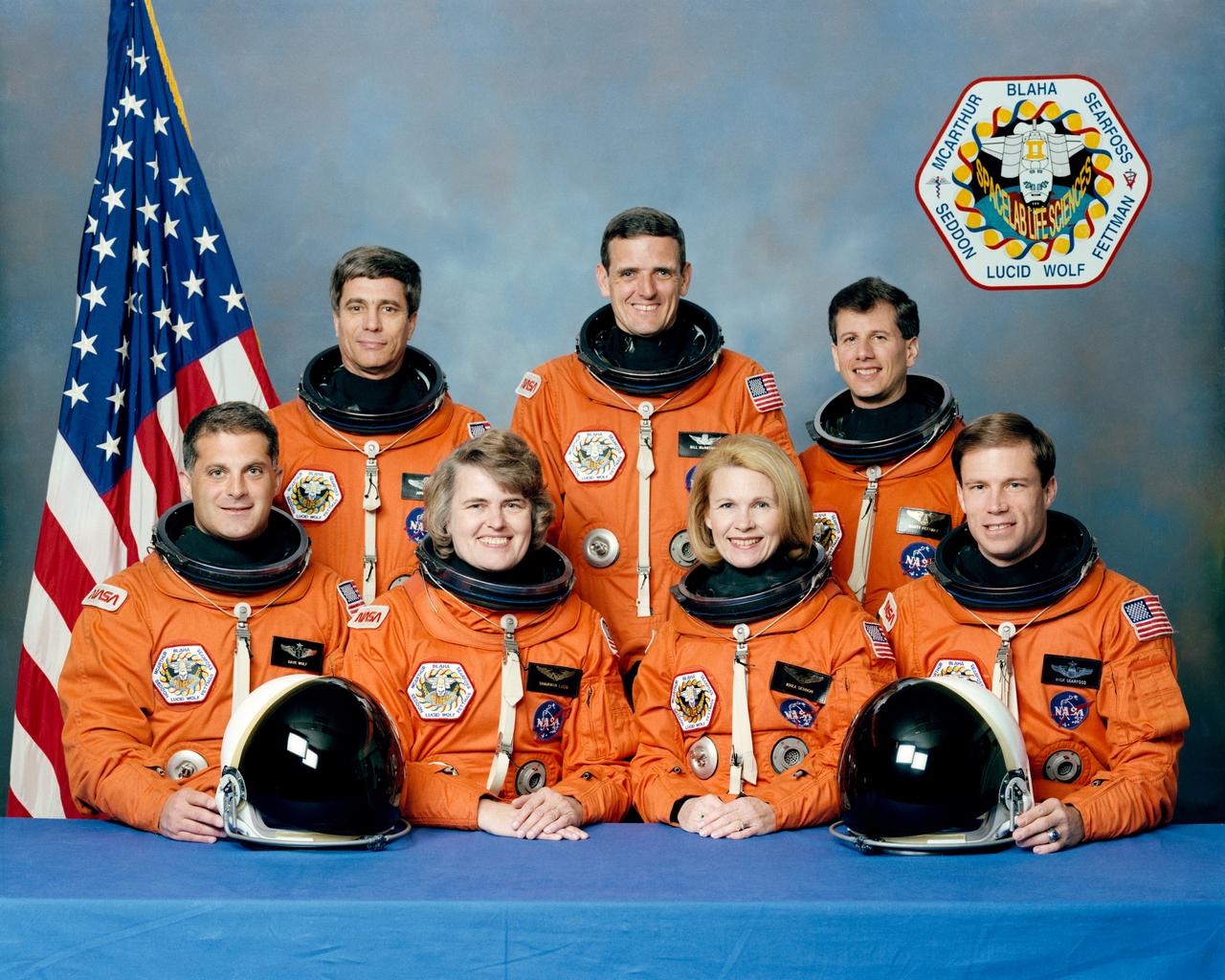
STS058-S-002 (May 1993) --- Wearing training versions of their launch and entry garments, the seven crew members assigned to the Spacelab Life Sciences (SLS-2) mission are pictured in the traditional pre-flight crew portrait. Left to right (front) are David A. Wolf, and Shannon W. Lucid, both mission specialists; Rhea Seddon, payload commander; and Richard A. Searfoss, pilot. Left to right (rear) are John E. Blaha, mission commander; William S. McArthur Jr., mission specialist; and payload specialist Martin J. Fettman, DVM.
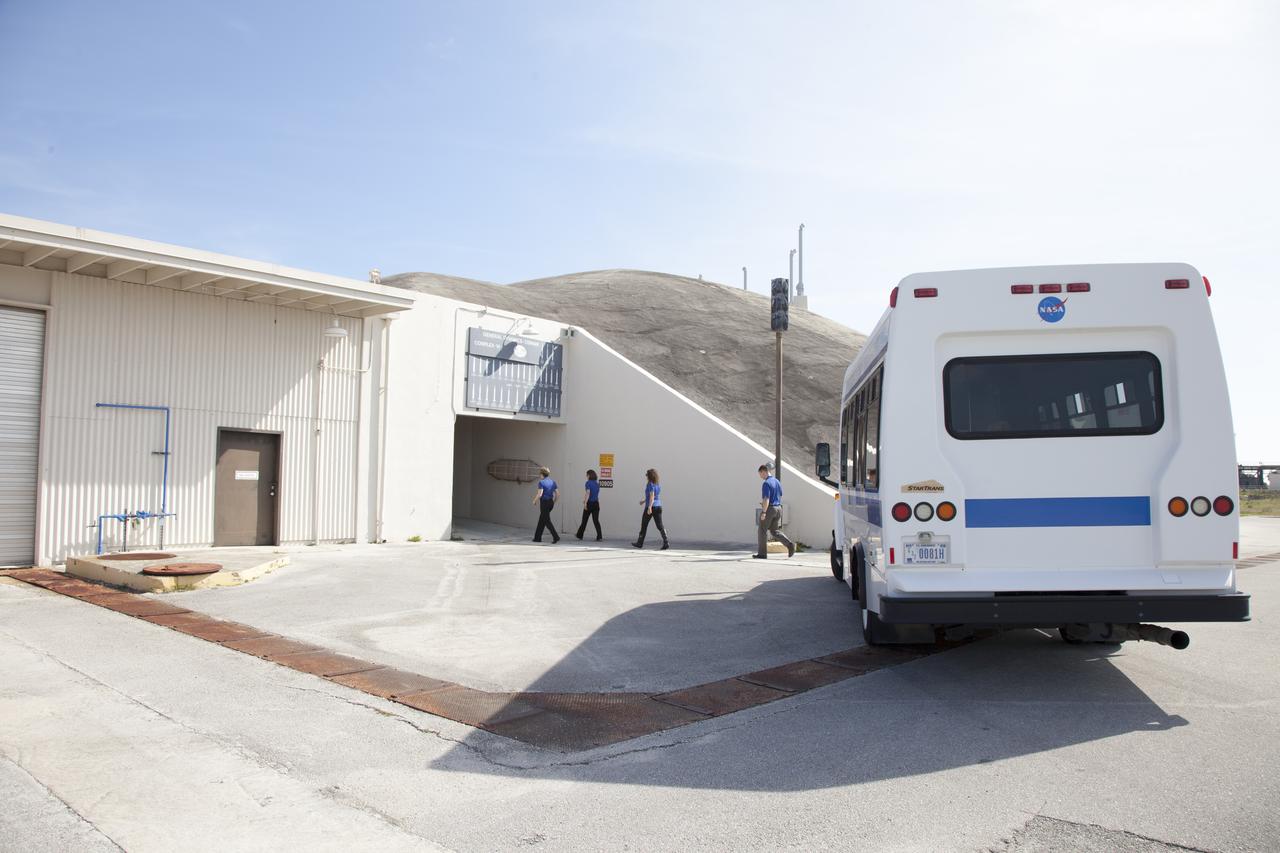
CAPE CANAVERAL, Fla. – NASA astronaut candidates enter the blockhouse at Complex 14 at Cape Canaveral Air Force Station in Florida, adjacent to NASA's Kennedy Space Center. Complex 14 served as the launch pad for Mercury astronaut John Glenn when he lifted off in 1962 to orbit the Earth, becoming the first American to do so. The astronaut class of 2013 was selected by NASA after an extensive year-and-a-half search. The new group will help the agency push the boundaries of exploration and travel to new destinations in the solar system. To learn more about the astronaut class of 2013, visit: http://www.nasa.gov/astronauts/2013astroclass.html Photo credit: NASA/Frankie Martin
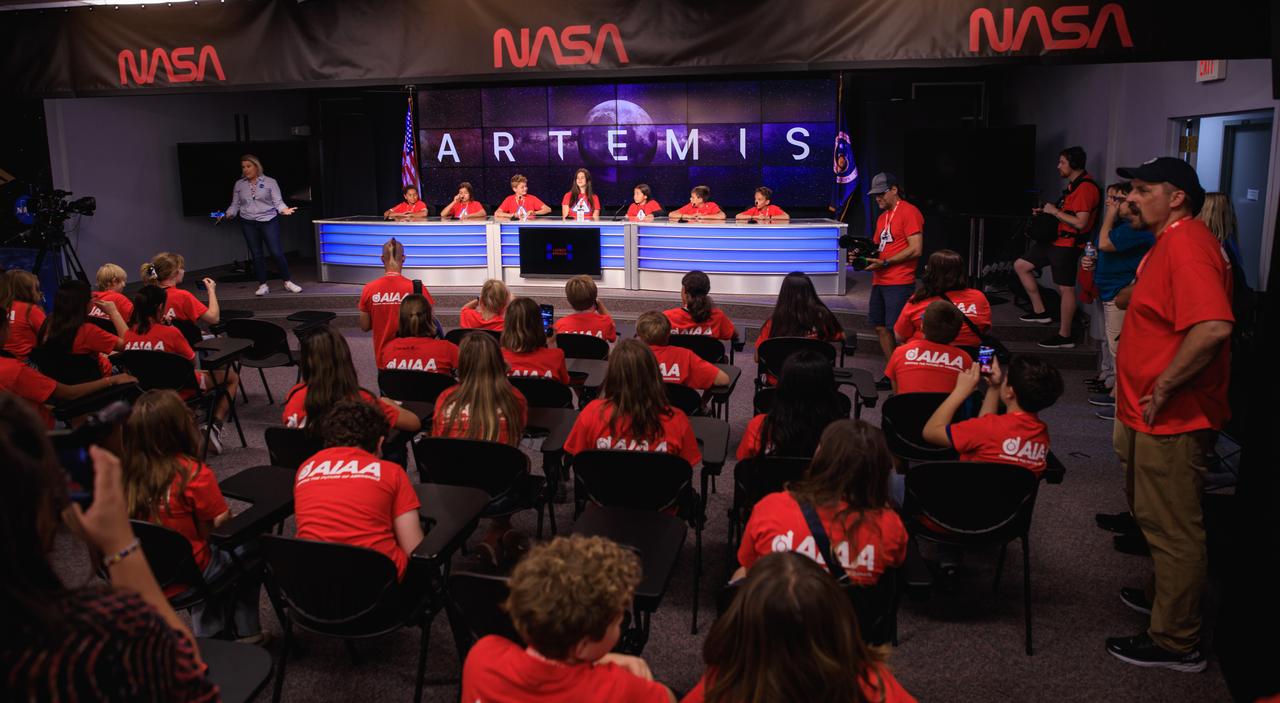
A group of students and their chaperones gather in the John Holliman Auditorium of the News Center to simulate a news conference during a tour of NASA’s Kennedy Space Center in Florida on Oct. 6, 2022. Some of them are seated at the dais at the front of the auditorium. At far left is Leah Martin, NASA Communications. The middle-school students, from the Boys and Girls Clubs of the Flathead Indian Reservation in Montana, are visiting the space center with the Students to Launch program. Students to Launch engages students in STEM (science, technology, engineering and mathematics) and creates awareness of careers in the space program.
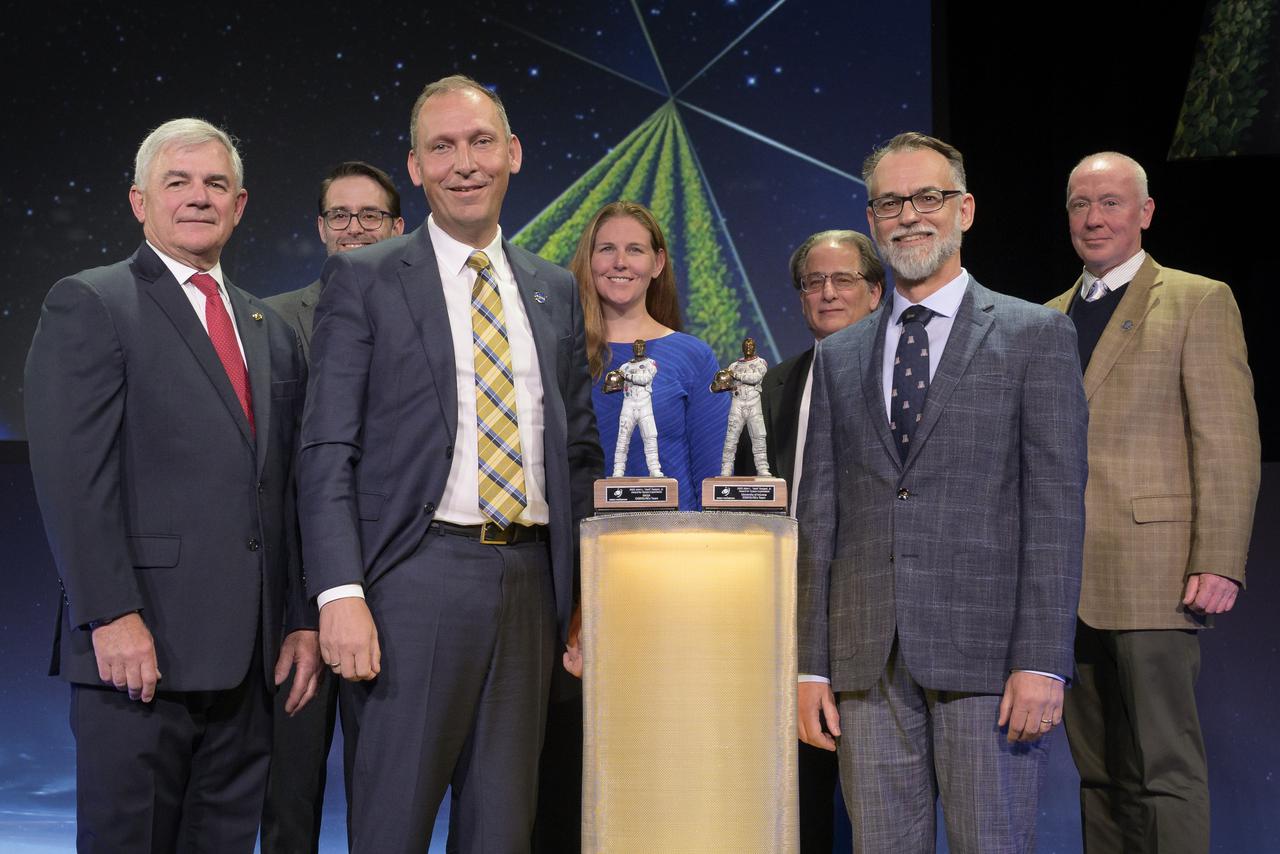
Space Foundation Chief Executive Officer Thomas E. Zelibor, Rear Admiral, USN (Ret.); left, Mike Moreau, Deputy Project Manager, Space Science Mission Operations, NASA Goddard Space Flight Center; NASA Associate Administrator for Science Thomas Zurbuchen; Sandra Freund, OSIRIS-REx Mission Operations Manager, Lockheed Martin Space; Pete Antreasian, OSIRIS-REx Navigation Team Chief, KinetX; University of Arizona OSIRIS-REx Principal Investigator Dante Lauretta; Rich Burns, Project Manager, Space Science Mission Operations, NASA Goddard Space Flight Center, right, pose for a photograph during the awarding of the 2022 John L. “Jack” Swigert, Jr., Award for Space Exploration given to the OSIRIS-REx team by the Space Foundation during the 37th Space Symposium, Monday, April 4, 2022, in Colorado Springs, Colorado. The John L. “Jack” Swigert, Jr., Award for Space Exploration recognizes extraordinary accomplishments by a company, space agency, or consortium of organizations in the realm of space exploration and discovery. The award honors the memory of astronaut John L. “Jack” Swigert, Jr., one of the inspirations for the creation of Space Foundation. Photo Credit: (NASA/Bill Ingalls)
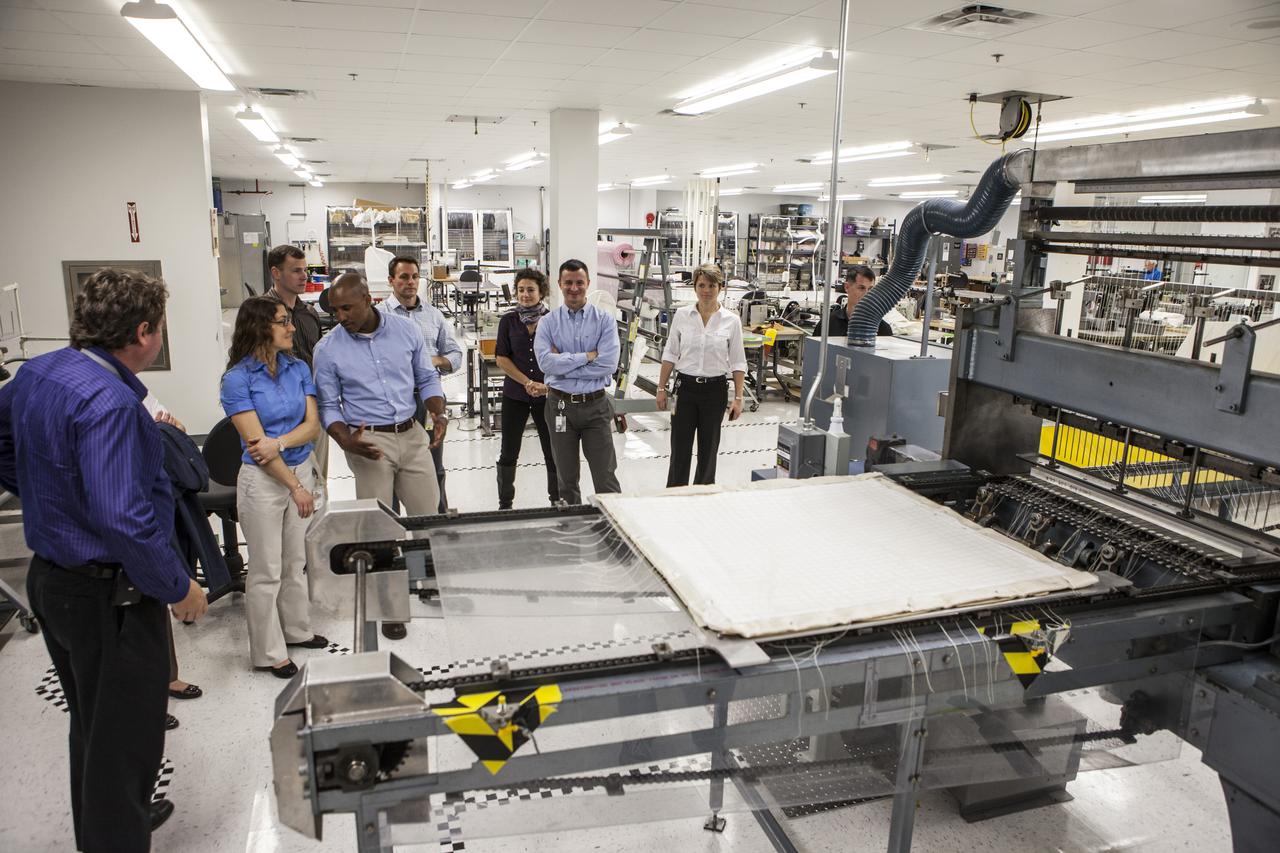
CAPE CANAVERAL, Fla. -- In the Thermal Protection System Facility NASA's Kennedy Space Center in Florida, agency astronaut candidates are briefed on thermal blankets being manufactured for agency spacecraft by TPSF manager, Martin Wilson of Jacobs Technology, far left. Participating in the briefing, from the left, are Christina Hammock, Tyler ‘Nick’ Hague, Victor Glover, John Cassada, Jessica Meir, Andrew Morgan and Anne McClain. Plans call for the Lockheed Martin-built Orion to launch atop a United Launch Alliance Delta IV Heavy rocket from Cape Canaveral Air Force Station on Exploration Flight Test EFT-1 later this year. The astronaut class of 2013 was selected by NASA after an extensive year-and-a-half search. The new group will help the agency push the boundaries of exploration and travel to new destinations in the solar system. To learn more about the astronaut class of 2013, visit: http://www.nasa.gov/astronauts/2013astroclass.html Photo credit: NASA/Kim Shiflett
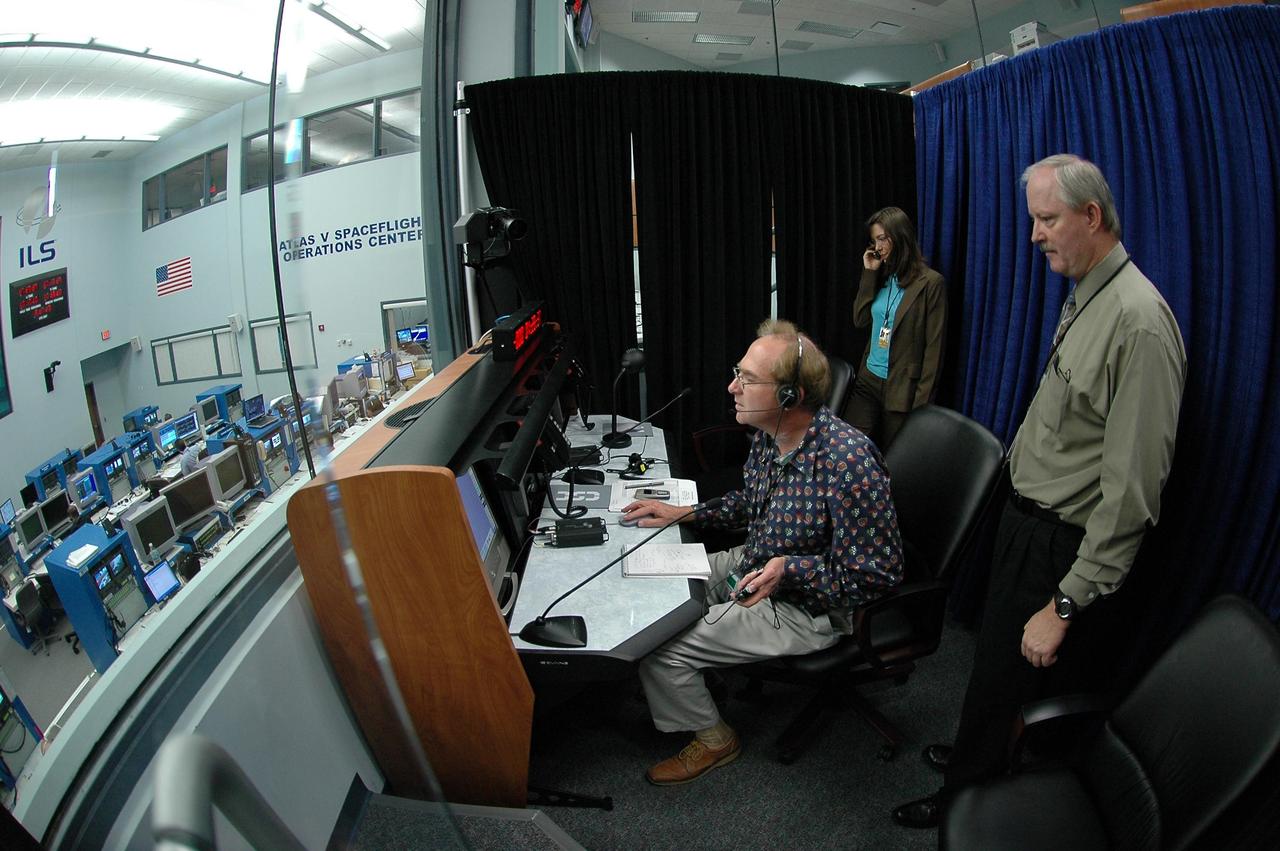
KENNEDY SPACE CENTER, FLA. - In the communications room above the Atlas V Spaceflight Operations Center on Cape Canaveral Air Force Station, NASA Public Information Officer George Diller rehearses his role for the upcoming launch of the New Horizons spacecraft. Behind him are Tiffany Nail, with the Launch Services Program at Kennedy Space Center, and Bob Summerville, a Lockheed Martin console system software engineer. Members of the New Horizons team are taking part in a dress rehearsal for the launch scheduled in mid-January. New Horizons carries seven scientific instruments that will characterize the global geology and geomorphology of Pluto and its moon Charon, map their surface compositions and temperatures, and examine Pluto's complex atmosphere. After that, flybys of Kuiper Belt objects from even farther in the solar system may be undertaken in an extended mission. New Horizons is the first mission in NASA's New Frontiers program of medium-class planetary missions. The spacecraft, designed for NASA by the Johns Hopkins University Applied Physics Laboratory in Laurel, Md., will launch aboard a Lockheed Martin Atlas V rocket and fly by Pluto and Charon as early as summer 2015.
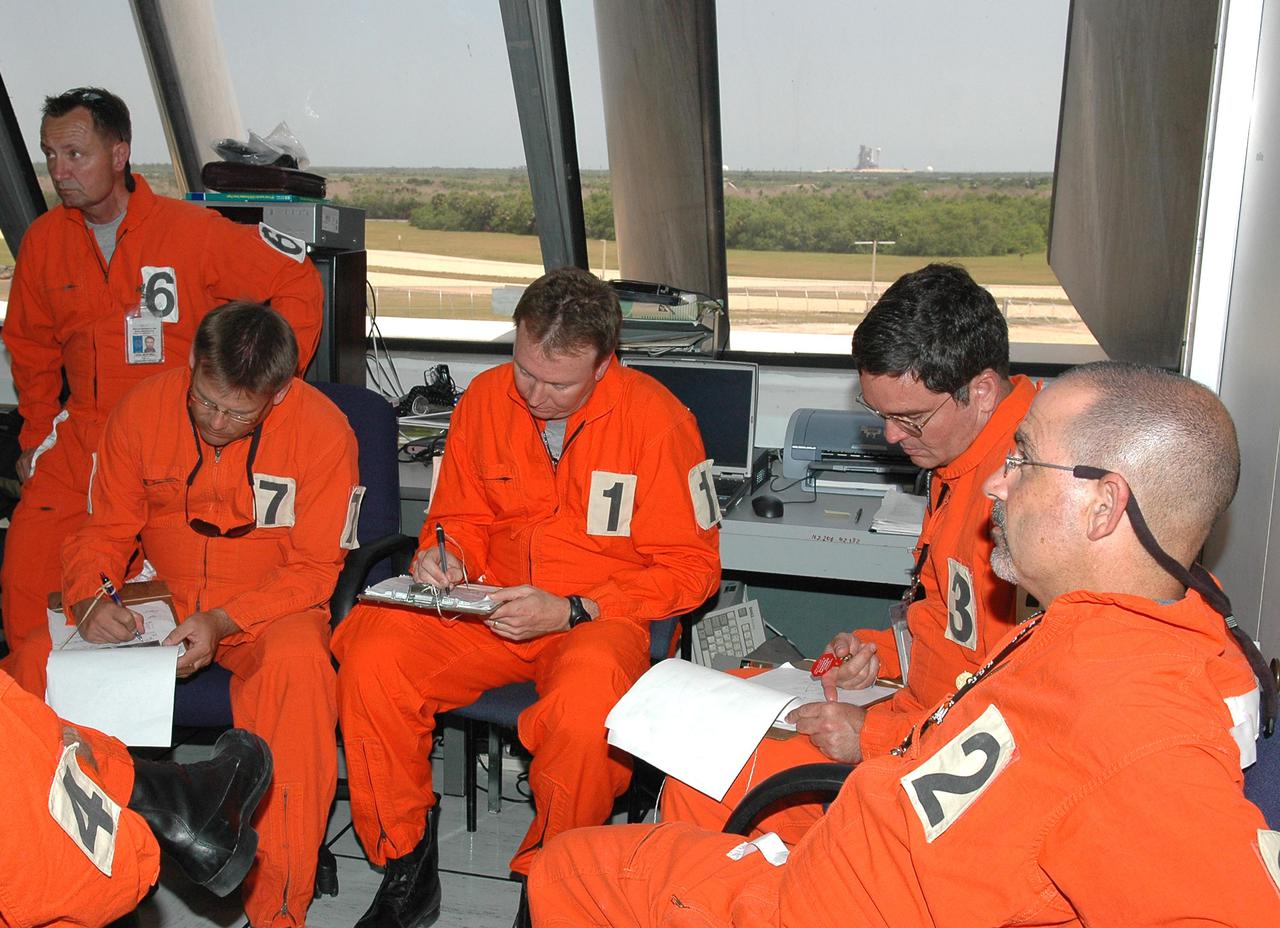
KENNEDY SPACE CENTER, FLA. - Members of the Final Inspection Team support an External Tank (ET) tanking test from the Launch Control Center. Launch Pad 39B, where the test is being conducted, can be seen through the window. From left are Doug Powell, Lockheed Martin; Scott Otto, Lockheed Martin; John Blue, NASA; Robert Speece, NASA; and Jorge Rivera, NASA. The tanking test is designed to evaluate how the tank, orbiter, solid rocket boosters and ground systems perform under 'cryo-load,' when the tank is filled with the two ultra-low-temperature propellants. The tank filling and draining portion of the test takes about 11 hours. The test also includes a simulated countdown through the hold at T-31 seconds. The test is being conducted to troubleshoot two issues identified by a tanking test held on April 14. Data is being collected to analyze the liquid hydrogen sensors that gave intermittent readings and the liquid hydrogen pressurization relief valve that cycled more times than standard. The tanking tests are part of preparations for Space Shuttle Discovery's Return to Flight mission, STS-114, to the International Space Station. The launch window extends from July 13 through July 31.
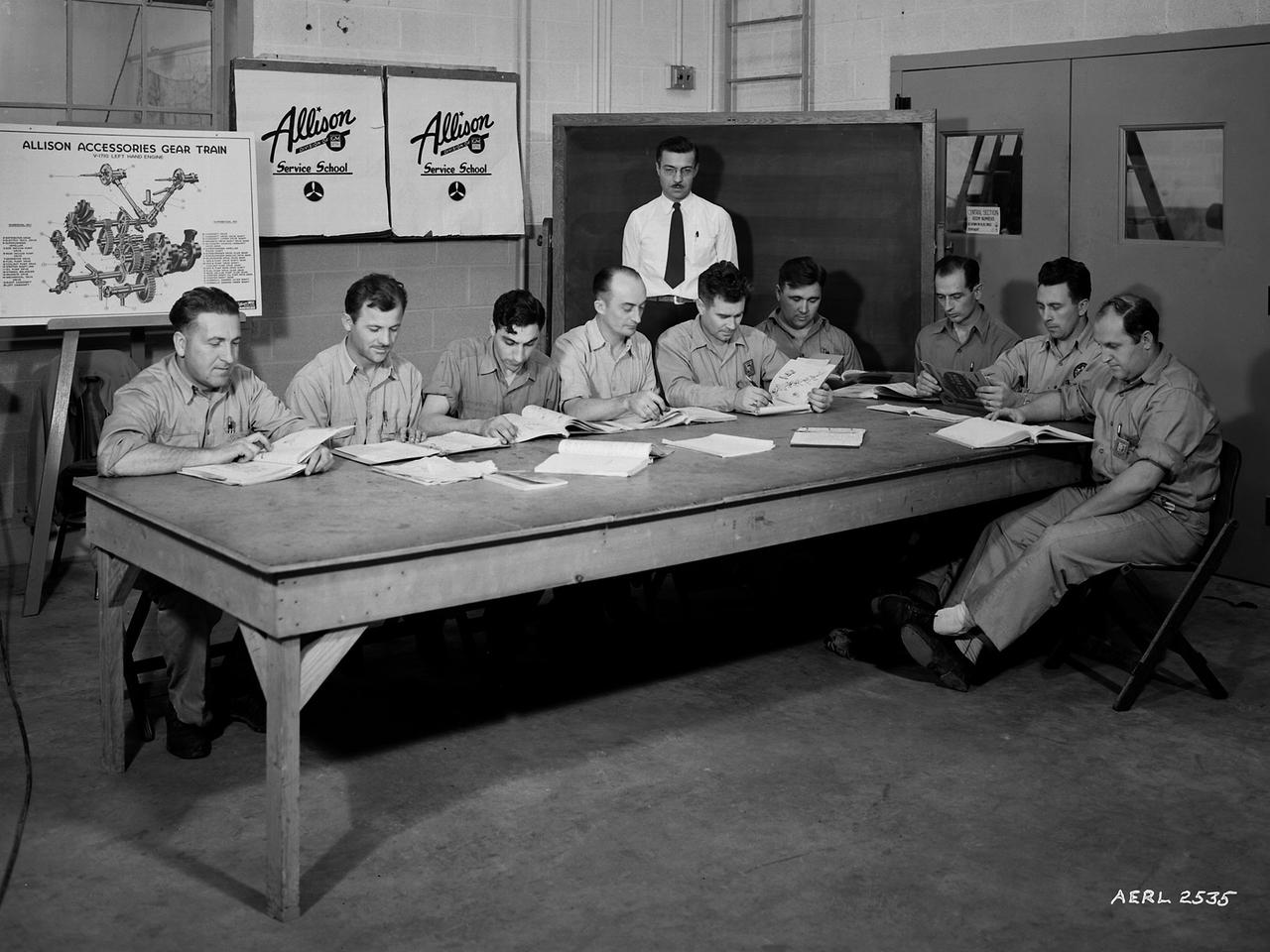
The Allison Engine Company's A.G. Covell instructs mechanics from various divisions at the National Advisory Committee for Aeronautics (NACA) Aircraft Engine Research Laboratory on the operation of the Allison Basic Engine. The military had asked that the laboratory undertake an extensive program to improve the performance of the Allison V–1710 engine. The V–1710 was the only liquid-cooled engine used during World War II, and the military counted on it to power several types of fighter aircraft. The NACA instituted an Apprentice Program during the war to educate future mechanics, technicians, and electricians. The program was suspended for a number of years due to the increasing rates of military service by its participants. The laboratory continued its in-house education during the war, however, by offering a number of classes to its employees and lectures for the research staff. The classes and lectures were usually taught by fellow members of the staff, but occasionally external experts were brought in. The students in the Allison class in the Engine Research Building were taught how to completely disassemble and reassemble the engine components and systems. From left to right are Don Vining, Ed Cudlin, Gus DiNovo, George Larsen, Charles Diggs, Martin Lipes, Harley Roberts, Martin Berwaldt and John Dempsey. A.G. Covell is standing.
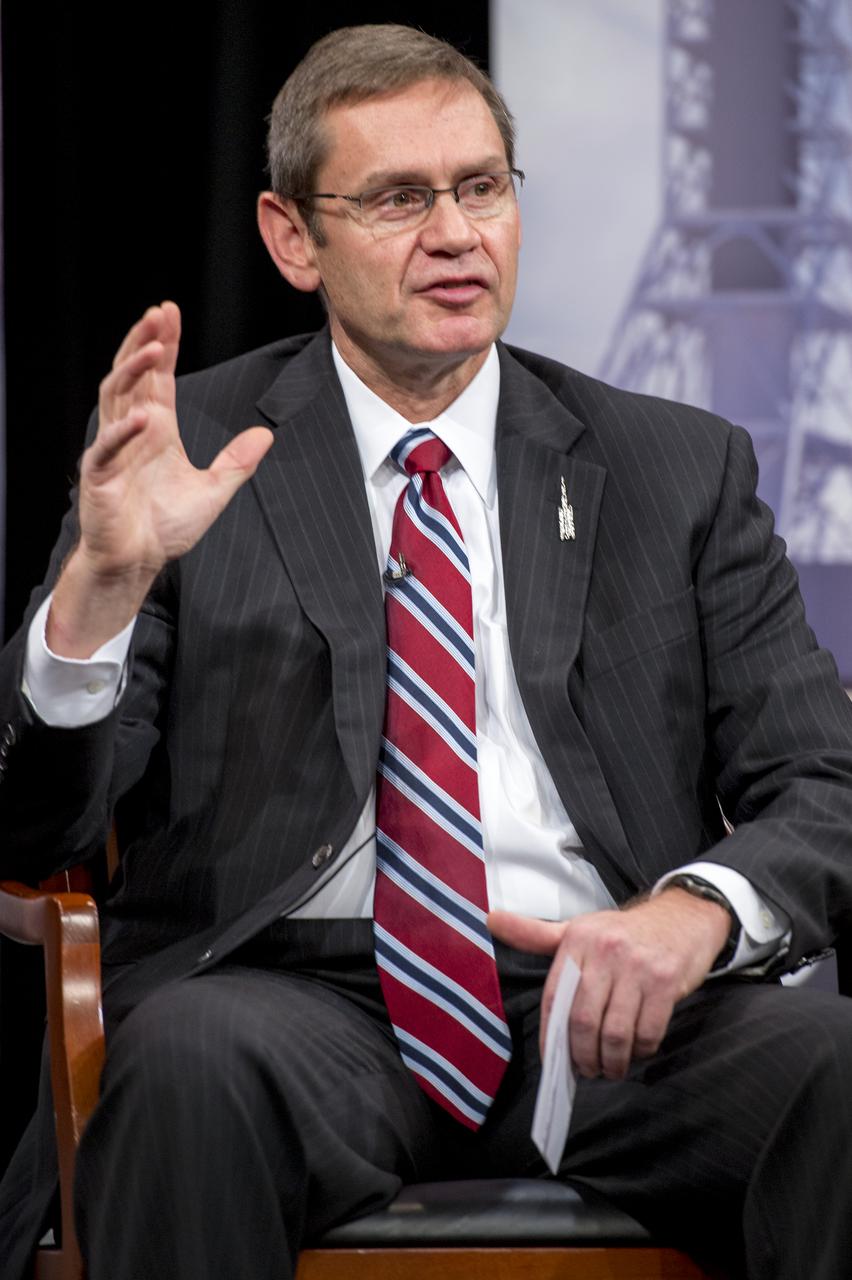
John Elbon, Vice President and General Manager, Boeing Space Exploration, gestures while speaking at a panel discussion on deep space exploration using the Space Launch System and Orion spacecraft at the Newseum in Washington on Tuesday, November 12, 2013. Photo Credit: (NASA/Jay Westcott)
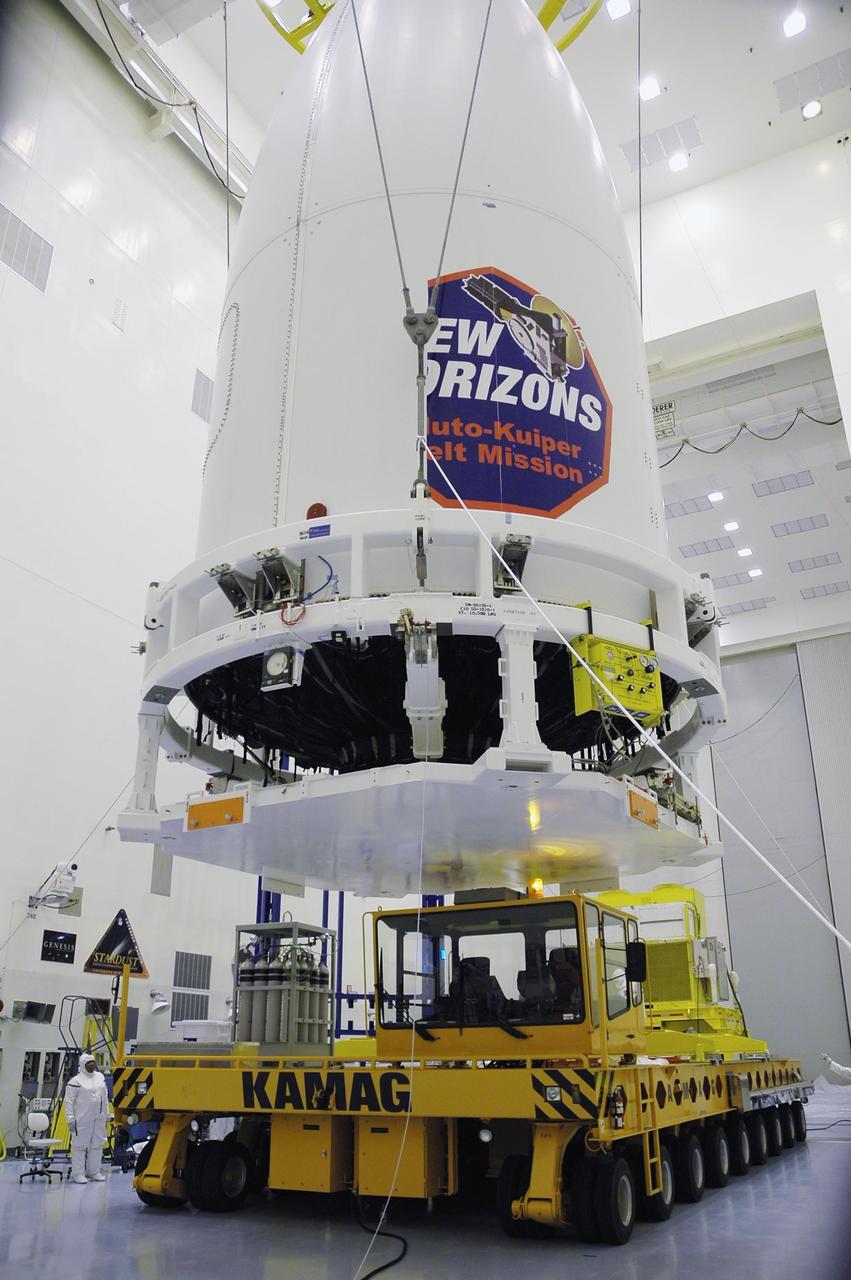
KENNEDY SPACE CENTER, FLA. - In the Payload Hazardous Servicing Facility, technicians lower New Horizons onto a transporter for its move to Complex 41 on Cape Canaveral Air Force Station. The last strip of the mission decal will be installed on the fairing after the spacecraft is delivered to the pad. New Horizons carries seven scientific instruments that will characterize the global geology and geomorphology of Pluto and its moon Charon, map their surface compositions and temperatures, and examine Pluto's complex atmosphere. After that, flybys of Kuiper Belt objects from even farther in the solar system may be undertaken in an extended mission. New Horizons is the first mission in NASA's New Frontiers program of medium-class planetary missions. The spacecraft, designed for NASA by the Johns Hopkins University Applied Physics Laboratory in Laurel, Md., will launch aboard a Lockheed Martin Atlas V rocket and fly by Pluto and Charon as early as summer 2015.
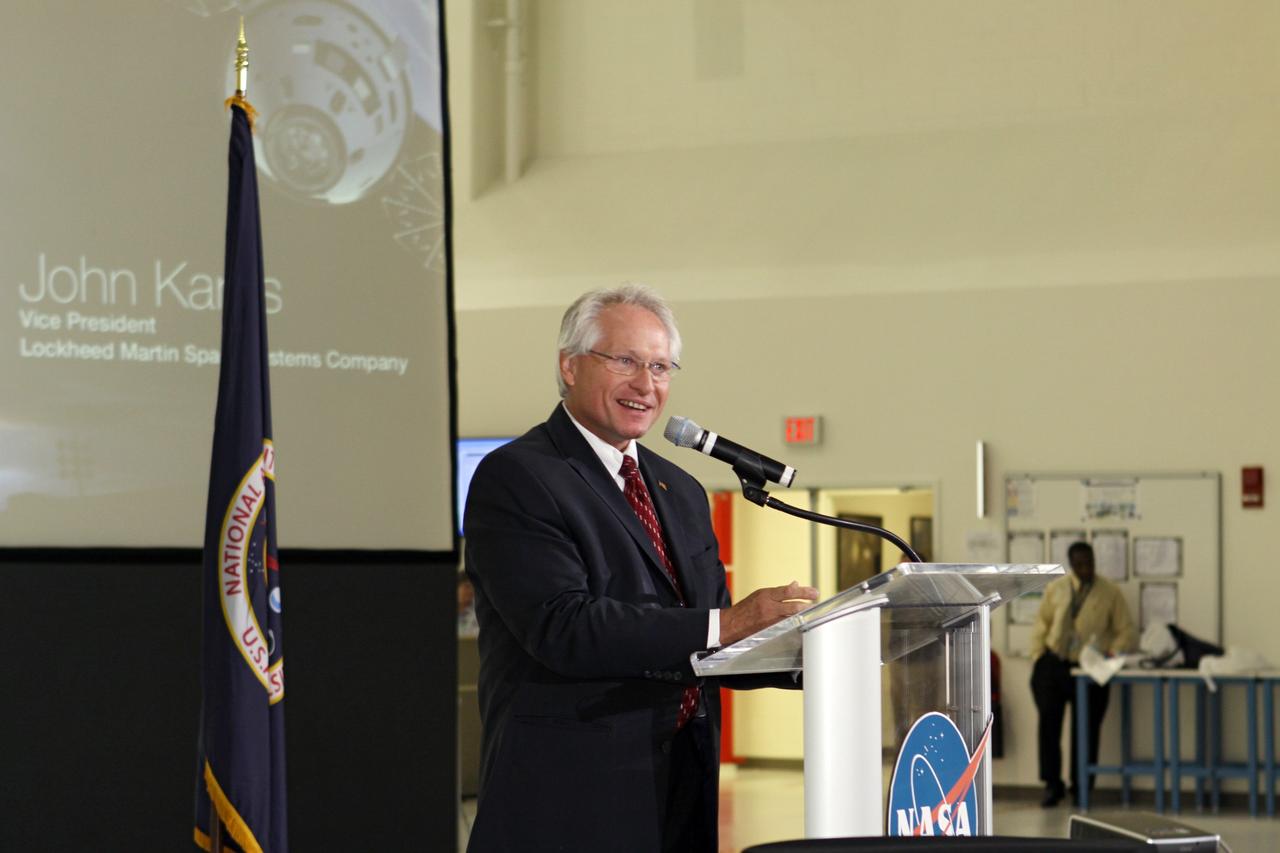
CAPE CANAVERAL, Fla. – John Karas, vice president and general manager of Human Spaceflight for Lockheed Martin Space Systems, addresses the audience assembled in Kennedy Space Center's Operations and Checkout Building high bay for an event marking the arrival of NASA's first space-bound Orion capsule in Florida. Slated for Exploration Flight Test-1, an uncrewed mission planned for 2014, the capsule will travel farther into space than any human spacecraft has gone in more than 40 years. The capsule was shipped to Kennedy from NASA's Michoud Assembly Facility in New Orleans where the crew module pressure vessel was built. The Orion production team will prepare the module for flight at Kennedy by installing heat-shielding thermal protection systems, avionics and other subsystems. For more information, visit http://www.nasa.gov/orion. Photo credit: NASA/Kim Shiflett
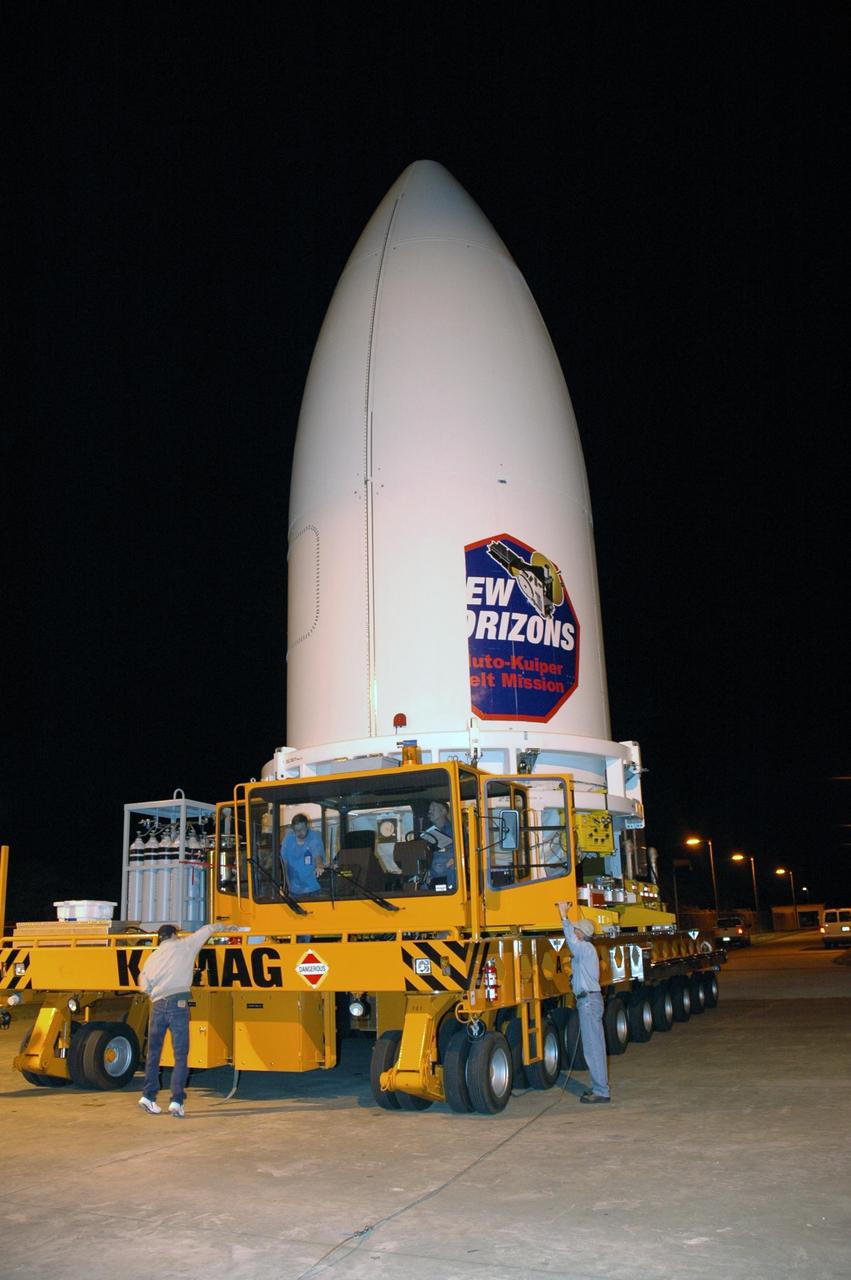
KENNEDY SPACE CENTER, FLA. - Technicians prepare to move New Horizons before dawn from the Payload Hazardous Servicing Facility to the Vertical Integration Facility at Complex 41 on Cape Canaveral Air Force Station. New Horizons carries seven scientific instruments that will characterize the global geology and geomorphology of Pluto and its moon Charon, map their surface compositions and temperatures, and examine Pluto's complex atmosphere. After that, flybys of Kuiper Belt objects from even farther in the solar system may be undertaken in an extended mission. New Horizons is the first mission in NASA's New Frontiers program of medium-class planetary missions. The spacecraft, designed for NASA by the Johns Hopkins University Applied Physics Laboratory in Laurel, Md., will launch aboard a Lockheed Martin Atlas V rocket and fly by Pluto and Charon as early as summer 2015.
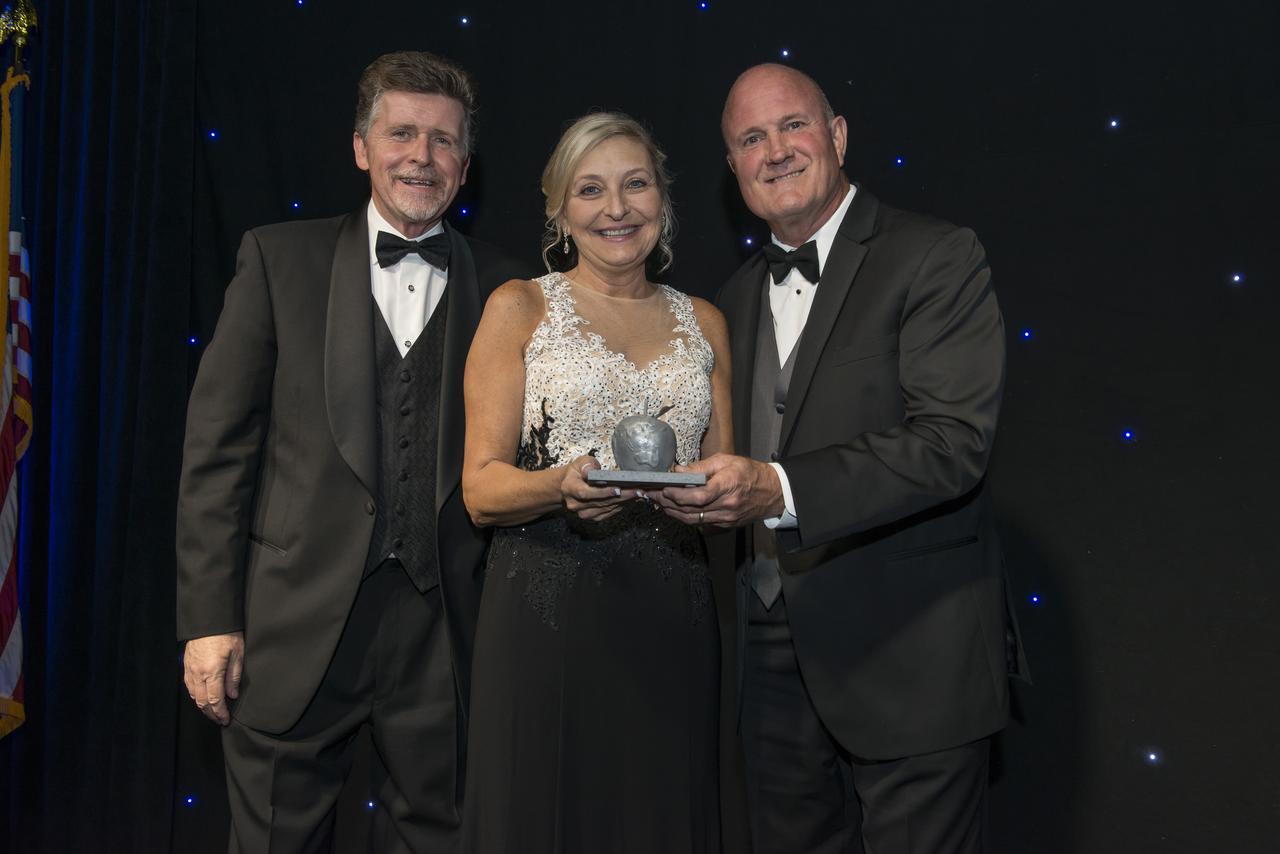
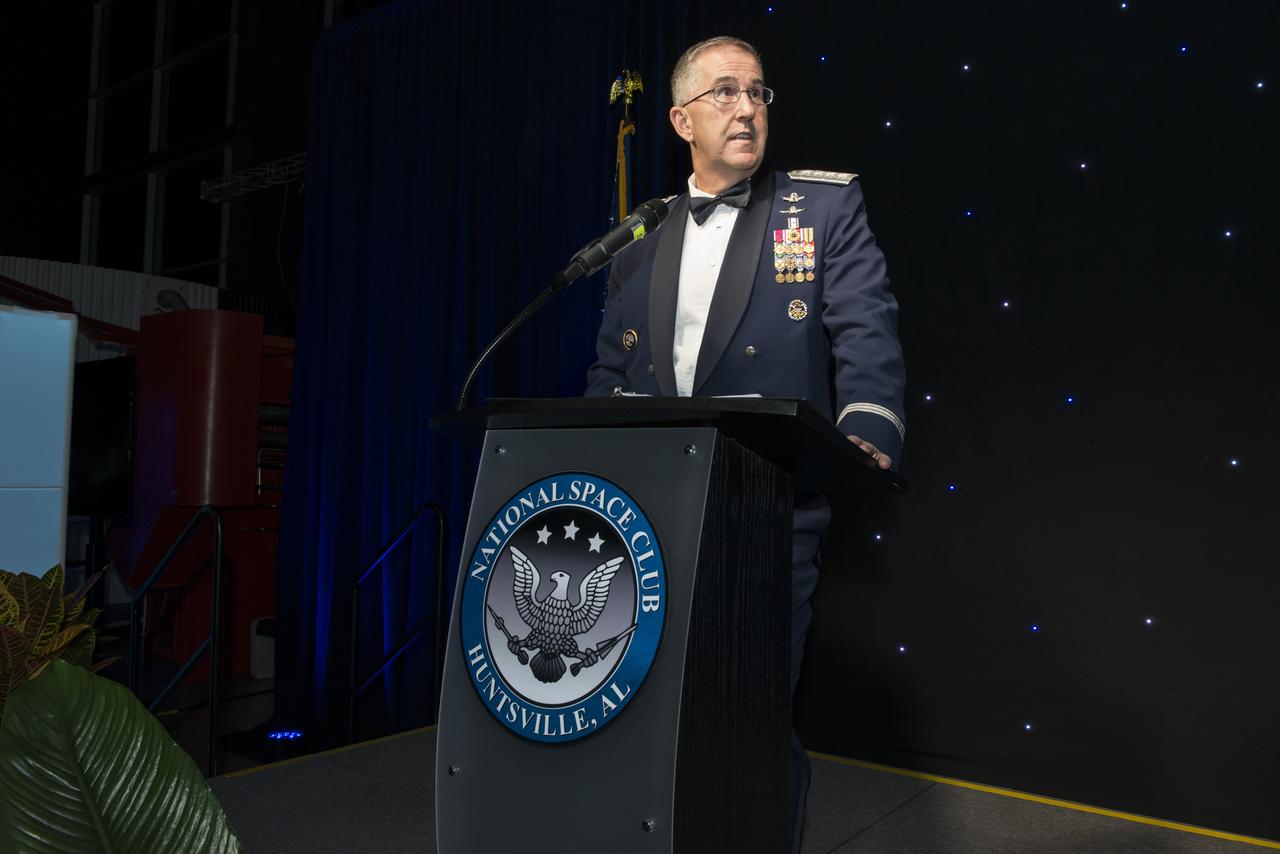
The annual Dr. Wernher Von Braun Memorial Dinner was held at the U.S. Space and Rocket Center's Davidson Center on October 26, 2017 with Keynote speaker General John Hyten, Commander of U.S. Strategic Command. Emcee was Mark Larson of Mark Larson Media Services, Inc. Dr. Wernher Von Braun Memorial Scholarships were presented to 8 college students by the National Space Club. Educator of the Year was awarded to Tammy Thorpe; Community Service award was presented to Huntsville, Al. Mayor Tommy Battle. The Communications Award was presented to retired astronaut Dr. Mike Massimino. The Distinguished Science Award was presented to Dr. Martin Weisskopf. The Astronautics Engineer Award was presented to Douglas R. Cooke. The Dr. Wernher Von Braun Space Flight Trophy was presented to Robert Lightfoot.
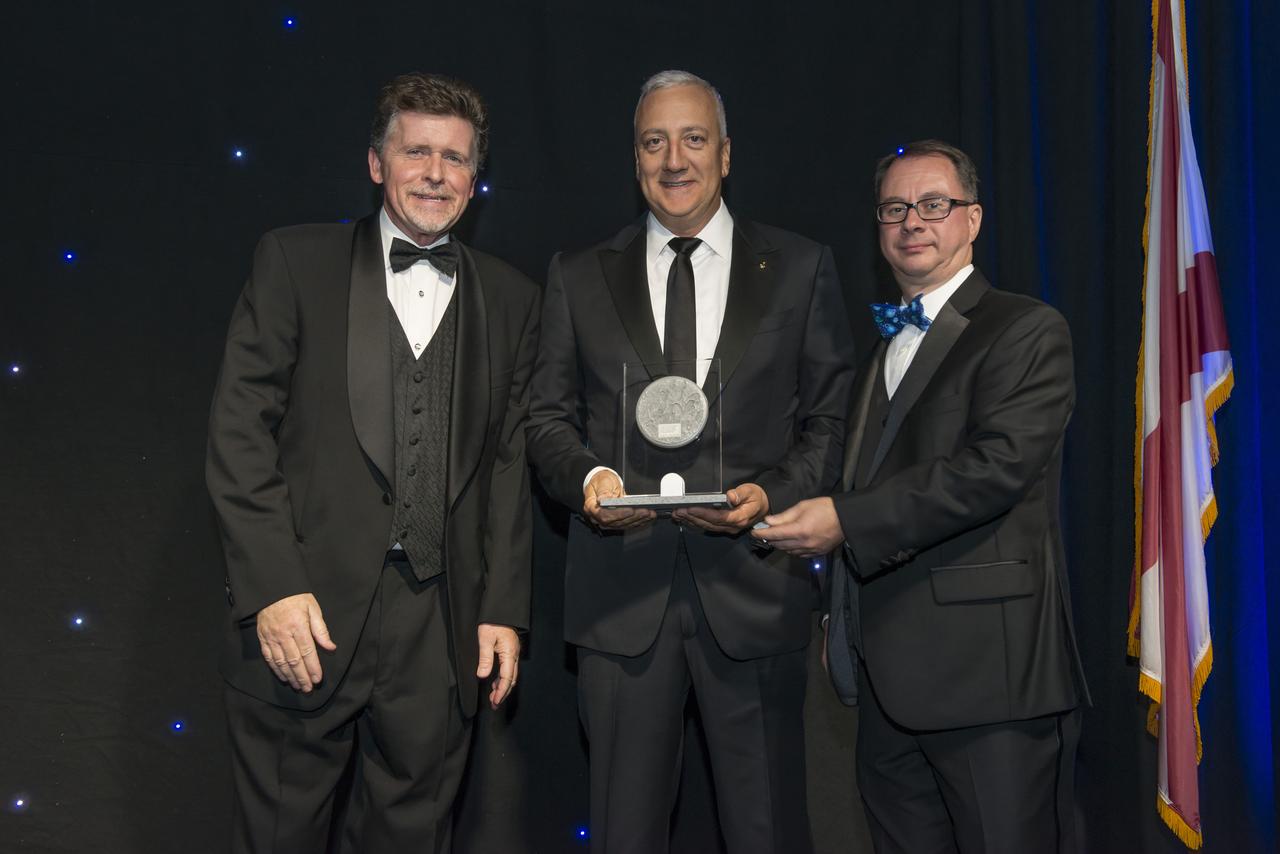
The annual Dr. Wernher Von Braun Memorial Dinner was held at the U.S. Space and Rocket Center's Davidson Center on October 26, 2017 with Keynote speaker General John Hyten, Commander of U.S. Strategic Command. Emcee was Mark Larson of Mark Larson Media Services, Inc. Dr. Wernher Von Braun Memorial Scholarships were presented to 8 college students by the National Space Club. Educator of the Year was awarded to Tammy Thorpe; Community Service award was presented to Huntsville, Al. Mayor Tommy Battle. The Communications Award was presented to retired astronaut Dr. Mike Massimino. The Distinguished Science Award was presented to Dr. Martin Weisskopf. The Astronautics Engineer Award was presented to Douglas R. Cooke. The Dr. Wernher Von Braun Space Flight Trophy was presented to Robert Lightfoot.
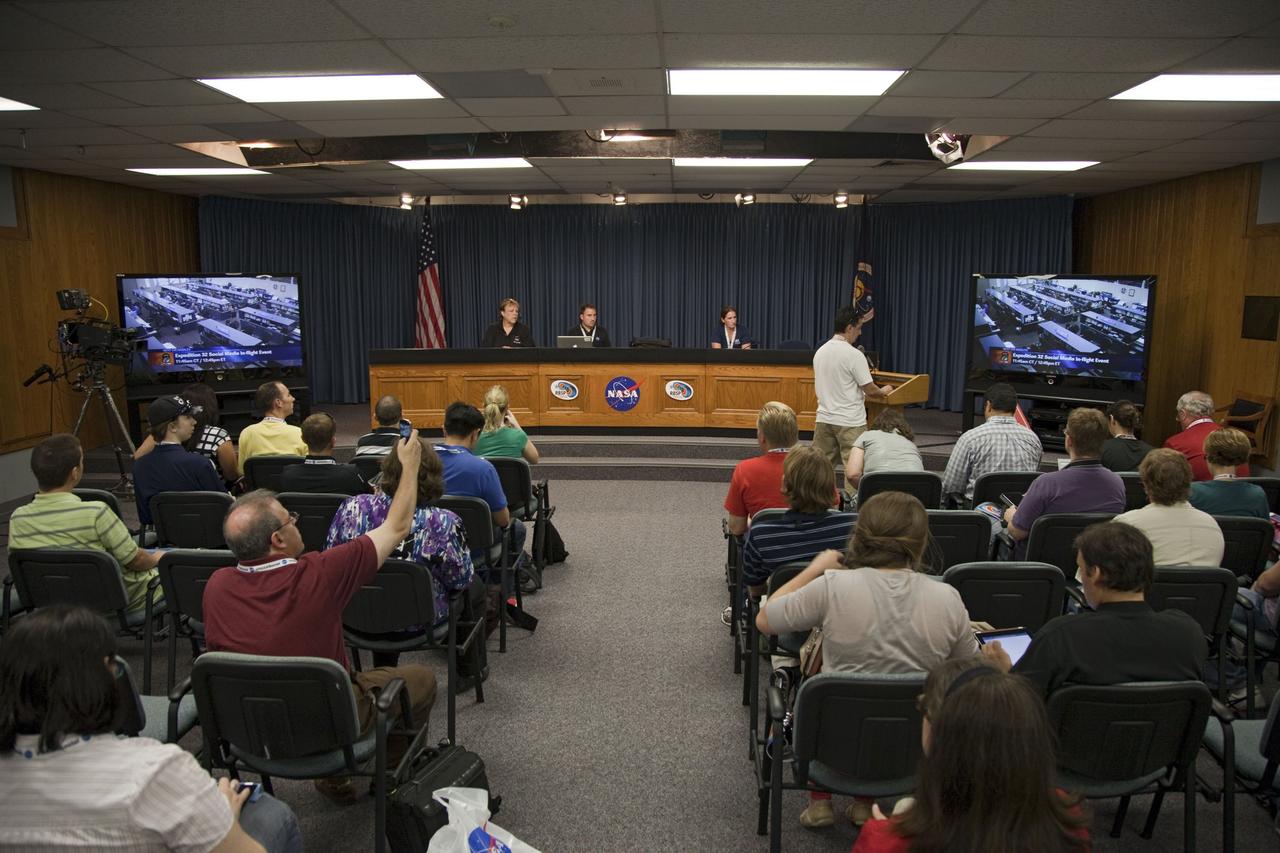
CAPE CANAVERAL, Fla. -- At NASA's Kennedy Space Center in Florida, social media participants take part in a question and answer session with astronauts aboard the International Space Station. At the podium, Ranz Adams asks a question of space station flight engineer Joe Acaba. Leading the activity from the desk at the front of the room are, from the left, Laurel Lichtenberger of NASA Public Affairs, Jason Townsend of the NASA Social Media Team and Kerri Beisser of the Johns Hopkins University Applied Physics Laboratory. The social media gathering at the Florida spaceport took place Aug. 22, 2012 joining a world-wide NASA Social allowing participants to ask questions of NASA astronauts who are living and working aboard the International Space Station. . For more information, visit http://www.nasa.gov/mission_pages/station/main/index.html Photo credit: NASA/ Frankie Martin
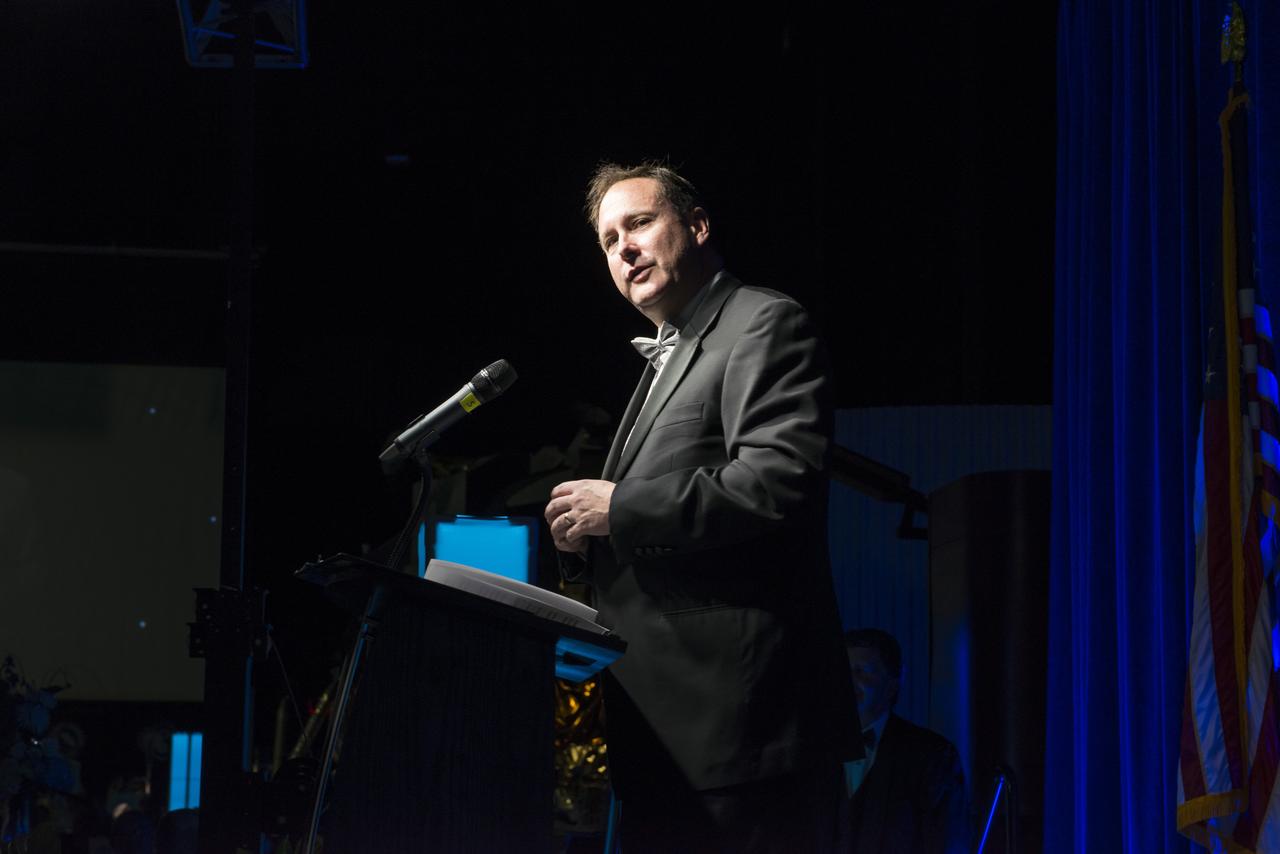
The annual Dr. Wernher Von Braun Memorial Dinner was held at the U.S. Space and Rocket Center's Davidson Center on October 26, 2017 with Keynote speaker General John Hyten, Commander of U.S. Strategic Command. Emcee was Mark Larson of Mark Larson Media Services, Inc. Dr. Wernher Von Braun Memorial Scholarships were presented to 8 college students by the National Space Club. Educator of the Year was awarded to Tammy Thorpe; Community Service award was presented to Huntsville, Al. Mayor Tommy Battle. The Communications Award was presented to retired astronaut Dr. Mike Massimino. The Distinguished Science Award was presented to Dr. Martin Weisskopf. The Astronautics Engineer Award was presented to Douglas R. Cooke. The Dr. Wernher Von Braun Space Flight Trophy was presented to Robert Lightfoot.
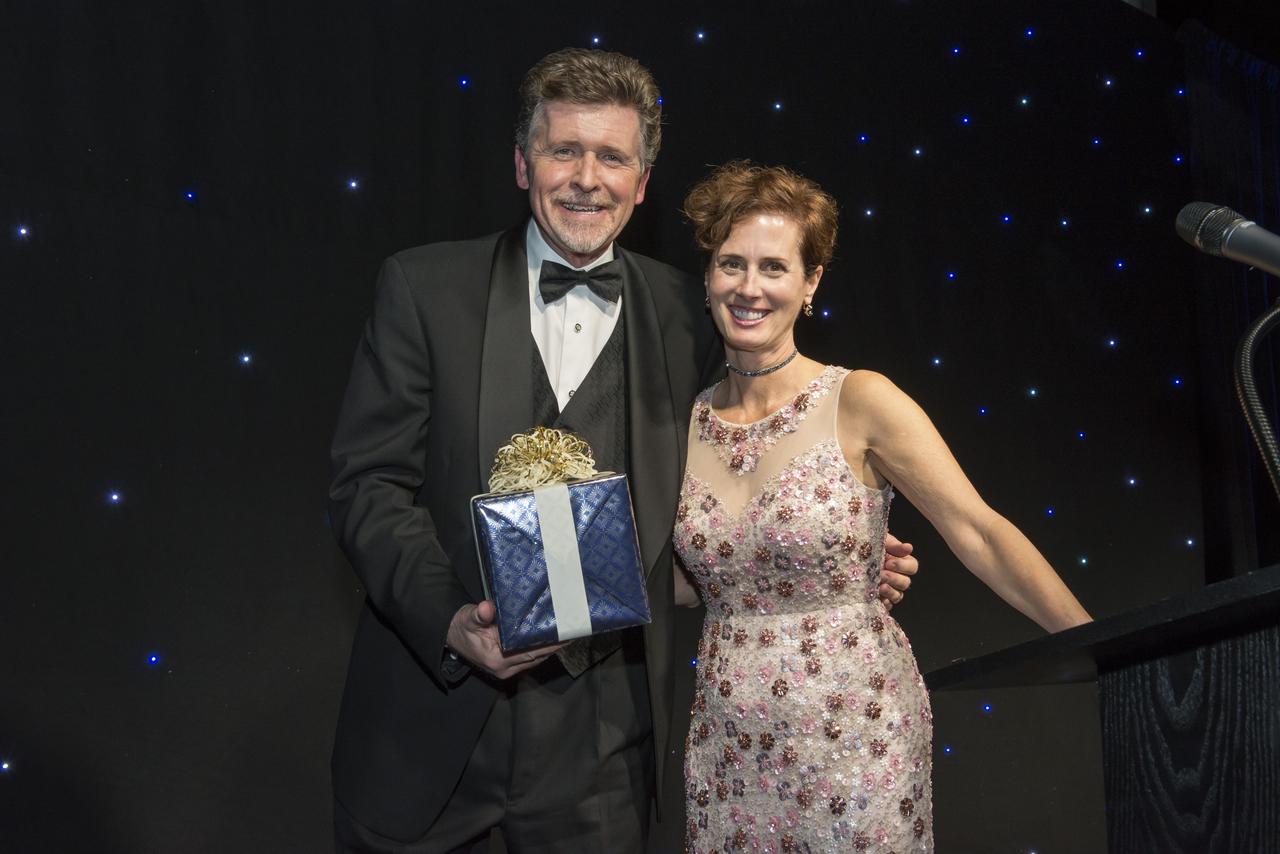
The annual Dr. Wernher Von Braun Memorial Dinner was held at the U.S. Space and Rocket Center's Davidson Center on October 26, 2017 with Keynote speaker General John Hyten, Commander of U.S. Strategic Command. Emcee was Mark Larson of Mark Larson Media Services, Inc. Dr. Wernher Von Braun Memorial Scholarships were presented to 8 college students by the National Space Club. Educator of the Year was awarded to Tammy Thorpe; Community Service award was presented to Huntsville, Al. Mayor Tommy Battle. The Communications Award was presented to retired astronaut Dr. Mike Massimino. The Distinguished Science Award was presented to Dr. Martin Weisskopf. The Astronautics Engineer Award was presented to Douglas R. Cooke. The Dr. Wernher Von Braun Space Flight Trophy was presented to Robert Lightfoot.
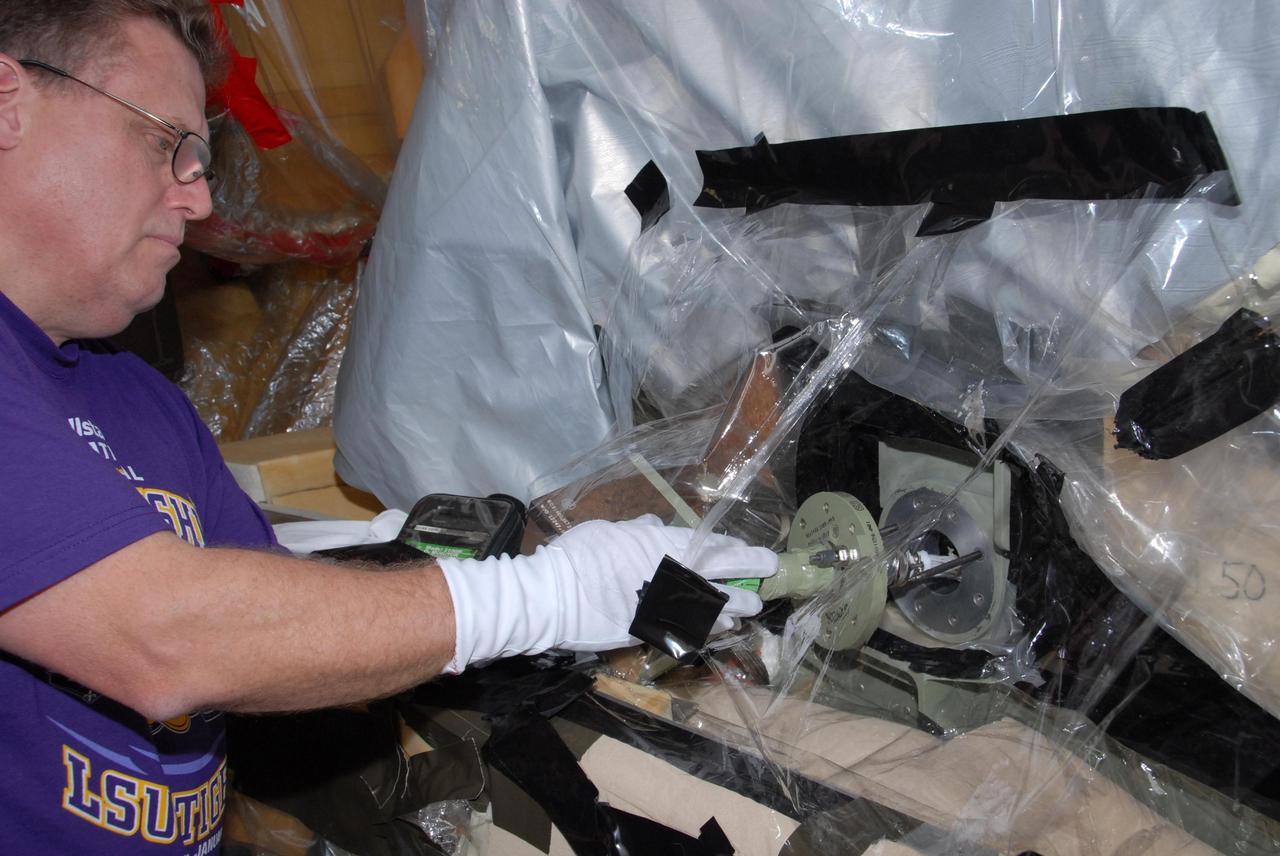
KENNEDY SPACE CENTER, FLA. -- Lloyd Johns, with Lockheed Martin, attaches the replacement feed-through connector in the engine cutoff, or ECO, sensor system to the internal connector on space shuttle Atlantis' external tank. The feed-through connector passes the wires from the inside of the tank to the outside. Results of a tanking test on Dec. 18 pointed to an open circuit in the feed-through connector wiring, which is located at the base of the tank. The pins in the replacement connector have been precisely soldered to create a connection that allows sensors inside the tank to send signals to the computers onboard Atlantis. The work is being done on Launch Pad 39A. Space shuttle Atlantis is now targeted for launch on Feb. 7. Photo credit: NASA/George Shelton
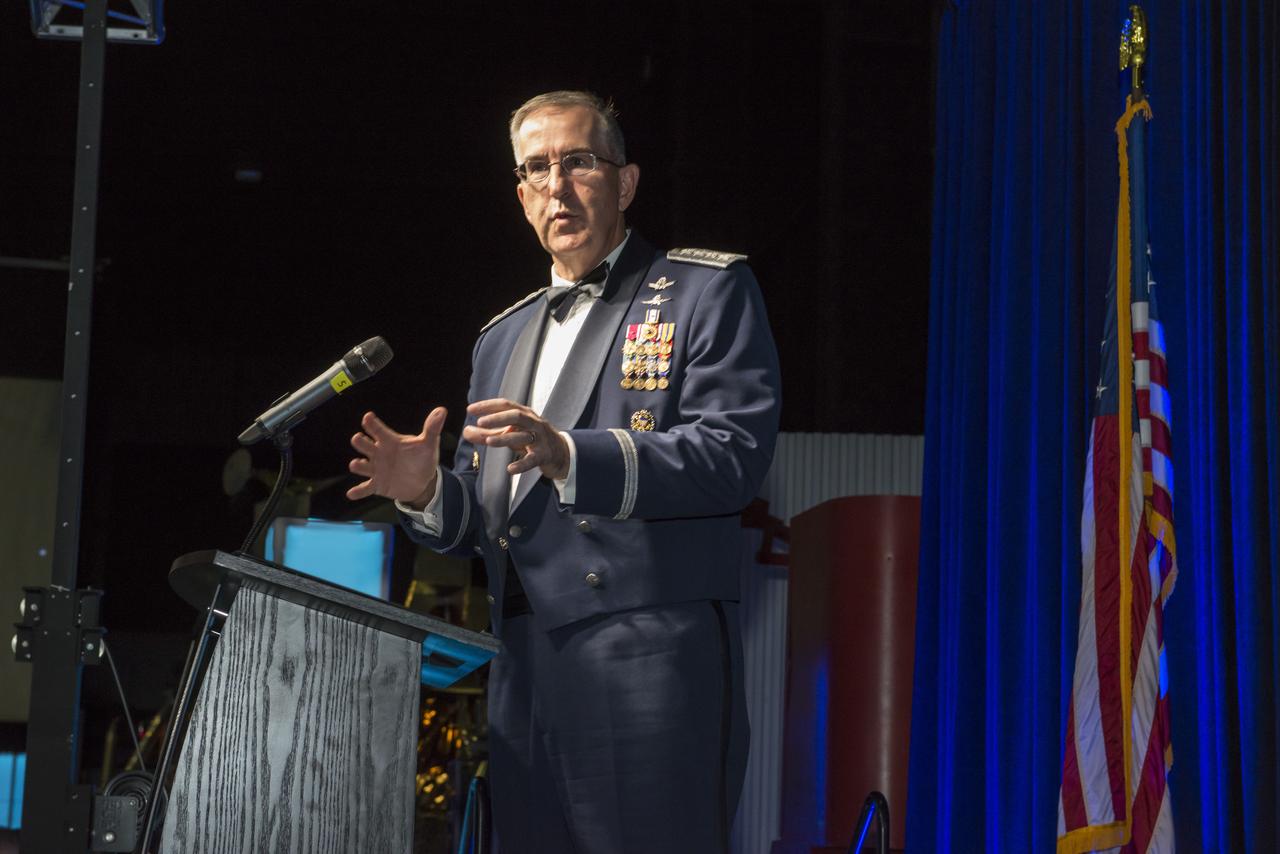
The annual Dr. Wernher Von Braun Memorial Dinner was held at the U.S. Space and Rocket Center's Davidson Center on October 26, 2017 with Keynote speaker General John Hyten, Commander of U.S. Strategic Command. Emcee was Mark Larson of Mark Larson Media Services, Inc. Dr. Wernher Von Braun Memorial Scholarships were presented to 8 college students by the National Space Club. Educator of the Year was awarded to Tammy Thorpe; Community Service award was presented to Huntsville, Al. Mayor Tommy Battle. The Communications Award was presented to retired astronaut Dr. Mike Massimino. The Distinguished Science Award was presented to Dr. Martin Weisskopf. The Astronautics Engineer Award was presented to Douglas R. Cooke. The Dr. Wernher Von Braun Space Flight Trophy was presented to Robert Lightfoot.
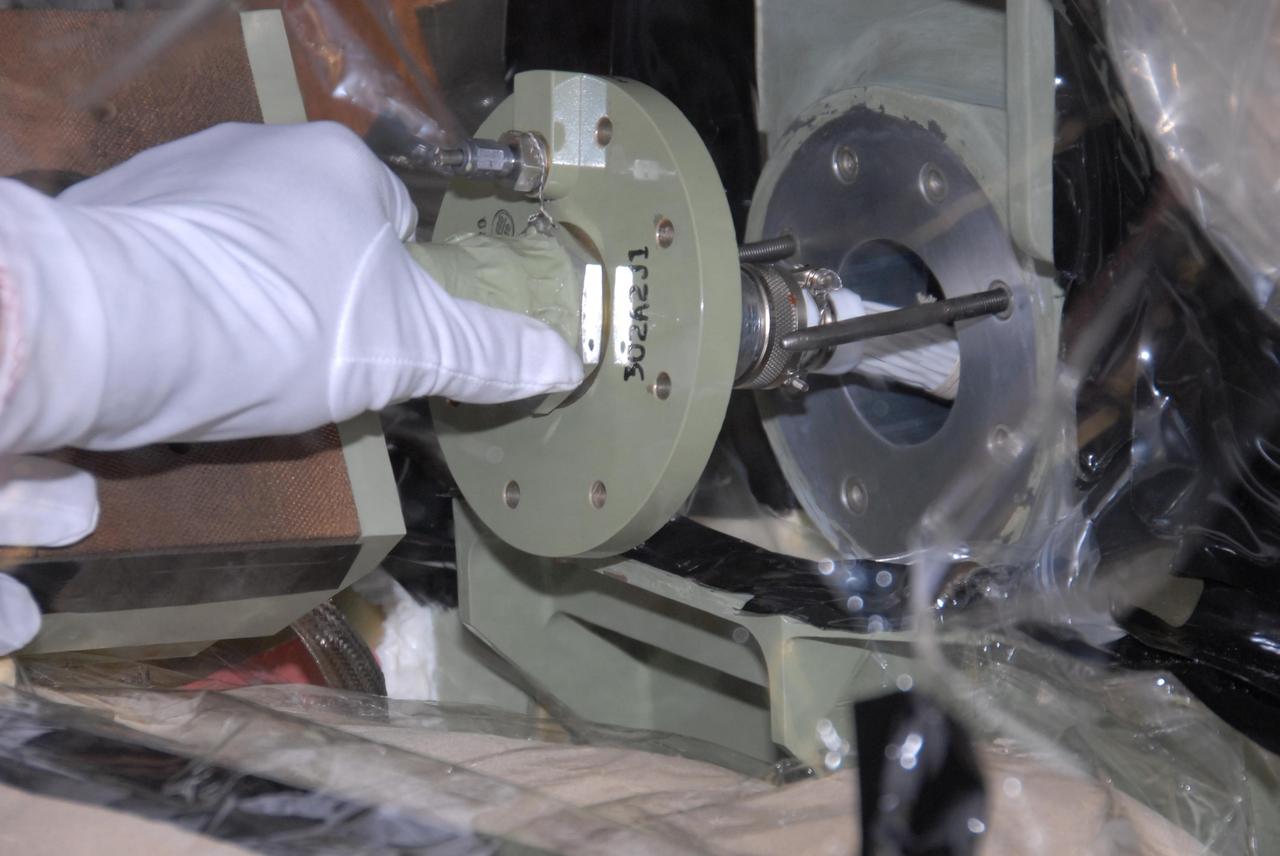
KENNEDY SPACE CENTER, FLA. -- Lloyd Johns, with Lockheed Martin, attaches the replacement feed-through connector in the engine cutoff, or ECO, sensor system to the internal connector on space shuttle Atlantis' external tank. The feed-through connector passes the wires from the inside of the tank to the outside. Results of a tanking test on Dec. 18 pointed to an open circuit in the feed-through connector wiring, which is located at the base of the tank. The pins in the replacement connector have been precisely soldered to create a connection that allows sensors inside the tank to send signals to the computers onboard Atlantis. The work is being done on Launch Pad 39A. Space shuttle Atlantis is now targeted for launch on Feb. 7. Photo credit: NASA/George Shelton
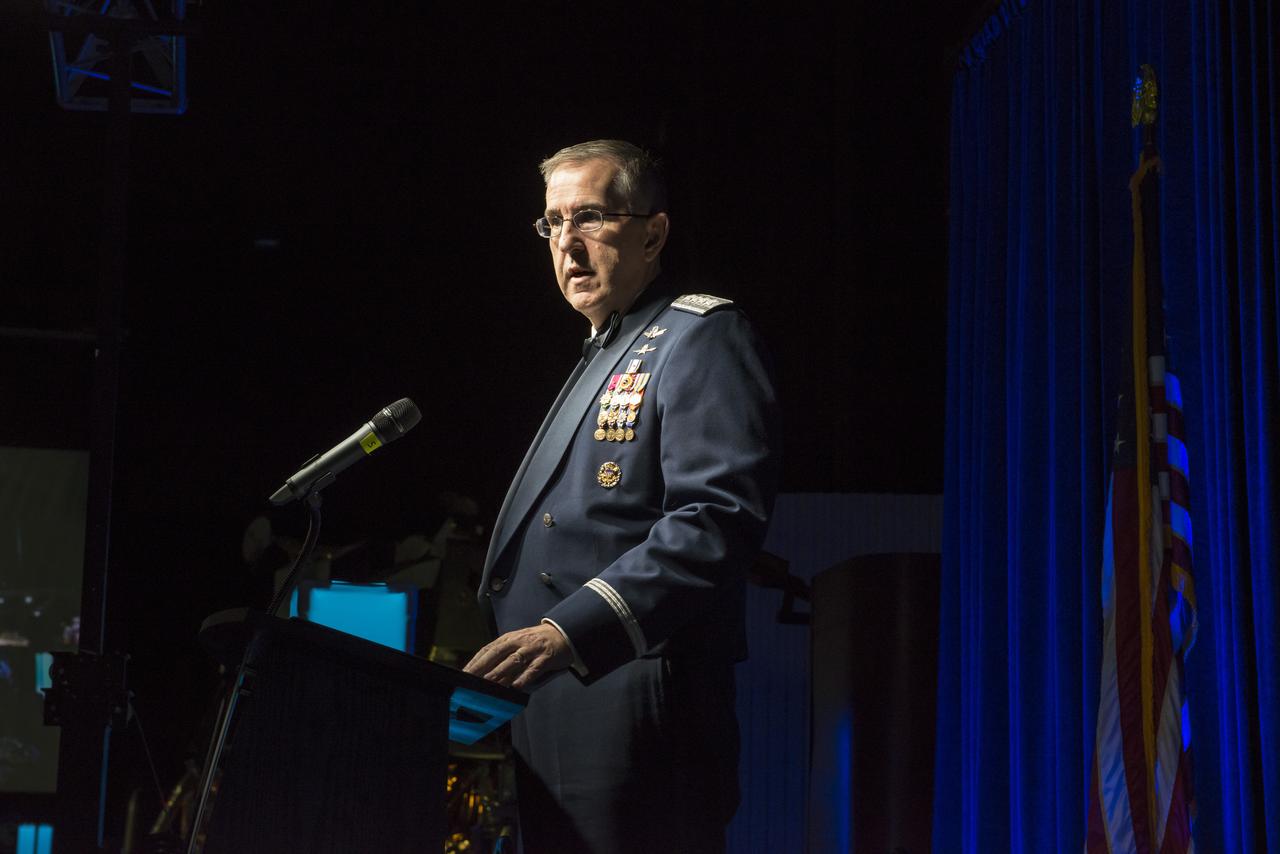
The annual Dr. Wernher Von Braun Memorial Dinner was held at the U.S. Space and Rocket Center's Davidson Center on October 26, 2017 with Keynote speaker General John Hyten, Commander of U.S. Strategic Command. Emcee was Mark Larson of Mark Larson Media Services, Inc. Dr. Wernher Von Braun Memorial Scholarships were presented to 8 college students by the National Space Club. Educator of the Year was awarded to Tammy Thorpe; Community Service award was presented to Huntsville, Al. Mayor Tommy Battle. The Communications Award was presented to retired astronaut Dr. Mike Massimino. The Distinguished Science Award was presented to Dr. Martin Weisskopf. The Astronautics Engineer Award was presented to Douglas R. Cooke. The Dr. Wernher Von Braun Space Flight Trophy was presented to Robert Lightfoot.
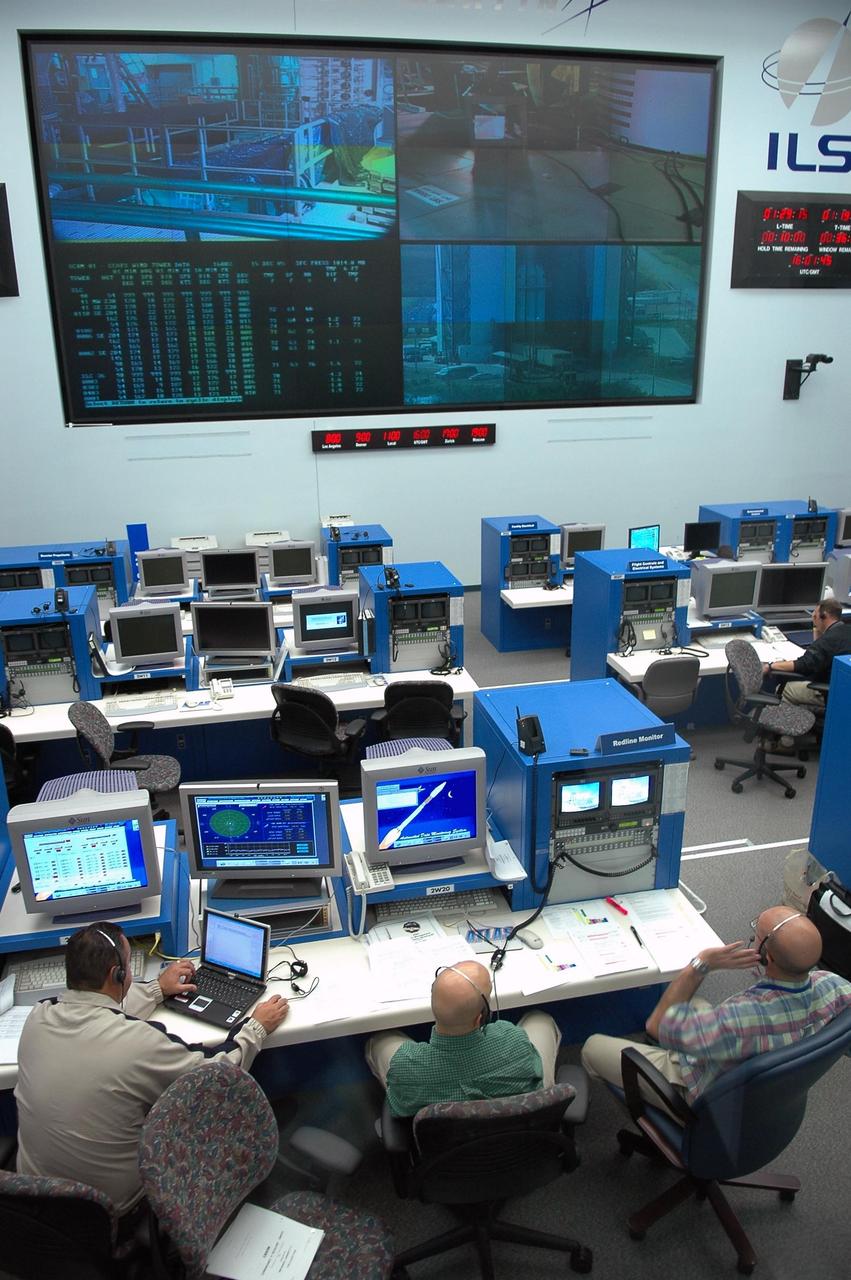
KENNEDY SPACE CENTER, FLA. - At their consoles in the Atlas V Spaceflight Operations Center on Cape Canaveral Air Force Station, members of the New Horizons team take part in a dress rehearsal for the launch scheduled in mid-January. New Horizons carries seven scientific instruments that will characterize the global geology and geomorphology of Pluto and its moon Charon, map their surface compositions and temperatures, and examine Pluto's complex atmosphere. After that, flybys of Kuiper Belt objects from even farther in the solar system may be undertaken in an extended mission. New Horizons is the first mission in NASA's New Frontiers program of medium-class planetary missions. The spacecraft, designed for NASA by the Johns Hopkins University Applied Physics Laboratory in Laurel, Md., will launch aboard a Lockheed Martin Atlas V rocket and fly by Pluto and Charon as early as summer 2015.
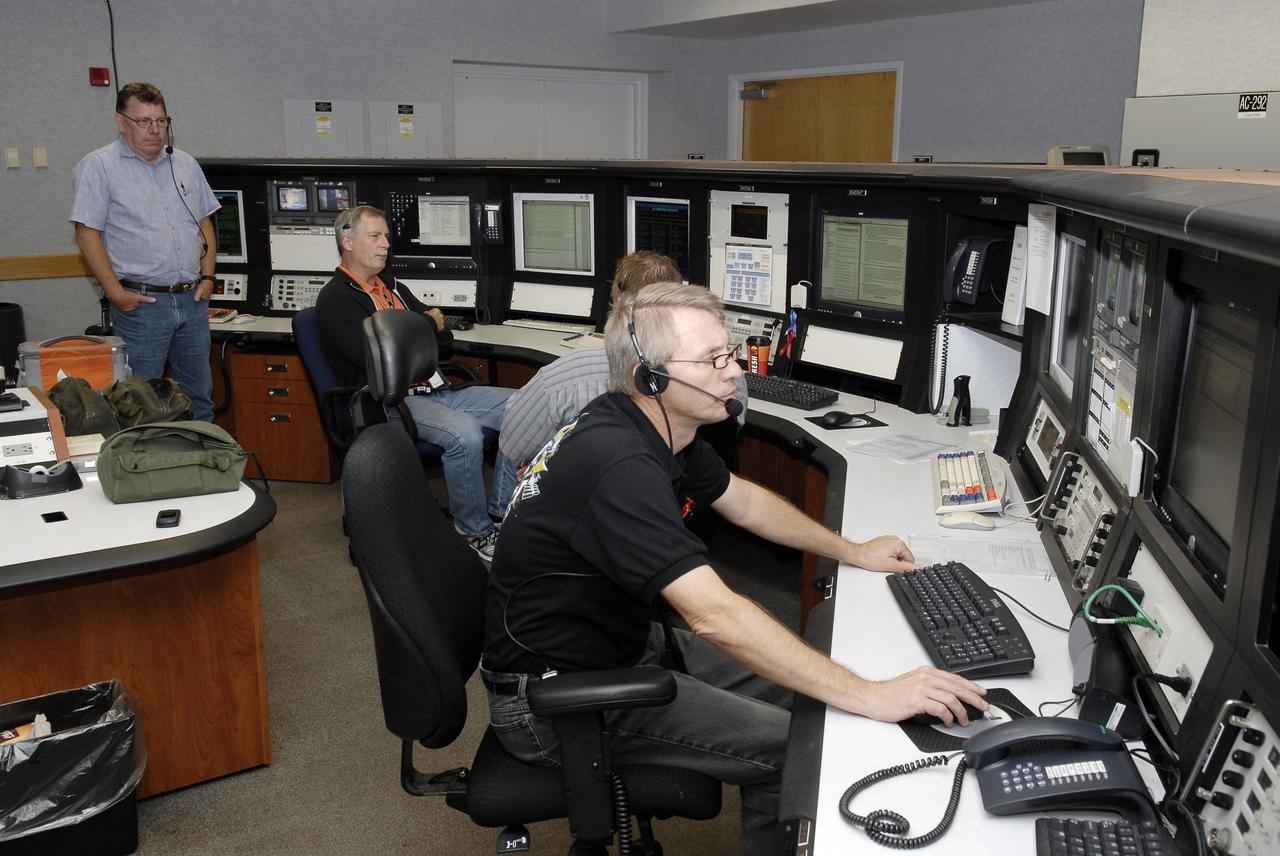
CAPE CANAVERAL, Fla. – United Space Alliance test conductors monitor the Firing Room 4 Master Console in the Launch Control Center as operations to power down space shuttle Endeavour for the final time are under way in Orbiter Processing Facility-2 at NASA’s Kennedy Space Center in Florida. From left are Dave Martin, Gary Lewis, Ethan Waldron, and John Robb. The overall health and status of the shuttle’s Launch Processing System is overseen and controlled from the Master Console. Endeavour is being prepared for public display at the California Science Center in Los Angeles. Its ferry flight to California is targeted for mid-September. Endeavour was the last space shuttle added to NASA’s orbiter fleet. Over the course of its 19-year career, Endeavour spent 299 days in space during 25 missions. For more information, visit http://www.nasa.gov/transition. Photo credit: NASA/Tim Jacobs

The annual Dr. Wernher Von Braun Memorial Dinner was held at the U.S. Space and Rocket Center's Davidson Center on October 26, 2017 with Keynote speaker General John Hyten, Commander of U.S. Strategic Command. Emcee was Mark Larson of Mark Larson Media Services, Inc. Dr. Wernher Von Braun Memorial Scholarships were presented to 8 college students by the National Space Club. Educator of the Year was awarded to Tammy Thorpe; Community Service award was presented to Huntsville, Al. Mayor Tommy Battle. The Communications Award was presented to retired astronaut Dr. Mike Massimino. The Distinguished Science Award was presented to Dr. Martin Weisskopf. The Astronautics Engineer Award was presented to Douglas R. Cooke. The Dr. Wernher Von Braun Space Flight Trophy was presented to Robert Lightfoot.
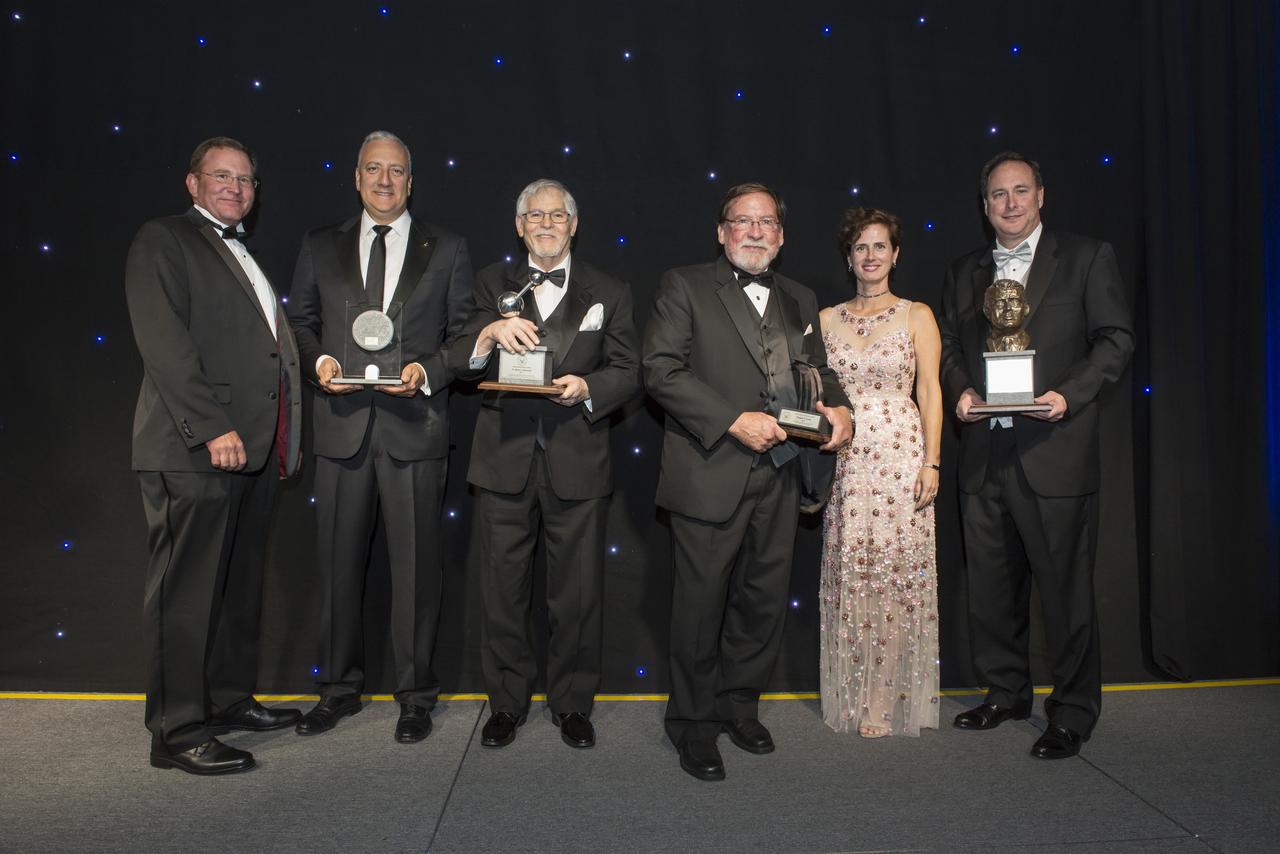
The annual Dr. Wernher Von Braun Memorial Dinner was held at the U.S. Space and Rocket Center's Davidson Center on October 26, 2017 with Keynote speaker General John Hyten, Commander of U.S. Strategic Command. Emcee was Mark Larson of Mark Larson Media Services, Inc. Dr. Wernher Von Braun Memorial Scholarships were presented to 8 college students by the National Space Club. Educator of the Year was awarded to Tammy Thorpe; Community Service award was presented to Huntsville, Al. Mayor Tommy Battle. The Communications Award was presented to retired astronaut Dr. Mike Massimino. The Distinguished Science Award was presented to Dr. Martin Weisskopf. The Astronautics Engineer Award was presented to Douglas R. Cooke. The Dr. Wernher Von Braun Space Flight Trophy was presented to Robert Lightfoot.
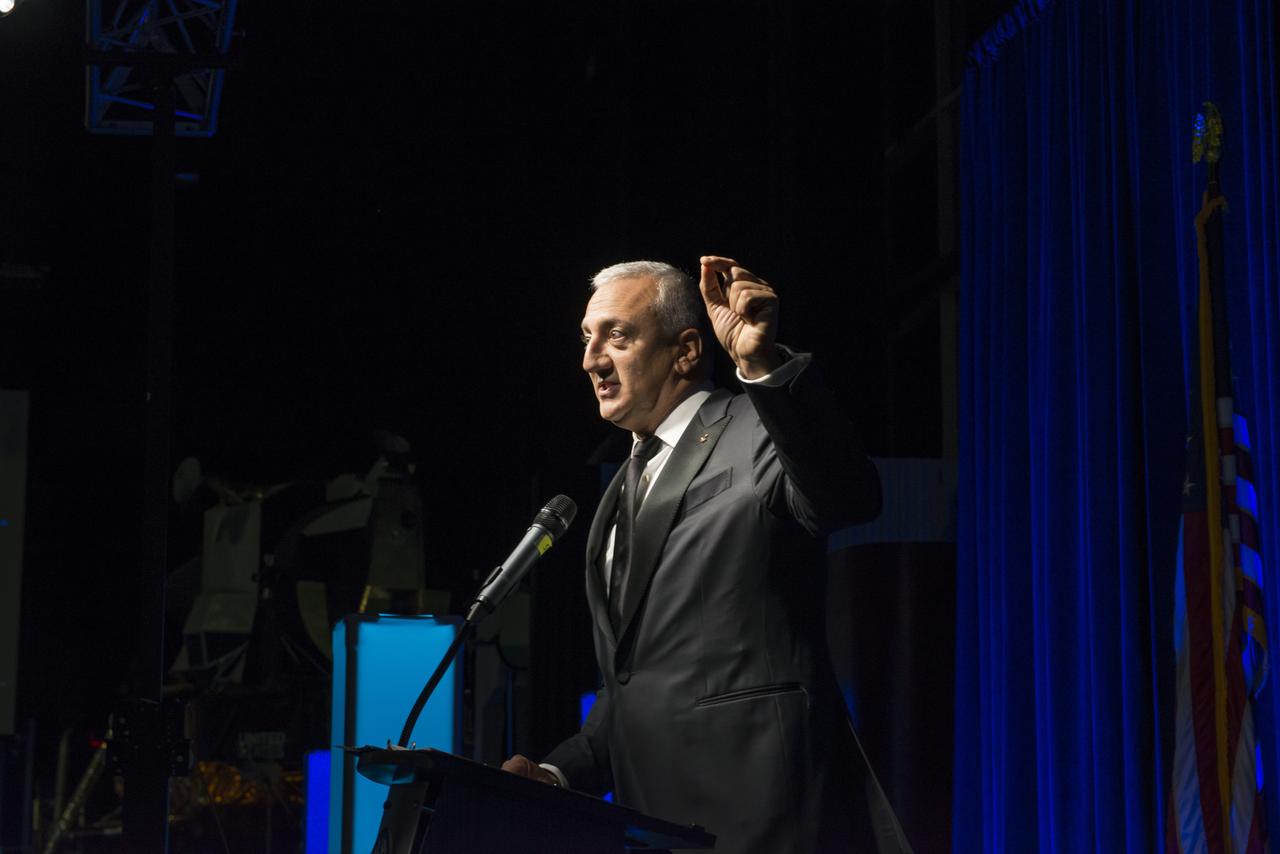
The annual Dr. Wernher Von Braun Memorial Dinner was held at the U.S. Space and Rocket Center's Davidson Center on October 26, 2017 with Keynote speaker General John Hyten, Commander of U.S. Strategic Command. Emcee was Mark Larson of Mark Larson Media Services, Inc. Dr. Wernher Von Braun Memorial Scholarships were presented to 8 college students by the National Space Club. Educator of the Year was awarded to Tammy Thorpe; Community Service award was presented to Huntsville, Al. Mayor Tommy Battle. The Communications Award was presented to retired astronaut Dr. Mike Massimino. The Distinguished Science Award was presented to Dr. Martin Weisskopf. The Astronautics Engineer Award was presented to Douglas R. Cooke. The Dr. Wernher Von Braun Space Flight Trophy was presented to Robert Lightfoot.
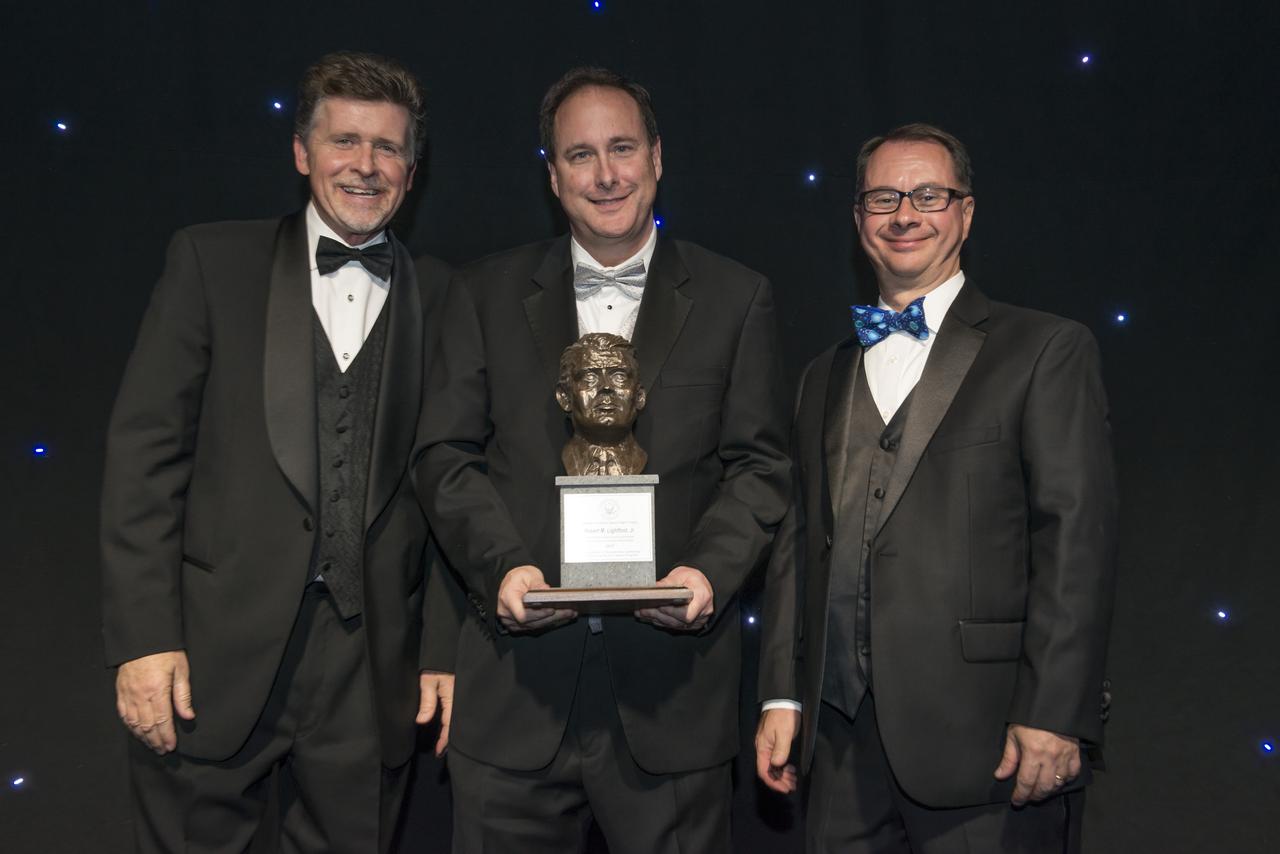
The annual Dr. Wernher Von Braun Memorial Dinner was held at the U.S. Space and Rocket Center's Davidson Center on October 26, 2017 with Keynote speaker General John Hyten, Commander of U.S. Strategic Command. Emcee was Mark Larson of Mark Larson Media Services, Inc. Dr. Wernher Von Braun Memorial Scholarships were presented to 8 college students by the National Space Club. Educator of the Year was awarded to Tammy Thorpe; Community Service award was presented to Huntsville, Al. Mayor Tommy Battle. The Communications Award was presented to retired astronaut Dr. Mike Massimino. The Distinguished Science Award was presented to Dr. Martin Weisskopf. The Astronautics Engineer Award was presented to Douglas R. Cooke. The Dr. Wernher Von Braun Space Flight Trophy was presented to Robert Lightfoot.
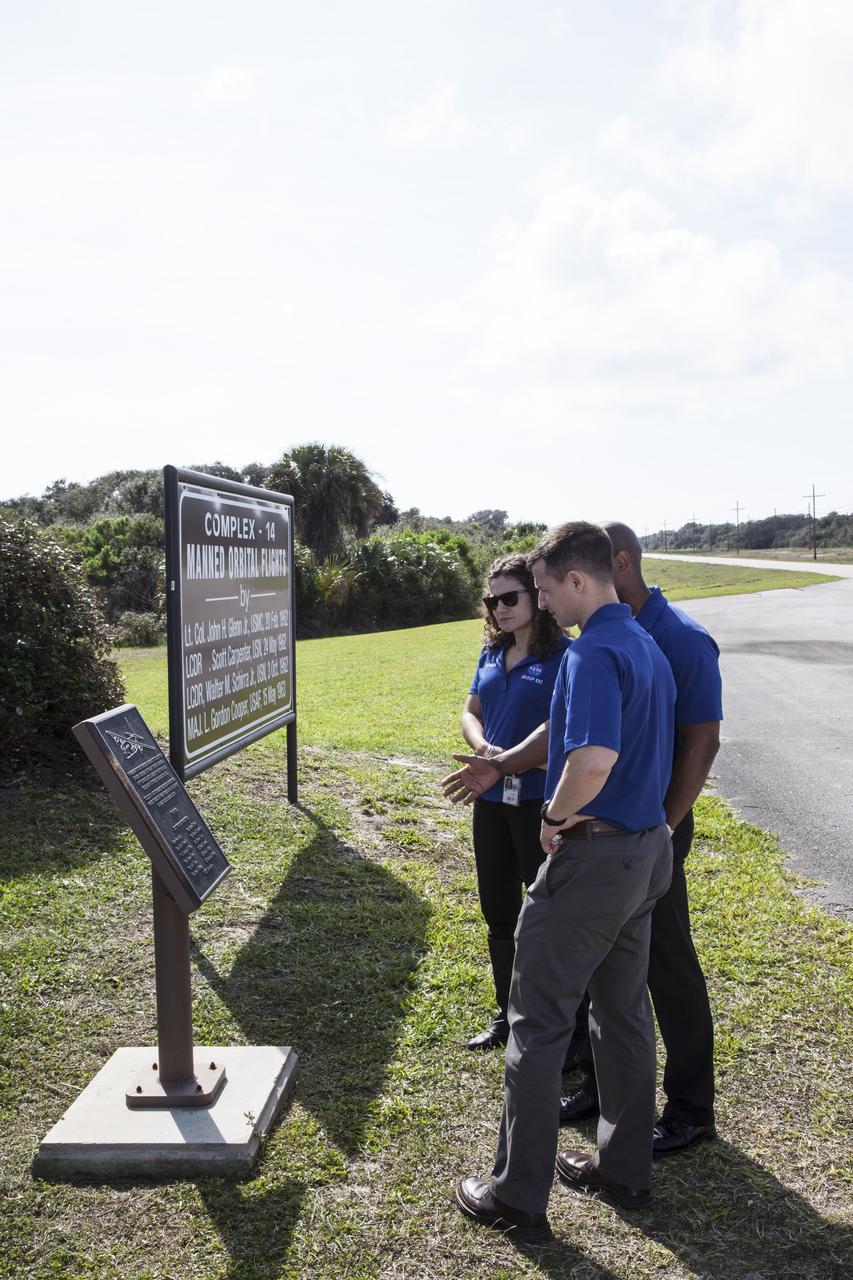
CAPE CANAVERAL, Fla. – NASA astronautcandidates Jessica Meir, Andrew Morgan and Victor Glover review markers at the entrance to Complex 14 at Cape Canaveral Air Force Station in Florida, adjacent to NASA's Kennedy Space Center. Complex 14 served as the launch pad for Mercury astronaut John Glenn when he lifted off in 1962 to orbit the Earth, becoming the first American to do so. The astronaut class of 2013 was selected by NASA after an extensive year-and-a-half search. The new group will help the agency push the boundaries of exploration and travel to new destinations in the solar system. To learn more about the astronaut class of 2013, visit: http://www.nasa.gov/astronauts/2013astroclass.html Photo credit: NASA/Frankie Martin
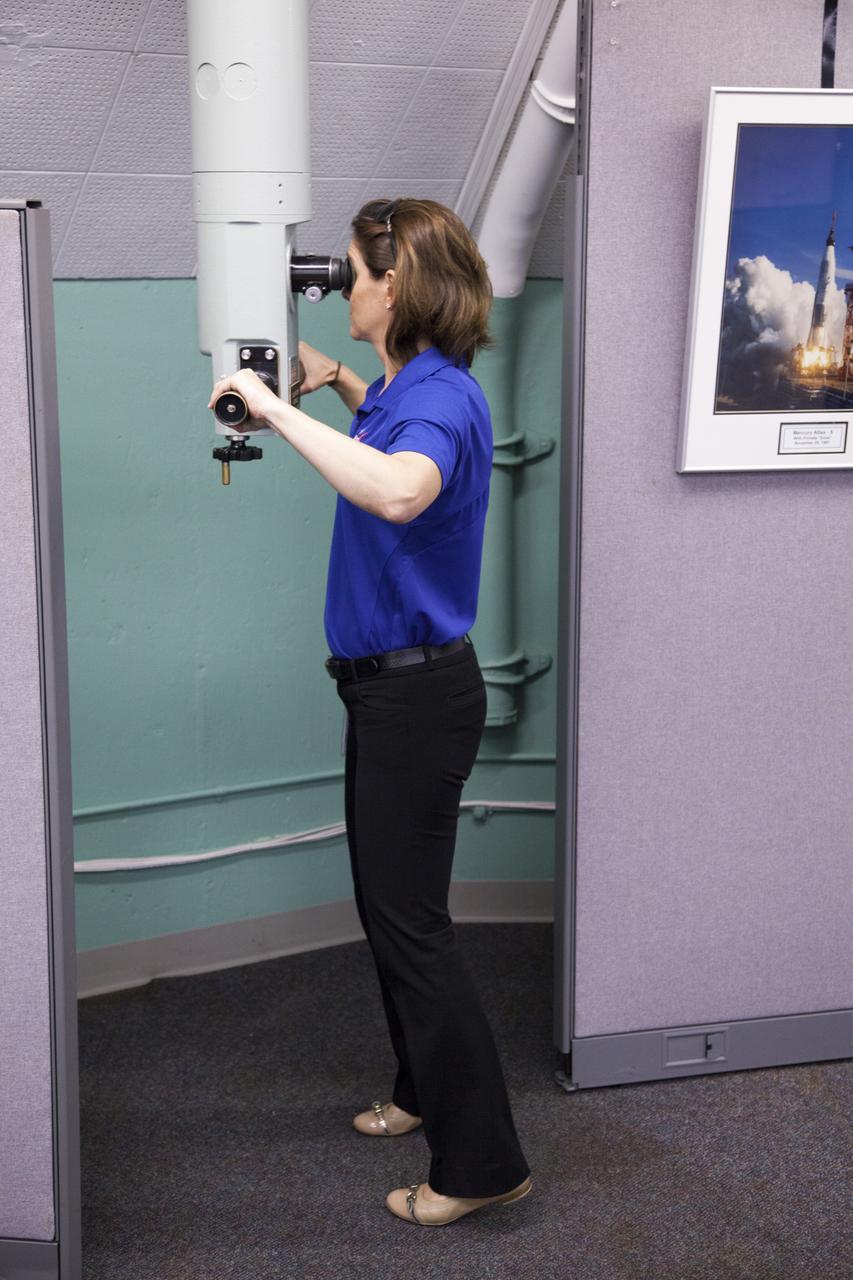
CAPE CANAVERAL, Fla. – NASA astronaut candidate Nicole Mann uses a periscope inside the blockhouse at Complex 14 at Cape Canaveral Air Force Station in Florida, adjacent to NASA's Kennedy Space Center. Complex 14 served as the launch pad for Mercury astronaut John Glenn when he lifted off in 1962 to orbit the Earth, becoming the first American to do so. The astronaut class of 2013 was selected by NASA after an extensive year-and-a-half search. The new group will help the agency push the boundaries of exploration and travel to new destinations in the solar system. To learn more about the astronaut class of 2013, visit: http://www.nasa.gov/astronauts/2013astroclass.html Photo credit: NASA/Frankie Martin
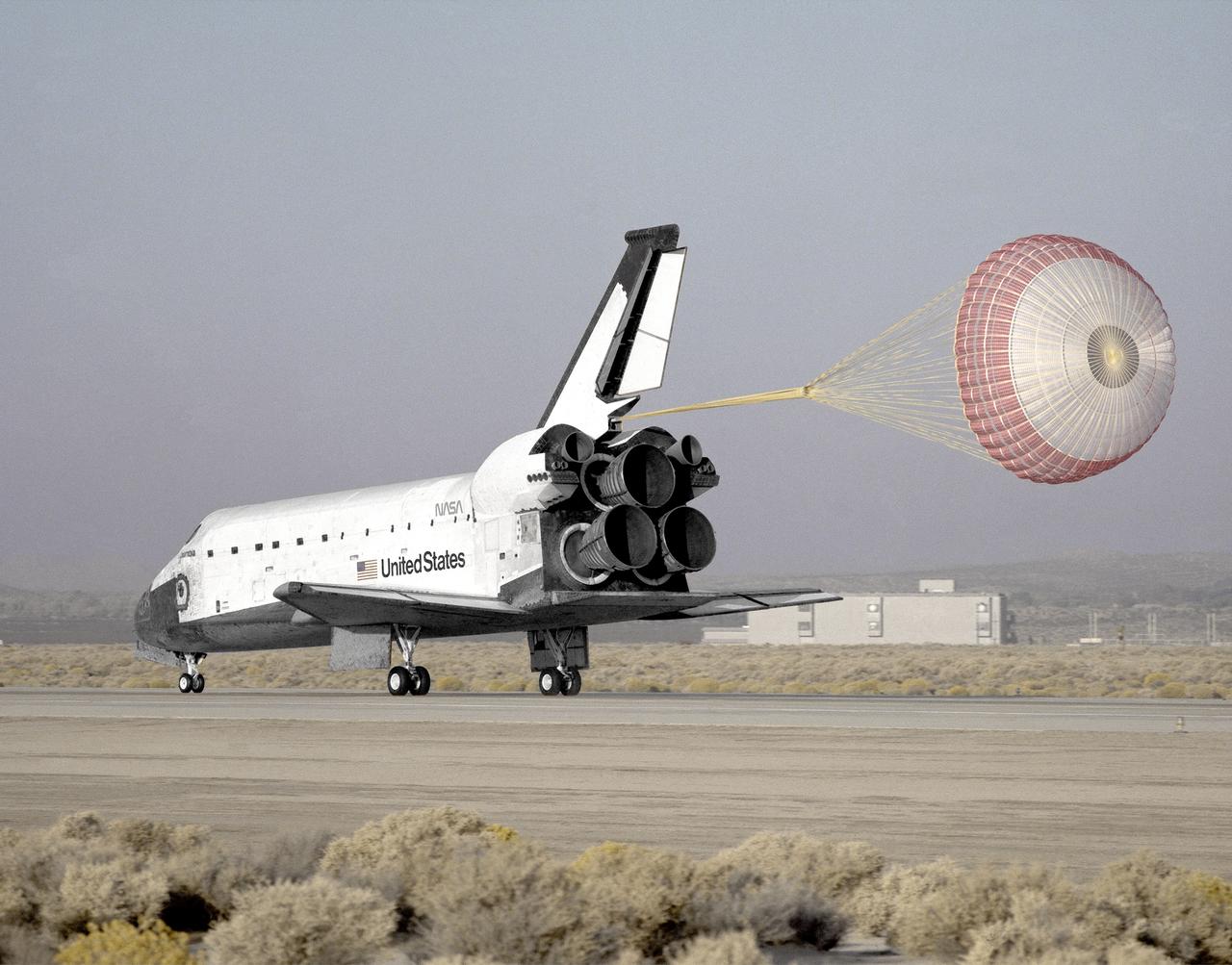
A drag chute slows the space shuttle Columbia as it rolls to a perfect landing concluding NASA's longest mission at that time, STS-58, at the Ames-Dryden Flight Research Facility (later redesignated the Dryden Flight Research Center), Edwards, California, with a 8:06 a.m. (PST) touchdown 1 November 1993 on Edward's concrete runway 22. The planned 14 day mission, which began with a launch from Kennedy Space Center, Florida, at 7:53 a.m. (PDT), October 18, was the second spacelab flight dedicated to life sciences research. Seven Columbia crewmembers performed a series of experiments to gain more knowledge on how the human body adapts to the weightless environment of space. Crewmembers on this flight included: John Blaha, commander; Rick Searfoss, pilot; payload commander Rhea Seddon; mission specialists Bill MacArthur, David Wolf, and Shannon Lucid; and payload specialist Martin Fettman.
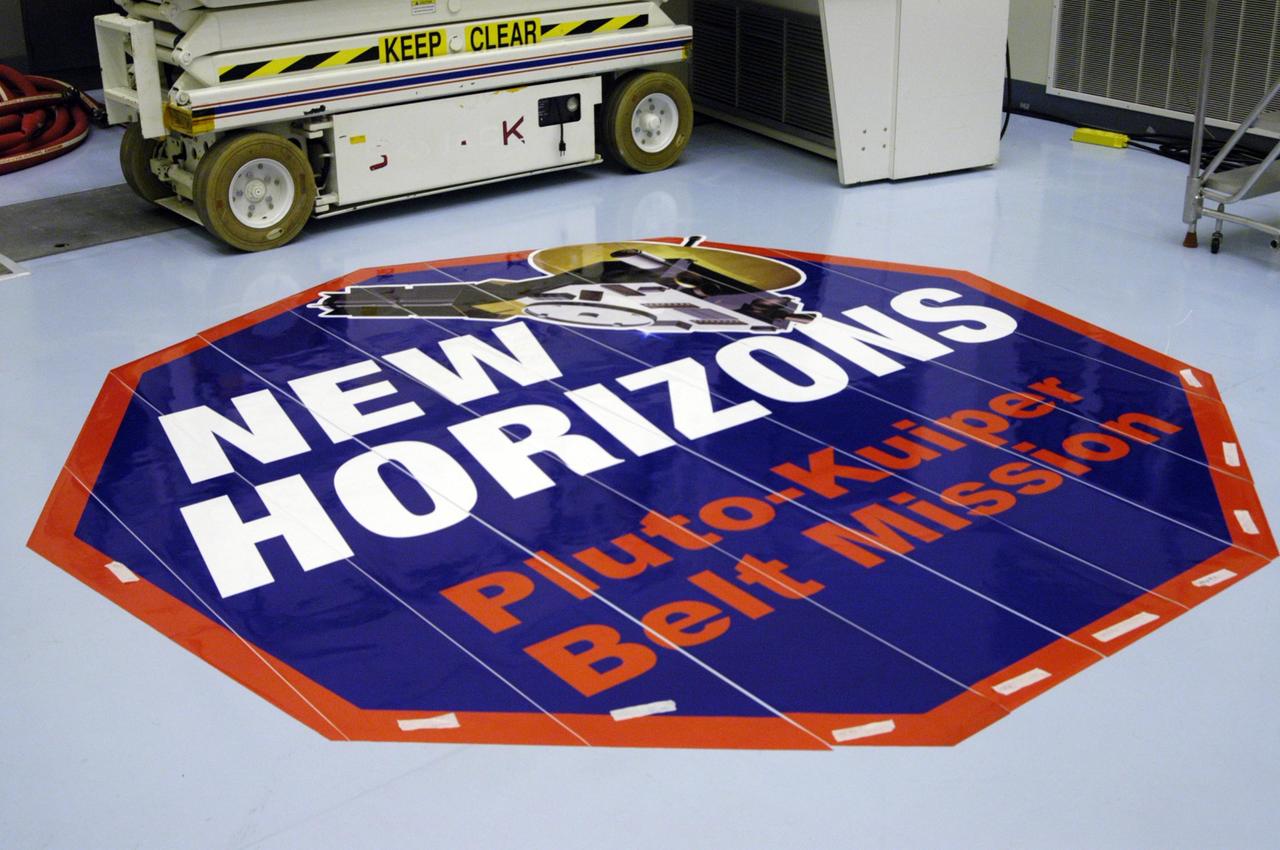
KENNEDY SPACE CENTER, FLA. - The mission decal for New Horizons is laid out in strips on the floor of the Payload Hazardous Servicing Facility before installation onto the spacecraft's fairing. New Horizons carries seven scientific instruments that will characterize the global geology and geomorphology of Pluto and its moon Charon, map their surface compositions and temperatures, and examine Pluto's complex atmosphere. After that, flybys of Kuiper Belt objects from even farther in the solar system may be undertaken in an extended mission. New Horizons is the first mission in NASA's New Frontiers program of medium-class planetary missions. The spacecraft, designed for NASA by the Johns Hopkins University Applied Physics Laboratory in Laurel, Md., will launch aboard a Lockheed Martin Atlas V rocket and fly by Pluto and Charon as early as summer 2015.
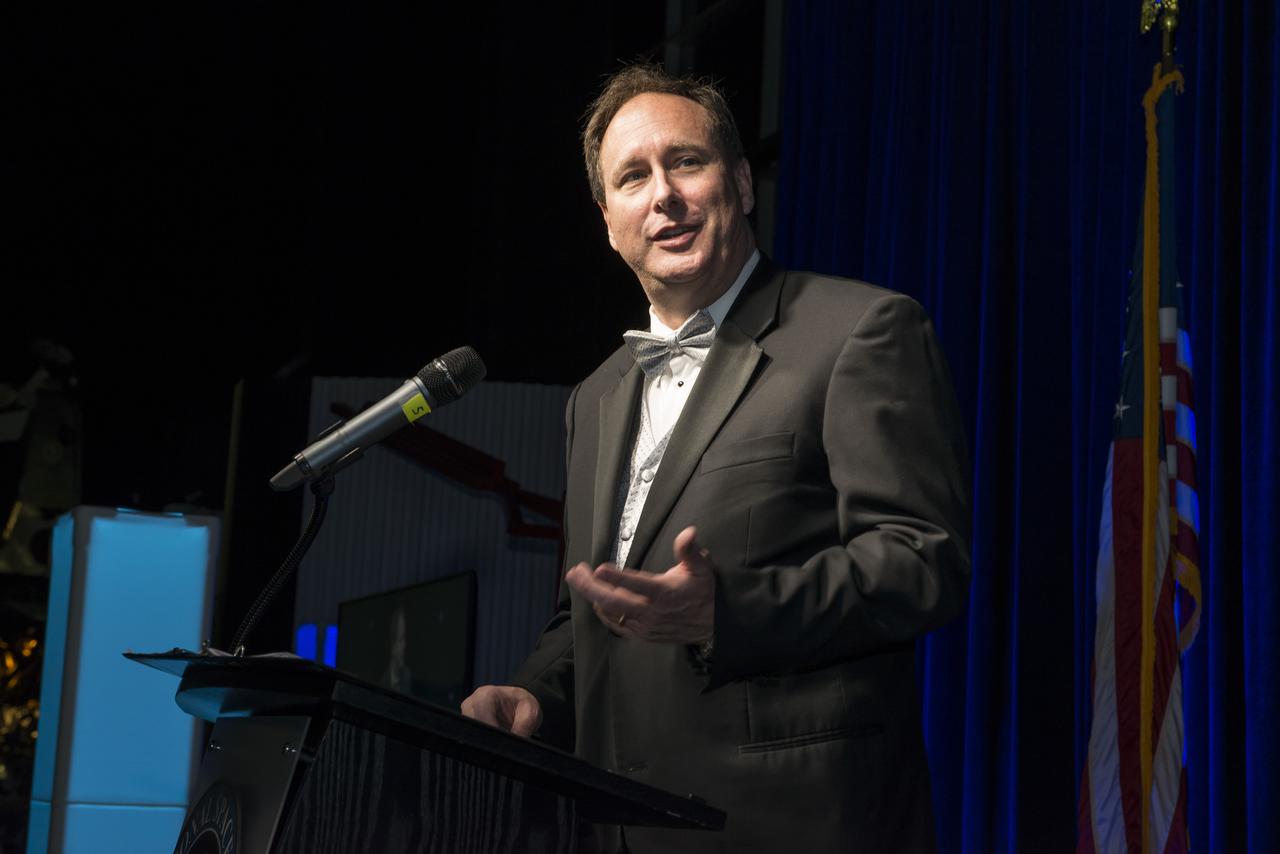
The annual Dr. Wernher Von Braun Memorial Dinner was held at the U.S. Space and Rocket Center's Davidson Center on October 26, 2017 with Keynote speaker General John Hyten, Commander of U.S. Strategic Command. Emcee was Mark Larson of Mark Larson Media Services, Inc. Dr. Wernher Von Braun Memorial Scholarships were presented to 8 college students by the National Space Club. Educator of the Year was awarded to Tammy Thorpe; Community Service award was presented to Huntsville, Al. Mayor Tommy Battle. The Communications Award was presented to retired astronaut Dr. Mike Massimino. The Distinguished Science Award was presented to Dr. Martin Weisskopf. The Astronautics Engineer Award was presented to Douglas R. Cooke. The Dr. Wernher Von Braun Space Flight Trophy was presented to Robert Lightfoot.

KENNEDY SPACE CENTER, FLA. - New Horizons leaves the Payload Hazardous Servicing Facility before dawn for its journey to the Vertical Integration Facility at Complex 41 on Cape Canaveral Air Force Station. New Horizons carries seven scientific instruments that will characterize the global geology and geomorphology of Pluto and its moon Charon, map their surface compositions and temperatures, and examine Pluto's complex atmosphere. After that, flybys of Kuiper Belt objects from even farther in the solar system may be undertaken in an extended mission. New Horizons is the first mission in NASA's New Frontiers program of medium-class planetary missions. The spacecraft, designed for NASA by the Johns Hopkins University Applied Physics Laboratory in Laurel, Md., will launch aboard a Lockheed Martin Atlas V rocket and fly by Pluto and Charon as early as summer 2015.
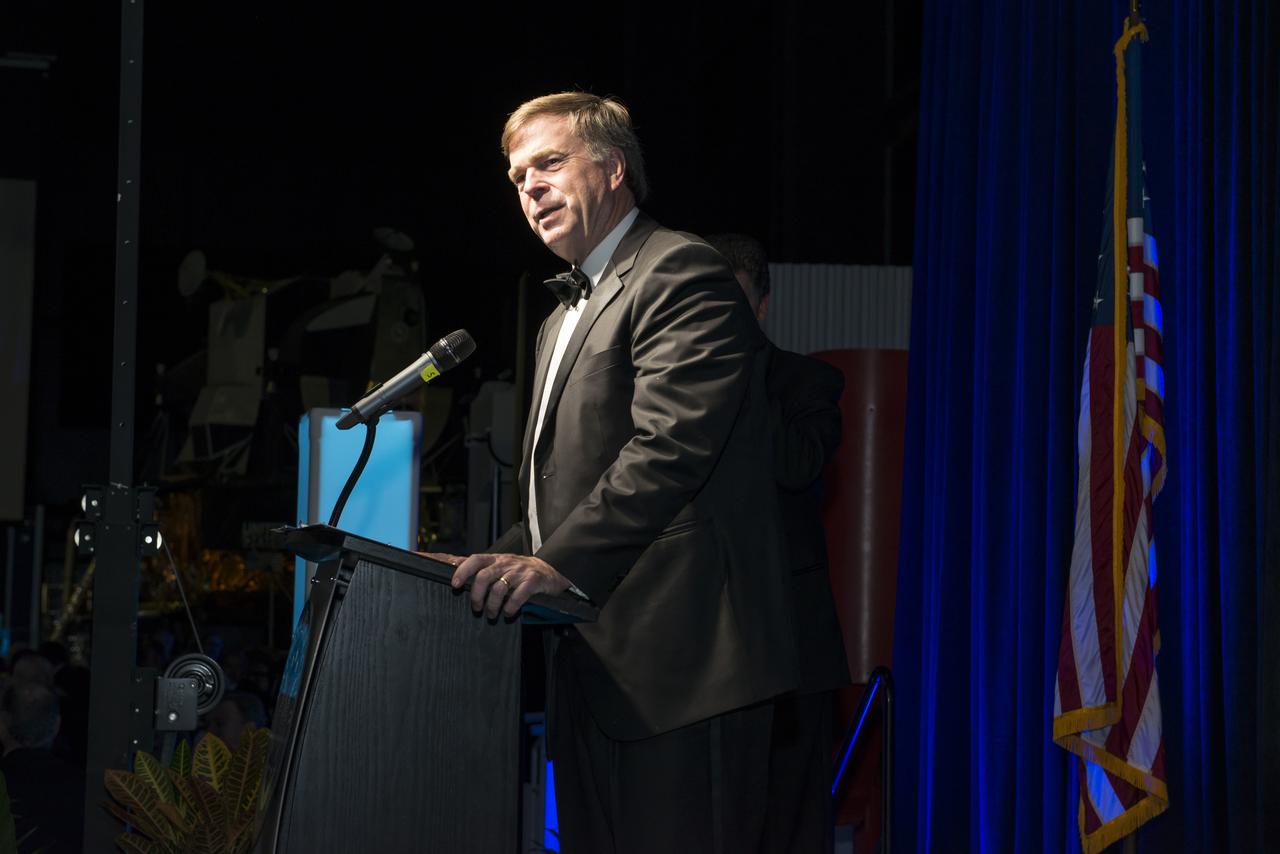
The annual Dr. Wernher Von Braun Memorial Dinner was held at the U.S. Space and Rocket Center's Davidson Center on October 26, 2017 with Keynote speaker General John Hyten, Commander of U.S. Strategic Command. Emcee was Mark Larson of Mark Larson Media Services, Inc. Dr. Wernher Von Braun Memorial Scholarships were presented to 8 college students by the National Space Club. Educator of the Year was awarded to Tammy Thorpe; Community Service award was presented to Huntsville, Al. Mayor Tommy Battle. The Communications Award was presented to retired astronaut Dr. Mike Massimino. The Distinguished Science Award was presented to Dr. Martin Weisskopf. The Astronautics Engineer Award was presented to Douglas R. Cooke. The Dr. Wernher Von Braun Space Flight Trophy was presented to Robert Lightfoot.
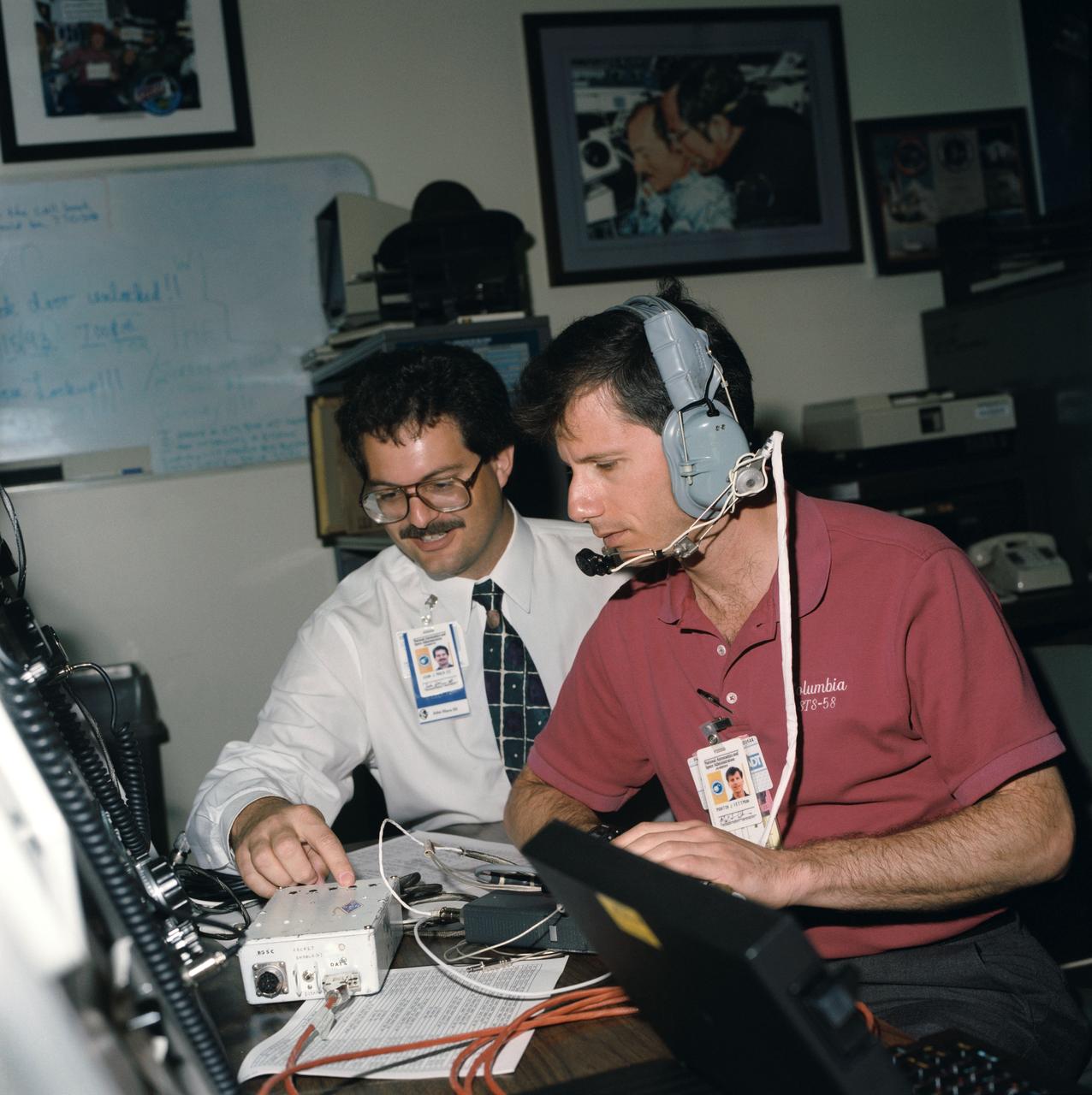
S93-45076 (22 Sept 1993) --- Payload specialist Martin J. Fettman listens to an amateur radio instruction by crew trainer John J. Maca. Members of the STS-58 crew were training with amateur radio equipment at the Johnson Space Center (JSC). The STS-58 flight will carry the Shuttle Amateur Radio Experiment (SAREX) payload, configuration C, which includes FM voice and packet. Three of the seven crew members are licensed amateur radio operators. Fettman's call letters are KC5AXA; William S. McArthur, mission specialist, KC5ACR; and Richard A. Searfoss, pilot, KC5CKM. Licensed students at a number of schools around the country will have the opportunity to talk directly with the astronauts during the 14-day flight.
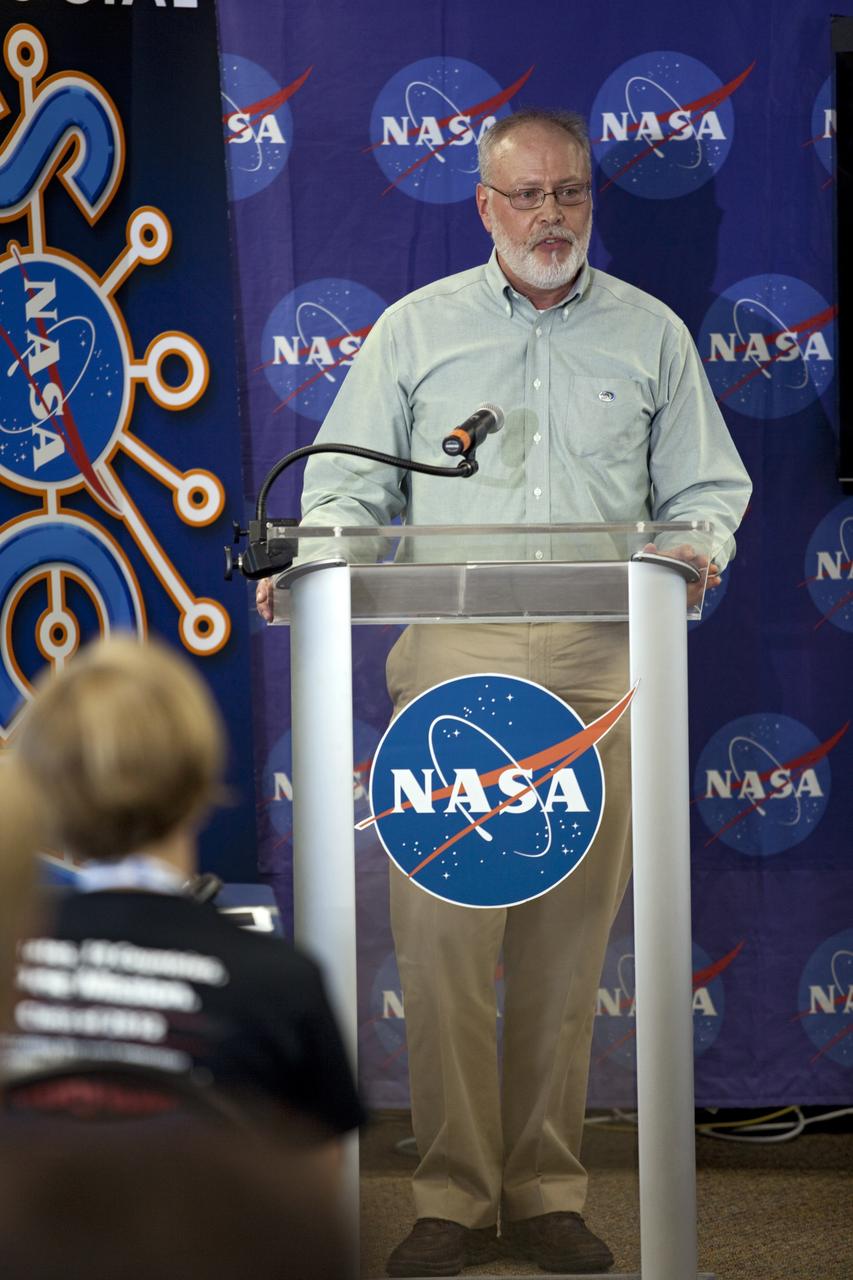
CAPE CANAVERAL, Fla. – At NASA's Kennedy Space Center in Florida, Dave "Kouch" Kusnierkiewicz, Space Department chief engineer from Johns Hopkins University's Applied Physics Laboratory, talks to agency social media followers during the second day of NASA Social activities revolving around NASA's Radiation Belt Storm Probes, or RBSP, mission. The probes are set to launch aboard a United Launch Alliance, or ULA, Atlas V rocket from nearby Cape Canaveral Air Force Station. About 40 followers were selected to participate in RBSP's prelaunch and launch activities. The RBSP mission will help us understand the sun’s influence on Earth and near-Earth space by studying the Earth’s radiation belts on various scales of space and time. RBSP will begin its mission of exploration of Earth’s Van Allen radiation belts and the extremes of space weather. For more information, visit http://www.nasa.gov/rbsp. Photo credit: NASA/Frankie Martin
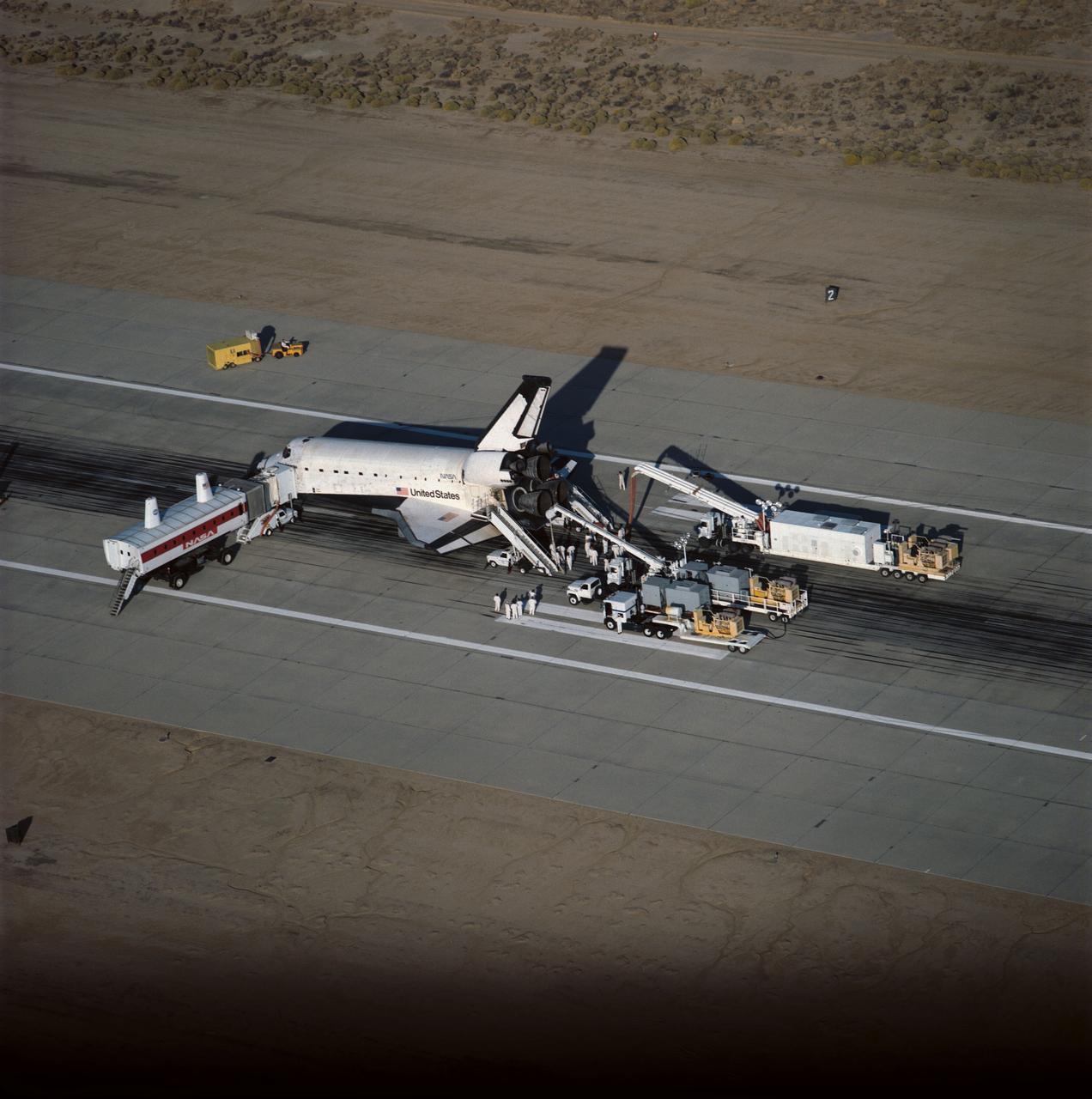
STS058-S-129 (1 Nov 1993) --- This busy scene on the runway at Edwards Air Force Base (EAFB) was taken less than an hour following the landing of the Space Shuttle Columbia. The touchdown, which had occurred at 7:06 a.m. (PST), November 1, 1993, completed a two week mission in space devoted to medical research. The array of hardware and workers includes personnel and equipment designed to make the area safe. At far left is the Crew Transport Vehicle (CTV). Still onboard the spacecraft were astronauts John E. Blaha, Richard A. Searfoss, Rhea Seddon, Shannon W. Lucid, David A. Wolf and William S. McArthur, along with payload specialist Martin J. Fettman, DVM.
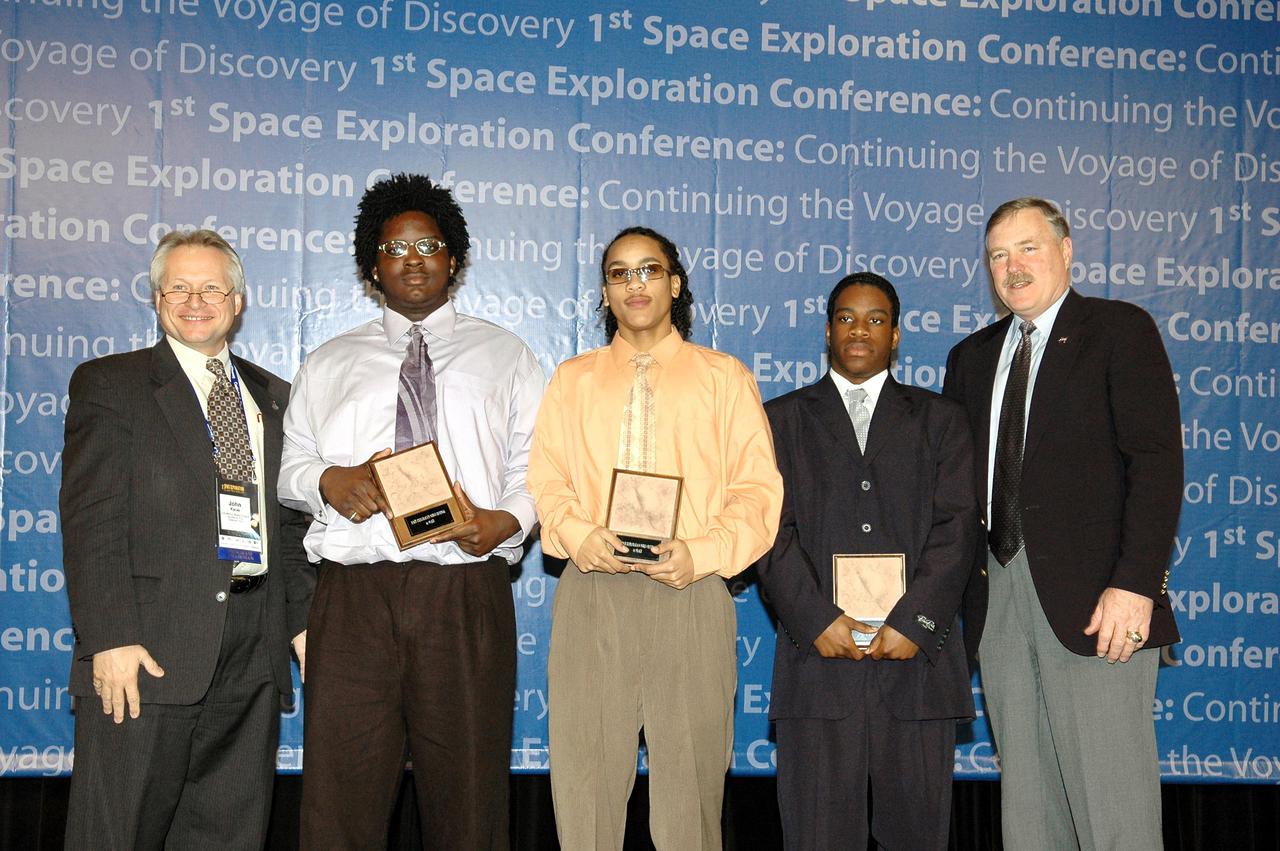
KENNEDY SPACE CENTER, FLA. - At the “1st Space Exploration Conference: Continuing the Voyage of Discovery,” being held at Disney’s Contemporary Resort in Orlando, the NASA Explorer School team from McNair High School in Dekalb County, Ga., receives the Space Exploration Video Festival award sponsored by Lockheed Martin. Standing with the awards are Trenten Nash, Theo Maxie and Daniel Jackson. Presenting the awards were John Karas (left), with Lockheed, and Adm. Craig Steidle (right), associate administrator, Office of Exploration Systems at NASA. The three-day conference drew attendees from around the world. It presented topics on new missions, technologies and infrastructure needed to turn the vision for space exploration into reality. Keynote speakers at the three-day conference include NASA Administrator Sean O'Keefe, Congressman Dave Weldon, film director James Cameron and NASA’s senior Mars scientist James Garvin. The conference has drawn attendees from around the world.
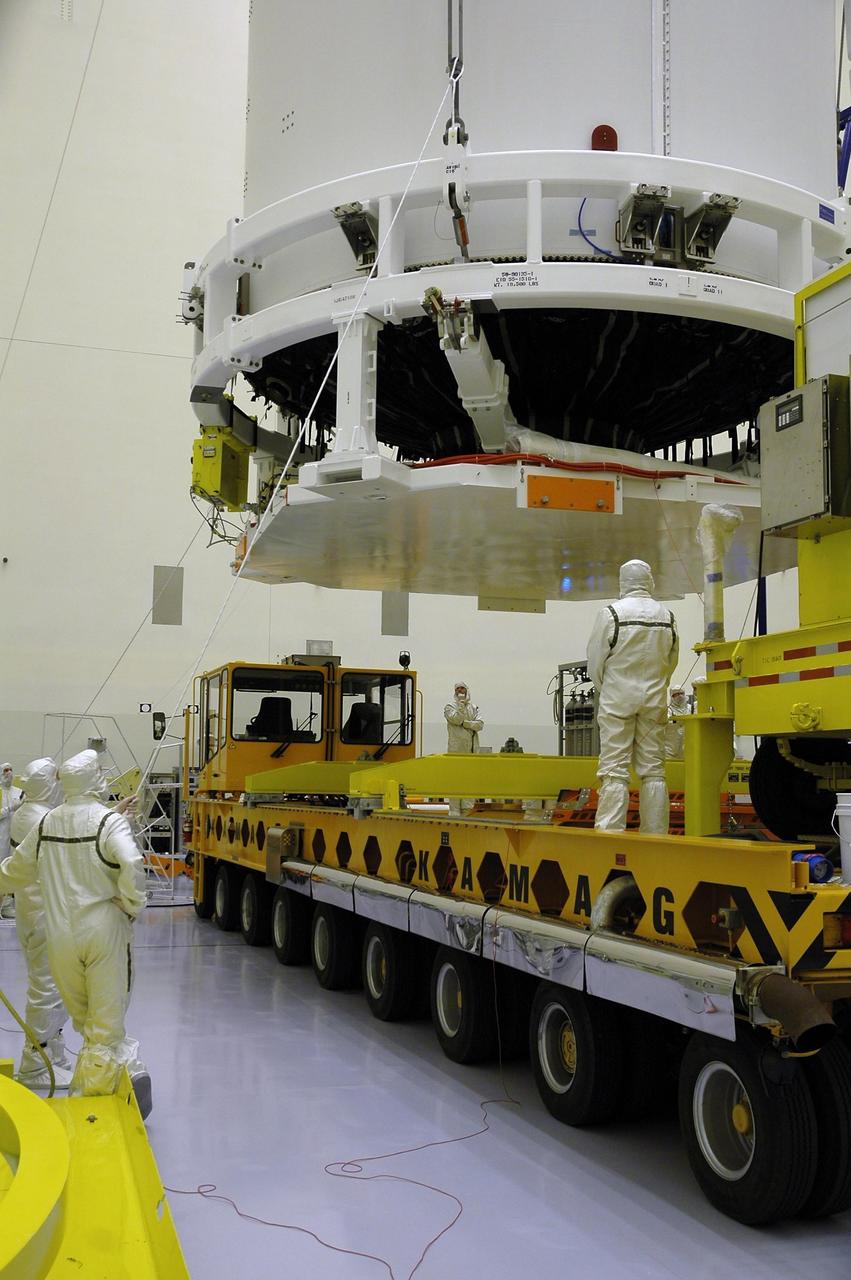
KENNEDY SPACE CENTER, FLA. - In the Payload Hazardous Servicing Facility, technicians monitor New Horizons as it is lowered onto a transporter for its move to Complex 41 on Cape Canaveral Air Force Station. New Horizons carries seven scientific instruments that will characterize the global geology and geomorphology of Pluto and its moon Charon, map their surface compositions and temperatures, and examine Pluto's complex atmosphere. After that, flybys of Kuiper Belt objects from even farther in the solar system may be undertaken in an extended mission. New Horizons is the first mission in NASA's New Frontiers program of medium-class planetary missions. The spacecraft, designed for NASA by the Johns Hopkins University Applied Physics Laboratory in Laurel, Md., will launch aboard a Lockheed Martin Atlas V rocket and fly by Pluto and Charon as early as summer 2015.
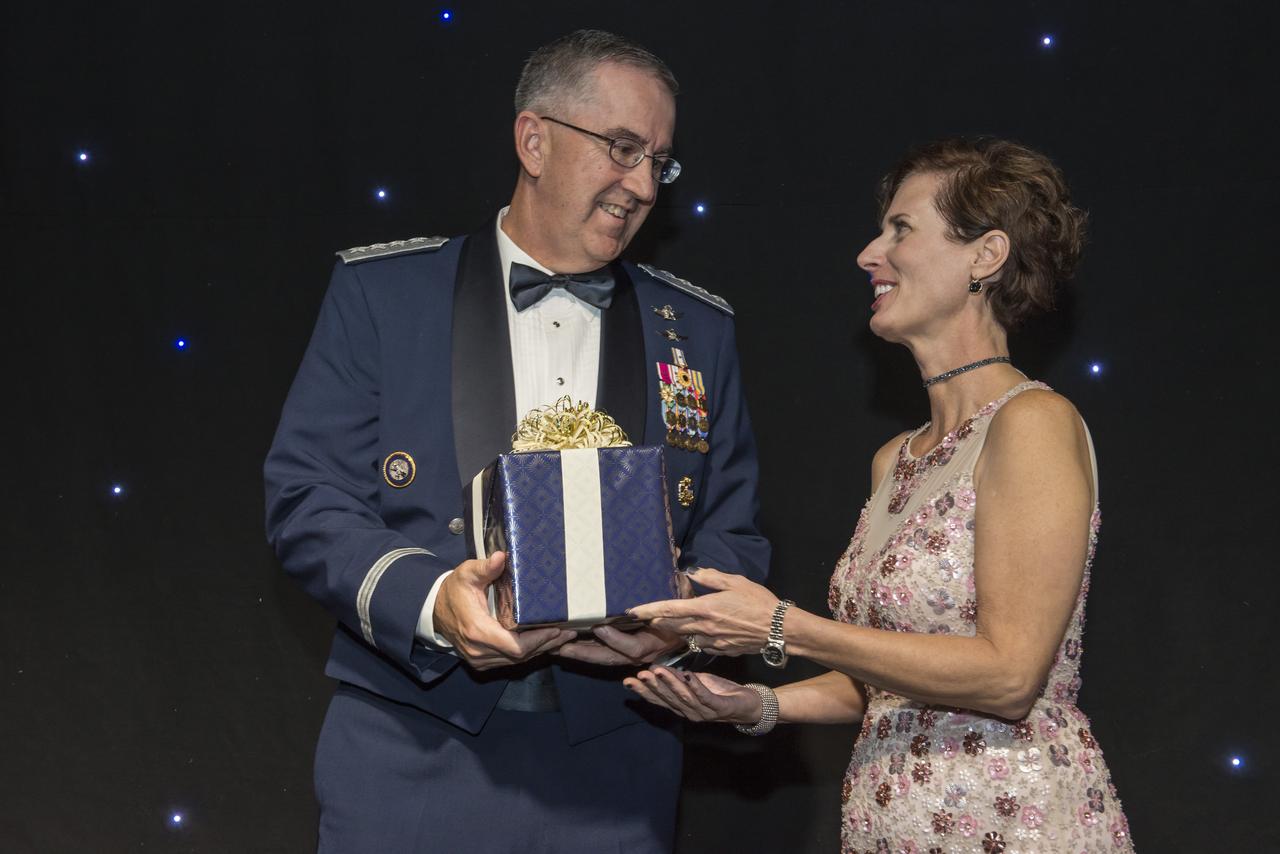
The annual Dr. Wernher Von Braun Memorial Dinner was held at the U.S. Space and Rocket Center's Davidson Center on October 26, 2017 with Keynote speaker General John Hyten, Commander of U.S. Strategic Command. Emcee was Mark Larson of Mark Larson Media Services, Inc. Dr. Wernher Von Braun Memorial Scholarships were presented to 8 college students by the National Space Club. Educator of the Year was awarded to Tammy Thorpe; Community Service award was presented to Huntsville, Al. Mayor Tommy Battle. The Communications Award was presented to retired astronaut Dr. Mike Massimino. The Distinguished Science Award was presented to Dr. Martin Weisskopf. The Astronautics Engineer Award was presented to Douglas R. Cooke. The Dr. Wernher Von Braun Space Flight Trophy was presented to Robert Lightfoot.
The annual Dr. Wernher Von Braun Memorial Dinner was held at the U.S. Space and Rocket Center's Davidson Center on October 26, 2017 with Keynote speaker General John Hyten, Commander of U.S. Strategic Command. Emcee was Mark Larson of Mark Larson Media Services, Inc. Dr. Wernher Von Braun Memorial Scholarships were presented to 8 college students by the National Space Club. Educator of the Year was awarded to Tammy Thorpe; Community Service award was presented to Huntsville, Al. Mayor Tommy Battle. The Communications Award was presented to retired astronaut Dr. Mike Massimino. The Distinguished Science Award was presented to Dr. Martin Weisskopf. The Astronautics Engineer Award was presented to Douglas R. Cooke. The Dr. Wernher Von Braun Space Flight Trophy was presented to Robert Lightfoot.
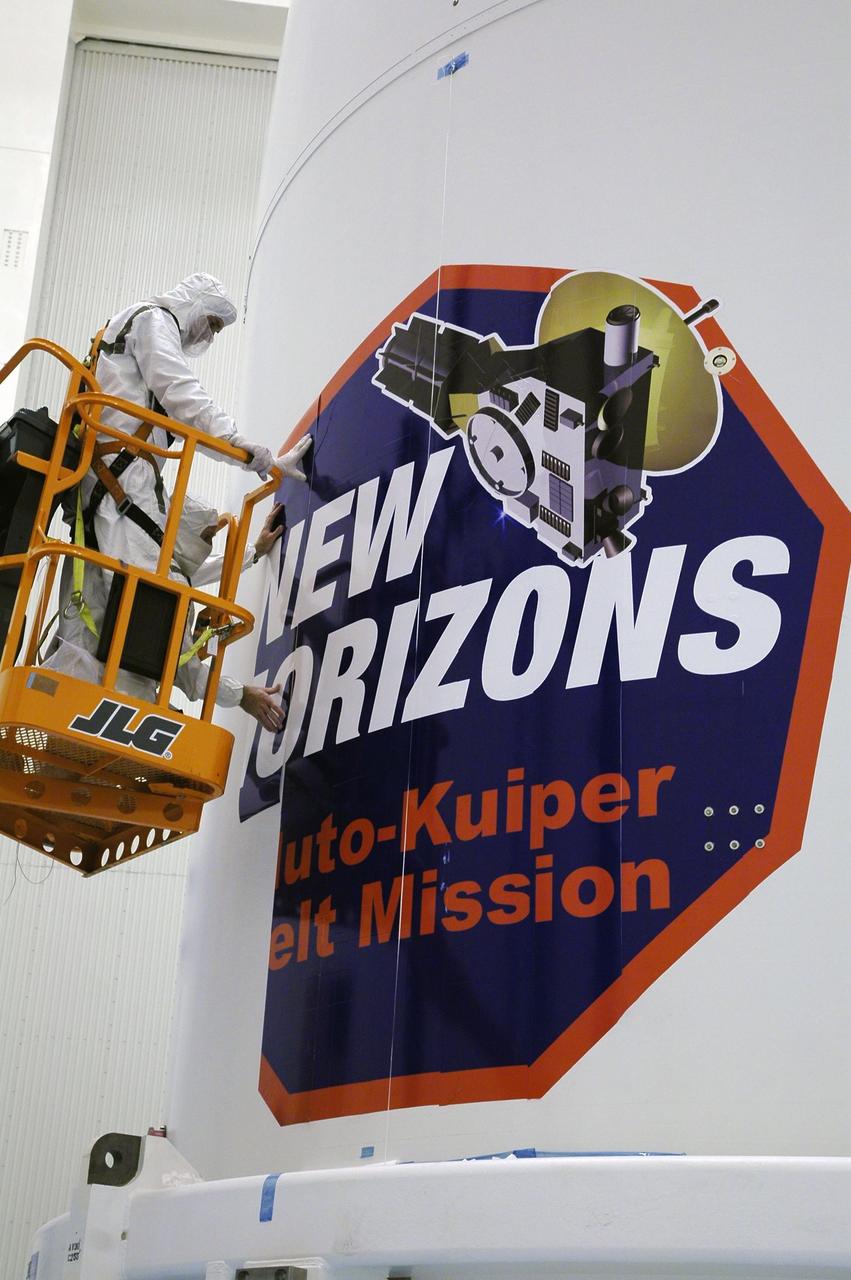
KENNEDY SPACE CENTER, FLA. - Technicians install strips of the New Horizons mission decal on the spacecraft fairing in the Payload Hazardous Servicing Facility. The last strip will be installed on the fairing after the spacecraft is delivered to Pad 41 on Dec. 17. New Horizons carries seven scientific instruments that will characterize the global geology and geomorphology of Pluto and its moon Charon, map their surface compositions and temperatures, and examine Pluto's complex atmosphere. After that, flybys of Kuiper Belt objects from even farther in the solar system may be undertaken in an extended mission. New Horizons is the first mission in NASA's New Frontiers program of medium-class planetary missions. The spacecraft, designed for NASA by the Johns Hopkins University Applied Physics Laboratory in Laurel, Md., will launch aboard a Lockheed Martin Atlas V rocket and fly by Pluto and Charon as early as summer 2015.
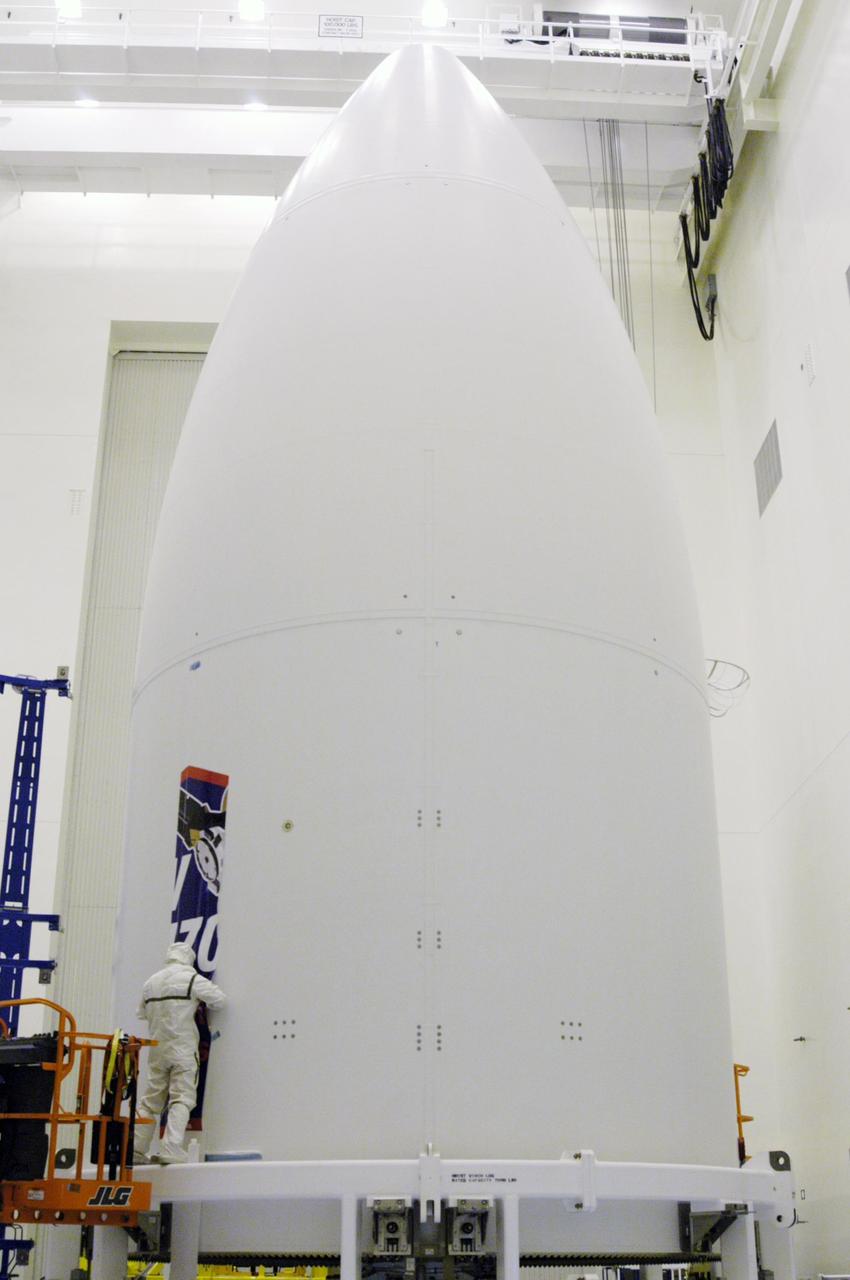
KENNEDY SPACE CENTER, FLA. - A technician installs the first strip of the New Horizons mission decal on the spacecraft fairing in the Payload Hazardous Servicing Facility. The last strip will be installed on the fairing after the spacecraft is delivered to Pad 41 on Dec. 17. New Horizons carries seven scientific instruments that will characterize the global geology and geomorphology of Pluto and its moon Charon, map their surface compositions and temperatures, and examine Pluto's complex atmosphere. After that, flybys of Kuiper Belt objects from even farther in the solar system may be undertaken in an extended mission. New Horizons is the first mission in NASA's New Frontiers program of medium-class planetary missions. The spacecraft, designed for NASA by the Johns Hopkins University Applied Physics Laboratory in Laurel, Md., will launch aboard a Lockheed Martin Atlas V rocket and fly by Pluto and Charon as early as summer 2015.
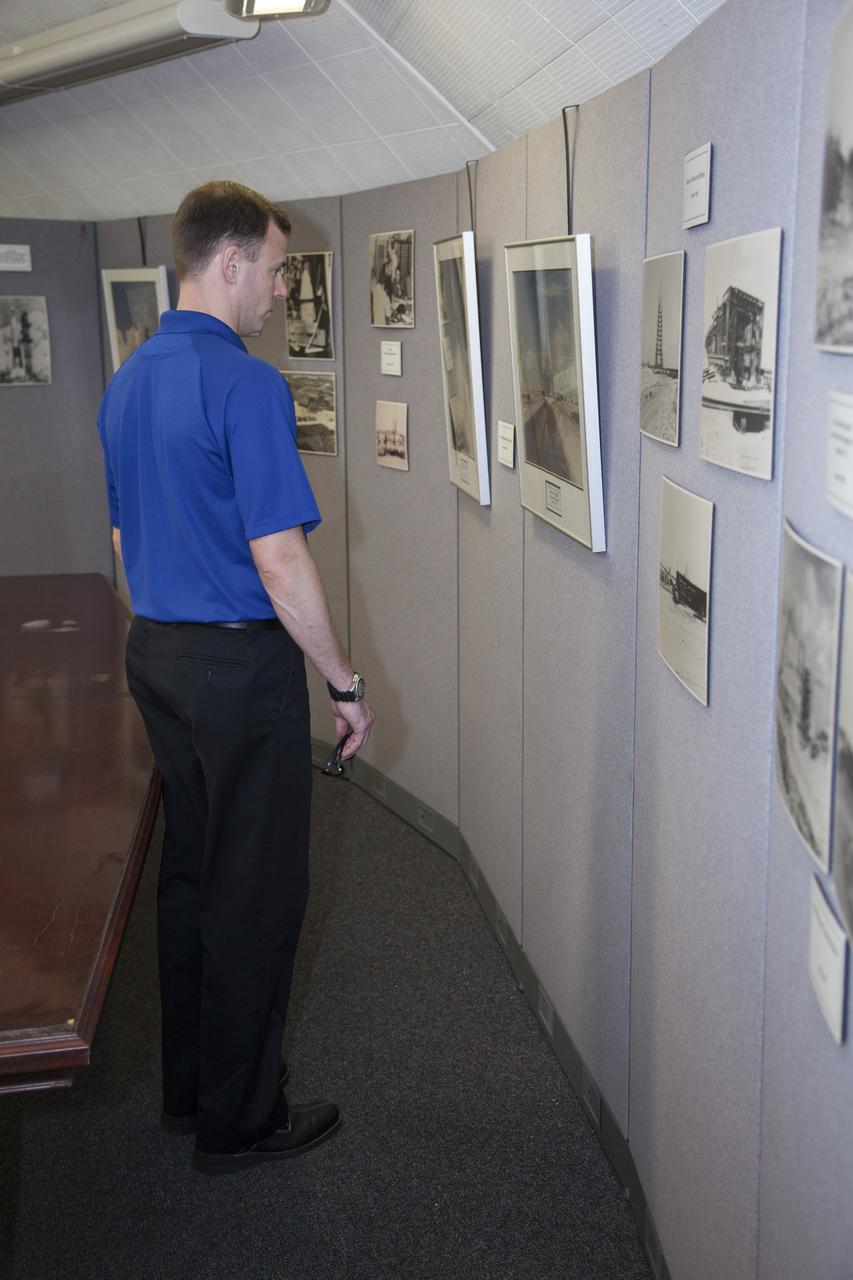
CAPE CANAVERAL, Fla. – NASA astronaut candidate Tyler "Nick" Hague looks over photos inside the blockhouse at Complex 14 at Cape Canaveral Air Force Station in Florida, adjacent to NASA's Kennedy Space Center. Complex 14 served as the launch pad for Mercury astronaut John Glenn when he lifted off in 1962 to orbit the Earth, becoming the first American to do so. The astronaut class of 2013 was selected by NASA after an extensive year-and-a-half search. The new group will help the agency push the boundaries of exploration and travel to new destinations in the solar system. To learn more about the astronaut class of 2013, visit: http://www.nasa.gov/astronauts/2013astroclass.html Photo credit: NASA/Frankie Martin
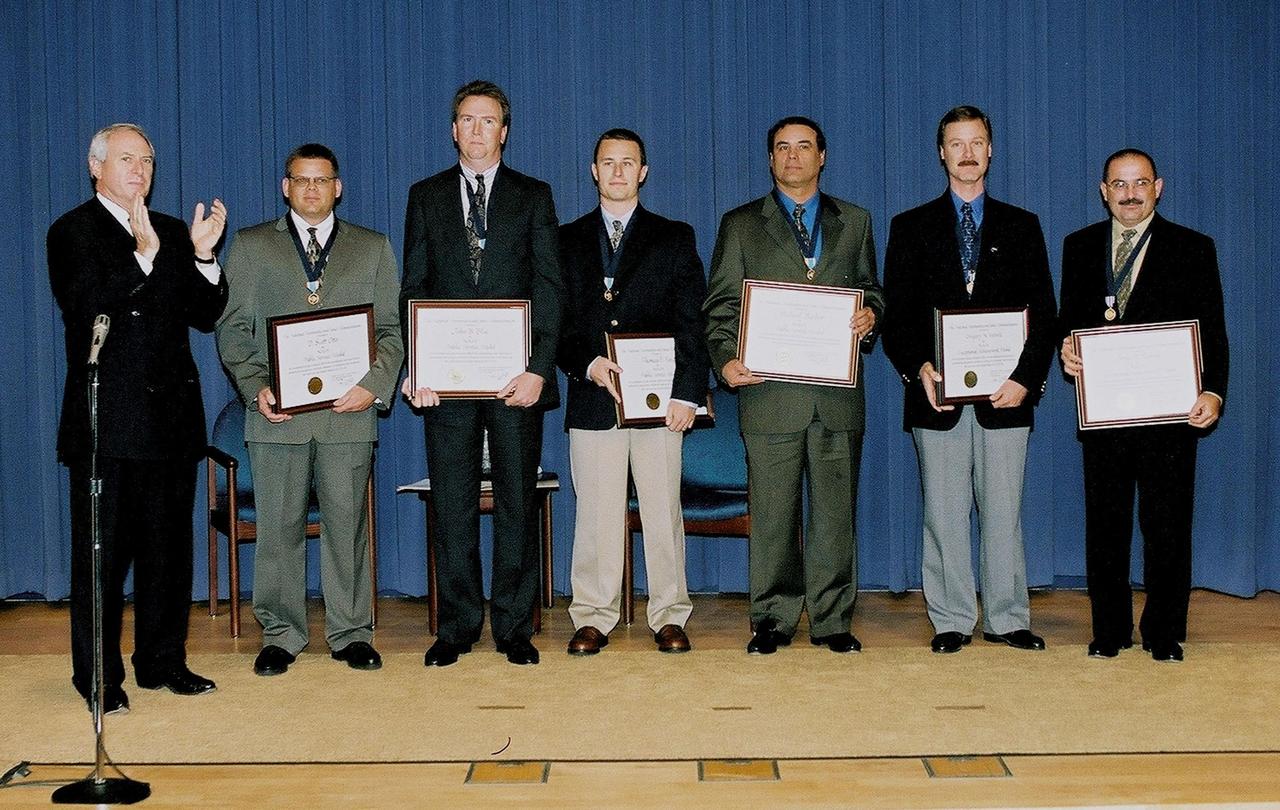
NASA Administrator Daniel Goldin (left) applauds the Space Shuttle ice and debris inspection team who were recognized for their keen safety observations prior to the launch of Space Shuttle Discovery. Standing next to Goldin are (left to right) D. Scott Otto, with Lockheed Martin Space Services Company; John B. Blue, Thomas F. Ford and Michael Barber, with United Space Alliance; Gregory N. Katnik and Jorge E. Rivera, with NASA. Katnick and Rivera received the agency’s Exceptional Achievement Medal; Barber, Blue, Ford and Otto received the NASA Public Service Medal. While scanning the launch pad before launch, the team found a stray 4-inch pin near the Shuttle’s external fuel tank that could have caused damage during launch. Discovery was safely launched the next day, on Oct. 11
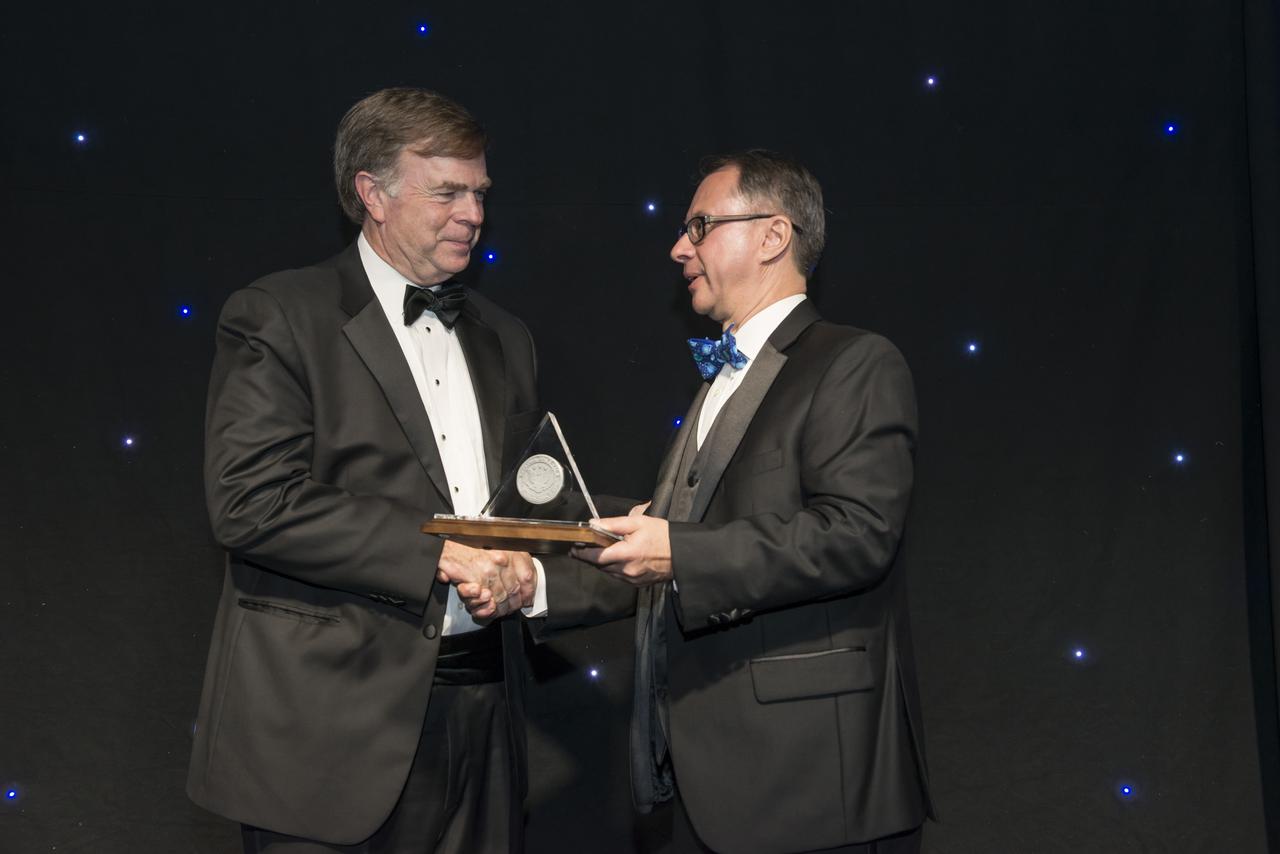
The annual Dr. Wernher Von Braun Memorial Dinner was held at the U.S. Space and Rocket Center's Davidson Center on October 26, 2017 with Keynote speaker General John Hyten, Commander of U.S. Strategic Command. Emcee was Mark Larson of Mark Larson Media Services, Inc. Dr. Wernher Von Braun Memorial Scholarships were presented to 8 college students by the National Space Club. Educator of the Year was awarded to Tammy Thorpe; Community Service award was presented to Huntsville, Al. Mayor Tommy Battle. The Communications Award was presented to retired astronaut Dr. Mike Massimino. The Distinguished Science Award was presented to Dr. Martin Weisskopf. The Astronautics Engineer Award was presented to Douglas R. Cooke. The Dr. Wernher Von Braun Space Flight Trophy was presented to Robert Lightfoot.
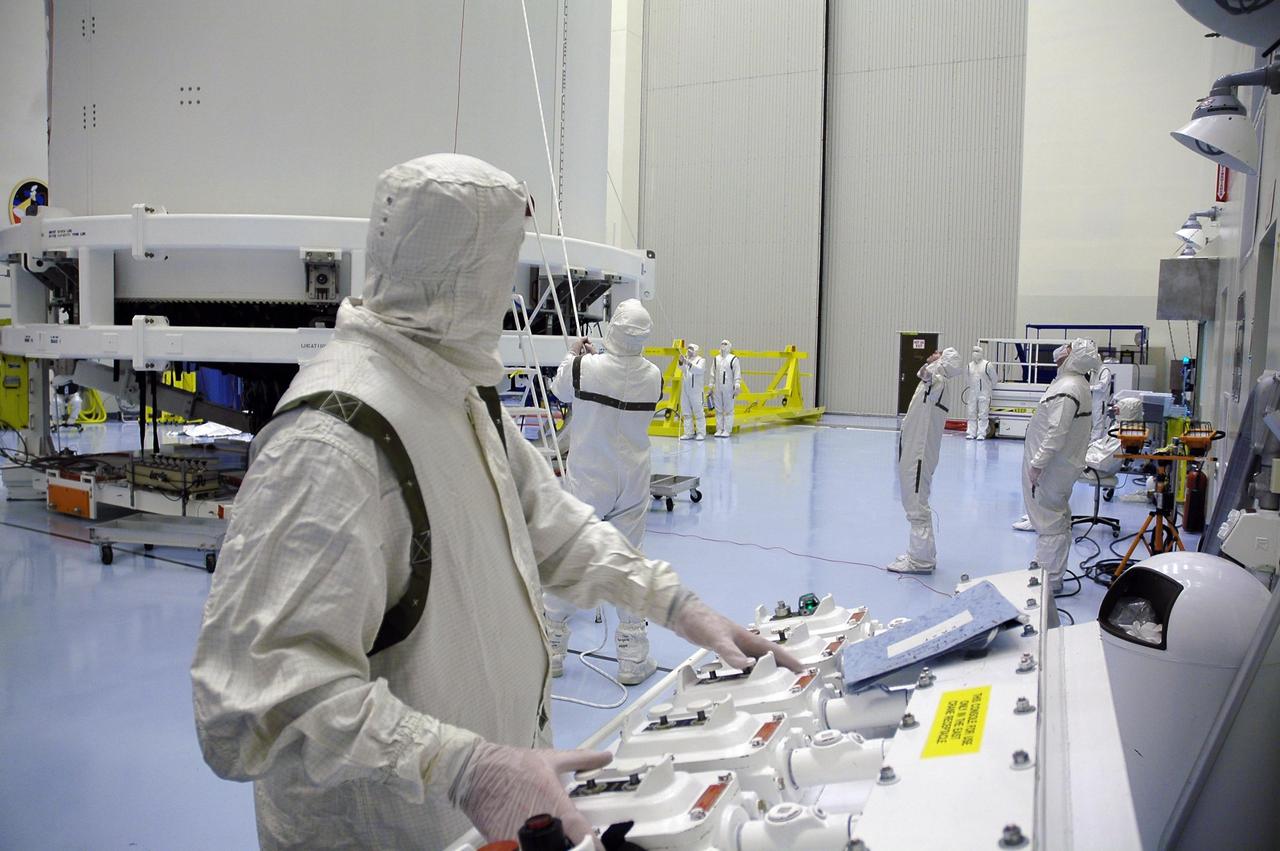
KENNEDY SPACE CENTER, FLA. - In the Payload Hazardous Servicing Facility, technicians prepare to lift New Horizons to a transporter for its move to Complex 41 on Cape Canaveral Air Force Station. New Horizons carries seven scientific instruments that will characterize the global geology and geomorphology of Pluto and its moon Charon, map their surface compositions and temperatures, and examine Pluto's complex atmosphere. After that, flybys of Kuiper Belt objects from even farther in the solar system may be undertaken in an extended mission. New Horizons is the first mission in NASA's New Frontiers program of medium-class planetary missions. The spacecraft, designed for NASA by the Johns Hopkins University Applied Physics Laboratory in Laurel, Md., will launch aboard a Lockheed Martin Atlas V rocket and fly by Pluto and Charon as early as summer 2015.
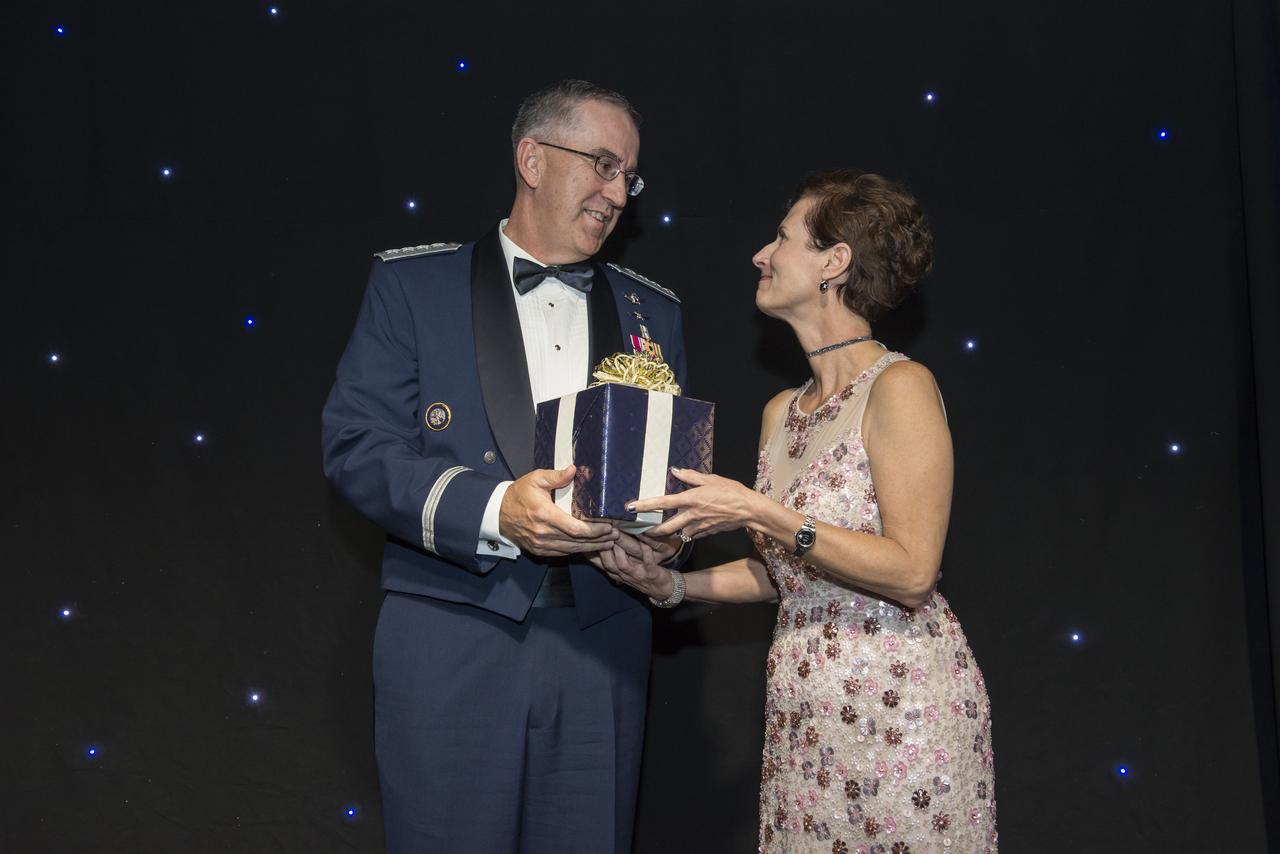
The annual Dr. Wernher Von Braun Memorial Dinner was held at the U.S. Space and Rocket Center's Davidson Center on October 26, 2017 with Keynote speaker General John Hyten, Commander of U.S. Strategic Command. Emcee was Mark Larson of Mark Larson Media Services, Inc. Dr. Wernher Von Braun Memorial Scholarships were presented to 8 college students by the National Space Club. Educator of the Year was awarded to Tammy Thorpe; Community Service award was presented to Huntsville, Al. Mayor Tommy Battle. The Communications Award was presented to retired astronaut Dr. Mike Massimino. The Distinguished Science Award was presented to Dr. Martin Weisskopf. The Astronautics Engineer Award was presented to Douglas R. Cooke. The Dr. Wernher Von Braun Space Flight Trophy was presented to Robert Lightfoot.
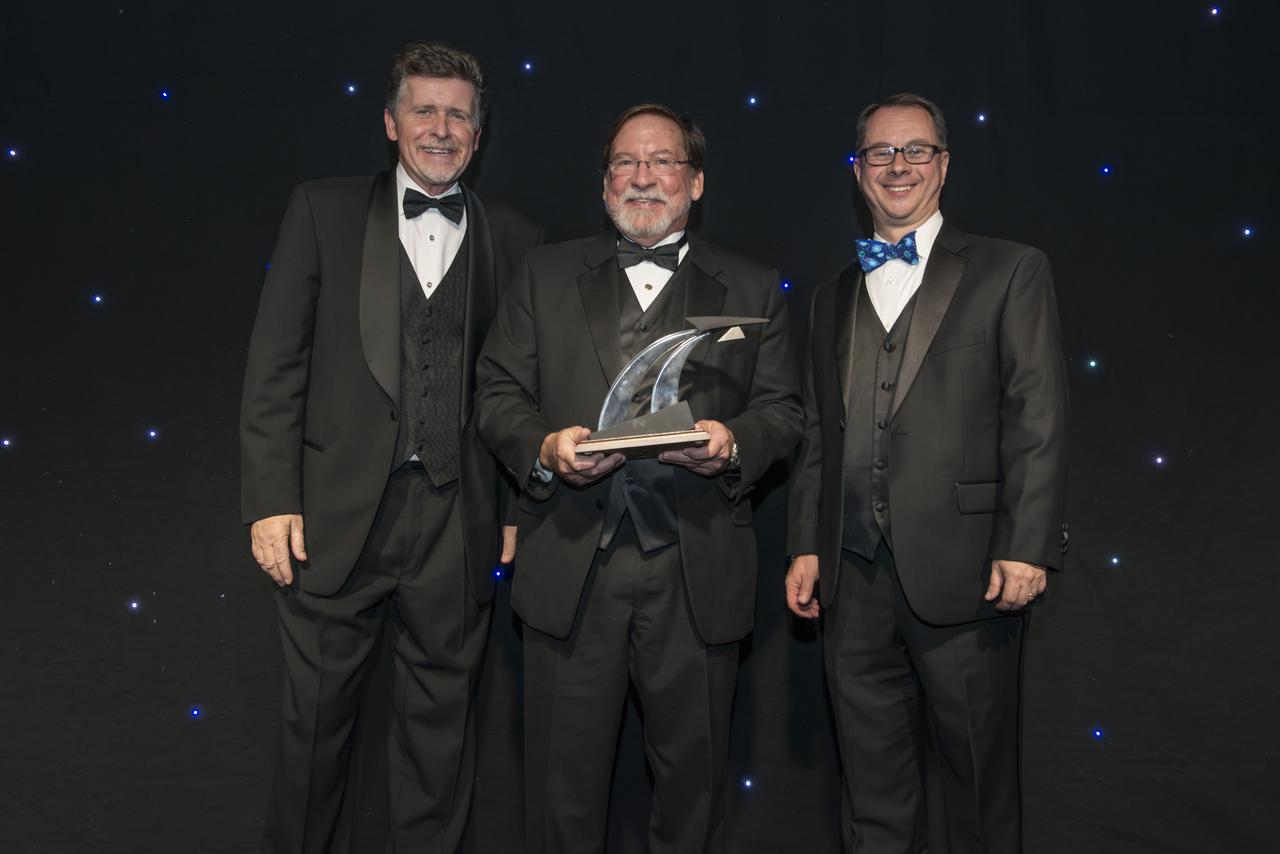
The annual Dr. Wernher Von Braun Memorial Dinner was held at the U.S. Space and Rocket Center's Davidson Center on October 26, 2017 with Keynote speaker General John Hyten, Commander of U.S. Strategic Command. Emcee was Mark Larson of Mark Larson Media Services, Inc. Dr. Wernher Von Braun Memorial Scholarships were presented to 8 college students by the National Space Club. Educator of the Year was awarded to Tammy Thorpe; Community Service award was presented to Huntsville, Al. Mayor Tommy Battle. The Communications Award was presented to retired astronaut Dr. Mike Massimino. The Distinguished Science Award was presented to Dr. Martin Weisskopf. The Astronautics Engineer Award was presented to Douglas R. Cooke. The Dr. Wernher Von Braun Space Flight Trophy was presented to Robert Lightfoot.
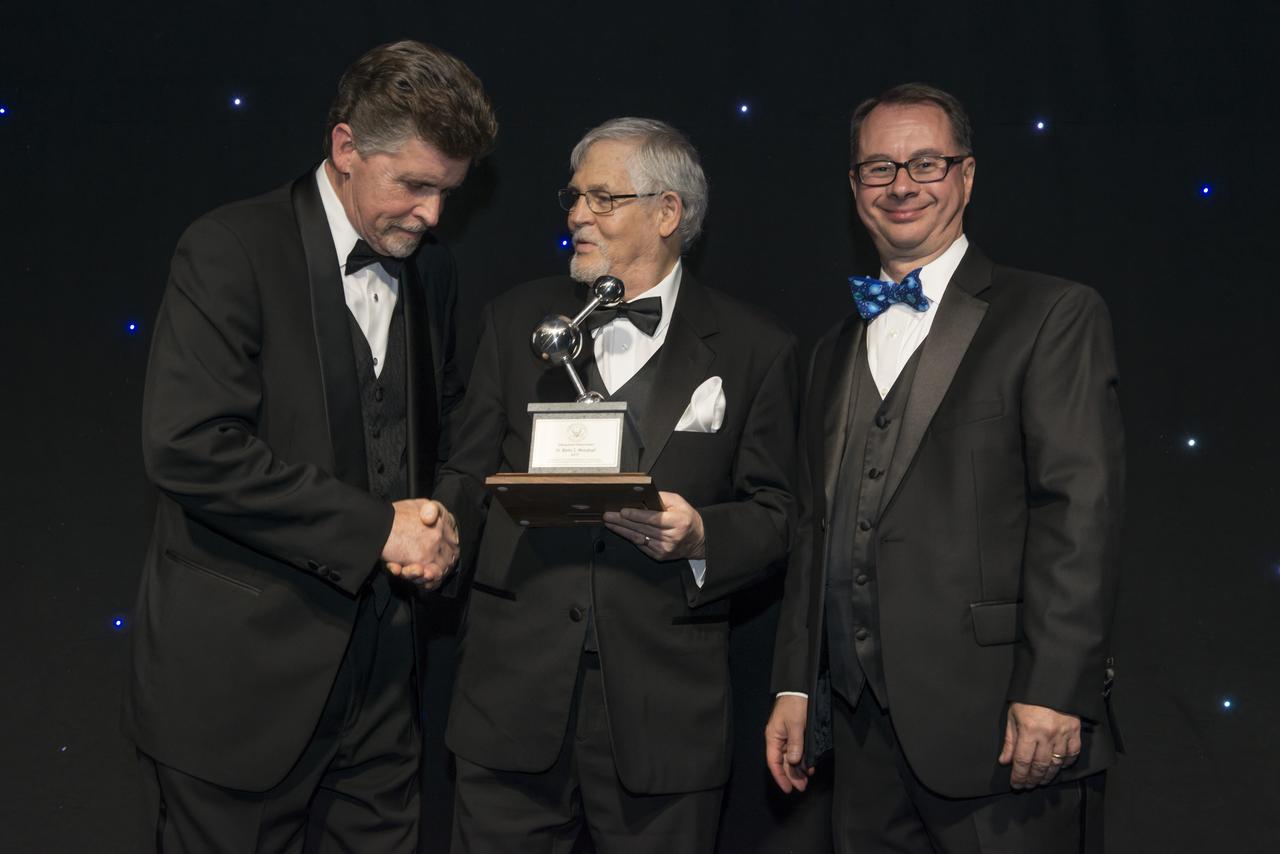
The annual Dr. Wernher Von Braun Memorial Dinner was held at the U.S. Space and Rocket Center's Davidson Center on October 26, 2017 with Keynote speaker General John Hyten, Commander of U.S. Strategic Command. Emcee was Mark Larson of Mark Larson Media Services, Inc. Dr. Wernher Von Braun Memorial Scholarships were presented to 8 college students by the National Space Club. Educator of the Year was awarded to Tammy Thorpe; Community Service award was presented to Huntsville, Al. Mayor Tommy Battle. The Communications Award was presented to retired astronaut Dr. Mike Massimino. The Distinguished Science Award was presented to Dr. Martin Weisskopf. The Astronautics Engineer Award was presented to Douglas R. Cooke. The Dr. Wernher Von Braun Space Flight Trophy was presented to Robert Lightfoot.
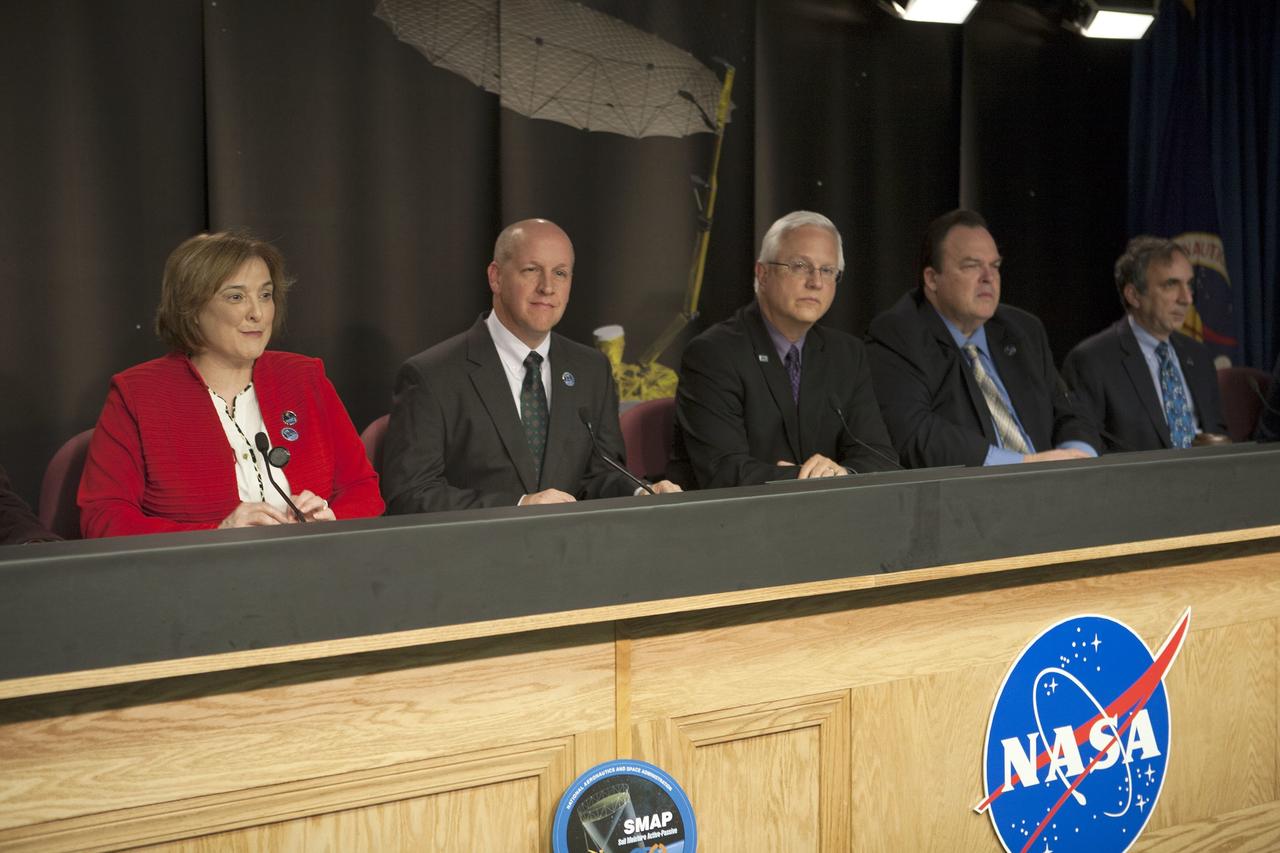
VANDENBERG AIR FORCE BASE, California – At Vandenberg Air Force Base, California, agency and industry leaders spoke to members of the news media as the Soil Moisture Active Passive, or SMAP, satellite and its Delta II rocket were being prepared for launch. From left are: Christine Bonniksen, SMAP program executive at NASA Headquarters, Tim Dunn, NASA launch manager at Kennedy Space Center, Florida, Vern Thorp, program manager for NASA Missions for United Launch Alliance in Centennial, Colorado, Kent Kellogg, SMAP Project manager at the Jet Propulsion Laboratory in Pasadena, California, Dara Entekhabi, SMAP science team leader at the Massachusetts Institute of Technology in Cambridge, Massachusetts, and 1st Lt. John Martin, launch weather officer, 30th Operations Support Squadron at Vandenberg. Photo credit: NASA/Kim Shiflett
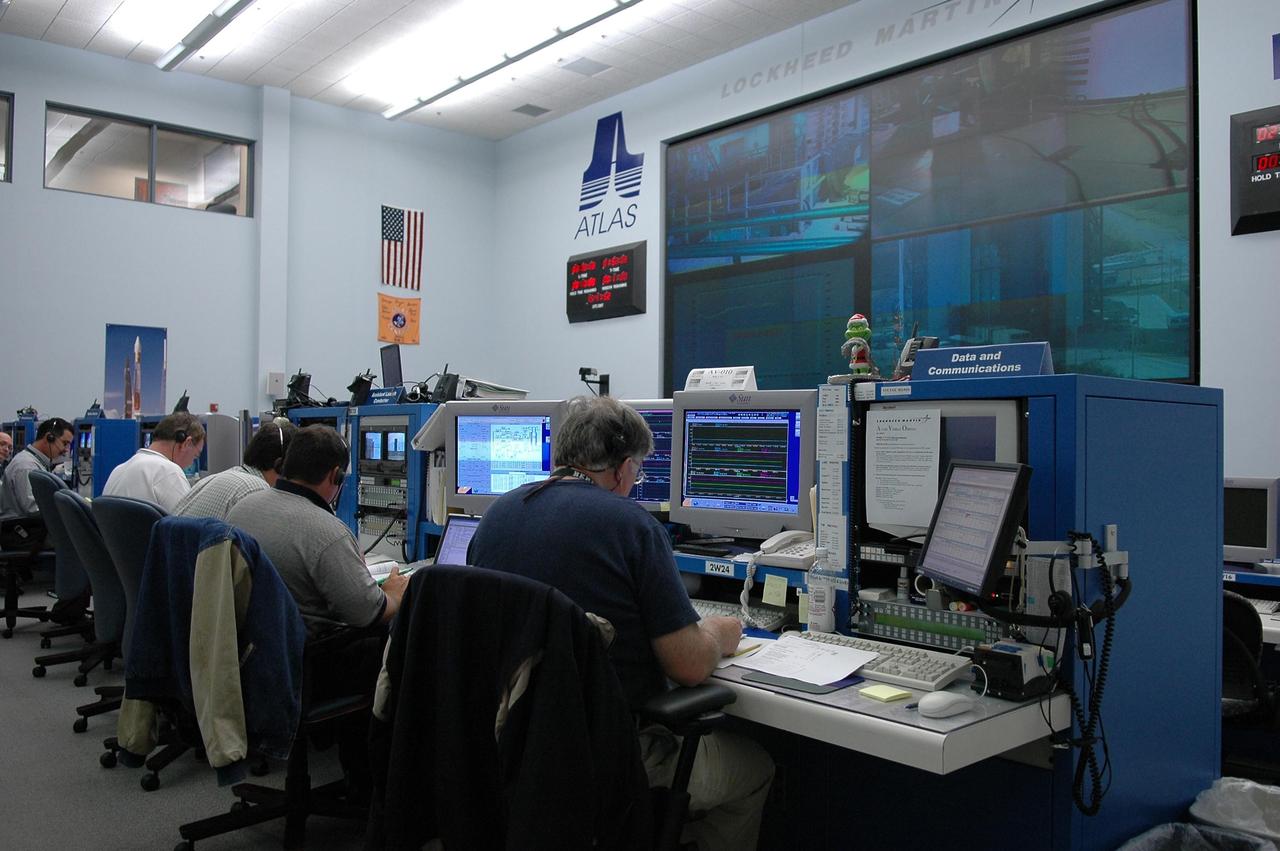
KENNEDY SPACE CENTER, FLA. - At their consoles in the Atlas V Spaceflight Operations Center on Cape Canaveral Air Force Station, members of the New Horizons team take part in a dress rehearsal for the launch scheduled in mid-January. New Horizons carries seven scientific instruments that will characterize the global geology and geomorphology of Pluto and its moon Charon, map their surface compositions and temperatures, and examine Pluto's complex atmosphere. After that, flybys of Kuiper Belt objects from even farther in the solar system may be undertaken in an extended mission. New Horizons is the first mission in NASA's New Frontiers program of medium-class planetary missions. The spacecraft, designed for NASA by the Johns Hopkins University Applied Physics Laboratory in Laurel, Md., will launch aboard a Lockheed Martin Atlas V rocket and fly by Pluto and Charon as early as summer 2015.

VANDENBERG AIR FORCE BASE, California – At Vandenberg Air Force Base, California, agency and industry leaders spoke to members of the news media as the Soil Moisture Active Passive, or SMAP, satellite and its Delta II rocket were being prepared for launch. From left are: George Diller of NASA Public Affairs, Christine Bonniksen, SMAP program executive at NASA Headquarters, Tim Dunn, NASA launch manager at Kennedy Space Center, Florida Vern Thorp, program manager for NASA Missions for United Launch Alliance in Centennial, Colorado, Kent Kellogg, SMAP Project manager at the Jet Propulsion Laboratory in Pasadena, California, Dara Entekhabi, SMAP science team leader at the Massachusetts Institute of Technology in Cambridge, Massachusetts, and 1st Lt. John Martin, launch weather officer, 30th Operations Support Squadron at Vandenberg. Photo credit: NASA/Kim Shiflett
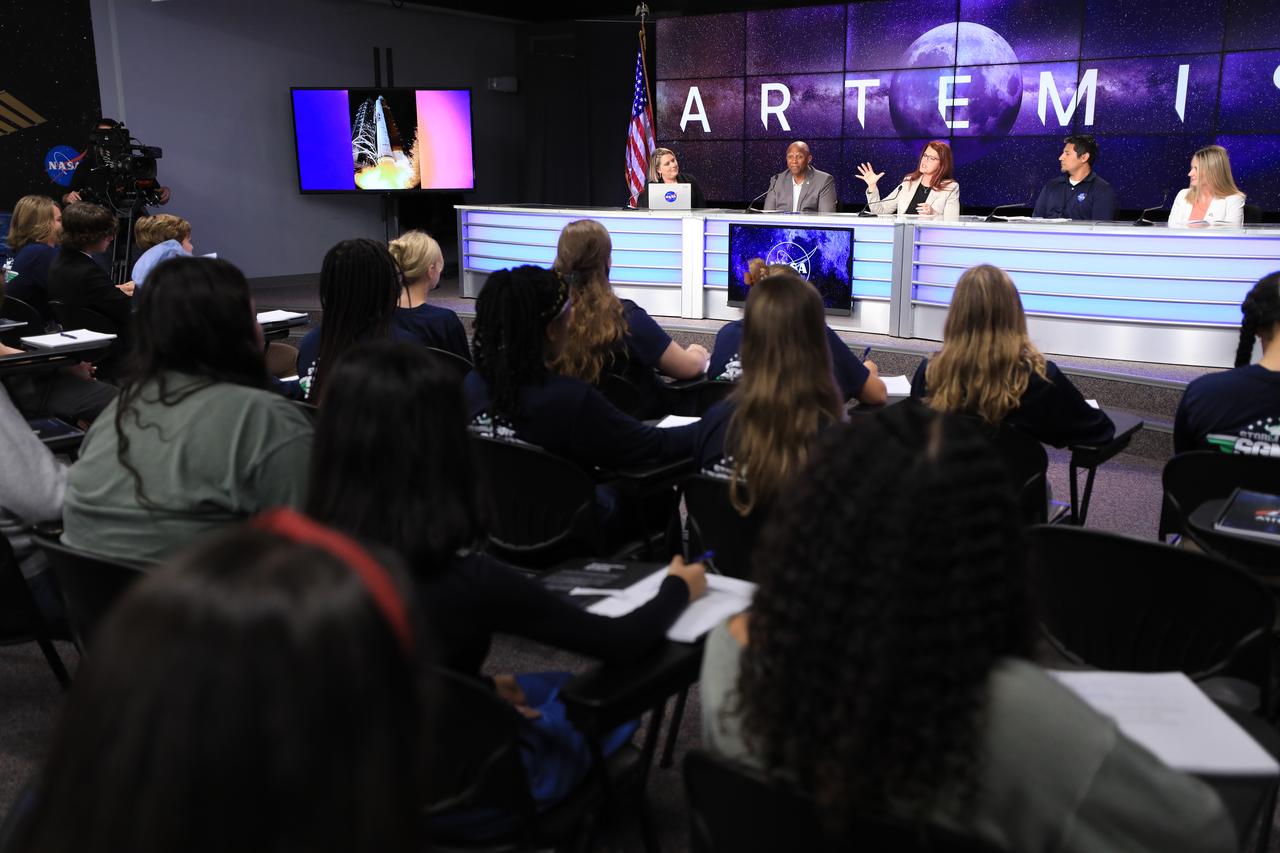
From left, NASA Communications’ Leah Martin, Kennedy Space Center Deputy Director Kelvin Manning, Artemis Launch Director Charlie Blackwell-Thompson, Space Launch System Resident Management Office Manager Elkin Norena, and Space Launch Delta 45 Weather Officer Melody Lovin participate in an Artemis I student media briefing inside the John Holliman Auditorium of the News Center at the Florida spaceport on Jan. 19, 2023. As part of NASA’s NextGen STEM project, students from Florida’s St. Cloud High School and Storm Grove Middle School in Vero Beach participated in person during the briefing, while middle and high school students across the country had the opportunity to ask questions of the panel via phone to discuss the Artemis I mission and the agency’s future of human space exploration.