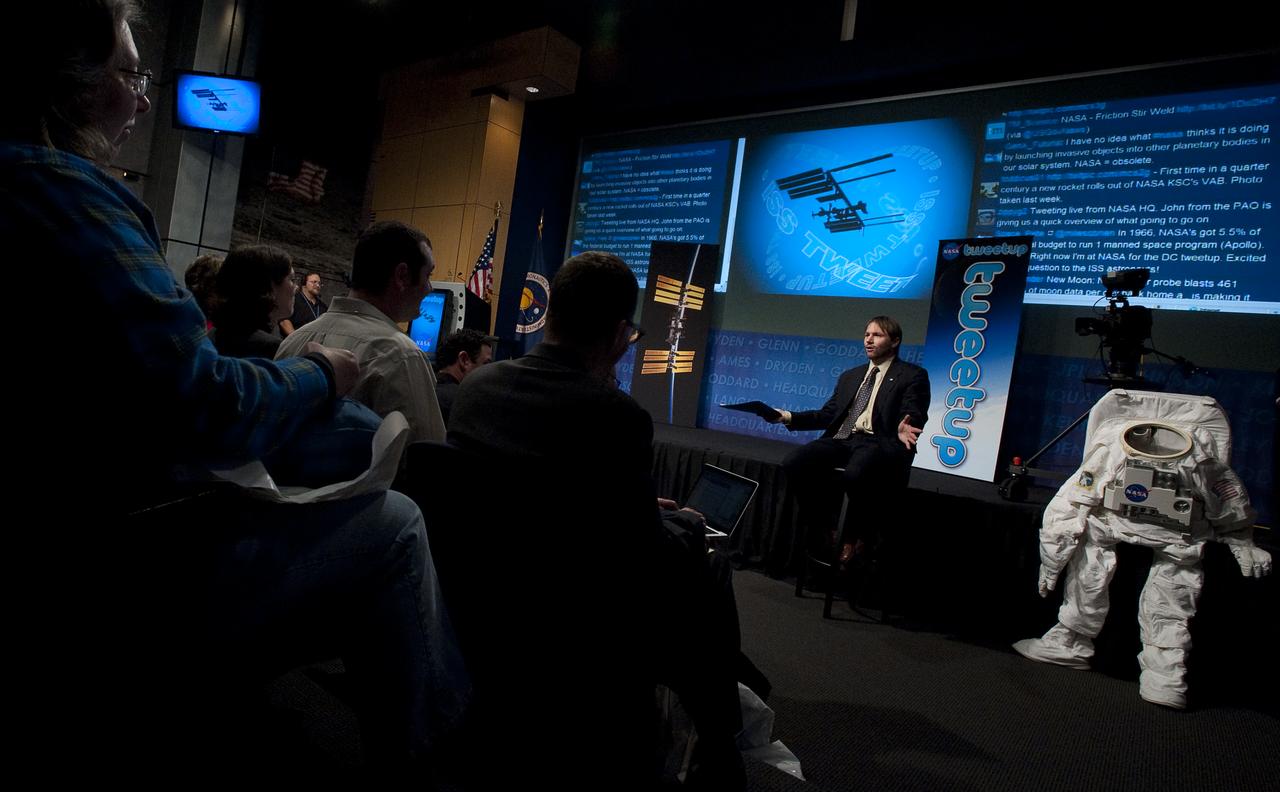
John Yembrick, NASA Public Affairs Officer, introduces a live Tweetup event to thirty-five of NASA's Twitter followers at NASA Headquarters in Washington, Wednesday, Oct. 21, 2009. Photo Credit: (NASA/Carla Cioffi)
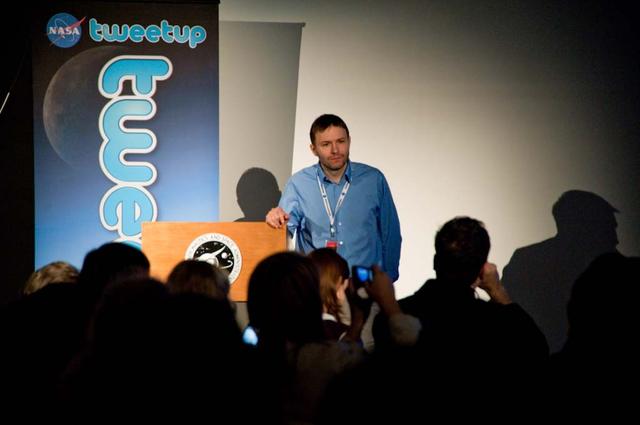
NASA Ames Tweetup and tour of center with John Yembrick, Ames PAO Chief (acting) and host of the event.
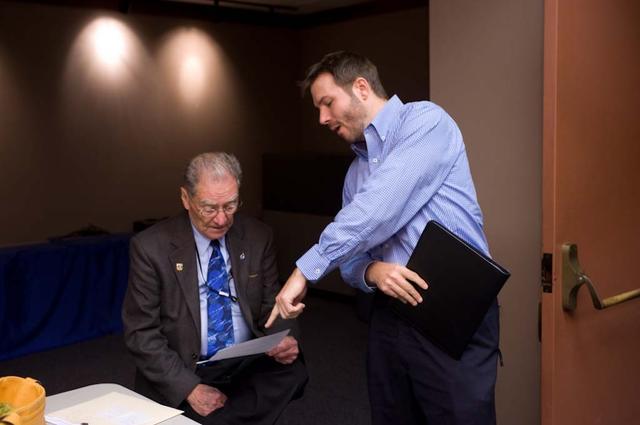
Ames hosts Press Event for talk with STS-135 Astronauts onboard the Space Shuttle, Jack Boyd (seated) and John Yembrick, PAO chief go over interview points.
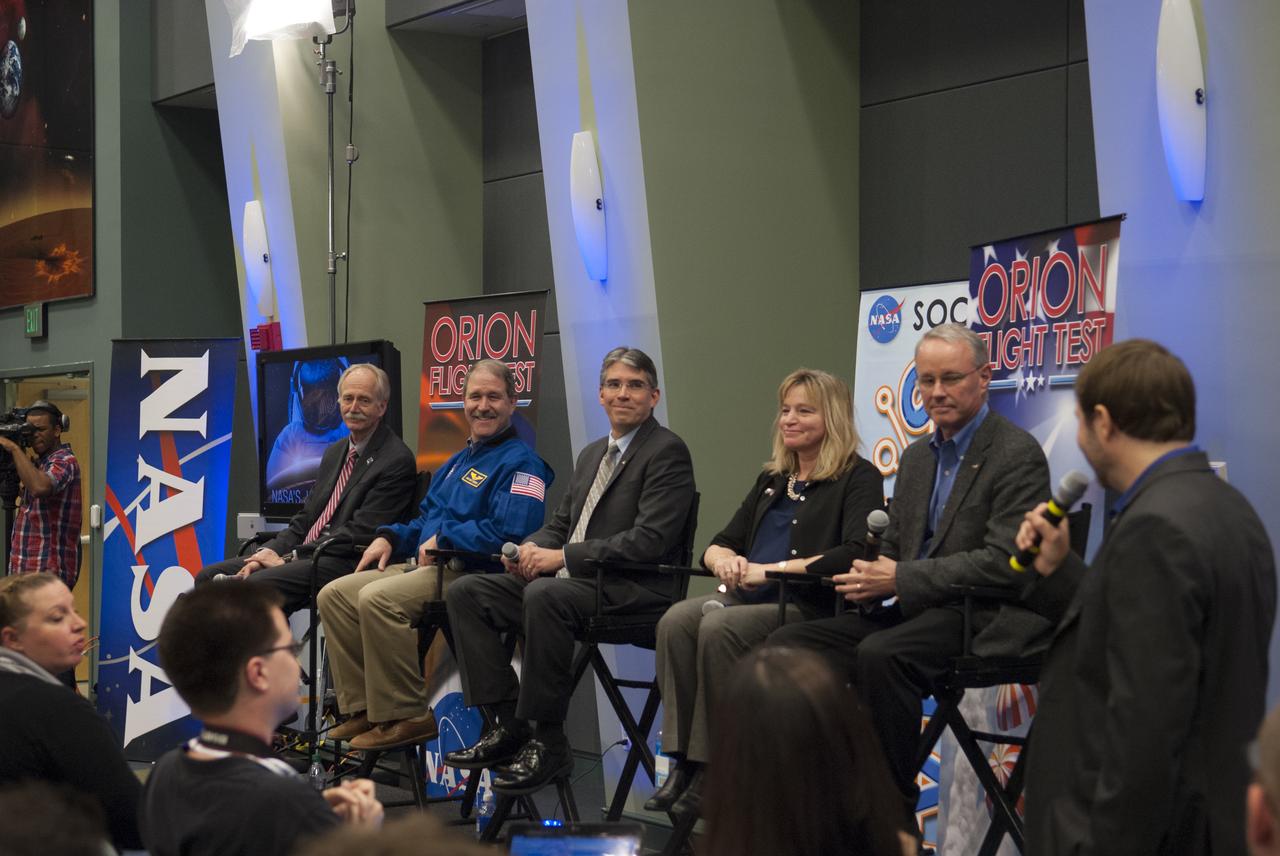
At NASA's Kennedy Space Center in Florida, NASA leaders spoke to social media participants as the Orion spacecraft and its Delta IV Heavy rocket were being prepared for launch. Speakers included, from the left, NASA Associate Administrator Human Exploration and Operations Bill Gerstenmaier, Associate Administrator for the agency's Science Mission Directorate John Grunsfeld, Associate Administrator for the Space Technology Directorate Michael Gazaria, NASA Chief Scientist Ellen Stofan, and Chief Technologist David Miller. Moderator for the panel session was John Yembrick, with the microphone on the far right, who is NASA's social media lead at the agency's Headquarters in Washington.
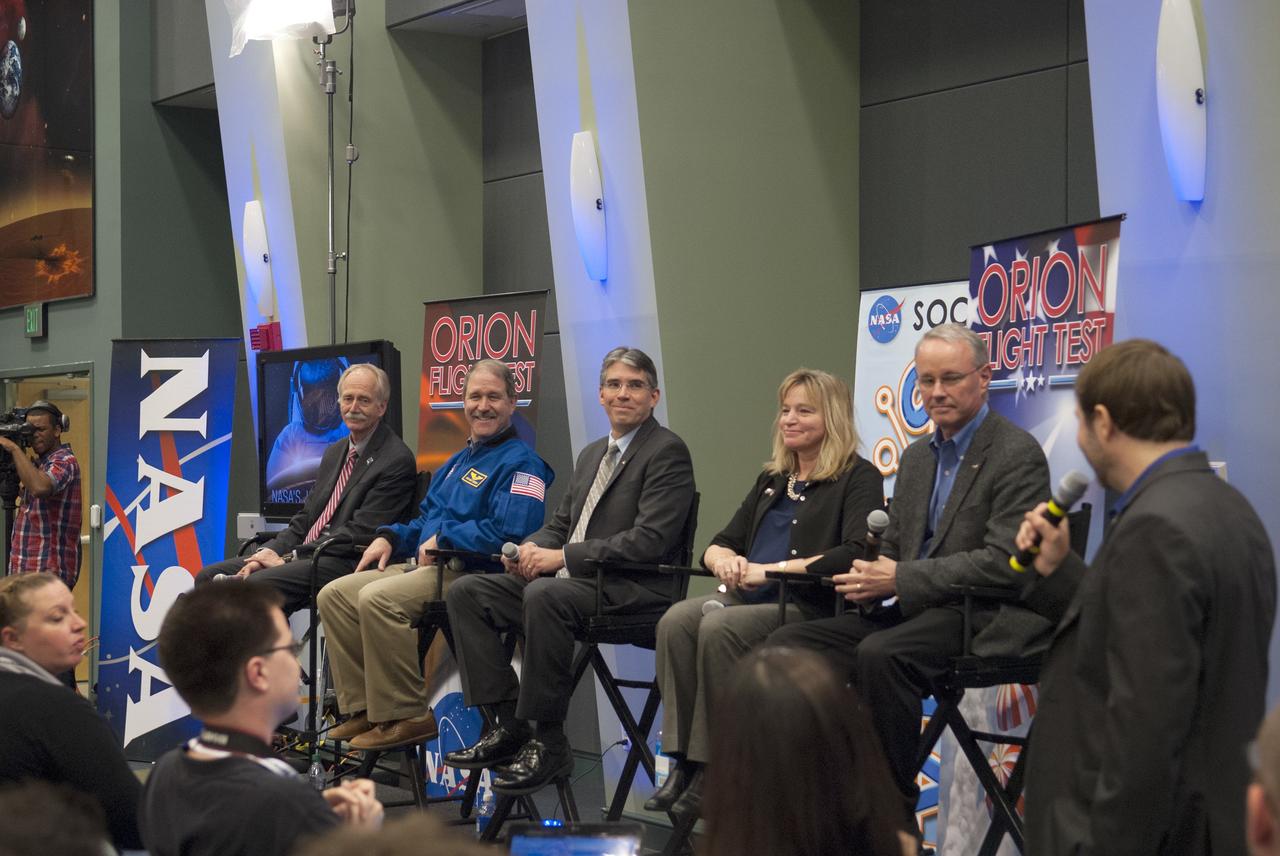
CAPE CANAVERAL, Fla. – At NASA's Kennedy Space Center in Florida, NASA leaders spoke to social media participants as the Orion spacecraft and its Delta IV Heavy rocket were being prepared for launch. Speakers included, from the left, NASA Associate Administrator Human Exploration and Operations Bill Gerstenmaier, Associate Administrator for the agency's Science Mission Directorate John Grunsfeld, Associate Administrator for the Space Technology Directorate Michael Gazaria, NASA Chief Scientist Ellen Stofan, and Chief Technologist David Miller. Moderator for the panel session was John Yembrick, with the microphone on the far right, who is NASA's social media lead at the agency's Headquarters in Washington. For more information, visit www.nasa.gov/orion Photo credit: NASA/Jim Grossman
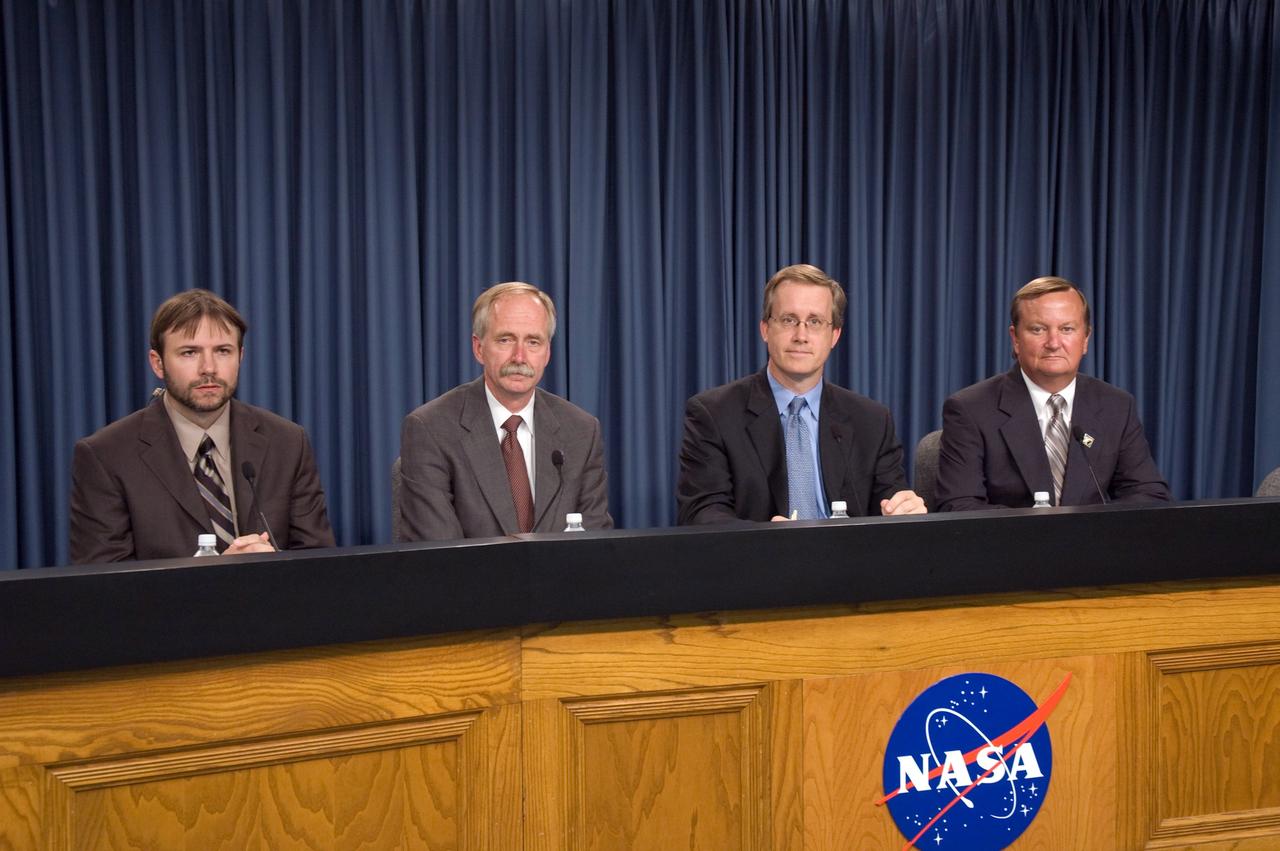
CAPE CANAVERAL, Fla. -- NASA managers take part in a news conference following the Flight Readiness Review at NASA's Kennedy Space Center to discuss the status of the next space shuttle launch. The meeting assessed preparations for shuttle Discovery's STS-124 mission to the International Space Station. Seated left to right are the moderator, John Yembrick, Associate Administrator for Space Operations Bill Gerstenmaier, Space Shuttle Program Manager John Shannon, and Shuttle Launch Director Mike Leinbach. Gerstenmaier confirmed the launch date of May 31 for the STS-124 mission. On the mission, the crew will deliver and install the Japanese Experiment Module – Pressurized Module and Japanese Remote Manipulator System. Photo credit: NASA/Jim Grossmann
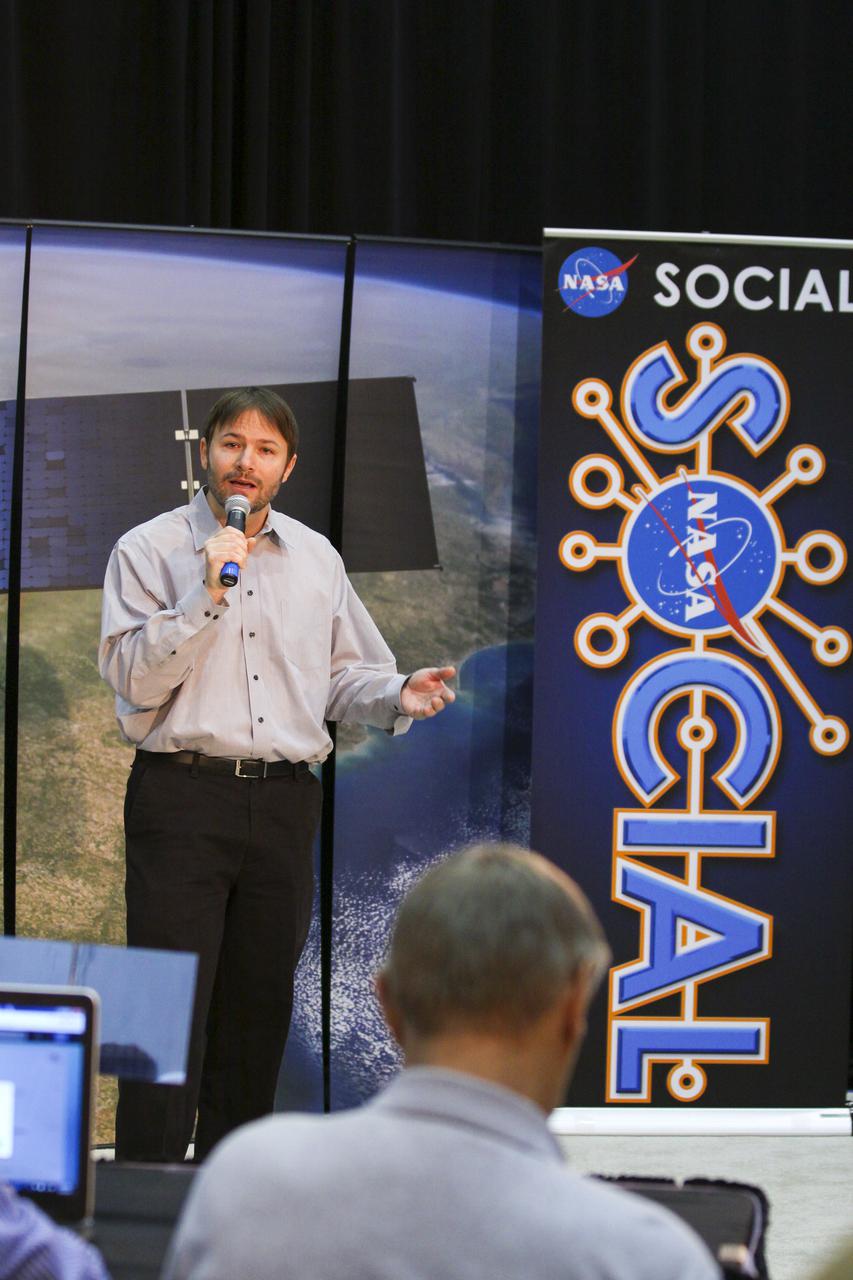
VANDENBERG AFB, Calif. -- John Yembrick, social media manager for NASA, speaks to NASA social media followers at Vandenberg Air Force Base, Calif., prior to the launch of the agency's Landsat Data Continuity Mission, or LDCM, satellite. The Landsat Data Continuity Mission LDCM is the future of Landsat satellites. It will continue to obtain valuable data and imagery to be used in agriculture, education, business, science, and government. The Landsat Program provides repetitive acquisition of high resolution multispectral data of the Earth's surface on a global basis. The data from the Landsat spacecraft constitute the longest record of the Earth's continental surfaces as seen from space. It is a record unmatched in quality, detail, coverage, and value. Liftoff is planned for Feb. 11, 2013 aboard a United Launch Alliance Atlas V rocket. For more information, visit: http:__www.nasa.gov_mission_pages_landsat_main_index.html Photo credit: NASA_Kim Shiflett
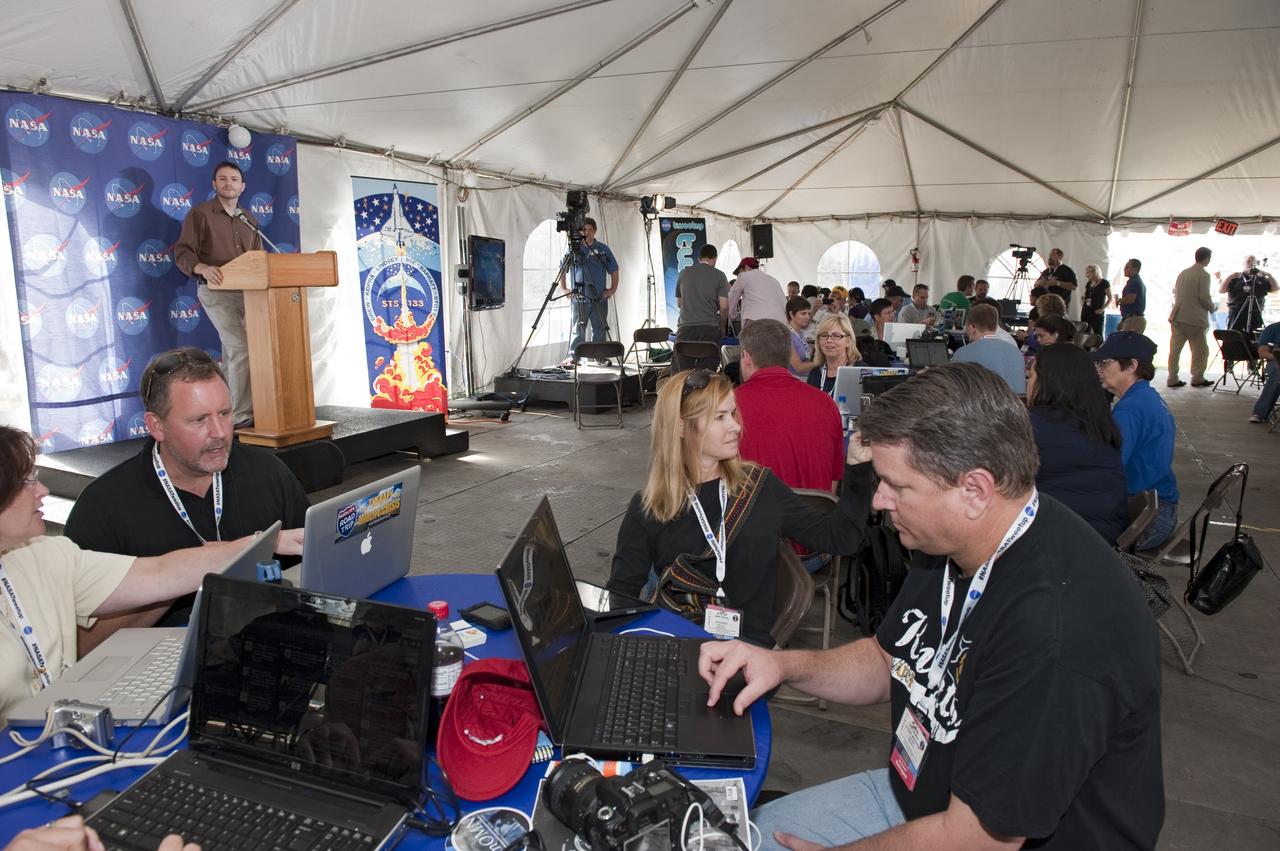
CAPE CANAVERAL, Fla. -- At NASA's Kennedy Space Center in Florida, NASA Public Affairs Officer John Yembrick welcomes participants to the STS-133 Tweetup. NASA is hosting about 150 of its Twitter followers from around the world and several dozen states and providing them with a behind-the-scenes perspective to share with their own followers on the social networking service. The "Tweeps," as NASA calls them, will have a chance to tour Kennedy and meet with shuttle technicians, managers, engineers and astronauts. They also will receive a demonstration of Robonaut, a human-like robot similar to the one that will be delivered to the International Space Station on the STS-133 mission. Space shuttle Discovery and its STS-133 crew are scheduled to launch Nov. 3 at 3:52 p.m. EDT. For more information on the upcoming mission, visit www.nasa.gov/mission_pages/shuttle/shuttlemissions/sts133/. Photo credit: NASA/Kim Shiflett
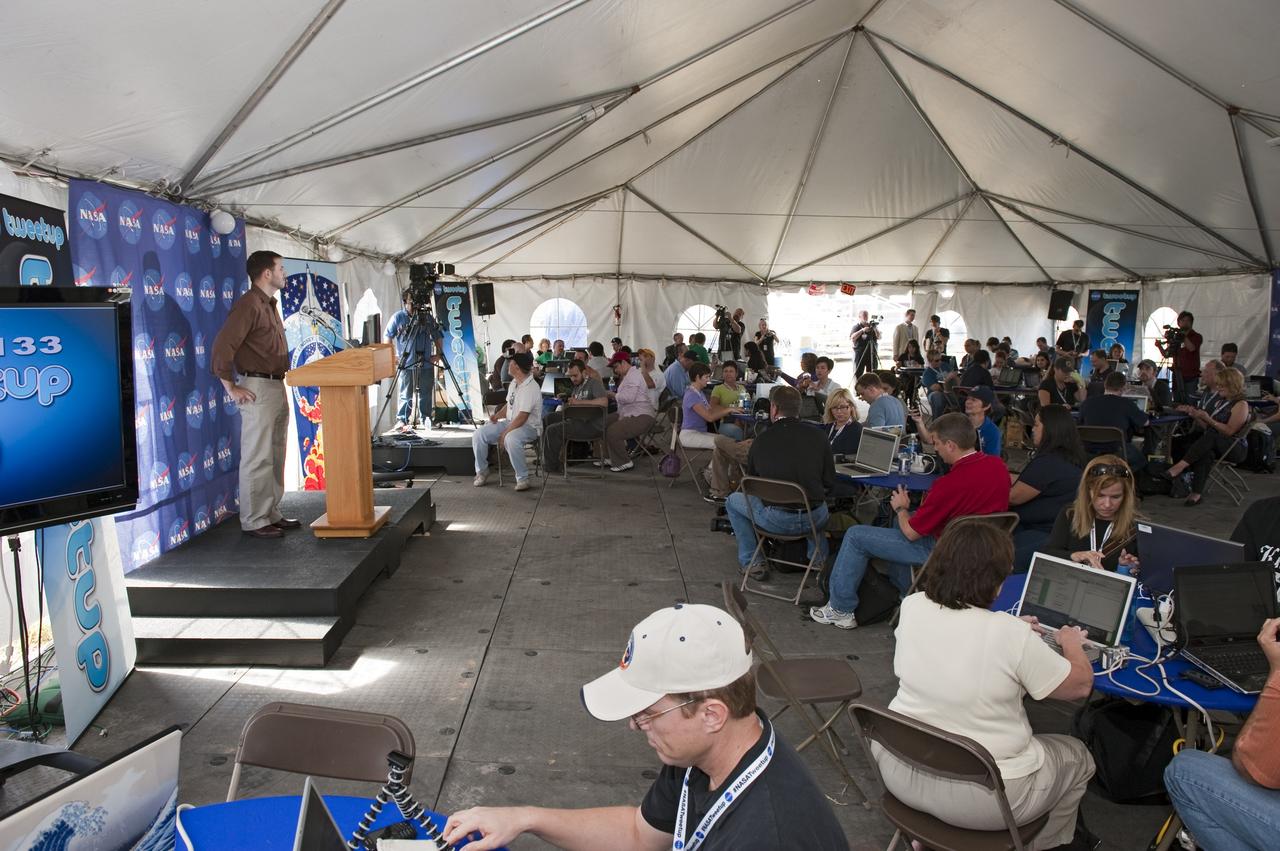
CAPE CANAVERAL, Fla. -- At NASA's Kennedy Space Center in Florida, NASA Public Affairs Officer John Yembrick welcomes participants to the STS-133 Tweetup. NASA is hosting about 150 of its Twitter followers from around the world and several dozen states and providing them with a behind-the-scenes perspective to share with their own followers on the social networking service. The "Tweeps," as NASA calls them, will have a chance to tour Kennedy and meet with shuttle technicians, managers, engineers and astronauts. They also will receive a demonstration of Robonaut, a human-like robot similar to the one that will be delivered to the International Space Station on the STS-133 mission. Space shuttle Discovery and its STS-133 crew are scheduled to launch Nov. 3 at 3:52 p.m. EDT. For more information on the upcoming mission, visit www.nasa.gov/mission_pages/shuttle/shuttlemissions/sts133/. Photo credit: NASA/Kim Shiflett
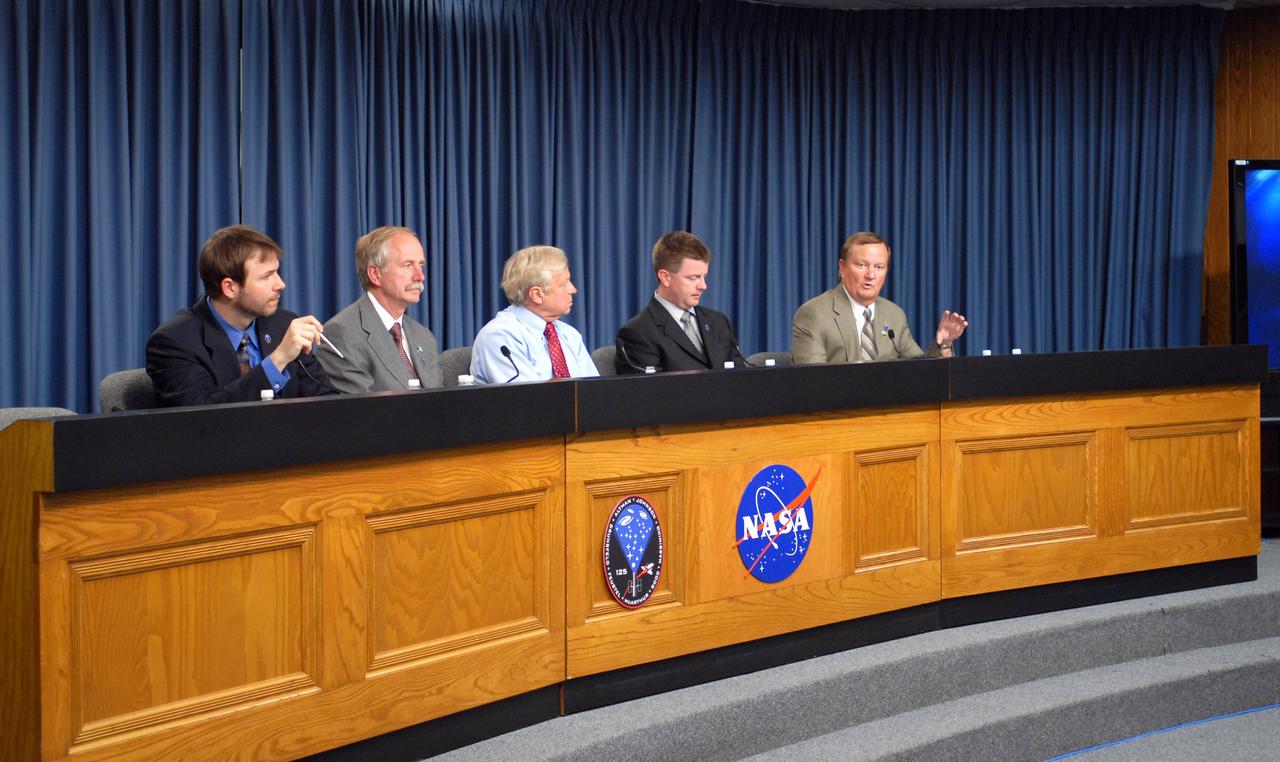
CAPE CANAVERAL, Fla. – During a press conference in the NASA News Auditorium at NASA's Kennedy Space Center in Florida, Shuttle Launch Director Mike Leinbach, right, answers a question from the media. Others from left are NASA Public Affairs Officer John Yembrick, who moderated, Associate Administrator for NASA's Space Operations Directorate William Gerstenmaier, Associate Administrator for NASA's Science Mission Directorate Ed Weiler and Launch Integration Manager Mike Moses. The conference followed the successful launch of space shuttle Atlantis on the STS-125 mission to service NASA's Hubble Space Telescope. Atlantis' 11-day flight will include five spacewalks to refurbish and upgrade the telescope with state-of-the-art science instruments that will expand Hubble's capabilities and extend its operational lifespan through at least 2014. The payload includes a Wide Field Camera 3, Fine Guidance Sensor and the Cosmic Origins Spectrograph. Photo credit: NASA/Jim Grossmann
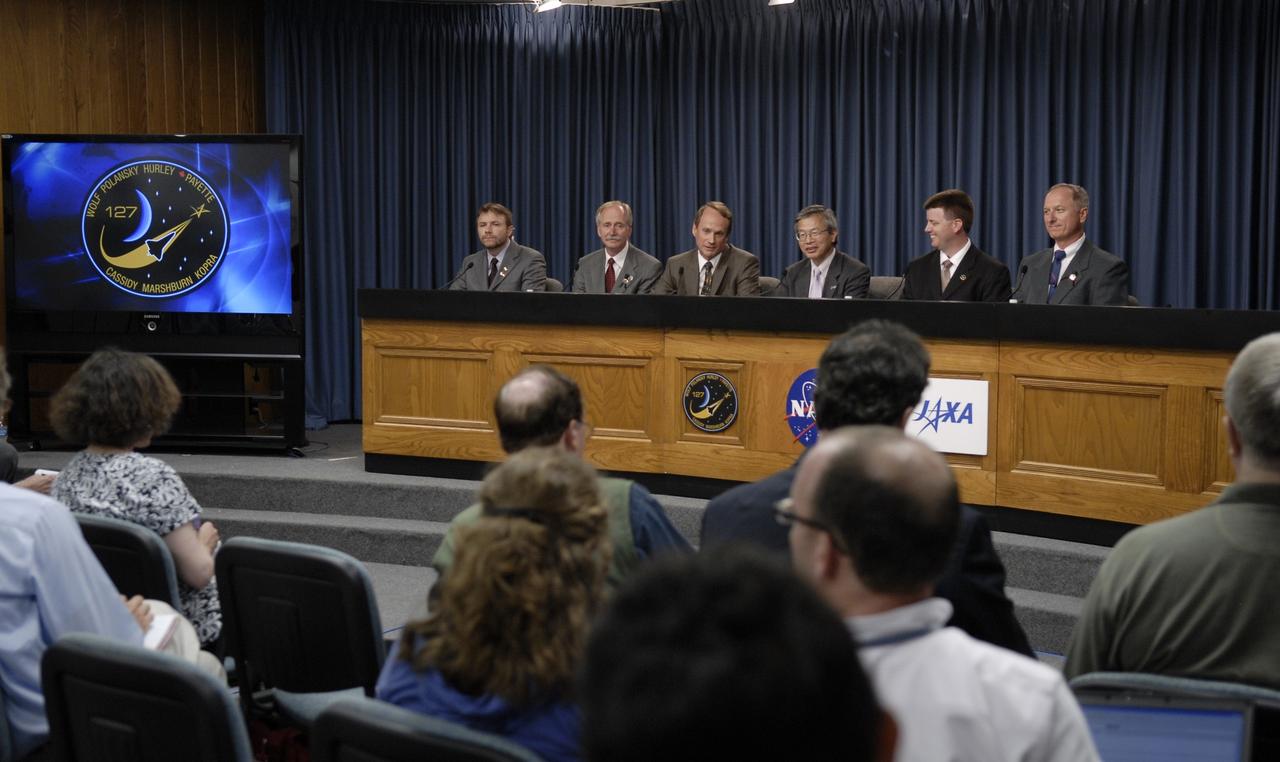
CAPE CANAVERAL, Fla. – Answering questions from the media at a press conference held at NASA's Kennedy Space Center in Florida are (second from left) Associate Administrator for NASA's Space Operations Directorate William Gerstenmaier, Canadian Space Agency President Steve MacLean, Japan Aerospace Exploration Agency Executive Director of Human Space Systems and Utilization Kuniaki Shiraki, Shuttle Launch Integration Manager Mike Moses and STS-127 Shuttle Launch Director Pete Nickolenko. At far left is moderator John Yembrick from NASA Public Affairs. The conference followed the successful launch of space shuttle Endeavour on the STS-127 mission. This was the sixth launch attempt for the STS-127 mission. The launch was scrubbed on June 13 and June 17 when a hydrogen gas leak occurred during tanking due to a misaligned Ground Umbilical Carrier Plate. The mission was postponed July 11, 12 and 13 due to weather conditions near the Shuttle Landing Facility at Kennedy that violated rules for launching, and lightning issues. Endeavour will deliver the Japanese Experiment Module's Exposed Facility and the Experiment Logistics Module-Exposed Section in the final of three flights dedicated to the assembly of the Japan Aerospace Exploration Agency's Kibo laboratory complex on the International Space Station. Photo credit: NASA/Kim Shiflett
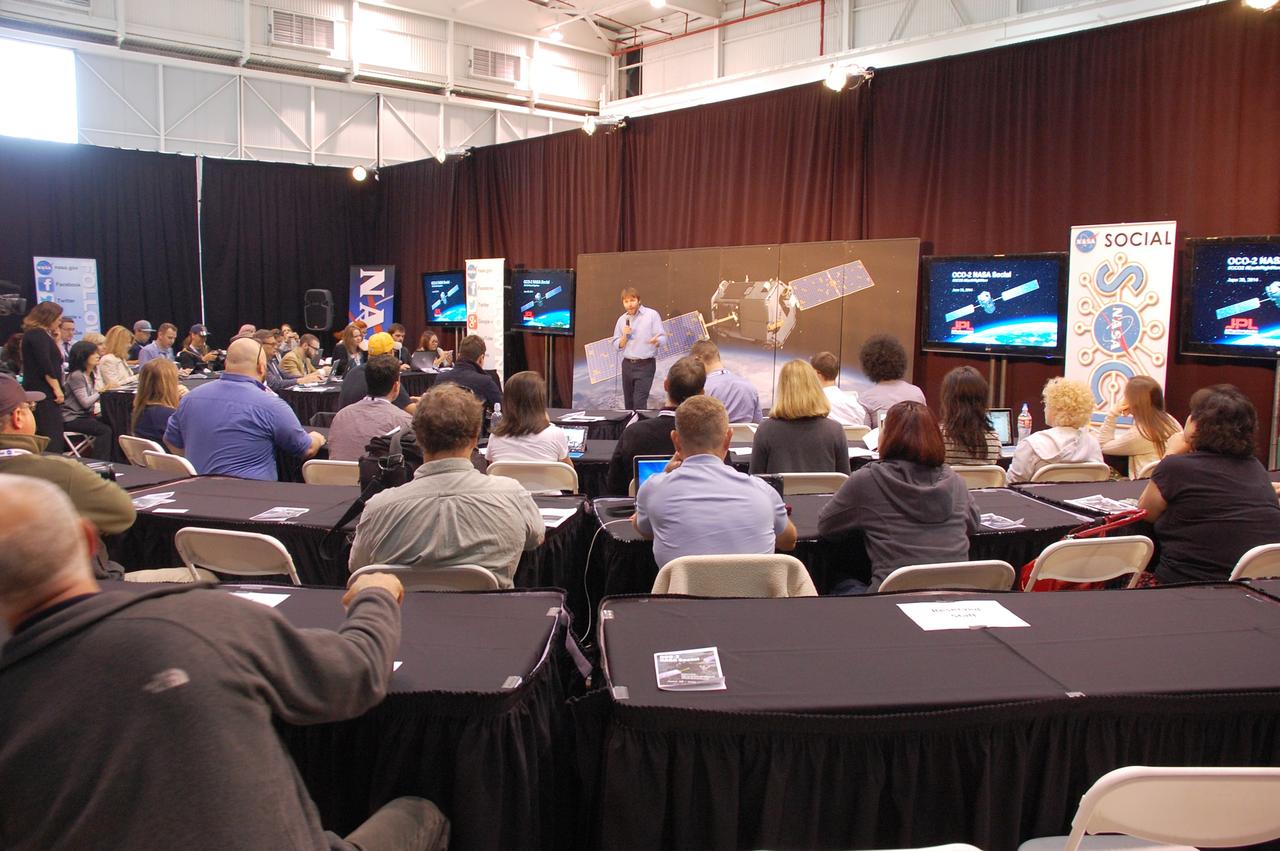
VANDENBERG AIR FORCE BASE, Calif. – Representatives of social media outlets are welcomed to Vandenberg Air Force Base in California for the launch of NASA's Orbiting Carbon Observatory-2, or OCO-2, by John Yembrick, NASA's social media manager. Launch of OCO-2 aboard a United Launch Alliance Delta II rocket from Space Launch Complex 2 is scheduled for 5:56 a.m. EDT on July 1. The social media users selected to attend the two-day event on June 30 and July 1 are given the same access as news media in an effort to align their experience with those of traditional media. OCO-2 is NASA’s first mission dedicated to studying atmospheric carbon dioxide, the leading human-produced greenhouse gas driving changes in Earth’s climate. OCO-2 will provide a new tool for understanding the human and natural sources of carbon dioxide emissions and the natural "sinks" that absorb carbon dioxide and help control its buildup. The observatory will measure the global geographic distribution of these sources and sinks and study their changes over time. To learn more about OCO-2, visit http://www.nasa.gov/oco2. Photo credit: NASA/Ben Smegelsky
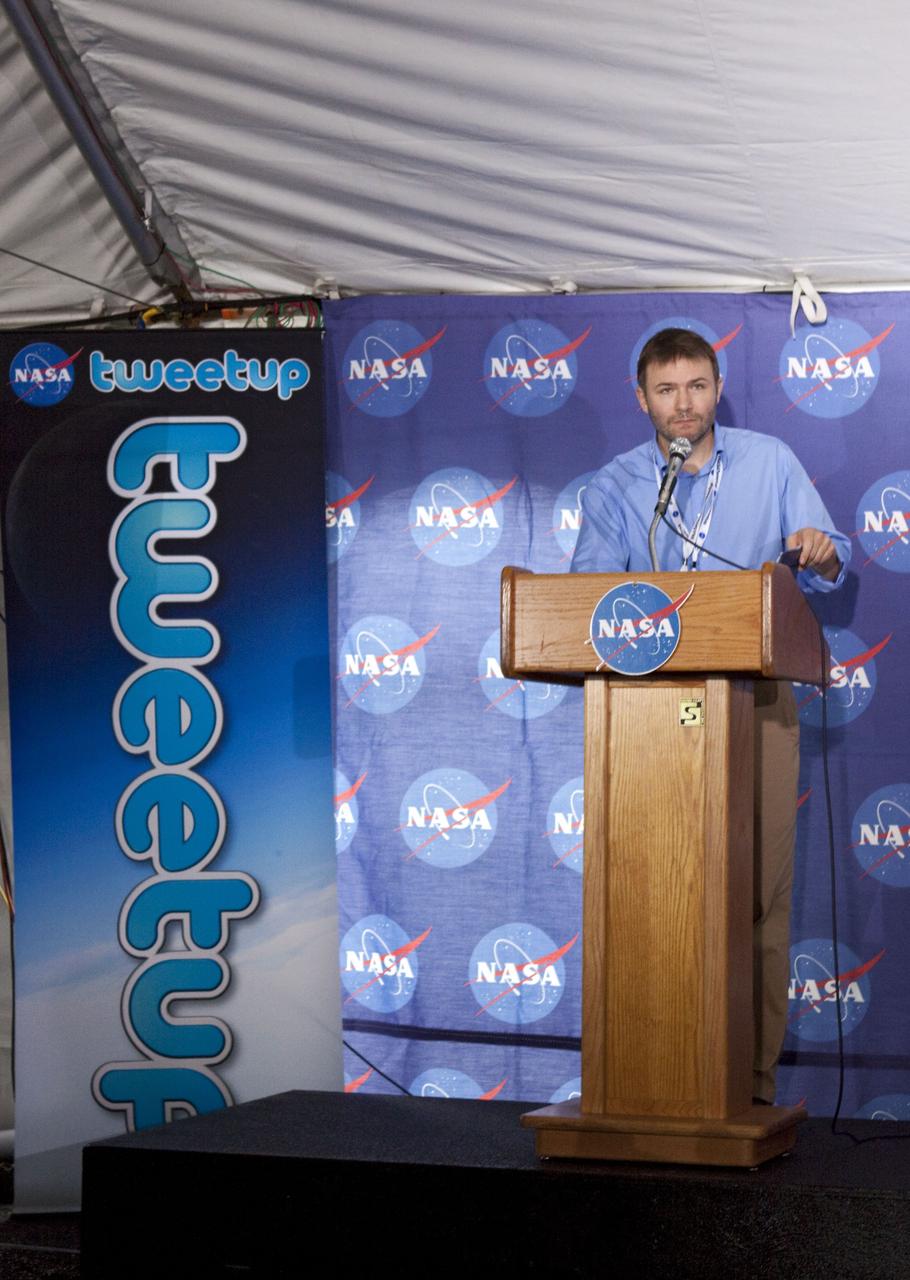
CAPE CANAVERAL, Fla. -- At Kennedy Space Center in Florida, NASA is hosting a Tweetup for 150 Twitter followers of space shuttle Atlantis' STS-135 mission to the International Space Station, selected from more than 5,500 online registrants. A Tweetup is an informal meeting of people who use the social messaging medium Twitter. This Tweetup is an opportunity to learn more about NASA, explore NASA's Kennedy Space Center in Florida and experience a space shuttle launch. Here, NASA Public Affairs Officer John Yembrick addresses the participants. Atlantis and its crew of four; Commander Chris Ferguson, Pilot Doug Hurley, Mission Specialists Sandy Magnus and Rex Walheim, are scheduled to lift off at 11:26 a.m. EDT on July 8 to deliver the Raffaello multi-purpose logistics module packed with supplies and spare parts to the station. Atlantis also will fly the Robotic Refueling Mission experiment that will investigate the potential for robotically refueling existing satellites in orbit. In addition, Atlantis will return with a failed ammonia pump module to help NASA better understand the failure mechanism and improve pump designs for future systems. STS-135 will be the 33rd flight of Atlantis, the 37th shuttle mission to the space station, and the 135th and final mission of NASA's Space Shuttle Program. For more information visit, www.nasa.gov/mission_pages/shuttle/shuttlemissions/sts135/index.html. Photo credit: NASA/Troy Cryder

VANDENBERG AFB, Calif. -- Speaking to NASA social media followers at Vandenberg Air Force Base, Calif., prior to the launch of the Landsat Data Continuity Mission satellite, from the left, are John Yembrick, social media manager at NASA, Dr. Thomas Loveland, senior scientist and co-chair of the Landsat Science Team U.S. Geological Survey Earth Resources Observation and Science Center, and Dr. Jim Irons, Landsat Data Continuity Mission project scientist from NASA's Goddard Space Flight Center. The Landsat Data Continuity Mission LDCM is the future of Landsat satellites. It will continue to obtain valuable data and imagery to be used in agriculture, education, business, science, and government. The Landsat Program provides repetitive acquisition of high resolution multispectral data of the Earth's surface on a global basis. The data from the Landsat spacecraft constitute the longest record of the Earth's continental surfaces as seen from space. It is a record unmatched in quality, detail, coverage, and value. Liftoff is planned for Feb. 11, 2013 aboard a United Launch Alliance Atlas V rocket. For more information, visit: http:__www.nasa.gov_mission_pages_landsat_main_index.html Photo credit: NASA_Kim Shiflett