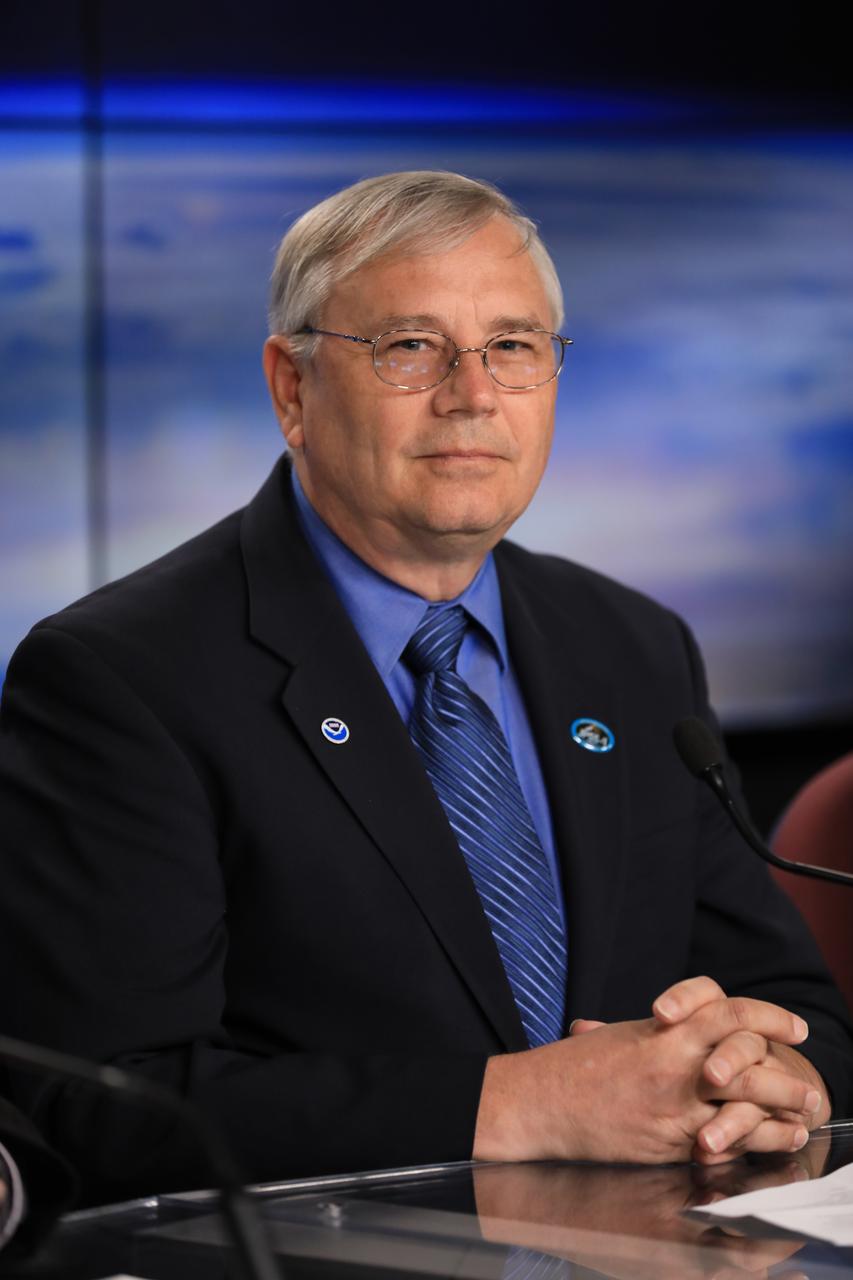
At Vandenberg Air Force Base in California, Greg Mandt, director of the NOAA Joint Polar Satellite System Program, speaks to members of the media at a prelaunch news conference for the Joint Polar Satellite System-1, or JPSS-1. Built by Ball Aerospace and Technologies Corp. of Boulder, Colorado, JPSS is the first in a series four next-generation environmental satellites in a collaborative program between the NOAA and NASA. Liftoff atop a United Launch Alliance Delta II rocket is scheduled to take place from Vandenberg's Space Launch Complex 2 at 1:47 a.m. PST (4:47 a.m. EST), on Nov. 14, 2017.
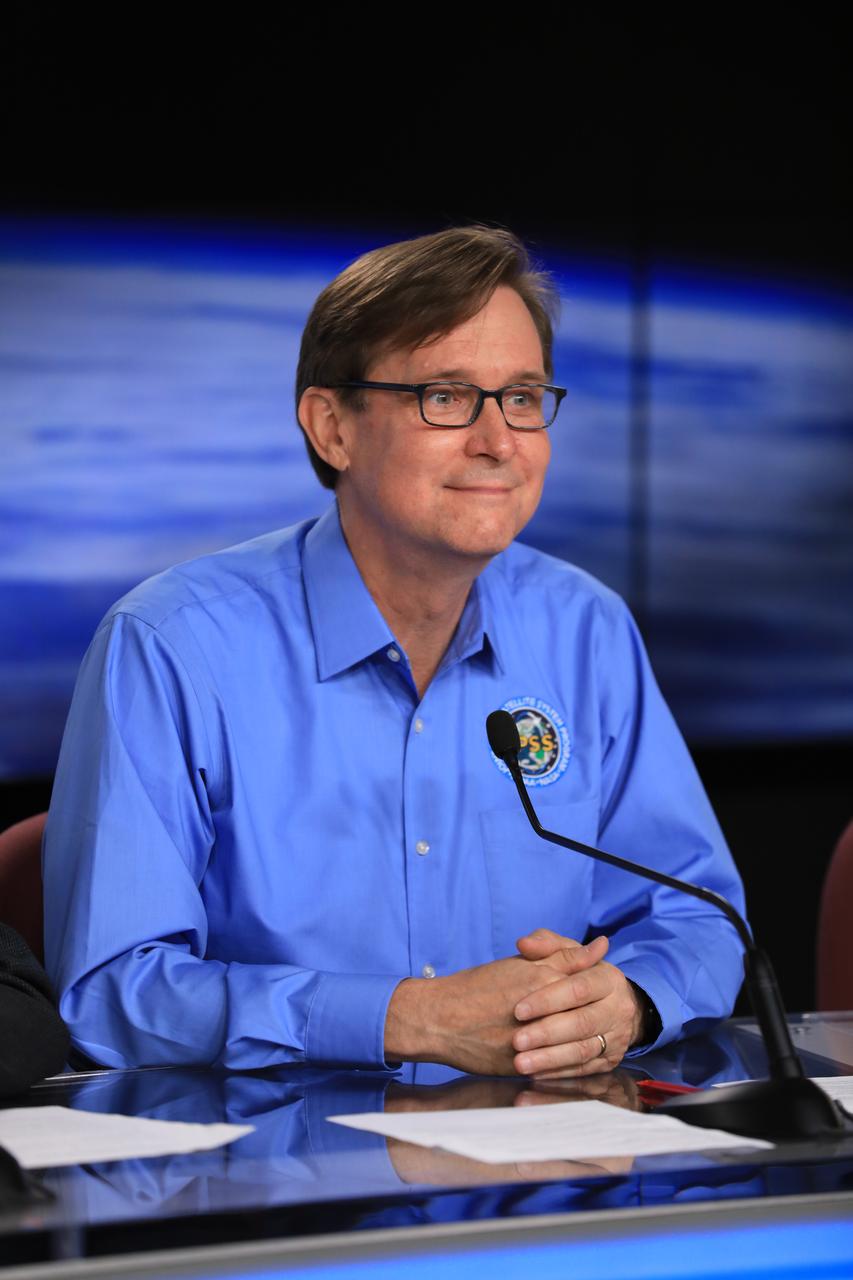
At Vandenberg Air Force Base in California, James Gleason, NASA senior project scientist for the Joint Polar Satellite System, speaks to members of the media during a briefing focused on research planned for the Joint Polar Satellite System-1, or JPSS-1. Built by Ball Aerospace and Technologies Corp. of Boulder, Colorado, JPSS is the first in a series four next-generation environmental satellites in a collaborative program between the NOAA and NASA. Liftoff atop a United Launch Alliance Delta II rocket is scheduled to take place from Vandenberg's Space Launch Complex 2 at 1:47 a.m. PST (4:47 a.m. EST), on Nov. 14, 2017.

At Vandenberg Air Force Base in California, Mitch Goldberg, NOAA's chief program scientist for the Joint Polar Satellite System, speaks to members of the media during a briefing focused on research planned for the Joint Polar Satellite System-1, or JPSS-1. Built by Ball Aerospace and Technologies Corp. of Boulder, Colorado, JPSS is the first in a series four next-generation environmental satellites in a collaborative program between the NOAA and NASA. Liftoff atop a United Launch Alliance Delta II rocket is scheduled to take place from Vandenberg's Space Launch Complex 2 at 1:47 a.m. PST (4:47 a.m. EST), on Nov. 14, 2017.

At Vandenberg Air Force Base in California, Mitch Goldberg, NOAA's chief program scientist for the Joint Polar Satellite System, speaks to members of the media during a briefing focused on research planned for the Joint Polar Satellite System-1, or JPSS-1. Built by Ball Aerospace and Technologies Corp. of Boulder, Colorado, JPSS is the first in a series four next-generation environmental satellites in a collaborative program between the NOAA and NASA. Liftoff atop a United Launch Alliance Delta II rocket is scheduled to take place from Vandenberg's Space Launch Complex 2 at 1:47 a.m. PST (4:47 a.m. EST), on Nov. 14, 2017.

At Vandenberg Air Force Base in California, NASA and industry leaders speak to members of the media at a prelaunch news conference for the Joint Polar Satellite System-1, or JPSS-1. Participants, from left, are Steve Volz, director of NOAA’s Satellite and Information Service, Greg Mandt, director of the NOAA Joint Polar Satellite System Program, and Sandra Smalley, director of the Joint Agency Satellite Division at NASA Headquarters. Built by Ball Aerospace and Technologies Corp. of Boulder, Colorado, JPSS is the first in a series four next-generation environmental satellites in a collaborative program between the NOAA and NASA. Liftoff atop a United Launch Alliance Delta II rocket is scheduled to take place from Vandenberg's Space Launch Complex 2 at 1:47 a.m. PST (4:47 a.m. EST), on Nov. 14, 2017.

At Vandenberg Air Force Base in California, NASA and industry leaders speak to members of the media at a prelaunch news conference for the Joint Polar Satellite System-1, or JPSS-1. Participants, from left, are Steve Volz, director of NOAA’s Satellite and Information Service, Greg Mandt, director of the NOAA Joint Polar Satellite System Program, Sandra Smalley, director of the Joint Agency Satellite Division at NASA Headquarters, Omar Baez, NASA launch director, and Scott Messer, United Launch Alliance program manager for NASA missions. Built by Ball Aerospace and Technologies Corp. of Boulder, Colorado, JPSS is the first in a series four next-generation environmental satellites in a collaborative program between the NOAA and NASA. Liftoff atop a United Launch Alliance Delta II rocket is scheduled to take place from Vandenberg's Space Launch Complex 2 at 1:47 a.m. PST (4:47 a.m. EST), on Nov. 14, 2017.
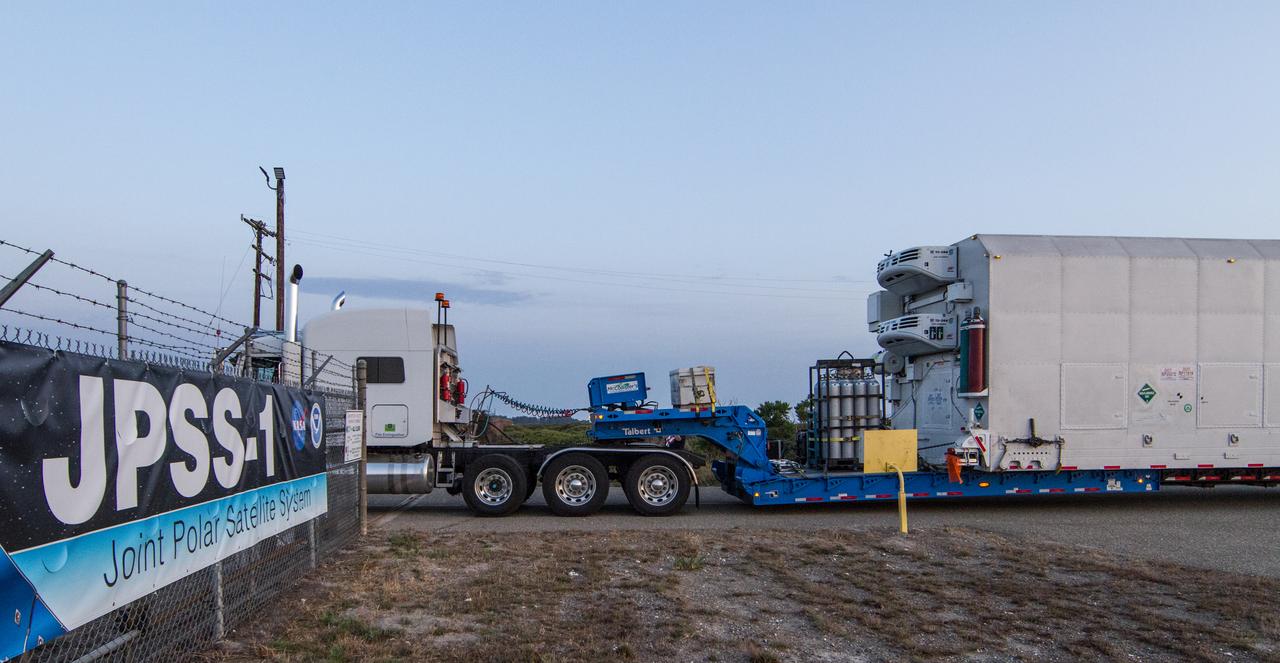
The Joint Polar Satellite System-1, or JPSS-1, arrives at the Astrotech Processing Facility at Vandenberg Air Force Base in California. JPSS is the first in a series four next-generation environmental satellites in a collaborative program between the National Oceanic and Atmospheric Administration (NOAA) and NASA. The satellite is scheduled to liftoff Nov. 10, 2017 atop a United Launch Alliance Delta II rocket.
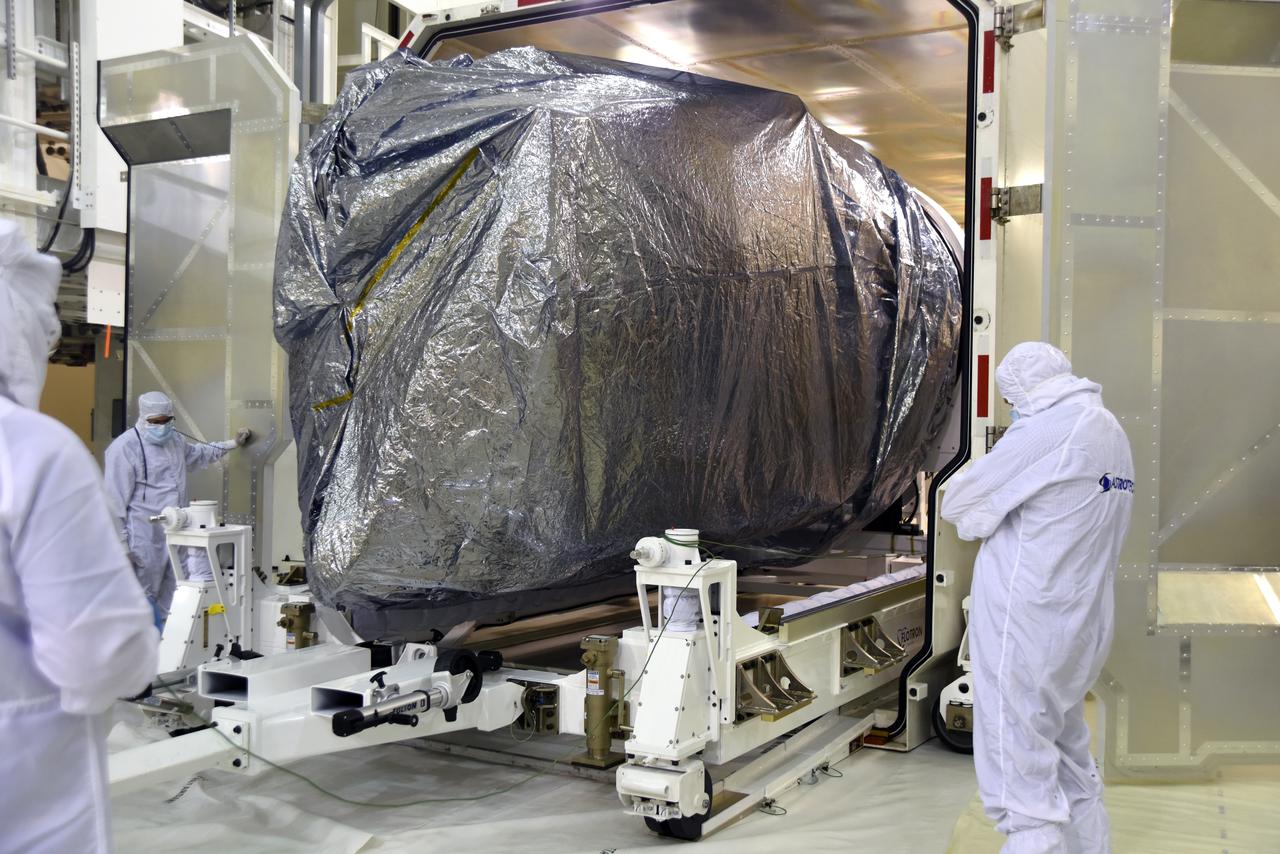
Inside the Astrotech Processing Facility at Vandenberg Air Force Base in California, technicians and engineers remove the Joint Polar Satellite System-1, or JPSS-1 from it shipping container. JPSS is the first in a series four next-generation environmental satellites in a collaborative program between the National Oceanic and Atmospheric Administration (NOAA) and NASA. The satellite is scheduled to liftoff Nov. 10, 2017 atop a United Launch Alliance Delta II rocket.

Inside the Astrotech Processing Facility at Vandenberg Air Force Base in California, technicians and engineers have completed removal of the Joint Polar Satellite System-1, or JPSS-1 from it shipping container. JPSS is the first in a series four next-generation environmental satellites in a collaborative program between the National Oceanic and Atmospheric Administration (NOAA) and NASA. The satellite is scheduled to liftoff Nov. 10, 2017 atop a United Launch Alliance Delta II rocket.
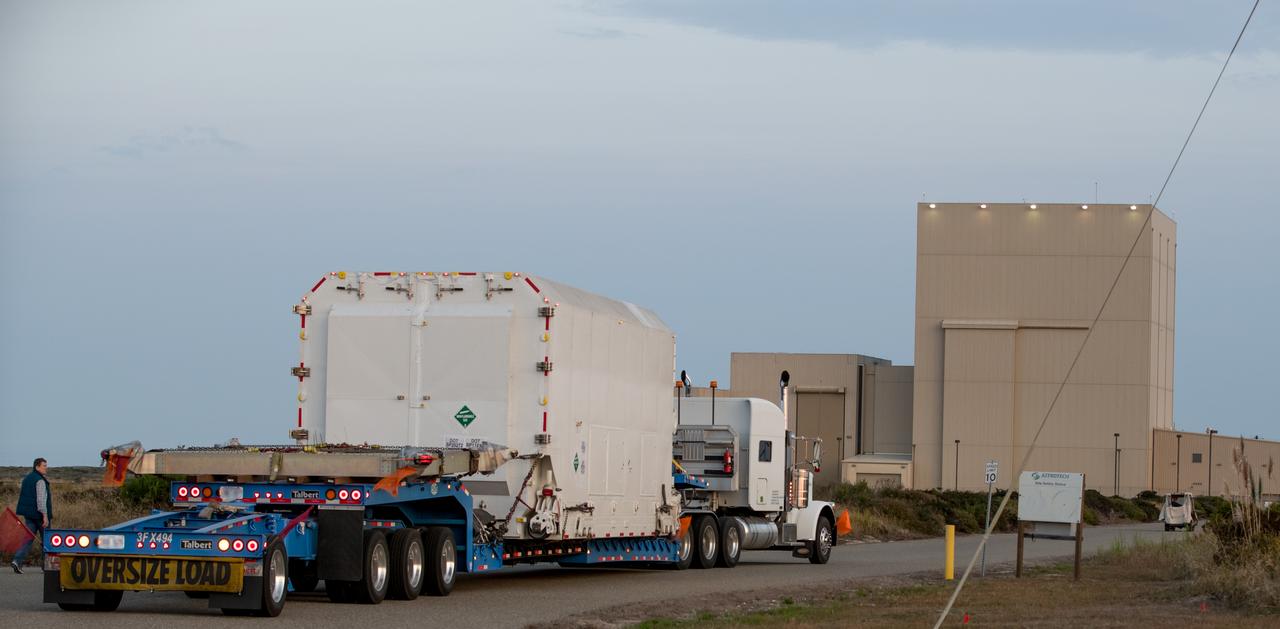
The Joint Polar Satellite System-1, or JPSS-1, arrives at the Astrotech Processing Facility at Vandenberg Air Force Base in California. JPSS is the first in a series four next-generation environmental satellites in a collaborative program between the National Oceanic and Atmospheric Administration (NOAA) and NASA. The satellite is scheduled to liftoff Nov. 10, 2017 atop a United Launch Alliance Delta II rocket.
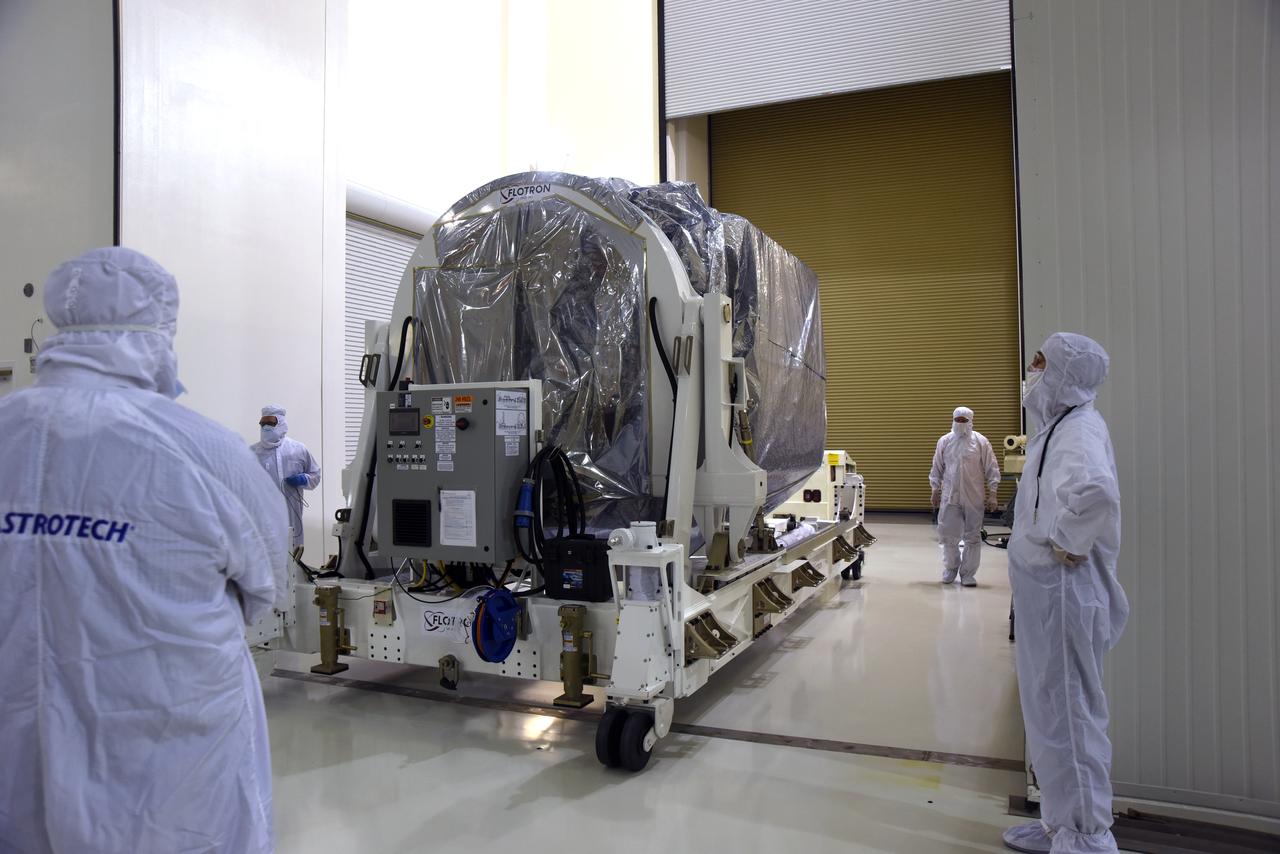
Inside the Astrotech Processing Facility at Vandenberg Air Force Base in California, technicians and engineers remove the Joint Polar Satellite System-1, or JPSS-1 from it shipping container. JPSS is the first in a series four next-generation environmental satellites in a collaborative program between the National Oceanic and Atmospheric Administration (NOAA) and NASA. The satellite is scheduled to liftoff Nov. 10, 2017 atop a United Launch Alliance Delta II rocket.
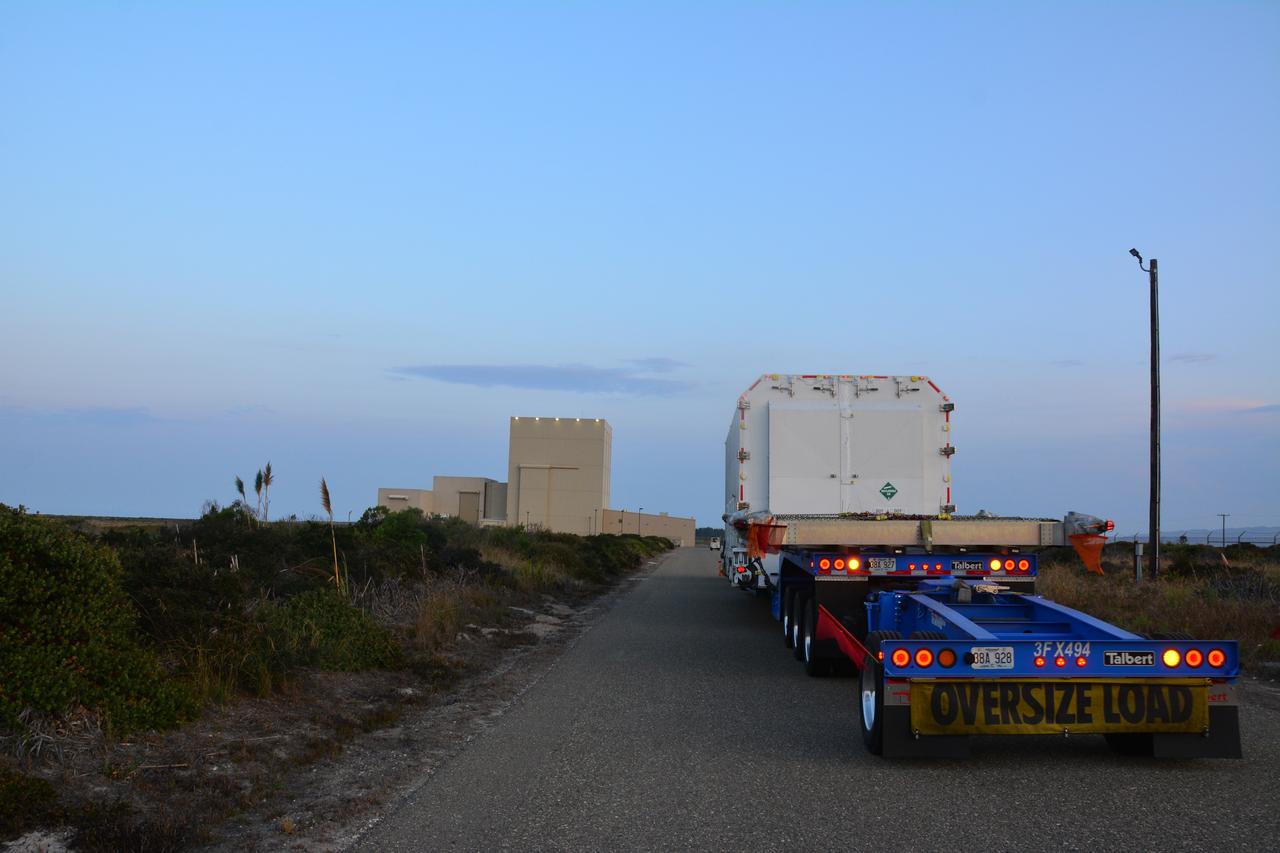
The Joint Polar Satellite System-1, or JPSS-1, arrives at the Astrotech Processing Facility at Vandenberg Air Force Base in California. JPSS is the first in a series four next-generation environmental satellites in a collaborative program between the National Oceanic and Atmospheric Administration (NOAA) and NASA. The satellite is scheduled to liftoff later this year atop a United Launch Alliance Delta II rocket.
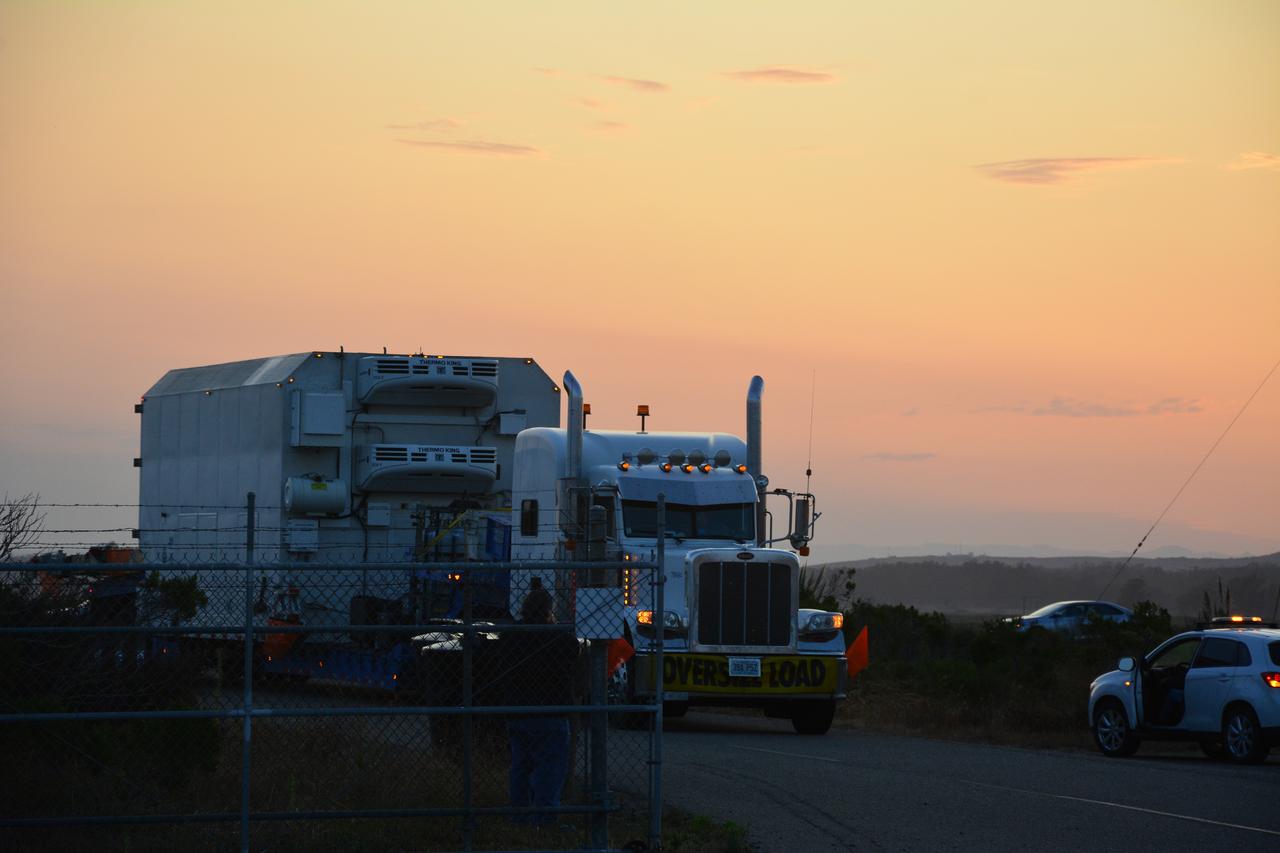
The Joint Polar Satellite System-1, or JPSS-1, arrives at the Astrotech Processing Facility at Vandenberg Air Force Base in California. JPSS is the first in a series four next-generation environmental satellites in a collaborative program between the National Oceanic and Atmospheric Administration (NOAA) and NASA. The satellite is scheduled to liftoff later this year atop a United Launch Alliance Delta II rocket.

Technicians at Vandenberg Air Force Base in California inspect the shipping container for the Joint Polar Satellite System-1, or JPSS-1, as it arrives at the Astrotech Processing Facility. JPSS is the first in a series four next-generation environmental satellites in a collaborative program between the National Oceanic and Atmospheric Administration (NOAA) and NASA. The satellite is scheduled to liftoff Nov. 10, 2017 atop a United Launch Alliance Delta II rocket.
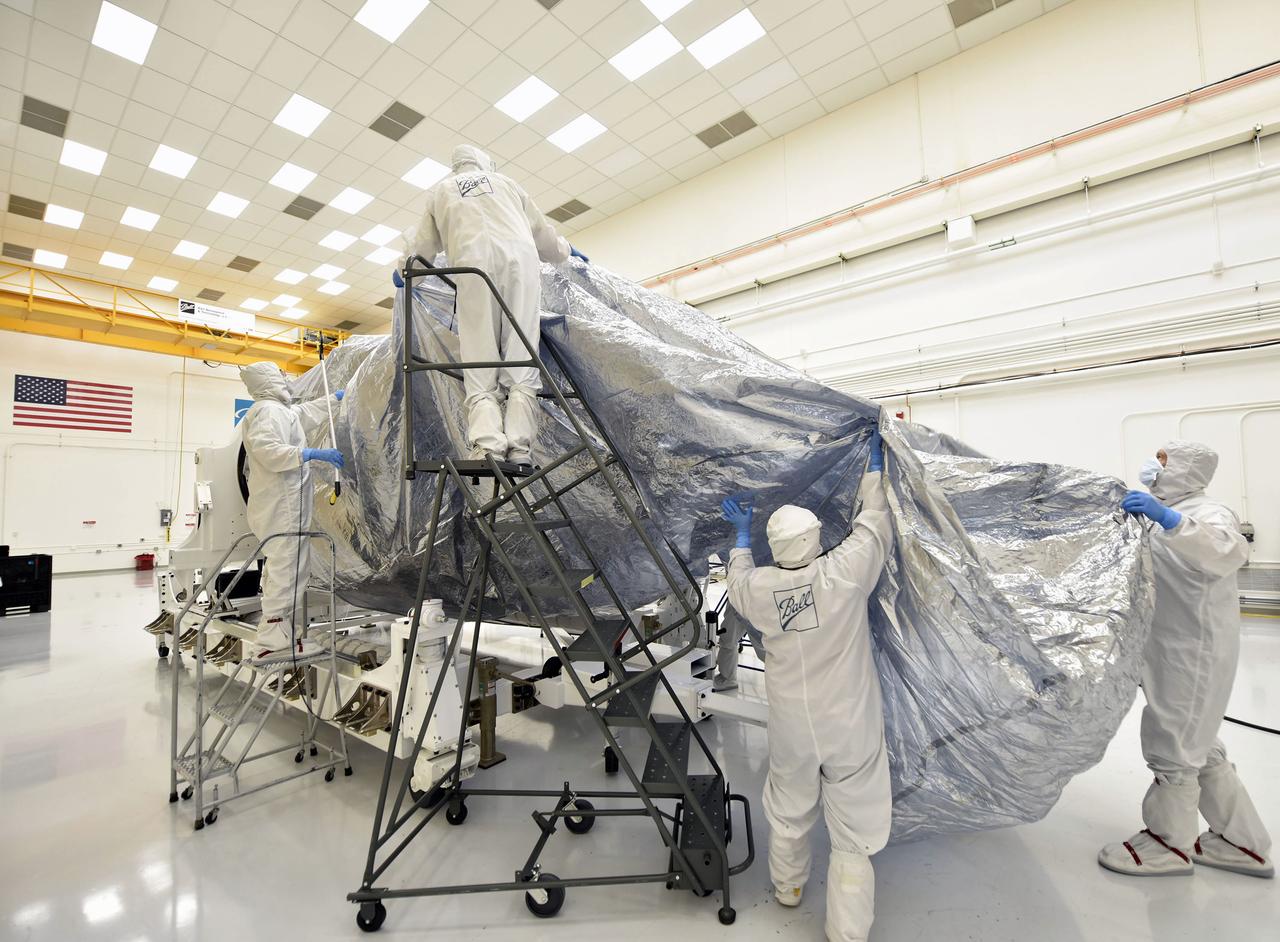
Inside the Astrotech Processing Facility at Vandenberg Air Force Base in California, technicians and engineers remove protective wrapping from the Joint Polar Satellite System-1, or JPSS-1. JPSS is the first in a series four next-generation environmental satellites in a collaborative program between the National Oceanic and Atmospheric Administration (NOAA) and NASA. The satellite is scheduled to liftoff Nov. 10, 2017 atop a United Launch Alliance Delta II rocket.
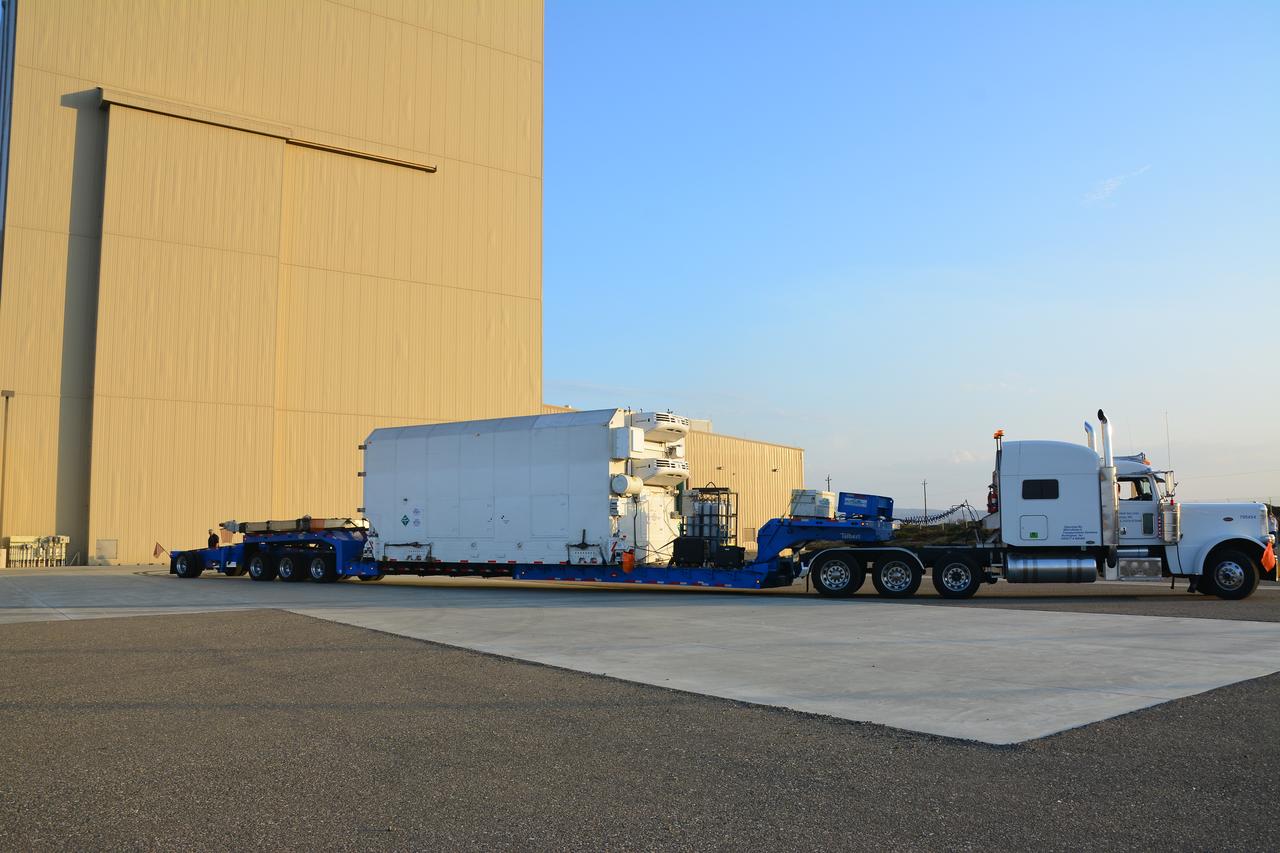
The Joint Polar Satellite System-1, or JPSS-1, arrives at the Astrotech Processing Facility at Vandenberg Air Force Base in California. JPSS is the first in a series four next-generation environmental satellites in a collaborative program between the National Oceanic and Atmospheric Administration (NOAA) and NASA. The satellite is scheduled to liftoff later this year atop a United Launch Alliance Delta II rocket.
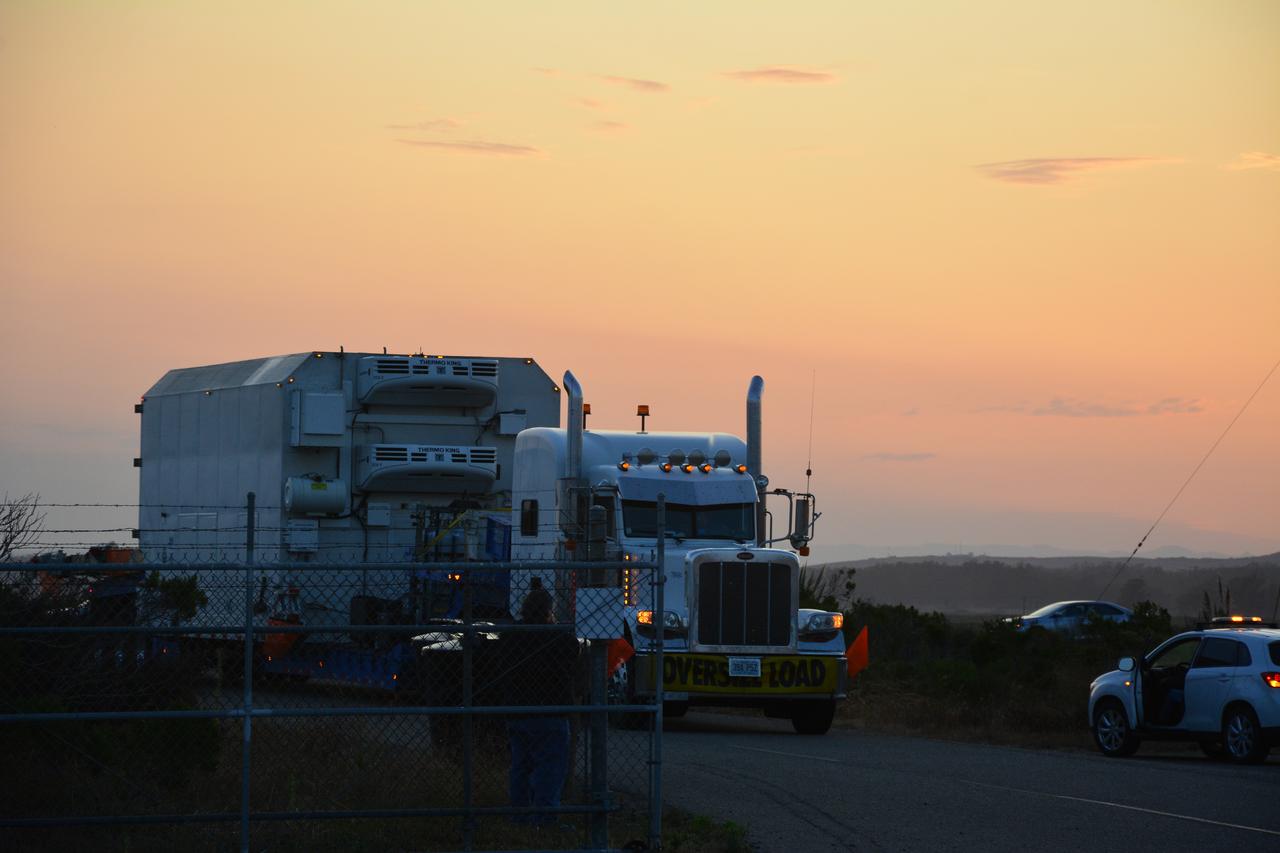
The Joint Polar Satellite System-1, or JPSS-1, arrives at the Astrotech Processing Facility at Vandenberg Air Force Base in California. JPSS is the first in a series four next-generation environmental satellites in a collaborative program between the National Oceanic and Atmospheric Administration (NOAA) and NASA. The satellite is scheduled to liftoff later this year atop a United Launch Alliance Delta II rocket.
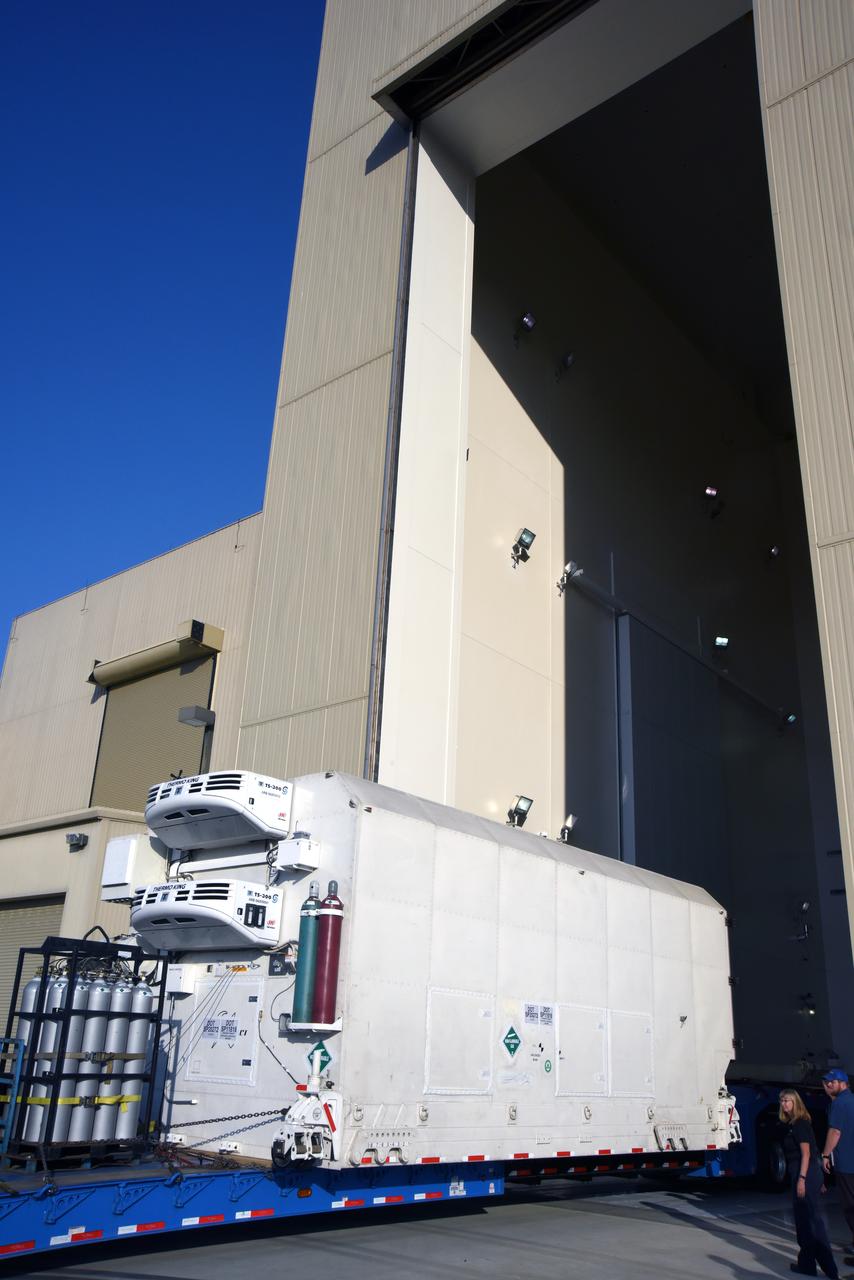
The Joint Polar Satellite System-1, or JPSS-1, arrives at the Astrotech Processing Facility at Vandenberg Air Force Base in California. JPSS is the first in a series four next-generation environmental satellites in a collaborative program between the National Oceanic and Atmospheric Administration (NOAA) and NASA. The satellite is scheduled to liftoff Nov. 10, 2017 atop a United Launch Alliance Delta II rocket.
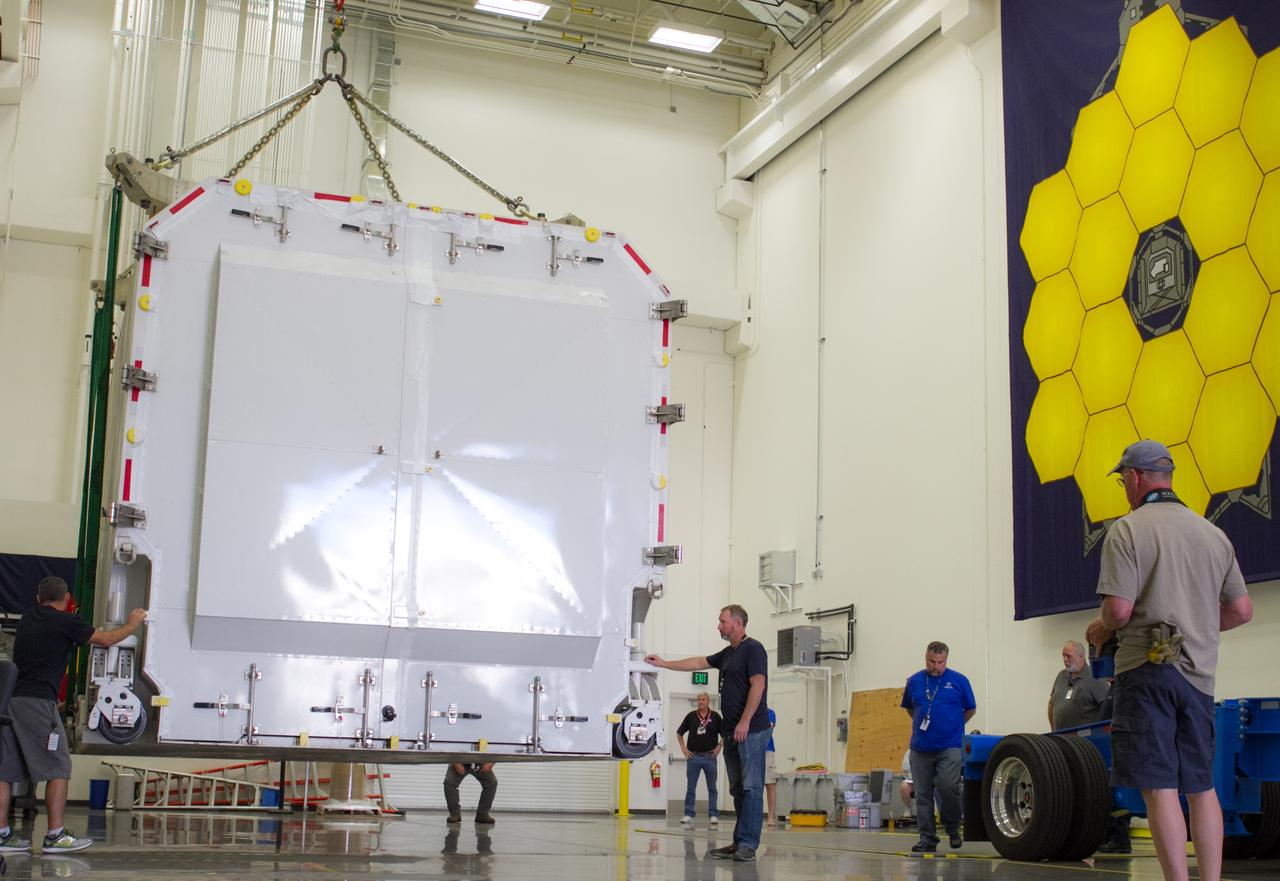
Still packed inside its shipping container, the Joint Polar Satellite System-1, or JPSS-1, has just arrived at the Astrotech Processing Facility at Vandenberg Air Force Base in California. JPSS is the first in a series four next-generation environmental satellites in a collaborative program between the National Oceanic and Atmospheric Administration (NOAA) and NASA. The satellite is scheduled to liftoff Nov. 10, 2017 atop a United Launch Alliance Delta II rocket.
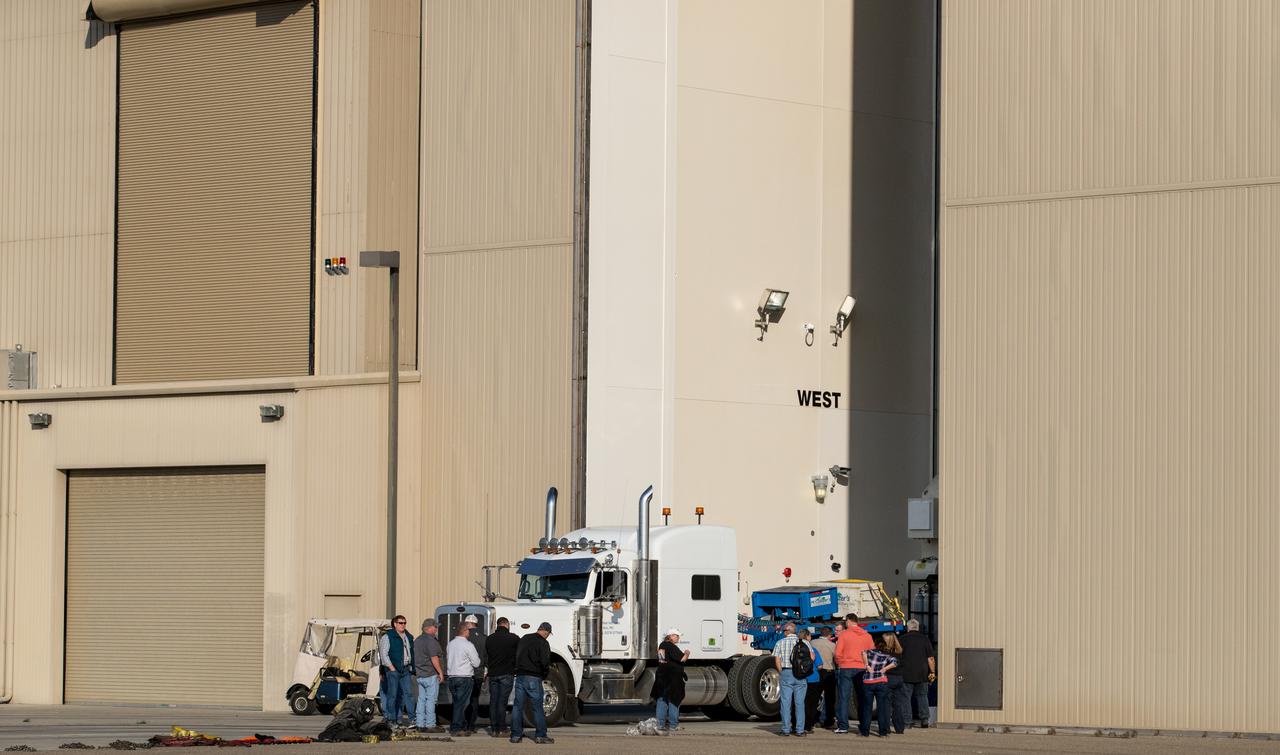
The Joint Polar Satellite System-1, or JPSS-1, arrives at the Astrotech Processing Facility at Vandenberg Air Force Base in California. JPSS is the first in a series four next-generation environmental satellites in a collaborative program between the National Oceanic and Atmospheric Administration (NOAA) and NASA. The satellite is scheduled to liftoff Nov. 10, 2017 atop a United Launch Alliance Delta II rocket.
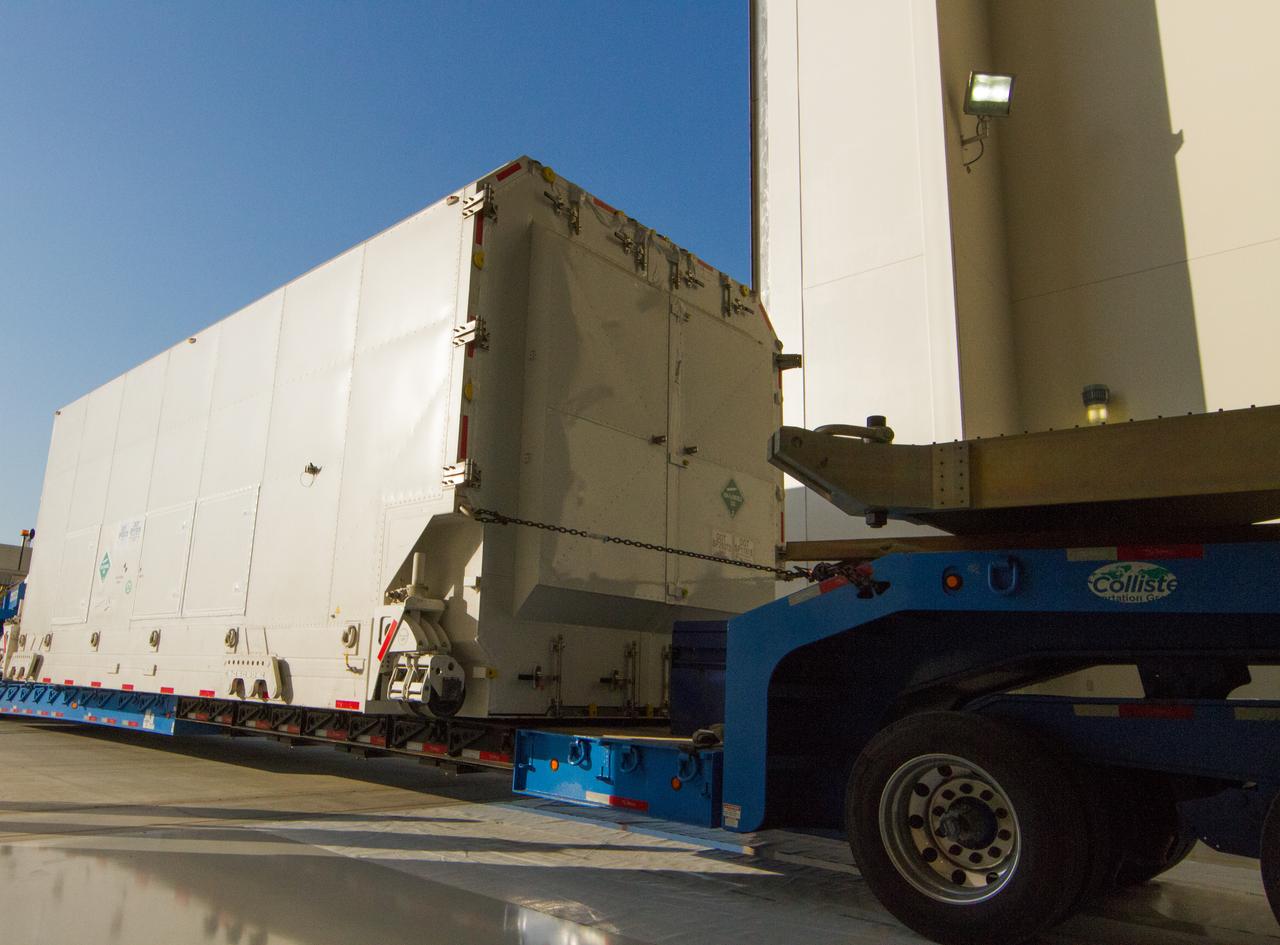
The Joint Polar Satellite System-1, or JPSS-1, arrives at the Astrotech Processing Facility at Vandenberg Air Force Base in California. JPSS is the first in a series four next-generation environmental satellites in a collaborative program between the National Oceanic and Atmospheric Administration (NOAA) and NASA. The satellite is scheduled to liftoff Nov. 10, 2017 atop a United Launch Alliance Delta II rocket.
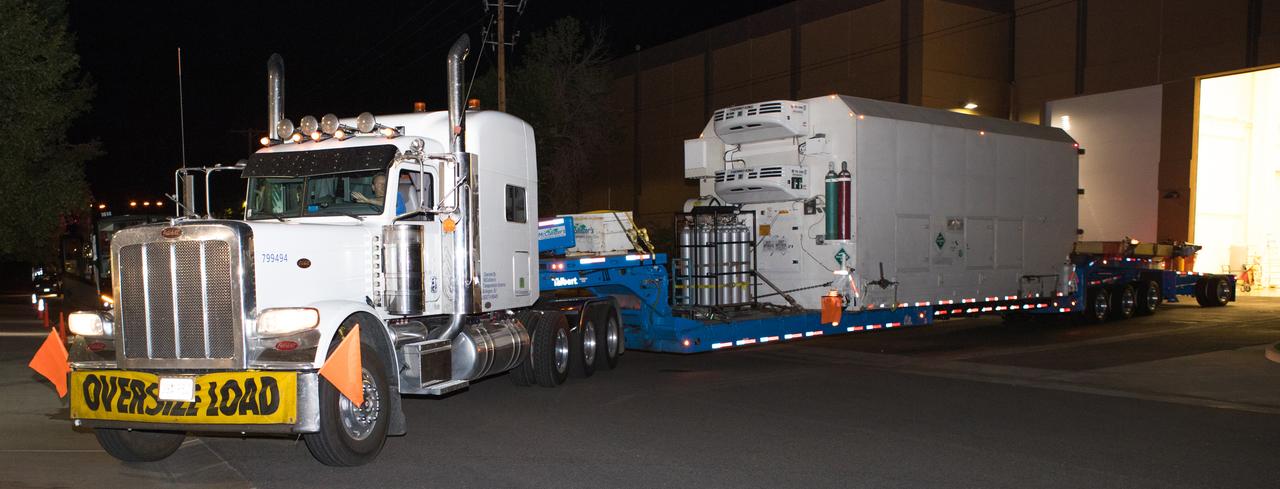
The Joint Polar Satellite System-1, or JPSS-1, arrives at the Astrotech Processing Facility at Vandenberg Air Force Base in California. JPSS is the first in a series four next-generation environmental satellites in a collaborative program between the National Oceanic and Atmospheric Administration (NOAA) and NASA. The satellite is scheduled to liftoff Nov. 10, 2017 atop a United Launch Alliance Delta II rocket.
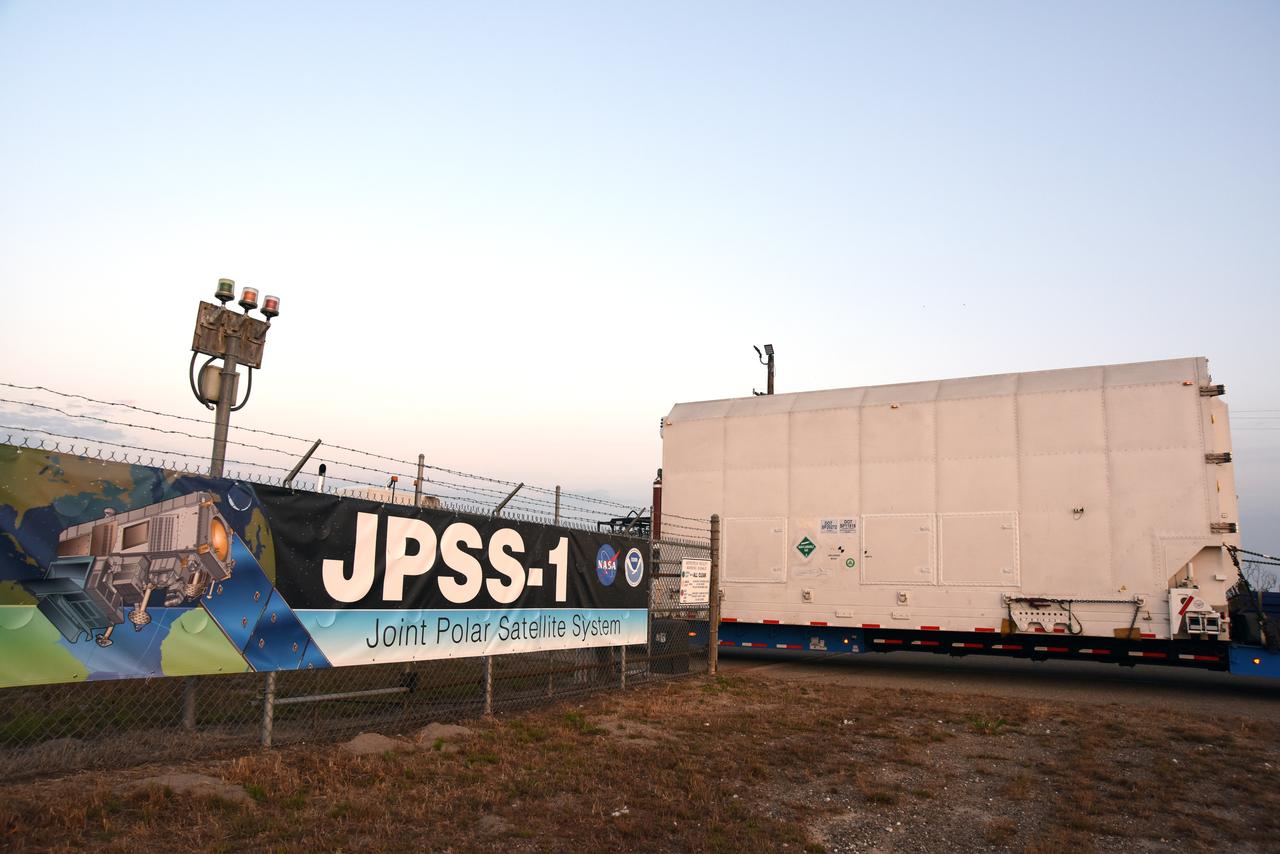
The Joint Polar Satellite System-1, or JPSS-1, arrives at the Astrotech Processing Facility at Vandenberg Air Force Base in California. JPSS is the first in a series four next-generation environmental satellites in a collaborative program between the National Oceanic and Atmospheric Administration (NOAA) and NASA. The satellite is scheduled to liftoff Nov. 10, 2017 atop a United Launch Alliance Delta II rocket.
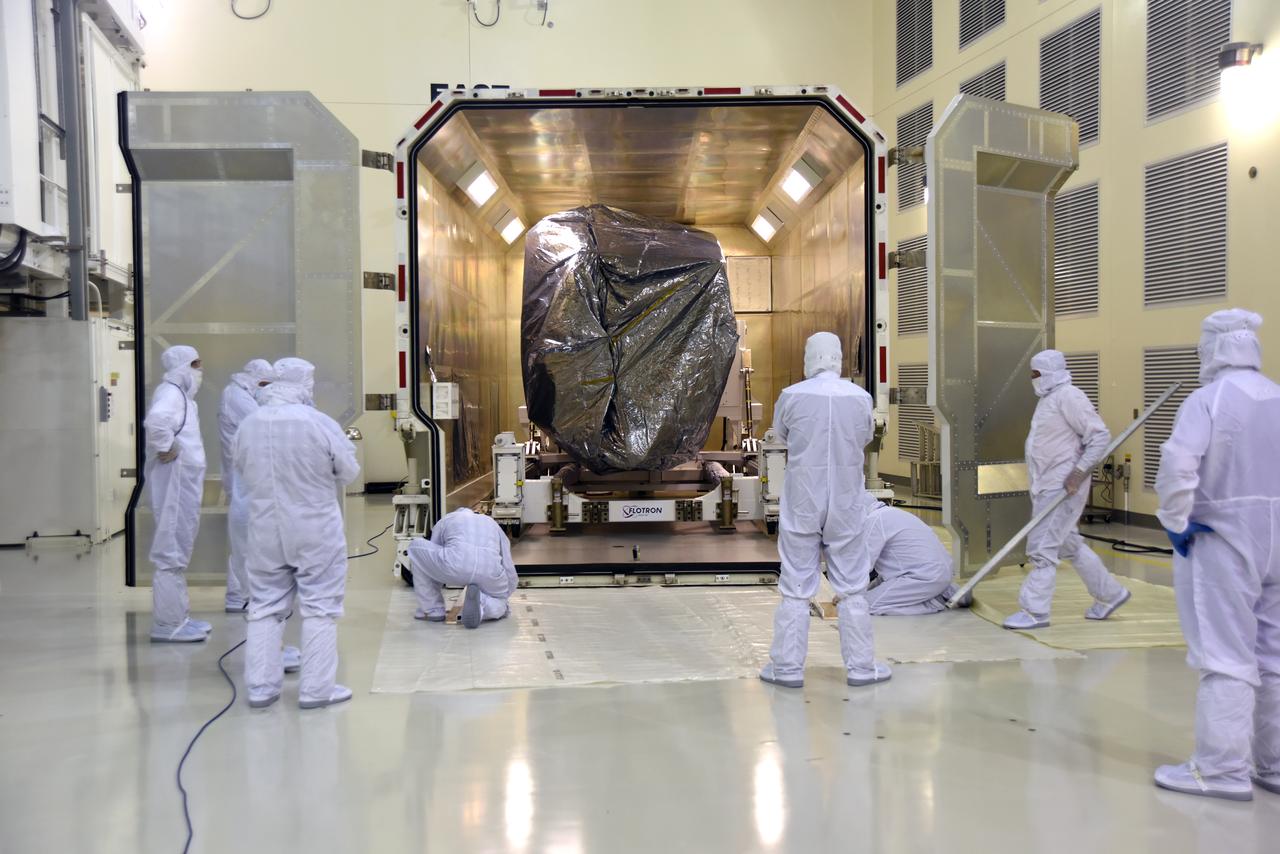
Inside the Astrotech Processing Facility at Vandenberg Air Force Base in California, technicians and engineers remove the Joint Polar Satellite System-1, or JPSS-1 from it shipping container. JPSS is the first in a series four next-generation environmental satellites in a collaborative program between the National Oceanic and Atmospheric Administration (NOAA) and NASA. The satellite is scheduled to liftoff Nov. 10, 2017 atop a United Launch Alliance Delta II rocket.
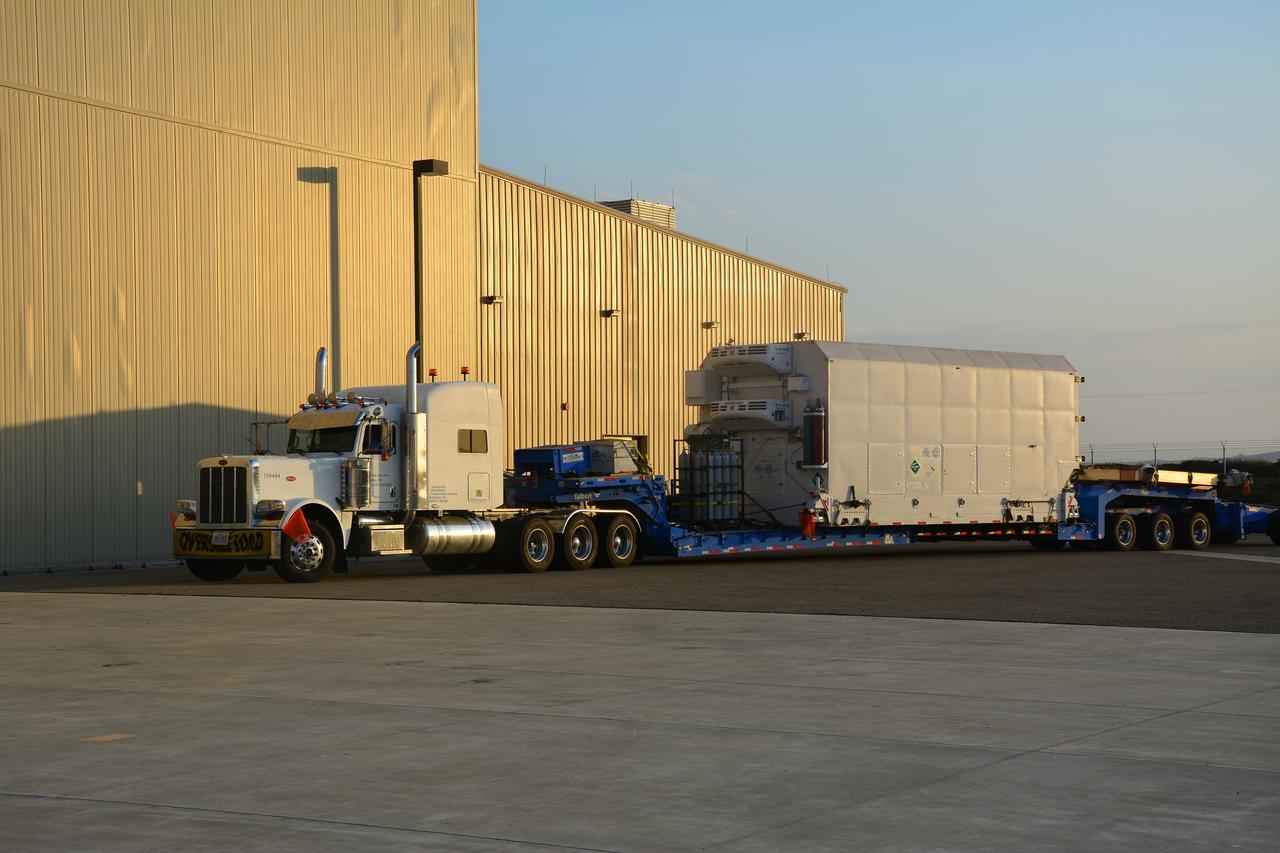
The Joint Polar Satellite System-1, or JPSS-1, arrives at the Astrotech Processing Facility at Vandenberg Air Force Base in California. JPSS is the first in a series four next-generation environmental satellites in a collaborative program between the National Oceanic and Atmospheric Administration (NOAA) and NASA. The satellite is scheduled to liftoff later this year atop a United Launch Alliance Delta II rocket.
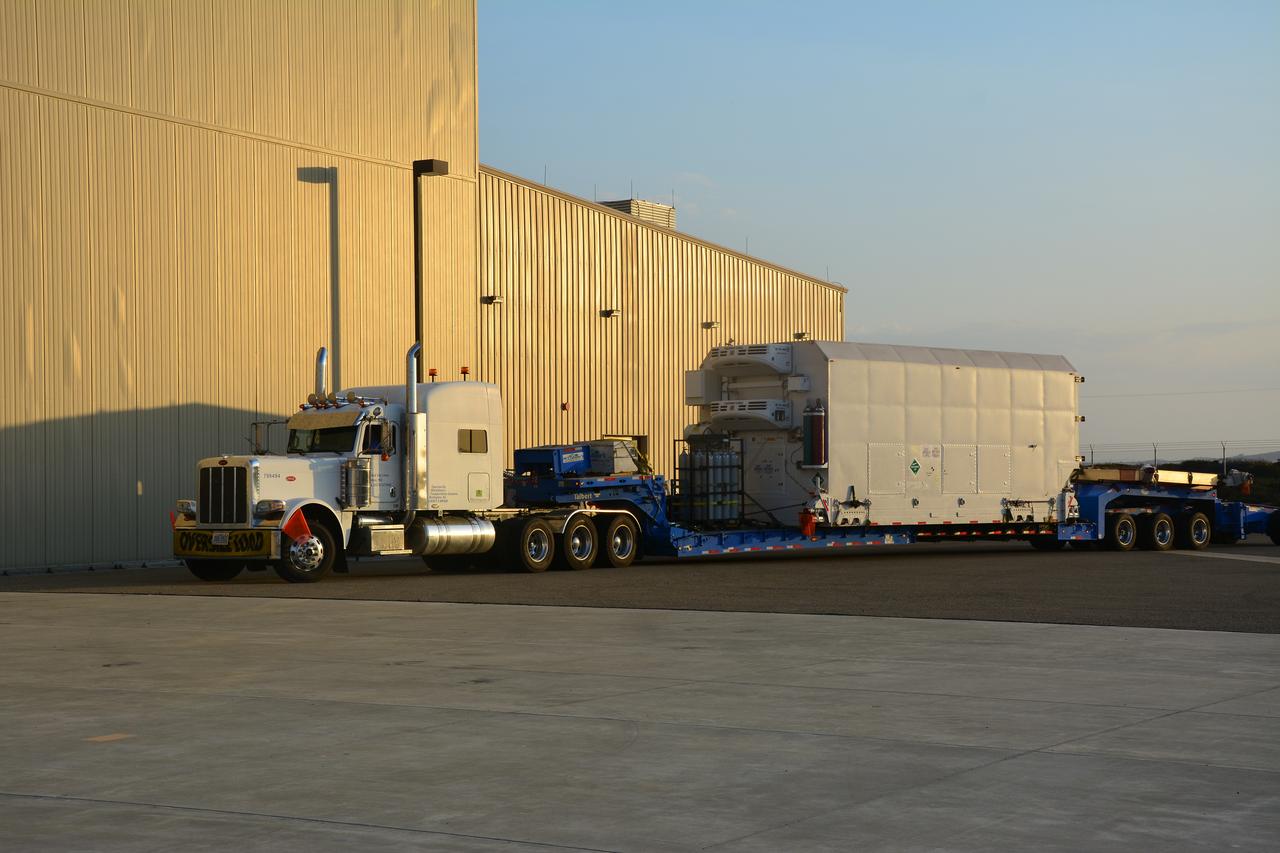
The Joint Polar Satellite System-1, or JPSS-1, arrives at the Astrotech Processing Facility at Vandenberg Air Force Base in California. JPSS is the first in a series four next-generation environmental satellites in a collaborative program between the National Oceanic and Atmospheric Administration (NOAA) and NASA. The satellite is scheduled to liftoff later this year atop a United Launch Alliance Delta II rocket.
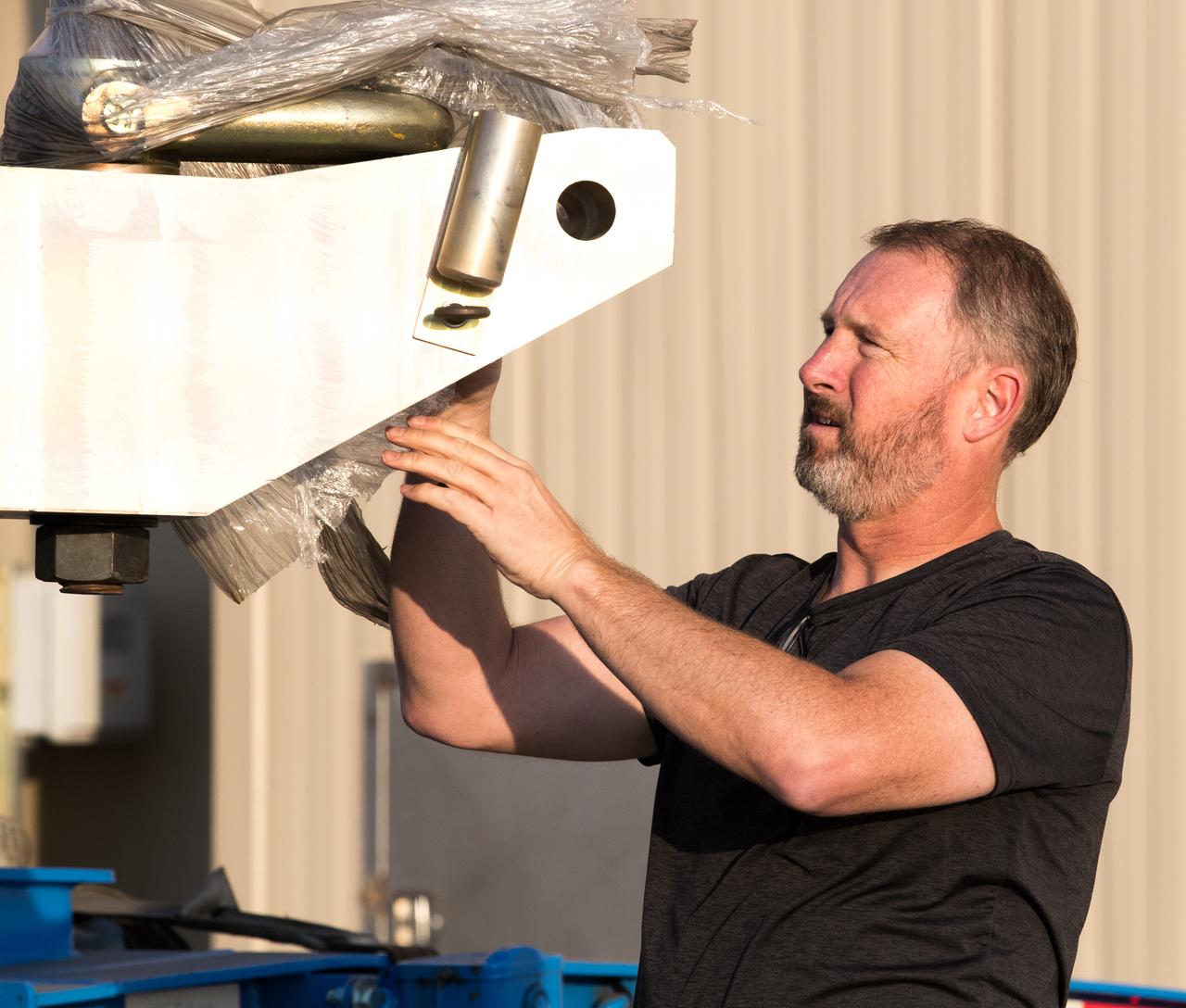
A technician at Vandenberg Air Force Base in California inspects the shipping container for the Joint Polar Satellite System-1, or JPSS-1, as it arrives at the Astrotech Processing Facility. JPSS is the first in a series four next-generation environmental satellites in a collaborative program between the National Oceanic and Atmospheric Administration (NOAA) and NASA. The satellite is scheduled to liftoff Nov. 10, 2017 atop a United Launch Alliance Delta II rocket.
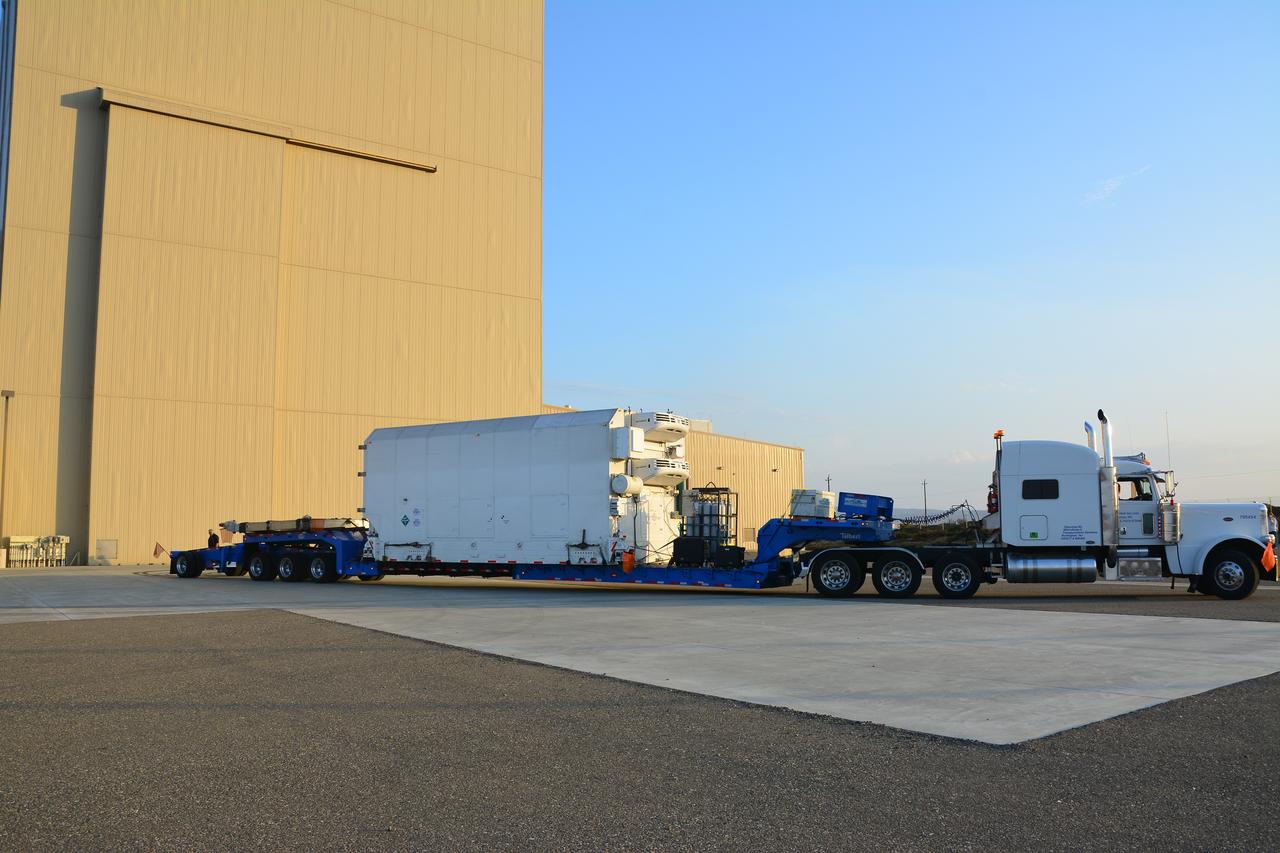
The Joint Polar Satellite System-1, or JPSS-1, arrives at the Astrotech Processing Facility at Vandenberg Air Force Base in California. JPSS is the first in a series four next-generation environmental satellites in a collaborative program between the National Oceanic and Atmospheric Administration (NOAA) and NASA. The satellite is scheduled to liftoff later this year atop a United Launch Alliance Delta II rocket.
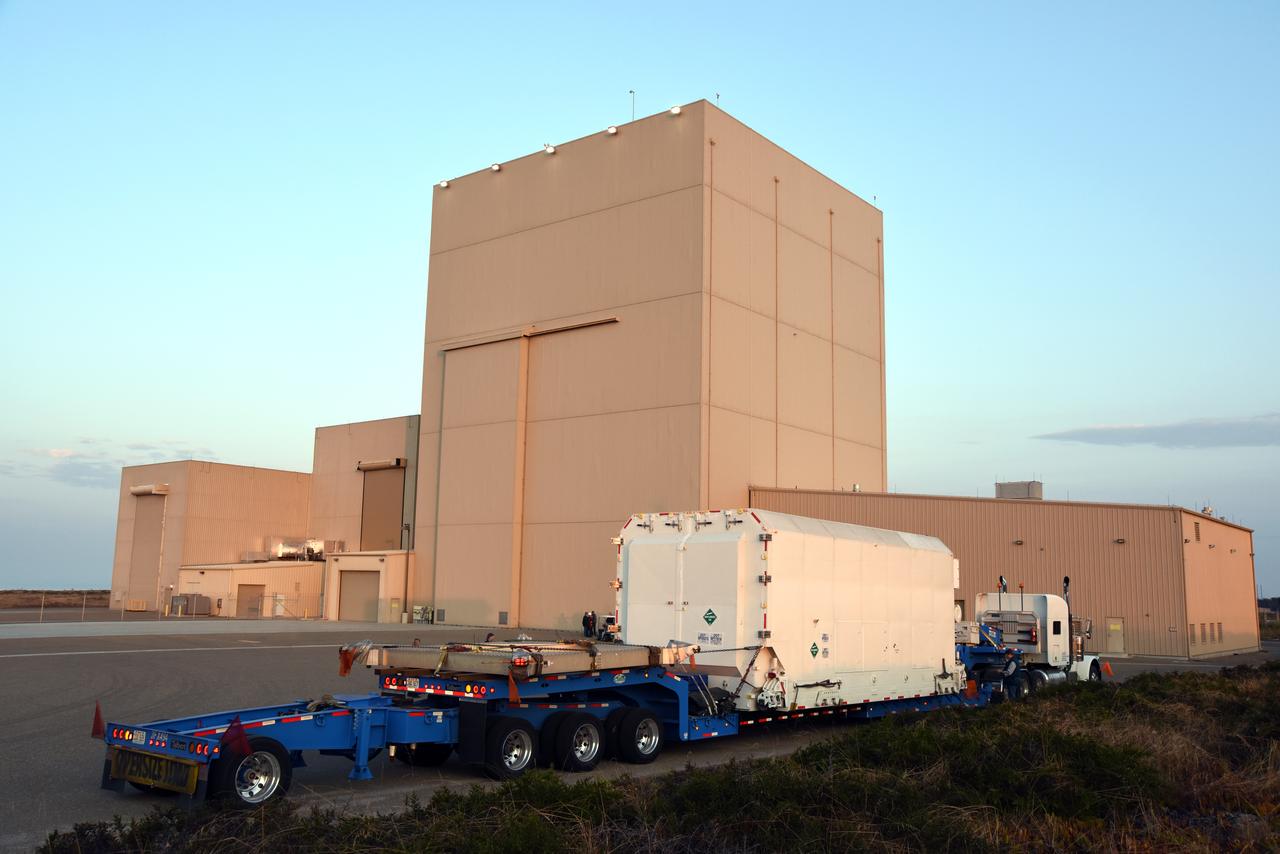
The Joint Polar Satellite System-1, or JPSS-1, arrives at the Astrotech Processing Facility at Vandenberg Air Force Base in California. JPSS is the first in a series four next-generation environmental satellites in a collaborative program between the National Oceanic and Atmospheric Administration (NOAA) and NASA. The satellite is scheduled to liftoff Nov. 10, 2017 atop a United Launch Alliance Delta II rocket.
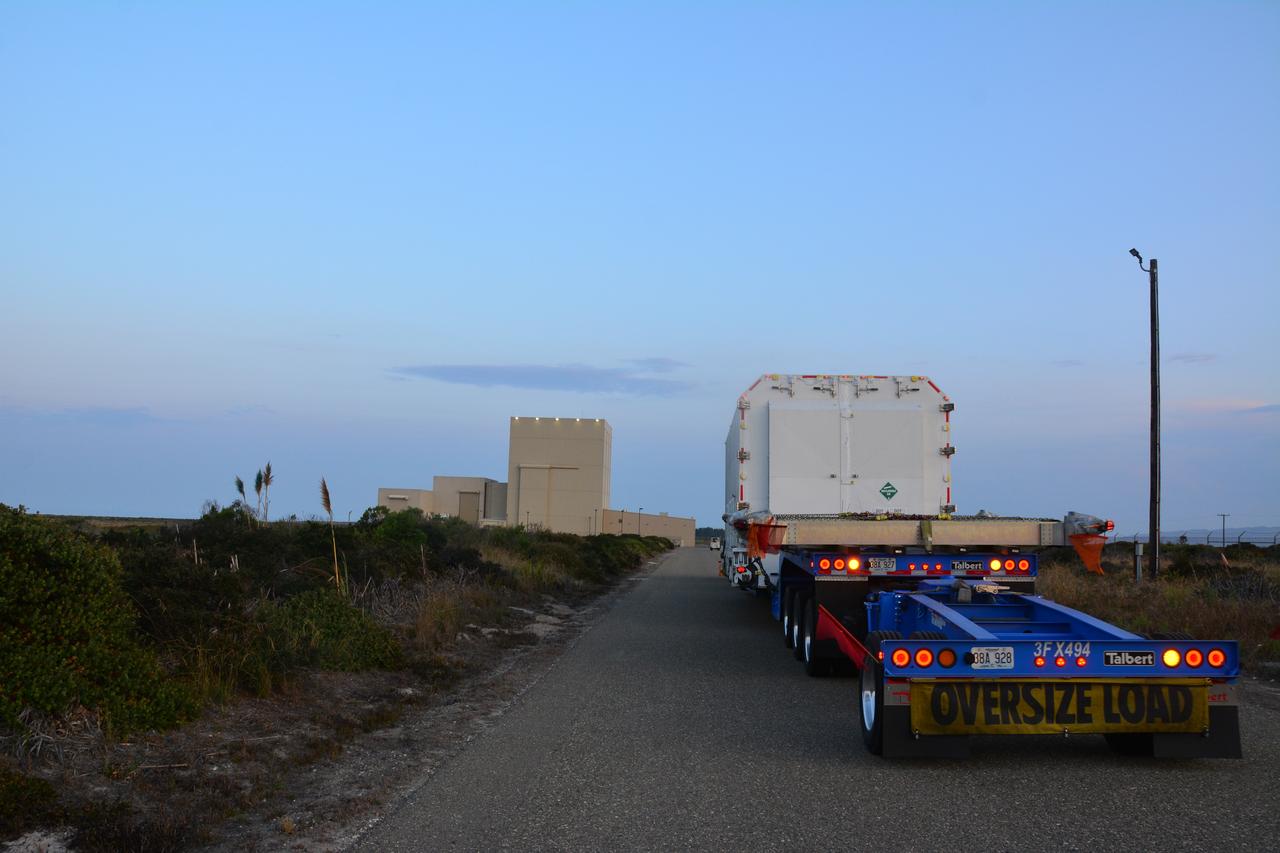
The Joint Polar Satellite System-1, or JPSS-1, arrives at the Astrotech Processing Facility at Vandenberg Air Force Base in California. JPSS is the first in a series four next-generation environmental satellites in a collaborative program between the National Oceanic and Atmospheric Administration (NOAA) and NASA. The satellite is scheduled to liftoff later this year atop a United Launch Alliance Delta II rocket.
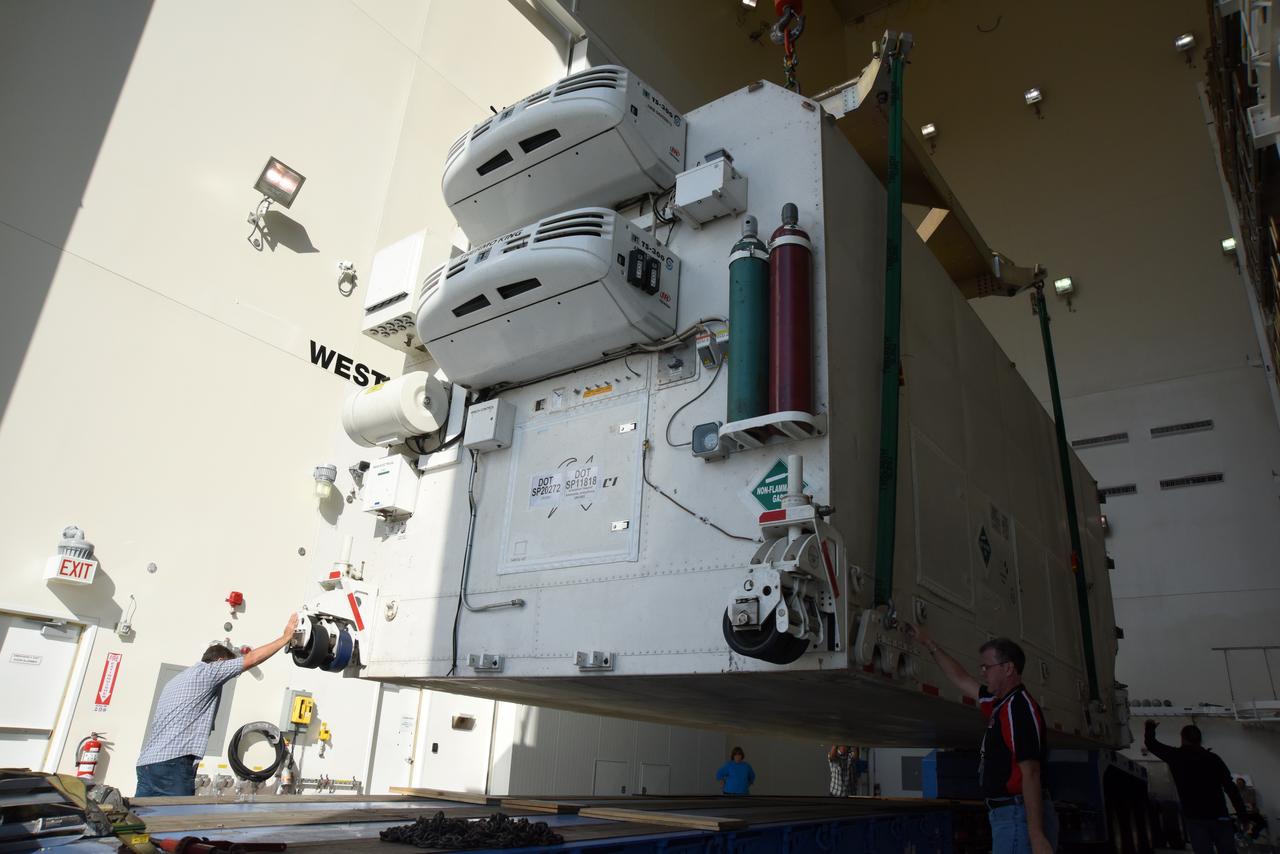
The Joint Polar Satellite System-1, or JPSS-1, arrives at the Astrotech Processing Facility at Vandenberg Air Force Base in California. JPSS is the first in a series four next-generation environmental satellites in a collaborative program between the National Oceanic and Atmospheric Administration (NOAA) and NASA. The satellite is scheduled to liftoff Nov. 10, 2017 atop a United Launch Alliance Delta II rocket.
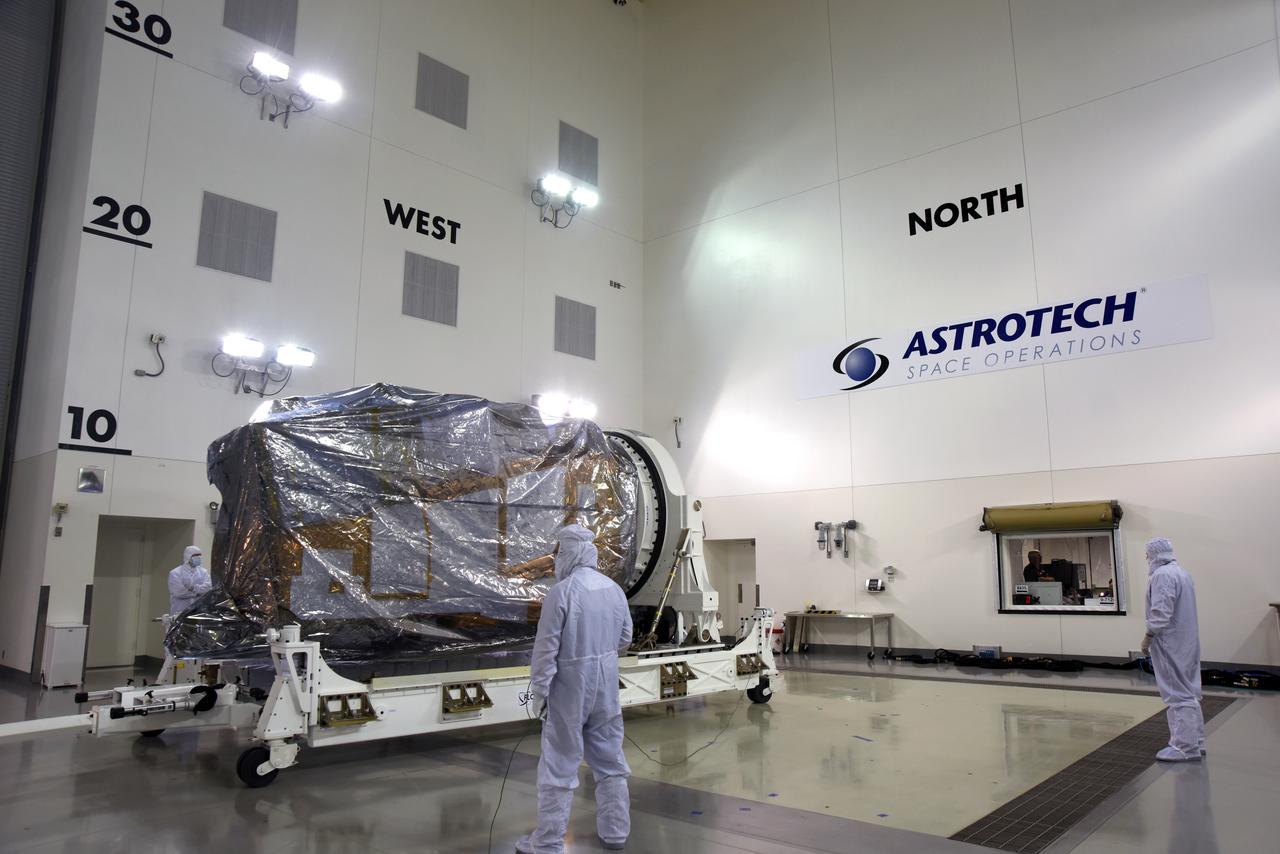
Inside the Astrotech Processing Facility at Vandenberg Air Force Base in California, technicians and engineers have completed removal of the Joint Polar Satellite System-1, or JPSS-1 from it shipping container. JPSS is the first in a series four next-generation environmental satellites in a collaborative program between the National Oceanic and Atmospheric Administration (NOAA) and NASA. The satellite is scheduled to liftoff Nov. 10, 2017 atop a United Launch Alliance Delta II rocket.
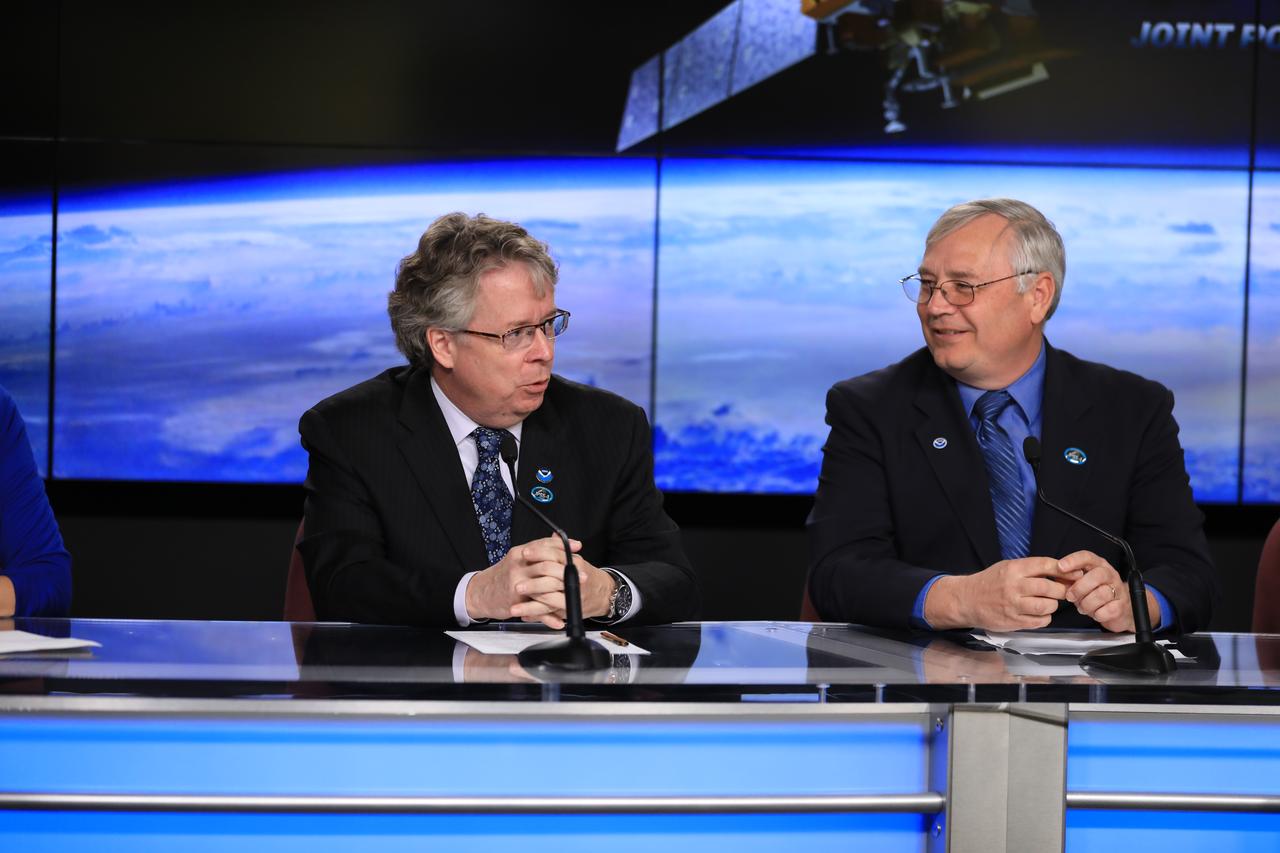
At Vandenberg Air Force Base in California, NASA and industry leaders speak to members of the media at a prelaunch news conference for the Joint Polar Satellite System-1, or JPSS-1. Participants, from left, are Steve Volz, director of NOAA’s Satellite and Information Service, and Greg Mandt, director of the NOAA Joint Polar Satellite System Program. Built by Ball Aerospace and Technologies Corp. of Boulder, Colorado, JPSS is the first in a series four next-generation environmental satellites in a collaborative program between the NOAA and NASA. Liftoff atop a United Launch Alliance Delta II rocket is scheduled to take place from Vandenberg's Space Launch Complex 2 at 1:47 a.m. PST (4:47 a.m. EST), on Nov. 14, 2017.
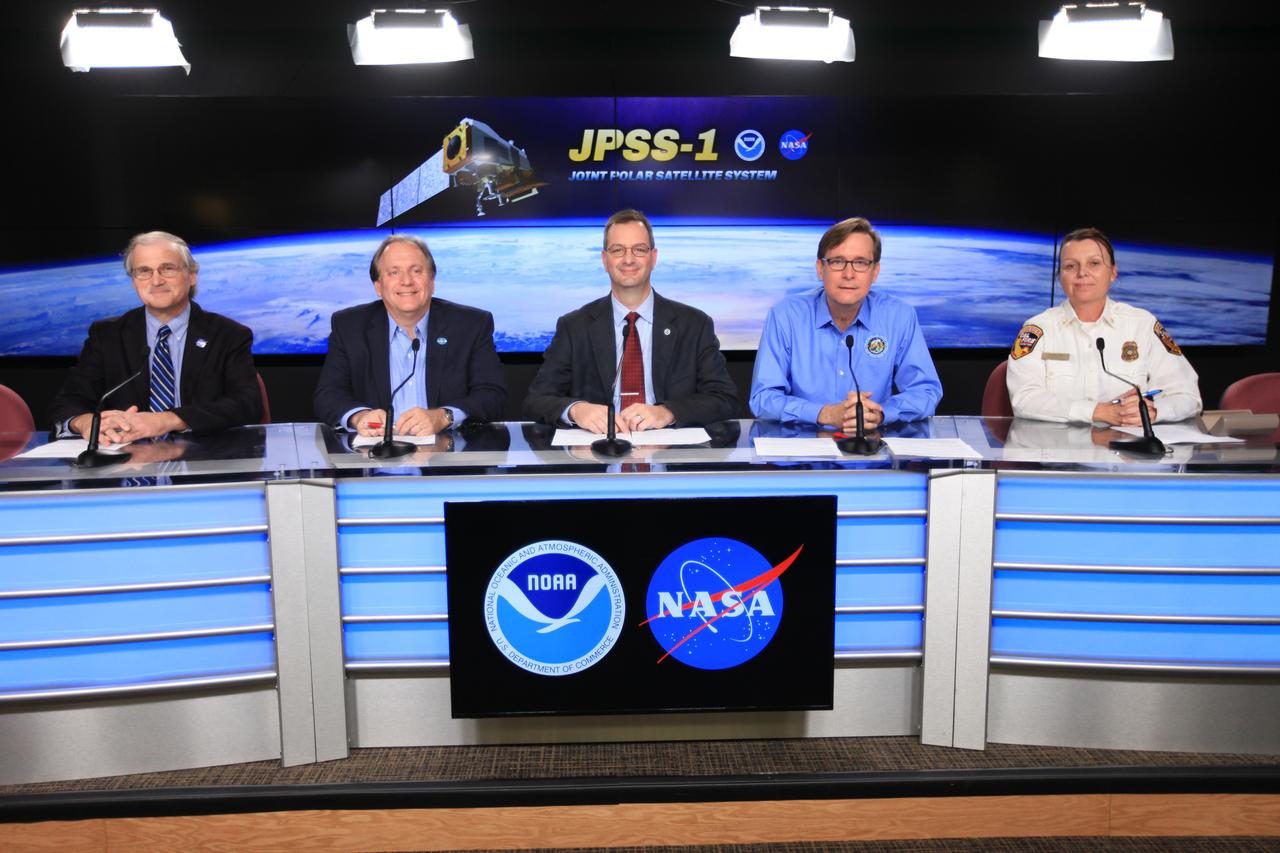
At Vandenberg Air Force Base in California, leaders from NASA, NOAA and the California Department of Forestry and Fire Protection speak to members of the media during a briefing focused on research planned for the Joint Polar Satellite System-1, or JPSS-1. Participants from left are Steve Cole of NASA Communications, Mitch Goldberg, NOAA's chief program scientist for the Joint Polar Satellite System, Joe Pica, director of NOAA’s National Weather Service Office of Observations, James Gleason, NASA senior project scientist for the Joint Polar Satellite System, and Jana Luis, division chief Predictive Services at the California Department of Forestry and Fire Protection. Built by Ball Aerospace and Technologies Corp. of Boulder, Colorado, JPSS is the first in a series four next-generation environmental satellites in a collaborative program between the NOAA and NASA. Liftoff atop a United Launch Alliance Delta II rocket is scheduled to take place from Vandenberg's Space Launch Complex 2 at 1:47 a.m. PST (4:47 a.m. EST), on Nov. 14, 2017.

At Vandenberg Air Force Base in California, leaders from NASA, NOAA and the California Department of Forestry and Fire Protection speak to members of the media during a briefing focused on research planned for the Joint Polar Satellite System-1, or JPSS-1. Participants from left are Steve Cole of NASA Communications, Mitch Goldberg, NOAA's chief program scientist for the Joint Polar Satellite System, Joe Pica, director of NOAA’s National Weather Service Office of Observations, James Gleason, NASA senior project scientist for the Joint Polar Satellite System, and Jana Luis, division chief Predictive Services at the California Department of Forestry and Fire Protection. Built by Ball Aerospace and Technologies Corp. of Boulder, Colorado, JPSS is the first in a series four next-generation environmental satellites in a collaborative program between the NOAA and NASA. Liftoff atop a United Launch Alliance Delta II rocket is scheduled to take place from Vandenberg's Space Launch Complex 2 at 1:47 a.m. PST (4:47 a.m. EST), on Nov. 14, 2017.
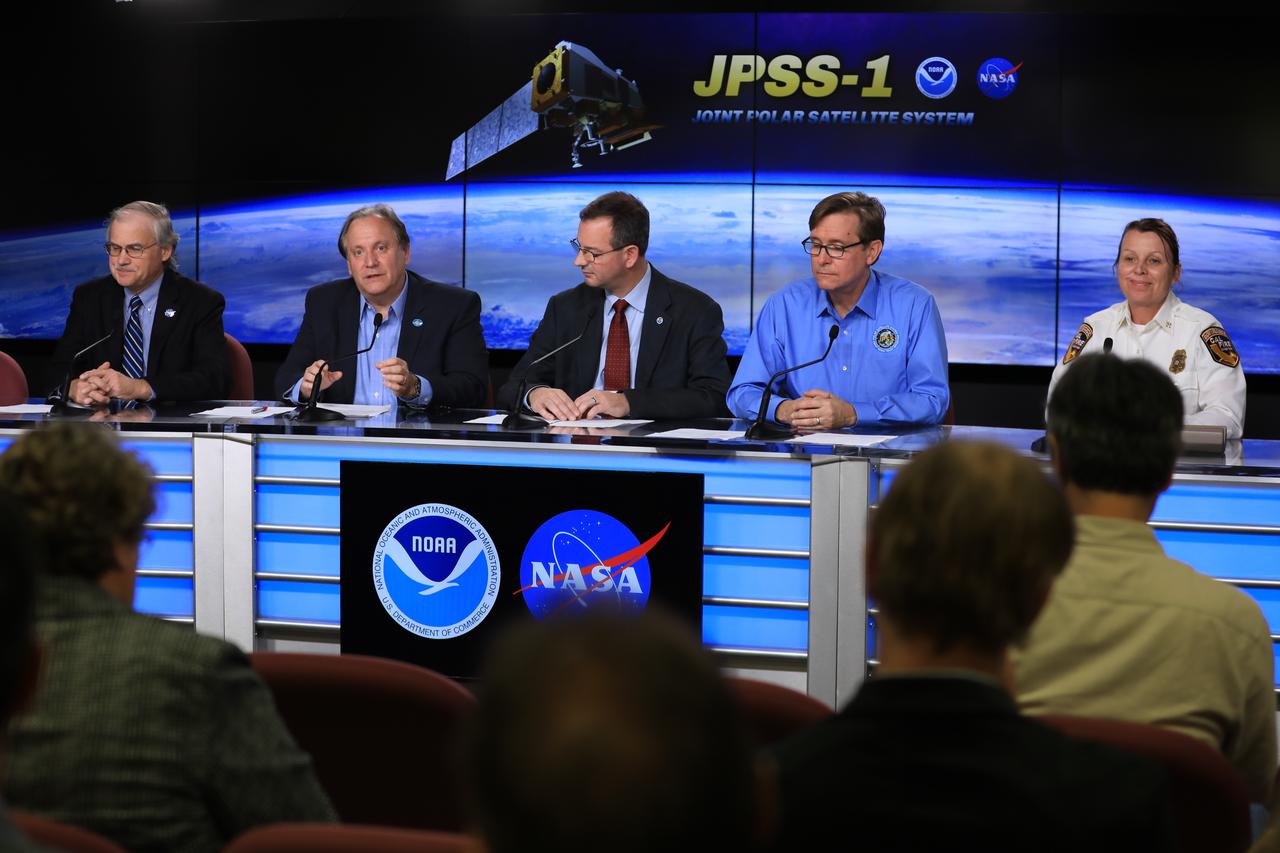
At Vandenberg Air Force Base in California, leaders from NASA, NOAA and the California Department of Forestry and Fire Protection speak to members of the media during a briefing focused on research planned for the Joint Polar Satellite System-1, or JPSS-1. Participants from left are Steve Cole of NASA Communications, Mitch Goldberg, NOAA's chief program scientist for the Joint Polar Satellite System, Joe Pica, director of NOAA’s National Weather Service Office of Observations, James Gleason, NASA senior project scientist for the Joint Polar Satellite System, and Jana Luis, division chief Predictive Services at the California Department of Forestry and Fire Protection. Built by Ball Aerospace and Technologies Corp. of Boulder, Colorado, JPSS is the first in a series four next-generation environmental satellites in a collaborative program between the NOAA and NASA. Liftoff atop a United Launch Alliance Delta II rocket is scheduled to take place from Vandenberg's Space Launch Complex 2 at 1:47 a.m. PST (4:47 a.m. EST), on Nov. 14, 2017.

At Vandenberg Air Force Base in California, Sandra Smalley, director of the Joint Agency Satellite Division at NASA Headquarters, speaks to members of the media at a prelaunch news conference for the Joint Polar Satellite System-1, or JPSS-1. Built by Ball Aerospace and Technologies Corp. of Boulder, Colorado, JPSS is the first in a series four next-generation environmental satellites in a collaborative program between the NOAA and NASA. Liftoff atop a United Launch Alliance Delta II rocket is scheduled to take place from Vandenberg's Space Launch Complex 2 at 1:47 a.m. PST (4:47 a.m. EST), on Nov. 14, 2017.

At Vandenberg Air Force Base in California, the Joint Polar Satellite System-1, or JPSS-1, is on its way to Space Launch Complex 2 packaged in a protective container. At the pad, JPSS-1 will be lifted for mating atop a United Launch Alliance Delta II rocket. Built by Ball Aerospace and Technologies Corp. of Boulder, Colorado, JPSS is the first in a series four next-generation environmental satellites in a collaborative program between the NOAA and NASA. Liftoff is scheduled to take place from Vandenberg's Space Launch Complex 2.

At Vandenberg Air Force Base in California, the Joint Polar Satellite System-1, or JPSS-1, arrives at Space Launch Complex 2 packaged in a protective container. At the pad, JPSS-1 will be lifted for mating atop a United Launch Alliance Delta II rocket. Built by Ball Aerospace and Technologies Corp. of Boulder, Colorado, JPSS is the first in a series four next-generation environmental satellites in a collaborative program between the NOAA and NASA. Liftoff is scheduled to take place from Vandenberg's Space Launch Complex.

At Vandenberg Air Force Base in California, the Joint Polar Satellite System-1, or JPSS-1, arrives at Space Launch Complex 2 packaged in a protective container. At the pad, JPSS-1 will be lifted for mating atop a United Launch Alliance Delta II rocket. Built by Ball Aerospace and Technologies Corp. of Boulder, Colorado, JPSS is the first in a series four next-generation environmental satellites in a collaborative program between the NOAA and NASA. Liftoff is scheduled to take place from Vandenberg's Space Launch Complex 2.
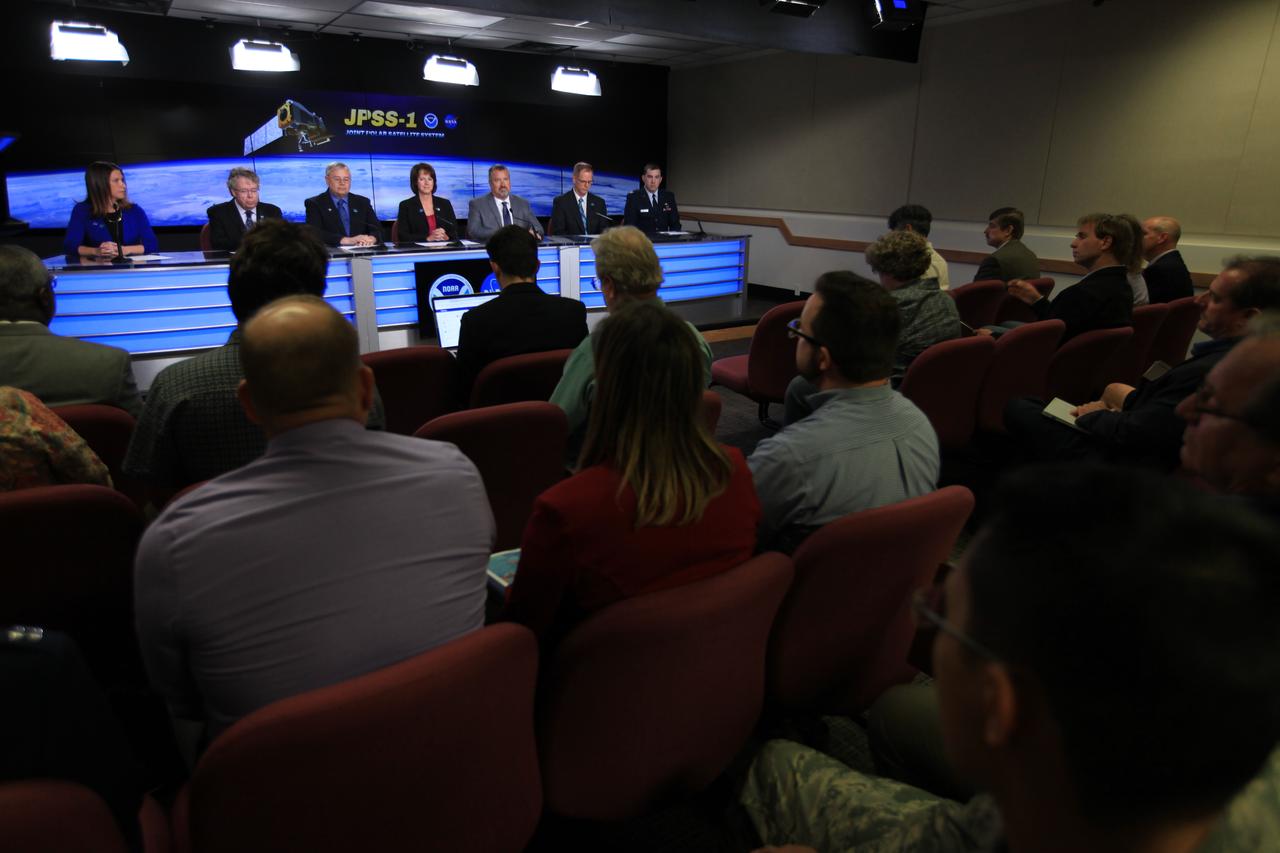
At Vandenberg Air Force Base in California, NASA and industry leaders speak to members of the media at a prelaunch news conference for the Joint Polar Satellite System-1, or JPSS-1. Participants, from left, are Tori McLendon of NASA Communications, Steve Volz, director of NOAA’s Satellite and Information Service, Greg Mandt, director of the NOAA Joint Polar Satellite System Program, Sandra Smalley, director of the Joint Agency Satellite Division at NASA Headquarters, Omar Baez, NASA launch director, Scott Messer, United Launch Alliance program manager for NASA missions, and U. S. Air Force Capt. Ross Malugani, launch weather officer at Vandenberg's 30th Space Wing. Built by Ball Aerospace and Technologies Corp. of Boulder, Colorado, JPSS is the first in a series four next-generation environmental satellites in a collaborative program between the NOAA and NASA. Liftoff atop a United Launch Alliance Delta II rocket is scheduled to take place from Vandenberg's Space Launch Complex 2 at 1:47 a.m. PST (4:47 a.m. EST), on Nov. 14, 2017.

Packaged in a protective container, the Joint Polar Satellite System-1, or JPSS-1, spacecraft is about to be lifted and mated atop a United Launch Alliance Delta II rocket at Space Launch Complex 2 at Vandenberg Air Force Base in California. Built by Ball Aerospace and Technologies Corp. of Boulder, Colorado, JPSS is the first in a series four next-generation environmental satellites in a collaborative program between the NOAA and NASA. Liftoff is scheduled to take place from Vandenberg's Space Launch Complex 2.
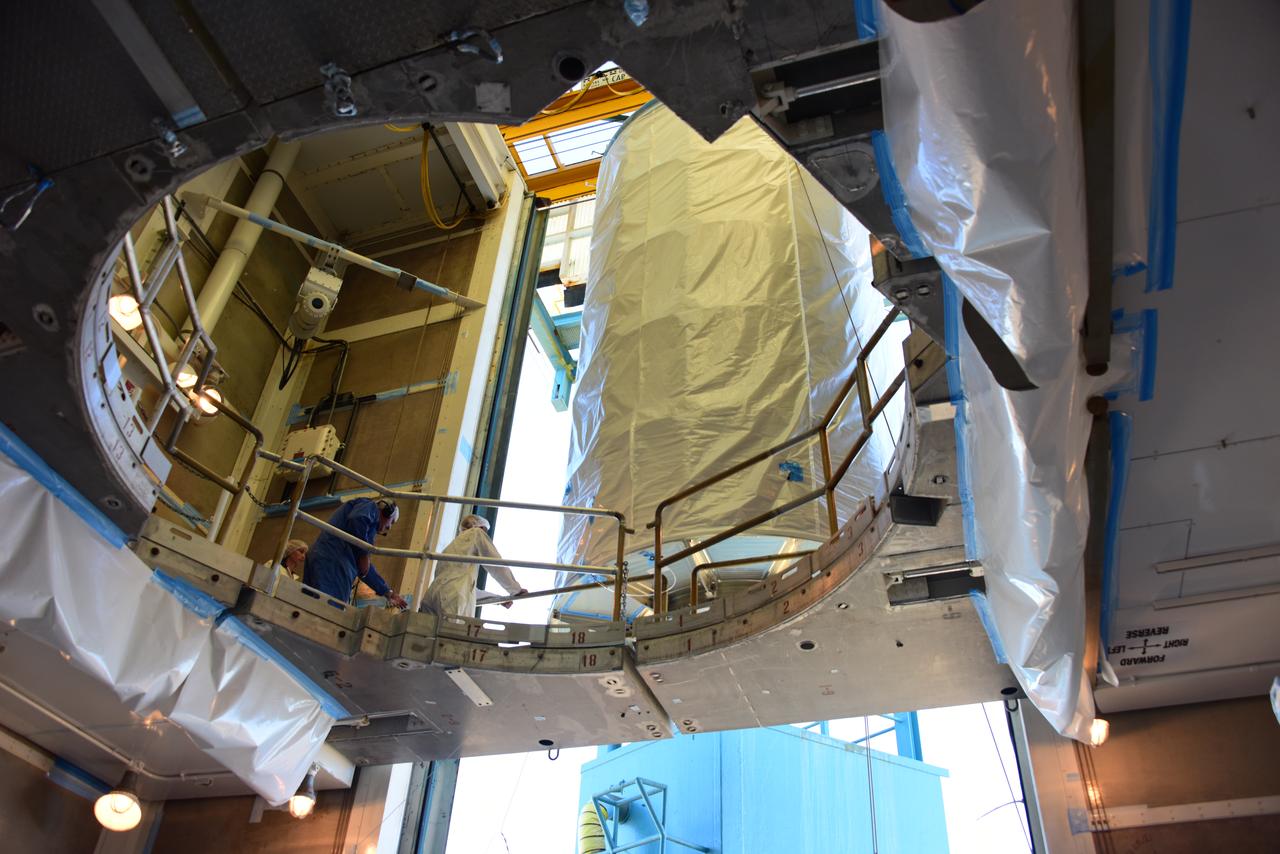
Packaged in a protective container, the Joint Polar Satellite System-1, or JPSS-1, spacecraft is lifted for mating atop a United Launch Alliance Delta II rocket at Space Launch Complex 2 at Vandenberg Air Force Base in California. Built by Ball Aerospace and Technologies Corp. of Boulder, Colorado, JPSS is the first in a series four next-generation environmental satellites in a collaborative program between the NOAA and NASA. Liftoff is scheduled to take place from Vandenberg's Space Launch Complex 2.
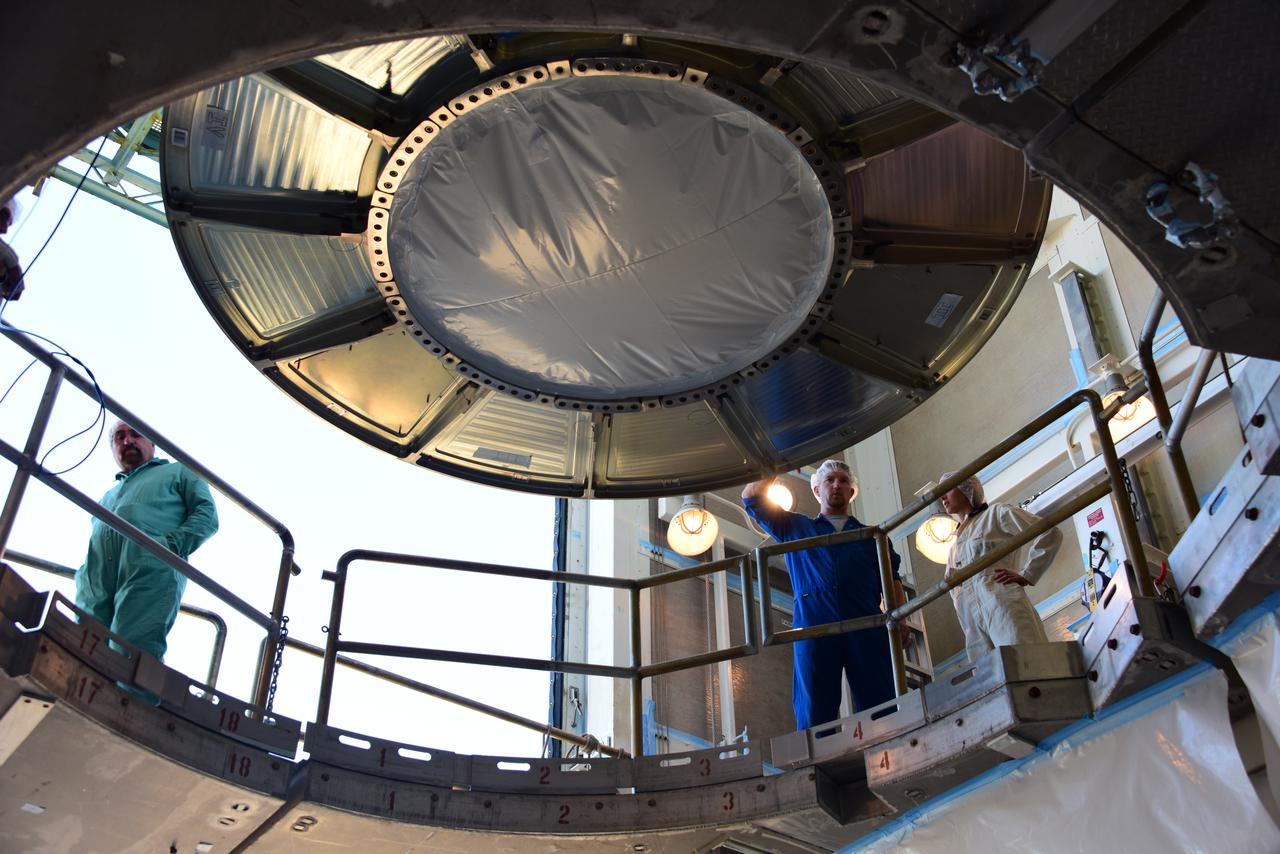
Packaged in a protective container, the Joint Polar Satellite System-1, or JPSS-1, spacecraft is about to be mated atop a United Launch Alliance Delta II rocket at Space Launch Complex 2 at Vandenberg Air Force Base in California. Built by Ball Aerospace and Technologies Corp. of Boulder, Colorado, JPSS is the first in a series four next-generation environmental satellites in a collaborative program between the NOAA and NASA. Liftoff is scheduled to take place from Vandenberg's Space Launch Complex 2.

A view of the Pacific coast at Vandenberg Air Force Base in California. At the West Coast launch site, the Joint Polar Satellite System-1, or JPSS-1, spacecraft is being prepared for liftoff atop a United Launch Alliance Delta II rocket. Built by Ball Aerospace and Technologies Corp. of Boulder, Colorado, JPSS is the first in a series four next-generation environmental satellites in a collaborative program between the NOAA and NASA. Liftoff is scheduled to take place from Vandenberg's Space Launch Complex 2.
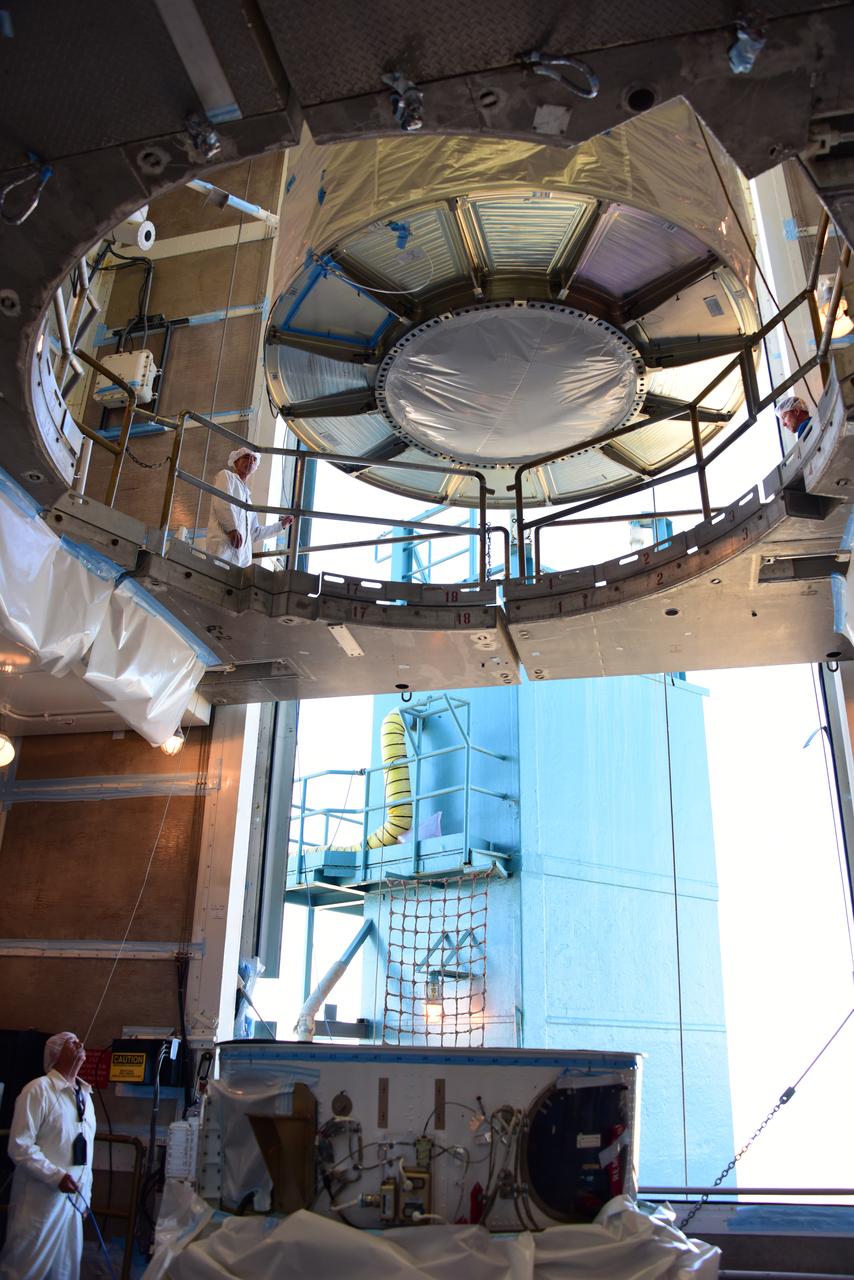
Packaged in a protective container, the Joint Polar Satellite System-1, or JPSS-1, spacecraft is about to be mated atop a United Launch Alliance Delta II rocket at Space Launch Complex 2 at Vandenberg Air Force Base in California. Built by Ball Aerospace and Technologies Corp. of Boulder, Colorado, JPSS is the first in a series four next-generation environmental satellites in a collaborative program between the NOAA and NASA. Liftoff is scheduled to take place from Vandenberg's Space Launch Complex 2.
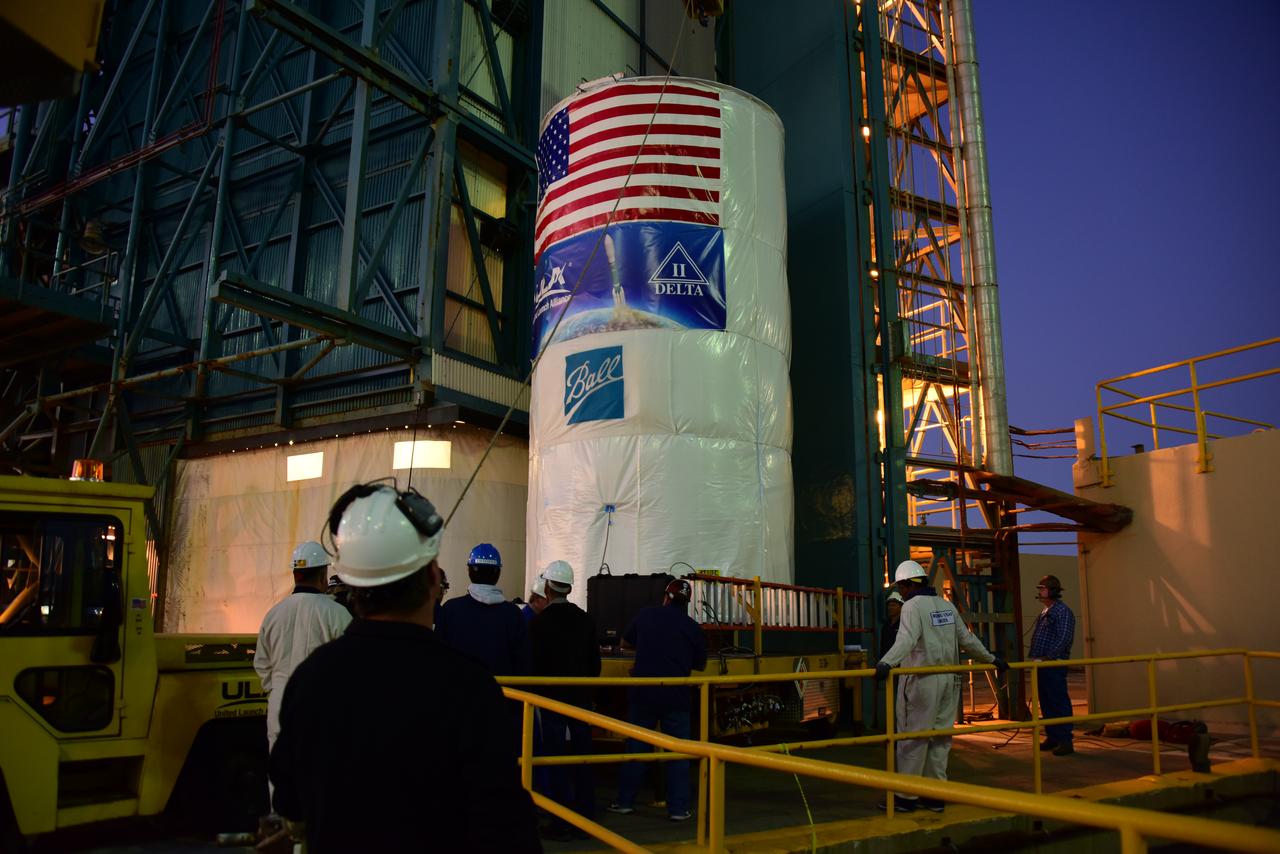
Packaged in a protective container, the Joint Polar Satellite System-1, or JPSS-1, spacecraft is about to be lifted and mated atop a United Launch Alliance Delta II rocket at Space Launch Complex 2 at Vandenberg Air Force Base in California. Built by Ball Aerospace and Technologies Corp. of Boulder, Colorado, JPSS is the first in a series four next-generation environmental satellites in a collaborative program between the NOAA and NASA. Liftoff is scheduled to take place from Vandenberg's Space Launch Complex 2.
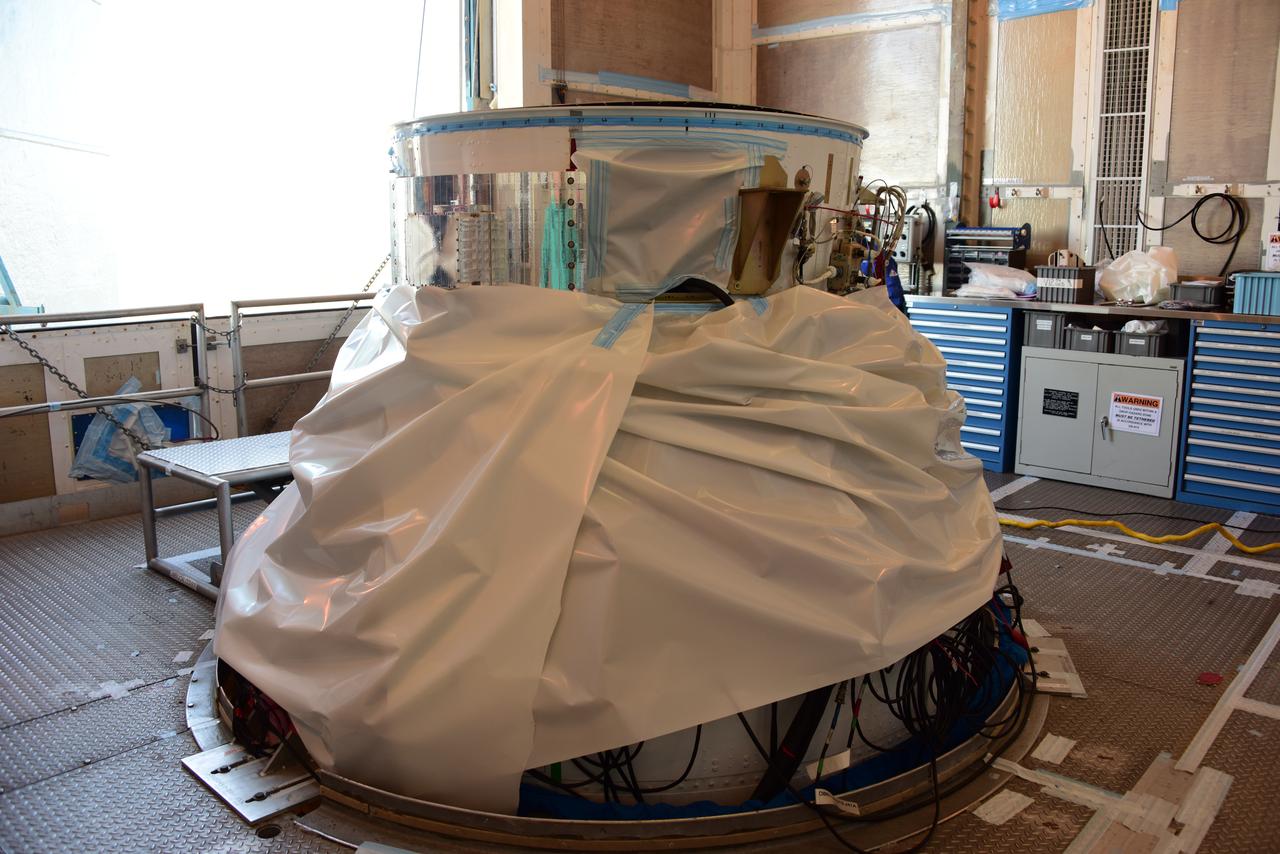
At Vandenberg Air Force Base in California, the Joint Polar Satellite System-1, or JPSS-1, spacecraft is mated atop a United Launch Alliance Delta II rocket at Space Launch Complex 2. Built by Ball Aerospace and Technologies Corp. of Boulder, Colorado, JPSS is the first in a series four next-generation environmental satellites in a collaborative program between the NOAA and NASA. Liftoff is scheduled to take place from Vandenberg's Space Launch Complex 2.
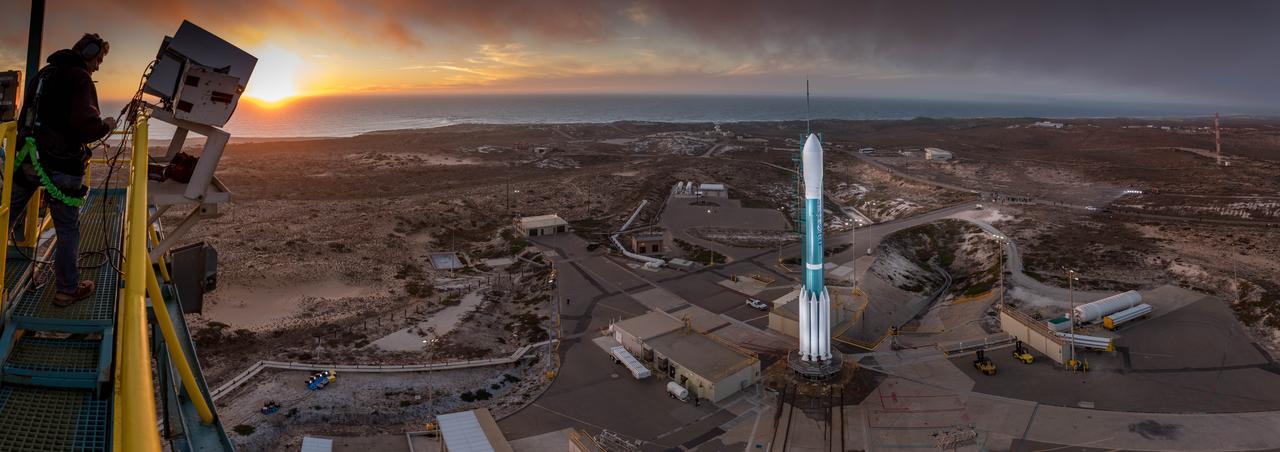
At Vandenberg Air Force Base in California, this panoramic view shows the United Launch Alliance Delta II rocket at Space Launch Complex 2 from the gantry shortly after rollback. Preparations are underway to launch the Joint Polar Satellite System-1, or JPSS-1, spacecraft built by Ball Aerospace and Technologies Corp. of Boulder, Colorado. JPSS is the first in a series four next-generation environmental satellites in a collaborative program between the NOAA and NASA.
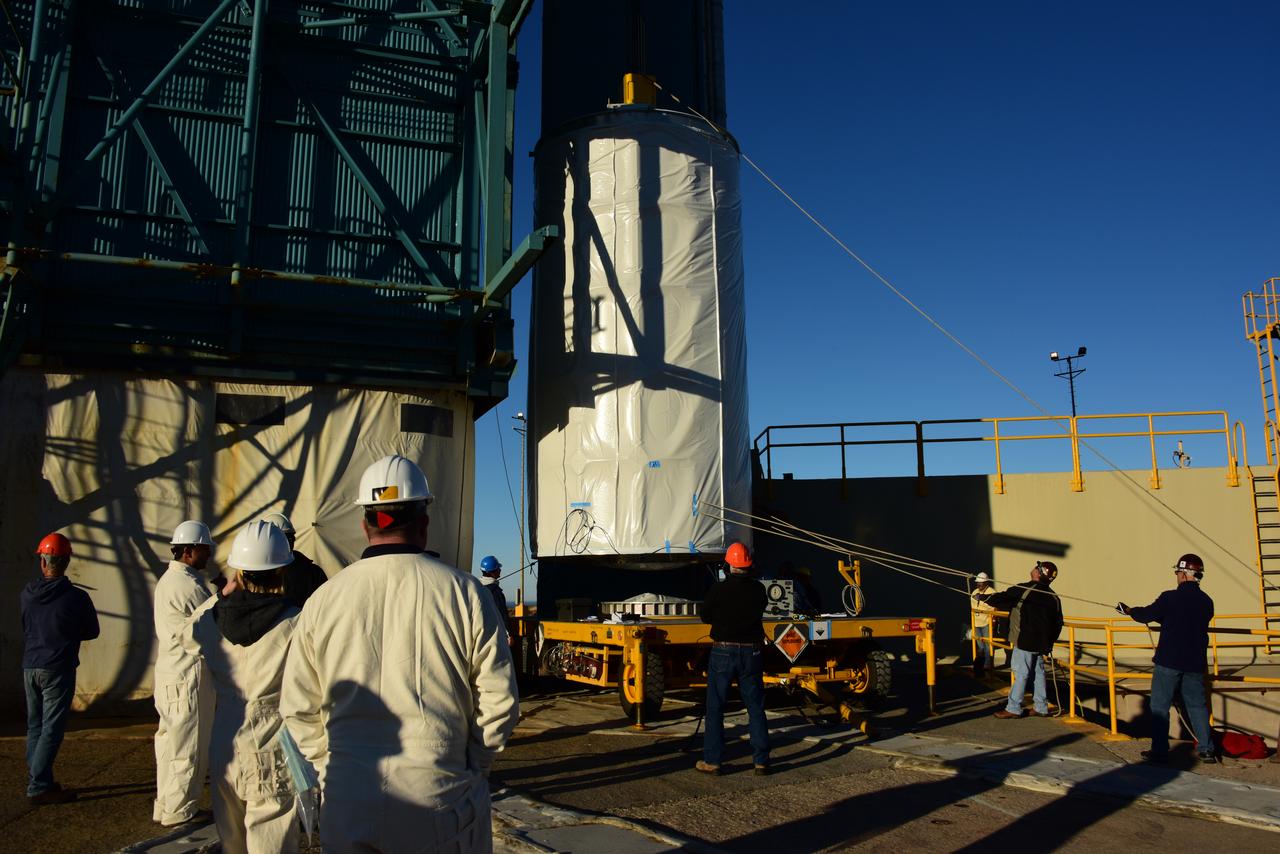
Packaged in a protective container, the Joint Polar Satellite System-1, or JPSS-1, spacecraft is lifted for mating atop a United Launch Alliance Delta II rocket at Space Launch Complex 2 at Vandenberg Air Force Base in California. Built by Ball Aerospace and Technologies Corp. of Boulder, Colorado, JPSS is the first in a series four next-generation environmental satellites in a collaborative program between the NOAA and NASA. Liftoff is scheduled to take place from Vandenberg's Space Launch Complex 2.
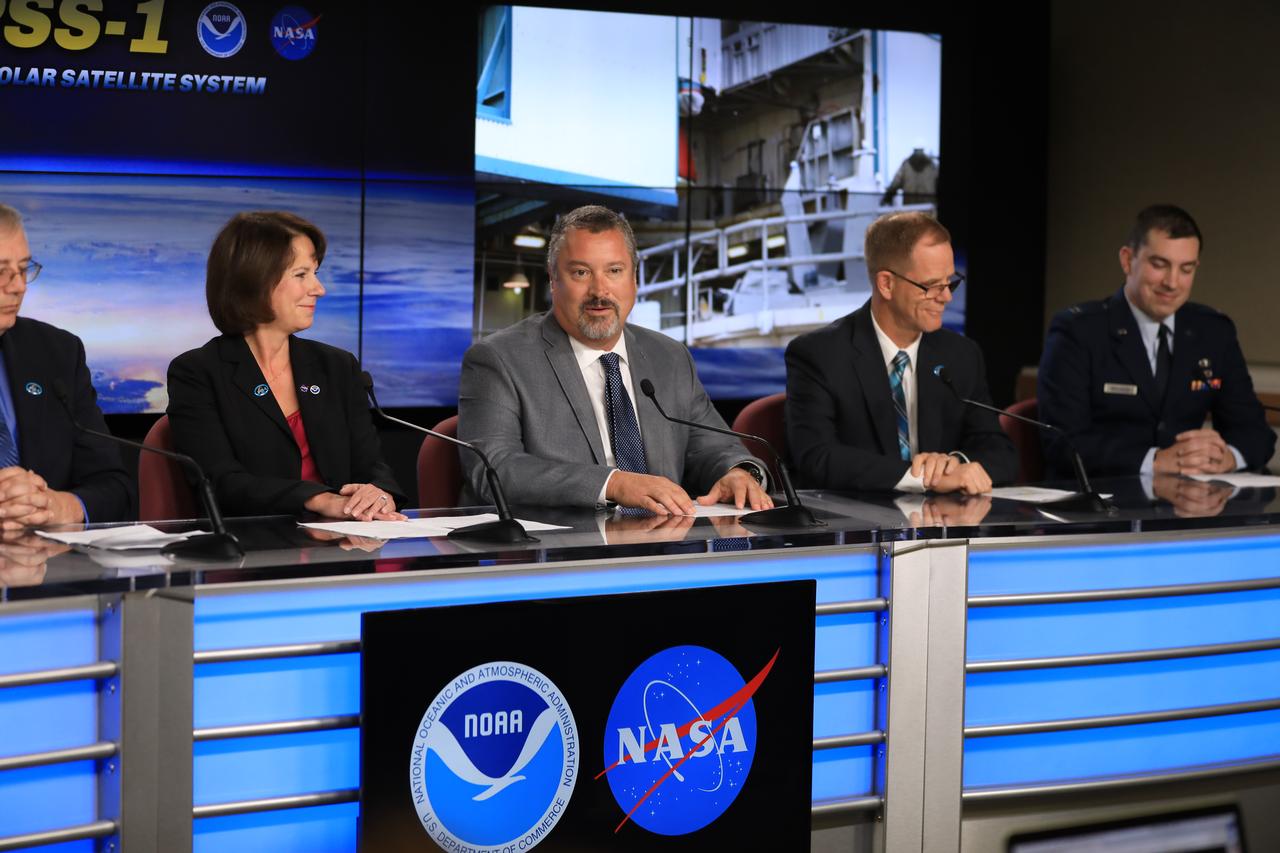
Vandenberg Air Force Base in California, NASA and industry leaders speak to members of the media at a prelaunch news conference for the Joint Polar Satellite System-1, or JPSS-1. Participants, from left, are Greg Mandt, director of the NOAA Joint Polar Satellite System Program, Sandra Smalley, director of the Joint Agency Satellite Division at NASA Headquarters, Omar Baez, NASA launch director, Scott Messer, United Launch Alliance program manager for NASA missions, and U. S. Air Force Capt. Ross Malugani, launch weather officer at Vandenberg's 30th Space Wing. Built by Ball Aerospace and Technologies Corp. of Boulder, Colorado, JPSS is the first in a series four next-generation environmental satellites in a collaborative program between the NOAA and NASA. Liftoff atop a United Launch Alliance Delta II rocket is scheduled to take place from Vandenberg's Space Launch Complex 2 at 1:47 a.m. PST (4:47 a.m. EST), on Nov. 14, 2017.
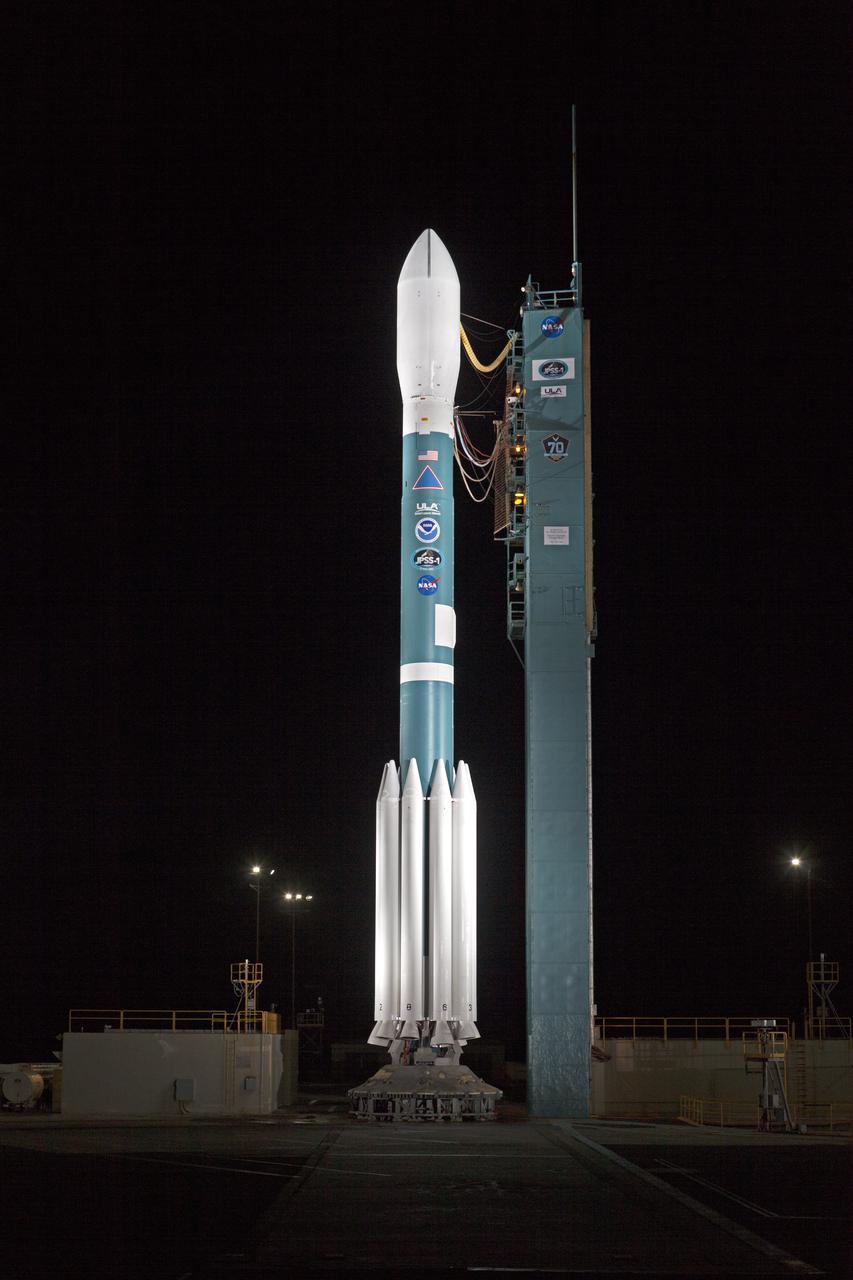
Following the postponement on Nov. 14, 2017, the countdown is again underway for the liftoff of the Joint Polar Satellite System-1, or JPSS-1, spacecraft. Built by Ball Aerospace and Technologies Corp. of Boulder, Colorado, JPSS is the first in a series four next-generation environmental satellites in a collaborative program between NOAA and NASA. The satellite is scheduled to liftoff at 1:47 a.m. PST (4:47 a.m. EST), on Nov. 15, 2017, atop a United Launch Alliance Delta II rocket from Space Launch Complex 2 at Vandenberg Air Force Base in California.

At Vandenberg Air Force Base in California, Steve Volz, director of NOAA’s Satellite and Information Service, speaks to members of the media at a prelaunch news conference for the Joint Polar Satellite System-1, or JPSS-1. Built by Ball Aerospace and Technologies Corp. of Boulder, Colorado, JPSS is the first in a series four next-generation environmental satellites in a collaborative program between the NOAA and NASA. Liftoff atop a United Launch Alliance Delta II rocket is scheduled to take place from Vandenberg's Space Launch Complex 2 at 1:47 a.m. PST (4:47 a.m. EST), on Nov. 14, 2017.
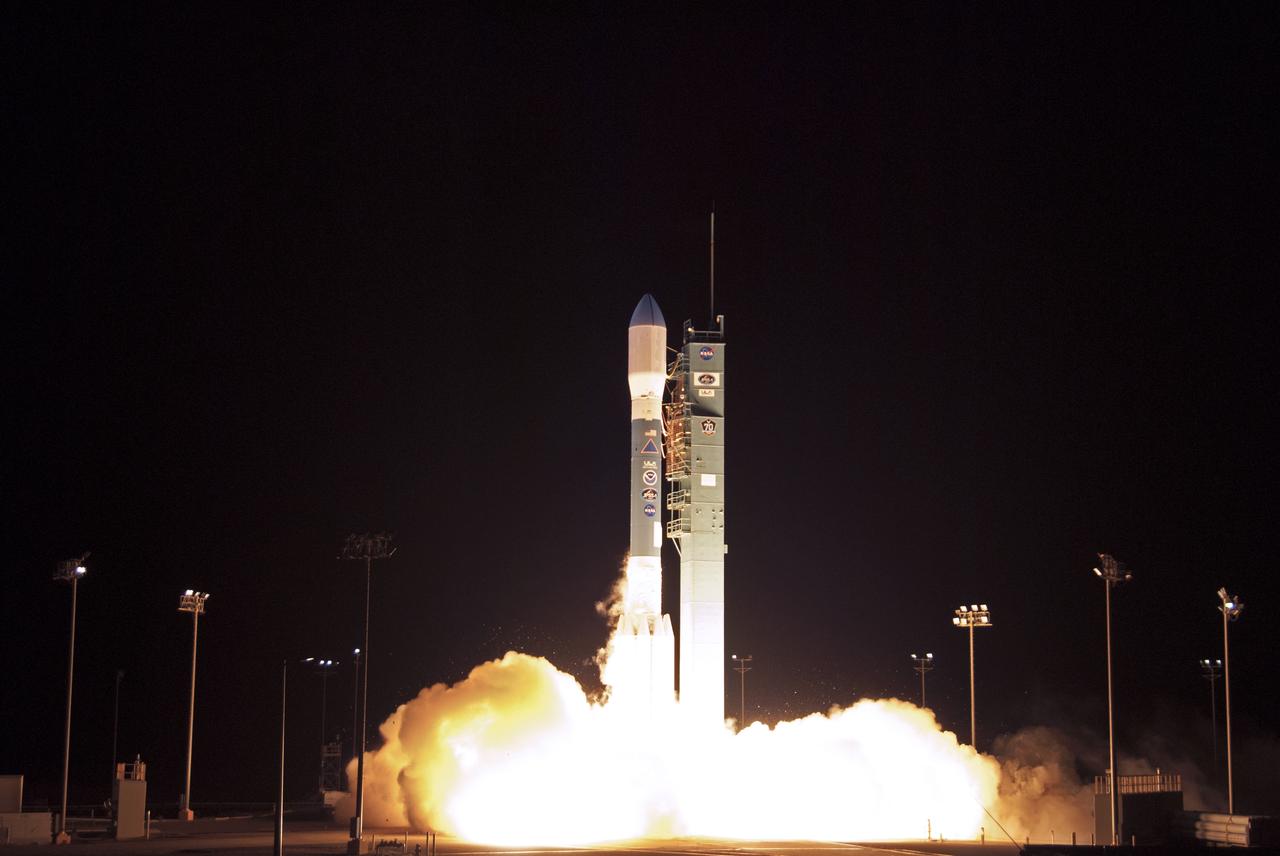
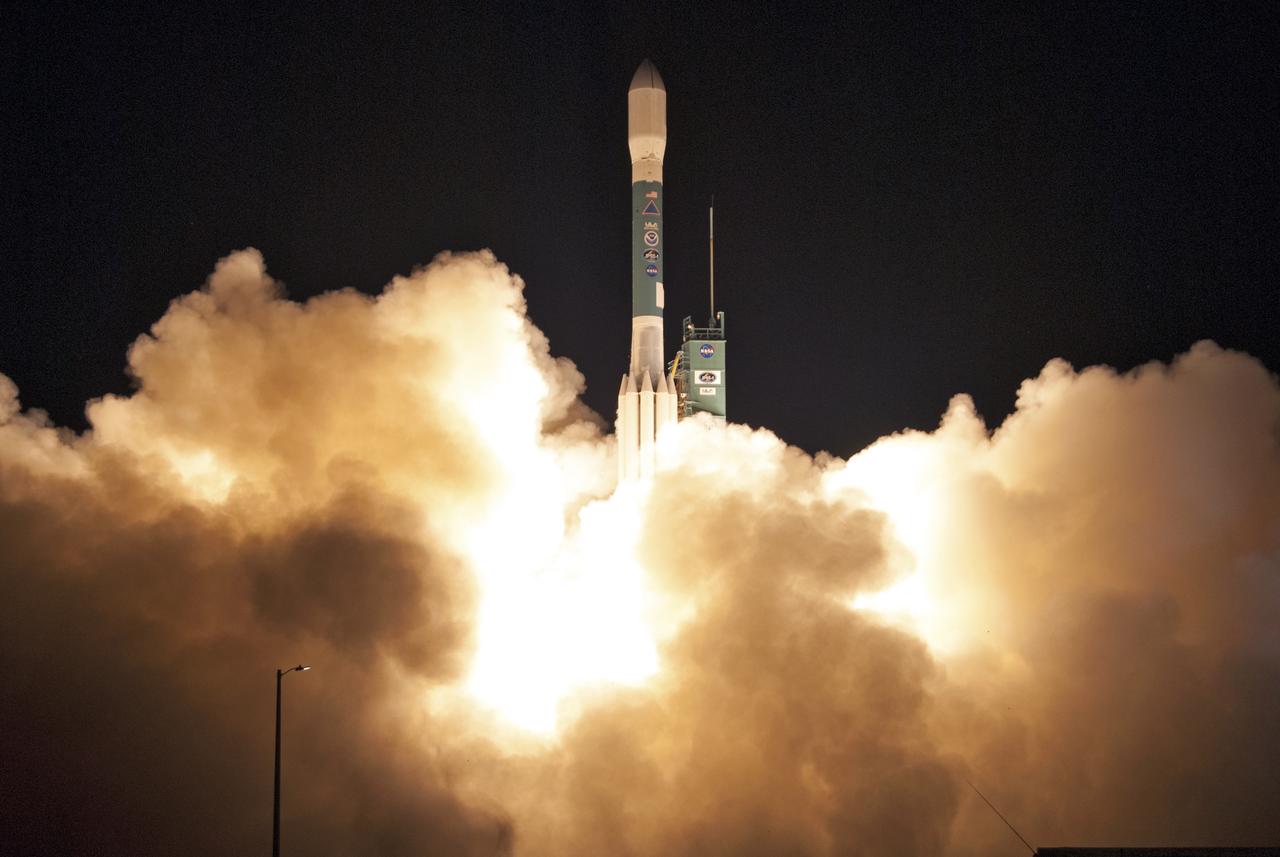
A United Launch Alliance Delta II rocket lifts off from Space Launch Complex 2 at Vandenberg Air Force Base in California carrying the Joint Polar Satellite System-1, or JPSS-1, spacecraft. Built by Ball Aerospace and Technologies Corp. of Boulder, Colorado, JPSS is the first in a series four next-generation environmental satellites in a collaborative program between NOAA and NASA. JPSS-1 will gather measurements of atmospheric, terrestrial and oceanic conditions, including sea and land surface temperatures, vegetation, clouds, rainfall, snow and ice cover, fire locations, atmospheric temperature, water vapor and ozone. Liftoff was at 1:47 a.m. PST (4:47 a.m. EST).
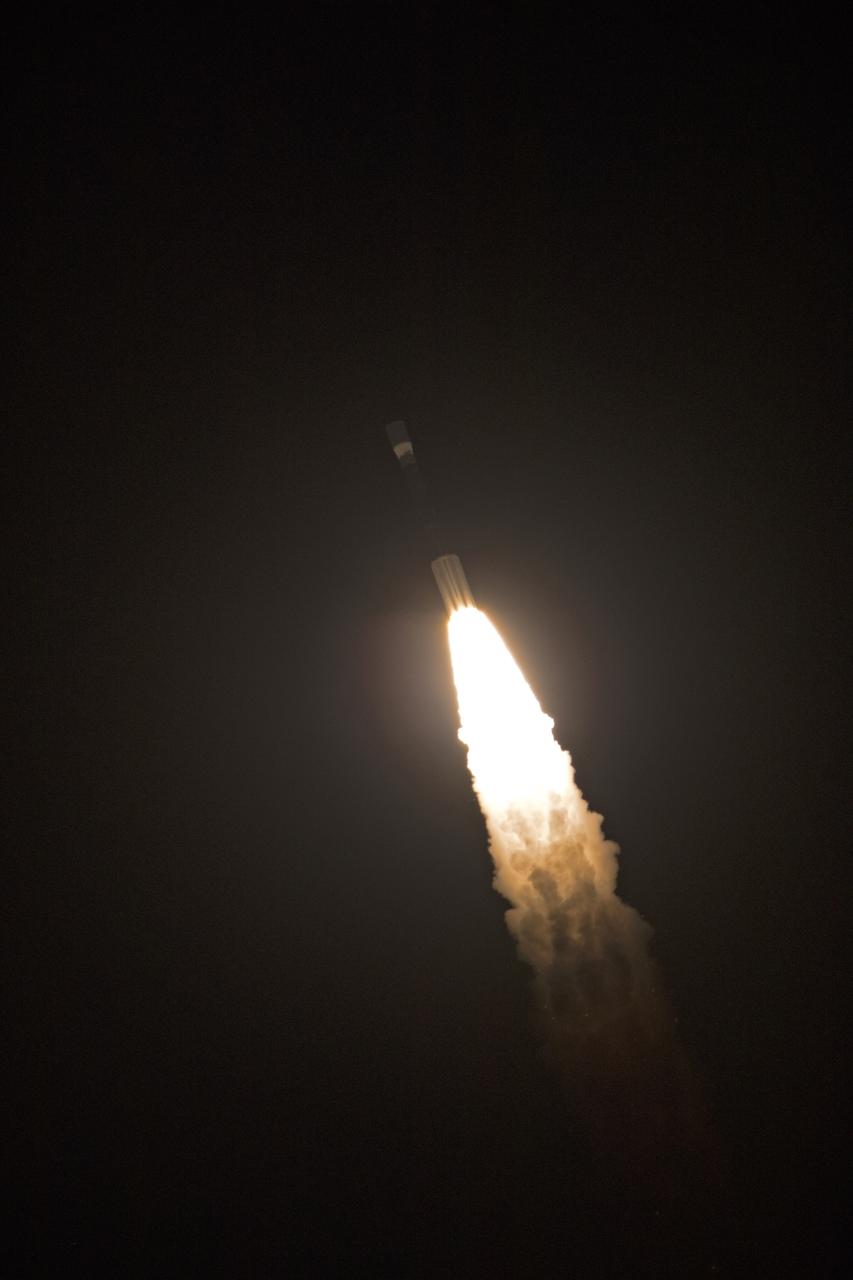
A United Launch Alliance Delta II rocket lifts off from Space Launch Complex 2 at Vandenberg Air Force Base in California carrying the Joint Polar Satellite System-1, or JPSS-1, spacecraft. Built by Ball Aerospace and Technologies Corp. of Boulder, Colorado, JPSS is the first in a series four next-generation environmental satellites in a collaborative program between NOAA and NASA. JPSS-1 will gather measurements of atmospheric, terrestrial and oceanic conditions, including sea and land surface temperatures, vegetation, clouds, rainfall, snow and ice cover, fire locations, atmospheric temperature, water vapor and ozone. Liftoff was at 1:47 a.m. PST (4:47 a.m. EST).
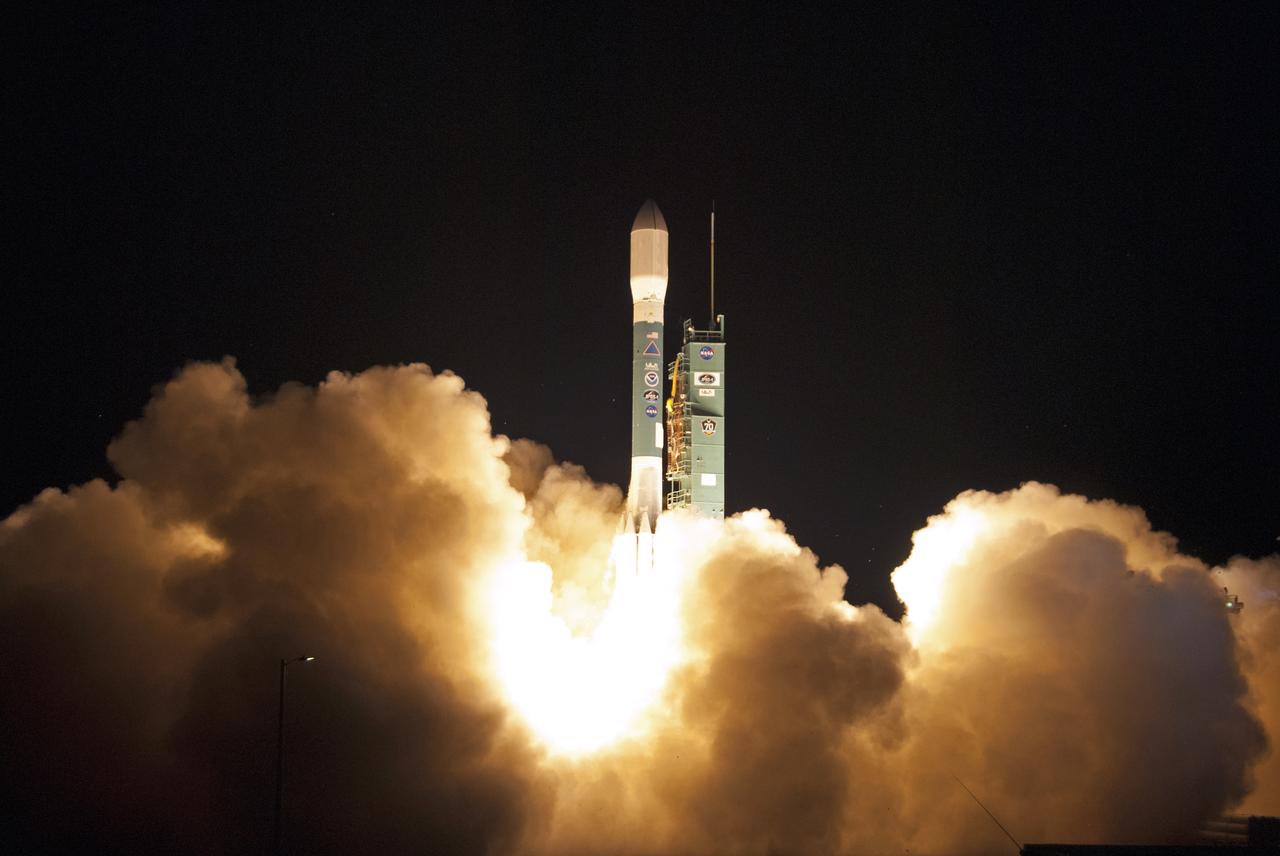
A United Launch Alliance Delta II rocket lifts off from Space Launch Complex 2 at Vandenberg Air Force Base in California carrying the Joint Polar Satellite System-1, or JPSS-1, spacecraft. Built by Ball Aerospace and Technologies Corp. of Boulder, Colorado, JPSS is the first in a series four next-generation environmental satellites in a collaborative program between NOAA and NASA. JPSS-1 will gather measurements of atmospheric, terrestrial and oceanic conditions, including sea and land surface temperatures, vegetation, clouds, rainfall, snow and ice cover, fire locations, atmospheric temperature, water vapor and ozone. Liftoff was at 1:47 a.m. PST (4:47 a.m. EST).
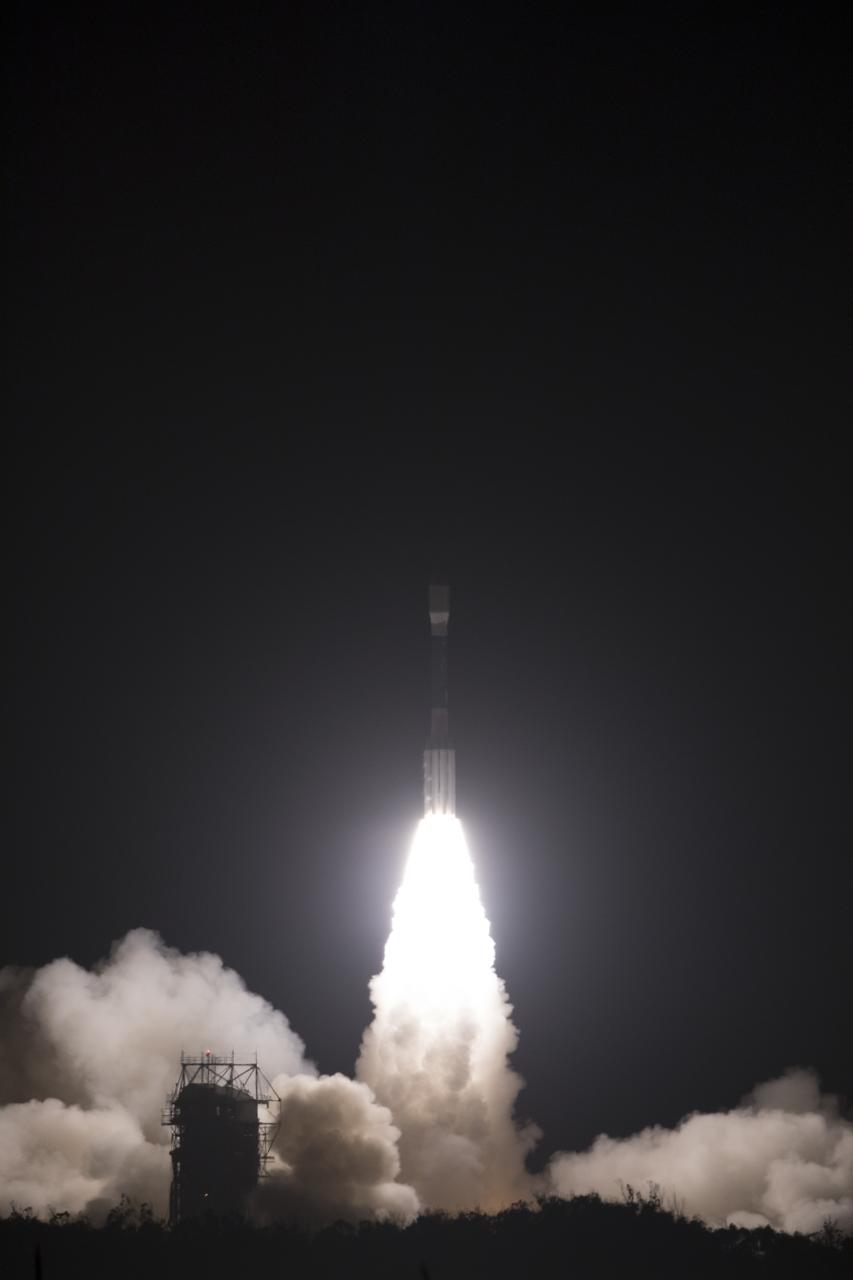
A United Launch Alliance Delta II rocket lifts off from Space Launch Complex 2 at Vandenberg Air Force Base in California carrying the Joint Polar Satellite System-1, or JPSS-1, spacecraft. Built by Ball Aerospace and Technologies Corp. of Boulder, Colorado, JPSS is the first in a series four next-generation environmental satellites in a collaborative program between NOAA and NASA. JPSS-1 will gather measurements of atmospheric, terrestrial and oceanic conditions, including sea and land surface temperatures, vegetation, clouds, rainfall, snow and ice cover, fire locations, atmospheric temperature, water vapor and ozone. Liftoff was at 1:47 a.m. PST (4:47 a.m. EST).
A United Launch Alliance Delta II rocket lifts off from Space Launch Complex 2 at Vandenberg Air Force Base in California carrying the Joint Polar Satellite System-1, or JPSS-1, spacecraft. Built by Ball Aerospace and Technologies Corp. of Boulder, Colorado, JPSS is the first in a series four next-generation environmental satellites in a collaborative program between NOAA and NASA. JPSS-1 will gather measurements of atmospheric, terrestrial and oceanic conditions, including sea and land surface temperatures, vegetation, clouds, rainfall, snow and ice cover, fire locations, atmospheric temperature, water vapor and ozone. Liftoff was at 1:47 a.m. PST (4:47 a.m. EST).

A United Launch Alliance Delta II rocket lifts off from Space Launch Complex 2 at Vandenberg Air Force Base in California carrying the Joint Polar Satellite System-1, or JPSS-1, spacecraft. Built by Ball Aerospace and Technologies Corp. of Boulder, Colorado, JPSS is the first in a series four next-generation environmental satellites in a collaborative program between NOAA and NASA. JPSS-1 will gather measurements of atmospheric, terrestrial and oceanic conditions, including sea and land surface temperatures, vegetation, clouds, rainfall, snow and ice cover, fire locations, atmospheric temperature, water vapor and ozone. Liftoff was at 1:47 a.m. PST (4:47 a.m. EST).
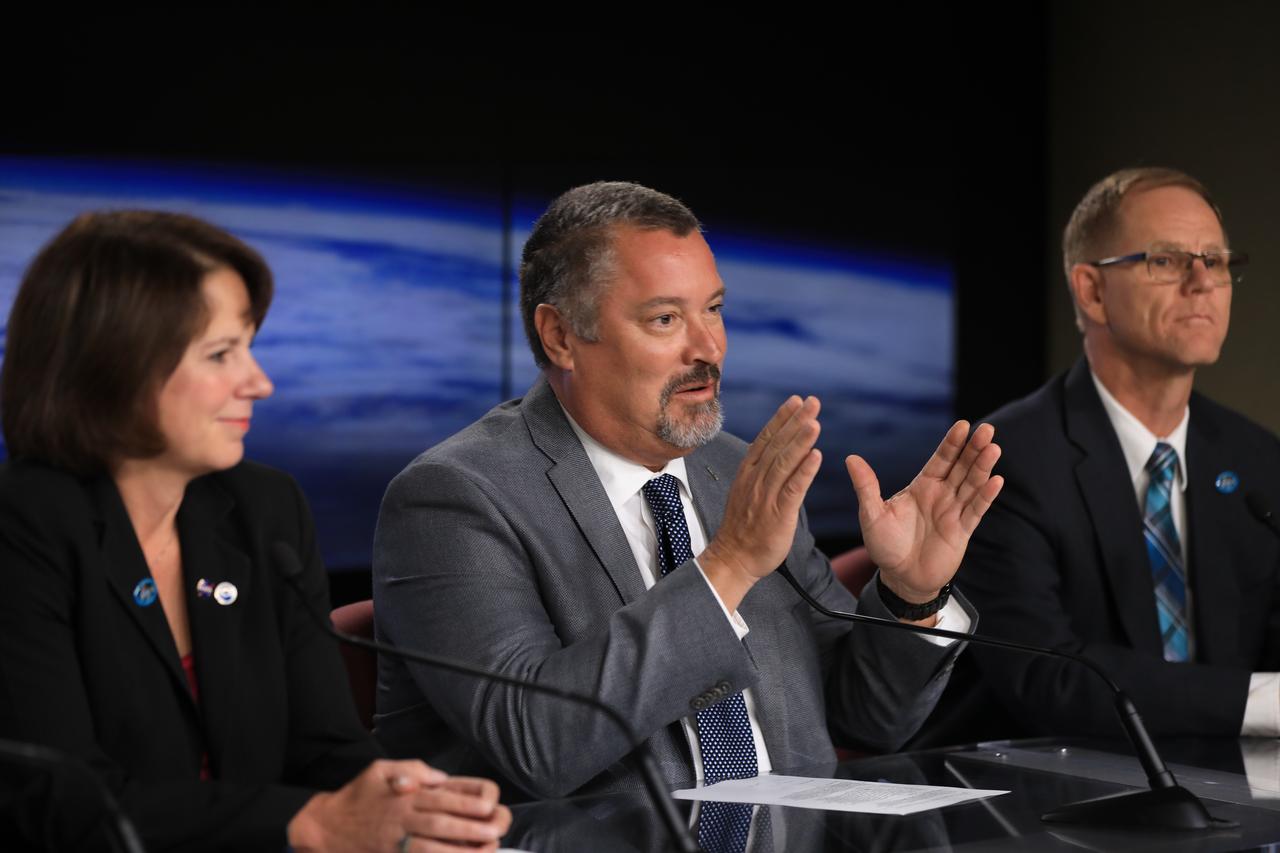
At Vandenberg Air Force Base in California, NASA and industry leaders speak to members of the media at a prelaunch news conference for the Joint Polar Satellite System-1, or JPSS-1. Participants, from left, are Sandra Smalley, director of the Joint Agency Satellite Division at NASA Headquarters, Omar Baez, NASA launch director, and Scott Messer, United Launch Alliance program manager for NASA missions. Built by Ball Aerospace and Technologies Corp. of Boulder, Colorado, JPSS is the first in a series four next-generation environmental satellites in a collaborative program between the NOAA and NASA. Liftoff atop a United Launch Alliance Delta II rocket is scheduled to take place from Vandenberg's Space Launch Complex 2 at 1:47 a.m. PST (4:47 a.m. EST), on Nov. 14, 2017.
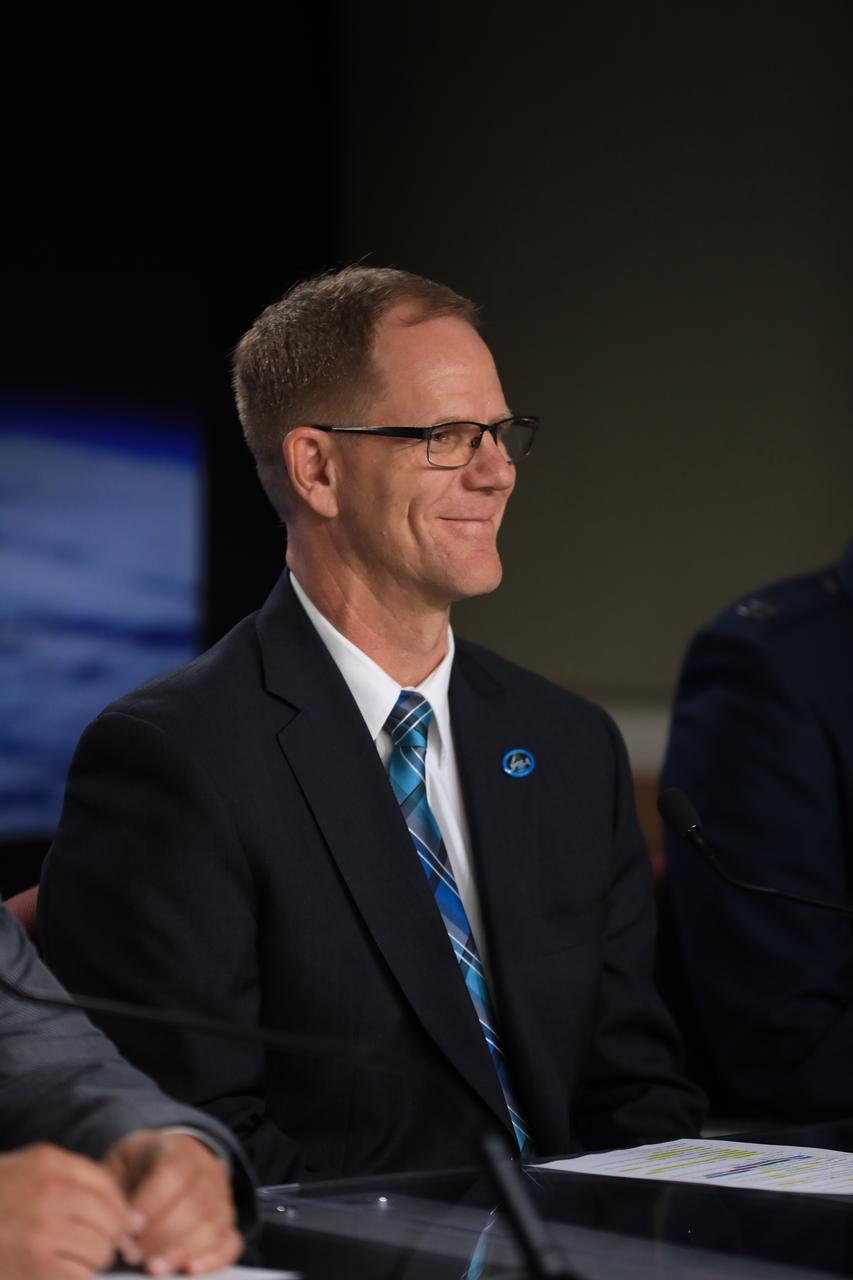
At Vandenberg Air Force Base in California, Scott Messer, United Launch Alliance program manager for NASA missions, speaks to members of the media at a prelaunch news conference for the Joint Polar Satellite System-1, or JPSS-1. Built by Ball Aerospace and Technologies Corp. of Boulder, Colorado, JPSS is the first in a series four next-generation environmental satellites in a collaborative program between the NOAA and NASA. Liftoff atop a United Launch Alliance Delta II rocket is scheduled to take place from Vandenberg's Space Launch Complex 2 at 1:47 a.m. PST (4:47 a.m. EST), on Nov. 14, 2017.

At Vandenberg Air Force Base in California, Omar Baez, NASA launch director, speaks to members of the media at a prelaunch news conference for the Joint Polar Satellite System-1, or JPSS-1. Built by Ball Aerospace and Technologies Corp. of Boulder, Colorado, JPSS is the first in a series four next-generation environmental satellites in a collaborative program between the NOAA and NASA. Liftoff atop a United Launch Alliance Delta II rocket is scheduled to take place from Vandenberg's Space Launch Complex 2 at 1:47 a.m. PST (4:47 a.m. EST), on Nov. 14, 2017.
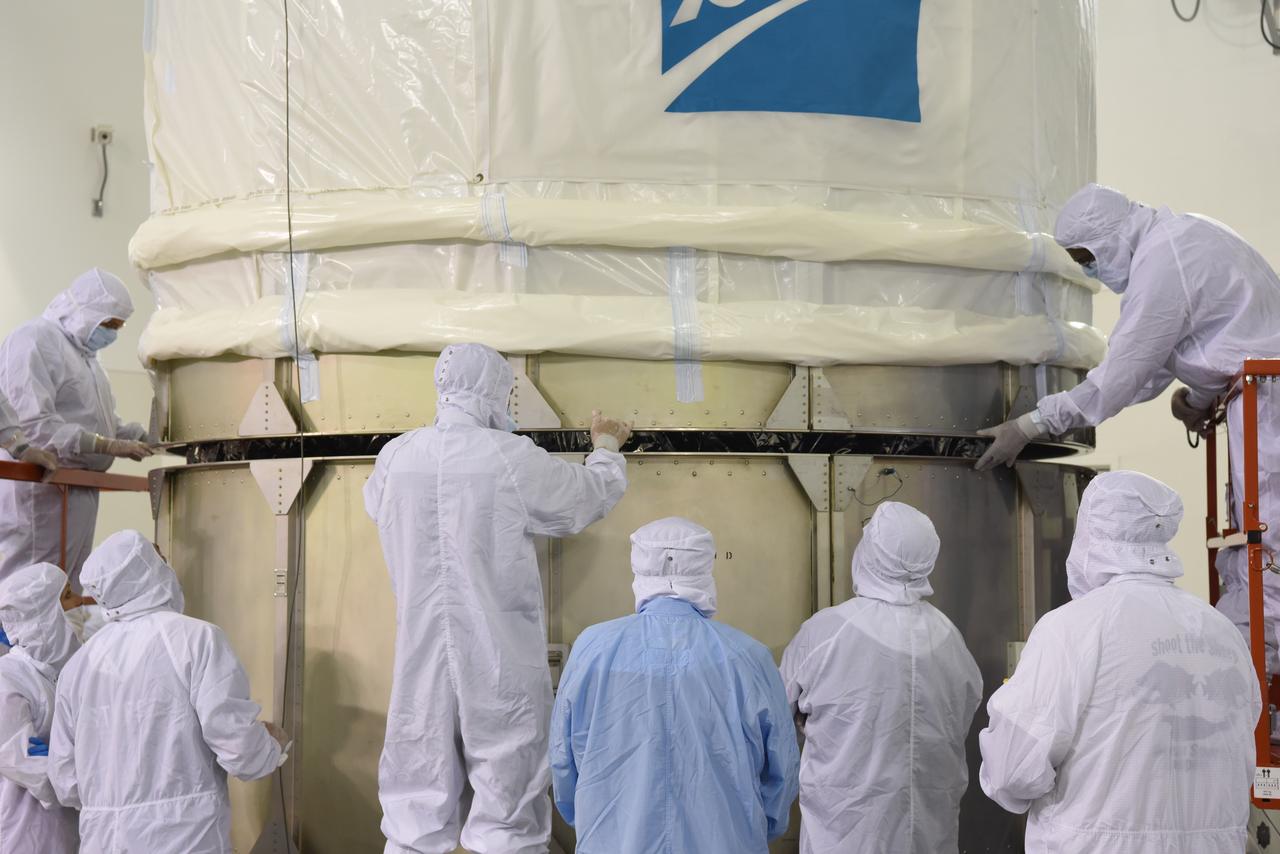
In the Astrotech Processing Facility at Vandenberg Air Force Base in California, technicians and engineers place the Joint Polar Satellite System-1, or JPSS-1, spacecraft in a protective container. It then will be mounted on a transport trailer for its move to Space Launch Complex 2. At the pad, JPSS-1 will be lifted for mating atop a United Launch Alliance Delta II rocket. Built by Ball Aerospace and Technologies Corp. of Boulder, Colorado, JPSS is the first in a series four next-generation environmental satellites in a collaborative program between the NOAA and NASA. Liftoff is scheduled to take place from Vandenberg's Space Launch Complex 2.
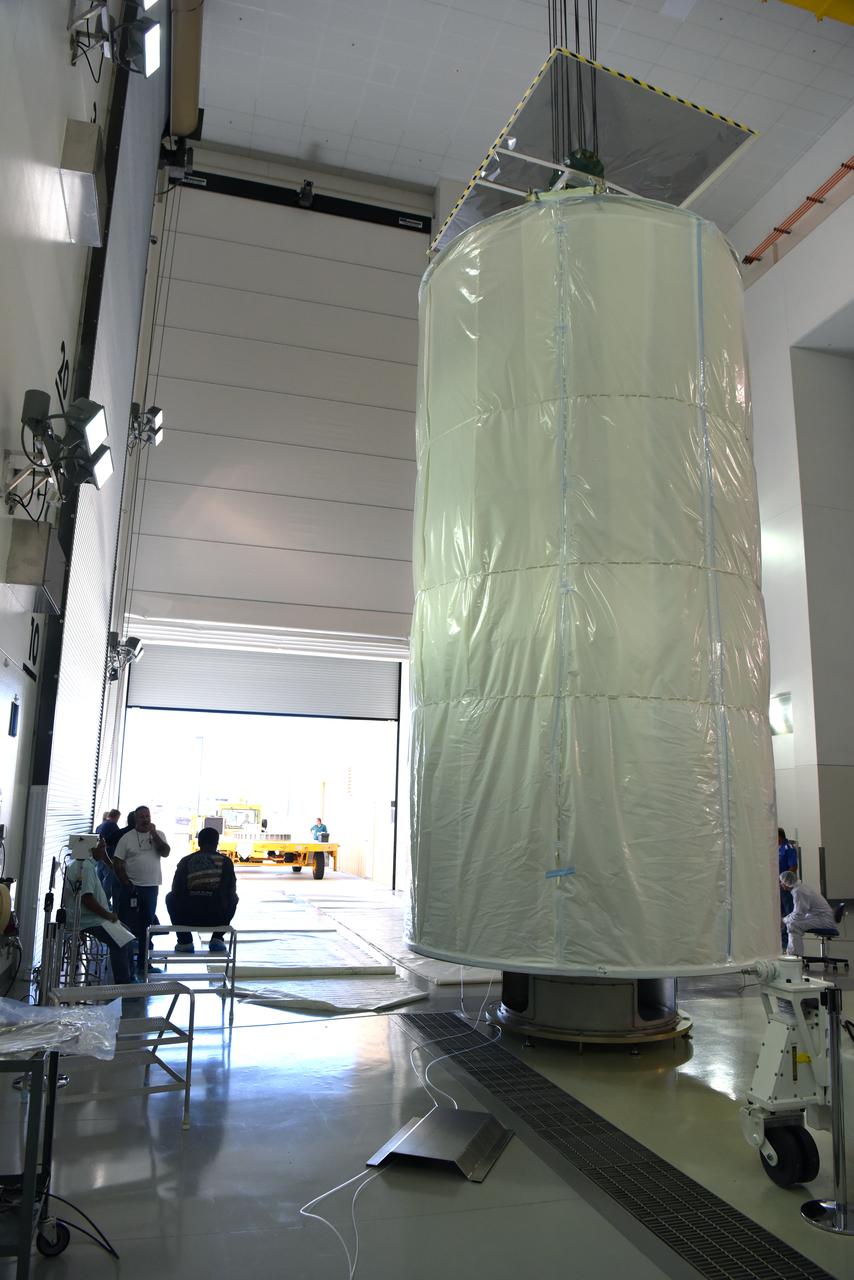
In the Astrotech Processing Facility at Vandenberg Air Force Base in California, the Joint Polar Satellite System-1, or JPSS-1, spacecraft is prepared for departure in a protective container to Space Launch Complex 2. At the pad, JPSS-1 will be lifted for mating atop a United Launch Alliance Delta II rocket. Built by Ball Aerospace and Technologies Corp. of Boulder, Colorado, JPSS is the first in a series four next-generation environmental satellites in a collaborative program between the NOAA and NASA. Liftoff is scheduled to take place from Vandenberg's Space Launch Complex 2.

At Vandenberg Air Force Base in California, the Joint Polar Satellite System-1, or JPSS-1, spacecraft departs the Astrotech Processing Facility in a protective container on its way to Space Launch Complex 2. At the pad, JPSS-1 will be lifted for mating atop a United Launch Alliance Delta II rocket. Built by Ball Aerospace and Technologies Corp. of Boulder, Colorado, JPSS is the first in a series four next-generation environmental satellites in a collaborative program between the NOAA and NASA. Liftoff is scheduled to take place from Vandenberg's Space Launch Complex 2.
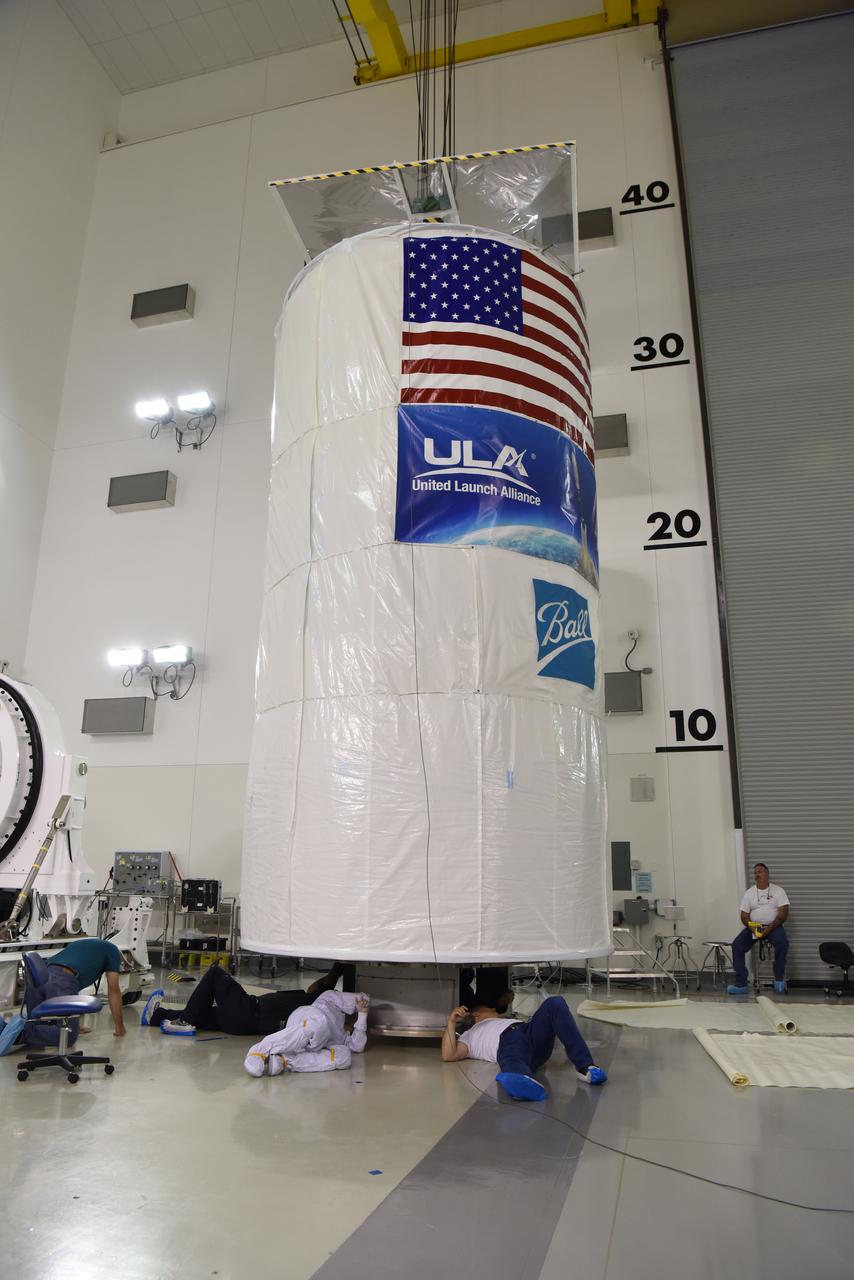
In the Astrotech Processing Facility at Vandenberg Air Force Base in California, the Joint Polar Satellite System-1, or JPSS-1, spacecraft is prepared for departure in a protective container to Space Launch Complex 2. At the pad, JPSS-1 will be lifted for mating atop a United Launch Alliance Delta II rocket. Built by Ball Aerospace and Technologies Corp. of Boulder, Colorado, JPSS is the first in a series four next-generation environmental satellites in a collaborative program between the NOAA and NASA. Liftoff is scheduled to take place from Vandenberg's Space Launch Complex 2.
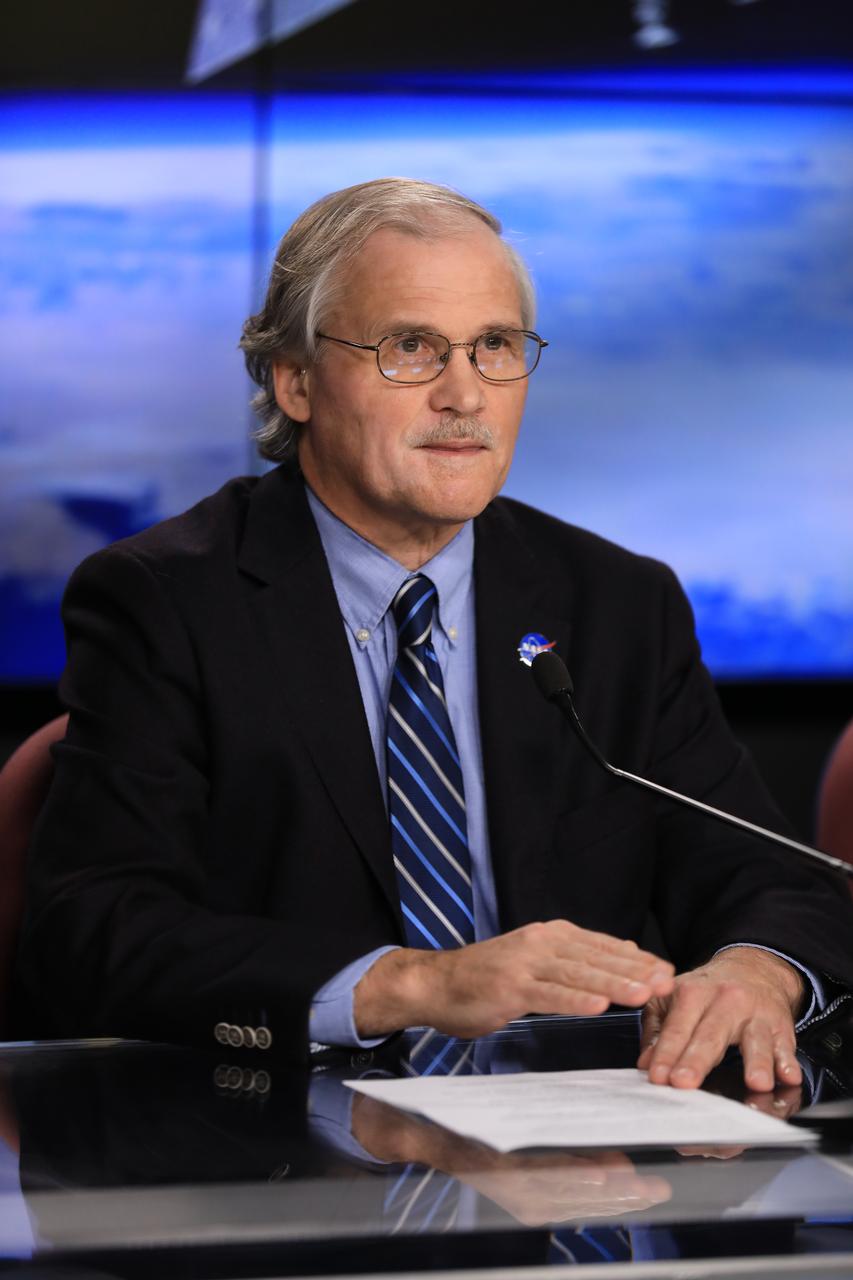
At Vandenberg Air Force Base in California, Steve Cole of NASA Communications, speaks to members of the media during a briefing focused on research planned for the Joint Polar Satellite System-1, or JPSS-1. Built by Ball Aerospace and Technologies Corp. of Boulder, Colorado, JPSS is the first in a series four next-generation environmental satellites in a collaborative program between the NOAA and NASA. Liftoff atop a United Launch Alliance Delta II rocket is scheduled to take place from Vandenberg's Space Launch Complex 2 at 1:47 a.m. PST (4:47 a.m. EST), on Nov. 14, 2017.
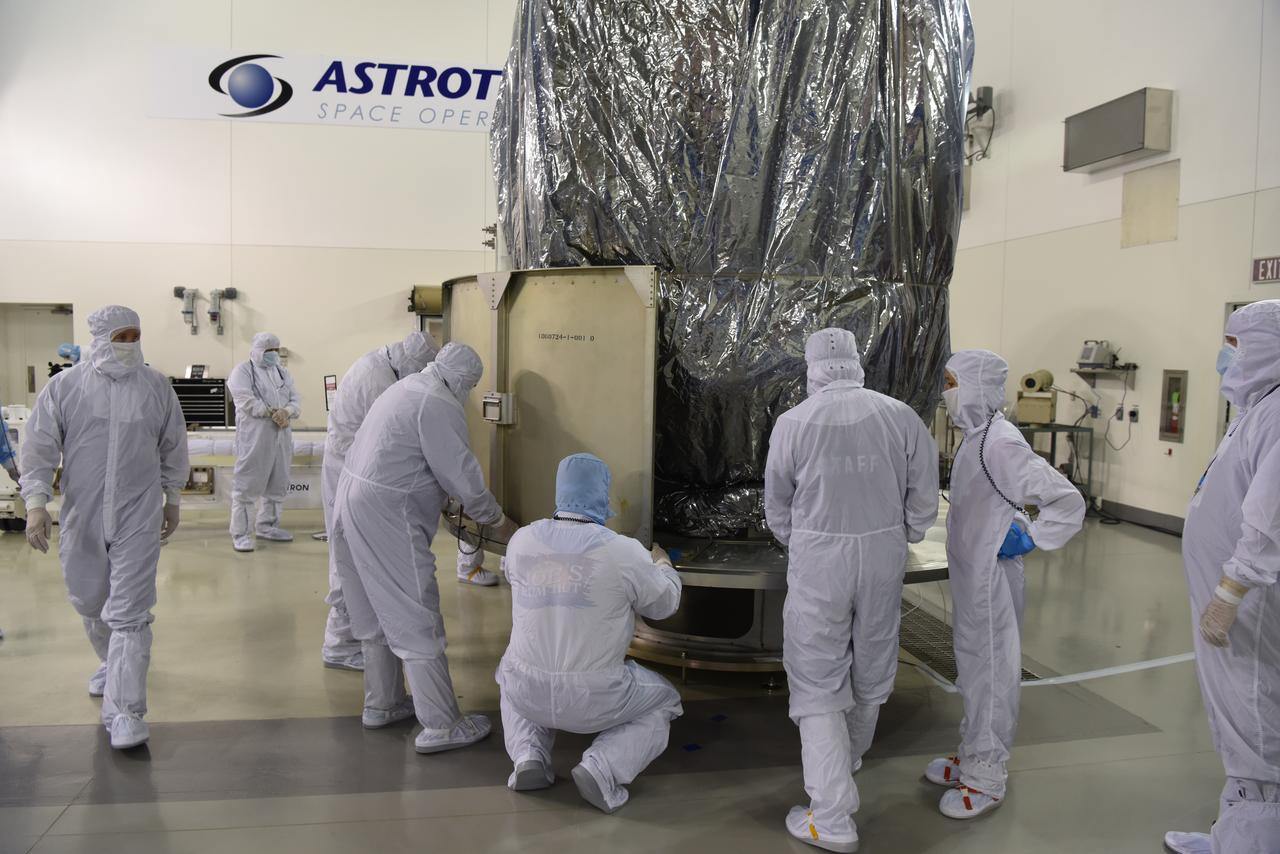
In the Astrotech Processing Facility at Vandenberg Air Force Base in California, the Joint Polar Satellite System-1, or JPSS-1, spacecraft is wrapped in a protective covering prior to technicians and engineers placing it in a protective container. It then will be mounted on a transport trailer for its move to Space Launch Complex 2. At the pad, JPSS-1 will be lifted for mating atop a United Launch Alliance Delta II rocket. Built by Ball Aerospace and Technologies Corp. of Boulder, Colorado, JPSS is the first in a series four next-generation environmental satellites in a collaborative program between the NOAA and NASA. Liftoff is scheduled to take place from Vandenberg's Space Launch Complex 2.
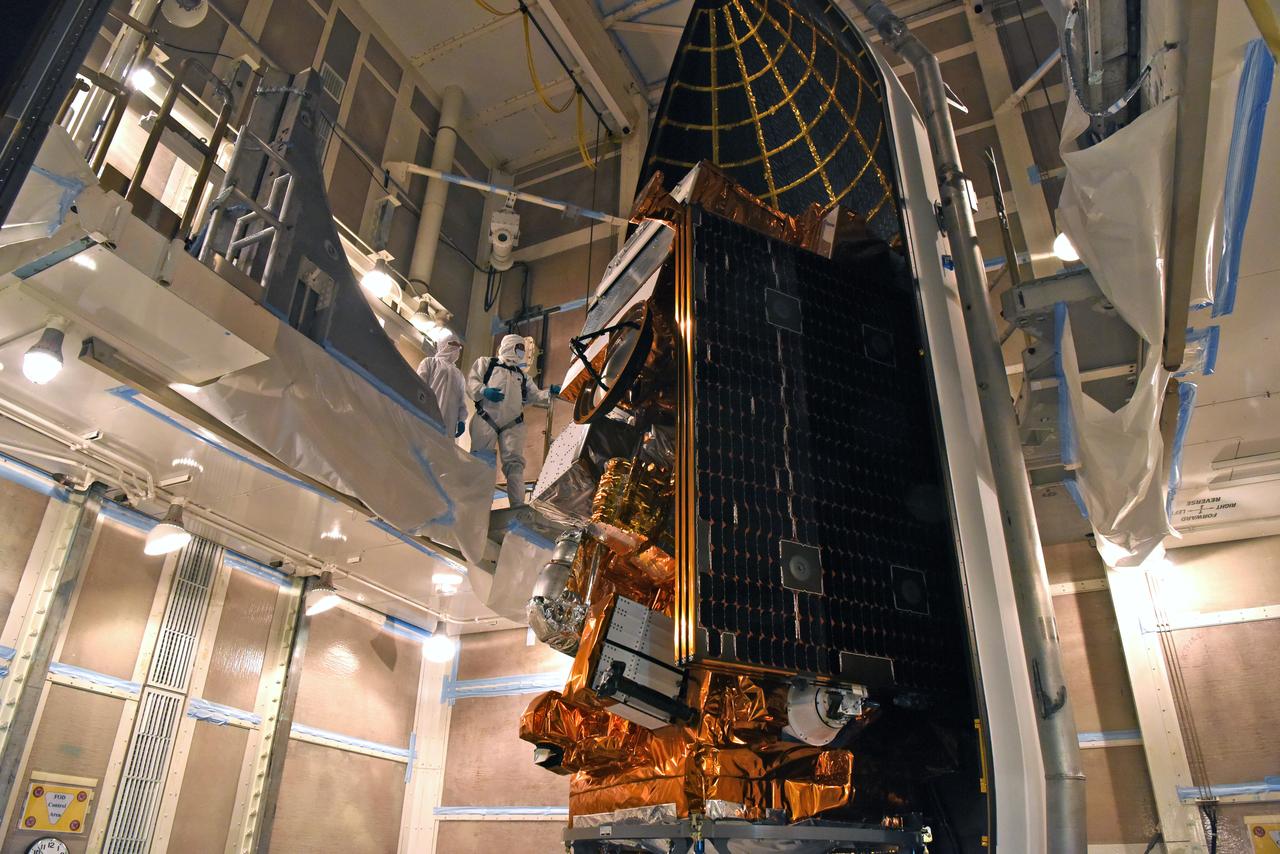
At Vandenberg Air Force Base in California, the payload fairing is installed encapsulating the Joint Polar Satellite System-1, or JPSS-1, spacecraft atop a United Launch Alliance Delta II rocket at Space Launch Complex 2. Built by Ball Aerospace and Technologies Corp. of Boulder, Colorado, JPSS is the first in a series four next-generation environmental satellites in a collaborative program between the NOAA and NASA. Liftoff is scheduled to take place from Vandenberg's Space Launch Complex 2 at 1:47 a.m. PST (4:47 a.m. EST), on Nov. 14, 2017.
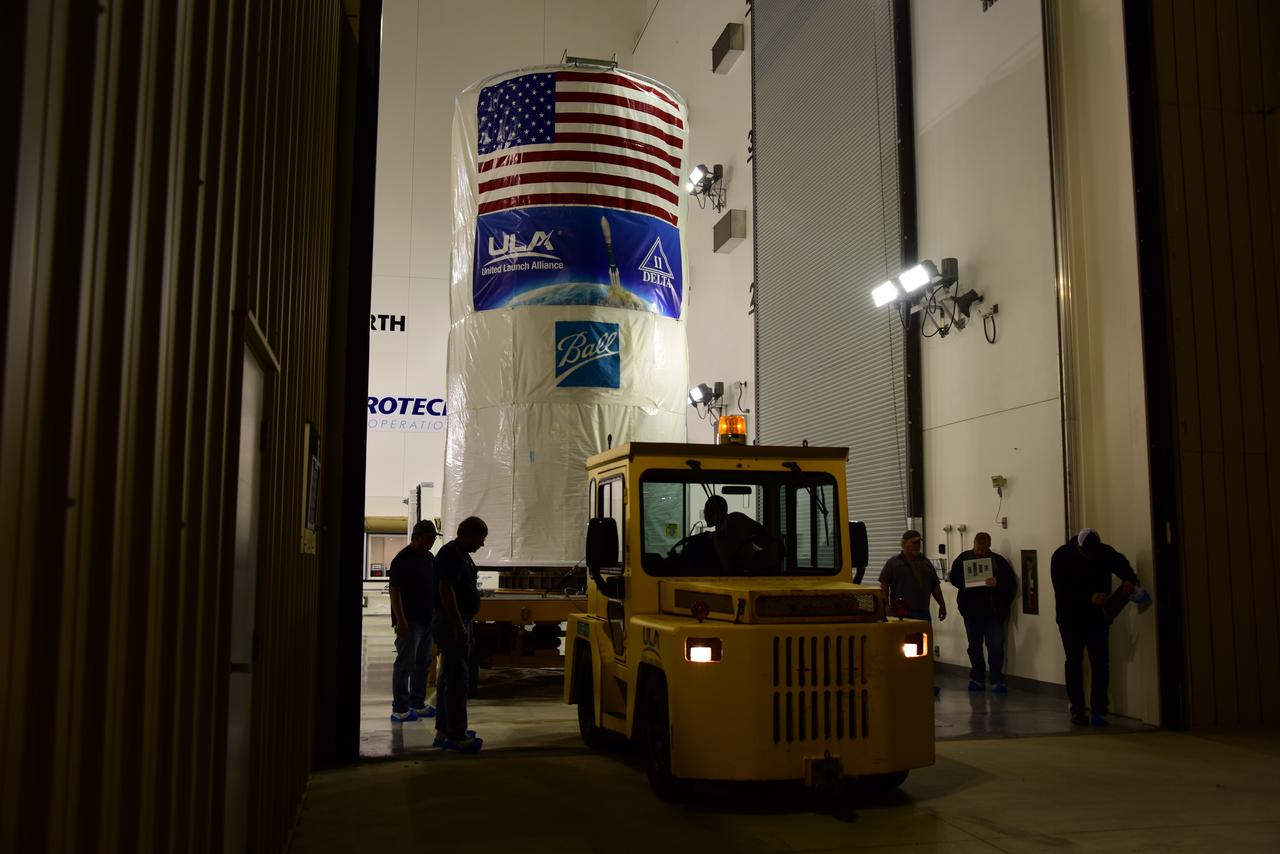
At Vandenberg Air Force Base in California, the Joint Polar Satellite System-1, or JPSS-1, spacecraft departs the Astrotech Processing Facility in a protective container on its way to Space Launch Complex 2. At the pad, JPSS-1 will be lifted for mating atop a United Launch Alliance Delta II rocket. Built by Ball Aerospace and Technologies Corp. of Boulder, Colorado, JPSS is the first in a series four next-generation environmental satellites in a collaborative program between the NOAA and NASA. Liftoff is scheduled to take place from Vandenberg's Space Launch Complex 2.
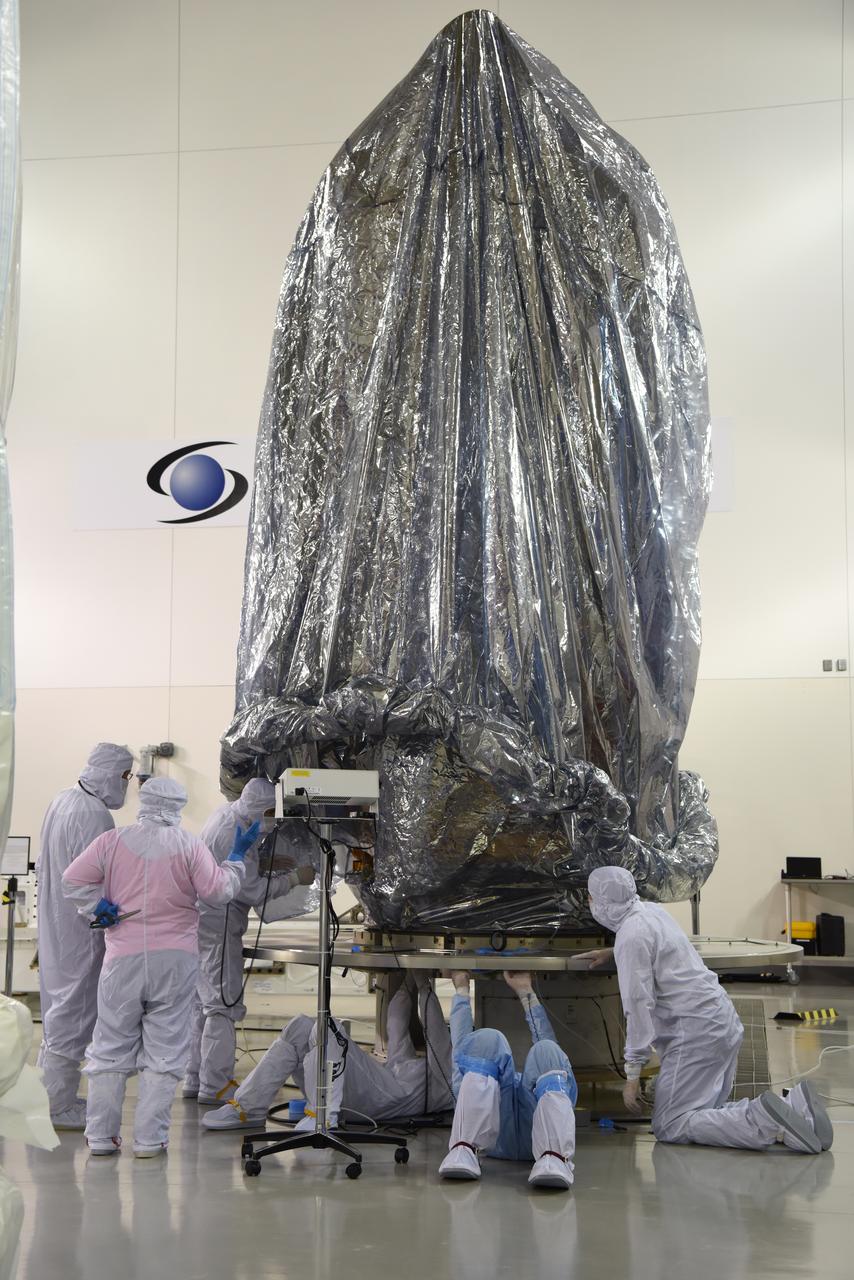
In the Astrotech Processing Facility at Vandenberg Air Force Base in California, the Joint Polar Satellite System-1, or JPSS-1, spacecraft is wrapped in a protective covering prior to being placed it in a protective container. It then will be mounted on a transport trailer for its move to Space Launch Complex 2. At the pad, JPSS-1 will be lifted for mating atop a United Launch Alliance Delta II rocket. Built by Ball Aerospace and Technologies Corp. of Boulder, Colorado, JPSS is the first in a series four next-generation environmental satellites in a collaborative program between the NOAA and NASA. Liftoff is scheduled to take place from Vandenberg's Space Launch Complex 2.
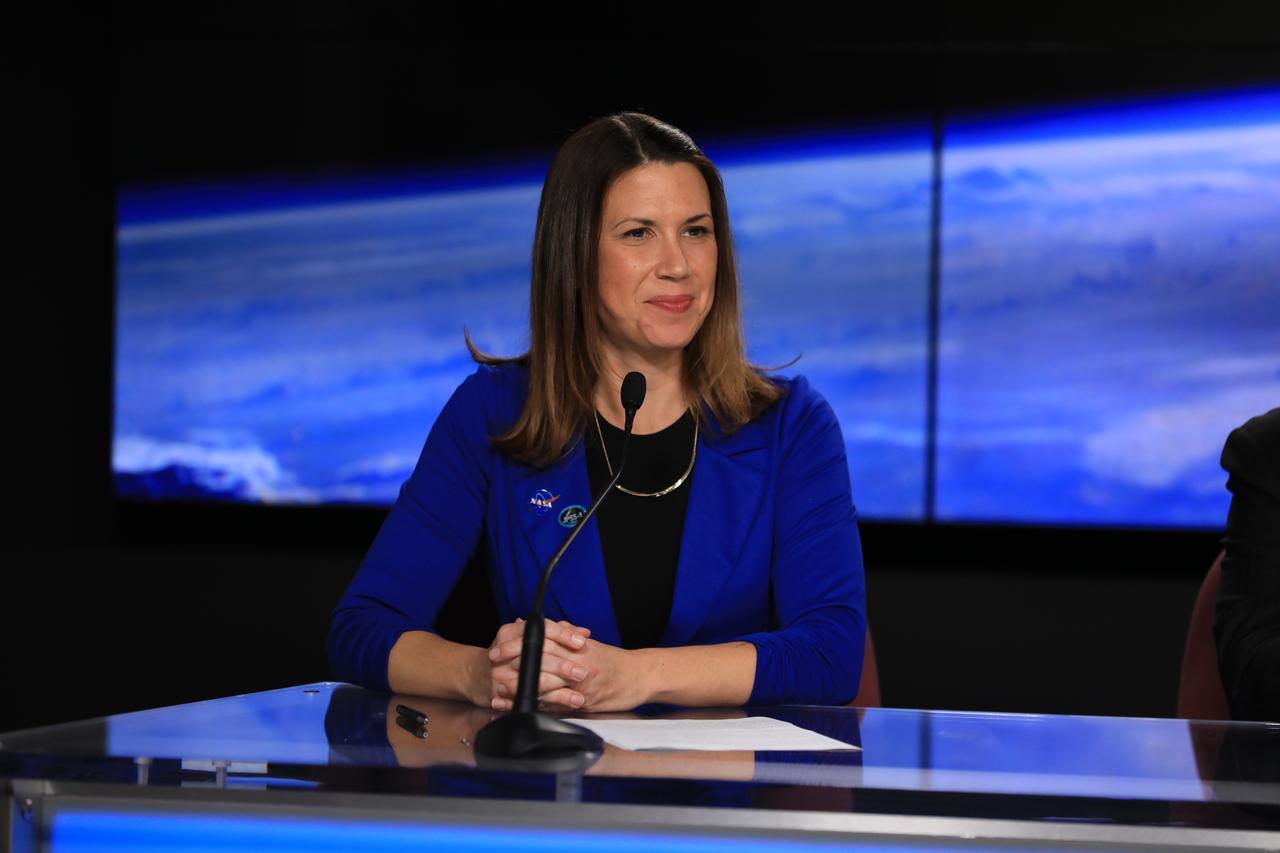
At Vandenberg Air Force Base in California, Tori McLendon, speaks to members of the media at a prelaunch news conference for the Joint Polar Satellite System-1, or JPSS-1. Built by Ball Aerospace and Technologies Corp. of Boulder, Colorado, JPSS is the first in a series four next-generation environmental satellites in a collaborative program between the NOAA and NASA. Liftoff atop a United Launch Alliance Delta II rocket is scheduled to take place from Vandenberg's Space Launch Complex 2 at 1:47 a.m. PST (4:47 a.m. EST), on Nov. 14, 2017.
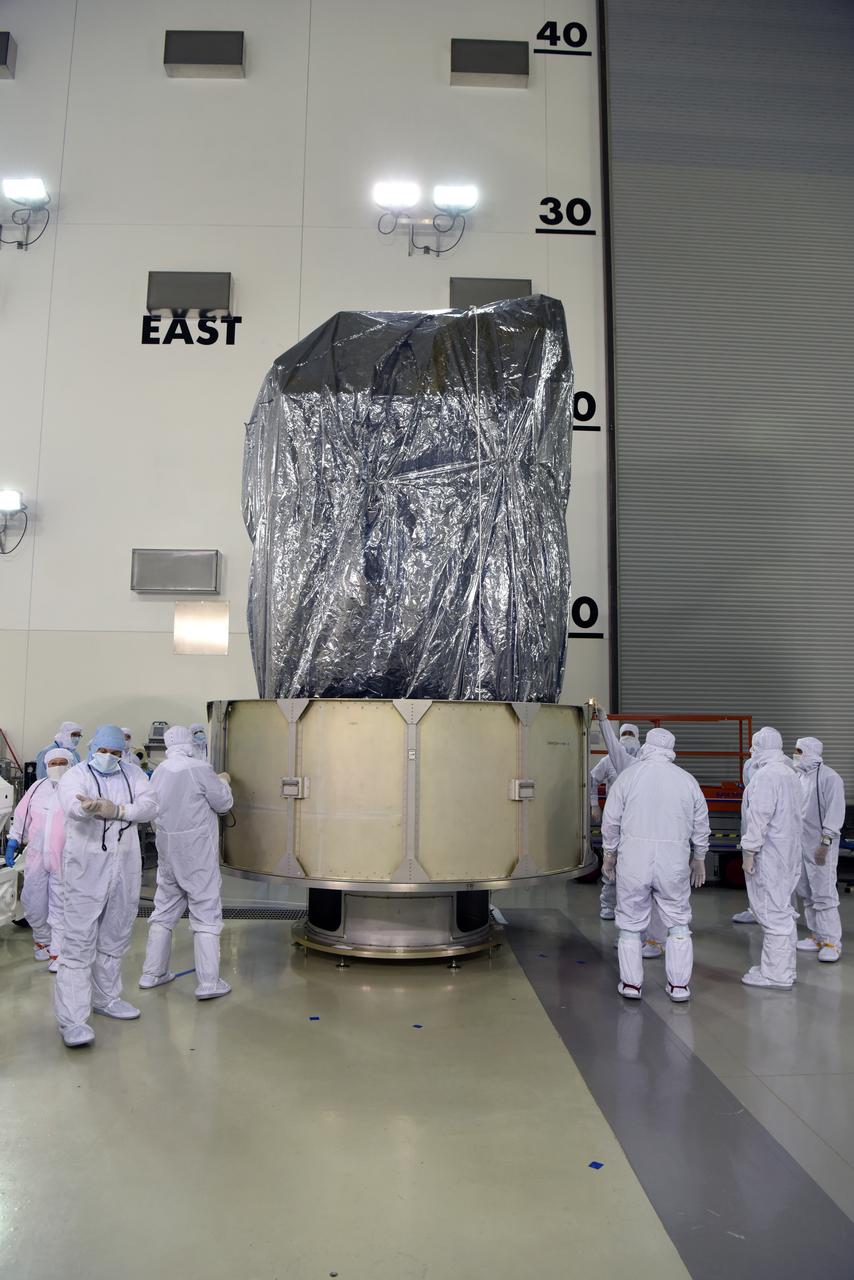
In the Astrotech Processing Facility at Vandenberg Air Force Base in California, the Joint Polar Satellite System-1, or JPSS-1, spacecraft is wrapped in a protective covering prior to technicians and engineers placing it in a protective container. It then will be mounted on a transport trailer for its move to Space Launch Complex 2. At the pad, JPSS-1 will be lifted for mating atop a United Launch Alliance Delta II rocket. Built by Ball Aerospace and Technologies Corp. of Boulder, Colorado, JPSS is the first in a series four next-generation environmental satellites in a collaborative program between the NOAA and NASA. Liftoff is scheduled to take place from Vandenberg's Space Launch Complex 2.
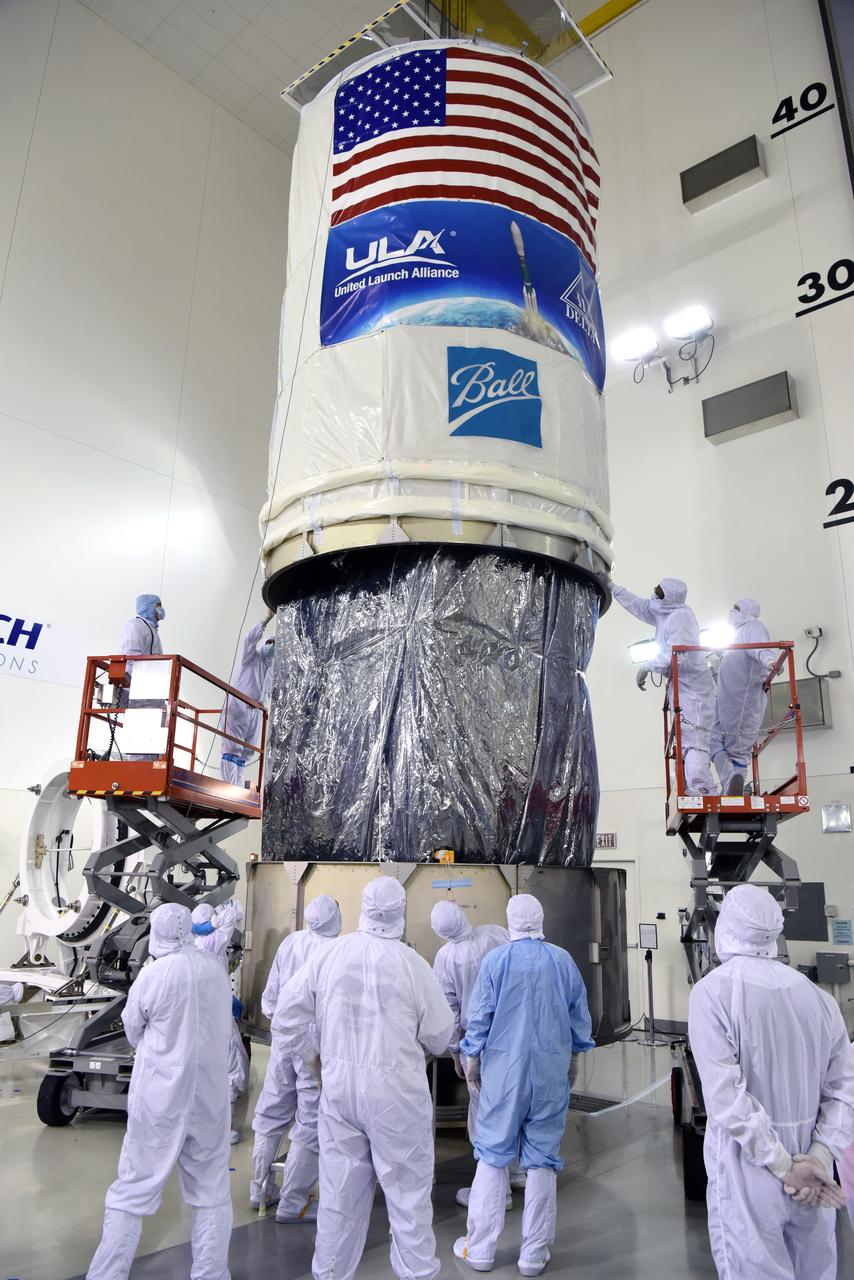
In the Astrotech Processing Facility at Vandenberg Air Force Base in California, technicians and engineers place the Joint Polar Satellite System-1, or JPSS-1, spacecraft in a protective container. It then will be mounted on a transport trailer for its move to Space Launch Complex 2. At the pad, JPSS-1 will be lifted for mating atop a United Launch Alliance Delta II rocket. Built by Ball Aerospace and Technologies Corp. of Boulder, Colorado, JPSS is the first in a series four next-generation environmental satellites in a collaborative program between the NOAA and NASA. Liftoff is scheduled to take place from Vandenberg's Space Launch Complex 2.
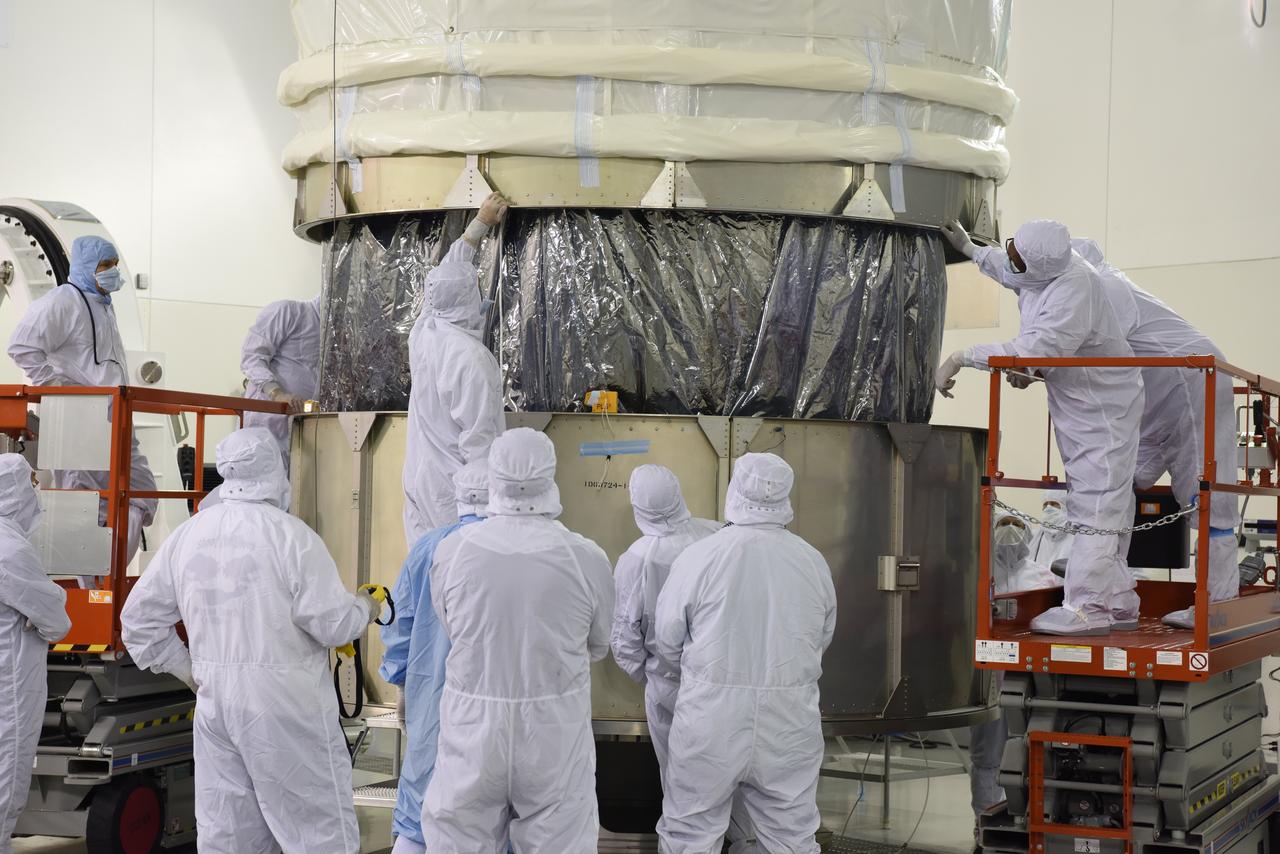
In the Astrotech Processing Facility at Vandenberg Air Force Base in California, technicians and engineers place the Joint Polar Satellite System-1, or JPSS-1, spacecraft in a protective container. It then will be mounted on a transport trailer for its move to Space Launch Complex 2. At the pad, JPSS-1 will be lifted for mating atop a United Launch Alliance Delta II rocket. Built by Ball Aerospace and Technologies Corp. of Boulder, Colorado, JPSS is the first in a series four next-generation environmental satellites in a collaborative program between the NOAA and NASA. Liftoff is scheduled to take place from Vandenberg's Space Launch Complex 2.
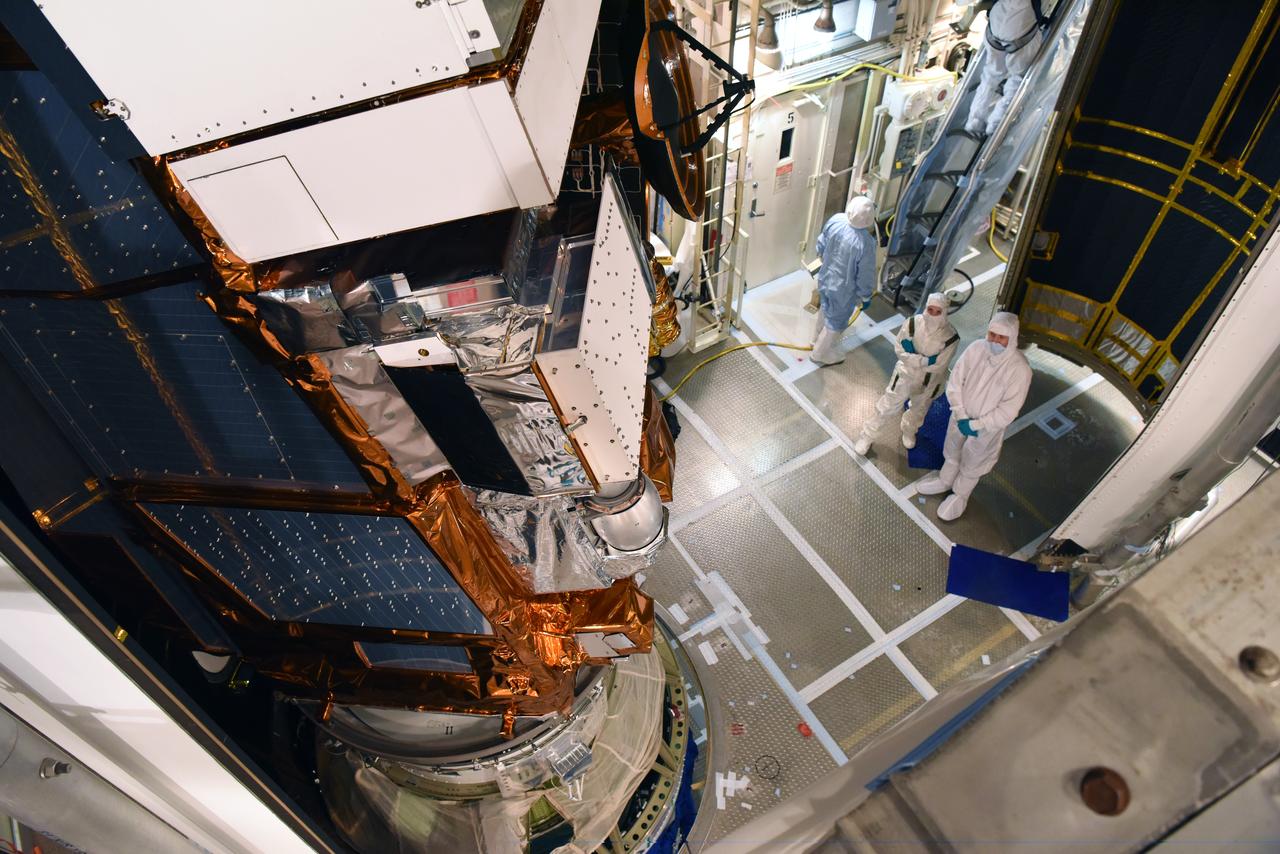
At Vandenberg Air Force Base in California, the payload fairing is installed encapsulating the Joint Polar Satellite System-1, or JPSS-1, spacecraft atop a United Launch Alliance Delta II rocket at Space Launch Complex 2. Built by Ball Aerospace and Technologies Corp. of Boulder, Colorado, JPSS is the first in a series four next-generation environmental satellites in a collaborative program between the NOAA and NASA. Liftoff is scheduled to take place from Vandenberg's Space Launch Complex 2 at 1:47 a.m. PST (4:47 a.m. EST), on Nov. 14, 2017.
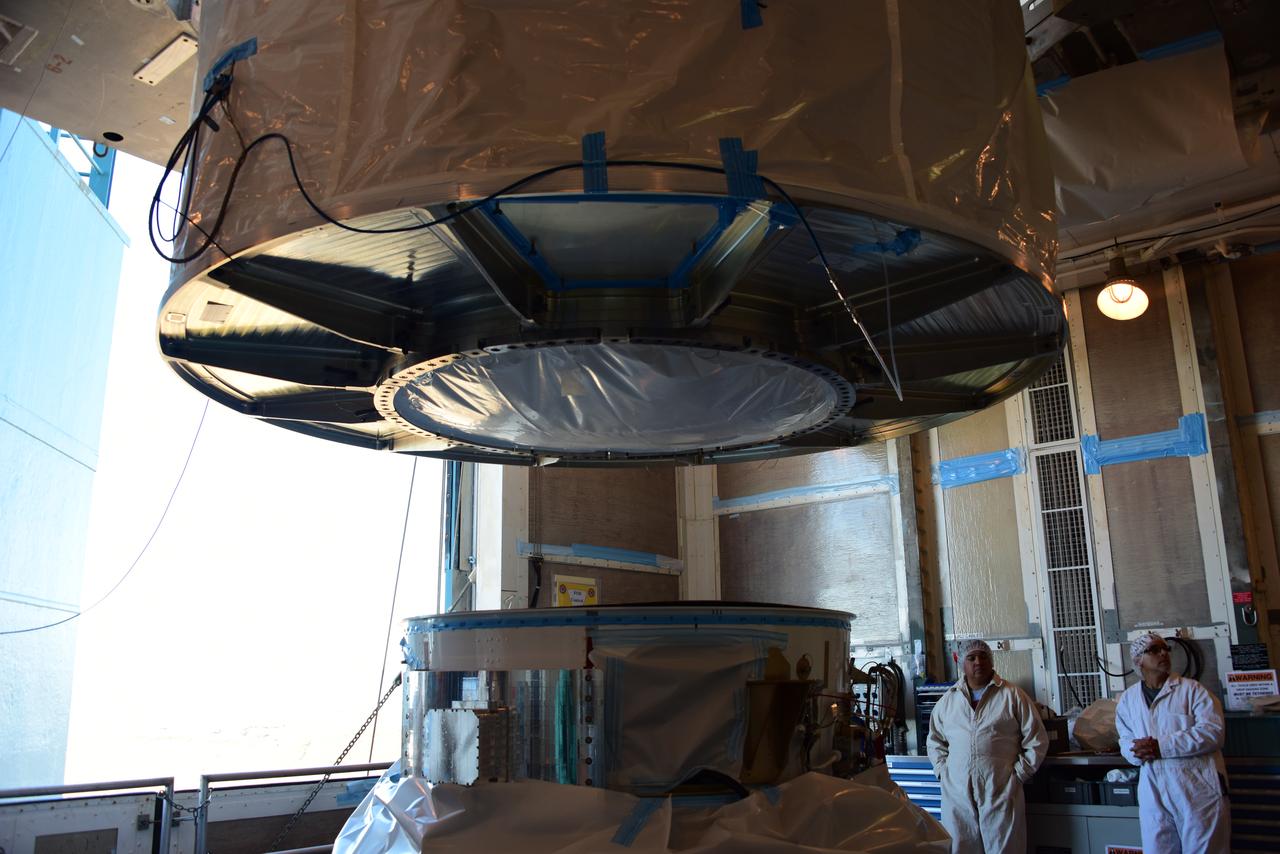
JPSS-1 SpaceAt Vandenberg Air Force Base in California, the Joint Polar Satellite System-1, or JPSS-1, spacecraft is mated atop a United Launch Alliance Delta II rocket at Space Launch Complex 2. Built by Ball Aerospace and Technologies Corp. of Boulder, Colorado, JPSS is the first in a series four next-generation environmental satellites in a collaborative program between the NOAA and NASA. Liftoff is scheduled to take place from Vandenberg's Space Launch Complex 2.craft Transport to SLC-2; Lift and Mate to Delta II.

At Vandenberg Air Force Base in California, U. S. Air Force Capt. Ross Malugani, launch weather officer at Vandenberg's 30th Space Wing, speaks to members of the media at a prelaunch news conference for the Joint Polar Satellite System-1, or JPSS-1. Built by Ball Aerospace and Technologies Corp. of Boulder, Colorado, JPSS is the first in a series four next-generation environmental satellites in a collaborative program between the NOAA and NASA. Liftoff atop a United Launch Alliance Delta II rocket is scheduled to take place from Vandenberg's Space Launch Complex 2 at 1:47 a.m. PST (4:47 a.m. EST), on Nov. 14, 2017.
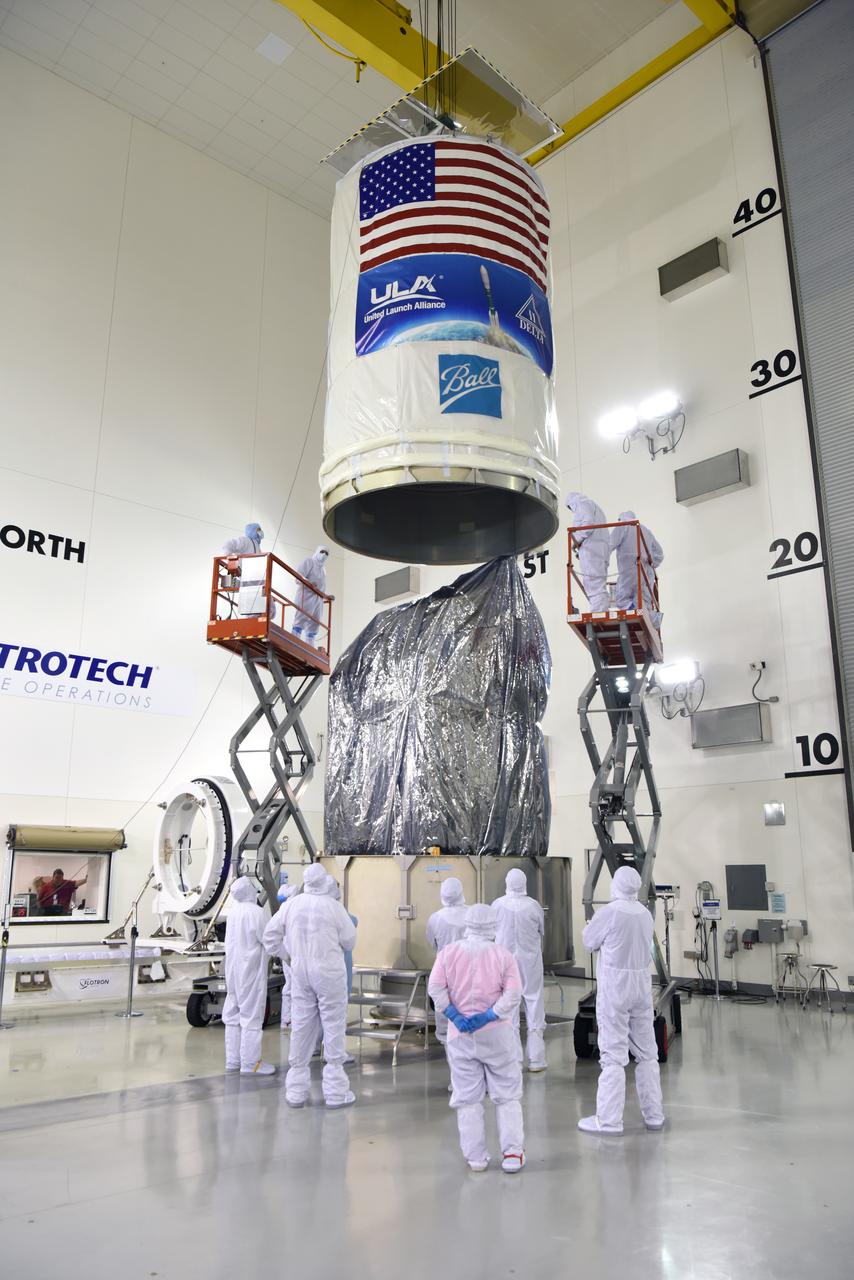
In the Astrotech Processing Facility at Vandenberg Air Force Base in California, technicians and engineers place the Joint Polar Satellite System-1, or JPSS-1, spacecraft in a protective container. It then will be mounted on a transport trailer for its move to Space Launch Complex 2. At the pad, JPSS-1 will be lifted for mating atop a United Launch Alliance Delta II rocket. Built by Ball Aerospace and Technologies Corp. of Boulder, Colorado, JPSS is the first in a series four next-generation environmental satellites in a collaborative program between the NOAA and NASA. Liftoff is scheduled to take place from Vandenberg's Space Launch Complex 2.
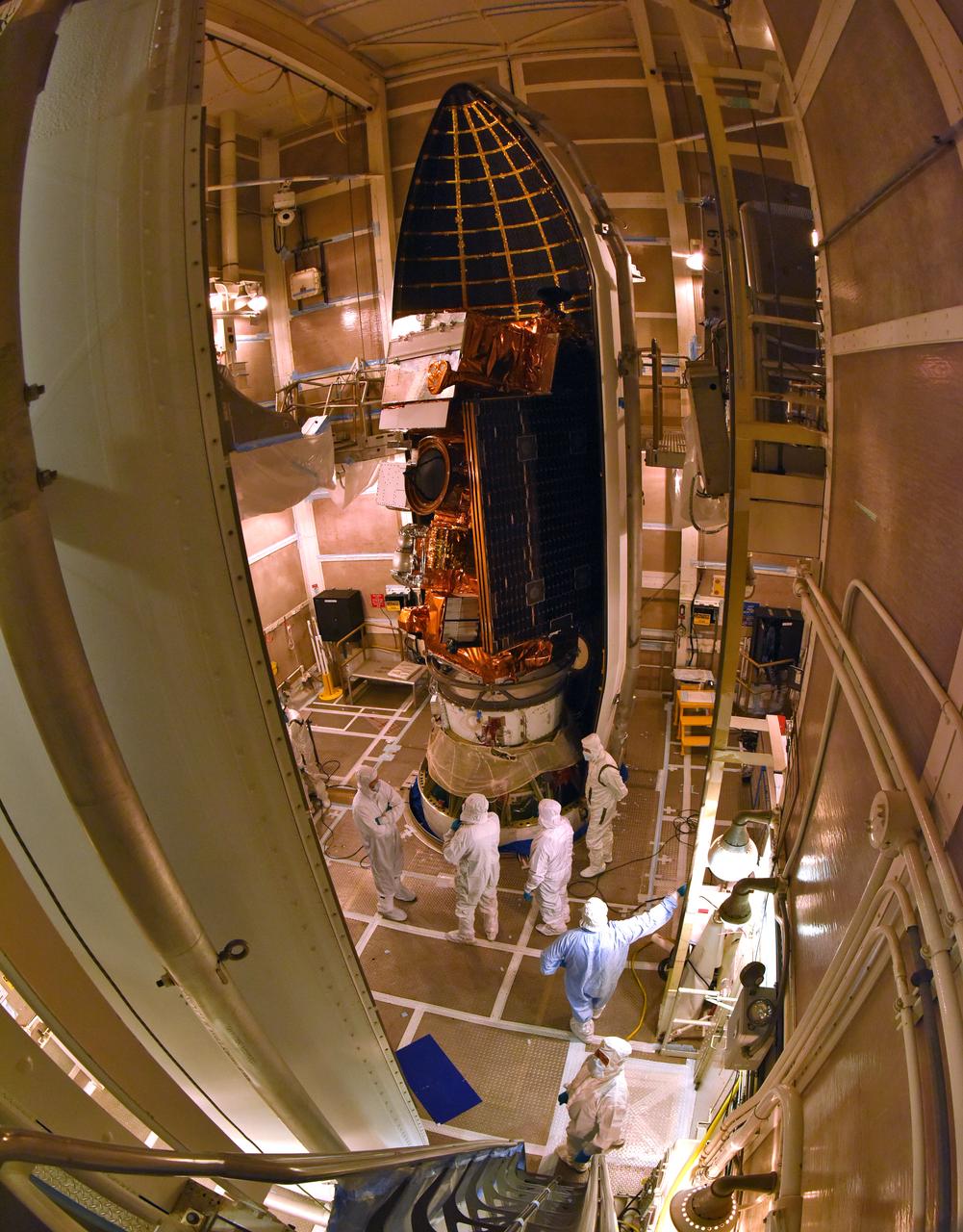
At Vandenberg Air Force Base in California, this wide angle view shows the payload fairing as it is installed encapsulating the Joint Polar Satellite System-1, or JPSS-1, spacecraft atop a United Launch Alliance Delta II rocket at Space Launch Complex 2. Built by Ball Aerospace and Technologies Corp. of Boulder, Colorado, JPSS is the first in a series four next-generation environmental satellites in a collaborative program between the NOAA and NASA. Liftoff is scheduled to take place from Vandenberg's Space Launch Complex 2 at 1:47 a.m. PST (4:47 a.m. EST), on Nov. 14, 2017.
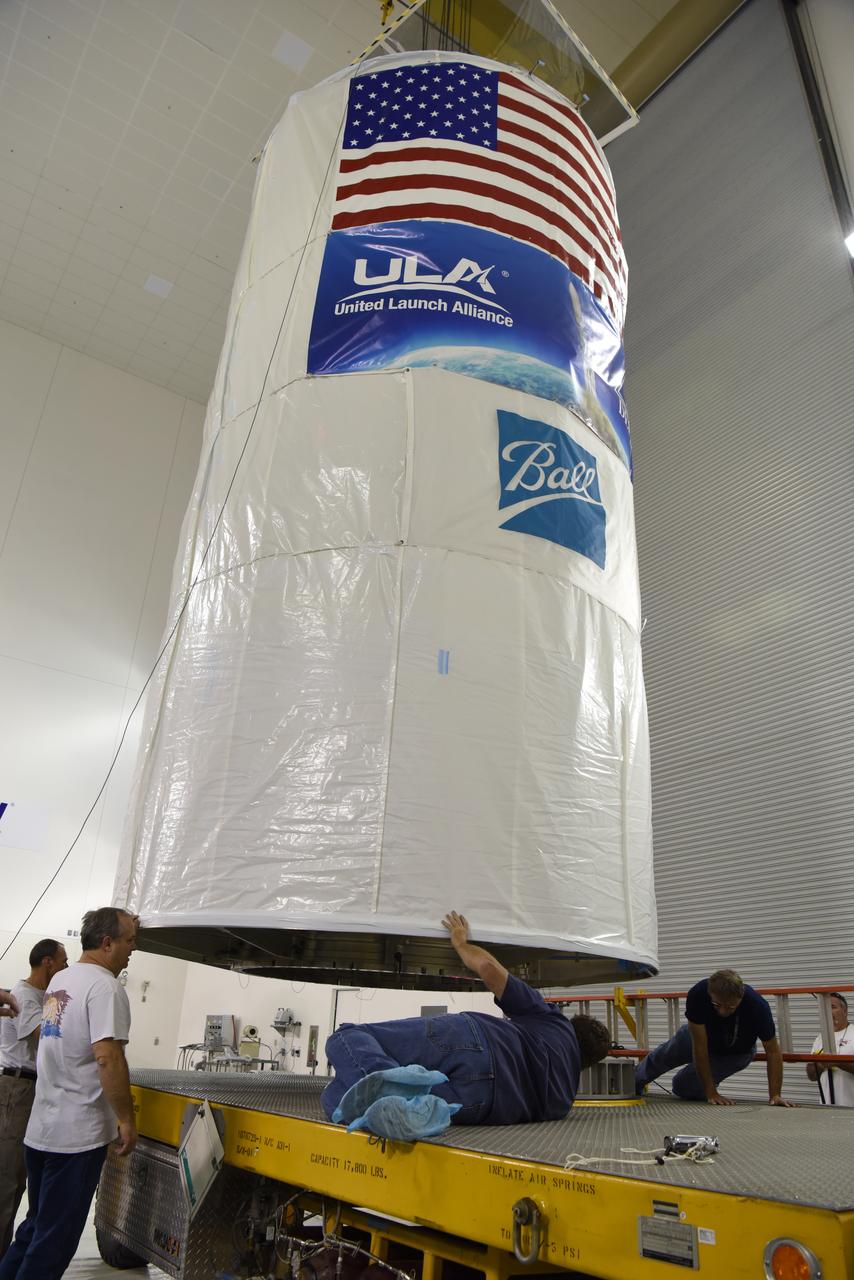
In the Astrotech Processing Facility at Vandenberg Air Force Base in California, the Joint Polar Satellite System-1, or JPSS-1, spacecraft in a protective container is placed on a transport trailer for the trip to Space Launch Complex 2. At the pad, JPSS-1 will be lifted for mating atop a United Launch Alliance Delta II rocket. Built by Ball Aerospace and Technologies Corp. of Boulder, Colorado, JPSS is the first in a series four next-generation environmental satellites in a collaborative program between the NOAA and NASA. Liftoff is scheduled to take place from Vandenberg's Space Launch Complex 2.
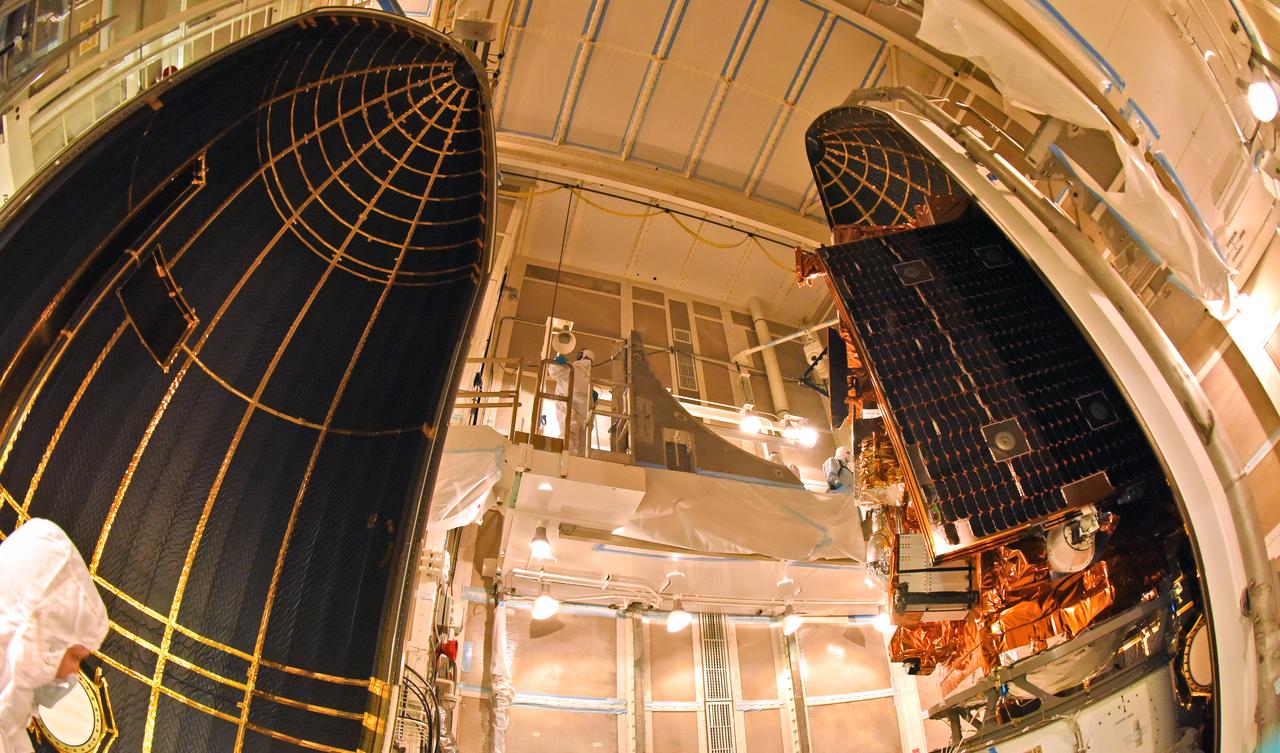
At Vandenberg Air Force Base in California, this wide angle view shows the payload fairing as it is installed encapsulating the Joint Polar Satellite System-1, or JPSS-1, spacecraft atop a United Launch Alliance Delta II rocket at Space Launch Complex 2. Built by Ball Aerospace and Technologies Corp. of Boulder, Colorado, JPSS is the first in a series four next-generation environmental satellites in a collaborative program between the NOAA and NASA. Liftoff is scheduled to take place from Vandenberg's Space Launch Complex 2 at 1:47 a.m. PST (4:47 a.m. EST), on Nov. 14, 2017.
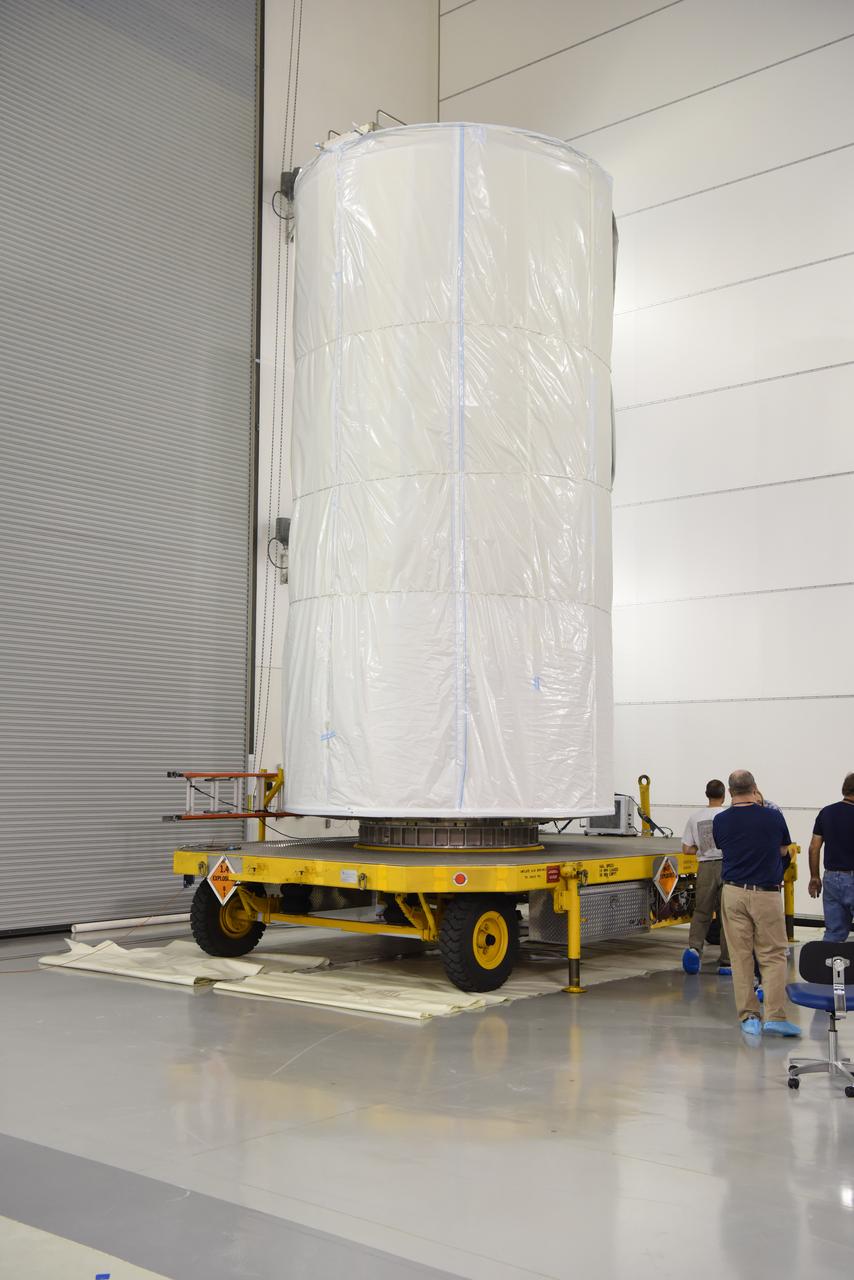
In the Astrotech Processing Facility at Vandenberg Air Force Base in California, the Joint Polar Satellite System-1, or JPSS-1, spacecraft in a protective container is mounted on a transport trailer for the trip to Space Launch Complex 2. At the pad, JPSS-1 will be lifted for mating atop a United Launch Alliance Delta II rocket. Built by Ball Aerospace and Technologies Corp. of Boulder, Colorado, JPSS is the first in a series four next-generation environmental satellites in a collaborative program between the NOAA and NASA. Liftoff is scheduled to take place from Vandenberg's Space Launch Complex 2.
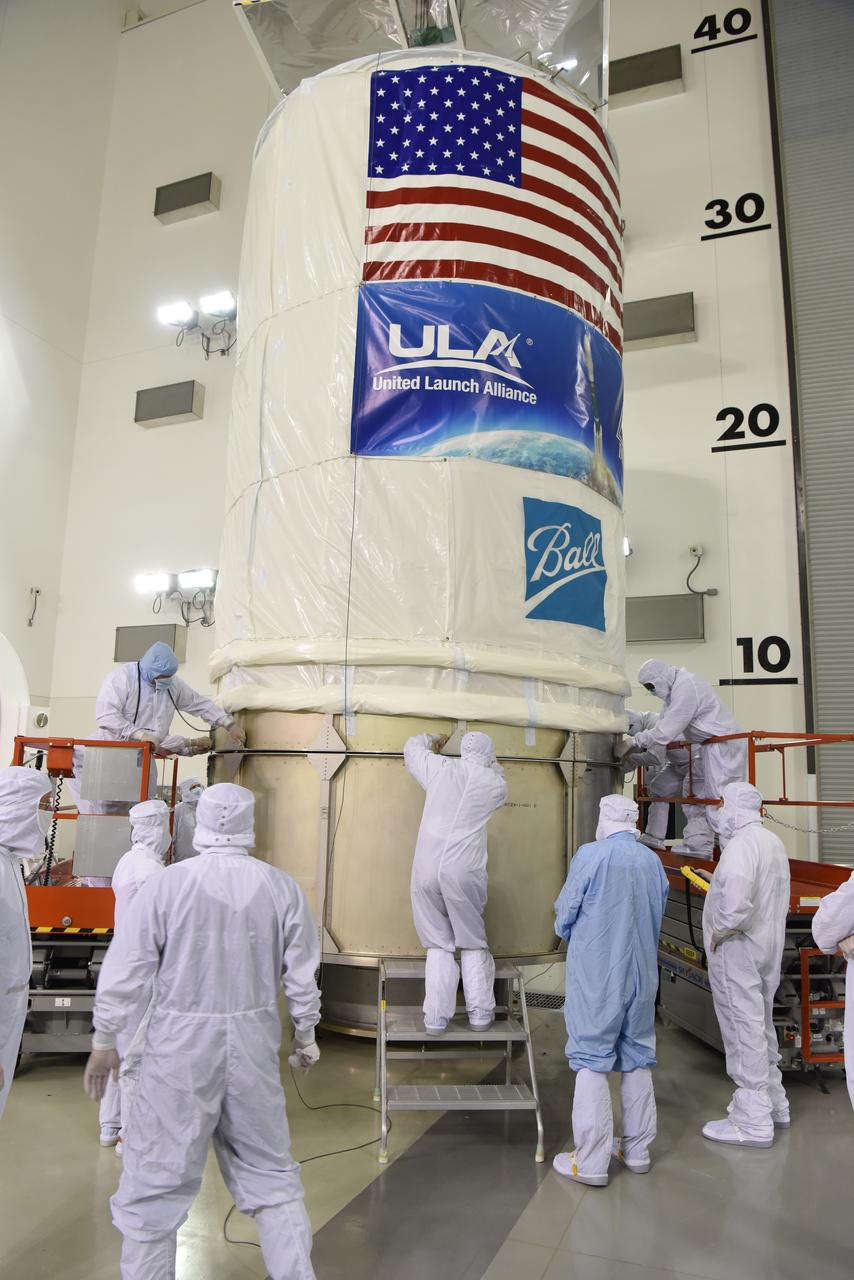
In the Astrotech Processing Facility at Vandenberg Air Force Base in California, technicians and engineers place the Joint Polar Satellite System-1, or JPSS-1, spacecraft in a protective container. It then will be mounted on a transport trailer for its move to Space Launch Complex 2. At the pad, JPSS-1 will be lifted for mating atop a United Launch Alliance Delta II rocket. Built by Ball Aerospace and Technologies Corp. of Boulder, Colorado, JPSS is the first in a series four next-generation environmental satellites in a collaborative program between the NOAA and NASA. Liftoff is scheduled to take place from Vandenberg's Space Launch Complex 2.
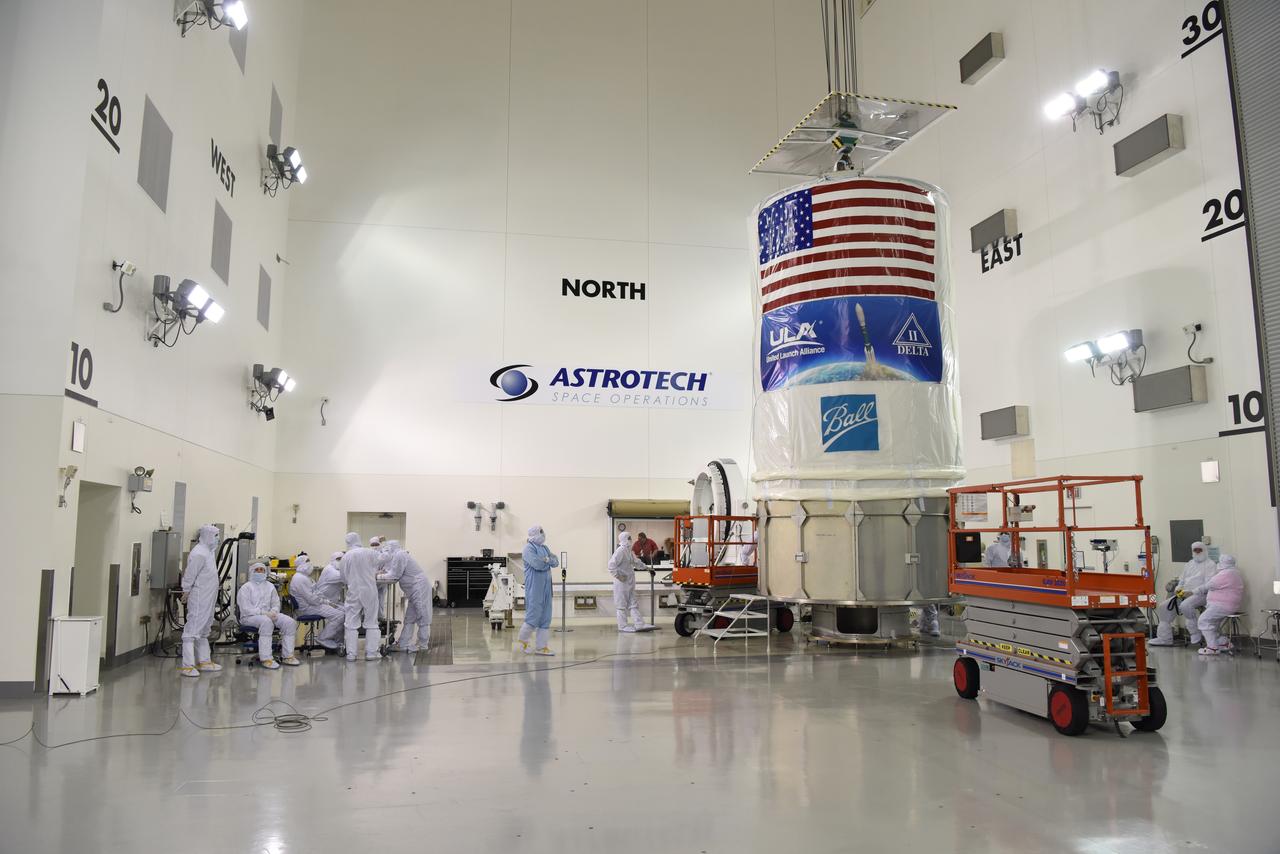
At Vandenberg Air Force Base in California, technicians and engineers have placed the Joint Polar Satellite System-1, or JPSS-1, spacecraft in a protective container. It then will be mounted on a transport trailer for its move from the Astrotech Processing Facility to Space Launch Complex 2. At the pad, JPSS-1 will be lifted for mating atop a United Launch Alliance Delta II rocket. Built by Ball Aerospace and Technologies Corp. of Boulder, Colorado, JPSS is the first in a series four next-generation environmental satellites in a collaborative program between the NOAA and NASA. Liftoff is scheduled to take place from Vandenberg's Space Launch Complex 2.
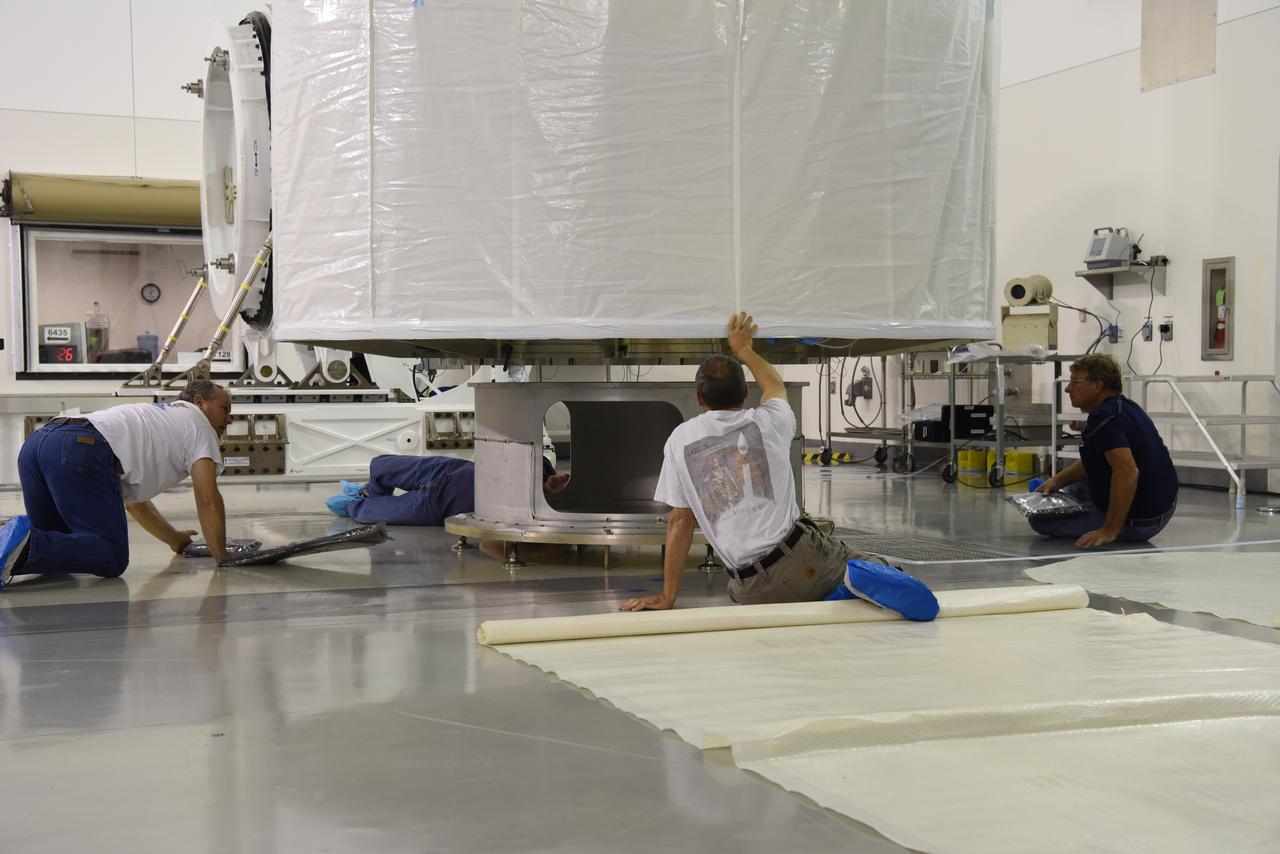
In the Astrotech Processing Facility at Vandenberg Air Force Base in California, the Joint Polar Satellite System-1, or JPSS-1, spacecraft is prepared for departure in a protective container to Space Launch Complex 2. At the pad, JPSS-1 will be lifted for mating atop a United Launch Alliance Delta II rocket. Built by Ball Aerospace and Technologies Corp. of Boulder, Colorado, JPSS is the first in a series four next-generation environmental satellites in a collaborative program between the NOAA and NASA. Liftoff is scheduled to take place from Vandenberg's Space Launch Complex 2.
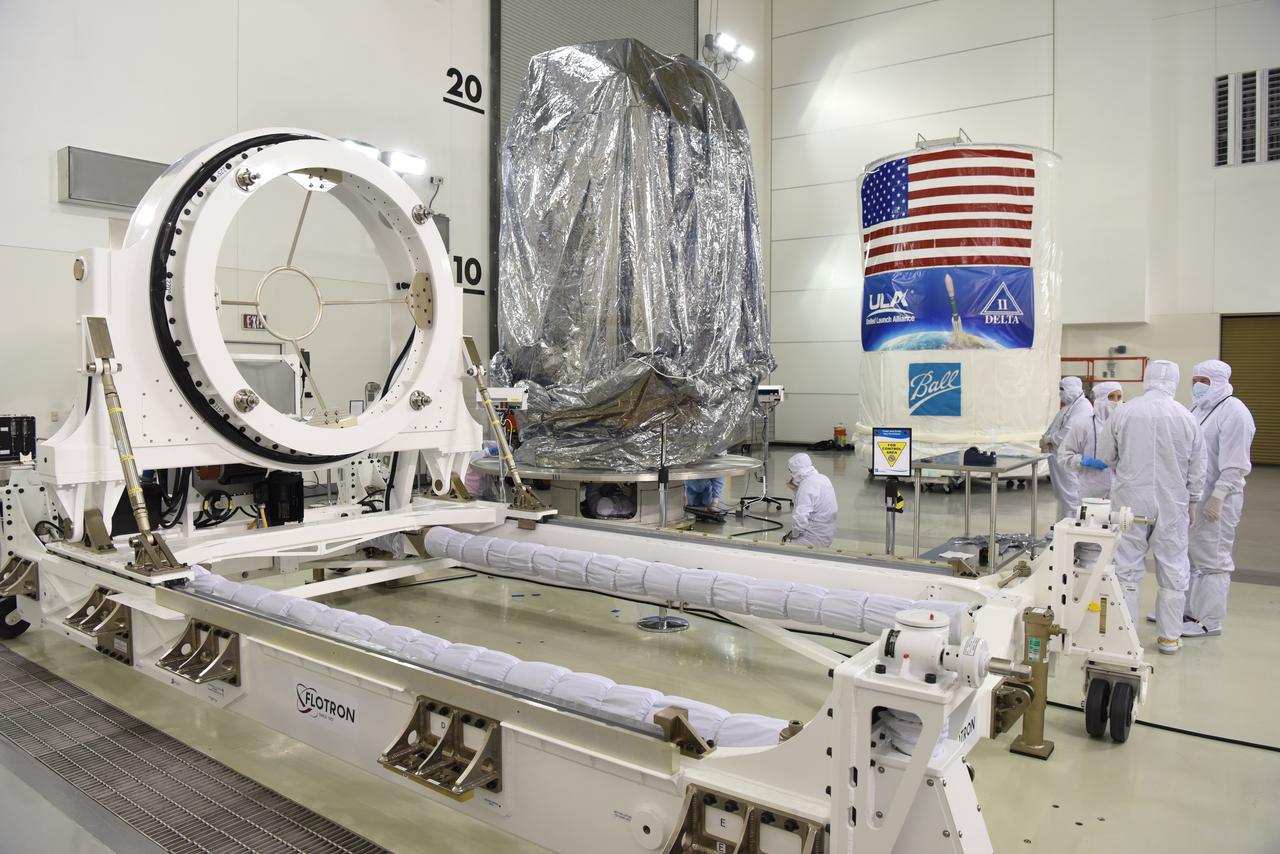
In the Astrotech Processing Facility at Vandenberg Air Force Base in California, the Joint Polar Satellite System-1, or JPSS-1, spacecraft is prepared for placing it in a protective container, then mounting on a transport trailer for its move to Space Launch Complex 2. At the pad, JPSS-1 will be lifted for mating atop a United Launch Alliance Delta II rocket. Built by Ball Aerospace and Technologies Corp. of Boulder, Colorado, JPSS is the first in a series four next-generation environmental satellites in a collaborative program between the NOAA and NASA. Liftoff is scheduled to take place from Vandenberg's Space Launch Complex 2.
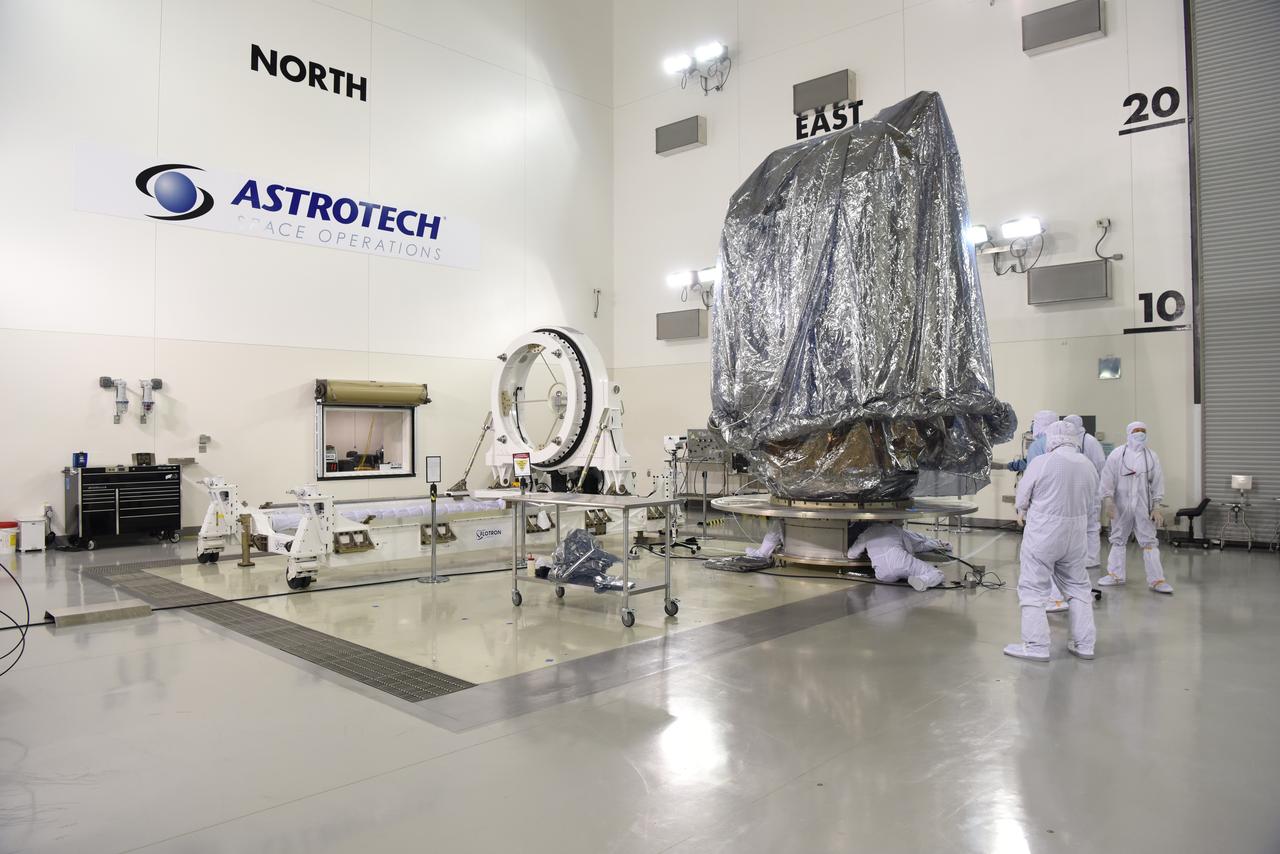
In the Astrotech Processing Facility at Vandenberg Air Force Base in California, the Joint Polar Satellite System-1, or JPSS-1, spacecraft is prepared for placing it in a protective container, then mounting on a transport trailer for its move to Space Launch Complex 2. At the pad, JPSS-1 will be lifted for mating atop a United Launch Alliance Delta II rocket. Built by Ball Aerospace and Technologies Corp. of Boulder, Colorado, JPSS is the first in a series four next-generation environmental satellites in a collaborative program between the NOAA and NASA. Liftoff is scheduled to take place from Vandenberg's Space Launch Complex 2.
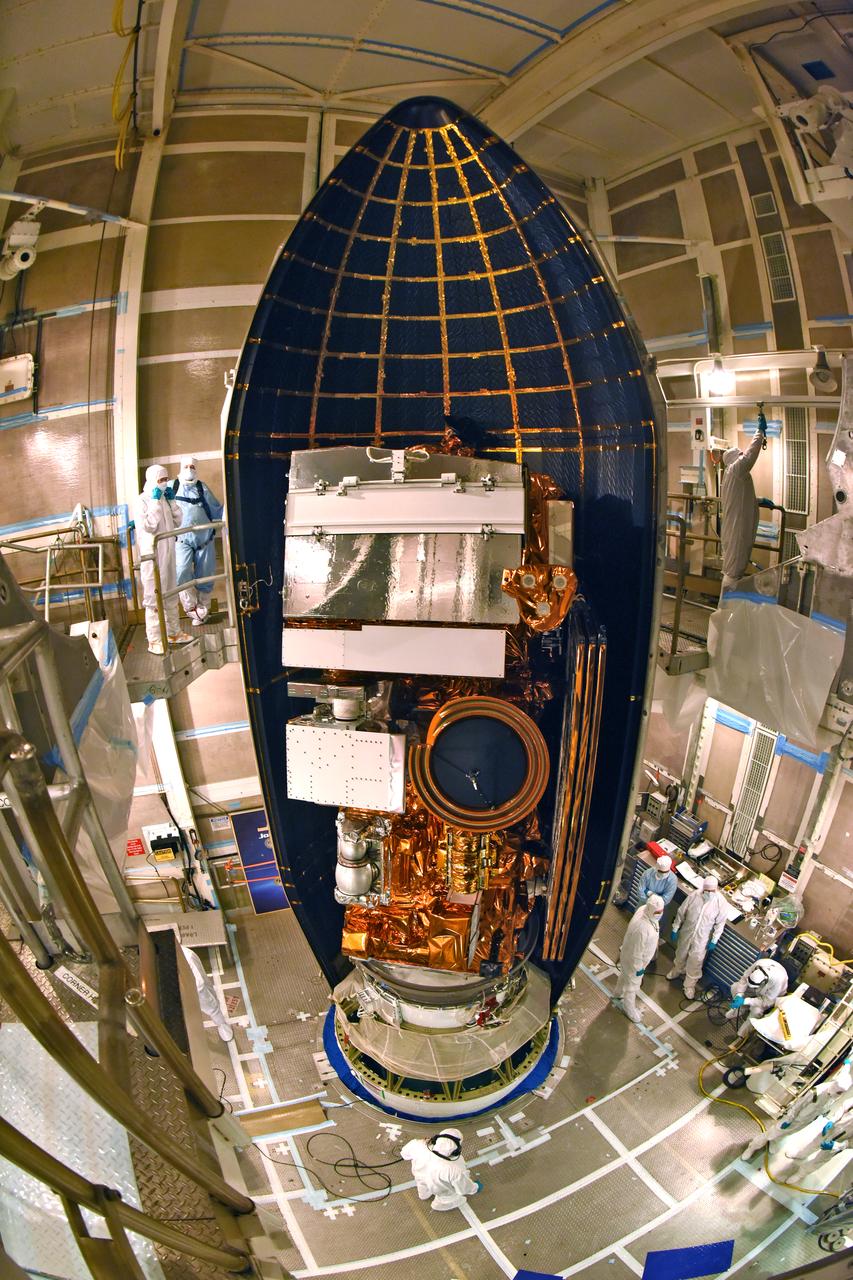
At Vandenberg Air Force Base in California, this wide angle view shows the payload fairing as it is installed encapsulating the Joint Polar Satellite System-1, or JPSS-1, spacecraft atop a United Launch Alliance Delta II rocket at Space Launch Complex 2. Built by Ball Aerospace and Technologies Corp. of Boulder, Colorado, JPSS is the first in a series four next-generation environmental satellites in a collaborative program between the NOAA and NASA. Liftoff is scheduled to take place from Vandenberg's Space Launch Complex 2 at 1:47 a.m. PST (4:47 a.m. EST), on Nov. 14, 2017.

At Vandenberg Air Force Base in California, Jana Luis, division chief Predictive Services at the California Department of Forestry and Fire Protection, speaks to members of the media during a briefing focused on research planned for the Joint Polar Satellite System-1, or JPSS-1. Built by Ball Aerospace and Technologies Corp. of Boulder, Colorado, JPSS is the first in a series four next-generation environmental satellites in a collaborative program between the NOAA and NASA. Liftoff atop a United Launch Alliance Delta II rocket is scheduled to take place from Vandenberg's Space Launch Complex 2 at 1:47 a.m. PST (4:47 a.m. EST), on Nov. 14, 2017.
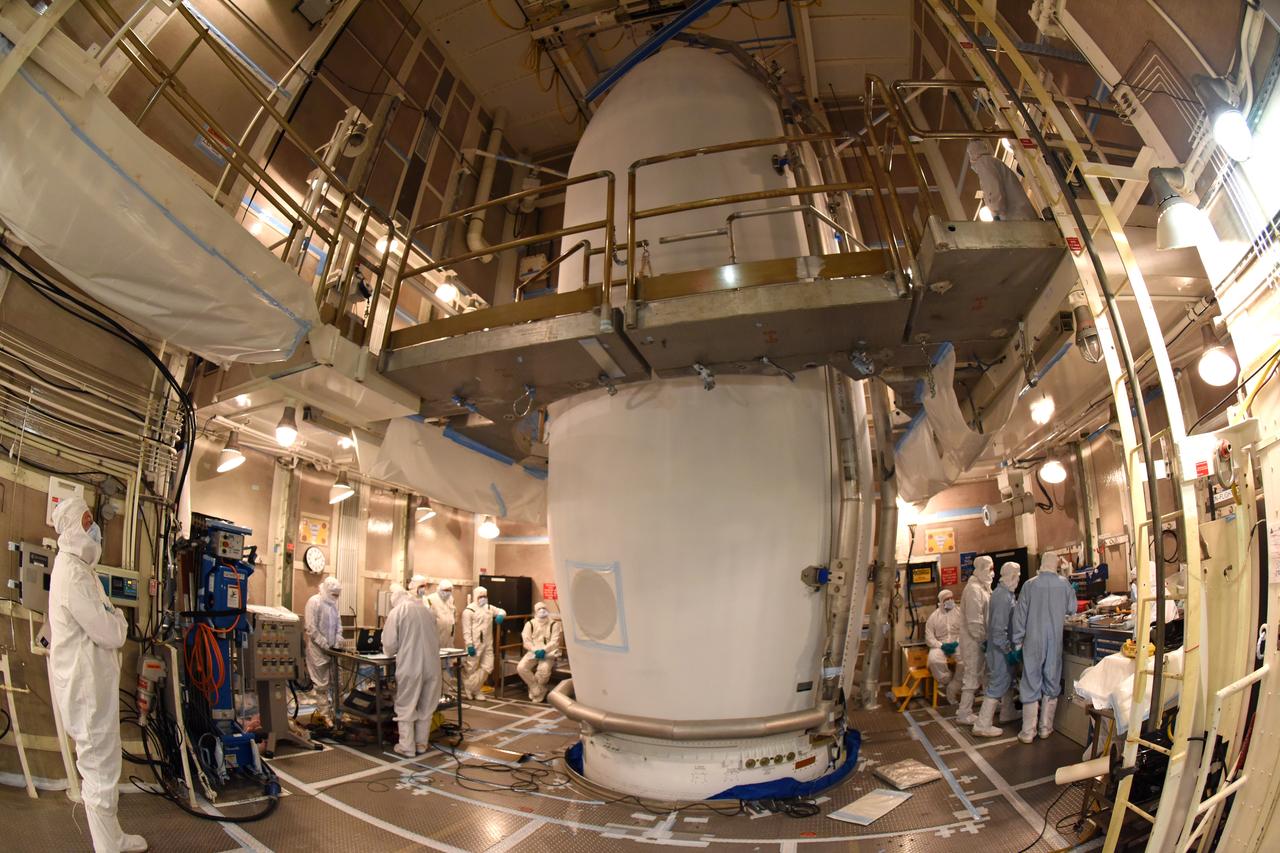
At Vandenberg Air Force Base in California, the payload fairing is installed encapsulating the Joint Polar Satellite System-1, or JPSS-1, spacecraft atop a United Launch Alliance Delta II rocket at Space Launch Complex 2. Built by Ball Aerospace and Technologies Corp. of Boulder, Colorado, JPSS is the first in a series four next-generation environmental satellites in a collaborative program between the NOAA and NASA. Liftoff is scheduled to take place from Vandenberg's Space Launch Complex 2 at 1:47 a.m. PST (4:47 a.m. EST), on Nov. 14, 2017.

At Vandenberg Air Force Base in California, Joe Pica, director of NOAA’s National Weather Service Office of Observations, speaks to members of the media during a briefing focused on research planned for the Joint Polar Satellite System-1, or JPSS-1. Built by Ball Aerospace and Technologies Corp. of Boulder, Colorado, JPSS is the first in a series four next-generation environmental satellites in a collaborative program between the NOAA and NASA. Liftoff atop a United Launch Alliance Delta II rocket is scheduled to take place from Vandenberg's Space Launch Complex 2 at 1:47 a.m. PST (4:47 a.m. EST), on Nov. 14, 2017.
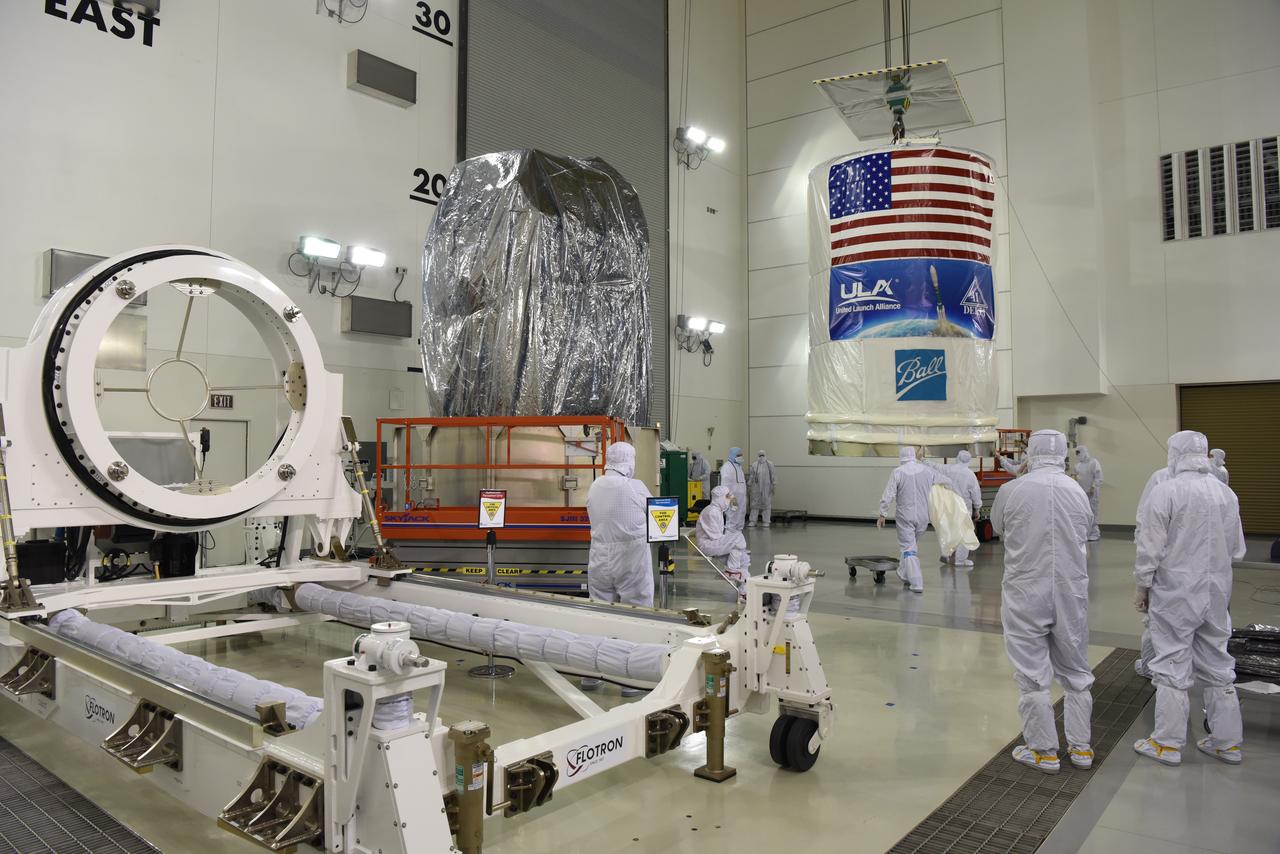
In the Astrotech Processing Facility at Vandenberg Air Force Base in California, the Joint Polar Satellite System-1, or JPSS-1, spacecraft is wrapped in a protective covering prior to technicians and engineers placing it in a protective container. It then will be mounted on a transport trailer for its move to Space Launch Complex 2. At the pad, JPSS-1 will be lifted for mating atop a United Launch Alliance Delta II rocket. Built by Ball Aerospace and Technologies Corp. of Boulder, Colorado, JPSS is the first in a series four next-generation environmental satellites in a collaborative program between the NOAA and NASA. Liftoff is scheduled to take place from Vandenberg's Space Launch Complex 2.
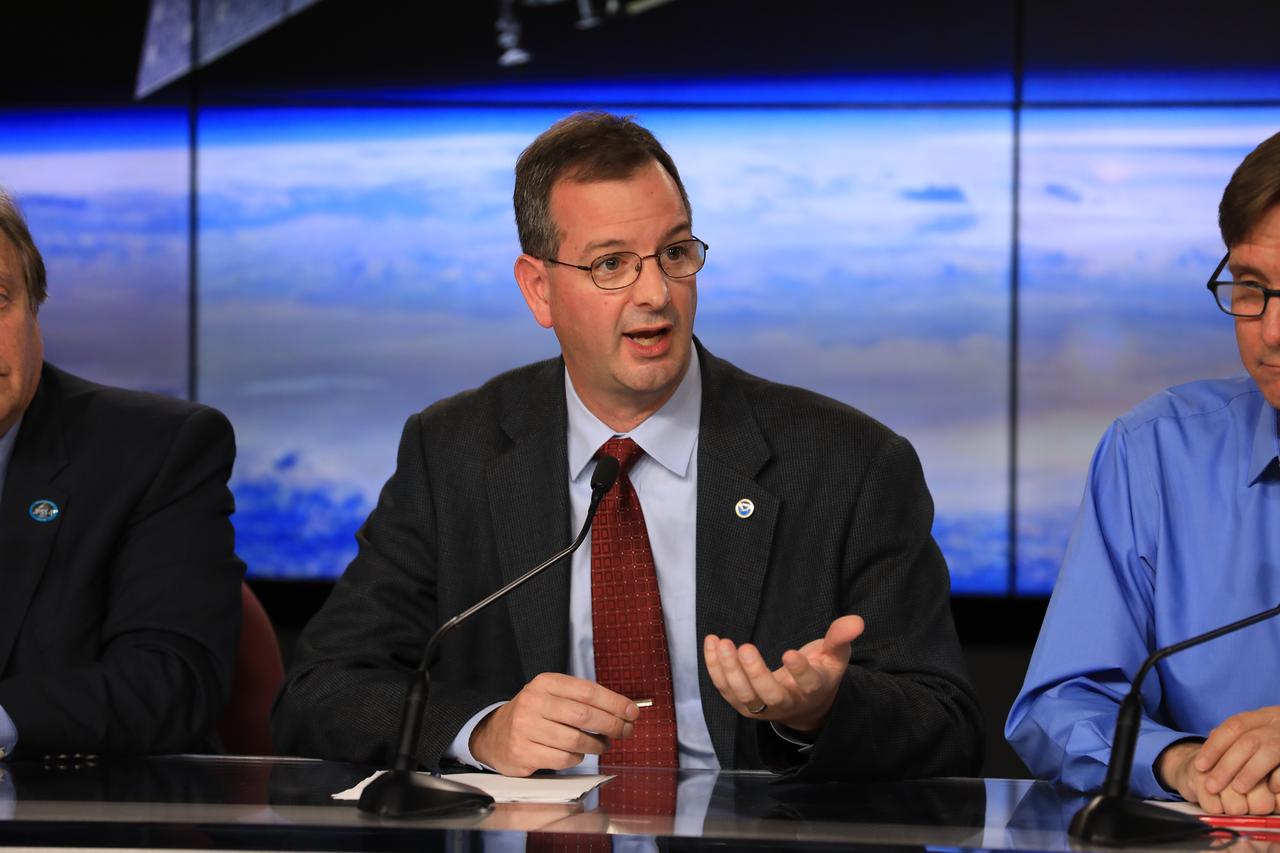
At Vandenberg Air Force Base in California, Joe Pica, director of NOAA’s National Weather Service Office of Observations, speaks to members of the media during a briefing focused on research planned for the Joint Polar Satellite System-1, or JPSS-1. Built by Ball Aerospace and Technologies Corp. of Boulder, Colorado, JPSS is the first in a series four next-generation environmental satellites in a collaborative program between the NOAA and NASA. Liftoff atop a United Launch Alliance Delta II rocket is scheduled to take place from Vandenberg's Space Launch Complex 2 at 1:47 a.m. PST (4:47 a.m. EST), on Nov. 14, 2017.

At Vandenberg Air Force Base in California, technicians and engineers prepare to install a Poly Picosatellite Orbital Deployer, or P-POD, container on the Joint Polar Satellite System-1, or JPSS-1, spacecraft. P-PODS are auxiliary payloads launched aboard NASA expendable launch vehicles carrying up to three small CubeSats. The small cube-shaped satellites are part of NASA’s Educational Launch of Nanosatellite, or ELaNa, missions. The small payloads are designed and built by students from high school-level classes up to college and university students. JPSS is the first in a series of four next-generation environmental satellites in a collaborative program between the NOAA and NASA. Liftoff from Vandenberg's Space Launch Compex-2 atop a United Launch Alliance Delta II rocket is scheduled for 1:47 a.m. PST (4:47 a.m. EST), on Nov. 14, 2017.
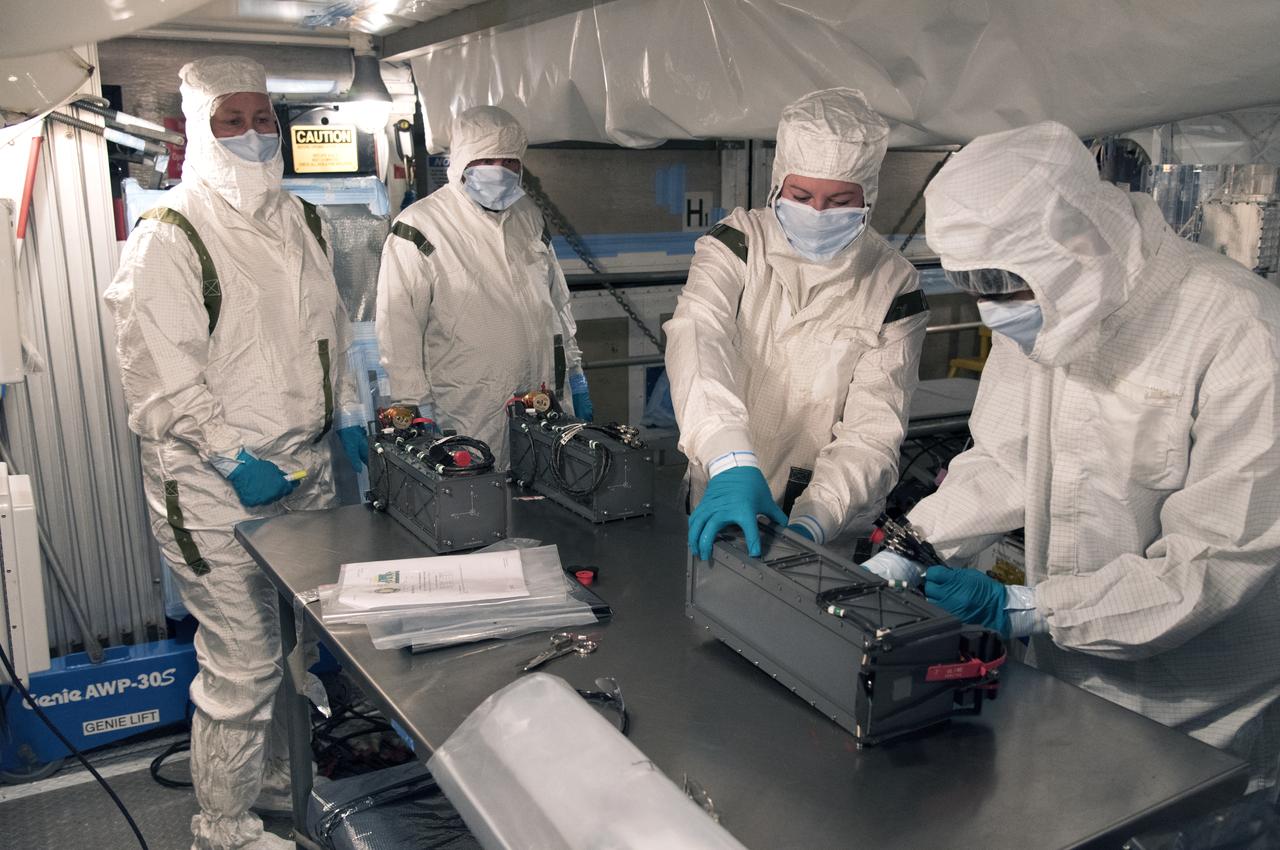
At Vandenberg Air Force Base in California, technicians and engineers prepare a Poly Picosatellite Orbital Deployer, or P-POD, container for installation on the Joint Polar Satellite System-1, or JPSS-1, spacecraft. P-PODS are auxiliary payloads launched aboard NASA expendable launch vehicles carrying up to three small CubeSats. The small cube-shaped satellites are part of NASA’s Educational Launch of Nanosatellite, or ELaNa, missions. The small payloads are designed and built by students from high school-level classes up to college and university students. JPSS is the first in a series of four next-generation environmental satellites in a collaborative program between the NOAA and NASA. Liftoff from Vandenberg's Space Launch Compex-2 atop a United Launch Alliance Delta II rocket is scheduled for 1:47 a.m. PST (4:47 a.m. EST), on Nov. 14, 2017.

At Vandenberg Air Force Base in California, a Poly Picosatellite Orbital Deployer, or P-POD, container is installed on the Joint Polar Satellite System-1, or JPSS-1, spacecraft. P-PODS are auxiliary payloads launched aboard NASA expendable launch vehicles carrying up to three small CubeSats. The small cube-shaped satellites are part of NASA’s Educational Launch of Nanosatellite, or ELaNa, missions. The small payloads are designed and built by students from high school-level classes up to college and university students. JPSS is the first in a series of four next-generation environmental satellites in a collaborative program between the NOAA and NASA. Liftoff from Vandenberg's Space Launch Compex-2 atop a United Launch Alliance Delta II rocket is scheduled for 1:47 a.m. PST (4:47 a.m. EST), on Nov. 14, 2017.

At Vandenberg Air Force Base in California, a Poly Picosatellite Orbital Deployer, or P-POD, container is installed on the Joint Polar Satellite System-1, or JPSS-1, spacecraft. P-PODS are auxiliary payloads launched aboard NASA expendable launch vehicles carrying up to three small CubeSats. The small cube-shaped satellites are part of NASA’s Educational Launch of Nanosatellite, or ELaNa, missions. The small payloads are designed and built by students from high school-level classes up to college and university students. JPSS is the first in a series of four next-generation environmental satellites in a collaborative program between the NOAA and NASA. Liftoff from Vandenberg's Space Launch Compex-2 atop a United Launch Alliance Delta II rocket is scheduled for 1:47 a.m. PST (4:47 a.m. EST), on Nov. 14, 2017.
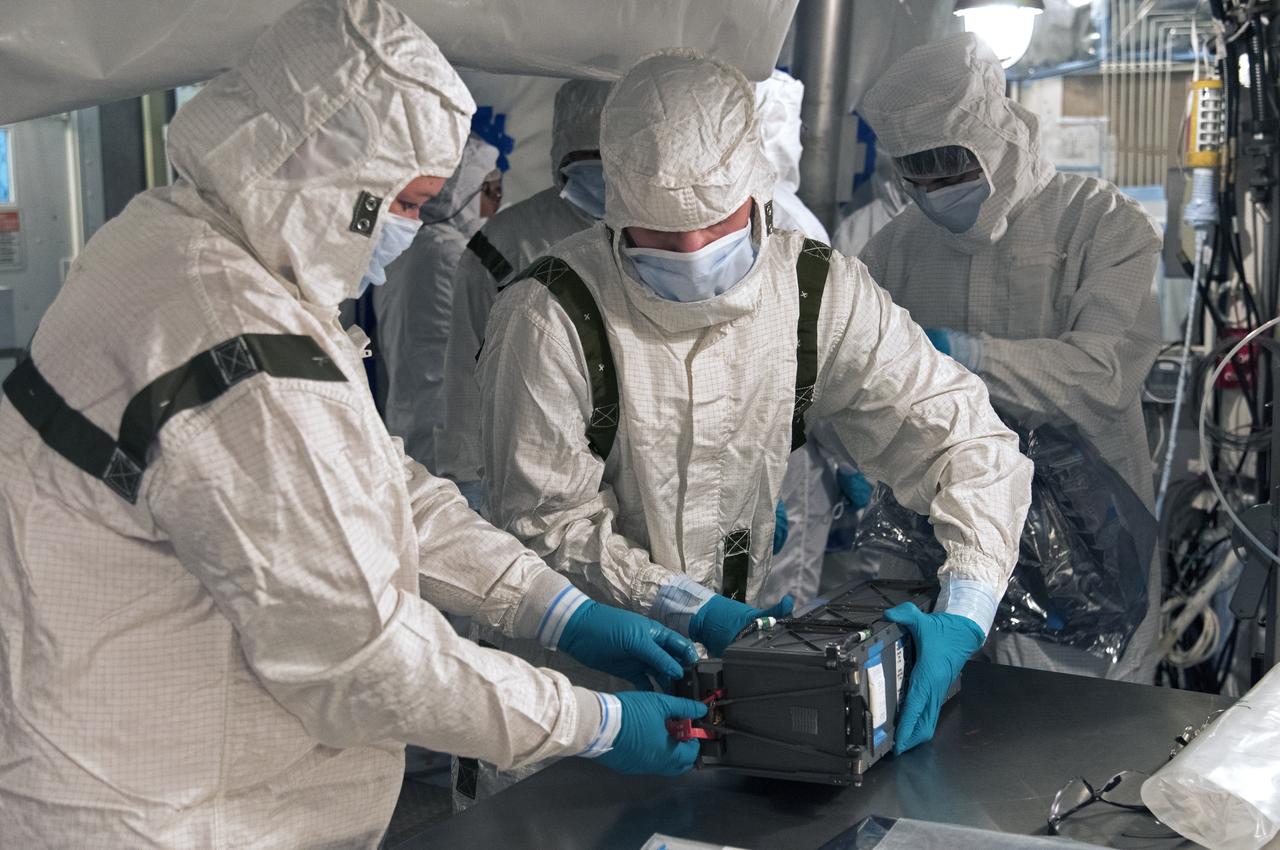
At Vandenberg Air Force Base in California, technicians and engineers prepare a Poly Picosatellite Orbital Deployer, or P-POD, container for installation on the Joint Polar Satellite System-1, or JPSS-1, spacecraft. P-PODS are auxiliary payloads launched aboard NASA expendable launch vehicles carrying up to three small CubeSats. The small cube-shaped satellites are part of NASA’s Educational Launch of Nanosatellite, or ELaNa, missions. The small payloads are designed and built by students from high school-level classes up to college and university students. JPSS is the first in a series of four next-generation environmental satellites in a collaborative program between the NOAA and NASA. Liftoff from Vandenberg's Space Launch Compex-2 atop a United Launch Alliance Delta II rocket is scheduled for 1:47 a.m. PST (4:47 a.m. EST), on Nov. 14, 2017.
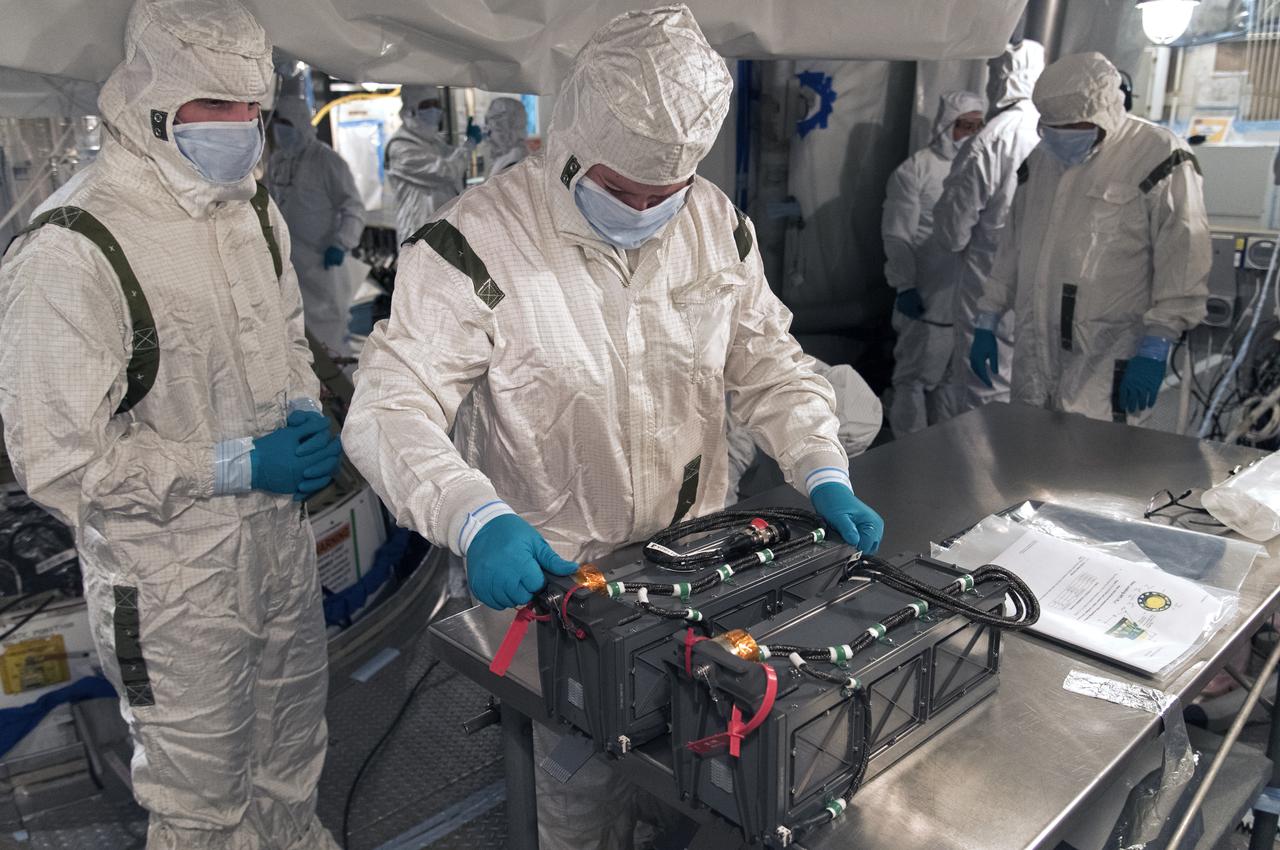
At Vandenberg Air Force Base in California, technicians and engineers prepare a Poly Picosatellite Orbital Deployer, or P-POD, container for installation on the Joint Polar Satellite System-1, or JPSS-1, spacecraft. P-PODS are auxiliary payloads launched aboard NASA expendable launch vehicles carrying up to three small CubeSats. The small cube-shaped satellites are part of NASA’s Educational Launch of Nanosatellite, or ELaNa, missions. The small payloads are designed and built by students from high school-level classes up to college and university students. JPSS is the first in a series of four next-generation environmental satellites in a collaborative program between the NOAA and NASA. Liftoff from Vandenberg's Space Launch Compex-2 atop a United Launch Alliance Delta II rocket is scheduled for 1:47 a.m. PST (4:47 a.m. EST), on Nov. 14, 2017.