
Joint Security, Law enforcement, fire and emergency services exercise

Joint Security, Law enforcement, fire and emergency services exercise
Joint Security, Law enforcement, fire and emergency services exercise
Joint Security, Law enforcement, fire and emergency services exercise

Joint Security, Law enforcement, fire and emergency services exercise

Joint Security, Law enforcement, fire and emergency services exercise

Joint Security, Law enforcement, fire and emergency services exercise
Joint Security, Law enforcement, fire and emergency services exercise

Joint Security, Law enforcement, fire and emergency services exercise
Joint Security, Law enforcement, fire and emergency services exercise
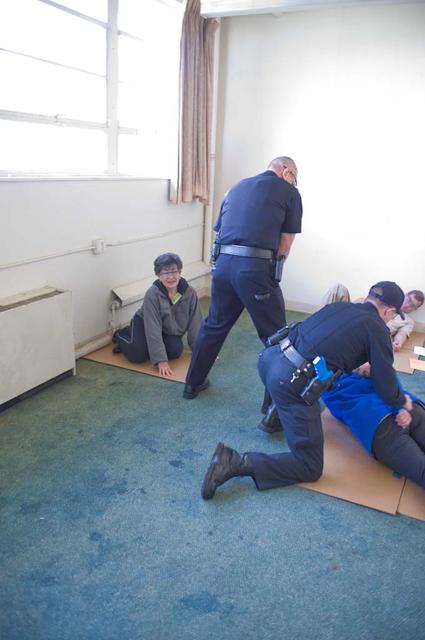
Joint Security, Law enforcement, fire and emergency services exercise

Joint Security, Law enforcement, fire and emergency services exercise
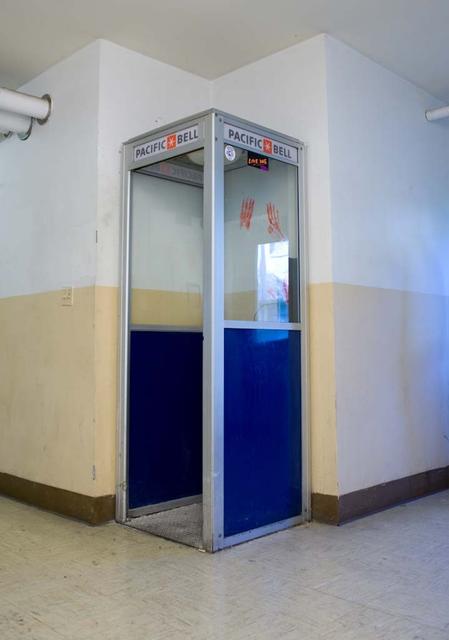
Joint Security, Law enforcement, fire and emergency services exercise

Joint Security, Law enforcement, fire and emergency services exercise

Joint Security, Law enforcement, fire and emergency services exercise

Joint Security, Law enforcement, fire and emergency services exercise

Joint Security, Law enforcement, fire and emergency services exercise

Joint Security, Law enforcement, fire and emergency services exercise

Joint Security, Law enforcement, fire and emergency services exercise

Joint Security, Law enforcement, fire and emergency services exercise
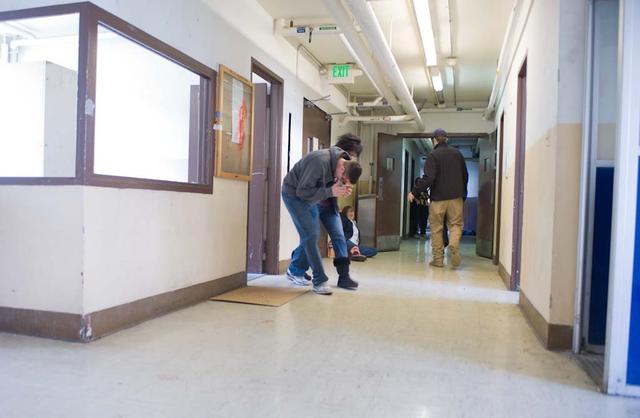
Joint Security, Law enforcement, fire and emergency services exercise

Joint Security, Law enforcement, fire and emergency services exercise

Joint Security, Law enforcement, fire and emergency services exercise

Joint Security, Law enforcement, fire and emergency services exercise

Joint Security, Law enforcement, fire and emergency services exercise

Joint Security, Law enforcement, fire and emergency services exercise

Joint Security, Law enforcement, fire and emergency services exercise

Joint Security, Law enforcement, fire and emergency services exercise
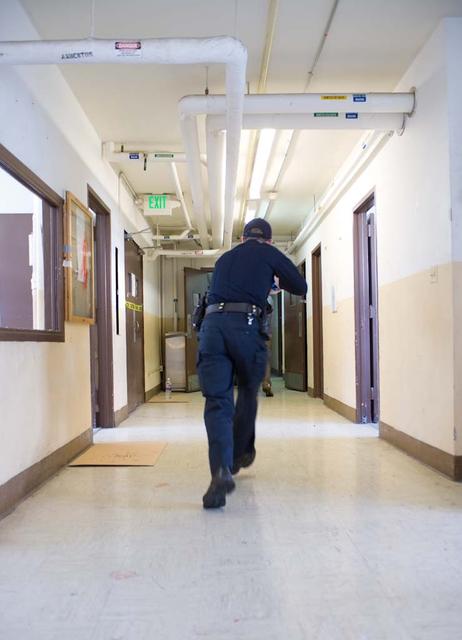
Joint Security, Law enforcement, fire and emergency services exercise
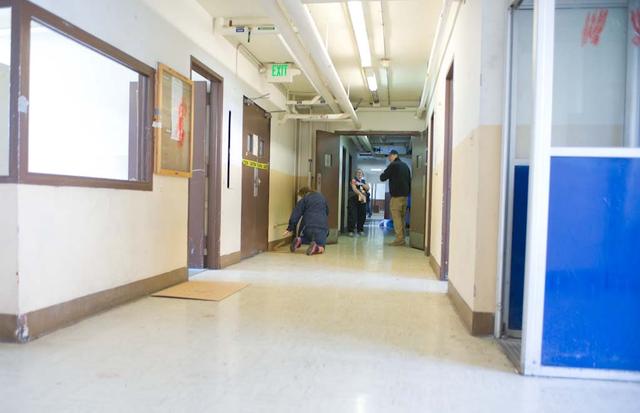
Joint Security, Law enforcement, fire and emergency services exercise
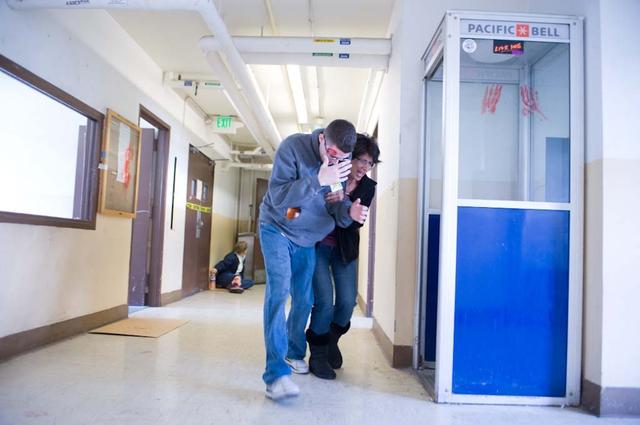
Joint Security, Law enforcement, fire and emergency services exercise

Joint Security, Law enforcement, fire and emergency services exercise

Joint Security, Law enforcement, fire and emergency services exercise

Joint Security, Law enforcement, fire and emergency services exercise
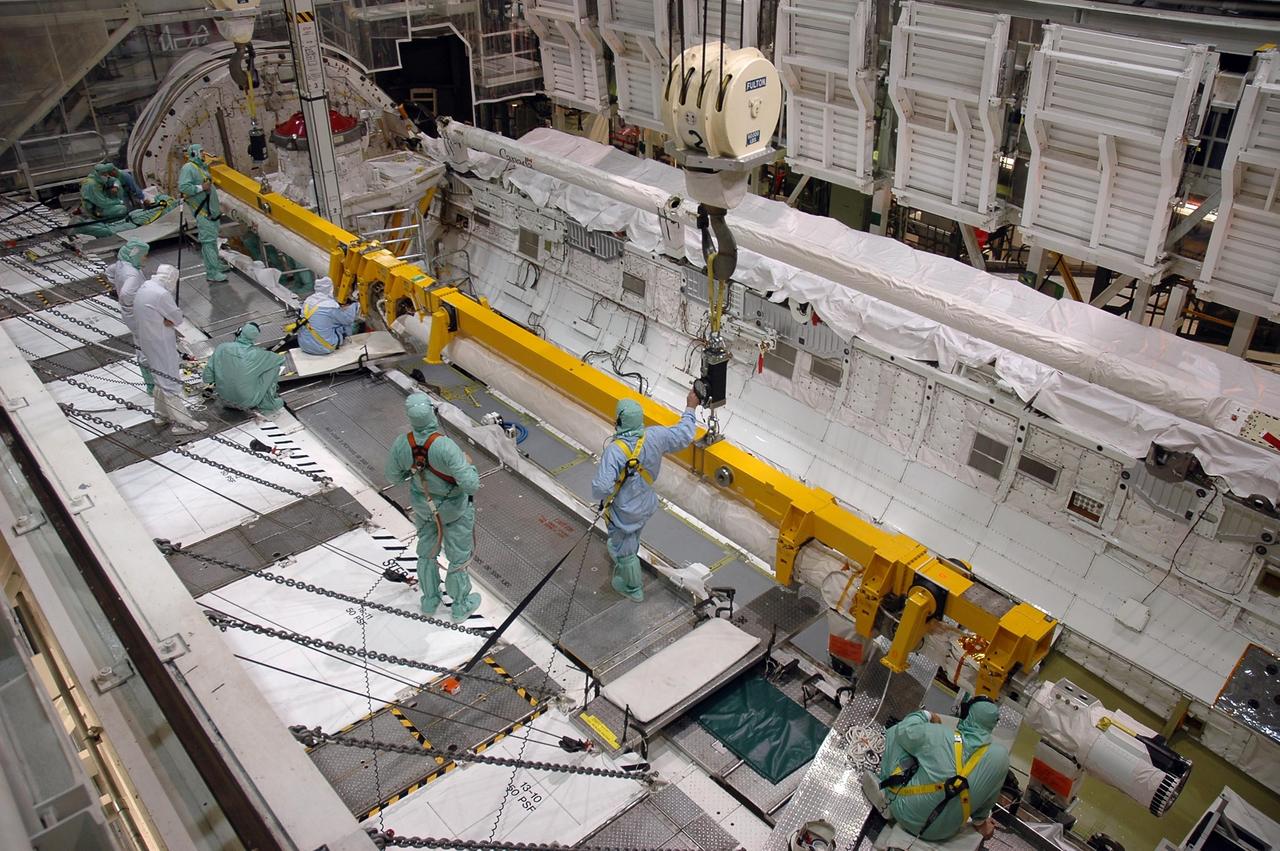
KENNEDY SPACE CENTER, FLA. - In the Orbiter Processing Facility Bay 1 at NASA Kennedy Space Center, workers secure a crane to the remote manipulator system boom in Atlantis’ payload bay. The boom is being removed from Atlantis and will be temporarily stored.. The RMS includes the electromechanical arm that maneuvers a payload from the payload bay of the orbiter to its deployment position and then releases it. It can also grapple a free-flying payload, maneuver it to the payload bay of the orbiter and berth it in the orbiter. The RMS arm is 50 feet 3 inches long and 15 inches in diameter. It weighs 905 pounds, and the total system weighs 994 pounds. The RMS has six joints that correspond roughly to the joints of the human arm, with shoulder yaw and pitch joints; an elbow pitch joint; and wrist pitch, yaw and roll joints. The end effector is the unit at the end of the wrist that actually grabs, or grapples, the payload.
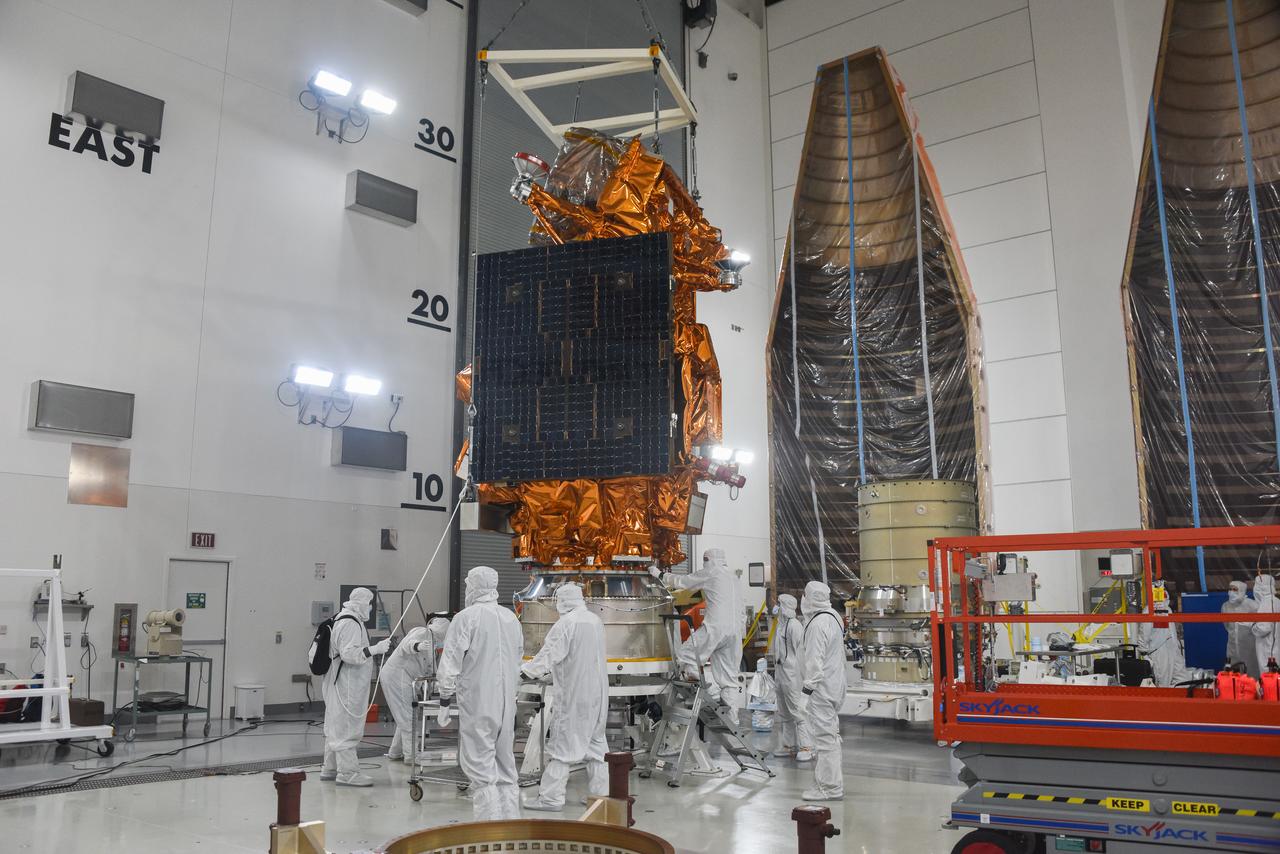
The National Oceanic and Atmospheric Administration’s Joint Polar Satellite System (JPSS-2) is now secured on the spacecraft adapter inside the Astrotech Space Operations facility at Vandenberg Space Force Base (VSFB) in California on Oct. 4, 2022. JPSS-2 is the third satellite in the Joint Polar Satellite System series. It is scheduled to lift off from VSFB on Nov. 1 from Space Launch Complex-3. JPSS-2, which will be renamed NOAA-21 after reaching orbit, will join a constellation of JPSS satellites that orbit from the North to the South pole, circling Earth 14 times a day and providing a full view of the entire globe twice daily.
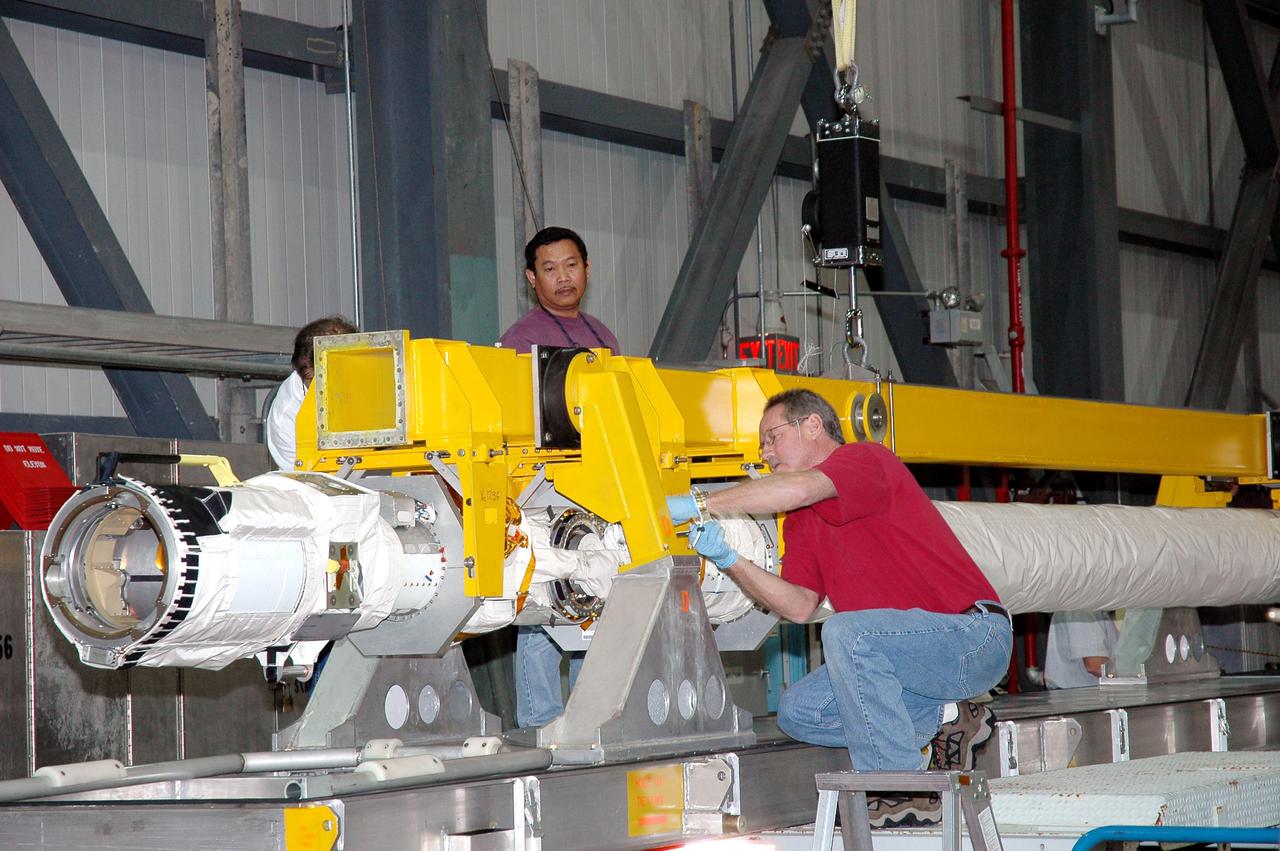
KENNEDY SPACE CENTER, FLA. - Technicians in the Orbiter Processing Facility secure the crane that will lift the Remote Manipulator System (RMS), or Shuttle arm. The RMS is being moved for installation in Atlantis’ payload bay. The RMS includes the electromechanical arm that maneuvers a payload from the payload bay of the orbiter to its deployment position and then releases it. It can also grapple a free-flying payload, maneuver it to the payload bay of the orbiter and berth it in the orbiter. The RMS arm is 50 feet 3 inches long and 15 inches in diameter. It weighs 905 pounds, and the total system weighs 994 pounds. The RMS has six joints that correspond roughly to the joints of the human arm, with shoulder yaw and pitch joints; an elbow pitch joint; and wrist pitch, yaw and roll joints. The end effector is the unit at the end of the wrist that actually grabs, or grapples, the payload. Atlantis is the designated orbiter to fly on mission STS-121. The mission has a launch window of July 12 - July 31, 2005.
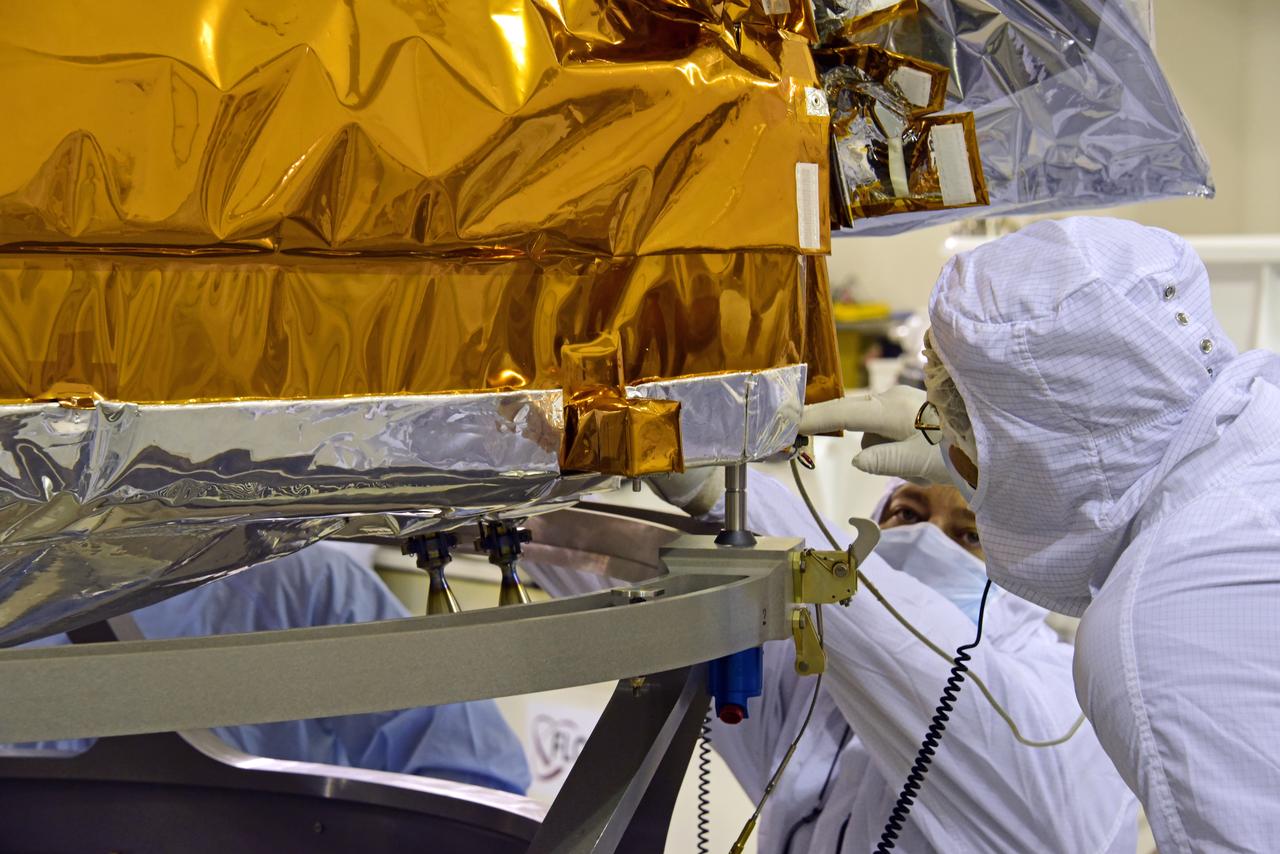
NOAA's Joint Polar Satellite System-1, or JPSS-1, remains wrapped in a protective covering after removal from its shipping container at the Astrotech Processing Facility at Vandenberg Air Force Base in California. Technicians help secure the spacecraft onto a payload attach fitting. JPSS-1 will liftoff aboard a United Launch Alliance Delta II rocket from Vandenberg's Space Launch Complex-2. JPSS-1 is the first in a series of four next-generation environmental satellites in a collaborative program between NOAA and NASA.
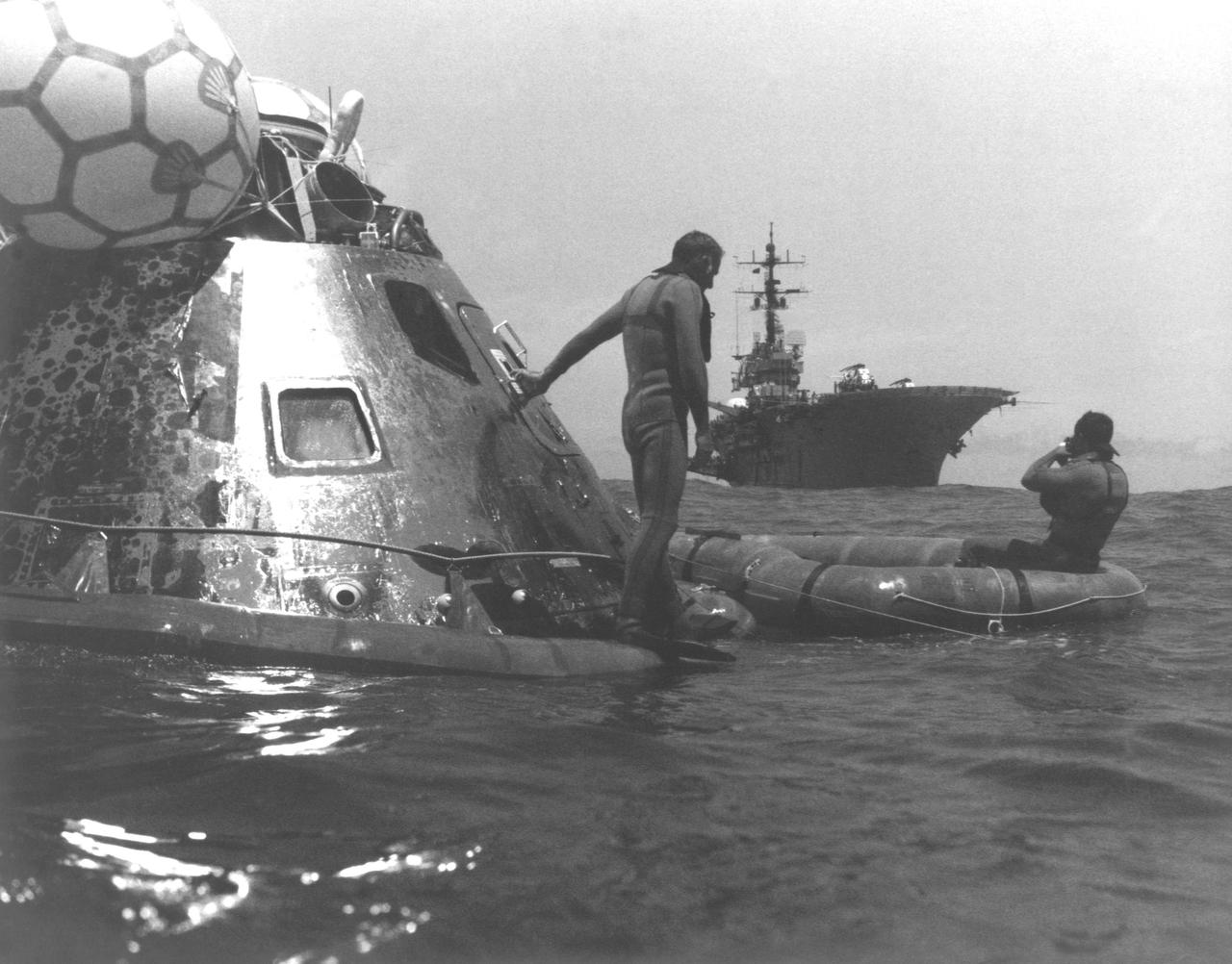
KENNEDY SPACE CENTER, FLA. -- Members of the Pacific Recovery Task Force secure the ASTP Apollo spacecraft as the USS New Orleans approaches to pick up the spacecraft and astronauts Thomas Stafford, Vance Brand and Donald Slayton. The Apollo splashed down in the Pacific Ocean, west of Hawaii, at 5:18 p.m., ending the nine-day joint US_USSR space mission.
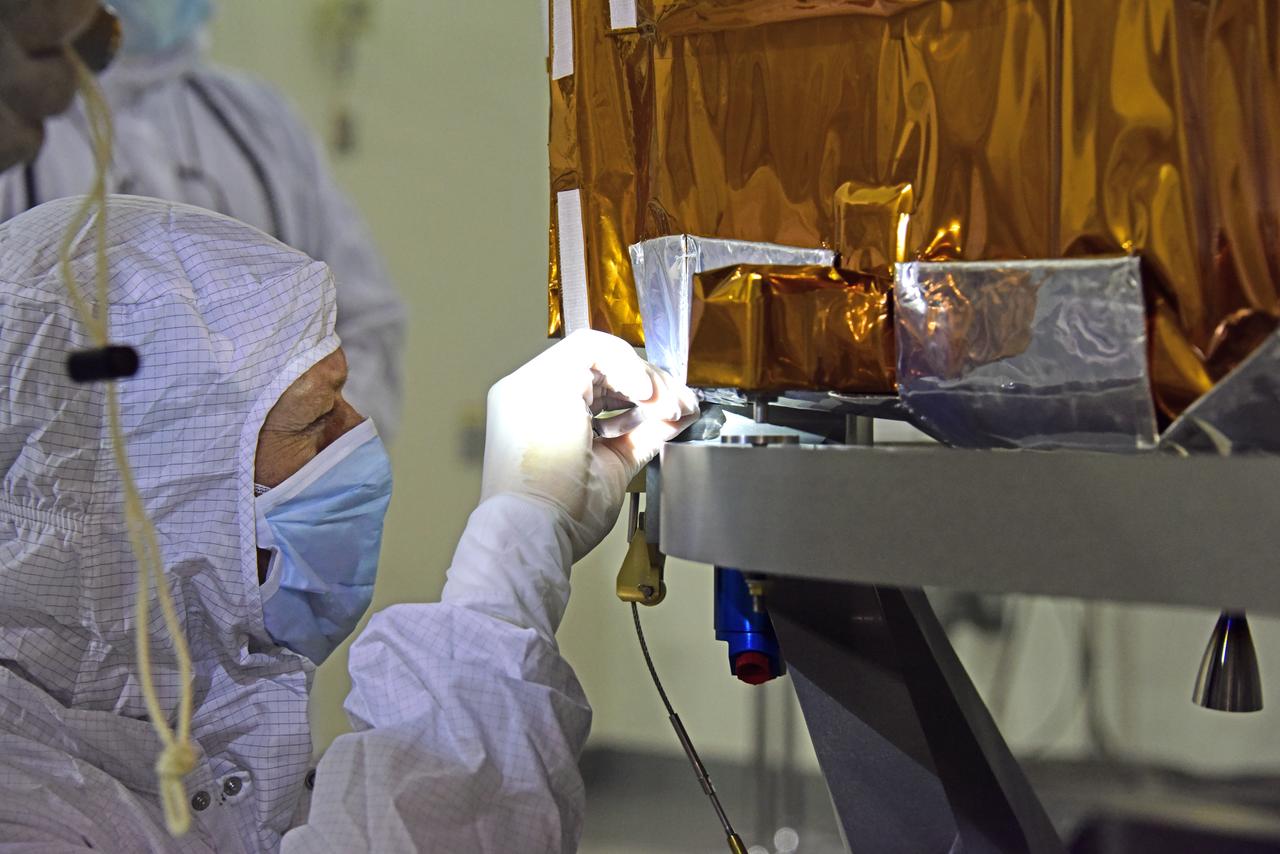
NOAA's Joint Polar Satellite System-1, or JPSS-1, remains wrapped in a protective covering after removal from its shipping container at the Astrotech Processing Facility at Vandenberg Air Force Base in California. Technicians confirm that the spacecraft is secured onto a payload attach fitting. JPSS-1 will liftoff aboard a United Launch Alliance Delta II rocket from Vandenberg's Space Launch Complex-2. JPSS-1 is the first in a series of four next-generation environmental satellites in a collaborative program between NOAA and NASA.
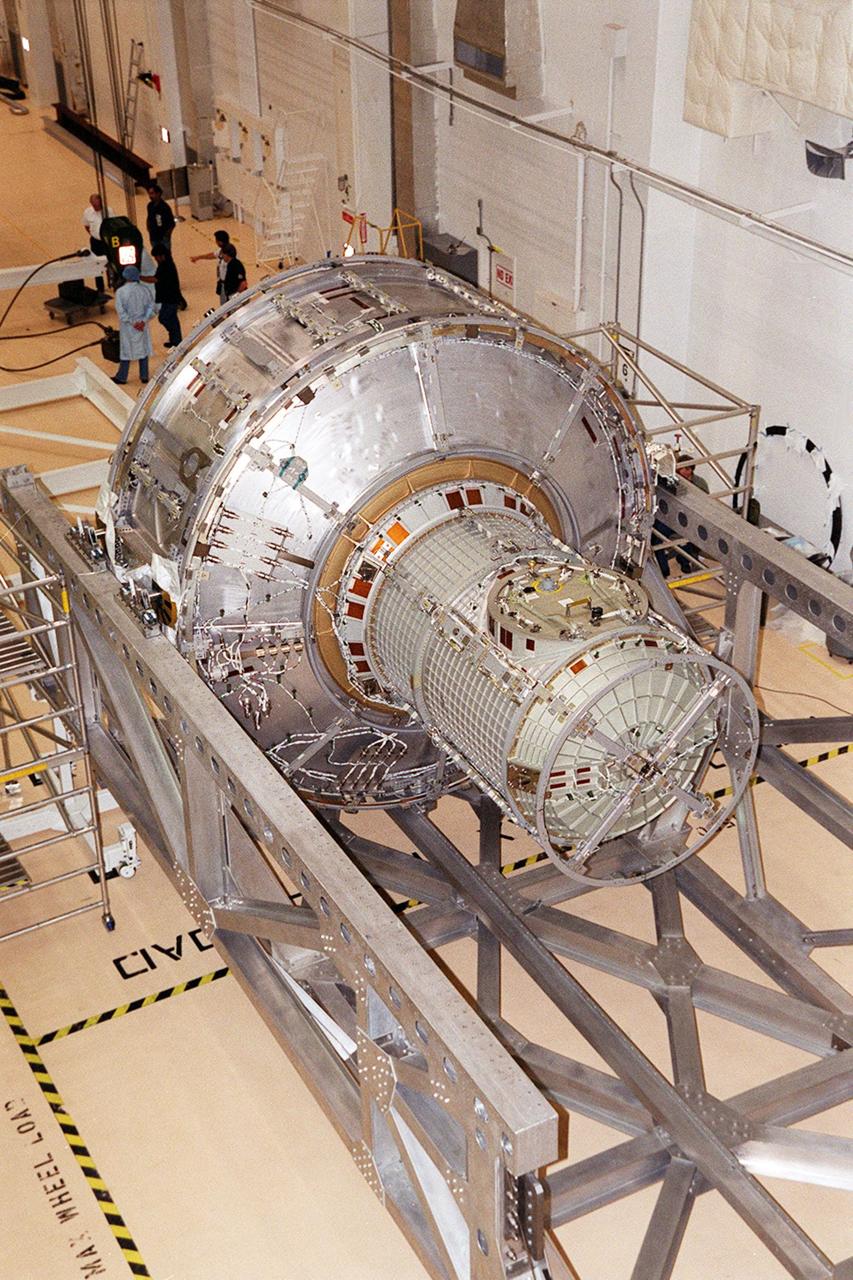
The Joint Airlock Module waits on a stand in the Operations and Checkout Building to be lifted and moved into a vacuum chamber for testing. The module is the gateway from which crew members aboard the International Space Station (ISS) will enter and exit the 470-ton orbiting research facility. The airlock is a critical element of the ISS because of design differences between American and Russian spacesuits. The Joint Airlock Module is specially designed to accommodate both suits, providing a chamber where astronauts from every nation can suit up for space walks to conduct maintenance and construction work or to do science experiments outside the Station. The Space Shuttle Atlantis will carry the airlock to orbit on mission STS-104, the 10th International Space Station flight, currently targeted for liftoff in May 2001. The Shuttle crew will secure the airlock to the right side of Unity, the American-built connecting node that currently comprises one-third of the current Space Station, along with the Russian modules Zarya and Zvezda
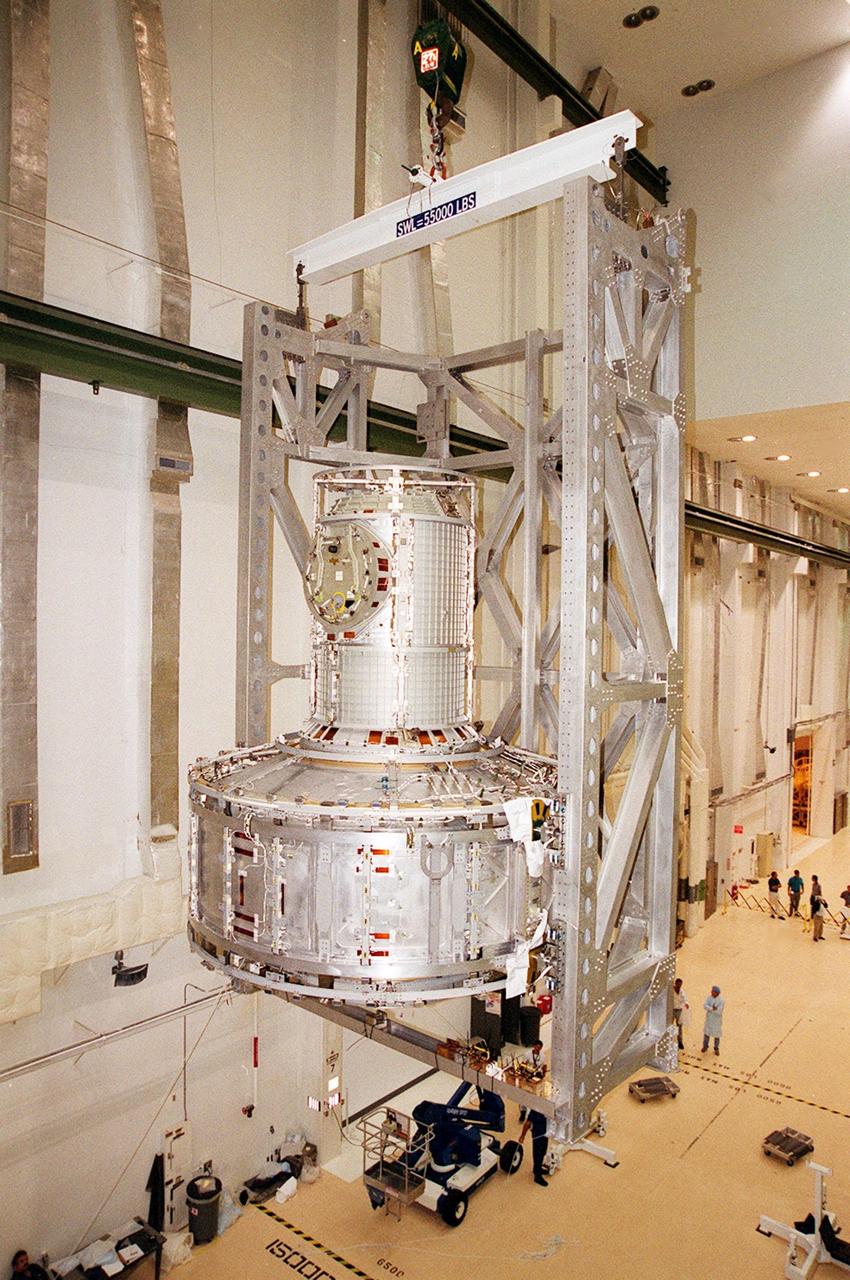
In the Operations and Checkout Building, an overhead crane lifts the Joint Airlock Module to move it to a vacuum chamber for testing. The module is the gateway from which crew members aboard the International Space Station (ISS) will enter and exit the 470-ton orbiting research facility. The airlock is a critical element of the ISS because of design differences between American and Russian spacesuits. The Joint Airlock Module is specially designed to accommodate both suits, providing a chamber where astronauts from every nation can suit up for space walks to conduct maintenance and construction work or to do science experiments outside the Station. The Space Shuttle Atlantis will carry the airlock to orbit on mission STS-104, the 10th International Space Station flight, currently targeted for liftoff in May 2001. The Shuttle crew will secure the airlock to the right side of Unity, the American-built connecting node that currently comprises one-third of the current Space Station, along with the Russian modules Zarya and Zvezda
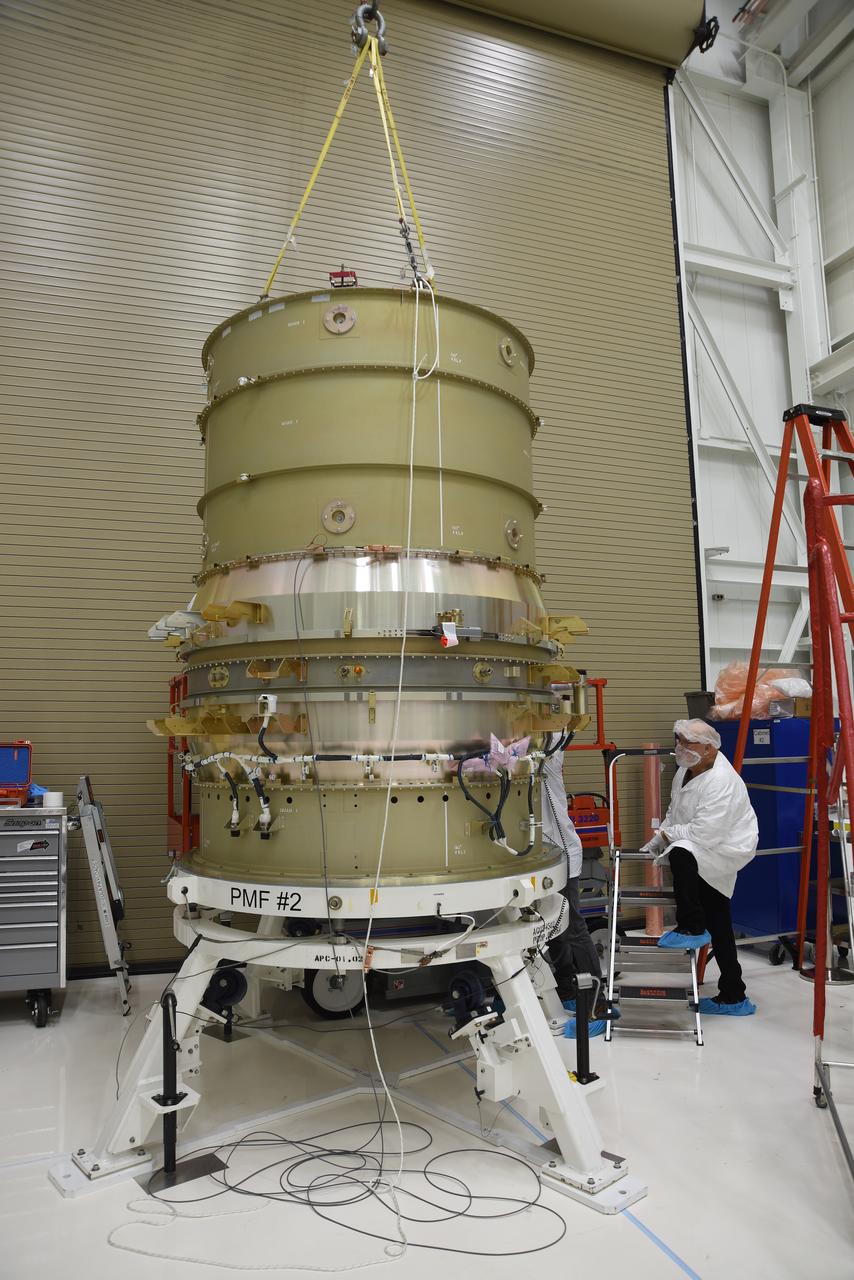
Technicians secure the re-entry vehicle payload adapter canister for the Low-Earth Orbit Flight Test of an Inflatable Decelerator (LOFTID) onto the payload adapter separation systems canister as part of launch preparations occurring inside Building 836 at Vandenberg Space Force Base (VSFB) in California on Sept. 8, 2022. LOFTID is the secondary payload on NASA and the National Oceanic and Atmospheric Administration’s (NOAA) Joint Polar Satellite System-2 (JPSS-2) satellite mission. JPSS-2 is the third satellite in the Joint Polar Satellite System series. It is scheduled to lift off from VSFB on Nov. 1 from Space Launch Complex-3. JPSS-2, which will be renamed NOAA-21 after reaching orbit, will join a constellation of JPSS satellites that orbit from the North to the South pole, circling Earth 14 times a day and providing a full view of the entire globe twice daily.
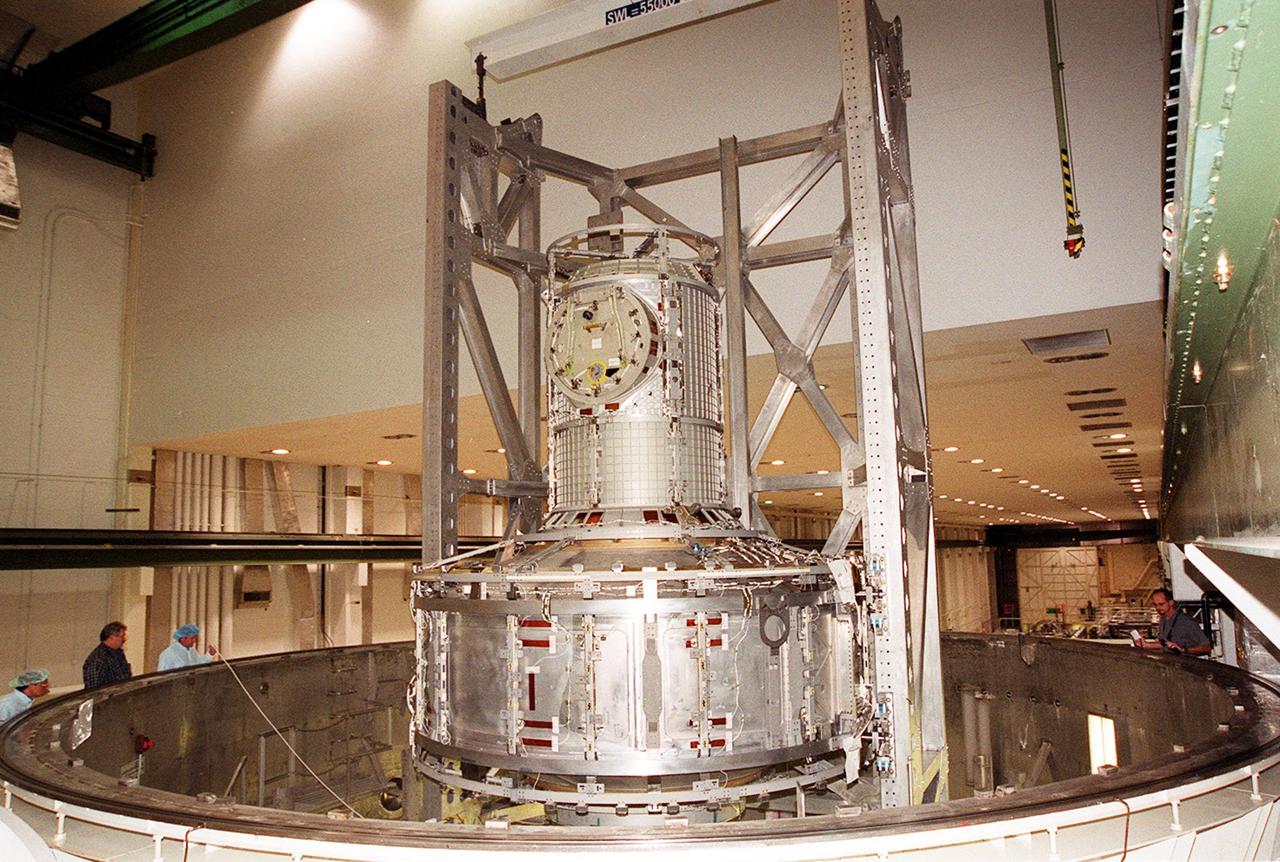
The overhead crane lowers the Joint Airlock Module inside the vacuum chamber in the Operations and Checkout Building. The airlock is being tested for leaks. The module is the gateway from which crew members aboard the International Space Station (ISS) will enter and exit the 470-ton orbiting research facility. The airlock is a critical element of the ISS because of design differences between American and Russian spacesuits. The Joint Airlock Module provides a chamber where astronauts from every nation can suit up for space walks to conduct maintenance and construction work or to do science experiments outside the Station. The Space Shuttle Atlantis will carry the airlock to orbit on mission STS-104, the 10th International Space Station flight, currently targeted for liftoff in May 2001. The Shuttle crew will secure the airlock to the right side of Unity, the American-built connecting node that currently comprises one-third of the current Space Station, along with the Russian modules Zarya and Zvezda
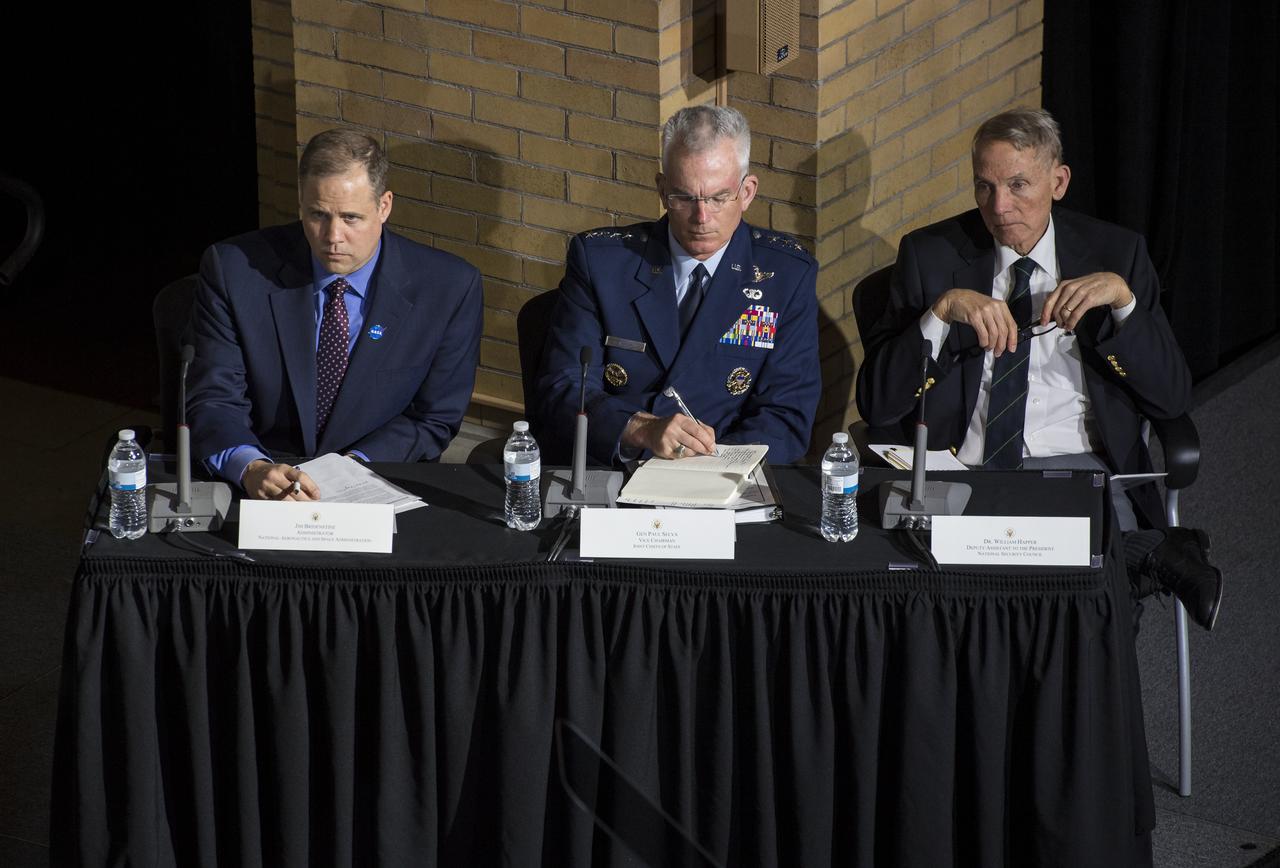
NASA Administrator Jim Bridenstine, left, General Paul Selva, vice chairman, Joint Chiefs of Staff, center, and Dr. William Happer, deputy assistant to the president, National Security Council, listen as Vice President Mike Pence delivers opening remarks during the National Space Council meeting titled, Moon, Mars, and Worlds Beyond, Winning the Next Frontier, Tuesday, Oct. 23, 2018 at the National War College at Fort Lesley J. McNair in Washington. Chaired by the Vice President, the council's role is to advise the President regarding national space policy and strategy, and review the nation's long-range goals for space activities.Photo Credit: (NASA/Aubrey Gemignani)

SrA Rodriguez (riding MWH Patton), left, and SrA Horn (riding MWH Trooper), members of the 30th Security Forces Squadron, Conservation Law Enforcement Section, pose for photographs by the United Launch Alliance (ULA) Atlas V rocket with the Landsat 9 satellite onboard, Sunday, Sept. 26, 2021, at Vandenberg Space Force Base in California. The Landsat 9 satellite, a joint NASA/U.S. Geological Survey mission that will continue the legacy of monitoring Earth’s land and coastal regions, is scheduled for liftoff Monday, Sept. 27. Photo Credit: (NASA/Bill Ingalls)
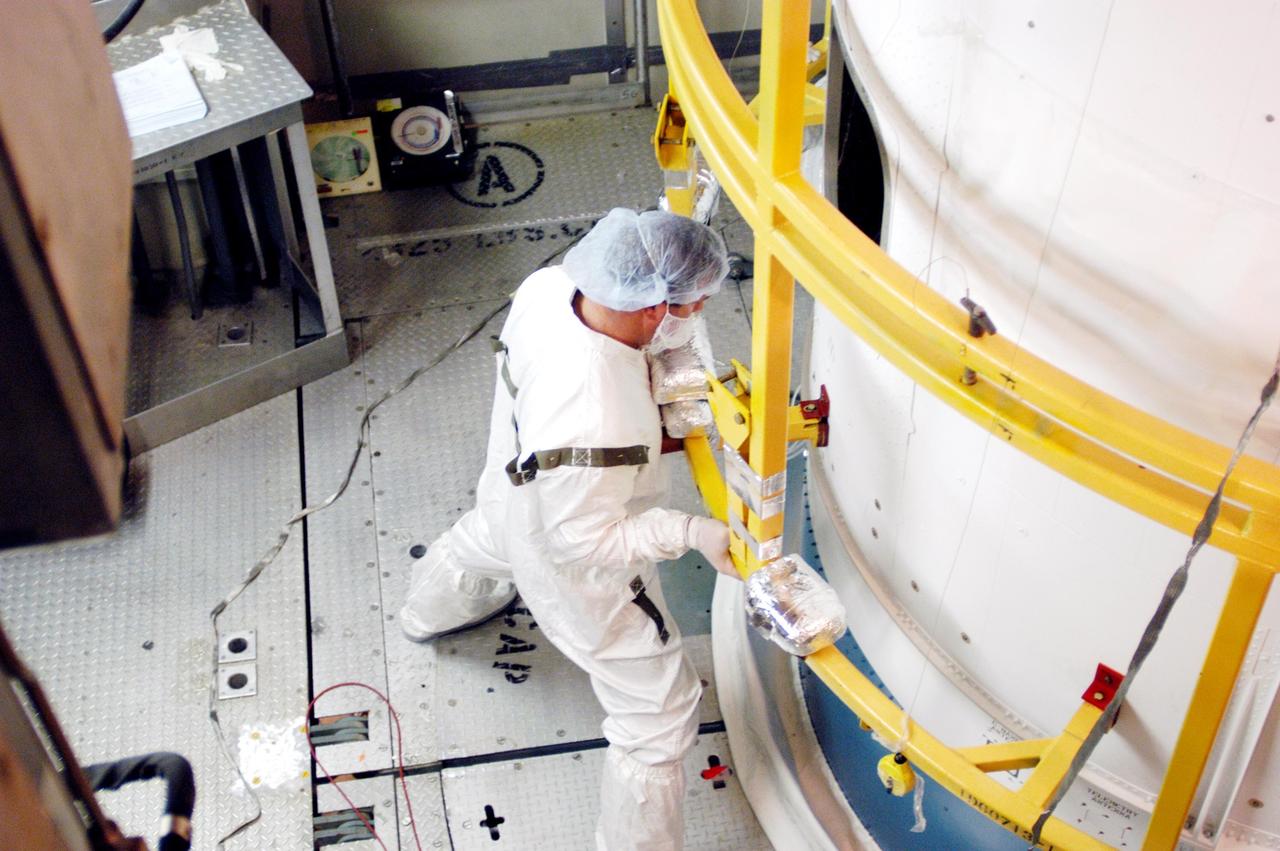
KENNEDY SPACE CENTER, FLA. - On Launch Pad 17-B at Cape Canaveral Air Force Station, Boeing workers secure the first half of the fairing installed around the MESSENGER (Mercury Surface, Space Environment, Geochemistry and Ranging) spacecraft. The fairing is a molded structure that fits flush with the outside surface of the upper stage booster and forms an aerodynamically smooth joint, protecting the spacecraft during launch. MESSENGER is scheduled to launch Aug. 2 aboard a Boeing Delta II rocket and is expected to enter Mercury orbit in March 2011. MESSENGER was built for NASA by the Johns Hopkins University Applied Physics Laboratory in Laurel, Md.
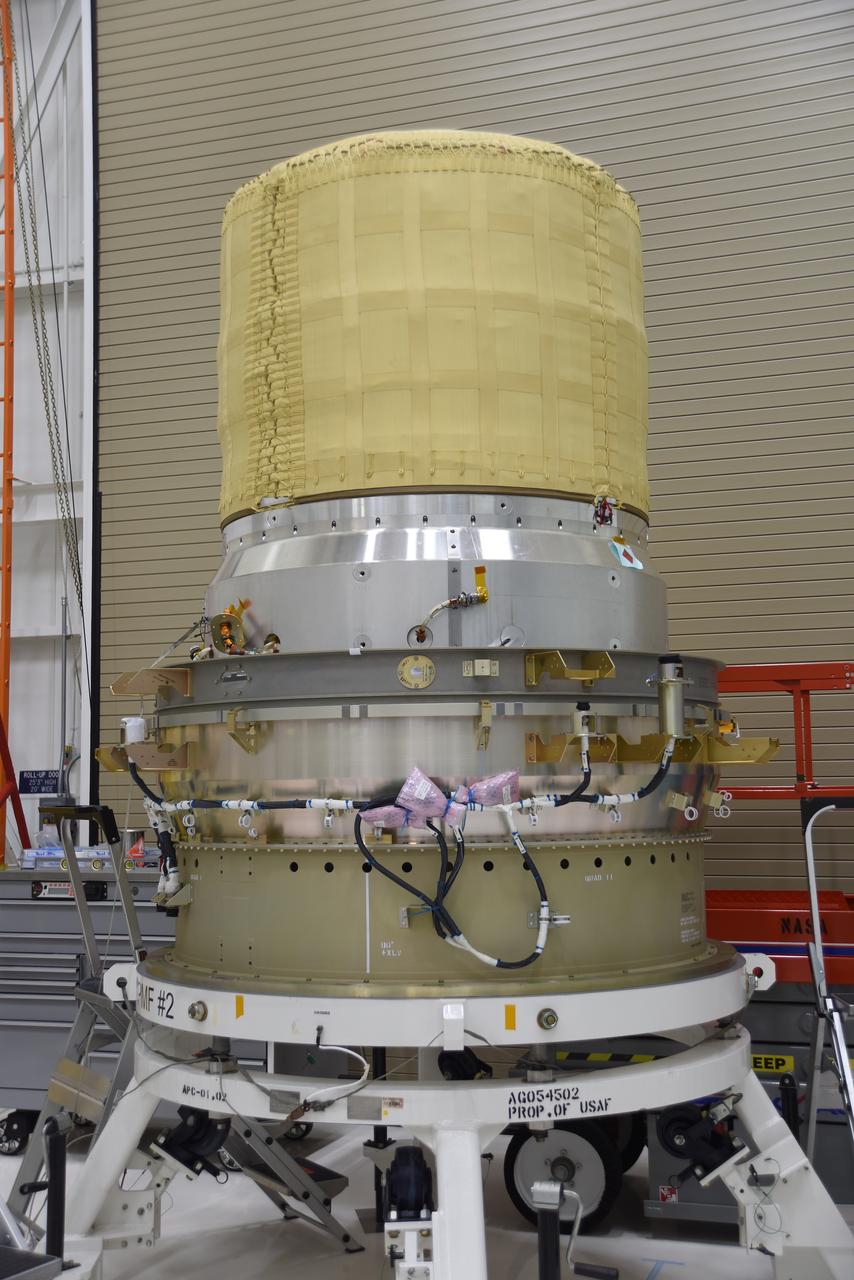
The re-entry vehicle for the Low-Earth Orbit Flight Test of an Inflatable Decelerator (LOFTID) is now mated to the re-entry vehicle payload adapter interface ring and secured on a work stand as part of launch preparations inside Building 836 at Vandenberg Space Force Base (VSFB) in California on Sept. 7, 2022. LOFTID is the secondary payload on NASA and the National Oceanic and Atmospheric Administration’s (NOAA) Joint Polar Satellite System-2 (JPSS-2) satellite mission. JPSS-2 is the third satellite in the Joint Polar Satellite System series. It is scheduled to lift off from VSFB on Nov. 1 from Space Launch Complex-3. JPSS-2, which will be renamed NOAA-21 after reaching orbit, will join a constellation of JPSS satellites that orbit from the North to the South pole, circling Earth 14 times a day and providing a full view of the entire globe twice daily. LOFTID will demonstrate inflatable heat shield technology that could enable a variety of proposed NASA missions to destinations such as Mars, Venus, and Titan, as well as returning heavier payloads from low-Earth orbit.

Teams prepare to lift the United Launch Alliance Atlas V rocket for the National Oceanic and Atmospheric Administration and NASA’s Joint Polar Satellite System-2 (JPSS-2) mission and rotate it to a vertical position by crane following its arrival to the Vertical Integration Facility (VIF) at Vandenberg Space Force Base in California on Sept. 28, 2022. Once JPSS-2 – enclosed inside its protective payload fairing – arrives at the VIF, it will be secured to the top of the rocket. JPSS-2 is the third satellite in the Joint Polar Satellite System series that will be used to capture data and improve weather forecasts, leading scientists to better predict for extreme weather events and climate change. Launching as a secondary payload to JPSS-2 is NASA’s Low-Earth Orbit Flight Test of an Inflatable Decelerator (LOFTID), dedicated to the memory of Bernard Kutter. LOFTID is a technology demonstration of an inflatable heat shield that could one day help land humans on Mars. Liftoff is targeted for 2:25 a.m. Pacific time (5:25 a.m. Eastern time) on Nov. 1, 2022, from Vandenberg’s Space Launch Complex 3E.
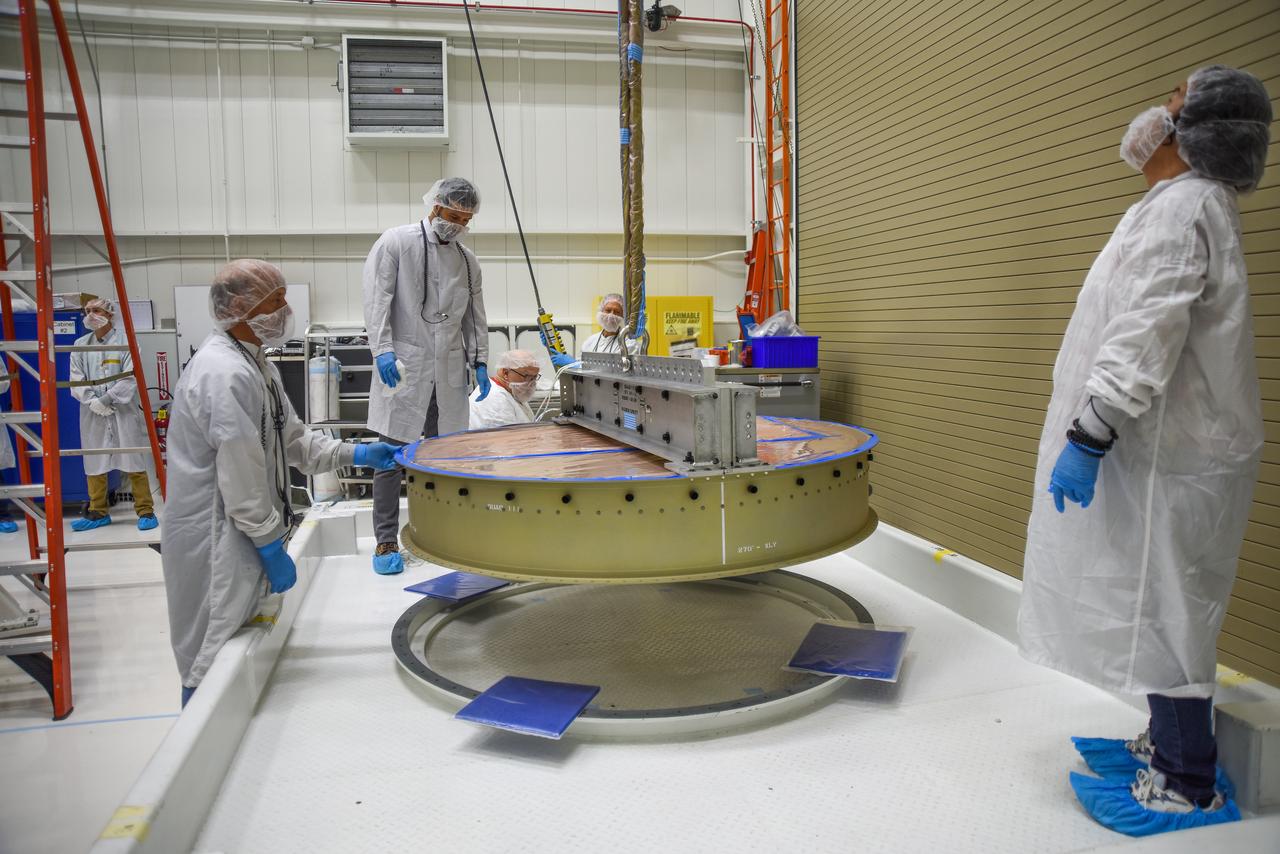
Technicians prepare the payload adapter separation systems canister to be secured onto NASA’s Low-Earth Orbit Flight Test of an Inflatable Decelerator (LOFTID) payload stack as part of launch preparations occurring inside Building 836 at Vandenberg Space Force Base (VSFB) in California on Sept. 9, 2022. LOFTID is the secondary payload on the National Oceanic and Atmospheric Administration’s (NOAA) Joint Polar Satellite System-2 (JPSS-2) satellite mission. JPSS-2 is the third satellite in the Joint Polar Satellite System series. It is scheduled to lift off from VSFB on Nov. 1 from Space Launch Complex-3. JPSS-2, which will be renamed NOAA-21 after reaching orbit, will join a constellation of JPSS satellites that orbit from the North to the South pole, circling Earth 14 times a day and providing a full view of the entire globe twice daily. LOFTID will demonstrate inflatable heat shield technology that could enable a variety of proposed NASA missions to destinations such as Mars, Venus, and Titan, as well as returning heavier payloads from low-Earth orbit.

Following its arrival to Space Launch Complex 3E at Vandenberg Space Force Base in California, the United Launch Alliance Atlas V rocket that will launch the National Oceanic and Atmospheric Administration and NASA’s Joint Polar Satellite System-2 (JPSS-2) mission is moved into the Vertical Integration Facility (VIF) on Sept. 28, 2022. Once JPSS-2 – enclosed inside its protective payload fairing – arrives at the VIF, it will be secured to the top of the rocket. JPSS-2 is the third satellite in the Joint Polar Satellite System series that will be used to capture data and improve weather forecasts, leading scientists to better predict for extreme weather events and climate change. Launching as a secondary payload to JPSS-2 is NASA’s Low-Earth Orbit Flight Test of an Inflatable Decelerator (LOFTID), dedicated to the memory of Bernard Kutter. LOFTID is a technology demonstration of an inflatable heat shield that could one day help land humans on Mars. Liftoff is targeted for 2:25 a.m. Pacific time (5:25 a.m. Eastern time) on Nov. 1, 2022, from Vandenberg’s Space Launch Complex 3E.
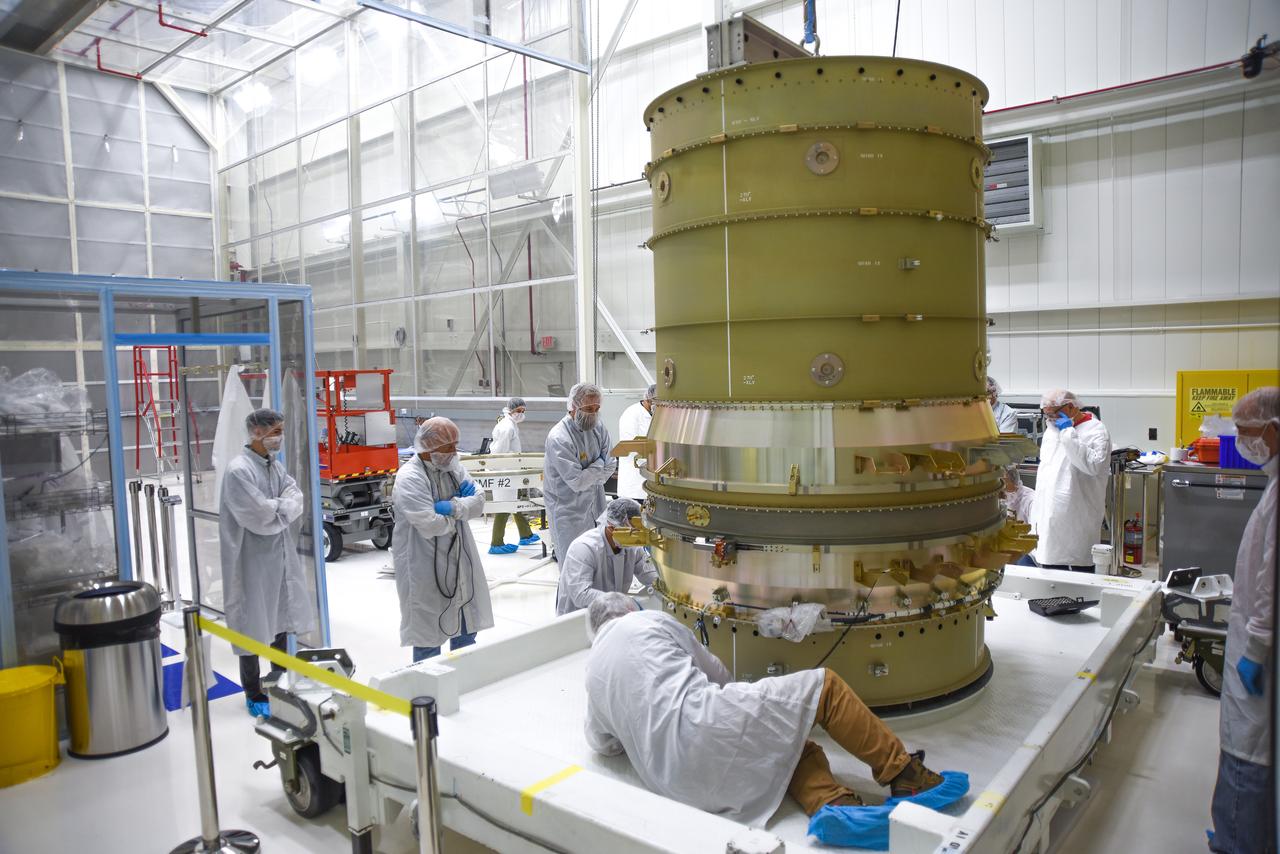
Technicians secure NASA’s Low-Earth Orbit Flight Test of an Inflatable Decelerator (LOFTID) stack onto a ground transport vehicle as part of launch preparations occurring inside Building 836 at Vandenberg Space Force Base (VSFB) in California on Sept. 9, 2022. LOFTID is the secondary payload on the National Oceanic and Atmospheric Administration’s (NOAA) Joint Polar Satellite System-2 (JPSS-2) satellite mission. JPSS-2 is the third satellite in the Joint Polar Satellite System series. It is scheduled to lift off from VSFB on Nov. 1 from Space Launch Complex-3. JPSS-2, which will be renamed NOAA-21 after reaching orbit, will join a constellation of JPSS satellites that orbit from the North to the South pole, circling Earth 14 times a day and providing a full view of the entire globe twice daily. LOFTID will demonstrate inflatable heat shield technology that could enable a variety of proposed NASA missions to destinations such as Mars, Venus, and Titan, as well as returning heavier payloads from low-Earth orbit.

The United Launch Alliance Atlas V rocket that will launch the National Oceanic and Atmospheric Administration and NASA’s Joint Polar Satellite System-2 (JPSS-2) mission arrives at the Vertical Integration Facility (VIF) at Vandenberg Space Force Base’s Space Launch Complex 3E in California on Sept. 28, 2022. Once JPSS-2 – enclosed inside its protective payload fairing – arrives at the VIF, it will be secured to the top of the rocket. JPSS-2 is the third satellite in the Joint Polar Satellite System series that will be used to capture data and improve weather forecasts, leading scientists to better predict for extreme weather events and climate change. Launching as a secondary payload to JPSS-2 is NASA’s Low-Earth Orbit Flight Test of an Inflatable Decelerator (LOFTID), dedicated to the memory of Bernard Kutter. LOFTID is a technology demonstration of an inflatable heat shield that could one day help land humans on Mars. Liftoff is targeted for 2:25 a.m. Pacific time (5:25 a.m. Eastern time) on Nov. 1, 2022, from Vandenberg’s Space Launch Complex 3E.
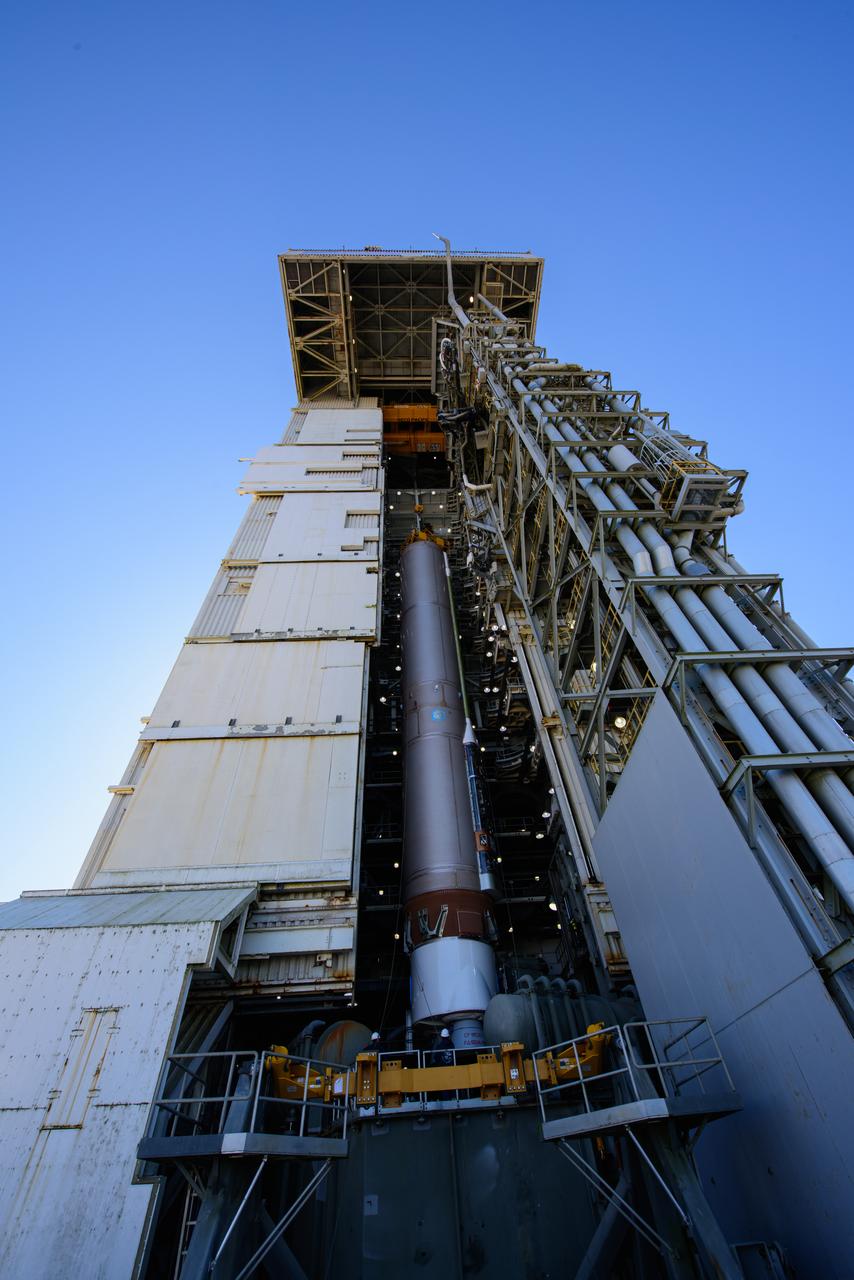
Following its arrival to Space Launch Complex 3E at Vandenberg Space Force Base in California, the United Launch Alliance Atlas V rocket that will launch the National Oceanic and Atmospheric Administration and NASA’s Joint Polar Satellite System-2 (JPSS-2) mission is moved into the Vertical Integration Facility (VIF) on Sept. 28, 2022. Once JPSS-2 – enclosed inside its protective payload fairing – arrives at the VIF, it will be secured to the top of the rocket. JPSS-2 is the third satellite in the Joint Polar Satellite System series that will be used to capture data and improve weather forecasts, leading scientists to better predict for extreme weather events and climate change. Launching as a secondary payload to JPSS-2 is NASA’s Low-Earth Orbit Flight Test of an Inflatable Decelerator (LOFTID), dedicated to the memory of Bernard Kutter. LOFTID is a technology demonstration of an inflatable heat shield that could one day help land humans on Mars. Liftoff is targeted for 2:25 a.m. Pacific time (5:25 a.m. Eastern time) on Nov. 1, 2022, from Vandenberg’s Space Launch Complex 3E.
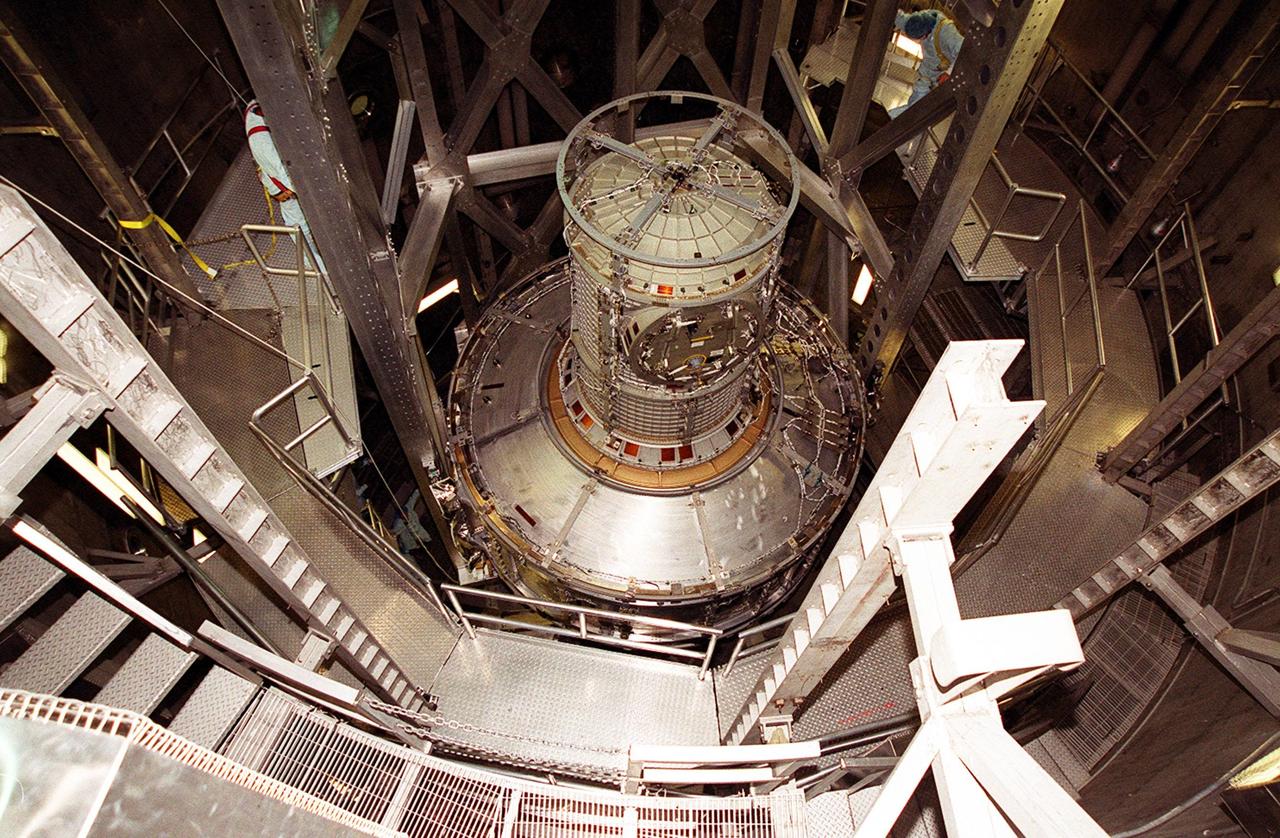
The Joint Airlock Module is fully lowered into the vacuum chamber inside the Operations and Checkout Building. Workers on either side check its position. The airlock is being tested for leaks. The module is the gateway from which crew members aboard the International Space Station (ISS) will enter and exit the 470-ton orbiting research facility. The airlock is a critical element of the ISS because of design differences between American and Russian spacesuits. The Joint Airlock Module provides a chamber where astronauts from every nation can suit up for space walks to conduct maintenance and construction work or to do science experiments outside the Station. The Space Shuttle Atlantis will carry the airlock to orbit on mission STS-104, the 10th International Space Station flight, currently targeted for liftoff in May 2001. The Shuttle crew will secure the airlock to the right side of Unity, the American-built connecting node that currently comprises one-third of the current Space Station, along with the Russian modules Zarya and Zvezda
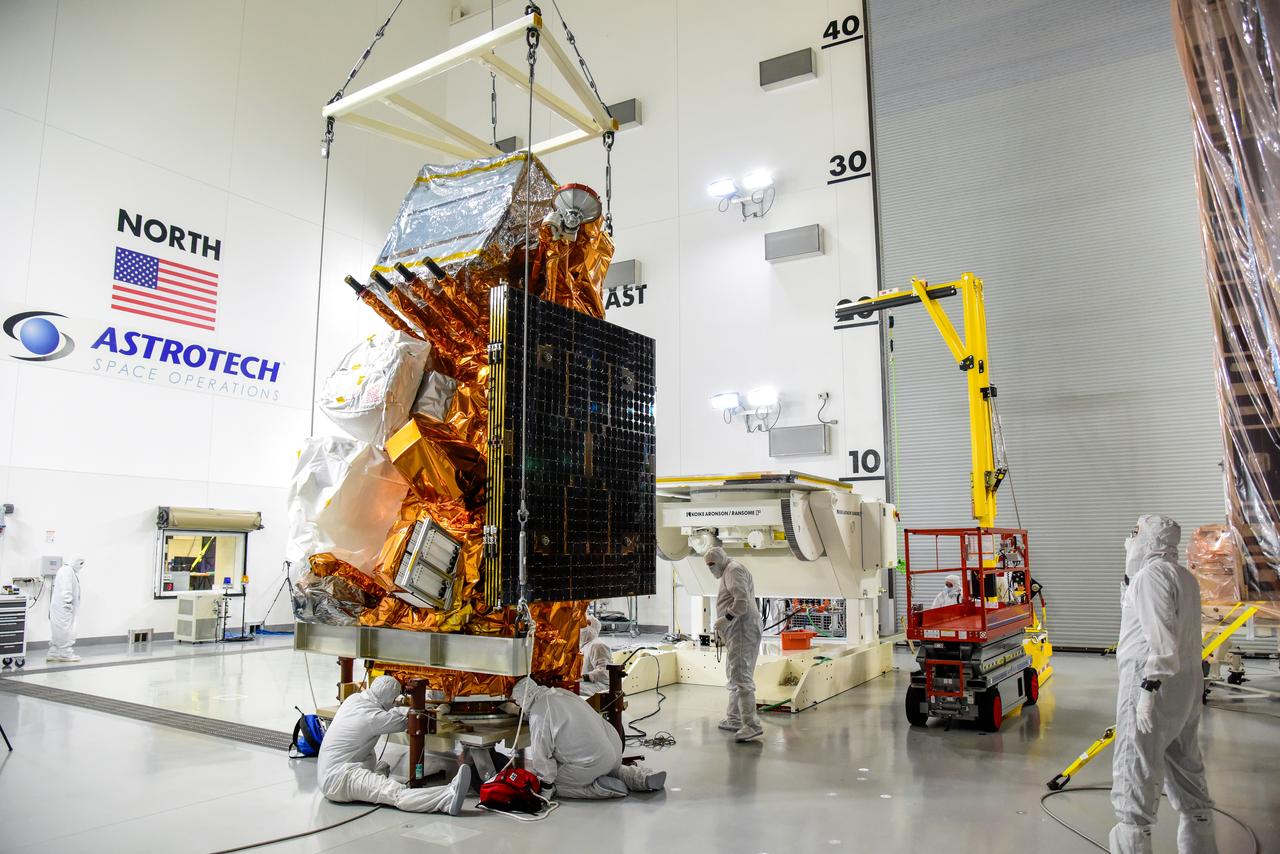
Technicians help secure NASA and the National Oceanic and Atmospheric Administration’s (NOAA) Joint Polar Satellite System-2 (JPSS-2) satellite onto an integration and testing cart inside the Astrotech Space Operations facility at Vandenberg Space Force Base in California on Aug. 22, 2022. JPSS-2 is the third satellite in the Joint Polar Satellite System series. It is scheduled to lift off from VSFB on Nov. 1 from Space Launch Complex-3. JPSS-2, which will be renamed NOAA-21 after reaching orbit, will join a constellation of JPSS satellites that orbit from the North to the South pole, circling Earth 14 times a day and providing a full view of the entire globe twice daily. The NOAA/NASA Suomi National Polar-orbiting Partnership (Suomi NPP) satellite, and NOAA-20, previously known as JPSS-1, are both already in orbit. Each satellite carries at least four advanced instruments to measure weather and climate conditions on Earth. A secondary payload on the mission is the Low-Earth Orbit Flight Test of an Inflatable Decelerator (LOFTID), and is dedicated to the memory of Bernard Kutter. LOFTID will demonstrate inflatable heat shield technology that could enable a variety of proposed NASA missions to destinations such as Mars, Venus, and Titan, as well as returning heavier payloads from low-Earth orbit.

At Vandenberg Space Force Base in California, teams hoist the United Launch Alliance Atlas V rocket for the National Oceanic and Atmospheric Administration and NASA’s Joint Polar Satellite System-2 (JPSS-2) mission into a vertical position in preparation for a move into the Vertical Integration Facility (VIF) on Sept. 28, 2022. Once JPSS-2 – enclosed inside its protective payload fairing – arrives at the VIF, it will be secured to the top of the rocket. JPSS-2 is the third satellite in the Joint Polar Satellite System series that will be used to capture data and improve weather forecasts, leading scientists to better predict for extreme weather events and climate change. Launching as a secondary payload to JPSS-2 is NASA’s Low-Earth Orbit Flight Test of an Inflatable Decelerator (LOFTID), dedicated to the memory of Bernard Kutter. LOFTID is a technology demonstration of an inflatable heat shield that could one day help land humans on Mars. Liftoff is targeted for 2:25 a.m. Pacific time (5:25 a.m. Eastern time) on Nov. 1, 2022, from Vandenberg’s Space Launch Complex 3E.
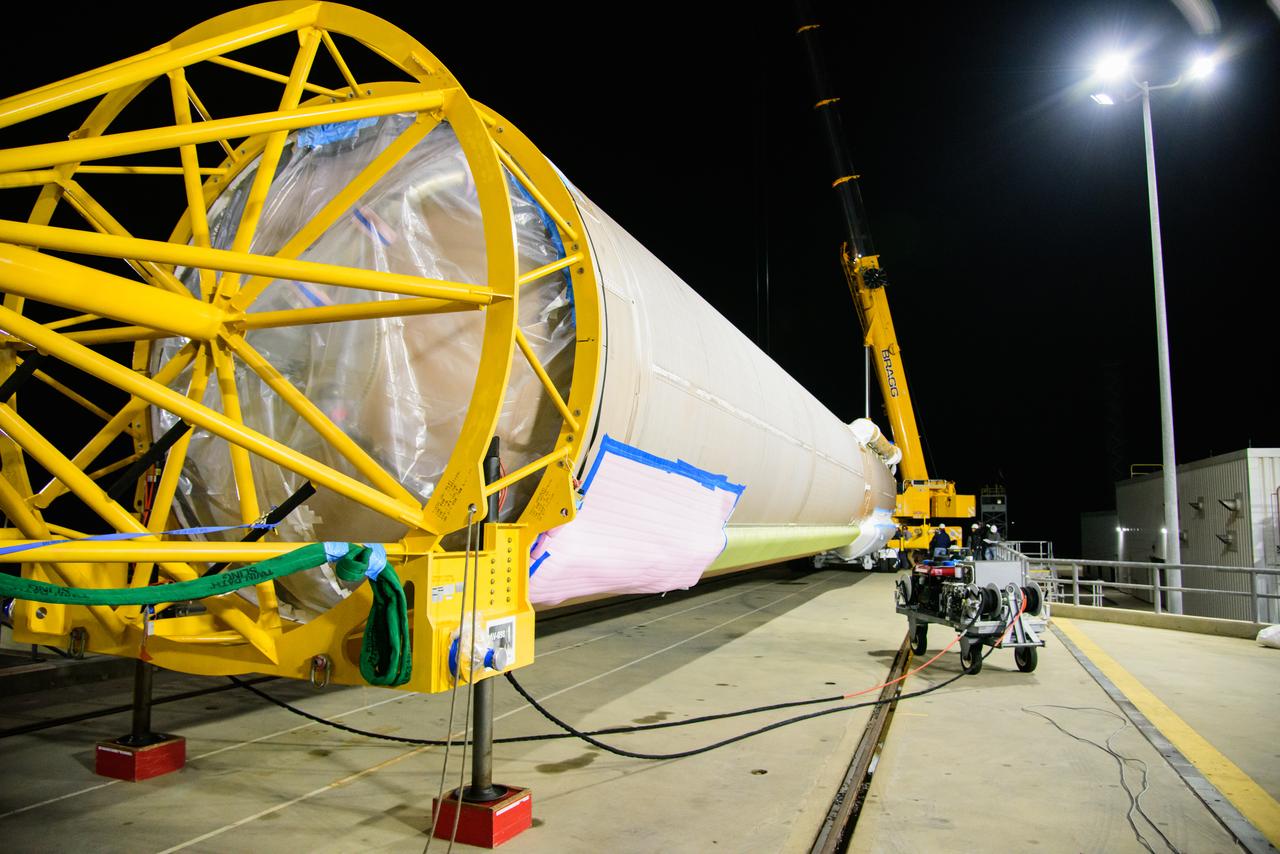
The United Launch Alliance Atlas V rocket that will launch the National Oceanic and Atmospheric Administration and NASA’s Joint Polar Satellite System-2 (JPSS-2) mission arrives at the Vertical Integration Facility (VIF) at Vandenberg Space Force Base’s Space Launch Complex 3E in California on Sept. 28, 2022. Once JPSS-2 – enclosed inside its protective payload fairing – arrives at the VIF, it will be secured to the top of the rocket. JPSS-2 is the third satellite in the Joint Polar Satellite System series that will be used to capture data and improve weather forecasts, leading scientists to better predict for extreme weather events and climate change. Launching as a secondary payload to JPSS-2 is NASA’s Low-Earth Orbit Flight Test of an Inflatable Decelerator (LOFTID), dedicated to the memory of Bernard Kutter. LOFTID is a technology demonstration of an inflatable heat shield that could one day help land humans on Mars. Liftoff is targeted for 2:25 a.m. Pacific time (5:25 a.m. Eastern time) on Nov. 1, 2022, from Vandenberg’s Space Launch Complex 3E.
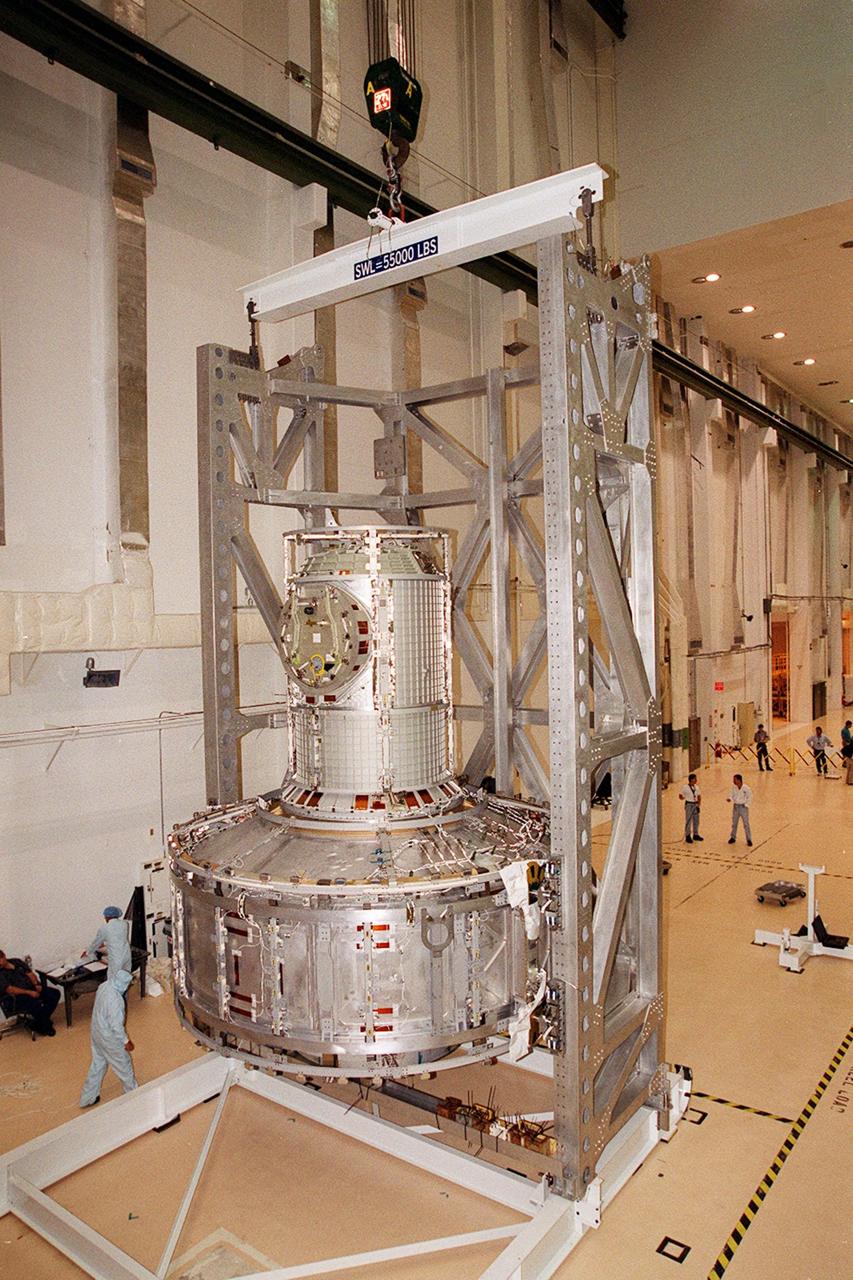
In the Operations and Checkout Building, the Joint Airlock Module, now in vertical position, is ready to be moved into a vacuum chamber for testing. The module is the gateway from which crew members aboard the International Space Station (ISS) will enter and exit the 470-ton orbiting research facility. The airlock is a critical element of the ISS because of design differences between American and Russian spacesuits. The Joint Airlock Module is specially designed to accommodate both suits, providing a chamber where astronauts from every nation can suit up for space walks to conduct maintenance and construction work or to do science experiments outside the Station. The Space Shuttle Atlantis will carry the airlock to orbit on mission STS-104, the 10th International Space Station flight, currently targeted for liftoff in May 2001. The Shuttle crew will secure the airlock to the right side of Unity, the American-built connecting node that currently comprises one-third of the current Space Station, along with the Russian modules Zarya and Zvezda
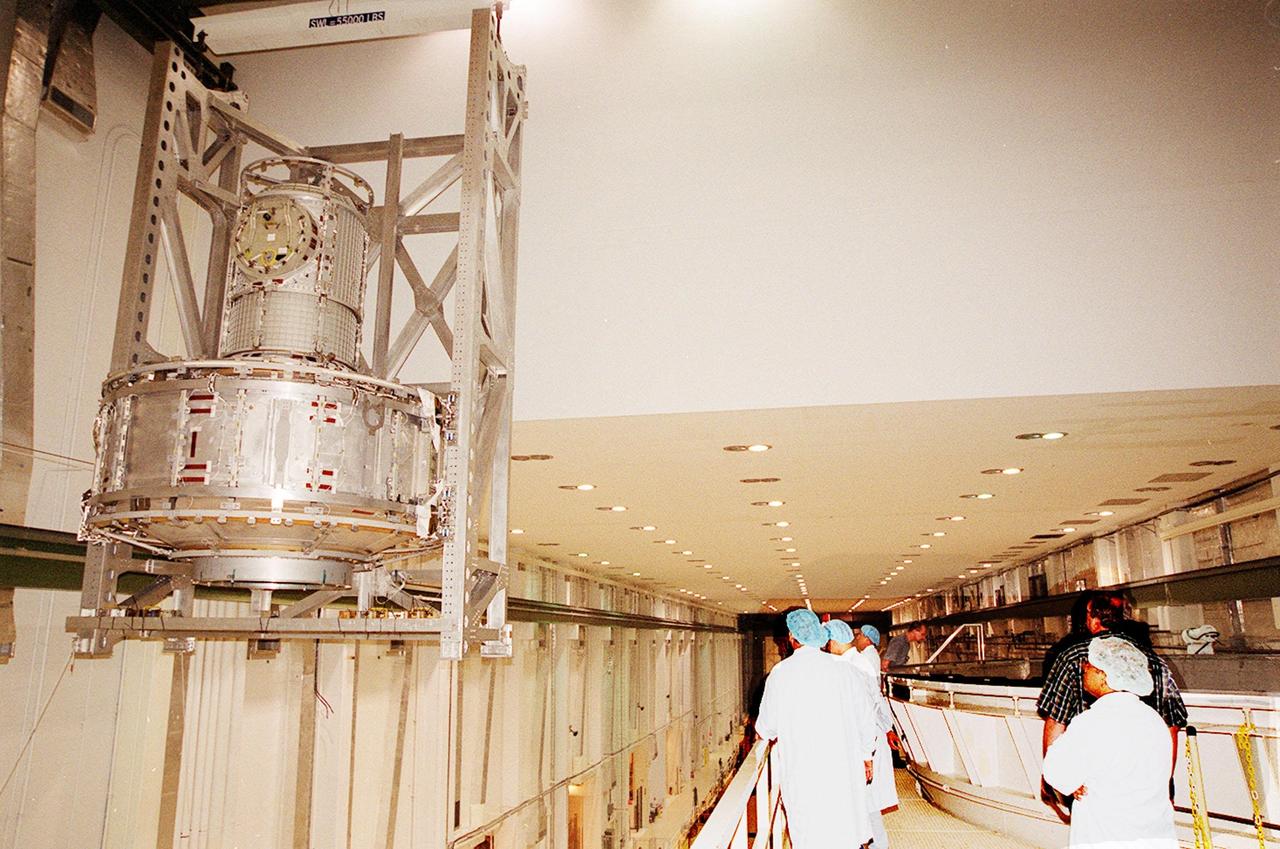
The Joint Airlock Module swings into position near the top of the Operations and Checkout Building to move toward the vacuum chamber at right. Workers alongside the chamber watch the airlock’s progress. The airlock is being tested for leaks. The module is the gateway from which crew members aboard the International Space Station (ISS) will enter and exit the 470-ton orbiting research facility. The airlock is a critical element of the ISS because of design differences between American and Russian spacesuits. The Joint Airlock Module provides a chamber where astronauts from every nation can suit up for space walks to conduct maintenance and construction work or to do science experiments outside the Station. The Space Shuttle Atlantis will carry the airlock to orbit on mission STS-104, the 10th International Space Station flight, currently targeted for liftoff in May 2001. The Shuttle crew will secure the airlock to the right side of Unity, the American-built connecting node that currently comprises one-third of the current Space Station, along with the Russian modules Zarya and Zvezda
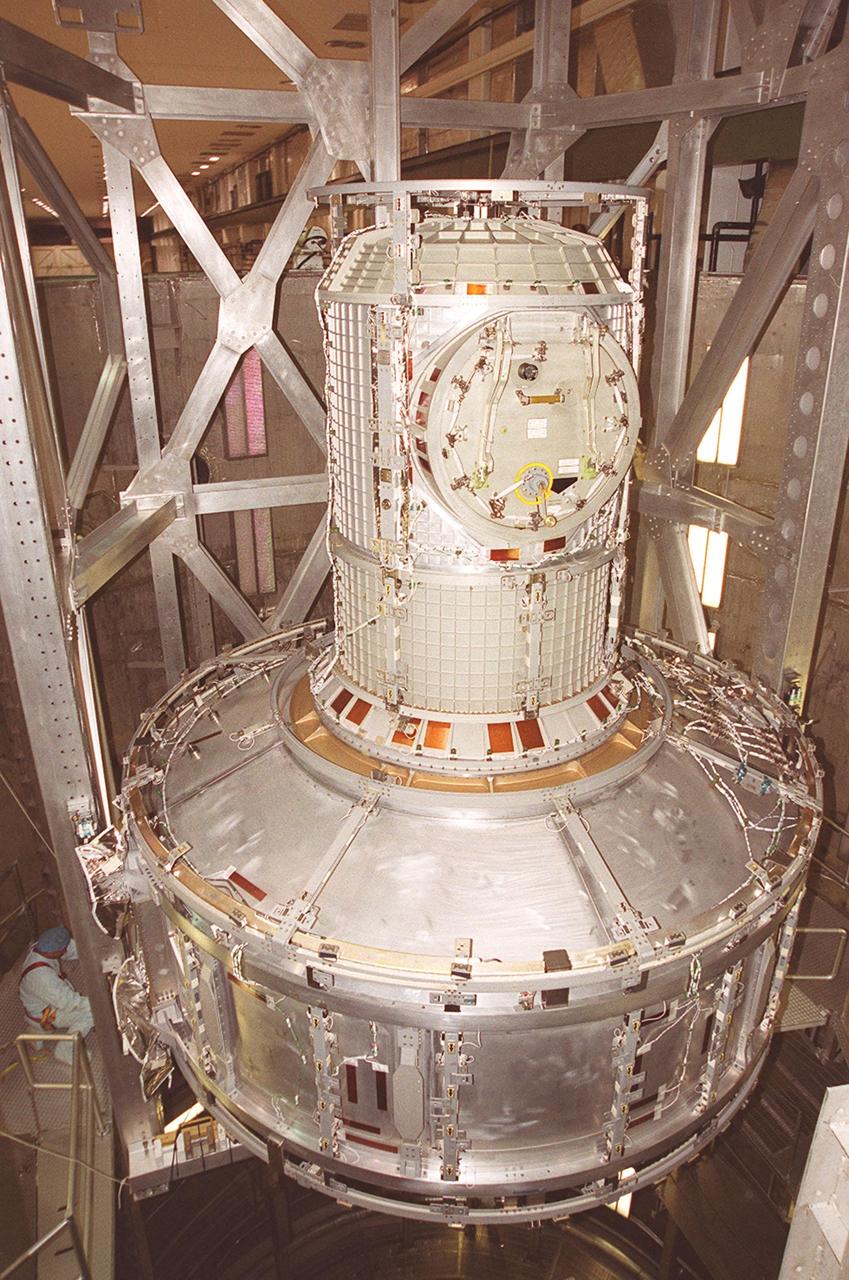
Workers inside the vacuum chamber in the Operations and Checkout Building watch as an overhead crane lowers the Joint Airlock Module inside. The airlock is being tested for leaks. The module is the gateway from which crew members aboard the International Space Station (ISS) will enter and exit the 470-ton orbiting research facility. The airlock is a critical element of the ISS because of design differences between American and Russian spacesuits. The Joint Airlock Module provides a chamber where astronauts from every nation can suit up for space walks to conduct maintenance and construction work or to do science experiments outside the Station. The Space Shuttle Atlantis will carry the airlock to orbit on mission STS-104, the 10th International Space Station flight, currently targeted for liftoff in May 2001. The Shuttle crew will secure the airlock to the right side of Unity, the American-built connecting node that currently comprises one-third of the current Space Station, along with the Russian modules Zarya and Zvezda

Teams prepare to lift the United Launch Alliance Atlas V rocket for the National Oceanic and Atmospheric Administration and NASA’s Joint Polar Satellite System-2 (JPSS-2) mission and rotate it to a vertical position by crane following its arrival to the Vertical Integration Facility (VIF) at Vandenberg Space Force Base in California on Sept. 28, 2022. Once JPSS-2 – enclosed inside its protective payload fairing – arrives at the VIF, it will be secured to the top of the rocket. JPSS-2 is the third satellite in the Joint Polar Satellite System series that will be used to capture data and improve weather forecasts, leading scientists to better predict for extreme weather events and climate change. Launching as a secondary payload to JPSS-2 is NASA’s Low-Earth Orbit Flight Test of an Inflatable Decelerator (LOFTID), dedicated to the memory of Bernard Kutter. LOFTID is a technology demonstration of an inflatable heat shield that could one day help land humans on Mars. Liftoff is targeted for 2:25 a.m. Pacific time (5:25 a.m. Eastern time) on Nov. 1, 2022, from Vandenberg’s Space Launch Complex 3E.
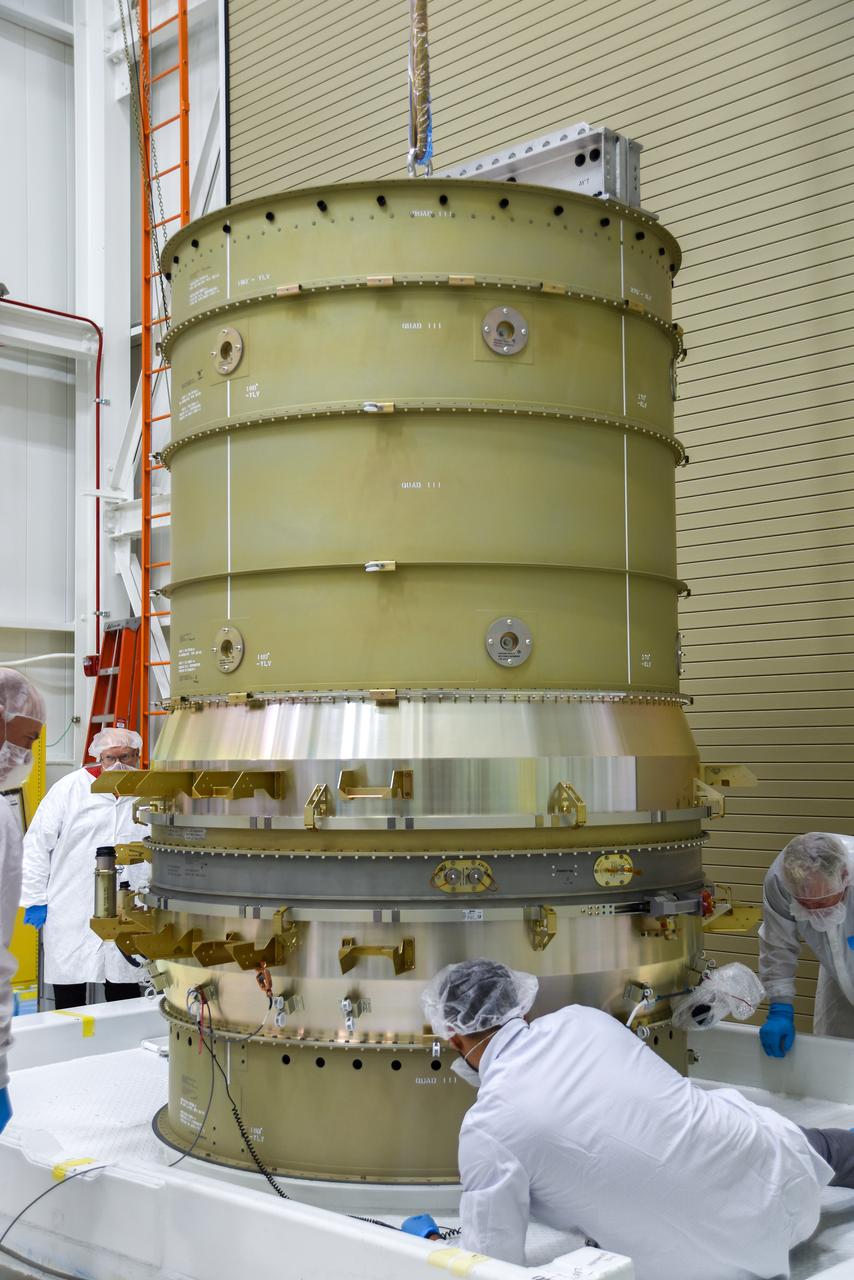
Technicians secure NASA’s Low-Earth Orbit Flight Test of an Inflatable Decelerator (LOFTID) stack onto a ground transport vehicle as part of launch preparations occurring inside Building 836 at Vandenberg Space Force Base (VSFB) in California on Sept. 9, 2022. LOFTID is the secondary payload on the National Oceanic and Atmospheric Administration’s (NOAA) Joint Polar Satellite System-2 (JPSS-2) satellite mission. JPSS-2 is the third satellite in the Joint Polar Satellite System series. It is scheduled to lift off from VSFB on Nov. 1 from Space Launch Complex-3. JPSS-2, which will be renamed NOAA-21 after reaching orbit, will join a constellation of JPSS satellites that orbit from the North to the South pole, circling Earth 14 times a day and providing a full view of the entire globe twice daily. LOFTID will demonstrate inflatable heat shield technology that could enable a variety of proposed NASA missions to destinations such as Mars, Venus, and Titan, as well as returning heavier payloads from low-Earth orbit.
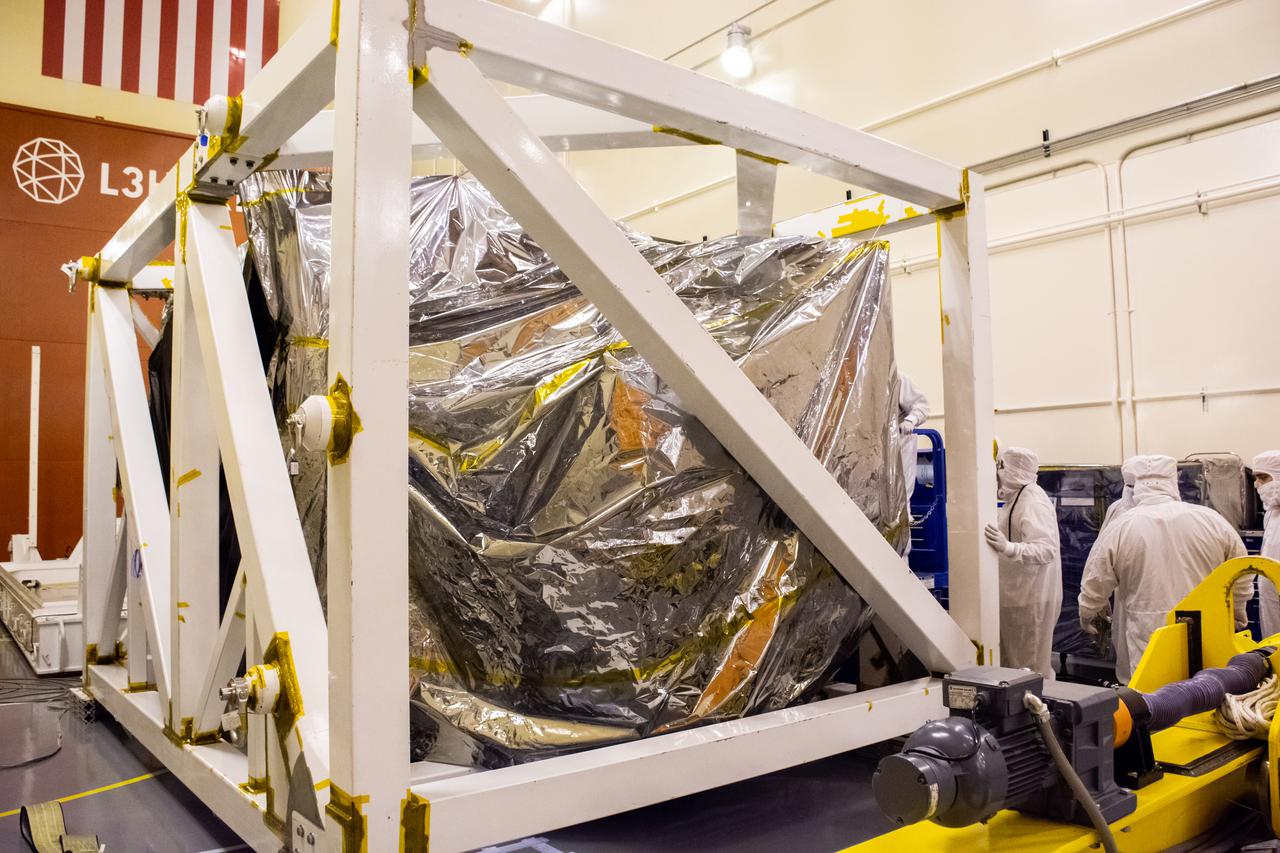
Technicians check the Landsat 9 spacecraft secured in its protective stand on the floor of the Integrated Processing Facility at Vandenberg Space Force Base in California, on July 8, 2021. Landsat 9 is being prepared for its launch atop the ULA Atlas V from Vandenberg in September 2021. The launch is being managed by NASA’s Launch Services Program based at Kennedy Space Center in Florida. Landsat 9 will continue the nearly 50-year legacy of previous Landsat missions. It will monitor key natural and economic resources from orbit. Landsat 9 is managed by the agency’s Goddard Space Flight Center in Greenbelt, Maryland. It will carry two instruments: the Operational Land Imager 2, which collects images of Earth’s landscapes in visible, near-infrared and shortwave infrared light, and the Thermal Infrared Sensor 2, which measures the temperature of land surfaces. Like its predecessors, Landsat 9 is a joint mission between NASA and the U.S. Geological Survey.
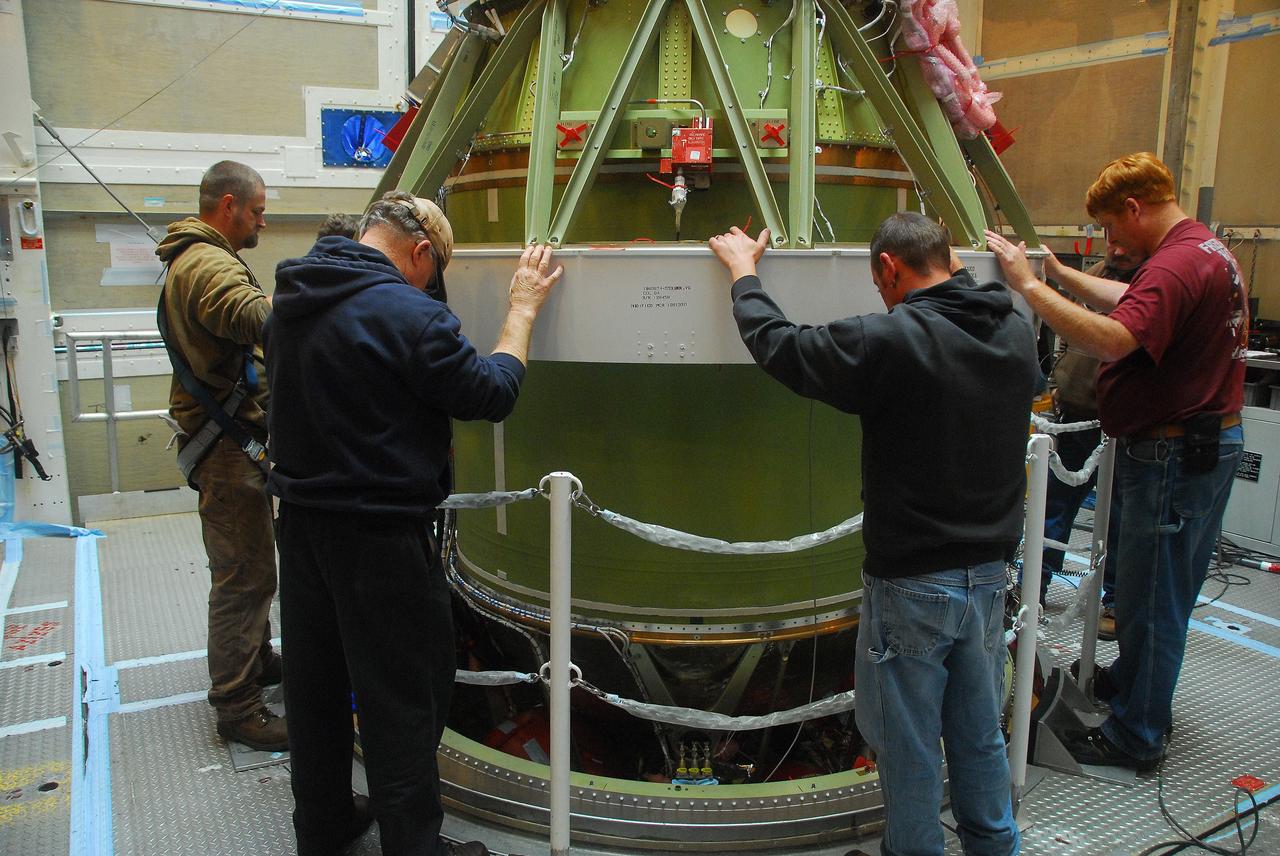
VANDENBERG AIR FORCE BASE, Calif. -- Technicians secure the AJ10 engine for the second stage of the United Launch Alliance Delta II rocket on a work stand at NASA’s Space Launch Complex-2 service tower. The Delta II will carry NASA's National Polar-orbiting Operational Environmental Satellite System Preparatory Project (NPP) satellite into space. NPP represents a critical first step in building the next-generation of Earth-observing satellites. NPP will carry the first of the new sensors developed for this satellite fleet, now known as the Joint Polar Satellite System (JPSS) to be launched in 2016. NPP is the bridge between NASA's Earth Observing System (EOS) satellites and the forthcoming series of JPSS satellites. The mission will test key technologies and instruments for the JPSS missions. NPP is targeted to launch Oct. 25. For more information, visit http://www.nasa.gov/NPP. Photo credit: NASA/VAFB
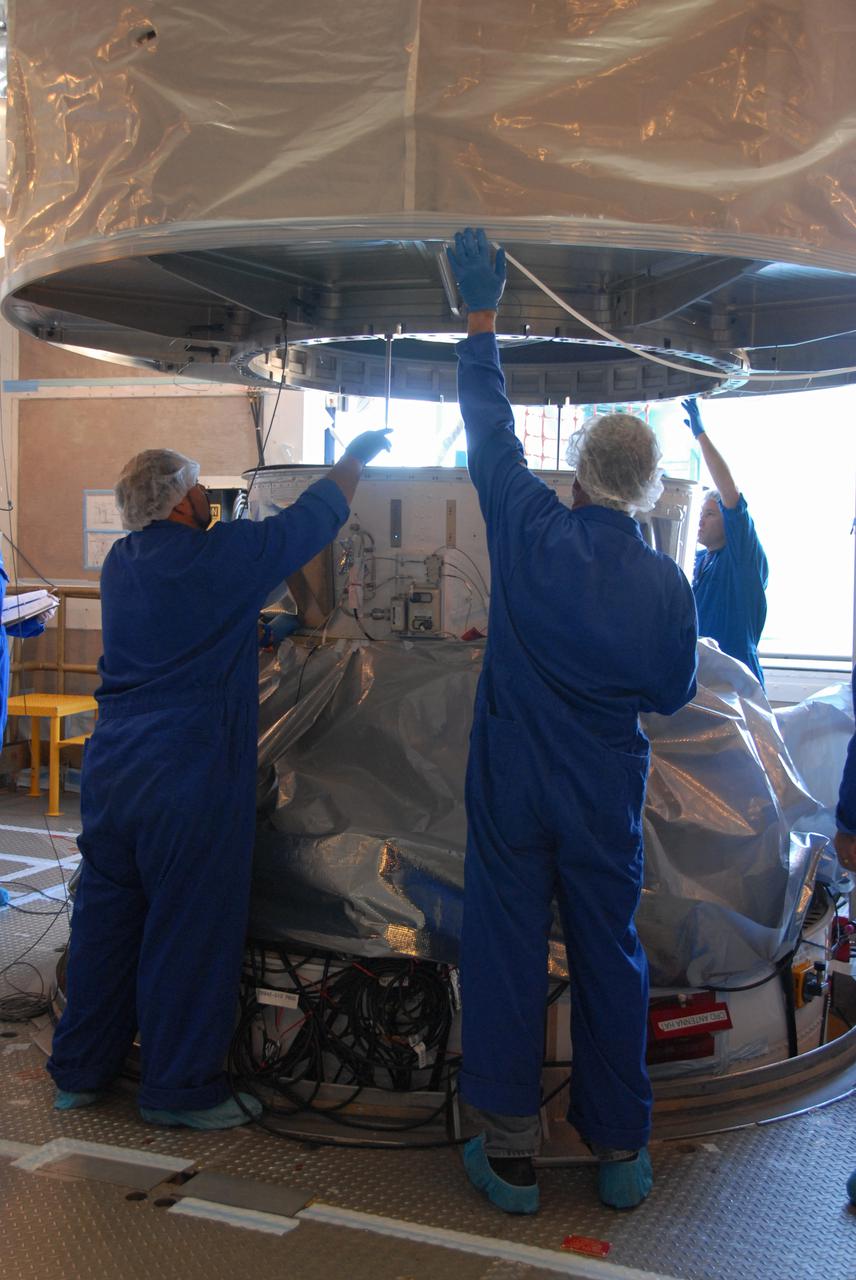
Workers atop Vandenberg Air Force Base's Space Launch Complex-2 prepare to secure the payload transportation canister containing NASA’s National Polar-orbiting Operational Environmental Satellite System Preparatory Project (NPP) spacecraft. NPP represents a critical first step in building the next-generation of Earth-observing satellites. NPP will carry the first of the new sensors developed for this satellite fleet, now known as the Joint Polar Satellite System (JPSS), to be launched in 2016. NPP is the bridge between NASA's Earth Observing System (EOS) satellites and the forthcoming series of JPSS satellites. The mission will test key technologies and instruments for the JPSS missions. NPP is targeted to launch Oct. 28 from Space Launch Complex-2 aboard a United Launch Alliance Delta II rocket. For more information, visit http:__www.nasa.gov_NPP. Photo credit: NASA_Mark P. Mackley, VAFB
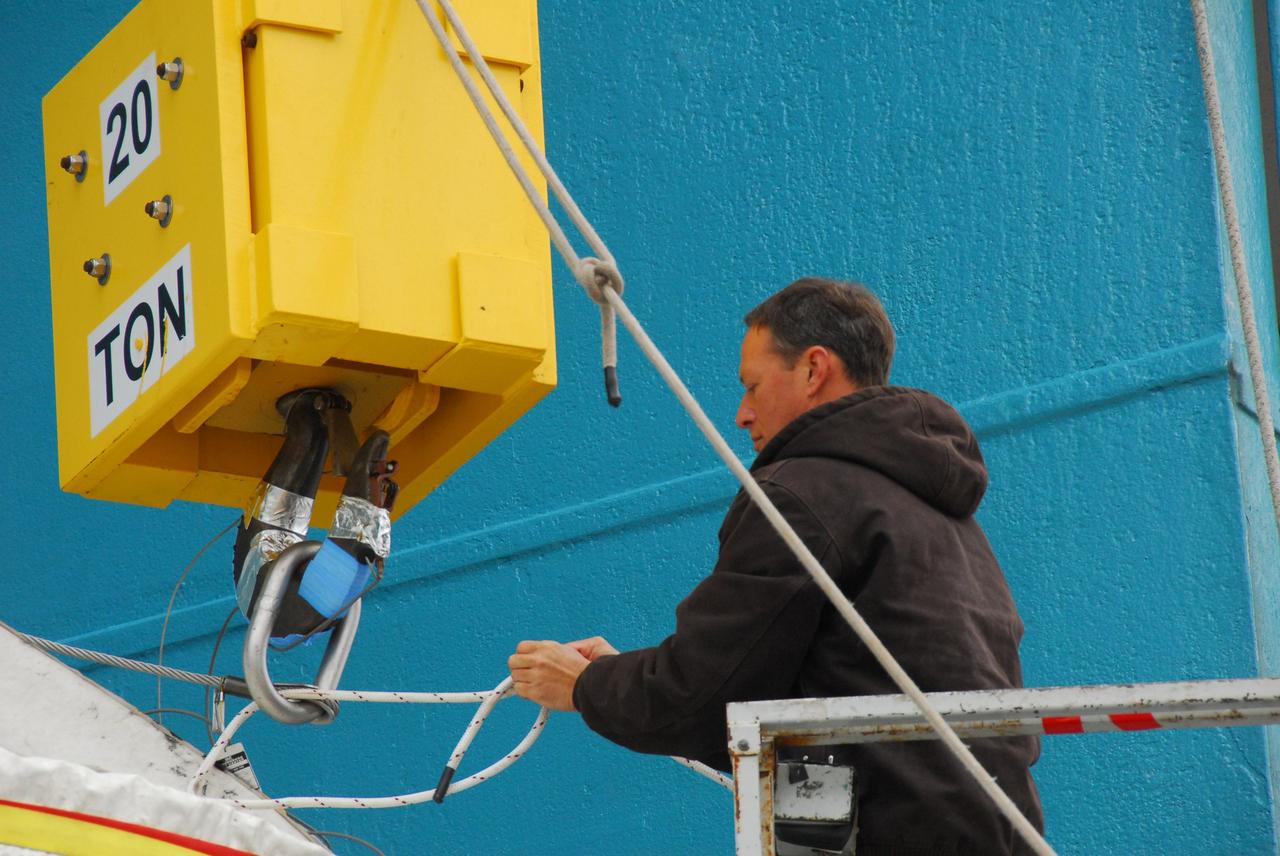
VANDENBERG AIR FORCE BASE, Calif. -- At NASA's Space Launch Complex-2 on Vandenberg Air Force Base in California, a spacecraft technician secures the interstage of the United Launch Alliance Delta II that will carry NASA's National Polar-orbiting Operational Environmental Satellite System Preparatory Project (NPP) satellite into space to a lifting device. The interstage provides an interface between the launch vehicle's first and second stages. NPP represents a critical first step in building the next-generation of Earth-observing satellites. NPP will carry the first of the new sensors developed for this satellite fleet, now known as the Joint Polar Satellite System (JPSS) to be launched in 2016. NPP is the bridge between NASA's Earth Observing System (EOS) satellites and the forthcoming series of JPSS satellites. The mission will test key technologies and instruments for the JPSS missions. For more information, visit http://www.nasa.gov/NPP. Photo credit: NASA/VAFB, Rudy Bledsoe
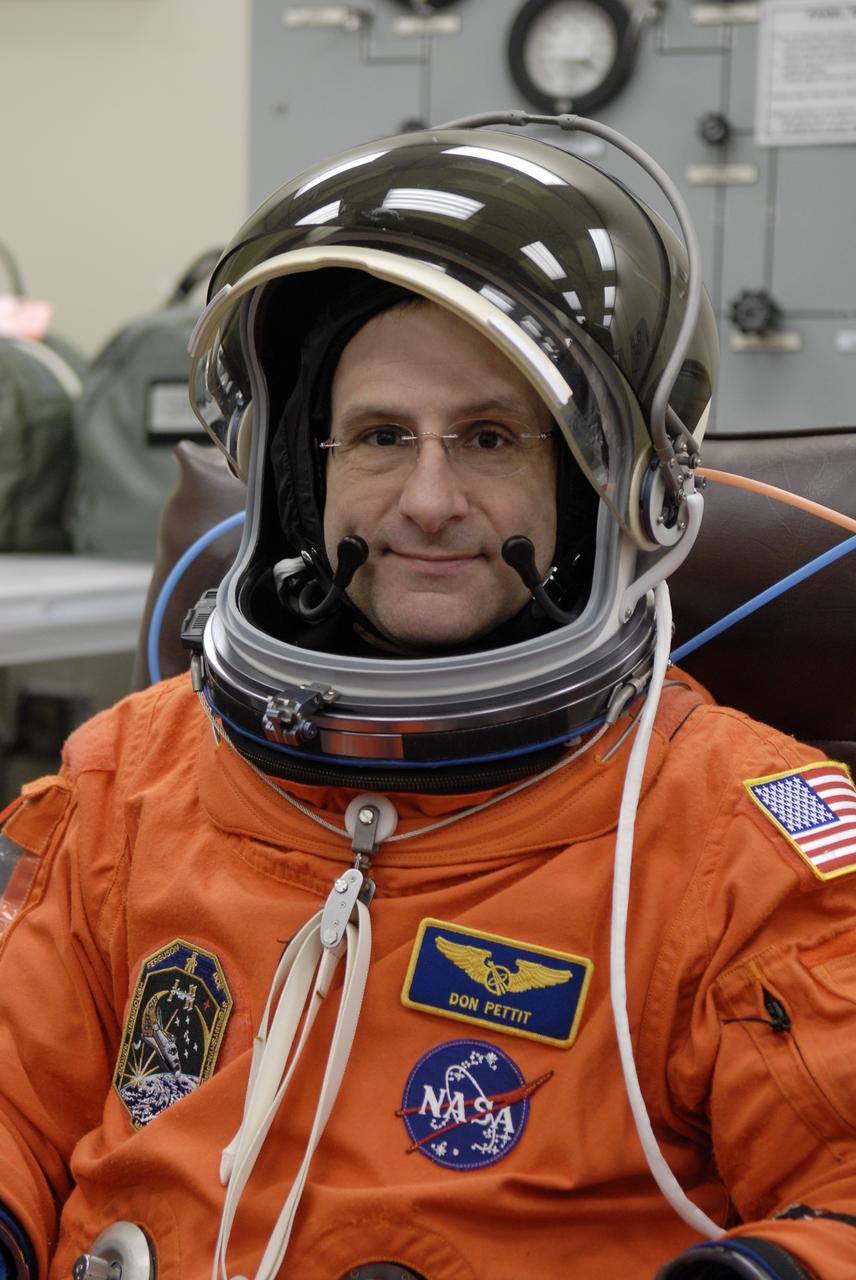
CAPE CANAVERAL, Fla. – STS-126 Mission Specialist Donald Pettit makes sure his helmet fits securely during suit-up in the Operations and Checkout Building at NASA's Kennedy Space Center in Florida. Pettit and other crew members are having their launch-and-entry suits fit-checked prior to heading for Launch Pad 39A. The crew will take part in a simulated launch countdown at the pad. The crew is at Kennedy to take part in the Terminal Countdown Demonstration Test, which includes equipment familiarization, emergency exit training and the simulated countdown. On the STS-126 mission, space shuttle Endeavour's crew will deliver equipment and supplies to the International Space Station in preparation for expansion from a three- to six-person resident crew aboard the complex. The mission also will include four spacewalks to service the station’s Solar Alpha Rotary Joints. Endeavour is targeted to launch Nov. 14. Photo credit: NASA/Kim Shiflett
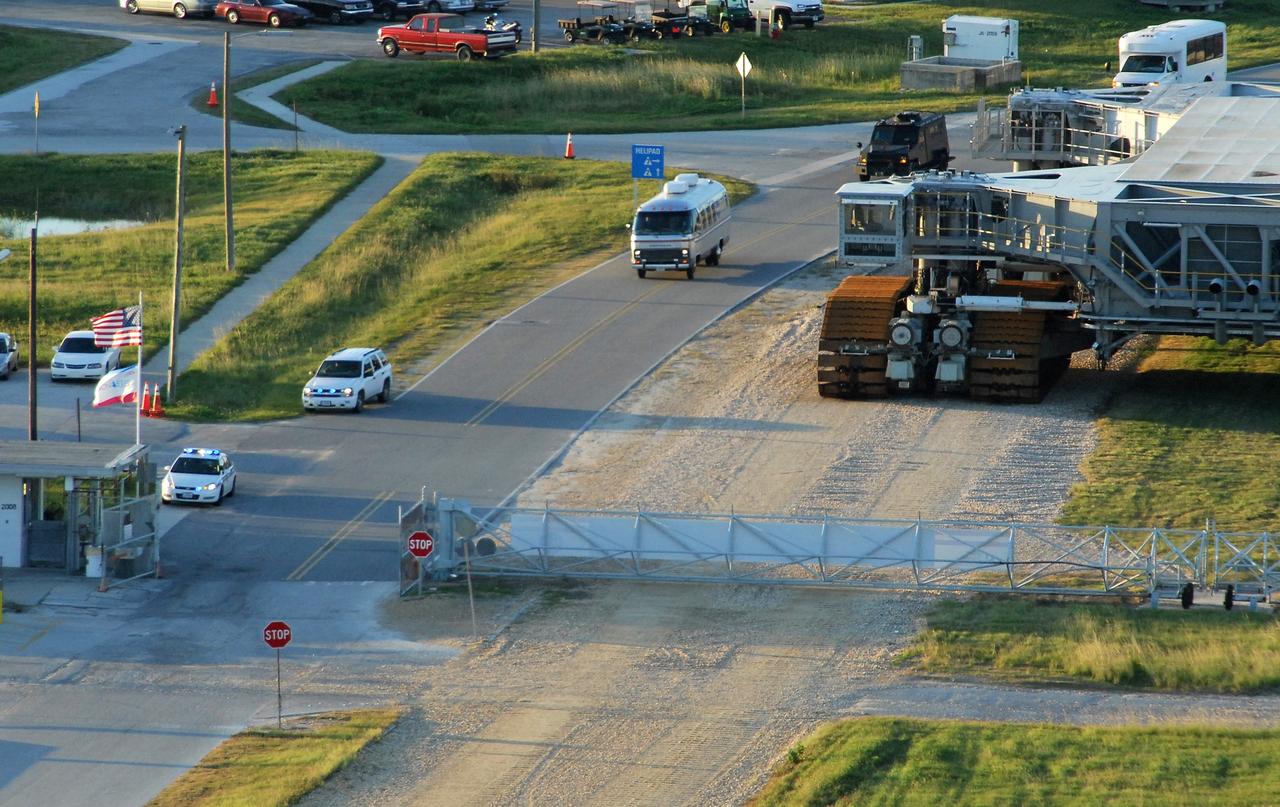
CAPE CANAVERAL, Fla. – Led by security, the Astrovan (center) with the STS-126 crew members aboard travels the road to Launch Pad 39A at NASA's Kennedy Space Center in Florida. At right is one of the crawler transporters on the crawlerway. The crew will take part in a simulated launch countdown at the pad. The White Room is at the end of the orbiter access arm and provides entry into the shuttle. The crew is at Kennedy to take part in the Terminal Countdown Demonstration Test, which includes equipment familiarization, emergency exit training and the simulated countdown. On the STS-126 mission, space shuttle Endeavour's crew will deliver equipment and supplies to the International Space Station in preparation for expansion from a three- to six-person resident crew aboard the complex. The mission also will include four spacewalks to service the station’s Solar Alpha Rotary Joints. Endeavour is targeted to launch Nov. 14. Photo credit: NASA/Troy Cryder
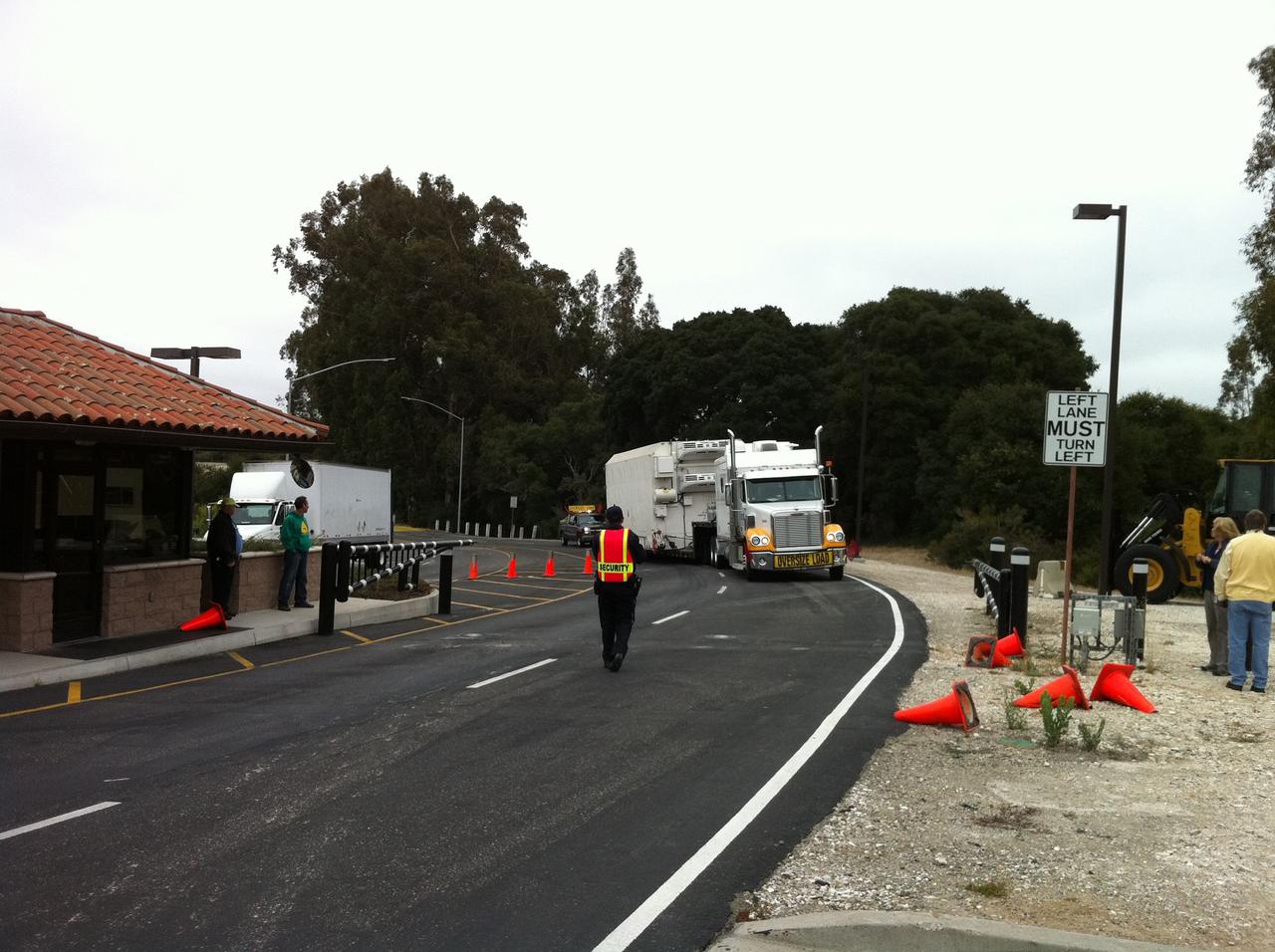
VANDENBERG AIR FORCE BASE, Calif. -- A security guard waits to clear NASA's National Polar-orbiting Operational Environmental Satellite System Preparatory Project (NPP) satellite through the gates of Vandenberg Air Force Base in California. NPP represents a critical first step in building the next-generation of Earth-observing satellites. NPP will carry the first of the new sensors developed for this satellite fleet, now known as the Joint Polar Satellite System (JPSS), to be launched in 2016. NPP is the bridge between NASA's Earth Observing System (EOS) satellites and the forthcoming series of JPSS satellites. The mission will test key technologies and instruments for the JPSS missions. NPP is targeted to launch Oct. 25 from Space Launch Complex-2 aboard a United Launch Alliance Delta II rocket. For more information, visit http://www.nasa.gov/NPP. Photo credit: NASA/Dave Uveges, VAFB
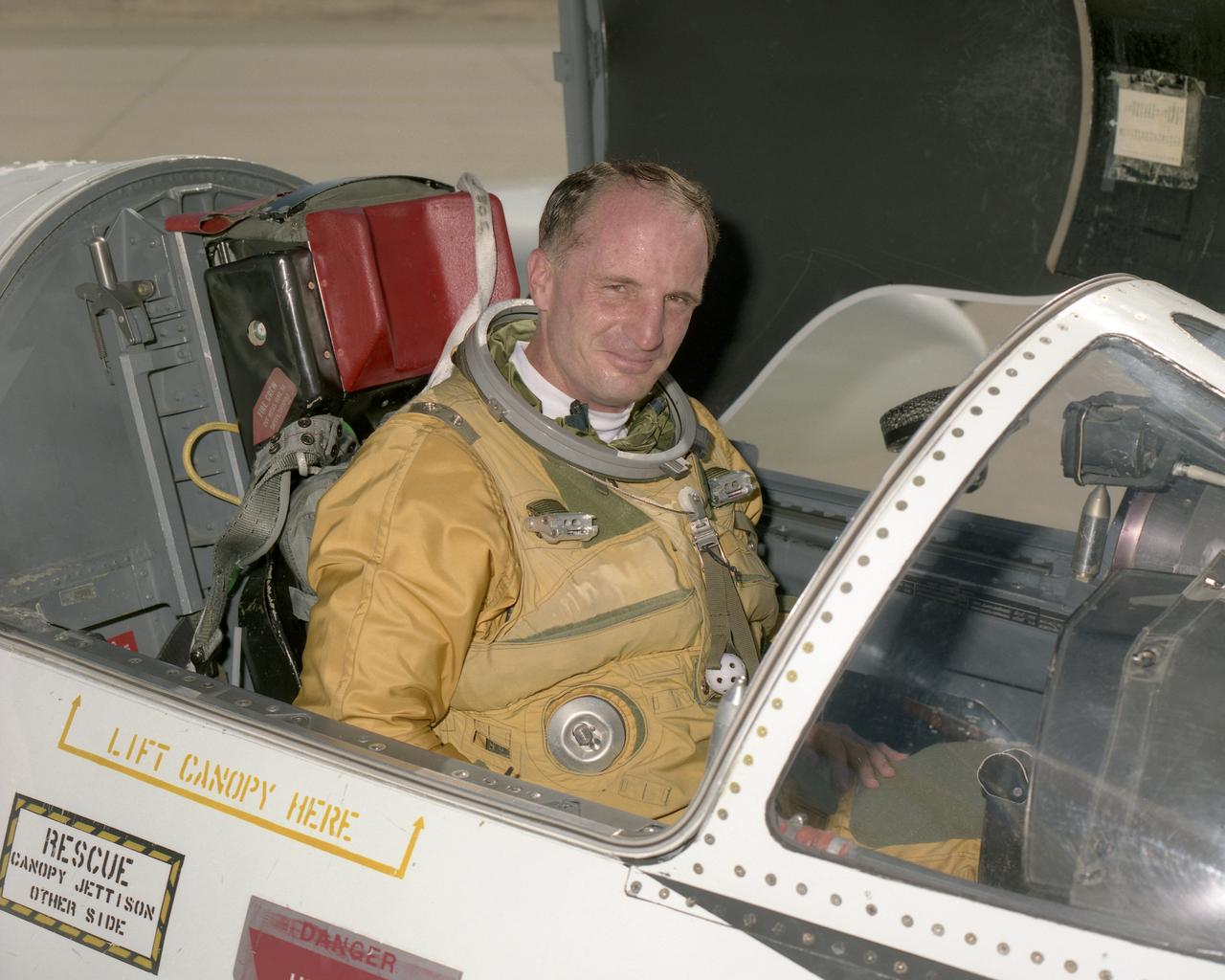
David A. Wright is associate director for Center Operations at the NASA Dryden Flight Research Center, Edwards, Calif. He was formerly director of Flight Operations. He is also a research pilot, flying NASA's ER-2 and T-38. The ER-2s are civilian variants of the military U-2S reconnaissance aircraft and carry scientific instruments to study the Earth during worldwide deployments. Wright has more than 4,500 hours in six different aircraft. He held the position of deputy director of the Airborne Science Program at Dryden from 2002 until 2004. Wright came to Dryden after retiring from the U.S. Air Force as a lieutenant colonel. His final assignment was to the Joint Staff J3, Directorate of Operations at the Pentagon from November 1996 until August 1999. Prior to the Pentagon assignment, he served as commander of the 1st Reconnaissance Squadron at Beale Air Force Base near Marysville, Calif., the unit responsible for training all U-2 pilots. He was the operations officer for one the largest U-2 operations in history, flying combat missions against Iraq and managing an unprecedented U-2 flying schedule during the 1991 Desert Storm conflict. He was selected for the Air Force U-2 program in 1987 following duty as an aircraft commander in the E-3A AWACS (Airborne Warning and Control System) aircraft. Wright was a T-38 instructor for three years at Reese Air Force Base, Lubbock, Texas, following completion of pilot training in 1978. He graduated from the U.S. Air Force Academy in 1977 with a Bachelor of Science in mathematics and computer science. Wright earned a Master of Arts in Adult Education from Troy State University, Montgomery, Ala., in 1987, and a Master of Science in National Security and Strategic Studies from the Naval War College, Newport, R.I., in 1995.
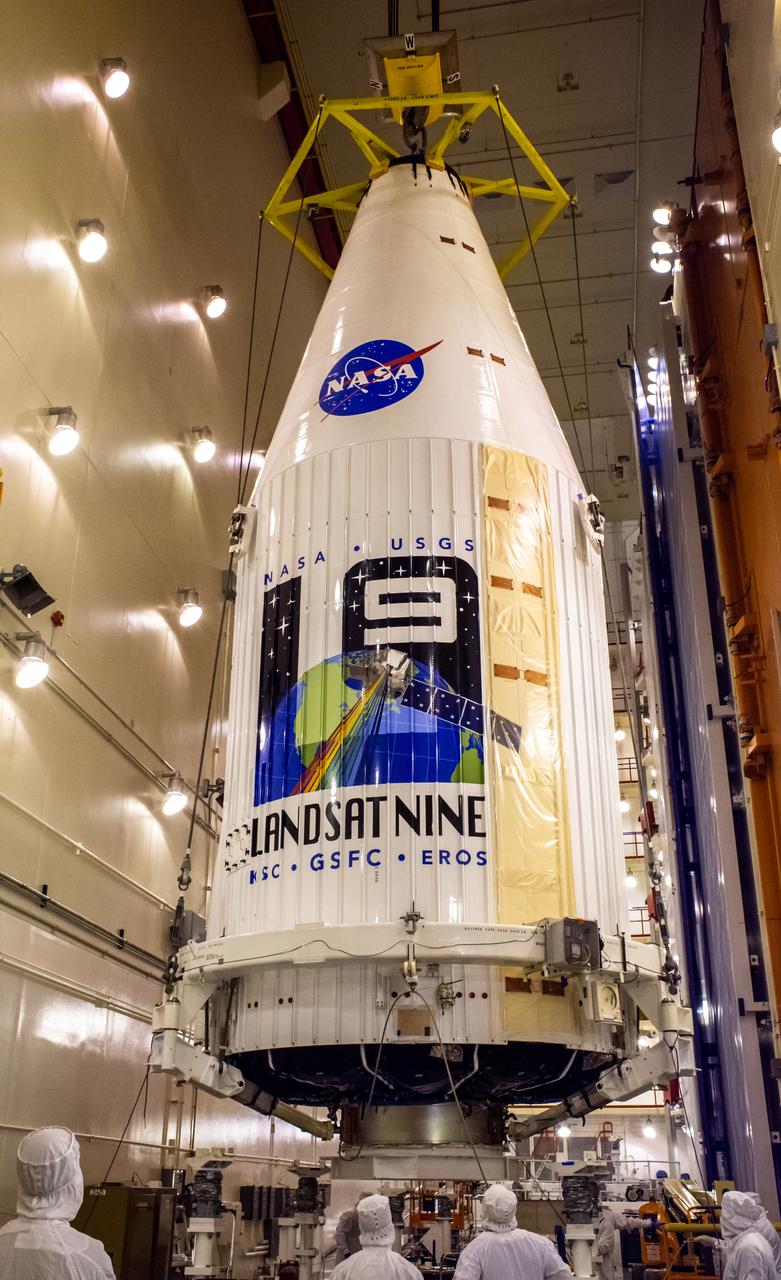
Inside the Integrated Processing Facility at Vandenberg Space Force Base in California, the Landsat 9 spacecraft, secured in the United Launch Alliance (ULA) payload fairing, is moved by crane toward the transfer tower for closeout operations on Aug. 19, 2021. Landsat 9 will launch on a ULA Atlas V rocket from Space Launch Complex 3 at Vandenberg in September 2021. The launch is being managed by NASA’s Launch Services Program based at Kennedy Space Center, America’s multi-user spaceport. The Landsat 9 satellite will continue the nearly 50-year legacy of previous Landsat missions. It will monitor key natural and economic resources from orbit. Landsat 9 is managed by the agency’s Goddard Space Flight Center in Greenbelt, Maryland. The satellite will carry two instruments: the Operational Land Imager 2, which collects images of Earth’s landscapes in visible, near infrared and shortwave infrared light, and the Thermal Infrared Sensor 2, which measures the temperature of land surfaces. Like its predecessors, Landsat 9 is a joint mission between NASA and the U.S. Geological Survey.
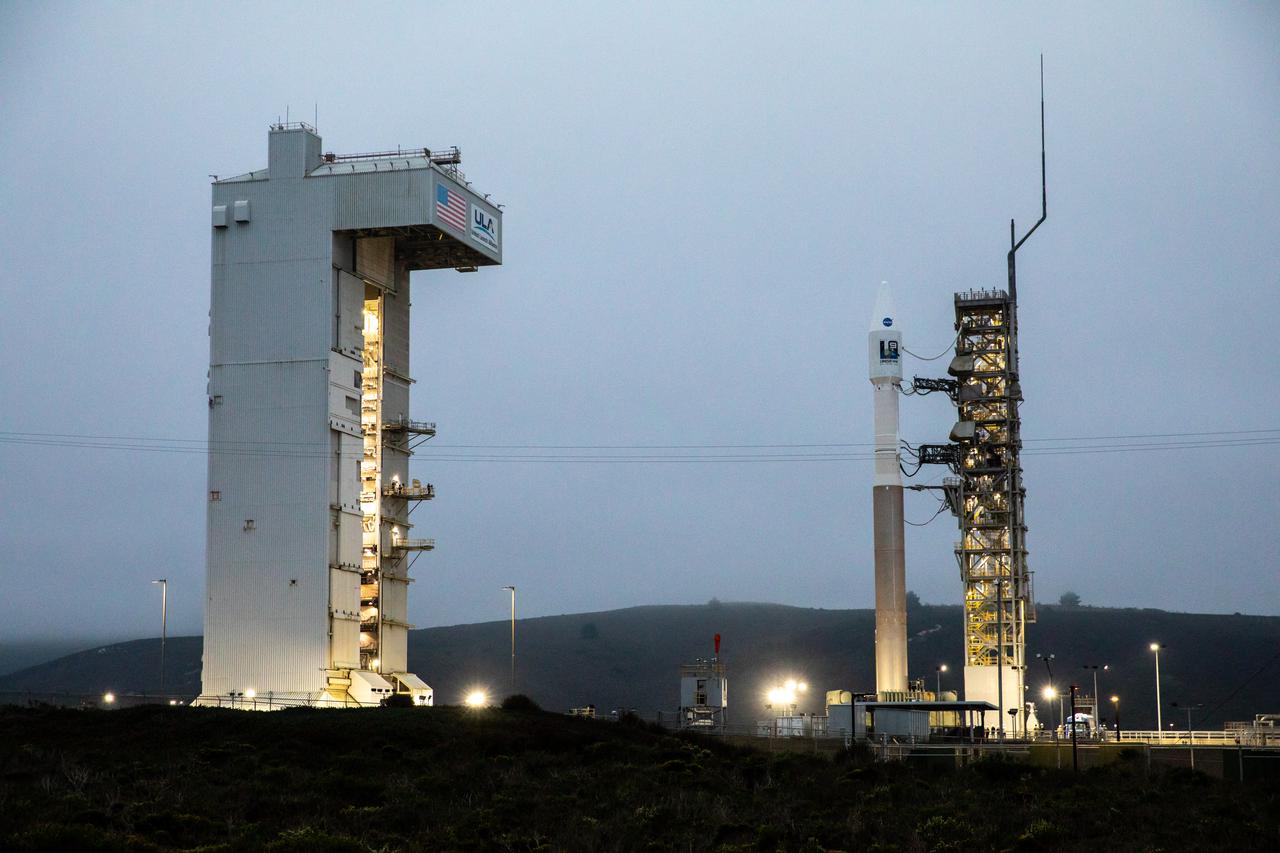
The United Launch Alliance Atlas V 401 rocket with NASA’s Landsat 9 satellite is secured on the launch pad at Space Launch Complex 3 (SLC-3) at Vandenberg Space Force Base in California, on Sept. 27, 2021, after making the trek from the Vertical Integration Facility. Landsat 9 is scheduled to launch at 2:12 p.m. EDT (11:12 a.m. PDT) today, Sept. 27, atop the Atlas V from SLC-3. The launch is managed by NASA’s Launch Services Program based at Kennedy Space Center. The Landsat 9 satellite will continue the nearly 50-year legacy of previous Landsat missions. It will join its sister satellite, Landsat 8, in orbit to monitor key natural and economic resources from orbit. Landsat 9 is managed by the agency’s Goddard Space Flight Center in Greenbelt, Maryland. The satellite will carry two instruments: the Operational Land Imager 2, which collects images of Earth’s landscapes in visible, near infrared and shortwave infrared light, and the Thermal Infrared Sensor 2, which measures the temperature of land surfaces. Like its predecessors, Landsat 9 is a joint mission between NASA and the U.S. Geological Survey.
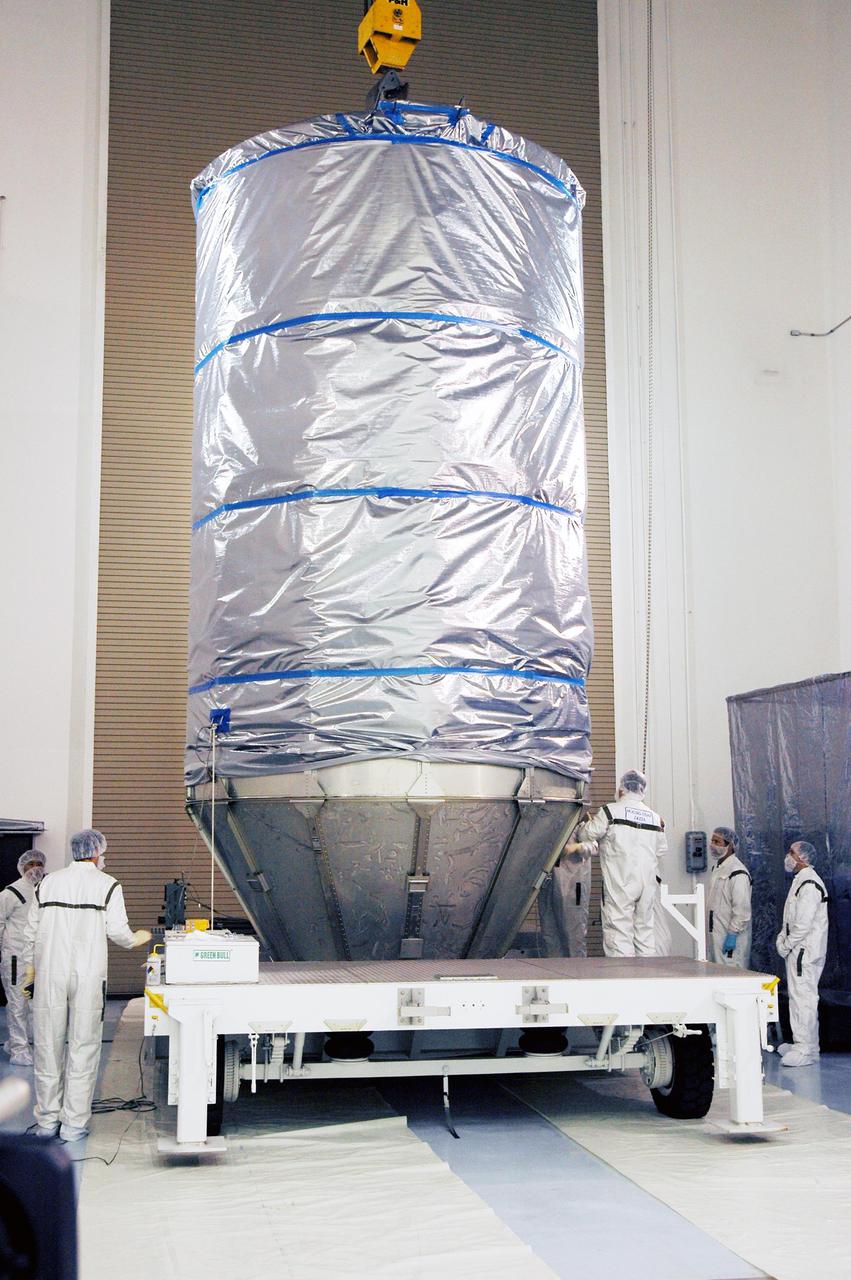
KENNEDY SPACE CENTER, FLA. - At Astrotech Space Operations in Titusville, Fla., the Deep Impact spacecraft is secure in the canister for its move to Launch Pad 17-B on Cape Canaveral Air Force Station, Fla. Then, in the mobile service tower, the fairing will be installed around the spacecraft. The fairing is a molded structure that fits flush with the outside surface of the Delta II upper stage booster and forms an aerodynamically smooth joint, protecting the spacecraft during launch. Scheduled for liftoff Jan. 12, Deep Impact will probe beneath the surface of Comet Tempel 1 on July 4, 2005, when the comet is 83 million miles from Earth. After releasing a 3- by 3-foot projectile to crash onto the surface, Deep Impact’s flyby spacecraft will reveal the secrets of its interior by collecting pictures and data of how the crater forms, measuring the crater’s depth and diameter as well as the composition of the interior of the crater and any material thrown out, and determining the changes in natural outgassing produced by the impact. It will send the data back to Earth through the antennas of the Deep Space Network. Deep Impact is a NASA Discovery mission.
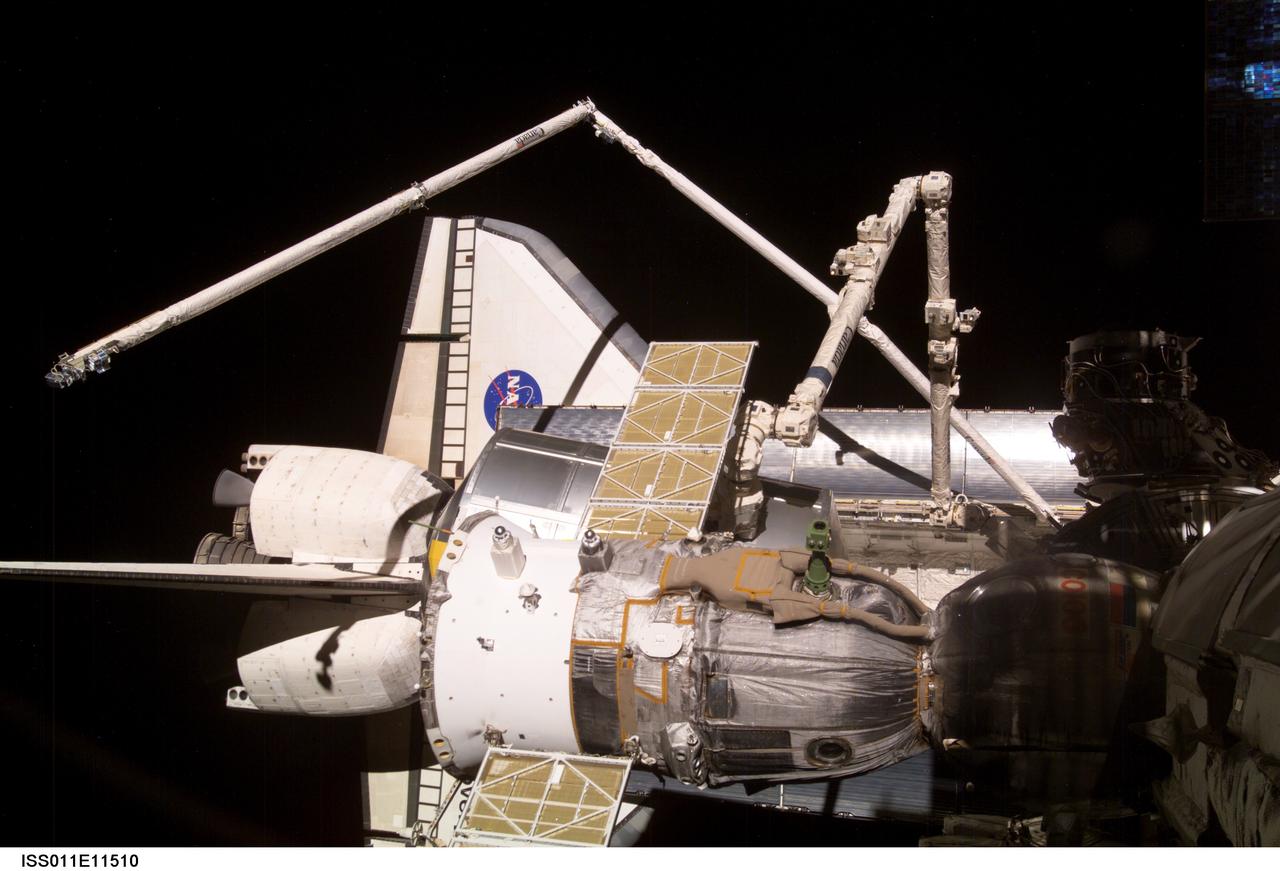
ISS011-E-11510 (5 August 2005) --- On the eve of the separation of Discovery and the International Space Station, an Expedition 11 crew member took this digital still picture. Crews onboard the orbital outpost and Discovery were wrapping up nine days of joint operations. The Space Shuttle is partially visible beneath other hardware. The Canadian-built robot arms for both spacecraft are dominant in the frame. A Russian Soyuz is docked to the Station in the foreground. After the Italian-built Multi-Purpose Logistics Module Raffaello was secured in Discovery's cargo bay, Astronauts Charles J. Camarda and Andrew S.W. Thomas, mission specialists operating from Discovery's aft flight deck, used the Shuttle arm to hand off the Orbiter Boom Sensor System to the Station arm. Then Astronauts Wendy B. Lawrence, mission specialist, and James M. Kelly, pilot, onboard Destiny, reberthed the OBSS in its position on the starboard sill of the cargo bay. Undocking is scheduled shortly before 2:30 a.m. (CDT) on August 6.
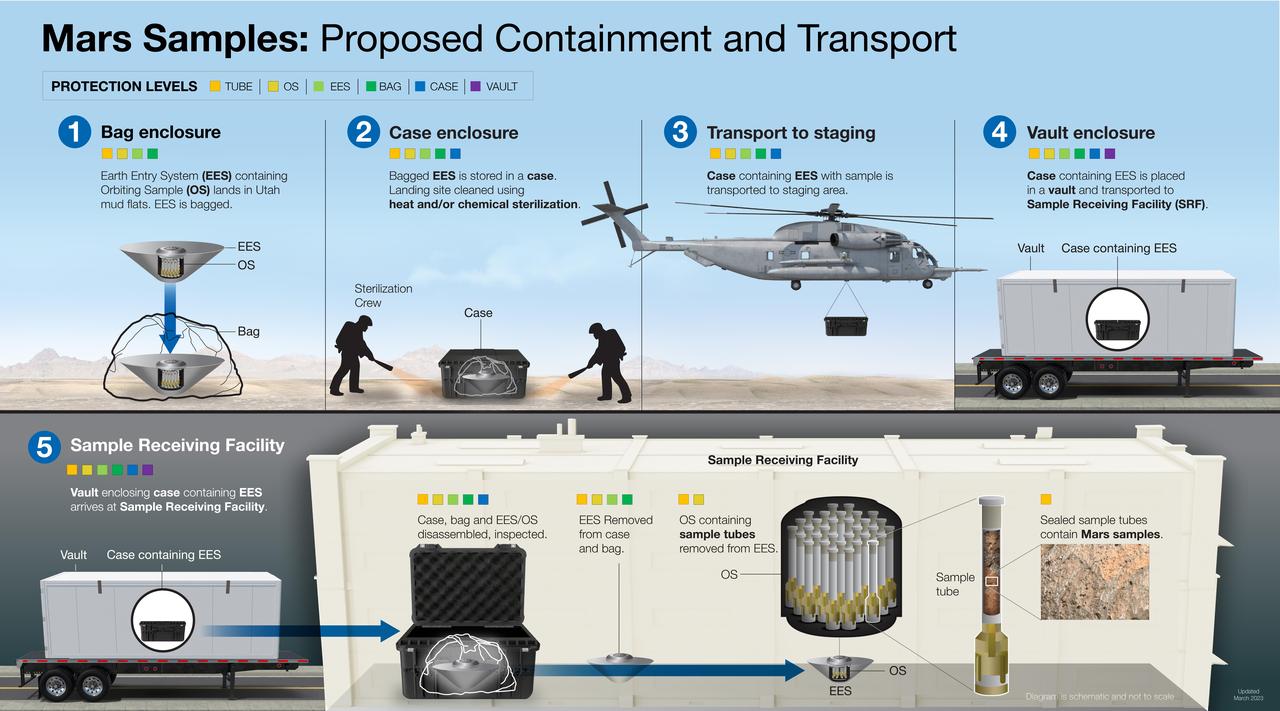
This illustration shows the proposed process for safely recovering, containing, and transporting Mars samples gathered by NASA's Perseverance Mars rover after they are returned to Earth as part of the joint NASA/ESA (European Space Agency) Mars Sample Return Campaign. The process of carefully containing and handling the samples would begin long before they arrive on Earth. Every phase of the Mars Sample Return campaign from collection and sealing to launch, transfer, and landing has been developed with a "safety first" approach. Sample handling and curation experts would be involved in planning for the round trip at each phase of the campaign. After its journey back to Earth from Mars on the ESA-provided Earth Return Orbiter, the capsule containing the samples would land at the Utah Test and Training Range in west-central Utah. NASA would securely transport the capsule and its contents to a Sample Return Facility at a location to be determined. Once at the facility, the samples would undergo a rigorous process to assess whether they are safe for release for detailed analysis by scientists from around the world. https://photojournal.jpl.nasa.gov/catalog/PIA25857
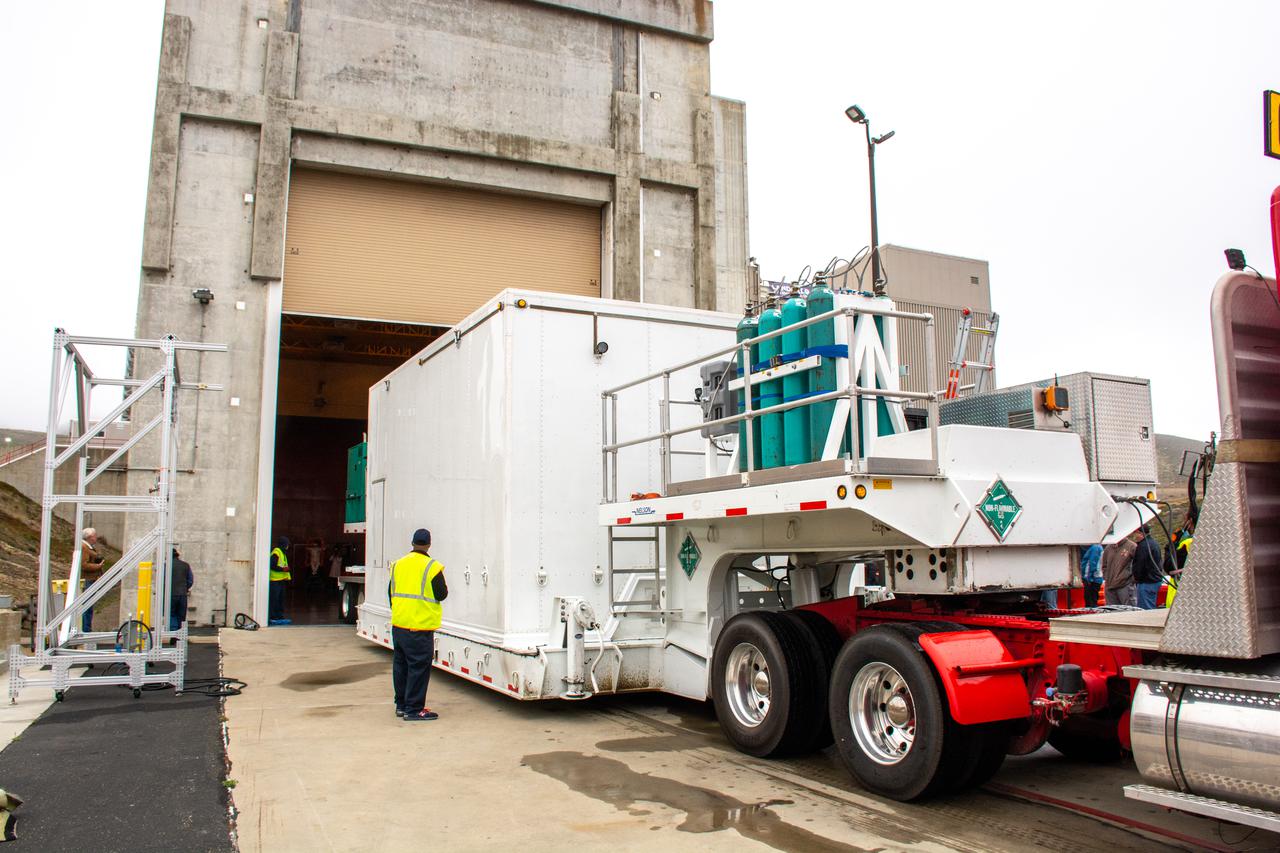
The satellite for the Landsat 9 mission, secured inside its shipping container, arrives at the Integrated Processing Facility at Vandenberg Space Force Base in California on July 7, 2021. The Landsat 9 mission will launch atop a United Launch Alliance Atlas V rocket from Vandenberg in September 2021. The launch is being managed by NASA’s Launch Services Program based at Kennedy Space Center in Florida, America’s multi-user spaceport. The Landsat 9 satellite will continue the nearly 50-year legacy of previous Landsat missions. It will monitor key natural and economic resources from orbit. Landsat 9 is managed by the agency’s Goddard Space Flight Center in Greenbelt, Maryland. The satellite will carry two instruments: the Operational Land Imager 2, which collects images of Earth’s landscapes in visible, near infrared and shortwave infrared light, and the Thermal Infrared Sensor 2, which measures the temperature of land surfaces. Like its predecessors, Landsat 9 is a joint mission between NASA and the U.S. Geological Survey.
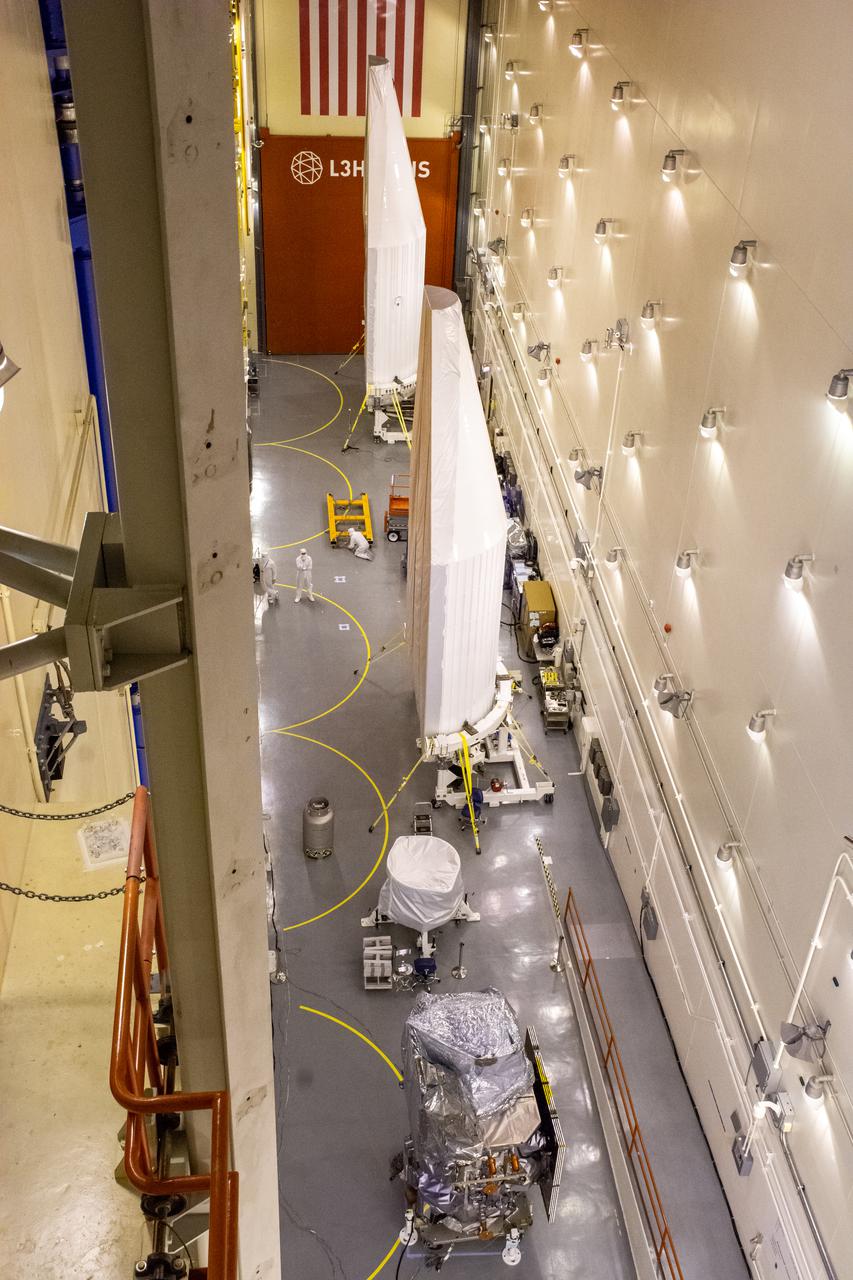
NASA’s Landsat 9 spacecraft, in view in the foreground, is being prepared for its move from the high bay to Cell 3 inside the Integrated Processing Facility at Vandenberg Space Force Base in California, on July 20, 2021. In view in the background are the two halves of the United Launch Alliance payload fairing that will be secured around Landsat 9 to protect it during launch atop the ULA Atlas V rocket. Landsat 9 will launch on the Atlas V rocket from Space Launch Complex 3 at Vandenberg in September 2021. The launch is being managed by NASA’s Launch Services Program based at Kennedy Space Center, America’s multi-user spaceport. The Landsat 9 satellite will continue the nearly 50-year legacy of previous Landsat missions. It will monitor key natural and economic resources from orbit. Landsat 9 is managed by the agency’s Goddard Space Flight Center in Greenbelt, Maryland. The satellite will carry two instruments: the Operational Land Imager 2, which collects images of Earth’s landscapes in visible, near infrared and shortwave infrared light, and the Thermal Infrared Sensor 2, which measures the temperature of land surfaces. Like its predecessors, Landsat 9 is a joint mission between NASA and the U.S. Geological Survey.
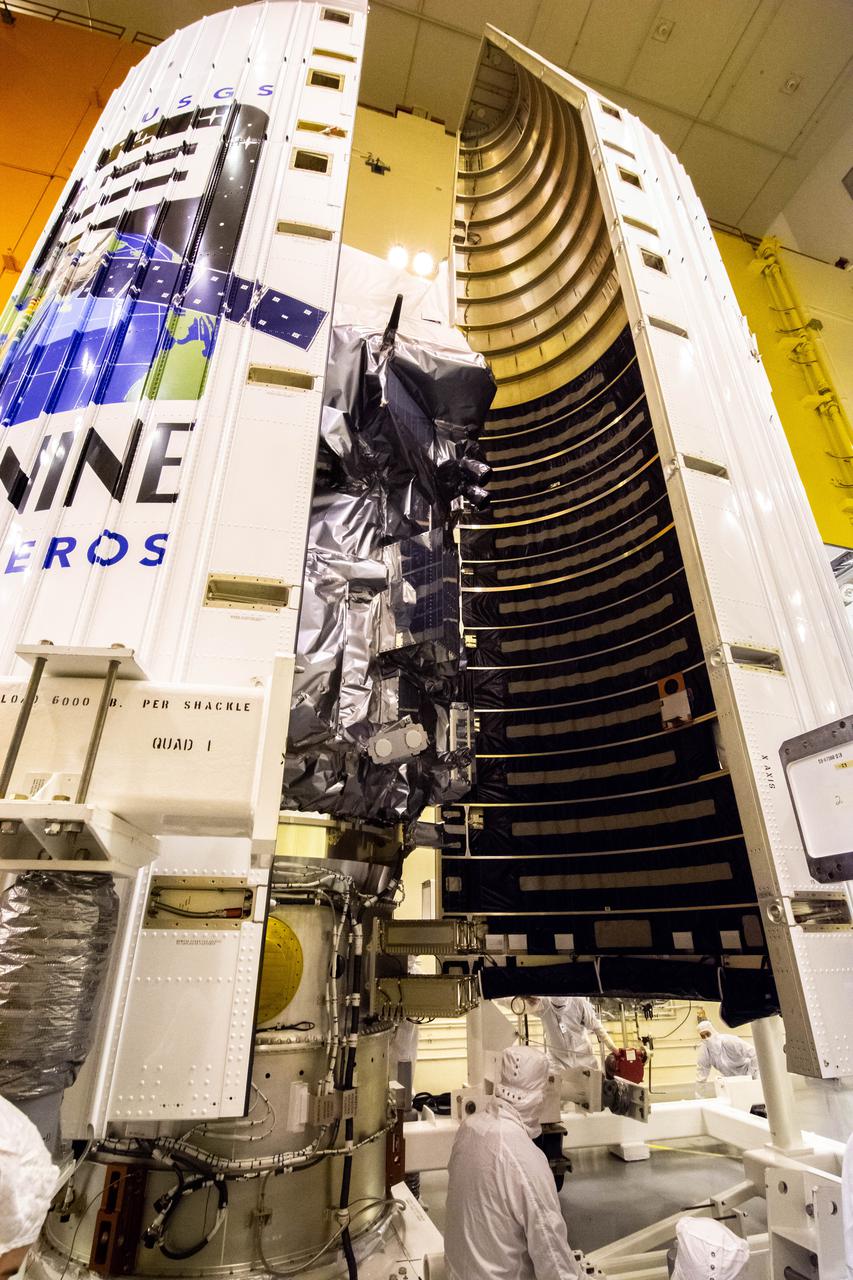
Inside the Integrated Processing Facility at Vandenberg Space Force Base in California, both halves of the United Launch Alliance (ULA) payload fairing are slowly moved around the Landsat 9 spacecraft on Aug. 16, 2021. The payload fairing will be secured around Landsat 9 to protect it during launch atop the ULA Atlas V rocket. Landsat 9 will launch on the Atlas V rocket from Space Launch Complex 3 at Vandenberg in September 2021. The launch is being managed by NASA’s Launch Services Program based at Kennedy Space Center, America’s multi-user spaceport. The Landsat 9 satellite will continue the nearly 50-year legacy of previous Landsat missions. It will monitor key natural and economic resources from orbit. Landsat 9 is managed by the agency’s Goddard Space Flight Center in Greenbelt, Maryland. The satellite will carry two instruments: the Operational Land Imager 2, which collects images of Earth’s landscapes in visible, near infrared and shortwave infrared light, and the Thermal Infrared Sensor 2, which measures the temperature of land surfaces. Like its predecessors, Landsat 9 is a joint mission between NASA and the U.S. Geological Survey.
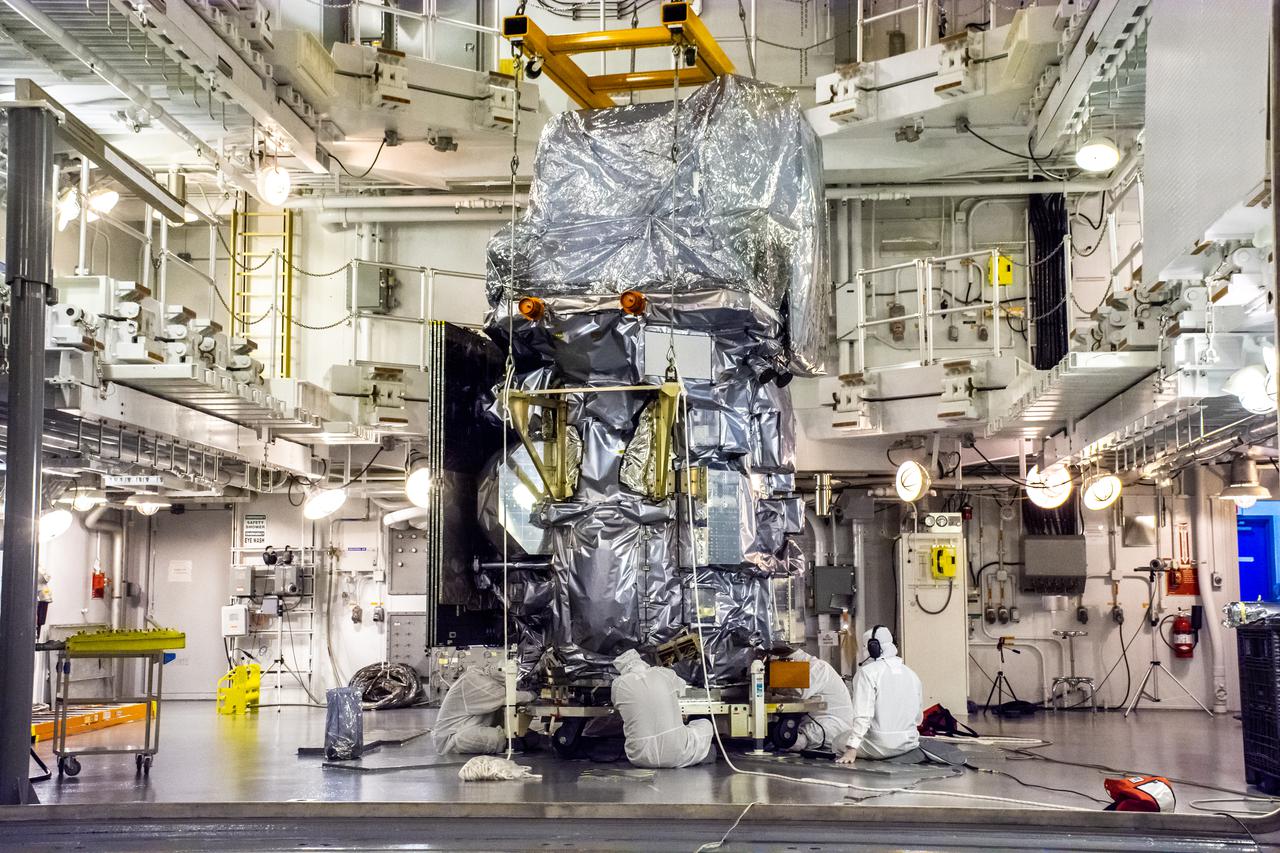
Technicians secure NASA’s Landsat 9 spacecraft in Cell 3 inside the Integrated Processing Facility at Vandenberg Space Force Base in California, on July 20, 2021. Landsat 9 will launch on a United Launch Alliance Atlas V rocket from Space Launch Complex 3 at Vandenberg in September 2021. The launch is being managed by NASA’s Launch Services Program based at Kennedy Space Center, America’s multi-user spaceport. The Landsat 9 satellite will continue the nearly 50-year legacy of previous Landsat missions. It will monitor key natural and economic resources from orbit. Landsat 9 is managed by the agency’s Goddard Space Flight Center in Greenbelt, Maryland. The satellite will carry two instruments: the Operational Land Imager 2, which collects images of Earth’s landscapes in visible, near infrared and shortwave infrared light, and the Thermal Infrared Sensor 2, which measures the temperature of land surfaces. Like its predecessors, Landsat 9 is a joint mission between NASA and the U.S. Geological Survey.

The United Launch Alliance Atlas V interstage adapter and aft stub adapter are hoisted up at the vertical integration facility at Space Launch Complex-3 at Vandenberg Space Force Base in California on Sept. 29, 2022. The adapter will be moved into the integration facility and secured atop the ULA Atlas V in preparation for the launch of the National Oceanic and Atmospheric Administration’s (NOAA) Joint Polar Satellite System-2 (JPSS-2). JPSS-2 and NASA’s Low-Earth Orbit Flight Test of an Inflatable Decelerator (LOFTID) secondary payload are scheduled to lift off from VSFB on Nov. 1 from SLC-3. JPSS-2, which will be renamed NOAA-21 after reaching orbit, will join a constellation of JPSS satellites that orbit from the North to the South pole, circling Earth 14 times a day and providing a full view of the entire globe twice daily. The NOAA/NASA Suomi National Polar-orbiting Partnership (Suomi NPP) satellite, and NOAA-20, previously known as JPSS-1, are both already in orbit. Each satellite carries at least four advanced instruments to measure weather and climate conditions on Earth. LOFTID is dedicated to the memory of Bernard Kutter. LOFTID will demonstrate inflatable heat shield technology that could enable a variety of proposed NASA missions to destinations such as Mars, Venus, and Titan, as well as returning heavier payloads from low-Earth orbit.
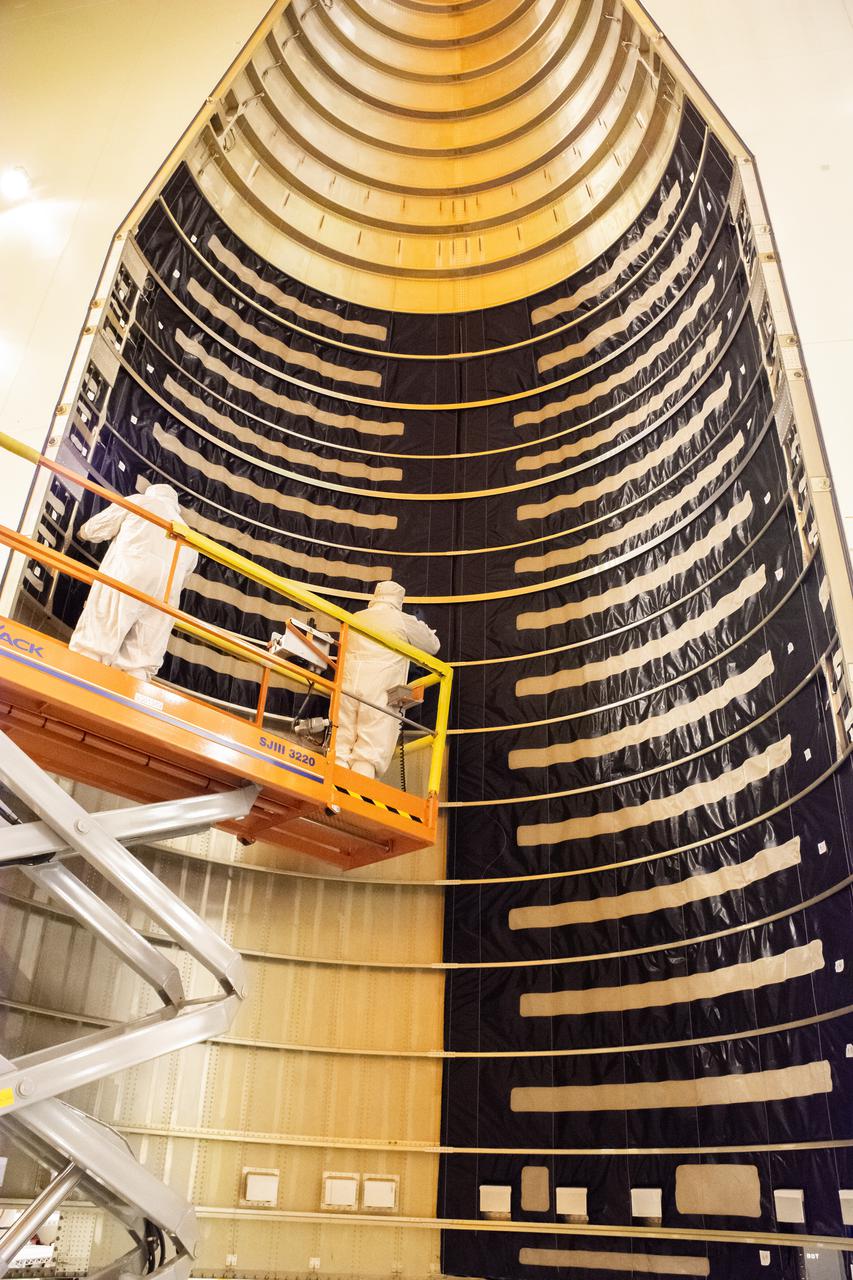
Inside the Integrated Processing Facility at Vandenberg Space Force Base in California, technicians with United Launch Alliance (ULA) remove the protective blankets from one payload fairing half for the Landsat 9 spacecraft on Aug. 2, 2021. The two halves of the ULA payload fairing will be secured around Landsat 9 to protect it during launch atop the ULA Atlas V rocket. Landsat 9 will launch on the Atlas V rocket from Space Launch Complex 3 at Vandenberg in September 2021. The launch is being managed by NASA’s Launch Services Program based at Kennedy Space Center, America’s multi-user spaceport. The Landsat 9 satellite will continue the nearly 50-year legacy of previous Landsat missions. It will monitor key natural and economic resources from orbit. Landsat 9 is managed by the agency’s Goddard Space Flight Center in Greenbelt, Maryland. The satellite will carry two instruments: the Operational Land Imager 2, which collects images of Earth’s landscapes in visible, near infrared and shortwave infrared light, and the Thermal Infrared Sensor 2, which measures the temperature of land surfaces. Like its predecessors, Landsat 9 is a joint mission between NASA and the U.S. Geological Survey.
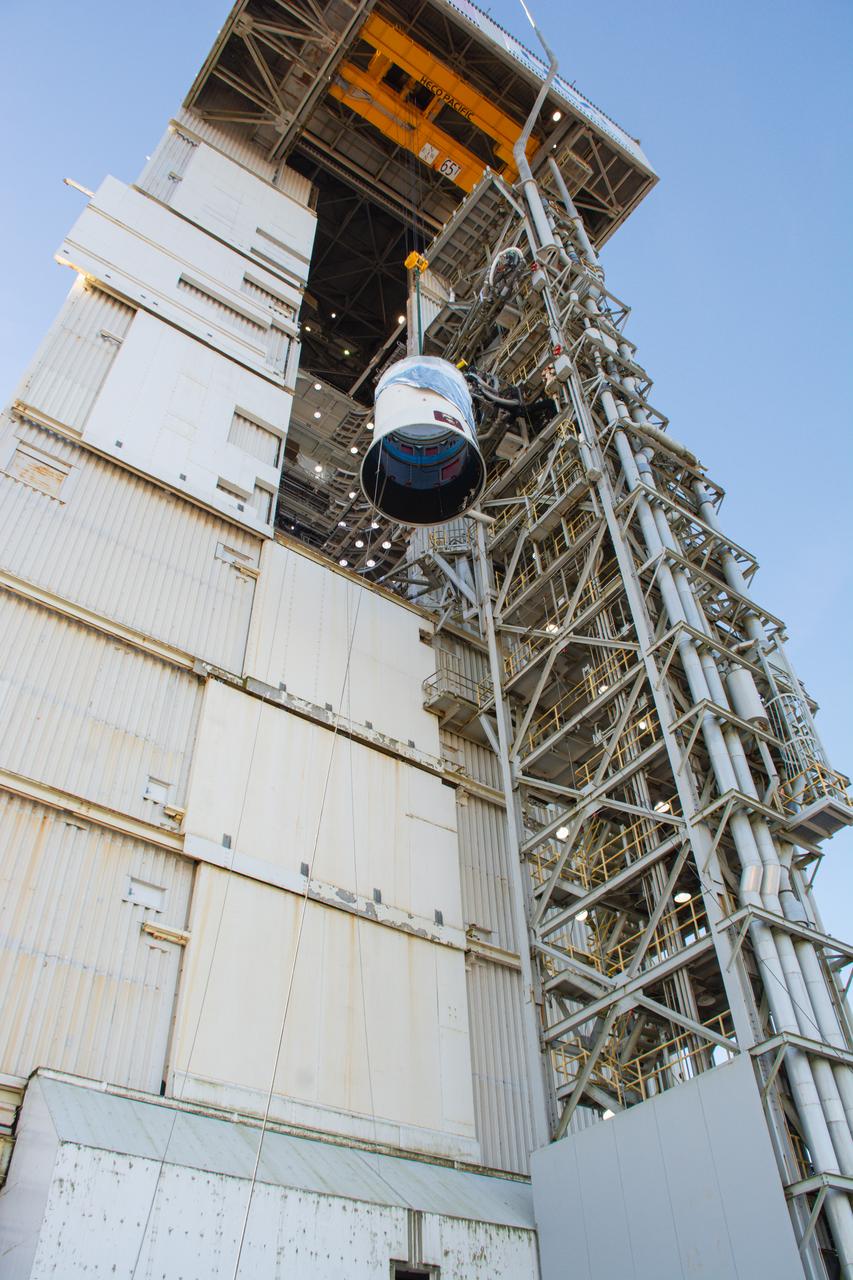
The United Launch Alliance Atlas V interstage adapter and aft stub adapter are hoisted up at the vertical integration facility at Space Launch Complex-3 at Vandenberg Space Force Base in California on Sept. 29, 2022. The adapter will be moved into the integration facility and secured atop the ULA Atlas V in preparation for the launch of the National Oceanic and Atmospheric Administration’s (NOAA) Joint Polar Satellite System-2 (JPSS-2). JPSS-2 and NASA’s Low-Earth Orbit Flight Test of an Inflatable Decelerator (LOFTID) secondary payload are scheduled to lift off from VSFB on Nov. 1 from SLC-3. JPSS-2, which will be renamed NOAA-21 after reaching orbit, will join a constellation of JPSS satellites that orbit from the North to the South pole, circling Earth 14 times a day and providing a full view of the entire globe twice daily. The NOAA/NASA Suomi National Polar-orbiting Partnership (Suomi NPP) satellite, and NOAA-20, previously known as JPSS-1, are both already in orbit. Each satellite carries at least four advanced instruments to measure weather and climate conditions on Earth. LOFTID is dedicated to the memory of Bernard Kutter. LOFTID will demonstrate inflatable heat shield technology that could enable a variety of proposed NASA missions to destinations such as Mars, Venus, and Titan, as well as returning heavier payloads from low-Earth orbit.
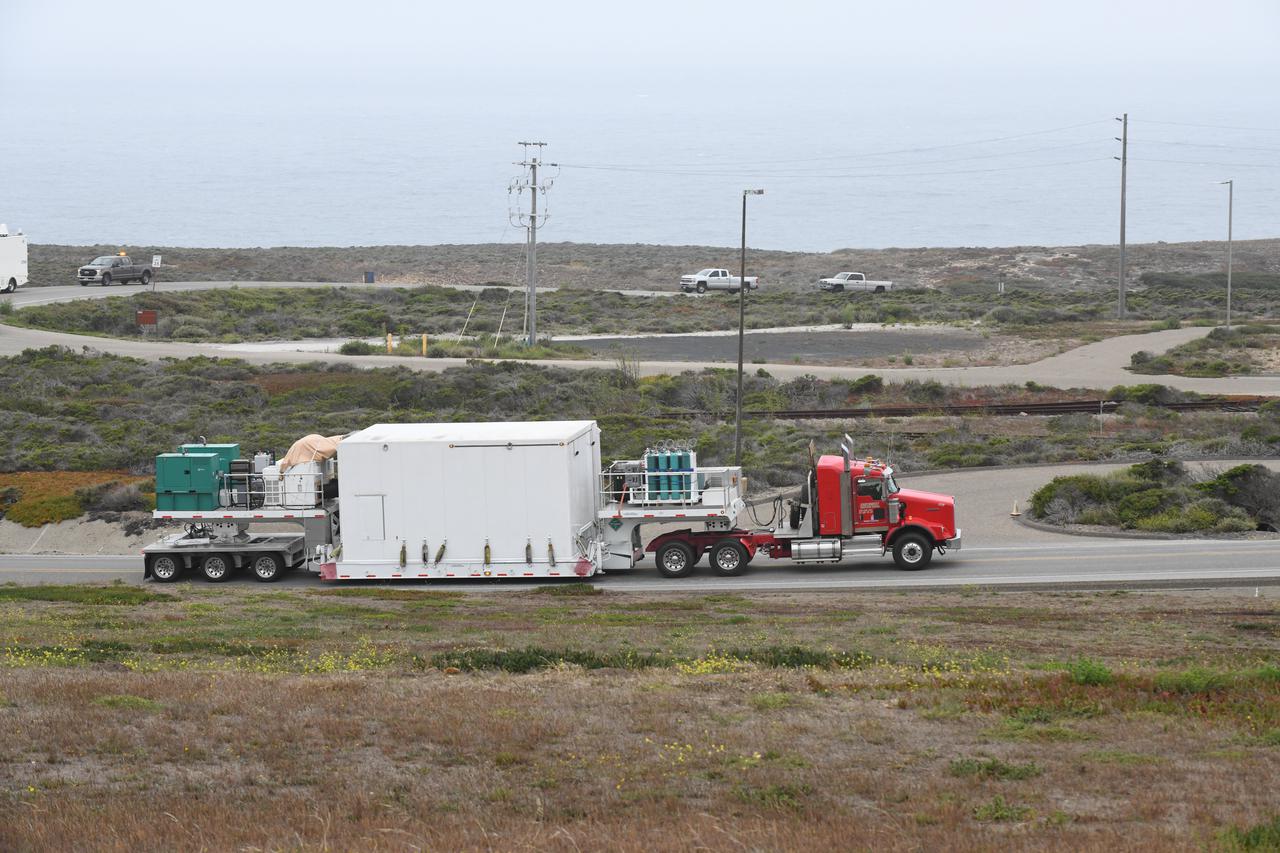
The satellite for the Landsat 9 mission, secured inside its shipping container, is transported by truck to Vandenberg Space Force Base in California on July 7, 2021. The Landsat 9 mission will launch atop a United Launch Alliance Atlas V rocket from Vandenberg in September 2021. The launch is being managed by NASA’s Launch Services Program based at Kennedy Space Center in Florida, America’s multi-user spaceport. The Landsat 9 satellite will continue the nearly 50-year legacy of previous Landsat missions. It will monitor key natural and economic resources from orbit. Landsat 9 is managed by the agency’s Goddard Space Flight Center in Greenbelt, Maryland. The satellite will carry two instruments: the Operational Land Imager 2, which collects images of Earth’s landscapes in visible, near infrared and shortwave infrared light, and the Thermal Infrared Sensor 2, which measures the temperature of land surfaces. Like its predecessors, Landsat 9 is a joint mission between NASA and the U.S. Geological Survey.
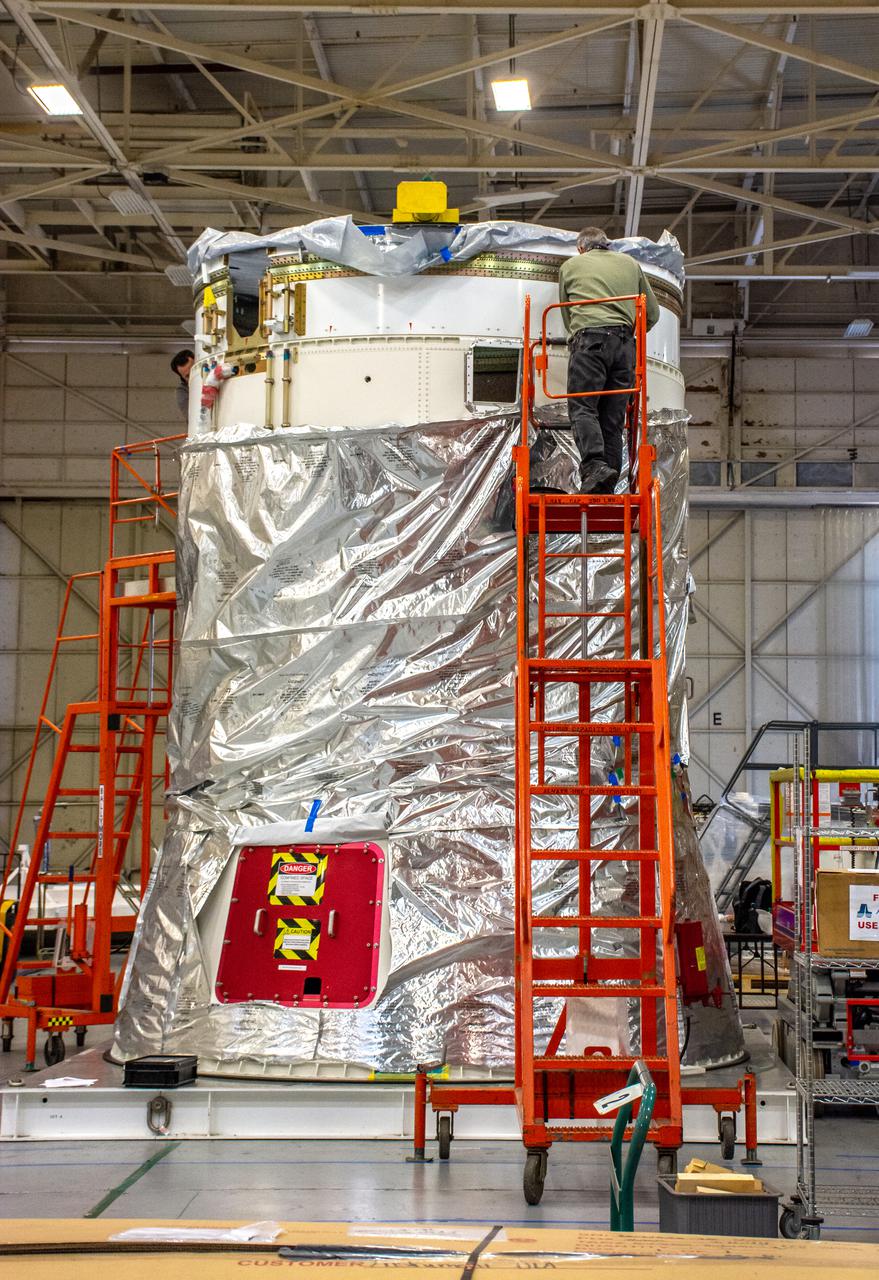
Inside Building 7525, a processing facility at Vandenberg Space Force Base in California, a worker secures the aft stub adapter onto the interstage adapter for the United Launch Alliance Atlas V rocket on Nov. 4, 2020. The Atlas V will launch NASA’s Landsat 9 satellite from Vandenberg in September 2021. The launch is being managed by NASA’s Launch Services Program based at Kennedy Space Center. Landsat 9 will continue the nearly 50-year legacy of previous Landsat missions. It will monitor key natural and economic resources from orbit. Landsat 9 is managed by the agency’s Goddard Space Flight Center in Greenbelt, Maryland. It will carry two instruments: the Operational Land Imager 2, which collects images of Earth’s landscapes in visible, near infrared and shortwave infrared light, and the Thermal Infrared Sensor 2, which measures the temperature of land surfaces. Like its predecessors, Landsat 9 is a joint mission between NASA and the U.S. Geological Survey.
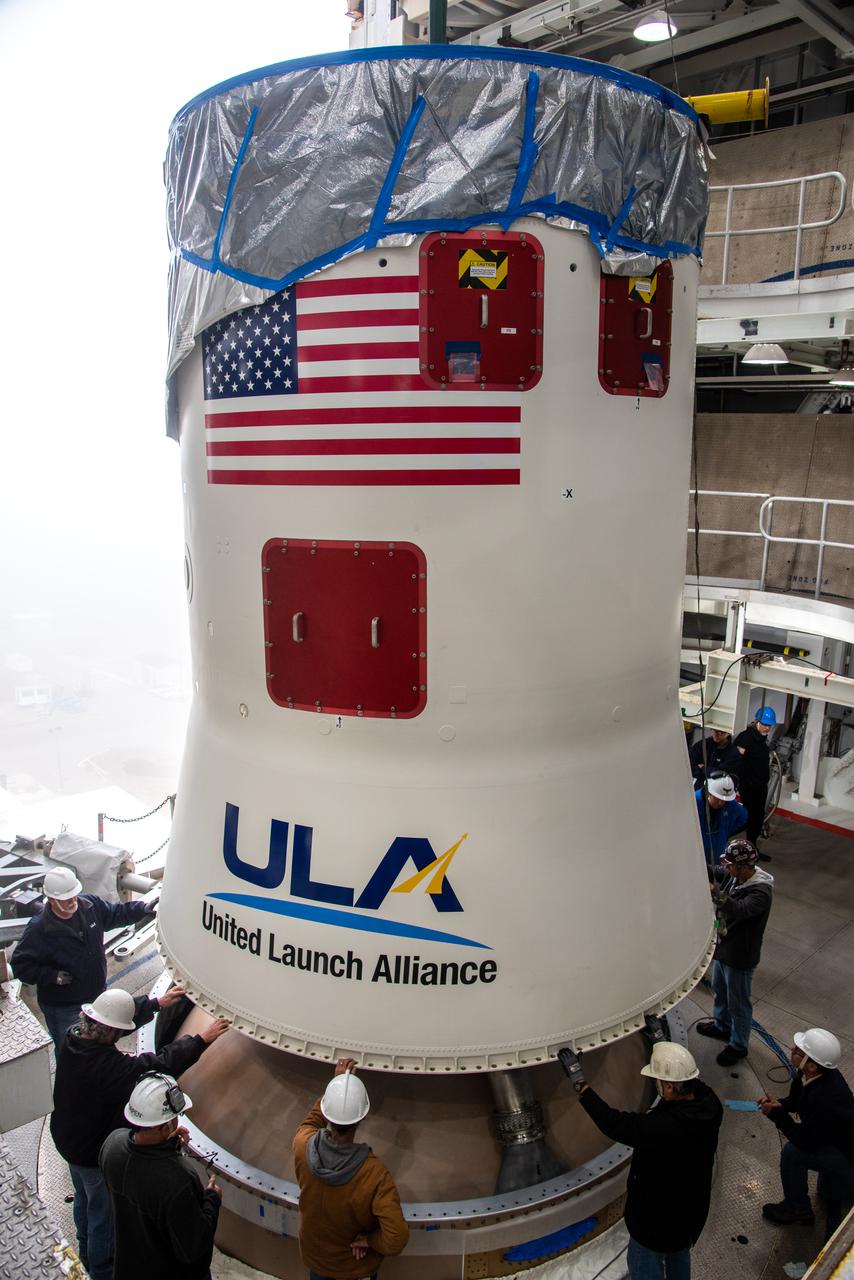
Inside the Vertical Integration Facility at Space Launch Complex 3 at Vandenberg Space Source Base in California, workers help secure the interstage and assembly second stage adapters to the Centaur second stage of the United Launch Alliance Atlas V rocket for NASA’s Landsat 9 mission on July 14, 2021. Landsat 9 will launch atop the Atlas V rocket from Vandenberg in September 2021. The launch is being managed by NASA’s Launch Services Program based at Kennedy Space Center, America’s multiuser spaceport. The Landsat 9 satellite will continue the nearly 50-year legacy of previous Landsat missions. It will monitor key natural and economic resources from orbit. Landsat 9 is managed by the agency’s Goddard Space Flight Center in Greenbelt, Maryland. The satellite will carry two instruments: the Operational Land Imager 2, which collects images of Earth’s landscapes in visible, near infrared and shortwave infrared light, and the Thermal Infrared Sensor 2, which measures the temperature of land surfaces. Like its predecessors, Landsat 9 is a joint mission between NASA and the U.S. Geological Survey.
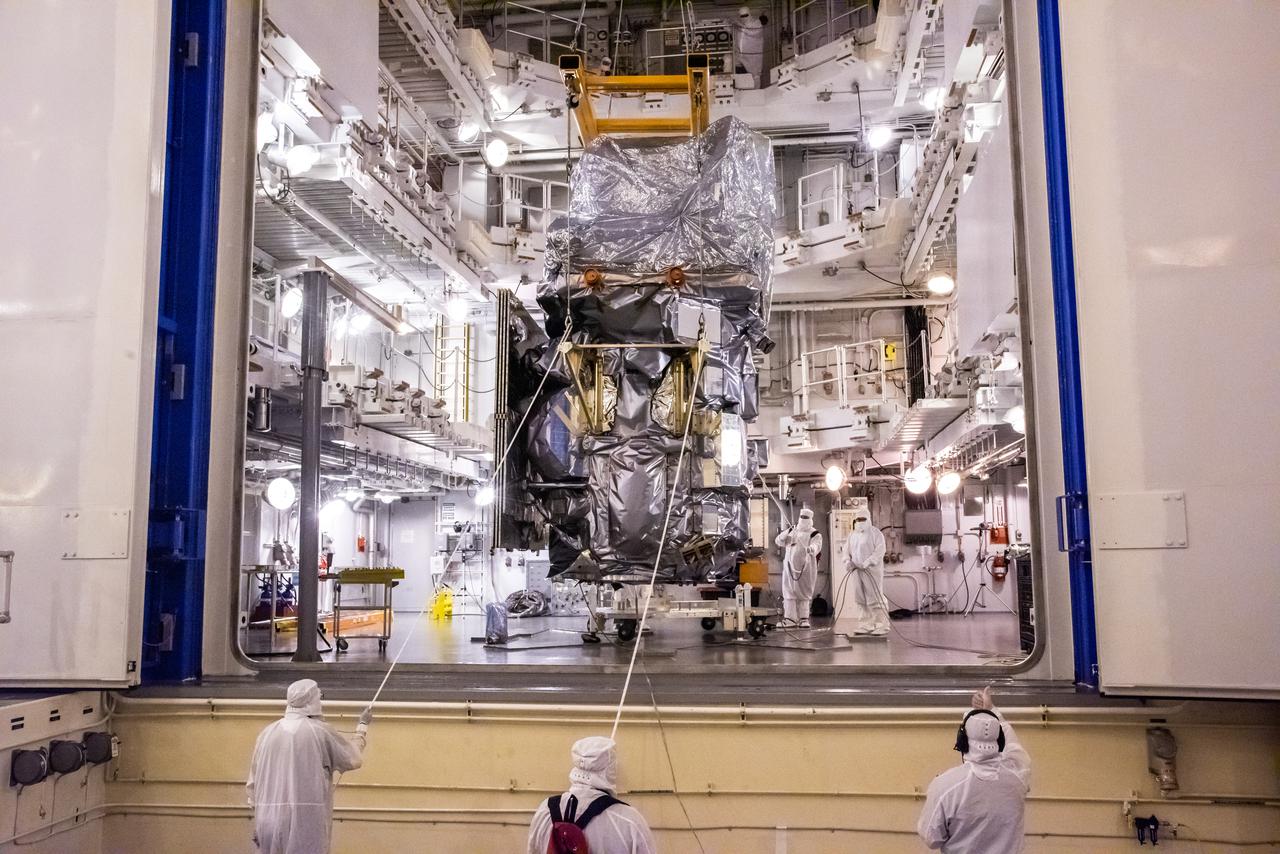
Technicians secure NASA’s Landsat 9 spacecraft in Cell 3 inside the Integrated Processing Facility at Vandenberg Space Force Base in California, on July 20, 2021. Landsat 9 will launch on a United Launch Alliance Atlas V rocket from Space Launch Complex 3 at Vandenberg in September 2021. The launch is being managed by NASA’s Launch Services Program based at Kennedy Space Center, America’s multi-user spaceport. The Landsat 9 satellite will continue the nearly 50-year legacy of previous Landsat missions. It will monitor key natural and economic resources from orbit. Landsat 9 is managed by the agency’s Goddard Space Flight Center in Greenbelt, Maryland. The satellite will carry two instruments: the Operational Land Imager 2, which collects images of Earth’s landscapes in visible, near infrared and shortwave infrared light, and the Thermal Infrared Sensor 2, which measures the temperature of land surfaces. Like its predecessors, Landsat 9 is a joint mission between NASA and the U.S. Geological Survey.
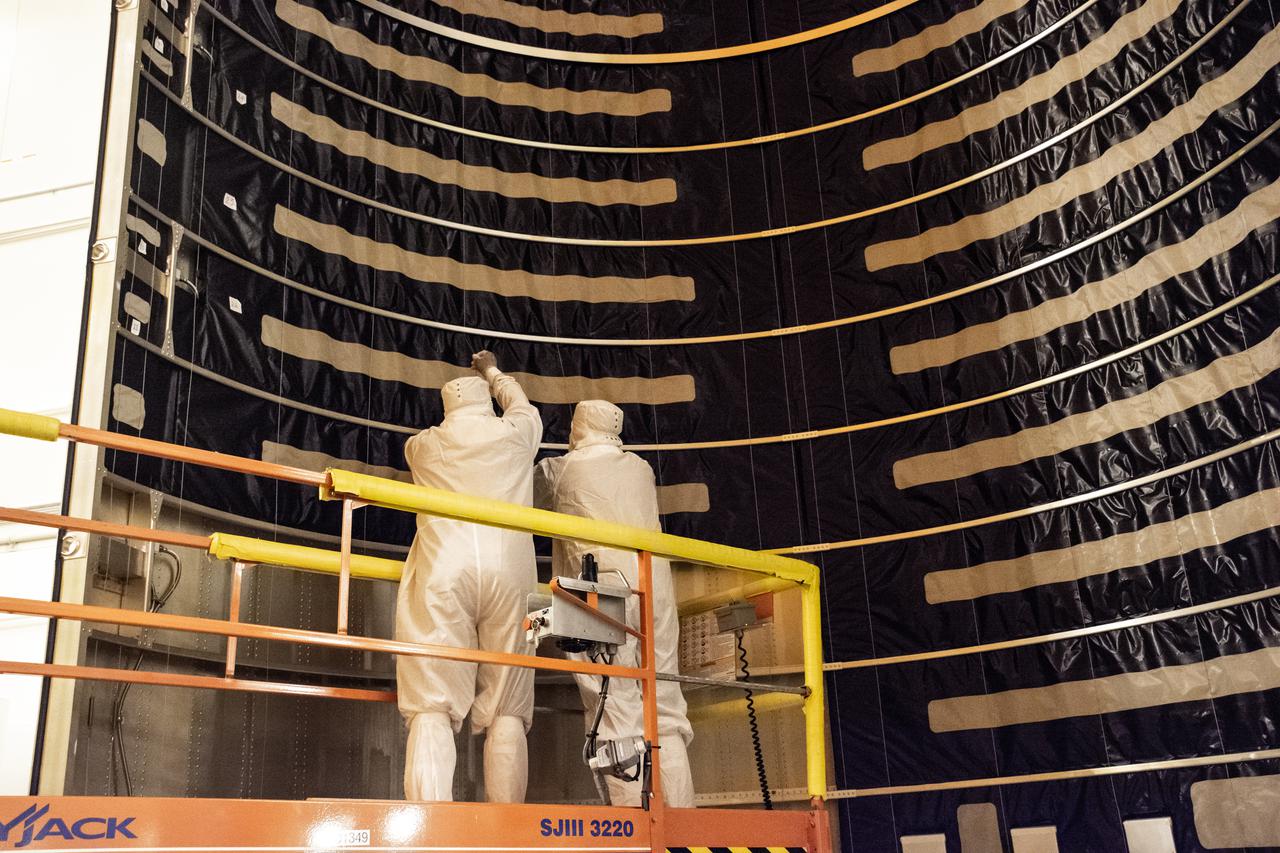
Inside the Integrated Processing Facility at Vandenberg Space Force Base in California, technicians with United Launch Alliance (ULA) remove the protective blankets from one payload fairing half for the Landsat 9 spacecraft on Aug. 2, 2021. The two halves of the ULA payload fairing will be secured around Landsat 9 to protect it during launch atop the ULA Atlas V rocket. Landsat 9 will launch on the Atlas V rocket from Space Launch Complex 3 at Vandenberg in September 2021. The launch is being managed by NASA’s Launch Services Program based at Kennedy Space Center, America’s multi-user spaceport. The Landsat 9 satellite will continue the nearly 50-year legacy of previous Landsat missions. It will monitor key natural and economic resources from orbit. Landsat 9 is managed by the agency’s Goddard Space Flight Center in Greenbelt, Maryland. The satellite will carry two instruments: the Operational Land Imager 2, which collects images of Earth’s landscapes in visible, near infrared and shortwave infrared light, and the Thermal Infrared Sensor 2, which measures the temperature of land surfaces. Like its predecessors, Landsat 9 is a joint mission between NASA and the U.S. Geological Survey.
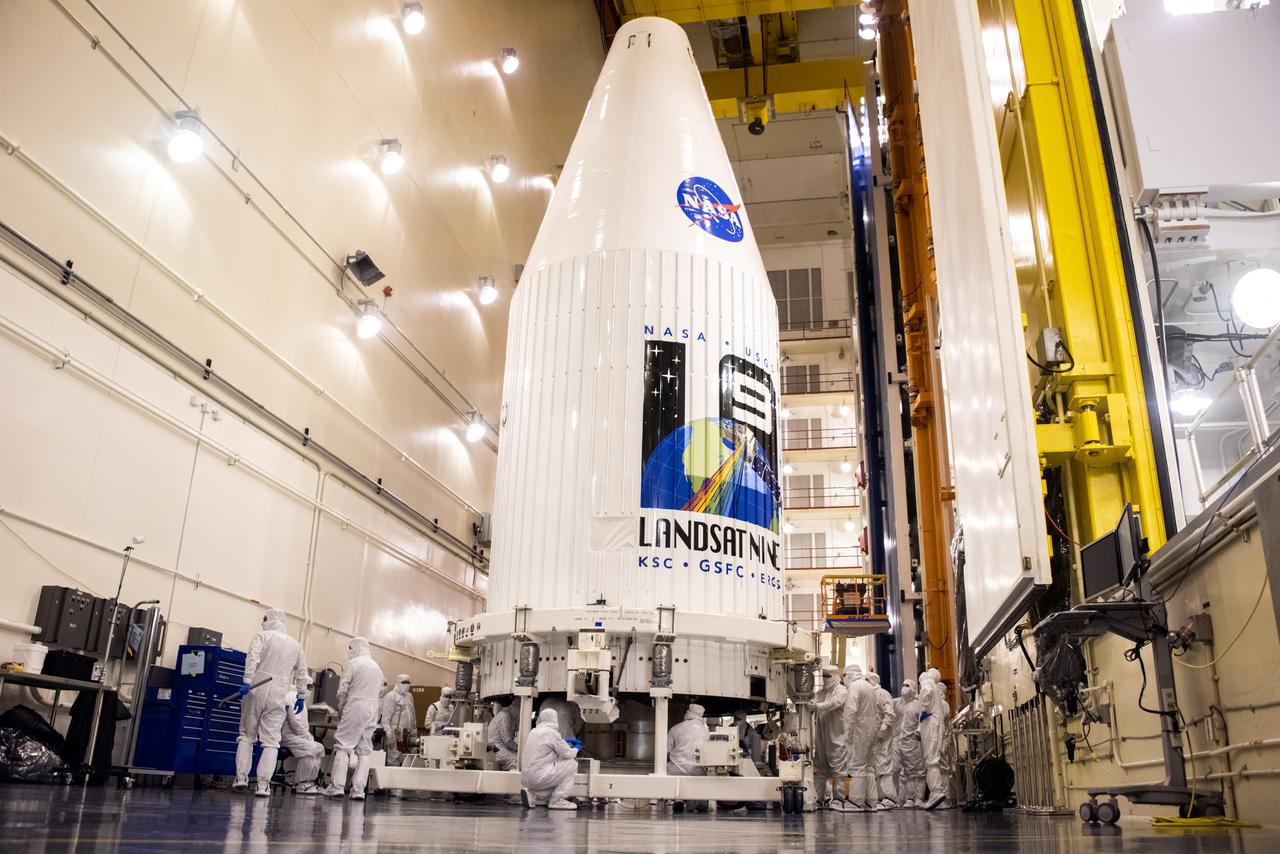
Inside the Integrated Processing Facility at Vandenberg Space Force Base in California, both United Launch Alliance (ULA) payload fairings are secured around the Landsat 9 spacecraft on Aug. 16, 2021. The fairings will encase and protect Landsat 9 during launch atop the ULA Atlas V rocket. Landsat 9 will launch on the Atlas V rocket from Space Launch Complex 3 at Vandenberg in September 2021. The launch is being managed by NASA’s Launch Services Program based at Kennedy Space Center, America’s multi-user spaceport. The Landsat 9 satellite will continue the nearly 50-year legacy of previous Landsat missions. It will monitor key natural and economic resources from orbit. Landsat 9 is managed by the agency’s Goddard Space Flight Center in Greenbelt, Maryland. The satellite will carry two instruments: the Operational Land Imager 2, which collects images of Earth’s landscapes in visible, near infrared and shortwave infrared light, and the Thermal Infrared Sensor 2, which measures the temperature of land surfaces. Like its predecessors, Landsat 9 is a joint mission between NASA and the U.S. Geological Survey.
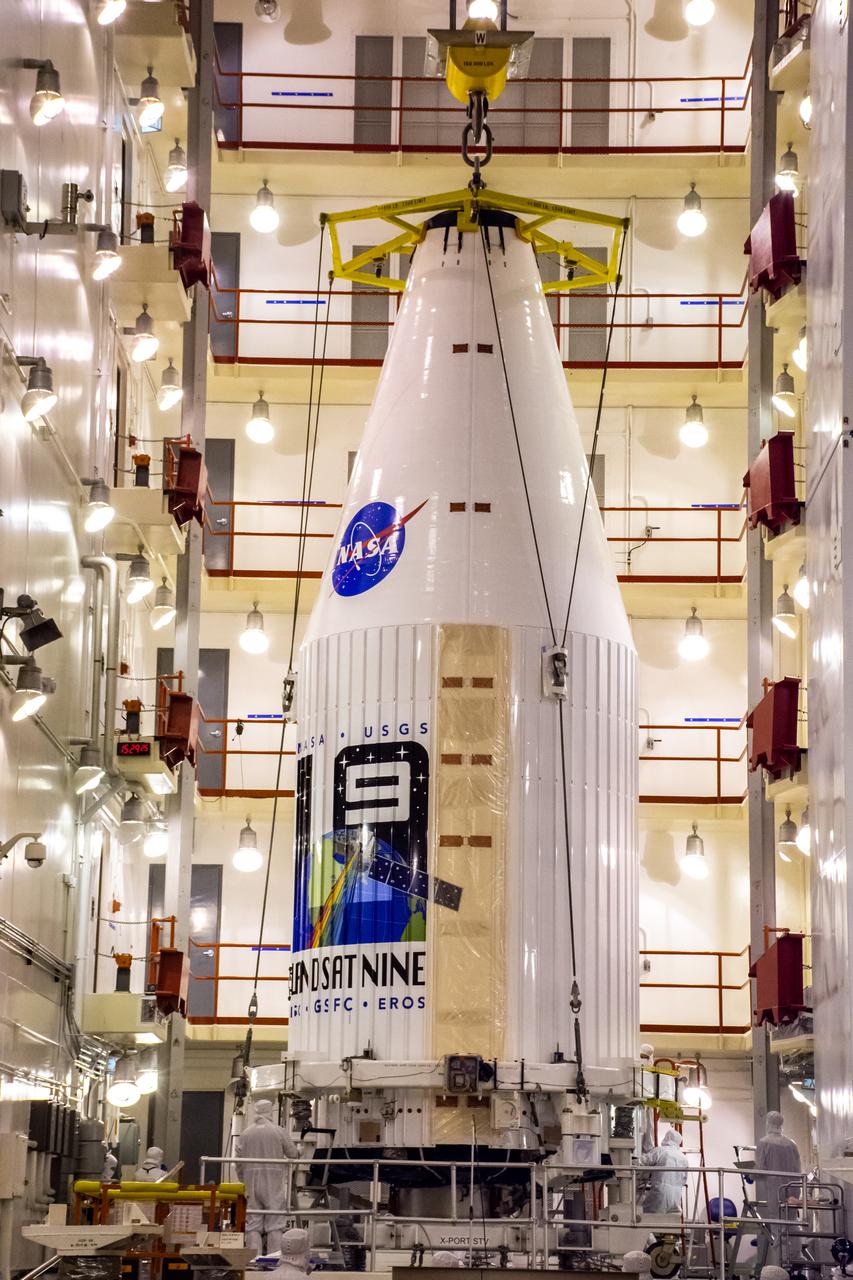
Inside the Integrated Processing Facility at Vandenberg Space Force Base in California, the Landsat 9 spacecraft, secured in the United Launch Alliance (ULA) payload fairing, is lowered onto a platform inside the transfer tower for closeout operations on Aug. 19, 2021. Landsat 9 will launch on a ULA Atlas V rocket from Space Launch Complex 3 at Vandenberg in September 2021. The launch is being managed by NASA’s Launch Services Program based at Kennedy Space Center, America’s multi-user spaceport. The Landsat 9 satellite will continue the nearly 50-year legacy of previous Landsat missions. It will monitor key natural and economic resources from orbit. Landsat 9 is managed by the agency’s Goddard Space Flight Center in Greenbelt, Maryland. The satellite will carry two instruments: the Operational Land Imager 2, which collects images of Earth’s landscapes in visible, near infrared and shortwave infrared light, and the Thermal Infrared Sensor 2, which measures the temperature of land surfaces. Like its predecessors, Landsat 9 is a joint mission between NASA and the U.S. Geological Survey.
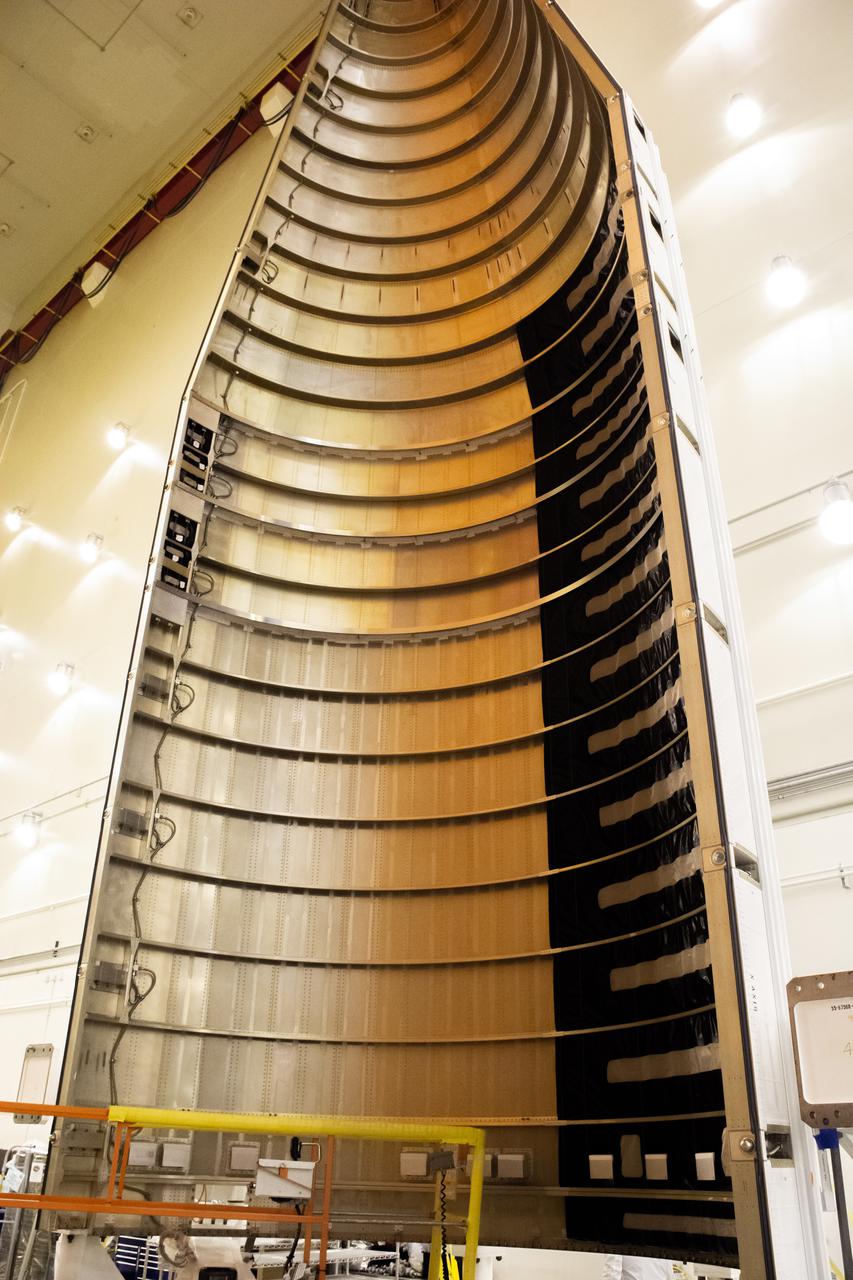
Inside the Integrated Processing Facility at Vandenberg Space Force Base in California, protective blanks are removed from the United Launch Alliance (ULA) payload fairings for the Landsat 9 spacecraft on Aug. 2, 2021. The two halves of the ULA payload fairing will be secured around Landsat 9 to protect it during launch atop the ULA Atlas V rocket. Landsat 9 will launch on the Atlas V rocket from Space Launch Complex 3 at Vandenberg in September 2021. The launch is being managed by NASA’s Launch Services Program based at Kennedy Space Center, America’s multi-user spaceport. The Landsat 9 satellite will continue the nearly 50-year legacy of previous Landsat missions. It will monitor key natural and economic resources from orbit. Landsat 9 is managed by the agency’s Goddard Space Flight Center in Greenbelt, Maryland. The satellite will carry two instruments: the Operational Land Imager 2, which collects images of Earth’s landscapes in visible, near infrared and shortwave infrared light, and the Thermal Infrared Sensor 2, which measures the temperature of land surfaces. Like its predecessors, Landsat 9 is a joint mission between NASA and the U.S. Geological Survey.
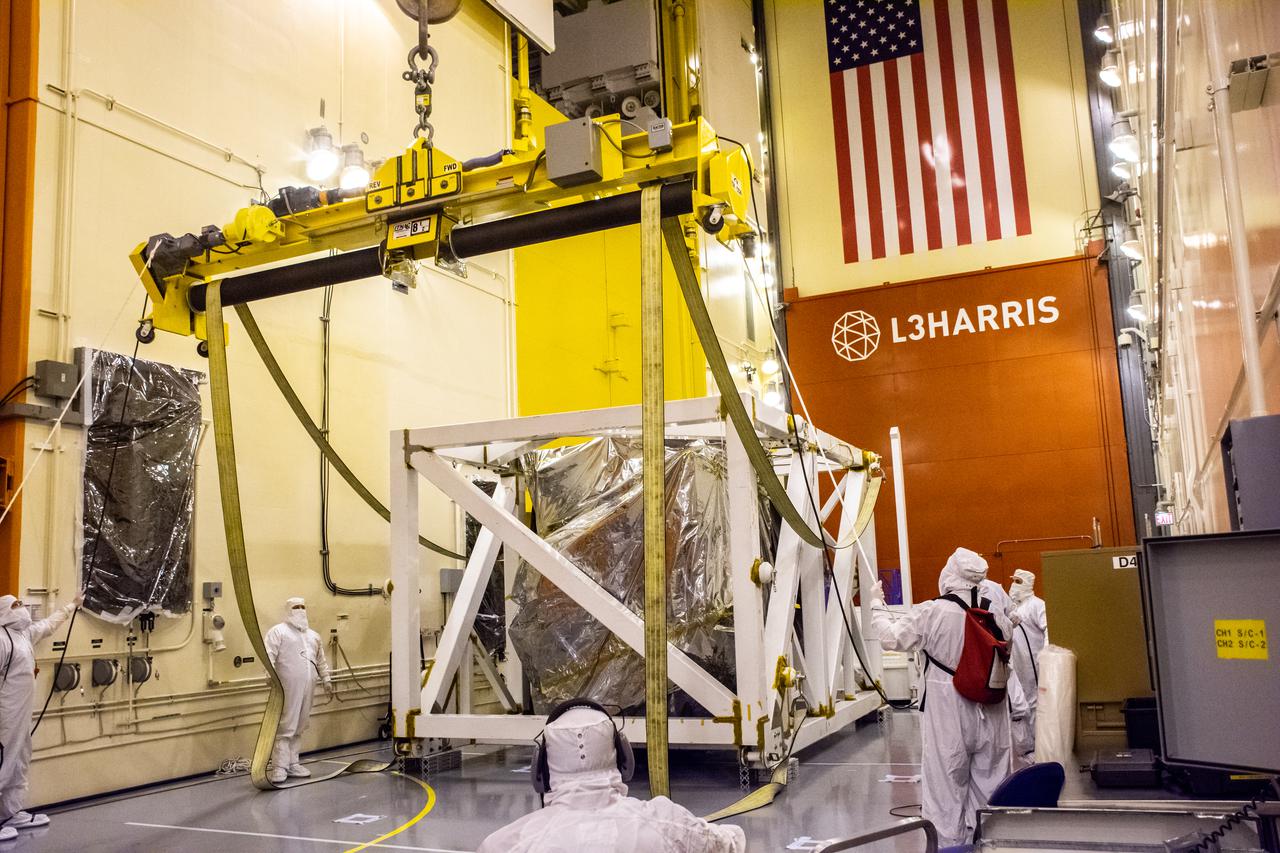
Technicians assist as a crane lowers the Landsat 9 spacecraft secured in its protective stand on the floor of the Integrated Processing Facility at Vandenberg Space Force Base in California, on July 8, 2021. Landsat 9 is being prepared for its launch atop the ULA Atlas V from Vandenberg in September 2021. The launch is being managed by NASA’s Launch Services Program based at Kennedy Space Center in Florida. Landsat 9 will continue the nearly 50-year legacy of previous Landsat missions. It will monitor key natural and economic resources from orbit. Landsat 9 is managed by the agency’s Goddard Space Flight Center in Greenbelt, Maryland. It will carry two instruments: the Operational Land Imager 2, which collects images of Earth’s landscapes in visible, near-infrared and shortwave infrared light, and the Thermal Infrared Sensor 2, which measures the temperature of land surfaces. Like its predecessors, Landsat 9 is a joint mission between NASA and the U.S. Geological Survey.
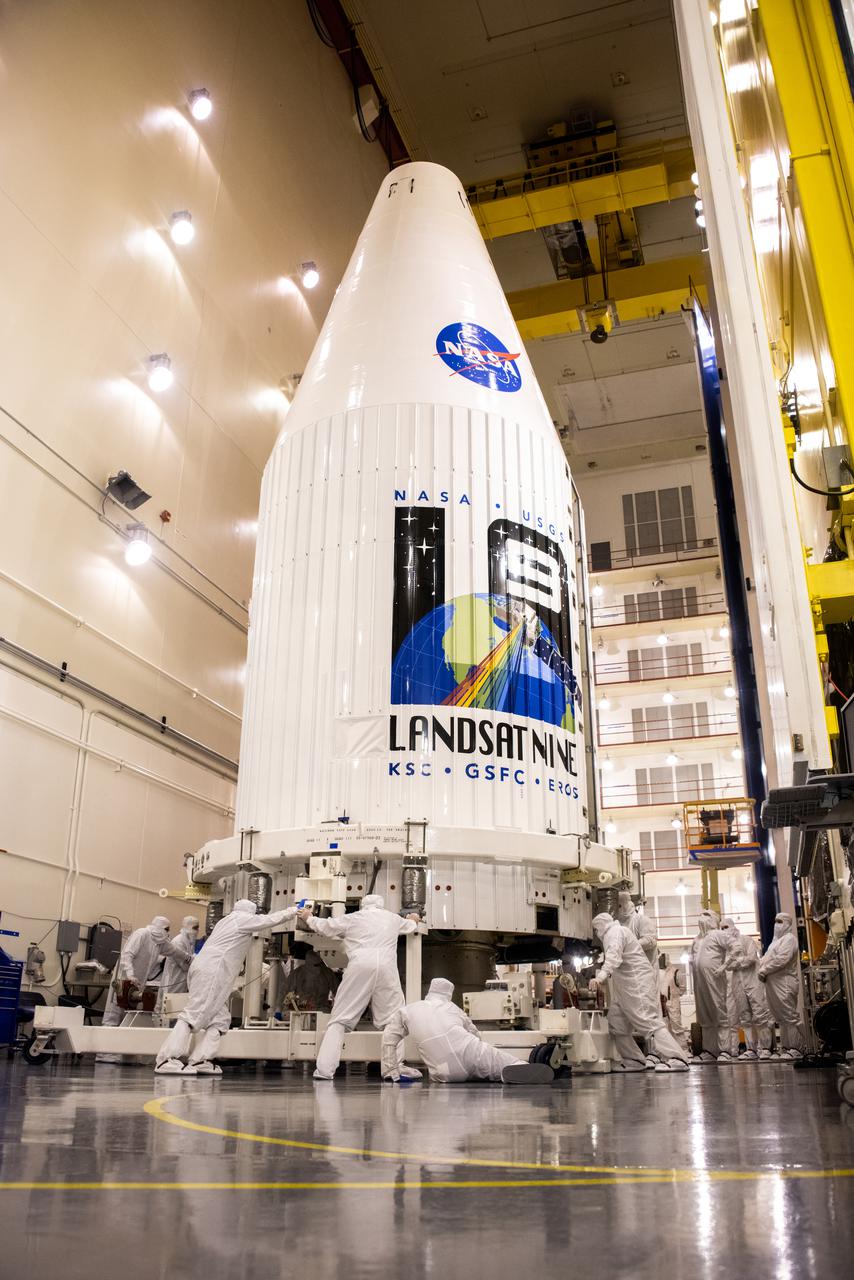
Inside the Integrated Processing Facility at Vandenberg Space Force Base in California, both United Launch Alliance (ULA) payload fairings are secured around the Landsat 9 spacecraft on Aug. 16, 2021. The fairings will encase and protect Landsat 9 during launch atop the ULA Atlas V rocket. Landsat 9 will launch on the Atlas V rocket from Space Launch Complex 3 at Vandenberg in September 2021. The launch is being managed by NASA’s Launch Services Program based at Kennedy Space Center, America’s multi-user spaceport. The Landsat 9 satellite will continue the nearly 50-year legacy of previous Landsat missions. It will monitor key natural and economic resources from orbit. Landsat 9 is managed by the agency’s Goddard Space Flight Center in Greenbelt, Maryland. The satellite will carry two instruments: the Operational Land Imager 2, which collects images of Earth’s landscapes in visible, near infrared and shortwave infrared light, and the Thermal Infrared Sensor 2, which measures the temperature of land surfaces. Like its predecessors, Landsat 9 is a joint mission between NASA and the U.S. Geological Survey.
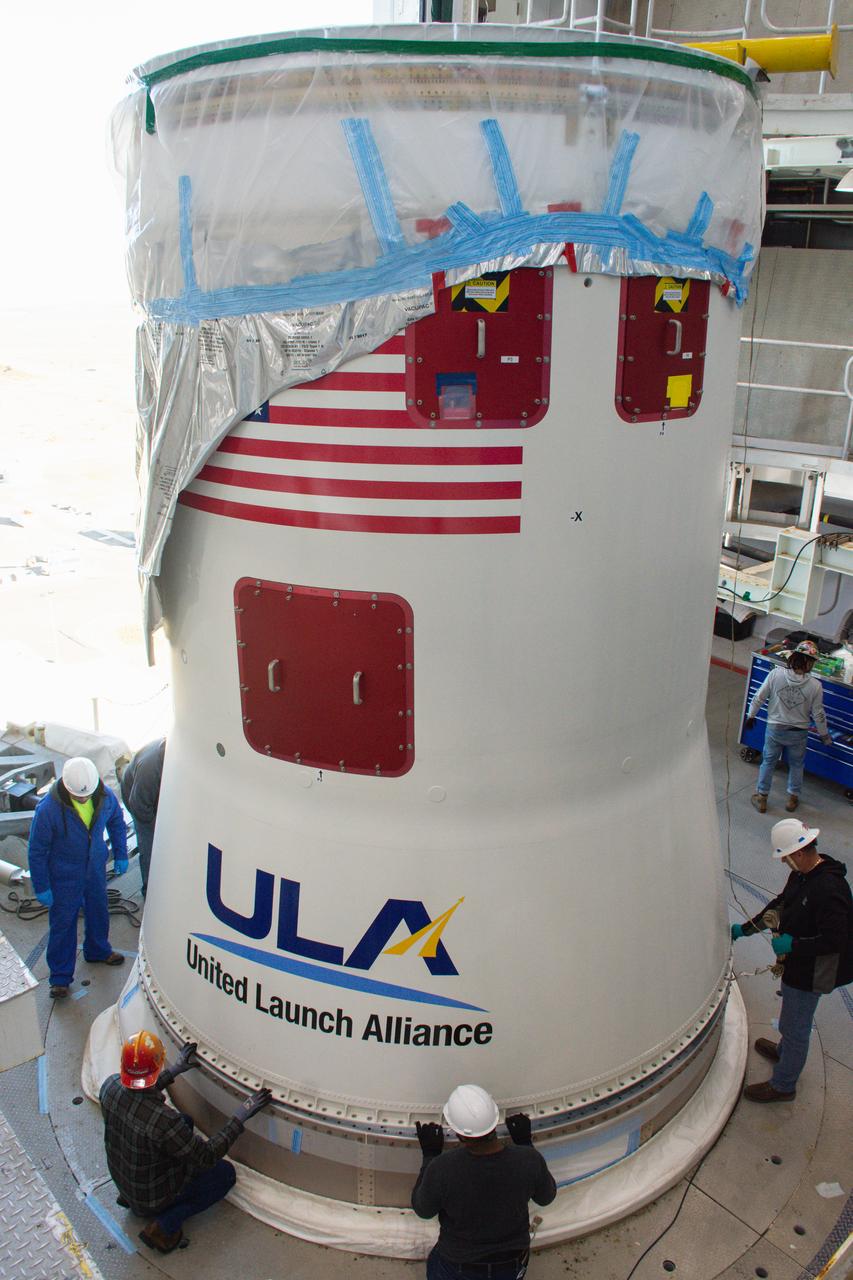
Technicians help secure the United Launch Alliance Atlas V interstage adapter and aft stub adapter to the Atlas V rocket inside the vertical integration facility at Space Launch Complex-3 at Vandenberg Space Force Base in California on Sept. 29, 2022. The rocket is being prepared to launch the National Oceanic and Atmospheric Administration’s (NOAA) Joint Polar Satellite System-2 (JPSS-2). JPSS-2 and NASA’s Low-Earth Orbit Flight Test of an Inflatable Decelerator (LOFTID) secondary payload. The launch is scheduled for Nov. 1 from SLC-3. JPSS-2, which will be renamed NOAA-21 after reaching orbit, will join a constellation of JPSS satellites that orbit from the North to the South pole, circling Earth 14 times a day and providing a full view of the entire globe twice daily. The NOAA/NASA Suomi National Polar-orbiting Partnership (Suomi NPP) satellite, and NOAA-20, previously known as JPSS-1, are both already in orbit. Each satellite carries at least four advanced instruments to measure weather and climate conditions on Earth. LOFTID is dedicated to the memory of Bernard Kutter. LOFTID will demonstrate inflatable heat shield technology that could enable a variety of proposed NASA missions to destinations such as Mars, Venus, and Titan, as well as returning heavier payloads from low-Earth orbit.
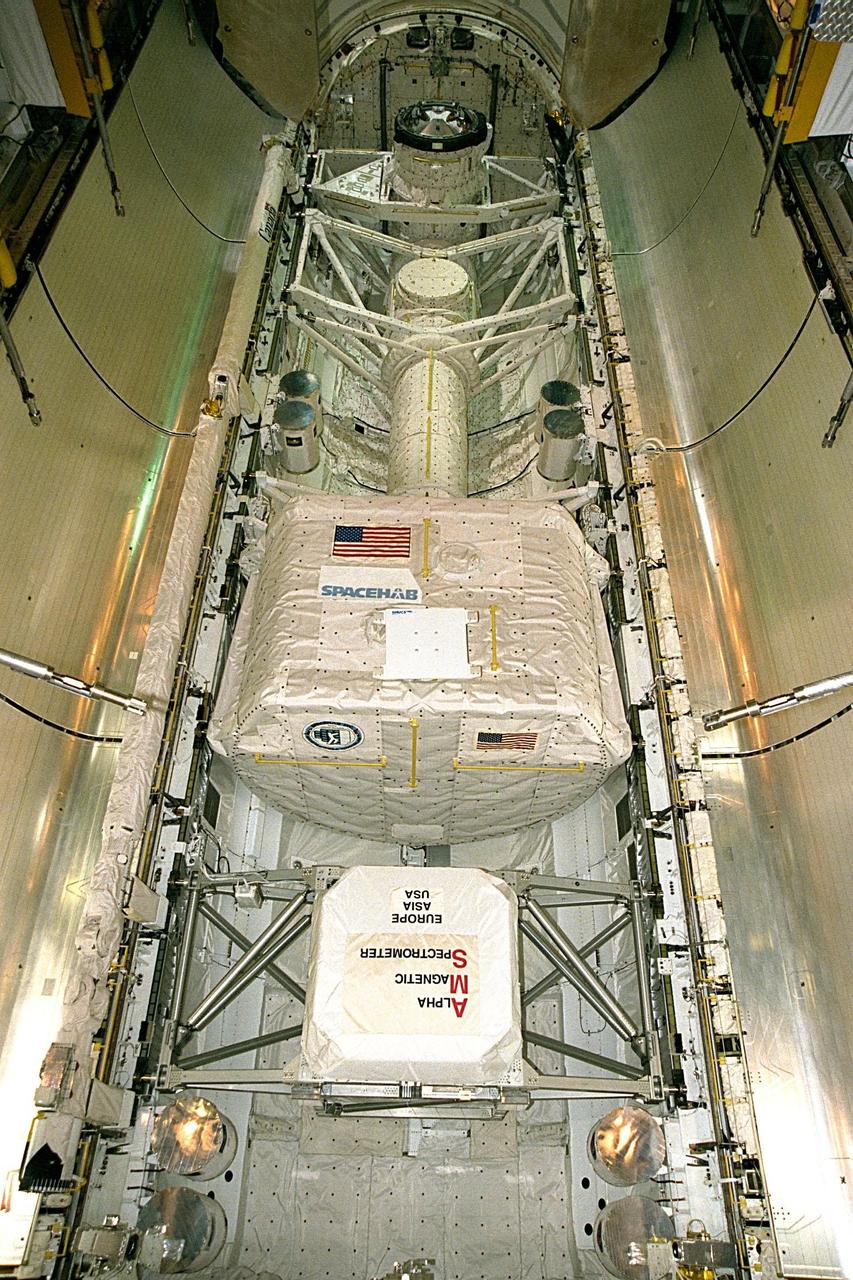
A SPACEHAB Single Module (top) and the Alpha Magnetic Spectrometer (AMS) experiment are secure in Discovery's payload bay shortly before the payload bay doors are closed for the flight of STS-91 at Launch Pad 39A. Launch is planned for June 2 with a window opening around 6:10 p.m. EDT. The single SPACEHAB module houses experiments to be performed by the astronauts and serves as a cargo carrier for items to be transferred to and from the Russian Space Station Mir. The AMS experiment is the first of a new generation of space-based experiments which will use particles, instead of light, to study the Universe and will search for both antimatter and "dark matter," as well as measure normal matter cosmic and gamma rays. STS-91 will also feature the ninth Shuttle docking with the Russian Space Station Mir, the first Mir docking for Discovery, the conclusion of Phase I of the joint U.S.-Russian International Space Station Program, and the first flight of the new Space Shuttle super lightweight external tank. The STS-91 flight crew includes Commander Charles Precourt; Pilot Dominic Gorie; and Mission Specialists Wendy B. Lawrence; Franklin Chang-Diaz, Ph.D.; Janet Kavandi, Ph.D.; and Valery Ryumin, with the Russian Space Agency. Andrew Thomas, Ph.D., will be returning to Earth with the crew after living more than four months aboard Mir
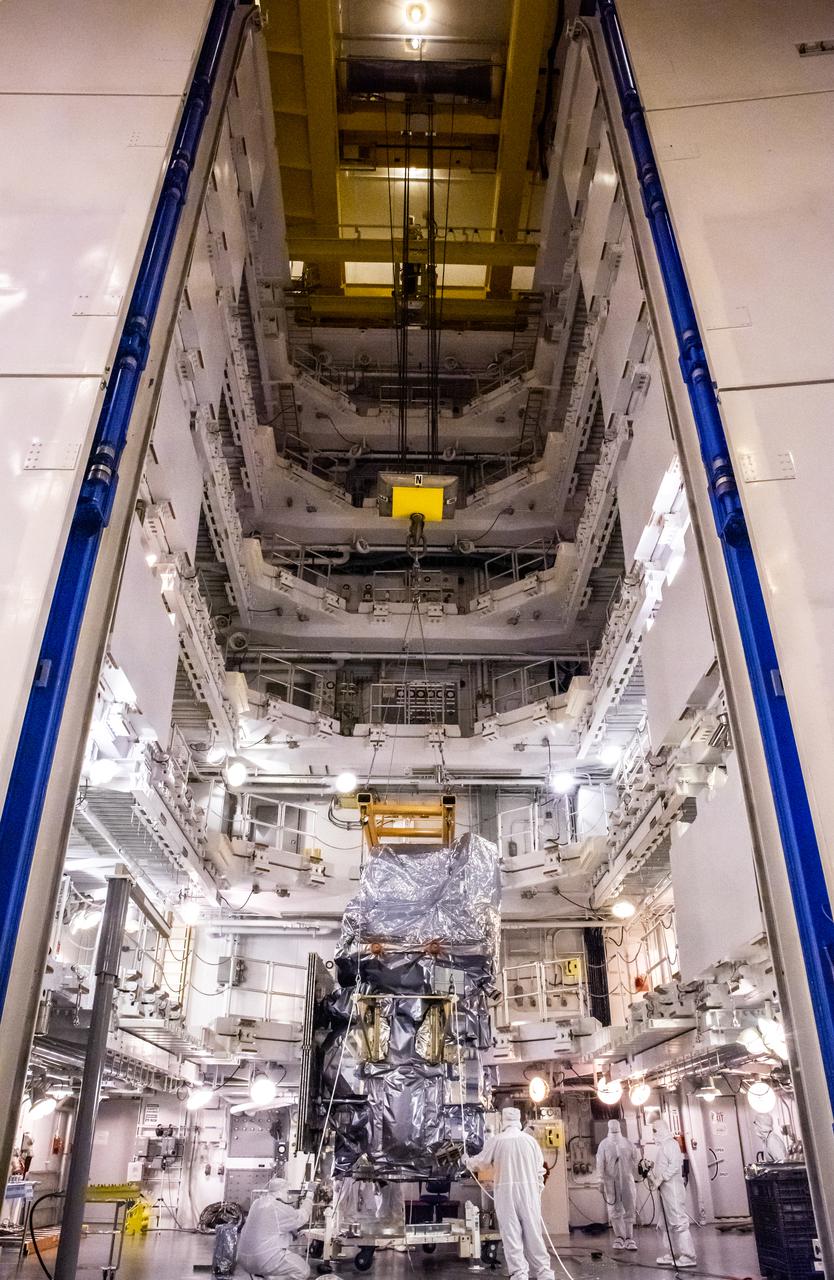
Technicians secure NASA’s Landsat 9 spacecraft in Cell 3 inside the Integrated Processing Facility at Vandenberg Space Force Base in California, on July 20, 2021. Landsat 9 will launch on a United Launch Alliance Atlas V rocket from Space Launch Complex 3 at Vandenberg in September 2021. The launch is being managed by NASA’s Launch Services Program based at Kennedy Space Center, America’s multi-user spaceport. The Landsat 9 satellite will continue the nearly 50-year legacy of previous Landsat missions. It will monitor key natural and economic resources from orbit. Landsat 9 is managed by the agency’s Goddard Space Flight Center in Greenbelt, Maryland. The satellite will carry two instruments: the Operational Land Imager 2, which collects images of Earth’s landscapes in visible, near infrared and shortwave infrared light, and the Thermal Infrared Sensor 2, which measures the temperature of land surfaces. Like its predecessors, Landsat 9 is a joint mission between NASA and the U.S. Geological Survey.
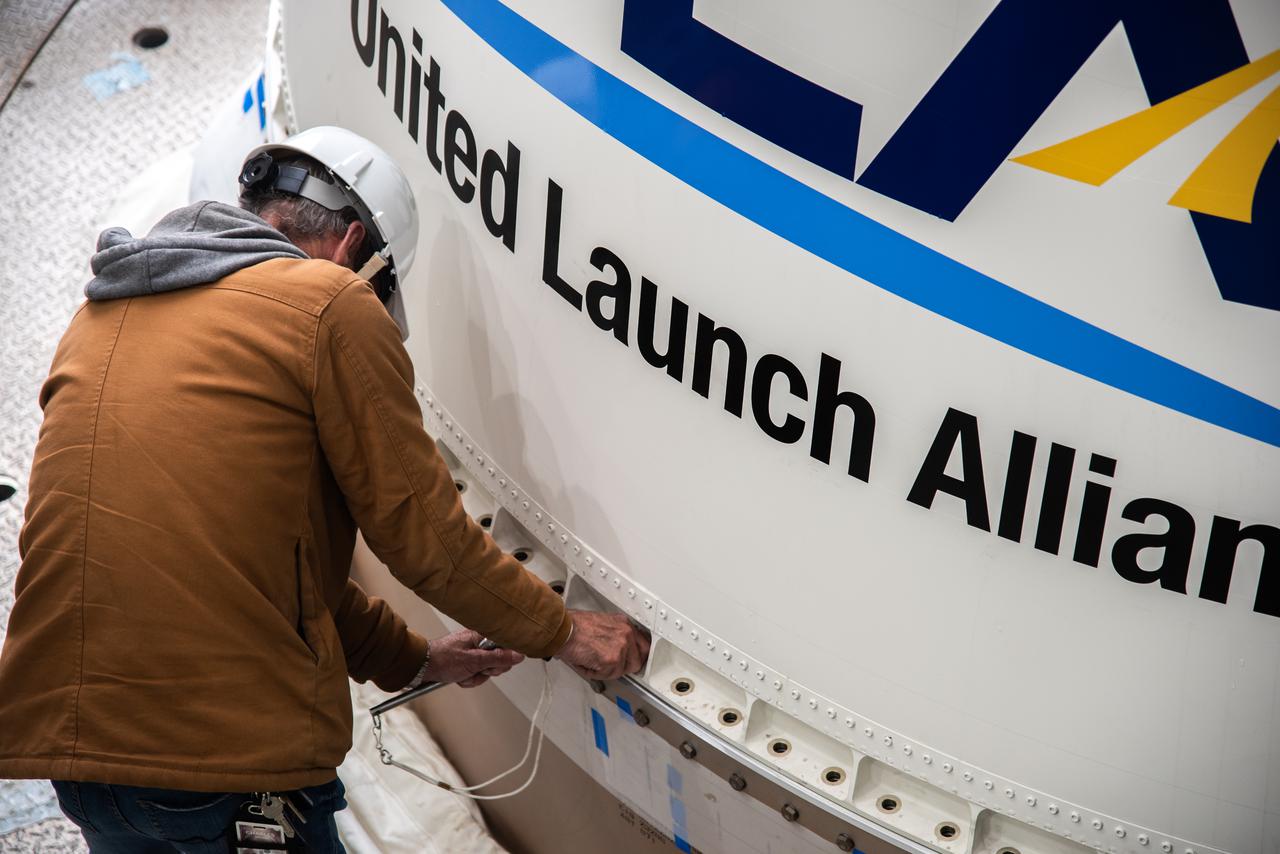
Inside the Vertical Integration Facility at Space Launch Complex 3 at Vandenberg Space Source Base in California, workers help secure the interstage and assembly second stage adapters to the Centaur second stage of the United Launch Alliance Atlas V rocket for NASA’s Landsat 9 mission on July 14, 2021. Landsat 9 will launch atop the Atlas V rocket from Vandenberg in September 2021. The launch is being managed by NASA’s Launch Services Program based at Kennedy Space Center, America’s multiuser spaceport. The Landsat 9 satellite will continue the nearly 50-year legacy of previous Landsat missions. It will monitor key natural and economic resources from orbit. Landsat 9 is managed by the agency’s Goddard Space Flight Center in Greenbelt, Maryland. The satellite will carry two instruments: the Operational Land Imager 2, which collects images of Earth’s landscapes in visible, near infrared and shortwave infrared light, and the Thermal Infrared Sensor 2, which measures the temperature of land surfaces. Like its predecessors, Landsat 9 is a joint mission between NASA and the U.S. Geological Survey.
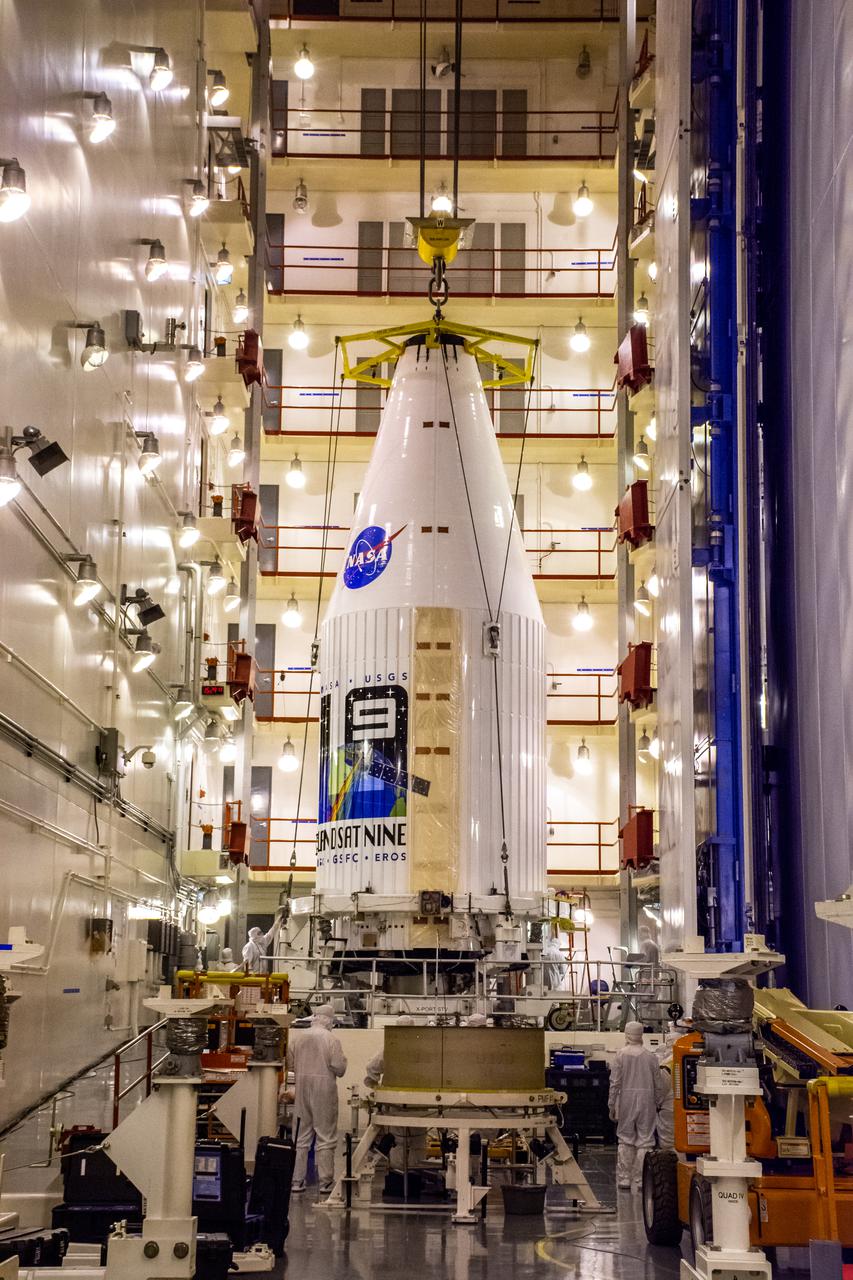
Inside the Integrated Processing Facility at Vandenberg Space Force Base in California, the Landsat 9 spacecraft, secured in the United Launch Alliance (ULA) payload fairing, is moved by crane into the transfer tower for closeout operations on Aug. 19, 2021. Landsat 9 will launch on a ULA Atlas V rocket from Space Launch Complex 3 at Vandenberg in September 2021. The launch is being managed by NASA’s Launch Services Program based at Kennedy Space Center, America’s multi-user spaceport. The Landsat 9 satellite will continue the nearly 50-year legacy of previous Landsat missions. It will monitor key natural and economic resources from orbit. Landsat 9 is managed by the agency’s Goddard Space Flight Center in Greenbelt, Maryland. The satellite will carry two instruments: the Operational Land Imager 2, which collects images of Earth’s landscapes in visible, near infrared and shortwave infrared light, and the Thermal Infrared Sensor 2, which measures the temperature of land surfaces. Like its predecessors, Landsat 9 is a joint mission between NASA and the U.S. Geological Survey.
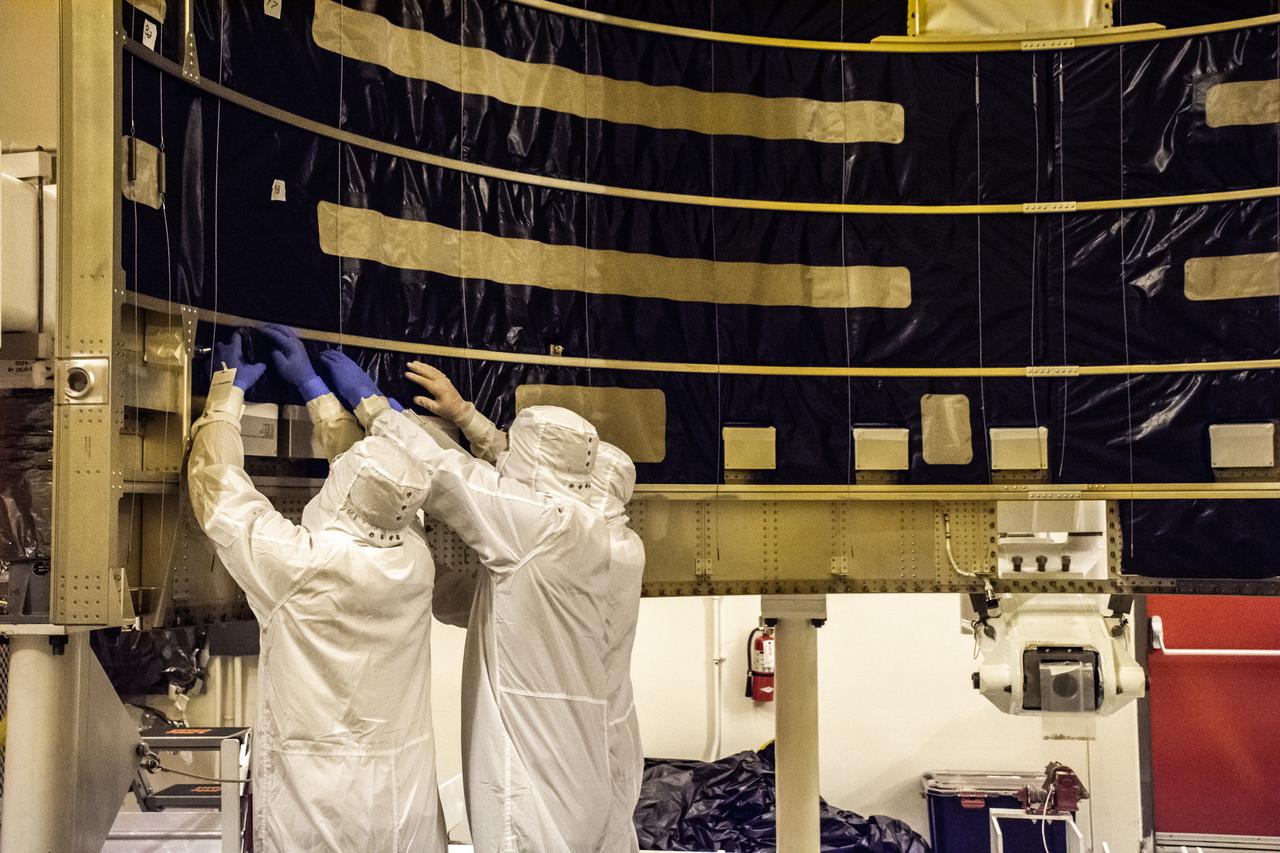
Inside the Integrated Processing Facility at Vandenberg Space Force Base in California, technicians with United Launch Alliance (ULA) remove the protective blankets from one payload fairing half for the Landsat 9 spacecraft on Aug. 2, 2021. The two halves of the ULA payload fairing will be secured around Landsat 9 to protect it during launch atop the ULA Atlas V rocket. Landsat 9 will launch on the Atlas V rocket from Space Launch Complex 3 at Vandenberg in September 2021. The launch is being managed by NASA’s Launch Services Program based at Kennedy Space Center, America’s multi-user spaceport. The Landsat 9 satellite will continue the nearly 50-year legacy of previous Landsat missions. It will monitor key natural and economic resources from orbit. Landsat 9 is managed by the agency’s Goddard Space Flight Center in Greenbelt, Maryland. The satellite will carry two instruments: the Operational Land Imager 2, which collects images of Earth’s landscapes in visible, near infrared and shortwave infrared light, and the Thermal Infrared Sensor 2, which measures the temperature of land surfaces. Like its predecessors, Landsat 9 is a joint mission between NASA and the U.S. Geological Survey.
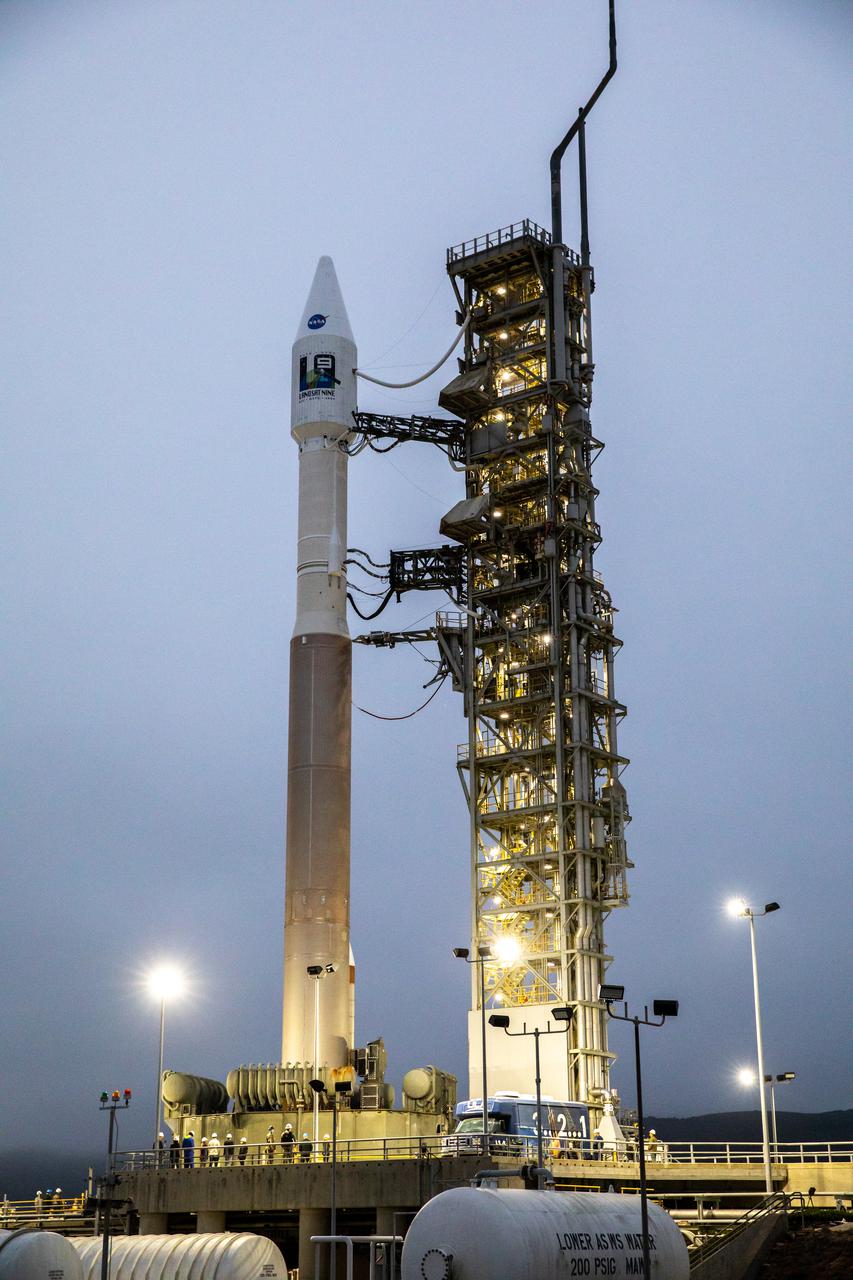
The United Launch Alliance Atlas V 401 rocket with NASA’s Landsat 9 satellite is secured on the launch pad at Space Launch Complex 3 (SLC-3) at Vandenberg Space Force Base in California, on Sept. 27, 2021, after making the trek from the Vertical Integration Facility. Landsat 9 is scheduled to launch at 2:12 p.m. EDT (11:12 a.m. PDT) today, Sept. 27, atop the Atlas V from SLC-3. The launch is managed by NASA’s Launch Services Program based at Kennedy Space Center. The Landsat 9 satellite will continue the nearly 50-year legacy of previous Landsat missions. It will join its sister satellite, Landsat 8, in orbit to monitor key natural and economic resources from orbit. Landsat 9 is managed by the agency’s Goddard Space Flight Center in Greenbelt, Maryland. The satellite will carry two instruments: the Operational Land Imager 2, which collects images of Earth’s landscapes in visible, near infrared and shortwave infrared light, and the Thermal Infrared Sensor 2, which measures the temperature of land surfaces. Like its predecessors, Landsat 9 is a joint mission between NASA and the U.S. Geological Survey.