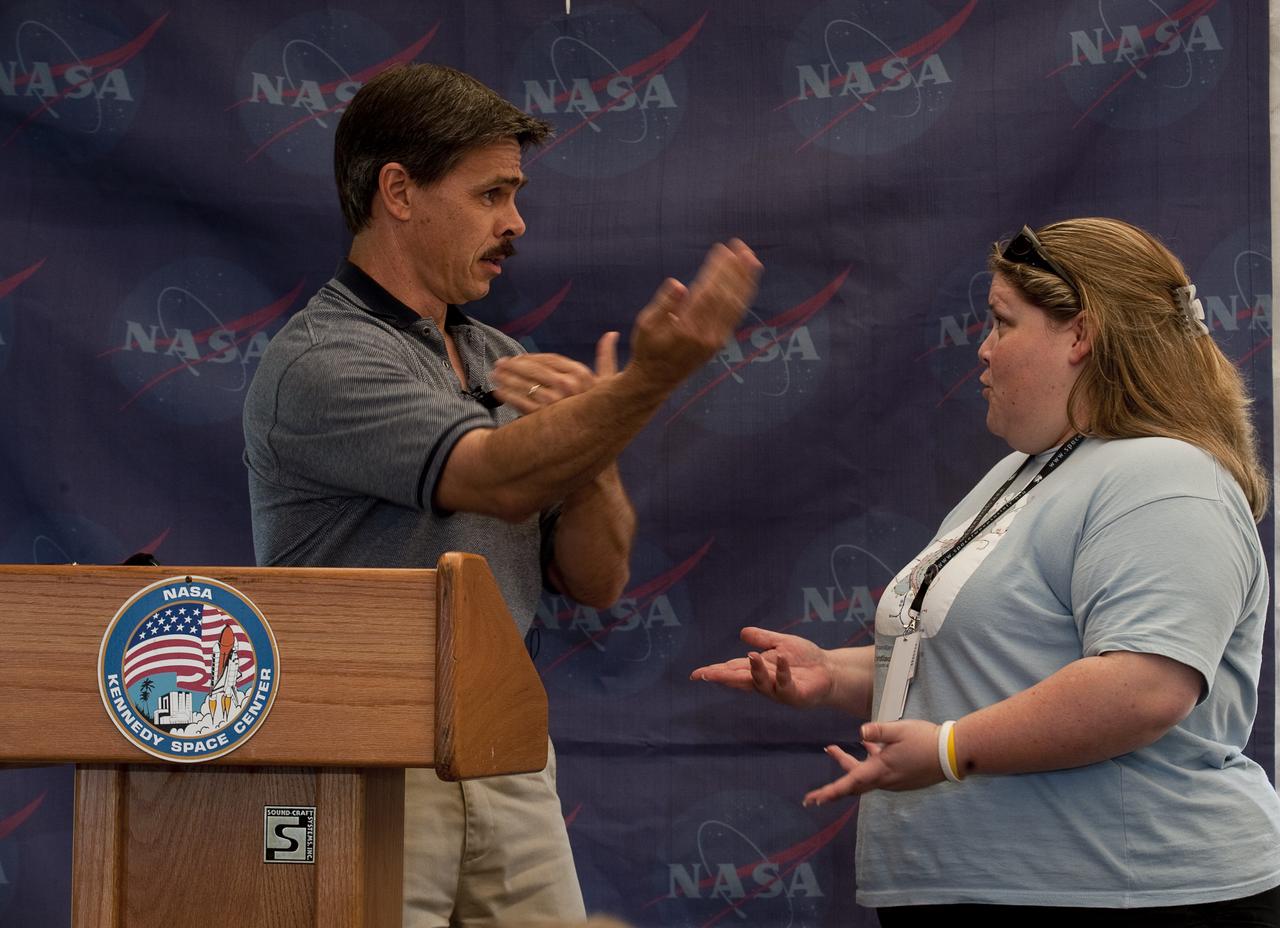
Jon Cowart @Rocky_Sci, orbiter engineering manager, Space Shuttle Program, interacts with Tweetup participant, Jen Vargas, @jenvargus, as he speaks to participants at the two-day STS-132 Launch Tweetup at Kennedy Space Center, Thursday, May 13, 2010, in Cape Canaveral, Fla. NASA Twitter followers in attendance will have the opportunity to take a tour of NASA's Kennedy Space Center, view the space shuttle launch and speak with shuttle technicians, engineers, astronauts and managers. Photo Credit: (NASA/Paul E. Alers)
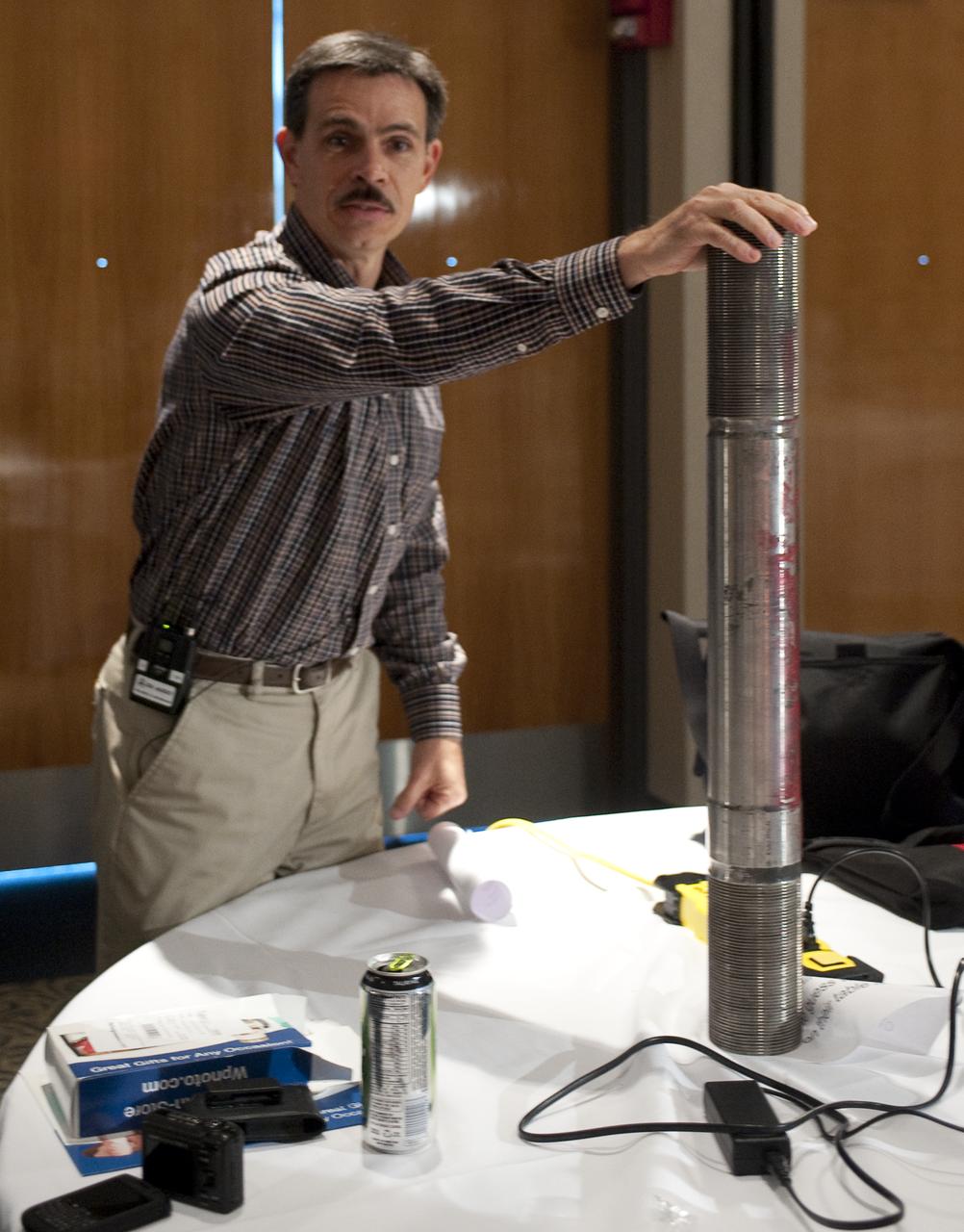
Ares I-X Deputy Mission Manager Jon Cowart shows a space shuttle solid rocket booster (SRB) separation bolt during a two-day NASA Tweetup event held at NASA's Kennedy Space Center in Cape Canaveral, Fla, Sunday, Nov. 15, 2009. NASA Twitter followers in attendance will have the opportunity to take a tour of NASA's Kennedy Space Center, view the STS-129 space shuttle launch and speak with shuttle technicians, engineers, astronauts and managers. Photo Credit: (NASA/Carla Cioffi)
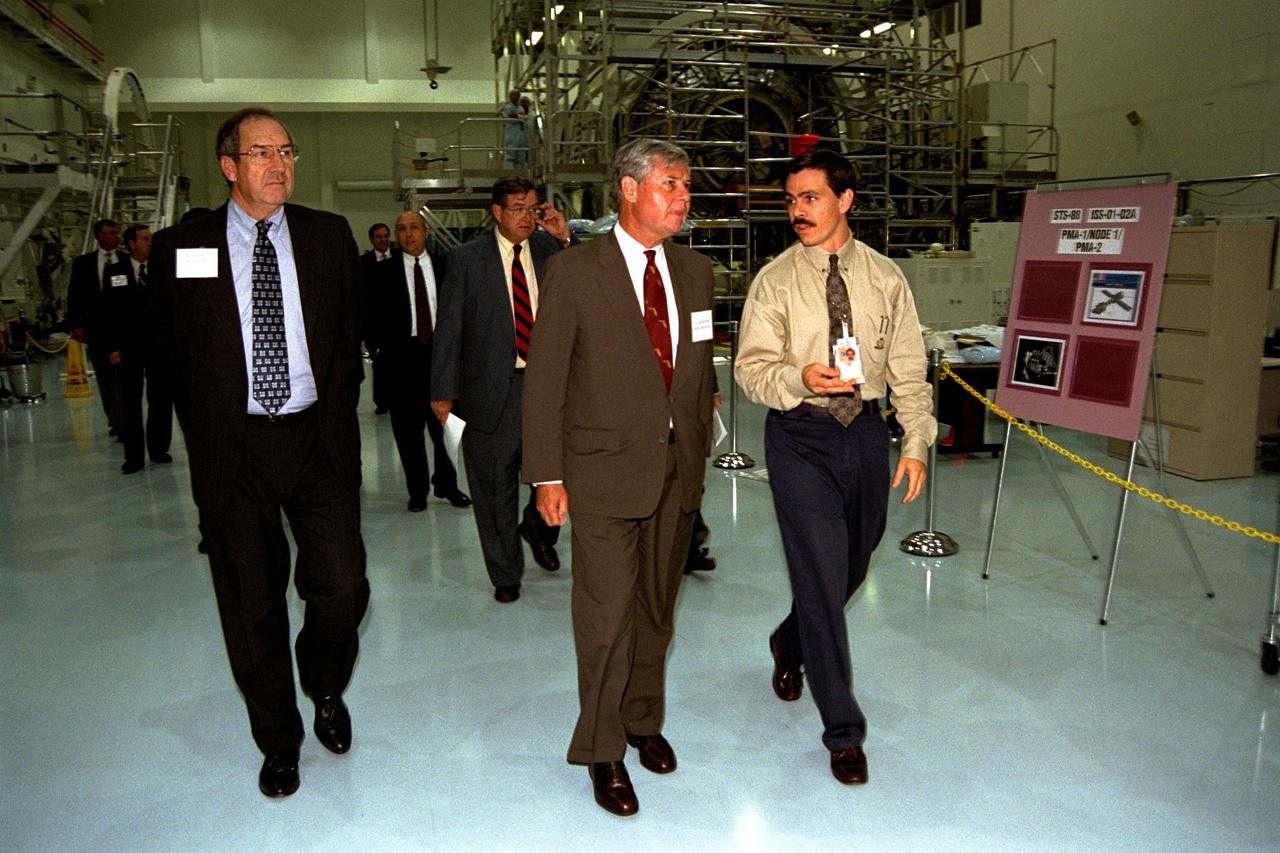
United States Senator Bob Graham of Florida visits the Space Station Processing Facility at Kennedy Space Center (KSC) and is briefed on hardware processing for the International Space Station by Jon Cowart, Flight 2A Manager, NASA Space Station Hardware Integration Office. In the foreground, from left to right, are Howard DeCastro, Program Manager for the Space Flight Operations Contract, United Space Alliance; Senator Bob Graham; and Jon Cowart
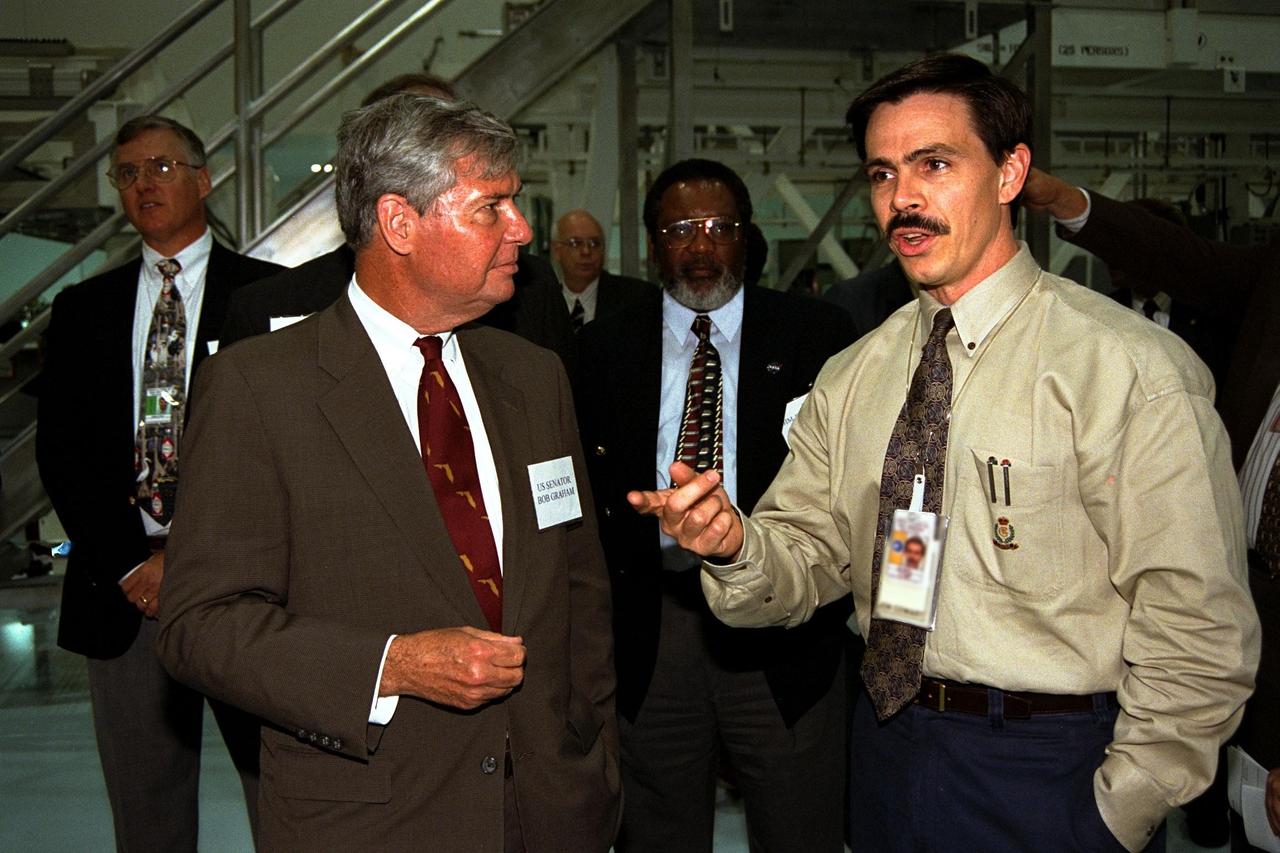
United States Senator Bob Graham of Florida (left) visits the Space Station Processing Facility at Kennedy Space Center (KSC) and is briefed on hardware processing for the International Space Station by Jon Cowart, Flight 2A Manager, NASA Space Station Hardware Integration Office. Jim Jennings, Deputy Director of KSC, is shown in the background, center, observing the briefing
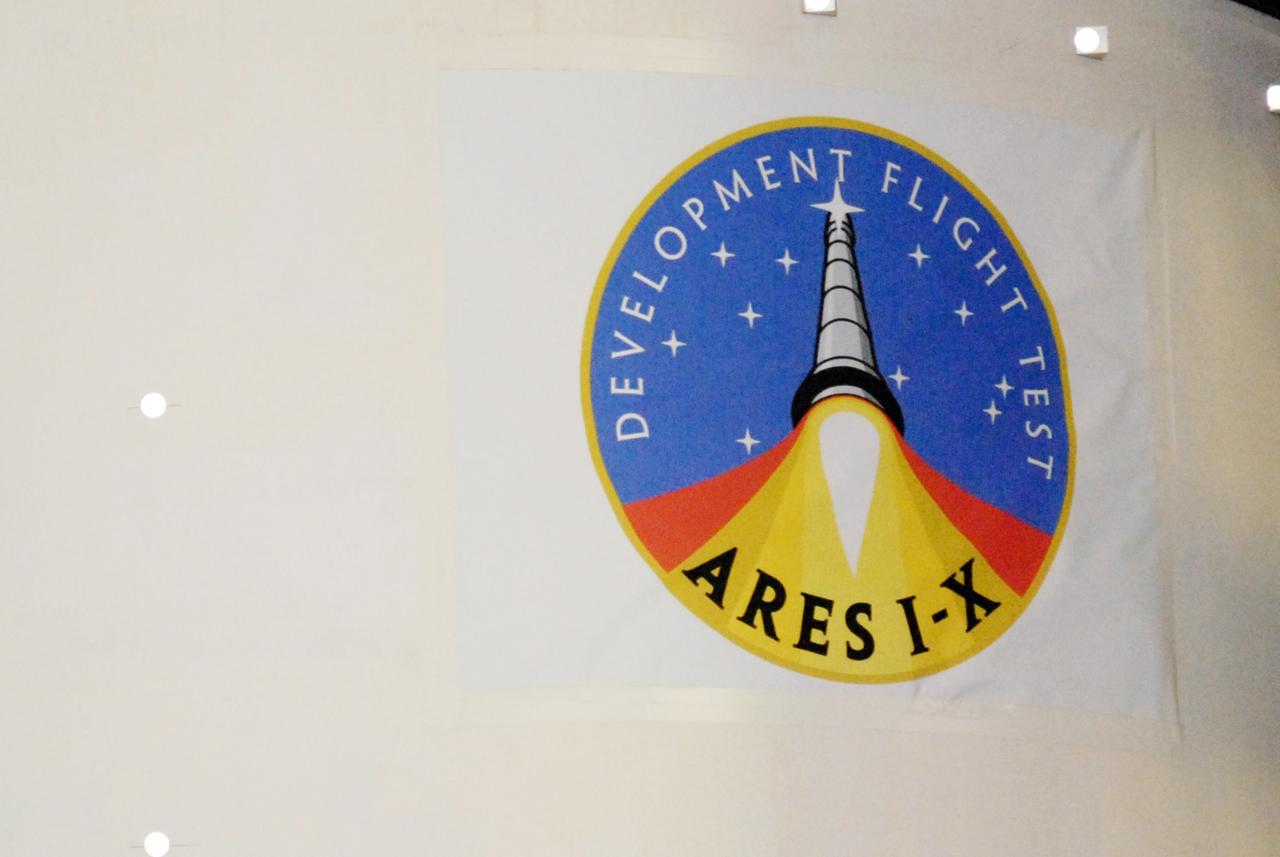
CAPE CANAVERAL, Fla. -- Vibration and laser testing is being conducted on Ares I-X segments at NASA's Kennedy Space Center. Here, is a closeup of a special Ares I-X Logo, supplied by Jon Cowart of NASA Constellation, that the Inert Solid Rocket Motor Segment has received for the Modal Test. Photo credit: NASA/Dimitri Gerondidakis
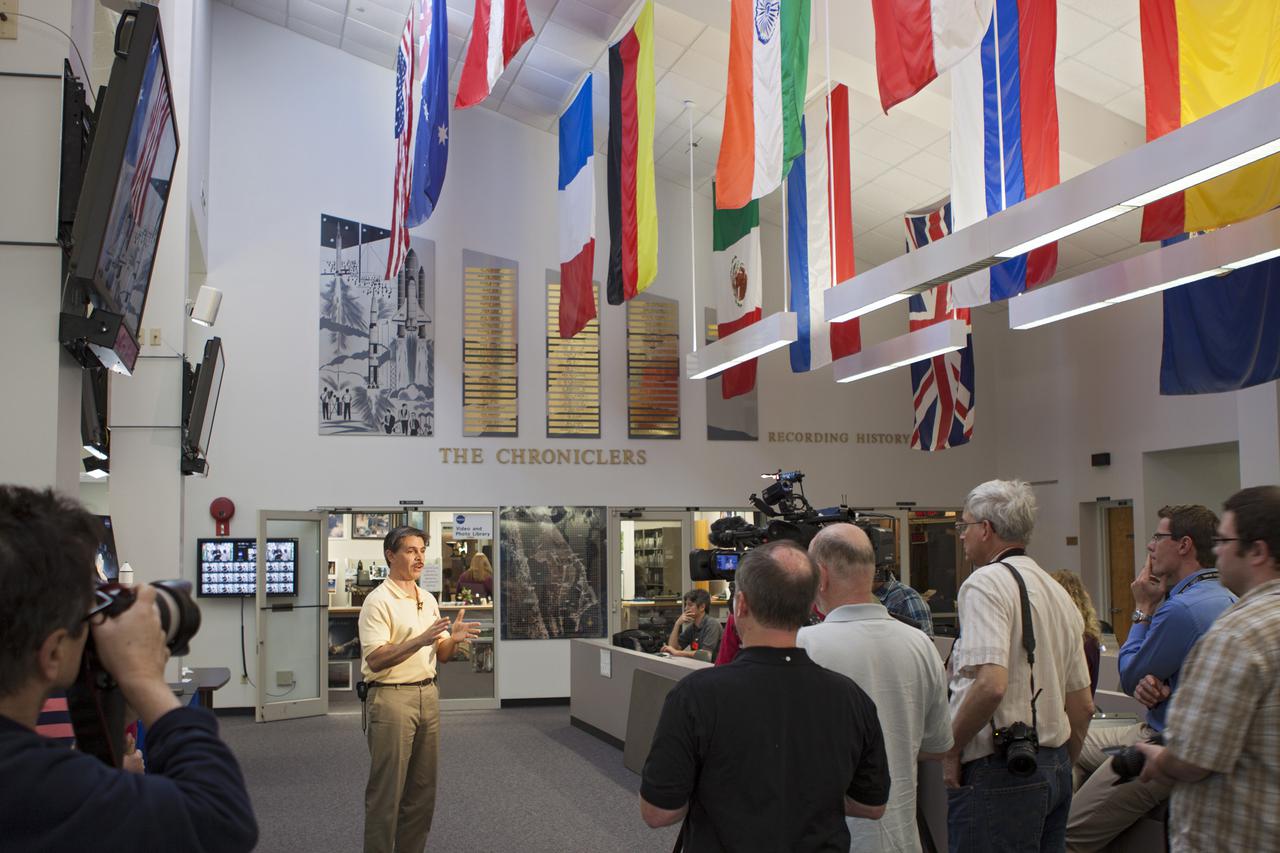
CAPE CANAVERAL, Fla. – NASA's Jon Cowart talks to media about the progress of the agency's Commercial Crew Program CCP and its partners in Kennedy Space Center’s Press Site on Feb. 28 ahead of the second commercial resupply services mission for Space Exploration Technologies SpaceX to the International Space Station. Cowart is the deputy partner manager working with SpaceX as the company develops its Falcon 9 rocket and Dragon capsule for crewed missions. Under a contract with NASA, SpaceX is targeted to fly at least 12 cargo missions to the space station through 2016. The company also is working with CCP to return America's capability to safely launch crews to low-Earth orbit destinations, including the space station, from U.S. soil around the middle of the decade. To learn more about CCP and its partners, go to www.nasa.gov_commercialcrew. Photo credit: NASA_Jim Grossmann

CAPE CANAVERAL, Fla. – NASA's Jon Cowart talks to media about the progress of the agency's Commercial Crew Program CCP and its partners in Kennedy Space Center’s Press Site on Feb. 28 ahead of the second commercial resupply services mission for Space Exploration Technologies SpaceX to the International Space Station. Cowart is the deputy partner manager working with SpaceX as the company develops its Falcon 9 rocket and Dragon capsule for crewed missions. Under a contract with NASA, SpaceX is targeted to fly at least 12 cargo missions to the space station through 2016. The company also is working with CCP to return America's capability to safely launch crews to low-Earth orbit destinations, including the space station, from U.S. soil around the middle of the decade. To learn more about CCP and its partners, go to www.nasa.gov_commercialcrew. Photo credit: NASA_Jim Grossmann
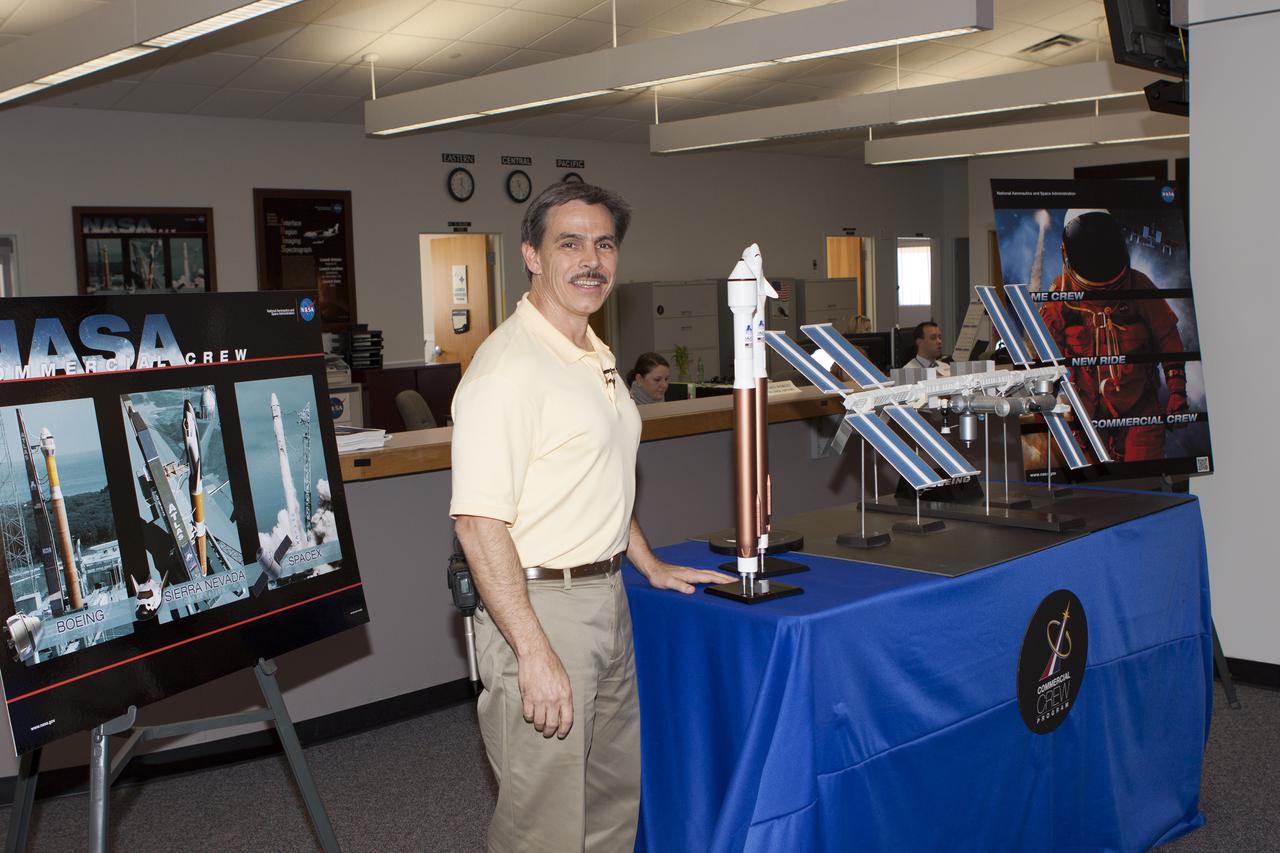
CAPE CANAVERAL, Fla. – NASA's Jon Cowart prepares to talk to media about the progress of the agency's Commercial Crew Program CCP and its partners in Kennedy Space Center’s Press Site on Feb. 28 ahead of the second commercial resupply services mission for Space Exploration Technologies SpaceX to the International Space Station. Cowart is the deputy partner manager working with SpaceX as the company develops its Falcon 9 rocket and Dragon capsule for crewed missions. Under a contract with NASA, SpaceX is targeted to fly at least 12 cargo missions to the space station through 2016. The company also is working with CCP to return America's capability to safely launch crews to low-Earth orbit destinations, including the space station, from U.S. soil around the middle of the decade. To learn more about CCP and its partners, go to www.nasa.gov_commercialcrew. Photo credit: NASA_Jim Grossmann
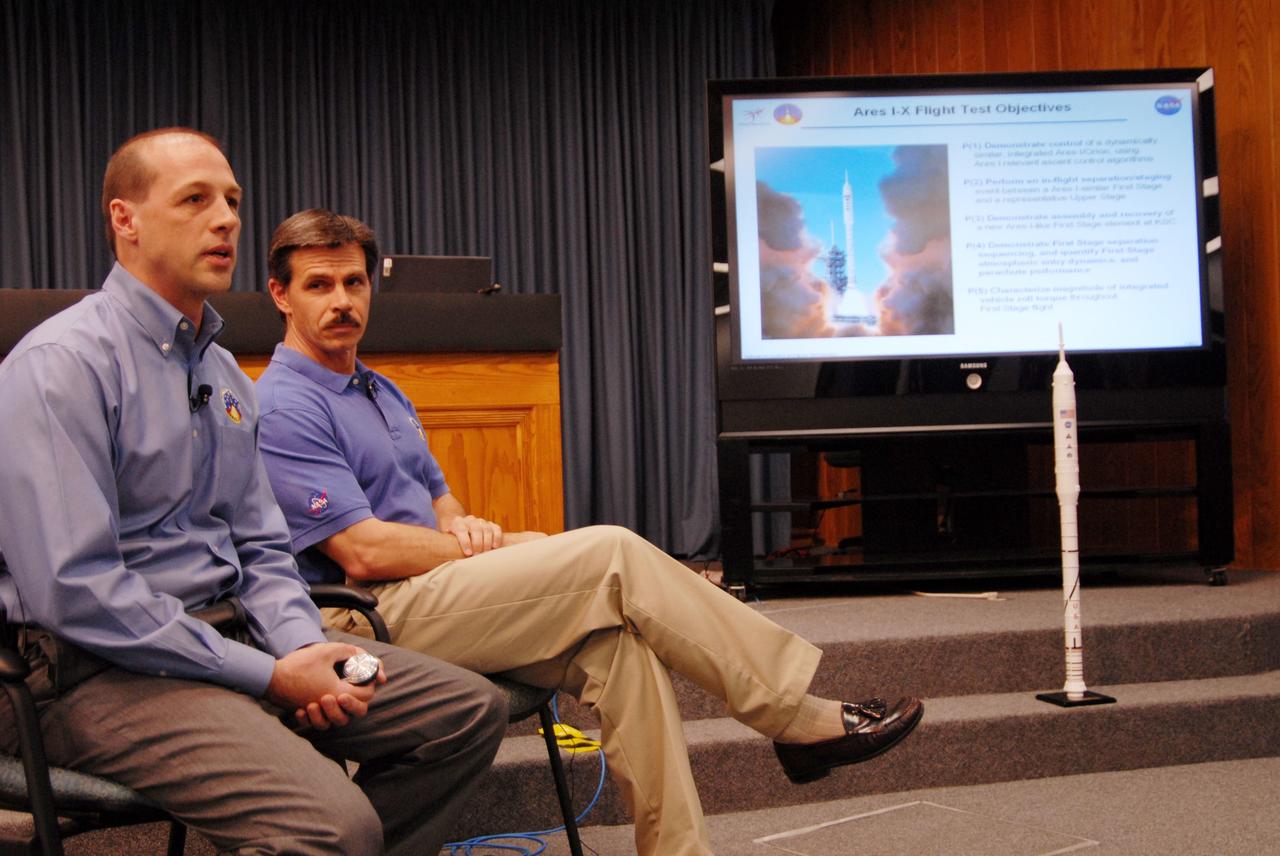
CAPE CANAVERAL, Fla. – Media were invited to a showing of the Ares I-X simulator rocket segments at NASA's Kennedy Space Center in Florida. Here, Bob Ess and Jon Cowart discuss the flight test objectives of the Ares I-X targeted for launch in July 2009. Ess is manager of the Ares I-X project. Cowart is Ares I-X deputy mission manager. The I-X flight will provide NASA an early opportunity to test and prove hardware, facilities and ground operations associated with Ares I, part of the Constellation Program to return men to the moon and beyond. Ares I is the essential core of a safe, reliable, cost-effective space transportation system that eventually will carry crewed missions back to the moon, on to Mars and out into the solar system. Photo credit: NASA/Jack Pfaller
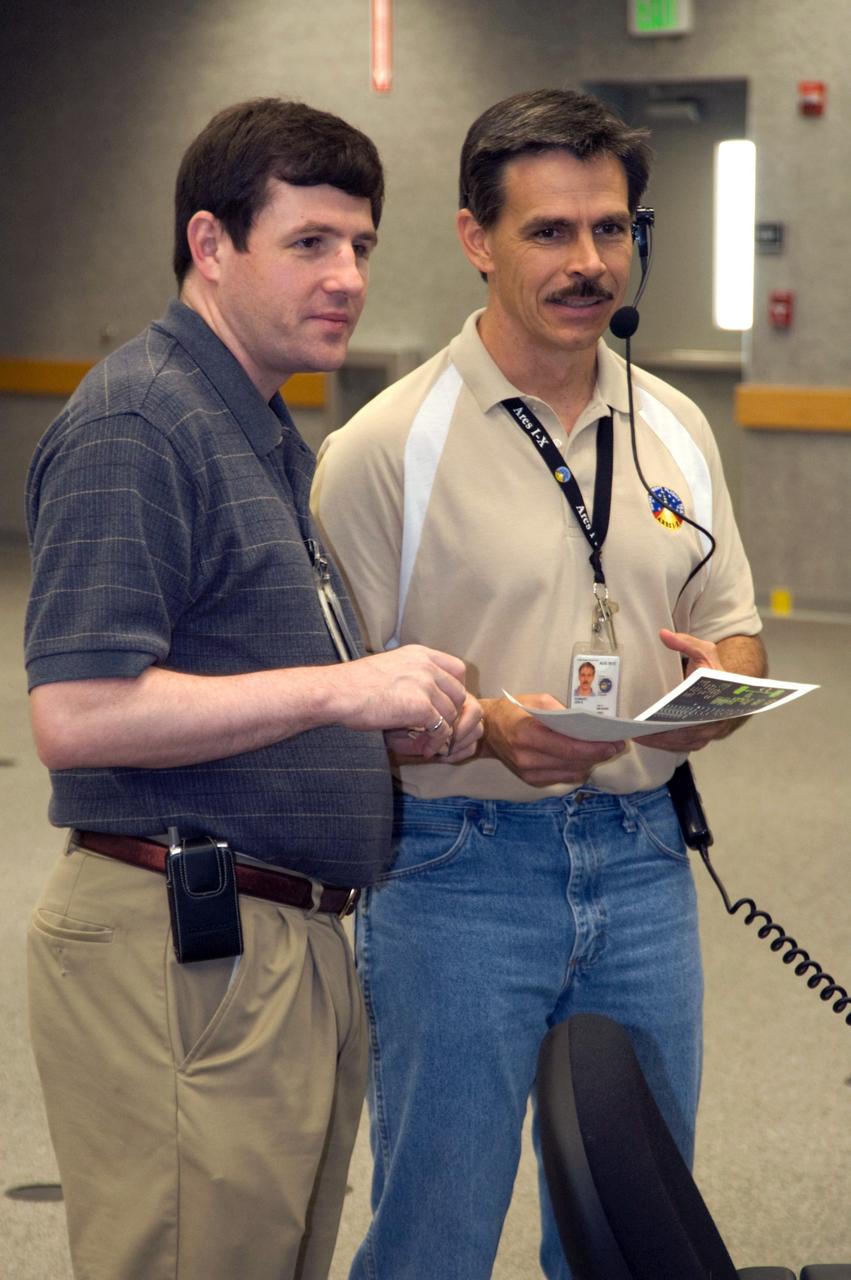
CAPE CANAVERAL, Fla. – In NASA Kennedy Space Center's Launch Control Center, NASA's Ares I-X Avionics IPT Lead Kevin Flynn and Ares I-X deputy mission manager Jon Cowart monitor data in the firing room as the rocket undergoes its first power-up. Part of the Constellation Program, the Ares I-X is the test vehicle for the Ares I, which is the essential core of a space transportation system that eventually will carry crewed missions back to the moon, on to Mars and out into the solar system. The Ares I-X flight test is targeted for Oct. 31. Photo credit: NASA/Cory Huston
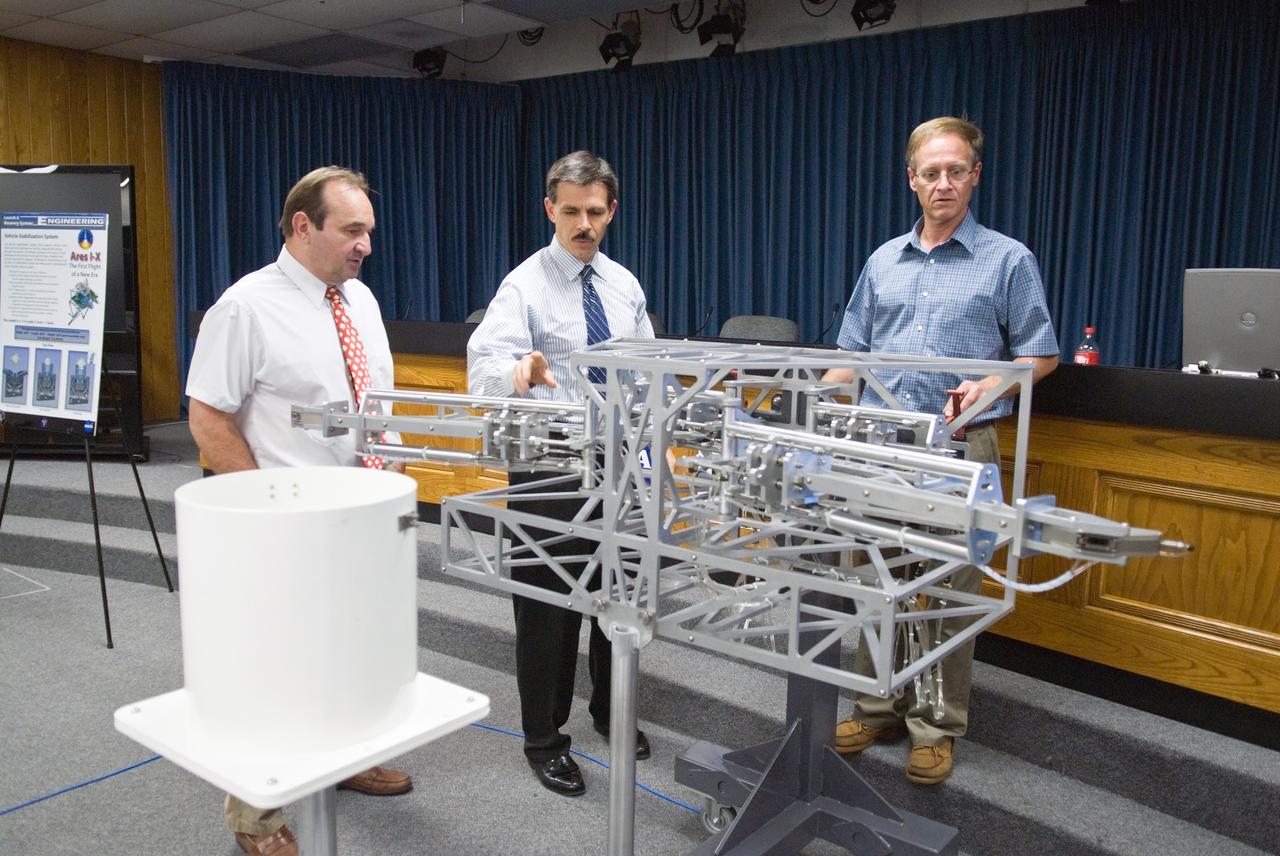
CAPE CANAVERAL, Fla. – In the NASA News Center TV Studio at NASA's Kennedy Space Center in Florida, on view is a 1/12 model of the vehicle stabilization system that will be installed on Launch Pad 39B to hold the Ares I-X rocket for its flight test. Looking at the model are (from left) Roger Lenard, consultant with Lee & Associates, LCC; Jon Cowart, NASA's Ares I-X deputy mission manager; and Eric Mellberg, Ares I-X Vehicle Stabilization Design lead with United Space Alliance Ares I-X is the test vehicle for the Ares I, which is part of the Constellation Program to return men to the moon and beyond. Ares I-X is targeted for launch in August 2009. Photo credit: NASA/Kim Shiflett
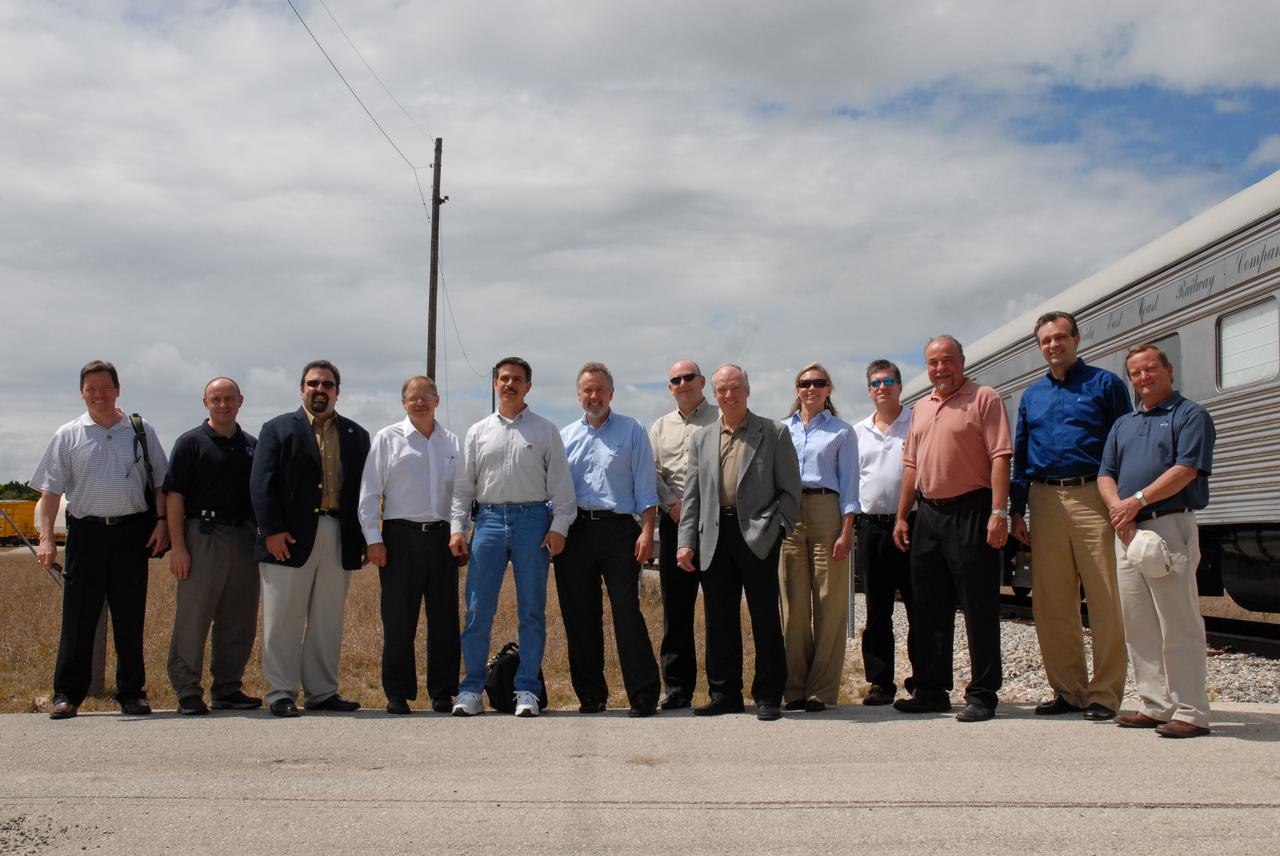
CAPE CANAVERAL, Fla. – The booster segments for the Ares I-X test rocket were delivered to NASA's Kennedy Space Center in Florida by the Florida East Coast Railroad and the NASA Railroad. Accompanying the train on its route from Jacksonville, Fla., were NASA and ATK officials. Standing here, from left, are ATK Ares I Flight Tests Program Director Joe Oliva, ATK Ares I-X Florida Program Manager Russ Page, NASA Ares Program Manager Steve Cook, ATK Deputy Site Director in Florida Ted Shaffner, NASA KSC Ares I-X Deputy Mission Manager Jon Cowart, ATK Vice President of Space Launch Propulson Cary Ralston, ATK Ares I First Stage program Director Fred Brasfield, ATK Vice President Space Launch Systems Charlie Precourt, ATK Ares I Flight Tests Deputy Program Director Kathy Philpot, NASA Marshall Space Flight Center Reusable Solid Rocket Booster Integration Lead Roy Worthy, ATK Florida Site Director Bob Herman, NASA Res First Stage Project Manager Alex Priskos and NASA KSC Shuttle Launch Director Mike Leinbach. The four reusable motor segments and the nozzle exit cone, manufactured by the Ares I first-stage prime contractor Alliant Techsystems Inc., or ATK, departed Utah March 12 on the seven-day, cross-country trip to Florida. The segments will be delivered to the Rotation, Processing and Surge Facility for final processing and integration. The booster used for the Ares I-X launch is being modified by adding new forward structures and a fifth segment simulator. The motor is the final hardware needed for the rocket's upcoming test flight this summer. The stacking operations are scheduled to begin in the Vehicle Assembly Building in April. Photo credit: NASA/Kim Shiflett
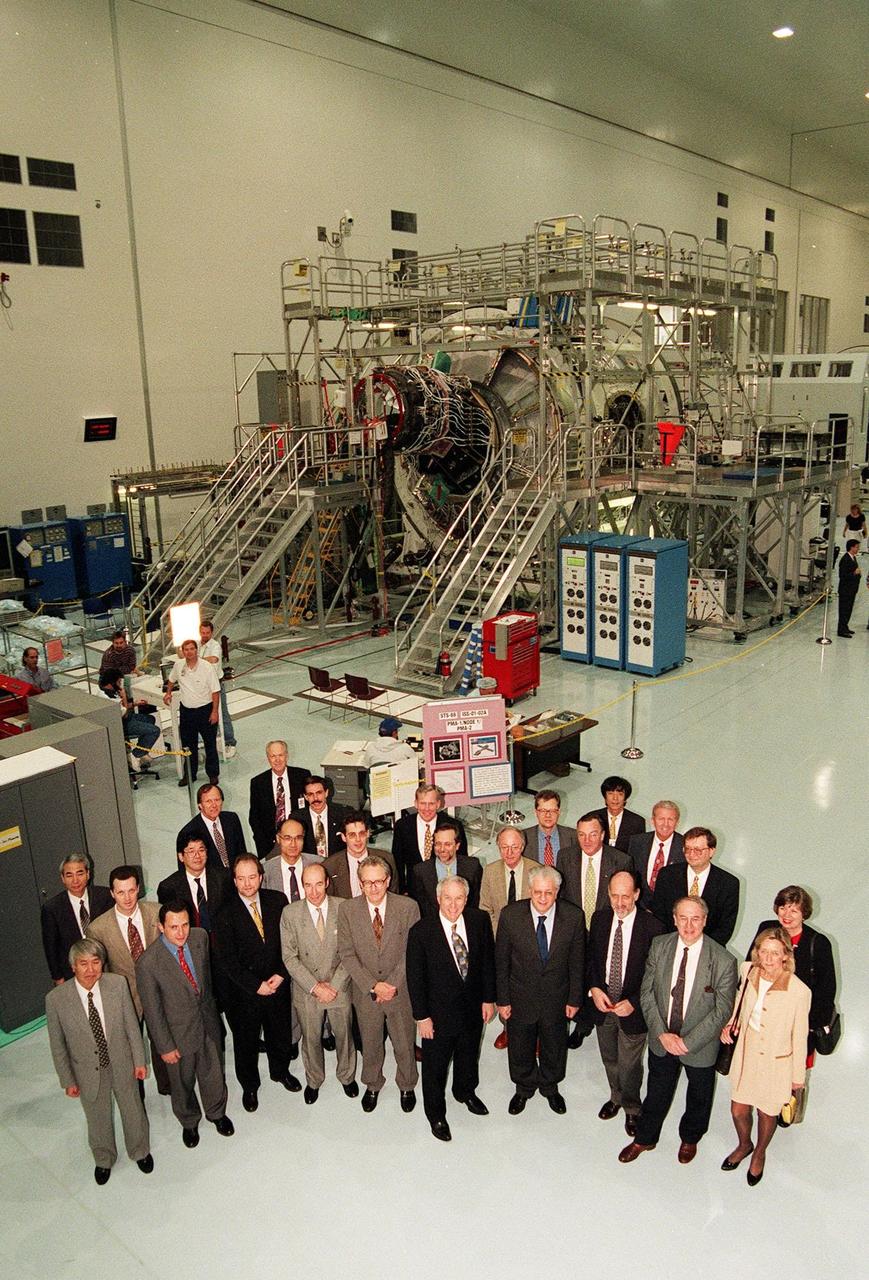
CAPE CANAVERAL, Fla. -- In the International Space Station Processing Facility at NASA's Kennedy Space Center in Florida, senior government officials from 15 countries participating in the space station program signed agreements in Washington D.C. on Jan. 29 to establish the framework of cooperation among the partners on the design, development, operation and utilization of the space station. Acting Secretary of State Strobe Talbott signed the 1998 Intergovernmental Agreement on Space Station Cooperation with representatives of Russia, Japan, Canada, and participating countries of the European Space Agency ESA -- Belgium, Denmark, France, Germany, Italy, the Netherlands, Norway, Spain, Sweden, Switzerland, and the United Kingdom. Some of these officials then toured Kennedy's Space Station Processing Facility SSPF with NASA Administrator Daniel Goldin, at front, sixth from the left. They are, left to right, front to back: Hidetoshi Murayama, National Space Development Agency of Japan NASDA Louis Laurent, Embassy of France Haakon Blankenborg, Norwegian Parliament Standing Committee on Foreign Affairs His Excellency Joris Vos, ambassador of the Netherlands His Excellency Tom Vraalsen, ambassador of Norway Goldin Luigi Berlinguer, Italian minister for education, scientific, and technological research Antonio Rodota, director general, ESA Yvan Ylieff, Belgian minister of science and chairman of the ESA Ministerial Council Jacqueline Ylieff Masaaki Komatsu, Kennedy local NASDA representative and interpreter Serge Ivanets, space attache, Embassy of Russia Hiroshi Fujita, Science and Technology Agency of Japan Akira Mizutani, Japanese Ministry of Foreign Affairs Peter Grognard, science attache', Royal Embassy of Belgium Michelangelo Pipan, Italian diplomatic counselor to the minister His Excellency Gerhard Fulda, German Federal Foreign Office Jorg Feustel-Buechl, ESA director of manned space flight and microgravity A. Yakovenko, Russian Ministry of Foreign Affairs JoAnn Morgan, Kennedy associate director for Advanced Development and Shuttle Upgrades Steve Francois, director, International Space Station and Shuttle Processing Roy Tharpe, Boeing launch site manager Jon Cowart, ISS elements manager John Schumacher, NASA associate administrator for external relations Didier Kechemair, space advistor to the French minister for education, research, and technology Yoshinori Yoshimura, NASDA and Loren Shriver, Kennedy deputy director for launch and payload processing. Node 1 of the ISS is in the background. Photo Credit: NASA