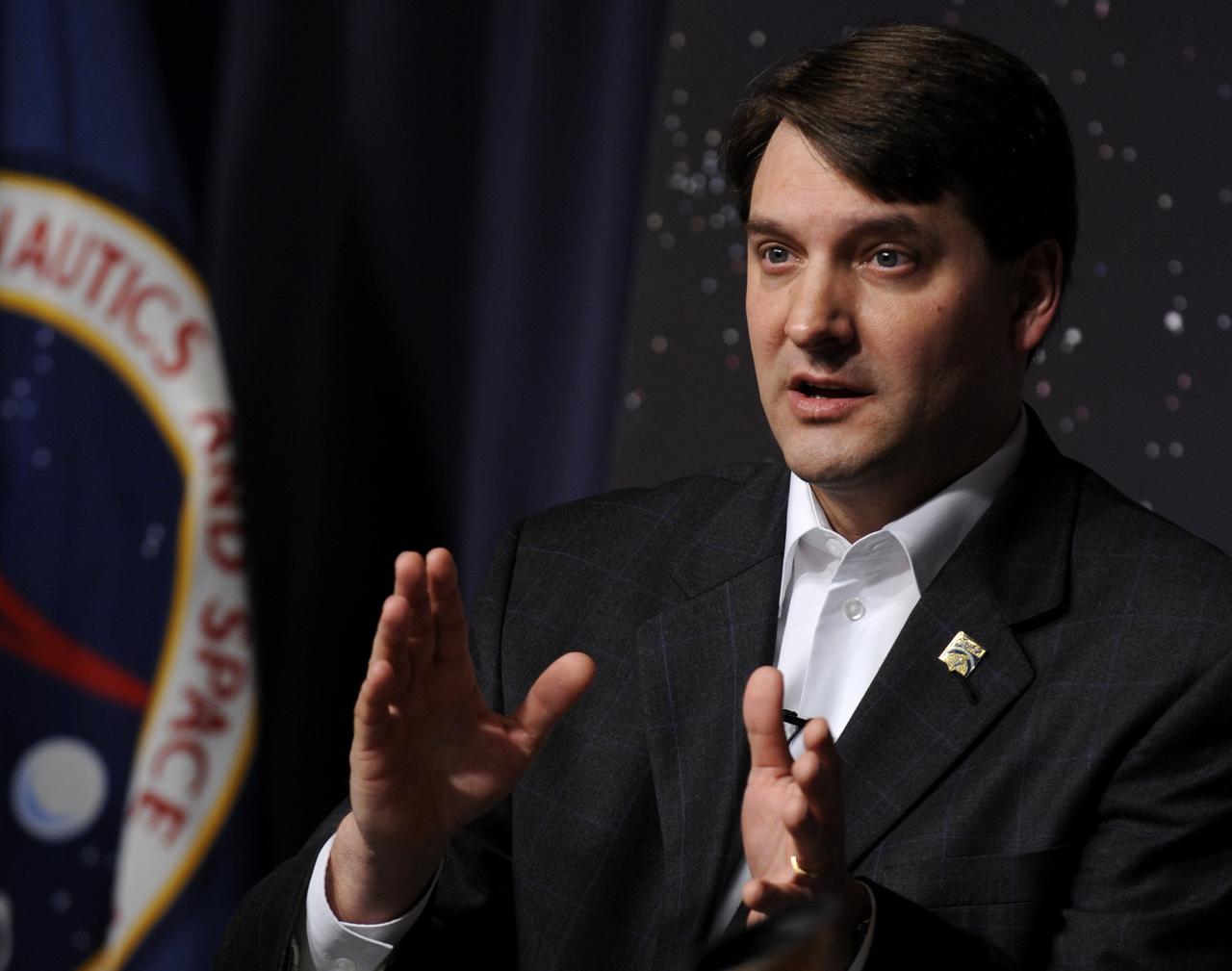
Jon Morse, director, Astrophysics Division at NASA Headquarters talks about the Kepler mission during a media briefing, Thursday, Feb. 19, 2008, at NASA Headquarters in Washington. Kepler, the first mission with the ability to find planets like earth, is scheduled to launch on March 5, 2009 from Cape Canaveral Air Force Station, Fla. aboard a Delta II rocket. Photo Credit: (NASA/Paul. E. Alers)
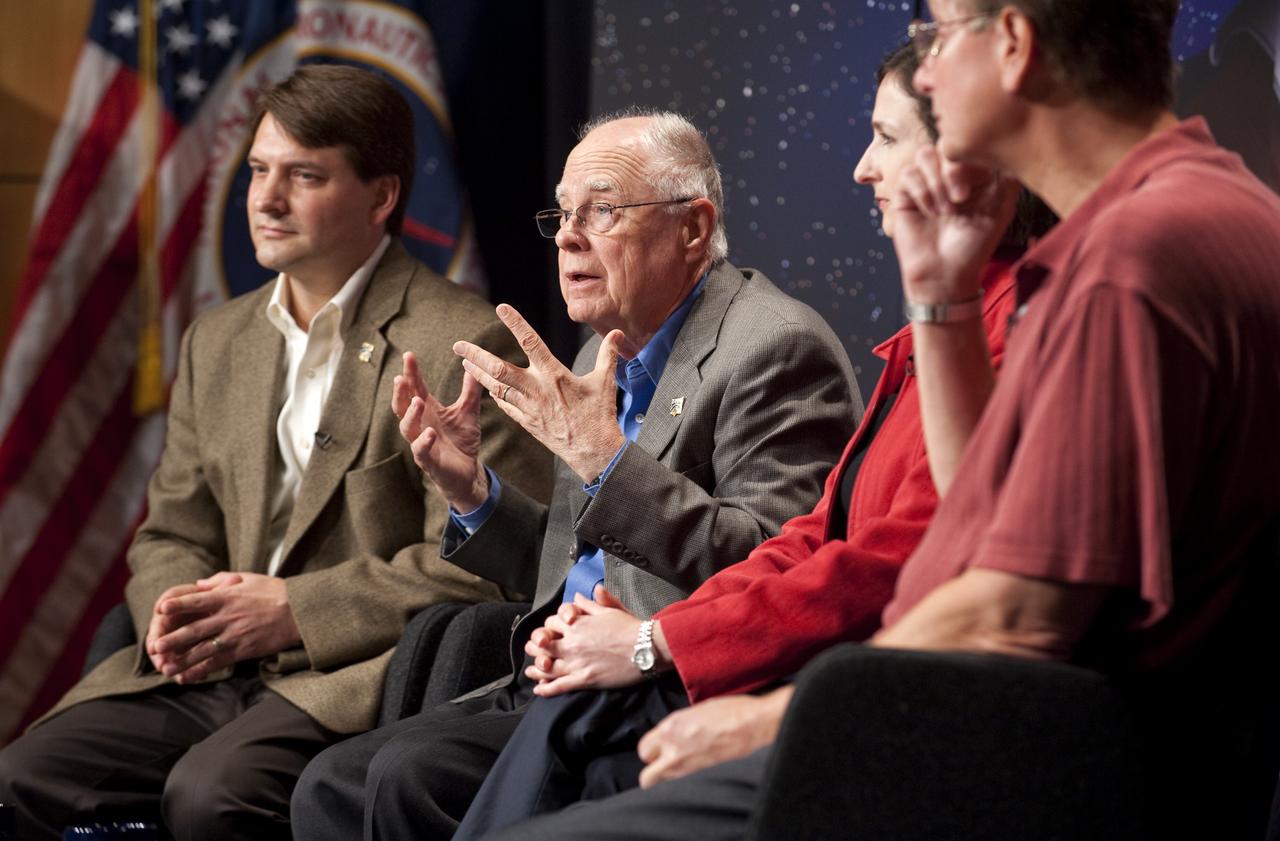
William Bo-Ricki, Kepler principal investigator at NASA's Ames Research Center, second from left, speaks during a press conference, Thursday, Aug. 6, 2009, at NASA Headquarters in Washington about the scientific observations coming from the Kepler spacecraft that was launched this past March as Jon Morse, NASA's Astrophysics Division Director, left, looks on. Kepler is NASA's first mission that is capable of discovering earth-sized planets in the habitable zones of stars like our Sun. Photo Credit: (NASA/Paul E. Alers)
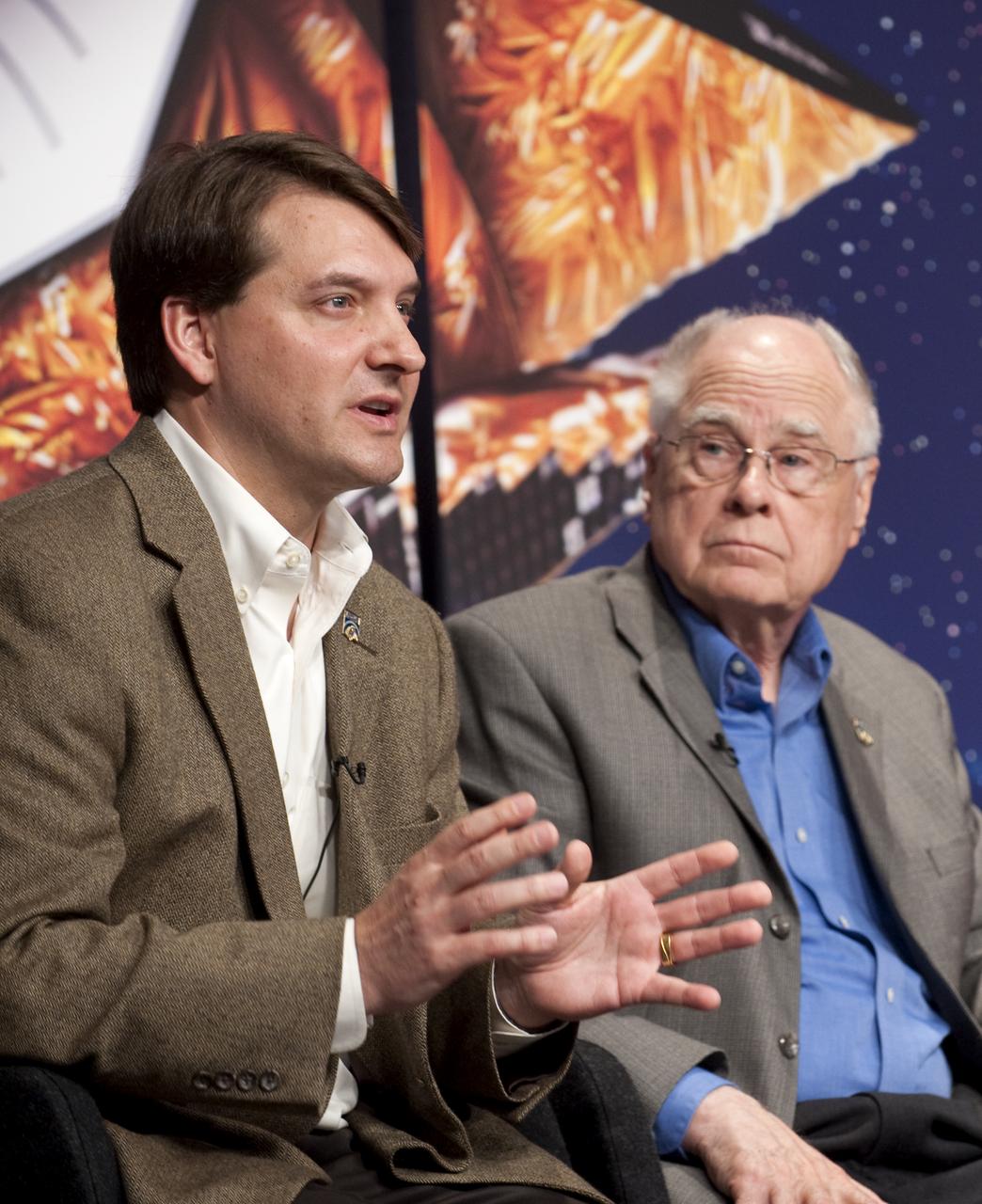
Jon Morse, NASA's Astrophysics Division Director, left, speaks during a press conference, Thursday, Aug. 6, 2009, at NASA Headquarters in Washington about the scientific observations coming from the Kepler spacecraft that was launched this past March asWilliam Bo-Ricki, Kepler principal investigator at NASA's Ames Research Center, looks on. Kepler is NASA's first mission that is capable of discovering earth-sized planets in the habitable zones of stars like our Sun. Photo Credit: (NASA/Paul E. Alers)
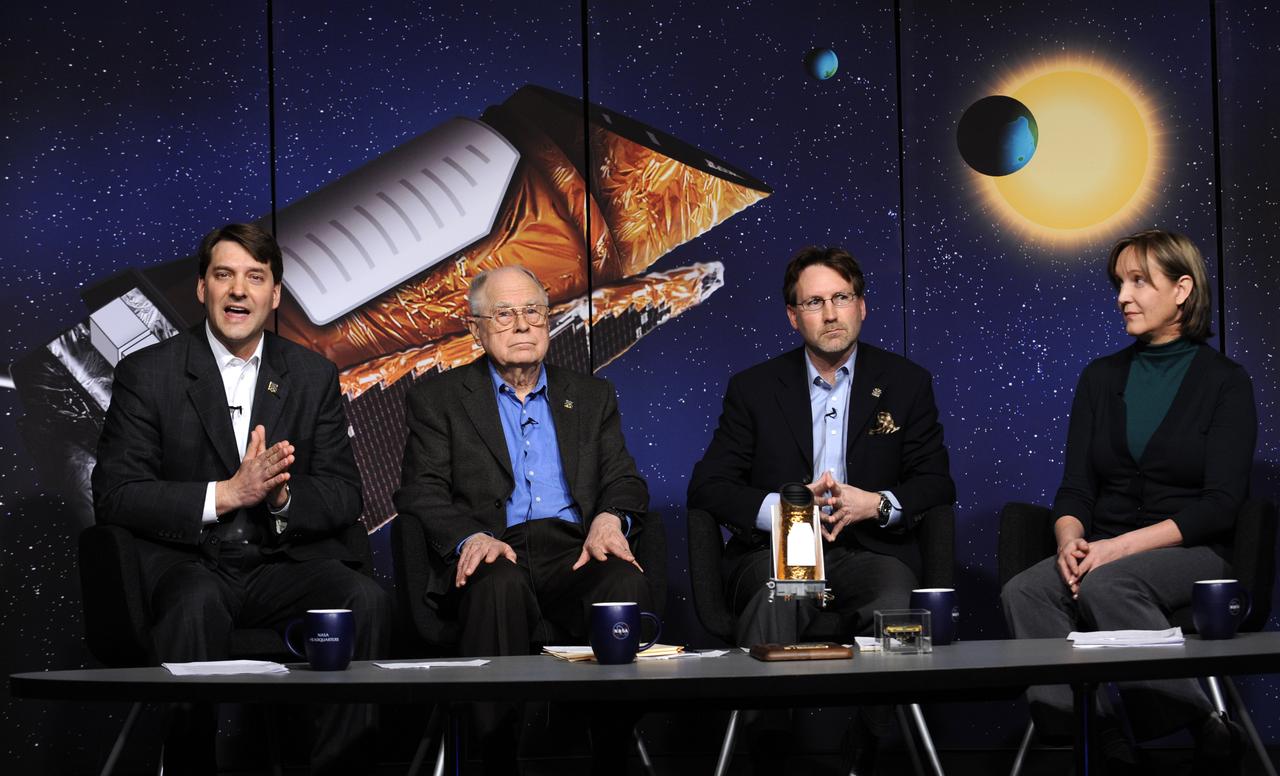
Jon Morse, Director, Astrophysics Division, at NASA Headquarters, left, talks about the Kepler mission during a media briefing, Thursday, Feb. 19, 2008, at NASA Headquarters in Washington. Morse was joined at the briefing by William Borucki, principal investigator for Kepler Science at Ames Research Center, second left, Jim Fanson, Kepler Project Manager at the Jet Propulsion Laboratory and Debra Fischer, professor of Astronomy at San Francisco State University, right. Kepler is scheduled to launch on March 5, 2009 from Cape Canaveral Air Force Station, Fla. aboard a Delta II rocket. Photo Credit: (NASA/Paul. E. Alers)
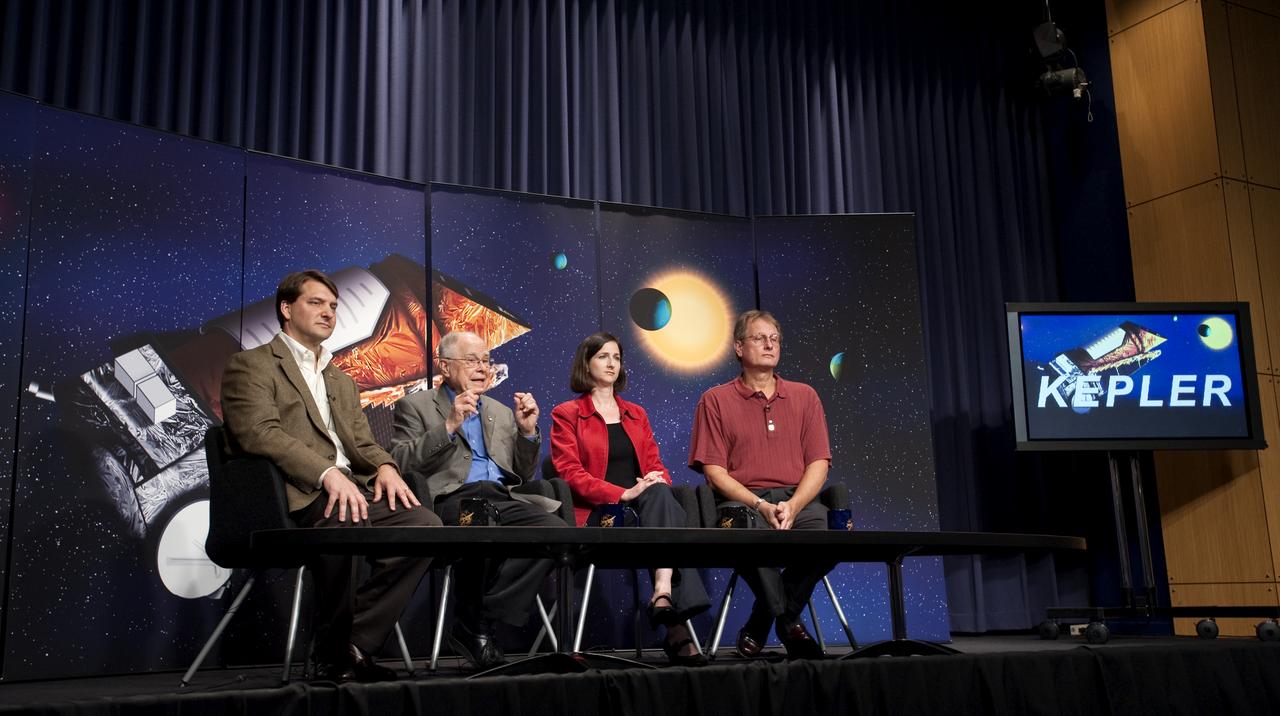
William Bo-Ricki, Kepler principal investigator at NASA's Ames Research Center, second from left, is joined by Jon Morse, left, Sara Seager, and Alan Boss while speaking at a press conference, Thursday, Aug. 6, 2009, at NASA Headquarters in Washington about the scientific observations coming from the Kepler spacecraft that was launched this past March. Kepler is NASA's first mission that is capable of discovering earth-sized planets in the habitable zones of stars like our Sun. Photo Credit: (NASA/Paul E. Alers)
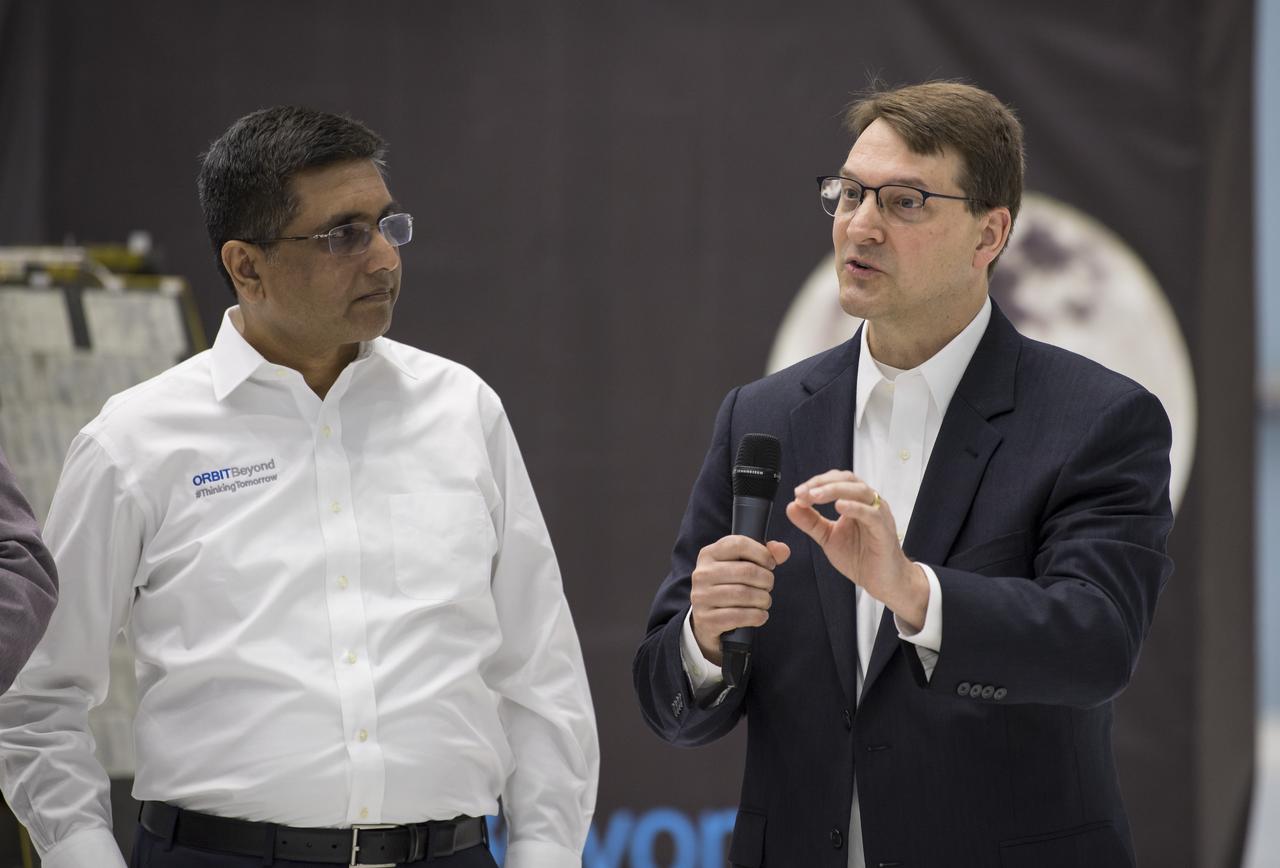
President and CEO of OrbitBeyond, Siba Padhi, left, and Chief Science Officer, OrbitBeyond, Jon Morse, speak about their lunar lander, Friday, May 31, 2019, at Goddard Space Flight Center in Md. Astrobotic, Intuitive Machines, and Orbit Beyond have been selected to provide the first lunar landers for the Artemis program's lunar surface exploration. Photo credit: (NASA/Aubrey Gemignani)
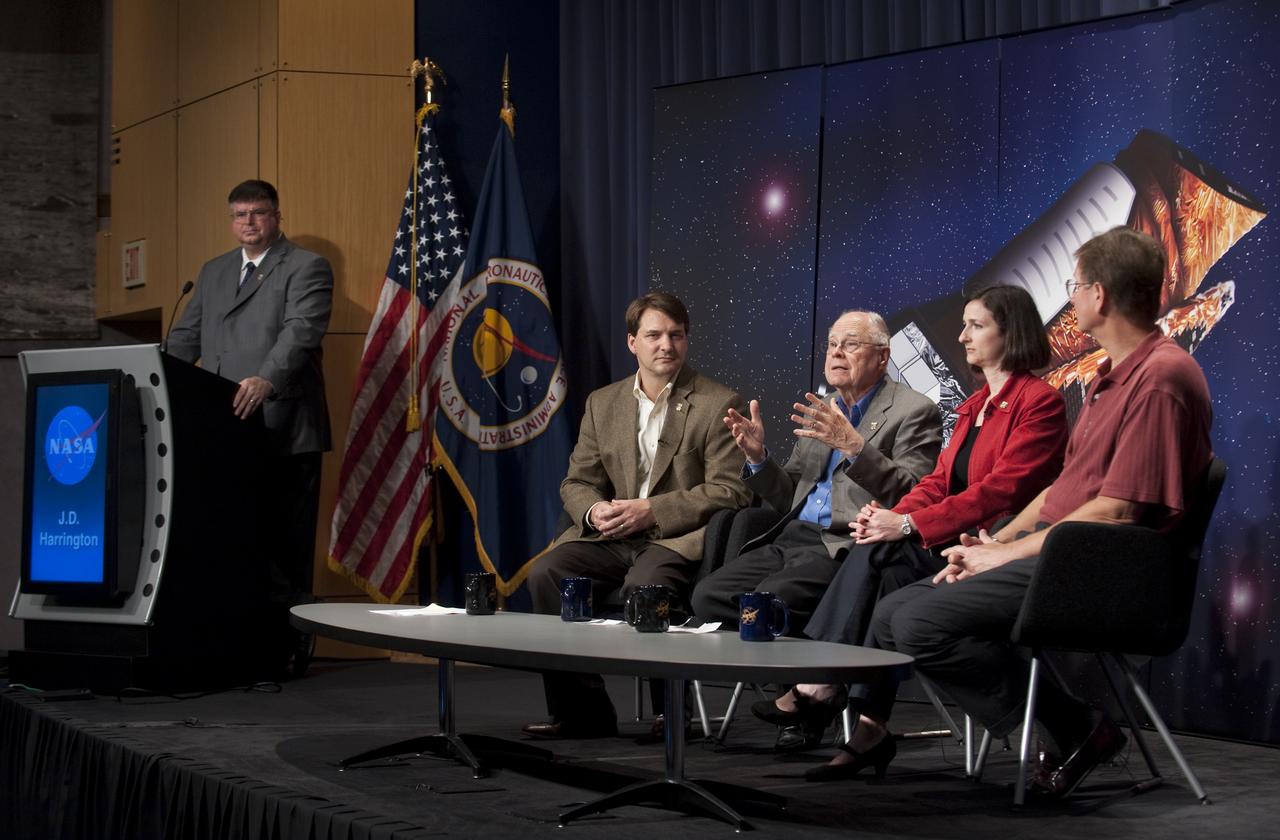
William Bo-Ricki, Kepler principal investigator at NASA's Ames Research Center, second from left, speaks during a press conference, Thursday, Aug. 6, 2009, at NASA Headquarters in Washington about the scientific observations coming from the Kepler spacecraft that was launched this past March. Others seated include Jon Morse, NASA's Astrophysics Director, Sara Seager, Professor of Planetary Science and Physics at MIT, and Alan Boss, an Astrophysicist at the Carnegie Institution at the Department of Terrestrial Magnetism in Washington, right. Kepler is NASA's first mission that is capable of discovering earth-sized planets in the habitable zones of stars like our Sun. Photo Credit: (NASA/Paul E. Alers)
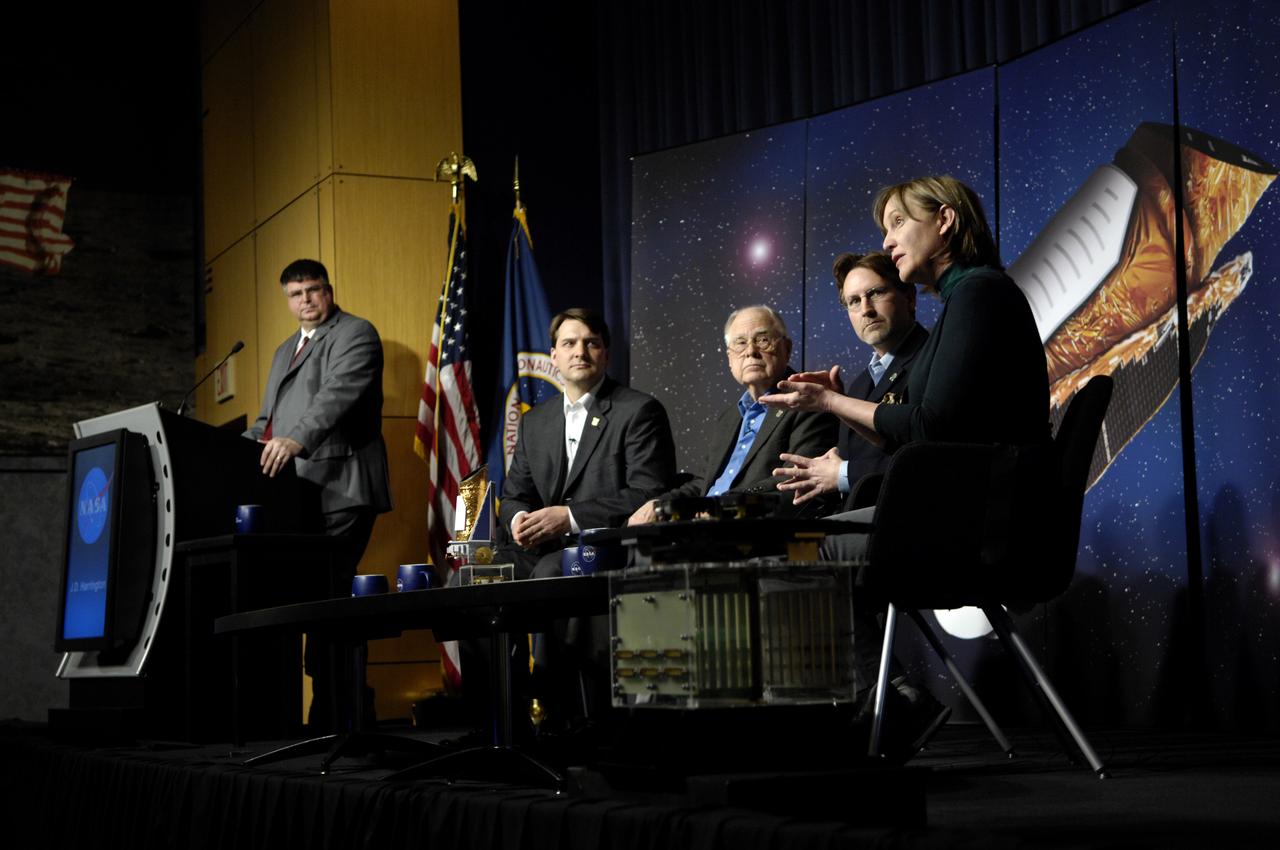
Debra Fischer, a professor of Astronomy at San Francisco State University, right, makes a comment, as Jim Fanson, William Borucki and Jon Morse, fourth from right, look on during a media briefing on the Kepler mission, Thursday, Feb. 19, 2008, at NASA Headquarters in Washington. Kepler, the first mission with the ability to find planets like earth, is scheduled to launch on March 5, 2009 from Cape Canaveral Air Force Station, Fla. aboard a Delta II rocket. At far left is J.D. Harrington. Photo Credit: (NASA/Paul. E. Alers)
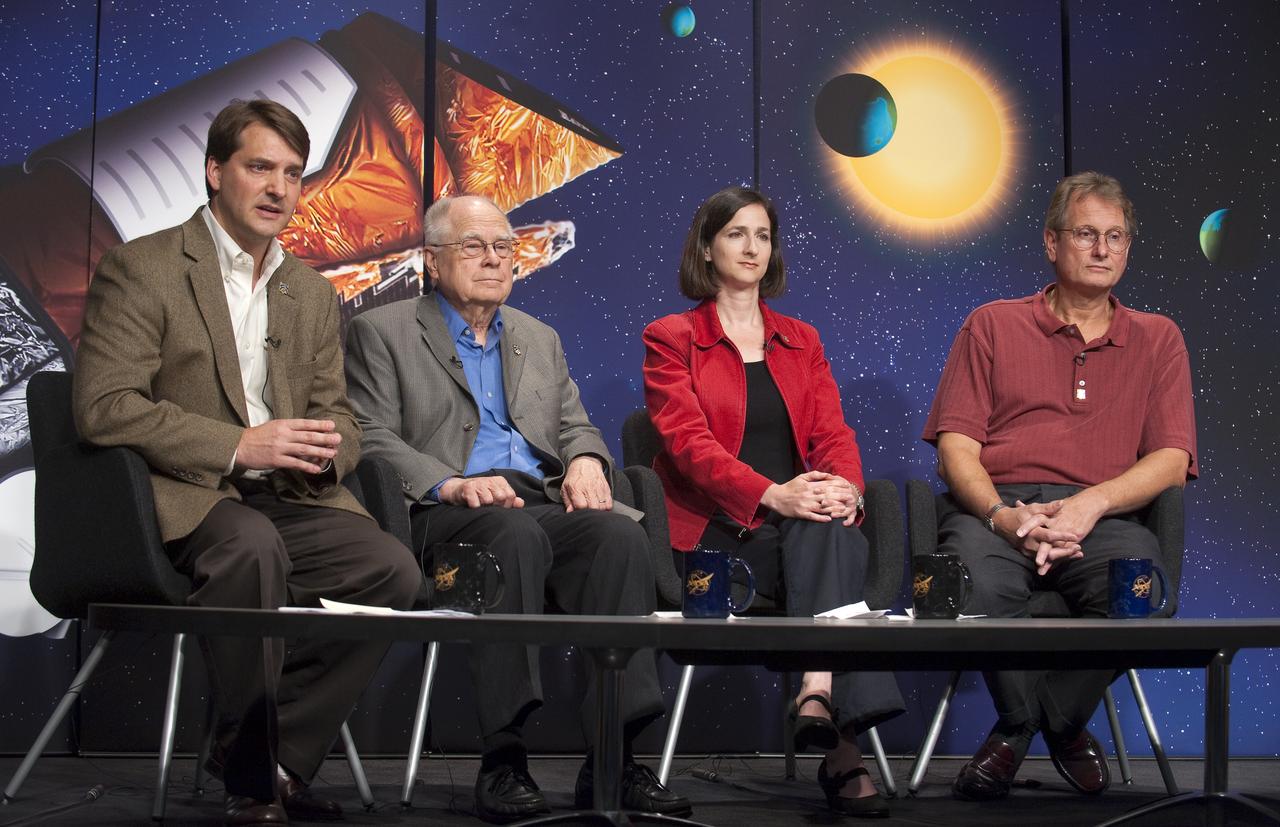
Jon Morse, Astrophysics Division Director, NASA Headquarters, left, is seen Thursday, Aug. 6, 2009 at a press conference at NASA Headquarters in Washington where he along with William Bo-Ricki, principal investigator, Sara Seager, professor of Planetary Science at the Massachusetts Institute of Technology and Alan Boss, an astrophysicist at the Carnegie Institution at the Department of Terrestrial Magnetism, far right, discussed the scientific observations coming from the Kepler spacecraft that was launched this past March. Kepler is NASA's first mission that is capable of discovering earth-sized planets in the habitable zones of stars like our Sun. Photo Credit: (NASA/Paul E. Alers)
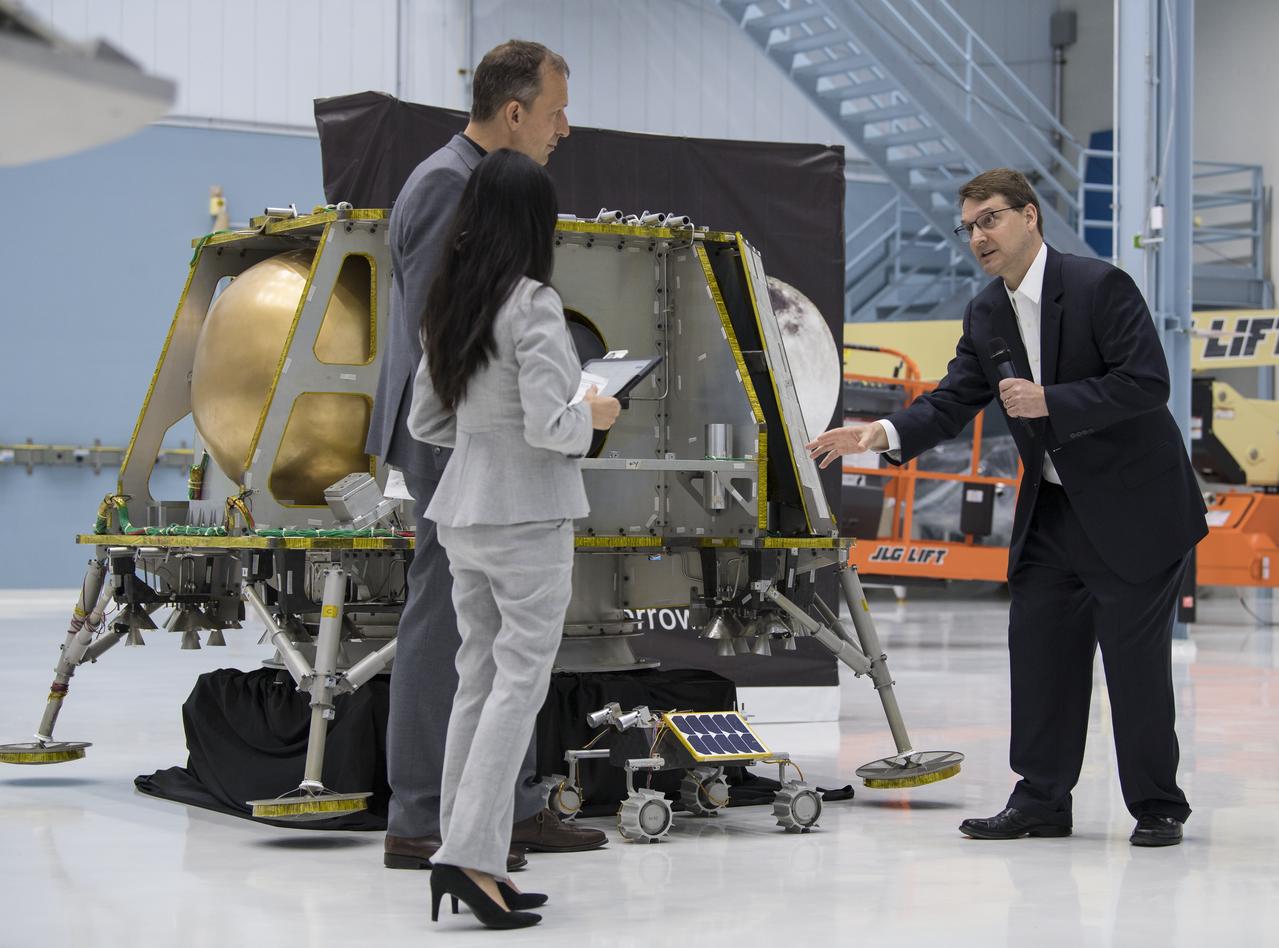
NASA Associate Administrator, Science Mission Directorate, Thomas Zurbuchen, second left, listens as Chief Science Officer, OrbitBeyond, Jon Morse, speaks about their lunar lander, Friday, May 31, 2019, at Goddard Space Flight Center in Md. Astrobotic, Intuitive Machines, and OrbitBeyond have been selected to provide the first lunar landers for the Artemis program's lunar surface exploration. Photo credit: (NASA/Aubrey Gemignani)
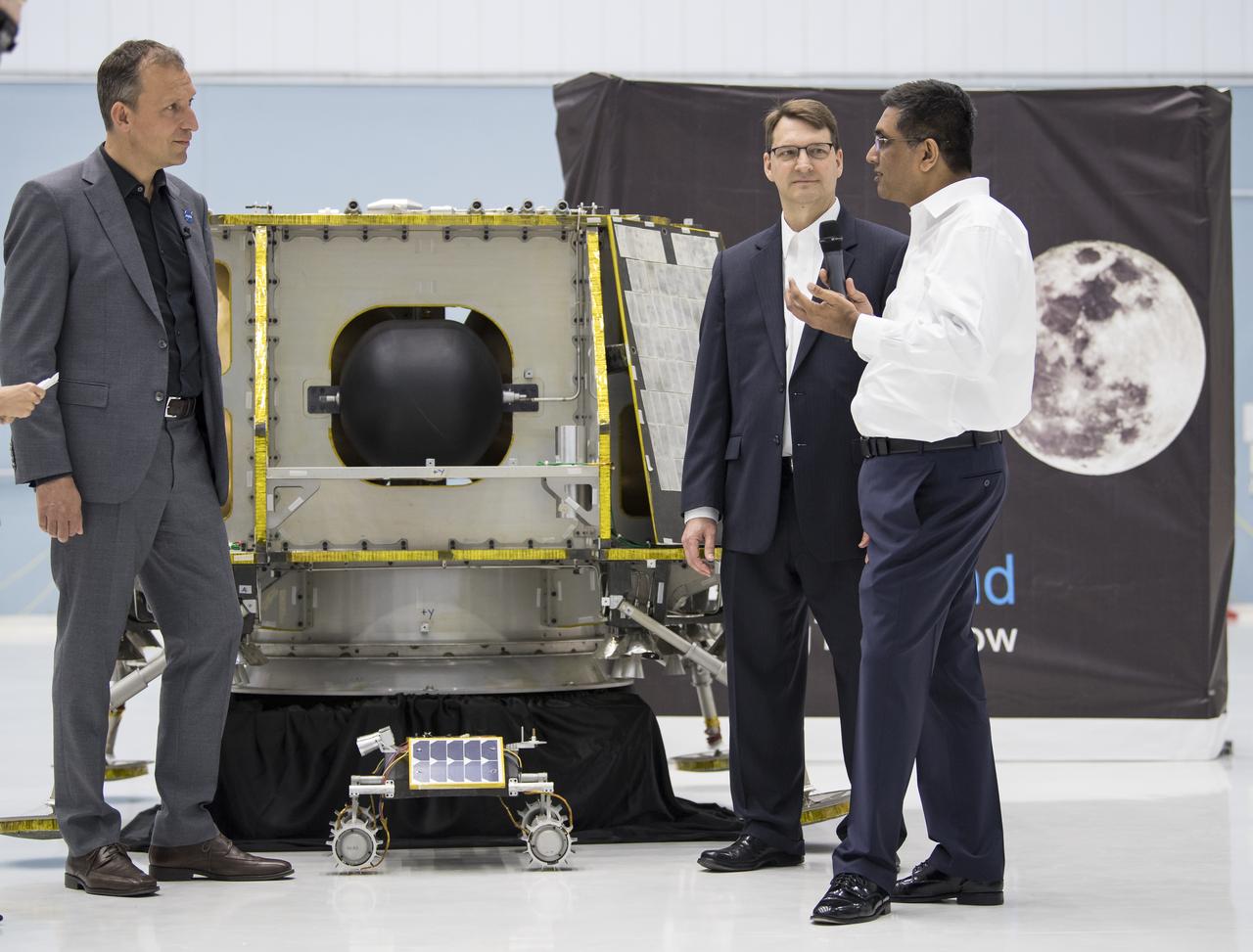
NASA Associate Administrator, Science Mission Directorate, Thomas Zurbuchen, left, speaks to, President and CEO of OrbitBeyond, Siba Padhi, right, and Chief Science Officer, OrbitBeyond, Jon Morse, about their lunar lander, Friday, May 31, 2019, at Goddard Space Flight Center in Md. Astrobotic, Intuitive Machines, and Orbit Beyond have been selected to provide the first lunar landers for the Artemis program's lunar surface exploration. Photo credit: (NASA/Aubrey Gemignani)
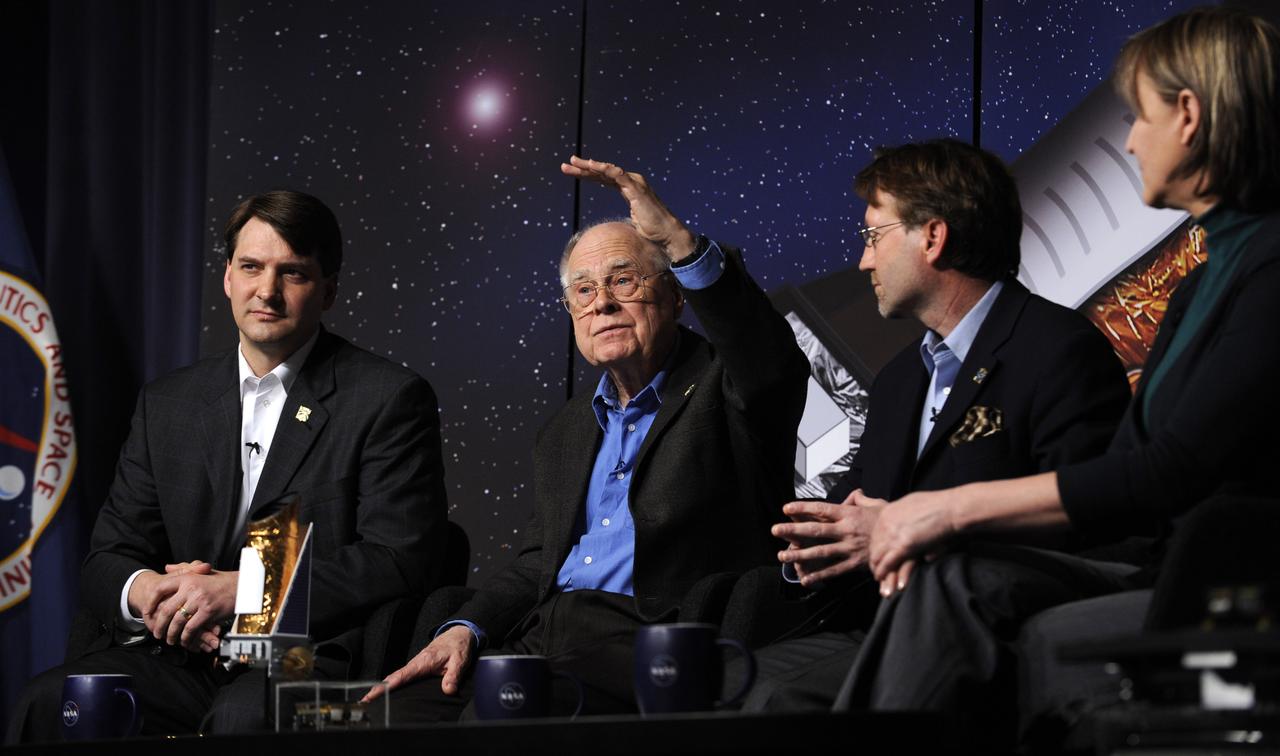
William Borucki, principal investigator for Kepler Science at Ames Research Center, Moffett Field, Calif.,, second from left, talks about the Kepler mission during a media briefing, Thursday, Feb. 19, 2008, at NASA Headquarters in Washington. Kepler, the first mission with the ability to find planets like earth, is scheduled to launch on March 5, 2009 from Cape Canaveral Air Force Station, Fla. aboard a Delta II rocket. Joining Borucki at the briefing were Jon Morse, director, Astrophysics Division, NASA Headquarters, Jim Fanson, Kepler project manager at the Jet Propulsion Laboratory and Debra Fischer, a professor of Astronomy at San Francisco State University. Photo Credit: (NASA/Paul. E. Alers)
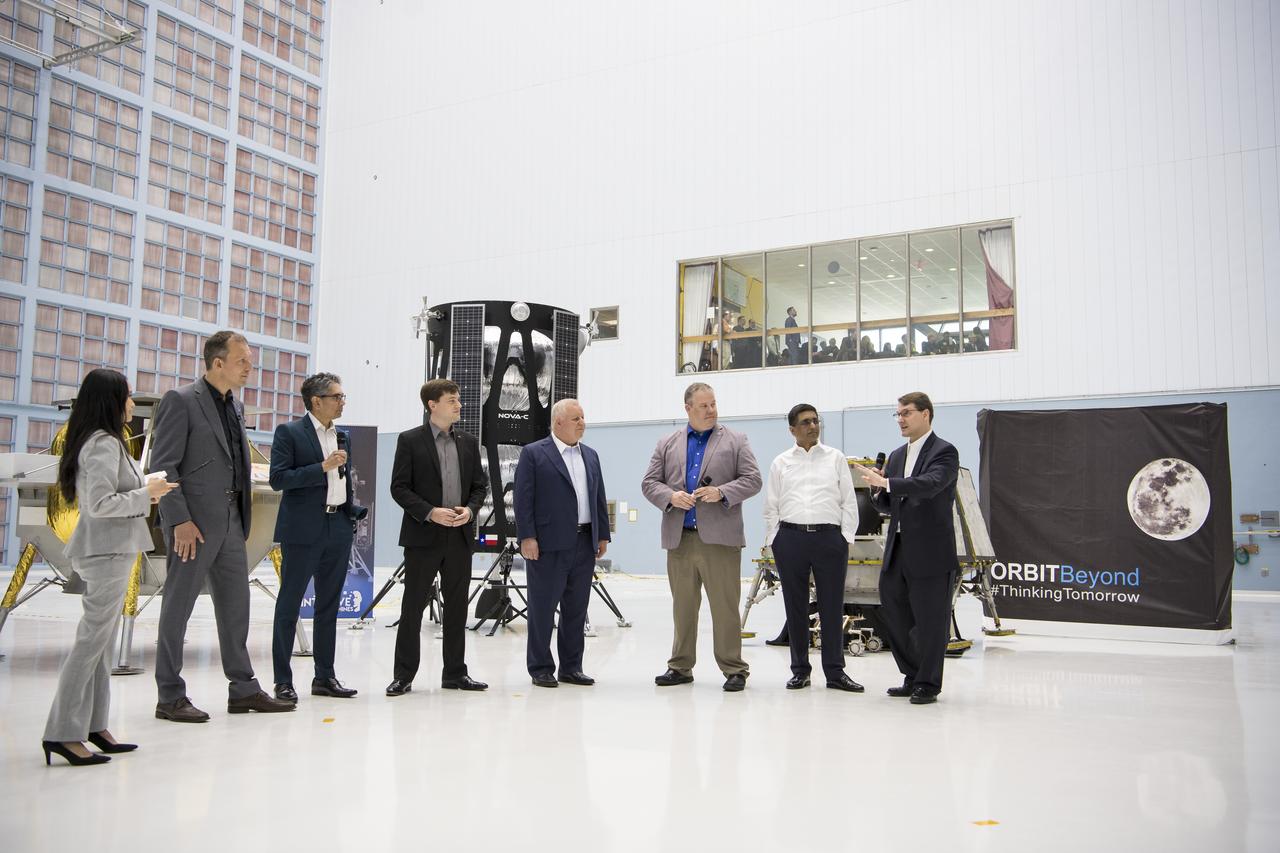
Chief Science Officer, OrbitBeyond, Jon Morse speaks about their lunar lander with, from left to right, NASA Press Officer, Felicia Chou; NASA Associate Administrator, Science Mission Directorate, Thomas Zurbuchen; Astrobotic Mission Director, Sharad Bhaskaran; Astrobotic CEO, John Thornton; Chairman of the Board of Intuitive Machines, Kam Ghaffarian; VP of Research and Development of Intuitive Machines, Tim Crain; President and CEO of OrbitBeyond, Siba Padhi, Friday, May 31, 2019, at Goddard Space Flight Center in Md. Astrobotic, Intuitive Machines, and OrbitBeyond have been selected to provide the first lunar landers for the Artemis program's lunar surface exploration. Photo credit: (NASA/Aubrey Gemignani)
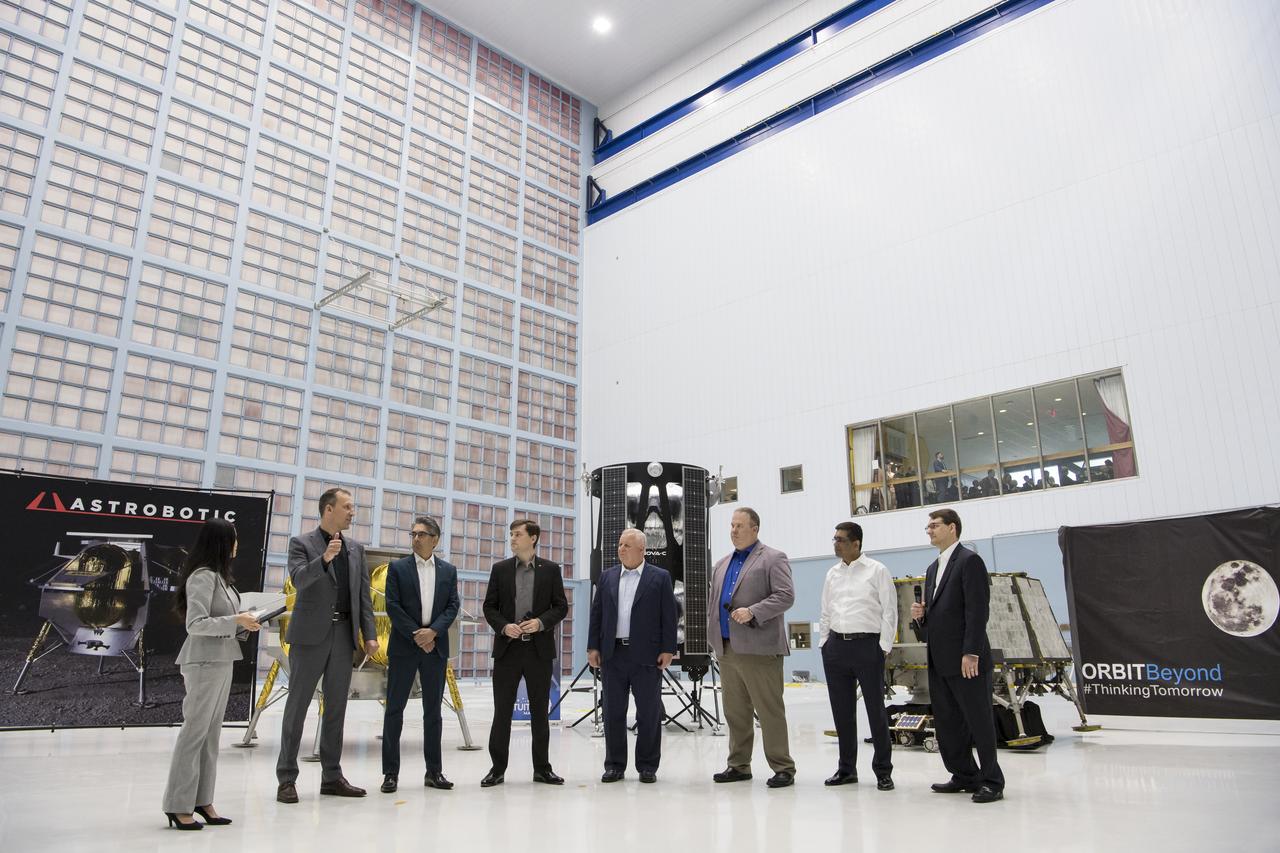
From left to right, NASA Press Officer, Felicia Chou; NASA Associate Administrator, Science Mission Directorate, Thomas Zurbuchen; Astrobotic Mission Director, Sharad Bhaskaran; Astrobotic CEO, John Thornton; Chairman of the Board of Intuitive Machines, Kam Ghaffarian; VP of Research and Development of Intuitive Machines, Tim Crain; President and CEO of OrbitBeyond, Siba Padhi; and Chief Science Officer, OrbitBeyond, Jon Morse talk about their lunar landers, Friday, May 31, 2019, at Goddard Space Flight Center in Md. Astrobotic, Intuitive Machines, and OrbitBeyond have been selected to provide the first lunar landers for the Artemis program's lunar surface exploration. Photo credit: (NASA/Aubrey Gemignani)
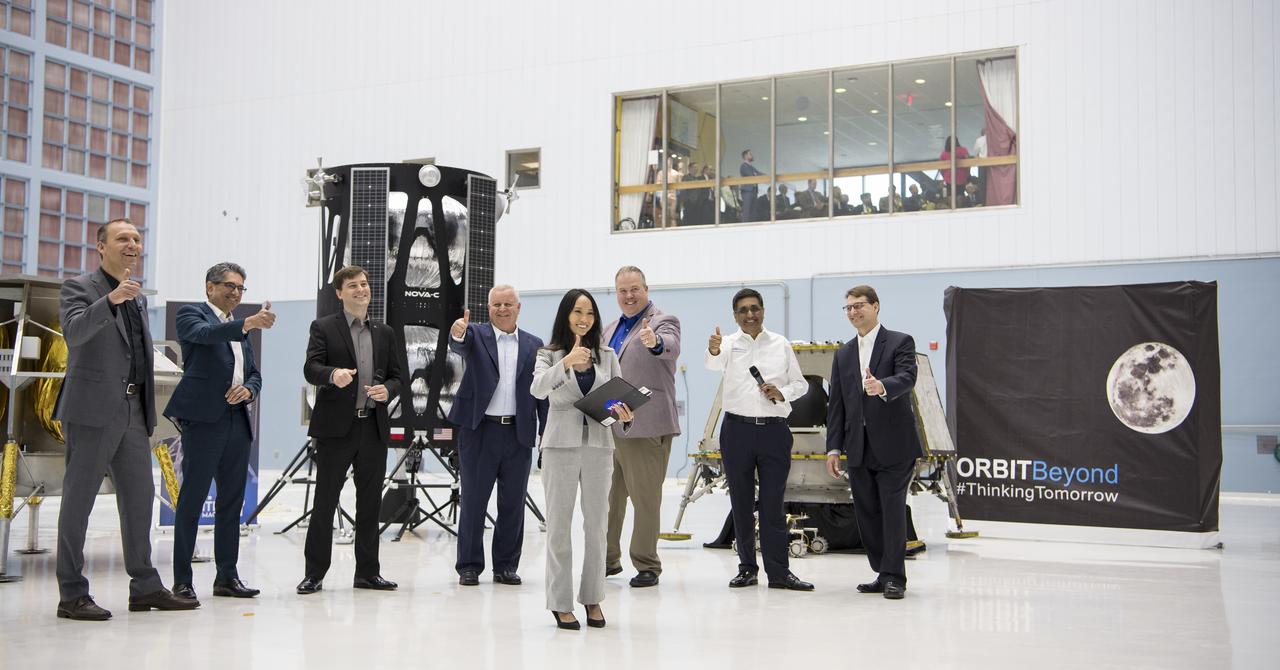
From left to right, NASA Associate Administrator, Science Mission Directorate, Thomas Zurbuchen; Astrobotic Mission Director, Sharad Bhaskaran; Astrobotic CEO, John Thornton; Chairman of the Board of Intuitive Machines, Kam Ghaffarian; VP of Research and Development of Intuitive Machines, Tim Crain; President and CEO of OrbitBeyond, Siba Padhi; Chief Science Officer, OrbitBeyond, Jon Morse; and NASA Press Officer, Felicia Chou, front center, put their thumbs up at the conclusion of an event announcing the companies that will provide the first lunar landers for the Artemis program's lunar surface exploration, Friday, May 31, 2019, at Goddard Space Flight Center in Md. Photo credit: (NASA/Aubrey Gemignani)
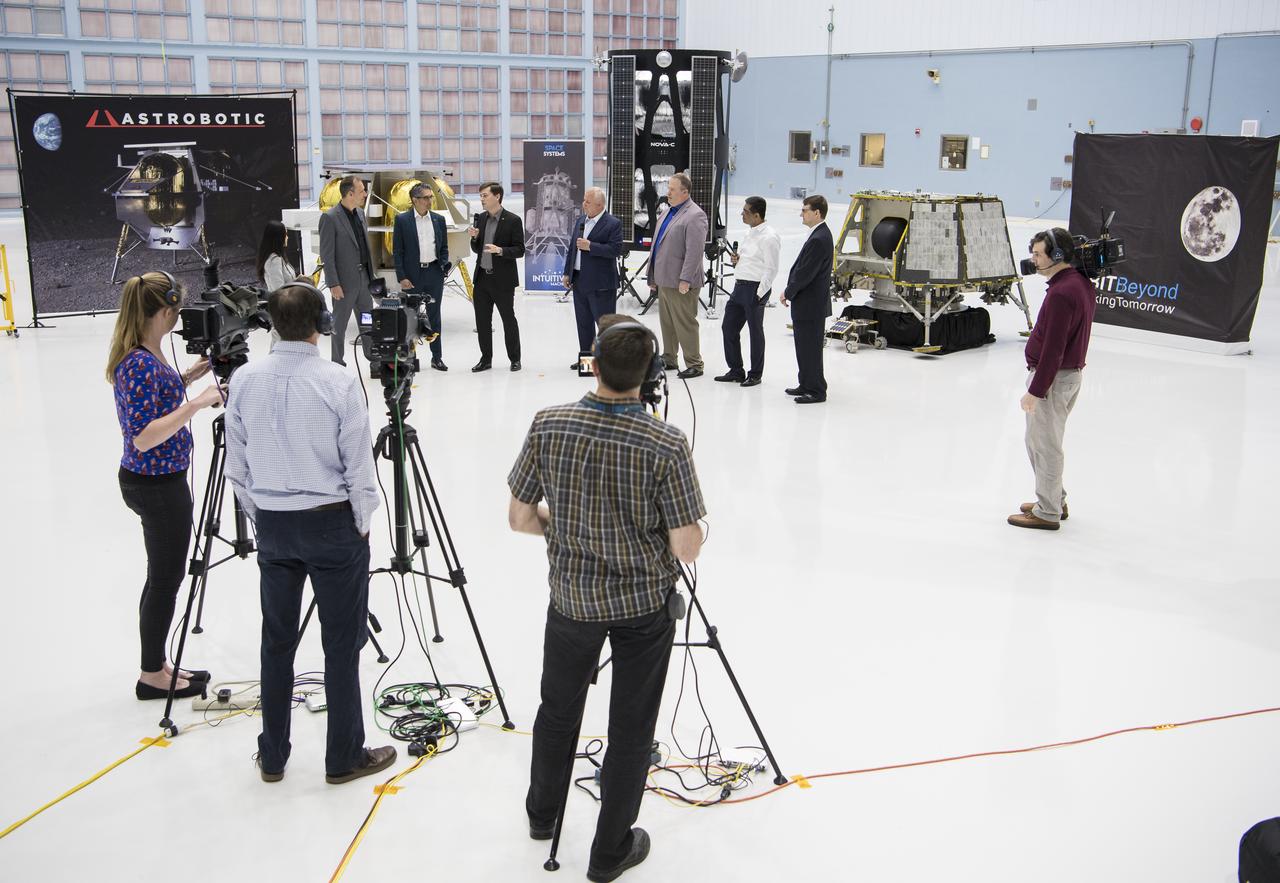
Astrobotic CEO, John Thornton, fourth from left, speaks about their lunar lander with, from left to right, NASA Press Officer, Felicia Chou; NASA Associate Administrator, Science Mission Directorate, Thomas Zurbuchen; Astrobotic Mission Director, Sharad Bhaskaran; Chairman of the Board of Intuitive Machines, Kam Ghaffarian; VP of Research and Development of Intuitive Machines, Tim Crain; President and CEO of OrbitBeyond, Siba Padhi; and Chief Science Officer, OrbitBeyond, Jon Morse, Friday, May 31, 2019, at Goddard Space Flight Center in Md. Astrobotic, Intuitive Machines, and OrbitBeyond have been selected to provide the first lunar landers for the Artemis program's lunar surface exploration. Photo credit: (NASA/Aubrey Gemignani)
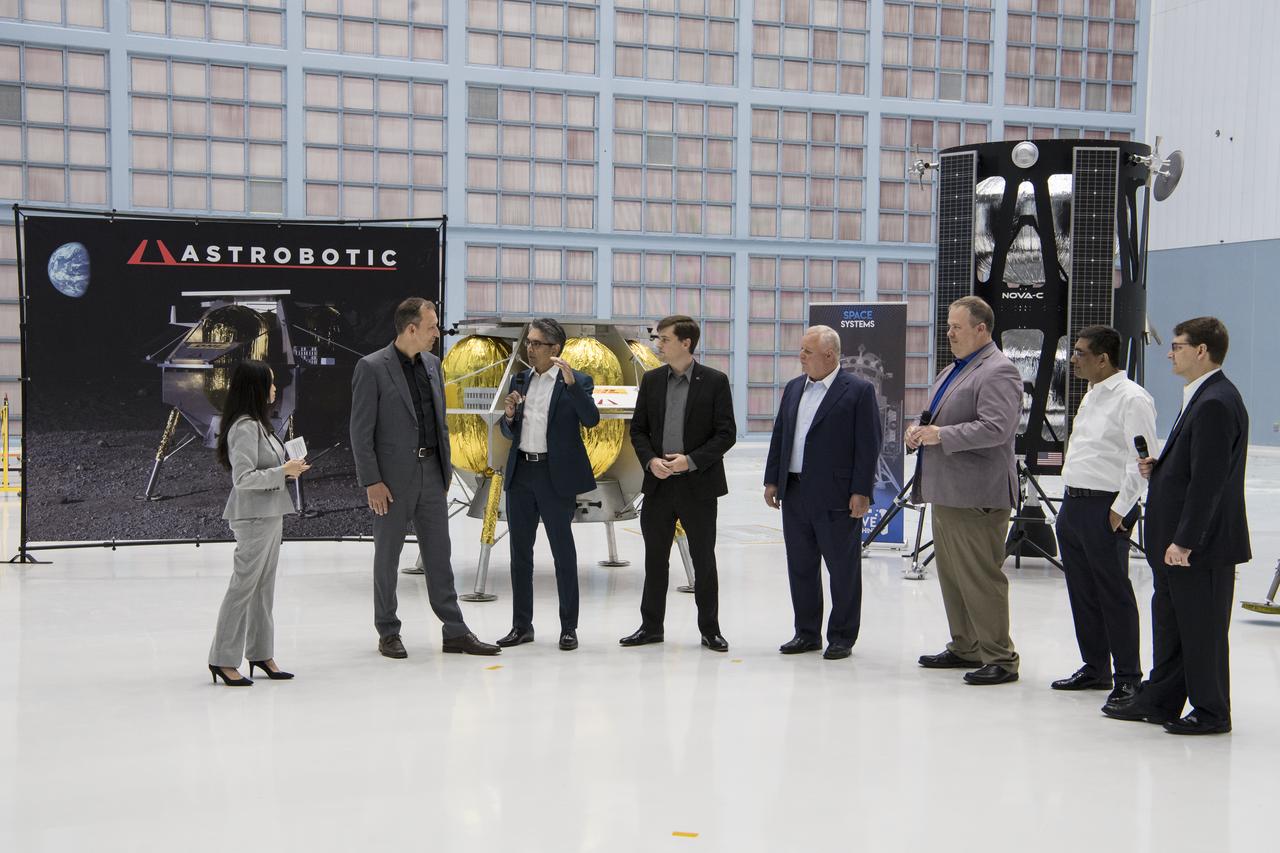
Astrobotic Mission Director, Sharad Bhaskaran , third from left, speaks about their lunar lander with, from left to right, NASA Press Officer, Felicia Chou; NASA Associate Administrator, Science Mission Directorate, Thomas Zurbuchen; Astrobotic CEO, John Thornton; Chairman of the Board of Intuitive Machines, Kam Ghaffarian; VP of Research and Development of Intuitive Machines, Tim Crain; President and CEO of OrbitBeyond, Siba Padhi; and Chief Science Officer, OrbitBeyond, Jon Morse, Friday, May 31, 2019, at Goddard Space Flight Center in Md. Astrobotic, Intuitive Machines, and OrbitBeyond have been selected to provide the first lunar landers for the Artemis program's lunar surface exploration. Photo credit: (NASA/Aubrey Gemignani)
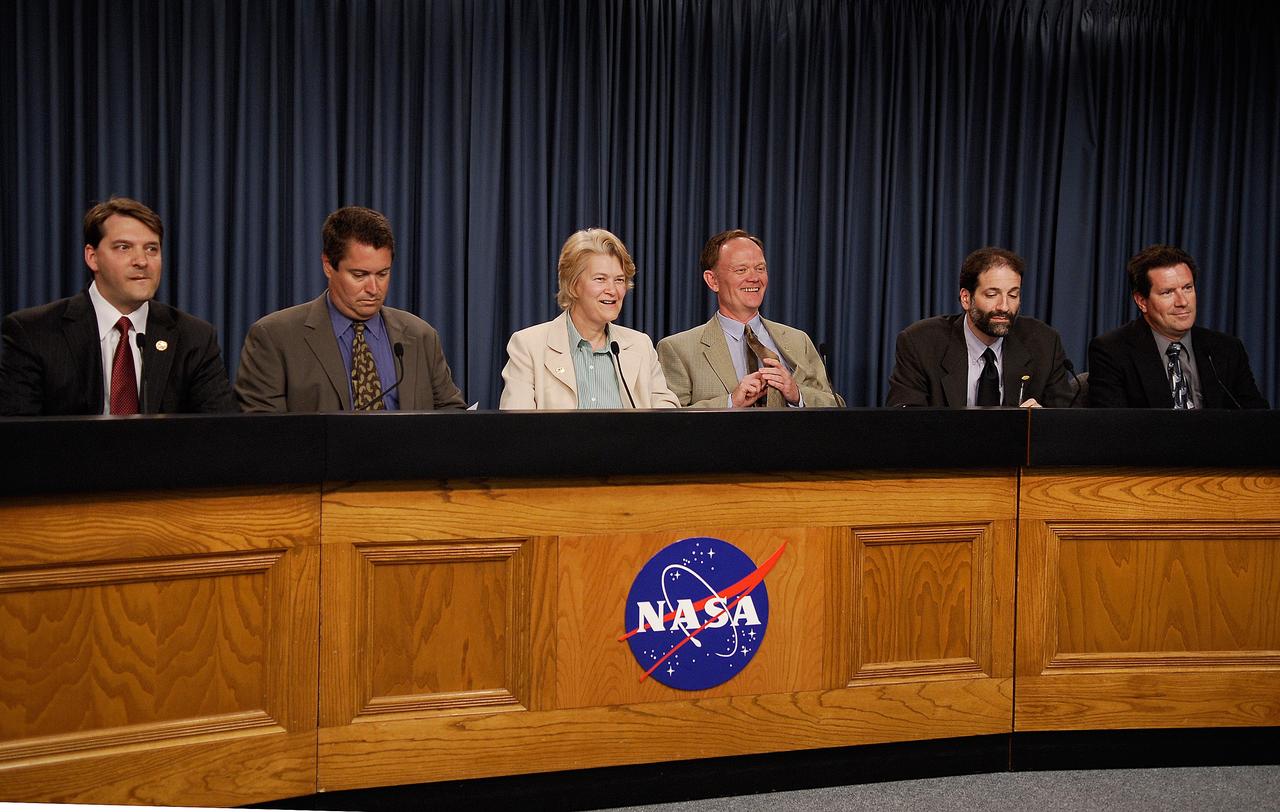
CAPE CANAVERAL, Fla. -- At NASA's Kennedy Space Center, key personnel brief the media on NASA's Gamma-Ray Large Area Space Telescope, or GLAST, launch scheduled for June 11. From left are Dr. Jon Morse, director of NASA's Astrophysics Division; Omar Baez, NASA launch director/launch manager at Kennedy; Kris Walsh, director of the Delta NASA and Commercial Programs with United Launch Alliance; Kevin Grady, GLAST project manager at NASA's Goddard Space Flight Center; Dr. Steven Ritz, GLAST project scientist/astrophysicist at Goddard; and Joel Tumbiolo, the U.S. Air Force Delta II launch weather officer with the 45th Weather Squadron at Cape Canaveral Air Force Station. GLAST is a powerful space observatory that will explore the Universe's ultimate frontier, where nature harnesses forces and energies far beyond anything possible on Earth; probe some of science's deepest questions, such as what our Universe is made of, and search for new laws of physics; explain how black holes accelerate jets of material to nearly light speed; and help crack the mystery of stupendously powerful explosions known as gamma-ray bursts. Photo credit: NASA/Kim Shiflett
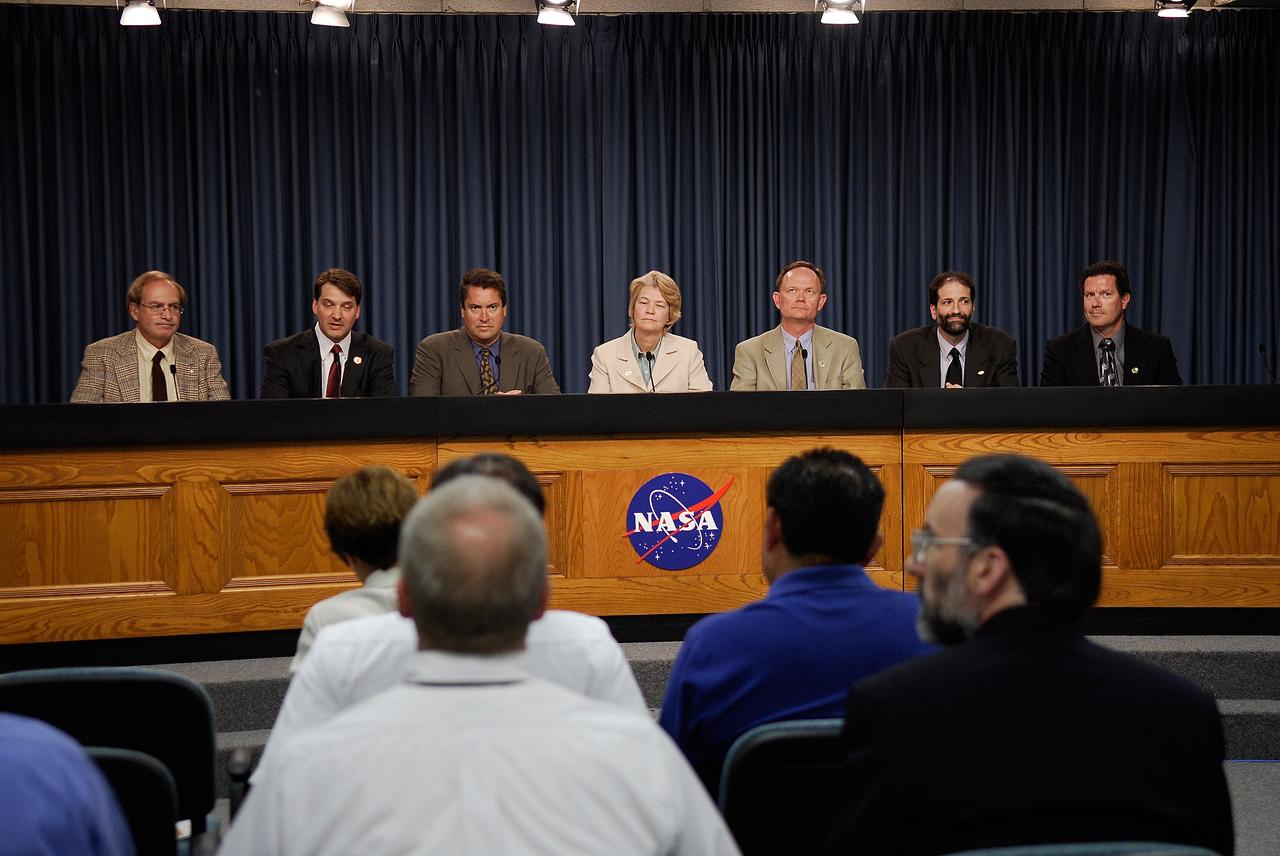
CAPE CANAVERAL, Fla. -- At left, Public Information Officer George Diller moderates a media briefing on NASA's Gamma-Ray Large Area Space Telescope, or GLAST, launch scheduled for June 11. On the panel next to Diller are Dr. Jon Morse, director of NASA's Astrophysics Division; Omar Baez, NASA launch director/launch manager at Kennedy; Kris Walsh, director of the Delta NASA and Commercial Programs with United Launch Alliance; Kevin Grady, GLAST project manager at NASA's Goddard Space Flight Center; Dr. Steven Ritz, GLAST project scientist/astrophysicist at Goddard; and Joel Tumbiolo, the U.S. Air Force Delta II launch weather officer with the 45th Weather Squadron at Cape Canaveral Air Force Station. GLAST is a powerful space observatory that will explore the Universe's ultimate frontier, where nature harnesses forces and energies far beyond anything possible on Earth; probe some of science's deepest questions, such as what our Universe is made of, and search for new laws of physics; explain how black holes accelerate jets of material to nearly light speed; and help crack the mystery of stupendously powerful explosions known as gamma-ray bursts. Photo credit: NASA/Kim Shiflett