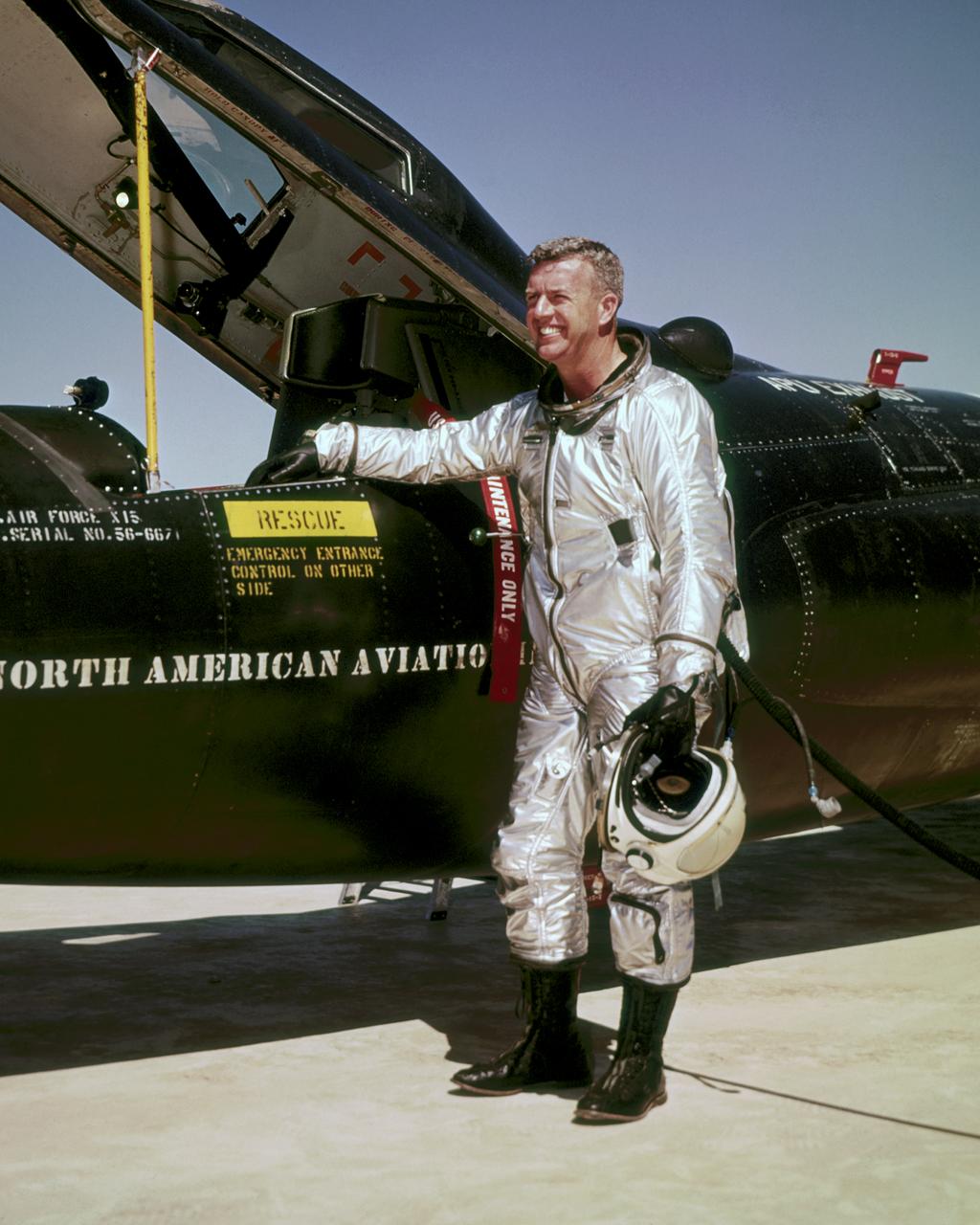
Joseph A. Walker was a Chief Research Pilot at the NASA Dryden Flight Research Center during the mid-1960s. He joined the NACA in March 1945, and served as project pilot at the Edwards flight research facility on such pioneering research projects as the D-558-1, D-558-2, X-1, X-3, X-4, X-5, and the X-15. He also flew programs involving the F-100, F-101, F-102, F-104, and the B-47. Walker made the first NASA X-15 flight on March 25, 1960. He flew the research aircraft 24 times and achieved its fastest speed and highest altitude. He attained a speed of 4,104 mph (Mach 5.92) during a flight on June 27, 1962, and reached an altitude of 354,300 feet on August 22, 1963 (his last X-15 flight). He was the first man to pilot the Lunar Landing Research Vehicle (LLRV) that was used to develop piloting and operational techniques for lunar landings. Walker was born February 20, 1921, in Washington, Pa. He lived there until graduating from Washington and Jefferson College in 1942, with a B.A. degree in Physics. During World War II he flew P-38 fighters for the Air Force, earning the Distinguished Flying Cross and the Air Medal with Seven Oak Clusters. Walker was the recipient of many awards during his 21 years as a research pilot. These include the 1961 Robert J. Collier Trophy, 1961 Harmon International Trophy for Aviators, the 1961 Kincheloe Award and 1961 Octave Chanute Award. He received an honorary Doctor of Aeronautical Sciences degree from his alma mater in June of 1962. Walker was named Pilot of the Year in 1963 by the National Pilots Association. He was a charter member of the Society of Experimental Test Pilots, and one of the first to be designated a Fellow. He was fatally injured on June 8, 1966, in a mid-air collision between an F-104 he was piloting and the XB-70.
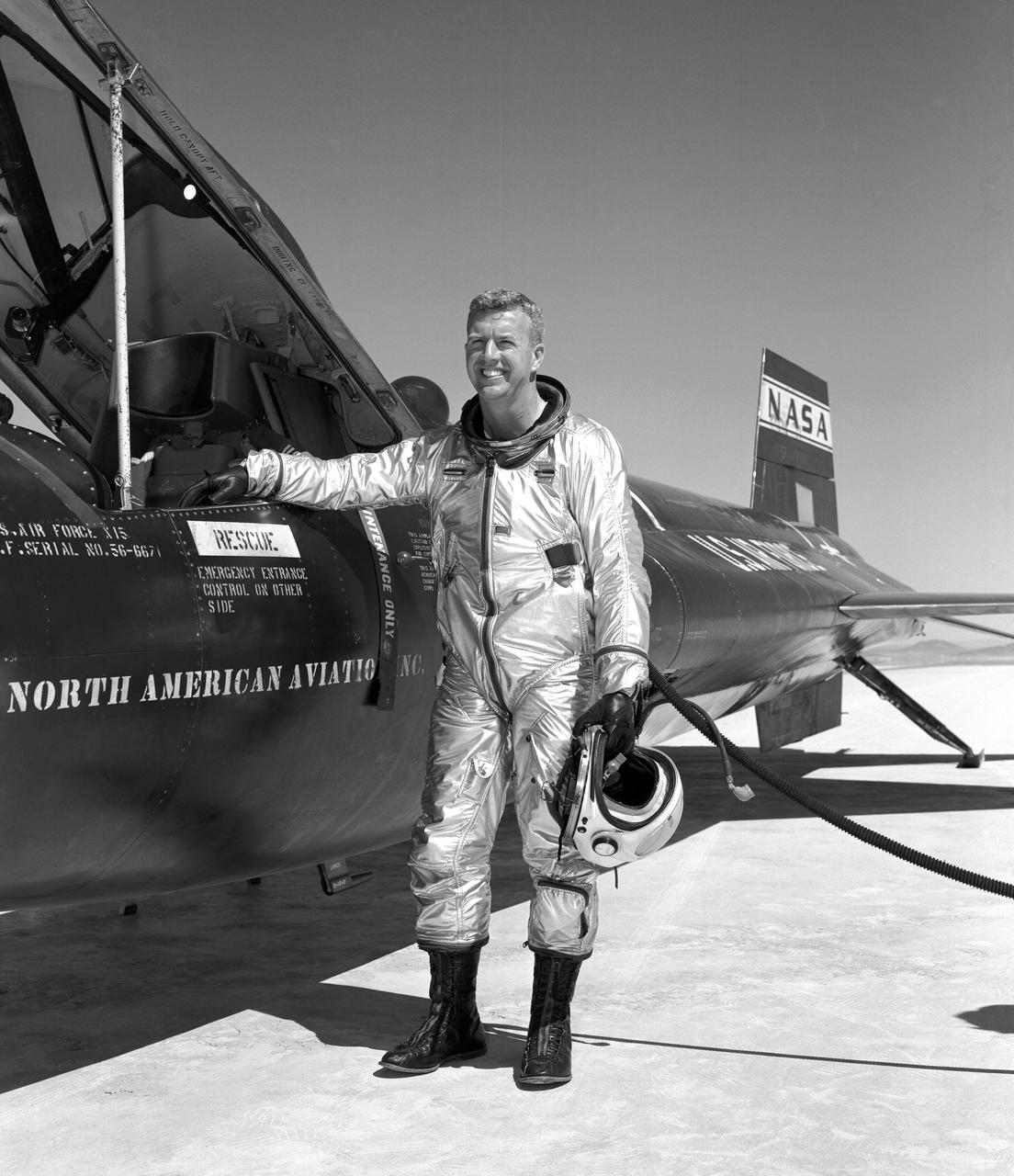
Walker made the first NASA-piloted X-15 flight March 25, 1960, and flew the aircraft 24 times, achieving its highest altitude (354,300 ft.) Aug. 22, 1963. He died piloting a F-104 that was caught up in a vortex of the XB-70.
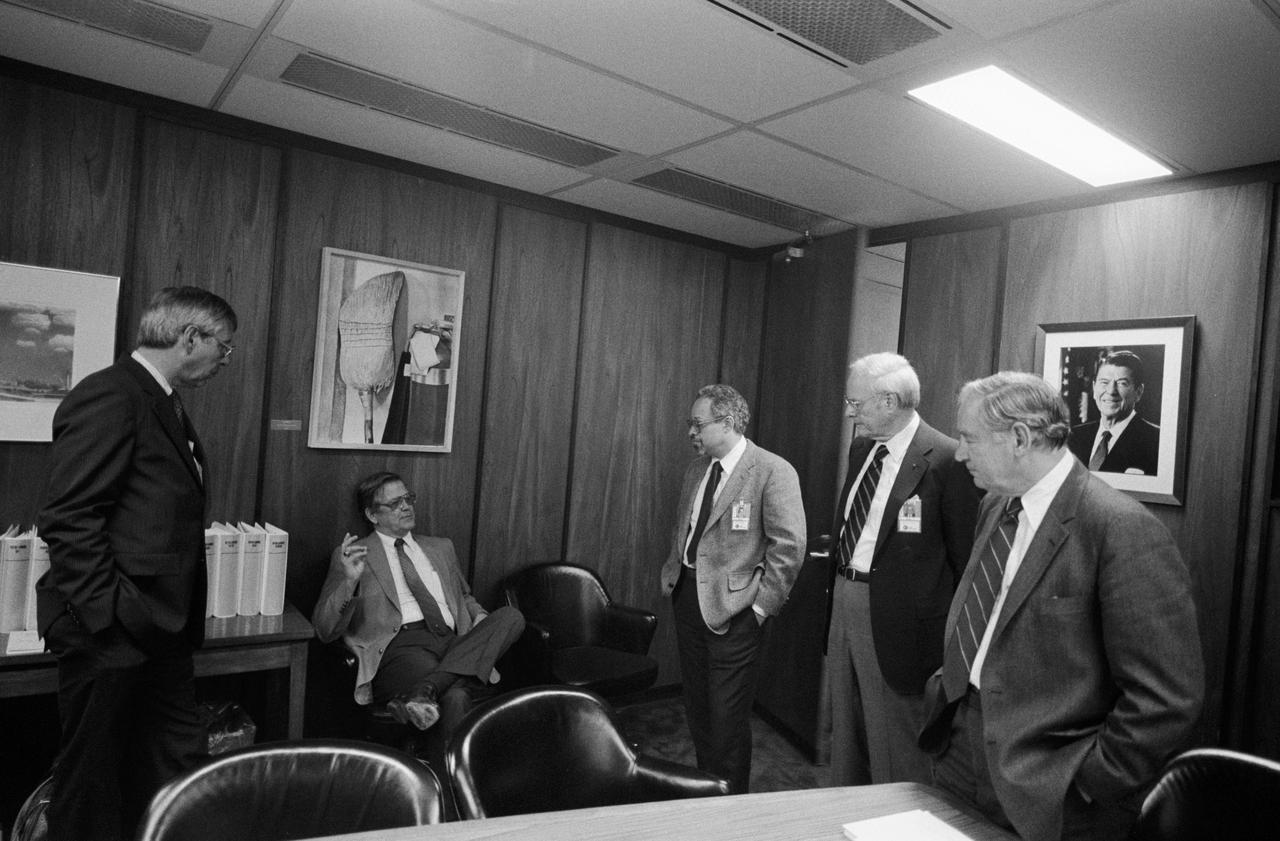
S86-28751 (5 March 1986) --- Two NASA officials talk with members of the Presidential Commission on the Space Shuttle Challenger Accident in the Executive Conference Room of JSC’s Project Management Building. Left to right are JSC Deputy Director Robert C. Goetz; Richard H. Kohrs, Deputy Manager, National Space Transportation Systems Office; and commission members Dr. Arthur B.C. Walker Jr., Robert W. Rummel and Joseph F. Sutter. Photo credit: NASA

S115-E-E-05528 (12 Sept. 2006) --- Astronaut Steven G. MacLean, representing the Canadian Space Agency, works at the controls for the Canadarm2 or space station remote manipulator arm as part of the team effort to successfully complete "installation day" on the International Space Station. The Atlantis and Expedition 13 crews worked on attaching the P3/P4 truss during the first of three scheduled spacewalks by STS-115 shuttle crew members. Today's space walkers were astronauts Joseph R. Tanner and Heidemarie M. Stefanyshyn-Piper.
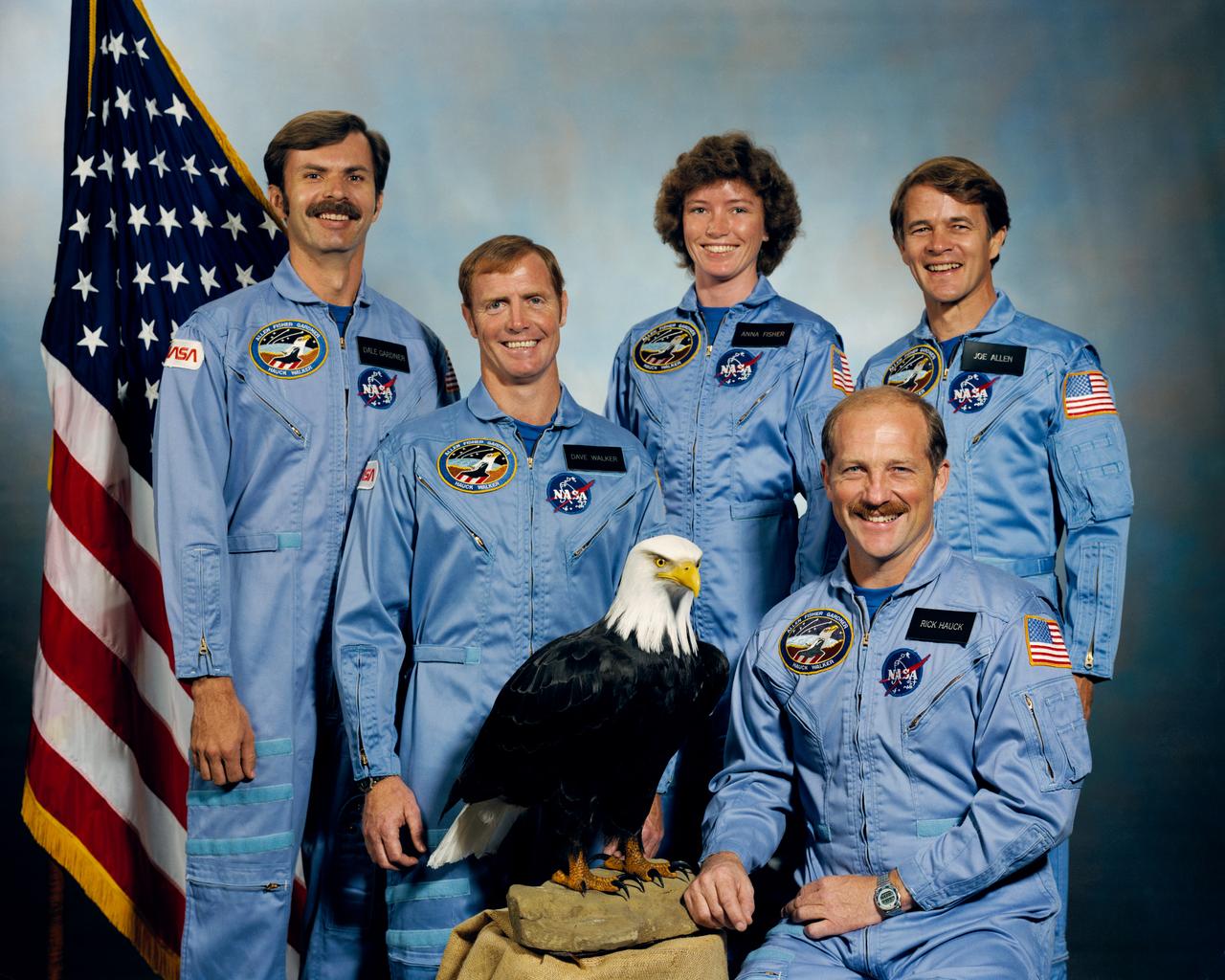
S84-40082 (August 1984) --- These five astronauts are scheduled to fly aboard the Space Shuttle Discovery on Mission STS-51A for NASA. The mission is scheduled for early November 1984. Astronaut Frederick H. (Rick) Hauck, seated, is crew commander. Astronaut David M. Walker, pilot, stands next to the Eagle, 51-A mascot. Others on the back row, left-to-right, are astronauts Dale A. Gardner, Anna L. Fisher and Joseph P. Allen IV, all mission specialists.

51A-13-028 (12 Nov 1984) --- The five-member crew celebrates a successful mission. The reference to the eagle has to do with the Discovery crew’s mascot, which appeared both in its crew portrait and insignia. L-R (front row) astronauts David M. Walker, Anna Lee Fisher and Joseph P. Allen; (back row) Dale A. Gardner and Frederick H. (Rick) Hauck.

S86-28750 (5 March 1986) --- Two JSC officials and two members of the Presidential Commission on the Space Shuttle Challenger Accident meet in the Executive Conference Room of JSC’s Project Management Building. Left to right are JSC Deputy Director Robert C. Goetz; Richard H. Kohrs, Deputy Manager for National Space Transportation Systems Program Office; and commission members Joseph F. Sutter and Dr. Arthur B.C. Walker Jr. Photo credit: NASA

51A-90032 (8 Nov 1984) --- Space Shuttle Discovery blasts off from launch pad 39A to begin its second space trip. Five crewmembers inside head toward a scheduled eight-day stay in earth orbit, during which two satellites will be deployed and two more will be retrieved for eventual re-deployment. Onboard Discovery are astronauts Frederick H. (Rick) Hauck, David M. Walker, Joseph P. Allen, Dale A. Gardenter and Anna L. Fisher.
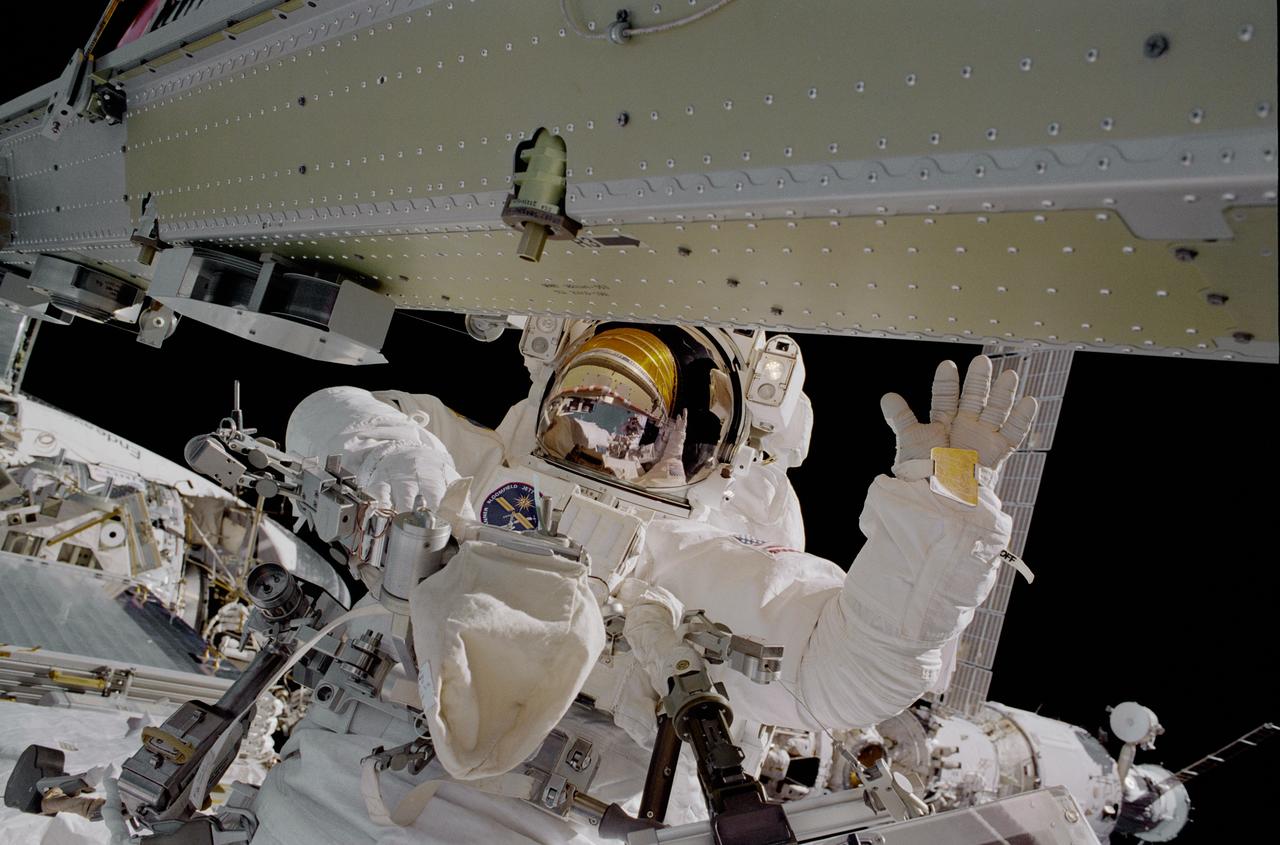
STS097-376-009 (7 December 2000) --- Astronaut Carlos I. Noriega, mission specialist, during the final of the three space walks scheduled for the STS-97 mission to the International Space Station (ISS), waves to his fellow space walker, astronaut Joseph R. Tanner, mission specialist. A small reflection of Tanner can be seen in the helmet as he captures this 35mm image.
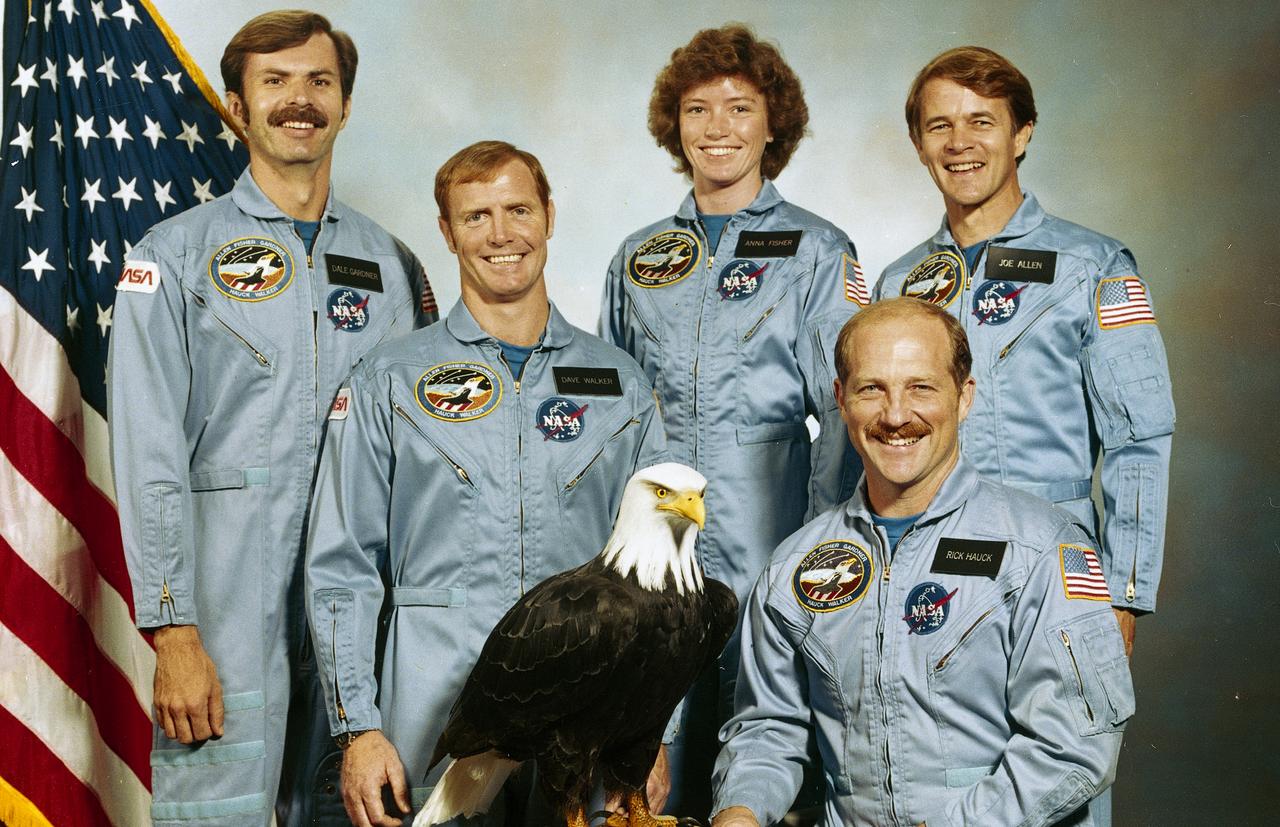
The crew assigned to the STS-51A mission included Frederick H. Hauck, commander,who is seated to the right. Standing, left to right, are Dale A. Gardner, mission specialist; David M. Walker, pilot; and mission specialists Anna L. Fisher, and Joseph P. Allen. Launched aboard the Space Shuttle Discovery on November 8, 1984 at 7:15:00 am (EST), the STS-51A mission deployed the Canadian communications satellite TELLESAT-H (ANIK), and the defense communications satellite SYCOM IV-1 (also known as LEASAT-1). In addition, 2 malfunctioning satellites were retrieved: the PALAPA-B2 and the WESTAR-VI.
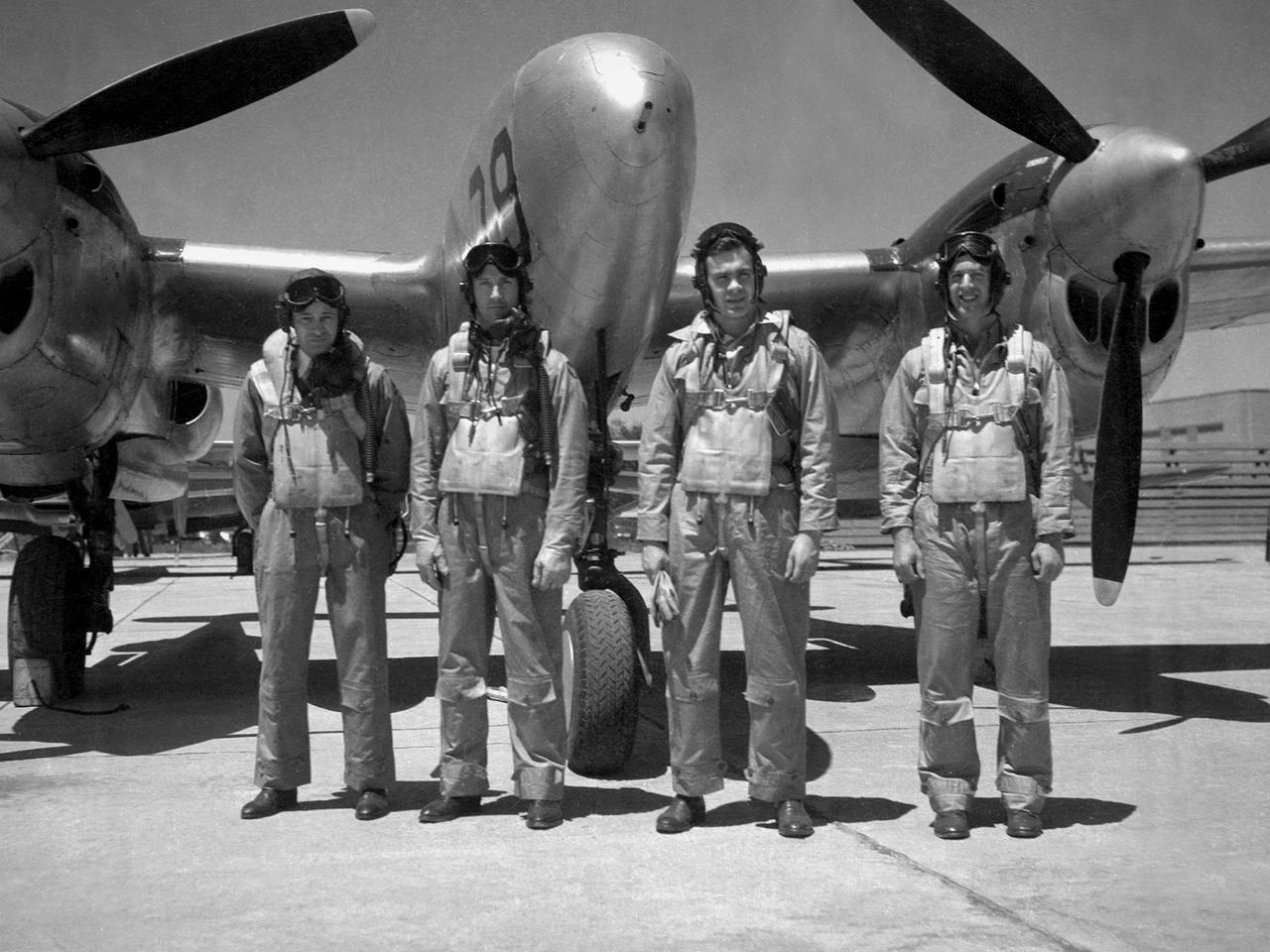
The Aircraft Engine Research Laboratory’s pilot corps during the final days of World War II: from left to right, Joseph Vensel, Howard Lilly, William Swann, and Joseph Walker. William “Eb” Gough joined the group months after this photograph. These men were responsible for flying the various National Advisory Committee for Aeronautics (NACA) aircraft to test new engine modifications, study ice buildup, and determine fuel performance. Vensel, a veteran pilot from Langley, was the Chief of Flight Operations and a voice of reason at the laboratory. In April 1947 Vensel was transferred to lead the new Muroc Flight Tests Unit in California until 1966. Lilly was a young pilot with recent Navy experience. Lilly also flew in the 1946 National Air Races. He followed Vensel to Muroc in July 1947 where he became the first NACA pilot to penetrate the sound barrier. On May 3, 1948, Lilly became the first NACA pilot to die in the line of duty. Swann was a young civilian pilot when he joined the NACA. He spent his entire career at the Cleveland laboratory, and led the flight operations group from the early 1960s until 1979. Two World War II veterans joined the crew after the war. Walker was a 24-year-old P–38 reconnaissance pilot. He joined the NACA as a physicist in early 1945 but soon worked his way into the cadre of pilots. Walker later gained fame as an X-plane pilot at Muroc and was killed in a June 1966 fatal crash. Gough survived being shot down twice during the war and was decorated for flying rescue missions in occupied areas.

STS082-321-015 (11-21 Feb. 1997) --- This unusual view of the Space Shuttle Discovery's aft cabin and forward cargo bay was provided by one of two astronauts, some 40 feet away from the crew cabin, on the second of five Extravehicular Activities (EVA) designed to service the Hubble Space Telescope (HST) during the mission. Astronauts Gregory J. Harbaugh and Joseph R. Tanner were on or near the end of the Remote Manipulator System (RMS) arm when one of them exposed this 35mm frame. The mission marked the first flight for the exit airlock at lower center. The Ku-band antenna which supports the communications systems. At the time this picture was made, astronauts Mark C. Lee and Stephen L. Smith, the other pair of space walkers on the flight, were inside Discovery's cabin, along with three other astronaut crewmembers.
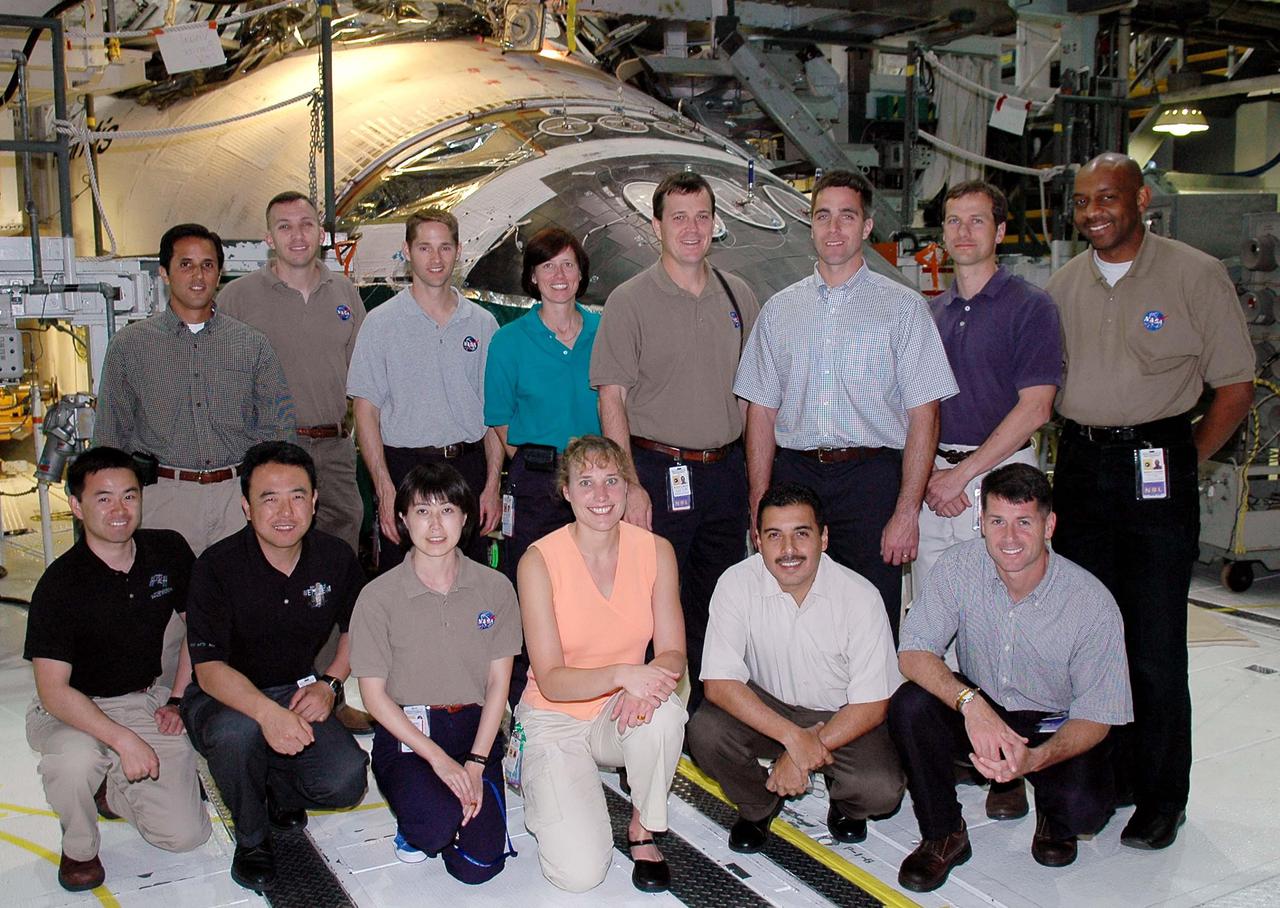
KENNEDY SPACE CENTER, FLA. - At NASA’s Kennedy Space Center, the 2004 class of astronaut candidates gather for a class photo in front of the nose of Atlantis in the Orbiter Processing Facility bay 1. In the back row, from left to right, are Joseph Acaba, Randolph Bresnik, James Dutton, Shannon Walker, Richard Arnold II, Christopher Cassidy, Thomas Marshburn and Robert Satcher. In the front row, left to right, are Akahiko Hoshide, Satoshi Furukawa, Naoko Yamazaki, Dorothy Metcalf-Lindenburger, Jose Hernandez and Robert Kimbrough. Atlantis is being processed for Return to Flight mission STS-121 in July. The astronaut candidates are at KSC to participate in firefighting training and familiarization tours. The class of 14 candidates includes three candidates from the Japan Aerospace Exploration Agency as well as three educator astronauts, who were school teachers chosen from thousands of applicants.
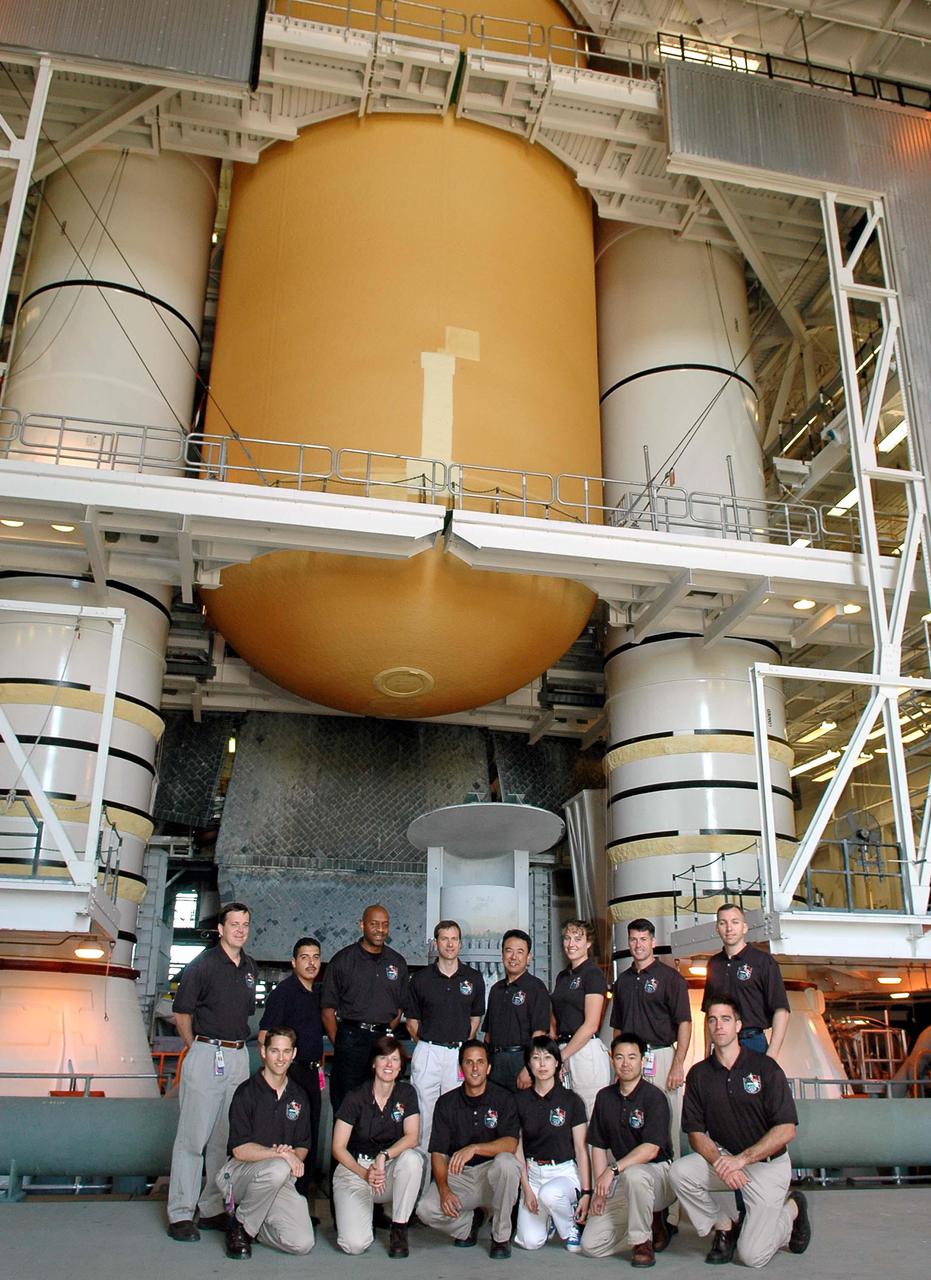
KENNEDY SPACE CENTER, FLA. - At NASA’s Kennedy Space Center, the 2004 class of astronaut candidates gather for a photo in front of Space Shuttle Discovery in the Vehicle Assembly Building. Above them are the External Tank and twin Solid Rocket Boosters. The ascans are, in the back row, left to right, Richard Arnold II, Jose Hernandez, Robert Satcher, Thomas Marshburn, Satoshi Furukawa, Dorothy Metcalf-Lindenburger, Robert Kimbrough and Randolph Bresnik; in the front row, left to right, are James Dutton, Shannon Walker, Joseph Acaba, Naoko Yamazaki, Akahiko Hoshide and Christopher Cassidy. The class of 14 candidates includes three candidates from the Japan Aerospace Exploration Agency as well as three educator astronauts, who were school teachers chosen from thousands of applicants.
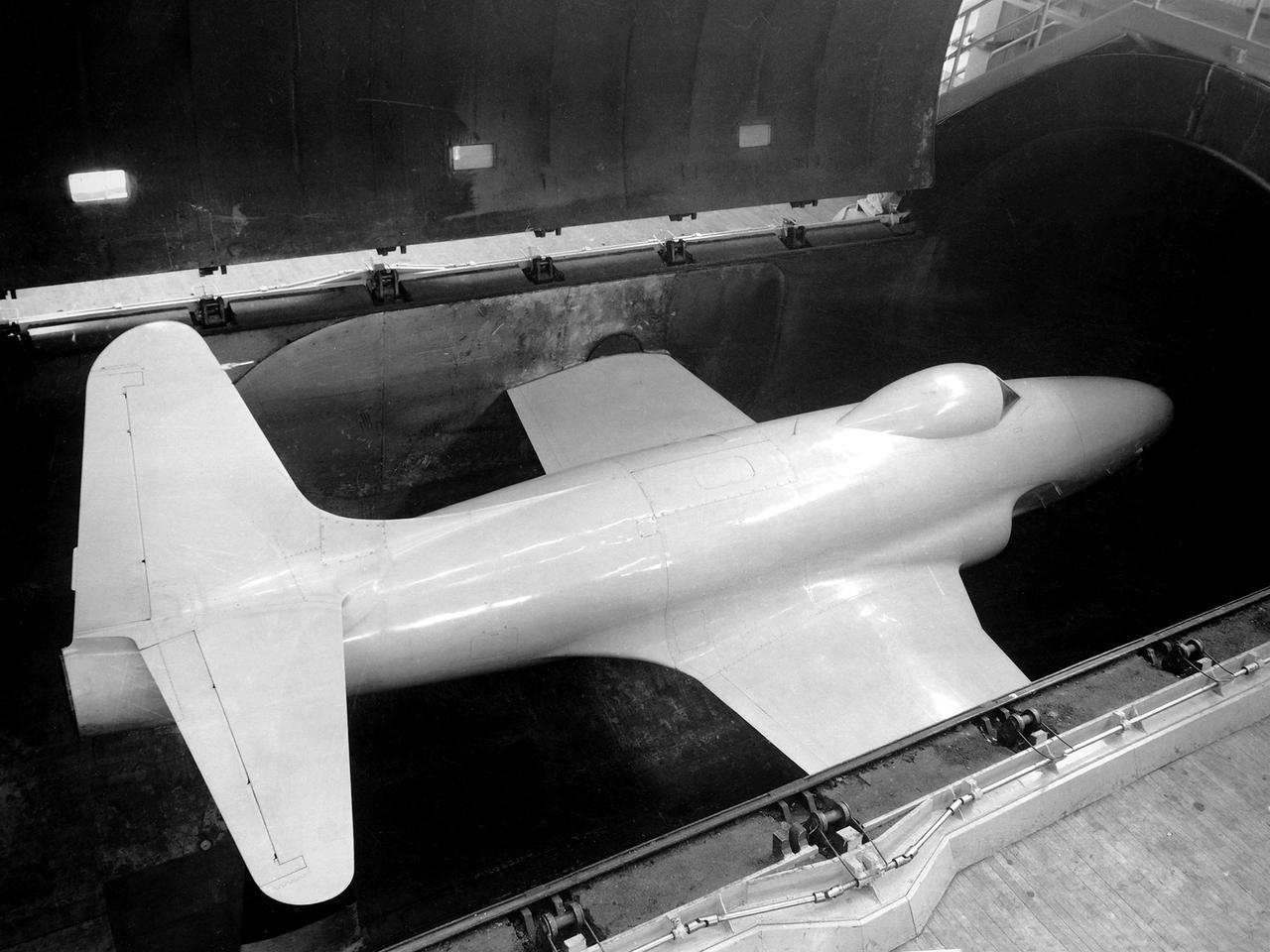
The National Advisory Committee for Aeronautics (NACA) Aircraft Engine Research Laboratory acquired two Lockheed P–38J Lightning in October 1944 to augment their burgeoning icing research program. The P–38 was a high-altitude interceptor with a unique twin fuselage configuration. Lockheed designed the aircraft in 1938 and 1939. Its two Allison V–1710 engines carried the aircraft to altitudes up to 40,000 feet. The P–38 was used extensively during World War II in a variety of roles. In August 1943, Lockheed began producing an improved version, the P–38J that included better cockpit heating, engine cooling, and dive flaps. The military loaned the NACA two P–38Js to determine the amount of ice formation on the induction system of the turbosupercharger-equipped engines. In 1944 and 1945 one of the aircraft was subjected to ground tests using an engine blower on the hangar apron. The V–1710 was run over a full range of speeds as different levels of water were injected into the blower and sprayed onto the engine. The other P–38J was flown at 10,000 feet altitude with water sprayed into the engine to simulate rain. The tests confirmed that closing the intercooler flap added protection against the ice by blocking water ingestion and increasing engine heat. NACA pilot Joseph Walker joined the Cleveland laboratory in early 1945 as a physicist. Walker had flown P–38s during World, and later claimed that seeing the NACA’s two P–38Js inspired him to return to his earlier calling as a pilot, this time with the NACA. Walker was particularly active in the icing flight program during his five years of flying in Cleveland.
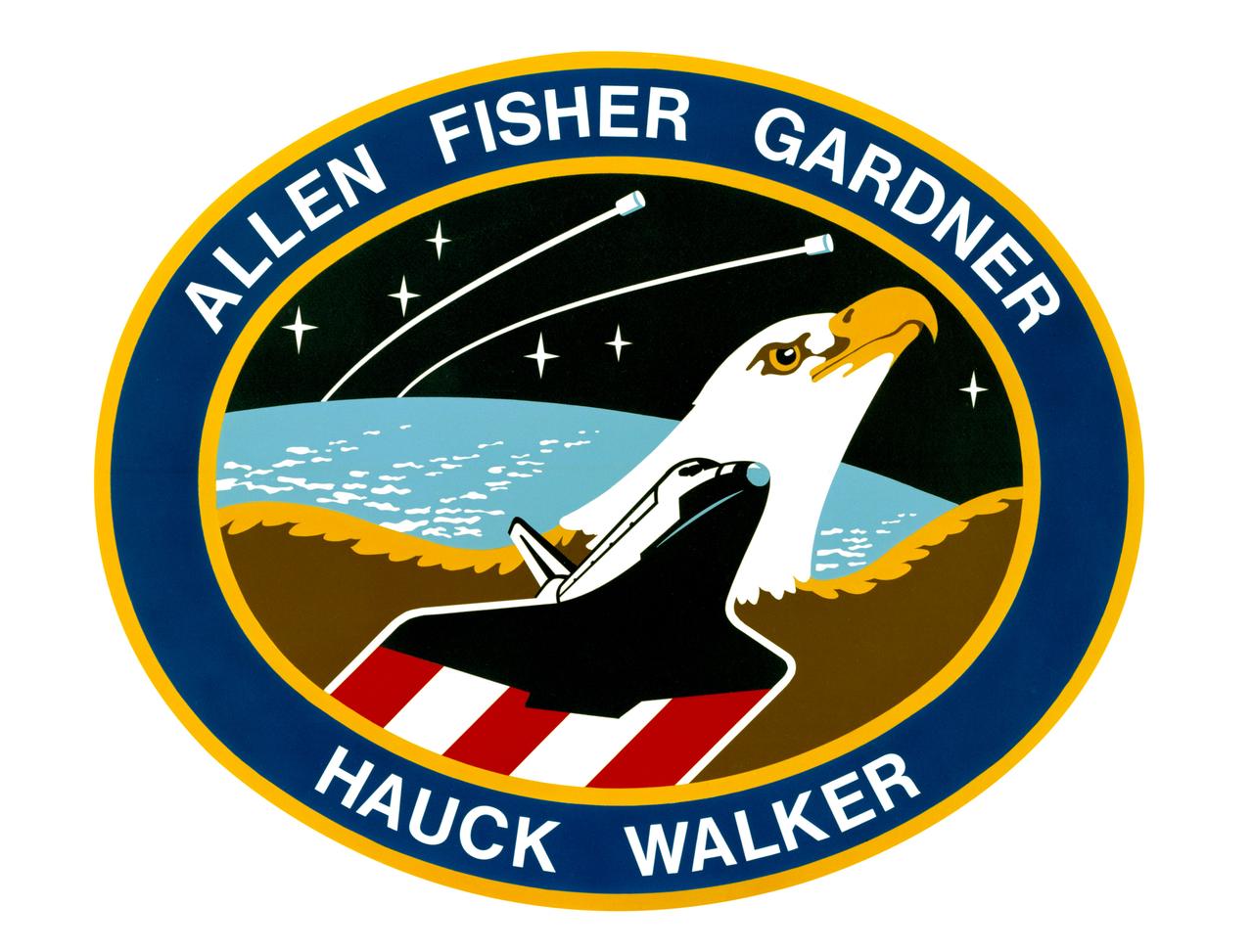
S84-40148 (8 Oct. 1984) --- The space shuttle Discovery en route to Earth orbit for NASA's 51-A mission is reminiscent of a soaring Eagle. The red and white trailing stripes and the blue background, along with the presence of the Eagle, generate memories of America's 208-year-old history and traditions. The two satellites orbiting Earth backgrounded amidst a celestial scene are a universal representation of the versatility of the space shuttle. White lettering against the blue border lists the surnames of the five-member crew--astronauts Frederick H. (Rick) Hauck, David M. Walker, Joseph P. Allen IV, Anna Lee Fisher and Dale A. Gardner. The artwork was done by artist Stephen R. Hustvedt. The NASA insignia design for space shuttle flights is reserved for use by the astronauts and for other official use as the NASA Administrator may authorize. Public availability has been approved only in the forms of illustrations by the various news media. When and if there is any change in this policy, which is not anticipated, the change will be publicly announced. Photo credit: NASA
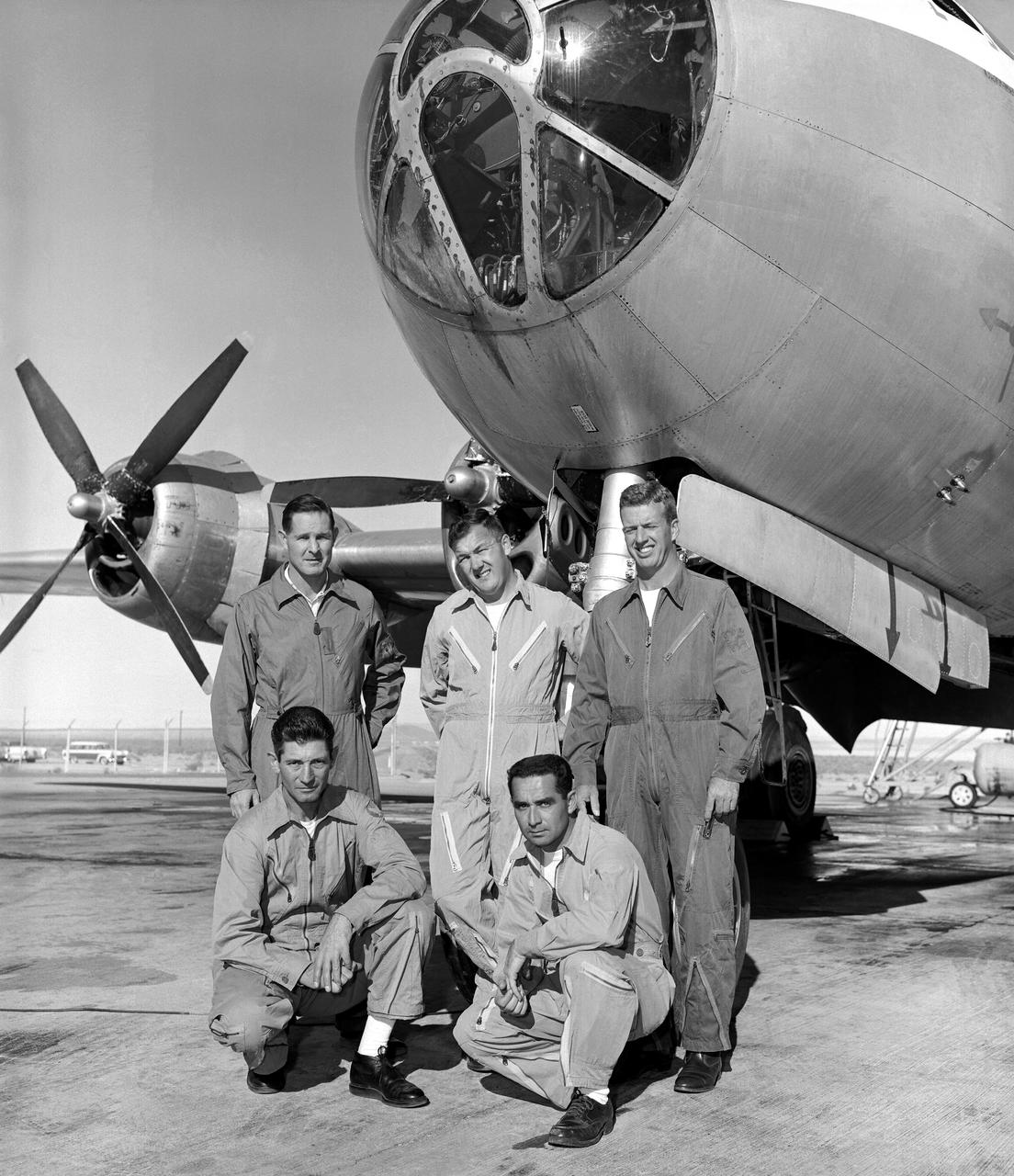
B-29 mothership with pilots - Dick Payne, Stan Butchart, Joe Walker, Charles Littleton, and John Moise
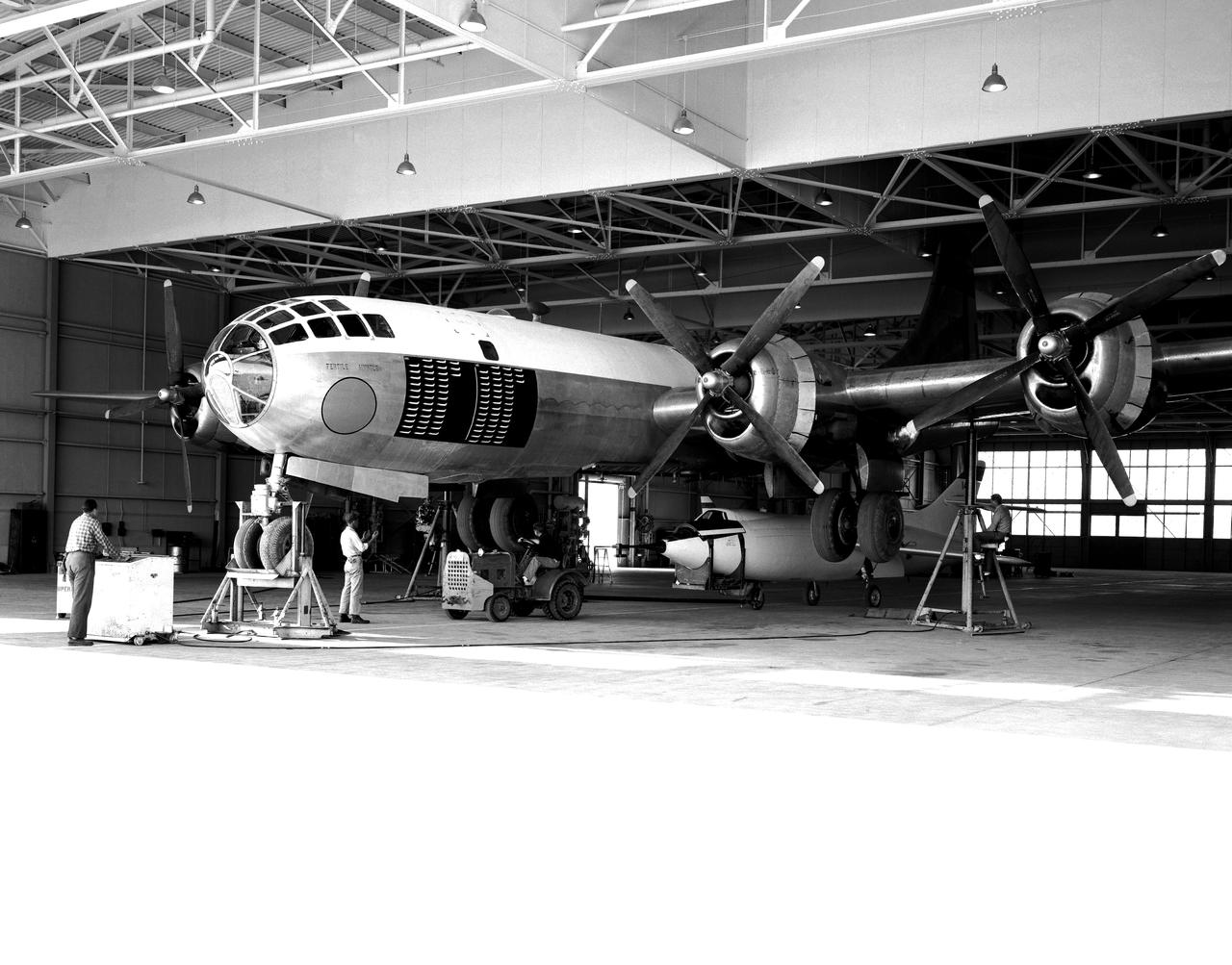
D-558-2 being mounted to P2B-1S launch aircraft in hangar.
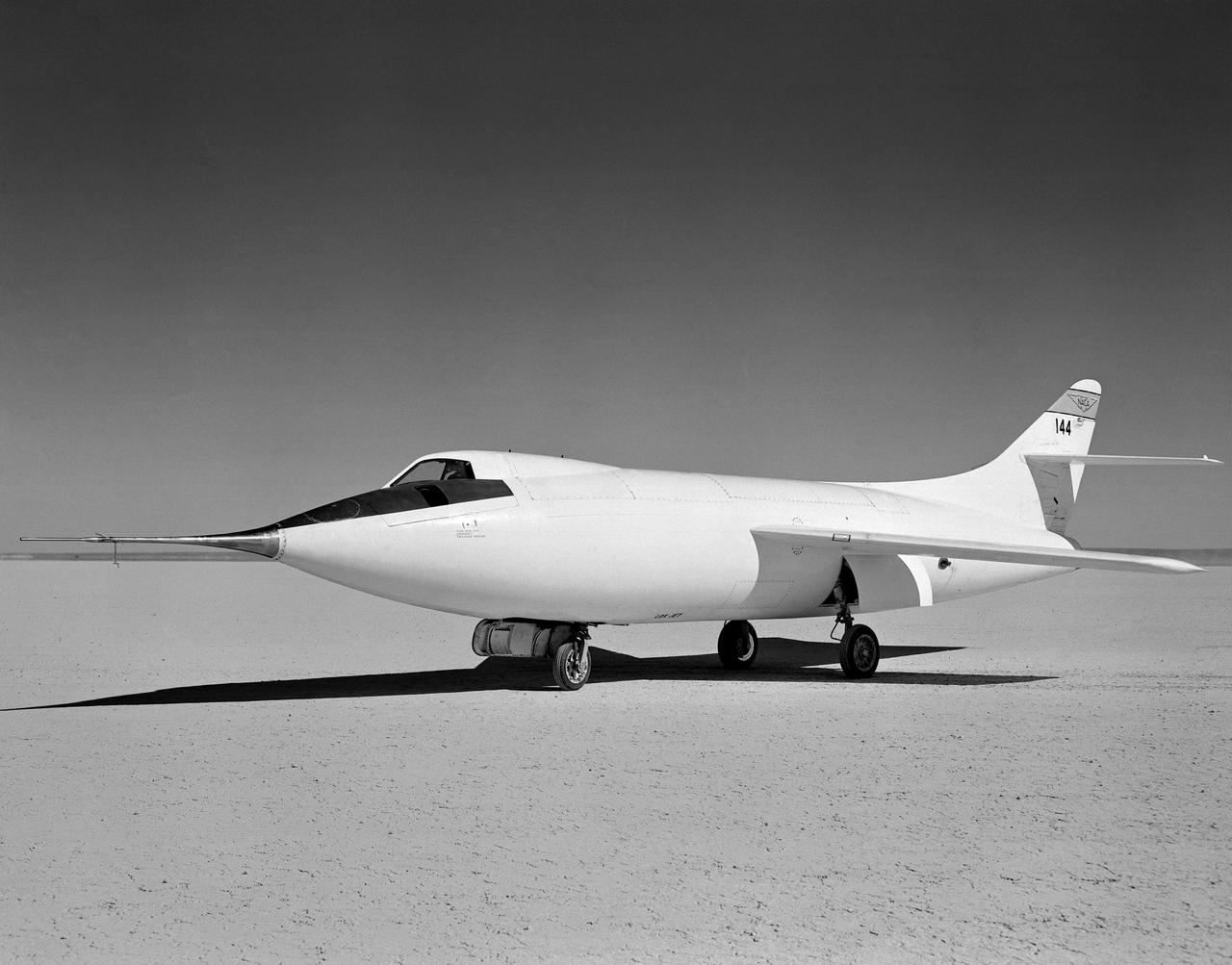
D-558-2 Aircraft on lakebed
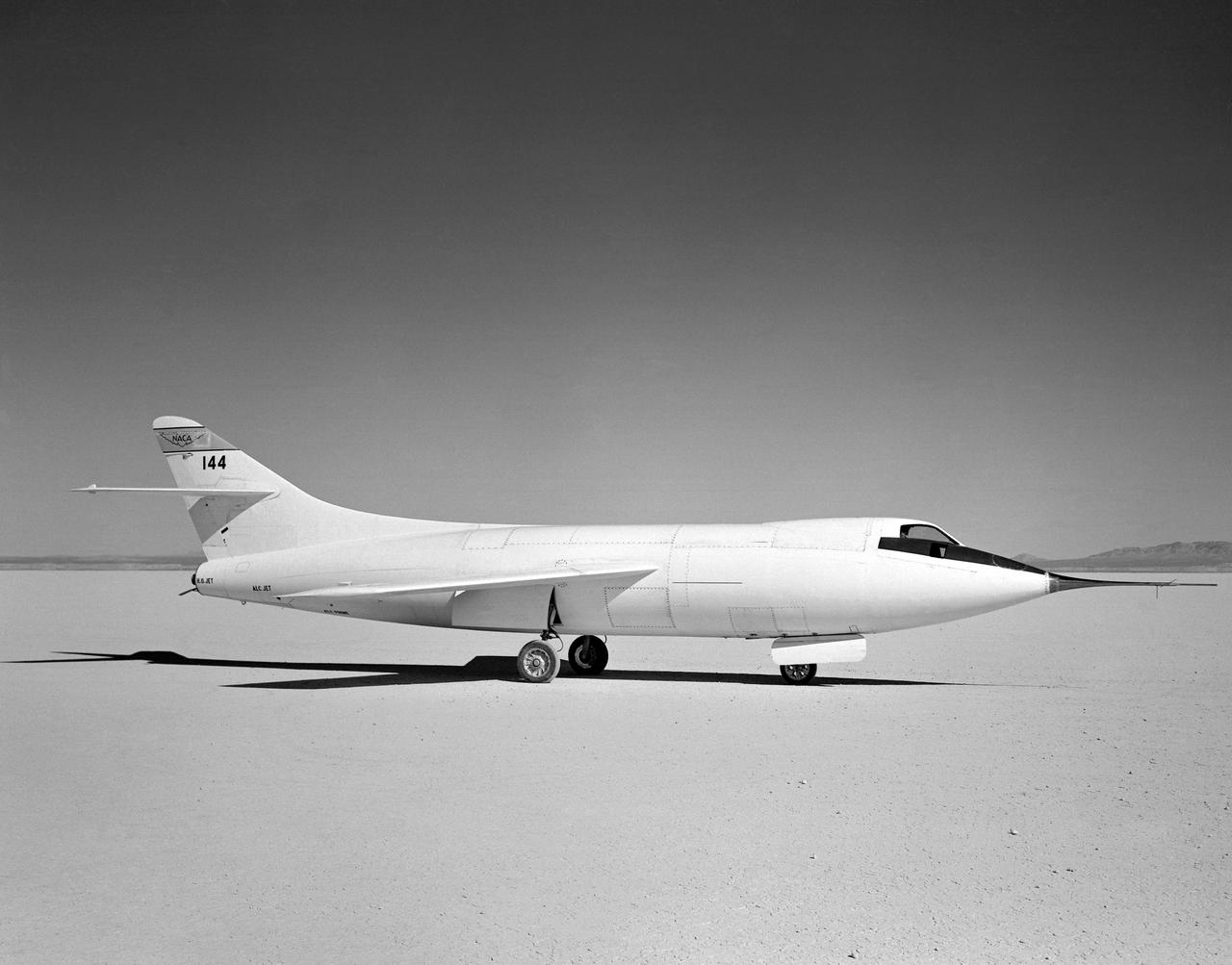
D-558-2 Aircraft on lakebed
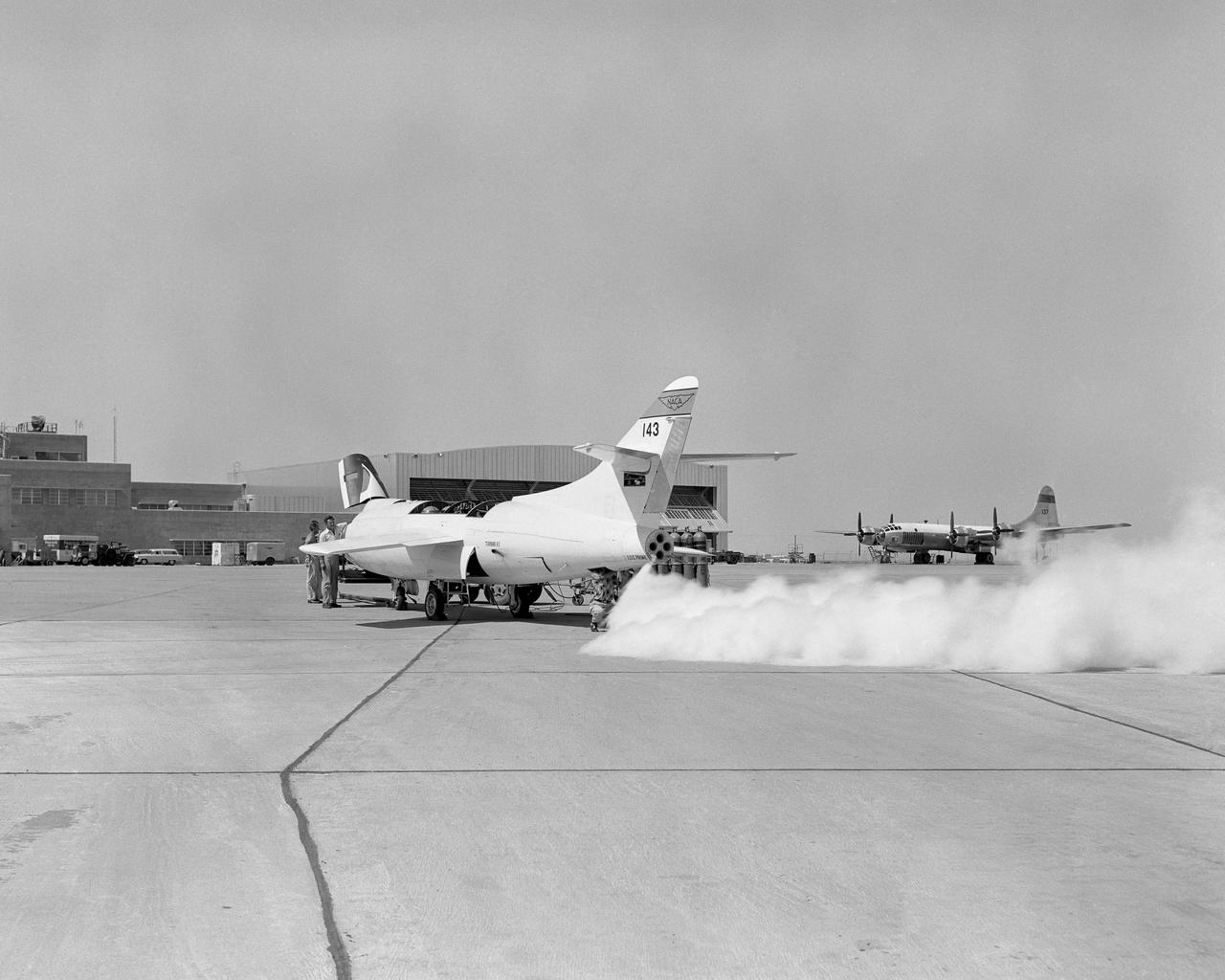
D558-2 #143 LOX jettison with P2BS in background
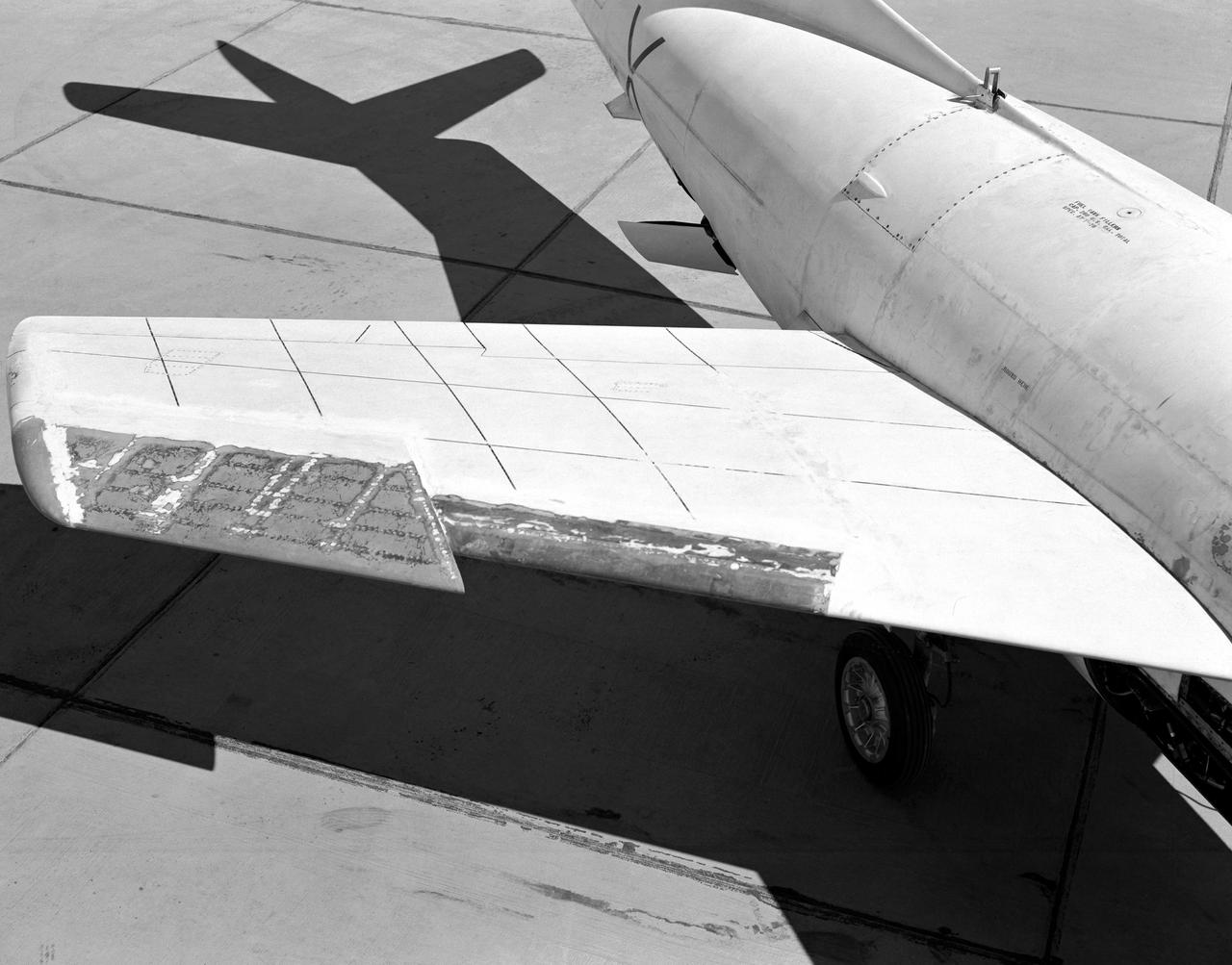
Wing chord extension on D-558-2