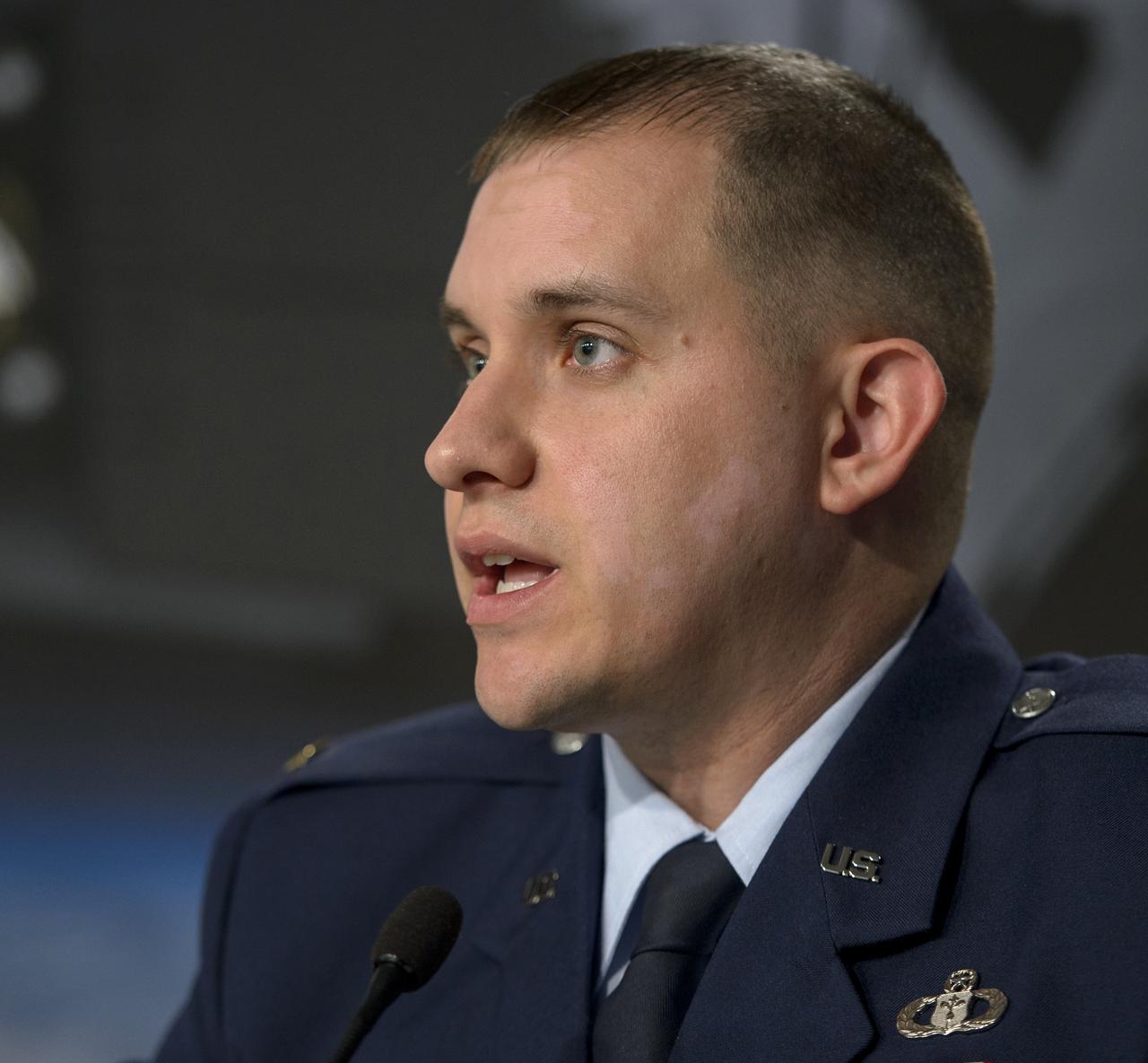
Lt. Joseph Round, launch weather officer, USAF 30th Space Wing Weather Squadron, discusses the weather forecast for launch of NASA’s Orbiting Carbon Observatory-2 (OCO-2) onboard a ULA Delta II rocket, during a press briefing, Sunday, June 29, 2014, at the Vandenberg Air Force Base, Calif. OCO-2 will measure the global distribution of carbon dioxide, the leading human-produced greenhouse gas driving changes in Earth’s climate. OCO-2 is set to launch on July 1, 2014 at 2:59 a.m. PDT. Photo Credit: (NASA/Bill Ingalls)
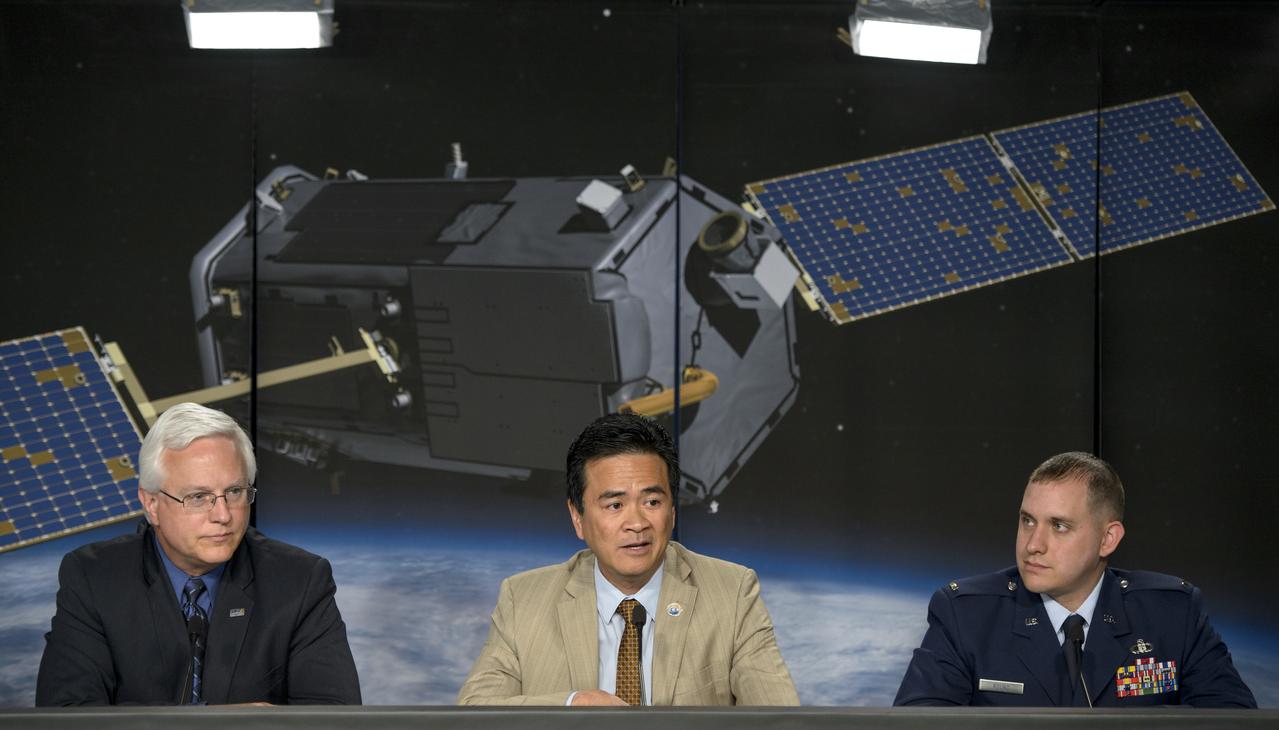
Vern Thorp, United Launch Alliance program manager, NASA missions,, left, Ralph Basilio, OCO-2 project manager, JPL, and Lt. Joseph Round, launch weather officer, USAF 30th Space Wing Weather Squadron, right, discuss the planned launch of the Orbiting Carbon Observatory-2 (OCO-2), NASA’s first spacecraft dedicated to studying carbon dioxide, during a press briefing, Sunday, June 29, 2014, at the Vandenberg Air Force Base, Calif. OCO-2 will measure the global distribution of carbon dioxide, the leading human-produced greenhouse gas driving changes in Earth’s climate. OCO-2 is set to launch on July 1, 2014 at 2:59 a.m. PDT. Photo Credit: (NASA/Bill Ingalls)
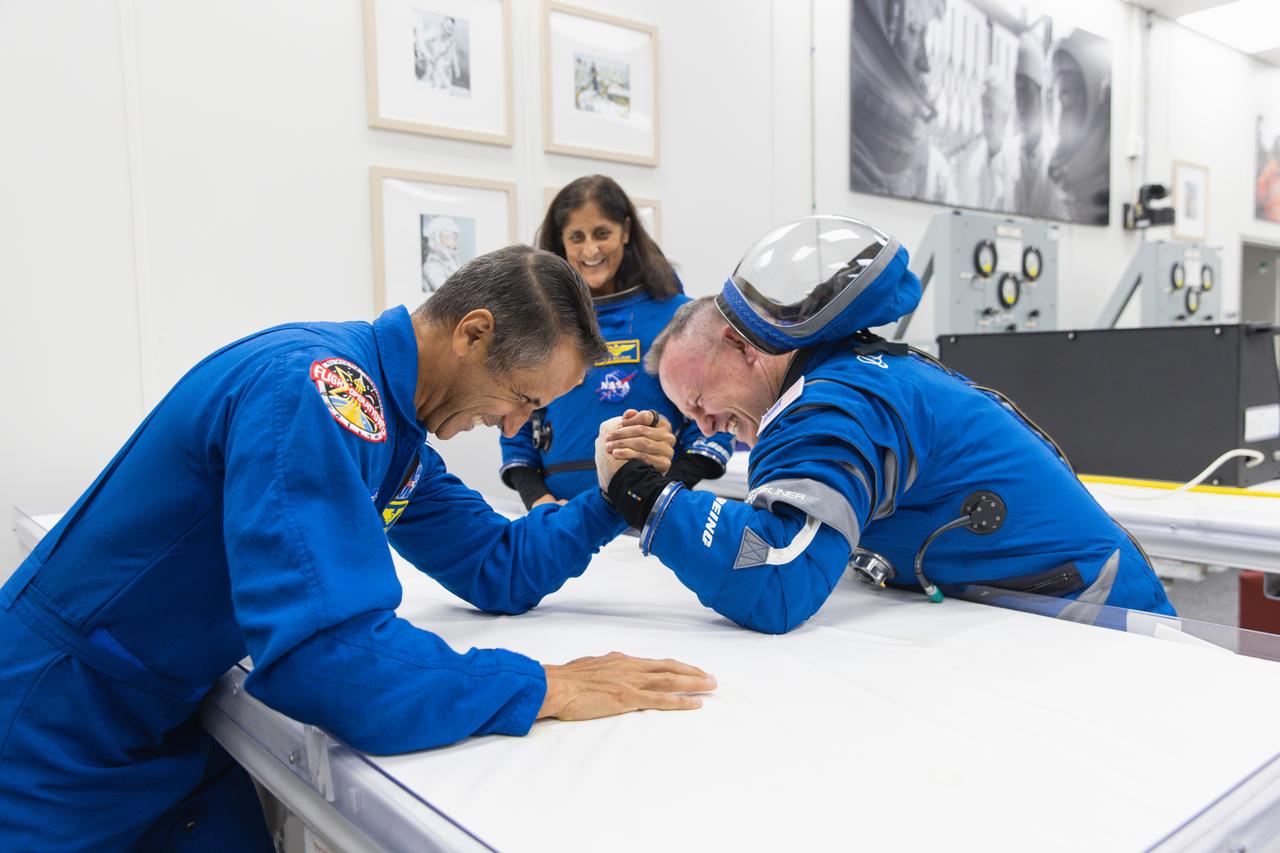
NASA’s Boeing Crew Flight Test astronaut Butch Wilmore participates in a round of arm wrestling with NASA astronauts Joseph Acaba after suit-up and final fit checks inside the Neil A. Armstrong Operations and Checkout Building at NASA’s Kennedy Space Center in Florida on Wednesday, June 5, 2024. As part of the agency’s Commercial Crew Program, Wilmore, joined by NASA astronaut Suni Williams, is preparing for launch to the International Space Station aboard Boeing’s Starliner spacecraft atop a United Launch Alliance Atlas V rocket from Space Launch Complex-41 at nearby Cape Canaveral Space Force Station at 10:52 a.m. EDT.
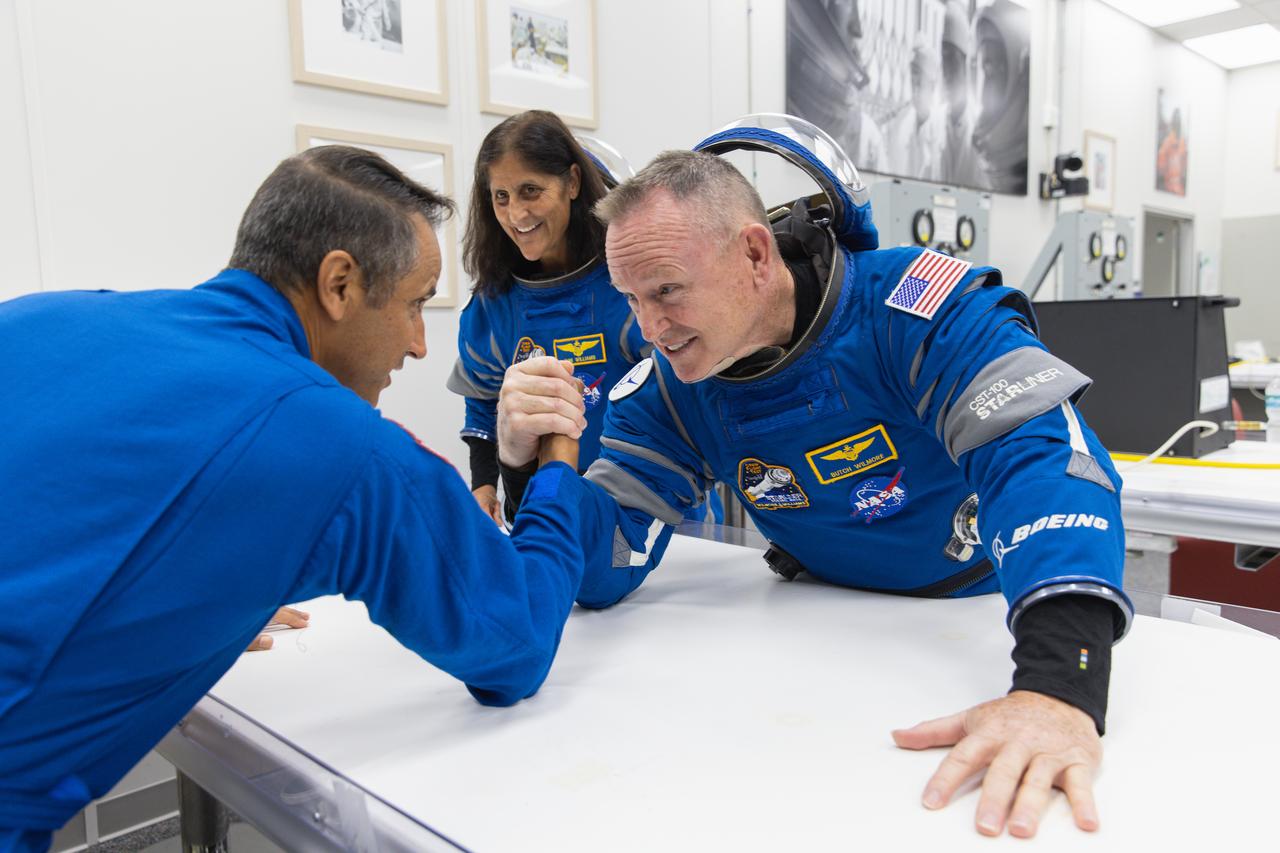
NASA’s Boeing Crew Flight Test astronaut Butch Wilmore participates in a round of arm wrestling with NASA astronauts Joseph Acaba after suit-up and final fit checks inside the Neil A. Armstrong Operations and Checkout Building at NASA’s Kennedy Space Center in Florida on Wednesday, June 5, 2024. As part of the agency’s Commercial Crew Program, Wilmore, joined by NASA astronaut Suni Williams, is preparing for launch to the International Space Station aboard Boeing’s Starliner spacecraft atop a United Launch Alliance Atlas V rocket from Space Launch Complex-41 at nearby Cape Canaveral Space Force Station at 10:52 a.m. EDT.
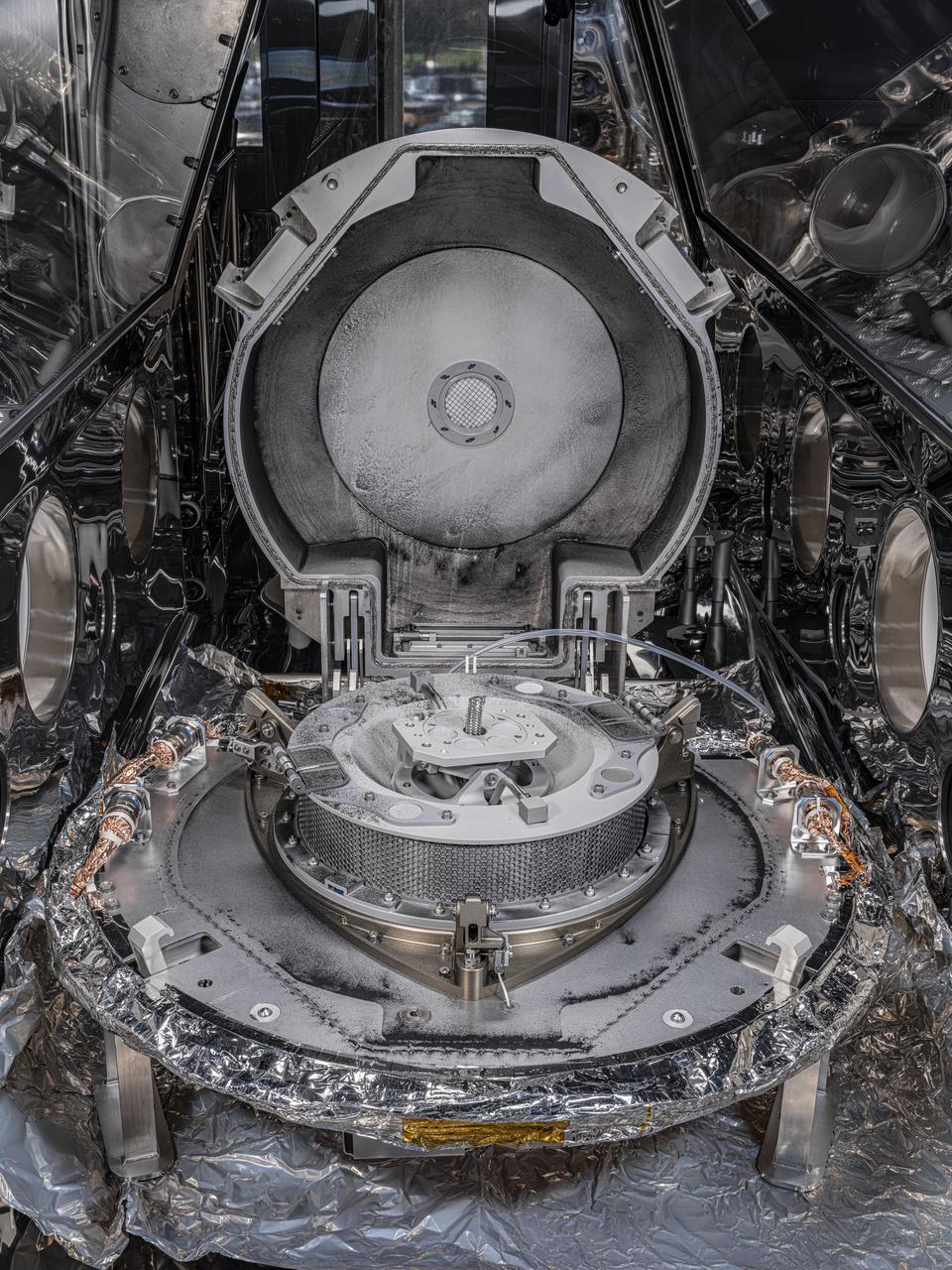
A view of the OSIRIS-REx sample canister with the lid removed, revealing the Touch and Go Sample Acquisition Mechanism (TAGSAM) inside. When astromaterials processors removed the canister lid, they discovered a coating of fine asteroid dust and sand-sized particles covering the inside of the lid and on the top of the avionics deck. The round portion in the center of the lower part of the canister is the TAGSAM that was used to collect pristine material from asteroid Bennu in 2020. The spacecraft delivered the sample return capsule to Earth on Sept. 24, 2023. OSIRIS-REx is the first U.S. mission to collect a sample from an asteroid. Scientists hope the Bennu sample will reveal whether asteroids that collided with Earth billions of years ago thereby delivered water and other ingredients for life to our planet. Credits: Photo credit: NASA/Erika Blumenfeld & Joseph Aebersold Image Capture: Created using manual high-resolution precision photography and semi-automated focus stacking procedure.
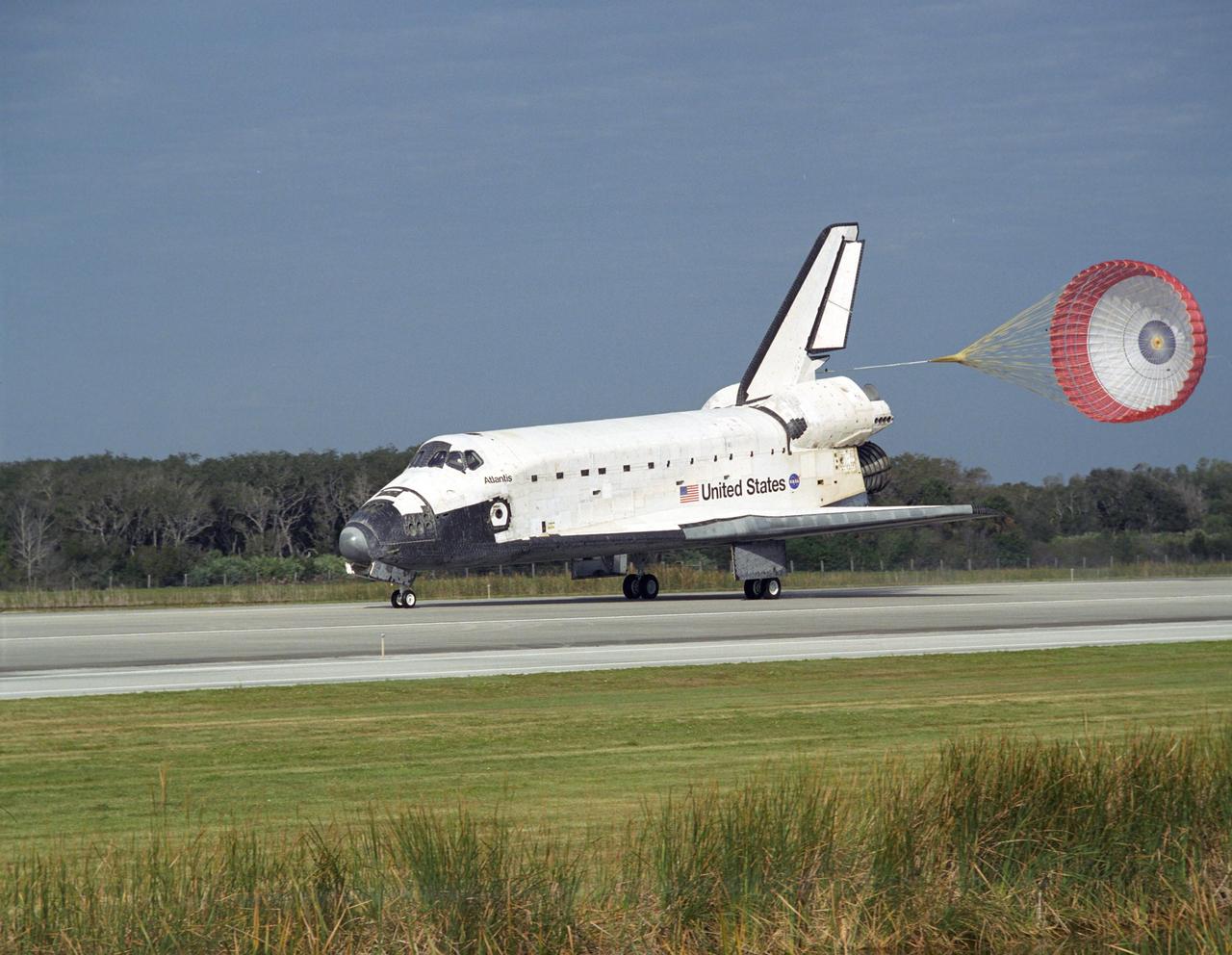
KENNEDY SPACE CENTER, FLA. -- With the aid of a drag chute, space shuttle Atlantis slows down after landing on Runway 15 of the Shuttle Landing Facility at NASA's Kennedy Space Center after a nearly 5.3 million mile round trip to the International Space Station. In the background is Launch Pad 39B. The shuttle landed on orbit 202 to complete the 13-day STS-122 mission. Main gear touchdown was 9:07:10 a.m. Nose gear touchdown was 9:07:20 a.m. Wheel stop was at 9:08:08 a.m. Mission elapsed time was 12 days, 18 hours, 21 minutes and 44 seconds. During the mission, Atlantis' crew installed the new Columbus laboratory, leaving a larger space station and one with increased science capabilities. The Columbus Research Module adds nearly 1,000 cubic feet of habitable volume and affords room for 10 experiment racks, each an independent science lab. Photo credit: NASA/Sandy Joseph, Tim Powers
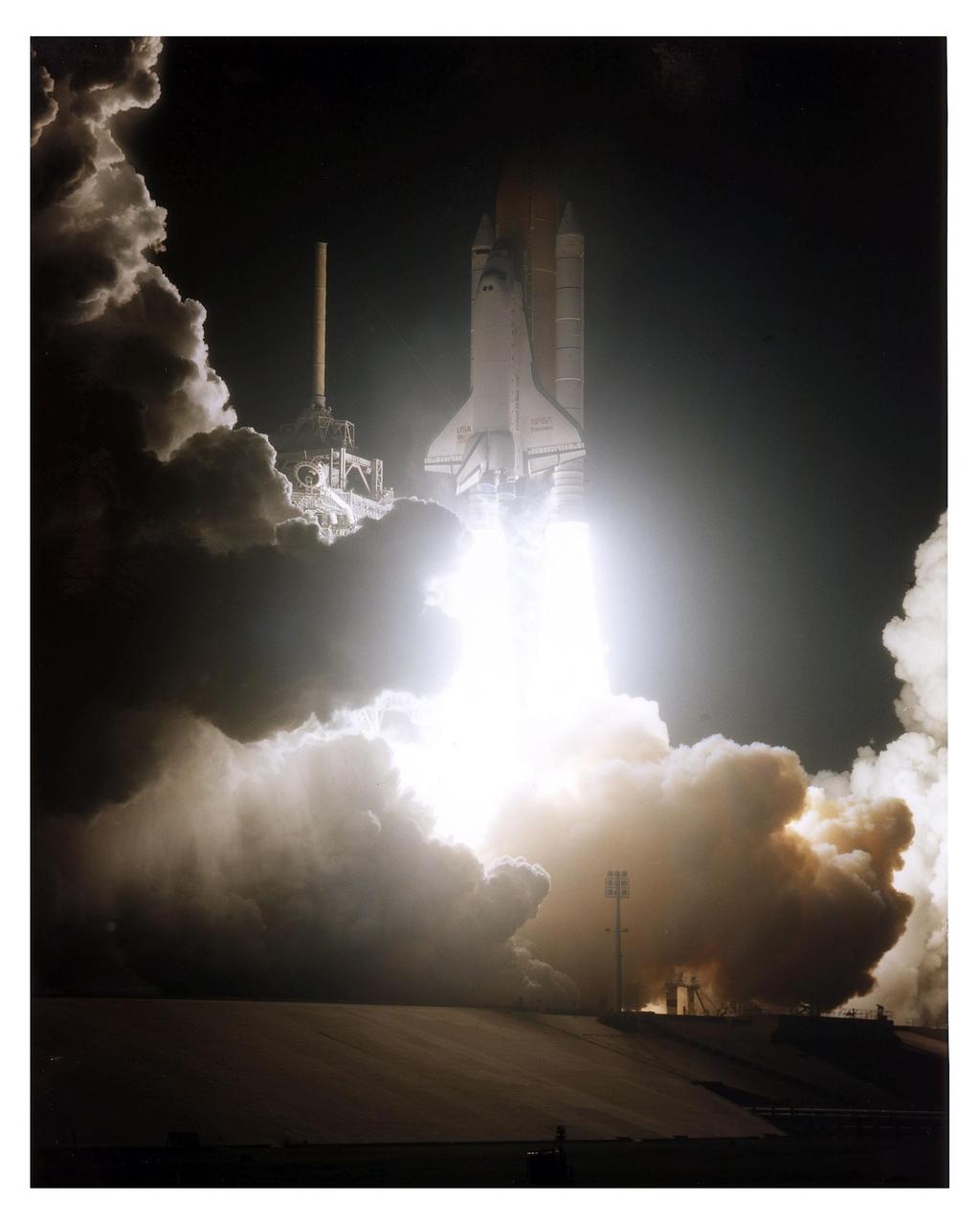
The Space Shuttle Discovery cuts a bright swath through the early-morning darkness as it lifts off from Launch Pad 39A on a scheduled 10-day flight to service the Hubble Space Telescope (HST). Liftoff of Mission STS-82 occurred on-time at 3:55:17 a.m. EST, Feb. 11, 1997. Leading the veteran crew is Mission Commander Kenneth D. Bowersox. Scott J. "Doc" Horowitz is the pilot. Mark C. Lee is the payload commander. Rounding out the seven-member crew are Mission Specialists Steven L. Smith, Gregory J. Harbaugh, Joseph R. "Joe" Tanner and Steven A. Hawley. Four of the astronauts will be divided into two teams to perform the scheduled four back-to-back extravehicular activities (EVAs) or spacewalks. Lee and Smith will team up for EVAs 1 and 3 on flight days 4 and 6; Harbaugh and Tanner will perform EVAs 2 and 4 on flight days 5 and 7. Among the tasks will be to replace two outdated scientific instruments with two new instruments the Space Telescope Imaging Spectrograph (STIS) and the Near Infrared Camera and Multi-Object Spectrometer (NICMOS). This is the second servicing mission for HST, which was originally deployed in 1990 and designed to be serviced on-orbit about every three years. Hubble was first serviced in 1993. STS-82 is the second of eight planned flights in 1997. It is the 22nd flight of Discovery and the 82nd Shuttle mission
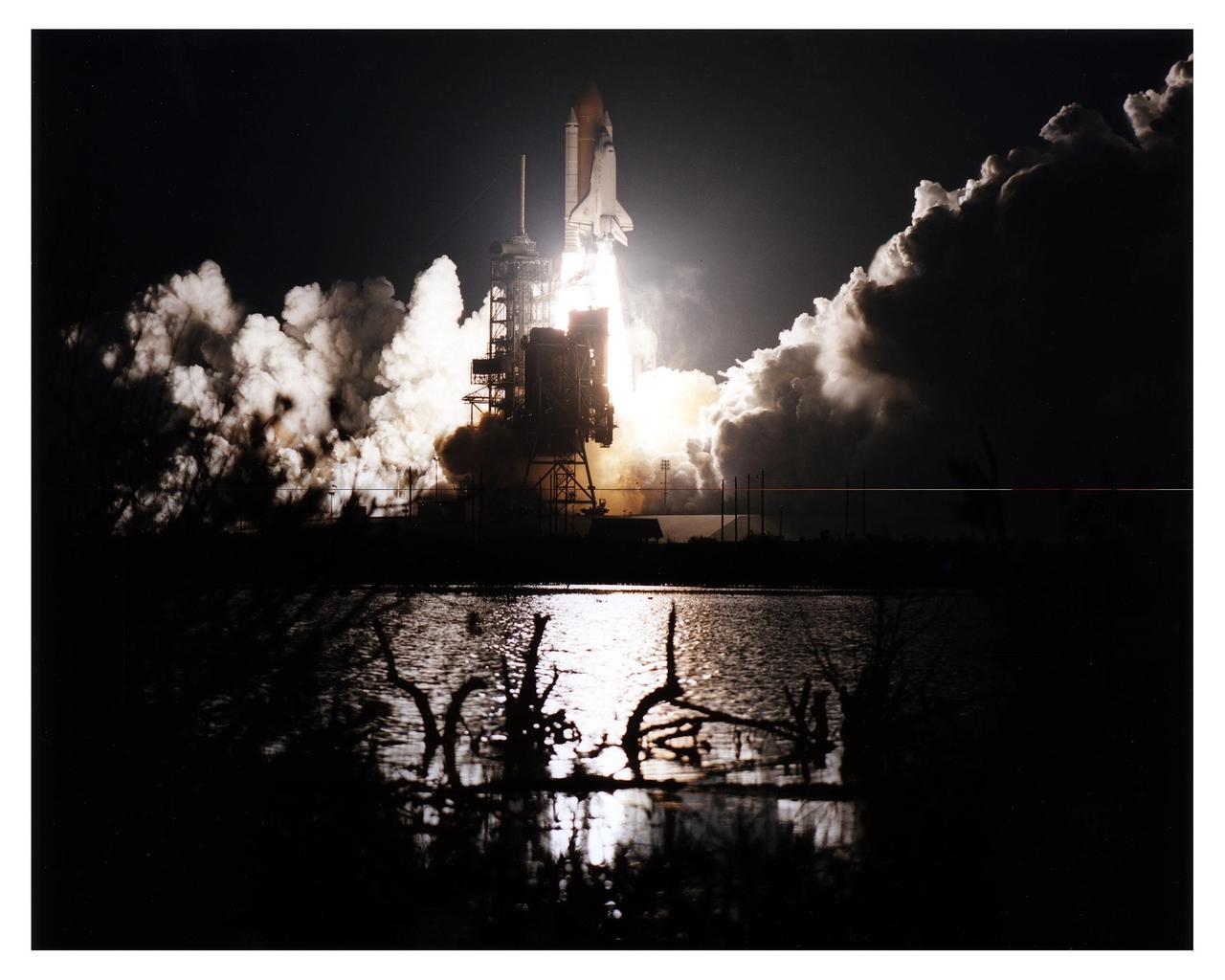
The Space Shuttle Discovery cuts a bright swath through the early-morning darkness as it lifts off from Launch Pad 39A on a scheduled 10-day flight to service the Hubble Space Telescope (HST). Liftoff of Mission STS-82 occurred on-time at 3:55:17 a.m. EST, Feb. 11, 1997. Leading the veteran crew is Mission Commander Kenneth D. Bowersox. Scott J. "Doc" Horowitz is the pilot. Mark C. Lee is the payload commander. Rounding out the seven-member crew are Mission Specialists Steven L. Smith, Gregory J. Harbaugh, Joseph R. "Joe" Tanner and Steven A. Hawley. Four of the astronauts will be divided into two teams to perform the scheduled four back-to-back extravehicular activities (EVAs) or spacewalks. Lee and Smith will team up for EVAs 1 and 3 on flight days 4 and 6; Harbaugh and Tanner will perform EVAs 2 and 4 on flight days 5 and 7. Among the tasks will be to replace two outdated scientific instruments with two new instruments the Space Telescope Imaging Spectrograph (STIS) and the Near Infrared Camera and Multi-Object Spectrometer (NICMOS). This is the second servicing mission for HST, which was originally deployed in 1990 and designed to be serviced on-orbit about every three years. Hubble was first serviced in 1993. STS-82 is the second of eight planned flights in 1997. It is the 22nd flight of Discovery and the 82nd Shuttle mission
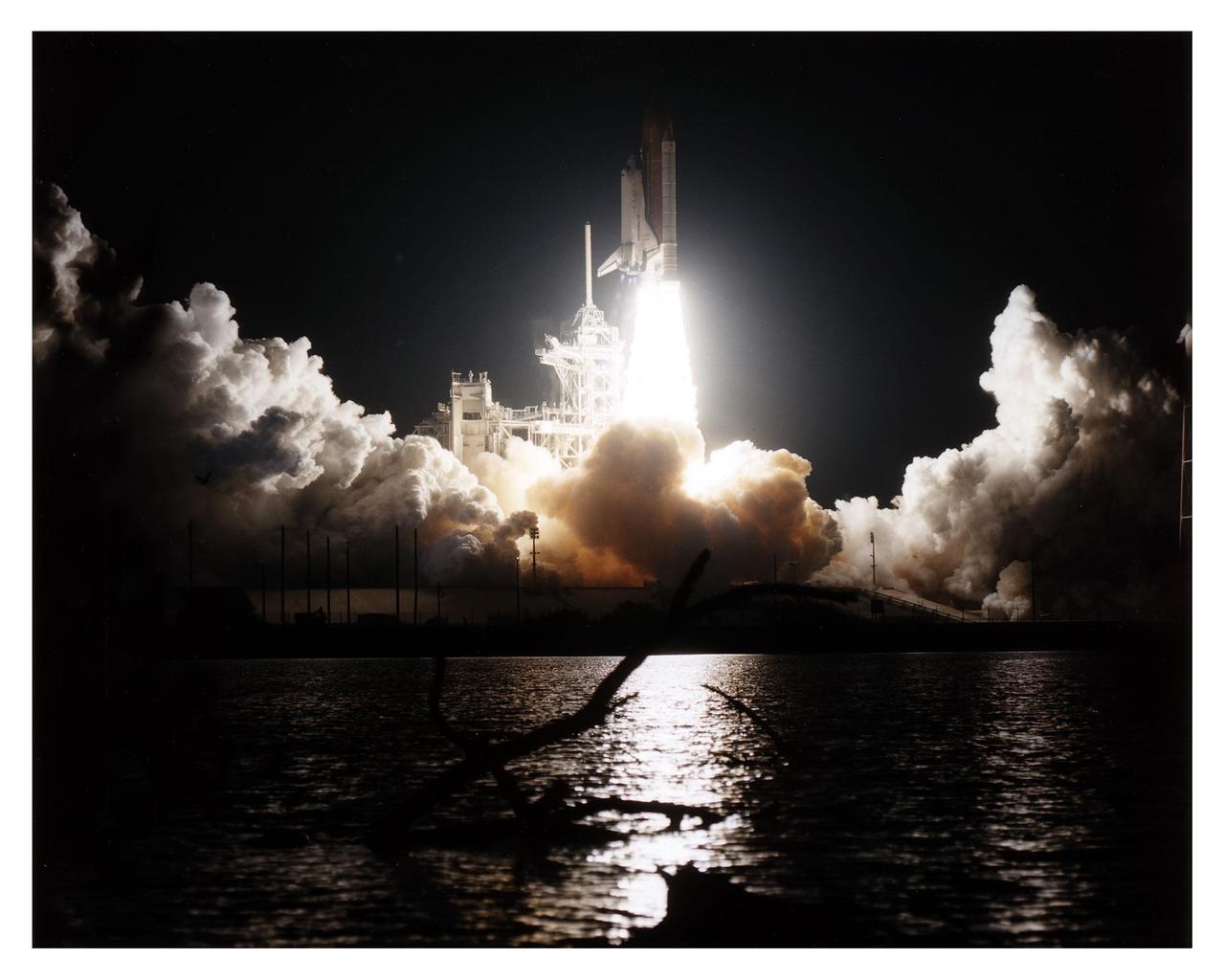
The Space Shuttle Discovery cuts a bright swath through the early-morning darkness as it lifts off from Launch Pad 39A on a scheduled 10-day flight to service the Hubble Space Telescope (HST). Liftoff of Mission STS-82 occurred on-time at 3:55:17 a.m. EST, Feb. 11, 1997. Leading the veteran crew is Mission Commander Kenneth D. Bowersox. Scott J. "Doc" Horowitz is the pilot. Mark C. Lee is the payload commander. Rounding out the seven-member crew are Mission Specialists Steven L. Smith, Gregory J. Harbaugh, Joseph R. "Joe" Tanner and Steven A. Hawley. Four of the astronauts will be divided into two teams to perform the scheduled four back-to-back extravehicular activities (EVAs) or spacewalks. Lee and Smith will team up for EVAs 1 and 3 on flight days 4 and 6; Harbaugh and Tanner will perform EVAs 2 and 4 on flight days 5 and 7. Among the tasks will be to replace two outdated scientific instruments with two new instruments the Space Telescope Imaging Spectrograph (STIS) and the Near Infrared Camera and Multi-Object Spectrometer (NICMOS). This is the second servicing mission for HST, which was originally deployed in 1990 and designed to be serviced on-orbit about every three years. Hubble was first serviced in 1993. STS-82 is the second of eight planned flights in 1997. It is the 22nd flight of Discovery and the 82nd Shuttle mission
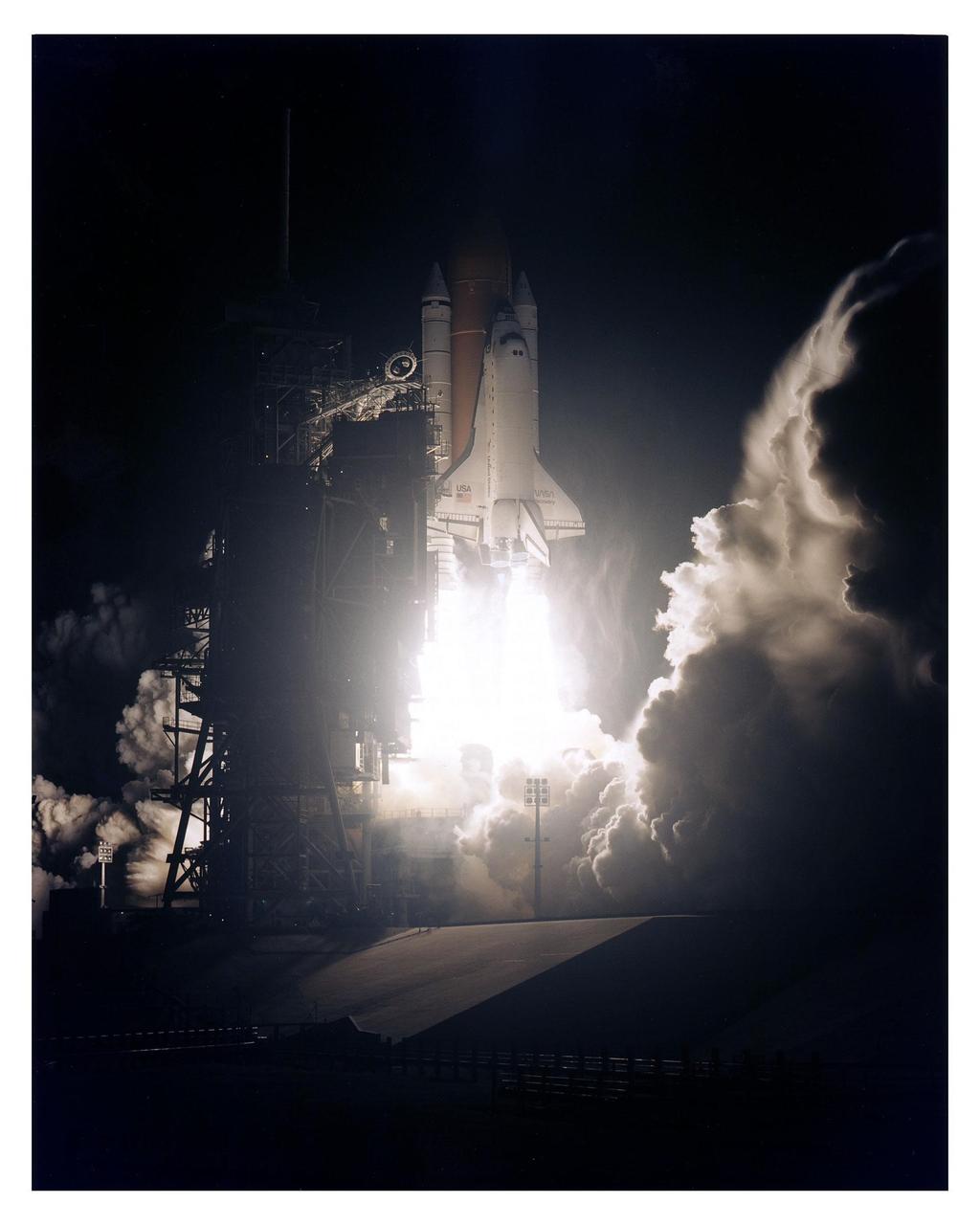
The Space Shuttle Discovery cuts a bright swath through the early-morning darkness as it lifts off from Launch Pad 39A on a scheduled 10-day flight to service the Hubble Space Telescope (HST). Liftoff of Mission STS-82 occurred on-time at 3:55:17 a.m. EST, Feb. 11, 1997. Leading the veteran crew is Mission Commander Kenneth D. Bowersox. Scott J. "Doc" Horowitz is the pilot. Mark C. Lee is the payload commander. Rounding out the seven-member crew are Mission Specialists Steven L. Smith, Gregory J. Harbaugh, Joseph R. "Joe" Tanner and Steven A. Hawley. Four of the astronauts will be divided into two teams to perform the scheduled four back-to-back extravehicular activities (EVAs) or spacewalks. Lee and Smith will team up for EVAs 1 and 3 on flight days 4 and 6; Harbaugh and Tanner will perform EVAs 2 and 4 on flight days 5 and 7. Among the tasks will be to replace two outdated scientific instruments with two new instruments the Space Telescope Imaging Spectrograph (STIS) and the Near Infrared Camera and Multi-Object Spectrometer (NICMOS). This is the second servicing mission for HST, which was originally deployed in 1990 and designed to be serviced on-orbit about every three years. Hubble was first serviced in 1993. STS-82 is the second of eight planned flights in 1997. It is the 22nd flight of Discovery and the 82nd Shuttle mission
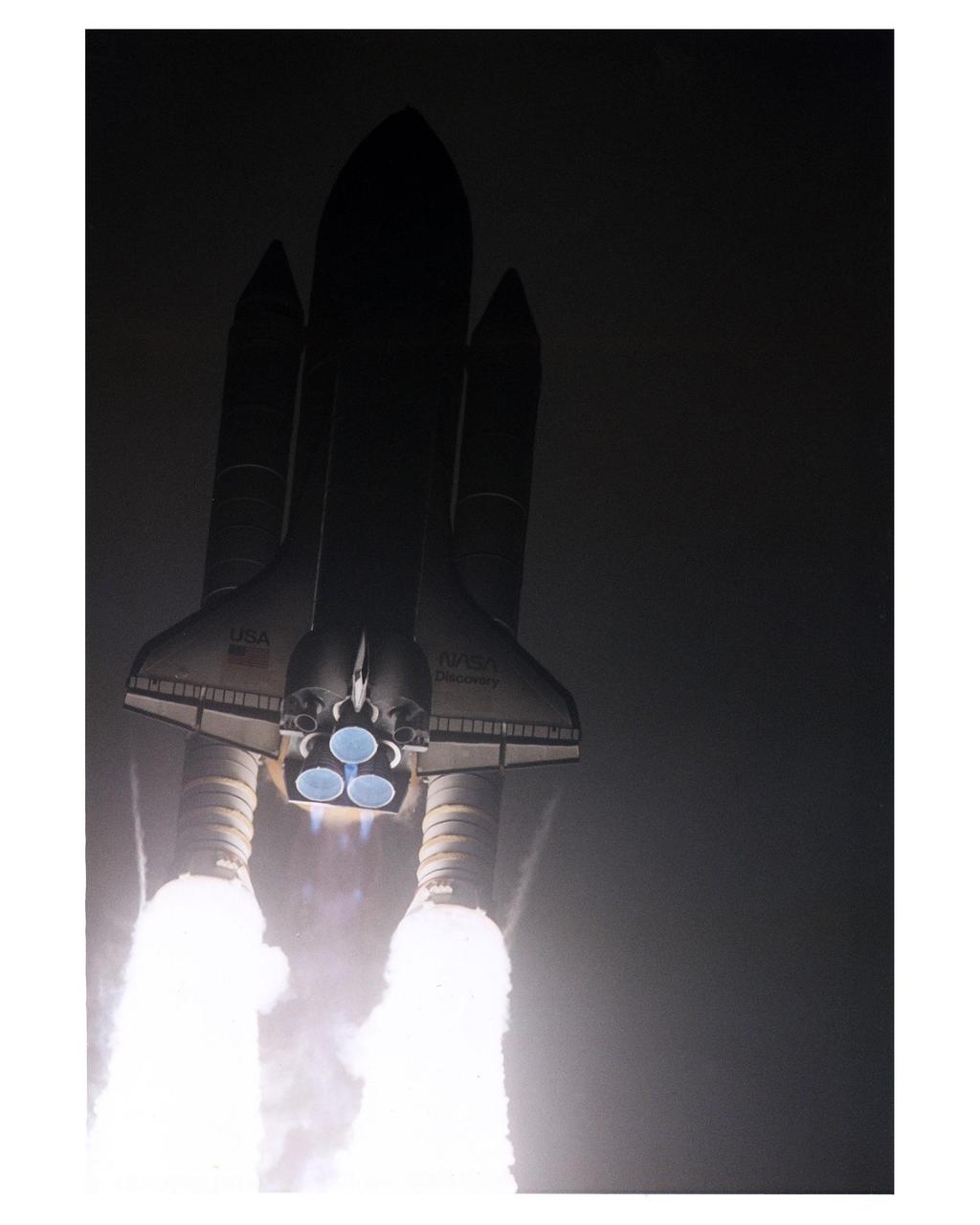
The Space Shuttle Discovery cuts a bright swath through the early-morning darkness as it lifts off from Launch Pad 39A on a scheduled 10-day flight to service the Hubble Space Telescope (HST). Liftoff of Mission STS-82 occurred on-time at 3:55:17 a.m. EST, Feb. 11, 1997. Leading the veteran crew is Mission Commander Kenneth D. Bowersox. Scott J. "Doc" Horowitz is the pilot. Mark C. Lee is the payload commander. Rounding out the seven-member crew are Mission Specialists Steven L. Smith, Gregory J. Harbaugh, Joseph R. "Joe" Tanner and Steven A. Hawley. Four of the astronauts will be divided into two teams to perform the scheduled four back-to-back extravehicular activities (EVAs) or spacewalks. Lee and Smith will team up for EVAs 1 and 3 on flight days 4 and 6; Harbaugh and Tanner will perform EVAs 2 and 4 on flight days 5 and 7. Among the tasks will be to replace two outdated scientific instruments with two new instruments the Space Telescope Imaging Spectrograph (STIS) and the Near Infrared Camera and Multi-Object Spectrometer (NICMOS). This is the second servicing mission for HST, which was originally deployed in 1990 and designed to be serviced on-orbit about every three years. Hubble was first serviced in 1993. STS-82 is the second of eight planned flights in 1997. It is the 22nd flight of Discovery and the 82nd Shuttle mission
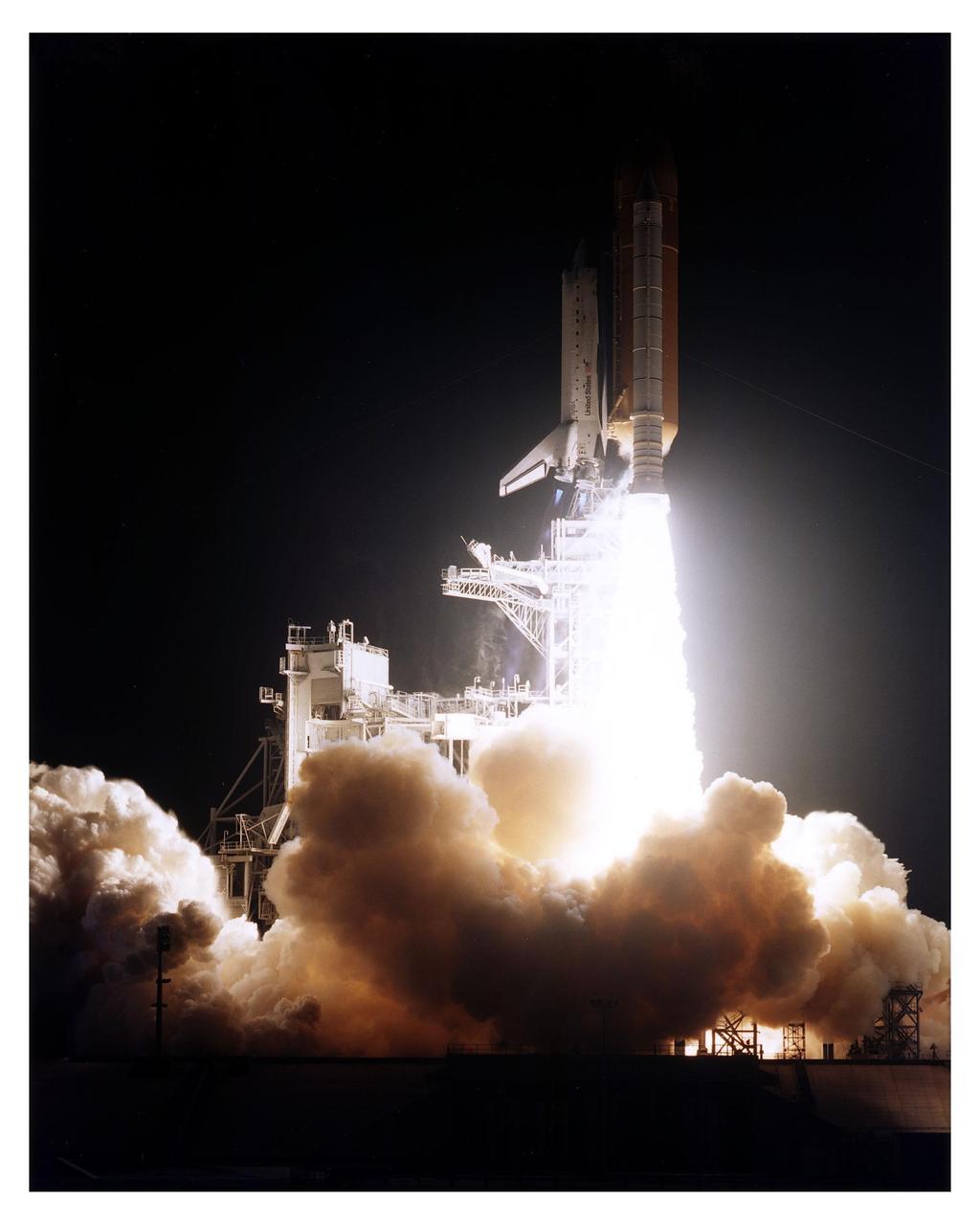
The Space Shuttle Discovery cuts a bright swath through the early-morning darkness as it lifts off from Launch Pad 39A on a scheduled 10-day flight to service the Hubble Space Telescope (HST). Liftoff of Mission STS-82 occurred on-time at 3:55:17 a.m. EST, Feb. 11, 1997. Leading the veteran crew is Mission Commander Kenneth D. Bowersox. Scott J. "Doc" Horowitz is the pilot. Mark C. Lee is the payload commander. Rounding out the seven-member crew are Mission Specialists Steven L. Smith, Gregory J. Harbaugh, Joseph R. "Joe" Tanner and Steven A. Hawley. Four of the astronauts will be divided into two teams to perform the scheduled four back-to-back extravehicular activities (EVAs) or spacewalks. Lee and Smith will team up for EVAs 1 and 3 on flight days 4 and 6; Harbaugh and Tanner will perform EVAs 2 and 4 on flight days 5 and 7. Among the tasks will be to replace two outdated scientific instruments with two new instruments the Space Telescope Imaging Spectrograph (STIS) and the Near Infrared Camera and Multi-Object Spectrometer (NICMOS). This is the second servicing mission for HST, which was originally deployed in 1990 and designed to be serviced on-orbit about every three years. Hubble was first serviced in 1993. STS-82 is the second of eight planned flights in 1997. It is the 22nd flight of Discovery and the 82nd Shuttle mission