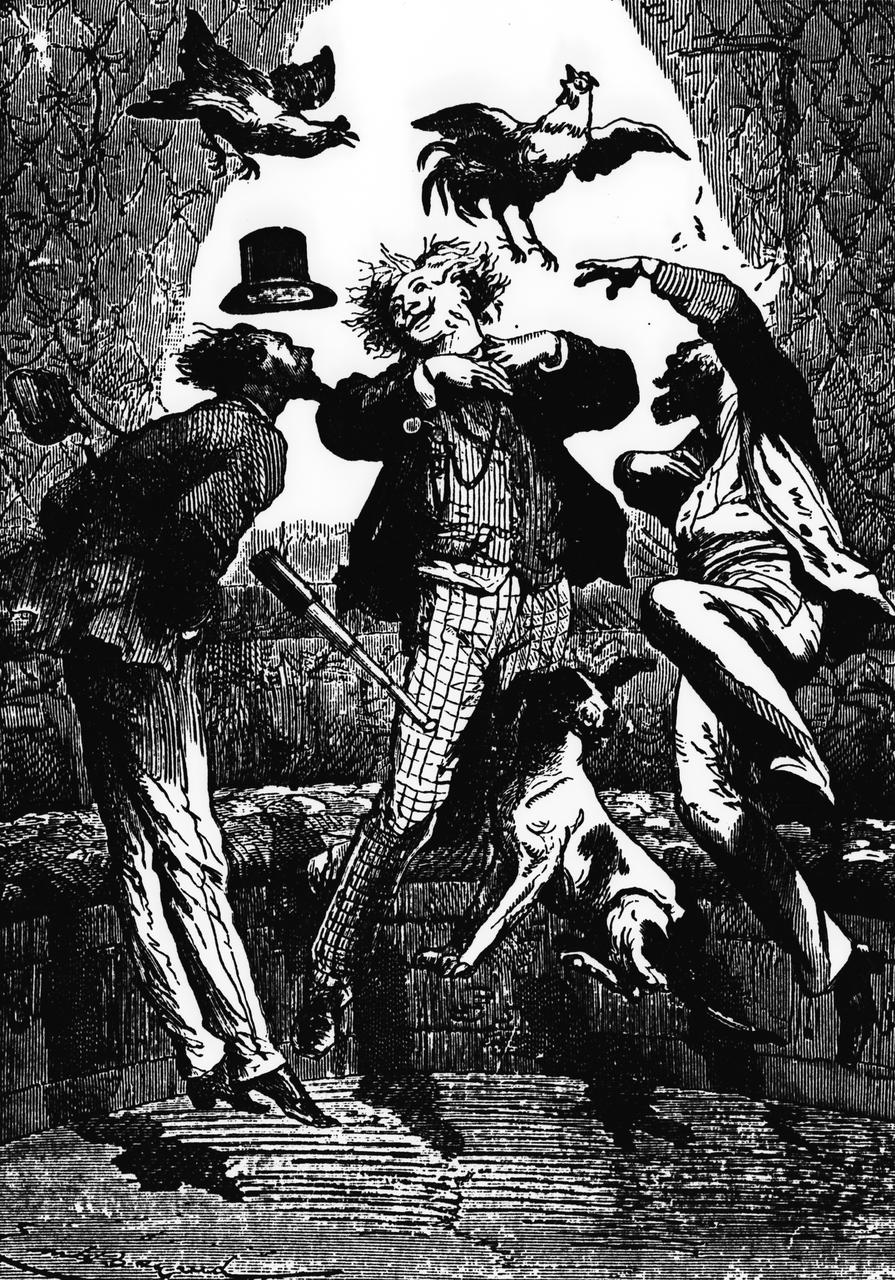
Jules Verne published his first science fiction novel in 1865 called "From the Earth to the Moon." As shown here in an illustration, passengers in Verne's space ship enjoy their first taste of weightlessness.
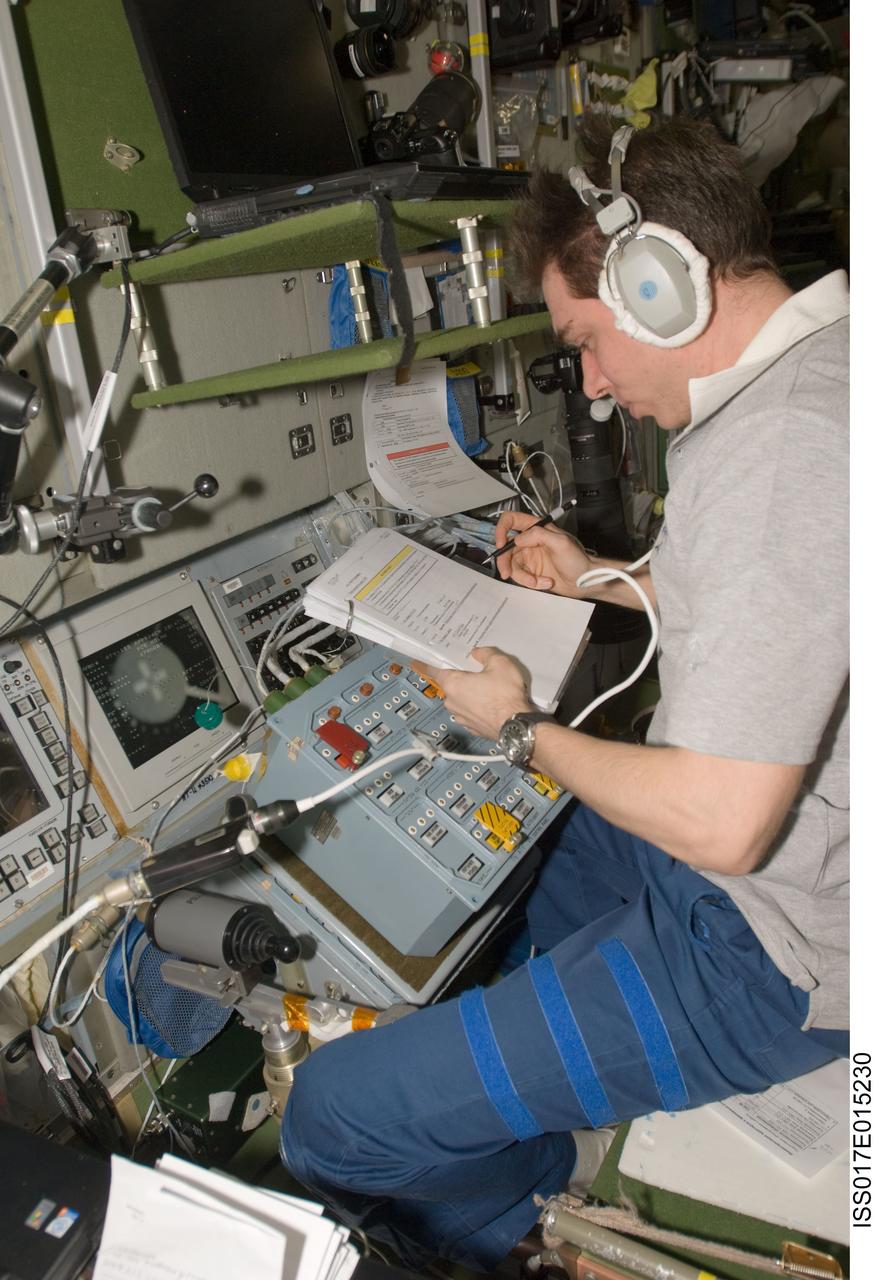
ISS017-E-015230 (5 Sept. 2008) --- Russian Federal Space Agency cosmonaut Sergei Volkov, Expedition 17 commander, makes preparations in the International Space Station's Zvezda Service Module for the undocking of the European Space Agency's (ESA) "Jules Verne" Automated Transfer Vehicle (ATV). The ATV departed from the aft port of Zvezda at 4:29 p.m. (CDT) on Sept. 5, 2008 and was placed in a parking orbit for three weeks, scheduled to be deorbited on Sept. 29 when lighting conditions are correct for an ESA imagery experiment of reentry.
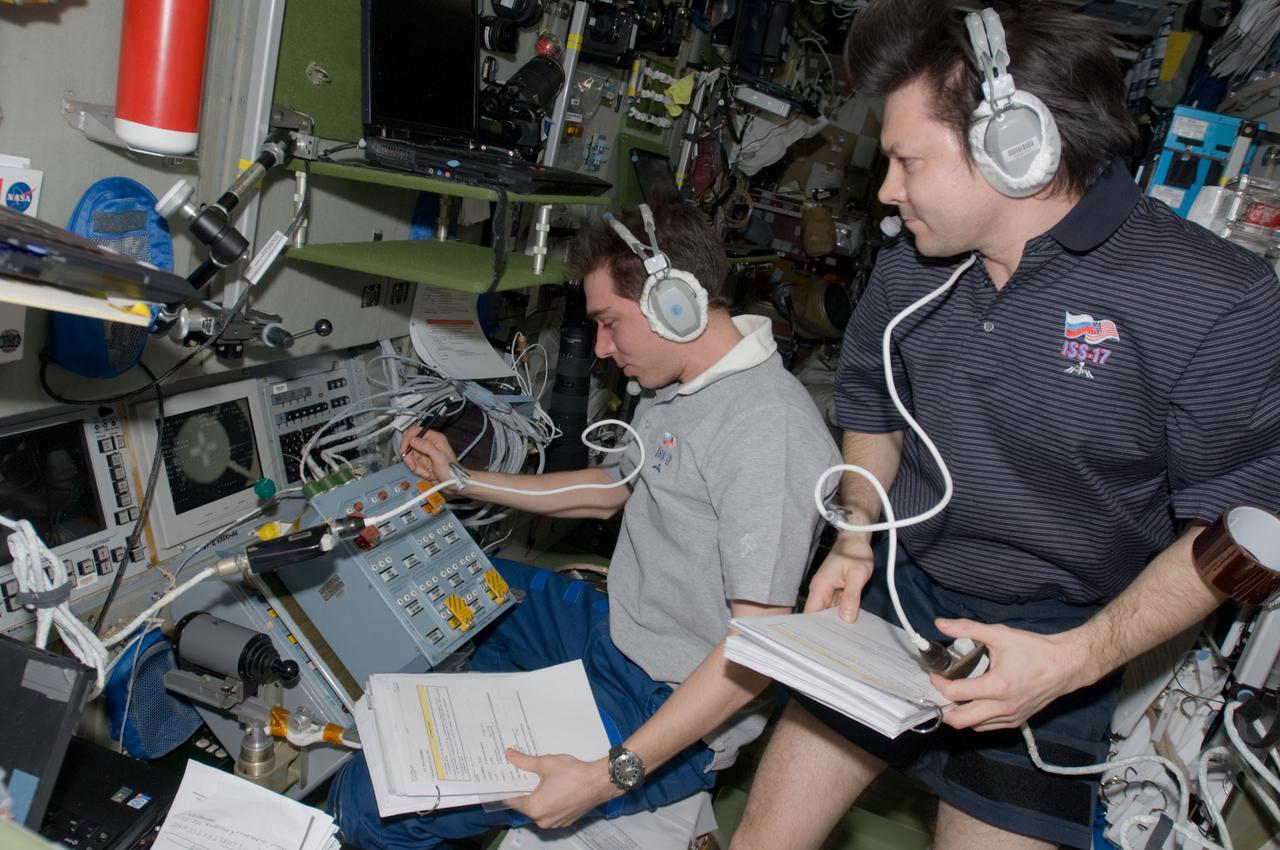
ISS017-E-015234 (5 Sept. 2008) --- Russian Federal Space Agency cosmonauts Sergei Volkov (left) and Oleg Kononenko, Expedition 17 commander and flight engineer, respectively, make preparations in the International Space Station's Zvezda Service Module for the undocking of the European Space Agency's (ESA) "Jules Verne" Automated Transfer Vehicle (ATV). The ATV departed from the aft port of Zvezda at 4:29 p.m. (CDT) on Sept. 5, 2008 and was placed in a parking orbit for three weeks, scheduled to be deorbited on Sept. 29 when lighting conditions are correct for an ESA imagery experiment of reentry.
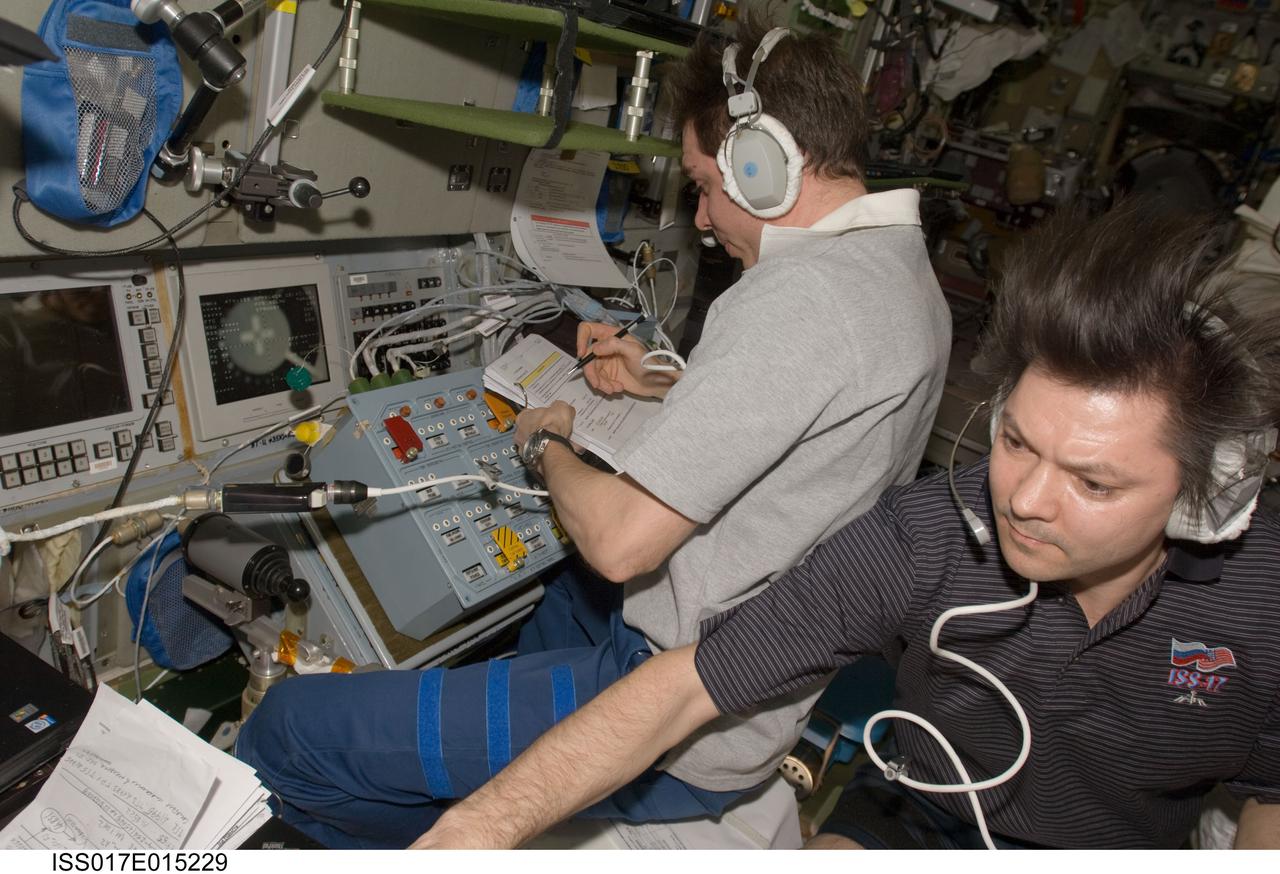
ISS017-E-015229 (5 Sept. 2008) --- Russian Federal Space Agency cosmonauts Sergei Volkov (left) and Oleg Kononenko, Expedition 17 commander and flight engineer, respectively, make preparations in the International Space Station's Zvezda Service Module for the undocking of the European Space Agency's (ESA) "Jules Verne" Automated Transfer Vehicle (ATV). The ATV departed from the aft port of Zvezda at 4:29 p.m. (CDT) on Sept. 5, 2008 and was placed in a parking orbit for three weeks, scheduled to be deorbited on Sept. 29 when lighting conditions are correct for an ESA imagery experiment of reentry.
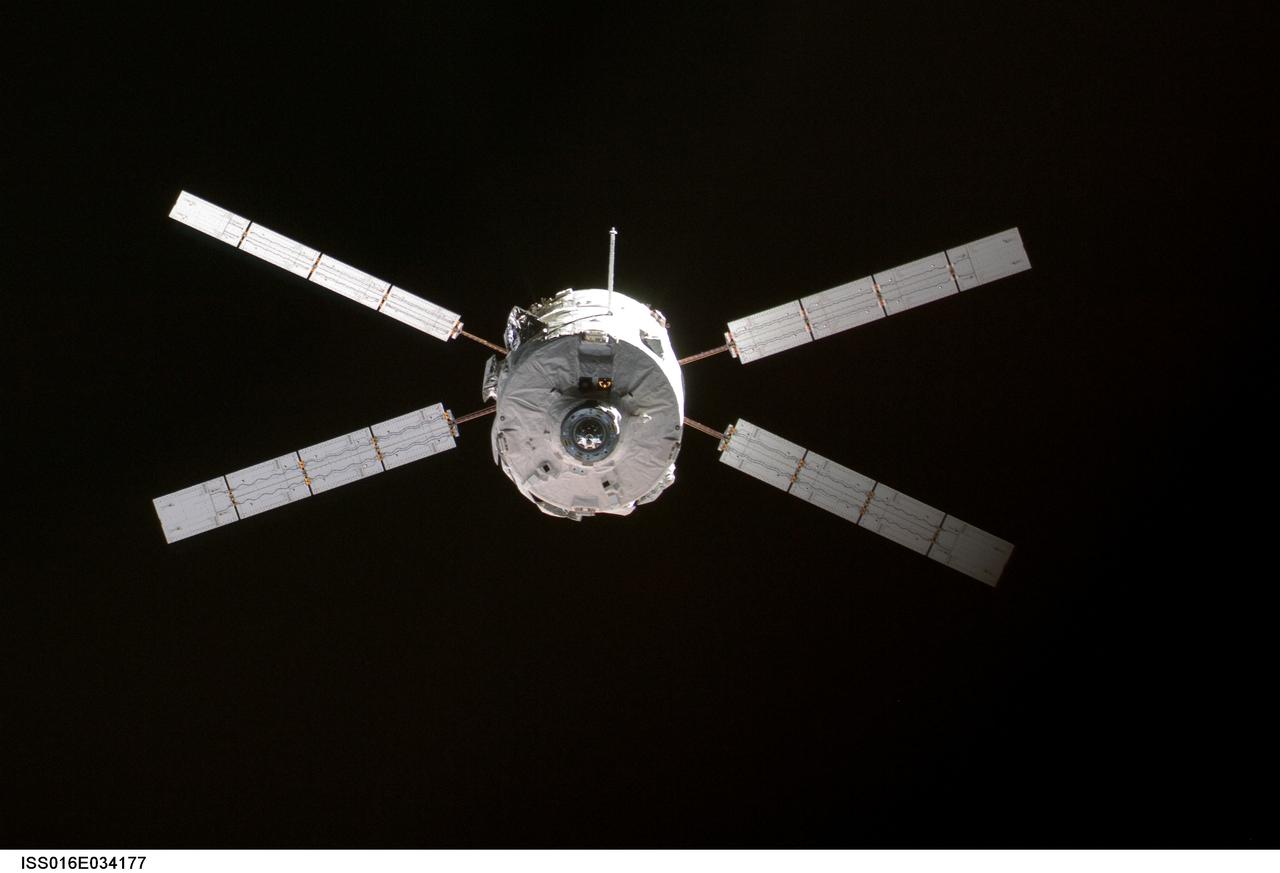
ISS016-E-034177 (31 March 2008) --- Backdropped by the blackness of space, the Jules Verne Automated Transfer Vehicle (ATV) approaches the International Space Station on Monday, March 31, 2008, for its "Demo Day 2" practice maneuvers. It moved to within 36 feet of the Zvezda Service Module in a rehearsal for docking on Thursday.
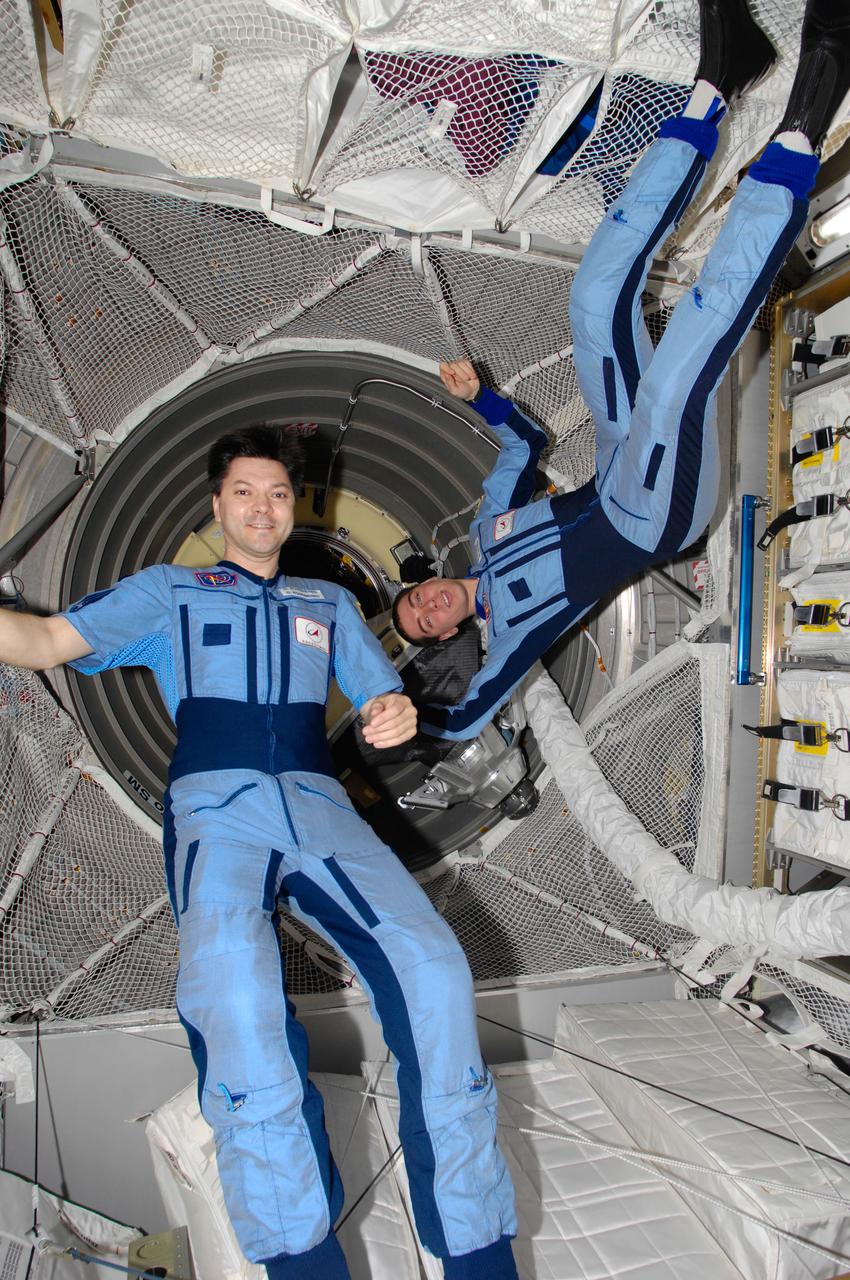
ISS017-E-006543 (12 May 2008) --- Russian Federal Space Agency cosmonauts Sergei Volkov (bottom), Expedition 17 commander, and Oleg Kononenko, flight engineer, take a moment for a photo in the Jules Verne Automated Transfer Vehicle (ATV) while it remains docked with the International Space Station.
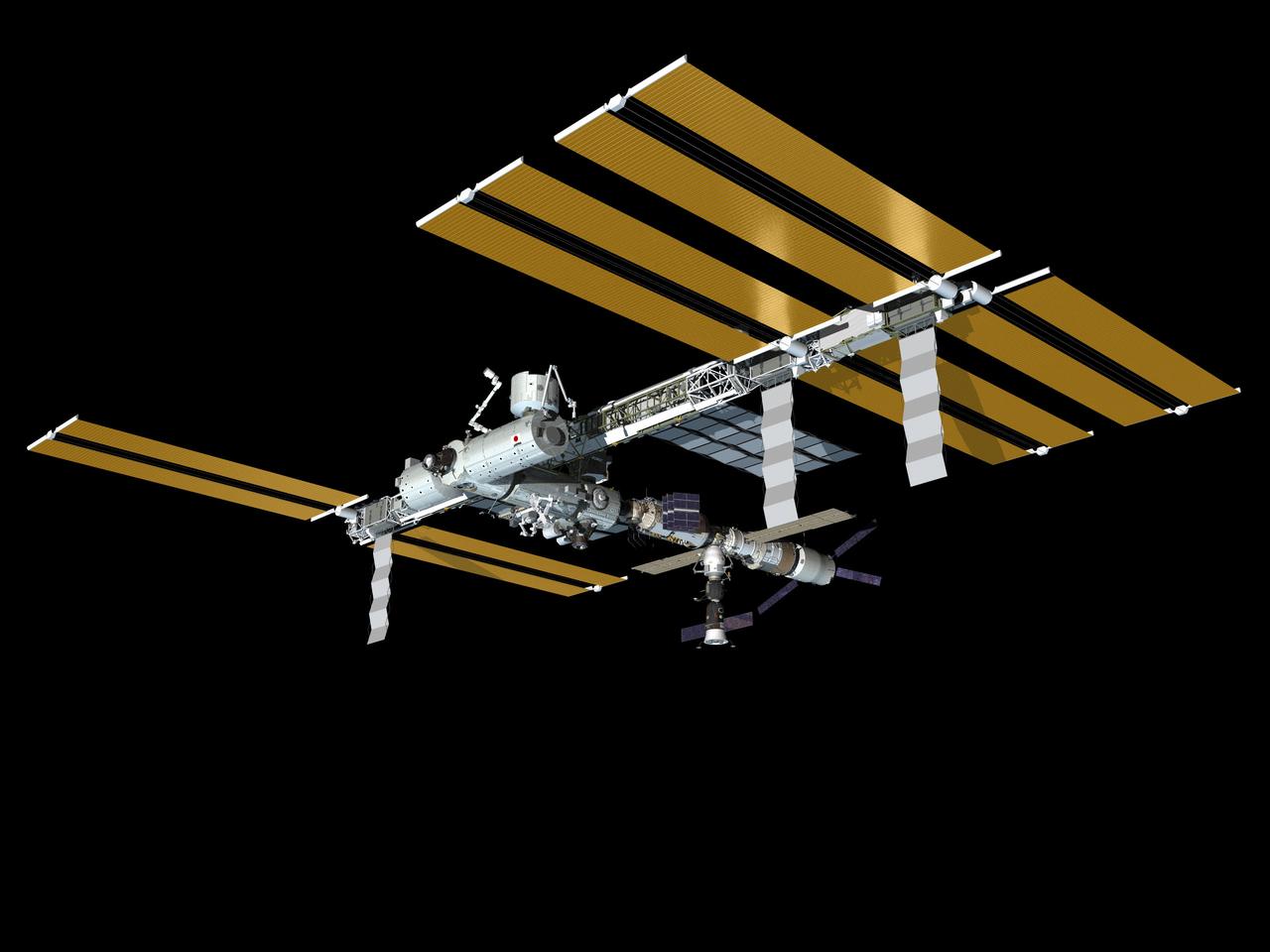
JSC2008-E-118393 (September 2008) --- Computer-generated artist's rendering of the International Space Station as of Sept. 1, 2008. Soyuz 16 (TMA-12) is docked to the Pirs Docking Compartment and the Jules Verne Automated Transfer Vehicle (ATV-1) remains linked to the Zvezda Service Module aft port.
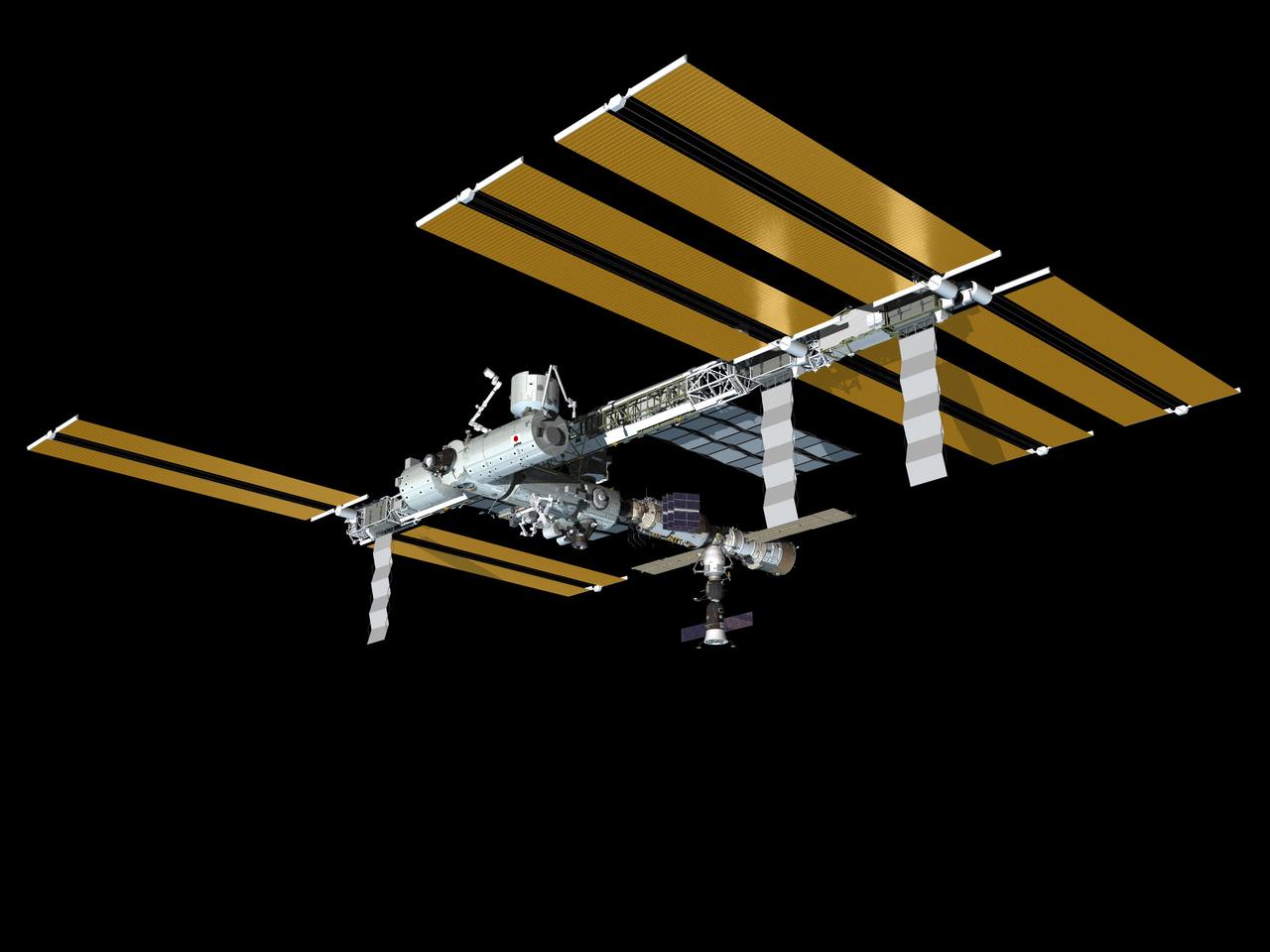
JSC2008-E-118394 (September 2008) --- Computer-generated artist's rendering of the International Space Station as of Sept. 5, 2008. The Jules Verne Automated Transfer Vehicle (ATV-1) undocks from the Zvezda Service Module aft port. Soyuz 16 (TMA-12) remains linked to the Pirs Docking Compartment.
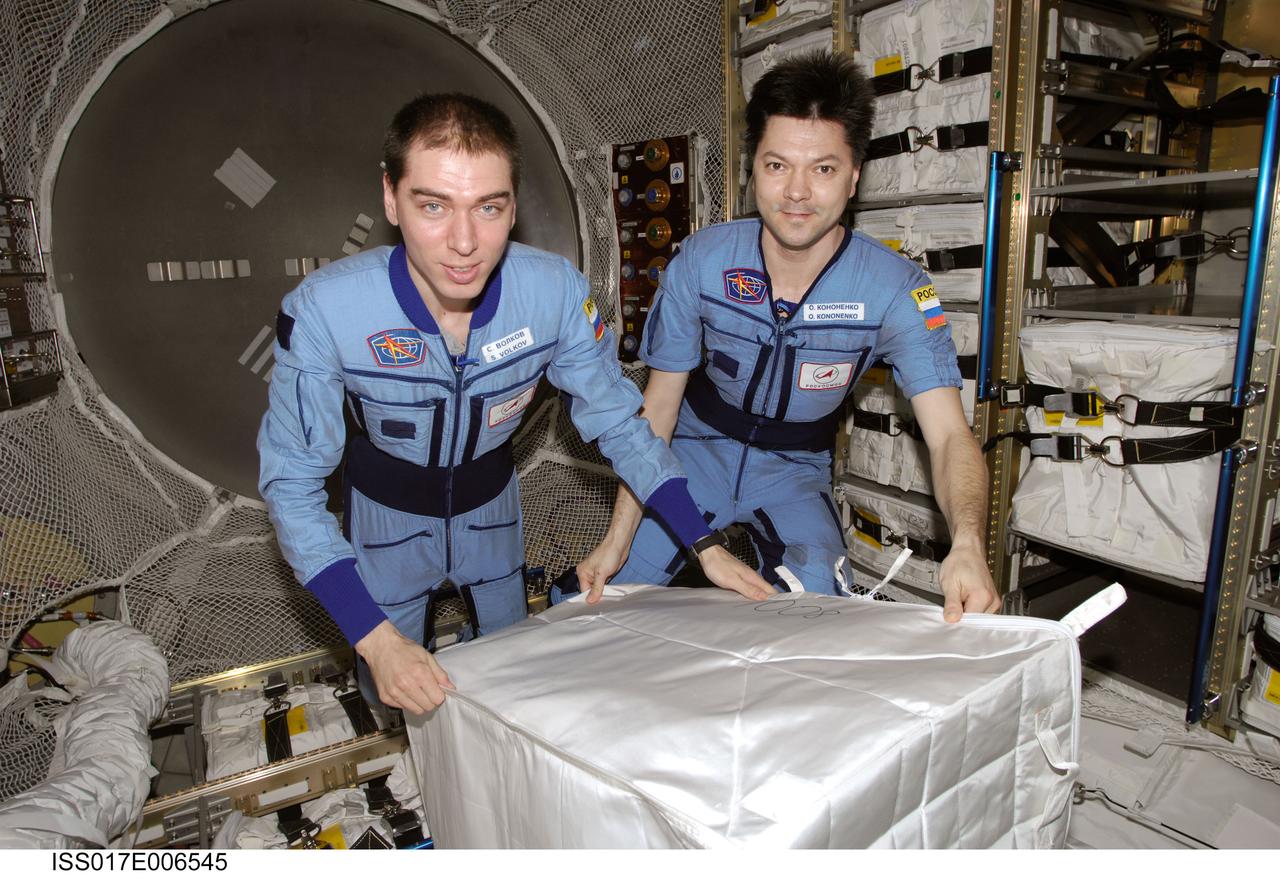
ISS017-E-006545 (12 May 2008) --- Russian Federal Space Agency cosmonauts Sergei Volkov (left), Expedition 17 commander, and Oleg Kononenko, flight engineer, work with stowage bags in the Jules Verne Automated Transfer Vehicle (ATV) while it remains docked with the International Space Station.
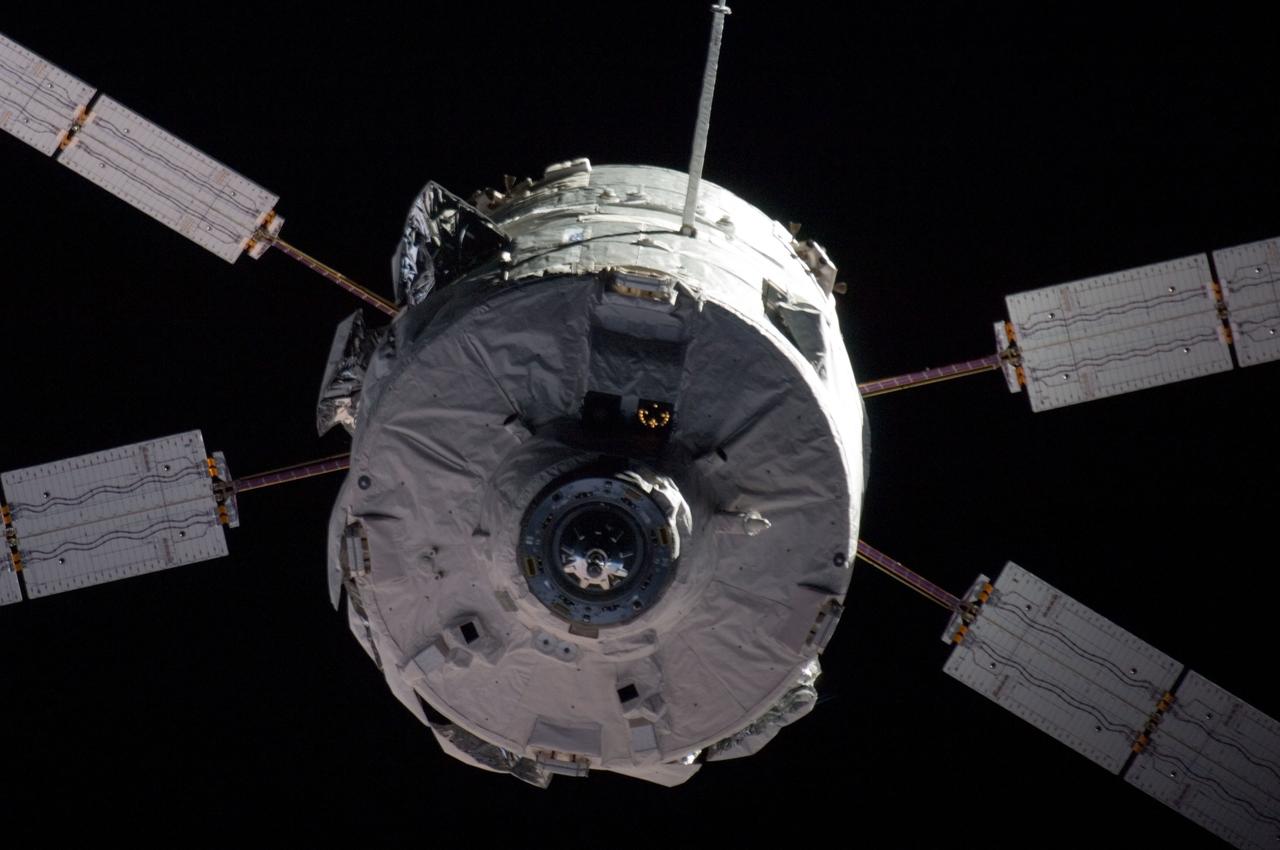
ISS016-E-034176 (31 March 2008) --- Backdropped by the blackness of space, the Jules Verne Automated Transfer Vehicle (ATV) approaches the International Space Station on Monday, March 31, 2008, for its "Demo Day 2" practice maneuvers. It moved to within 36 feet of the Zvezda Service Module in a rehearsal for docking on Thursday.
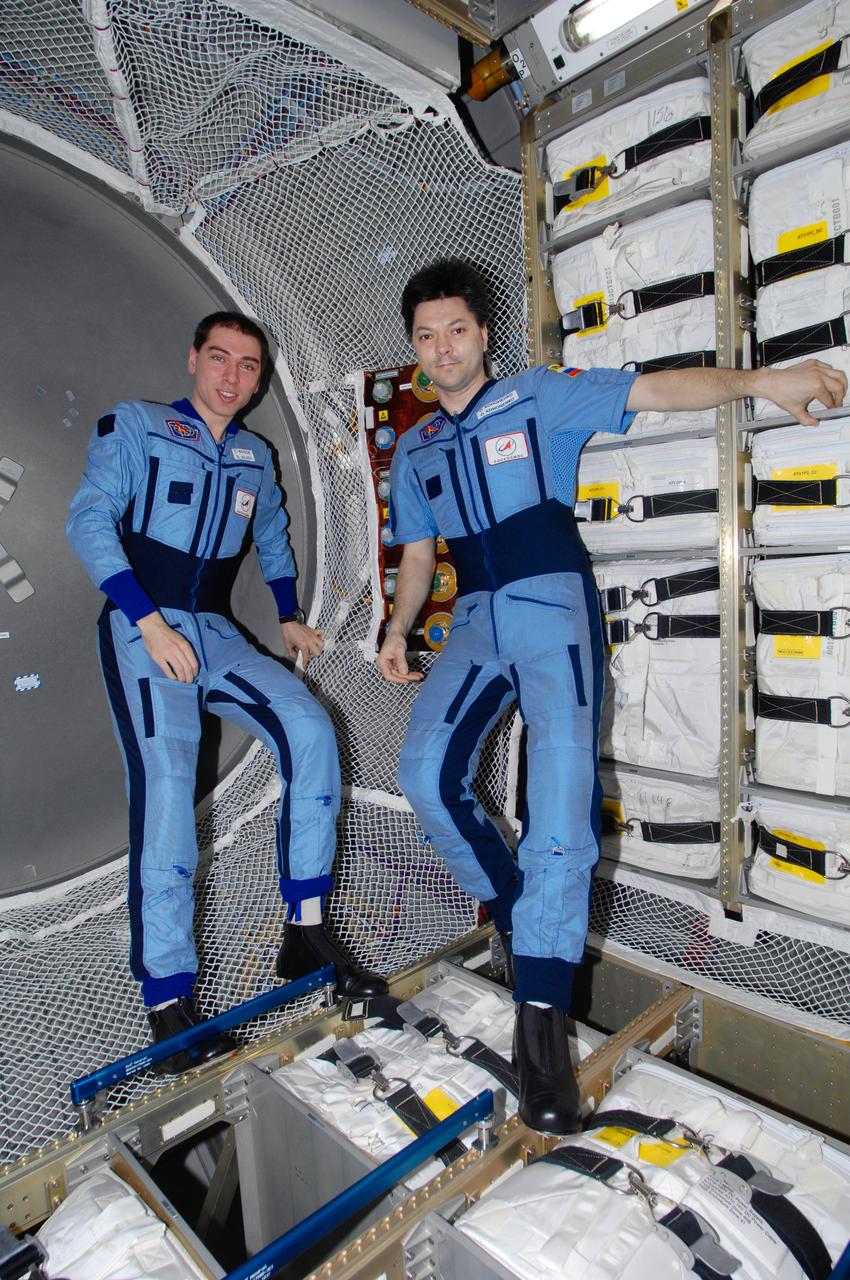
ISS017-E-006544 (12 May 2008) --- Russian Federal Space Agency cosmonauts Sergei Volkov (left), Expedition 17 commander, and Oleg Kononenko, flight engineer, take a moment for a photo in the Jules Verne Automated Transfer Vehicle (ATV) while it remains docked with the International Space Station.
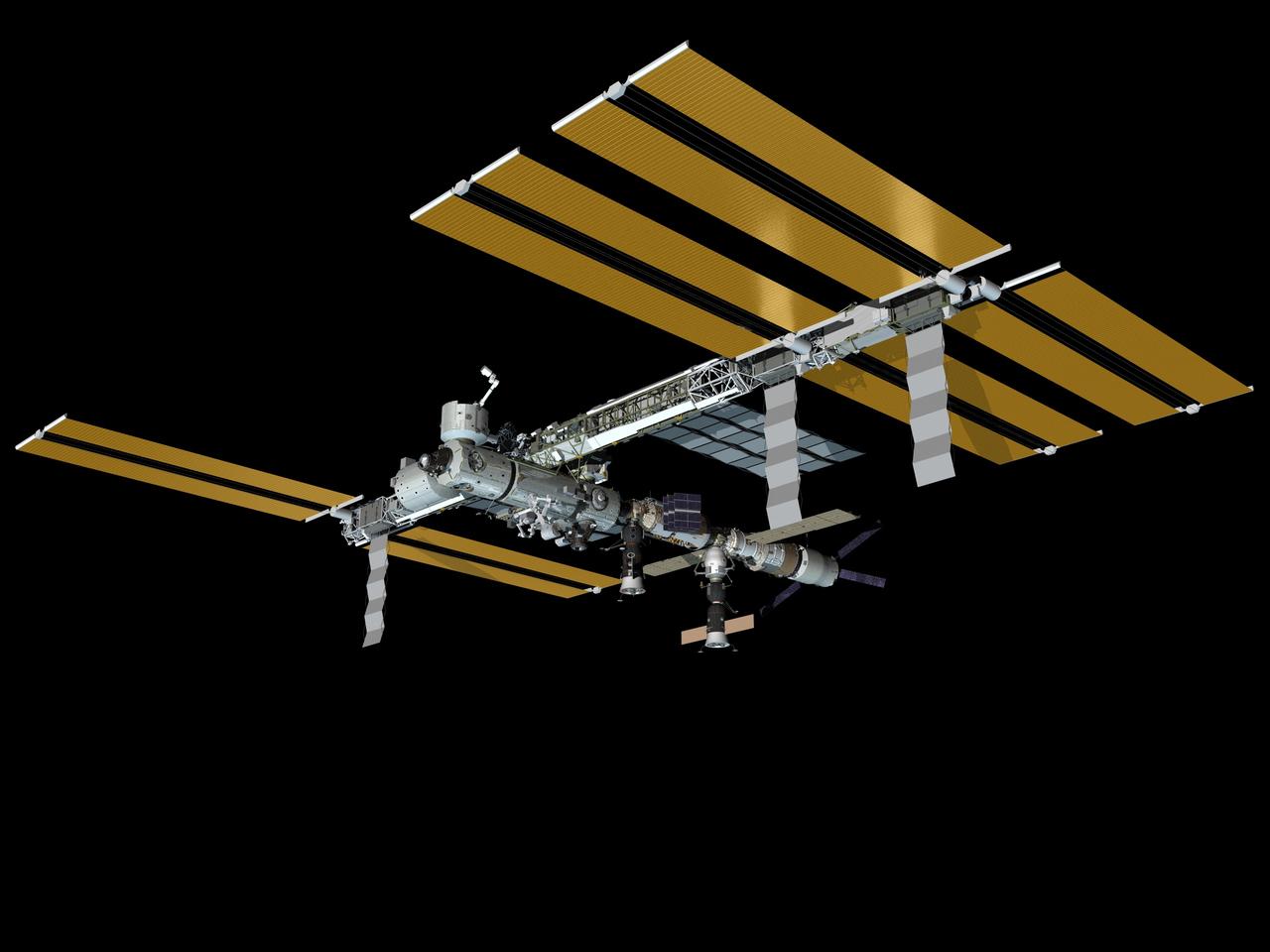
JSC2008-E-035387 (May 2008) --- Computer-generated artist's rendering of the International Space Station as of May 16, 2008. Progress 29 resupply vehicle docks to the Zarya nadir port. Soyuz 16 (TMA-12) is linked to the Pirs Docking Compartment and the Jules Verne Automated Transfer Vehicle (ATV-1) remains docked to the Zvezda Service Module aft port.
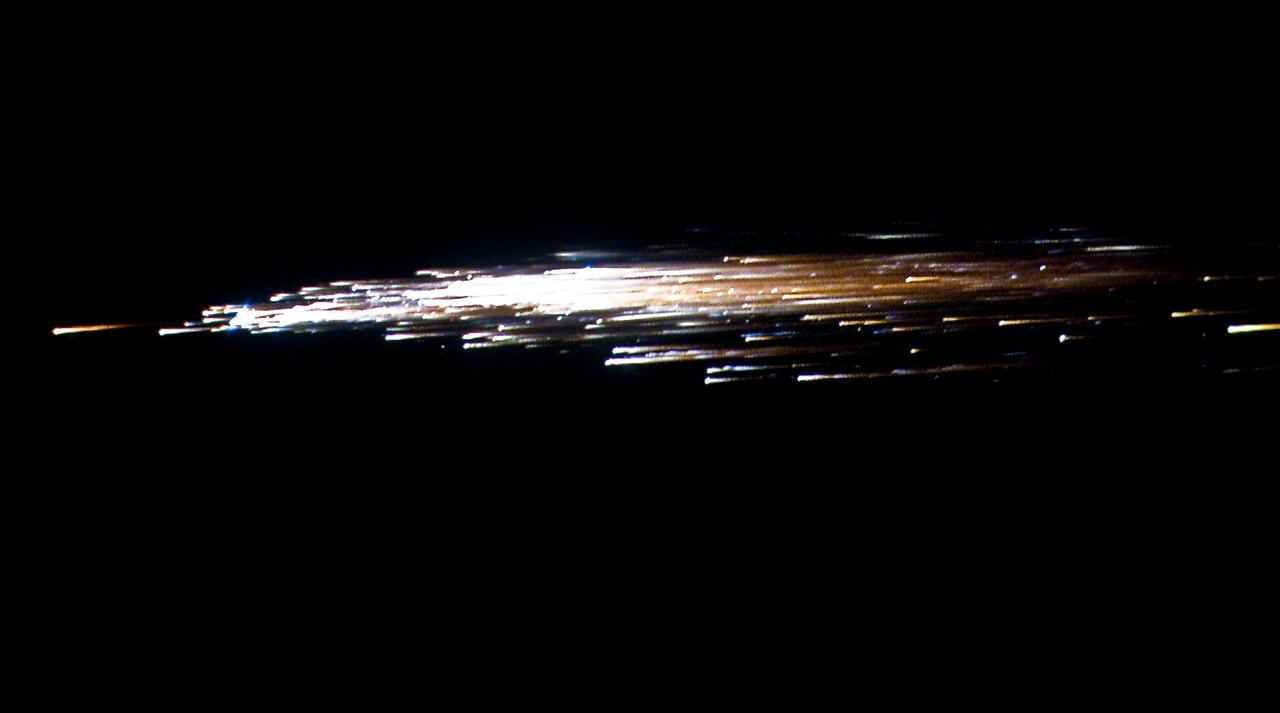
European Space Agency's 'Jules Verne' Automated Transfer Vehicle ATV-1 re-entry in Earth's atmosphere over Pacific Ocean. The breakup ad fragmentation of the ESA's ATV-1 was captured in dramatic fashion by scientists aboard NASA's DC-8 airborne laboratory and a Gulfstream V aircraft as it re-entered the atmosphere early Monday morning over the South Pacific. Photo Credit: NASA Ames Research Center/ESA/Jesse Carpenter/Bill Moede
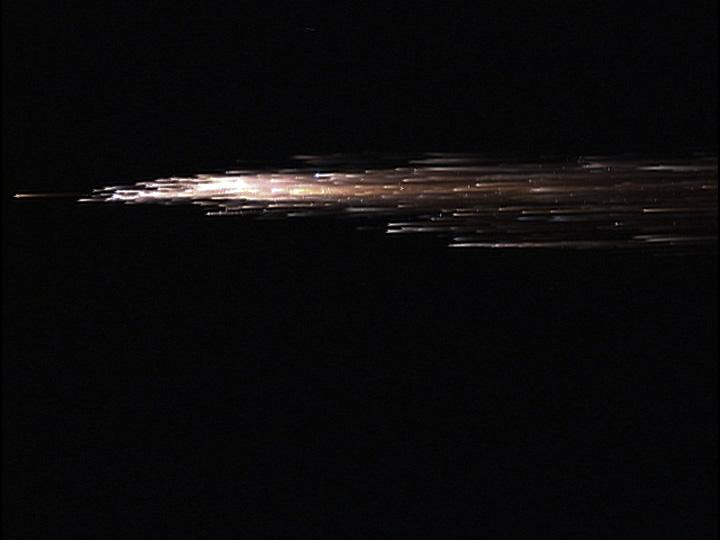
European Space Agency's 'Jules Verne' Automated Transfer Vehicle ATV-1 re-entry in Earth's atmosphere over Pacific Ocean. The breakup ad fragmentation of the ESA's ATV-1 was captured in dramatic fashion by scientists aboard NASA's DC-8 airborne laboratory and a Gulfstream V aircraft as it re-entered the atmosphere early Monday morning over the South Pacific. Photo Credit: NASA Ames Research Center/ESA/Jesse Carpenter/Bill Moede
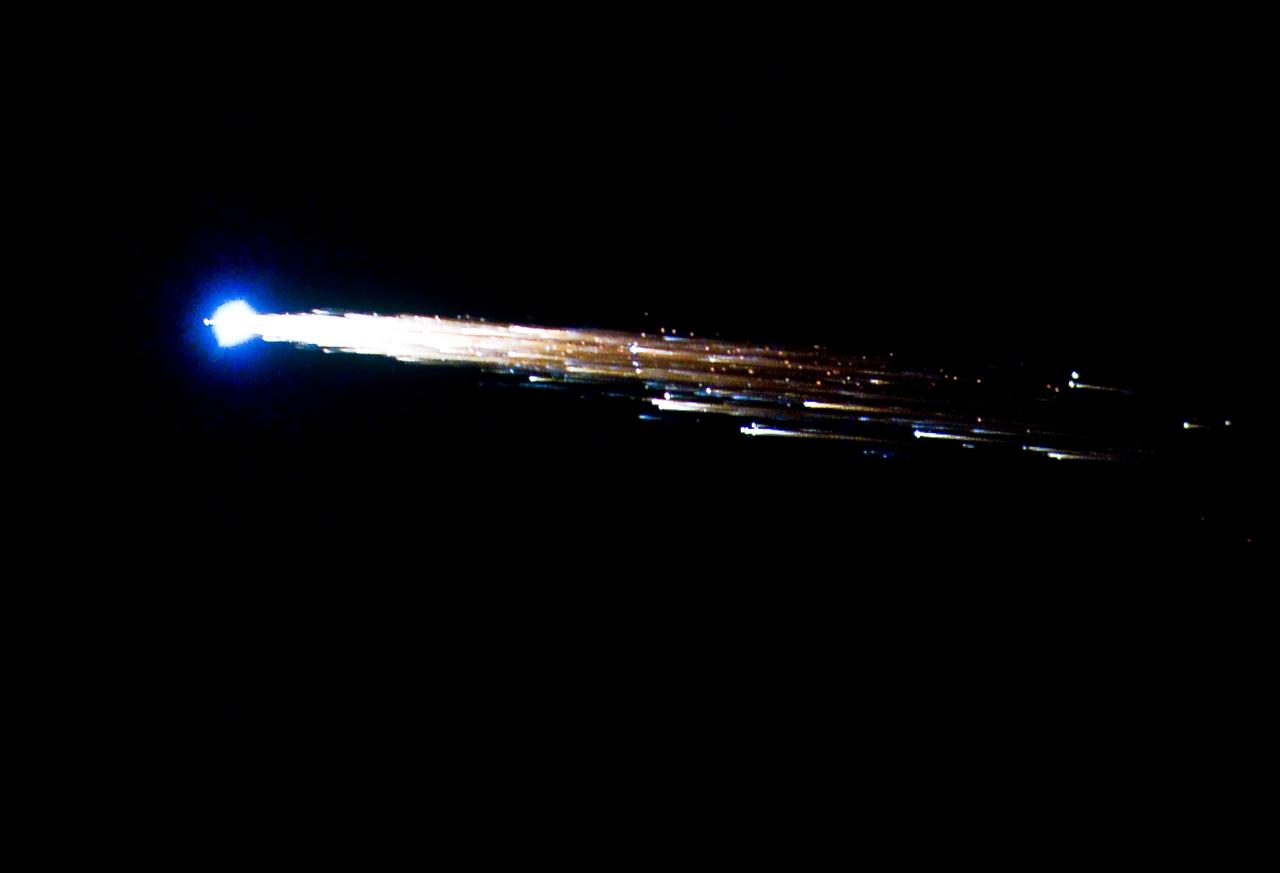
European Space Agency's 'Jules Verne' Automated Transfer Vehicle ATV-1 re-entry in Earth's atmosphere over Pacific Ocean. The breakup ad fragmentation of the ESA's ATV-1 was captured in dramatic fashion by scientists aboard NASA's DC-8 airborne laboratory and a Gulfstream V aircraft as it re-entered the atmosphere early Monday morning over the South Pacific. Photo Credit: NASA Ames Research Center/ESA/Jesse Carpenter/Bill Moede

ISS011-E-09812 (28 June 2005) --- Cosmonaut Sergei K. Krikalev, Expedition 11 commander representing Russia's Federal Space Agency, tests the newly installed Proximity Communications Equipment (PCE) hardware of the ASN-M satellite navigation system for the European Automated Transfer Vehicle (ATV) “Jules Verne” in the Zvezda Service Module of the international space station. The ATV is scheduled to arrive at the station next year.
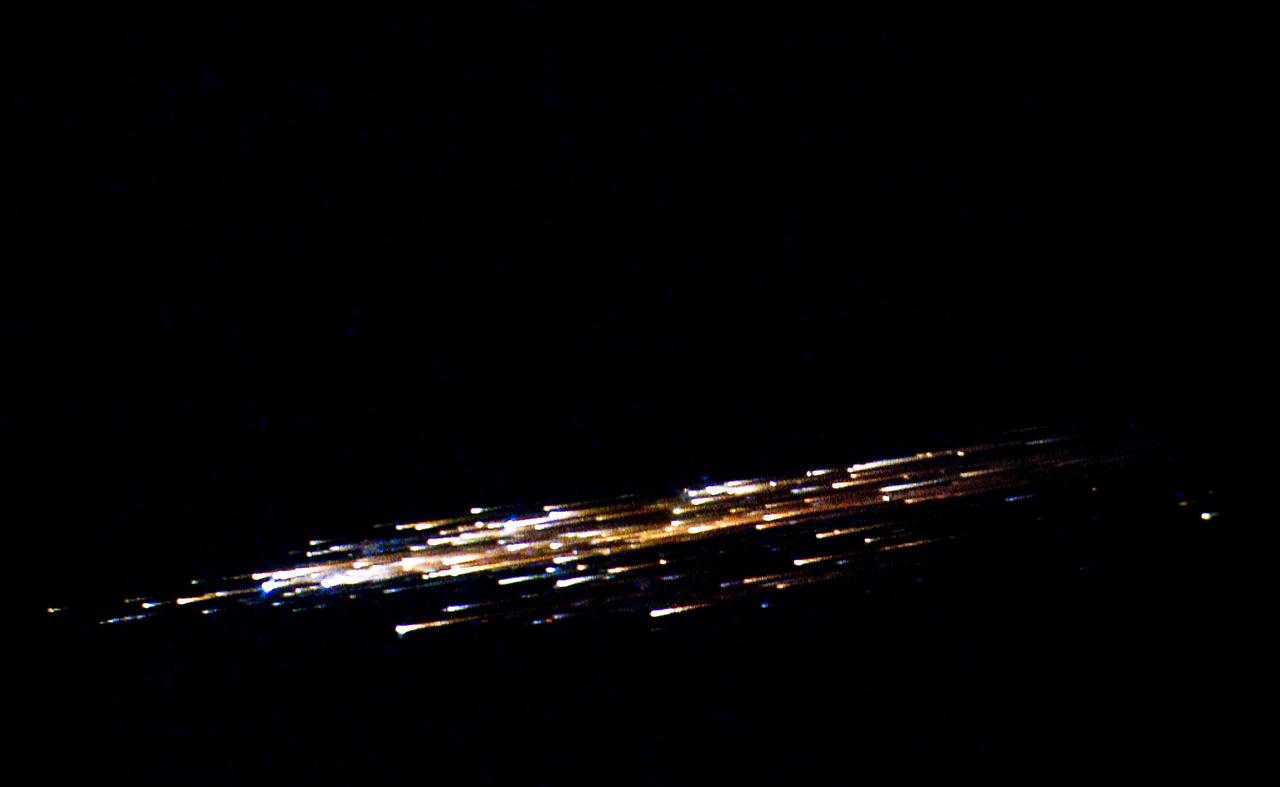
European Space Agency's 'Jules Verne' Automated Transfer Vehicle ATV-1 re-entry in Earth's atmosphere over Pacific Ocean. The breakup ad fragmentation of the ESA's ATV-1 was captured in dramatic fashion by scientists aboard NASA's DC-8 airborne laboratory and a Gulfstream V aircraft as it re-entered the atmosphere early Monday morning over the South Pacific. Photo Credit: NASA Ames Research Center/ESA/Jesse Carpenter/Bill Moede
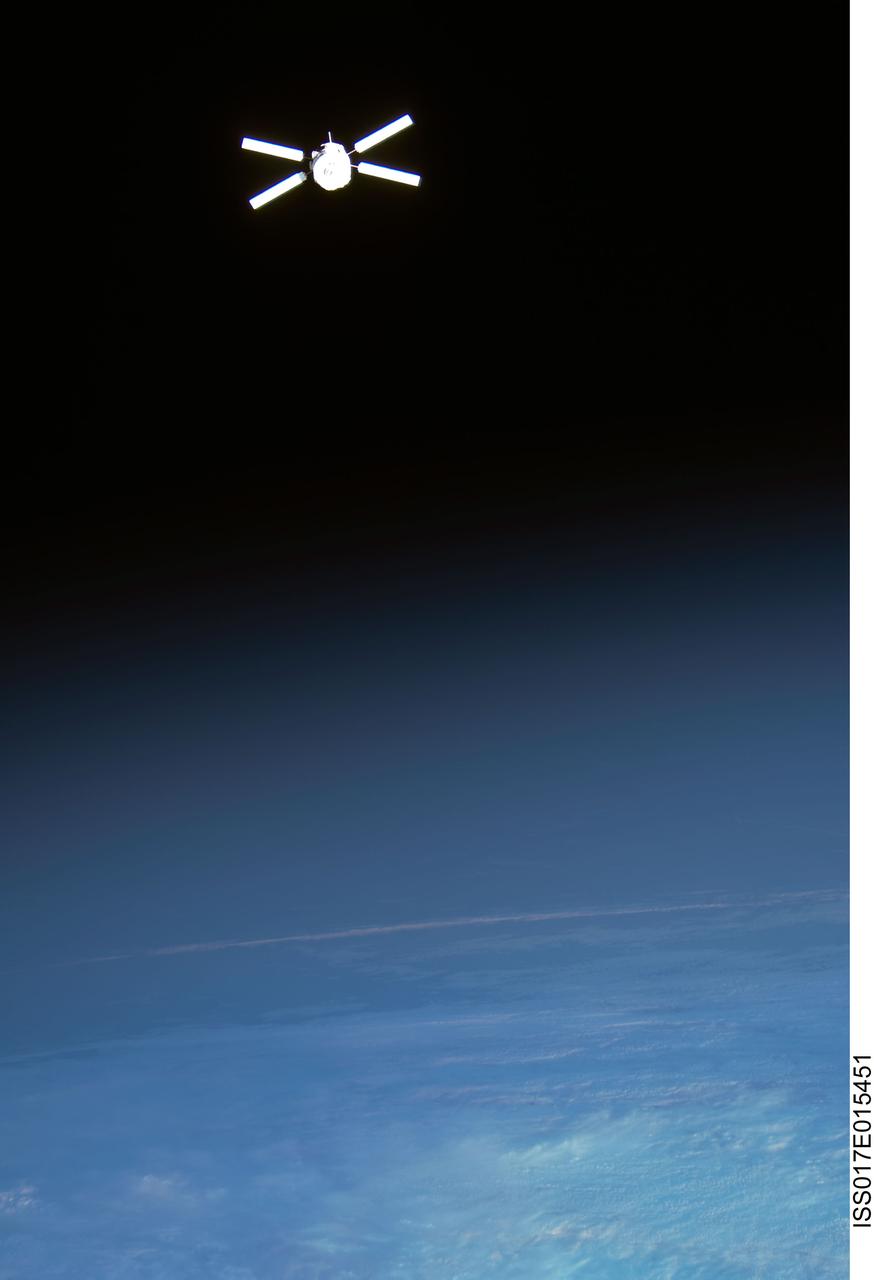
ISS017-E-015451 (5 Sept. 2008) --- Backdropped by Earth's horizon and the blackness of space, European Space Agency's (ESA) "Jules Verne" Automated Transfer Vehicle (ATV) begins its relative separation from the International Space Station. The ATV undocked from the aft port of the Zvezda Service Module at 4:29 p.m. (CDT) on Sept. 5, 2008 and was placed in a parking orbit for three weeks, scheduled to be deorbited on Sept. 29 when lighting conditions are correct for an ESA imagery experiment of reentry.
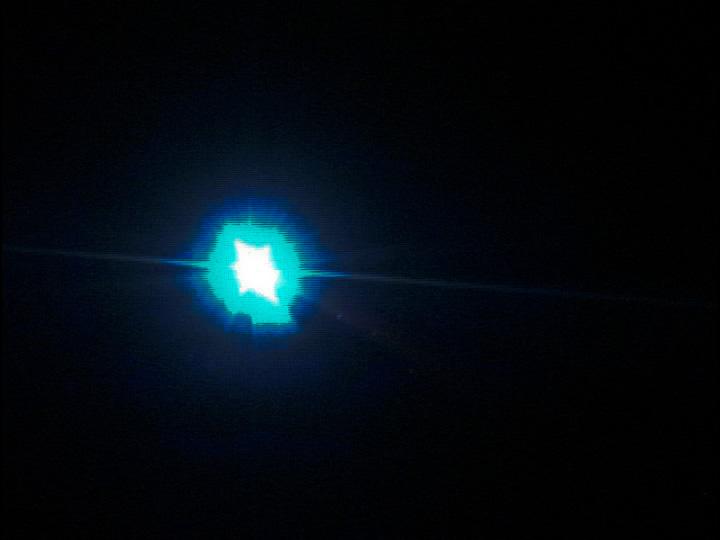
European Space Agency's 'Jules Verne' Automated Transfer Vehicle ATV-1 re-entry in Earth's atmosphere over Pacific Ocean. The breakup ad fragmentation of the ESA's ATV-1 was captured in dramatic fashion by scientists aboard NASA's DC-8 airborne laboratory and a Gulfstream V aircraft as it re-entered the atmosphere early Monday morning over the South Pacific. Photo Credit: NASA Ames Research Center/ESA/Jesse Carpenter/Bill Moede
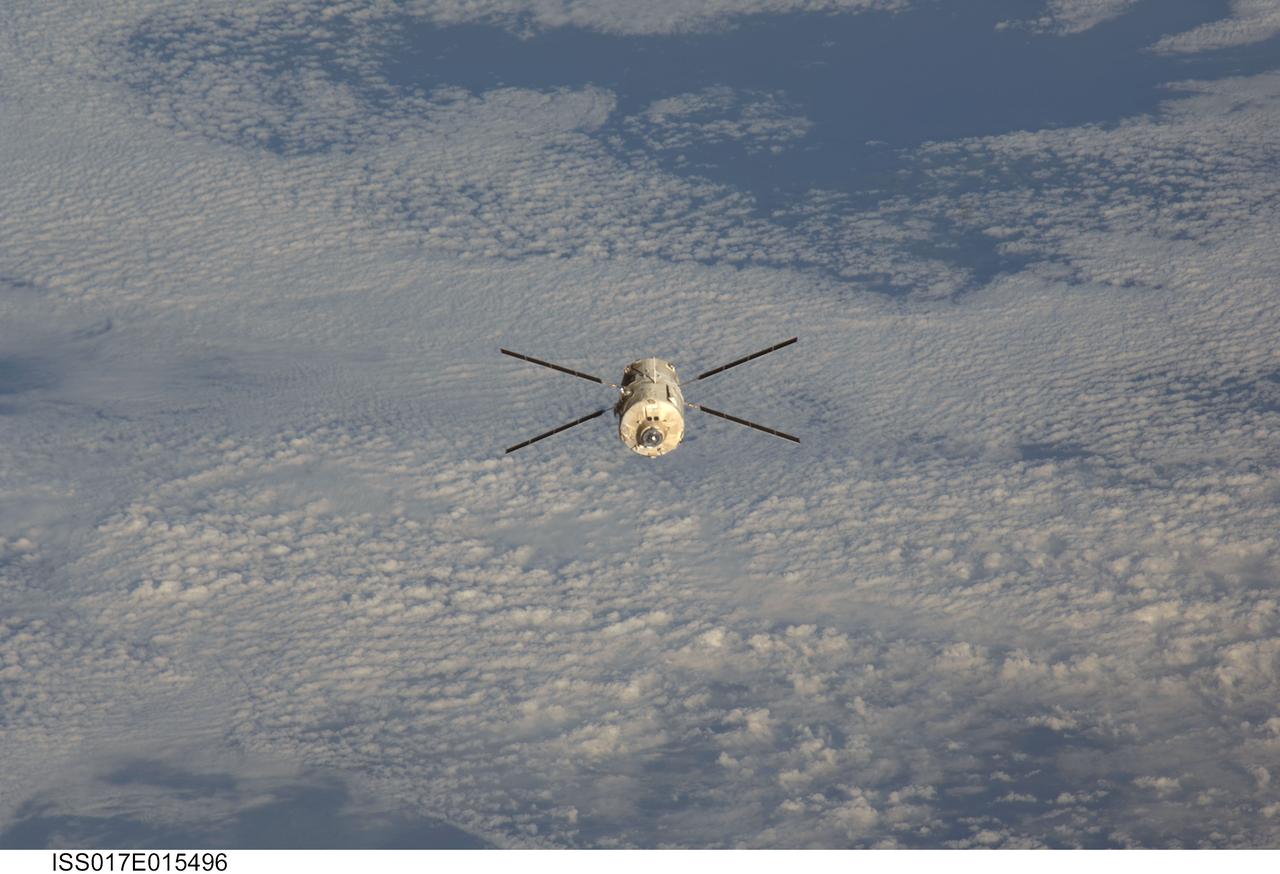
ISS017-E-015496 (5 Sept. 2008) --- Backdropped by a blanket of clouds, European Space Agency's (ESA) "Jules Verne" Automated Transfer Vehicle (ATV) continues its relative separation from the International Space Station. The ATV undocked from the aft port of the Zvezda Service Module at 4:29 p.m. (CDT) on Sept. 5, 2008 and was placed in a parking orbit for three weeks, scheduled to be deorbited on Sept. 29 when lighting conditions are correct for an ESA imagery experiment of reentry.
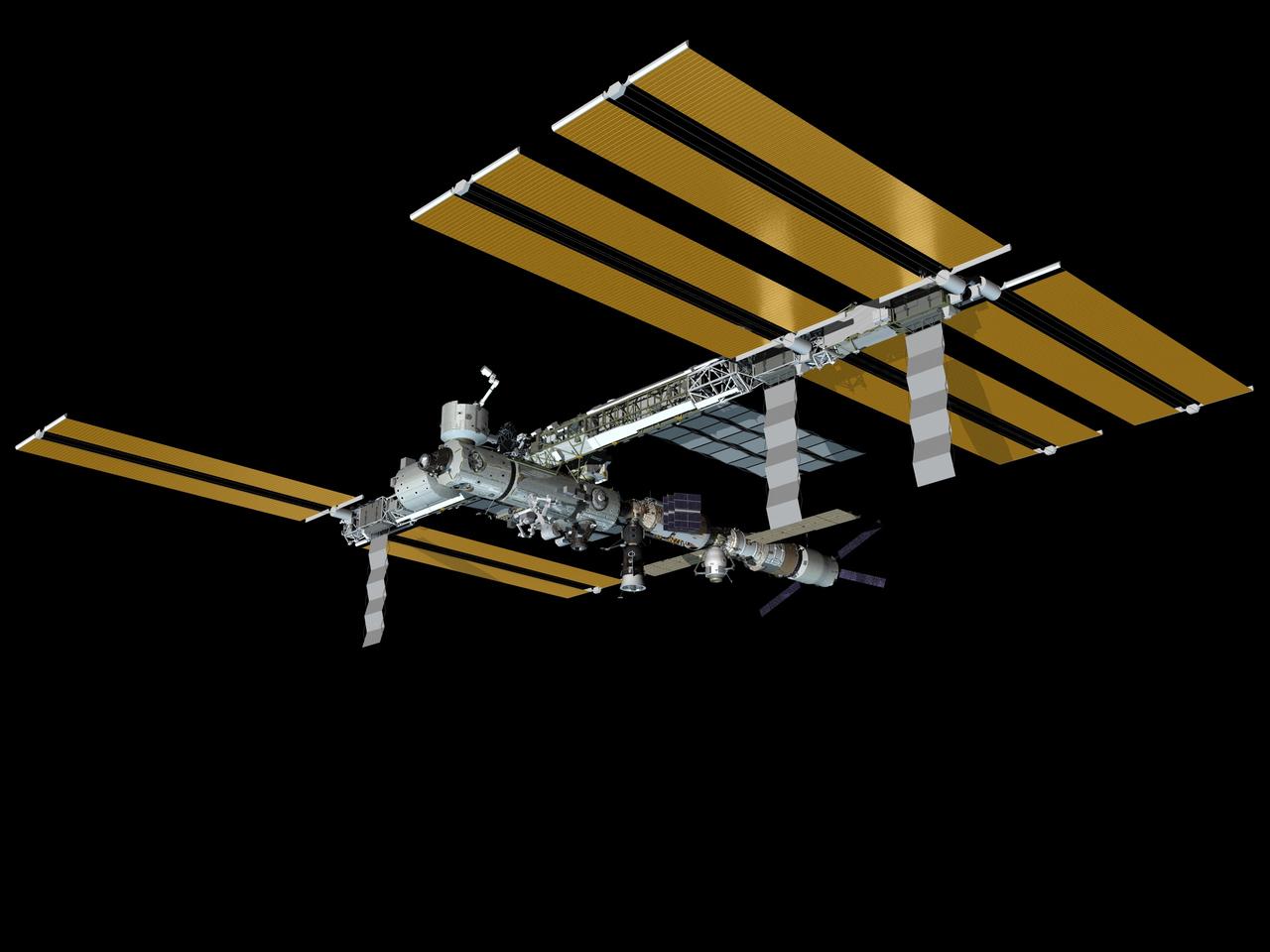
JSC2008-E-032250 (April 2008) --- Computer-generated artist's rendering of the International Space Station as of April 7, 2008. Progress 28 resupply vehicle undocks from the Pirs Docking Compartment. Soyuz 15 (TMA-11) remains linked to the Zarya nadir port and the Jules Verne Automated Transfer Vehicle (ATV-1) docked to the Zvezda Service Module aft port on April 3, 2008.
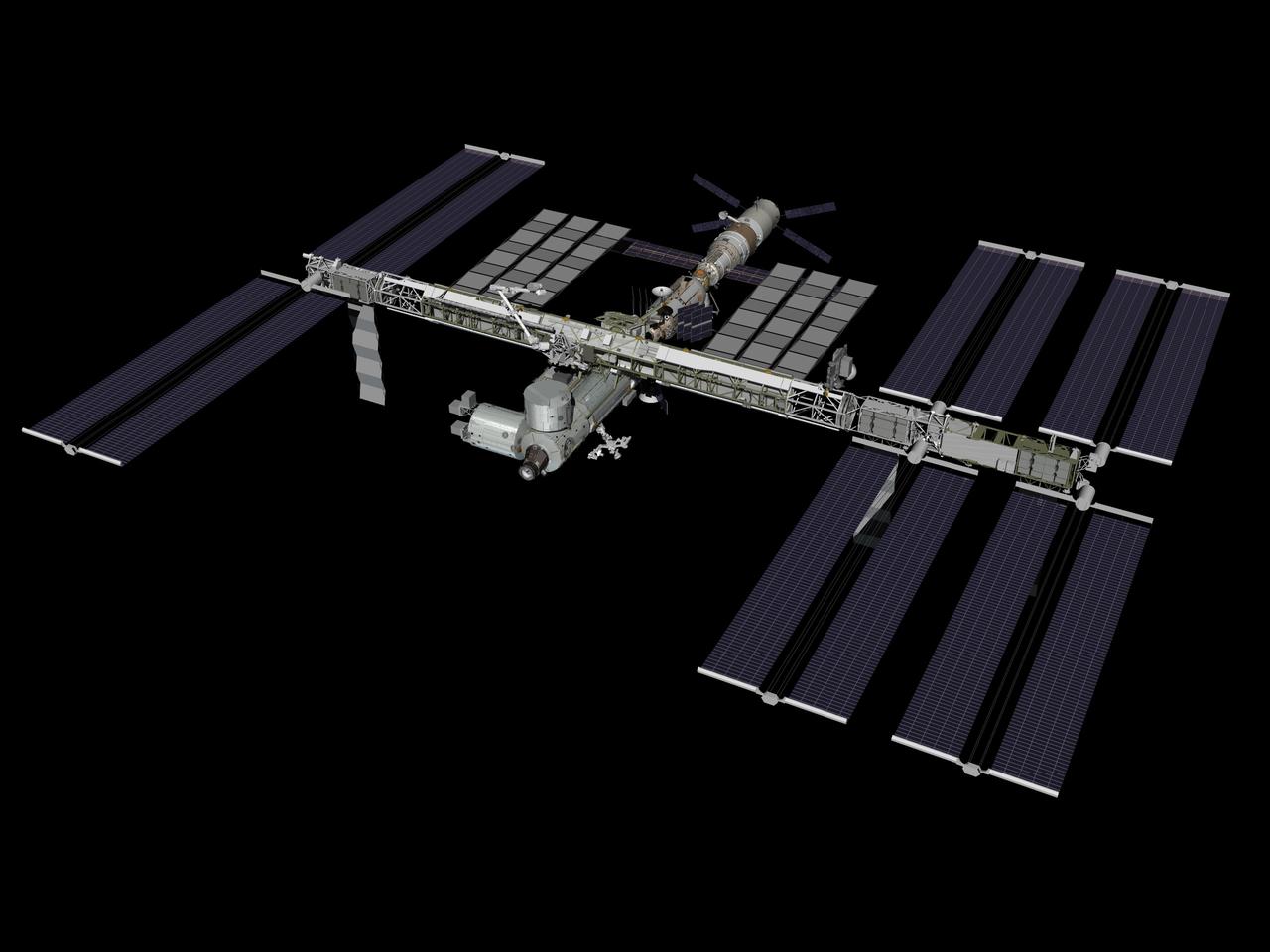
JSC2008-E-032252 (April 2008) --- Computer-generated artist's rendering of the International Space Station as of April 10, 2008. Soyuz 16 (TMA-12) docks to the Pirs Docking Compartment, carrying the Expedition 17 crew and spaceflight participant. Soyuz 15 (TMA-11) is linked at the Zarya nadir port and the Jules Verne Automated Transfer Vehicle (ATV-1) remains docked to the Zvezda Service Module aft port.
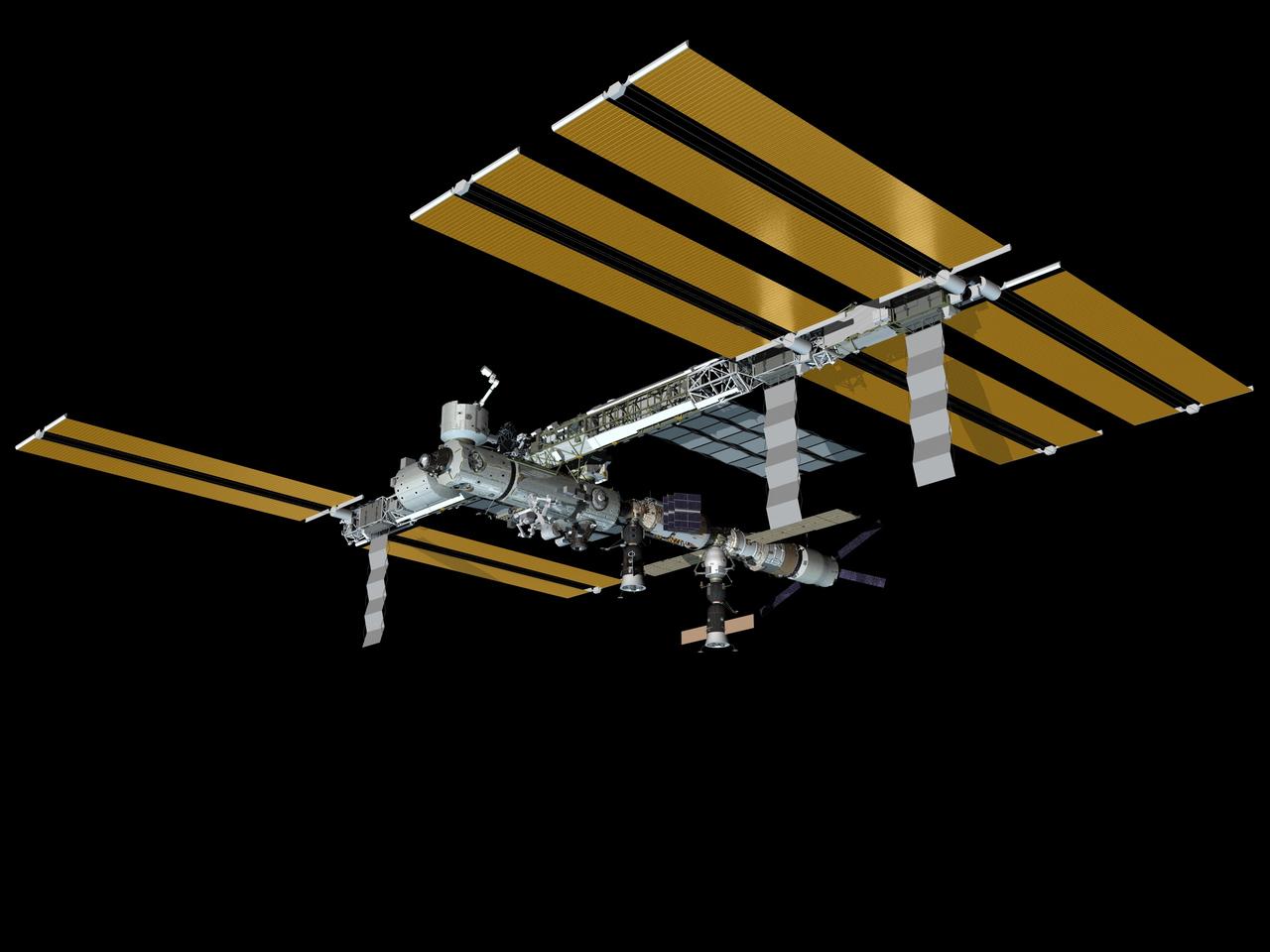
JSC2008-E-032251 (April 2008) --- Computer-generated artist's rendering of the International Space Station as of April 10, 2008. Soyuz 16 (TMA-12) docks to the Pirs Docking Compartment, carrying the Expedition 17 crew and spaceflight participant. Soyuz 15 (TMA-11) is linked at the Zarya nadir port and the Jules Verne Automated Transfer Vehicle (ATV-1) remains docked to the Zvezda Service Module aft port.
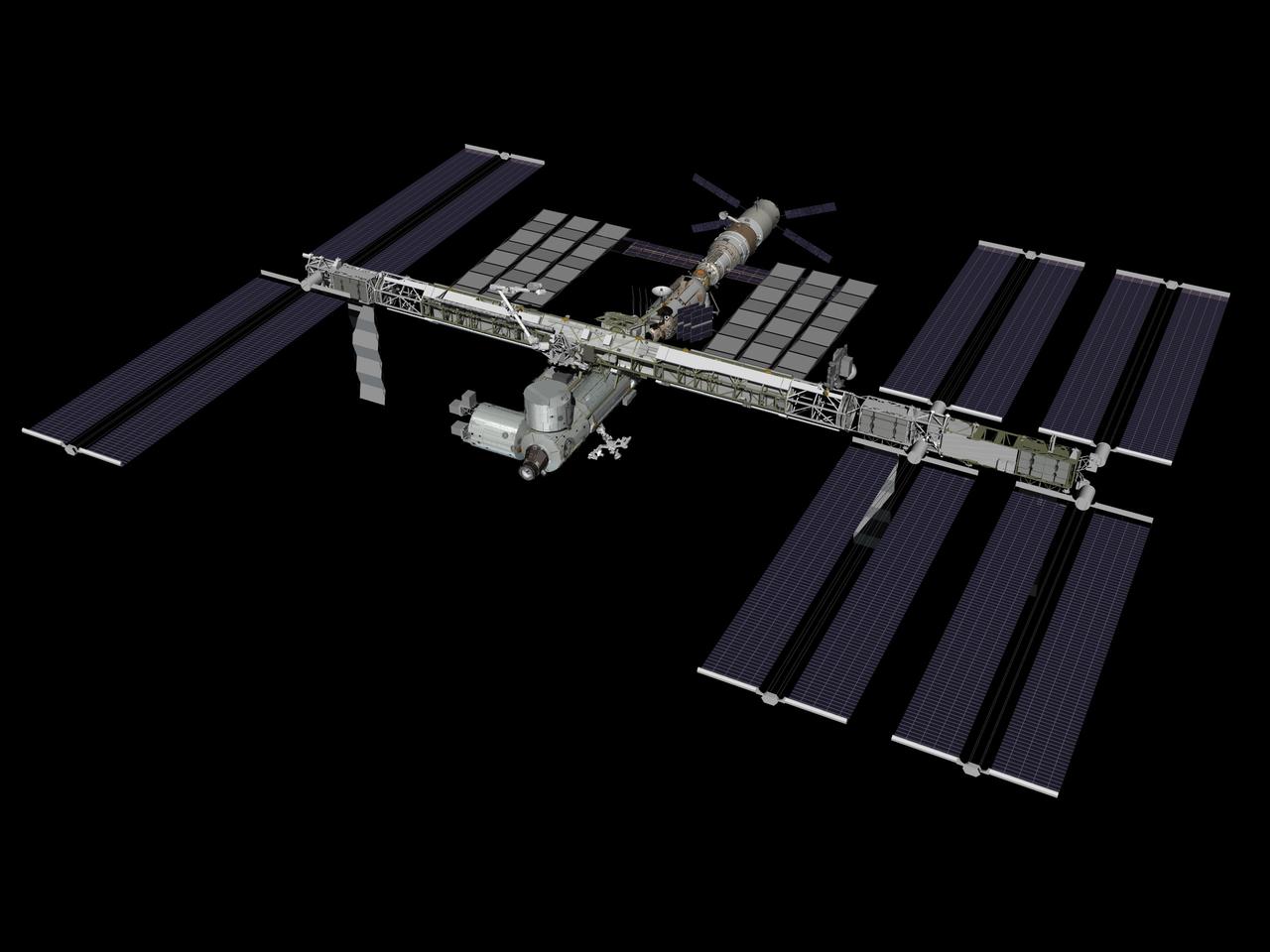
JSC2008-E-032254 (April 2008) --- Computer-generated artist's rendering of the International Space Station as of April 19, 2008. Soyuz 15 (TMA-11) undocks from the Zarya nadir port, returning the Expedition 16 crew and spaceflight participant to Earth. Soyuz 16 (TMA-12) remains docked at the Pirs Docking Compartment and the Jules Verne Automated Transfer Vehicle (ATV-1) is linked to the Zvezda Service Module aft port.
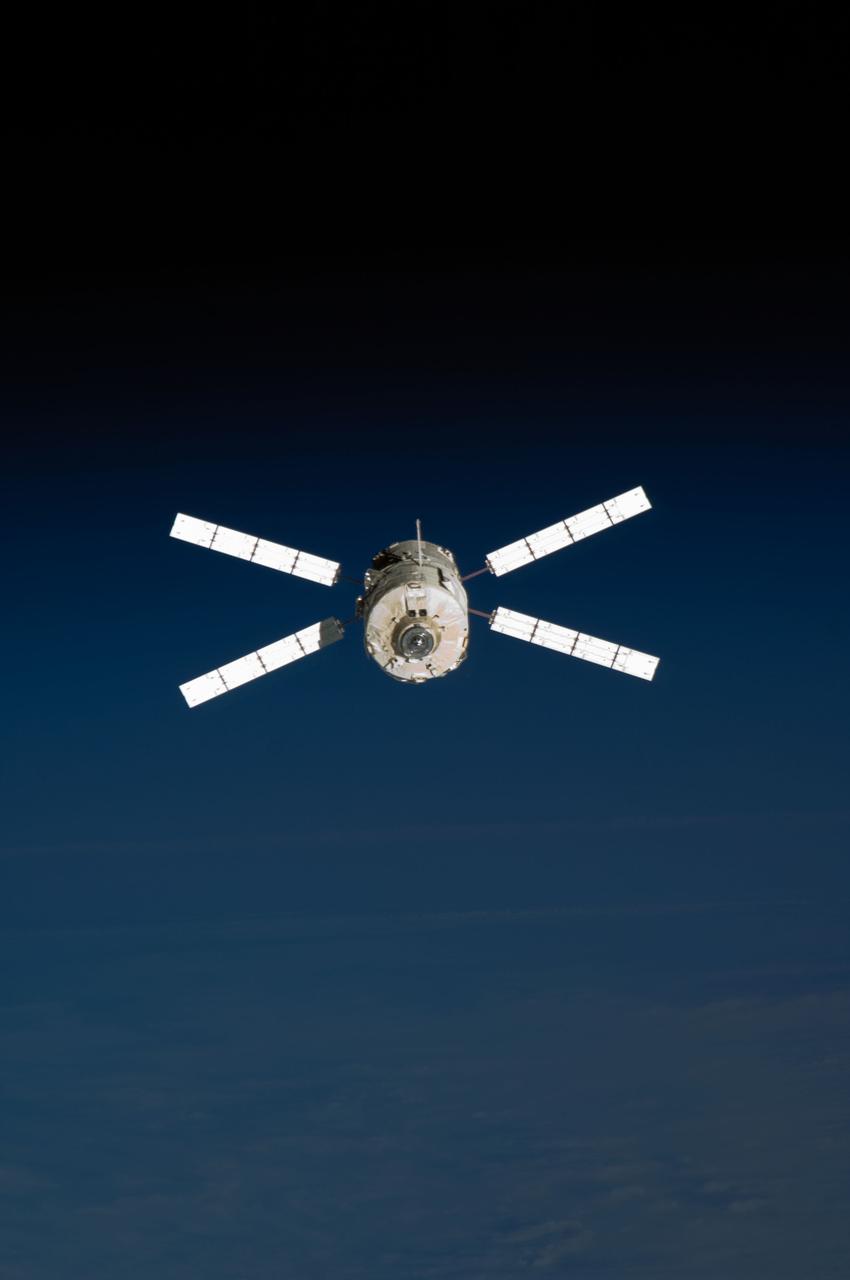
ISS017-E-015468 (5 Sept. 2008) --- Backdropped by the blackness of space, European Space Agency's (ESA) "Jules Verne" Automated Transfer Vehicle (ATV) begins its relative separation from the International Space Station. The ATV undocked from the aft port of the Zvezda Service Module at 4:29 p.m. (CDT) on Sept. 5, 2008 and was placed in a parking orbit for three weeks, scheduled to be deorbited on Sept. 29 when lighting conditions are correct for an ESA imagery experiment of reentry.
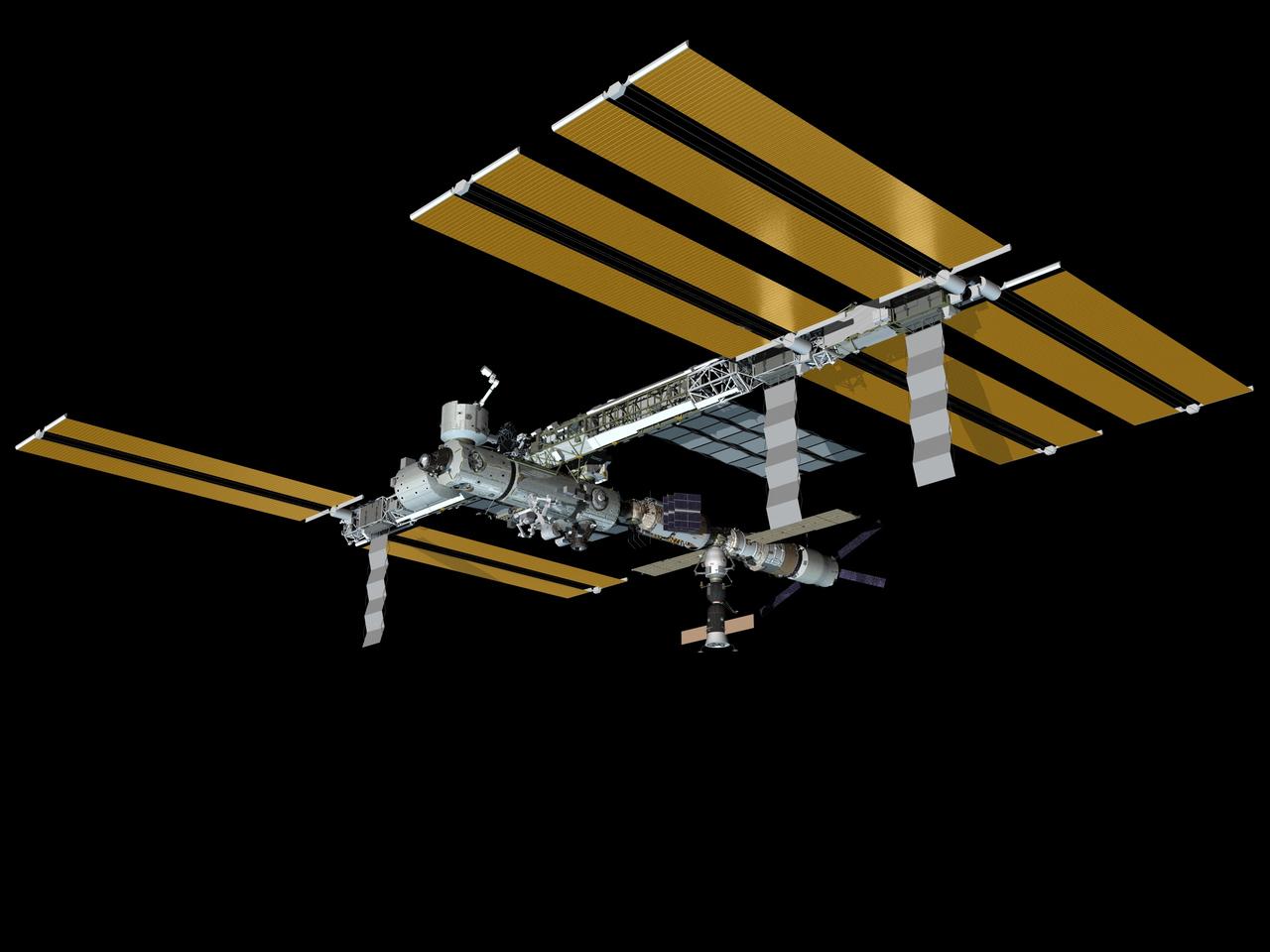
JSC2008-E-032253 (April 2008) --- Computer-generated artist's rendering of the International Space Station as of April 19, 2008. Soyuz 15 (TMA-11) undocks from the Zarya nadir port, returning the Expedition 16 crew and spaceflight participant to Earth. Soyuz 16 (TMA-12) remains docked at the Pirs Docking Compartment and the Jules Verne Automated Transfer Vehicle (ATV-1) is linked to the Zvezda Service Module aft port.
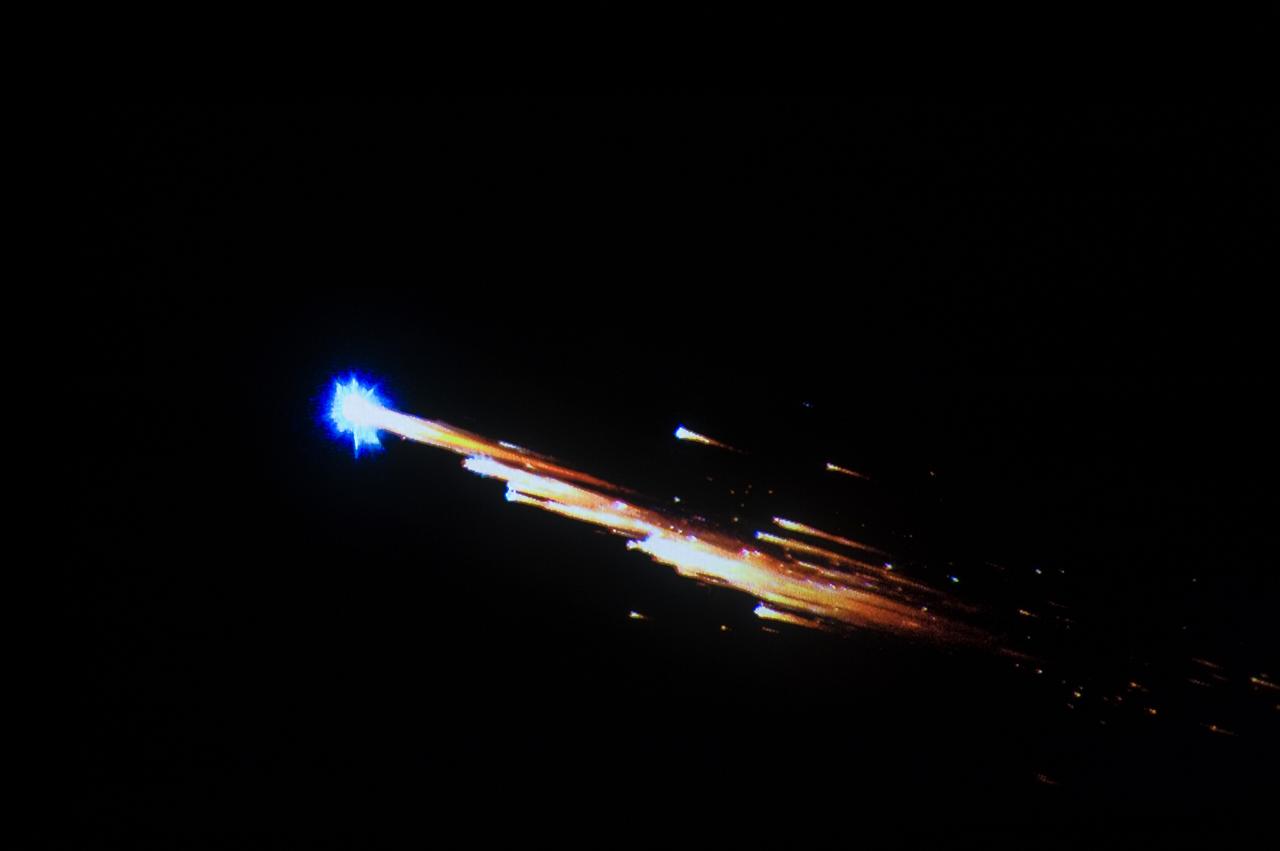
European Space Agency's 'Jules Verne' Automated Transfer Vehicle ATV-1 re-entry in Earth's atmosphere over Pacific Ocean. The breakup ad fragmentation of the ESA's ATV-1 was captured in dramatic fashion by scientists aboard NASA's DC-8 airborne laboratory and a Gulfstream V aircraft as it re-entered the atmosphere early Monday morning over the South Pacific. Photo Credit: NASA Ames Research Center/ESA/Jesse Carpenter/Bill Moede
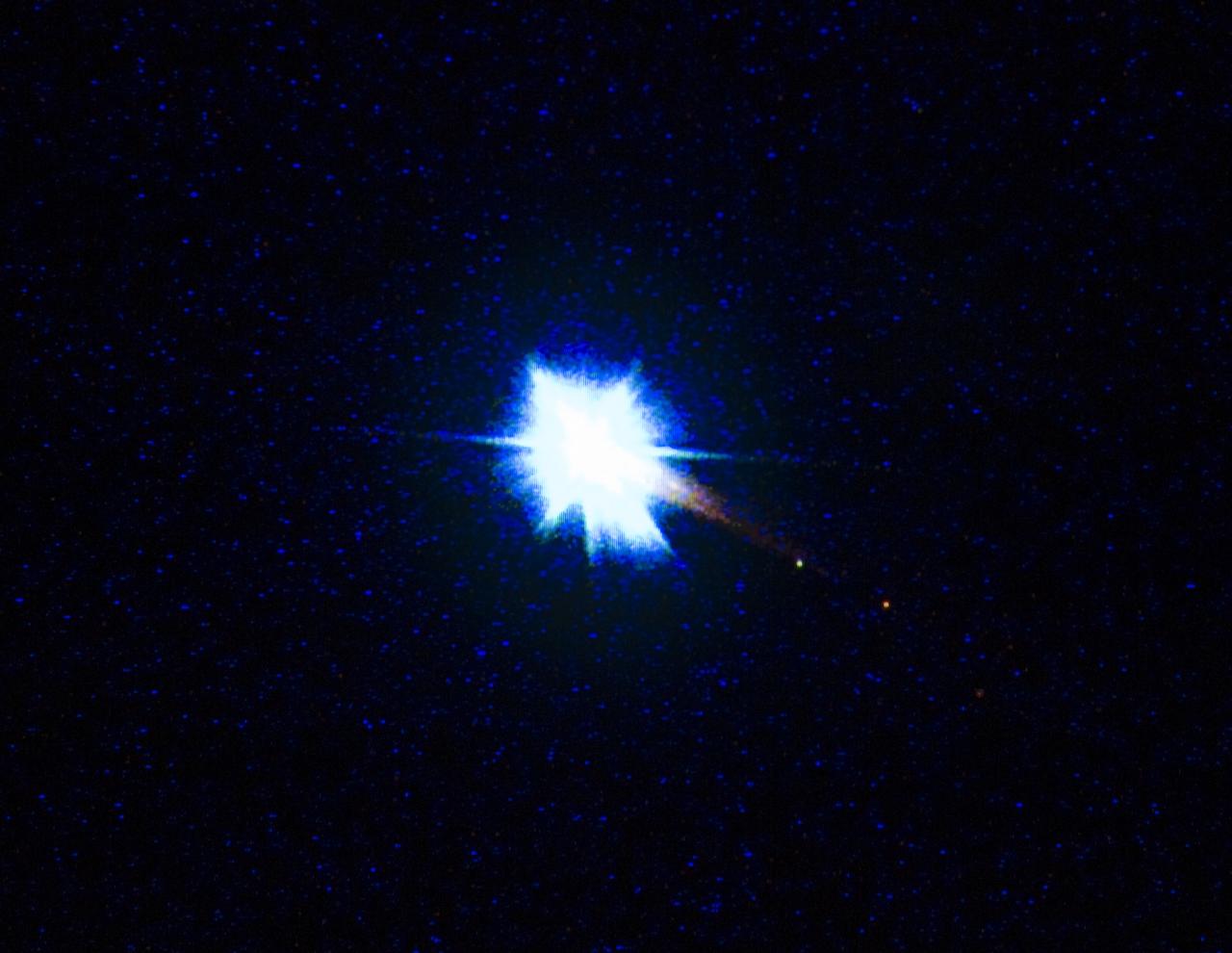
European Space Agency's 'Jules Verne' Automated Transfer Vehicle ATV-1 re-entry in Earth's atmosphere over Pacific Ocean. The breakup ad fragmentation of the ESA's ATV-1 was captured in dramatic fashion by scientists aboard NASA's DC-8 airborne laboratory and a Gulfstream V aircraft as it re-entered the atmosphere early Monday morning over the South Pacific. Photo Credit: NASA Ames Research Center/ESA/Jesse Carpenter/Bill Moede
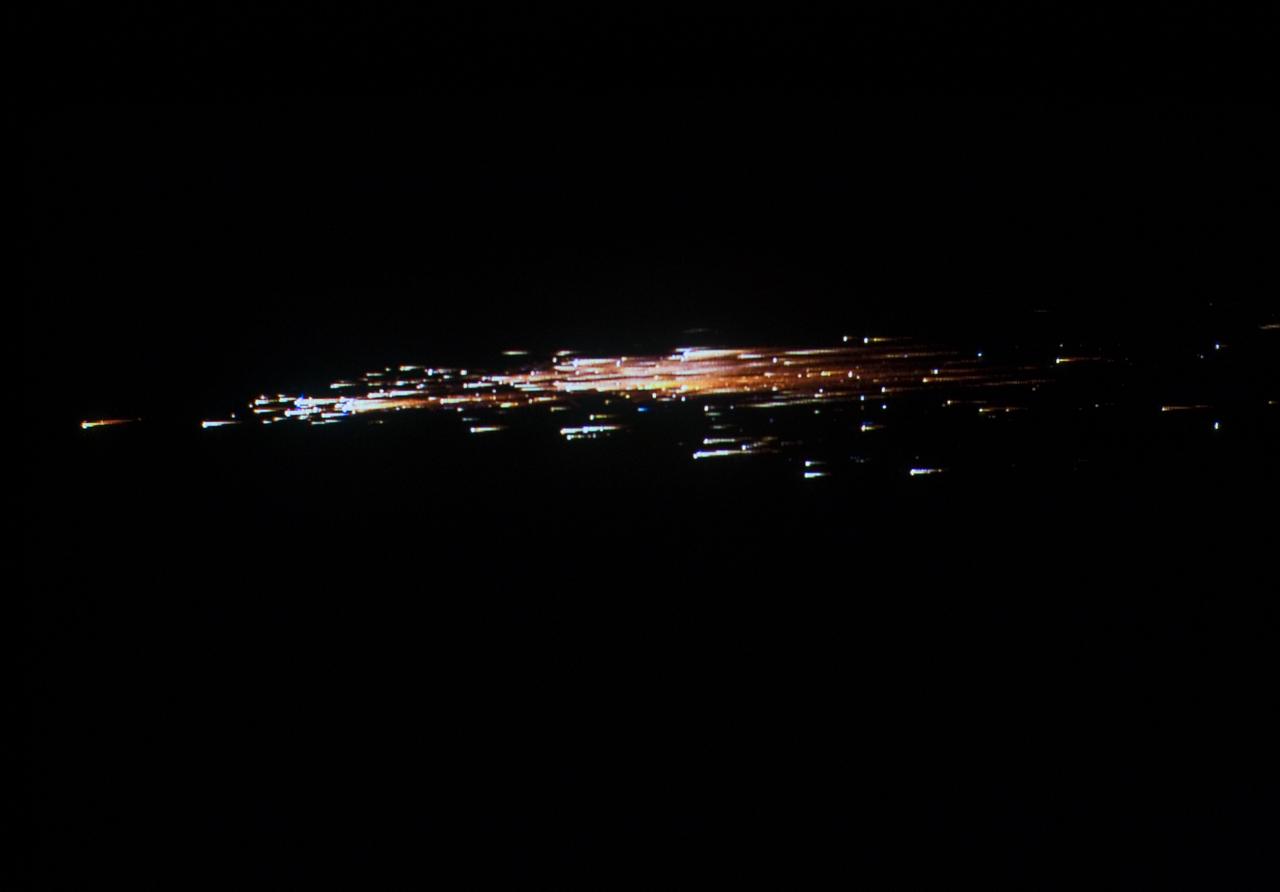
European Space Agency's 'Jules Verne' Automated Transfer Vehicle ATV-1 re-entry in Earth's atmosphere over Pacific Ocean. The breakup ad fragmentation of the ESA's ATV-1 was captured in dramatic fashion by scientists aboard NASA's DC-8 airborne laboratory and a Gulfstream V aircraft as it re-entered the atmosphere early Monday morning over the South Pacific. Photo Credit: NASA Ames Research Center/ESA/Jesse Carpenter/Bill Moede
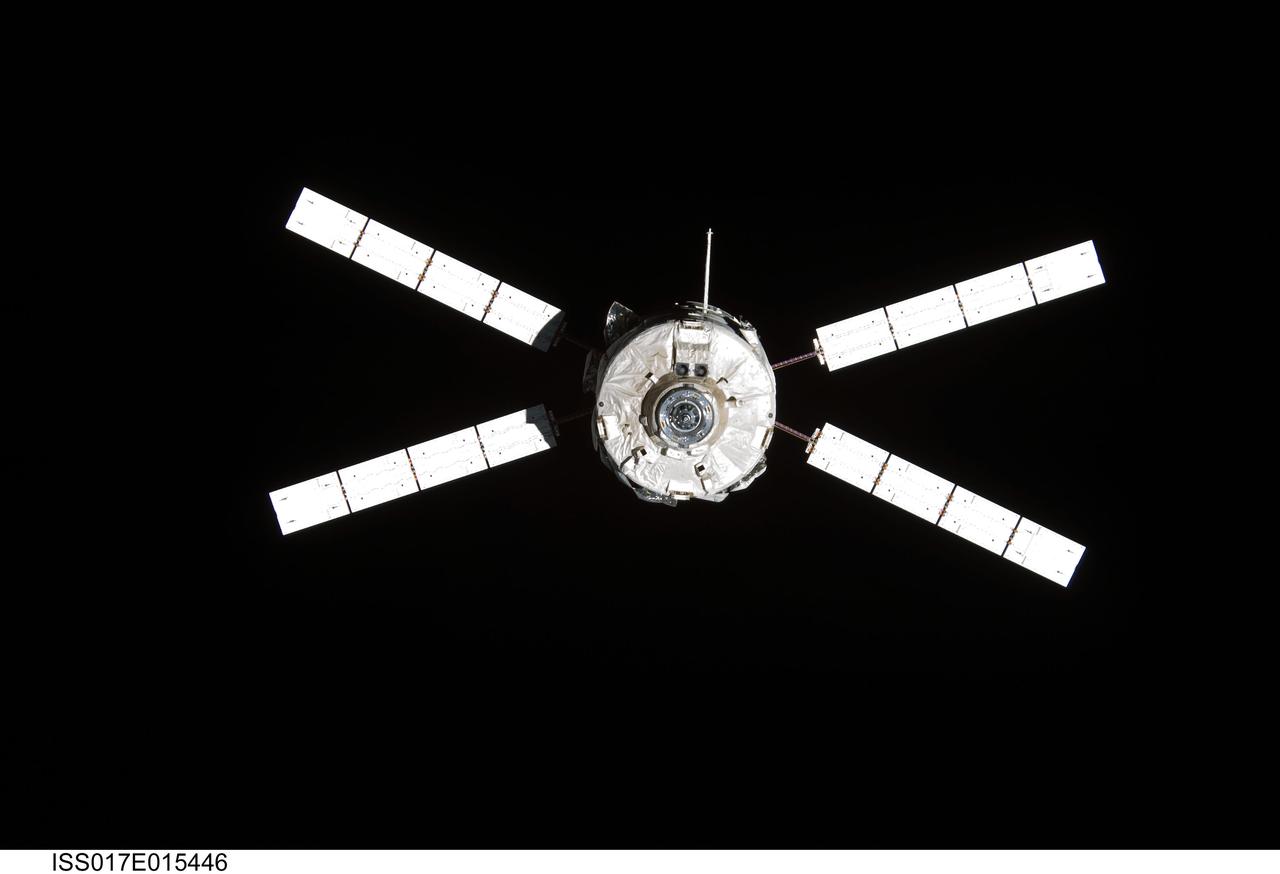
ISS017-E-015446 (5 Sept. 2008) --- Backdropped by the blackness of space, European Space Agency's (ESA) "Jules Verne" Automated Transfer Vehicle (ATV) begins its relative separation from the International Space Station. The ATV undocked from the aft port of the Zvezda Service Module at 4:29 p.m. (CDT) on Sept. 5, 2008 and was placed in a parking orbit for three weeks, scheduled to be deorbited on Sept. 29 when lighting conditions are correct for an ESA imagery experiment of reentry.
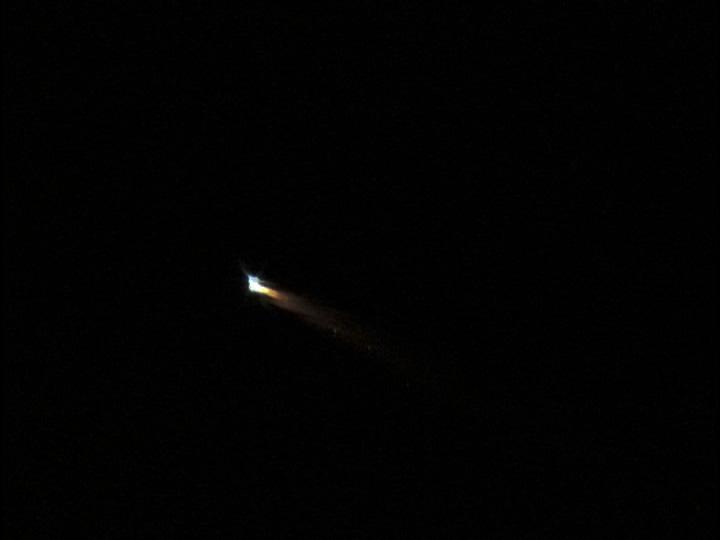
European Space Agency's 'Jules Verne' Automated Transfer Vehicle ATV-1 re-entry in Earth's atmosphere over Pacific Ocean. The breakup ad fragmentation of the ESA's ATV-1 was captured in dramatic fashion by scientists aboard NASA's DC-8 airborne laboratory and a Gulfstream V aircraft as it re-entered the atmosphere early Monday morning over the South Pacific. Photo Credit: NASA Ames Research Center/ESA/Jesse Carpenter/Bill Moede
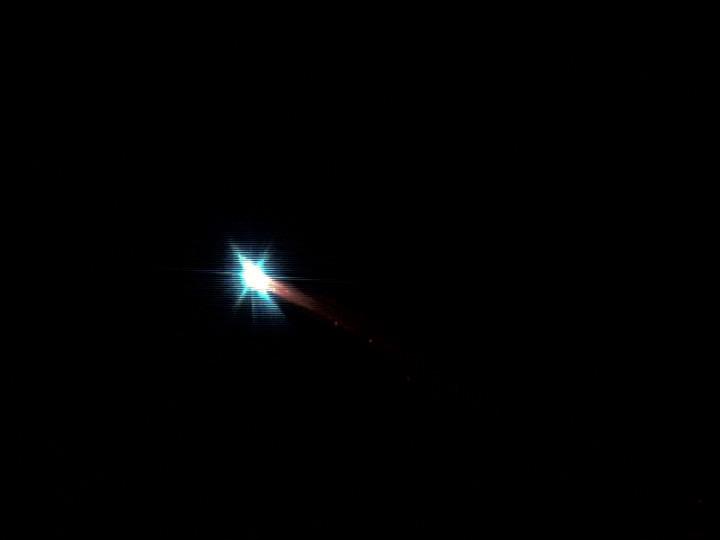
European Space Agency's 'Jules Verne' Automated Transfer Vehicle ATV-1 re-entry in Earth's atmosphere over Pacific Ocean. The breakup ad fragmentation of the ESA's ATV-1 was captured in dramatic fashion by scientists aboard NASA's DC-8 airborne laboratory and a Gulfstream V aircraft as it re-entered the atmosphere early Monday morning over the South Pacific. Photo Credit: NASA Ames Research Center/ESA/Jesse Carpenter/Bill Moede
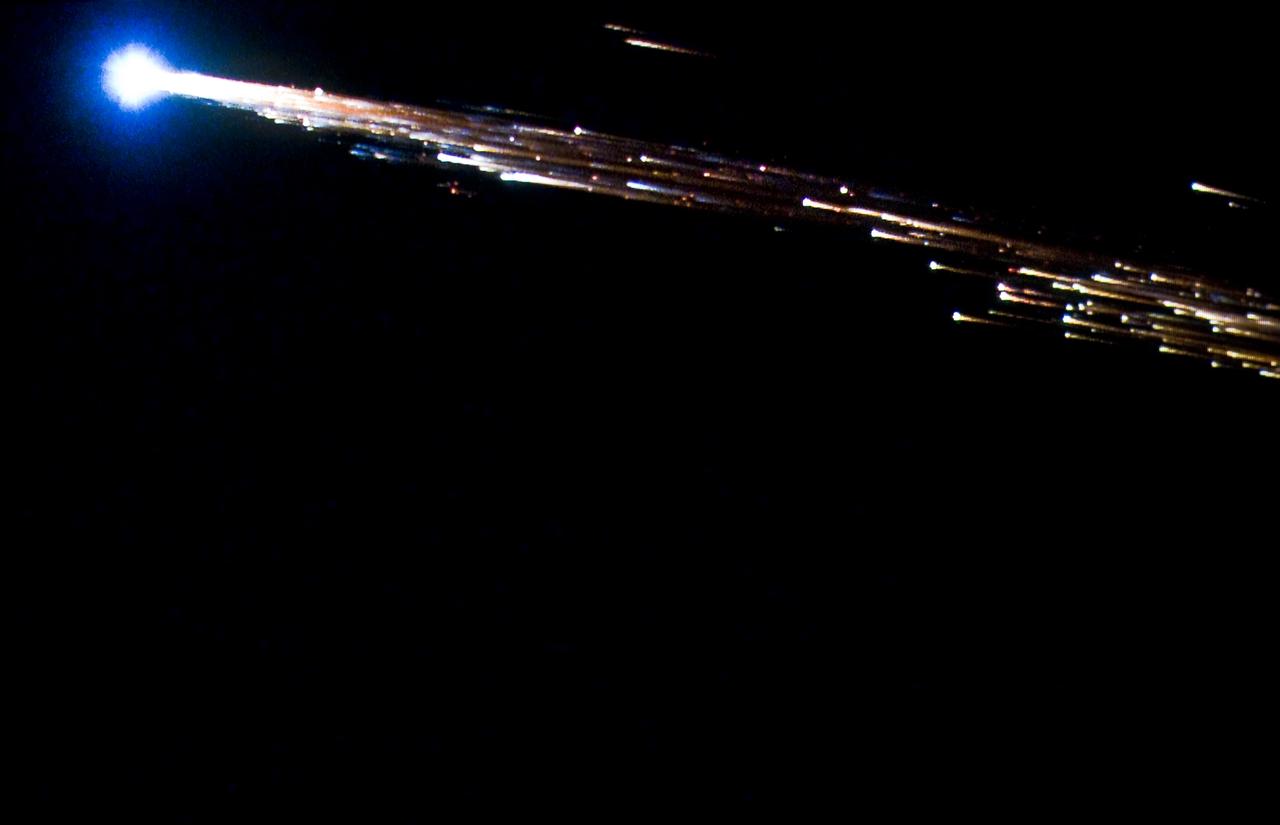
European Space Agency's 'Jules Verne' Automated Transfer Vehicle ATV-1 re-entry in Earth's atmosphere over Pacific Ocean. The breakup ad fragmentation of the ESA's ATV-1 was captured in dramatic fashion by scientists aboard NASA's DC-8 airborne laboratory and a Gulfstream V aircraft as it re-entered the atmosphere early Monday morning over the South Pacific. Photo Credit: NASA Ames Research Center/ESA/Jesse Carpenter/Bill Moede

ISS016-E-034191 (31 March 2008) --- Backdropped by the airglow of Earth's horizon and the blackness of space, the Jules Verne Automated Transfer Vehicle (ATV) approaches the International Space Station on Monday, March 31, 2008, for its "Demo Day 2" practice maneuvers. It moved to within 36 feet of the Zvezda Service Module in a rehearsal for docking on Thursday.

ISS011-E-09816 (28 June 2005) --- Cosmonaut Sergei K. Krikalev, Expedition 11 commander representing Russia's Federal Space Agency, tests the newly installed Proximity Communications Equipment (PCE) hardware of the ASN-M satellite navigation system for the European Automated Transfer Vehicle (ATV) “Jules Verne” in the Zvezda Service Module of the International Space Station. The ATV is scheduled to arrive at the Station next year.
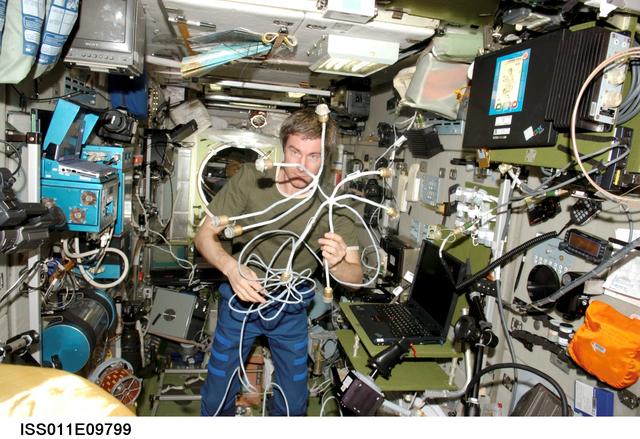
ISS011-E-09799 (27 June 2005) --- Cosmonaut Sergei K. Krikalev, Expedition 11 commander representing Russia's Federal Space Agency, works with the new Proximity Communications Equipment (PCE) hardware of the ASN-M satellite navigation system for the European Automated Transfer Vehicle (ATV) “Jules Verne” in the Zvezda Service Module of the International Space Station. The ATV is scheduled to arrive at the Station next year.
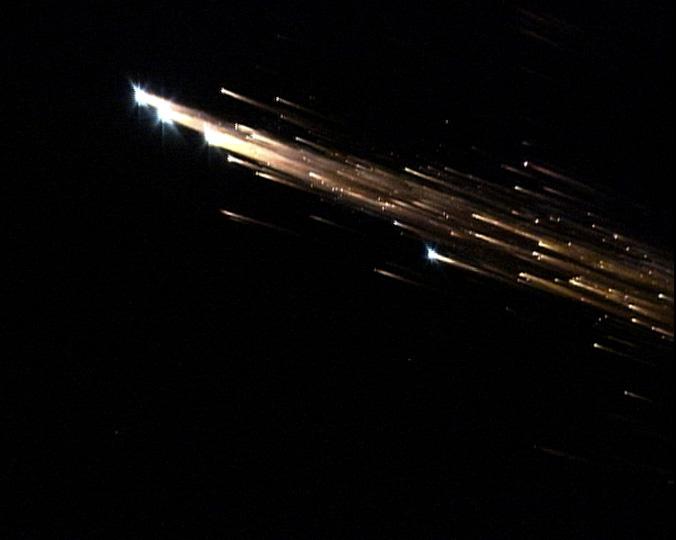
European Space Agency's 'Jules Verne' Automated Transfer Vehicle ATV-1 re-entry in Earth's atmosphere over Pacific Ocean. The breakup ad fragmentation of the ESA's ATV-1 was captured in dramatic fashion by scientists aboard NASA's DC-8 airborne laboratory and a Gulfstream V aircraft as it re-entered the atmosphere early Monday morning over the South Pacific. Photo Credit: NASA Ames Research Center/ESA/Jesse Carpenter/Bill Moede
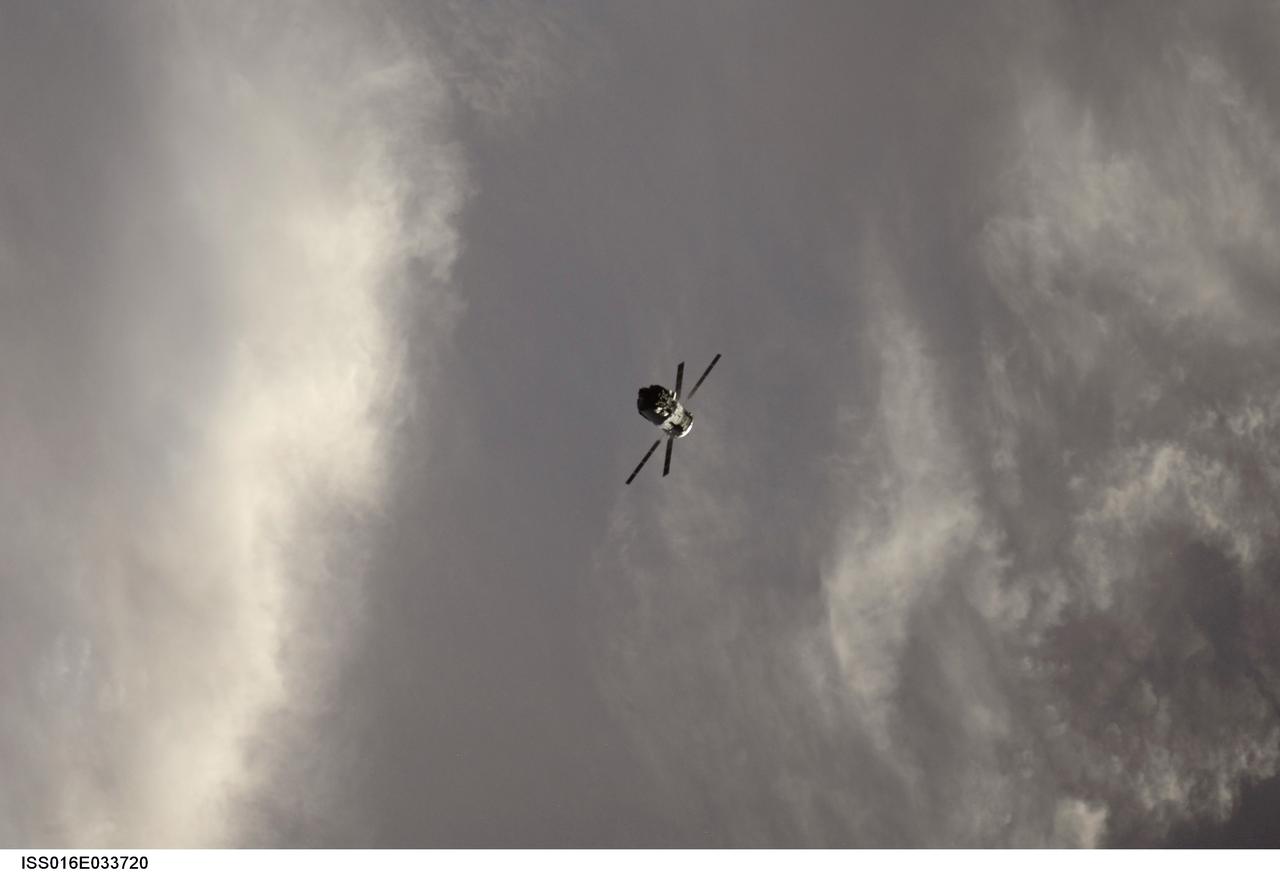
ISS016-E-033720 (29 March 2008) --- Cosmonaut Yuri Malenchenko, Expedition 16 flight engineer, aboard the International Space Station used a digital still camera to record several images of the Jules Verne Automated Transfer Vehicle (ATV) during a rendezvous test March 29, 2008. Malenchenko fitted the camera with an 800mm lens typically employed for Shuttle RPM photography while the ATV sat 2.1 statute miles from the ISS during the first of two demonstration days in the lead up to a docking on April 3. On March 31, Demonstration Day 2 will see ATV approach to within 11 meters of the ISS.
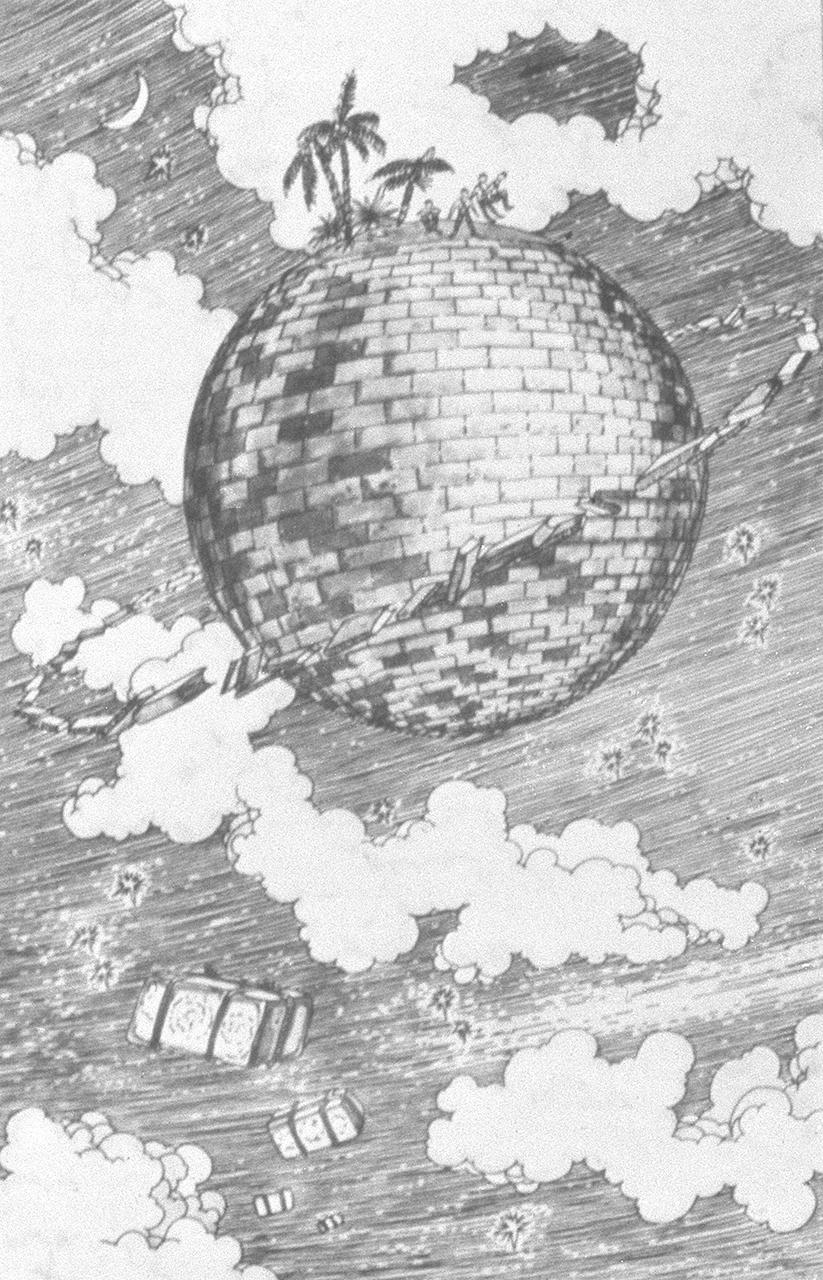
Science fiction writers, like Jules Verne in France and Edward Everett Hale in America, had discovered one of the most vital elements in the formula for space travel-a fertile imagination. The first known proposal for a marned-satellite appears in a story by Hale entitled "The Brick Moon" published in 1899. The story involved a group of young Bostonians who planned to put an artificial satellite into polar orbit for sailors to use to determine longitude accurately and easily. They planned to send a brick satellite into orbit because the satellite would have to withstand fire very well. The Satellite's 37 inhabitants signaled the Earth in morse code by jumping up and down on the outside of the satellite.