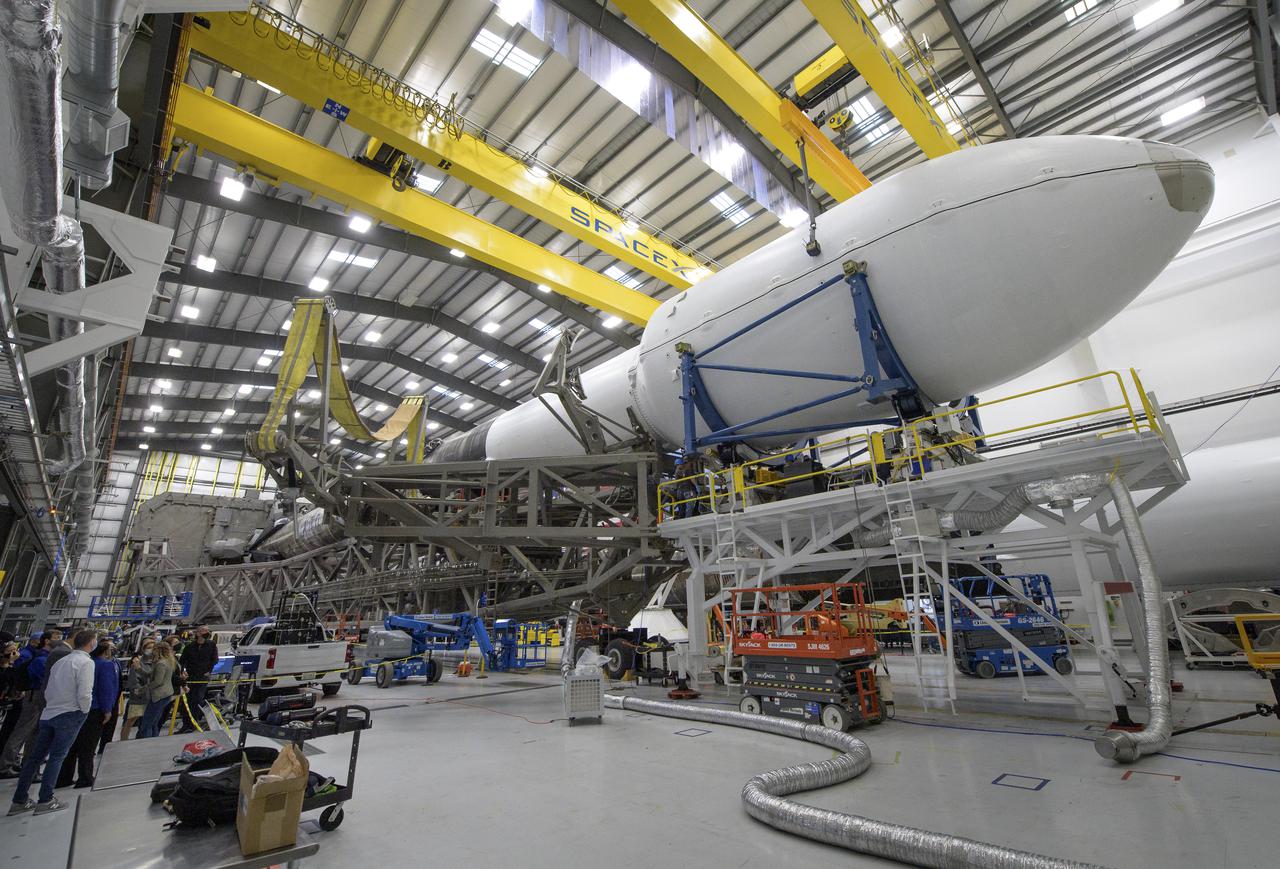
The Falcon 9 rocket and DART spacecraft readied for launch are seen as NASA Associate Administrator for the Science Mission Directorate Thomas Zurbuchen, and other NASA leadership get a tour from Julianna Scheiman, director for civil satellite missions, SpaceX, Monday, Nov. 22, 2021, at the SpaceX hanger, Vandenberg Space Force Base in California. DART is the world’s first full-scale planetary defense test, demonstrating one method of asteroid deflection technology. The mission was built and is managed by the Johns Hopkins APL for NASA’s Planetary Defense Coordination Office. Photo Credit: (NASA/Bill Ingalls)
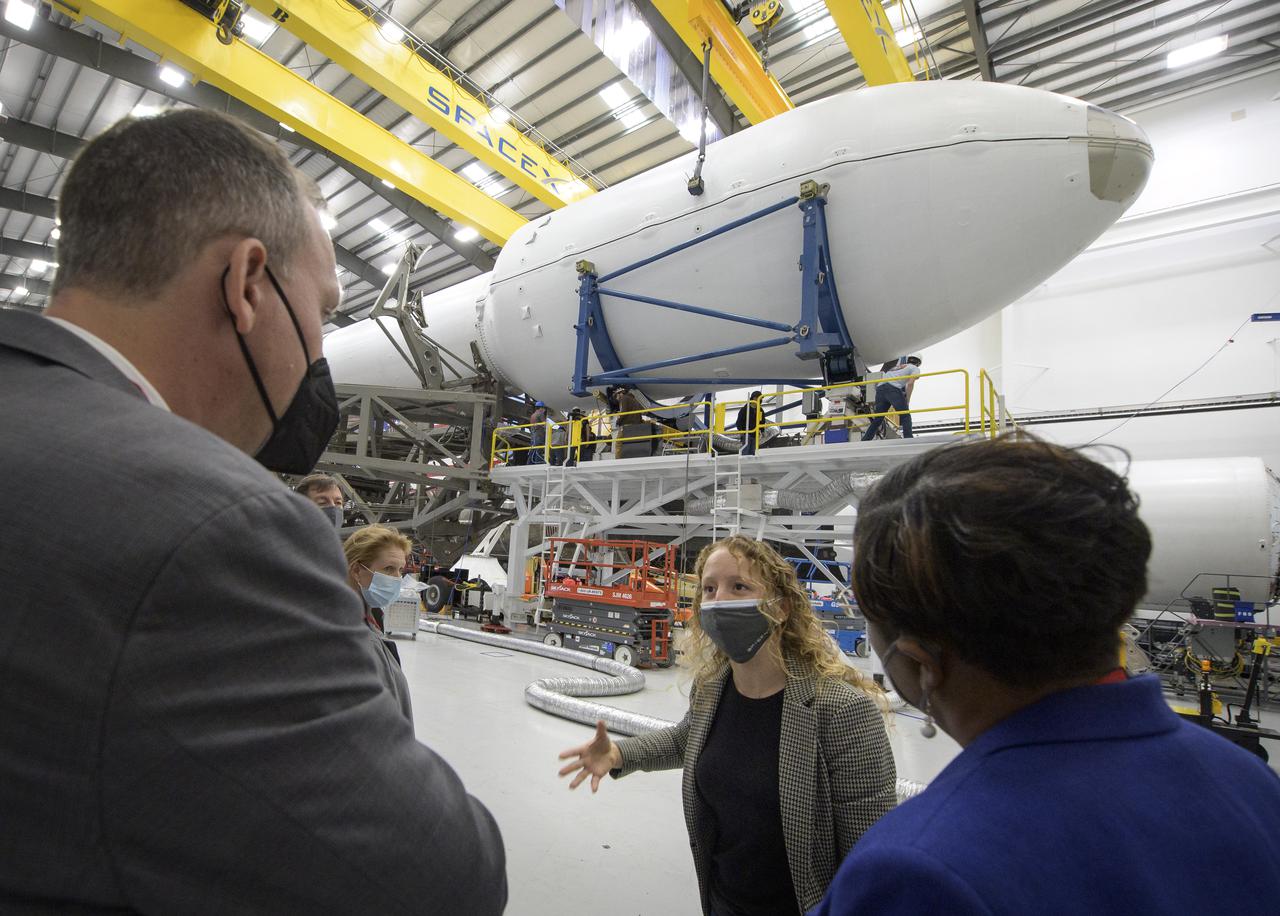
NASA Associate Administrator for the Science Mission Directorate Thomas Zurbuchen, left, and other NASA leadership listen as Julianna Scheiman, director for civil satellite missions at SpaceX, center, gives a tour of the hanger where the Falcon 9 rocket and DART spacecraft are being readied for launch, Monday, Nov. 22, 2021, at Vandenberg Space Force Base in California. DART is the world’s first full-scale planetary defense test, demonstrating one method of asteroid deflection technology. The mission was built and is managed by Johns Hopkins APL for NASA’s Planetary Defense Coordination Office. Photo Credit: (NASA/Bill Ingalls)
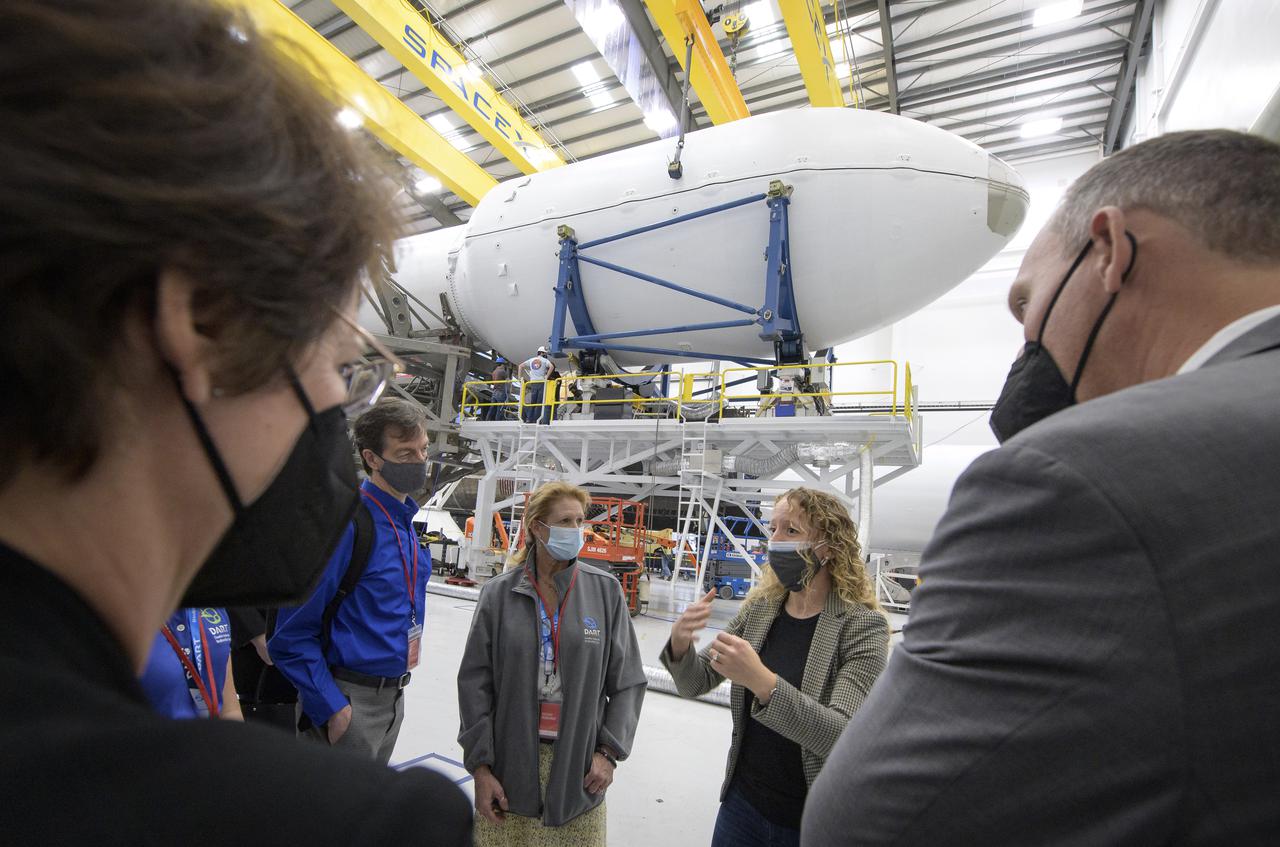
NASA Associate Administrator for the Science Mission Directorate Thomas Zurbuchen, right, and other NASA leadership listen as Julianna Scheiman, director for civil satellite missions, SpaceX, center, gives a tour of the hanger where the Falcon 9 rocket and DART spacecraft are being readied for launch, Monday, Nov. 22, 2021, at Vandenberg Space Force Base in California. DART is the world’s first full-scale planetary defense test, demonstrating one method of asteroid deflection technology. The mission was built and is managed by the Johns Hopkins APL for NASA’s Planetary Defense Coordination Office. Photo Credit: (NASA/Bill Ingalls)
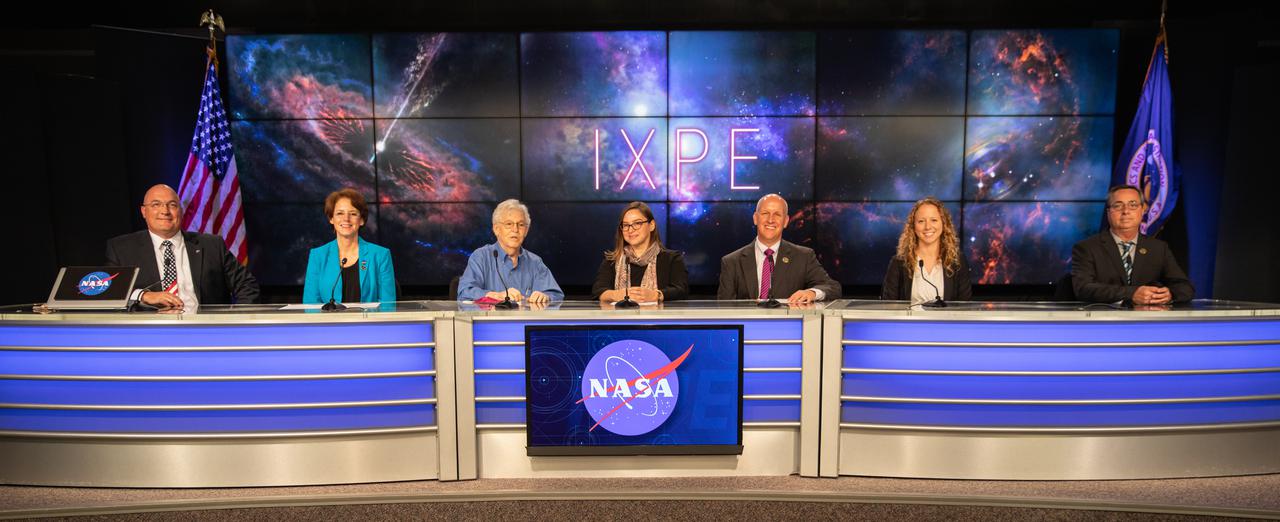
A prelaunch news conference for NASA’s Imaging X-ray Polarimetry Explorer (IXPE) spacecraft is held on Dec. 7, 2021 at NASA’s Kennedy Space Center in Florida. Participants from left are Greg Harland, moderator, NASA communications; Martin Weisskopf, IXPE principal investigator, NASA’s Marshall Space Flight Center; Makenzie Lystrup, vice president and general manager, civil space, Ball Aerospace; Tim Dunn, launch director, NASA’s Launch Services Program; Julianna Scheiman, director, civil satellite missions, SpaceX; Julianna Scheiman, director, civil satellite missions, SpaceX; and Mike McAleenan, 45th Weather Squadron, Space Launch Delta 45. IXPE is scheduled to launch no earlier than 1 a.m. EST Thursday, Dec. 9, on a SpaceX Falcon 9 rocket from Kennedy’s Launch Complex 39A. NASA’s Launch Services Program is managing this launch. NASA’s Marshall Space Flight Center in Huntsville, Alabama, manages the IXPE mission. Ball Aerospace, headquartered in Broomfield, Colorado, manages spacecraft operations with support from the University of Colorado at Boulder. NASA’s Goddard Space Flight Center in Greenbelt, Maryland, manages the Explorers Program for the agency’s Science Mission Directorate in Washington. The U.S. Space Force’s Space Launch Delta 45 provides range support for this launch. SpaceX is providing the launch vehicle for this mission.

Julianna Scheiman, director for civil satellite missions for SpaceX, participates in a prelaunch news conference for NASA’s Double Asteroid Redirection Test (DART) mission at Vandenberg Space Force Base in California on Nov. 22, 2021. DART is the first mission to test technologies for preventing an impact of Earth by a hazardous asteroid. The mission is scheduled to launch no earlier than 1:21 a.m. EST Wednesday, Nov. 24 (10:21 p.m. PST Tuesday, Nov. 23), aboard a SpaceX Falcon 9 rocket from Vandenberg. NASA's Launch Services Program based at Kennedy Space Center in Florida, America's multi-user spaceport, is managing the launch.
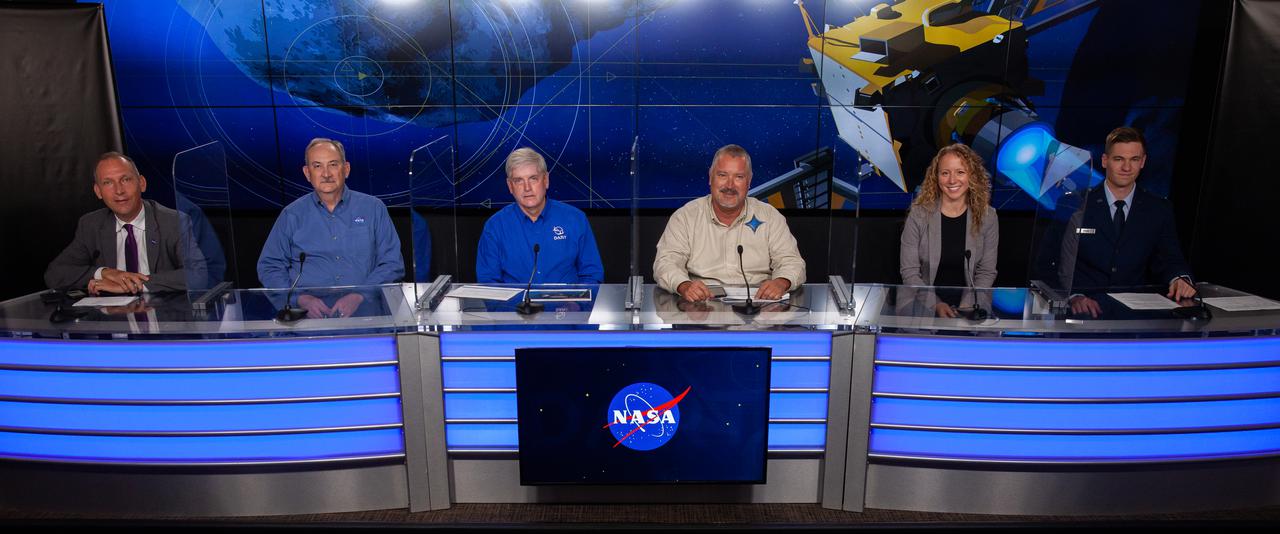
From left, Dr Thomas Zurbuchen, Lindley Johnson, Ed Reynolds, Omar Baez, Julianna Scheiman, and Capt. Maximillian Rush participate in a prelaunch news conference on Nov. 22, 2021, at Vandenberg Space Force Base in California in preparation for the agency’s Double Asteroid Redirection Test (DART) launch. DART is the first mission to test technologies for preventing an impact of Earth by a hazardous asteroid. The mission is scheduled to launch no earlier than 1:21 a.m. EST Wednesday, Nov. 24 (10:21 p.m. PST Tuesday, Nov. 23), aboard a SpaceX Falcon 9 rocket from Vandenberg. NASA's Launch Services Program based at Kennedy Space Center in Florida, America's multi-user spaceport, is managing the launch.

Julianna Scheiman, director, civil satellite missions, SpaceX, participates in a prelaunch news conference for NASA’s Imaging X-ray Polarimetry Explorer (IXPE) spacecraft on Dec. 7, 2021 at NASA’s Kennedy Space Center in Florida. IXPE is scheduled to launch no earlier than 1 a.m. EST Thursday, Dec. 9, on a SpaceX Falcon 9 rocket from Kennedy’s Launch Complex 39A. NASA’s Launch Services Program is managing this launch. NASA’s Marshall Space Flight Center in Huntsville, Alabama, manages the IXPE mission. Ball Aerospace, headquartered in Broomfield, Colorado, manages spacecraft operations with support from the University of Colorado at Boulder. NASA’s Goddard Space Flight Center in Greenbelt, Maryland, manages the Explorers Program for the agency’s Science Mission Directorate in Washington. The U.S. Space Force’s Space Launch Delta 45 provides range support for this launch. SpaceX is providing the launch vehicle for this mission.

Julianna Scheiman, director, Civil Satellite Missions, SpaceX, participates in a Psyche mission prelaunch news conference at NASA’s Kennedy Space Center in Florida on Wednesday, Oct. 11, 2023. Psyche is the first mission to explore an asteroid with a surface that likely contains substantial amounts of metal rather than rock or ice. Liftoff of NASA’s Psyche spacecraft, atop a SpaceX Falcon Heavy rocket, is targeted for 10:16 a.m. EDT Thursday, Oct. 12, from Kennedy’s Launch Complex 39A.

Julianna Scheiman, director, Civil Satellite Missions, SpaceX, participates in a Psyche mission prelaunch news conference at NASA’s Kennedy Space Center in Florida on Wednesday, Oct. 11, 2023. Psyche is the first mission to explore an asteroid with a surface that likely contains substantial amounts of metal rather than rock or ice. Liftoff of NASA’s Psyche spacecraft, atop a SpaceX Falcon Heavy rocket, is targeted for 10:16 a.m. EDT Thursday, Oct. 12, from Kennedy’s Launch Complex 39A.

Julianna Scheiman, director, NASA Science and Dragon Programs, SpaceX, participates in a prelaunch news conference for the agency’s Nancy Grace Roman Space Telescope inside the NASA News Center’s John Holliman Auditorium at Kennedy Space Center in Florida, on Saturday, Aug. 29, 2026. Roman will investigate dark energy and dark matter, conduct a statistical census of planetary systems, and enable a broad range of additional astrophysics research. Liftoff from Launch Complex 39A at Kennedy is targeted for no earlier than Sunday, Aug. 30, 2026.

Julianna Scheiman, director, NASA Science and Dragon Programs, SpaceX, participates in a postlaunch news conference at the agency’s Kennedy Space Center in Florida on Friday, Feb. 13, 2026, following the launch of NASA’s SpaceX Crew-12 mission to the International Space Station. NASA astronauts Jessica Meir and Jack Hathaway, ESA (European Space Agency) astronaut Sophie Adenot, and Roscosmos cosmonaut Andrey Fedyaev launched to the International Space Station aboard SpaceX’s Dragon spacecraft and Falcon 9 rocket at 5:15 a.m. EST on the 12th crew rotation mission with SpaceX to the space station as part of NASA’s Commercial Crew Program.

Officials from NASA, National Oceanic and Atmospheric Administration (NOAA), SpaceX participate in a prelaunch news conference on Monday, June 24, 2024, at NASA’s Kennedy Space Center in Florida for the launch of GOES-U (Geostationary Operational Environmental Satellite U) mission. From left to right, Steve Volz, assistant administrator, NOAA’s Satellite and Information Service; Pam Sullivan, director, GOES-R Program, NOAA; John Gagosian, director, Joint Agency Satellite Division; Denton Gibson, launch director, Launch Services Program, NASA; Julianna Scheiman, director, NASA Science Missions, SpaceX; Brian Cizek, launch weather officer, 45th Weather Squadron, U.S. Space Force

Officials from NASA, National Oceanic and Atmospheric Administration (NOAA), SpaceX participate in a prelaunch news conference on Monday, June 24, 2024, at NASA’s Kennedy Space Center in Florida for the launch of GOES-U (Geostationary Operational Environmental Satellite U) mission. From left to right, Steve Volz, assistant administrator, NOAA’s Satellite and Information Service; Pam Sullivan, director, GOES-R Program, NOAA; John Gagosian, director, Joint Agency Satellite Division; Denton Gibson, launch director, Launch Services Program, NASA; Julianna Scheiman, director, NASA Science Missions, SpaceX; Brian Cizek, launch weather officer, 45th Weather Squadron, U.S. Space Force

From left, Denton Gibson, launch director, NASA’s Launch Services Program, Kennedy Space Center in Florida, and Julianna Scheiman, director, NASA Science and Dragon Programs, SpaceX, participate in a prelaunch news conference for NASA’s Nancy Grace Roman Space Telescope inside the NASA News Center’s John Holliman Auditorium at Kennedy Space Center in Florida, on Saturday, Aug. 29, 2026. Roman will investigate dark energy and dark matter, conduct a statistical census of planetary systems, and enable a broad range of additional astrophysics research. Liftoff from Launch Complex 39A at Kennedy is targeted for no earlier than Sunday, Aug. 30, 2026.
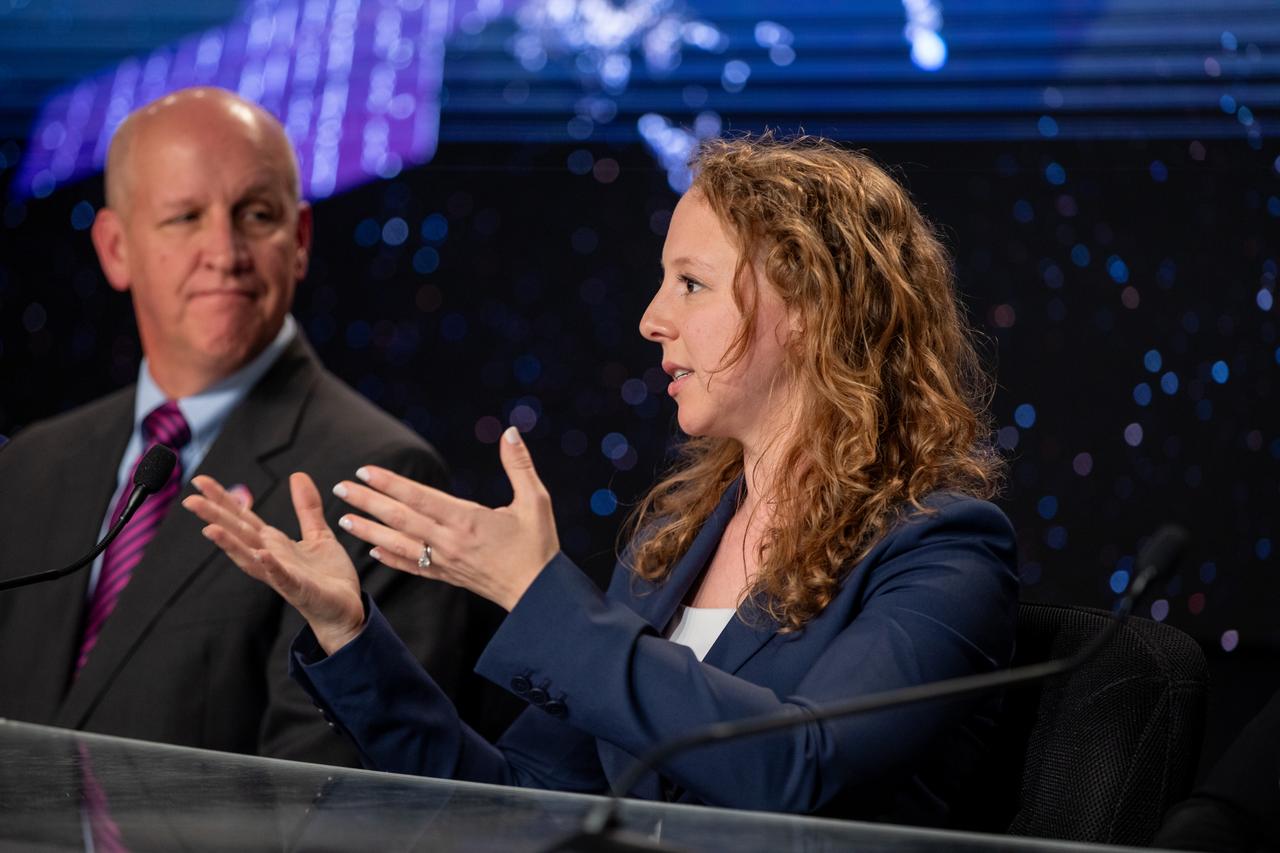
Julianna Scheiman, director, Civil Satellite Missions, SpaceX, addresses the media during a Psyche mission prelaunch news conference at NASA’s Kennedy Space Center in Florida on Wednesday, Oct. 11, 2023. To her left is Tim Dunn, senior launch director, NASA’s Launch Services Program. Psyche is the first mission to explore an asteroid with a surface that likely contains substantial amounts of metal rather than rock or ice. Liftoff of NASA’s Psyche spacecraft, atop a SpaceX Falcon Heavy rocket, is targeted for 10:16 a.m. EDT Thursday, Oct. 12, from Kennedy’s Launch Complex 39A.

Julianna Scheiman, director, NASA Science and Dragon Programs, SpaceX, participates in a postlaunch news conference at the agency’s Kennedy Space Center in Florida on Friday, Feb. 13, 2026, following the launch of NASA’s SpaceX Crew-12 mission to the International Space Station. NASA astronauts Jessica Meir and Jack Hathaway, ESA (European Space Agency) astronaut Sophie Adenot, and Roscosmos cosmonaut Andrey Fedyaev launched to the International Space Station aboard SpaceX’s Dragon spacecraft and Falcon 9 rocket at 5:15 a.m. EST on the 12th crew rotation mission with SpaceX to the space station as part of NASA’s Commercial Crew Program.

Julianna Scheiman, director, NASA Science and Dragon Programs, SpaceX, participates in a postlaunch news conference at the agency’s Kennedy Space Center in Florida on Thursday, Oct. 1, 2026, following the launch of NASA’s SpaceX Crew-13 mission to the International Space Station. NASA astronauts Jessica Watkins and Luke Delaney, CSA (Canadian Space Agency) astronaut Joshua Kutryk, and Roscosmos cosmonaut Sergey Teteryatnikov launched to the International Space Station aboard SpaceX’s Dragon spacecraft and Falcon 9 rocket at 11:10 a.m. EDT on the 13th crew rotation mission with SpaceX to the space station.

Julianna Scheiman, director, NASA Science Missions, SpaceX, participates in a prelaunch news conference on Friday, March 7, 2025, to discuss the upcoming launch of NASA’s SPHEREx (Spectro-Photometer for the History of the Universe, Epoch of Reionization and Ices Explorer) observatory and PUNCH (Polarimeter to Unify the Corona and Heliosphere) satellites at Vandenberg Space Force Base in California. SPHEREx will use its telescope to provide an all-sky spectral survey, creating a 3D map of the entire sky to help scientists investigate the origins of our universe. PUNCH will study origins of the Sun’s outflow of material, or the solar wind, capturing continuous 3D images of the Sun’s corona and the solar wind’s journey into the solar system. Liftoff aboard a SpaceX Falcon 9 rocket is targeted for NET 10:10 p.m. EST (7:10 p.m. PST), Saturday, March 8, 2025, at Space Launch Complex 4 East from Vandenberg Space Force Base in California.
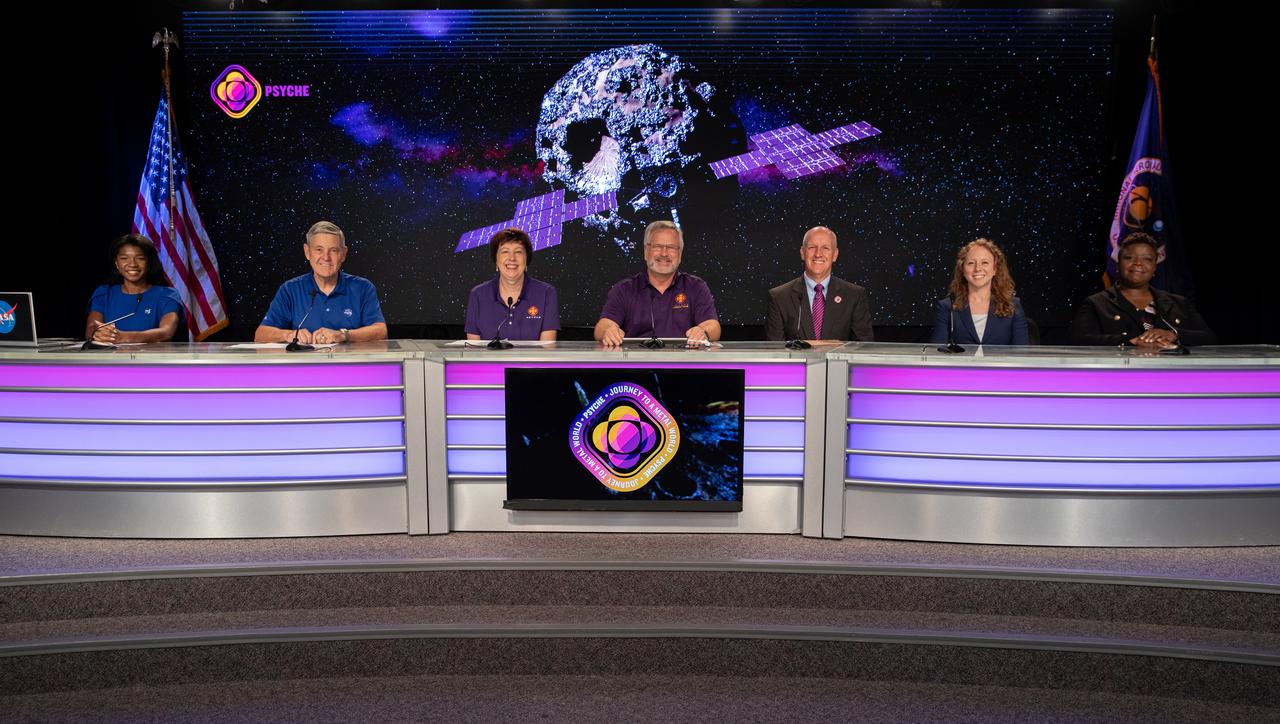
A Psyche mission prelaunch news conference takes place at NASA’s Kennedy Space Center in Florida on Wednesday, Oct. 11, 2023. From left, participants are: Jasmine Hopkins, NASA Communications; NASA Associate Administrator Bob Cabana; Nicola Fox, associate administrator, NASA’s Science Mission Directorate; Henry Stone, Psyche project manager, NASA’s Jet Propulsion Laboratory; Tim Dunn, senior launch director, NASA’s Launch Services Program; Julianna Scheiman, director, Civil Satellite Missions, SpaceX; and Arlena Moses, launch weather officer, U.S. Space Force. Psyche is the first mission to explore an asteroid with a surface that likely contains substantial amounts of metal rather than rock or ice. Liftoff of NASA’s Psyche spacecraft, atop a SpaceX Falcon Heavy rocket, is targeted for 10:16 a.m. EDT Thursday, Oct. 12, from Kennedy’s Launch Complex 39A.

Julianna Scheiman, director, NASA Science Missions, SpaceX, participates in a prelaunch news conference on Sunday, Sept. 21, 2025, at the agency’s Kennedy Space Center in Florida for NASA's IMAP (Interstellar Mapping and Acceleration Probe) mission. NASA’s IMAP will use 10 science instruments to study and map the heliosphere, a vast magnetic bubble surrounding the Sun protecting our solar system from radiation incoming from interstellar space. This mission and its two rideshares – NASA’s exosphere-studying Carruthers Geocorona Observatory and National Oceanic and Atmospheric Administration’s (NOAA) Space Weather Follow On–Lagrange 1 (SWFO-L1) observatory – will orbit the Sun near Lagrange point 1, about one million miles from Earth. Launch is targeting 7:32 a.m. EDT, Tuesday, Sept. 23, from Launch Complex 39A at NASA Kennedy.

Julianna Scheiman, director, NASA Science Missions, SpaceX, participates in a prelaunch news conference on Monday, June 24, 2024, at NASA’s Kennedy Space Center in Florida to discuss National Oceanic and Atmospheric Administration (NOAA) GOES-U (Geostationary Operational Environmental Satellite U) mission. The GOES-U satellite is the final addition to GOES-R series, which serves a critical role in providing continuous coverage of the Western Hemisphere, including monitoring tropical systems in the eastern Pacific and Atlantic oceans. The two-hour launch window opens at 5:16 p.m. EDT Tuesday, June 25, for the satellite’s launch on a SpaceX Falcon Heavy rocket from Launch Complex 39A at NASA’s Kennedy Space Center in Florida.
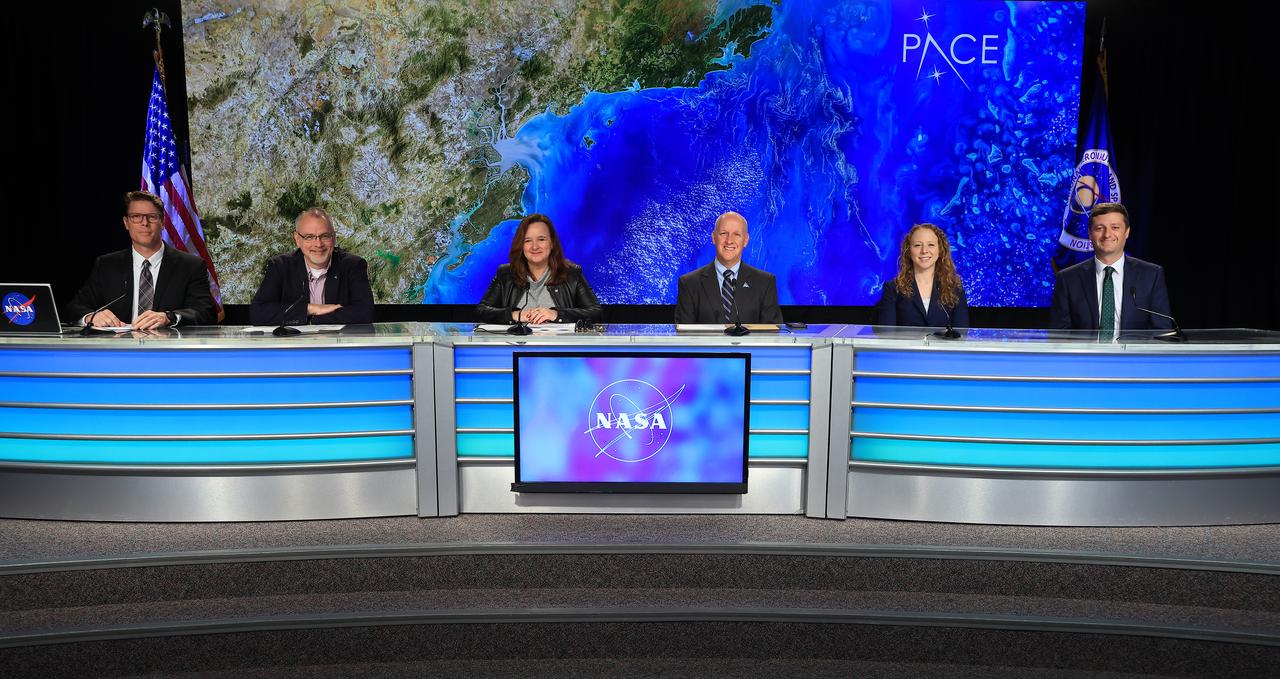
A PACE (Plankton, Aerosol, Cloud, ocean Ecosystem) mission and prelaunch news conference takes place at NASA’s Kennedy Space Center in Florida on Monday, Feb. 5, 2024. Participants, from left to right are: Derrol Nail, NASA Communications; Jim Free, NASA associate administrator; Karen St. Germain, Earth Science Division director, NASA Headquarters; Tim Dunn, senior launch director, Launch Services Program, NASA’s Kennedy; Julianna Scheiman, director Civil Satellite Missions, SpaceX; and Brian Cizek, launch weather officer, 45th Weather Squadron, U.S. Space Force. PACE is NASA’s newest earth-observing satellite that will help increase our understanding of Earth’s oceans, atmosphere, and climate by delivering hyperspectral observations of microscopic marine organisms called phytoplankton, as well new data on clouds and aerosols. Liftoff aboard a SpaceX Falcon 9 rocket from Space Launch Complex 40 at Cape Canaveral Space Force Station in Florida is set for no earlier than 1:33 a.m. EST on Tuesday, Feb 6, 2024.
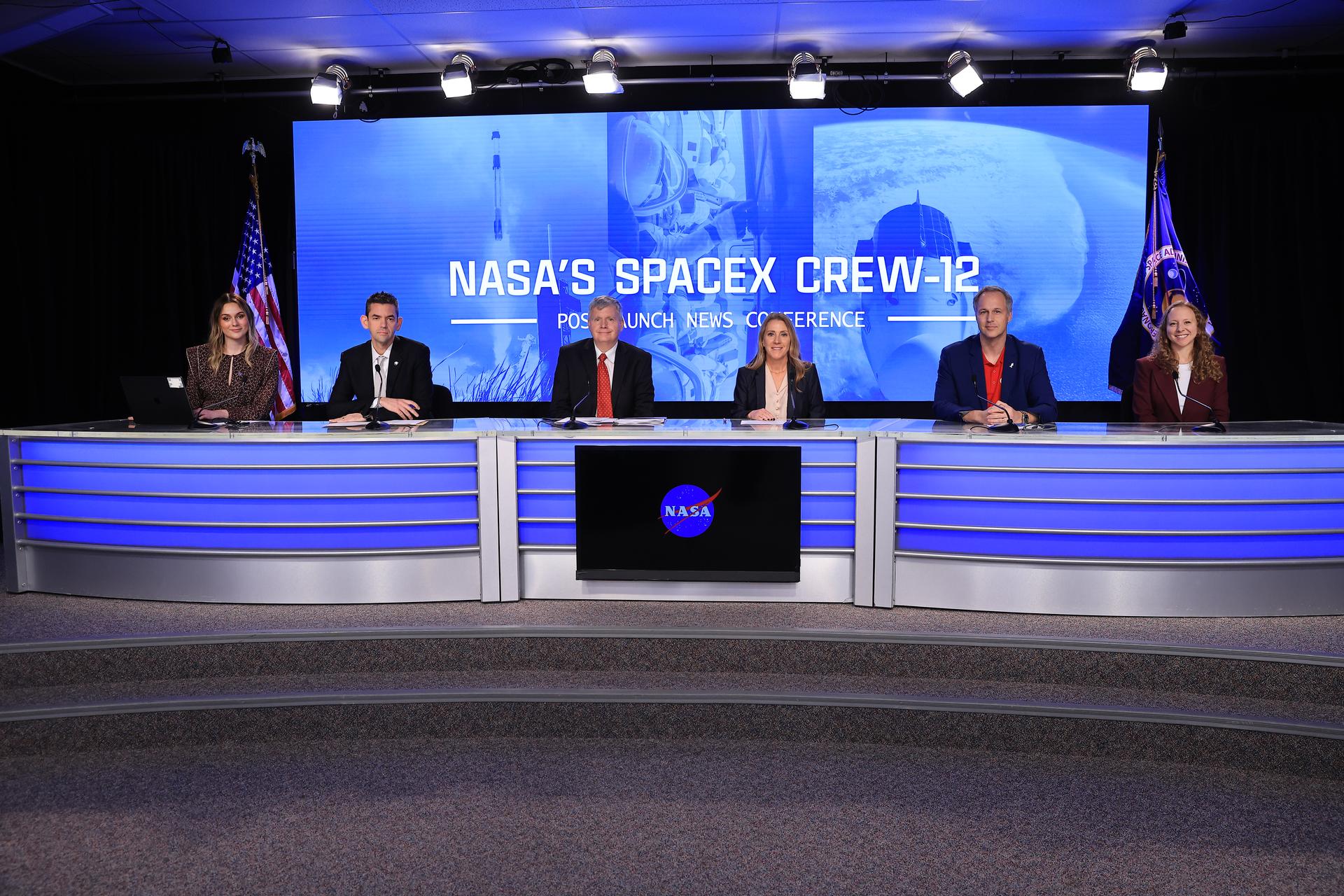
Members of the media attend a postlaunch news conference hosted at NASA’s Kennedy Space Center in Florida on Friday, Feb. 13, 2026, following the launch of NASA’s SpaceX Crew-12 mission to the International Space Station. From left to right, participants include Bethany Stevens, NASA press secretary; NASA Administrator Jared Isaacman; Steve Stich, manager, Commercial Crew Program, NASA; Dana Weigel, manager, International Space Station Program, NASA; Daniel Neuenschwander, director, Human and Robotic Exploration, ESA (European Space Agency); and Julianna Scheiman, director, NASA Science and Dragon Programs, SpaceX. NASA astronauts Jessica Meir and Jack Hathaway, ESA (European Space Agency) astronaut Sophie Adenot, and Roscosmos cosmonaut Andrey Fedyaev launched aboard SpaceX’s Dragon spacecraft and Falcon 9 rocket at 5:15 a.m. EST on the 12th crew rotation mission with SpaceX to the space station as part of NASA’s Commercial Crew Program.
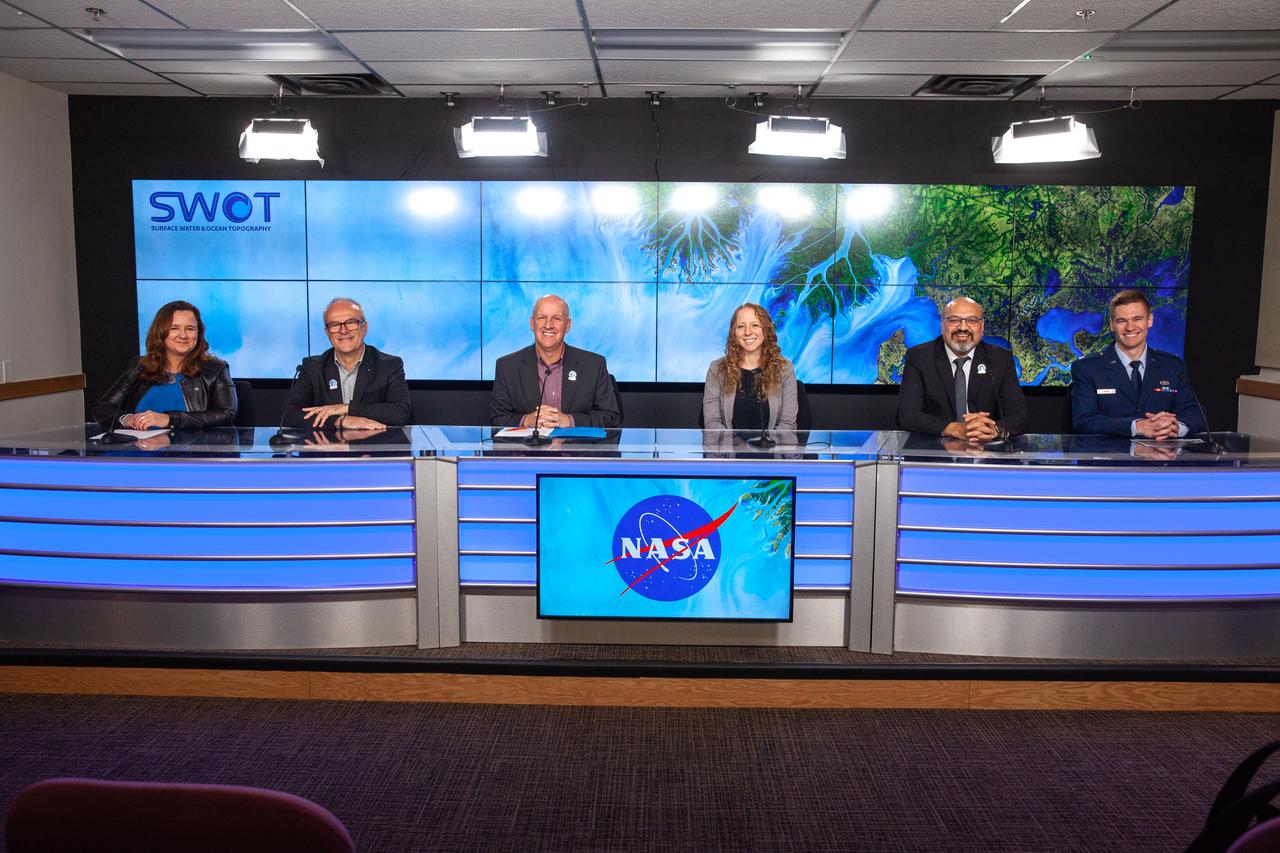
NASA, SpaceX, and the French space agency Centre National d’Études Spatiales (CNES) hold a prelaunch news conference for the Surface Water and Ocean Topography (SWOT) mission on Dec. 14, 2022, at Vandenberg Space Force Base in California. Participating from left are Karen St. Germain, Earth Science Division director, NASA; Thierry Lafon, SWOT project manager, CNES; Tim Dunn, launch director, NASA’s Launch Services Program; Julianna Scheiman, civil satellite missions director, SpaceX; Parag Vaze, SWOT project manager, Jet Propulsion Laboratory; Capt. Max Rush, launch weather officer, U.S. Air Force. SWOT is scheduled to launch on a SpaceX Falcon 9 rocket from Space Launch Complex-4 East at Vandenberg on Dec. 15, 2022, at 3:46 a.m. PST. SWOT will be NASA’s first global survey of nearly all water on Earth’s surface. Scientists plan to use its observations to better understand the global water cycle, furnish insight into the ocean’s role in how climate change unfolds, and provide a global inventory of water resources. The SWOT mission is a collaborative effort between NASA and CNES with contributions from the Canadian Space Agency and the UK Space Agency. NASA’s Launch Services Program, based at the agency’s Kennedy Space Center in Florida, is managing the launch service.
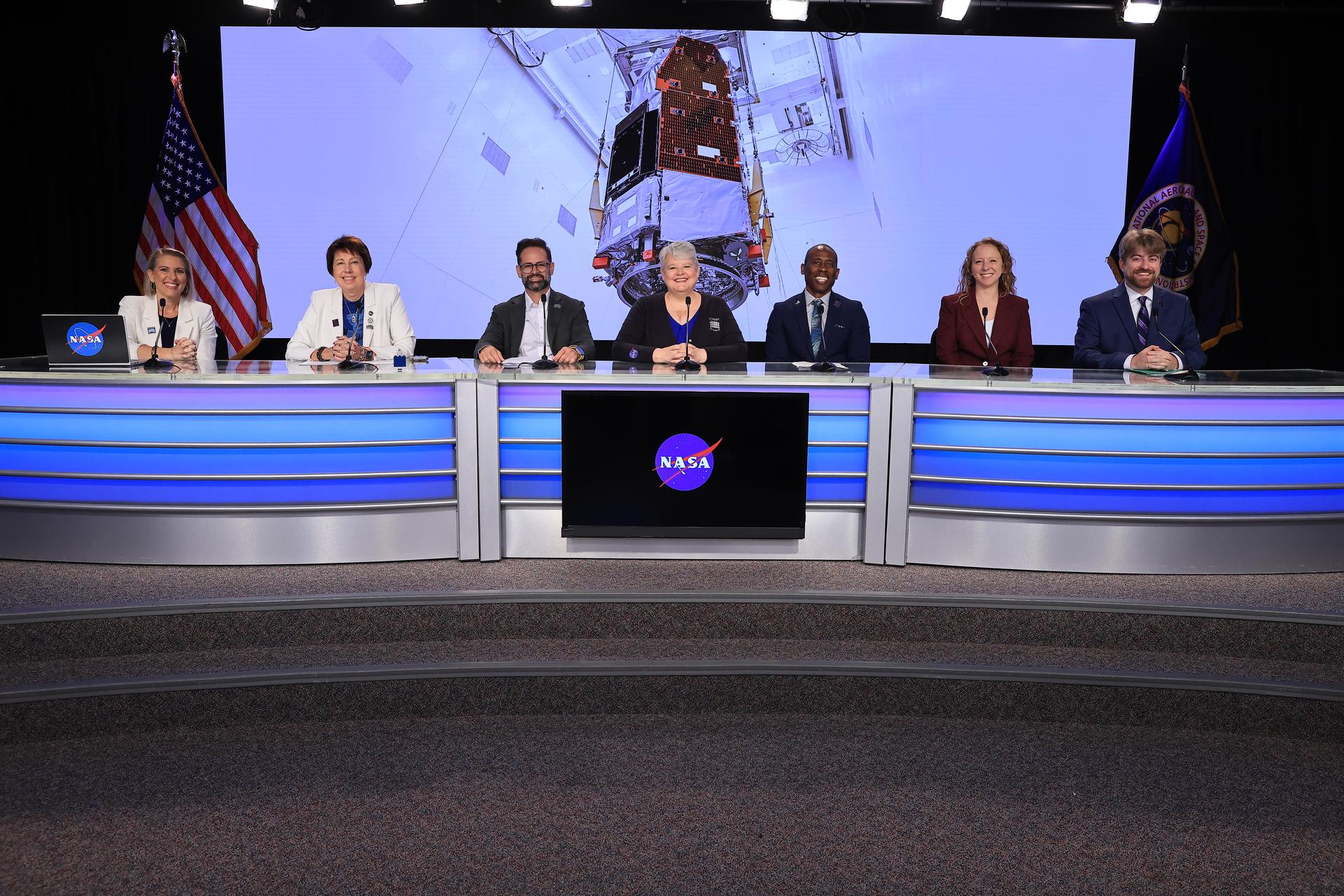
From left, Leah Martin, NASA Communications; Nicky Fox, associate administrator, Science Mission Directorate, NASA Headquarters in Washington; Lucas Paganini, Roman telescope program executive, NASA Headquarters; Jackie Townsend, Roman telescope project manager, NASA’s Goddard Space Flight Center in Greenbelt, Maryland; Denton Gibson, launch director, NASA’s Launch Services Program, Kennedy Space Center in Florida; Julianna Scheiman, director, NASA Science and Dragon Programs, SpaceX; and Justin McReynolds, launch weather officer, 45th Weather Squadron, U.S. Space Force, participate in a prelaunch news conference for NASA’s Nancy Grace Roman Space Telescope inside the NASA News Center’s John Holliman Auditorium at Kennedy Space Center in Florida, on Saturday, Aug. 29, 2026. Roman will investigate dark energy and dark matter, conduct a statistical census of planetary systems, and enable a broad range of additional astrophysics research. Liftoff from Launch Complex 39A at Kennedy is targeted for no earlier than Sunday, Aug. 30, 2026.
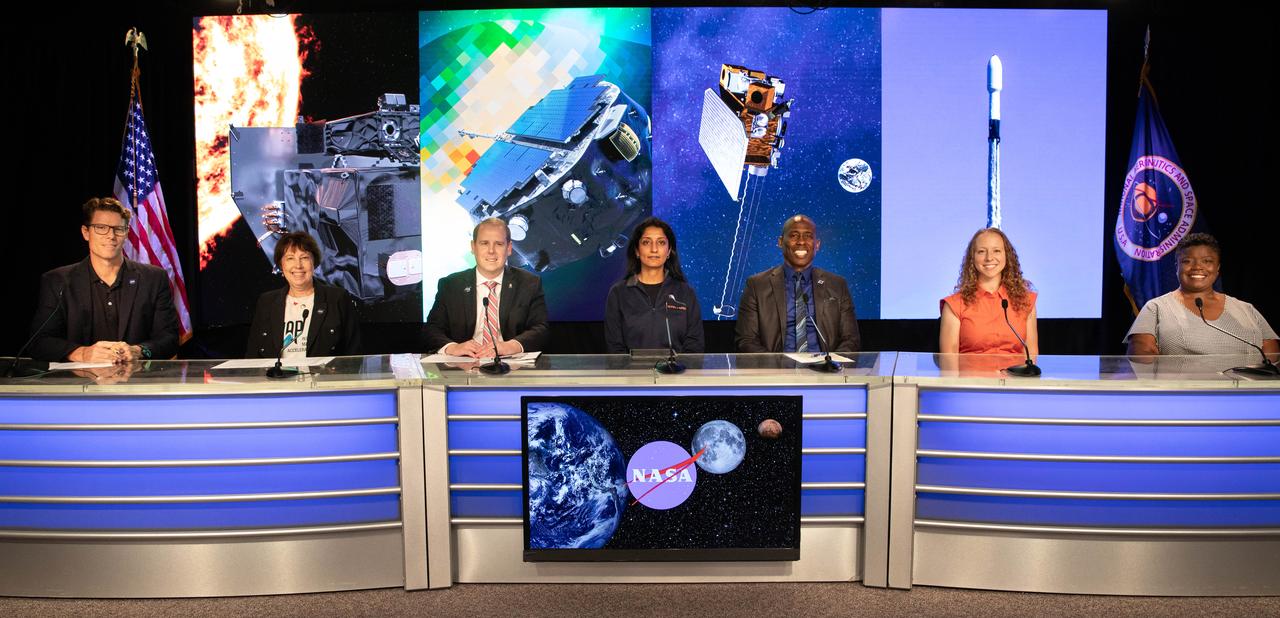
NASA, mission, and partner leaders participate in prelaunch news conference on Sunday, Sept. 21, 2025, at the agency’s Kennedy Space Center in Florida for NASA’s IMAP (Interstellar Mapping and Acceleration Probe) mission. From left are: Derrol Nail, NASA Communications; Nicky Fox, associate administrator, Science Mission Directorate, NASA Headquarters in Washington; Brad Williams, IMAP program executive, NASA Headquarters; Irene Parker, deputy assistant administrator for Systems for NOAA’s National Environmental Satellite, Data, and Information Service; Denton Gibson, launch director, NASA’s Launch Services Program, NASA Kennedy; Julianna Scheiman, director, NASA Science Missions, SpaceX; Arlena Moses, launch weather officer, 45th Weather Squadron, U.S. Space Force. The IMAP mission and its two rideshares – NASA’s exosphere-studying Carruthers Geocorona Observatory and National Oceanic and Atmospheric Administration’s (NOAA) Space Weather Follow On–Lagrange 1 (SWFO-L1) observatory – will orbit the Sun near Lagrange point 1, about one million miles from Earth, where it will scan the heliosphere, analyze the composition of charged particles, and investigate how those particles move through the solar system. Launch is targeted for 7:32 a.m. EDT, Tuesday, Sept. 23, from Launch Complex 39A at NASA Kennedy.
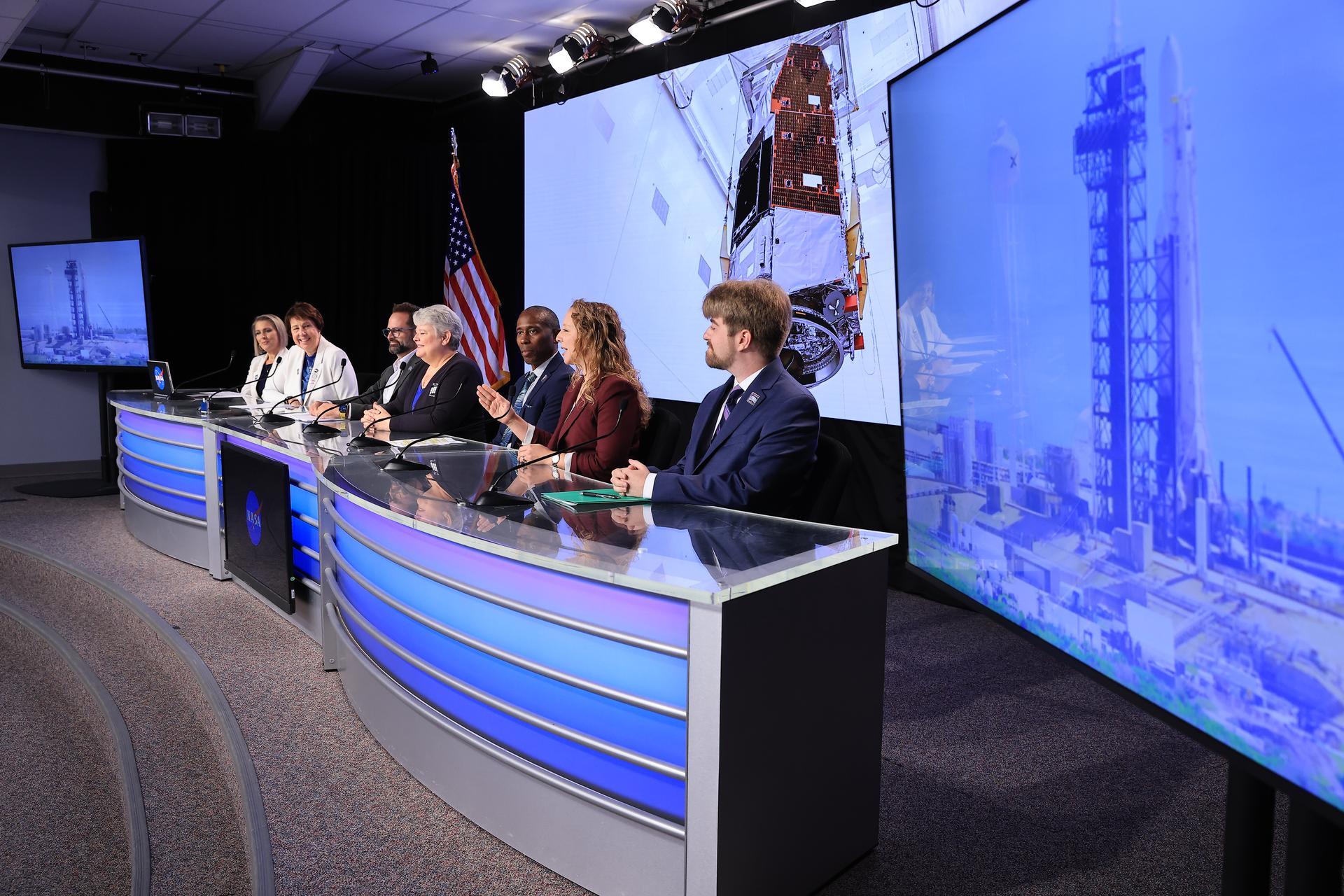
From left, Leah Martin, NASA Communications; Nicky Fox, associate administrator, Science Mission Directorate, NASA Headquarters in Washington; Lucas Paganini, Roman telescope program executive, NASA Headquarters; Jackie Townsend, Roman telescope project manager, NASA’s Goddard Space Flight Center in Greenbelt, Maryland; Denton Gibson, launch director, NASA’s Launch Services Program, Kennedy Space Center in Florida; Julianna Scheiman, director, NASA Science and Dragon Programs, SpaceX; and Justin McReynolds, launch weather officer, 45th Weather Squadron, U.S. Space Force, participate in a prelaunch news conference for NASA’s Nancy Grace Roman Space Telescope inside the NASA News Center’s John Holliman Auditorium at Kennedy Space Center in Florida, on Saturday, Aug. 29, 2026. Roman will investigate dark energy and dark matter, conduct a statistical census of planetary systems, and enable a broad range of additional astrophysics research. Liftoff from Launch Complex 39A at Kennedy is targeted for no earlier than Sunday, Aug. 30, 2026.

Julianna Scheiman, civil satellite missions director, SpaceX, participates in a prelaunch news conference held by NASA, SpaceX, and the French space agency Centre National d’Études Spatiales (CNES) for the Surface Water and Ocean Topography (SWOT) mission on Dec. 14, 2022, at Vandenberg Space Force Base in California. SWOT is scheduled to launch on a SpaceX Falcon 9 rocket from Space Launch Complex-4 East at Vandenberg on Dec. 15, 2022, at 3:46 a.m. PST. SWOT will be NASA’s first global survey of nearly all water on Earth’s surface. Scientists plan to use its observations to better understand the global water cycle, furnish insight into the ocean’s role in how climate change unfolds, and provide a global inventory of water resources. The SWOT mission is a collaborative effort between NASA and CNES with contributions from the Canadian Space Agency and the UK Space Agency. NASA’s Launch Services Program, based at the agency’s Kennedy Space Center in Florida, is managing the launch service.
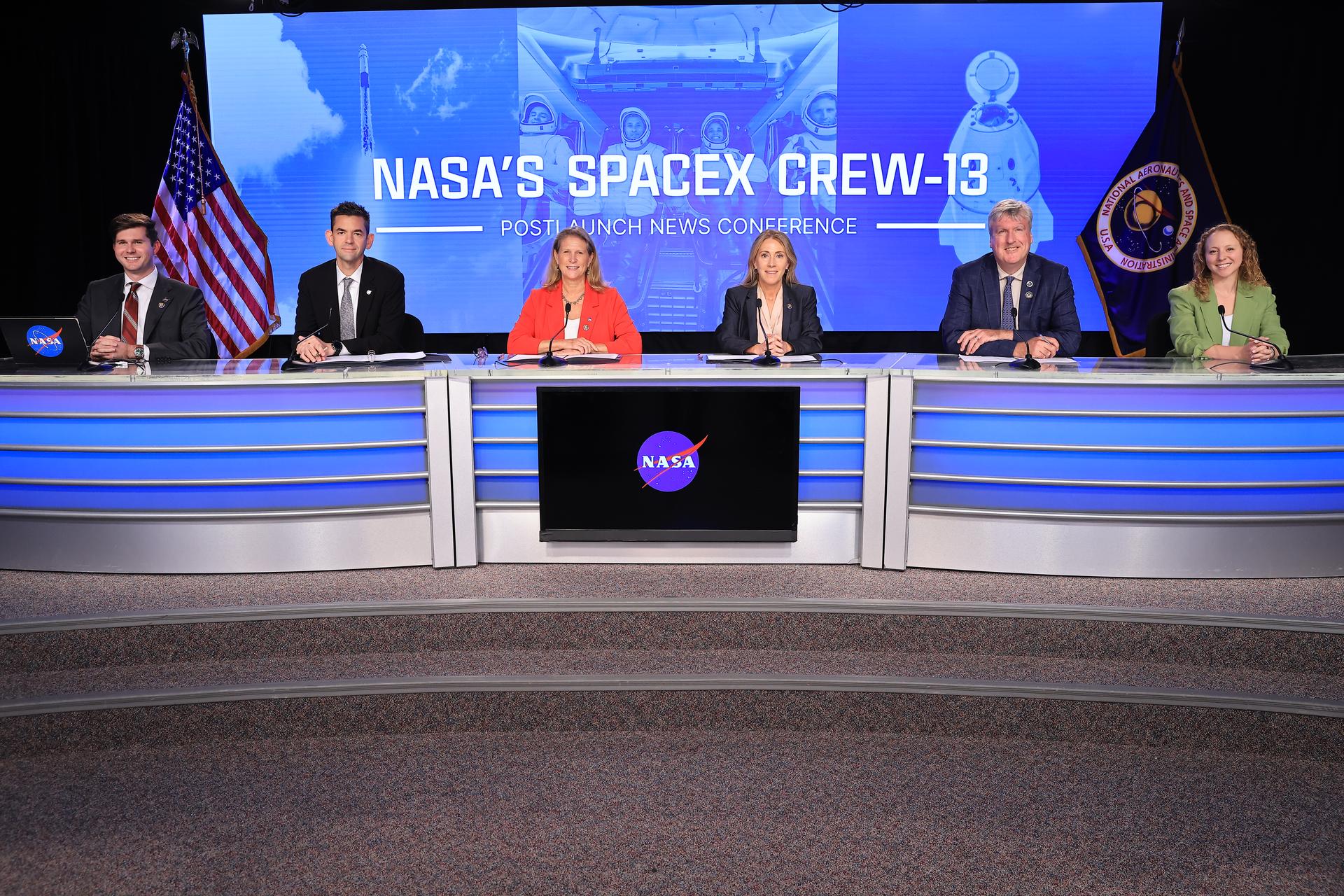
From left to right, George Alderman, deputy press secretary, NASA communications; NASA Administrator Jared Isaacman; Dr. Lori Glaze, associate administrator, NASA’s Human Spaceflight Mission Directorate; Dana Weigel, Low Earth Orbit Program, NASA’s Johnson Space Center in Houston; Mathieu Caron, director, Astronauts, Life Sciences, and Space Medicine, CSA (Canadian Space Agency); and Julianna Scheiman, director, NASA Science and Dragon Programs, SpaceX, participate in a postlaunch news conference at the agency’s Kennedy Space Center in Florida on Thursday, Oct. 1, 2026, following the launch of NASA’s SpaceX Crew-13 mission to the International Space Station. NASA astronauts Jessica Watkins and Luke Delaney, CSA (Canadian Space Agency) astronaut Joshua Kutryk, and Roscosmos cosmonaut Sergey Teteryatnikov launched to the International Space Station aboard SpaceX’s Dragon spacecraft and Falcon 9 rocket at 11:10 a.m. EDT on the 13th crew rotation mission with SpaceX to the space station.

Karen Fox, NASA Communications, moderates a payload briefing for NASA’s Imaging X-ray Polarimetry Explorer (IXPE) spacecraft on Dec.7, 2021 at NASA’s Kennedy Space Center in Florida. IXPE is scheduled to launch no earlier than 1 a.m. EST Thursday, Dec. 9, on a SpaceX Falcon 9 rocket from Kennedy’s Launch Complex 39A. NASA’s Launch Services Program is managing this launch. NASA’s Marshall Space Flight Center in Huntsville, Alabama, manages the IXPE mission. Ball Aerospace, headquartered in Broomfield, Colorado, manages spacecraft operations with support from the University of Colorado at Boulder. NASA’s Goddard Space Flight Center in Greenbelt, Maryland, manages the Explorers Program for the agency’s Science Mission Directorate in Washington. The U.S. Space Force’s Space Launch Delta 45 provides range support for this launch. SpaceX is providing the launch vehicle for this mission.

Makenzie Lystrup, vice president and general manager, civil space, Ball Aerospace, participates in a prelaunch news conference for NASA’s Imaging X-ray Polarimetry Explorer (IXPE) spacecraft on Dec. 7, 2021 at NASA’s Kennedy Space Center in Florida. IXPE is scheduled to launch no earlier than 1 a.m. EST Thursday, Dec. 9, on a SpaceX Falcon 9 rocket from Kennedy’s Launch Complex 39A. NASA’s Launch Services Program is managing this launch. NASA’s Marshall Space Flight Center in Huntsville, Alabama, manages the IXPE mission. Ball Aerospace, headquartered in Broomfield, Colorado, manages spacecraft operations with support from the University of Colorado at Boulder. NASA’s Goddard Space Flight Center in Greenbelt, Maryland, manages the Explorers Program for the agency’s Science Mission Directorate in Washington. The U.S. Space Force’s Space Launch Delta 45 provides range support for this launch. SpaceX is providing the launch vehicle for this mission.

Martin Weisskopf, IXPE principal investigator, NASA’s Marshall Space Flight Center, participates in a prelaunch news conference for NASA’s Imaging X-ray Polarimetry Explorer (IXPE) spacecraft on Dec. 7, 2021 at NASA’s Kennedy Space Center in Florida. IXPE is scheduled to launch no earlier than 1 a.m. EST Thursday, Dec. 9, on a SpaceX Falcon 9 rocket from Kennedy’s Launch Complex 39A. NASA’s Launch Services Program is managing this launch. NASA’s Marshall Space Flight Center in Huntsville, Alabama, manages the IXPE mission. Ball Aerospace, headquartered in Broomfield, Colorado, manages spacecraft operations with support from the University of Colorado at Boulder. NASA’s Goddard Space Flight Center in Greenbelt, Maryland, manages the Explorers Program for the agency’s Science Mission Directorate in Washington. The U.S. Space Force’s Space Launch Delta 45 provides range support for this launch. SpaceX is providing the launch vehicle for this mission.
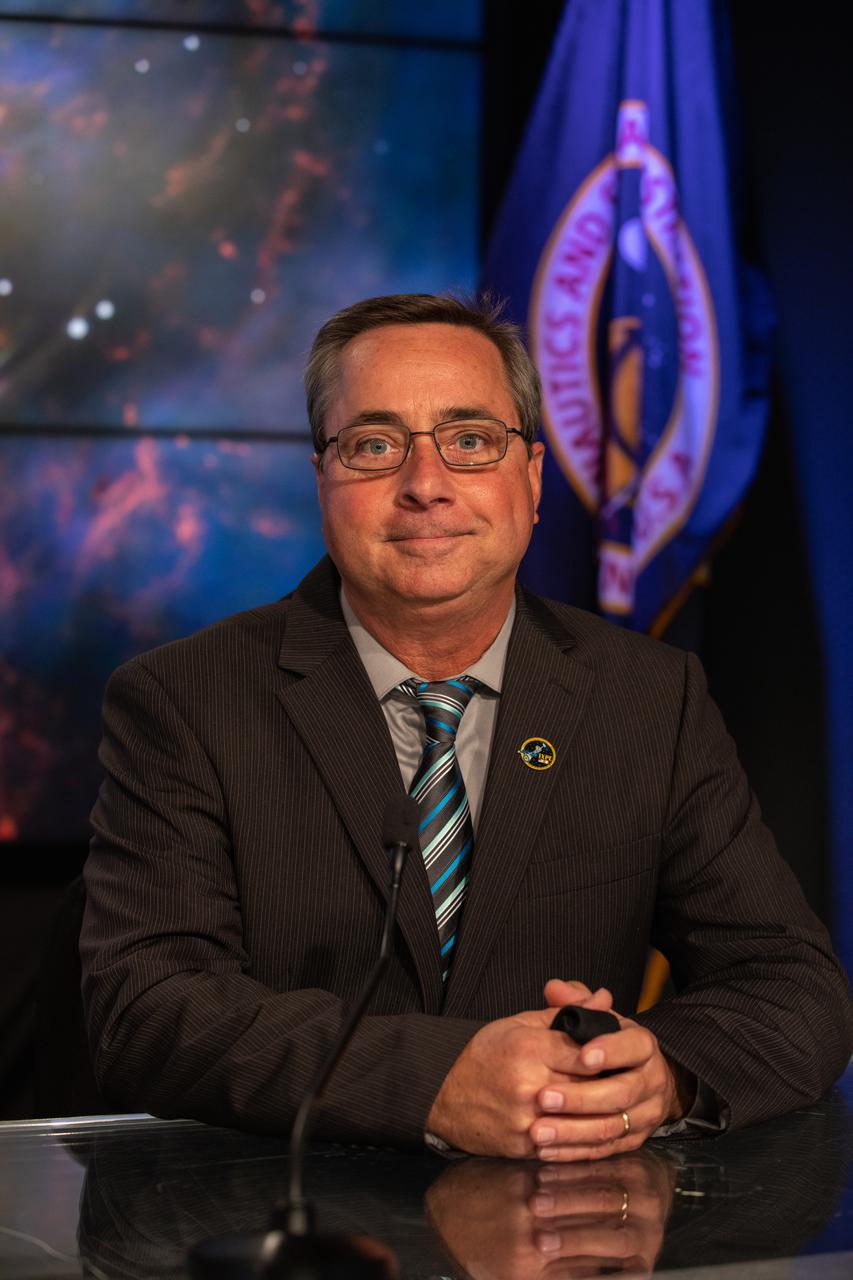
Mike McAleenan, 45th Weather Squadron, Space Launch Delta 45, participates in a prelaunch news conference for NASA’s Imaging X-ray Polarimetry Explorer (IXPE) spacecraft on Dec. 7, 2021 at NASA’s Kennedy Space Center in Florida. IXPE is scheduled to launch no earlier than 1 a.m. EST Thursday, Dec. 9, on a SpaceX Falcon 9 rocket from Kennedy’s Launch Complex 39A. NASA’s Launch Services Program is managing this launch. NASA’s Marshall Space Flight Center in Huntsville, Alabama, manages the IXPE mission. Ball Aerospace, headquartered in Broomfield, Colorado, manages spacecraft operations with support from the University of Colorado at Boulder. NASA’s Goddard Space Flight Center in Greenbelt, Maryland, manages the Explorers Program for the agency’s Science Mission Directorate in Washington. The U.S. Space Force’s Space Launch Delta 45 provides range support for this launch. SpaceX is providing the launch vehicle for this mission.
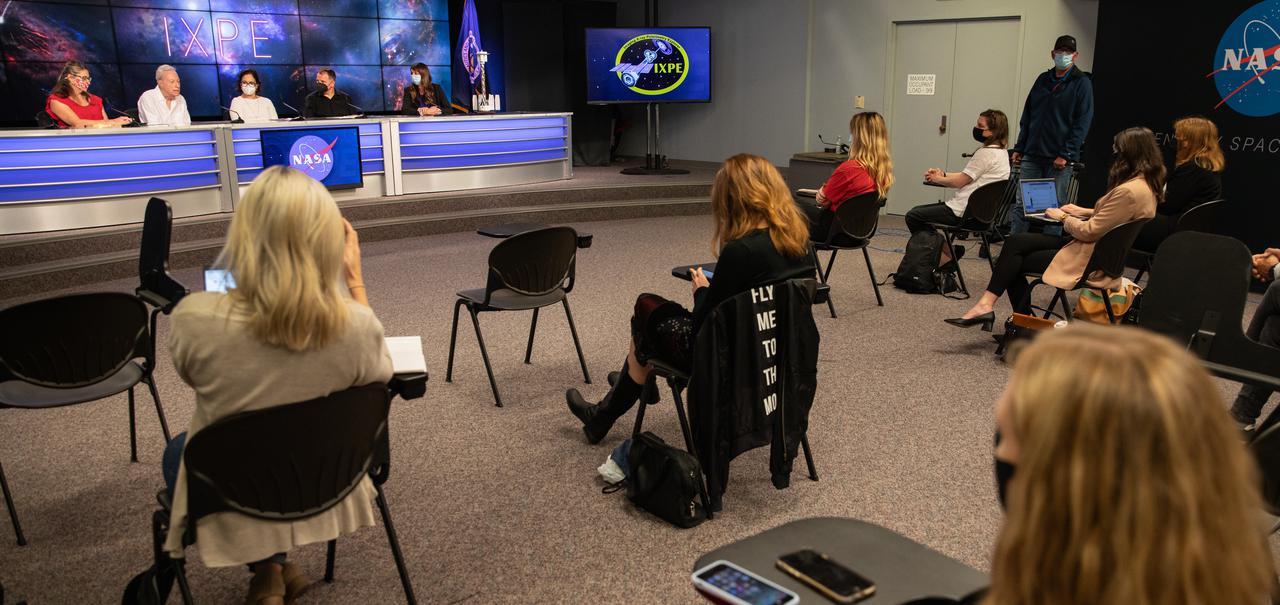
A payload briefing for NASA’s Imaging X-ray Polarimetry Explorer (IXPE) spacecraft is held on Dec.7, 2021 at NASA’s Kennedy Space Center in Florida. Participants from left are Karen Fox, moderator, NASA Communications; Brian Ramsey, deputy principal investigator, NASA’s Marshall Space Flight Center; Elisabetta Cavazzuti, ASI IXPE program manager, Italian Space Agency; Luca Baldini, Italian co-principal investigator, NASA’s Marshall Space Flight Center; and MacKenzie Ferrie, IXPE program manager, Ball Aerospace. IXPE is scheduled to launch no earlier than 1 a.m. EST Thursday, Dec. 9, on a SpaceX Falcon 9 rocket from Kennedy’s Launch Complex 39A. NASA’s Launch Services Program is managing this launch. NASA’s Marshall Space Flight Center in Huntsville, Alabama, manages the IXPE mission. Ball Aerospace, headquartered in Broomfield, Colorado, manages spacecraft operations with support from the University of Colorado at Boulder. NASA’s Goddard Space Flight Center in Greenbelt, Maryland, manages the Explorers Program for the agency’s Science Mission Directorate in Washington. The U.S. Space Force’s Space Launch Delta 45 provides range support for this launch. SpaceX is providing the launch vehicle for this mission.
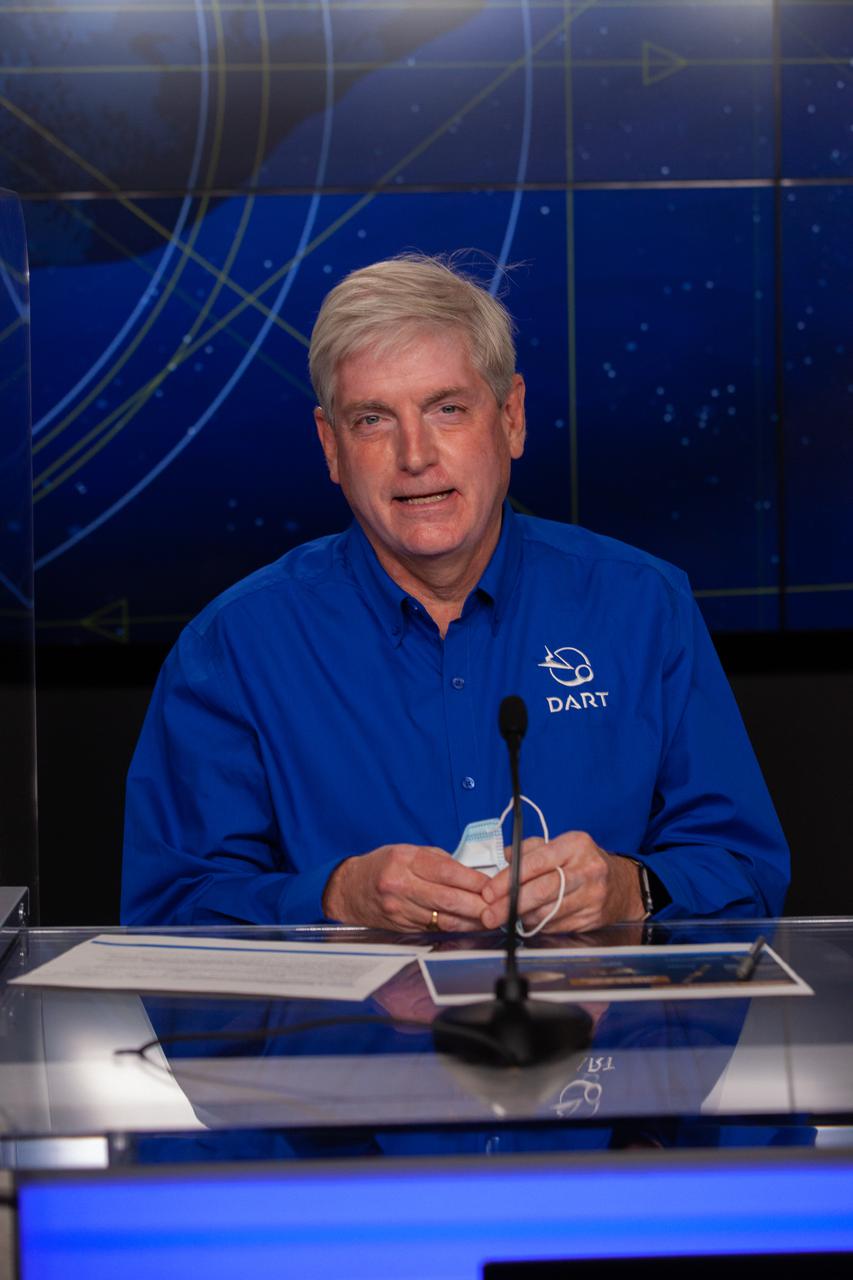
Ed Reynolds, Double Asteroid Redirection Test (DART) project manager for Johns Hopkins Applied Physics Laboratory, participates in a prelaunch news conference for NASA’s DART mission at Vandenberg Space Force Base in California on Nov. 22, 2021. DART is the first mission to test technologies for preventing an impact of Earth by a hazardous asteroid. The mission is scheduled to launch no earlier than 1:21 a.m. EST Wednesday, Nov. 24 (10:21 p.m. PST Tuesday, Nov. 23), aboard a SpaceX Falcon 9 rocket from Vandenberg. NASA's Launch Services Program based at Kennedy Space Center in Florida, America's multi-user spaceport, is managing the launch.

Thomas Zurbuchen, associate administrator for NASA’s Science Mission Directorate, participates in a prelaunch news conference for the agency’s Double Asteroid Redirection Test (DART) mission at Vandenberg Space Force Base in California on Nov. 22, 2021. DART is the first mission to test technologies for preventing an impact of Earth by a hazardous asteroid. The mission is scheduled to launch no earlier than 1:21 a.m. EST Wednesday, Nov. 24 (10:21 p.m. PST Tuesday, Nov. 23), aboard a SpaceX Falcon 9 rocket from Vandenberg. NASA's Launch Services Program based at Kennedy Space Center in Florida, America's multi-user spaceport, is managing the launch.
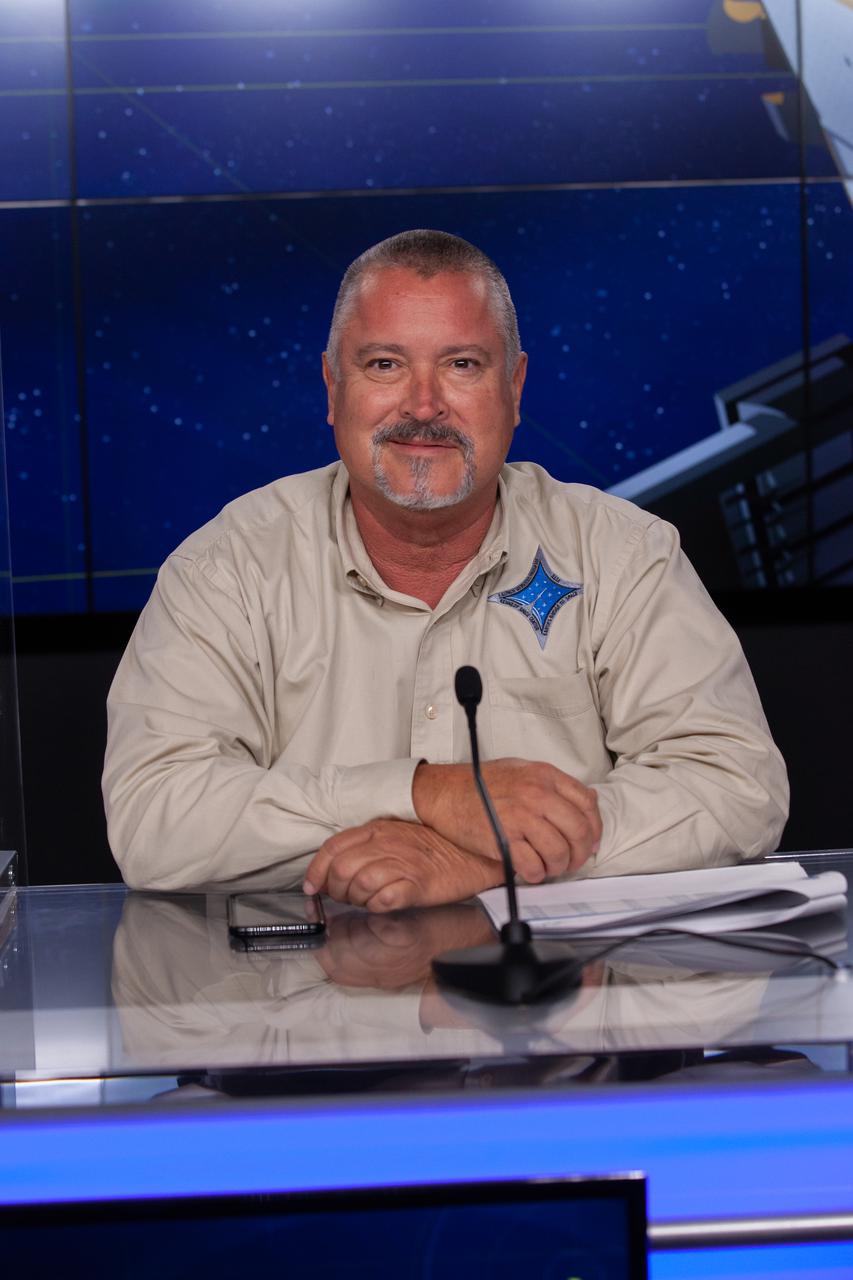
Omar Baez, senior launch director for NASA’s Launch Services Program, participates in a prelaunch news conference for the agency’s Double Asteroid Redirection Test (DART) mission at Vandenberg Space Force Base in California on Nov. 22, 2021. DART is the first mission to test technologies for preventing an impact of Earth by a hazardous asteroid. The mission is scheduled to launch no earlier than 1:21 a.m. EST Wednesday, Nov. 24 (10:21 p.m. PST Tuesday, Nov. 23), aboard a SpaceX Falcon 9 rocket from Vandenberg. NASA's Launch Services Program based at Kennedy Space Center in Florida, America's multi-user spaceport, is managing the launch.
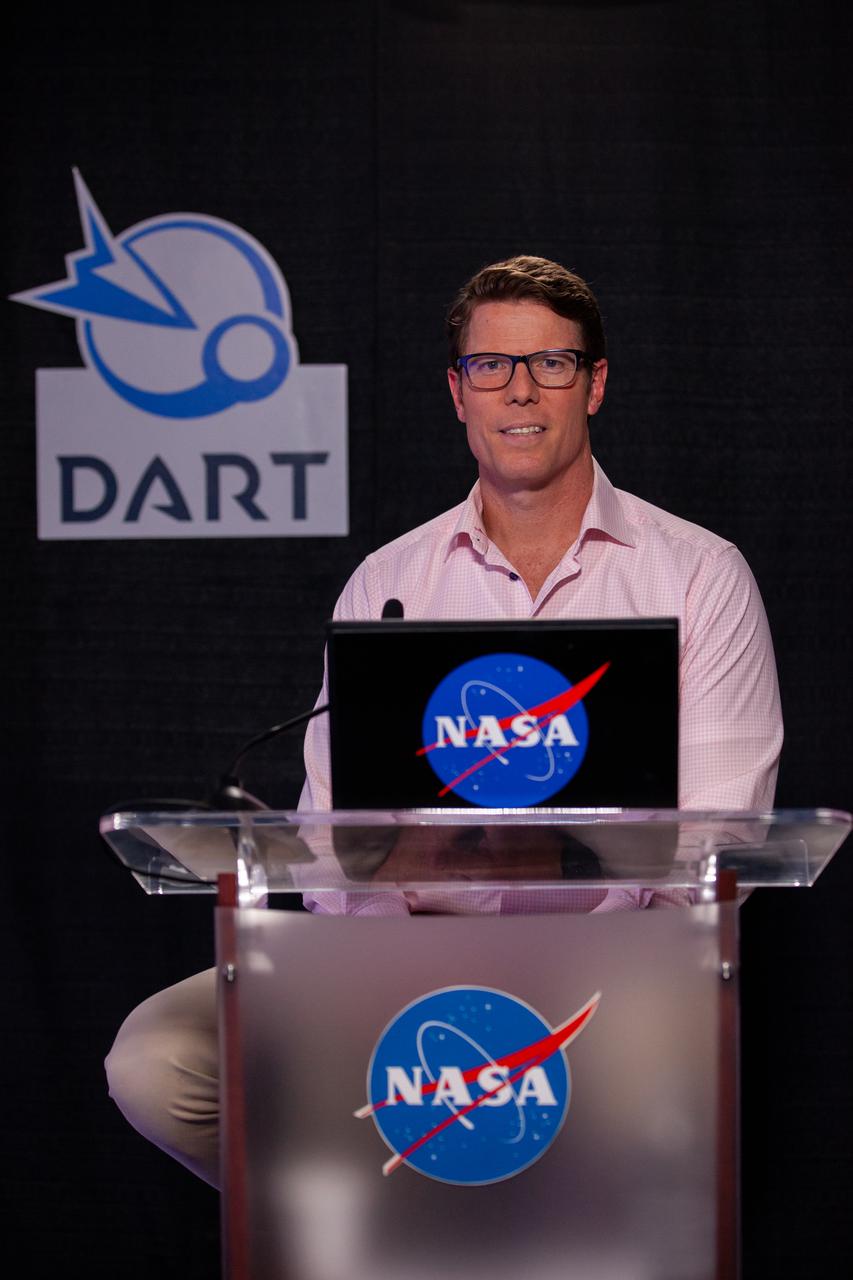
Derrol Nail, NASA Communications, moderates a prelaunch news conference for the agency’s Double Asteroid Redirection Test (DART) mission at Vandenberg Space Force Base in California on Nov. 22, 2021. DART is the first mission to test technologies for preventing an impact of Earth by a hazardous asteroid. The mission is scheduled to launch no earlier than 1:21 a.m. EST Wednesday, Nov. 24 (10:21 p.m. PST Tuesday, Nov. 23), aboard a SpaceX Falcon 9 rocket from Vandenberg. NASA's Launch Services Program based at Kennedy Space Center in Florida, America's multi-user spaceport, is managing the launch.
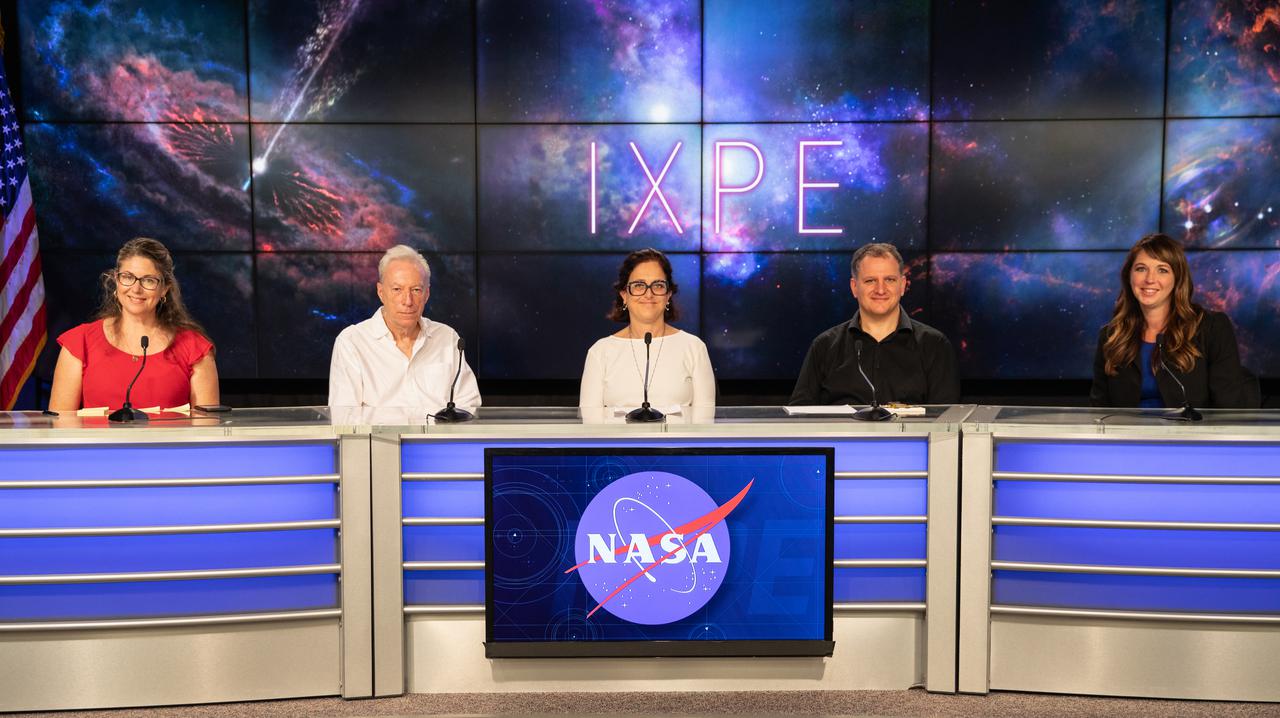
A payload briefing for NASA’s Imaging X-ray Polarimetry Explorer (IXPE) spacecraft is held on Dec.7, 2021 at NASA’s Kennedy Space Center in Florida. Participants from left are Karen Fox, moderator, NASA Communications; Brian Ramsey, deputy principal investigator, NASA’s Marshall Space Flight Center; Elisabetta Cavazzuti, ASI IXPE program manager, Italian Space Agency; Luca Baldini, Italian co-principal investigator, NASA’s Marshall Space Flight Center; and MacKenzie Ferrie, IXPE program manager, Ball Aerospace. IXPE is scheduled to launch no earlier than 1 a.m. EST Thursday, Dec. 9, on a SpaceX Falcon 9 rocket from Kennedy’s Launch Complex 39A. NASA’s Launch Services Program is managing this launch. NASA’s Marshall Space Flight Center in Huntsville, Alabama, manages the IXPE mission. Ball Aerospace, headquartered in Broomfield, Colorado, manages spacecraft operations with support from the University of Colorado at Boulder. NASA’s Goddard Space Flight Center in Greenbelt, Maryland, manages the Explorers Program for the agency’s Science Mission Directorate in Washington. The U.S. Space Force’s Space Launch Delta 45 provides range support for this launch. SpaceX is providing the launch vehicle for this mission.
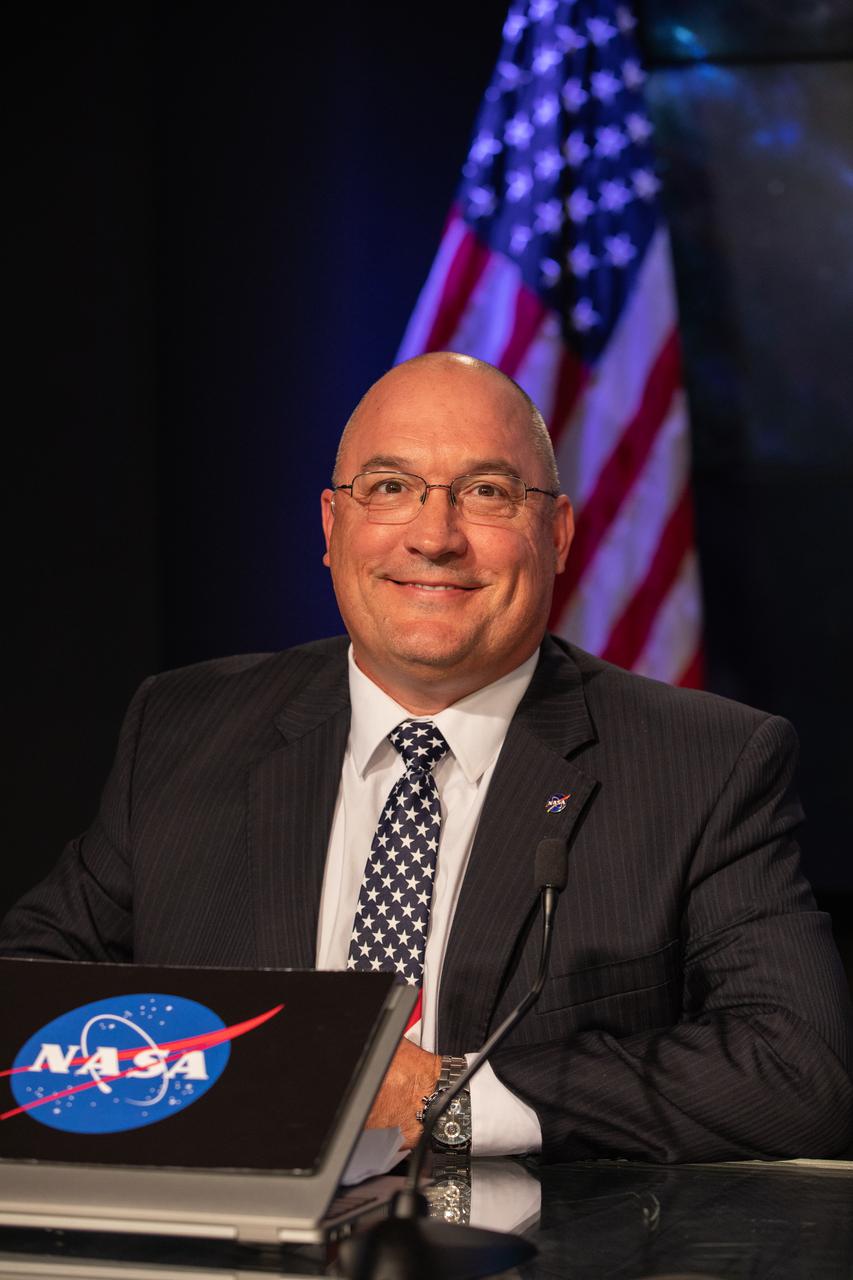
Greg Harland, NASA Communications, moderates a prelaunch news conference for NASA’s Imaging X-ray Polarimetry Explorer (IXPE) spacecraft on Dec. 7, 2021 at NASA’s Kennedy Space Center in Florida. IXPE is scheduled to launch no earlier than 1 a.m. EST Thursday, Dec. 9, on a SpaceX Falcon 9 rocket from Kennedy’s Launch Complex 39A. NASA’s Launch Services Program is managing this launch. NASA’s Marshall Space Flight Center in Huntsville, Alabama, manages the IXPE mission. Ball Aerospace, headquartered in Broomfield, Colorado, manages spacecraft operations with support from the University of Colorado at Boulder. NASA’s Goddard Space Flight Center in Greenbelt, Maryland, manages the Explorers Program for the agency’s Science Mission Directorate in Washington. The U.S. Space Force’s Space Launch Delta 45 provides range support for this launch. SpaceX is providing the launch vehicle for this mission.

Elisabetta Cavazzuti, ASI IXPE program manager, Italian Space Agency, participates in a payload briefing for NASA’s Imaging X-ray Polarimetry Explorer (IXPE) spacecraft on Dec.7, 2021 at NASA’s Kennedy Space Center in Florida. IXPE is scheduled to launch no earlier than 1 a.m. EST Thursday, Dec. 9, on a SpaceX Falcon 9 rocket from Kennedy’s Launch Complex 39A. NASA’s Launch Services Program is managing this launch. NASA’s Marshall Space Flight Center in Huntsville, Alabama, manages the IXPE mission. Ball Aerospace, headquartered in Broomfield, Colorado, manages spacecraft operations with support from the University of Colorado at Boulder. NASA’s Goddard Space Flight Center in Greenbelt, Maryland, manages the Explorers Program for the agency’s Science Mission Directorate in Washington. The U.S. Space Force’s Space Launch Delta 45 provides range support for this launch. SpaceX is providing the launch vehicle for this mission.

MacKenzie Ferrie, IXPE program manager, Ball Aerospace, participates in a payload briefing for NASA’s Imaging X-ray Polarimetry Explorer (IXPE) spacecraft on Dec.7, 2021 at NASA’s Kennedy Space Center in Florida. IXPE is scheduled to launch no earlier than 1 a.m. EST Thursday, Dec. 9, on a SpaceX Falcon 9 rocket from Kennedy’s Launch Complex 39A. NASA’s Launch Services Program is managing this launch. NASA’s Marshall Space Flight Center in Huntsville, Alabama, manages the IXPE mission. Ball Aerospace, headquartered in Broomfield, Colorado, manages spacecraft operations with support from the University of Colorado at Boulder. NASA’s Goddard Space Flight Center in Greenbelt, Maryland, manages the Explorers Program for the agency’s Science Mission Directorate in Washington. The U.S. Space Force’s Space Launch Delta 45 provides range support for this launch. SpaceX is providing the launch vehicle for this mission.
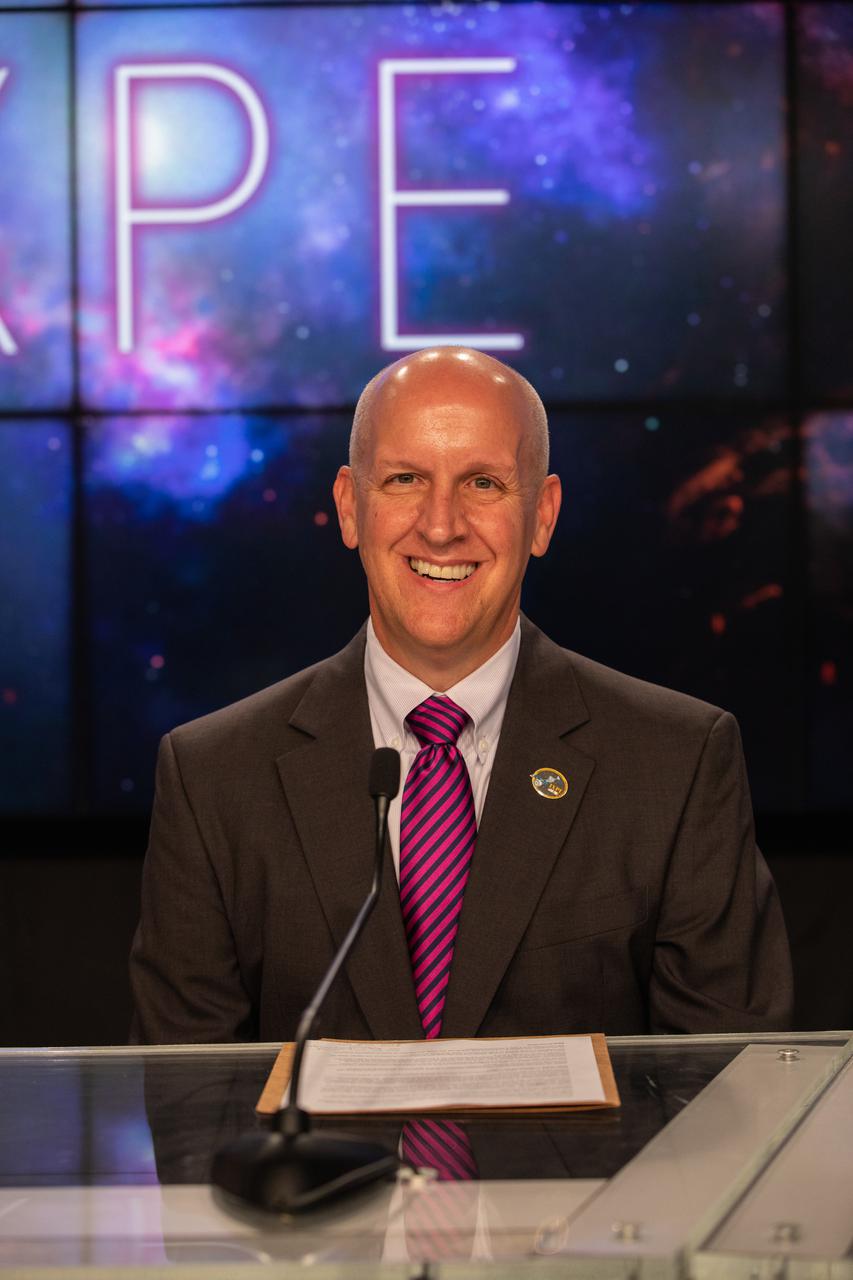
Tim Dunn, launch director, NASA’s Launch Services Program, based at Kennedy Space Center, participates in a prelaunch news conference for NASA’s Imaging X-ray Polarimetry Explorer (IXPE) spacecraft on Dec. 7, 2021 at NASA’s Kennedy Space Center in Florida. IXPE is scheduled to launch no earlier than 1 a.m. EST Thursday, Dec. 9, on a SpaceX Falcon 9 rocket from Kennedy’s Launch Complex 39A. NASA’s Launch Services Program is managing this launch. NASA’s Marshall Space Flight Center in Huntsville, Alabama, manages the IXPE mission. Ball Aerospace, headquartered in Broomfield, Colorado, manages spacecraft operations with support from the University of Colorado at Boulder. NASA’s Goddard Space Flight Center in Greenbelt, Maryland, manages the Explorers Program for the agency’s Science Mission Directorate in Washington. The U.S. Space Force’s Space Launch Delta 45 provides range support for this launch. SpaceX is providing the launch vehicle for this mission.
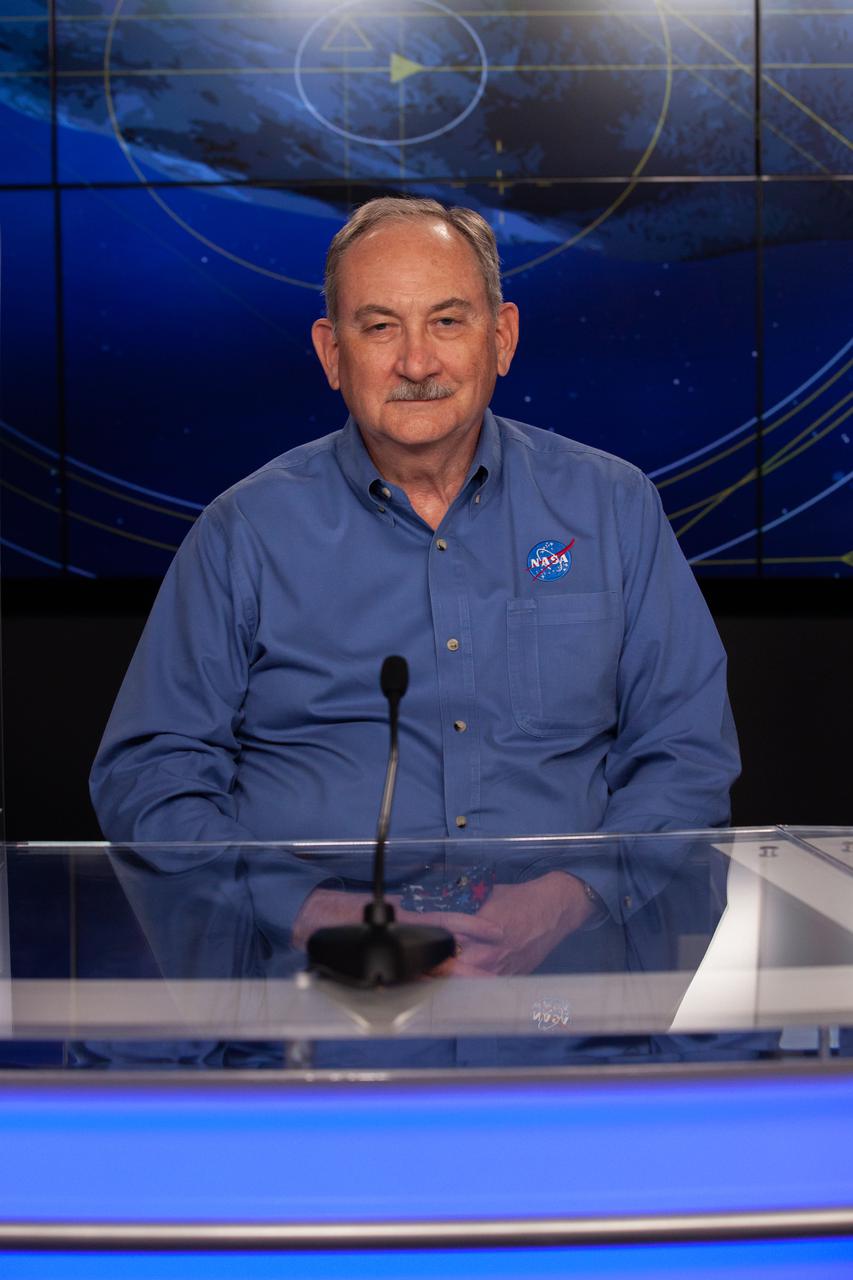
Lindley Johnson, planetary defense officer for NASA’s Planetary Defense Coordination Office, participates in a prelaunch news conference for the agency’s Double Asteroid Redirection Test (DART) mission at Vandenberg Space Force Base in California on Nov. 22, 2021. DART is the first mission to test technologies for preventing an impact of Earth by a hazardous asteroid. The mission is scheduled to launch no earlier than 1:21 a.m. EST Wednesday, Nov. 24 (10:21 p.m. PST Tuesday, Nov. 23), aboard a SpaceX Falcon 9 rocket from Vandenberg. NASA's Launch Services Program based at Kennedy Space Center in Florida, America's multi-user spaceport, is managing the launch.
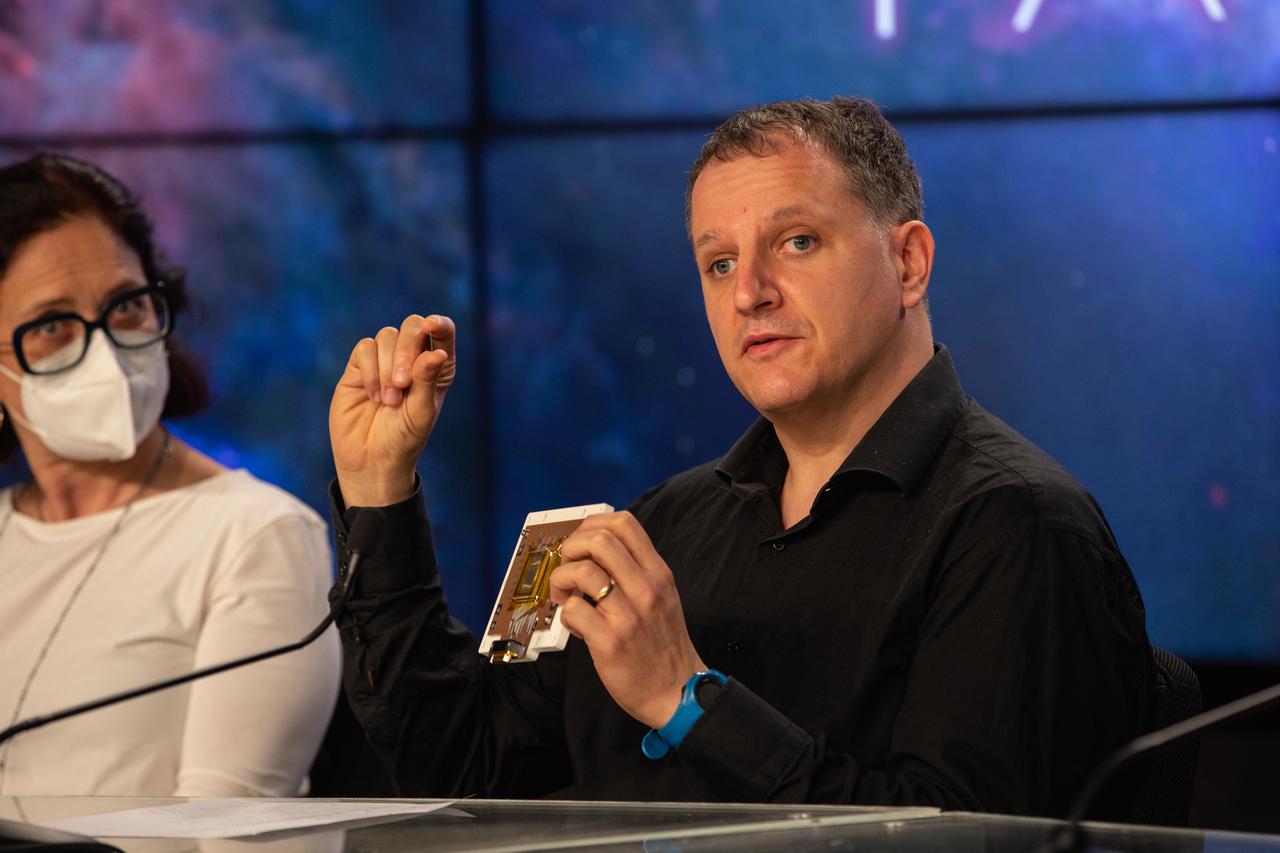
A payload briefing for NASA’s Imaging X-ray Polarimetry Explorer (IXPE) spacecraft is held on Dec.7, 2021 at NASA’s Kennedy Space Center in Florida. Participants from left are Elisabetta Cavazzuti, ASI IXPE program manager, Italian Space Agency; and Luca Baldini, Italian co-principal investigator, NASA’s Marshall Space Flight Center. IXPE is scheduled to launch no earlier than 1 a.m. EST Thursday, Dec. 9, on a SpaceX Falcon 9 rocket from Kennedy’s Launch Complex 39A. NASA’s Launch Services Program is managing this launch. NASA’s Marshall Space Flight Center in Huntsville, Alabama, manages the IXPE mission. Ball Aerospace, headquartered in Broomfield, Colorado, manages spacecraft operations with support from the University of Colorado at Boulder. NASA’s Goddard Space Flight Center in Greenbelt, Maryland, manages the Explorers Program for the agency’s Science Mission Directorate in Washington. The U.S. Space Force’s Space Launch Delta 45 provides range support for this launch. SpaceX is providing the launch vehicle for this mission.
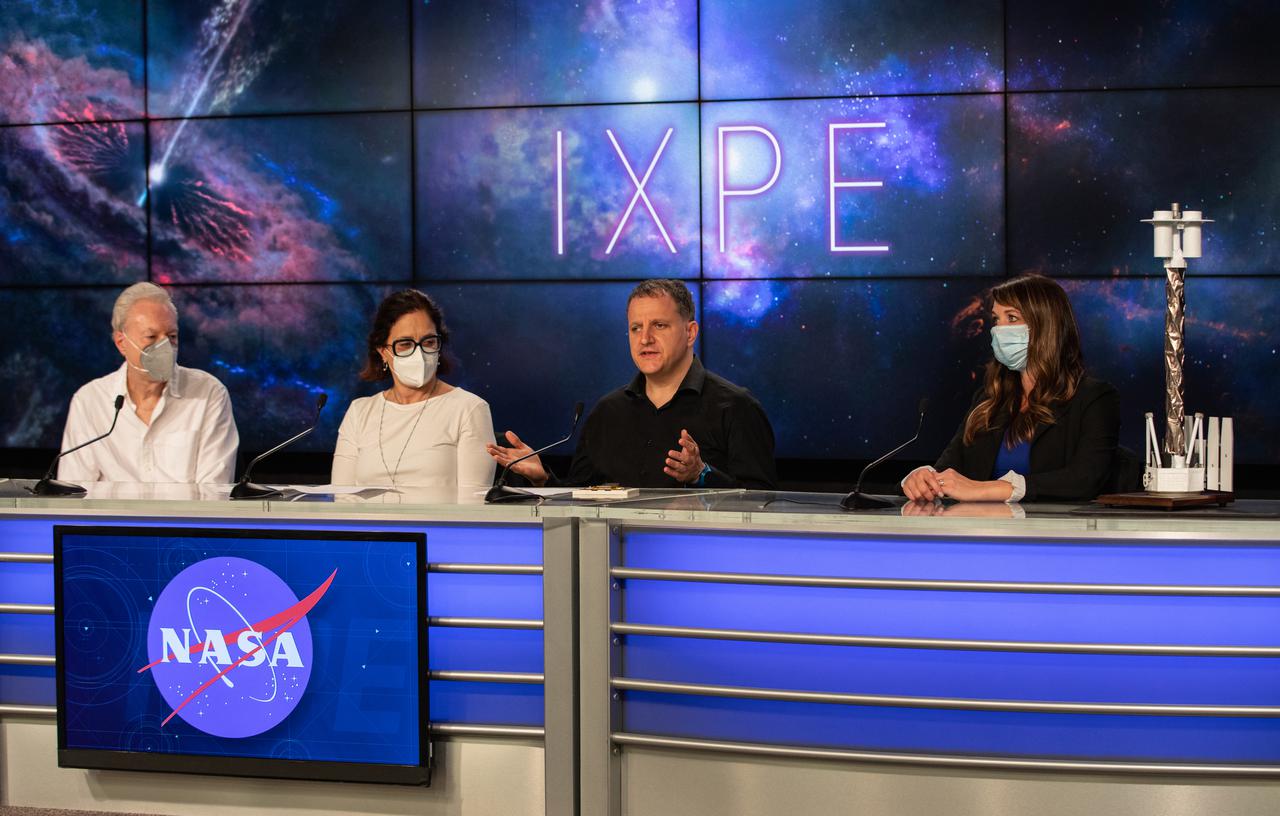
A payload briefing for NASA’s Imaging X-ray Polarimetry Explorer (IXPE) spacecraft is held on Dec.7, 2021 at NASA’s Kennedy Space Center in Florida. Participants from left are Brian Ramsey, deputy principal investigator, NASA’s Marshall Space Flight Center; Elisabetta Cavazzuti, ASI IXPE program manager, Italian Space Agency; Luca Baldini, Italian co-principal investigator, NASA’s Marshall Space Flight Center; and MacKenzie Ferrie, IXPE program manager, Ball Aerospace. IXPE is scheduled to launch no earlier than 1 a.m. EST Thursday, Dec. 9, on a SpaceX Falcon 9 rocket from Kennedy’s Launch Complex 39A. NASA’s Launch Services Program is managing this launch. NASA’s Marshall Space Flight Center in Huntsville, Alabama, manages the IXPE mission. Ball Aerospace, headquartered in Broomfield, Colorado, manages spacecraft operations with support from the University of Colorado at Boulder. NASA’s Goddard Space Flight Center in Greenbelt, Maryland, manages the Explorers Program for the agency’s Science Mission Directorate in Washington. The U.S. Space Force’s Space Launch Delta 45 provides range support for this launch. SpaceX is providing the launch vehicle for this mission.

Capt. Maximillian Rush, weather officer for Space Launch Delta 30, participates in a prelaunch news conference for NASA’s Double Asteroid Redirection Test (DART) mission at Vandenberg Space Force Base in California on Nov. 22, 2021. DART is the first mission to test technologies for preventing an impact of Earth by a hazardous asteroid. The mission is scheduled to launch no earlier than 1:21 a.m. EST Wednesday, Nov. 24 (10:21 p.m. PST Tuesday, Nov. 23), aboard a SpaceX Falcon 9 rocket from Vandenberg. NASA's Launch Services Program based at Kennedy Space Center in Florida, America's multi-user spaceport, is managing the launch.
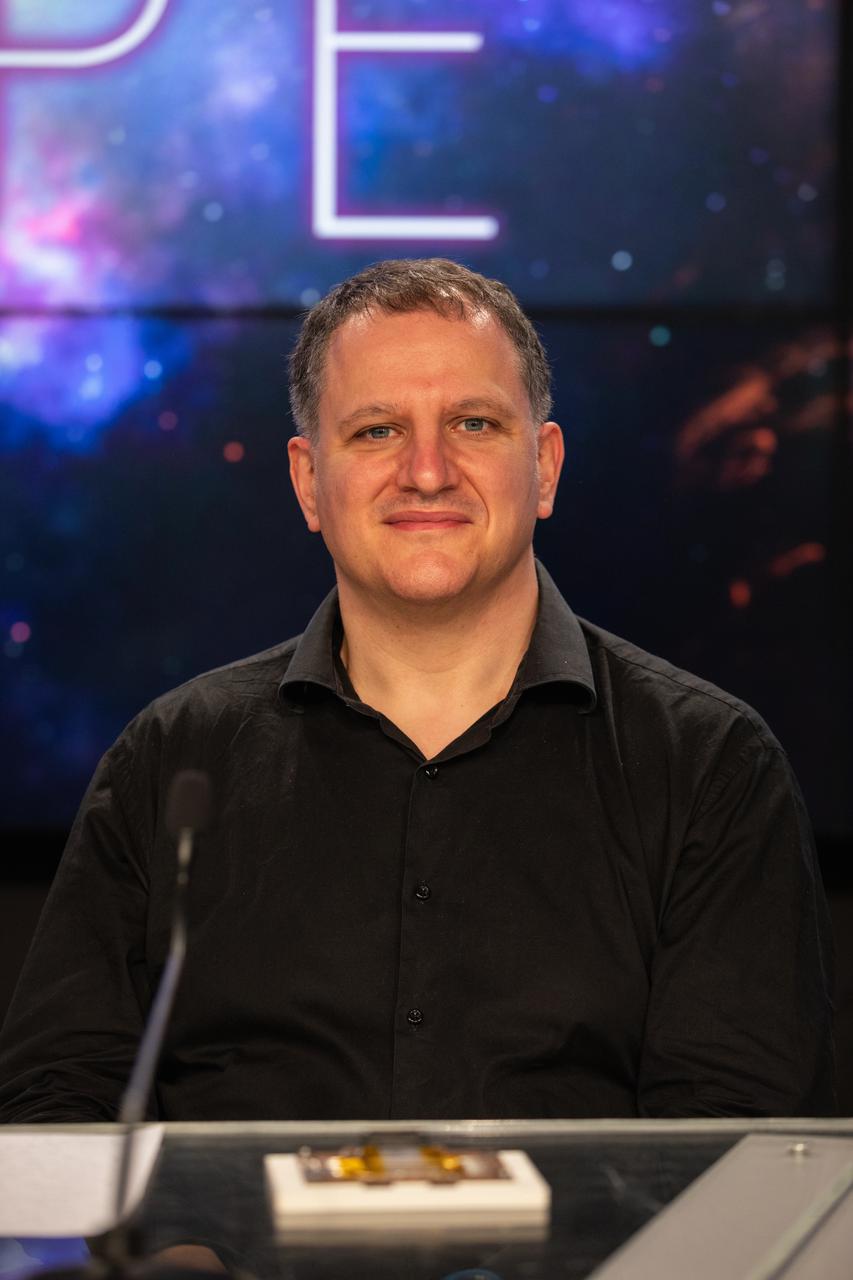
Luca Baldini, Italian co-principal investigator, National Institute for Nuclear Physics, participates in a payload briefing for NASA’s Imaging X-ray Polarimetry Explorer (IXPE) spacecraft on Dec.7, 2021 at NASA’s Kennedy Space Center in Florida. IXPE is scheduled to launch no earlier than 1 a.m. EST Thursday, Dec. 9, on a SpaceX Falcon 9 rocket from Kennedy’s Launch Complex 39A. NASA’s Launch Services Program is managing this launch. NASA’s Marshall Space Flight Center in Huntsville, Alabama, manages the IXPE mission. Ball Aerospace, headquartered in Broomfield, Colorado, manages spacecraft operations with support from the University of Colorado at Boulder. NASA’s Goddard Space Flight Center in Greenbelt, Maryland, manages the Explorers Program for the agency’s Science Mission Directorate in Washington. The U.S. Space Force’s Space Launch Delta 45 provides range support for this launch. SpaceX is providing the launch vehicle for this mission.
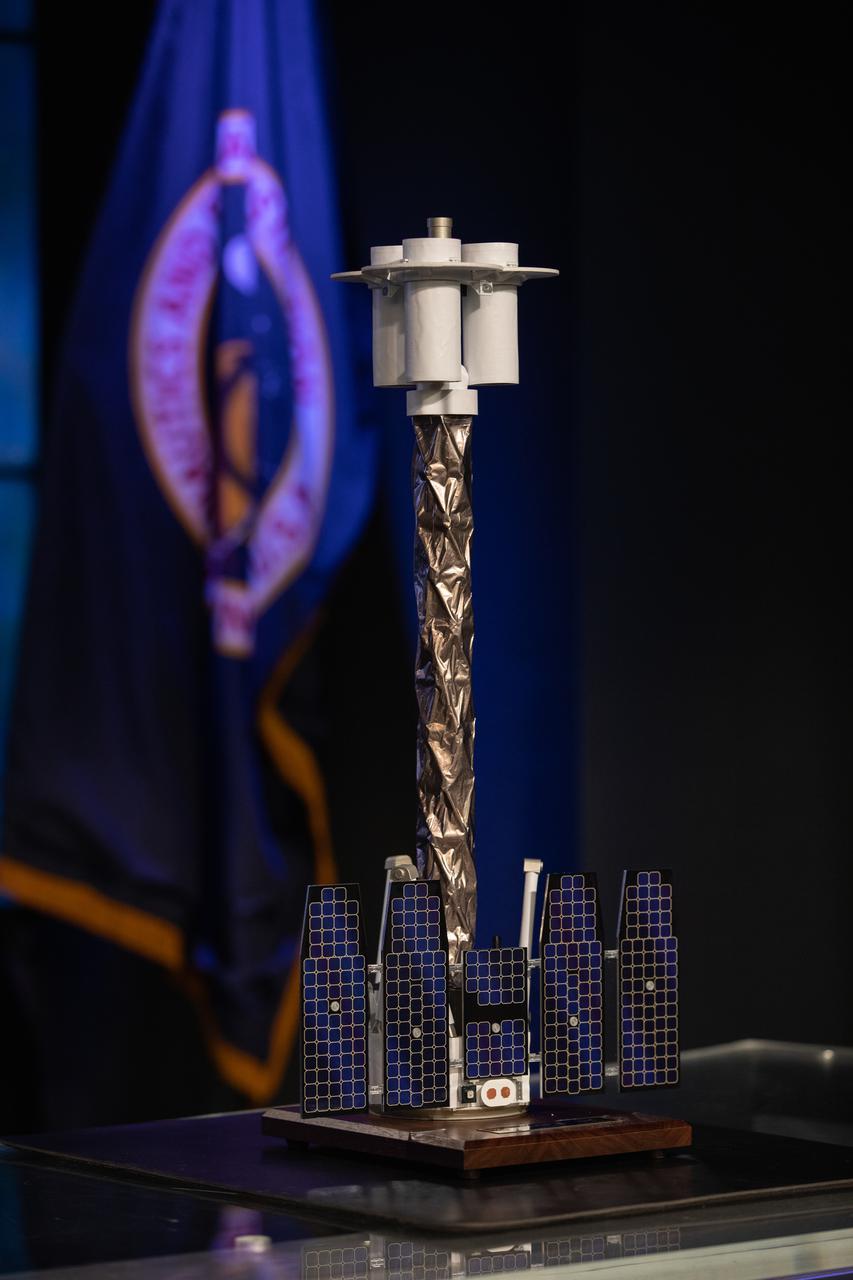
A scale model of NASA’s Imaging X-ray Polarimetry Explorer (IXPE) spacecraft is on display during a payload briefing for IXPE on Dec.7, 2021 at NASA’s Kennedy Space Center in Florida. IXPE is scheduled to launch no earlier than 1 a.m. EST Thursday, Dec. 9, on a SpaceX Falcon 9 rocket from Kennedy’s Launch Complex 39A. NASA’s Launch Services Program is managing this launch. NASA’s Marshall Space Flight Center in Huntsville, Alabama, manages the IXPE mission. Ball Aerospace, headquartered in Broomfield, Colorado, manages spacecraft operations with support from the University of Colorado at Boulder. NASA’s Goddard Space Flight Center in Greenbelt, Maryland, manages the Explorers Program for the agency’s Science Mission Directorate in Washington. The U.S. Space Force’s Space Launch Delta 45 provides range support for this launch. SpaceX is providing the launch vehicle for this mission.
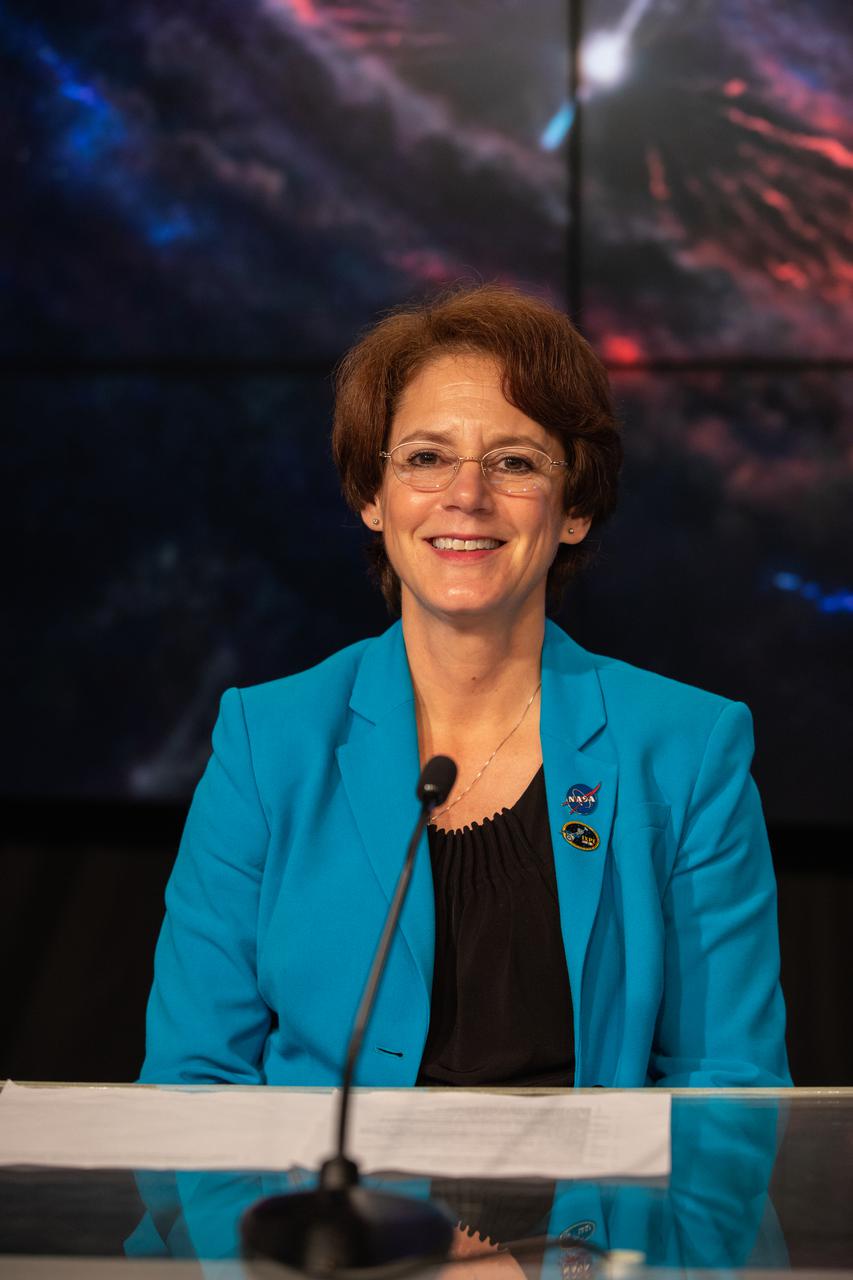
Sandra Connelly, deputy associate administrator for science, NASA Headquarters, participates in a prelaunch news conference for NASA’s Imaging X-ray Polarimetry Explorer (IXPE) spacecraft on Dec. 7, 2021 at NASA’s Kennedy Space Center in Florida. IXPE is scheduled to launch no earlier than 1 a.m. EST Thursday, Dec. 9, on a SpaceX Falcon 9 rocket from Kennedy’s Launch Complex 39A. NASA’s Launch Services Program is managing this launch. NASA’s Marshall Space Flight Center in Huntsville, Alabama, manages the IXPE mission. Ball Aerospace, headquartered in Broomfield, Colorado, manages spacecraft operations with support from the University of Colorado at Boulder. NASA’s Goddard Space Flight Center in Greenbelt, Maryland, manages the Explorers Program for the agency’s Science Mission Directorate in Washington. The U.S. Space Force’s Space Launch Delta 45 provides range support for this launch. SpaceX is providing the launch vehicle for this mission.

Brian Ramsey, deputy principal investigator, NASA’s Marshall Space Flight Center, participates in a payload briefing for NASA’s Imaging X-ray Polarimetry Explorer (IXPE) spacecraft on Dec.7, 2021 at NASA’s Kennedy Space Center in Florida. IXPE is scheduled to launch no earlier than 1 a.m. EST Thursday, Dec. 9, on a SpaceX Falcon 9 rocket from Kennedy’s Launch Complex 39A. NASA’s Launch Services Program is managing this launch. NASA’s Marshall Space Flight Center in Huntsville, Alabama, manages the IXPE mission. Ball Aerospace, headquartered in Broomfield, Colorado, manages spacecraft operations with support from the University of Colorado at Boulder. NASA’s Goddard Space Flight Center in Greenbelt, Maryland, manages the Explorers Program for the agency’s Science Mission Directorate in Washington. The U.S. Space Force’s Space Launch Delta 45 provides range support for this launch. SpaceX is providing the launch vehicle for this mission.