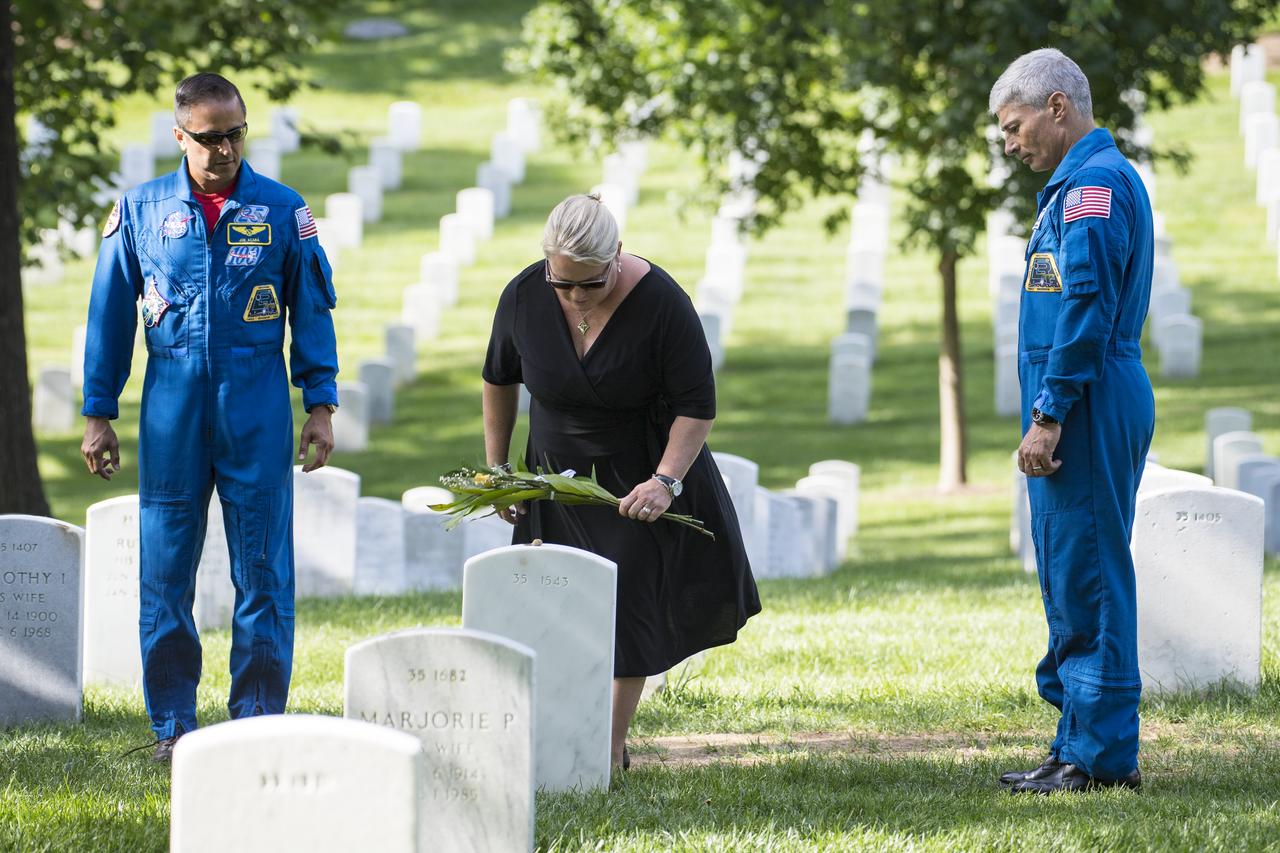
NASA astronaut Joe Acaba, left, and Mark Vande Hei, right, watch as Julie Vande Hei, wife of Mark, places a flower at the gravesite of former astronaut and U.S. Senator John Glenn, Friday, June 15, 2018 at the Arlington National Cemetery in Arlington, Va. Photo Credit: (NASA/Aubrey Gemignani)
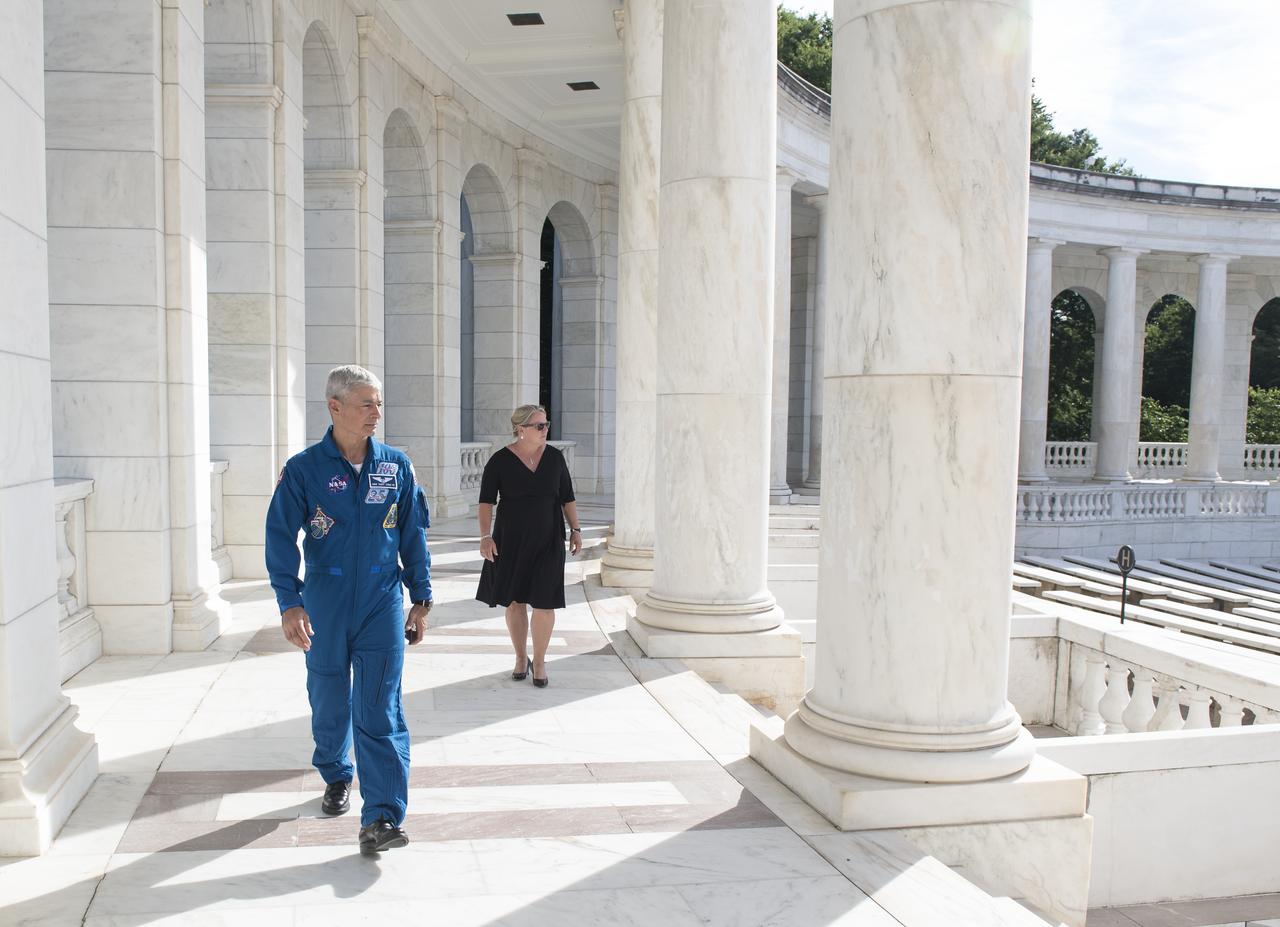
NASA astronaut Mark Vande Hei, left, and his wife Julie walk through the amphitheater at Arlington National Cemetery, Friday, June 15, 2018 in Arlington, Va. Photo Credit: (NASA/Aubrey Gemignani)
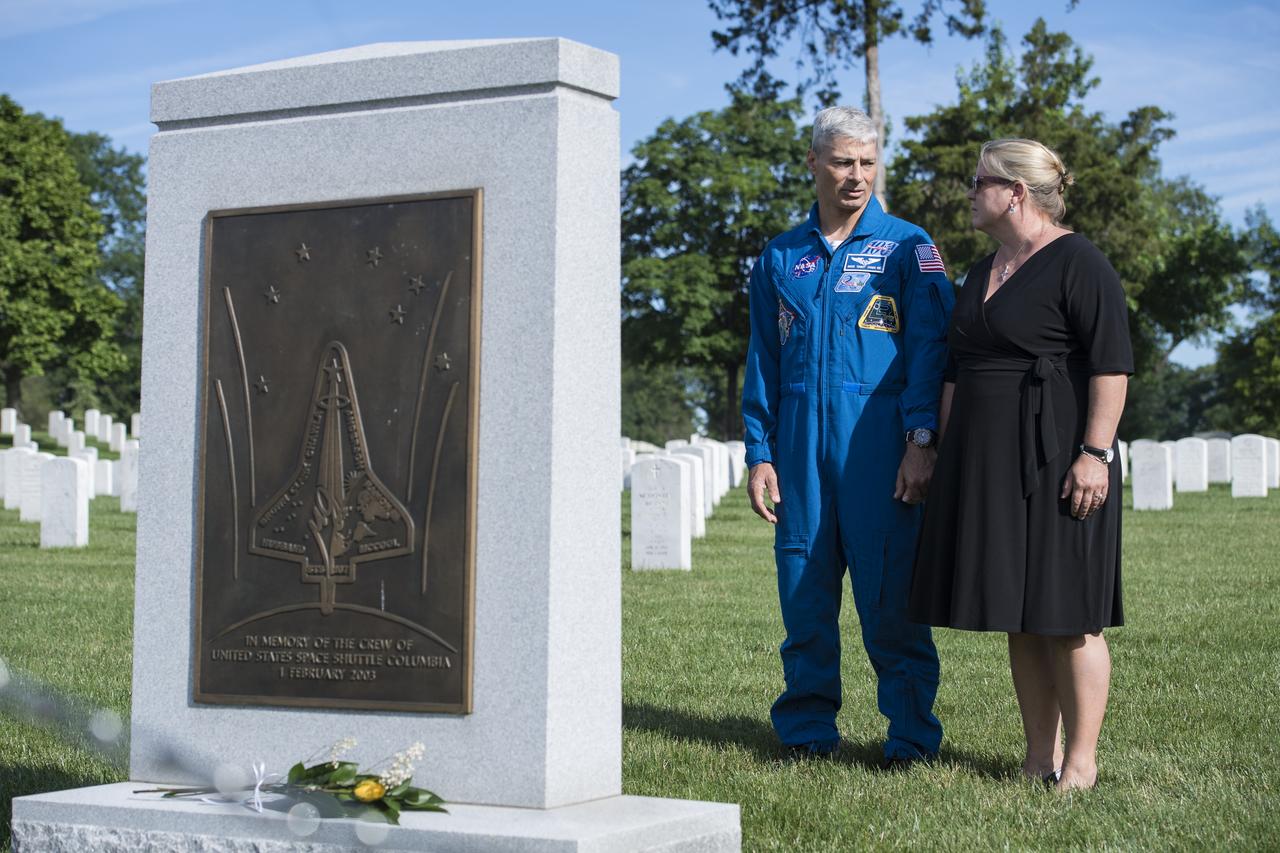
NASA astronaut Mark Vande Hei, left, and his wife Julie visit the Space Shuttle Columbia memorial, Friday, June 15, 2018 at Arlington National Cemetery in Arlington, Va. Photo Credit: (NASA/Aubrey Gemignani)
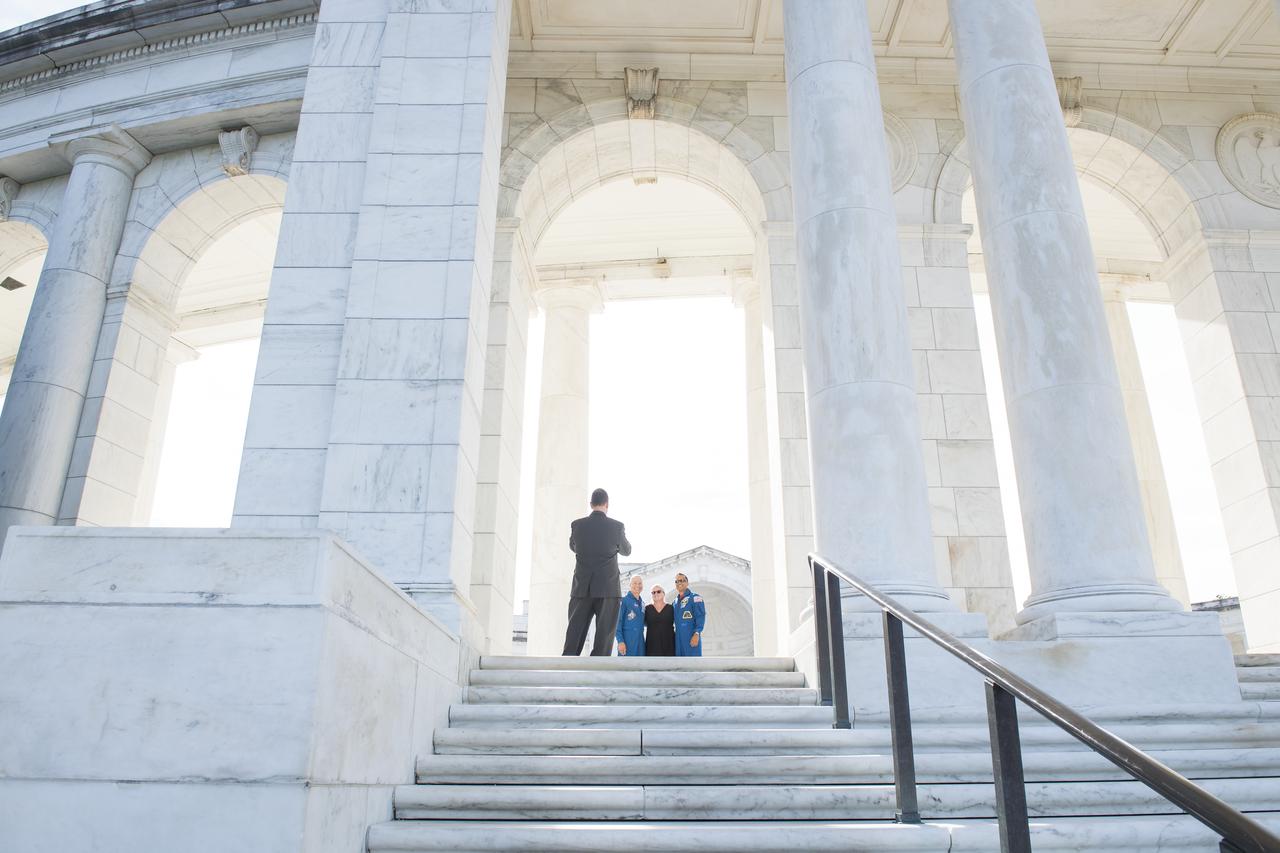
NASA astronauts Mark Vande Hei, left, Julie Vande Hei, center, and Joe Acaba pose for a photo at the amphitheater at Arlington National Cemetery, Friday, June 15, 2018 in Arlington, Va. Photo Credit: (NASA/Aubrey Gemignani)
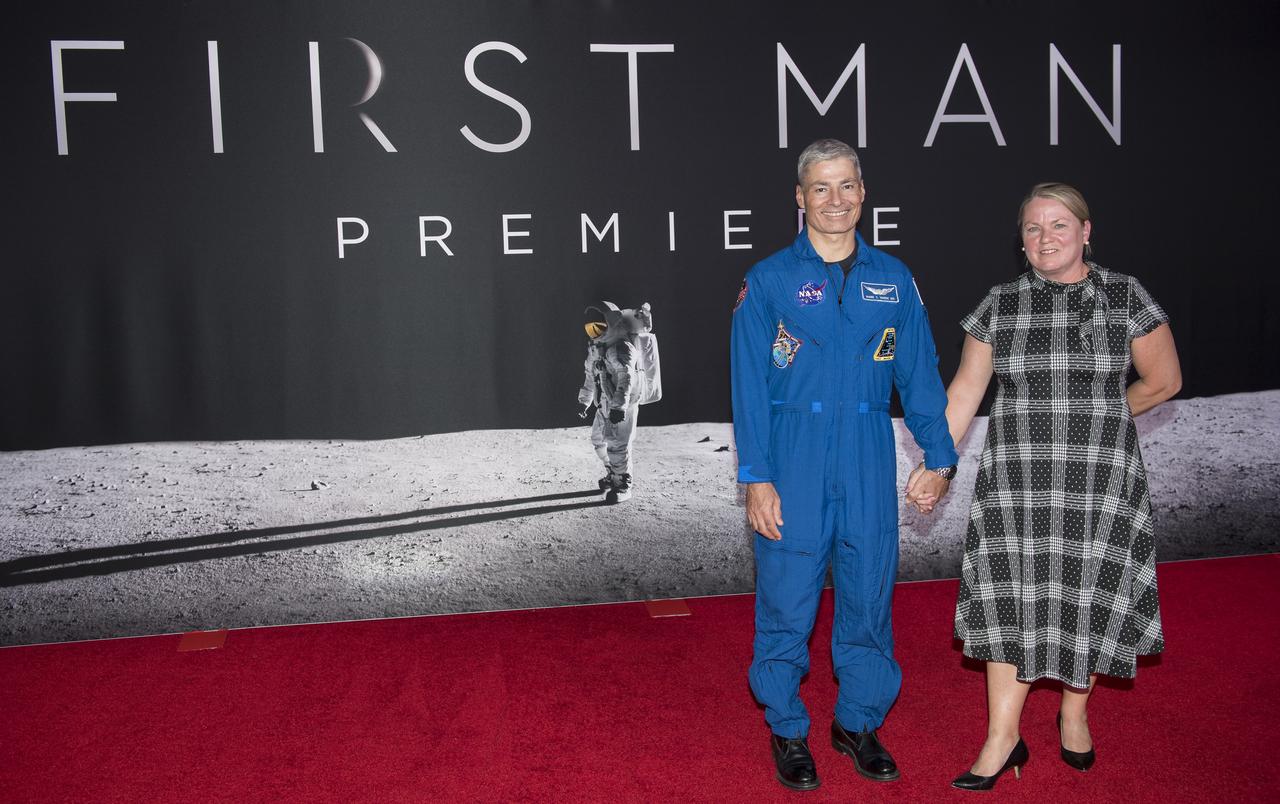
NASA astronaut Mark Vande Hei and his wife Julie attend the premiere of Universal's feature film "First Man” Thursday, Oct. 4, 2018 at the Smithsonian National Air and Space Museum in Washington. The movie is based on the book by Jim Hansen that chronicles the life of NASA astronaut Neil Armstrong from test pilot to his historic Moon landing. It was directed by Damien Chazelle and stars Ryan Gosling and Claire Foy. Photo Credit: (NASA/Aubrey Gemignani)
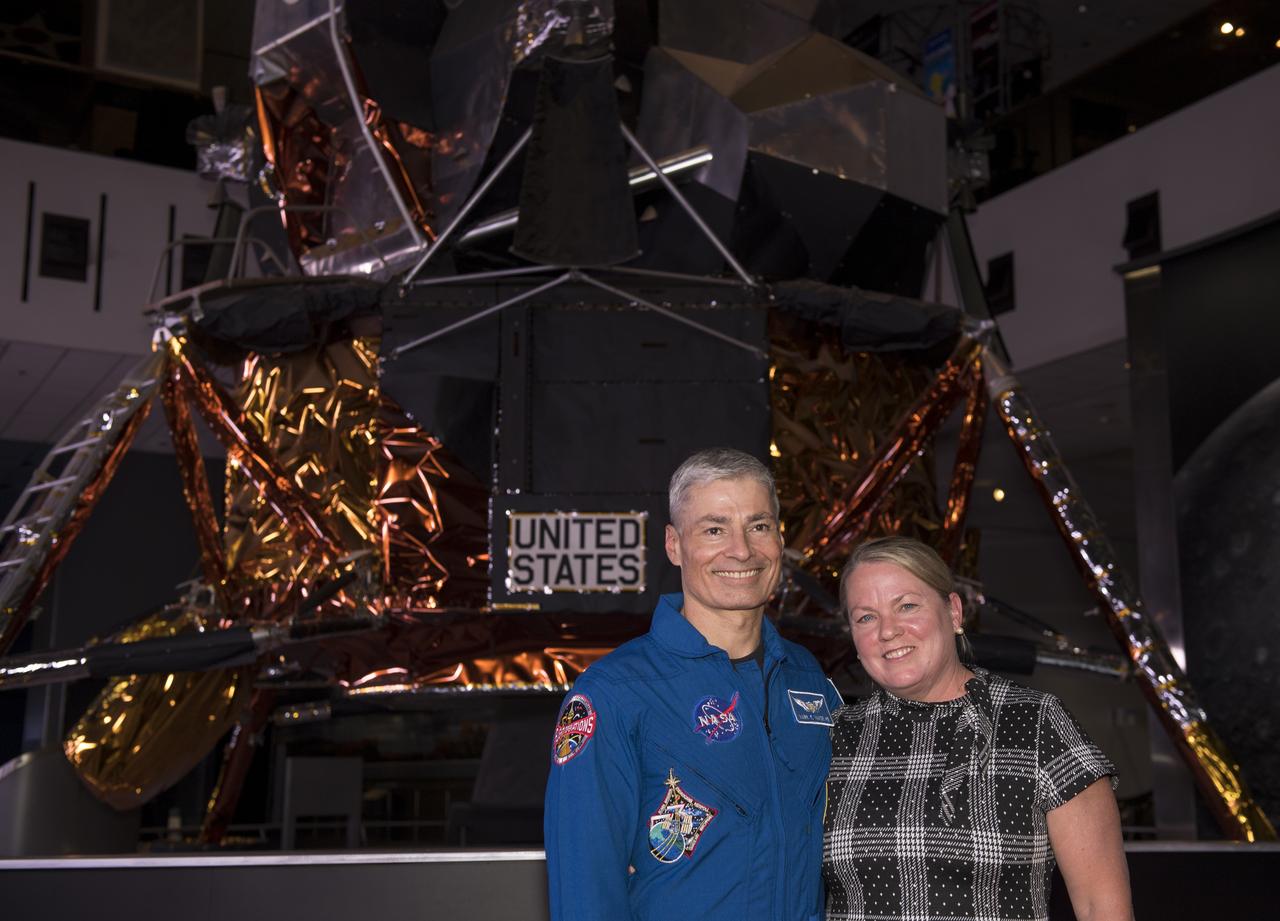
NASA astronaut Mark Vande Hei and his wife Julie attend the premiere of Universal's feature film "First Man” Thursday, Oct. 4, 2018 at the Smithsonian National Air and Space Museum in Washington. The movie is based on the book by Jim Hansen that chronicles the life of NASA astronaut Neil Armstrong from test pilot to his historic Moon landing. It was directed by Damien Chazelle and stars Ryan Gosling and Claire Foy. Photo Credit: (NASA/Aubrey Gemignani)
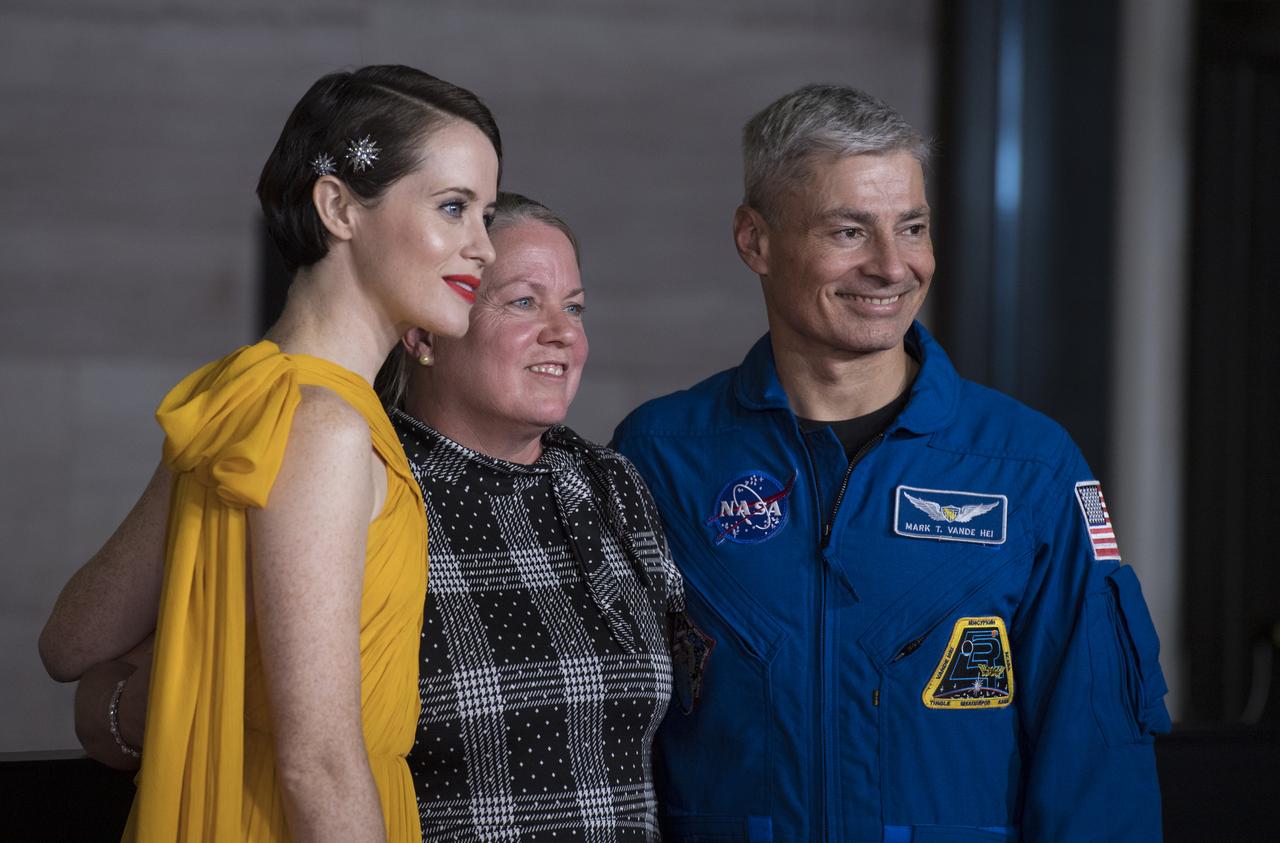
NASA astronaut Mark Vande Hei, right, and his wife Julie, center, pose for a photo with English actress Claire Foy, at the premiere of Universal's feature film "First Man” Thursday, Oct. 4, 2018 at the Smithsonian National Air and Space Museum in Washington. The movie is based on the book by Jim Hansen that chronicles the life of NASA astronaut Neil Armstrong from test pilot to his historic Moon landing. It was directed by Damien Chazelle and stars Ryan Gosling and Claire Foy. Photo Credit: (NASA/Aubrey Gemignani)
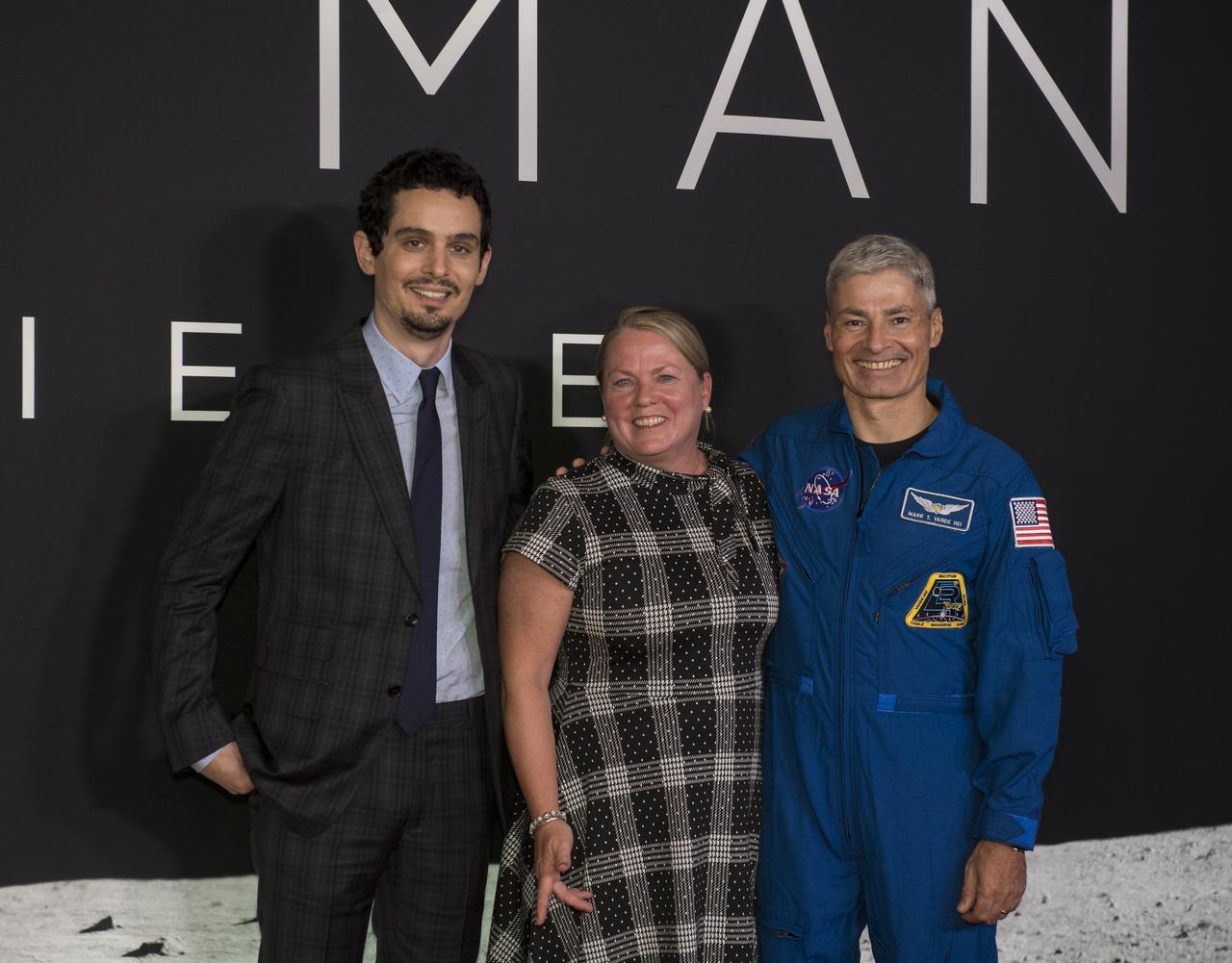
NASA astronaut Mark Vande Hei, right, and his wife Julie, center, pose for photo with Director and Producer Damien Chazelle at the premiere of Universal's feature film "First Man” Thursday, Oct. 4, 2018 at the Smithsonian National Air and Space Museum in Washington. The movie is based on the book by Jim Hansen that chronicles the life of NASA astronaut Neil Armstrong from test pilot to his historic Moon landing. It was directed by Damien Chazelle and stars Ryan Gosling and Claire Foy. Photo Credit: (NASA/Aubrey Gemignani)
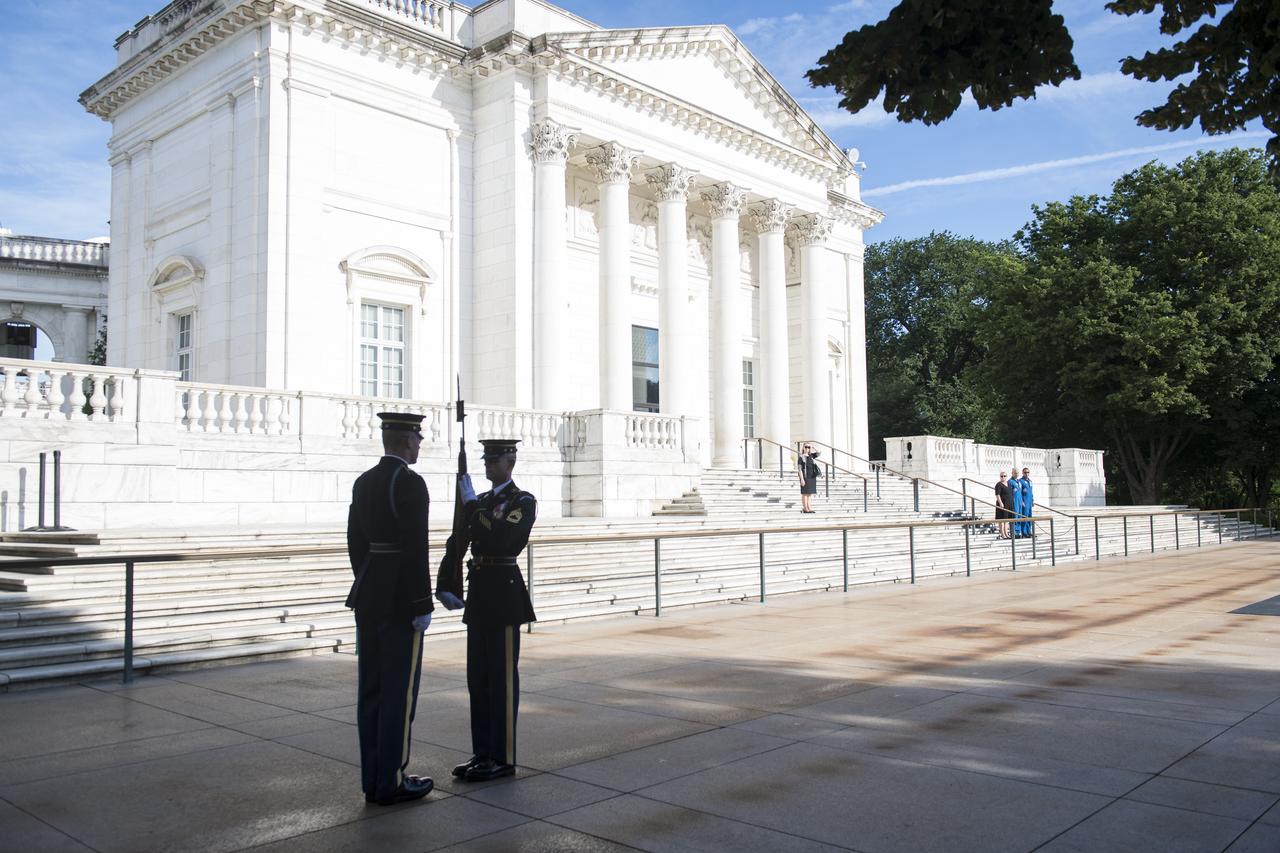
NASA astronaut Mark Vande Hei, center, his wife Julie, left, and NASA astronaut Joe Acaba witness the changing of the guards at the Tomb of the Unknown soldier, Friday, June 15, 2018 at Arlington National Cemetery in Arlington, Va. Photo Credit: (NASA/Aubrey Gemignani)
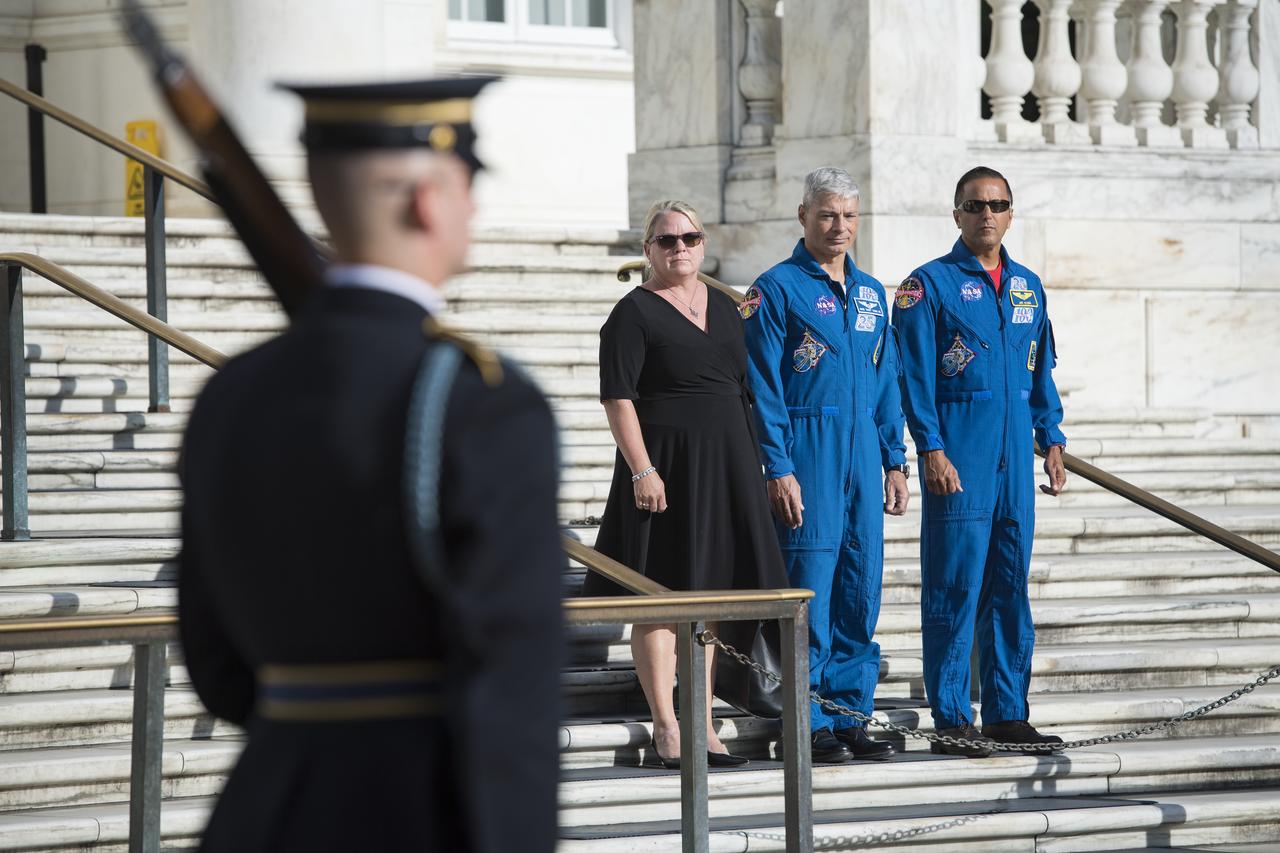
NASA astronaut Mark Vande Hei, center, his wife Julie, left, and NASA astronaut Joe Acaba witness the changing of the guards at the Tomb of the Unknown soldier, Friday, June 15, 2018 at Arlington National Cemetery in Arlington, Va. Photo Credit: (NASA/Aubrey Gemignani)
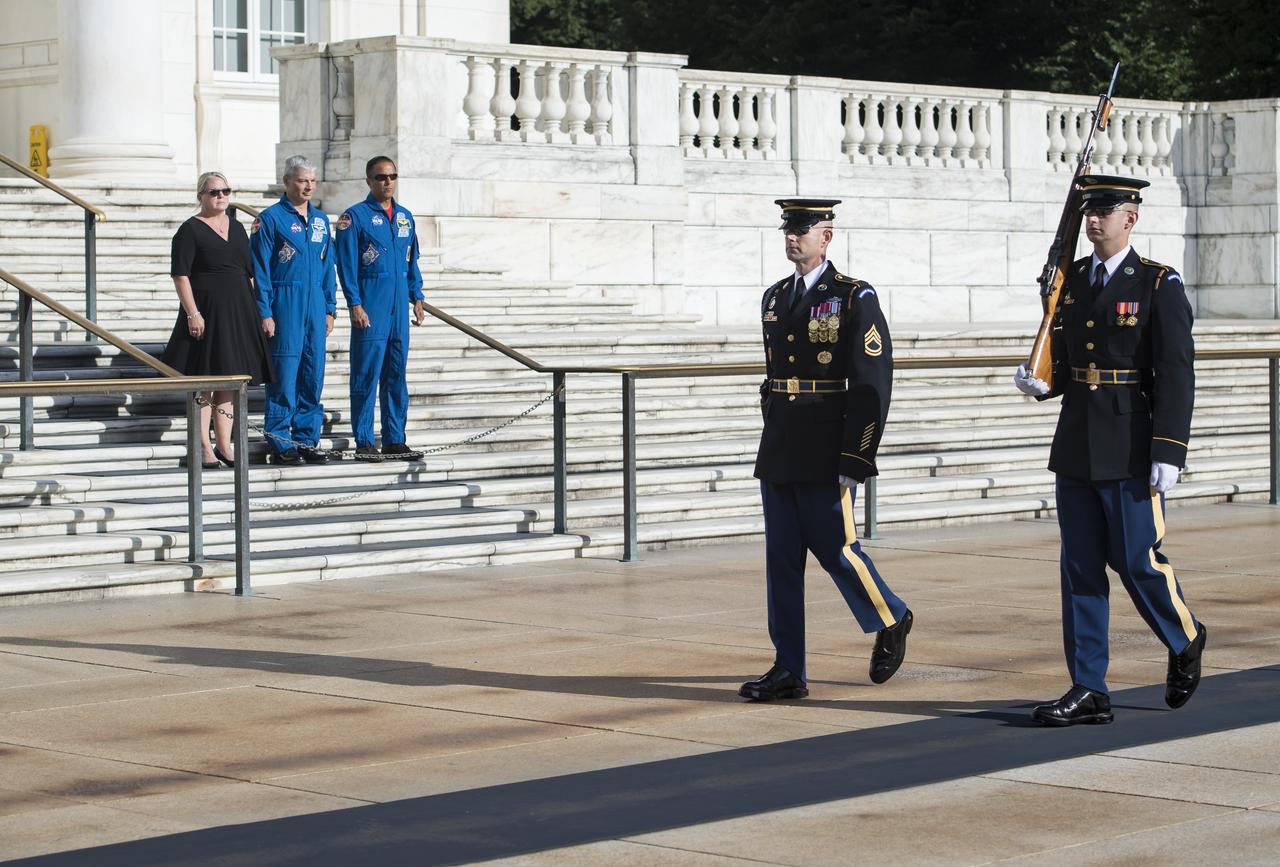
NASA astronaut Mark Vande Hei, center, his wife Julie, left, and NASA astronaut Joe Acaba witness the changing of the guards at the Tomb of the Unknown soldier, Friday, June 15, 2018 at Arlington National Cemetery in Arlington, Va. Photo Credit: (NASA/Aubrey Gemignani)
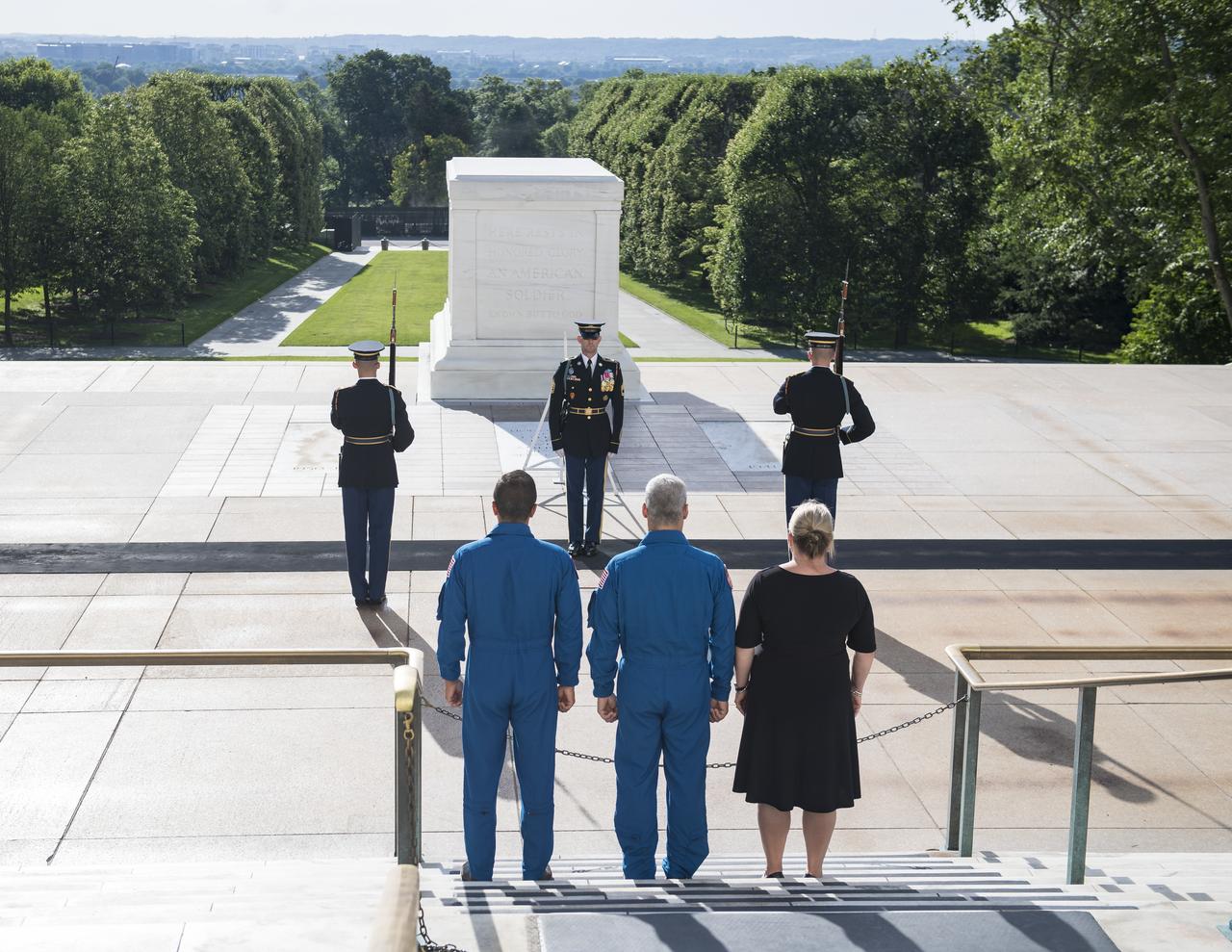
NASA astronaut Mark Vande Hei, center, his wife Julie, right, and NASA astronaut Joe Acaba witness the changing of the guards at the Tomb of the Unknown soldier, Friday, June 15, 2018 at Arlington National Cemetery in Arlington, Va. Photo Credit: (NASA/Aubrey Gemignani)
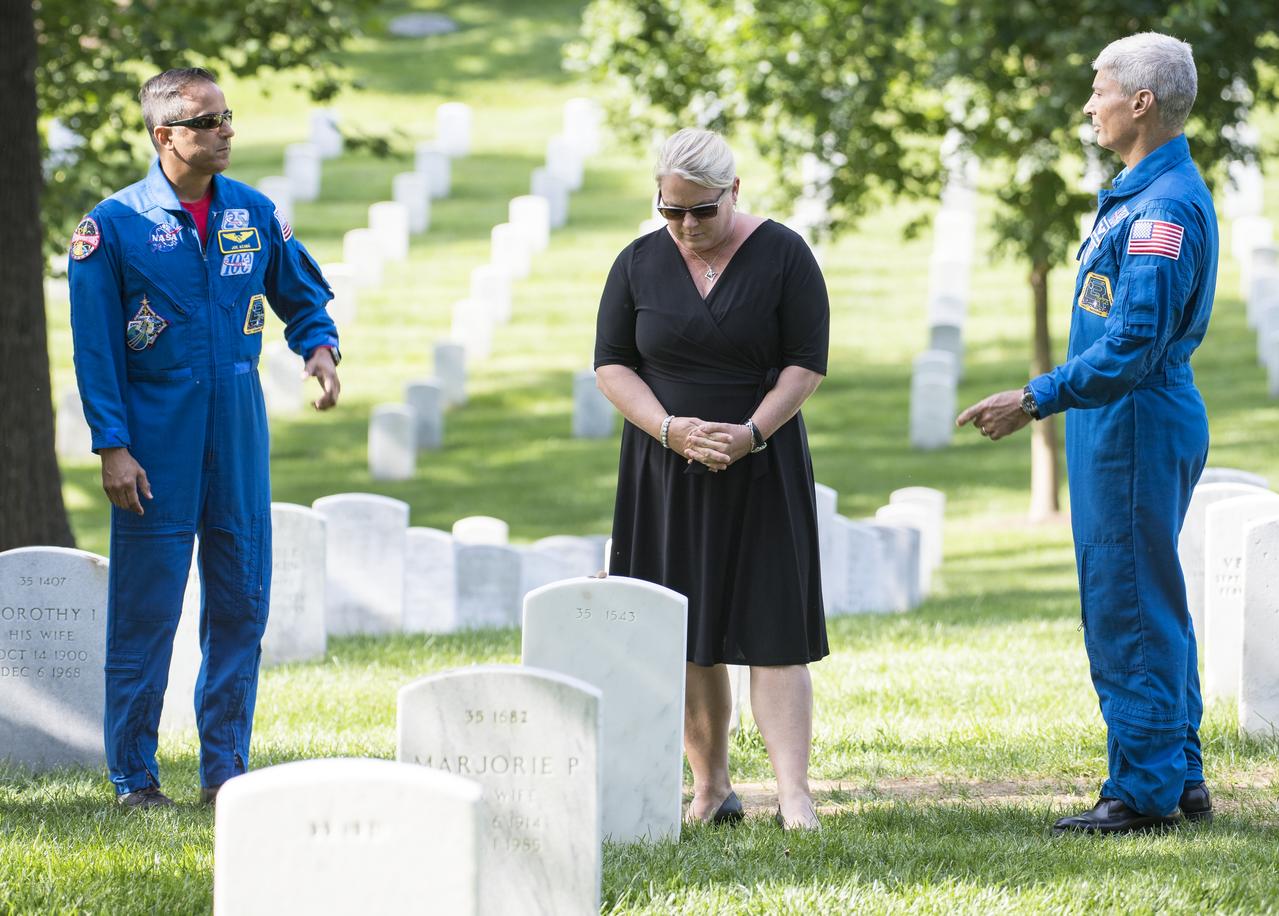
NASA astronaut Joe Acaba, left, and Mark Vande Hei, right, watch as Julie Vande Hei, wife of Mark, takes a moment after placing a flower at the gravesite of former astronaut and U.S. Senator John Glenn, Friday, June 15, 2018 at the Arlington National Cemetery in Arlington, Va. Photo Credit: (NASA/Aubrey Gemignani)
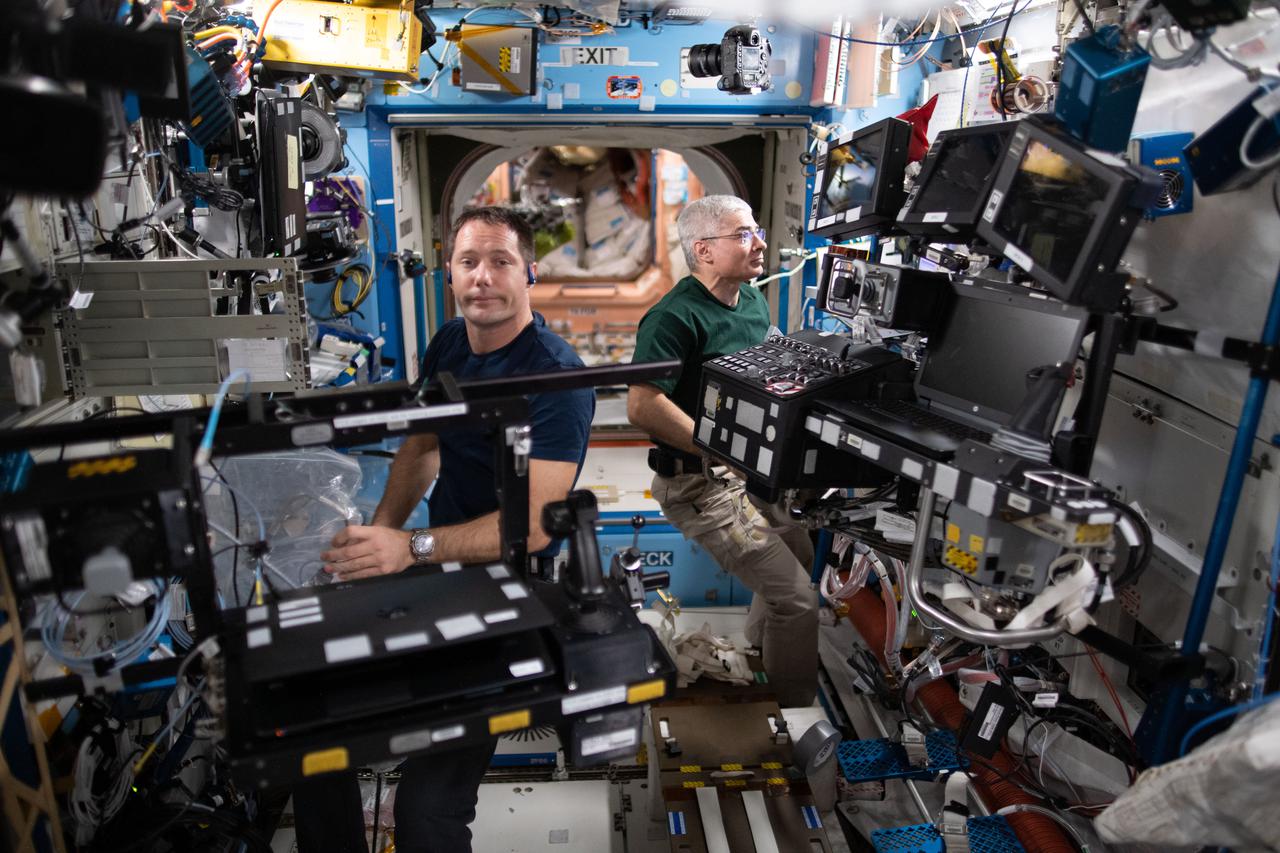
iss065e158339 (July 8, 2021) --- Expedition 65 Flight Engineers (from left) Thomas Pesquet and Mark Vande Hei service a variety of hardware aboard the International Space Station's U.S. Destiny laboratory module.
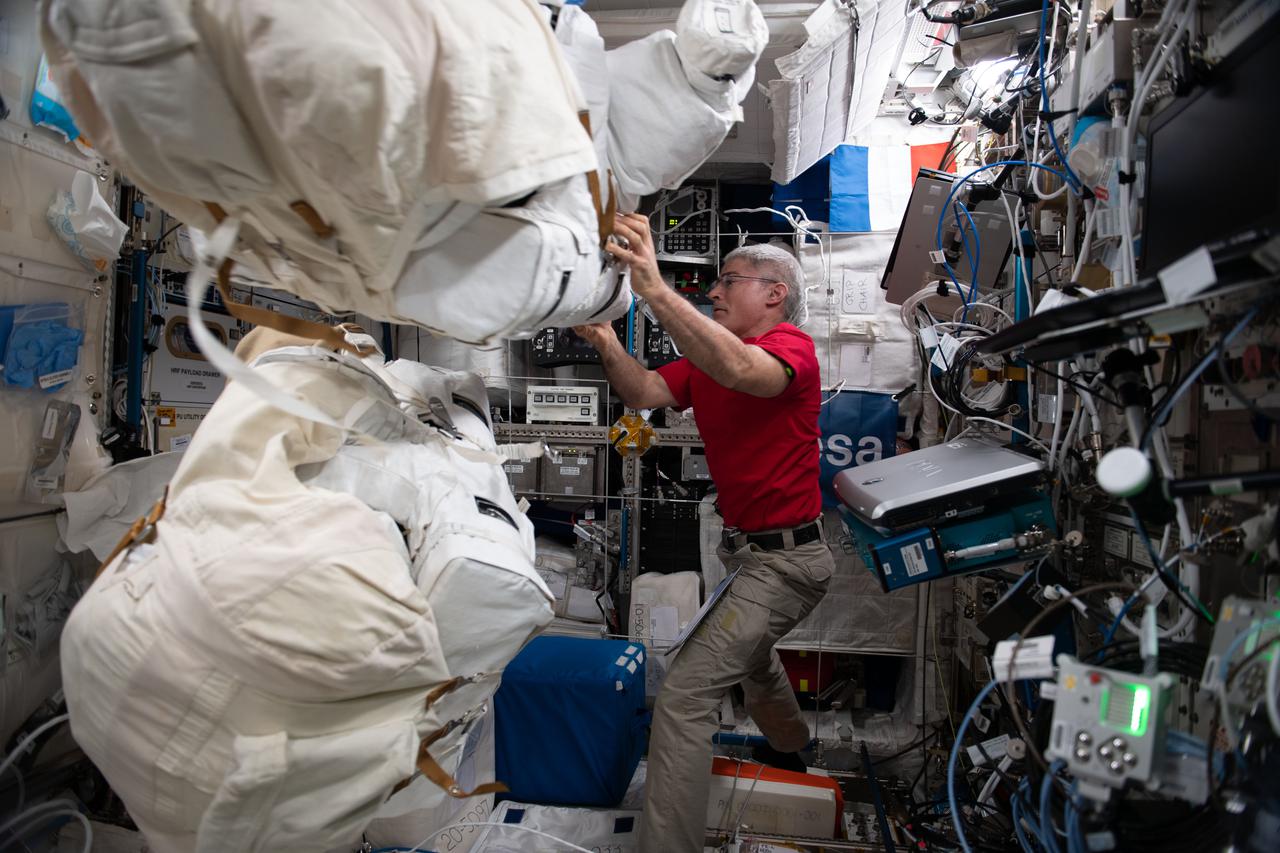
iss065e206853 (July 27, 2021) --- NASA astronaut and Expedition 65 Flight Engineer Mark Vande Hei unpacks U.S. spacesuits before installing high definition camera assemblies on the suits.
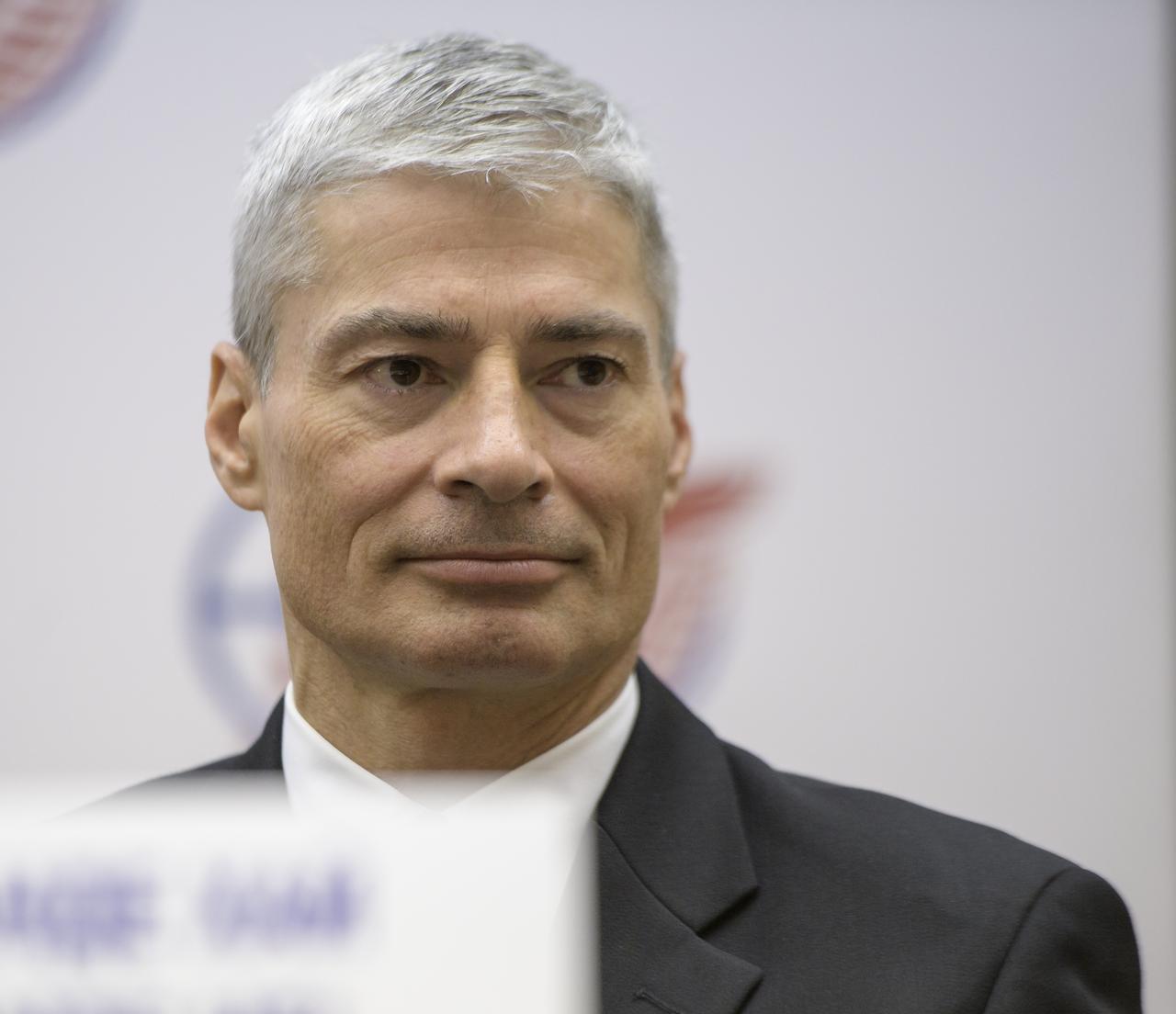
Expedition 52 backup crew member Mark Vande Hei of NASA is seen during a crew press conference at the Gagarin Cosmonaut Training Center (GCTC), Monday, July 10, 2017 in Star City, Russia. Photo Credit: (NASA/Bill Ingalls)
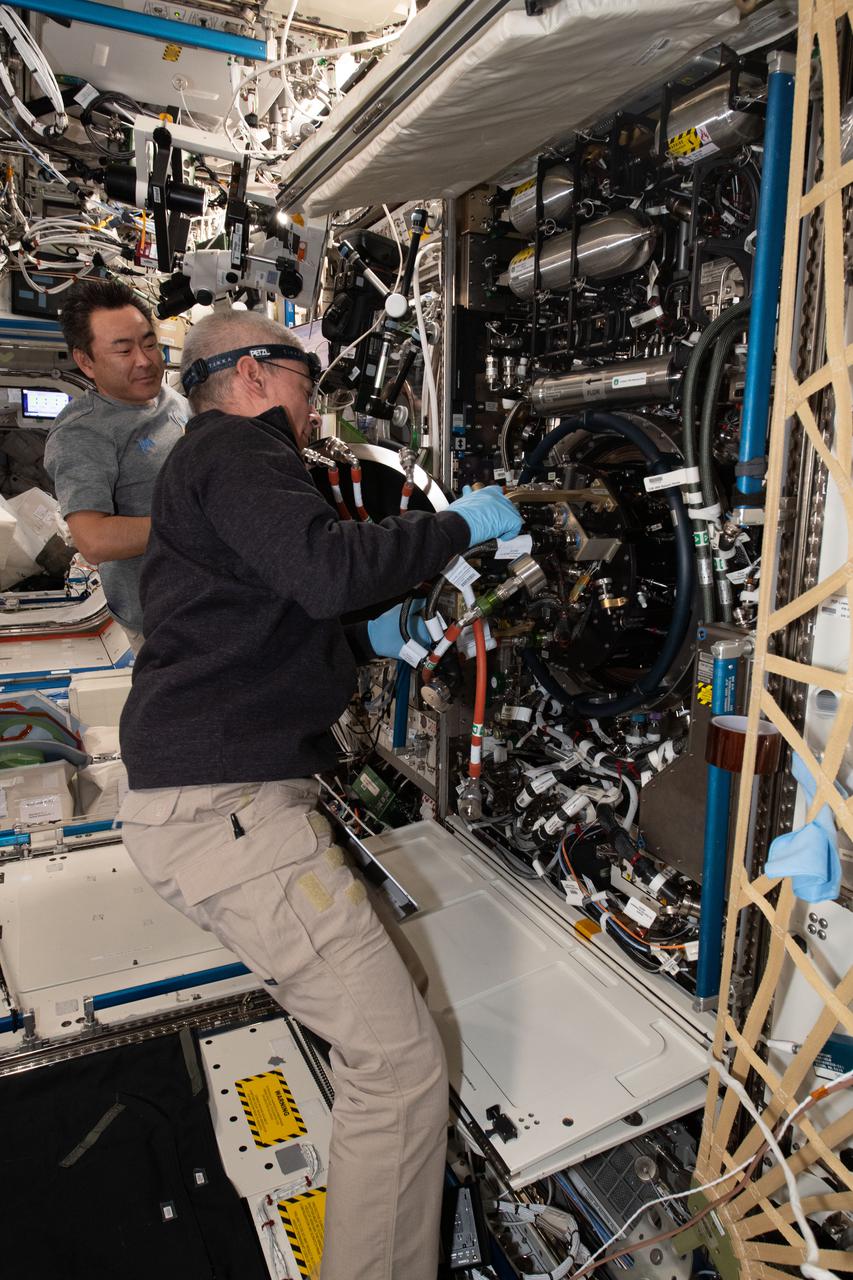
iss065e156020 (July 2, 2021) --- Expedition 65 astronauts Commander Akihiko Hoshide (rear) and Flight Engineer Mark Vande Hei replace components inside the Combustion Integrated Rack that enables safe research into microgravity's effects on flames, fuel and soot aboard the International Space Station's U.S. Destiny laboratory module.
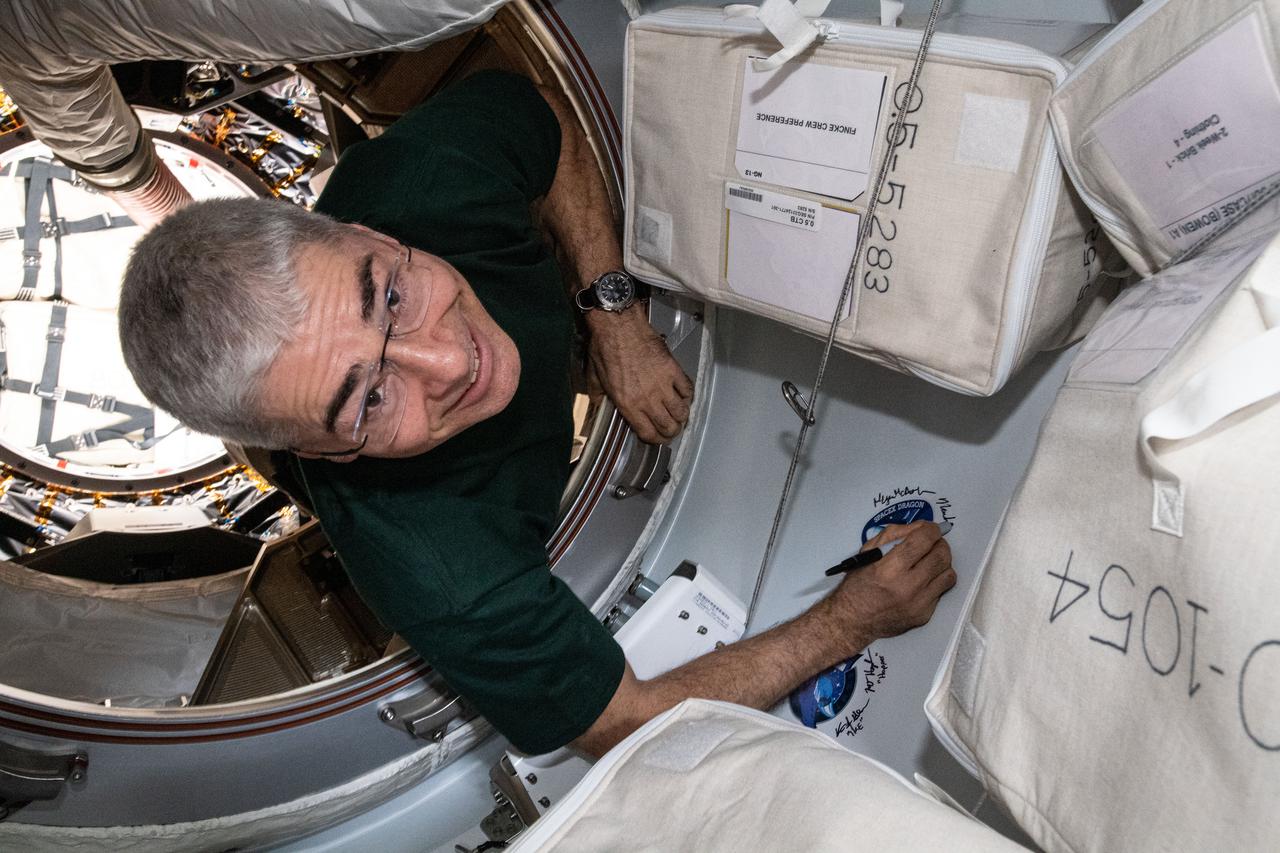
iss065e162500 (July 6, 2021) --- NASA astronaut and Expedition 65 Flight Engineer Mark Vande Hei signs his name next to the SpaceX CRS-22 cargo mission sticker attached to the vestibule between the SpaceX Cargo Dragon resupply ship and the Harmony module's space-facing international docking adapter.
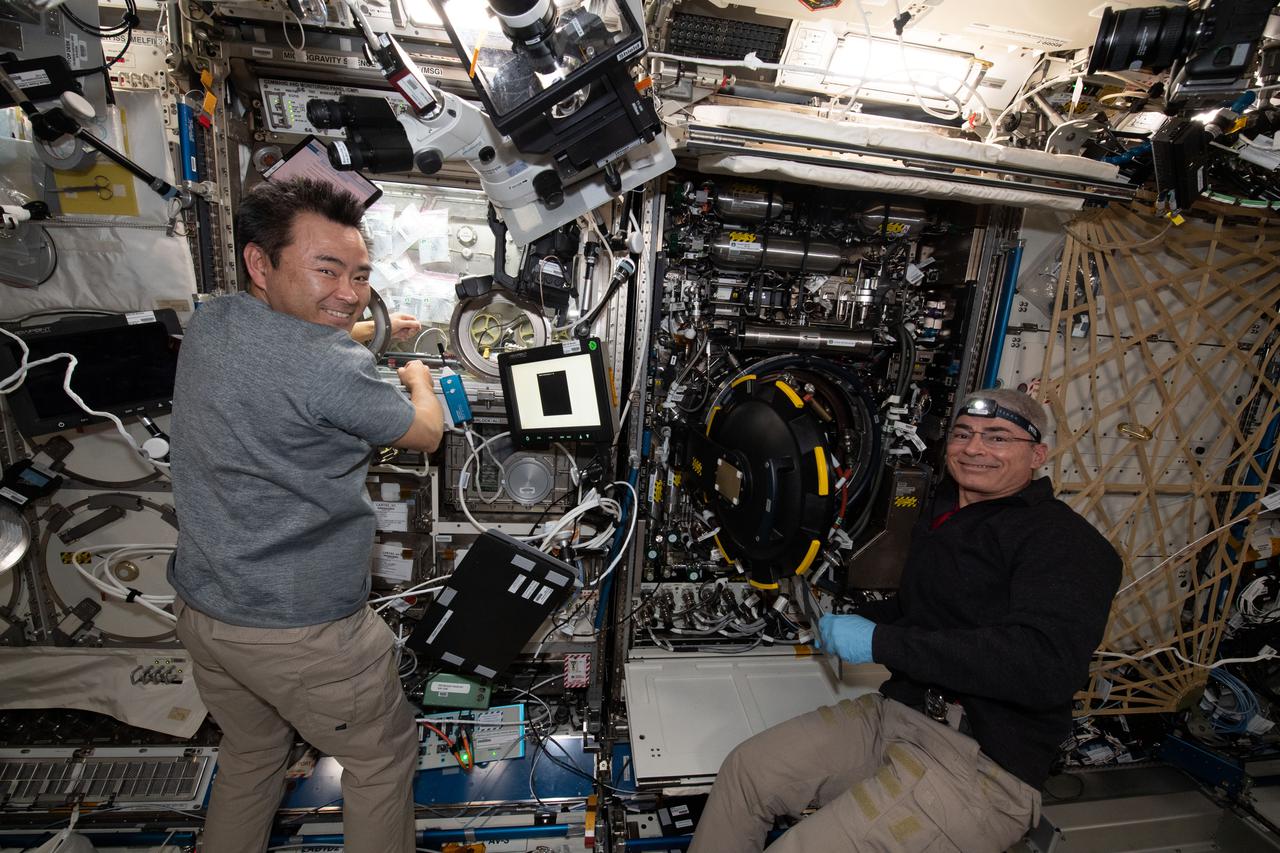
iss065e156007 (July 2, 2021) --- Expedition 65 astronauts Commander Akihiko Hoshide (left) and Flight Engineer Mark Vande Hei replace components inside the Combustion Integrated Rack that enables safe research into microgravity's effects on flames, fuel and soot aboard the International Space Station's U.S. Destiny laboratory module.

iss065e165809 (July 13, 2021) --- Expedition 65 Flight Engineers (from left) Mark Vande Hei and Thomas Pesquet replace aging components inside the U.S. Destiny laboratory module’s carbon dioxide removal assembly. The life support device ensures a safe breathing environment abaord the International Space Station.

iss065e165871 (July 13, 2021) --- Expedition 65 Flight Engineers (from left) Thomas Pesquet and Mark Vande Hei replace aging components inside the U.S. Destiny laboratory module’s carbon dioxide removal assembly. The life support device ensures a safe breathing environment abaord the International Space Station.

jsc2017e096675 (July 17, 2017) --- In the Integration Facility at the Baikonur Cosmodrome in Kazakhstan, Expedition 52-53 backup crewmember Mark Vande Hei of NASA suits up in his Russian Sokol launch and entry suit July 17 during a fit check dress rehearsal. Vande Hei, Alexander Misurkin of the Russian Federal Space Agency (Roscosmos) and Norshige Kanai of the Japan Aerospace Exploration Agency (JAXA) are serving as backups to the prime crew, Paolo Nespoli of the European Space Agency, Sergey Ryazanskiy of Roscosmos and Randy Bresnik of NASA, who will launch July 28 on the Soyuz MS-05 spacecraft for a five-month mission on the International Space Station. Credit: Andrey Shelepin/Gagarin Cosmonaut Training Center
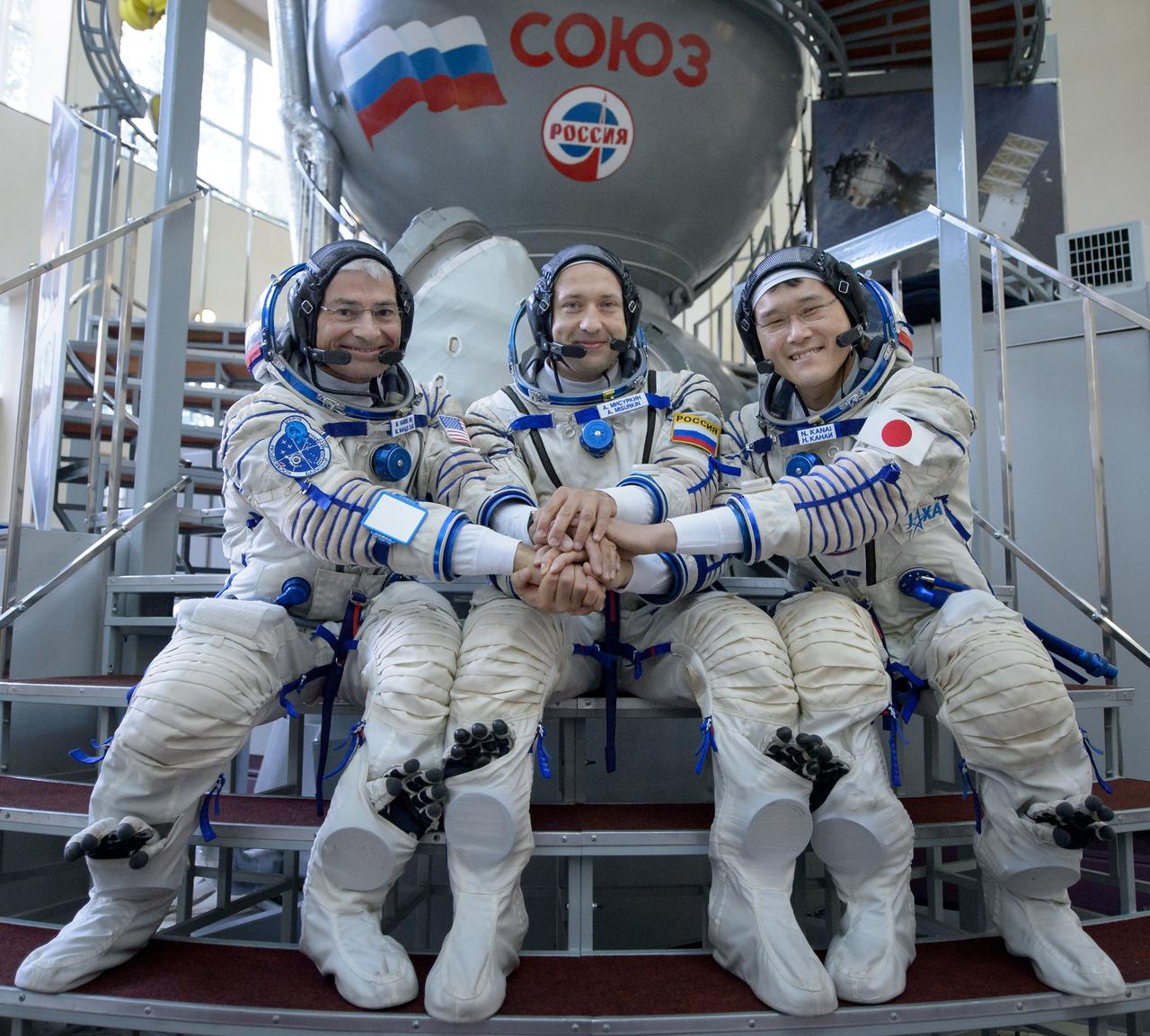
nhq2017070600104 (July 6, 2017) --- Expedition 52 backup crew members: Mark Vande Hei of NASA, left, Alexander Misurkin of Roscosmos, center, and Norishige Kanai of the Japan Aerospace Exploration Agency (JAXA) pose for a photograph outside the Soyuz simulator ahead of their Soyuz qualification exams, Thursday, July 6, 2017 at the Gagarin Cosmonaut Training Center (GCTC) in Star City, Russia. Photo Credit: (NASA/Bill Ingalls)
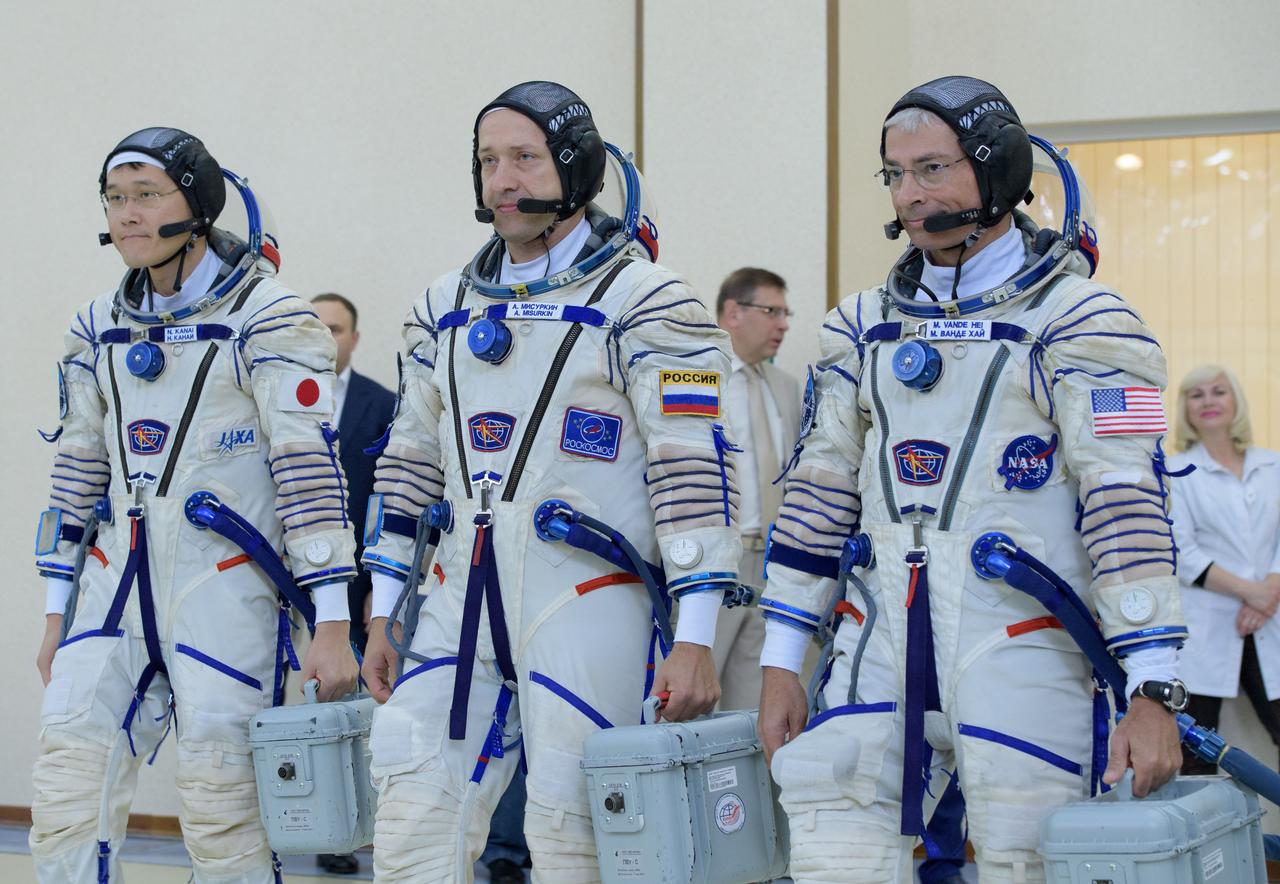
nhq2017070600100 (July 6, 2017) --- Expedition 52 backup crew members: Norishige Kanai of the Japan Aerospace Exploration Agency (JAXA), left, Alexander Misurkin of Roscosmos, center, and Mark Vande Hei of NASA begin their Soyuz qualification exams, Thursday, July 6, 2017 at the Gagarin Cosmonaut Training Center (GCTC) in Star City, Russia. Photo Credit: (NASA/Bill Ingalls)
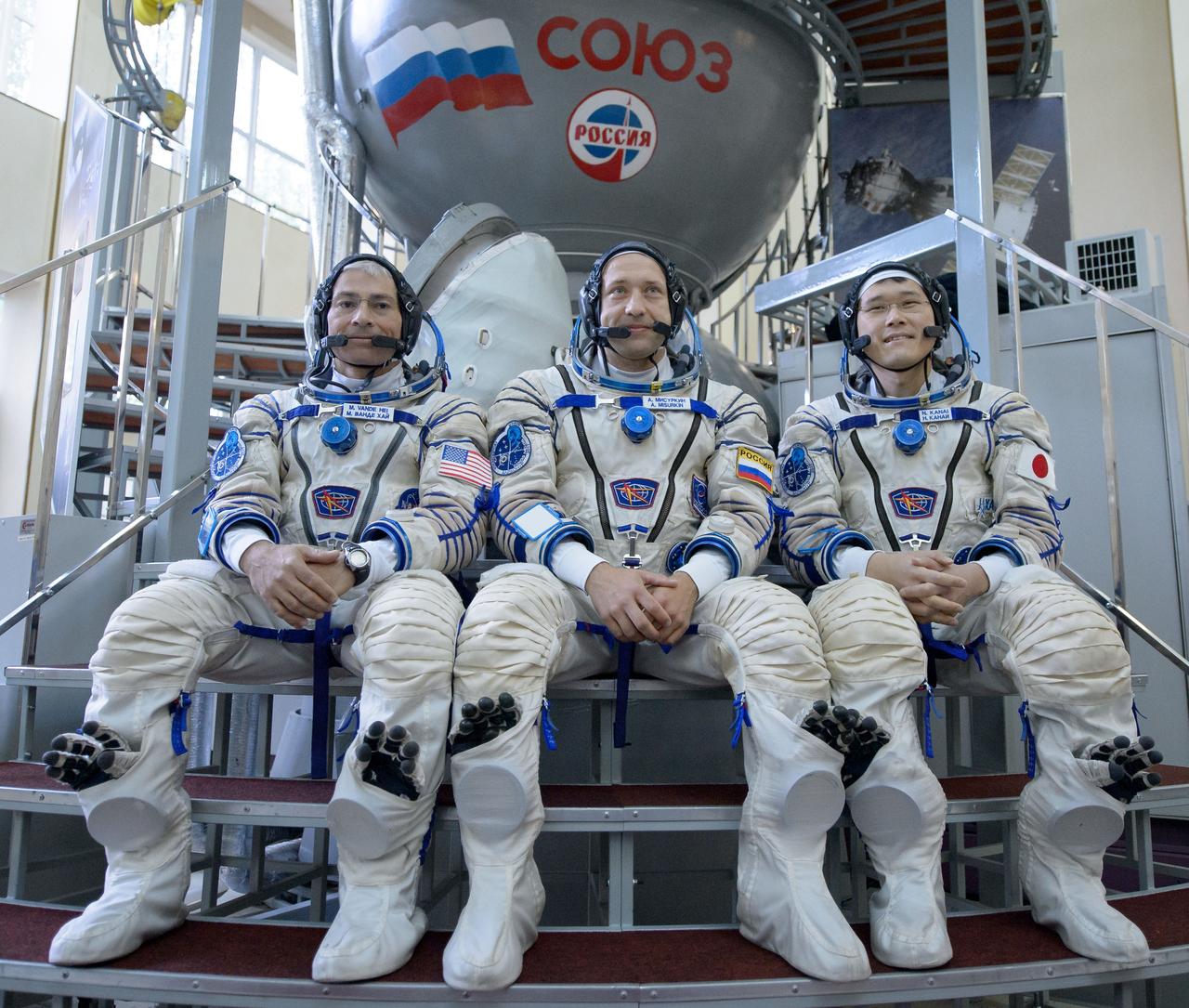
nhq2017070600103 (July 6, 2017) --- Expedition 52 backup crew members: Mark Vande Hei of NASA, left, Alexander Misurkin of Roscosmos, center, and Norishige Kanai of the Japan Aerospace Exploration Agency (JAXA) answer questions from the press outside the Soyuz simulator ahead of their Soyuz qualification exams, Thursday, July 6, 2017 at the Gagarin Cosmonaut Training Center (GCTC) in Star City, Russia. Photo Credit: (NASA/Bill Ingalls)
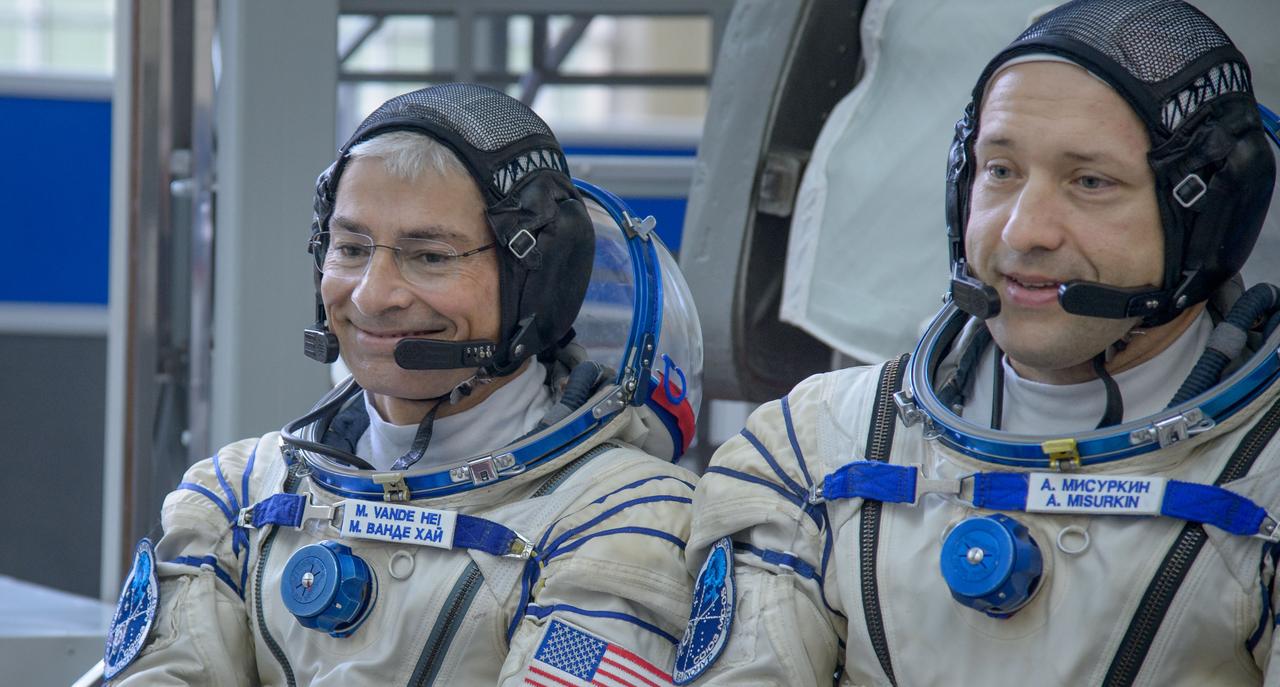
nhq2017070600118 (July 6, 2017) --- Expedition 52 backup crew members: NASA astronaut Mark Vande Hei, left, and Russian cosmonaut Alexander Misurkin of Roscosmos are seen as they answer questions from the press outside the Soyuz simulator ahead of their Soyuz qualification exams with Expedition 52 backup crew member Japan Aerospace Exploration Agency (JAXA) astronaut Norishige Kanai, Thursday, July 6, 2017 at the Gagarin Cosmonaut Training Center (GCTC) in Star City, Russia. Photo Credit: (NASA/Beth Weissinger)
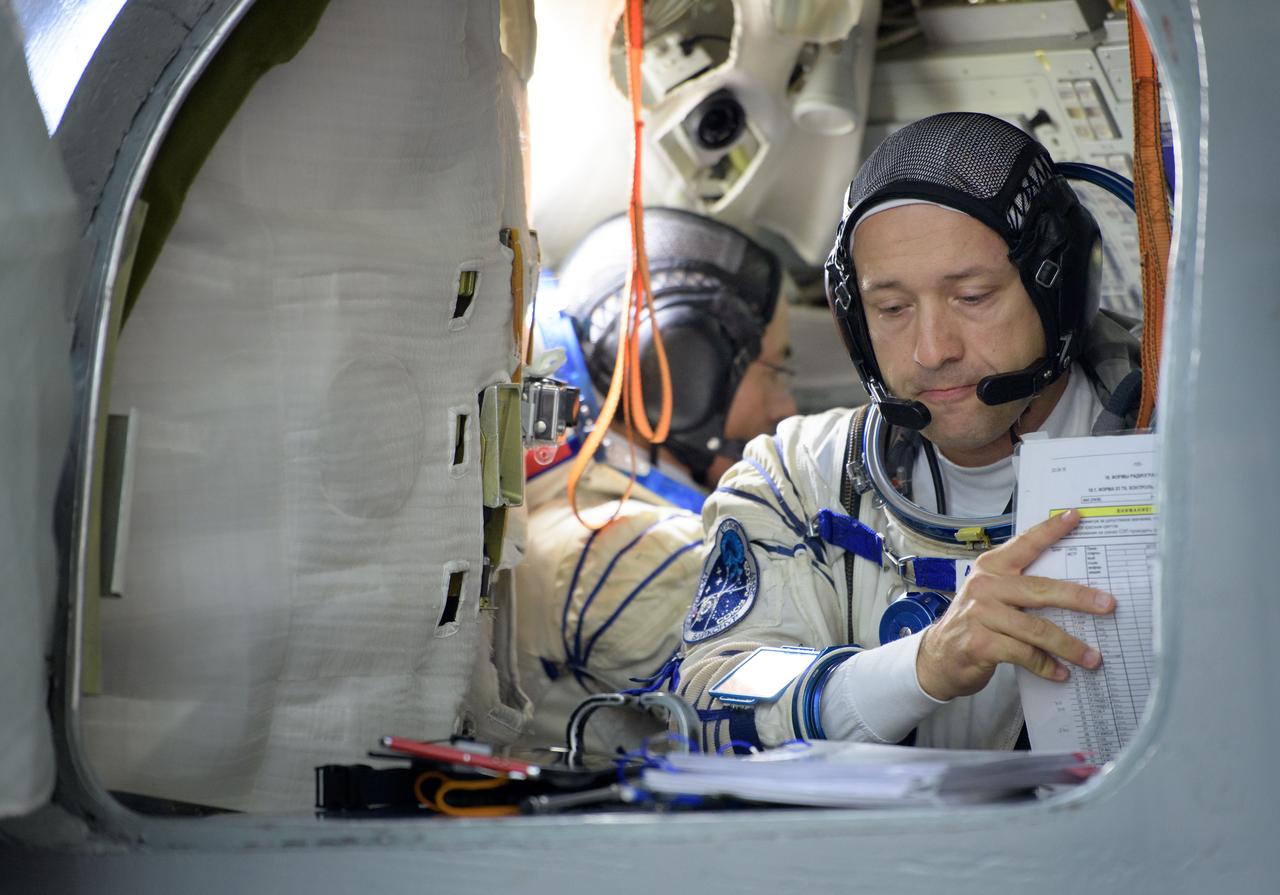
nhq2017070600105 (July 6, 2017) --- Expedition 52 backup crew member Alexander Misurkin of Roscosmos reviews his paperwork as he and Expedition 52 backup crew member Mark Vande Hei of NASA, background, and Norishige Kanai of the Japan Aerospace Exploration Agency (JAXA) start their Soyuz qualification exams, Thursday, July 6, 2017 at the Gagarin Cosmonaut Training Center (GCTC) in Star City, Russia. Photo Credit: (NASA/Bill Ingalls)
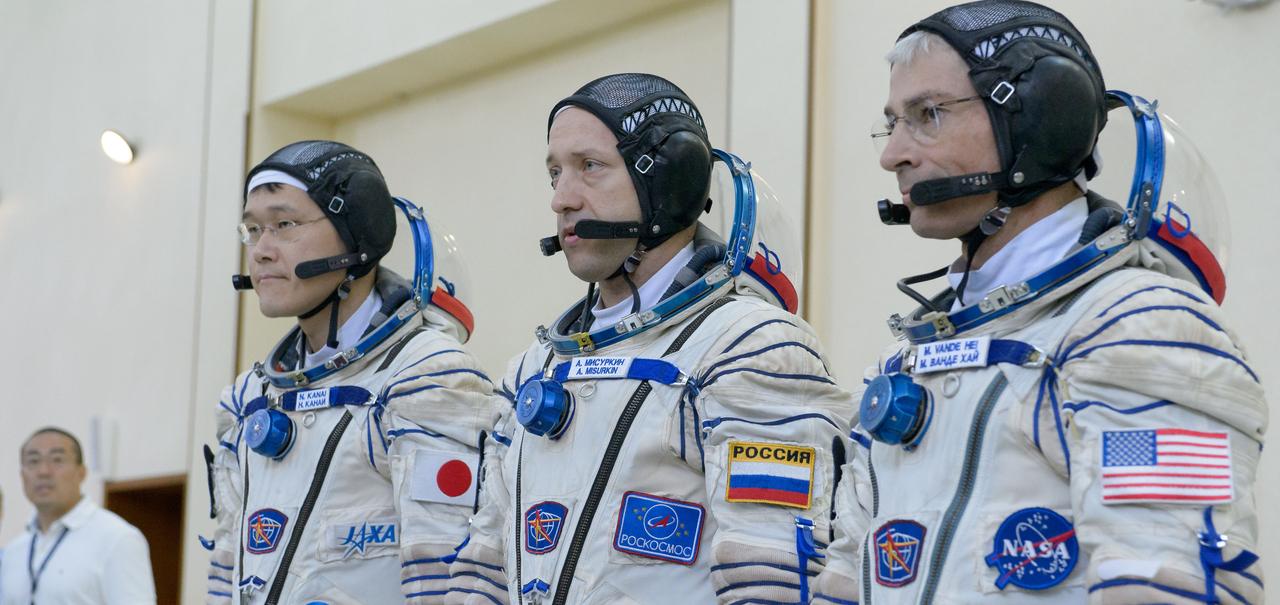
nhq2017070600101 (July 6, 2017) --- Expedition 52 backup crew members: Norishige Kanai of the Japan Aerospace Exploration Agency (JAXA), left, Alexander Misurkin of Roscosmos, center, and Mark Vande Hei of NASA begin their Soyuz qualification exams, Thursday, July 6, 2017 at the Gagarin Cosmonaut Training Center (GCTC) in Star City, Russia. Photo Credit: (NASA/Bill Ingalls)
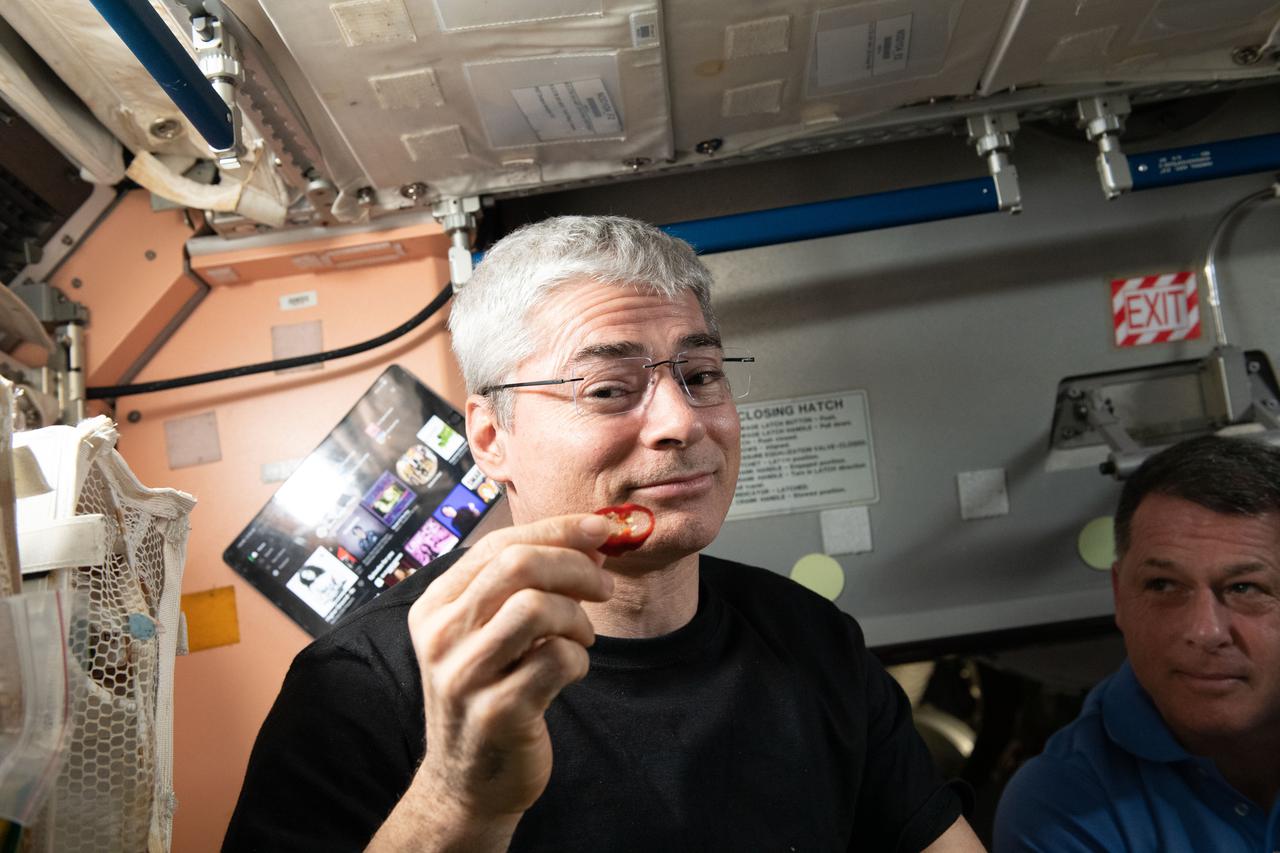
iss066e023179 (October 29, 2021) -- NASA astronaut and Expedition 66 Flight Engineer Mark Vande Hei samples a red chile pepper grown as part of the Plant Habitat-04 experiment aboard the International Space Station. The chile pepper seeds started growing on July 12, 2021, and represent one of the longest and most challenging plant experiments attempted aboard the orbiting laboratory. Vande Hei conducted the first harvest of the pepper crop on October 29, 2021. Crew members sanitized the peppers and completed a scientific survey after their taste test. The Crew-3 astronauts will take over the crop when they arrive at the orbiting laboratory, and will conduct a final harvest of the peppers in late November. They will also sanitize and sample the crop, and complete surveys. Some peppers from the final harvest and their leaves will return to Earth for further analysis. What we learn will inform future crop growth and food supplementation activities for deep space exploration.
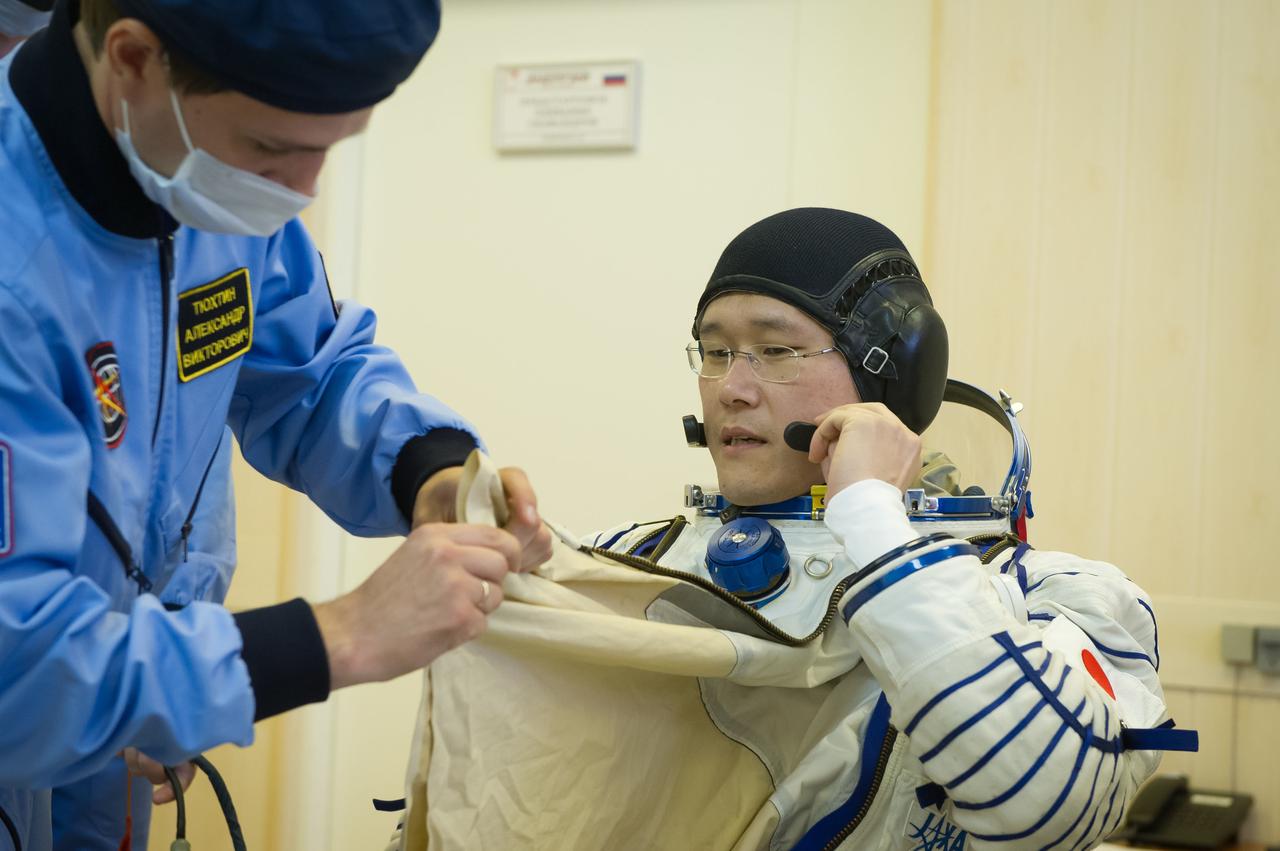
jsc2017e096676 (July 17, 2017) --- In the Integration Facility at the Baikonur Cosmodrome in Kazakhstan, Expedition 52-53 backup crewmember Norishige Kanai of the Japan Aerospace Exploration Agency suits up in his Russian Sokol launch and entry suit July 17 during a fit check dress rehearsal. Kanai, Alexander Misurkin of the Russian Federal Space Agency (Roscosmos) and Mark Vande Hei of NASA are serving as backups to the prime crew, Paolo Nespoli of the European Space Agency, Sergey Ryazanskiy of Roscosmos and Randy Bresnik of NASA, who will launch July 28 on the Soyuz MS-05 spacecraft for a five-month mission on the International Space Station. Credit: Andrey Shelepin/Gagarin Cosmonaut Training Center

jsc2017e100898 (July 18, 2017) --- At their Cosmonaut Hotel crew quarters in Baikonur, Kazakhstan, Expedition 52-53 backup crewmembers Norishige Kanai of the Japan Aerospace Exploration Agency (JAXA, left), Alexander Misurkin of the Russian Federal Space Agency (Roscosmos, center) and Mark Vande Hei of NASA (right) accept flowers during a traditional flag-raising ceremony July 18. They are serving as backups to Randy Bresnik of NASA, Sergey Ryazanskiy of Roscosmos and Paolo Nespoli of the European Space Agency, who will launch July 28 on the Soyuz MS-05 spacecraft from the Baikonur Cosmodrome for a five-month mission on the International Space Station. Credit: NASA/Victor Zelentsov
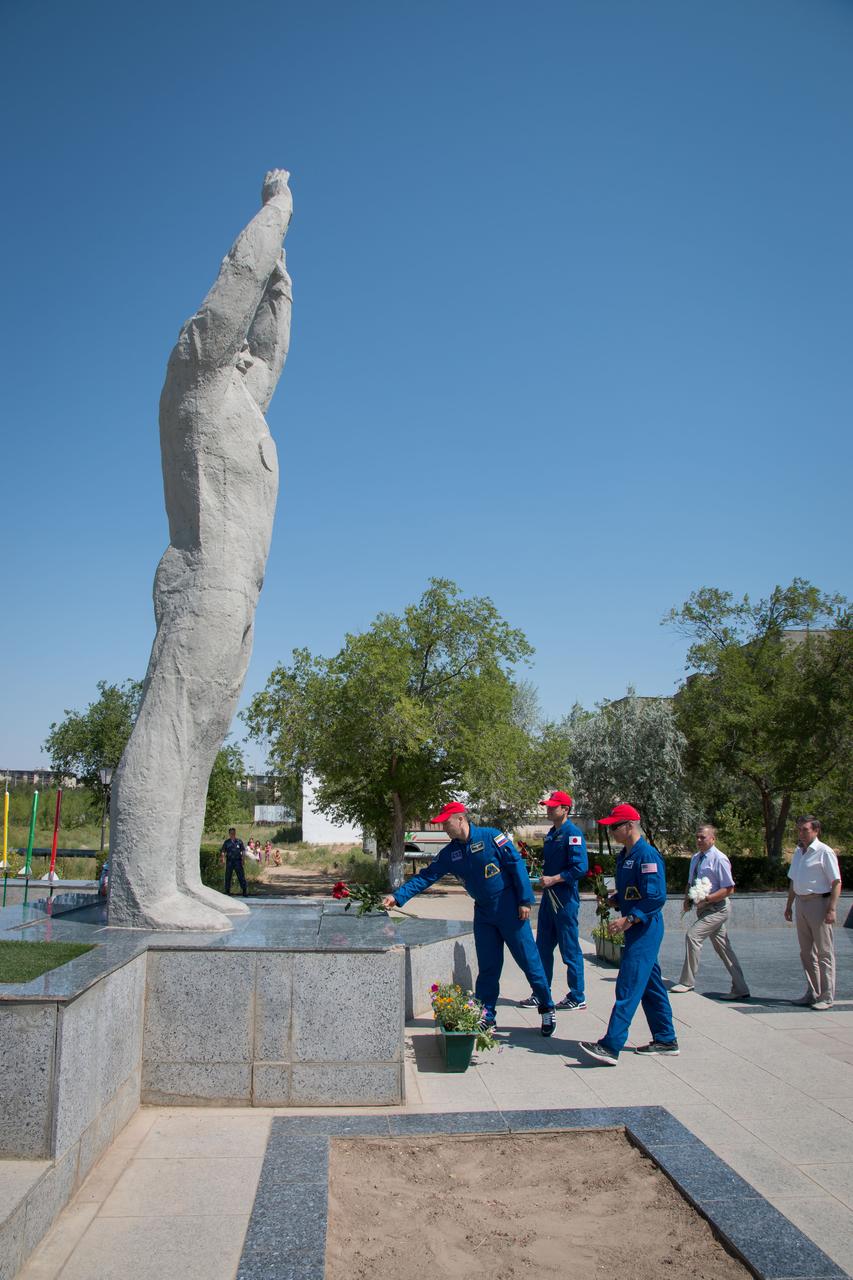
jsc2017e100899 (July 18, 2017) --- Expedition 52-53 backup crewmembers Alexander Misurkin of the Russian Federal Space Agency (Roscosmos, left), Norishige Kanai of the Japan Aerospace Exploration Agency (JAXA, center) and Mark Vande Hei of NASA (right) lay flowers at the statue of Yuri Gagarin, the first human in space, in the town of Baikonur, Kazakhstan July 18 during traditional pre-launch ceremonies. They are serving as backups to Randy Bresnik of NASA, Sergey Ryazanskiy of Roscosmos and Paolo Nespoli of the European Space Agency, who will launch July 28 on the Soyuz MS-05 spacecraft from the Baikonur Cosmodrome for a five-month mission on the International Space Station. Credit: NASA/Victor Zelentsov
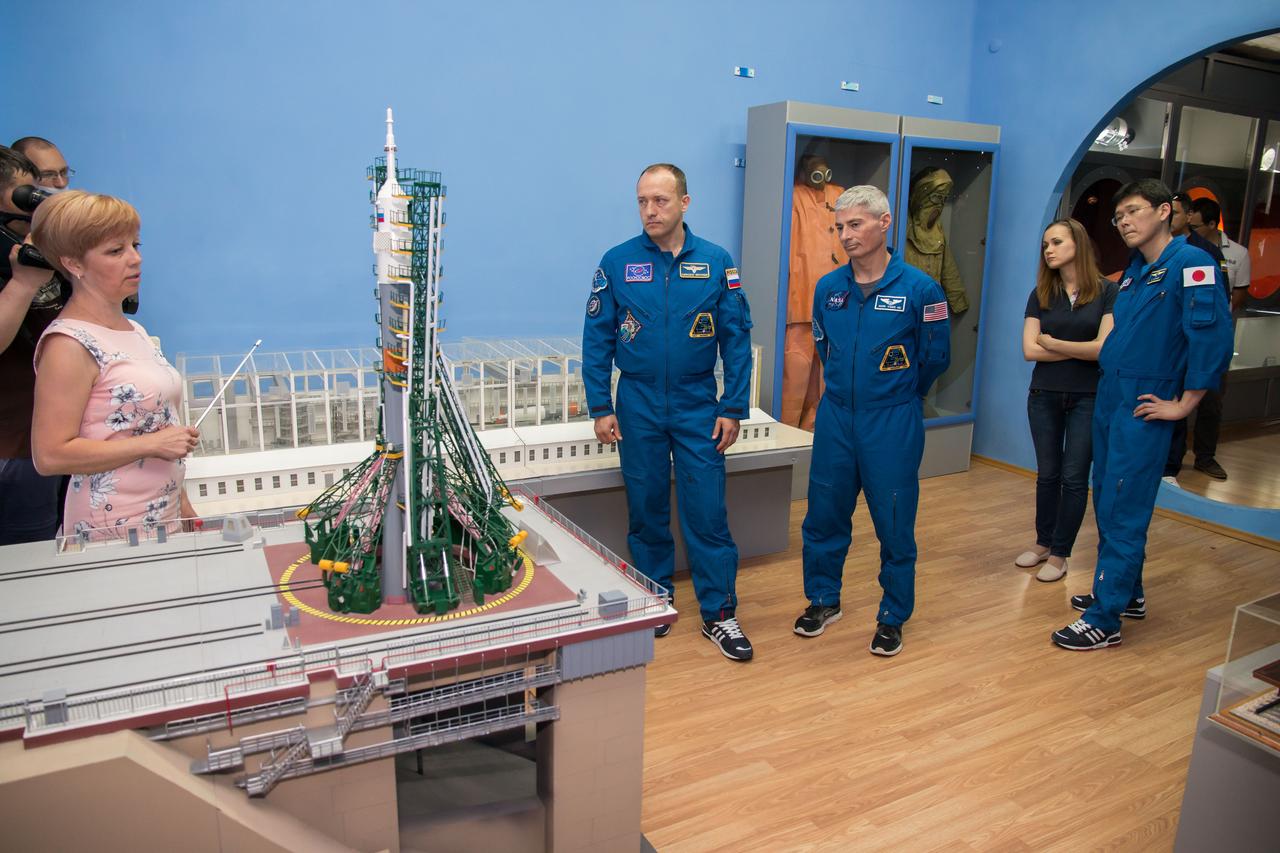
jsc2017e100905 (July 18, 2017) --- Expedition 52-53 backup crewmembers Alexander Misurkin of the Russian Federal Space Agency (Roscosmos, left), Mark Vande Hei of NASA (center) and Norishige Kanai of the Japan Aerospace Exploration Agency (JAXA, right) receive a briefing on a model of Soyuz rocket in the space museum in the town of Baikonur, Kazakhstan July 18. The three are serving as backups to Sergey Ryazanskiy of Roscosmos, Randy Bresnik of NASA and Paolo Nespoli of the European Space Agency, who will launch July 28 on the Soyuz MS-05 spacecraft from the Baikonur Cosmodrome for a five-month mission on the International Space Station. Credit: NASA/Victor Zelentsov

jsc2017e100903 (July 18, 2017) --- Expedition 52-53 backup crewmembers Mark Vande Hei of NASA (left), Alexander Misurkin of the Russian Federal Space Agency (Roscosmos, center) and Norishige Kanai of the Japan Aerospace Exploration Agency (JAXA, right) pose for pictures in front of the statue of Sergey Korolev, the iconic Russian space designer, during traditional ceremonies July 18 in Baikonur, Kazakhstan. The three are serving as backups to Sergey Ryazanskiy of Roscosmos, Randy Bresnik of NASA and Paolo Nespoli of the European Space Agency, who will launch July 28 on the Soyuz MS-05 spacecraft from the Baikonur Cosmodrome for a five-month mission on the International Space Station. Credit: NASA/Victor Zelentsov

jsc2017e101942 (July 22, 2017) --- At the Cosmonaut Hotel crew quarters in Baikonur, Kazakhstan, Expedition 52-53 backup crewmembers Norishige Kanai of the Japan Aerospace Exploration Agency (JAXA, left), Alexander Misurkin of the Russian Federal Space Agency (Roscosmos, center) and Mark Vande Hei of NASA (right) brush up on rendezvous procedures on a laptop computer simulator July 22 as part of their pre-launch activities. They are serving as backups to Sergey Ryazanskiy of Roscosmos, Randy Bresnik of NASA and Paolo Nespoli of the European Space Agency who will launch July 28 on the Soyuz MS-05 spacecraft from the Baikonur Cosmodrome for a five-month mission on the International Space Station. Credit: NASA/Victor Zelentsov
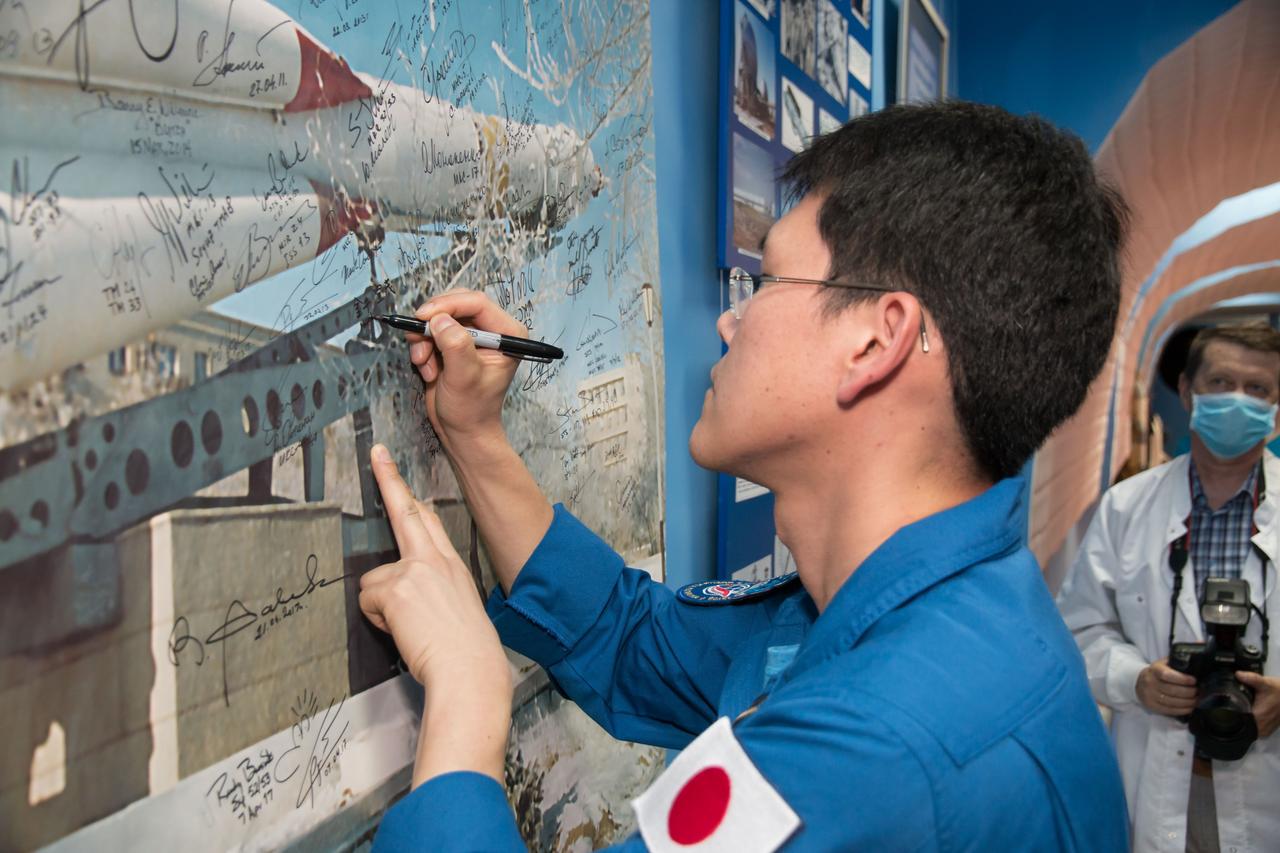
jsc2017e100906 (July 18, 2017) --- Expedition 52-53 backup crewmember Norishige Kanai of the Japan Aerospace Exploration Agency (JAXA) signs a mural in a space museum in Baikonur, Kazakhstan July 18 during traditional pre-launch ceremonies. Kanai, Alexander Misurkin of the Russian Federal Space Agency (Roscosmos) and Mark Vande Hei of NASA are serving as backups to Sergey Ryazanskiy of Roscosmos, Randy Bresnik of NASA and Paolo Nespoli of the European Space Agency, who will launch July 28 on the Soyuz MS-05 spacecraft from the Baikonur Cosmodrome for a five-month mission on the International Space Station. Credit: NASA/Victor Zelentsov
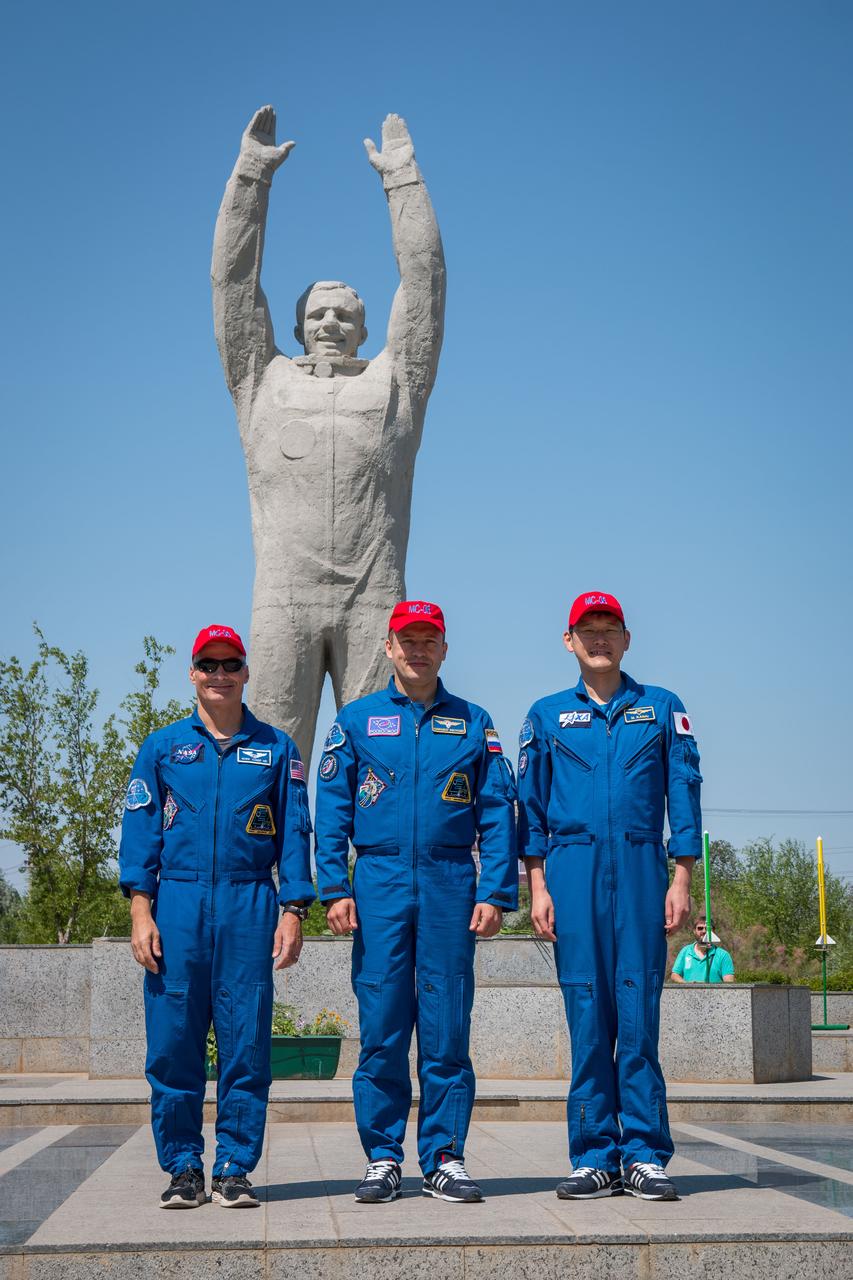
jsc2017e100900 (July 18, 2017) --- Expedition 52-53 backup crewmembers Mark Vande Hei of NASA (left), Alexander Misurkin of the Russian Federal Space Agency (Roscosmos, center) and Norishige Kanai of the Japan Aerospace Exploration Agency (JAXA, right) pose for pictures in front of the statue of Yuri Gagarin, the first human in space, in the town of Baikonur, Kazakhstan July 18 during traditional pre-launch ceremonies. They are serving as backups to Randy Bresnik of NASA, Sergey Ryazanskiy of Roscosmos and Paolo Nespoli of the European Space Agency, who will launch July 28 on the Soyuz MS-05 spacecraft from the Baikonur Cosmodrome for a five-month mission on the International Space Station. Credit: NASA/Victor Zelentsov
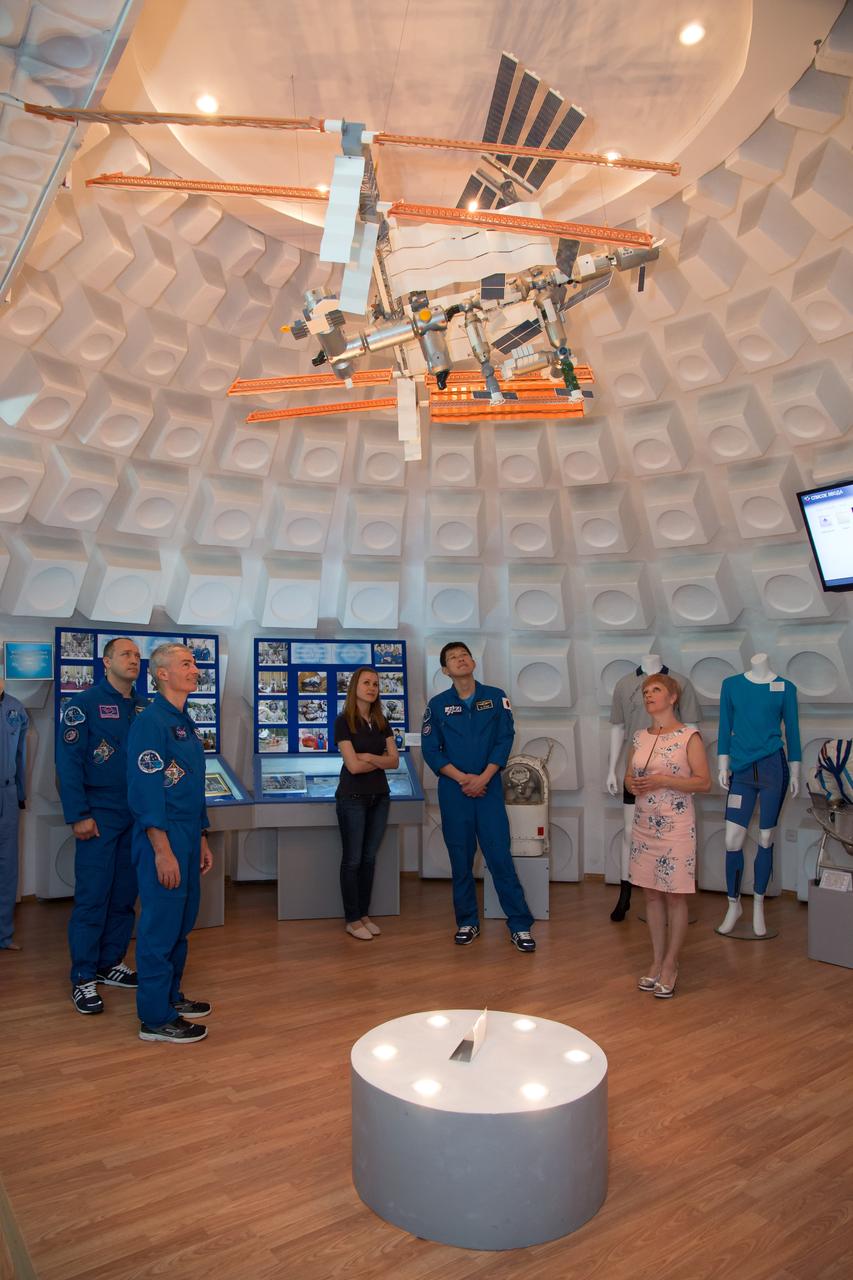
jsc2017e100904 (July 18, 2017) --- Expedition 52-53 backup crewmembers Alexander Misurkin of the Russian Federal Space Agency (Roscosmos, left), Mark Vande Hei of NASA (second from left) and Norishige Kanai of the Japan Aerospace Exploration Agency (JAXA, second from right) receive a briefing on some of the artifacts in the space museum in the town of Baikonur, Kazakhstan July 18. The three are serving as backups to Sergey Ryazanskiy of Roscosmos, Randy Bresnik of NASA and Paolo Nespoli of the European Space Agency, who will launch July 28 on the Soyuz MS-05 spacecraft from the Baikonur Cosmodrome for a five-month mission on the International Space Station. Credit: NASA/Victor Zelentsov

jsc2017e101938 (July 22, 2017) --- At the Cosmonaut Hotel crew quarters in Baikonur, Kazakhstan, the Expedition 52-53 backup and prime crewmembers pose for pictures July 22 in the midst of pre-launch training. From left to right are the backup crewmembers, Norishige Kanai of the Japan Aerospace Exploration Agency (JAXA), Mark Vande Hei of NASA and Alexander Misurkin of the Russian Federal Space Agency (Roscosmos), and the prime crew, Sergey Ryazanskiy of Roscosmos, Randy Bresnik of NASA and Paolo Nespoli of the European Space Agency. Ryazanskiy, Bresnik and Nespoli will launch July 28 on the Soyuz MS-05 spacecraft from the Baikonur Cosmodrome for a five-month mission on the International Space Station. Credit: NASA/Victor Zelentsov
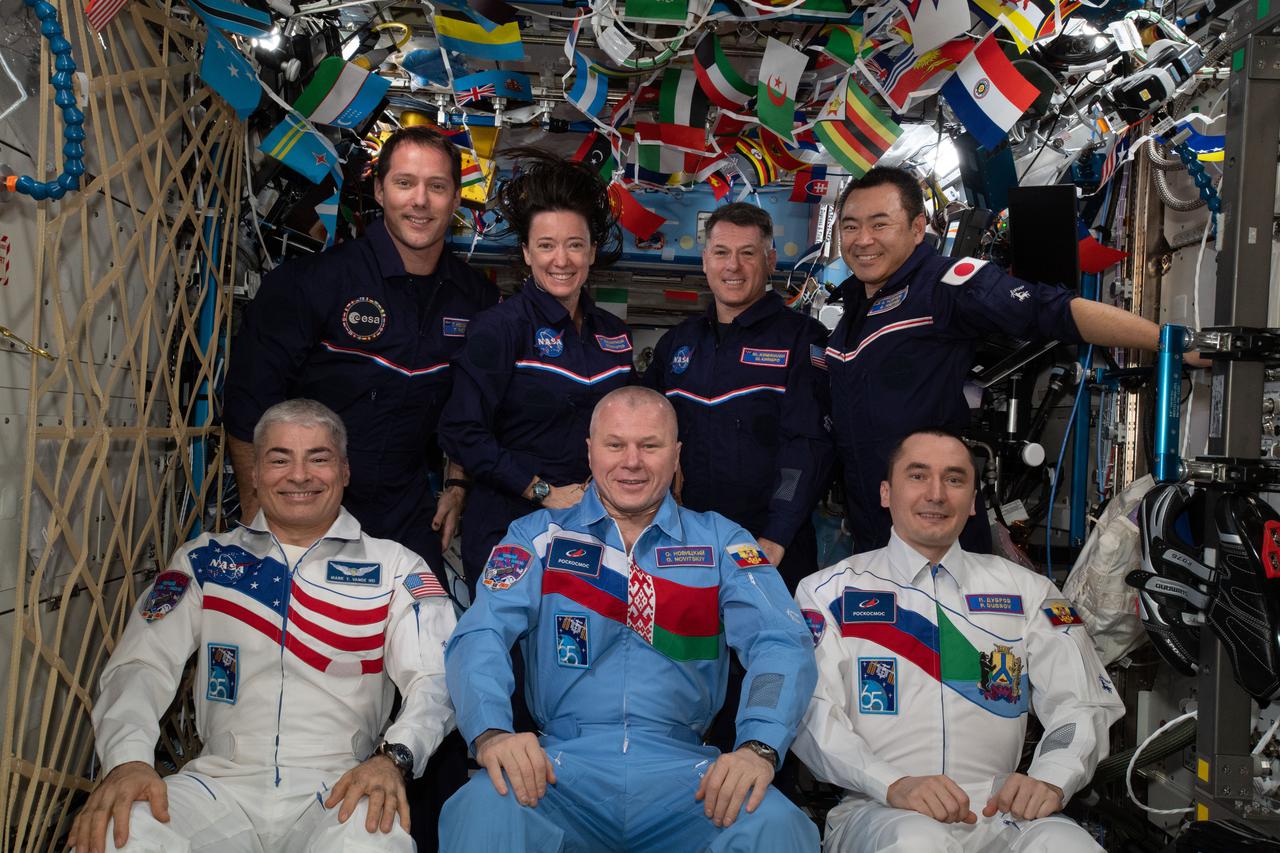
iss065e166107 (July 10, 2021) --- The seven-member Expedition 65 crew gets together for a portrait aboard the International Space Station. In the front row from left are, flight engineers Mark Vande Hei, Oleg Novitskiy and Pyotr Dubrov. In the back are, flight engineers Thomas Pesquet, Megan McArthur and Shane Kimbrough with Commander Akihiko Hoshide.
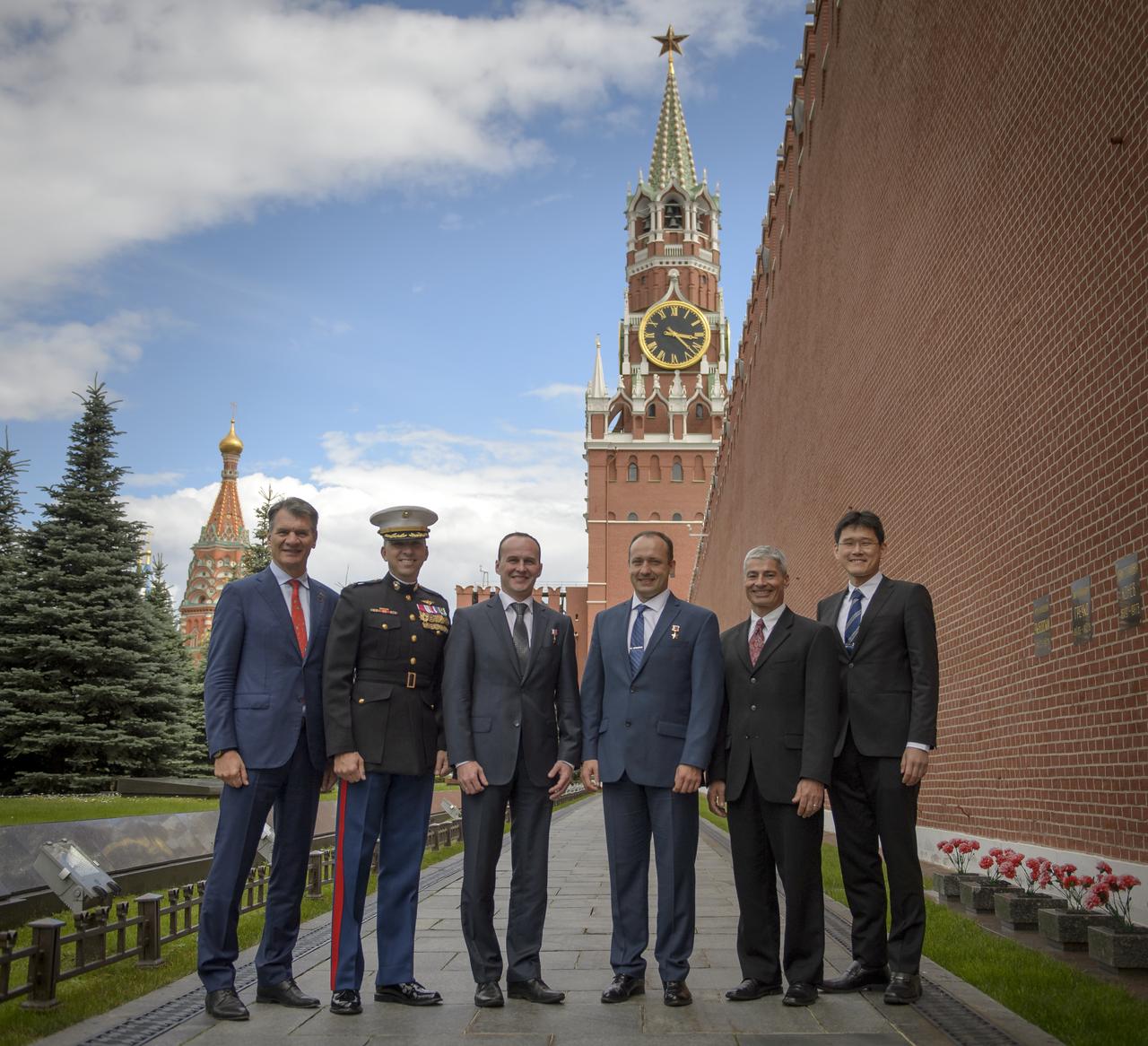
Expedition 52 flight engineers Paolo Nespoli of ESA, left, Randy Bresnik of NASA, Sergey Ryazanskiy of Roscosmos, and backup crew members, Alexander Misurkin of Roscosmos, Mark Vande Hei of NASA, and Norishige Kanai of the Japan Aerospace Exploration Agency (JAXA), right, pose for a group photograph in Red Square after having laid roses at the site where Russian space icons are interred as part of traditional pre-launch ceremonies, Monday, July 10, 2017 in Moscow. Photo Credit: (NASA/Bill Ingalls)
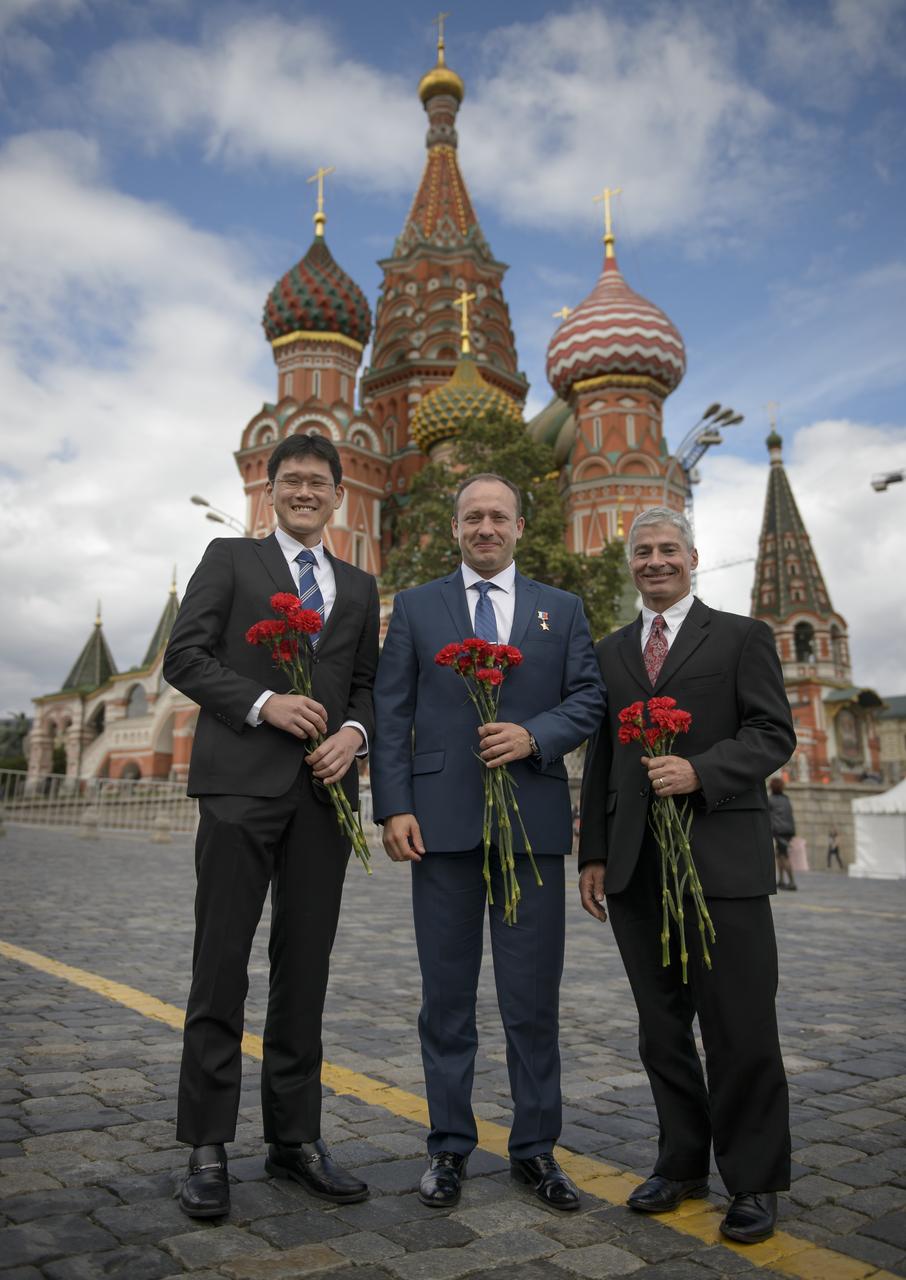
Expedition 52 backup crew members Norishige Kanai of the Japan Aerospace Exploration Agency (JAXA), left, Alexander Misurkin of Roscosmos, center, and Mark Vande Hei of NASA pose for a photograph in front of Saint Basil's Cathedral as they visited Red Square to lay roses at the site where Russian space icons are interred as part of traditional pre-launch ceremonies, Monday, July 10, 2017 in Moscow. Photo Credit: (NASA/Bill Ingalls)

JSC2014-E-068000 (July 2014) ---Astronaut Aki Hoshide (right) of the Japan Aerospace Exploration Agency is the NEEMO 18 crew's commander and the sole member of the crew with inflight experience. He'll be joined by the European Space Agency's Thomas Pesquet (pictured) and NASA's Jeanette Epps and Mark Vande Hei, all of whom were selected as astronauts in 2009. The soon-to-be aquanauts will gain a great deal of experience from this mission that will aid them in future space assignments. Photo credit: NASA
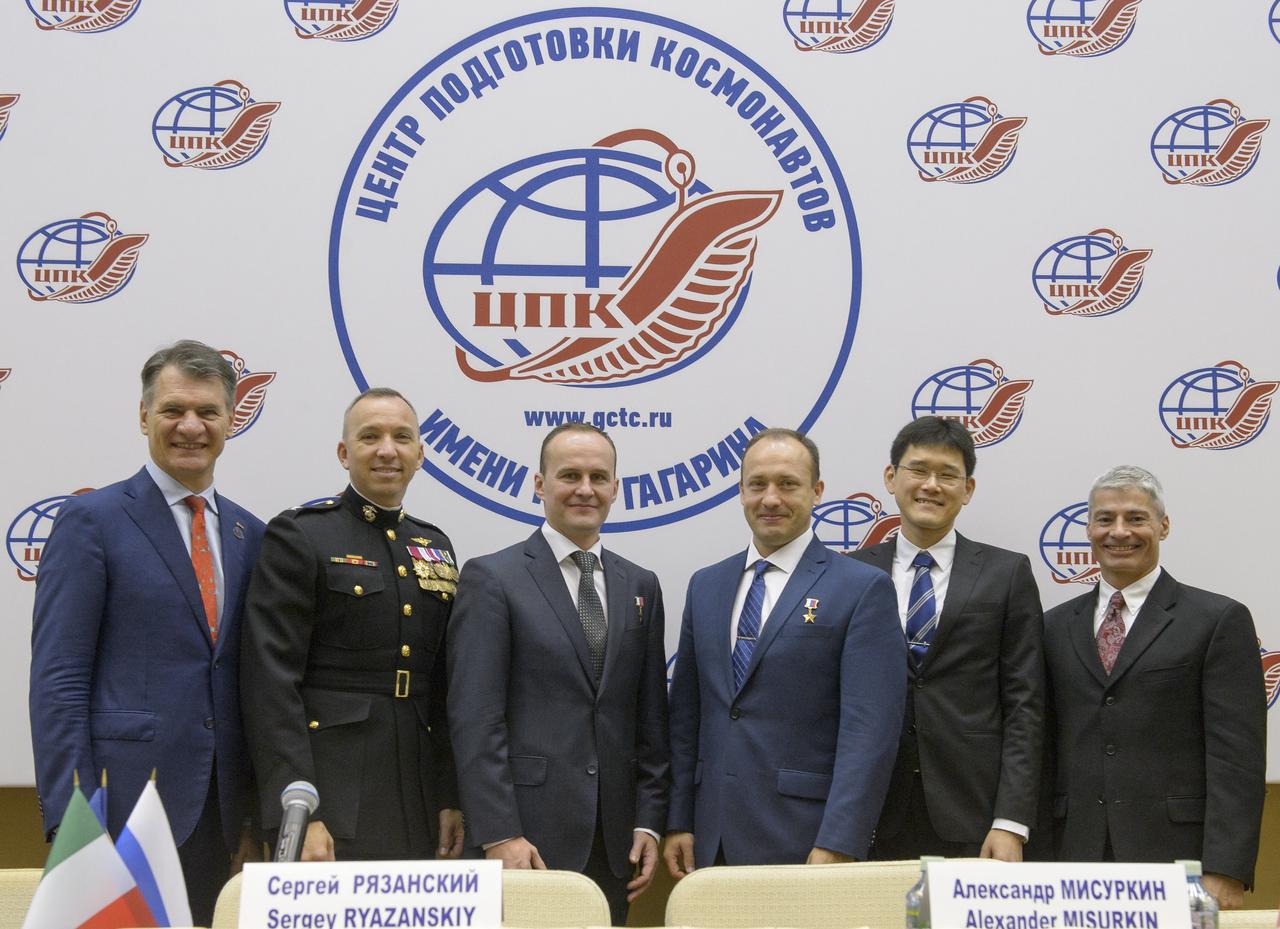
Expedition 52 prime and backup crews: Paolo Nespoli of ESA, left, Randy Bresnik of NASA, Sergey Ryazanskiy of Roscosmos, Alexander Misurkin of Roscosmos, Norishige Kanai of the Japan Aerospace Exploration Agency (JAXA) and, Mark Vande Hei of NASA pose for group photograph at the conclusion of their crew press conference at the Gagarin Cosmonaut Training Center (GCTC), Monday, July 10, 2017 in Star City, Russia. Photo Credit: (NASA/Bill Ingalls)
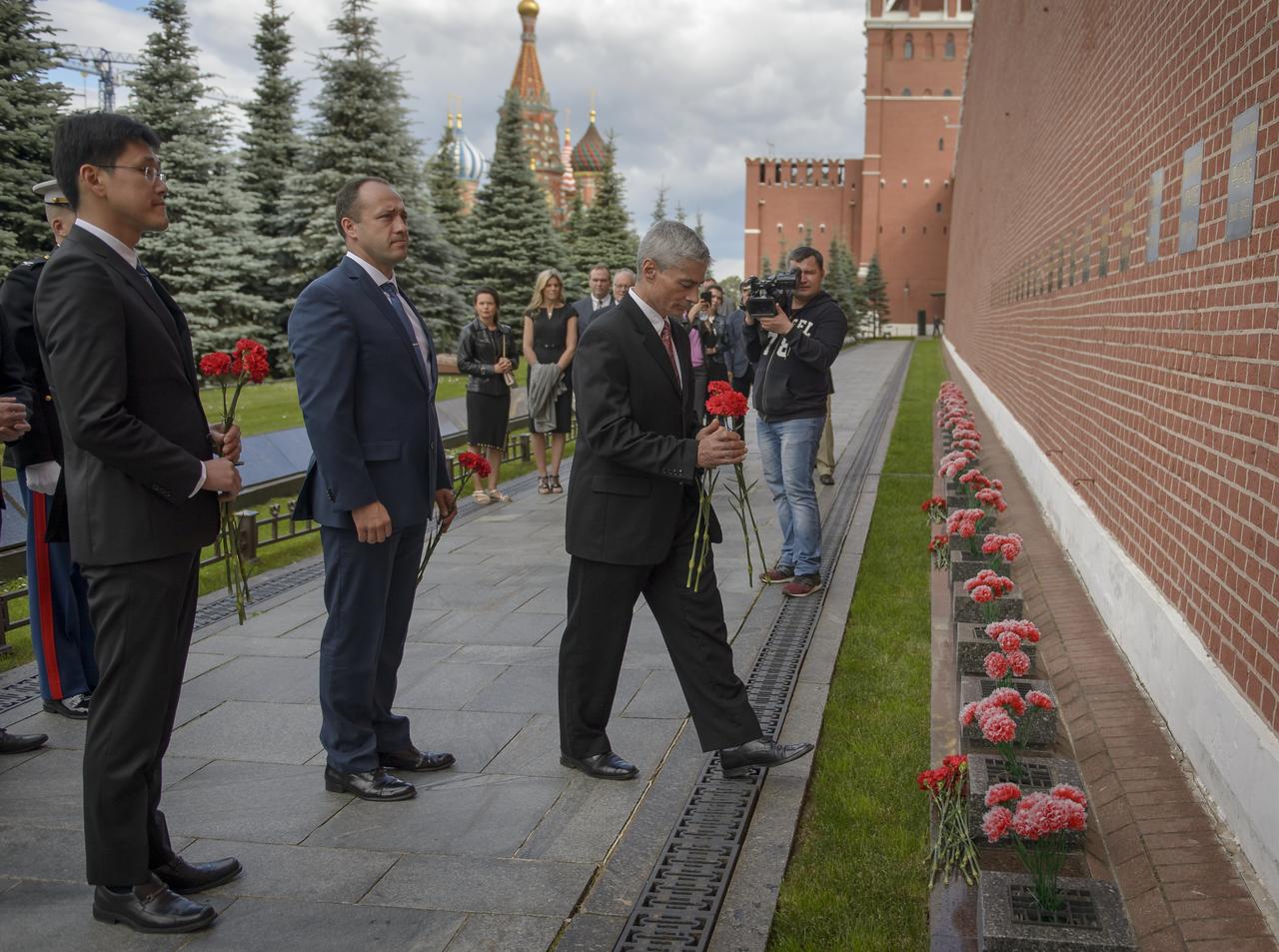
Expedition 52 backup crew members Norishige Kanai of the Japan Aerospace Exploration Agency (JAXA), left, Alexander Misurkin of Roscosmos, center, and Mark Vande Hei of NASA lay roses at the site where Russian space icons are interred as part of traditional pre-launch ceremonies, Monday, July 10, 2017 in Moscow. Photo Credit: (NASA/Bill Ingalls)

JSC2014-E-068005 (July 2014) --- Aki Hoshide (at right) of the Japan Aerospace Exploration Agency, who will serve as commander of the crew of NEEMO 18, is pictured prior to the start of the nine-day underwater mission, with the crew members joining him. They are (from left on the deck) the European Space Agency's Thomas Pesquet, and NASA's Jeanette Epps and Mark Vande Hei, all of whom will work inside a 400 square-foot habitat and occasionally outside it when performing extravehicular activity. Photo credit: NASA
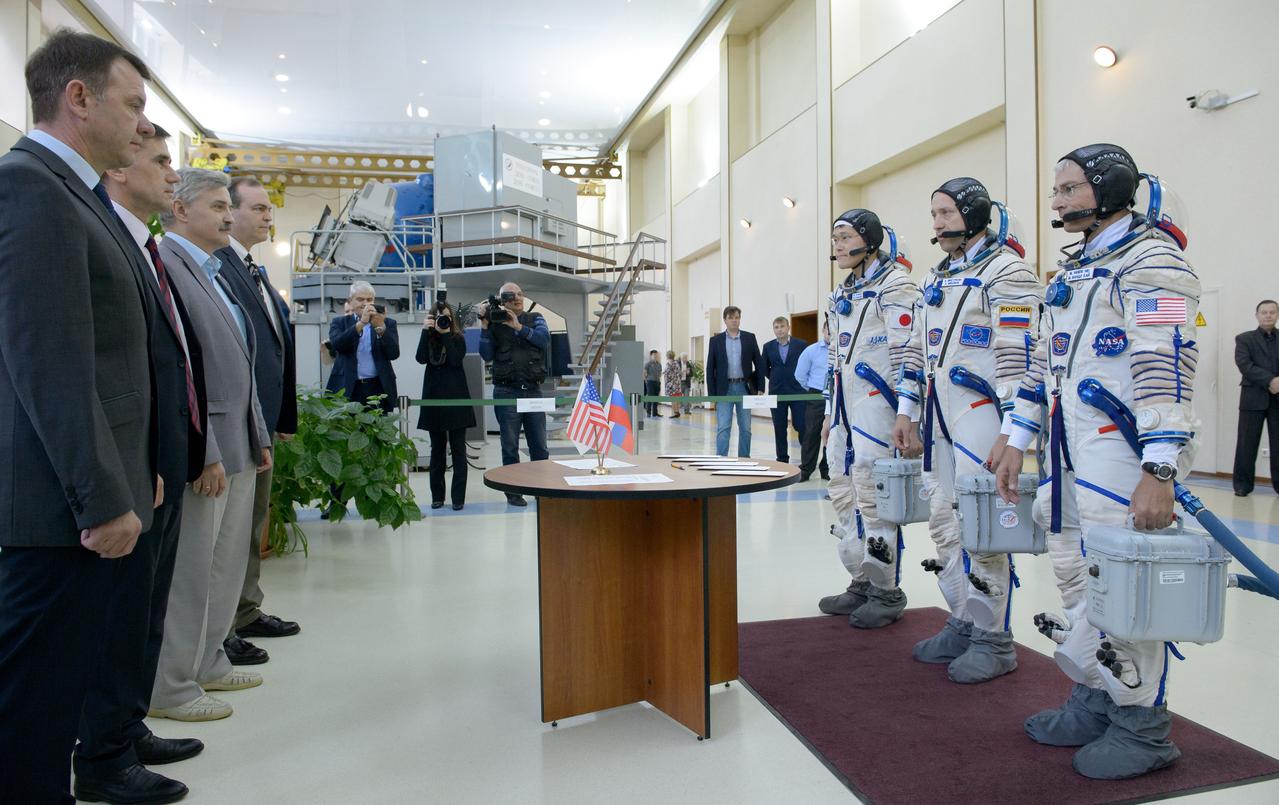
nhq2017070600102 (July 6, 2017) --- Expedition 52 backup crew members: Mark Vande Hei of NASA, suited left, Alexander Misurkin of Roscosmos, center, and Norishige Kanai of the Japan Aerospace Exploration Agency (JAXA) meet with, Cosmonaut Yuri Gidzenko, left, Cosmonaut Yuri Malenchenko, Deputy Director, GCTC, Cosmonaut Alexander Kaleri, and John McBrine, NASA Director of Operations, GCTC ahead of the crew's Soyuz qualification exams, Thursday, July 6, 2017 at the Gagarin Cosmonaut Training Center (GCTC) in Star City, Russia. Photo Credit: (NASA/Bill Ingalls)
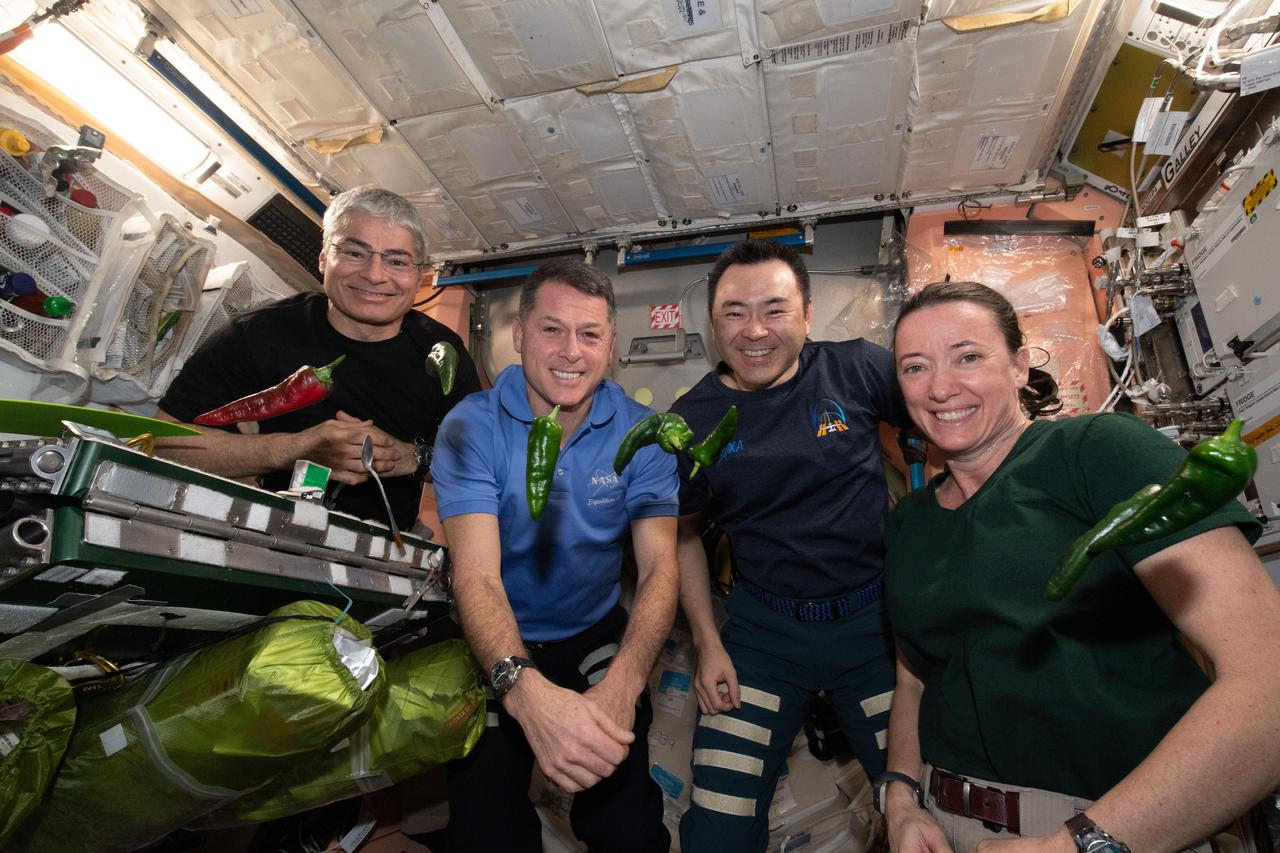
iss066e023260 (October 29, 2021) -- Expedition 66 astronauts are pictured with the first harvest of chile peppers grown aboard the International Space Station as part of the Plant Habitat-04 investigation. The chile peppers started growing on July 12, 2021, and represent one of the longest and most challenging plant experiments attempted aboard the orbiting laboratory. The chile peppers started growing on July 12, 2021, and represent one of the longest and most challenging plant experiments attempted aboard the orbiting laboratory. NASA astronaut and Expedition 66 flight engineer Mark Vande Hei conducted the first harvest of the pepper crop on October 29, 2021. Crew members sanitized the peppers and completed a scientific survey after their taste test. The Crew-3 astronauts will take over the crop when they arrive at the orbiting laboratory, and will conduct a final harvest of the peppers in late November. They will also sanitize and sample the crop, and complete surveys. Some peppers and their leaves from the final harvest will return to Earth for further analysis. What we learn will inform future crop growth and food supplementation activities for deep space exploration. Pictured, from left, are Expedition 66 flight engineers NASA astronauts Mark Vande Hei and Shane Kimbrough, JAXA (Japan Aerospace Exploration) astronaut Aki Hoshide, and NASA astronaut Megan McArthur.
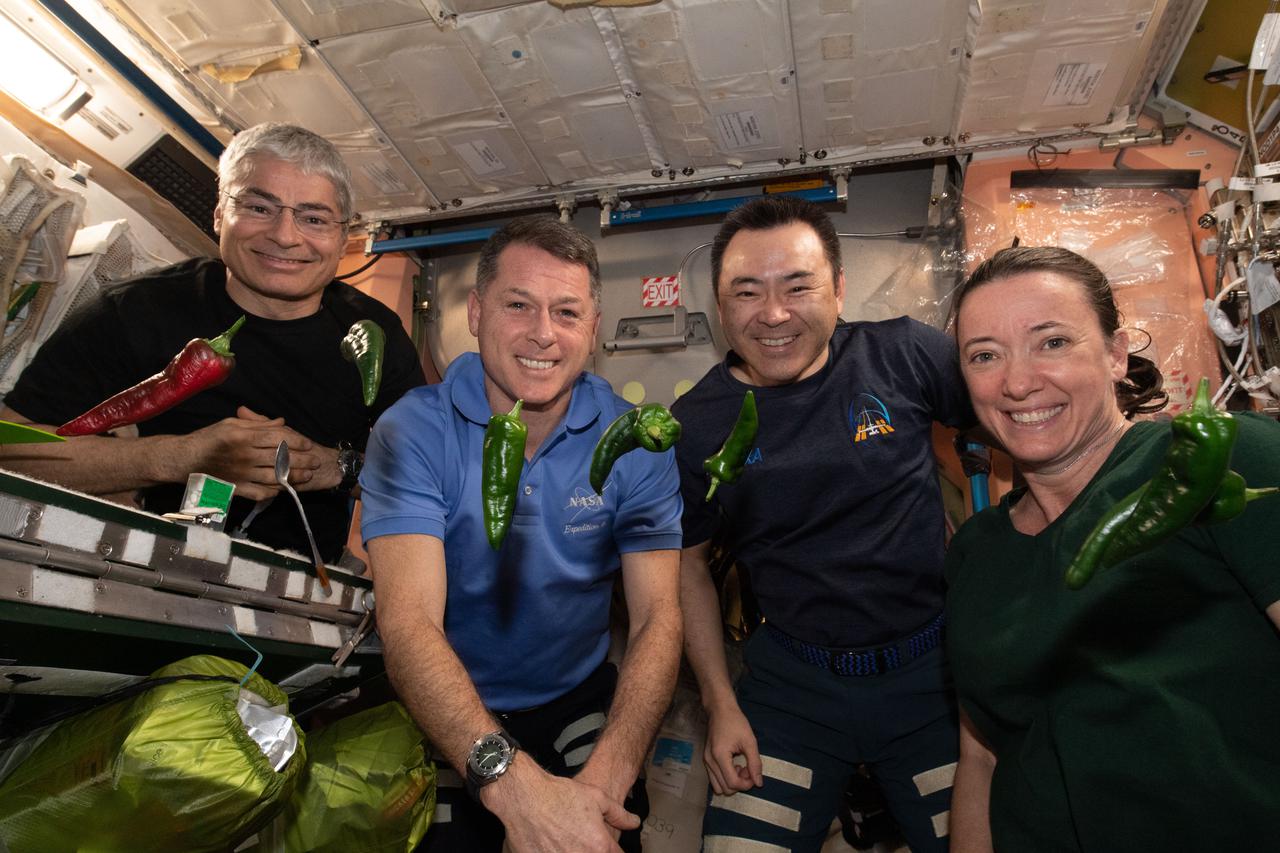
iss066e023259 (October 29, 2021) -- Expedition 66 astronauts are pictured with the first harvest of chile peppers grown aboard the International Space Station as part of the Plant Habitat-04 investigation. The chile peppers started growing on July 12, 2021, and represent one of the longest and most challenging plant experiments attempted aboard the orbiting laboratory. The chile peppers started growing on July 12, 2021, and represent one of the longest and most challenging plant experiments attempted aboard the orbiting laboratory. NASA astronaut and Expedition 66 flight engineer Mark Vande Hei conducted the first harvest of the pepper crop on October 29, 2021. Crew members sanitized the peppers and completed a scientific survey after their taste test. The Crew-3 astronauts will take over the crop when they arrive at the orbiting laboratory, and will conduct a final harvest of the peppers in late November. They will also sanitize and sample the crop, and complete surveys. Some peppers and their leaves from the final harvest will return to Earth for further analysis. What we learn will inform future crop growth and food supplementation activities for deep space exploration. Pictured, from left, are Expedition 66 flight engineers NASA astronauts Mark Vande Hei and Shane Kimbrough, JAXA (Japan Aerospace Exploration) astronaut Aki Hoshide, and NASA astronaut Megan McArthur.

iss066e008110 (October 20, 2021) -- NASA astronaut and Expedition 65 Flight Engineer Mark Vande Hei prepares to photograph chile peppers growing in the Advanced Plant Habitat as part of the Plant Habit-04 experiment being conducted aboard the International Space Station. The chile pepper seeds started growing on July 12, 2021, and represent one of the longest and most challenging plant experiments attempted aboard the orbiting laboratory. They will be harvested twice, once in late October and again in late November. Astronauts will sanitize the peppers, eat part of their harvest, and return the rest to Earth for analysis. What we learn will inform future crop growth and food supplementation activities for deep space exploration.
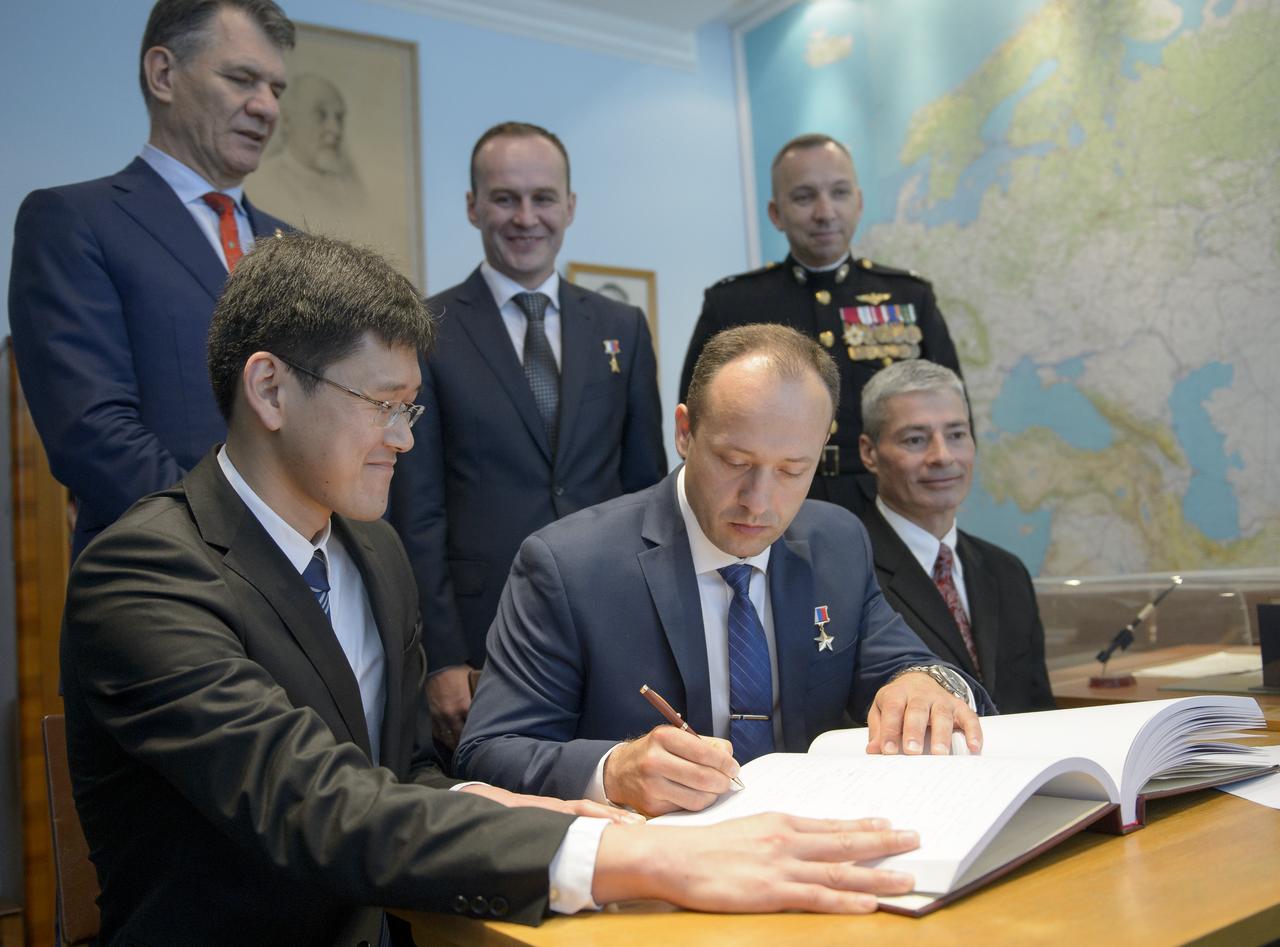
Expedition 52 backup crew members, Norishige Kanai, seated left, Alexander Misurkin, and Mark Vande Hei, seated right, sign a guest book at the "Memorial working study of Yuri Gagarin" at the Gagarin Cosmonaut Training Center (GCTC) as Expedition 52 flight engineers Paolo Nespoli of ESA, standing left, Sergey Ryazanskiy of Roscosmos, center, and Randy Bresnik of NASA, look on, Monday, July 10, 2017 in Star City, Russia. The memorial study represents Gagarin's working study in the way it was abandoned by Gagarin on March 27, 1968 before leaving for the airfield for training flight that became his last. Photo Credit: (NASA/Bill Ingalls)
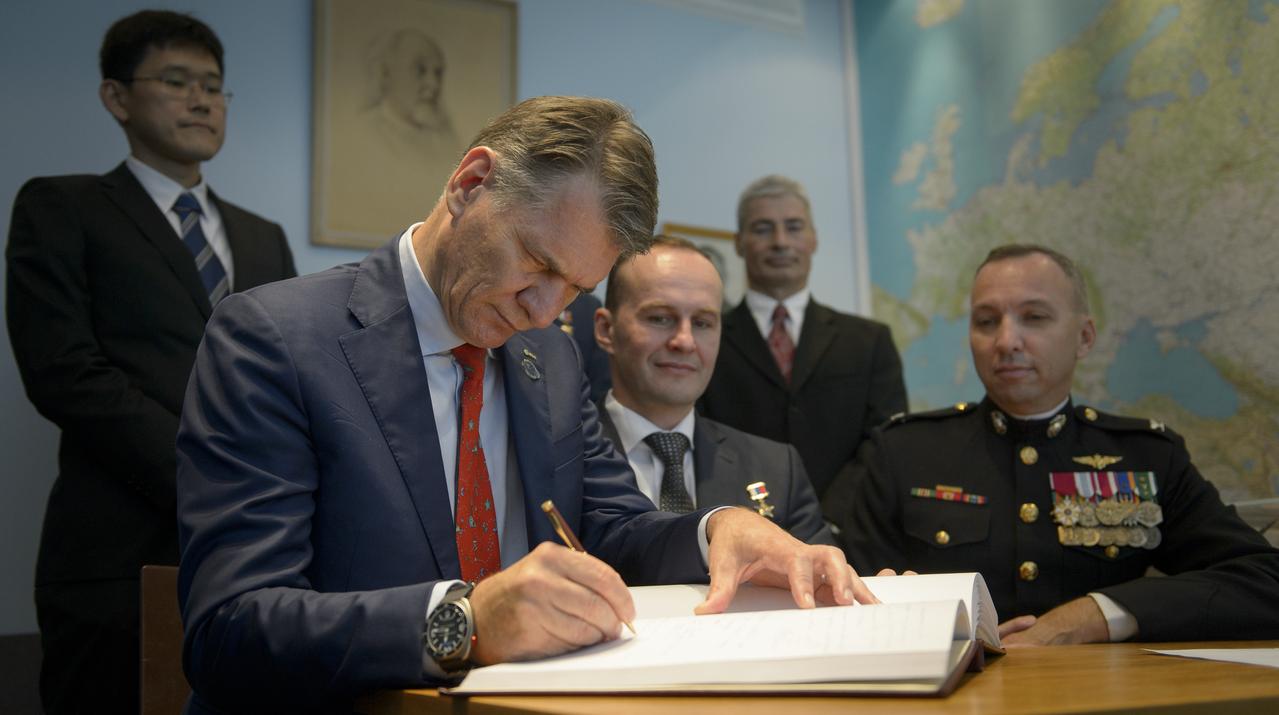
Expedition 52 flight engineers Paolo Nespoli of ESA, seated left, Sergey Ryazanskiy of Roscosmos, seated center, Randy Bresnik of NASA, seated right, joined by backup crew members, Norishige Kanai, standing left, Alexander Misurkin, not pictured, and Mark Vande Hei, right, are seen as they sign a guest book at the "Memorial working study of Yuri Gagarin" at the Gagarin Cosmonaut Training Center (GCTC), Monday, July 10, 2017 in Star City, Russia. The memorial study represents Gagarin's working study in the way it was abandoned by Gagarin on March 27, 1968 before leaving for the airfield for training flight that became his last. Photo Credit: (NASA/Bill Ingalls)
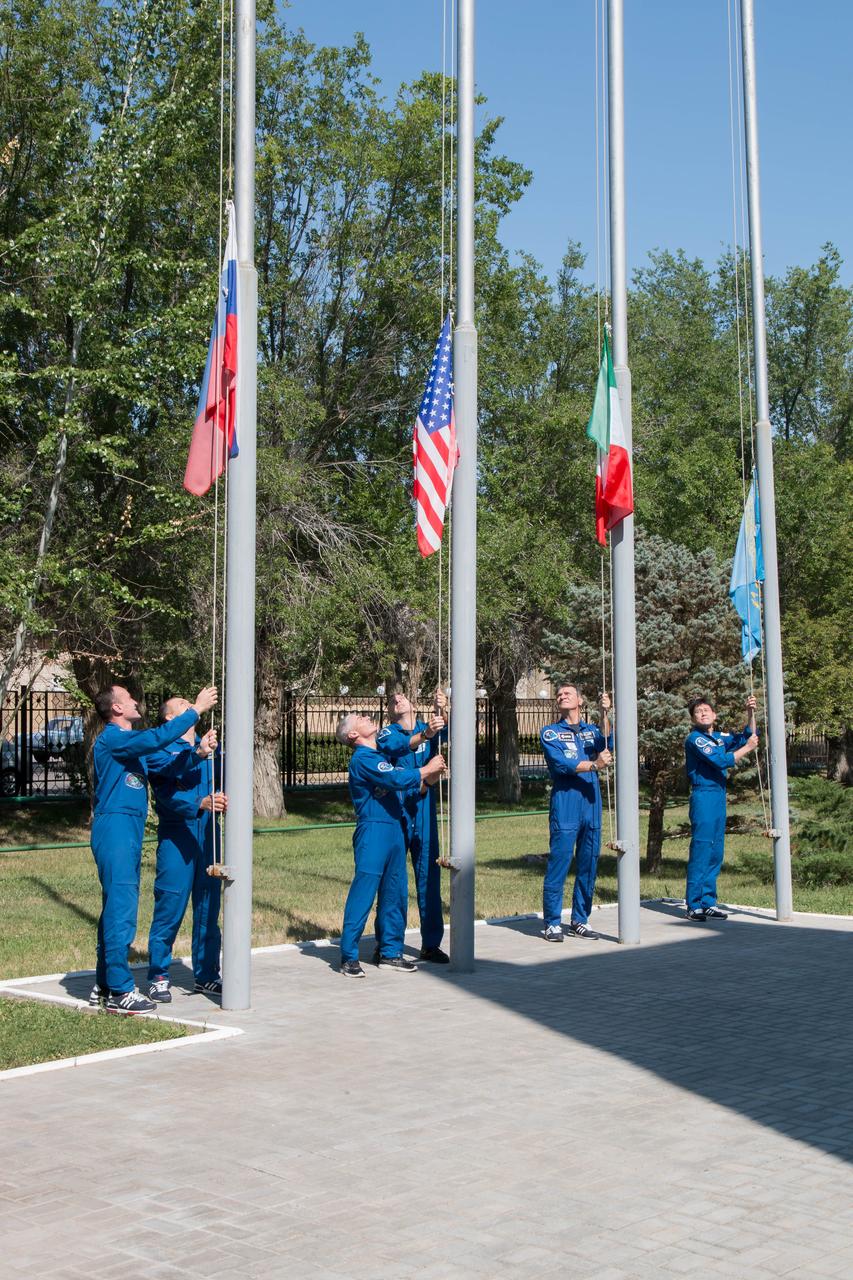
jsc2017e100896 (July 18, 2017) --- At the Cosmonaut Hotel crew quarters in Baikonur, Kazakhstan, the Expedition 52-53 prime and backup crewmembers raised the flags of the U.S., Russia, Italy and Kazakhstan July 18 during traditional pre-launch ceremonies. From left to right are Sergey Ryazanskiy and Alexander Misurkin of the Russian Federal Space Agency (Roscosmos) raising the Russian flag, Mark Vande Hei and Randy Bresnik of NASA raising the U.S. flag, Paolo Nespoli of the European Space Agency raising the flag of Italy and Norishige Kanai of the Japan Aerospace Exploration Agency (JAXA) raising the flag of Kazakhstan. Ryazanskiy, Bresnik and Nespoli will launch July 28 on the Soyuz MS-05 spacecraft from the Baikonur Cosmodrome for a five-month mission on the International Space Station. Credit: NASA/Victor Zelentsov
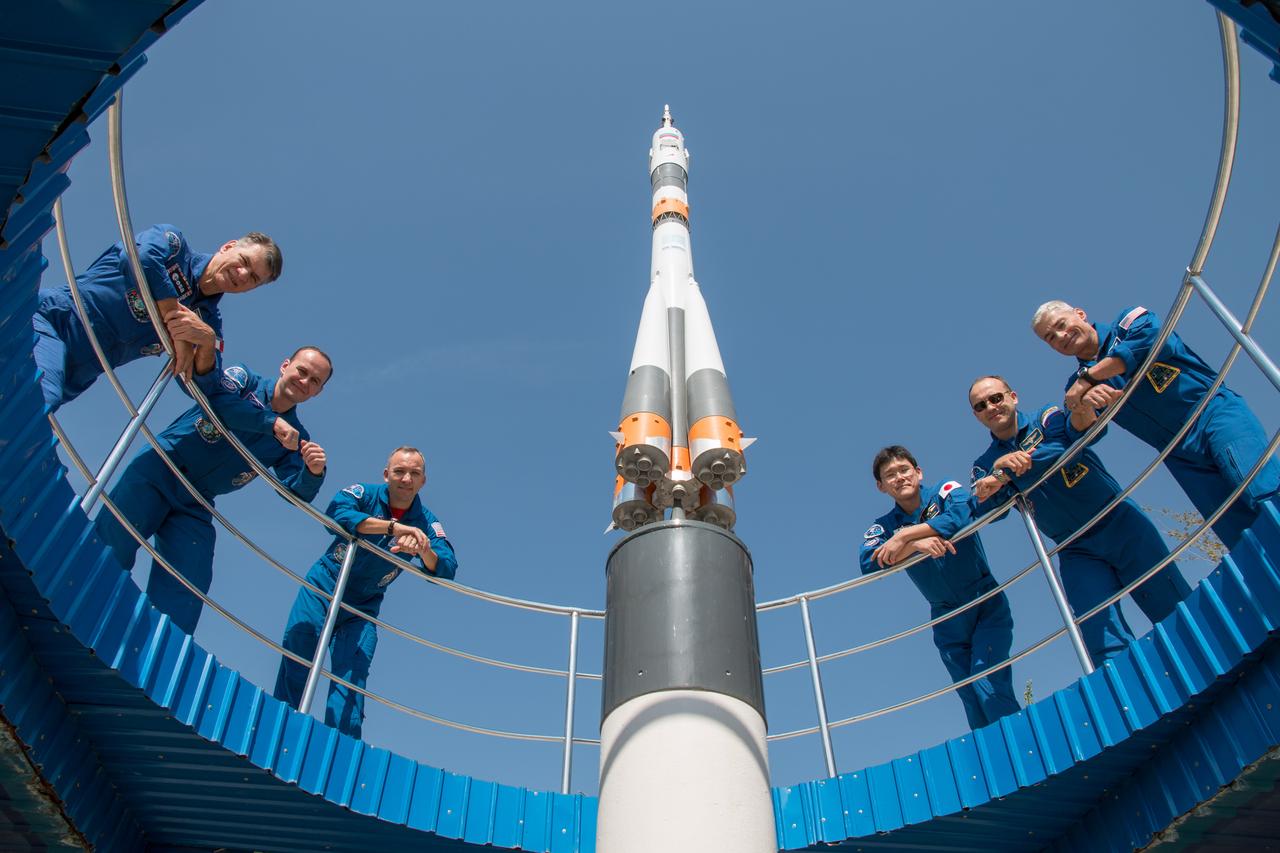
jsc2017e101939 (July 22, 2017) --- From a unique perspective at the Cosmonaut Hotel crew quarters in Baikonur, Kazakhstan, the Expedition 52-53 backup and prime crewmembers pose for pictures July 22 in the midst of pre-launch training. From left to right are the prime crewmembers, Paolo Nespoli of the European Space Agency, Sergey Ryazanskiy of the Russian Federal Space Agency (Roscosmos) and Randy Bresnik of NASA, and the backup crewmembers, Norishige Kanai of the Japan Aerospace Exploration Agency (JAXA), Alexander Misurkin of Roscosmos and Mark Vande Hei of NASA. Ryazanskiy, Bresnik and Nespoli will launch July 28 on the Soyuz MS-05 spacecraft from the Baikonur Cosmodrome for a five-month mission on the International Space Station. Credit: NASA/Victor Zelentsov
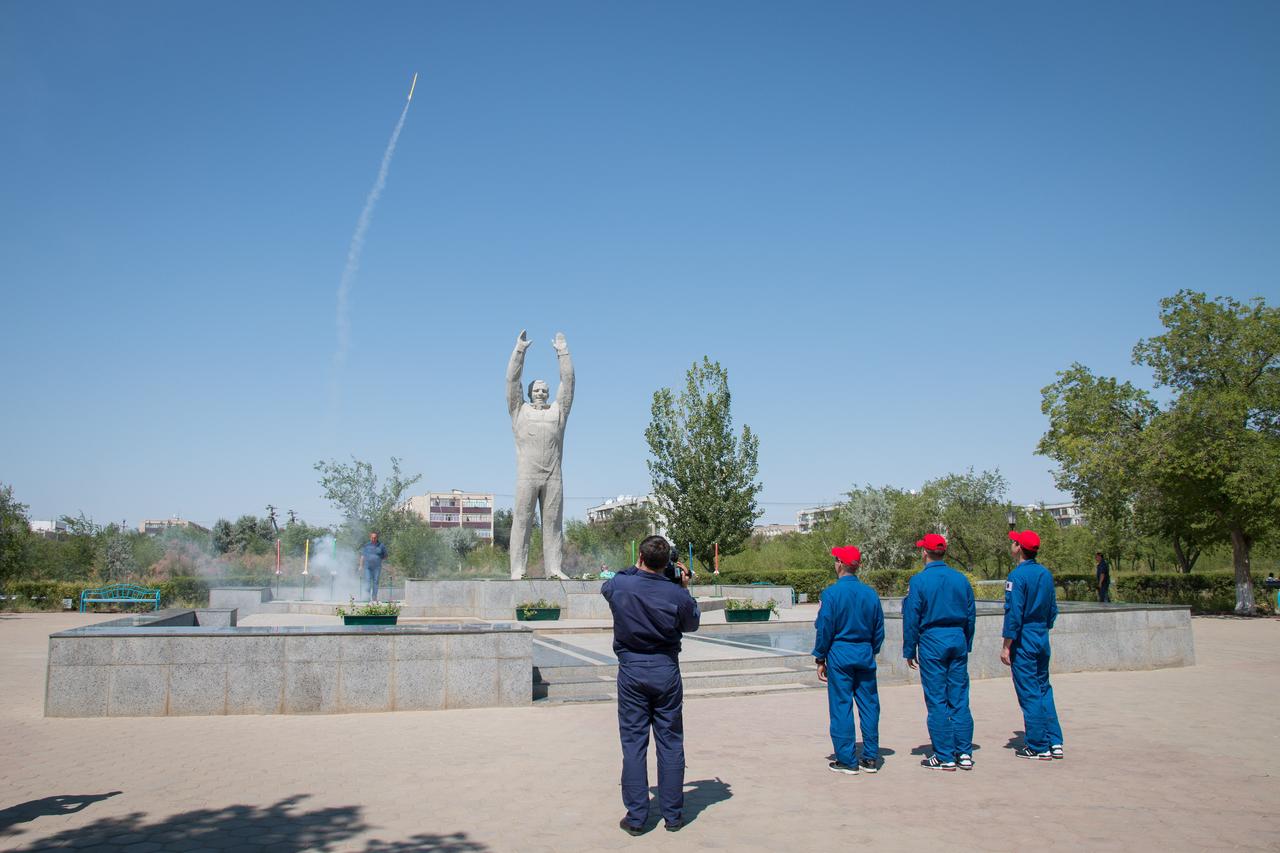
jsc2017e100901 (July 18, 2017) --- Expedition 52-53 backup crewmembers Mark Vande Hei of NASA (left), Alexander Misurkin of the Russian Federal Space Agency (Roscosmos, center) and Norishige Kanai of the Japan Aerospace Exploration Agency (JAXA, right) watch as an amateur rocket takes flight by the statue of Yuri Gagarin, the first human in space, in the town of Baikonur, Kazakhstan July 18 during traditional pre-launch ceremonies. They are serving as backups to Randy Bresnik of NASA, Sergey Ryazanskiy of Roscosmos and Paolo Nespoli of the European Space Agency, who will launch July 28 on the Soyuz MS-05 spacecraft from the Baikonur Cosmodrome for a five-month mission on the International Space Station. Credit: NASA/Victor Zelentsov

jsc2017e100895 (July 18, 2017) --- In the town of Baikonur, Kazakhstan, Expedition 52-53 backup crewmembers Norishige Kanai of the Japan Aerospace Exploration Agency (JAXA, second from left), Alexander Misurkin of the Russian Federal Space Agency (Roscosmos, second from right) and Mark Vande Hei of NASA (far right) enjoy a traditional cup of tea in a mockup of a Russian “yurt” or tent in Baikonur’s space museum July 18 as part of traditional pre-launch ceremonies. They are serving as backups to Sergey Ryazanskiy of Roscosmos, Randy Bresnik of NASA and Paolo Nespoli of the European Space Agency, who will launch July 28 on the Soyuz MS-05 spacecraft from the Baikonur Cosmodrome for a five-month mission on the International Space Station. Credit: NASA/Victor Zelentsov
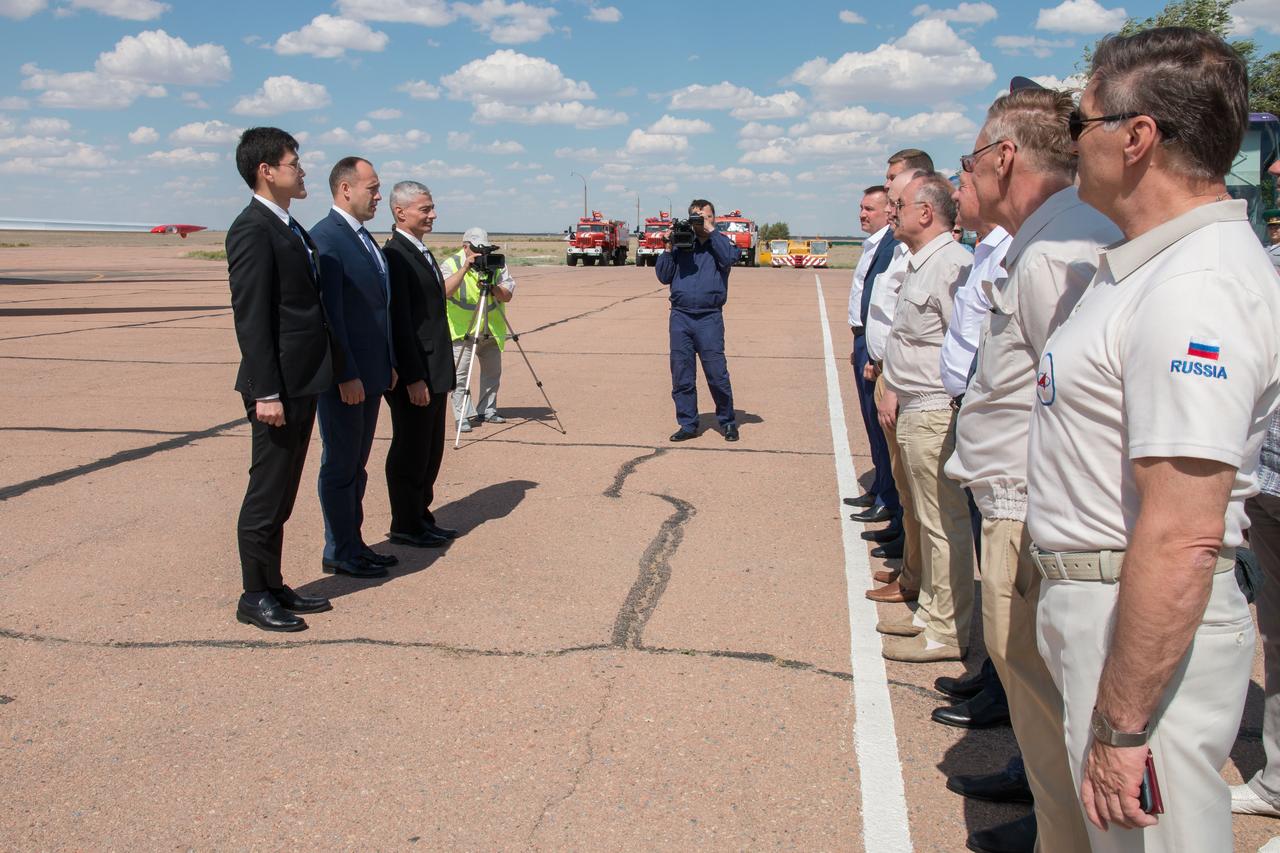
jsc2017e095965 (July 16, 2017) --- Expedition 52-53 backup crewmembers Norishige Kanai of the Japan Aerospace Exploration Agency (JAXA, far left), Alexander Misurkin of the Russian Federal Space Agency (Roscosmos, left and center) and Mark Vande Hei of NASA (left and right) are greeted by Russian space officials after their arrival at their launch site in Baikonur, Kazakhstan July 16 following a flight from their training base in Star City, Russia. The prime crew, Sergey Ryazanskiy of Roscosmos, Randy Bresnik of NASA and Paolo Nespoli of the European Space Agency will launch July 28 from the Baikonur Cosmodrome aboard the Soyuz MS-05 spacecraft for a five-month mission on the International Space Station. Credit: NASA/Victor Zelentsov
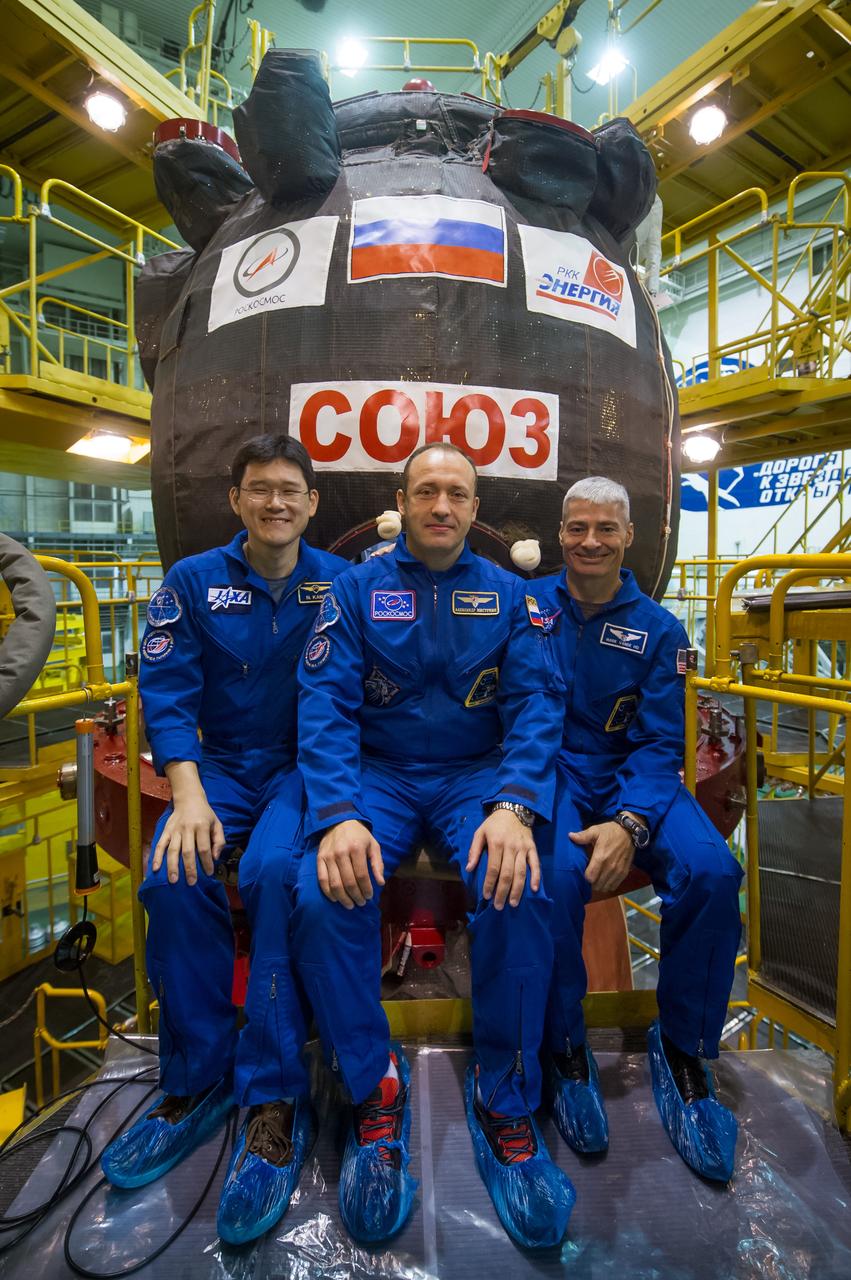
jsc2017e096667 (July 17, 2017) --- In the Integration Facility at the Baikonur Cosmodrome in Kazakhstan, Expedition 52-53 backup crewmembers Norishige Kanai of the Japan Aerospace Exploration Agency (JAXA, left), Alexander Misurkin of the Russian Federal Space Agency (Roscosmos, center) and Mark Vande Hei of NASA (right) pose for pictures in front of the Soyuz MS-05 spacecraft July 17 as part of their fit check dress rehearsal activities. The trio is serving as backups for Paolo Nespoli of the European Space Agency, Sergey Ryazanskiy of Roscosmos and Randy Bresnik of NASA, who will launch July 28 on the Soyuz MS-05 spacecraft for a five-month mission on the International Space Station. Credit: Andrey Shelepin/Gagarin Cosmonaut Training Center
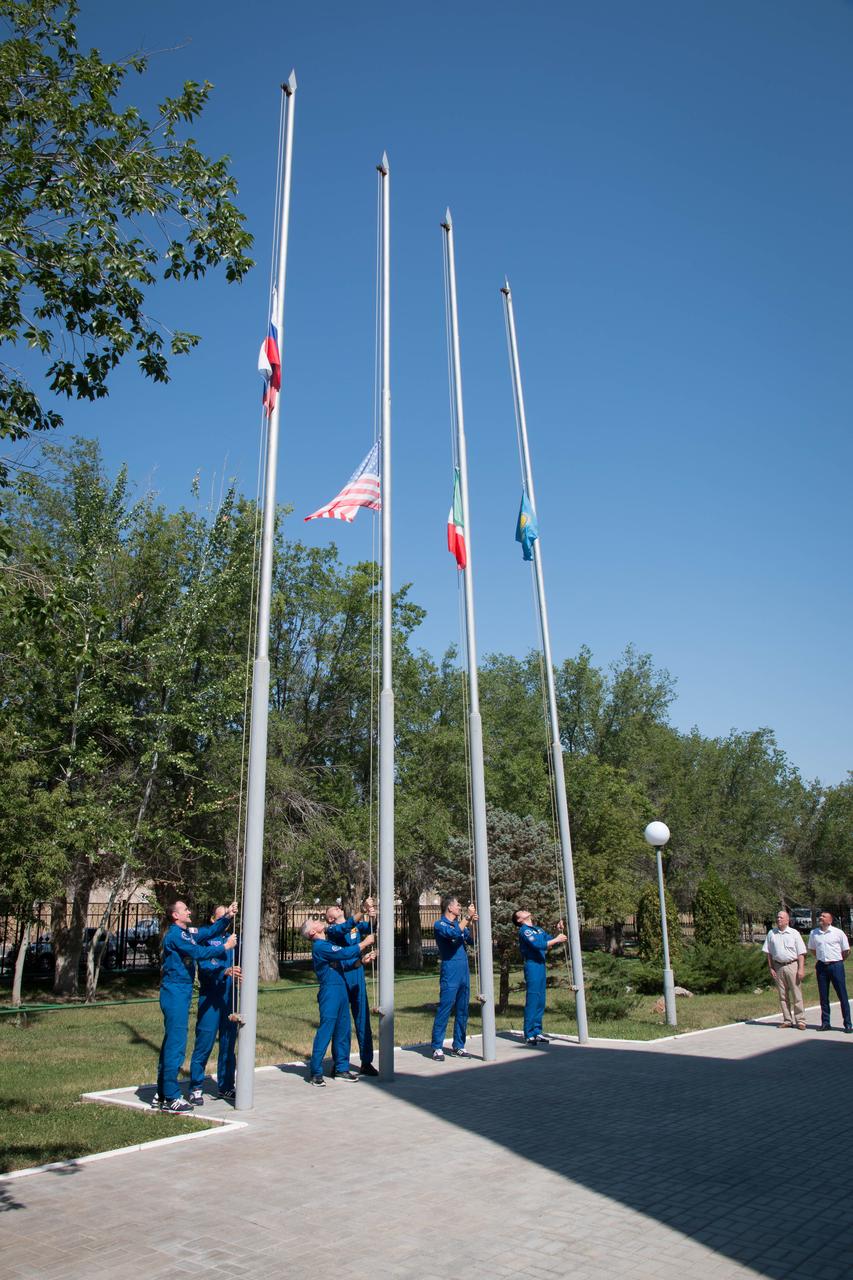
jsc2017e100897 (July 18, 2017) --- At the Cosmonaut Hotel crew quarters in Baikonur, Kazakhstan, the Expedition 52-53 prime and backup crewmembers raised the flags of the U.S., Russia, Italy and Kazakhstan July 18 during traditional pre-launch ceremonies. From left to right are Sergey Ryazanskiy and Alexander Misurkin of the Russian Federal Space Agency (Roscosmos) raising the Russian flag, Mark Vande Hei and Randy Bresnik of NASA raising the U.S. flag, Paolo Nespoli of the European Space Agency raising the flag of Italy and Norishige Kanai of the Japan Aerospace Exploration Agency (JAXA) raising the flag of Kazakhstan. Ryazanskiy, Bresnik and Nespoli will launch July 28 on the Soyuz MS-05 spacecraft from the Baikonur Cosmodrome for a five-month mission on the International Space Station. Credit: NASA/Victor Zelentsov
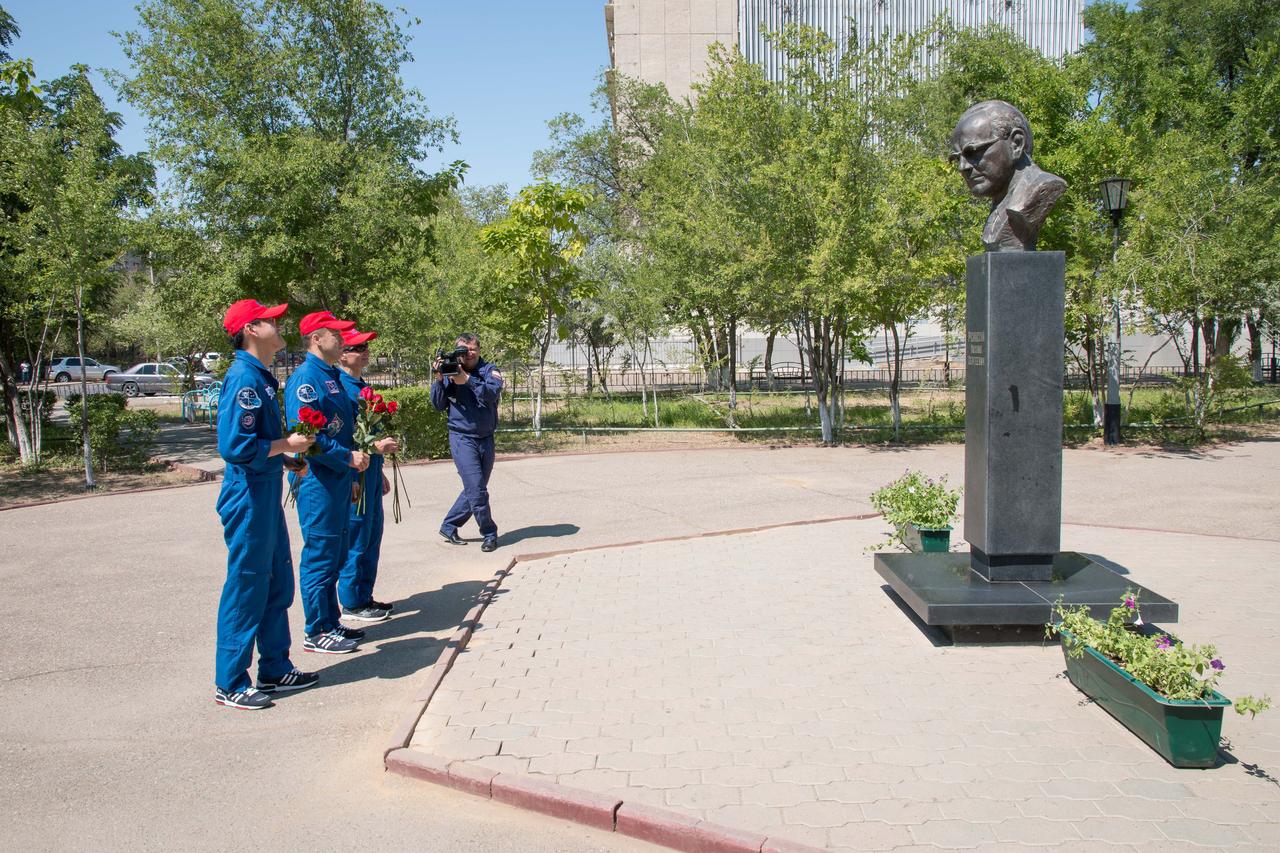
jsc2017e100902 (July 18, 2017) --- Expedition 52-53 backup crewmembers Norishige Kanai of the Japan Aerospace Exploration Agency (JAXA, left), Alexander Misurkin of the Russian Federal Space Agency (Roscosmos, center) and Mark Vande Hei of NASA (right) pay tribute at the statue of Russian space designer Mikhail Ryazanskiy in the town of Baikonur, Kazakhstan July 18. The statue honors Ryazanskiy, who was the grandfather of prime crewmember Sergey Ryazanskiy of Roscosmos. The three are serving as backups to Ryazanskiy, Randy Bresnik of NASA and Paolo Nespoli of the European Space Agency, who will launch July 28 on the Soyuz MS-05 spacecraft from the Baikonur Cosmodrome for a five-month mission on the International Space Station. Credit: NASA/Victor Zelentsov
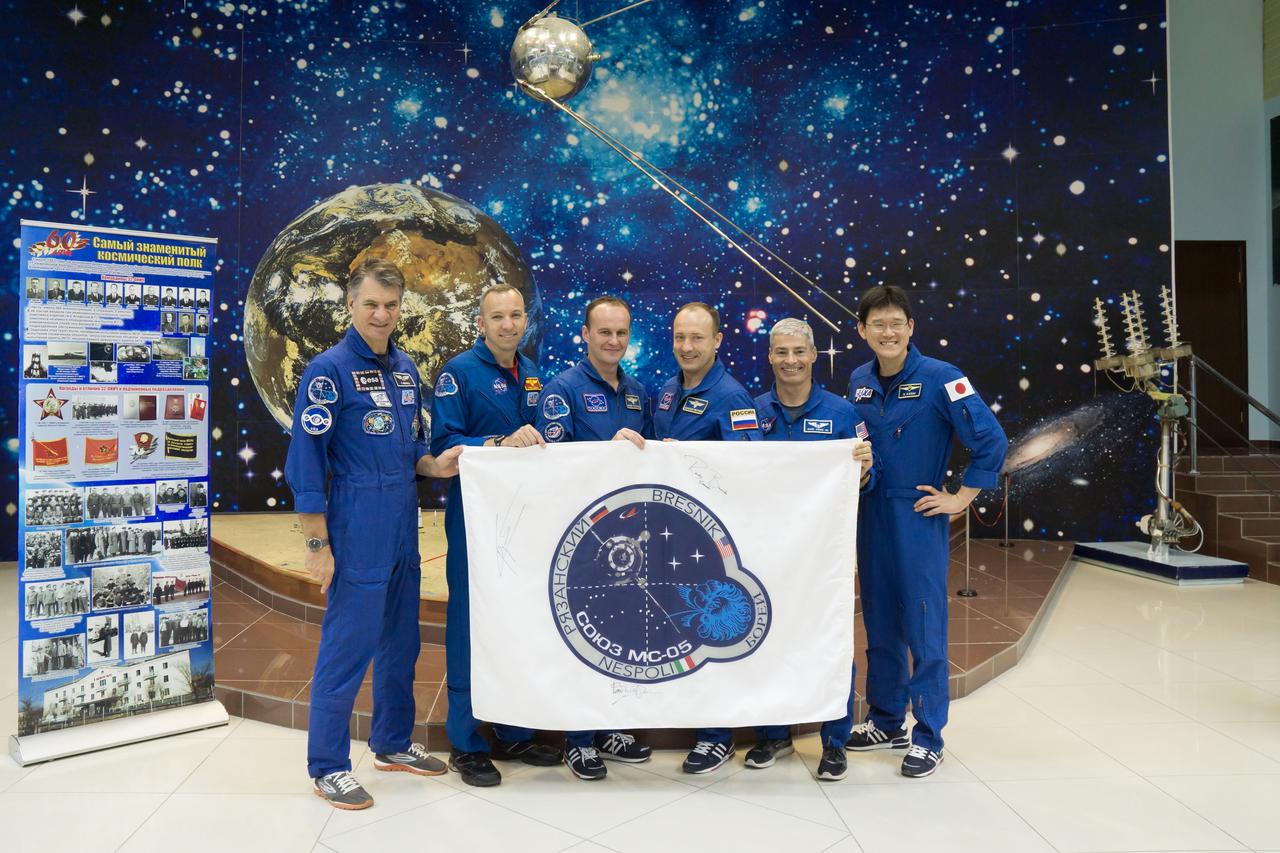
jsc2017e101951 (July 22, 2017) --- At the Baikonur Cosmodrome in Kazakhstan, the Expedition 52-53 prime and backup crewmembers pose for pictures with a flag bearing their Soyuz insignia at the Korolev Museum July 24 as part of traditional pre-launch activities. From left to right are prime crewmembers Paolo Nespoli of the European Space Agency, Randy Bresnik of NASA and Sergey Ryazanskiy of the Russian Federal Space Agency (Roscosmos) and backup crewmembers Alexander Misurkin of Roscosmos, Mark Vande Hei of NASA and Norishige Kanai of the Japan Aerospace Exploration Agency (JAXA). Nespoli, Bresnik and Ryazanskiy will launch July 28 aboard the Soyuz MS-05 spacecraft for a five-month mission on the International Space Station. Credit: NASA/Victor Zelentsov
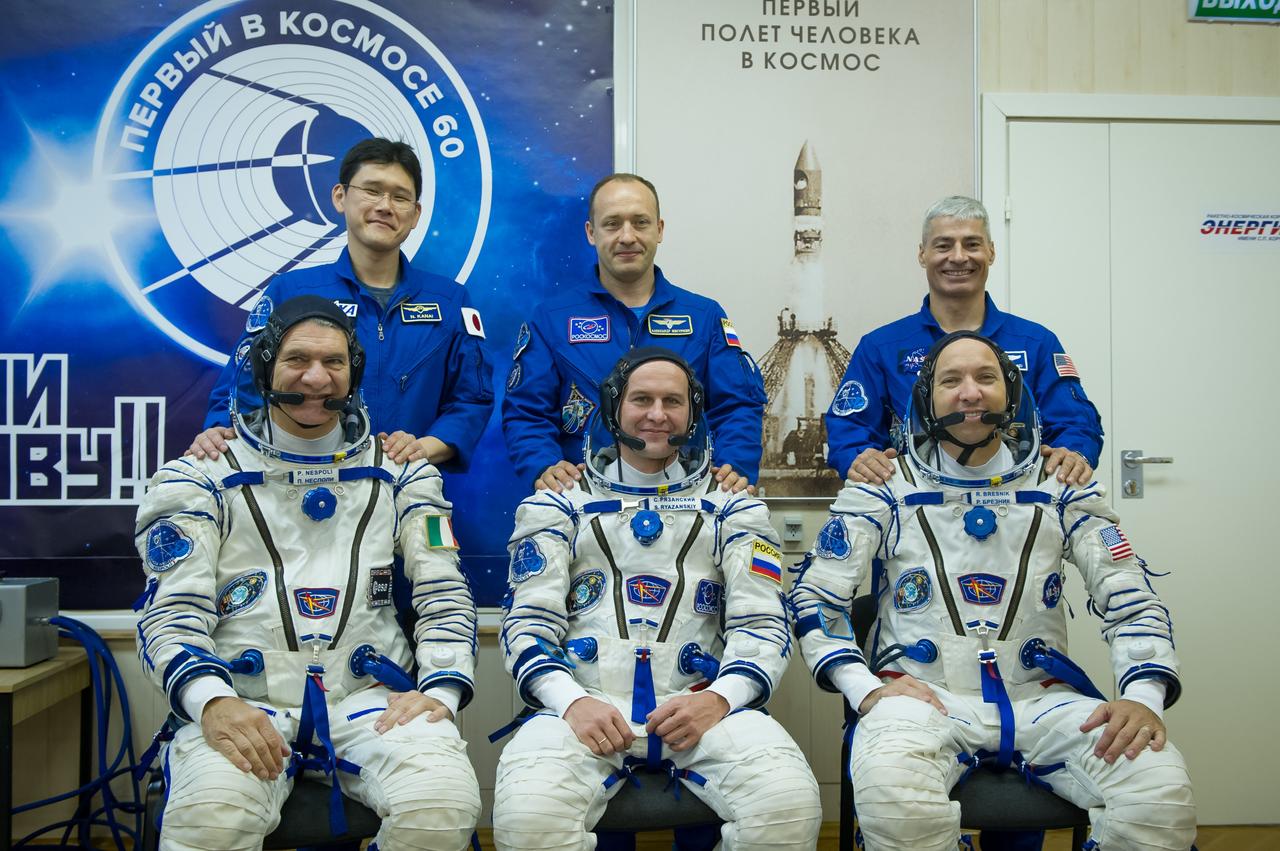
jsc2017e096670 (July 17, 2017) --- In the Integration Facility at the Baikonur Cosmodrome in Kazakhstan, the Expedition 52-53 prime and backup crewmembers pose for pictures July 17 during a fit check dress rehearsal. In the front row are the prime crewmembers, Paolo Nespoli of the European Space Agency (left), Sergey Ryazanskiy of the Russian Federal Space Agency (Roscosmos, center) and Randy Bresnik of NASA (right). In the back row are the backup crew, Norishige Kanai of the Japan Aerospace Exploration Agency (left), Alexander Misurkin of Roscosmos (center) and Mark Vande Hei of NASA (right). Bresnik, Ryazanskiy and Nespoli will launch July 28 on the Soyuz MS-05 spacecraft for a five-month mission on the International Space Station. Credit: Andrey Shelepin/Gagarin Cosmonaut Training Center
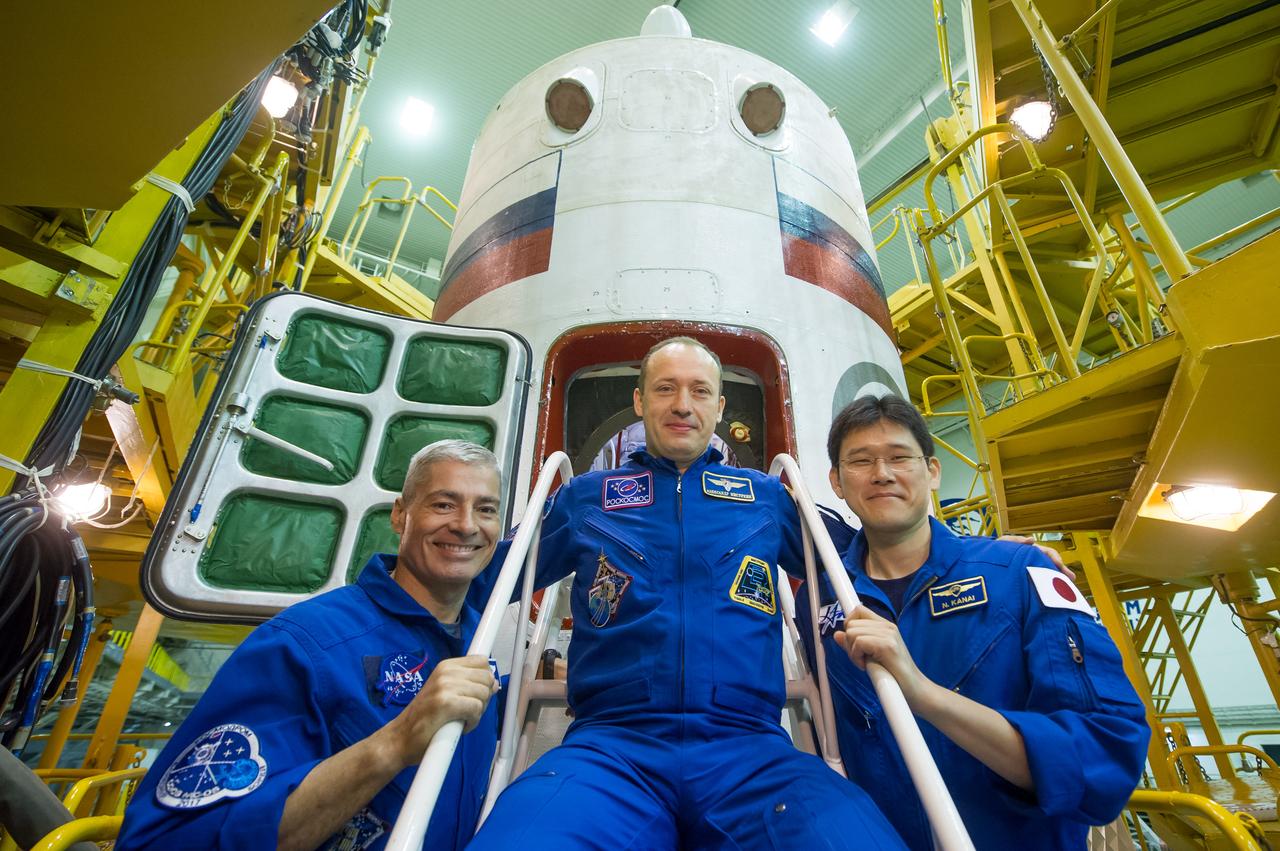
jsc2017e101958 (July 22, 2017) --- In the Integration Facility at the Baikonur Cosmodrome in Kazakhstan, Expedition 52-53 backup crewmembers Mark Vande Hei of NASA (left), Alexander Misurkin of the Russian Federal Space Agency (Roscosmos, center) and Norishige Kanai of the Japan Aerospace Exploration Agency (JAXA, right) pose for pictures in front of the Soyuz MS-05 spacecraft July 24 during their final fit check dress rehearsal. They are serving as the backups to Randy Bresnik of NASA, Sergey Ryazanskiy of Roscosmos and Paolo Nespoli of the European Space Agency, who will launch July 28 aboard the Soyuz MS-05 spacecraft for a five-month mission on the International Space Station. Credit: Andrey Shelepin/Gagarin Cosmonaut Training Center
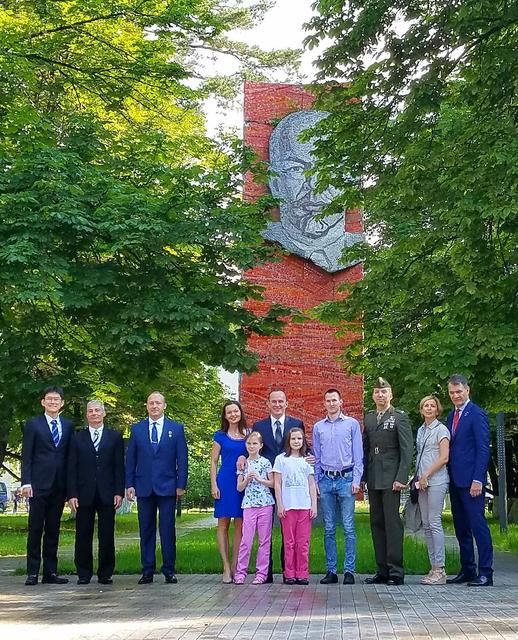
jsc2017e095970 (July 16, 2017) --- With a tree-shrouded statue of Vladimir Lenin serving as a backdrop at the Gagarin Cosmonaut Training Center in Star City, Russia, the Expedition 52-53 prime and backup crewmembers and some family members pose for pictures July 16 before the crewmembers flew to the Baikonur Cosmodrome in Kazakhstan for final pre-launch training. From left to right are backup crewmembers Norishige Kanai of the Japan Aerospace Exploration Agency (JAXA), Mark Vande Hei of NASA and Alexander Misurkin of the Russian Federal Space Agency (Roscosmos) and prime crewmembers Sergey Ryazanskiy of Roscosmos and his family, including his wife Alexandra, Randy Bresnik of NASA and Paolo Nespoli of the European Space Agency and his wife, Alexandra. Ryazanskiy, Bresnik and Nespoli will launch July 28 from Baikonur on the Soyuz MS-05 spacecraft for a five-month mission on the International Space Station. Credit: NASA/Beth Weissinger
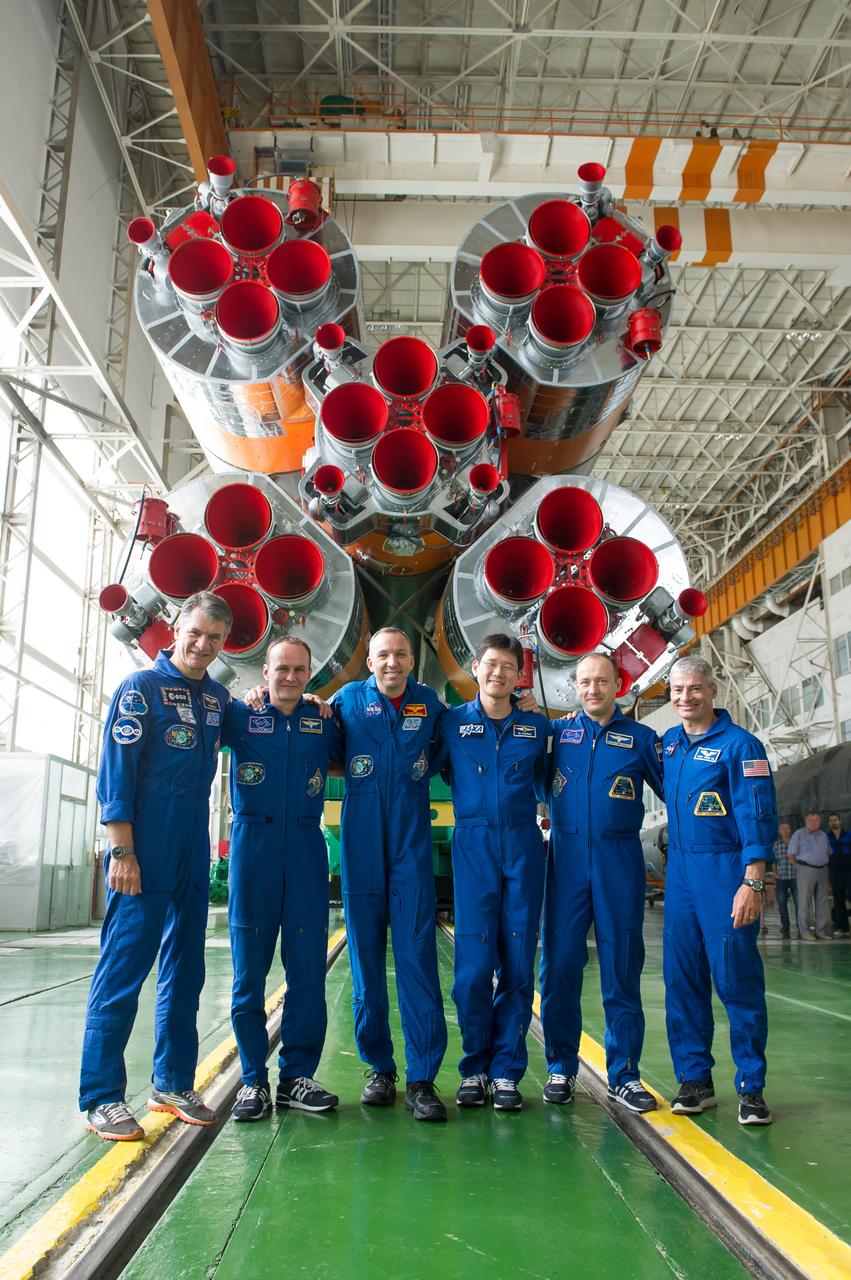
jsc2017e101962 (July 22, 2017) --- In the Integration Facility at the Baikonur Cosmodrome in Kazakhstan, the Expedition 52-53 prime and backups crews pose for pictures in front of the first stage engines of the Soyuz booster rocket July 24 as part of their final fit check dress rehearsal. From left to right are prime crewmembers Paolo Nespoli of the European Space Agency, Sergey Ryazanskiy of the Russian Federal Space Agency (Roscosmos) and Randy Bresnik of NASA and backup crewmembers Norishige Kanai of the Japan Aerospace Exploration Agency (JAXA), Alexander Misurkin of Roscosmos and Mark Vande Hei of NASA. Nespoli, Bresnik and Ryazanskiy will launch July 28 aboard the Soyuz MS-05 spacecraft for a five-month mission on the International Space Station. Credit: Andrey Shelepin/Gagarin Cosmonaut Training Center

jsc2017e096677 (July 17, 2017) --- In the Integration Facility at the Baikonur Cosmodrome in Kazakhstan, Expedition 52-53 backup crewmembers Norishige Kanai of the Japan Aerospace Exploration Agency (JAXA, left), Alexander Misurkin of the Russian Federal Space Agency (Roscosmos, center) and Mark Vande Hei of NASA (right) pose for pictures in front of the Soyuz MS-05 spacecraft July 17 as part of their fit check dress rehearsal activities. The trio is serving as backups for Paolo Nespoli of the European Space Agency, Sergey Ryazanskiy of Roscosmos and Randy Bresnik of NASA, who will launch July 28 on the Soyuz MS-05 spacecraft for a five-month mission on the International Space Station. Credit: Andrey Shelepin/Gagarin Cosmonaut Training Center

iss066e023184 (October 29, 2021) -- An astronaut cuts slices of red chile pepper during a taste test of chile peppers grown as part of the Plant Habitat-04 investigation aboard the International Space Station. The chile peppers started growing on July 12, 2021, and represent one of the longest and most challenging plant experiments attempted aboard the orbiting laboratory. NASA astronaut Mark Vande Hei conducted the first harvest of the pepper crop on October 29, 2021. Crew members sanitized the peppers and completed a scientific survey after their taste test. The Crew-3 astronauts will take over the crop when they arrive at the orbiting laboratory, and will conduct a final harvest of the peppers in late November. They will also sanitize and sample the crop, and complete surveys. Some peppers from the final harvest and their leaves will return to Earth for further analysis. What we learn will inform future crop growth and food supplementation activities for deep space exploration.
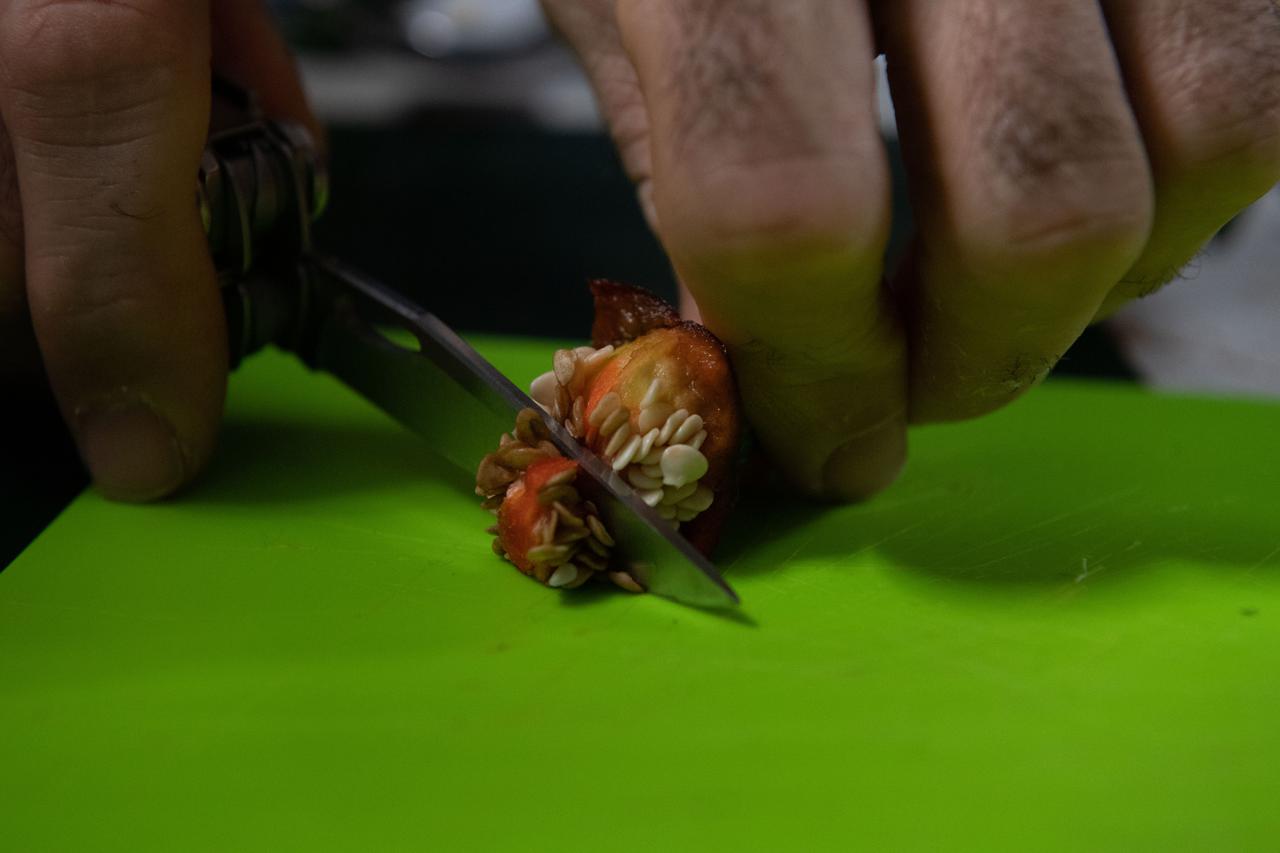
iss066e023187 (October 29, 2021) -- An astronaut cuts slices of red chile pepper during a taste test of chile peppers grown as part of the Plant Habitat-04 investigation aboard the International Space Station. The chile peppers started growing on July 12, 2021, and represent one of the longest and most challenging plant experiments attempted aboard the orbiting laboratory. NASA astronaut Mark Vande Hei conducted the first harvest of the pepper crop on October 29, 2021. Crew members sanitized the peppers and completed a scientific survey after their taste test. The Crew-3 astronauts will take over the crop when they arrive at the orbiting laboratory, and will conduct a final harvest of the peppers in late November. They will also sanitize and sample the crop, and complete surveys. Some peppers from the final harvest and their leaves will return to Earth for further analysis. What we learn will inform future crop growth and food supplementation activities for deep space exploration.
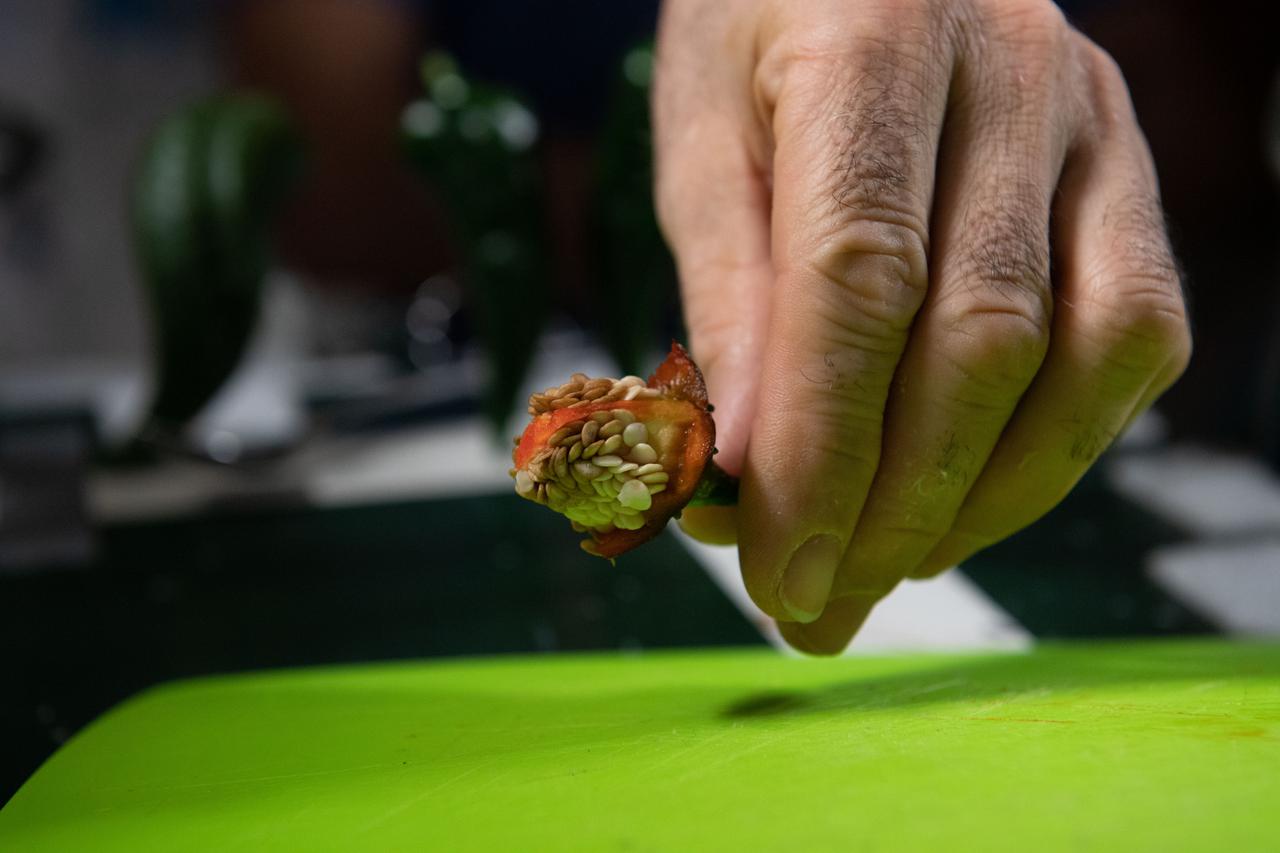
iss066e023185 (October 29, 2021) -- An astronaut cuts slices of red chile pepper during a taste test of chile peppers grown as part of the Plant Habitat-04 investigation aboard the International Space Station. The chile peppers started growing on July 12, 2021, and represent one of the longest and most challenging plant experiments attempted aboard the orbiting laboratory. NASA astronaut Mark Vande Hei conducted the first harvest of the pepper crop on October 29, 2021. Crew members sanitized the peppers and completed a scientific survey after their taste test. The Crew-3 astronauts will take over the crop when they arrive at the orbiting laboratory, and will conduct a final harvest of the peppers in late November. They will also sanitize and sample the crop, and complete surveys. Some peppers from the final harvest and their leaves will return to Earth for further analysis. What we learn will inform future crop growth and food supplementation activities for deep space exploration.
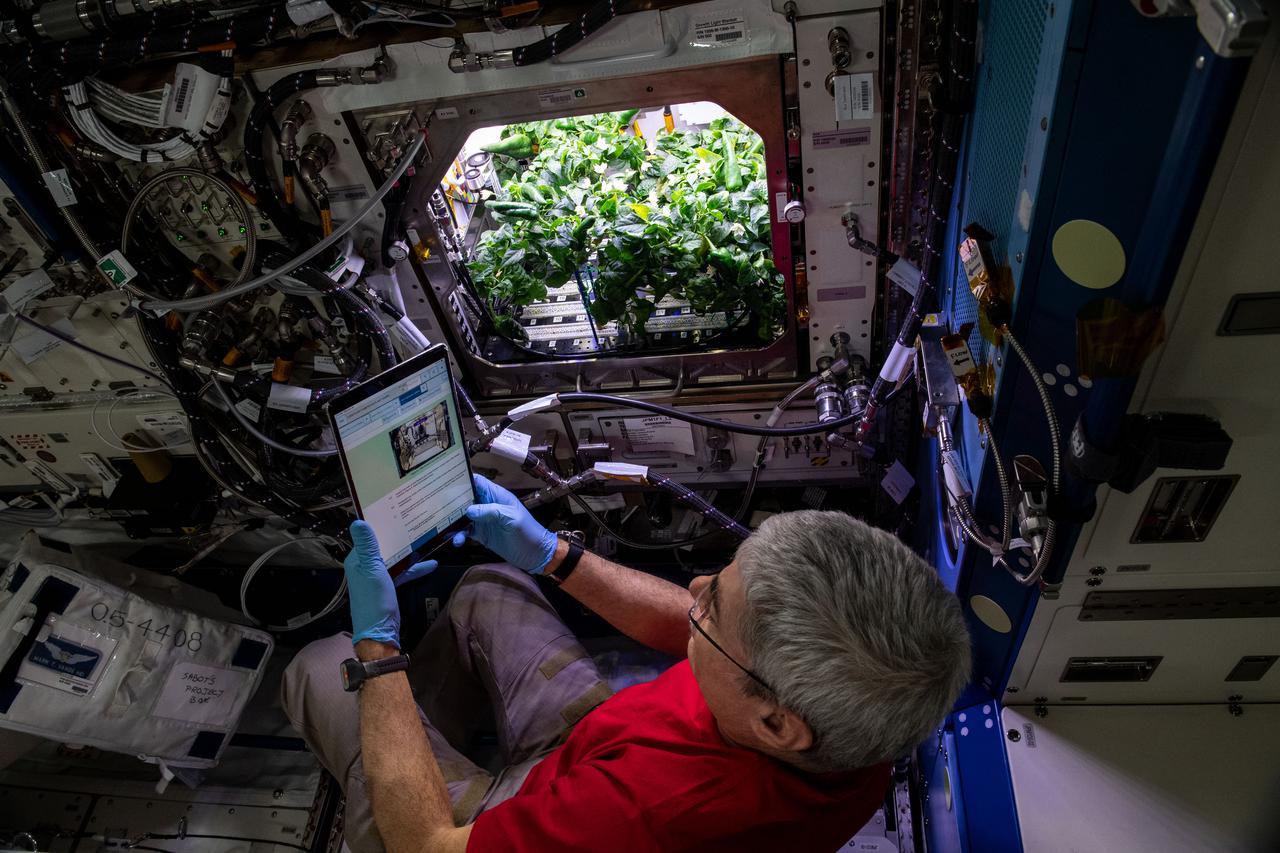
iss066e008125 (October 20, 2021) -- NASA astronaut and Expedition 65 Flight Engineer Mark Vande Hei prepares for the routine debris removal procedure for chile peppers growing in the Advanced Plant Habitat as part of the Plant Habit-04 experiment being conducted aboard the International Space Station. The chile pepper seeds started growing on July 12, 2021, and represent one of the longest and most challenging plant experiments attempted aboard the orbiting laboratory. They will be harvested twice, once in late October and again in late November. Astronauts will sanitize the peppers, eat part of their harvest, and return the rest to Earth for analysis. What we learn will inform future crop growth and food supplementation activities for deep space exploration.
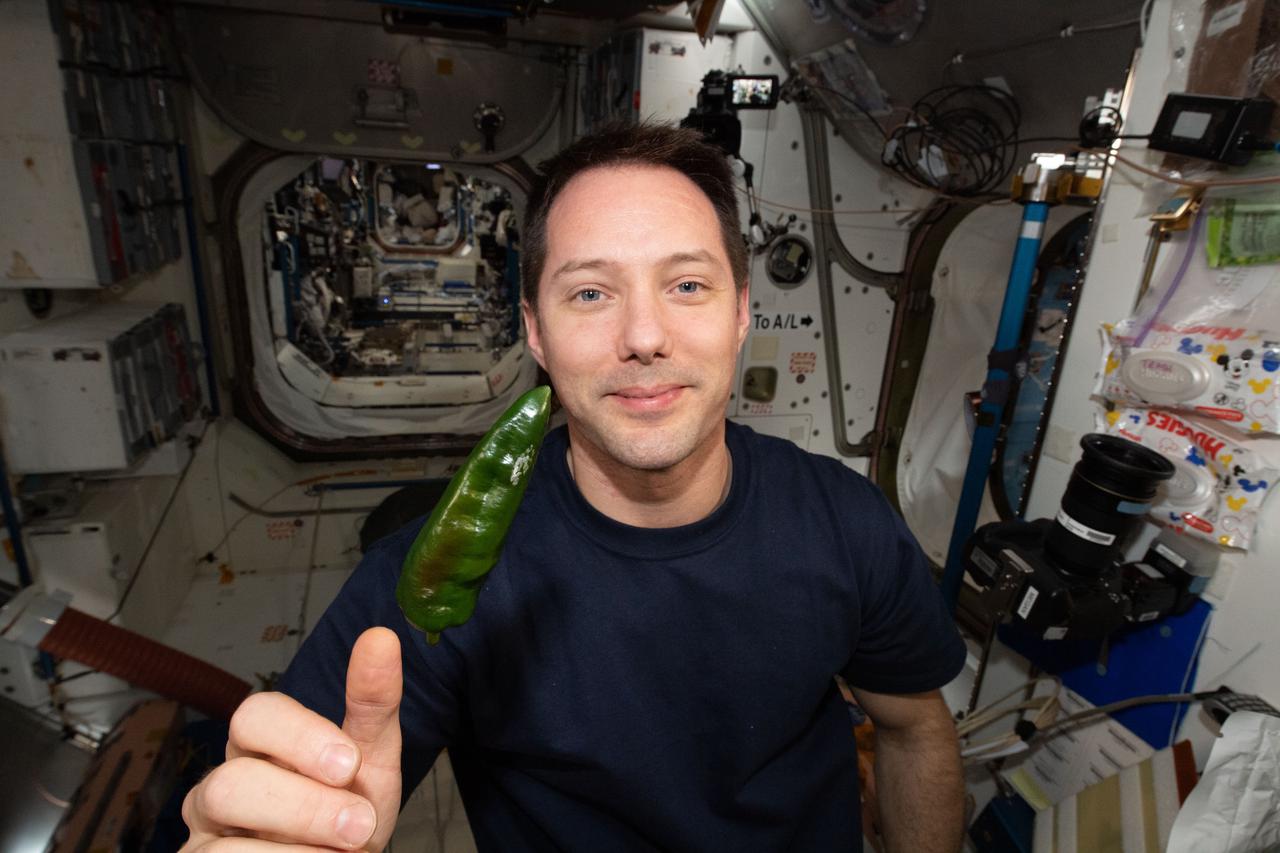
iss066e023273 (October 29, 2021) -- ESA (European Space Agency) astronaut and Expedition 66 commander Thomas Pesquet is seen with a green chile pepper during a taste test as part of the Plant Habitat-04 investigation aboard the International Space Station. The chile peppers started growing on July 12, 2021, and represent one of the longest and most challenging plant experiments attempted aboard the orbiting laboratory. The chile peppers started growing on July 12, 2021, and represent one of the longest and most challenging plant experiments attempted aboard the orbiting laboratory. NASA astronaut and Expedition 66 flight engineer Mark Vande Hei conducted the first harvest of the pepper crop on October 29, 2021. Crew members sanitized the peppers and completed a scientific survey after their taste test. The Crew-3 astronauts will take over the crop when they arrive at the orbiting laboratory, and will conduct a final harvest of the peppers in late November. They will also sanitize and sample the crop, and complete surveys. Some peppers and their leaves from the final harvest will return to Earth for further analysis. What we learn will inform future crop growth and food supplementation activities for deep space exploration.
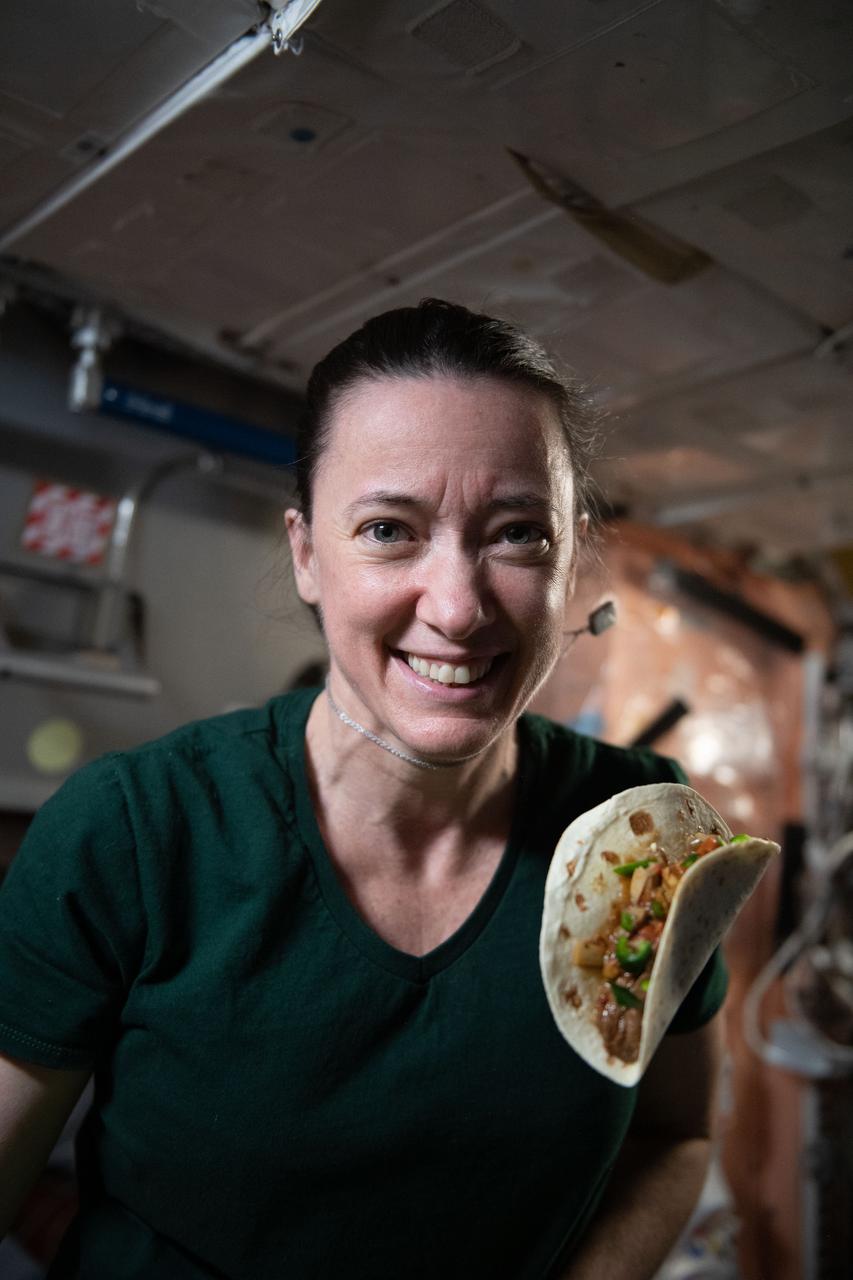
iss066e023198 (October 29, 2021) -- NASA astronaut and Expedition 66 flight engineer Megan McArthur is seen with a taco made using fajita beef, rehydrated tomatoes and artichokes, and chile peppers. The chile peppers were grown as part of the Plant Habitat-04 investigation aboard the International Space Station. The crop started growing on July 12, 2021, and represent one of the longest and most challenging plant experiments attempted aboard the orbiting laboratory. The chile peppers started growing on July 12, 2021, and represent one of the longest and most challenging plant experiments attempted aboard the orbiting laboratory. NASA astronaut and Expedition 66 flight engineer Mark Vande Hei conducted the first harvest of the pepper crop on October 29, 2021. Crew members sanitized the peppers and completed a scientific survey after their taste test. The Crew-3 astronauts will take over the crop when they arrive at the orbiting laboratory, and will conduct a final harvest of the peppers in late November. They will also sanitize and sample the crop, and complete surveys. Some peppers and their leaves from the final harvest will return to Earth for further analysis. What we learn will inform future crop growth and food supplementation activities for deep space exploration.
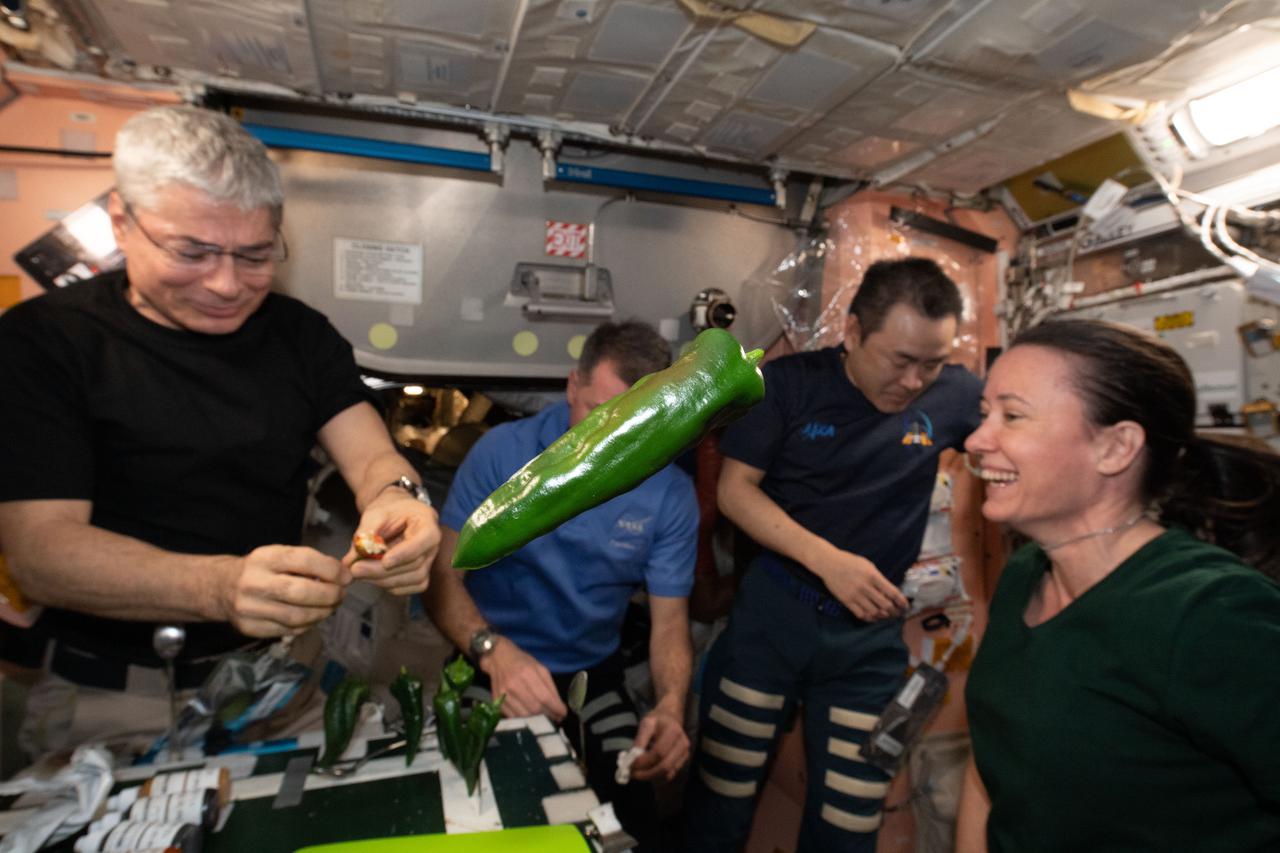
iss066e023272 (October 29, 2021) -- A green chile pepper is seen floating as Expedition 66 crew members conduct a taste test as part of the Plant Habitat-04 investigation aboard the International Space Station. The chile peppers started growing on July 12, 2021, and represent one of the longest and most challenging plant experiments attempted aboard the orbiting laboratory. The chile peppers started growing on July 12, 2021, and represent one of the longest and most challenging plant experiments attempted aboard the orbiting laboratory. NASA astronaut and Expedition 66 flight engineer Mark Vande Hei conducted the first harvest of the pepper crop on October 29, 2021. Crew members sanitized the peppers and completed a scientific survey after their taste test. The Crew-3 astronauts will take over the crop when they arrive at the orbiting laboratory, and will conduct a final harvest of the peppers in late November. They will also sanitize and sample the crop, and complete surveys. Some peppers and their leaves from the final harvest will return to Earth for further analysis. What we learn will inform future crop growth and food supplementation activities for deep space exploration.
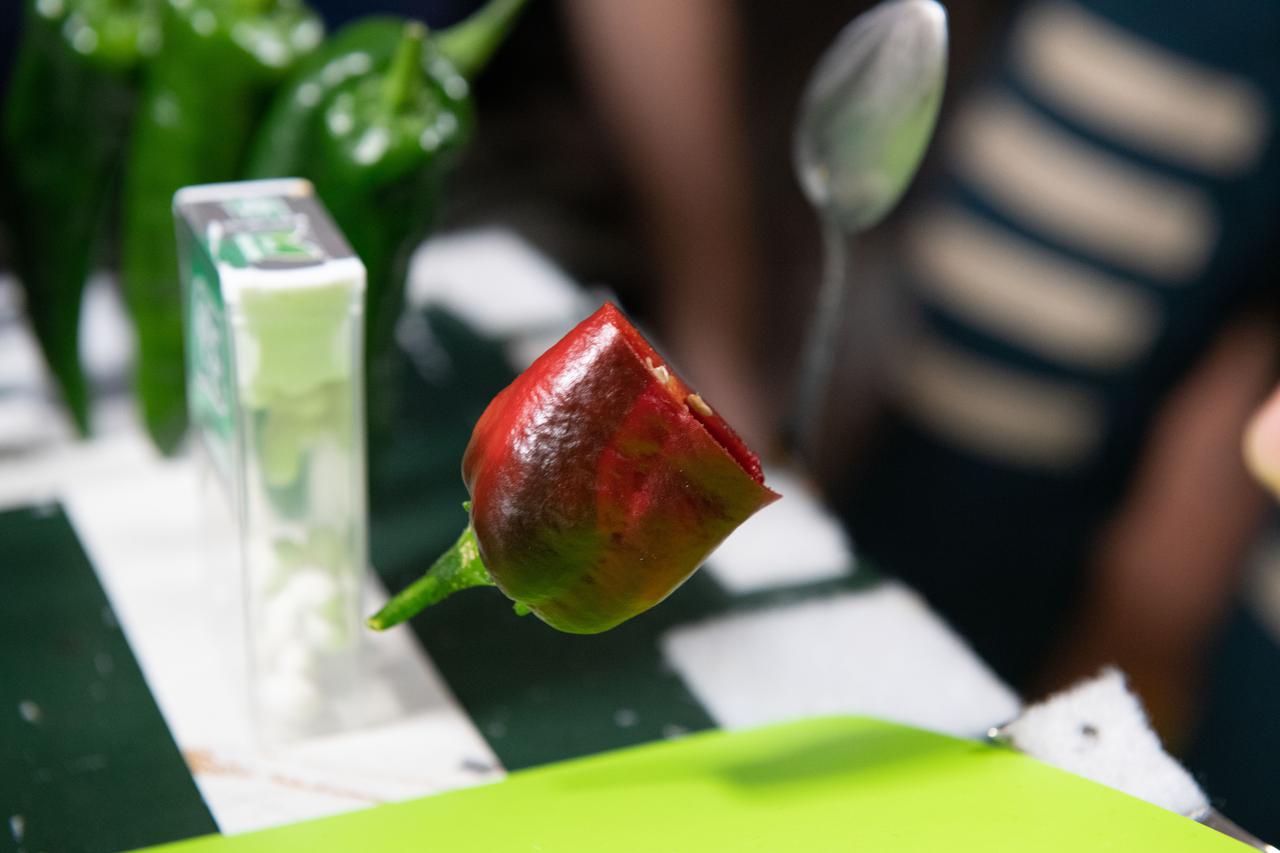
iss066e023165 (October 29, 2021) -- A red chile pepper is seen floating above a cutting board during the tasting of peppers grown as part of the Plant Habitat-04 investigation aboard the International Space Station. The chile peppers started growing on July 12, 2021, and represent one of the longest and most challenging plant experiments attempted aboard the orbiting laboratory. NASA astronaut and Expedition 66 flight engineer Mark Vande Hei conducted the first harvest of the pepper crop on October 29, 2021. Crew members sanitized the peppers and completed a scientific survey after their taste test. The Crew-3 astronauts will take over the crop when they arrive at the orbiting laboratory, and will conduct a final harvest of the peppers in late November. They will also sanitize and sample the crop, and complete surveys. Some peppers and their leaves from the final harvest will return to Earth for further analysis. What we learn will inform future crop growth and food supplementation activities for deep space exploration.