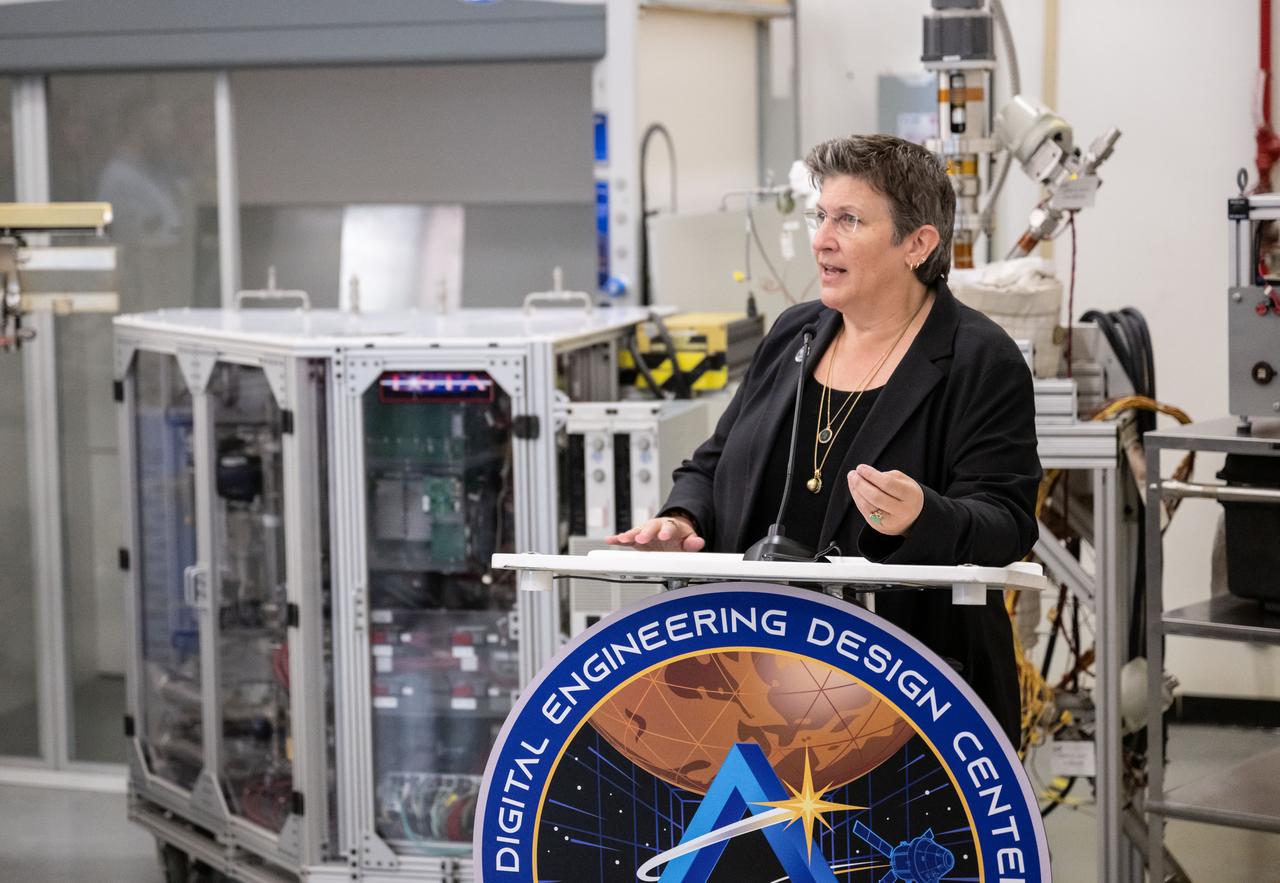
Date: 06-01-2023 Location: Bldg 360 Subject: University of Texas - El Paso (UTEP) Ribbon Cutting Ceremony for the Digital Engineering Design Center in Building 360 Lab Photographer: James Blair
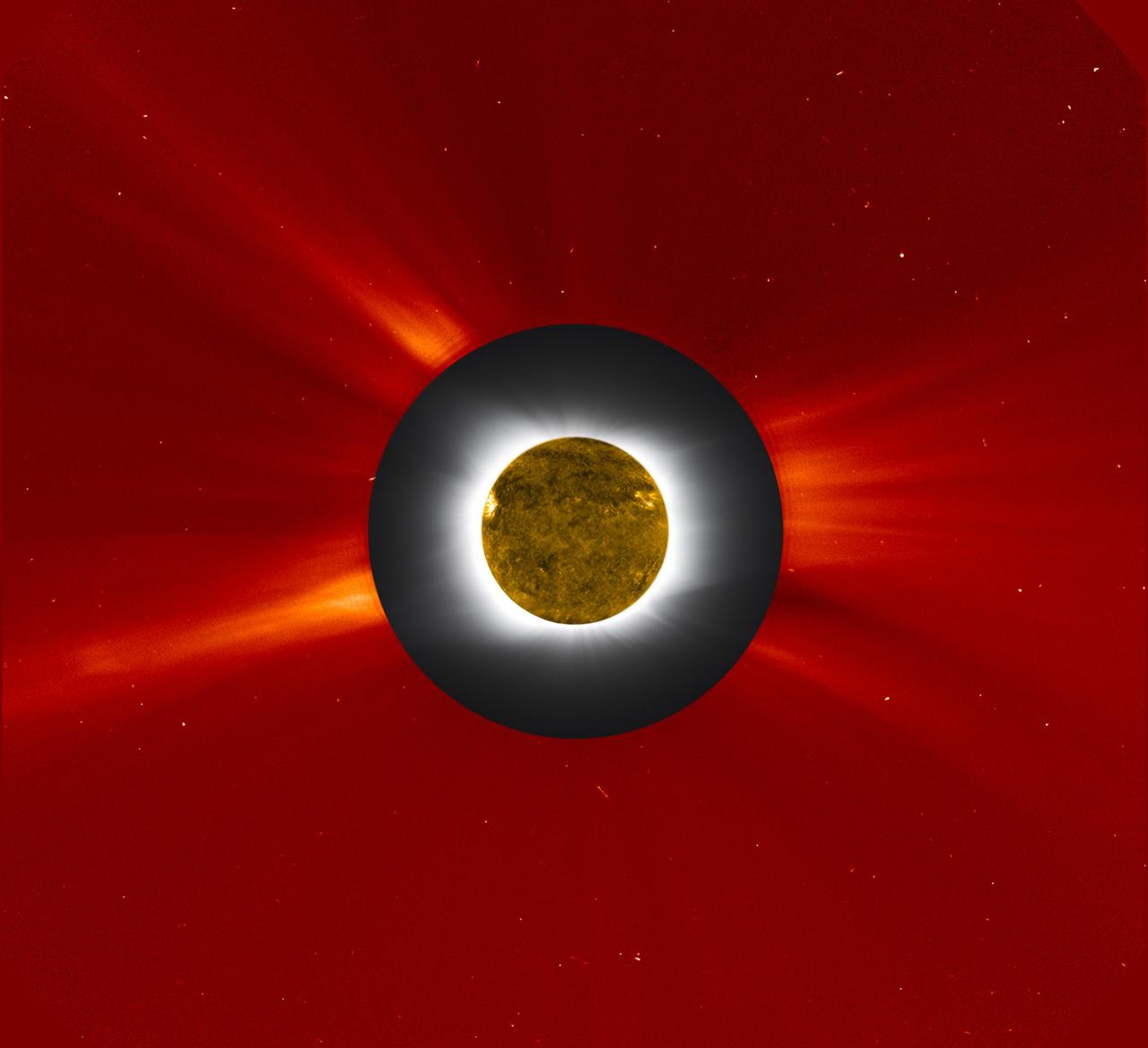
Eclipse 2010 Composite A solar eclipse photo (gray and white) from the Williams College Expedition to Easter Island in the South Pacific (July 11, 2010) was embedded with an image of the Sun’s outer corona taken by the Large Angle Spectrometric Coronagraph (LASCO) on the SOHO spacecraft and shown in red false color. LASCO uses a disk to blot out the bright sun and the inner corona so that the faint outer corona can be monitored and studied. Further, the dark silhouette of the moon was covered with an image of the Sun taken in extreme ultraviolet light at about the same time by the Atmospheric Imaging Assembly on Solar Dynamics Observatory (SDO). The composite brings out the correlation of structures in the inner and outer corona. Credits: Williams College Eclipse Expedition -- Jay M. Pasachoff, Muzhou Lu, and Craig Malamut; SOHO’s LASCO image courtesy of NASA/ESA; solar disk image from NASA’s SDO; compositing by Steele Hill, NASA Goddard Space Flight Center. NASA Goddard Space Flight Center is home to the nation's largest organization of combined scientists, engineers and technologists that build spacecraft, instruments and new technology to study the Earth, the sun, our solar system, and the universe.

Hubble Views Ancient Storm in the Atmosphere of Jupiter - July, 1994

Titan T16 Viewed by Cassini Radar - July 22, 2006
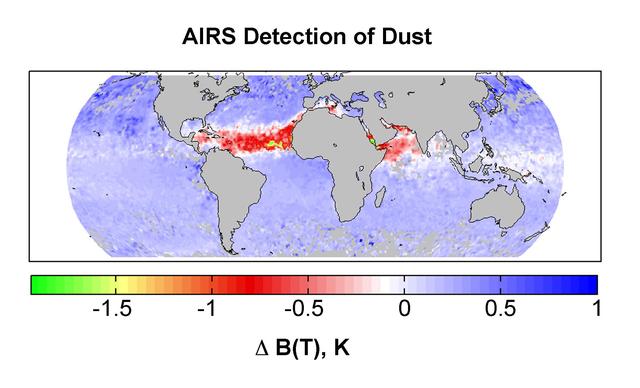
Detection of dust: global map for July 2003 from the Atmospheric Infrared Sounder AIRS on NASA Aqua satellite.
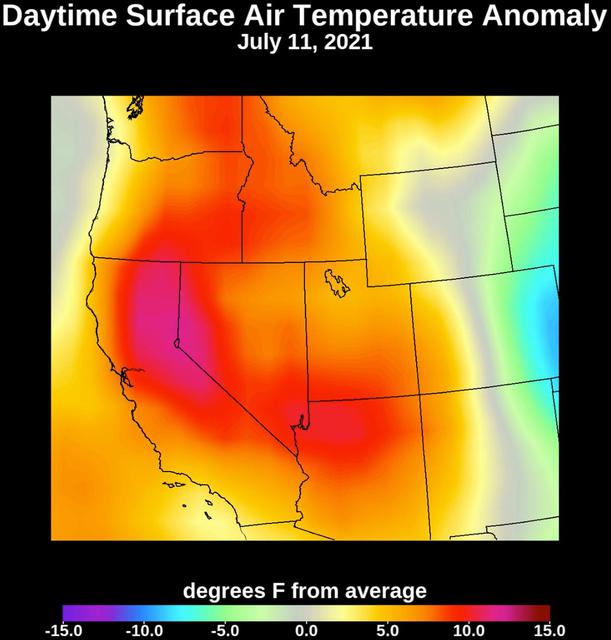
Collecting temperature readings in the atmosphere and at the surface, NASA's Atmospheric Infrared Sounder (AIRS) instrument aboard the agency's Aqua satellite captured the progression of a slow-moving heat dome across the southwestern U.S. from July 1 to July 12, 2021. The animation of the AIRS data shows surface air temperature anomalies – values above or below long-term averages. The hottest areas, shown in pink, experienced surface air temperatures more than 10 degrees Fahrenheit (5.6 degrees Celsius) above average. Surface air temperature is something that people directly feel when they are outside. Animation available at https://photojournal.jpl.nasa.gov/catalog/PIA23693

Deputy Chief Technologist Julie Williams-Byrd of NASA Langley Research Center speaks to Norfolk State University students following a “Hidden Figures to Modern Figures” event on February 6, 2018. (Credit: NASA)
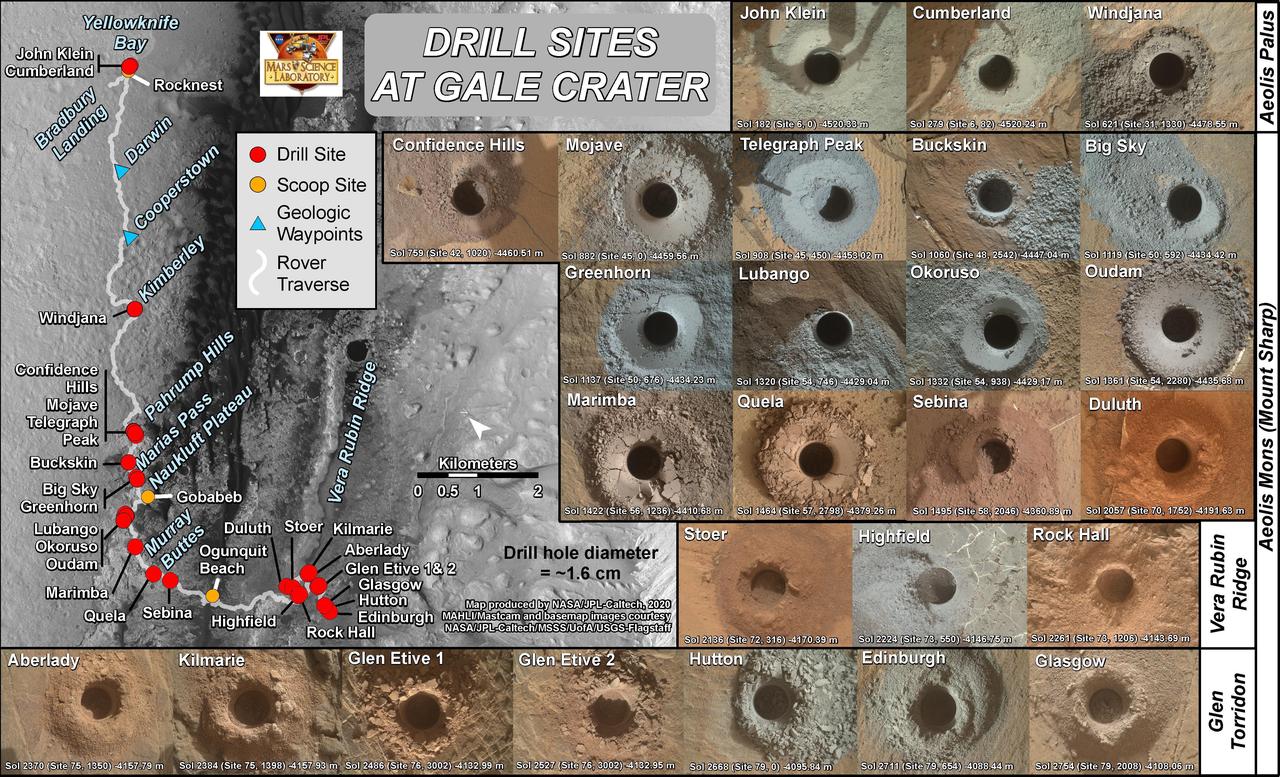
These 26 holes represent each of the rock samples NASA's Curiosity Mars rover has collected as of early July 2020. A map in the upper left shows where the holes were drilled along the rover's route, along with where it scooped six samples of soil. https://photojournal.jpl.nasa.gov/catalog/PIA23977
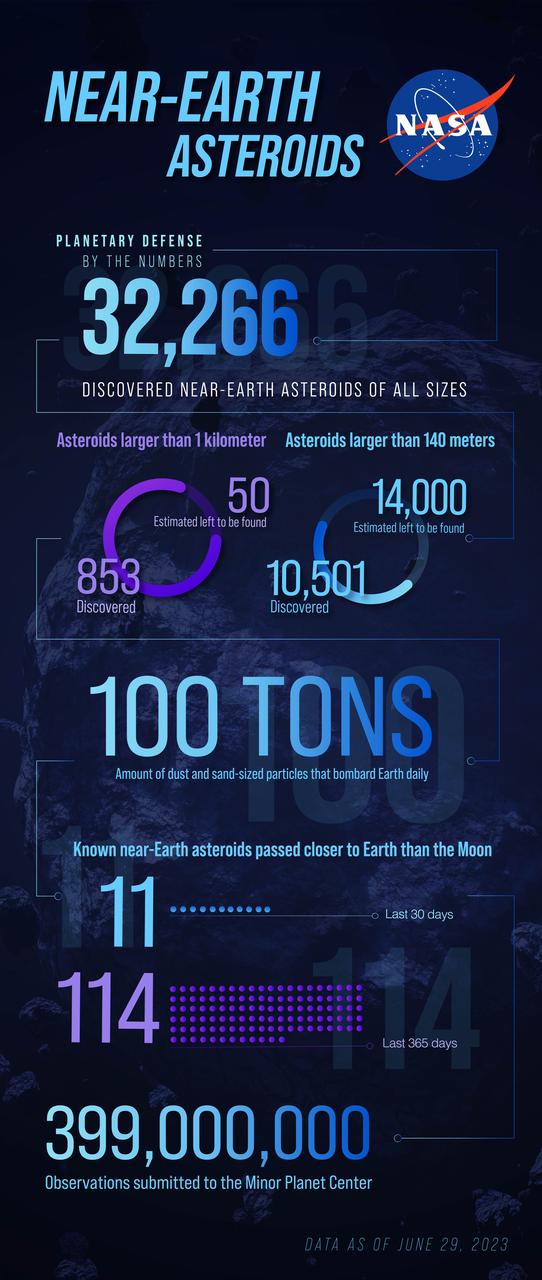
Near-Earth objects (NEOs) are asteroids and comets that orbit the Sun like the planets with orbits that come within 30 million miles of Earth’s orbit. NASA established the Planetary Defense Coordination Office (PDCO) to manage the agency’s ongoing efforts in Planetary Defense, which is the “applied planetary science” to address the NEO impact hazard. One key element of the PDCO is NASA’s NEO Observations program, which is composed of projects to find, track, and characterize NEOs. Here’s what we’ve found so far. This page is updated monthly with the most up-to-date numbers.
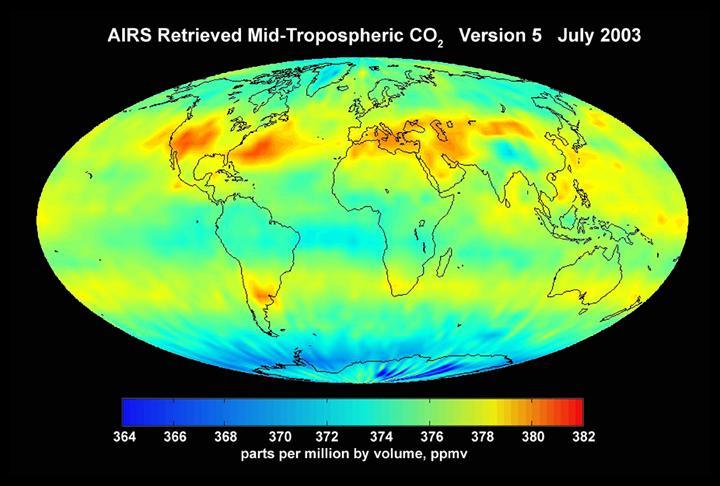
AIRS mid-tropospheric CO2, Version 5, July 2003 from the Atmospheric Infrared Sounder AIRS on NASA Aqua satellite.
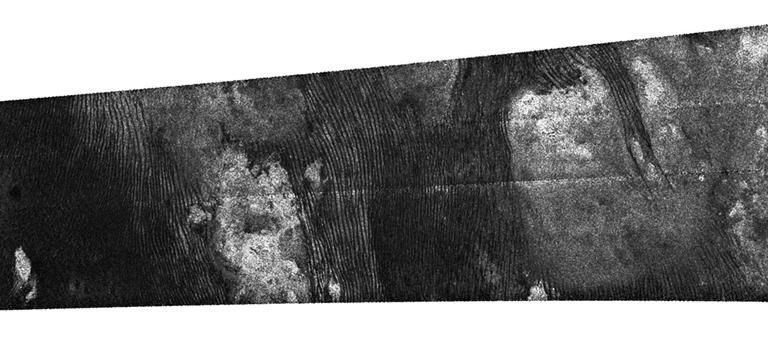
This image was obtained by NASA's Cassini radar instrument during a flyby on July 8, 2009. The radar antenna was pointing toward Titan at a 900 km altitude at the closest approach. The image has been processed with a resolution of 128 pixels/deg. https://photojournal.jpl.nasa.gov/catalog/PIA04398
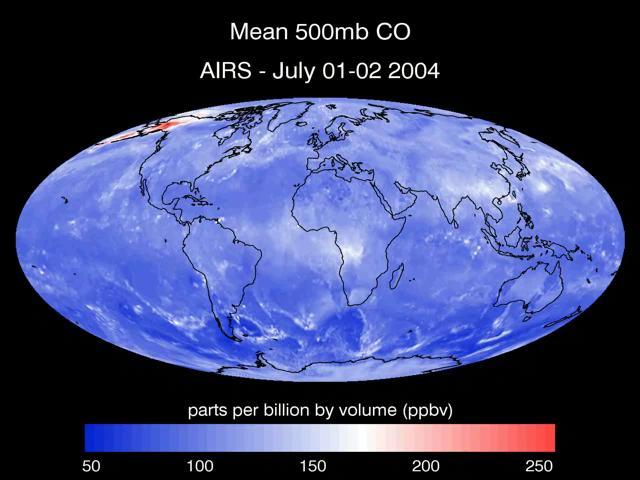
A series of maps of the transport of carbon monoxide generated by Alaska Fires, July 2004, created by data from the Atmospheric Infrared Sounder AIRS on NASA Aqua satellite.

Artemis logo
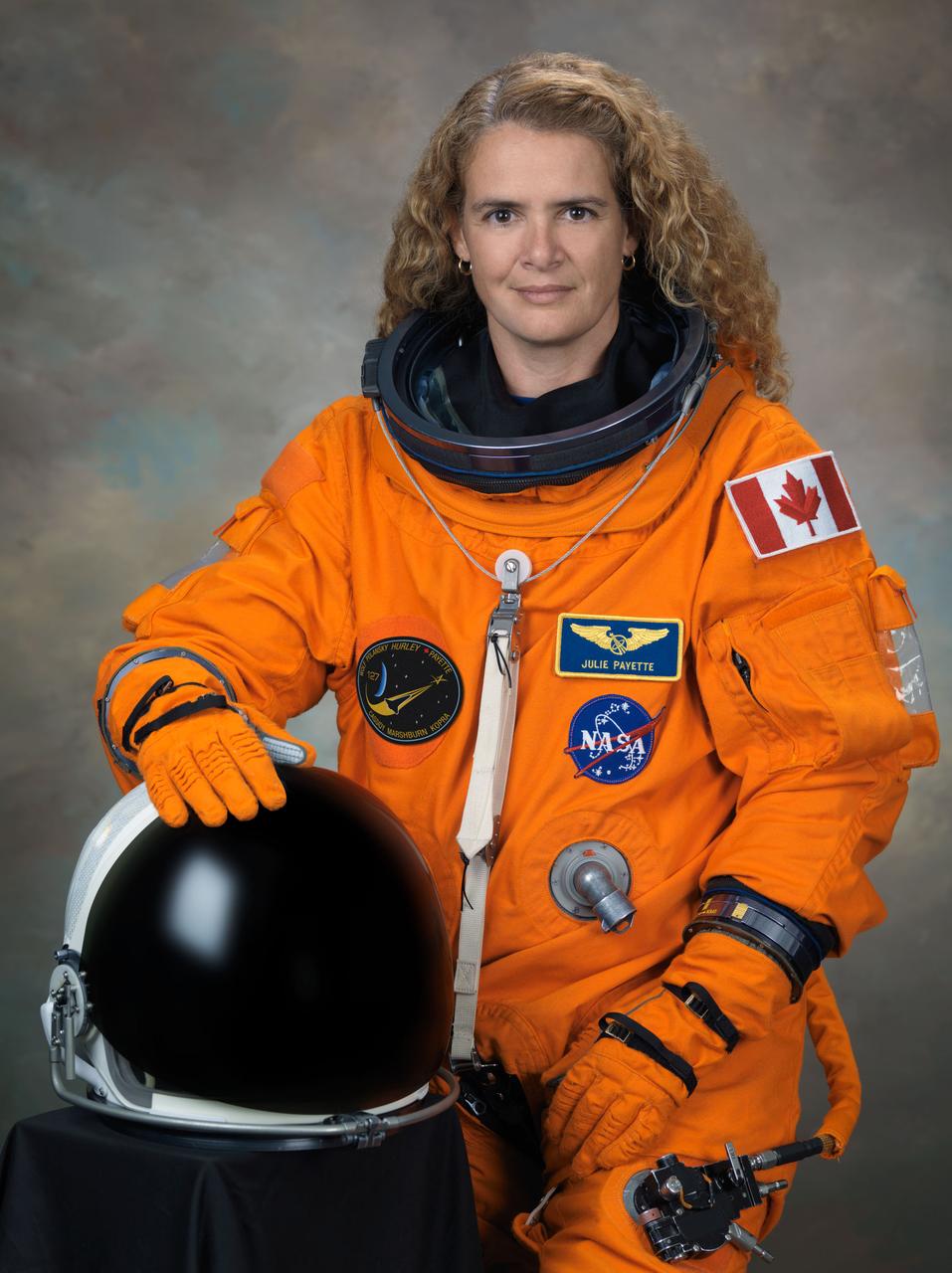
Official ACES Suit Astronaut Portrait for Julie Payette
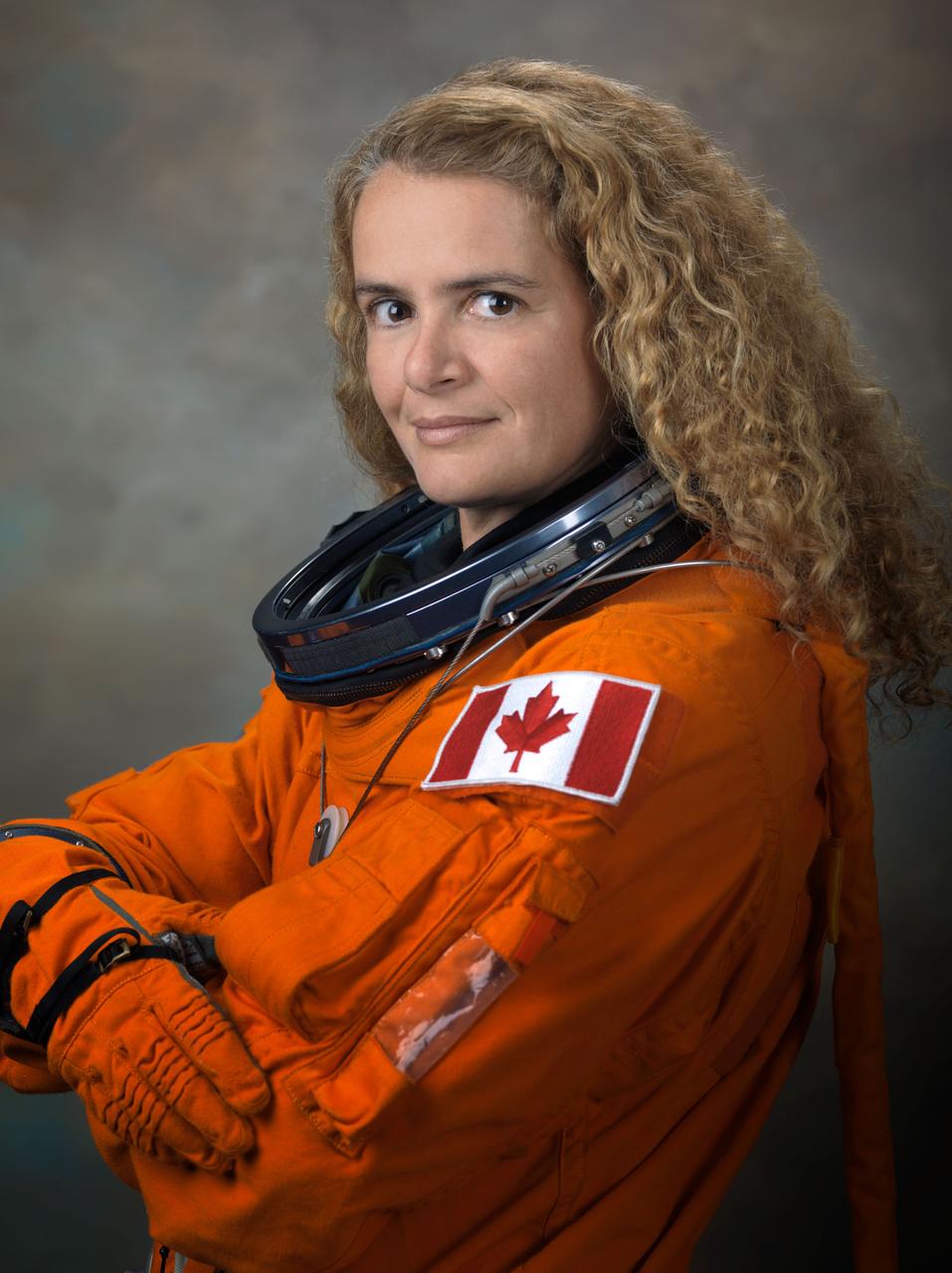
Alternate ACES Suit Astronaut Portrait for Julie Payette
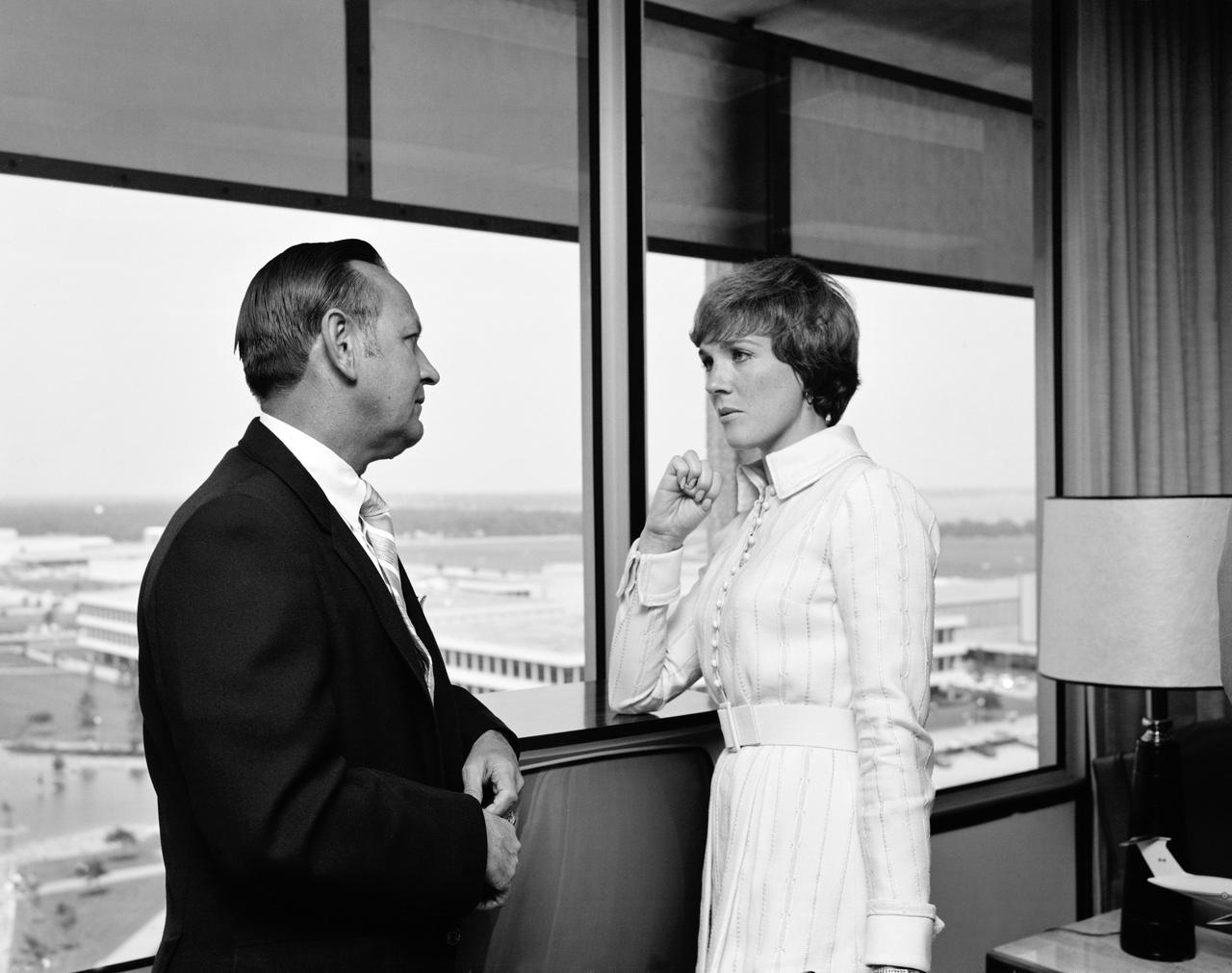
Views of Julie Andrews as she and her entourage visit MSC with Astronauts Thomas Stafford and Joe Kerwin; Public Affairs Officer Brian Duff; James McLane, Bldg. 32; and, Dr. Christopher C. Kraft. 1. KRAFT, C. C., DR. - JULIE ANDREWS TOUR 2. ANDREWS, JULIE - TOUR MSC, HOUSTON, TX

This image was obtained by NASA Cassini radar instrument during a flyby on July 7, 2010. Southern mid-latitudes trailing hemisphere, Northern Mezzoramia. https://photojournal.jpl.nasa.gov/catalog/PIA06679
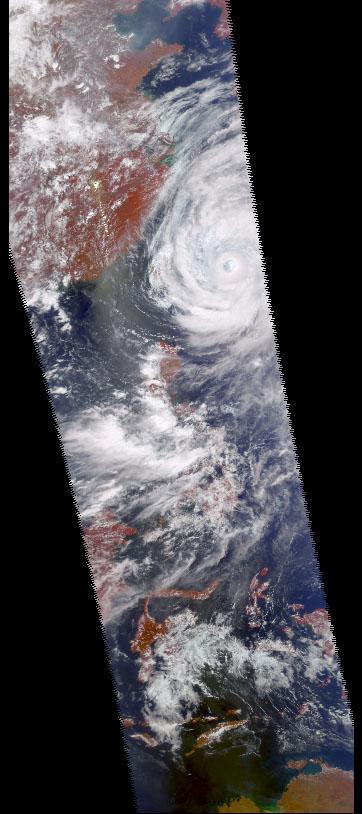
These four images of Tropical Cyclone Ramasun were obtained July 3, 2002 by the Atmospheric Infrared Sounder experiment system onboard NASA Aqua spacecraft. http://photojournal.jpl.nasa.gov/catalog/PIA00341
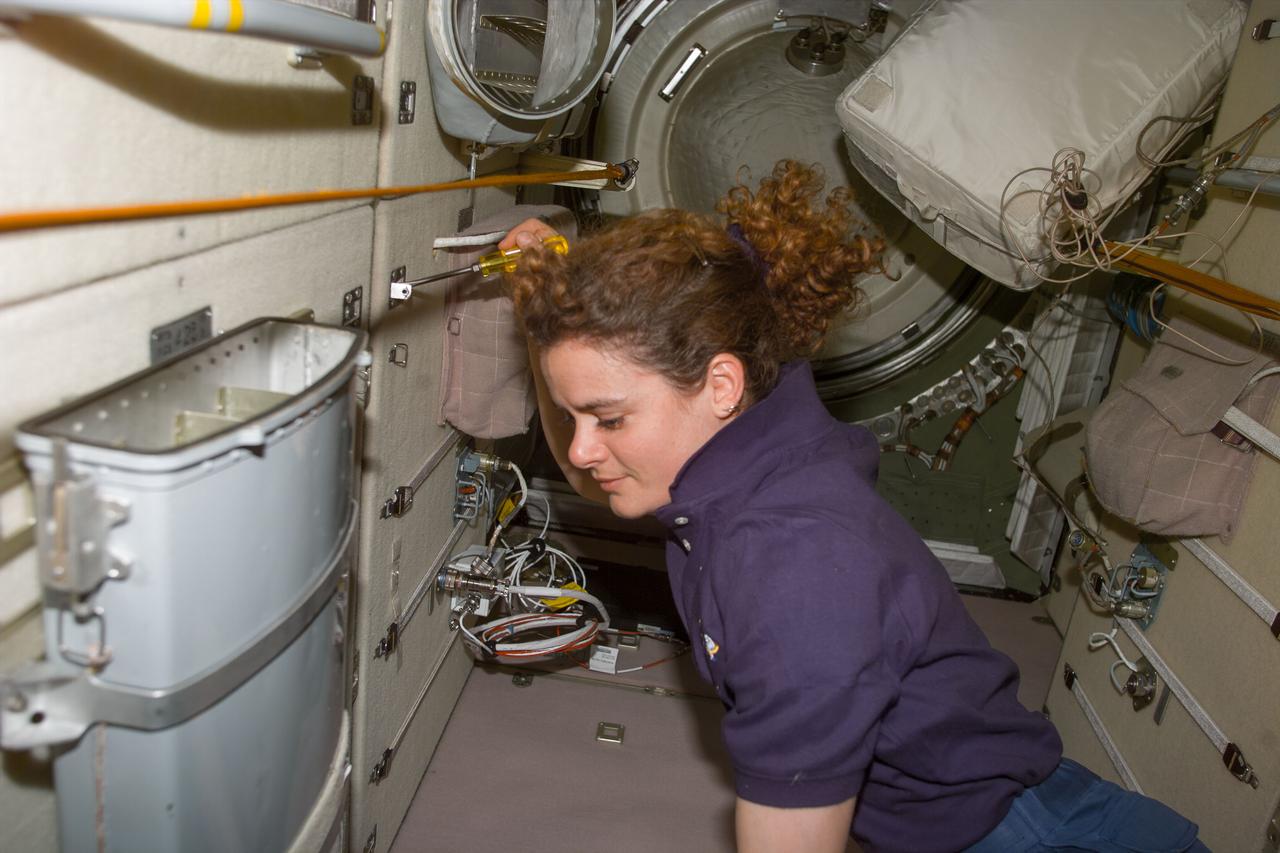
S96-E-5122 (1 June 1999) --- Astronaut Julie Payette uses a conventional screw driver while performing a Flight Day 6 task in the Russian-built Zarya module. The photo was recorded with an electronic still camera (ESC) at 07:47:47 GMT, June 1, 1999.
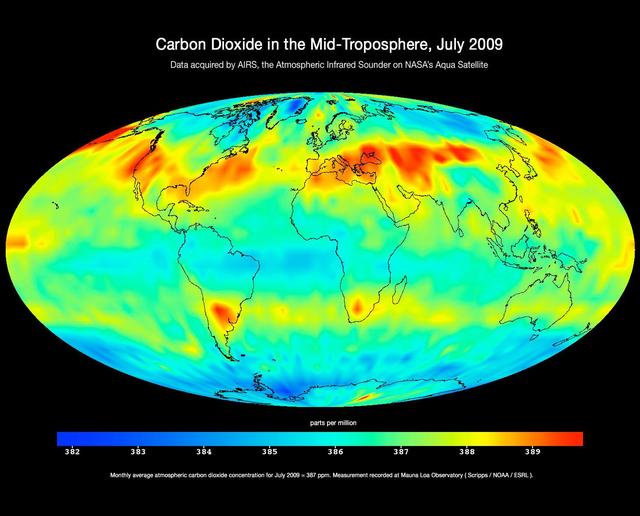
Created with data acquired by JPL Atmospheric Infrared Sounder instrument during July 2009 this image shows large-scale patterns of carbon dioxide concentrations that are transported around Earth by the general circulation of the atmosphere.
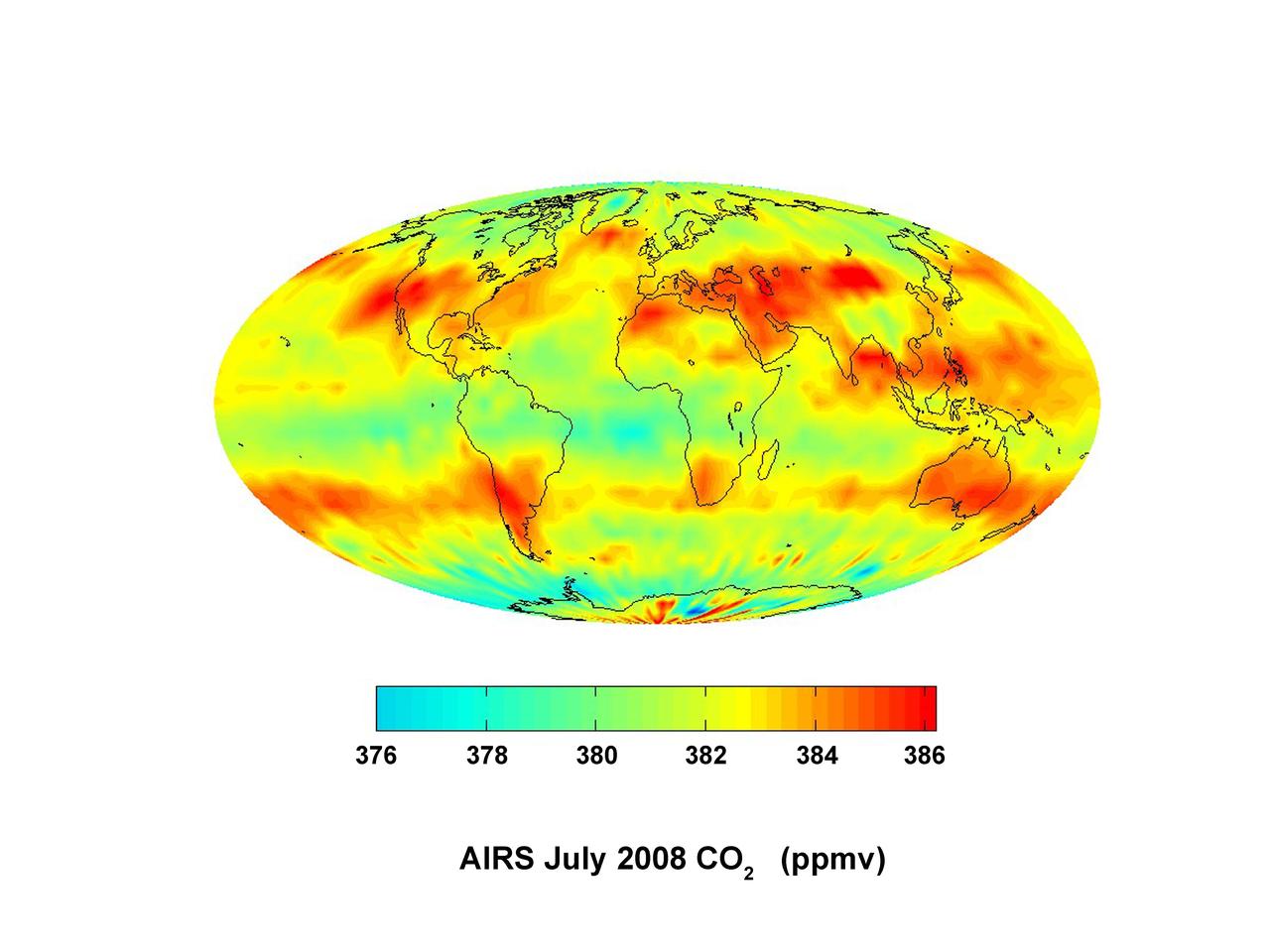
This image was created with data acquired by JPLa Atmospheric Infrared Sounder during July 2008. The image shows large scale patterns of carbon dioxide concentrations that are transported around the Earth by the general circulation of the atmosphere.
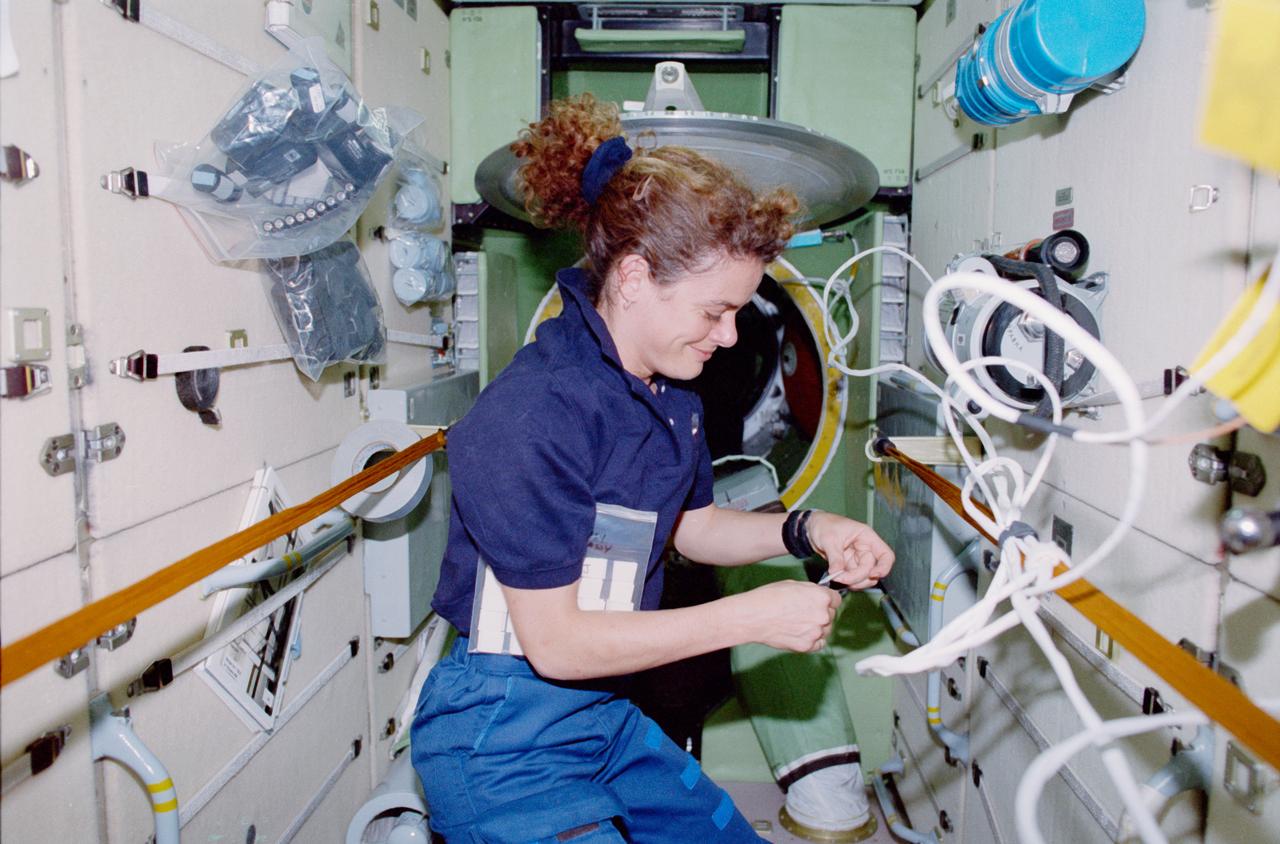
STS096-409-010 (27 May - 6 June 1999) --- Astronaut Julie Payette works inside the Russian-built Zarya module as she joins other members of the STS-96 crew (out of frame) in applying final touches on the elements of the International Space Station (ISS), which was docked with Discovery. Payette, an alumnus of the 1996 class of astronaut trainees, represents the Canadian Space Agency (CSA).
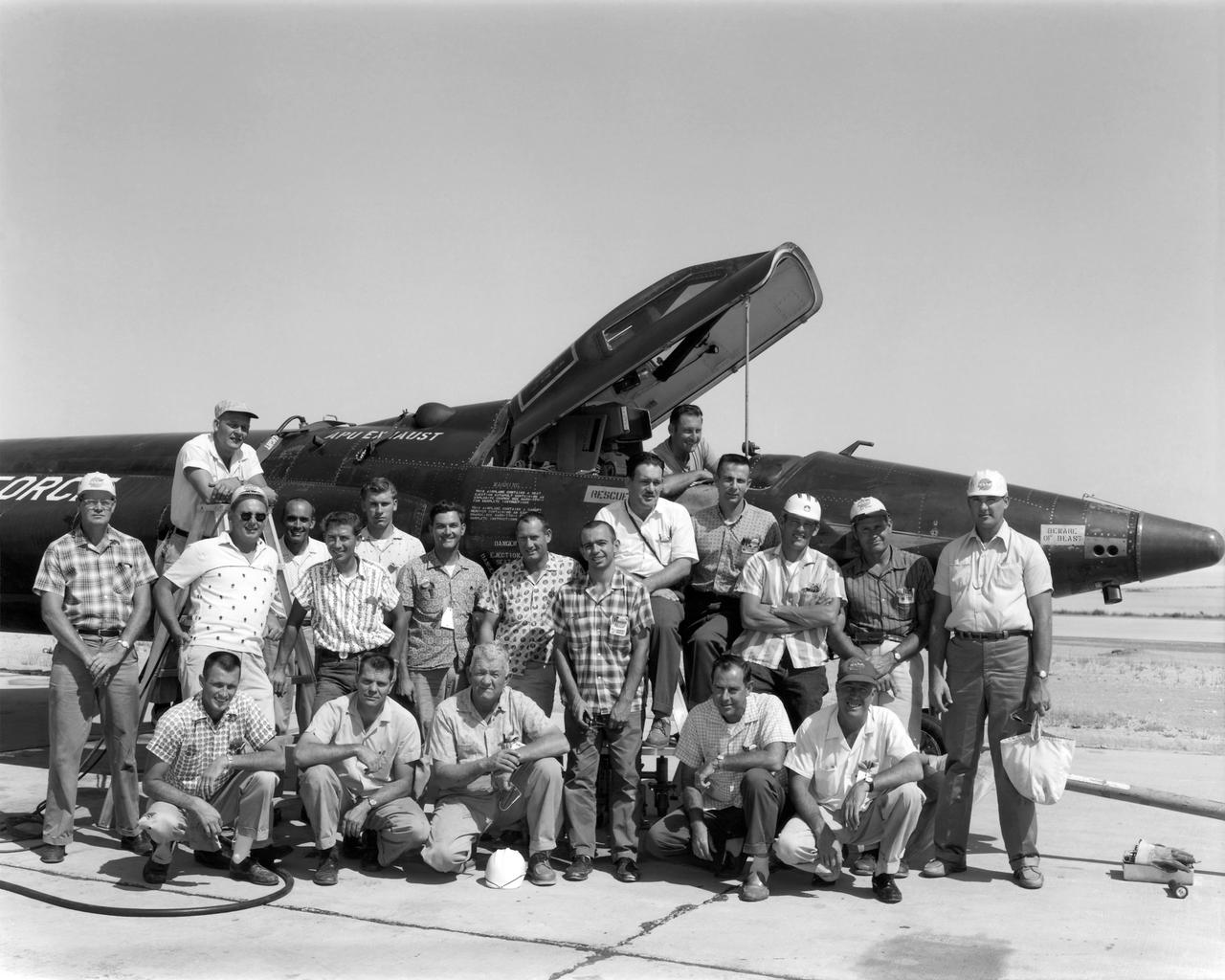
X-15 personnel July 1962 Cockpit: Edward "Ed" Nice Ladder: Thomas "Tom" McAlister Back Row, left to right: William Clark, Edward "Ed" Sabo, Donald "Don" Hall, Billy Furr, Allen Dustin, Raymond "Ray" White, George E. Trott, Alfred "Al" Grieshaber, Merle Curtis, LeRoy "Lee" Adelsbach, Allen Lowe, Jay L. King, Lorenzo "Larry" Barnett. Kneeling, left to right: Byron Gibbs, Price "Bob" Workman, Ira Cupp, unidentified, John Gordon.
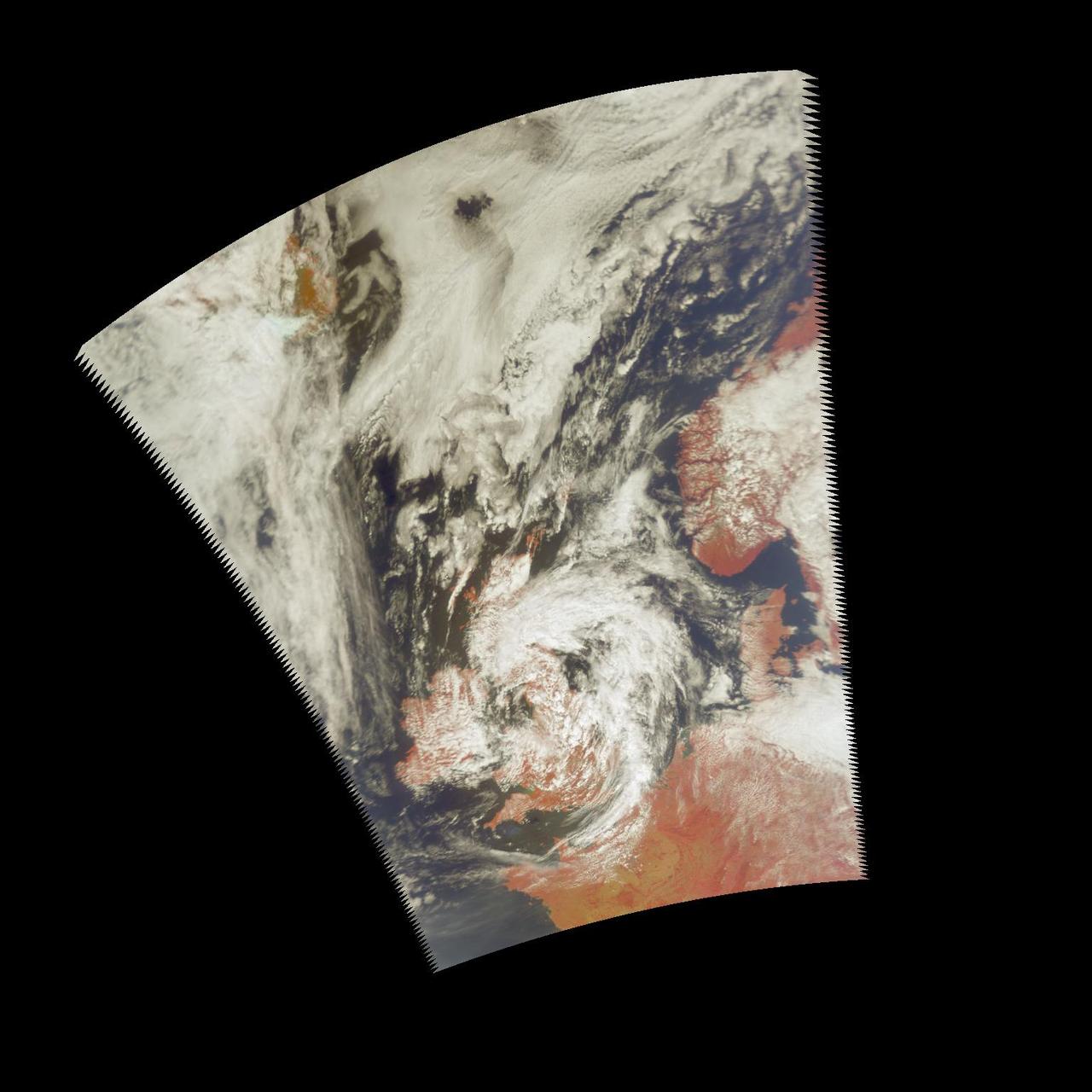
These images, taken over northern Europe on July 20, 2002, depict a few of the different views of Earth and its atmosphere that are produced by the Atmospheric Infrared Sounder experiment system operating on NASA Aqua spacecraft. http://photojournal.jpl.nasa.gov/catalog/PIA00345

Julie Townsend, JPL Engineer, talks about her experiences to teachers and middle school students during the kick off of NASA's Summer of Innovation program at the Jet Propulsion Laboratory in Pasadena, Calif., Thursday, June 10, 2010. Through the program, NASA will engage thousands of middle school students and teachers in stimulating math and science-based education programs with the goal of increasing the number of future scientists, mathematicians, and engineers. Photo Credit: (NASA/Bill Ingalls)
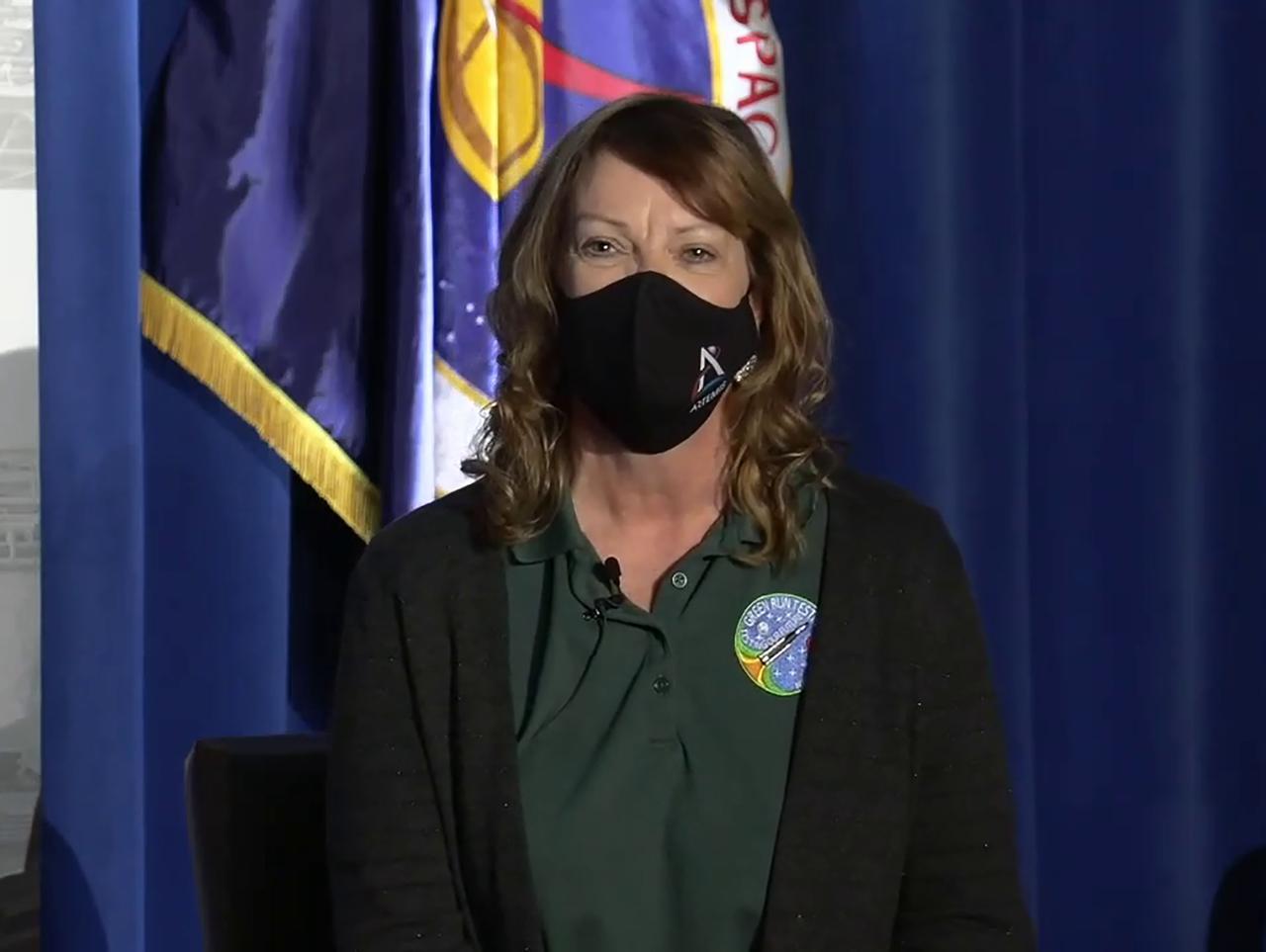
NASA leaders participated in a virtual press briefing following the Space Launch System core stage hot fire test at Stennis Space Center near Bay St. Louis, Mississippi, on March 18. The leaders fielded questions submitted by offsite media during the post-test session. Agency participants present at Stennis included Julie Bassler, SLS Stages Office manager at Marshall Space Flight Center in Huntsville, Alabama.
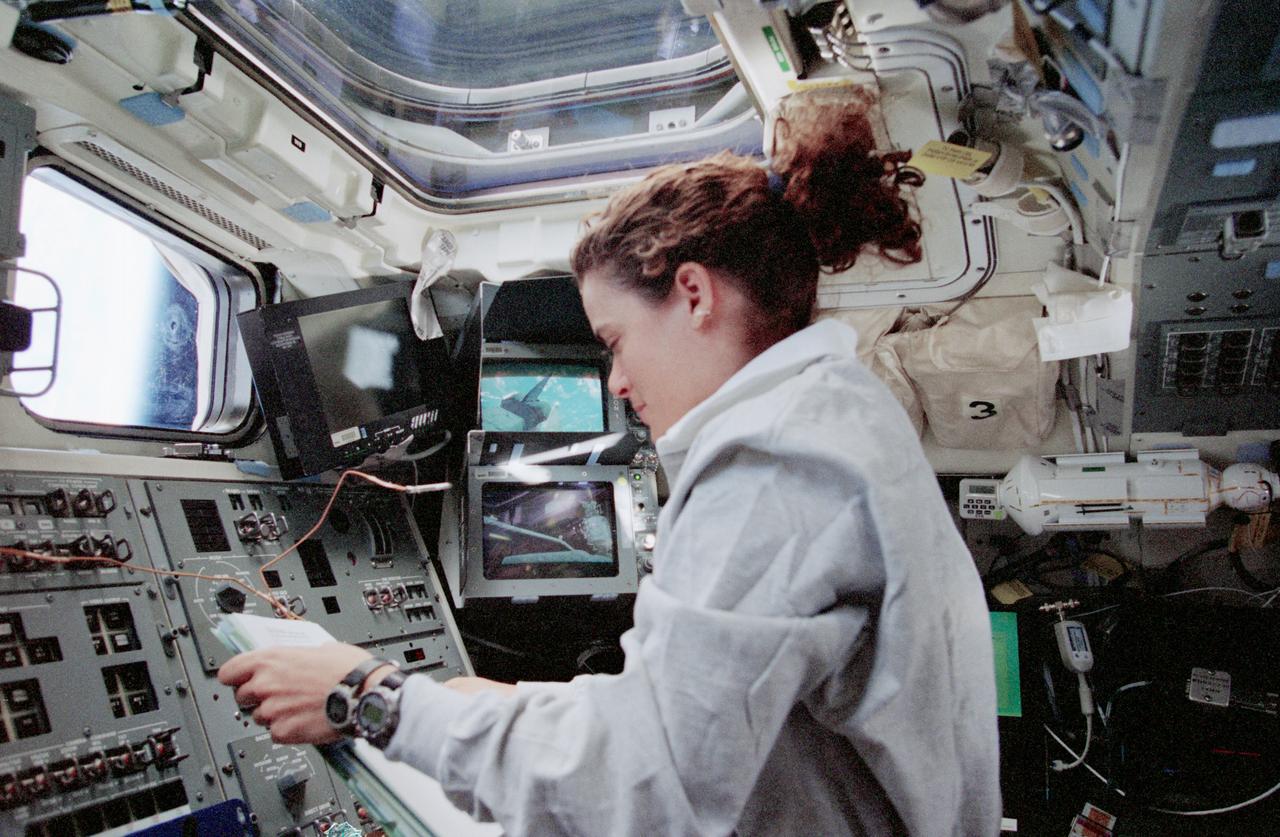
STS096-378-021 (27 May - 6 June 1999) --- Astronaut Julie Payette, mission specialist representing the Candian Space Agency (CSA), operates the Canadian-built remote manipulator system (RMS) from Discovery's aft flight deck. Television monitors nearby afford Payette two different angles of the cargo bay.
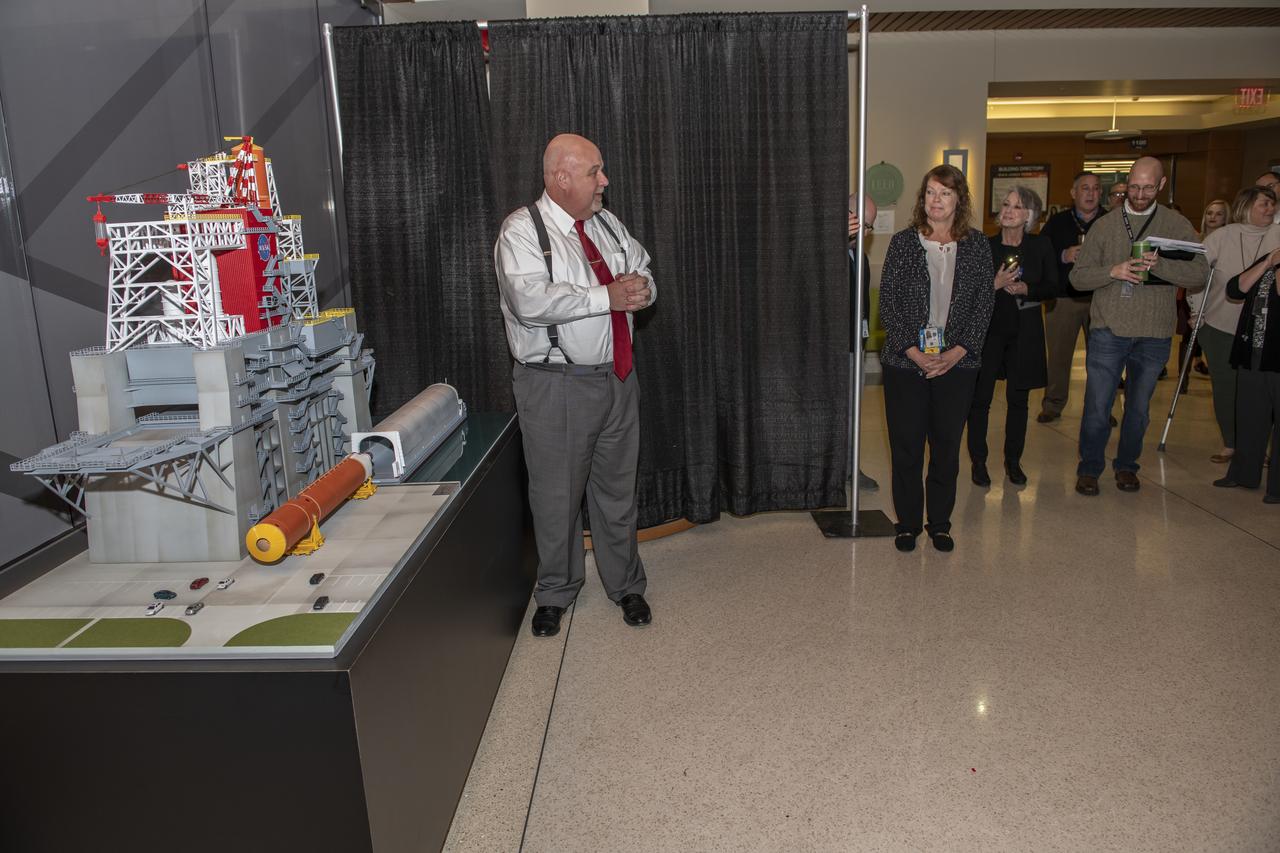
The unveiling of the B-2 Test Stand model for the SLS management team and employees in building 4220. Taking part was John Honeycutt and Julie Bassler.
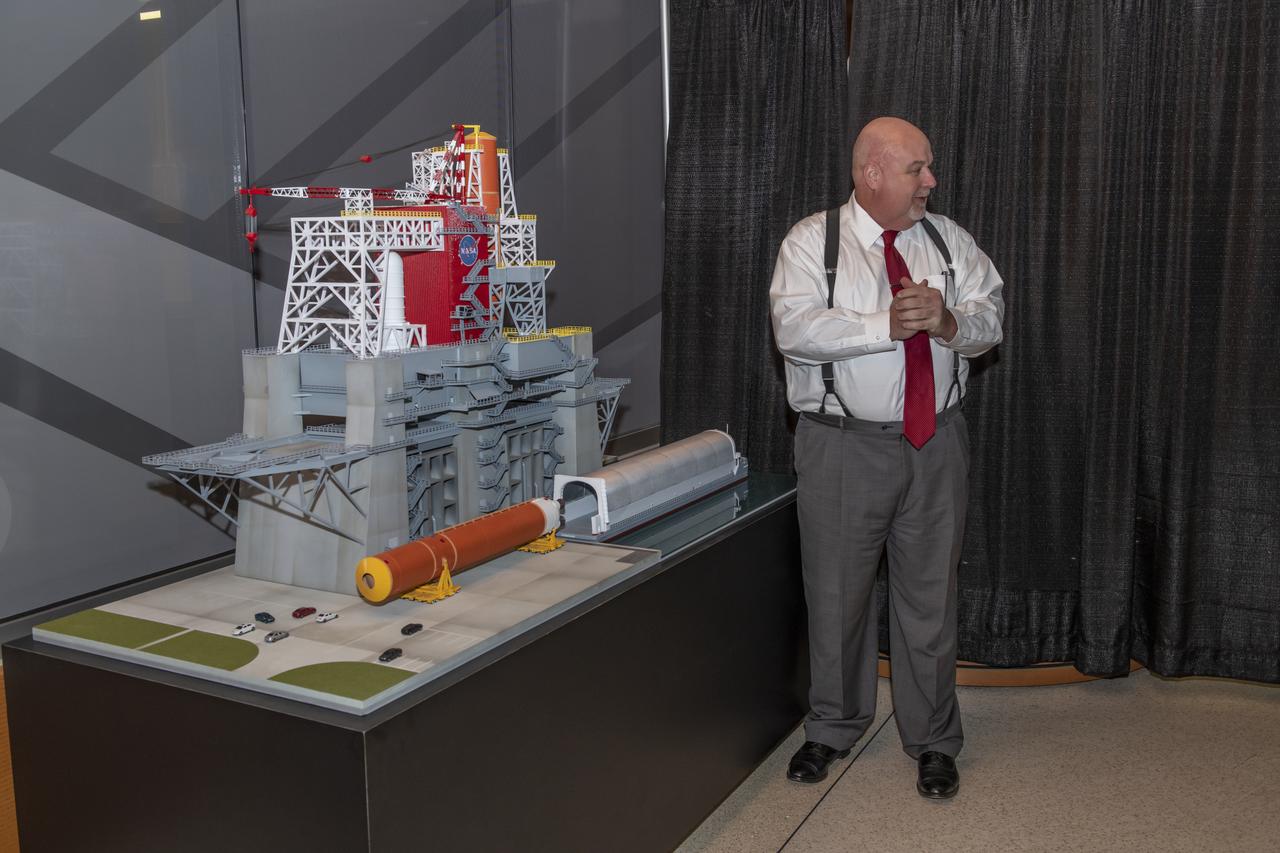
The unveiling of the B-2 Test Stand model for the SLS management team and employees in building 4220. Taking part was John Honeycutt and Julie Bassler.
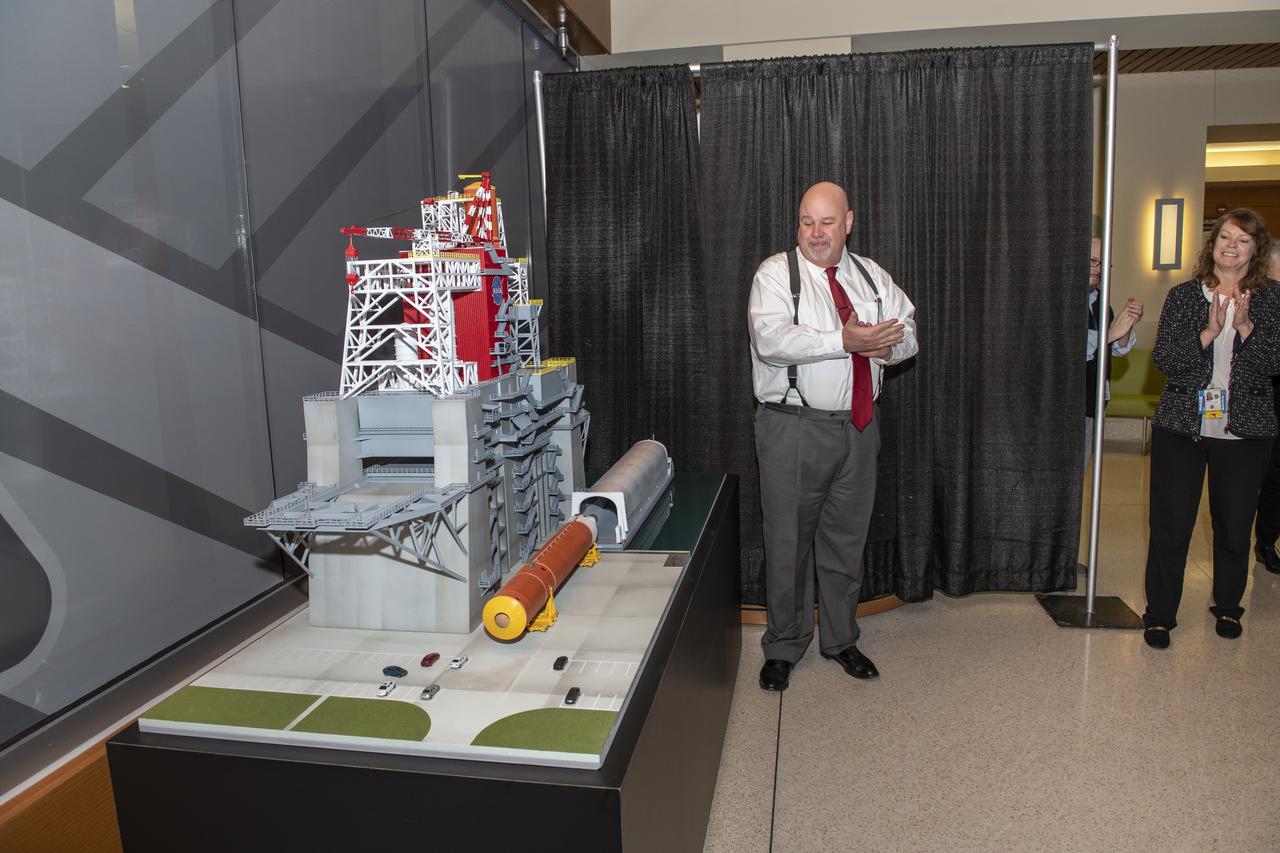
The unveiling of the B-2 Test Stand model for the SLS management team and employees in building 4220. Taking part was John Honeycutt and Julie Bassler.
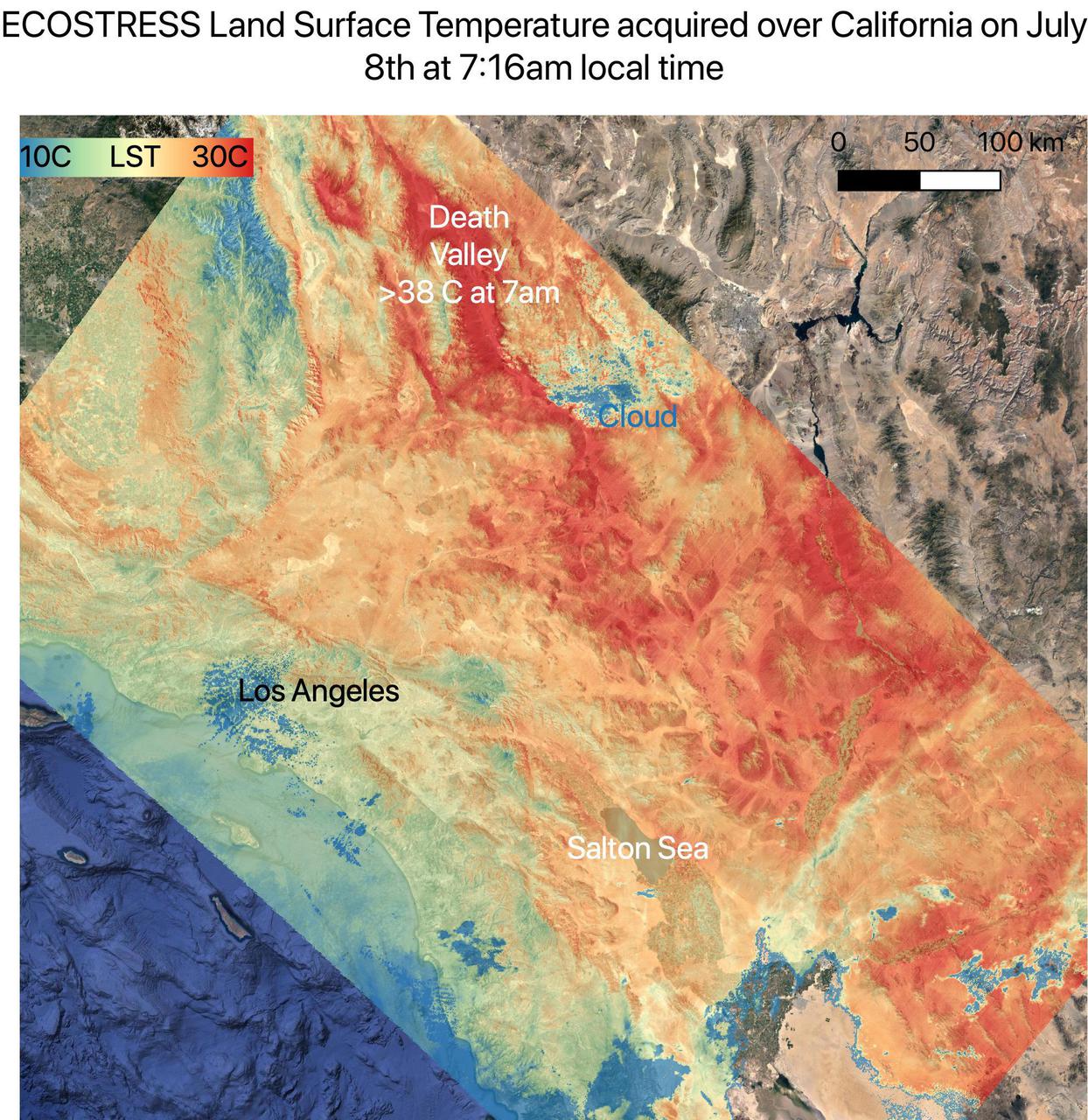
On July 8, NASA's ECOsystem Spaceborne Thermal Radiometer Experiment on Space Station (ECOSTRESS) instrument captured ground surface temperature data over California. In the image, areas in red – including Death Valley – had surpassed 86 degrees Fahrenheit (30 degrees Celsius) by 7:16 a.m. local time, well above average ground surface temperatures for the area. Tasked with detecting plant water use and stress, ECOSTRESS's primary mission is to measure the temperature of plants heating up as they run out of water. But it can also measure and track heat-related phenomena like heat waves, wildfires, and volcanoes. ECOSTRESS observations have a spatial resolution of about 77 by 77 yards (70 by 70 meters), which enables researchers to study surface-temperature conditions down to the size of a football field. Due to the space station's unique orbit, the mission can acquire images of the same regions at different times of the day, as opposed to crossing over each area at the same time of day like satellites in other orbits do. This is advantageous when monitoring plant stress in the same area throughout the day, for example. https://photojournal.jpl.nasa.gov/catalog/PIA23694
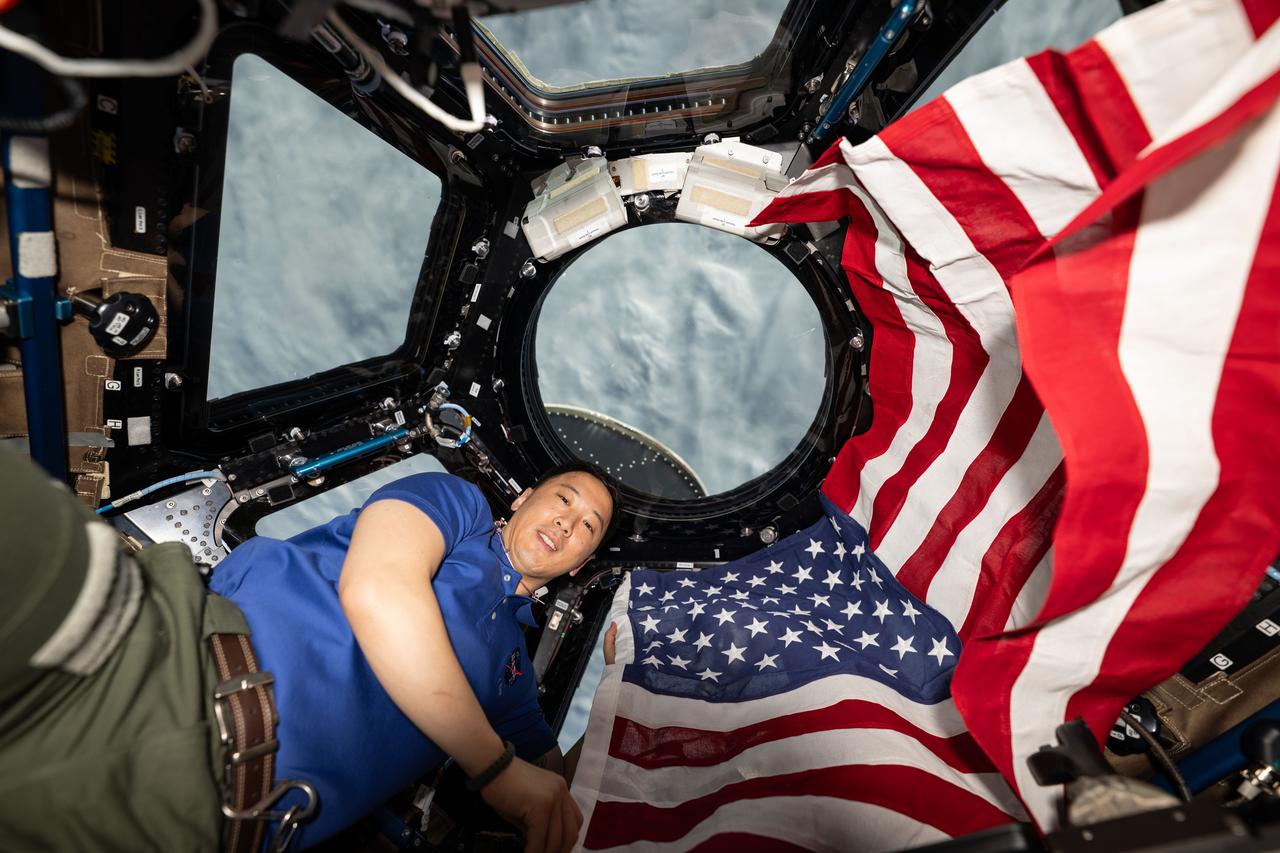
iss073e0420732 (July 4, 2025) --- NASA astronaut and Expedition 73 Flight Engineer Jonnny Kim poses for a portrait with the American flag on the Fourth of July, or Independence Day, inside the International Space Station's "window to the world," the cupola. The orbital outpost was soaring 268 miles above a cloudy Atlantic Ocean at the time of this photograph.
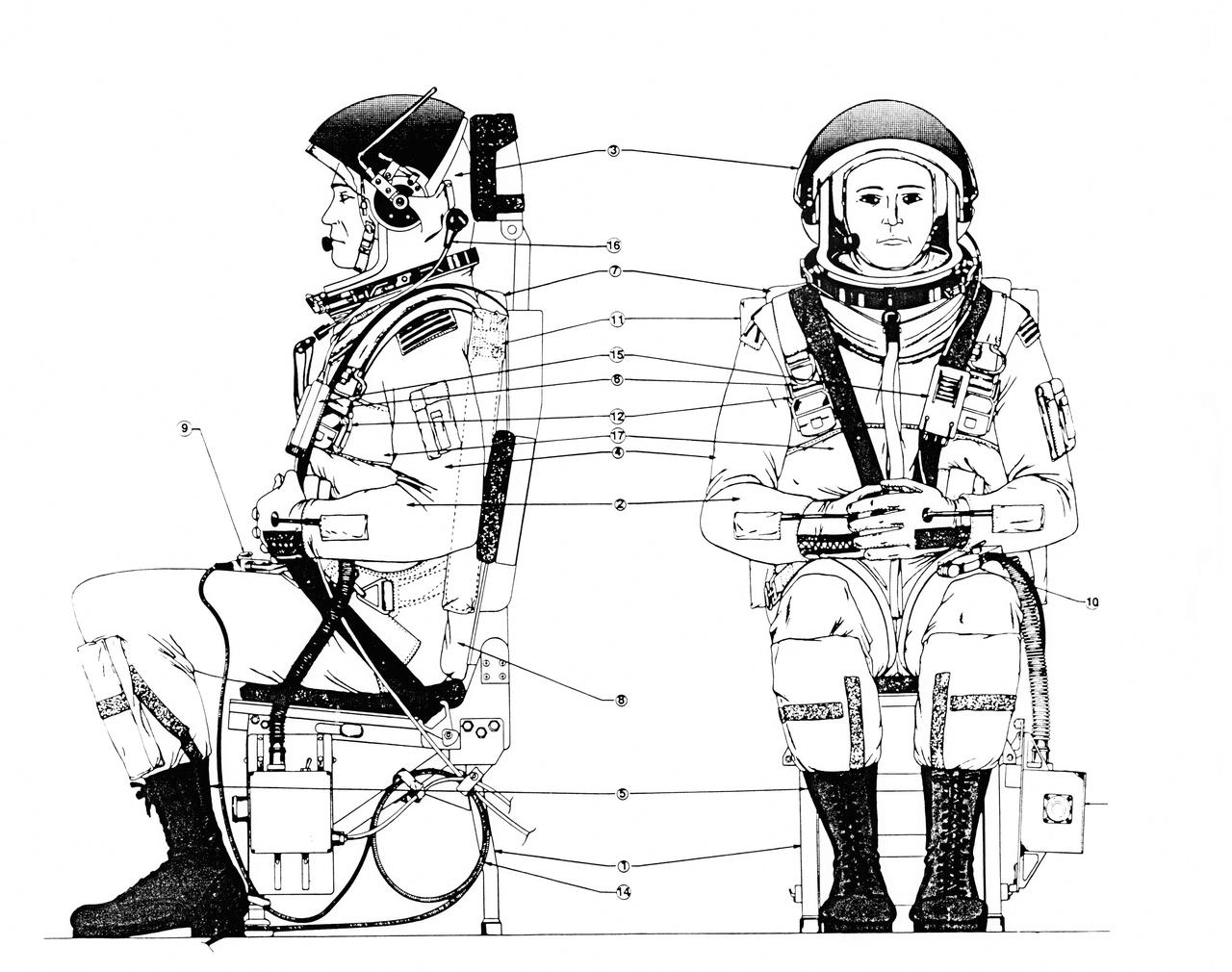
Diagrams of Crew Escape System Partial Pressure Suits, dated July, 1988.

This image was obtained by NASA's Cassini radar instrument during a flyby on July 24, 2009. The radar antenna was pointing toward Titan at an altitude of 955 kilometers 593 miles during the closest approach. he radar antenna was pointing toward Titan at a 955 km altitude at the closest approach. The image has been processed with a resolution of 128 pixels/deg. https://photojournal.jpl.nasa.gov/catalog/PIA04399
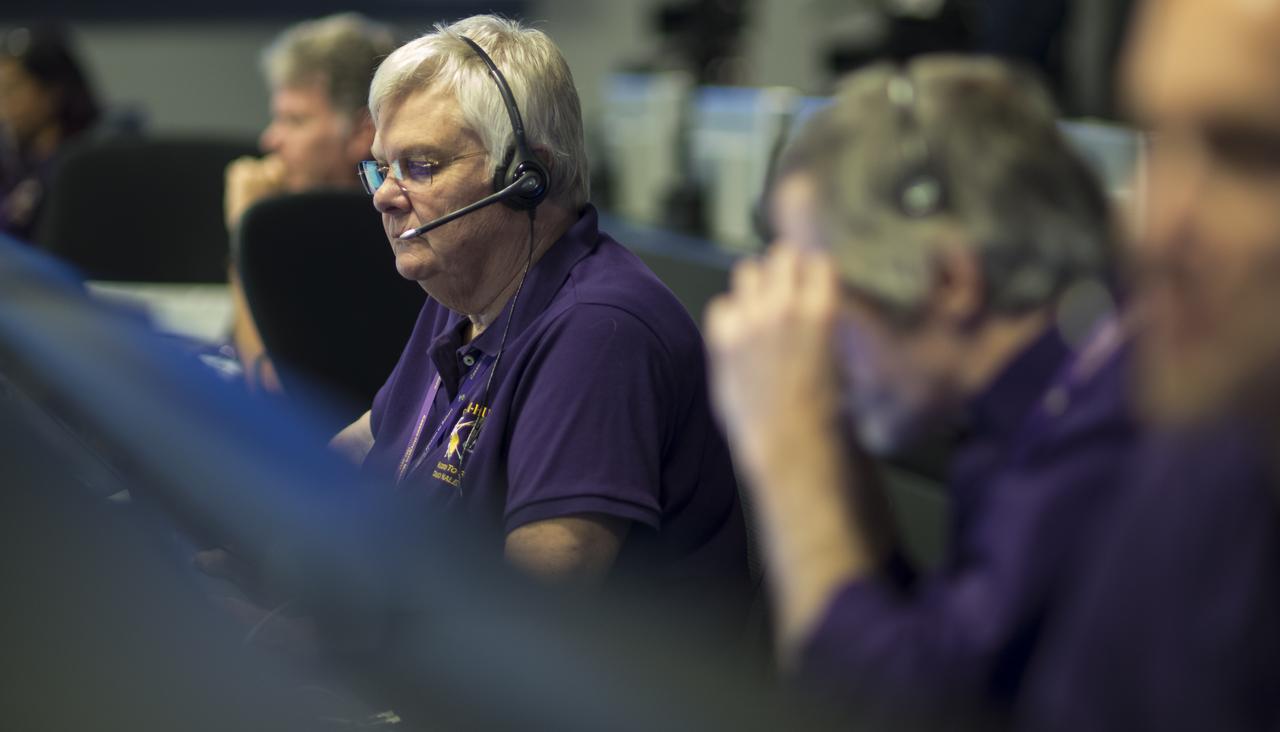
Spacecraft operations team manager for the Cassini mission at Saturn, Julie Webster, watches monitors in mission control of the Space Flight Operations Center as the Cassini spacecraft begins downlink data through NASA's Deep Space Network, Thursday, Sept. 14, 2017 at NASA's Jet Propulsion Laboratory in Pasadena, California. Since its arrival in 2004, the Cassini-Huygens mission has been a discovery machine, revolutionizing our knowledge of the Saturn system and captivating us with data and images never before obtained with such detail and clarity. On Sept. 15, 2017, operators will deliberately plunge the spacecraft into Saturn, as Cassini gathered science until the end. The “plunge” ensures Saturn’s moons will remain pristine for future exploration. During Cassini’s final days, mission team members from all around the world gathered at NASA’s Jet Propulsion Laboratory, Pasadena, California, to celebrate the achievements of this historic mission. Photo Credit: (NASA/Joel Kowsky)
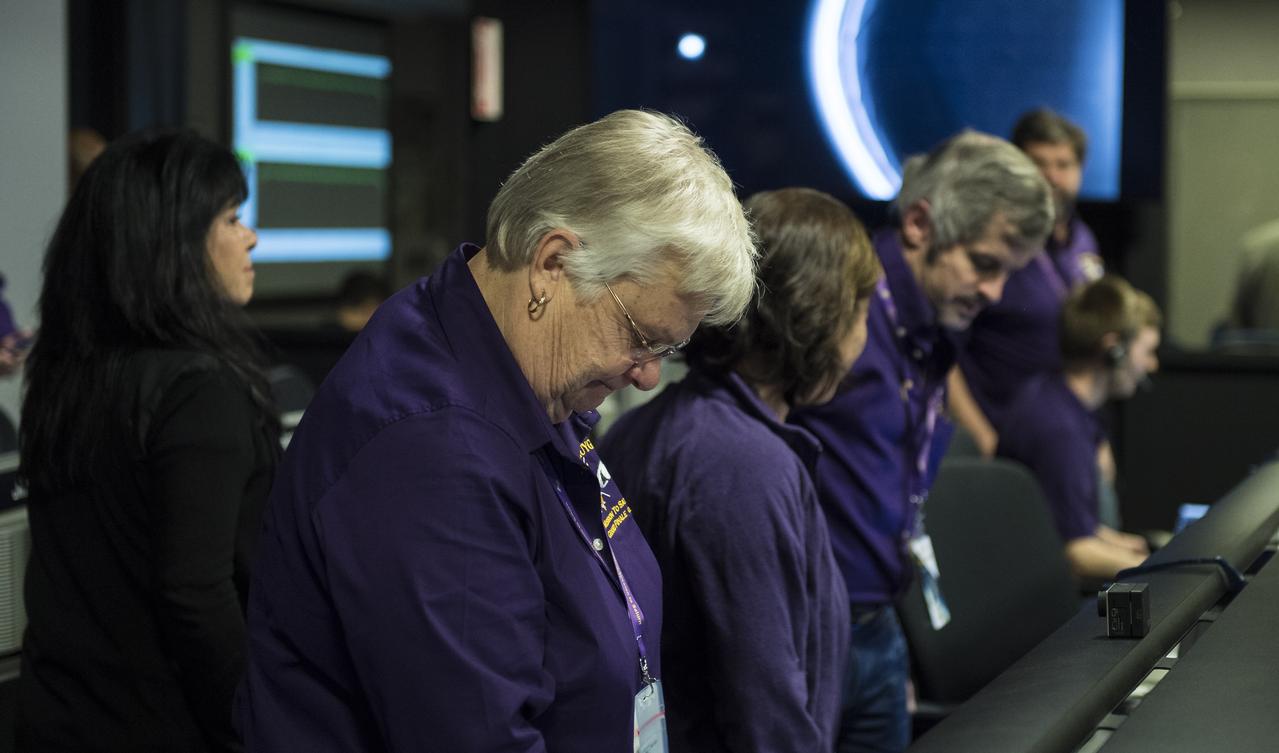
Spacecraft operations team manager for the Cassini mission at Saturn, Julie Webster is seen after the end of the Cassini mission, Friday, Sept. 15, 2017 at NASA's Jet Propulsion Laboratory in Pasadena, California. Since its arrival in 2004, the Cassini-Huygens mission has been a discovery machine, revolutionizing our knowledge of the Saturn system and captivating us with data and images never before obtained with such detail and clarity. On Sept. 15, 2017, operators deliberately plunged the spacecraft into Saturn, as Cassini gathered science until the end. Loss of contact with the Cassini spacecraft occurred at 7:55 a.m. EDT (4:55 a.m. PDT). The “plunge” ensures Saturn’s moons will remain pristine for future exploration. During Cassini’s final days, mission team members from all around the world gathered at NASA’s Jet Propulsion Laboratory, Pasadena, California, to celebrate the achievements of this historic mission. Photo Credit: (NASA/Joel Kowsky)
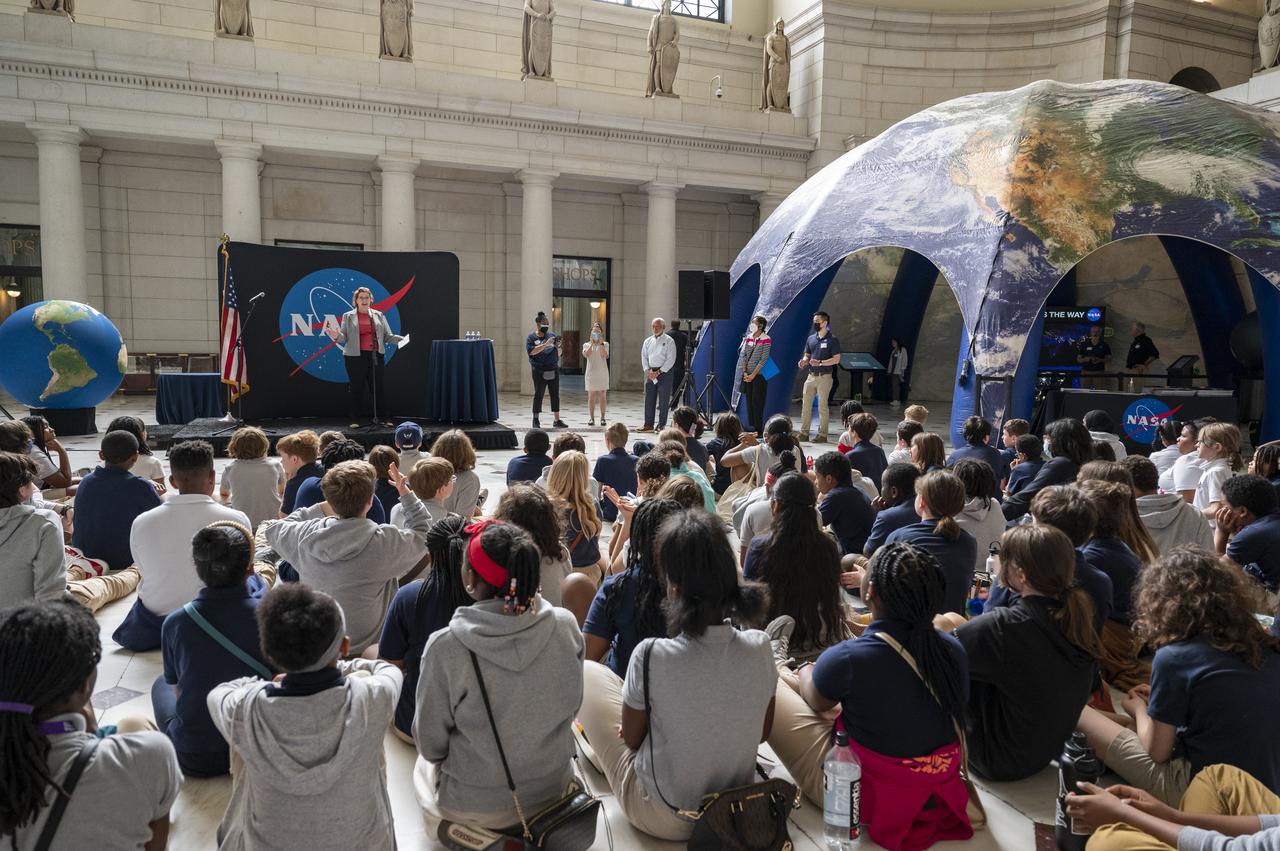
Earth Science Division Deputy Director Julie Robinson speaks with local students during an Earth Day event, Thursday, April 20, 2023, at Union Station in Washington. Photo Credit: (NASA/Keegan Barber)

Earth Science Division Deputy Director Julie Robinson speaks with local students during an Earth Day event, Thursday, April 20, 2023, at Union Station in Washington. Photo Credit: (NASA/Keegan Barber)
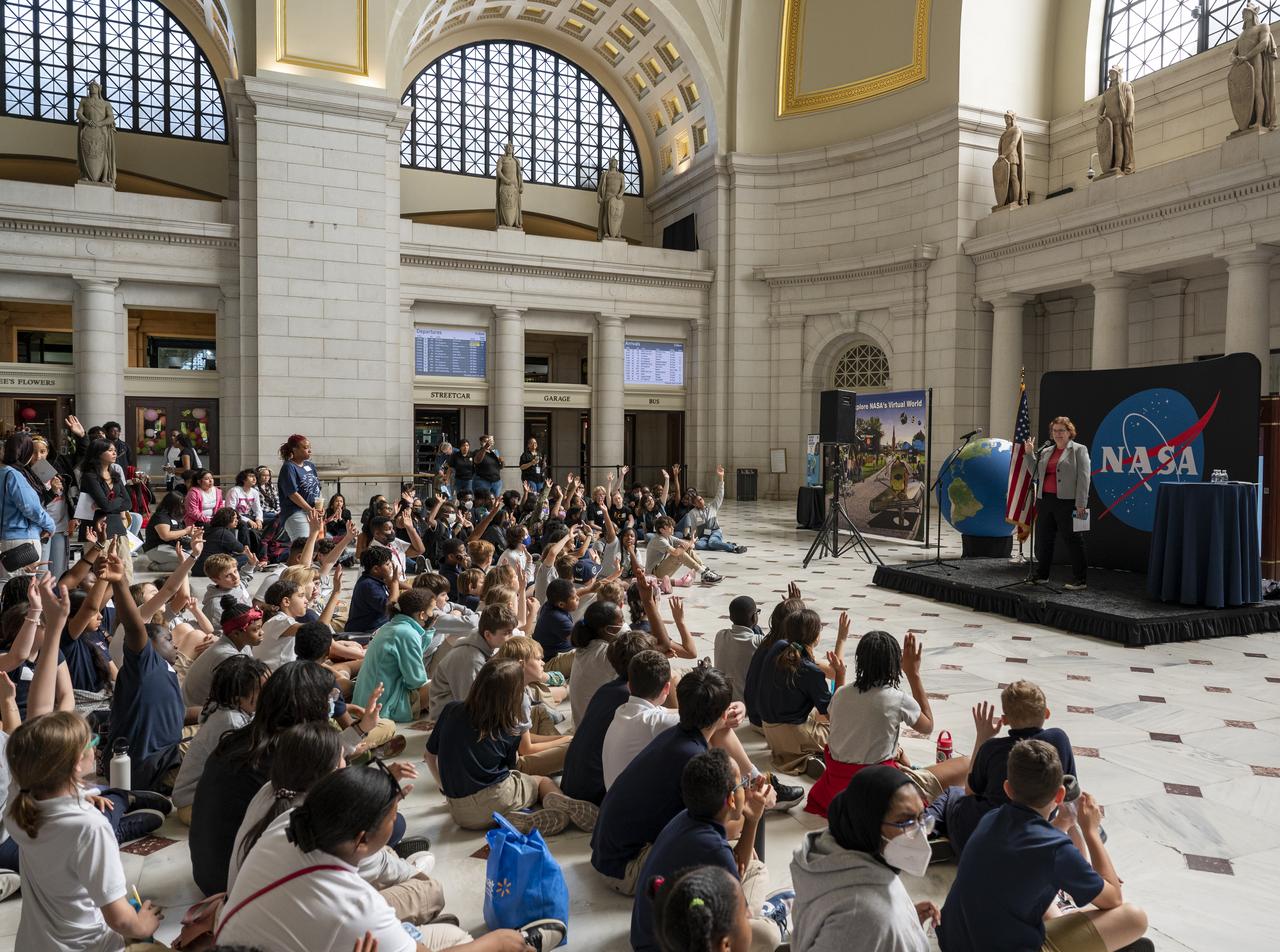
Earth Science Division Deputy Director Julie Robinson speaks with local students during an Earth Day event, Thursday, April 20, 2023, at Union Station in Washington. Photo Credit: (NASA/Keegan Barber)
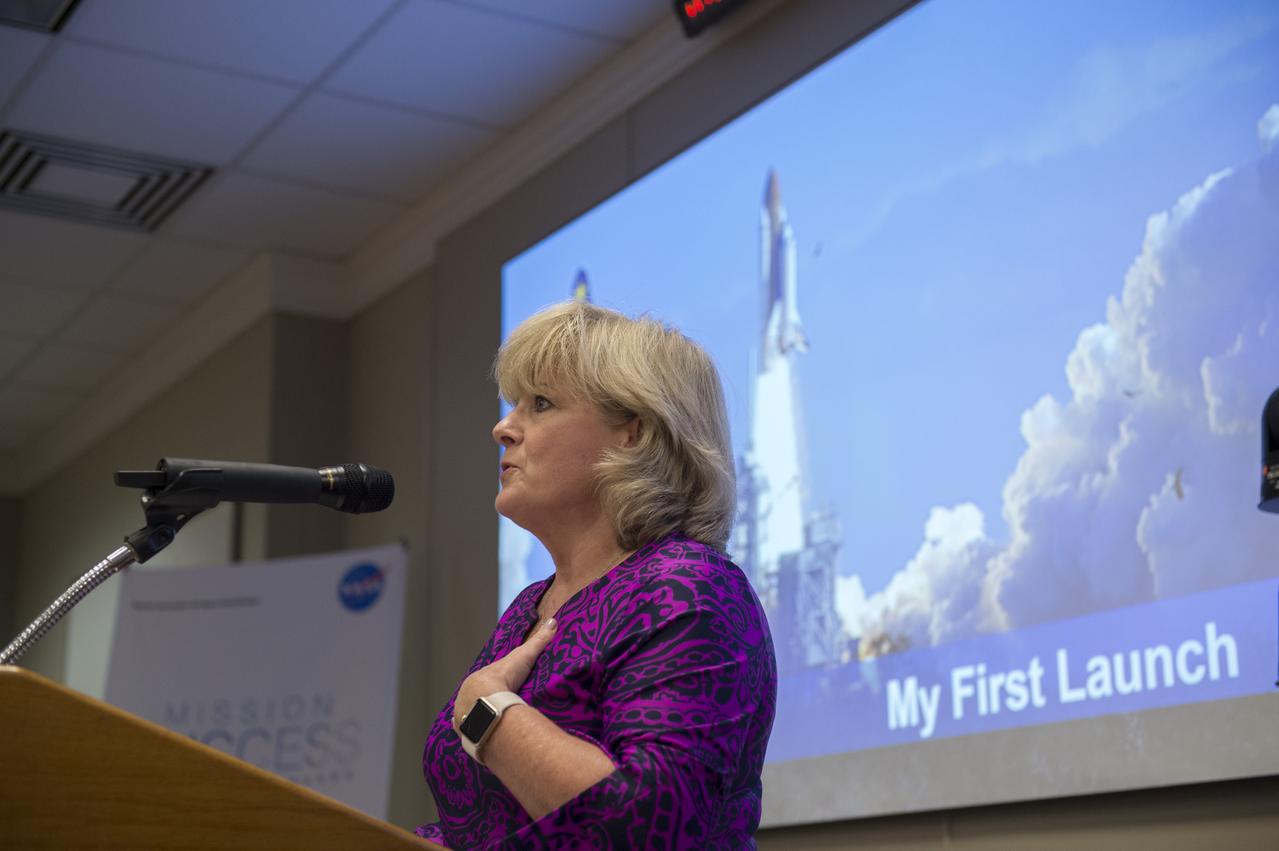
Marshall Deputy Director Jody Singer shares career experiences and lessons learned during the July 20 Shared Experiences Forum.
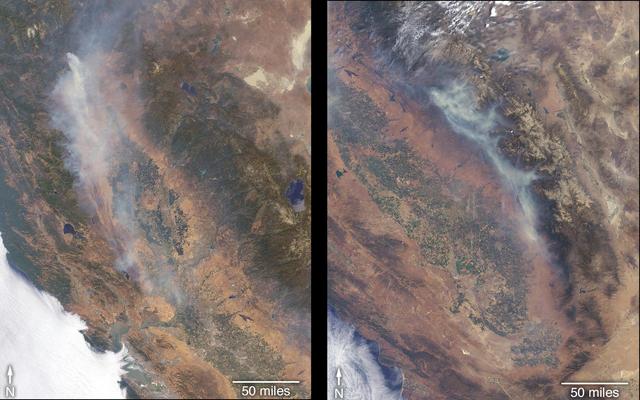
The Multi-angle Imaging SpectroRadiometer (MISR) instrument on NASA's Terra satellite took these images of the Carr Fire (left) and the Ferguson Fire (right) on July 27 and July 29, respectively. The Carr Fire, which has been burning near Redding, California since July 23, spanned 110,154 acres as of July 31 and was 27 percent contained. The Ferguson Fire, near Yosemite National Park, spanned 57,846 acres as of July 31 and was 33 percent contained. More info is available at https://photojournal.jpl.nasa.gov/catalog/PIA22488
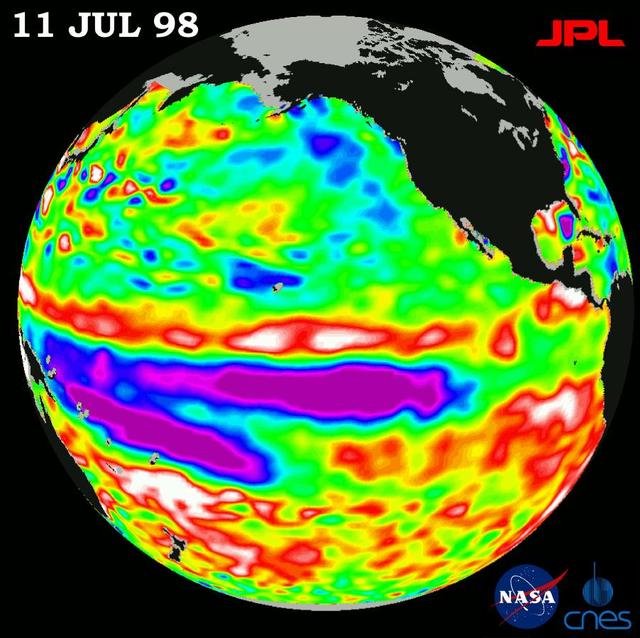
Height measurements taken by NASA U.S.-French TOPEX/Poseidon satellite. The image shows sea surface height relative to normal ocean conditions on July 11, 1998; sea surface height is an indicator of the heat content of the ocean.
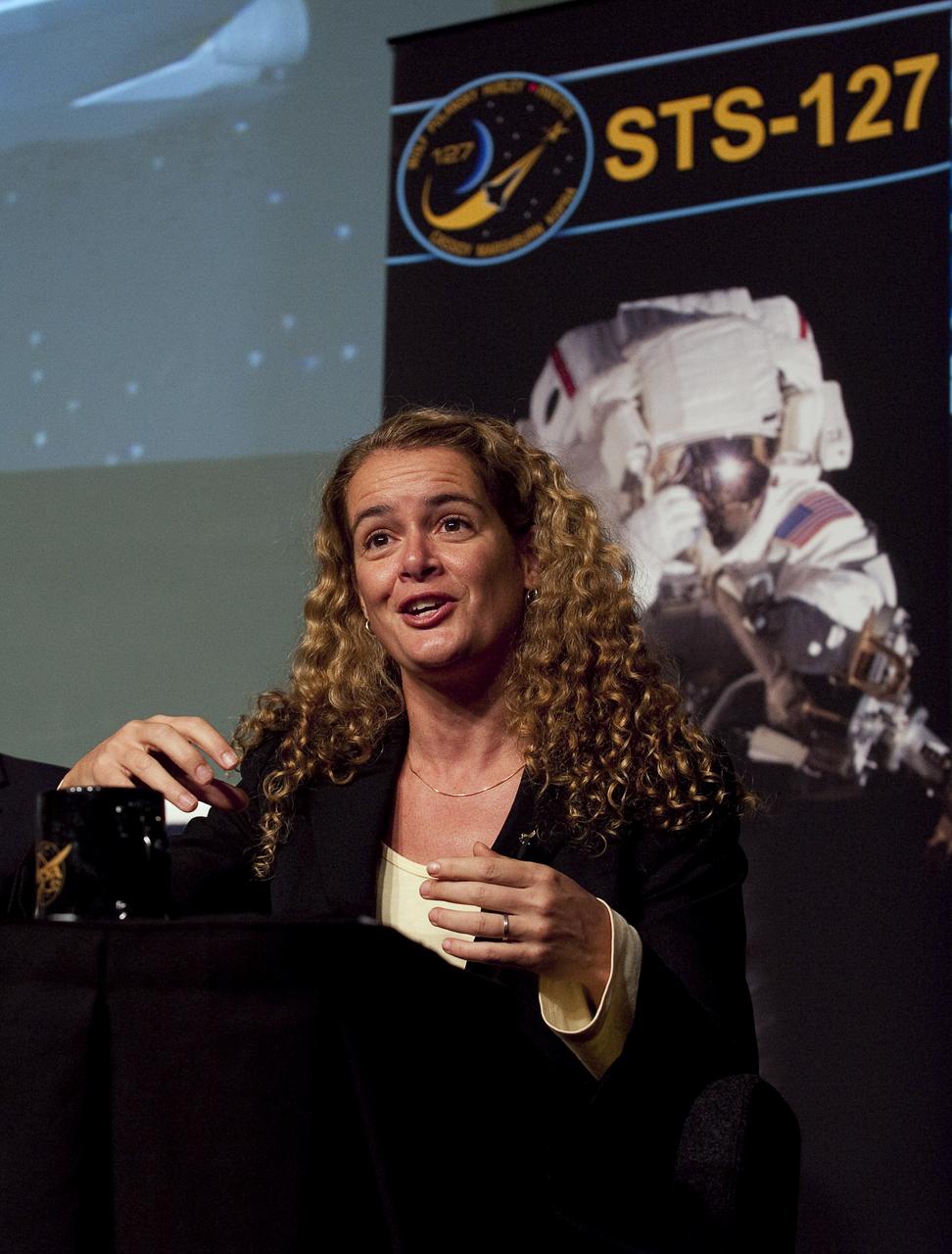
Canadian Space Agency Astronaut and STS-127 Mission Specialist Julie Payette answers questions at the NASA Tweetup event held at NASA Headquarters, September 24, 2009 in Washington. Nearly 200 of NASA’s Twitter followers are in attendance. Photo Credit: (NASA/Carla Cioffi)
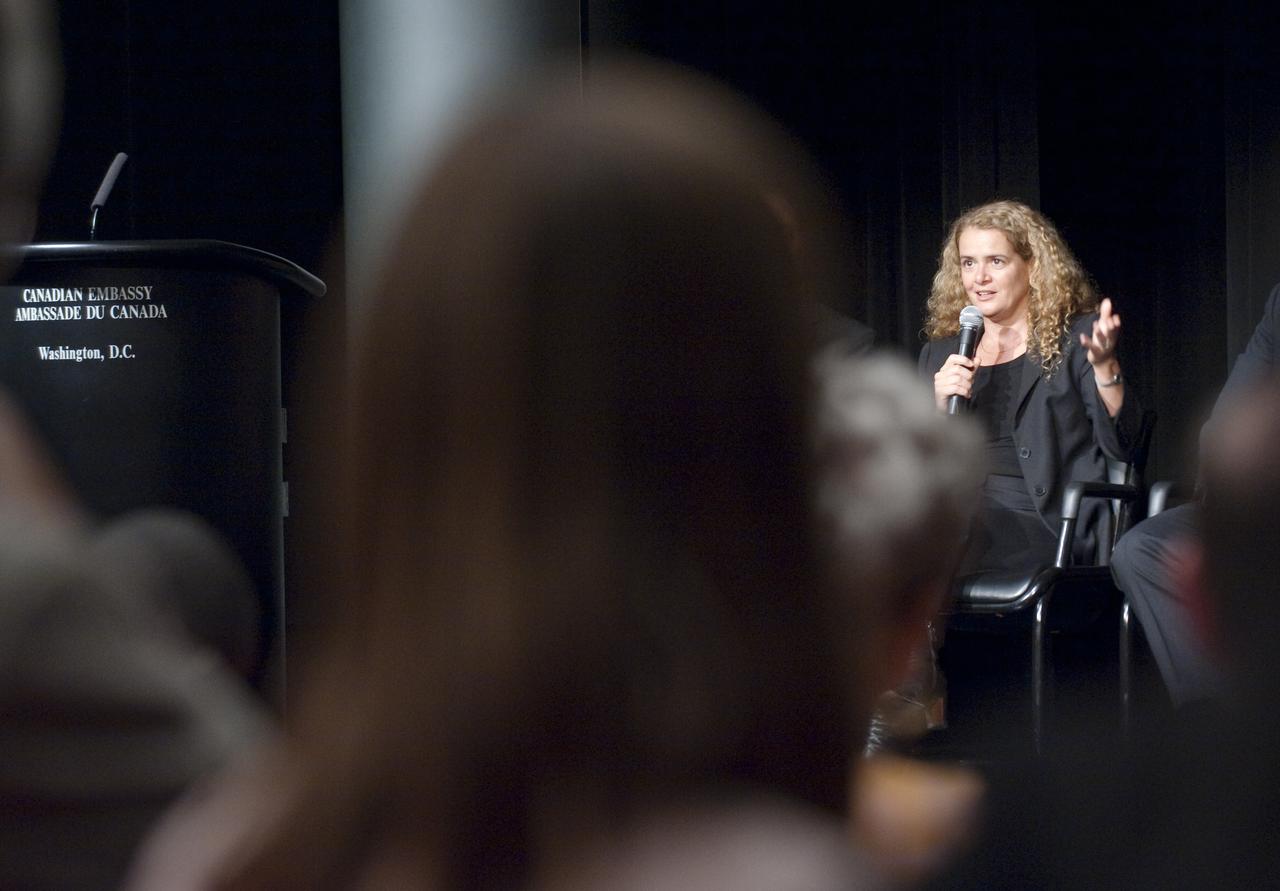
Canadian Space Agency astronaut Julie Payette, a mission specialist on STS-127, talks about her experiences on the mission during a presentation at the Canadian Embassy in Washington on Tuesday, Sept. 22, 2009. Photo Credit: (NASA/Paul E. Alers)
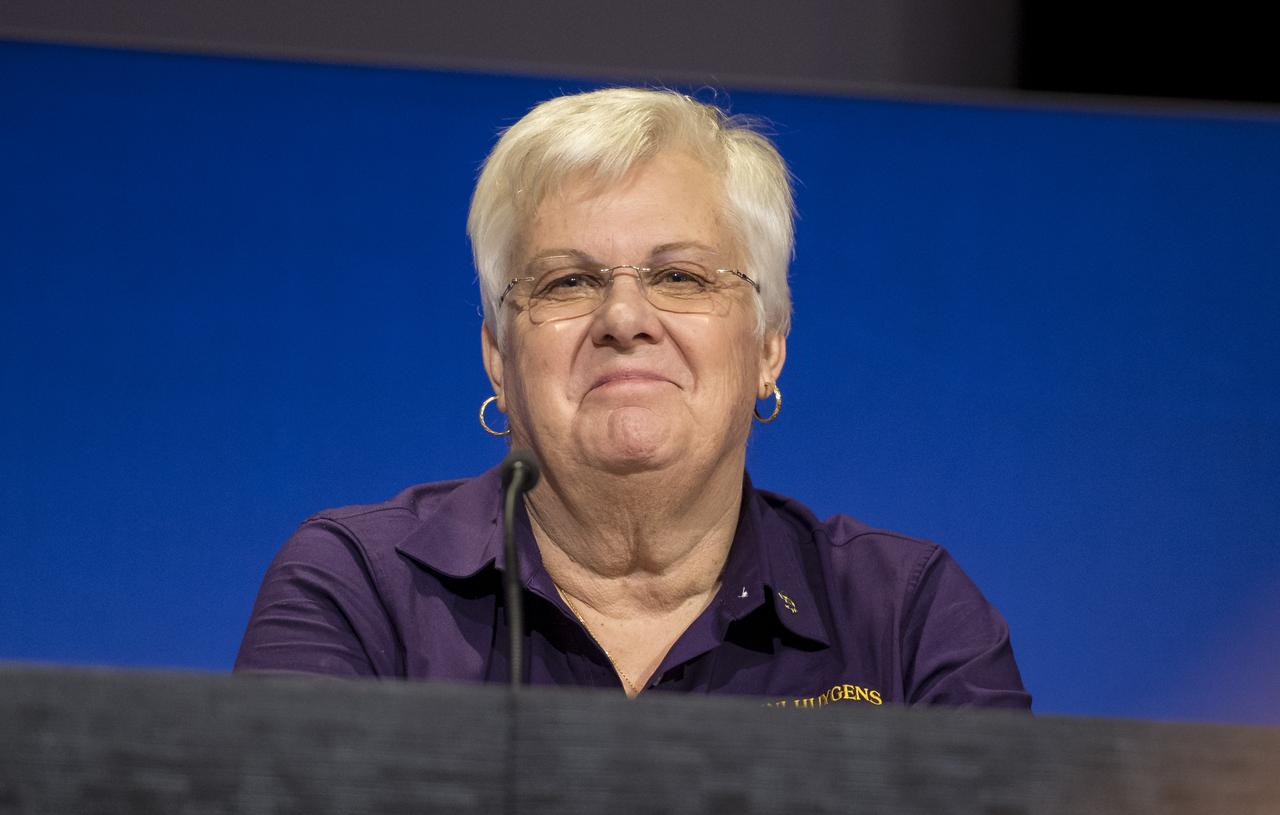
Spacecraft operations team manager for the Cassini mission at Saturn, Julie Webster is seen during a press conference held after the end of the Cassini mission, Friday, Sept. 15, 2017 at NASA's Jet Propulsion Laboratory in Pasadena, California. Since its arrival in 2004, the Cassini-Huygens mission has been a discovery machine, revolutionizing our knowledge of the Saturn system and captivating us with data and images never before obtained with such detail and clarity. On Sept. 15, 2017, operators deliberately plunged the spacecraft into Saturn, as Cassini gathered science until the end. Loss of contact with the Cassini spacecraft occurred at 7:55 a.m. EDT (4:55 a.m. PDT). The “plunge” ensures Saturn’s moons will remain pristine for future exploration. During Cassini’s final days, mission team members from all around the world gathered at NASA’s Jet Propulsion Laboratory, Pasadena, California, to celebrate the achievements of this historic mission. Photo Credit: (NASA/Joel Kowsky)
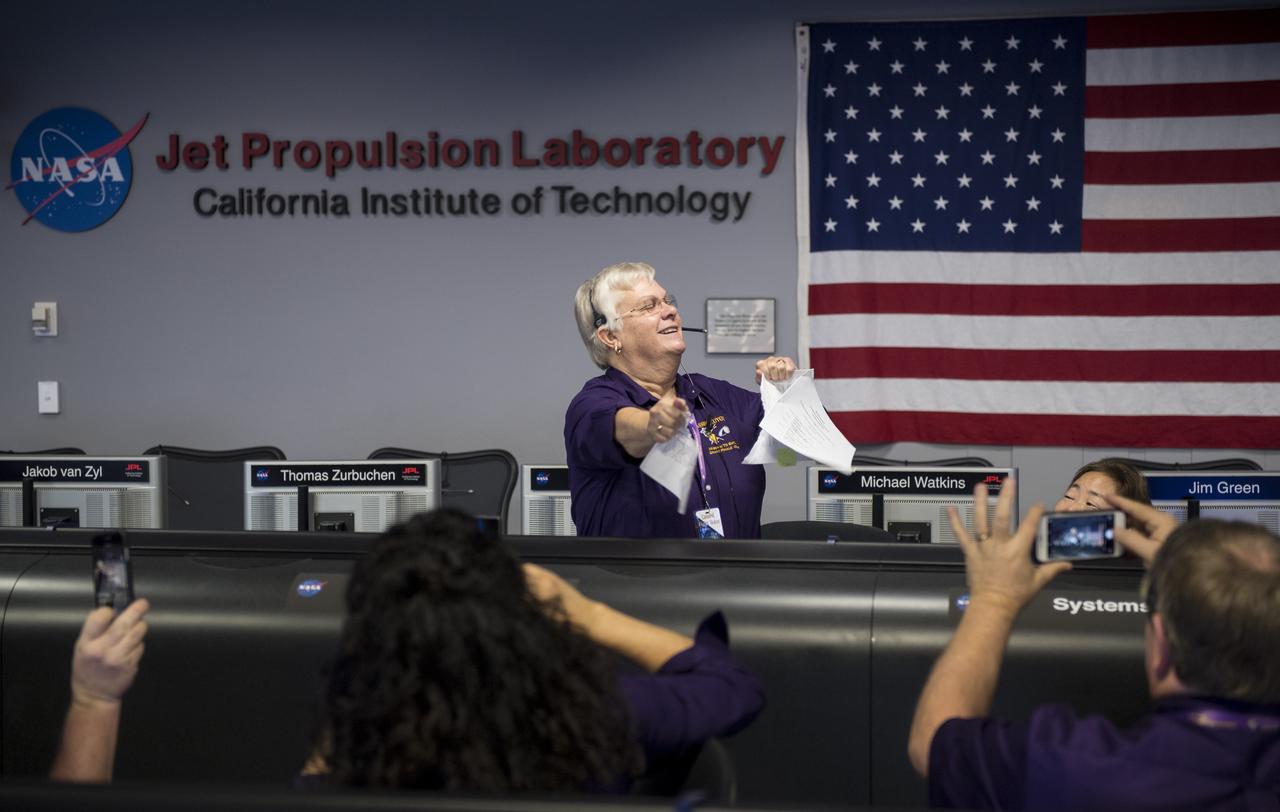
Spacecraft operations team manager for the Cassini mission at Saturn, Julie Webster, rips up the final contingency plan for the Cassini mission, Friday, Sept. 15, 2017 in mission control at NASA's Jet Propulsion Laboratory in Pasadena, California. Since its arrival in 2004, the Cassini-Huygens mission has been a discovery machine, revolutionizing our knowledge of the Saturn system and captivating us with data and images never before obtained with such detail and clarity. On Sept. 15, 2017, operators deliberately plunged the spacecraft into Saturn, as Cassini gathered science until the end. Loss of contact with the Cassini spacecraft occurred at 7:55 a.m. EDT (4:55 a.m. PDT). The “plunge” ensures Saturn’s moons will remain pristine for future exploration. During Cassini’s final days, mission team members from all around the world gathered at NASA’s Jet Propulsion Laboratory, Pasadena, California, to celebrate the achievements of this historic mission. Photo Credit: (NASA/Joel Kowsky)
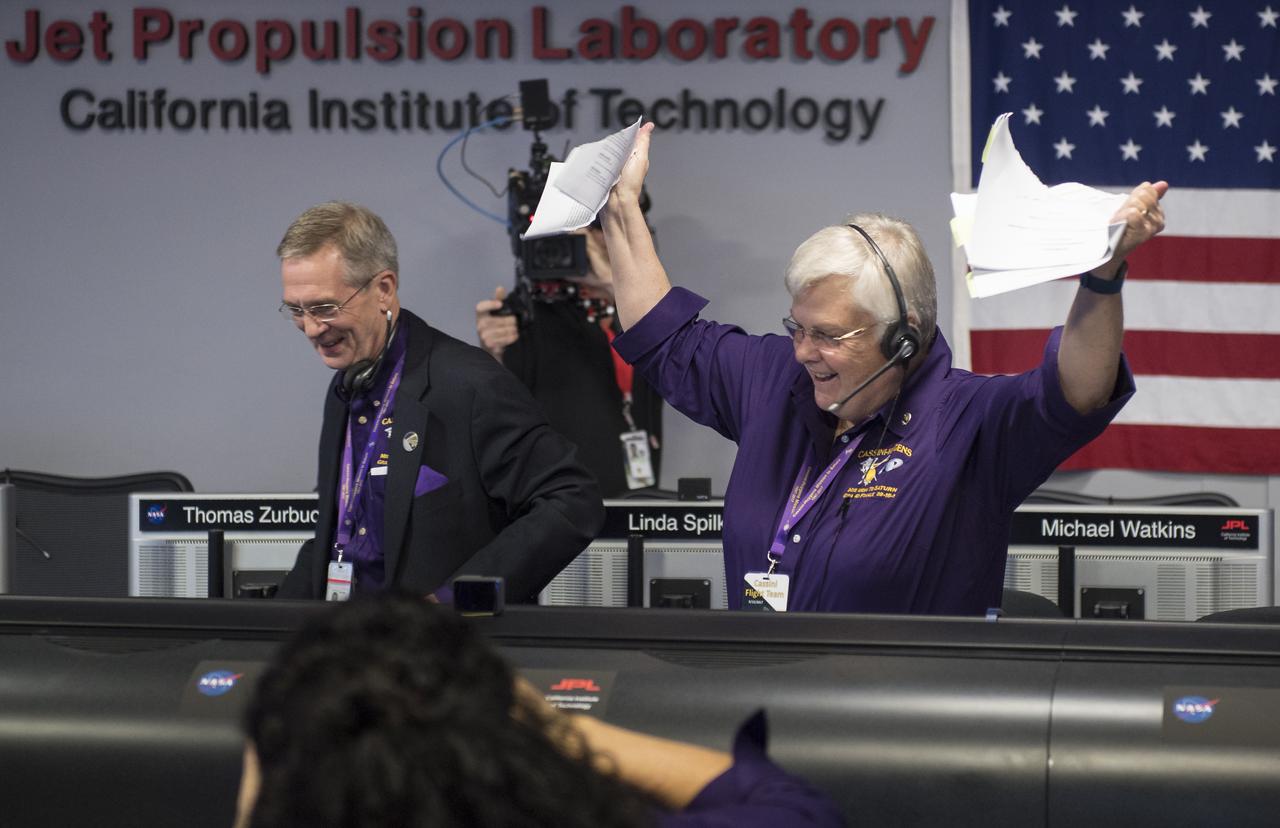
Spacecraft operations team manager for the Cassini mission at Saturn, Julie Webster, rips up the final contingency plan for the Cassini mission, Friday, Sept. 15, 2017 in mission control at NASA's Jet Propulsion Laboratory in Pasadena, California. Since its arrival in 2004, the Cassini-Huygens mission has been a discovery machine, revolutionizing our knowledge of the Saturn system and captivating us with data and images never before obtained with such detail and clarity. On Sept. 15, 2017, operators deliberately plunged the spacecraft into Saturn, as Cassini gathered science until the end. Loss of contact with the Cassini spacecraft occurred at 7:55 a.m. EDT (4:55 a.m. PDT). The “plunge” ensures Saturn’s moons will remain pristine for future exploration. During Cassini’s final days, mission team members from all around the world gathered at NASA’s Jet Propulsion Laboratory, Pasadena, California, to celebrate the achievements of this historic mission. Photo Credit: (NASA/Joel Kowsky)
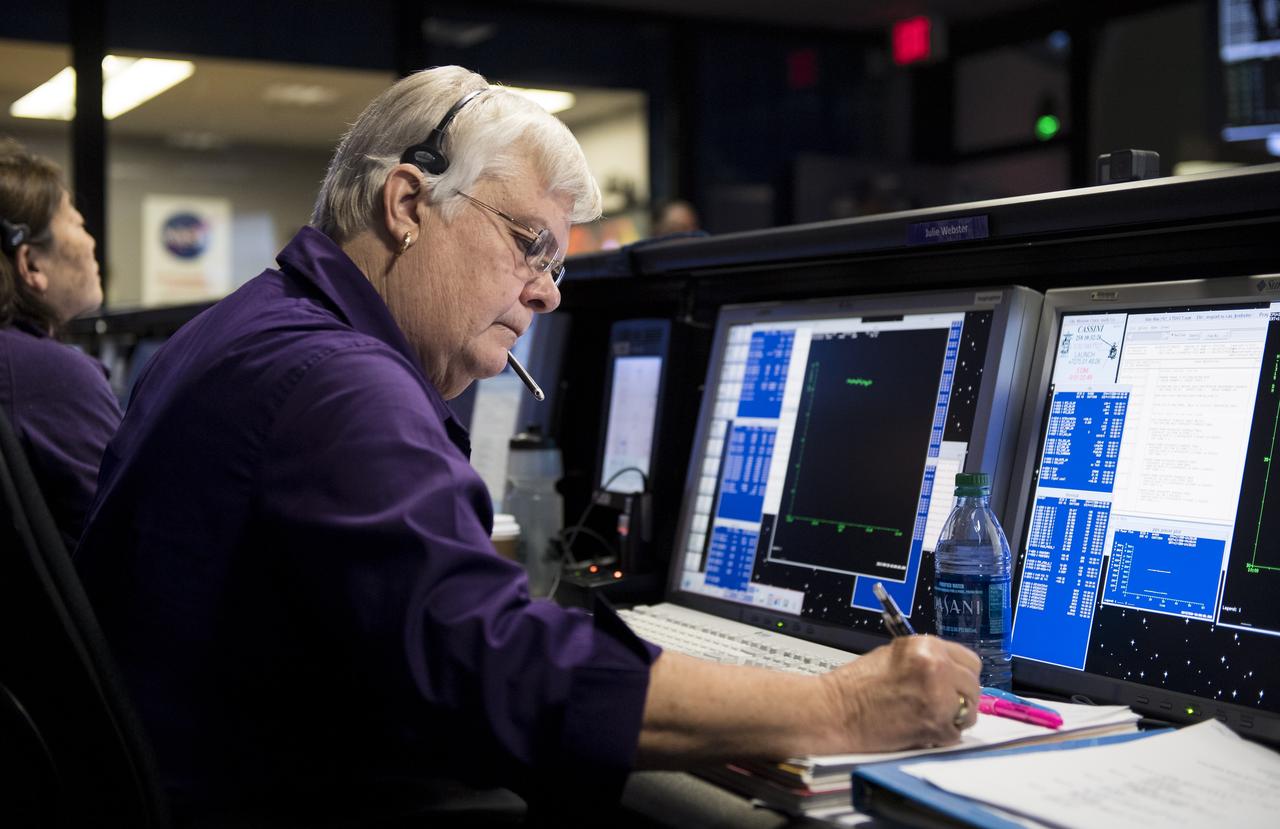
Spacecraft operations team manager for the Cassini mission at Saturn, Julie Webster is seen in mission control as the Cassini spacecraft makes its final plunge into Saturn, Friday, Sept. 15, 2017 at NASA's Jet Propulsion Laboratory in Pasadena, California. Since its arrival in 2004, the Cassini-Huygens mission has been a discovery machine, revolutionizing our knowledge of the Saturn system and captivating us with data and images never before obtained with such detail and clarity. On Sept. 15, 2017, operators deliberately plunged the spacecraft into Saturn, as Cassini gathered science until the end. Loss of contact with the Cassini spacecraft occurred at 7:55 a.m. EDT (4:55 a.m. PDT). The “plunge” ensures Saturn’s moons will remain pristine for future exploration. During Cassini’s final days, mission team members from all around the world gathered at NASA’s Jet Propulsion Laboratory, Pasadena, California, to celebrate the achievements of this historic mission. Photo Credit: (NASA/Joel Kowsky)
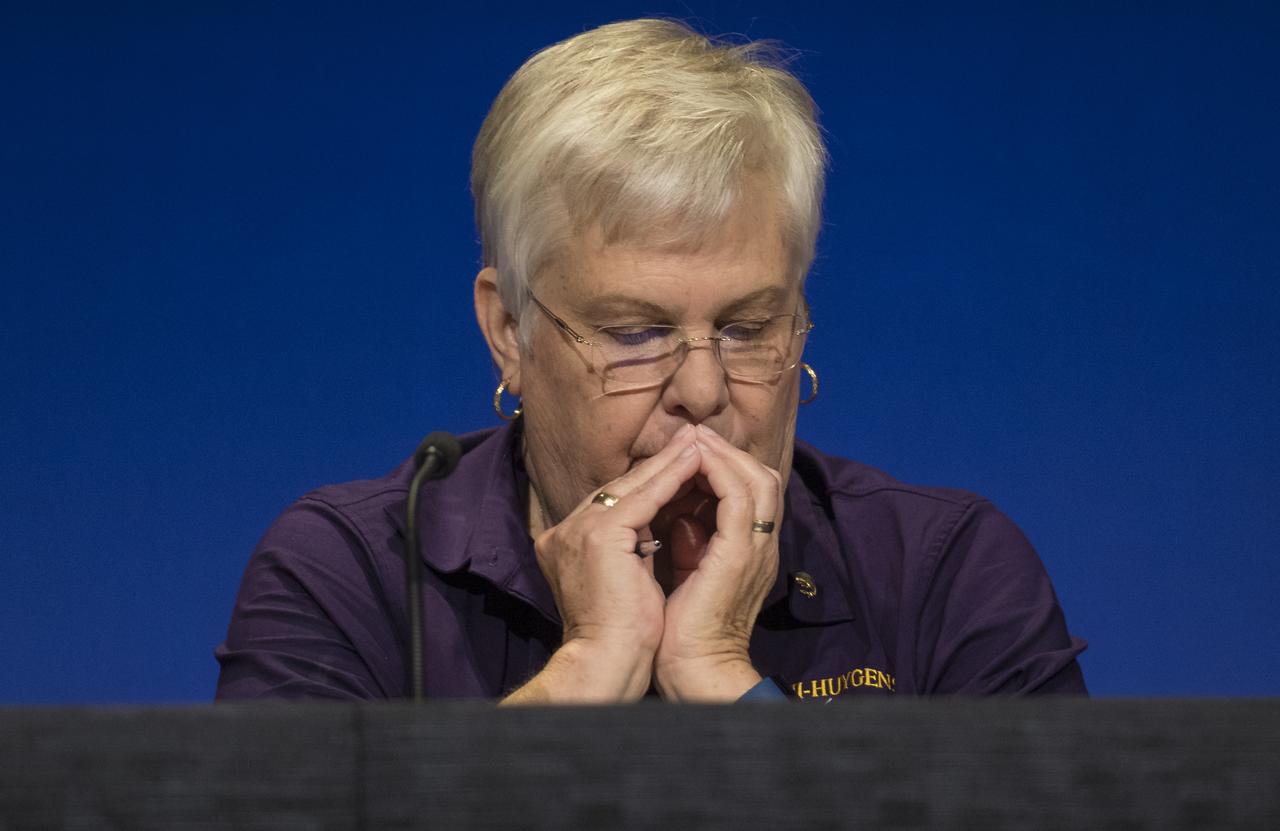
Spacecraft operations team manager for the Cassini mission at Saturn, Julie Webster is seen during a press conference held after the end of the Cassini mission, Friday, Sept. 15, 2017 at NASA's Jet Propulsion Laboratory in Pasadena, California. Since its arrival in 2004, the Cassini-Huygens mission has been a discovery machine, revolutionizing our knowledge of the Saturn system and captivating us with data and images never before obtained with such detail and clarity. On Sept. 15, 2017, operators deliberately plunged the spacecraft into Saturn, as Cassini gathered science until the end. Loss of contact with the Cassini spacecraft occurred at 7:55 a.m. EDT (4:55 a.m. PDT). The “plunge” ensures Saturn’s moons will remain pristine for future exploration. During Cassini’s final days, mission team members from all around the world gathered at NASA’s Jet Propulsion Laboratory, Pasadena, California, to celebrate the achievements of this historic mission. Photo Credit: (NASA/Joel Kowsky)
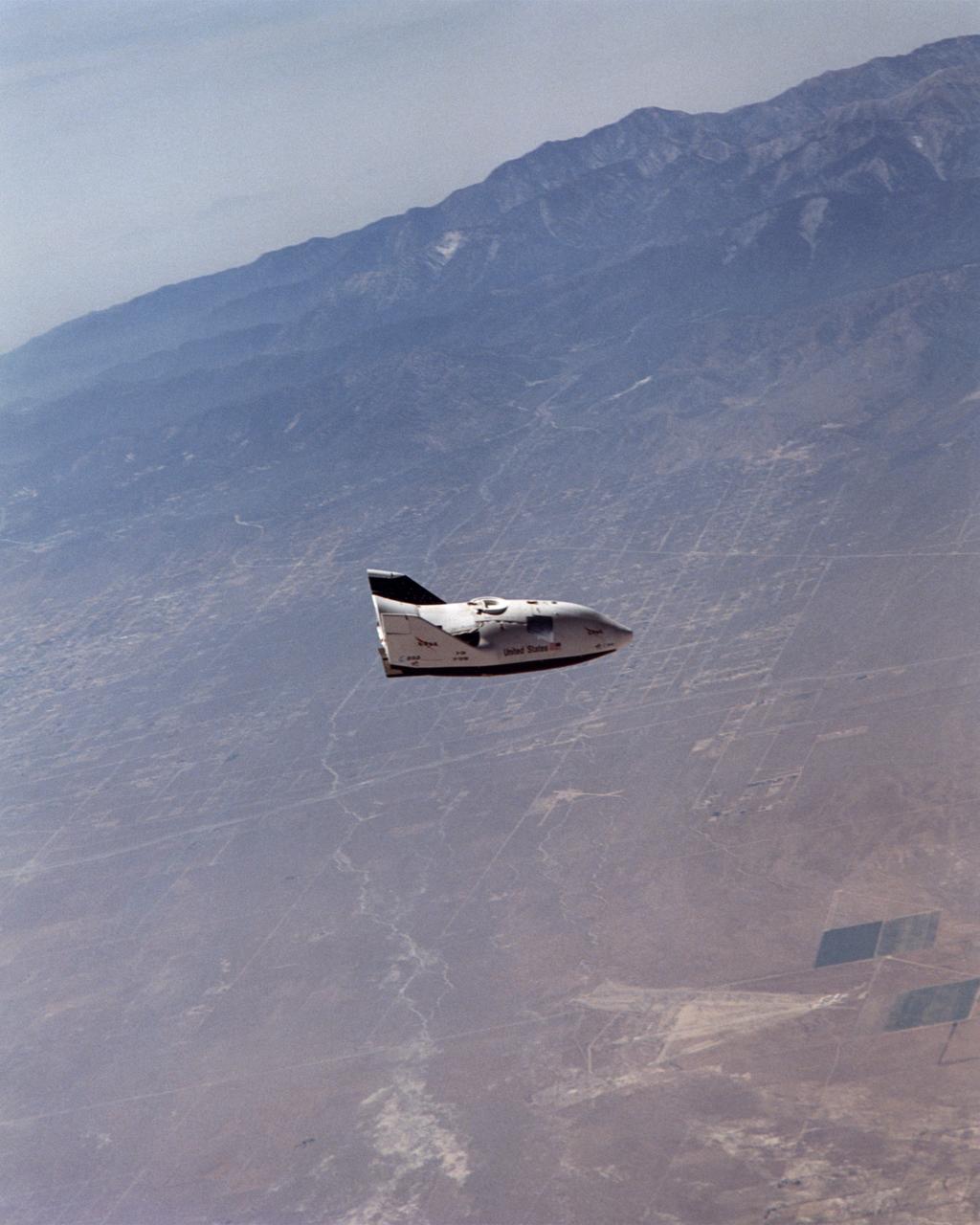
NASA's X-38 glided high over California desert test ranges as it descended from 37,500 feet to land on Rogers Dry Lake for the seventh free flight of the program July 10, 2001.

Photographic documentation showing the Nassau Bay July 4th parade honoring George Abbey as "Citizen of the Year." View is of Mr. George Abbey, wearing a cowboy hat, in the back of a car.
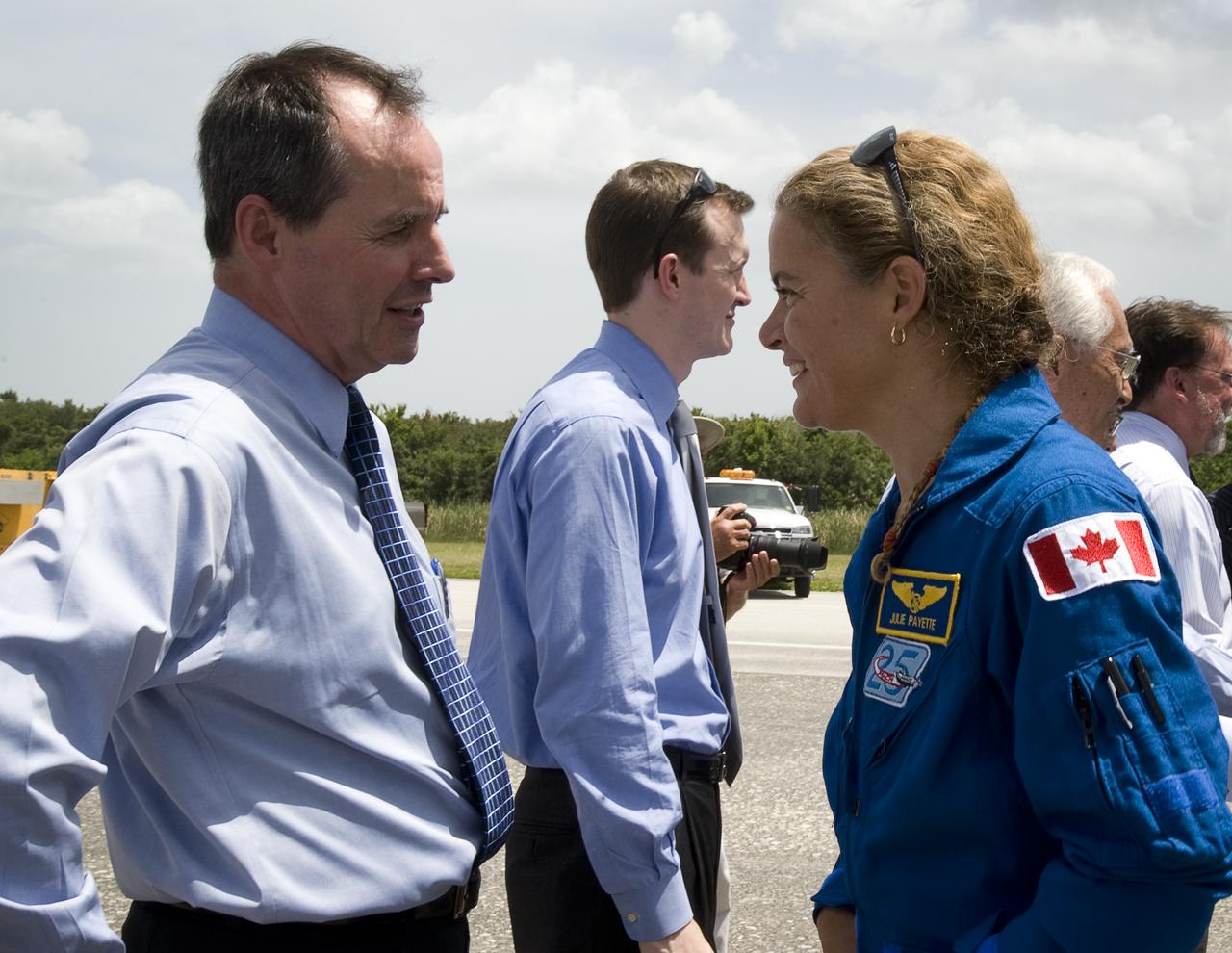
Benoit Marcotte, Director General of Canadian Space Agency Operations, left, welcomes home Canadian Space Agency's Julie Payette, right, shortly after the space shuttle Endeavour and its crew landed, Friday, July 31, 2009 at NASA's Kennedy Space Center in Cape Canaveral, Fla., completing a 16-day journey of more than 6.5 million miles. Endeavour delivered the final segment to the Japan Aerospace Exploration Agency's Kibo laboratory and a new crew member to the International Space Station.
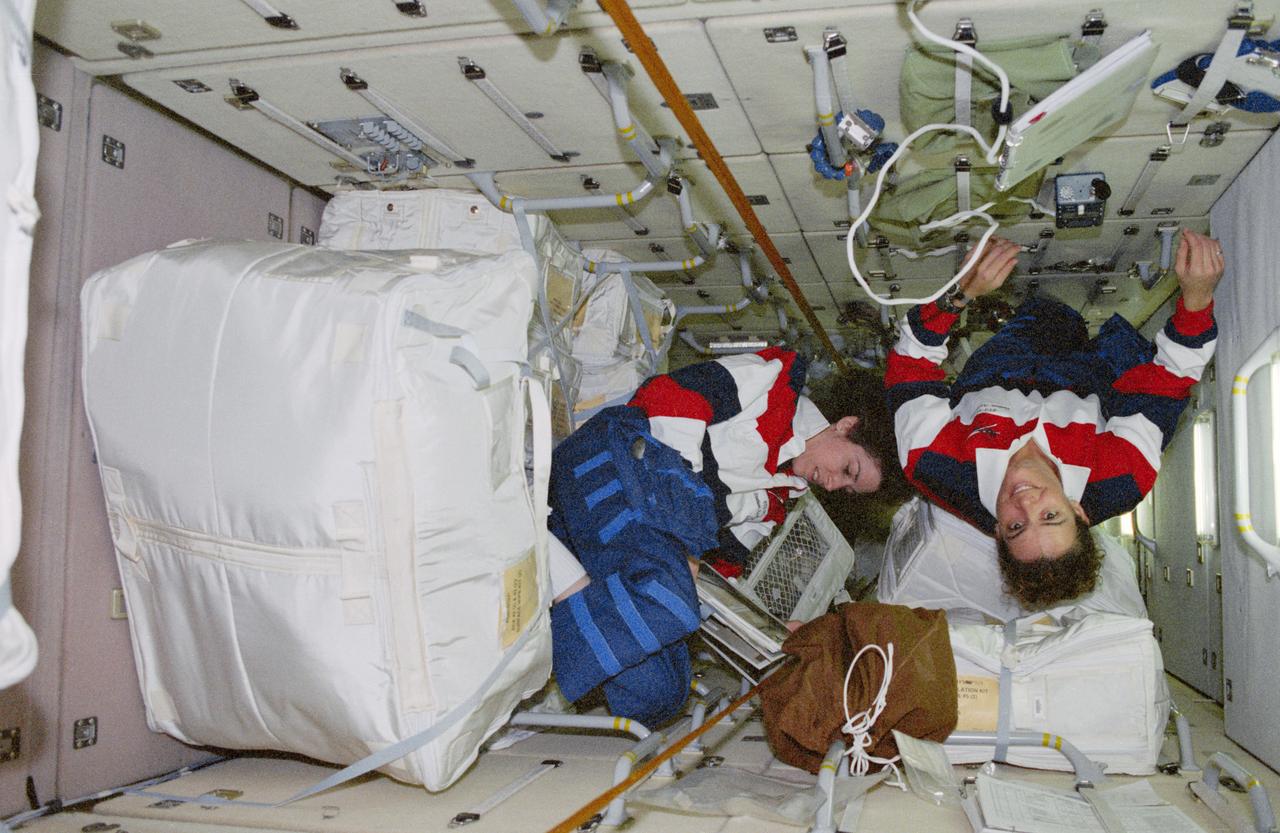
STS096-364-015 (27 May - 6 June 1999) --- Onboard the Russian-built Zarya module, astronauts Julie Payette (left) and Ellen Ochoa handle a portion of the supplies which have been moved over from the docked Discovery. Payette represents the Canadian Space Agency (CSA).
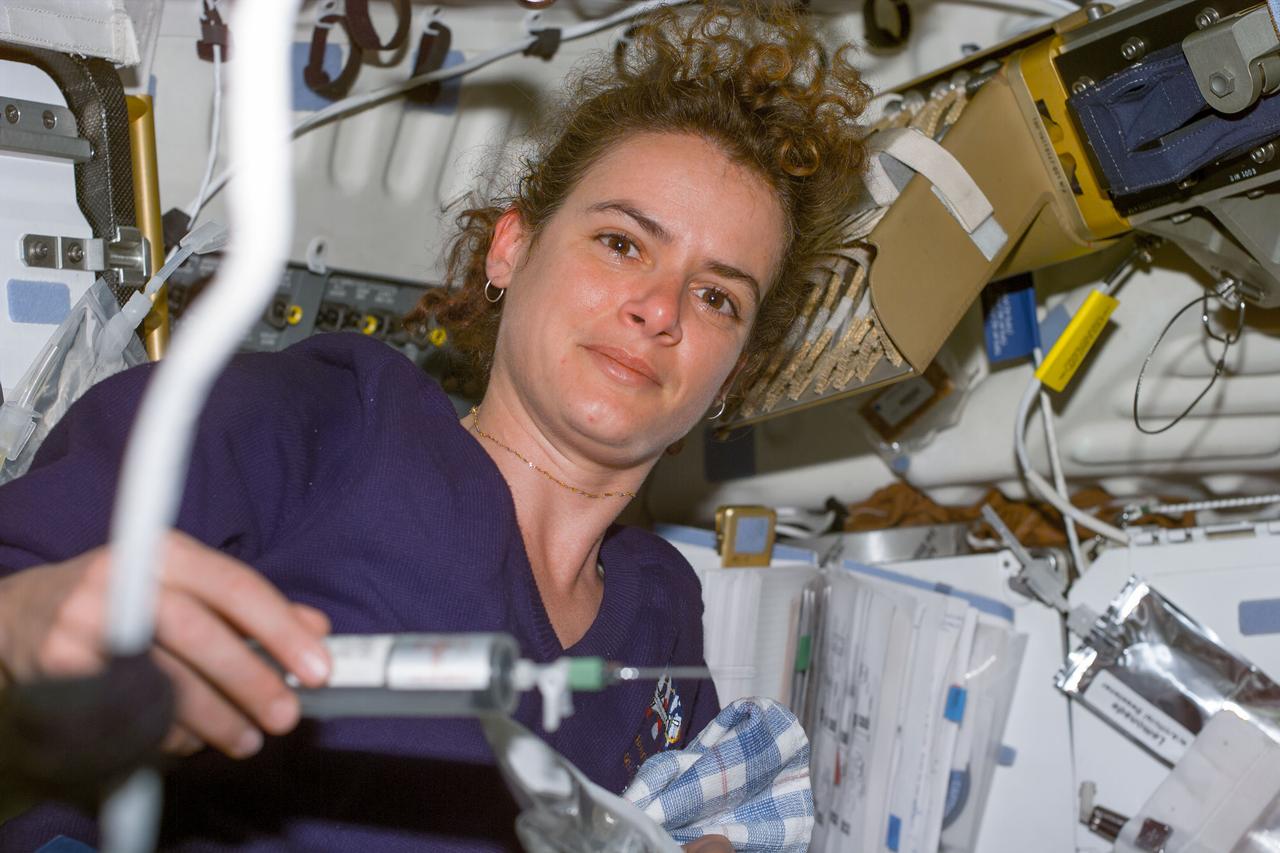
S96-E-5024 (29 May 1999) --- Astronaut Julie Payette, mission specialist representing the Canadian Space Agency (CSA), holds a syringe during a busy fourth day in space for the Space Shuttle Discovery. The image was recorded with an electronic still camera (ESC) at 06:14:52 GMT, May 29, 1999.
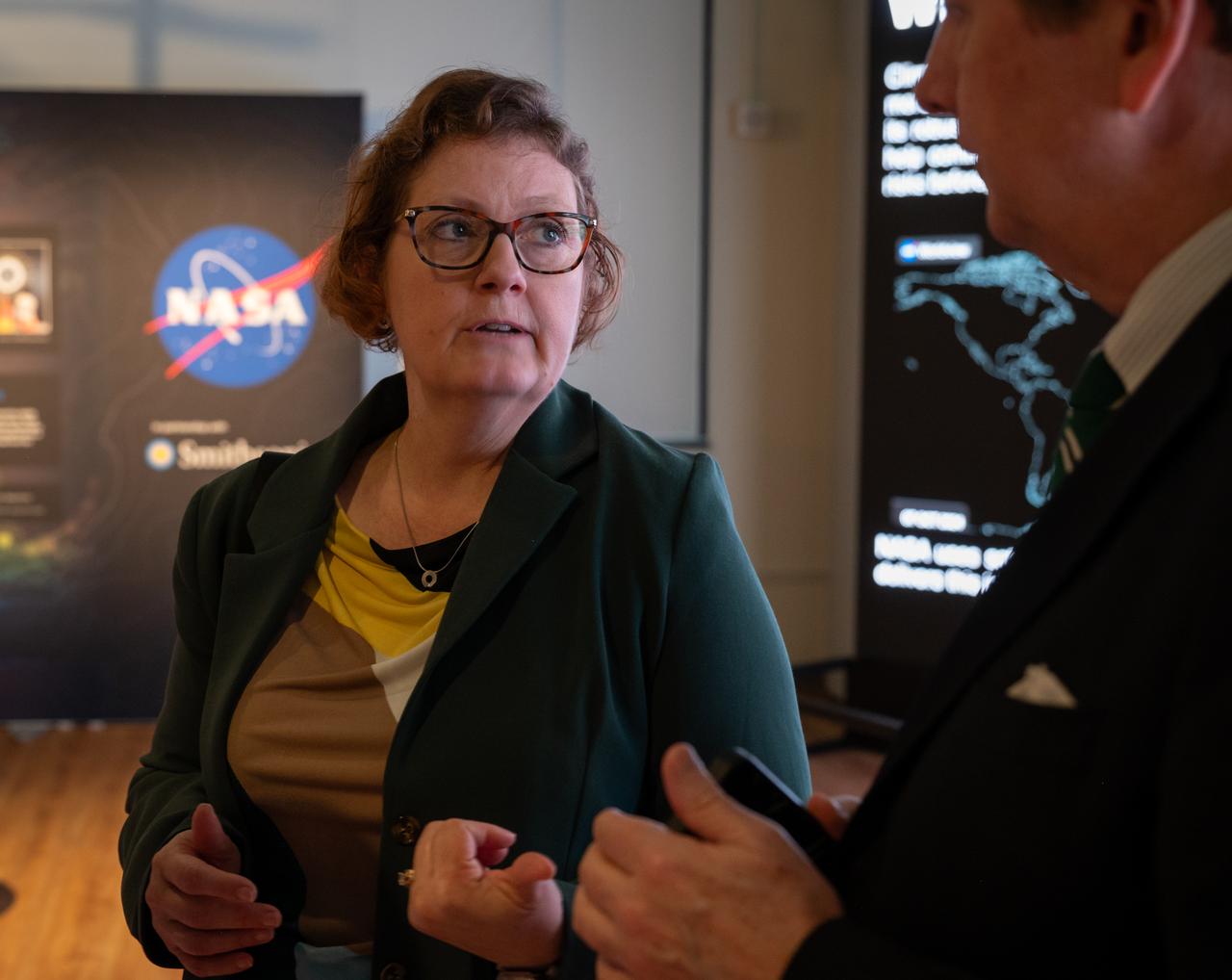
NASA Earth Sciences Division, Deputy Director, Julie Robinson, previews of the Earth Information Center at the Smithsonian National Museum of Natural History, in Washington, Monday, Oct. 7, 2024. The exhibit includes a video wall displaying Earth science data visualizations and videos, an interpretive panel showing Earth’s connected systems, information on our changing world, and an overview of how NASA and the Smithsonian study our home planet. Photo Credit: (NASA/Bill Ingalls)
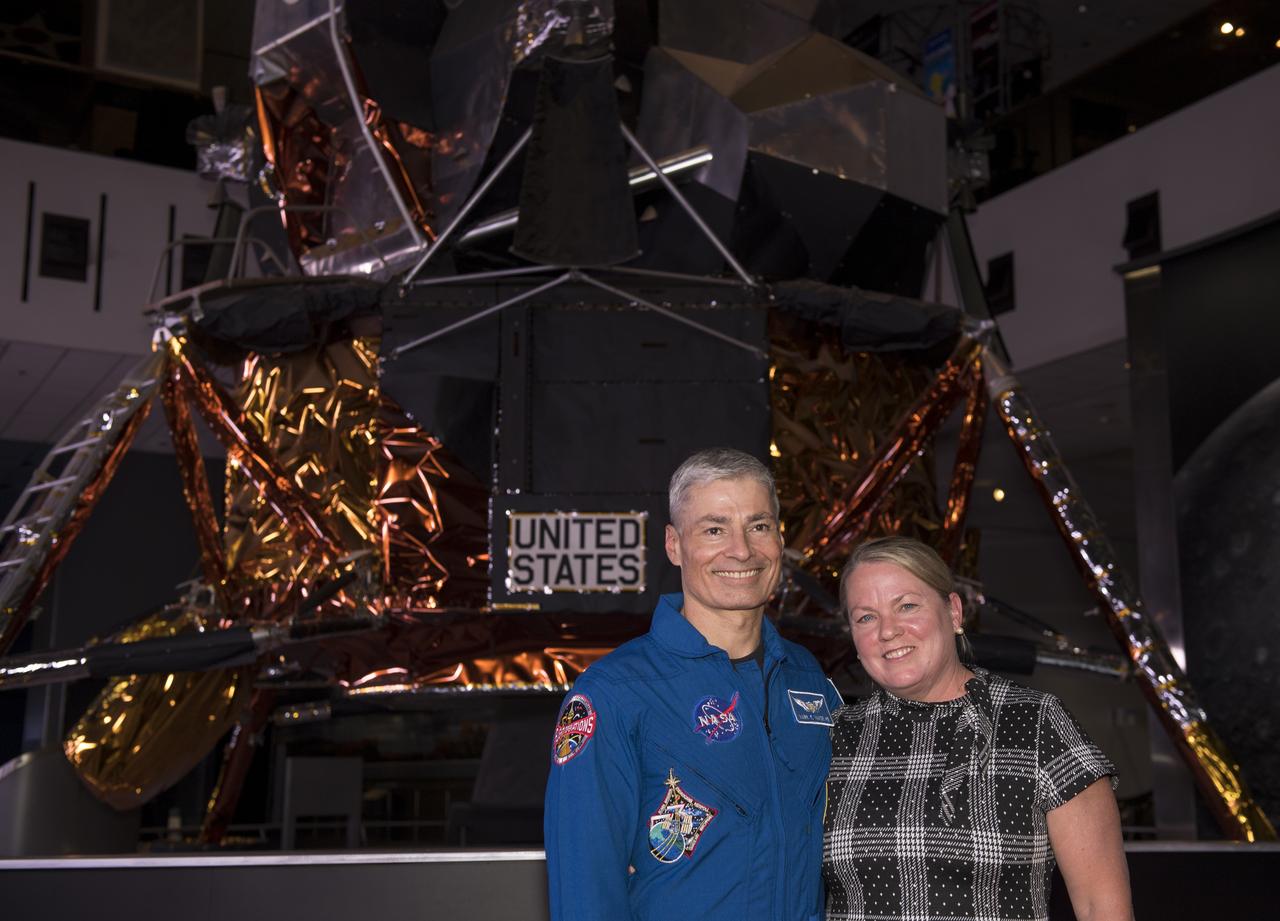
NASA astronaut Mark Vande Hei and his wife Julie attend the premiere of Universal's feature film "First Man” Thursday, Oct. 4, 2018 at the Smithsonian National Air and Space Museum in Washington. The movie is based on the book by Jim Hansen that chronicles the life of NASA astronaut Neil Armstrong from test pilot to his historic Moon landing. It was directed by Damien Chazelle and stars Ryan Gosling and Claire Foy. Photo Credit: (NASA/Aubrey Gemignani)
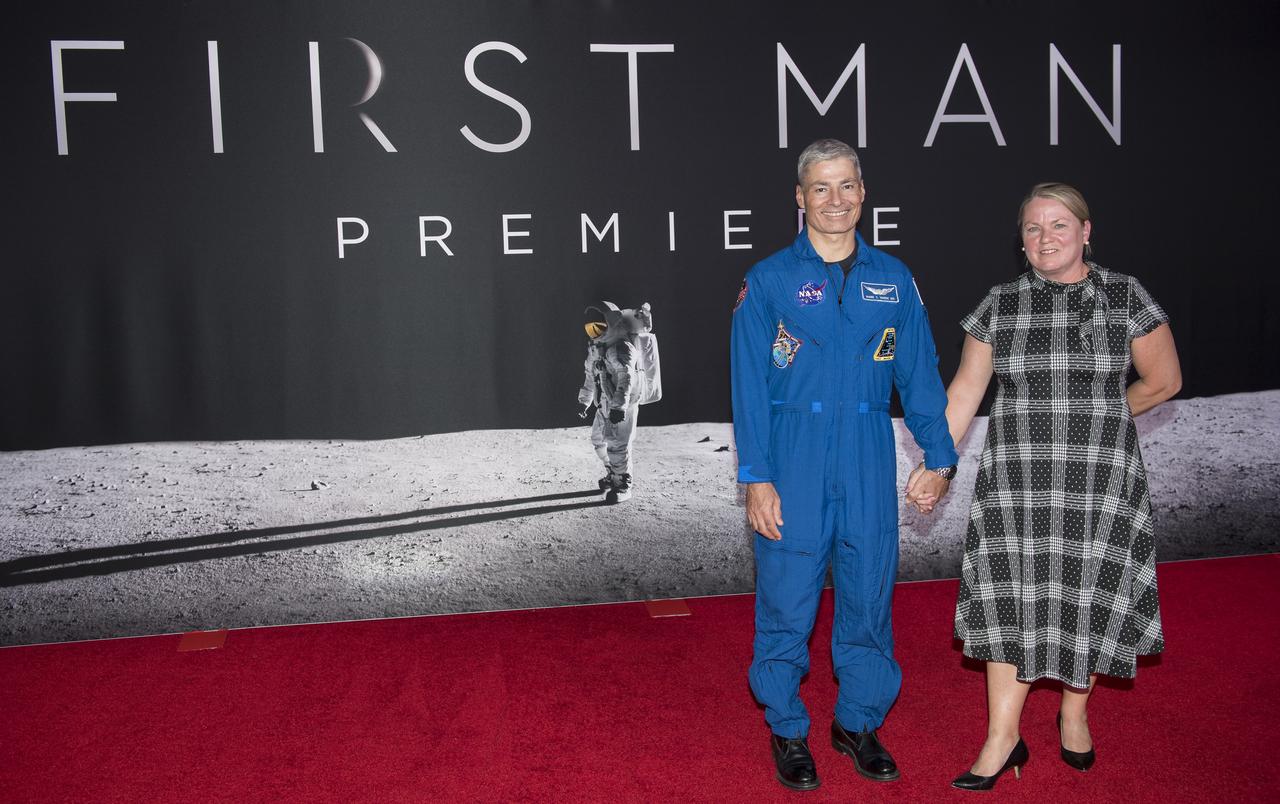
NASA astronaut Mark Vande Hei and his wife Julie attend the premiere of Universal's feature film "First Man” Thursday, Oct. 4, 2018 at the Smithsonian National Air and Space Museum in Washington. The movie is based on the book by Jim Hansen that chronicles the life of NASA astronaut Neil Armstrong from test pilot to his historic Moon landing. It was directed by Damien Chazelle and stars Ryan Gosling and Claire Foy. Photo Credit: (NASA/Aubrey Gemignani)

Julie McEnery, senior project scientist for the Nancy Grace Roman Space Telescope, speaks about the contributions of the Hubble Space Telescope to future astronomy missions during an event titled “Beyond the Deep Field: Hubble’s Legacy and the Future of Cosmic Observation,” Friday, June 5, 2026, at the Mary W. Jackson NASA Headquarters building in Washington. Photo Credit: (NASA/Aubrey Gemignani)

Julie McEnery, senior project scientist for the Nancy Grace Roman Space Telescope, speaks on a panel about the contributions of the Hubble Space Telescope to future astronomy missions during an event titled “Beyond the Deep Field: Hubble’s Legacy and the Future of Cosmic Observation,” Friday, June 5, 2026, at the Mary W. Jackson NASA Headquarters building in Washington. Photo Credit: (NASA/Aubrey Gemignani)
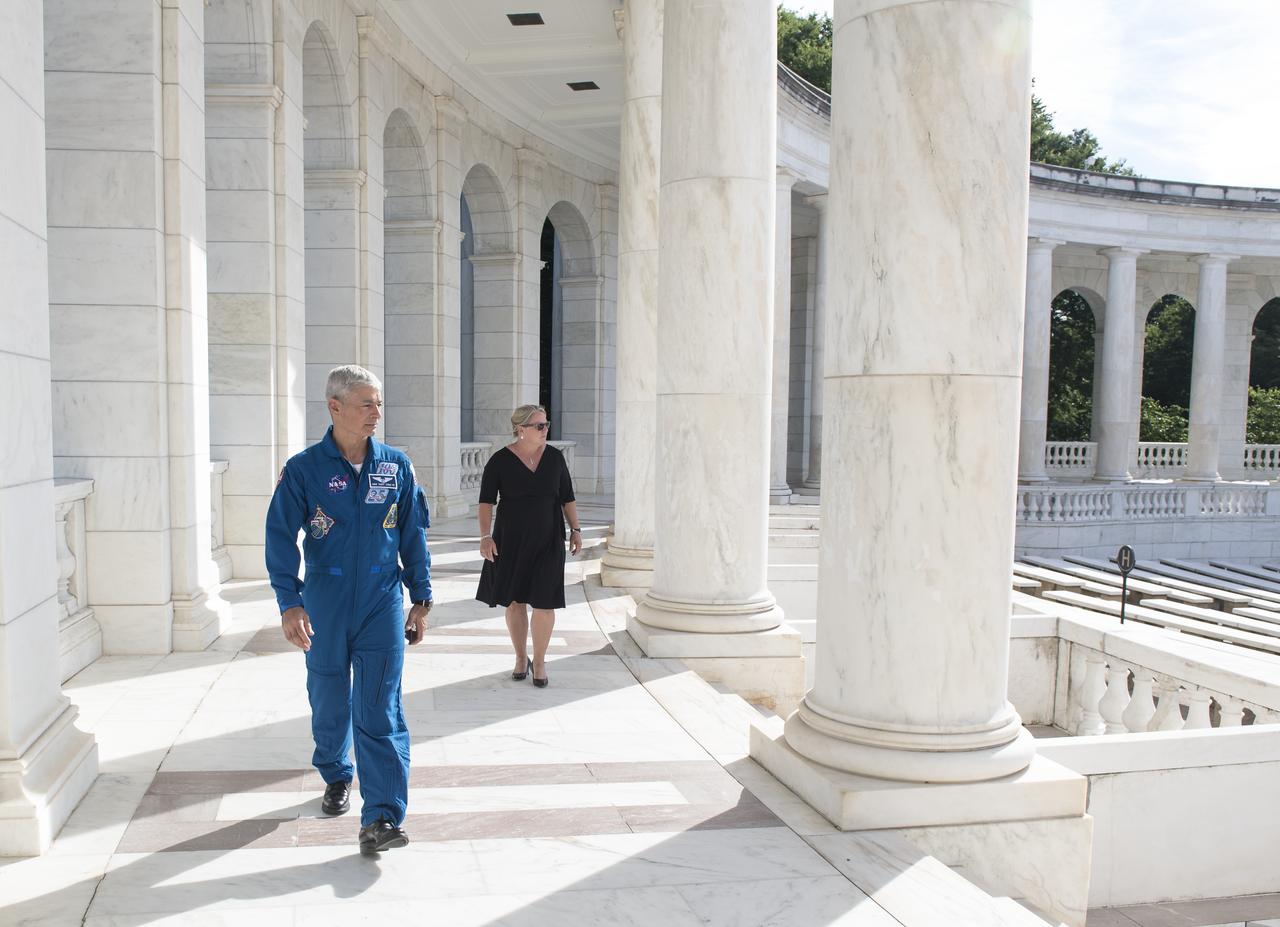
NASA astronaut Mark Vande Hei, left, and his wife Julie walk through the amphitheater at Arlington National Cemetery, Friday, June 15, 2018 in Arlington, Va. Photo Credit: (NASA/Aubrey Gemignani)
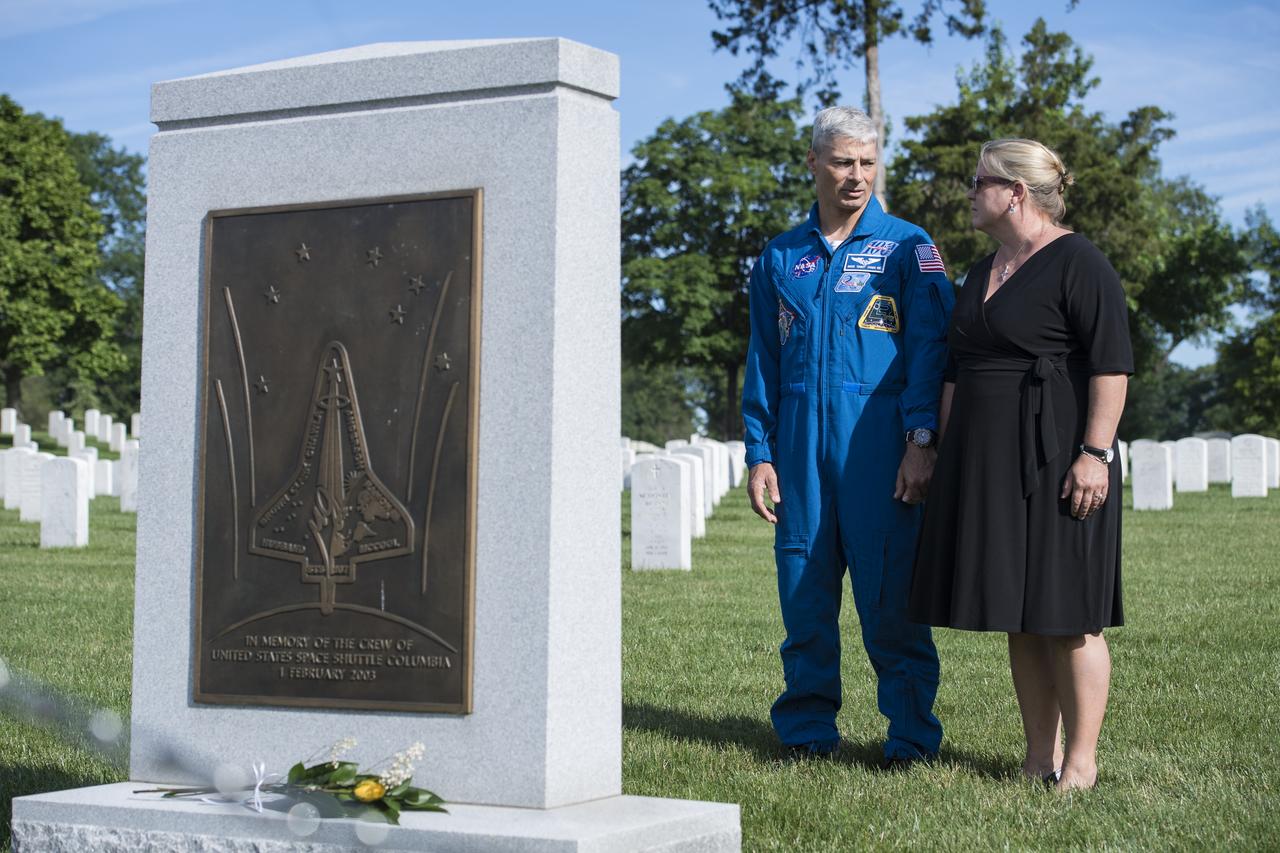
NASA astronaut Mark Vande Hei, left, and his wife Julie visit the Space Shuttle Columbia memorial, Friday, June 15, 2018 at Arlington National Cemetery in Arlington, Va. Photo Credit: (NASA/Aubrey Gemignani)

Nova Stars are essentially giant fusion reactions occurring in the vacuum of space. Because stars have so much mass, they possess powerful gravitational force—but they don’t collapse because of the outward force generated by nuclear fusion, continually converting hydrogen atoms to helium. Sometimes stars begin orbiting each other, forming a binary star system. Typically this involves a white dwarf star and a red giant. Orbiting the red giant like a moon, the dwarf star rips matter from its companion until it essentially gags on the excess, coughing hot gas and radiation into space. This dramatic phenomenon is relatively common, and the white dwarf is not destroyed in the resulting nova. To learn more about x-ray emissions, read about NASA’s Chandra mission: <a href="http://www.nasa.gov/mission_pages/chandra/main/" rel="nofollow">www.nasa.gov/mission_pages/chandra/main/</a> --- Original caption: In Hollywood blockbusters, explosions are often among the stars of the show. In space, explosions of actual stars are a focus for scientists who hope to better understand their births, lives, and deaths and how they interact with their surroundings. Using NASA’s Chandra X-ray Observatory, astronomers have studied one particular explosion that may provide clues to the dynamics of other, much larger stellar eruptions. A team of researchers pointed the telescope at GK Persei, an object that became a sensation in the astronomical world in 1901 when it suddenly appeared as one of the brightest stars in the sky for a few days, before gradually fading away in brightness. Today, astronomers cite GK Persei as an example of a “classical nova,” an outburst produced by a thermonuclear explosion on the surface of a white dwarf star, the dense remnant of a Sun-like star. Read Full Article: <a href="http://www.nasa.gov/mission_pages/chandra/mini-supernova-explosion-could-have-big-impact.html" rel="nofollow">www.nasa.gov/mission_pages/chandra/mini-supernova-explosi...</a> <b><a href="http://www.nasa.gov/audience/formedia/features/MP_Photo_Guidelines.html" rel="nofollow">NASA image use policy.</a></b> <b><a href="http://www.nasa.gov/centers/goddard/home/index.html" rel="nofollow">NASA Goddard Space Flight Center</a></b> enables NASA’s mission through four scientific endeavors: Earth Science, Heliophysics, Solar System Exploration, and Astrophysics. Goddard plays a leading role in NASA’s accomplishments by contributing compelling scientific knowledge to advance the Agency’s mission. <b>Follow us on <a href="http://twitter.com/NASAGoddardPix" rel="nofollow">Twitter</a></b> <b>Like us on <a href="http://www.facebook.com/pages/Greenbelt-MD/NASA-Goddard/395013845897?ref=tsd" rel="nofollow">Facebook</a></b> <b>Find us on <a href="http://instagrid.me/nasagoddard/?vm=grid" rel="nofollow">Instagram</a></b>
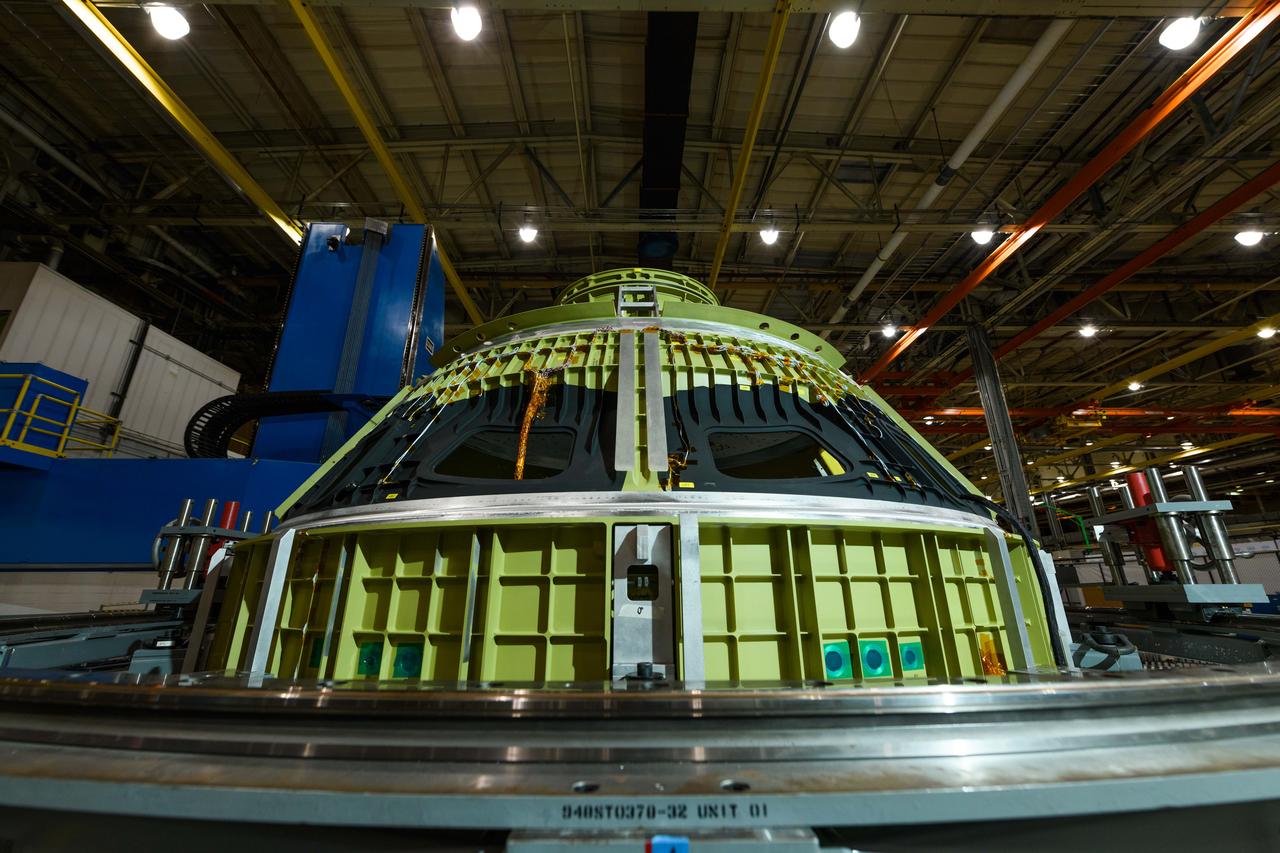
Lockheed Martin technicians at NASA's Michoud Assembly Facility in New Orleans, Louisiana, complete the final weld on the pressure vessel of the Orion crew module for Artemis II on July 24, 2018, the first flight of Orion with astronauts which will carry them farther into the solar system than ever before.
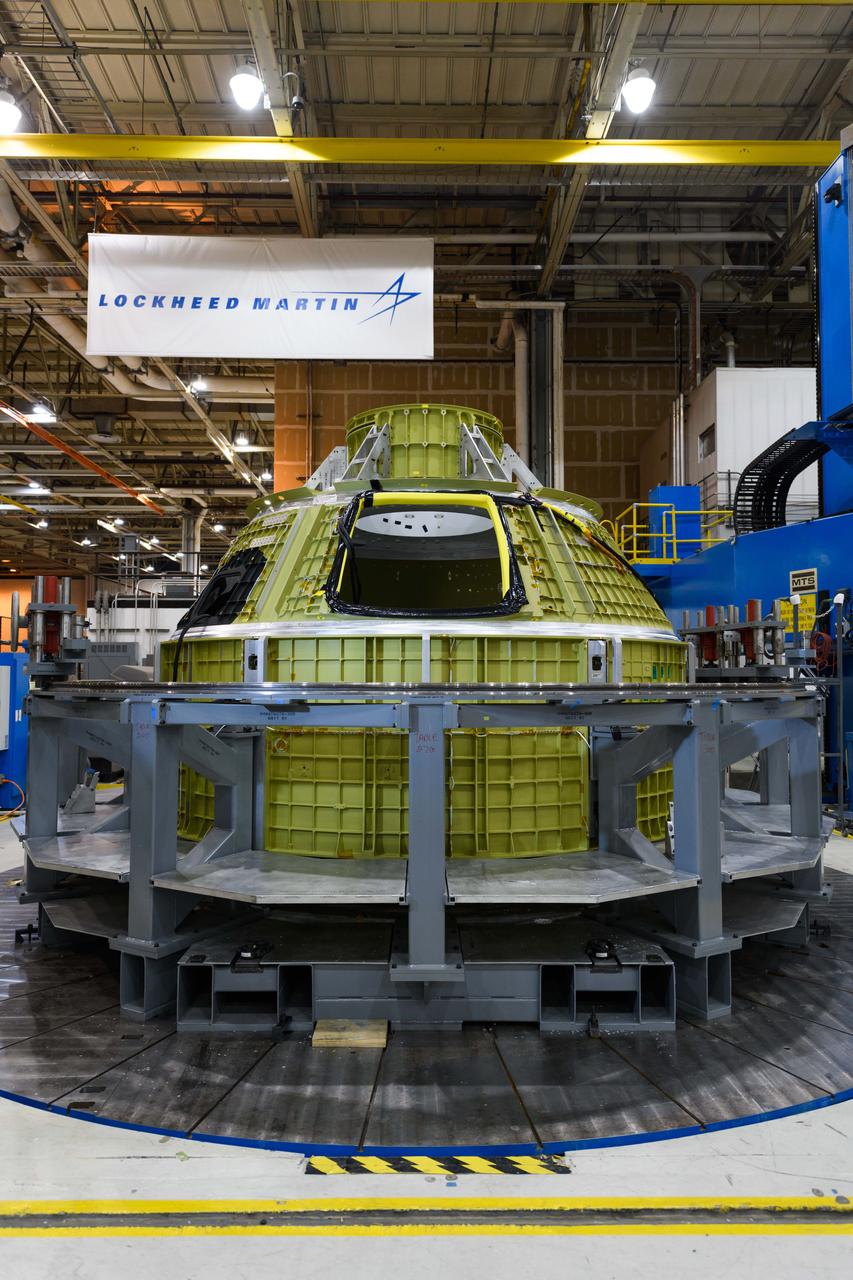
Lockheed Martin technicians at NASA's Michoud Assembly Facility in New Orleans, Louisiana, complete the final weld on the pressure vessel of the Orion crew module for Artemis II on July 24, 2018, the first flight of Orion with astronauts which will carry them farther into the solar system than ever before.
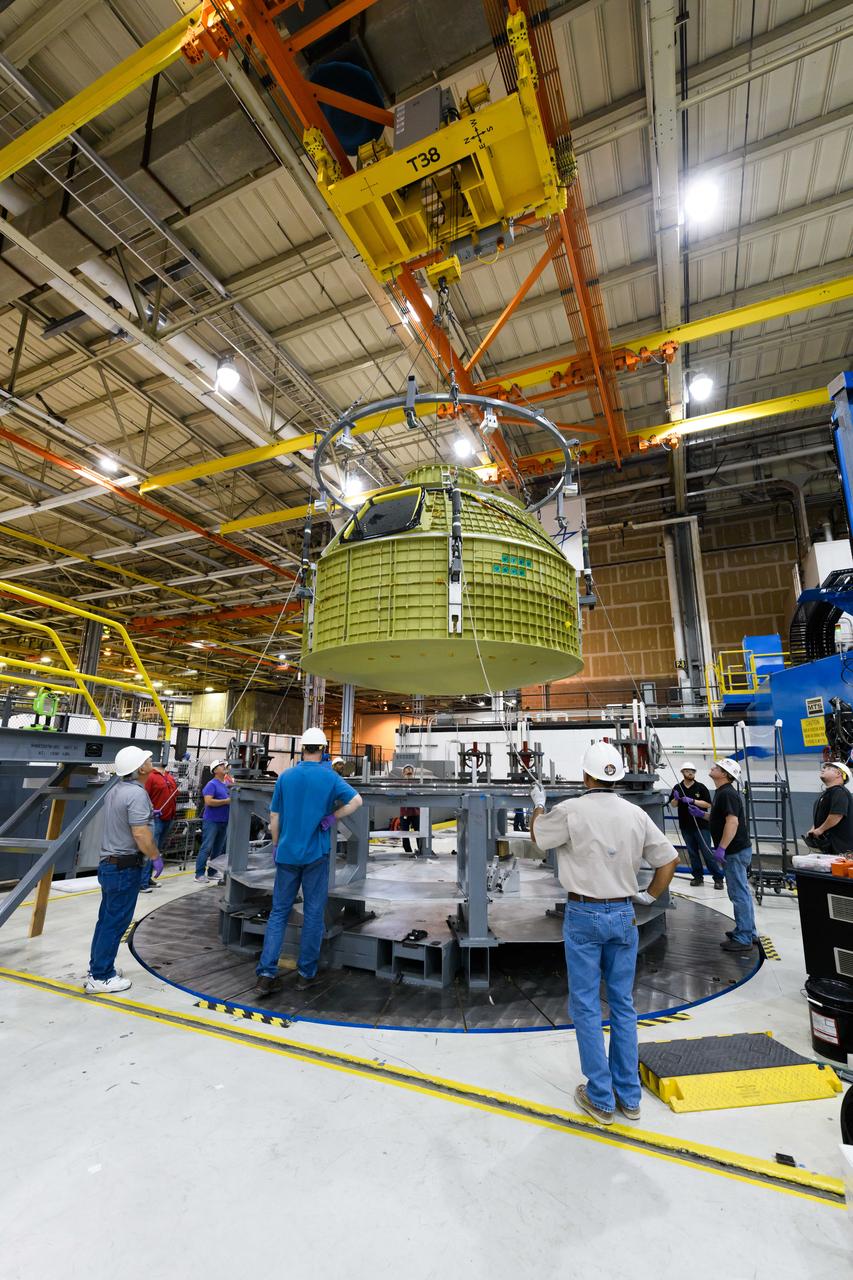
Lockheed Martin technicians at NASA's Michoud Assembly Facility in New Orleans, Louisiana, complete the final weld on the pressure vessel of the Orion crew module for Artemis II on July 24, 2018, the first flight of Orion with astronauts which will carry them farther into the solar system than ever before.
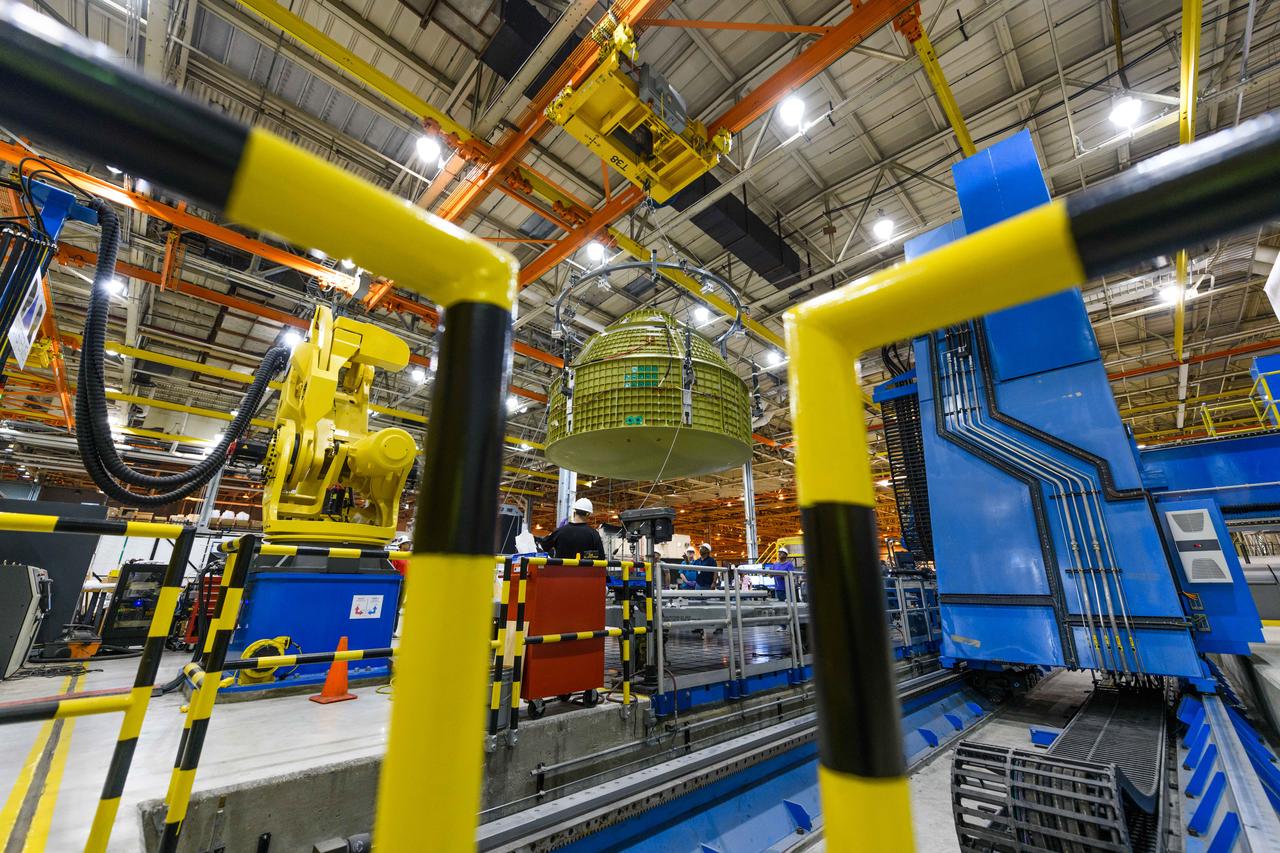
Lockheed Martin technicians at NASA's Michoud Assembly Facility in New Orleans, Louisiana, complete the final weld on the pressure vessel of the Orion crew module for Artemis II on July 24, 2018, the first flight of Orion with astronauts which will carry them farther into the solar system than ever before.
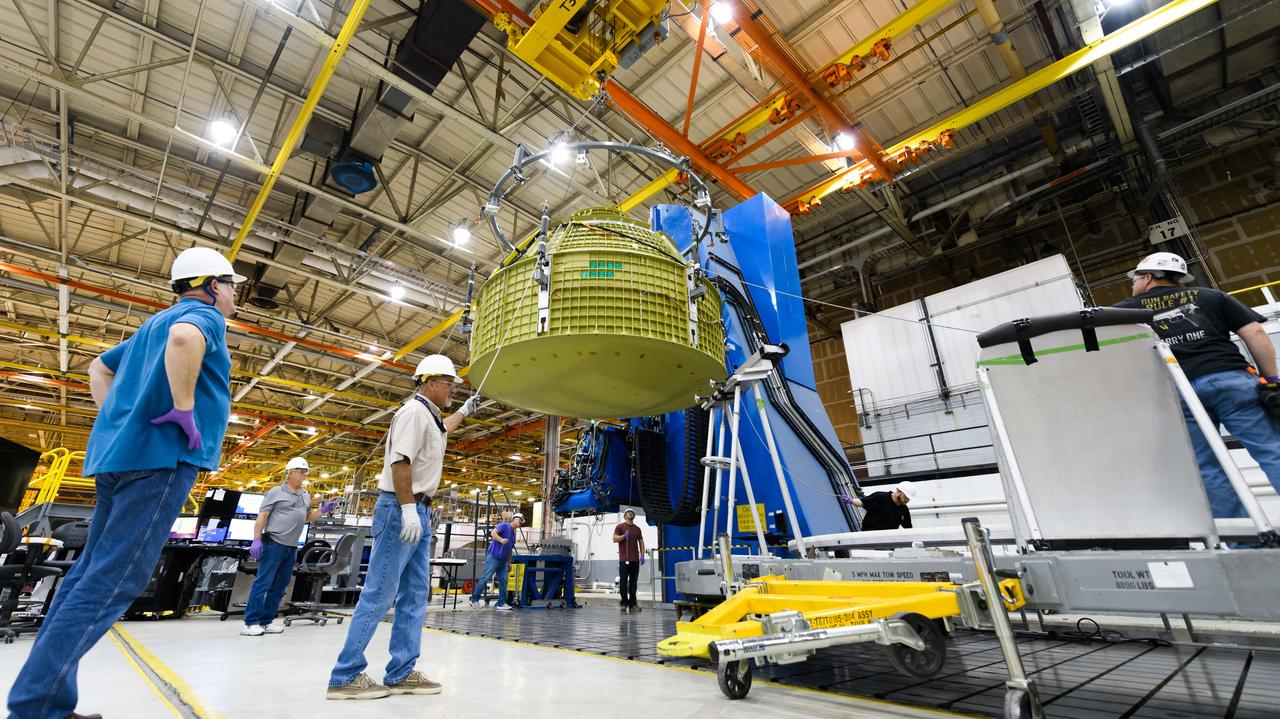
Lockheed Martin technicians at NASA's Michoud Assembly Facility in New Orleans, Louisiana, complete the final weld on the pressure vessel of the Orion crew module for Artemis II on July 24, 2018, the first flight of Orion with astronauts which will carry them farther into the solar system than ever before.
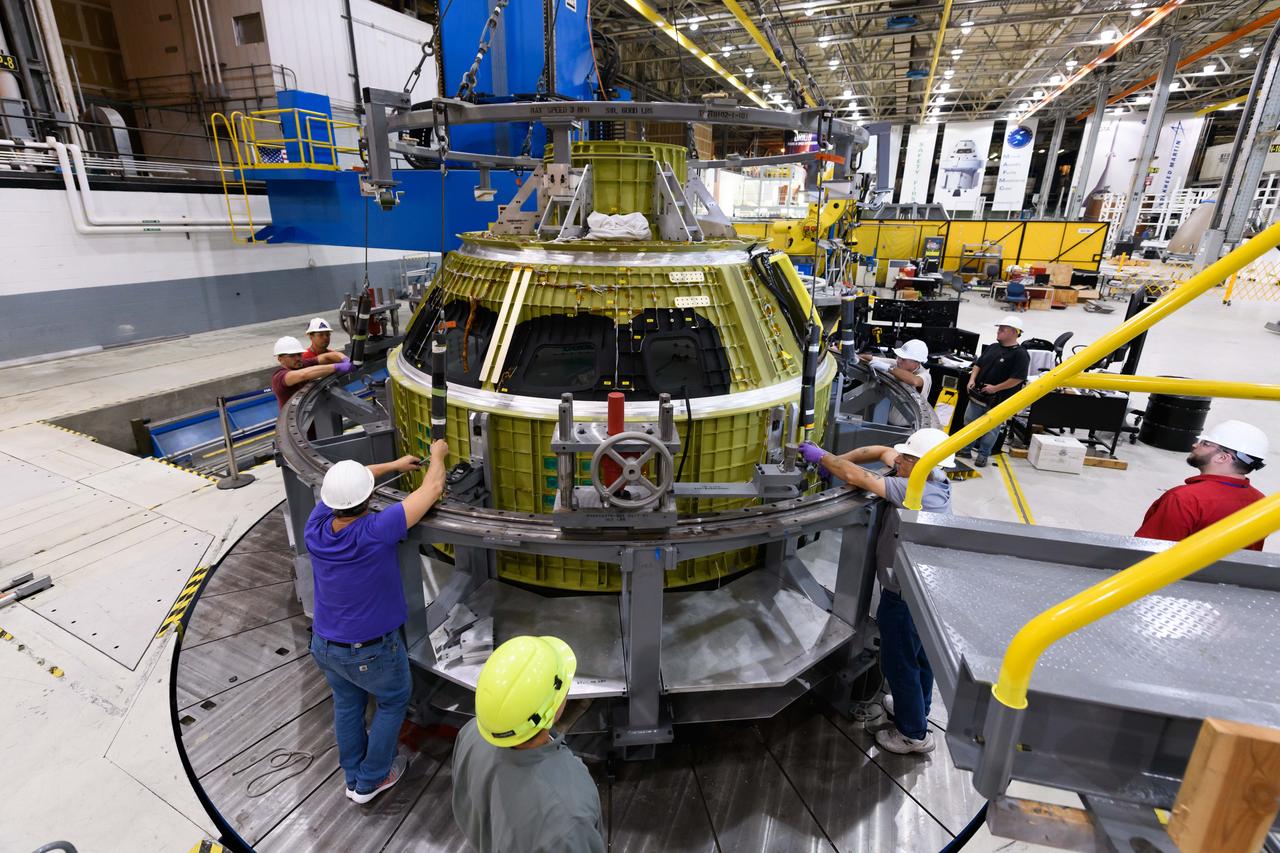
Lockheed Martin technicians at NASA's Michoud Assembly Facility in New Orleans, Louisiana, complete the final weld on the pressure vessel of the Orion crew module for Artemis II on July 24, 2018, the first flight of Orion with astronauts which will carry them farther into the solar system than ever before.
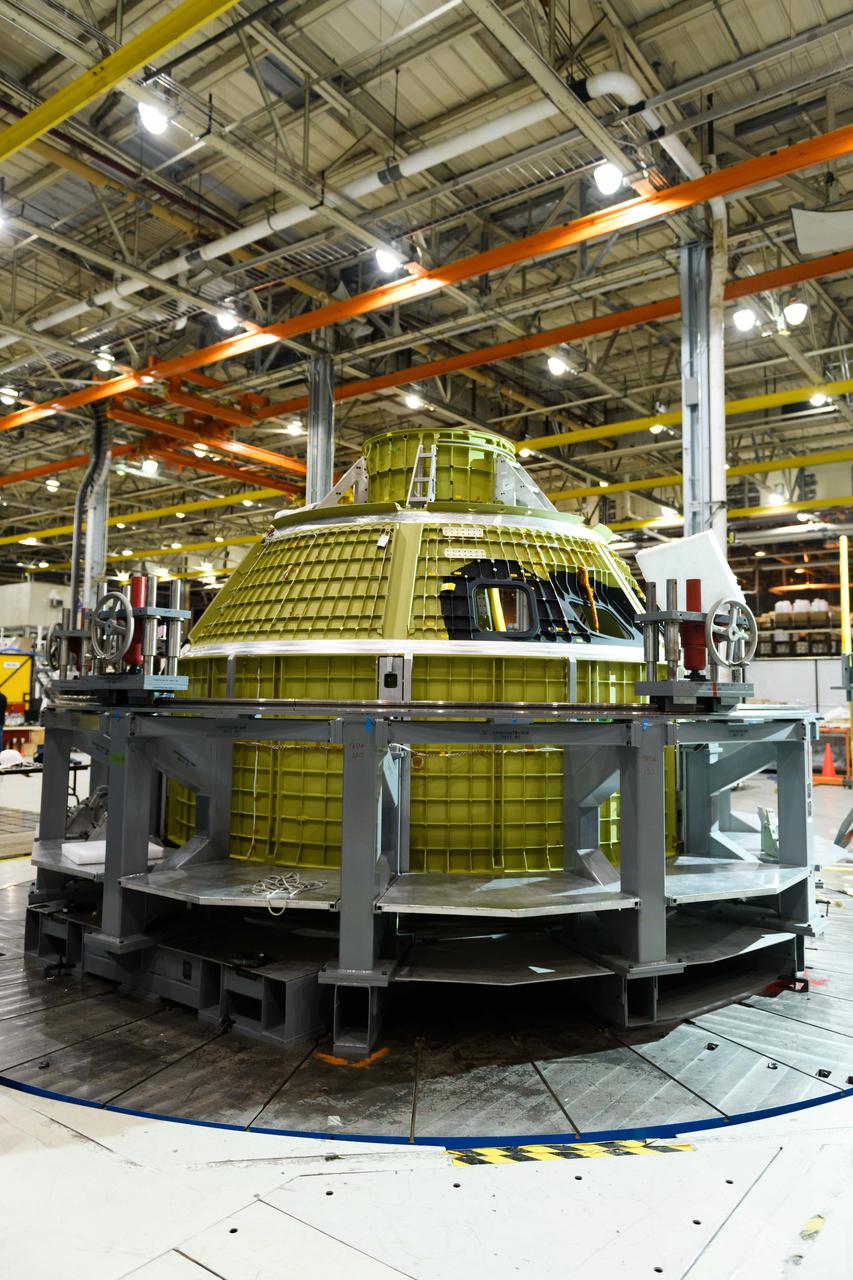
Lockheed Martin technicians at NASA's Michoud Assembly Facility in New Orleans, Louisiana, complete the final weld on the pressure vessel of the Orion crew module for Artemis II on July 24, 2018, the first flight of Orion with astronauts which will carry them farther into the solar system than ever before.
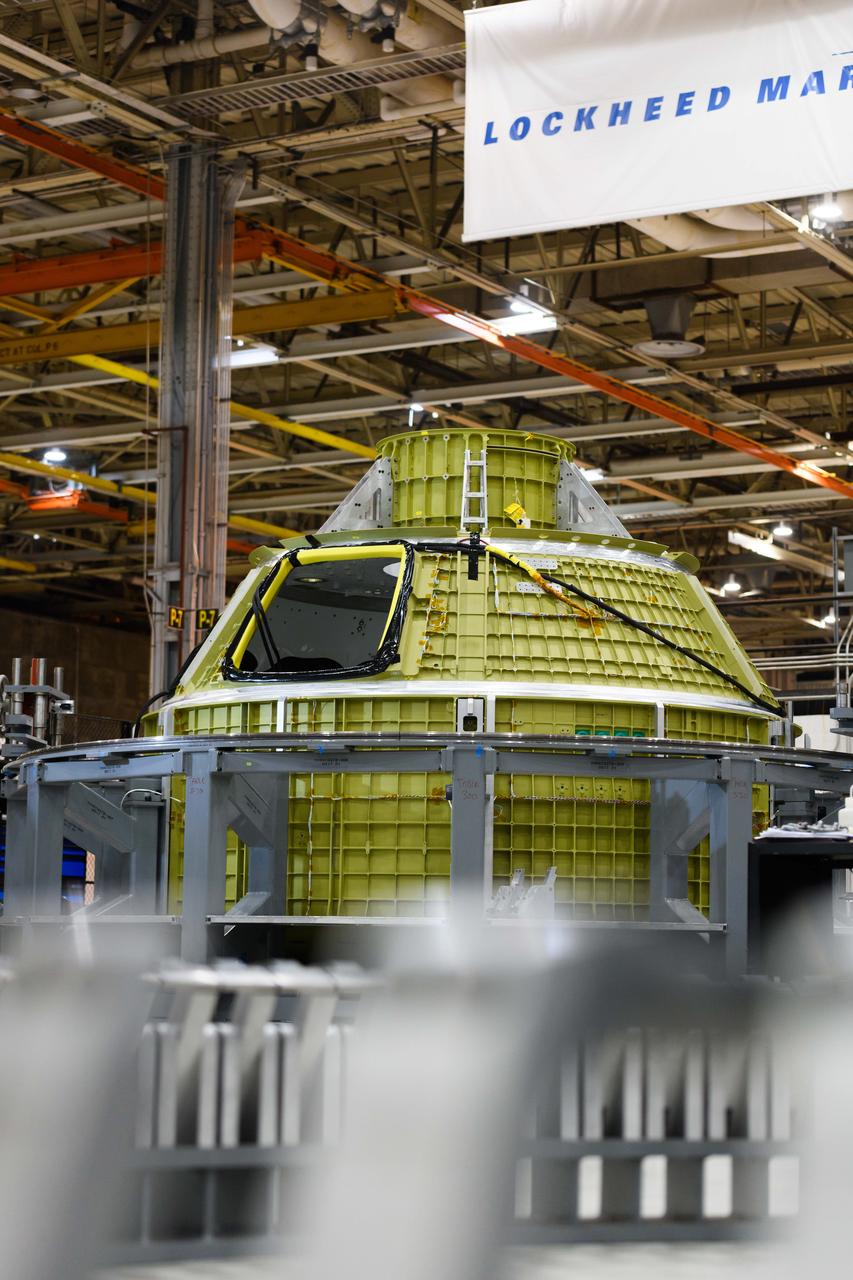
Lockheed Martin technicians at NASA's Michoud Assembly Facility in New Orleans, Louisiana, complete the final weld on the pressure vessel of the Orion crew module for Artemis II on July 24, 2018, the first flight of Orion with astronauts which will carry them farther into the solar system than ever before.
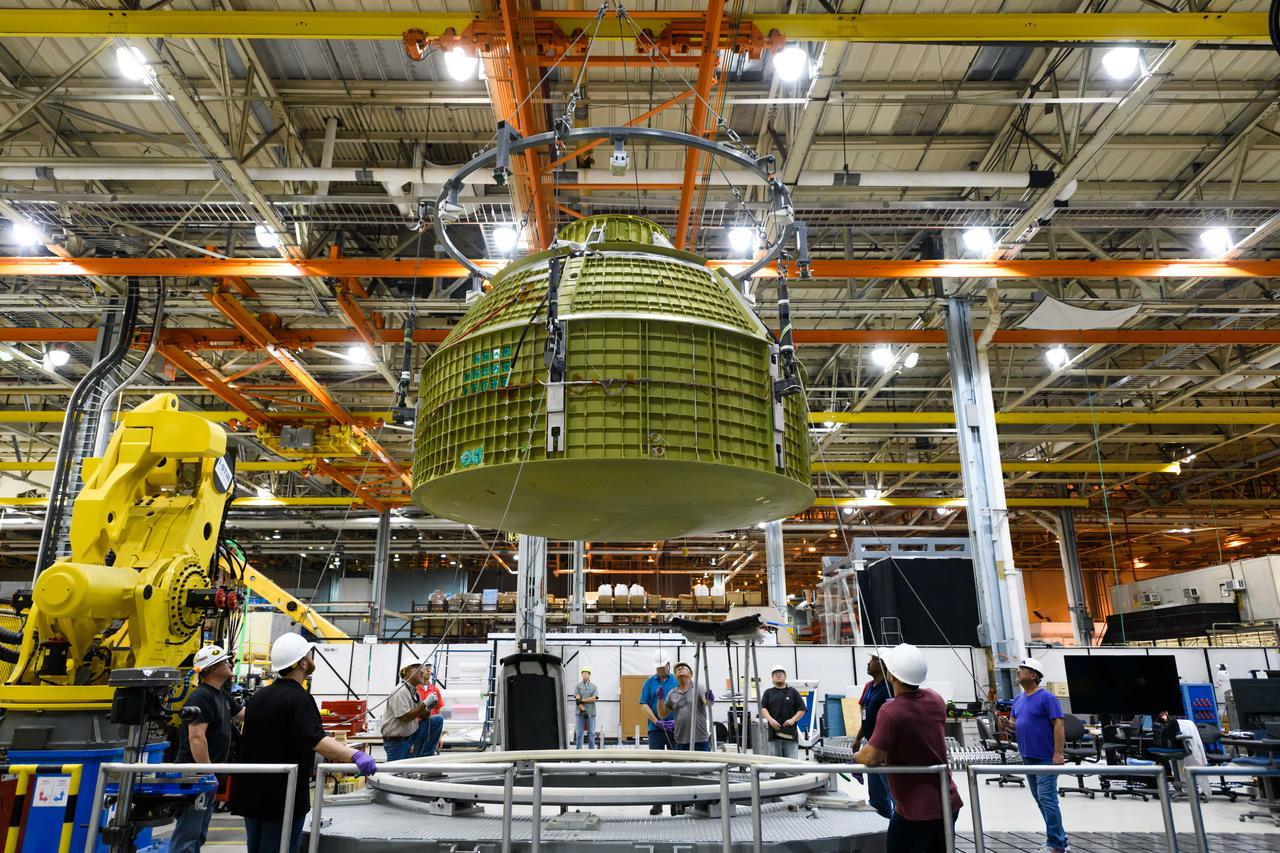
Lockheed Martin technicians at NASA's Michoud Assembly Facility in New Orleans, Louisiana, complete the final weld on the pressure vessel of the Orion crew module for Artemis II on July 24, 2018, the first flight of Orion with astronauts which will carry them farther into the solar system than ever before.
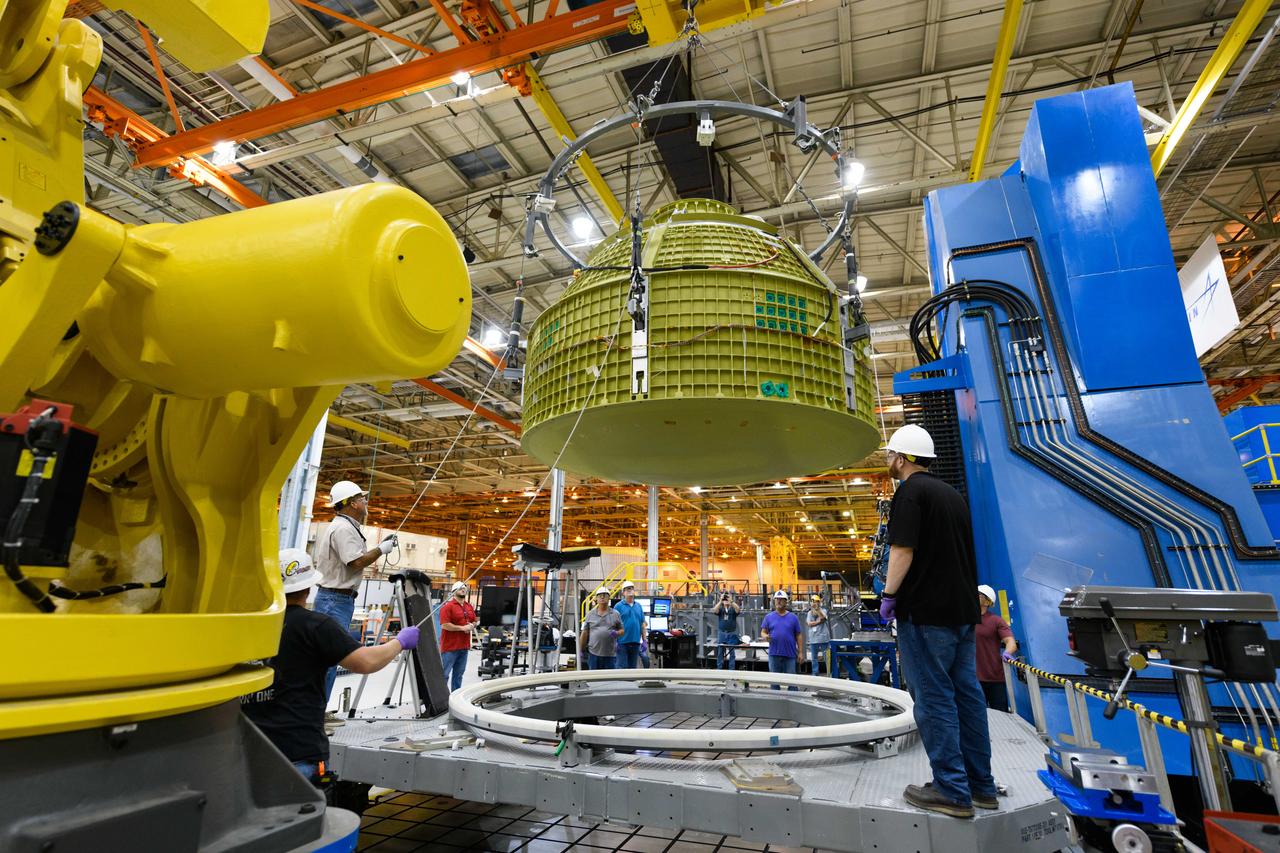
Lockheed Martin technicians at NASA's Michoud Assembly Facility in New Orleans, Louisiana, complete the final weld on the pressure vessel of the Orion crew module for Artemis II on July 24, 2018, the first flight of Orion with astronauts which will carry them farther into the solar system than ever before.
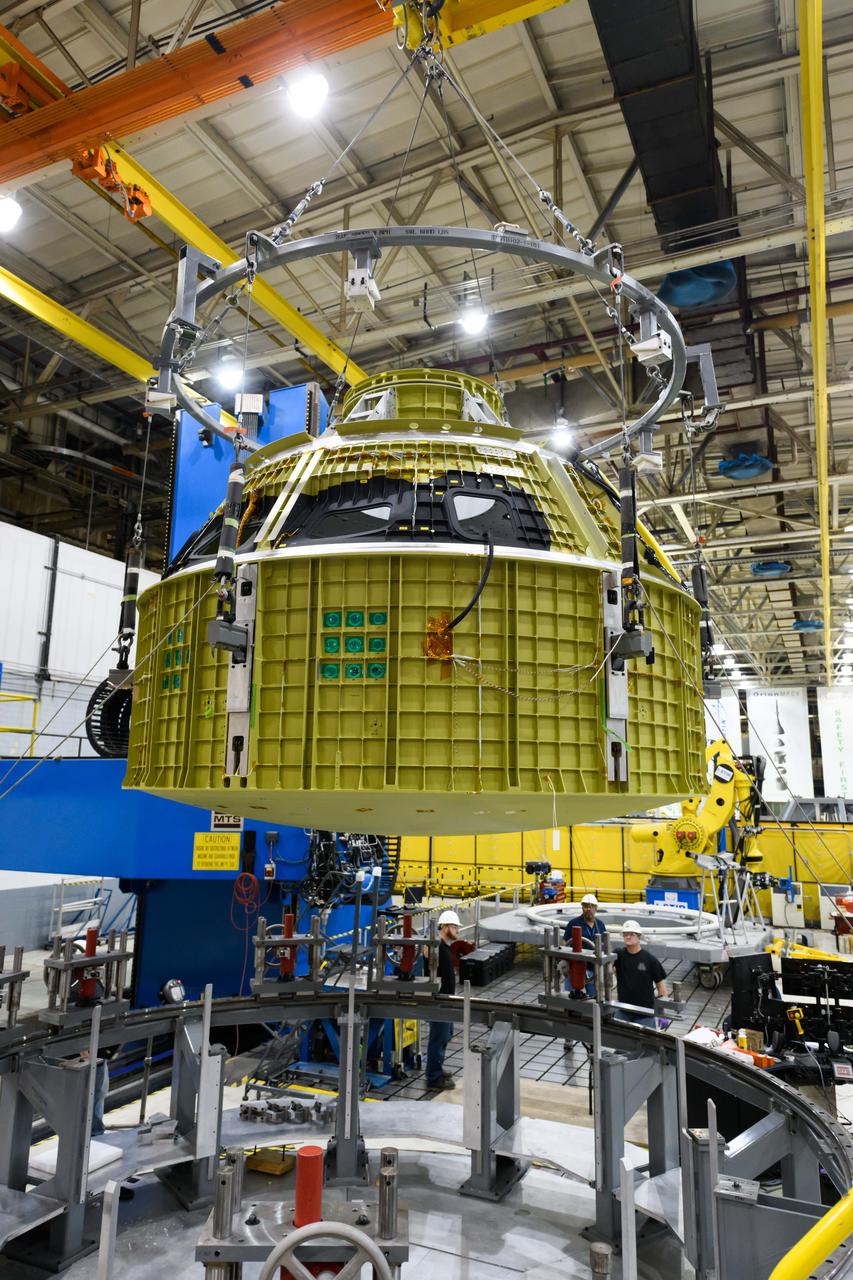
Lockheed Martin technicians at NASA's Michoud Assembly Facility in New Orleans, Louisiana, complete the final weld on the pressure vessel of the Orion crew module for Artemis II on July 24, 2018, the first flight of Orion with astronauts which will carry them farther into the solar system than ever before.
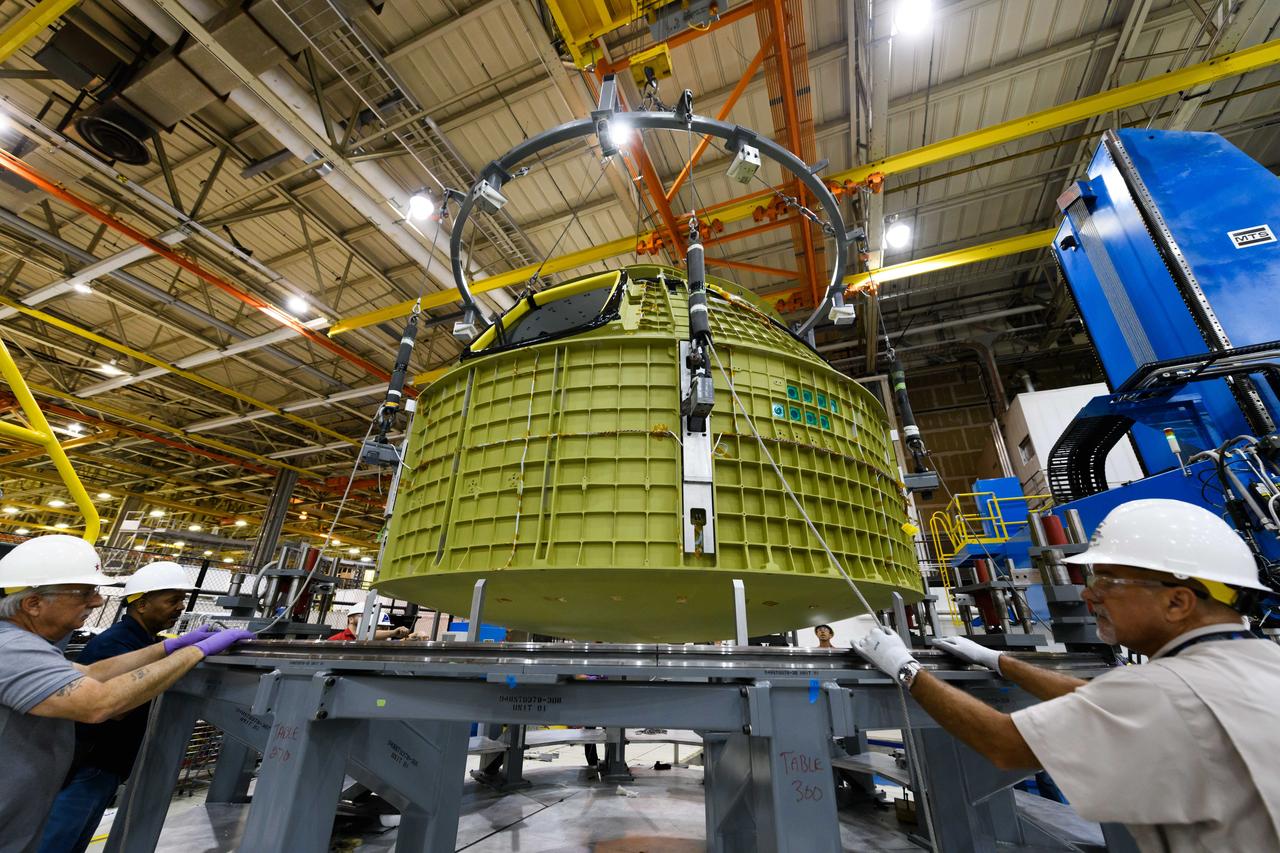
Lockheed Martin technicians at NASA's Michoud Assembly Facility in New Orleans, Louisiana, complete the final weld on the pressure vessel of the Orion crew module for Artemis II on July 24, 2018, the first flight of Orion with astronauts which will carry them farther into the solar system than ever before.

Lockheed Martin technicians at NASA's Michoud Assembly Facility in New Orleans, Louisiana, complete the final weld on the pressure vessel of the Orion crew module for Artemis II on July 24, 2018, the first flight of Orion with astronauts which will carry them farther into the solar system than ever before.
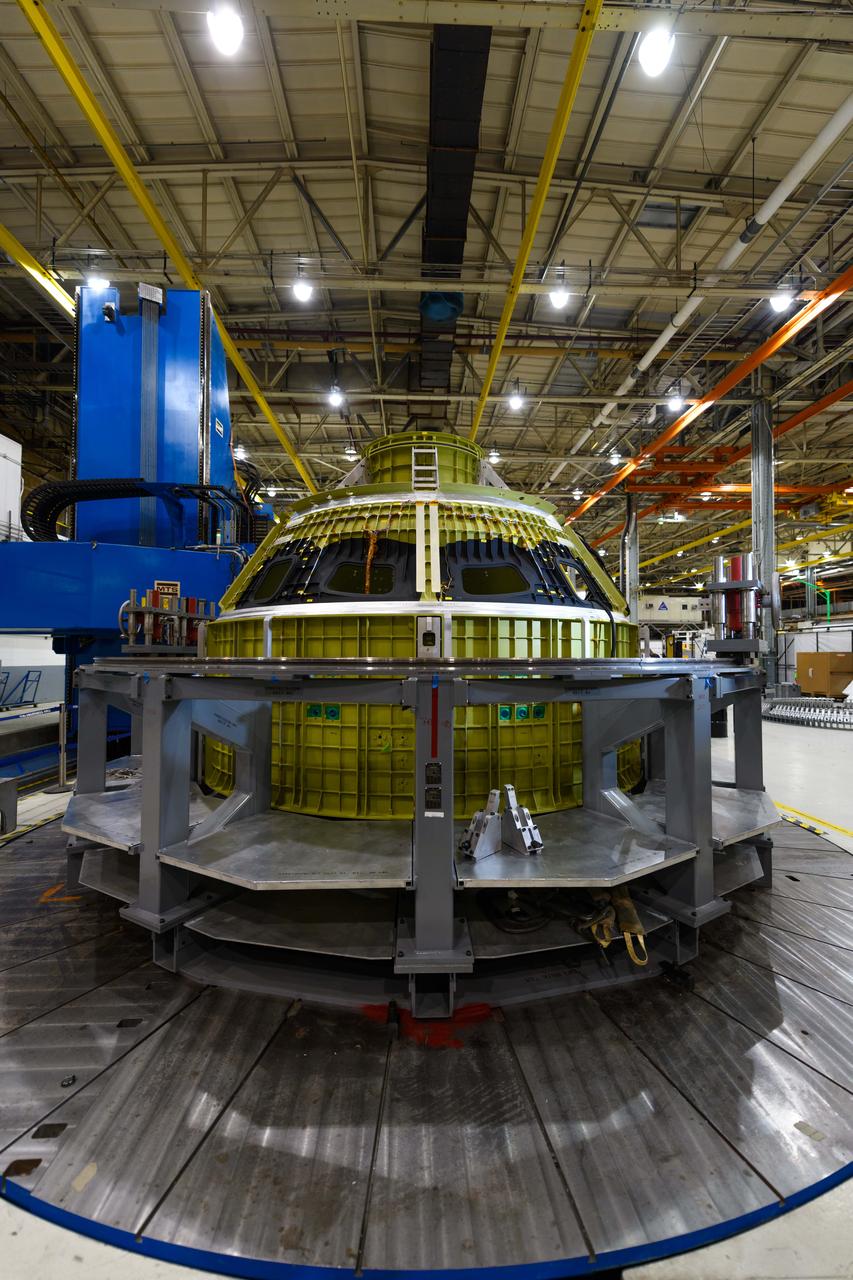
Lockheed Martin technicians at NASA's Michoud Assembly Facility in New Orleans, Louisiana, complete the final weld on the pressure vessel of the Orion crew module for Artemis II on July 24, 2018, the first flight of Orion with astronauts which will carry them farther into the solar system than ever before.
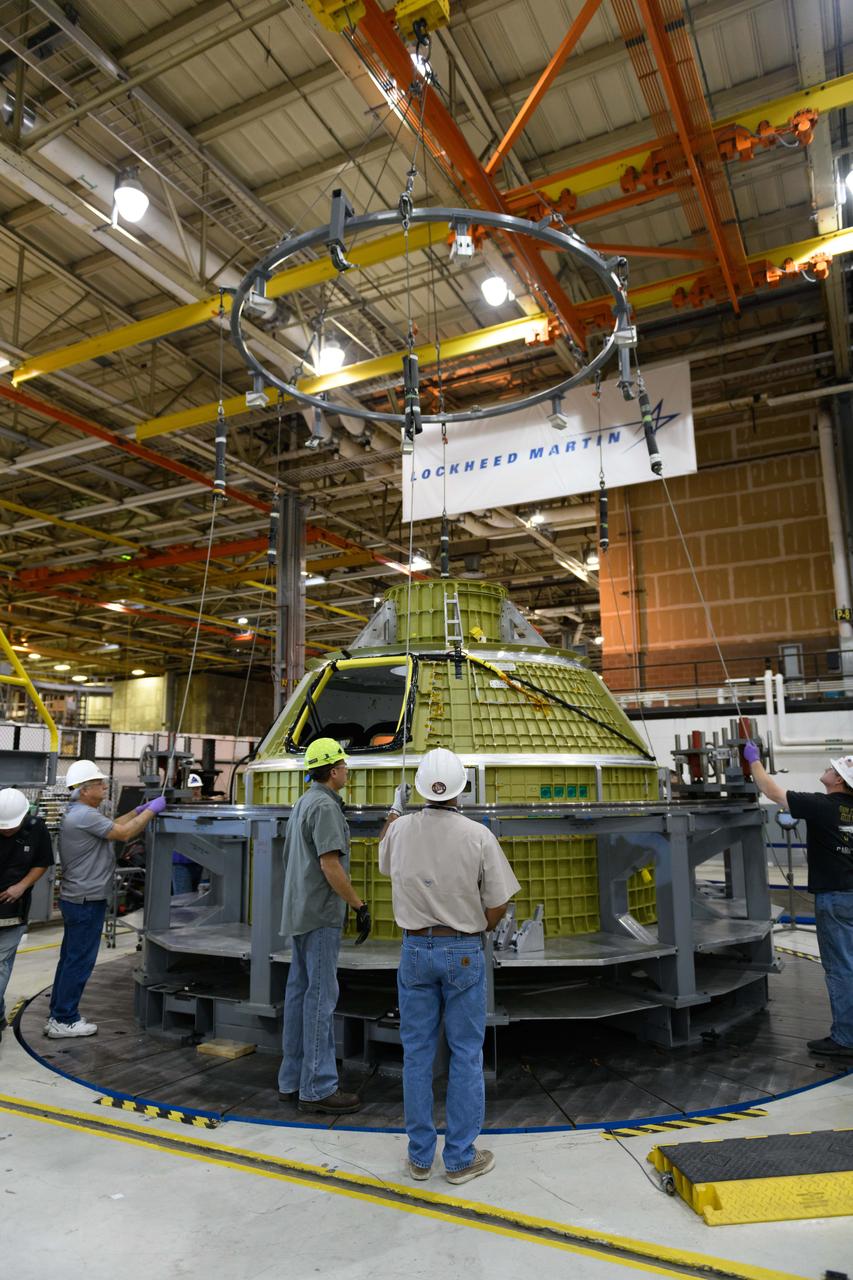
Lockheed Martin technicians at NASA's Michoud Assembly Facility in New Orleans, Louisiana, complete the final weld on the pressure vessel of the Orion crew module for Artemis II on July 24, 2018, the first flight of Orion with astronauts which will carry them farther into the solar system than ever before.
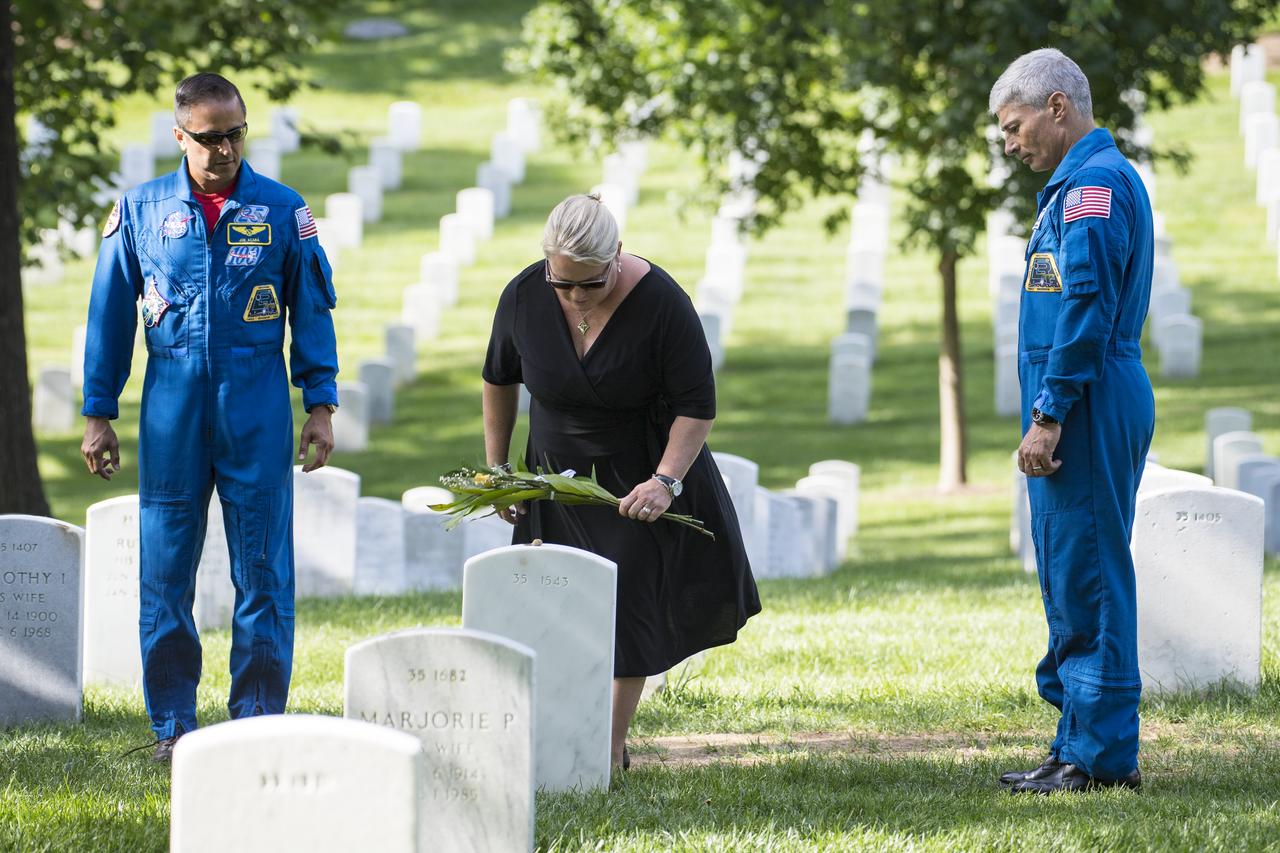
NASA astronaut Joe Acaba, left, and Mark Vande Hei, right, watch as Julie Vande Hei, wife of Mark, places a flower at the gravesite of former astronaut and U.S. Senator John Glenn, Friday, June 15, 2018 at the Arlington National Cemetery in Arlington, Va. Photo Credit: (NASA/Aubrey Gemignani)
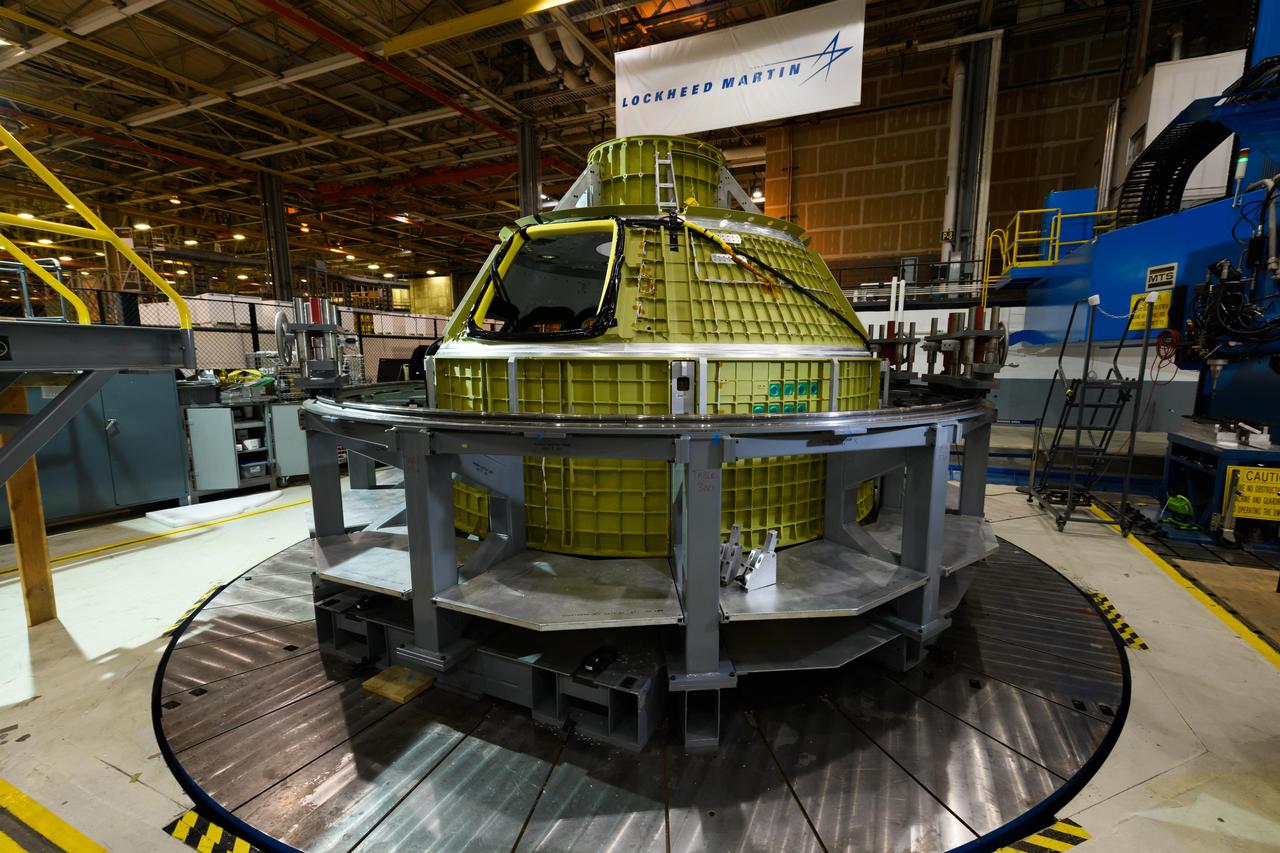
Lockheed Martin technicians at NASA's Michoud Assembly Facility in New Orleans, Louisiana, complete the final weld on the pressure vessel of the Orion crew module for Artemis II on July 24, 2018, the first flight of Orion with astronauts which will carry them farther into the solar system than ever before.
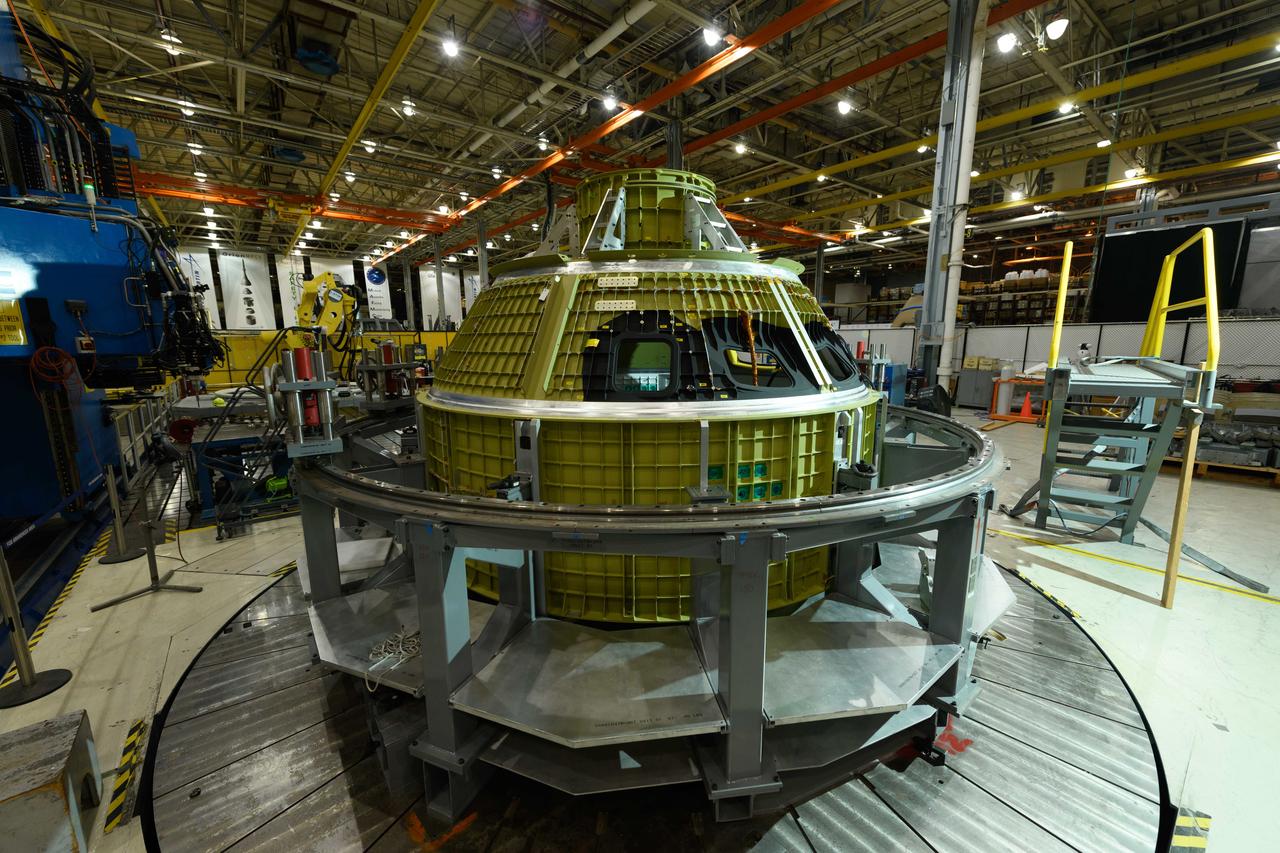
Lockheed Martin technicians at NASA's Michoud Assembly Facility in New Orleans, Louisiana, complete the final weld on the pressure vessel of the Orion crew module for Artemis II on July 24, 2018, the first flight of Orion with astronauts which will carry them farther into the solar system than ever before.
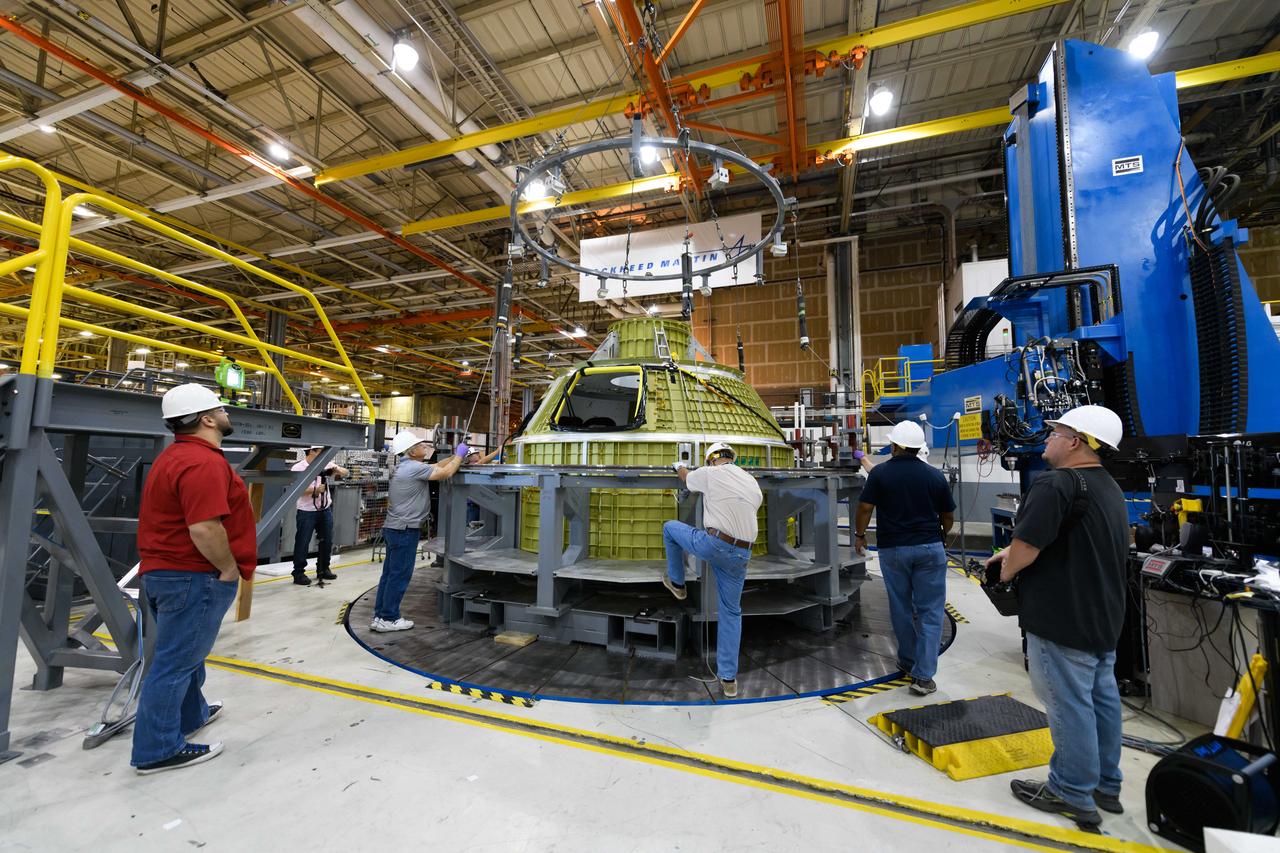
Lockheed Martin technicians at NASA's Michoud Assembly Facility in New Orleans, Louisiana, complete the final weld on the pressure vessel of the Orion crew module for Artemis II on July 24, 2018, the first flight of Orion with astronauts which will carry them farther into the solar system than ever before.
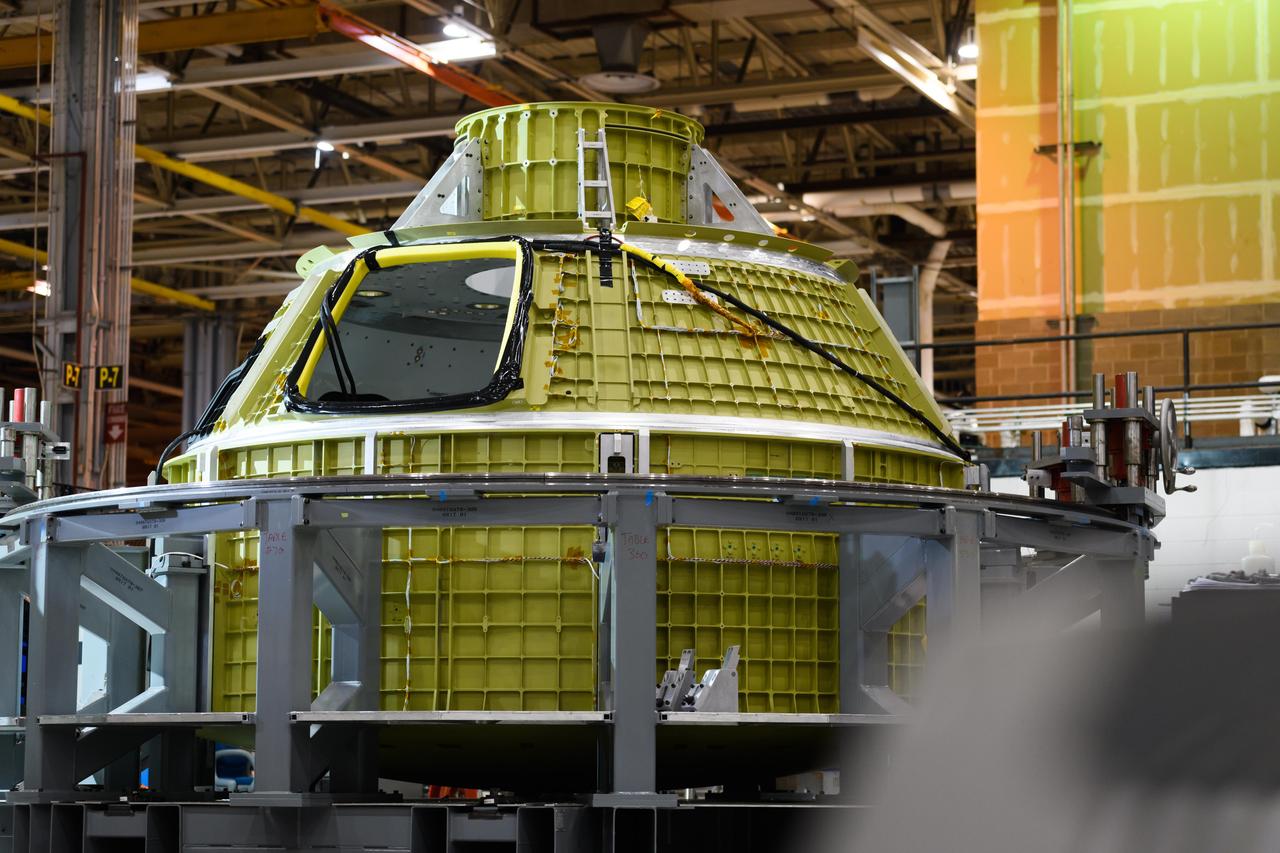
Lockheed Martin technicians at NASA's Michoud Assembly Facility in New Orleans, Louisiana, complete the final weld on the pressure vessel of the Orion crew module for Artemis II on July 24, 2018, the first flight of Orion with astronauts which will carry them farther into the solar system than ever before.
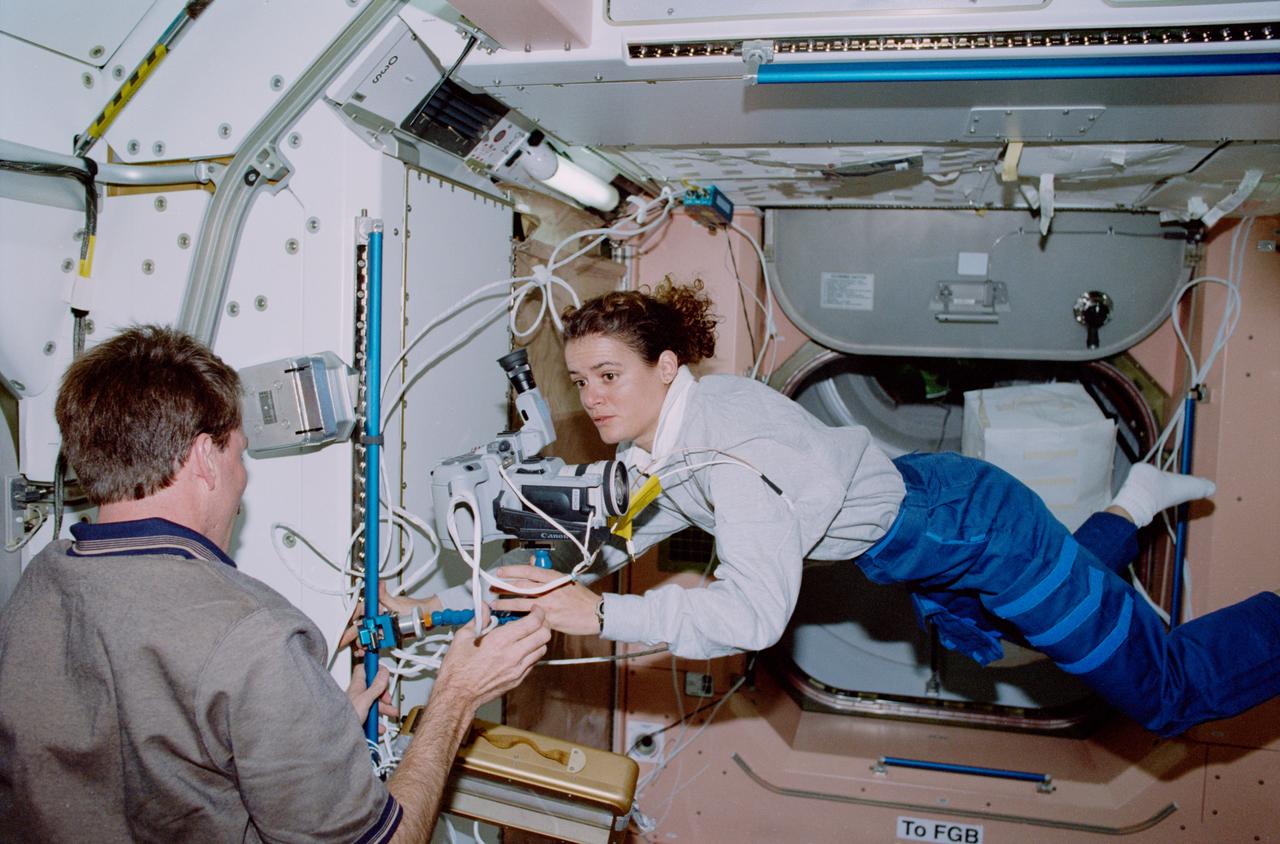
STS096-407-011 (27 May - 6 June 1999) --- Astronauts Kent V. Rominger, mission commander, and Julie Payette, mission specialist, participate in the overall chore of STS-96 of preparing International Space Station (ISS) for occupancy. The two are in the U.S.-built Unity node near the hatch leading to the Russian-built Zarya or FGB. Payette, an alumnus of the 1996 class of astronaut trainees, represents the Canadian Space Agency (CSA).
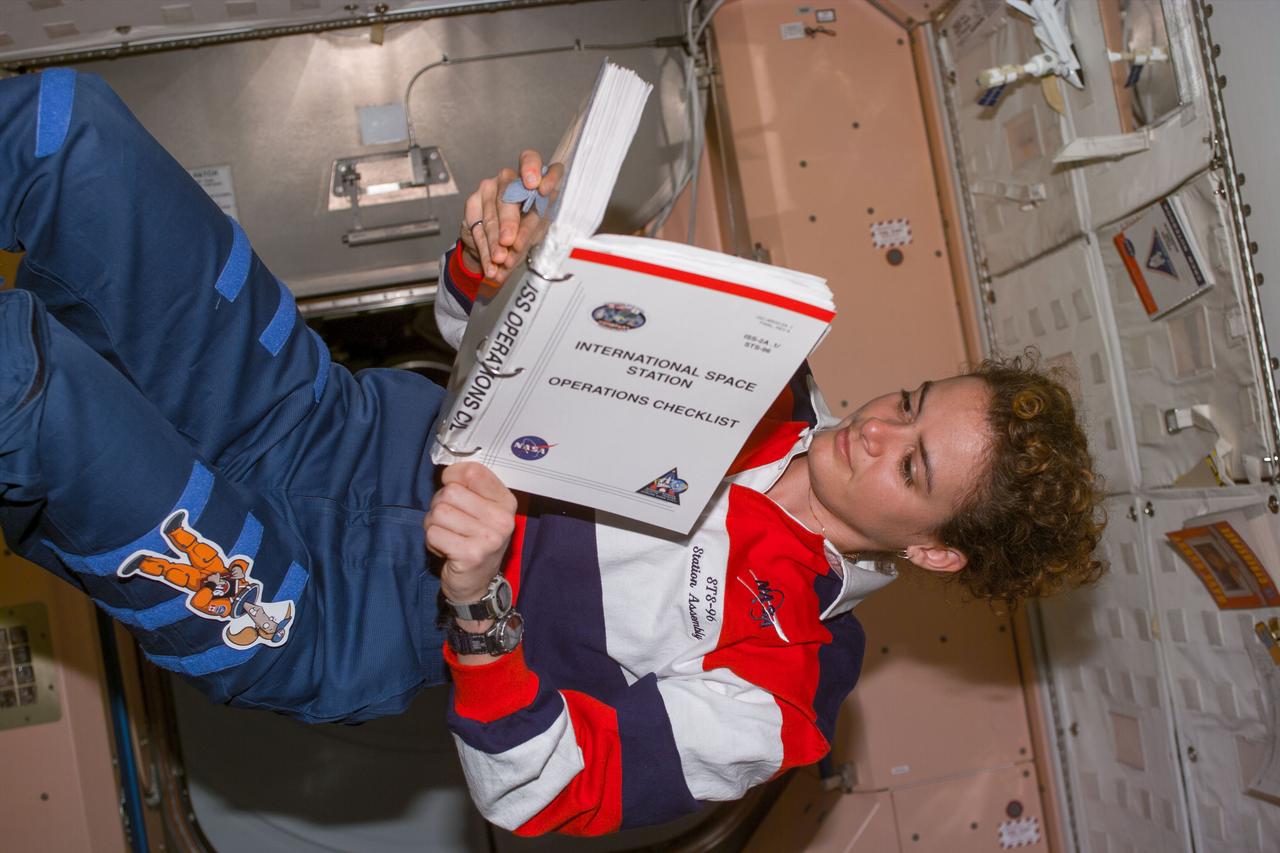
S96-E-5179 (2 June 1999) --- Astronaut Julie Payette, mission specialist representing the Canadian Space Agency (CSA) looks over the operations checklist for International Space Station (ISS) while performing final STS-96 tasks aboard it. The photo was taken with an electronic still camera (ESC) at 12:11:14 GMT, June 2, 1999.
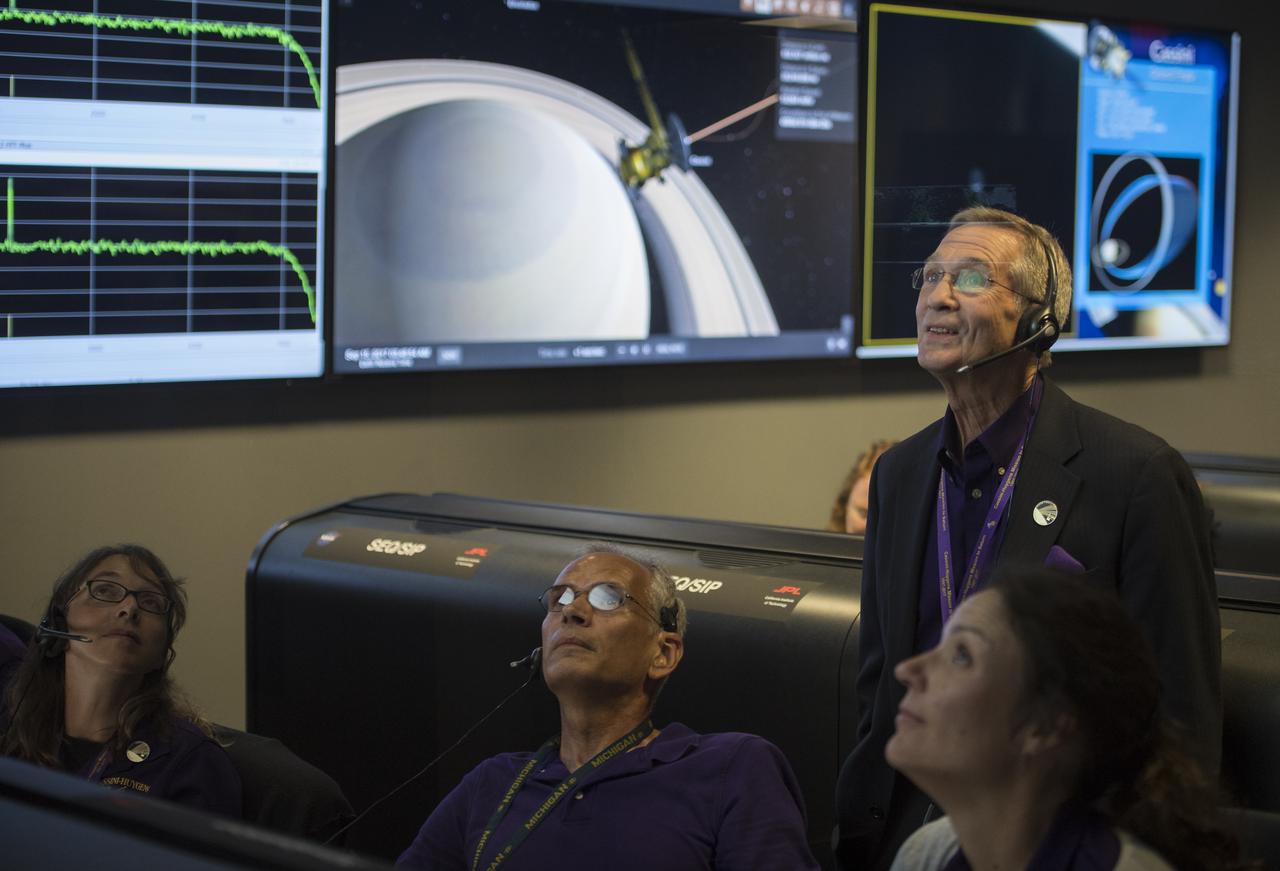
Cassini program manager at JPL, Earl Maize, standing, watches telemetry come in from Cassini with Julie Bellerose, left, Duane Roth, second from left, and Mar Vaquero of the Cassini navigation team in the mission control room, Friday, Sept. 15, 2017 at NASA's Jet Propulsion Laboratory in Pasadena, California. Since its arrival in 2004, the Cassini-Huygens mission has been a discovery machine, revolutionizing our knowledge of the Saturn system and captivating us with data and images never before obtained with such detail and clarity. On Sept. 15, 2017, operators deliberately plunged the spacecraft into Saturn, as Cassini gathered science until the end. The “plunge” ensures Saturn’s moons will remain pristine for future exploration. During Cassini’s final days, mission team members from all around the world gathered at NASA’s Jet Propulsion Laboratory, Pasadena, California, to celebrate the achievements of this historic mission. Photo Credit: (NASA/Joel Kowsky)
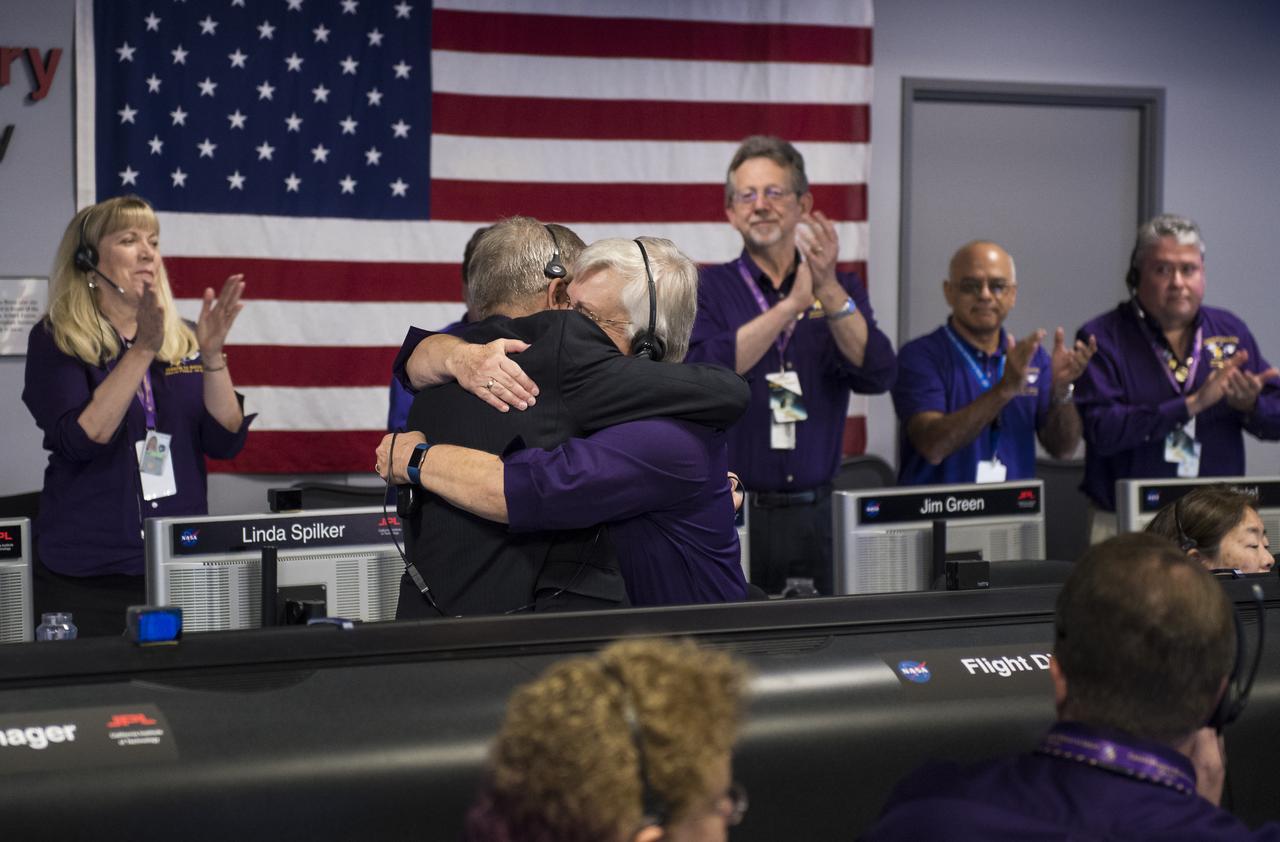
Cassini program manager at JPL, Earl Maize, left, and spacecraft operations team manager for the Cassini mission at Saturn, Julie Webster, right, embrace after the Cassini spacecraft plunged into Saturn, Friday, Sept. 15, 2017 at NASA's Jet Propulsion Laboratory in Pasadena, California. Since its arrival in 2004, the Cassini-Huygens mission has been a discovery machine, revolutionizing our knowledge of the Saturn system and captivating us with data and images never before obtained with such detail and clarity. On Sept. 15, 2017, operators will deliberately plunge the spacecraft into Saturn, as Cassini gathered science until the end. The “plunge” ensures Saturn’s moons will remain pristine for future exploration. During Cassini’s final days, mission team members from all around the world gathered at NASA’s Jet Propulsion Laboratory, Pasadena, California, to celebrate the achievements of this historic mission. Photo Credit: (NASA/Joel Kowsky)
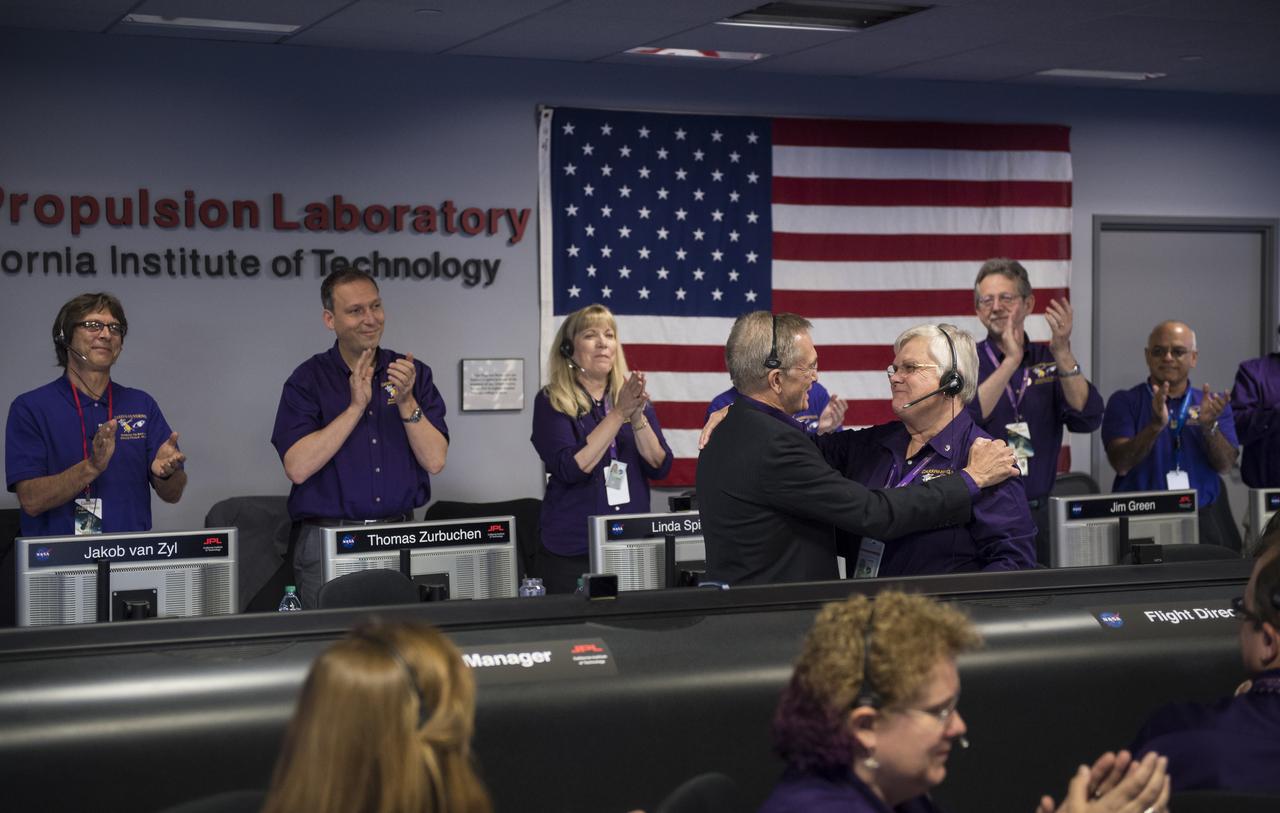
Cassini program manager at JPL, Earl Maize, left, and spacecraft operations team manager for the Cassini mission at Saturn, Julie Webster, right, embrace after the Cassini spacecraft plunged into Saturn, Friday, Sept. 15, 2017 at NASA's Jet Propulsion Laboratory in Pasadena, California. Since its arrival in 2004, the Cassini-Huygens mission has been a discovery machine, revolutionizing our knowledge of the Saturn system and captivating us with data and images never before obtained with such detail and clarity. On Sept. 15, 2017, operators will deliberately plunge the spacecraft into Saturn, as Cassini gathered science until the end. The “plunge” ensures Saturn’s moons will remain pristine for future exploration. During Cassini’s final days, mission team members from all around the world gathered at NASA’s Jet Propulsion Laboratory, Pasadena, California, to celebrate the achievements of this historic mission. Photo Credit: (NASA/Joel Kowsky)
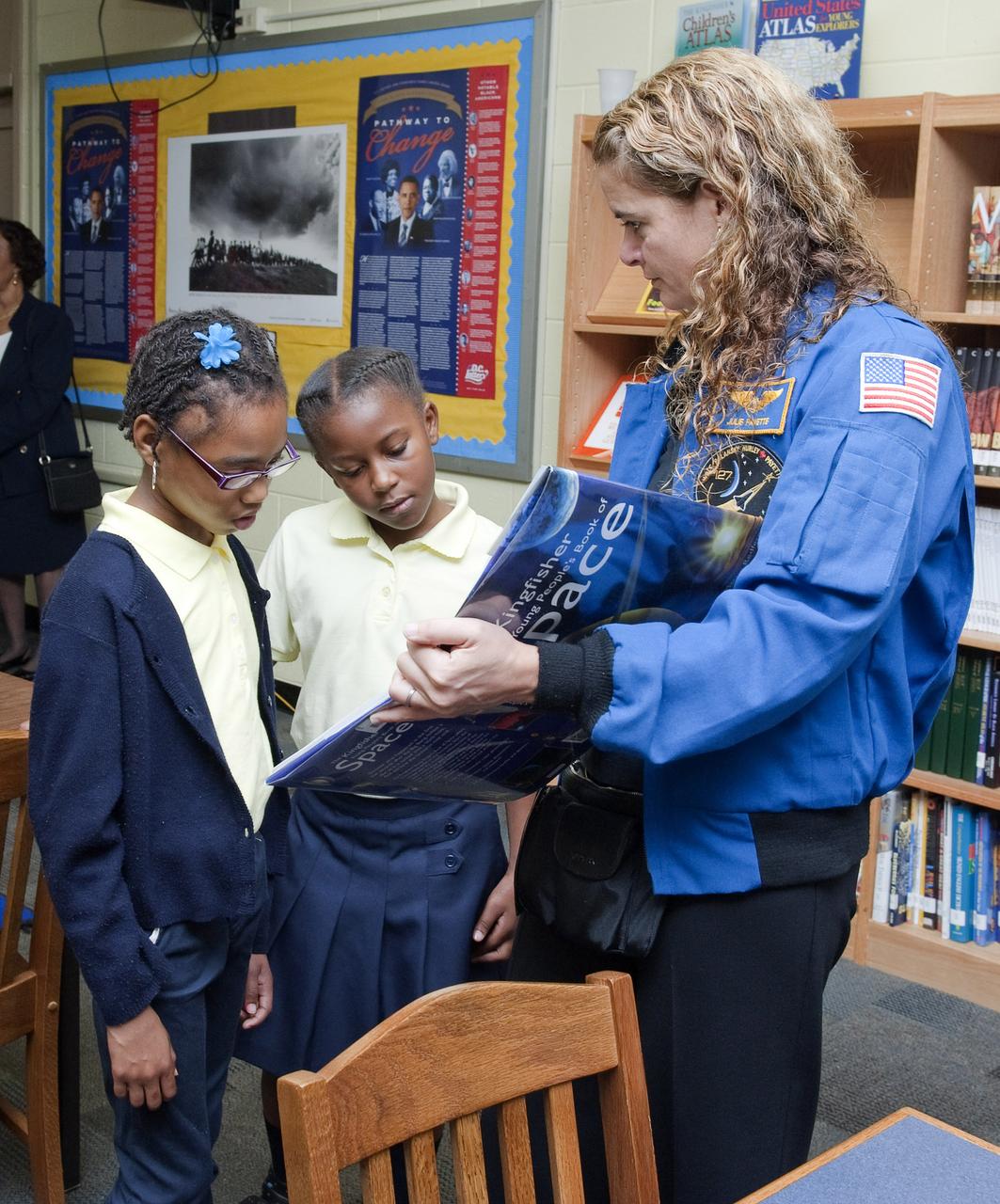
Canadian Space Agency astronaut Julie Payette, right, a mission specialist on STS-127, talks with two unidentified students during a visit to Anne Beers Elementary school, Thursday, Sept. 24, 2009, in Washington. Payette, along with the rest of the crew from STS-127, visited with students at the school Thursday. Photo Credit: (NASA/Paul E. Alers)
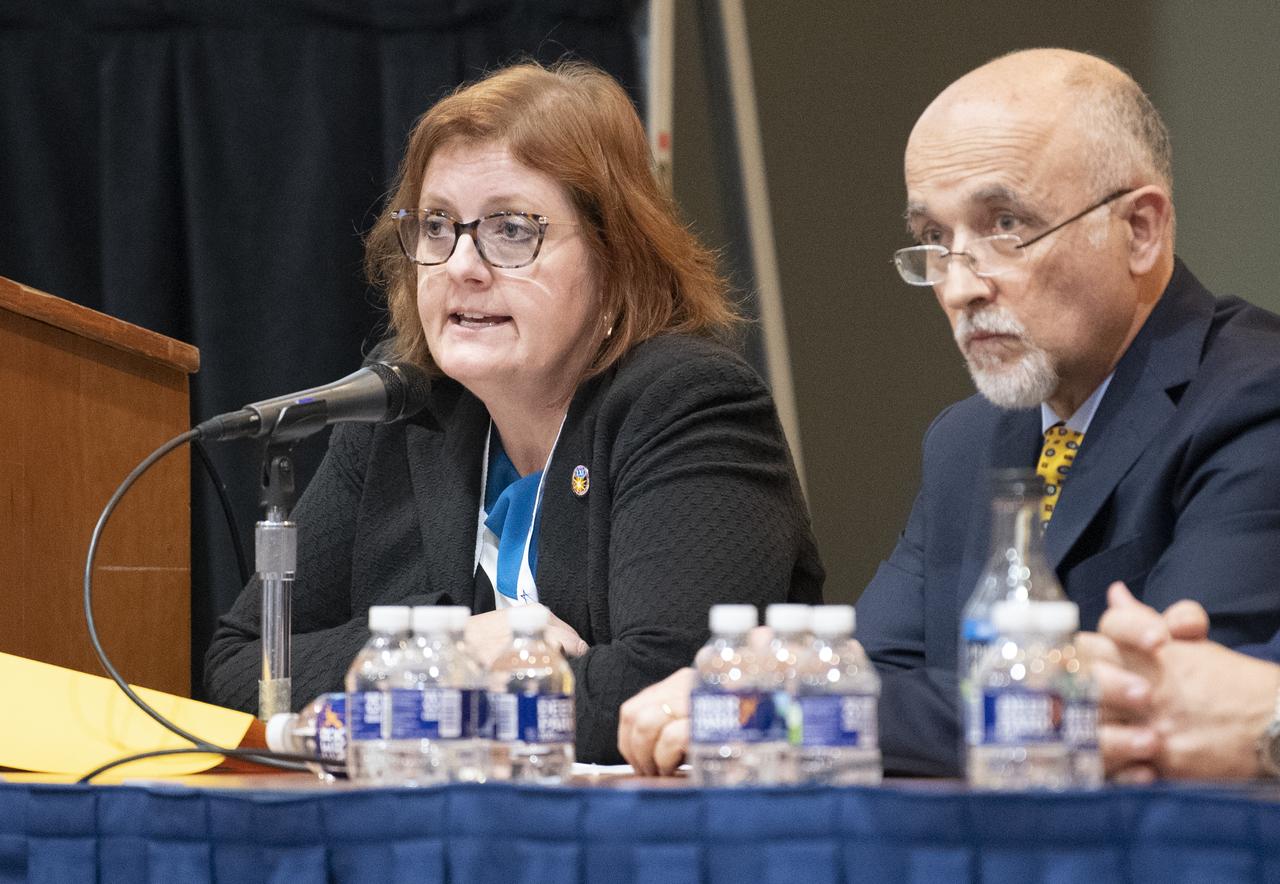
Julie Robinson, Chief Scientist for NASA's International Space Station Division, left, and Livio Narici, Professor of Applied Physics at the Università di Roma "Tor Vergata" and ASI, lead a discussion titled “ISS-Moon-Mars: Using Spaceflight Platforms to Study and Simulate Future Missions” during the the 70th International Astronautical Congress, Monday, Oct. 21, 2019 at the Walter E. Washington Convention Center in Washington. Photo Credit: (NASA/Joel Kowsky)
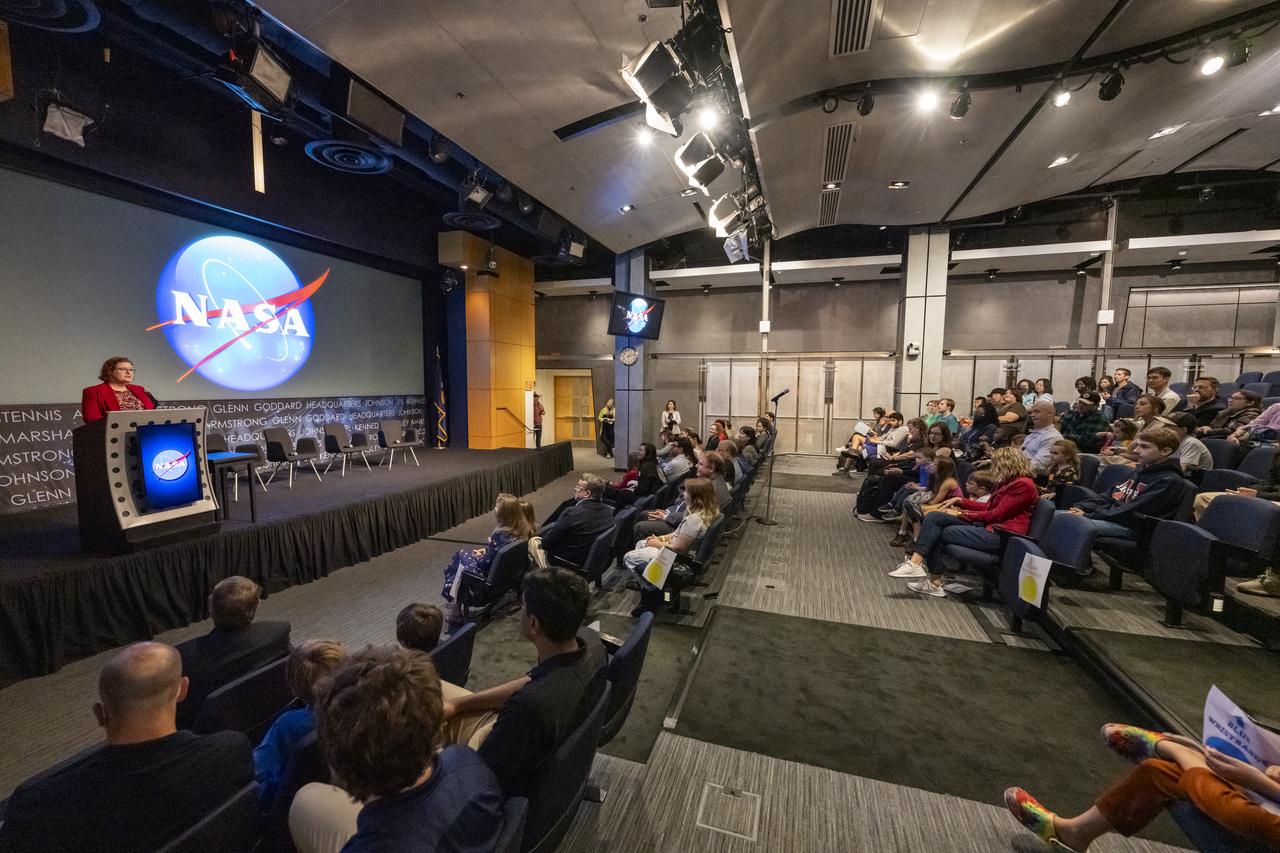
NASA Earth Science Division Deputy Director Julie Robinson delivers remarks during an Earth Information Center (EIC) student engagement event, Friday, June 23, 2023, at the Mary W. Jackson NASA Headquarters building in Washington. The EIC is a new immersive experience that combines live data sets with cutting-edge data visualization and storytelling to allow visitors to see how our planet is changing. Photo Credit: (NASA/Keegan Barber)
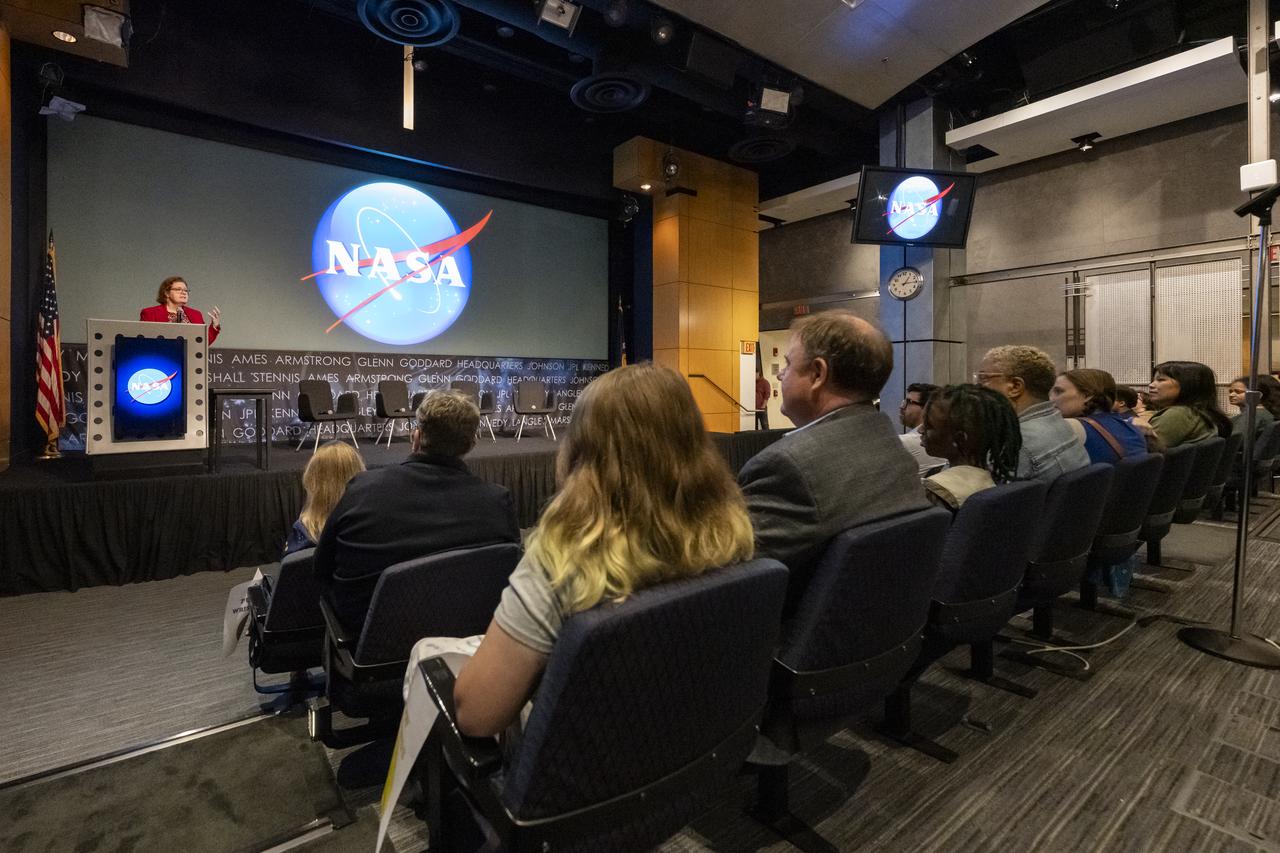
NASA Earth Science Division Deputy Director Julie Robinson delivers remarks during an Earth Information Center (EIC) student engagement event, Friday, June 23, 2023, at the Mary W. Jackson NASA Headquarters building in Washington. The EIC is a new immersive experience that combines live data sets with cutting-edge data visualization and storytelling to allow visitors to see how our planet is changing. Photo Credit: (NASA/Keegan Barber)
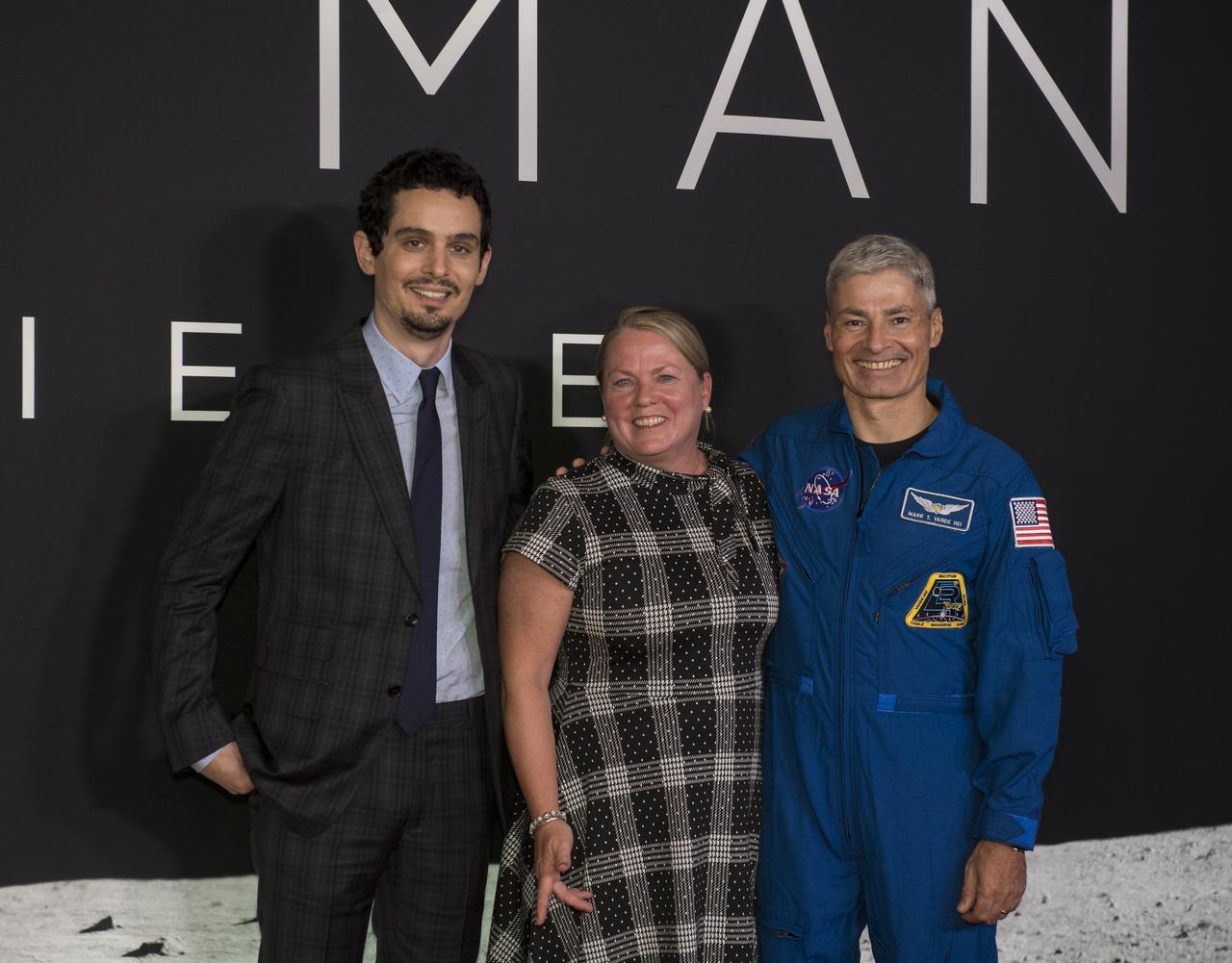
NASA astronaut Mark Vande Hei, right, and his wife Julie, center, pose for photo with Director and Producer Damien Chazelle at the premiere of Universal's feature film "First Man” Thursday, Oct. 4, 2018 at the Smithsonian National Air and Space Museum in Washington. The movie is based on the book by Jim Hansen that chronicles the life of NASA astronaut Neil Armstrong from test pilot to his historic Moon landing. It was directed by Damien Chazelle and stars Ryan Gosling and Claire Foy. Photo Credit: (NASA/Aubrey Gemignani)
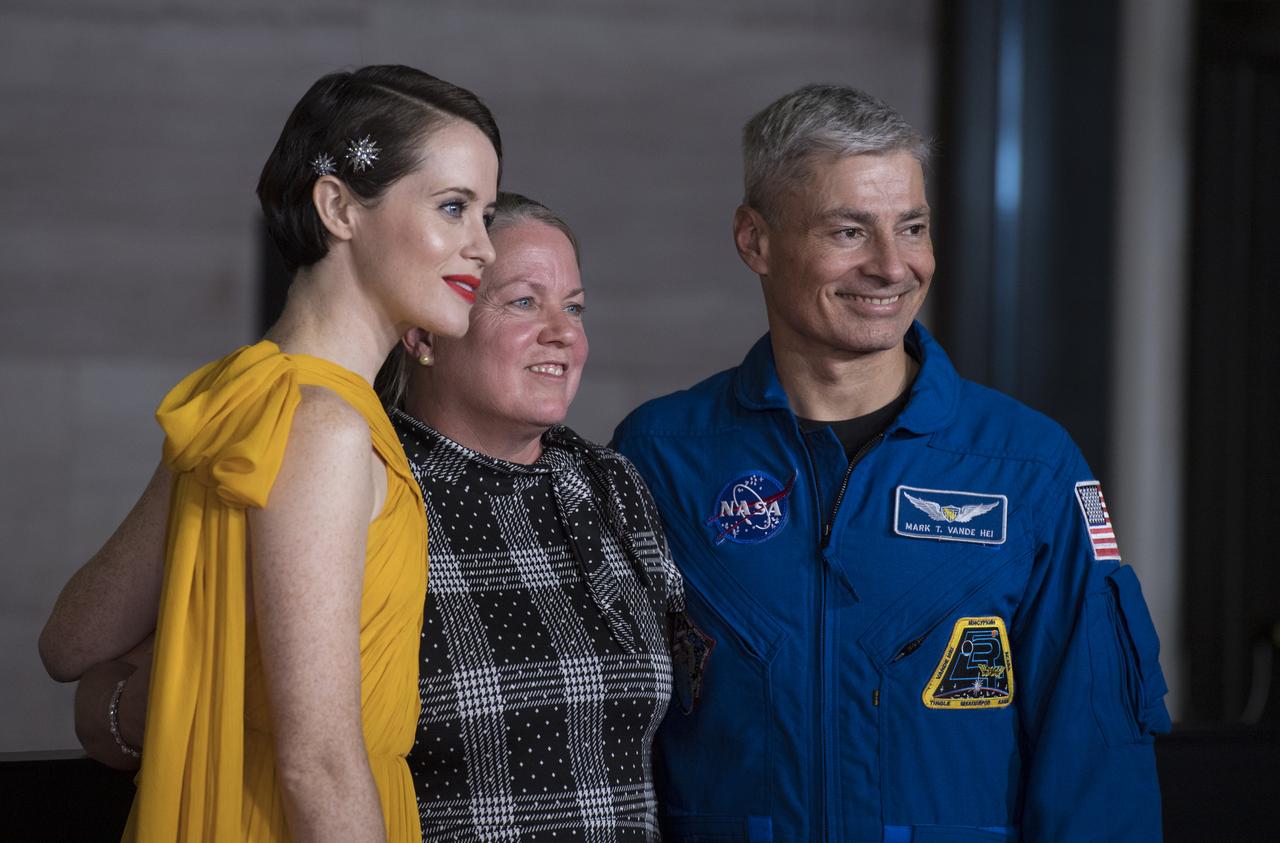
NASA astronaut Mark Vande Hei, right, and his wife Julie, center, pose for a photo with English actress Claire Foy, at the premiere of Universal's feature film "First Man” Thursday, Oct. 4, 2018 at the Smithsonian National Air and Space Museum in Washington. The movie is based on the book by Jim Hansen that chronicles the life of NASA astronaut Neil Armstrong from test pilot to his historic Moon landing. It was directed by Damien Chazelle and stars Ryan Gosling and Claire Foy. Photo Credit: (NASA/Aubrey Gemignani)
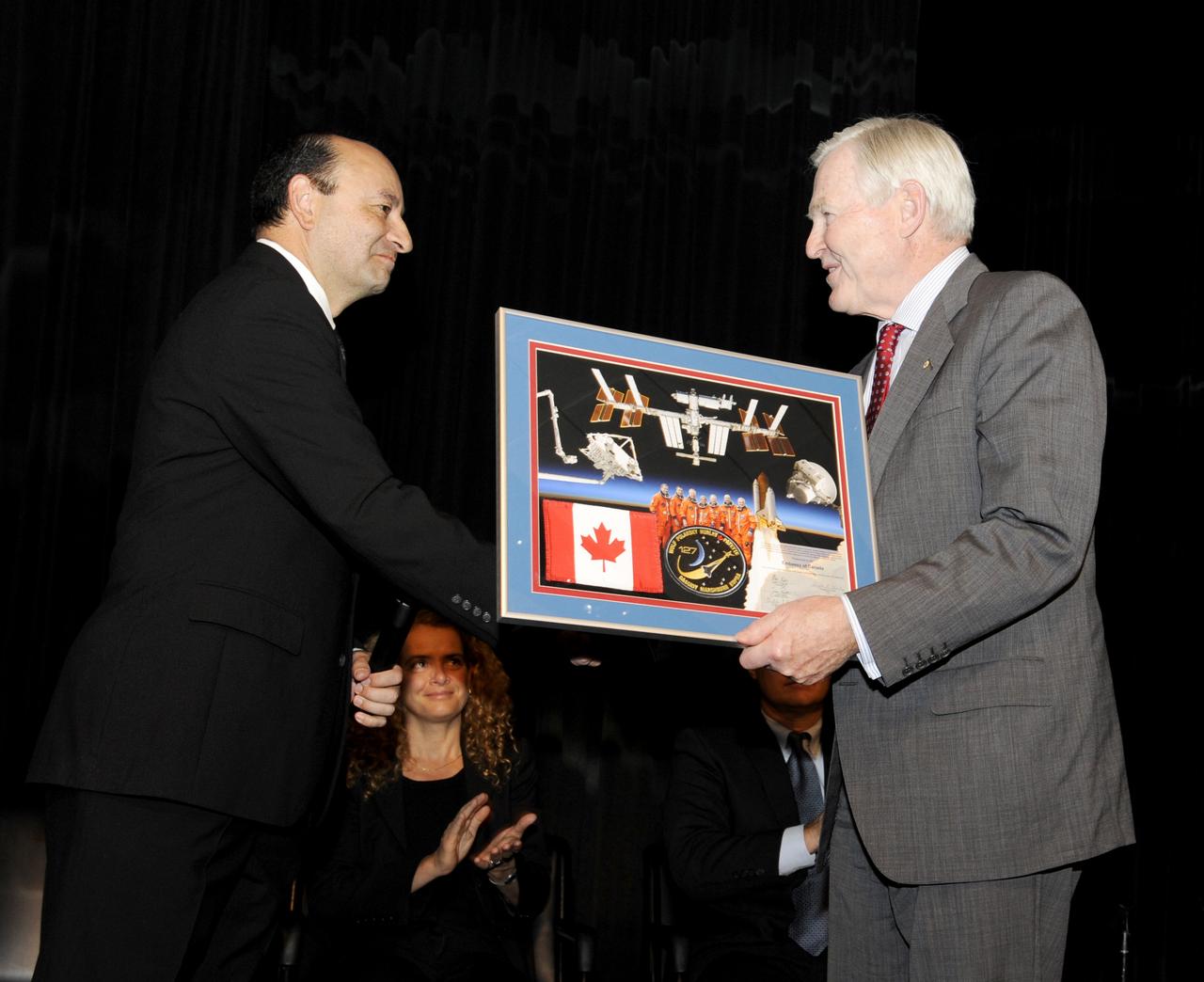
STS-127 Commander Mark Polansky, left, shakes hands with Canadian Ambassador to the United States Michael Wilson after presenting him with a montage as Canadian Space Agency astronaut Julie Payette, seated center, looks on, Tuesday, Sept. 22, 2009, during a visit to the Canadian Embassy in Washington. Photo Credit: (NASA/Paul E. Alers)
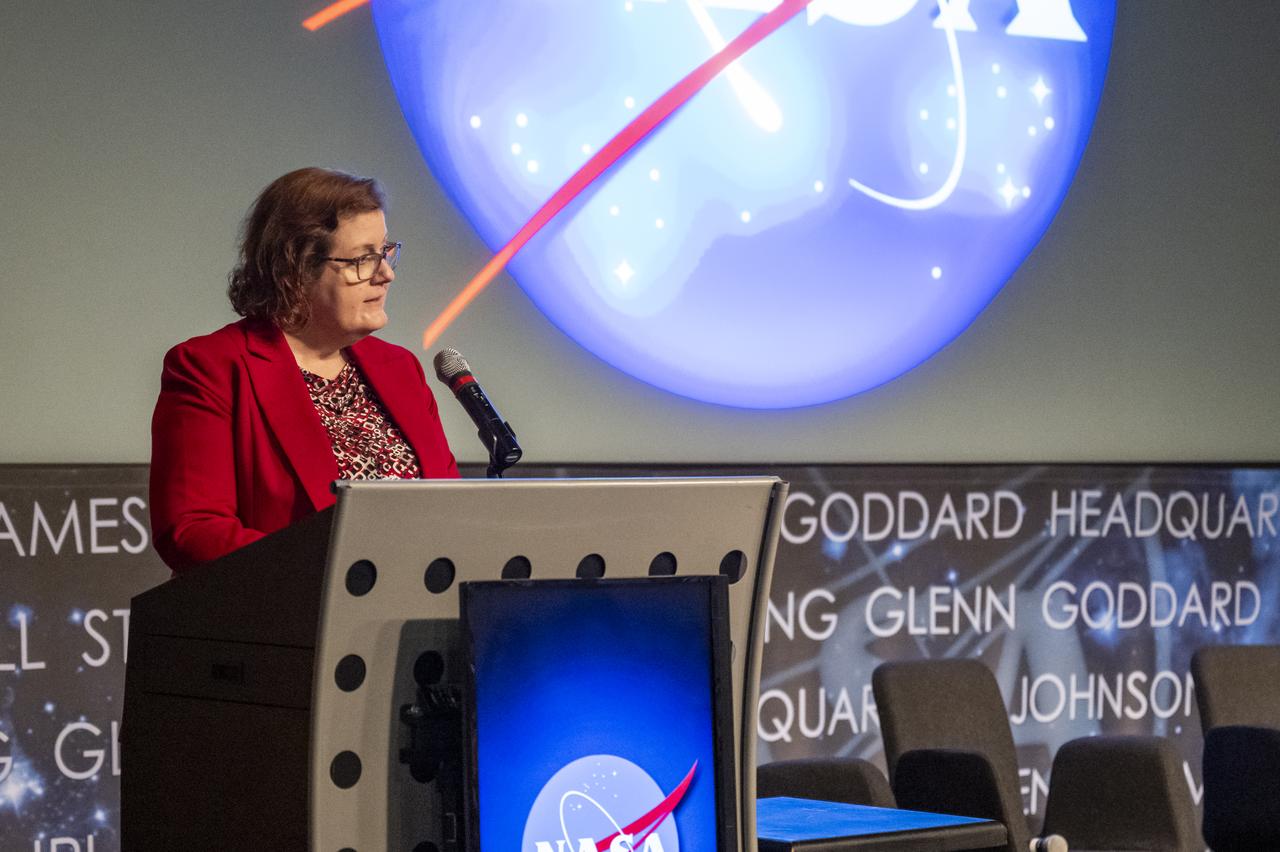
NASA Earth Science Division Deputy Director Julie Robinson delivers remarks during an Earth Information Center (EIC) student engagement event, Friday, June 23, 2023, at the Mary W. Jackson NASA Headquarters building in Washington. The EIC is a new immersive experience that combines live data sets with cutting-edge data visualization and storytelling to allow visitors to see how our planet is changing. Photo Credit: (NASA/Keegan Barber)
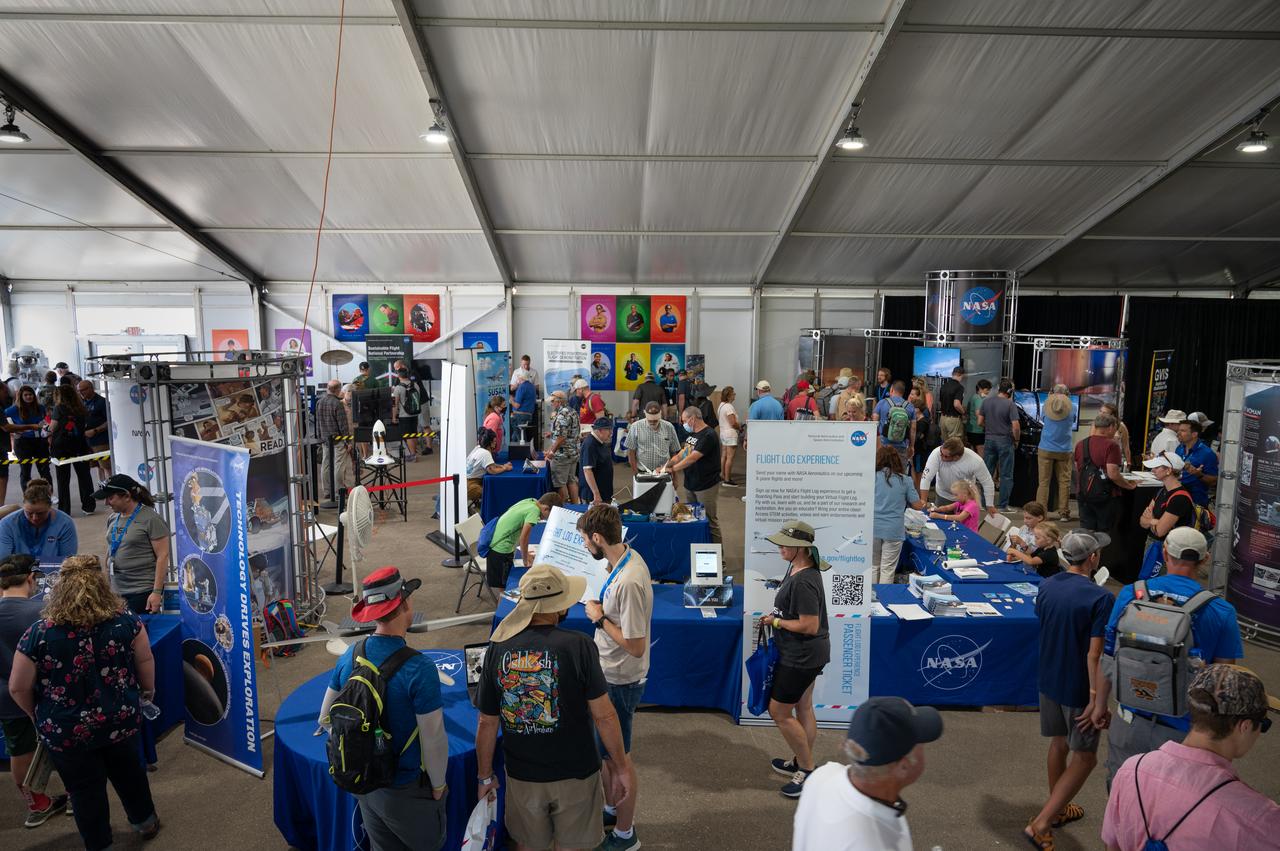
Attendees visit the NASA pavilion at AirVenture on Wednesday, July 27, 2022.
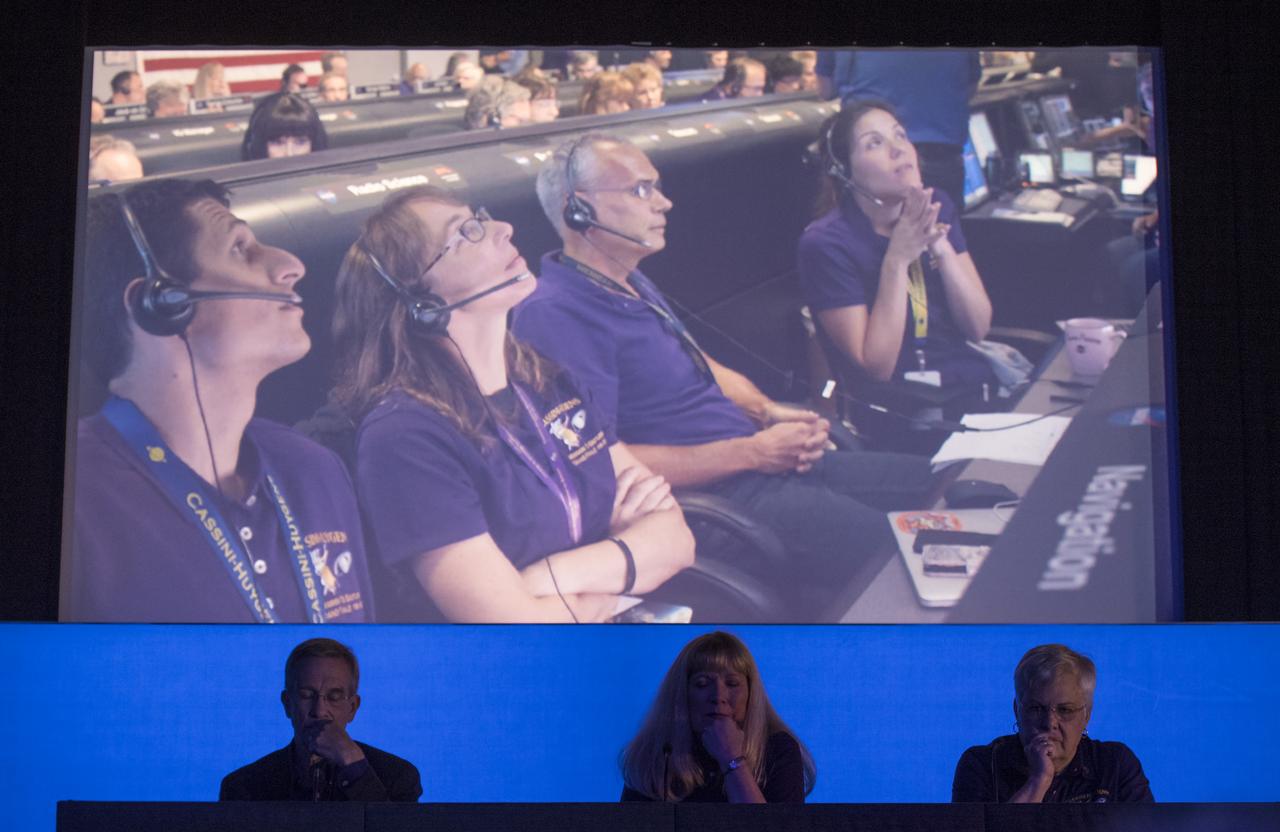
Cassini program manager at JPL, Earl Maize, left, Cassini project scientist at JPL, Linda Spilker, center, and spacecraft operations team manager for the Cassini mission at Saturn, Julie Webster, right, are seen as they watch a replay of the final moments of the Cassini spacecraft during a press conference held after the end of the Cassini mission, Friday, Sept. 15, 2017 at NASA's Jet Propulsion Laboratory in Pasadena, California. Since its arrival in 2004, the Cassini-Huygens mission has been a discovery machine, revolutionizing our knowledge of the Saturn system and captivating us with data and images never before obtained with such detail and clarity. On Sept. 15, 2017, operators deliberately plunged the spacecraft into Saturn, as Cassini gathered science until the end. Loss of contact with the Cassini spacecraft occurred at 7:55 a.m. EDT (4:55 a.m. PDT). The “plunge” ensures Saturn’s moons will remain pristine for future exploration. During Cassini’s final days, mission team members from all around the world gathered at NASA’s Jet Propulsion Laboratory, Pasadena, California, to celebrate the achievements of this historic mission. Photo Credit: (NASA/Joel Kowsky)
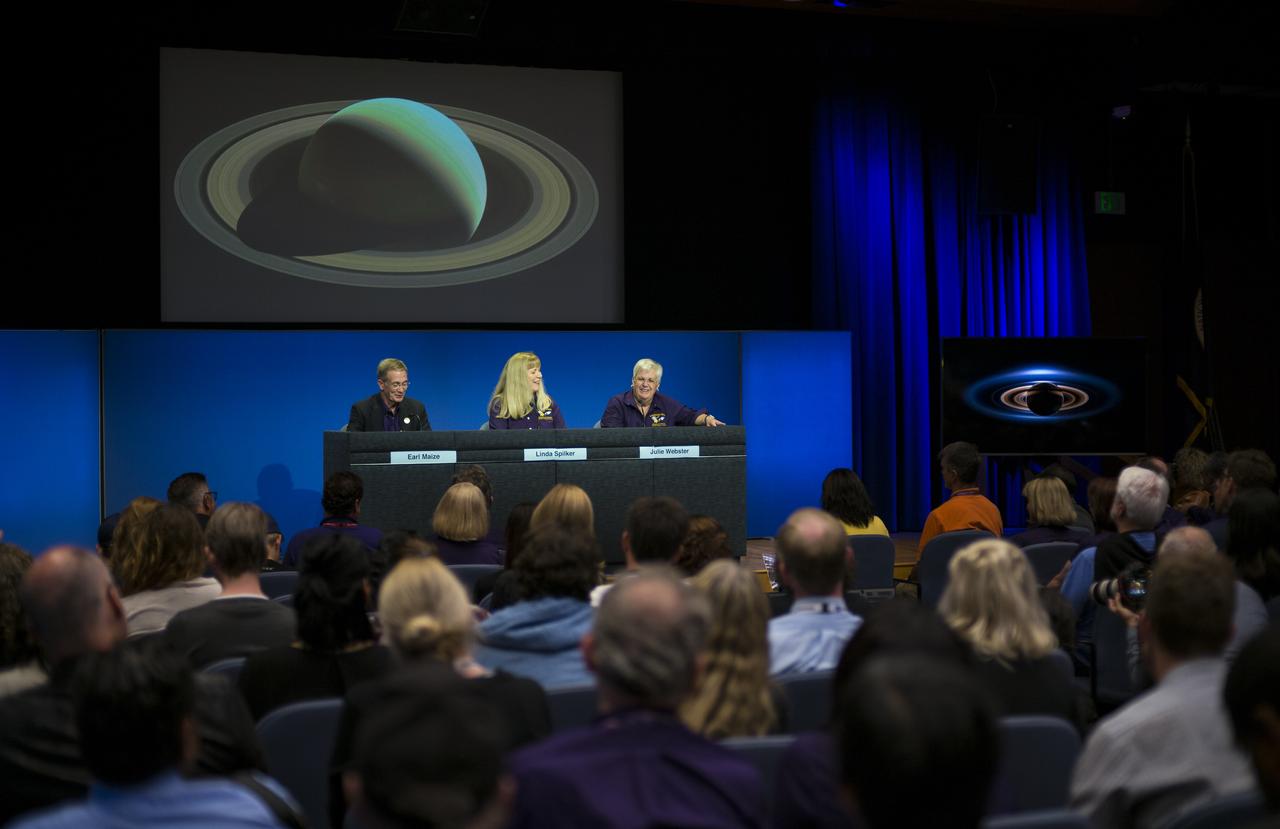
Cassini program manager at JPL, Earl Maize, left, Cassini project scientist at JPL, Linda Spilker, center, spacecraft operations team manager for the Cassini mission at Saturn, Julie Webster, right, answer questions from the media during a press conference held after the end of the Cassini mission, Friday, Sept. 15, 2017 at NASA's Jet Propulsion Laboratory in Pasadena, California. Since its arrival in 2004, the Cassini-Huygens mission has been a discovery machine, revolutionizing our knowledge of the Saturn system and captivating us with data and images never before obtained with such detail and clarity. On Sept. 15, 2017, operators deliberately plunged the spacecraft into Saturn, as Cassini gathered science until the end. Loss of contact with the Cassini spacecraft occurred at 7:55 a.m. EDT (4:55 a.m. PDT). The “plunge” ensures Saturn’s moons will remain pristine for future exploration. During Cassini’s final days, mission team members from all around the world gathered at NASA’s Jet Propulsion Laboratory, Pasadena, California, to celebrate the achievements of this historic mission. Photo Credit: (NASA/Joel Kowsky)
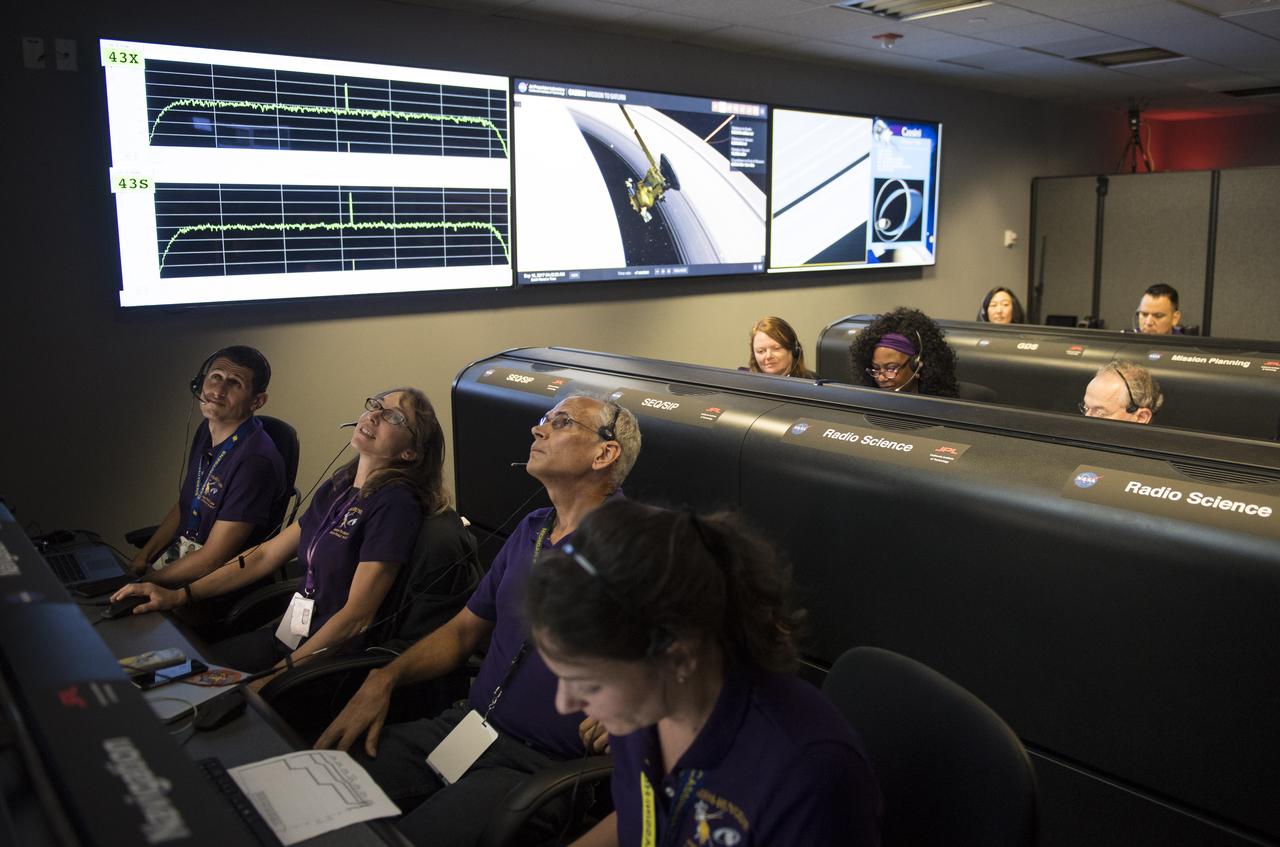
Zahi Tarzi, left, Julie Bellerose, center, and Duane Roth, right, of Cassini's navigation team watch data come in from the spacecraft during its final plunge into Saturn, Friday, Sept. 15, 2017 at NASA's Jet Propulsion Laboratory in Pasadena, California. Since its arrival in 2004, the Cassini-Huygens mission has been a discovery machine, revolutionizing our knowledge of the Saturn system and captivating us with data and images never before obtained with such detail and clarity. On Sept. 15, 2017, operators deliberately plunged the spacecraft into Saturn, as Cassini gathered science until the end. Loss of contact with the Cassini spacecraft occurred at 7:55 a.m. EDT (4:55 a.m. PDT). The “plunge” ensures Saturn’s moons will remain pristine for future exploration. During Cassini’s final days, mission team members from all around the world gathered at NASA’s Jet Propulsion Laboratory, Pasadena, California, to celebrate the achievements of this historic mission. Photo Credit: (NASA/Joel Kowsky)
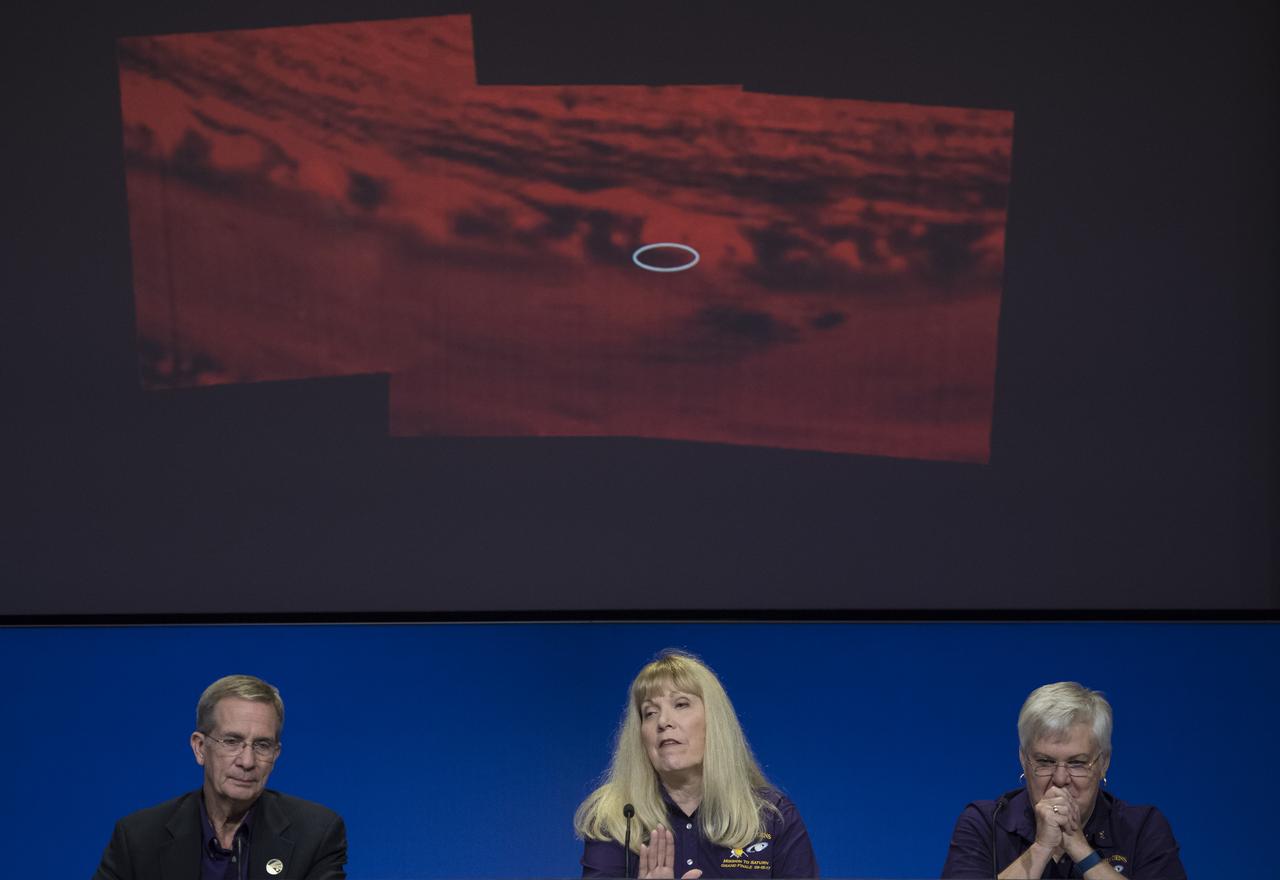
Cassini project scientist at JPL, Linda Spilker, center, speaks about a montage of images, made from data obtained by Cassini's visual and infrared mapping spectrometer, shows the location on Saturn where the NASA spacecraft entered Saturn's atmosphere, Friday, Sept. 15, 2017 during a press conference at NASA's Jet Propulsion Laboratory in Pasadena, California. Cassini program manager at JPL, Earl Maize, left, and spacecraft operations team manager for the Cassini mission at Saturn, Julie Webster, right, also participated in the press conference. Since its arrival in 2004, the Cassini-Huygens mission has been a discovery machine, revolutionizing our knowledge of the Saturn system and captivating us with data and images never before obtained with such detail and clarity. On Sept. 15, 2017, operators deliberately plunged the spacecraft into Saturn, as Cassini gathered science until the end. Loss of contact with the Cassini spacecraft occurred at 7:55 a.m. EDT (4:55 a.m. PDT). The “plunge” ensures Saturn’s moons will remain pristine for future exploration. During Cassini’s final days, mission team members from all around the world gathered at NASA’s Jet Propulsion Laboratory, Pasadena, California, to celebrate the achievements of this historic mission. Photo Credit: (NASA/Joel Kowsky)