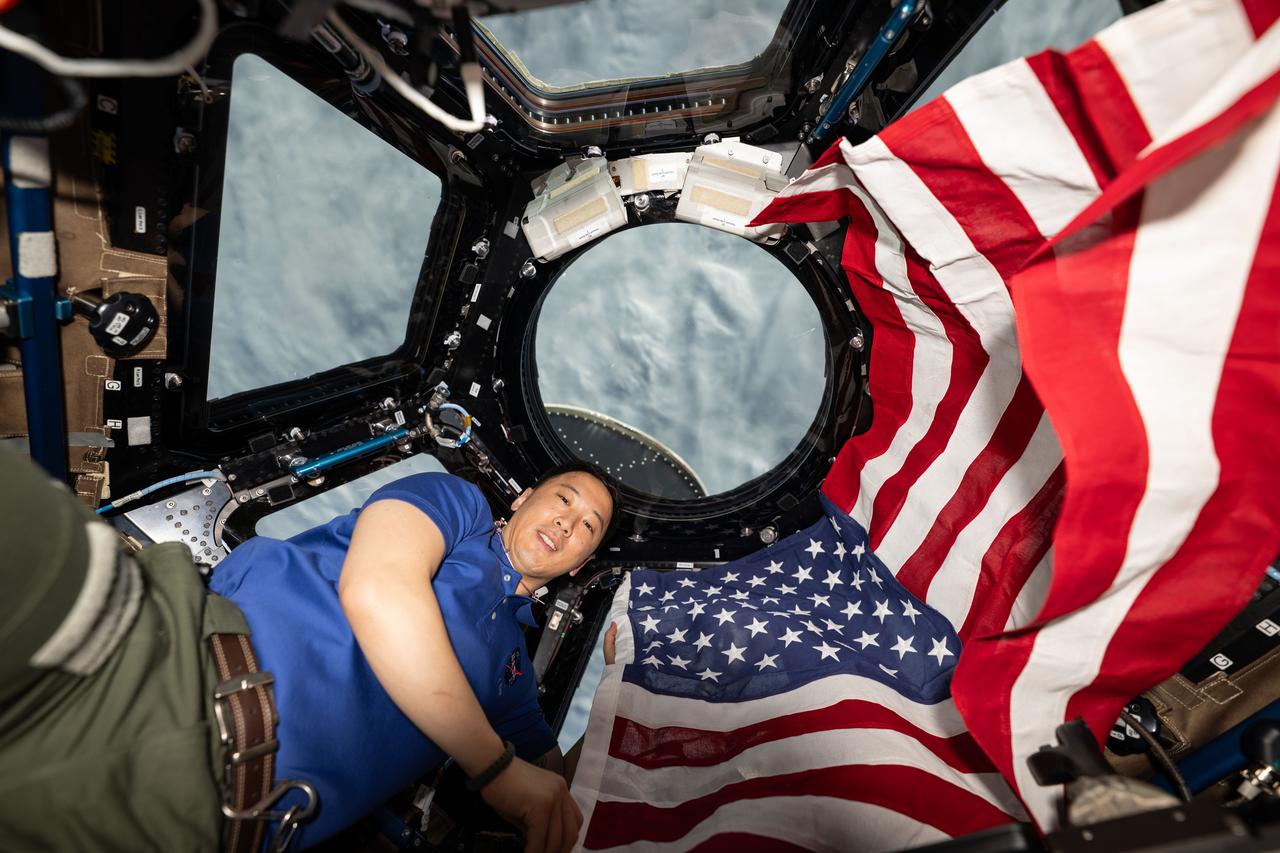
iss073e0420732 (July 4, 2025) --- NASA astronaut and Expedition 73 Flight Engineer Jonnny Kim poses for a portrait with the American flag on the Fourth of July, or Independence Day, inside the International Space Station's "window to the world," the cupola. The orbital outpost was soaring 268 miles above a cloudy Atlantic Ocean at the time of this photograph.
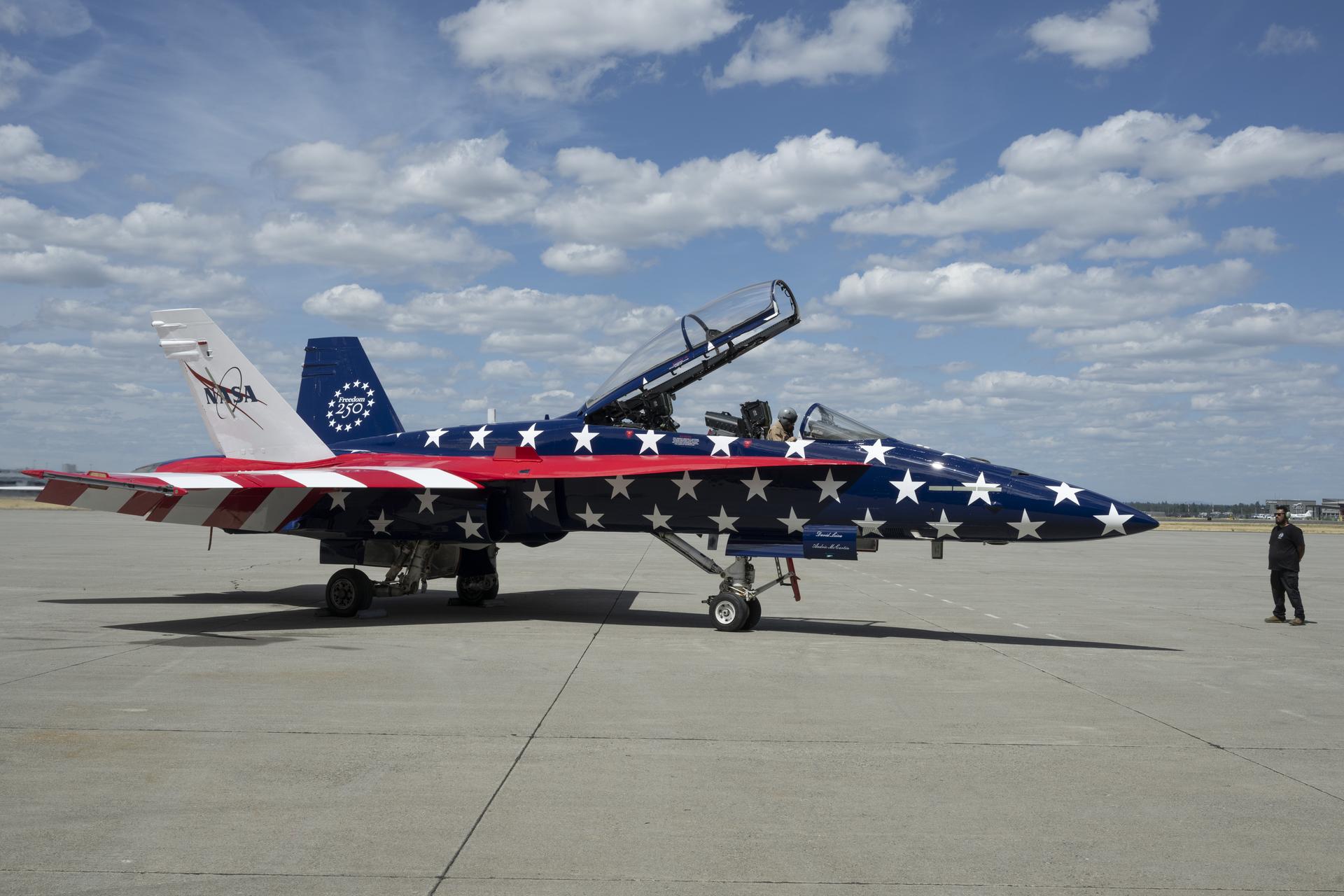
A NASA F/A‑18 aircraft is shown in Spokane, Washington, on Thursday, July 2, 2026, with new red, white, and blue paint to celebrate America’s 250th birthday. The aircraft, from NASA’s Armstrong Flight Research Center in Edwards, California, was preparing to fly cross‑country to Washington, D.C., where it participated in the Freedom 250 flyover with other NASA and military aircraft on Saturday, July 4, 2026. NASA/Jim Ross
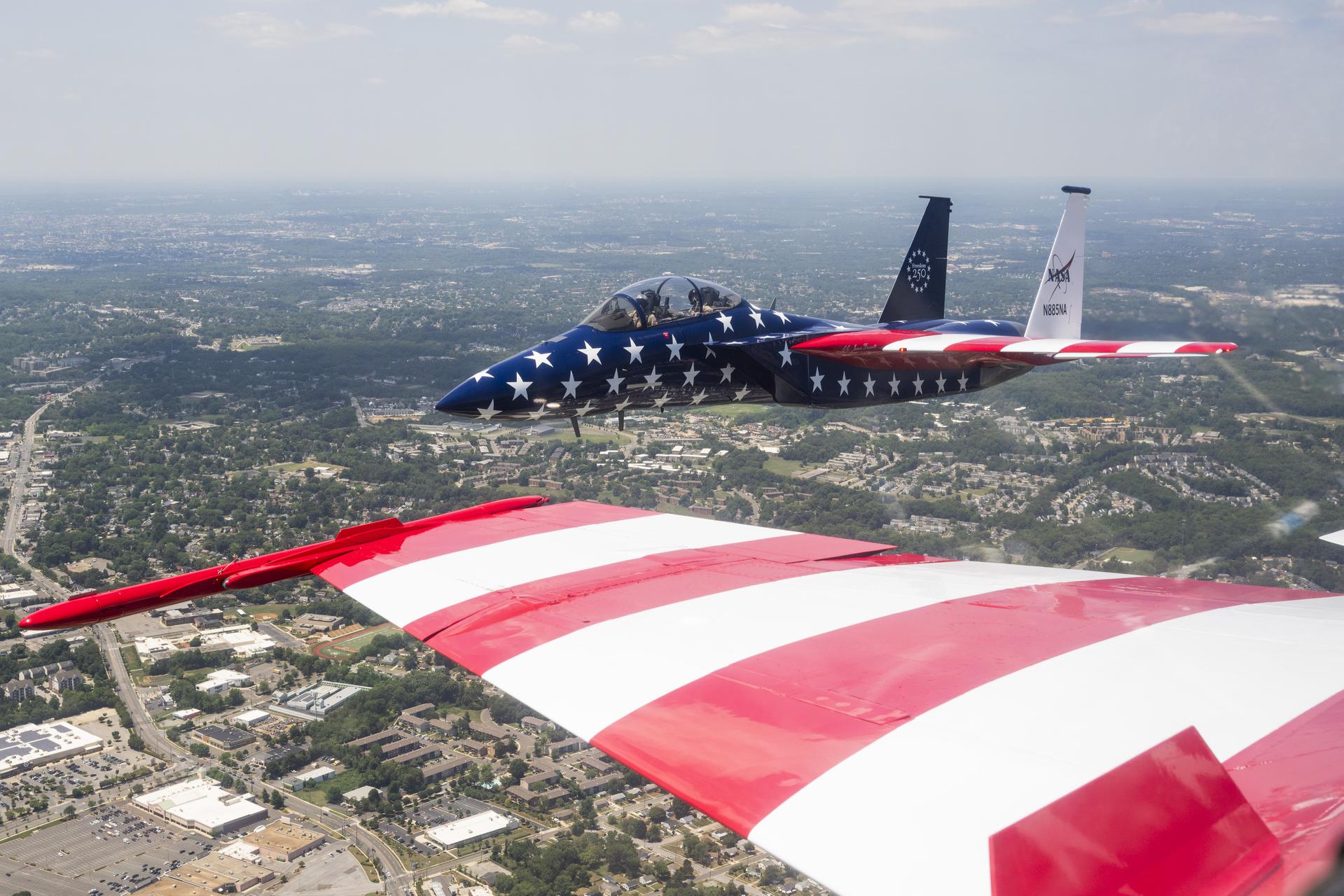
A NASA F-15 aircraft flies above Washington on Saturday, July 4, 2026, as part of a flyover to celebrate America’s 250th birthday. The wing of a NASA F-18 is seen in the foreground, as a NASA photographer captured this image from inside the cockpit. This aircraft is from NASA’s Armstrong Flight Research Center in Edwards, California, and it joined other NASA aircraft for the flyover.
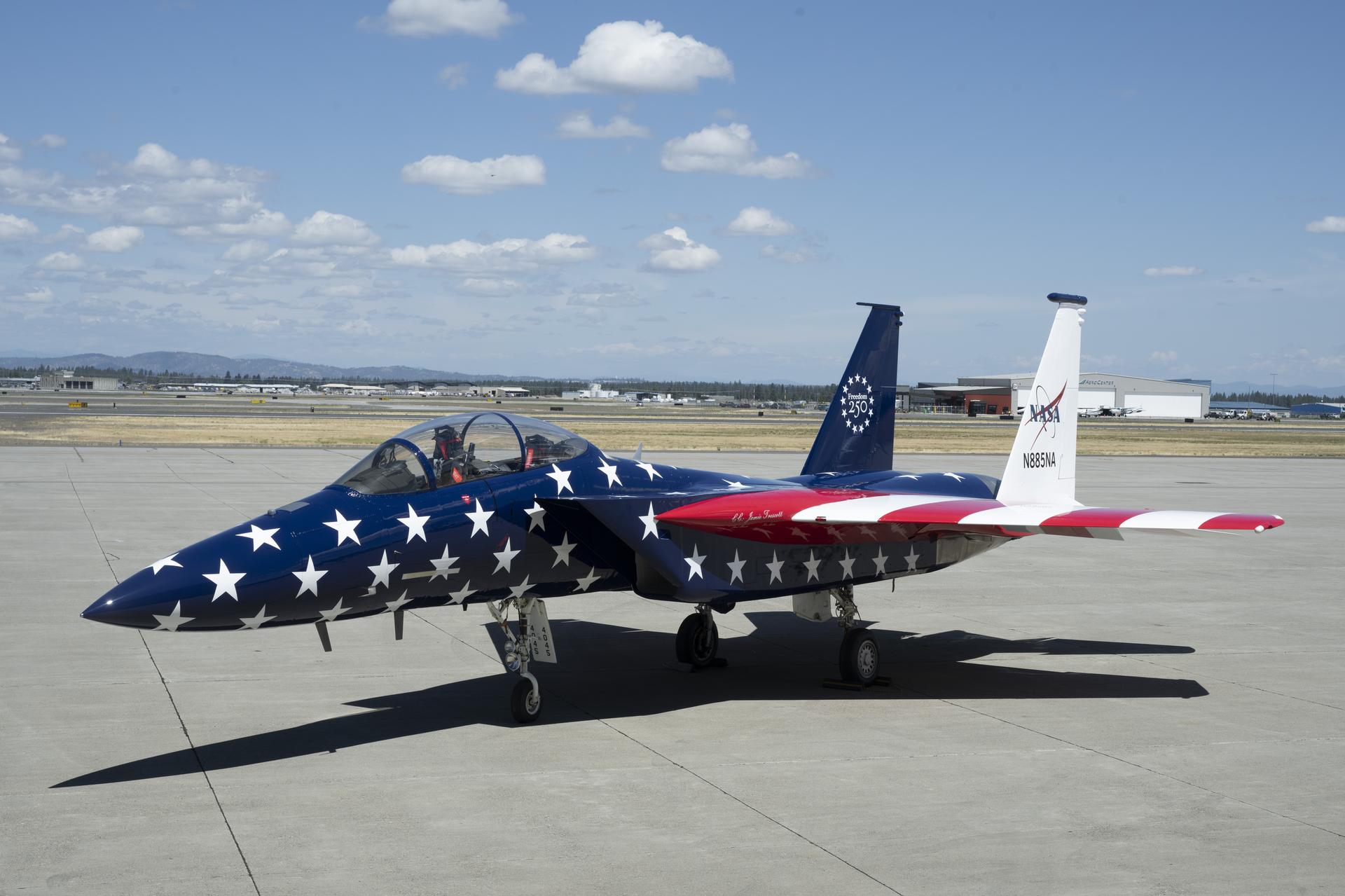
NASA’s F-15 aircraft is shown at International Aerospace Coatings Inc.’s facility in Spokane, Washington, on Thursday, July 2, 2026, with new red, white, and blue paint to celebrate America’s 250th birthday. The aircraft, from NASA’s Armstrong Flight Research Center in Edwards, California, participated in the Freedom 250 flyover in Washington on Saturday, July 4, 2026, with other NASA and military aircraft. NASA/Jim Ross
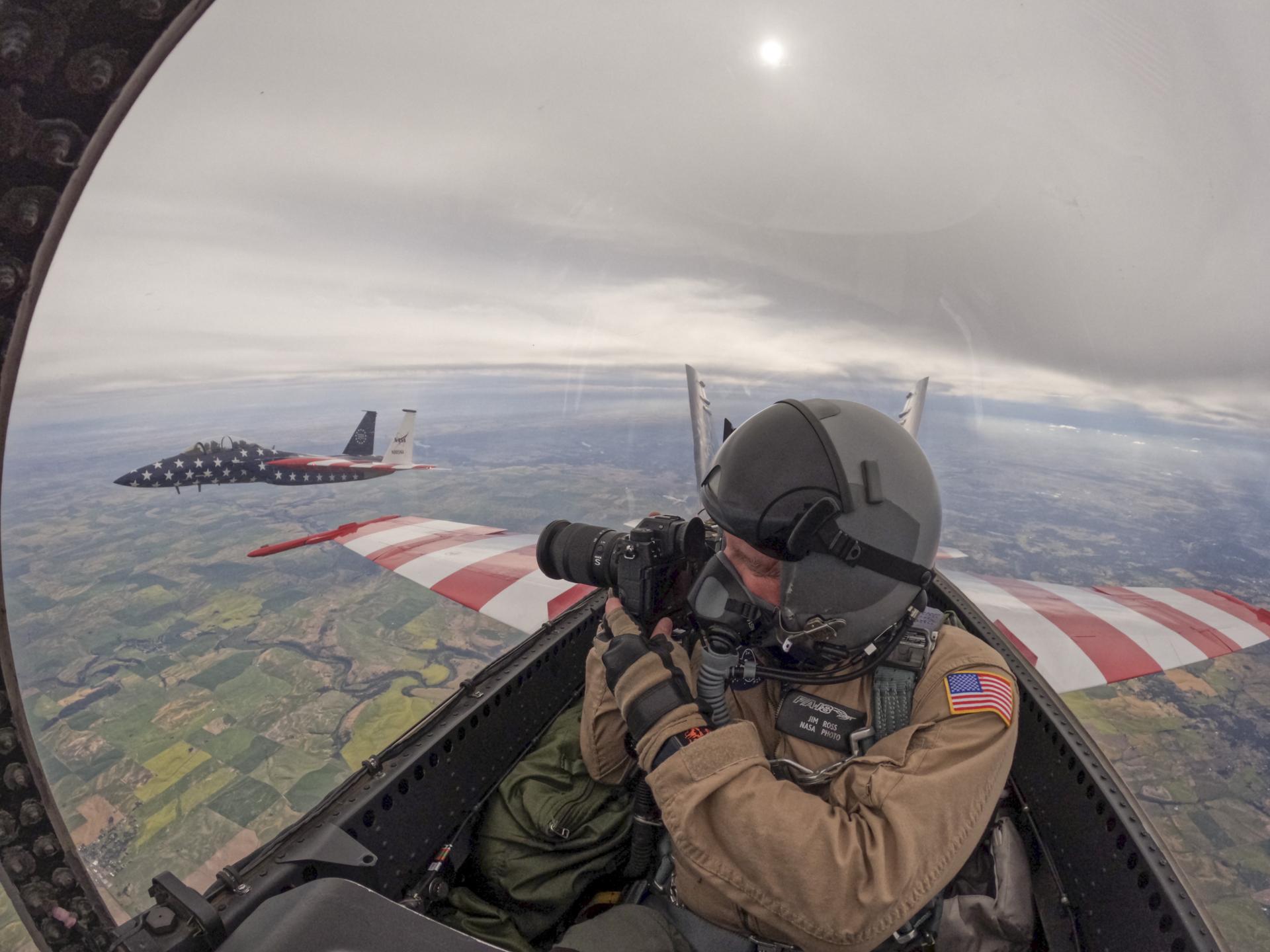
NASA photographer Jim Ross flies above Washington on Saturday, July 4, 2026, in an F-18 aircraft, as part of a flyover to celebrate America’s 250th birthday. This aircraft is from NASA’s Armstrong Flight Research Center in Edwards, California, and it joined other NASA aircraft for the flyover. A NASA F-15 is seen flying to the side of the NASA F-18.
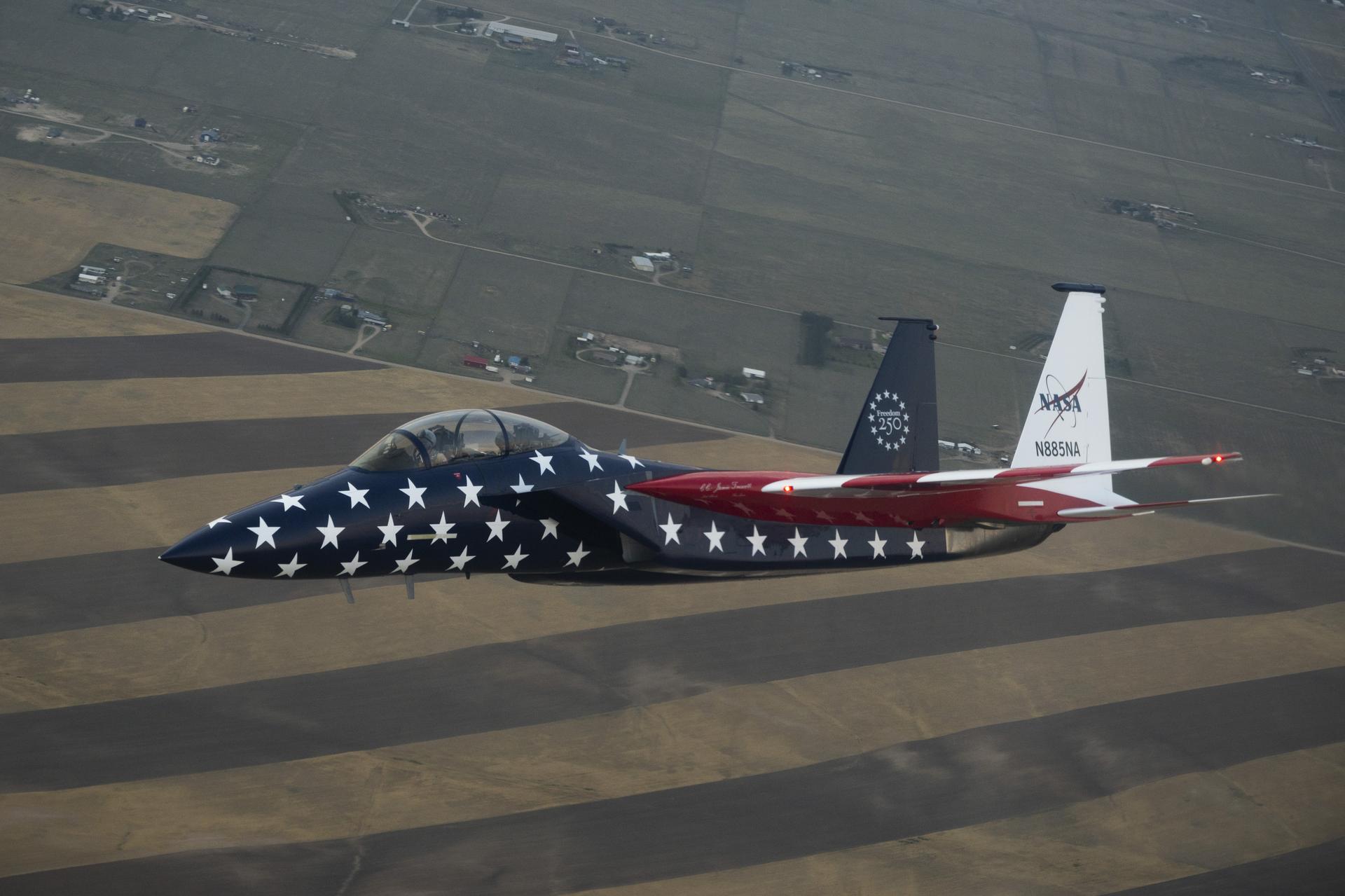
A NASA F‑15 aircraft is shown during a cross‑country flight from Spokane, Washington, to Washington, D.C., on Thursday, July 2, 2026. The aircraft displays new red, white, and blue paint to celebrate America’s 250th birthday. The F‑15, from NASA’s Armstrong Flight Research Center in Edwards, California, participated in the Freedom 250 flyover with other NASA and military aircraft on Saturday, July 4, 2026. NASA/Jim Ross
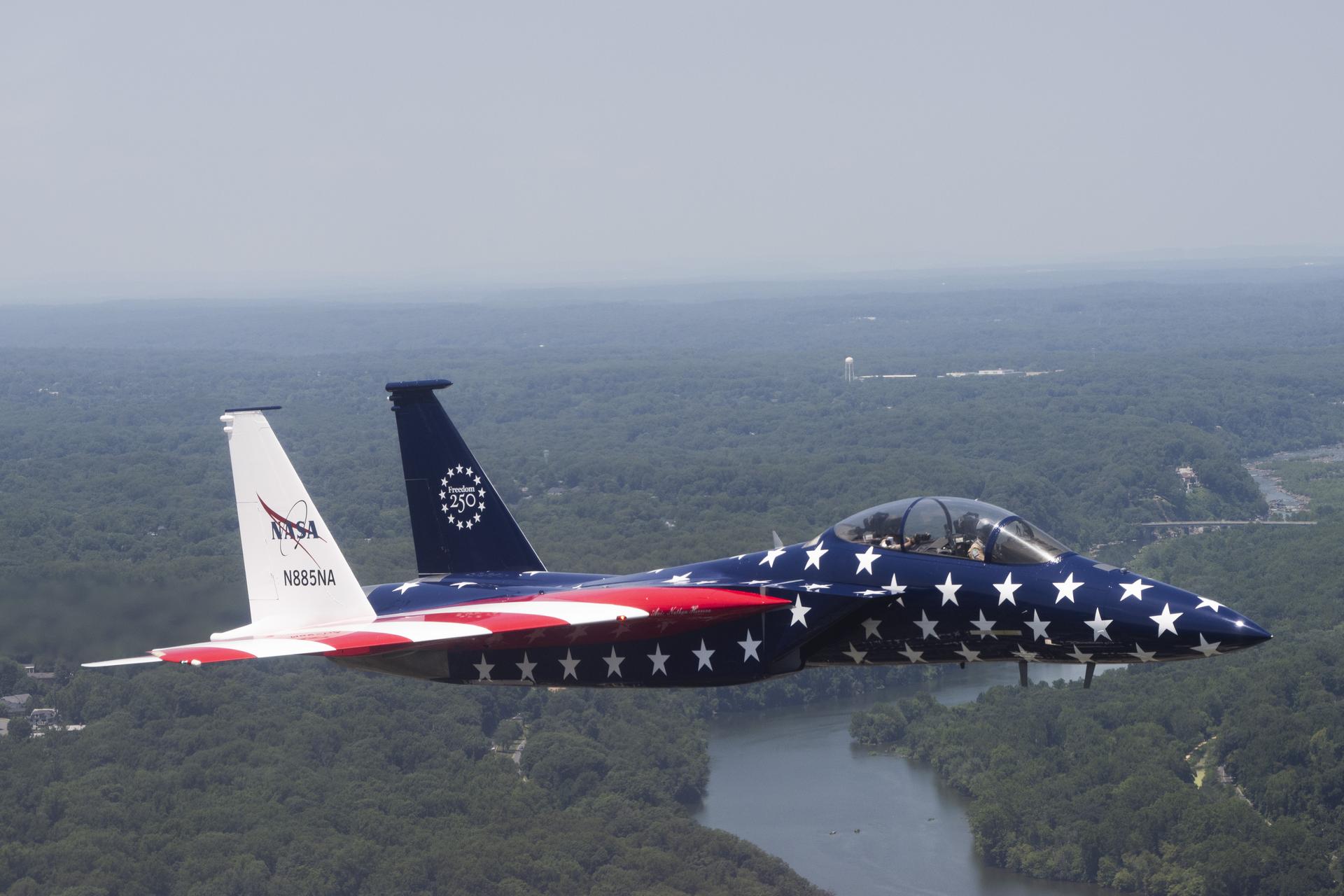
A NASA F-15 aircraft flies above Washington on Saturday, July 4, 2026, as part of a flyover to celebrate America’s 250th birthday. This aircraft is from NASA’s Armstrong Flight Research Center in Edwards, California, and it joined other NASA aircraft for the flyover.
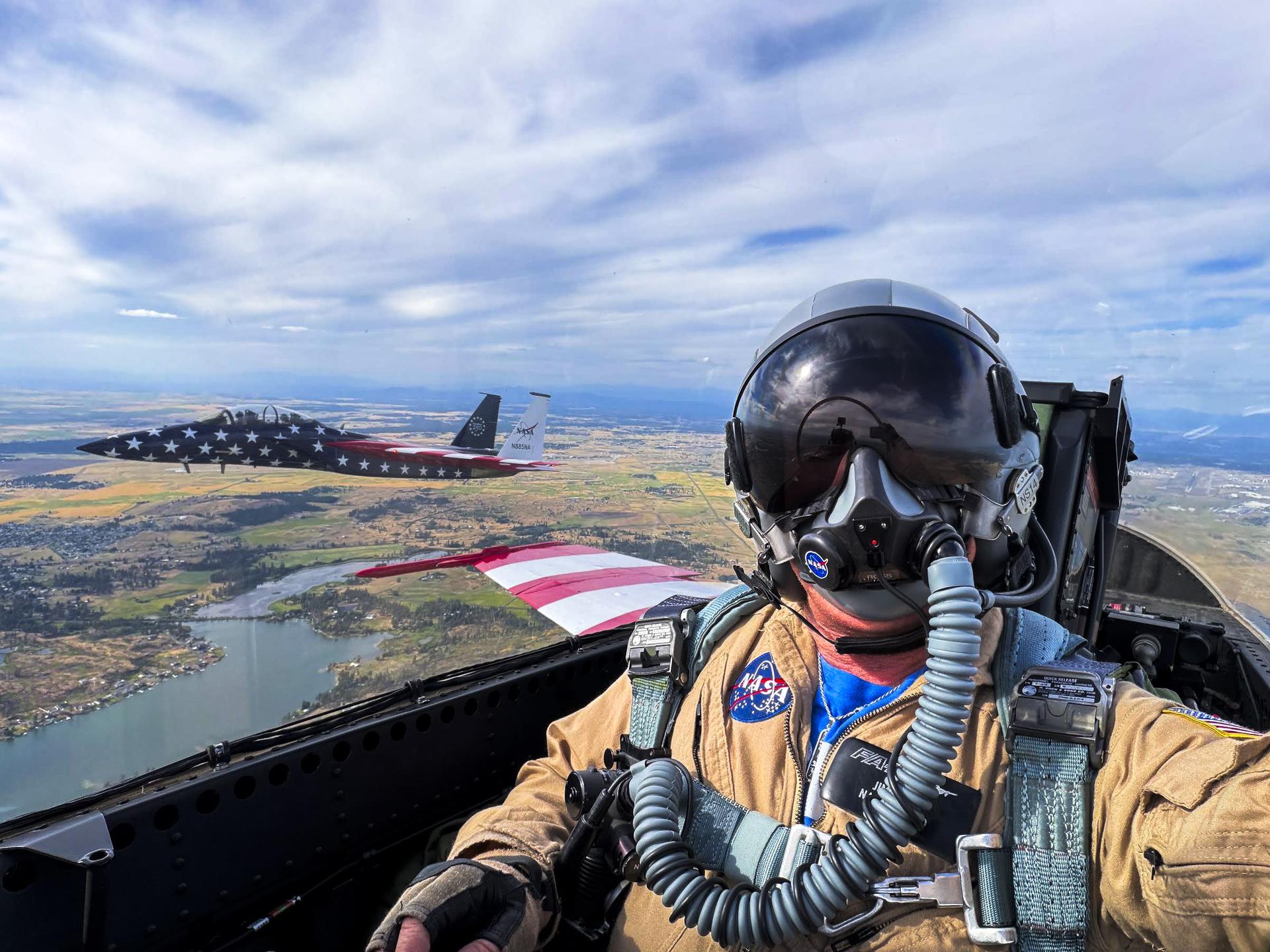
NASA photographer Jim Ross takes a selfie from the rear seat of a NASA F/A‑18 during a cross‑country flight from Spokane, Washington, to Washington, D.C., on Thursday, July 2, 2026. The agency’s F‑15, flying alongside the aircraft, is visible through the window. Both aircraft, from NASA’s Armstrong Flight Research Center in Edwards, California, participated in the Freedom 250 flyover with other NASA and military aircraft on Saturday, July 4, 2026.
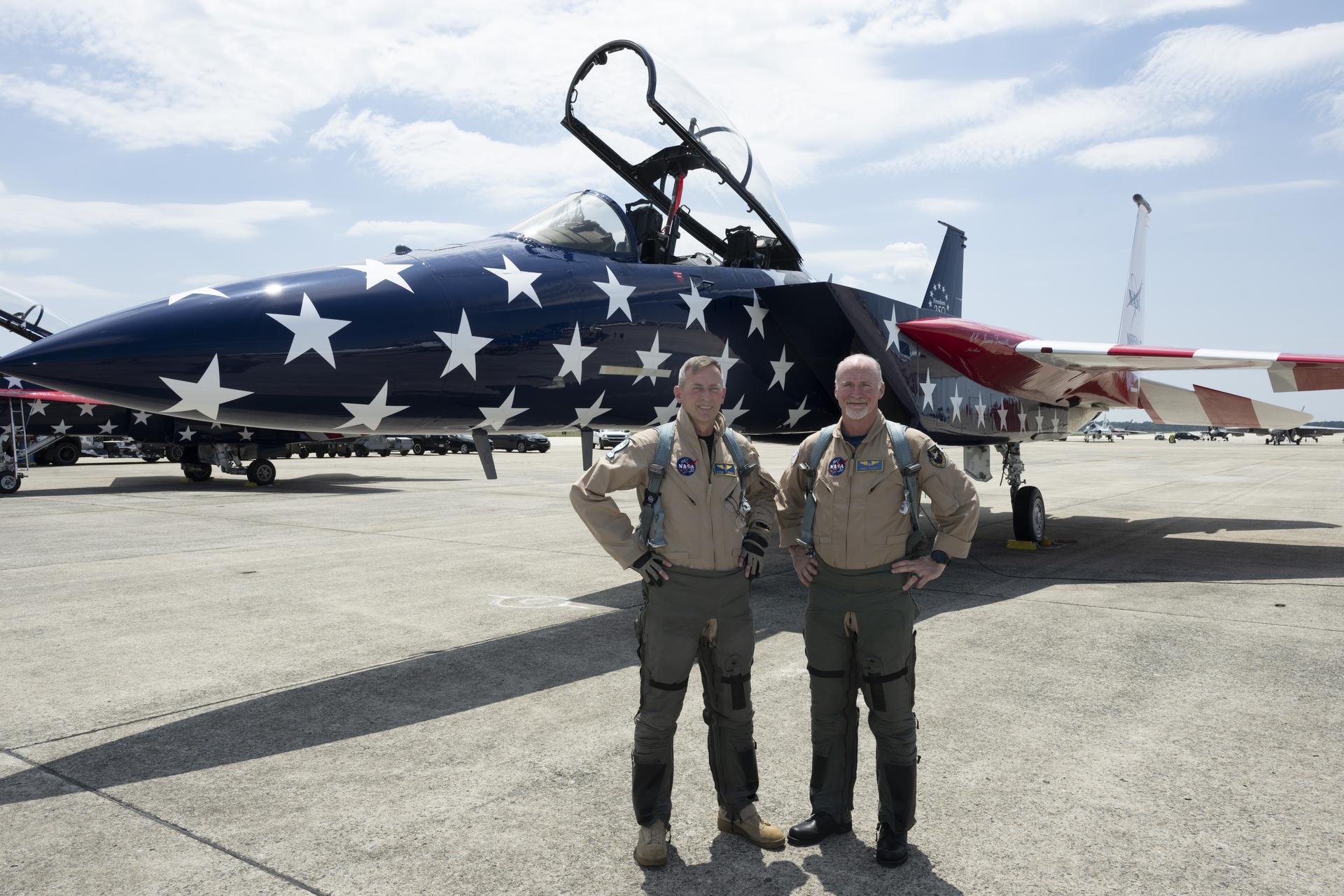
NASA Armstrong pilot Jim Less, left, and center director, Troy Asher, right, stand in front of a NASA F-15 aircraft on Saturday, July 4, 2026. Both pilots took part in a flyover to celebrate America’s 250th birthday. This aircraft is from NASA’s Armstrong Flight Research Center in Edwards, California, and it joined other NASA aircraft for the flyover.
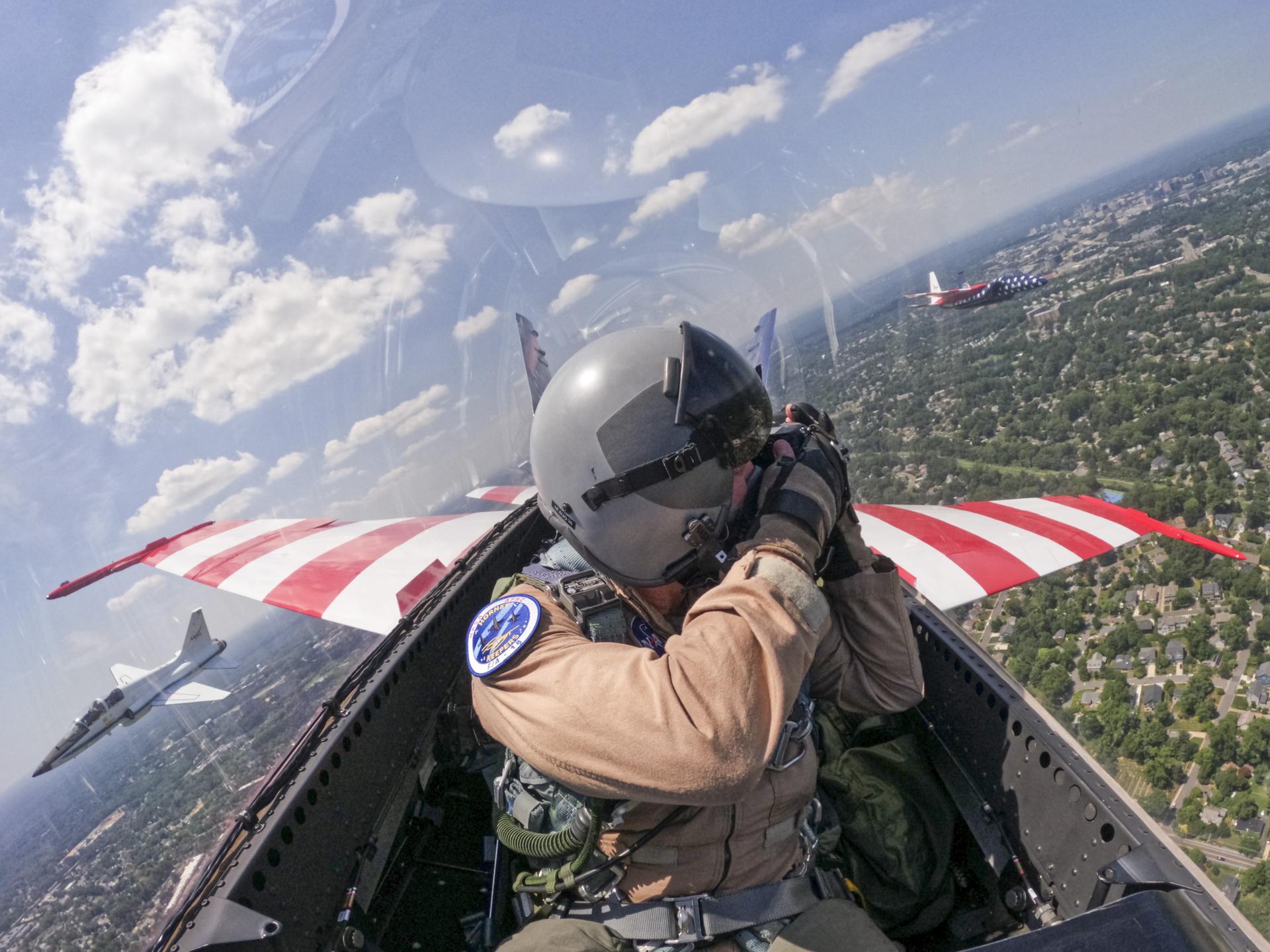
NASA photographer Jim Ross captures photos as he flies above Washington on Saturday, July 4, 2026, in an F-18 aircraft, as part of a flyover to celebrate America’s 250th birthday. This aircraft is from NASA’s Armstrong Flight Research Center in Edwards, California, and it joined other NASA aircraft for the flyover. A NASA F-15 and T-38 are seen flying to the sides of the NASA F-18.
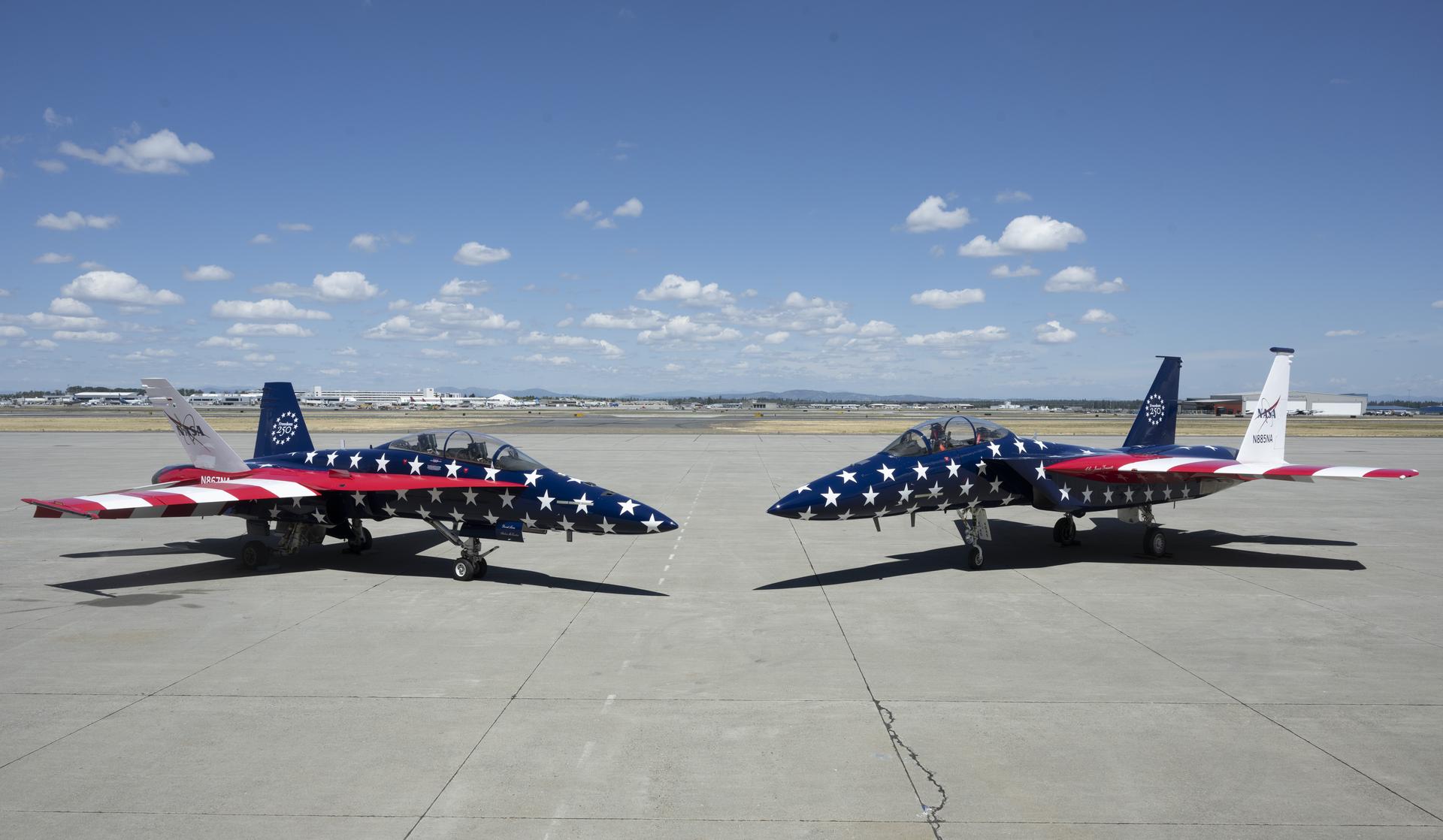
NASA’s F-15, right, and F/A-18 aircraft are shown at International Aerospace Coatings Inc.’s facility in Spokane, Washington, on Thursday, July 2, 2026, with new red, white, and blue paint to celebrate America’s 250th birthday. The aircraft, from NASA’s Armstrong Flight Research Center in Edwards, California, participated in the Freedom 250 flyover in Washington on Saturday, July 4, 2026, with other NASA and military aircraft. NASA/Jim Ross
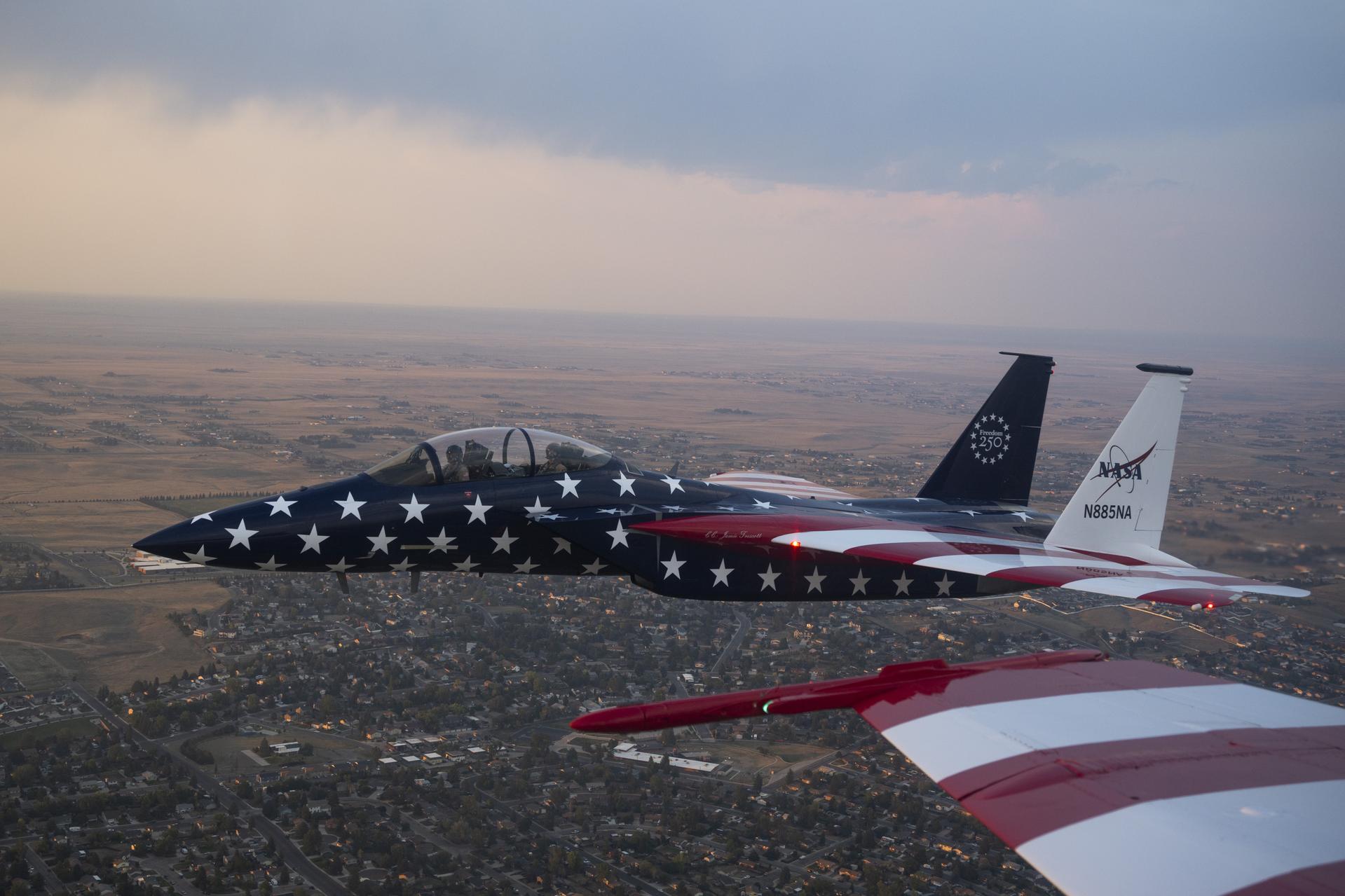
A NASA F‑15 aircraft is shown flying next to a NASA F/A‑18 during a cross‑country flight from Spokane, Washington, to Washington, D.C., on Thursday, July 2, 2026. The full F‑15 is visible, along with a partial view of the F/A‑18’s wing, as both aircraft display new red, white, and blue paint to celebrate America’s 250th birthday. The aircraft, from NASA’s Armstrong Flight Research Center in Edwards, California, participated in the Freedom 250 flyover with other NASA and military aircraft on Saturday, July 4, 2026. NASA/Jim Ross
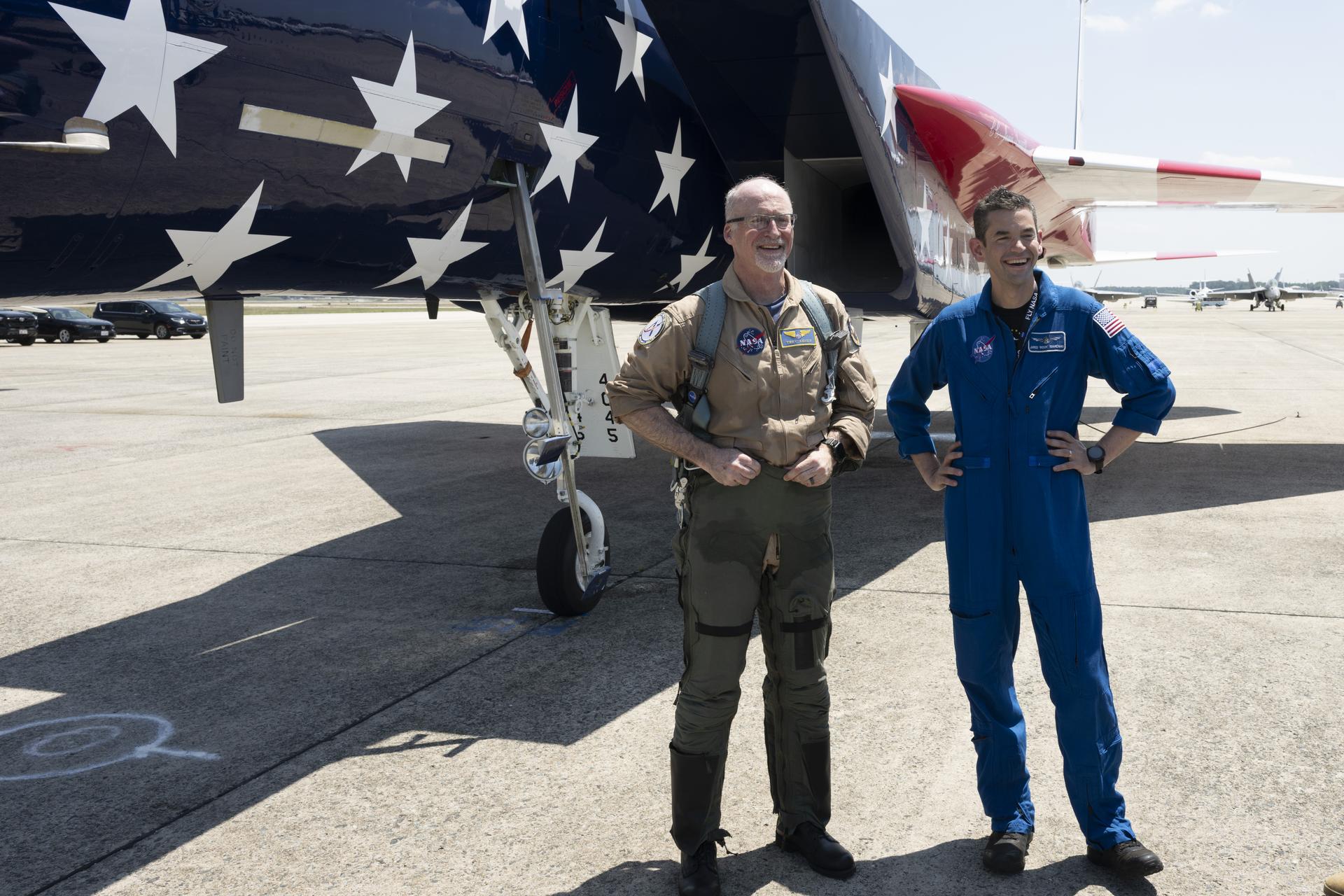
NASA Administrator Jared Isaacman stands to the right of NASA Armstrong Center Director Troy Asher, left, in front of an F-15 aircraft. Both pilots flew above Washington on Saturday, July 4, 2026, as part of a flyover to celebrate America’s 250th birthday.
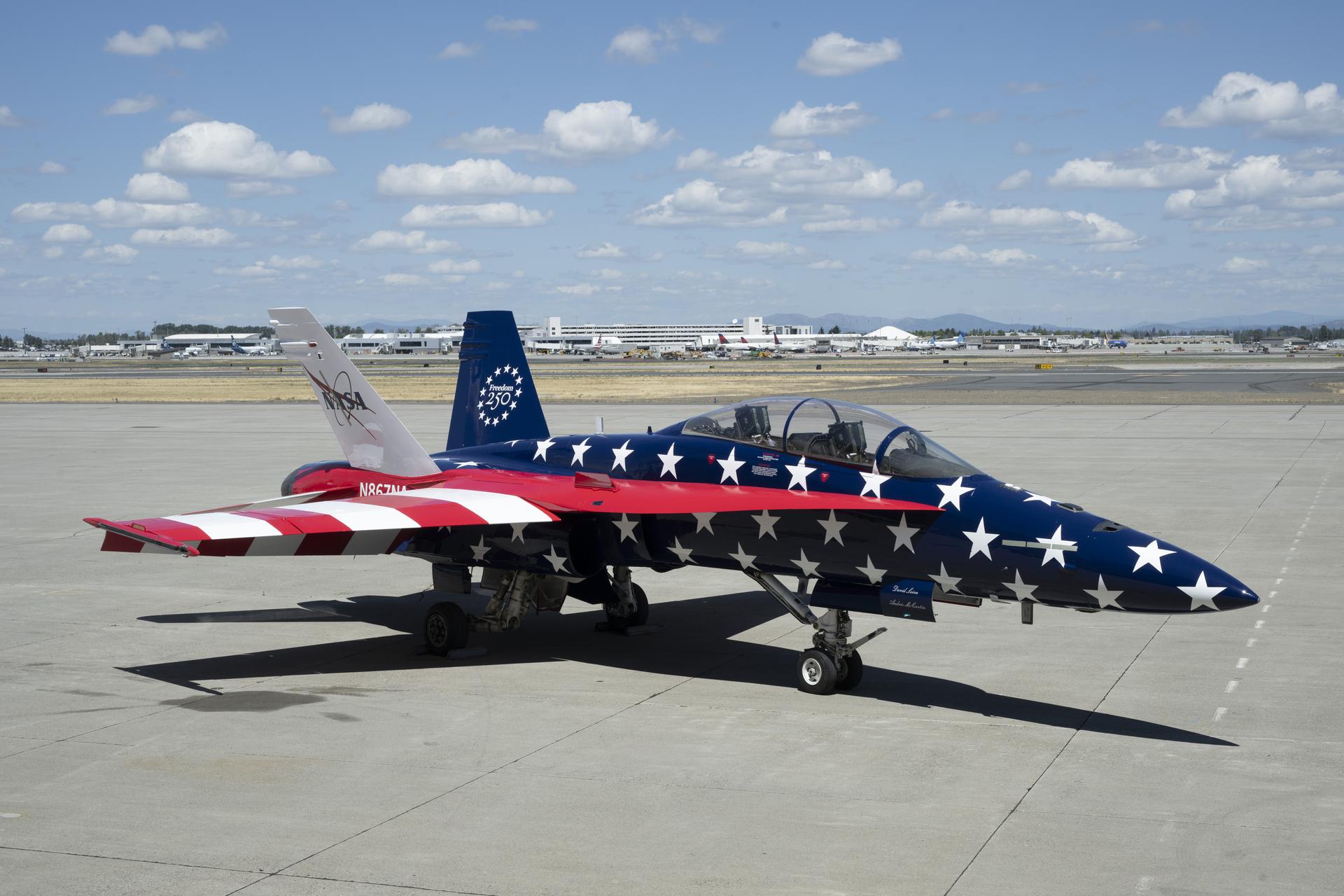
NASA’s F-18 aircraft is shown at International Aerospace Coatings Inc.’s facility in Spokane, Washington, on Thursday, July 2, 2026, with new red, white, and blue paint to celebrate America’s 250th birthday. The aircraft, from NASA’s Armstrong Flight Research Center in Edwards, California, participated in the Freedom 250 flyover in Washington on Saturday, July 4, 2026, with other NASA and military aircraft. NASA/Jim Ross
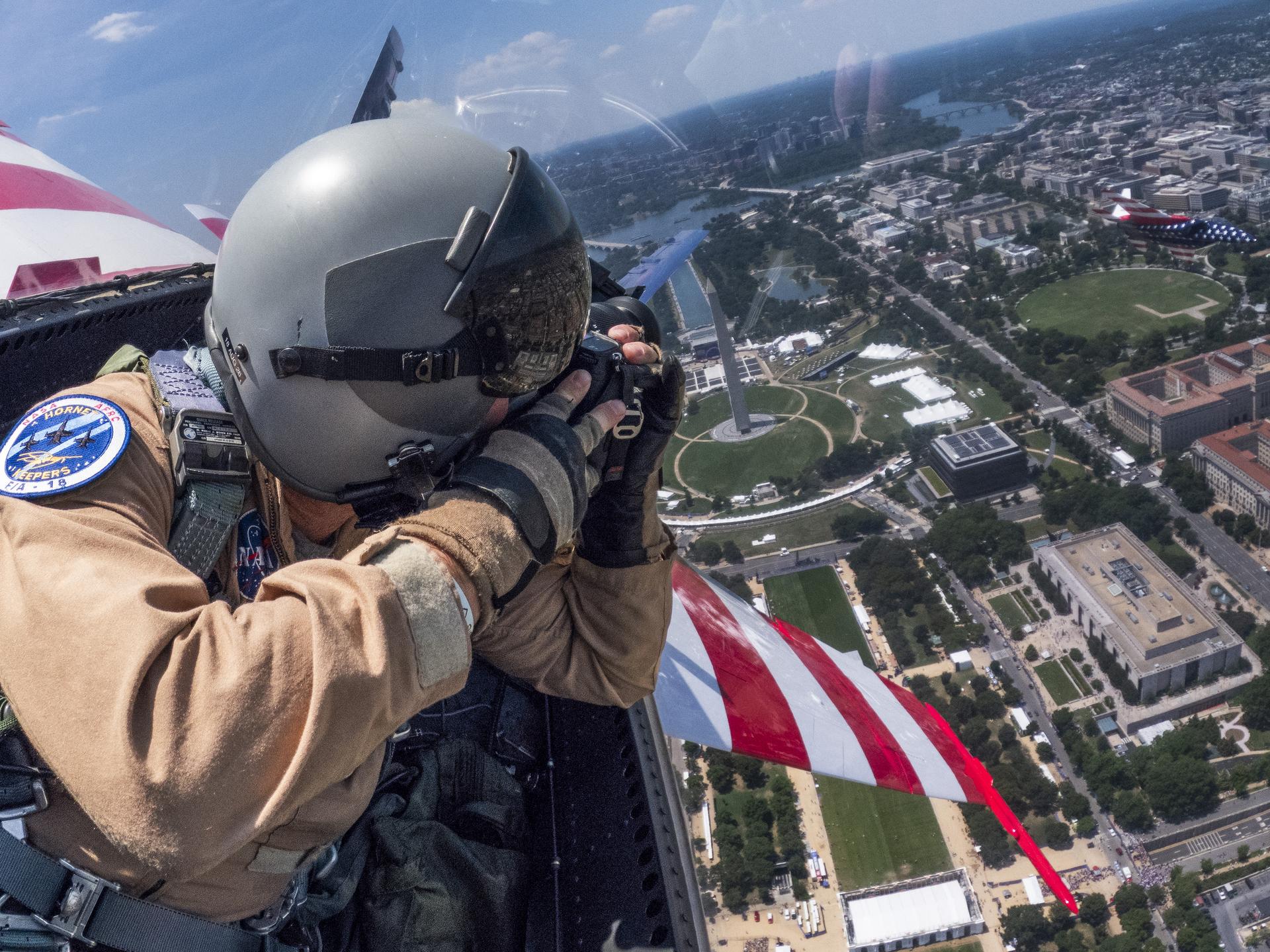
NASA photographer Jim Ross flies above the Washington Monument in Washington on Saturday, July 4, 2026, in an F-18 aircraft, as part of a flyover to celebrate America’s 250th birthday. This aircraft is from NASA’s Armstrong Flight Research Center in Edwards, California, and it joined other NASA aircraft for the flyover.
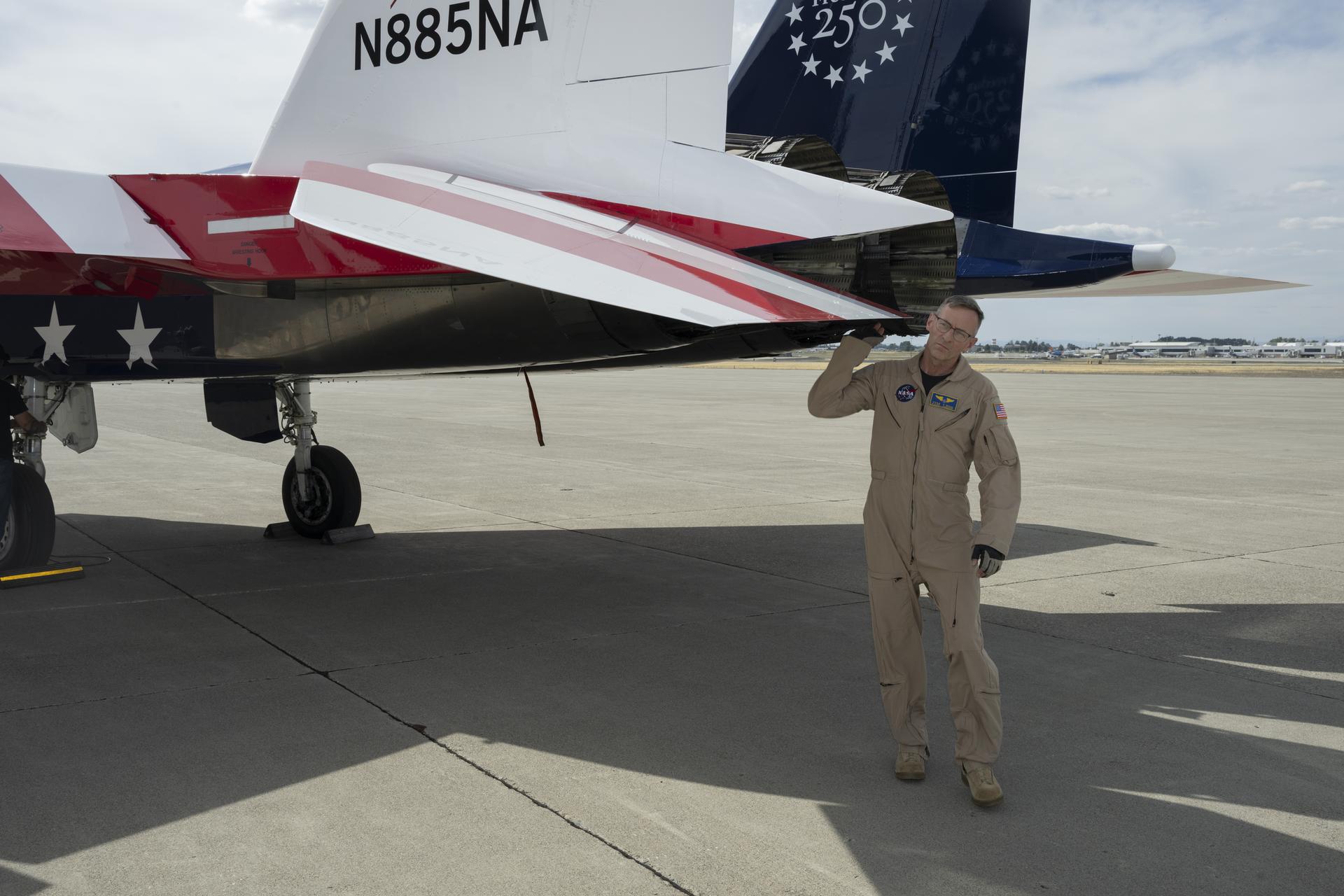
NASA test pilot Jim “Clue” Less completes pre‑flight checks on a NASA F‑15 in Spokane, Washington, on Thursday, July 2, 2026. The aircraft, from NASA’s Armstrong Flight Research Center in Edwards, California, displays new red, white, and blue paint to celebrate America’s 250th birthday and was preparing to fly cross‑country to Washington, D.C., where it participated in the Freedom 250 flyover with other NASA and military aircraft on Saturday, July 4, 2026. NASA/Jim Ross
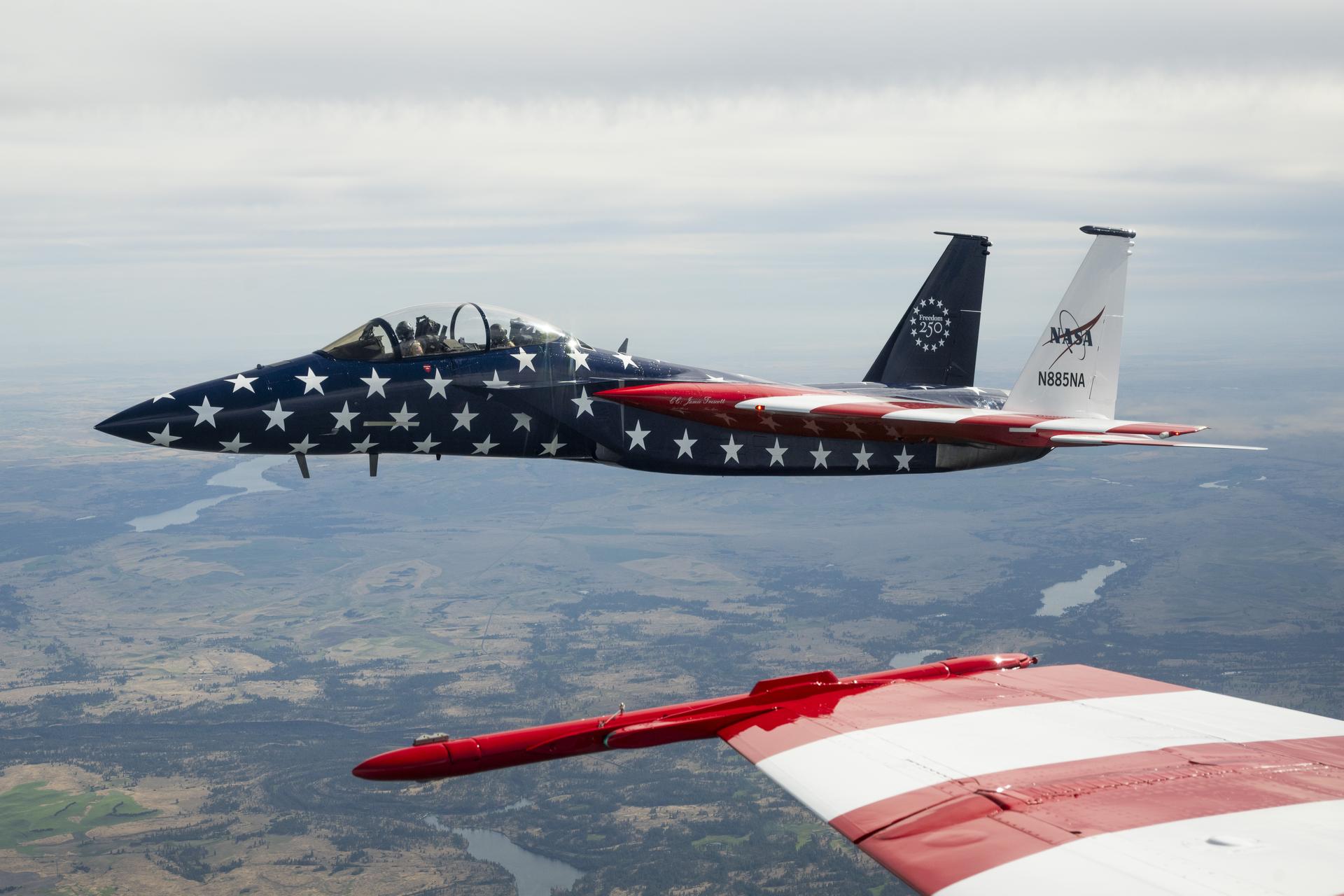
A NASA F‑15 aircraft is shown flying next to a NASA F/A‑18 during a cross‑country flight from Spokane, Washington, to Washington, D.C., on Thursday, July 2, 2026. The full F‑15 is visible, along with a partial view of the F/A‑18’s wing, as both aircraft display new red, white, and blue paint to celebrate America’s 250th birthday. The aircraft, from NASA’s Armstrong Flight Research Center in Edwards, California, participated in the Freedom 250 flyover with other NASA and military aircraft on Saturday, July 4, 2026. NASA/Jim Ross
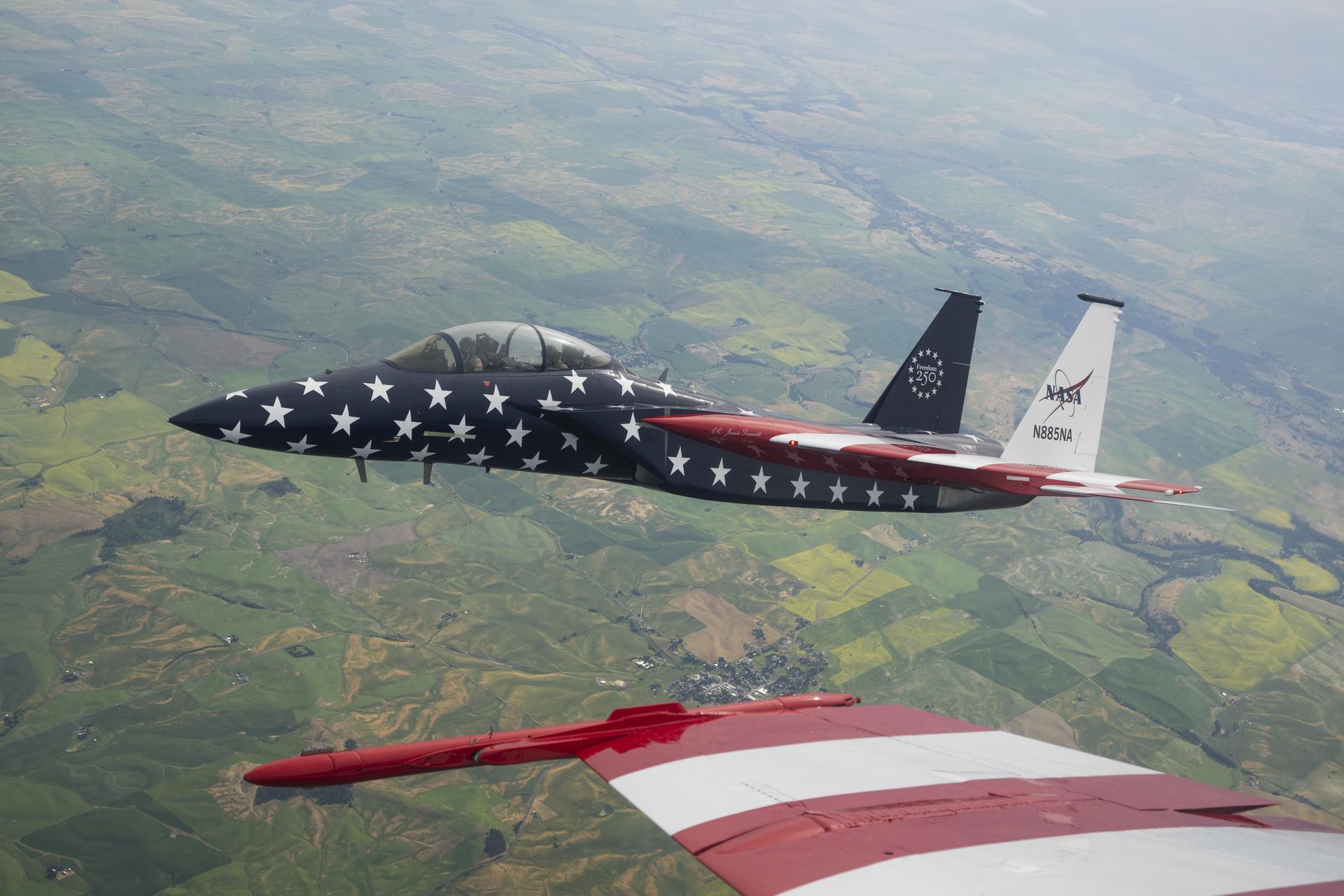
A NASA F‑15 aircraft is shown flying next to a NASA F/A‑18 during a cross‑country flight from Spokane, Washington, to Washington, D.C., on Thursday, July 2, 2026. The full F‑15 is visible, along with a partial view of the F/A‑18’s wing, as both aircraft display new red, white, and blue paint to celebrate America’s 250th birthday. The aircraft, from NASA’s Armstrong Flight Research Center in Edwards, California, participated in the Freedom 250 flyover with other NASA and military aircraft on Saturday, July 4, 2026. NASA/Jim Ross
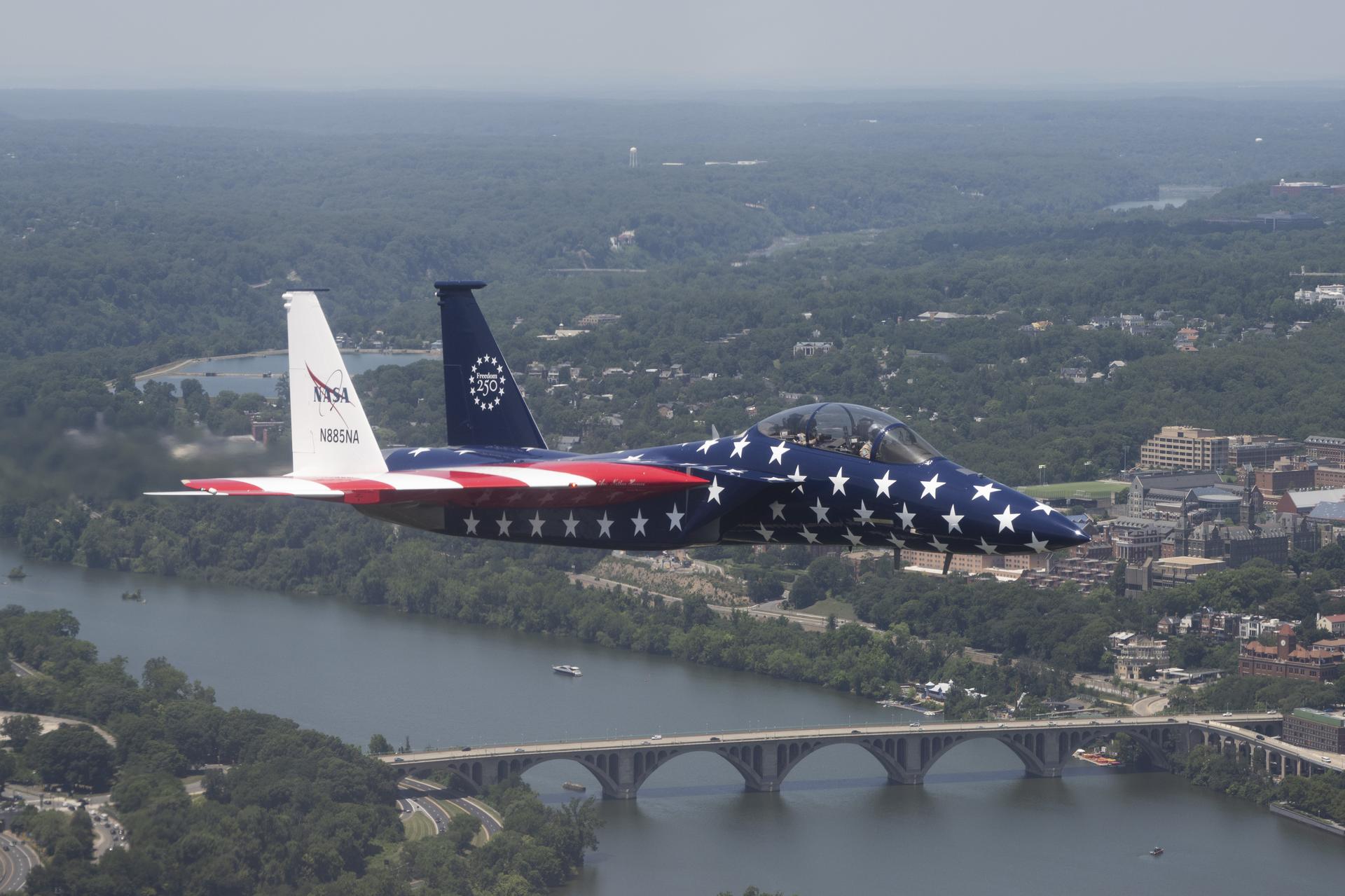
A NASA F-15 aircraft flies above Washington on Saturday, July 4, 2026, as part of a flyover to celebrate America’s 250th birthday. This aircraft is from NASA’s Armstrong Flight Research Center in Edwards, California, and it joined other NASA aircraft for the flyover.
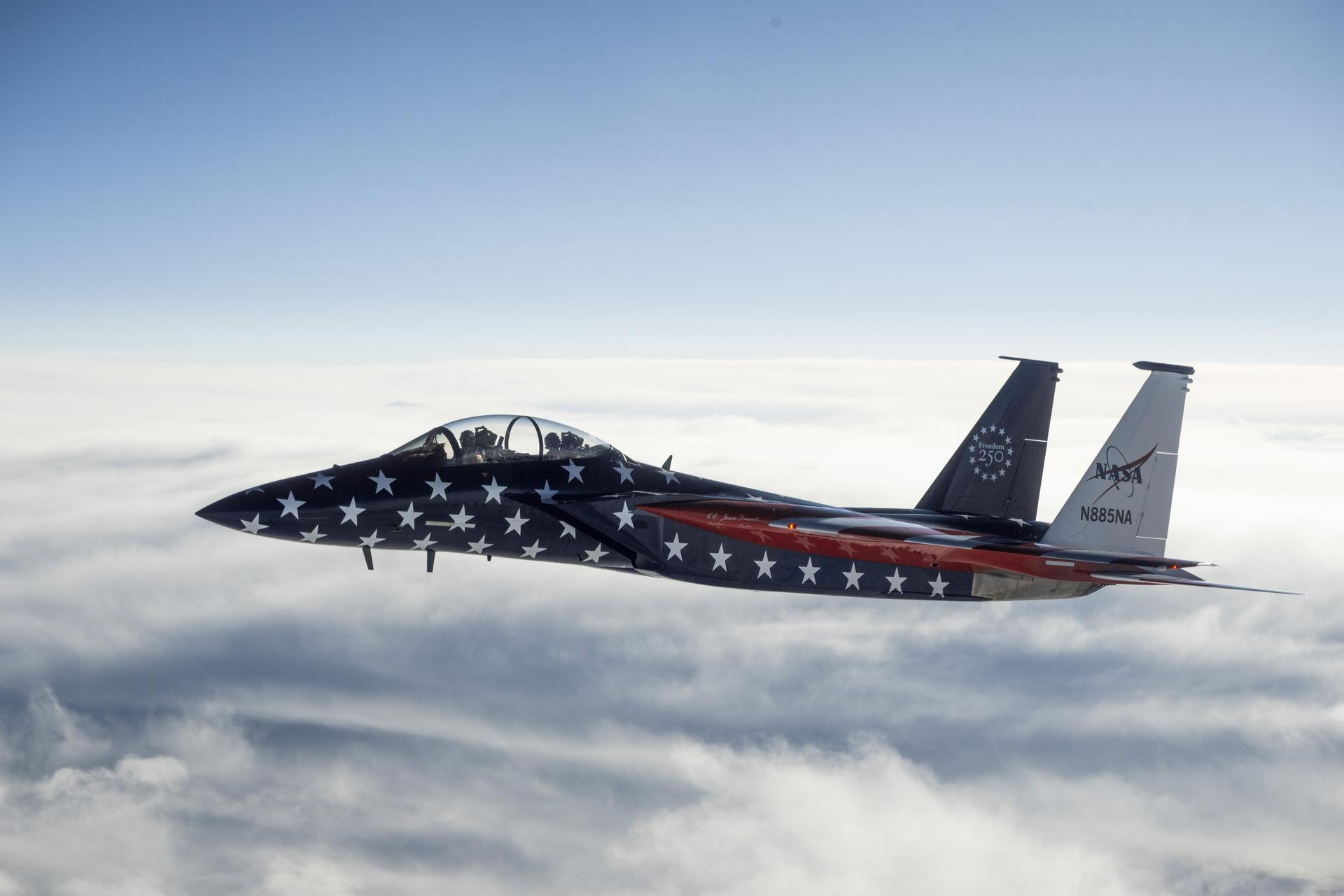
A NASA F‑15 aircraft is shown during a cross‑country flight from Spokane, Washington, to Washington, D.C., on Thursday, July 2, 2026. The aircraft displays new red, white, and blue paint to celebrate America’s 250th birthday. The F‑15, from NASA’s Armstrong Flight Research Center in Edwards, California, participated in the Freedom 250 flyover with other NASA and military aircraft on Saturday, July 4, 2026. NASA/Jim Ross
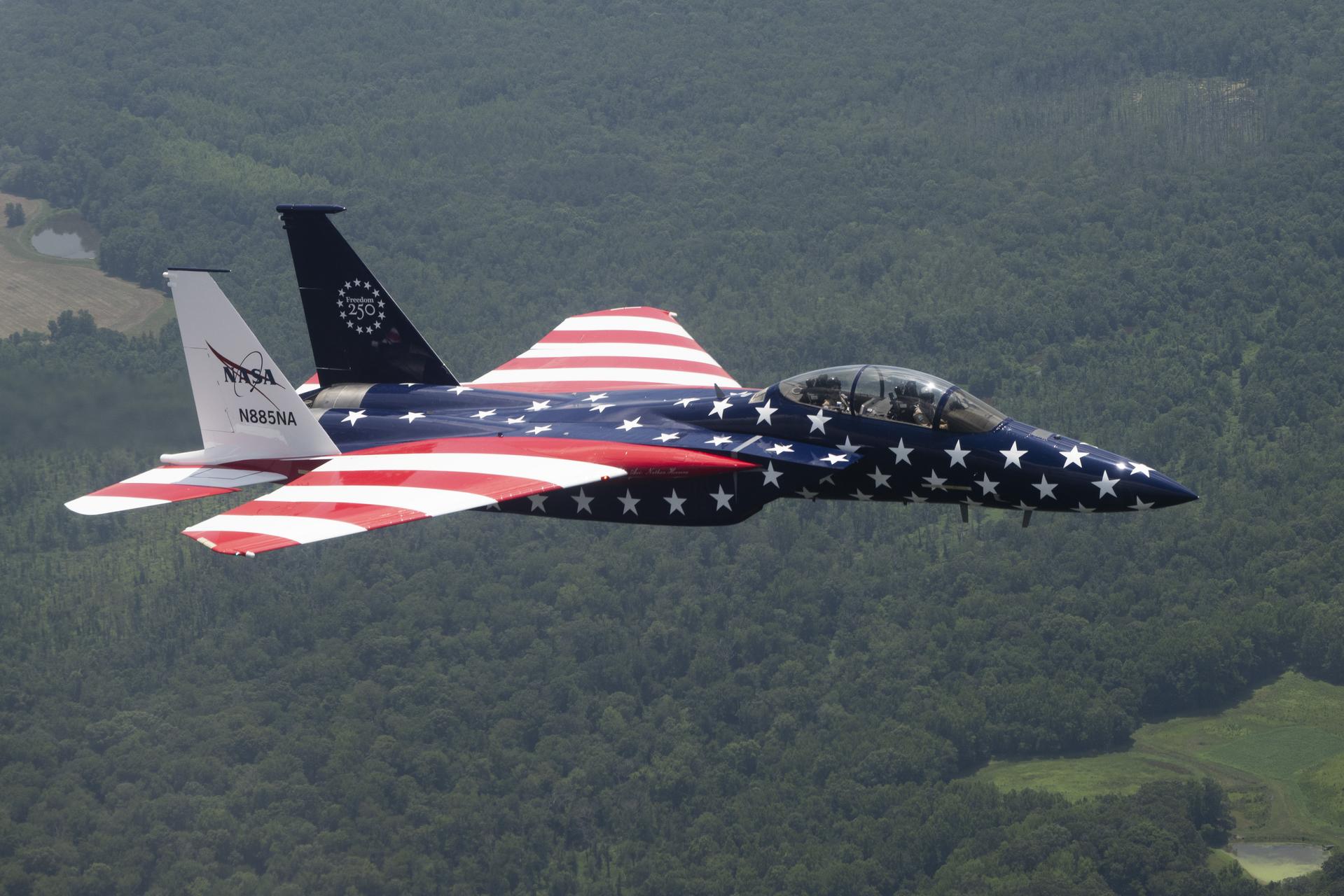
A NASA F-15 aircraft flies above Washington on Saturday, July 4, 2026, as part of a flyover to celebrate America’s 250th birthday. This aircraft is from NASA’s Armstrong Flight Research Center in Edwards, California, and it joined other NASA aircraft for the flyover.
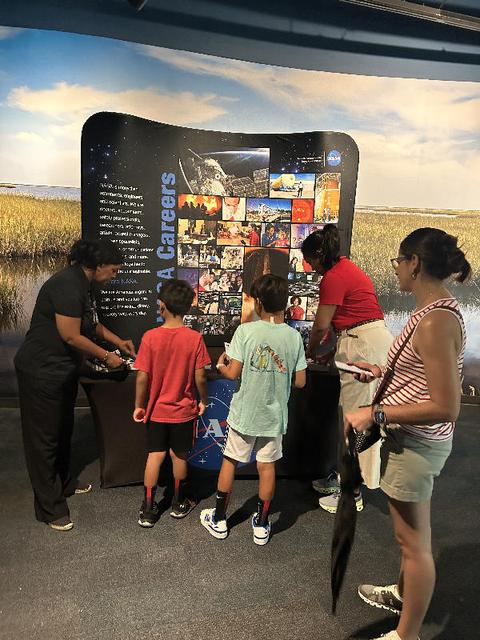
NASA representatives provide information about the space agency to Audubon Aquarium visitors in New Orleans on July 5. NASA hosted an information/interactive exhibit at the aquarium in conjunction with NASA activities at the 30th annual ESSENCE Fest in New Orleans during the Fourth of July weekend.
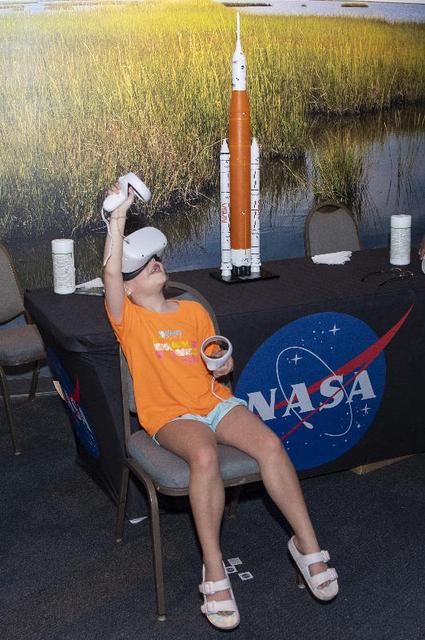
An Audubon Aquarium visitor in New Orleans experiences a virtual reality visit to the International Space Station as part of a NASA exhibit on July 5. NASA hosted an information/interactive exhibit at the aquarium in conjunction with NASA activities at the 30th annual ESSENCE Fest in New Orleans during the Fourth of July weekend.
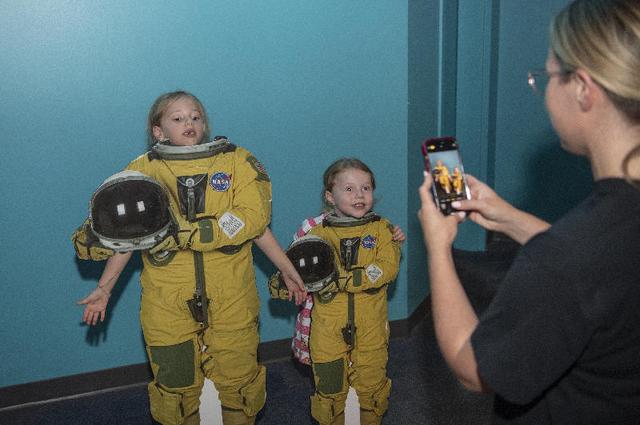
Two young visitors to the Audubon Aquarium in New Orleans pose as NASA astronauts as part of a NASA exhibit July 5. NASA hosted an information/interactive exhibit at the aquarium in conjunction with NASA activities at the 30th annual ESSENCE Fest in New Orleans during the Fourth of July weekend.

NASA representatives welcome visitors to the agency exhibit at the Audubon Aquarium in New Orleans on July 5. NASA hosted an information/interactive exhibit at the aquarium in conjunction with NASA activities at the 30th annual ESSENCE Fest in New Orleans during the Fourth of July weekend.

Audubon Aquarium visitors in New Orleans experience a virtual reality visit to the International Space Station as part of a NASA exhibit on July 5. NASA hosted an information/interactive exhibit at the aquarium in conjunction with NASA activities at the 30th annual ESSENCE Fest in New Orleans during the Fourth of July weekend.
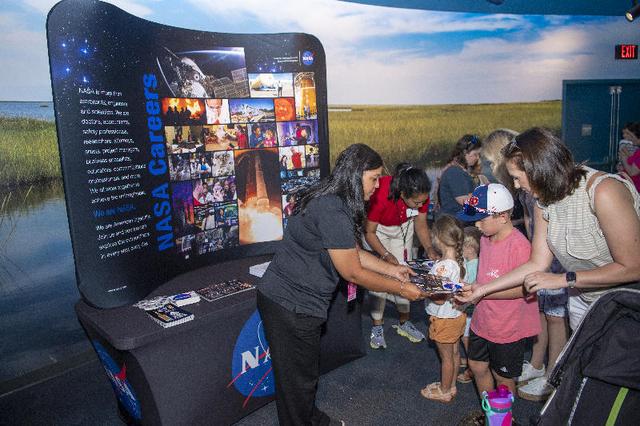
NASA representatives provide memorabilia to Audubon Aquarium visitors in New Orleans on July 5. NASA hosted an information/interactive exhibit at the aquarium in conjunction with NASA activities at the 30th annual ESSENCE Fest in New Orleans during the Fourth of July weekend.
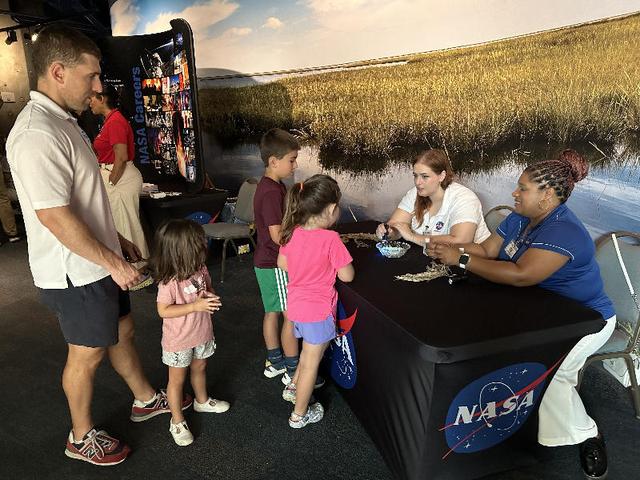
NASA representatives teach visitors to the Audubon Aquarium in New Orleans about the Sun on July 5. NASA hosted an information/interactive exhibit at the aquarium in conjunction with NASA activities at the 30th annual ESSENCE Fest in New Orleans during the Fourth of July weekend.
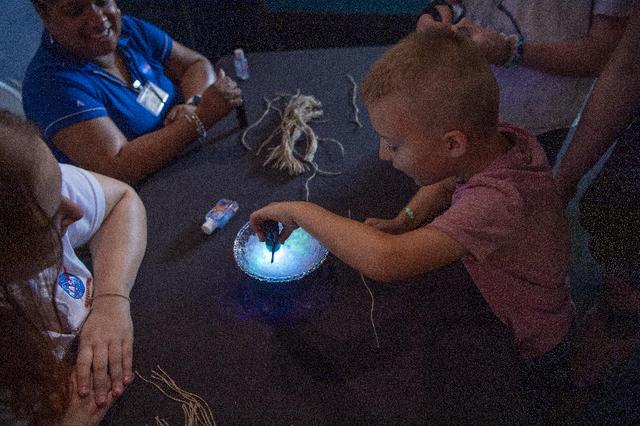
An Audubon Aquarium visitor in New Orleans is all smiles while participating in the solar bead activity provided by NASA on July 5. NASA hosted an information/interactive exhibit at the aquarium in conjunction with NASA activities at the 30th annual ESSENCE Fest in New Orleans during the Fourth of July weekend.
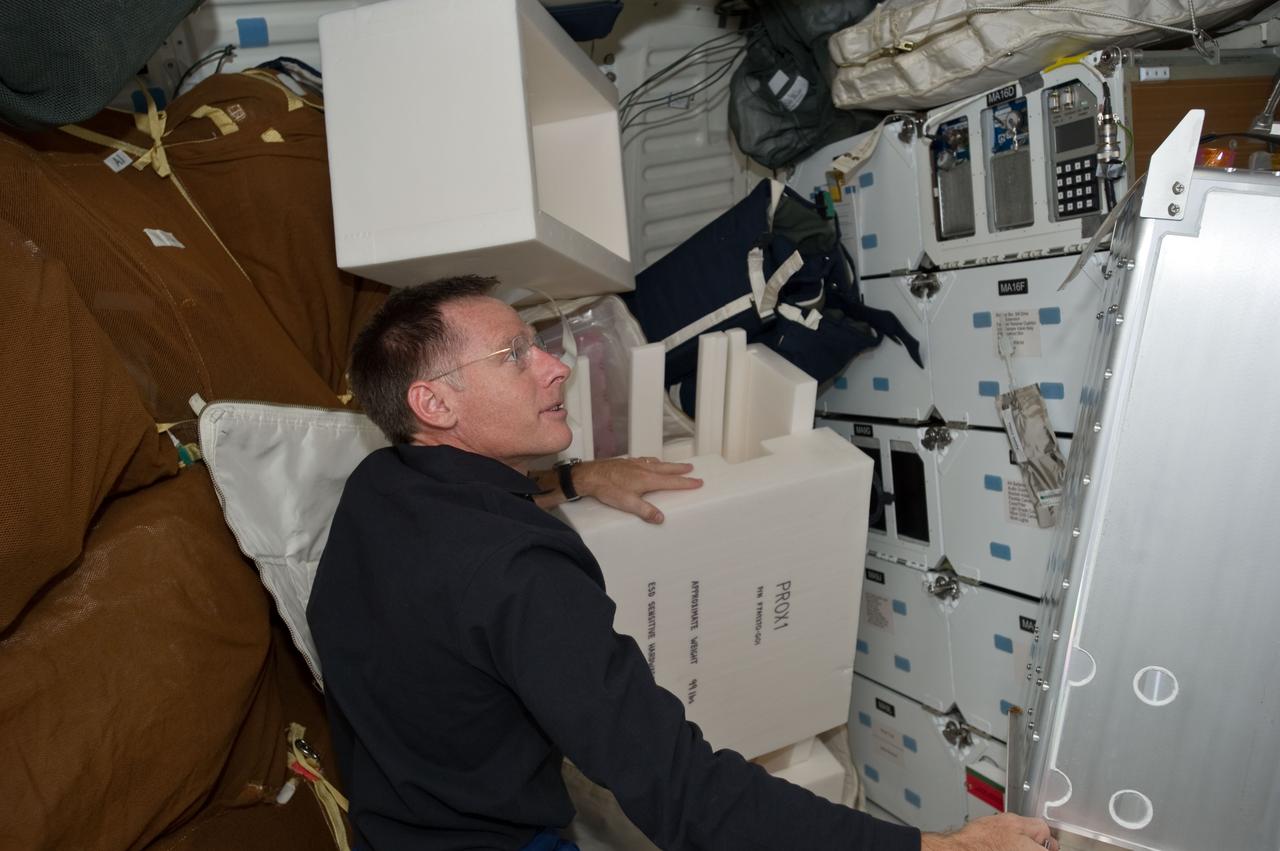
S135-E-007388 (11 July 2011) --- NASA astronaut Chris Ferguson, STS-135 mission commander, is pictured on the middeck of the space shuttle Atlantis during the mission's fourth day in space and second day docked with the International Space Station. Photo credit: NASA
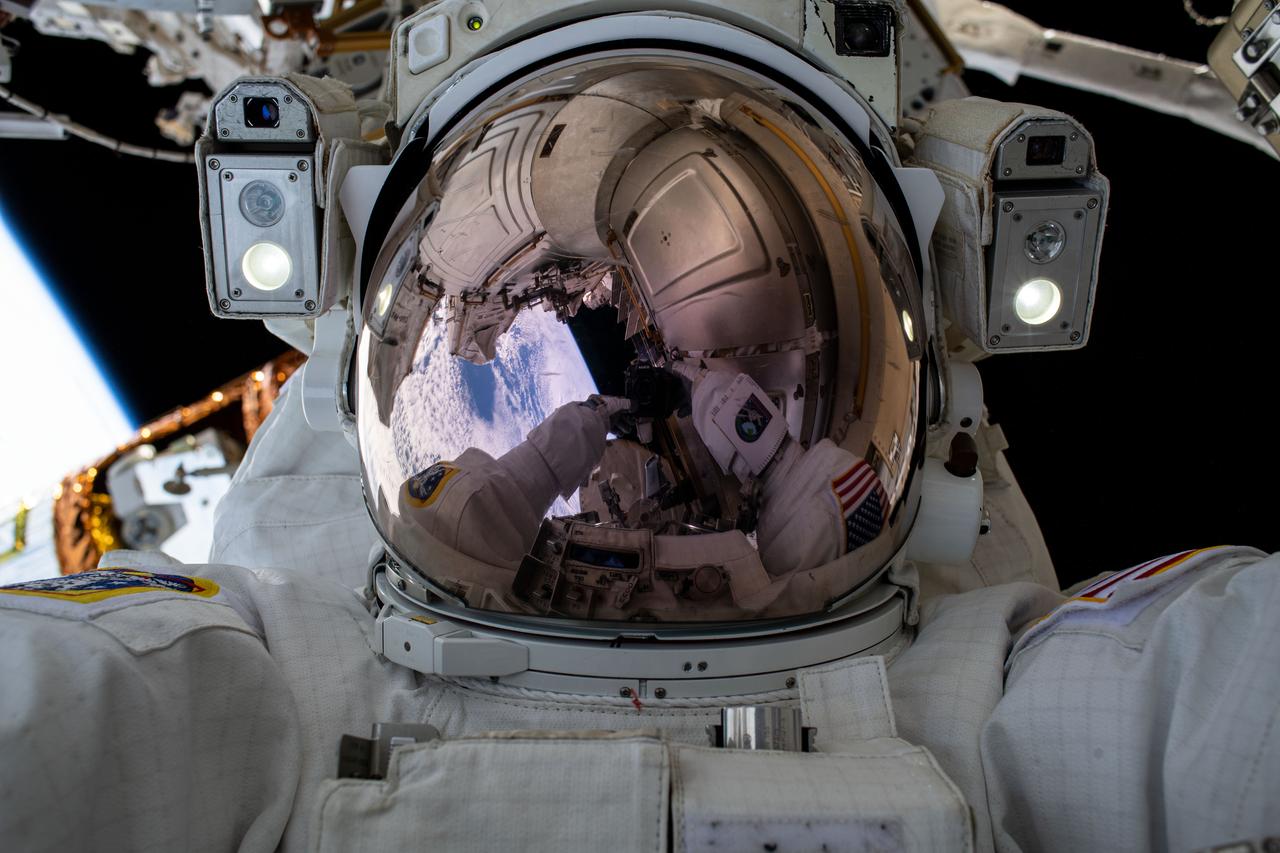
iss063e052397 (July 21, 2020) --- NASA astronaut and Expedition 63 Commander Chris Cassidy took this epic "space-selfie" during his fourth spacewalk this year at the International Space Station. Cassidy has completed 10 spacewalks throughout his career for a total of 54 hours and 51 minutes spacewalking time.
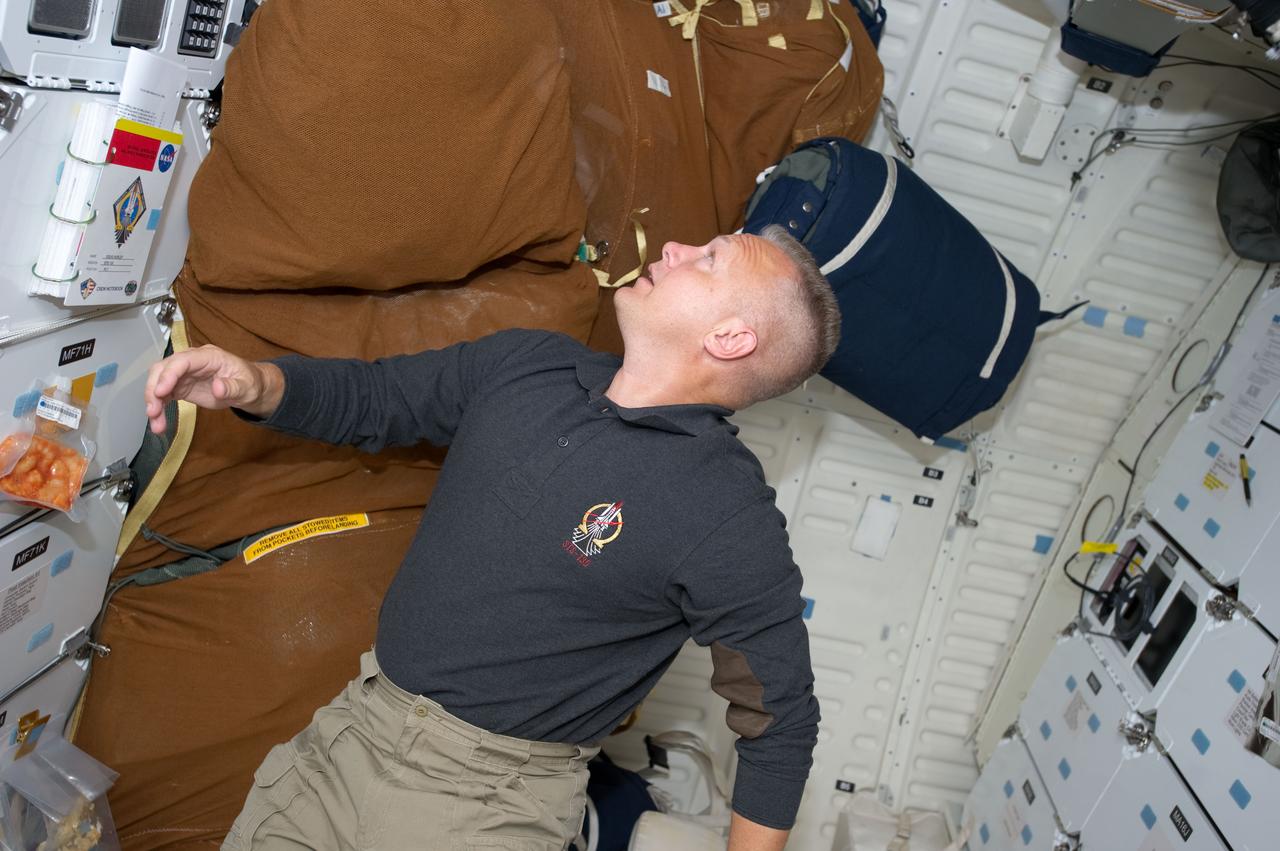
S135-E-007394 (11 July 2011) --- NASA astronaut Doug Hurley, STS-135 pilot, is pictured on the middeck of the space shuttle Atlantis during the mission's fourth day in space and second day docked with the International Space Station. Photo credit: NASA

jsc2024e044936 (July 9, 2007) --- NASA astronaut Stephanie Wilson poses for a photo in a studio at NASA’s Johnson Space Center in Houston, Texas. Wilson will serve as a mission specialist for NASA’s SpaceX Crew-9 mission to the International Space Station, her fourth trip to space.

S135-E-007435 (11 July 2011) --- NASA astronaut Sandy Magnus, STS-135 mission specialist, is pictured in the U.S. lab or Destiny on the International Space Station during the fourth day in space for the Atlantis crew and the second day while the two spacecraft are docked in Earth orbit. Photo credit: NASA
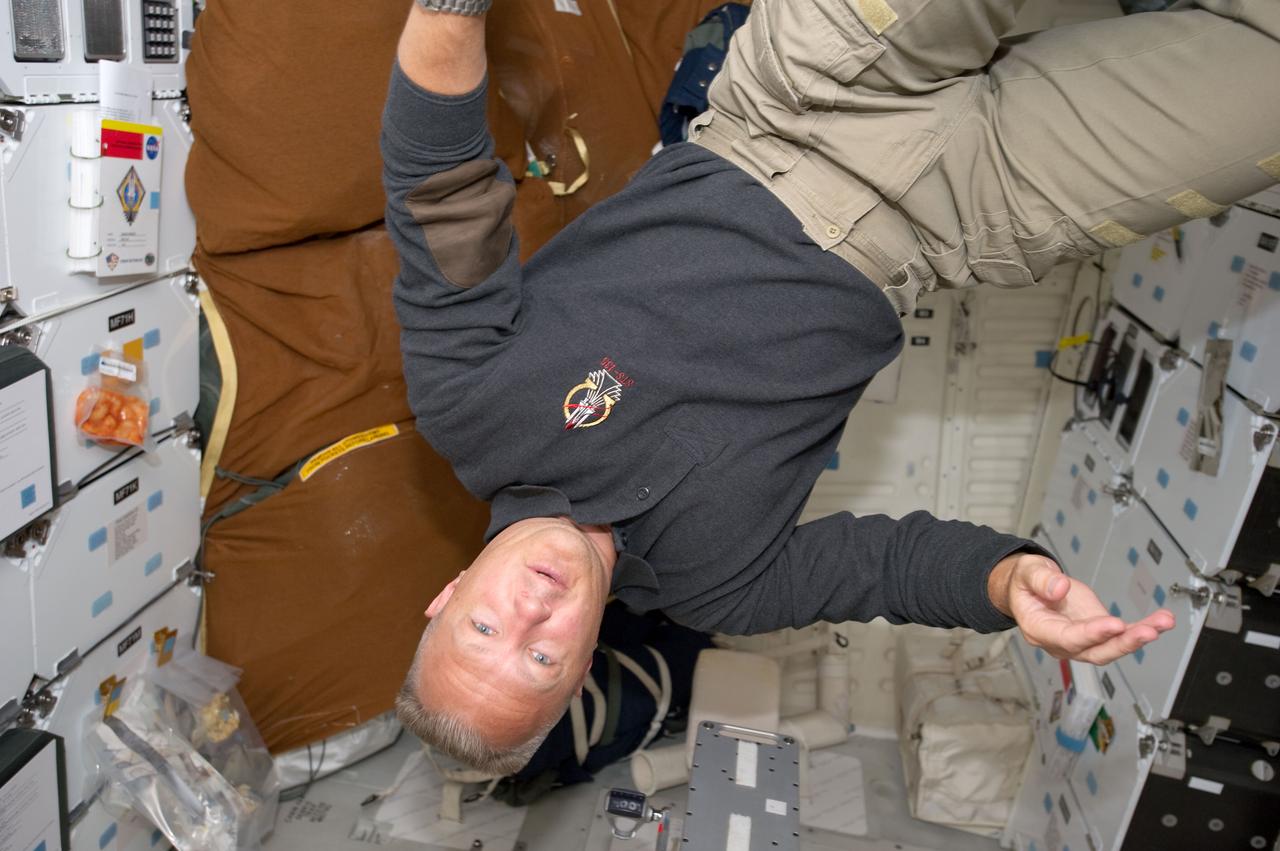
S135-E-007397 (11 July 2011) --- NASA astronaut Doug Hurley, STS-135 pilot, is pictured on the middeck of the space shuttle Atlantis during the mission's fourth day in space and second day docked with the International Space Station. Photo credit: NASA
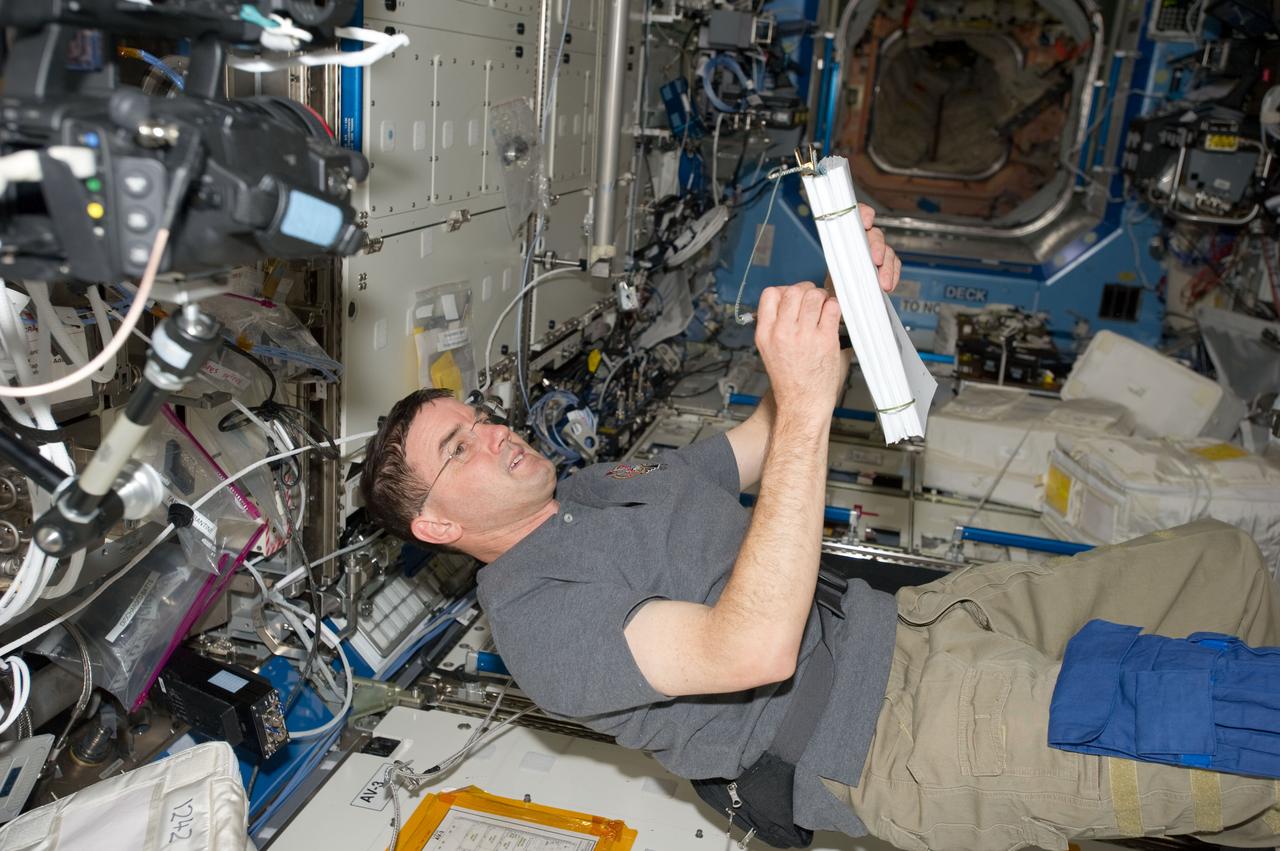
S135-E-007434 (11 July 2011) --- NASA astronaut Rex Walheim, STS-135 mission specialist, is pictured in the U.S. lab or Destiny on the International Space Station during the fourth day in space for the Atlantis crew and the second day during which the two spacecraft are docked in Earth orbit. Photo credit: NASA
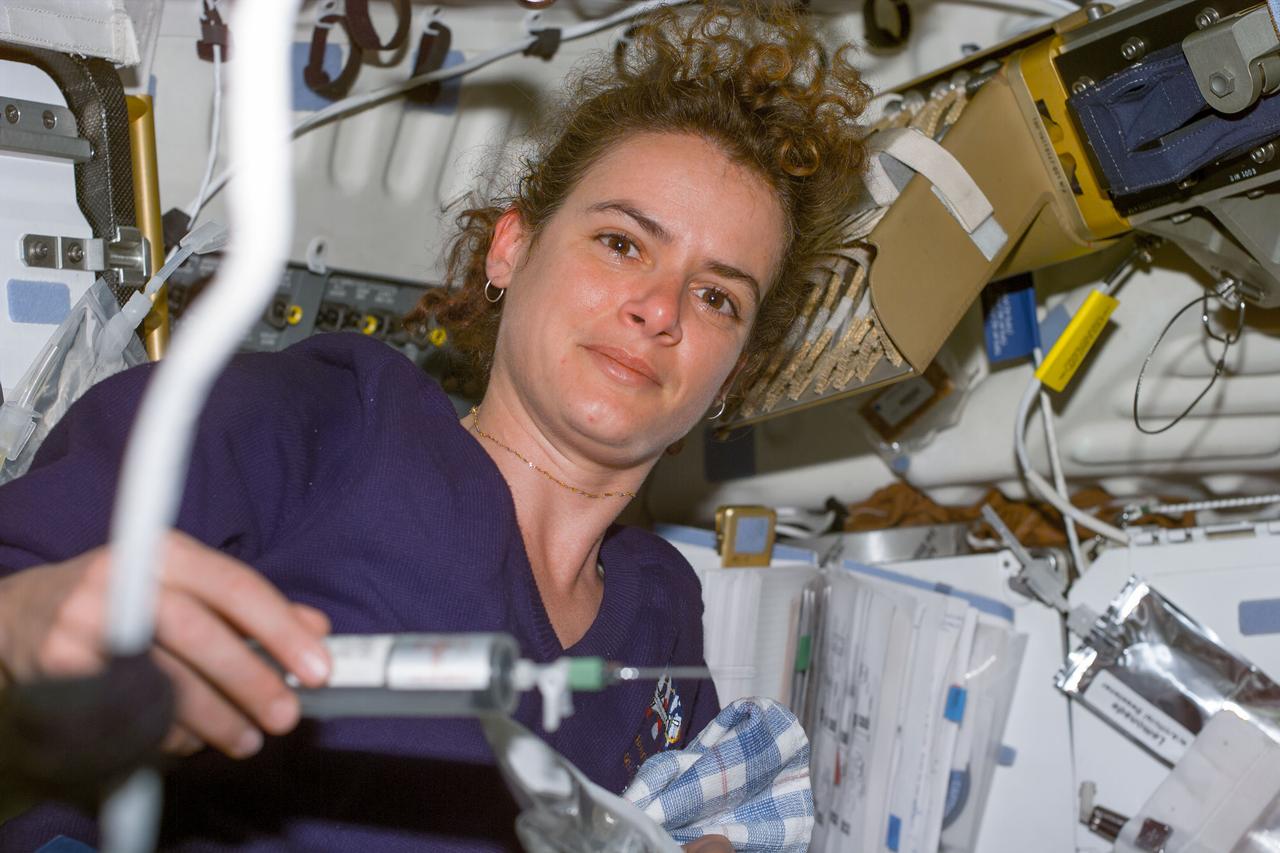
S96-E-5024 (29 May 1999) --- Astronaut Julie Payette, mission specialist representing the Canadian Space Agency (CSA), holds a syringe during a busy fourth day in space for the Space Shuttle Discovery. The image was recorded with an electronic still camera (ESC) at 06:14:52 GMT, May 29, 1999.
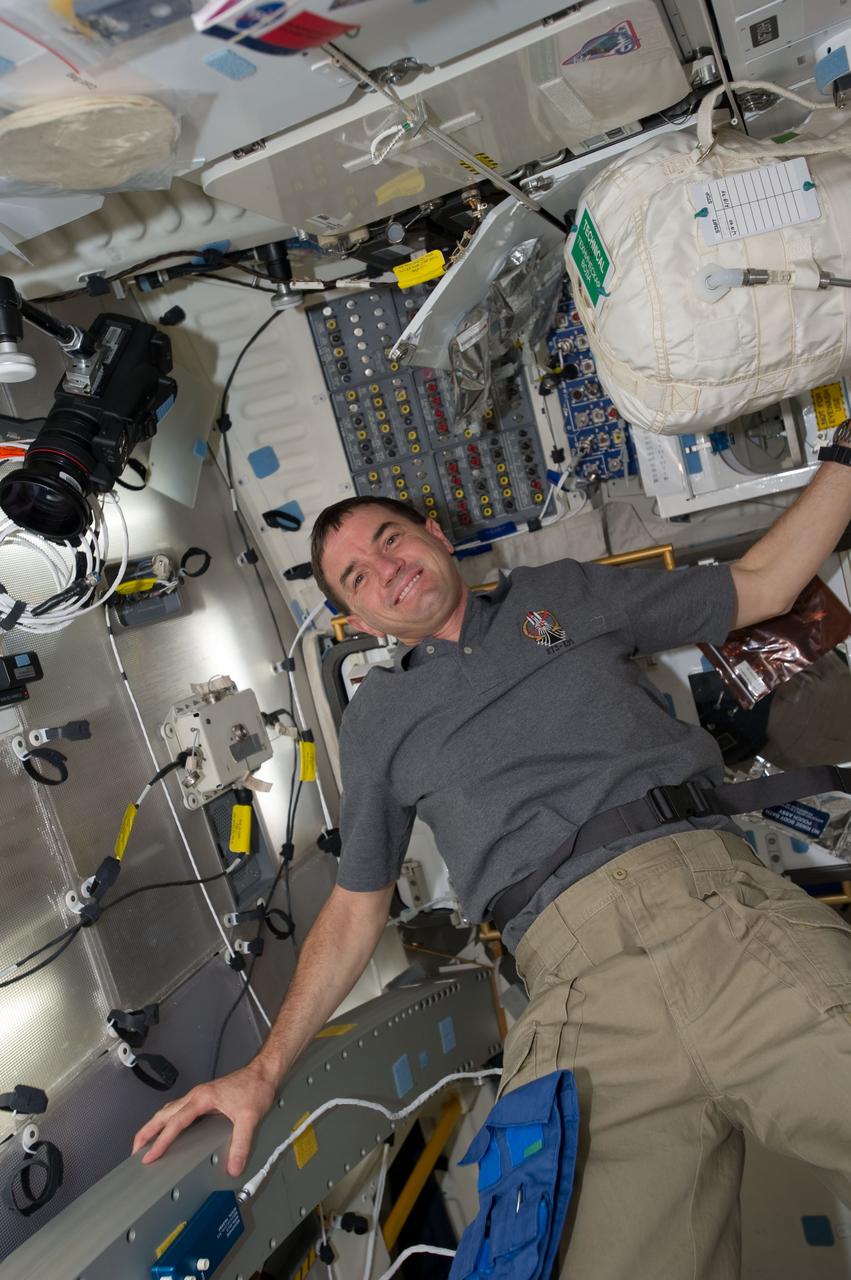
S135-E-007392 (11 July 2011) --- NASA astronaut Rex Walheim, STS-135 mission specialist, is pictured on the middeck of the space shuttle Atlantis during the mission's fourth day in space and second day docked with the International Space Station. Photo credit: NASA
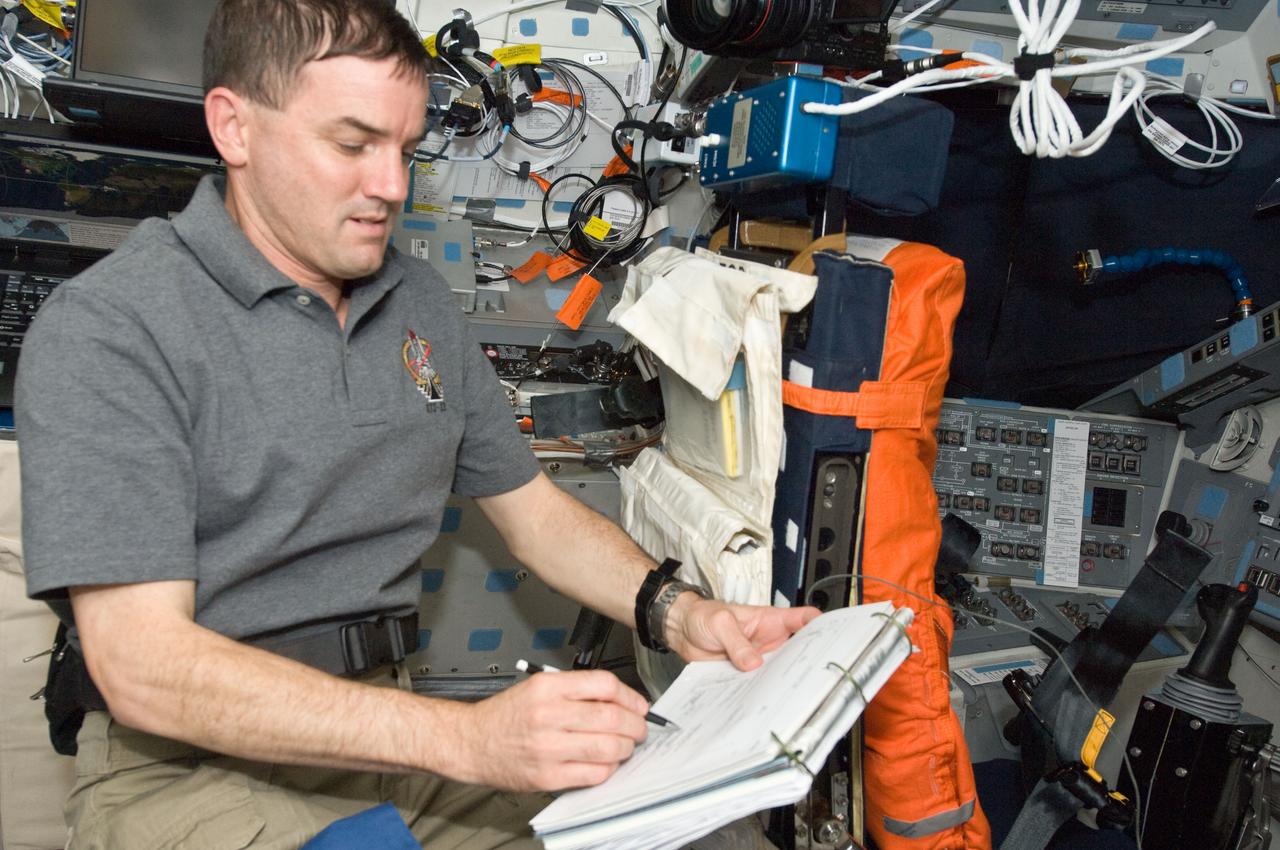
S135-E-007457 (11 July 2011) --- NASA astronaut Rex Walheim, STS-135 mission specialist, is pictured on the flight deck of the space shuttle Atlantis during the mission's fourth day of activities in Earth orbit and second day while being docked with the International Space Station. Photo credit: NASA
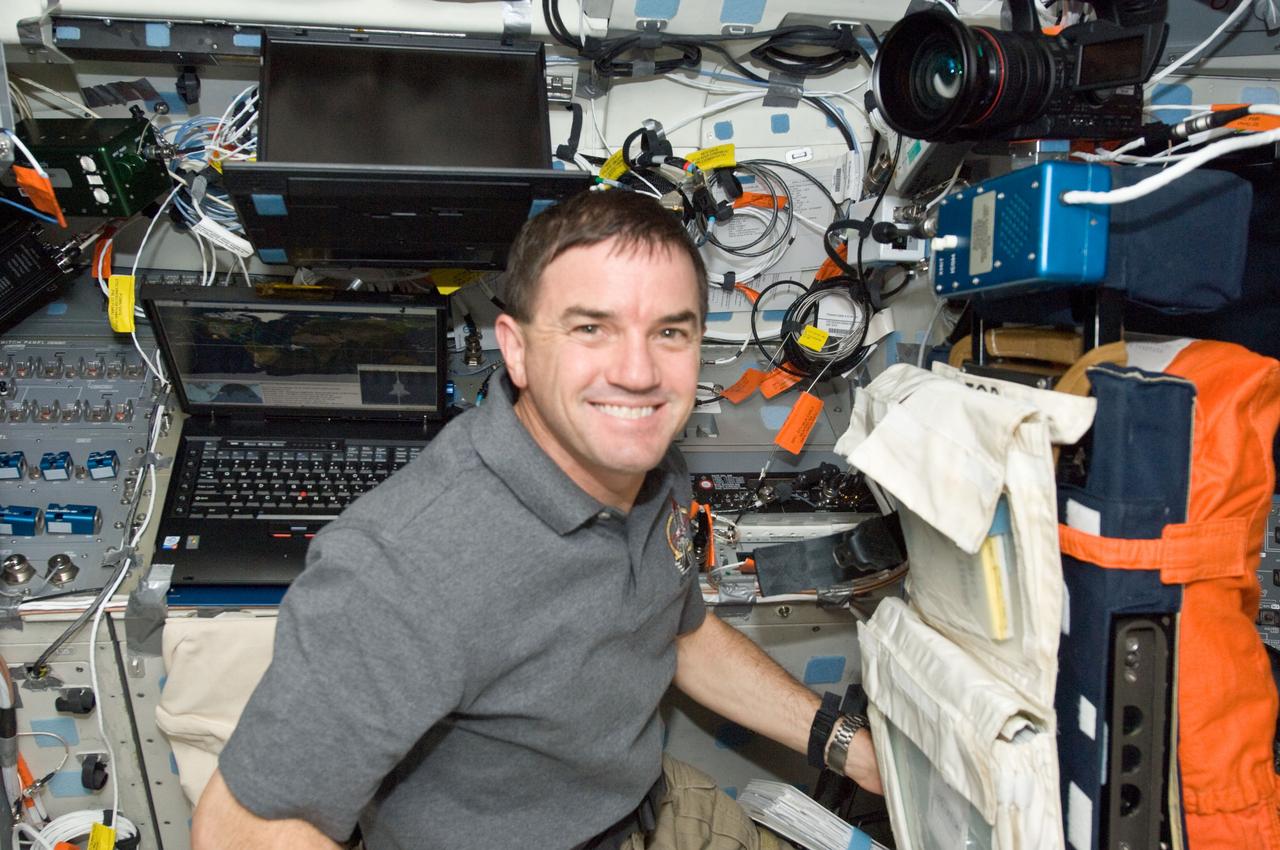
S135-E-007459 (11 July 2011) --- NASA astronaut Rex Walheim, STS-135 mission specialist, is pictured on the flight deck of the space shuttle Atlantis during the mission's fourth day of activities in Earth orbit and second day while being docked with the International Space Station. Photo credit: NASA

: NASA program specialist Miyoshi Collins talks with an annual ESSENCE Fest audience in New Orleans on July 5 following a video presentation from NASA astronaut Jeannette Epps aboard the International Space Station. NASA representatives participated in a panel presentation about women in space during the cultural festival held each year during the Fourth of July weekend.
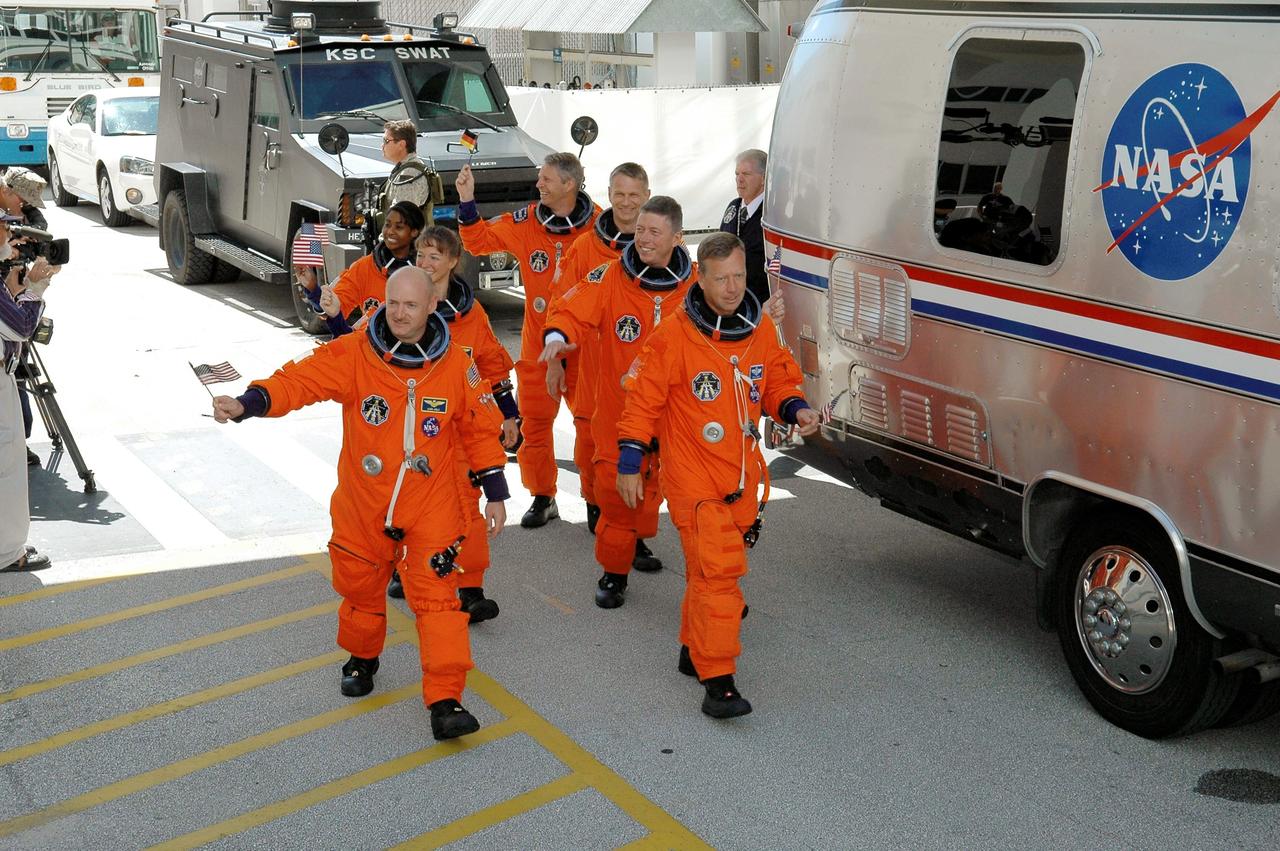
STS121-S-006 (4 July 2006) --- The STS-121 crewmembers, having donned their shuttle launch and entry suits, wave flags for the Fourth of July as they prepare to board the transfer van awaiting to take them to Launch Pad 39B. Steven W. Lindsey (right front), commander, and Mark E. Kelly, pilot, lead the way. Other crewmembers - Lisa M. Nowak, Michael E. Fossum, Stephanie D. Wilson, Piers J. Sellers and European Space Agency (ESA) astronaut Thomas Reiter of Germany - follow.
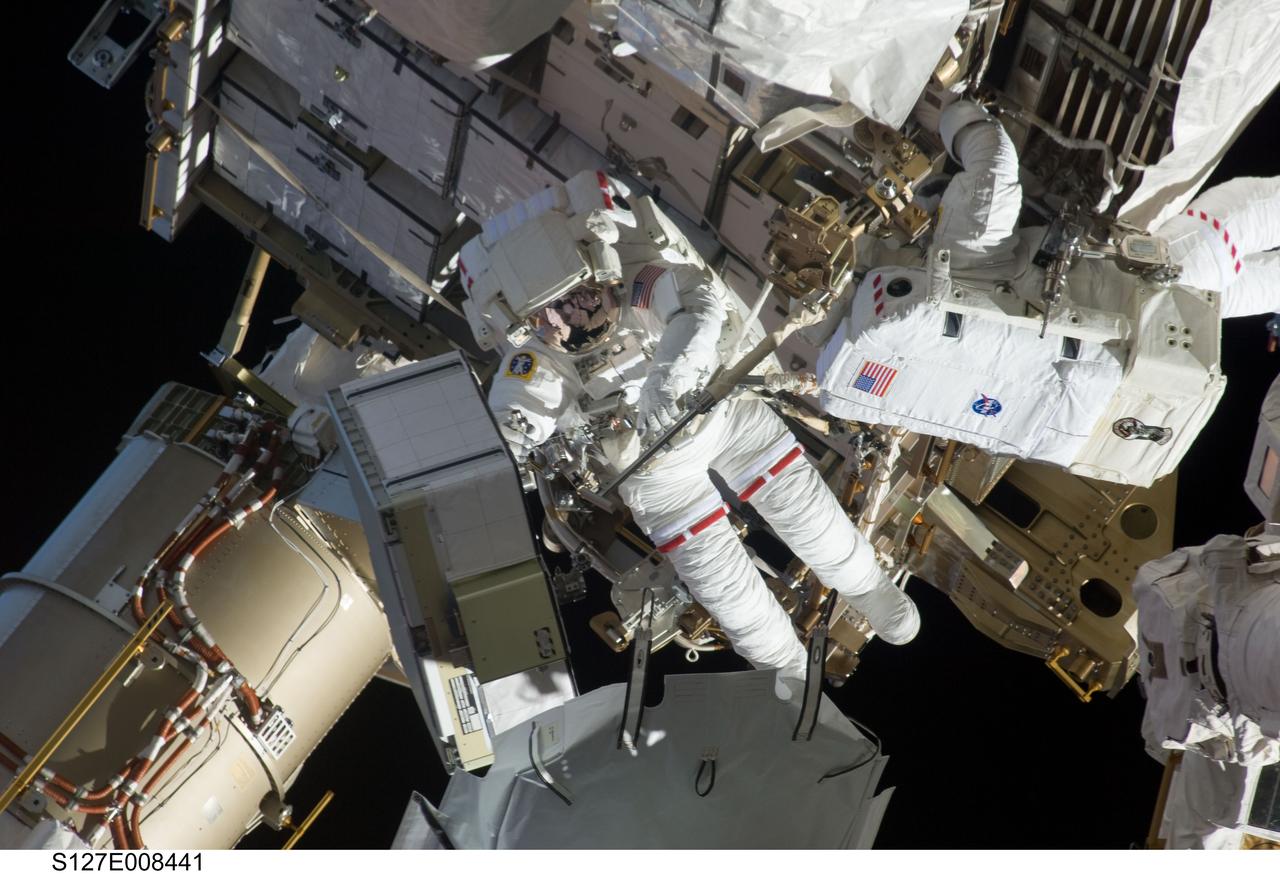
S127-E-008441 (24 July 2009) --- Astronauts Tom Marshburn (left) and Christopher Cassidy, mission specialists for STS-127, share duties on the fourth spacewalk of Endeavour's current mission and its crew's joint activities with the space station. Eleven astronauts and cosmonauts remained inside the International Space Station and the shuttle to which it was docked, while the two continued work on the orbital outpost. The two will team up for the mission's final spacewalk on July 27.
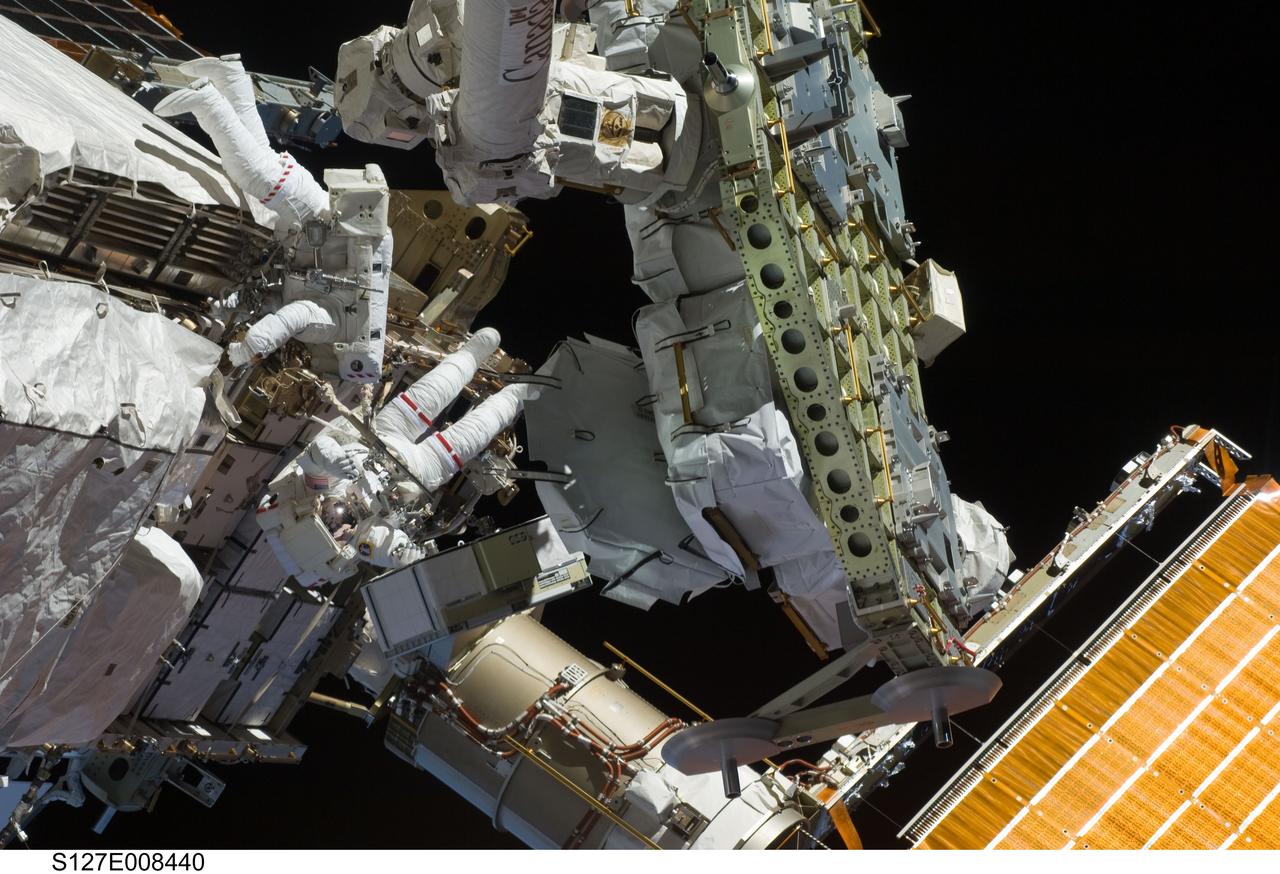
S127-E-008440 (24 July 2009) --- Astronauts Tom Marshburn (upper left) and Christopher Cassidy (seen just below Marshburn), mission specialists for STS-127, share duties on the fourth spacewalk of Endeavour's current mission and its crew's joint activities with the space station. Eleven astronauts and cosmonauts remained inside the International Space Station and the shuttle to which it was docked, while the two continued work on the orbital outpost. The two will team up for the mission's final spacewalk on July 26.
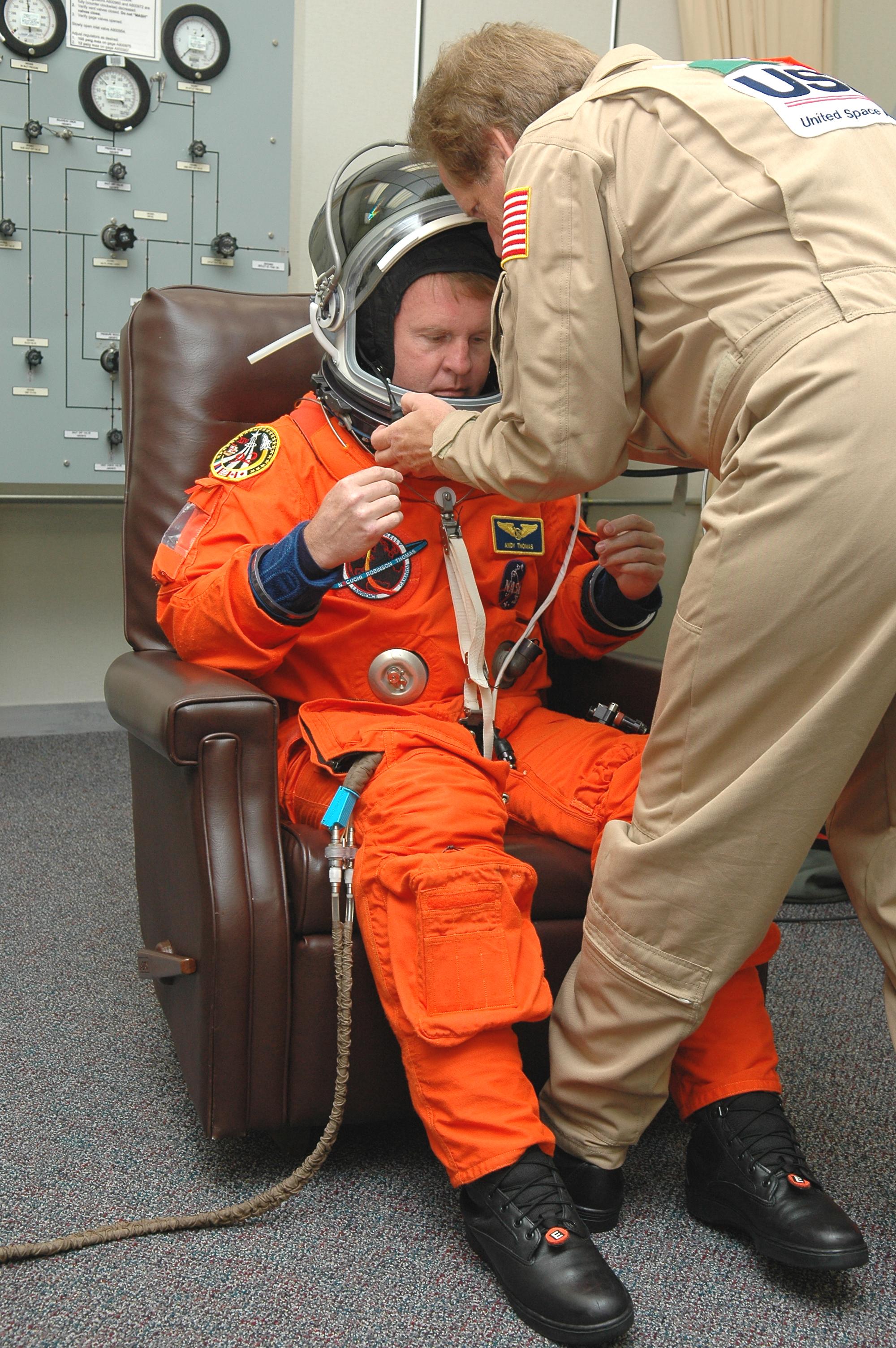
KENNEDY SPACE CENTER, FLA. -- In the Operations and Checkout Building at NASA’s Kennedy Space Center, Return to Flight STS-114 Mission Specialist Andrew Thomas checks the fit of his helmet, as well as his launch and entry suit. This is Thomas’ fourth Shuttle flight. There are two days to the launch of Space Shuttle Discovery scheduled for 3:51 p.m. July 13. This launch is the 114th Space Shuttle flight and is scheduled to last about 12 days with a planned KSC landing at about 11:06 a.m. EDT on July 25.
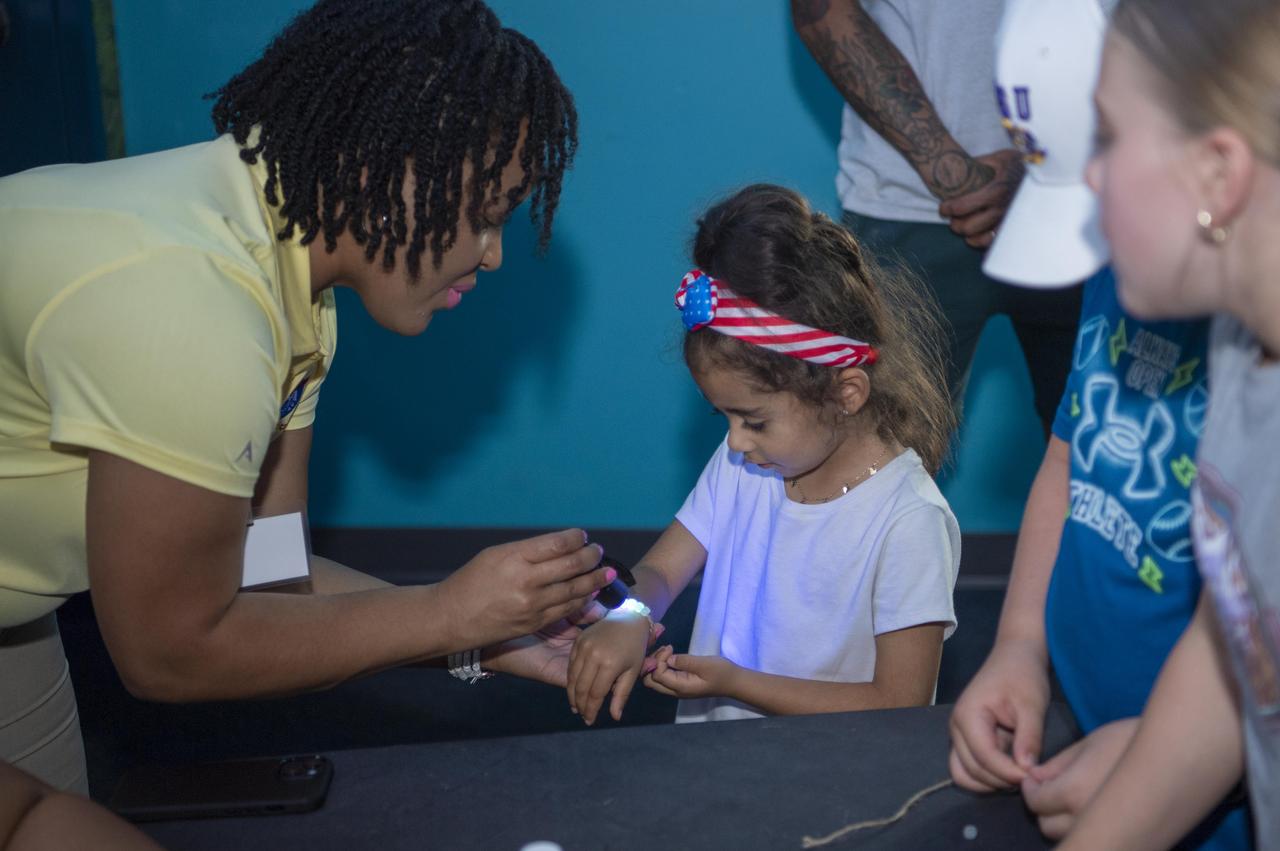
NASA Public Affairs Specialist Samone Wilson, left, uses a solar bead activity to teach a young visitor to the Audubon Aquarium in New Orleans about skin protection on July 5. NASA hosted an information/interactive exhibit at the aquarium in conjunction with NASA activities at the 30th annual ESSENCE Fest in New Orleans during the Fourth of July weekend.

S127-E-008464 (24 July 2009) --- Almost lost to the vision among tons of space hardware, astronauts Christopher Cassidy (partially in frame at upper left) and Tom Marshburn, mission specialists for STS-127, share duties on the fourth spacewalk of Endeavour's current mission and its crew's joint activities with the space station. Eleven astronauts and cosmonauts remained inside the International Space Station and the shuttle to which it was docked, while the two continued work on the orbital outpost. The two will team up for the mission's final spacewalk on July 26.
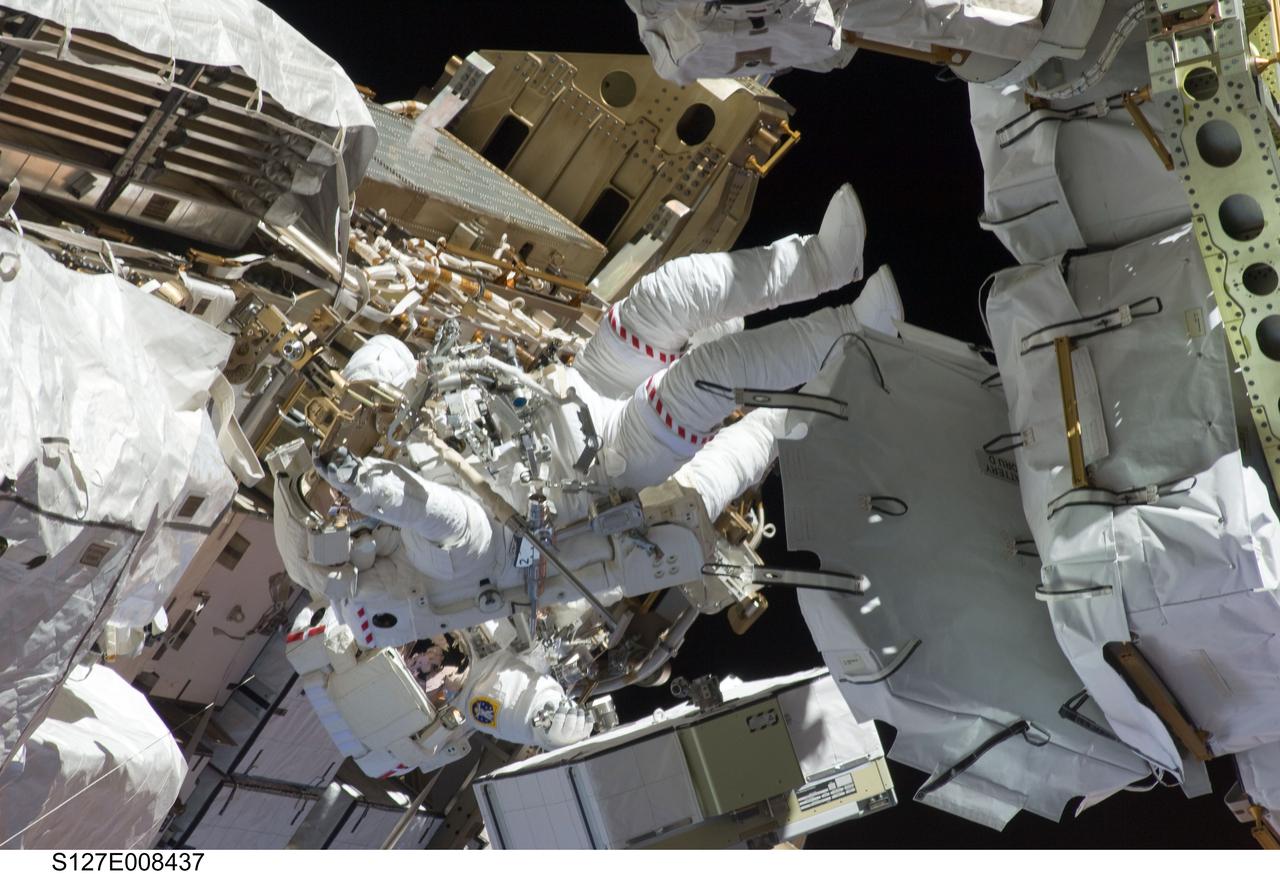
S127-E-008437 (24 July 2009) --- Astronauts Tom Marshburn (partially obscured) and Christopher Cassidy (center frame), mission specialists for STS-127, makes sense out of all the hardware facing them as they share duties on the fourth spacewalk of Endeavour's current mission and its crew's joint activities with the space station. Eleven astronauts and cosmonauts remained inside the International Space Station and the shuttle to which it was docked, while the two continued work on the orbital outpost. The two will team up for the mission's final spacewalk on July 27.

S127-E-008456 (24 July 2009) --- Astronauts Tom Marshburn (right) and Christopher Cassidy, mission specialists for STS-127, share duties on the fourth spacewalk of Endeavour's current mission and its crew's joint activities with the space station. Eleven astronauts and cosmonauts remained inside the International Space Station and the shuttle to which it was docked, while the two continued work on the orbital outpost. The two will team up for the mission's final spacewalk on July 27.
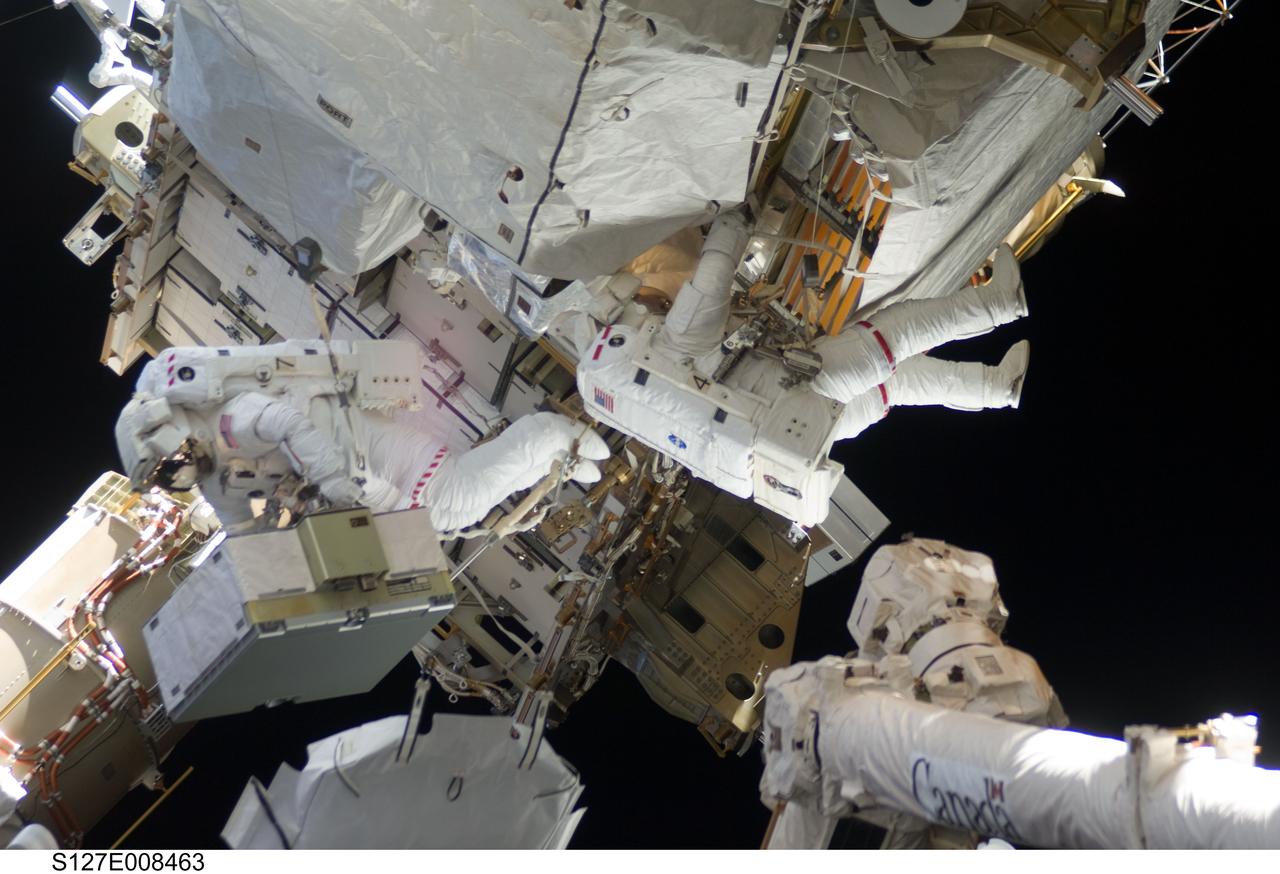
S127-E-008463 (24 July 2009) --- Astronauts Tom Marshburn (right) and Christopher Cassidy, mission specialists for STS-127, share duties on the fourth spacewalk of Endeavour's current mission and its crew's joint activities with the space station. Eleven astronauts and cosmonauts remained inside the International Space Station and the shuttle to which it was docked, while the two continued work on the orbital outpost. The two will team up for the mission's final spacewalk on July 27.
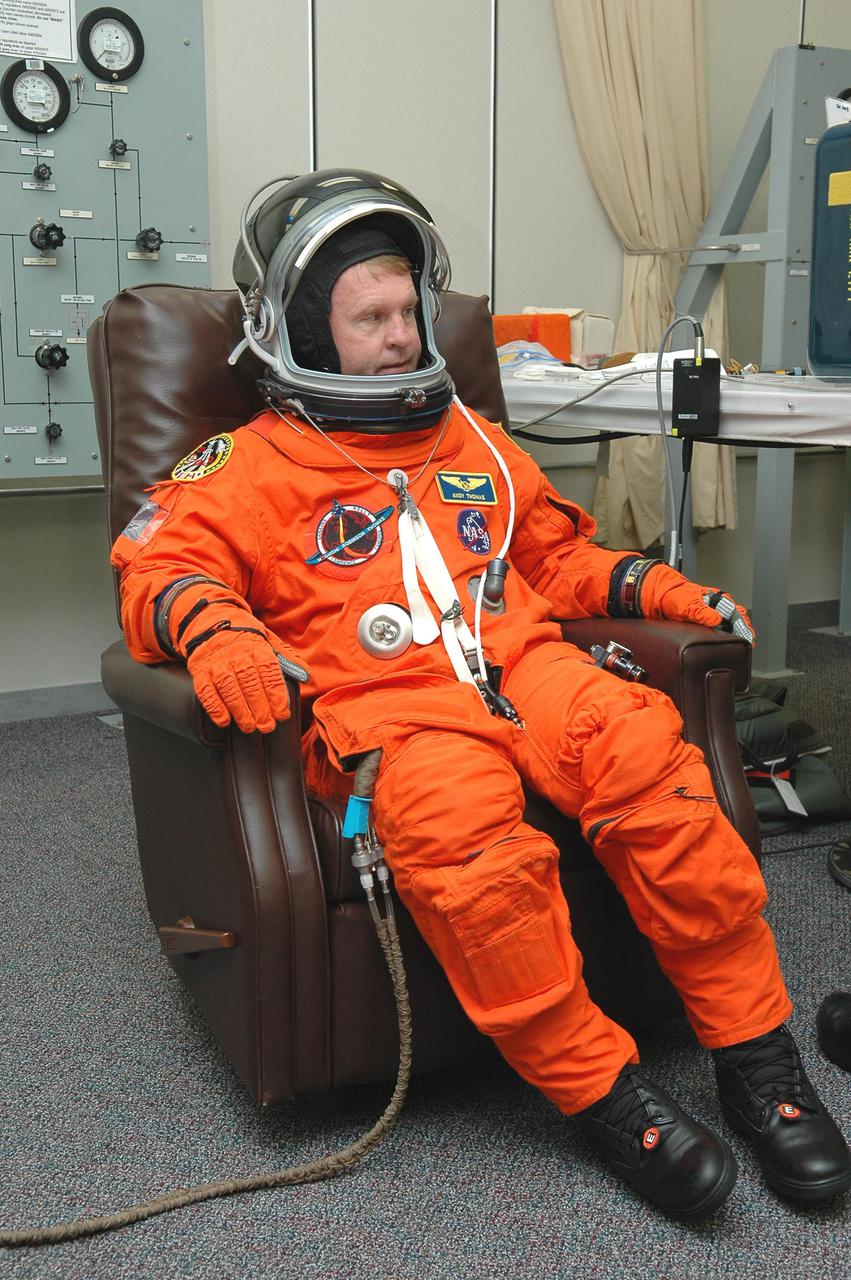
KENNEDY SPACE CENTER, FLA. -- In the Operations and Checkout Building at NASA’s Kennedy Space Center, Return to Flight STS-114 Mission Specialist Andrew Thomas checks the fit of his launch and entry suit, as well as his helmet. This is Thomas’ fourth Shuttle flight. There are two days to the launch of Space Shuttle Discovery scheduled for 3:51 p.m. July 13. This launch is the 114th Space Shuttle flight and is scheduled to last about 12 days with a planned KSC landing at about 11:06 a.m. EDT on July 25.
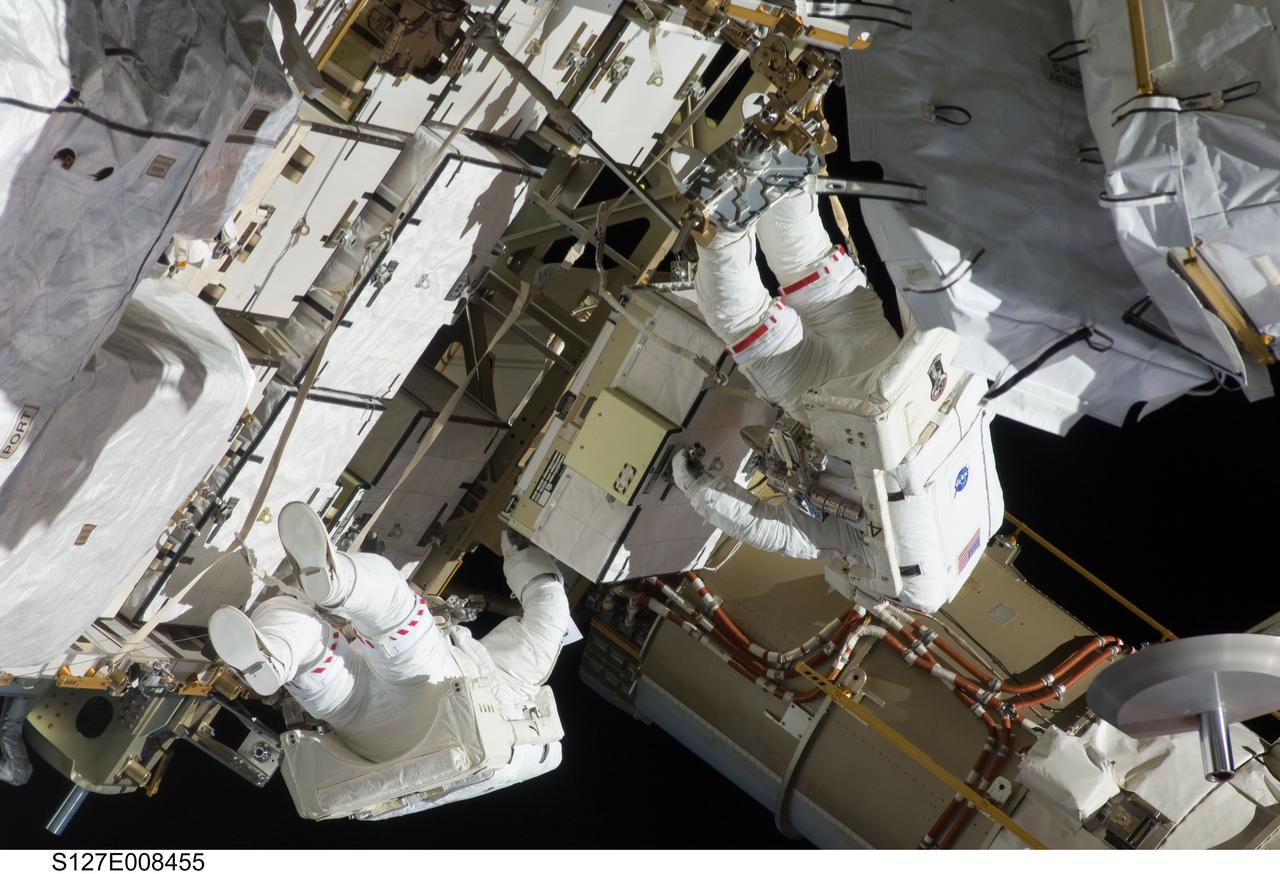
S127-E-008455 (24 July 2009) --- Astronauts Christopher Cassidy (left) and Tom Marshburn, mission specialists for STS-127, share duties on the fourth spacewalk of Endeavour's current mission and its crew's joint activities with the space station. Eleven astronauts and cosmonauts remained inside the International Space Station and the shuttle to which it was docked, while the two continued work on the orbital outpost. The two will team up for the mission's final spacewalk on July 27.
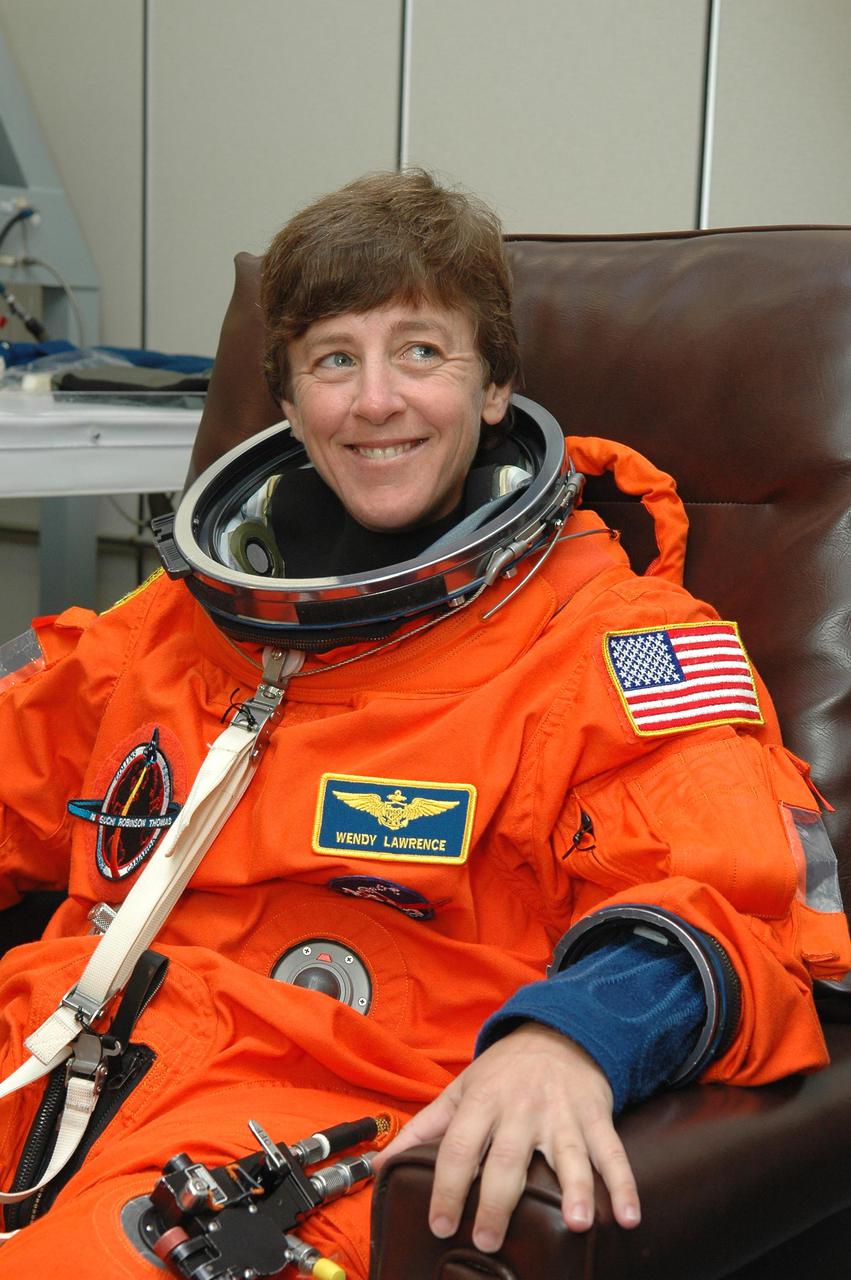
KENNEDY SPACE CENTER, FLA. -- In the Operations and Checkout Building at NASA’s Kennedy Space Center, Return to Flight STS-114 Mission Specialist Wendy Lawrence checks the fit of her launch and entry suit. This is Lawrence’s fourth Shuttle flight. There are two days to the launch of Space Shuttle Discovery scheduled for 3:51 p.m. July 13. This launch is the 114th Space Shuttle flight and is scheduled to last about 12 days with a planned KSC landing at about 11:06 a.m. EDT on July 25.
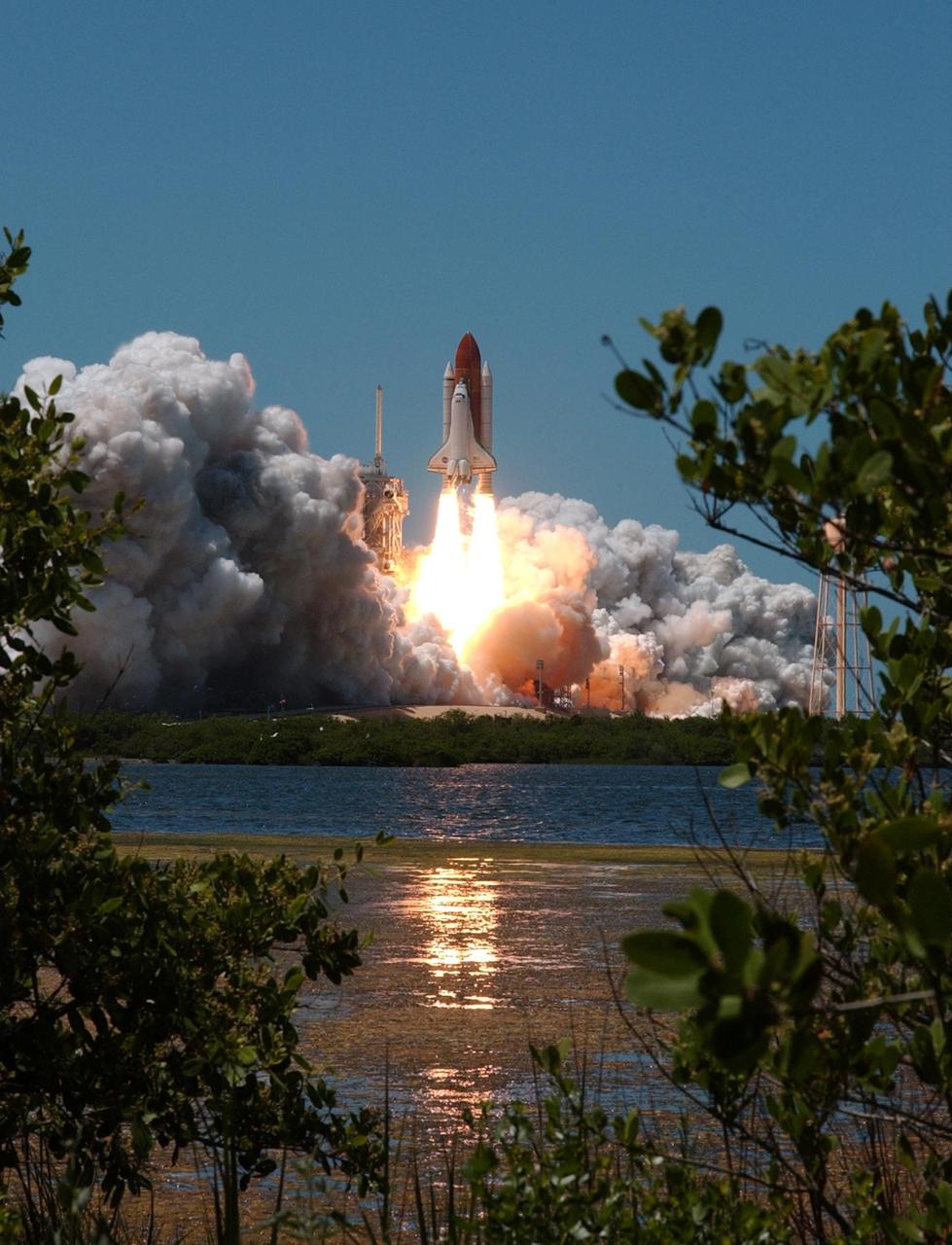
KENNEDY SPACE CENTER, FLA. - Space Shuttle Discovery kicks off the Fourth of July fireworks with its own fiery display as it rockets into the blue sky, spewing foam and smoke over the ground, on mission STS-121. It was the third launch attempt in four days; the others were scrubbed due to weather concerns. Liftoff was on-time at 2:38 p.m. EDT. During the 12-day mission, the STS-121 crew of seven will test new equipment and procedures to improve shuttle safety, as well as deliver supplies and make repairs to the International Space Station. Landing is scheduled for July 16 or 17 at Kennedy's Shuttle Landing Facility. Photo credit: NASA/Sandy Joseph, Robert Murray
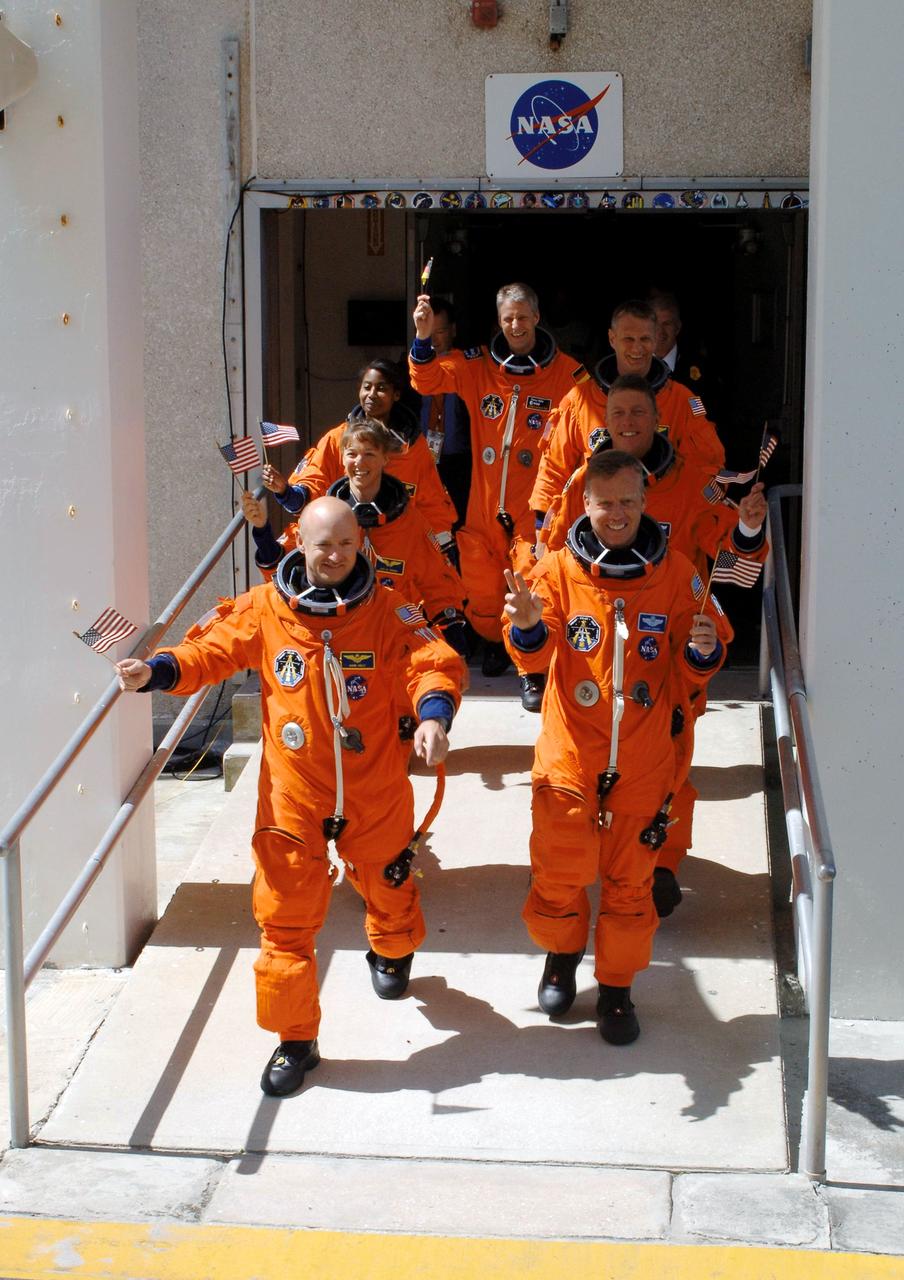
STS121-S-005 (4 July 2006) --- The STS-121 crewmembers, having donned their shuttle launch and entry suits, wave flags for the Fourth of July as they head out of the Operations and Checkout Building at Kennedy Space Center to the transfer van awaiting to take them to Launch Pad 39B. Steven W. Lindsey (right front), commander, and Mark E. Kelly, pilot, lead the way. Other crewmembers - Lisa M. Nowak, Michael E. Fossum, Stephanie D. Wilson, Piers J. Sellers and European Space Agency (ESA) astronaut Thomas Reiter of Germany - follow.
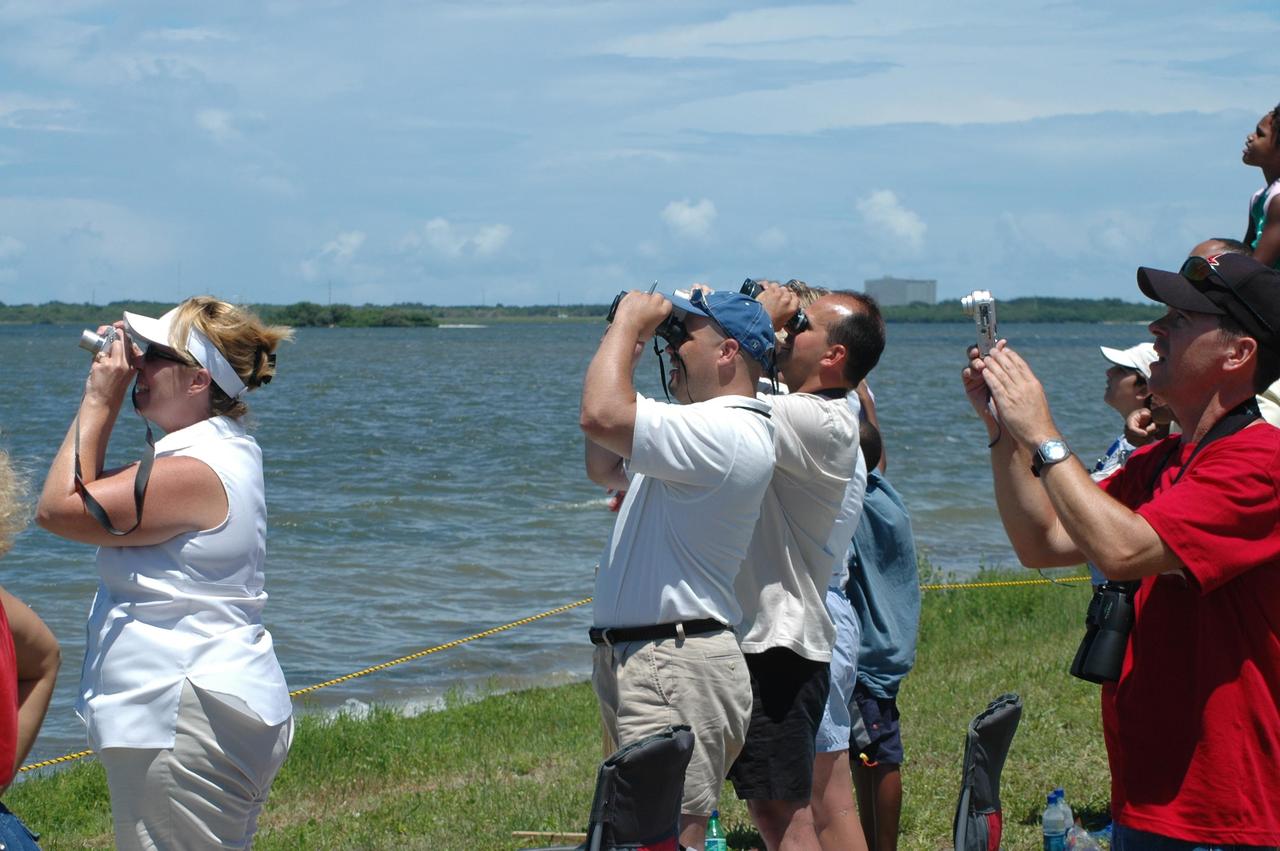
KENNEDY SPACE CENTER, FLA. - All eyes, and lenses, focus on the perfect launch of Space Shuttle Discovery on its third attempt in four days. Kicking off the Fourth of July with its own fireworks, the launch made history as it was the first ever launch on Independence Day. Liftoff was on-time at 2:38 p.m. EDT. During the 12-day mission, the STS-121 crew of seven will test new equipment and procedures to improve shuttle safety, as well as deliver supplies and make repairs to the International Space Station. Landing is scheduled for July 16 or 17 at Kennedy's Shuttle Landing Facility. Photo credit: NASA/Carl Winebarger
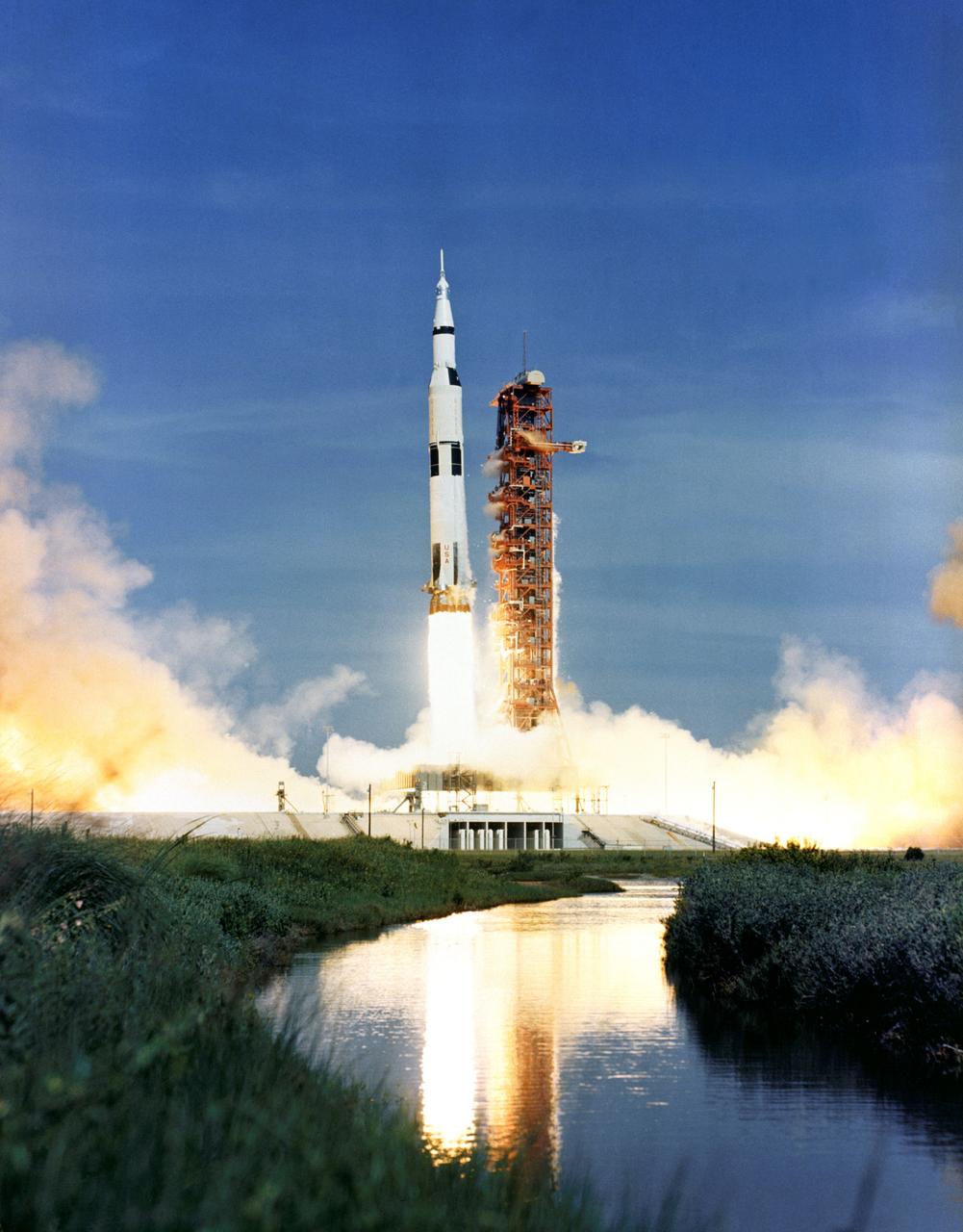
S71-41810 (26 July 1971) --- The 363-feet tall Apollo 15 (Spacecraft 112/Lunar Module 10/Saturn 510) space vehicle is launched from Pad A, Launch Complex 39, Kennedy Space Center, Florida, at 9:34:00.79 a.m., July 26, 1971, on a lunar landing mission. Aboard the Apollo 15 spacecraft were astronauts David R. Scott, commander; Alfred M. Worden, commander module pilot; and James B. Irwin, lunar module pilot. Apollo 15 is the National Aeronautics and Space Administration's (NASA) fourth manned lunar landing mission.
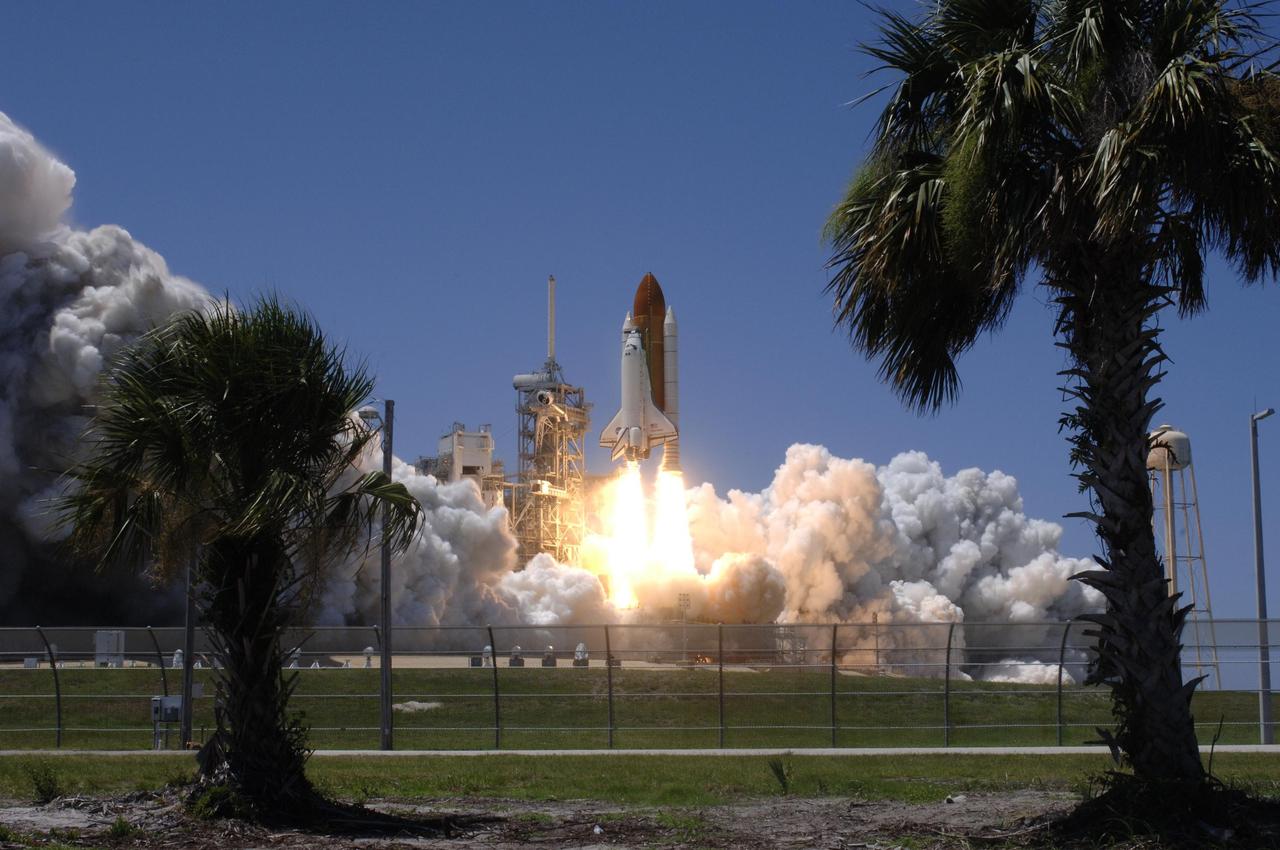
KENNEDY SPACE CENTER, FLA. - Framed by palm trees, Space Shuttle Discovery lifts off Launch Pad 39B at 2:38 p.m. EDT. The fiery display fit the day: Fourth of July. The launch made history as it was the first ever launch on Independence Day. During the 12-day mission, the STS-121 crew of seven will test new equipment and procedures to improve shuttle safety, as well as deliver supplies and make repairs to the International Space Station. Landing is scheduled for July 16 or 17 at Kennedy's Shuttle Landing Facility. Photo credit: NASA/Sandy Joseph, Robert Murray
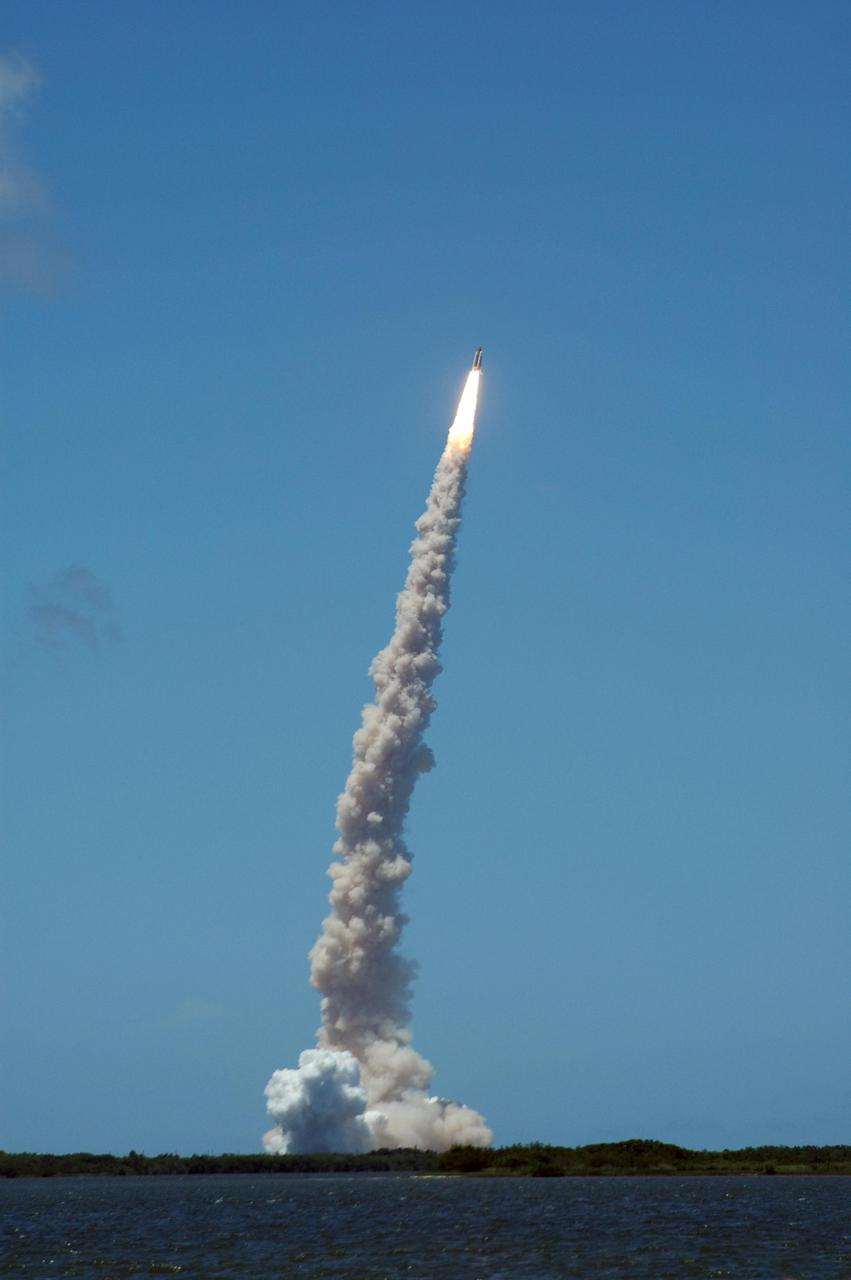
KENNEDY SPACE CENTER, FLA. - Viewed from the NASA Causeway, Space Shuttle Discovery makes a perfect launch as it shoots into the blue sky with its own Fourth of July fireworks. The launch made history as it was the first ever launch on Independence Day. Liftoff was on-time at 2:38 p.m. EDT. During the 12-day mission, the STS-121 crew of seven will test new equipment and procedures to improve shuttle safety, as well as deliver supplies and make repairs to the International Space Station. Landing is scheduled for July 16 or 17 at Kennedy's Shuttle Landing Facility. Photo credit: NASA/Carl Winebarger

KENNEDY SPACE CENTER, FLA. - Space Shuttle Discovery kicks off the Fourth of July fireworks with its own fiery display as it rockets into the blue sky, spewing foam and smoke over the ground, on mission STS-121. It was the third launch attempt in four days; the others were scrubbed due to weather concerns. Liftoff was on-time at 2:38 p.m. EDT. During the 12-day mission, the STS-121 crew of seven will test new equipment and procedures to improve shuttle safety, as well as deliver supplies and make repairs to the International Space Station. Landing is scheduled for July 16 or 17 at Kennedy's Shuttle Landing Facility. Photo credit:NASA/Sandy Joseph, Robert Murray
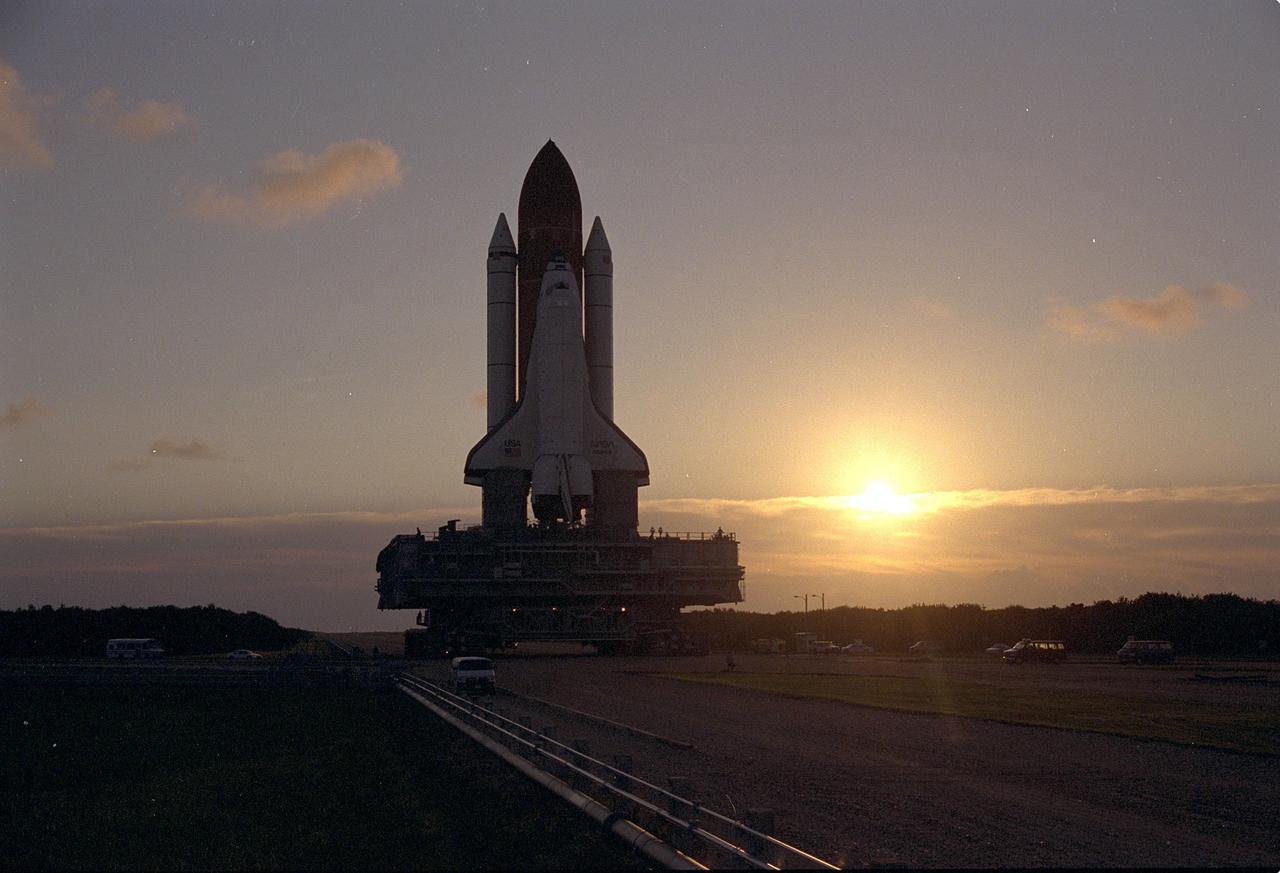
KENNEDY SPACE CENTER, FLA. - As the sun begins to rise in the early-morning sky after its departure from Launch Pad 39A, the Space Shuttle Atlantis slowly travels on the crawlerway toward the Vehicle Assembly Building. This marks the second rollback for Atlantis since July because of hurricane threats. Atlantis, which is targeted fo liftoff later this month on the STS-79 Shuttle mission, is returning to the VAB because of the threat from Hurricane Fran. The threat of Hurricane Bertha forced the rollback of Atlantis in July. Atlantis currently is scheduled for launch on the fourth Shuttle-Mir docking mission around mid-September.
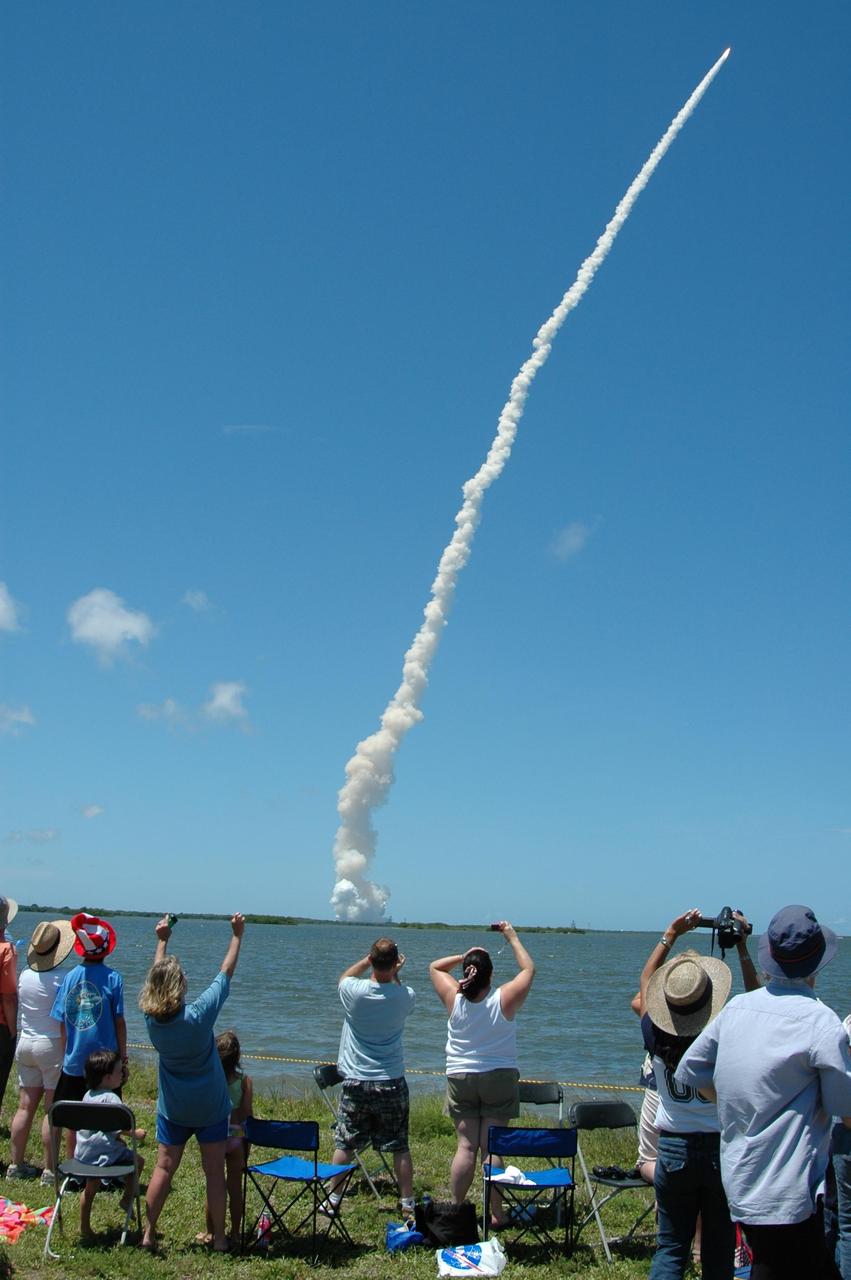
KENNEDY SPACE CENTER, FLA. - Crowds along the NASA Causeway are excited as Space Shuttle Discovery makes a perfect launch, shooting into the blue sky with its own Fourth of July fireworks. The launch made history as it was the first ever launch on Independence Day. Liftoff was on-time at 2:38 p.m. EDT. During the 12-day mission, the STS-121 crew of seven will test new equipment and procedures to improve shuttle safety, as well as deliver supplies and make repairs to the International Space Station. Landing is scheduled for July 16 or 17 at Kennedy's Shuttle Landing Facility. Photo credit: NASA/Carl Winebarger
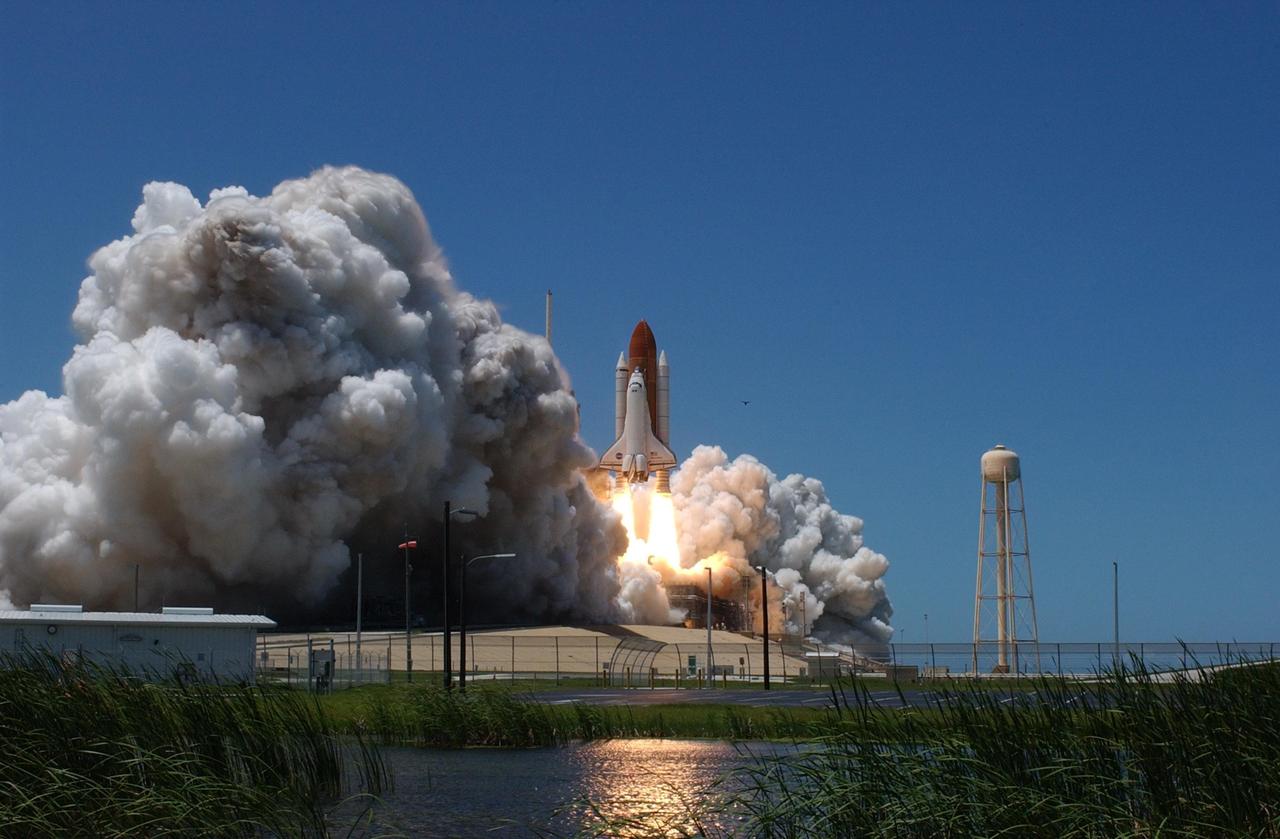
KENNEDY SPACE CENTER, FLA. - From the west side of Launch Pad 39B, Space Shuttle Discovery is viewed moments after liftoff on mission STS-121. The fiery display fit the day: Fourth of July. The launch made history as it was the first ever to take place on Independence Day. During the 12-day mission, the STS-121 crew of seven will test new equipment and procedures to improve shuttle safety, as well as deliver supplies and make repairs to the International Space Station. Landing is scheduled for July 16 or 17 at Kennedy's Shuttle Landing Facility. Photo credit: NASA/Sandy Joseph, Robert Murray
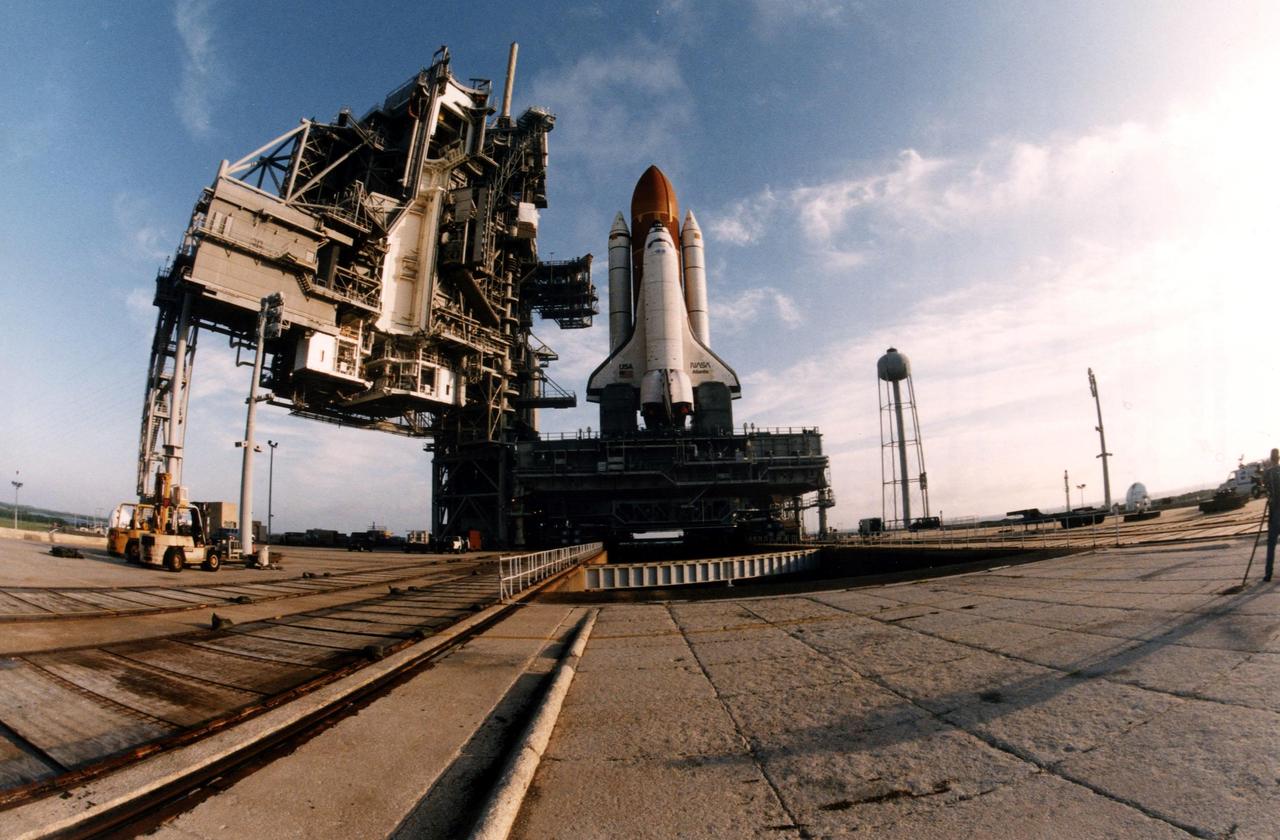
KENNEDY SPACE CENTER, FLA. -- The Space Shuttle Atlantis completes the trip to Launch Pad 39A from the Vehicle Assembly Building for the third time in the STS-79 mission flow. The Shuttle was rolled back from the pad in July due to the threat from Hurricane Bertha, then rolled back again earlier this week because of Hurricane Fran. The targeted launch date for Atlantis on Mission STS-79 -- the fourth docking between the U.S. Shuttle and Russian Space Station Mir -- is now Sept. 16 at 4:54 a.m. EDT. The three rollout dates for Atlantis to Pad 39A are: July 1, Aug. 20 and Sept. 5
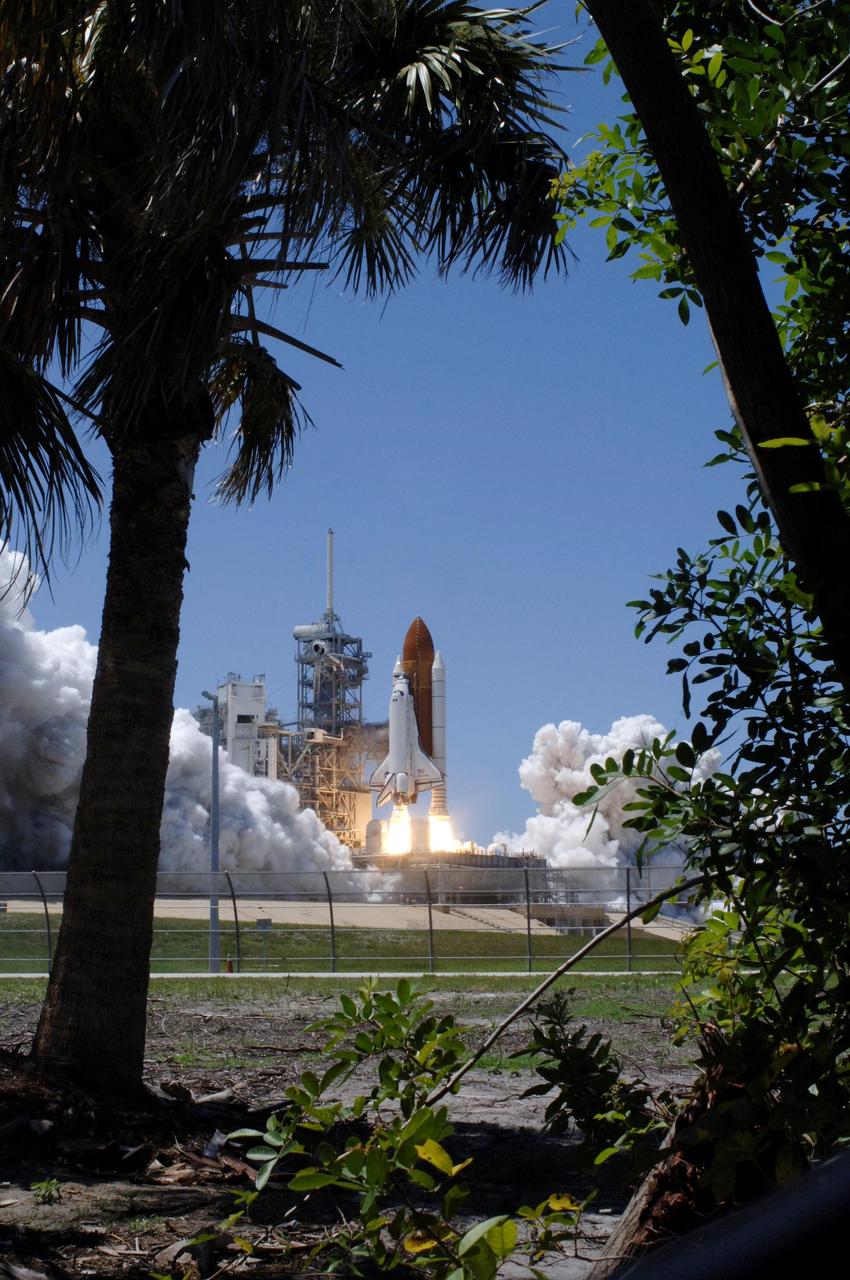
KENNEDY SPACE CENTER, FLA. - Framed by palm trees, Space Shuttle Discovery lifts off Launch Pad 39B at 2:38 p.m. EDT. The fiery display fit the day: Fourth of July. The launch made history as it was the first ever launch on Independence Day. During the 12-day mission, the STS-121 crew of seven will test new equipment and procedures to improve shuttle safety, as well as deliver supplies and make repairs to the International Space Station. Landing is scheduled for July 16 or 17 at Kennedy's Shuttle Landing Facility. Photo credit: NASA/Sandy Joseph, Robert Murray
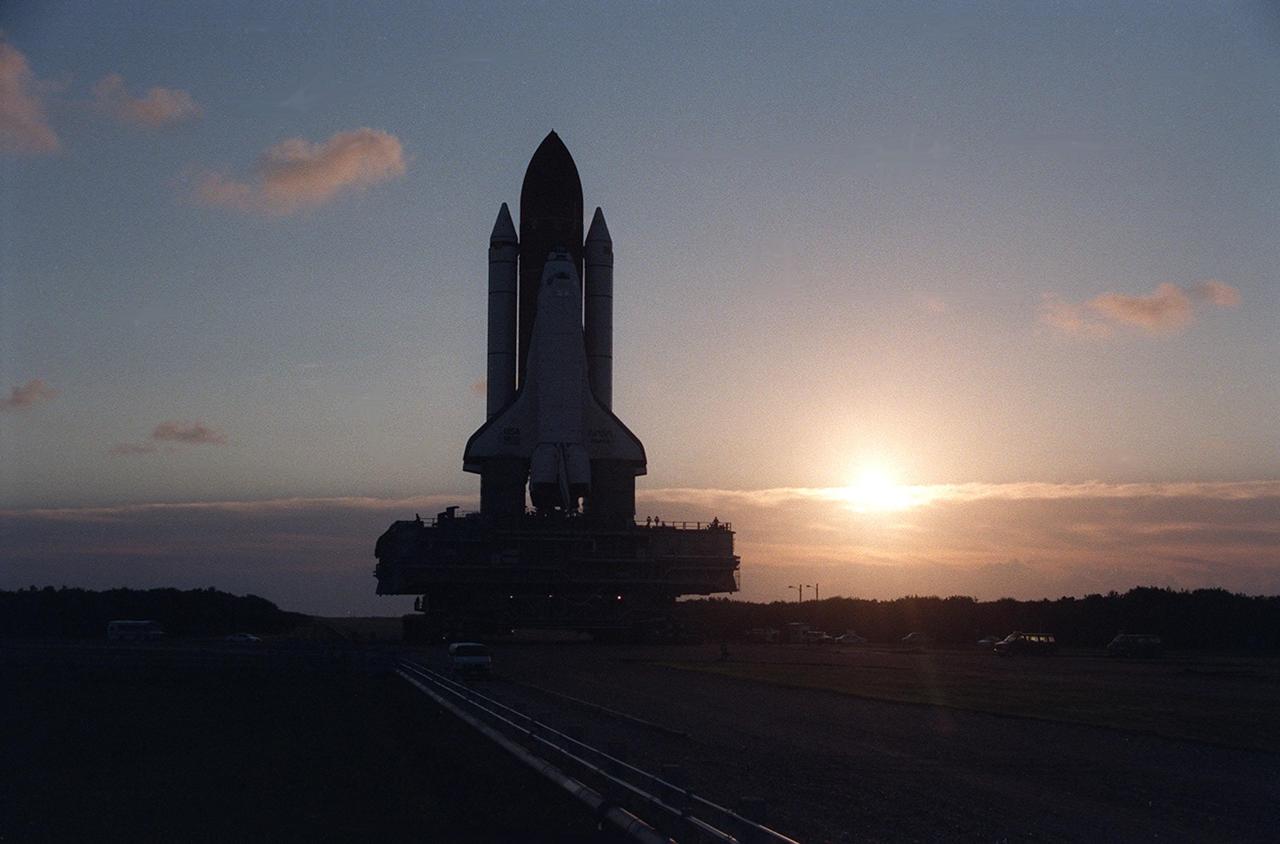
KENNEDY SPACE CENTER, FLA. - As the sun begins to rise in the early-morning sky, the Space Shuttle Atlantis slowly travels on the Crawlerway toward the Vehicle Assembly Building after its departure from Launch Pad 39A. This marks the second rollback for Atlantis since July because of hurricane threats. Atlantis, which is targeted for liftoff later this month on the STS-79 Shuttle mission, is returning to the VAB because of the threat from Hurrican Fran. The threat of Hurrican Bertha forced the rollback of Atlantis in July. Atlantis is currently scheduled for launch on the fourth Shuttle-MIR docking mission around mid-September
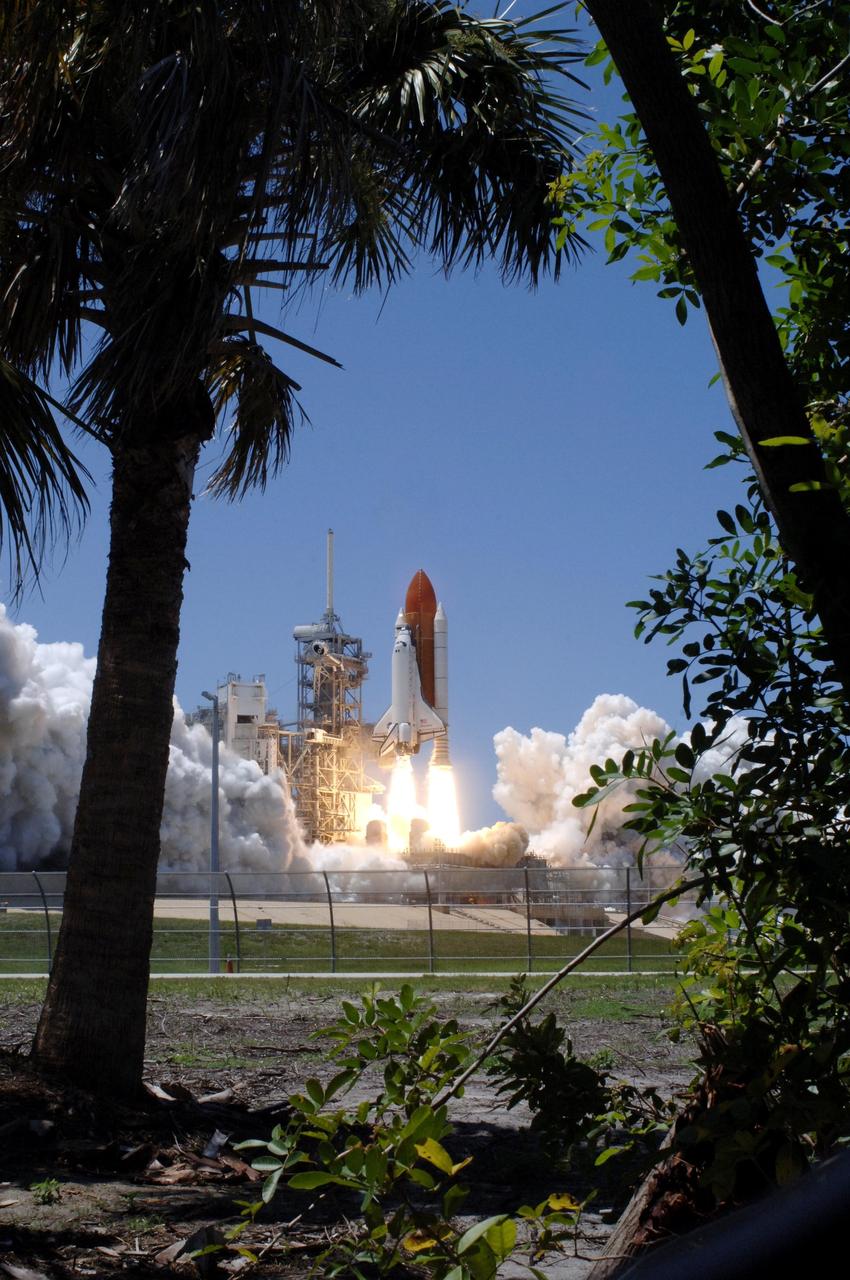
KENNEDY SPACE CENTER, FLA. - Framed by palm trees, Space Shuttle Discovery lifts off Launch Pad 39B at 2:38 p.m. EDT. The fiery display fit the day: Fourth of July. The launch made history as it was the first ever launch on Independence Day. During the 12-day mission, the STS-121 crew of seven will test new equipment and procedures to improve shuttle safety, as well as deliver supplies and make repairs to the International Space Station. Landing is scheduled for July 16 or 17 at Kennedy's Shuttle Landing Facility. Photo credit: NASA/Sandy Joseph, Robert Murray
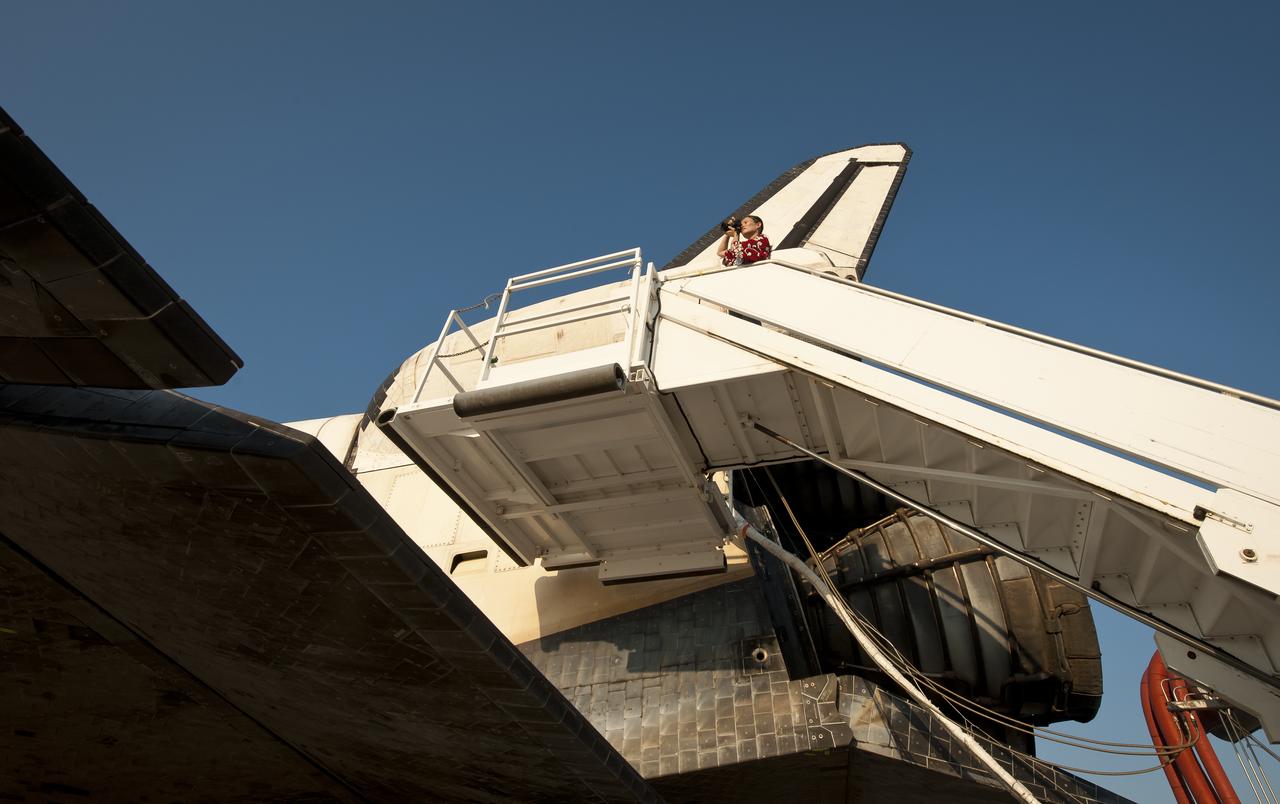
NASA and contractor personnel work on the space shuttle Atlantis at the Kennedy Space Center Shuttle Landing Facility (SLF) shortly after Atlantis (STS-135) landed early Thursday morning, July 21, 2011, in Cape Canaveral, Fla. Overall, Atlantis spent 307 days in space and traveled nearly 126 million miles during its 33 flights. Atlantis, the fourth orbiter built, launched on its first mission on Oct. 3, 1985. Photo Credit: (NASA/Bill Ingalls)
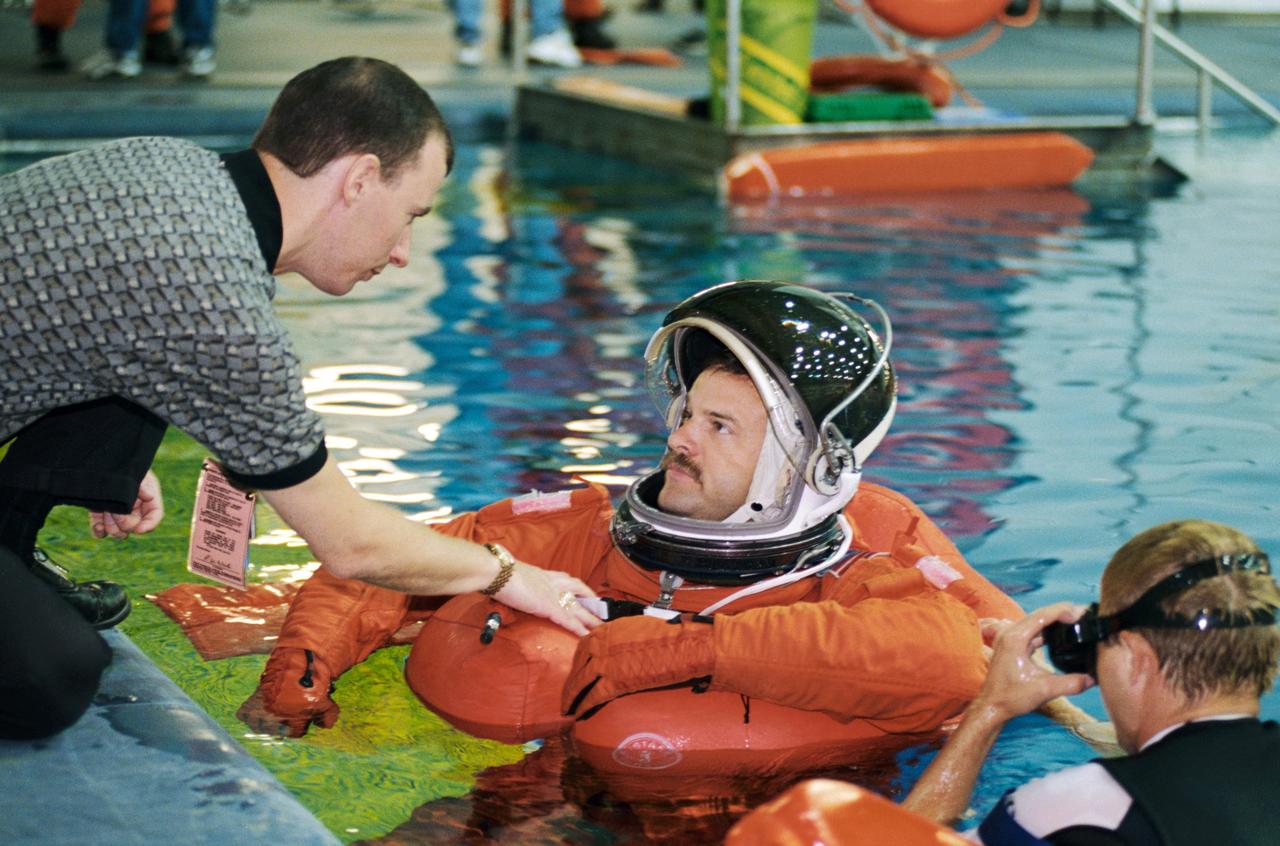
JSC2001-01921 (12 July 2001) --- Astronaut Scott D. Altman, STS-109 mission commander, is assisted by United Space Alliance (USA) crew trainer David Pogue and a diver during an emergency bailout training session in the Neutral Buoyancy Laboratory (NBL) near the Johnson Space Center (JSC). STS-109 will be the 108th shuttle flight and the fourth Hubble Space Telescope (HST) servicing mission.
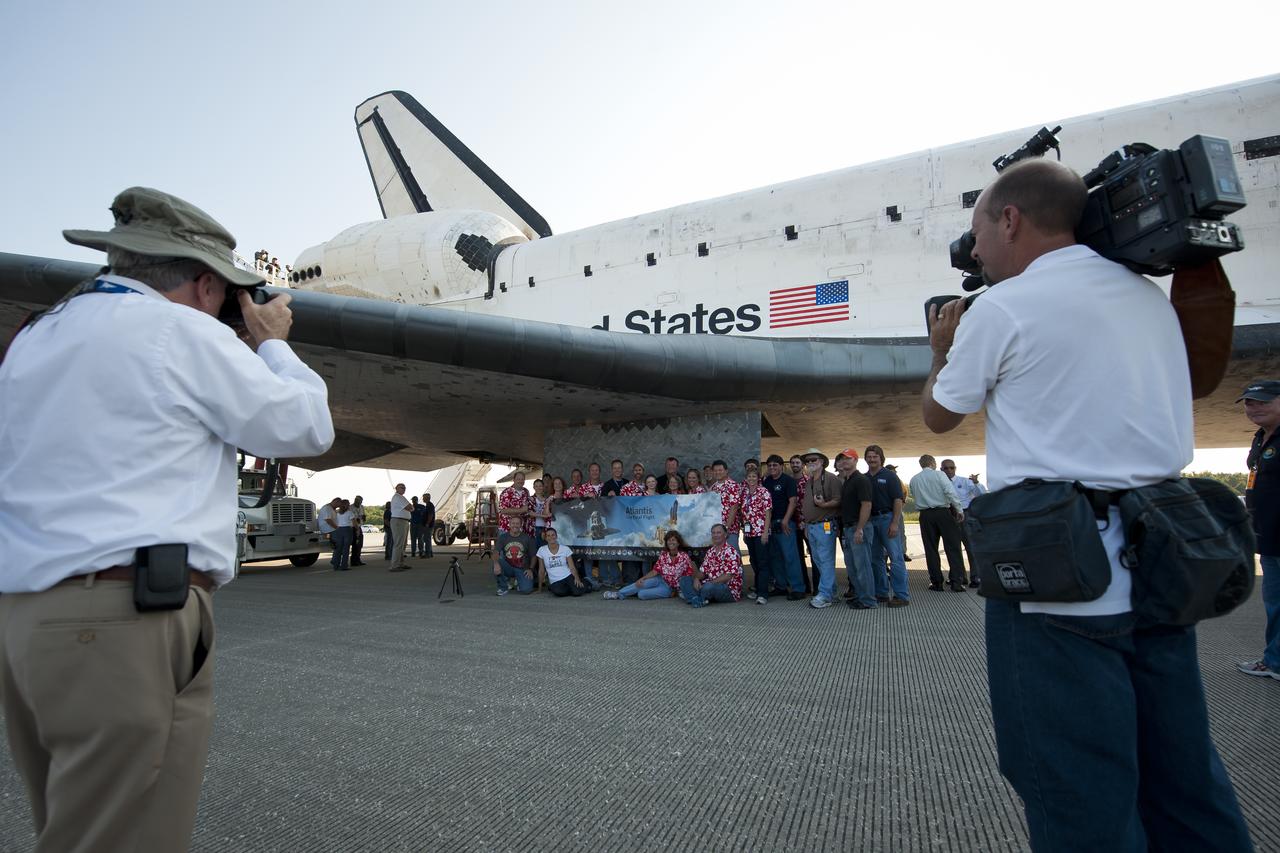
NASA and contractor personnel are photographed under the wing of the space shuttle Atlantis at the Kennedy Space Center Shuttle Landing Facility (SLF) shortly after Atlantis (STS-135) landed early Thursday morning, July 21, 2011, in Cape Canaveral, Fla. Overall, Atlantis spent 307 days in space and traveled nearly 126 million miles during its 33 flights. Atlantis, the fourth orbiter built, launched on its first mission on Oct. 3, 1985. Photo Credit: (NASA/Bill Ingalls)
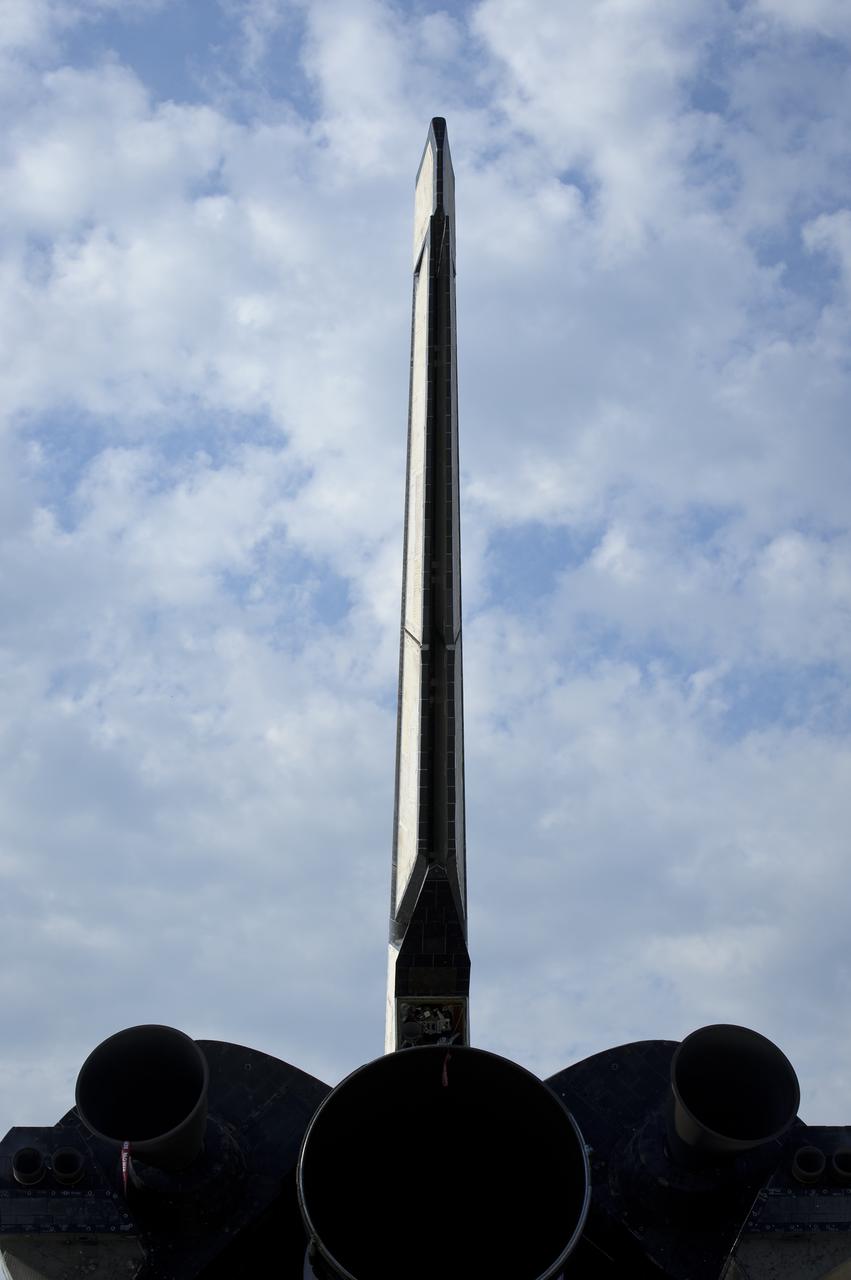
The vertical tail of the space shuttle Atlantis is seen at the Kennedy Space Center Shuttle Landing Facility (SLF) shortly after Atlantis (STS-135) landed early Thursday morning, July 21, 2011, in Cape Canaveral, Fla. Overall, Atlantis spent 307 days in space and traveled nearly 126 million miles during its 33 flights. Atlantis, the fourth orbiter built, launched on its first mission on Oct. 3, 1985. Photo Credit: (NASA/Bill Ingalls)

iss063e052534 (July 21, 2020) --- The sun beams just below the frame as NASA astronaut and Expedition 63 Commander Chris Cassidy (near center left) conducts his fourth spacewalk this year at the International Space Station. Cassidy has completed 10 spacewalks throughout his career for a total of 54 hours and 51 minutes spacewalking time.
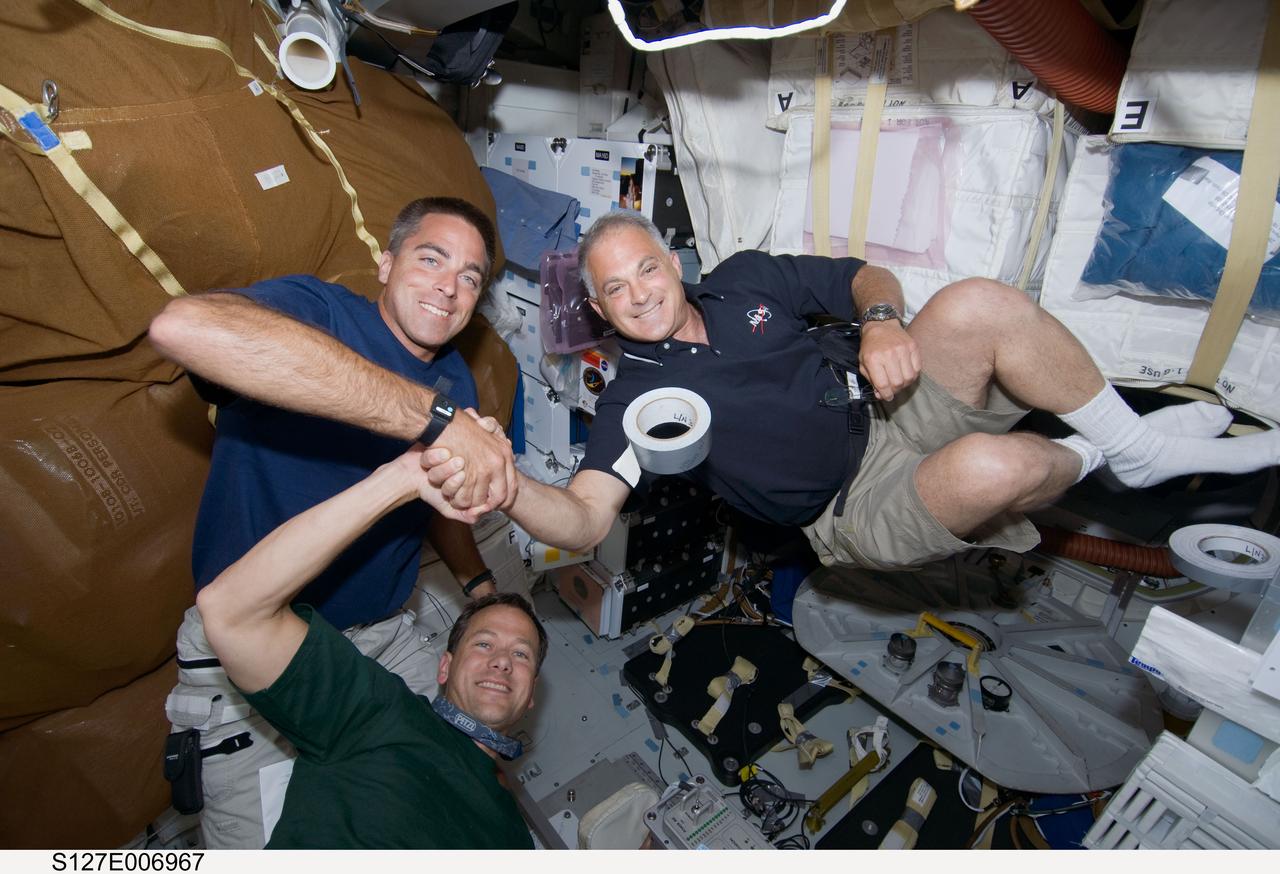
S127-E-006967 (19 July 2009) --- Astronauts Christopher Cassidy (left), Dave Wolf (right)and Tom Marshburn (bottom), all STS-127 mission specialists, share a moment shaking hands with one another on the mid deck of the Space Shuttle Endeavour. Tomorrow Wolf and Marshburn will share more than a few moments performing a spacewalk to perform work on the adjoined International Space Station. Then on flight day 10, Marshburn and Cassidy will perform the fourth of five scheduled space walks.
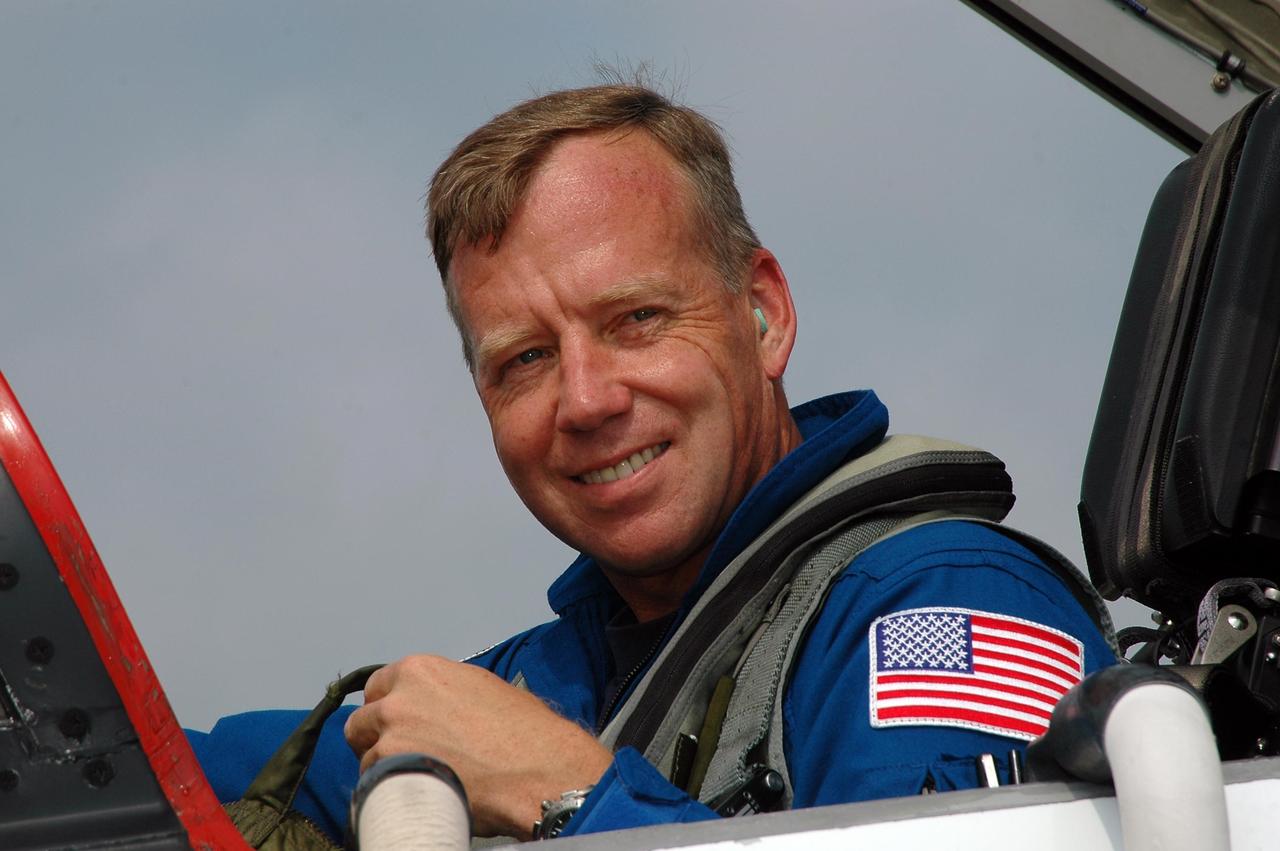
KENNEDY SPACE CENTER, FLA. - STS-121 Commander Steven Lindsey arrives at KSC aboard a T-38 jet aircraft to get ready for launch on July 1. The launch will be the fourth for Lindsey. During the 12-day mission, the STS-121 crew will test new equipment and procedures to improve shuttle safety, as well as deliver supplies and make repairs to the International Space Station. This mission is the 115th shuttle flight and the 18th U.S. flight to the International Space Station. Photo credit: NASA/Kim Shiflett

Teams lift a liquid hydrogen tank barrel into the Vertical Assembly Center at Michoud Assembly Facility in New Orleans, on July 25, 2025. Inside the center, teams will perform a circumferential weld to connect the barrel to the previously loaded forward dome. The barrel is one of five barrels, which along with the forward and aft domes, make up the liquid hydrogen tank for the fourth core stage manufactured at the site. Artemis will pave the way for a long-term human presence on the lunar surface while ushering in the Golden Age of Innovation and Exploration.

Teams lift a liquid hydrogen tank barrel into the Vertical Assembly Center at Michoud Assembly Facility in New Orleans, on July 25, 2025. Inside the center, teams will perform a circumferential weld to connect the barrel to the previously loaded forward dome. The barrel is one of five barrels, which along with the forward and aft domes, make up the liquid hydrogen tank for the fourth core stage manufactured at the site. Artemis will pave the way for a long-term human presence on the lunar surface while ushering in the Golden Age of Innovation and Exploration.
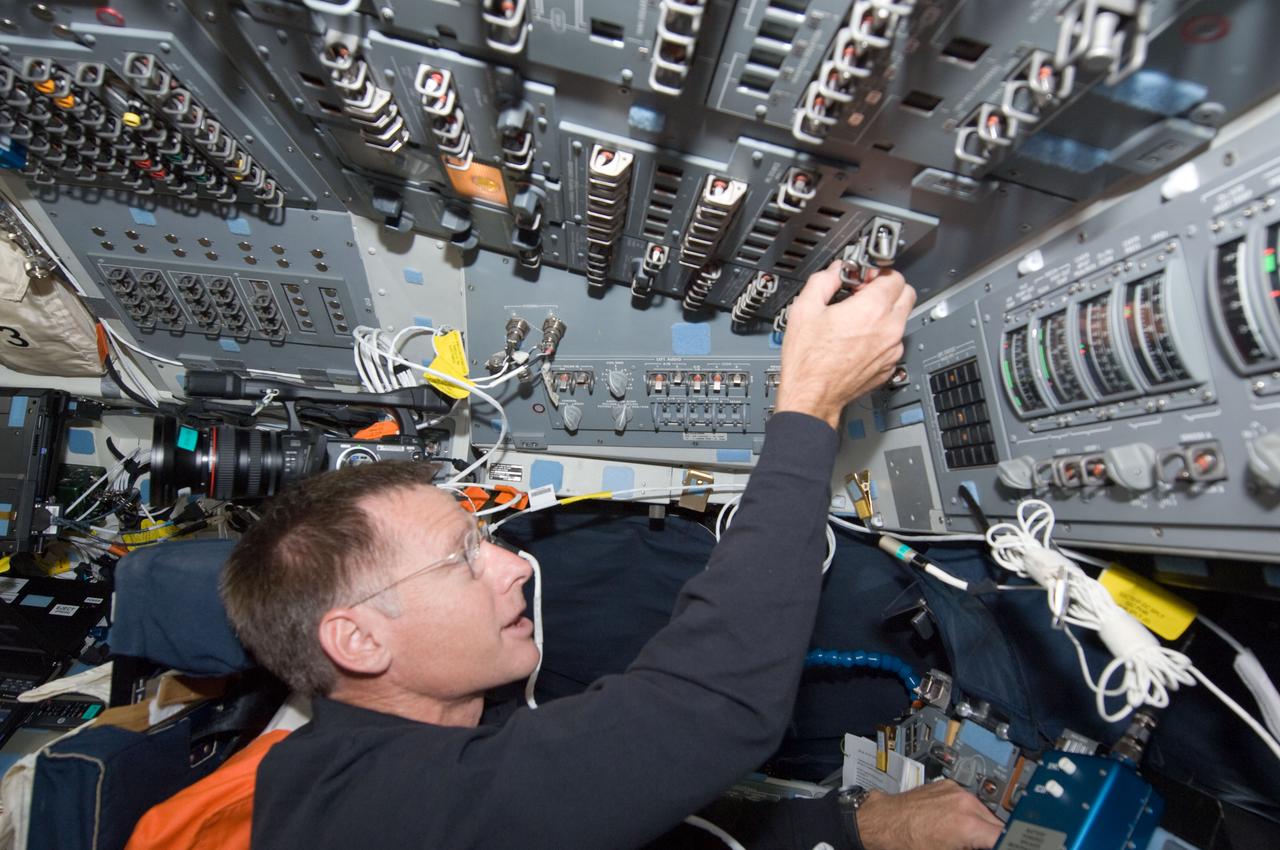
S135-E-007350 (11 July 2011) --- NASA astronaut Chris Ferguson, STS-135 mission commander, toggles switches on the overhead panel of the forward flight deck of the space shuttle Atlantis. The image was recorded during the mission's fourth day of activities in Earth orbit and second day while being docked with the International Space Station. Photo credit: NASA
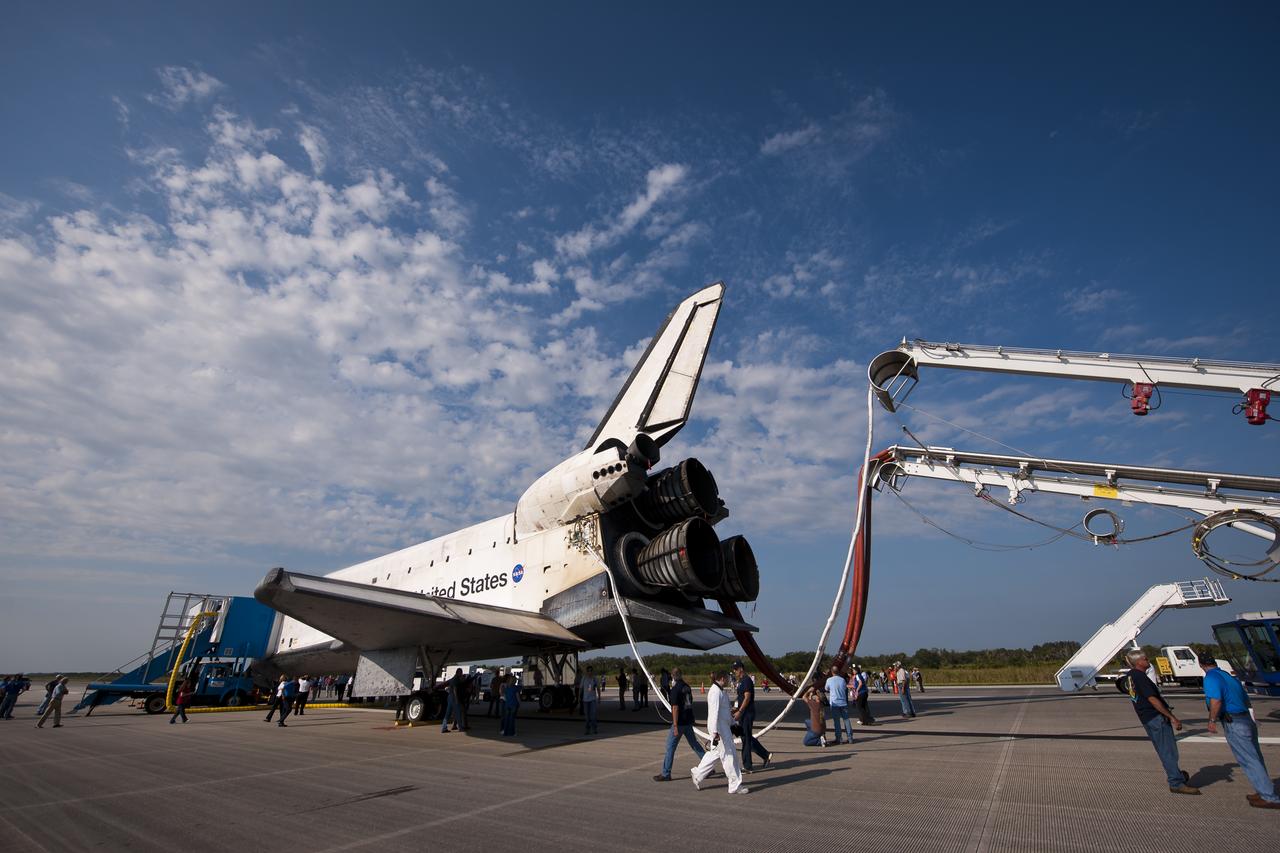
NASA and contractor personnel work on the space shuttle Atlantis at the Kennedy Space Center Shuttle Landing Facility (SLF) shortly after Atlantis (STS-135) landed early Thursday morning, July 21, 2011, in Cape Canaveral, Fla. Overall, Atlantis spent 307 days in space and traveled nearly 126 million miles during its 33 flights. Atlantis, the fourth orbiter built, launched on its first mission on Oct. 3, 1985. Photo Credit: (NASA/Bill Ingalls)

Teams lift a liquid hydrogen tank barrel into the Vertical Assembly Center at Michoud Assembly Facility in New Orleans, on July 25, 2025. Inside the center, teams will perform a circumferential weld to connect the barrel to the previously loaded forward dome. The barrel is one of five barrels, which along with the forward and aft domes, make up the liquid hydrogen tank for the fourth core stage manufactured at the site. Artemis will pave the way for a long-term human presence on the lunar surface while ushering in the Golden Age of Innovation and Exploration.
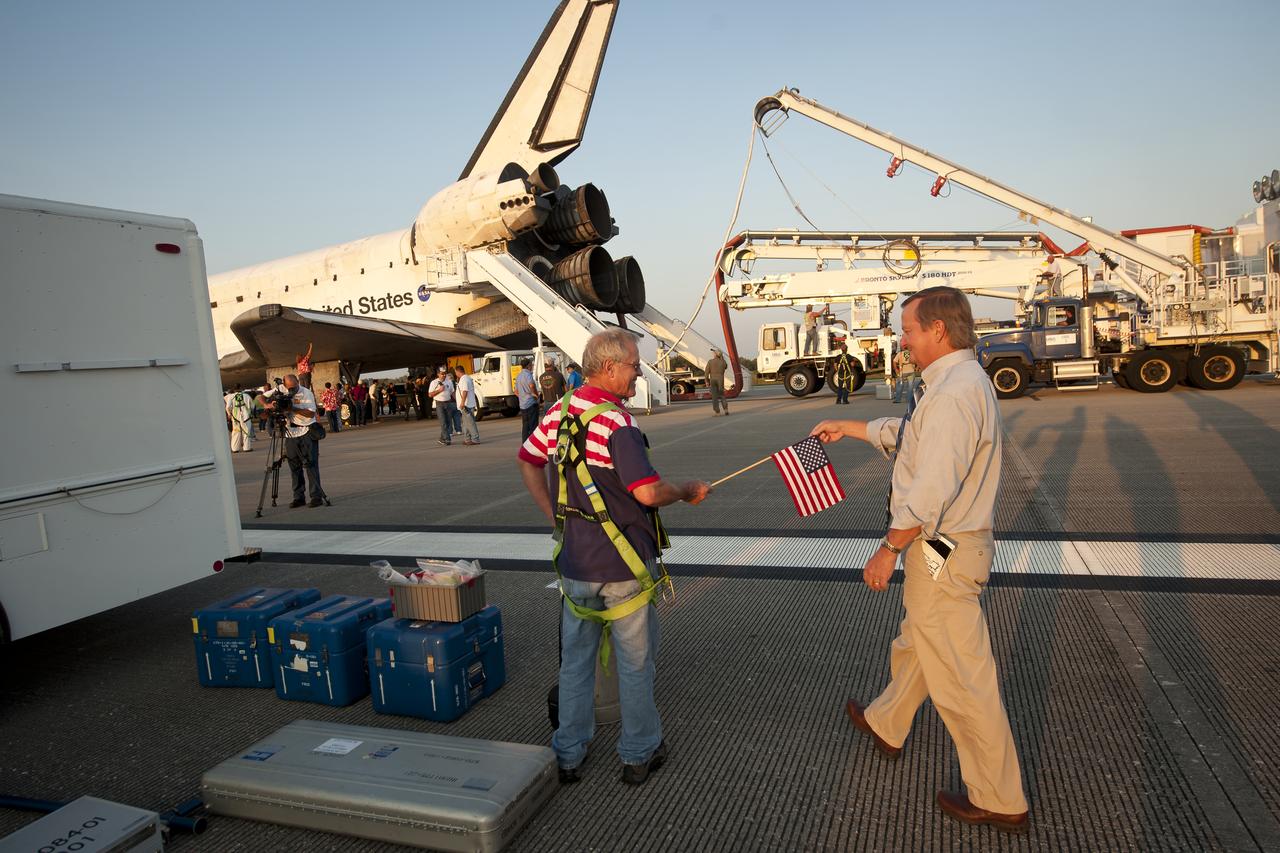
NASA Launch Director Michael Leinbach, right, hands an American flag to a worker on the runway of the Shuttle Landing Facility (SLF) shortly after the space shuttle Atlantis (STS-135) landed early Thursday morning, July 21, 2011, in Cape Canaveral, Fla. Overall, Atlantis spent 307 days in space and traveled nearly 126 million miles during its 33 flights. Atlantis, the fourth orbiter built, launched on its first mission on Oct. 3, 1985. Photo Credit: (NASA/Bill Ingalls)
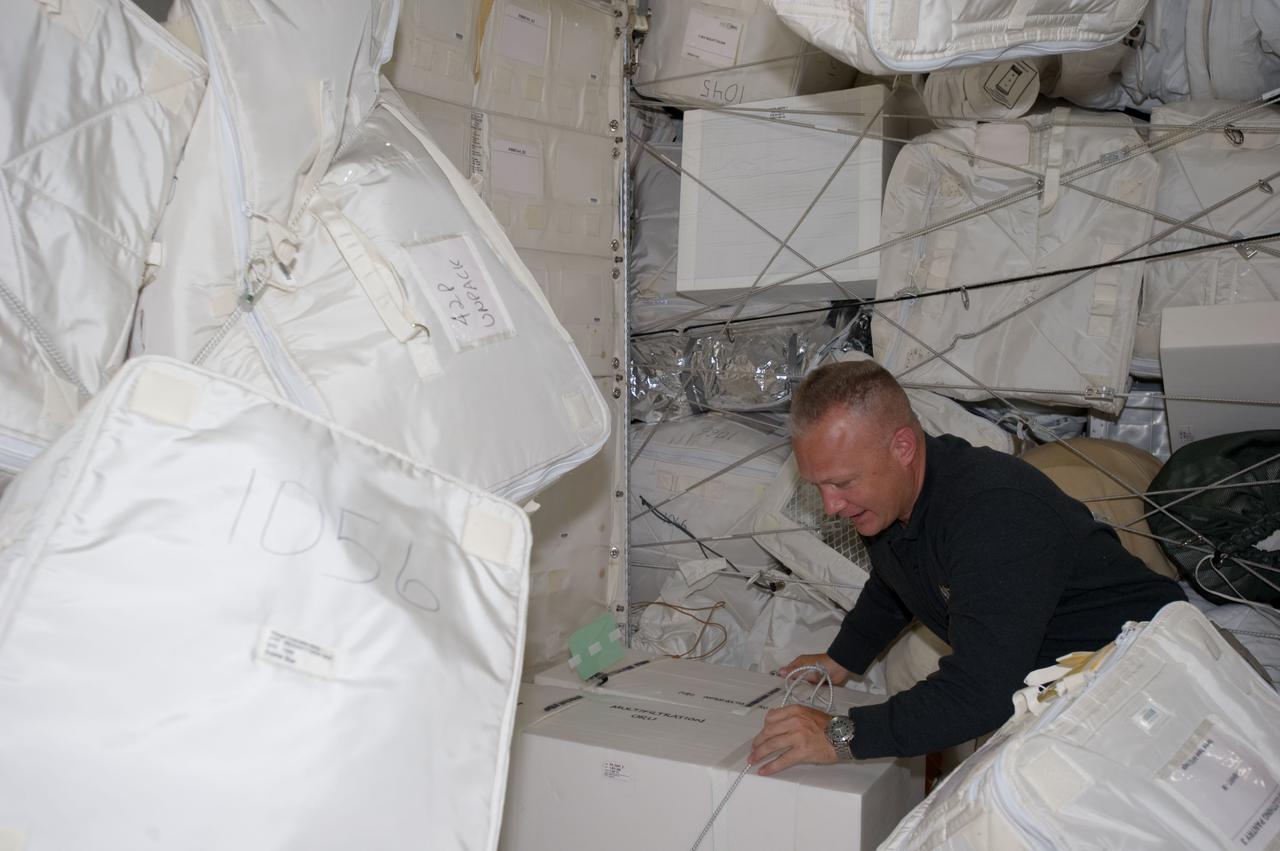
S135-E-007441 (11 July 2011) --- NASA astronaut Doug Hurley, STS-135 pilot, moves around supplies and equipment in the Leonardo Permanent Multipurpose Module (PMM) during the fourth day of flight for Atlantis' four person crew. This module is a component that joined the International Space Station complex after it was flown into space aboard the space shuttle Discovery on STS-133. Photo credit: NASA
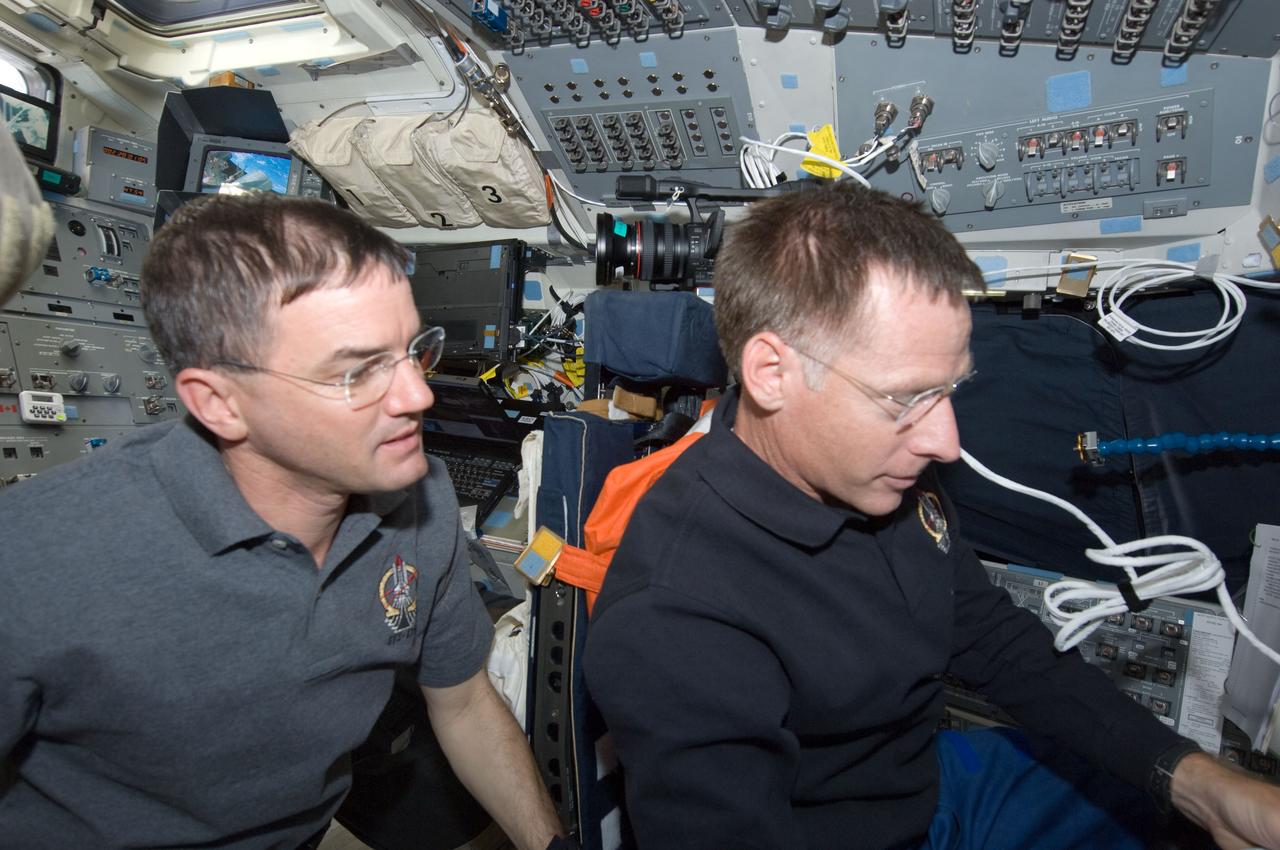
S135-E-007353 (11 July 2011) --- NASA astronauts Rex Walheim (left), STS-135 mission specialist, and Chris Ferguson are pictured on the forward flight deck the space shuttle Atlantis. The photo was taken during the mission's fourth day of activities in Earth orbit and second day while being docked with the International Space Station. Photo credit: NASA
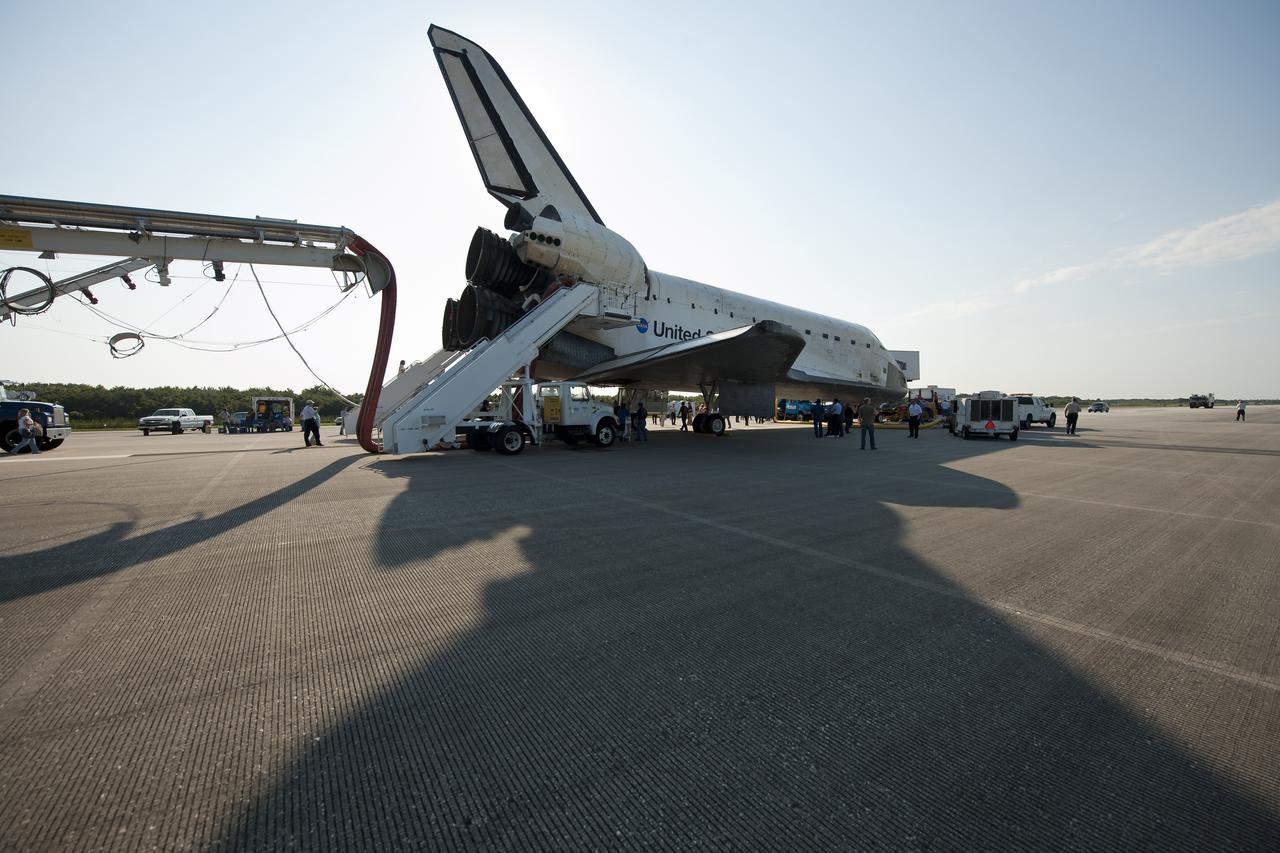
NASA and contractor personnel work on the space shuttle Atlantis at the Kennedy Space Center Shuttle Landing Facility (SLF) shortly after Atlantis (STS-135) landed early Thursday morning, July 21, 2011, in Cape Canaveral, Fla. Overall, Atlantis spent 307 days in space and traveled nearly 126 million miles during its 33 flights. Atlantis, the fourth orbiter built, launched on its first mission on Oct. 3, 1985. Photo Credit: (NASA/Bill Ingalls)
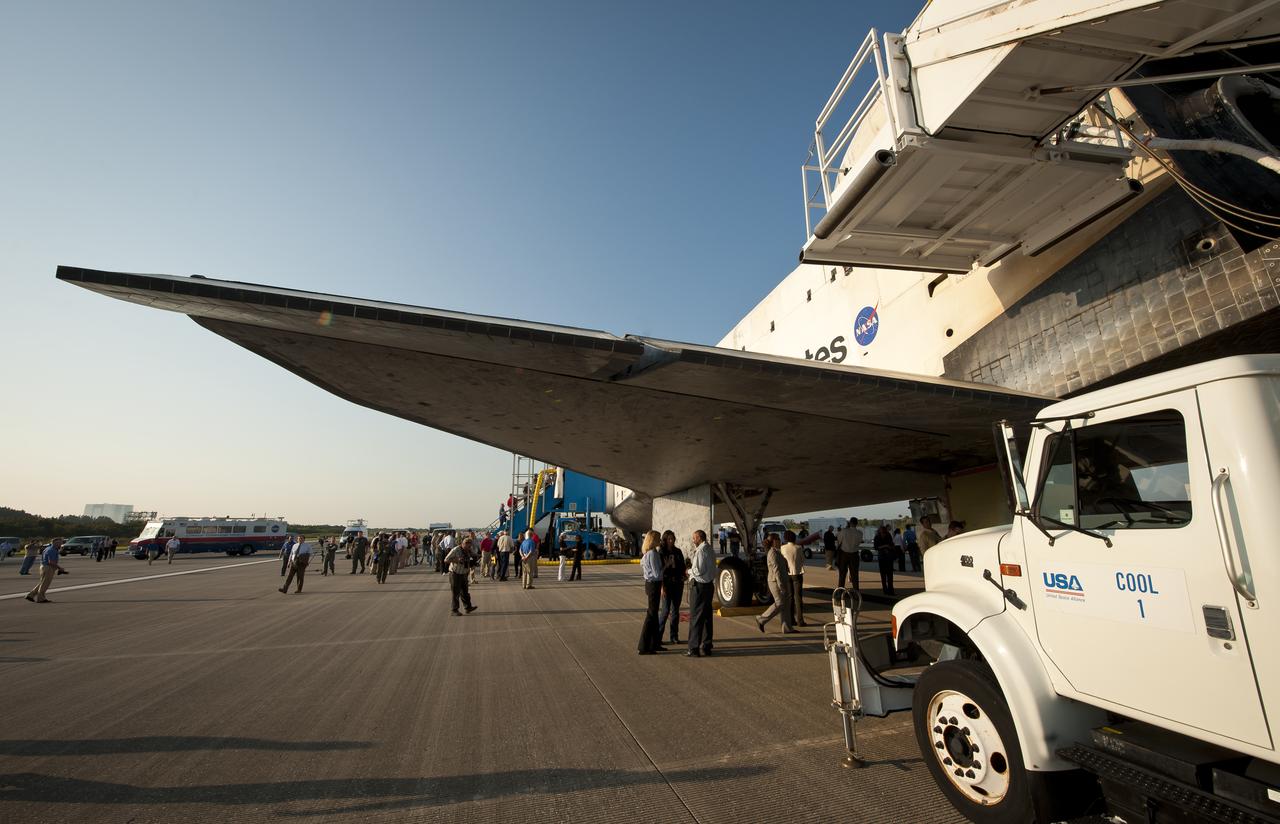
NASA and contractor personnel work on the space shuttle Atlantis at the Kennedy Space Center Shuttle Landing Facility (SLF) shortly after Atlantis (STS-135) landed early Thursday morning, July 21, 2011, in Cape Canaveral, Fla. Overall, Atlantis spent 307 days in space and traveled nearly 126 million miles during its 33 flights. Atlantis, the fourth orbiter built, launched on its first mission on Oct. 3, 1985. Photo Credit: (NASA/Bill Ingalls)
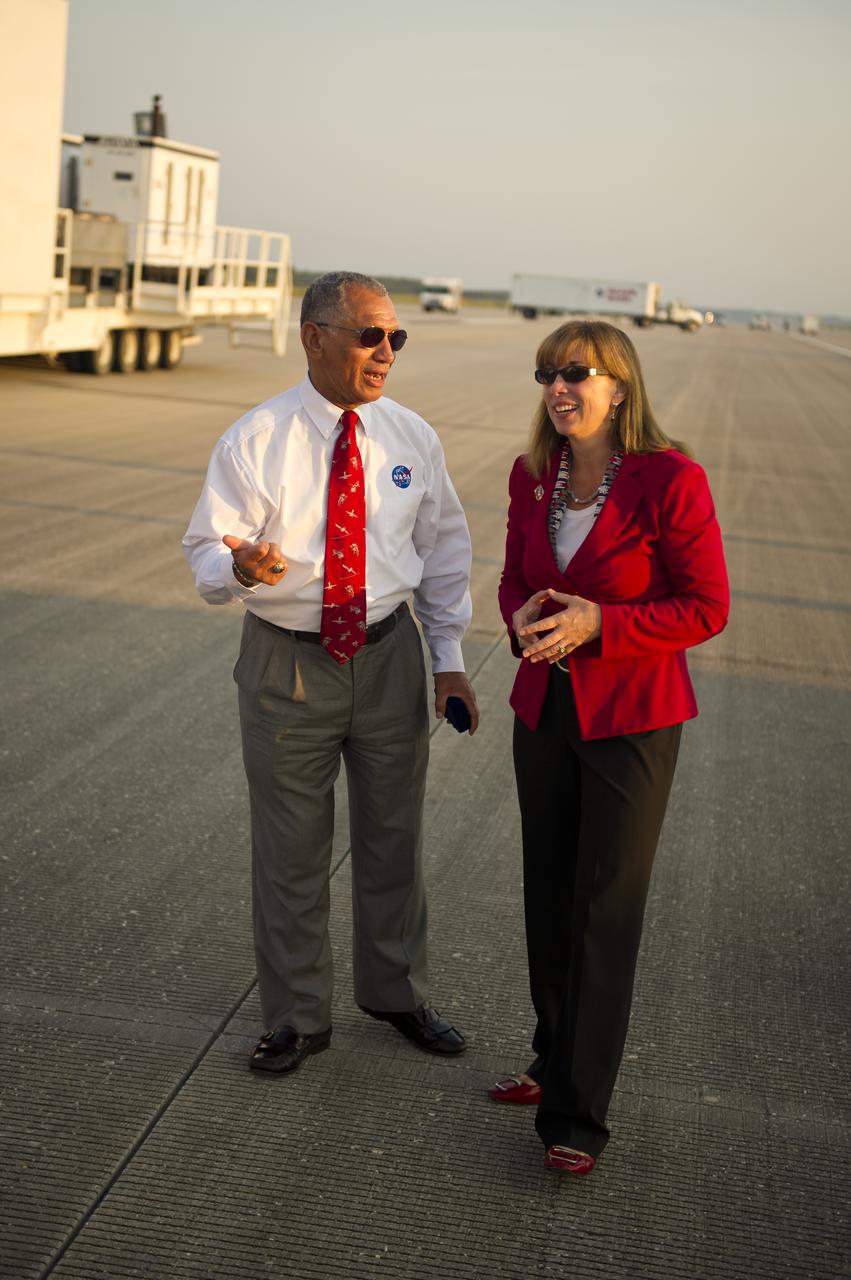
NASA Administrator Charles Bolden and Deputy Administrator Lori Garver talk at the Kennedy Space Center Shuttle Landing Facility (SLF) shortly after the space shuttle Atlantis (STS-135) landed early Thursday morning, July 21, 2011, in Cape Canaveral, Fla. Overall, Atlantis spent 307 days in space and traveled nearly 126 million miles during its 33 flights. Atlantis, the fourth orbiter built, launched on its first mission on Oct. 3, 1985. Photo Credit: (NASA/Bill Ingalls)

jsc2024e052327 (July 22, 2024) --- The crew of NASA’s SpaceX Crew-9 mission to the International Space Station poses for a group photo in their flight suits at SpaceX’s new Dragon refurbishing facility at Kennedy Space Center in Florida. This will be the first spaceflight for Cardman and Gorbunov, the second mission to the orbiting laboratory for Hague, and fourth spaceflight for Wilson. Credit: SpaceX
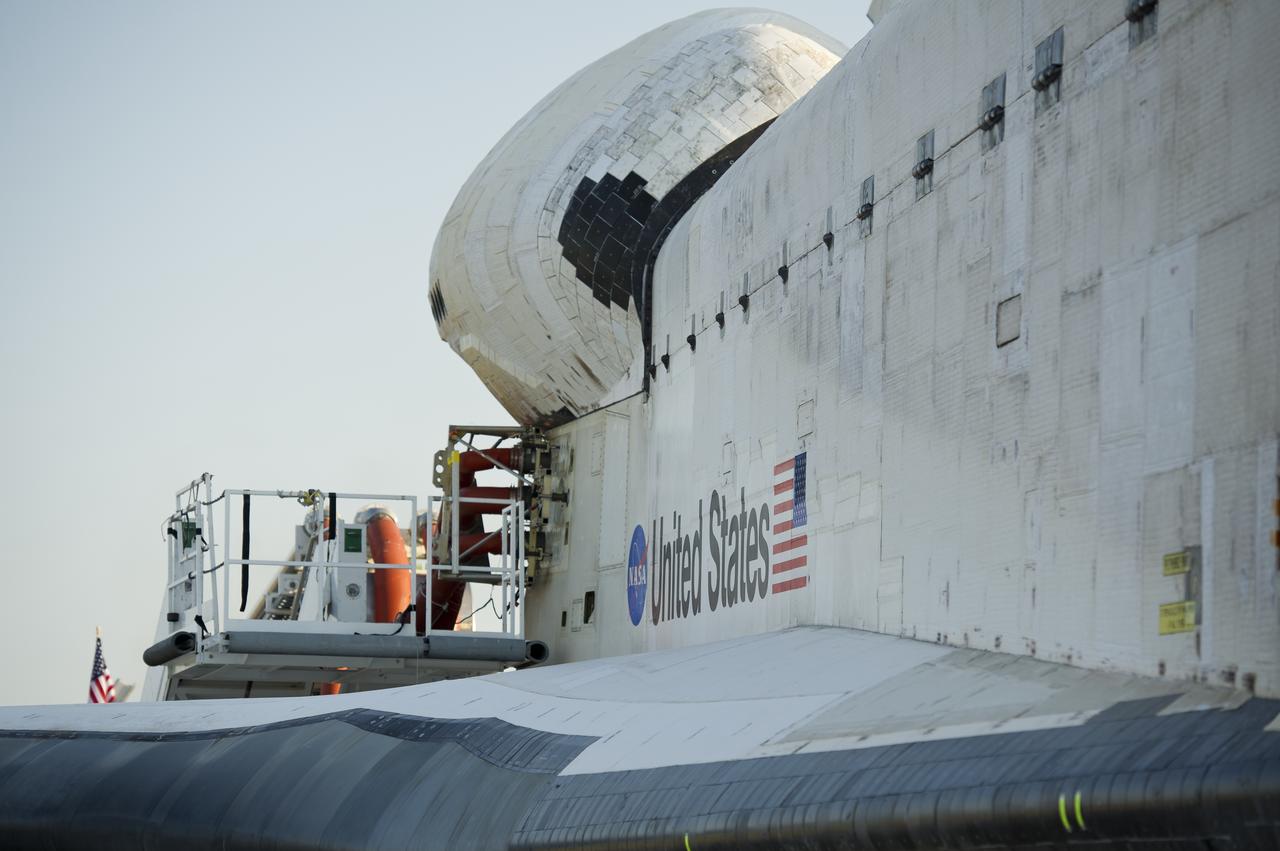
Close up view of the side the space shuttle Atlantis at the Kennedy Space Center Shuttle Landing Facility (SLF) shortly after Atlantis (STS-135) landed early Thursday morning, July 21, 2011, in Cape Canaveral, Fla. Overall, Atlantis spent 307 days in space and traveled nearly 126 million miles during its 33 flights. Atlantis, the fourth orbiter built, launched on its first mission on Oct. 3, 1985. Photo Credit: (NASA/Bill Ingalls)
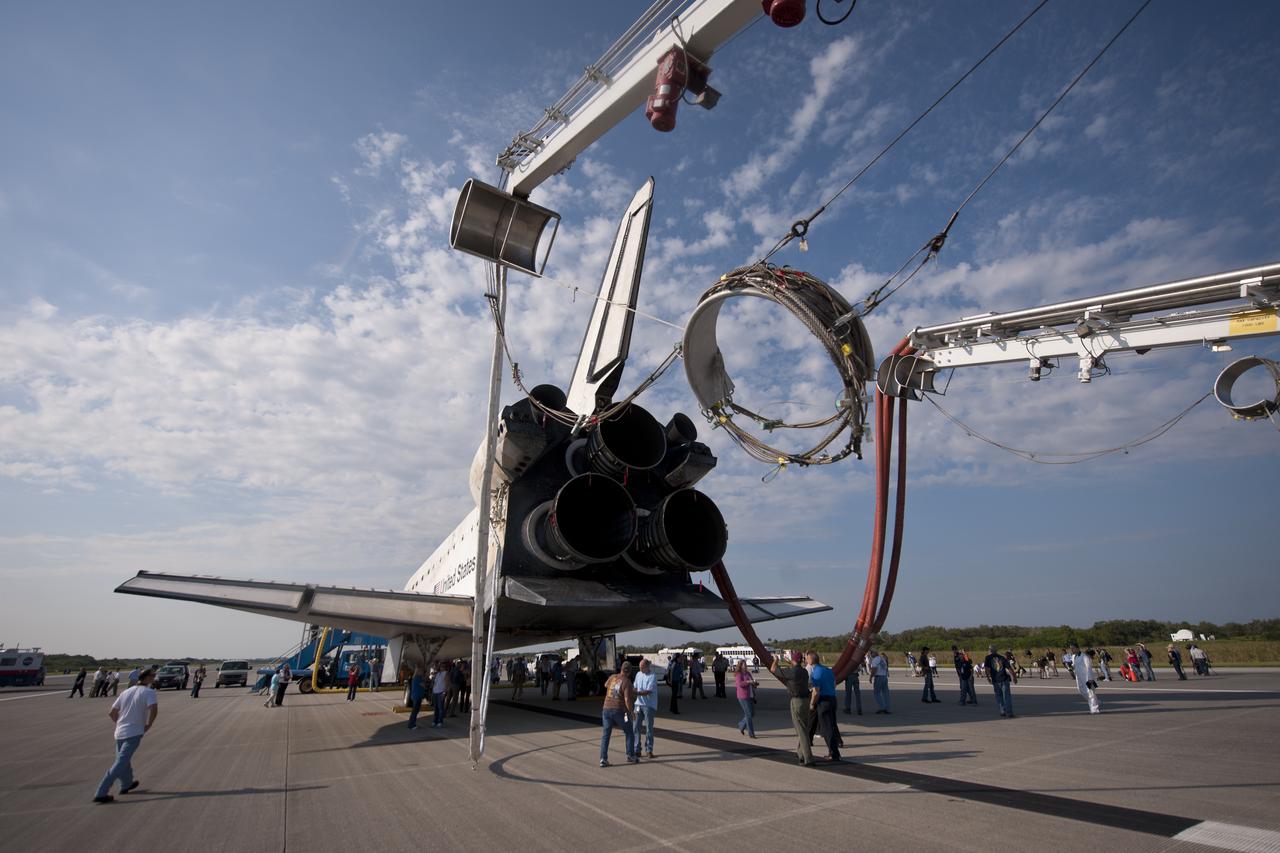
NASA and contractor personnel work on the space shuttle Atlantis at the Kennedy Space Center Shuttle Landing Facility (SLF) shortly after Atlantis (STS-135) landed early Thursday morning, July 21, 2011, in Cape Canaveral, Fla. Overall, Atlantis spent 307 days in space and traveled nearly 126 million miles during its 33 flights. Atlantis, the fourth orbiter built, launched on its first mission on Oct. 3, 1985. Photo Credit: (NASA/Bill Ingalls)

Teams lift a liquid hydrogen tank barrel into the Vertical Assembly Center at Michoud Assembly Facility in New Orleans, on July 25, 2025. Inside the center, teams will perform a circumferential weld to connect the barrel to the previously loaded forward dome. The barrel is one of five barrels, which along with the forward and aft domes, make up the liquid hydrogen tank for the fourth core stage manufactured at the site. Artemis will pave the way for a long-term human presence on the lunar surface while ushering in the Golden Age of Innovation and Exploration.
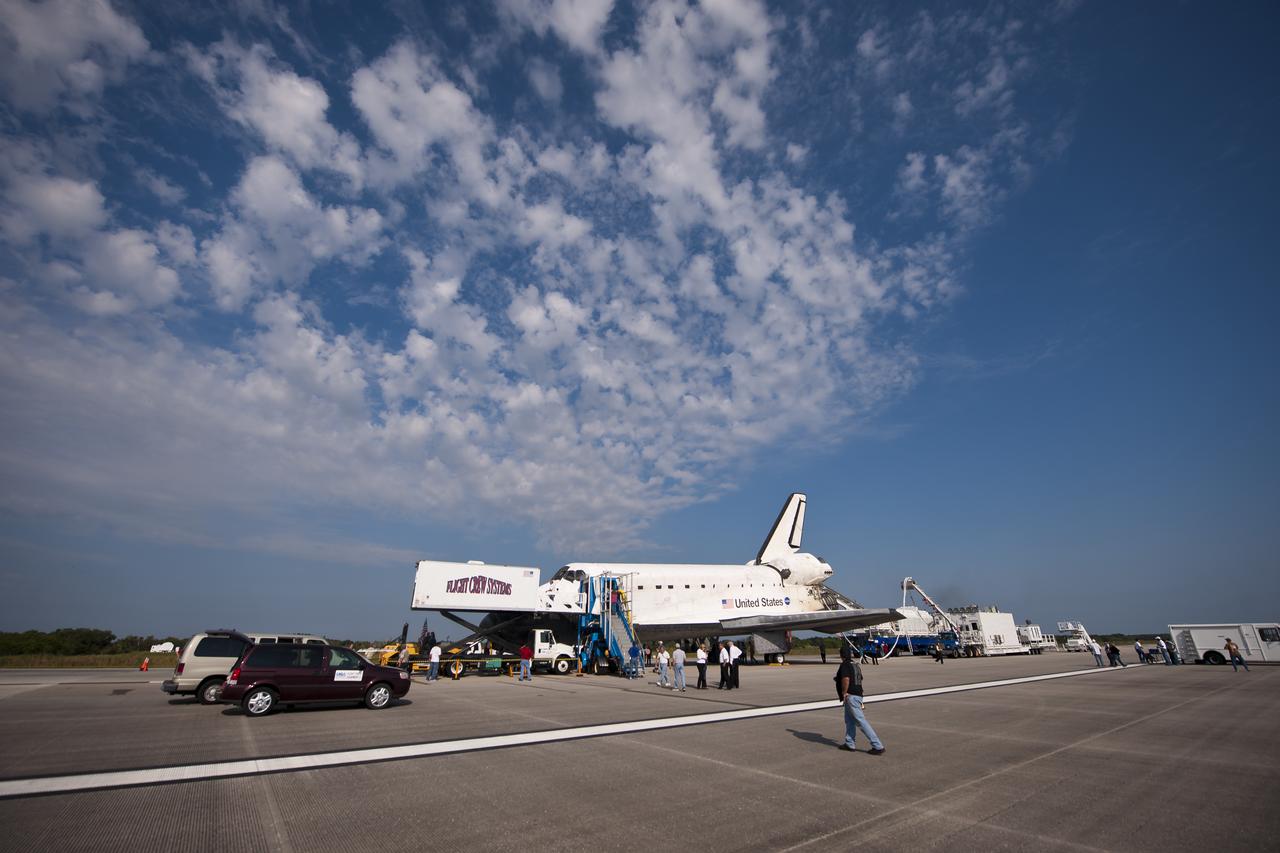
NASA and contractor personnel work on the space shuttle Atlantis at the Kennedy Space Center Shuttle Landing Facility (SLF) shortly after Atlantis (STS-135) landed early Thursday morning, July 21, 2011, in Cape Canaveral, Fla. Overall, Atlantis spent 307 days in space and traveled nearly 126 million miles during its 33 flights. Atlantis, the fourth orbiter built, launched on its first mission on Oct. 3, 1985. Photo Credit: (NASA/Bill Ingalls)
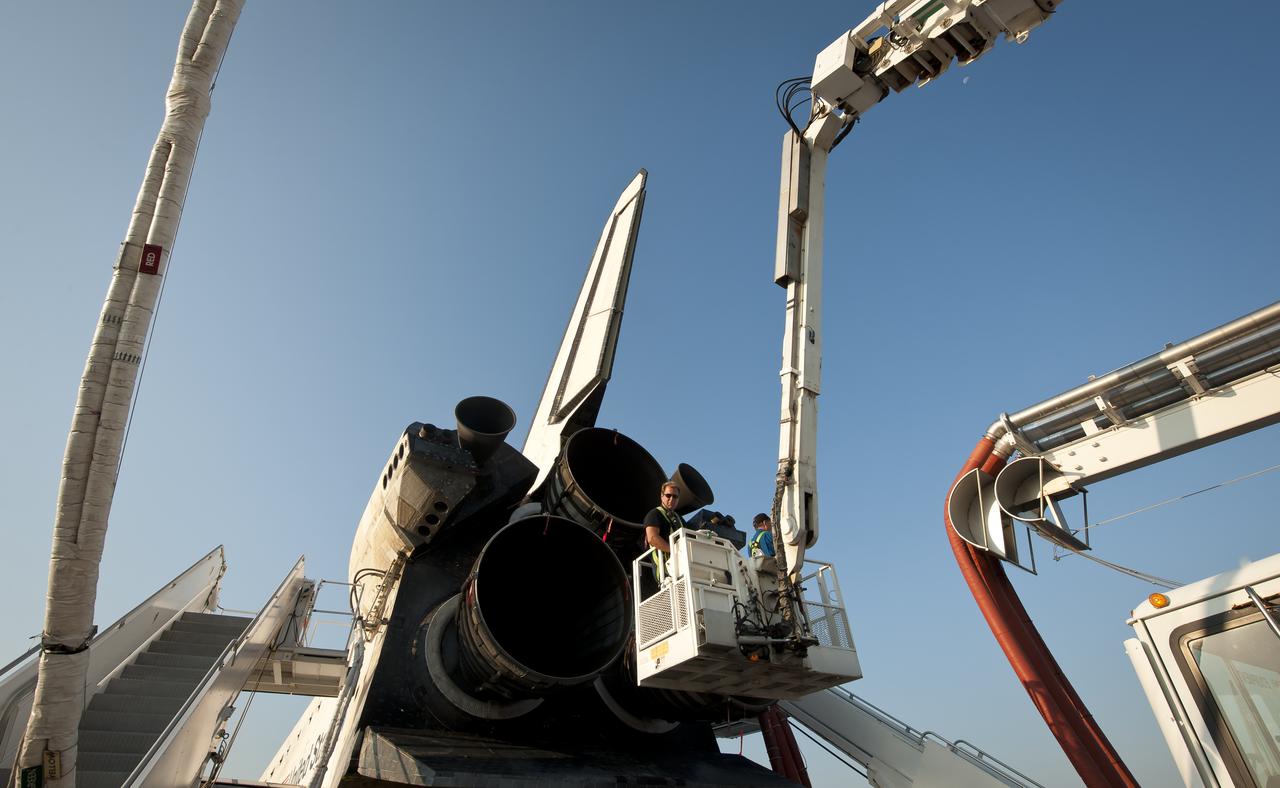
NASA and contractor personnel work on the space shuttle Atlantis at the Kennedy Space Center Shuttle Landing Facility (SLF) shortly after Atlantis (STS-135) landed early Thursday morning, July 21, 2011, in Cape Canaveral, Fla. Overall, Atlantis spent 307 days in space and traveled nearly 126 million miles during its 33 flights. Atlantis, the fourth orbiter built, launched on its first mission on Oct. 3, 1985. Photo Credit: (NASA/Bill Ingalls)
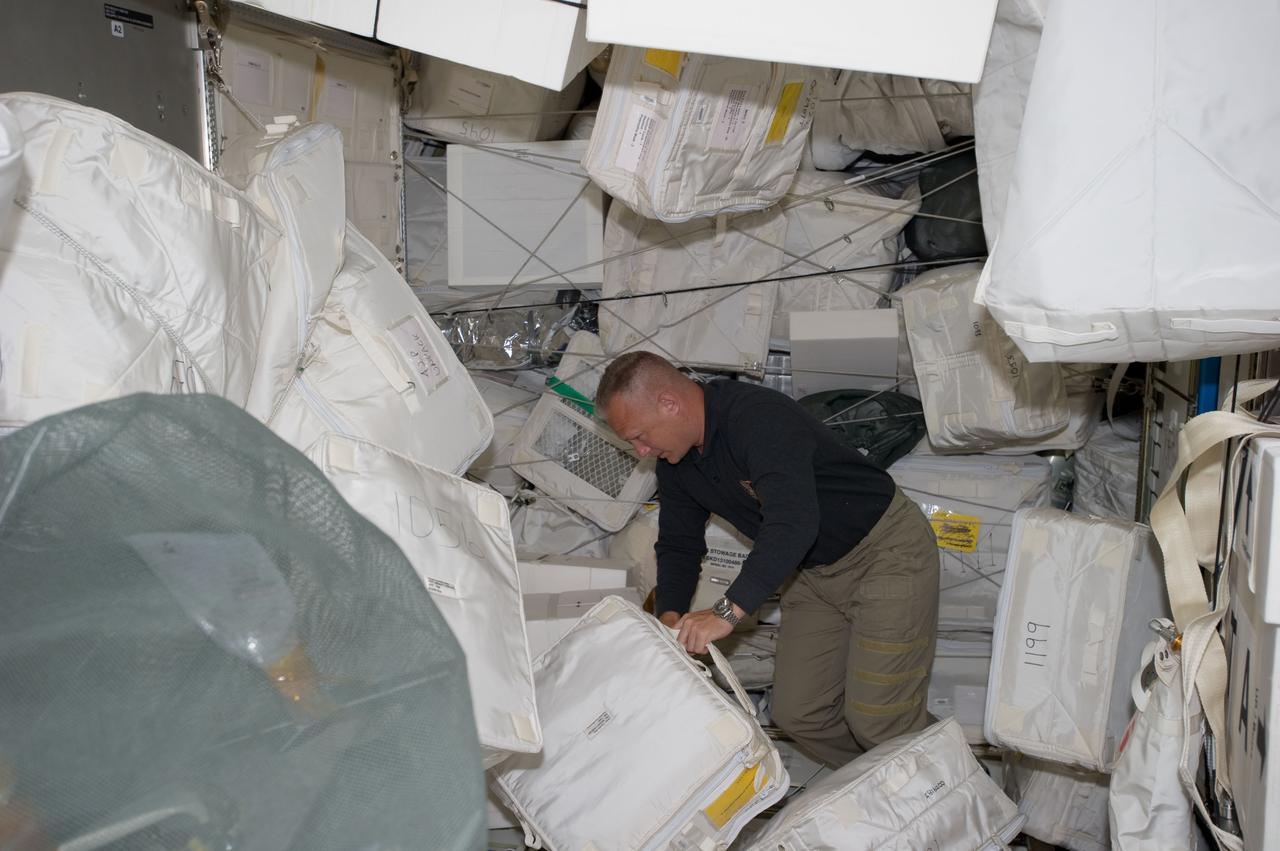
S135-E-007437 (11 July 2011) --- NASA astronaut Doug Hurley, STS-135 pilot, moves around supplies and equipment in the Leonardo Permanent Multipurpose Module (PMM) during the fourth day of flight for Atlantis' four person crew. This module is a component that joined the International Space Station complex after it was flown into space aboard the space shuttle Discovery on STS-133. Photo credit: NASA
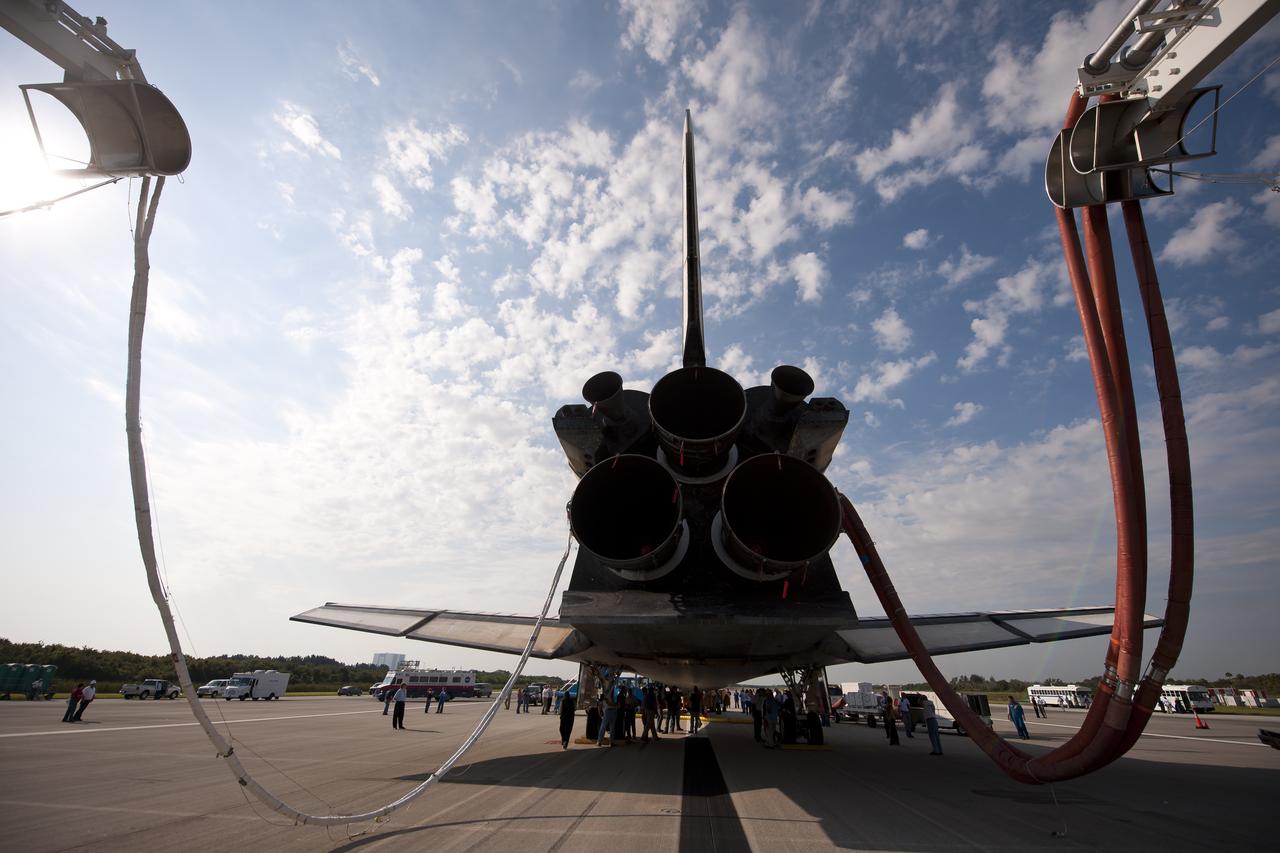
NASA and contractor personnel work on the space shuttle Atlantis at the Kennedy Space Center Shuttle Landing Facility (SLF) shortly after Atlantis (STS-135) landed early Thursday morning, July 21, 2011, in Cape Canaveral, Fla. Overall, Atlantis spent 307 days in space and traveled nearly 126 million miles during its 33 flights. Atlantis, the fourth orbiter built, launched on its first mission on Oct. 3, 1985. Photo Credit: (NASA/Bill Ingalls)
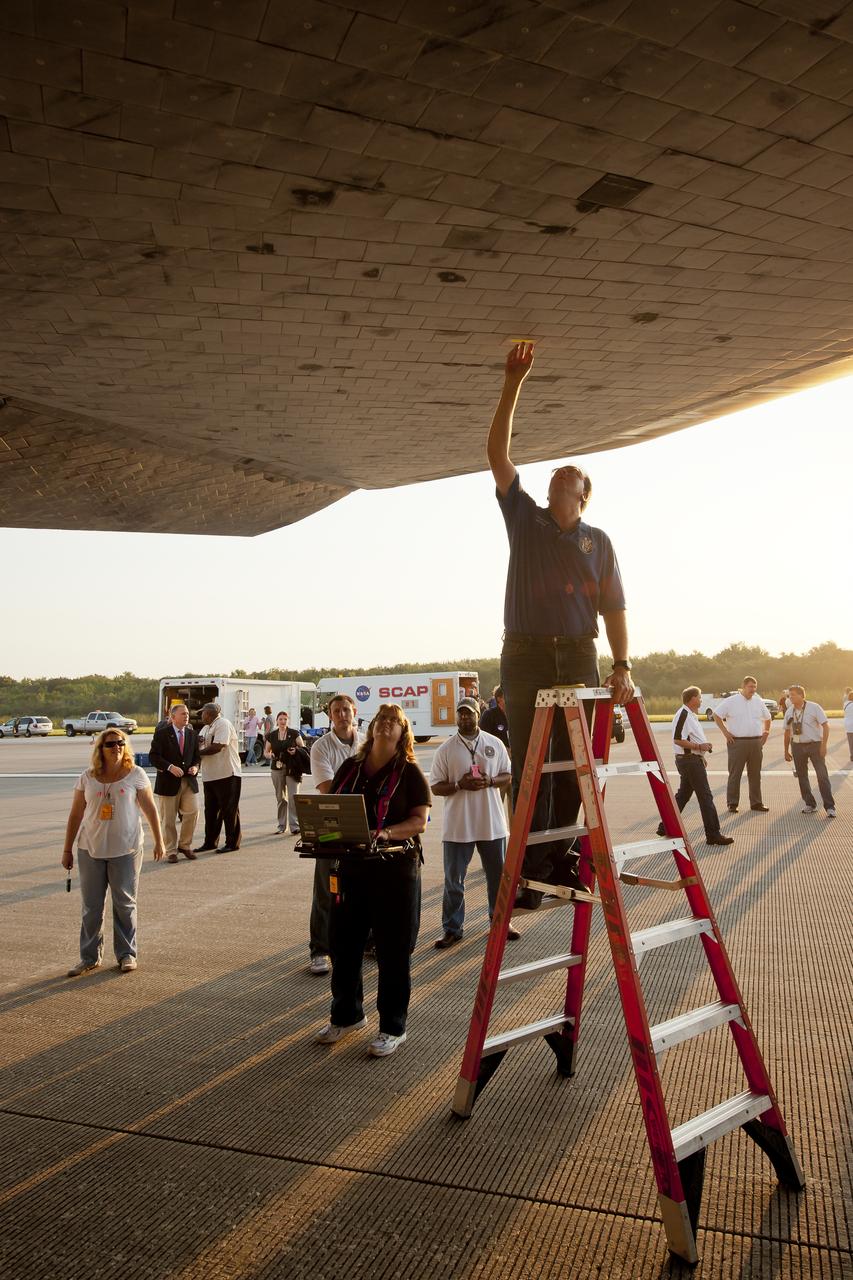
NASA and contractor personnel work under the space shuttle Atlantis at the Kennedy Space Center Shuttle Landing Facility (SLF) shortly after Atlantis (STS-135) landed early Thursday morning, July 21, 2011, in Cape Canaveral, Fla. Overall, Atlantis spent 307 days in space and traveled nearly 126 million miles during its 33 flights. Atlantis, the fourth orbiter built, launched on its first mission on Oct. 3, 1985. Photo Credit: (NASA/Bill Ingalls)
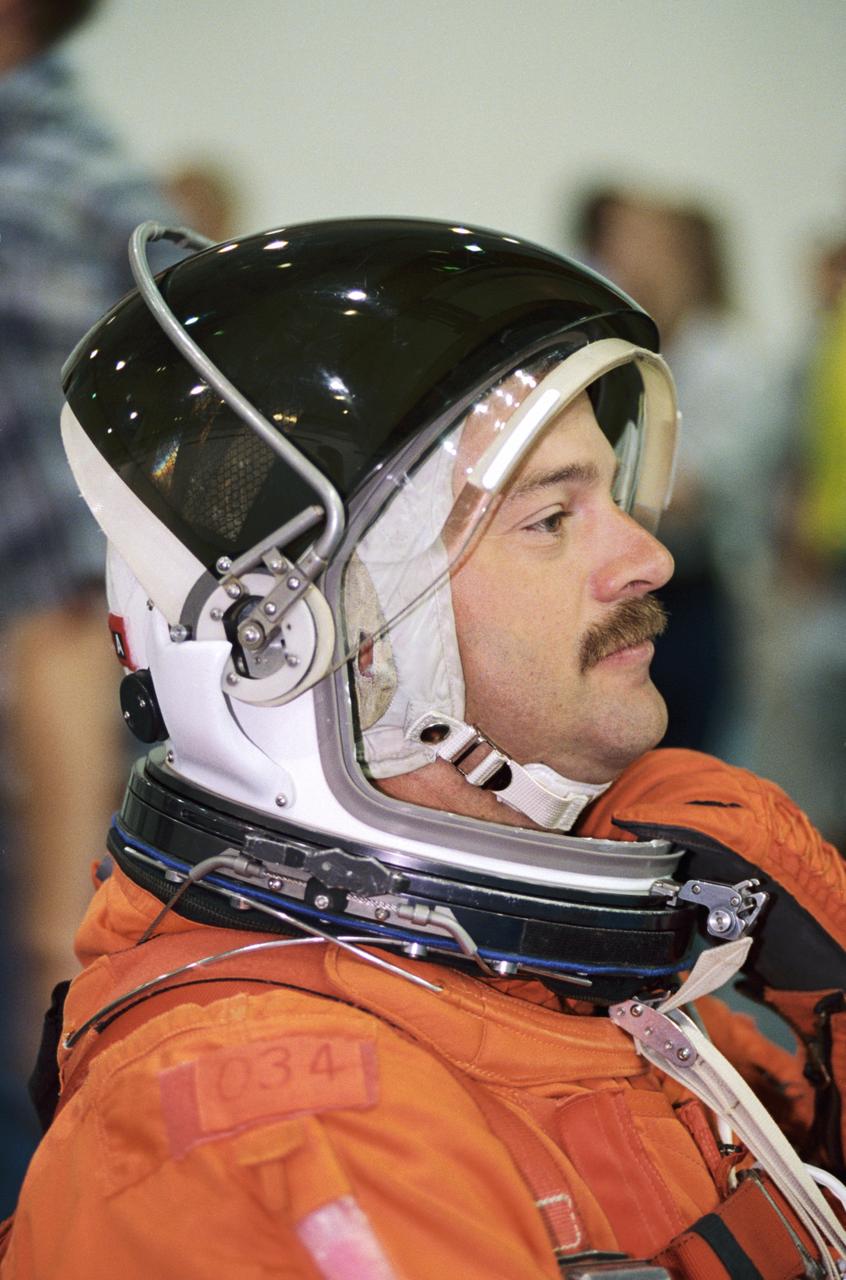
JSC2001-01918 (12 July 2001) --- Astronaut Scott D. Altman, STS-109 mission commander, attired in a training version of the shuttle launch and entry garment, awaits the start of an emergency bailout training session at the Neutral Buoyancy Laboratory (NBL) near the Johnson Space Center (JSC). STS-109 will be the 108th shuttle flight and the fourth Hubble Space Telescope (HST) servicing mission.
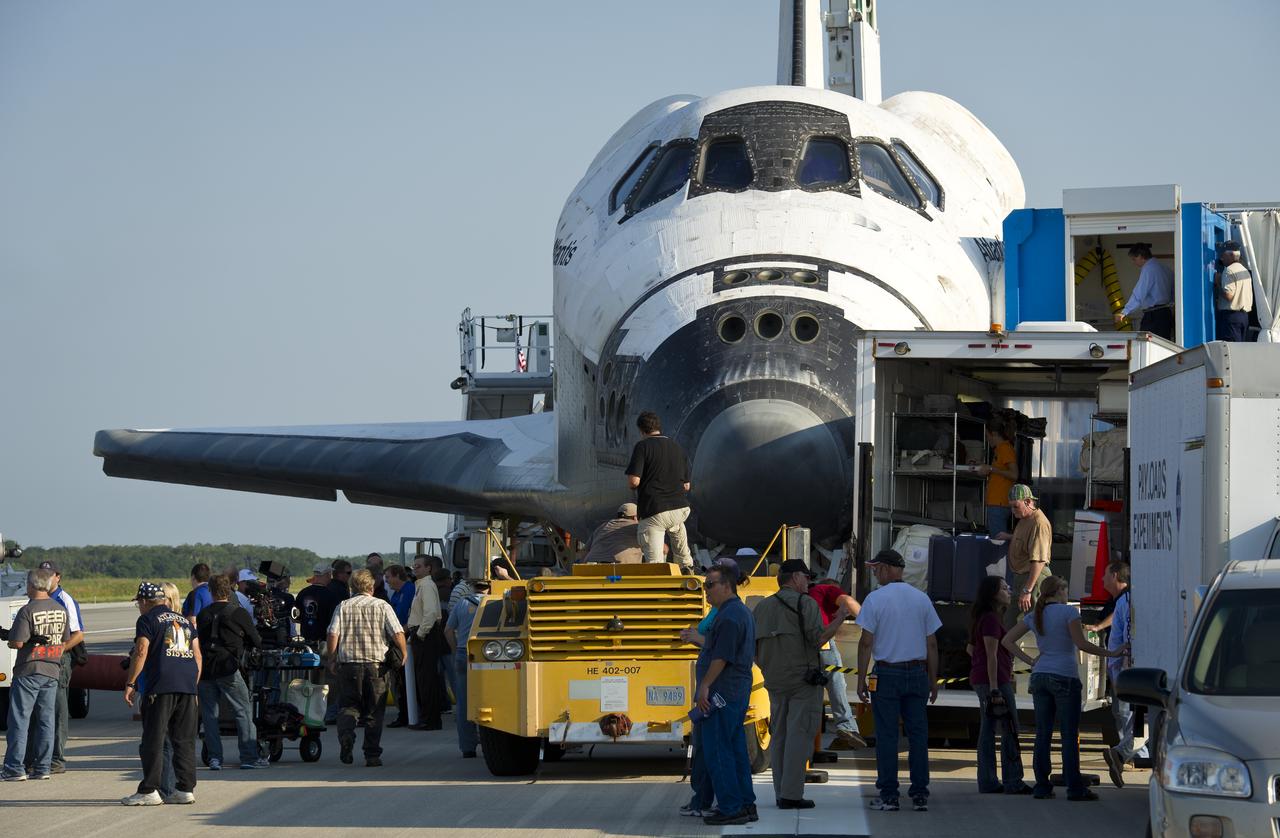
NASA and contractor personnel work on the space shuttle Atlantis at the Kennedy Space Center Shuttle Landing Facility (SLF) shortly after Atlantis (STS-135) landed early Thursday morning, July 21, 2011, in Cape Canaveral, Fla. Overall, Atlantis spent 307 days in space and traveled nearly 126 million miles during its 33 flights. Atlantis, the fourth orbiter built, launched on its first mission on Oct. 3, 1985. Photo Credit: (NASA/Bill Ingalls)
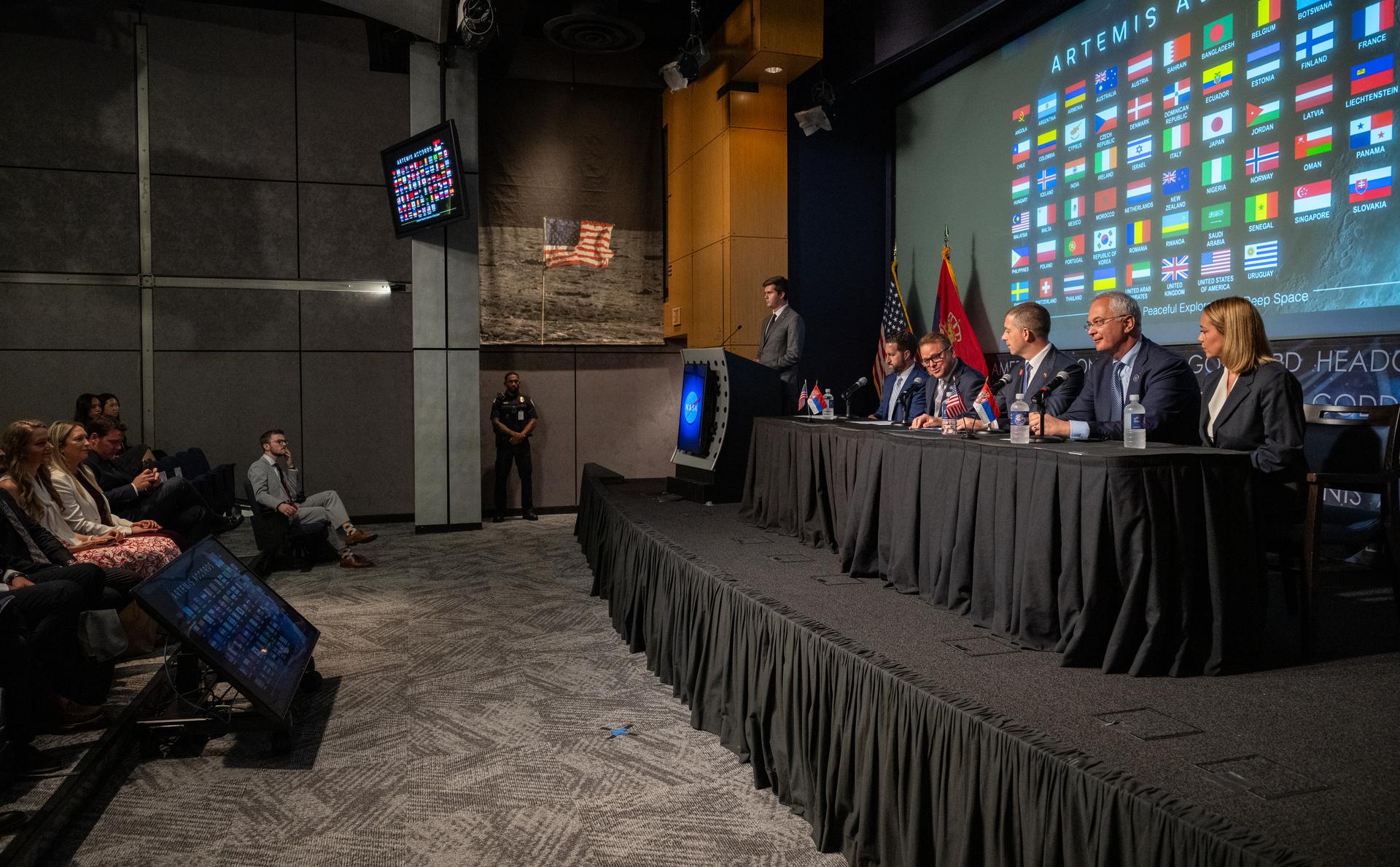
NASA Deputy Administrator Matt Anderson, fourth from right, delivers remarks during an Artemis Accords signing ceremony Thursday, July 16, 2026, at the Mary W. Jackson NASA Headquarters building in Washington. Serbia is the 69th country to sign the Artemis Accords, which establish a practical set of principles to guide space exploration cooperation among nations participating in NASA’s Artemis program. Photo Credit: (NASA/Keegan Barber)
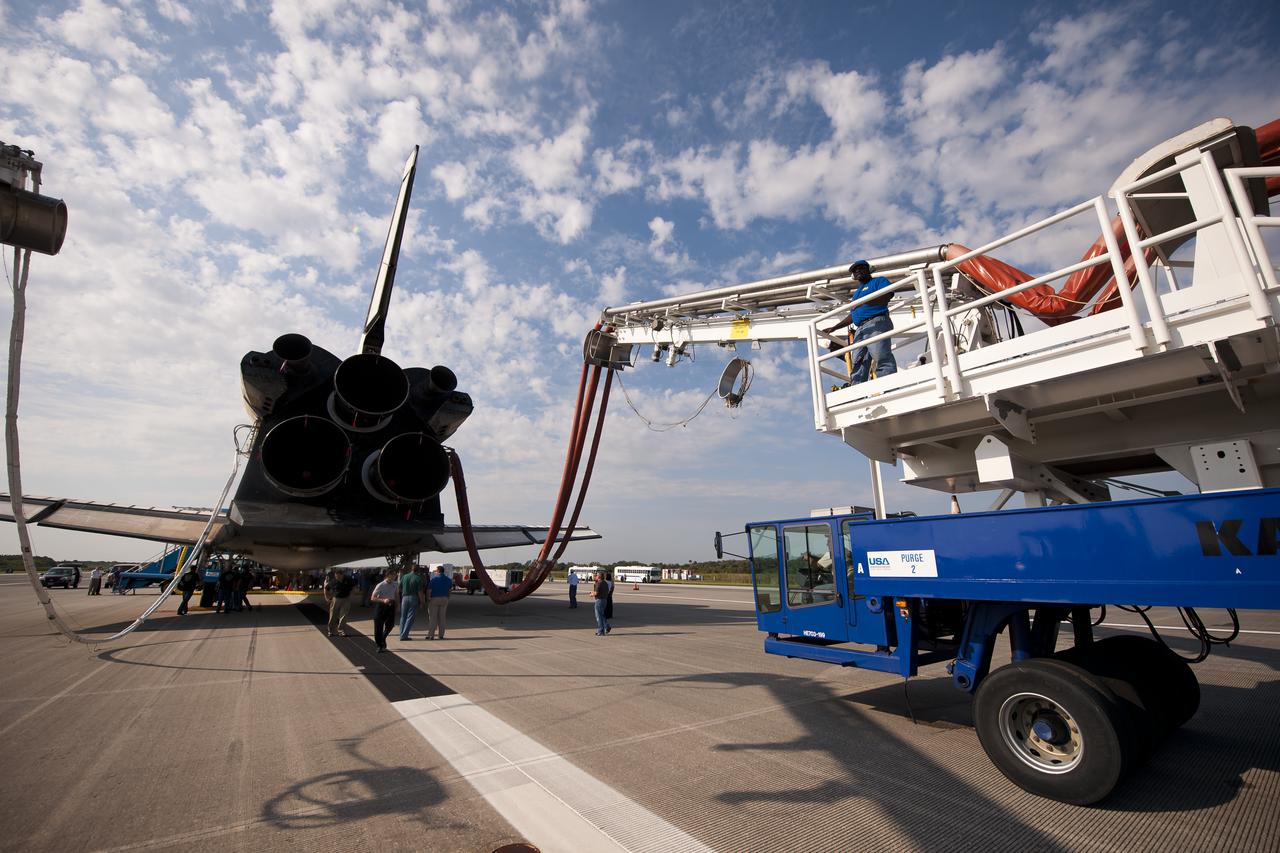
NASA and contractor personnel work on the space shuttle Atlantis at the Kennedy Space Center Shuttle Landing Facility (SLF) shortly after Atlantis (STS-135) landed early Thursday morning, July 21, 2011, in Cape Canaveral, Fla. Overall, Atlantis spent 307 days in space and traveled nearly 126 million miles during its 33 flights. Atlantis, the fourth orbiter built, launched on its first mission on Oct. 3, 1985. Photo Credit: (NASA/Bill Ingalls)
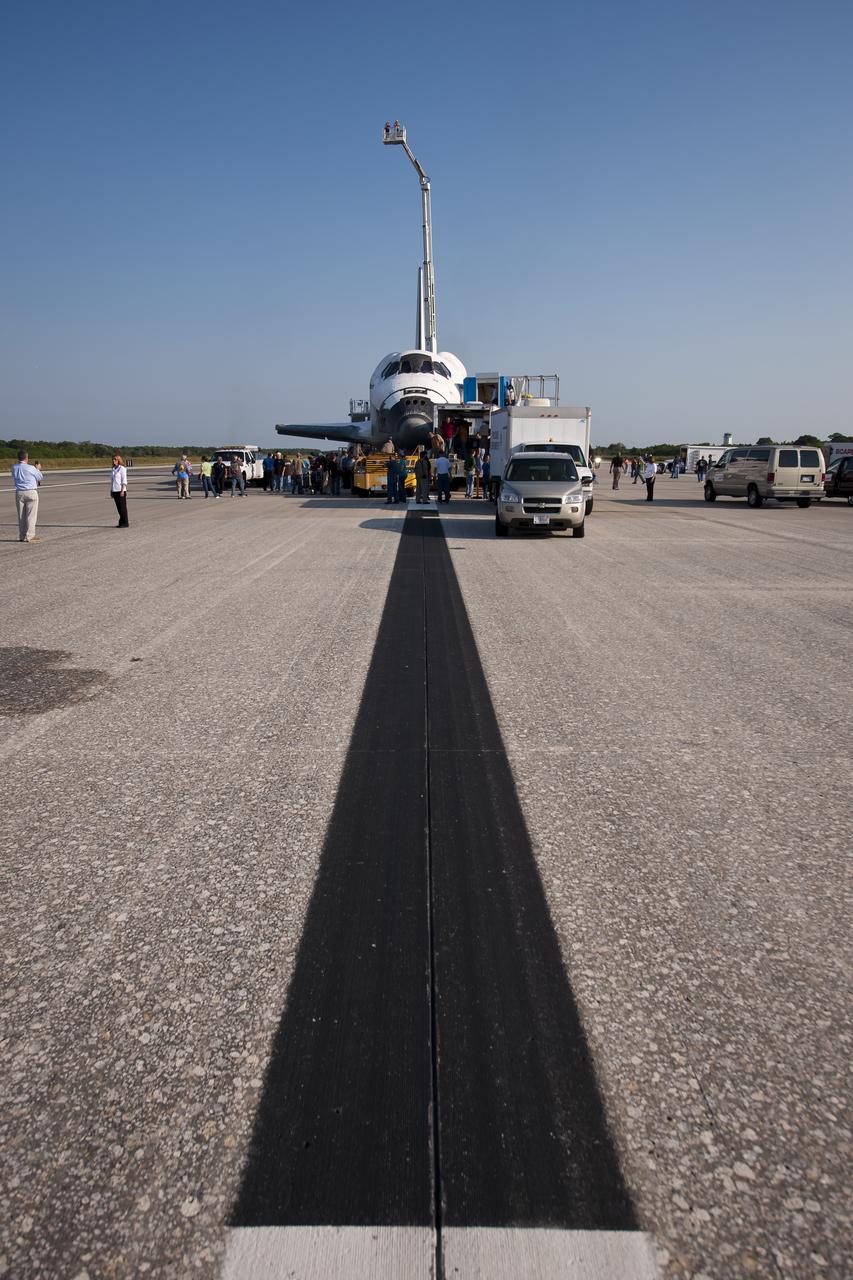
NASA and contractor personnel work on the space shuttle Atlantis at the Kennedy Space Center Shuttle Landing Facility (SLF) shortly after Atlantis (STS-135) landed early Thursday morning, July 21, 2011, in Cape Canaveral, Fla. Overall, Atlantis spent 307 days in space and traveled nearly 126 million miles during its 33 flights. Atlantis, the fourth orbiter built, launched on its first mission on Oct. 3, 1985. Photo Credit: (NASA/Bill Ingalls)
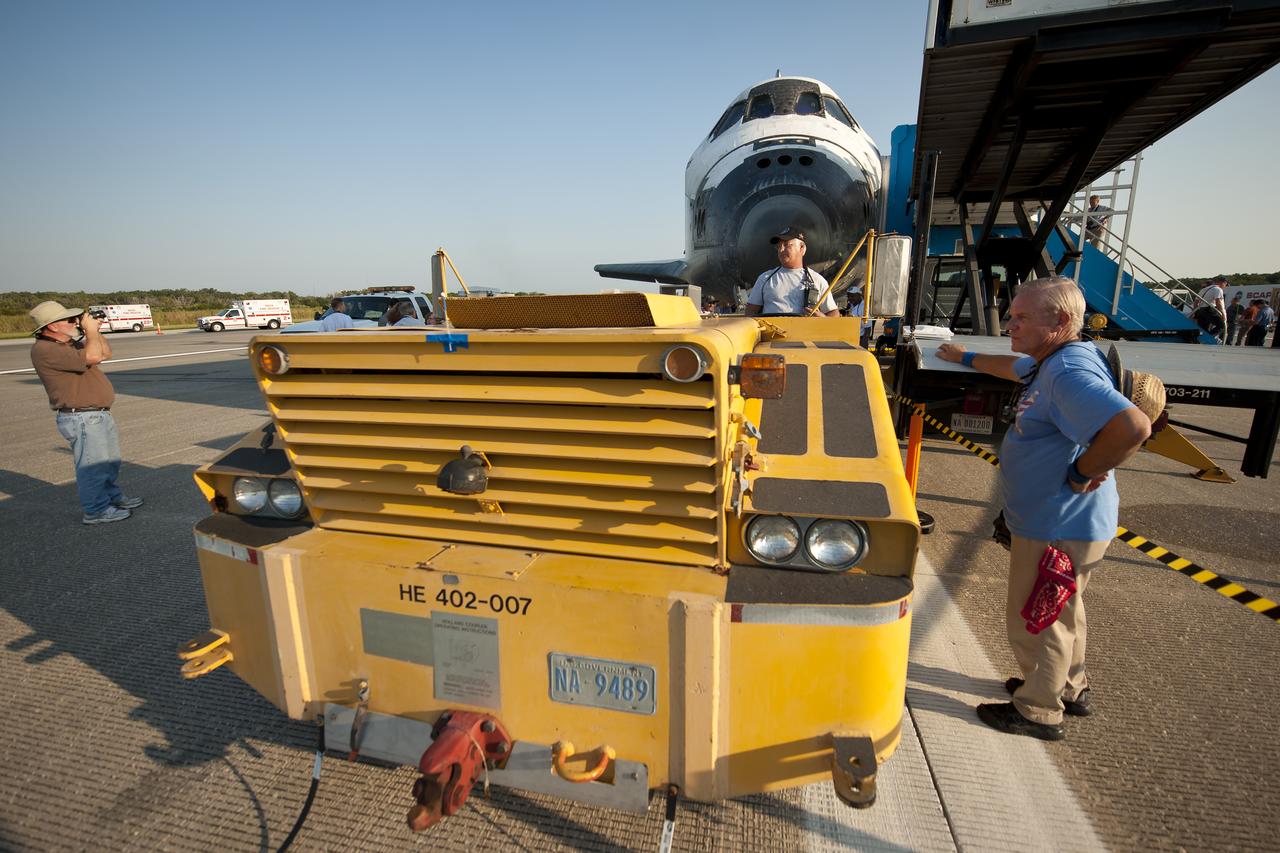
NASA and contractor personnel work on the space shuttle Atlantis at the Kennedy Space Center Shuttle Landing Facility (SLF) shortly after Atlantis (STS-135) landed early Thursday morning, July 21, 2011, in Cape Canaveral, Fla. Overall, Atlantis spent 307 days in space and traveled nearly 126 million miles during its 33 flights. Atlantis, the fourth orbiter built, launched on its first mission on Oct. 3, 1985. Photo Credit: (NASA/Bill Ingalls)