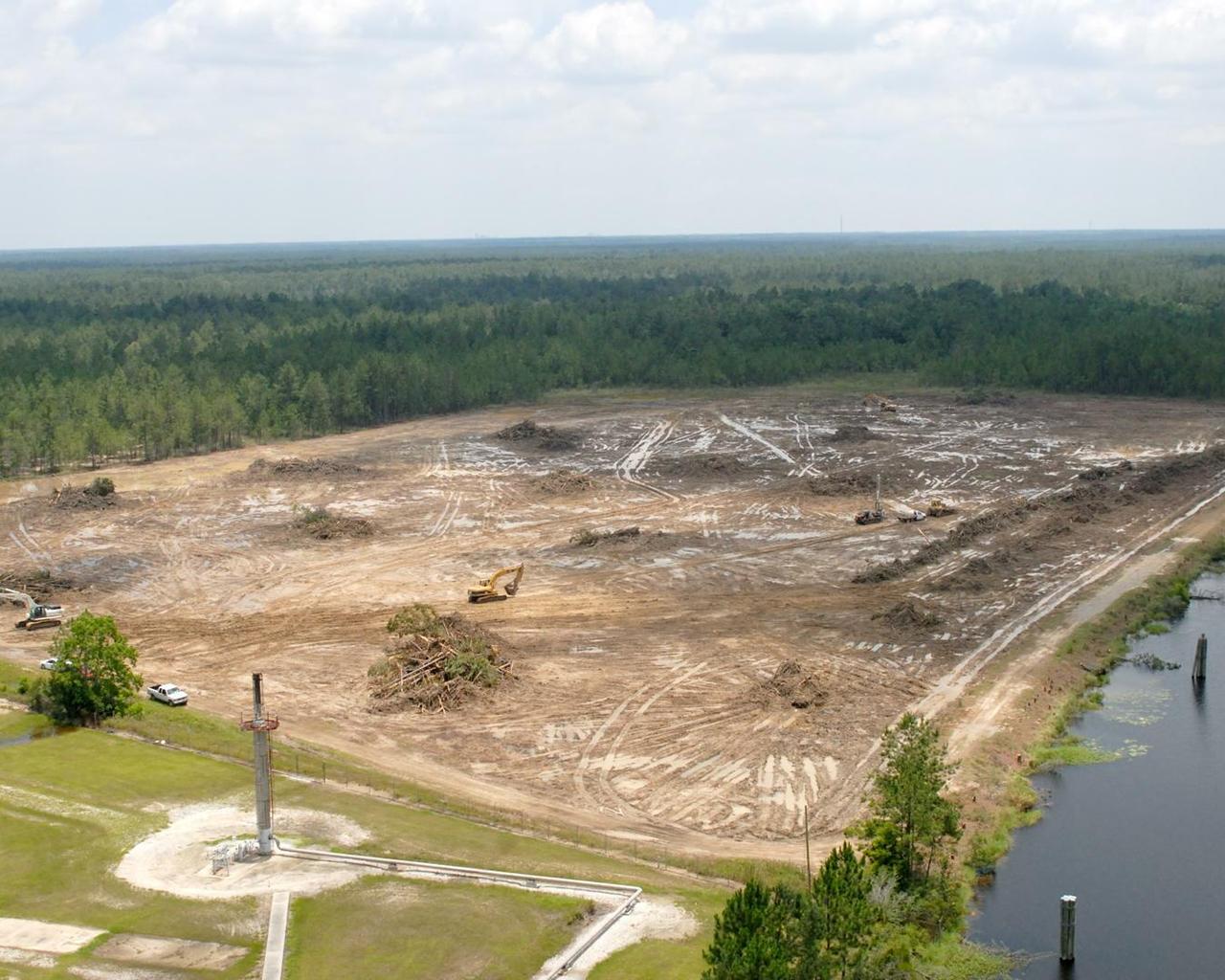
Work to clear the site for the A-3 Test Stand progresses quickly, as seen in this photo taken June 18 from atop the A-1 Test Stand. The next step in construction at 19-acre site will be the arrival of fill dirt in mid-July, followed by pilings and piling caps.
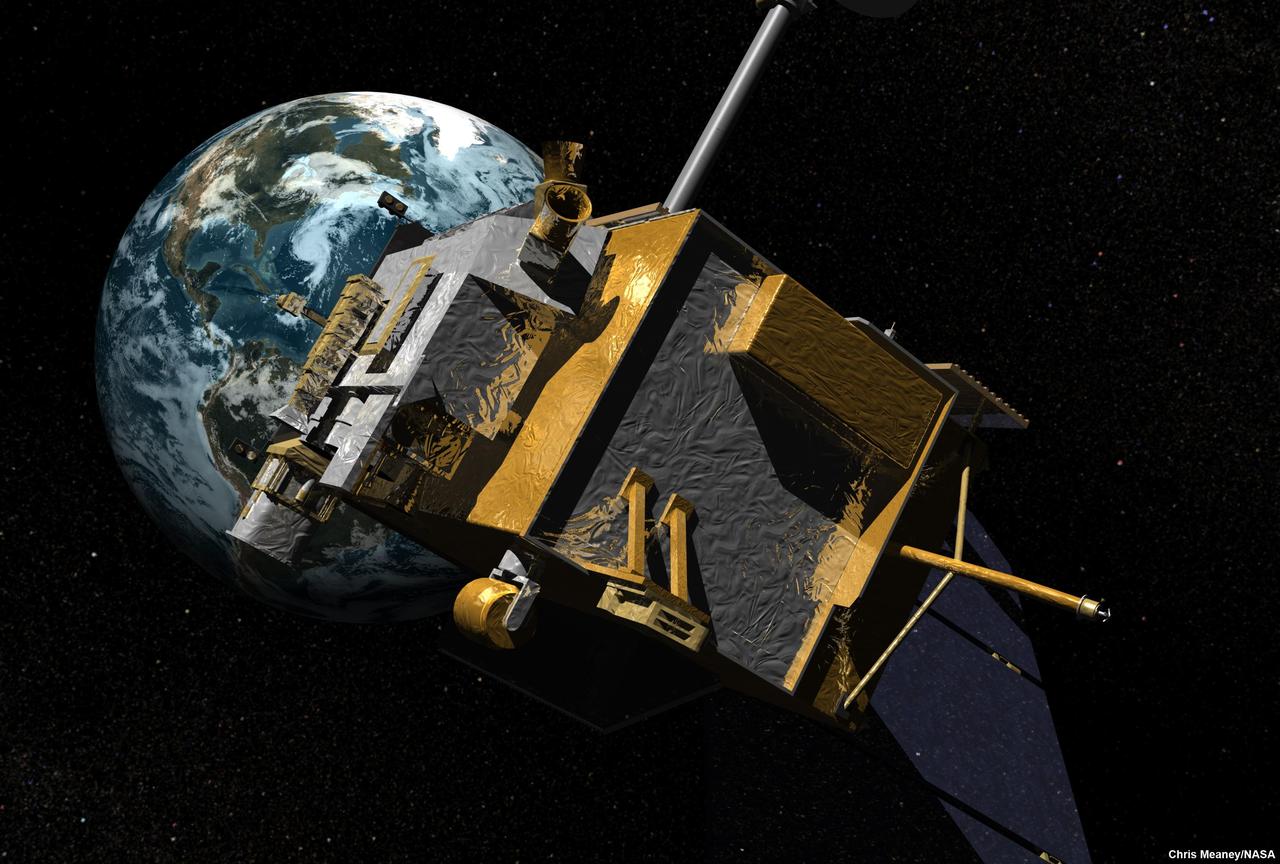
NASA is scheduled to launch the Lunar Reconnaissance Orbiter, an unmanned mission to comprehensively map the entire moon, on June 18, 2009.
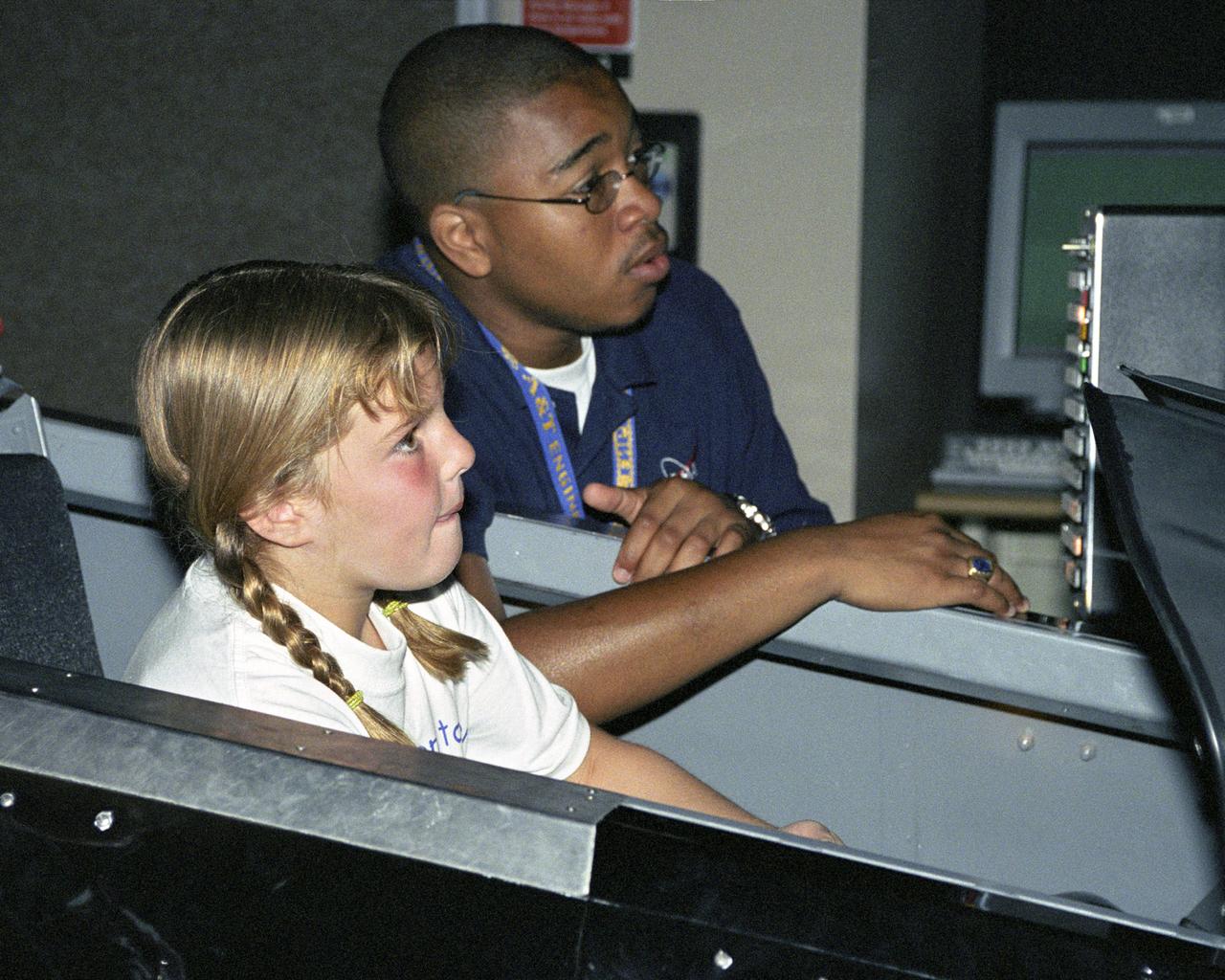
Nicole Schultheiss, a fourth-grader at Ulrich Elementary School in California City, "flew" an F/A-18 simulator with NASA engineer Byron Simpson's coaching during Take Your Children to Work Day June 22 at NASA Dryden Flight Research Center.
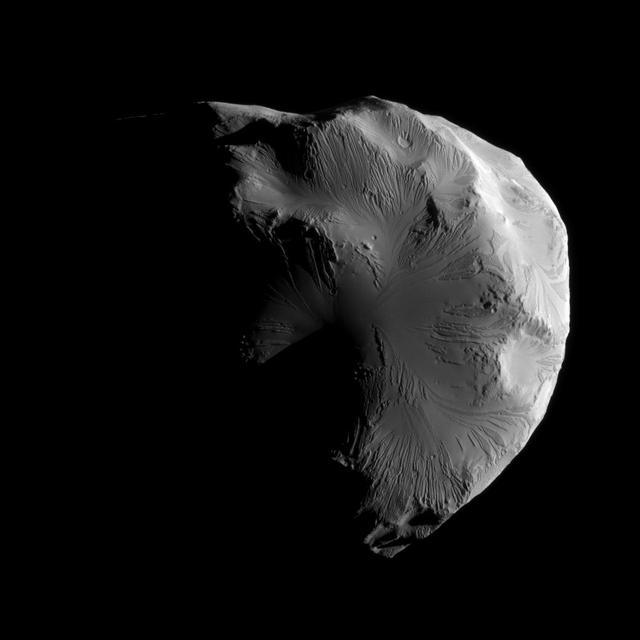
NASA Cassini spacecraft snapped this image of Saturn moon Helene while completing the mission second-closest encounter of the moon on June 18, 2011.
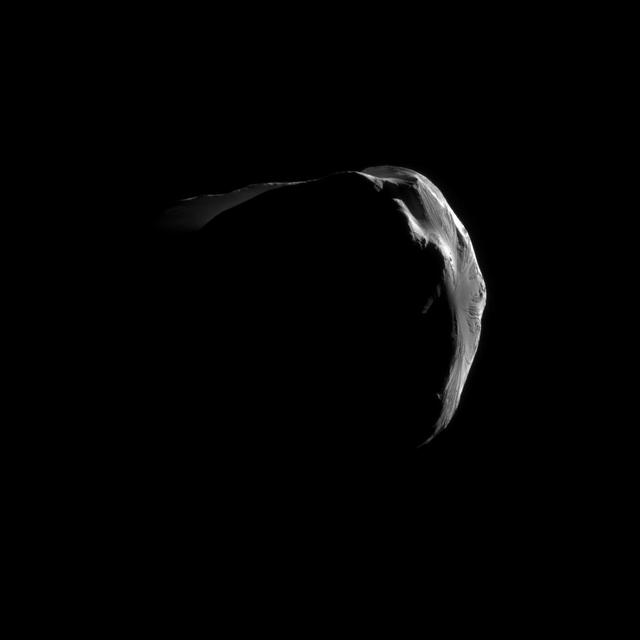
Saturn small, irregularly shaped moon Helene is strikingly illuminated in this close view captured by NASA Cassini during the spacecraft June 18, 2011, flyby.
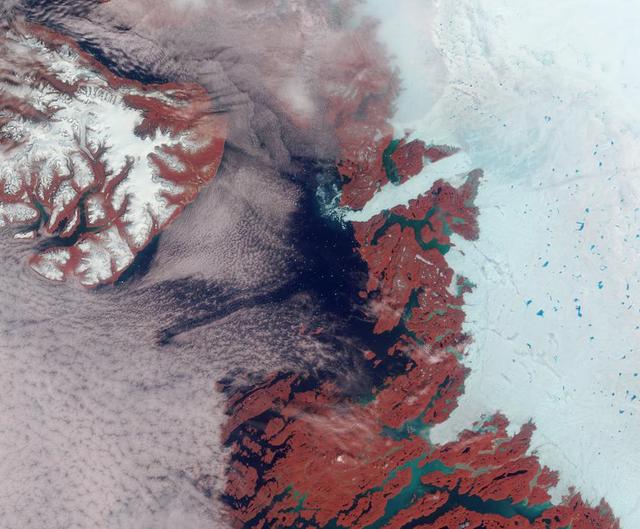
Vibrant reds, emerald greens, brilliant whites, and pastel blues adorn this view of the area surrounding the Jakobshavn Glacier on the western coast of Greenland captured by NASA Terra spacecraft on June 18, 2003.
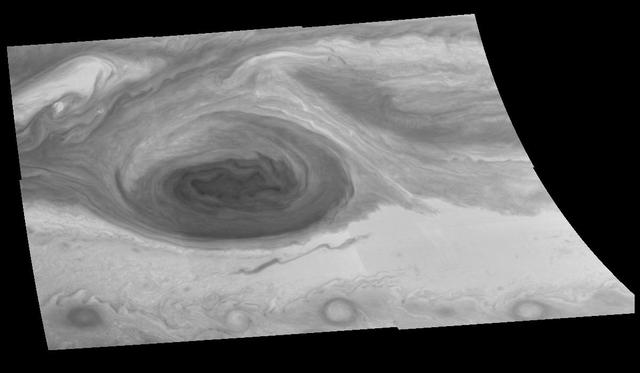
This mosaic of the Great Red Spot on Jupiter from NASA Galileo orbiter was taken over a 75 second interval beginning at universal time 4 hours, 18 minutes, 8 seconds on June 26, 1996.
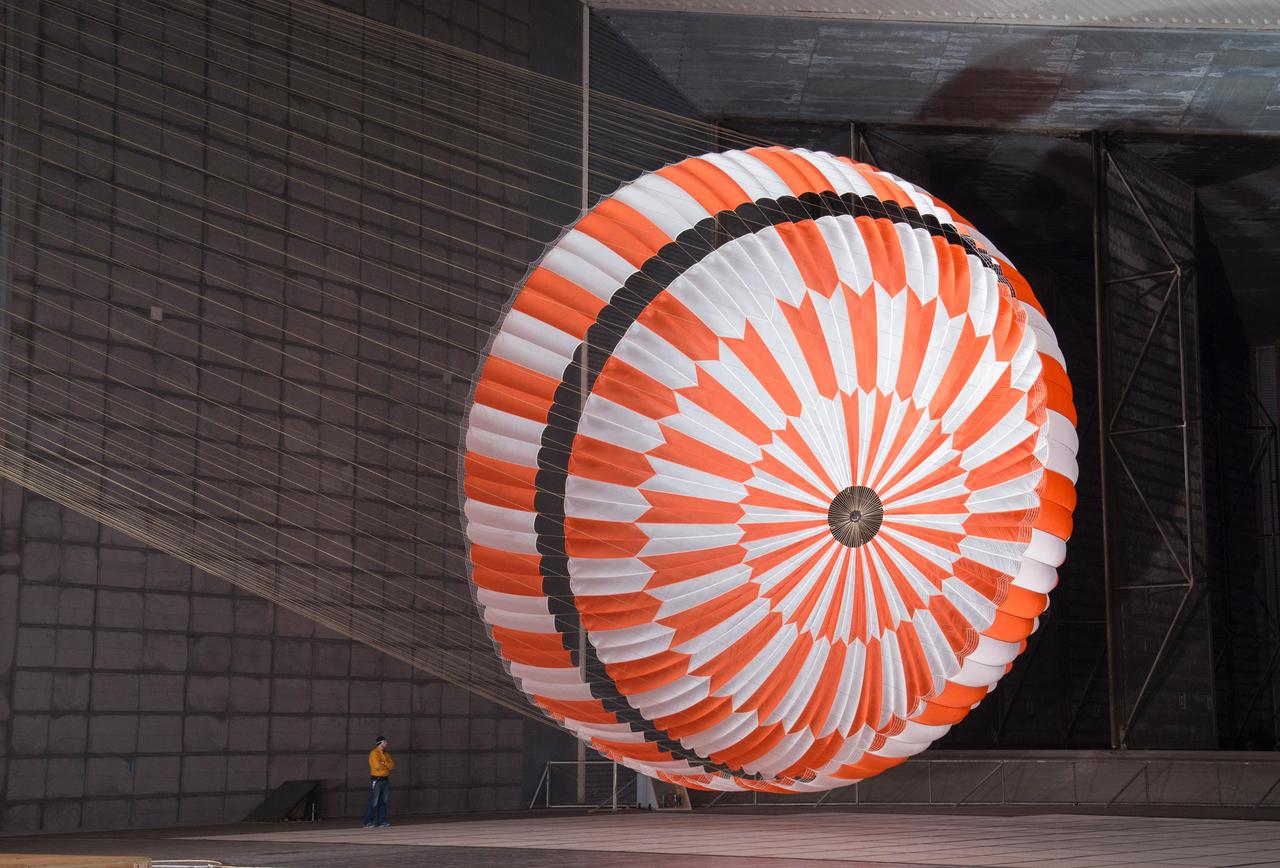
In this June 2017 photo, the supersonic parachute design that will land NASA's Perseverance rover on Mars on Feb. 18, 2021, undergoes testing in a wind tunnel at NASA's Ames Research Center in California's Silicon Valley. https://photojournal.jpl.nasa.gov/catalog/PIA23916

This image, taken by NASA's Dawn spacecraft, shows dwarf planet Ceres from an altitude of 2,700 miles (4,400 kilometers). The image, with a resolution of 1,400 feet (410 meters) per pixel, was taken on June 18, 2015. http://photojournal.jpl.nasa.gov/catalog/PIA19590
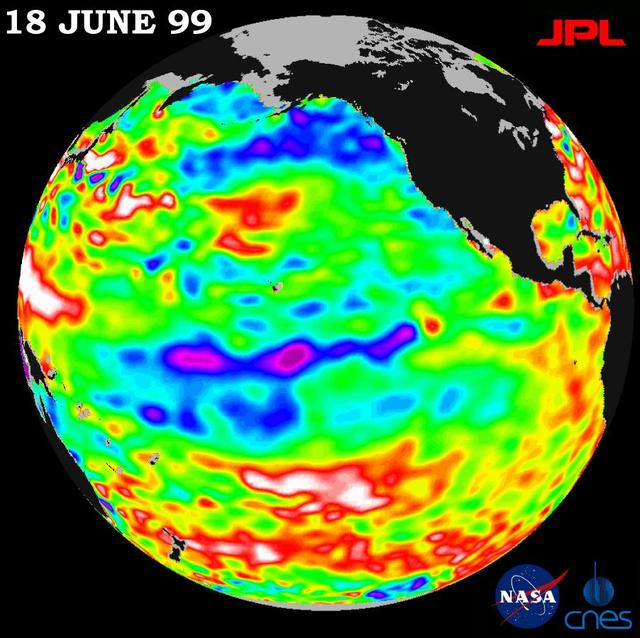
Lingering just a month ago in the eastern Pacific Ocean, the La Niña phenomenon, with its large volume of chilly water, barely has a pulse this month, according to new satellite data from NASA U.S.-French TOPEX/Poseidon mission. The data, taken during a 10-day cycle of data collection ending June 18, show that the equatorial Pacific Ocean is warming up and returning to normal (green) as La Niña all but vanishes. The warming trend is most apparent in the equatorial Pacific Ocean, where only a few patches of cooler, low sea levels (seen in blue and purple) remain. The blue areas are between 5 and 13 centimeters (2 and 5 inches) below normal, whereas the purple areas range from 14 to 18 centimeters (6 to 7 inches) below normal. Like its counterpart, El Niño, a La Niña condition will influence global climate and weather until it has completely subsided. As summer begins in the northern hemisphere, lower-than-normal sea surface levels and cool ocean temperatures persist in the northeastern Gulf of Alaska and along the western coast of North America. In contrast, the trend is the opposite over most of the Pacific, where above-normal sea surface heights and warmer ocean temperatures (indicated by the red and white areas) appear to be increasing and dominating the overall Pacific Ocean. Red areas are about 10 centimeters (4 inches) above normal; white areas show the sea surface height is between 14 and 32 centimeters (6 and 13 inches) above normal. Scientists are not ready to administer last rites to La Niña, though. In the last 12 months, the pool of unusually cold water in the Pacific has shrunk (warmed) several times before cooling (expanding) again. This summer's altimeter data will help them determine whether La Niña has truly dissipated or whether they will see another resurgence of cool water in the Pacific. http://photojournal.jpl.nasa.gov/catalog/PIA01586
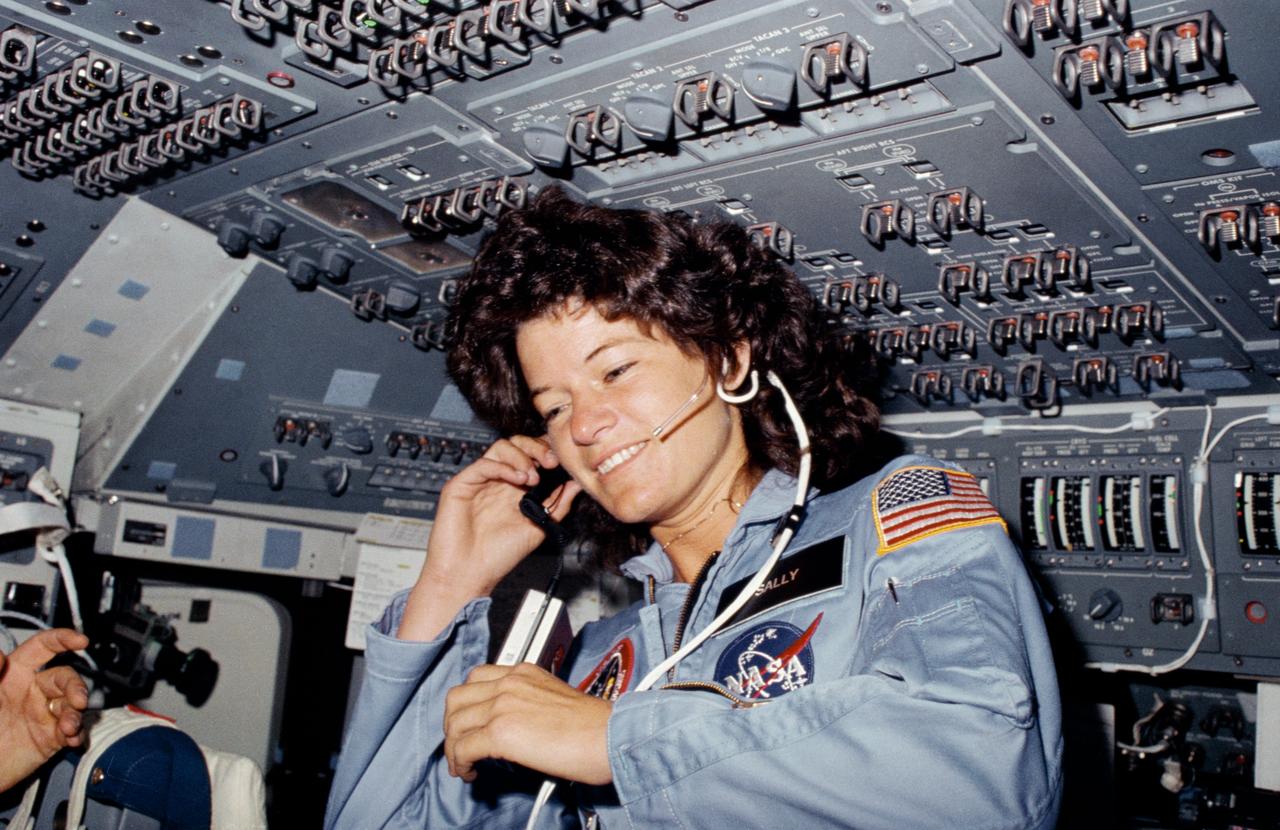
S83-35763 / STS007-02-027 (18 June 1983) --- Seen on the flight deck of the space shuttle Challenger, astronaut Sally K. Ride, STS-7 mission specialist, became the first American woman in space on June 18, 1983. Photo credit: NASA
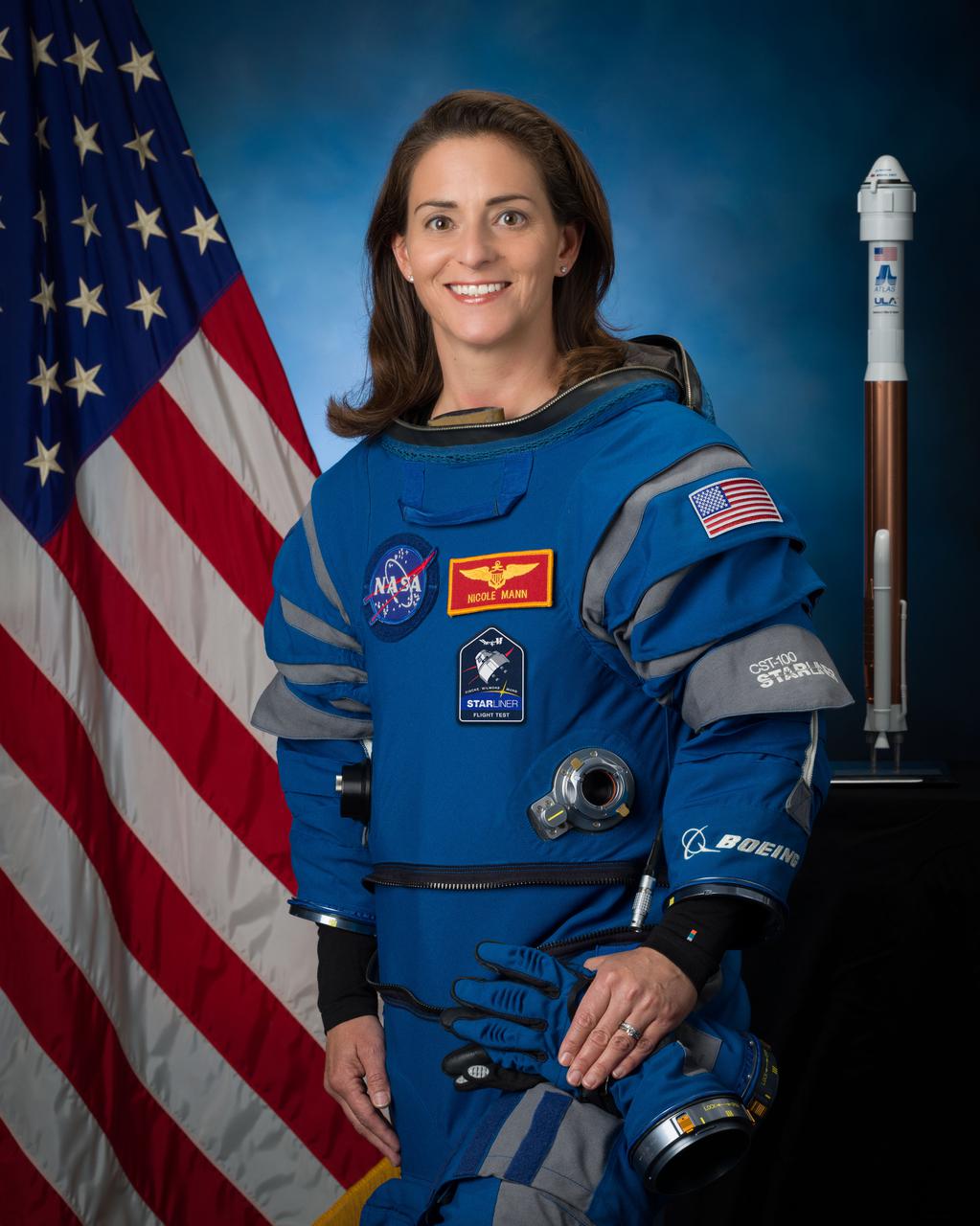
jsc2019e026848_alt (June 18, 2019) --- Official portrait of NASA astronaut Nicole Mann.
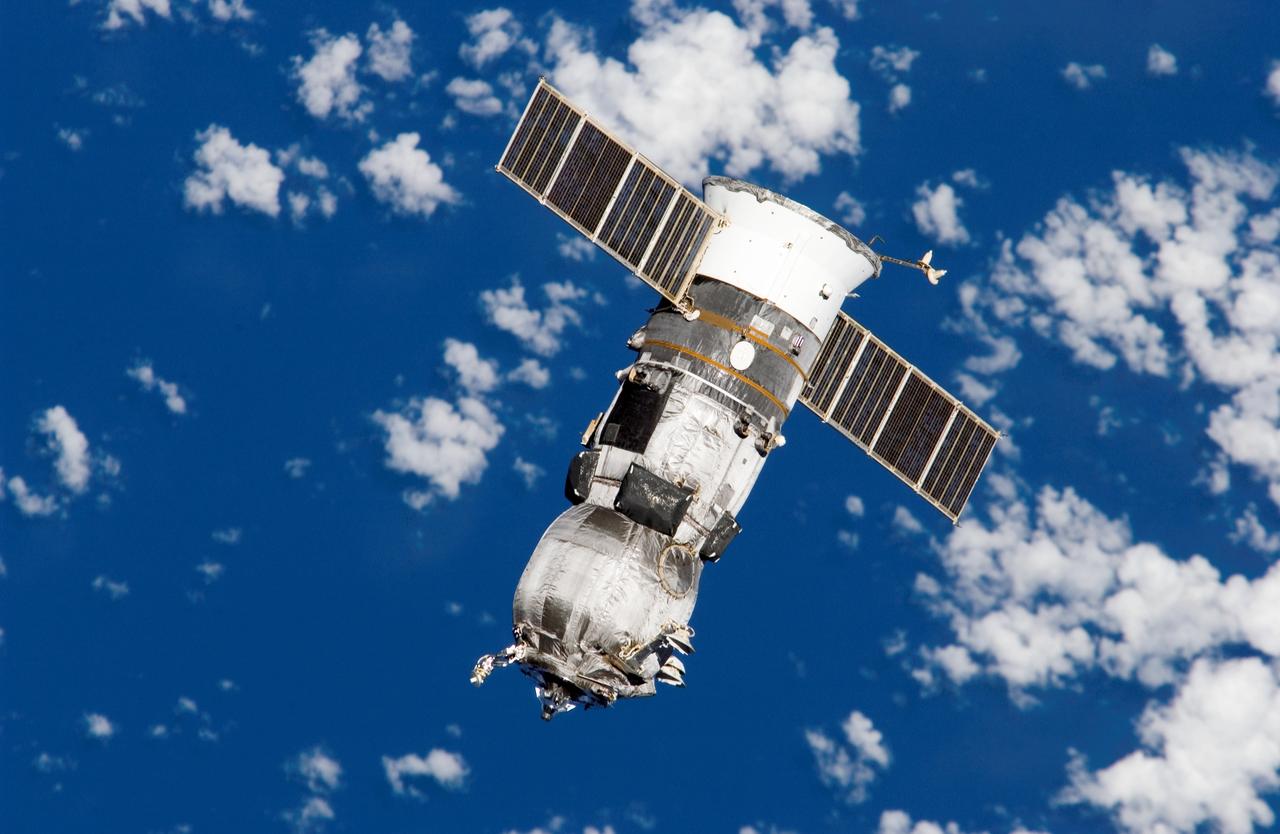
ISS011-E-08855 (15 June 2005) --- Backdropped by a blue and white Earth, an unpiloted Progress 17 supply vehicle departs from the international space station at 3:16 p.m. (CDT) on June 15, 2005, carrying its load of trash and unneeded equipment to be deorbited and burned up in Earth’s atmosphere. The undocking clears the way for the arrival of a new Progress 18, planned to launch June 16 and dock with the station on June 18.
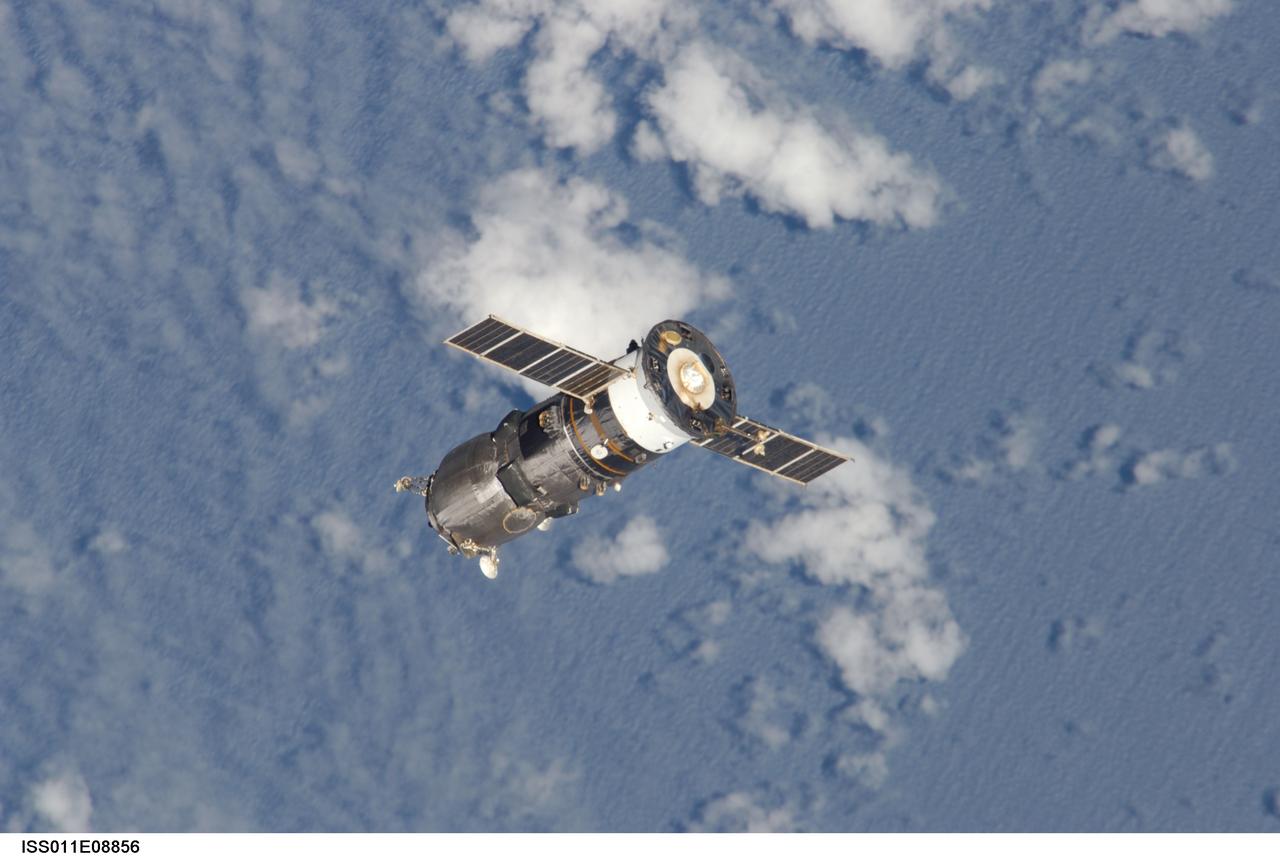
ISS011-E-08856 (15 June 2005) --- Backdropped by a blue and white Earth, an unpiloted Progress 17 supply vehicle departs from the International Space Station (ISS) at 3:16 p.m. (CDT) on June 15, 2005, carrying its load of trash and unneeded equipment to be deorbited and burned up in Earth’s atmosphere. The undocking clears the way for the arrival of a new Progress 18, planned to launch June 16 and dock with the Station on June 18.
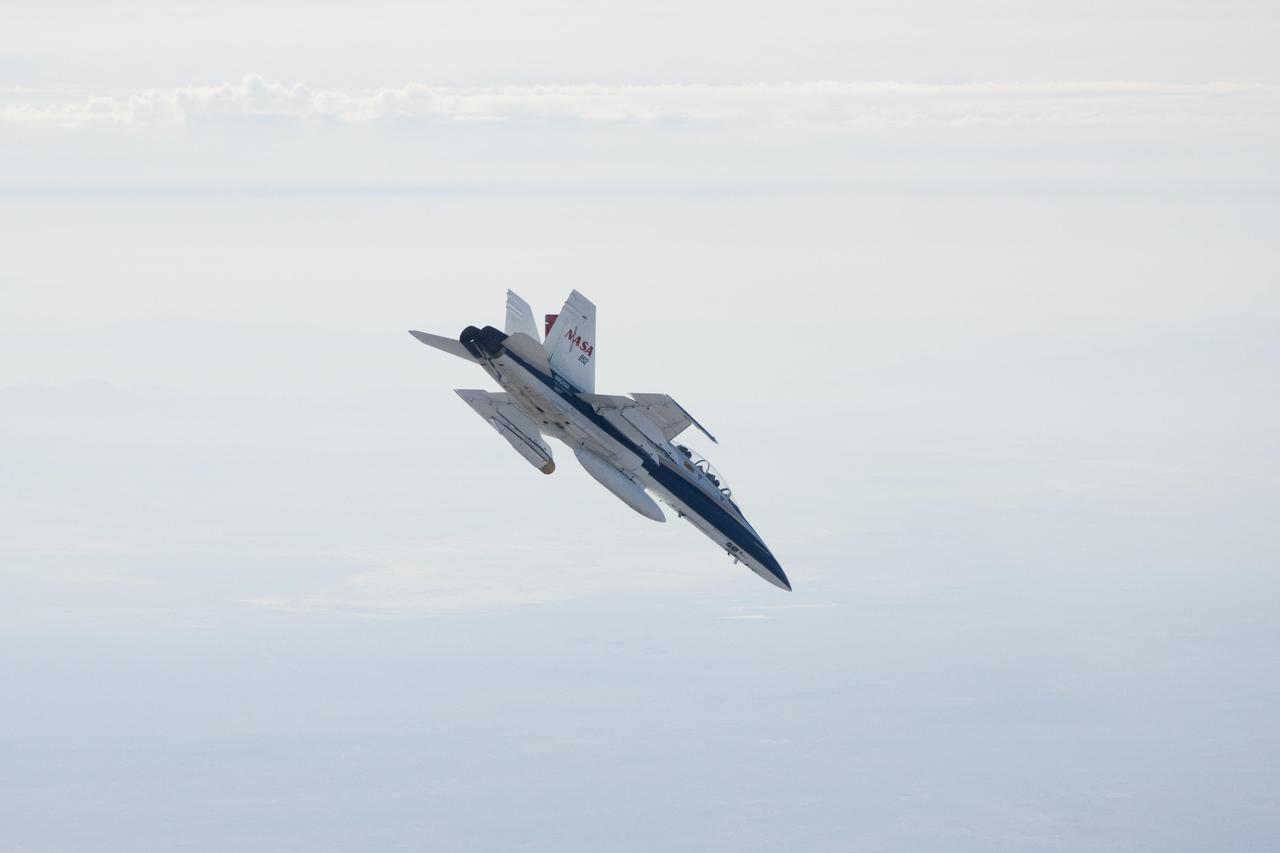
A NASA Dryden Flight Research Center F/A-18 852 aircraft makes a 40-degree dive during June 2011 flight tests of a Mars landing radar. A test model of the landing radar for NASA Mars Science Laboratory mission is inside a pod under the left wing.
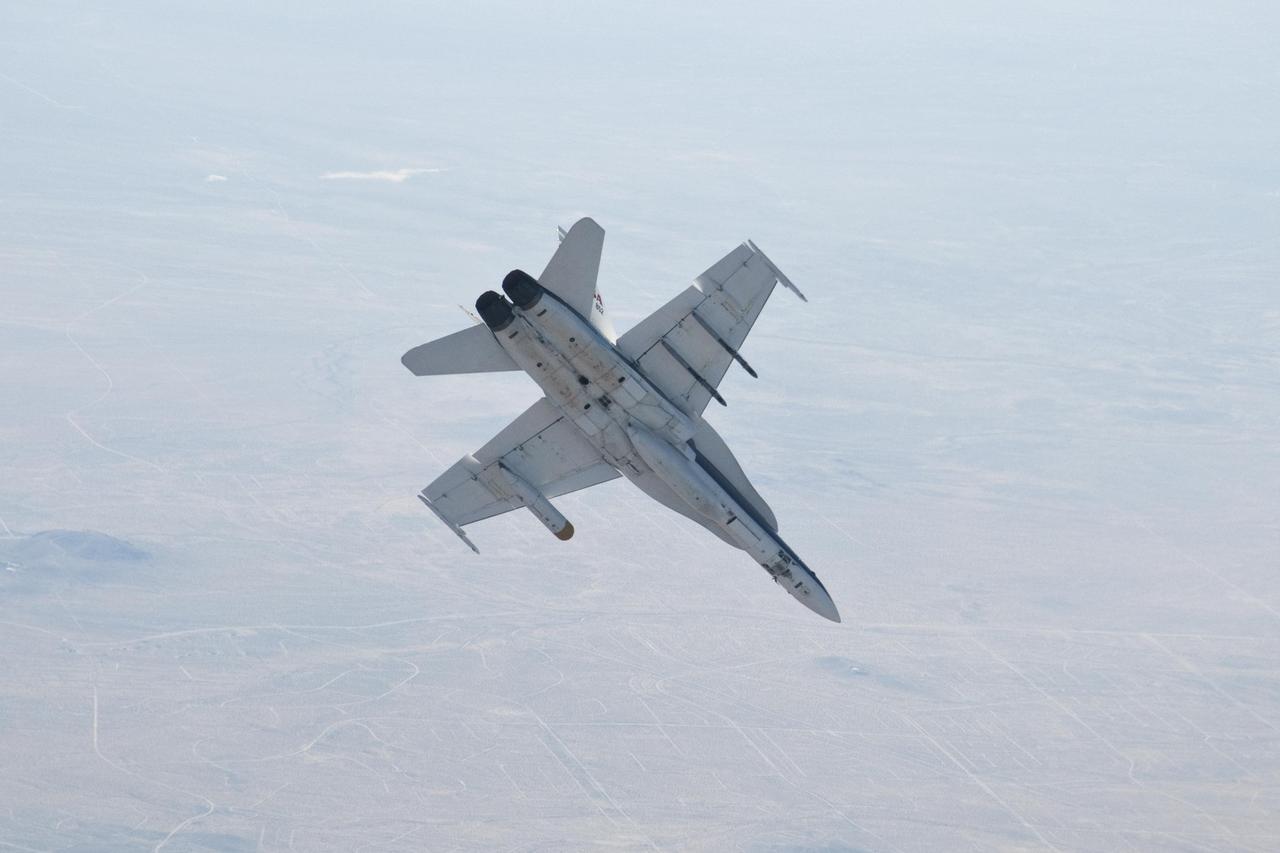
A NASA Dryden Flight Research Center F/A-18 852 aircraft performs a roll during June 2011 flight tests of a Mars landing radar. A test model of the landing radar for NASA Mars Science Laboratory mission is inside a pod under the aircraft left wing.
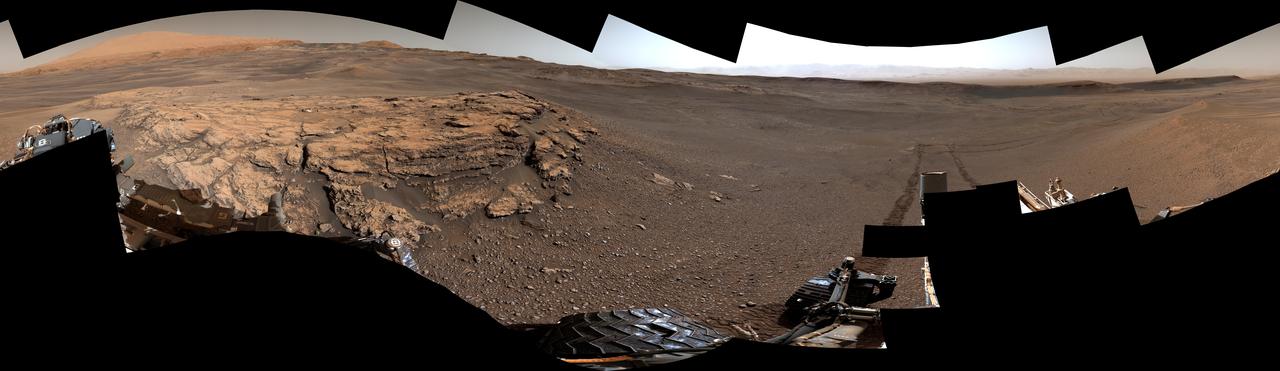
This 360-degree panorama of a location called "Teal Ridge" was captured on Mars by the Mast Camera, or Mastcam, on NASA's Curiosity rover on June 18, 2019, the 2,440th Martian day, or sol, of the mission. By driving up the side of Teal Ridge, the rover was able to reach rocks from the second of three subunits within the "clay-bearing unit" that are exposed in a valley-like region of Mount Sharp, which Curiosity is ascending. The scene is presented with a color adjustment that approximates white balancing to resemble how the rocks and sand would appear under daytime lighting conditions on Earth. https://photojournal.jpl.nasa.gov/catalog/PIA23346
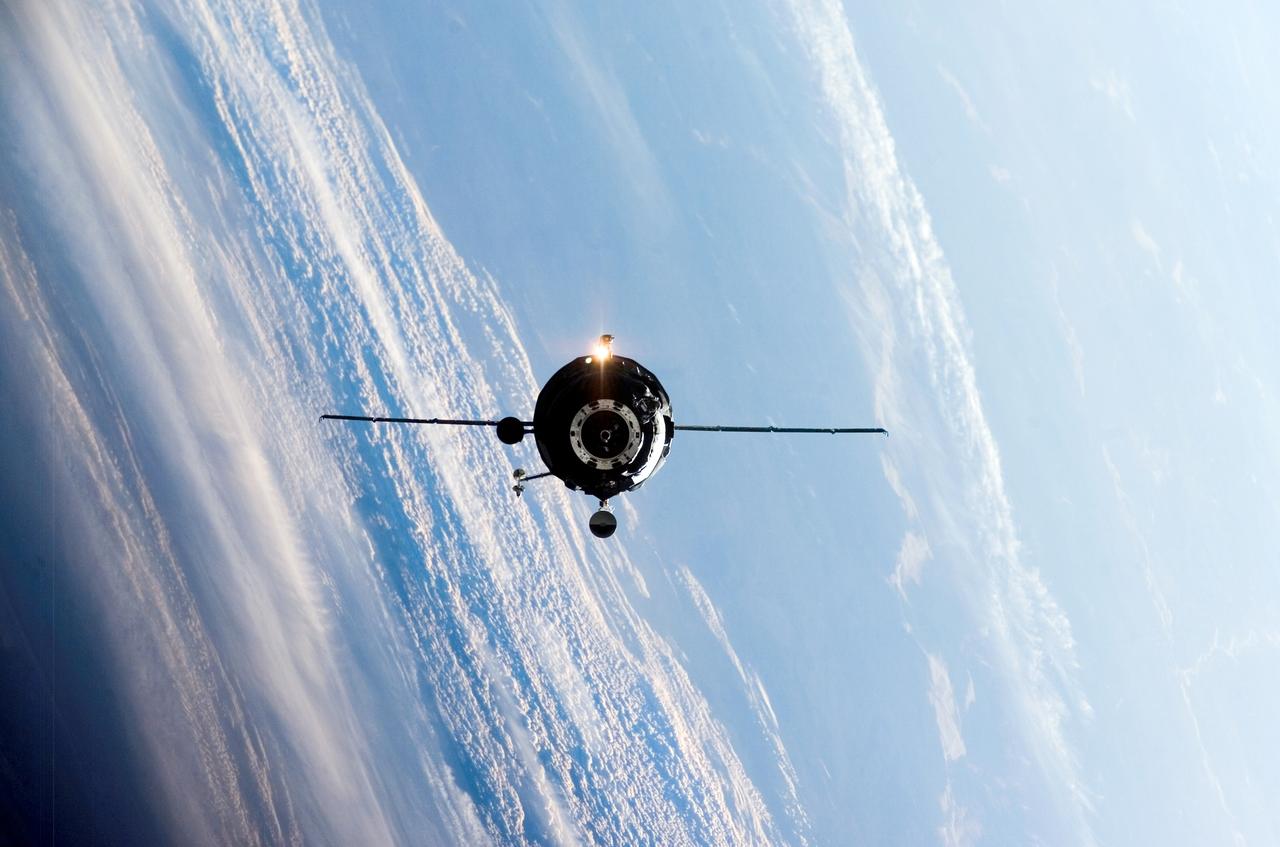
ISS011-E-09178 (18 June 2005) --- Backdropped by a blue and white Earth, an unpiloted Progress supply vehicle approaches the international space station. The Progress 18 resupply craft launched at 6:09 p.m. (CDT) on June 16, 2005 from the Baikonur Cosmodrome in Kazakhstan to deliver two tons of supplies, food, water, fuel and equipment to the Expedition 11 crewmembers onboard the station. Progress docked to the aft port of the Zvezda Service Module at 7:42 p.m. (CDT) on June 18 as the station flew approximately 225 statute miles, above a point near Beijing, China.
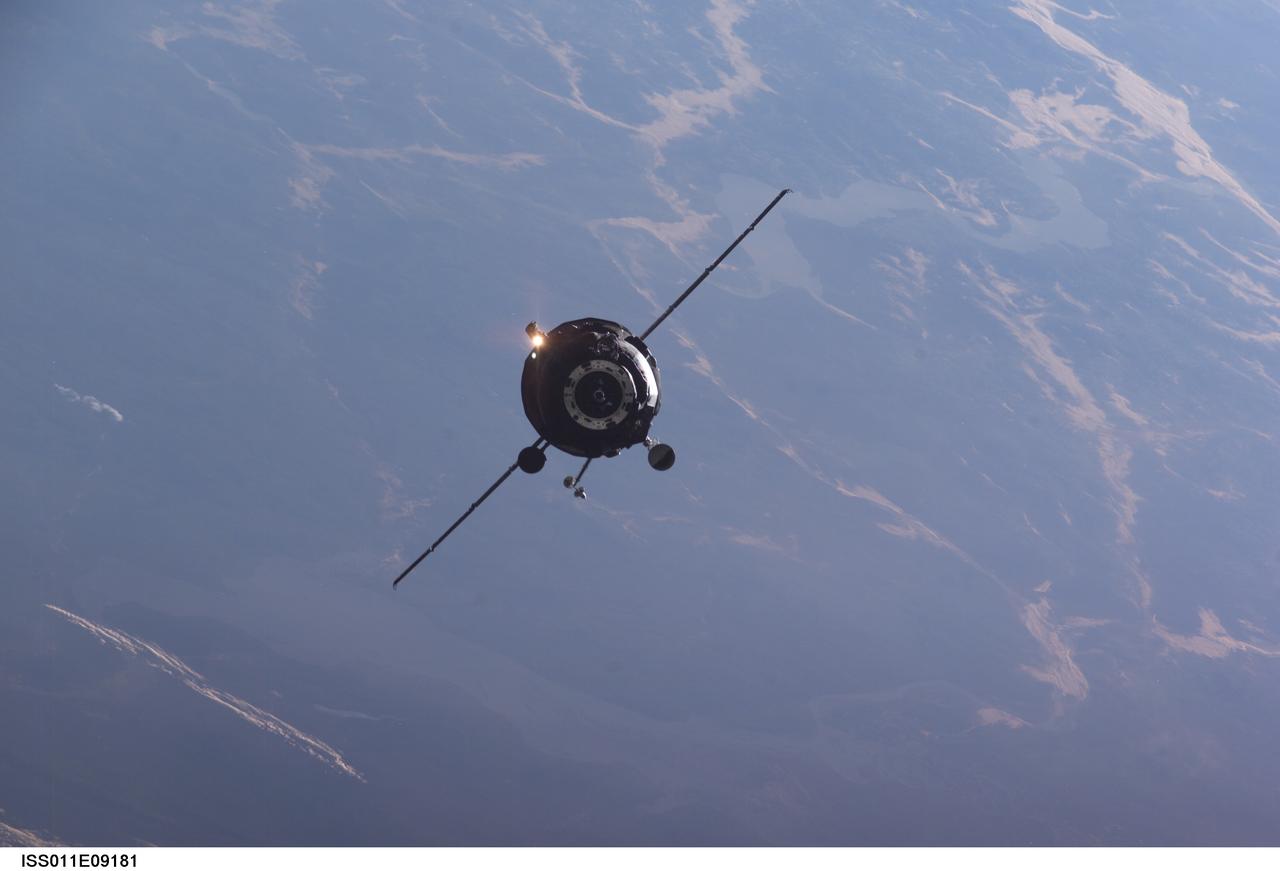
ISS011-E-09181 (18 June 2005) --- An unpiloted Progress supply vehicle approaches the International Space Station. The Progress 18 resupply craft launched at 6:09 p.m. (CDT) on June 16, 2005 from the Baikonur Cosmodrome in Kazakhstan to deliver two tons of supplies, food, water, fuel and equipment to the Expedition 11 crew members onboard the station. Progress docked to the aft port of the Zvezda Service Module at 7:42 p.m. (CDT) on June 18 as the station flew approximately 225 statute miles above a point near Beijing, China.
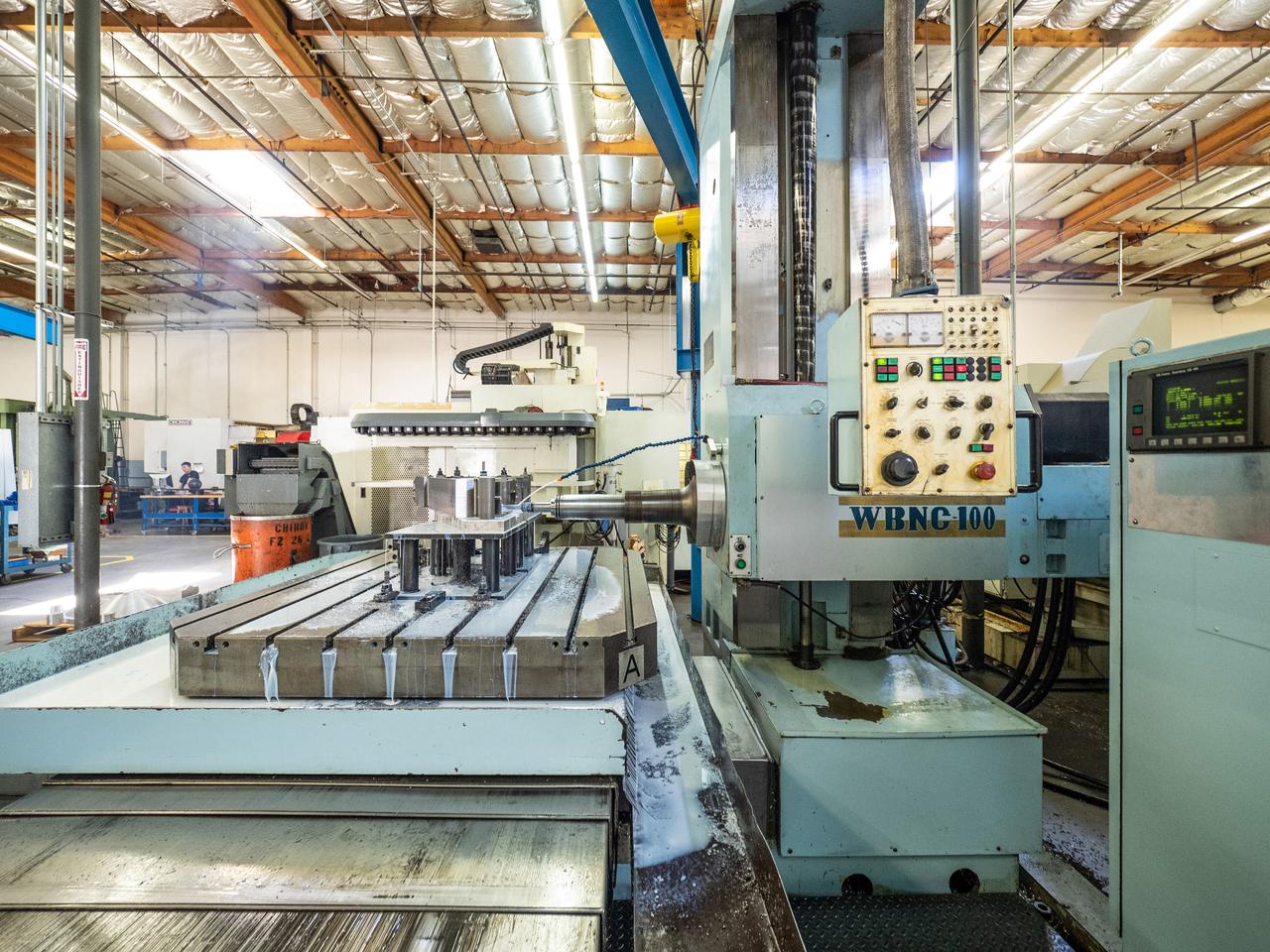
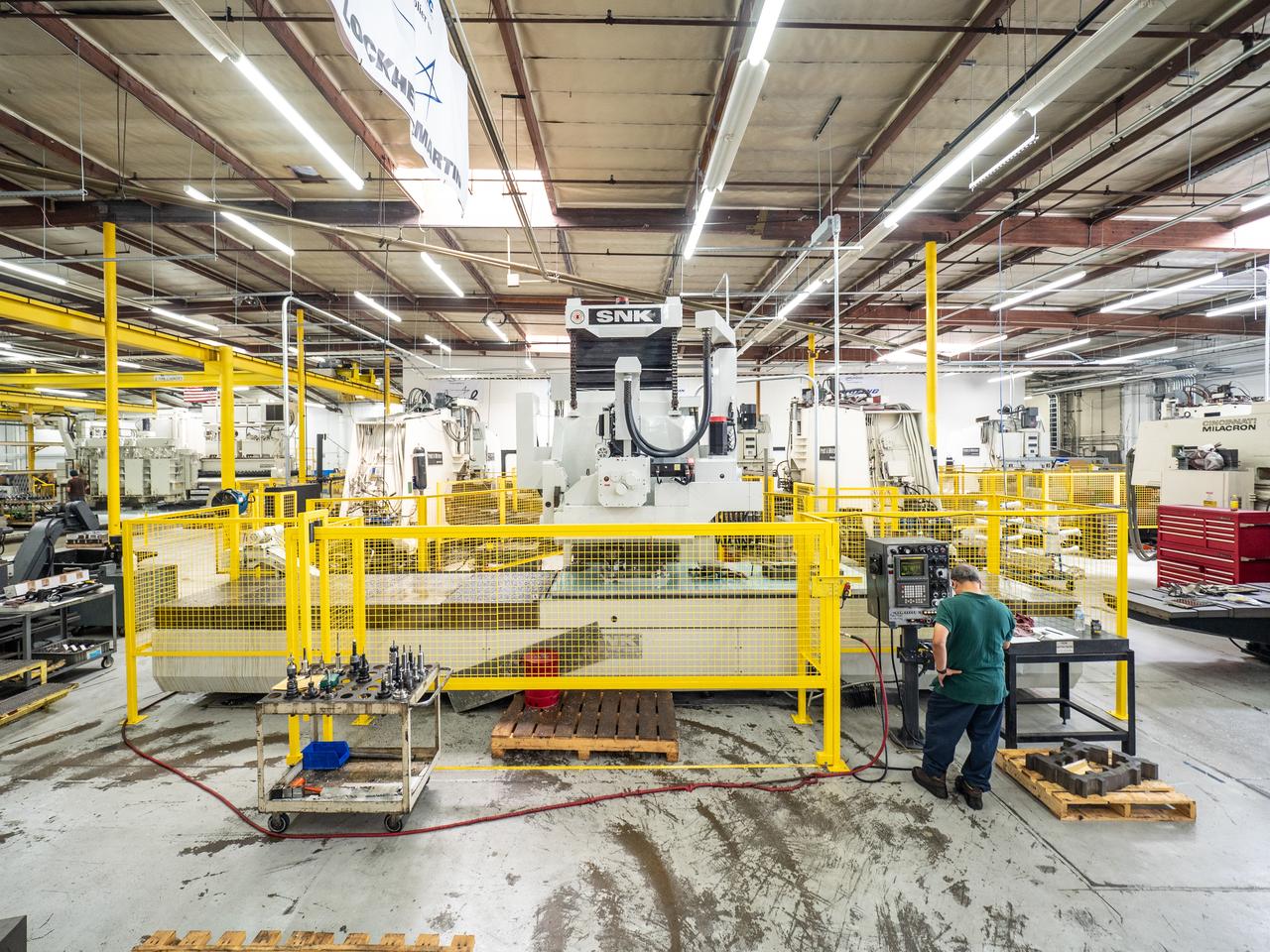
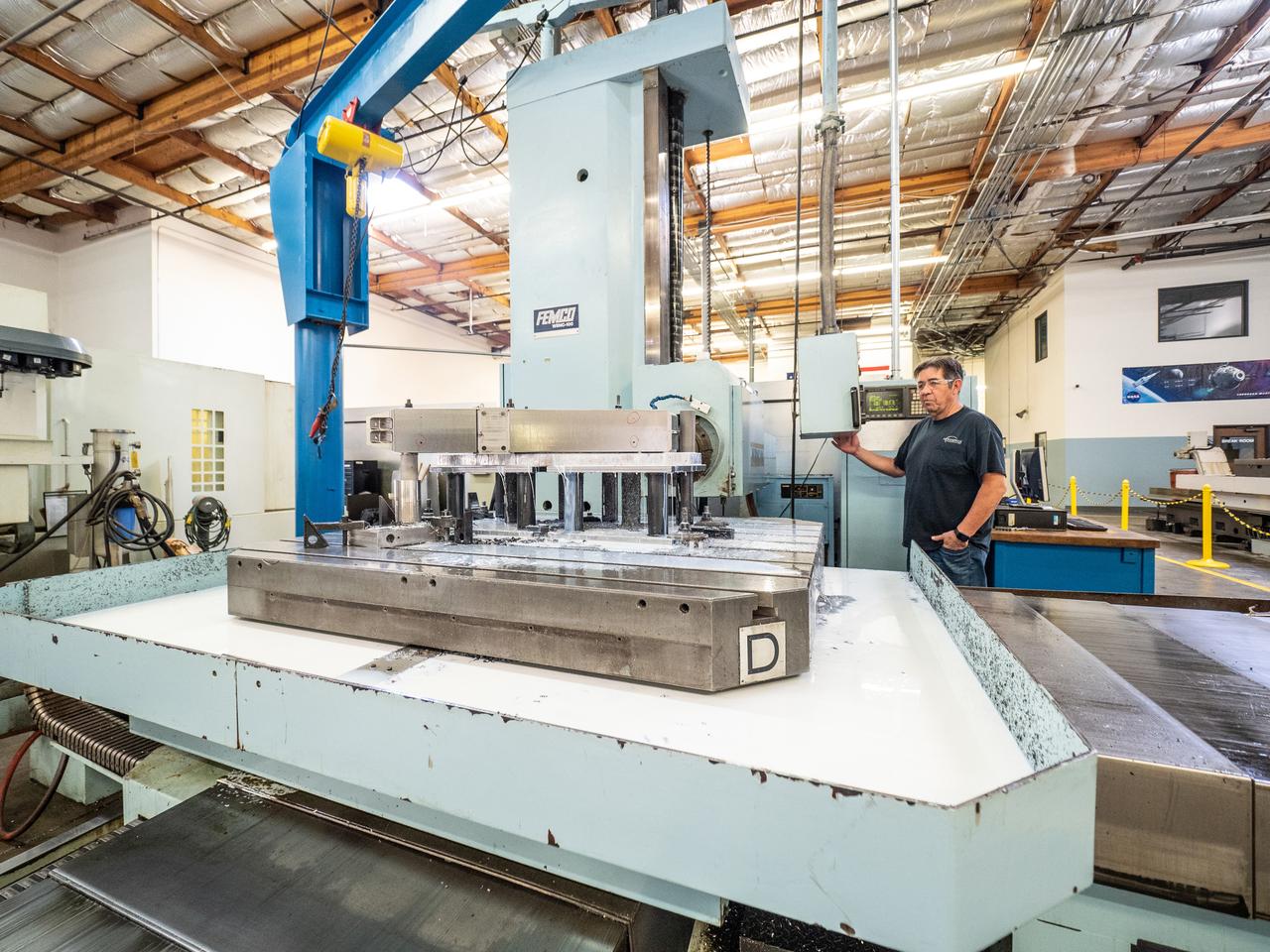
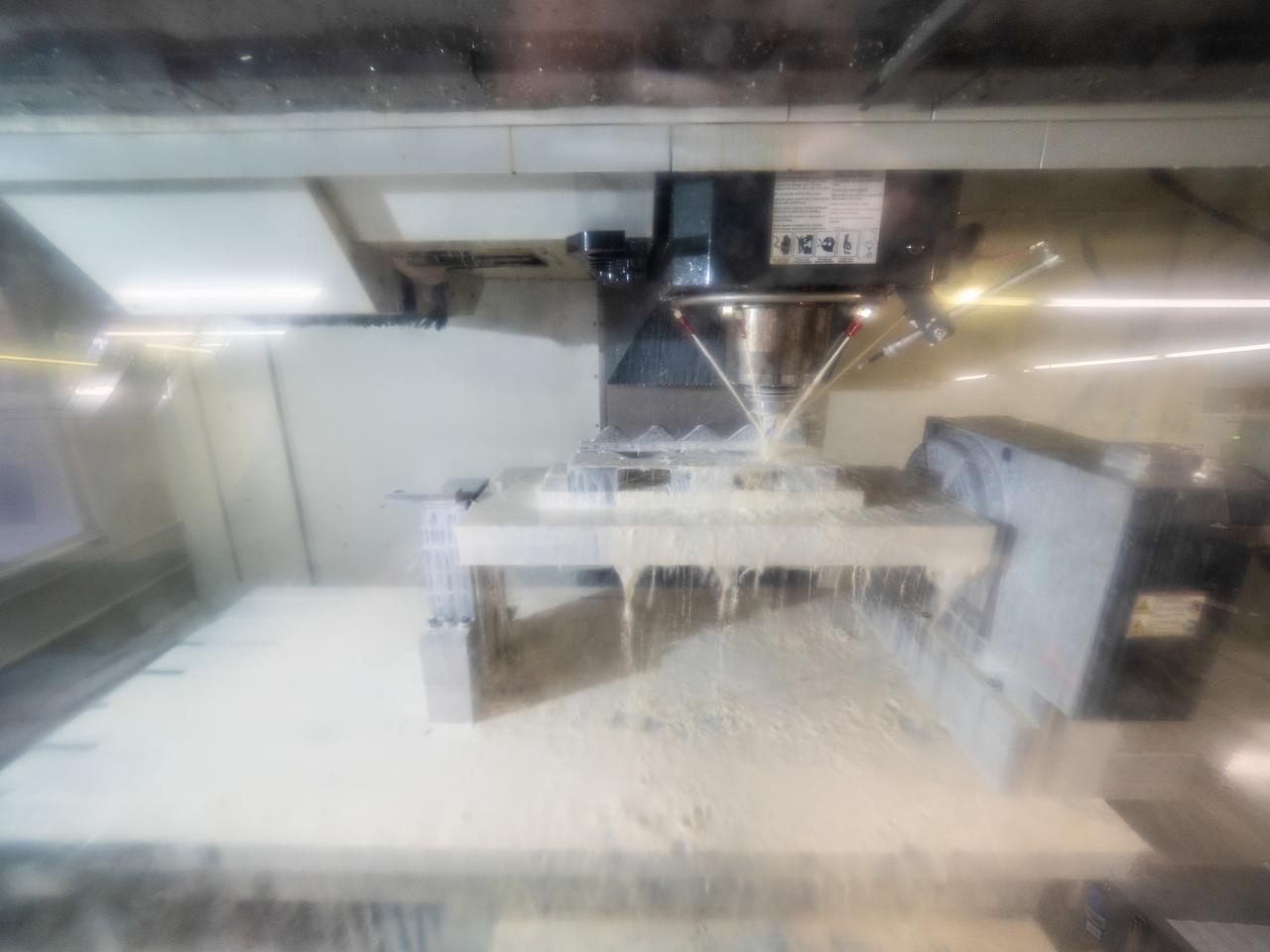
Parts for the Orion crew module which will carry astronauts on Artemis II are machined at Aerospace Engineering Corporation in California on June 18, 2018.
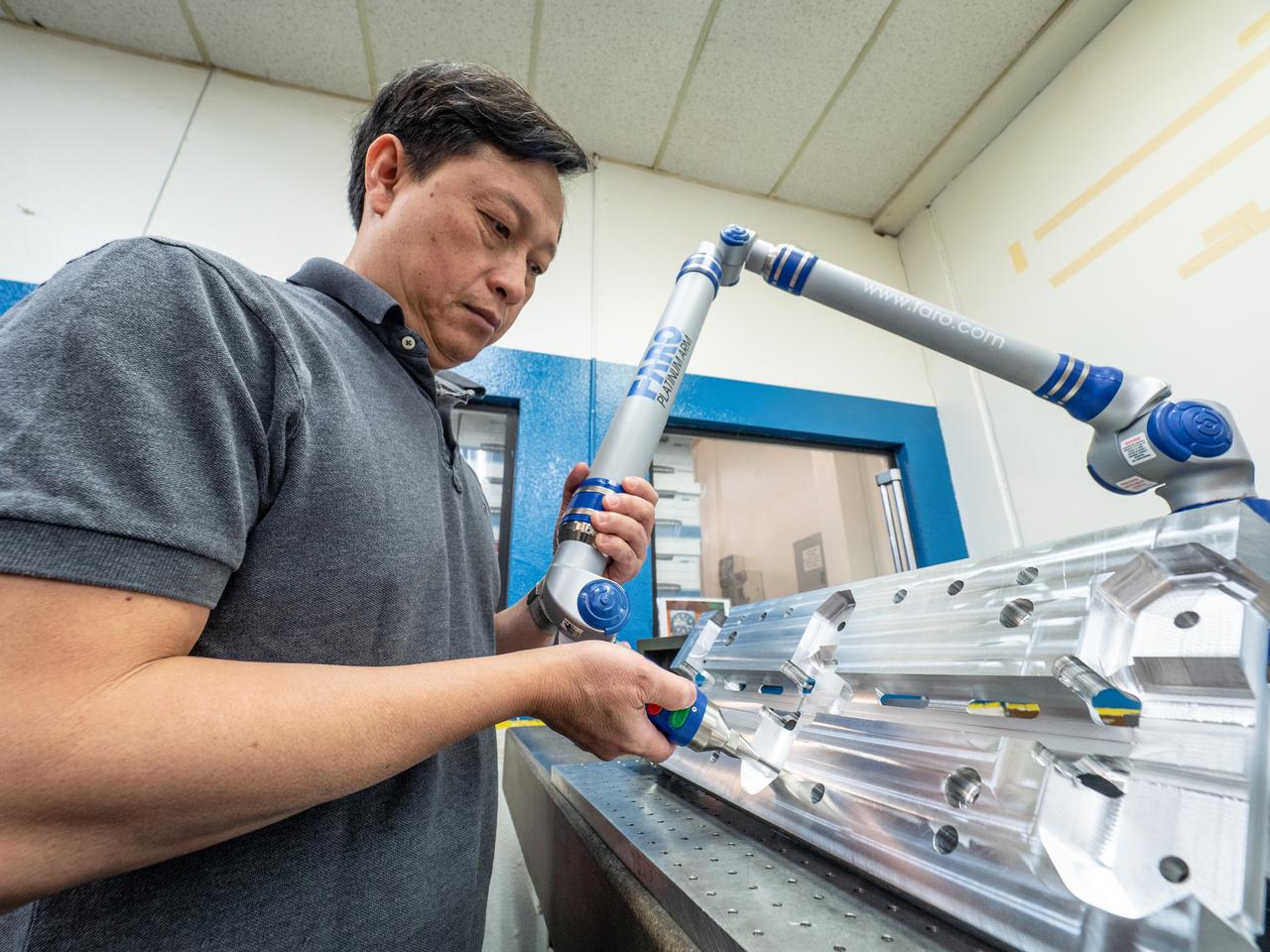
Parts for the Orion crew module which will carry astronauts on Artemis II are machined at Aerospace Engineering Corporation in California on June 18, 2018.
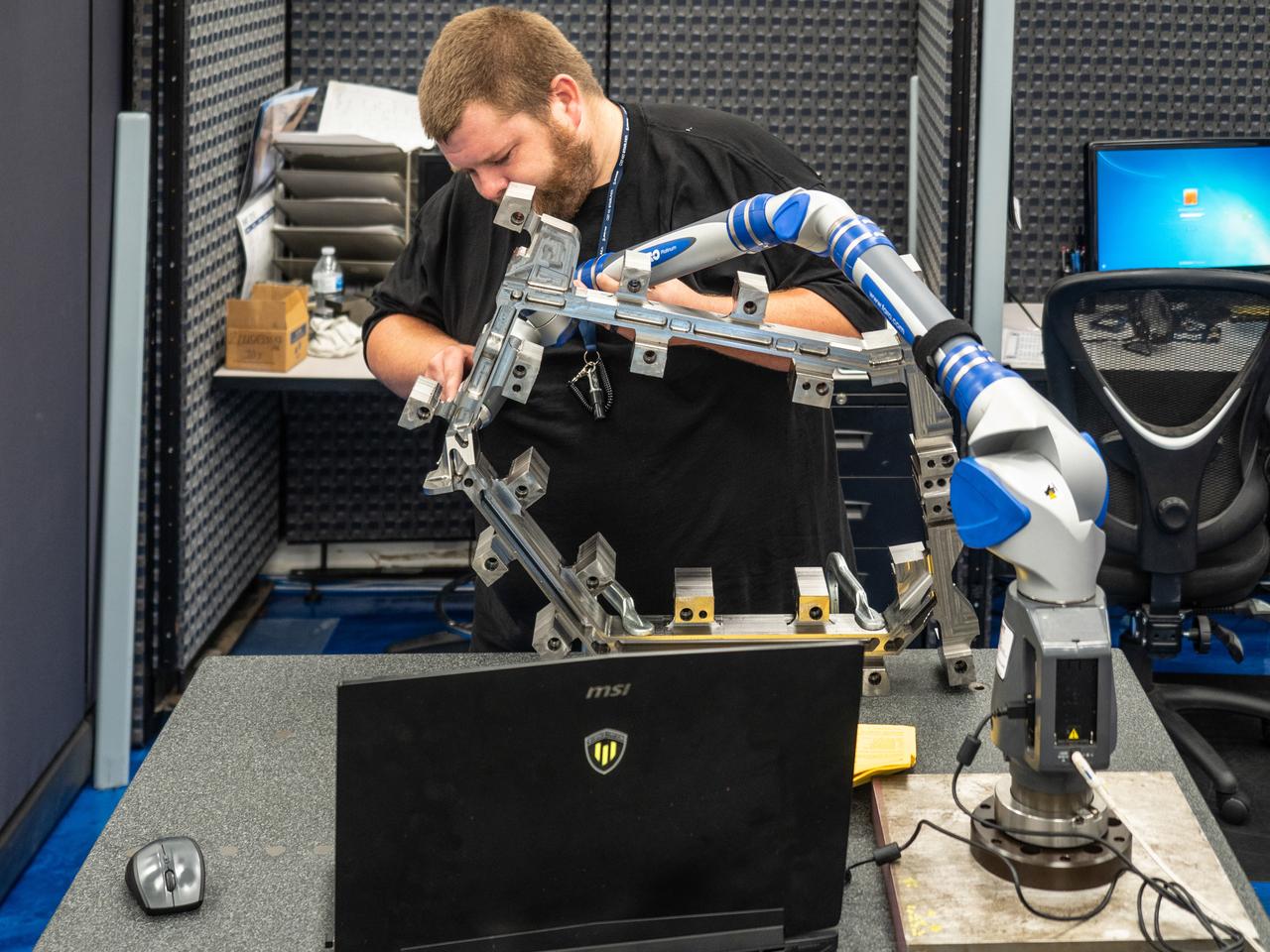
Parts for the Orion crew module which will carry astronauts on Artemis II are machined at Aerospace Engineering Corporation in California on June 18, 2018.
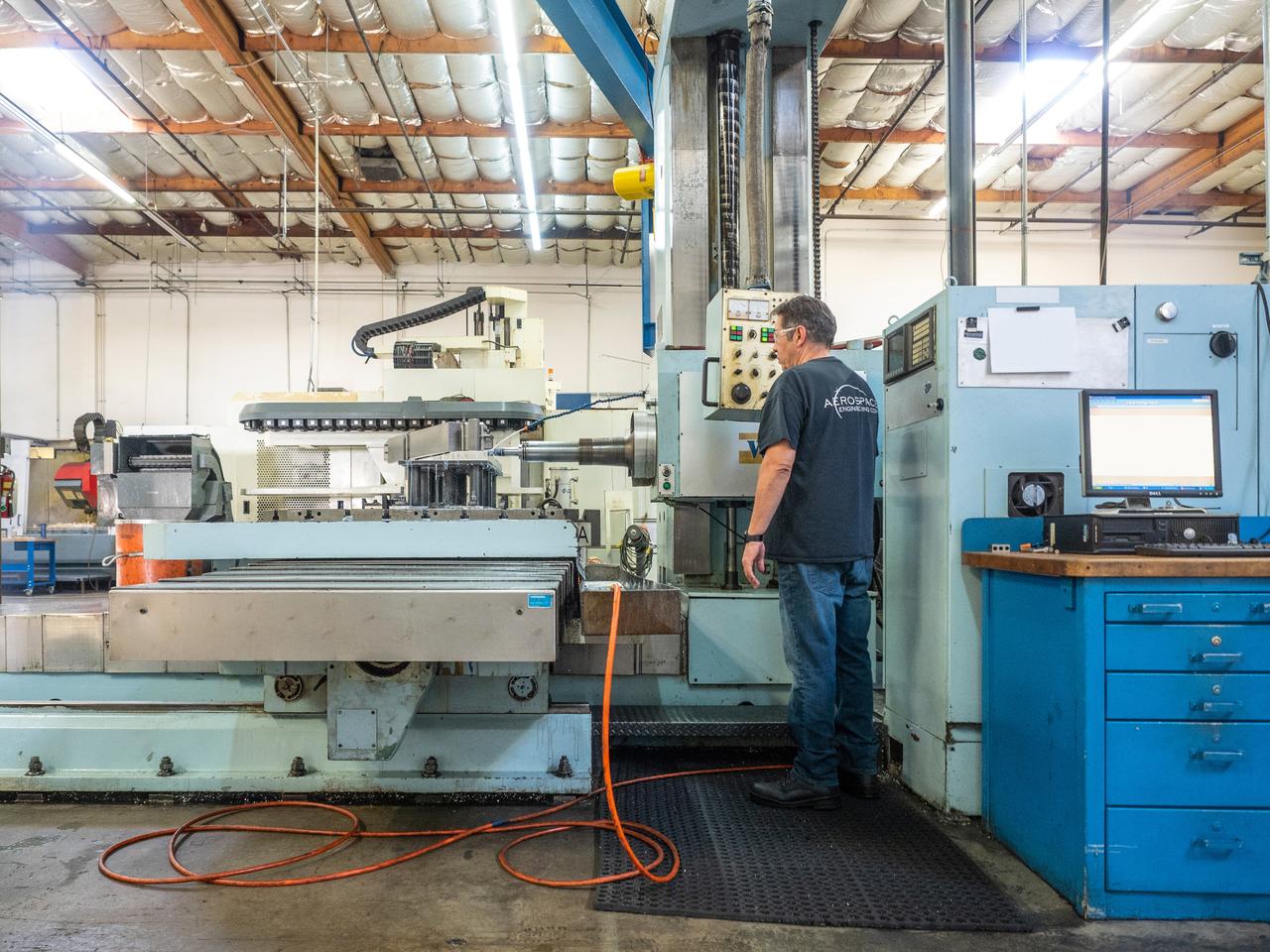
Parts for the Orion crew module which will carry astronauts on Artemis II are machined at Aerospace Engineering Corporation in California on June 18, 2018.
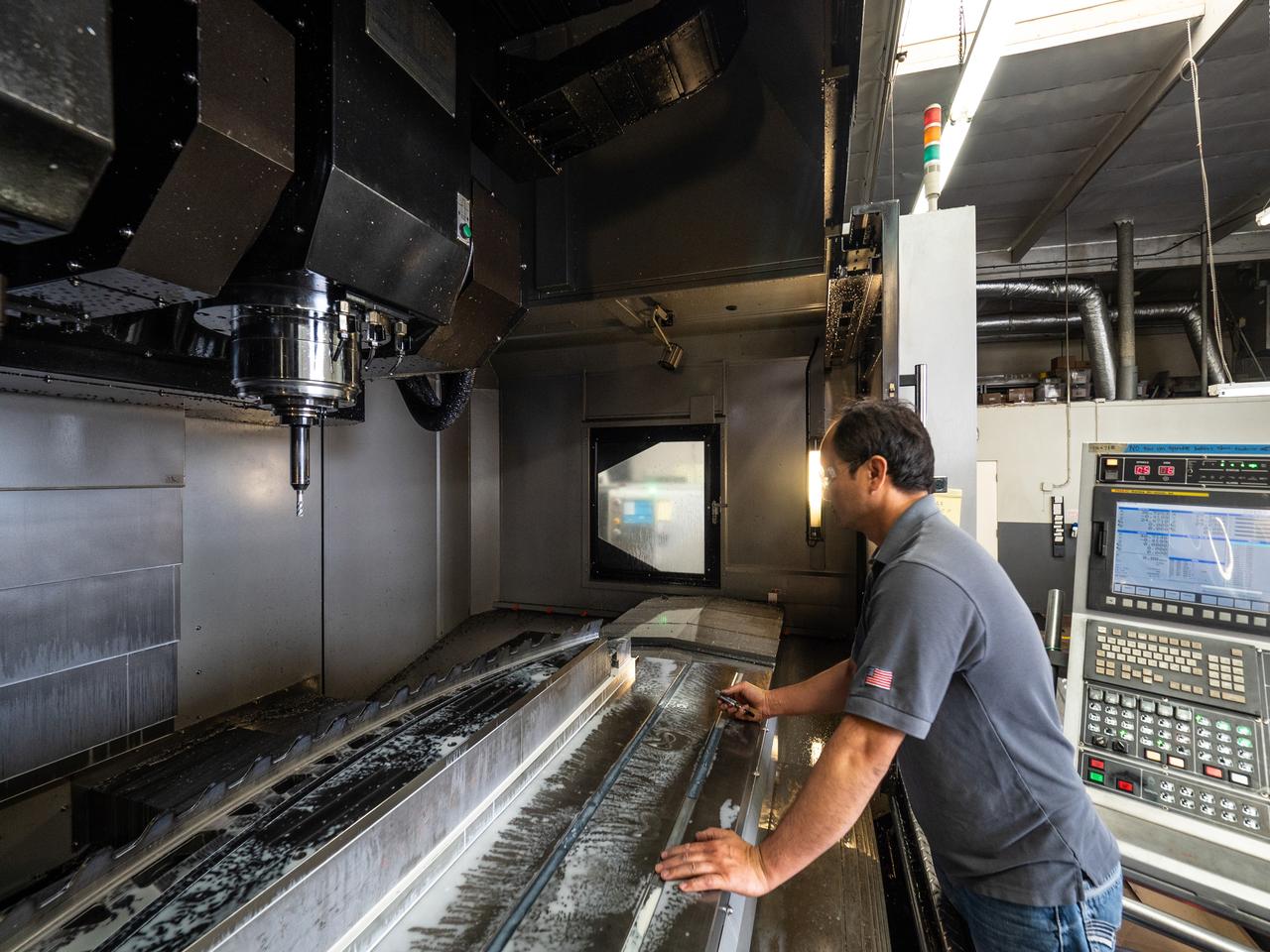
Parts for the Orion crew module which will carry astronauts on Artemis II are machined at Aerospace Engineering Corporation in California on June 18, 2018.
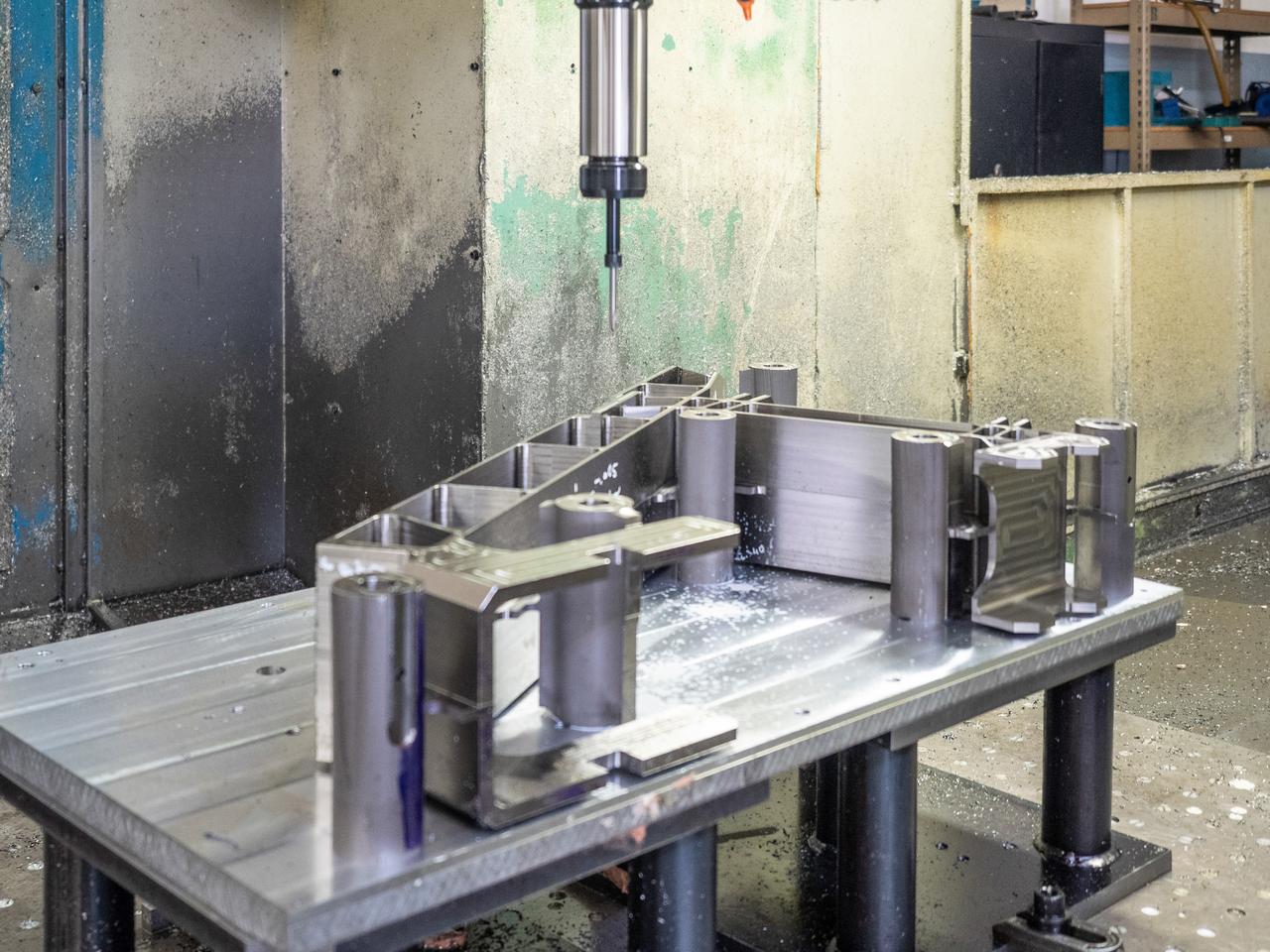
Parts for the Orion crew module which will carry astronauts on Artemis II are machined at Aerospace Engineering Corporation in California on June 18, 2018.
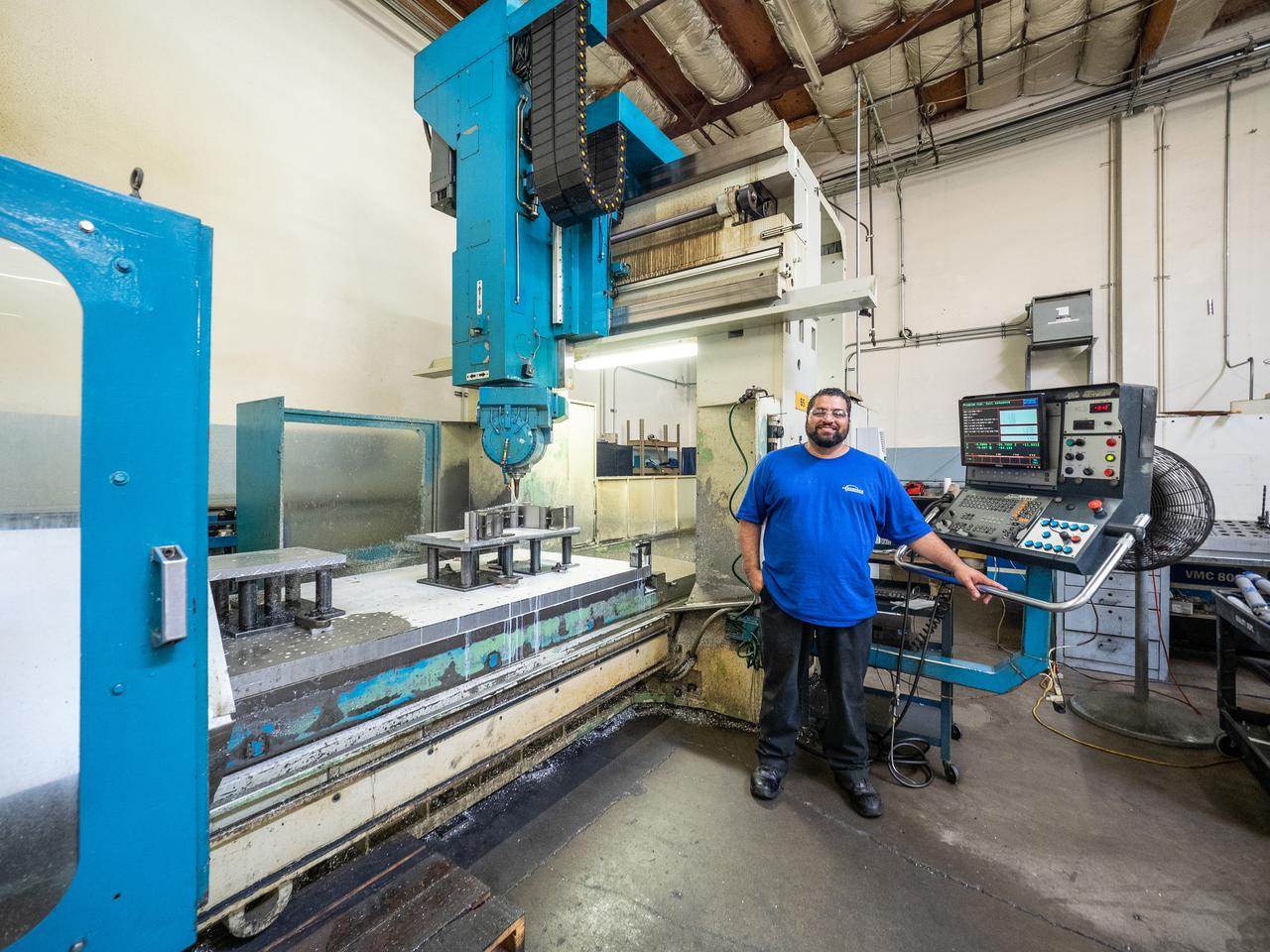
Parts for the Orion crew module which will carry astronauts on Artemis II are machined at Aerospace Engineering Corporation in California on June 18, 2018.
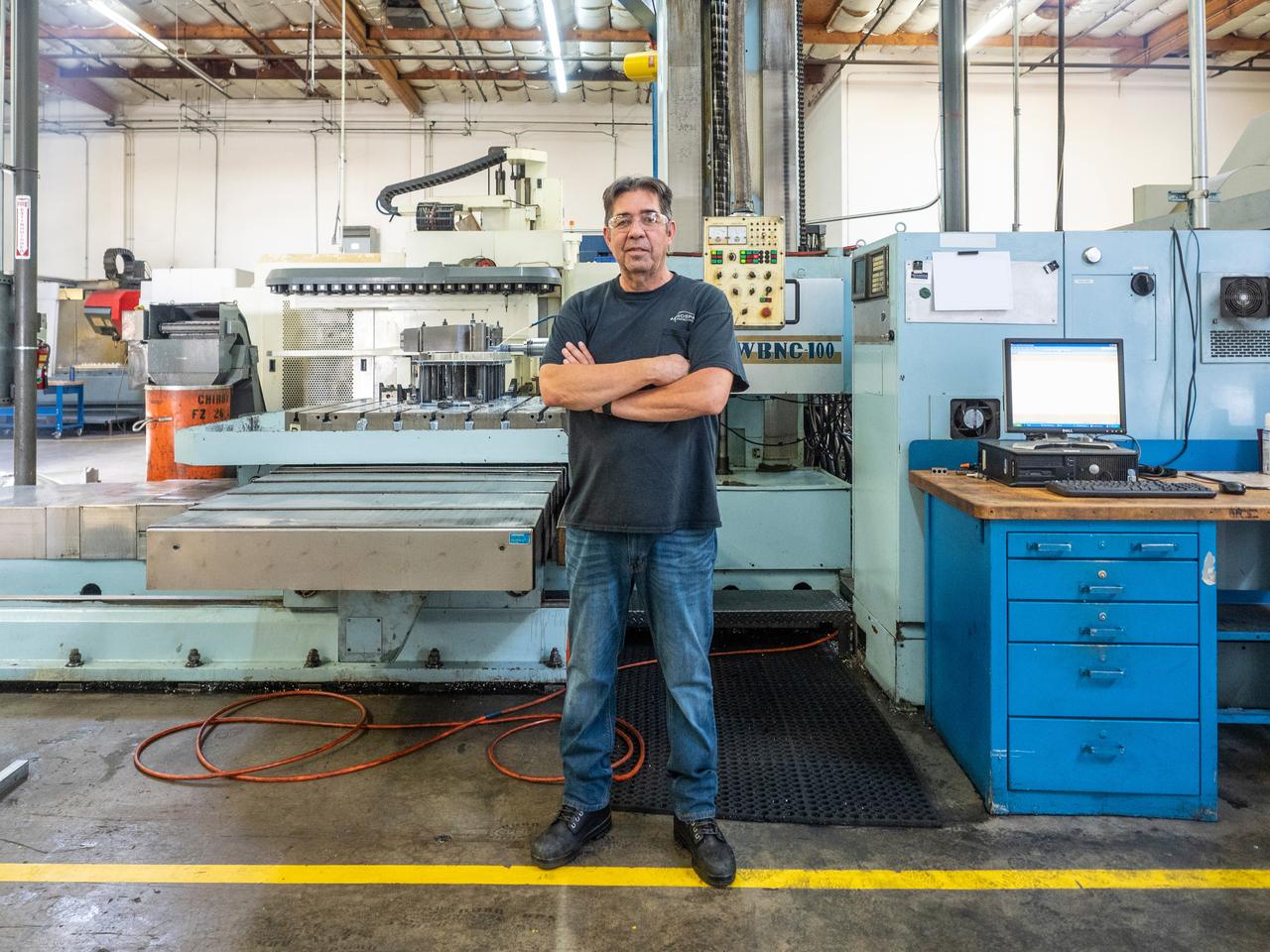
Parts for the Orion crew module which will carry astronauts on Artemis II are machined at Aerospace Engineering Corporation in California on June 18, 2018.
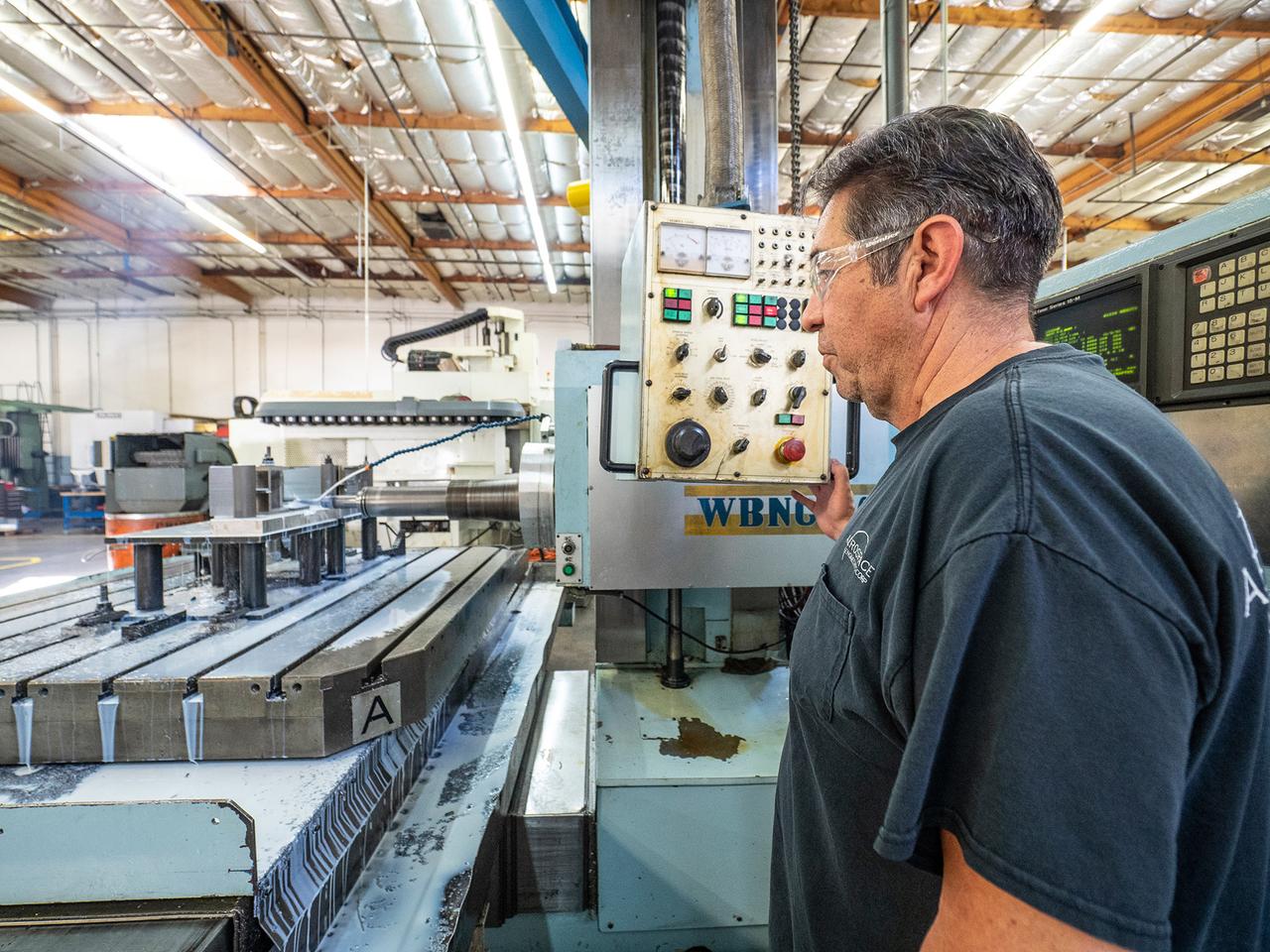
Parts for the Orion crew module which will carry astronauts on Artemis II are machined at Aerospace Engineering Corporation in California on June 18, 2018.
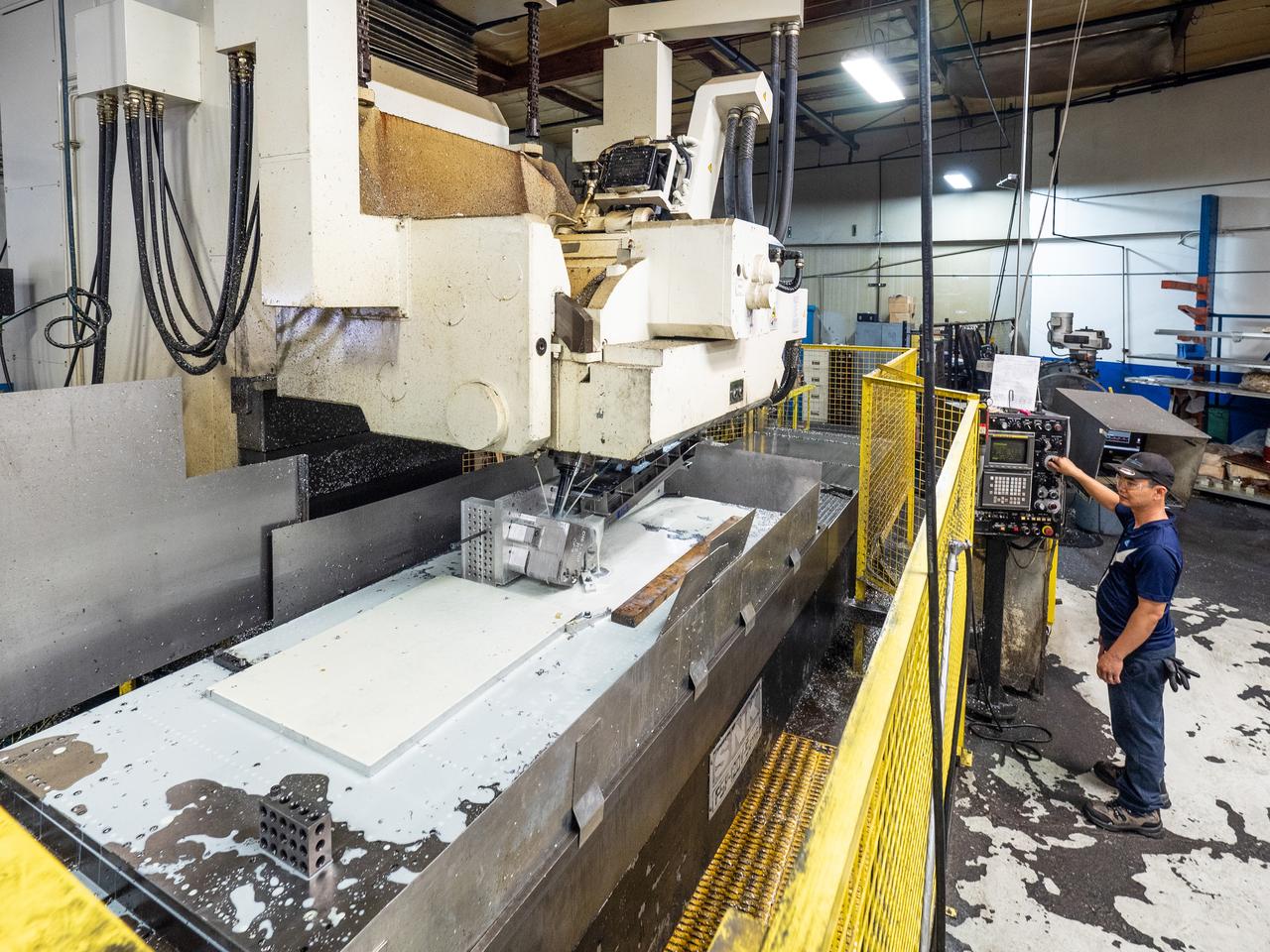
Parts for the Orion crew module which will carry astronauts on Artemis II are machined at Aerospace Engineering Corporation in California on June 18, 2018.
Parts for the Orion crew module which will carry astronauts on Artemis II are machined at Aerospace Engineering Corporation in California on June 18, 2018.
Parts for the Orion crew module which will carry astronauts on Artemis II are machined at Aerospace Engineering Corporation in California on June 18, 2018.
Parts for the Orion crew module which will carry astronauts on Artemis II are machined at Aerospace Engineering Corporation in California on June 18, 2018.

STS071-701-064 (29 June 1995) --- Russia's Kvant 2 portion of the Mir Space Station is backdropped against the darkness of space, as photographed from the approaching space shuttle Atlantis on June 29, 1995. Cosmonaut Vladimir N. Dezhurov, Mir-18 mission commander, can be seen aiming a camera through a port hole at center frame. Norman E. Thagard, Mir-18 cosmonaut researcher, aims a camera through a smaller window. Five NASA astronauts and two cosmonauts were onboard Atlantis as it approached the Mir, which has been home for the three-member Mir-18 crew since March of this year.
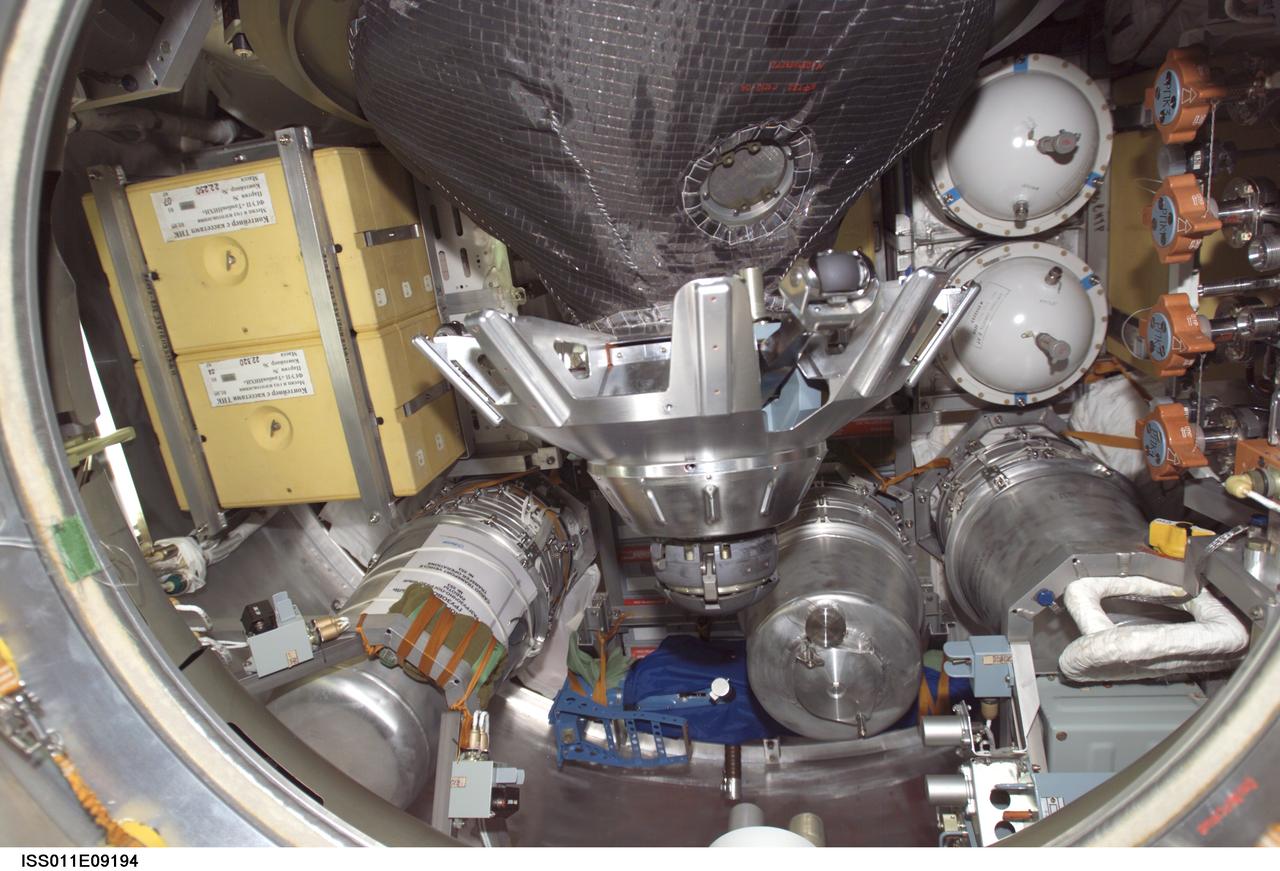
ISS011-E-09194 (19 June 2005) --- View of stowage items and the probe-and-cone docking mechanism in the hatch of the Progress 18 resupply craft, which docked to the aft port of the Zvezda Service Module of the International Space Station at 7:42 p.m. (CDT) on June 18 as the station flew approximately 225 statute miles above a point near Beijing, China. Progress delivered two tons of supplies, food, water, fuel and equipment to the Expedition 11 crewmembers onboard the station.
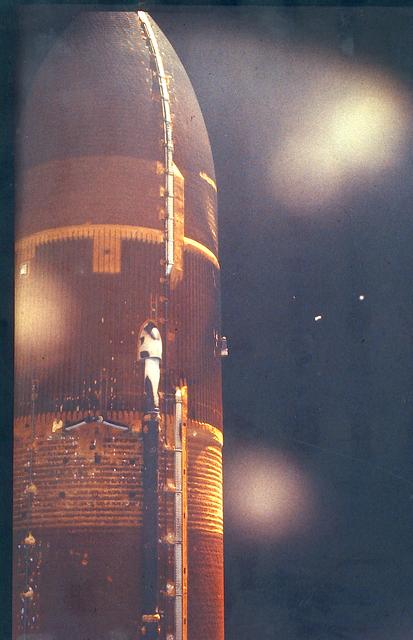
JSC2003-E-15408 (18 June 1983) --- A 35mm still camera located in the umbilical well of the space shuttle Challenger took this photograph of the external fuel tank (ET) after it was dropped from the launch stack as the shuttle headed for Earth orbit on June 18, 1983. The camera was located in the LO2 umbilical near the aft end of the orbiter (right side as you view the ET). Photo credit: NASA
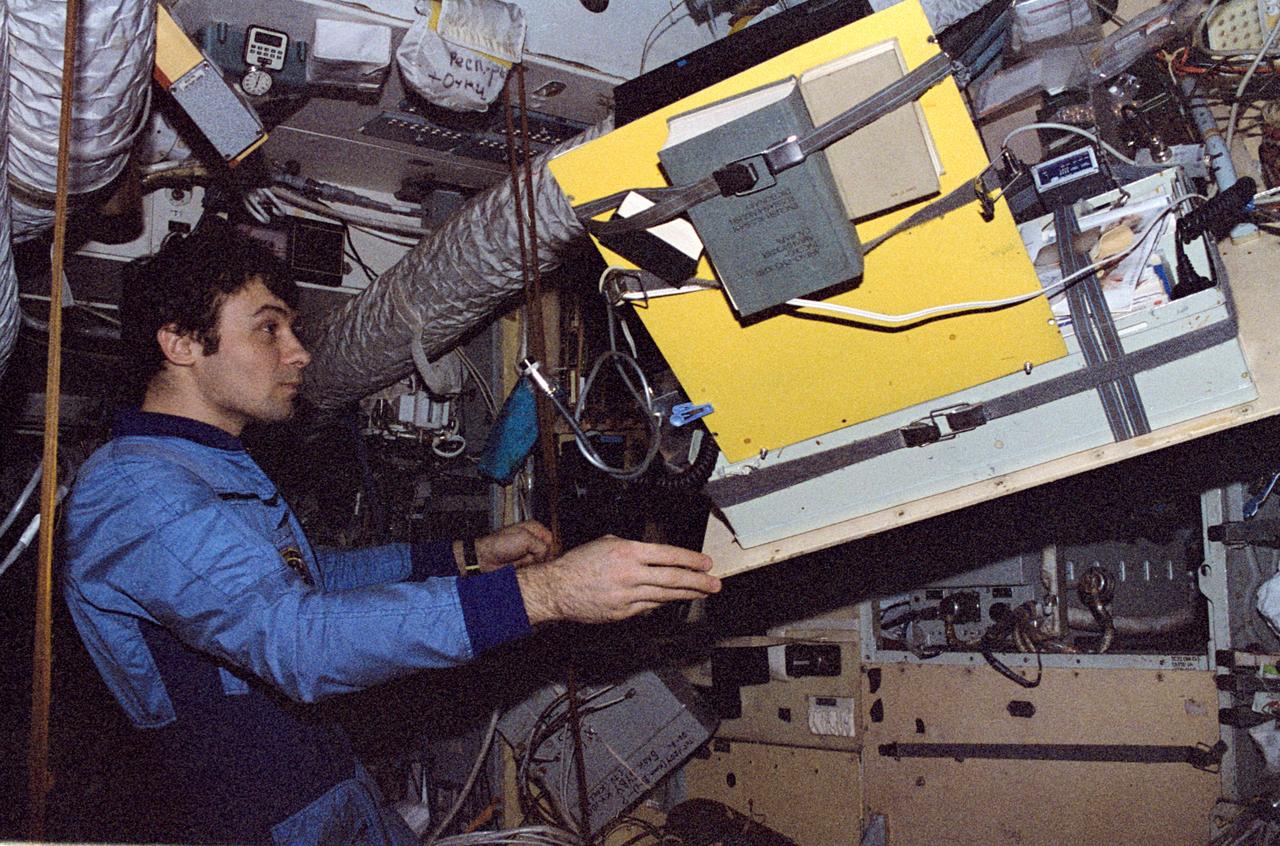
NM18-308-037 (28 June 1995) --- Onboard Mir, cosmonaut Vladimir N. Dezhurov prepares to change batteries at a power supply station as part of the preparation for the next day's scheduled docking with the Space Shuttle Atlantis. This visual was one of many shown by the Mir-18 crew at a press conference on July 18 in Houston.
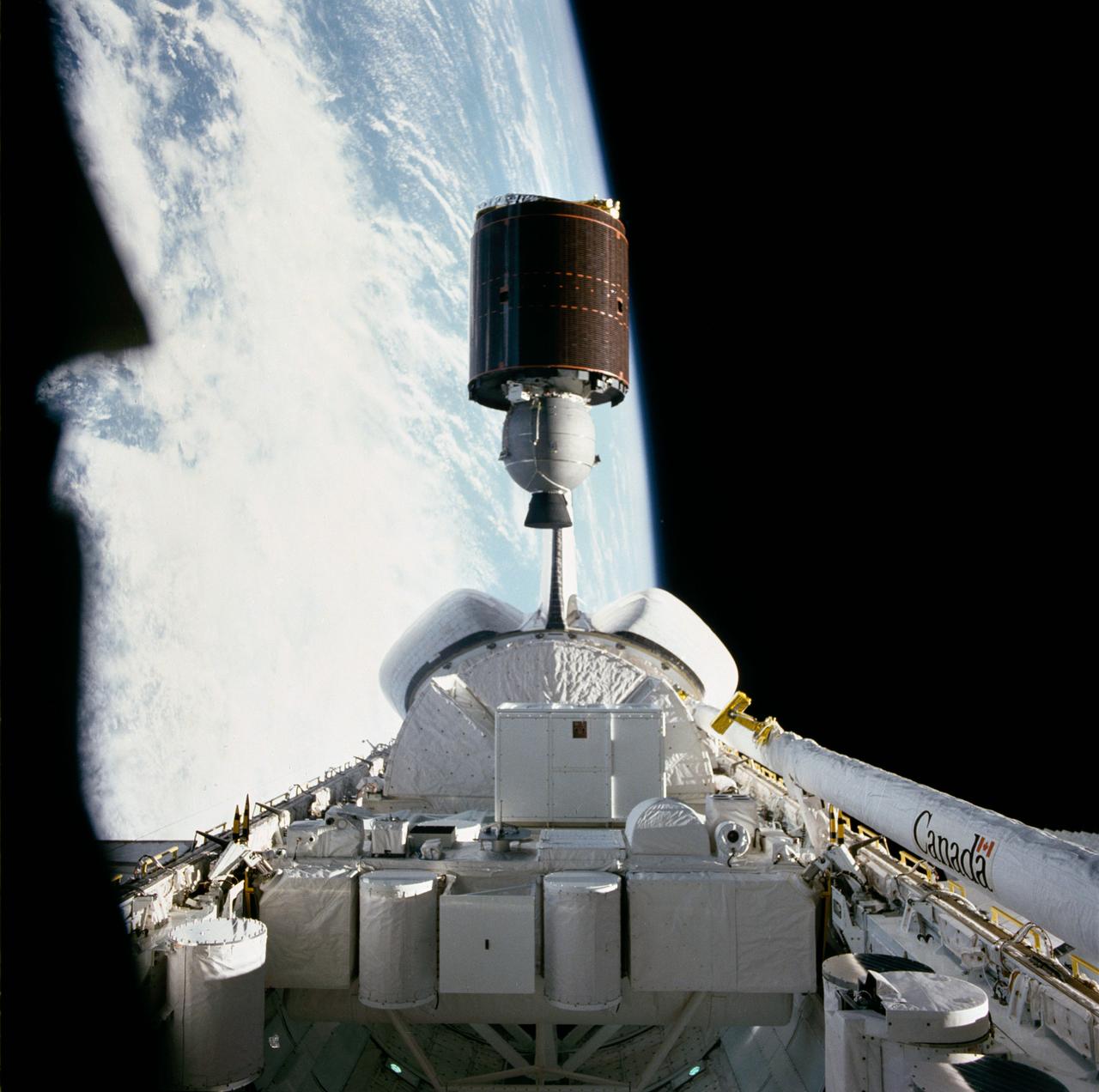
STS007-18-770 (18-24 June 1983) --- Telesat-F communications satellite is just about to clear the vertical stabilizer of the Earth-orbiting Space Shuttle Challenger to begin its way toward its Earth-orbital destination.
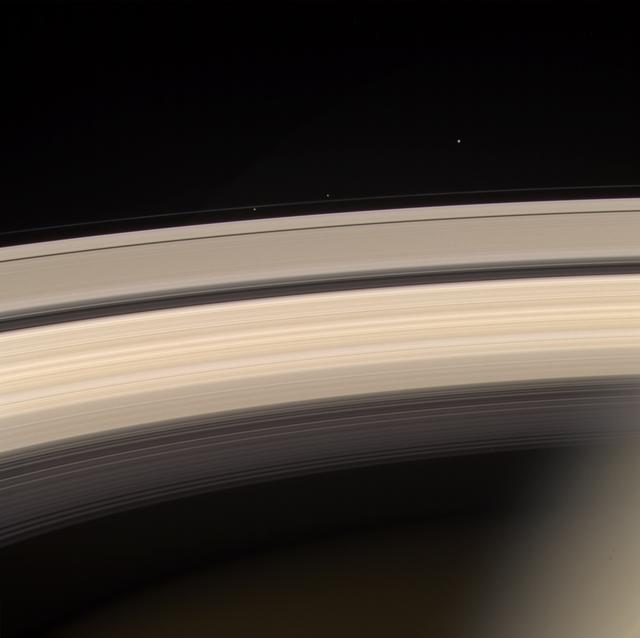
Saturn and its rings are prominently shown in this color image, along with three of Saturn's smaller moons. From left to right, they are Prometheus, Pandora and Janus. Prometheus and Pandora are often called the "F ring shepherds" as they control and interact with Saturn's interesting F ring, seen between them. This image was taken on June 18, 2004, with the Cassini spacecraft narrow angle camera 8.2 million kilometers (5.1 million miles) from Saturn. It was created using the red, green, and blue filters. Contrast has been enhanced to aid visibility. http://photojournal.jpl.nasa.gov/catalog/PIA06422

This image, taken by NASA's Dawn spacecraft, shows dwarf planet Ceres from an altitude of 2,700 miles (4,400 kilometers). The image, with a resolution of 1,400 feet (410 meters) per pixel, was taken on June 18, 2015. A mountain 3 miles (5 kilometers) high, surrounded by relatively smooth terrain, can be seen near the center of the limb. The same feature can be seen in PIA19586. http://photojournal.jpl.nasa.gov/catalog/PIA19587

This image, taken by NASA's Dawn spacecraft, shows dwarf planet Ceres from an altitude of 2,700 miles (4,400 kilometers). The image, with a resolution of 1,400 feet (410 meters) per pixel, was taken on June 18, 2015. A mountain 3 miles (5 kilometers) high, surrounded by relatively smooth terrain, can be seen here. North on Ceres is to the upper left. http://photojournal.jpl.nasa.gov/catalog/PIA19586
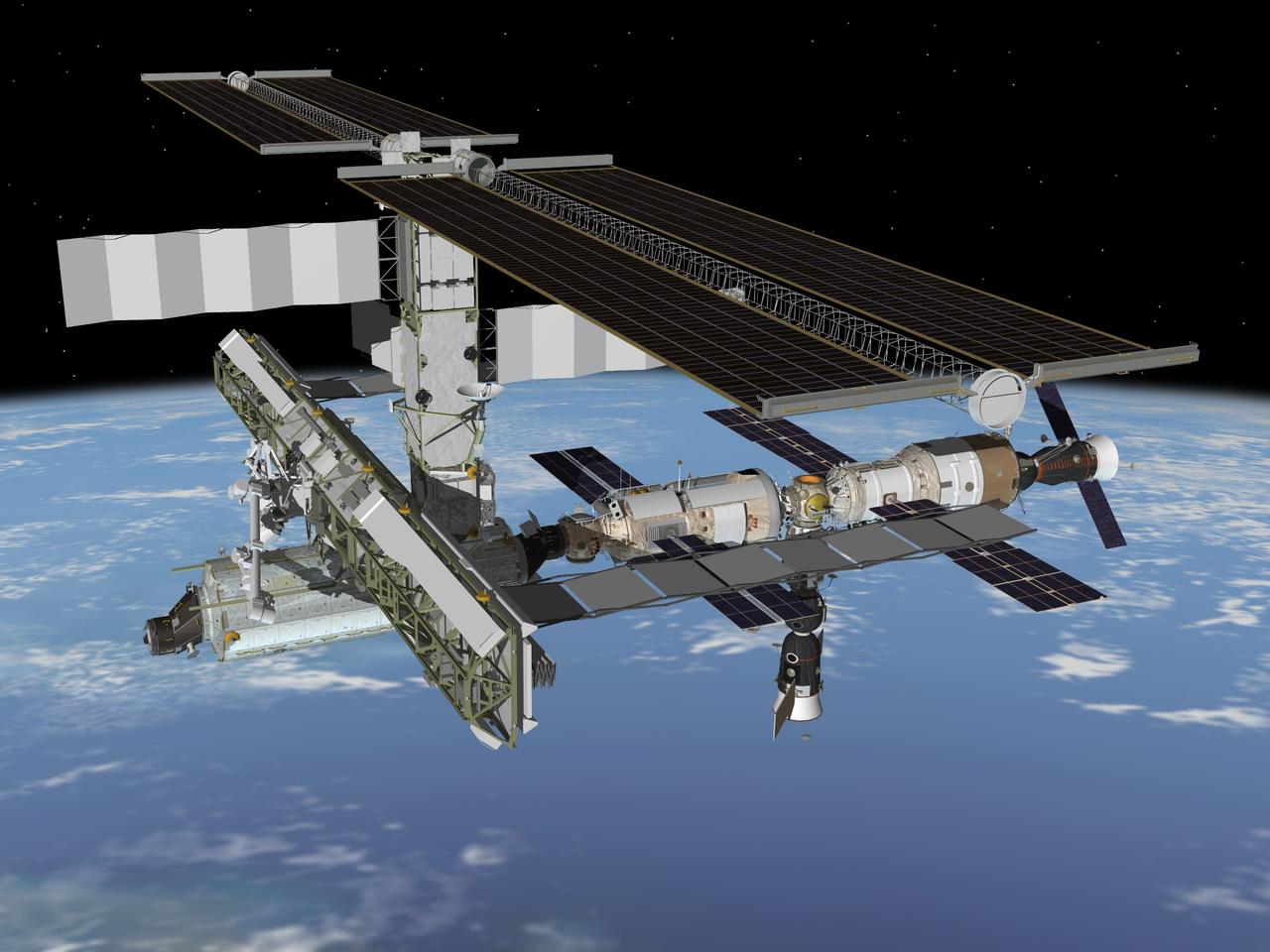
JSC2005-E-21683 (June 2005) --- Computer-generated artist's rendering of the International Space Station following scheduled activities of June 19, 2005. This angle shows the port side of the orbiting complex. Progress 18 resupply vehicle docks to the aft end of the Zvezda Service Module. Soyuz 10 remains docked to Pirs.
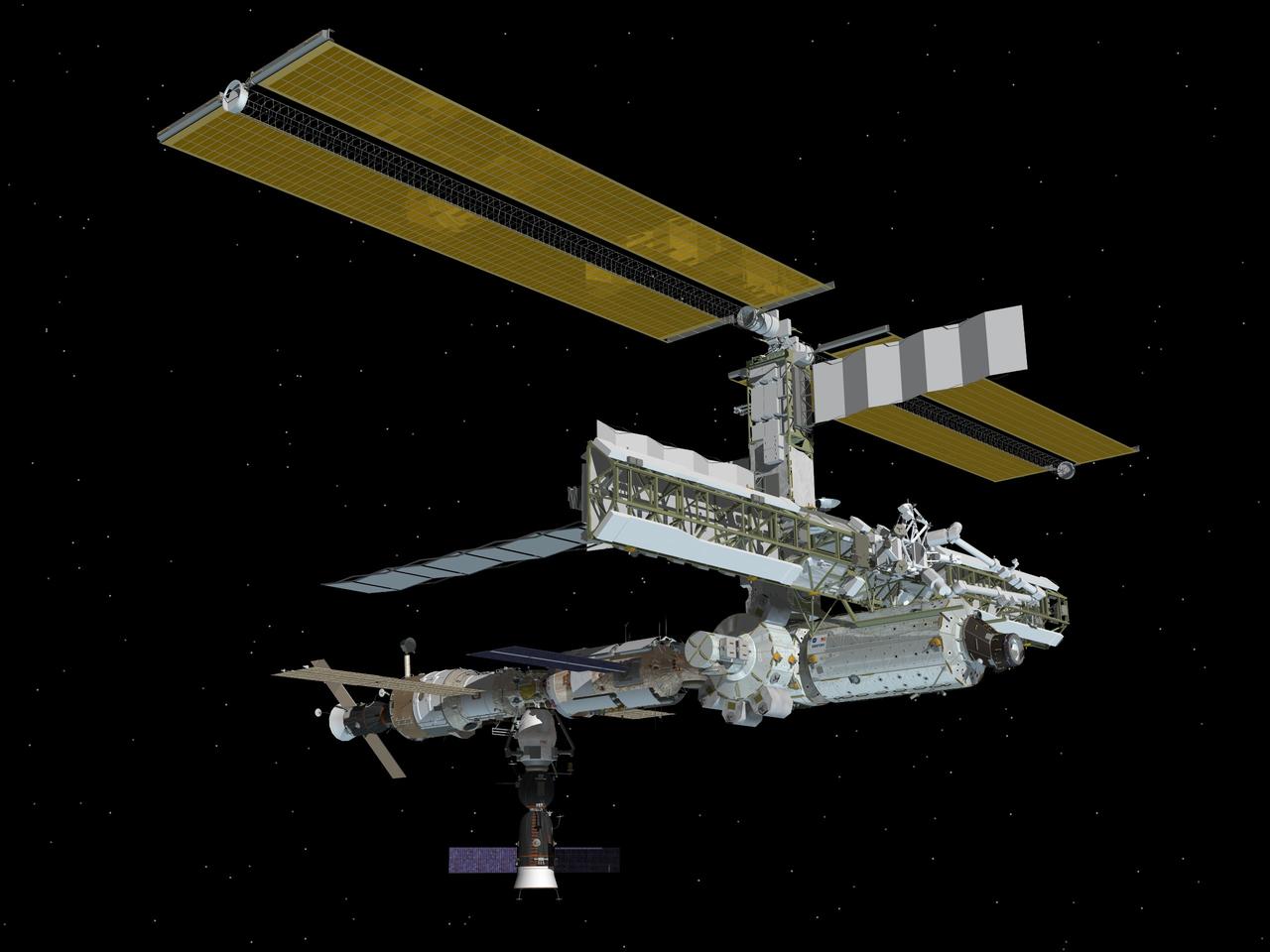
JSC2005-E-21684 (June 2005) --- Computer-generated artist's rendering of the International Space Station following scheduled activities of June 19, 2005. This angle shows the starboard side of the orbiting complex. Progress 18 resupply vehicle docks to the aft end of the Zvezda Service Module. Soyuz 10 remains docked to Pirs.
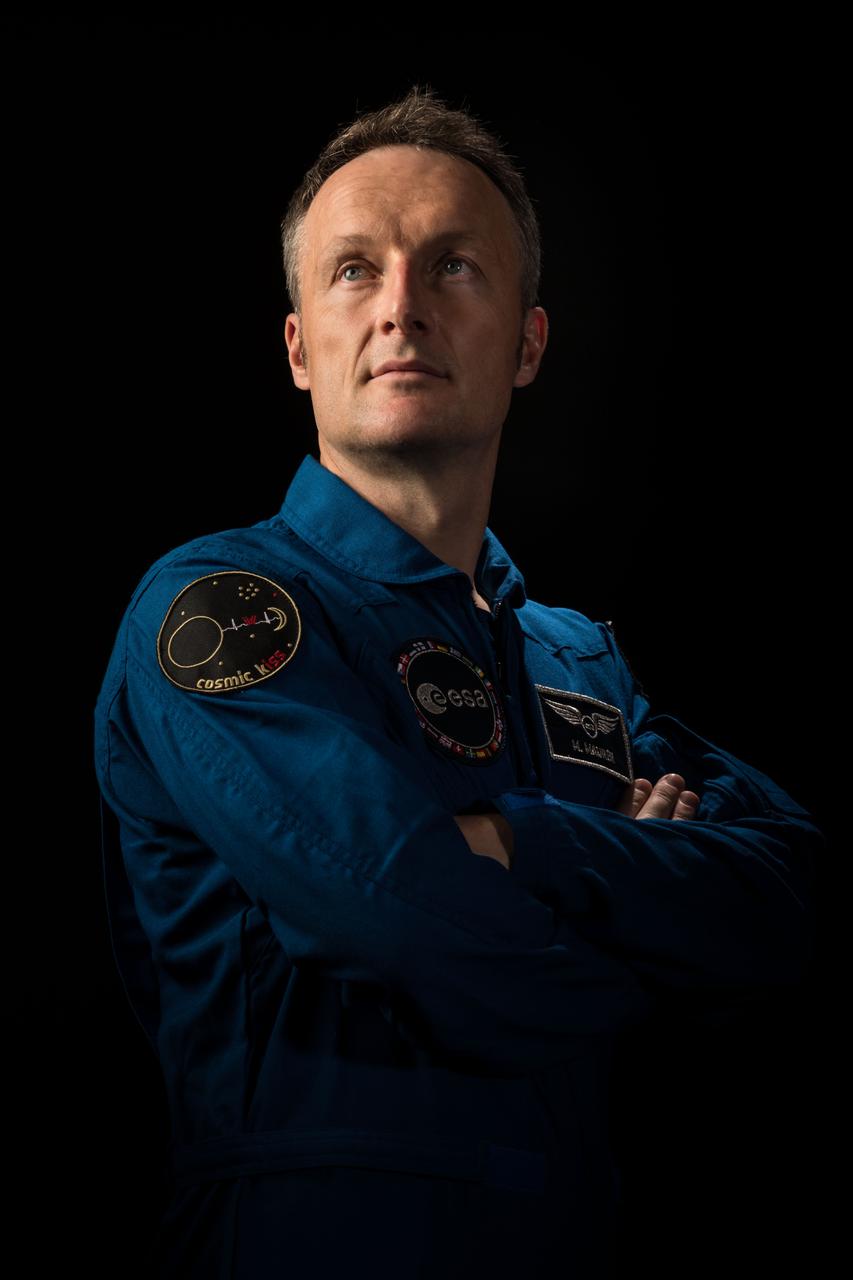
jsc2021e025360_alt (June 18, 2021) --- SpaceX Crew-3 Mission Specialist Matthias Maurer of ESA (European Space Agency) poses for a portrait at Johnson Space Center in Houston, Texas.
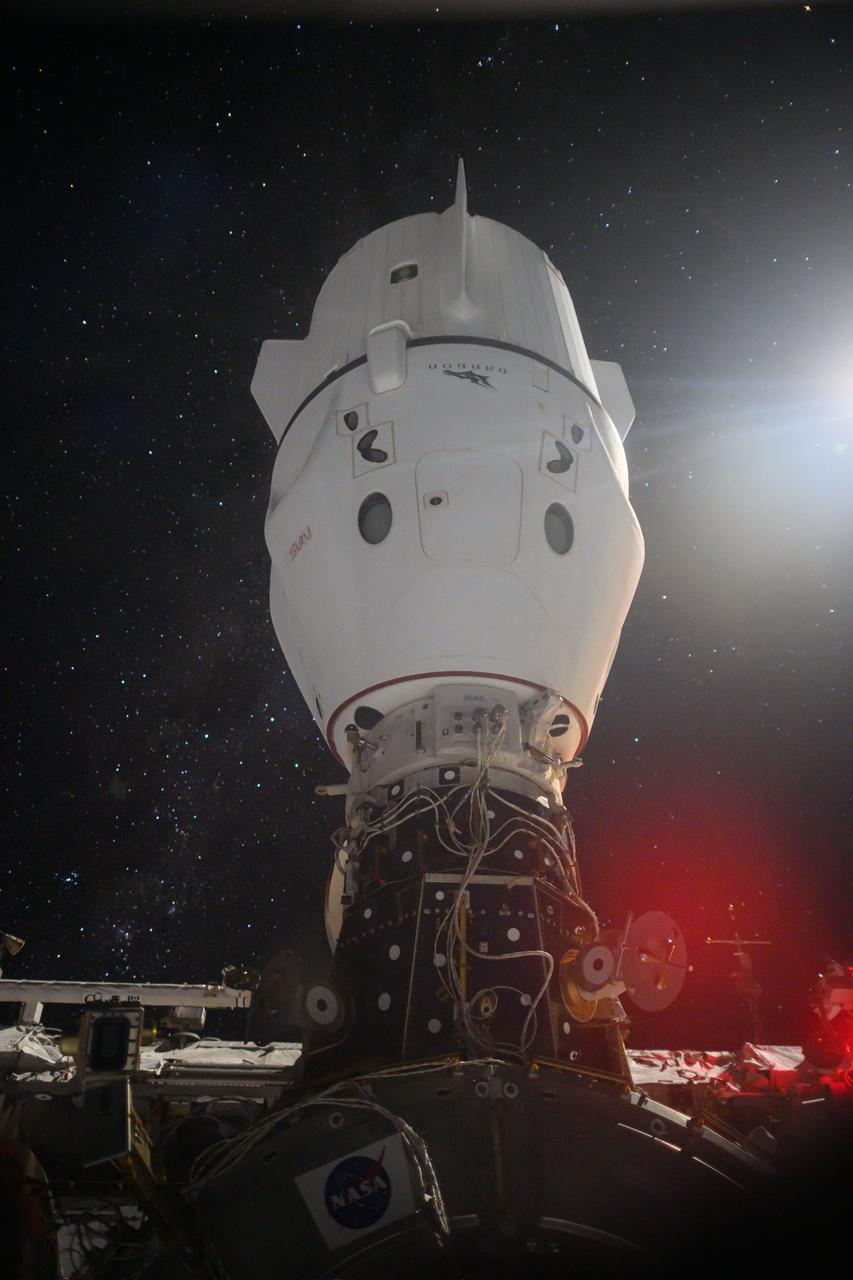
iss071e200795 (June 18, 2024) -- A SpaceX Dragon Endeavour spacecraft is pictured docked to the zenith port of the International Space Station's Harmony module as the orbiting complex soared 265 miles above the Indian Ocean.
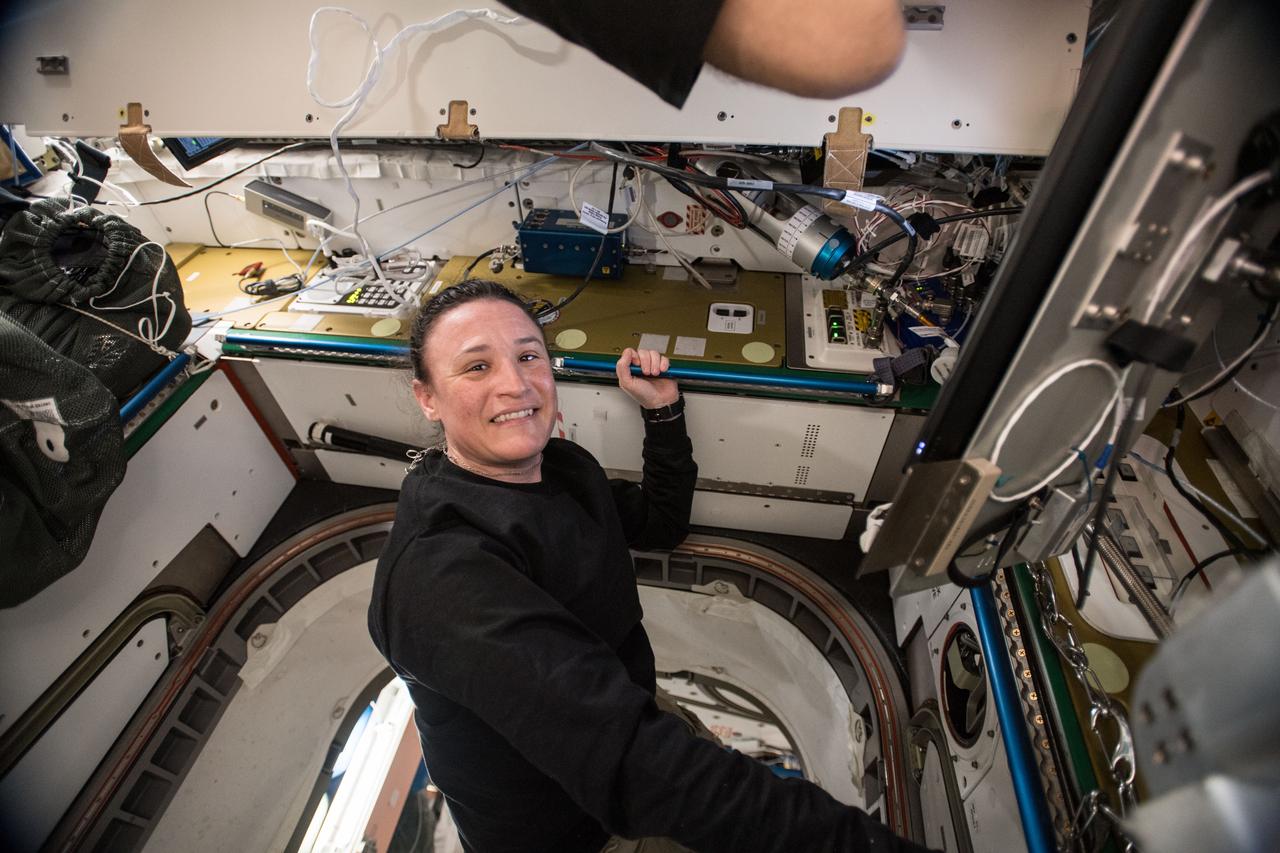
iss056e014502 (June 18, 2018) --- Expedition 56 Flight Engineer Serena Auñón-Chancellor of NASA is pictured in the Unity module during life support maintenance work to remove and replace an Oxygen Generation System Hydrogen Sensor.
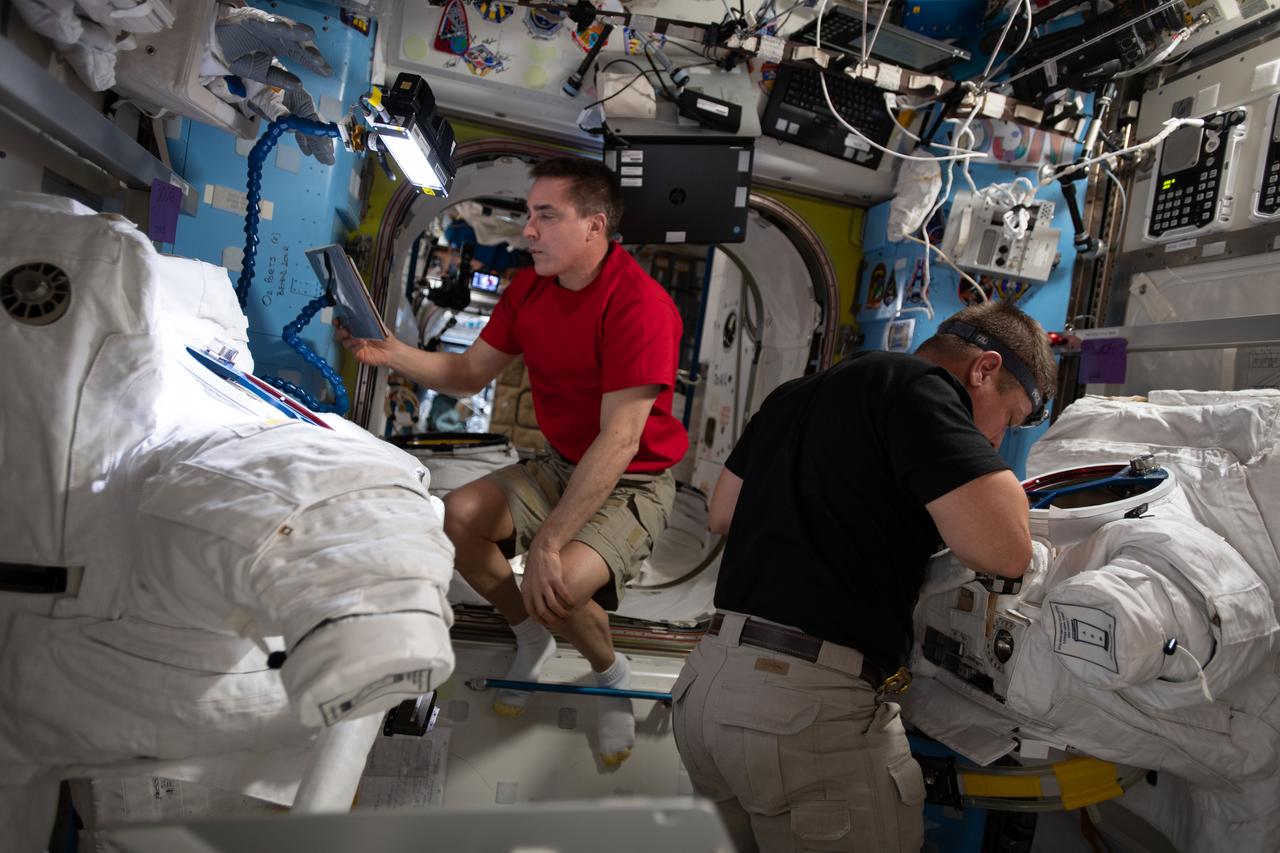
iss063e030599 (June 18, 2020) --- (From left) Expedition 63 Commander Chris Cassidy and Flight Engineer Bob Behnken work on U.S. spacesuit maintenance inside the International Space Station's Quest airlock.
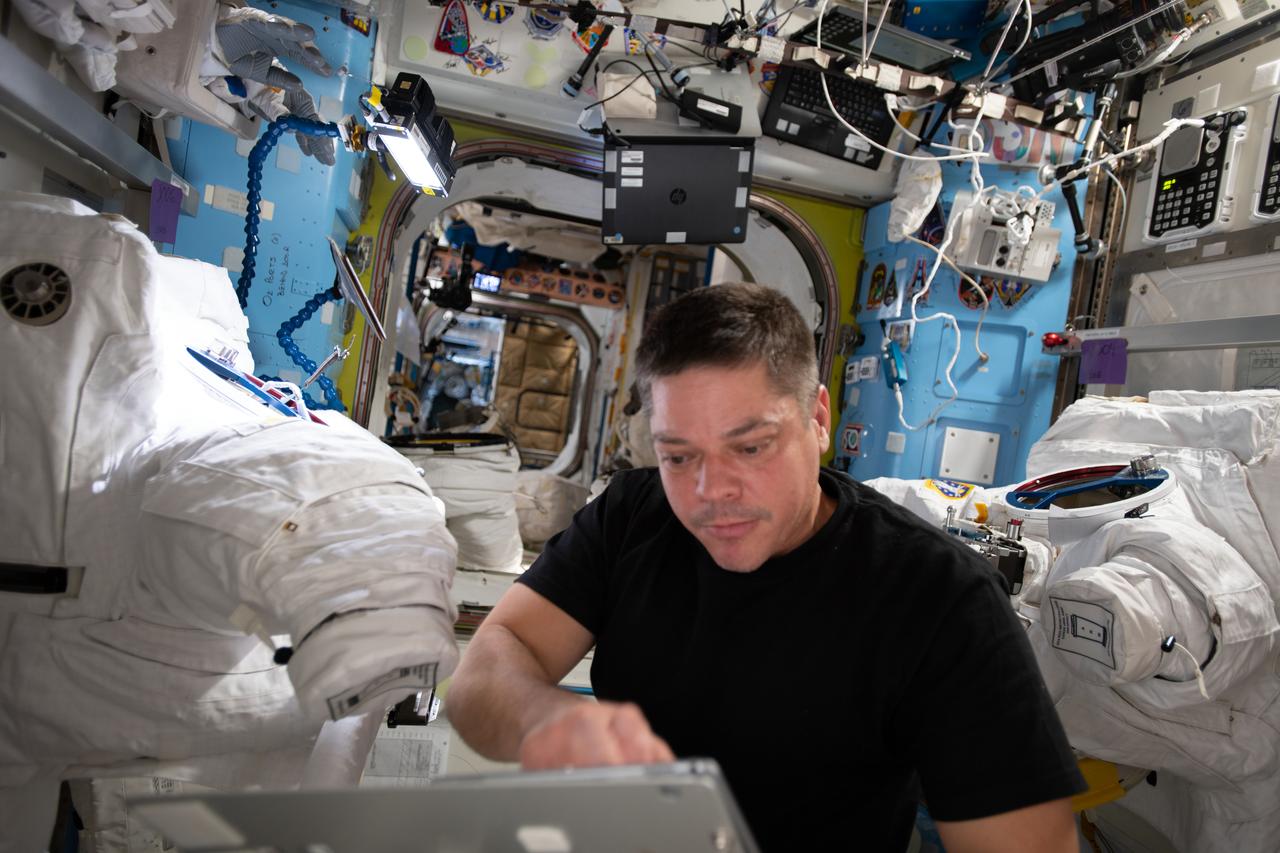
iss063e030591 (June 18, 2020) --- NASA astronaut and Expedition 63 Flight Engineer Bob Behnken reviews maintenance procedures on a computer while working on U.S. spacesuits inside the International Space Station's Quest airlock.
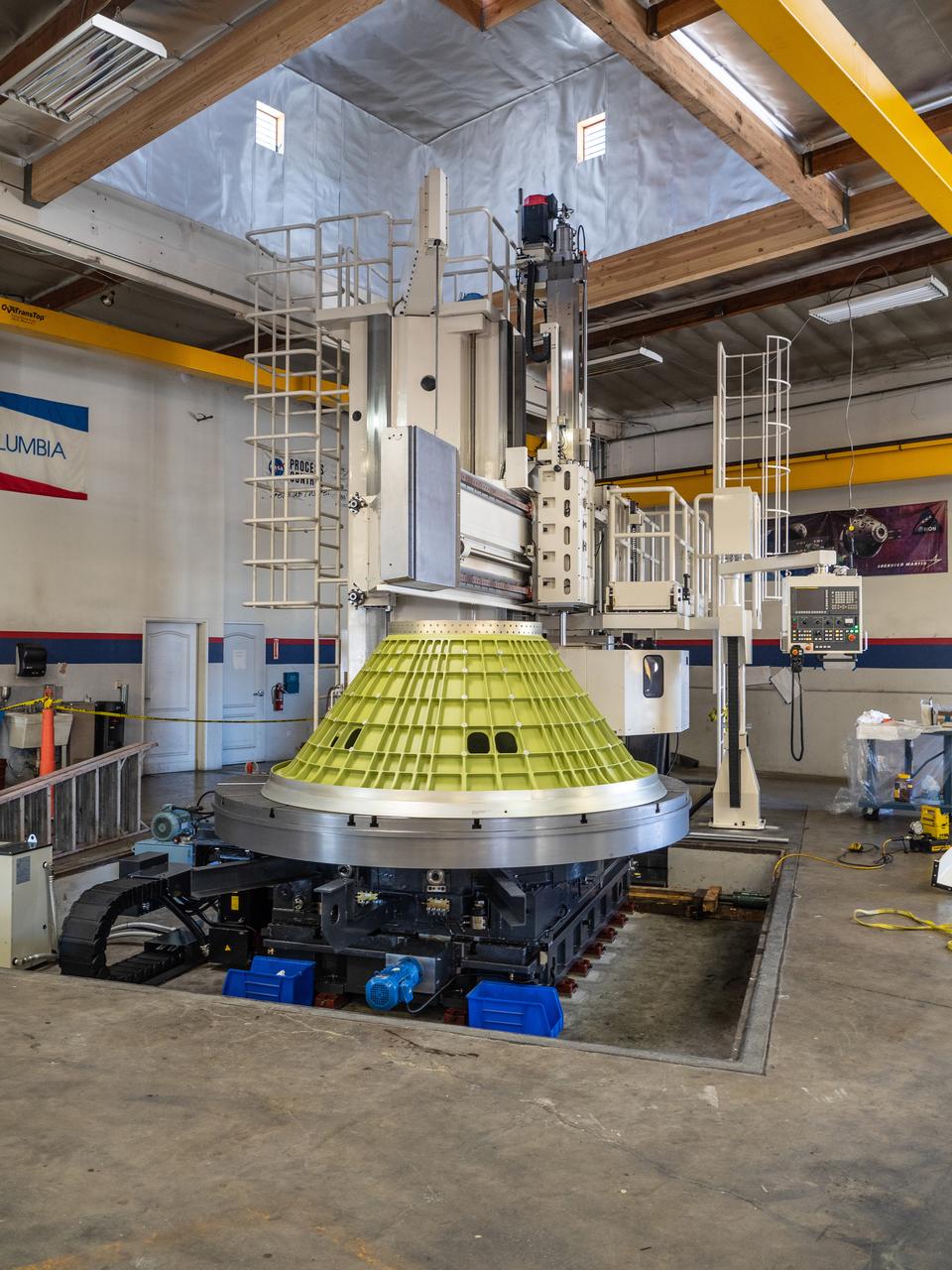
The Motor Adapter Truss Assembly (MATA) adapter for Artemis I Orion, which connects the crew module to the launch abort system, is ready for shipment at AMRO Fabricating Corporation in California on June 18, 2018.
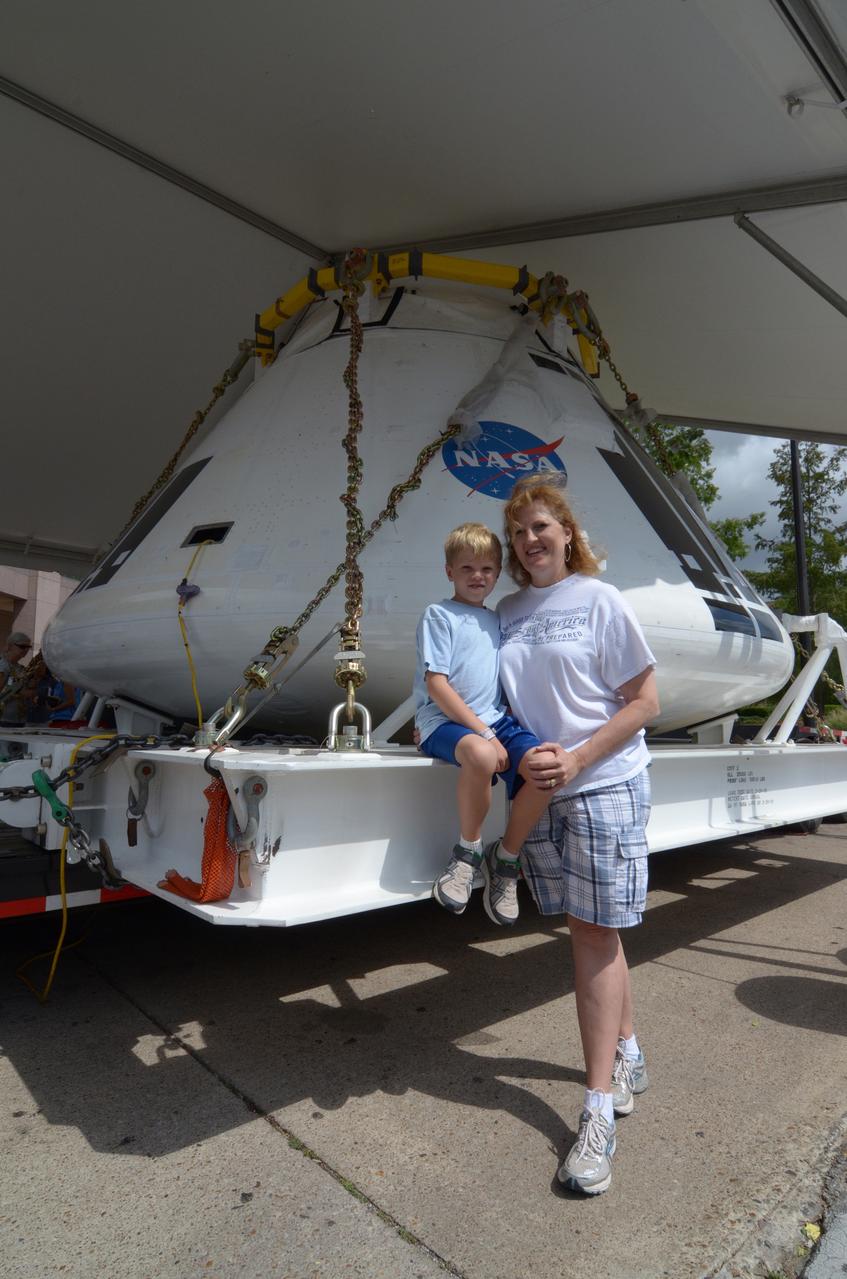
Travelers take a photo with the Orion crew module flown on NASA’s Pad Abort-1 (PA-1) flight test on the road on June 18, 2011. Part of Batch image transfer from Flickr.
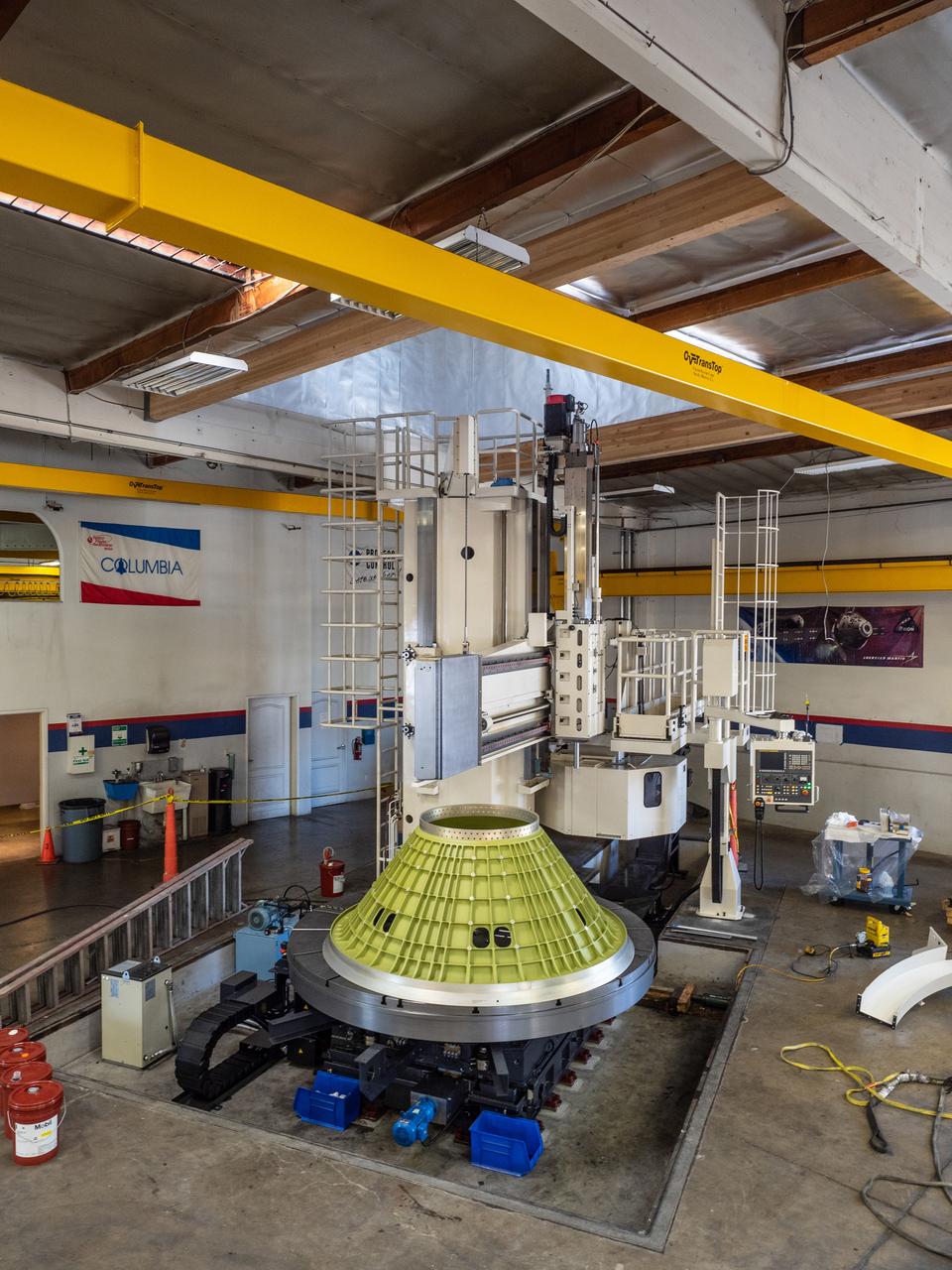
The Motor Adapter Truss Assembly (MATA) adapter for Artemis I Orion, which connects the crew module to the launch abort system, is ready for shipment at AMRO Fabricating Corporation in California on June 18, 2018.
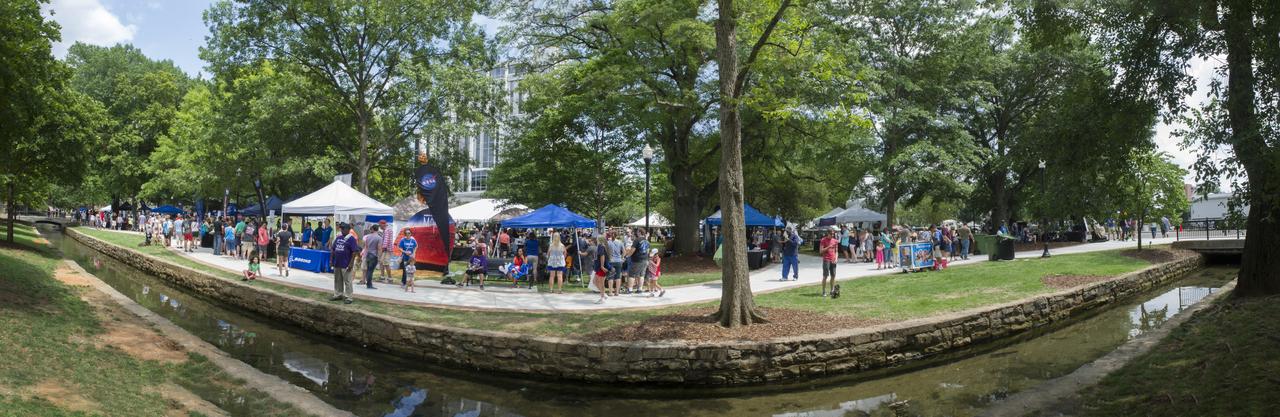
MORE THAN 7,500 PEOPLE ATTENDED NASA MARSHALL SPACE CENTER AND DOWNTOWN HUNTSVILLE, INC.’S THIRD ANNUAL CELEBRATION OF NASA AND THE COMMUNITY JUNE 18. THIS YEAR, THE EVENT MOVED TO HUNTSVILLE’S BIG SPRING PARK.
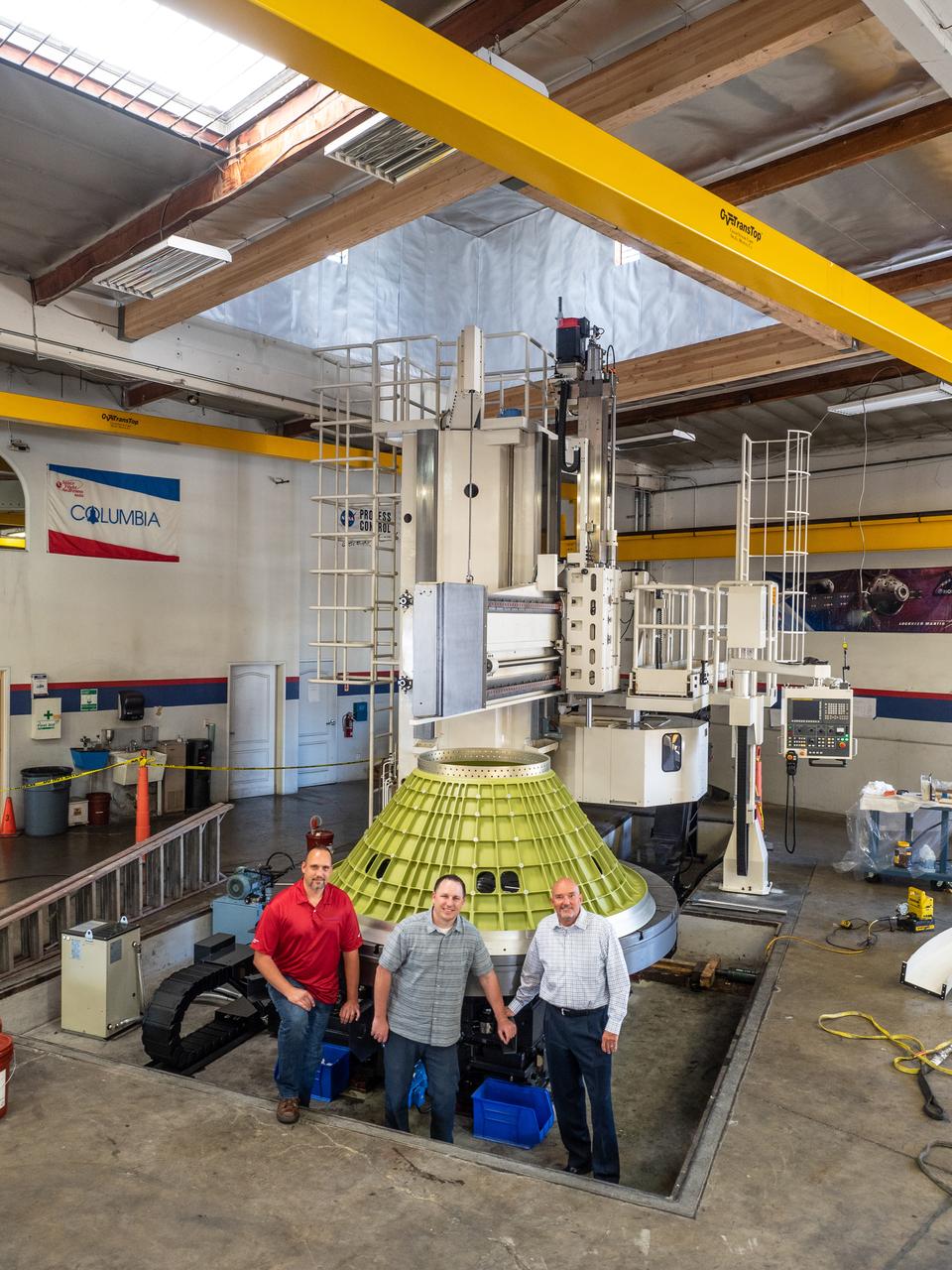
The Motor Adapter Truss Assembly (MATA) adapter for Artemis I Orion, which connects the crew module to the launch abort system, is ready for shipment at AMRO Fabricating Corporation in California on June 18, 2018.
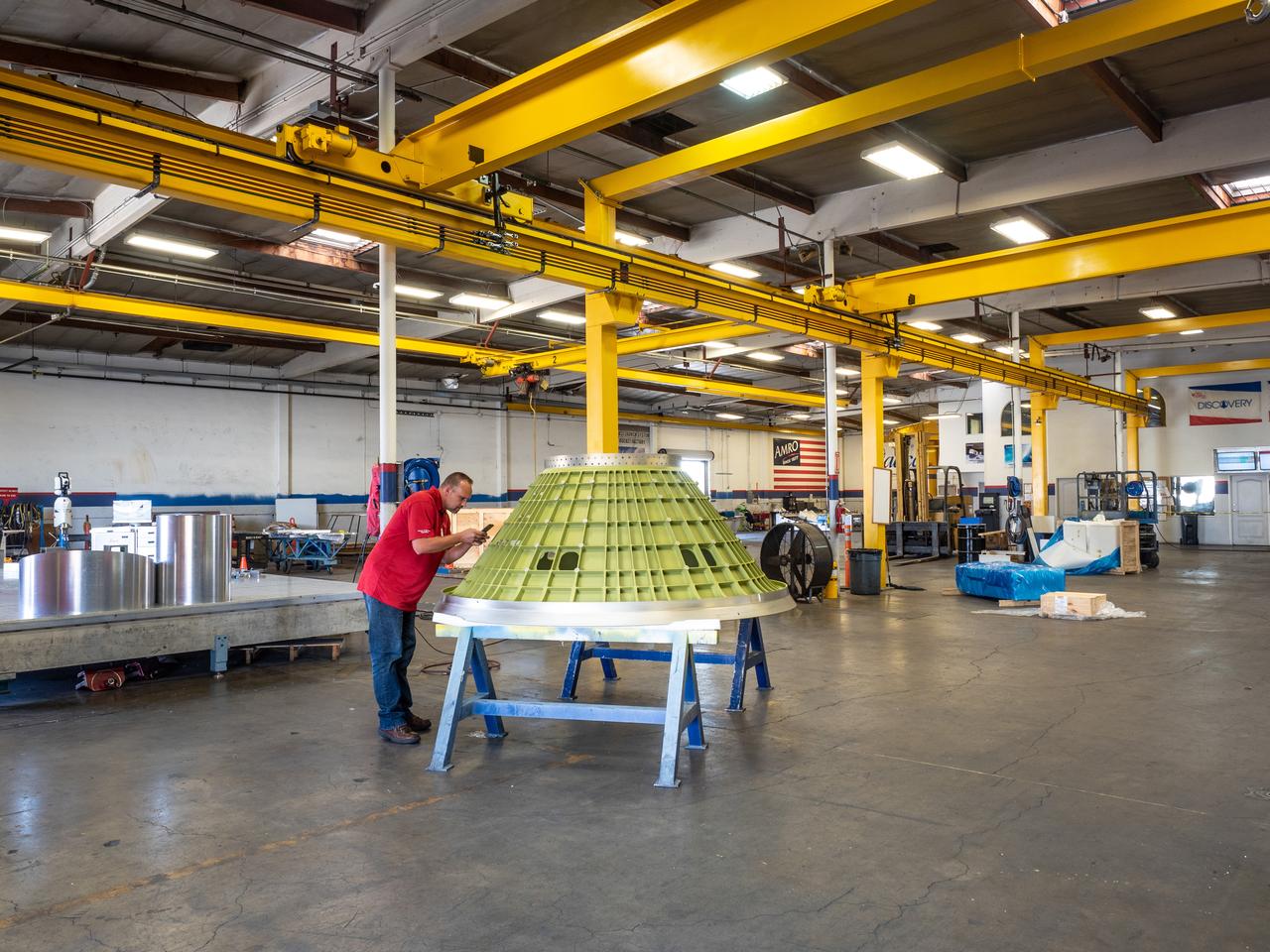
The Motor Adapter Truss Assembly (MATA) adapter for Artemis I Orion, which connects the crew module to the launch abort system, is ready for shipment at AMRO Fabricating Corporation in California on June 18, 2018.
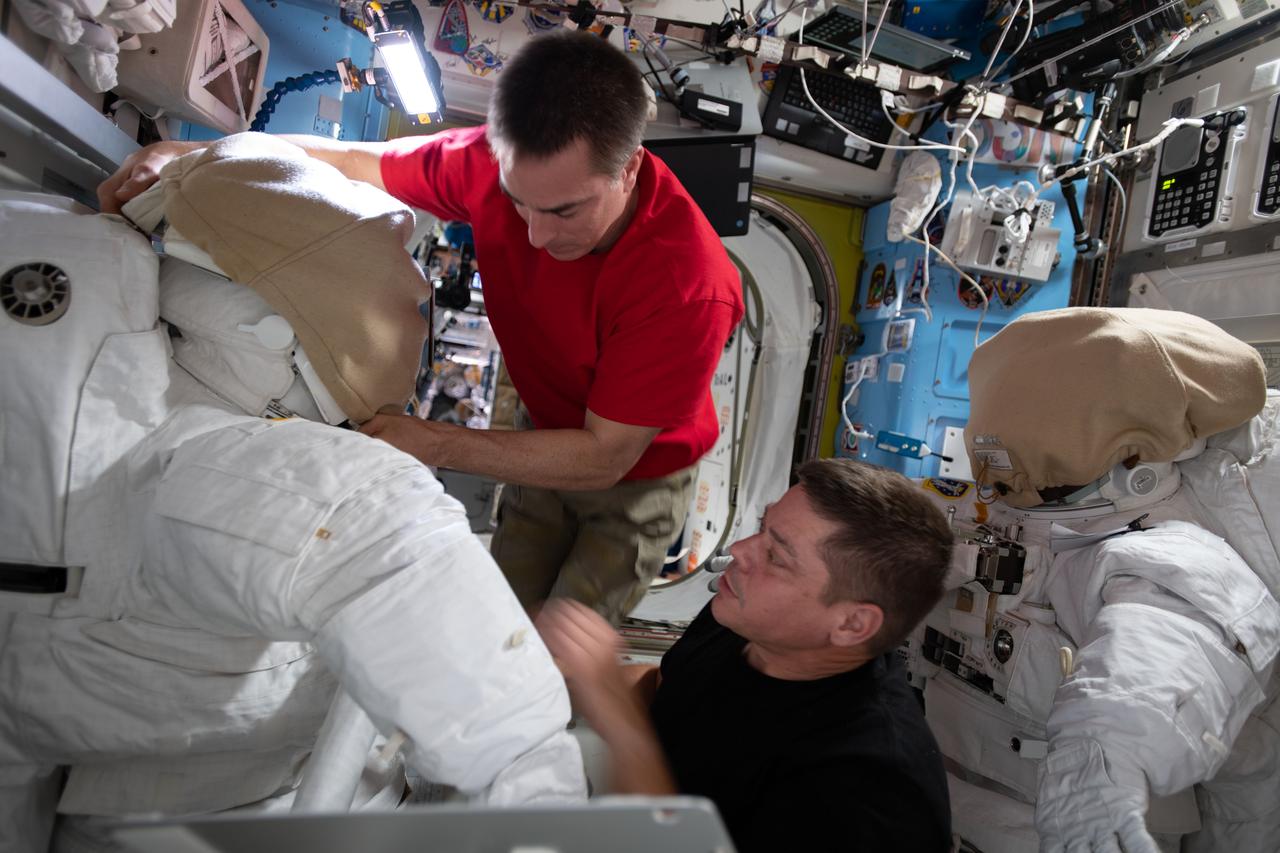
iss063e030609 (June 18, 2020) --- NASA astronauts (from top) Chris Cassidy and Bob Behnken work on U.S. spacesuits inside the International Space Station's Quest airlock.
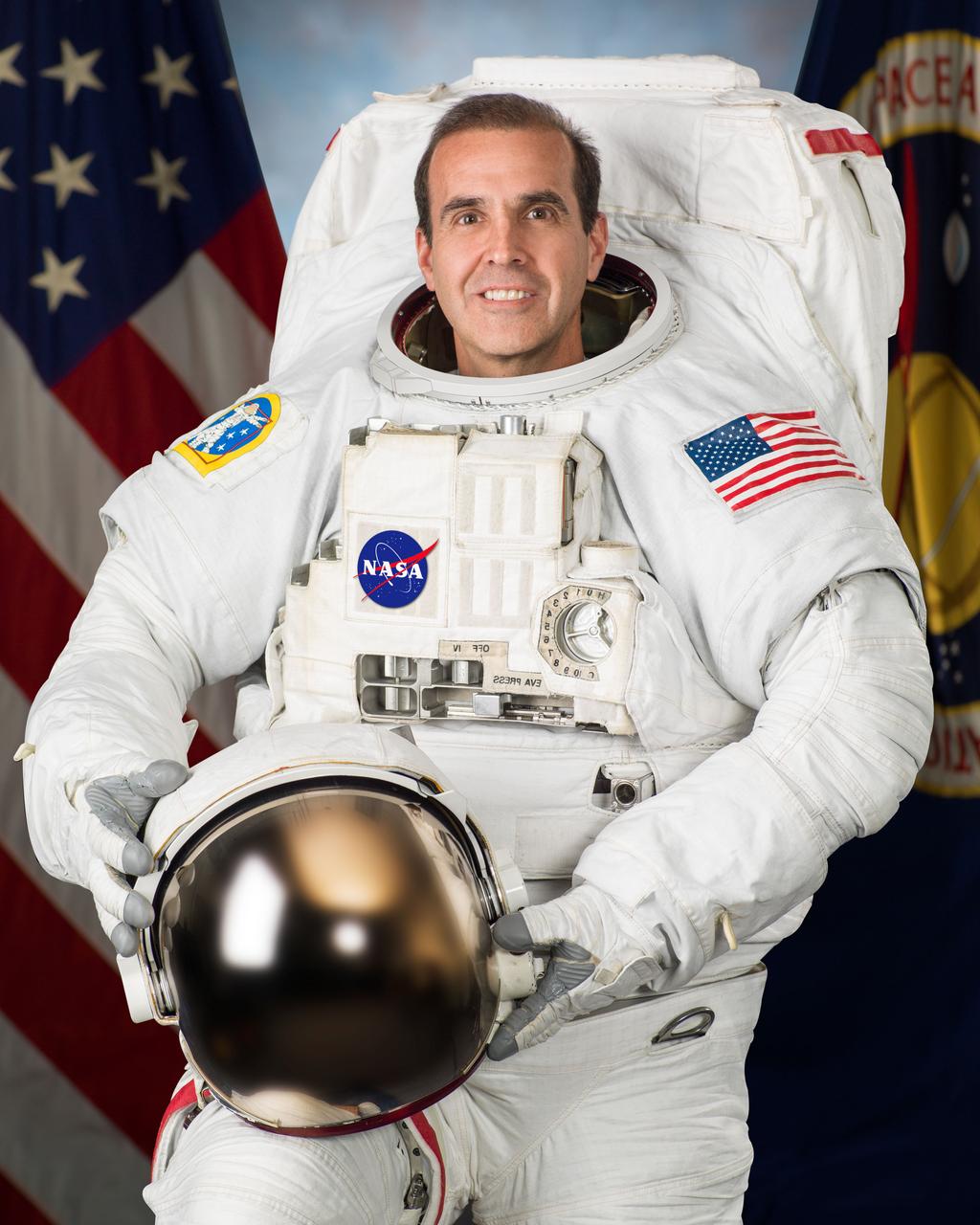
Photo Date: June 18, 2013 Location: Building 8, Room 183 - Photo Studio Subject: Individual Astronaut Photo for Rick Mastracchio Photographer: Robert Markowitz
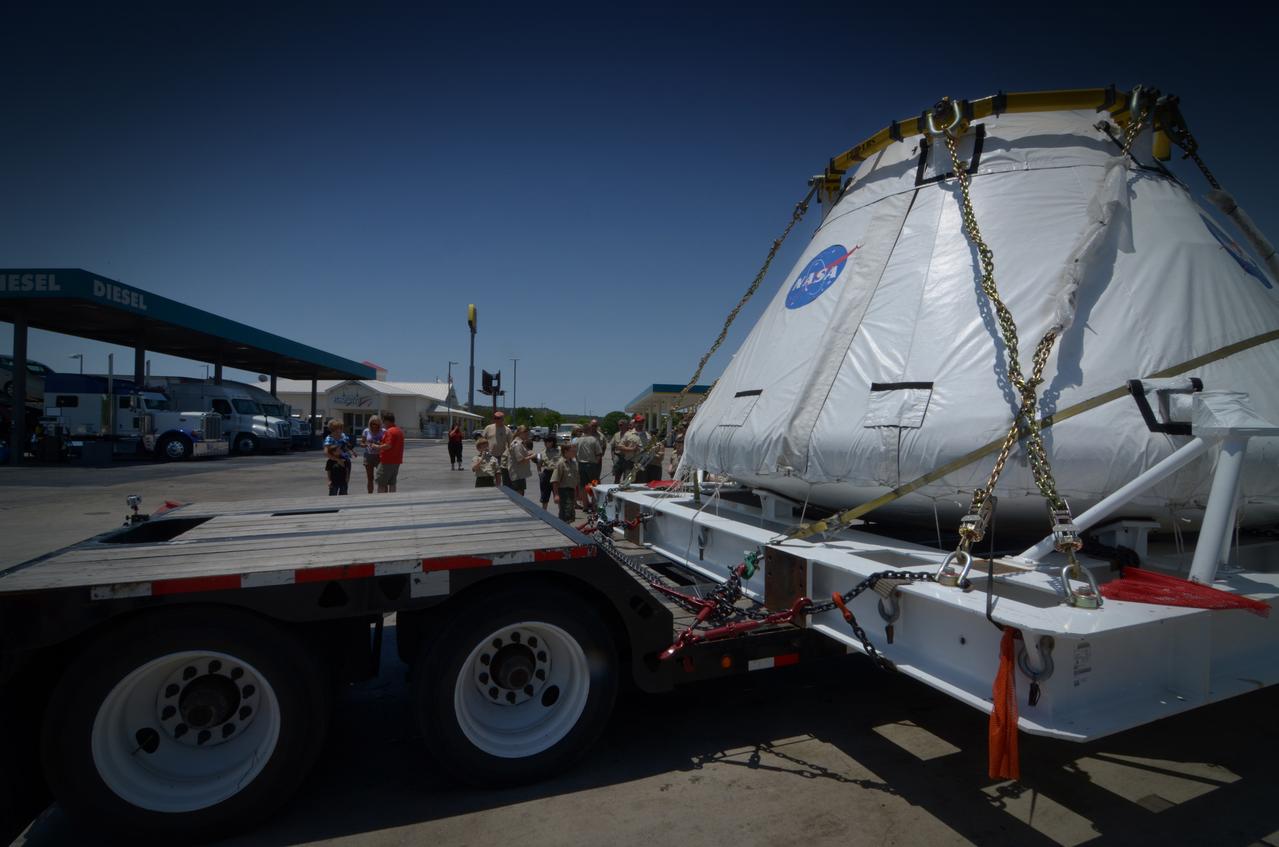
Travelers take a photo with the Orion crew module flown on NASA’s Pad Abort-1 (PA-1) flight test on the road on June 18, 2011. Part of Batch image transfer from Flickr.
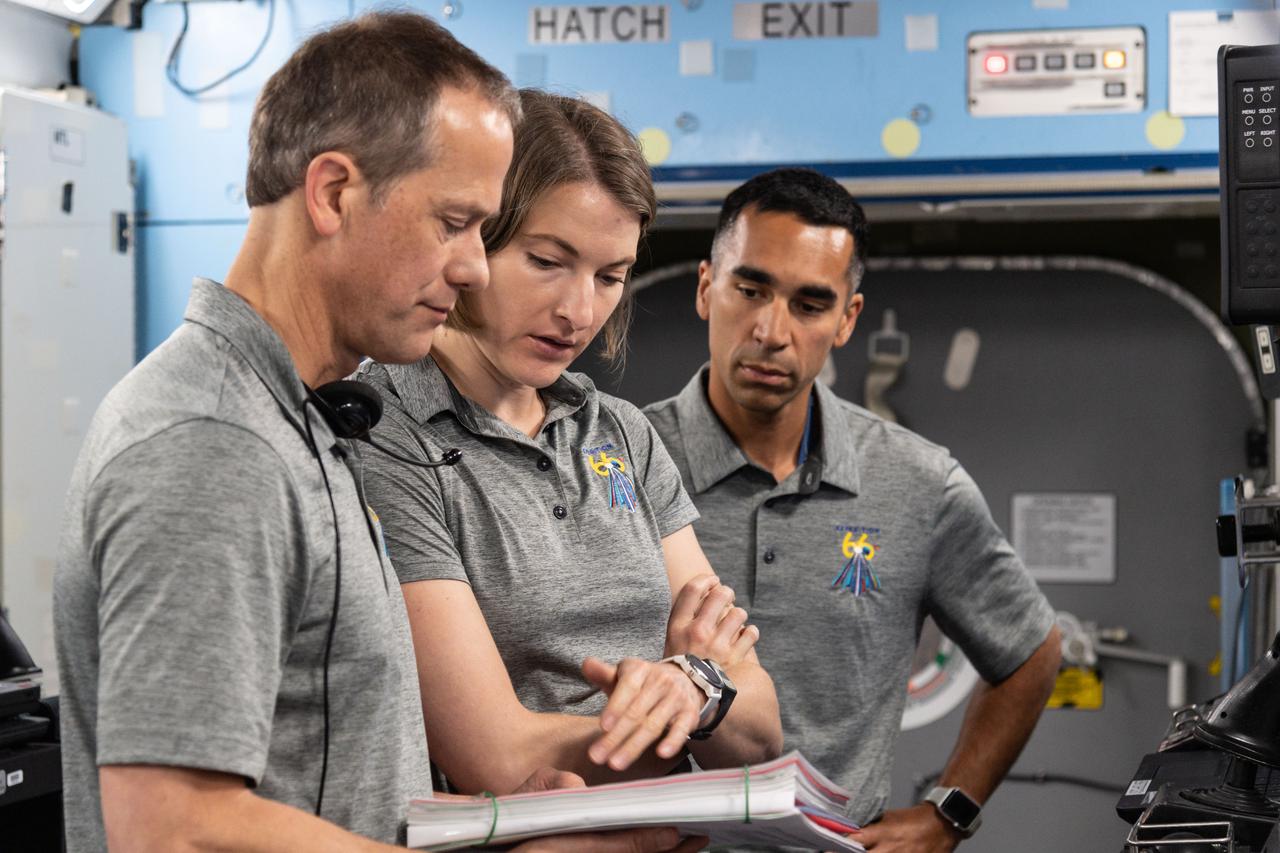
jsc2021e023379 (June 18, 2021) ---SpaceX Crew-3 astronauts (from left) Thomas Marshburn, Kayla Barron and Raja Chari train at the Space Vehicle Mockup Facility at NASA's Johnson Space Center in Houston, Texas.
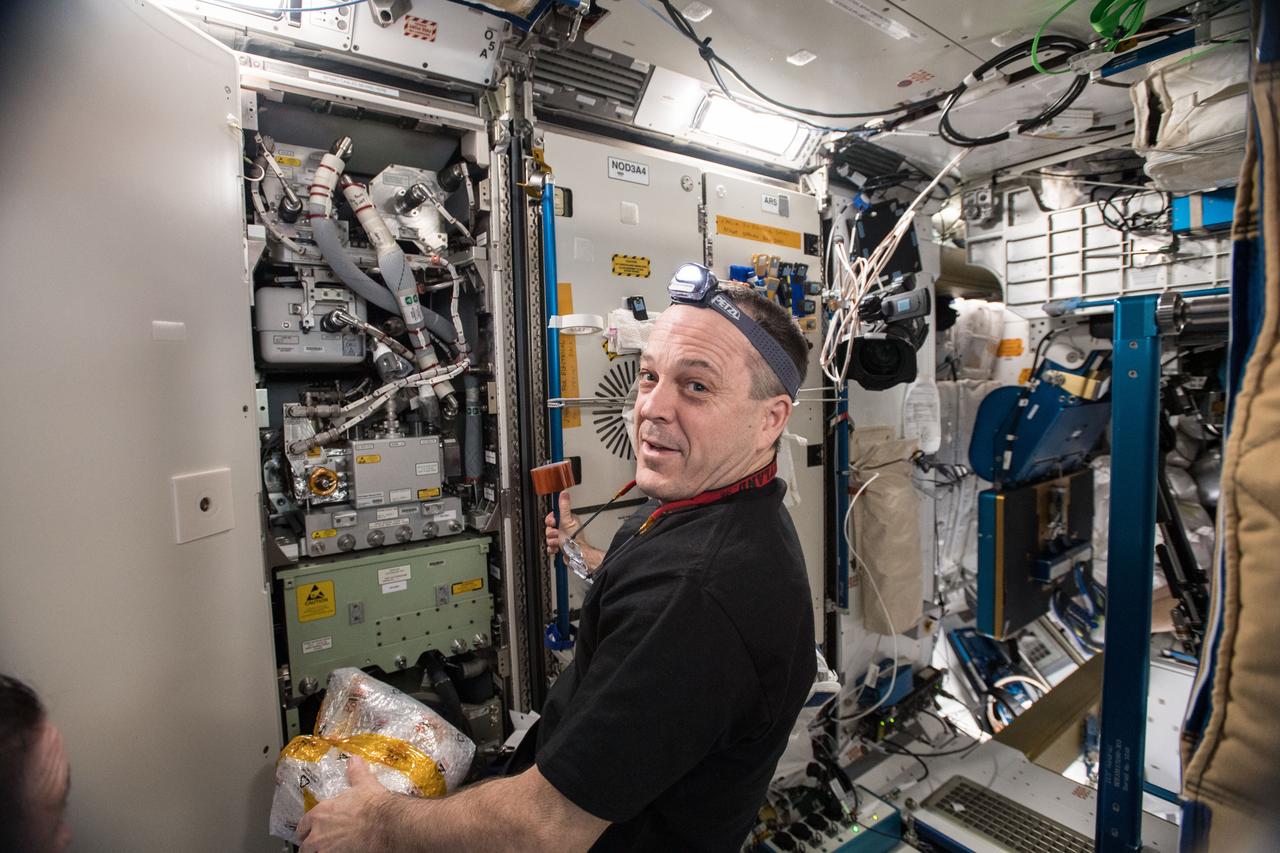
iss056e014487 (June 18, 2018) --- Expedition 56 Flight Engineer Ricky Arnold of NASA is pictured in the Unity module during life support maintenance work to remove and replace an Oxygen Generation System Hydrogen Sensor.
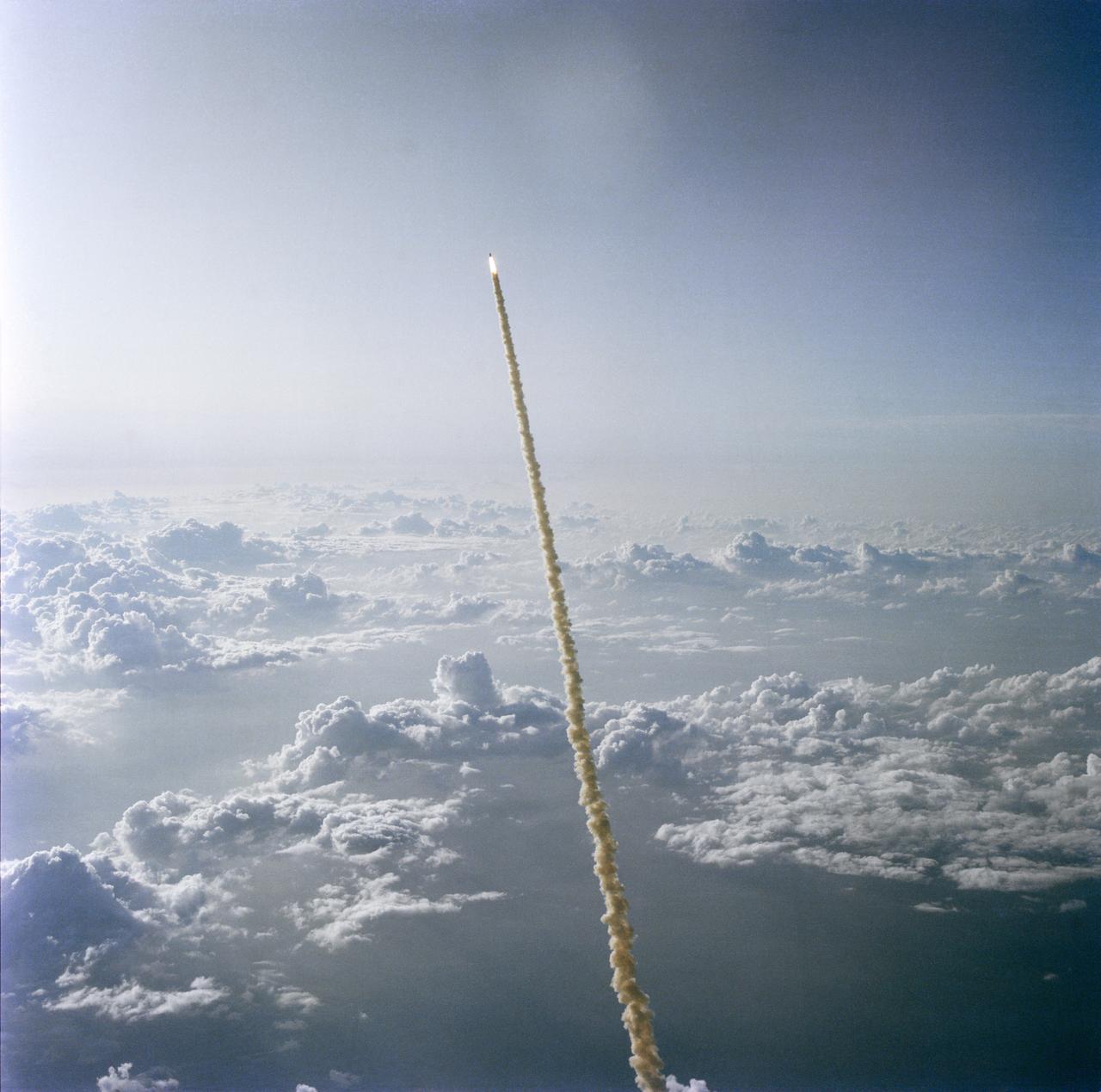
S83-35620 (18 June 1983) --- The space shuttle Challenger, its two solid rocket boosters and an external fuel tank carry the five-member STS-7 astronaut crew toward a six-day mission in Earth orbit. This high-angle view of the liftoff, a lengthy stretch of Florida Atlantic coastline and a number of large cumulus clouds was photographed with a handheld 70mm camera by astronaut John W. Young. Young usually pilots the Shuttle Training Aircraft (STA) for weather monitoring at launch and landing sites for STS missions. The Challenger?s second launch occurred at 7:33 a.m. (EDT) on 18 June 1983. Photo credit: NASA

S83-35782 (18 June 1983) --- An Orbital Maneuvering System (OMS) engine firing caused this bright glow at the aft end of the Earth-orbiting space shuttle Challenger on June 18, 1983. Also visible in the 70mm exposure are parts of the Shuttle Pallet Satellite (SPAS-01). The experiment package for NASA's Office of Space and Terrestrial Applications (OSTA-2), the protective cradles for the Indonesian Palapa-B and Telesat Canada Anik C2 satellites, some getaway special (GAS) canisters and the Canadian-built Remote Manipulator System (RMS). The firing took place less than an hour after deployment of Anik. Photo credit: NASA
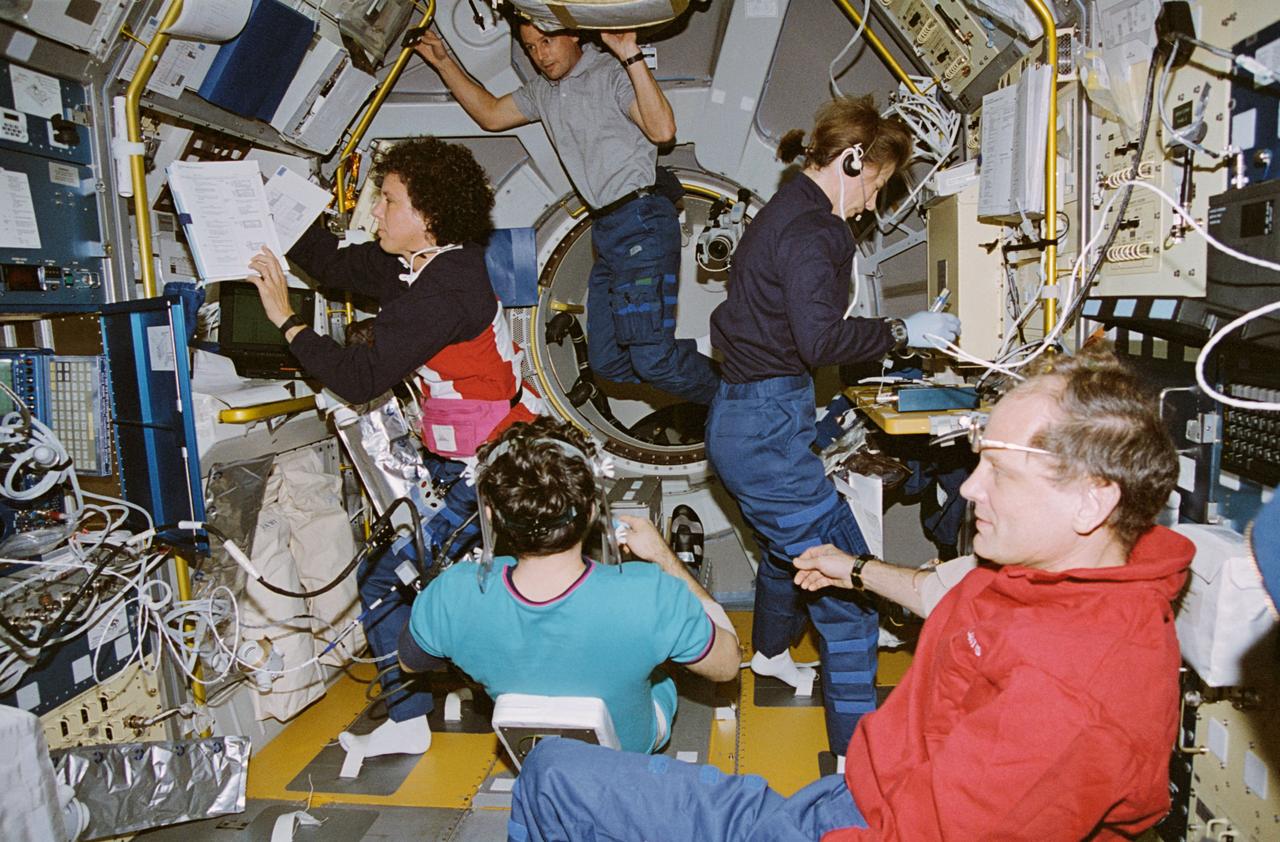
STS071-102-027 (27 June - 7 July 1995) --- Onboard the Spacelab Science Module in the Space Shuttle Atlantis' cargo bay, four astronauts and a cosmonaut team up to collect data from Mir-18 crew members who have been aboard Russia's Mir Space Station for four months. Astronauts Ellen S. Baker (left), Gregory J. Harbaugh (top center) and Bonnie J. Dunbar, STS-71 mission specialists, are joined by astronaut Norman E. Thagard (right) and Vladimir N. Dezhurov (on bicycle ergometer) in the module. Dezhurov was Mir-18 commander and Thagard served as a cosmonaut researcher on the Mir-18 mission. The three STS-71 mission specialists lifted off aboard Atlantis on June 27, 1995, to participate in the historic link-up.
![ISS031-E-146306 (27 June 2012) --- An Expedition 31 crew member aboard the International Space Station, flying approximately 240 miles (386 kilometers) above Earth, captured this view of the Fontenelle fire on June 27, 2012. The fire, burning in Wyoming 18 miles (29 kilometers) west of Big Piney, was discovered on June 24. [Editor?s update --- By the morning of June 28, the fire had burned 25,000 acres (101 square kilometers). By July 6, the area burned had more than doubled to 57,324 acres (232 square kilometers), and the fire was 25 percent contained].](https://images-assets.nasa.gov/image/iss031e146306/iss031e146306~medium.jpg)
ISS031-E-146306 (27 June 2012) --- An Expedition 31 crew member aboard the International Space Station, flying approximately 240 miles (386 kilometers) above Earth, captured this view of the Fontenelle fire on June 27, 2012. The fire, burning in Wyoming 18 miles (29 kilometers) west of Big Piney, was discovered on June 24. [Editor?s update --- By the morning of June 28, the fire had burned 25,000 acres (101 square kilometers). By July 6, the area burned had more than doubled to 57,324 acres (232 square kilometers), and the fire was 25 percent contained].
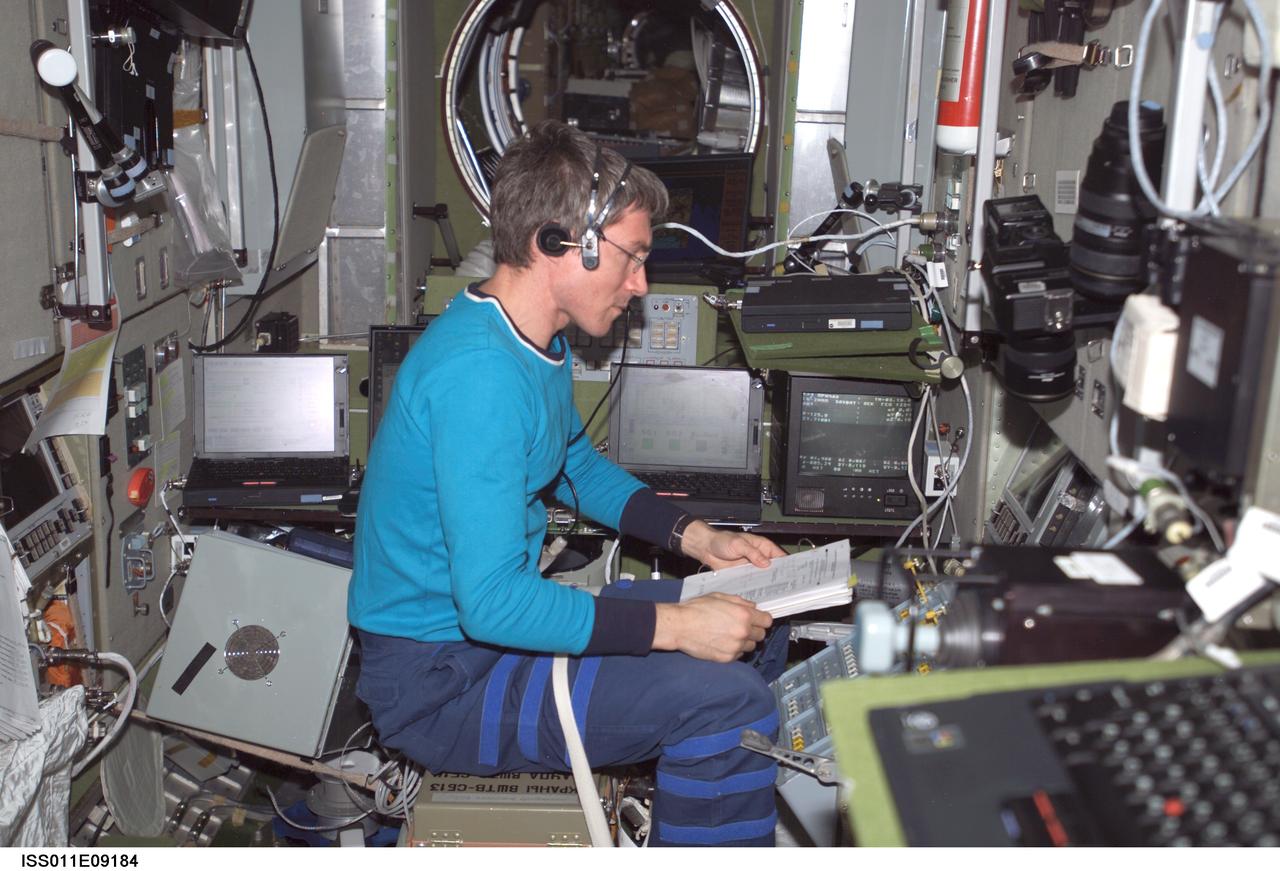
ISS011-E-09184 (18 June 2005) --- Cosmonaut Sergei K. Krikalev, Expedition 11 commander representing Russia's Federal Space Agency, practices docking procedures with the TORU teleoperated control system in the Zvezda Service Module of the International Space Station (ISS) in preparation for the docking of the Progress 18 spacecraft. Krikalev, using the Simvol-TS screen and hand controllers, could manually dock the Progress to the Station in the event of a failure of the Kurs automated docking system.
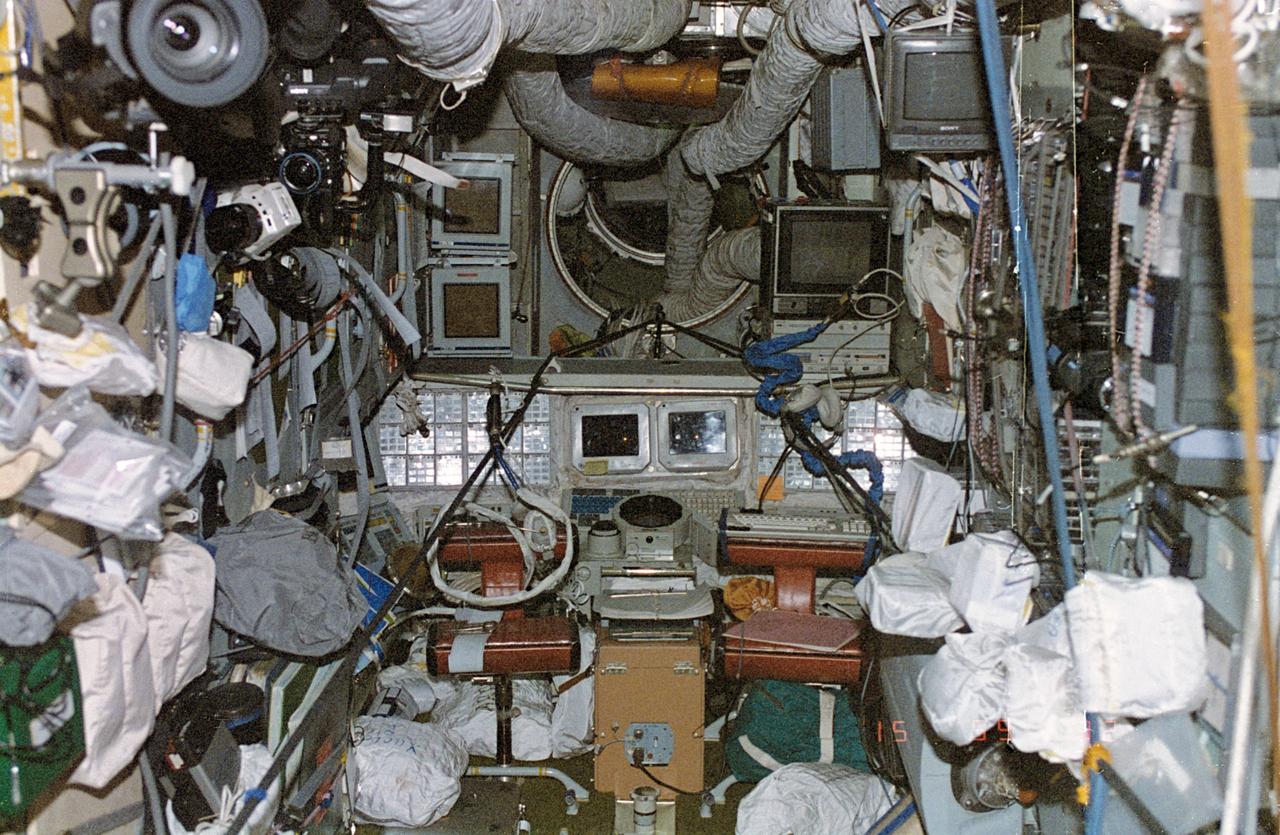
NM18-302-038 (28 June 1995) --- Astronaut Norman E. Thagard, Mir-18 cosmonaut researcher, took this picture aboard Mir on the eve of the targeted arrival day of Atlantis. Thagard told a July 18 press conference audience in Houston that he worked to clean the area prior to the Mir-19 crew and the STS-71 crew arrival and that his showing of this slide represented the first time the crew would have seen the area "in this condition."
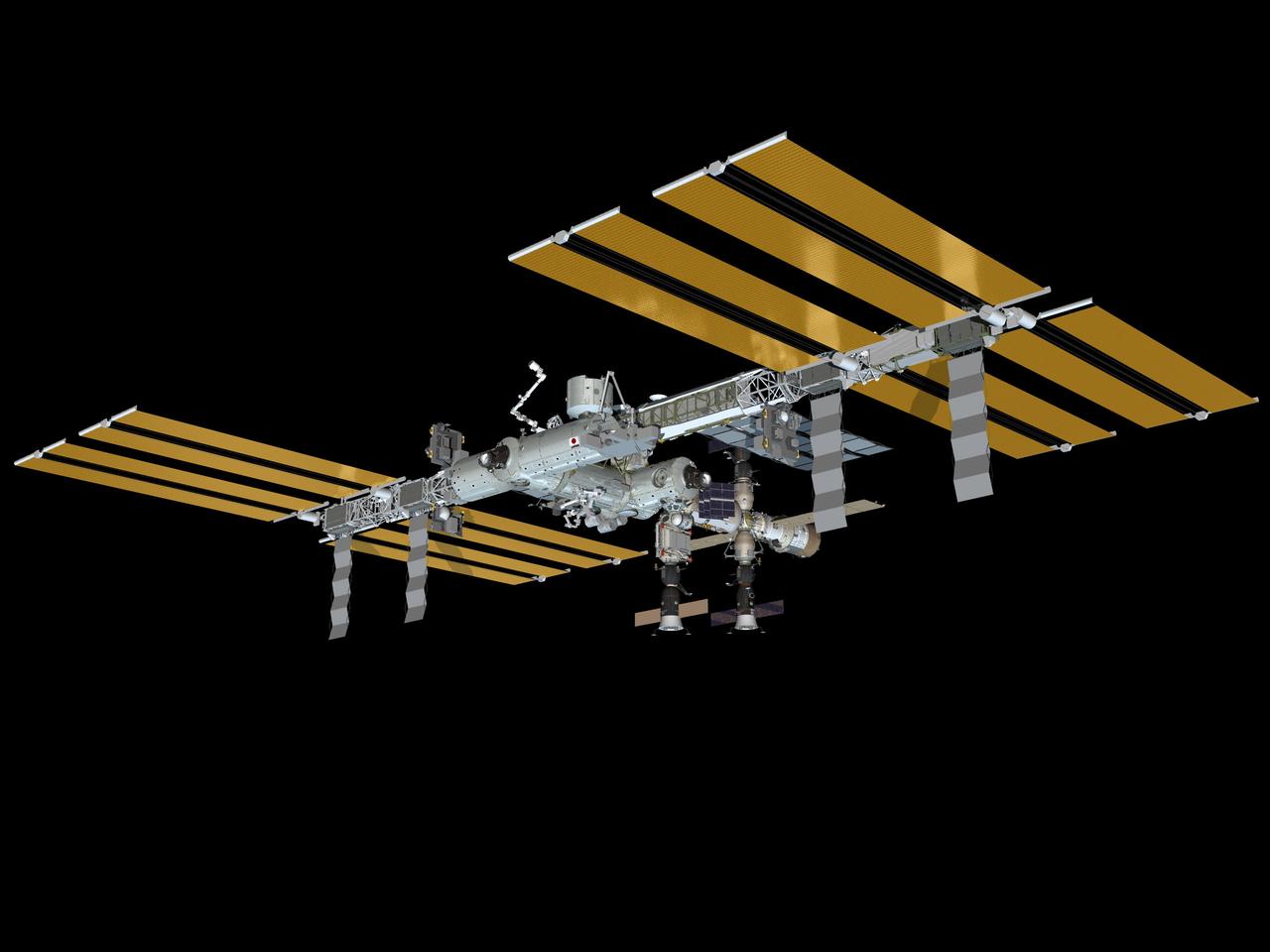
JSC2010-E-086856 (June 2010) --- Computer-generated artist?s rendering of the International Space Station as of June 28, 2010. Soyuz 23 (TMA-19) relocates from the Zvezda Service Module?s aft port to the Rassvet Mini-Research Module 1 (MRM1). Progress 37 resupply vehicle is linked to the Pirs Docking Compartment and Soyuz 22 (TMA-18) remains docked to the Poisk Mini-Research Module 2 (MRM2).
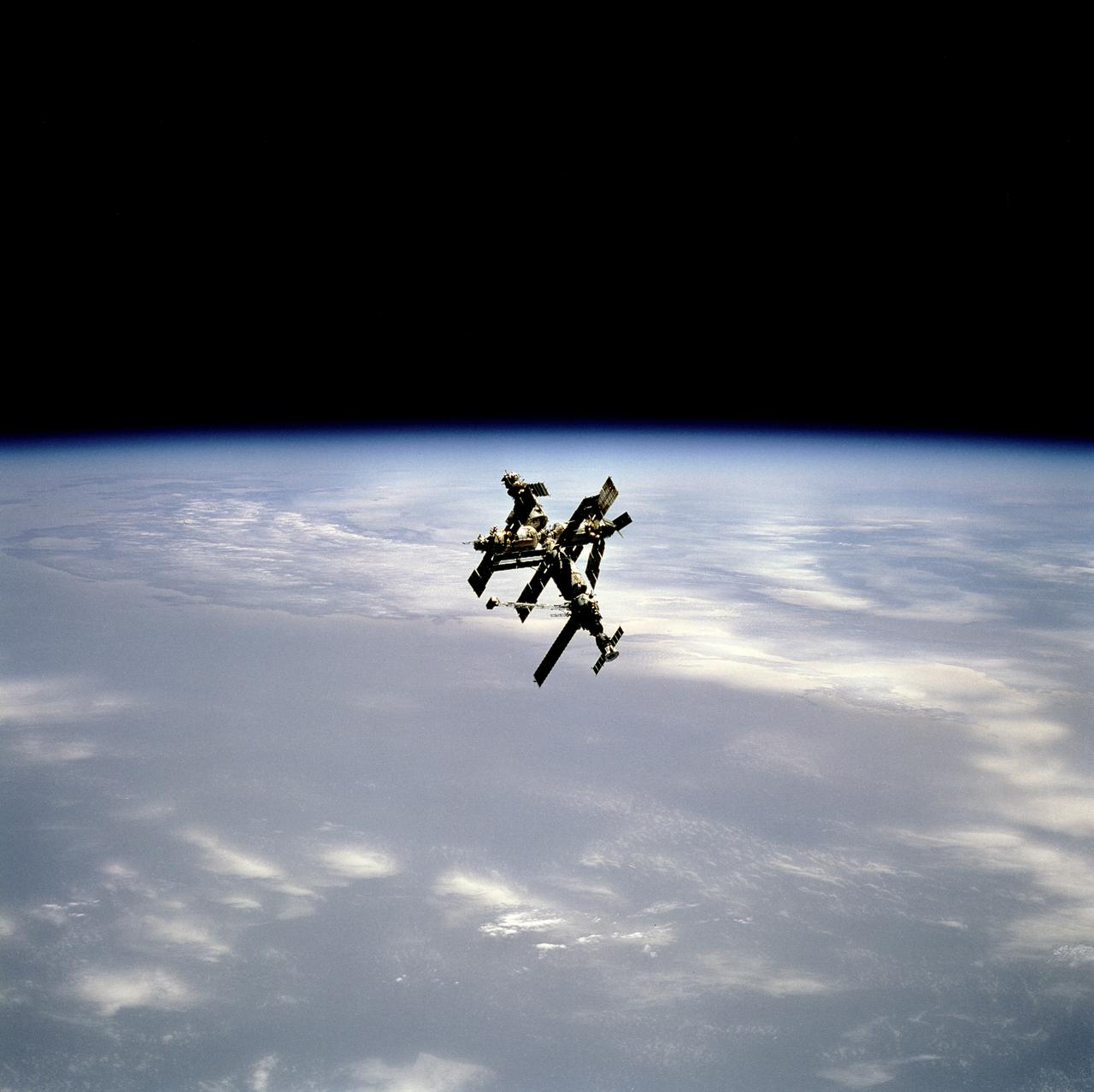
STS071-744-030 (29 June 1995) --- Russia's Mir Space Station is backdropped against blue and white Earth near its horizon, as photographed from the approaching space shuttle Atlantis on June 29, 1995. Five NASA astronauts and two cosmonauts were onboard Atlantis as it approached the Mir, which housed the three-member Mir-18 crew.
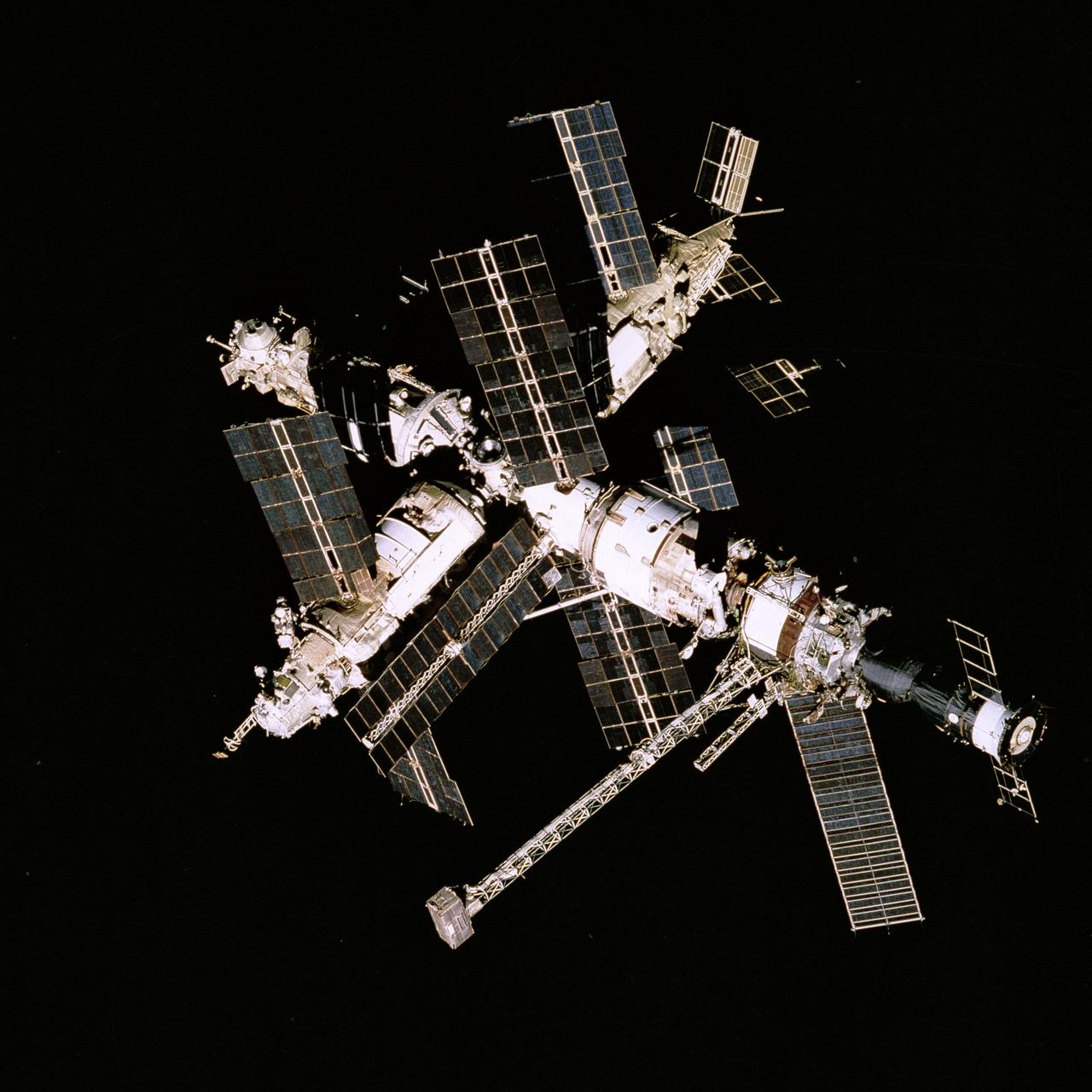
STS071-744-017 (29 June 1995) --- Russia's Mir Space Station is backdropped against the darkness of space, as photographed from the approaching space shuttle Atlantis on June 29, 1995. Five NASA astronauts and two cosmonauts were onboard Atlantis as it approached the Mir, which has been home for the three-member Mir-18 crew since March of this year.
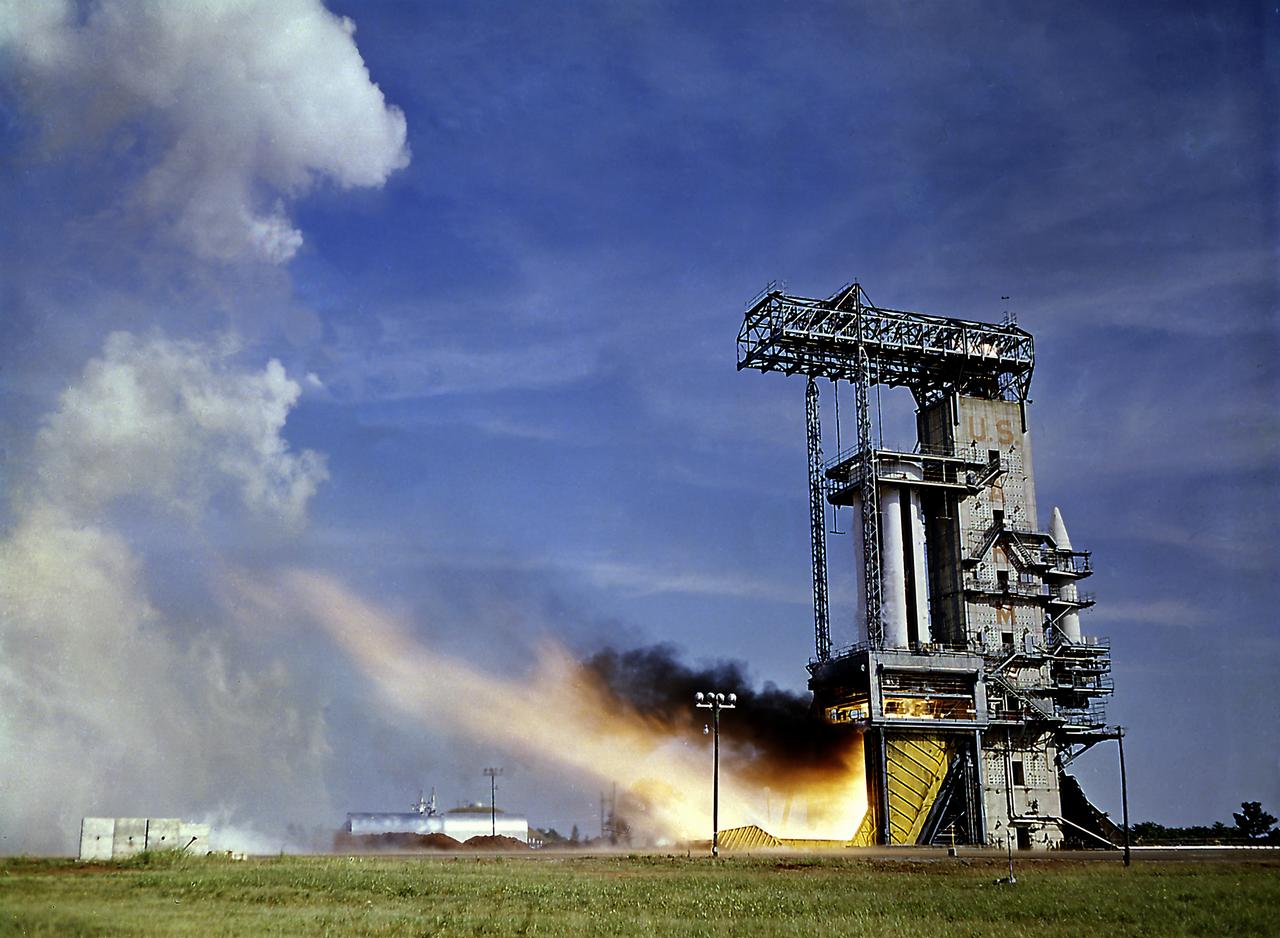
The Saturn Project was approved on January 18, 1960 as a program of the highest national priority. The formal test program to prove out the clustered-booster concept was well underway. A series of static tests of the Saturn I booster (S-I stage) began June 3, 1960 at the Marshall Space Flight Center (MSFC). This photograph depicts the Saturn I S-I stage equipped with eight H-1 engines, being successfully test-fired for the duration of 121 seconds on June 15, 1960.
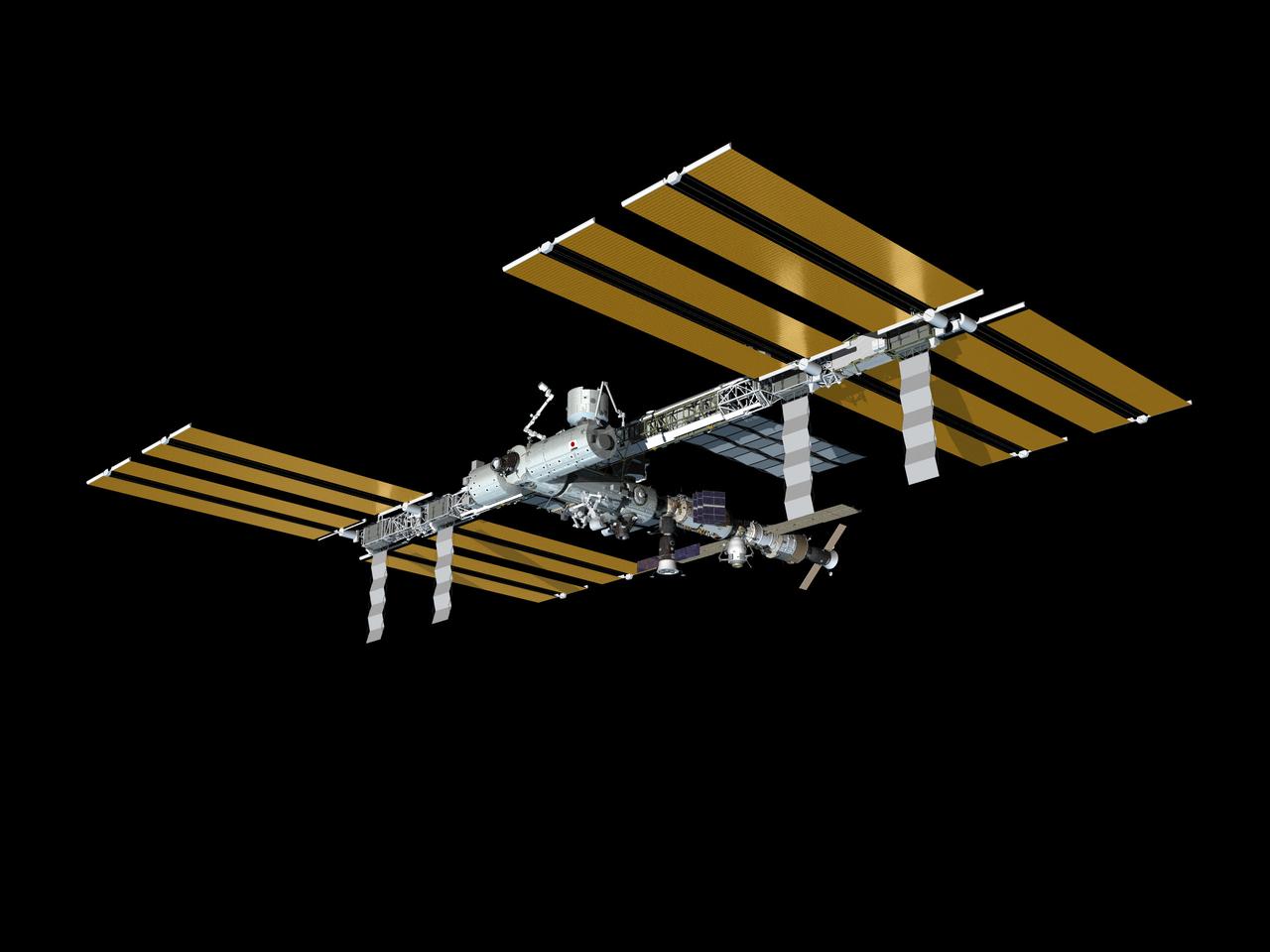
JSC2009-E-140105 (June 2009) --- Computer-generated artist?s rendering of the International Space Station as of June 30, 2009. Progress 33 supply vehicle undocks from the Pirs Docking Compartment. Soyuz 19 (TMA-15) remains docked to the Zarya nadir port and Soyuz 18 (TMA-14) remains linked to the Zvezda Service Module?s aft port.
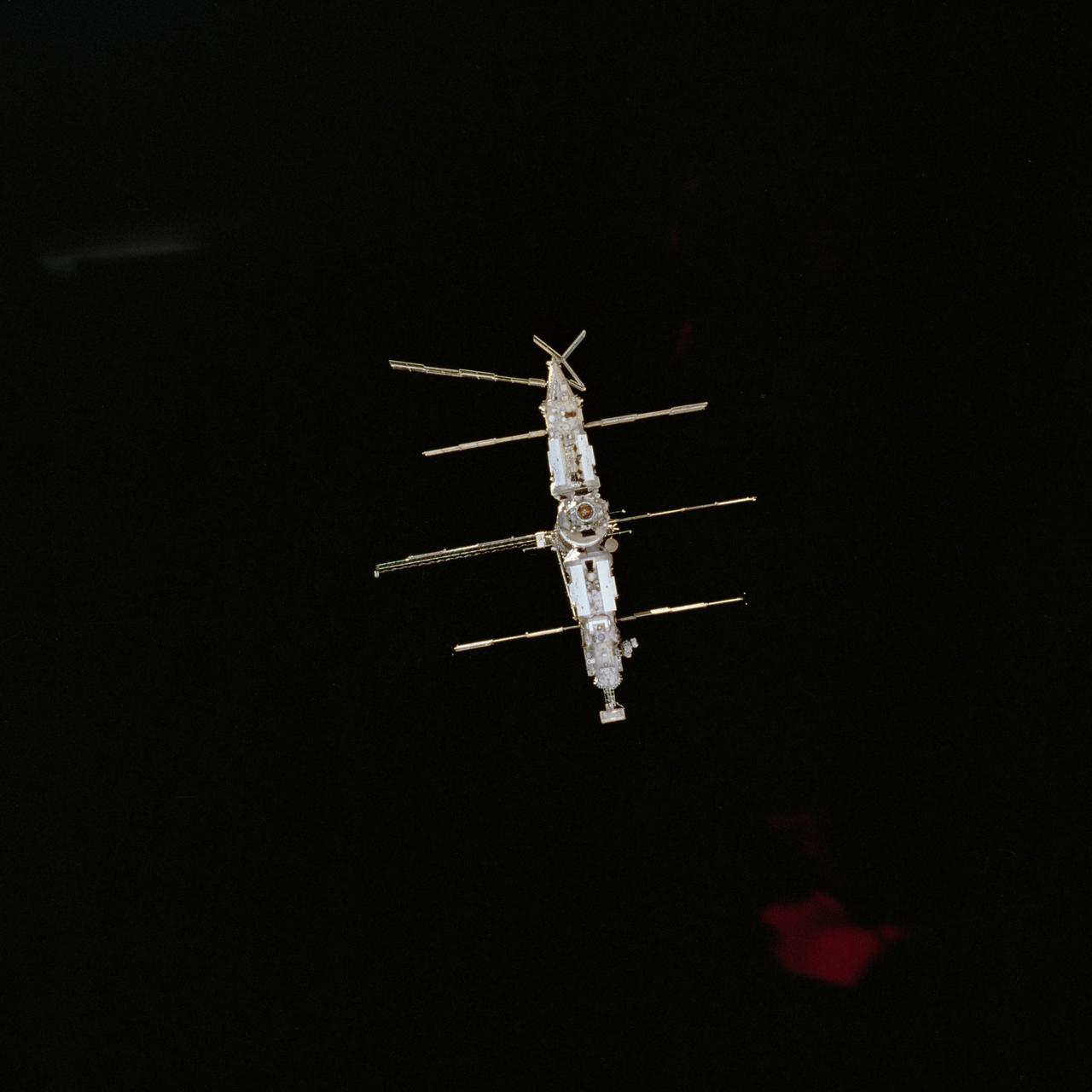
STS071-702-058 (29 June 1995) --- Russia's Mir Space Station is backdropped against the darkness of space, as photographed from the approaching space shuttle Atlantis on June 29, 1995. Five NASA astronauts and two cosmonauts were onboard Atlantis as it approached the Mir, which has been home for the three-member Mir-18 crew since March of this year.

S96-E-5146 (03 June 1999) --- The International Space Station (ISS) is seen from the Space Shuttle Discovery shortly after the two spacecraft began their relative separation. The seven STS-96 crew members had spent the previous few days working on the station. The photo was taken with an electronic still camera (ESC) at 22:53:18 GMT, June 3, 1999.
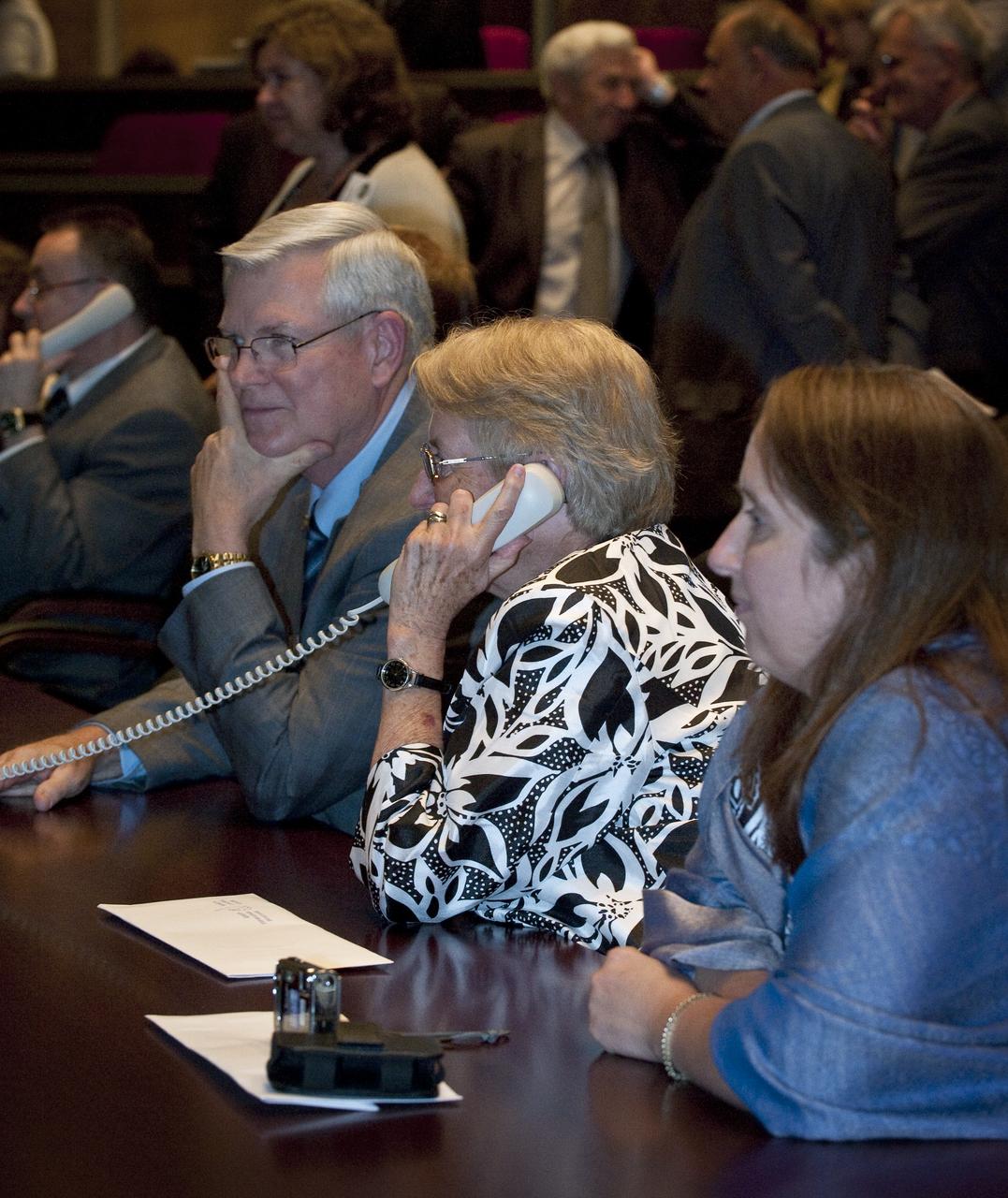
Sherry Walker, second from right, speaks to her daughter NASA Flight Engineer and astronaut Shannon Walker after she and her Expedition 24 crew mates docked to the International Space Station (ISS), Friday, June 18, 2010 in Korolev, Russia. Walker, Soyuz Commander Fyodor Yurchikhin and Flight Engineer Doug Wheelock launched aboard their Soyuz TMA-19 spacecraft on Wednesday, June 16 to start a six-month tour aboard the ISS.
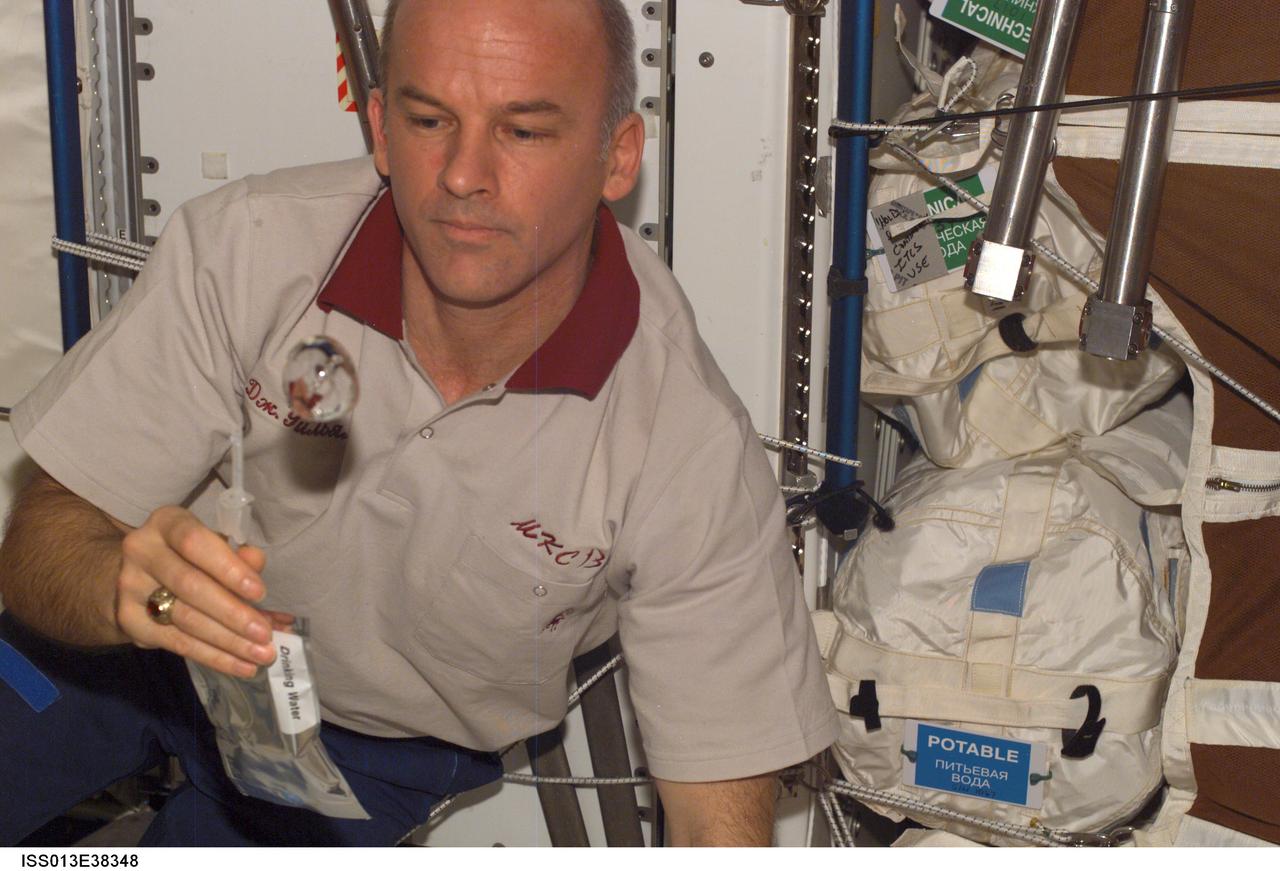
ISS013-E-38348 (18 June 2006) --- Astronaut Jeffrey N. Williams, Expedition 13 NASA space station science officer and flight engineer, watches a water bubble float freely while holding a container of water in the Destiny laboratory of the International Space Station.
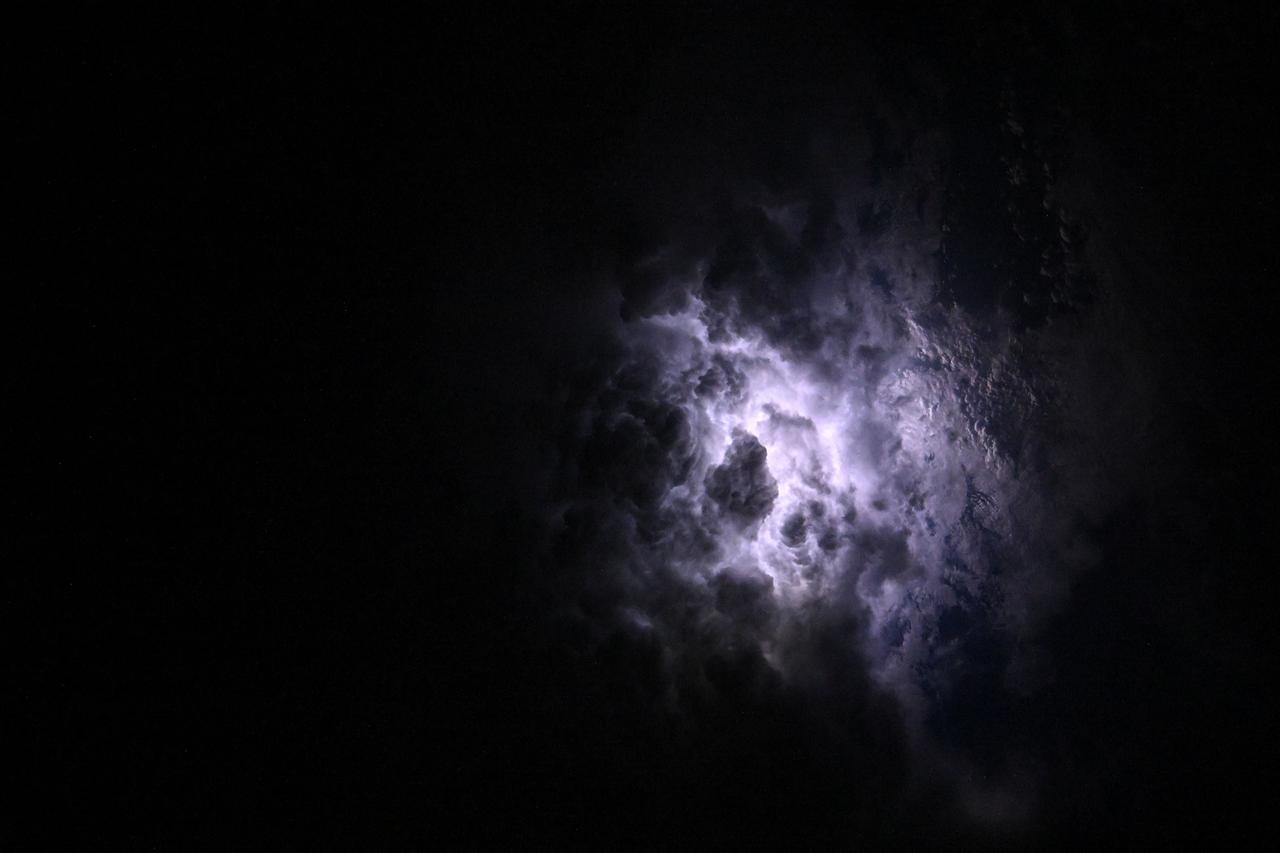
iss073e0380959 (June 18, 2025) --- Lightning illuminates the cloud tops of Category 1 Hurricane Erick as it stormed across the Pacific Ocean south of the Mexican state of Chiapas at approximately 3:42 a.m. local time as the International Space Station orbited 258 miles above.
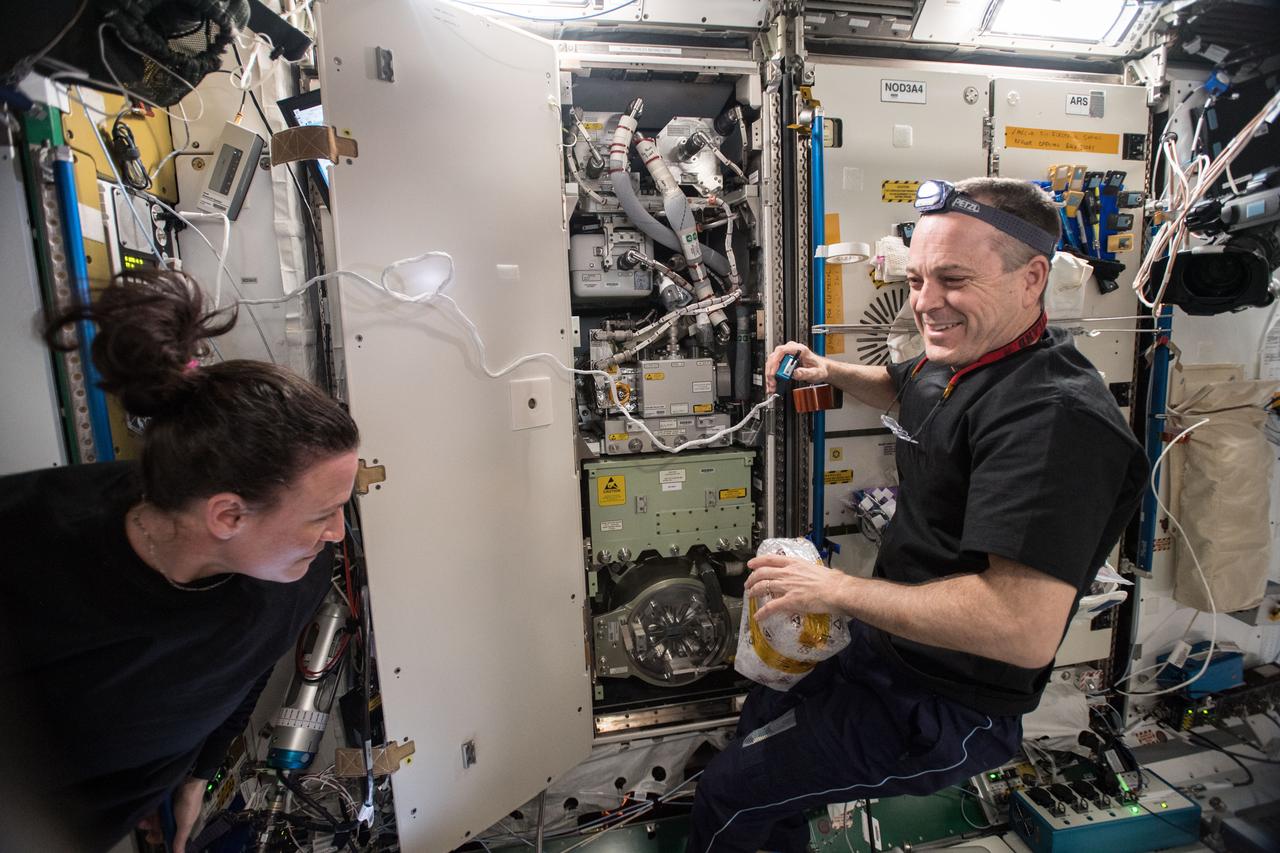
iss056e014488 (June 18, 2018) --- Expedition 56 Flight Engineers Serena Auñón-Chancellor (right) and Ricky Arnold of NASA are pictured in the Unity module during life support maintenance work to remove and replace an Oxygen Generation System Hydrogen Sensor.
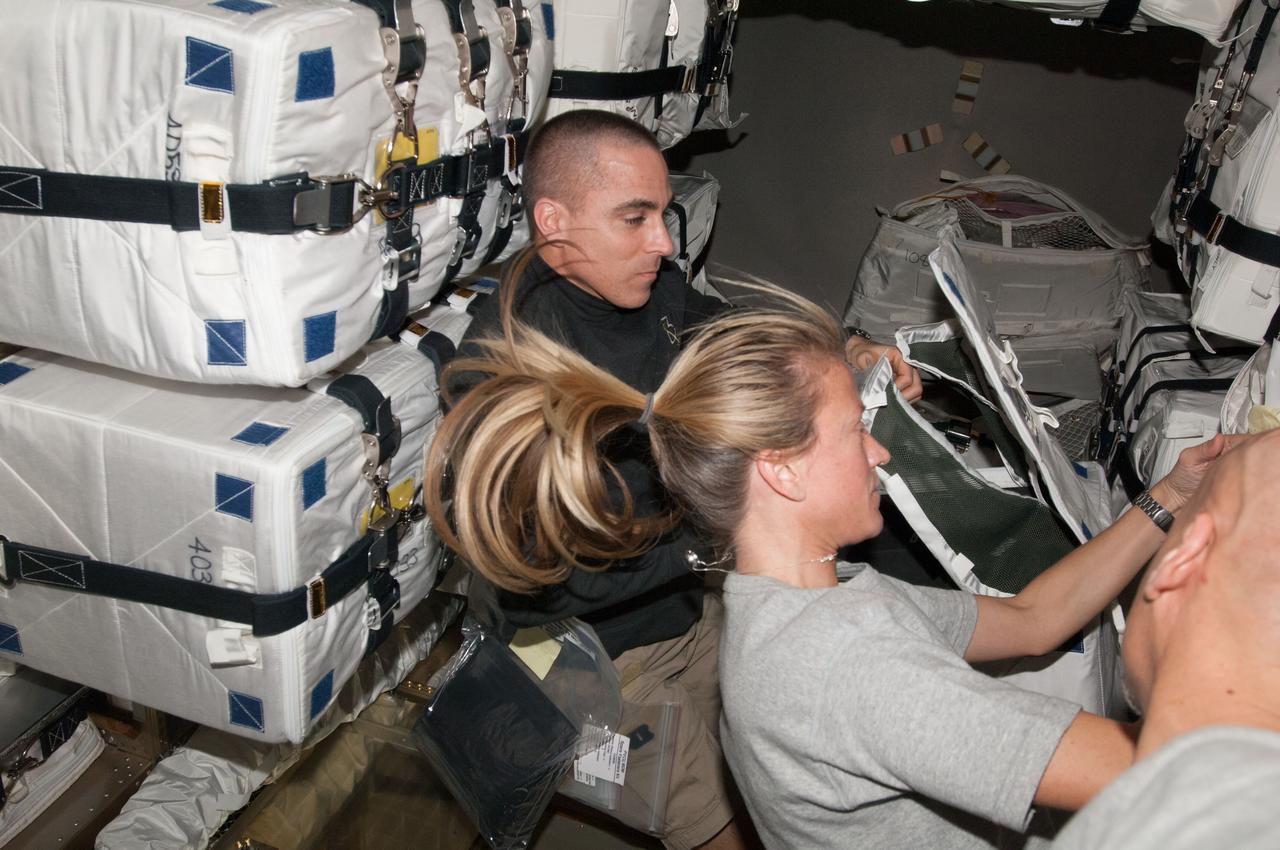
ISS036-E-009256 (18 June 2013) --- NASA astronauts Chris Cassidy and Karen Nyberg, both Expedition 36 flight engineers, perform cargo operations in the European Space Agency's Automated Transfer Vehicle-4 (ATV-4) "Albert Einstein" currently docked to the Zvezda Service Module of the International Space Station.
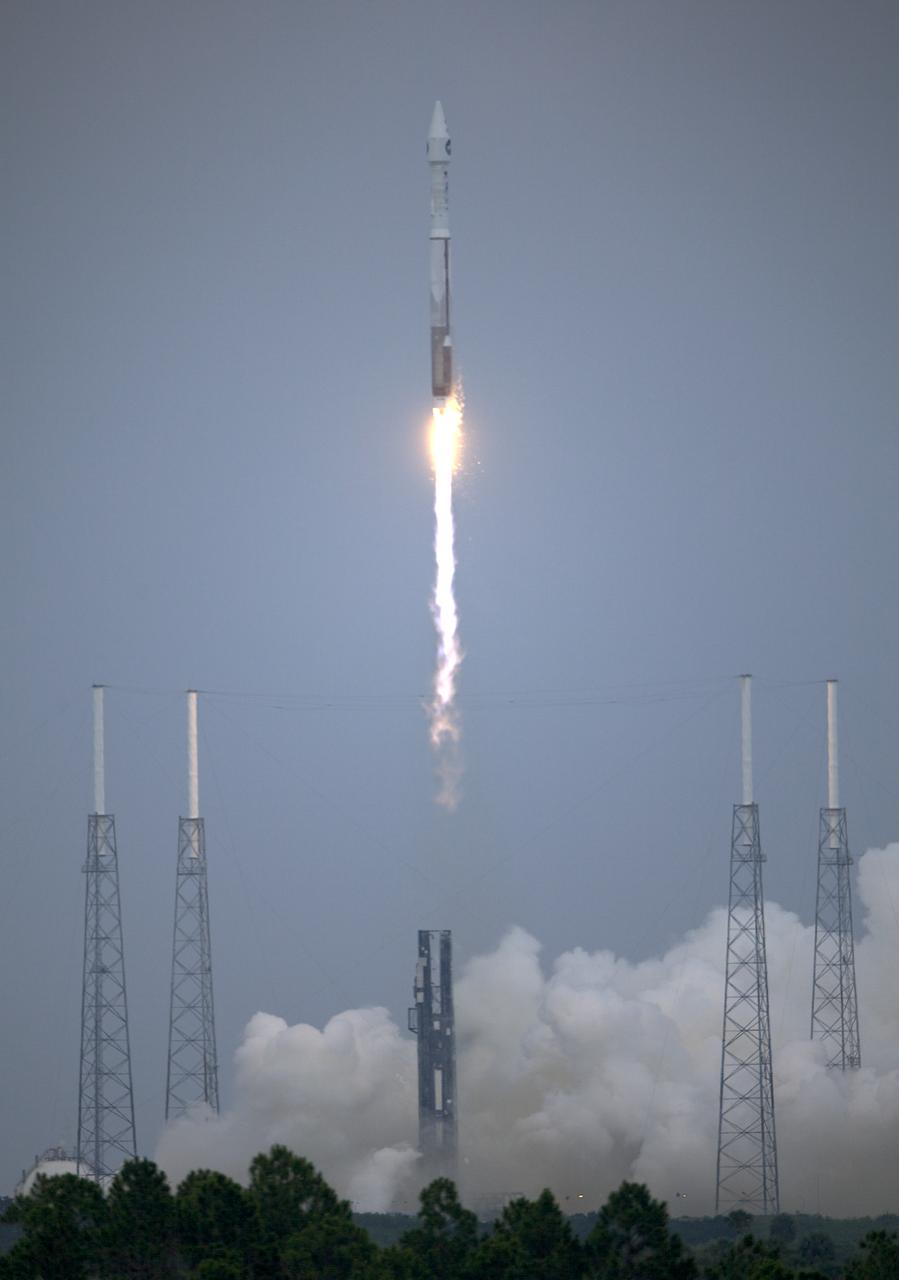
The Lunar Reconnaissance Orbiter and Lunar Crater Observation and Sensing Satellite are bound for the moon after a flawless liftoff Thursday, June 18, 2009, from Cape Canaveral Air Force Station in Florida aboard an Atlas V rocket. Photo Credit: (NASA/Bill Ingalls)

S94-34940 (June 1994) --- Vladimir N. Dezhurov, Russian cosmonaut Commander, Mir-18 EDITOR'S NOTE: Early next year, Dezhurov, along with NASA astronaut Norman E. Thagard and another cosmonaut, will be launched into Earth-orbit to spend three months aboard Russia's Mir space station.
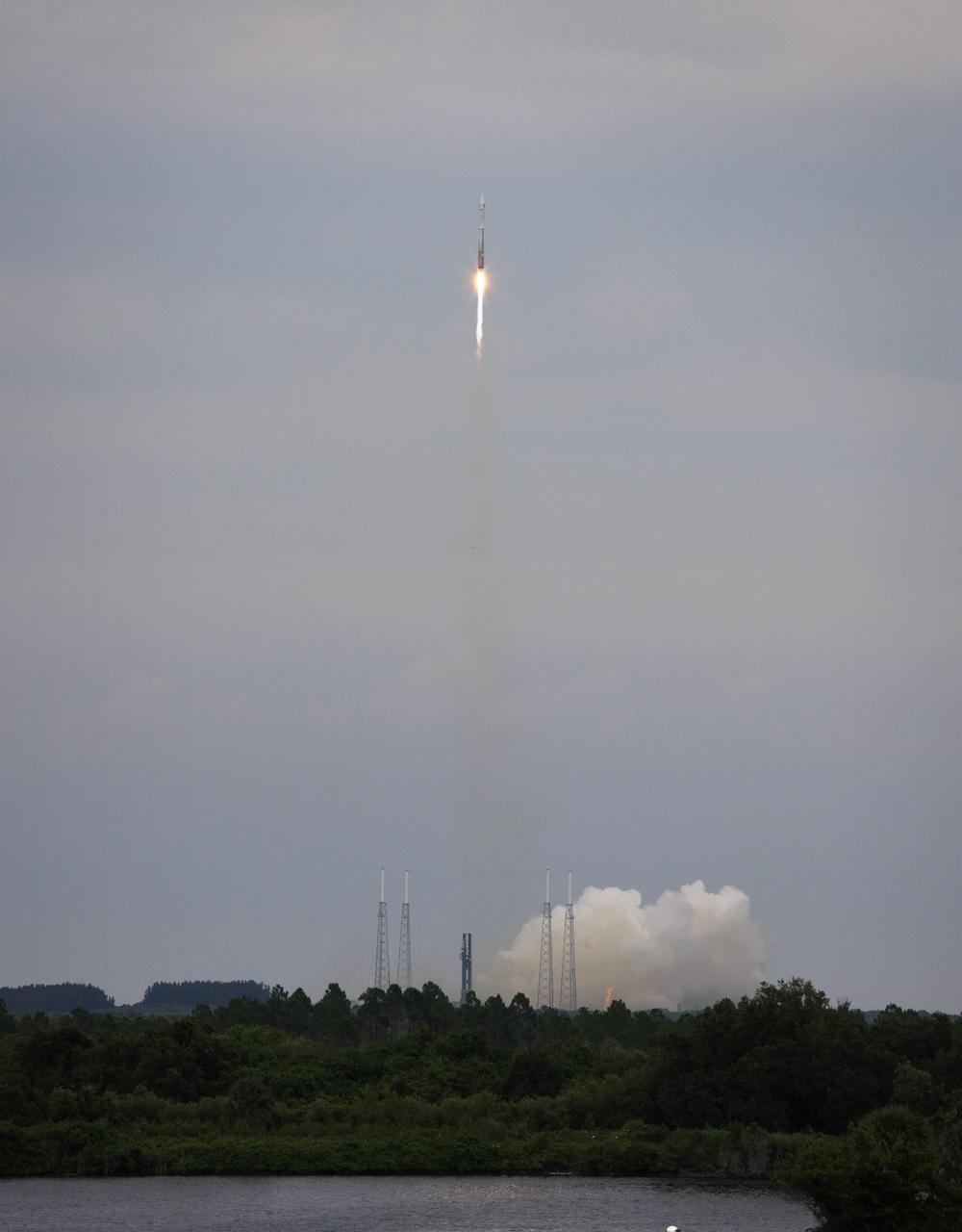
The Lunar Reconnaissance Orbiter and Lunar Crater Observation and Sensing Satellite are bound for the moon after a flawless liftoff Thursday, June 18, 2009, from Cape Canaveral Air Force Station in Florida aboard an Atlas V rocket. Photo Credit: (NASA/Bill Ingalls)
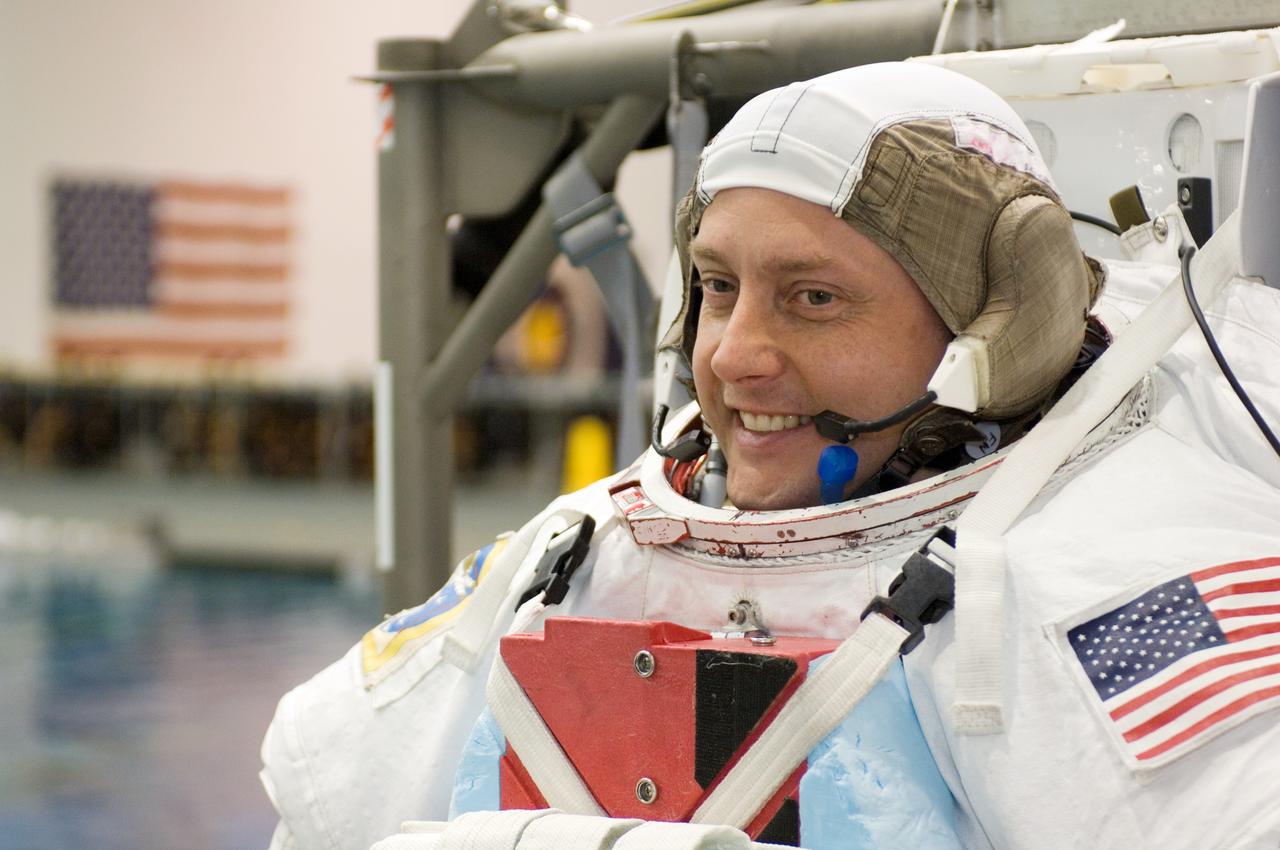
JSC2008-E-045474 (6 June 2008) --- Attired in a training version of his Extravehicular Mobility Unit (EMU) spacesuit, astronaut Edward M. (Mike) Fincke, Expedition 18 commander, awaits the start of a training session in the waters of the Neutral Buoyancy Laboratory (NBL) near NASA's Johnson Space Center.
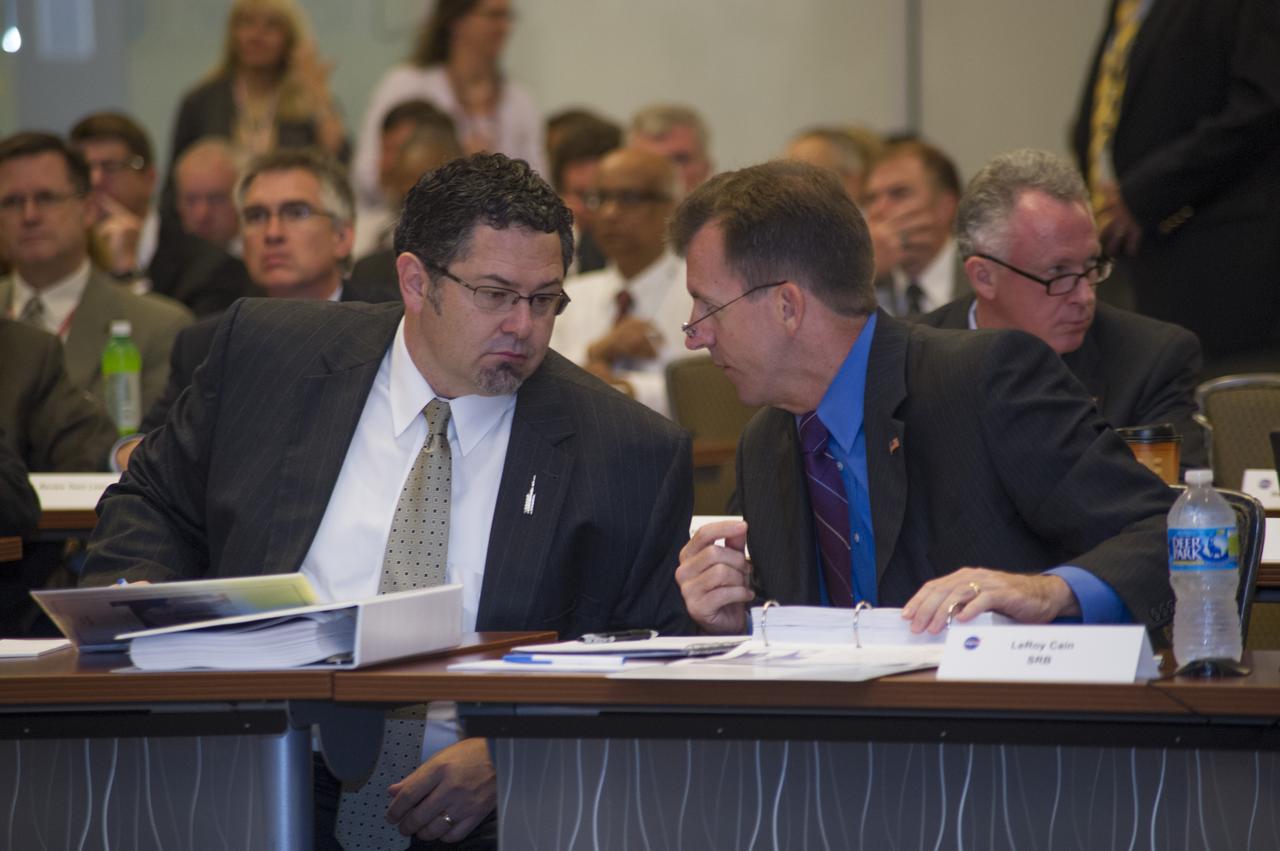
TODD MAY, LEFT, MANAGER OF THE SLS PROGRAM AT THE MARSHALL CENTER, DISCUSSES THE ROCKET'S SPECIFICATIONS WITH LEROY CAIN, WHO HEADS THE INDEPENDENT STANDING REVIEW BOARD FOR SLS, DURING THE SLS PROGRAM'S PRELIMINARY DESIGN REVIEW. THE REVIEW KICKED OFF JUNE 18-19
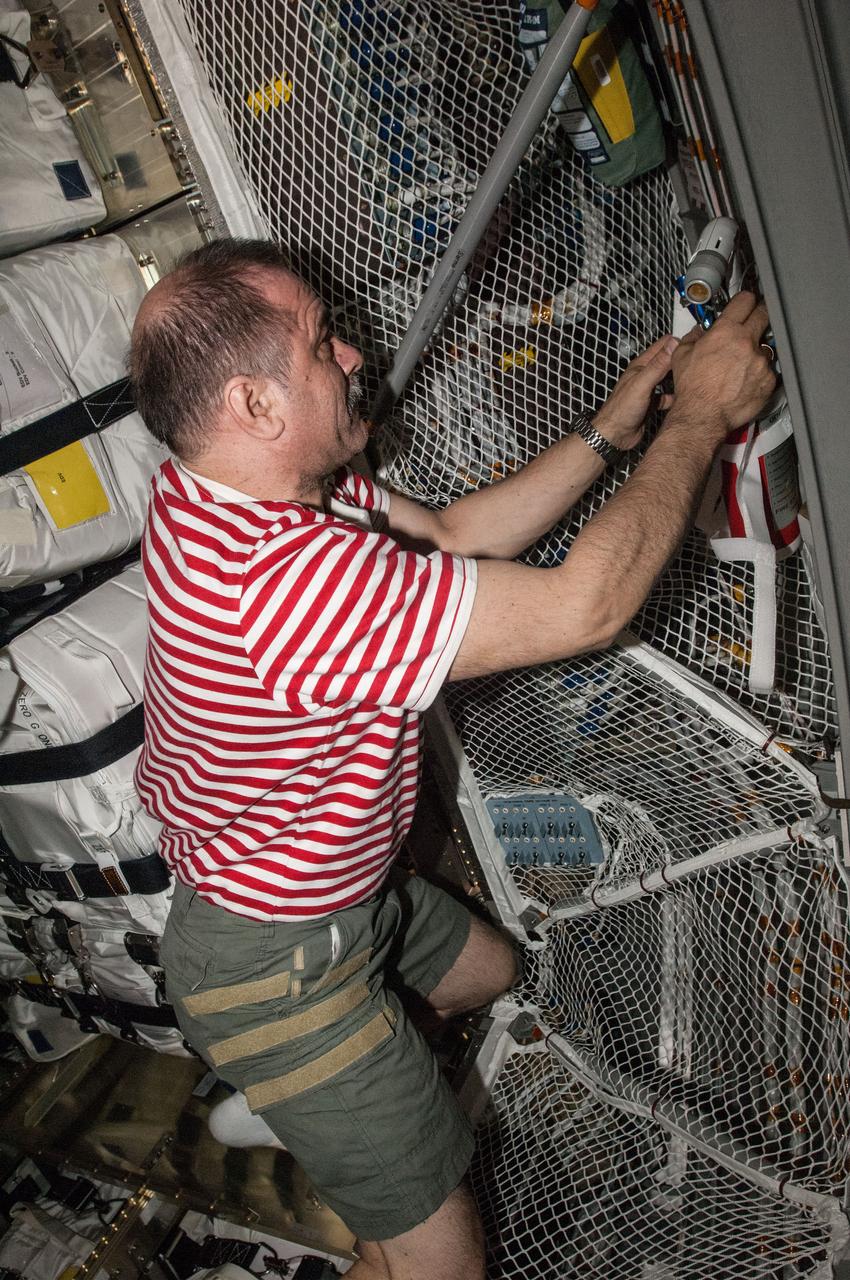
ISS036-E-009219 (18 June 2013) --- Russian cosmonaut Pavel Vinogradov, Expedition 36 commander, performs cargo operations in the European Space Agency's Automated Transfer Vehicle-4 (ATV-4) "Albert Einstein" currently docked to the Zvezda Service Module of the International Space Station.
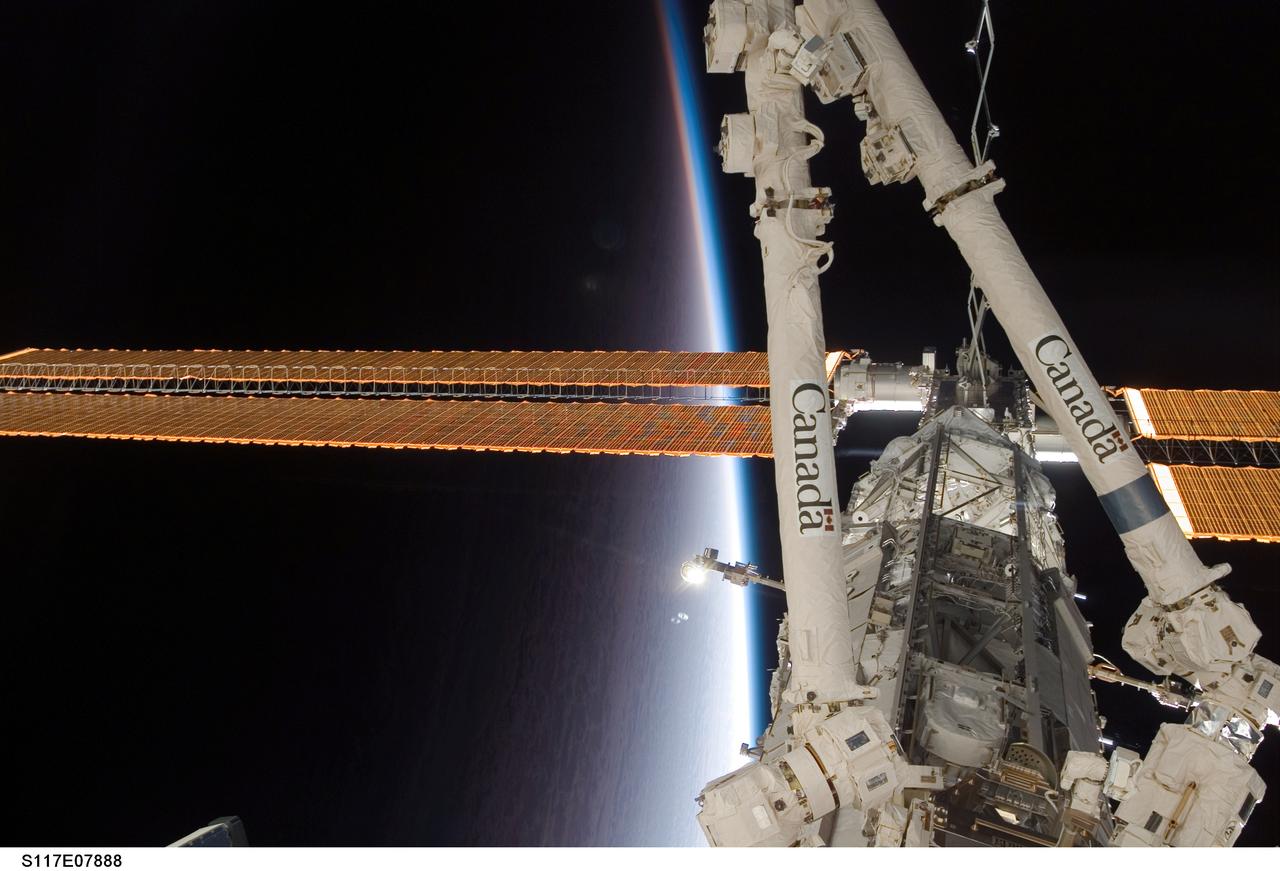
S117-E-07888 (18 June 2007) --- The International Space Station's Canadarm2, or Space Station Remote Manipulator System (SSRMS) and solar array wings are featured in this image photographed by a crewmember on the station while Space Shuttle Atlantis was docked with the orbital complex. The blackness of space and Earth's horizon provides the backdrop for the scene.

STS007-03-058 (18-24 June 1983) --- The Island of Madagascar in the Indian Ocean off the coast of Africa. The colorful area is the mouth of the Betsiboka River near the city of Majunga. The photograph was taken with a 70mm handheld camera aimed through the aft flight deck?s overhead windows on the Earth-orbiting Space Shuttle Challenger.
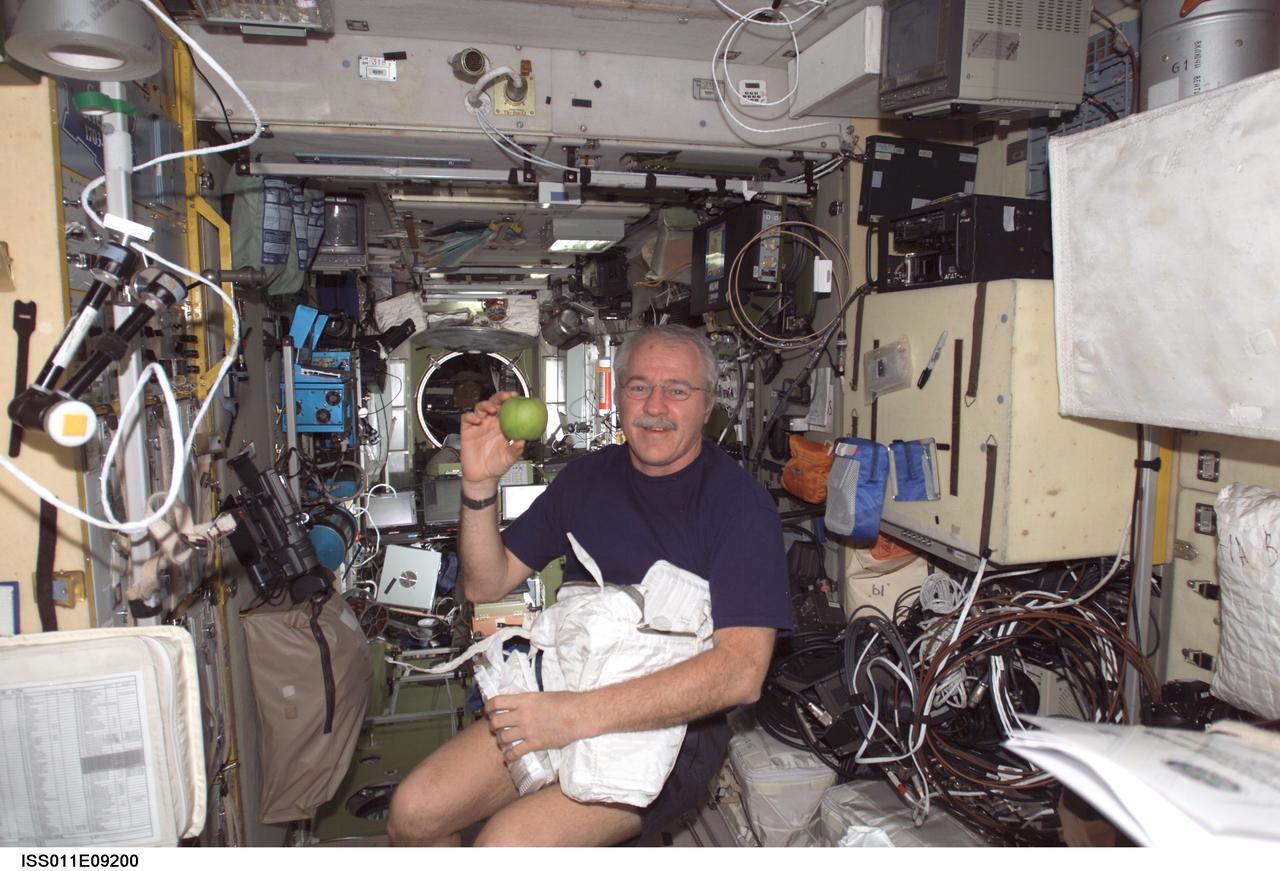
ISS011-E-09200 (19 June 2005) --- Astronaut John L. Phillips, Expedition 11 NASA space station science officer and flight engineer, holds small packages of supplies and fruit in the Zvezda Service Module of the International Space Station, which he un-stowed from the docked Progress 18 supply vehicle.
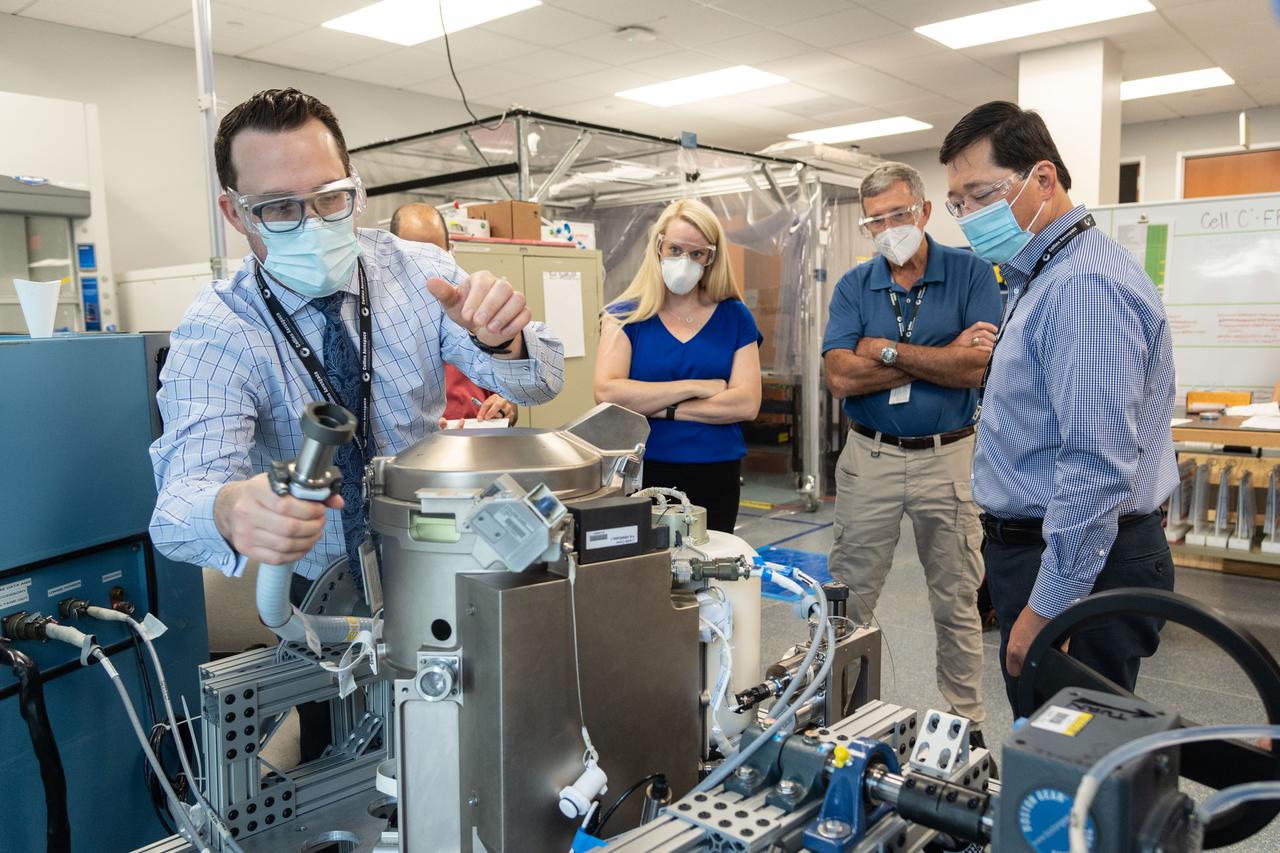
jsc2020e026648 (June 18, 2020) --- NASA astronaut Kate Rubins and support personnel review the Universal Waste Management System, the advanced space toilet due to be delivered to the International Space Station in October aboard Northrop Grumman's Cygnus space freighter.
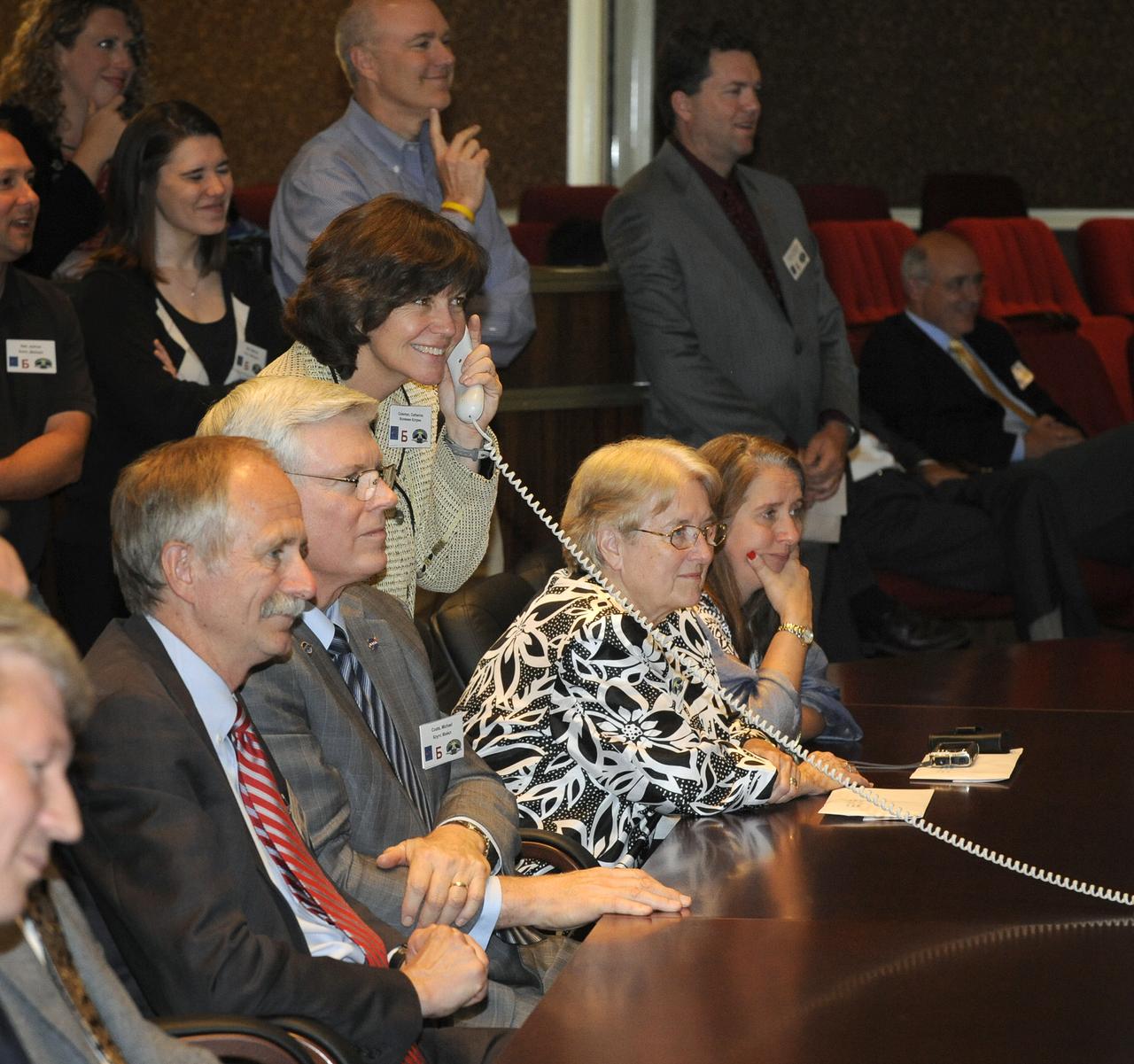
NASA astronaut and Expedition 24 back-up crew member, Cady Coleman, speaks with the crew of Expedition 24 upon their arrival to the International Space Station on Friday, June 18, 2010 at Russian Mission Control Center in Korolev, Russia. Photo Credit: (NASA/Carla Cioffi)
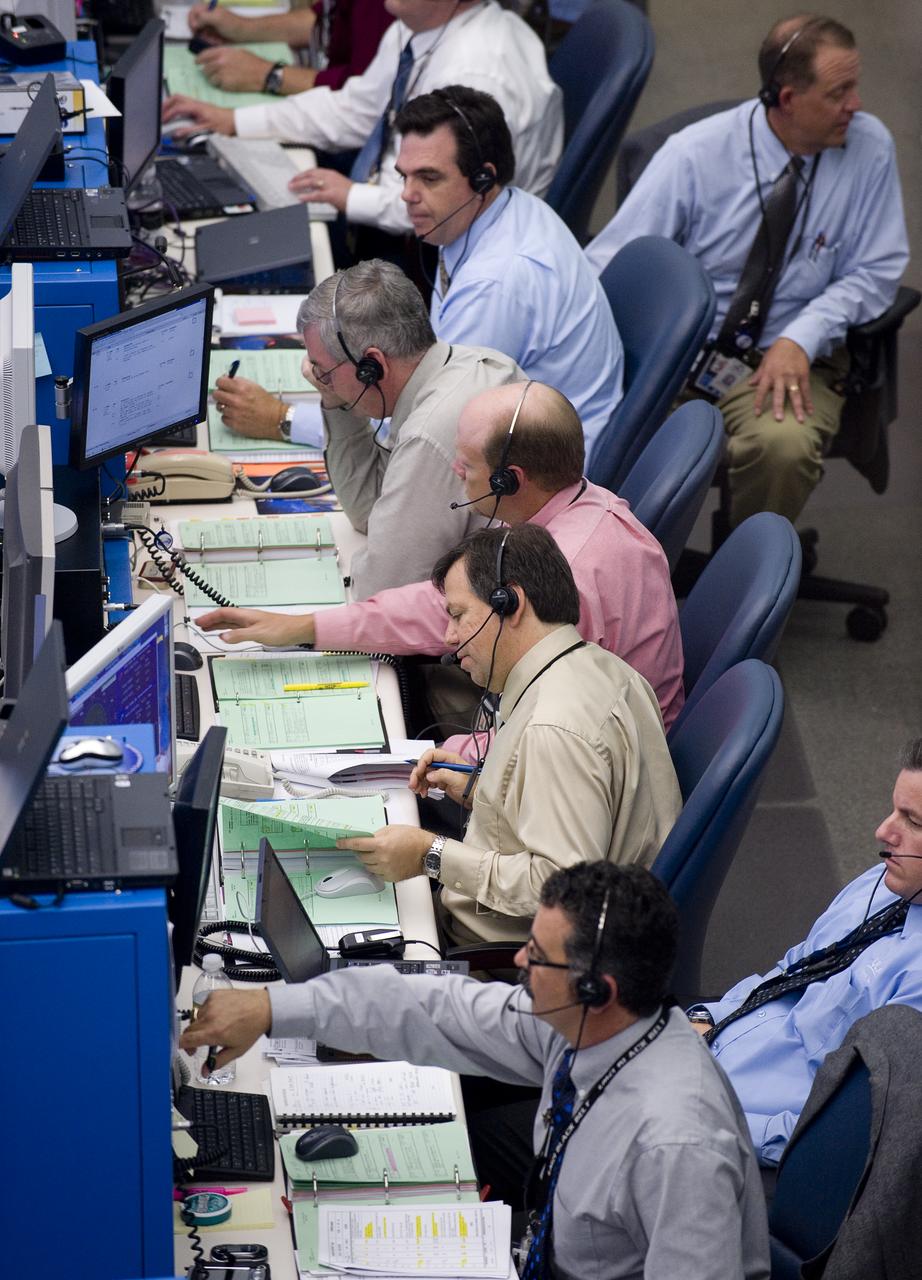
United Launch Alliance (ULA) team members work in the Atlas V Spaceflight Operations Center prior to the launch of the Lunar Reconnaissance Orbiter and Lunar Crater Observation and Sensing Satellite Thursday, June 18, 2009, from Cape Canaveral Air Force Station, Florida. Photo Credit: (NASA/Bill Ingalls)
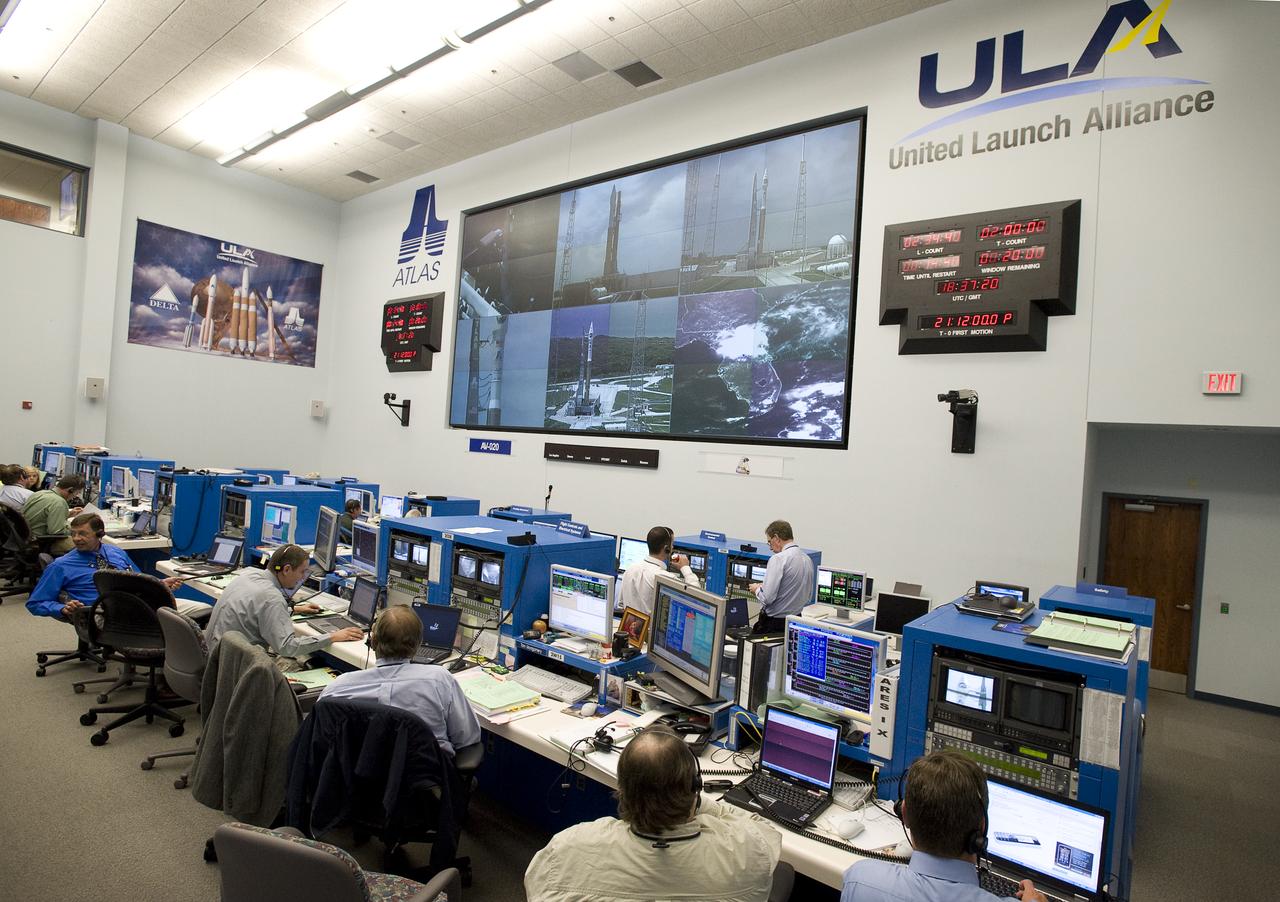
United Launch Alliance (ULA) team members work in the Atlas V Spaceflight Operations Center prior to the launch of the Lunar Reconnaissance Orbiter and Lunar Crater Observation and Sensing Satellite Thursday, June 18, 2009, from Cape Canaveral Air Force Station, Florida. . Photo Credit: (NASA/Bill Ingalls)
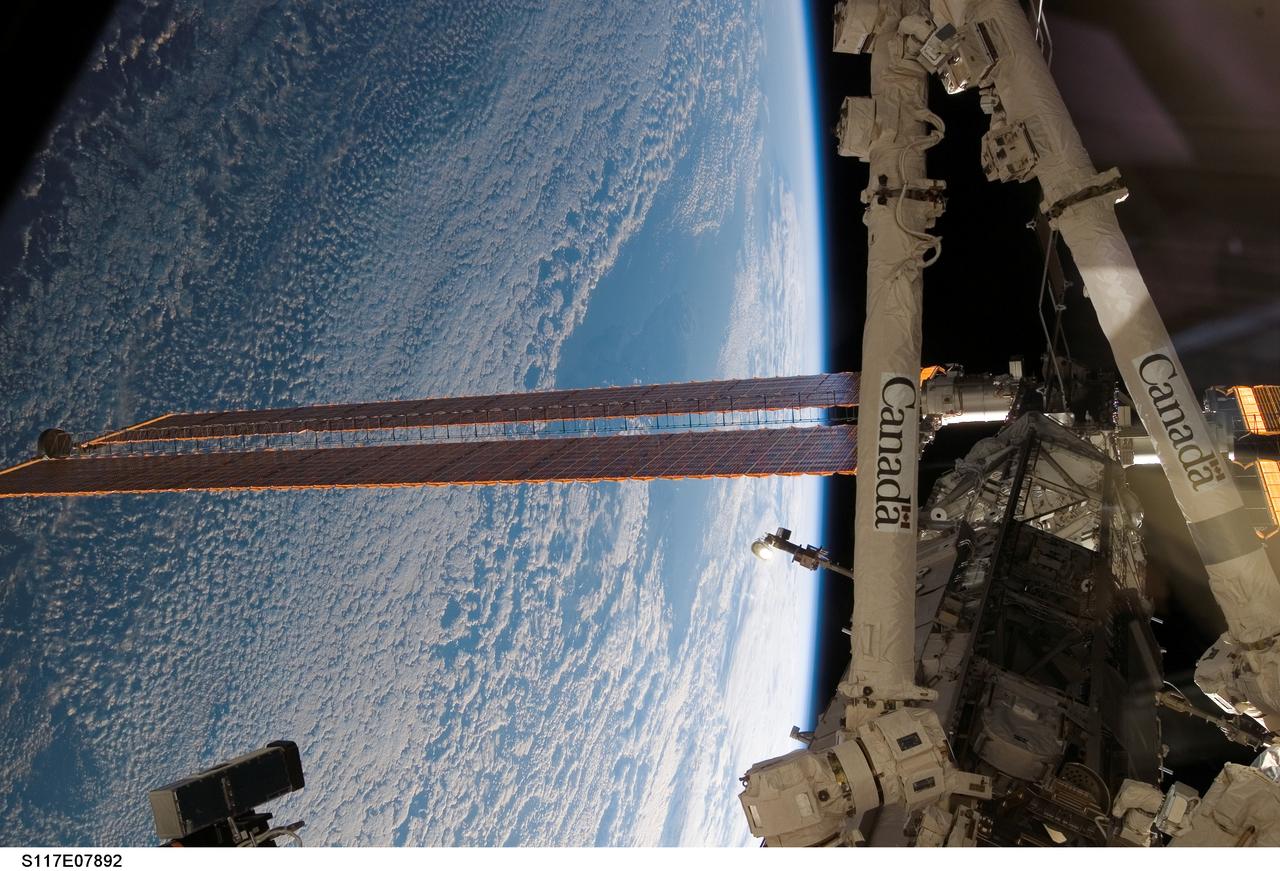
S117-E-07892 (18 June 2007) --- The International Space Station's Canadarm2, or Space Station Remote Manipulator System (SSRMS) and solar array wings are featured in this image photographed by a crewmember on the station while Space Shuttle Atlantis was docked with the orbital complex. The blackness of space and Earth's horizon provides the backdrop for the scene.
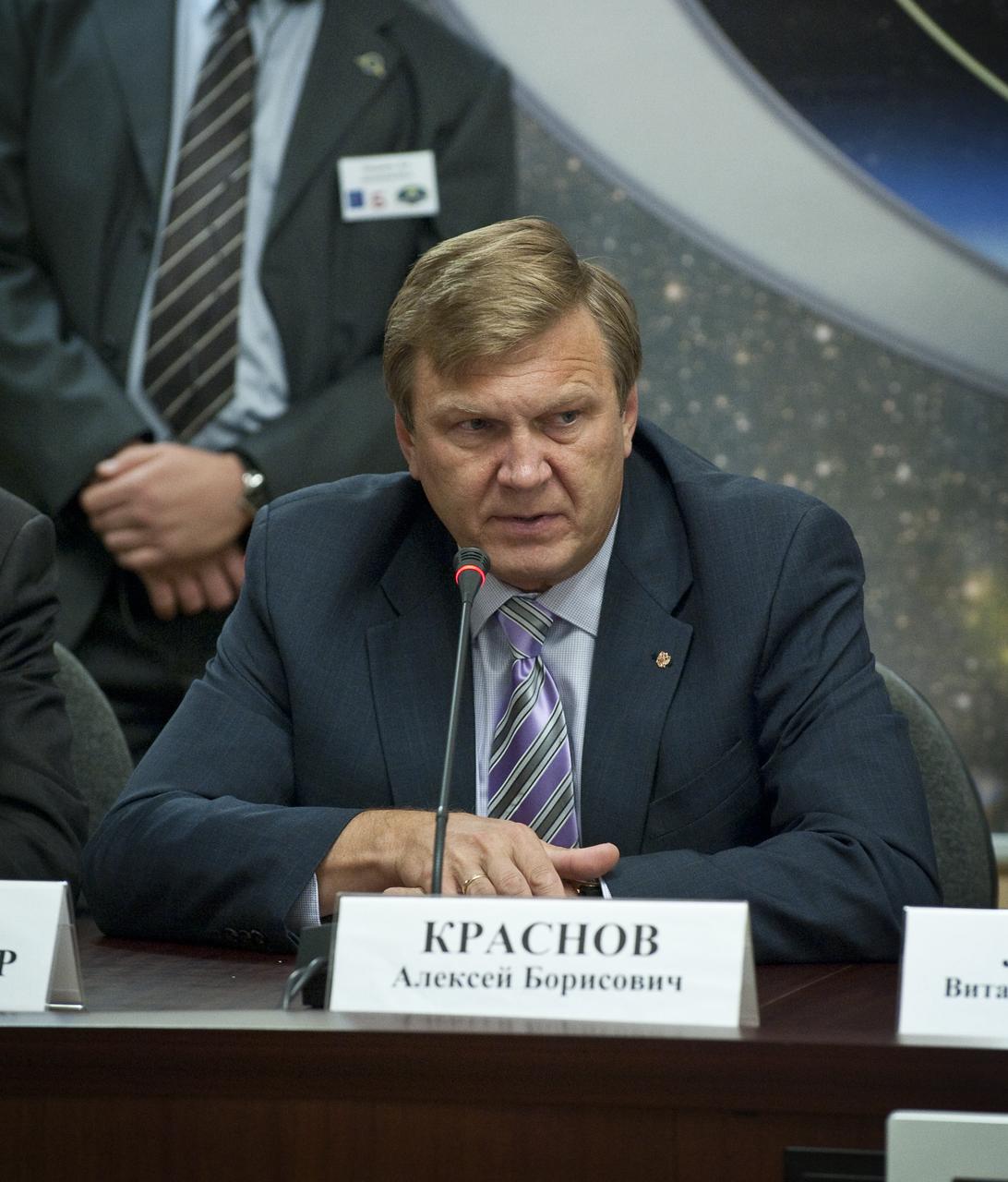
Alexei Krasnov, Director of Manned Space Programs Department, ROSCOSMOS, answers a reporter’s question during a Soyuz post-docking press conference at the Russian Mission Control Center in Korolev, Russia on Friday, June 18, 2010. Photo Credit: (NASA/Carla Cioffi)
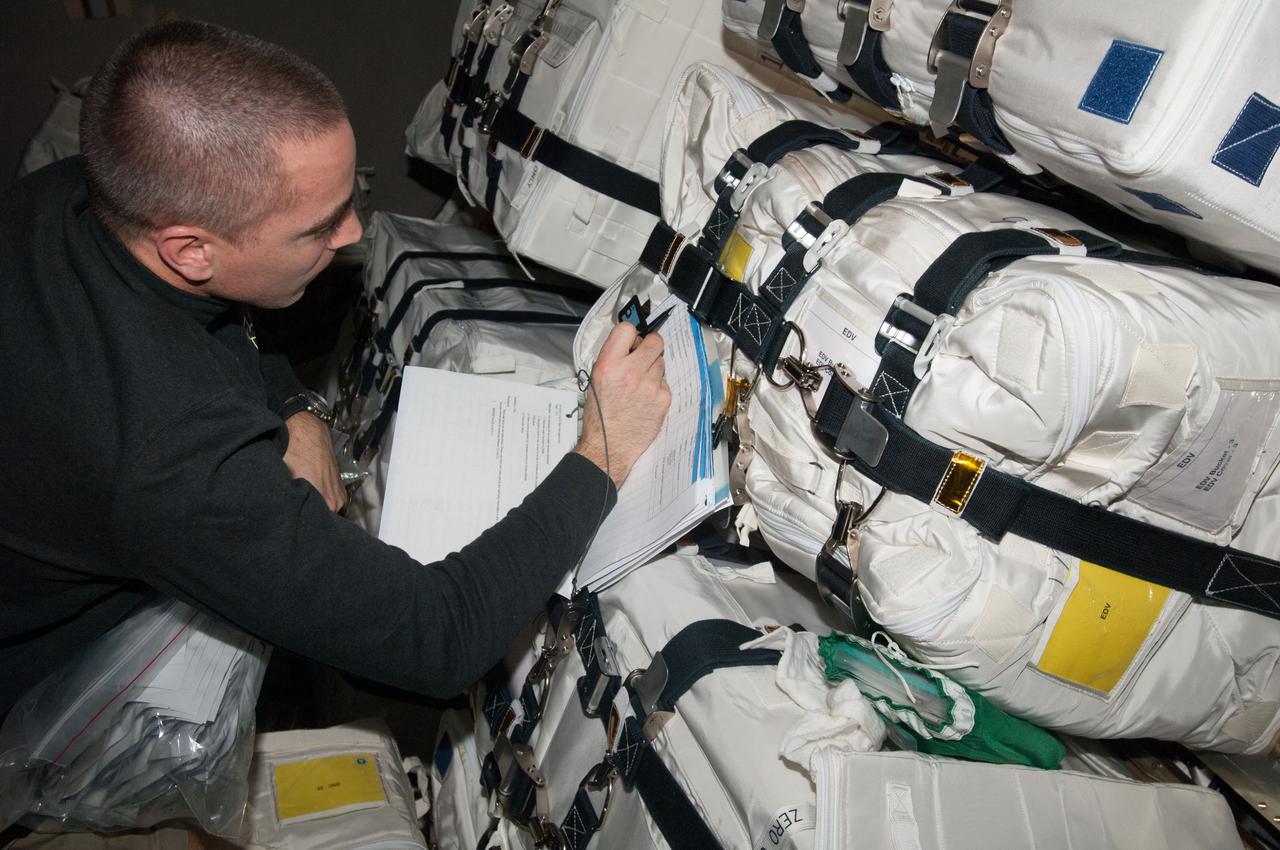
ISS036-E-009246 (18 June 2013) --- NASA astronaut Chris Cassidy, Expedition 36 flight engineer, takes inventory of cargo in the European Space Agency's Automated Transfer Vehicle-4 (ATV-4) "Albert Einstein" currently docked to the Zvezda Service Module of the International Space Station.
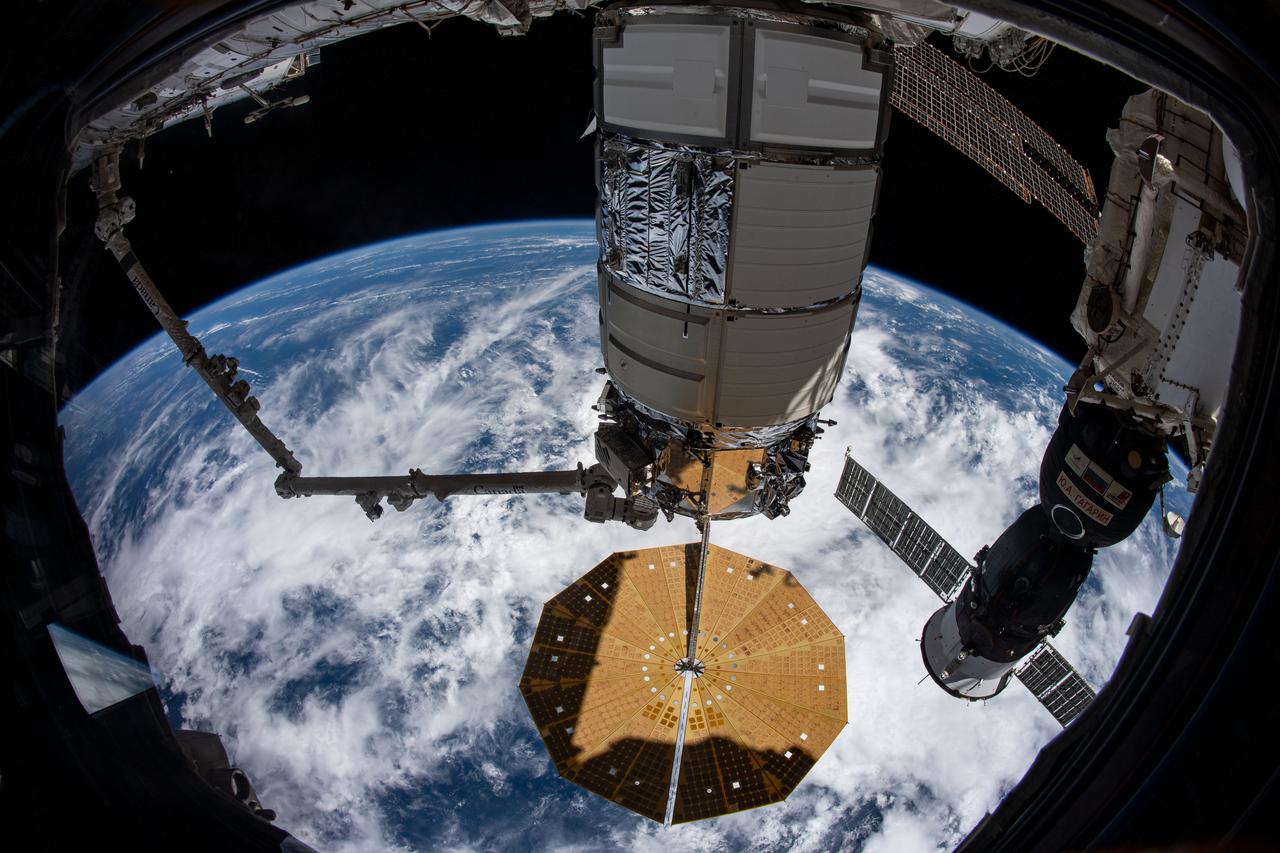
iss065e148960 (June 27, 2021) --- The Cygnus space freighter from Northrop Grumman is pictured in the grip of the Canadarm2 robotic arm while still attached to the International Space Station's Unity module. At right, is the Soyuz MS-18 crew ship docked to the Rassvet module.
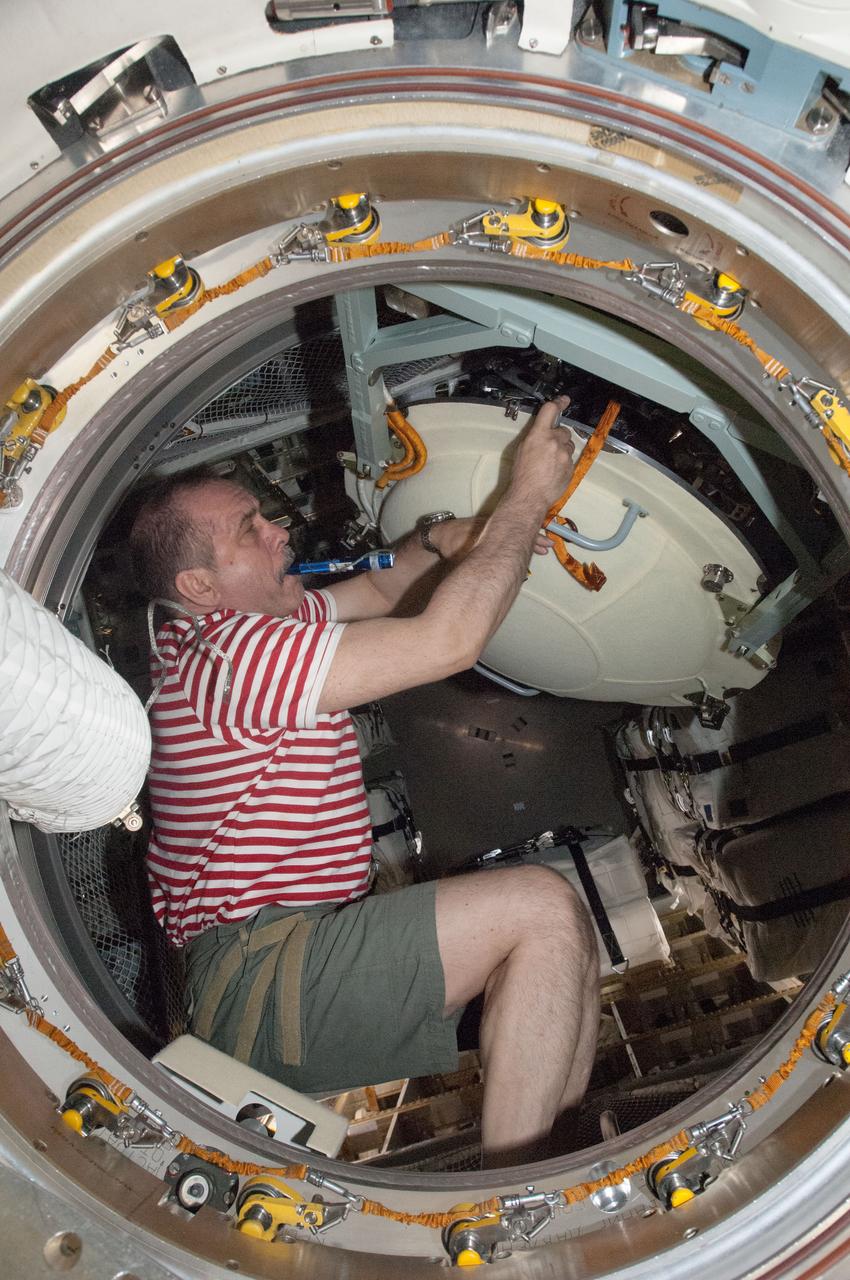
ISS036-E-009184 (18 June 2013) --- Russian cosmonaut Pavel Vinogradov, Expedition 36 commander, opens the hatch in the Zvezda Service Module transfer tunnel/ATV vestibule of the International Space Station after European Space Agency's Automated Transfer Vehicle-4 (ATV-4) "Albert Einstein" docked with the station.
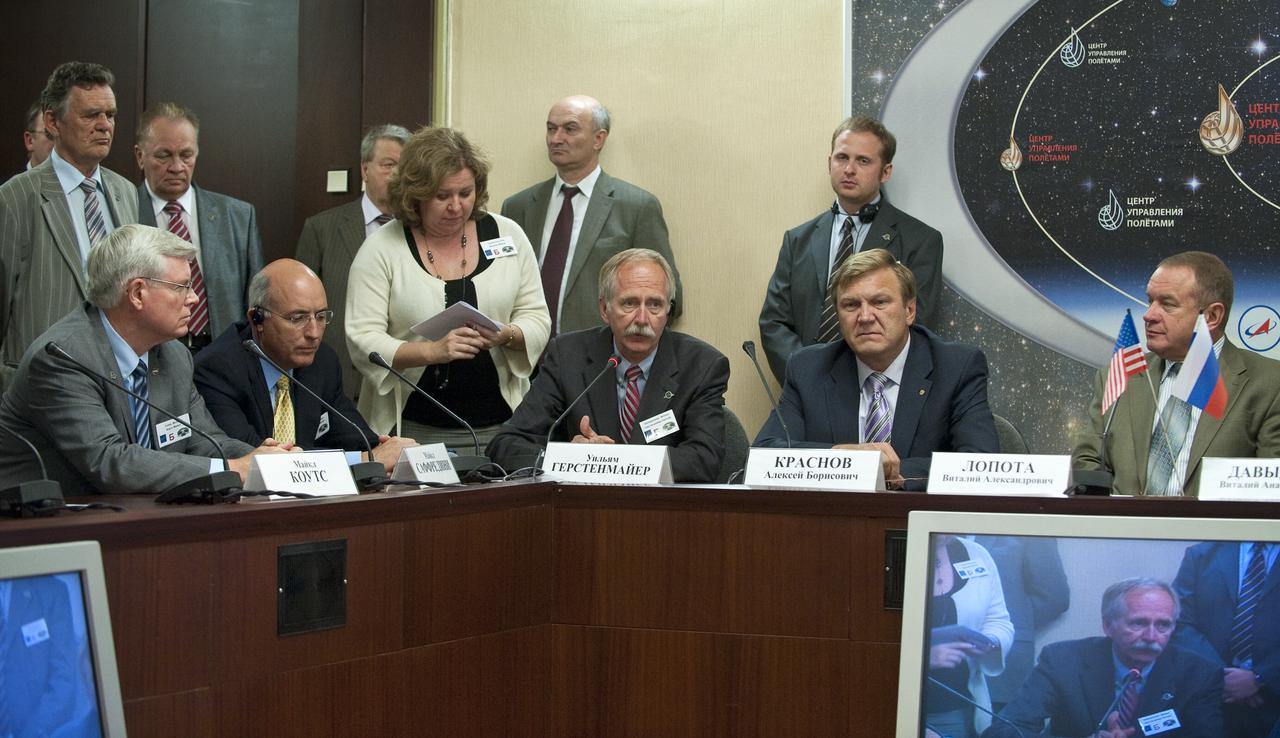
William Gerstenmaier, seated center, NASA Associate Administrator for Space Operations, speaks at a post Soyuz docking press conference at Russian Mission Control on Friday, June 18, 2010 in Korolev, Russia. Gerstenmaier is seen with NASA and ROSCOSMOS senior management members. Photo Credit: (NASA/Carla Cioffi)

STS007-06-0314 (18-24 June 1983) --- Astronaut John M. Fabian, STS-7 mission specialist, sleeps in a zip-up blue sleep restraint device in the locker area of the Earth-orbiting space shuttle Challenger's middeck. The frame was exposed with a 35mm camera. Photo credit: NASA
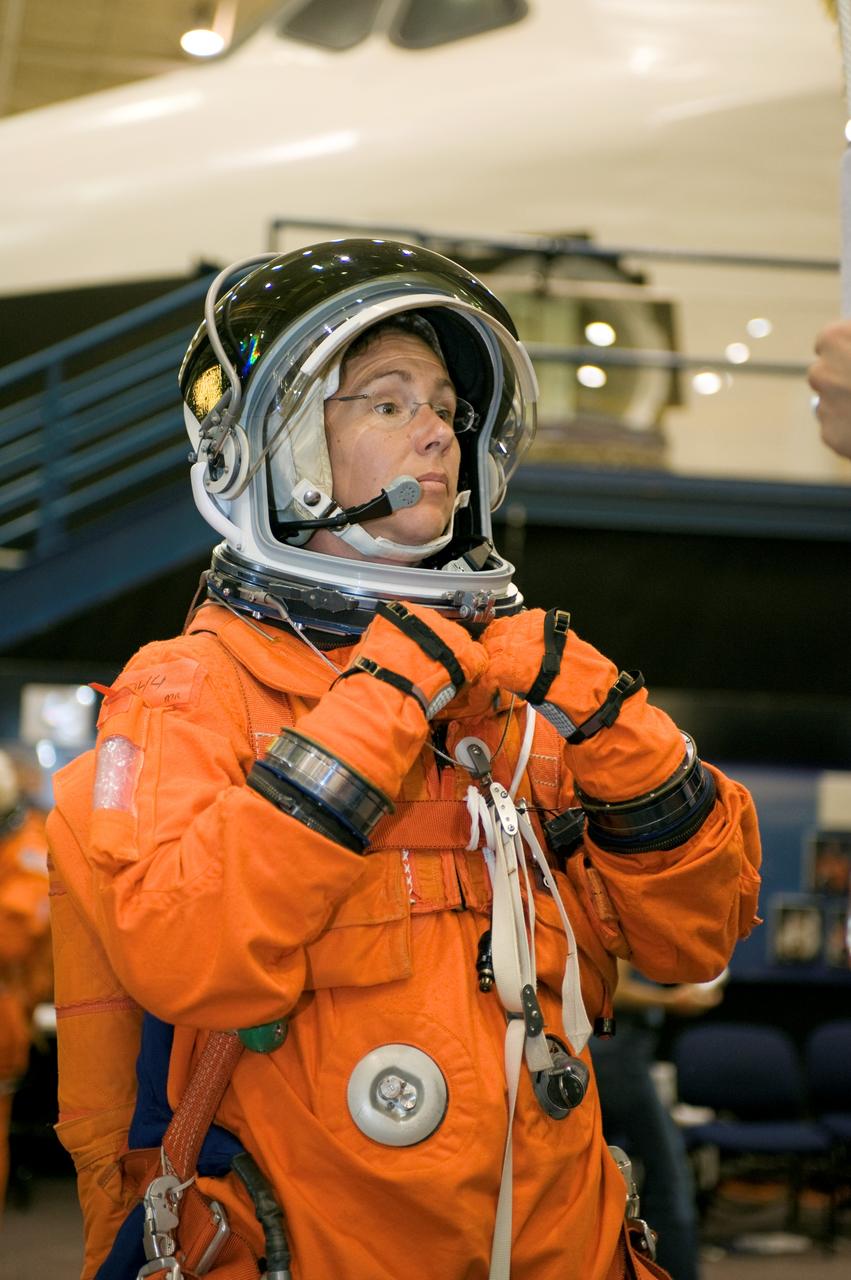
JSC2008-E-044987 (3 June 2008) --- Astronaut Sandra H. Magnus, Expedition 18 flight engineer, dons a training version of her shuttle launch and entry suit in preparation for a Full Fuselage Trainer (FFT) mockup (out of frame) training session in the Space Vehicle Mockup Facility at NASA's Johnson Space Center.

William Gerstenmaier, second from right, NASA Associate Administrator for Space Operations, speaks to the crew of Expedition 24 shortly after their arrival to the International Space Station (ISS) aboard their Soyuz TMA-19 on Friday, June 18, 2010 at Russian Mission Control in Korolev, Russia. Photo Credit: (NASA/Carla Cioffi)
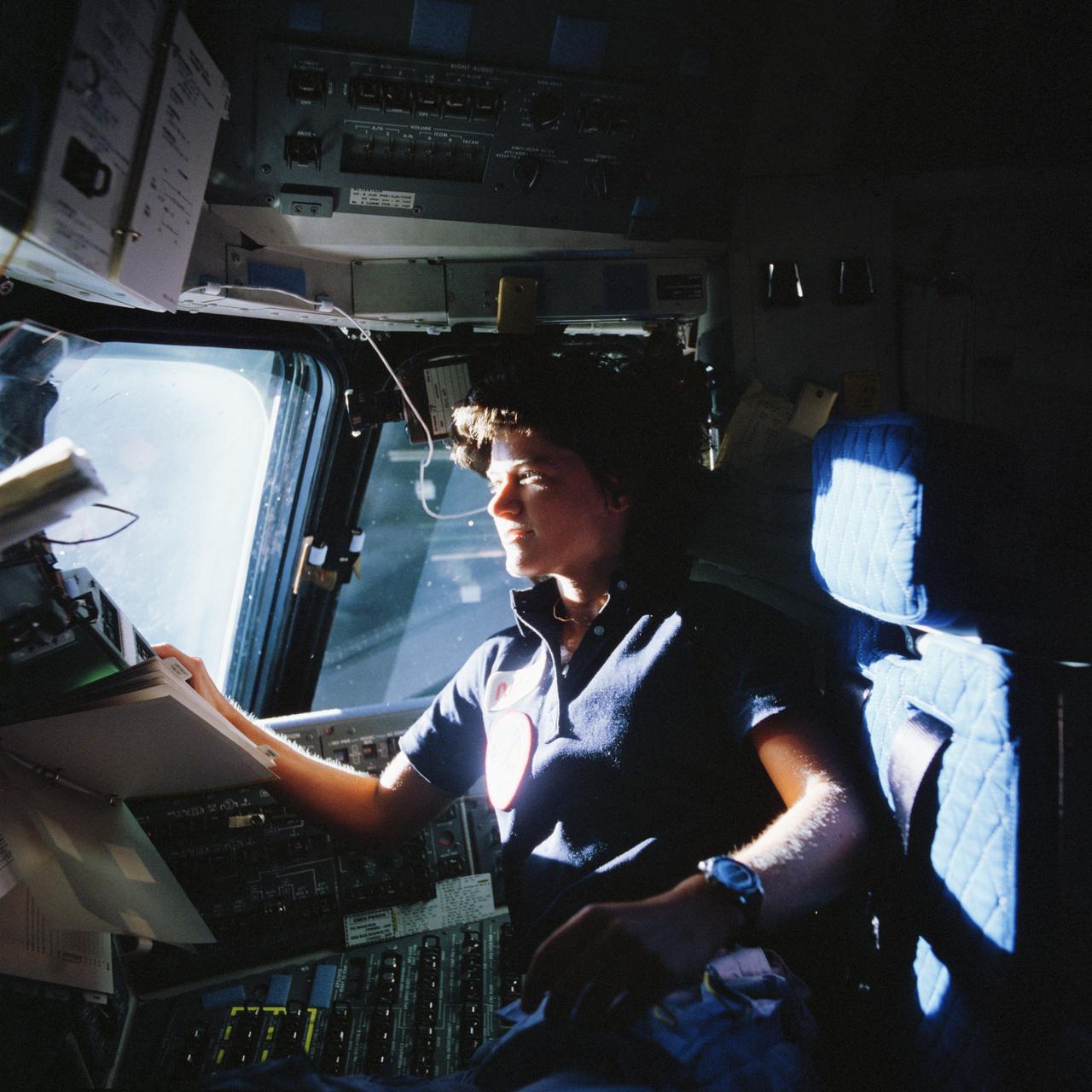
S83-35783 / STS007-05-029 (18-24 June 1983) --- Astronaut Sally K. Ride, mission specialist, is shown here sitting in the front seat and looking out the windows of the Earth-orbiting Space Shuttle Challenger. Ride and four other crew members are onboard the Challenger.
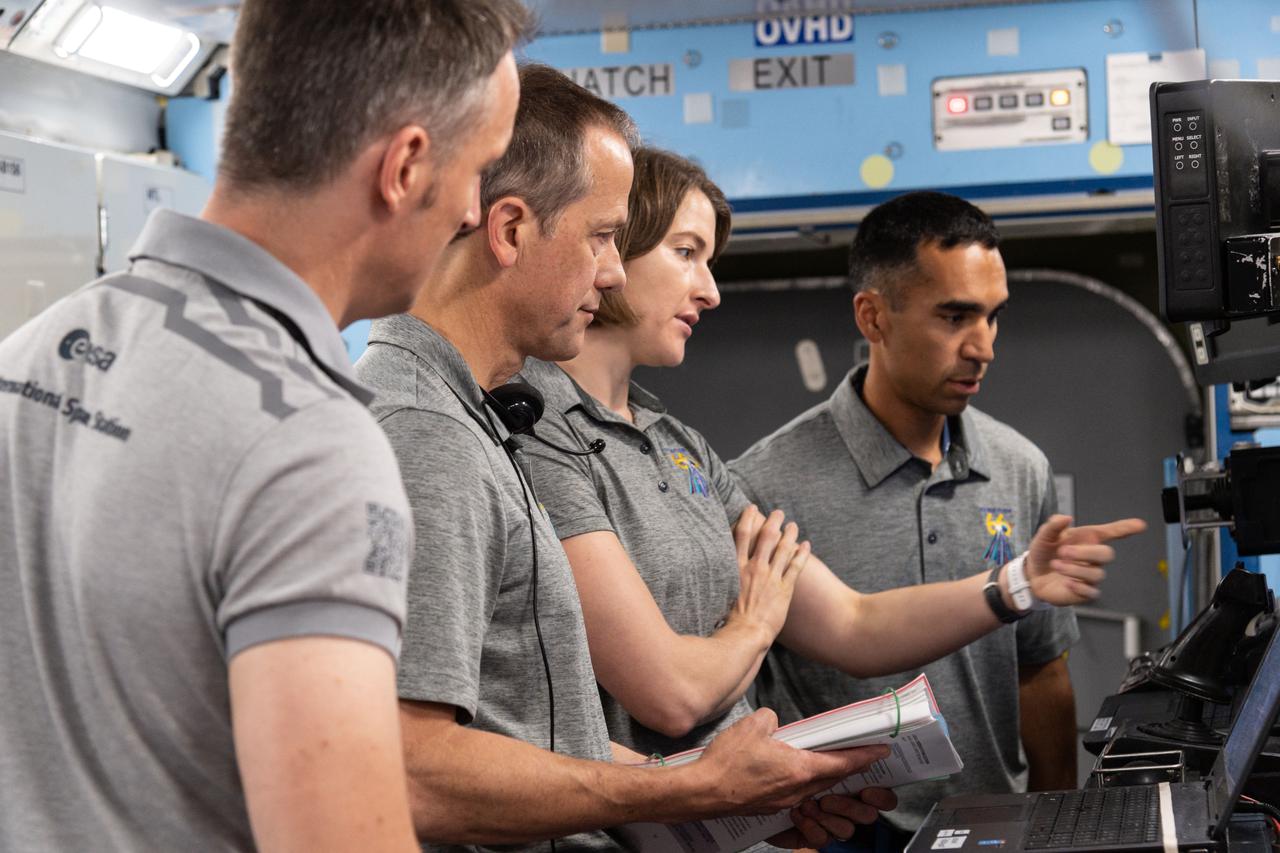
jsc2021e023380 (June 18, 2021) --- SpaceX Crew-3 astronauts (from left) Matthias Maurer, Thomas Marshburn, Kayla Barron and Raja Chari train at the Space Vehicle Mockup Facility at NASA's Johnson Space Center in Houston, Texas.