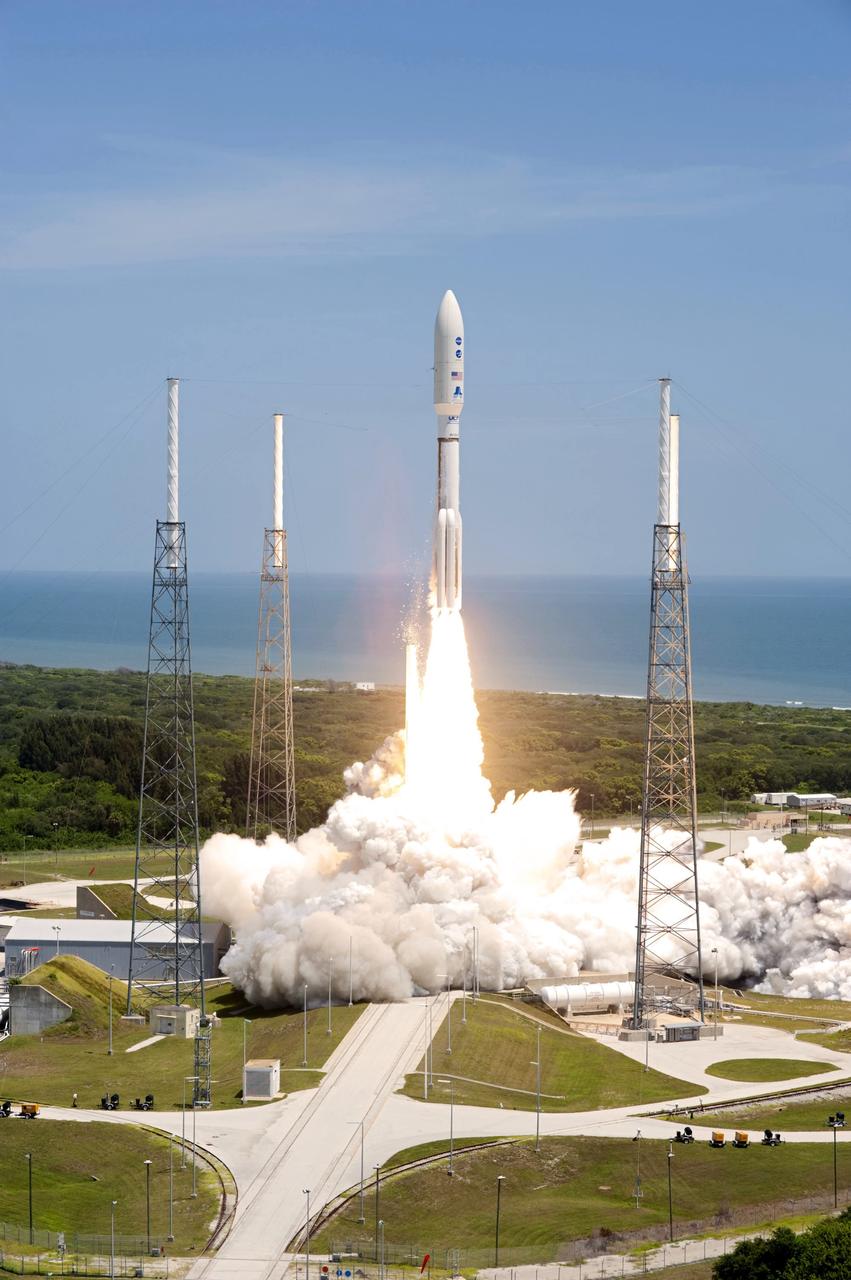
CAPE CANAVERAL, Fla. -- Rising from fire and smoke, NASA's Juno planetary probe, enclosed in its payload fairing, launches atop a United Launch Alliance Atlas V rocket. Leaving from Space Launch Complex 41 on Cape Canaveral Air Force Station in Florida, the spacecraft will embark on a five-year journey to Jupiter. Liftoff was at 12:25 p.m. EDT Aug. 5. The solar-powered spacecraft will orbit Jupiter's poles 33 times to find out more about the gas giant's origins, structure, atmosphere and magnetosphere and investigate the existence of a solid planetary core. For more information, visit www.nasa.gov/juno. Photo credit: NASA/Tony Gray and Tim Powers
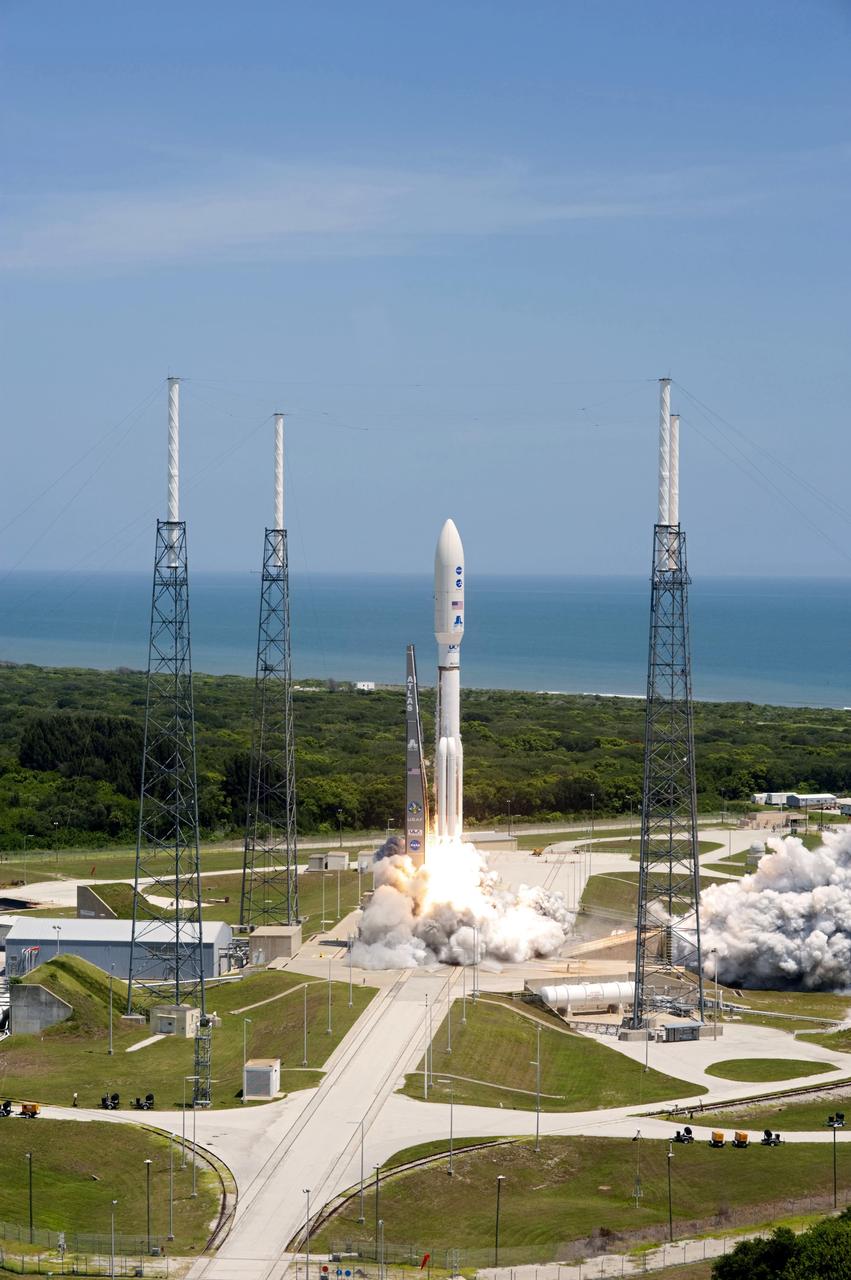
CAPE CANAVERAL, Fla. -- Rising from fire and smoke, NASA's Juno planetary probe, enclosed in its payload fairing, launches atop a United Launch Alliance Atlas V rocket. Leaving from Space Launch Complex 41 on Cape Canaveral Air Force Station in Florida, the spacecraft will embark on a five-year journey to Jupiter. Liftoff was at 12:25 p.m. EDT Aug. 5. The solar-powered spacecraft will orbit Jupiter's poles 33 times to find out more about the gas giant's origins, structure, atmosphere and magnetosphere and investigate the existence of a solid planetary core. For more information, visit www.nasa.gov/juno. Photo credit: NASA/Tony Gray and Tim Powers
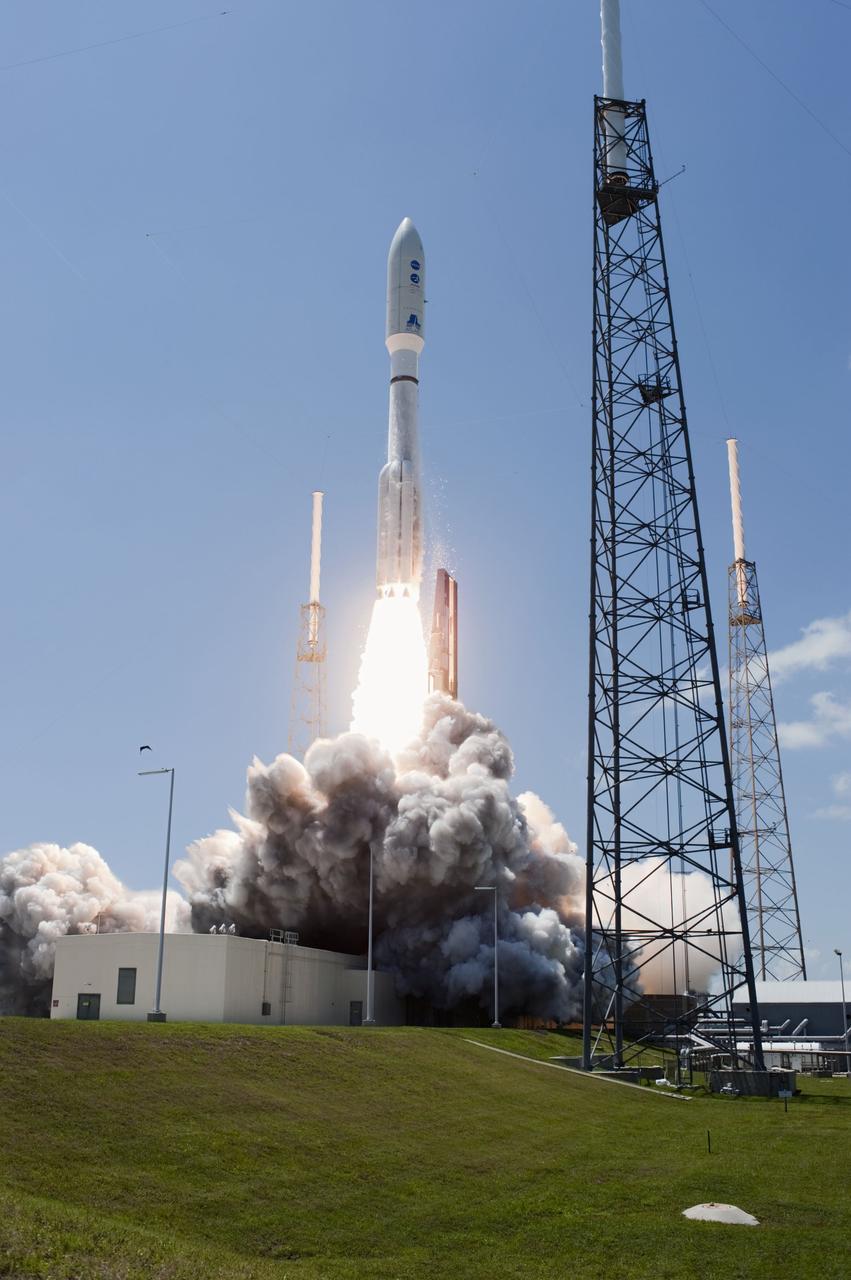
CAPE CANAVERAL, Fla. -- Rising from fire and smoke, NASA's Juno planetary probe, enclosed in its payload fairing, launches atop a United Launch Alliance Atlas V rocket. Leaving from Space Launch Complex 41 on Cape Canaveral Air Force Station in Florida, the spacecraft will embark on a five-year journey to Jupiter. Liftoff was at 12:25 p.m. EDT Aug. 5. The solar-powered spacecraft will orbit Jupiter's poles 33 times to find out more about the gas giant's origins, structure, atmosphere and magnetosphere and investigate the existence of a solid planetary core. For more information, visit www.nasa.gov/juno. Photo credit: NASA/Tony Gray and Don Kight
CAPE CANAVERAL, Fla. -- Rising from fire and smoke, NASA's Juno planetary probe, enclosed in its payload fairing, launches atop a United Launch Alliance Atlas V rocket. Leaving from Space Launch Complex 41 on Cape Canaveral Air Force Station in Florida, the spacecraft will embark on a five-year journey to Jupiter. Liftoff was at 12:25 p.m. EDT Aug. 5. The solar-powered spacecraft will orbit Jupiter's poles 33 times to find out more about the gas giant's origins, structure, atmosphere and magnetosphere and investigate the existence of a solid planetary core. For more information, visit www.nasa.gov/juno. Photo credit: NASA/Tony Gray and Tim Powers
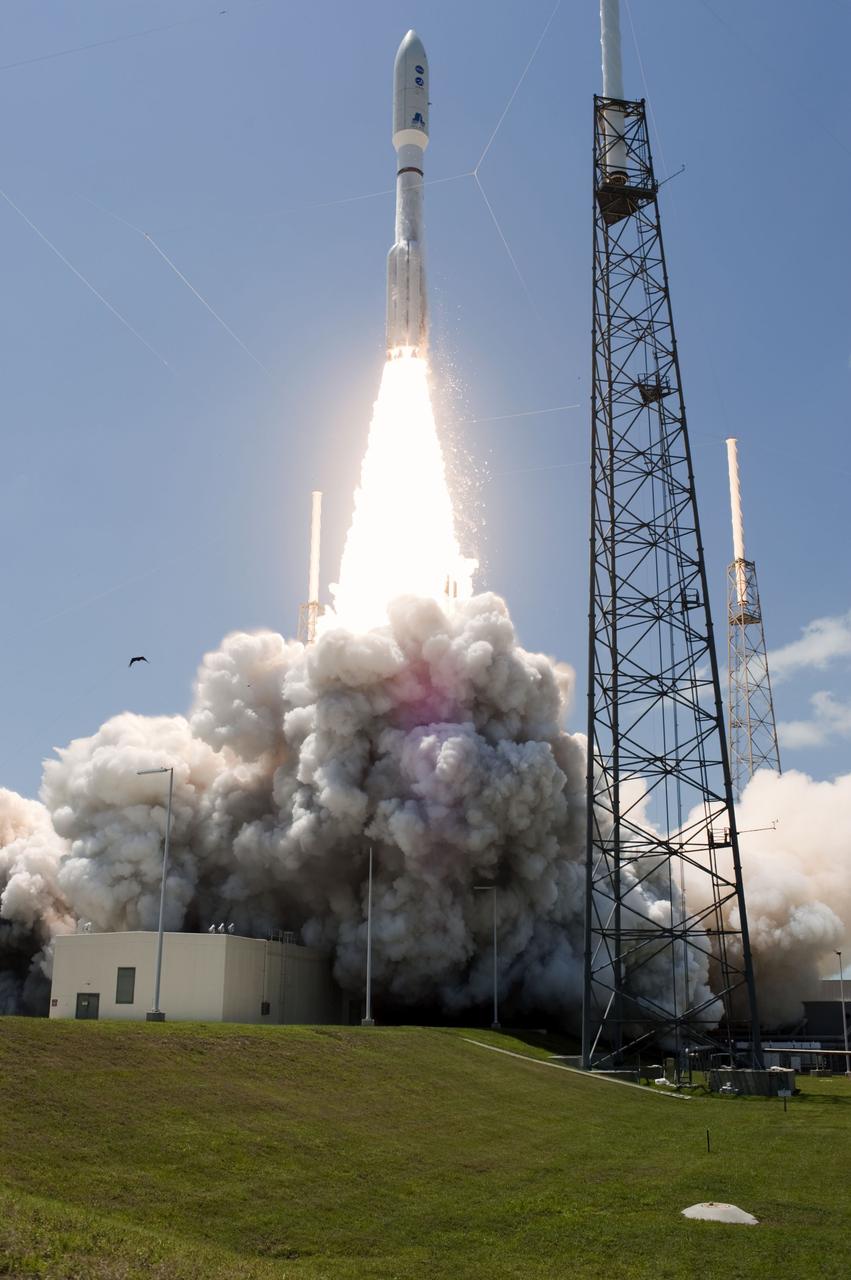
CAPE CANAVERAL, Fla. -- Rising from fire and smoke, NASA's Juno planetary probe, enclosed in its payload fairing, launches atop a United Launch Alliance Atlas V rocket. Leaving from Space Launch Complex 41 on Cape Canaveral Air Force Station in Florida, the spacecraft will embark on a five-year journey to Jupiter. Liftoff was at 12:25 p.m. EDT Aug. 5. The solar-powered spacecraft will orbit Jupiter's poles 33 times to find out more about the gas giant's origins, structure, atmosphere and magnetosphere and investigate the existence of a solid planetary core. For more information, visit www.nasa.gov/juno. Photo credit: NASA/Tony Gray and Tim Powers
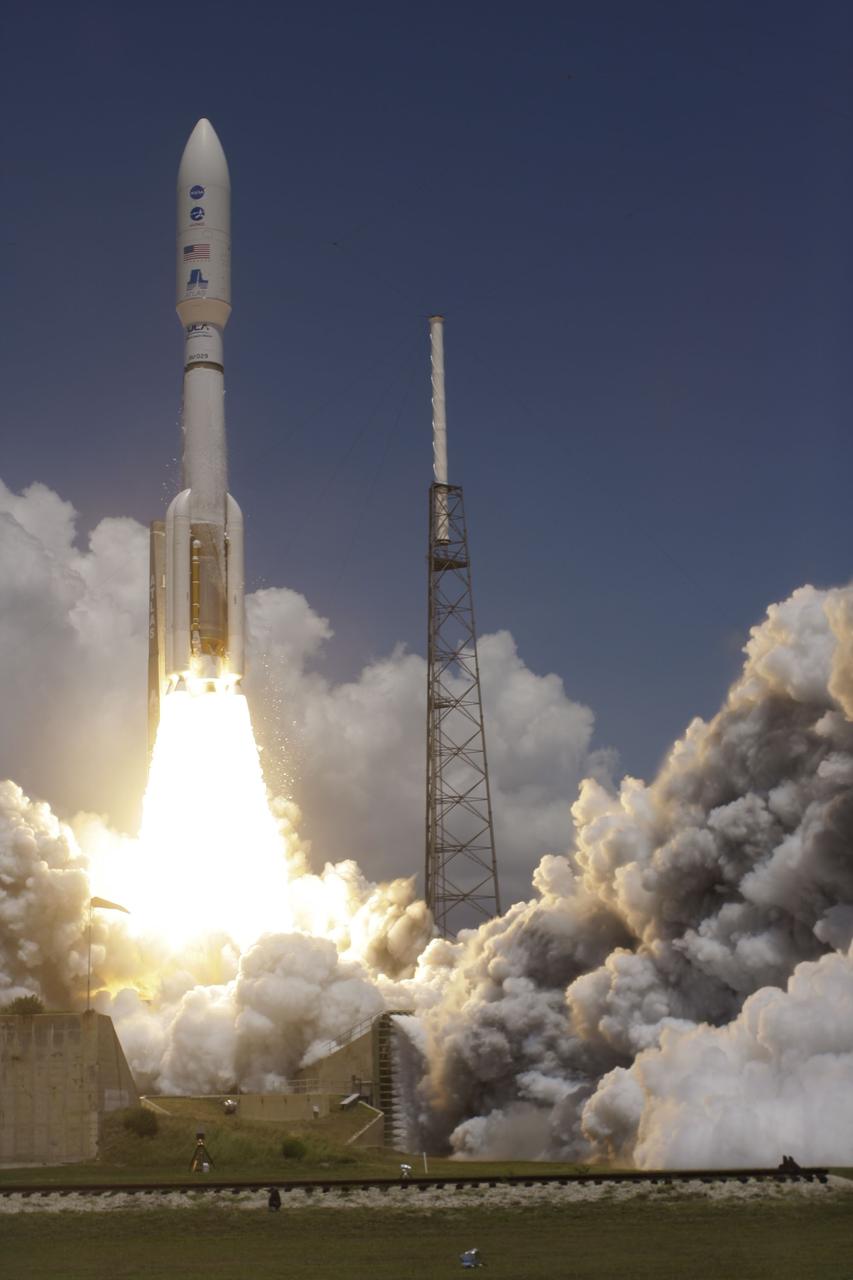
CAPE CANAVERAL, Fla. -- Rising from fire and smoke, NASA's Juno planetary probe, enclosed in its payload fairing, launches atop a United Launch Alliance Atlas V rocket. Leaving from Space Launch Complex 41 on Cape Canaveral Air Force Station in Florida, the spacecraft will embark on a five-year journey to Jupiter. Liftoff was at 12:25 p.m. EDT Aug. 5. The solar-powered spacecraft will orbit Jupiter's poles 33 times to find out more about the gas giant's origins, structure, atmosphere and magnetosphere and investigate the existence of a solid planetary core. For more information, visit www.nasa.gov/juno. Photo credit: Courtesy Scott Andrews
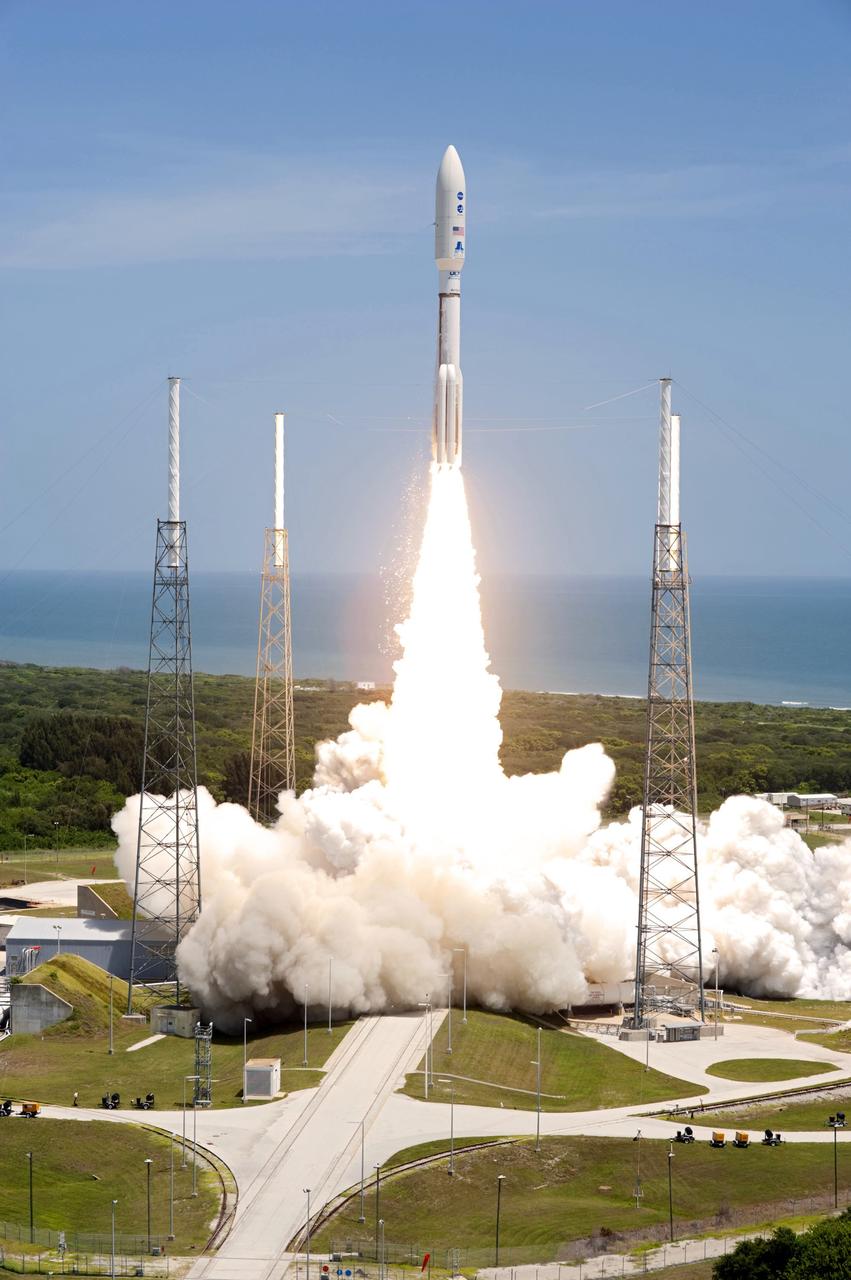
CAPE CANAVERAL, Fla. -- Rising from fire and smoke, NASA's Juno planetary probe, enclosed in its payload fairing, launches atop a United Launch Alliance Atlas V rocket. Leaving from Space Launch Complex 41 on Cape Canaveral Air Force Station in Florida, the spacecraft will embark on a five-year journey to Jupiter. Liftoff was at 12:25 p.m. EDT Aug. 5. The solar-powered spacecraft will orbit Jupiter's poles 33 times to find out more about the gas giant's origins, structure, atmosphere and magnetosphere and investigate the existence of a solid planetary core. For more information, visit www.nasa.gov/juno. Photo credit: NASA/Tony Gray and Tim Powers
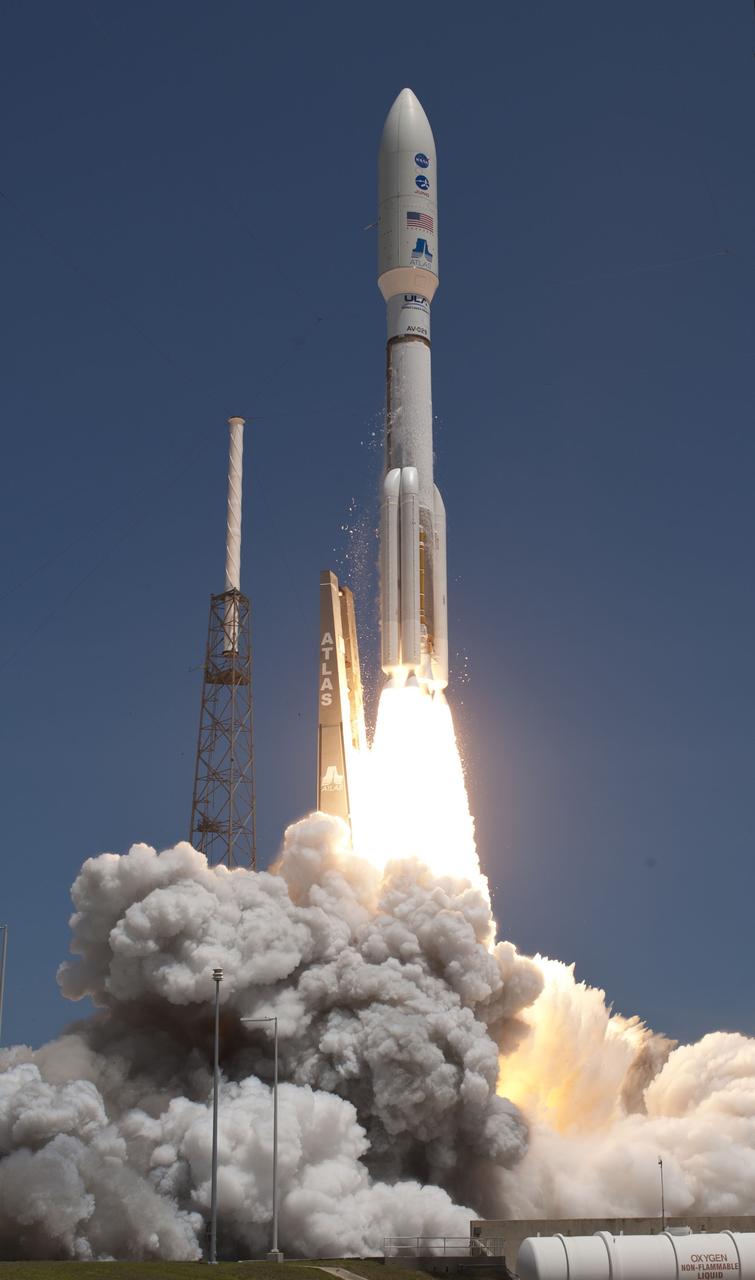
CAPE CANAVERAL, Fla. -- Rising from fire and smoke, NASA's Juno planetary probe, enclosed in its payload fairing, launches atop a United Launch Alliance Atlas V rocket. Leaving from Space Launch Complex 41 on Cape Canaveral Air Force Station in Florida, the spacecraft will embark on a five-year journey to Jupiter. Liftoff was at 12:25 p.m. EDT Aug. 5. The solar-powered spacecraft will orbit Jupiter's poles 33 times to find out more about the gas giant's origins, structure, atmosphere and magnetosphere and investigate the existence of a solid planetary core. For more information, visit www.nasa.gov/juno. Photo credit: Courtesy Scott Andrews
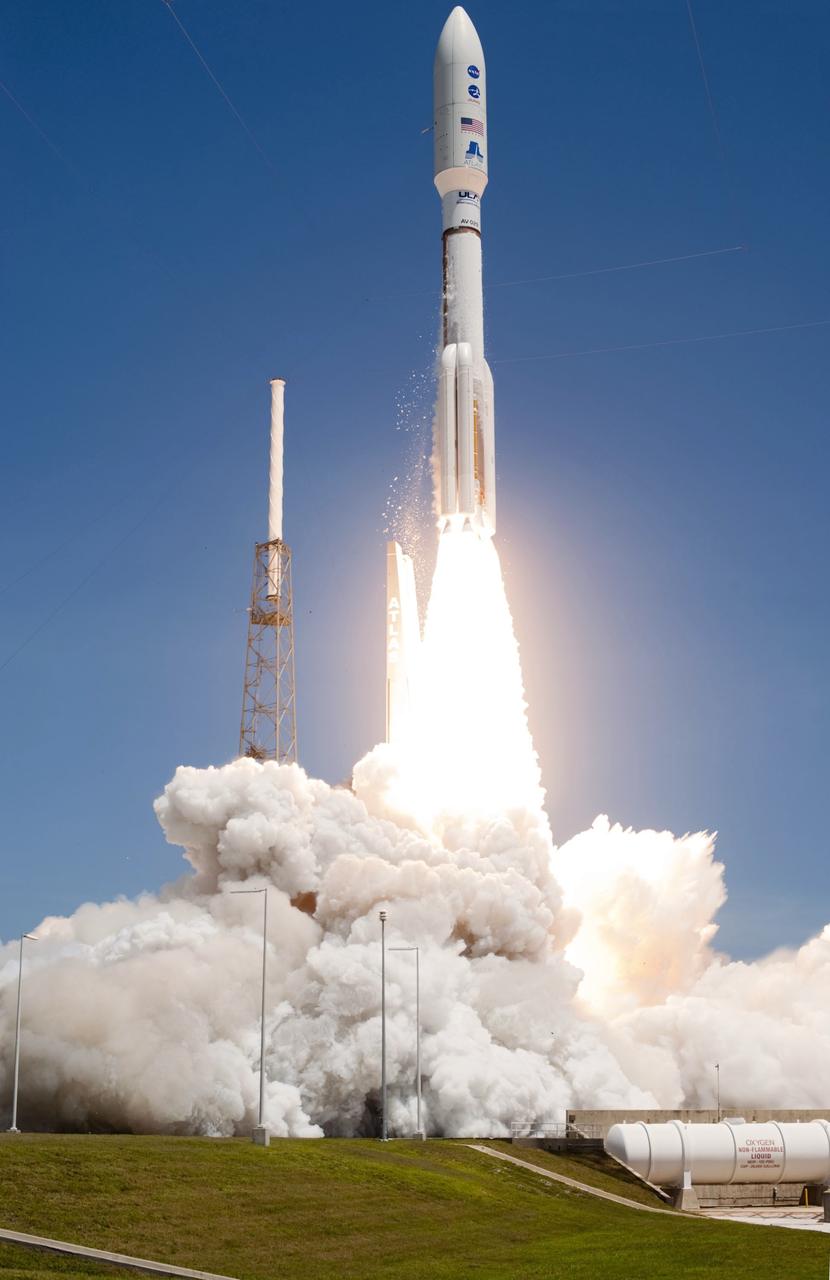
CAPE CANAVERAL, Fla. -- Rising from fire and smoke, NASA's Juno planetary probe, enclosed in its payload fairing, launches atop a United Launch Alliance Atlas V rocket. Leaving from Space Launch Complex 41 on Cape Canaveral Air Force Station in Florida, the spacecraft will embark on a five-year journey to Jupiter. Liftoff was at 12:25 p.m. EDT Aug. 5. The solar-powered spacecraft will orbit Jupiter's poles 33 times to find out more about the gas giant's origins, structure, atmosphere and magnetosphere and investigate the existence of a solid planetary core. For more information, visit www.nasa.gov/juno. Photo credit: NASA/Tony Gray and Don Kight
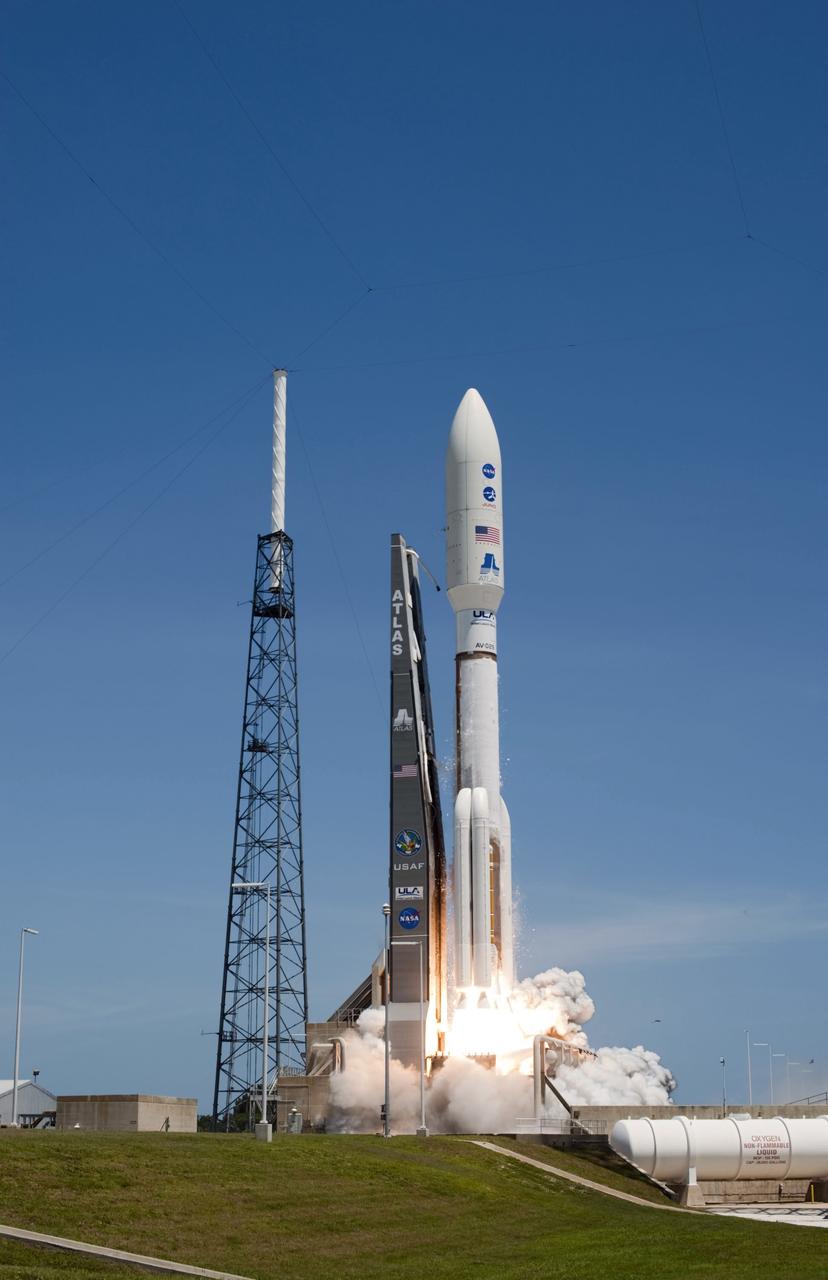
CAPE CANAVERAL, Fla. -- Rising from fire and smoke, NASA's Juno planetary probe, enclosed in its payload fairing, launches atop a United Launch Alliance Atlas V rocket. Leaving from Space Launch Complex 41 on Cape Canaveral Air Force Station in Florida, the spacecraft will embark on a five-year journey to Jupiter. Liftoff was at 12:25 p.m. EDT Aug. 5. The solar-powered spacecraft will orbit Jupiter's poles 33 times to find out more about the gas giant's origins, structure, atmosphere and magnetosphere and investigate the existence of a solid planetary core. For more information, visit www.nasa.gov/juno. Photo credit: NASA/Tony Gray and Don Kight
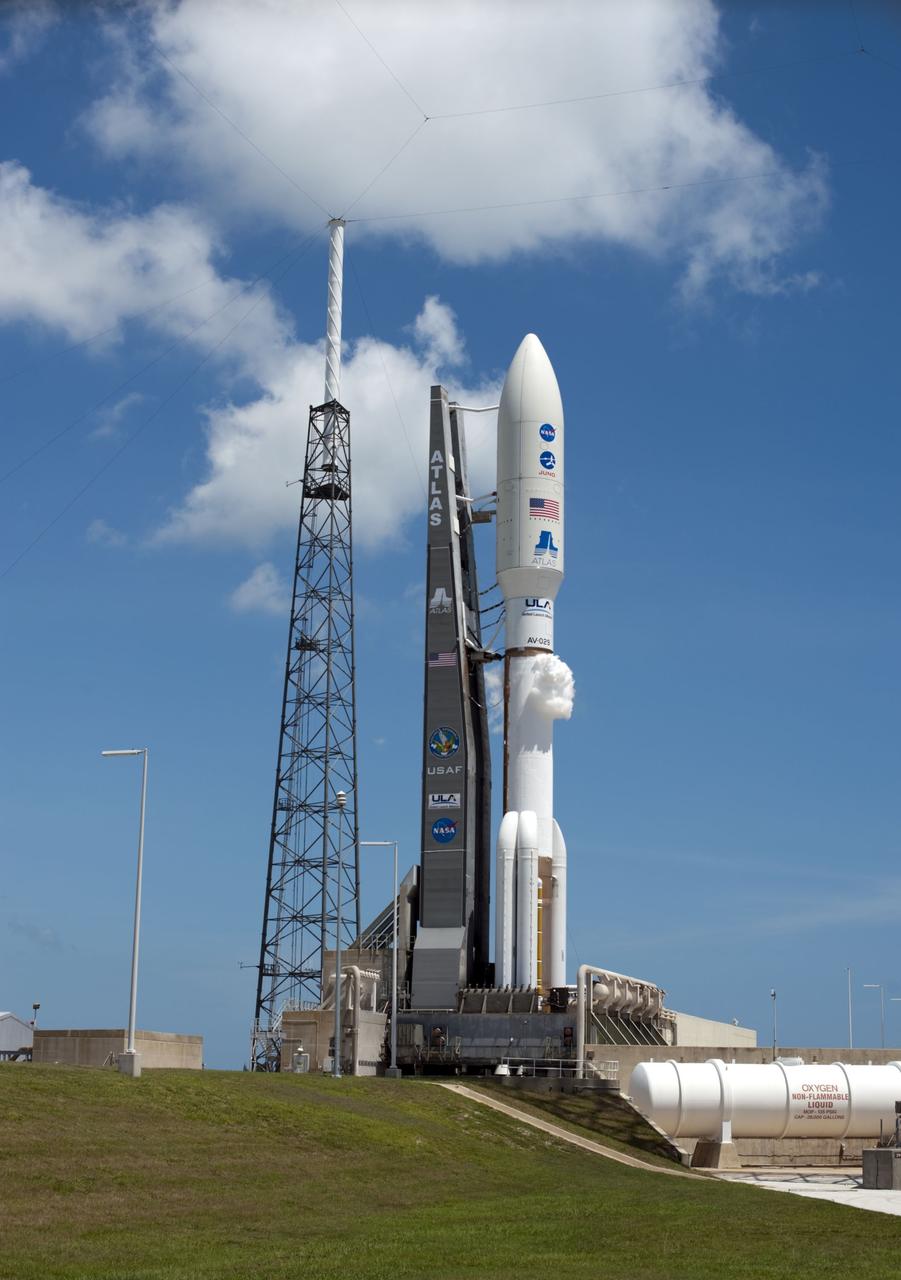
CAPE CANAVERAL, Fla. -- NASA's Juno planetary probe, enclosed in its payload fairing, is moments away from liftoff atop a United Launch Alliance Atlas V rocket. Leaving from Space Launch Complex 41 on Cape Canaveral Air Force Station in Florida, the spacecraft will embark on a five-year journey to Jupiter. Liftoff was at 12:25 p.m. EDT Aug. 5. The solar-powered spacecraft will orbit Jupiter's poles 33 times to find out more about the gas giant's origins, structure, atmosphere and magnetosphere and investigate the existence of a solid planetary core. For more information, visit www.nasa.gov/juno. Photo credit: NASA/Tony Gray and Tim Powers

CAPE CANAVERAL, Fla. -- Rising from fire and smoke, NASA's Juno planetary probe, enclosed in its payload fairing, launches atop a United Launch Alliance Atlas V rocket. Leaving from Space Launch Complex 41 on Cape Canaveral Air Force Station in Florida, the spacecraft will embark on a five-year journey to Jupiter. Liftoff was at 12:25 p.m. EDT Aug. 5. The solar-powered spacecraft will orbit Jupiter's poles 33 times to find out more about the gas giant's origins, structure, atmosphere and magnetosphere and investigate the existence of a solid planetary core. For more information, visit www.nasa.gov/juno. Photo credit: Courtesy Scott Andrews
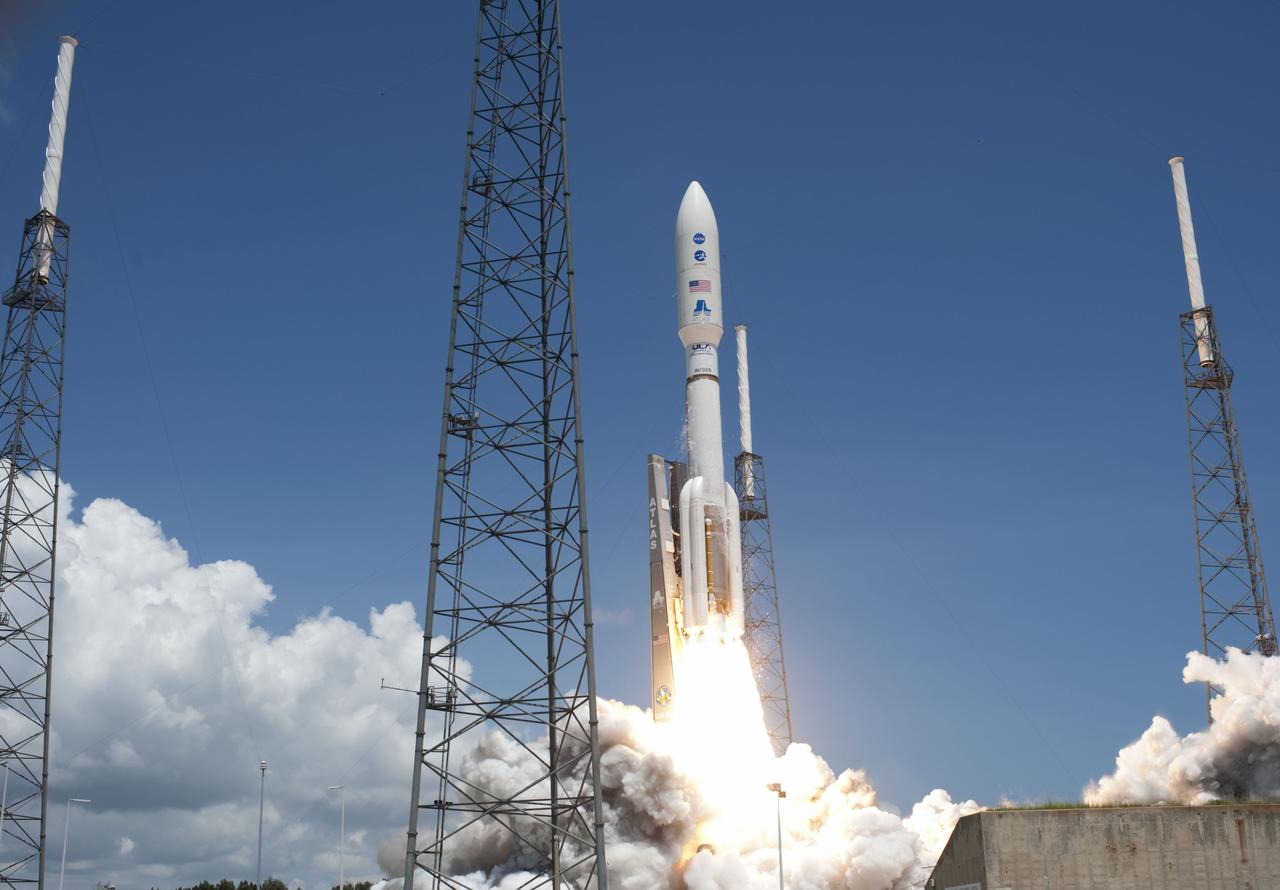
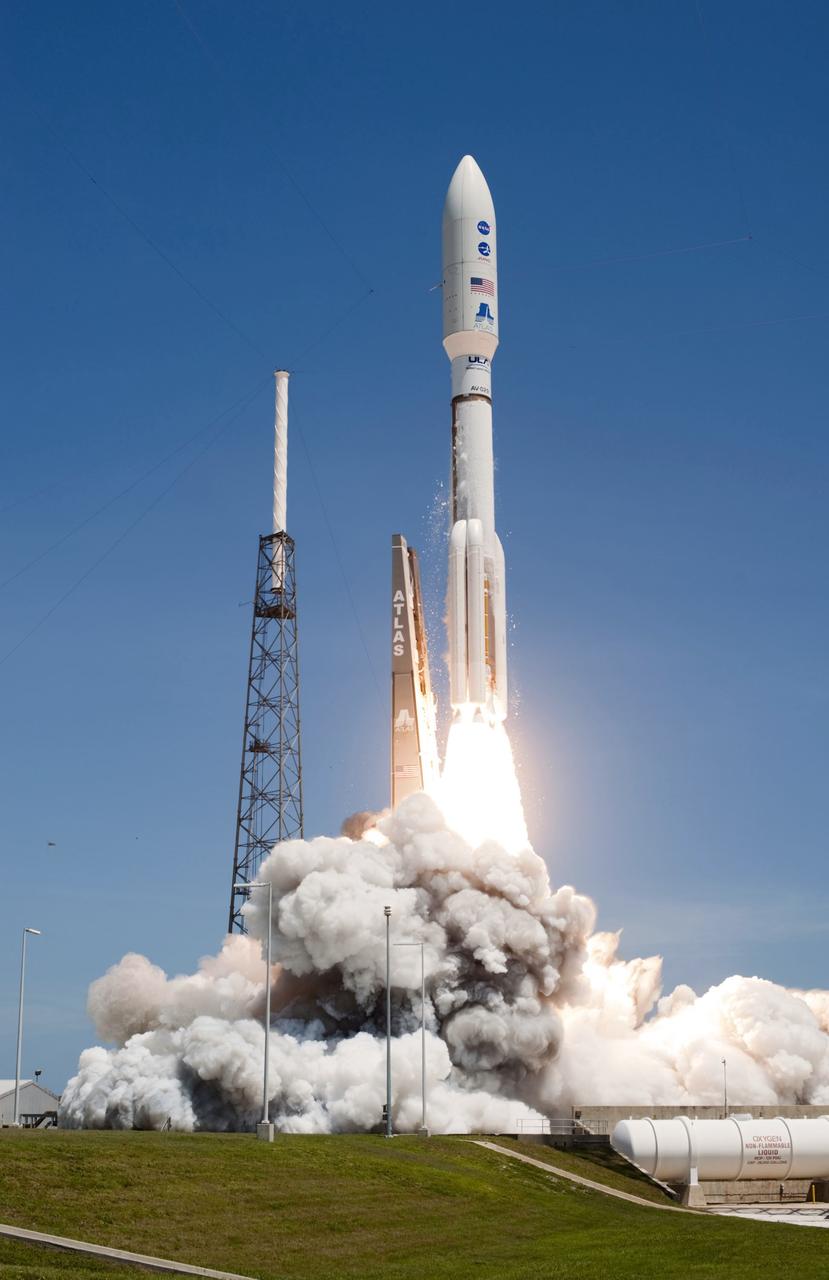
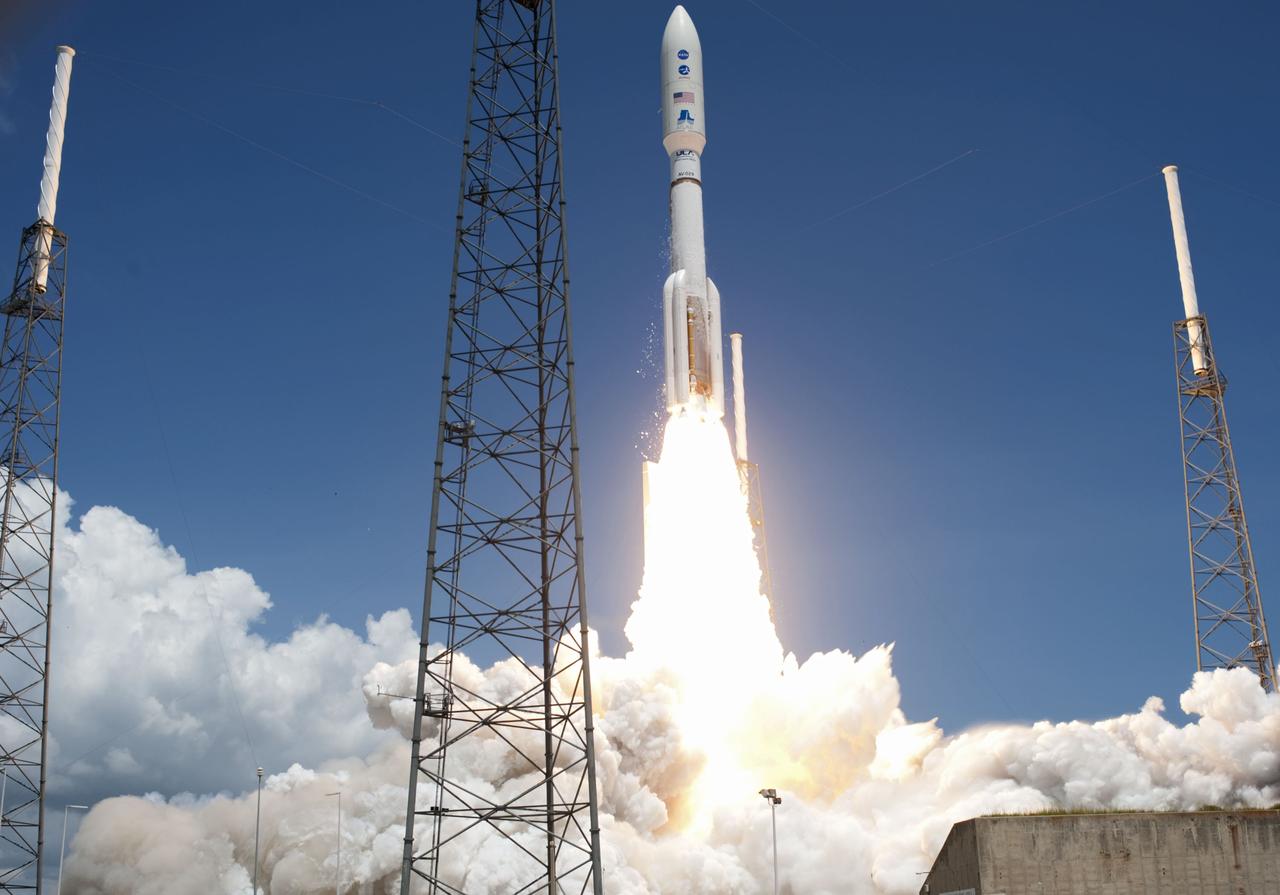
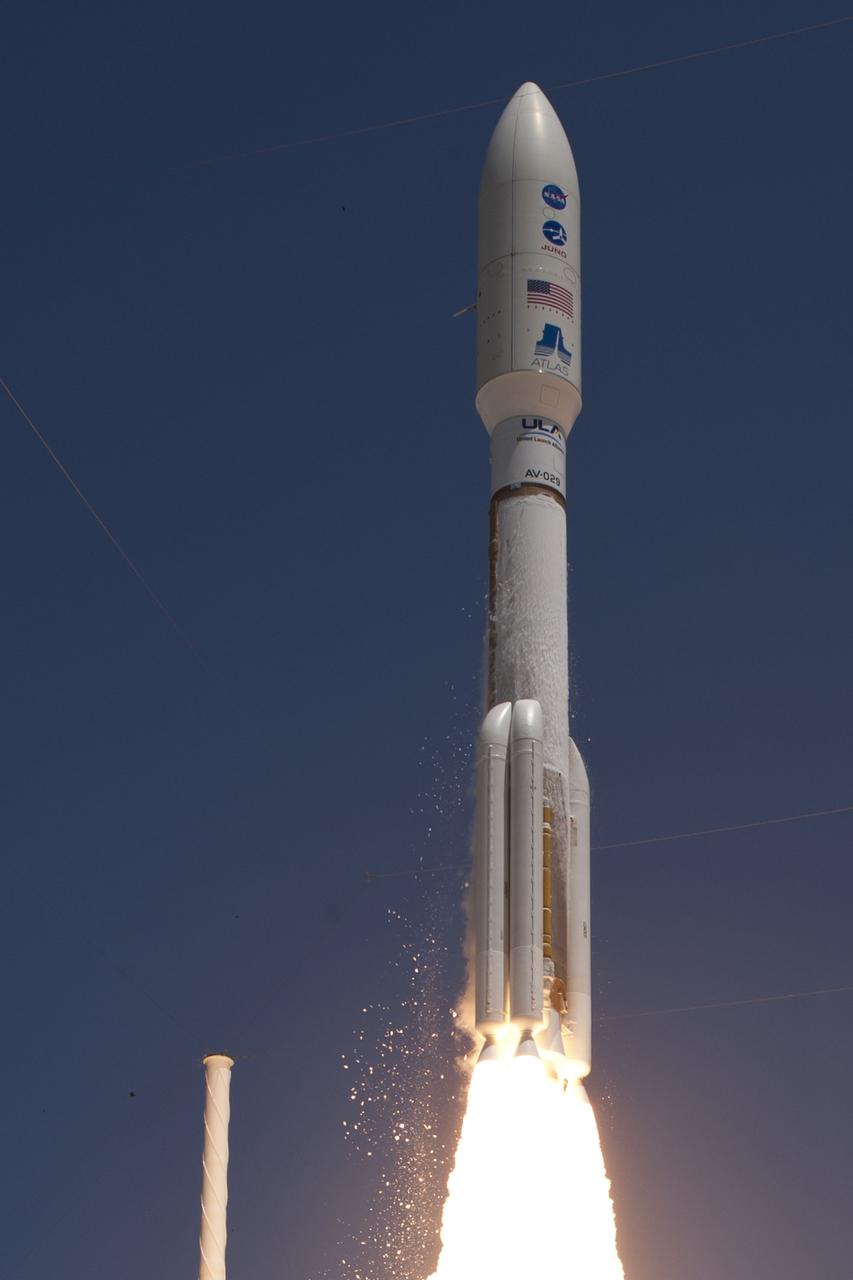
CAPE CANAVERAL, Fla. -- Fire lights up a crystal-clear blue sky on Space Launch Complex 41 on Cape Canaveral Air Force Station in Florida as a United Launch Alliance Atlas V rocket lofts NASA's Juno planetary probe into space. Liftoff was at 12:25 p.m. EDT Aug. 5. The solar-powered spacecraft will orbit Jupiter's poles 33 times to find out more about the gas giant's origins, structure, atmosphere and magnetosphere and investigate the existence of a solid planetary core. For more information, visit www.nasa.gov/juno. Photo credit: NASA/Tony Gray and Don Kight
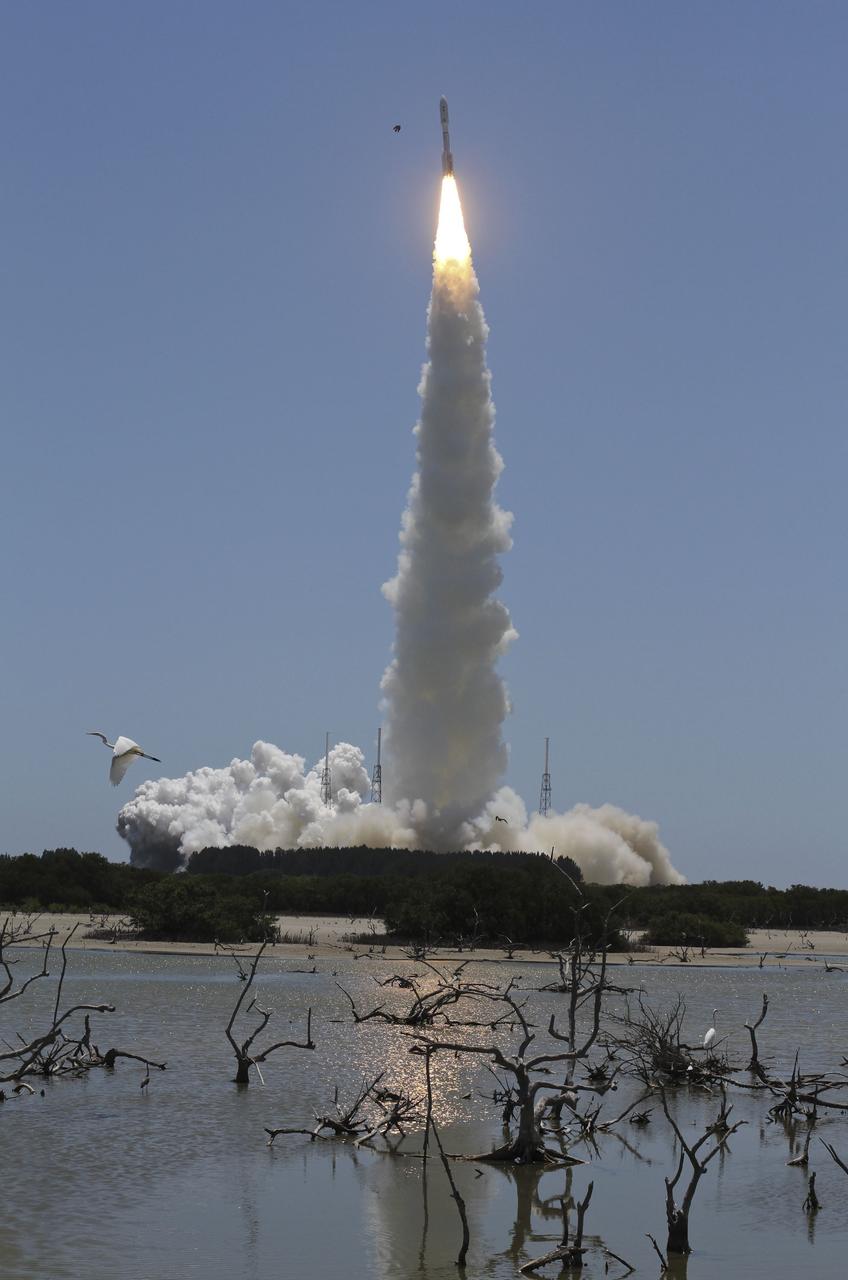
CAPE CANAVERAL, Fla. -- Reflected in water surrounding Space Launch Complex 41 on Cape Canaveral Air Force Station in Florida, fire lights up a crystal-clear blue sky as a United Launch Alliance Atlas V rocket lofts NASA's Juno planetary probe into space. Liftoff was at 12:25 p.m. EDT Aug. 5. The solar-powered spacecraft will orbit Jupiter's poles 33 times to find out more about the gas giant's origins, structure, atmosphere and magnetosphere and investigate the existence of a solid planetary core. For more information, visit www.nasa.gov/juno. Photo credit: Courtesy Scott Andrews
CAPE CANAVERAL, Fla. -- Fire lights up a crystal-clear blue sky on Space Launch Complex 41 on Cape Canaveral Air Force Station in Florida as a United Launch Alliance Atlas V rocket lofts NASA's Juno planetary probe into space. Liftoff was at 12:25 p.m. EDT Aug. 5. The solar-powered spacecraft will orbit Jupiter's poles 33 times to find out more about the gas giant's origins, structure, atmosphere and magnetosphere and investigate the existence of a solid planetary core. For more information, visit www.nasa.gov/juno. Photo credit: NASA/Tony Gray and Don Kight
CAPE CANAVERAL, Fla. -- Fire lights up a crystal-clear blue sky on Space Launch Complex 41 on Cape Canaveral Air Force Station in Florida as a United Launch Alliance Atlas V rocket lofts NASA's Juno planetary probe into space. Liftoff was at 12:25 p.m. EDT Aug. 5. The solar-powered spacecraft will orbit Jupiter's poles 33 times to find out more about the gas giant's origins, structure, atmosphere and magnetosphere and investigate the existence of a solid planetary core. For more information, visit www.nasa.gov/juno. Photo credit: NASA/Tony Gray and Don Kight
CAPE CANAVERAL, Fla. -- Fire lights up a crystal-clear blue sky on Space Launch Complex 41 on Cape Canaveral Air Force Station in Florida as a United Launch Alliance Atlas V rocket lofts NASA's Juno planetary probe into space. Liftoff was at 12:25 p.m. EDT Aug. 5. The solar-powered spacecraft will orbit Jupiter's poles 33 times to find out more about the gas giant's origins, structure, atmosphere and magnetosphere and investigate the existence of a solid planetary core. For more information, visit www.nasa.gov/juno. Photo credit: Courtesy Scott Andrews
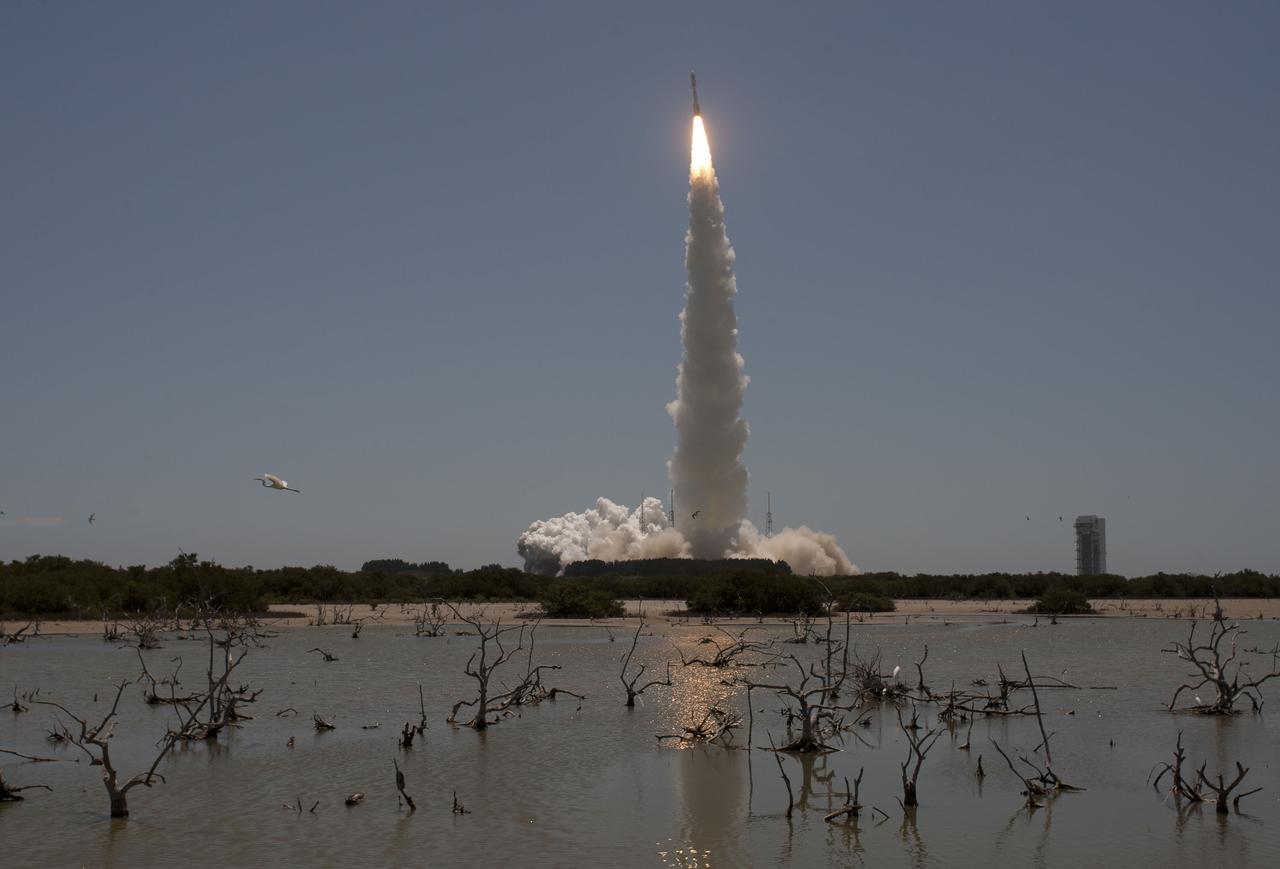
CAPE CANAVERAL, Fla. -- Reflected in water surrounding Space Launch Complex 41 on Cape Canaveral Air Force Station in Florida, fire lights up the sky as a United Launch Alliance Atlas V rocket lofts NASA's Juno planetary probe into space. Liftoff was at 12:25 p.m. EDT Aug. 5. The solar-powered spacecraft will orbit Jupiter's poles 33 times to find out more about the gas giant's origins, structure, atmosphere and magnetosphere and investigate the existence of a solid planetary core. For more information, visit www.nasa.gov/juno. Photo credit: Courtesy Scott Andrews

CAPE CANAVERAL, Fla. -- NASA's Juno planetary probe, enclosed in its payload fairing, is moments away from liftoff atop a United Launch Alliance Atlas V rocket. Leaving from Space Launch Complex 41 and its four lightning protection system towers on Cape Canaveral Air Force Station in Florida, the spacecraft will embark on a five-year journey to Jupiter. Liftoff was at 12:25 p.m. EDT Aug. 5. The solar-powered spacecraft will orbit Jupiter's poles 33 times to find out more about the gas giant's origins, structure, atmosphere and magnetosphere and investigate the existence of a solid planetary core. For more information, visit www.nasa.gov/juno. Photo credit: NASA/Tony Gray and Don Kight
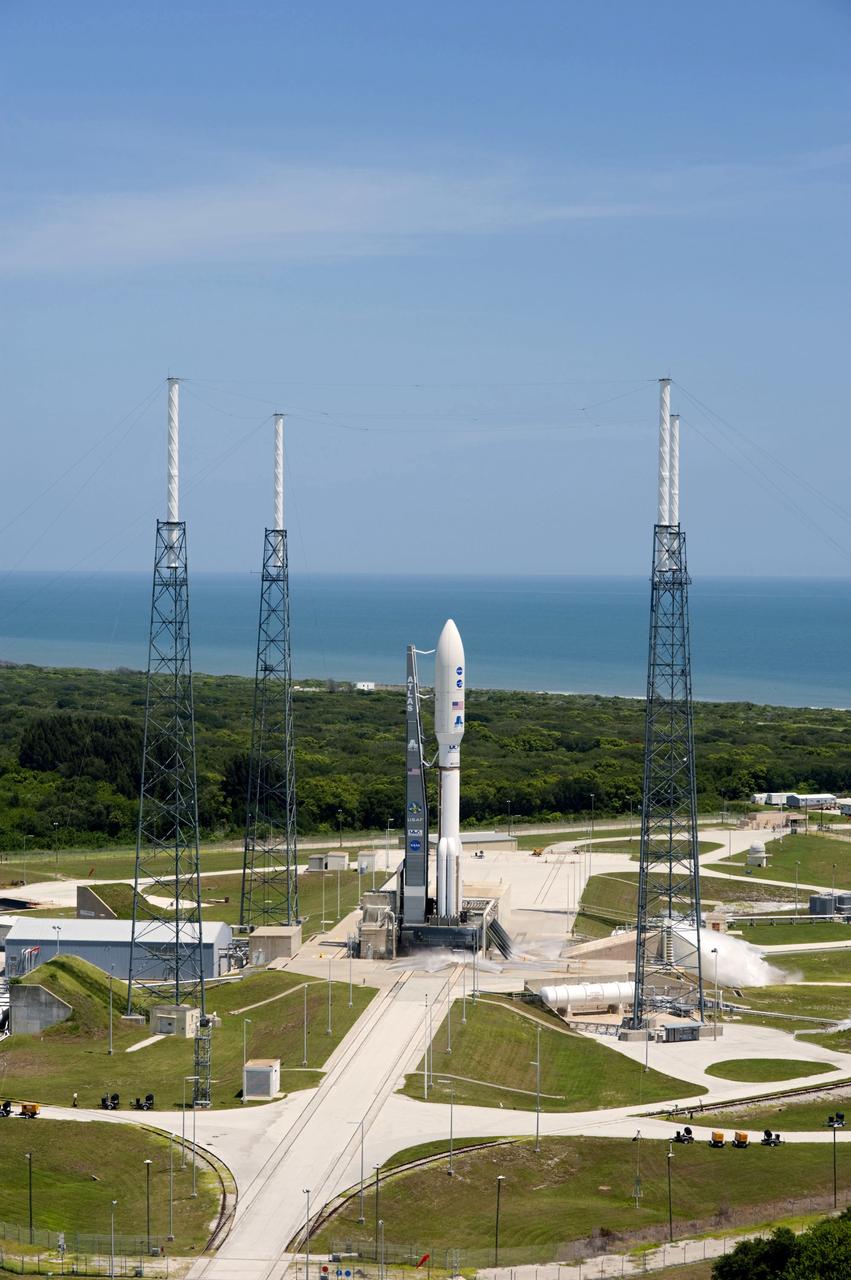
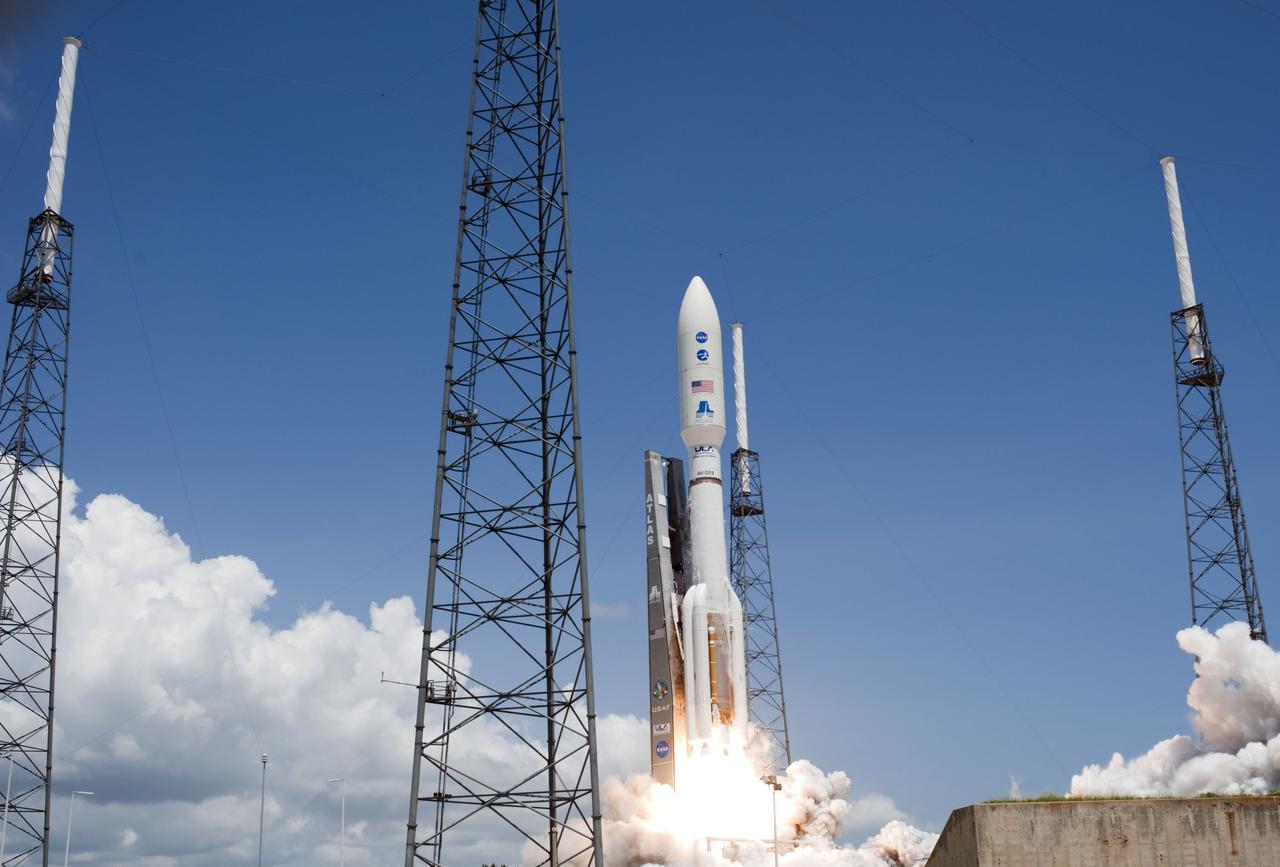
CAPE CANAVERAL, Fla. -- Backdropped by the Atlantic Ocean and surrounded by its four-tower lightning protection system, NASA's Juno planetary probe, enclosed in its payload fairing, is seconds away from liftoff atop a United Launch Alliance Atlas V rocket. Leaving from Space Launch Complex 41 on Cape Canaveral Air Force Station in Florida, the spacecraft will embark on a five-year journey to Jupiter. On the right, water is seen dumping into a flame trench to suppress vibrations at launch. Liftoff was at 12:25 p.m. EDT Aug. 5. The solar-powered spacecraft will orbit Jupiter's poles 33 times to find out more about the gas giant's origins, structure, atmosphere and magnetosphere and investigate the existence of a solid planetary core. For more information, visit www.nasa.gov/juno. Photo credit: NASA/Tony Gray and Tim Powers

CAPE CANAVERAL, Fla. -- Rising from fire and smoke, NASA's Juno planetary probe, enclosed in its payload fairing, launches atop a United Launch Alliance Atlas V rocket. Leaving from Space Launch Complex 41 and its four lightning protection system towers on Cape Canaveral Air Force Station in Florida, the spacecraft will embark on a five-year journey to Jupiter. Liftoff was at 12:25 p.m. EDT Aug. 5. The solar-powered spacecraft will orbit Jupiter's poles 33 times to find out more about the gas giant's origins, structure, atmosphere and magnetosphere and investigate the existence of a solid planetary core. For more information, visit www.nasa.gov/juno. Photo credit: NASA/Tony Gray and Don Kight
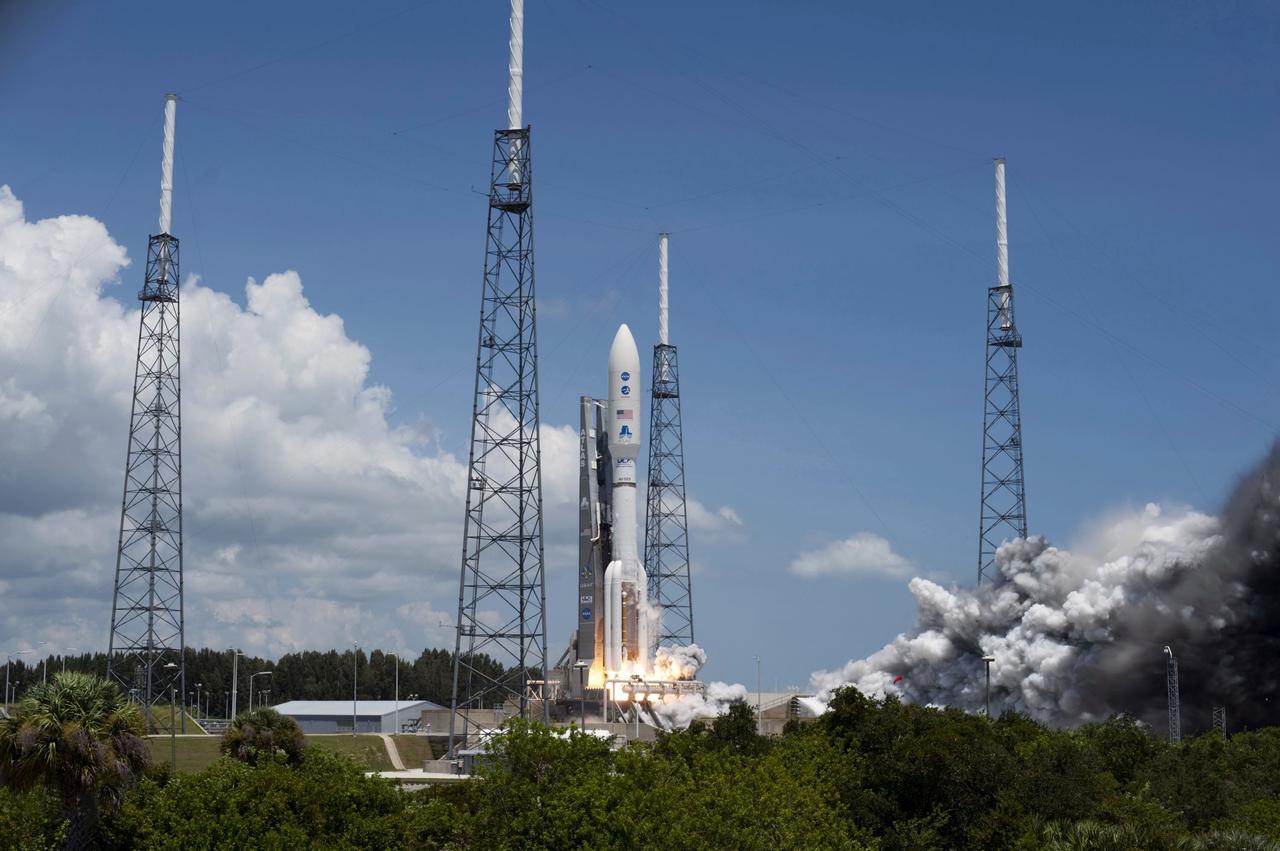
CAPE CANAVERAL, Fla. -- Backdropped by the Atlantic Ocean and surrounded by its four-tower lightning protection system, NASA's Juno planetary probe, enclosed in its payload fairing, is seconds away from liftoff atop a United Launch Alliance Atlas V rocket. Leaving from Space Launch Complex 41 on Cape Canaveral Air Force Station in Florida, the spacecraft will embark on a five-year journey to Jupiter. Liftoff was at 12:25 p.m. EDT Aug. 5. The solar-powered spacecraft will orbit Jupiter's poles 33 times to find out more about the gas giant's origins, structure, atmosphere and magnetosphere and investigate the existence of a solid planetary core. For more information, visit www.nasa.gov/juno. Photo credit: NASA/Tony Gray and Tim Powers
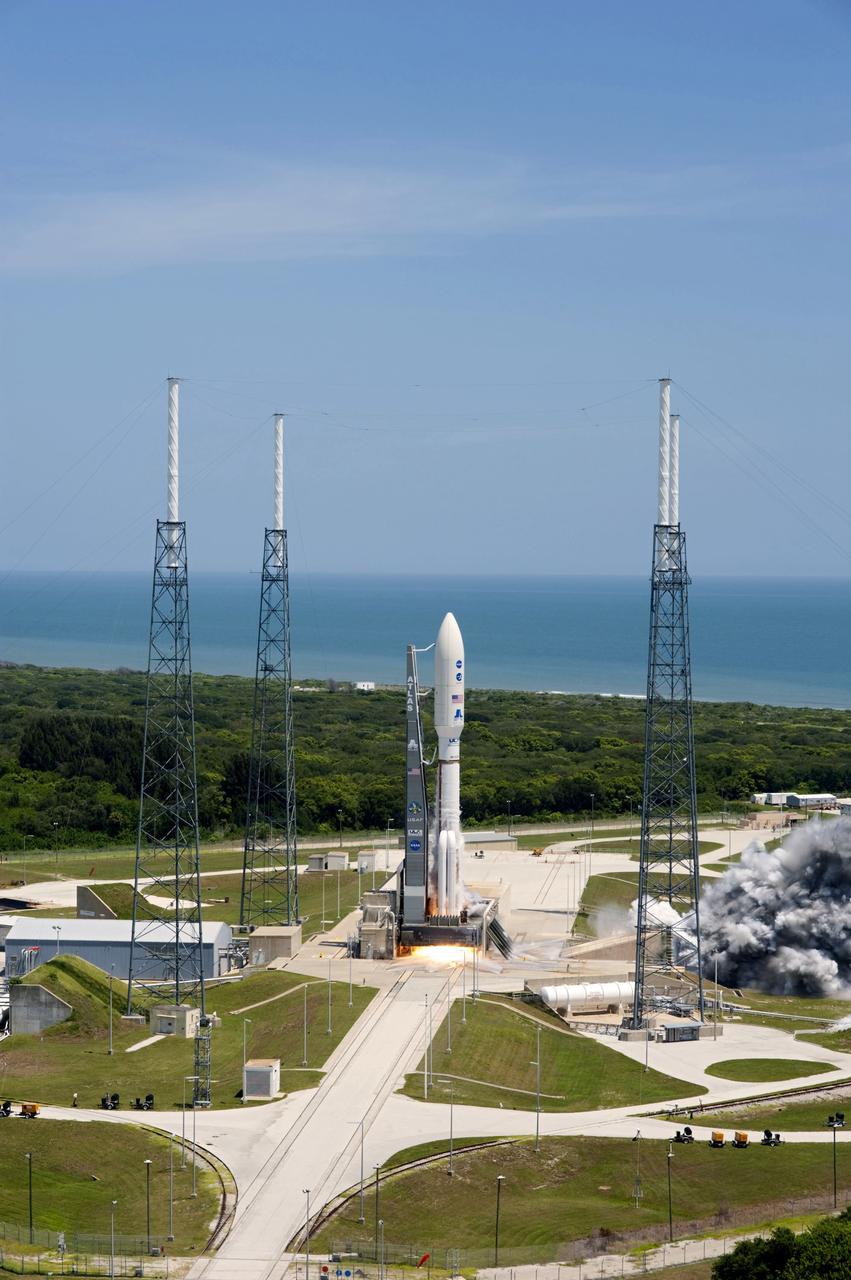
CAPE CANAVERAL, Fla. -- Rising from fire and smoke, NASA's Juno planetary probe, enclosed in its payload fairing, launches atop a United Launch Alliance Atlas V rocket. Leaving from Space Launch Complex 41 and its four lightning protection system towers on Cape Canaveral Air Force Station in Florida, the spacecraft will embark on a five-year journey to Jupiter. Liftoff was at 12:25 p.m. EDT Aug. 5. The solar-powered spacecraft will orbit Jupiter's poles 33 times to find out more about the gas giant's origins, structure, atmosphere and magnetosphere and investigate the existence of a solid planetary core. For more information, visit www.nasa.gov/juno. Photo credit: NASA/Tony Gray and Don Kight
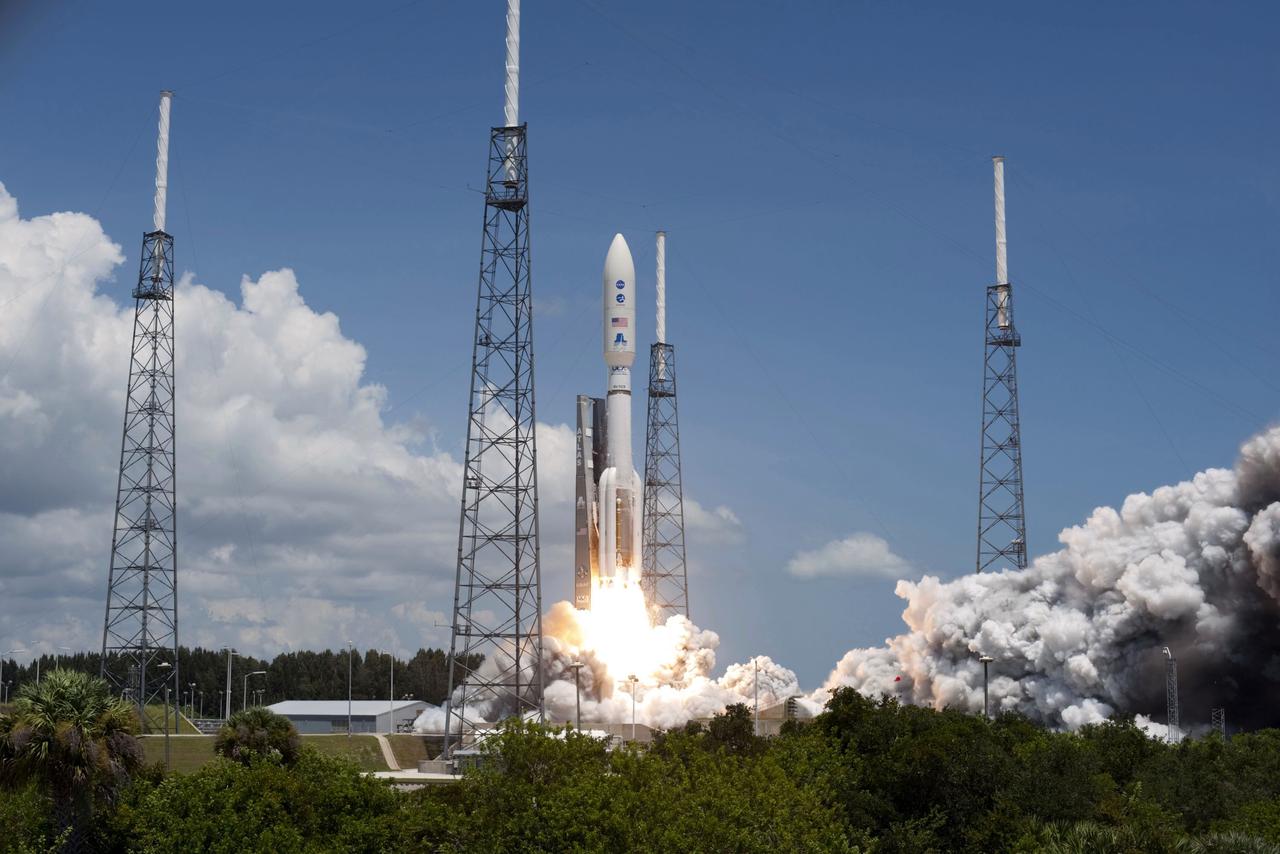
CAPE CANAVERAL, Fla. -- Rising from fire and smoke, NASA's Juno planetary probe, enclosed in its payload fairing, launches atop a United Launch Alliance Atlas V rocket. Leaving from Space Launch Complex 41 and its four lightning protection system towers on Cape Canaveral Air Force Station in Florida, the spacecraft will embark on a five-year journey to Jupiter. Liftoff was at 12:25 p.m. EDT Aug. 5. The solar-powered spacecraft will orbit Jupiter's poles 33 times to find out more about the gas giant's origins, structure, atmosphere and magnetosphere and investigate the existence of a solid planetary core. For more information, visit www.nasa.gov/juno. Photo credit: NASA/Tony Gray and Don Kight
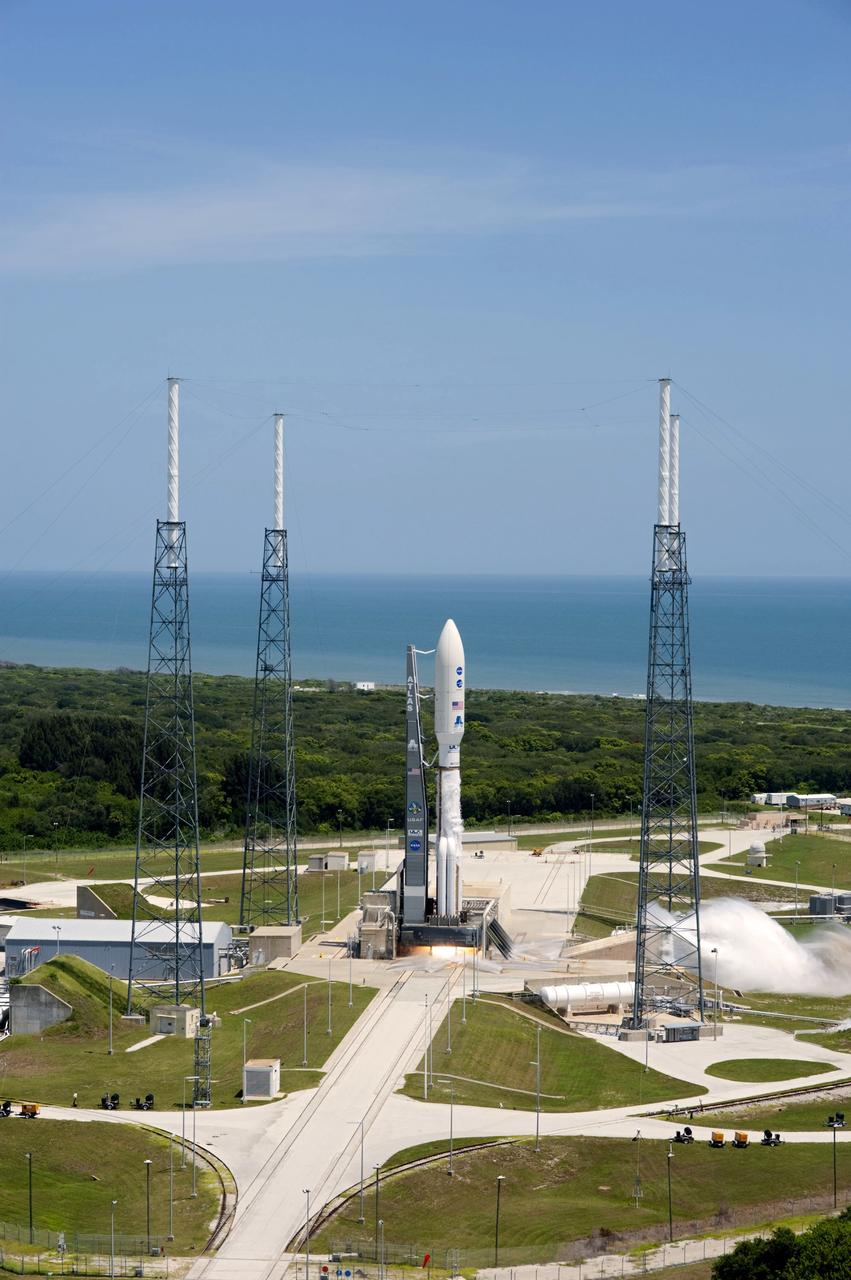
CAPE CANAVERAL, Fla. -- Backdropped by the Atlantic Ocean and surrounded by its four-tower lightning protection system, NASA's Juno planetary probe, enclosed in its payload fairing, is seconds away from liftoff atop a United Launch Alliance Atlas V rocket. Leaving from Space Launch Complex 41 on Cape Canaveral Air Force Station in Florida, the spacecraft will embark on a five-year journey to Jupiter. On the right, water is seen dumping into a flame trench to suppress vibrations at launch. Liftoff was at 12:25 p.m. EDT Aug. 5. The solar-powered spacecraft will orbit Jupiter's poles 33 times to find out more about the gas giant's origins, structure, atmosphere and magnetosphere and investigate the existence of a solid planetary core. For more information, visit www.nasa.gov/juno. Photo credit: NASA/Tony Gray and Tim Powers
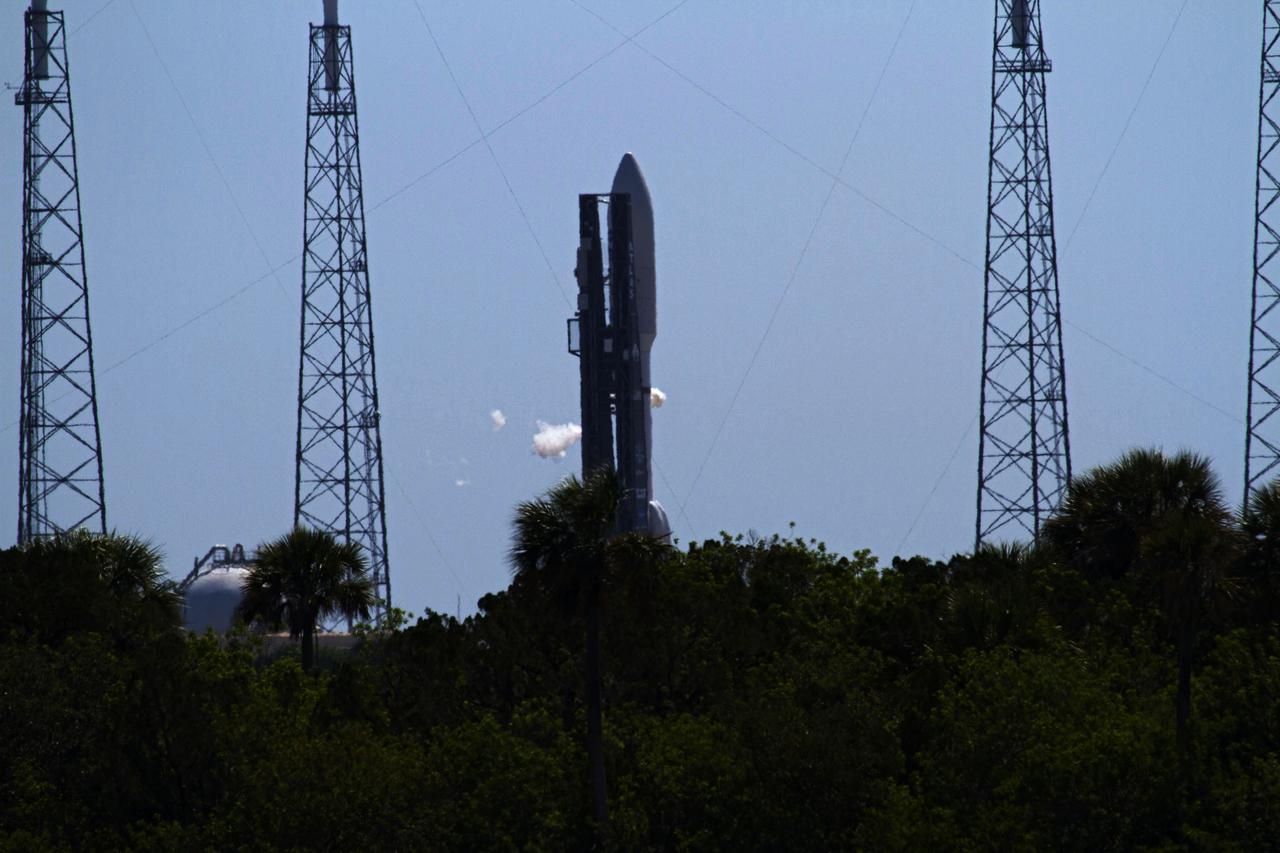
CAPE CANAVERAL, Fla. -- NASA's Juno planetary probe, enclosed in its payload fairing, is moments away from beginning its five-year journey to Jupiter atop a United Launch Alliance Atlas V-551 launch vehicle from Space Launch Complex 41 on Cape Canaveral Air Force Station in Florida. Liftoff was at 12:25 p.m. EDT Aug. 5. The solar-powered spacecraft will orbit Jupiter's poles 33 times to find out more about the gas giant's origins, structure, atmosphere and magnetosphere and investigate the existence of a solid planetary core. NASA's Jet Propulsion Laboratory, Pasadena, Calif., manages the Juno mission for the principal investigator, Scott Bolton, of Southwest Research Institute in San Antonio. The Juno mission is part of the New Frontiers Program managed at NASA's Marshall Space Flight Center in Huntsville, Ala. Lockheed Martin Space Systems, Denver, built the spacecraft. Launch management for the mission is the responsibility of NASA's Launch Services Program at the Kennedy Space Center in Florida. For more information, visit www.nasa.gov/juno. Photo credit: NASA/Kenny Allen
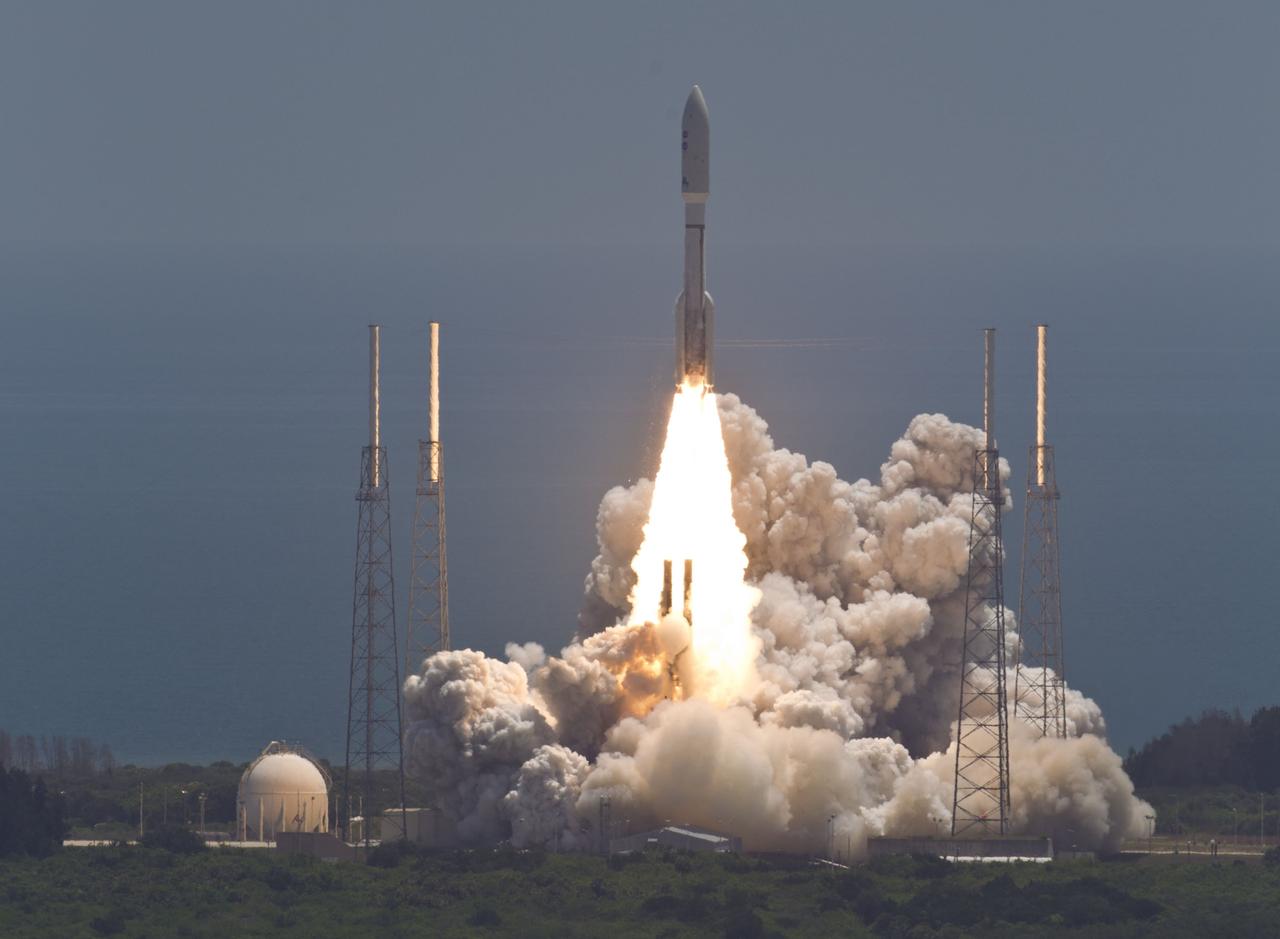
CAPE CANAVERAL, Fla. -- The United Launch Alliance Atlas V-551 launch vehicle carrying NASA's Juno planetary probe, its motors blazing, is off to a roaring start on its five-year journey to Jupiter from Space Launch Complex 41 on Cape Canaveral Air Force Station in Florida. Liftoff was at 12:25 p.m. EDT Aug. 5. The solar-powered spacecraft will orbit Jupiter's poles 33 times to find out more about the gas giant's origins, structure, atmosphere and magnetosphere and investigate the existence of a solid planetary core. NASA's Jet Propulsion Laboratory, Pasadena, Calif., manages the Juno mission for the principal investigator, Scott Bolton, of Southwest Research Institute in San Antonio. The Juno mission is part of the New Frontiers Program managed at NASA's Marshall Space Flight Center in Huntsville, Ala. Lockheed Martin Space Systems, Denver, built the spacecraft. Launch management for the mission is the responsibility of NASA's Launch Services Program at the Kennedy Space Center in Florida. For more information, visit www.nasa.gov/juno. Photo credit: Courtesy of Scott Andrews
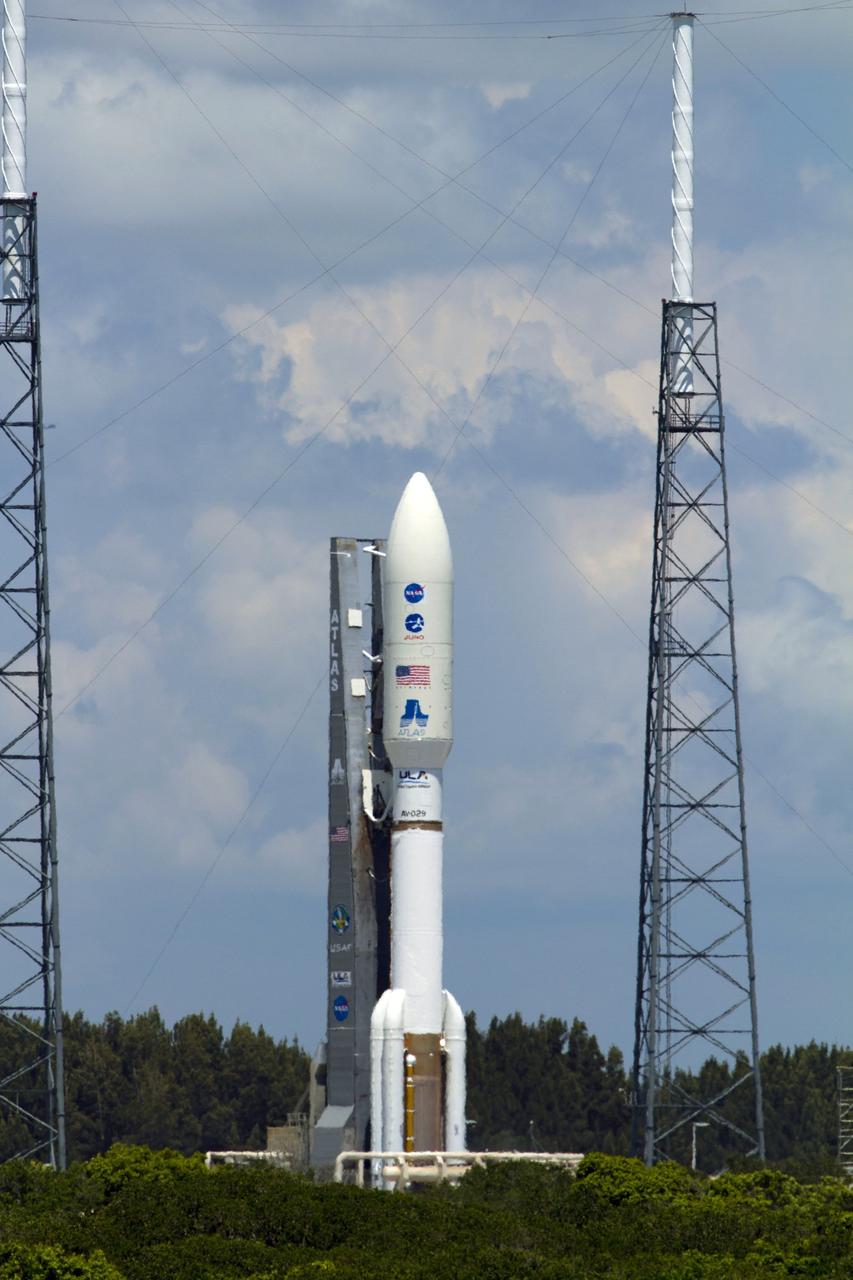
CAPE CANAVERAL, Fla. -- NASA's Juno planetary probe is moments away from beginning its five-year journey to Jupiter atop a United Launch Alliance Atlas V-551 launch vehicle from Space Launch Complex 41 on Cape Canaveral Air Force Station in Florida. Liftoff was at 12:25 p.m. EDT Aug. 5. The solar-powered spacecraft will orbit Jupiter's poles 33 times to find out more about the gas giant's origins, structure, atmosphere and magnetosphere and investigate the existence of a solid planetary core. NASA's Jet Propulsion Laboratory, Pasadena, Calif., manages the Juno mission for the principal investigator, Scott Bolton, of Southwest Research Institute in San Antonio. The Juno mission is part of the New Frontiers Program managed at NASA's Marshall Space Flight Center in Huntsville, Ala. Lockheed Martin Space Systems, Denver, built the spacecraft. Launch management for the mission is the responsibility of NASA's Launch Services Program at the Kennedy Space Center in Florida. For more information, visit www.nasa.gov/juno. Photo credit: NASA/George Roberts and Rusty Backer
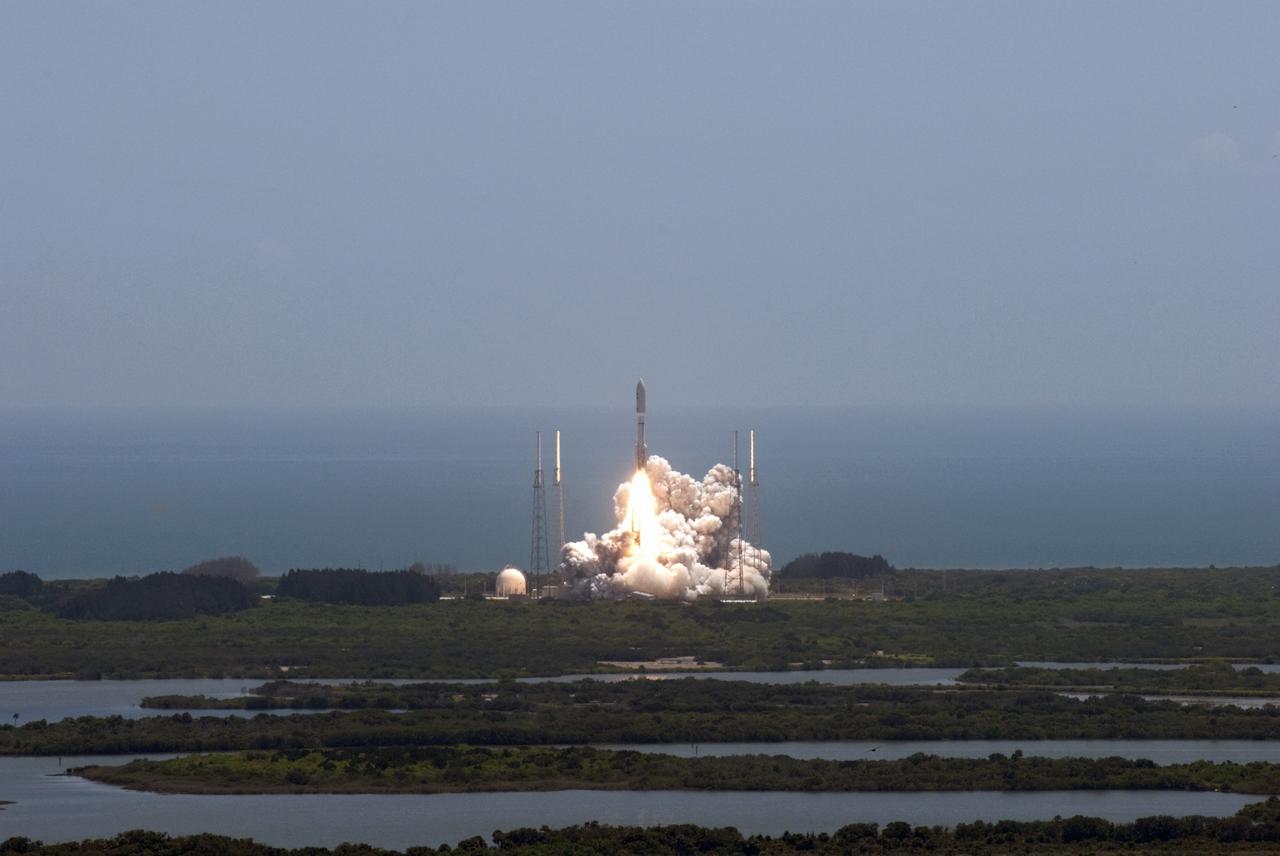
CAPE CANAVERAL, Fla. -- NASA's Juno planetary probe, enclosed in its payload fairing, begins its five-year journey to Jupiter atop a United Launch Alliance Atlas V-551 launch vehicle from Space Launch Complex 41 on Cape Canaveral Air Force Station in Florida. Liftoff was at 12:25 p.m. EDT Aug. 5. The solar-powered spacecraft will orbit Jupiter's poles 33 times to find out more about the gas giant's origins, structure, atmosphere and magnetosphere and investigate the existence of a solid planetary core. NASA's Jet Propulsion Laboratory, Pasadena, Calif., manages the Juno mission for the principal investigator, Scott Bolton, of Southwest Research Institute in San Antonio. The Juno mission is part of the New Frontiers Program managed at NASA's Marshall Space Flight Center in Huntsville, Ala. Lockheed Martin Space Systems, Denver, built the spacecraft. Launch management for the mission is the responsibility of NASA's Launch Services Program at the Kennedy Space Center in Florida. For more information, visit www.nasa.gov/juno. Photo credit: NASA/Jim Grossmann
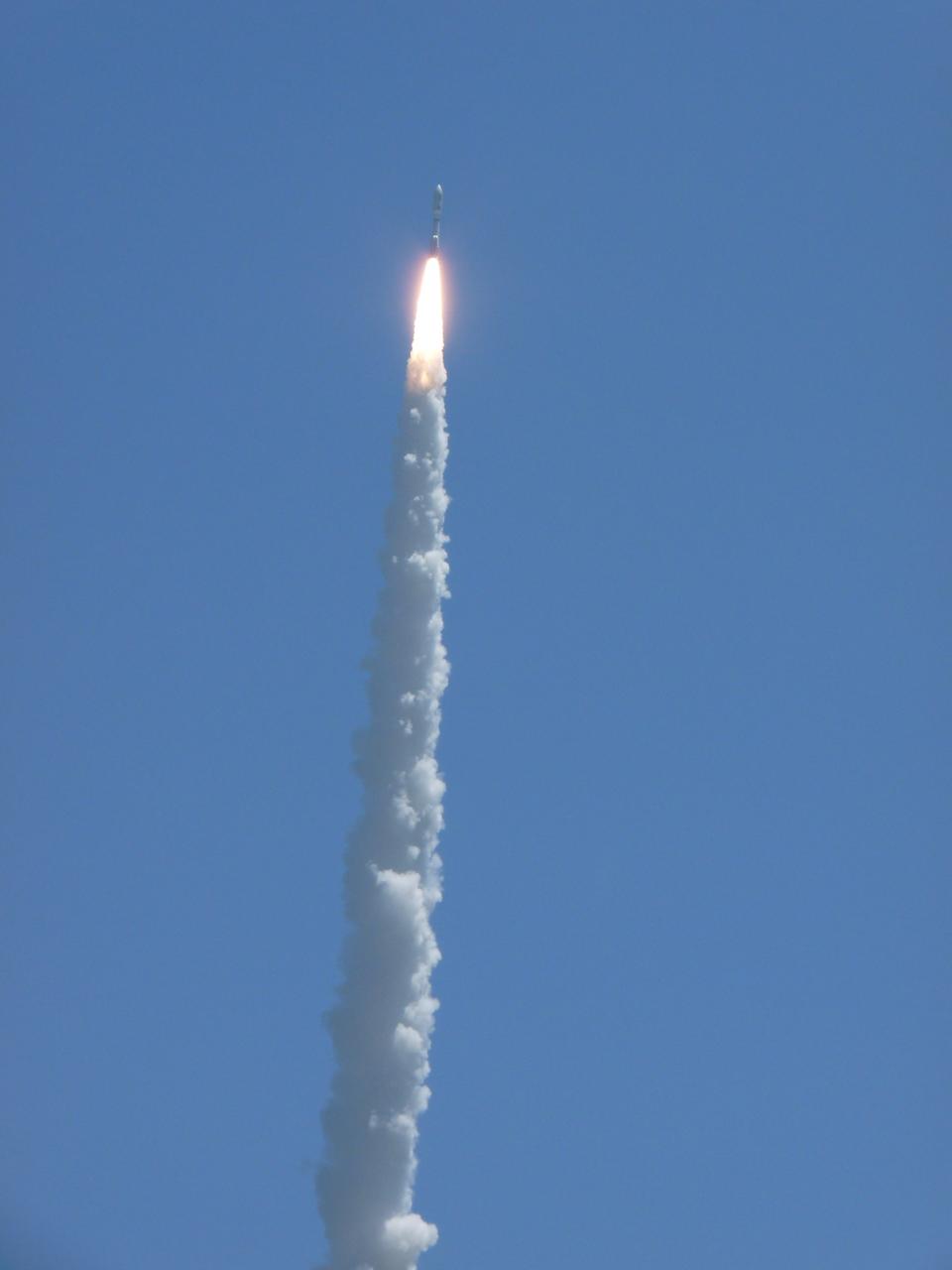
CAPE CANAVERAL, Fla. -- NASA's Juno planetary probe, enclosed in its payload fairing, begins its five-year journey to Jupiter atop a United Launch Alliance Atlas V-551 launch vehicle from Space Launch Complex 41 on Cape Canaveral Air Force Station in Florida. Liftoff was at 12:25 p.m. EDT Aug. 5. The solar-powered spacecraft will orbit Jupiter's poles 33 times to find out more about the gas giant's origins, structure, atmosphere and magnetosphere and investigate the existence of a solid planetary core. NASA's Jet Propulsion Laboratory, Pasadena, Calif., manages the Juno mission for the principal investigator, Scott Bolton, of Southwest Research Institute in San Antonio. The Juno mission is part of the New Frontiers Program managed at NASA's Marshall Space Flight Center in Huntsville, Ala. Lockheed Martin Space Systems, Denver, built the spacecraft. Launch management for the mission is the responsibility of NASA's Launch Services Program at the Kennedy Space Center in Florida. For more information, visit www.nasa.gov/juno. Photo credit: NASA/Fletcher Hildreth
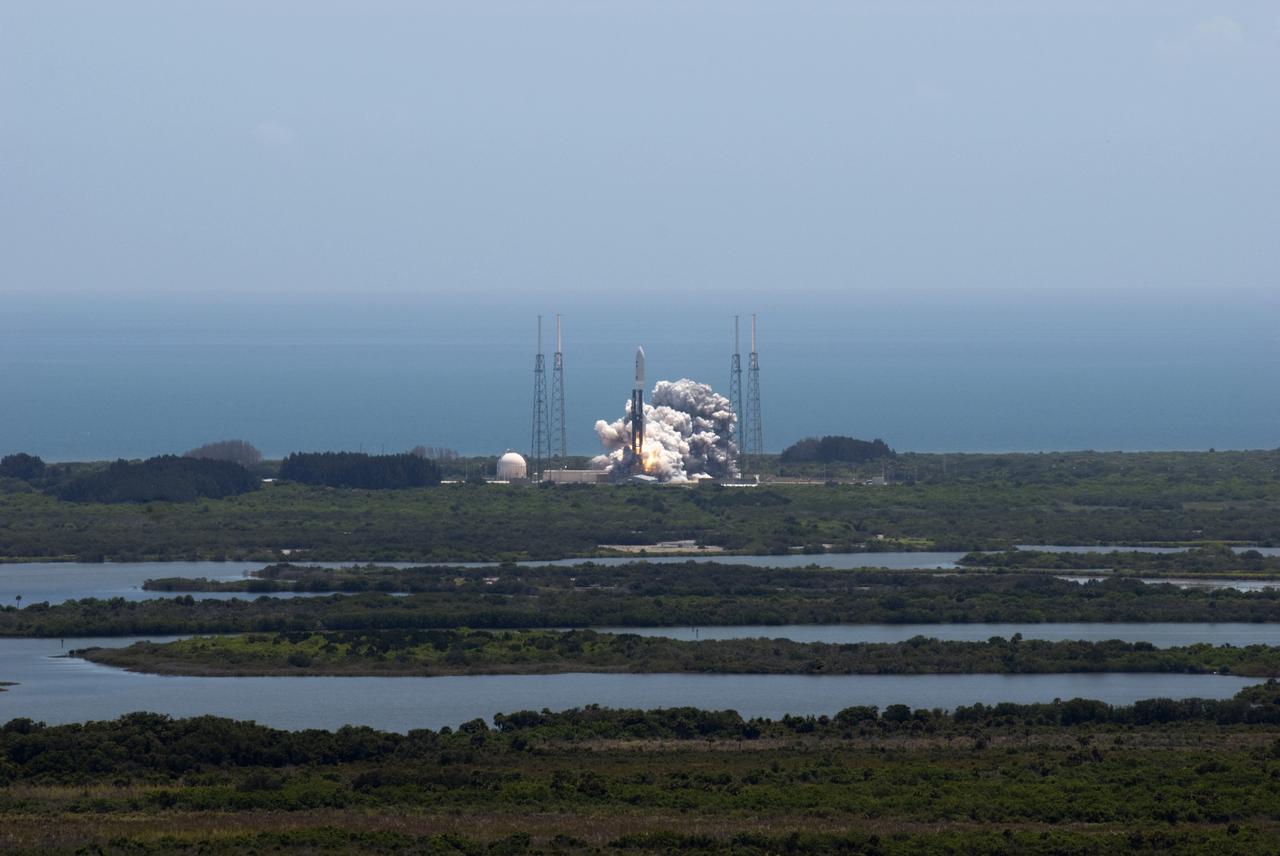
CAPE CANAVERAL, Fla. -- NASA's Juno planetary probe, enclosed in its payload fairing, begins its five-year journey to Jupiter atop a United Launch Alliance Atlas V-551 launch vehicle from Space Launch Complex 41 on Cape Canaveral Air Force Station in Florida. Liftoff was at 12:25 p.m. EDT Aug. 5. The solar-powered spacecraft will orbit Jupiter's poles 33 times to find out more about the gas giant's origins, structure, atmosphere and magnetosphere and investigate the existence of a solid planetary core. NASA's Jet Propulsion Laboratory, Pasadena, Calif., manages the Juno mission for the principal investigator, Scott Bolton, of Southwest Research Institute in San Antonio. The Juno mission is part of the New Frontiers Program managed at NASA's Marshall Space Flight Center in Huntsville, Ala. Lockheed Martin Space Systems, Denver, built the spacecraft. Launch management for the mission is the responsibility of NASA's Launch Services Program at the Kennedy Space Center in Florida. For more information, visit www.nasa.gov/juno. Photo credit: NASA/Jim Grossmann
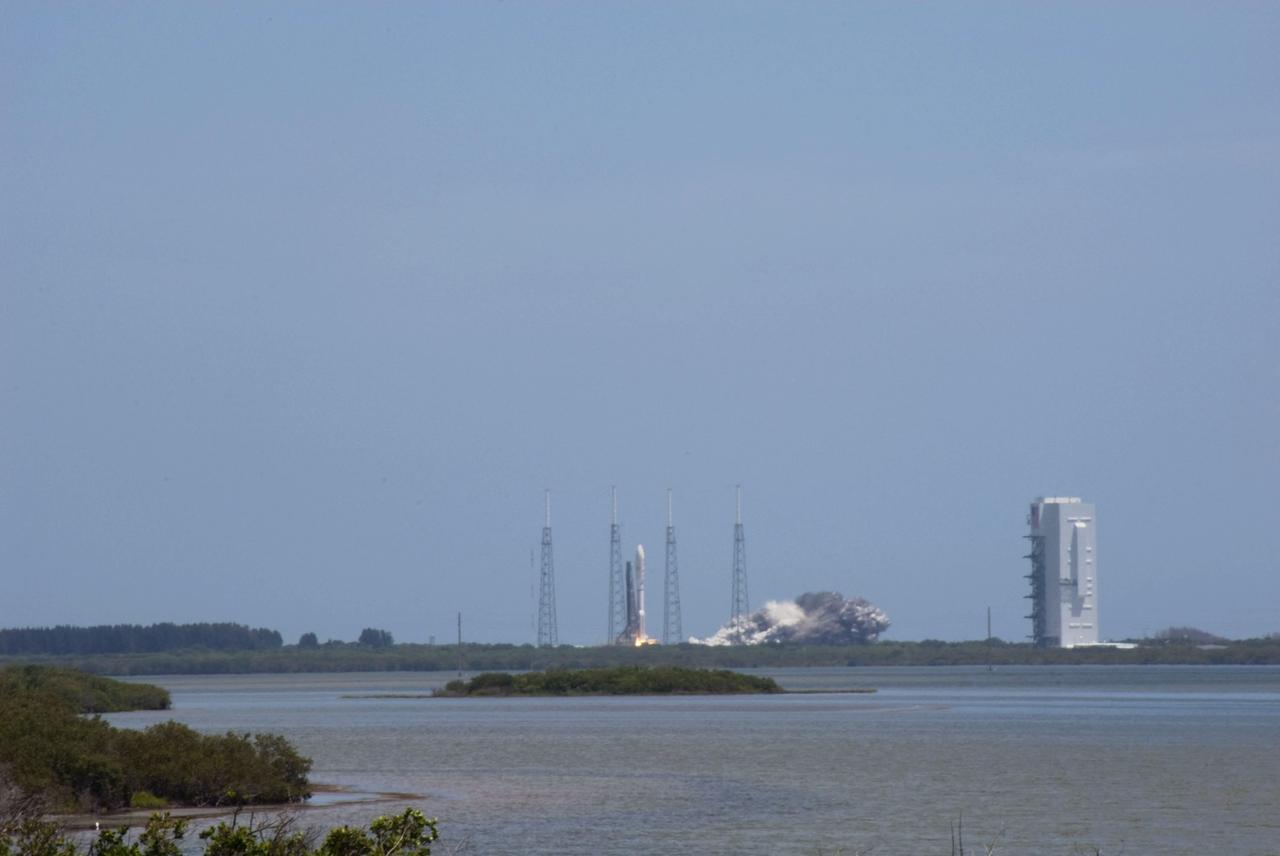
CAPE CANAVERAL, Fla. -- NASA's Juno planetary probe, enclosed in its payload fairing, begins its five-year journey to Jupiter atop a United Launch Alliance Atlas V-551 launch vehicle from Space Launch Complex 41 on Cape Canaveral Air Force Station in Florida. At right is the Vertical Integration Facility where the vehicle was stacked. Liftoff was at 12:25 p.m. EDT Aug. 5. The solar-powered spacecraft will orbit Jupiter's poles 33 times to find out more about the gas giant's origins, structure, atmosphere and magnetosphere and investigate the existence of a solid planetary core. NASA's Jet Propulsion Laboratory, Pasadena, Calif., manages the Juno mission for the principal investigator, Scott Bolton, of Southwest Research Institute in San Antonio. The Juno mission is part of the New Frontiers Program managed at NASA's Marshall Space Flight Center in Huntsville, Ala. Lockheed Martin Space Systems, Denver, built the spacecraft. Launch management for the mission is the responsibility of NASA's Launch Services Program at the Kennedy Space Center in Florida. For more information, visit www.nasa.gov/juno. Photo credit: NASA/Alan Ault
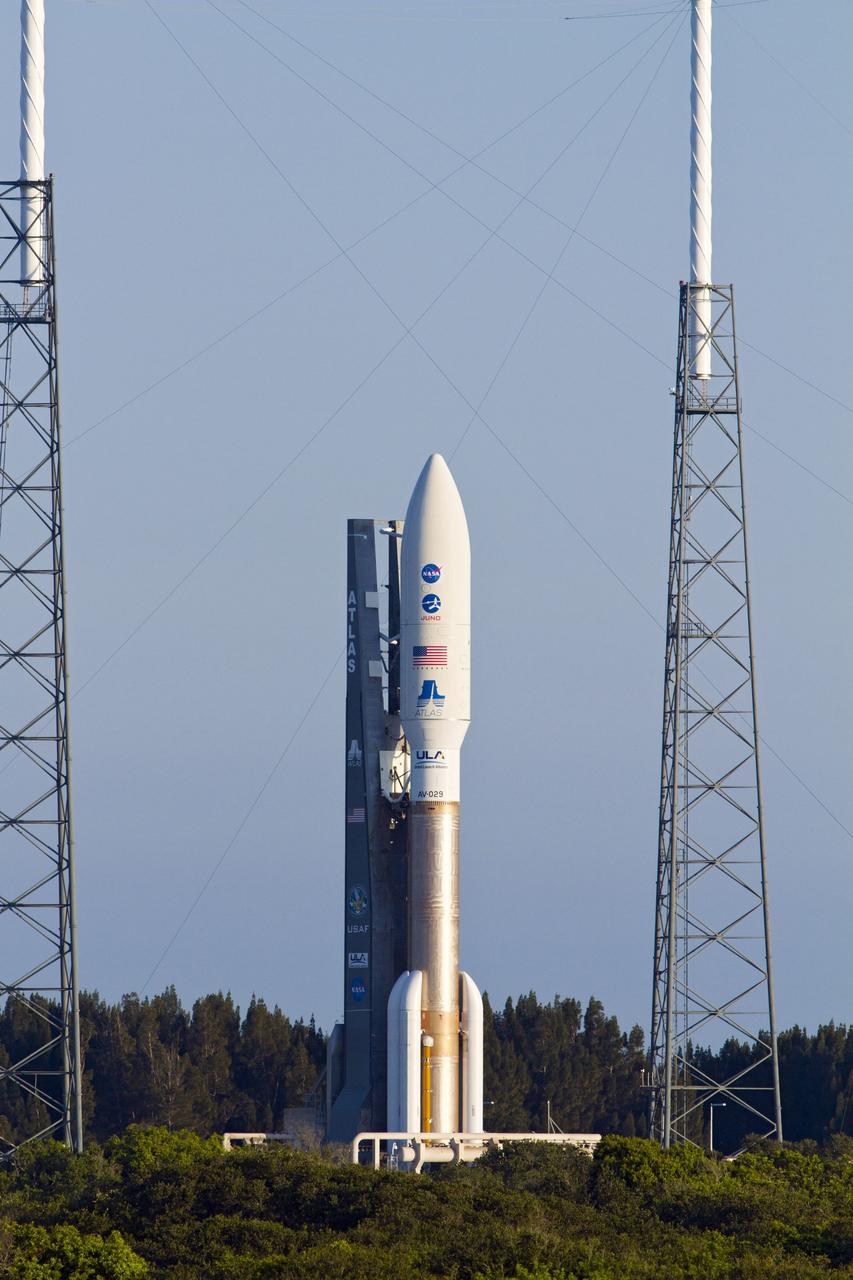
CAPE CANAVERAL, Fla. -- NASA's Juno planetary probe is poised for its five-year journey to Jupiter atop a United Launch Alliance Atlas V-551 launch vehicle on Space Launch Complex 41 on Cape Canaveral Air Force Station in Florida. Liftoff was at 12:25 p.m. EDT Aug. 5. The solar-powered spacecraft will orbit Jupiter's poles 33 times to find out more about the gas giant's origins, structure, atmosphere and magnetosphere and investigate the existence of a solid planetary core. NASA's Jet Propulsion Laboratory, Pasadena, Calif., manages the Juno mission for the principal investigator, Scott Bolton, of Southwest Research Institute in San Antonio. The Juno mission is part of the New Frontiers Program managed at NASA's Marshall Space Flight Center in Huntsville, Ala. Lockheed Martin Space Systems, Denver, built the spacecraft. Launch management for the mission is the responsibility of NASA's Launch Services Program at the Kennedy Space Center in Florida. For more information, visit www.nasa.gov/juno. Photo credit: NASA/George Roberts and Rusty Backer
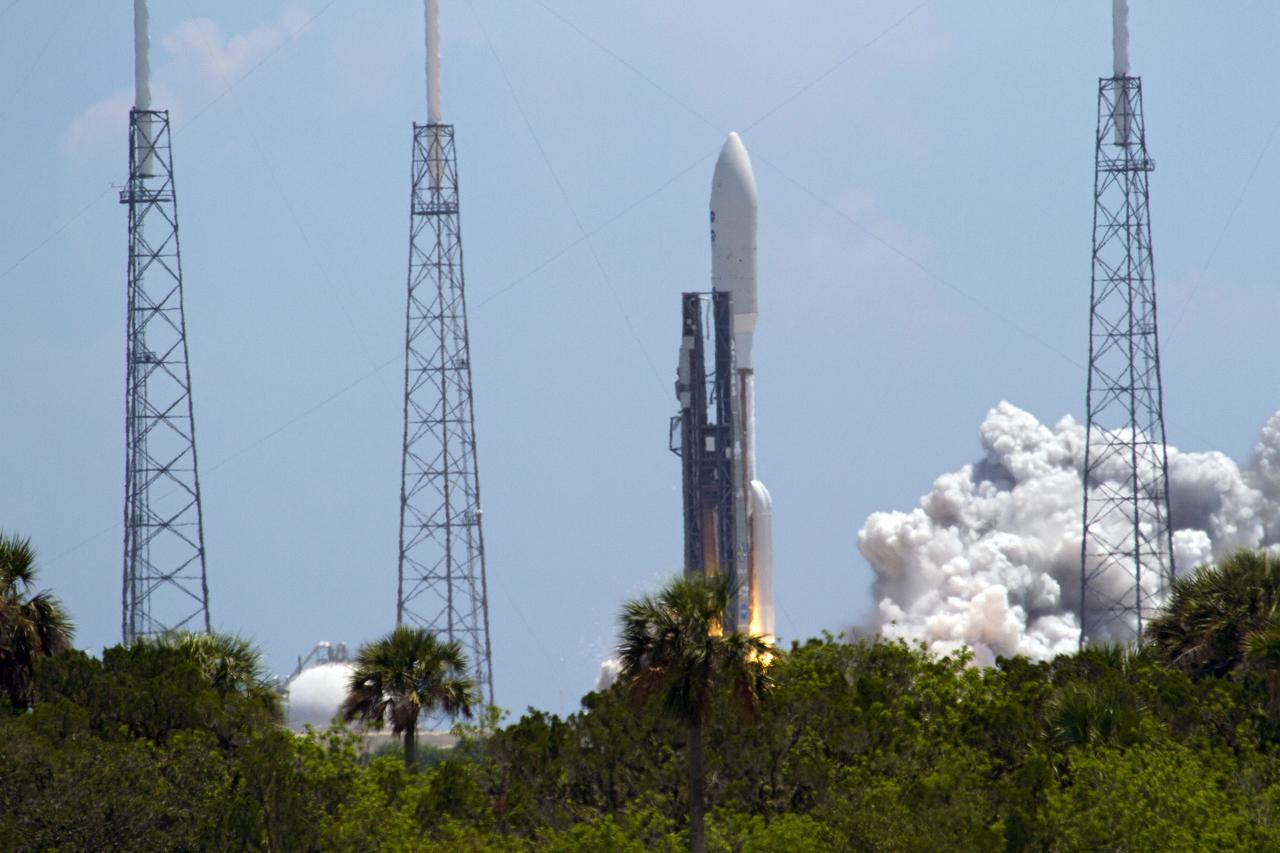
CAPE CANAVERAL, Fla. -- NASA's Juno planetary probe, enclosed in its payload fairing, begins its five-year journey to Jupiter atop a United Launch Alliance Atlas V-551 launch vehicle from Space Launch Complex 41 on Cape Canaveral Air Force Station in Florida. Liftoff was at 12:25 p.m. EDT Aug. 5. The solar-powered spacecraft will orbit Jupiter's poles 33 times to find out more about the gas giant's origins, structure, atmosphere and magnetosphere and investigate the existence of a solid planetary core. NASA's Jet Propulsion Laboratory, Pasadena, Calif., manages the Juno mission for the principal investigator, Scott Bolton, of Southwest Research Institute in San Antonio. The Juno mission is part of the New Frontiers Program managed at NASA's Marshall Space Flight Center in Huntsville, Ala. Lockheed Martin Space Systems, Denver, built the spacecraft. Launch management for the mission is the responsibility of NASA's Launch Services Program at the Kennedy Space Center in Florida. For more information, visit www.nasa.gov/juno. Photo credit: NASA/Kenny Allen
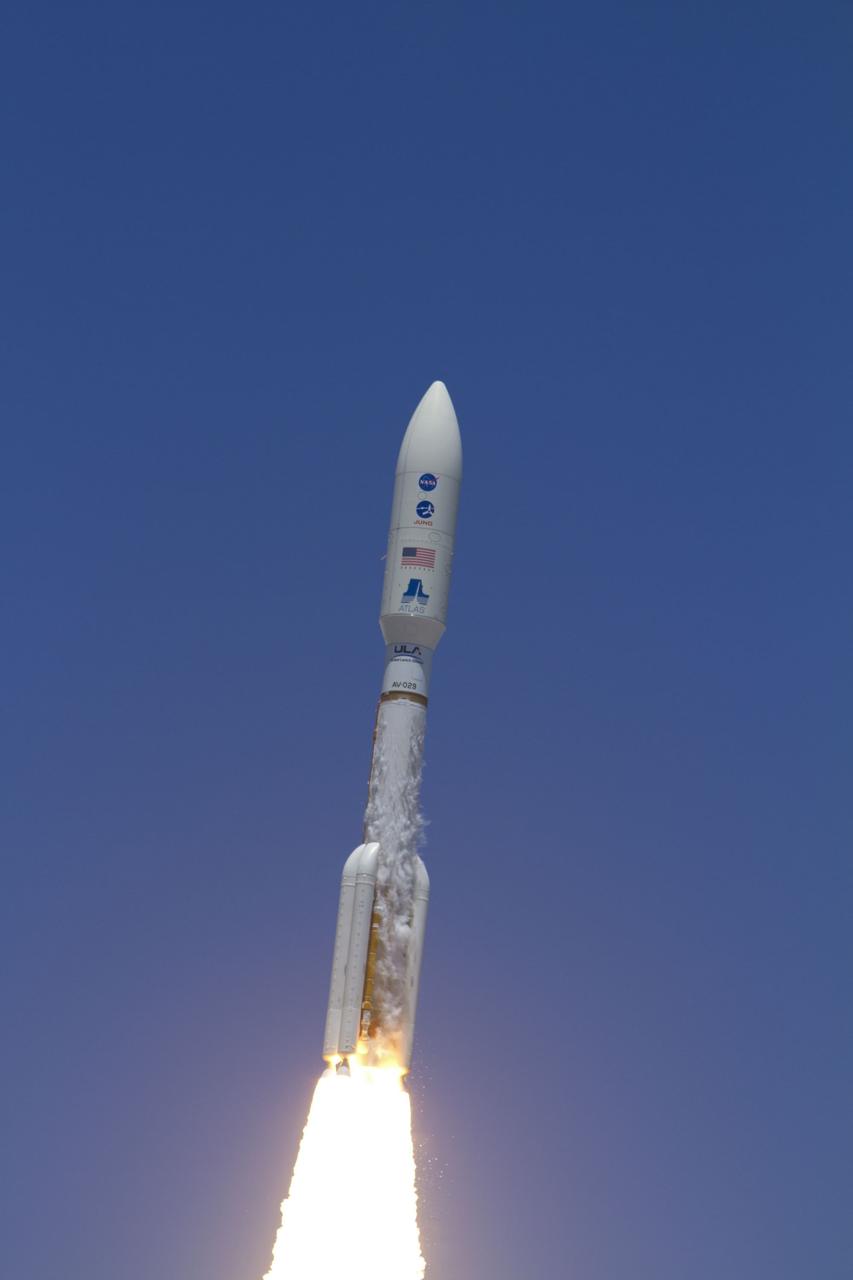
CAPE CANAVERAL, Fla. -- Frost breaks away from the first stage of the United Launch Alliance Atlas V-551 launch vehicle carrying NASA's Juno planetary probe as it begins its five-year journey to Jupiter from Space Launch Complex 41 on Cape Canaveral Air Force Station in Florida. The frost forms when the stage is filled with its supercold liquid oxygen fuel. Liftoff was at 12:25 p.m. EDT Aug. 5. The solar-powered spacecraft will orbit Jupiter's poles 33 times to find out more about the gas giant's origins, structure, atmosphere and magnetosphere and investigate the existence of a solid planetary core. NASA's Jet Propulsion Laboratory, Pasadena, Calif., manages the Juno mission for the principal investigator, Scott Bolton, of Southwest Research Institute in San Antonio. The Juno mission is part of the New Frontiers Program managed at NASA's Marshall Space Flight Center in Huntsville, Ala. Lockheed Martin Space Systems, Denver, built the spacecraft. Launch management for the mission is the responsibility of NASA's Launch Services Program at the Kennedy Space Center in Florida. For more information, visit www.nasa.gov/juno. Photo credit: NASA/George Roberts and Rusty Backer
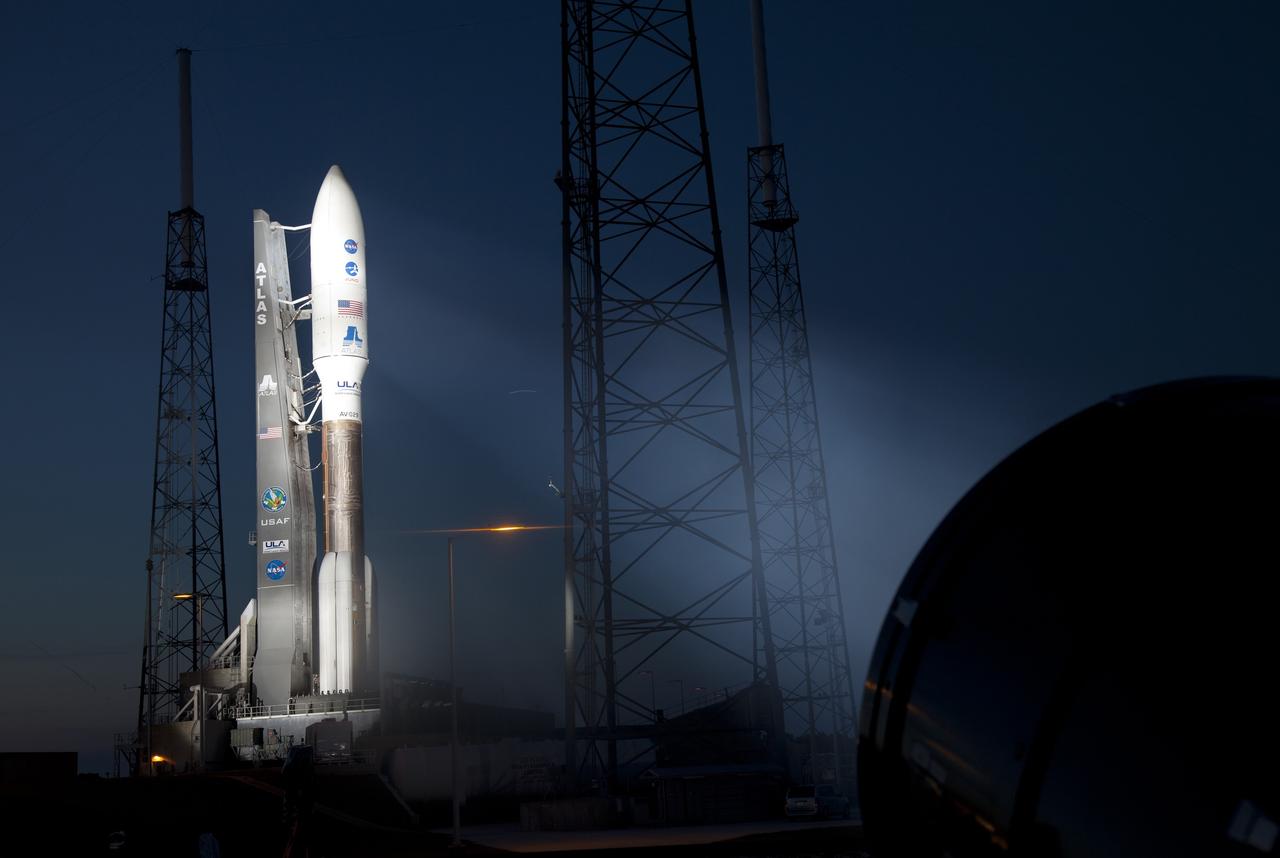
CAPE CANAVERAL, Fla. -- Nightfall on Space Launch Complex 41 at Cape Canaveral Air Force Station in Florida finds NASA's Juno planetary probe, enclosed in its payload fairing atop the United Launch Alliance Atlas V-551 launch vehicle, ready to begin its five-year journey to Jupiter. Liftoff is planned during a launch window which extends from 11:34 a.m. to 12:43 p.m. EDT on Aug. 5. The solar-powered spacecraft will orbit Jupiter's poles 33 times to find out more about the gas giant's origins, structure, atmosphere and magnetosphere and investigate the existence of a solid planetary core. NASA's Jet Propulsion Laboratory, Pasadena, Calif., manages the Juno mission for the principal investigator, Scott Bolton, of Southwest Research Institute in San Antonio. The Juno mission is part of the New Frontiers Program managed at NASA's Marshall Space Flight Center in Huntsville, Ala. Lockheed Martin Space Systems, Denver, built the spacecraft. Launch management for the mission is the responsibility of NASA's Launch Services Program at the Kennedy Space Center in Florida. For more information, visit www.nasa.gov/juno. Photo credit: Courtesy of Scott Andrews
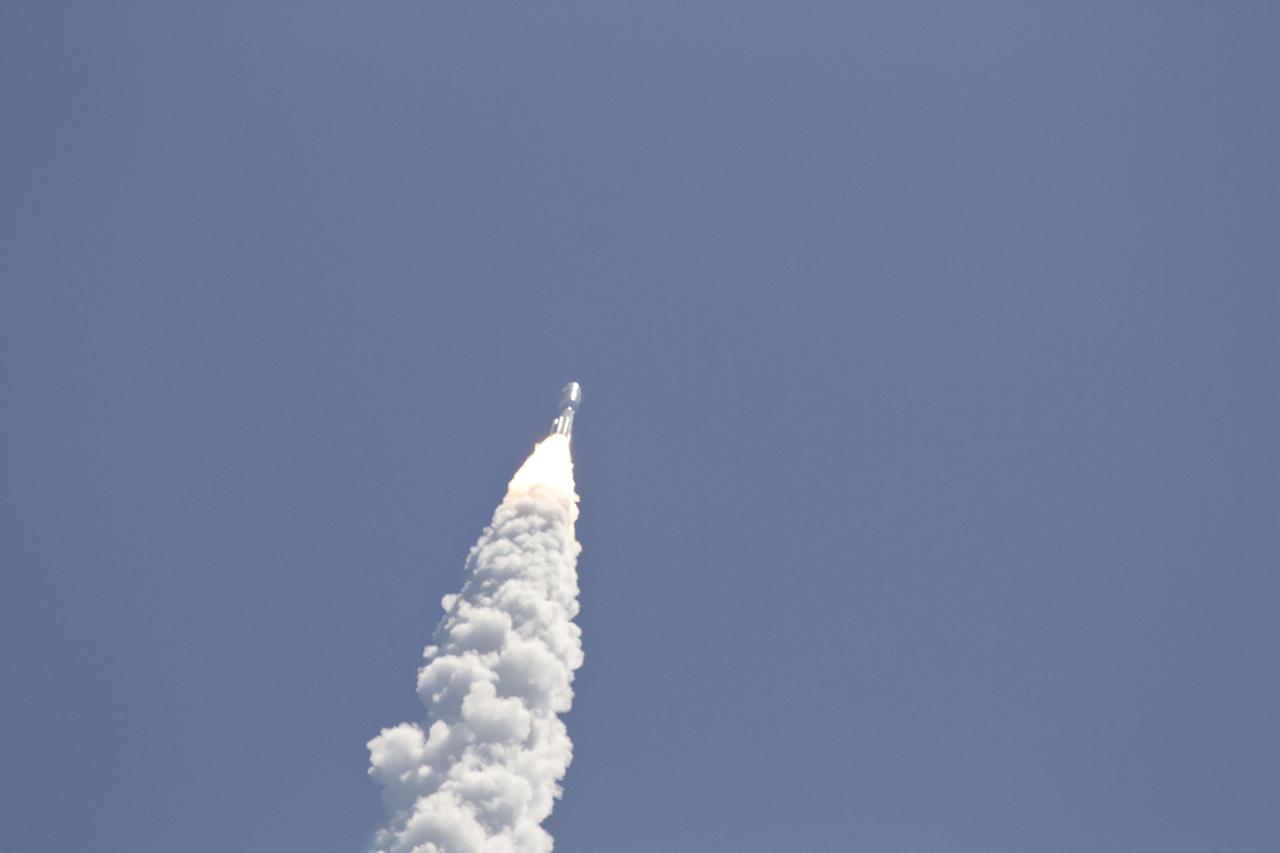
CAPE CANAVERAL, Fla. -- NASA's Juno planetary probe roars off the pad at Space Launch Complex 41 on Cape Canaveral Air Force Station in Florida atop a United Launch Alliance Atlas V-551 launch vehicle to begin its five-year journey to Jupiter. Liftoff was at 12:25 p.m. EDT Aug. 5. The solar-powered spacecraft will orbit Jupiter's poles 33 times to find out more about the gas giant's origins, structure, atmosphere and magnetosphere and investigate the existence of a solid planetary core. NASA's Jet Propulsion Laboratory, Pasadena, Calif., manages the Juno mission for the principal investigator, Scott Bolton, of Southwest Research Institute in San Antonio. The Juno mission is part of the New Frontiers Program managed at NASA's Marshall Space Flight Center in Huntsville, Ala. Lockheed Martin Space Systems, Denver, built the spacecraft. Launch management for the mission is the responsibility of NASA's Launch Services Program at the Kennedy Space Center in Florida. For more information, visit www.nasa.gov/juno. Photo credit: NASA/Kenny Allen

CAPE CANAVERAL, Fla. -- The United Launch Alliance Atlas V-551 launch vehicle carrying NASA's Juno planetary probe is off to a roaring start on its five-year journey to Jupiter from Space Launch Complex 41 on Cape Canaveral Air Force Station in Florida. At right is the Vertical Integration Facility where the vehicle was stacked. Liftoff was at 12:25 p.m. EDT Aug. 5. The solar-powered spacecraft will orbit Jupiter's poles 33 times to find out more about the gas giant's origins, structure, atmosphere and magnetosphere and investigate the existence of a solid planetary core. NASA's Jet Propulsion Laboratory, Pasadena, Calif., manages the Juno mission for the principal investigator, Scott Bolton, of Southwest Research Institute in San Antonio. The Juno mission is part of the New Frontiers Program managed at NASA's Marshall Space Flight Center in Huntsville, Ala. Lockheed Martin Space Systems, Denver, built the spacecraft. Launch management for the mission is the responsibility of NASA's Launch Services Program at the Kennedy Space Center in Florida. For more information, visit www.nasa.gov/juno. Photo credit: NASA/Alan Ault
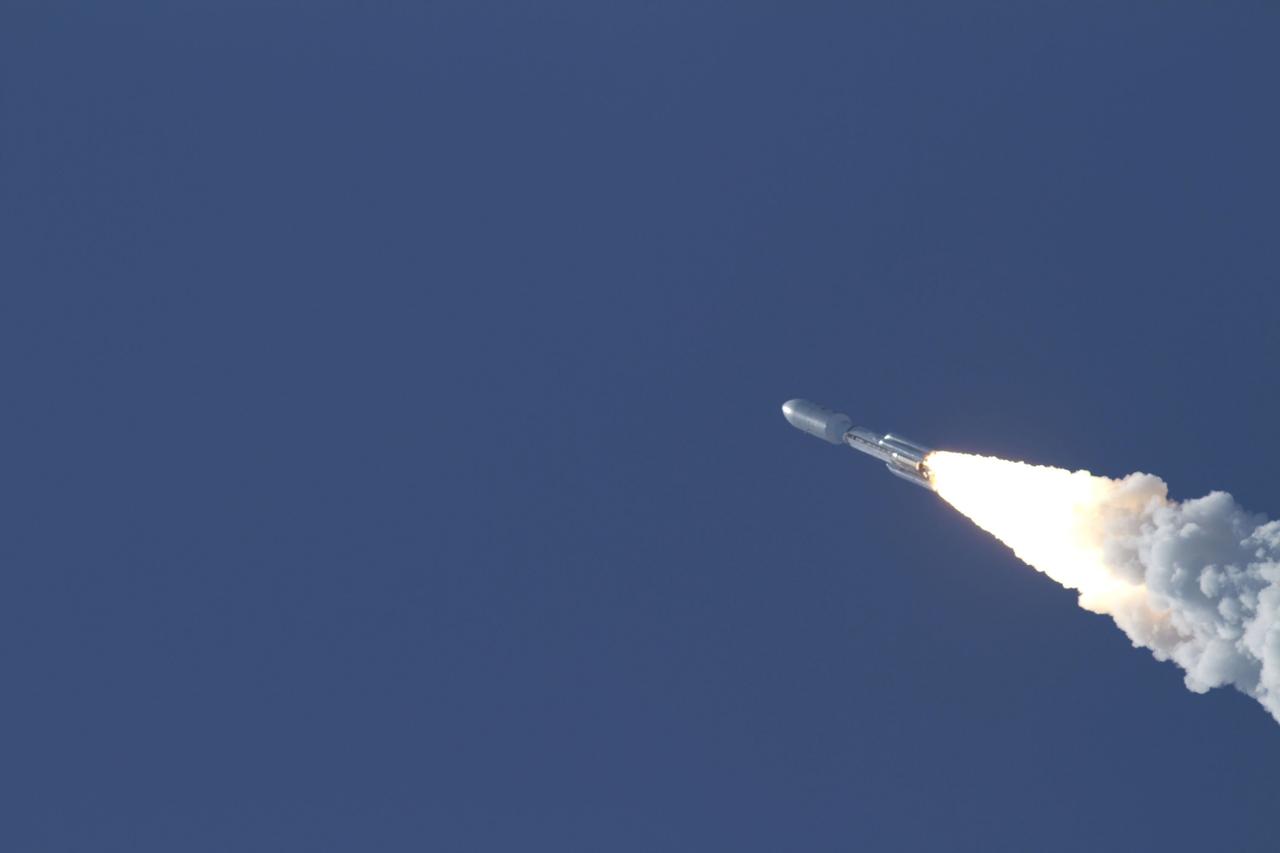
CAPE CANAVERAL, Fla. -- The United Launch Alliance Atlas V-551 launch vehicle sending NASA's Juno planetary probe on its five-year journey to Jupiter is off to a roaring start from Space Launch Complex 41 on Cape Canaveral Air Force Station in Florida. Liftoff was at 12:25 p.m. EDT Aug. 5. The solar-powered spacecraft will orbit Jupiter's poles 33 times to find out more about the gas giant's origins, structure, atmosphere and magnetosphere and investigate the existence of a solid planetary core. NASA's Jet Propulsion Laboratory, Pasadena, Calif., manages the Juno mission for the principal investigator, Scott Bolton, of Southwest Research Institute in San Antonio. The Juno mission is part of the New Frontiers Program managed at NASA's Marshall Space Flight Center in Huntsville, Ala. Lockheed Martin Space Systems, Denver, built the spacecraft. Launch management for the mission is the responsibility of NASA's Launch Services Program at the Kennedy Space Center in Florida. For more information, visit www.nasa.gov/juno. Photo credit: NASA/George Roberts and Rusty Backer
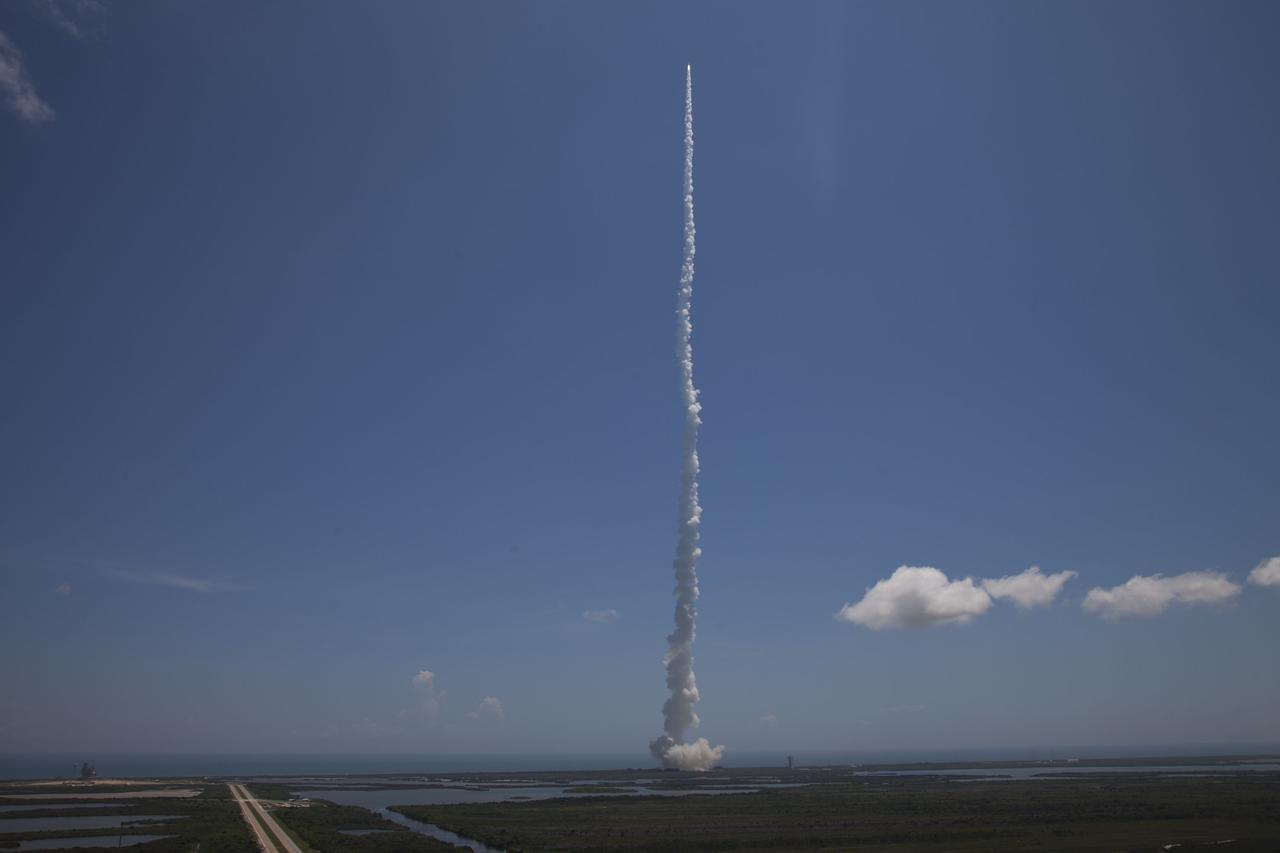
CAPE CANAVERAL, Fla. -- NASA's Juno planetary probe, atop a United Launch Alliance Atlas V-551 launch vehicle, races past the clouds over Space Launch Complex 41 at Cape Canaveral Air Force Station in Florida to begin its five-year journey to Jupiter. Liftoff was at 12:25 p.m. EDT Aug. 5. The solar-powered spacecraft will orbit Jupiter's poles 33 times to find out more about the gas giant's origins, structure, atmosphere and magnetosphere and investigate the existence of a solid planetary core. NASA's Jet Propulsion Laboratory, Pasadena, Calif., manages the Juno mission for the principal investigator, Scott Bolton, of Southwest Research Institute in San Antonio. The Juno mission is part of the New Frontiers Program managed at NASA's Marshall Space Flight Center in Huntsville, Ala. Lockheed Martin Space Systems, Denver, built the spacecraft. Launch management for the mission is the responsibility of NASA's Launch Services Program at the Kennedy Space Center in Florida. For more information, visit www.nasa.gov/juno. Photo credit: Courtesy of Scott Andrews
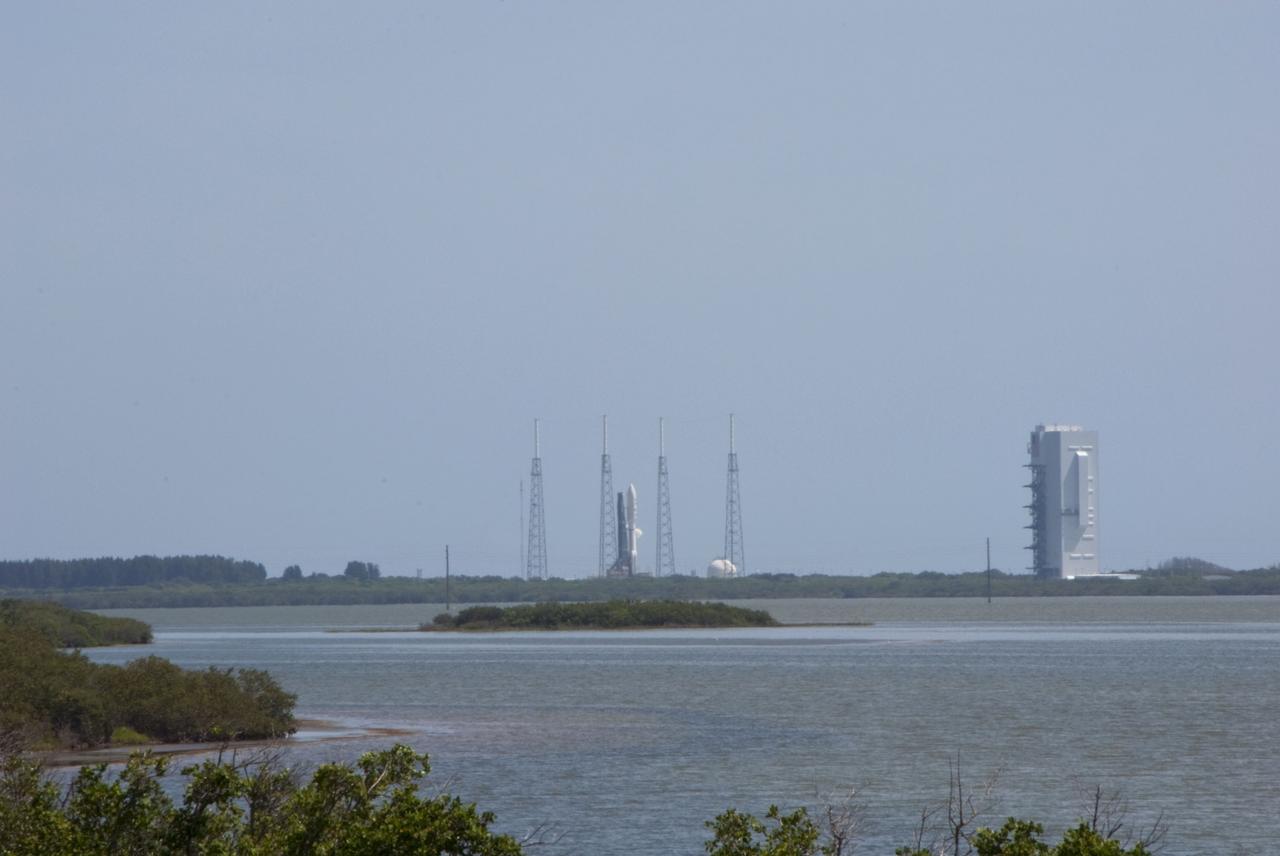
CAPE CANAVERAL, Fla. -- NASA's Juno planetary probe is moments away from beginning its five-year journey to Jupiter atop a United Launch Alliance Atlas V-551 launch vehicle from Space Launch Complex 41 on Cape Canaveral Air Force Station in Florida. At right is the Vertical Integration Facility where the vehicle was stacked. Liftoff was at 12:25 p.m. EDT Aug. 5. The solar-powered spacecraft will orbit Jupiter's poles 33 times to find out more about the gas giant's origins, structure, atmosphere and magnetosphere and investigate the existence of a solid planetary core. NASA's Jet Propulsion Laboratory, Pasadena, Calif., manages the Juno mission for the principal investigator, Scott Bolton, of Southwest Research Institute in San Antonio. The Juno mission is part of the New Frontiers Program managed at NASA's Marshall Space Flight Center in Huntsville, Ala. Lockheed Martin Space Systems, Denver, built the spacecraft. Launch management for the mission is the responsibility of NASA's Launch Services Program at the Kennedy Space Center in Florida. For more information, visit www.nasa.gov/juno. Photo credit: NASA/Alan Ault
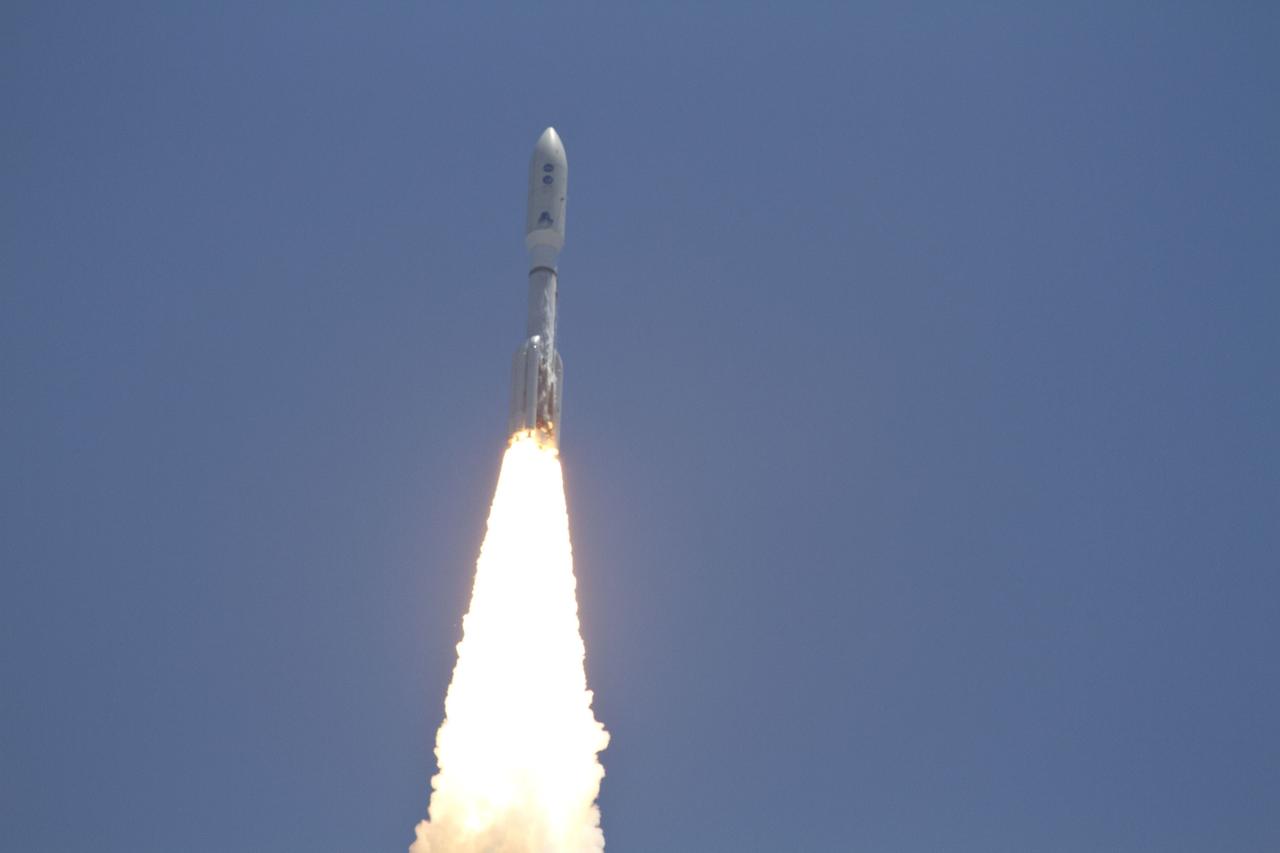
CAPE CANAVERAL, Fla. -- The United Launch Alliance Atlas V-551 launch vehicle carrying NASA's Juno planetary probe is off to a roaring start on its five-year journey to Jupiter from Space Launch Complex 41 on Cape Canaveral Air Force Station in Florida. Liftoff was at 12:25 p.m. EDT Aug. 5. The solar-powered spacecraft will orbit Jupiter's poles 33 times to find out more about the gas giant's origins, structure, atmosphere and magnetosphere and investigate the existence of a solid planetary core. NASA's Jet Propulsion Laboratory, Pasadena, Calif., manages the Juno mission for the principal investigator, Scott Bolton, of Southwest Research Institute in San Antonio. The Juno mission is part of the New Frontiers Program managed at NASA's Marshall Space Flight Center in Huntsville, Ala. Lockheed Martin Space Systems, Denver, built the spacecraft. Launch management for the mission is the responsibility of NASA's Launch Services Program at the Kennedy Space Center in Florida. For more information, visit www.nasa.gov/juno. Photo credit: NASA/Kenny Allen
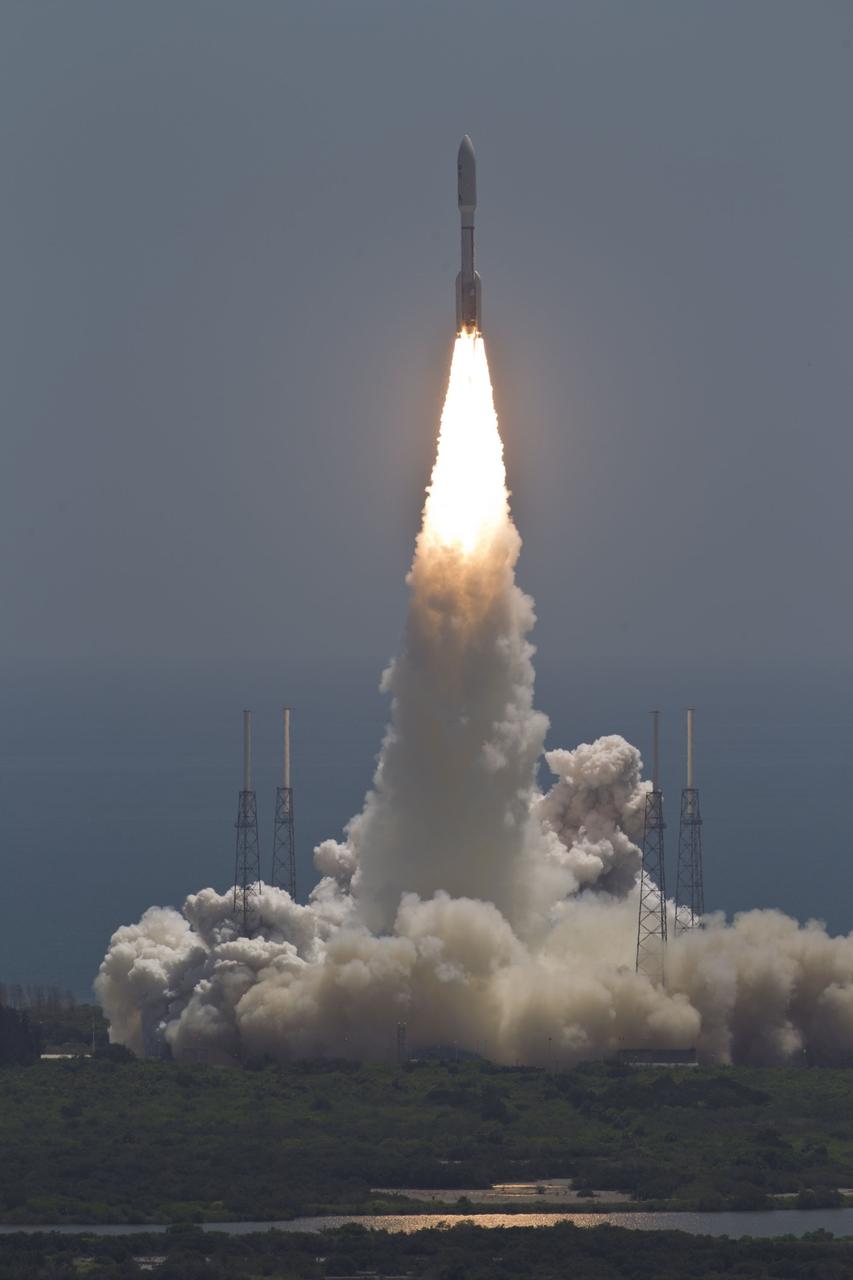
CAPE CANAVERAL, Fla. -- NASA's Juno planetary probe, enclosed in its payload fairing atop a United Launch Alliance Atlas V-551 launch vehicle, rushes above the towers of the lightning protection system at Space Launch Complex 41 on Cape Canaveral Air Force Station in Florida. Liftoff was at 12:25 p.m. EDT Aug. 5. The solar-powered spacecraft will orbit Jupiter's poles 33 times to find out more about the gas giant's origins, structure, atmosphere and magnetosphere and investigate the existence of a solid planetary core. NASA's Jet Propulsion Laboratory, Pasadena, Calif., manages the Juno mission for the principal investigator, Scott Bolton, of Southwest Research Institute in San Antonio. The Juno mission is part of the New Frontiers Program managed at NASA's Marshall Space Flight Center in Huntsville, Ala. Lockheed Martin Space Systems, Denver, built the spacecraft. Launch management for the mission is the responsibility of NASA's Launch Services Program at the Kennedy Space Center in Florida. For more information, visit www.nasa.gov/juno. Photo credit: Courtesy of Scott Andrews
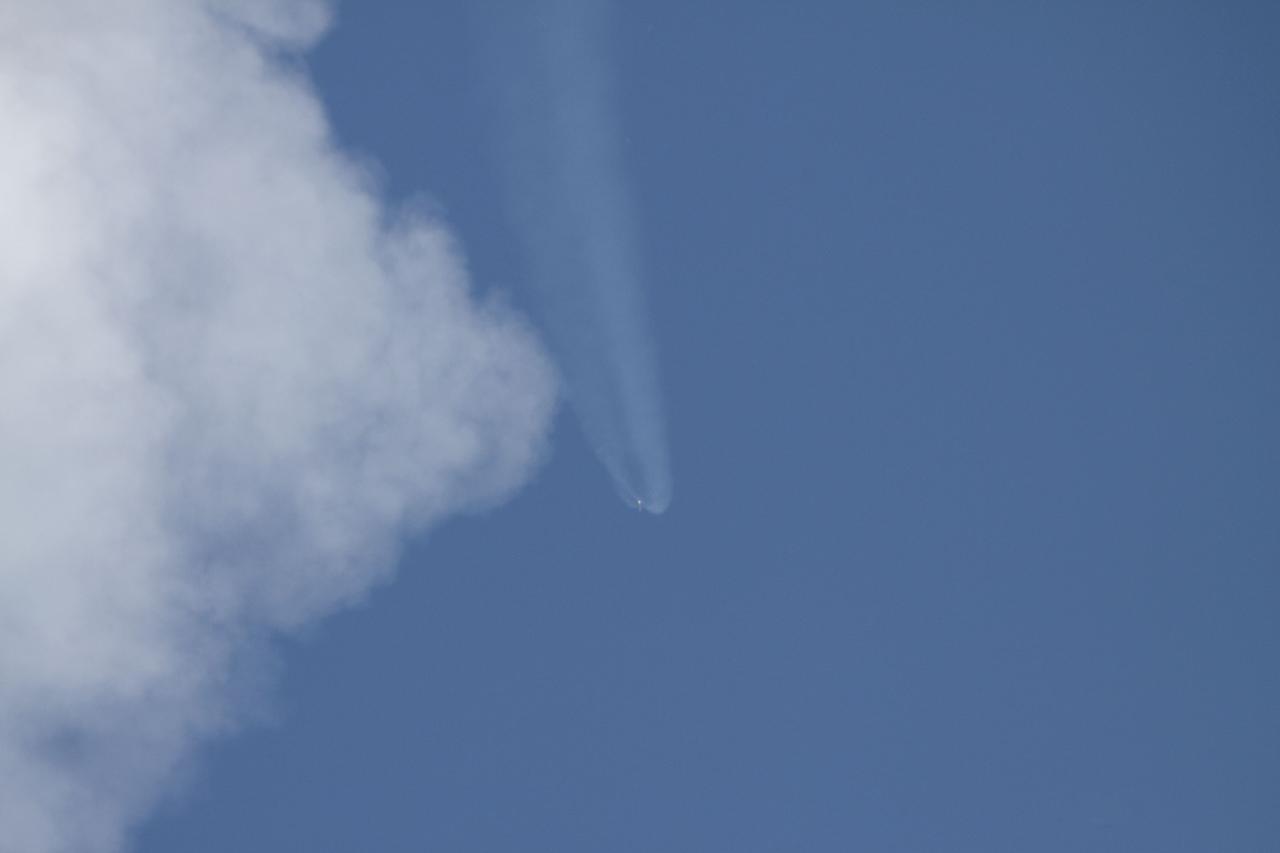
CAPE CANAVERAL, Fla. -- NASA's Juno planetary probe, atop a United Launch Alliance Atlas V-551 launch vehicle, races past the clouds over Space Launch Complex 41 at Cape Canaveral Air Force Station in Florida. Liftoff was at 12:25 p.m. EDT Aug. 5. The solar-powered spacecraft will orbit Jupiter's poles 33 times to find out more about the gas giant's origins, structure, atmosphere and magnetosphere and investigate the existence of a solid planetary core. NASA's Jet Propulsion Laboratory, Pasadena, Calif., manages the Juno mission for the principal investigator, Scott Bolton, of Southwest Research Institute in San Antonio. The Juno mission is part of the New Frontiers Program managed at NASA's Marshall Space Flight Center in Huntsville, Ala. Lockheed Martin Space Systems, Denver, built the spacecraft. Launch management for the mission is the responsibility of NASA's Launch Services Program at the Kennedy Space Center in Florida. For more information, visit www.nasa.gov/juno. Photo credit: NASA/Ken Thornsley
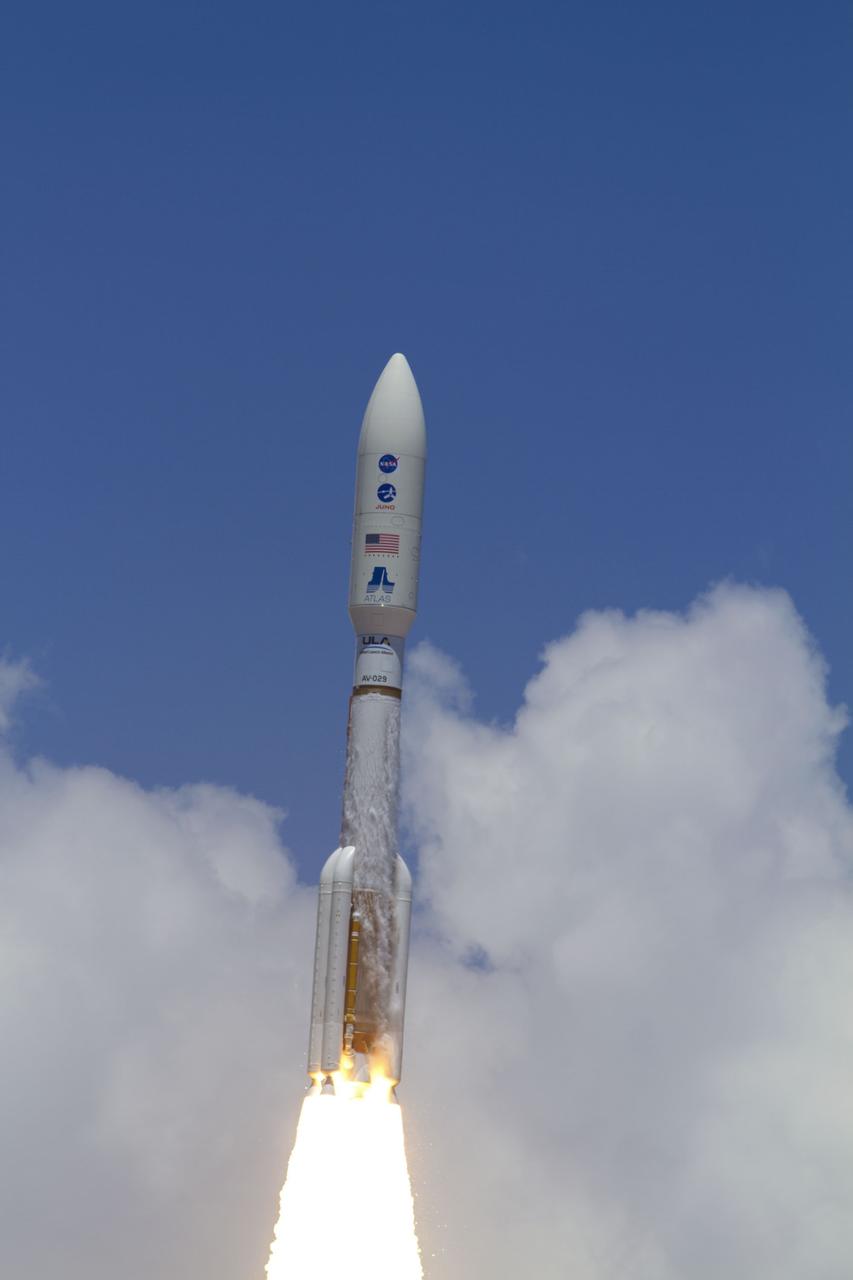
CAPE CANAVERAL, Fla. -- Frost breaks away from the first stage of the United Launch Alliance Atlas V-551 launch vehicle carrying NASA's Juno planetary probe as it bounds into the clouds at Space Launch Complex 41 on Cape Canaveral Air Force Station in Florida. The frost forms when the stage is filled with its supercold liquid oxygen fuel. Liftoff was at 12:25 p.m. EDT Aug. 5. The solar-powered spacecraft will orbit Jupiter's poles 33 times to find out more about the gas giant's origins, structure, atmosphere and magnetosphere and investigate the existence of a solid planetary core. NASA's Jet Propulsion Laboratory, Pasadena, Calif., manages the Juno mission for the principal investigator, Scott Bolton, of Southwest Research Institute in San Antonio. The Juno mission is part of the New Frontiers Program managed at NASA's Marshall Space Flight Center in Huntsville, Ala. Lockheed Martin Space Systems, Denver, built the spacecraft. Launch management for the mission is the responsibility of NASA's Launch Services Program at the Kennedy Space Center in Florida. For more information, visit www.nasa.gov/juno. Photo credit: NASA/George Roberts and Rusty Backer
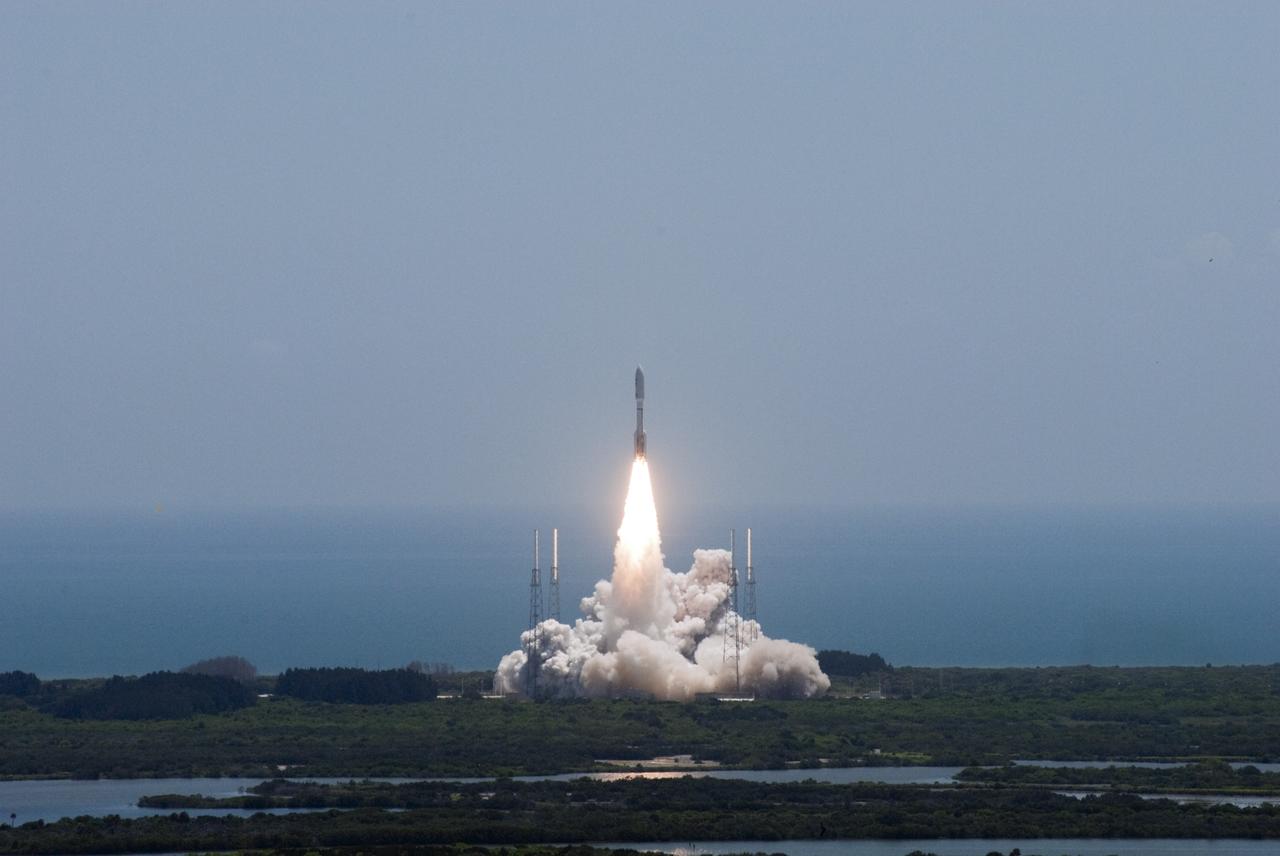
CAPE CANAVERAL, Fla. -- NASA's Juno planetary probe, enclosed in its payload fairing atop a United Launch Alliance Atlas V-551 launch vehicle, rises above the towers of the lightning protection system at Space Launch Complex 41 on Cape Canaveral Air Force Station in Florida. Liftoff was at 12:25 p.m. EDT Aug. 5. The solar-powered spacecraft will orbit Jupiter's poles 33 times to find out more about the gas giant's origins, structure, atmosphere and magnetosphere and investigate the existence of a solid planetary core. NASA's Jet Propulsion Laboratory, Pasadena, Calif., manages the Juno mission for the principal investigator, Scott Bolton, of Southwest Research Institute in San Antonio. The Juno mission is part of the New Frontiers Program managed at NASA's Marshall Space Flight Center in Huntsville, Ala. Lockheed Martin Space Systems, Denver, built the spacecraft. Launch management for the mission is the responsibility of NASA's Launch Services Program at the Kennedy Space Center in Florida. For more information, visit www.nasa.gov/juno. Photo credit: NASA/Jim Grossmann
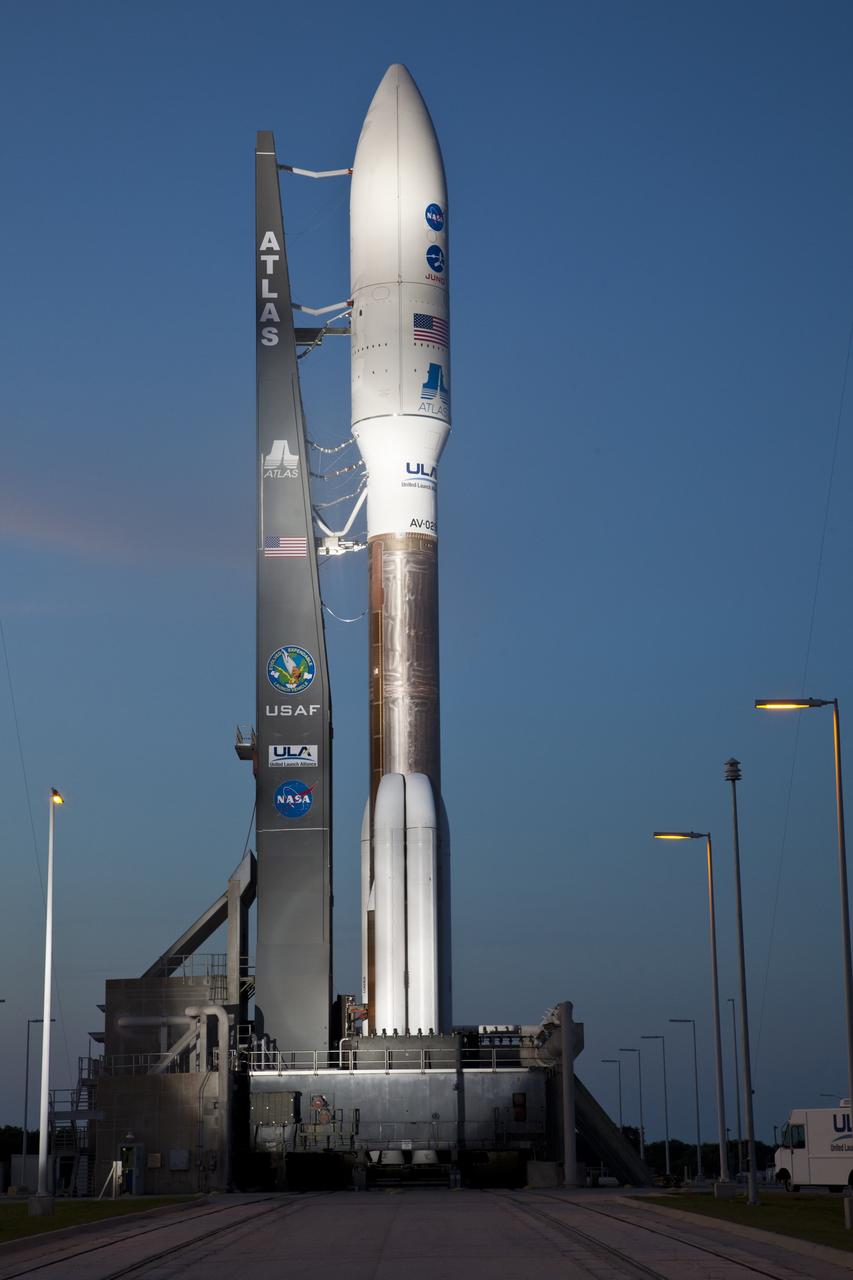
CAPE CANAVERAL, Fla. -- As night descends on Space Launch Complex 41 at Cape Canaveral Air Force Station in Florida, the United Launch Alliance Atlas V-551 launch vehicle is being readied for launch. Atop the rocket is NASA's Juno planetary probe, enclosed in its payload fairing. Liftoff is planned during a launch window which extends from 11:34 a.m. to 12:43 p.m. EDT on Aug. 5. The solar-powered spacecraft will orbit Jupiter's poles 33 times to find out more about the gas giant's origins, structure, atmosphere and magnetosphere and investigate the existence of a solid planetary core. NASA's Jet Propulsion Laboratory, Pasadena, Calif., manages the Juno mission for the principal investigator, Scott Bolton, of Southwest Research Institute in San Antonio. The Juno mission is part of the New Frontiers Program managed at NASA's Marshall Space Flight Center in Huntsville, Ala. Lockheed Martin Space Systems, Denver, built the spacecraft. Launch management for the mission is the responsibility of NASA's Launch Services Program at the Kennedy Space Center in Florida. For more information, visit www.nasa.gov/juno. Photo credit: Courtesy of Scott Andrews
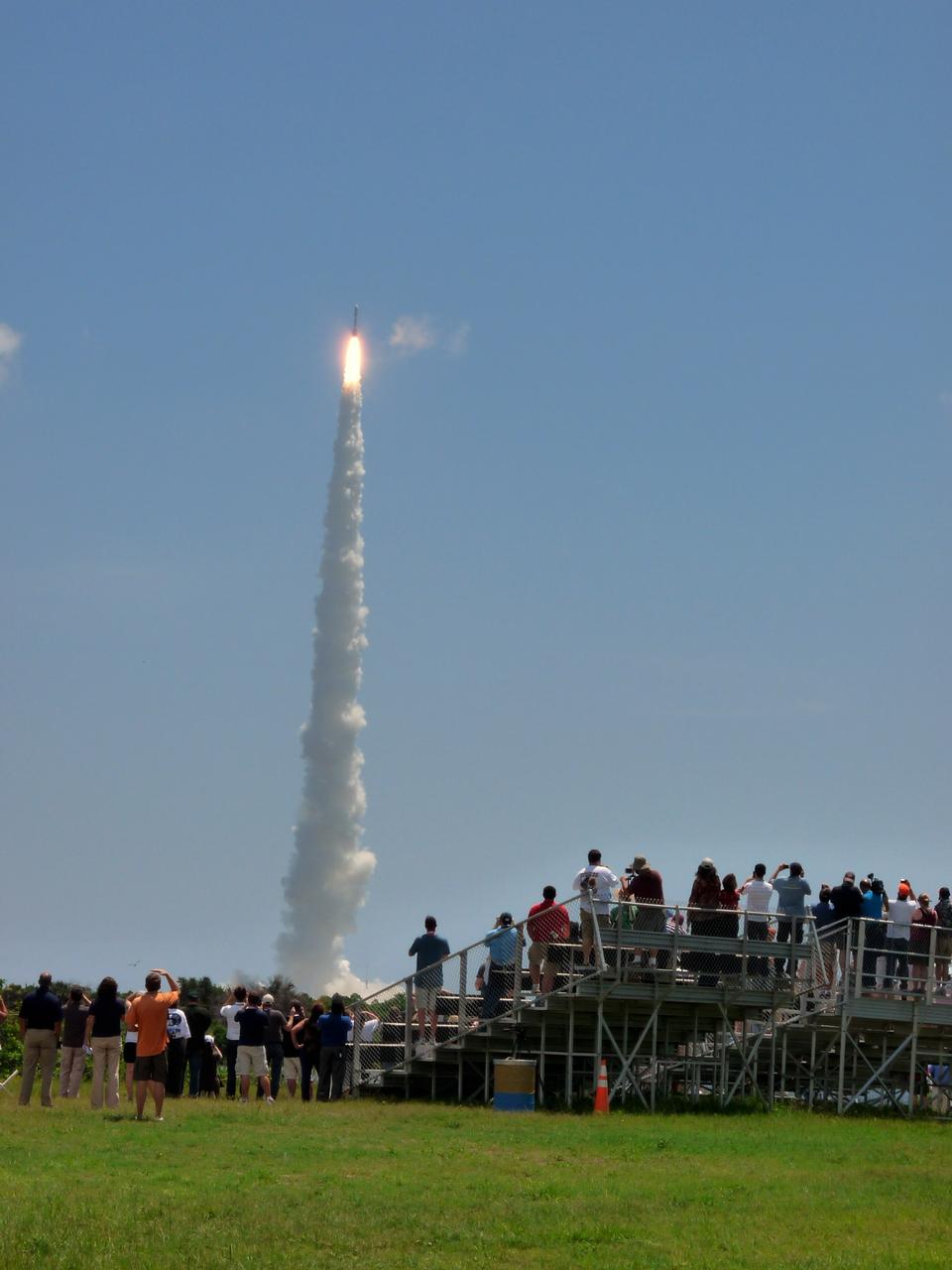
CAPE CANAVERAL, Fla. -- At the Press Site at NASA’s Kennedy Space Center in Florida, about 150 followers of the agency’s Twitter account view the launch of NASA's Juno planetary probe atop a United Launch Alliance Atlas V-551 rocket. The tweeters, in turn, will share their experiences with followers through the social networking site Twitter. Liftoff was at 12:25 p.m. EDT Aug. 5 from Space Launch Complex 41 on Cape Canaveral Air Force Station in Florida. The solar-powered spacecraft will orbit Jupiter's poles 33 times to find out more about the gas giant's origins, structure, atmosphere and magnetosphere and investigate the existence of a solid planetary core. NASA's Jet Propulsion Laboratory, Pasadena, Calif., manages the Juno mission for the principal investigator, Scott Bolton, of Southwest Research Institute in San Antonio. The Juno mission is part of the New Frontiers Program managed at NASA's Marshall Space Flight Center in Huntsville, Ala. Lockheed Martin Space Systems, Denver, built the spacecraft. Launch management for the mission is the responsibility of NASA's Launch Services Program at the Kennedy Space Center in Florida. For more information, visit www.nasa.gov/juno. Photo credit: NASA/Fletcher Hildreth
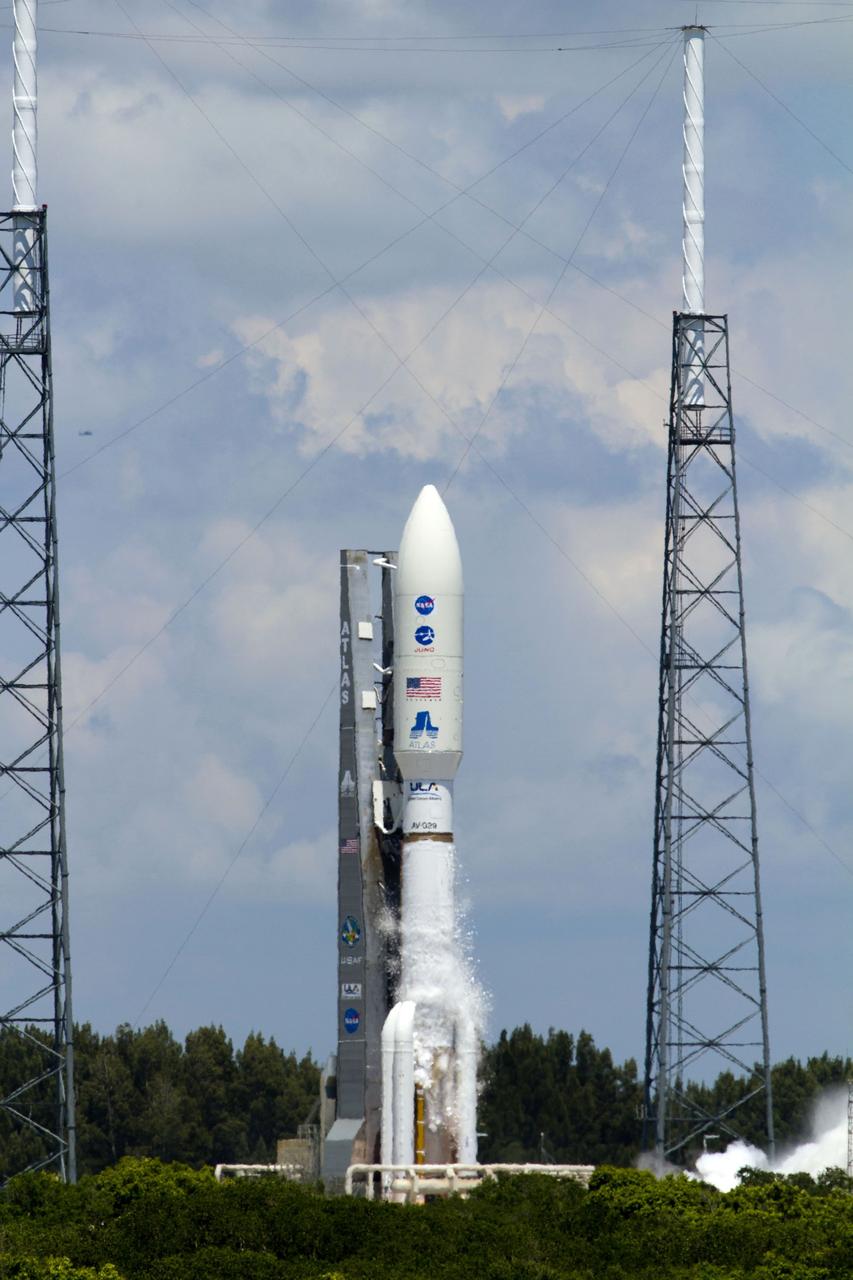
CAPE CANAVERAL, Fla. -- Frost breaks away from the first stage of the United Launch Alliance Atlas V-551 launch vehicle carrying NASA's Juno planetary probe as it begins to vibrate on the pad before launch at Space Launch Complex 41 on Cape Canaveral Air Force Station in Florida. The frost forms when the stage is filled with its supercold liquid oxygen fuel. Liftoff was at 12:25 p.m. EDT Aug. 5. The solar-powered spacecraft will orbit Jupiter's poles 33 times to find out more about the gas giant's origins, structure, atmosphere and magnetosphere and investigate the existence of a solid planetary core. NASA's Jet Propulsion Laboratory, Pasadena, Calif., manages the Juno mission for the principal investigator, Scott Bolton, of Southwest Research Institute in San Antonio. The Juno mission is part of the New Frontiers Program managed at NASA's Marshall Space Flight Center in Huntsville, Ala. Lockheed Martin Space Systems, Denver, built the spacecraft. Launch management for the mission is the responsibility of NASA's Launch Services Program at the Kennedy Space Center in Florida. For more information, visit www.nasa.gov/juno. Photo credit: NASA/George Roberts and Rusty Backer
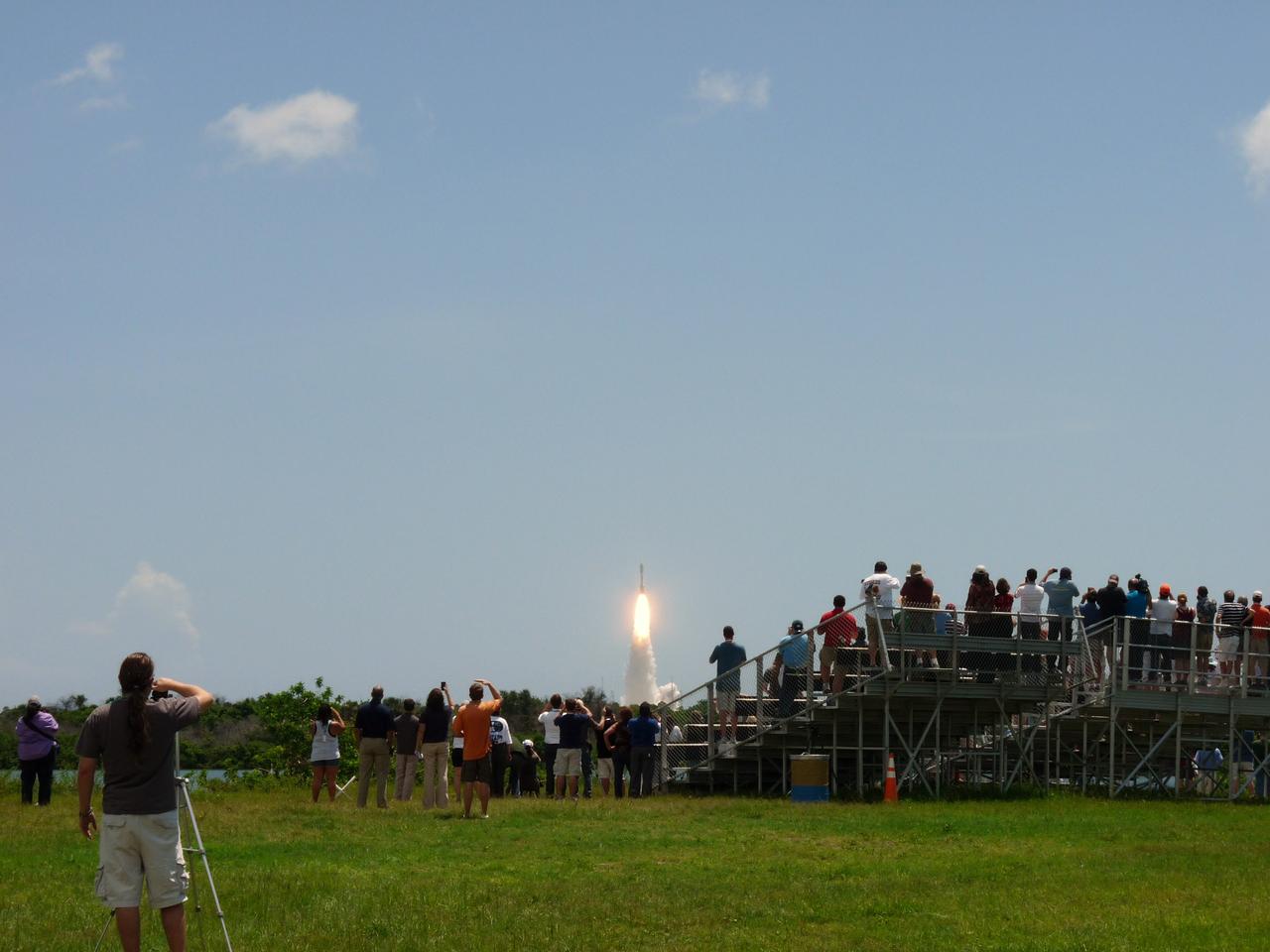
CAPE CANAVERAL, Fla. -- At the Press Site at NASA’s Kennedy Space Center in Florida, about 150 followers of the agency’s Twitter account view the launch of NASA's Juno planetary probe atop a United Launch Alliance Atlas V-551 rocket. The tweeters, in turn, will share their experiences with followers through the social networking site Twitter. Liftoff was at 12:25 p.m. EDT Aug. 5 from Space Launch Complex 41 on Cape Canaveral Air Force Station in Florida. The solar-powered spacecraft will orbit Jupiter's poles 33 times to find out more about the gas giant's origins, structure, atmosphere and magnetosphere and investigate the existence of a solid planetary core. NASA's Jet Propulsion Laboratory, Pasadena, Calif., manages the Juno mission for the principal investigator, Scott Bolton, of Southwest Research Institute in San Antonio. The Juno mission is part of the New Frontiers Program managed at NASA's Marshall Space Flight Center in Huntsville, Ala. Lockheed Martin Space Systems, Denver, built the spacecraft. Launch management for the mission is the responsibility of NASA's Launch Services Program at the Kennedy Space Center in Florida. For more information, visit www.nasa.gov/juno. Photo credit: NASA/Fletcher Hildreth
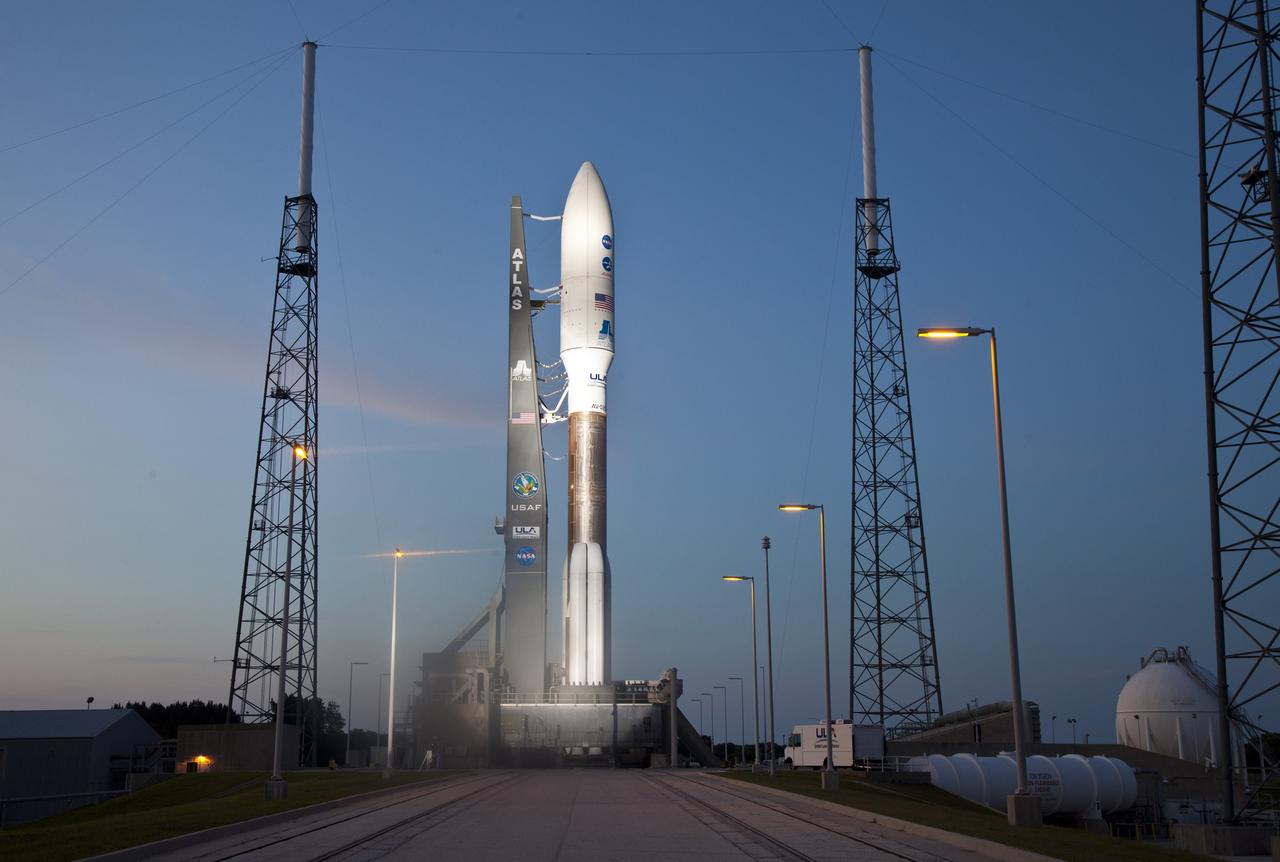
CAPE CANAVERAL, Fla. -- As night descends on Space Launch Complex 41 at Cape Canaveral Air Force Station in Florida, the United Launch Alliance Atlas V-551 launch vehicle is being readied for launch. Atop the rocket is NASA's Juno planetary probe, enclosed in its payload fairing. Liftoff is planned during a launch window which extends from 11:34 a.m. to 12:43 p.m. EDT on Aug. 5. The solar-powered spacecraft will orbit Jupiter's poles 33 times to find out more about the gas giant's origins, structure, atmosphere and magnetosphere and investigate the existence of a solid planetary core. NASA's Jet Propulsion Laboratory, Pasadena, Calif., manages the Juno mission for the principal investigator, Scott Bolton, of Southwest Research Institute in San Antonio. The Juno mission is part of the New Frontiers Program managed at NASA's Marshall Space Flight Center in Huntsville, Ala. Lockheed Martin Space Systems, Denver, built the spacecraft. Launch management for the mission is the responsibility of NASA's Launch Services Program at the Kennedy Space Center in Florida. For more information, visit www.nasa.gov/juno. Photo credit: Courtesy of Scott Andrews

CAPE CANAVERAL, Fla. -- Frost breaks away from the first stage of the United Launch Alliance Atlas V-551 launch vehicle carrying NASA's Juno planetary probe as it lifts off the pad at Space Launch Complex 41 on Cape Canaveral Air Force Station in Florida. The frost forms when the stage is filled with its supercold liquid oxygen fuel. Liftoff was at 12:25 p.m. EDT Aug. 5. The solar-powered spacecraft will orbit Jupiter's poles 33 times to find out more about the gas giant's origins, structure, atmosphere and magnetosphere and investigate the existence of a solid planetary core. NASA's Jet Propulsion Laboratory, Pasadena, Calif., manages the Juno mission for the principal investigator, Scott Bolton, of Southwest Research Institute in San Antonio. The Juno mission is part of the New Frontiers Program managed at NASA's Marshall Space Flight Center in Huntsville, Ala. Lockheed Martin Space Systems, Denver, built the spacecraft. Launch management for the mission is the responsibility of NASA's Launch Services Program at the Kennedy Space Center in Florida. For more information, visit www.nasa.gov/juno. Photo credit: NASA/George Roberts and Rusty Backer
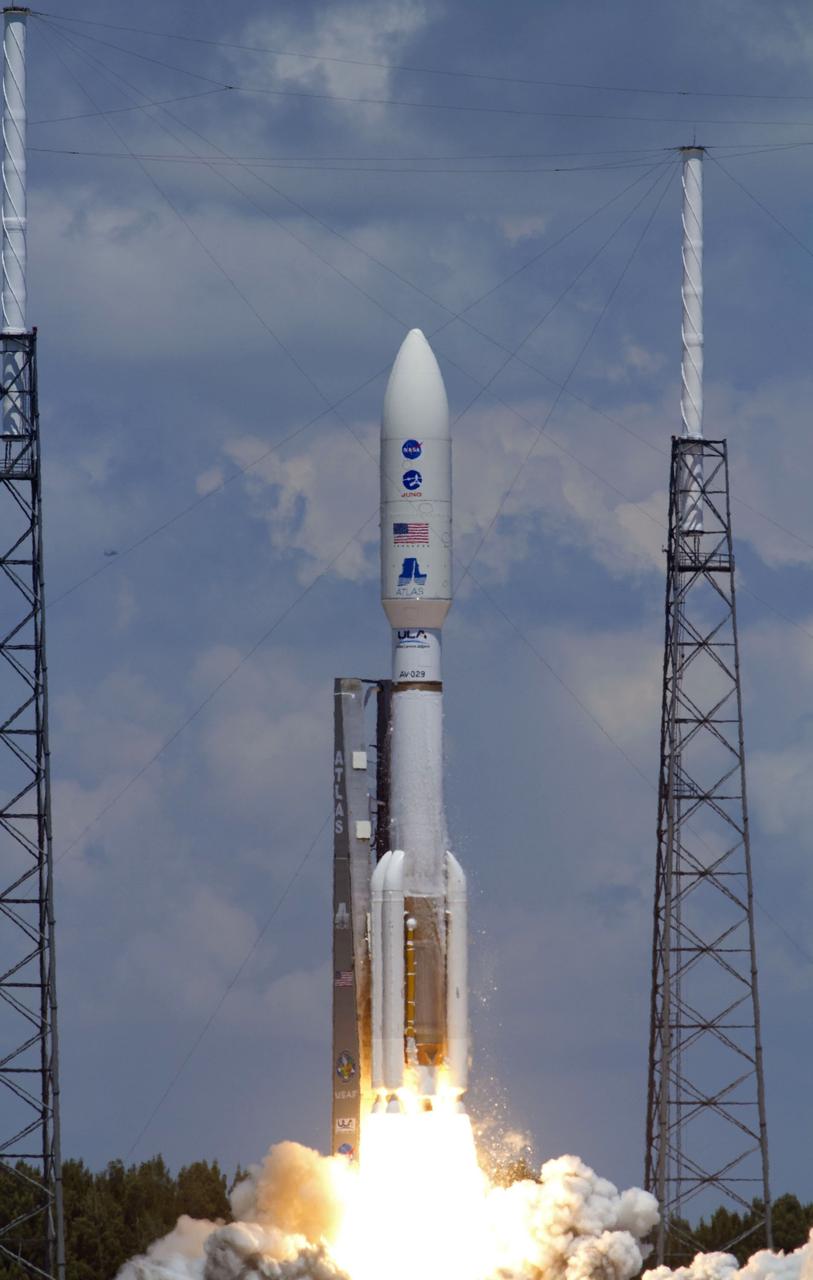
CAPE CANAVERAL, Fla. -- Frost breaks away from the first stage of the United Launch Alliance Atlas V-551 launch vehicle carrying NASA's Juno planetary probe as it lifts off the pad at Space Launch Complex 41 on Cape Canaveral Air Force Station in Florida. The frost forms when the stage is filled with its supercold liquid oxygen fuel. Liftoff was at 12:25 p.m. EDT Aug. 5. The solar-powered spacecraft will orbit Jupiter's poles 33 times to find out more about the gas giant's origins, structure, atmosphere and magnetosphere and investigate the existence of a solid planetary core. NASA's Jet Propulsion Laboratory, Pasadena, Calif., manages the Juno mission for the principal investigator, Scott Bolton, of Southwest Research Institute in San Antonio. The Juno mission is part of the New Frontiers Program managed at NASA's Marshall Space Flight Center in Huntsville, Ala. Lockheed Martin Space Systems, Denver, built the spacecraft. Launch management for the mission is the responsibility of NASA's Launch Services Program at the Kennedy Space Center in Florida. For more information, visit www.nasa.gov/juno. Photo credit: NASA/George Roberts and Rusty Backer
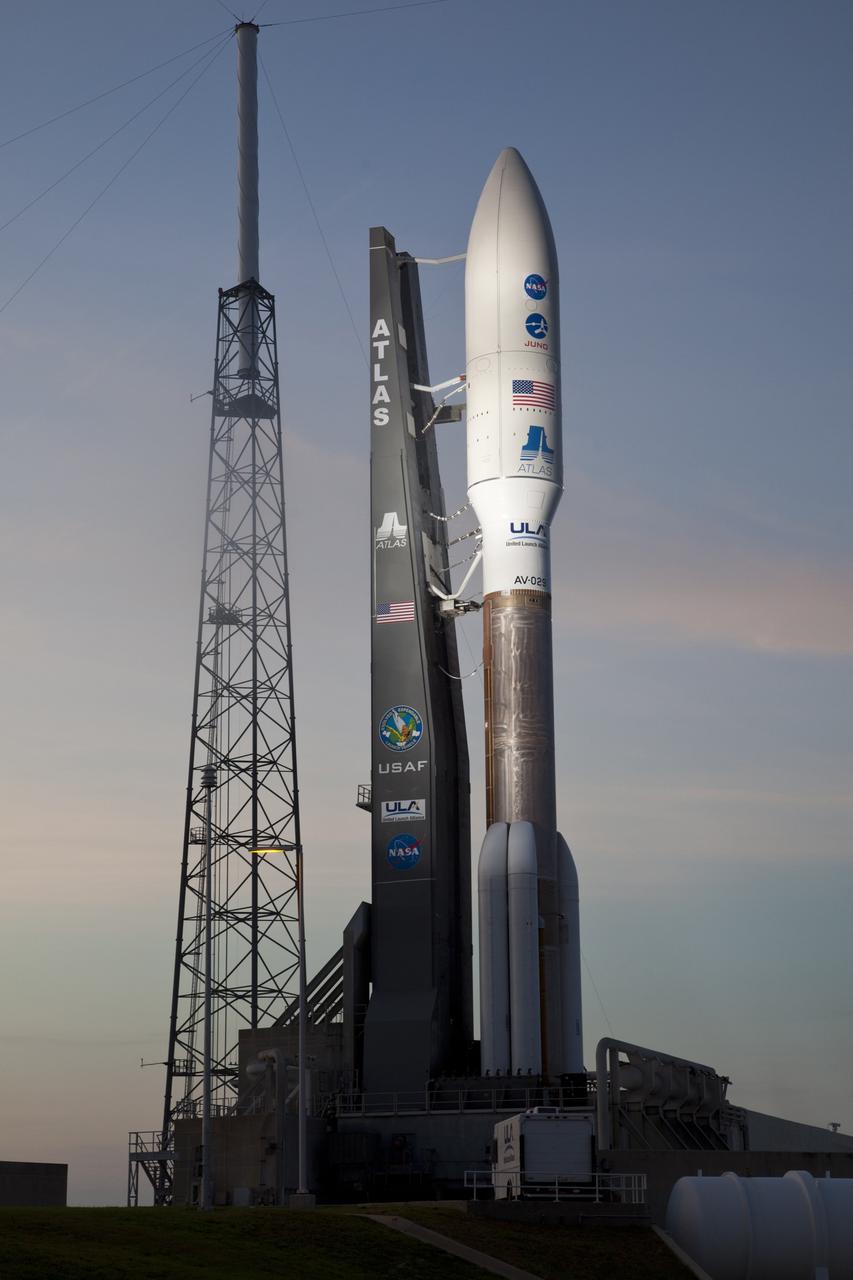
CAPE CANAVERAL, Fla. -- As night falls on Space Launch Complex 41 at Cape Canaveral Air Force Station in Florida, the lights are turned on to reveal the United Launch Alliance Atlas V-551 launch vehicle being readied for launch. Atop the rocket is NASA's Juno planetary probe, enclosed in its payload fairing. Liftoff is planned during a launch window which extends from 11:34 a.m. to 12:43 p.m. EDT on Aug. 5. The solar-powered spacecraft will orbit Jupiter's poles 33 times to find out more about the gas giant's origins, structure, atmosphere and magnetosphere and investigate the existence of a solid planetary core. NASA's Jet Propulsion Laboratory, Pasadena, Calif., manages the Juno mission for the principal investigator, Scott Bolton, of Southwest Research Institute in San Antonio. The Juno mission is part of the New Frontiers Program managed at NASA's Marshall Space Flight Center in Huntsville, Ala. Lockheed Martin Space Systems, Denver, built the spacecraft. Launch management for the mission is the responsibility of NASA's Launch Services Program at the Kennedy Space Center in Florida. For more information, visit www.nasa.gov/juno. Photo credit: Courtesy of Scott Andrews
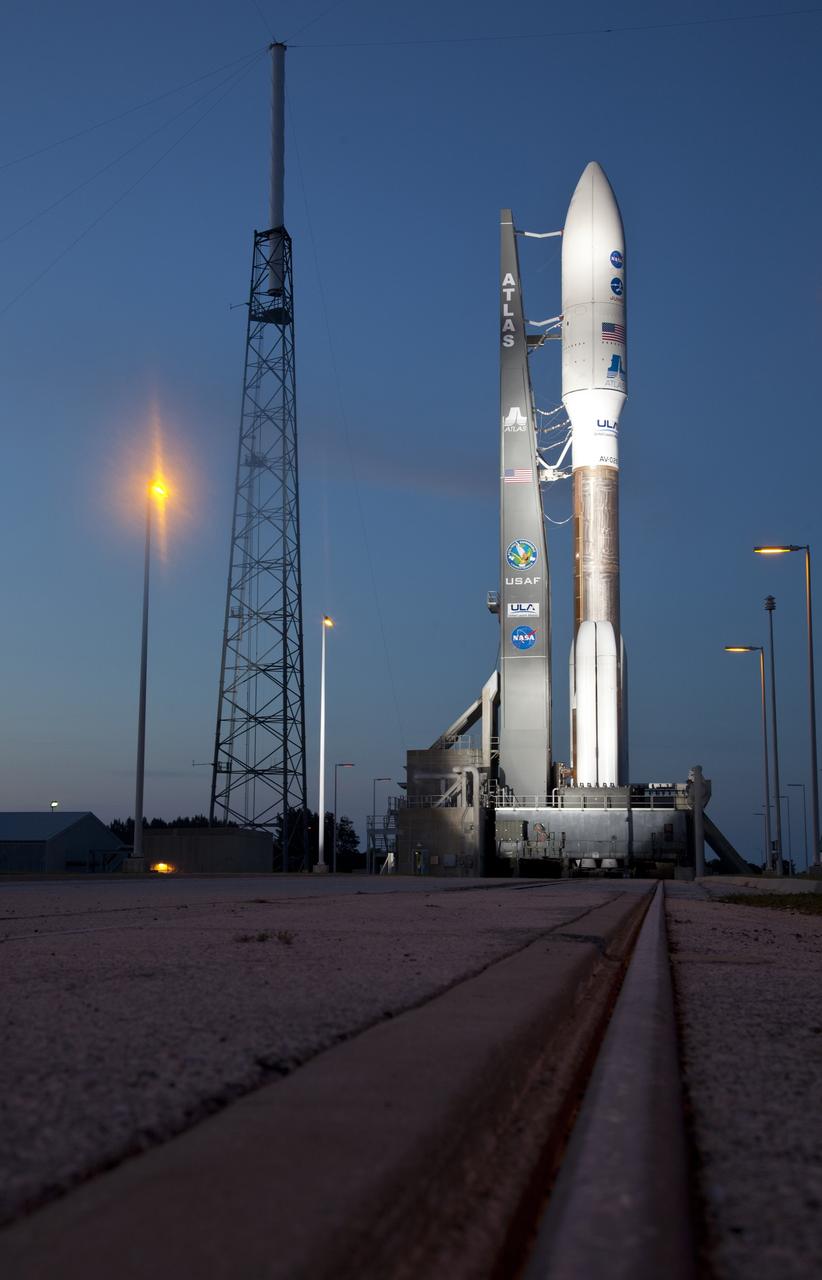
CAPE CANAVERAL, Fla. -- Nightfall on Space Launch Complex 41 at Cape Canaveral Air Force Station in Florida finds the United Launch Alliance Atlas V-551 launch vehicle being readied for launch. Atop the rocket is NASA's Juno planetary probe, enclosed in its payload fairing. Liftoff is planned during a launch window which extends from 11:34 a.m. to 12:43 p.m. EDT on Aug. 5. The solar-powered spacecraft will orbit Jupiter's poles 33 times to find out more about the gas giant's origins, structure, atmosphere and magnetosphere and investigate the existence of a solid planetary core. NASA's Jet Propulsion Laboratory, Pasadena, Calif., manages the Juno mission for the principal investigator, Scott Bolton, of Southwest Research Institute in San Antonio. The Juno mission is part of the New Frontiers Program managed at NASA's Marshall Space Flight Center in Huntsville, Ala. Lockheed Martin Space Systems, Denver, built the spacecraft. Launch management for the mission is the responsibility of NASA's Launch Services Program at the Kennedy Space Center in Florida. For more information, visit www.nasa.gov/juno. Photo credit: Courtesy of Scott Andrews
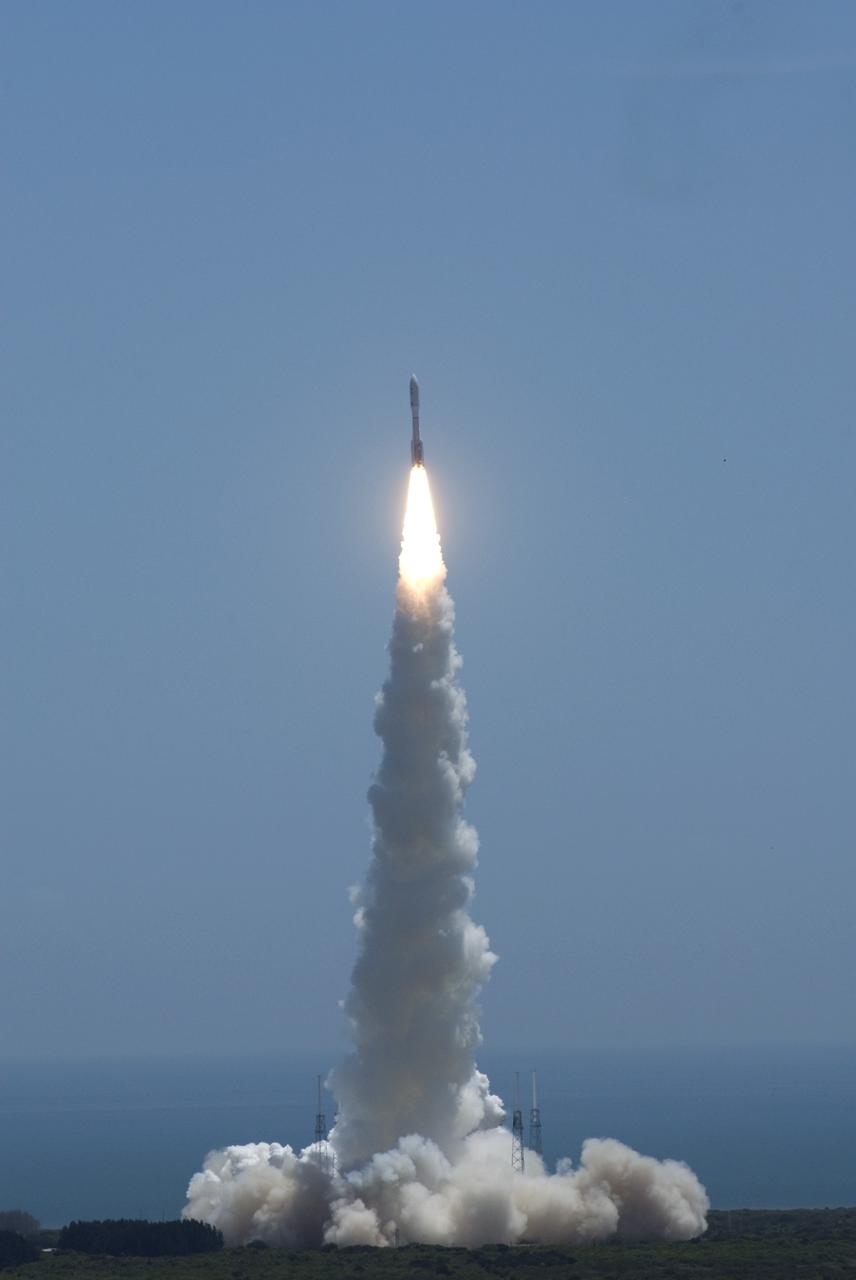
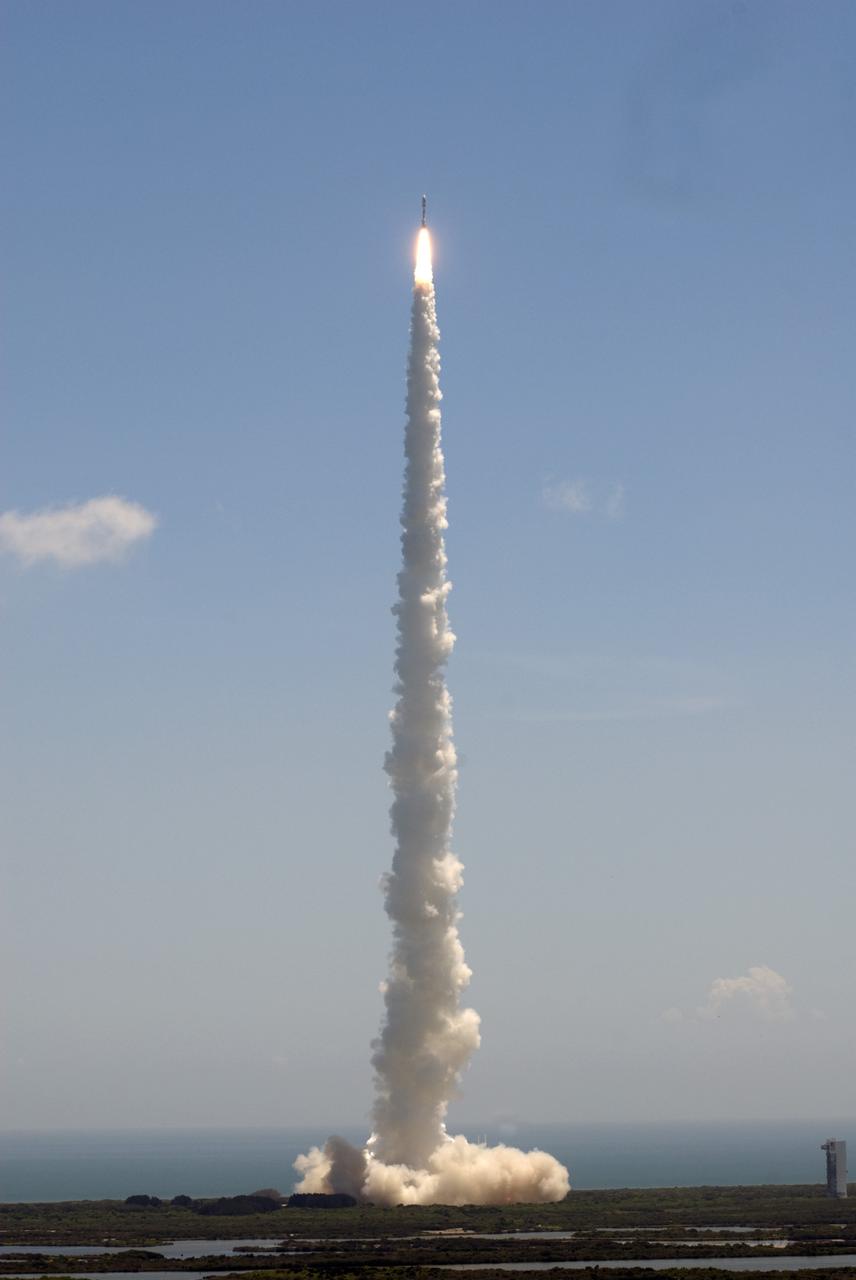
CAPE CANAVERAL, Fla. -- The United Launch Alliance Atlas V-551 launch vehicle carrying NASA's Juno planetary probe is off to a roaring start on its five-year journey from Space Launch Complex 41 on Cape Canaveral Air Force Station in Florida. Liftoff was at 12:25 p.m. EDT Aug. 5. The solar-powered spacecraft will orbit Jupiter's poles 33 times to find out more about the gas giant's origins, structure, atmosphere and magnetosphere and investigate the existence of a solid planetary core. NASA's Jet Propulsion Laboratory, Pasadena, Calif., manages the Juno mission for the principal investigator, Scott Bolton, of Southwest Research Institute in San Antonio. The Juno mission is part of the New Frontiers Program managed at NASA's Marshall Space Flight Center in Huntsville, Ala. Lockheed Martin Space Systems, Denver, built the spacecraft. Launch management for the mission is the responsibility of NASA's Launch Services Program at the Kennedy Space Center in Florida. For more information, visit www.nasa.gov/juno. Photo credit: NASA/Jim Grossmann
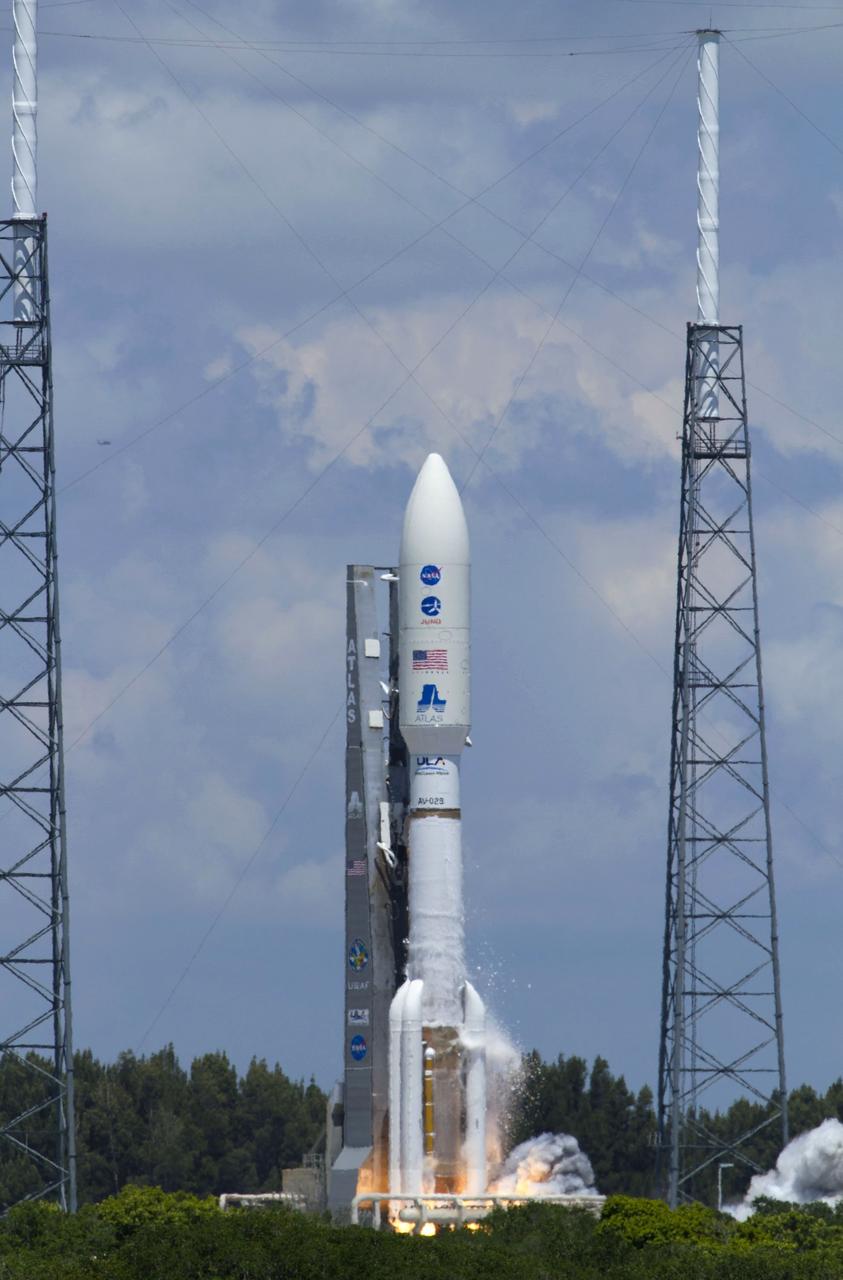
CAPE CANAVERAL, Fla. -- Frost breaks away from the first stage of the United Launch Alliance Atlas V-551 launch vehicle carrying NASA's Juno planetary probe as its motors ignite on the pad at Space Launch Complex 41 on Cape Canaveral Air Force Station in Florida. The frost forms when the stage is filled with its supercold liquid oxygen fuel. Liftoff was at 12:25 p.m. EDT Aug. 5. The solar-powered spacecraft will orbit Jupiter's poles 33 times to find out more about the gas giant's origins, structure, atmosphere and magnetosphere and investigate the existence of a solid planetary core. NASA's Jet Propulsion Laboratory, Pasadena, Calif., manages the Juno mission for the principal investigator, Scott Bolton, of Southwest Research Institute in San Antonio. The Juno mission is part of the New Frontiers Program managed at NASA's Marshall Space Flight Center in Huntsville, Ala. Lockheed Martin Space Systems, Denver, built the spacecraft. Launch management for the mission is the responsibility of NASA's Launch Services Program at the Kennedy Space Center in Florida. For more information, visit www.nasa.gov/juno. Photo credit: NASA/George Roberts and Rusty Backer
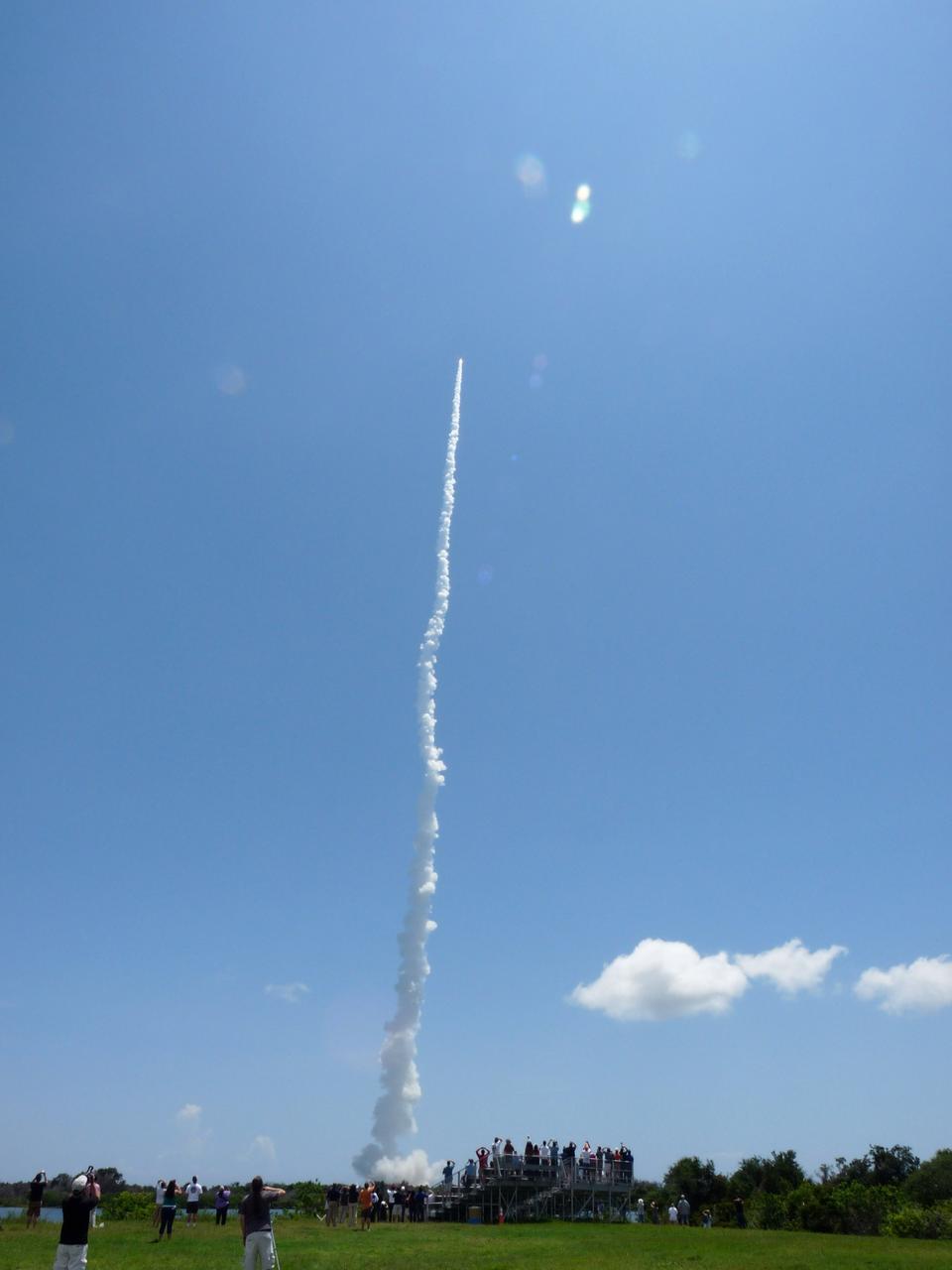
CAPE CANAVERAL, Fla. -- At the Press Site at NASA’s Kennedy Space Center in Florida, about 150 followers of the agency’s Twitter account view the launch of NASA's Juno planetary probe atop a United Launch Alliance Atlas V-551 rocket. The tweeters, in turn, will share their experiences with followers through the social networking site Twitter. Liftoff was at 12:25 p.m. EDT Aug. 5 from Space Launch Complex 41 on Cape Canaveral Air Force Station in Florida. The solar-powered spacecraft will orbit Jupiter's poles 33 times to find out more about the gas giant's origins, structure, atmosphere and magnetosphere and investigate the existence of a solid planetary core. NASA's Jet Propulsion Laboratory, Pasadena, Calif., manages the Juno mission for the principal investigator, Scott Bolton, of Southwest Research Institute in San Antonio. The Juno mission is part of the New Frontiers Program managed at NASA's Marshall Space Flight Center in Huntsville, Ala. Lockheed Martin Space Systems, Denver, built the spacecraft. Launch management for the mission is the responsibility of NASA's Launch Services Program at the Kennedy Space Center in Florida. For more information, visit www.nasa.gov/juno. Photo credit: NASA/Fletcher Hildreth
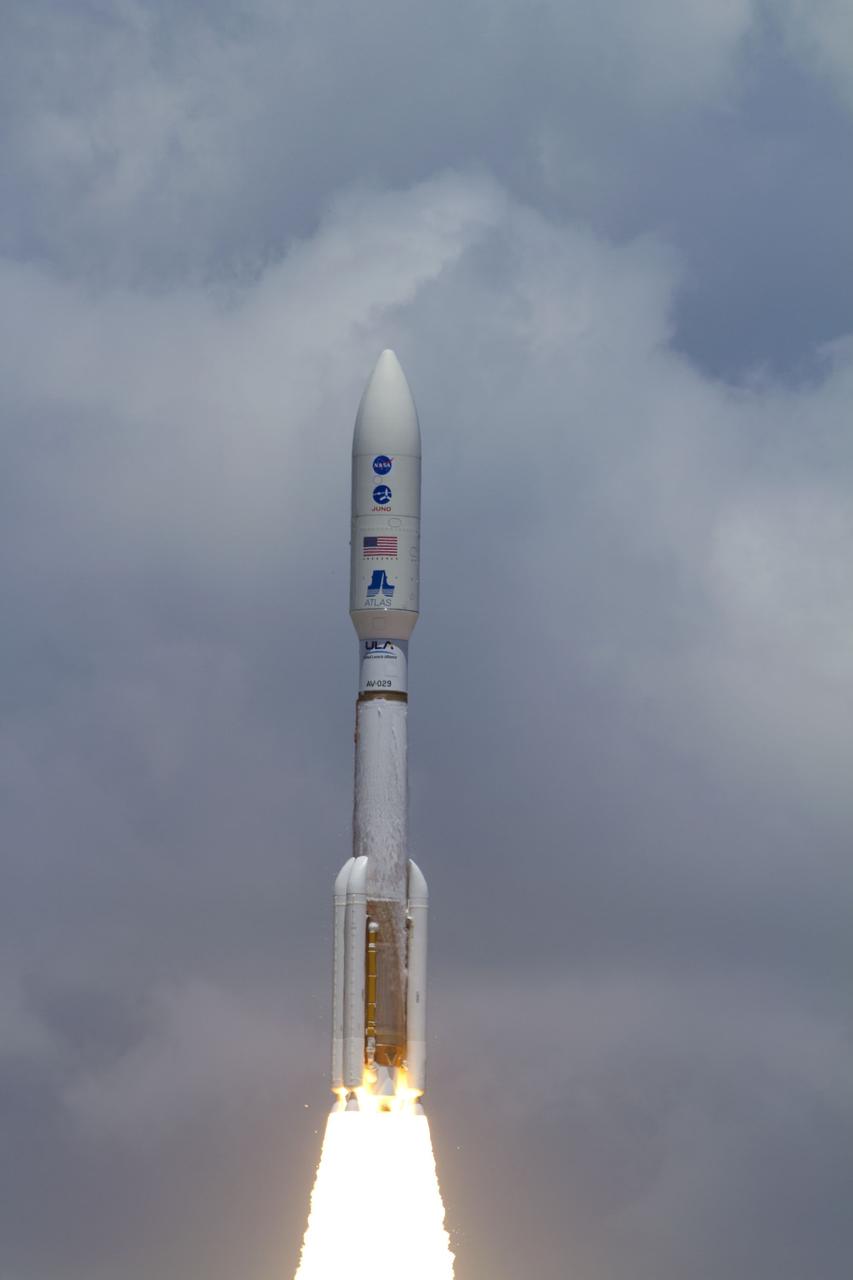
CAPE CANAVERAL, Fla. -- The United Launch Alliance Atlas V-551 launch vehicle carrying NASA's Juno planetary probe is off to a roaring start on its five-year journey from Space Launch Complex 41 on Cape Canaveral Air Force Station in Florida. Liftoff was at 12:25 p.m. EDT Aug. 5. The solar-powered spacecraft will orbit Jupiter's poles 33 times to find out more about the gas giant's origins, structure, atmosphere and magnetosphere and investigate the existence of a solid planetary core. NASA's Jet Propulsion Laboratory, Pasadena, Calif., manages the Juno mission for the principal investigator, Scott Bolton, of Southwest Research Institute in San Antonio. The Juno mission is part of the New Frontiers Program managed at NASA's Marshall Space Flight Center in Huntsville, Ala. Lockheed Martin Space Systems, Denver, built the spacecraft. Launch management for the mission is the responsibility of NASA's Launch Services Program at the Kennedy Space Center in Florida. For more information, visit www.nasa.gov/juno. Photo credit: NASA/George Roberts and Rusty Backer
CAPE CANAVERAL, Fla. -- NASA's Juno planetary probe, enclosed in its payload fairing atop a United Launch Alliance Atlas V-551 launch vehicle, bounds from Space Launch Complex 41 into the clouds over Cape Canaveral Air Force Station in Florida. Liftoff was at 12:25 p.m. EDT Aug. 5. The solar-powered spacecraft will orbit Jupiter's poles 33 times to find out more about the gas giant's origins, structure, atmosphere and magnetosphere and investigate the existence of a solid planetary core. NASA's Jet Propulsion Laboratory, Pasadena, Calif., manages the Juno mission for the principal investigator, Scott Bolton, of Southwest Research Institute in San Antonio. The Juno mission is part of the New Frontiers Program managed at NASA's Marshall Space Flight Center in Huntsville, Ala. Lockheed Martin Space Systems, Denver, built the spacecraft. Launch management for the mission is the responsibility of NASA's Launch Services Program at the Kennedy Space Center in Florida. For more information, visit www.nasa.gov/juno. Photo credit: NASA/Jim Grossmann
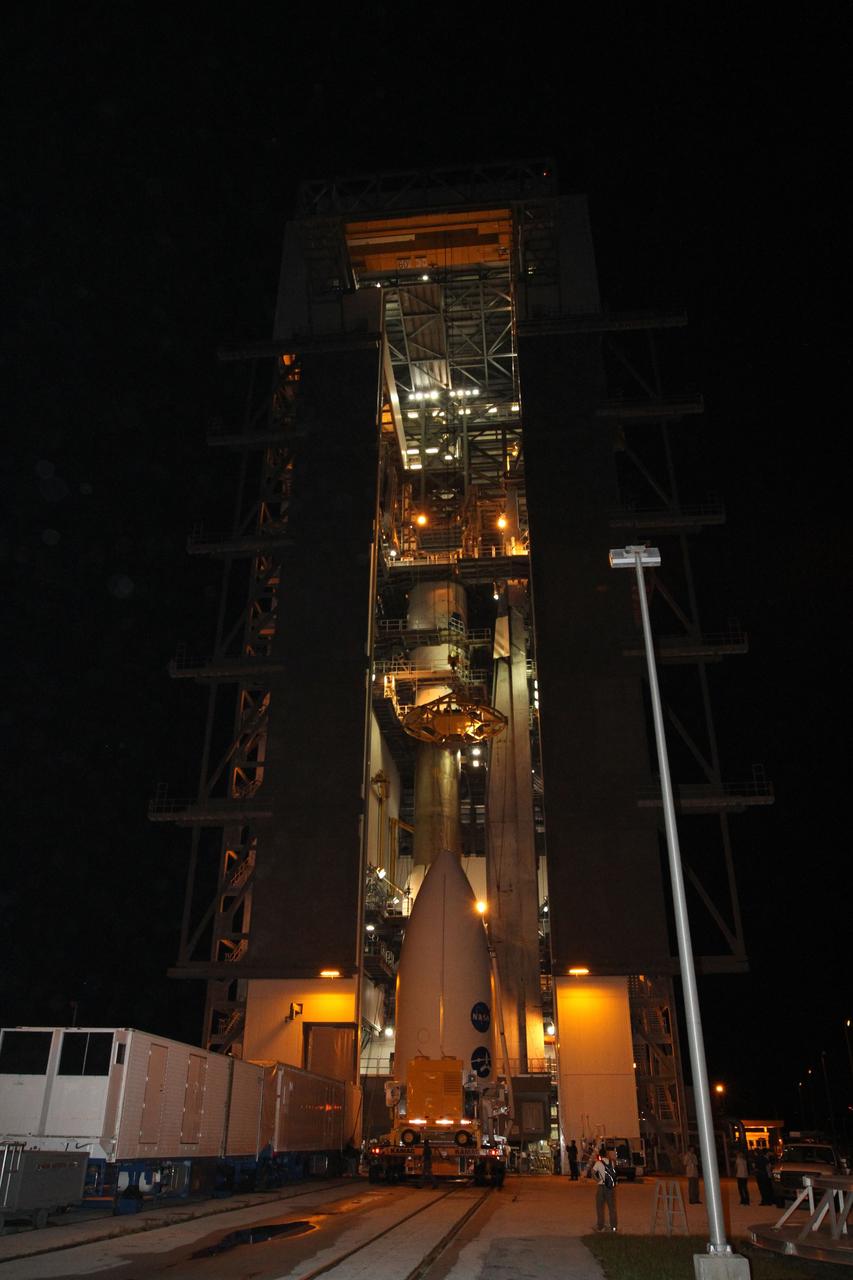
CAPE CANAVERAL, Fla. -- At Space Launch Complex 41, preparations are under way to lift the Juno spacecraft, enclosed in an Atlas payload fairing, on top of the Atlas rocket stacked in the Vertical Integration Facility. The spacecraft was prepared for launch in the Astrotech Space Operations' payload processing facility in Titusville, Fla. The fairing will protect the spacecraft from the impact of aerodynamic pressure and heating during ascent and will be jettisoned once the spacecraft is outside the Earth's atmosphere. Juno is scheduled to launch Aug. 5 aboard a United Launch Alliance Atlas V rocket from Cape Canaveral Air Force Station in Florida. The solar-powered spacecraft will orbit Jupiter's poles 33 times to find out more about the gas giant's origins, structure, atmosphere and magnetosphere and investigate the existence of a solid planetary core. For more information, visit www.nasa.gov/juno. Photo credit: NASA/Cory Huston
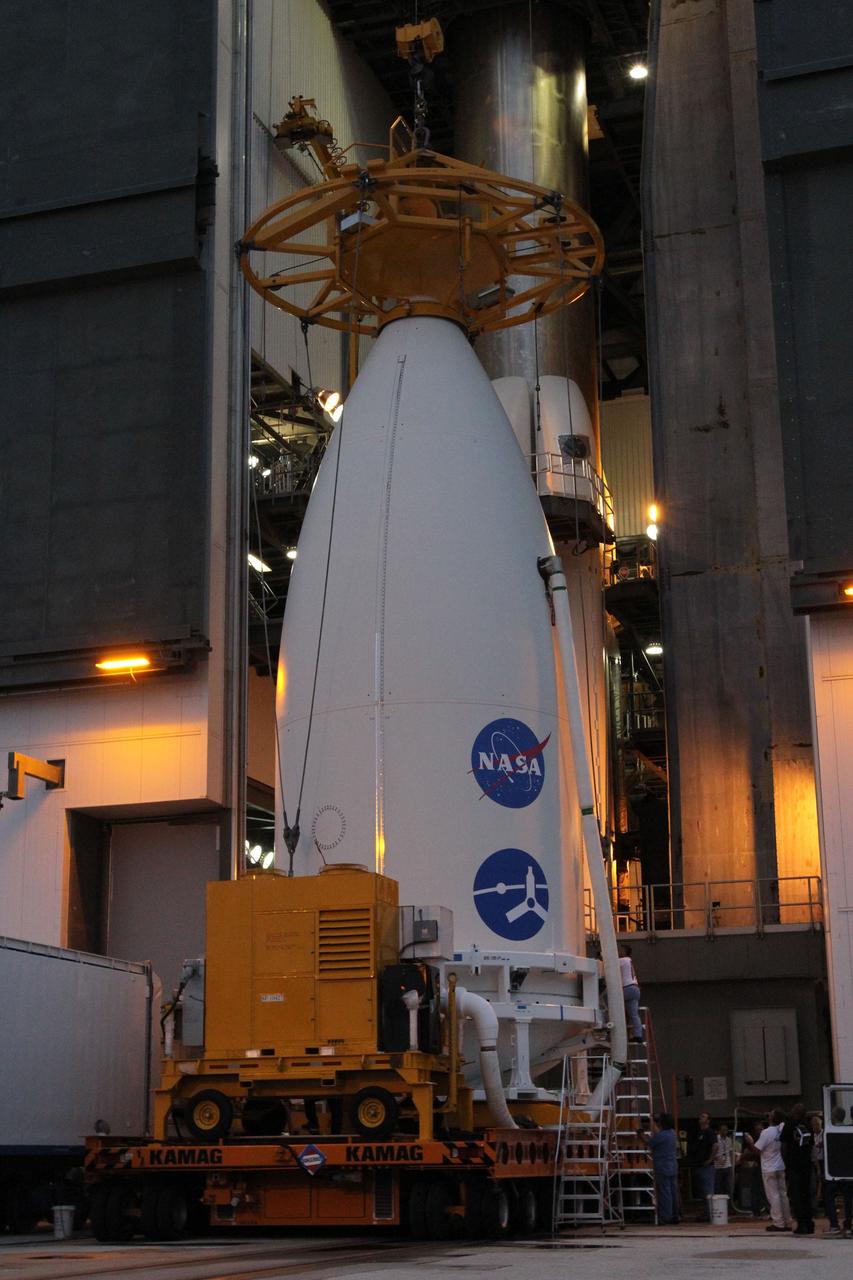
CAPE CANAVERAL, Fla. -- At Space Launch Complex 41, a crane comes to rest on the nose of the Atlas payload fairing enclosing the Juno spacecraft in preparation for its lift to the top of the Atlas rocket stacked in the Vertical Integration Facility. The spacecraft was prepared for launch in the Astrotech Space Operations' payload processing facility in Titusville, Fla. The fairing will protect the spacecraft from the impact of aerodynamic pressure and heating during ascent and will be jettisoned once the spacecraft is outside the Earth's atmosphere. Juno is scheduled to launch Aug. 5 aboard a United Launch Alliance Atlas V rocket from Cape Canaveral Air Force Station in Florida. The solar-powered spacecraft will orbit Jupiter's poles 33 times to find out more about the gas giant's origins, structure, atmosphere and magnetosphere and investigate the existence of a solid planetary core. For more information, visit www.nasa.gov/juno. Photo credit: NASA/Cory Huston
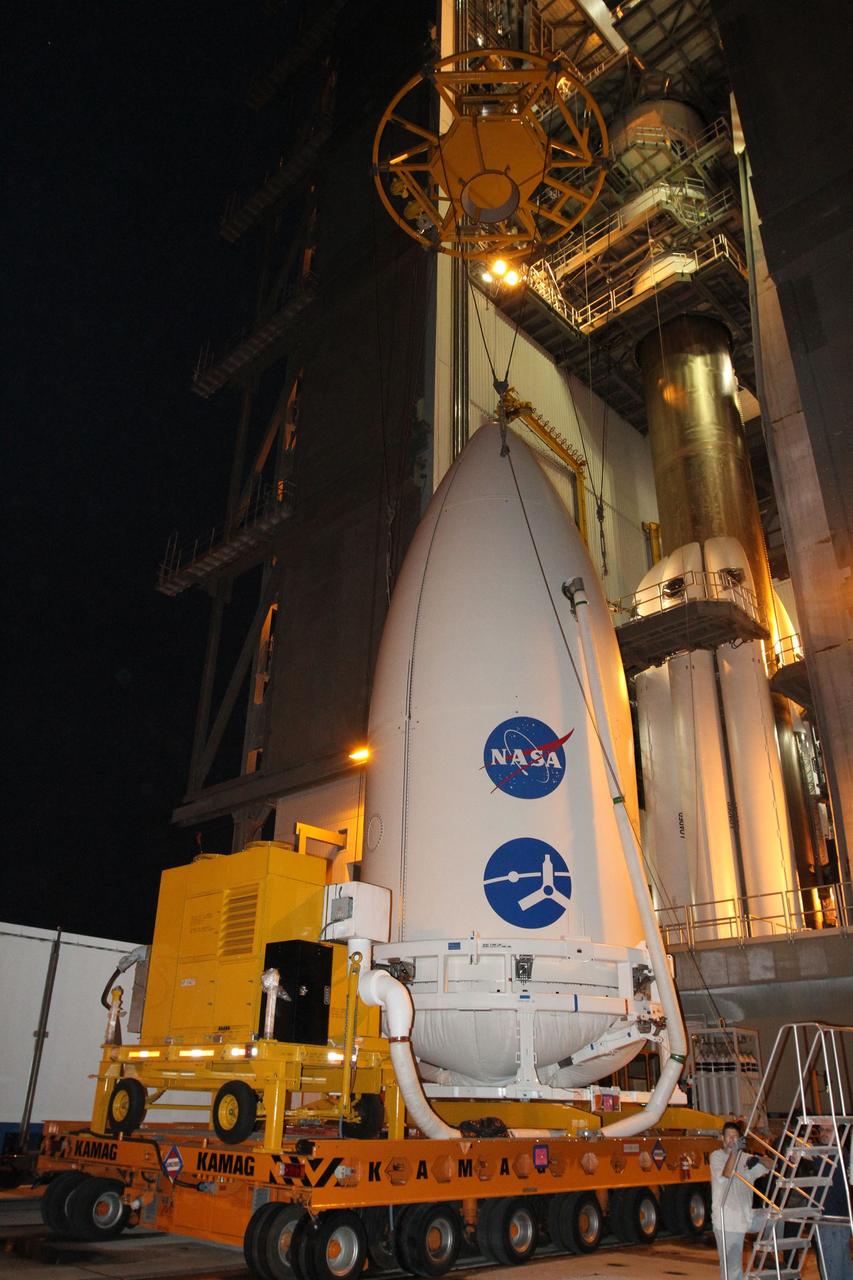
CAPE CANAVERAL, Fla. -- At Space Launch Complex 41, a crane is lowered toward the Juno spacecraft, enclosed in an Atlas payload fairing, to lift it on top of the Atlas rocket stacked in the Vertical Integration Facility. The spacecraft was prepared for launch in the Astrotech Space Operations' payload processing facility in Titusville, Fla. The fairing will protect the spacecraft from the impact of aerodynamic pressure and heating during ascent and will be jettisoned once the spacecraft is outside the Earth's atmosphere. Juno is scheduled to launch Aug. 5 aboard a United Launch Alliance Atlas V rocket from Cape Canaveral Air Force Station in Florida. The solar-powered spacecraft will orbit Jupiter's poles 33 times to find out more about the gas giant's origins, structure, atmosphere and magnetosphere and investigate the existence of a solid planetary core. For more information, visit www.nasa.gov/juno. Photo credit: NASA/Cory Huston

CAPE CANAVERAL, Fla. -- At Space Launch Complex 41, a crane hoists the Atlas payload fairing enclosing the Juno spacecraft off its transporter for its lift to the top of the Atlas rocket stacked in the Vertical Integration Facility. The spacecraft was prepared for launch in the Astrotech Space Operations' payload processing facility in Titusville, Fla. The fairing will protect the spacecraft from the impact of aerodynamic pressure and heating during ascent and will be jettisoned once the spacecraft is outside the Earth's atmosphere. Juno is scheduled to launch Aug. 5 aboard a United Launch Alliance Atlas V rocket from Cape Canaveral Air Force Station in Florida. The solar-powered spacecraft will orbit Jupiter's poles 33 times to find out more about the gas giant's origins, structure, atmosphere and magnetosphere and investigate the existence of a solid planetary core. For more information, visit www.nasa.gov/juno. Photo credit: NASA/Cory Huston
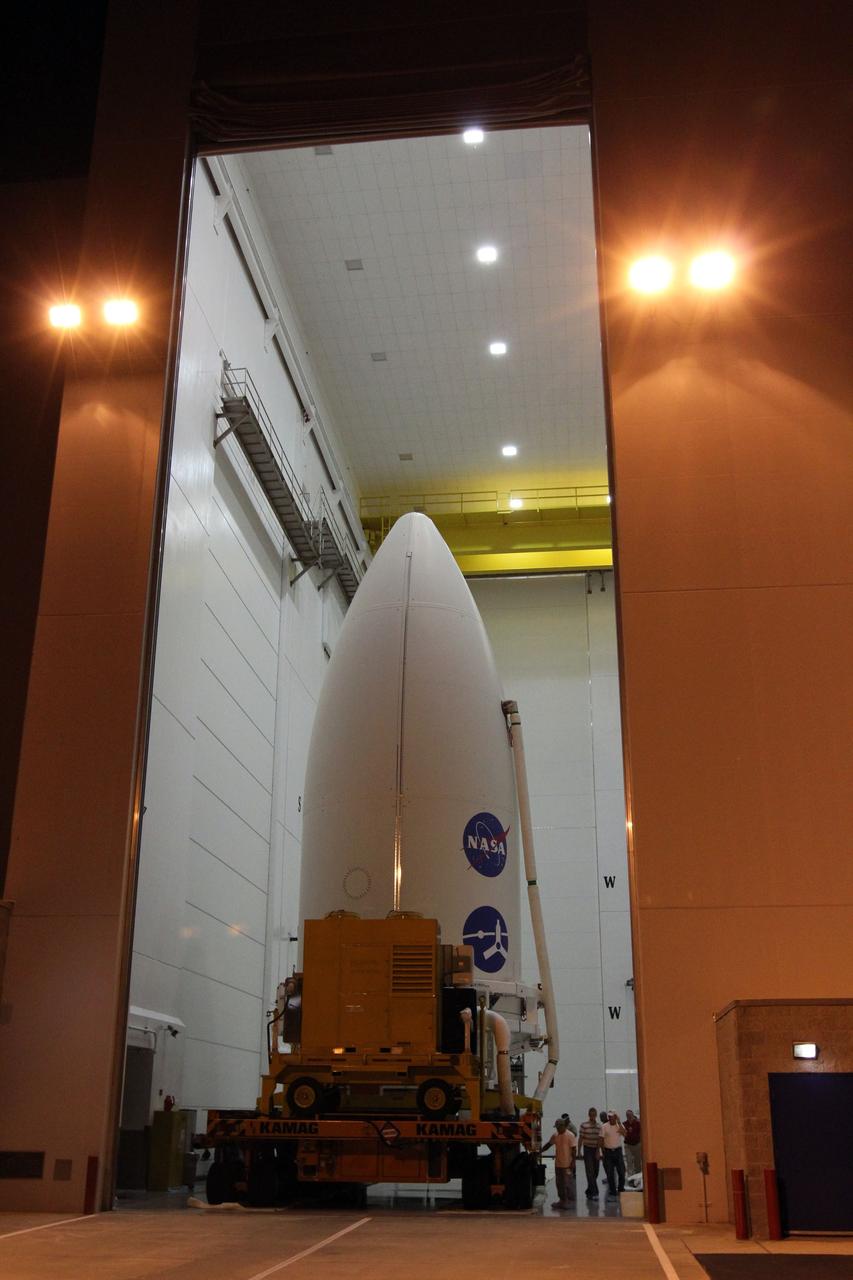
CAPE CANAVERAL, Fla. -- In the Astrotech Space Operations' payload processing facility in Titusville, Fla., preparations are under way to transport the Juno spacecraft, enclosed in an Atlas payload fairing, to Space Launch Complex 41. The fairing will protect the spacecraft from the impact of aerodynamic pressure and heating during ascent and will be jettisoned once the spacecraft is outside the Earth's atmosphere. Juno is scheduled to launch Aug. 5 aboard a United Launch Alliance Atlas V rocket from Cape Canaveral Air Force Station in Florida. The solar-powered spacecraft will orbit Jupiter's poles 33 times to find out more about the gas giant's origins, structure, atmosphere and magnetosphere and investigate the existence of a solid planetary core. For more information, visit www.nasa.gov/juno. Photo credit: NASA/Cory Huston
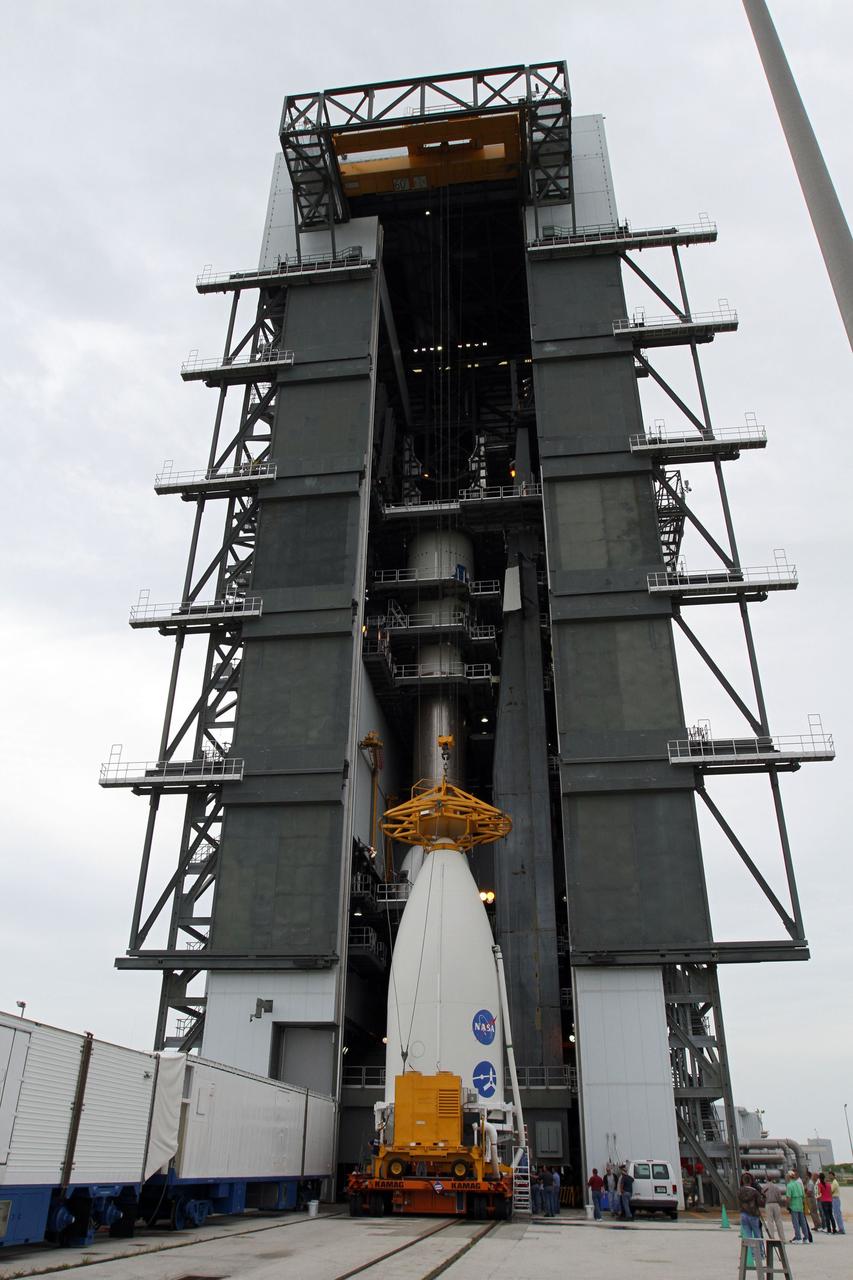
CAPE CANAVERAL, Fla. -- At Space Launch Complex 41, a crane is attached to the nose of the Atlas payload fairing enclosing the Juno spacecraft in preparation for its lift to the top of the Atlas rocket stacked in the Vertical Integration Facility. The spacecraft was prepared for launch in the Astrotech Space Operations' payload processing facility in Titusville, Fla. The fairing will protect the spacecraft from the impact of aerodynamic pressure and heating during ascent and will be jettisoned once the spacecraft is outside the Earth's atmosphere. Juno is scheduled to launch Aug. 5 aboard a United Launch Alliance Atlas V rocket from Cape Canaveral Air Force Station in Florida. The solar-powered spacecraft will orbit Jupiter's poles 33 times to find out more about the gas giant's origins, structure, atmosphere and magnetosphere and investigate the existence of a solid planetary core. For more information, visit www.nasa.gov/juno. Photo credit: NASA/Cory Huston
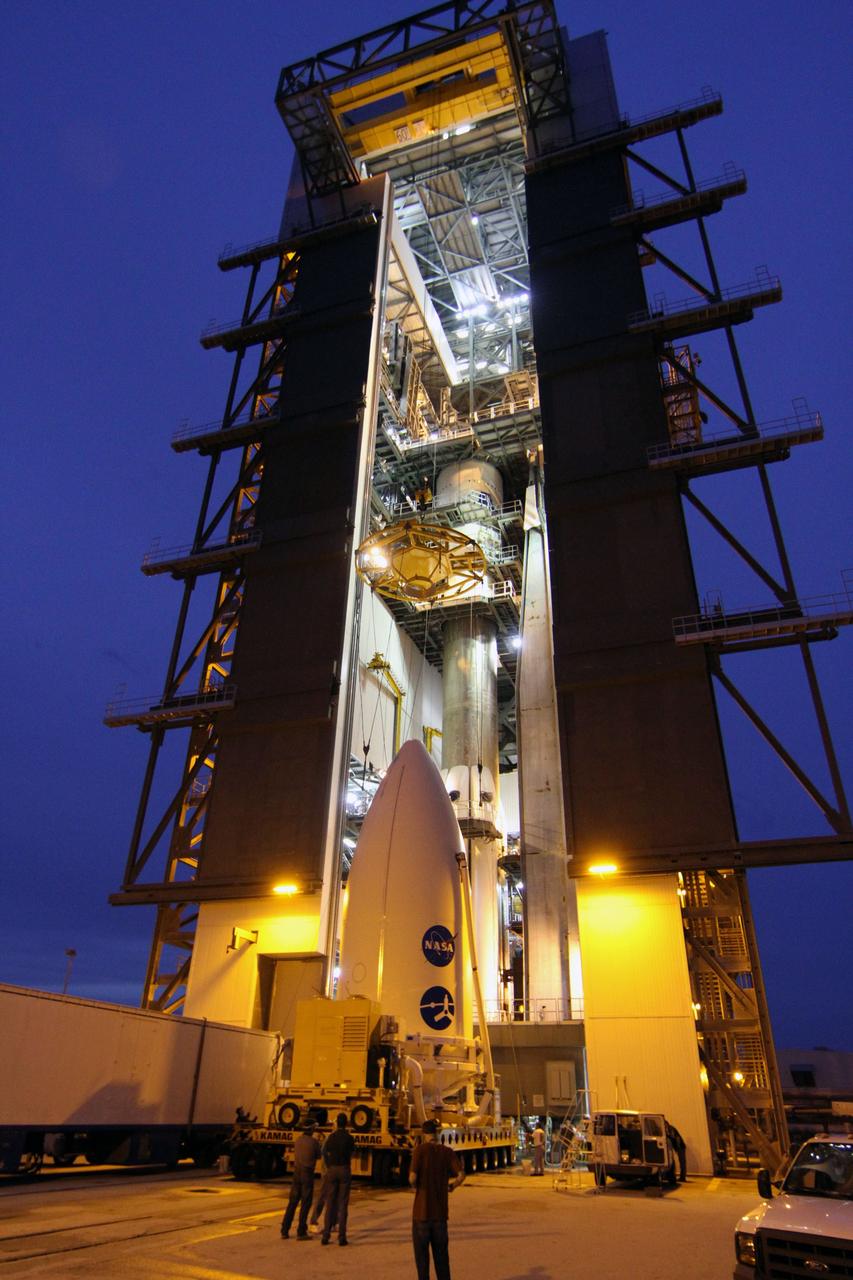
CAPE CANAVERAL, Fla. -- At Space Launch Complex 41, technicians monitor a crane as it is lowered toward the Juno spacecraft, enclosed in an Atlas payload fairing, for its lift to the top of the Atlas rocket stacked in the Vertical Integration Facility. The spacecraft was prepared for launch in the Astrotech Space Operations' payload processing facility in Titusville, Fla. The fairing will protect the spacecraft from the impact of aerodynamic pressure and heating during ascent and will be jettisoned once the spacecraft is outside the Earth's atmosphere. Juno is scheduled to launch Aug. 5 aboard a United Launch Alliance Atlas V rocket from Cape Canaveral Air Force Station in Florida. The solar-powered spacecraft will orbit Jupiter's poles 33 times to find out more about the gas giant's origins, structure, atmosphere and magnetosphere and investigate the existence of a solid planetary core. For more information, visit www.nasa.gov/juno. Photo credit: NASA/Cory Huston
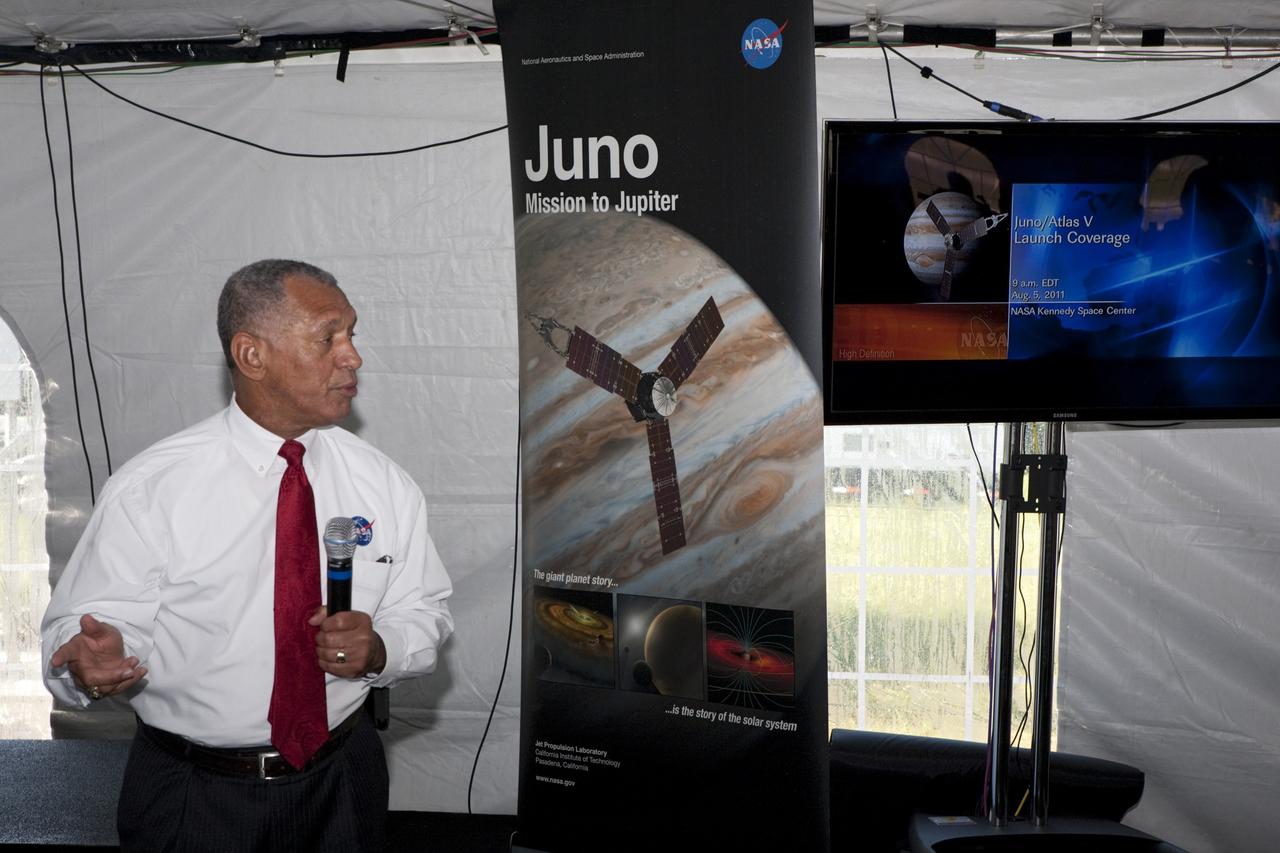
CAPE CANAVERAL, Fla. – At NASA’s Kennedy Space Center in Florida, NASA Administrator Charles Bolden speaks to about 150 followers of the agency’s Twitter account during Juno Tweetup activities inside a tent at the Press Site. The tweeters are at the center for two days of prelaunch activities. Juno is NASA’s mission to Jupiter to study the giant planet and improve our understanding of the planet’s formation and evolution. The tweeters will share their experiences with followers through the social networking site Twitter. Attendees represent 28 states, the District of Columbia and five other countries: Canada, Finland, Norway, Spain and the United Kingdom. This is the first time NASA has invited Twitter followers to experience the launch of a planetary spacecraft. The Juno spacecraft is scheduled to launch on an Atlas V rocket from Space Launch Complex 41 at Cape Canaveral Air Force Station in Florida, Aug. 5, at 11:34 a.m. EDT. For more information, visit http://www.nasa.gov/juno. Photo credit: NASA/Gianni M. Woods
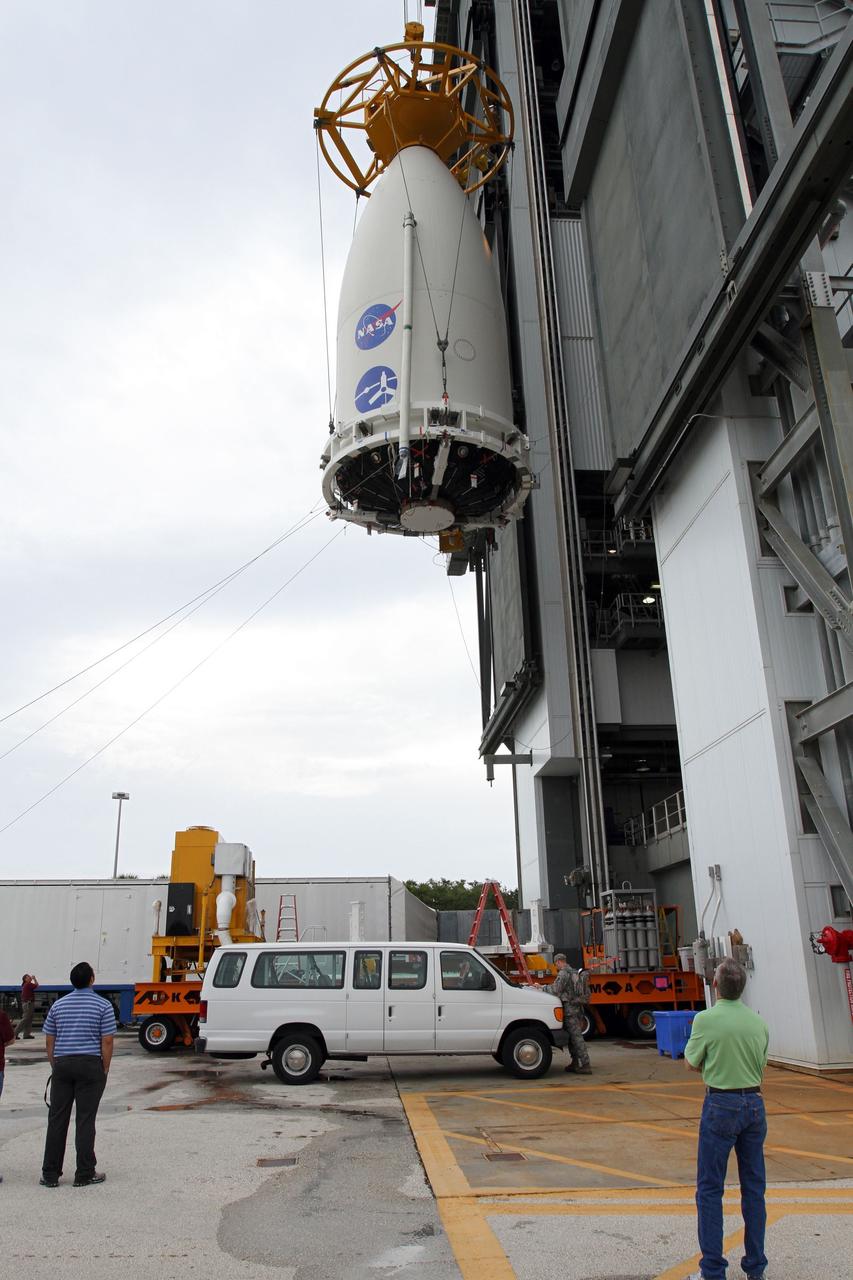
CAPE CANAVERAL, Fla. -- At Space Launch Complex 41, the Juno spacecraft, enclosed in an Atlas payload fairing, appears to hover over its transporter as it is lifted up the side of the Vertical Integration Facility to the top of the Atlas rocket already stacked inside. The spacecraft was prepared for launch in the Astrotech Space Operations' payload processing facility in Titusville, Fla. The fairing will protect the spacecraft from the impact of aerodynamic pressure and heating during ascent and will be jettisoned once the spacecraft is outside the Earth's atmosphere. Juno is scheduled to launch Aug. 5 aboard a United Launch Alliance Atlas V rocket from Cape Canaveral Air Force Station in Florida. The solar-powered spacecraft will orbit Jupiter's poles 33 times to find out more about the gas giant's origins, structure, atmosphere and magnetosphere and investigate the existence of a solid planetary core. For more information, visit www.nasa.gov/juno. Photo credit: NASA/Cory Huston

CAPE CANAVERAL, Fla. -- Inside the Vertical Integration Facility at Space Launch Complex 41, the Juno spacecraft, enclosed in an Atlas payload fairing, is lowered onto the top of the Atlas rocket stacked beneath it. The spacecraft was prepared for launch in the Astrotech Space Operations' payload processing facility in Titusville, Fla. The fairing will protect the spacecraft from the impact of aerodynamic pressure and heating during ascent and will be jettisoned once the spacecraft is outside the Earth's atmosphere. Juno is scheduled to launch Aug. 5 aboard a United Launch Alliance Atlas V rocket from Cape Canaveral Air Force Station in Florida. The solar-powered spacecraft will orbit Jupiter's poles 33 times to find out more about the gas giant's origins, structure, atmosphere and magnetosphere and investigate the existence of a solid planetary core. For more information, visit www.nasa.gov/juno. Photo credit: NASA/Cory Huston

CAPE CANAVERAL, Fla. – At NASA’s Kennedy Space Center in Florida, about 150 followers of the agency’s Twitter account listen to presentations about NASA’s Juno mission to Jupiter during Tweetup activities inside a tent at the Press Site. The tweeters are at the center for two days of Juno prelaunch activities. Juno is NASA’s mission to Jupiter to study the giant planet and improve our understanding of the planet’s formation and evolution. The tweeters will share their experiences with followers through the social networking site Twitter. Attendees represent 28 states, the District of Columbia and five other countries: Canada, Finland, Norway, Spain and the United Kingdom. This is the first time NASA has invited Twitter followers to experience the launch of a planetary spacecraft. The Juno spacecraft is scheduled to launch on an Atlas V rocket from Space Launch Complex 41 at Cape Canaveral Air Force Station in Florida, Aug. 5, at 11:34 a.m. EDT. For more information, visit http://www.nasa.gov/juno. Photo credit: NASA/Fletcher Hildreth
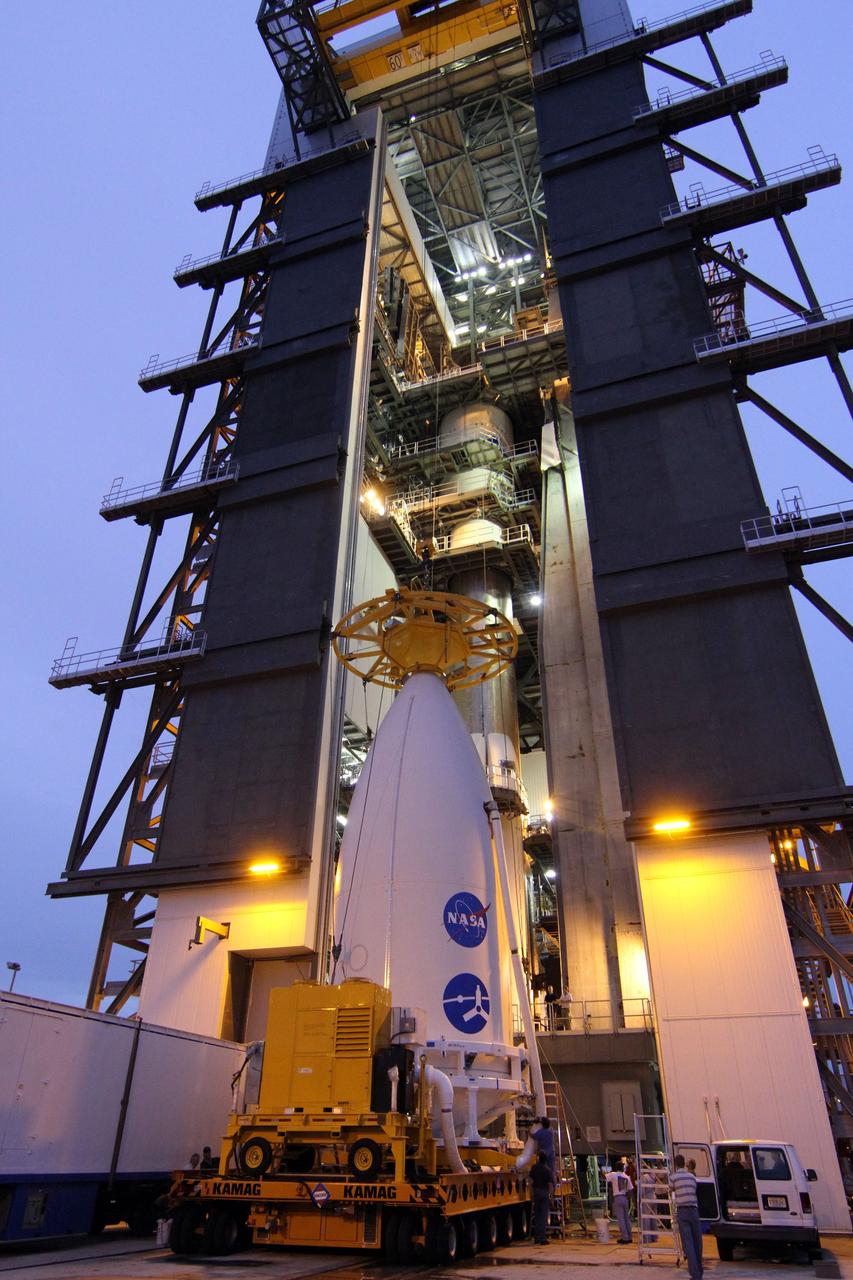
CAPE CANAVERAL, Fla. -- At Space Launch Complex 41, a crane is lowered over the nose of the Atlas payload fairing enclosing the Juno spacecraft in preparation for its lift to the top of the Atlas rocket stacked in the Vertical Integration Facility. The spacecraft was prepared for launch in the Astrotech Space Operations' payload processing facility in Titusville, Fla. The fairing will protect the spacecraft from the impact of aerodynamic pressure and heating during ascent and will be jettisoned once the spacecraft is outside the Earth's atmosphere. Juno is scheduled to launch Aug. 5 aboard a United Launch Alliance Atlas V rocket from Cape Canaveral Air Force Station in Florida. The solar-powered spacecraft will orbit Jupiter's poles 33 times to find out more about the gas giant's origins, structure, atmosphere and magnetosphere and investigate the existence of a solid planetary core. For more information, visit www.nasa.gov/juno. Photo credit: NASA/Cory Huston

CAPE CANAVERAL, Fla. -- A Juno prelaunch news conference is held in the NASA Press Site auditorium at NASA's Kennedy Space Center in Florida. From left are George Diller, NASA Public Affairs; Colleen Hartman, assistant associate administrator, Science Mission Directorate, NASA Headquarters, Washington; Omar Baez, NASA launch director, Kennedy Space Center, Cape Canaveral, Fla.; Vernon Thorp, program manager, NASA Missions, United Launch Alliance, Denver, Colo.; Jan Chodas, Juno project manager, Jet Propulsion Laboratory, Pasadena, Calif.; Tim Gasparrini, Juno program manager, Lockheed Martin Space Systems, Denver, Colo.; and Capt. Billy Whisel, launch weather officer, 45th Weather Squadron, Cape Canaveral Air Force Station, Fla. Juno is scheduled to launch Aug. 5 aboard a United Launch Alliance Atlas V rocket from Cape Canaveral Air Force Station in Florida. The solar-powered spacecraft will orbit Jupiter's poles 33 times to find out more about the gas giant's origins, structure, atmosphere and magnetosphere and investigate the existence of a solid planetary core. For more information, visit www.nasa.gov/juno. Photo credit: NASA/Kim Shiflett
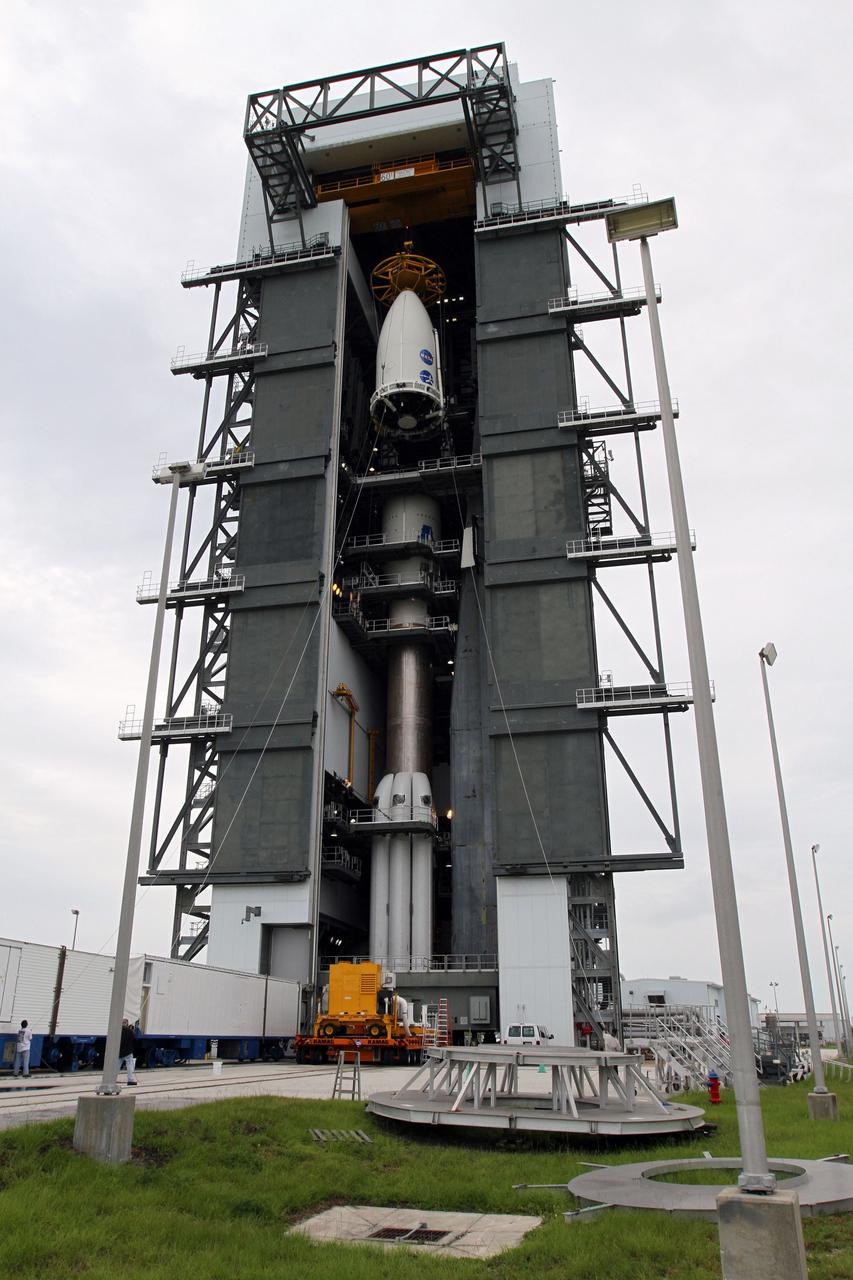
CAPE CANAVERAL, Fla. -- At Space Launch Complex 41, the Atlas rocket stacked inside the Vertical Integration Facility stands ready to receive the Juno spacecraft, enclosed in an Atlas payload fairing. The spacecraft was prepared for launch in the Astrotech Space Operations' payload processing facility in Titusville, Fla. The fairing will protect the spacecraft from the impact of aerodynamic pressure and heating during ascent and will be jettisoned once the spacecraft is outside the Earth's atmosphere. Juno is scheduled to launch Aug. 5 aboard a United Launch Alliance Atlas V rocket from Cape Canaveral Air Force Station in Florida. The solar-powered spacecraft will orbit Jupiter's poles 33 times to find out more about the gas giant's origins, structure, atmosphere and magnetosphere and investigate the existence of a solid planetary core. For more information, visit www.nasa.gov/juno. Photo credit: NASA/Cory Huston

CAPE CANAVERAL, Fla. – At NASA’s Kennedy Space Center in Florida, Andrew Aldrin, director of Business Development and Advanced Programs for the United Launch Alliance, speaks to about 150 followers of the agency’s Twitter account during Juno Tweetup activities inside a tent at the Press Site. The tweeters are at the center for two days of prelaunch activities. Juno is NASA’s mission to Jupiter to study the giant planet and improve our understanding of the planet’s formation and evolution. The tweeters will share their experiences with followers through the social networking site Twitter. Attendees represent 28 states, the District of Columbia and five other countries: Canada, Finland, Norway, Spain and the United Kingdom. This is the first time NASA has invited Twitter followers to experience the launch of a planetary spacecraft. The Juno spacecraft is scheduled to launch on an Atlas V rocket from Space Launch Complex 41 at Cape Canaveral Air Force Station in Florida, Aug. 5, at 11:34 a.m. EDT. For more information, visit http://www.nasa.gov/juno. Photo credit: NASA/Gianni M. Woods

CAPE CANAVERAL, Fla. – At NASA’s Kennedy Space Center in Florida, about 150 followers of the agency’s Twitter account listen to presentations about NASA’s Juno mission to Jupiter during Tweetup activities inside a tent at the Press Site. The tweeters are at the center for two days of Juno prelaunch activities. Juno is NASA’s mission to Jupiter to study the giant planet and improve our understanding of the planet’s formation and evolution. The tweeters will share their experiences with followers through the social networking site Twitter. Attendees represent 28 states, the District of Columbia and five other countries: Canada, Finland, Norway, Spain and the United Kingdom. This is the first time NASA has invited Twitter followers to experience the launch of a planetary spacecraft. The Juno spacecraft is scheduled to launch on an Atlas V rocket from Space Launch Complex 41 at Cape Canaveral Air Force Station in Florida, Aug. 5, at 11:34 a.m. EDT. For more information, visit http://www.nasa.gov/juno. Photo credit: NASA/Fletcher Hildreth
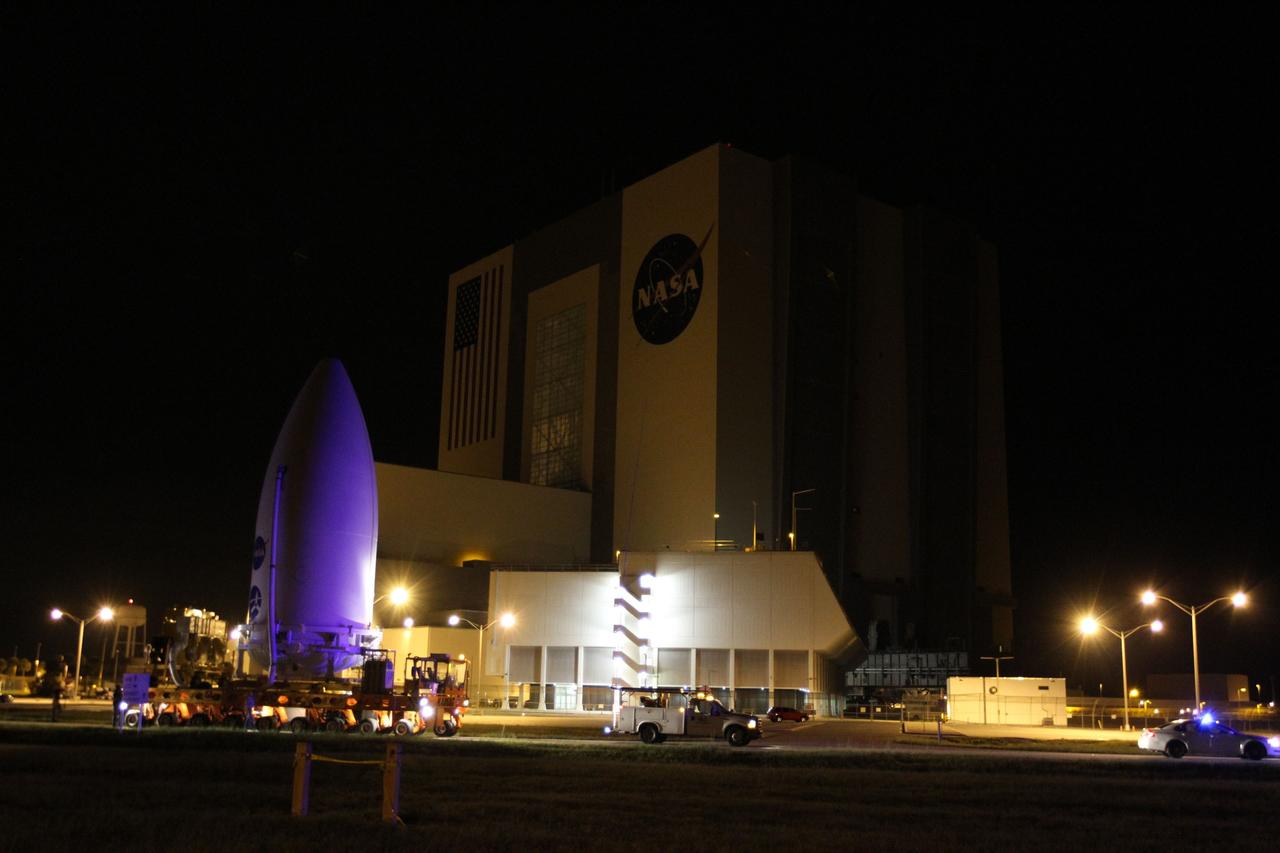
CAPE CANAVERAL, Fla. -- The Juno spacecraft, enclosed in an Atlas payload fairing, rolls past the 525-foot-tall Vehicle Assembly Building in Kennedy Space Center's Launch Complex 39 on its way to Space Launch Complex 41. The spacecraft was prepared for launch in the Astrotech Space Operations' payload processing facility in Titusville, Fla. The fairing will protect the spacecraft from the impact of aerodynamic pressure and heating during ascent and will be jettisoned once the spacecraft is outside the Earth's atmosphere. Juno is scheduled to launch Aug. 5 aboard a United Launch Alliance Atlas V rocket from Cape Canaveral Air Force Station in Florida. The solar-powered spacecraft will orbit Jupiter's poles 33 times to find out more about the gas giant's origins, structure, atmosphere and magnetosphere and investigate the existence of a solid planetary core. For more information, visit www.nasa.gov/juno. Photo credit: NASA/Cory Huston

CAPE CANAVERAL, Fla. – At NASA’s Kennedy Space Center in Florida, television personality Bill Nye, the science guy, speaks to about 150 followers of the agency’s Twitter account during Juno Tweetup activities inside a tent at the Press Site. The tweeters are at the center for two days of prelaunch activities. Juno is NASA’s mission to Jupiter to study the giant planet and improve our understanding of the planet’s formation and evolution. The tweeters will share their experiences with followers through the social networking site Twitter. Attendees represent 28 states, the District of Columbia and five other countries: Canada, Finland, Norway, Spain and the United Kingdom. This is the first time NASA has invited Twitter followers to experience the launch of a planetary spacecraft. The Juno spacecraft is scheduled to launch on an Atlas V rocket from Space Launch Complex 41 at Cape Canaveral Air Force Station in Florida, Aug. 5, at 11:34 a.m. EDT. For more information, visit http://www.nasa.gov/juno. Photo credit: NASA/Fletcher Hildreth
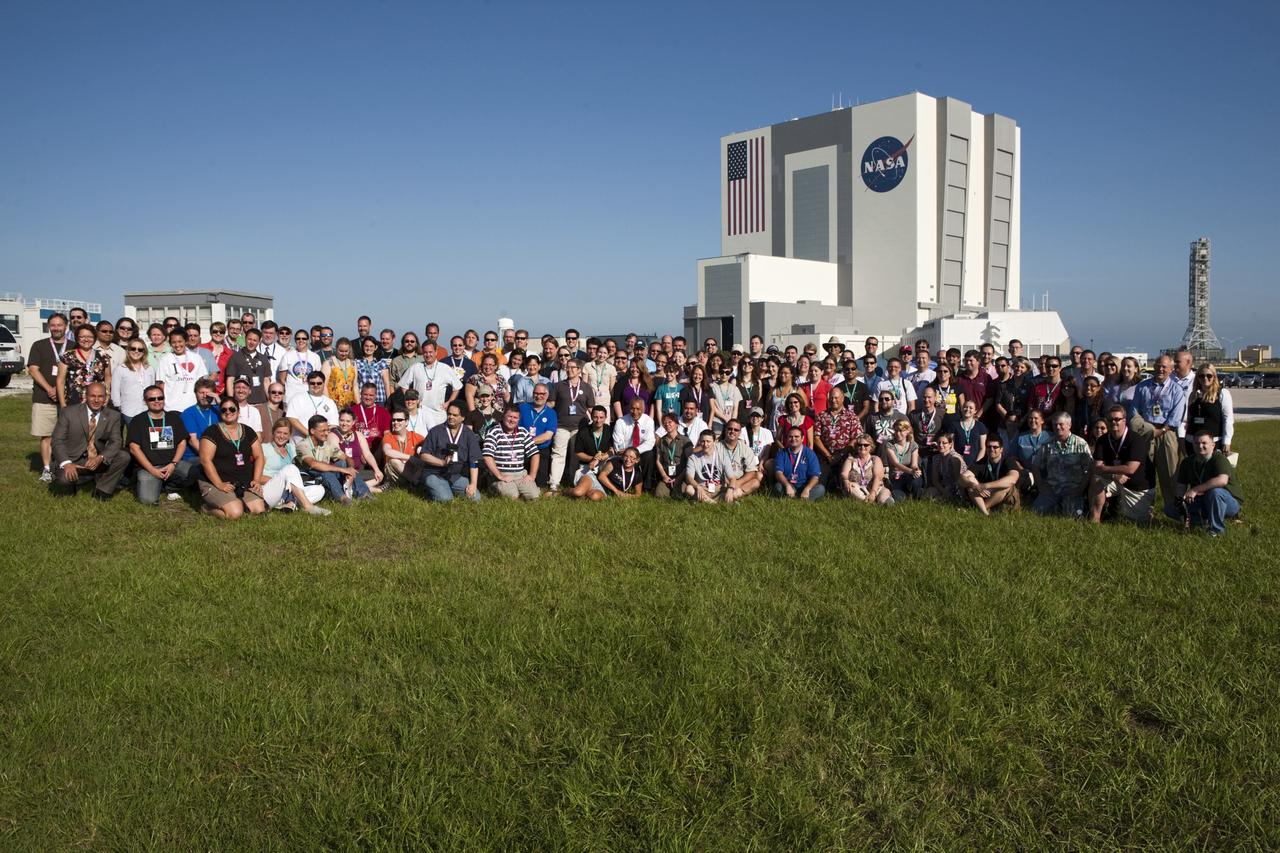
CAPE CANAVERAL, Fla. – At NASA’s Kennedy Space Center in Florida, NASA Administrator Charles Bolden (front row center, red tie) poses for a group portrait with about 150 followers of the agency’s Twitter account during Juno Tweetup activities at the Press Site. In the background is the 525-foot-tall Vehicle Assembly Building. The tweeters are at the center for two days of prelaunch activities. Juno is NASA’s mission to Jupiter to study the giant planet and improve our understanding of the planet’s formation and evolution. The tweeters will share their experiences with followers through the social networking site Twitter. Attendees represent 28 states, the District of Columbia and five other countries: Canada, Finland, Norway, Spain and the United Kingdom. This is the first time NASA has invited Twitter followers to experience the launch of a planetary spacecraft. The Juno spacecraft is scheduled to launch on an Atlas V rocket from Space Launch Complex 41 at Cape Canaveral Air Force Station in Florida, Aug. 5, at 11:34 a.m. EDT. For more information, visit http://www.nasa.gov/juno. Photo credit: NASA/Gianni M. Woods
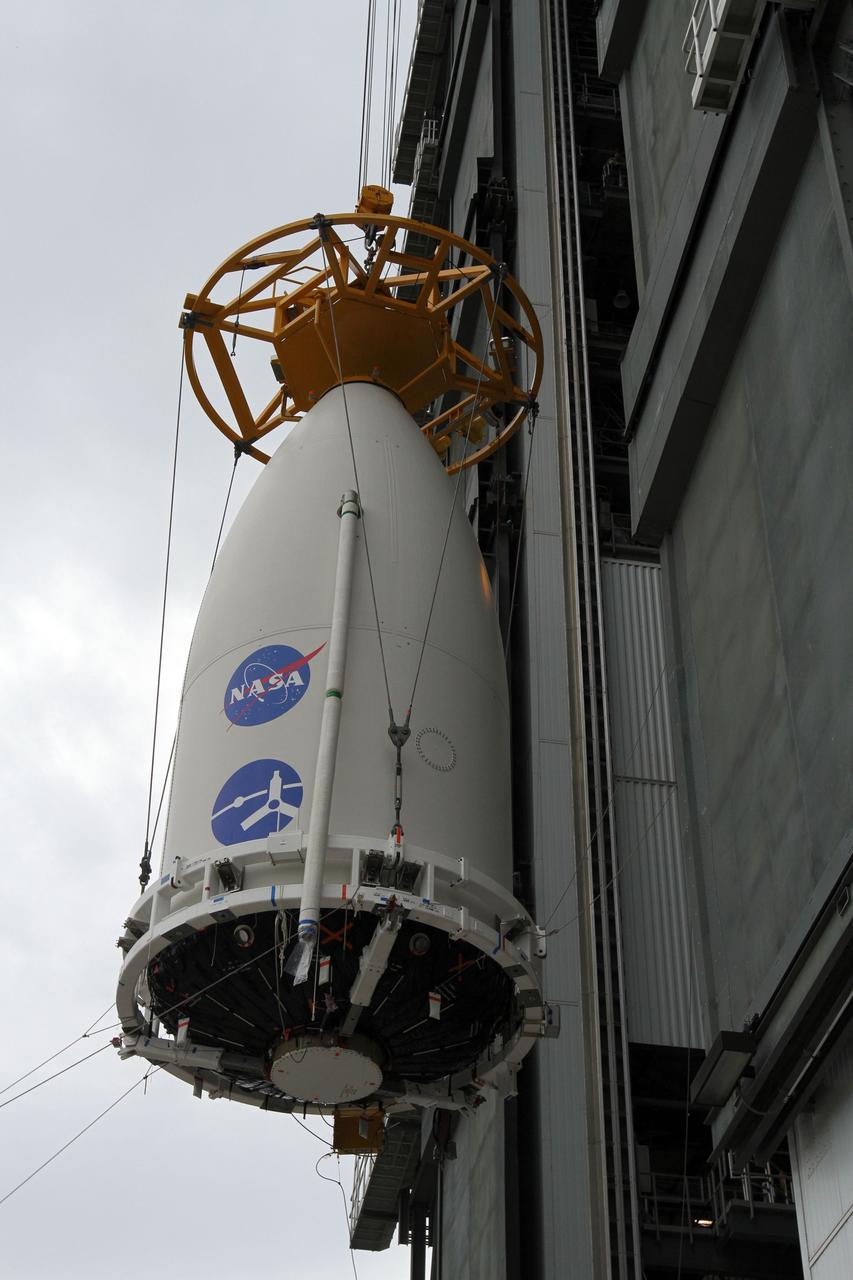
CAPE CANAVERAL, Fla. -- At Space Launch Complex 41, the Juno spacecraft, enclosed in an Atlas payload fairing, is lifted slowly and carefully up the outside of the Vertical Integration Facility to the top of the Atlas rocket already stacked inside. The spacecraft was prepared for launch in the Astrotech Space Operations' payload processing facility in Titusville, Fla. The fairing will protect the spacecraft from the impact of aerodynamic pressure and heating during ascent and will be jettisoned once the spacecraft is outside the Earth's atmosphere. Juno is scheduled to launch Aug. 5 aboard a United Launch Alliance Atlas V rocket from Cape Canaveral Air Force Station in Florida. The solar-powered spacecraft will orbit Jupiter's poles 33 times to find out more about the gas giant's origins, structure, atmosphere and magnetosphere and investigate the existence of a solid planetary core. For more information, visit www.nasa.gov/juno. Photo credit: NASA/Cory Huston

CAPE CANAVERAL, Fla. -- Inside the Vertical Integration Facility at Space Launch Complex 41, the Juno spacecraft, enclosed in an Atlas payload fairing, is in position on top of its Atlas launch vehicle. The spacecraft was prepared for launch in the Astrotech Space Operations' payload processing facility in Titusville, Fla. The fairing will protect the spacecraft from the impact of aerodynamic pressure and heating during ascent and will be jettisoned once the spacecraft is outside the Earth's atmosphere. Juno is scheduled to launch Aug. 5 aboard a United Launch Alliance Atlas V rocket from Cape Canaveral Air Force Station in Florida. The solar-powered spacecraft will orbit Jupiter's poles 33 times to find out more about the gas giant's origins, structure, atmosphere and magnetosphere and investigate the existence of a solid planetary core. For more information, visit www.nasa.gov/juno. Photo credit: NASA/Cory Huston

CAPE CANAVERAL, Fla. -- A Juno mission science briefing is held in the NASA Press Site auditorium at NASA's Kennedy Space Center in Florida. From left are Scott Bolton, Juno principal investigator, Southwest Research Institute, San Antonio; Toby Owen, Juno co-investigator, University of Hawaii; Jack Connerney, Juno MAG Instrument Lead, Goddard Space Flight Center, Greenbelt, Md.; Steve Levin, Juno project scientist, Jet Propulsion Laboratory, Pasadena, Calif.; Fran Bagenai, Juno co-investigator, University of Colorado, Boulder, Colo.; and Candy Hansen, Juno co-investigator, Planetary Science Institute, Tucson, Ariz. Juno is scheduled to launch Aug. 5 aboard a United Launch Alliance Atlas V rocket from Cape Canaveral Air Force Station in Florida. The solar-powered spacecraft will orbit Jupiter's poles 33 times to find out more about the gas giant's origins, structure, atmosphere and magnetosphere and investigate the existence of a solid planetary core. For more information, visit www.nasa.gov/juno. Photo credit: NASA/Kim Shiflett
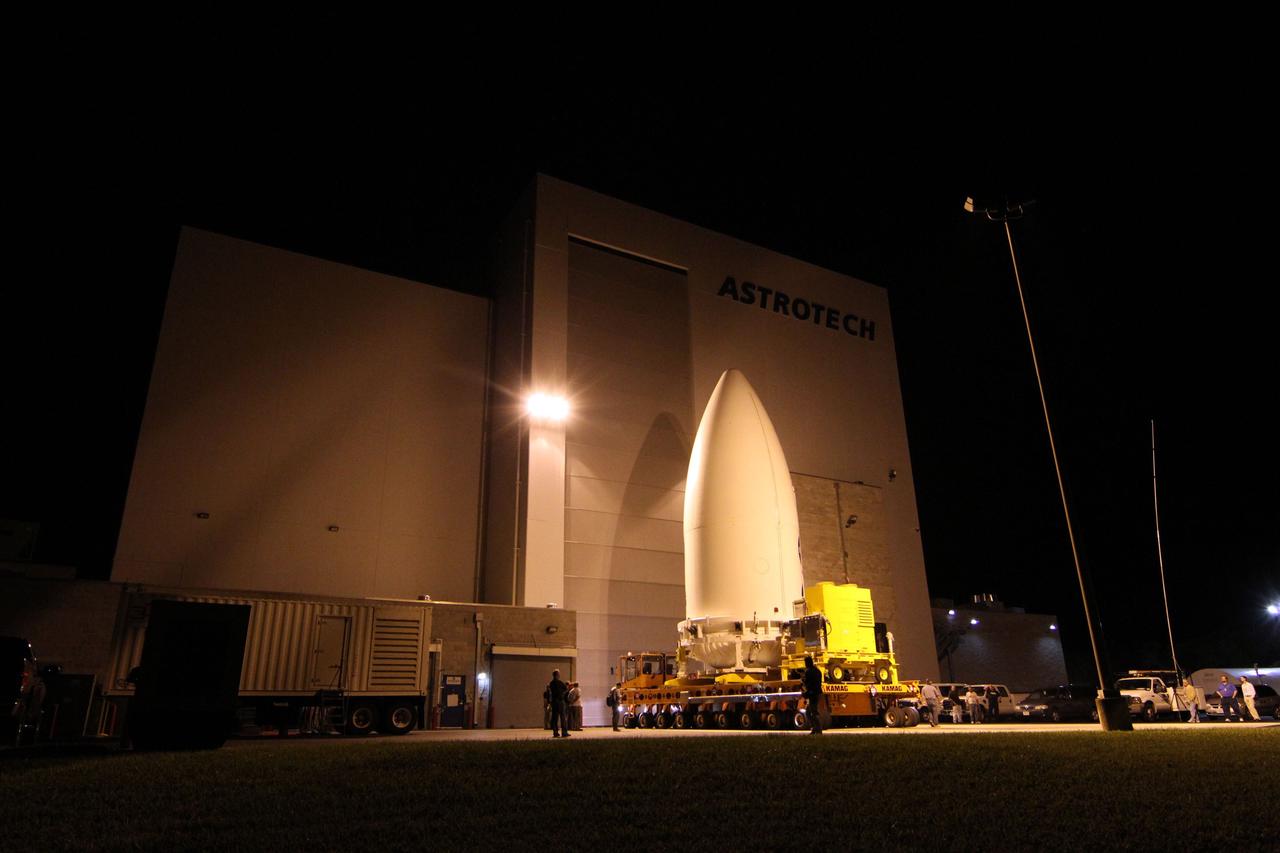
CAPE CANAVERAL, Fla. -- The Juno spacecraft, enclosed in an Atlas payload fairing, outside the Astrotech Space Operations' payload processing facility in Titusville, Fla., is ready for transport to Space Launch Complex 41. The fairing will protect the spacecraft from the impact of aerodynamic pressure and heating during ascent and will be jettisoned once the spacecraft is outside the Earth's atmosphere. Juno is scheduled to launch Aug. 5 aboard a United Launch Alliance Atlas V rocket from Cape Canaveral Air Force Station in Florida. The solar-powered spacecraft will orbit Jupiter's poles 33 times to find out more about the gas giant's origins, structure, atmosphere and magnetosphere and investigate the existence of a solid planetary core. For more information, visit www.nasa.gov/juno. Photo credit: NASA/Cory Huston
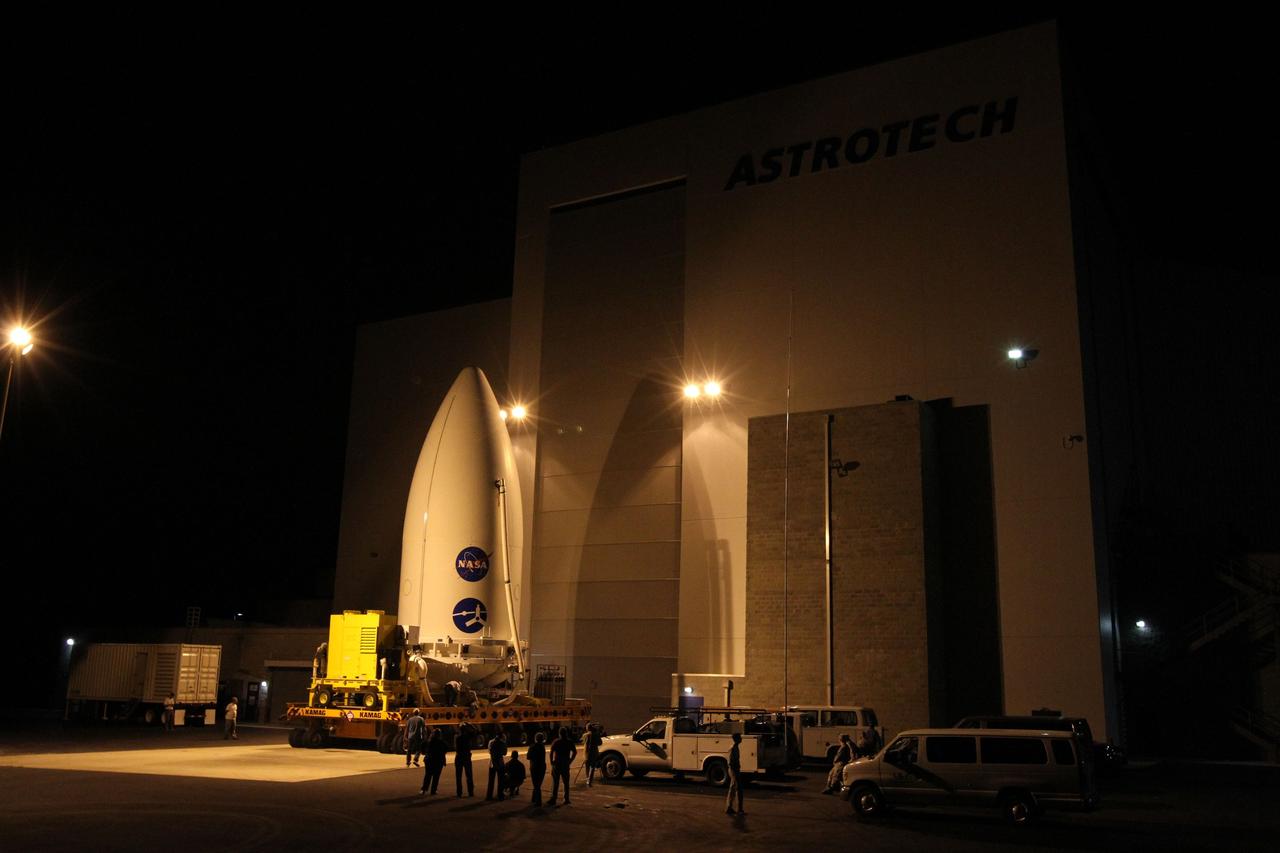
CAPE CANAVERAL, Fla. -- The Juno spacecraft, enclosed in an Atlas payload fairing, begins its trip from the Astrotech Space Operations' payload processing facility in Titusville, Fla., to Space Launch Complex 41. The fairing will protect the spacecraft from the impact of aerodynamic pressure and heating during ascent and will be jettisoned once the spacecraft is outside the Earth's atmosphere. Juno is scheduled to launch Aug. 5 aboard a United Launch Alliance Atlas V rocket from Cape Canaveral Air Force Station in Florida. The solar-powered spacecraft will orbit Jupiter's poles 33 times to find out more about the gas giant's origins, structure, atmosphere and magnetosphere and investigate the existence of a solid planetary core. For more information, visit www.nasa.gov/juno. Photo credit: NASA/Cory Huston
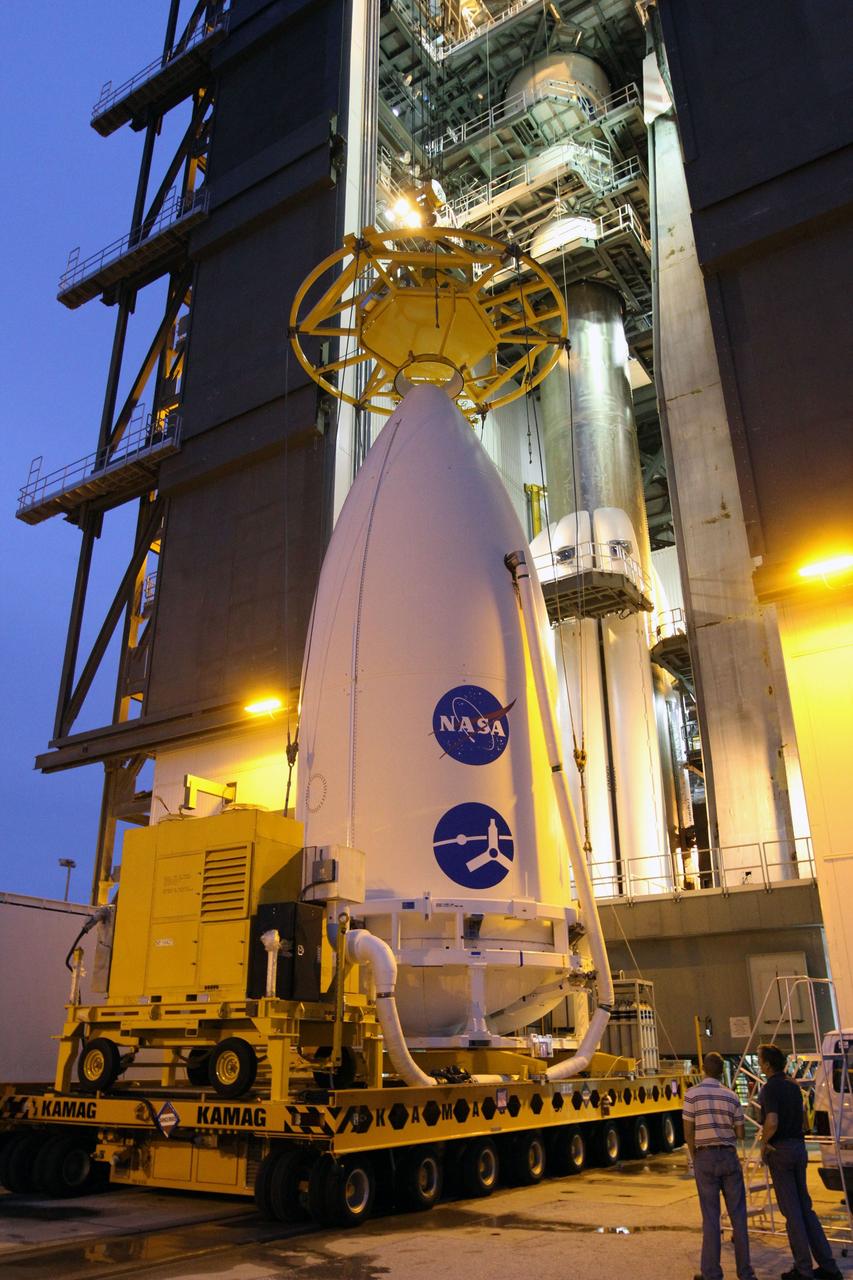
CAPE CANAVERAL, Fla. -- At Space Launch Complex 41, a crane is lowered over the nose of the Atlas payload fairing enclosing the Juno spacecraft in preparation for its lift to the top of the Atlas rocket stacked in the Vertical Integration Facility. The spacecraft was prepared for launch in the Astrotech Space Operations' payload processing facility in Titusville, Fla. The fairing will protect the spacecraft from the impact of aerodynamic pressure and heating during ascent and will be jettisoned once the spacecraft is outside the Earth's atmosphere. Juno is scheduled to launch Aug. 5 aboard a United Launch Alliance Atlas V rocket from Cape Canaveral Air Force Station in Florida. The solar-powered spacecraft will orbit Jupiter's poles 33 times to find out more about the gas giant's origins, structure, atmosphere and magnetosphere and investigate the existence of a solid planetary core. For more information, visit www.nasa.gov/juno. Photo credit: NASA/Cory Huston
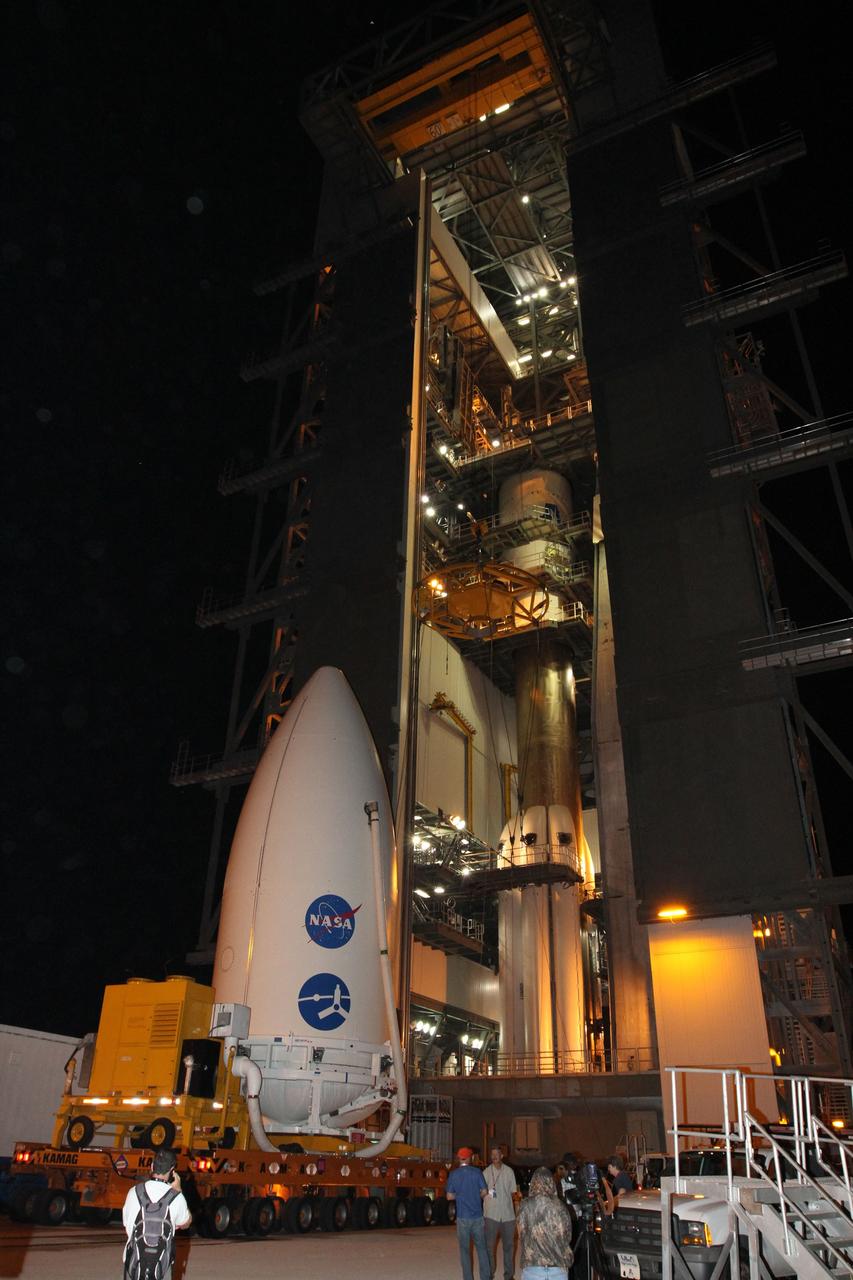
CAPE CANAVERAL, Fla. -- The Juno spacecraft, enclosed in an Atlas payload fairing, arrives at Space Launch Complex 41. The spacecraft was prepared for launch in the Astrotech Space Operations' payload processing facility in Titusville, Fla. The fairing will protect the spacecraft from the impact of aerodynamic pressure and heating during ascent and will be jettisoned once the spacecraft is outside the Earth's atmosphere. Juno is scheduled to launch Aug. 5 aboard a United Launch Alliance Atlas V rocket from Cape Canaveral Air Force Station in Florida. The solar-powered spacecraft will orbit Jupiter's poles 33 times to find out more about the gas giant's origins, structure, atmosphere and magnetosphere and investigate the existence of a solid planetary core. For more information, visit www.nasa.gov/juno. Photo credit: NASA/Cory Huston
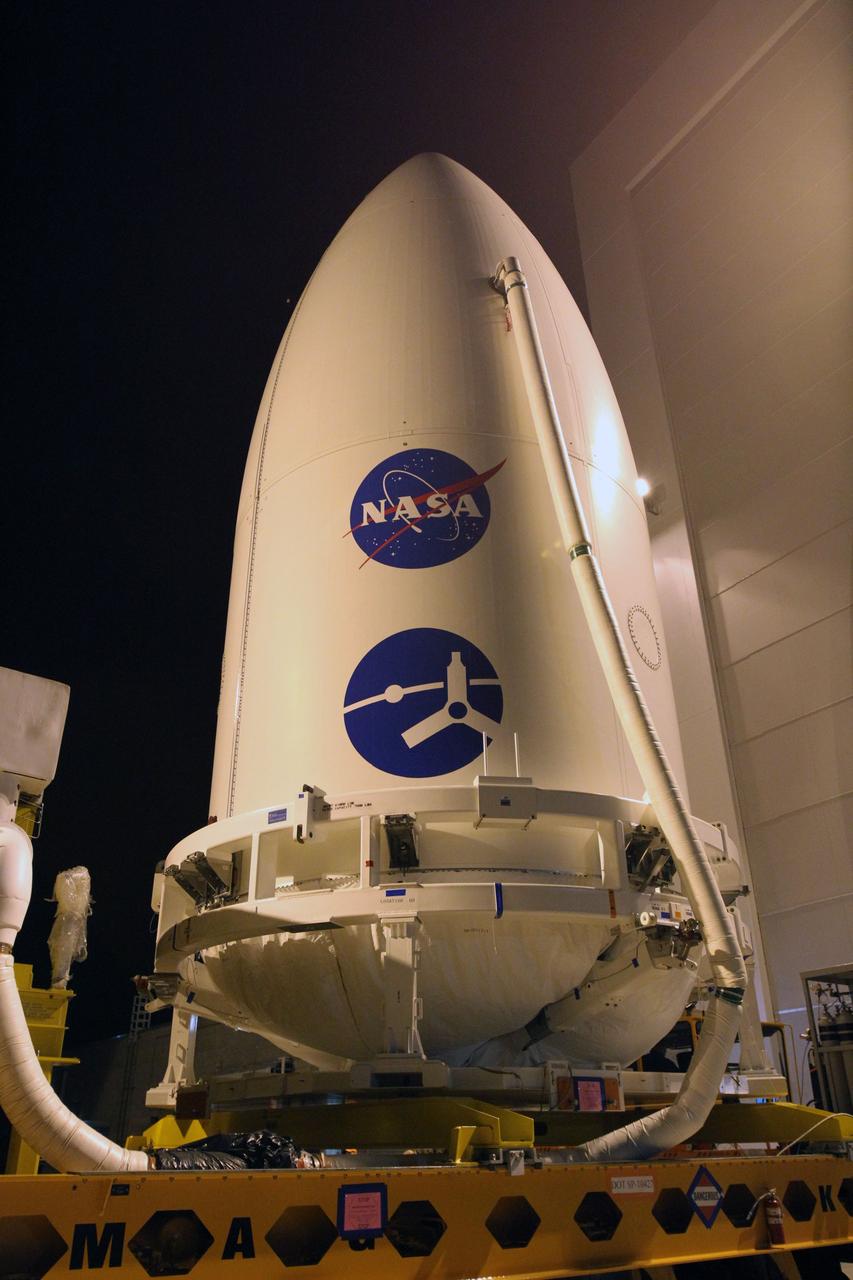
CAPE CANAVERAL, Fla. -- The door to the high bay of the Astrotech Space Operations' payload processing facility in Titusville, Fla., closes behind the Juno spacecraft, enclosed in an Atlas payload fairing, as its trip to Space Launch Complex 41 begins. The fairing will protect the spacecraft from the impact of aerodynamic pressure and heating during ascent and will be jettisoned once the spacecraft is outside the Earth's atmosphere. Juno is scheduled to launch Aug. 5 aboard a United Launch Alliance Atlas V rocket from Cape Canaveral Air Force Station in Florida. The solar-powered spacecraft will orbit Jupiter's poles 33 times to find out more about the gas giant's origins, structure, atmosphere and magnetosphere and investigate the existence of a solid planetary core. For more information, visit www.nasa.gov/juno. Photo credit: NASA/Cory Huston
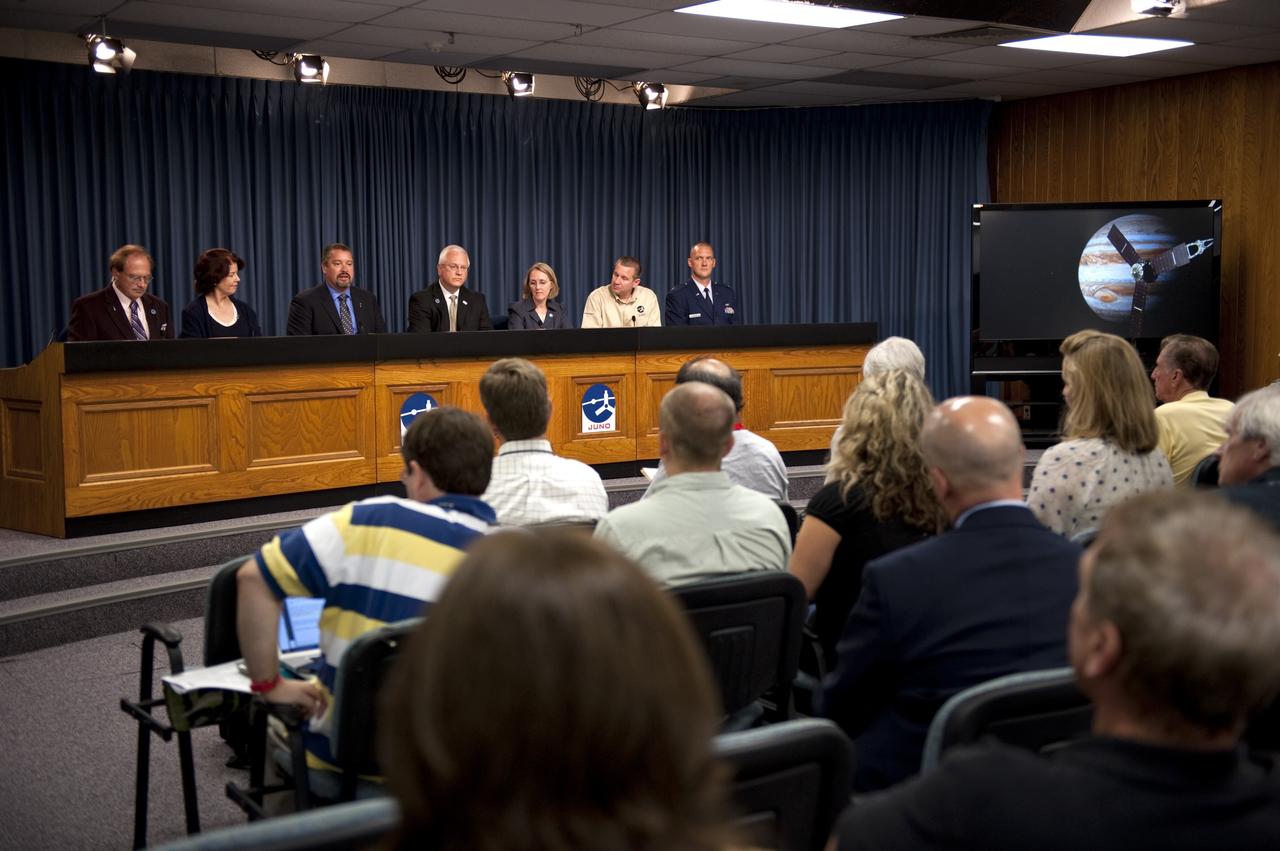
CAPE CANAVERAL, Fla. -- Media representatives question the participants of a Juno prelaunch news conference in the NASA Press Site auditorium at NASA's Kennedy Space Center in Florida. From left are George Diller, NASA Public Affairs; Colleen Hartman, assistant associate administrator, Science Mission Directorate, NASA Headquarters, Washington; Omar Baez, NASA launch director, Kennedy Space Center, Cape Canaveral, Fla.; Vernon Thorp, program manager, NASA Missions, United Launch Alliance, Denver, Colo.; Jan Chodas, Juno project manager, Jet Propulsion Laboratory, Pasadena, Calif.; Tim Gasparrini, Juno program manager, Lockheed Martin Space Systems, Denver, Colo.; and Capt. Billy Whisel, launch weather officer, 45th Weather Squadron, Cape Canaveral Air Force Station, Fla. Juno is scheduled to launch Aug. 5 aboard a United Launch Alliance Atlas V rocket from Cape Canaveral Air Force Station in Florida. The solar-powered spacecraft will orbit Jupiter's poles 33 times to find out more about the gas giant's origins, structure, atmosphere and magnetosphere and investigate the existence of a solid planetary core. For more information, visit www.nasa.gov/juno. Photo credit: NASA/Kim Shiflett
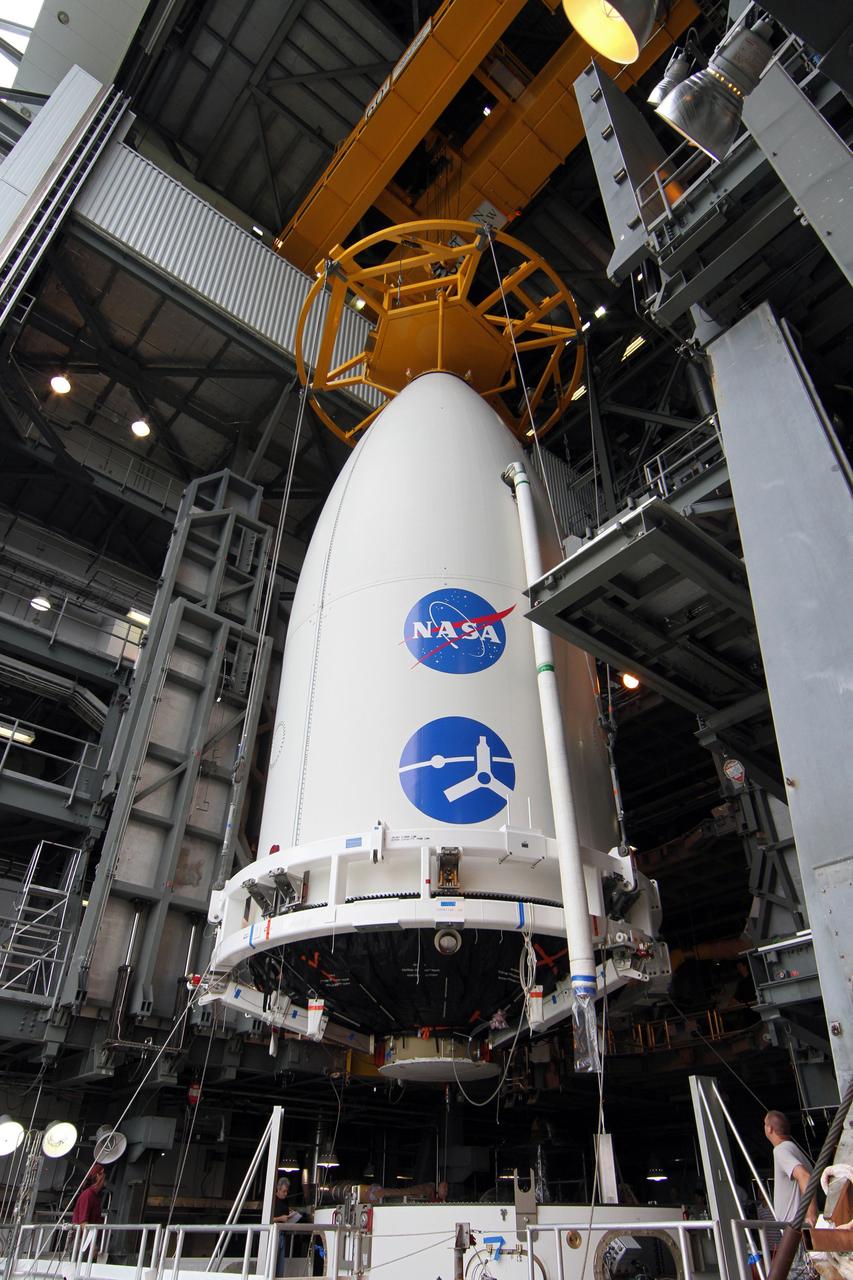
CAPE CANAVERAL, Fla. -- At Space Launch Complex 41, the Juno spacecraft, enclosed in an Atlas payload fairing, is transferred into the Vertical Integration Facility where it will be positioned on top of the Atlas rocket stacked inside. The spacecraft was prepared for launch in the Astrotech Space Operations' payload processing facility in Titusville, Fla. The fairing will protect the spacecraft from the impact of aerodynamic pressure and heating during ascent and will be jettisoned once the spacecraft is outside the Earth's atmosphere. Juno is scheduled to launch Aug. 5 aboard a United Launch Alliance Atlas V rocket from Cape Canaveral Air Force Station in Florida. The solar-powered spacecraft will orbit Jupiter's poles 33 times to find out more about the gas giant's origins, structure, atmosphere and magnetosphere and investigate the existence of a solid planetary core. For more information, visit www.nasa.gov/juno. Photo credit: NASA/Cory Huston

CAPE CANAVERAL, Fla. -- At Space Launch Complex 41, a crane hoists the Juno spacecraft, enclosed in an Atlas payload fairing, up the side of the Vertical Integration Facility to the top of the Atlas rocket stacked inside the facility. The spacecraft was prepared for launch in the Astrotech Space Operations' payload processing facility in Titusville, Fla. The fairing will protect the spacecraft from the impact of aerodynamic pressure and heating during ascent and will be jettisoned once the spacecraft is outside the Earth's atmosphere. Juno is scheduled to launch Aug. 5 aboard a United Launch Alliance Atlas V rocket from Cape Canaveral Air Force Station in Florida. The solar-powered spacecraft will orbit Jupiter's poles 33 times to find out more about the gas giant's origins, structure, atmosphere and magnetosphere and investigate the existence of a solid planetary core. For more information, visit www.nasa.gov/juno. Photo credit: NASA/Cory Huston

CAPE CANAVERAL, Fla. -- Media representatives question the participants of a Juno mission science briefing in the NASA Press Site auditorium at NASA's Kennedy Space Center in Florida. From left are Scott Bolton, Juno principal investigator, Southwest Research Institute, San Antonio; Toby Owen, Juno co-investigator, University of Hawaii; Jack Connerney, Juno MAG Instrument Lead, Goddard Space Flight Center, Greenbelt, Md.; Steve Levin, Juno project scientist, Jet Propulsion Laboratory, Pasadena, Calif.; Fran Bagenai, Juno co-investigator, University of Colorado, Boulder, Colo.; and Candy Hansen, Juno co-investigator, Planetary Science Institute, Tucson, Ariz. Juno is scheduled to launch Aug. 5 aboard a United Launch Alliance Atlas V rocket from Cape Canaveral Air Force Station in Florida. The solar-powered spacecraft will orbit Jupiter's poles 33 times to find out more about the gas giant's origins, structure, atmosphere and magnetosphere and investigate the existence of a solid planetary core. For more information, visit www.nasa.gov/juno. Photo credit: NASA/Kim Shiflett

CAPE CANAVERAL, Fla. – At NASA’s Kennedy Space Center in Florida, NASA Chief Scientist Waleed Abdalati speaks to about 150 followers of the agency’s Twitter account during Juno Tweetup activities inside a tent at the Press Site. The tweeters are at the center for two days of prelaunch activities. Juno is NASA’s mission to Jupiter to study the giant planet and improve our understanding of the planet’s formation and evolution. The tweeters will share their experiences with followers through the social networking site Twitter. Attendees represent 28 states, the District of Columbia and five other countries: Canada, Finland, Norway, Spain and the United Kingdom. This is the first time NASA has invited Twitter followers to experience the launch of a planetary spacecraft. The Juno spacecraft is scheduled to launch on an Atlas V rocket from Space Launch Complex 41 at Cape Canaveral Air Force Station in Florida, Aug. 5, at 11:34 a.m. EDT. For more information, visit http://www.nasa.gov/juno. Photo credit: NASA/Gianni M. Woods
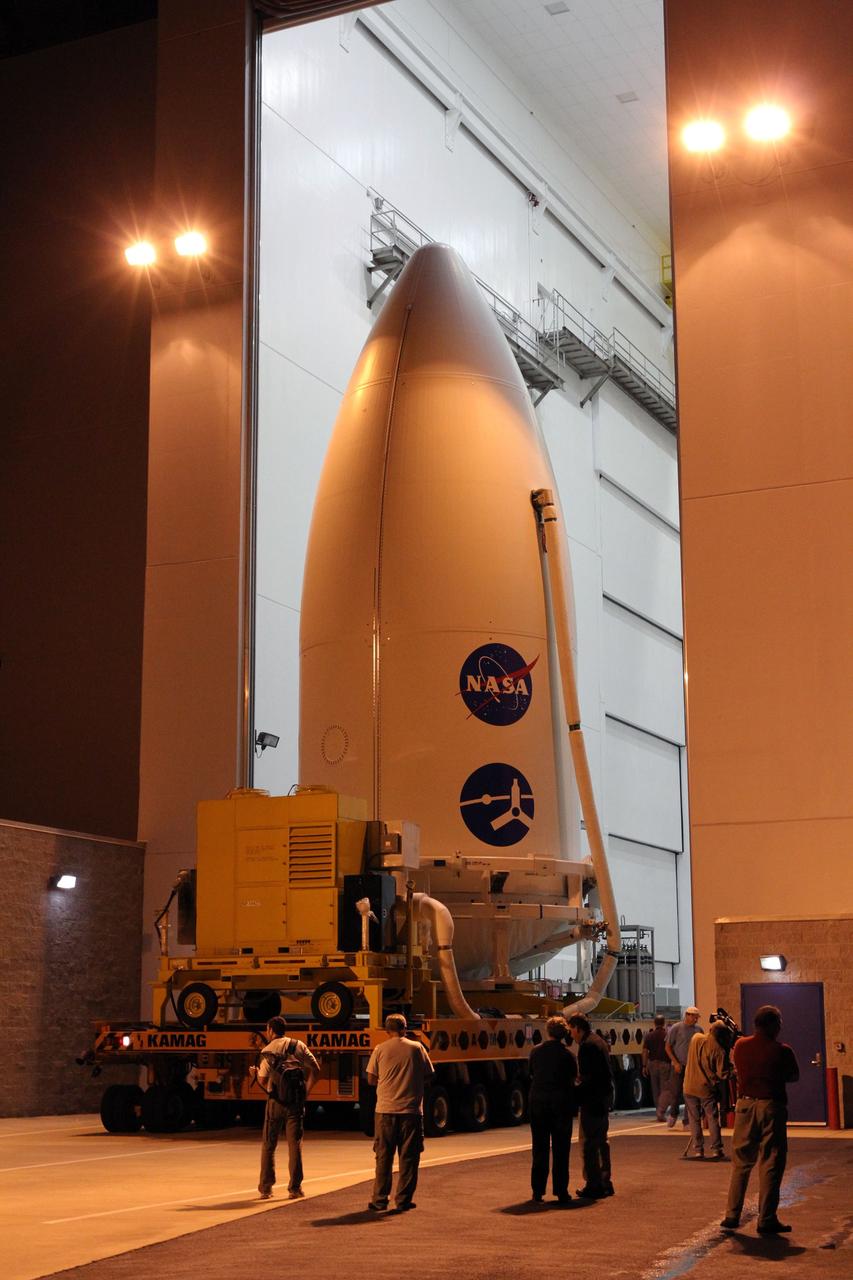
CAPE CANAVERAL, Fla. -- The Juno spacecraft, enclosed in an Atlas payload fairing, rolls out of the Astrotech Space Operations' payload processing facility in Titusville, Fla., for its trip to Space Launch Complex 41. The fairing will protect the spacecraft from the impact of aerodynamic pressure and heating during ascent and will be jettisoned once the spacecraft is outside the Earth's atmosphere. Juno is scheduled to launch Aug. 5 aboard a United Launch Alliance Atlas V rocket from Cape Canaveral Air Force Station in Florida. The solar-powered spacecraft will orbit Jupiter's poles 33 times to find out more about the gas giant's origins, structure, atmosphere and magnetosphere and investigate the existence of a solid planetary core. For more information, visit www.nasa.gov/juno. Photo credit: NASA/Cory Huston

CAPE CANAVERAL, Fla. – At NASA’s Kennedy Space Center in Florida, NASA Administrator Charles Bolden speaks to about 150 followers of the agency’s Twitter account during Juno Tweetup activities inside a tent at the Press Site. The tweeters are at the center for two days of prelaunch activities. Juno is NASA’s mission to Jupiter to study the giant planet and improve our understanding of the planet’s formation and evolution. The tweeters will share their experiences with followers through the social networking site Twitter. Attendees represent 28 states, the District of Columbia and five other countries: Canada, Finland, Norway, Spain and the United Kingdom. This is the first time NASA has invited Twitter followers to experience the launch of a planetary spacecraft. The Juno spacecraft is scheduled to launch on an Atlas V rocket from Space Launch Complex 41 at Cape Canaveral Air Force Station in Florida, Aug. 5, at 11:34 a.m. EDT. For more information, visit http://www.nasa.gov/juno. Photo credit: NASA/Gianni M. Woods
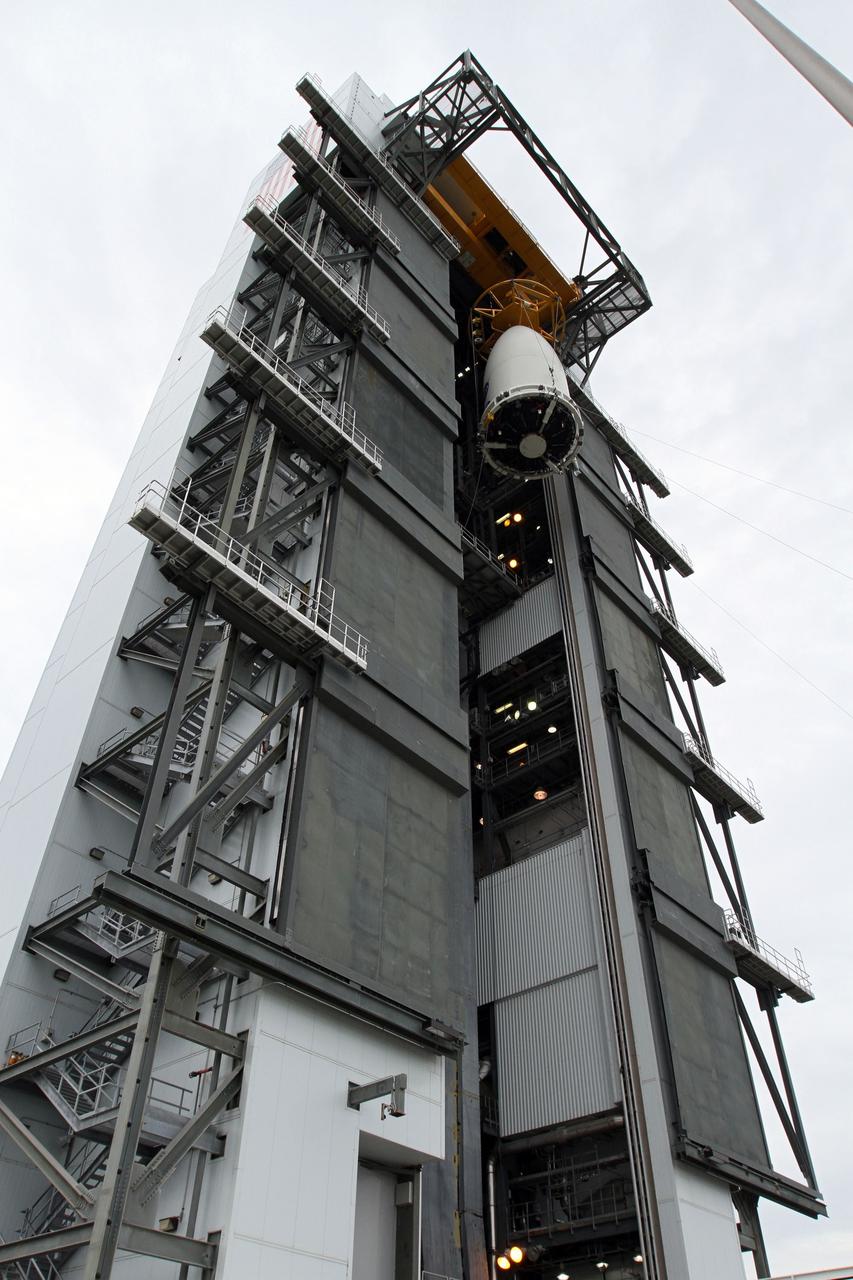
CAPE CANAVERAL, Fla. -- At Space Launch Complex 41, the Juno spacecraft, enclosed in an Atlas payload fairing, nears the top of the Vertical Integration Facility where it will be positioned on top of the Atlas rocket already stacked inside. The spacecraft was prepared for launch in the Astrotech Space Operations' payload processing facility in Titusville, Fla. The fairing will protect the spacecraft from the impact of aerodynamic pressure and heating during ascent and will be jettisoned once the spacecraft is outside the Earth's atmosphere. Juno is scheduled to launch Aug. 5 aboard a United Launch Alliance Atlas V rocket from Cape Canaveral Air Force Station in Florida. The solar-powered spacecraft will orbit Jupiter's poles 33 times to find out more about the gas giant's origins, structure, atmosphere and magnetosphere and investigate the existence of a solid planetary core. For more information, visit www.nasa.gov/juno. Photo credit: NASA/Cory Huston
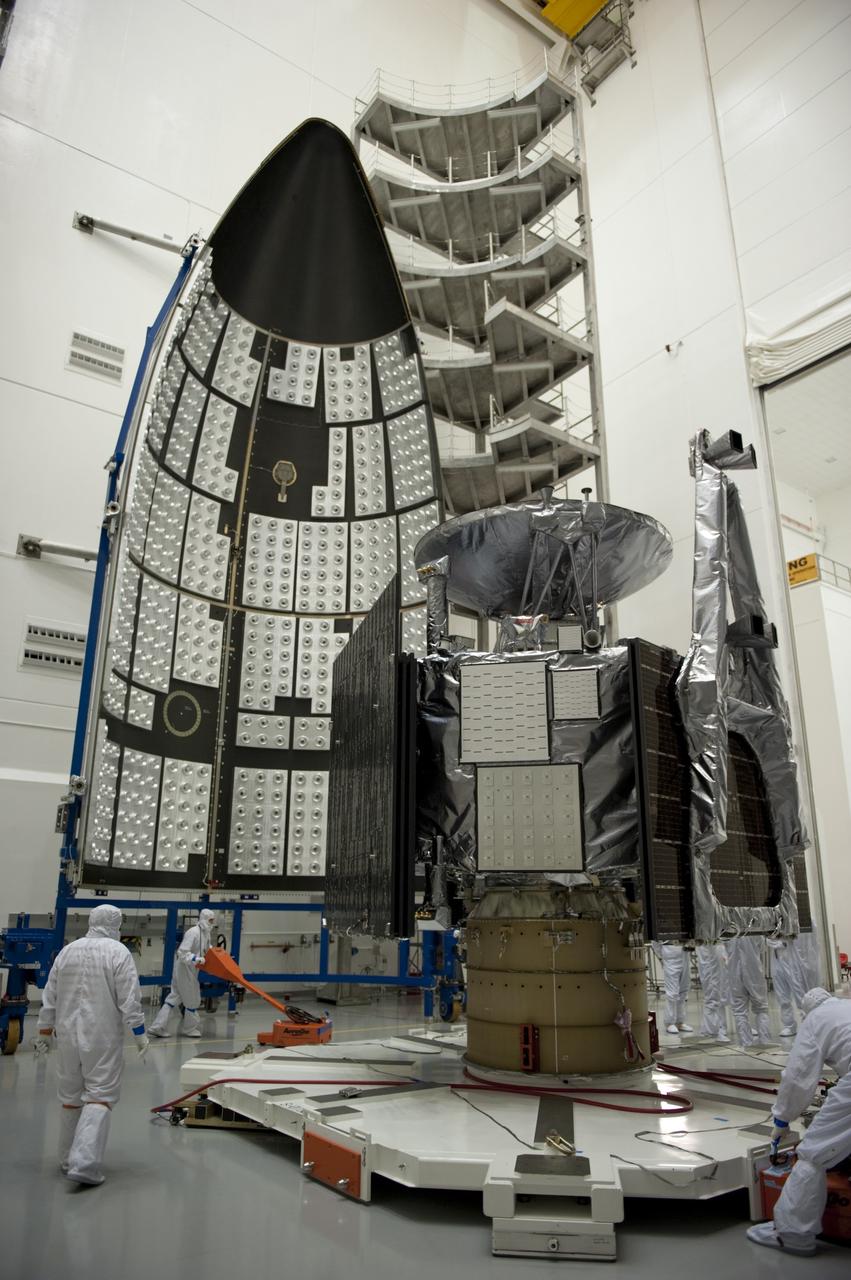
CAPE CANAVERAL, Fla. -- In the Astrotech payload processing facility near Kennedy Space Center in Florida, work has begun to enclose the Juno spacecraft in its Atlas payload fairing for launch. The fairing will protect the spacecraft from the impact of aerodynamic pressure and heating during ascent and will be jettisoned once the spacecraft is outside the Earth's atmosphere. Juno is scheduled to launch aboard a United Launch Alliance Atlas V rocket from Cape Canaveral, Fla., Aug. 5.The solar-powered spacecraft will orbit Jupiter's poles 33 times to find out more about the gas giant's origins, structure, atmosphere and magnetosphere and investigate the existence of a solid planetary core. For more information, visit www.nasa.gov/juno. Photo credit: NASA/Kim Shiflett
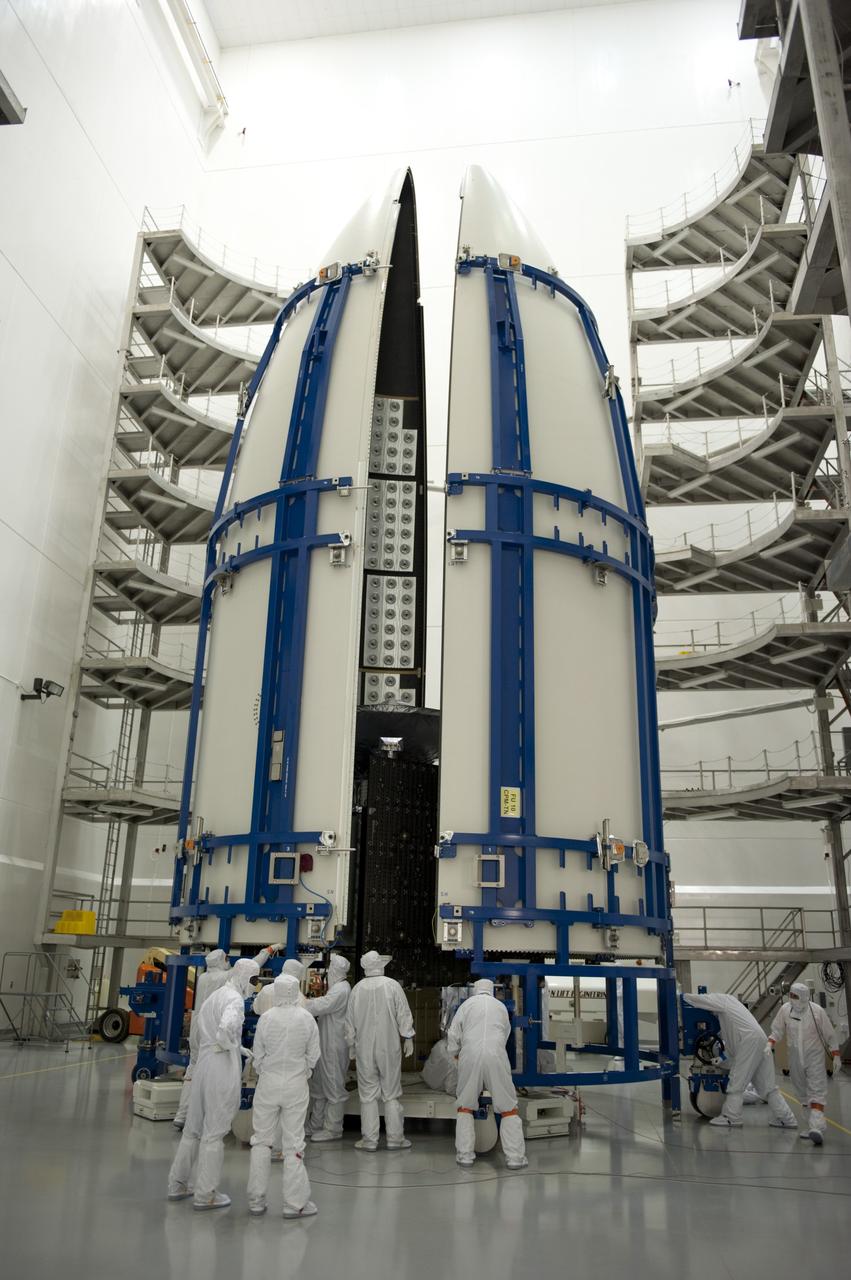
CAPE CANAVERAL, Fla. -- In the Astrotech payload processing facility near Kennedy Space Center in Florida, the Atlas payload fairing nearly obscures the Juno spacecraft from view during work to enclose the spacecraft for launch. The fairing will protect the spacecraft from the impact of aerodynamic pressure and heating during ascent and will be jettisoned once the spacecraft is outside the Earth's atmosphere. Juno is scheduled to launch aboard a United Launch Alliance Atlas V rocket from Cape Canaveral, Fla., Aug. 5.The solar-powered spacecraft will orbit Jupiter's poles 33 times to find out more about the gas giant's origins, structure, atmosphere and magnetosphere and investigate the existence of a solid planetary core. For more information, visit www.nasa.gov/juno. Photo credit: NASA/Kim Shiflett
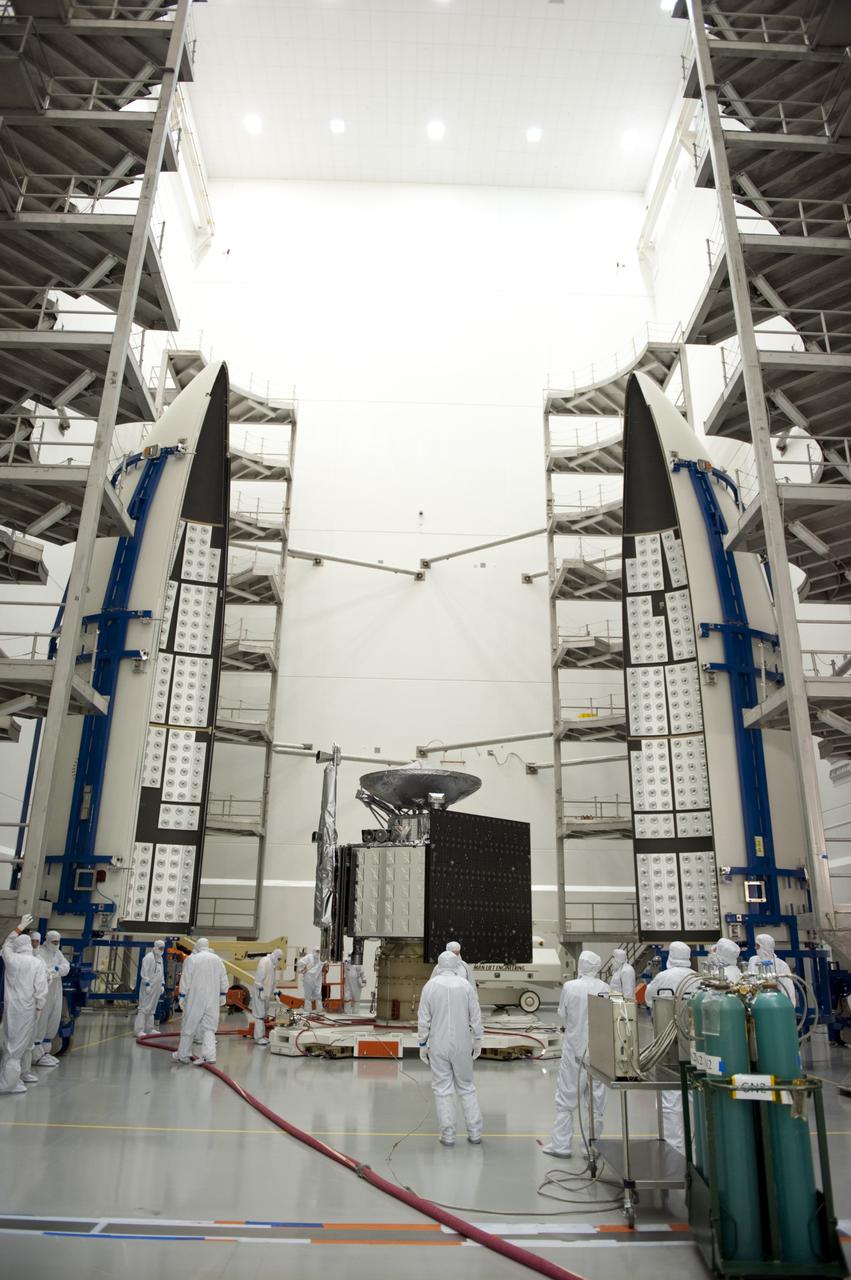
CAPE CANAVERAL, Fla. -- In the Astrotech payload processing facility near Kennedy Space Center in Florida, preparations are under way to enclose the Juno spacecraft in its Atlas payload fairing for launch. The fairing will protect the spacecraft from the impact of aerodynamic pressure and heating during ascent and will be jettisoned once the spacecraft is outside the Earth's atmosphere. Juno is scheduled to launch aboard a United Launch Alliance Atlas V rocket from Cape Canaveral, Fla., Aug. 5.The solar-powered spacecraft will orbit Jupiter's poles 33 times to find out more about the gas giant's origins, structure, atmosphere and magnetosphere and investigate the existence of a solid planetary core. For more information, visit www.nasa.gov/juno. Photo credit: NASA/Kim Shiflett
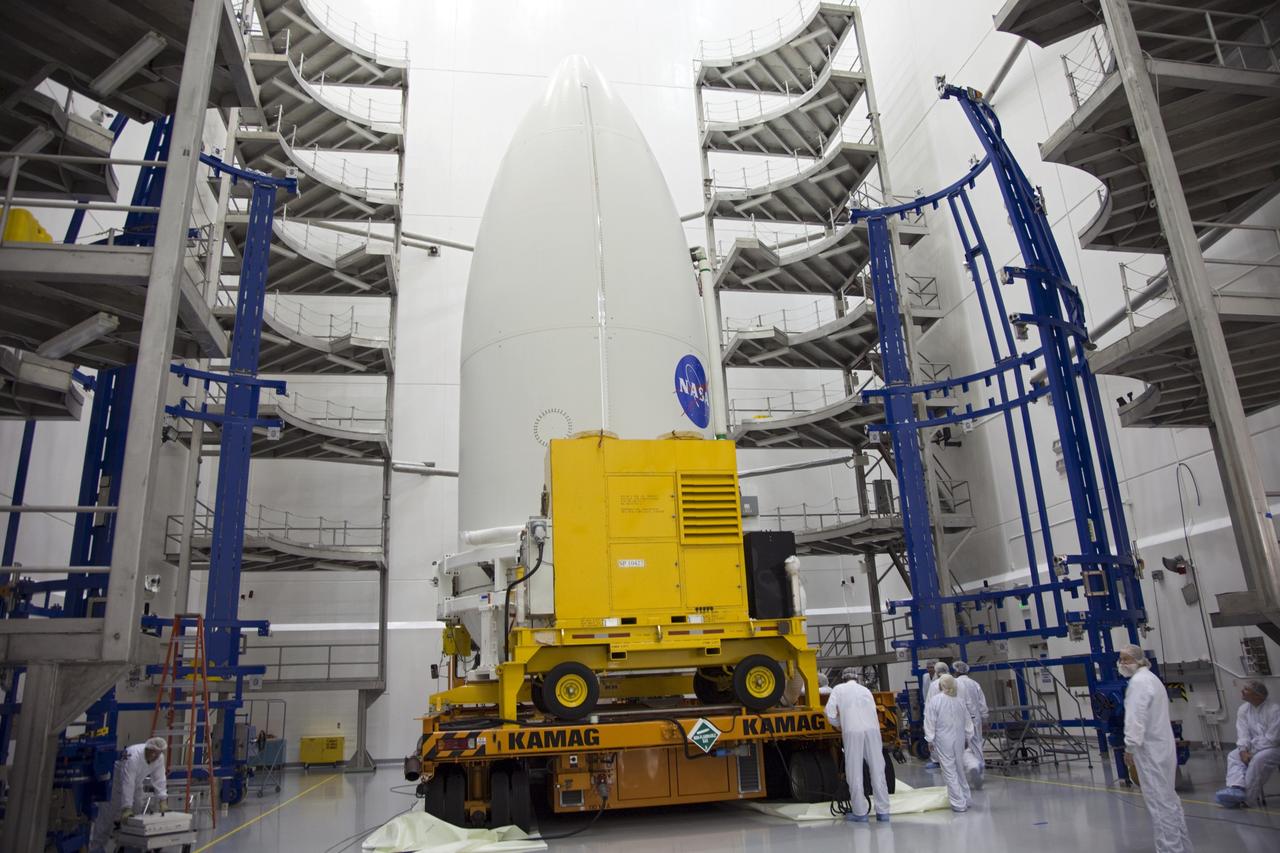
CAPE CANAVERAL, Fla. -- In the Astrotech payload processing facility near Kennedy Space Center in Florida, the Atlas payload fairing enclosing the Juno spacecraft is secured on a transporter and ready for its trip to Space Launch Complex 41. The fairing will protect the spacecraft from the impact of aerodynamic pressure and heating during ascent and will be jettisoned once the spacecraft is outside the Earth's atmosphere. Juno is scheduled to launch aboard a United Launch Alliance Atlas V rocket from Cape Canaveral, Fla., Aug. 5.The solar-powered spacecraft will orbit Jupiter's poles 33 times to find out more about the gas giant's origins, structure, atmosphere and magnetosphere and investigate the existence of a solid planetary core. For more information, visit www.nasa.gov/juno. Photo credit: NASA/Frank Michaux
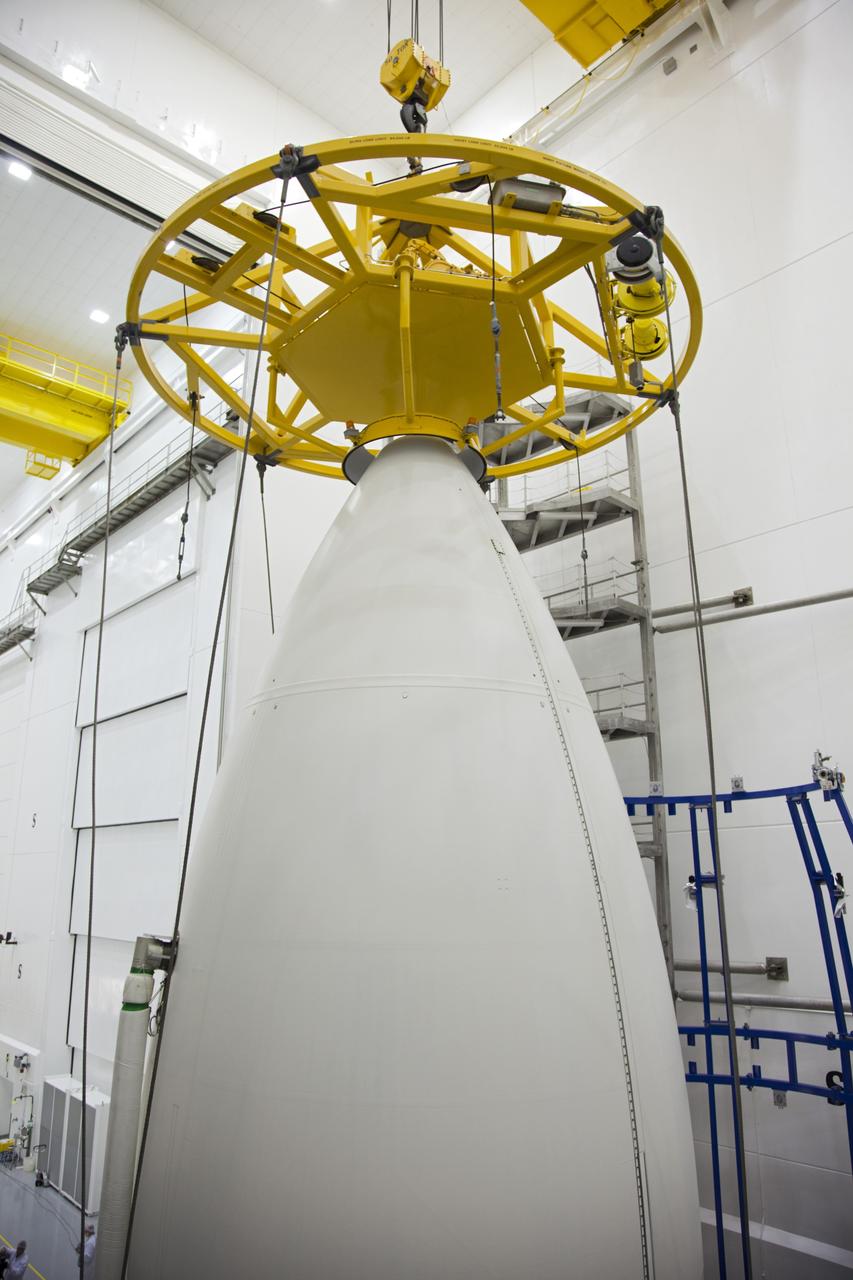
CAPE CANAVERAL, Fla. -- In the Astrotech payload processing facility near Kennedy Space Center in Florida, a lifting device is lowered onto the nose of the Atlas payload fairing enclosing the Juno spacecraft during operations to lift the spacecraft onto a transporter for its trip to Space Launch Complex 41. The fairing will protect the spacecraft from the impact of aerodynamic pressure and heating during ascent and will be jettisoned once the spacecraft is outside the Earth's atmosphere. Juno is scheduled to launch aboard a United Launch Alliance Atlas V rocket from Cape Canaveral, Fla., Aug. 5.The solar-powered spacecraft will orbit Jupiter's poles 33 times to find out more about the gas giant's origins, structure, atmosphere and magnetosphere and investigate the existence of a solid planetary core. For more information, visit www.nasa.gov/juno. Photo credit: NASA/Frank Michaux