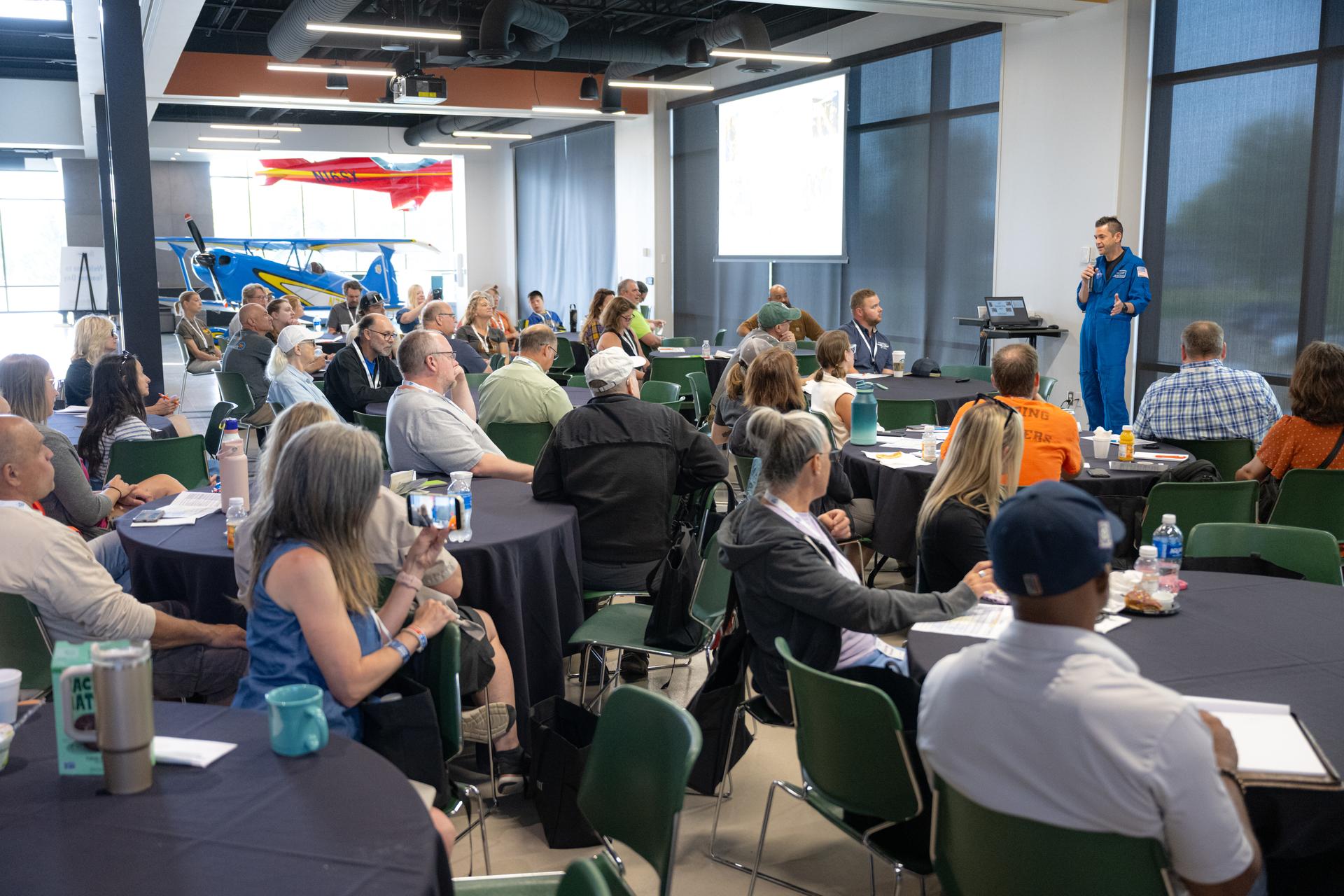
NASA Administrator Jared Isaacman speaks to K-12 educators during a "Teacher Day" event, Friday, July 24, 2026, at EAA AirVenture Oshkosh at Wittman Regional Airport in Oshkosh, Wis. Photo Credit: (NASA/John Kraus)
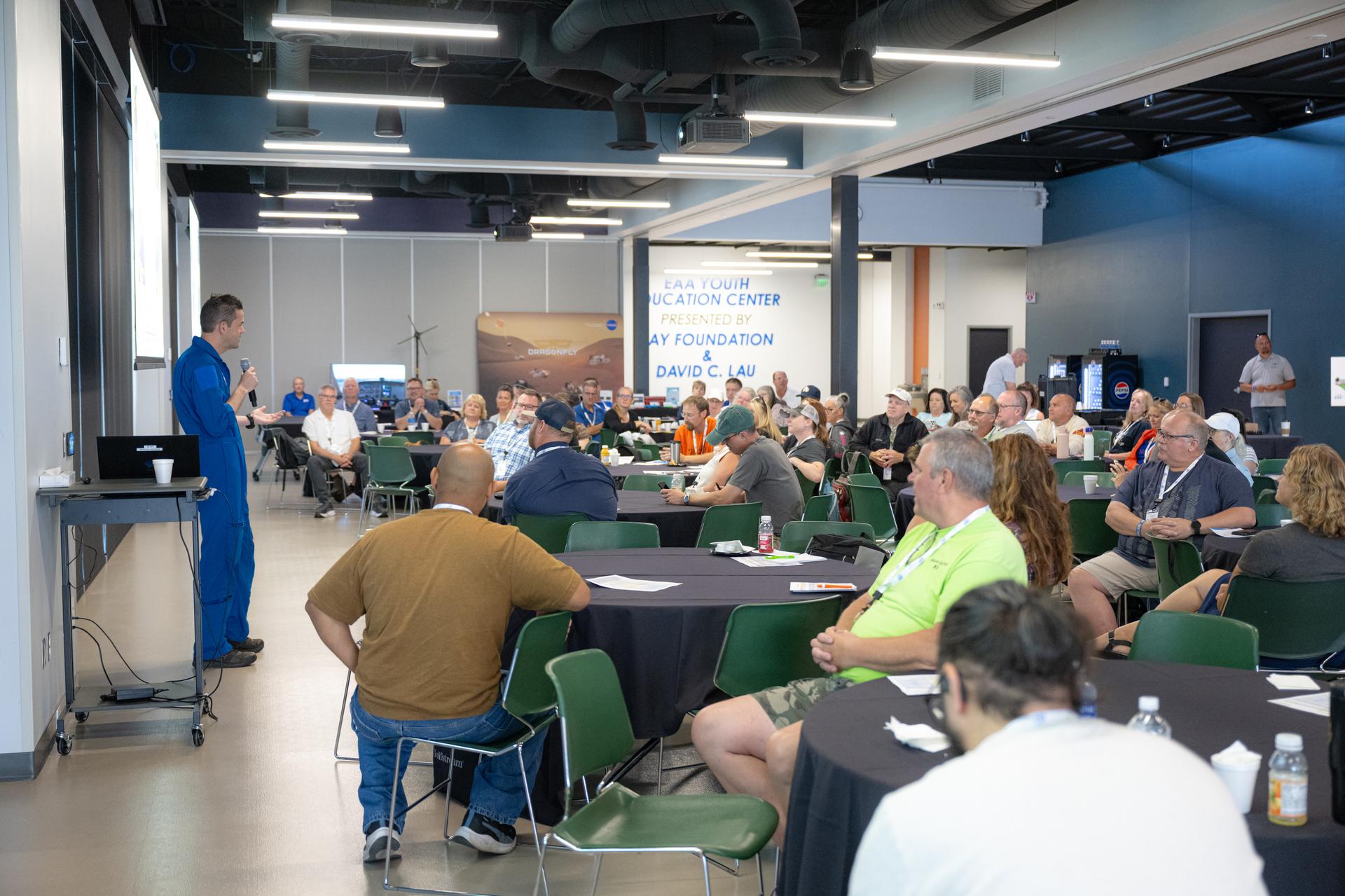
NASA Administrator Jared Isaacman speaks to K-12 educators during a "Teacher Day" event, Friday, July 24, 2026, at EAA AirVenture Oshkosh at Wittman Regional Airport in Oshkosh, Wis. Photo Credit: (NASA/John Kraus)
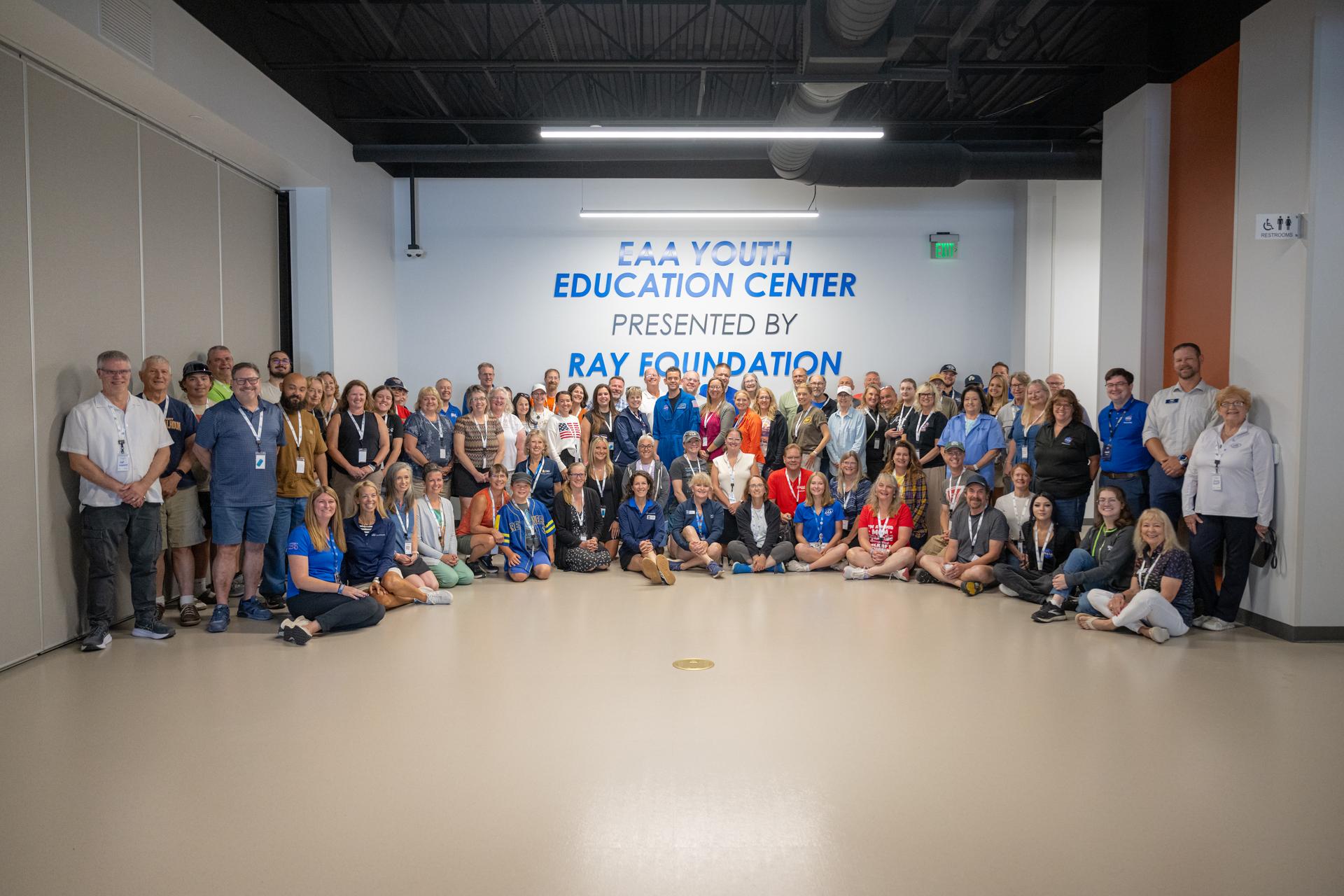
NASA Administrator Jared Isaacman poses for a photograph with K-12 educators during a "Teacher Day" event, Friday, July 24, 2026, at EAA AirVenture Oshkosh at Wittman Regional Airport in Oshkosh, Wis. Photo Credit: (NASA/John Kraus)
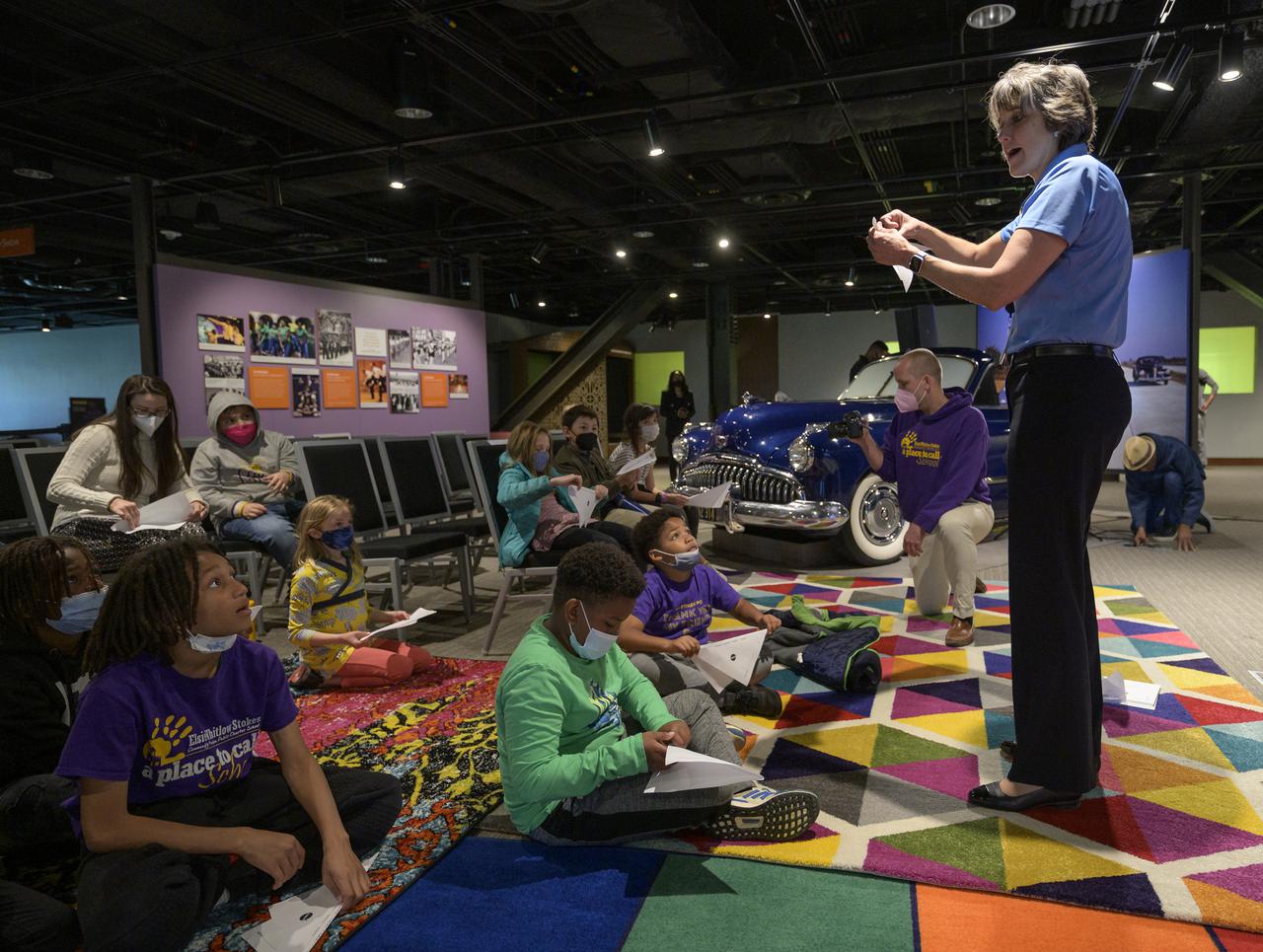
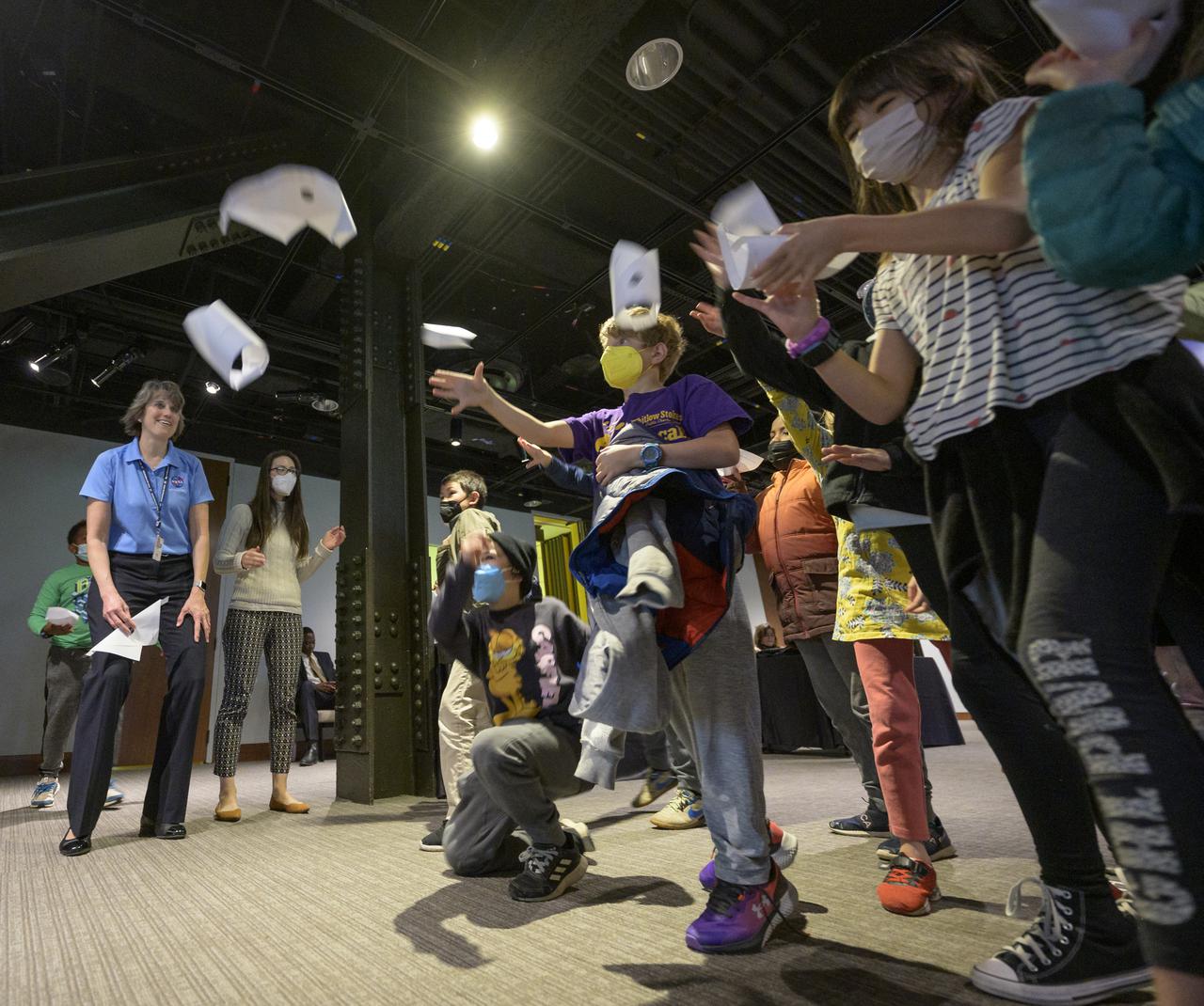
Cindy Hasselbring, NASA K-12 Education Advisor at NASA’s Office of STEM Engagement, teaches students about aeronautics and testing during a presentation, Thursday, April 28, 2022, at the National Museum of African American History and Culture in Washington. Photo Credit: (NASA/Bill Ingalls)
Cindy Hasselbring, NASA K-12 Education Advisor at NASA’s Office of STEM Engagement, teaches students about aeronautics and testing during a presentation, Thursday, April 28, 2022, at the National Museum of African American History and Culture in Washington. Photo Credit: (NASA/Bill Ingalls)
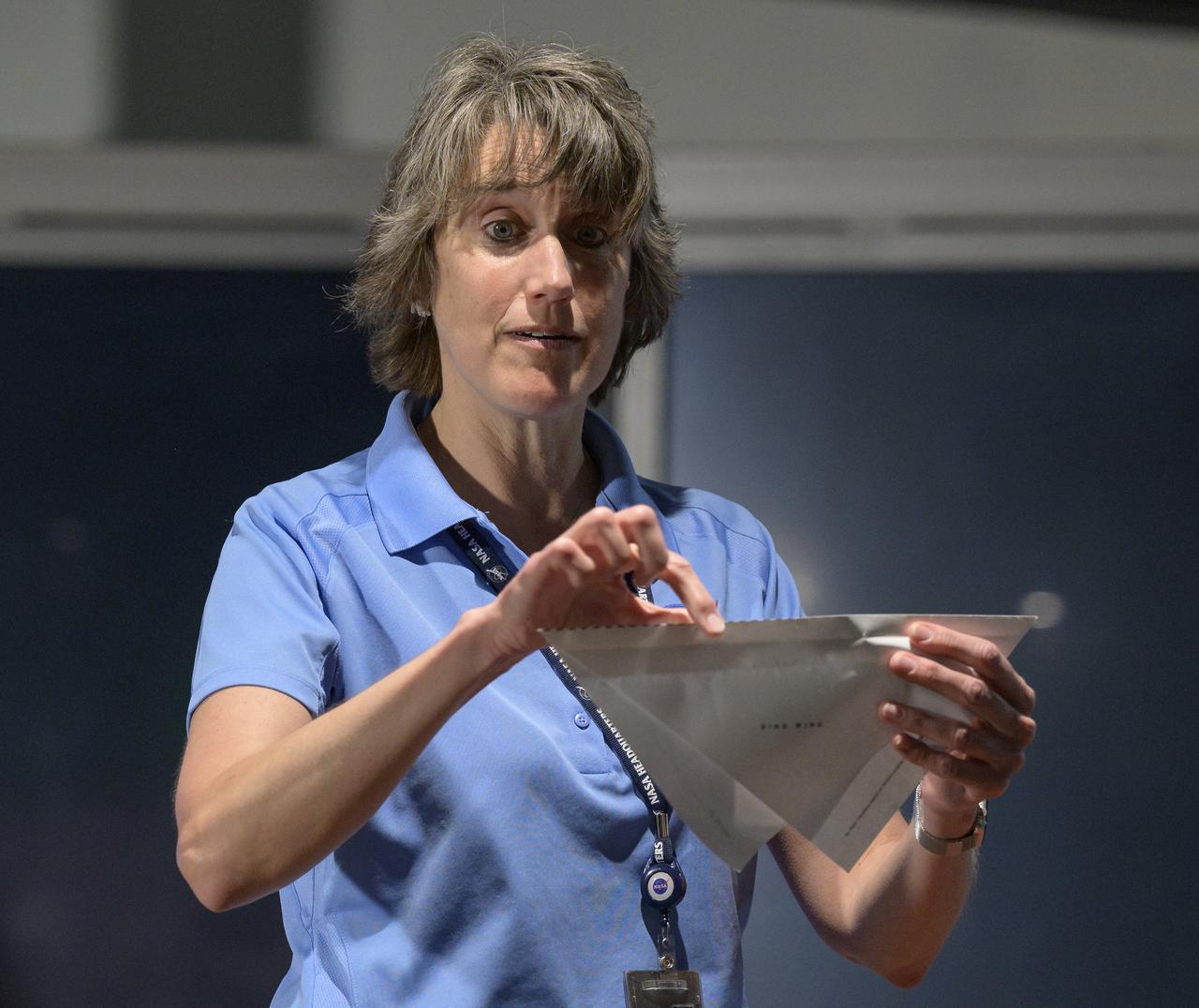
Cindy Hasselbring, NASA K-12 Education Advisor at NASA’s Office of STEM Engagement, teaches students about aeronautics and testing during a presentation, Thursday, April 28, 2022, at the National Museum of African American History and Culture in Washington. Photo Credit: (NASA/Bill Ingalls)

CAPE CANAVERAL, Fla. – Inside the Educator Resource Center at NASA’s Kennedy Space Center Visitor Complex in Florida, science teacher April Lanotte displays the Museum in a Box that contains activities and learning materials for K-12 students. Lanotte, who is an Albert Einstein Distinguished Educator Fellow working in NASA’s Aeronautics Research Mission Directorate, was at Kennedy to train education specialists and Kennedy Educate to Innovate program volunteers in the new series of lessons and activities. The Museum in a Box is a program designed to teach physical science through aeronautics using hands-on activities and experiments. Photo credit: NASA_Jim Grossmann

CAPE CANAVERAL, Fla. – Inside the Educator Resource Center at NASA’s Kennedy Space Center Visitor Complex in Florida, science teacher April Lanotte demonstrates one of the Museum in a Box experiments designed for K-12 students. Lanotte, who is an Albert Einstein Distinguished Educator Fellow working in NASA’s Aeronautics Research Mission Directorate, was at Kennedy to train education specialists and Kennedy Educate to Innovate program volunteers in the new series of lessons and activities. The Museum in a Box is a program designed to teach physical science through aeronautics using hands-on activities and experiments. Photo credit: NASA_Jim Grossmann

CAPE CANAVERAL, Fla. – Inside the Educator Resource Center at NASA’s Kennedy Space Center Visitor Complex in Florida, science teacher April Lanotte displays materials used for the Museum in a Box activities for K-12 students. Lanotte, who is an Albert Einstein Distinguished Educator Fellow working in NASA’s Aeronautics Research Mission Directorate, was at Kennedy to train education specialists and Kennedy Educate to Innovate program volunteers in the new series of lessons and activities. The Museum in a Box is a program designed to teach physical science through aeronautics using hands-on activities and experiments. Photo credit: NASA_Jim Grossmann
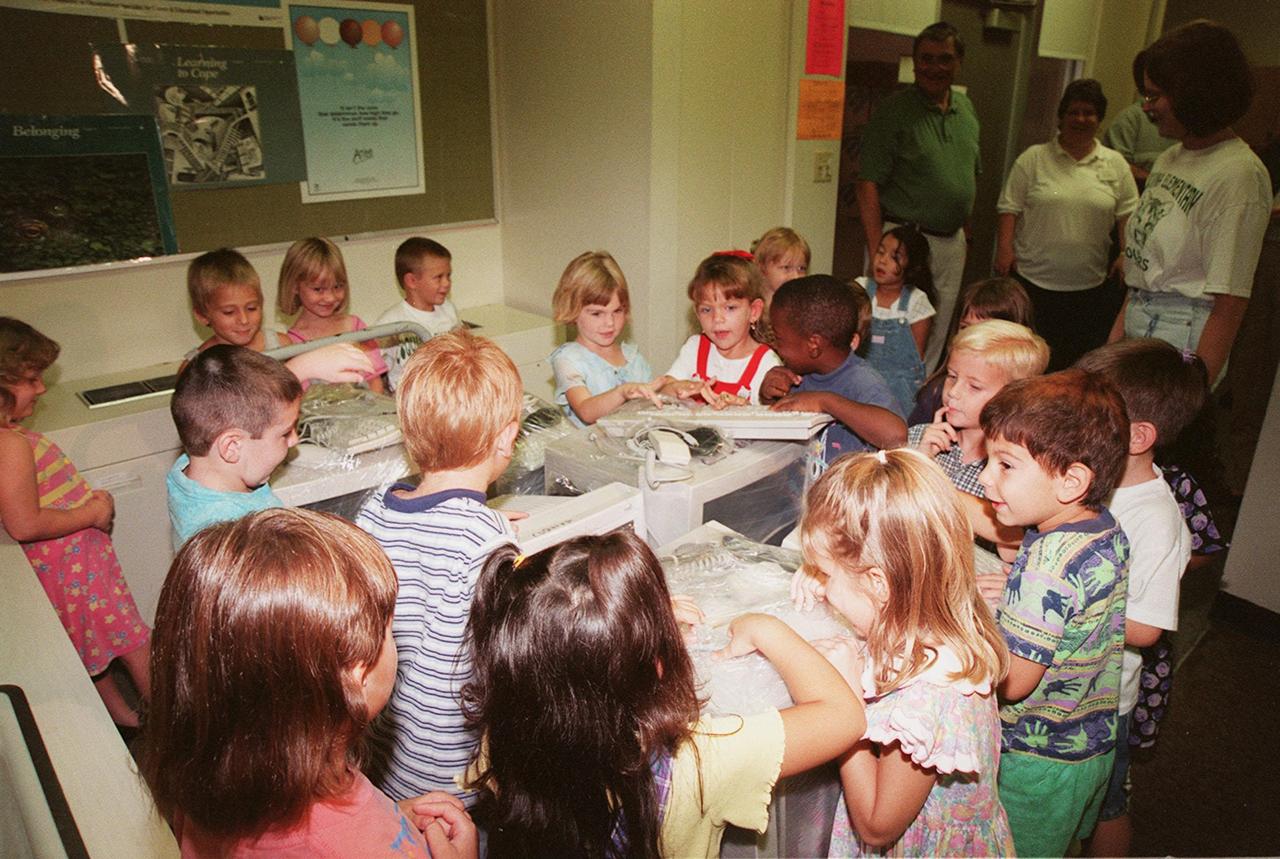
Children at Coquina Elementary School, Titusville, Fla., look with curiosity at the wrapped computer equipment donated by Kennedy Space Center. Coquina is one of 13 Brevard County schools receiving 81 excess contractor computers thanks to an innovative educational outreach project spearheaded by the Nasa k-12 Education Services Office at ksc. The Astronaut Memorial Foundation, a strategic partner in the effort, and several schools in rural Florida and Georgia also received refurbished computers as part of the year-long project. KSC employees put in about 3,300 volunteer hours to transform old, excess computers into upgraded, usable units. A total of $90,000 in upgraded computer equipment is being donated
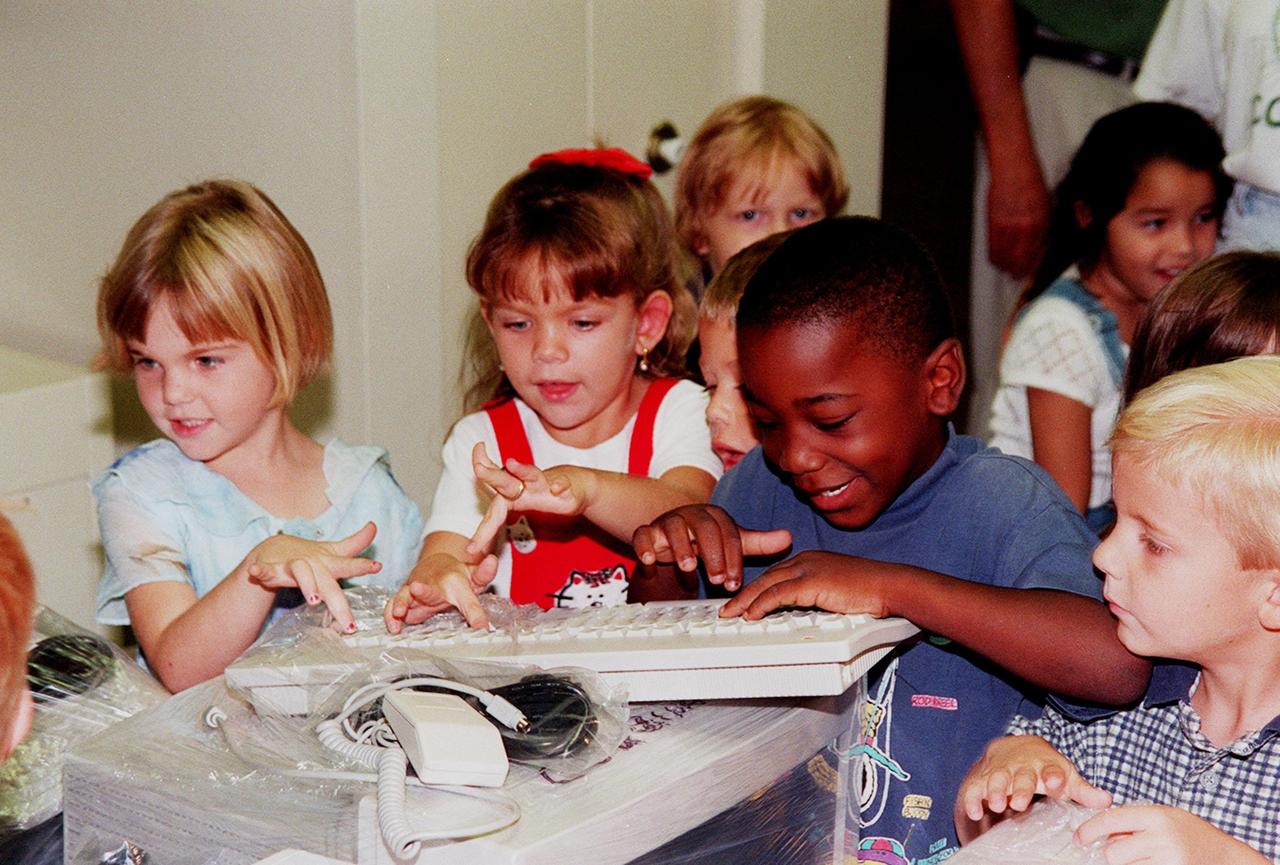
Children at Coquina Elementary School, Titusville, Fla., "practice" using a computer keyboard, part of equipment donated by Kennedy Space Center. Coquina is one of 13 Brevard County schools receiving 81 excess contractor computers thanks to an innovative educational outreach project spearheaded by the Nasa k-12 Education Services Office at ksc. The Astronaut Memorial Foundation, a strategic partner in the effort, and several schools in rural Florida and Georgia also received refurbished computers as part of the year-long project. KSC employees put in about 3,300 volunteer hours to transform old, excess computers into upgraded, usable units. A total of $90,000 in upgraded computer equipment is being donated
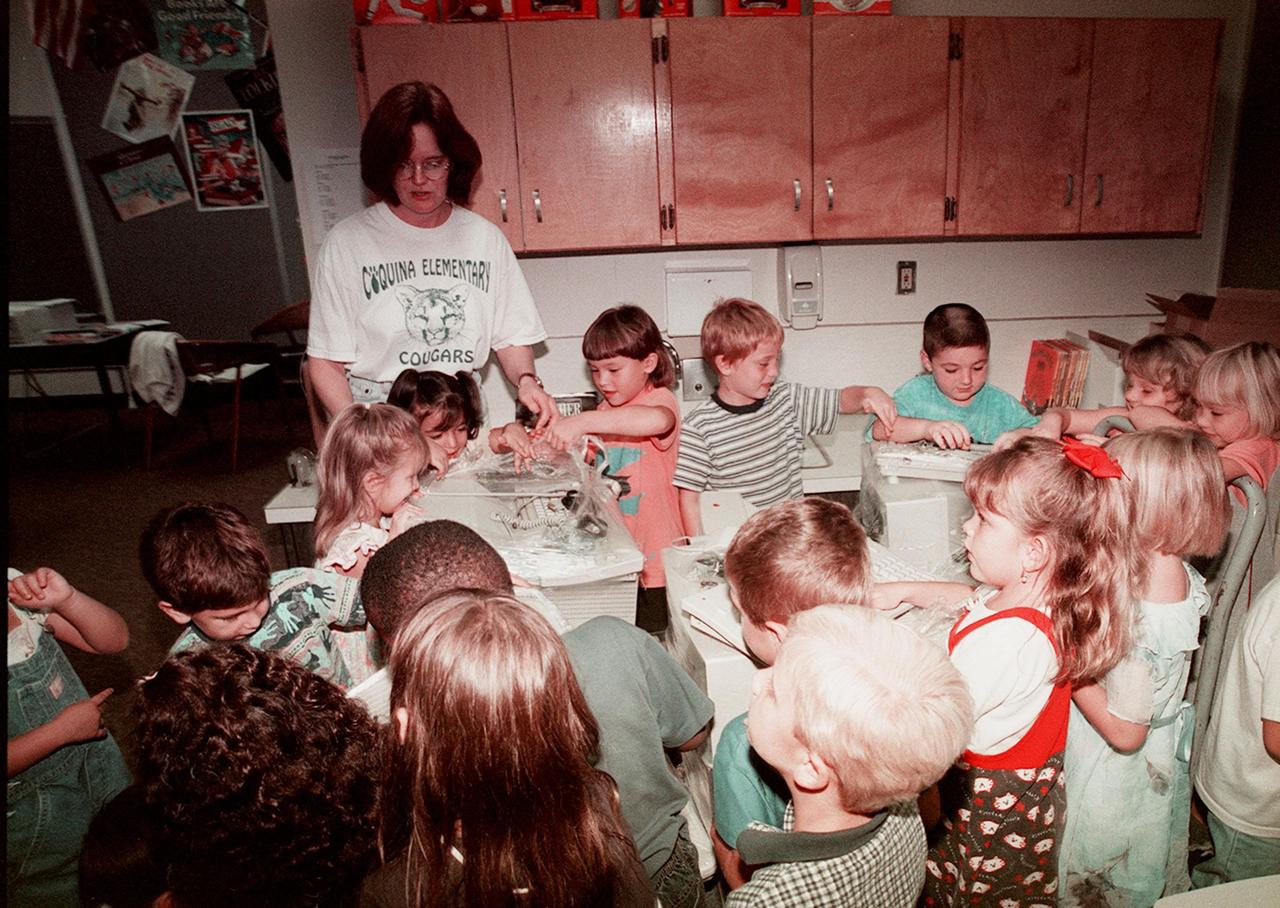
Children at Coquina Elementary School, Titusville, Fla., eagerly tear into the wrapped computer equipment donated by Kennedy Space Center. Coquina is one of 13 Brevard County schools receiving 81 excess contractor computers thanks to an innovative educational outreach project spearheaded by the Nasa k-12 Education Services Office at ksc. The Astronaut Memorial Foundation, a strategic partner in the effort, and several schools in rural Florida and Georgia also received refurbished computers as part of the year-long project. KSC employees put in about 3,300 volunteer hours to transform old, excess computers into upgraded, usable units. A total of $90,000 in upgraded computer equipment is being donated
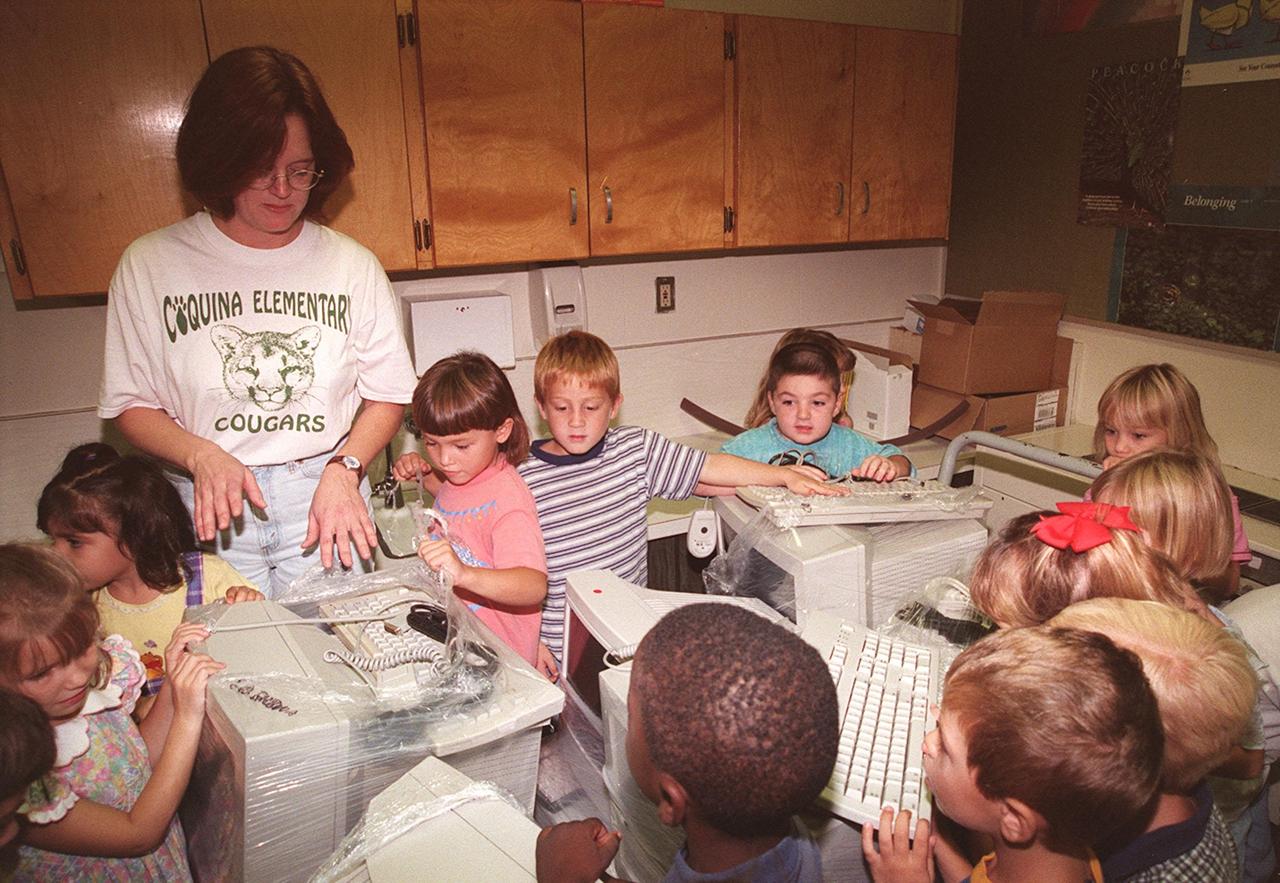
Children at Coquina Elementary School, Titusville, Fla., excitedly tear into the wrapped computer equipment donated by Kennedy Space Center. Coquina is one of 13 Brevard County schools receiving 81 excess contractor computers thanks to an innovative educational outreach project spearheaded by the Nasa k-12 Education Services Office at ksc. The Astronaut Memorial Foundation, a strategic partner in the effort, and several schools in rural Florida and Georgia also received refurbished computers as part of the year-long project. KSC employees put in about 3,300 volunteer hours to transform old, excess computers into upgraded, usable units. A total of $90,000 in upgraded computer equipment is being donated
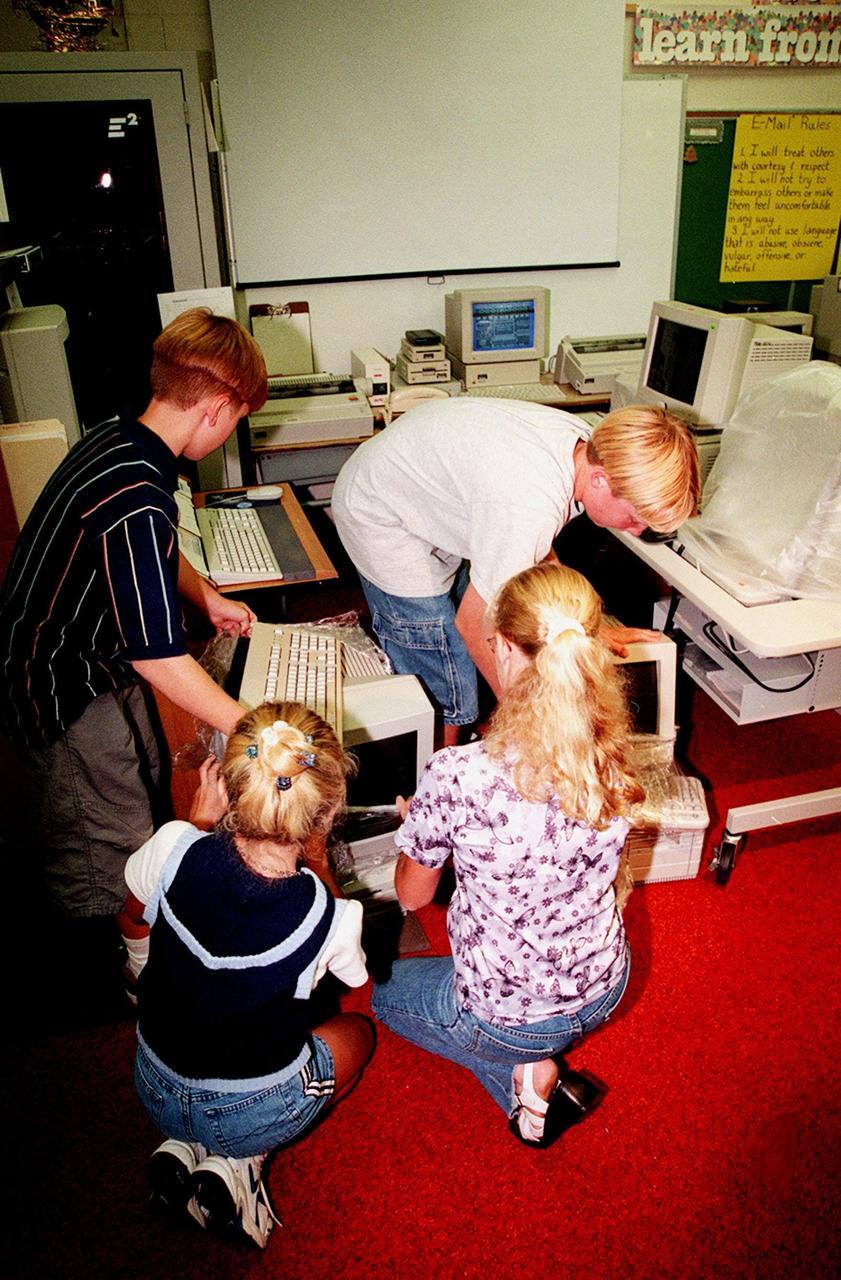
Children at Audubon Elementary School, Merritt Island, Fla., eagerly unwrap computer equipment donated by Kennedy Space Center. Audubon is one of 13 Brevard County schools receiving 81 excess contractor computers thanks to an innovative educational outreach project spearheaded by the Nasa k-12 Education Services Office at ksc. The Astronaut Memorial Foundation, a strategic partner in the effort, and several schools in rural Florida and Georgia also received refurbished computers as part of the year-long project. KSC employees put in about 3,300 volunteer hours to transform old, excess computers into upgraded, usable units. A total of $90,000 in upgraded computer equipment is being donated
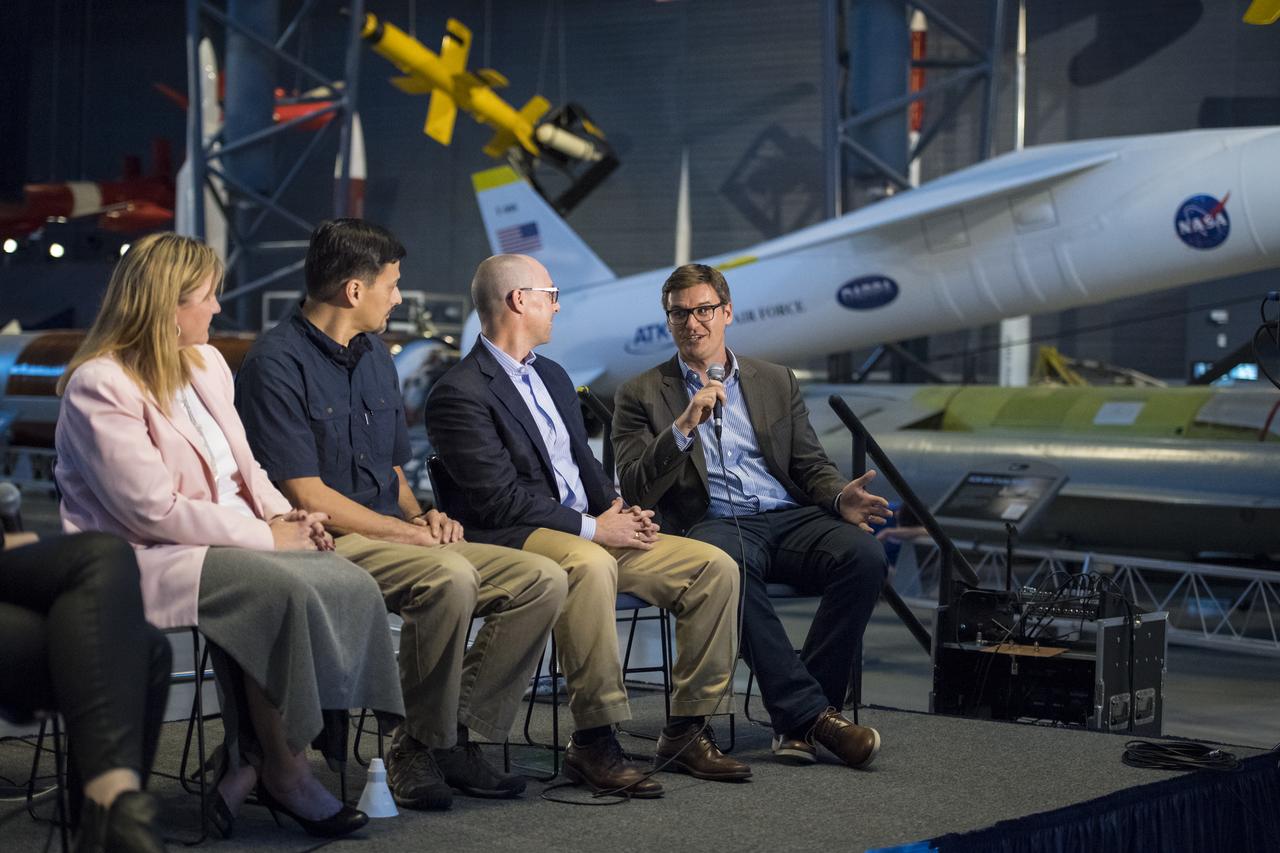
Paul Scott, interim executive director, The American Society of Mechanical Engineers (ASME), speaks on a panel on "igniting NOVA K-12 engineering and maker education", at a pop-up makerspace hosted by Future Engineers with support from NASA and ASME, at the Steven F. Udvar-Hazy Center, Thursday, September 21, 2017 in Chantilly, Virginia. Participants were able to create digital 3D models using Autodesk Tinkercad and watch objects being printed with Makerbot 3D printers. Photo Credit: (NASA/Aubrey Gemignani)

jsc2024e050834 (7/26/2024) --- Screaming Balloon hex nuts, pennies and balloons in their individual ziplock stowage bags prior to hardware handover. Developed through NASA’s Office of STEM Engagement Next Gen STEM Project, STEMonstrations are short educational videos demonstrating science, technology, engineering, and mathematics (STEM) topics in microgravity for grades K through 12. STEMonstrations: Screaming Balloon examines centripetal force, whirling a penny and a hexnut inside of inflated balloons and comparing the sounds they make.

jsc2024e050835 (7/26/2024) --- Members of the STEMonstrations team at the flight configuration hardware check for the STEMonstrations: Screaming Balloon project, Seth Johnson, Michele Hooks, and Ashwin Mathews, left to right. Developed through NASA’s Office of STEM Engagement Next Gen STEM Project, STEMonstrations are short educational videos demonstrating science, technology, engineering, and mathematics (STEM) topics in microgravity for grades K through 12. STEMonstrations: Screaming Balloon examines centripetal force, whirling a penny and a hexnut inside of inflated balloons and comparing the sounds they make.

jsc2024e041790 (3/20/2024) --- Developed through NASA’s Office of STEM Engagement Next Gen STEM Project, STEMonstrations are short educational videos that demonstrate science, technology, engineering, and mathematics (STEM) topics in microgravity for grades K through 12. Crew members conduct and film the demonstrations. The International Space Station flyaround is seen as well as NASA astronauts Matthew Dominick and Jeanette Epps (Expedition 71).
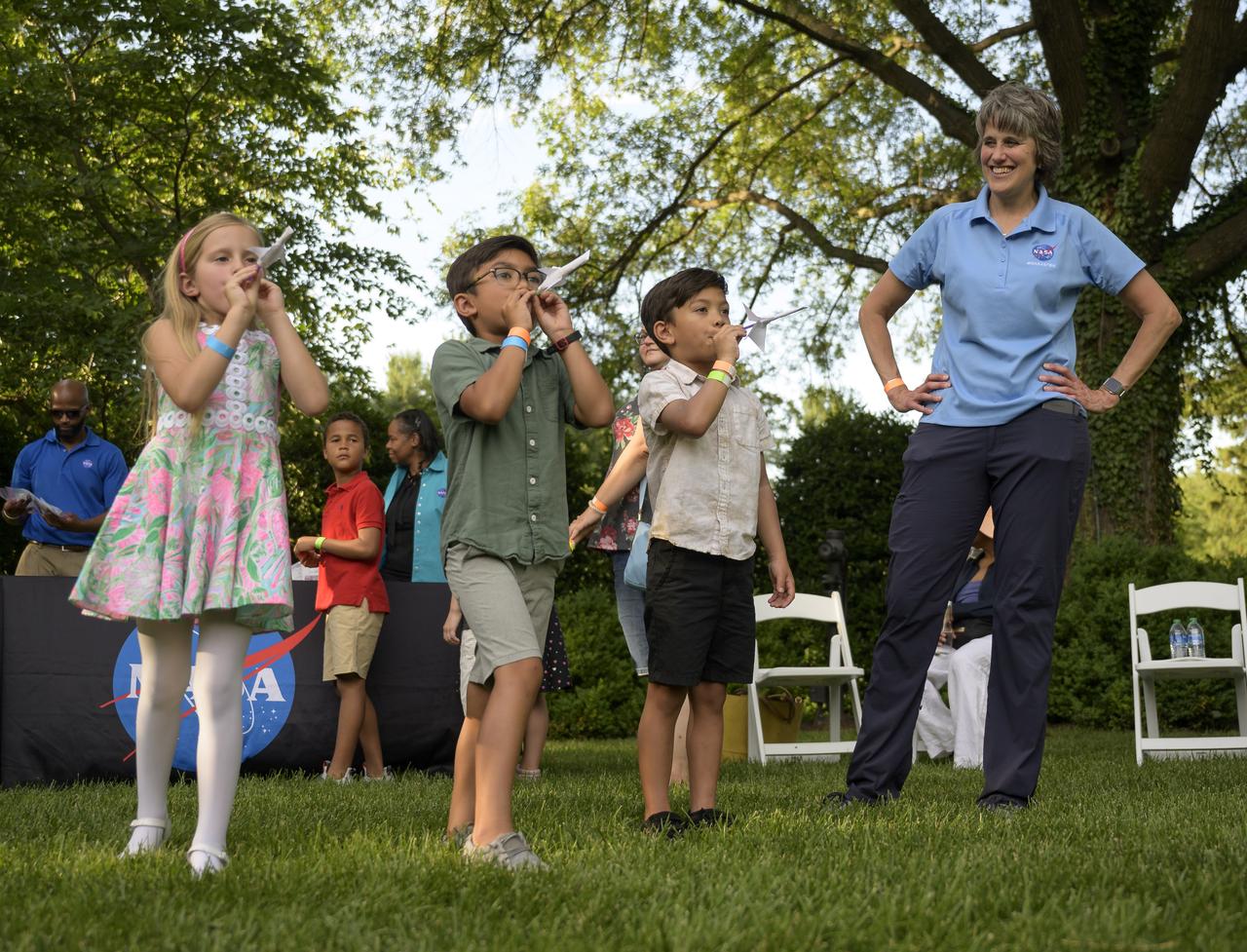
Cindy Hasselbring, NASA K-12 Education Advisor at NASA’s Office of STEM Engagement, works hands-on STEM activities with students from 4th-8th grade on the grounds of the Vice President's residence at the Naval Observatory, Friday, June 17, 2022, in Washington. The Vice President and Second Gentleman hosted an evening of NASA STEM activities at the Naval Observatory for military families and local STEM students and their families, including a special screening of Disney Pixar’s Lightyear. Photo Credit: (NASA/Bill Ingalls)
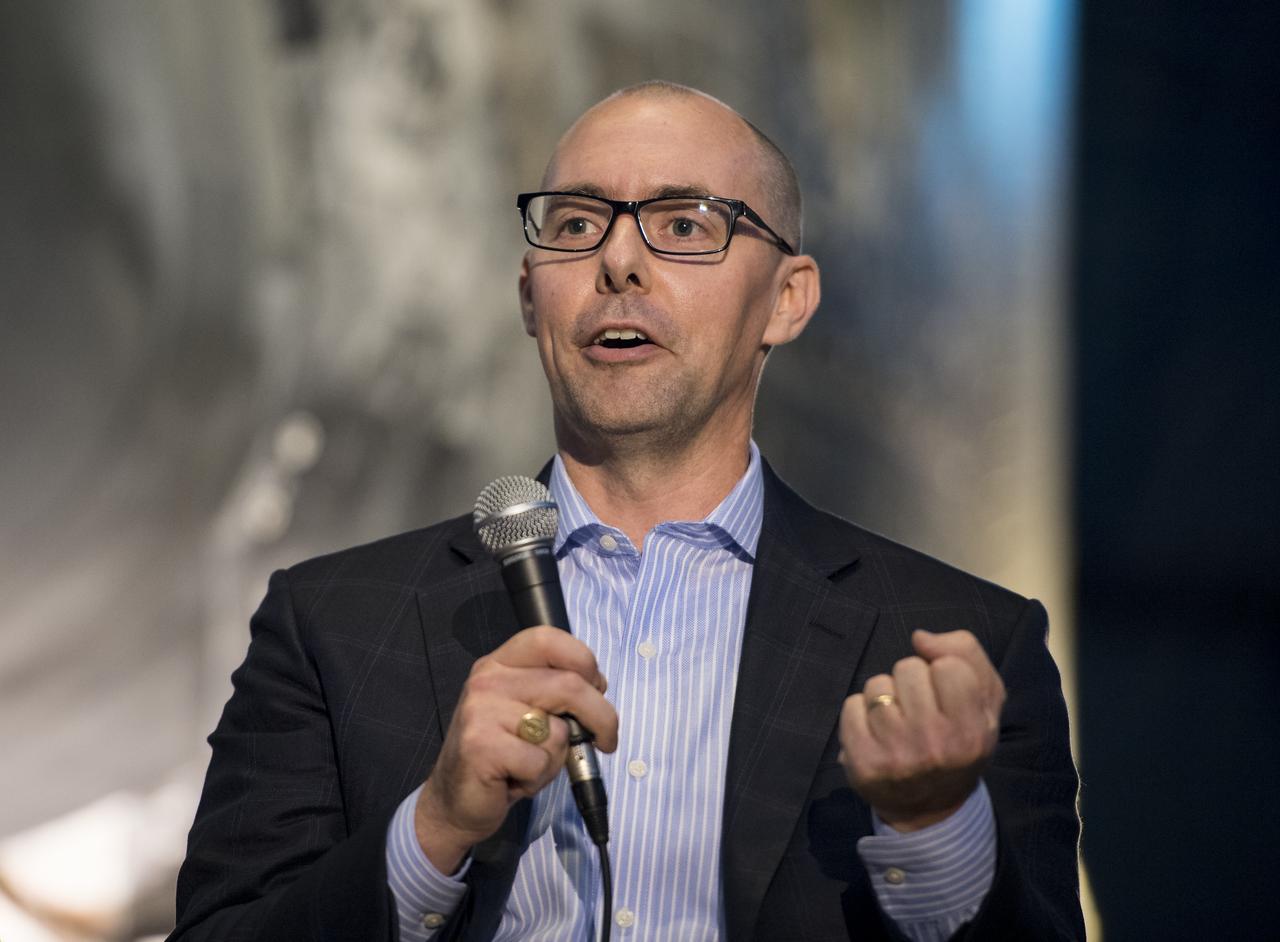
Ryan Heitz, co-founder and head of school, Ideaventions Academy, speaks on a panel on "igniting NOVA K-12 engineering and maker education", at a pop-up makerspace hosted by Future Engineers with support from NASA and The American Society of Mechanical Engineers (ASME), at the Steven F. Udvar-Hazy Center, Thursday, September 21, 2017 in Chantilly, Virginia. Participants were able to create digital 3D models using Autodesk Tinkercad and watch objects being printed with Makerbot 3D printers. Photo Credit: (NASA/Aubrey Gemignani)

NASA Minority University Research and Education Project, Program Manager, Keya Briscoe, gives remarks during an event where NASA and the Hispanic Heritage Foundation signed a Space Act Agreement to collaborate and expand STEM opportunities for Latino K-12 and university students and reduce barriers to agency activities and opportunities, Monday, Sept. 30, 2024, at the NASA Headquarters Mary W. Jackson Building in Washington. Photo Credit: (NASA/Bill Ingalls)
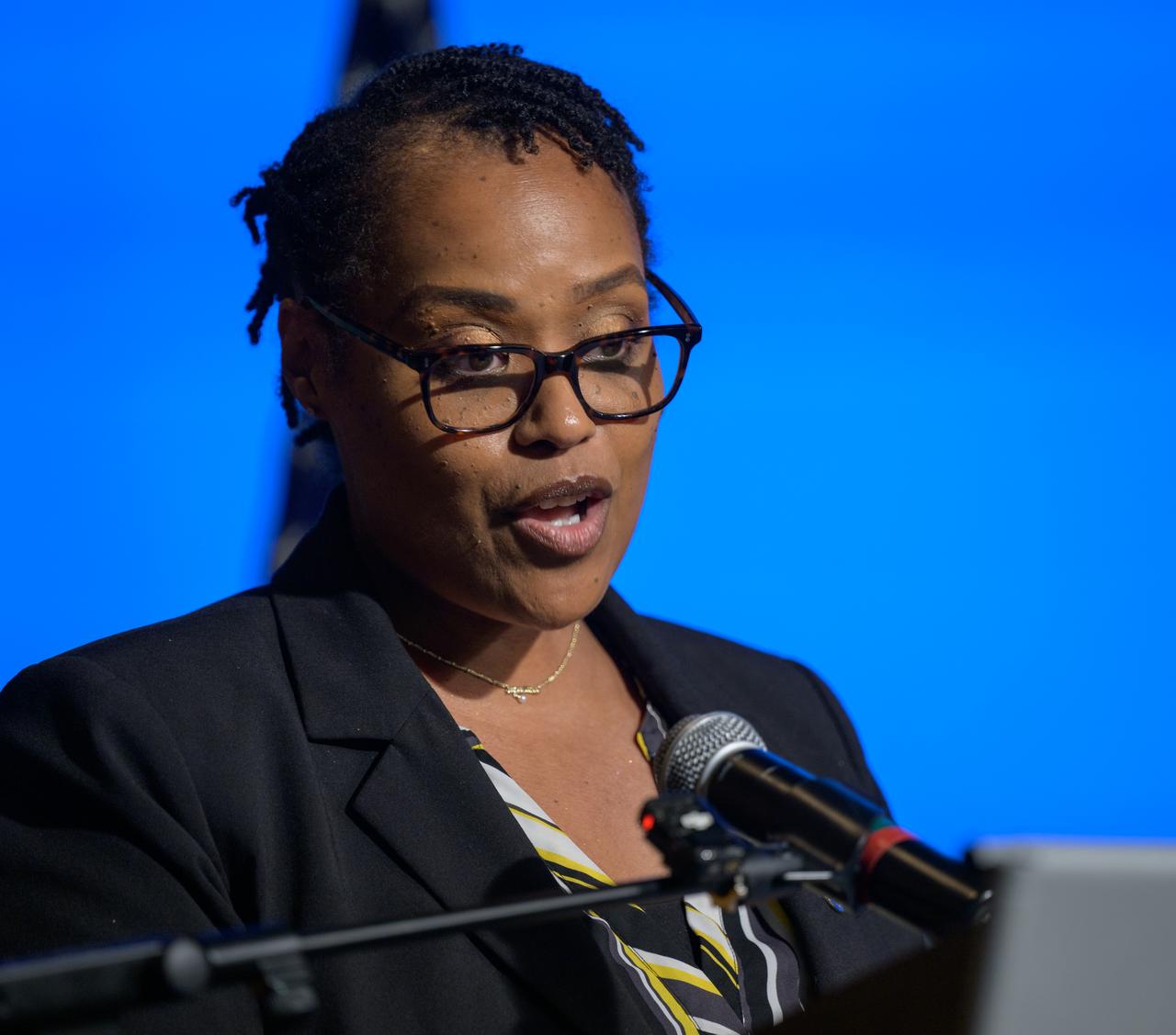
NASA Minority University Research and Education Project, Program Manager, Keya Briscoe, gives remarks during an event where NASA and the Hispanic Heritage Foundation signed a Space Act Agreement to collaborate and expand STEM opportunities for Latino K-12 and university students and reduce barriers to agency activities and opportunities, Monday, Sept. 30, 2024, at the NASA Headquarters Mary W. Jackson Building in Washington. Photo Credit: (NASA/Bill Ingalls)
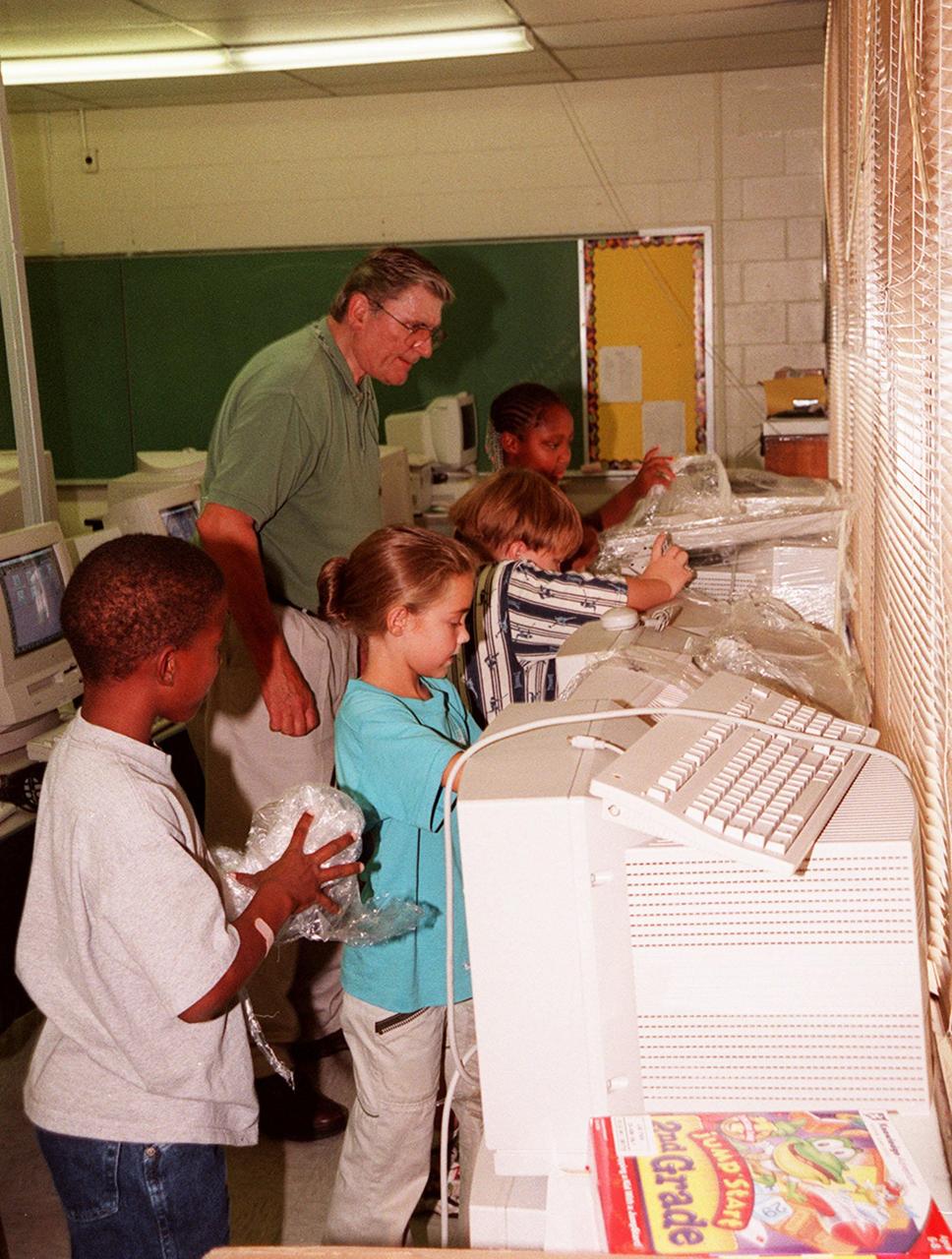
Children at Cambridge Elementary School, Cocoa, Fla., eagerly unwrap computer equipment donated by Kennedy Space Center. Cambridge is one of 13 Brevard County schools receiving 81 excess contractor computers thanks to an innovative educational outreach project spearheaded by the Nasa k-12 Education Services Office at ksc. Behind the children is Jim Thurston, a school volunteer and retired employee of USBI, who shared in the project. The Astronaut Memorial Foundation, a strategic partner in the effort, and several schools in rural Florida and Georgia also received refurbished computers as part of the year-long project. KSC employees put in about 3,300 volunteer hours to transform old, excess computers into upgraded, usable units. A total of $90,000 in upgraded computer equipment is being donated
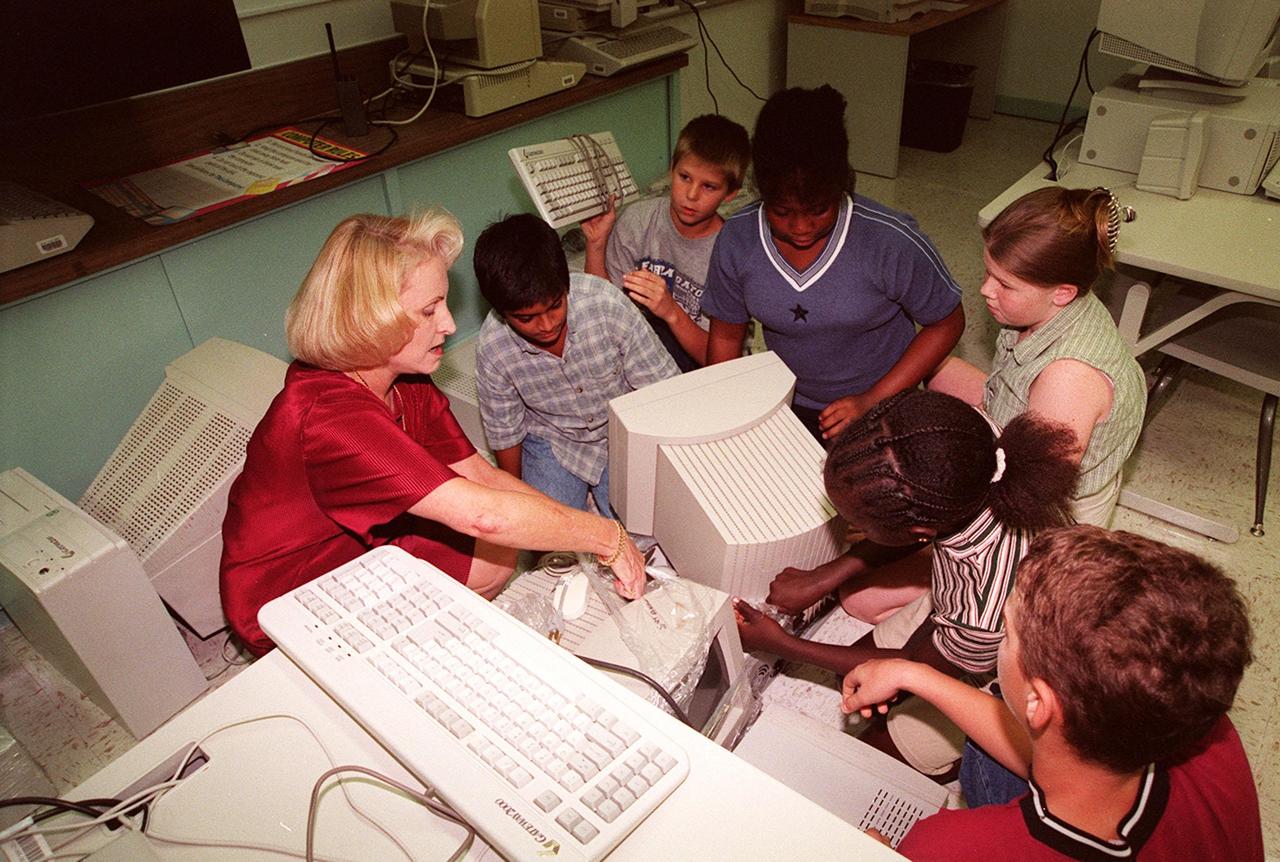
Nancy Nichols, principal of South Lake Elementary School, Titusville, Fla., joins students in teacher Michelle Butler's sixth grade class who are unwrapping computer equipment donated by Kennedy Space Center. South Lake is one of 13 Brevard County schools receiving 81 excess contractor computers thanks to an innovative educational outreach project spearheaded by the Nasa k-12 Education Services Office at ksc. The Astronaut Memorial Foundation, a strategic partner in the effort, and several schools in rural Florida and Georgia also received refurbished computers as part of the year-long project. KSC employees put in about 3,300 volunteer hours to transform old, excess computers into upgraded, usable units. A total of $90,000 in upgraded computer equipment is being donated
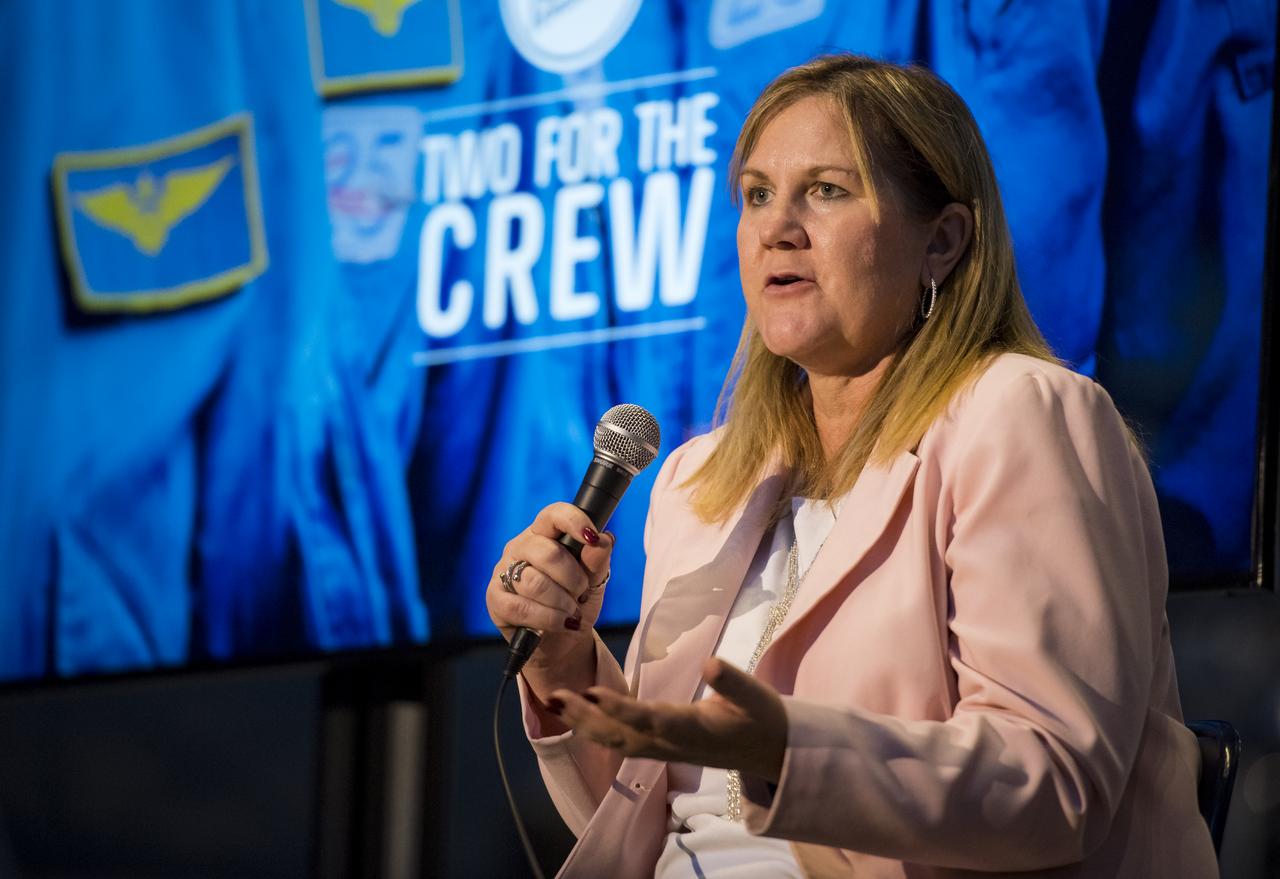
Barb Gruber, supervisor school programs, Smithsonian National Air and Space Museum, speaks on a panel on "igniting NOVA K-12 engineering and maker education", at a pop-up makerspace hosted by Future Engineers with support from NASA and The American Society of Mechanical Engineers (ASME), at the Steven F. Udvar-Hazy Center, Thursday, September 21, 2017 in Chantilly, Virginia. Participants were able to create digital 3D models using Autodesk Tinkercad and watch objects being printed with Makerbot 3D printers. Photo Credit: (NASA/Aubrey Gemignani)
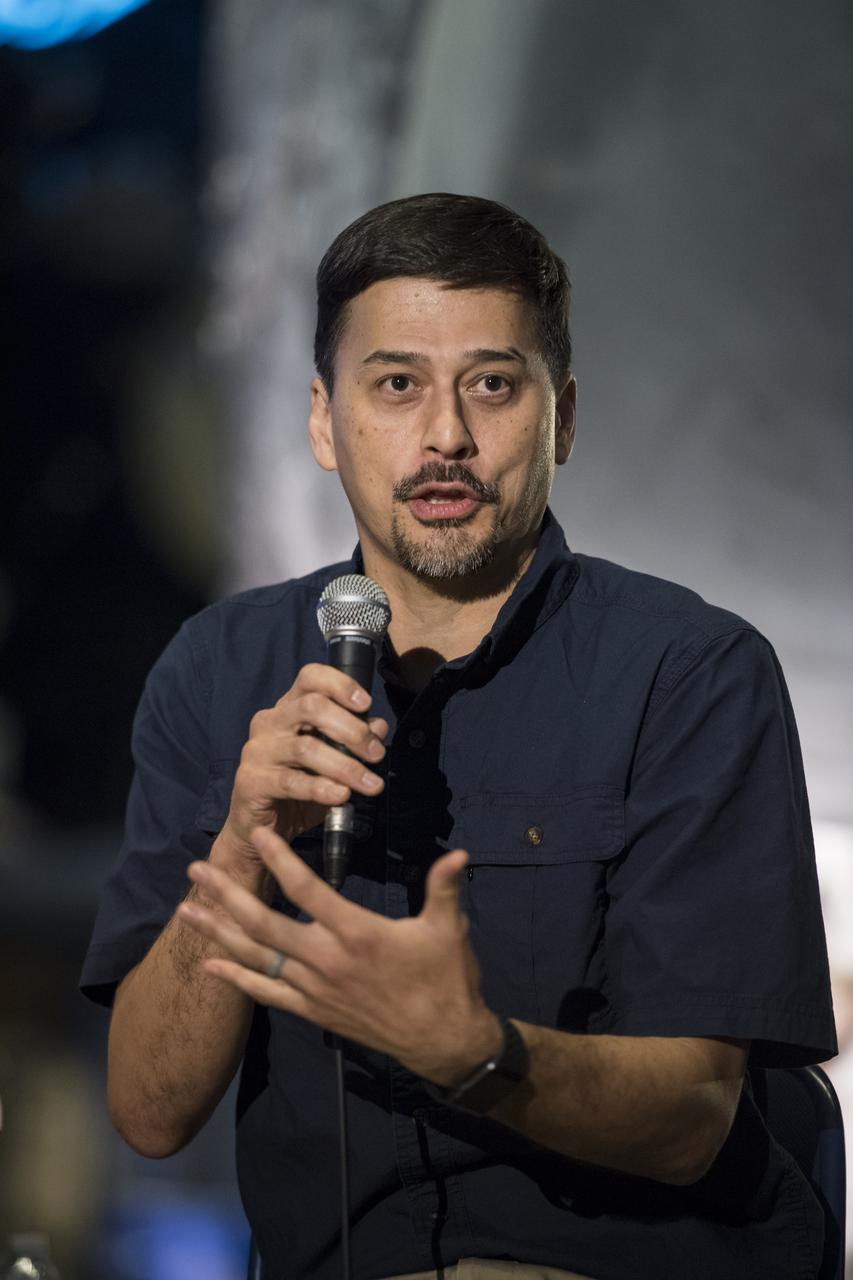
Josh Ajima, instructional facilitator for technology, Loudoun County Public Schools and DesignMakeTeach.com blog, speaks on a panel on "igniting NOVA K-12 engineering and maker education", at a pop-up makerspace hosted by Future Engineers with support from NASA and The American Society of Mechanical Engineers (ASME), at the Steven F. Udvar-Hazy Center, Thursday, September 21, 2017 in Chantilly, Virginia. Participants were able to create digital 3D models using Autodesk Tinkercad and watch objects being printed with Makerbot 3D printers. Photo Credit: (NASA/Aubrey Gemignani)
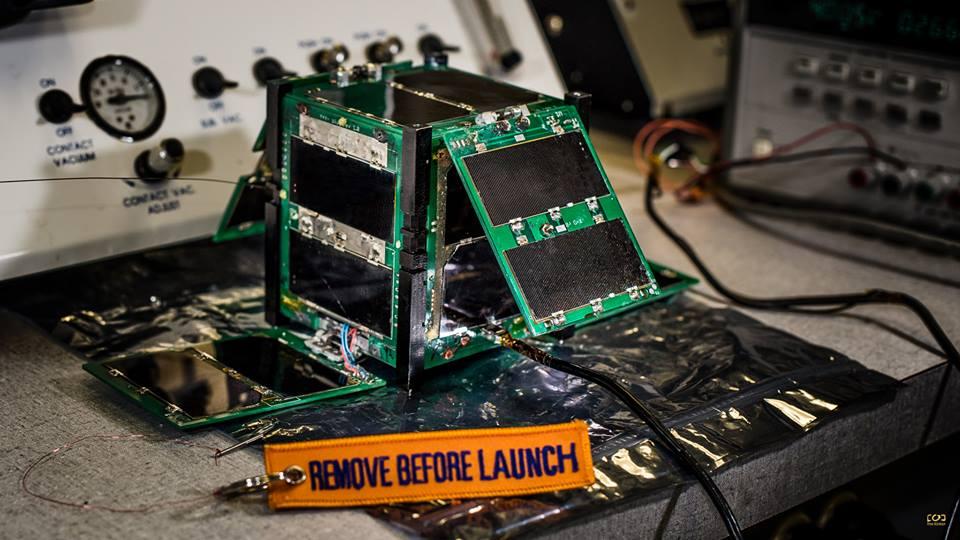
CAPE-2: Cajun Advanced Picosatellite Experiment – ELaNa IV CAPE-2 was developed by students from the University of Louisiana Lafayette to engage, inspire and educate K-12 students to encourage them to pursue STEM careers. The secondary focus is the technology demonstration of deployed solar panels to support the following payloads: text to speech, voice repeater, tweeting, email, file transfer and data collection from buoys. Launched by NASA’s CubeSat Launch Initiative on the ELaNa IV mission as an auxiliary payload aboard the U.S. Air Force-led Operationally Responsive Space (ORS-3) Mission on November 19, 2013.
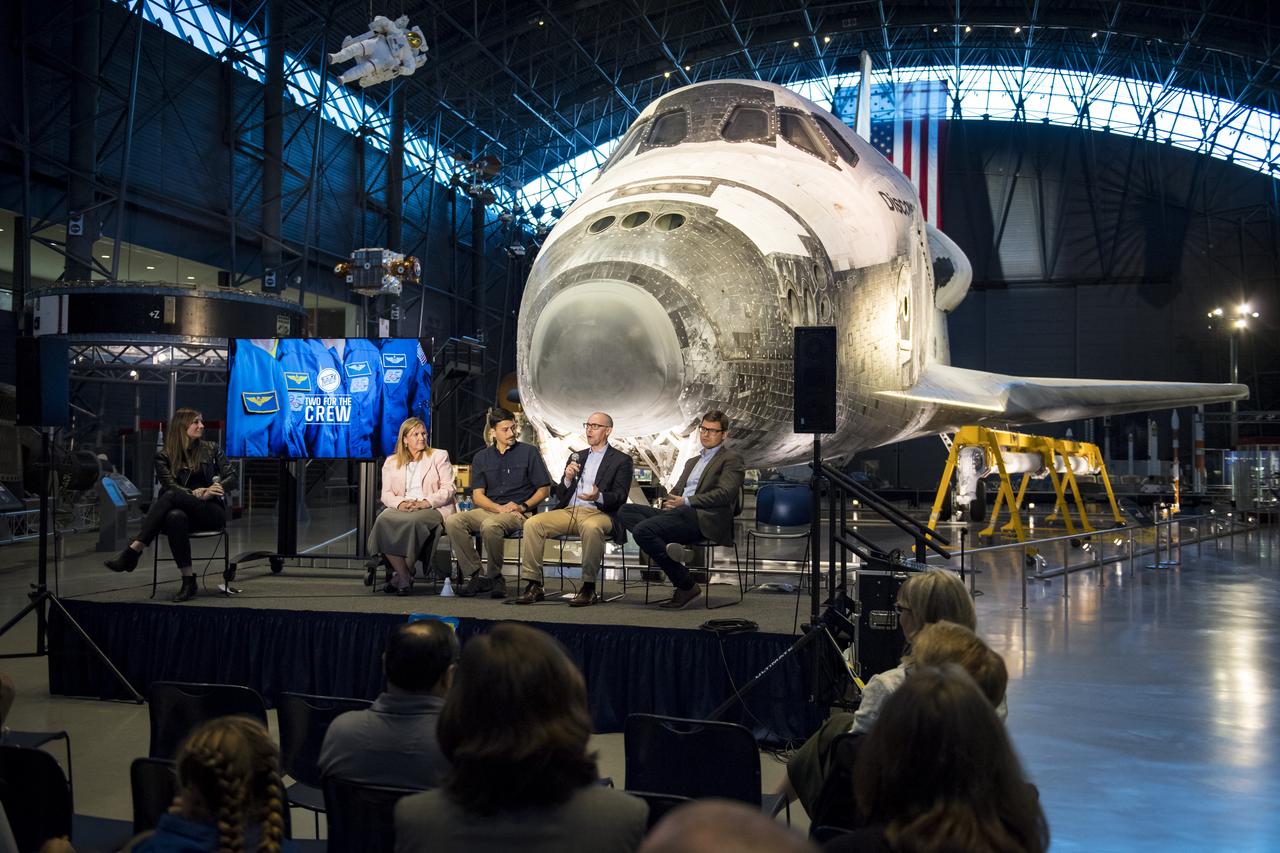
Ryan Heitz, co-founder and head of school, Ideaventions Academy, second from right, speaks on a panel on "igniting NOVA K-12 engineering and maker education", at a pop-up makerspace hosted by Future Engineers with support from NASA and The American Society of Mechanical Engineers (ASME), at the Steven F. Udvar-Hazy Center, Thursday, September 21, 2017 in Chantilly, Virginia. Participants were able to create digital 3D models using Autodesk Tinkercad and watch objects being printed with Makerbot 3D printers. Photo Credit: (NASA/Aubrey Gemignani)