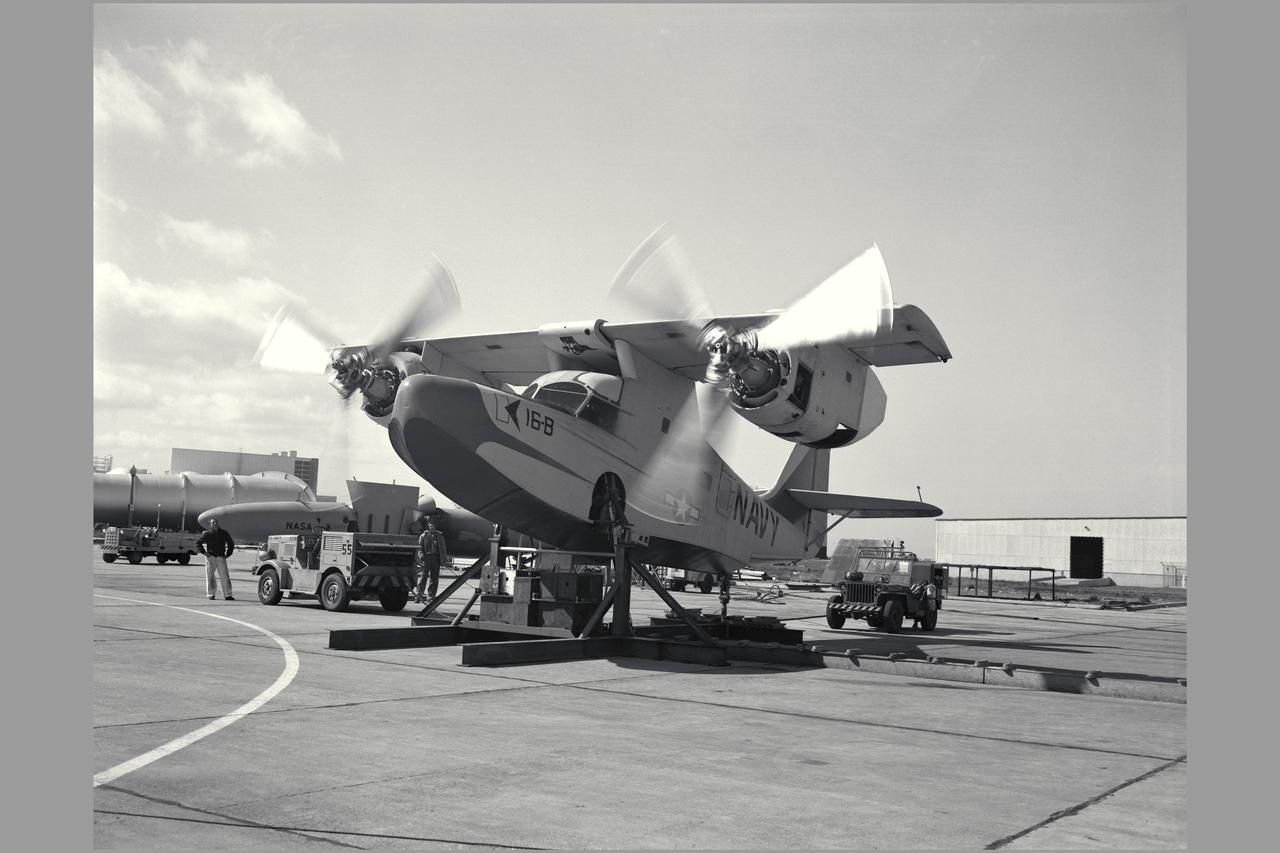
KAMAN K-16-B aircraft
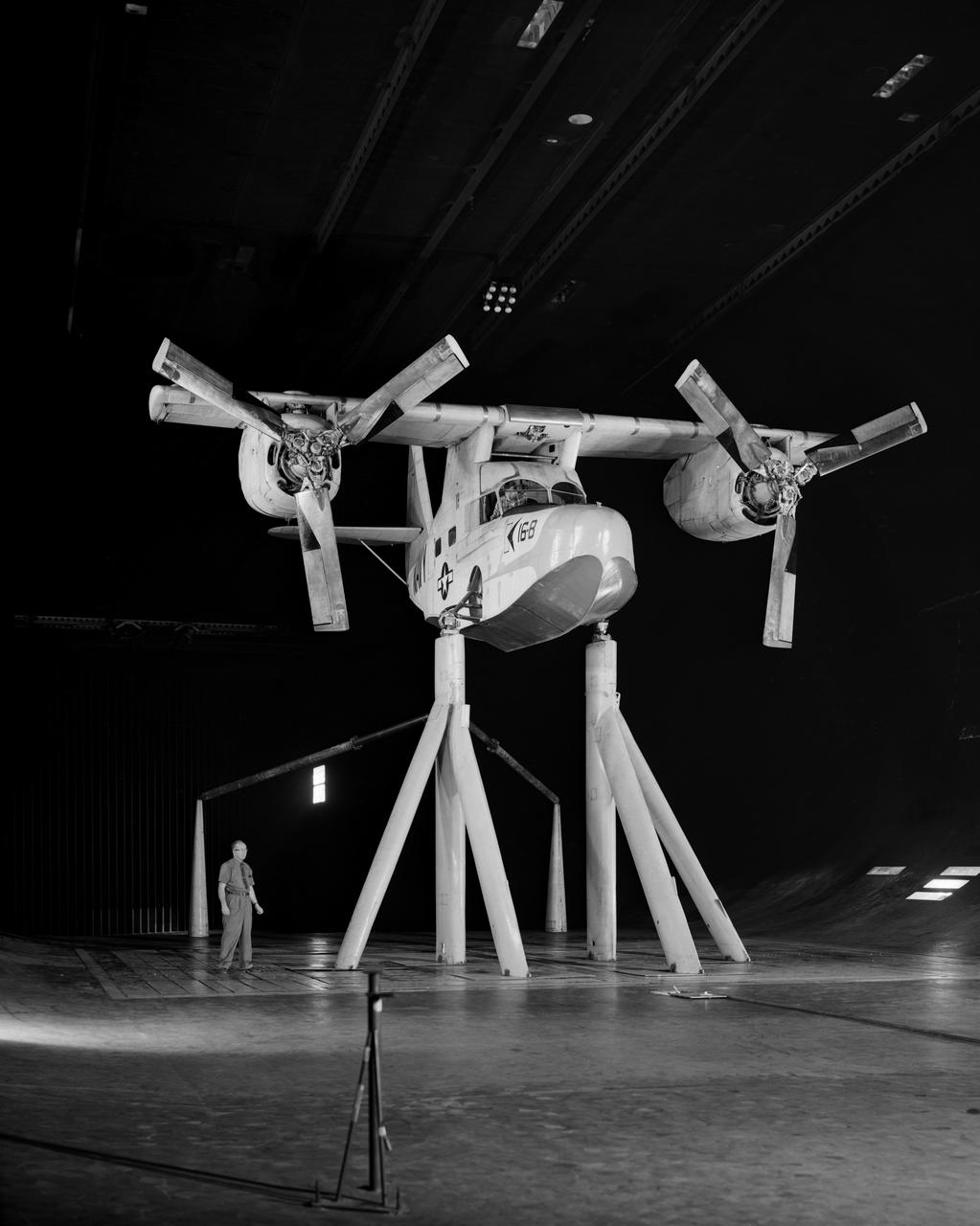
Test No. 175 Kaman K-16 in 40x80 Foot Wind Tunnel at Ames Research Center. Pictured with two Kaman employees. 3/4 Front view of Airplane. Kaman K-16B was an experimental tilt wing aircraft, it used the fuselage of a JRF-5 and was powered by two General Electric YT58-GE-2A engines.
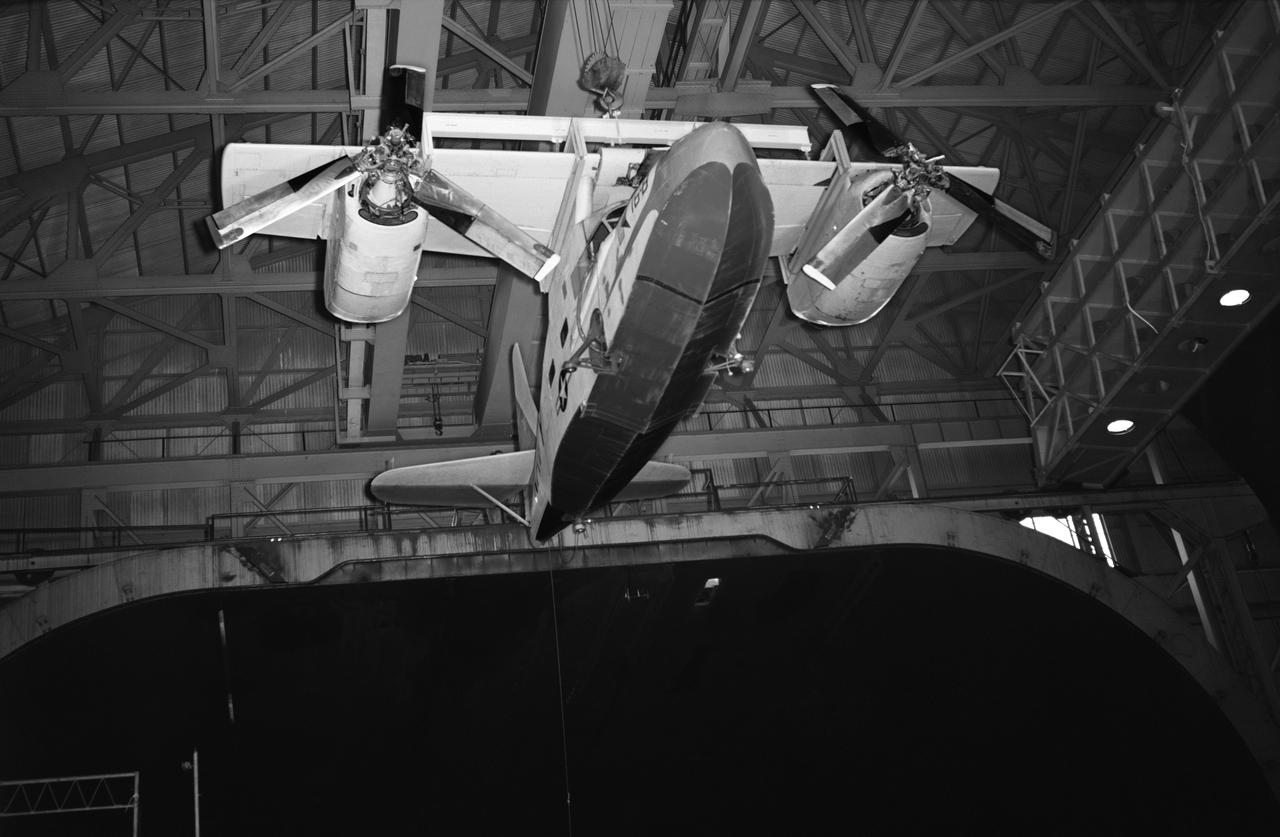
Test No. 175 Kaman K-16 being lowered into the 40x80 foot wind tunnel at NASA's Ames Research Center, viewed from the front. Kaman K-16B was an experimental tilt wing aircraft, it used the fuselage of a JRF-5 and was powered by two General Electric YT58-GE-2A engines.
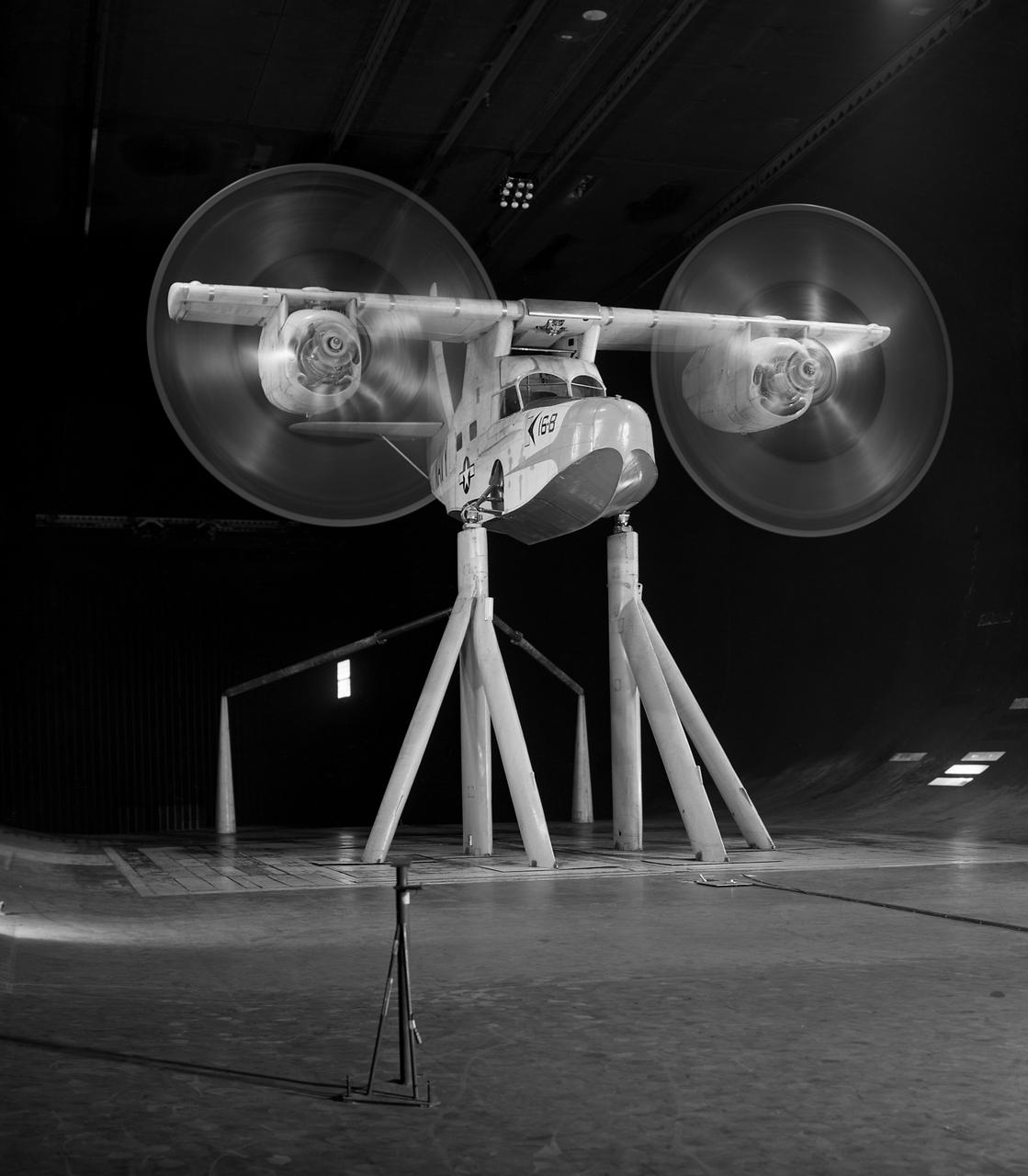
Test No. 175 Kaman K-16 in 40x80 Foot Wind Tunnel at Ames Research Center. Kaman K-16B was an experimental tilt wing aircraft, it used the fuselage of a JRF-5 and was powered by two General Electric YT58-GE-2A engines.
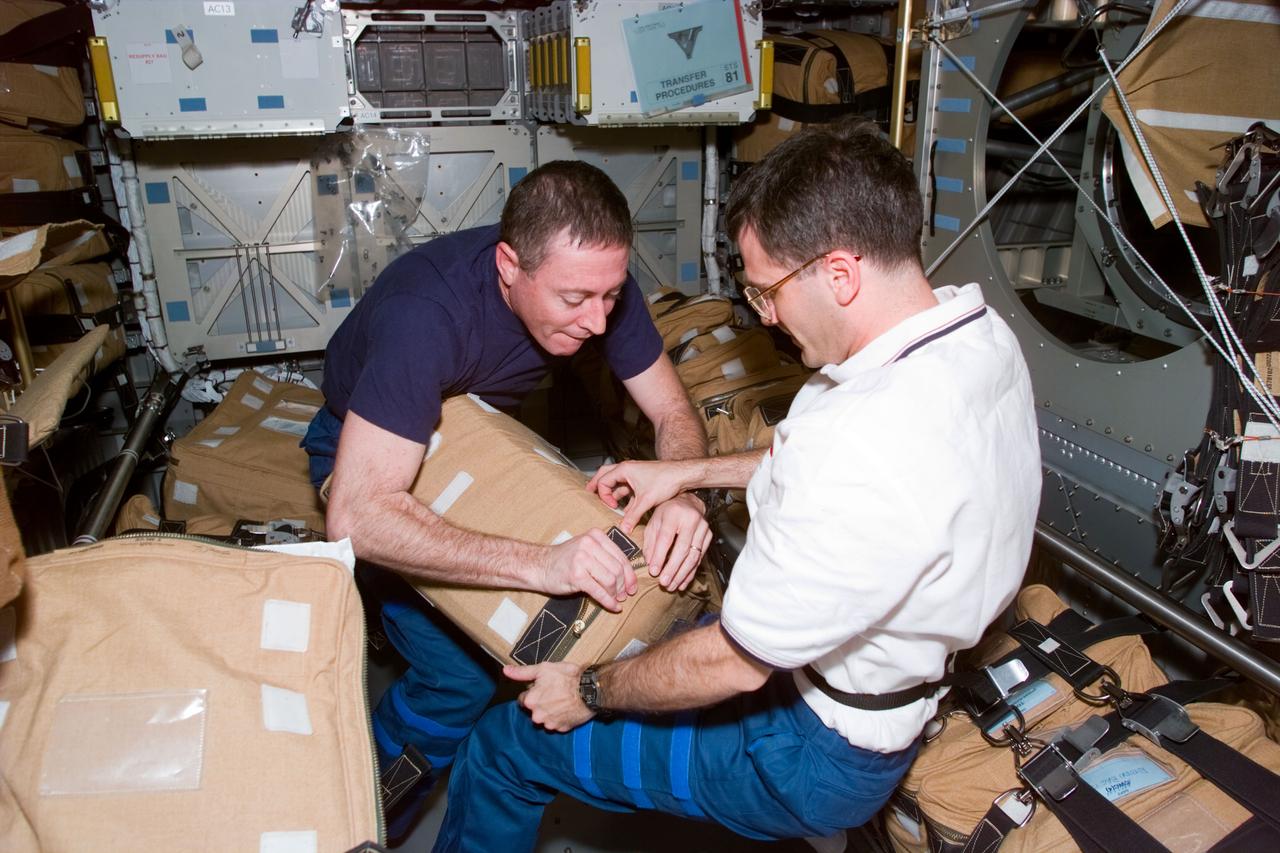
STS081-E-05515 (16 Jan. 1997) --- Astronauts Michael A. Baker, commander, and Peter J. K. (Jeff) Wisoff, mission specialist, secure a bag filled with a drawer of supplies in the Spacehab Double Module (DM). The scene was recorded with an Electronic Still Camera (ESC) and later downlinked to flight controllers in Houston, Texas.

ISS011-E-06165 (16 May 2005) --- Cosmonaut Sergei K. Krikalev, Expedition 11 commander representing Russia's Federal Space Agency, works with the Treadmill Vibration Isolation System (TVIS) Chassis Assembly during an In-Flight Maintenance (IFM) in the Zvezda Service Module of the International Space Station (ISS).
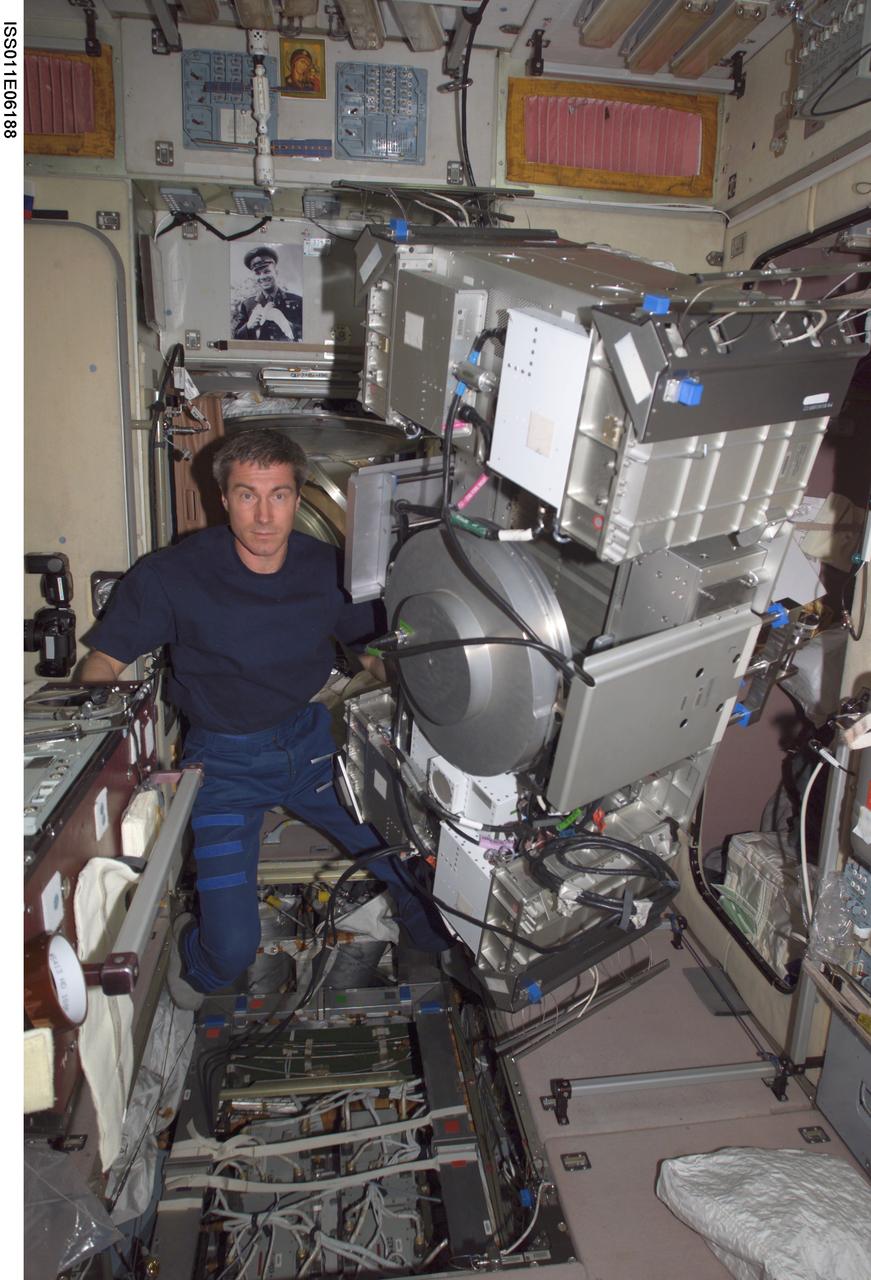
ISS011-E-06188 (16 May 2005) --- Cosmonaut Sergei K. Krikalev, Expedition 11 commander representing Russia's Federal Space Agency, works with the Treadmill Vibration Isolation System (TVIS) removed from the Zvezda Service Module floor during In-Flight Maintenance (IFM) on the International Space Station (ISS).
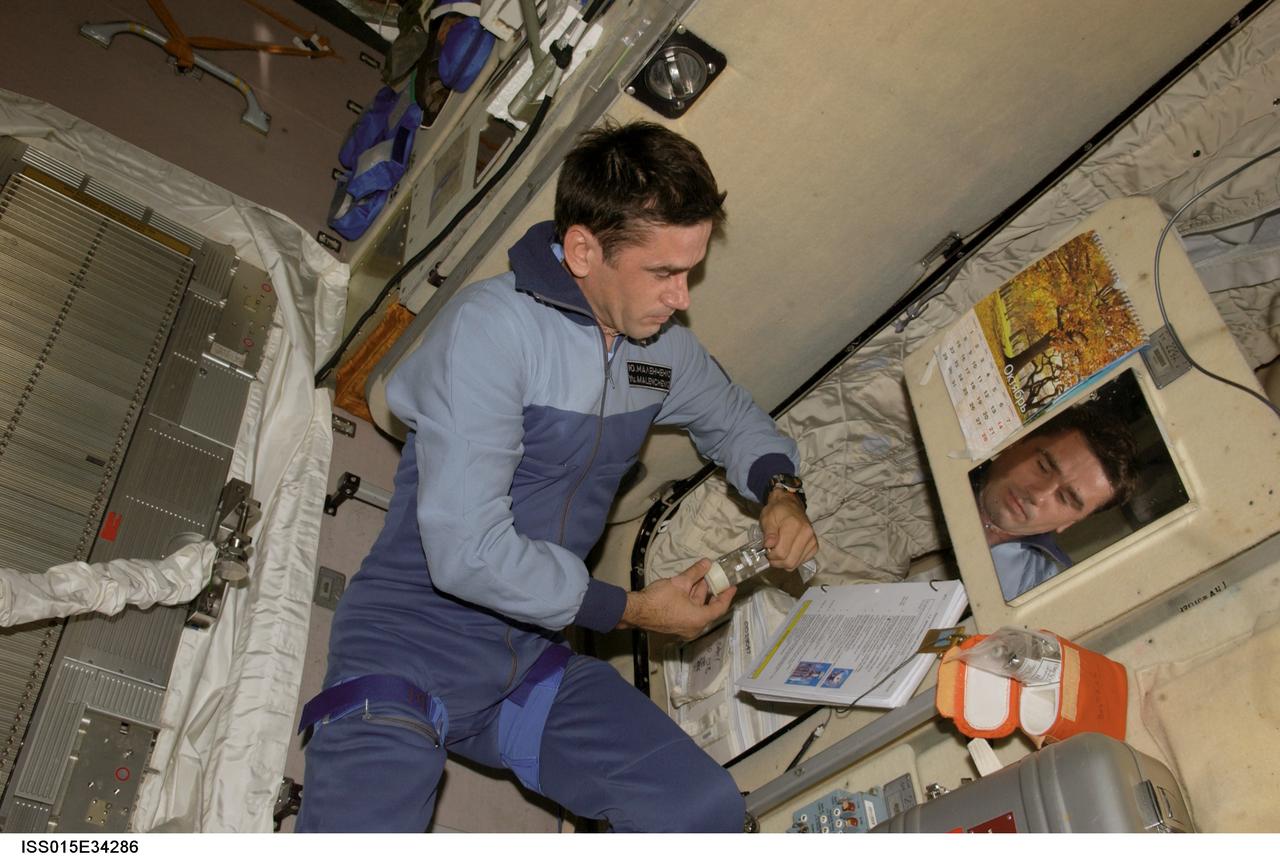
ISS015-E-34286 (13 Oct. 2007) --- Cosmonaut Yuri I. Malenchenko, Expedition 16 flight engineer representing Russia's Federal Space Agency, works with a hybridizer from the Rekomb-K kit used in the Konyugatsia (Conjugation) experiment in the Zvezda Service Module of the International Space Station.
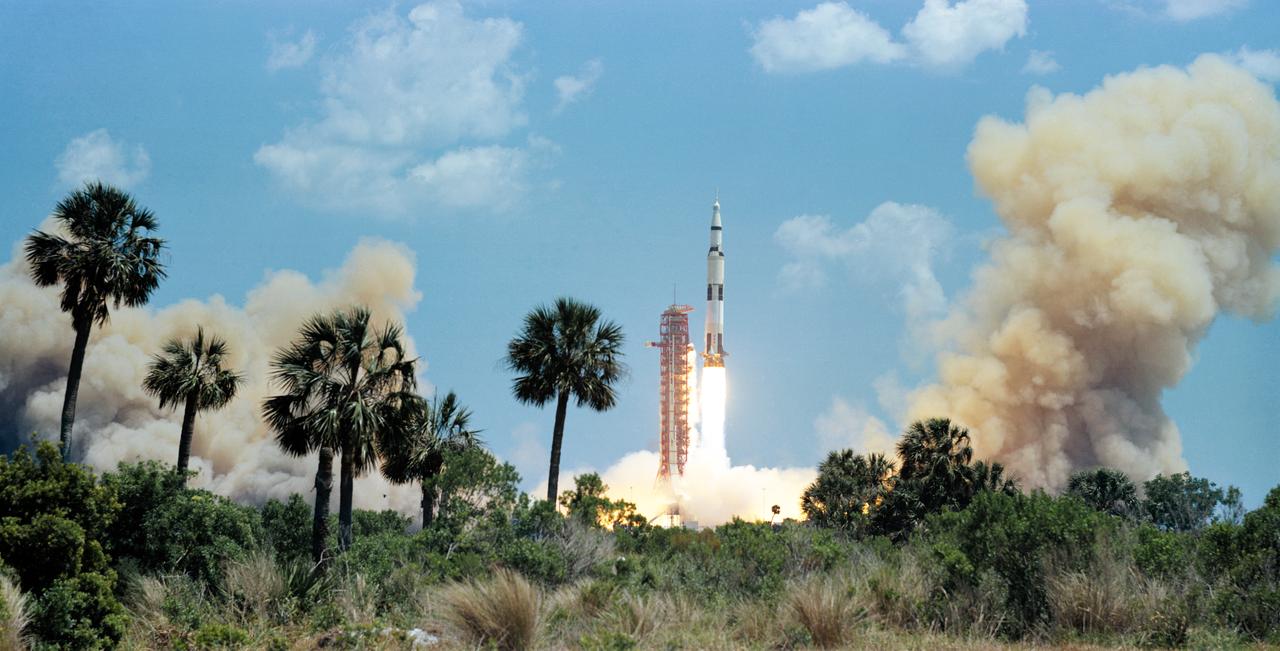
S72-35345 (16 April 1972) --- The huge, 363-feet tall Apollo 16 (Spacecraft 113/Lunar Module 11/Saturn 511) space vehicle is launched from Pad A, Launch Complex 39, Kennedy Space Center (KSC), Florida, at 12:54:00.569 p.m.(EST), April 16, 1972, on a lunar landing mission. Aboard the Apollo 16 spacecraft were astronauts John W. Young, commander; Thomas K. Mattingly II, command module pilot; and Charles M. Duke Jr., lunar module pilot.
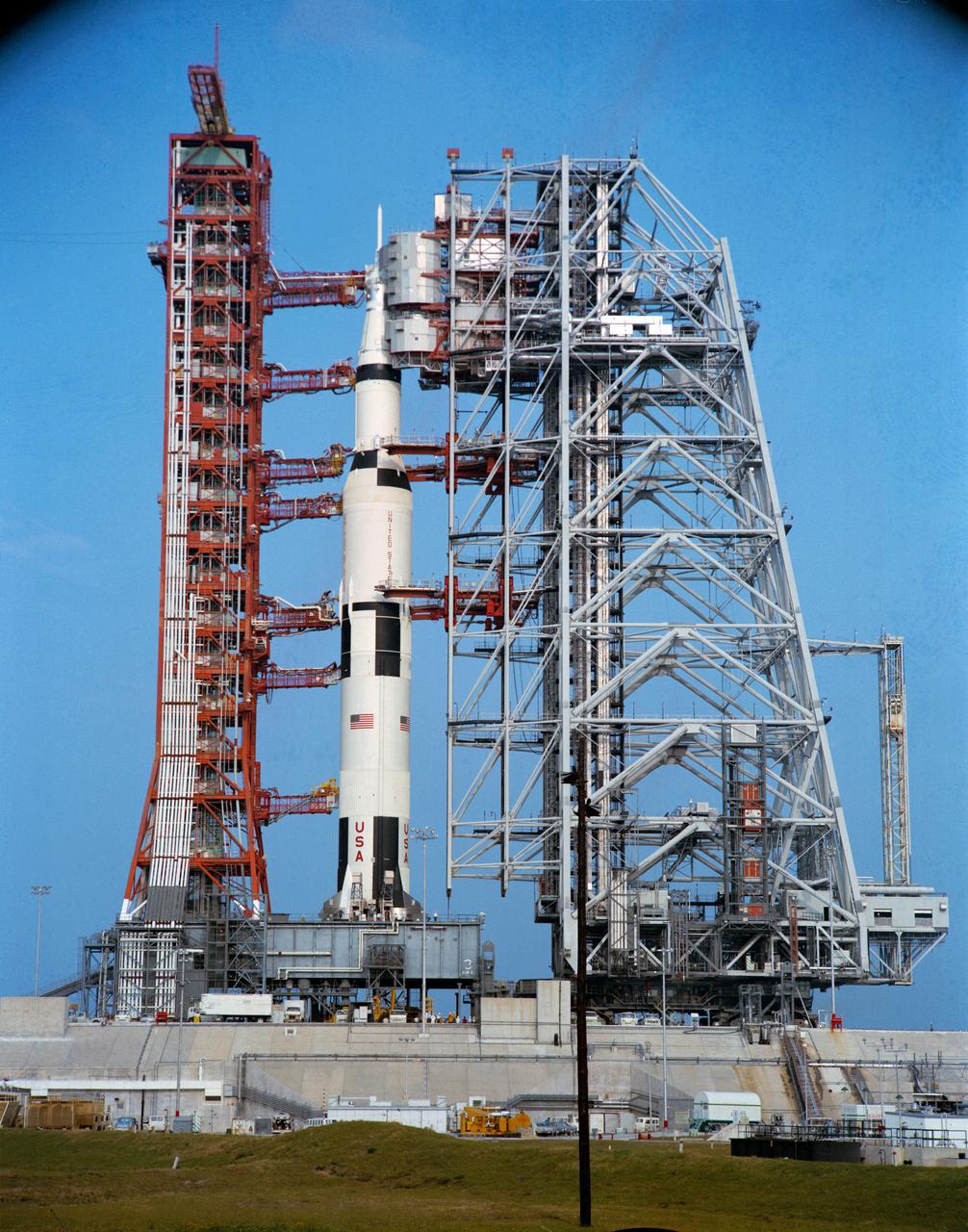
S72-34473 (29 March 1972) --- A ground-level view of Pad A, Launch Complex 39, Kennedy Space Center (KSC), showing the 363-feet tall Apollo 16 (Spacecraft 113/Lunar Module 11/Saturn 511) space vehicle during a Countdown Demonstration Test (CDDT). The CDDT was part of the preflight preparations for the Apollo 16 lunar landing mission. The crew of Apollo 16, scheduled for launch on April 16, 1972, are astronauts John W. Young, commander; Thomas K. (Ken) Mattingly II, command module pilot; and Charles M. Duke Jr., lunar module pilot.

This is the Apollo 16 lunar landing mission crew portrait. Pictured from left to right are: Thomas K. Mattingly II, Command Module pilot; John W. Young, Mission Commander; and Charles M. Duke Jr., Lunar Module pilot. Launched from the Kennedy Space Center on April 16, 1972, Apollo 16 spent three days on Earth's Moon. The first study of the highlands area, the landing site for Apollo 16 was the Descartes Highlands. The fifth lunar landing mission out of six, Apollo 16 was famous for deploying and using an ultraviolet telescope as the first lunar observatory. The telescope photographed ultraviolet light emitted by Earth and other celestial objects. The Lunar Roving Vehicle, developed by the Marshall Space Flight Center, was also used for collecting rocks and data on the mysterious lunar highlands. In this photo, astronaut John W. Young photographs Charles M. Duke, Jr. collecting rock samples at the Descartes landing site. Duke stands by Plum Crater while the Lunar Roving Vehicle waits parked in the background. High above, Thomas K. Mattingly orbits in the Command Module. The mission ended April 27, 1972 as the crew splashed down into the Pacific Ocean.
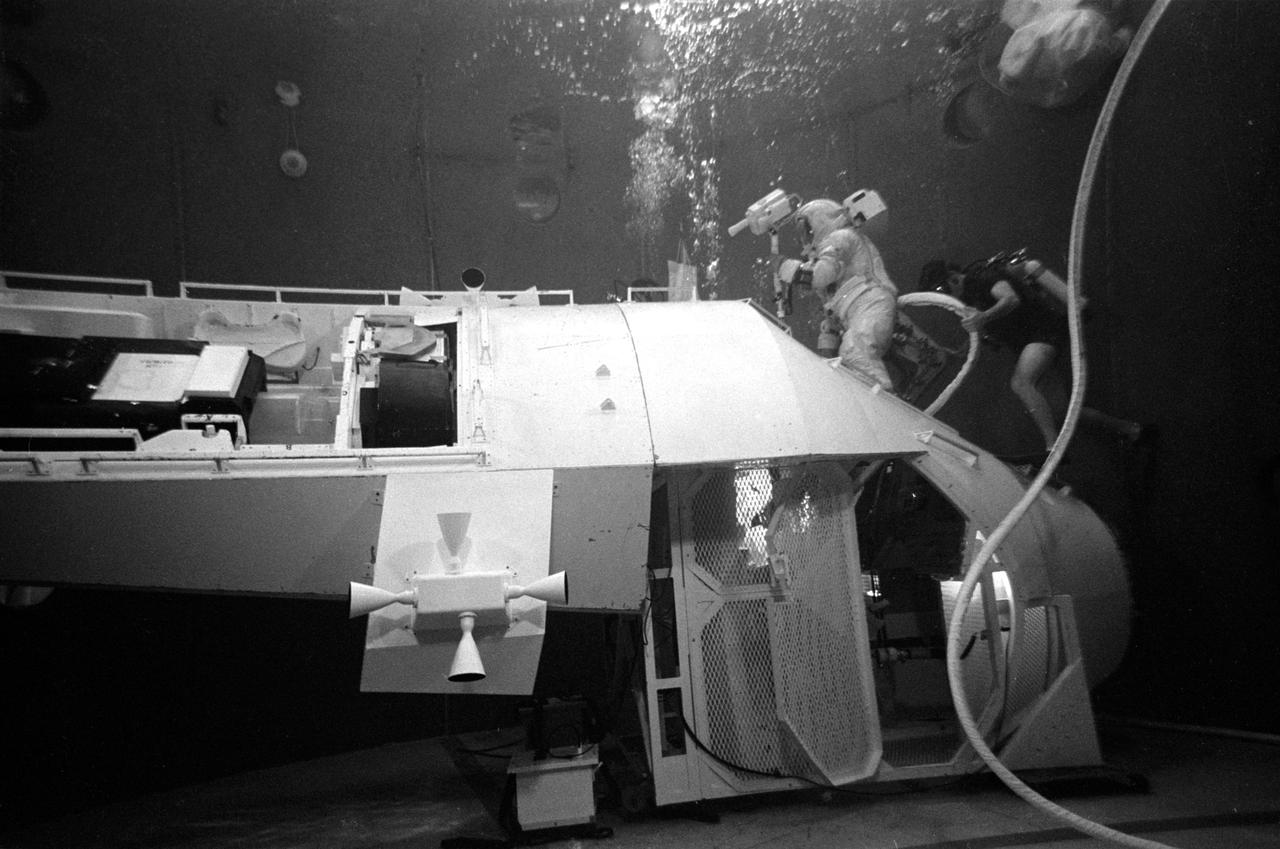
S71-58148 (1 Dec. 1971) --- Astronaut Thomas K. Mattingly II, command module pilot of the planned Apollo 16 lunar landing mission, participates in extravehicular activity (EVA) simulations in the water facility tank in Building 5 at the Manned Spacecraft Center (MSC), Houston, Texas, during training preparations for the forthcoming mission. Mattingly is scheduled to perform EVA during the trans-Earth journey of the Apollo 16 mission.
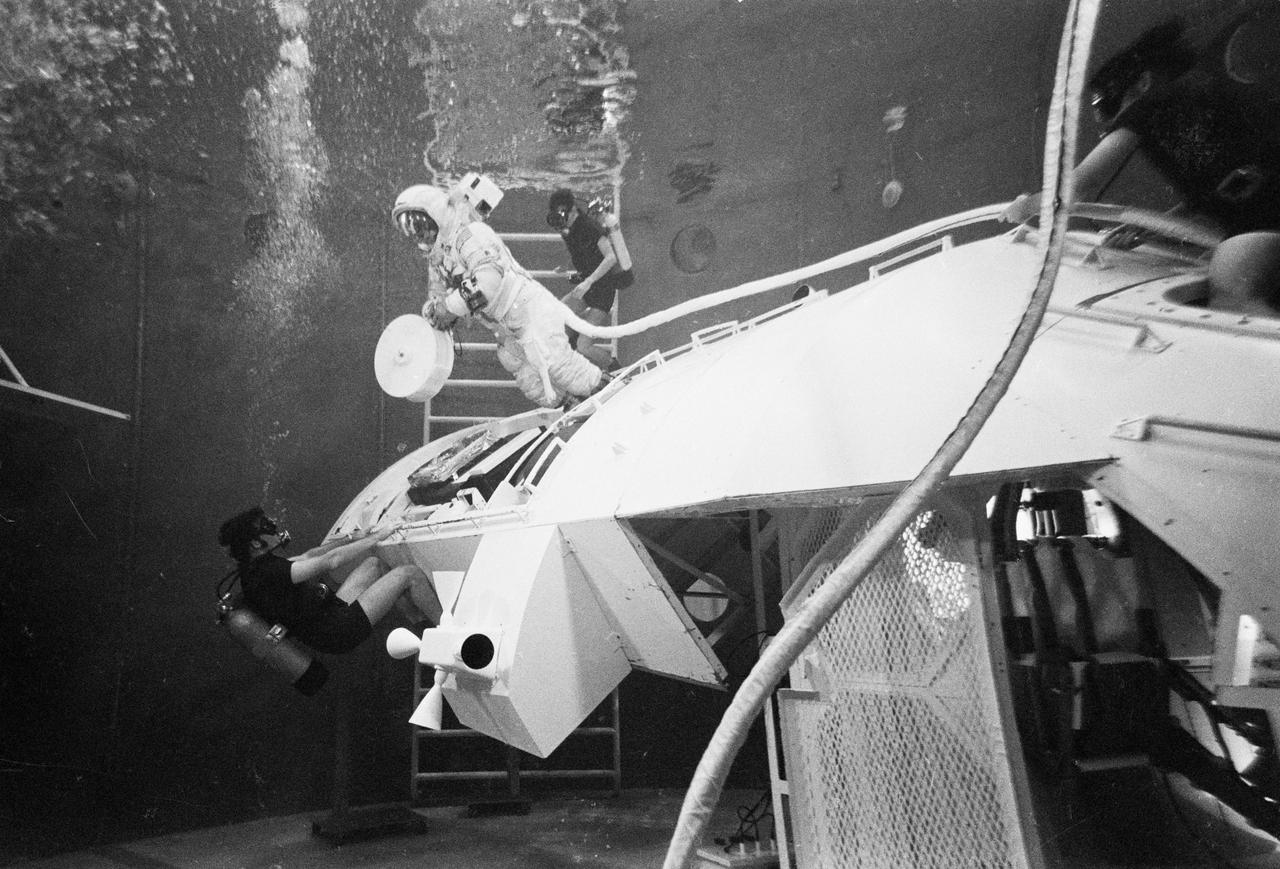
Astronaut Thomas K. Mattingly II, command module pilot of the planned Apollo 16 lunar landing mission, participates in extravehicular activity (EVA) simulations in the water facility tank in building 5 at the Manned Spacecraft Center during training preparations for the forthcoming mission. Mattinly is scheduled to perform EVA during the transearth journey of the Apollo 16 mission.
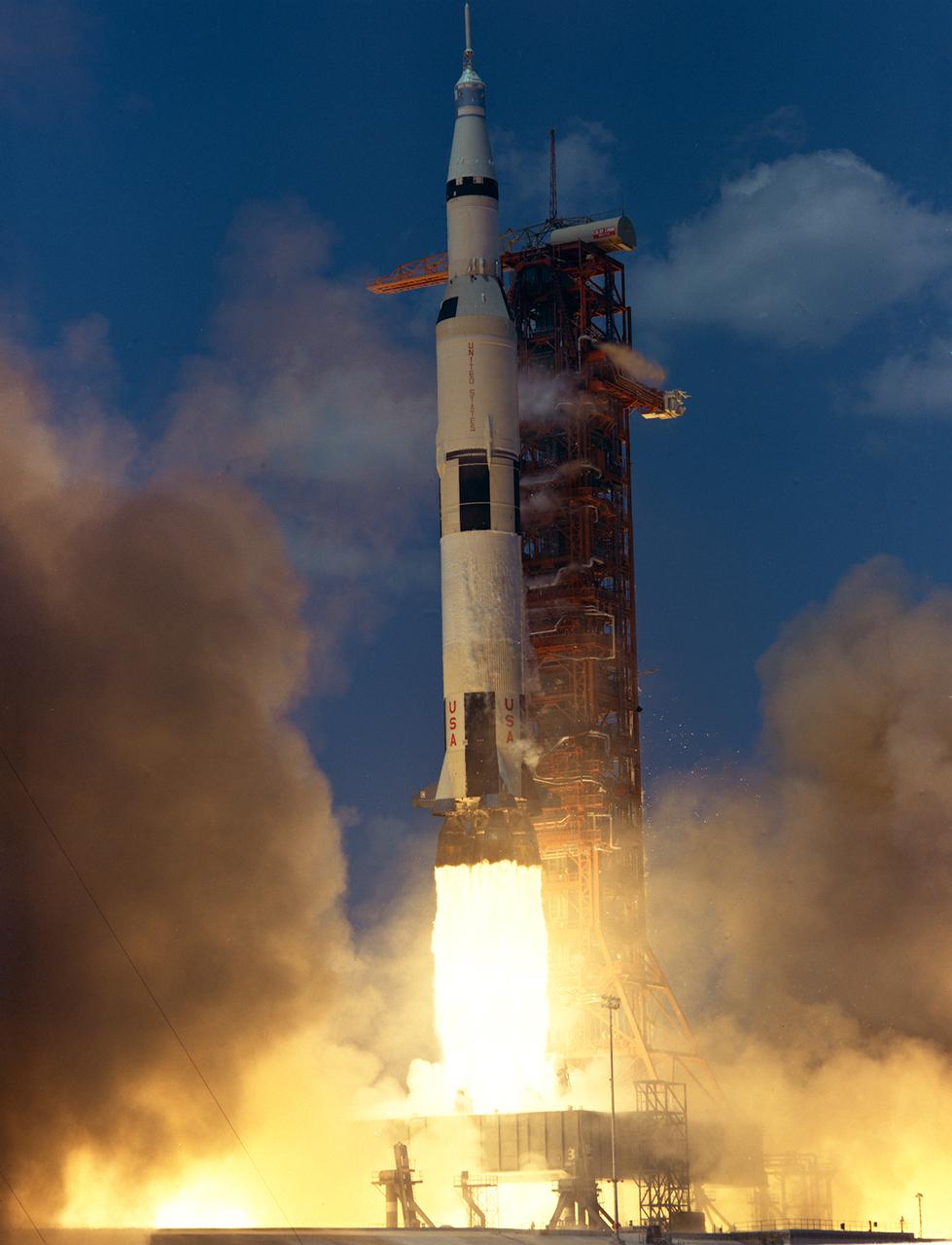
The sixth marned lunar landing mission, the Apollo 16 (SA-511), carrying three astronauts: Mission commander John W. Young, Command Module pilot Thomas K. Mattingly II, and Lunar Module pilot Charles M. Duke, lifted off on April 16, 1972. The Apollo 16 continued the broad-scale geological, geochemical, and geophysical mapping of the Moon's crust, begun by the Apollo 15, from lunar orbit. This mission marked the first use of the Moon as an astronomical observatory by using the ultraviolet camera/spectrograph. It photographed ultraviolet light emitted by Earth and other celestial objects. The Lunar Roving Vehicle was also used. The mission ended on April 27, 1972.
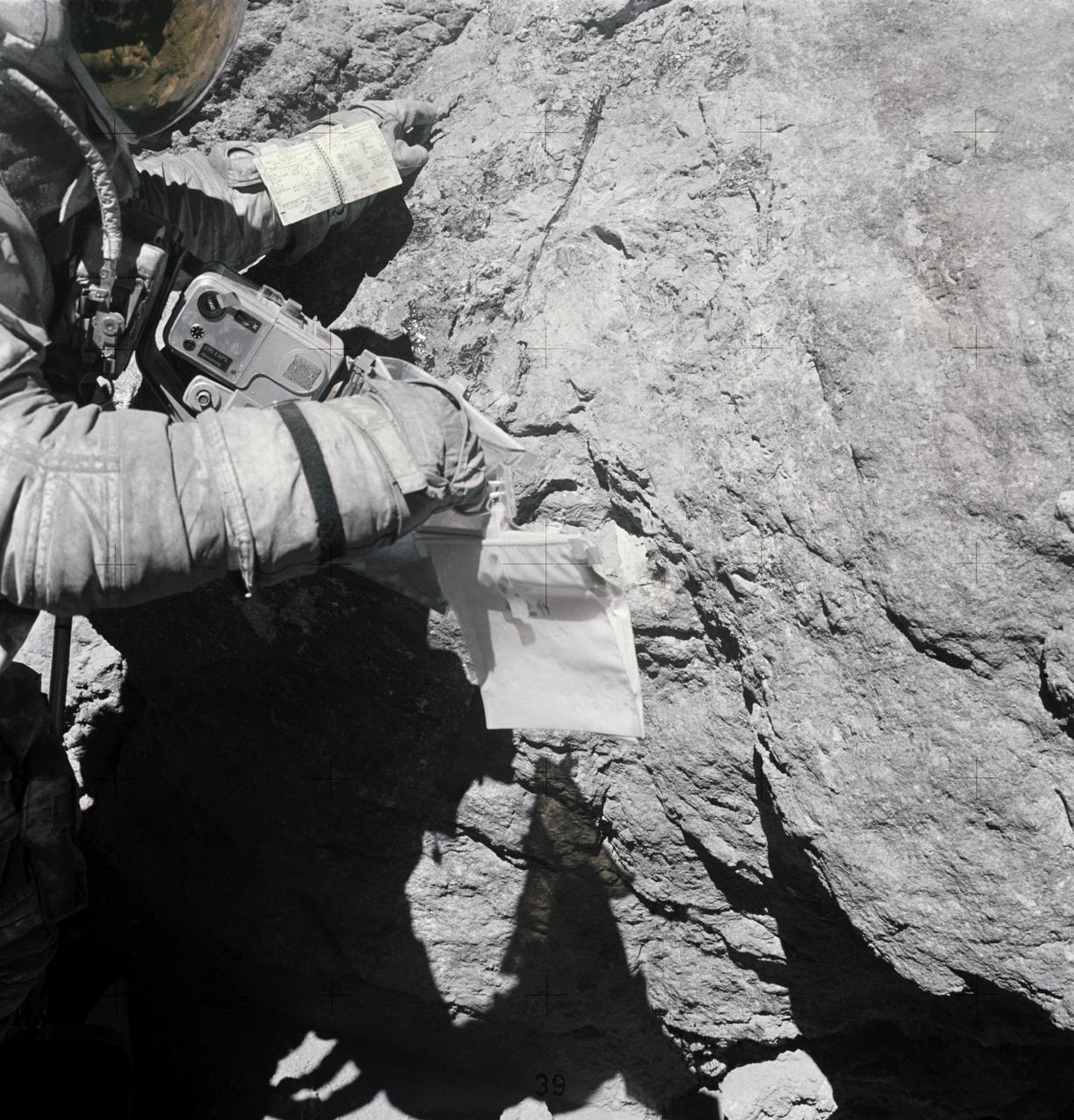
AS16-116-18649 (23 April 1972) --- Astronaut Charles M. Duke Jr., lunar module pilot of the Apollo 16 lunar landing mission, examines closely the surface of a large boulder at North Ray Crater during the third Apollo 16 extravehicular activity (EVA) at the Descartes landing site. This picture was taken by astronaut John W. Young, commander. Note the chest-mounted 70mm Hasselblad camera. While astronauts Young and Duke descended in the Apollo 16 Lunar Module (LM) "Orion" to explore the Descartes highlands landing site on the moon, astronaut Thomas K. Mattingly II, command module pilot, remained with the Command and Service Modules (CSM) "Casper" in lunar orbit.
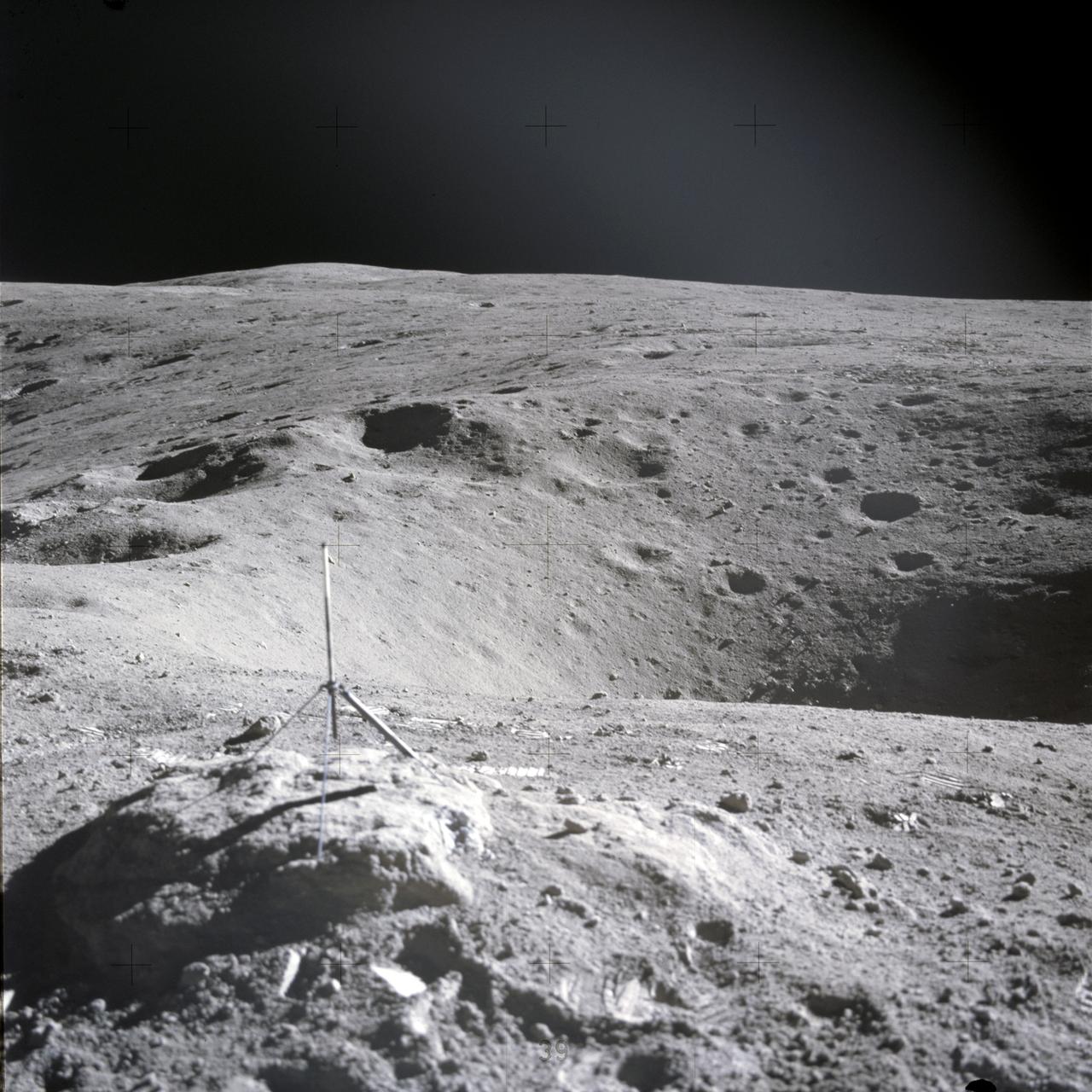
AS16-114-18421 (16-27 April 1972) --- This picture of the lunar surface was photographed by astronaut John W. Young during Apollo 16's first extravehicular activity (EVA) at EVA Station No 1. The instrument near the small crater's edge (foreground) is a gnomon. While astronauts Young, commander; and Charles M. Duke Jr., lunar module pilot; descended in the Apollo 16 Lunar Module (LM) "Orion" to explore the Descartes highlands landing site on the moon, astronaut Thomas K. Mattingly II, command module pilot, remained with the Command and Service Modules (CSM) "Casper" in lunar orbit.
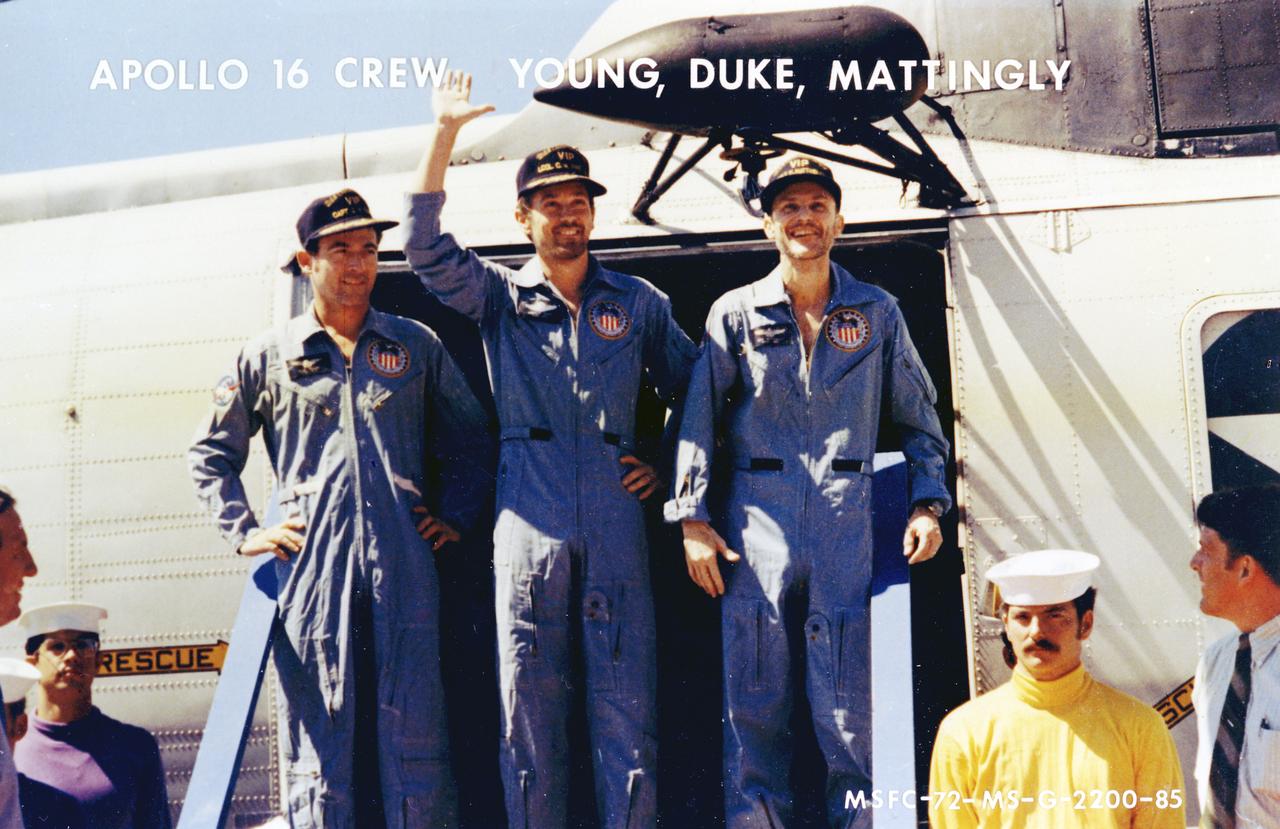
The Apollo 16 Command Module splashed down in the Pacific Ocean on April 27, 1972 after an 11-day moon exploration mission. The 3-man crew is shown here aboard the rescue ship, USS Horton. From left to right are: Mission Commander John W. Young, Lunar Module pilot Charles M. Duke, and Command Module pilot Thomas K. Mattingly II. The sixth manned lunar landing mission, the Apollo 16 (SA-511) lifted off on April 16, 1972. The Apollo 16 mission continued the broad-scale geological, geochemical, and geophysical mapping of the Moon’s crust, begun by the Apollo 15, from lunar orbit. This mission marked the first use of the Moon as an astronomical observatory by using the ultraviolet camera/spectrograph which photographed ultraviolet light emitted by Earth and other celestial objects. The Lunar Roving Vehicle, developed by the Marshall Space Flight Center, was also used.
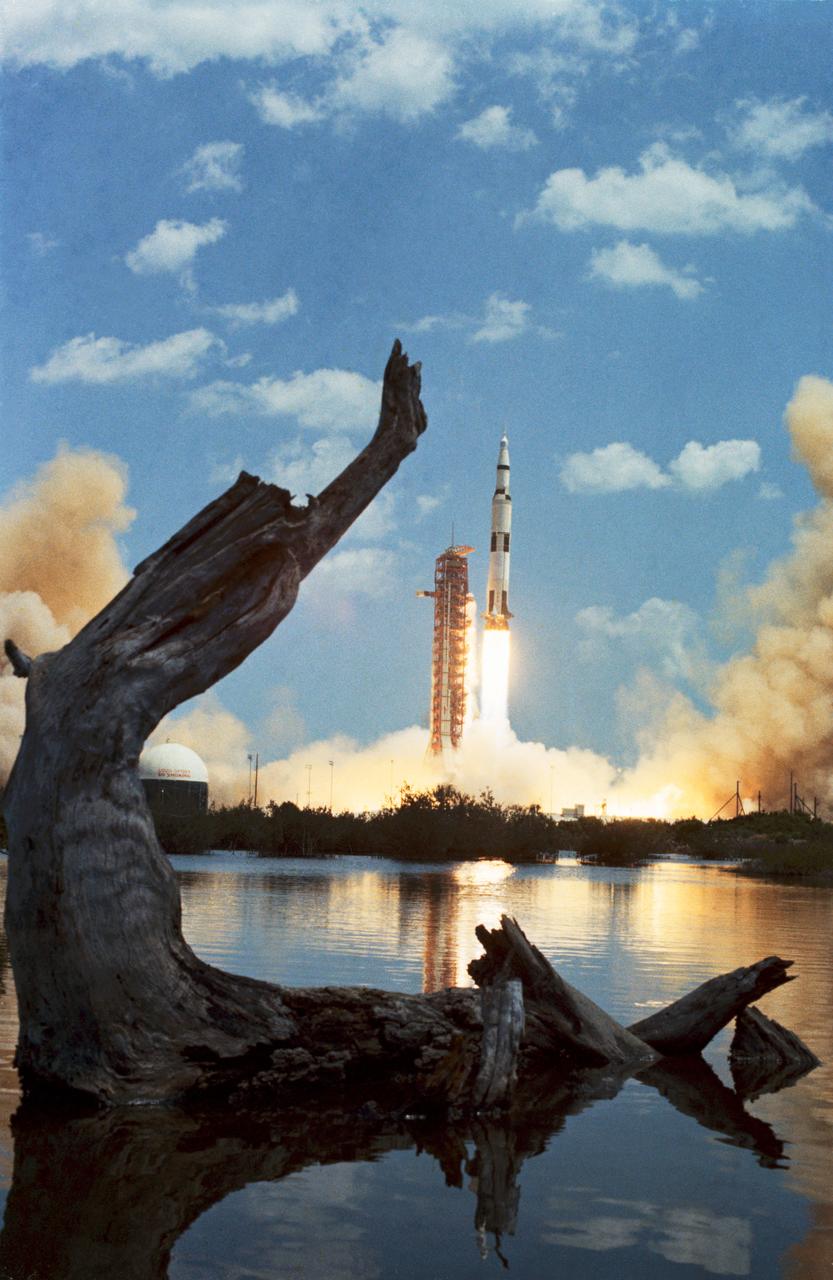
S72-35347 (16 April 1972) --- The huge, 363-feet tall Apollo 16 (Spacecraft 113/Lunar Module 11/ Saturn 511) space vehicle is launched from Pad A, Launch Complex 39, Kennedy Space Center (KSC), Florida, at 12:54:00.569 p.m. (EST), April 16, 1972, on a lunar landing mission. Aboard the Apollo 16 spacecraft were astronauts John W. Young, commander; Thomas K. Mattingly II, command module pilot; and Charles M. Duke Jr., lunar module pilot. While astronauts Young and Duke descended in the Lunar Module (LM) "Orion" to explore the Descartes highlands region of the moon, astronaut Mattingly remained with the Command and Service Modules (CSM) "Casper" in lunar orbit.
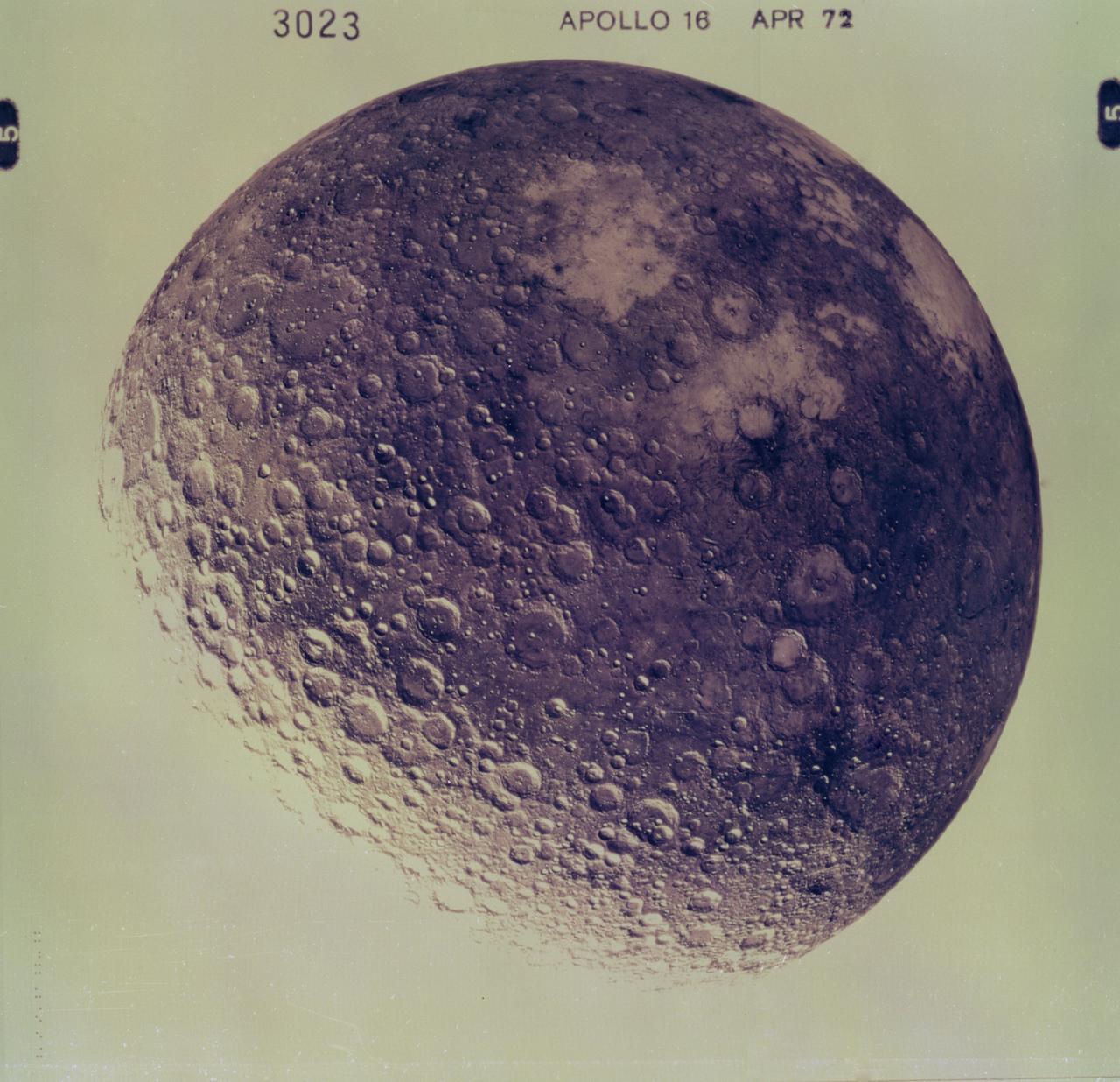
This view of the back side of the Moon was captured by the Apollo 16 mission crew. The sixth manned lunar landing mission, the Apollo 16 (SA-511), carrying three astronauts: Mission Commander John W. Young, Command Module pilot Thomas K. Mattingly II, and Lunar Module pilot Charles M. Duke, lifted off on April 16, 1972. The Apollo 16 continued the broad-scale geological, geochemical, and geophysical mapping of the Moon’s crust, begun by the Apollo 15, from lunar orbit. This mission marked the first use of the Moon as an astronomical observatory by using the ultraviolet camera/spectrograph which photographed ultraviolet light emitted by Earth and other celestial objects. The Lunar Roving Vehicle, developed by the Marshall Space Flight Center, was also used. The mission ended on April 27, 1972.
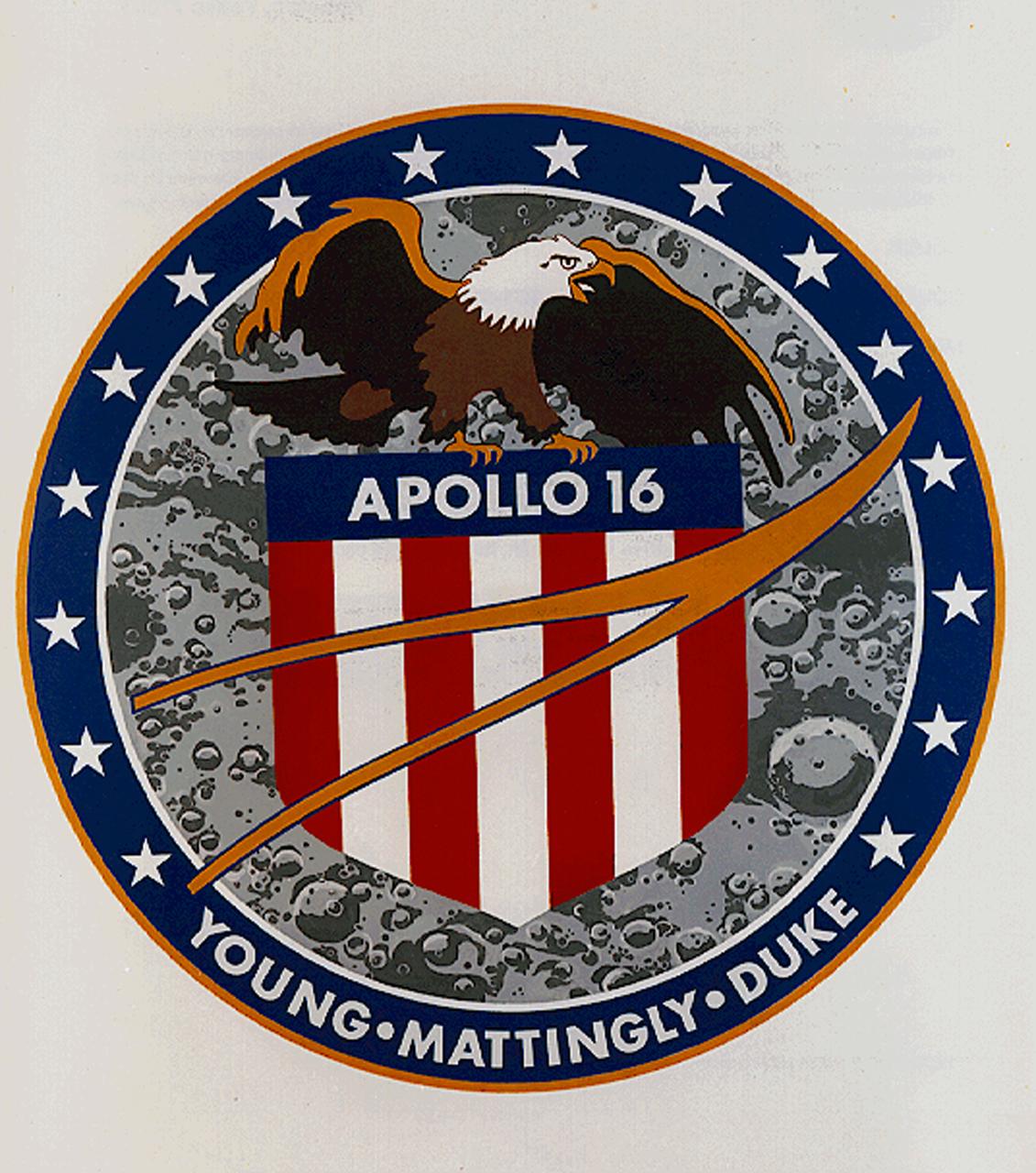
The Apollo 16 crew patch is dominated by an eagle perched atop a red, white, and blue shield superimposed on a lunar surface scene. Similar to that on the NASA agency shield and insignia, there is a gold symbol of flight outlined in blue across the face of the shield. The border surrounding the shield is a circle of 16 stars completed by the the crew’s surnames at the bottom. The patch was designed from ideas submitted by the Apollo 16 3-man crew: John W. Young, Mission Commander: Thomas K. Mattingly, Command Module pilot; and Charles M. Duke, Lunar Module pilot. (Note: This is the official Apollo 16 emblem, a property of the United States government. Its reproduction in any form other than in news, information, and education media is not authorized without approval. Unauthorized use is subject to the provisions of Title 18, U.S. Code, Section 701.)
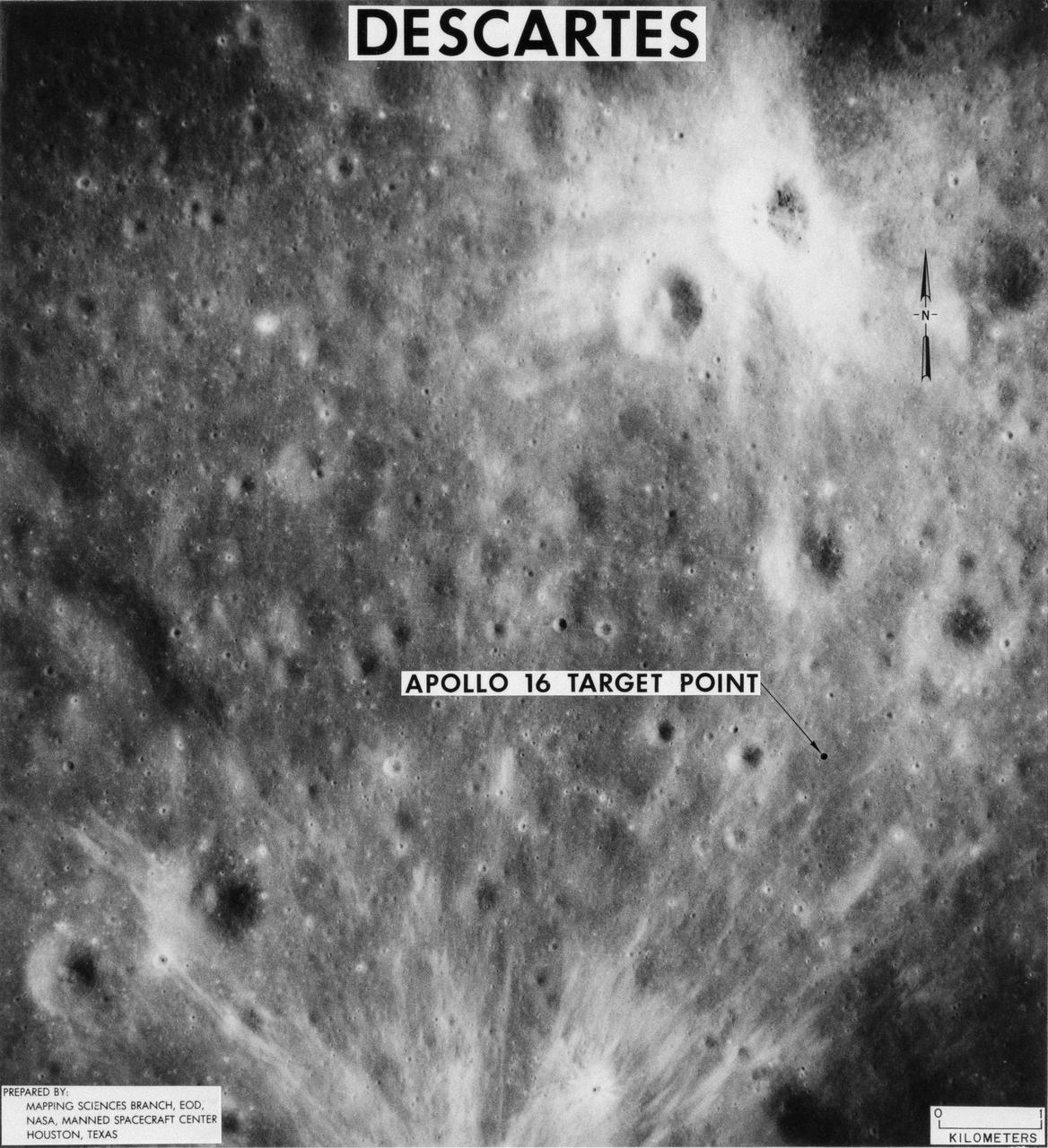
S71-44150 (February 1971) --- A vertical view of the Apollo 16 landing site located in the Descartes area on the lunar nearside. The overlay indicates the location of the proposed touchdown point for the Apollo 16 Lunar Module (LM). Descartes is located west of the Sea of Nectar and southwest of the Sea of Tranquility. This photograph was taken with a 500mm lens camera from lunar orbit by the Apollo 16 crew. Astronauts John W. Young, commander; and Charles M. Duke Jr., lunar module pilot; descended in the Apollo 16 LM "Orion" to explore the Descartes highlands landing site on the moon. Astronaut Thomas K. Mattingly II, command module pilot, remained with the Command and Service Modules (CSM) "Casper" in lunar orbit.
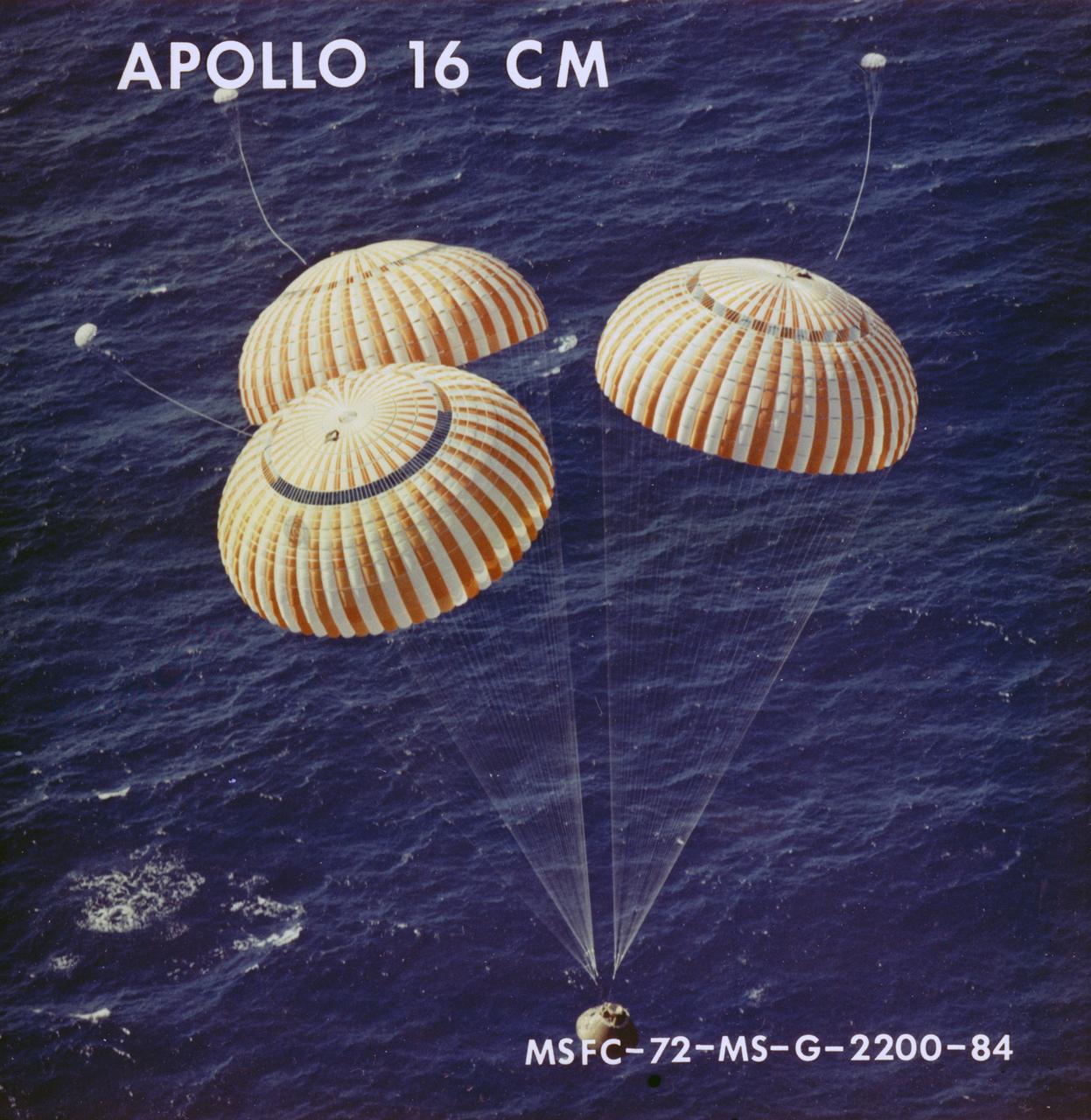
The Apollo 16 Command Module splashed down in the Pacific Ocean on April 27, 1972 after an 11-day moon exploration mission. The sixth manned lunar landing mission, the Apollo 16 (SA-511), carrying three astronauts: Mission Commander John W. Young, Command Module pilot Thomas K. Mattingly II, and Lunar Module pilot Charles M. Duke, lifted off on April 16, 1972. The Apollo 16 continued the broad-scale geological, geochemical, and geophysical mapping of the Moon’s crust, begun by the Apollo 15, from lunar orbit. This mission marked the first use of the Moon as an astronomical observatory by using the ultraviolet camera/spectrograph which photographed ultraviolet light emitted by Earth and other celestial objects. The Lunar Roving Vehicle, developed by the Marshall Space Flight Center, was also used.
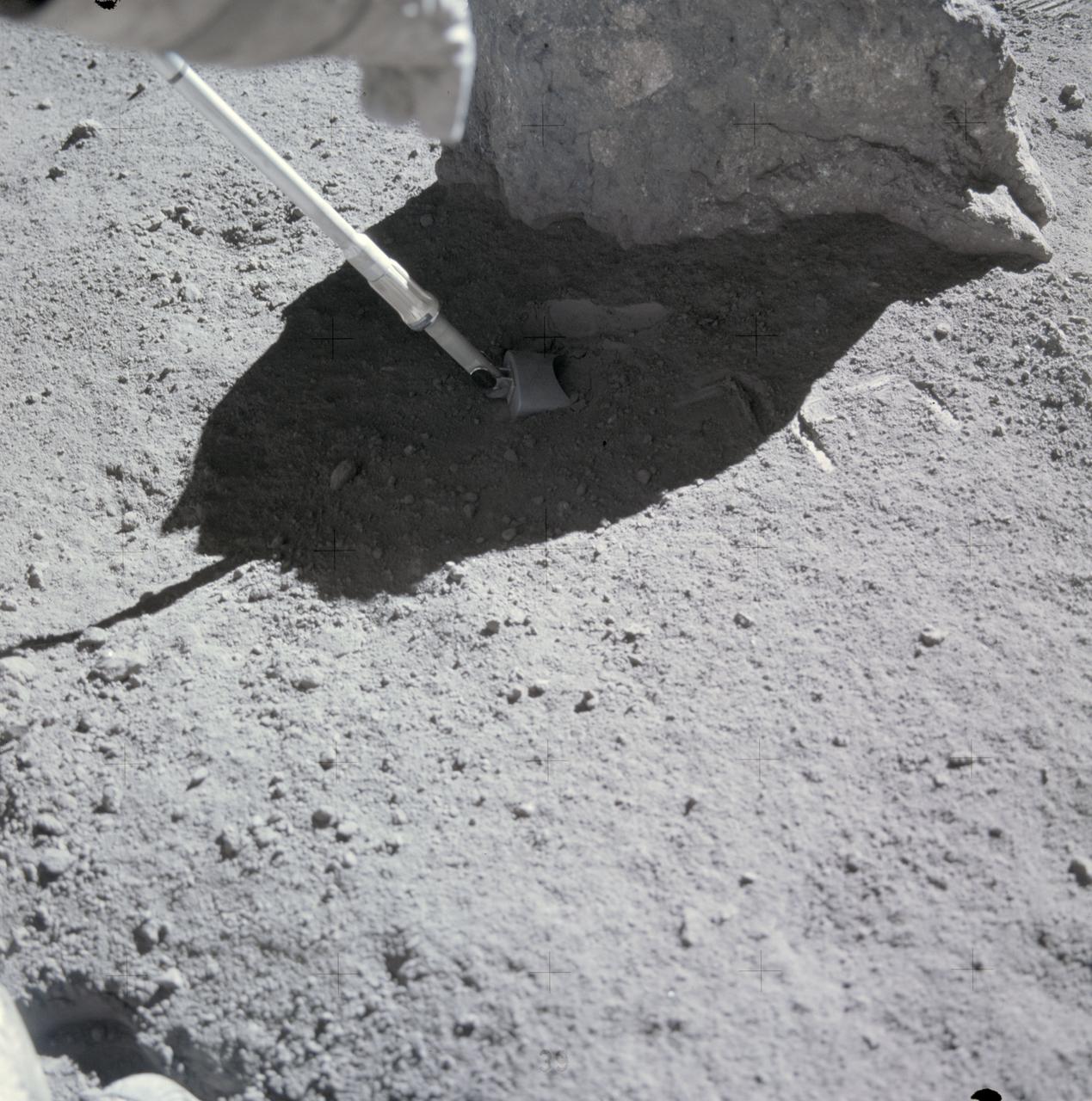
AS16-107-17561 (16-27 April 1972) --- One of the Apollo 16 astronauts scoops up lunar soil at the base of a small boulder at Station No. 9 during the second Apollo 16 extravehicular activity (EVA) at the Descartes landing site. Depressions to the right of the scoop were made when a surface sample was taken. This photograph was taken just before the boulder was rolled over. While astronauts John W. Young, commander; and Charles M. Duke Jr., lunar module pilot; descended in the Apollo 16 Lunar Module (LM) "Orion" to explore the Descartes highlands landing site on the moon, astronaut Thomas K. Mattingly II, command module pilot, remained with the Command and Service Modules (CSM) "Casper" in lunar orbit.
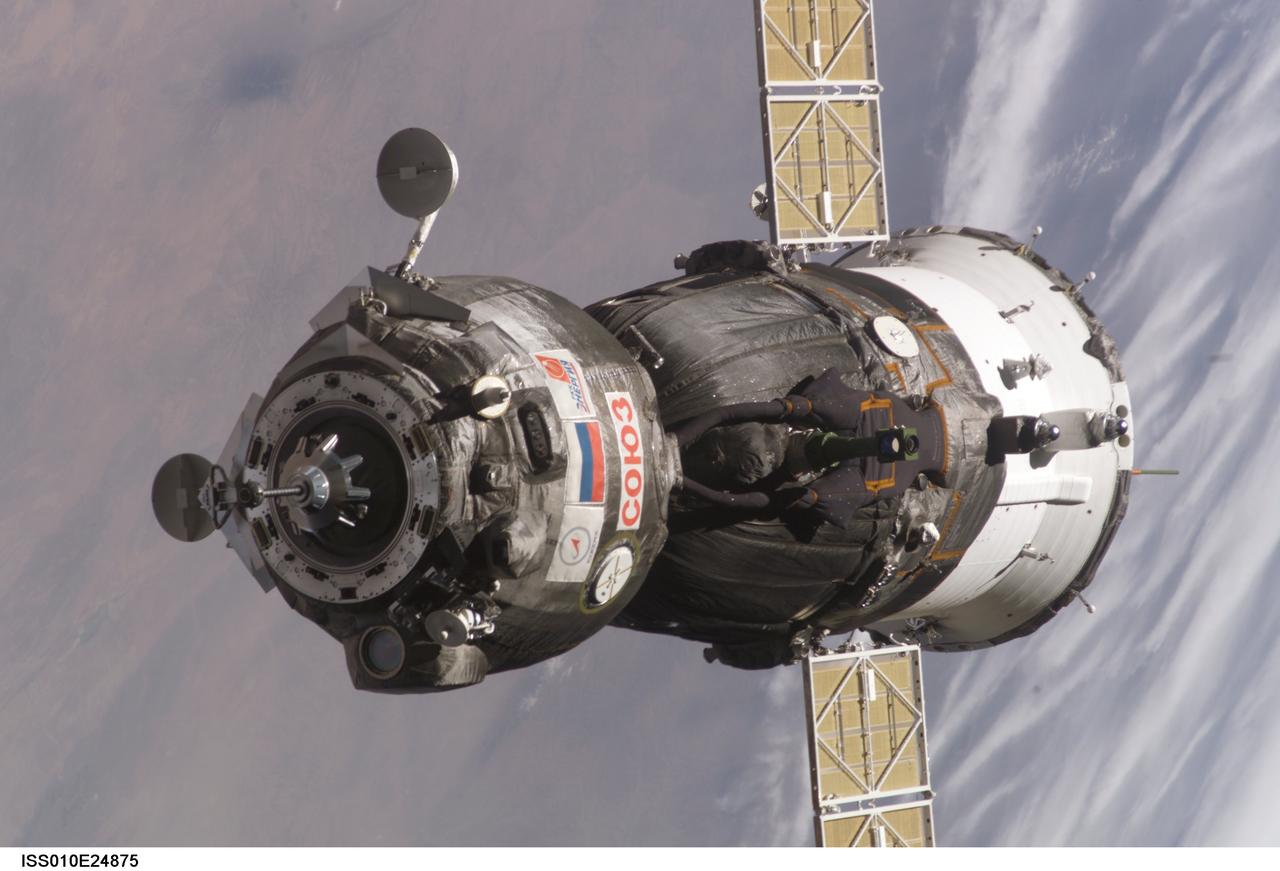
ISS010-E-24875 (16 April 2005) --- Backdropped by a blue and white Earth, this close-up view features the Soyuz TMA-6 spacecraft approaching the International Space Station (ISS). Onboard the spacecraft are cosmonaut Sergei K. Krikalev, Expedition 11 commander representing Russia's Federal Space Agency; astronaut John L. Phillips, NASA ISS science officer and flight engineer; and European Space Agency (ESA) astronaut Roberto Vittori of Italy. The Soyuz linked to the Pirs Docking Compartment at 9:20 p.m. (CDT) on April 16, 2005 as the two spacecraft flew over eastern Asia. The docking followed Friday’s launch from the Baikonur Cosmodrome in Kazakhstan.
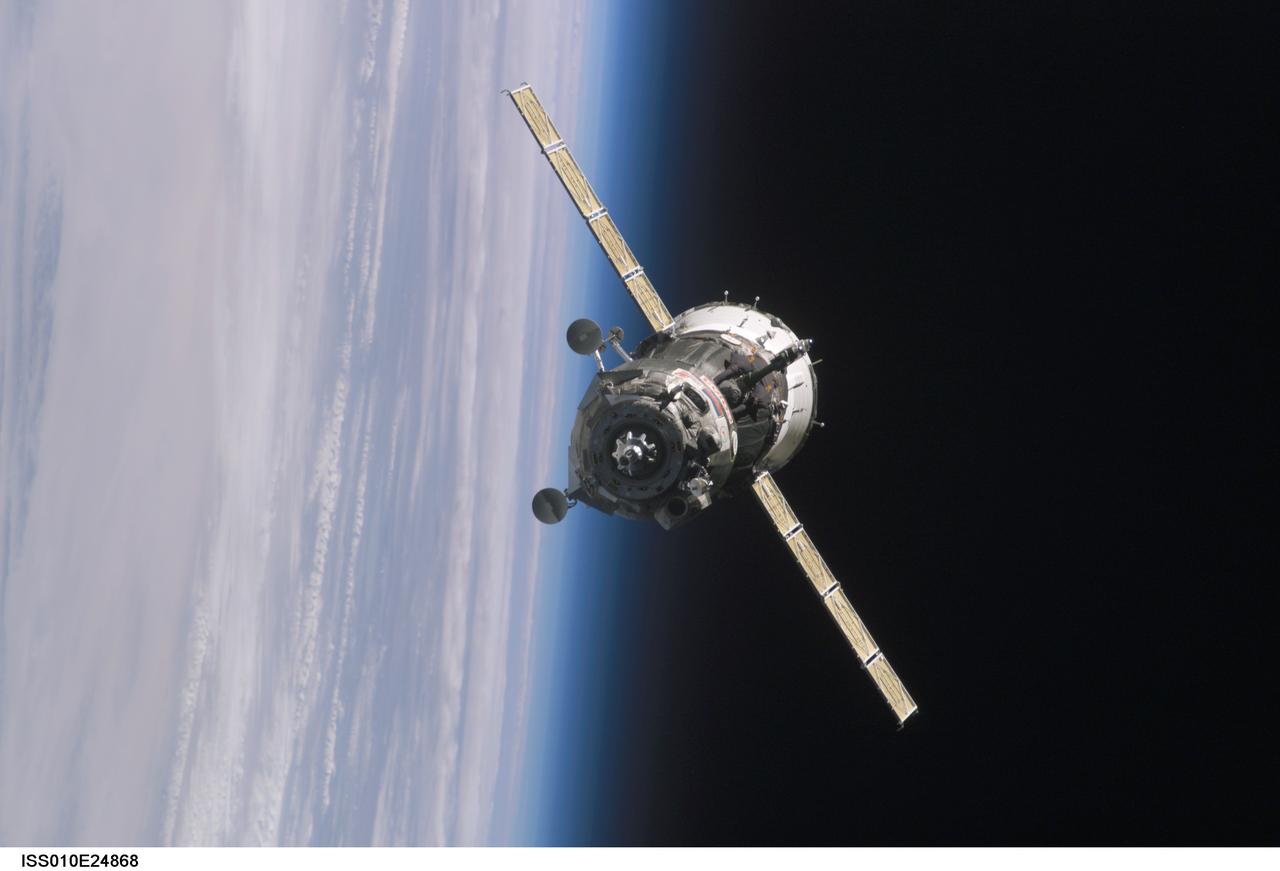
ISS010-E-24868 (16 April 2005) --- Backdropped by the blackness of space and Earth’s horizon, the Soyuz TMA-6 spacecraft approaches the International Space Station (ISS). Onboard the spacecraft are cosmonaut Sergei K. Krikalev, Expedition 11 commander representing Russia's Federal Space Agency; astronaut John L. Phillips, NASA ISS science officer and flight engineer; and European Space Agency (ESA) astronaut Roberto Vittori of Italy. The Soyuz linked to the Pirs Docking Compartment at 9:20 p.m. (CDT) on April 16, 2005 as the two spacecraft flew over eastern Asia. The docking followed Friday’s launch from the Baikonur Cosmodrome in Kazakhstan.
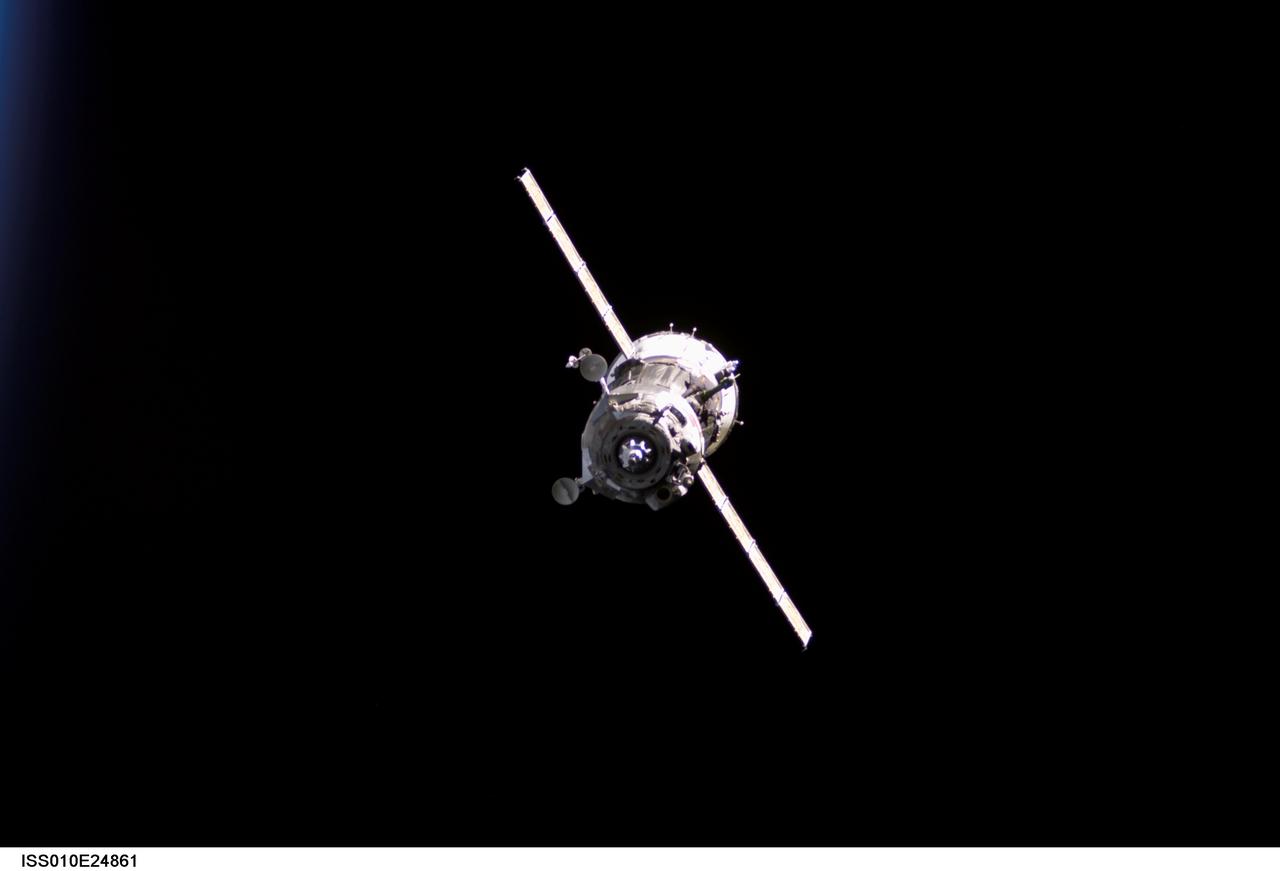
ISS010-E-24861 (16 April 2005) --- Backdropped by the blackness of space, the Soyuz TMA-6 spacecraft approaches the International Space Station (ISS). Onboard the spacecraft are cosmonaut Sergei K. Krikalev, Expedition 11 commander representing Russia's Federal Space Agency; astronaut John L. Phillips, NASA ISS science officer and flight engineer; and European Space Agency (ESA) astronaut Roberto Vittori of Italy. The Soyuz linked to the Pirs Docking Compartment at 9:20 p.m. (CDT) on April 16, 2005 as the two spacecraft flew over eastern Asia. The docking followed Friday’s launch from the Baikonur Cosmodrome in Kazakhstan.
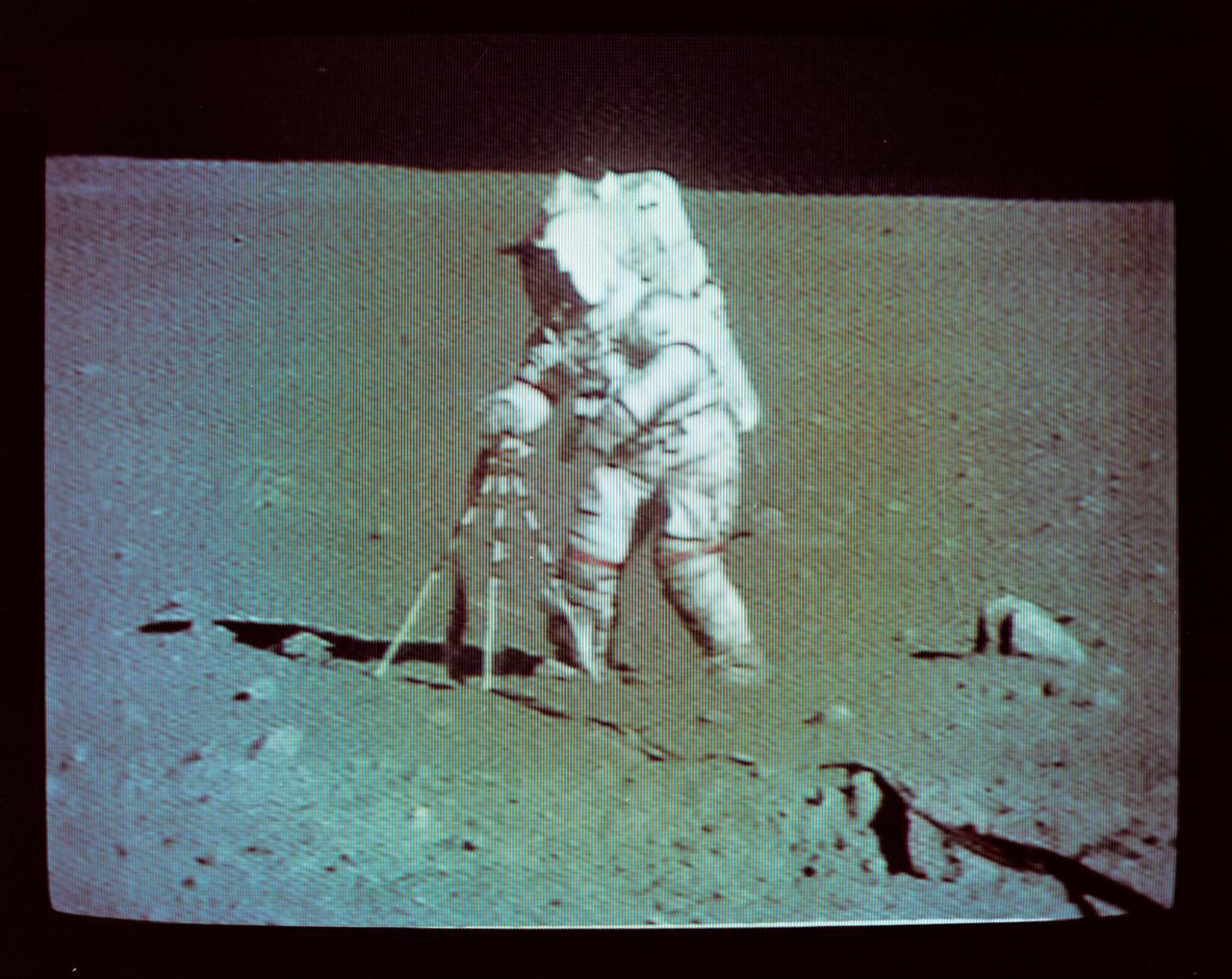
S72-35610 (21 April 1972) --- Astronaut John W. Young, commander of the Apollo 16 lunar landing mission, deploys the lunar Portable Magnetometer during the first Apollo 16 extravehicular activity (EVA) on the moon, as seen in this reproduction taken from a color television transmission made by the color television camera mounted on the Lunar Roving Vehicle (LRV). While astronaut Thomas K. Mattingly II, command module pilot, remained with the Command and Service Modules in lunar orbit, astronauts Young and Charles M. Duke Jr., lunar module pilot, descended in the Lunar Module to explore the Descartes landing site.
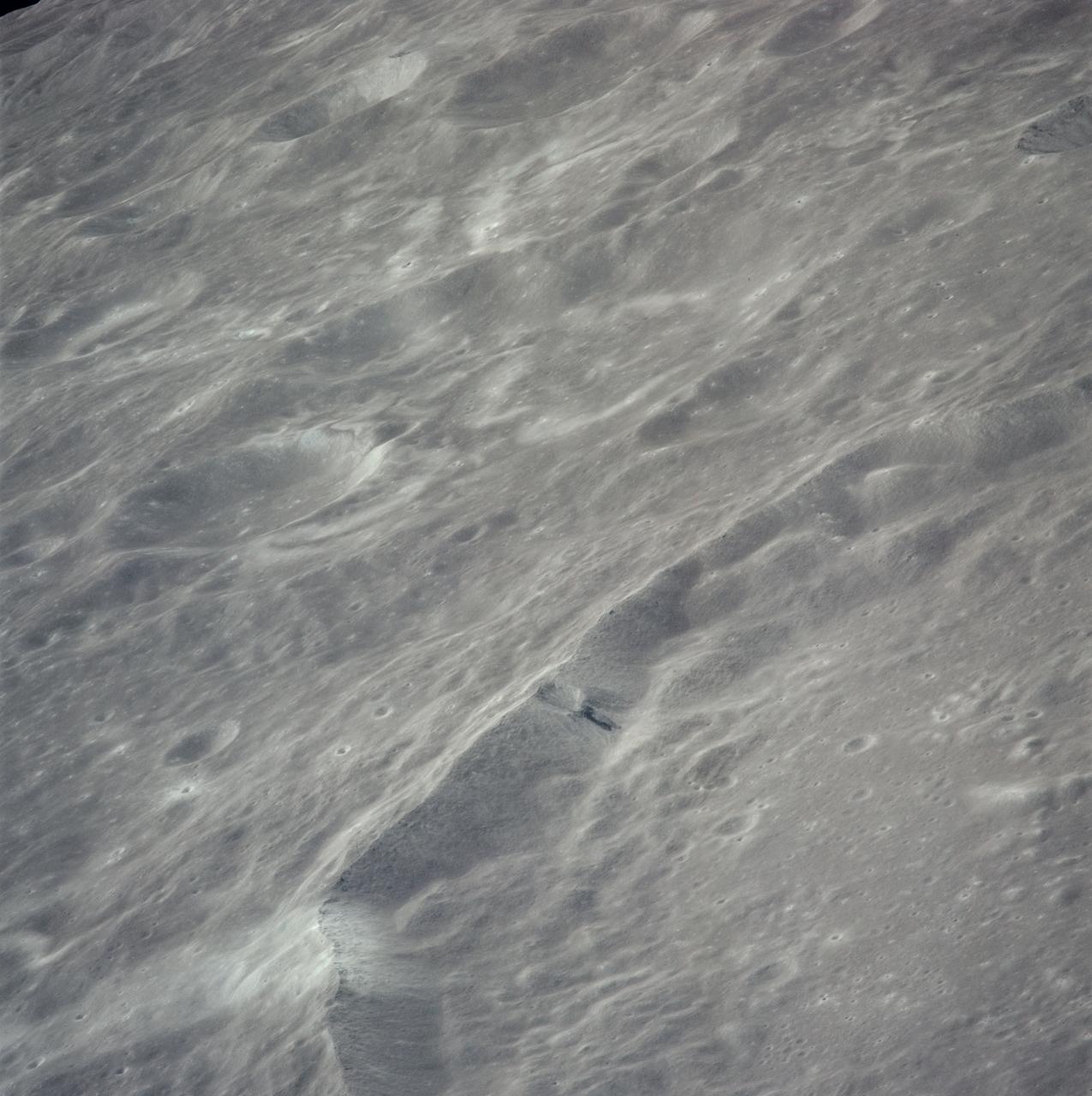
AS16-121-19407 (April 1972) --- An oblique view of a rim of Guyot Crater on the lunar farside, as photographed from the Apollo 16 spacecraft in lunar orbit. The coordinates of the center of Guyot Crater are 116.5 degrees east longitude and 10.5 degrees north latitude. Note the black coloration which appears to be lava flow down the side of the crater rim. While astronauts John W. Young, commander; and Charles M. Duke Jr., lunar module pilot; descended in the Apollo 16 Lunar Module (LM) "Orion" to explore the Descartes highlands site on the moon, astronaut Thomas K. Mattingly II, command module pilot, remained with the Command and Service Modules (CSM) "Casper" in lunar orbit.
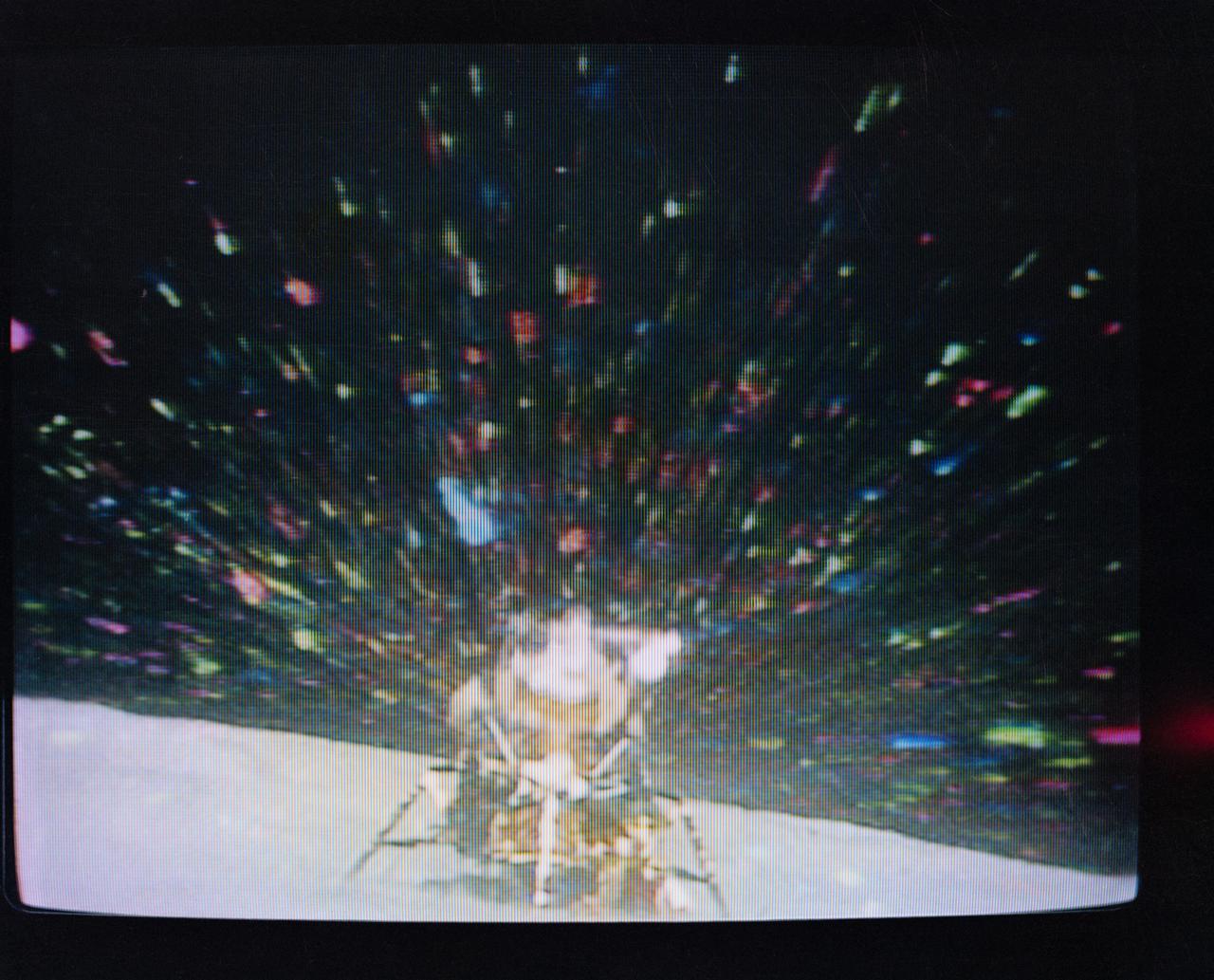
S72-35613 (22 April 1972) --- The Apollo 16 Lunar Module (LM) "Orion" in early lunar liftoff phase is featured in this lunar scene at the Descartes landing site. The still picture is a reproduction taken from a color television transmission made by a TV camera mounted on the Lunar Roving Vehicle (LRV). While astronauts John W. Young, commander; and Charles M. Duke Jr., lunar module pilot; descended in the Apollo 16 LM to explore the Descartes highlands landing site on the moon, astronaut Thomas K. Mattingly II, command module pilot, remained with the Command and Service Modules (CSM) "Casper" in lunar orbit.
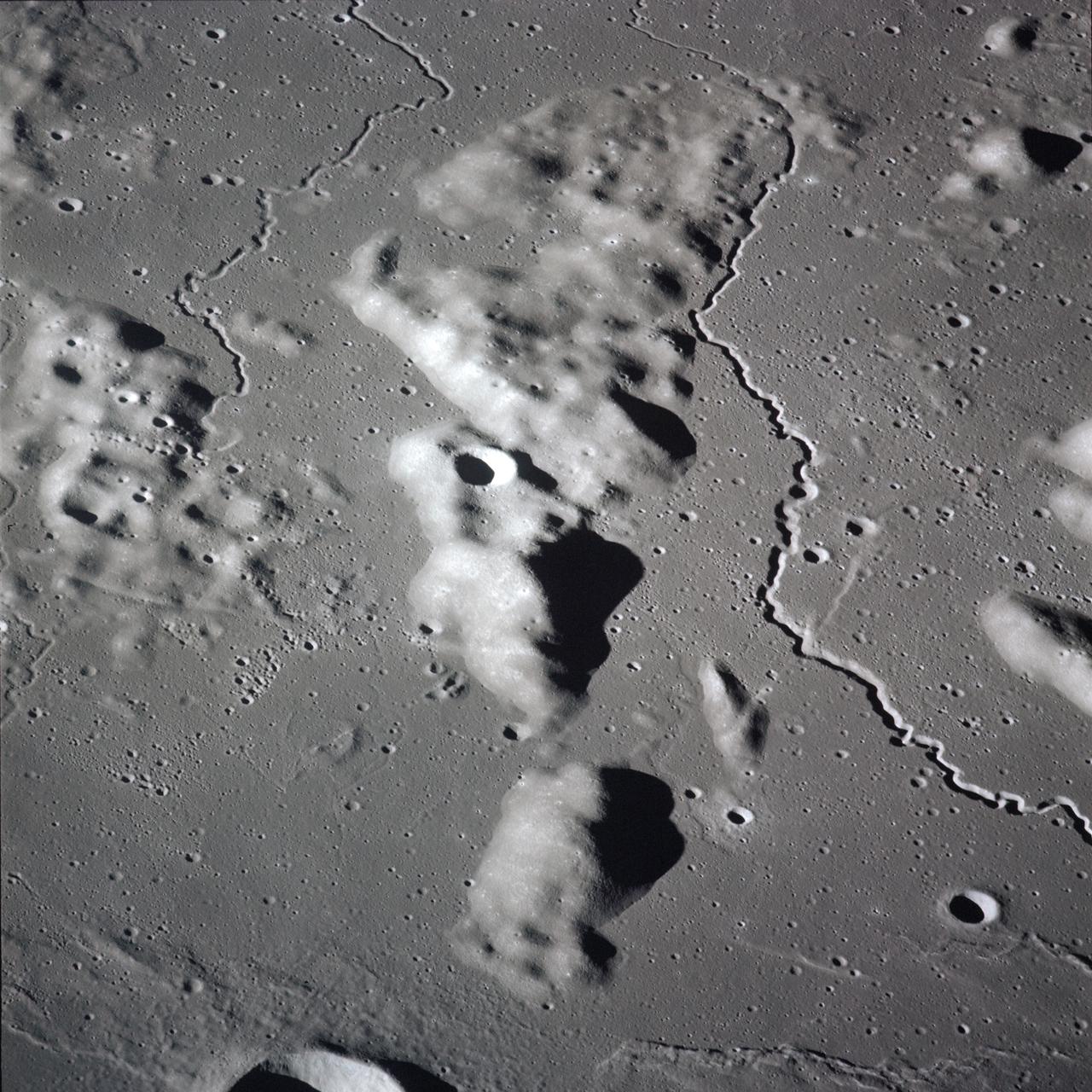
AS16-119-19161 (16-27 April 1972) --- The prominent rille feature running through the area is Herigonius I. The coordinates for the center of the area pictured are 14.7 degrees south latitude and 36.4 degrees west longitude. The photo was taken by the Apollo 16 astronauts from the Command and Service Modules (CSM) in lunar orbit. While astronauts John W. Young and Charles M. Duke Jr. descended in the Lunar Module (LM) "Orion" to explore the Descartes highlands region of the moon, astronaut Thomas K. (Ken) Mattingly II, remained with the CSM "Casper" in lunar orbit.
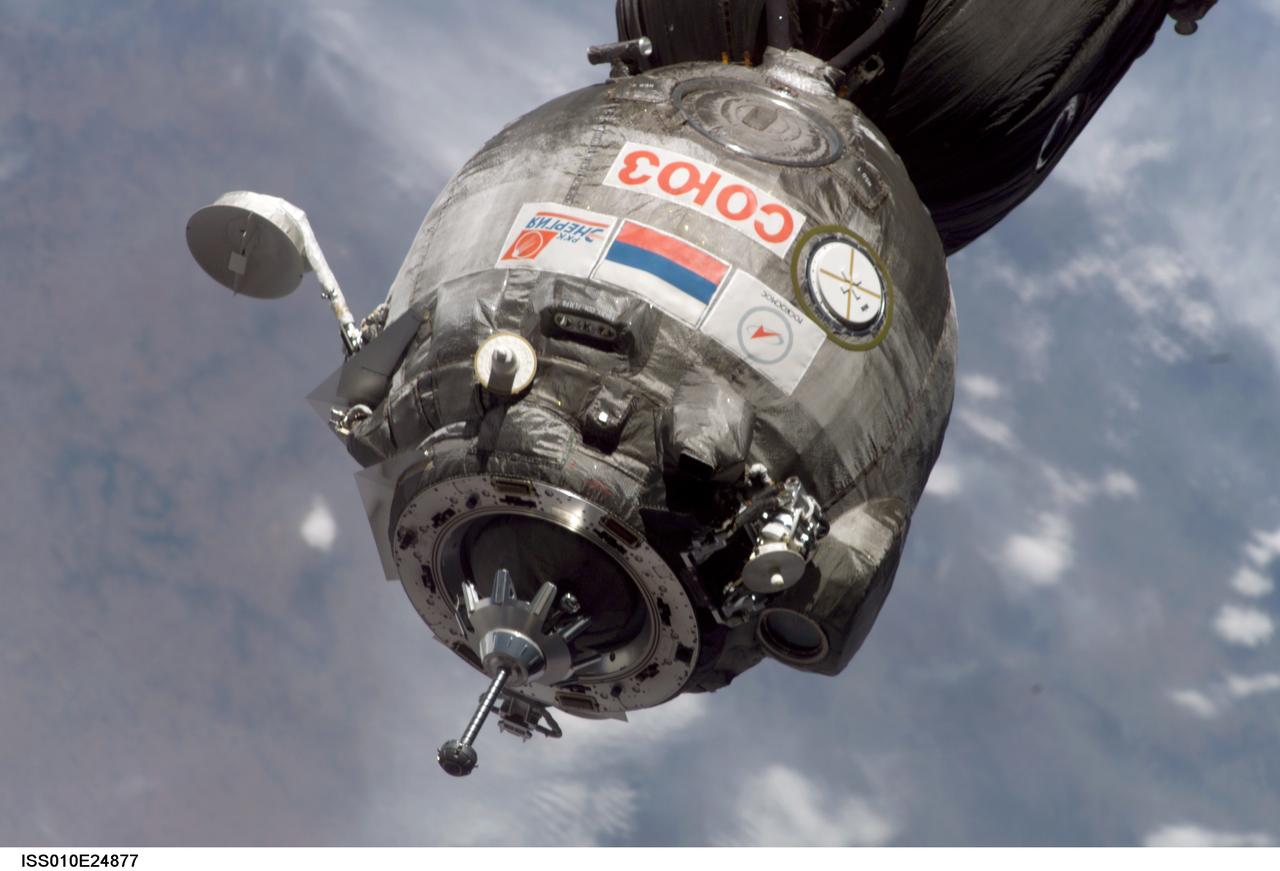
ISS010-E-24877 (16 April 2005) --- Backdropped by a blue and white Earth, this close-up view features the Soyuz TMA-6 spacecraft approaching the International Space Station (ISS). Onboard the spacecraft are cosmonaut Sergei K. Krikalev, Expedition 11 commander representing Russia's Federal Space Agency; astronaut John L. Phillips, NASA ISS science officer and flight engineer; and European Space Agency (ESA) astronaut Roberto Vittori of Italy. The Soyuz linked to the Pirs Docking Compartment at 9:20 p.m. (CDT) on April 16, 2005 as the two spacecraft flew over eastern Asia. The docking followed Friday’s launch from the Baikonur Cosmodrome in Kazakhstan.
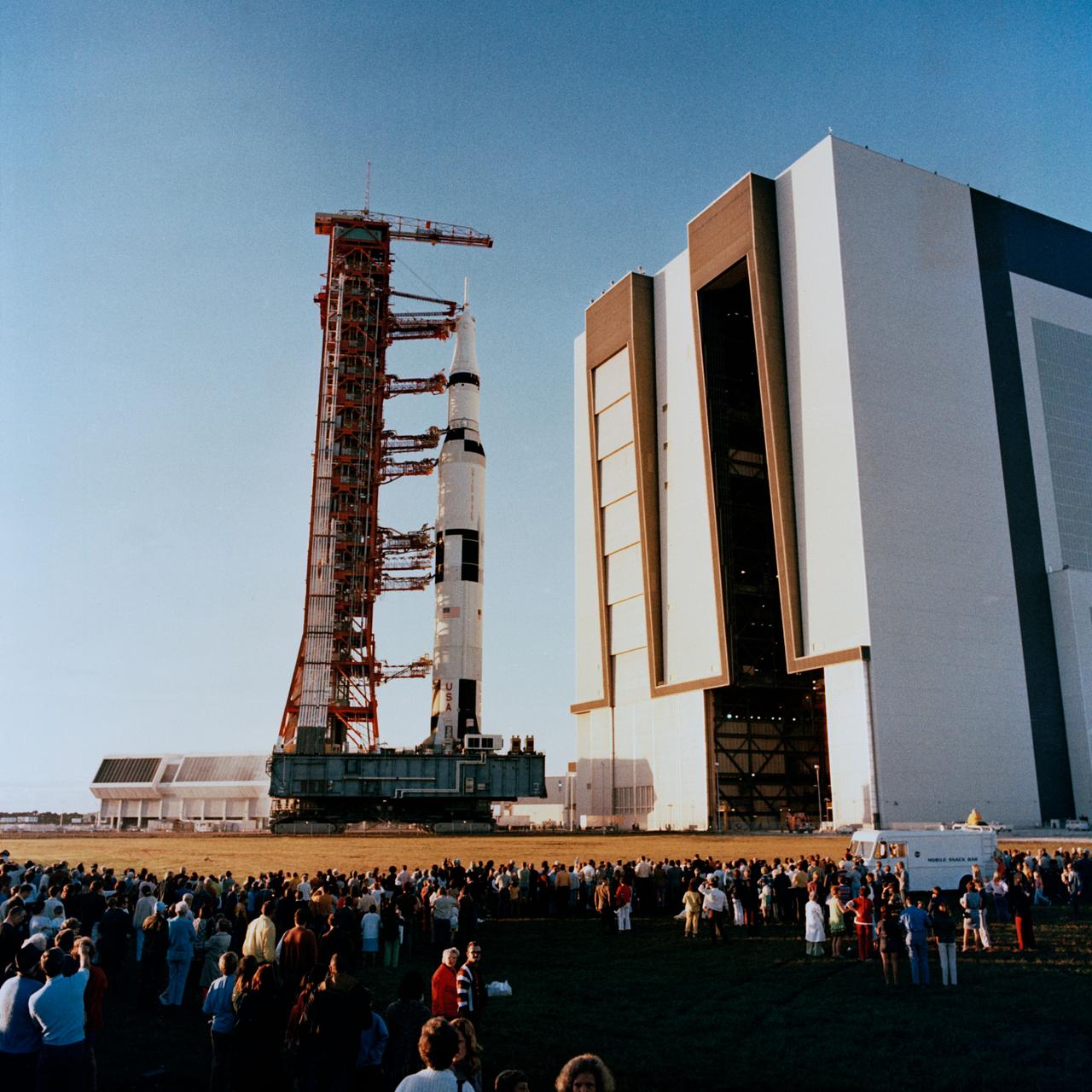
S72-19795 (13 Dec. 1971) --- A large crowd of spectators look on as the 363-feet tall Apollo 16 (Spacecraft 113/Lunar Module 11/Saturn 511) space vehicle moves out of the Vehicle Assembly Building (VAB) at the Kennedy Space Center's (KSC) Launch Complex 39 toward Pad A. The Saturn V stack and its mobile launch tower are atop a huge crawler-transporter. The prime crew men of the scheduled Apollo 16 lunar landing mission are astronauts John W. Young, commander; Thomas K. Mattingly, command module pilot; and Charles M. Duke Jr., lunar module pilot.
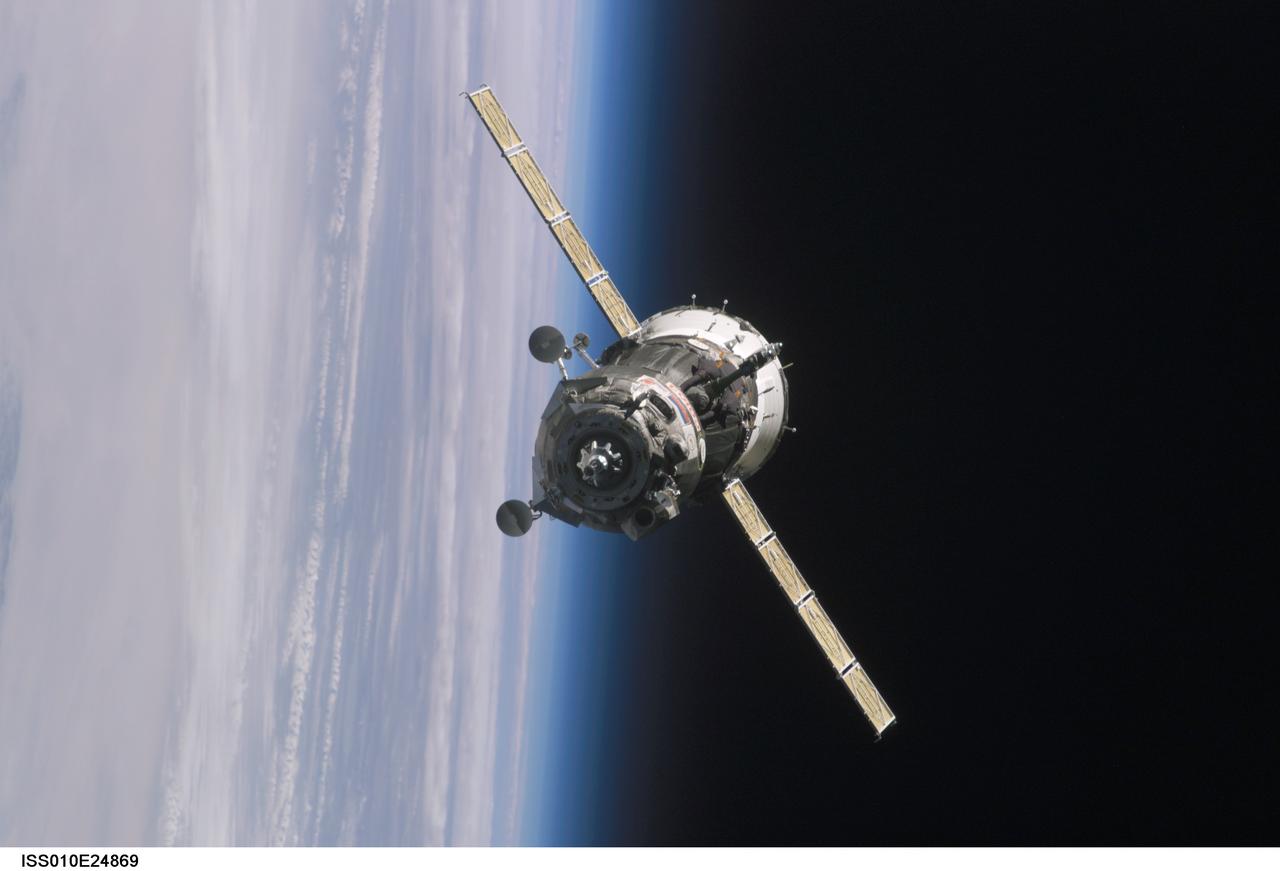
ISS010-E-24869 (16 April 2005) --- Backdropped by the blackness of space and Earth’s horizon, the Soyuz TMA-6 spacecraft approaches the International Space Station. Onboard the spacecraft are cosmonaut Sergei K. Krikalev, Expedition 11 commander representing Russia's Federal Space Agency; astronaut John L. Phillips, NASA ISS science officer and flight engineer; and European Space Agency (ESA) astronaut Roberto Vittori of Italy. The Soyuz linked to the Pirs Docking Compartment at 9:20 p.m. (CDT) on April 16, 2005 as the two spacecraft flew over eastern Asia. The docking followed Friday’s launch from the Baikonur Cosmodrome in Kazakhstan.
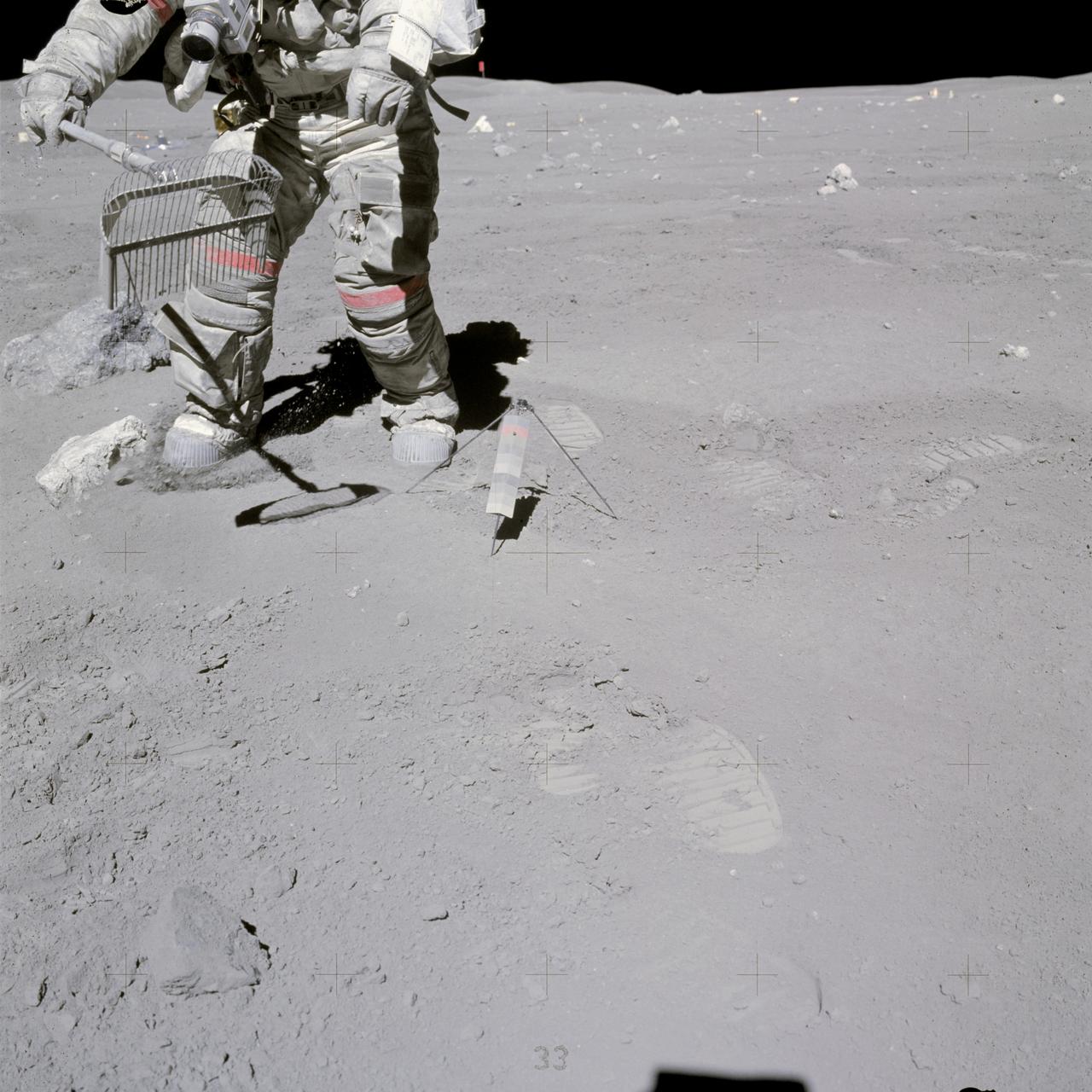
AS16-117-18826 (23 April 1972) --- Astronaut John W. Young collects samples at the North Ray Crater geological site during the mission's third and final Apollo 16 extravehicular activity (EVA). He has a rake in his hand, and the gnomon is near his foot. Note how soiled Young's Extravehicular Mobility Unit (EMU) is. While astronauts Young, commander; and Charles M. Duke Jr., lunar module pilot; descended in the Apollo 16 Lunar Module (LM) "Orion" to explore the Descartes highlands landing site on the moon, astronaut Thomas K. Mattingly II, command module pilot, remained with the Command and Service Modules (CSM) "Casper" in lunar orbit.
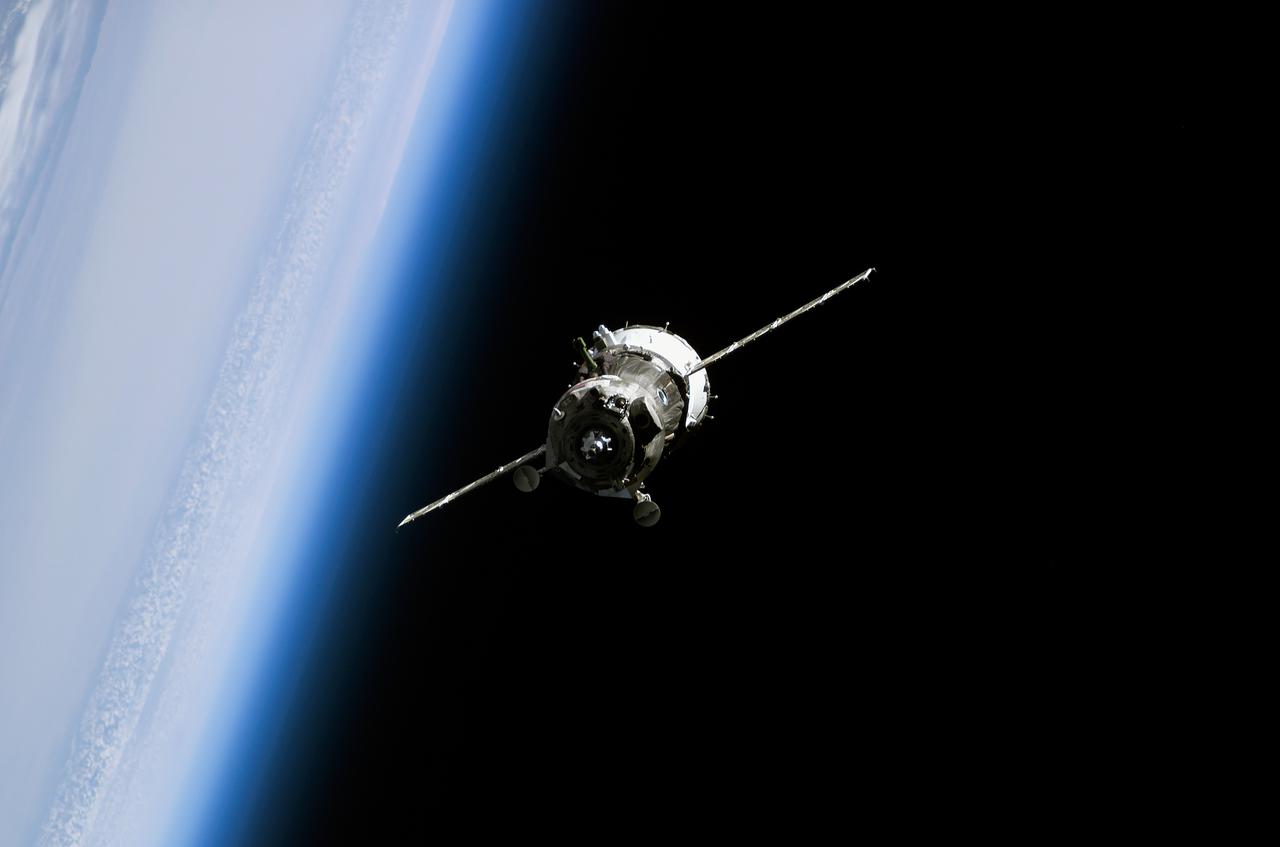
ISS010-E-24857 (16 April 2005) --- Backdropped by the blackness of space and Earth’s horizon, the Soyuz TMA-6 spacecraft approaches the International Space Station (ISS). Onboard the spacecraft are cosmonaut Sergei K. Krikalev, Expedition 11 commander representing Russia's Federal Space Agency; astronaut John L. Phillips, NASA ISS science officer and flight engineer; and European Space Agency (ESA) astronaut Roberto Vittori of Italy. The Soyuz linked to the Pirs Docking Compartment at 9:20 p.m. (CDT) on April 16, 2005 as the two spacecraft flew over eastern Asia. The docking followed Friday’s launch from the Baikonur Cosmodrome in Kazakhstan.
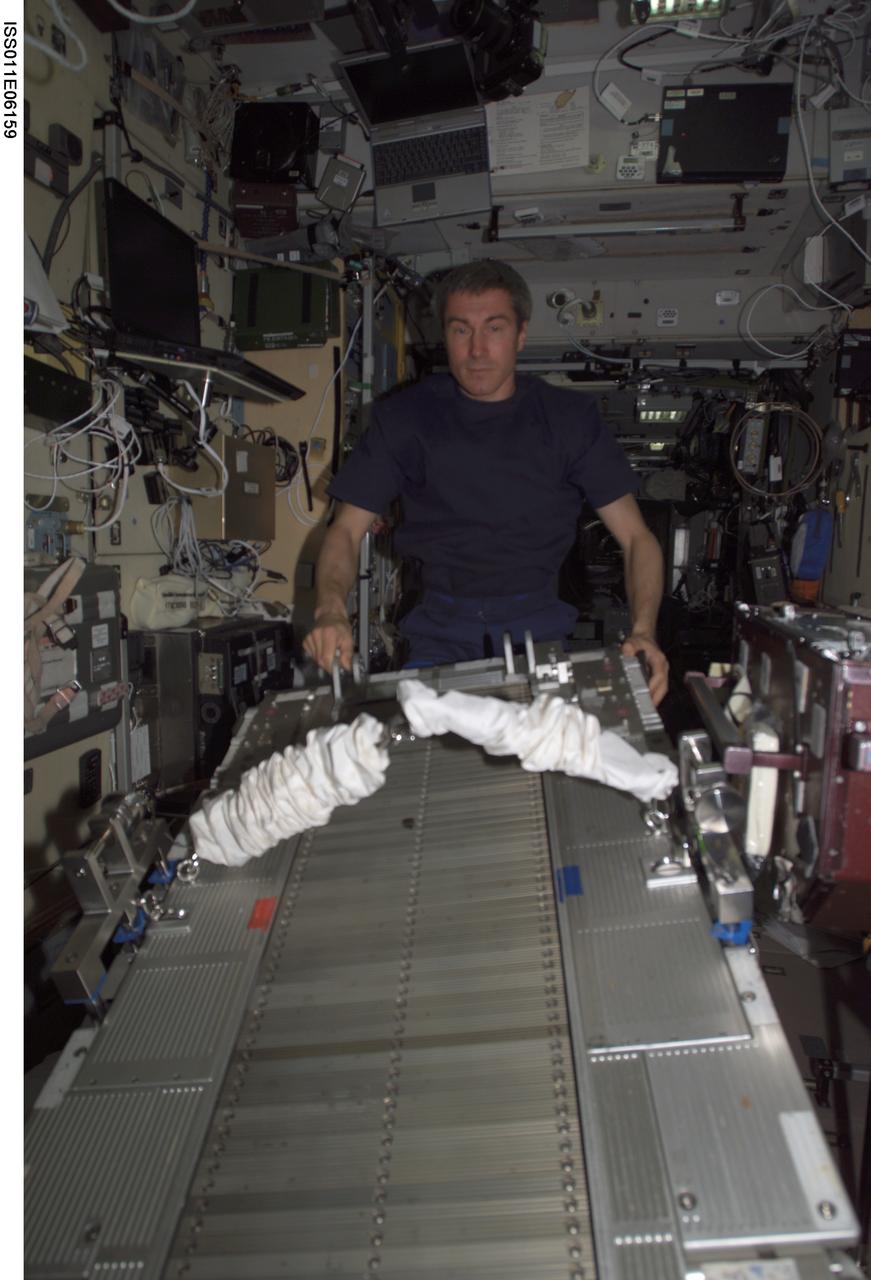
ISS011-E-06159 (16 May 2005) --- Cosmonaut Sergei K. Krikalev, Expedition 11 commander representing Russia's Federal Space Agency, works with the Treadmill Belt Assembly and exercise harness on the Treadmill Vibration Isolation System (TVIS) Chassis Assembly during an In-Flight Maintenance (IFM) in the Zvezda Service Module of the International Space Station (ISS).
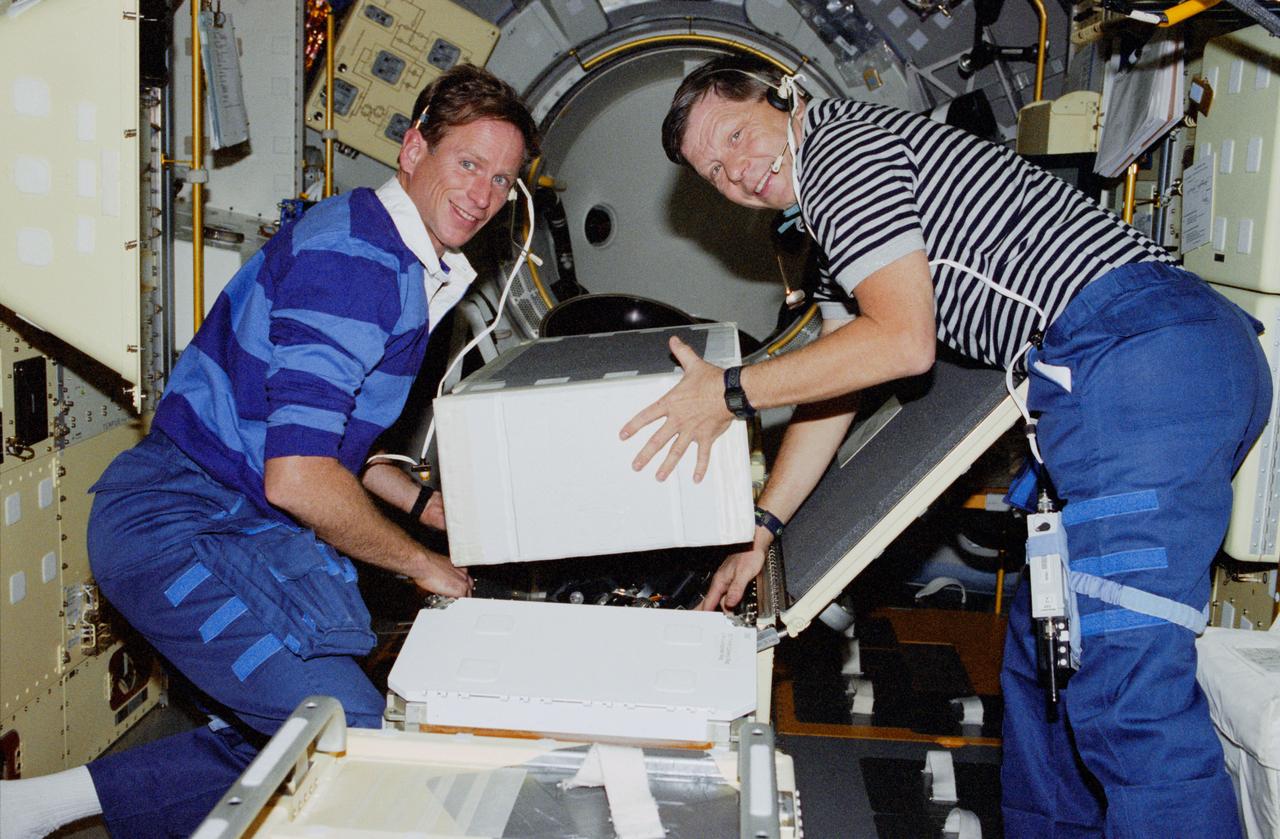
STS083-308-021 (4-8 April 1997) --- Payload specialist Roger K. Crouch and astronaut Michael L. Gernhardt, mission specialist, load boxes as they prepare to deactivate the Spacelab Science Module. Crouch and Gernhardt, along with five other NASA astronauts and a second payload specialist supporting the Microgravity Sciences Laboratory (MSL-1) mission, were less than a fourth of the way through a scheduled 16-day flight when a power problem cut short their planned stay.
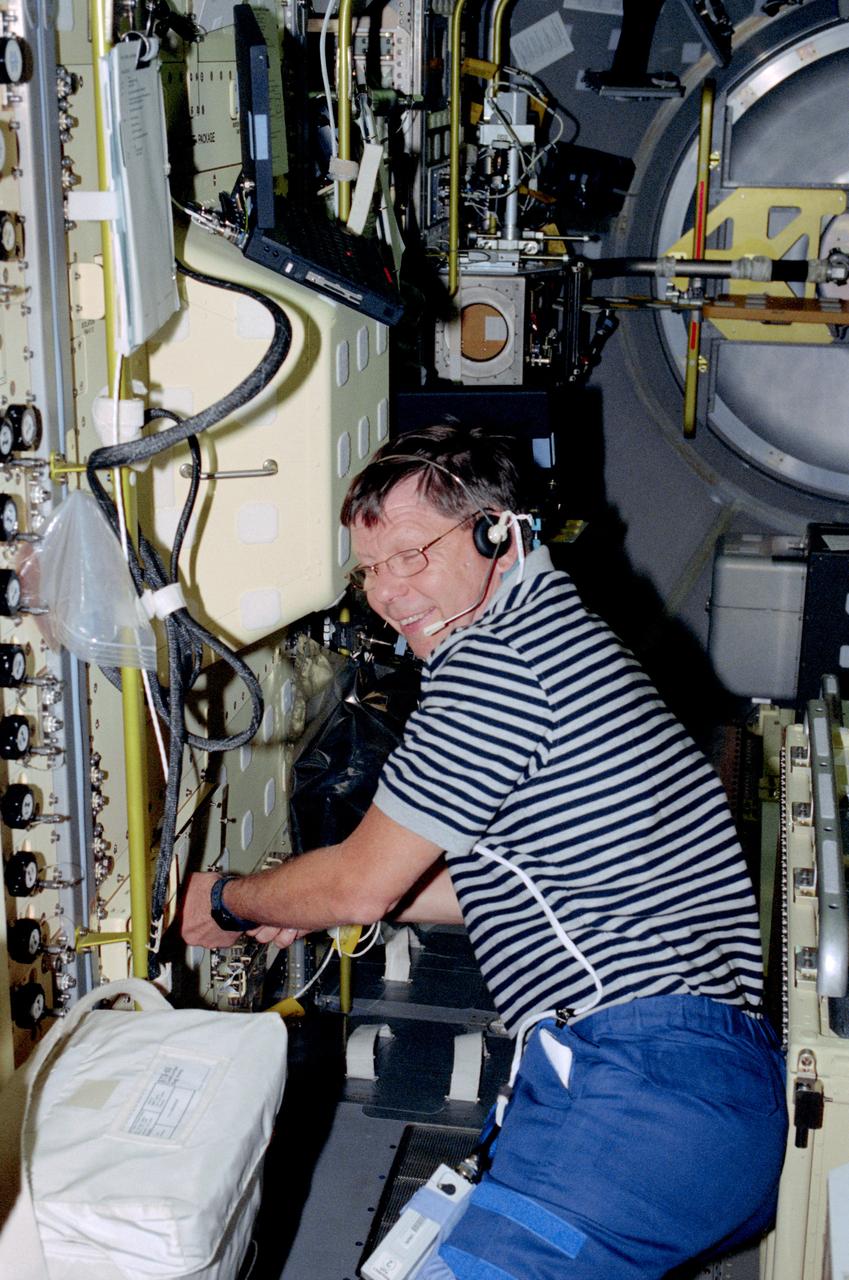
STS083-308-025 (4-8 April 1997) --- Payload specialist Roger K. Crouch, talks to ground controllers while working at Combustion Module-1 in the Spacelab Science Module. Crouch, along with five other NASA astronauts and a second payload specialist supporting the Microgravity Sciences Laboratory (MSL-1) mission were less than a fourth of the way through a scheduled 16-day flight when a power problem cut short their planned stay.
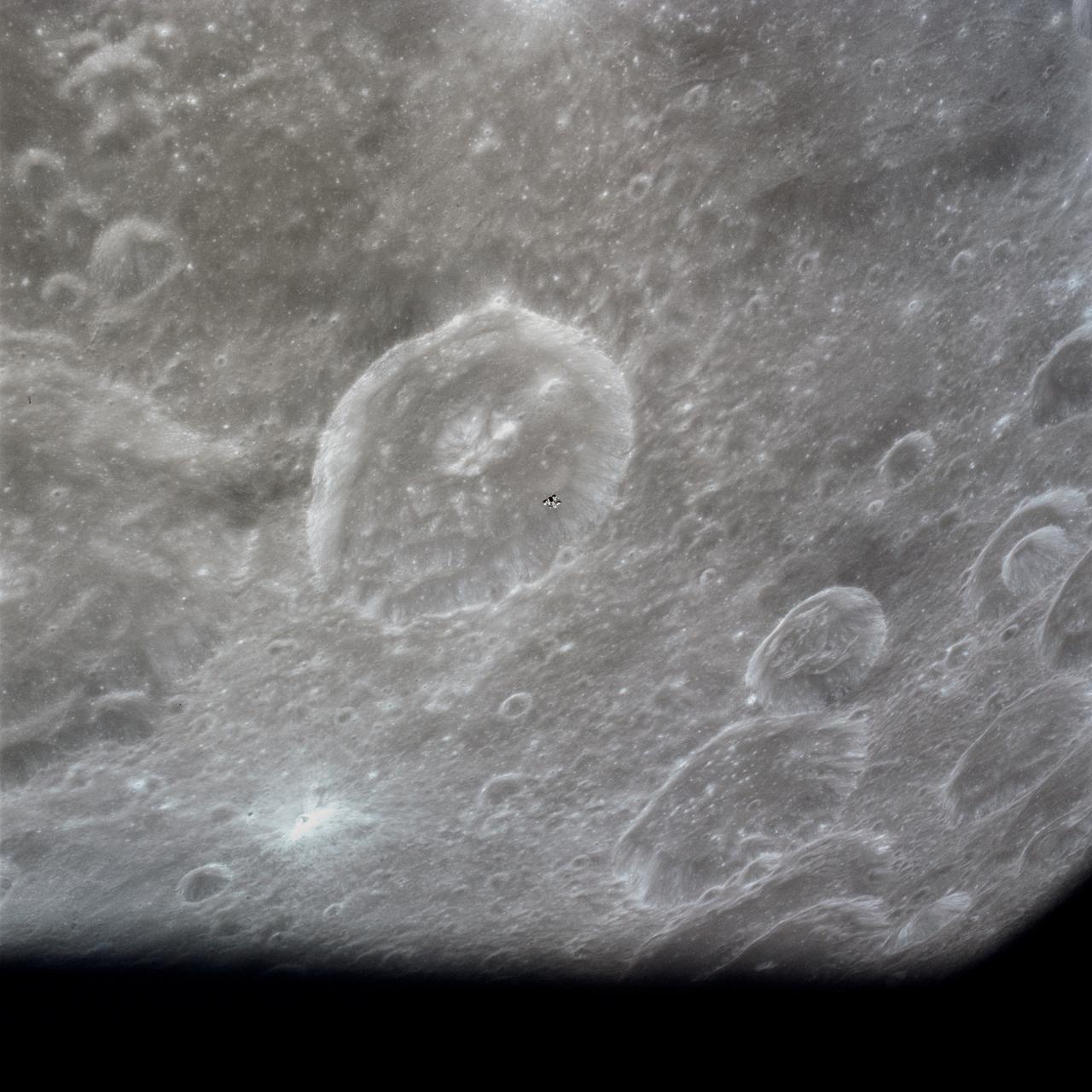
AS16-122-19527 (23 April 1972) --- The Apollo 16 Lunar Module (LM) ascent stage, with astronauts John W. Young and Charles M. Duke Jr. aboard, returns from the lunar surface to rejoin the Command and Service Modules (CSM) in lunar orbit. Astronaut Thomas K. (Ken) Mattingly II took this photograph from the Command Module (CM). The LM is above the Crater Schubert B. The lunar surface area visible in this picture is located at the western edge of Smyth's Sea.
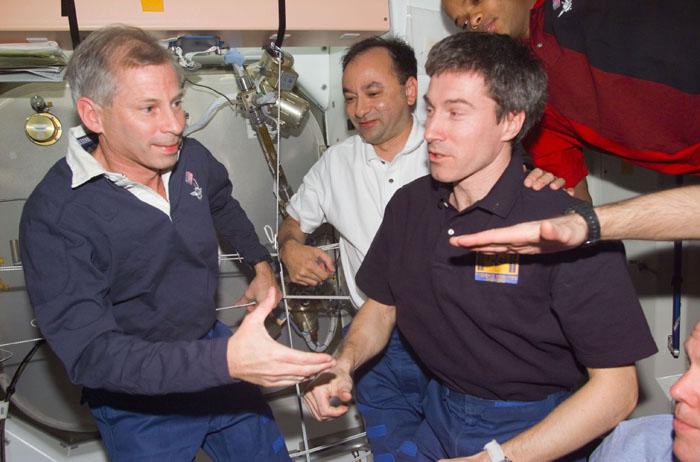
STS98-E-5295 (16 February 2001) --- Astronaut Kenneth D. Cockrell (left), STS-98 mission commander, participates in farewells with Expedition One crew members. Cosmonaut Sergei K. Krikalev (right foreground), Expedition One flight engineer, is one of three crew members who will stay behind for several weeks prior to return to Earth. Astronauts Mark L. Polansky, STS-98 pilot, and Robert L. Curbeam, mission specialist, are also pictured. The scene was recorded with a digital still camera.
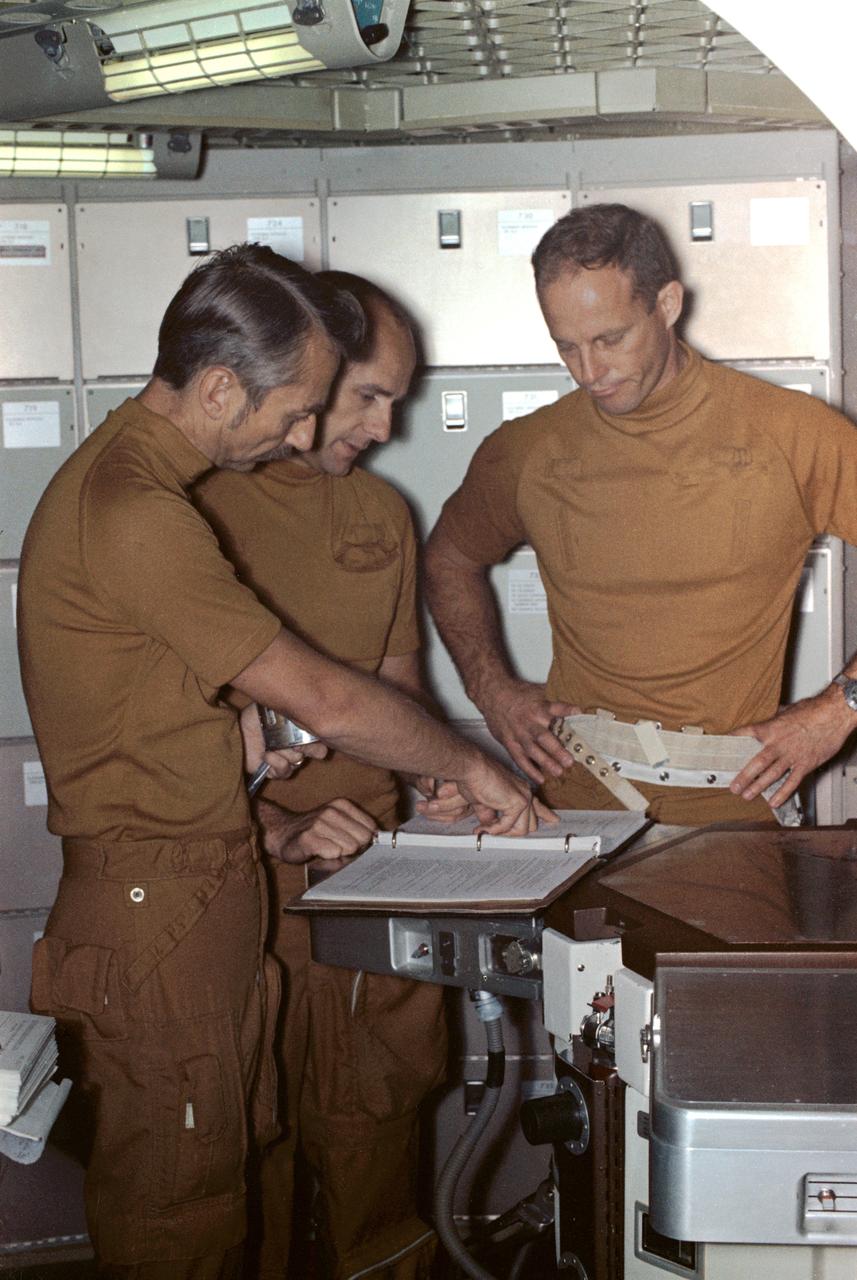
S73-28793 (16 July 1973) --- The three crewmen of the second manned Skylab mission (Skylab 3) go over a checklist during preflight training at the Johnson Space Center. They are, left to right, scientist-astronaut Owen K. Garriott, science pilot; astronaut Alan L. Bean, commander; and astronaut Jack R. Lousma, pilot. They are in the crew quarters of the Orbital Workshop trainer in the Mission Training and Simulation Facility, Building 5, at JSC. Skylab 3 is scheduled as a 59-day mission in Earth orbit. Photo credit: NASA
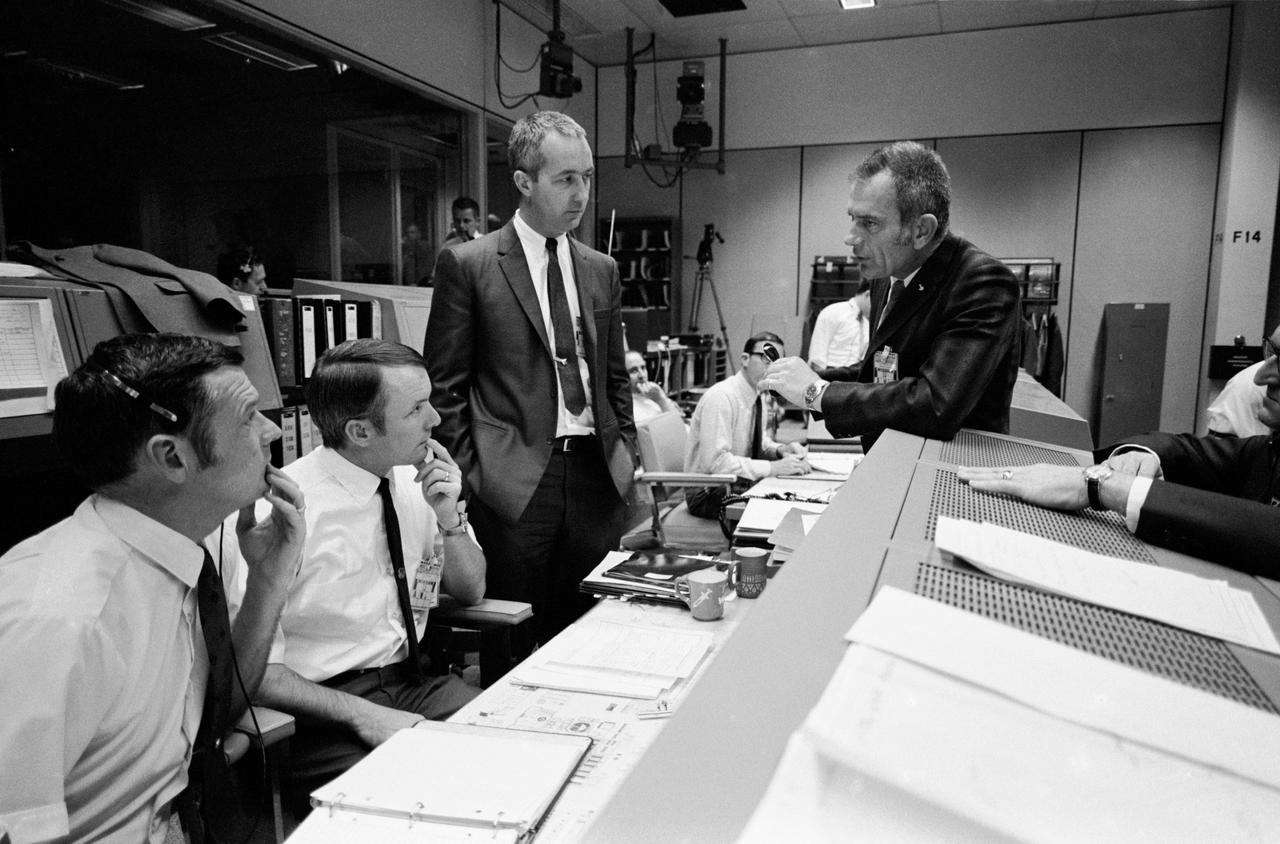
S70-35369 (16 April 1970) --- Discussion in the Mission Operations Control Room (MOCR) dealing with the Apollo 13 crewmen during their final day in space. From left to right are Glynn S. Lunney, Shift 4 flight director; Gerald D. Griffin, Shift 2 flight director; astronaut James A. McDivitt, manager, Apollo Spacecraft Program, MSC; Dr. Donald K. Slayton, director of Flight Crew Operations, MSC; and Dr. Willard R. Hawkins, M.D., Shift 1 flight surgeon.
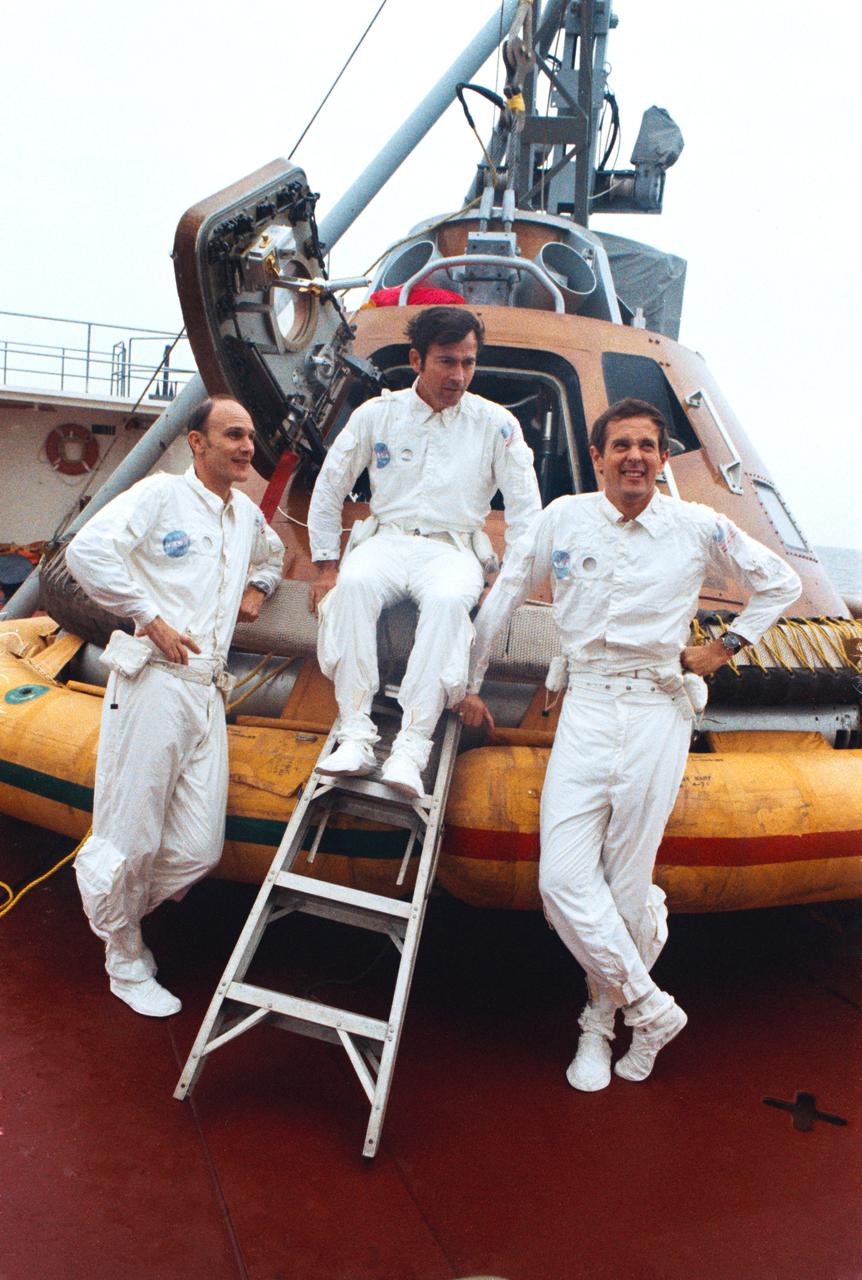
S72-30160 (5 May 1972) --- The Apollo 16 prime crew relax aboard the NASA Motor Vessel Retriever during water egress training activity in the Gulf of Mexico. They are, left to right, astronauts Thomas K. Mattingly II, command module pilot; John W. Young, commander; and Charles M. Duke Jr., lunar module pilot. The Command Module trainer was used in the training exercise.
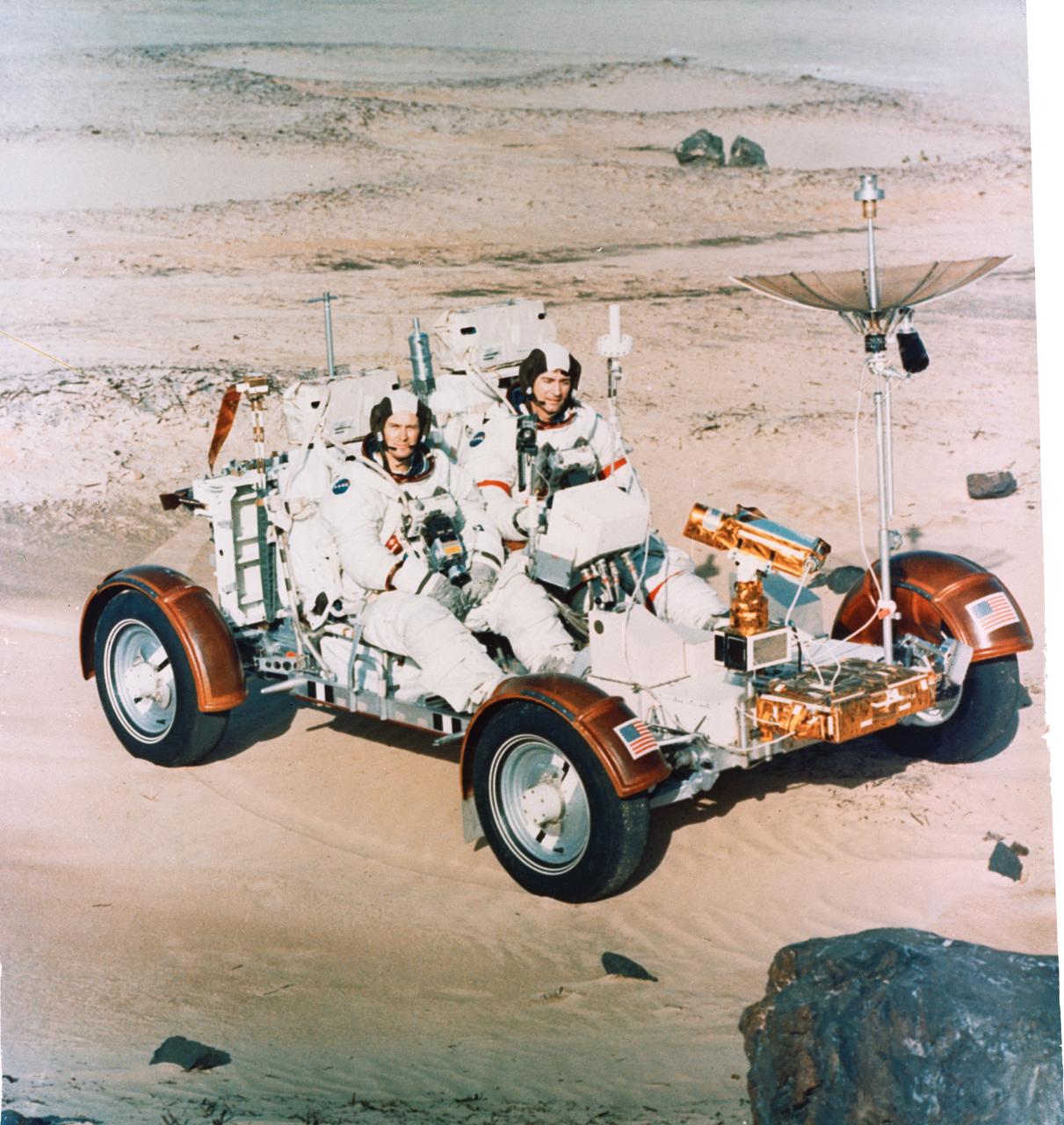
S72-30695 (22 Dec. 1971) --- Astronauts John W. Young, right, Apollo 16 commander, and Charles M. Duke Jr., lunar module pilot, maneuver a training version of the Lunar Roving Vehicle (LRV) about a field at Kennedy Space Center (KSC) simulated to represent the lunar surface. The LRV is planned to transport the two crew men around the Descartes area on the lunar surface while astronaut Thomas K. Mattingly II, command module pilot, orbits the moon in the Command and Service Modules (CSM).
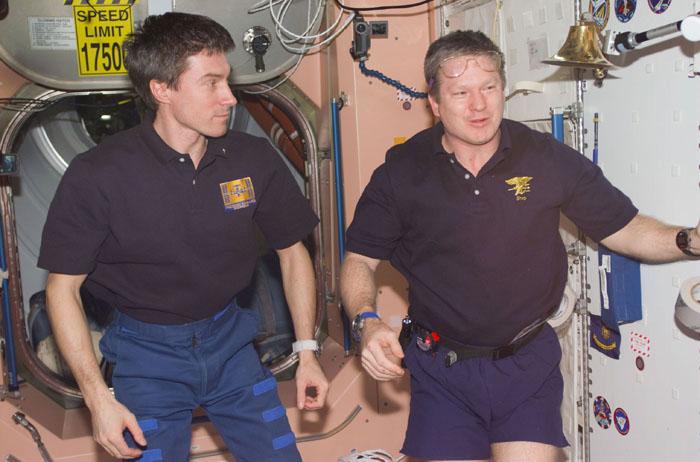
STS98-E-5291 (16 February 2001) --- Cosmonaut Sergei K. Krikalev (left), Expedition One flight engineer representing the Russian Aviation and Space Agency, and astronaut William M. (Bill) Shepherd, Expedition One commander, look toward their astronaut visitors (out of frame), about to conclude their time on the outpost. The scene was recorded with a digital still camera during farewells in the Unity node.
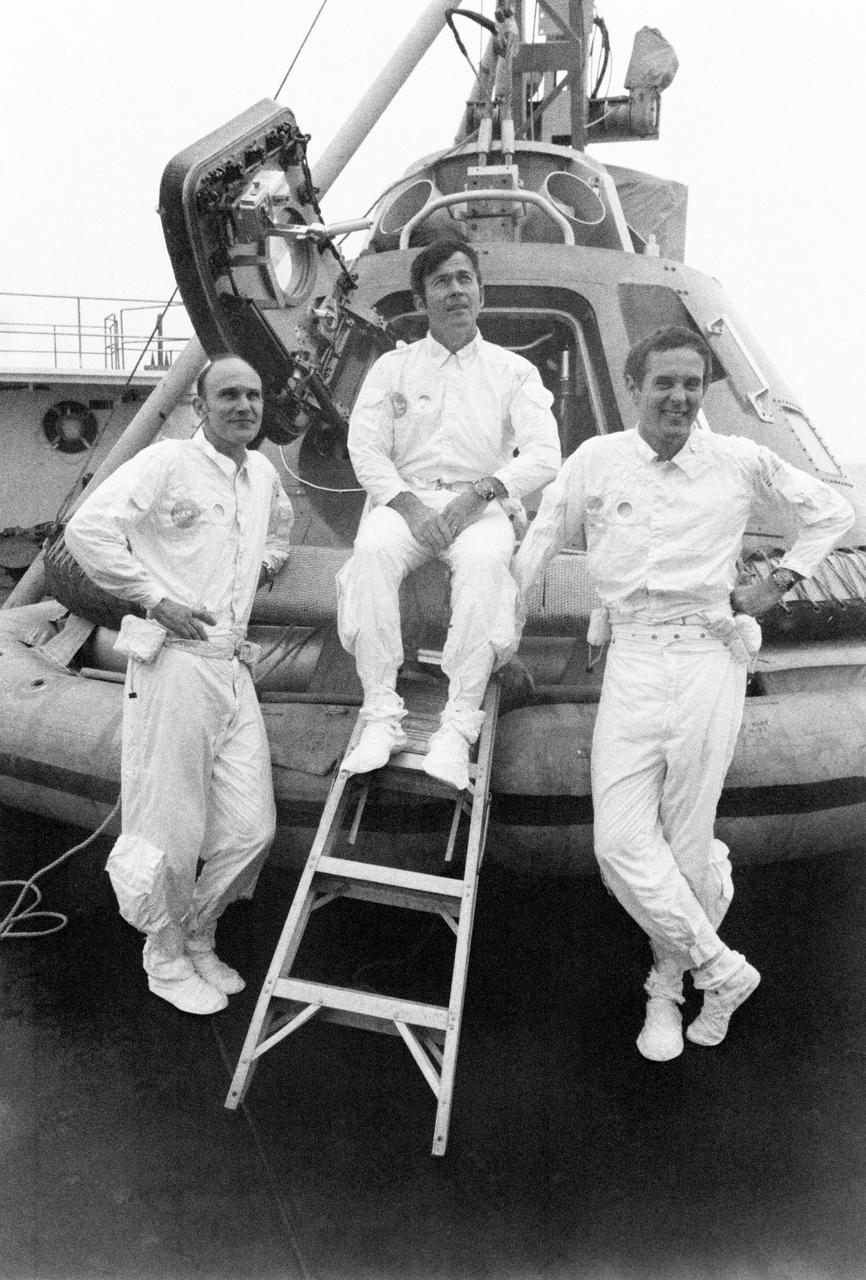
S72-30166 (5 May 1972) --- The Apollo 16 prime crew relax aboard the NASA Motor Vessel Retriever during water egress training activity in the Gulf of Mexico. They are, left to right, astronauts Thomas K. Mattingly II, command module pilot; John W. Young, commander; and Charles M. Duke Jr., lunar module pilot. The Command Module trainer was used in the training exercise.
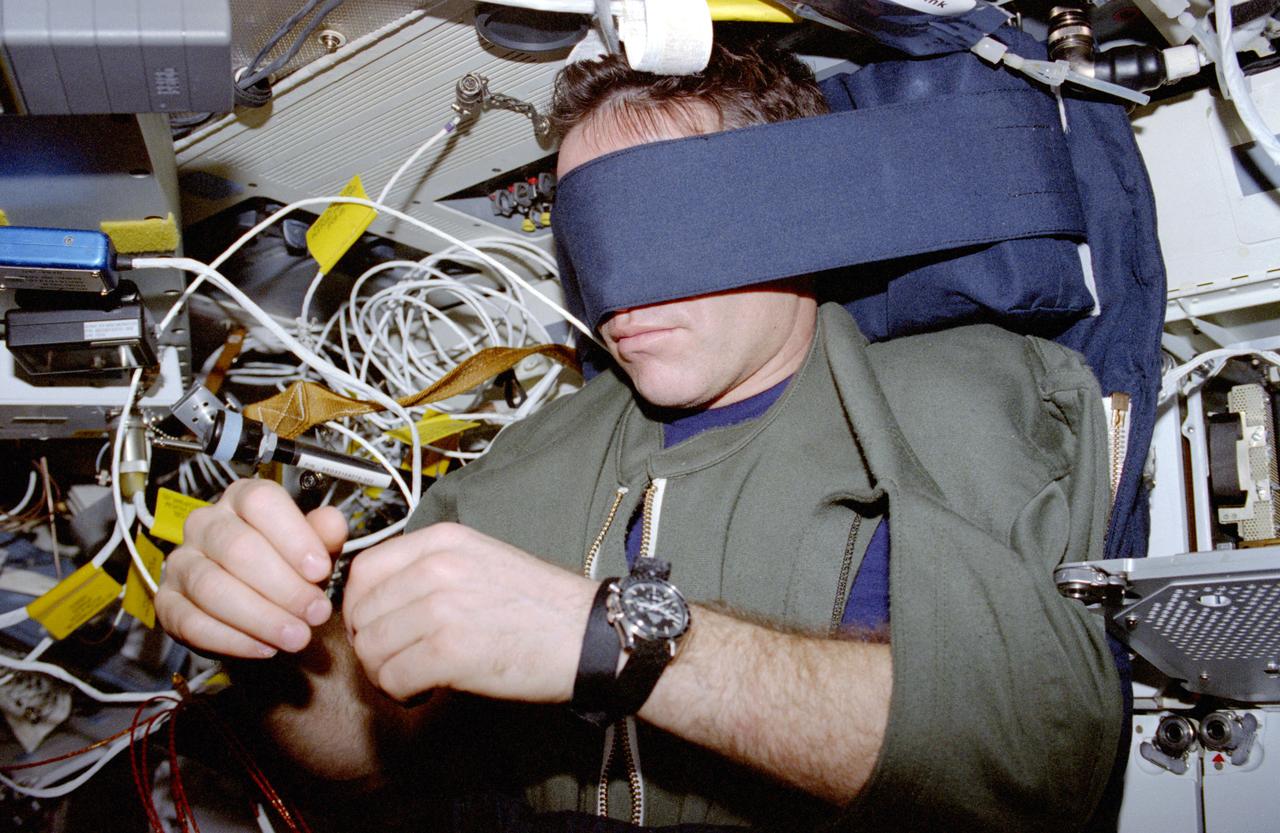
STS087-323-030 (19 November – 5 December 1997) --- Ukrainian payload specialist Leonid K. Kadenyuk blocks out the world and much more as he sleeps on the mid-deck of the Earth-orbiting Space Shuttle Columbia. Kadenyuk joined five NASA astronauts for 16 days aboard Columbia in support of the United States Microgravity Payload (USMP) mission.
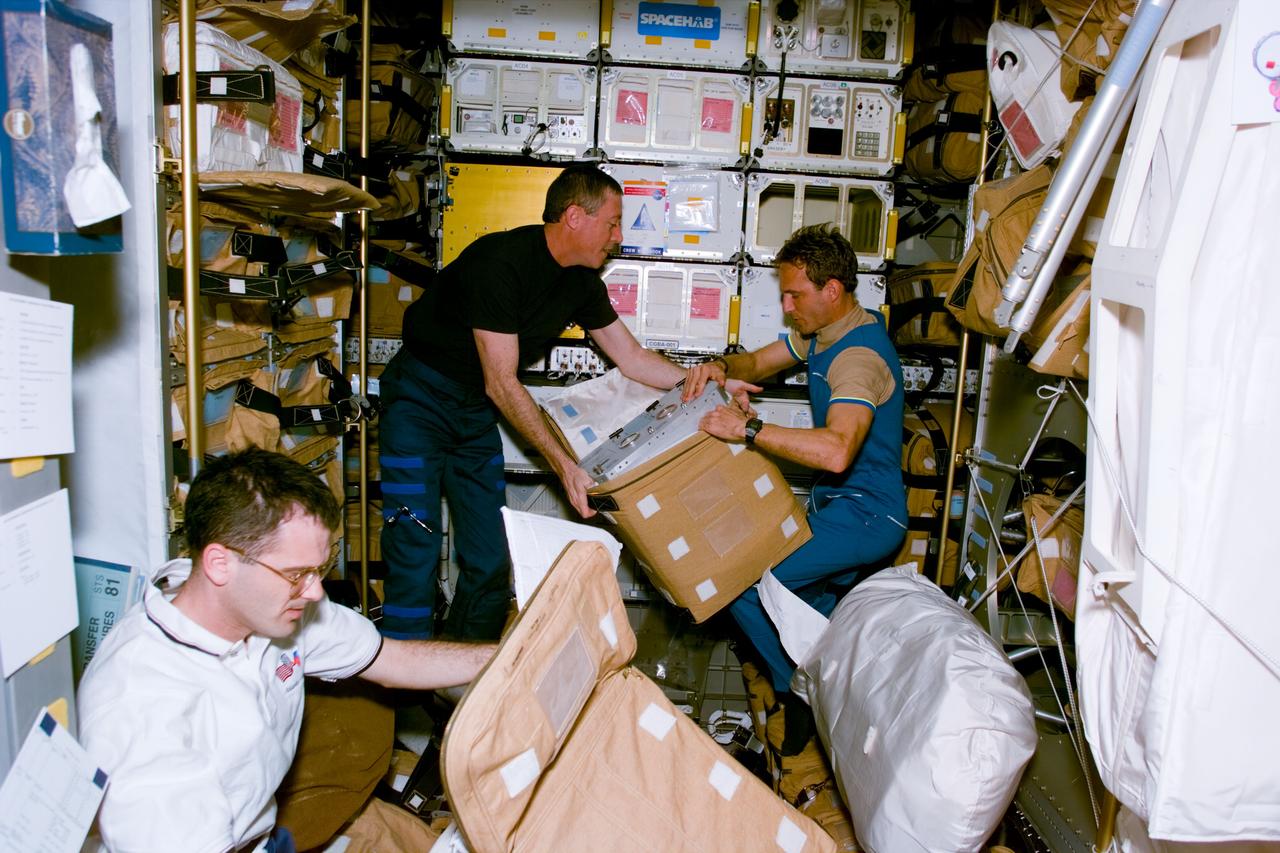
STS081-E-05514 (16 Jan. 1997) --- The transfer of equipment and supplies continues aboard the Spacehab Double Module (DM) aboard the Space Shuttle Atlantis. Here, left to right, astronauts Peter J. K. Wisoff and Michael A. Baker along with newly initiated "cosmonaut" Jerry M. Linenger, Mir-22 cosmonaut guest researcher, load and move supplies. The photograph was recorded with an Electronic Still Camera (ESC) and later was downlinked to flight controllers in Houston, Texas.

S72-33898 (22 March 1972) --- Astronaut Charles M. Duke Jr., Apollo 16 lunar module pilot, trains on a simulated lunar surface area at Kennedy Space Center (KSC), with a core tube with a hammer. Astronauts Duke and John W. Young, commander, will take part in three extravehicular activities on the moon while astronaut Thomas K. Mattingly II, command module pilot, remains with the Command and Service Modules (CSM) in lunar orbit.
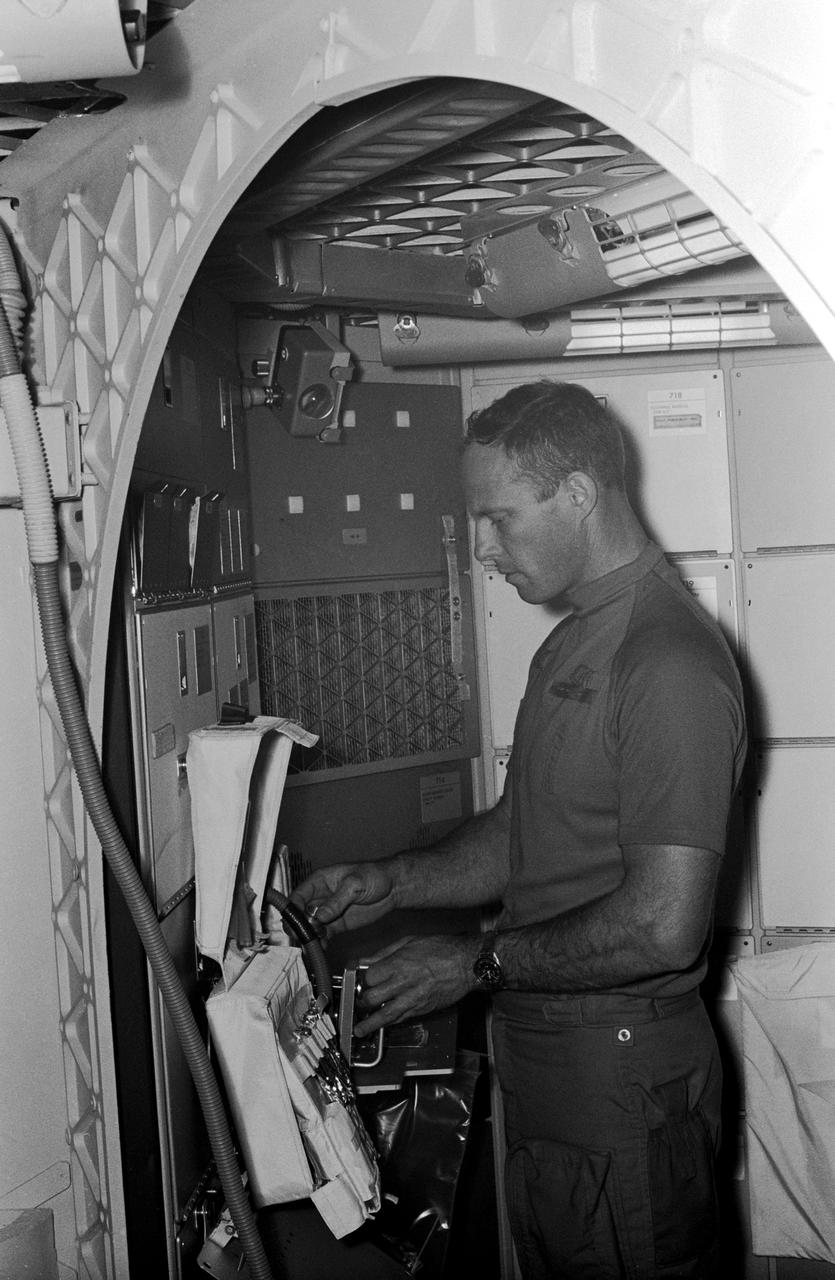
S73-28423 (16 June 1973) --- Astronaut Jack R. Lousma, Skylab 3 pilot, reaches into a medical kit, part of the Inflight Medical Support System (IMSS), during training for the second manned Skylab Earth-orbital mission. This activity took place in the OWS trainer in the Mission Simulation and Training Facility at the Johnson Space Center (JSC). Other Skylab 3 crewmen are astronaut Alan L. Bean, commander, and scientist-astronaut Owen K. Garriott, science pilot. Photo credit: NASA

S72-16660 (January 1972) --- These three astronauts have been selected by the National Aeronautics and Space Administration (NASA) as the prime crew men of the Apollo 16 lunar landing mission. They are, left to right, Thomas K. Mattingly II, command module pilot; John W. Young, commander; and Charles M. Duke Jr., lunar module pilot. While astronauts Young and Duke descend in the Lunar Module (LM) to explore the moon, astronaut Mattingly will remain with the Command and Service Modules (CSM) in lunar orbit.
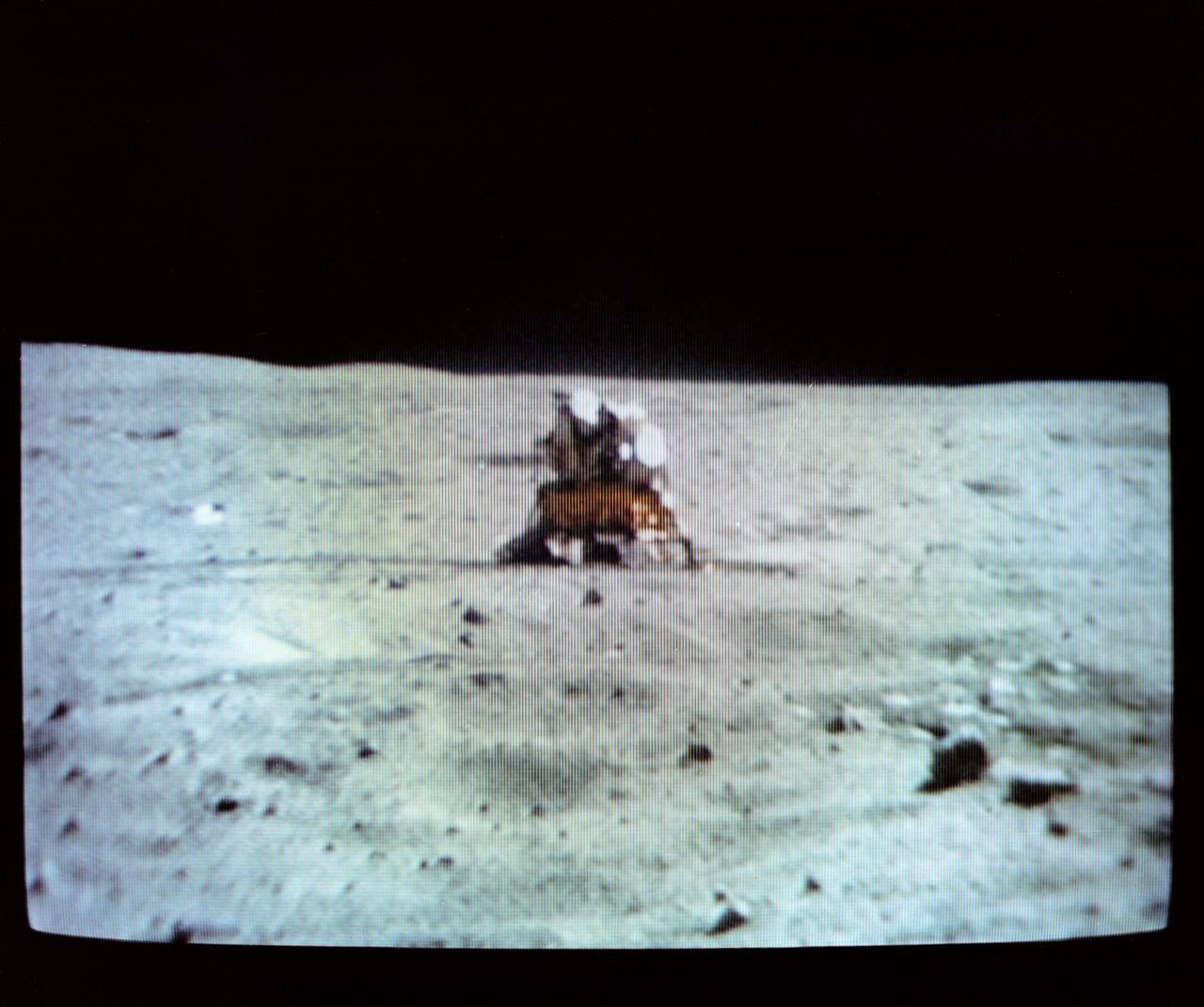
S72-35612 (22 April 1972) --- The Apollo 16 Lunar Module (LM) "Orion" dominates the lunar scene at the Descartes landing site, as seen in the reproduction taken from a color television transmission made by the TV camera mounted on the Lunar Roving Vehicle (LRV). Astronauts John W. Young, commander; and Charles M. Duke Jr., lunar module pilot; descended in the Apollo 16 LM to explore the Descartes highlands landing site on the moon. Astronaut Thomas K. Mattingly II, command module pilot, remained with the Command and Service Modules (CSM) "Casper" in lunar orbit. Note U.S. flag deployed on the left. This picture was made during the second Apollo 16 extravehicular activity (EVA).
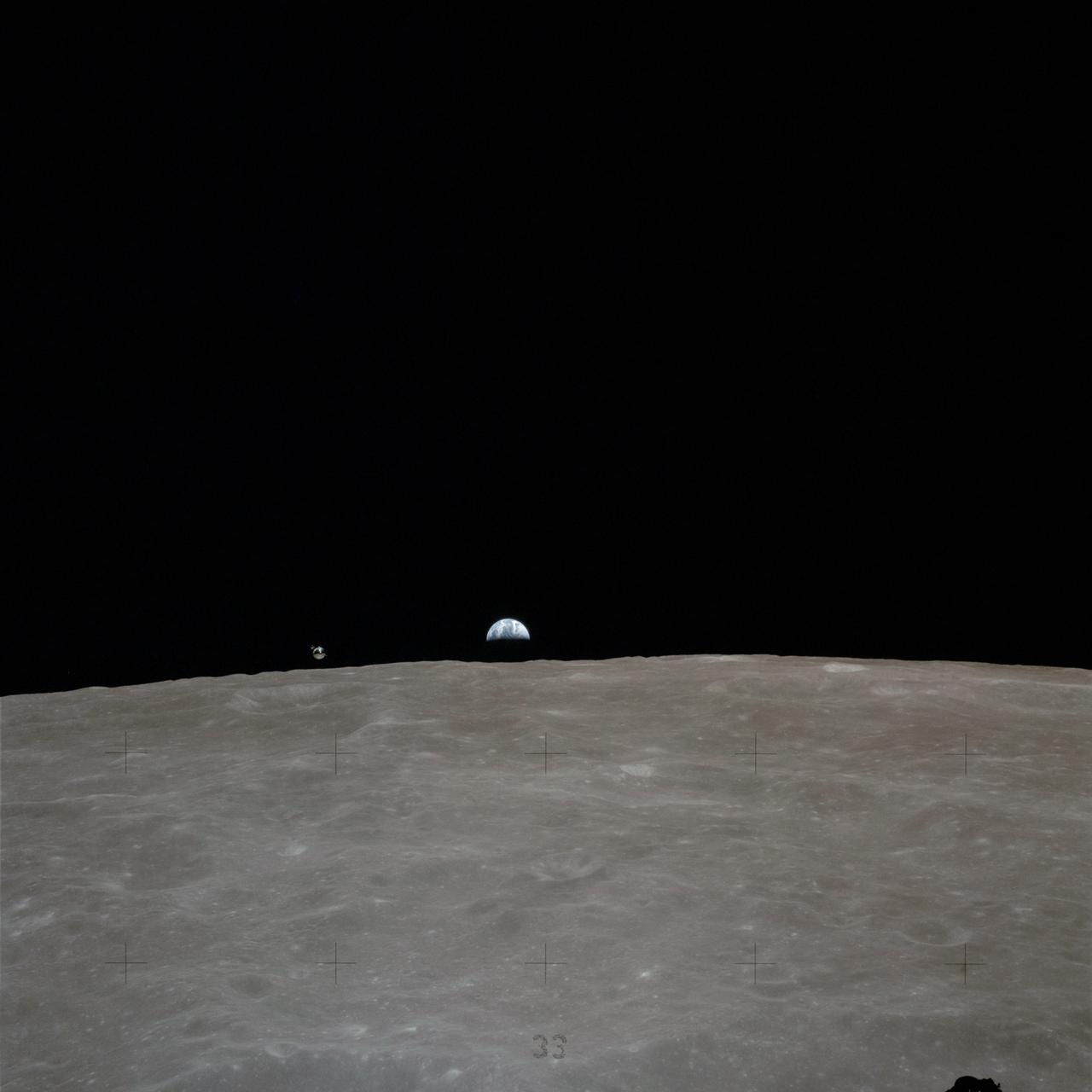
AS16-113-18289 (16-27 April 1972) --- Earth rises over the lunar horizon, with the Apollo 16 Command and Services Modules (CSM) to the left of Earth. This photograph was taken from the Lunar Module (LM) "Orion" before the two Apollo 16 spacecraft re-joined following the CSM's failure to make the circularization burn on April 20, 1972. Astronaut Thomas K. Mattingly II, command module pilot, was inside the CSM "Casper", while astronauts John W. Young, commander, and Charles M. Duke Jr., lunar module pilot, were manning the LM. While astronauts Young and Duke descended in the LM to explore the Descartes region of the moon, astronaut Mattingly remained with the CSM in lunar orbit. Photo credit: NASA
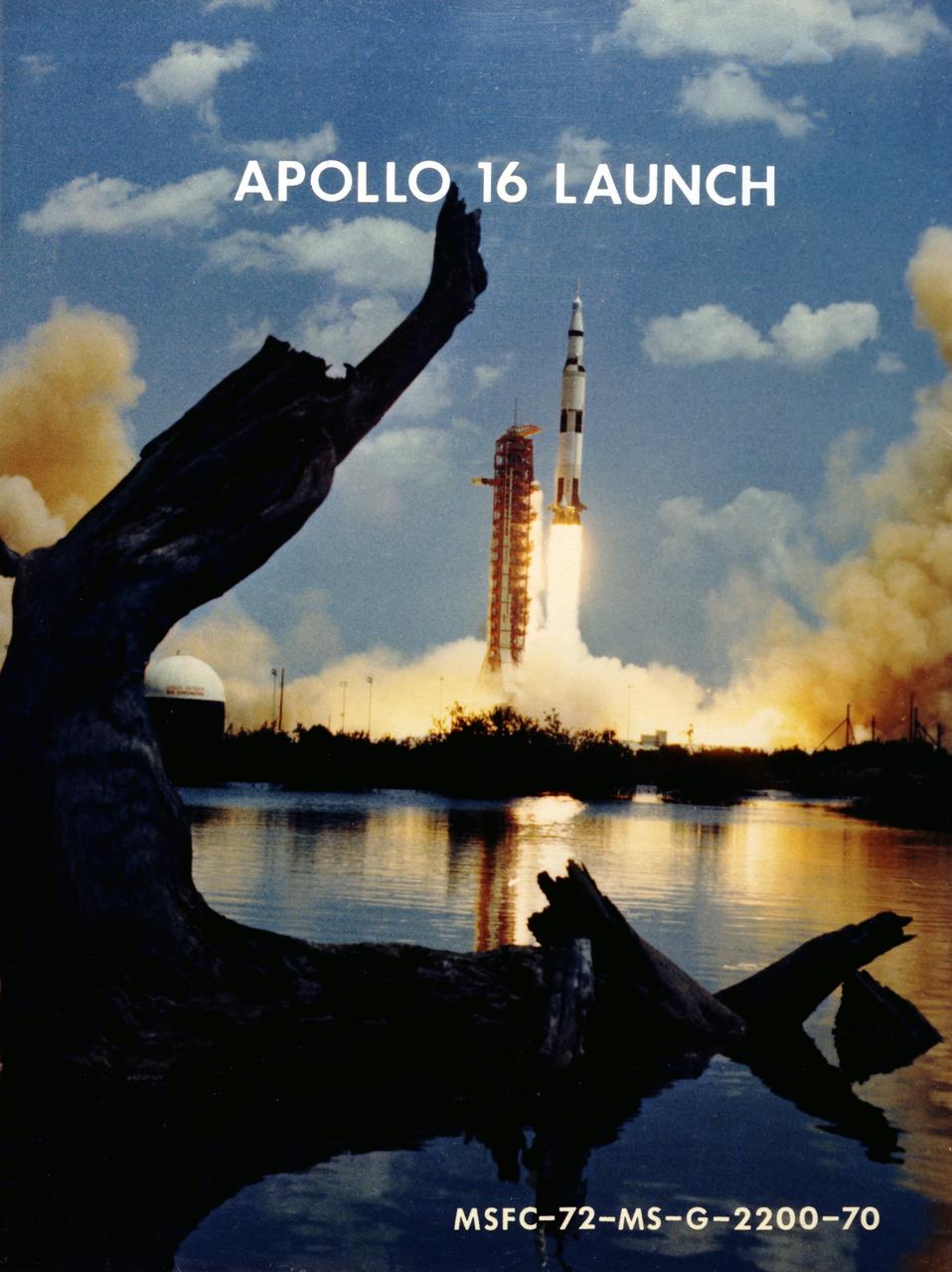
The sixth manned lunar landing mission, the Apollo 16 (SA-511), carrying three astronauts: Mission Commander John W. Young, Command Module pilot Thomas K. Mattingly II, and Lunar Module pilot Charles M. Duke, lifted off on April 16, 1972. The Apollo 16 mission continued the broad-scale geological, geochemical, and geophysical mapping of the Moon’s crust, begun by the Apollo 15, from lunar orbit. This mission marked the first use of the Moon as an astronomical observatory by using the ultraviolet camera/spectrograph which photographed ultraviolet light emitted by Earth and other celestial objects. The Lunar Roving Vehicle, developed by the Marshall Space Flight Center, was also used. The mission ended on April 27, 1972.
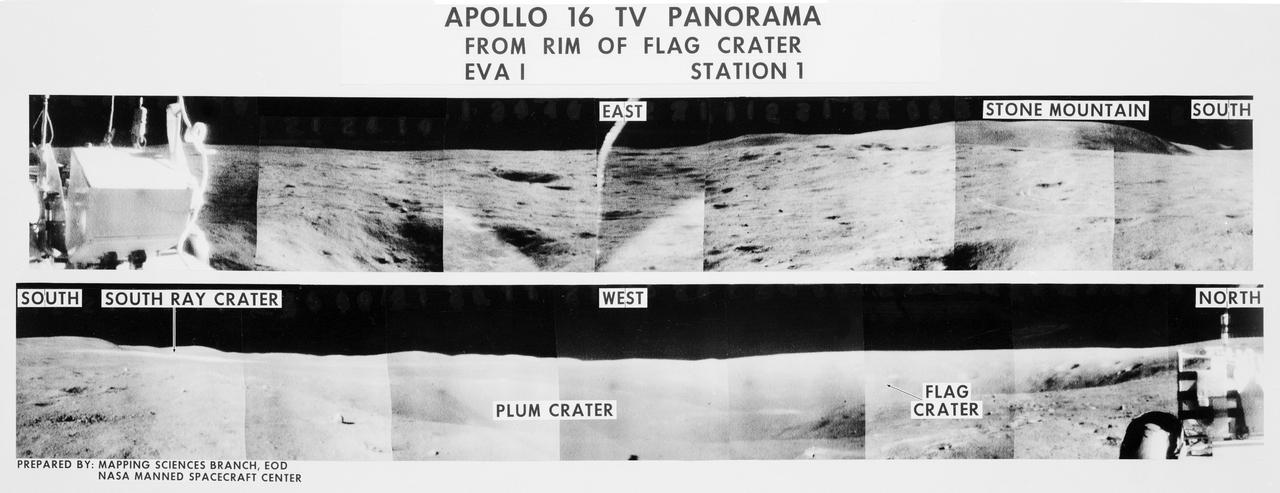
S72-35970 (21 April 1972) --- A 360-degree field of view of the Apollo 16 Descartes landing site area composed of individual scenes taken from color transmission made by the color RCA TV camera mounted on the Lunar Roving Vehicle (LRV). This panorama was made while the LRV was parked at the rim of Flag Crater (Station 1) during the first Apollo 16 lunar surface extravehicular activity (EVA) by astronauts John W. Young and Charles M. Duke Jr. The overlay identifies the directions and the key lunar terrain features. The camera panned across the rear portion of the LRV in its 360-degree sweep. Astronauts Young, commander; and Duke, lunar module pilot; descended in the Apollo 16 Lunar Module (LM) "Orion" to explore the Descartes highlands landing site on the moon. Astronaut Thomas K. Mattingly II, command module pilot, remained with the Command and Service Modules (CSM) "Casper" in lunar orbit.
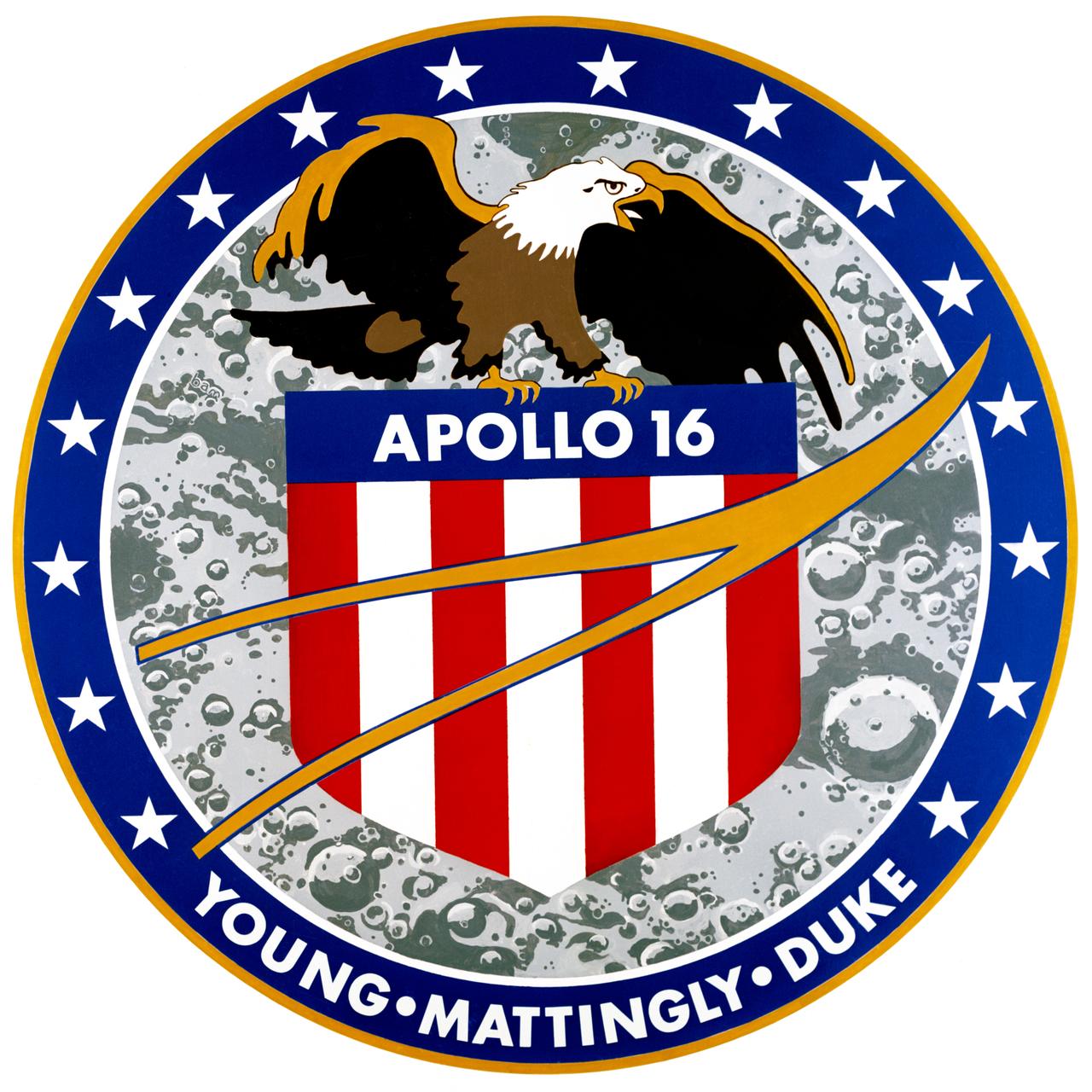
S71-56246 (November 1971) --- The Apollo 16 crew patch is dominated by an eagle perched atop a red, white and blue shield a superimposed on a lunar scene, surrounded by a blue circle of 16 stars with the crew's surnames completing the bottom are of the circle. Across the face of the shield is a gold symbol of flight outlined in blue, similar to that on the National Aeronautics and Space Administration (NASA) agency seal and insignia. The design was created by a NASA artist from ideas submitted by the three crew men: astronauts John W. Young, commander; Thomas K. Mattingly II, command module pilot; and Charles M. Duke Jr., lunar module pilot. This is the official Apollo 16 emblem, a property of the government of the United States. It has been authorized only for use by the astronauts. Its reproduction in any form other than in news, information and education media is not authorized without approval. Unauthorized use is subject to the provisions of Title 18, U.S. Code, Section 701.
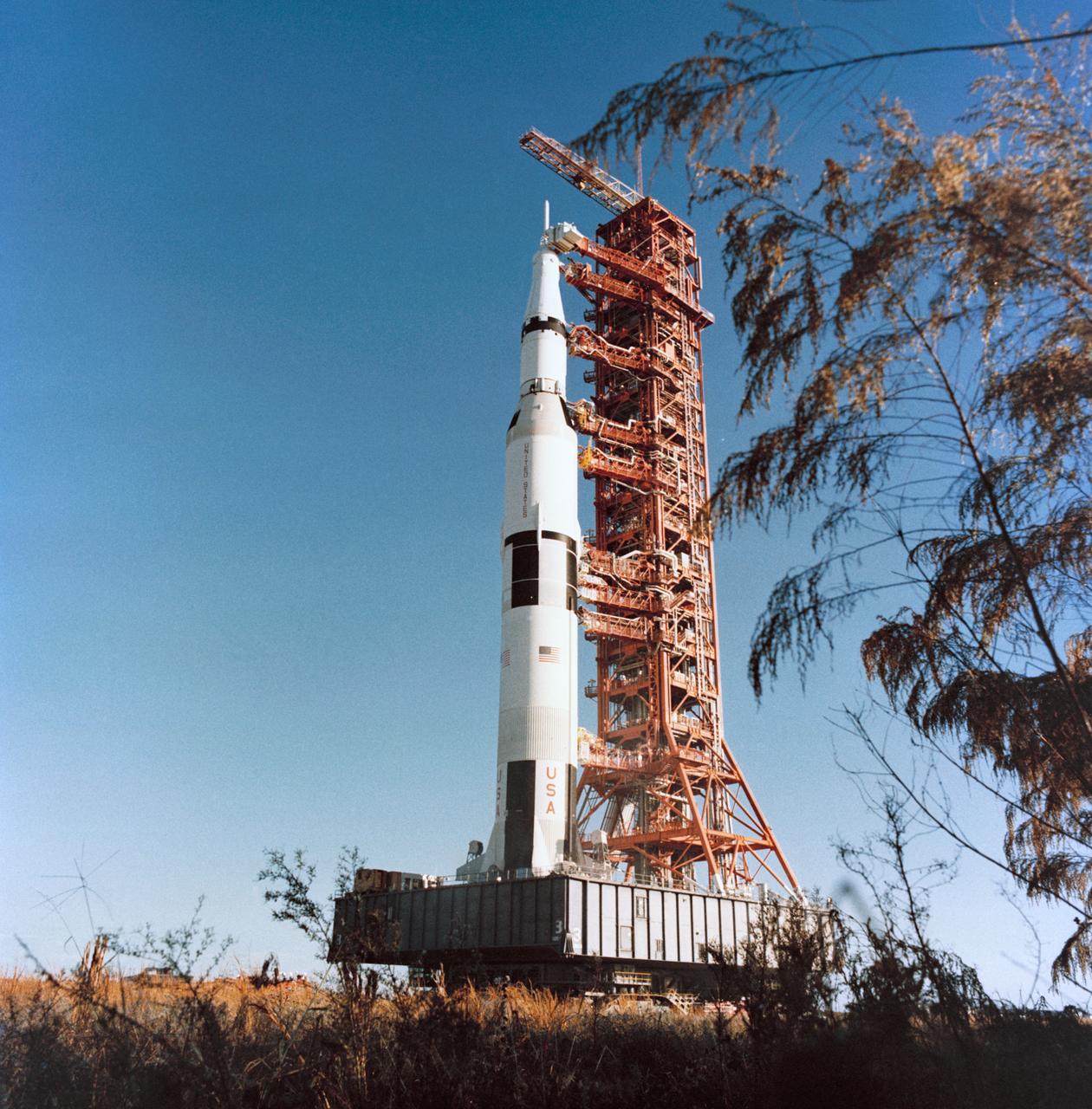
S72-19794 (13 Dec. 1971) --- A ground-level view showing the tall Apollo 16 (Spacecraft 113/Lunar Module 11/Saturn 511) space vehicle at the Kennedy Space Center's (KSC) Launch Complex 39 being moved from the Vehicle Assembly Building (VAB) toward Pad A. The Saturn V stack and its mobile launch tower are atop a huge crawler-transporter. The prime crew men of the scheduled Apollo 16 lunar landing mission are astronauts John W. Young, Apollo 16 lunar landing mission are astronauts John W. Young, commander; Thomas K. Mattingly II, command module pilot; and Charles M. Duke Jr., lunar module pilot.
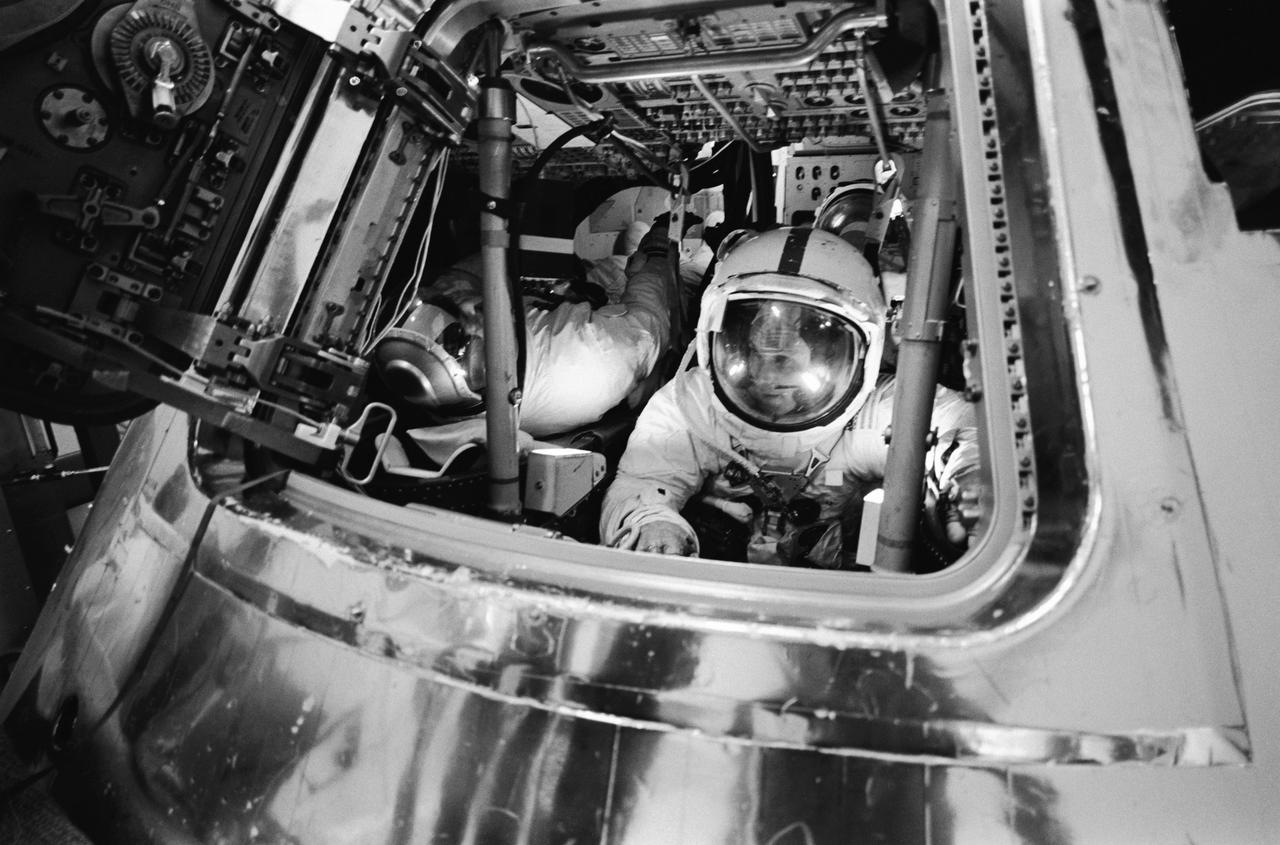
S72-31047 (March 1972) --- Astronaut Thomas K. Mattingly II (right foreground), command module pilot of the Apollo 16 lunar landing mission, participates in extravehicular activity (EVA) training in Building 5 at the Manned Spacecraft Center (MSC). Mattingly is scheduled to perform EVA during the Apollo 16 journey home from the moon. Astronaut John W. Young, commander, can be seen in the left background. In the right background is astronaut Charles M. Duke Jr., lunar module pilot. They are inside the Apollo Command Module Mission Simulator. While Mattingly remains with the Apollo 16 Command and Service Modules (CSM) in lunar orbit, Young and Duke will descend in the Lunar Module (LM) to the moon's Descartes landing site.
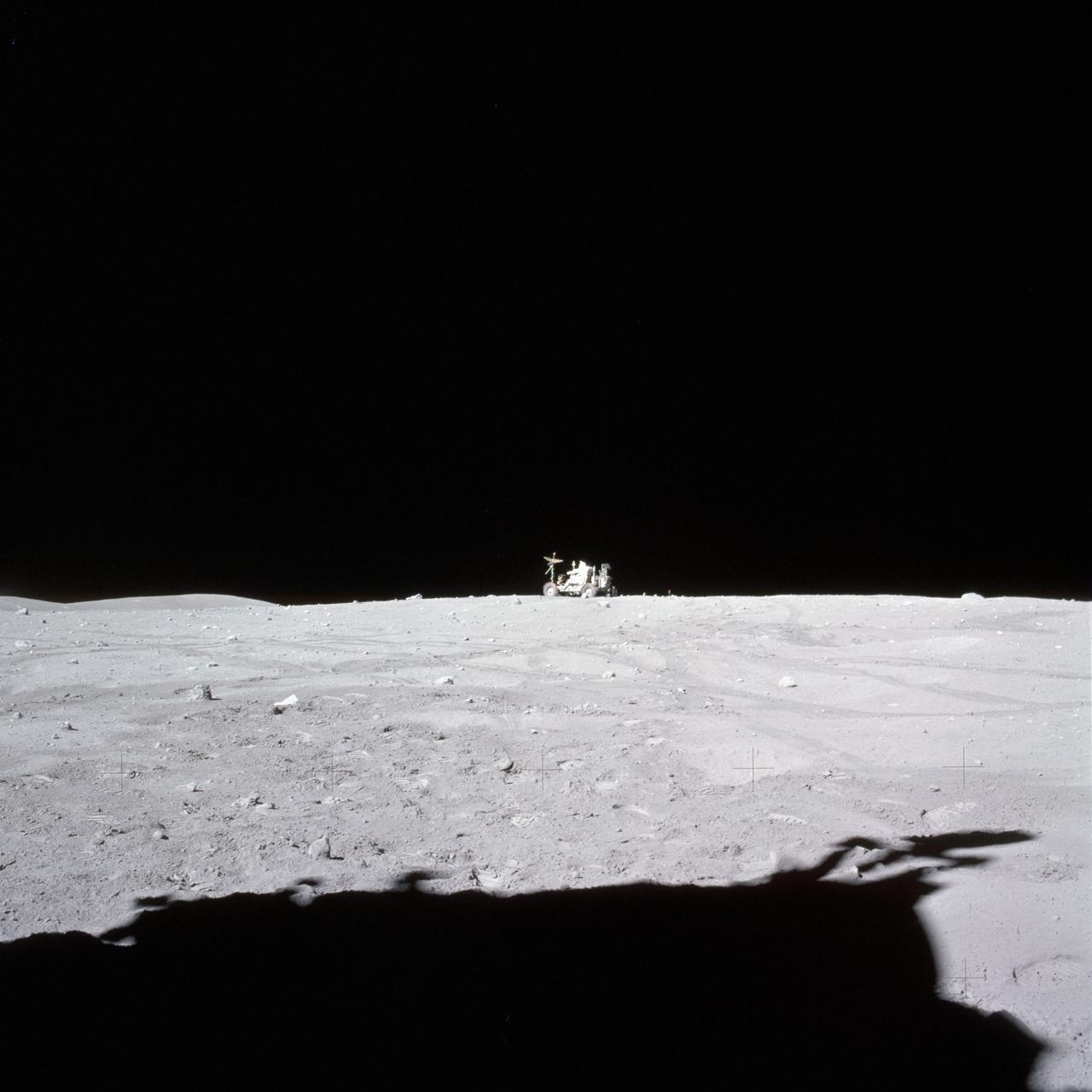
AS16-115-18559 (23 April 1972) --- Astronaut John W. Young, commander of the Apollo 16 lunar landing mission, drives the Lunar Roving Vehicle (LRV) to its final parking place near the end of the third Apollo 16 extravehicular activity (EVA) at the Descartes landing site. Astronaut Charles M. Duke Jr., lunar module pilot, took this photograph looking southward. The flank of Stone Mountain can be seen on the horizon at left. The shadow of the Lunar Module (LM) occupies much of the picture. While astronauts Young and Duke descended in the Apollo 16 LM "Orion" to explore the Descartes highlands landing site on the moon, astronaut Thomas K. Mattingly II, command module pilot, remained with the Command and Service Modules (CSM) "Casper" in lunar orbit.
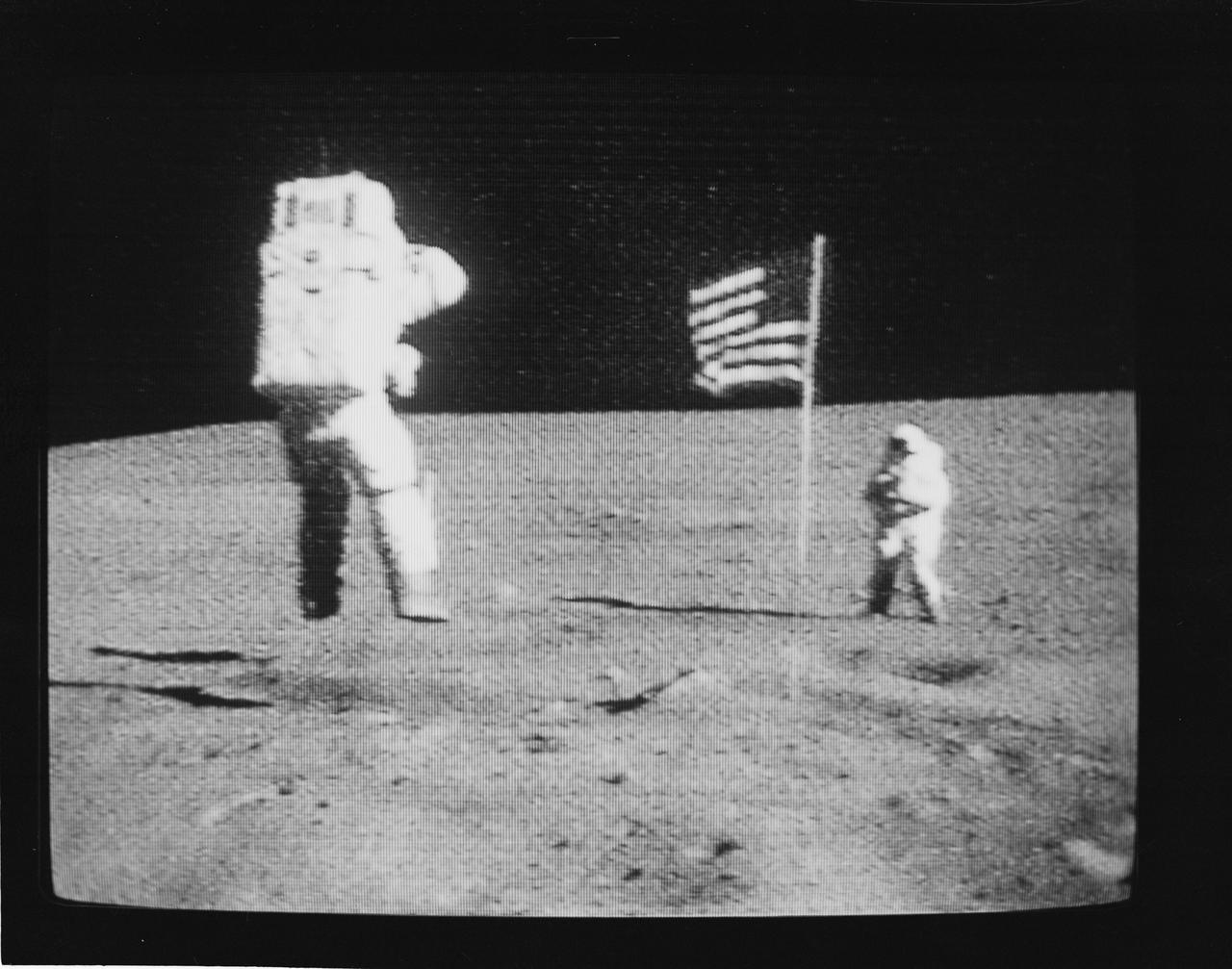
S72-35594 (21 April 1972) --- Astronaut John W. Young, commander of the Apollo 16 lunar landing mission, leaps from the lunar surface as he salutes the United States flag during the first Apollo 16 extravehicular activity (EVA) on the moon, as seen in this black & white reproduction taken from a color television transmission made by the color TV camera mounted on the Lunar Roving Vehicle (LRV). Astronaut Charles M. Duke Jr., lunar module pilot, stands beside the flag. While astronauts Young and Duke descended in the Apollo 16 Lunar Module (LM) "Orion" to explore the Descartes highlands landing site on the moon, astronaut Thomas K. Mattingly II, command module pilot, remained with the Command and Service Modules (CSM) "Casper" in lunar orbit.
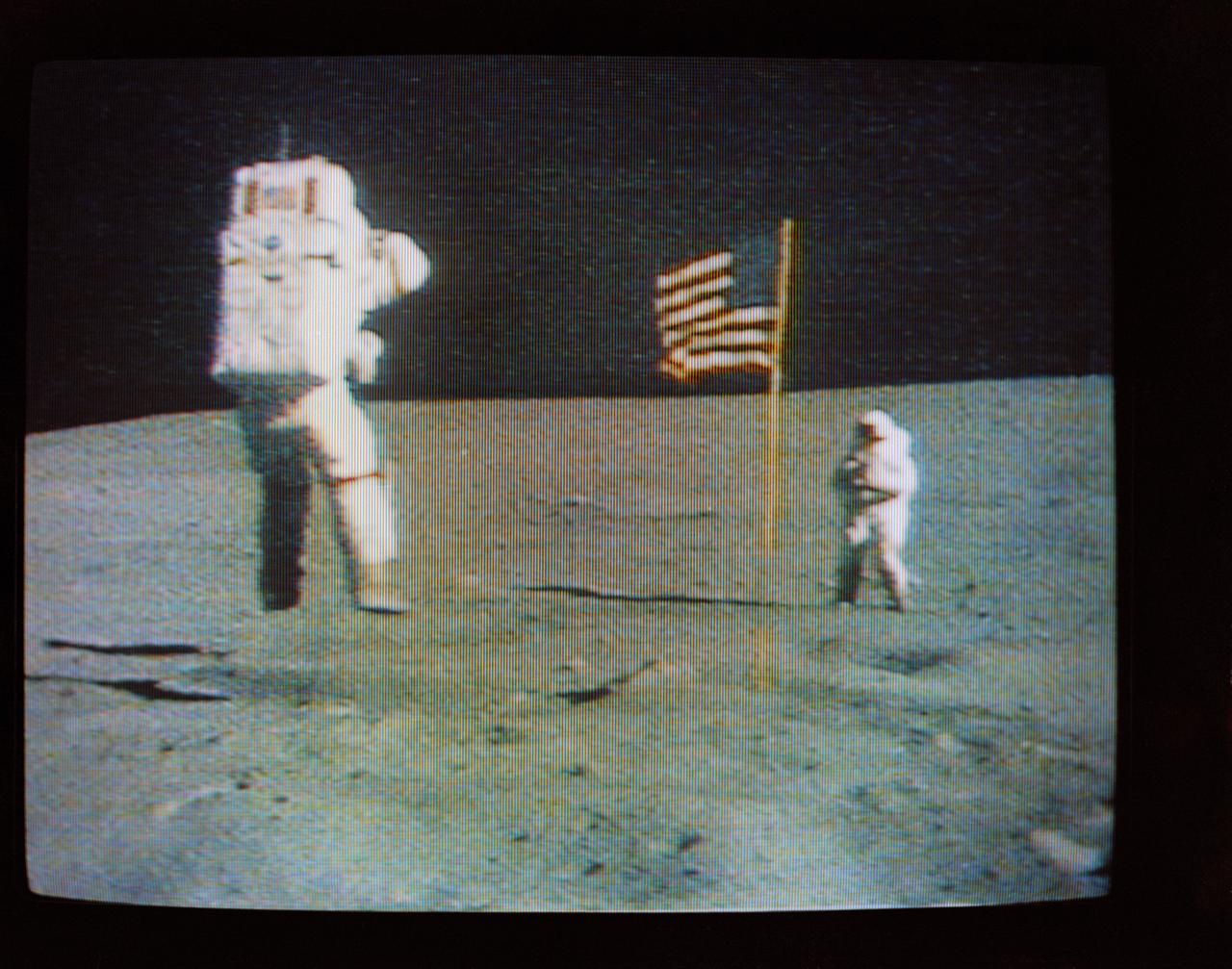
S72-35611 (21 April 1972) --- Astronaut John W. Young, commander of the Apollo 16 lunar landing mission, leaps from the lunar surface as he salutes the U.S. flag, during the first Apollo 16 extravehicular activity (EVA) on the moon, as seen in this reproduction taken from a color television transmission made by the color television camera mounted on the Lunar Roving Vehicle (LRV). Astronaut Charles M. Duke Jr., lunar module pilot, is standing in the background. While astronauts Young and Duke descended in the Apollo 16 Lunar Module (LM) "Orion" to explore the Descartes highlands landing site on the moon, astronaut Thomas K. Mattingly II, command module pilot, remained with the Command and Service Modules (CSM) "Casper" in lunar orbit.
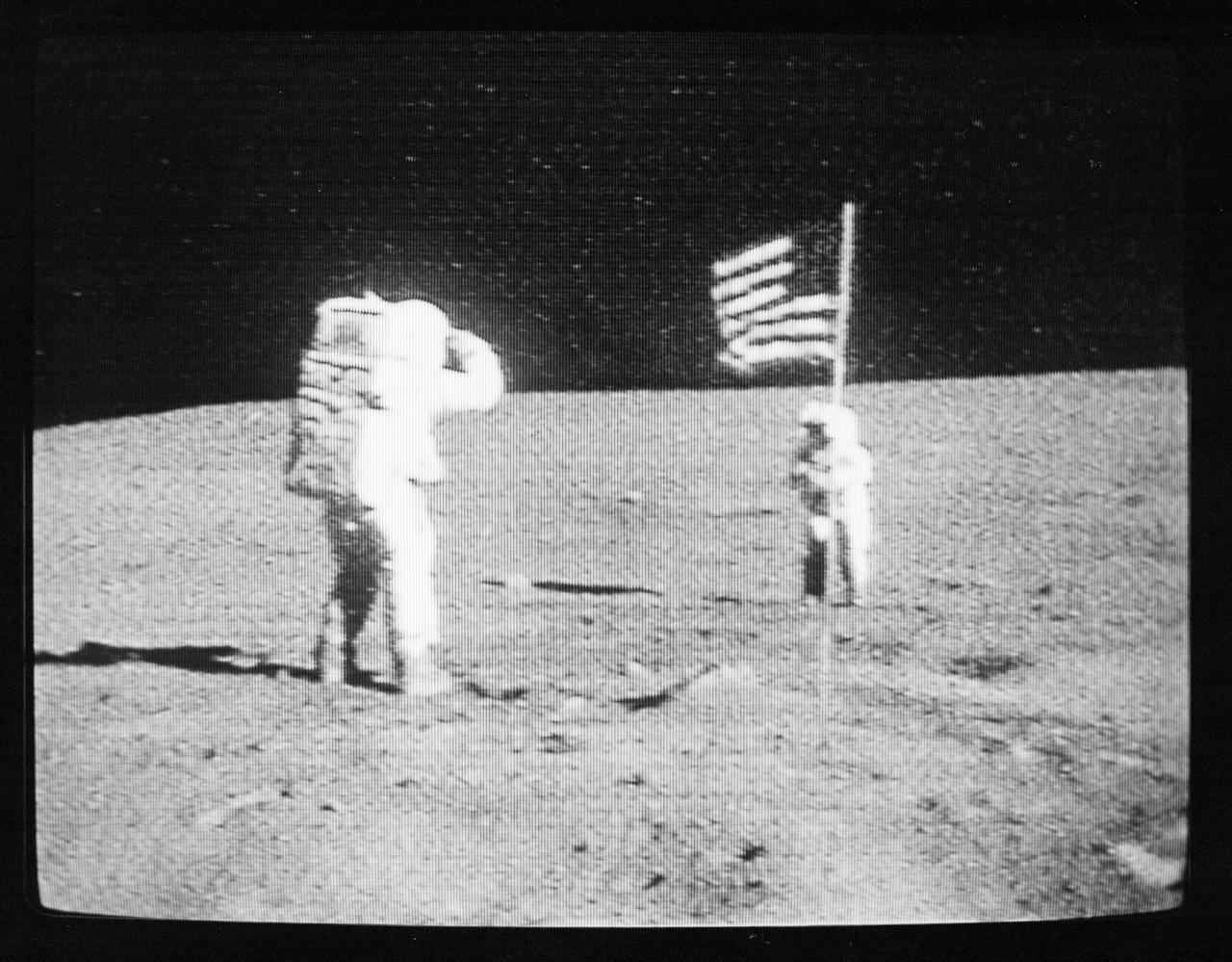
S72-35595 (21 April 1972) --- Astronaut Charles M. Duke Jr., lunar module pilot, salutes the United States flag during the first Apollo 16 extravehicular activity (EVA) on the moon, as seen in this black & white reproduction taken from a color television transmission made by the color TV camera mounted on the Lunar Roving Vehicle (LRV). Astronaut John W. Young, commander of the Apollo 16 lunar landing mission, stands beside the flag. While astronauts Young and Duke descended in the Apollo 16 Lunar Module (LM) "Orion" to explore the Descartes highlands landing site on the moon, astronaut Thomas K. Mattingly II, command module pilot, remained with the Command and Service Modules (CSM) "Casper" in lunar orbit.
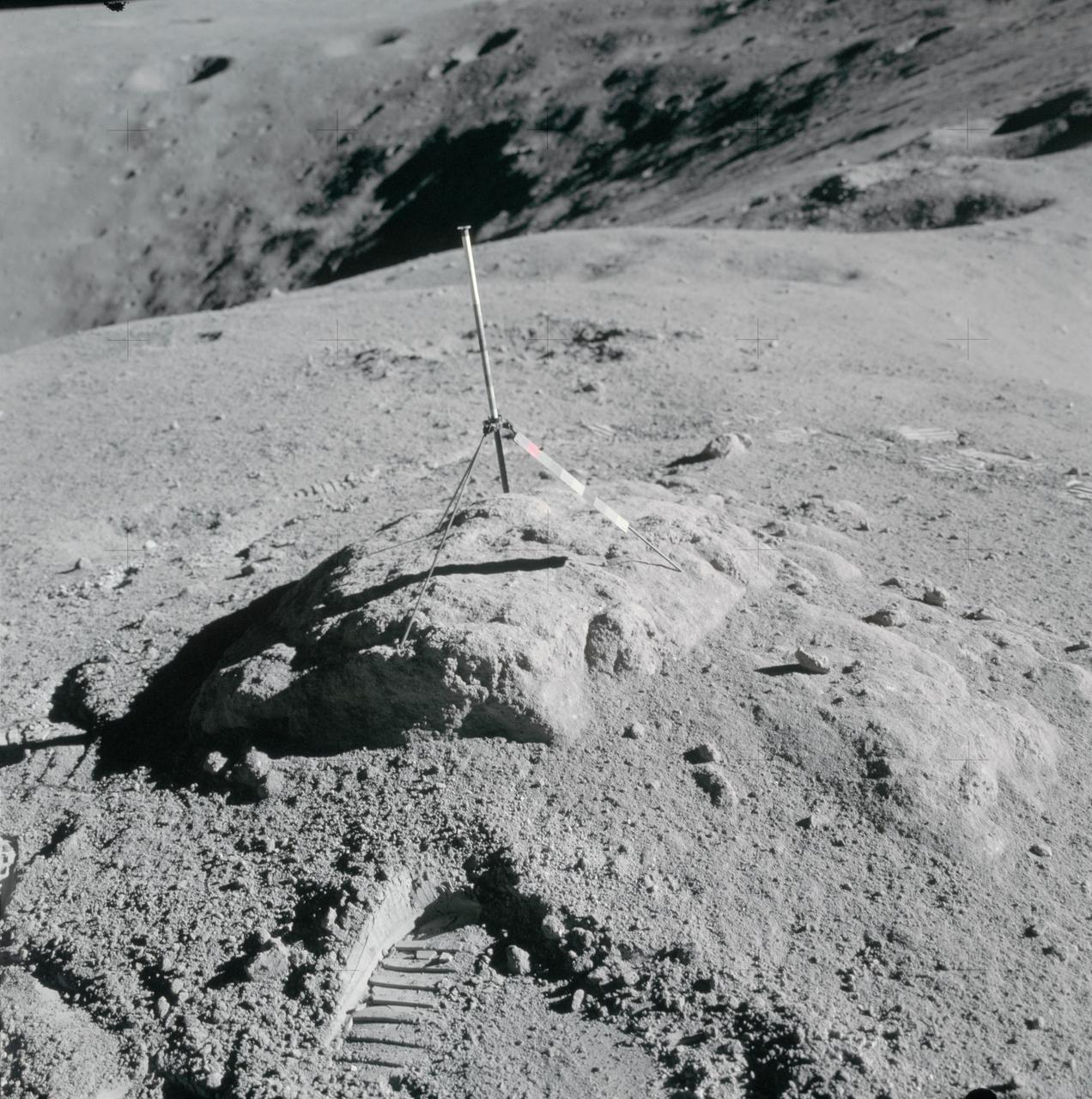
AS16-114-18412 (16-27 April 1972) --- The gnomon and color patch, one of the Apollo Lunar Hand Tools (ALHT), is deployed atop a lunar rock, in this photograph taken by one of the Apollo 16 astronauts during their lunar surface extravehicular activity (EVA) at the Descartes landing site. The gnomon is used as a photographic reference to establish local vertical sun angle, scale, and lunar color. The color patch, mounted on one of the legs of the tripod, provides a larger target for accurately determining colors in color photography. A portion of Flag Crater can be seen in the background. While astronauts John W. Young, commander; and Charles M. Duke Jr., lunar module pilot; descended in the Apollo 16 Lunar Module (LM) "Orion" to explore the Descartes highlands landing site on the moon, astronaut Thomas K. Mattingly II, command module pilot, remained with the Command and Service Modules (CSM) "Casper" in lunar orbit.
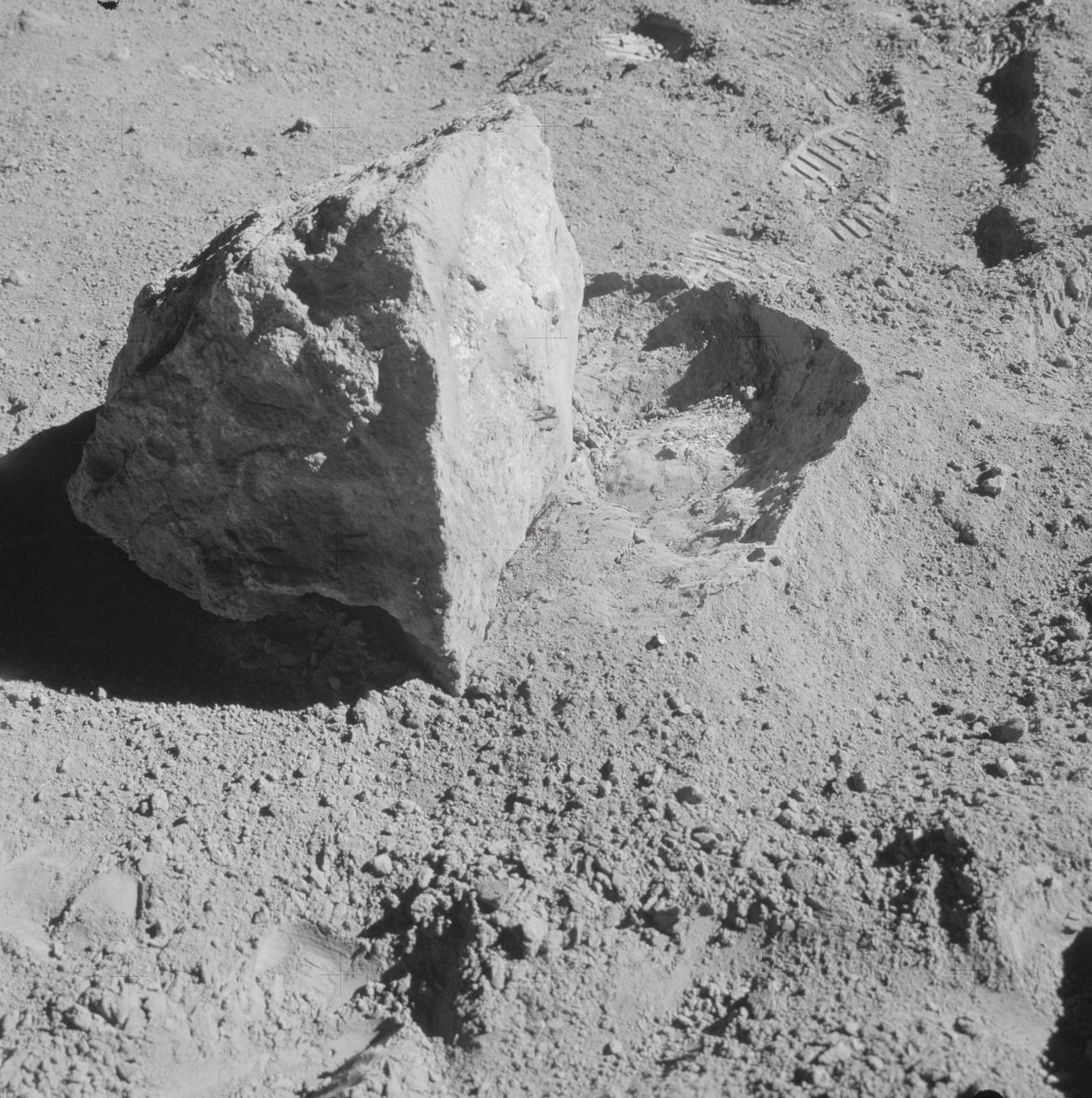
AS16-107-17573 (22 April 1972) --- A close-up view of a block (about 1/2 meter long) found by the two moon-exploring crewmembers of the Apollo 16 lunar landing mission. The block had been rolled over only moments earlier during this Apollo 16 second extravehicular activity (EVA) near South Ray Crater. Astronaut John W. Young, commander, said at the post-mission press conference, "The block has been sitting there evidently since South Ray Crater was formed." While astronauts Young and Charles M. Duke Jr., lunar module pilot; descended in the Apollo 16 Lunar Module (LM) "Orion" to explore the Descartes highlands landing site on the moon, astronaut Thomas K. Mattingly II, command module pilot, remained with the Command and Service Modules (CSM) "Casper" in lunar orbit.
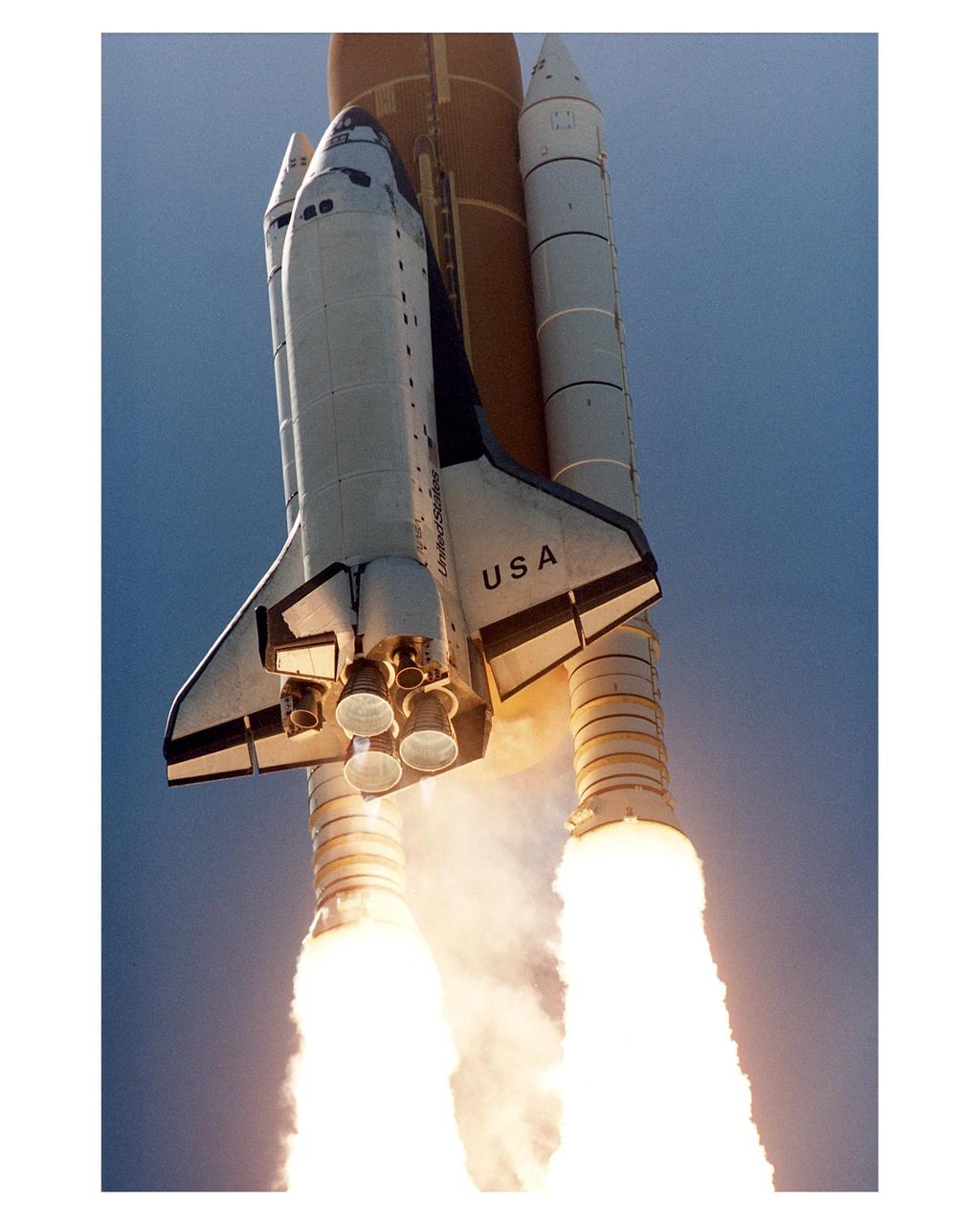
Like a rising sun lighting up the afternoon sky, the Space Shuttle Columbia soars from Launch Pad 39A at 2:20:32 p.m. EST, April 4, on the 16-day Microgravity Science Laboratory-1 (MSL-1) mission. The crew members are Mission Commander James D. Halsell, Jr.; Pilot Susan L. Still; Payload Commander Janice Voss; Mission Specialists Michael L. Gernhardt and Donald A. Thomas; and Payload Specialists Roger K. Crouch and Gregory T. Linteris. During the scheduled 16-day STS-83 mission, the MSL-1 will be used to test some of the hardware, facilities and procedures that are planned for use on the International Space Station as well as research in combustion, protein crystal growth and materials processing experiments
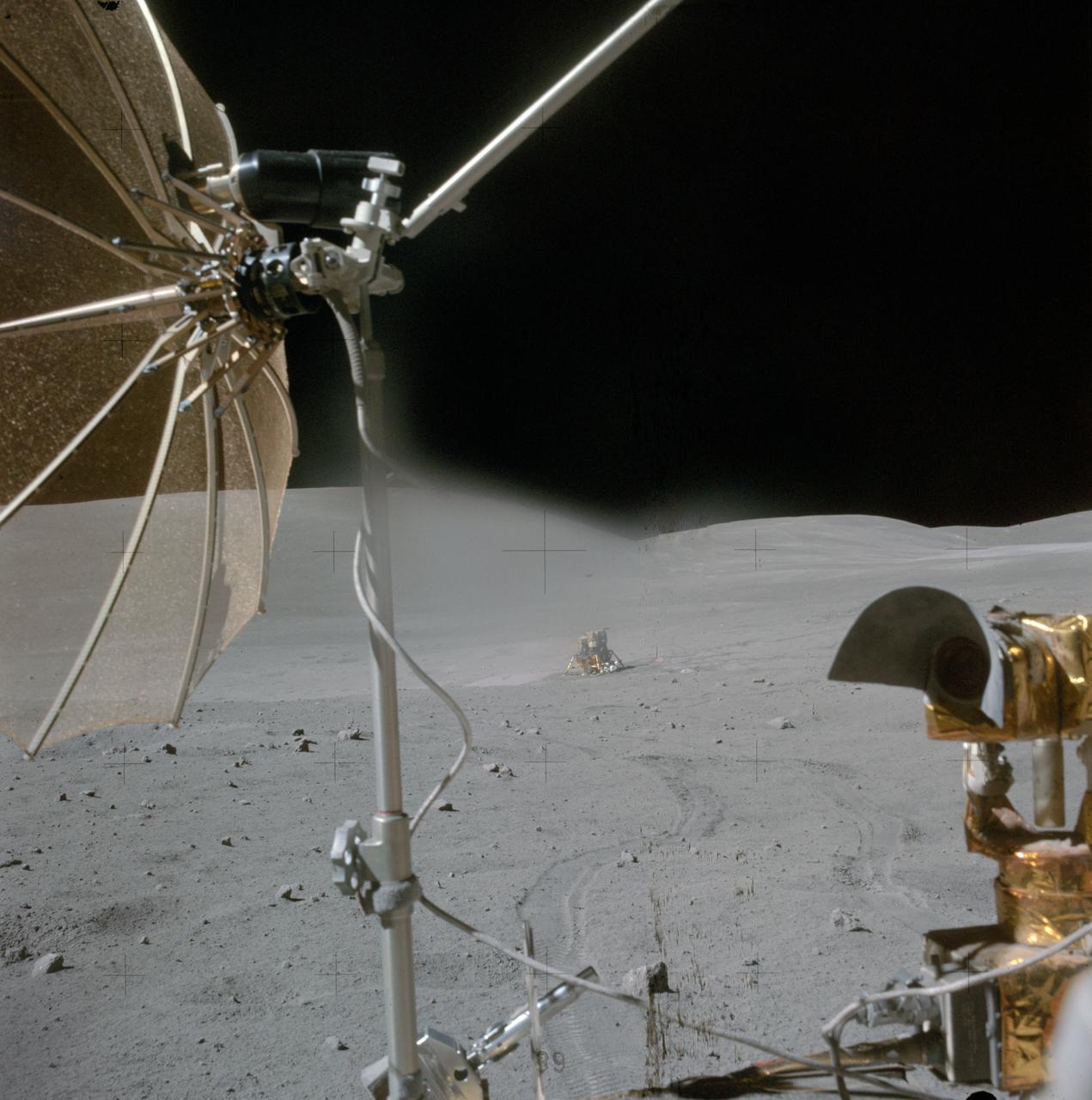
AS16-116-18678 (23 April 1972) --- A view from the moving Apollo 16 Lunar Roving Vehicle (LRV) as the crew men headed "home" at the end of the mission's third and final extravehicular activity (EVA). Astronaut John W. Young called attention to the series of block fields between the Lunar Module (LM) and LRV. Young also noted that, "The LM was obviously sitting in the only flat place around." Stone Mountain stretches about half way across the background. The high gain antenna and the RCA television camera on the LRV are in the foreground. While astronauts Young, commander; and Charles M. Duke Jr., lunar module pilot; descended in the Apollo 16 LM "Orion" to explore the Descartes highlands landing site on the moon, astronaut Thomas K. Mattingly II, command module pilot, remained with the Command and Service Modules (CSM) "Casper" in lunar orbit.
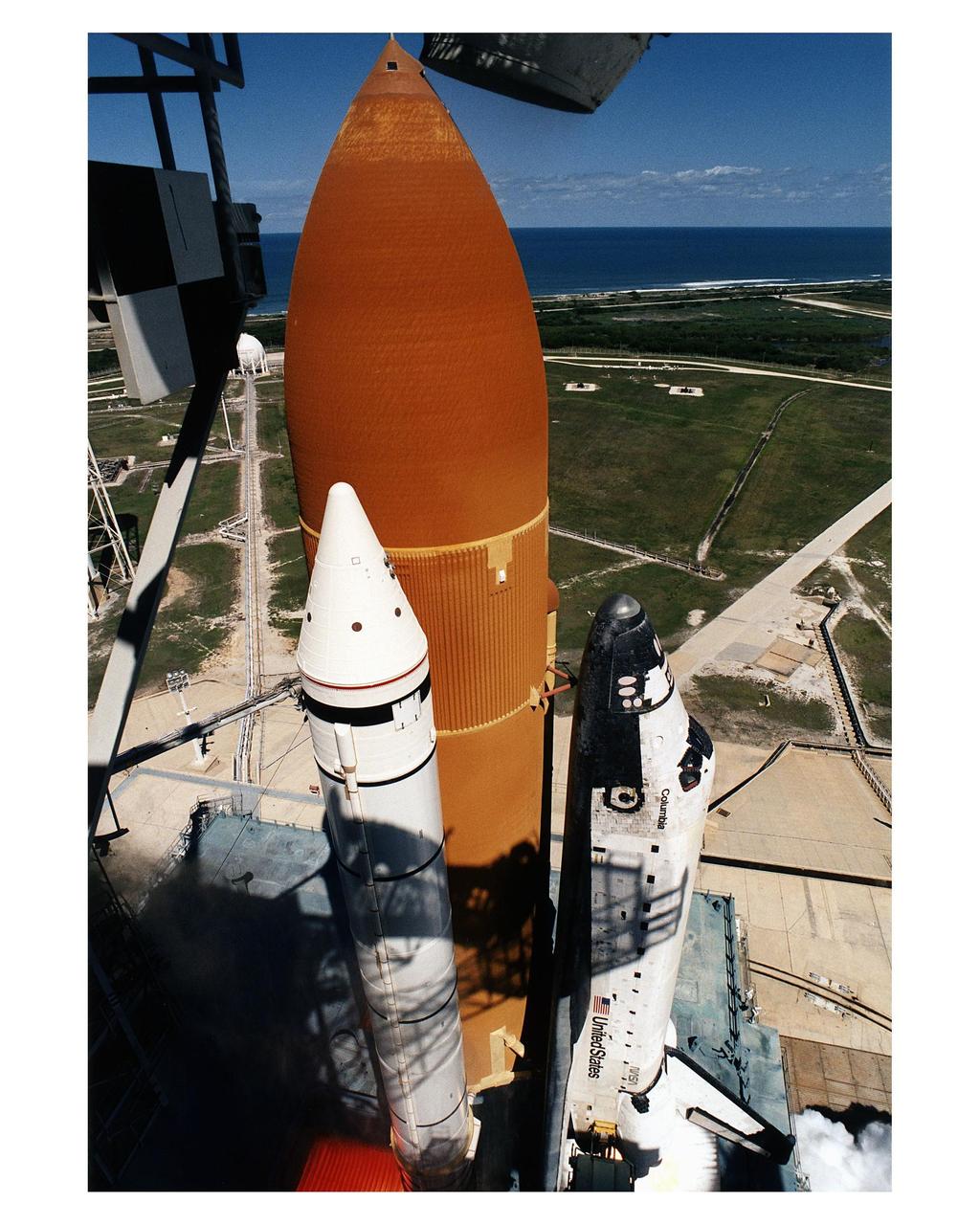
Like a rising sun lighting up the afternoon sky, the Space Shuttle Columbia soars from Launch Pad 39A at 2:20:32 p.m. EST, April 4, on the 16-day Microgravity Science Laboratory-1 (MSL-1) mission. The crew members are Mission Commander James D. Halsell, Jr.; Pilot Susan L. Still; Payload Commander Janice Voss; Mission Specialists Michael L. Gernhardt and Donald A. Thomas; and Payload Specialists Roger K. Crouch and Gregory T. Linteris. During the scheduled 16-day STS-83 mission, the MSL-1 will be used to test some of the hardware, facilities and procedures that are planned for use on the International Space Station as well as research in combustion, protein crystal growth and materials processing experiments
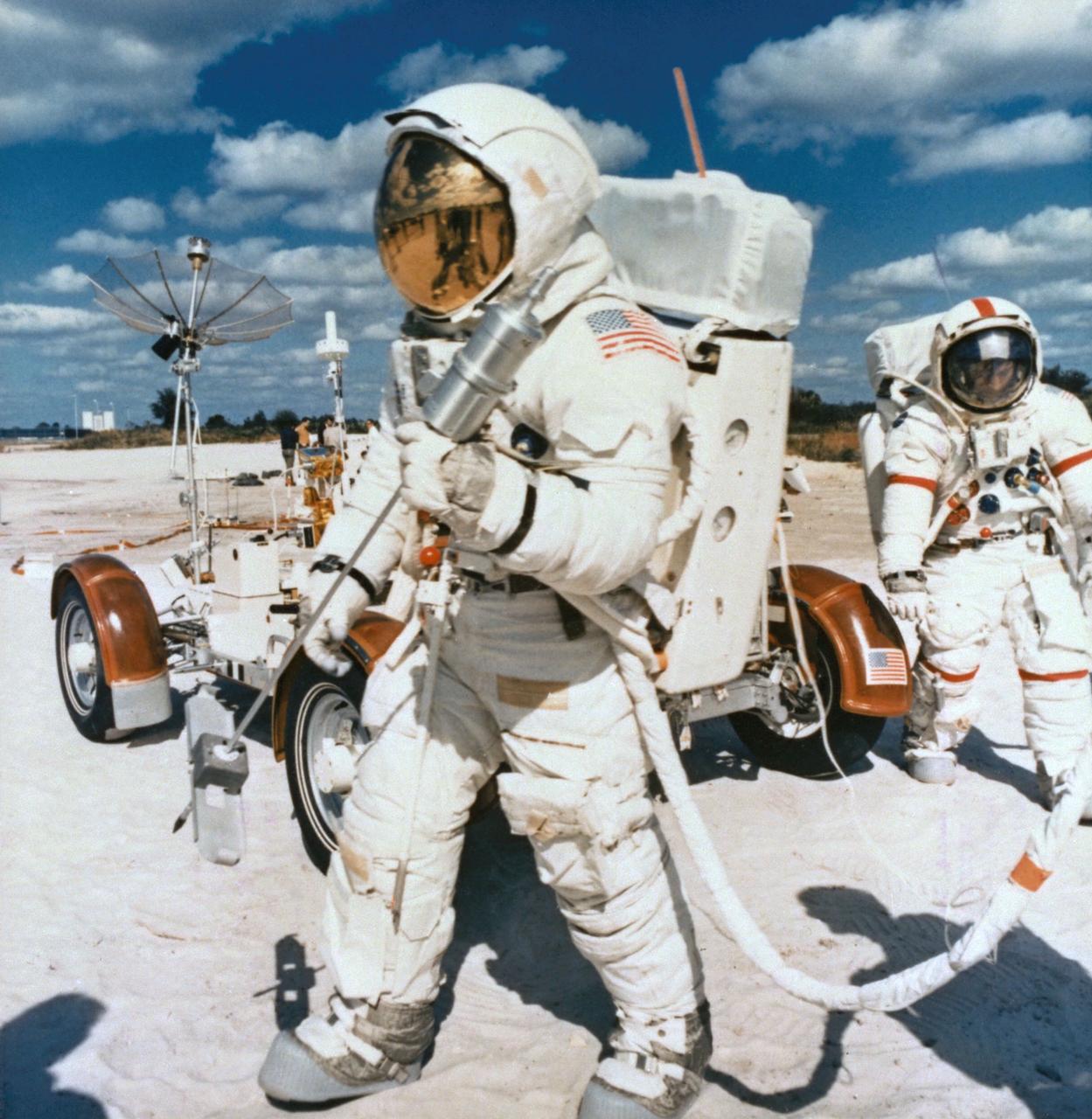
S72-30694 (28 Jan. 1972) --- Astronauts John W. Young, left, Apollo 16 commander, and Charles M. Duke Jr., lunar module pilot, prepare to begin a simulated traverse in a training area at the Kennedy Space Center (KSC). The fifth National Aeronautics and Space Administration (NASA) Apollo lunar landing mission is scheduled to land in the mountainous highlands region near the crater Descartes to explore the area for a three-day period. Among the experiments to fly on Apollo 16 is the soil mechanics (S-200) experiment or self-recording penetrometer, a model of which is held here by Duke. A training model of the Lunar Roving Vehicle (LRV) is parked between the two crew men. Astronaut Thomas K. (Ken) Mattingly II is prime crew command module pilot for the mission.
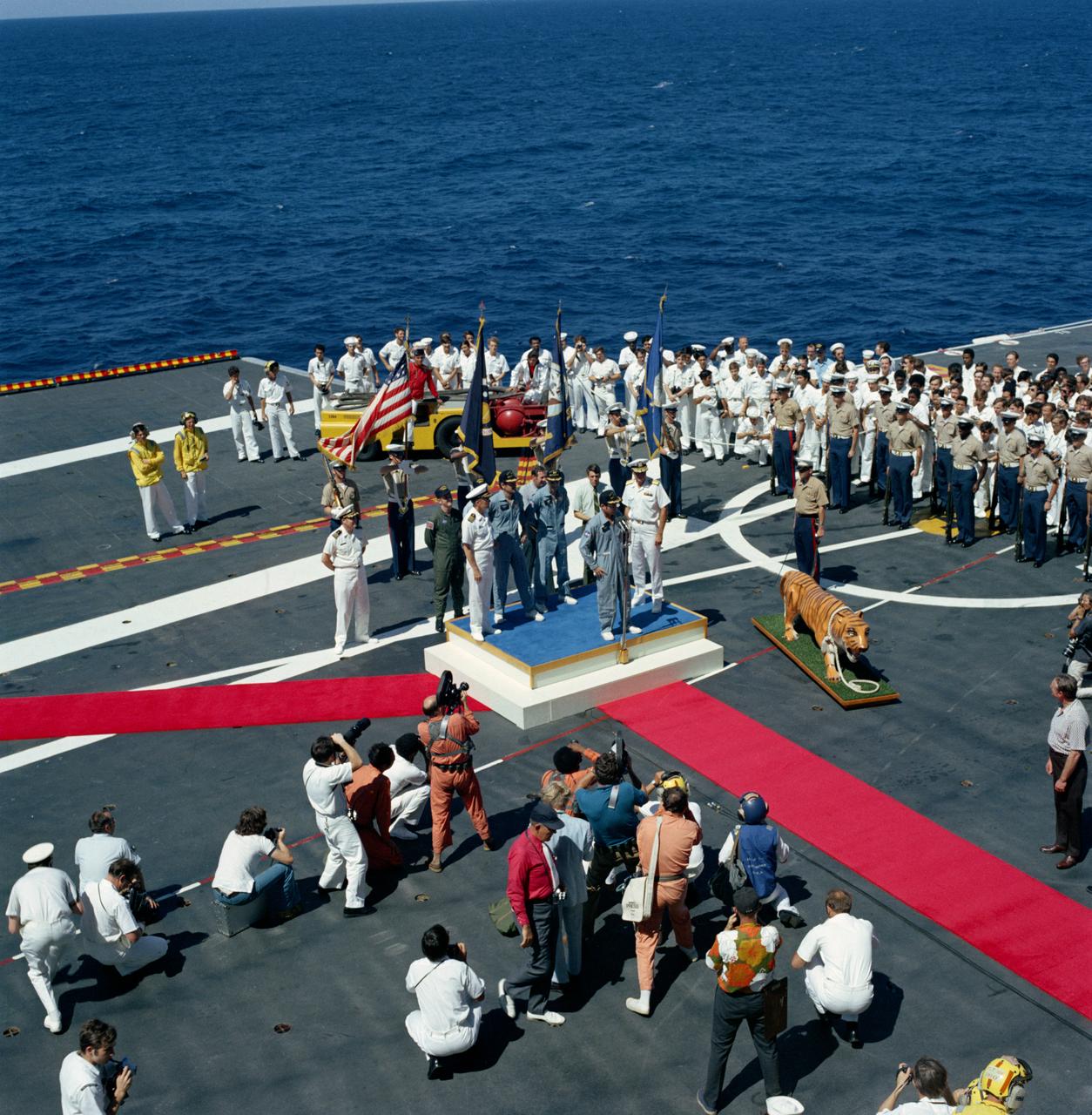
S72-36262 (27 April 1972) --- A high-angle view of the Apollo 16 welcoming aboard ceremonies on the deck of the prime recovery ship, USS Ticonderoga. It was soon after the splashdown of the Apollo 16 Command Module (CM) in the central Pacific Ocean approximately 215 miles southeast of Christmas Island. Astronaut John W. Young, commander, is standing at the microphone. Standing behind Young are astronaut Charles M. Duke Jr. (Left), lunar module pilot; and astronaut Thomas K. Mattingly II, command module pilot. The splashdown occurred at 290:37:06 ground elapsed time, 1:45:06 p.m. (CST), Thursday, April 27, 1972. The coordinates were 00:43.2 degrees south latitude and 156:11.4 degrees west longitude. The three crew members were picked up by helicopter and flown to the deck of the USS Ticonderoga.
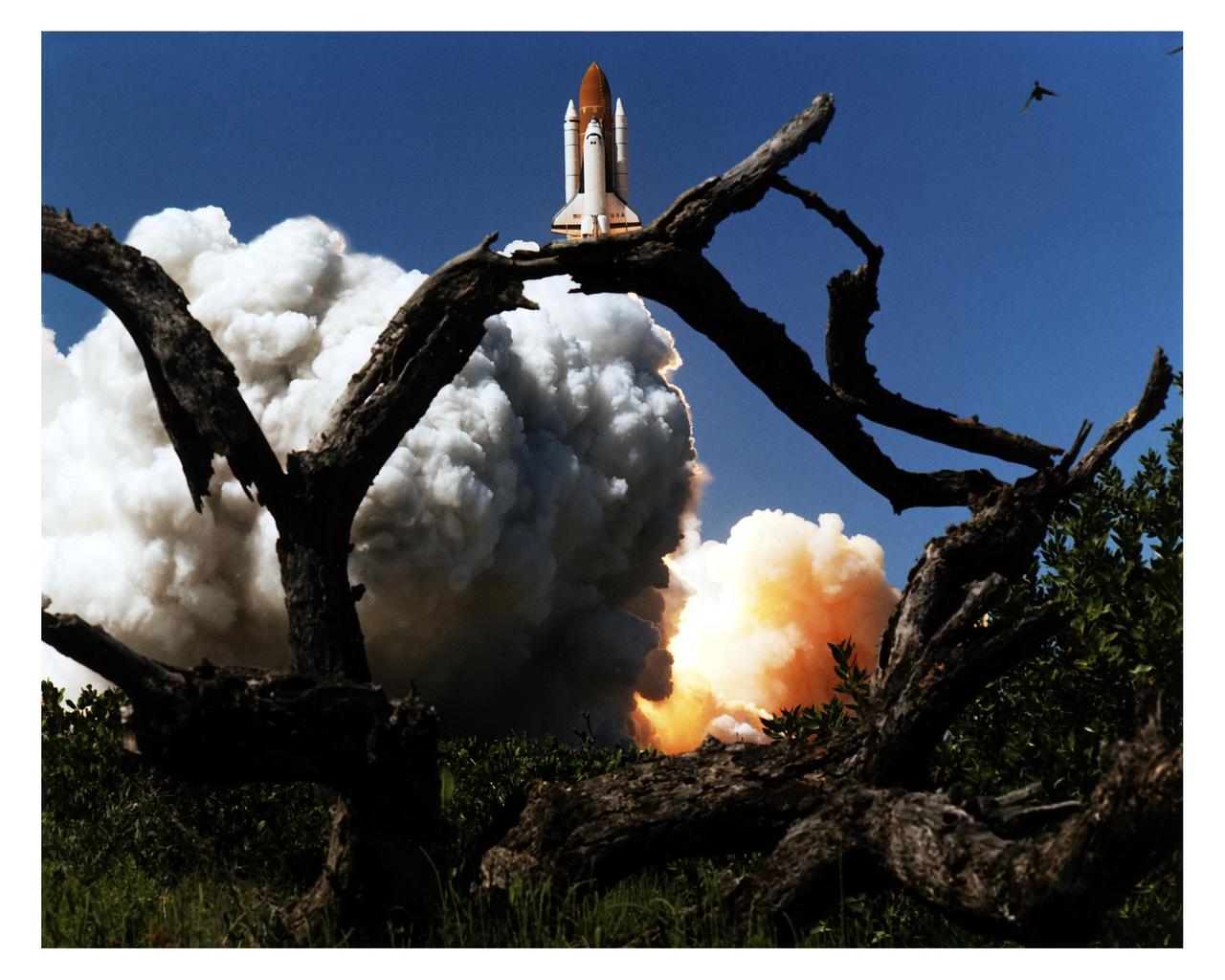
Like a rising sun lighting up the afternoon sky, the Space Shuttle Columbia soars from Launch Pad 39A at 2:20:32 p.m. EST, April 4, on the 16-day Microgravity Science Laboratory-1 (MSL-1) mission. The crew members are Mission Commander James D. Halsell, Jr.; Pilot Susan L. Still; Payload Commander Janice Voss; Mission Specialists Michael L. Gernhardt and Donald A. Thomas; and Payload Specialists Roger K. Crouch and Gregory T. Linteris. During the scheduled 16-day STS-83 mission, the MSL-1 will be used to test some of the hardware, facilities and procedures that are planned for use on the International Space Station as well as research in combustion, protein crystal growth and materials processing experiments
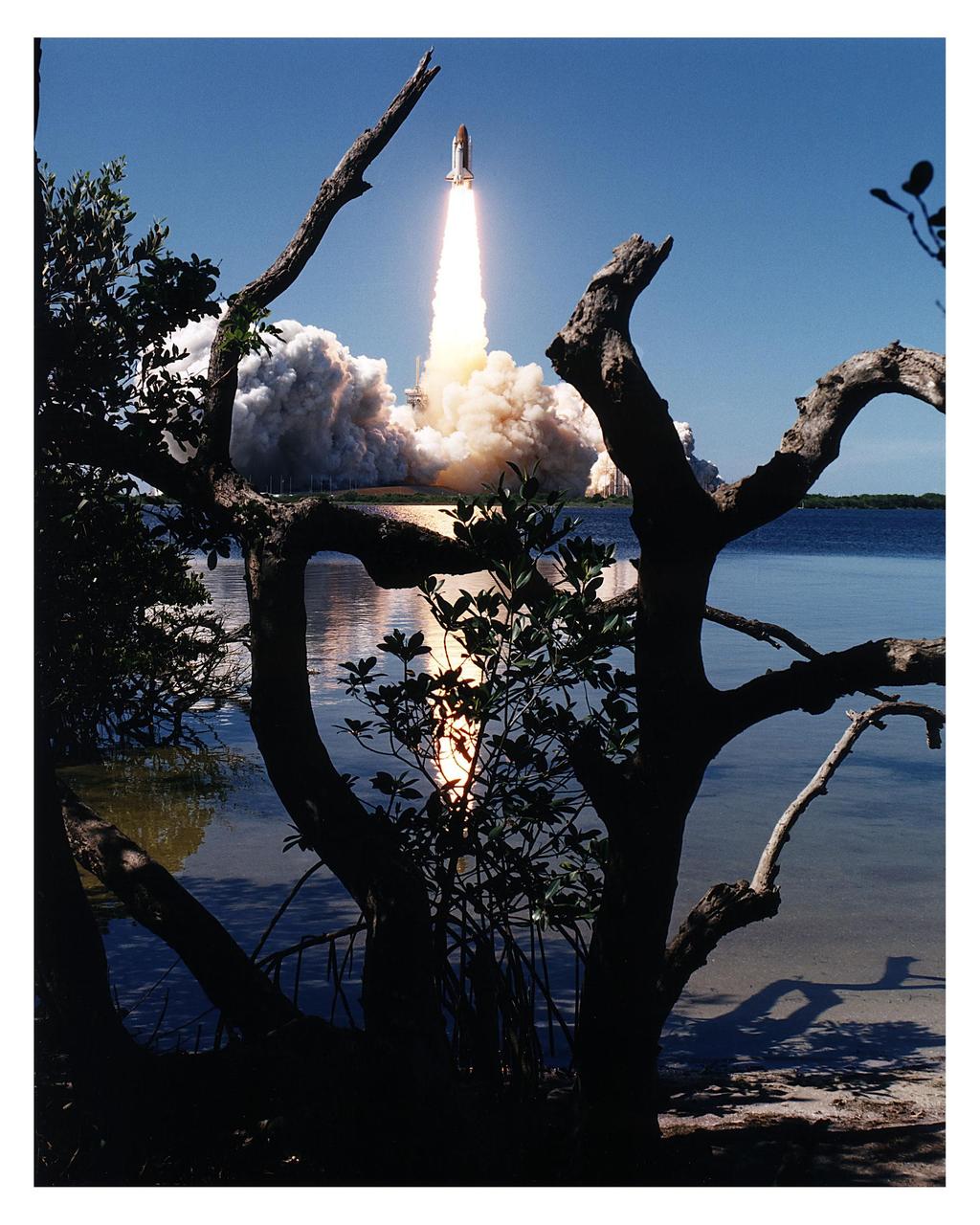
Like a rising sun lighting up the afternoon sky, the Space Shuttle Columbia soars from Launch Pad 39A at 2:20:32 p.m. EST, April 4, on the 16-day Microgravity Science Laboratory-1 (MSL-1) mission. The crew members are Mission Commander James D. Halsell, Jr.; Pilot Susan L. Still; Payload Commander Janice Voss; Mission Specialists Michael L. Gernhardt and Donald A. Thomas; and Payload Specialists Roger K. Crouch and Gregory T. Linteris. During the scheduled 16-day STS-83 mission, the MSL-1 will be used to test some of the hardware, facilities and procedures that are planned for use on the International Space Station as well as research in combustion, protein crystal growth and materials processing experiments
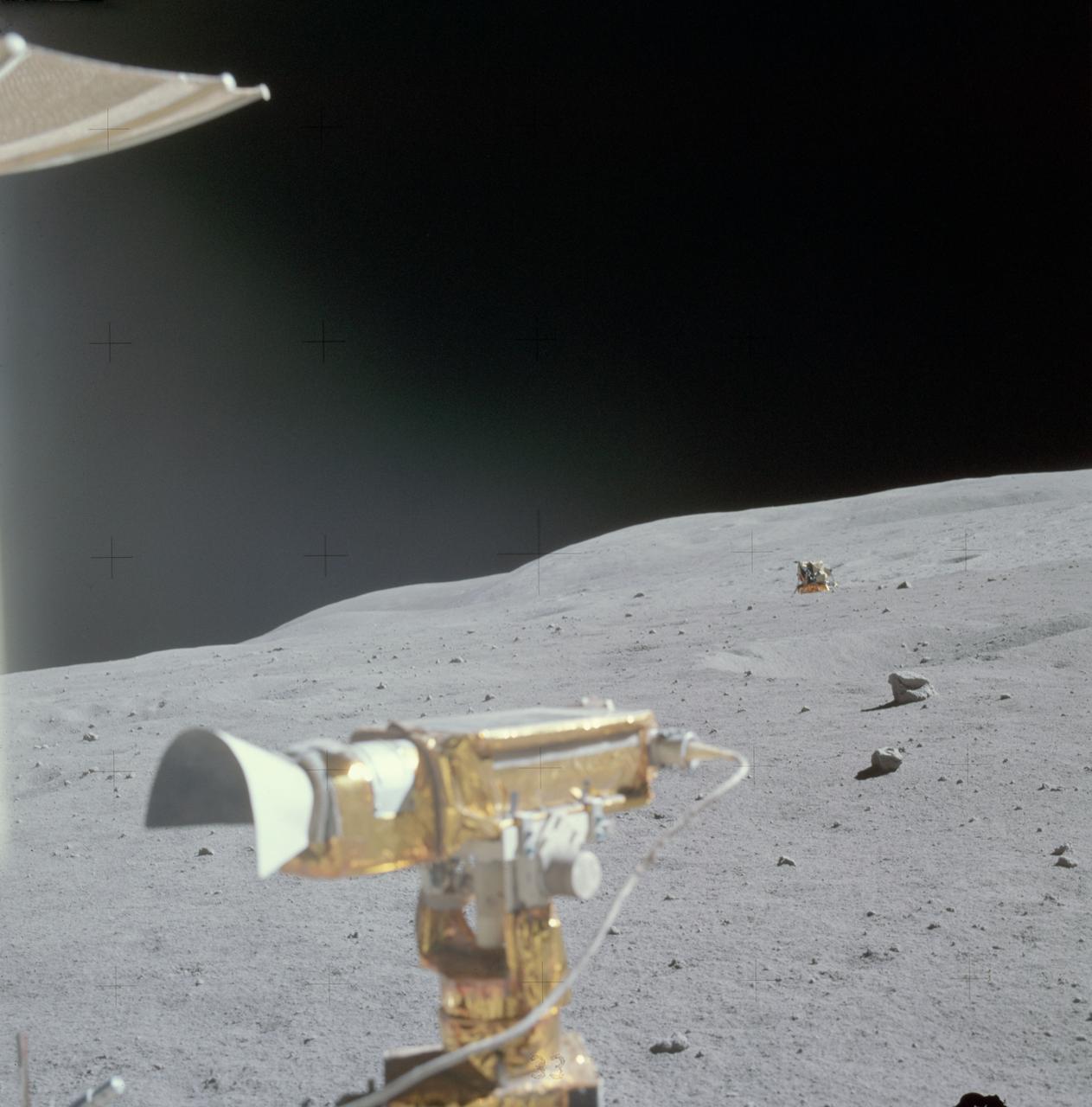
AS16-115-18549 (22 April 1972) --- The Apollo 16 Lunar Module (LM) "Orion" is photographed from a distance by astronaut Charles M. Duke Jr., lunar module pilot, aboard the moving Lunar Roving Vehicle (LRV). Astronauts Duke and John W. Young, commander, were returning from their excursion to Stone Mountain during the second Apollo 16 extravehicular activity (EVA). The RCA color television camera mounted on the LRV is in the foreground. A portion of the LRV's high-gain antenna is at top left. Smoky Mountain rises behind the LM in this north-looking view at the Descartes landing site. While astronauts Young and Duke descended in the "Orion" to explore the Descartes highlands landing site on the moon, astronaut Thomas K. Mattingly II, command module pilot, remained with the Command and Service Modules (CSM) "Casper" in lunar orbit.

AS16-113-18339 (21 April 1972) --- Astronaut John W. Young, commander of the Apollo 16 lunar landing mission, leaps from the lunar surface as he salutes the United States flag at the Descartes landing site during the first Apollo 16 extravehicular activity (EVA). Astronaut Charles M. Duke Jr., lunar module pilot, took this picture. The Lunar Module (LM) "Orion" is on the left. The Lunar Roving Vehicle (LRV) is parked beside the LM. The object behind Young (in the shade of the LM) is the Far Ultraviolet Camera/Spectrograph (FUC/S). Stone Mountain dominates the background in this lunar scene. While astronauts Young and Duke descended in the LM to explore the Descartes highlands landing site on the moon, astronaut Thomas K. Mattingly II, command module pilot, remained with the Command and Service Modules (CSM) "Casper" in lunar orbit.
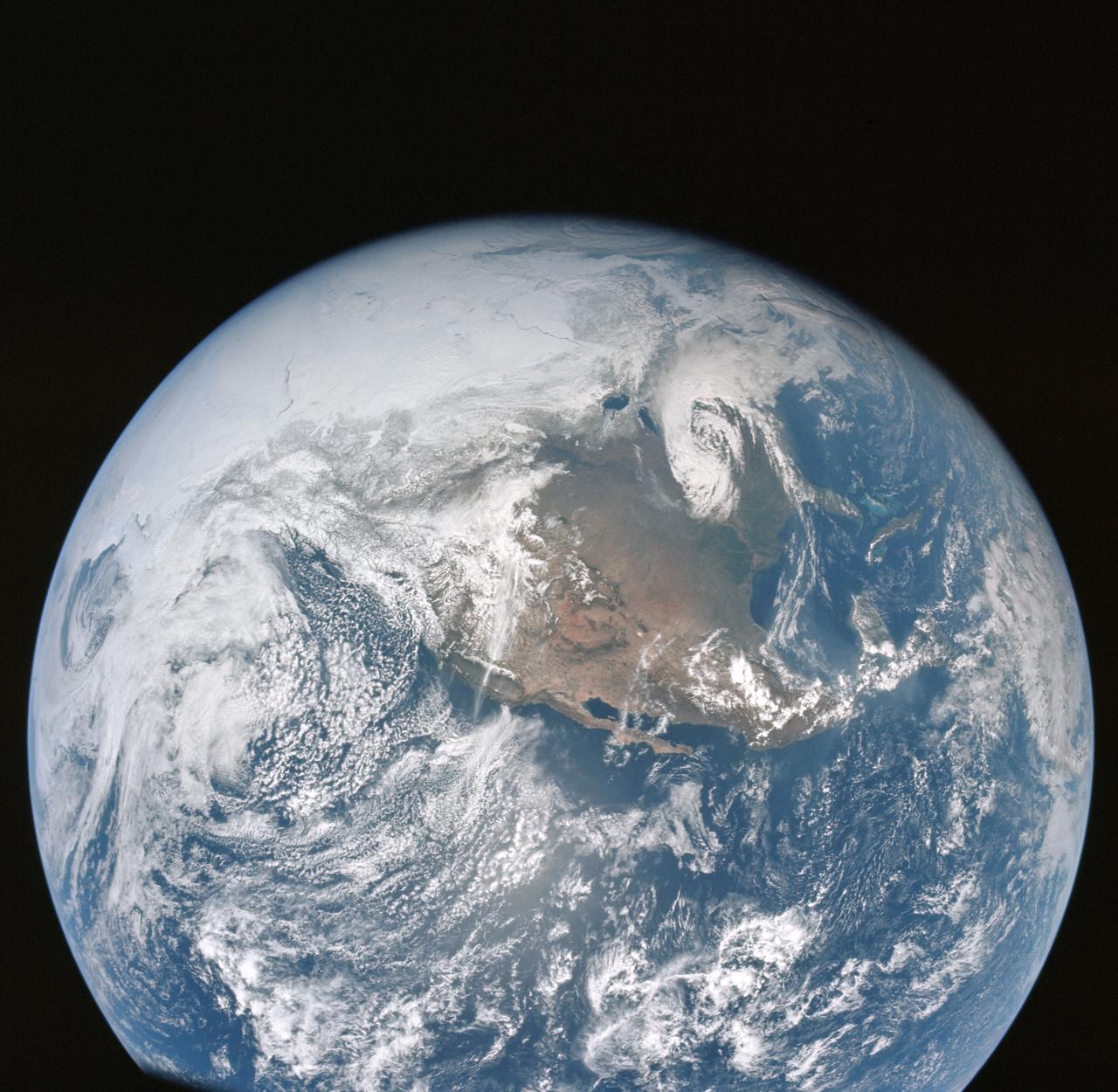
AS16-118-18880 (16 April 1972) --- A good view of Earth photographed about one hour after trans-lunar injection on April 16, 1972. Although there is much cloud cover, the United States in large part, most of Mexico and some of Central America are clearly visible. Note the Great Lakes (Michigan and Superior) and the Bahama Banks (note different shade of blue below Florida). While astronauts John W. Young, commander, and Charles M. Duke Jr., lunar module pilot, descended in the Lunar Module (LM) "Orion" to explore the Descartes highlands region of the moon, astronaut Thomas K. (Ken) Mattingly II, command module pilot, remained with the Command and Service Modules (CSM) "Casper" in lunar orbit.
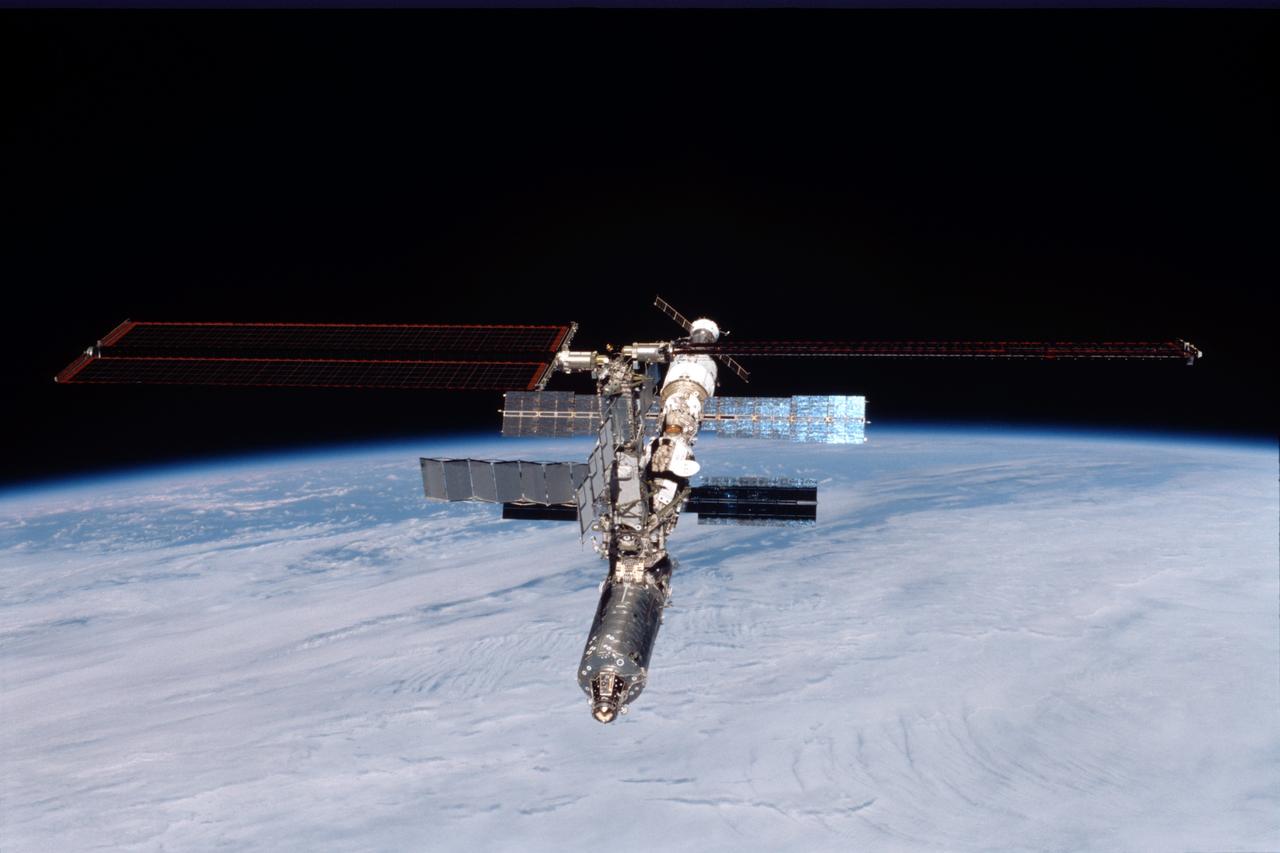
STS098-312-0025 (16 February 2001) --- Backdropped against heavy cloud cover, the International Space Station (ISS) was photographed with a 35mm camera by one of the astronauts onboard Atlantis. The crew of the station, onboard the outpost since early November 2000, is made up of astronaut William M. (Bill) Shepherd, mission commander; Yuri P. Gidzenko, Soyuz commander; and Sergei K. Krikalev, flight engineer. Krikalev and Gidzenko represent the Russian Aviation and Space Agency. On Atlantis were astronauts Kenneth D. Cockrell, mission commander; Mark L. Polansky, pilot; and Marsha S. Ivins, Robert L. Curbeam and Thomas D. Jones, all mission specialists. The shuttle and the station parted company at 8:06 a.m. (CST), Feb. 16, as Polansky flew the shuttle halfway around the outpost and its new Destiny laboratory before moving off.
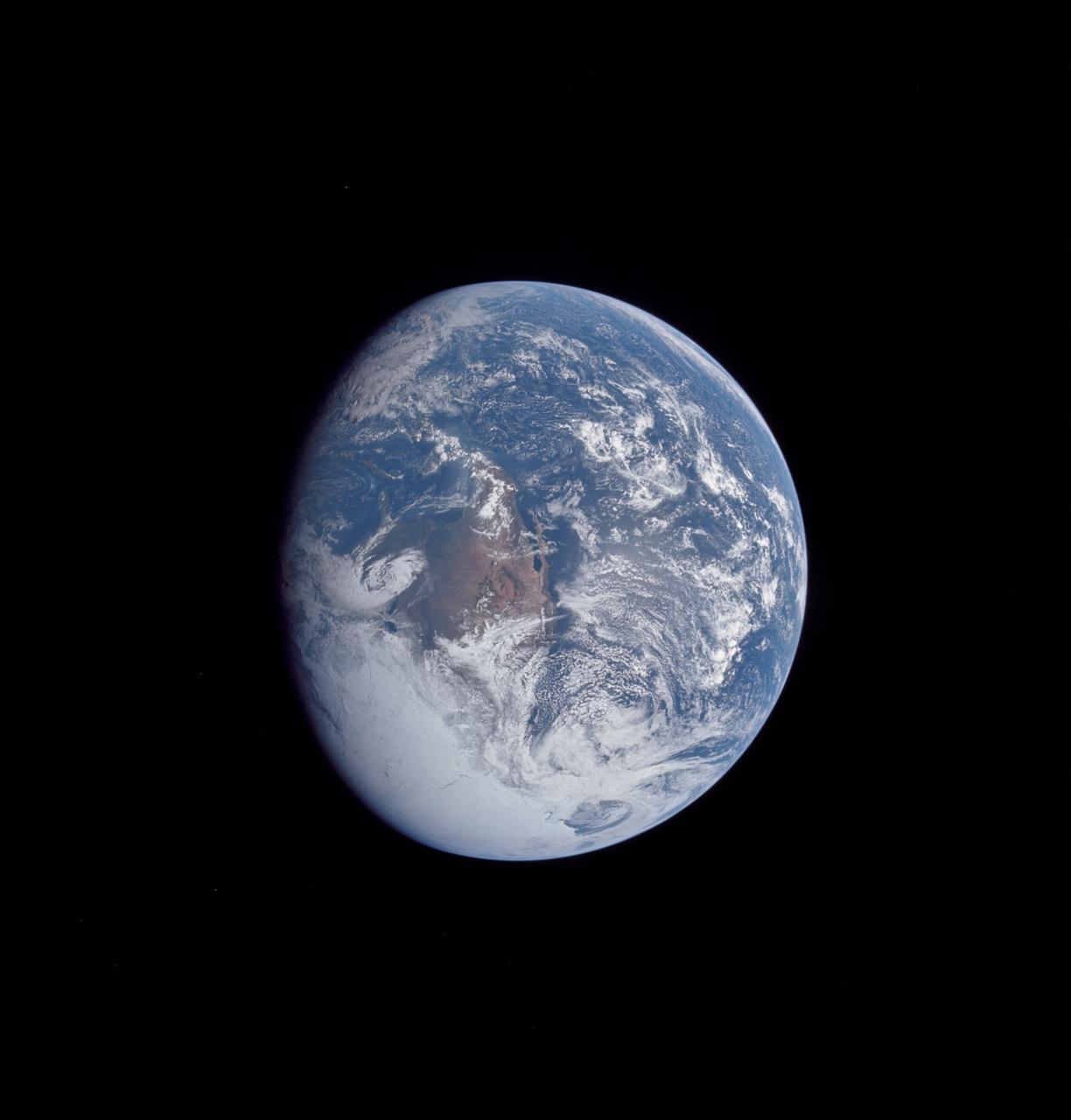
AS16-118-18885 (16 April 1972) --- A good view of Earth photographed about one and one-half hours after trans-lunar injection on April 16, 1972. Although there is much cloud cover, the United States in large part, most of Mexico and some parts of Central America are clearly visible. Note Lake Michigan and Lake Superior and the Bahama Banks (see different shade of blue below Florida). Just beginning man's fifth lunar landing mission were astronauts John W. Young, commander; Thomas K. Mattingly, II, command module pilot and Charles M. Duke Jr., lunar module pilot. While astronauts Young and Duke descended in the Lunar Module (LM) "Orion" to explore the Descartes highlands region of the moon, astronaut Mattingly remained with the Command and Service Modules (CSM) "Casper" in lunar orbit.
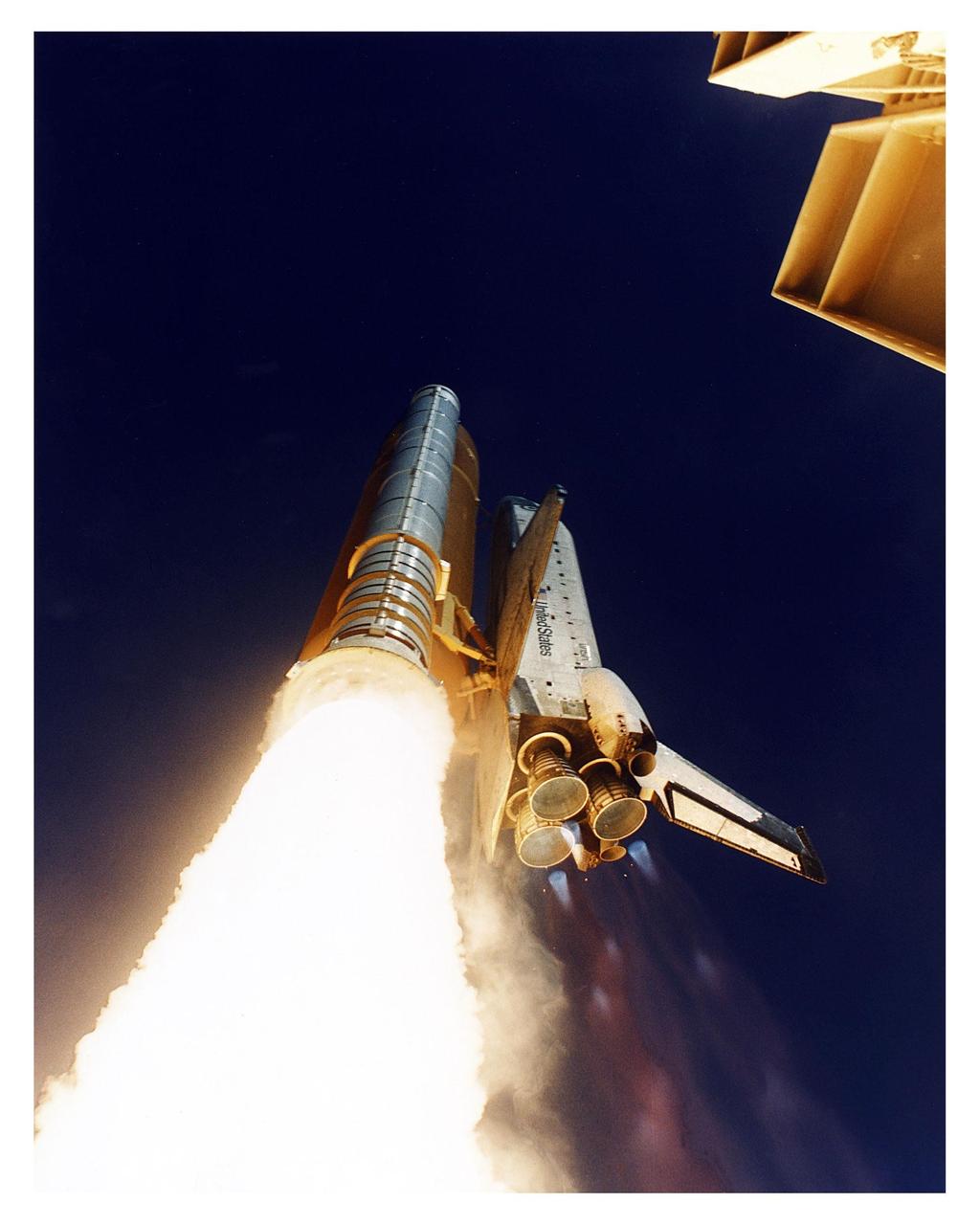
Like a rising sun lighting up the afternoon sky, the Space Shuttle Columbia soars from Launch Pad 39A at 2:20:32 p.m. EST, April 4, on the 16-day Microgravity Science Laboratory-1 (MSL-1) mission. The crew members are Mission Commander James D. Halsell, Jr.; Pilot Susan L. Still; Payload Commander Janice Voss; Mission Specialists Michael L. Gernhardt and Donald A. Thomas; and Payload Specialists Roger K. Crouch and Gregory T. Linteris. During the scheduled 16-day STS-83 mission, the MSL-1 will be used to test some of the hardware, facilities and procedures that are planned for use on the International Space Station as well as research in combustion, protein crystal growth and materials processing experiments
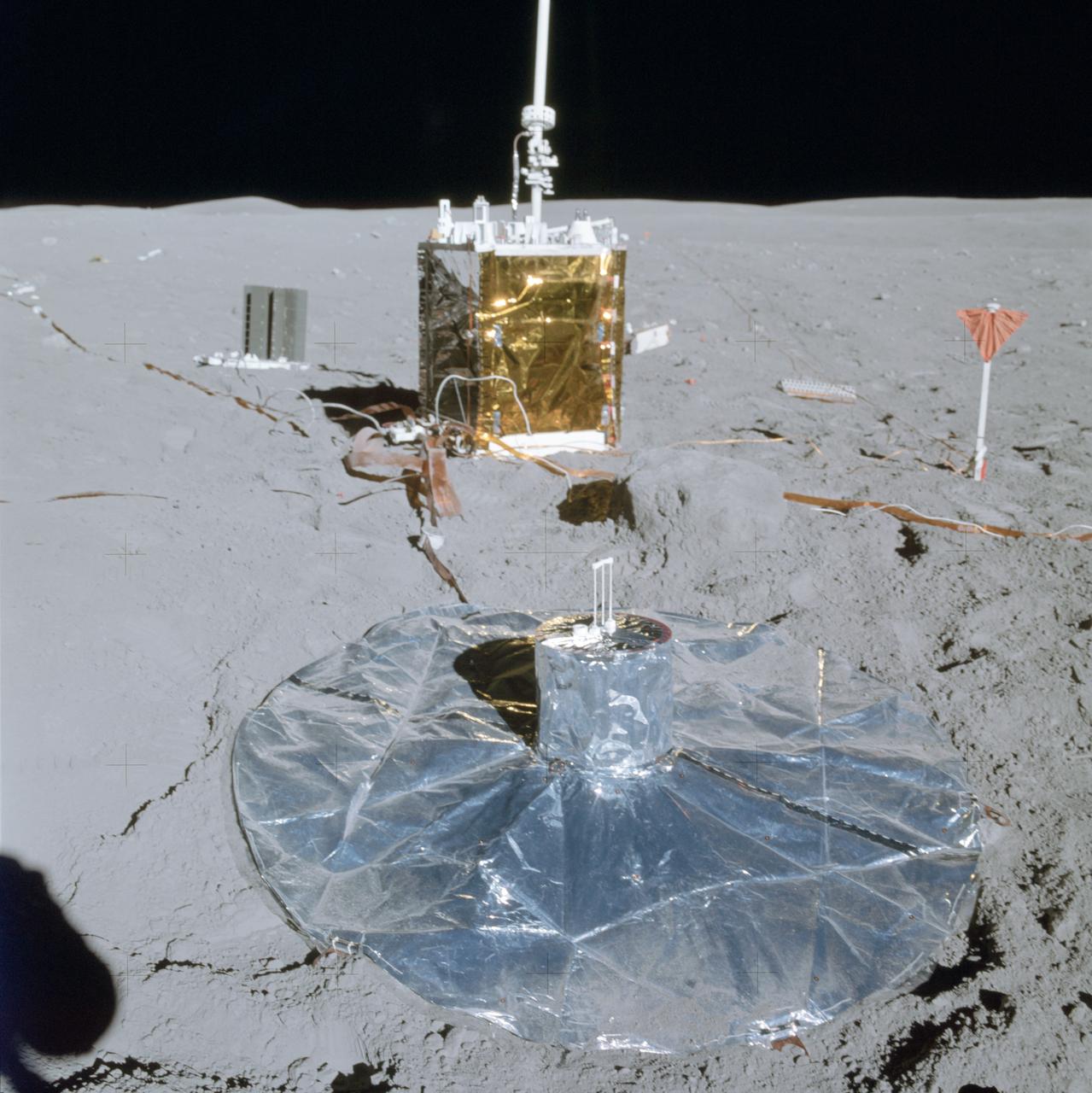
AS16-113-18347 (21 April 1972) --- A partial view of the Apollo 16 Apollo Lunar Surface Experiments Package (ALSEP) in deployed configuration on the lunar surface as photographed during the mission's first extravehicular activity (EVA), on April 21, 1972. The Passive Seismic Experiment (PSE) is in the foreground center; Central Station (C/S) is in center background, with the Radioisotope Thermoelectric Generator (RTG) to the left. One of the anchor flags for the Active Seismic Experiment (ASE) is at right. While astronauts John W. Young, commander; and Charles M. Duke Jr., lunar module pilot; descended in the Apollo 16 Lunar Module (LM) "Orion" to explore the Descartes highlands landing site on the moon, astronaut Thomas K. Mattingly II, command module pilot, remained with the Command and Service Modules (CSM) "Casper" in lunar orbit.
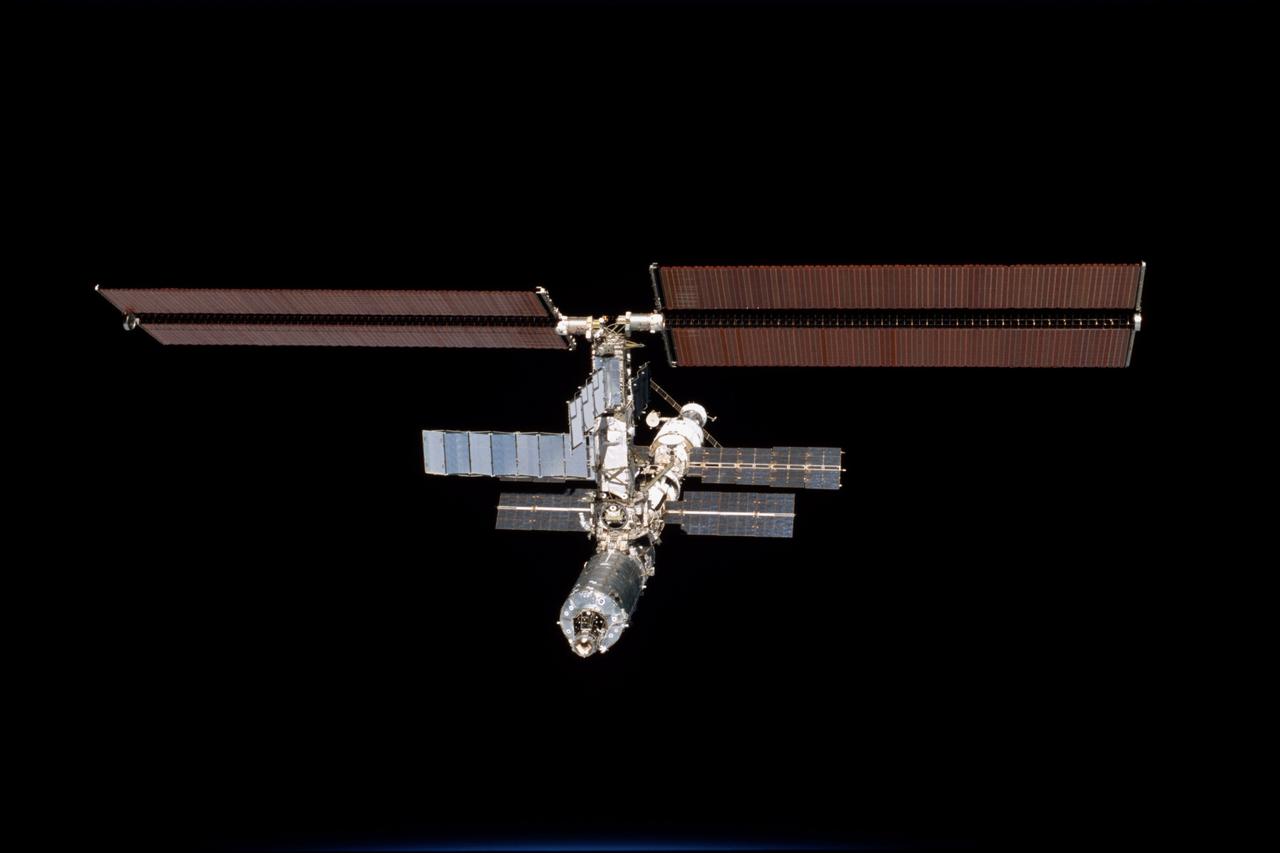
STS098-312-0020 (16 February 2001) --- Backdropped against the blackness of space, the International Space Station (ISS)was photographed with a 35mm camera by one of the astronauts onboard Atlantis. The crew of the station, onboard the outpost since early November 2000, is made up of astronaut William M. (Bill) Shepherd, mission commander; Yuri P. Gidzenko, Soyuz commander; and Sergei K. Krikalev, flight engineer. Krikalev and Gidzenko represent the Russian Aviation and Space Agency. On Atlantis were astronauts Kenneth D. Cockrell, mission commander; Mark L. Polansky, pilot; and Marsha S. Ivins, Robert L. Curbeam and Thomas D. Jones, all mission specialists. The shuttle and the station parted company at 8:06 a.m. (CST), Feb. 16, as Polansky flew the shuttle halfway around the outpost and its new Destiny laboratory before moving off.
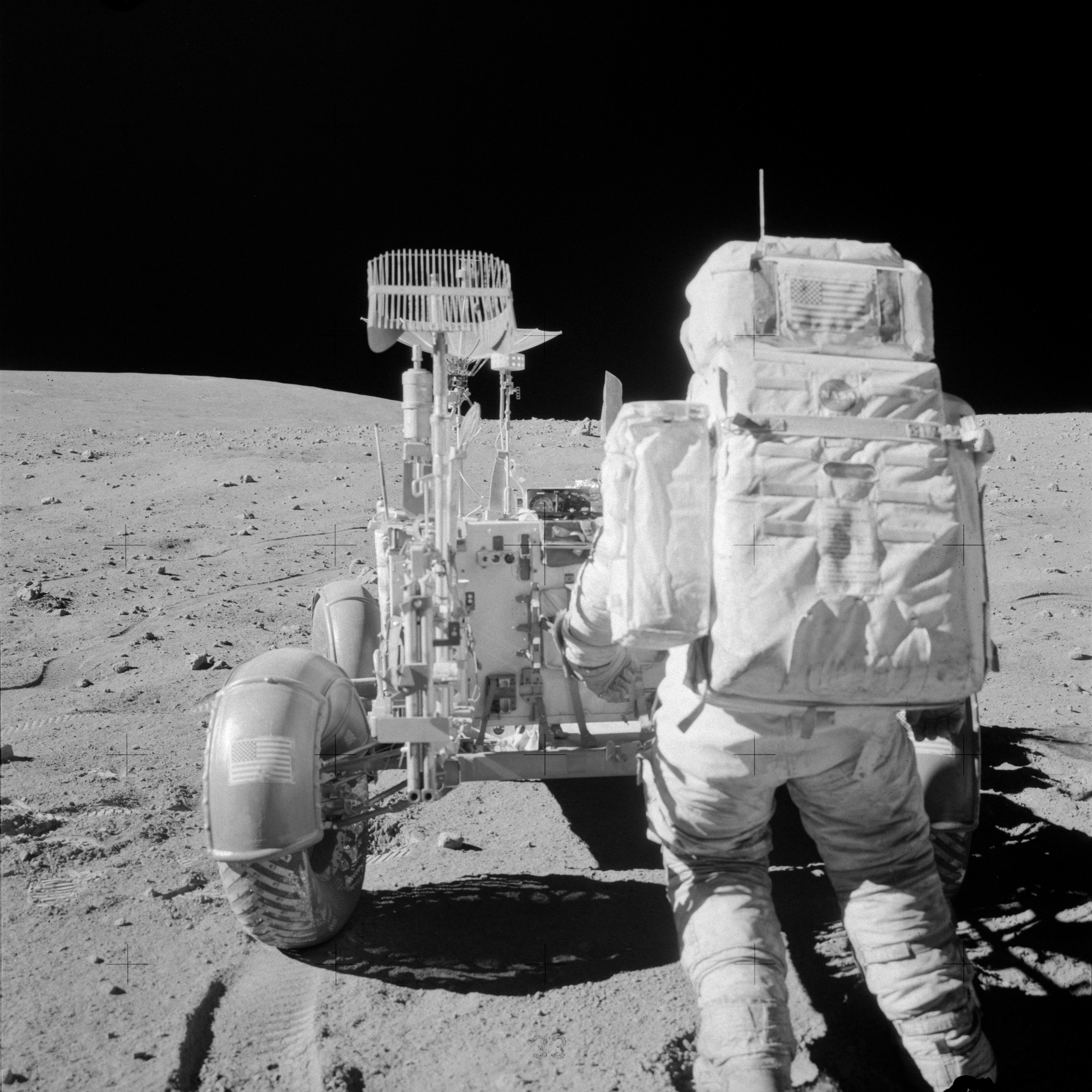
AS16-108-17622 (22 April 1972) --- Astronaut John W. Young, commander of the Apollo 16 lunar landing mission, reaches for tools in the Apollo Lunar Hand Tool Carrier at the aft end of the Lunar Roving Vehicle (LRV) during the second Apollo 16 extravehicular activity (EVA) at the Descartes landing site. This photograph was taken by astronaut Charles M. Duke Jr., lunar module pilot. This view is looking south from the base of Stone Mountain. While astronauts Young and Duke descended in the Lunar Module (LM) "Orion" to explore the Descartes highlands region of the moon, astronaut Thomas K. Mattingly II, command module pilot, remained with the Command and Service Modules (CSM) "Casper" in lunar orbit.
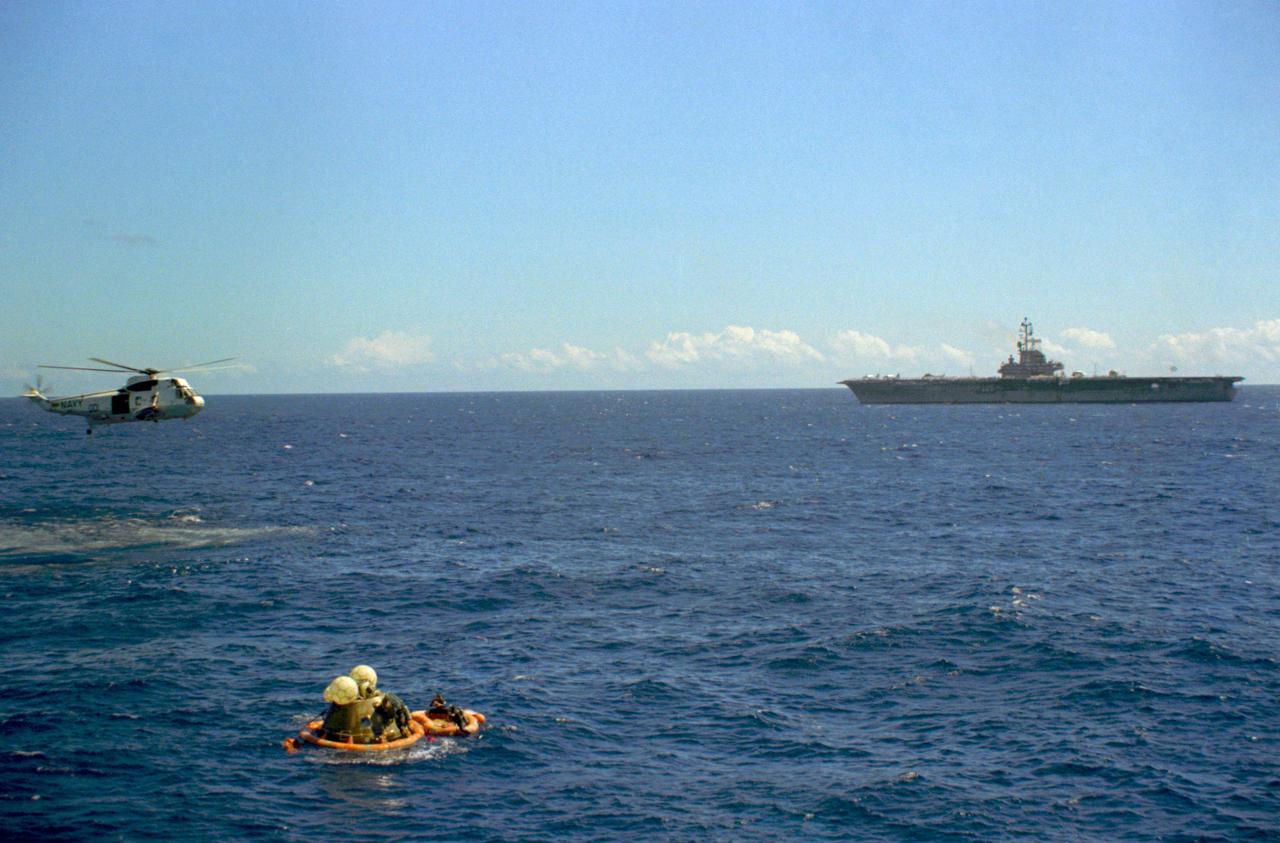
S72-36602 (27 April 1972) --- The Apollo 16 Command Module bobbles photographed in the waters of the central Pacific Ocean during recovery operations. The prime recovery ship, USS Ticonderoga, is in the background. A recovery helicopter hovers overhead. The Apollo 16 crew, astronauts John W. Young, Thomas K. Mattingly II, and Charles M. Duke Jr., were picked up by helicopter and flown to the deck of the ship. The splashdown occurred at 290:37:06 ground elapsed time, 1:45:06 p.m. (CST), Thursday, April 27, 1972, at coordinates of 00:45.2 degrees south latitude and 156:11.4 degrees west longitude, a point approximately 215 miles southeast of Christmas Island. A team of Earth Landing System swimmers assisted with the recovery operations.
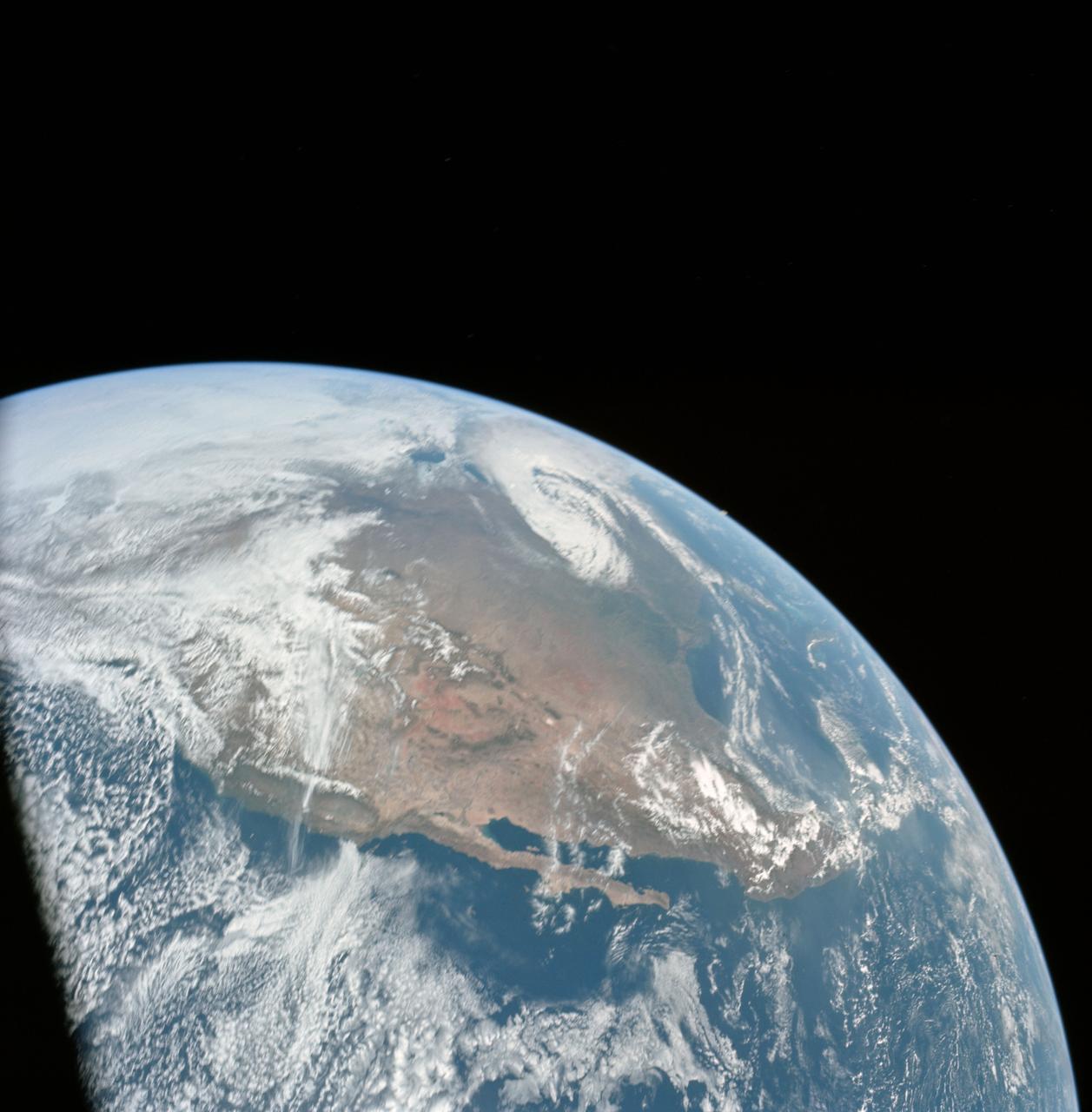
AS16-118-18873 (16 April 1972) --- A good view of Earth photographed shortly after trans-lunar injection of April 16, 1972. Although there is much cloud cover (over Canada and the oceans), the United States in large part, most of Mexico and some parts of Central America are clearly visible. Note Lake Michigan and Lake Superior, also note the Bahama Banks at upper right part of the sphere. A large part of the Rocky Mountain Range is also visible. Just beginning man's fifth lunar landing mission were astronauts John W. Young, commander; Thomas K. Mattingly II, command module pilot; and Charles M. Duke Jr., lunar module pilot. While astronauts Young and Duke descended in the Lunar Module (LM) to explore the moon, astronaut Mattingly remained with the Command and Service Modules (CSM) in lunar orbit.

Like a rising sun lighting up the afternoon sky, the Space Shuttle Columbia soars from Launch Pad 39A at 2:20:32 p.m. EST, April 4, on the 16-day Microgravity Science Laboratory-1 (MSL-1) mission. The crew members are Mission Commander James D. Halsell, Jr.; Pilot Susan L. Still; Payload Commander Janice Voss; Mission Specialists Michael L. Gernhardt and Donald A. Thomas; and Payload Specialists Roger K. Crouch and Gregory T. Linteris. During the scheduled 16-day STS-83 mission, the MSL-1 will be used to test some of the hardware, facilities and procedures that are planned for use on the International Space Station as well as research in combustion, protein crystal growth and materials processing experiments
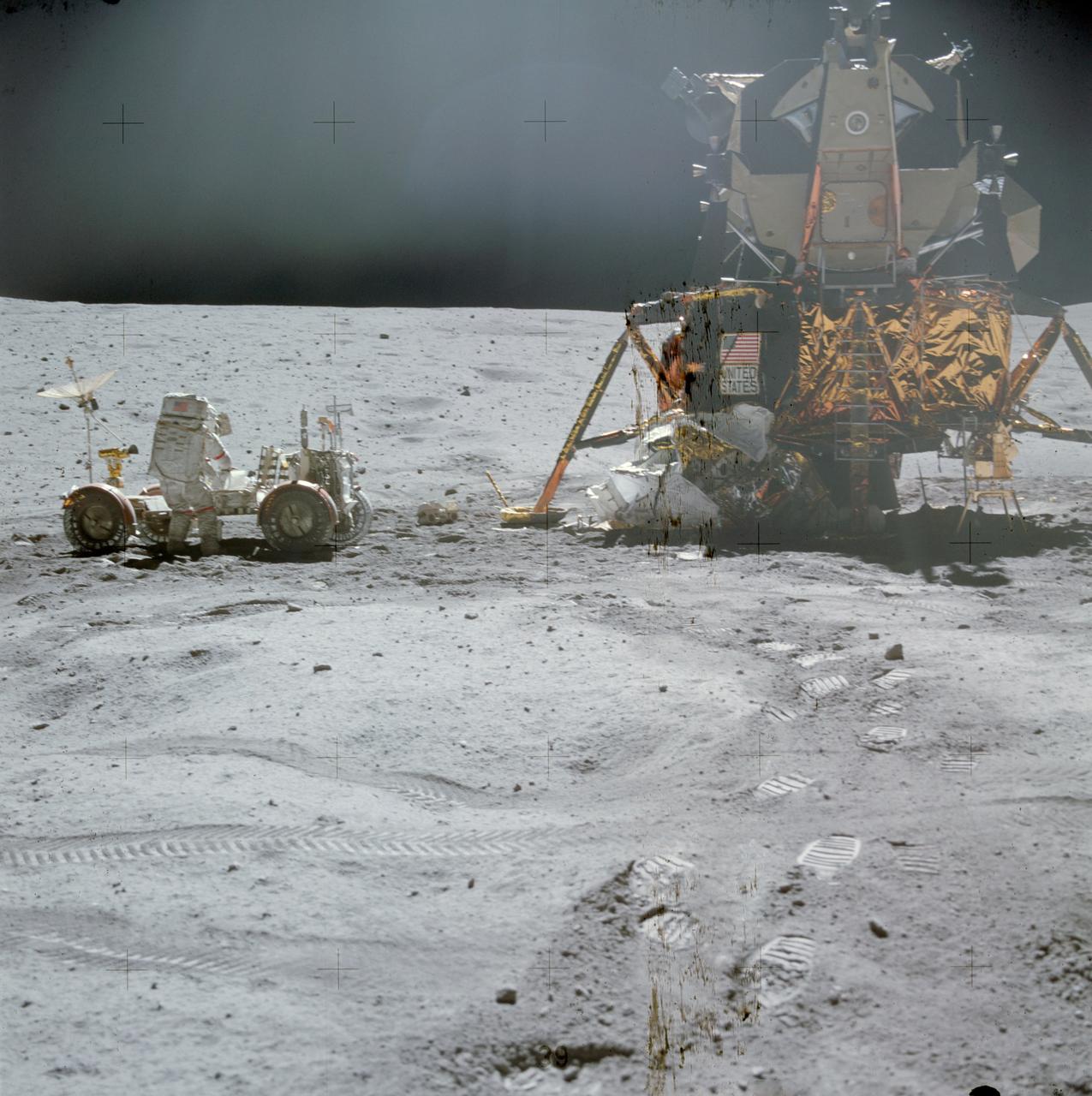
AS16-116-18578 (21 April 1972) --- Astronaut John W. Young, commander of the Apollo 16 lunar landing mission, works at the Lunar Roving Vehicle (LRV) just prior to deployment of the Apollo Lunar Surface Experiments Package (ALSEP) during the first extravehicular activity (EVA) on April 21, 1972. Note the Ultraviolet (UV) Camera/Spectrometer to the right of the Lunar Module (LM) ladder. Also, note the pile of protective/thermal foil under the U.S. flag on the LM which the astronauts pulled away to get to the Modular Equipment Storage Assembly (MESA) bay. While astronauts Young and Charles M. Duke Jr., lunar module pilot; descended in the Apollo 16 LM "Orion" to explore the Descartes highlands landing site on the moon, astronaut Thomas K. Mattingly II, command module pilot, remained with the Command and Service Modules (CSM) "Casper" in lunar orbit.
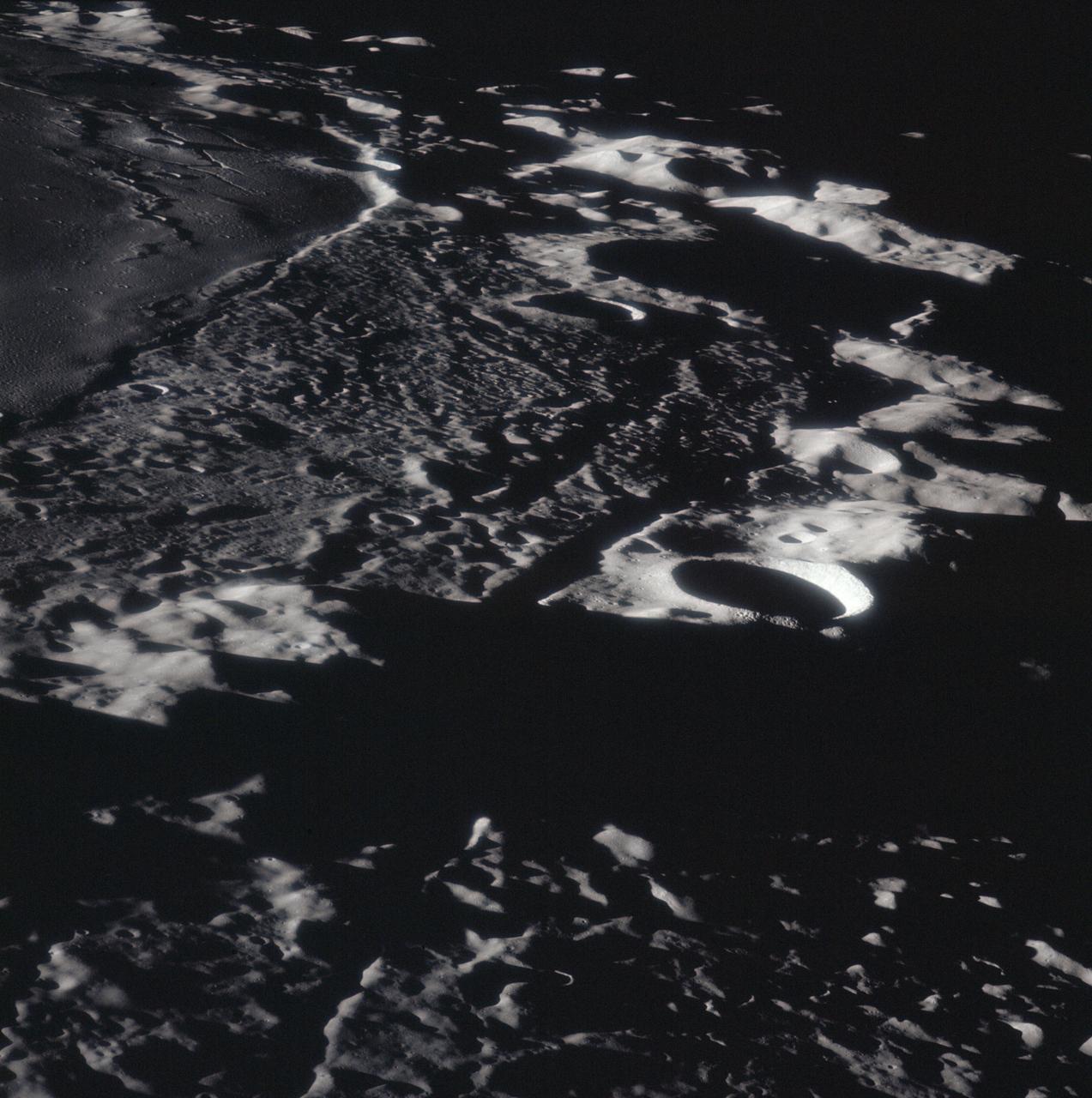
AS16-120-19332 (April 1972) --- This picture of the lunar surface was photographed from lunar orbit during the Apollo 16 lunar landing mission. Mersenius C Crater, dozens of smaller craters and several small rille features can be seen in the frame. Center point coordinates are located at 19.5 degrees south latitude and 45 degrees west longitude. While astronauts John W. Young, commander; and Charles M. Duke Jr., lunar module pilot; descended in the Apollo 16 Lunar Module (LM) "Orion" to explore the Descartes highlands landing site on the moon, astronaut Thomas K. Mattingly II, command module pilot, remained with the Command and Service Modules (CSM) "Casper" in lunar orbit.
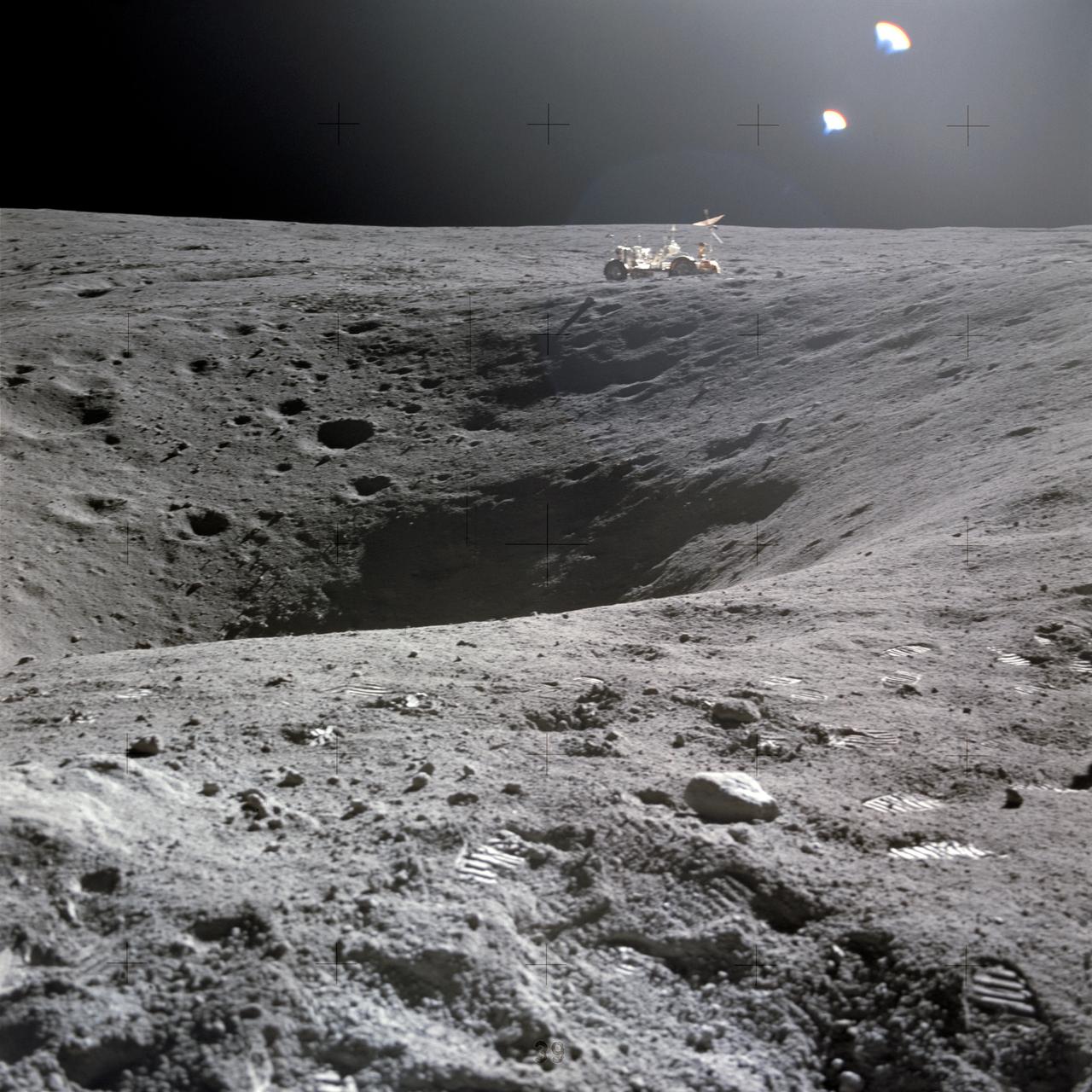
AS16-114-18422 (21 April 1972) --- A view of Plum Crater, which was visited by the two moon-exploring crewmen of the Apollo 16 lunar landing mission, on their first extravehicular activity (EVA) traverse, April 21, 1972. The Lunar Roving Vehicle (LRV) is parked on the far side of the crater, which measures approximately 40 meters in diameter. While astronauts John W. Young, commander; and Charles M. Duke Jr., lunar module pilot; descended in the Apollo 16 Lunar Module (LM) "Orion" to explore the Descartes highlands landing site on the moon, astronaut Thomas K. Mattingly II, command module pilot, remained with the Command and Service Modules (CSM) "Casper" in lunar orbit.
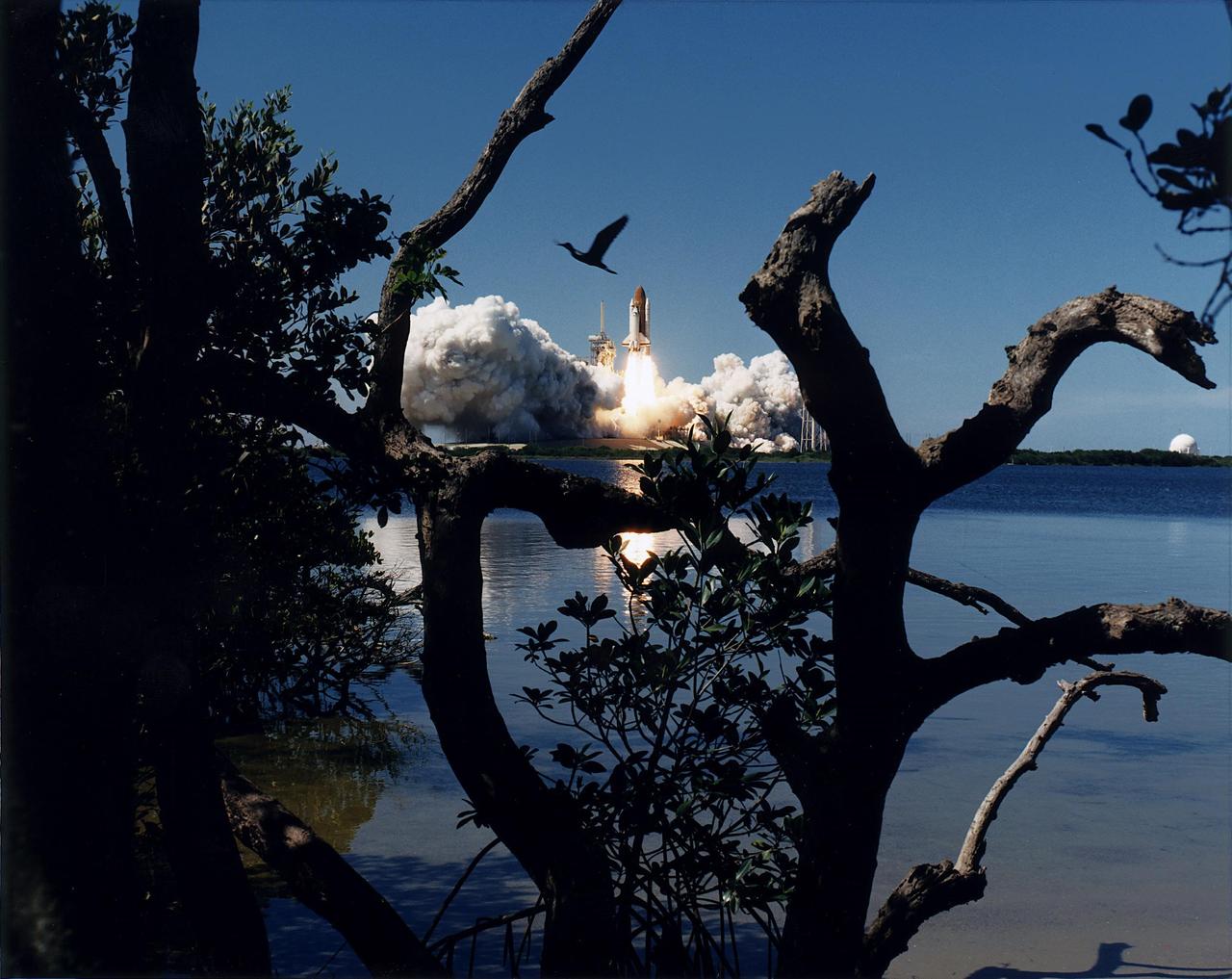
KENNEDY SPACE CENTER, FLA. -- Like a rising sun lighting up the afternoon sky, the Space Shuttle Columbia soars from Launch Pad 39A at 2:20:32 p.m. EST, April 4, on the 16-day Microgravity Science Laboratory-1 (MSL-1) mission. The crew members are Mission Commander James D. Halsell Jr., Pilot Susan L. Still, Payload Commander Janice Voss, Mission Specialists Michael L. Gernhardt and Donald A. Thomas, and Payload Specialists Roger K. Crouch and Gregory T. Linteris. During the scheduled 16-day STS-83 mission, the MSL-1 will be used to test some of the hardware, facilities and procedures that are planned for use on the International Space Station as well as research in combustion, protein crystal growth and materials processing experiments
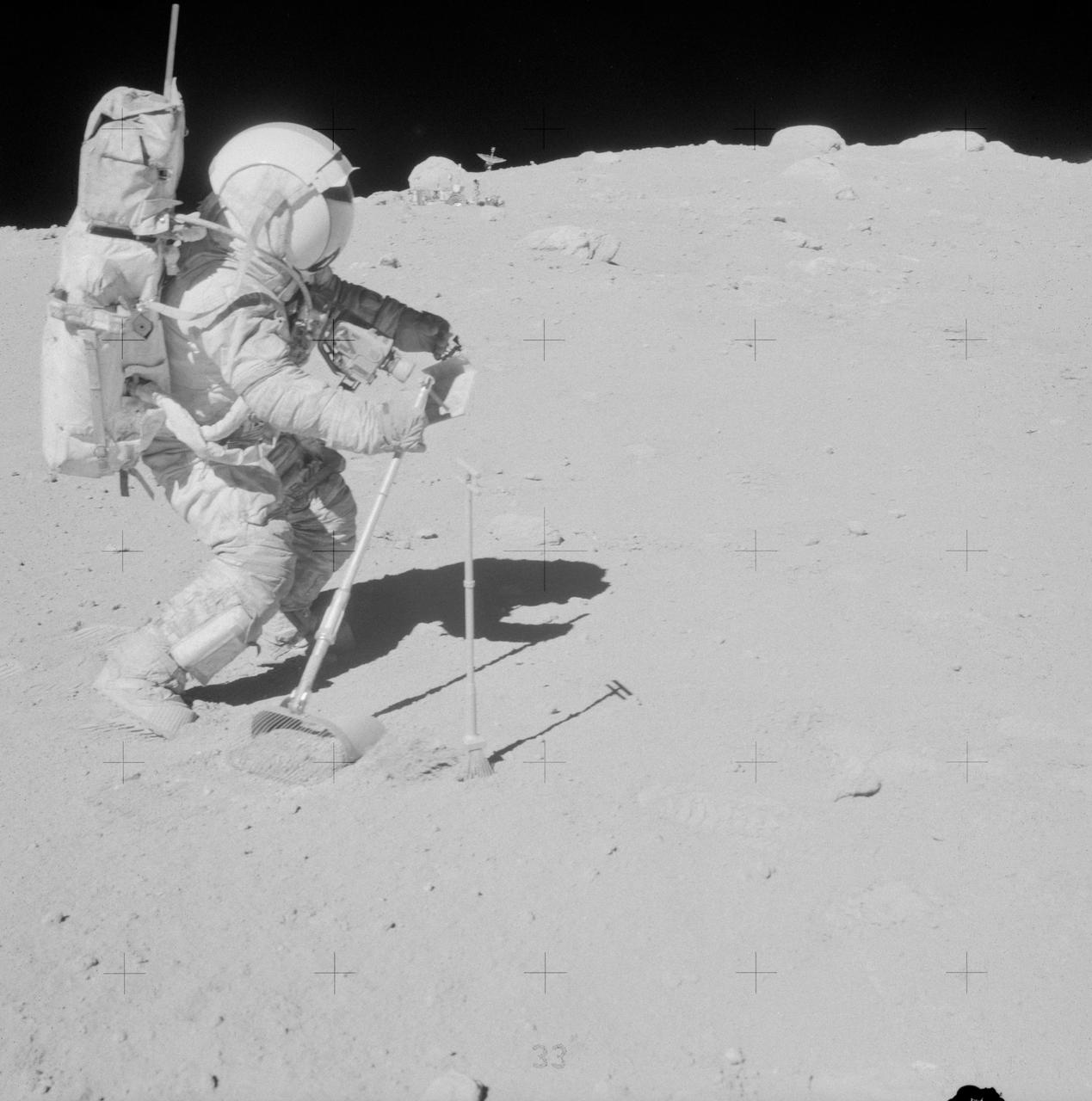
AS16-106-17340 (23 April 1972) --- Astronaut John W. Young, commander of the Apollo 16 lunar landing mission, is photographed collecting lunar samples near North Ray Crater during the third Apollo 16 extravehicular activity (EVA) at the Descartes landing site. This picture was taken by astronaut Charles M. Duke Jr., lunar module pilot. Young is using the lunar surface rake and a set of tongs. The Lunar Roving Vehicle (LRV) is parked in the field of large boulders in the background. While astronauts Young and Duke descended in the Lunar Module (LM) "Orion" to explore the moon, astronaut Thomas K. Mattingly II, command module pilot, remained with the Command and Service Modules (CSM) in lunar orbit.
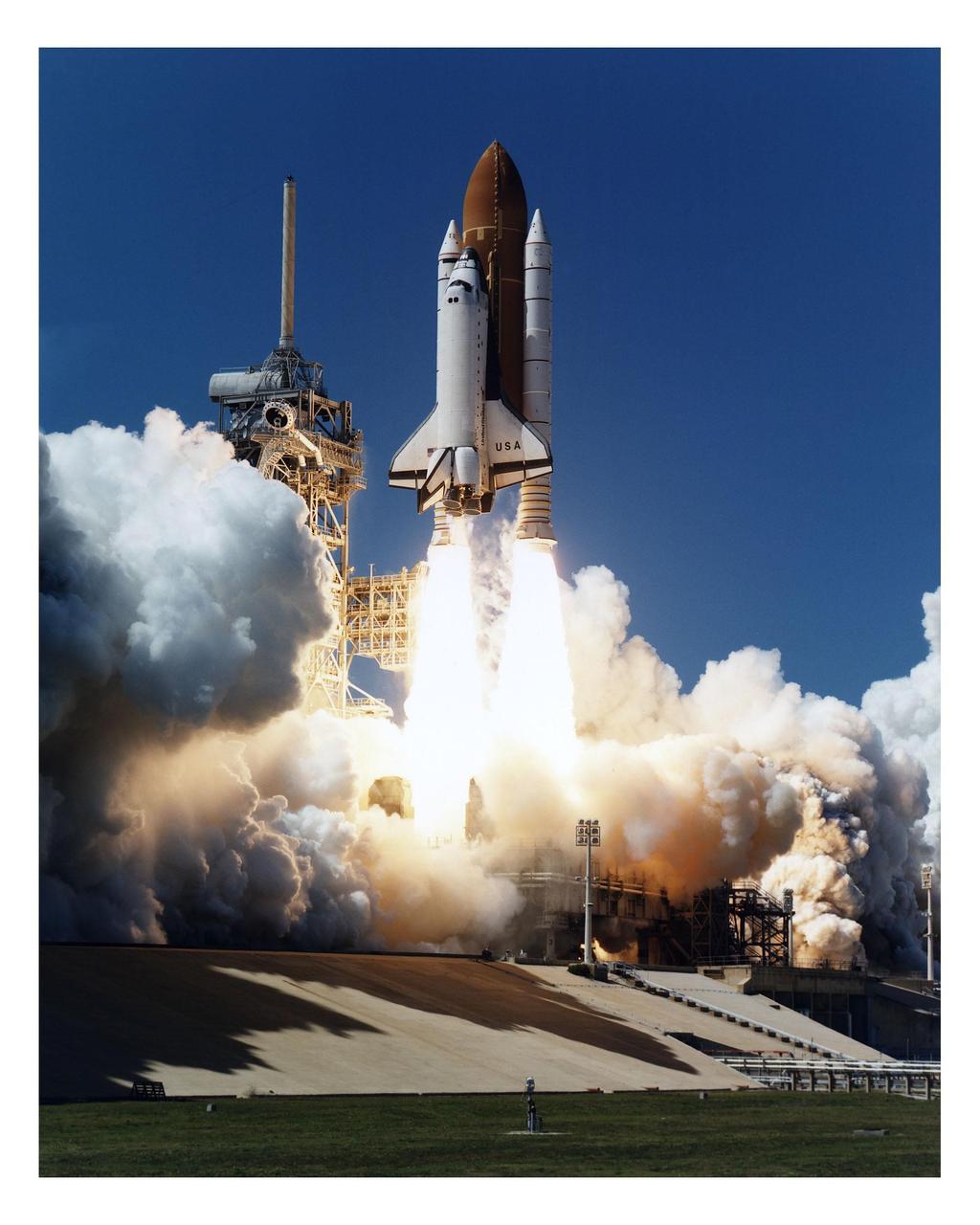
Like a rising sun lighting up the afternoon sky, the Space Shuttle Columbia soars from Launch Pad 39A at 2:20:32 p.m. EST, April 4, on the 16-day Microgravity Science Laboratory-1 (MSL-1) mission. The crew members are Mission Commander James D. Halsell, Jr.; Pilot Susan L. Still; Payload Commander Janice Voss; Mission Specialists Michael L. Gernhardt and Donald A. Thomas; and Payload Specialists Roger K. Crouch and Gregory T. Linteris. During the scheduled 16-day STS-83 mission, the MSL-1 will be used to test some of the hardware, facilities and procedures that are planned for use on the International Space Station as well as research in combustion, protein crystal growth and materials processing experiments
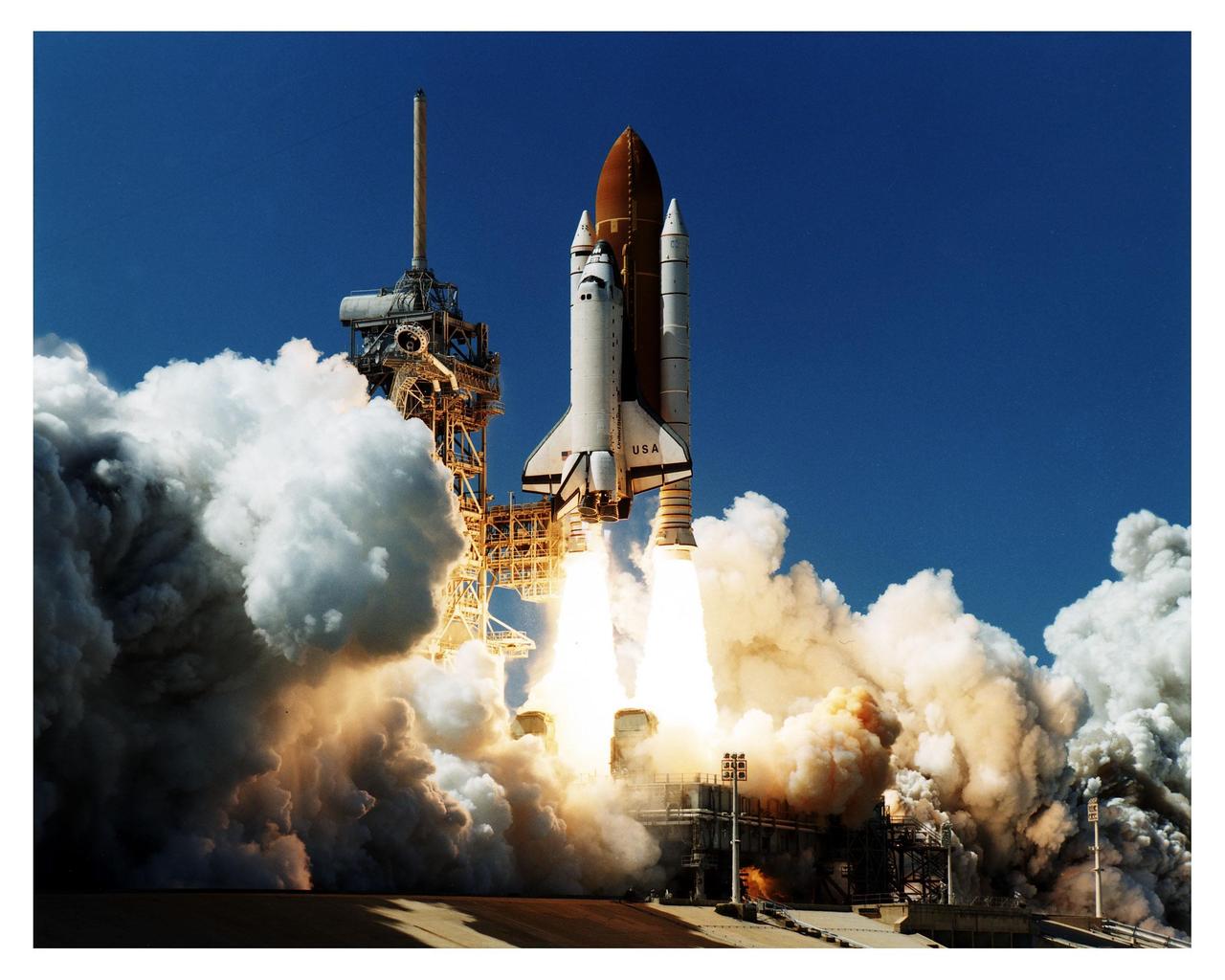
Like a rising sun lighting up the afternoon sky, the Space Shuttle Columbia soars from Launch Pad 39A at 2:20:32 p.m. EST, April 4, on the 16-day Microgravity Science Laboratory-1 (MSL-1) mission. The crew members are Mission Commander James D. Halsell, Jr.; Pilot Susan L. Still; Payload Commander Janice Voss; Mission Specialists Michael L. Gernhardt and Donald A. Thomas; and Payload Specialists Roger K. Crouch and Gregory T. Linteris. During the scheduled 16-day STS-83 mission, the MSL-1 will be used to test some of the hardware, facilities and procedures that are planned for use on the International Space Station as well as research in combustion, protein crystal growth and materials processing experiments

AS16-110-17960 (22 April 1972) --- Astronaut John W. Young, commander, replaces tools in the Apollo Lunar Hand Tool (ALHT) carrier at the aft end of the Lunar Roving Vehicle (LRV) during the second Apollo 16 extravehicular activity (EVA) on the high side of Stone Mountain at the Descartes landing site. Astronaut Charles M. Duke Jr., lunar module pilot, took this photograph near the conclusion of Station 4 activities. Smoky Mountain, with the large Ravine Crater on its flank, is in the left background. This view is looking northeast. While astronauts Young and Duke descended in the Apollo 16 Lunar Module (LM) "Orion" to explore the Descartes highlands landing site on the moon, astronaut Thomas K. Mattingly II, command module pilot, remained with the Command and Service Modules (CSM) "Casper" in lunar orbit.
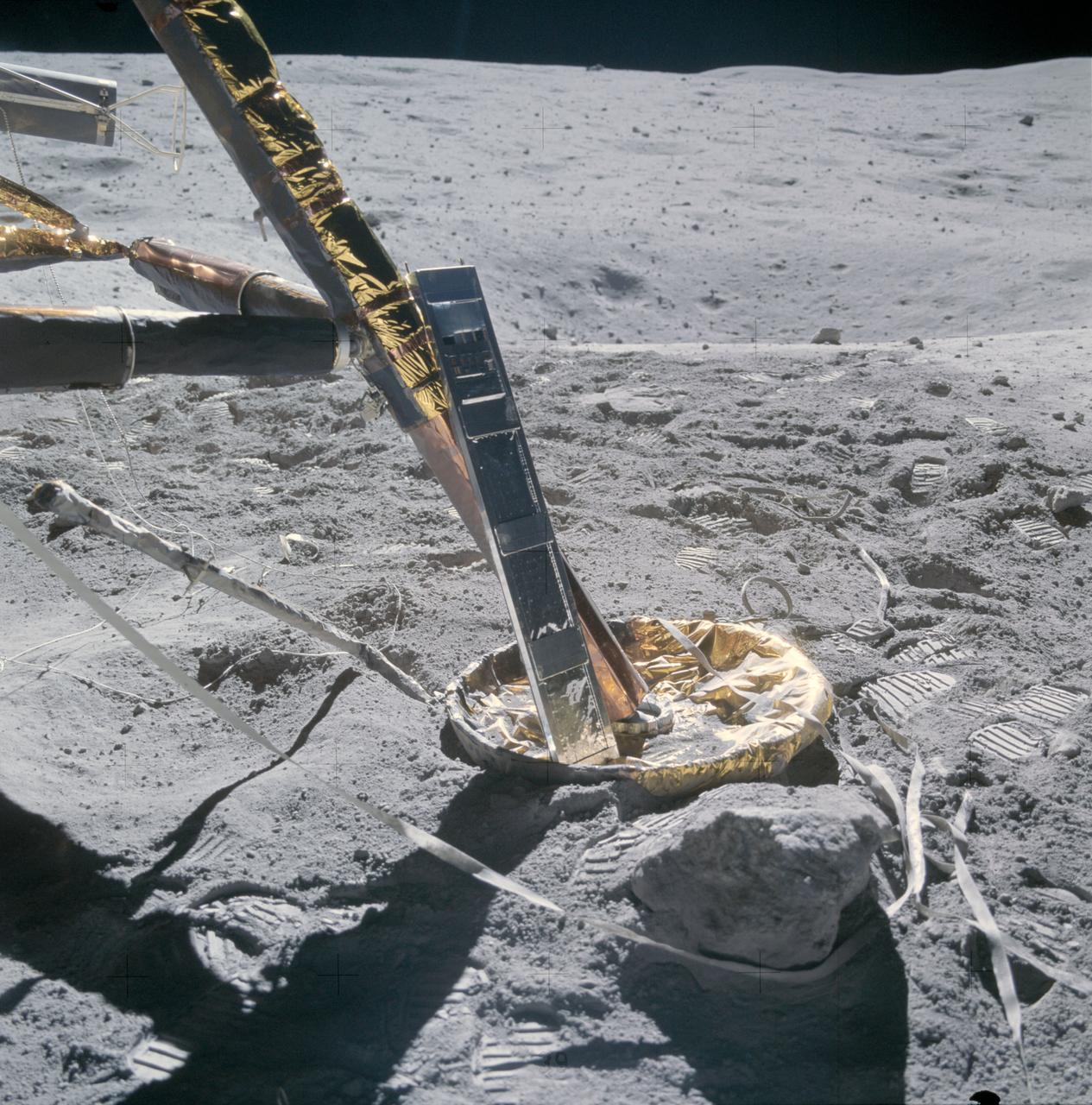
AS16-107-17442 (22 April 1972) --- A close-up view of the Apollo 16 Cosmic Ray Detector (CRD) experiment deployed at the +Y strut of the Lunar Module (LM). The crewmembers moved it to this position from near the deployment site of the Apollo Lunar Surface Experiments Package (ALSEP) because, in the words of astronaut John W. Young, commander, "The panels were getting a little warm." Note that the LM did not skid upon landing, as evidenced by the landing contact probe's folded back (neatly) position and the lack of skid marks. While astronauts Young, and Charles M. Duke Jr., lunar module pilot; descended in the Apollo 16 Lunar Module (LM) "Orion" to explore the Descartes highlands landing site on the moon, astronaut Thomas K. Mattingly II, command module pilot, remained with the Command and Service Modules (CSM) "Casper" in lunar orbit.
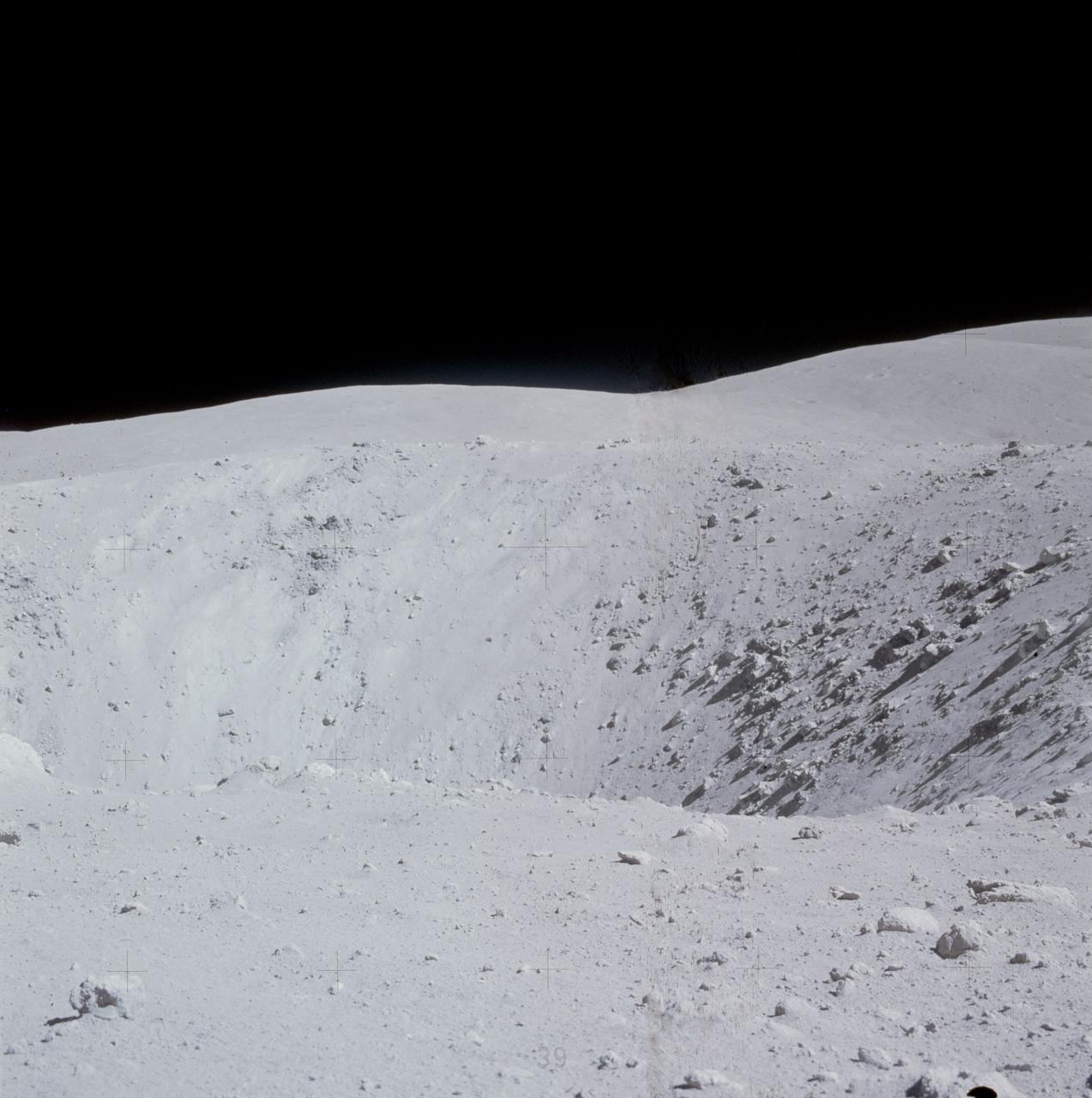
AS16-116-18599 (21 April 1972) --- A close-up view of Buster Crater, which was visited by the two moon-exploring crew men of the Apollo 16 lunar landing mission, during the first extravehicular activity (EVA), April 21, 1972. Astronaut Charles M. Duke Jr. said the crater appeared to be larger than 50 meters, and he called it a very spectacular crater. This was the second stop for astronauts John W. Young and Duke on the mission's first EVA. Young exposed this view with his 70mm Hasselblad camera. While astronauts Young, commander; and Duke, lunar module pilot; descended in the Apollo 16 Lunar Module (LM) "Orion" to explore the Descartes highlands landing site on the moon, astronaut Thomas K. Mattingly II, command module pilot, remained with the Command and Service Modules (CSM) "Casper" in lunar orbit.
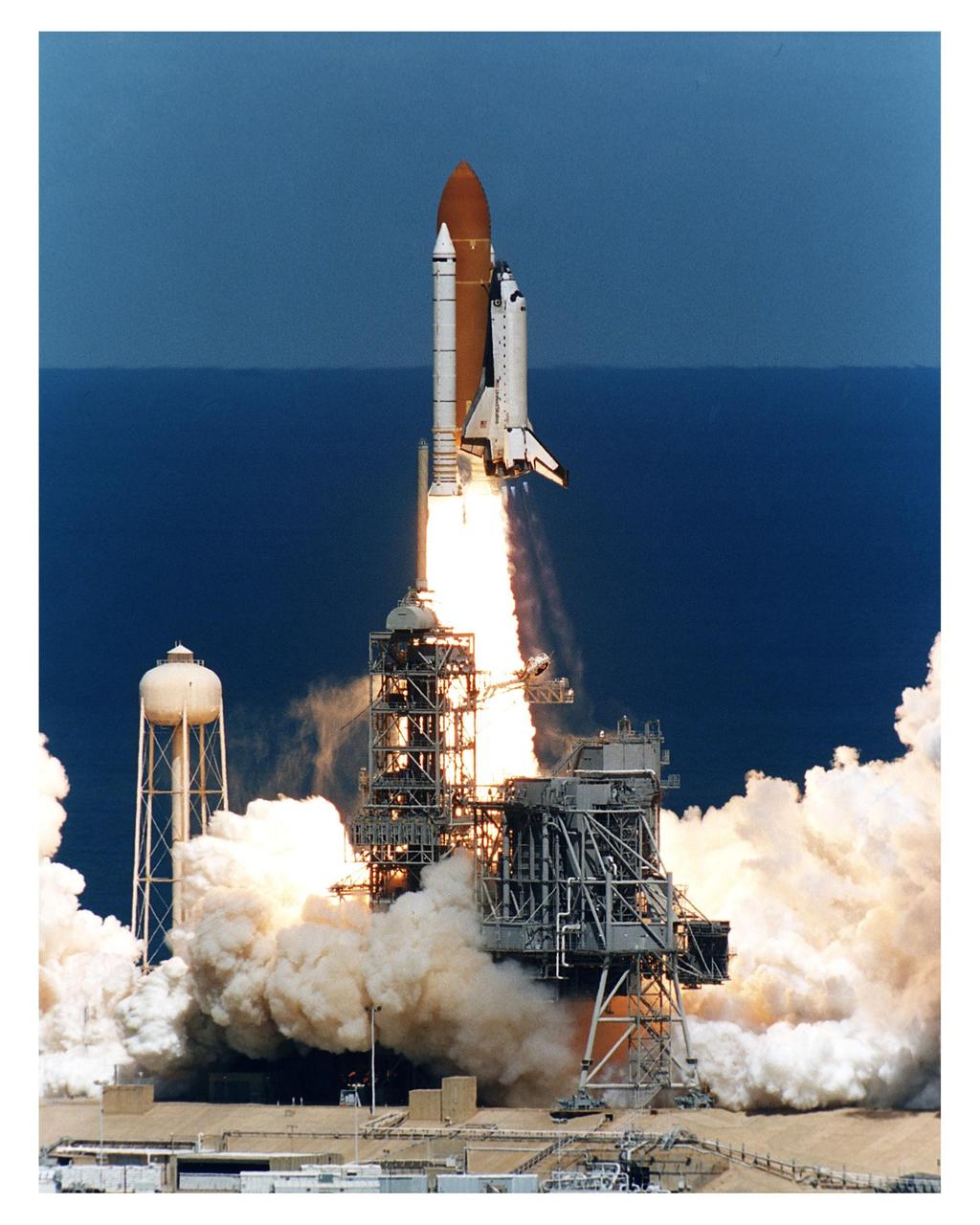
Like a rising sun lighting up the afternoon sky, the Space Shuttle Columbia soars from Launch Pad 39A at 2:20:32 p.m. EST, April 4, on the 16-day Microgravity Science Laboratory-1 (MSL-1) mission. The crew members are Mission Commander James D. Halsell, Jr.; Pilot Susan L. Still; Payload Commander Janice Voss; Mission Specialists Michael L. Gernhardt and Donald A. Thomas; and Payload Specialists Roger K. Crouch and Gregory T. Linteris. During the scheduled 16-day STS-83 mission, the MSL-1 will be used to test some of the hardware, facilities and procedures that are planned for use on the International Space Station as well as research in combustion, protein crystal growth and materials processing experiments

AS16-113-18342 (21 April 1972) --- Astronaut Charles M. Duke Jr., Apollo 16 lunar module pilot, salutes the United States flag during the mission's first extravehicular activity (EVA), on April 21, 1972. Stone Mountain reaches five-sixths across the photo in background. The Lunar Module (LM) and Lunar Roving Vehicle (LRV) are in the background. While John W. Young, commander and Duke descended in the LM to explore the Descartes region of the moon, Thomas K. Mattingly II, command module pilot, remained with the Command and Service Modules (CSM) in lunar orbit.
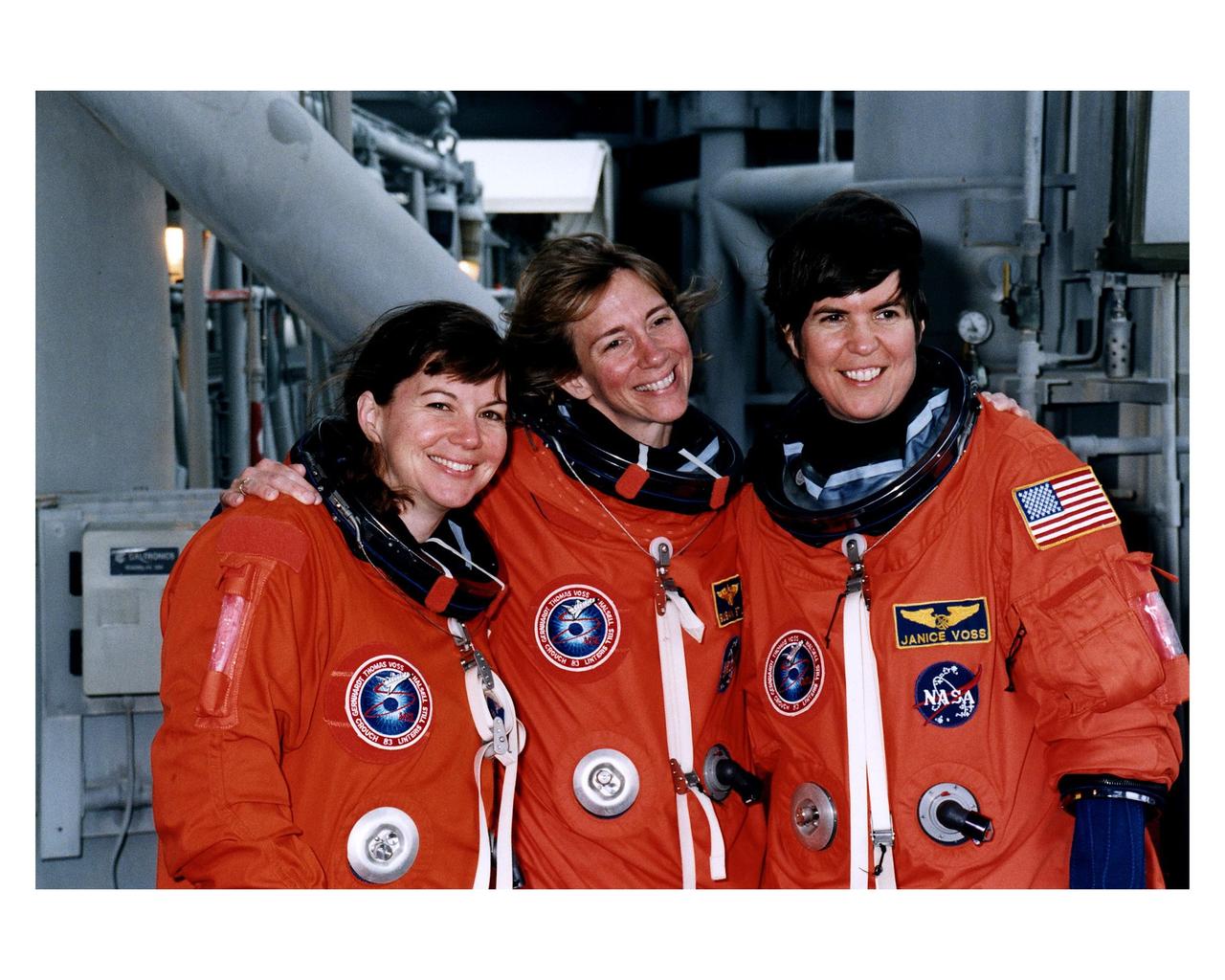
STS-83 Alternate Mission Specialist Catherine "Cady" Coleman, Pilot Susan L. Still and Payload Commander Janice Voss mug for the camera at the 195-foot level of Launch Pad 39A during Terminal Countdown Demonstration Test (TCDT) exercises for that mission. The other crew members for the 16-day Microgravity Science Laboratory-1 (MSL-1) mission are Mission Commander James D. Halsell, Jr.; Mission Specialist Donald A. Thomas; Payload Specialist Gregory T. Linteris; Mission Specialist Michael L. Gernhardt; and Payload Specialist Roger K. Crouch
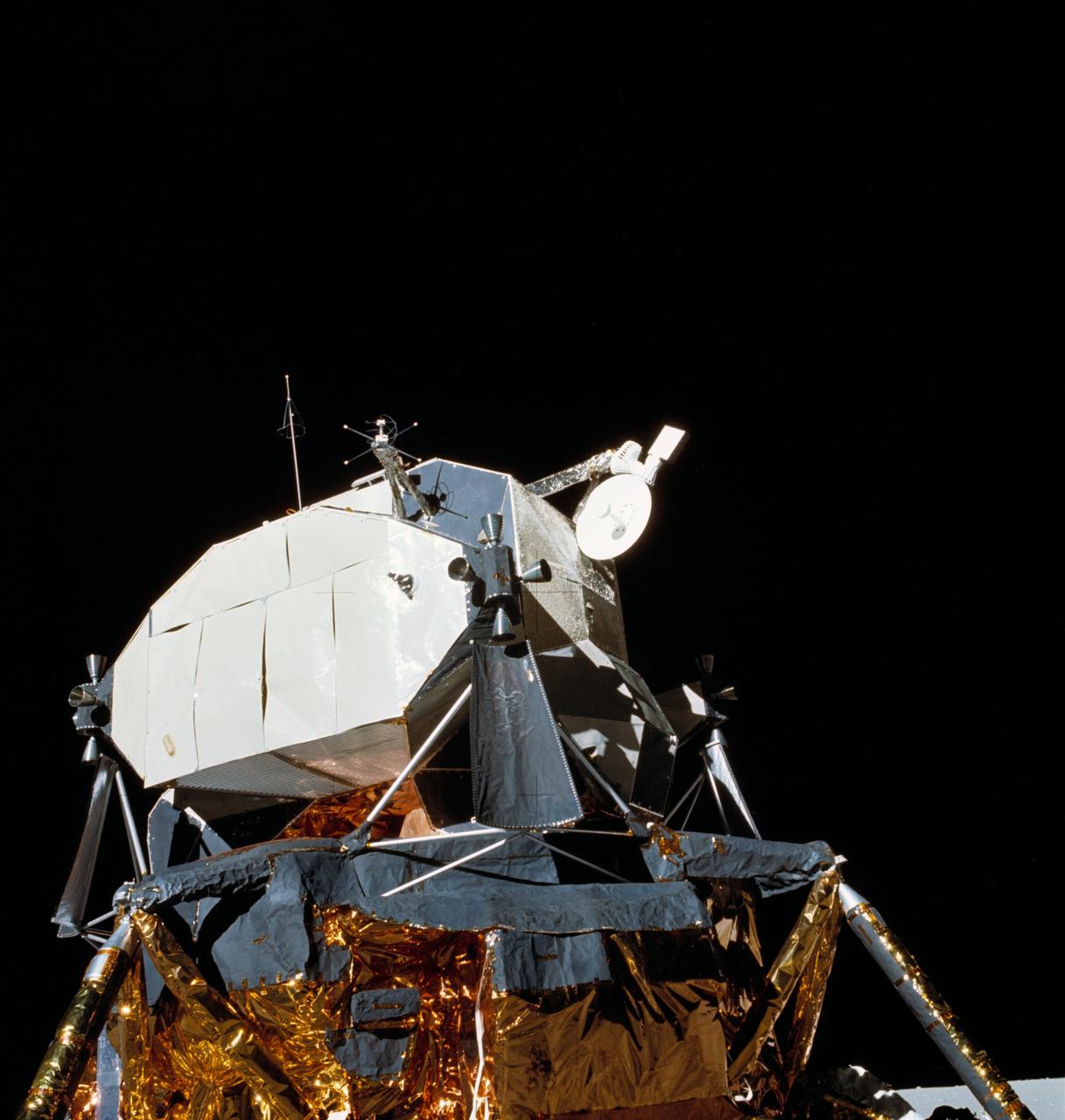
AS16-113-18334 (21 April 1972) --- View of the Lunar Module (LM) "Orion" parked on the lunar surface. During their post mission press conference, the Apollo 16 crewmembers called attention to the steerable S-band antenna, which was "frozen" in a yaw axis during much of the flight. This view of the LM was photographed by astronaut Charles M. Duke Jr., the lunar module pilot, during the mission's first extravehicular activity (EVA). Astronauts John W. Young, commander, and Duke had earlier descended in the LM to explore the Descartes region of the moon, while astronaut Thomas K. Mattingly II, command module pilot, remained with the Command and Service Modules (CSM) "Casper" in lunar orbit.
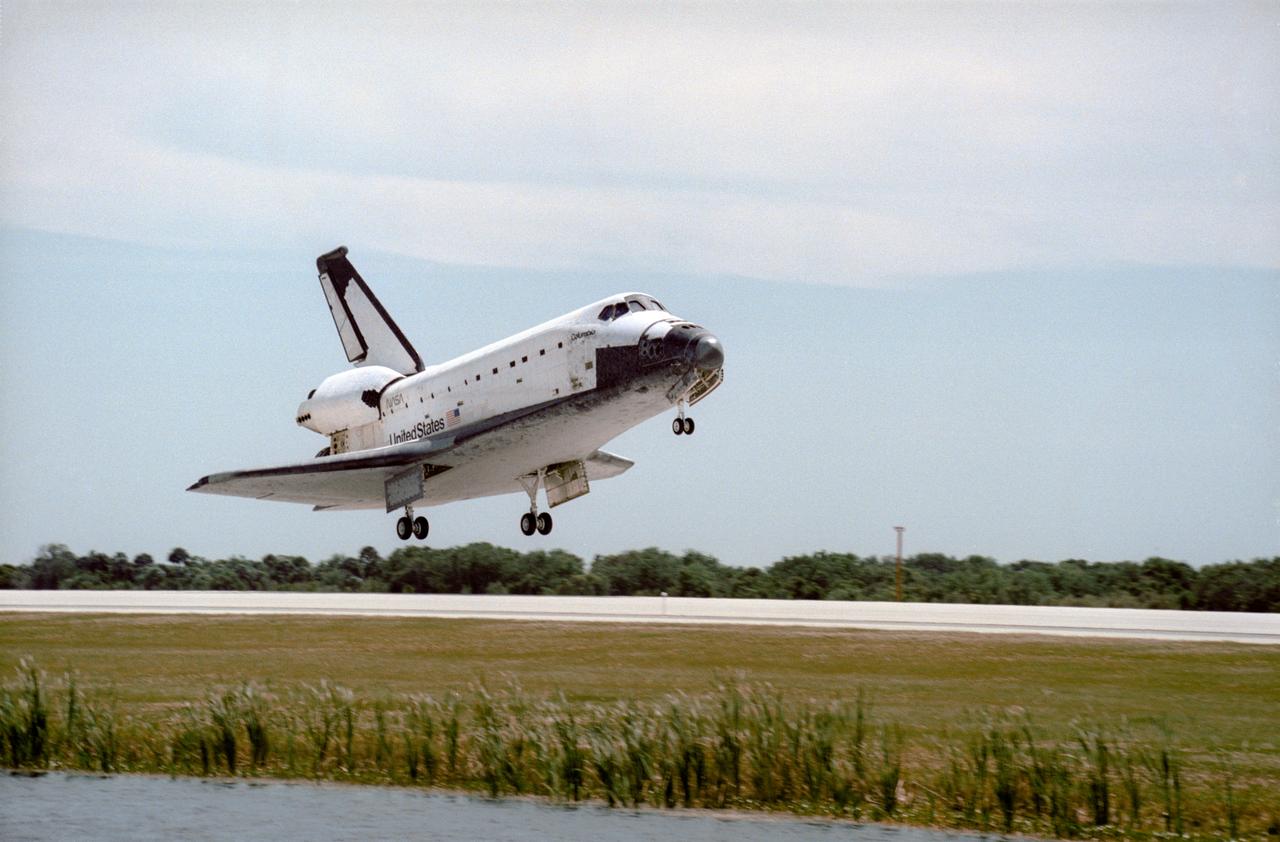
STS083-S-009 (8 April 1997) --- The Space Shuttle Columbia nears touchdown on the Shuttle Landing Facility (SLF) runway at the Kennedy Space Center (KSC), after completing almost four days of a scheduled 16-day mission in Earth-orbit. A problem with one of three fuel cells led to an early landing for the seven-member Microgravity Science Laboratory 1 (MSL-1) crew. Touchdown occurred at 1:33:11 p.m. (EDT), April 8, 1997. Onboard Columbia were James D. Halsell, Jr., Susan L. Still, Janice E. Voss, Donald A. Thomas, Michael L. Gernhardt, Roger K. Crouch and Gregory T. Linteris.
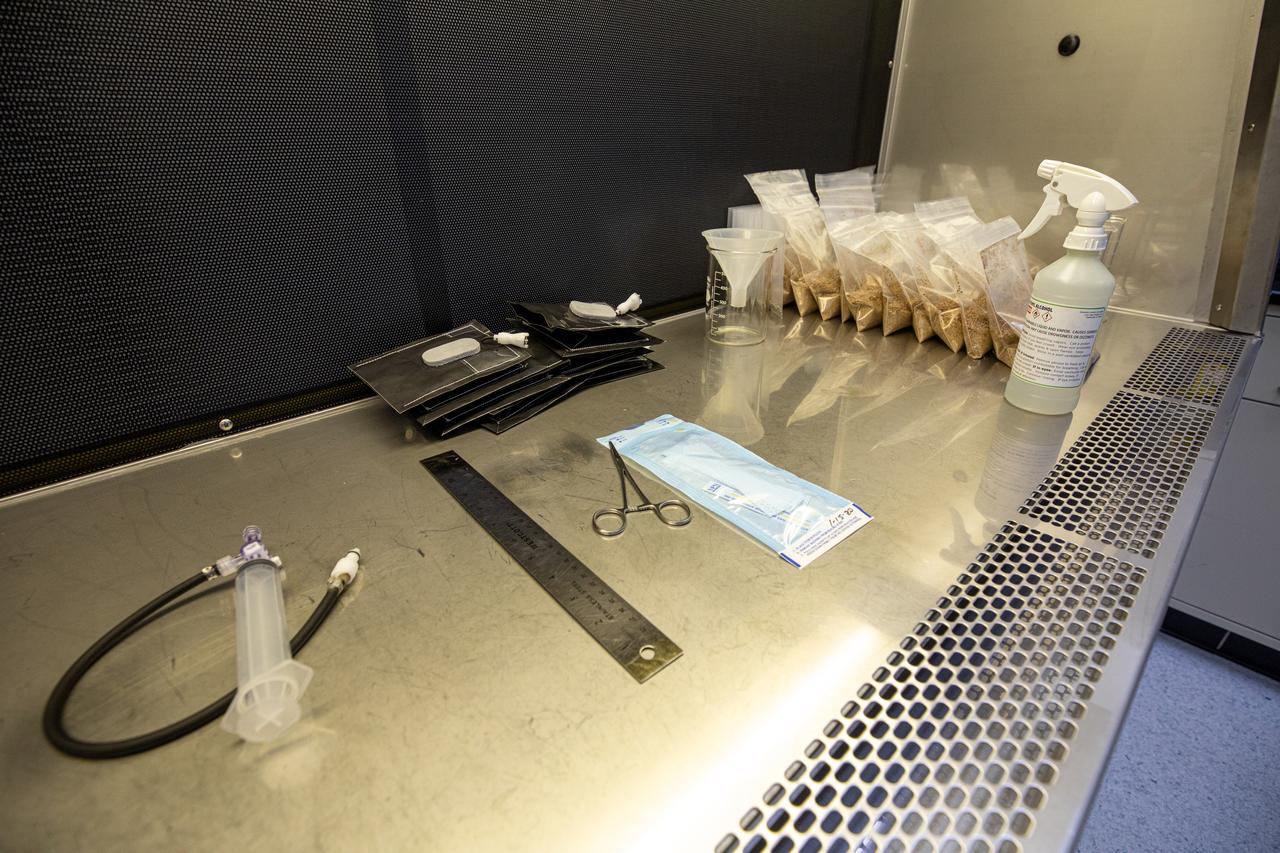
Researchers at NASA’s Kennedy Space Center in Florida have laid out supplies to prepare plant pillows inside the Space Station Processing Facility at on Jan. 16, 2020. The pillows are small containers used to grow plants in microgravity aboard the International Space Station. These pillows are for a series of plant experiments called VEG-03 J/K/L that will monitor the growth of three types of leafy greens. The experiments will be launched to the orbiting laboratory aboard a Northrop Grumman Antares rocket and Cygnus spacecraft on the company’s 13th resupply services mission. Liftoff is scheduled for Feb. 9, 2020, at 5:39 p.m. EST from the agency’s Wallops Flight Facility in Virginia.

AS16-114-18423 (21 April 1972) --- Astronaut Charles M. Duke Jr., lunar module pilot, is photographed collecting lunar samples at Station No. 1, during the first Apollo 16 extravehicular activity (EVA), at the Descartes landing site. This picture, looking eastward, was taken by astronaut John W. Young, commander. Duke is standing at the rim of Plum Crater. The parked Lunar Roving Vehicle (LRV) can be seen in the left background. While astronauts Young and Duke descended in the Lunar Module (LM) "Orion" to explore the Descartes highlands region of the moon, astronaut Thomas K. Mattingly II, command module pilot, remained with the Command and Service Modules (CSM) "Casper" in lunar orbit.