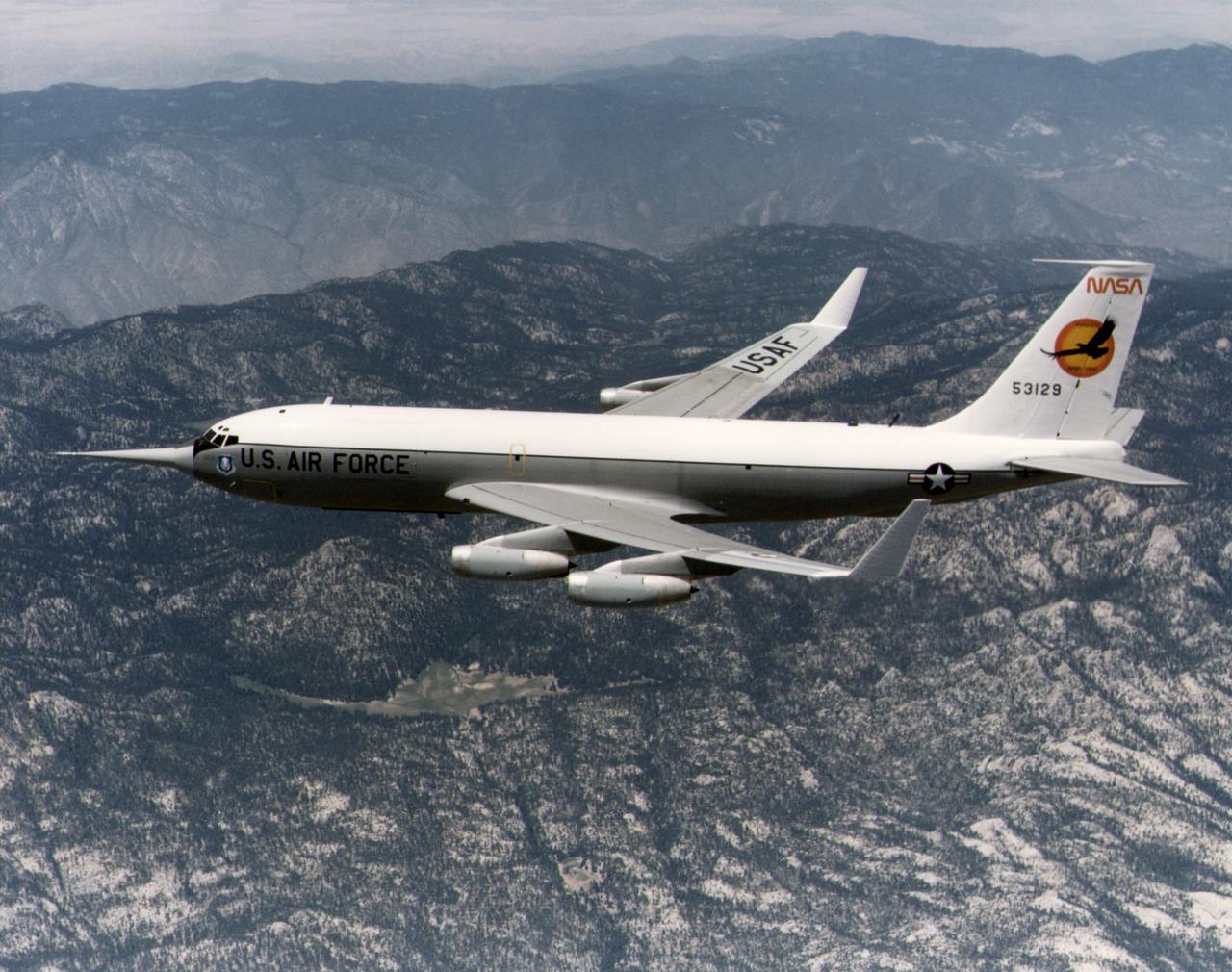
The KC-135 with the winglets in flight over the San Gabriel mountains, south of Edwards AFB. While wind tunnel tests suggested that winglets - developed by NASA Langley's Richard Whitcomb - would significantly reduce drag, flight research proved their usefulness. Winglets were installed on an Air Force KC-135 and research flights were made in 1979 and 1980. These showed drag in flight was reduced by as much as 7 percent. Winglets soon appeared on production aircraft, although these were smaller than those mounted on the KC-135.
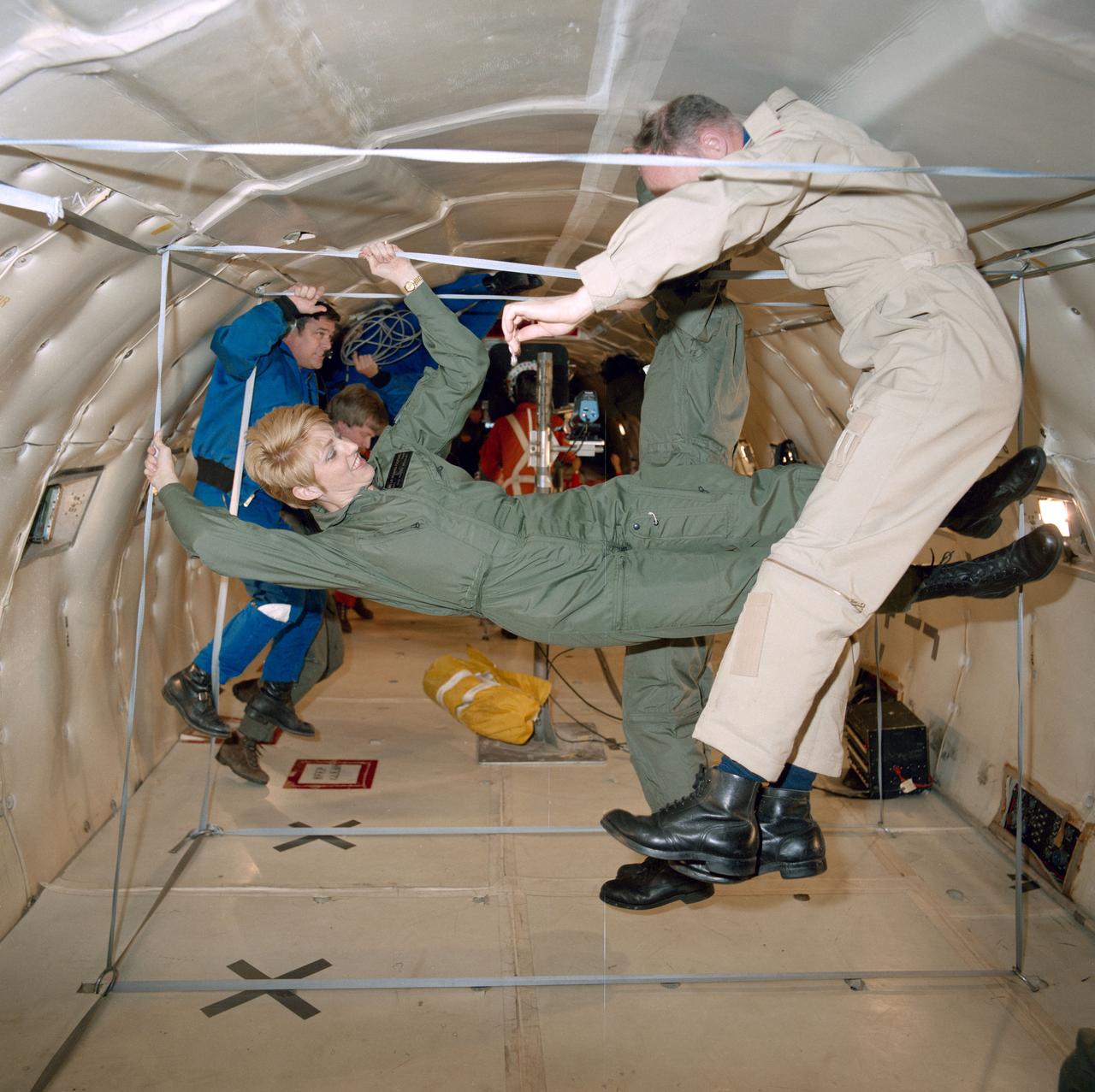
Vestibular Study testing in Zero-G flights on the KC-135. Seen in this view are Roberta Bonder and others experiencing weightlessness.
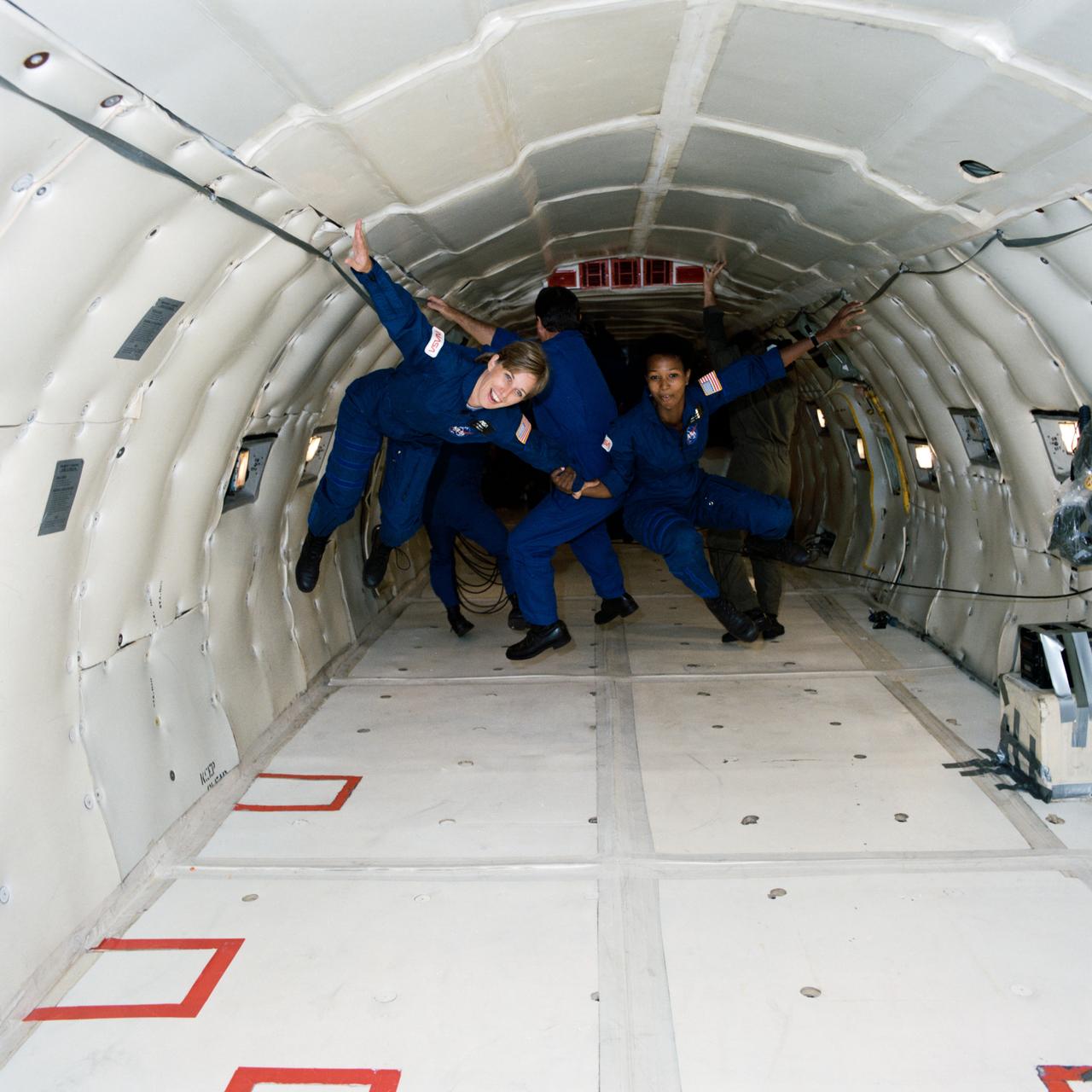
S87-44950 --- Group 12, 1987 Astronaut Class, candidates (ASCANs) N. Jan Davis (left) and Mae C. Jemison freefloat during the seconds of microgravity created aboard the KC-135 NASA 930 aircraft's parabolic flight. Davis and Jemison, two of the recently-named ASCANs, were taking a familiarization flight aboard the KC-135 "zero gravity" aircraft. Photo credit: NASA
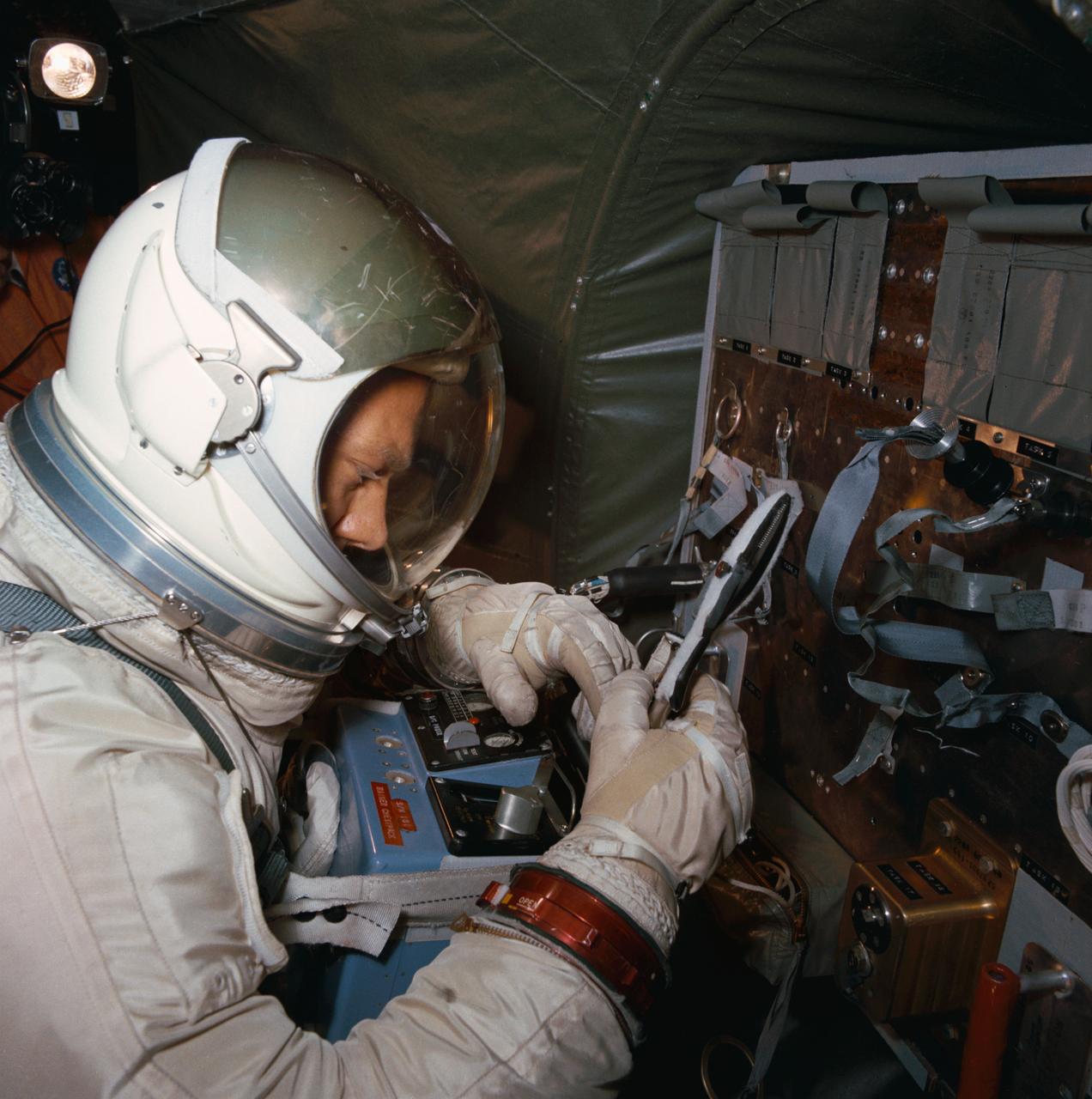
S66-57365 (13 Oct. 1966) --- Astronaut Edwin E. Aldrin Jr., pilot for the Gemini-12 spaceflight, practices work tasks during zero-gravity training. He is standing in a mock-up of the Gemini spacecraft's adapter section onboard an Air Force KC-135 jet aircraft. Photo credit: NASA
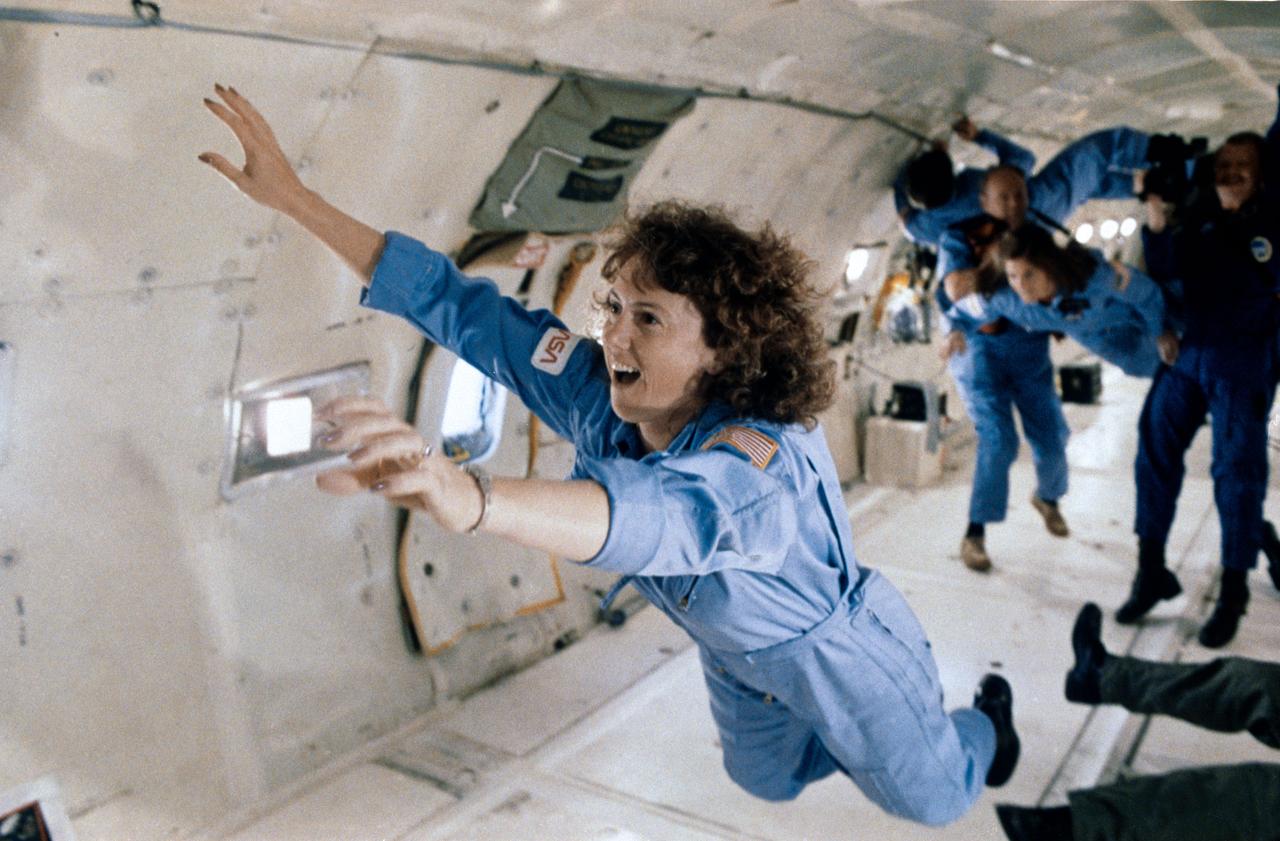
S86-25180 (October 1985) --- Sharon Christa McAuliffe, STS-51L citizen observer/payload specialist, representing the Teacher-in-Space Project, floats forward and upward during a few moments of weightlessness aboard a KC-135 aircraft. The flight is part of her training for the scheduled five-day flight aboard the Challenger in January of next year. Barbara R. Morgan, backup payload specialist for STS-51L, is partially visible in the background. The photo was taken by Keith Meyers of the New York Times. Photo credit: NASA
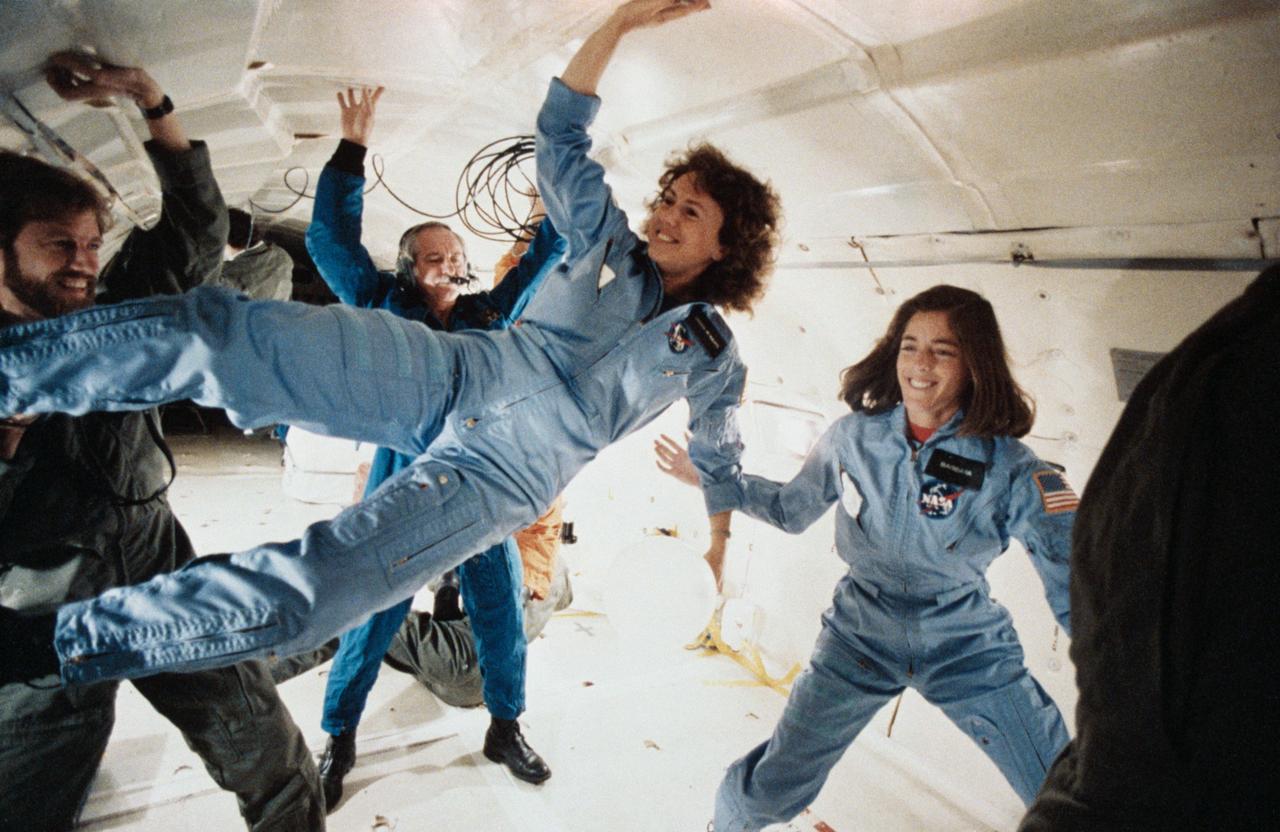
S86-25191 (for release January 1986) --- The two representatives of the Teacher-in-Space Project continue their training program at the Johnson Space Center with an additional flight aboard NASA?s KC-135 ?zero gravity? aircraft. Sharon Christa McAuliffe, left, is prime crew payload specialist, and Barbara R. Morgan is in training as backup payload specialist. The photo was taken by Keith Meyers of New York Times. Photo credit: NASA
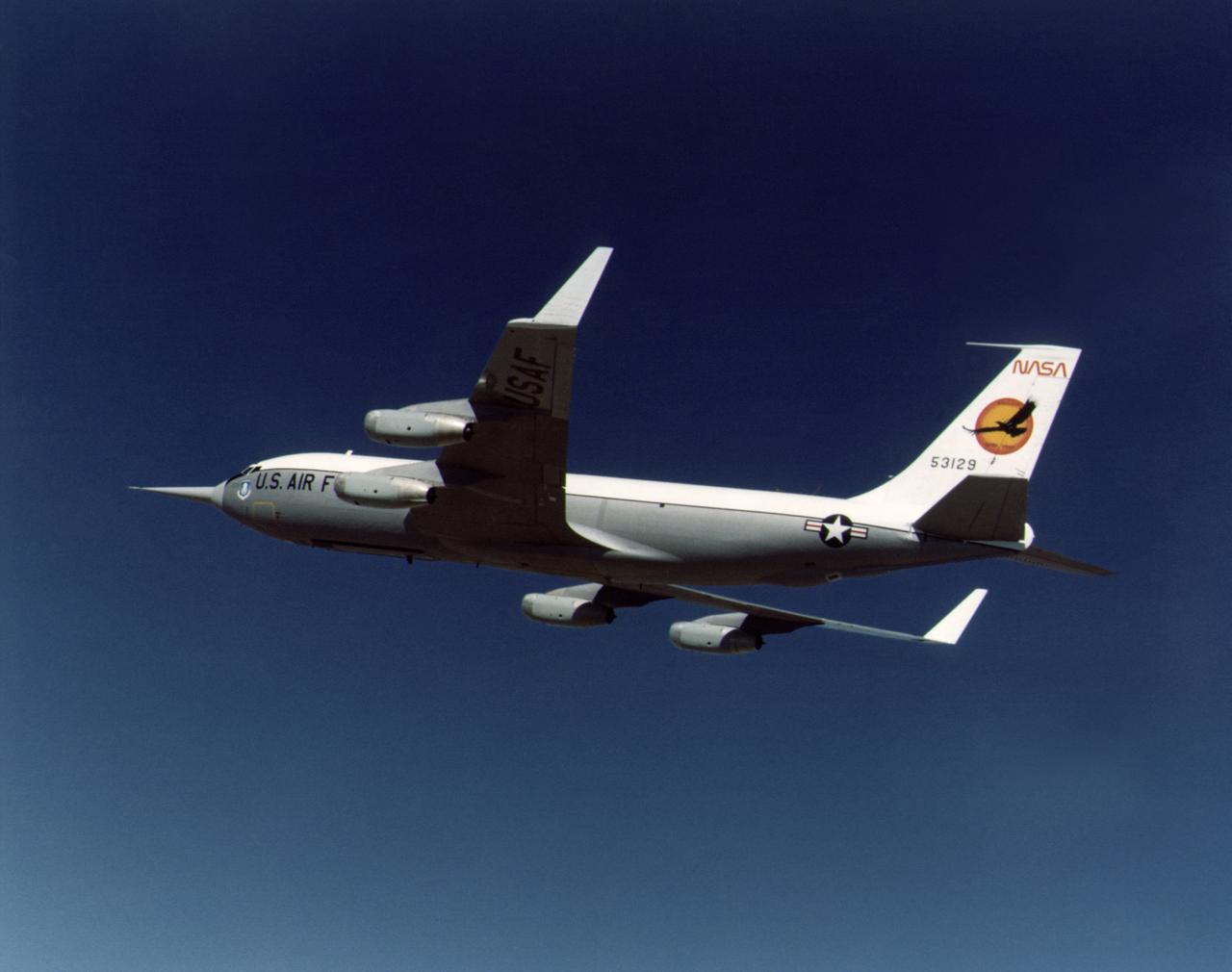
During the 1970s, the focus at Dryden shifted from high-speed and high-altitude flight to incremental improvements in technology and aircraft efficiency. One manifestation of this trend occurred in the winglet flight research carried out on a KC-135 during 1979 and 1980. Richard Whitcomb at the Langley Research Center had originated the idea of adding small vertical fins to an aircraft's wing tips. His wind tunnel tests indicated that winglets produced a forward thrust, which reduced the strength of the vortices generated by an aircraft's wing tips and resulted in a reduction of drag and an increase in aircraft range. Whitcomb, who had previously developed the area rule concept and the supercritical wing, selected the best winglet shape for flight tests on a KC-135 tanker. When the tests were completed, the data showed that the winglets provided a 7 percent improvement in range over the standard KC-135. The obvious economic advantage at a time of high fuel costs caused winglets to be adopted on business jets, airliners, and heavy military transports.
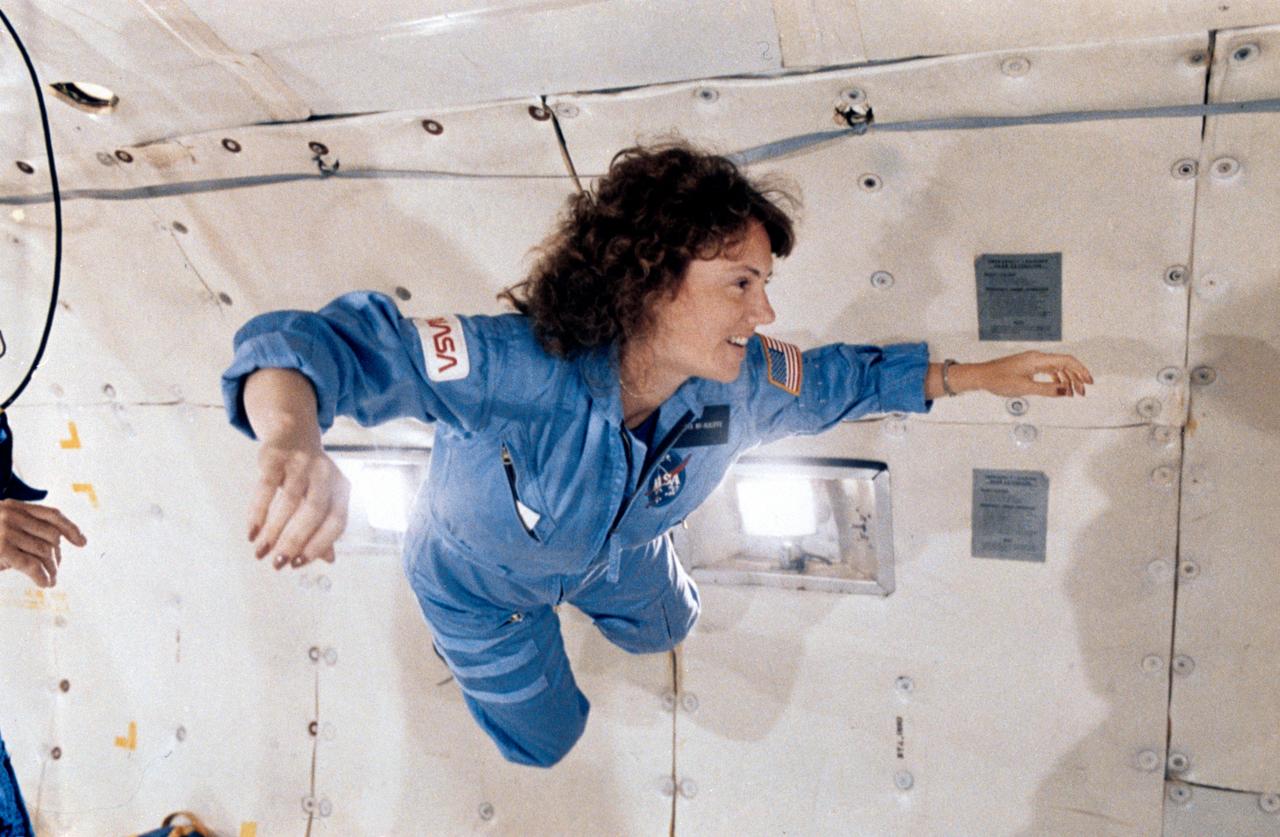
S86-25196 (January 1986) --- Sharon Christa McAuliffe, STS-51L citizen observer/payload specialist, gets a preview of microgravity during a special flight aboard NASA?s KC-135 ?zero gravity? aircraft. McAuliffe will represent the Teacher-in-Space Project aboard the space shuttle Challenger when it launches later this month. This photograph was taken by Keith Meyers of the New York Times. EDITOR?S NOTE: The STS-51L crew members lost their lives in the space shuttle Challenger accident moments after launch on Jan. 28, 1986 from the Kennedy Space Center (KSC). Photo credit: NASA
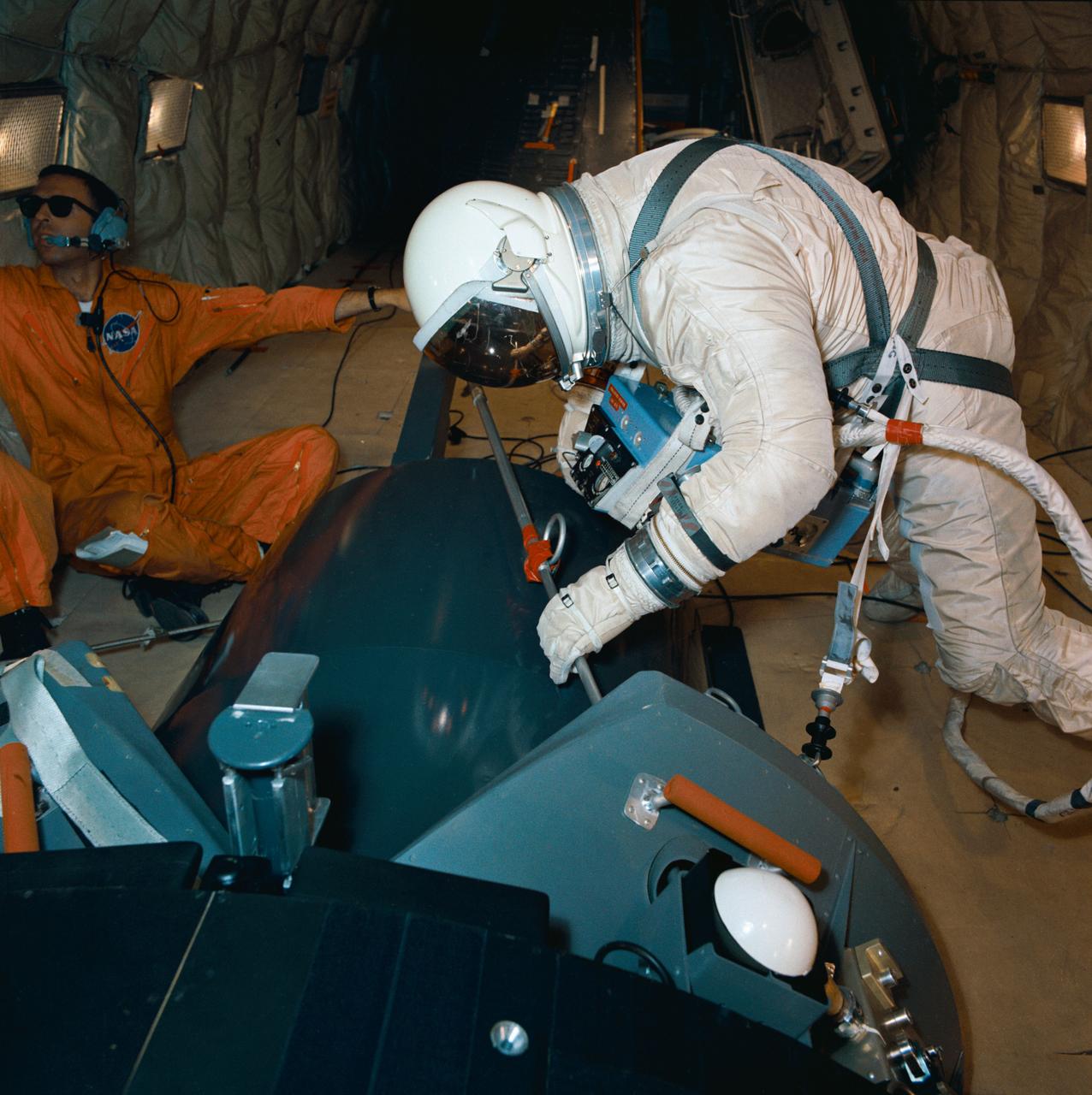
S66-57387 (13 Oct. 1966) --- Astronaut Edwin E. Aldrin Jr., pilot for the Gemini-12 spaceflight, practices work tasks during zero-gravity training. He is secured to a mock-up of the Agena Target Docking Vehicle by special tethers. The training took place onboard an Air Force KC-135 jet aircraft. Photo credit: NASA
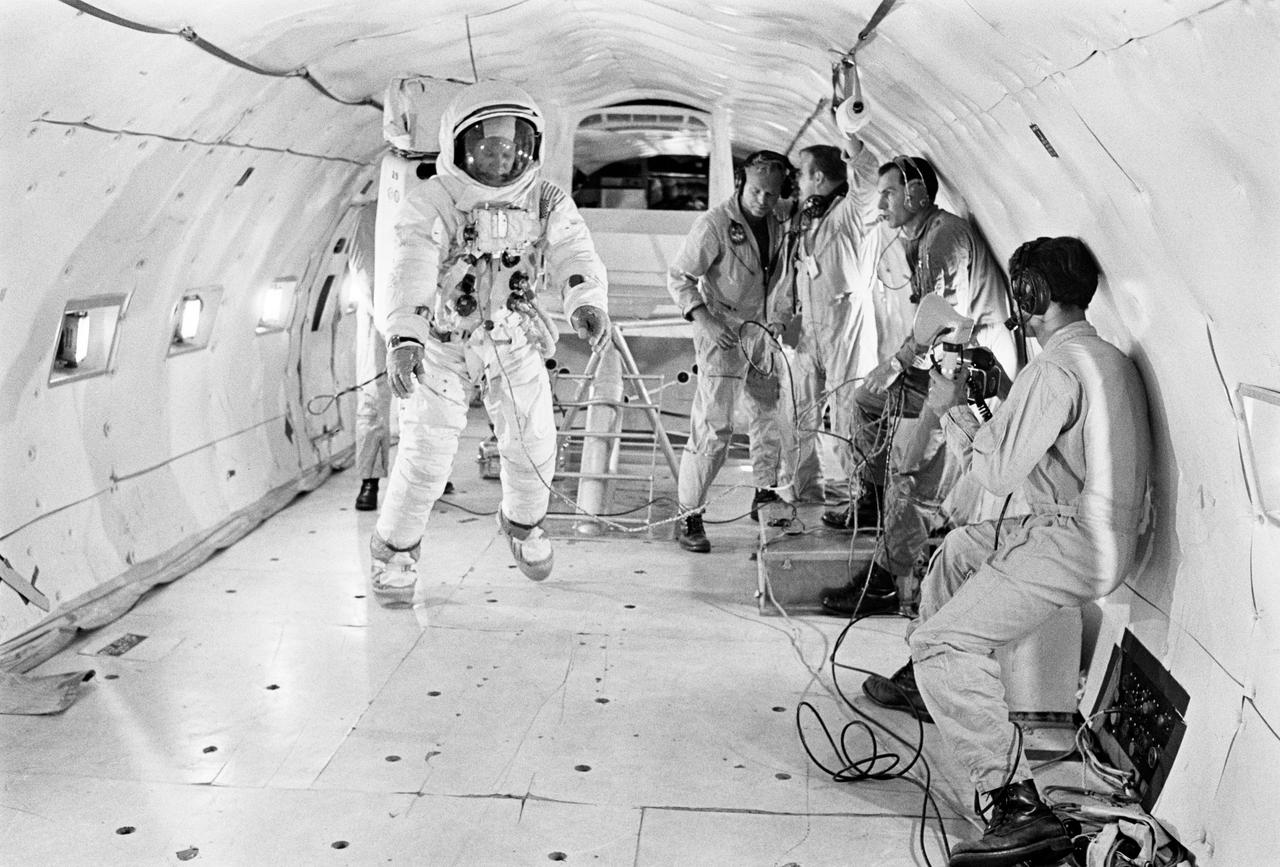
S69-39269 (10 July 1969) --- Astronaut Edwin E. Aldrin Jr., lunar module pilot of the Apollo 11 lunar landing mission, undergoes zero-gravity training aboard a U.S. Air Force KC-135 jet aircraft from nearby Patrick Air Force Base, Florida. Aldrin is wearing an Extravehicular Mobility Unit (EMU), the type of equipment which he will wear on the lunar surface.
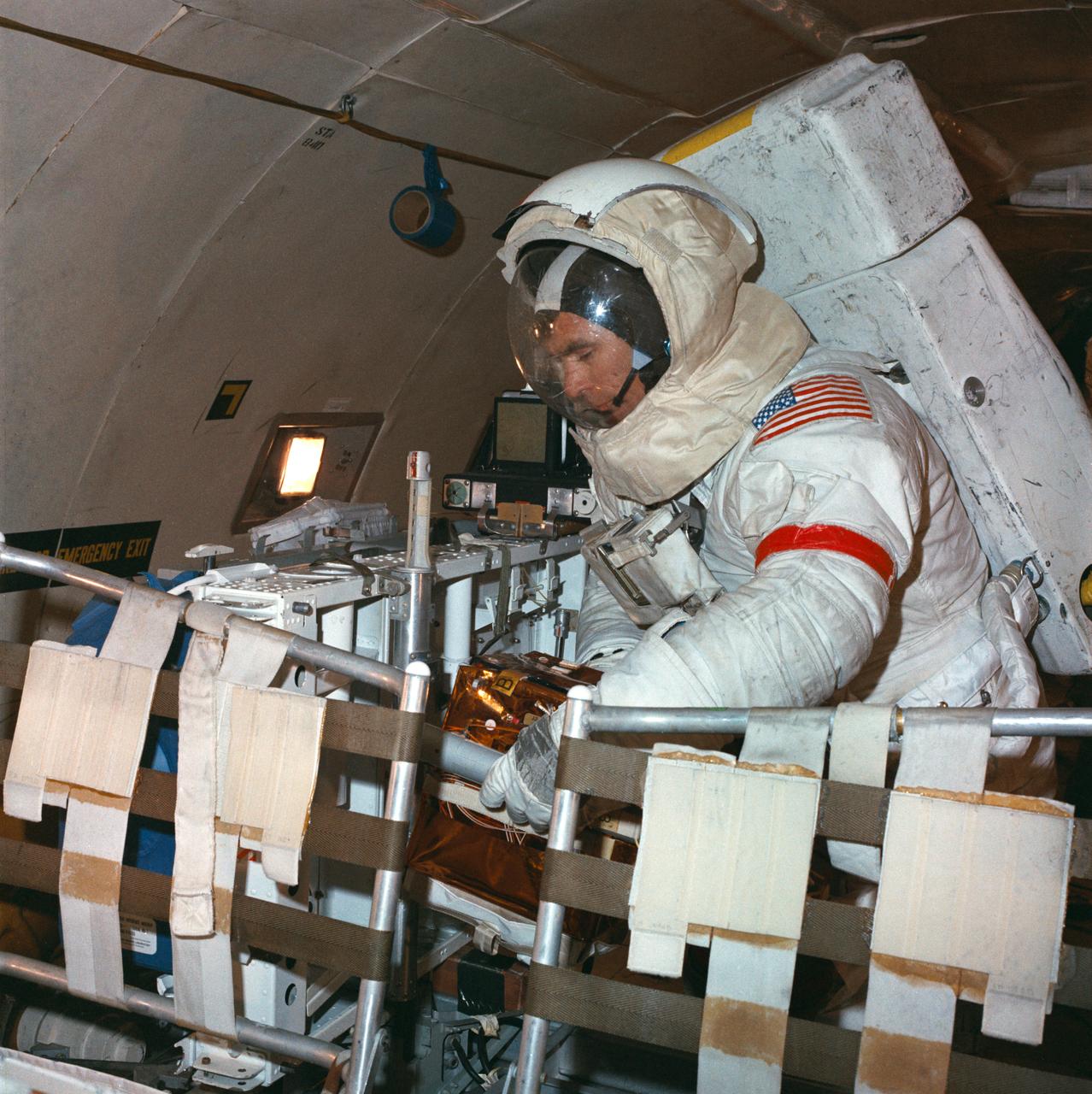
S72-50270 (September 1972) --- Astronaut Eugene A. Cernan, commander of the Apollo 17 lunar landing mission, participates in lunar surface extravehicular activity simulation training under one-sixth gravity conditions aboard a U. S. Air Force KC-135 aircraft. Here, Cernan simulates removing an experiment package from the aft end of a Lunar Roving Vehicle.
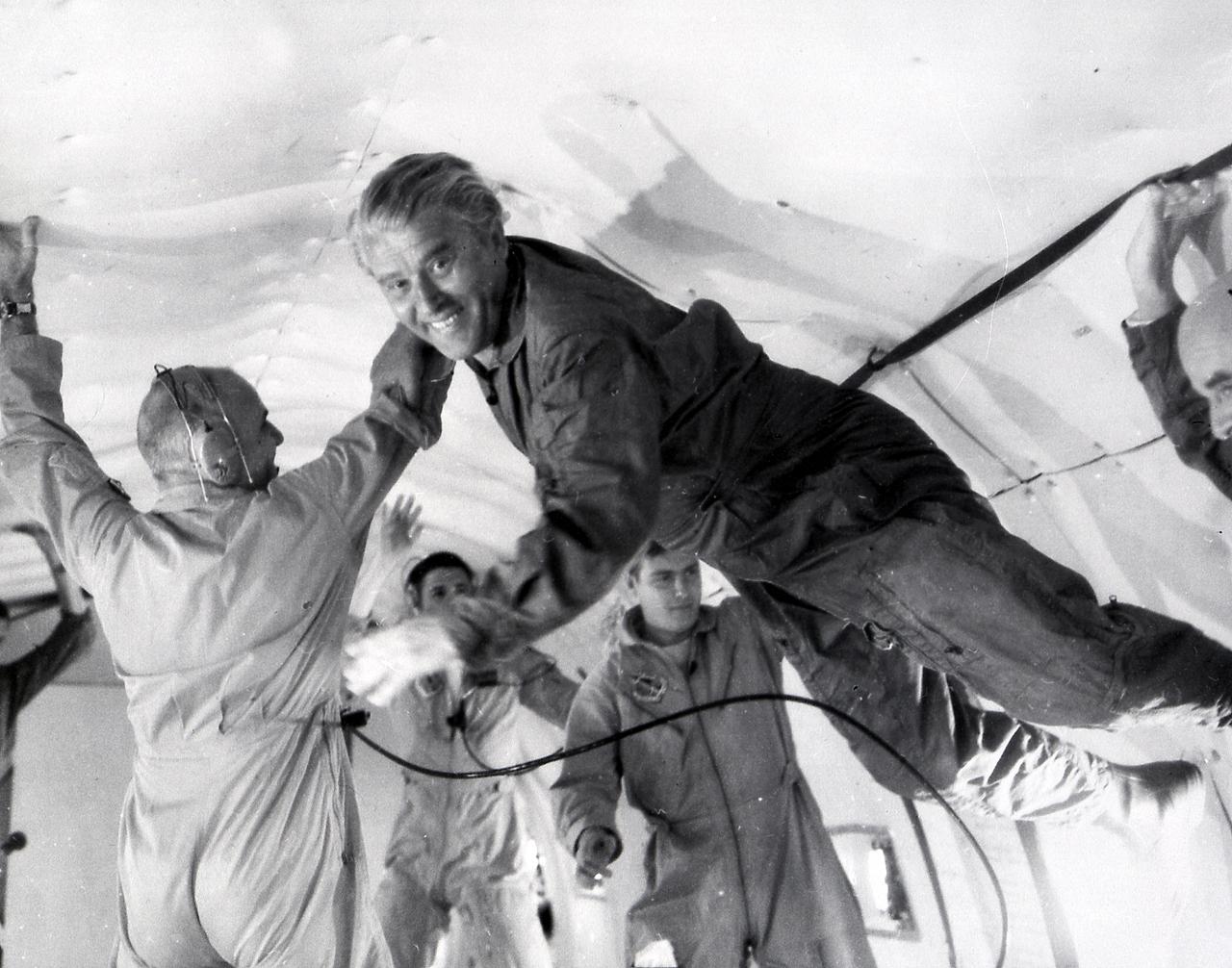
Dr. von Braun inside the KC-135 in flight. The KC-135 provide NASA's Reduced-Gravity Program the unique weightlessness or zero-g environment of space flight for testing and training of human and hardware reactions. The recent version, KC-135A, is a specially modified turbojet transport which flies parabolic arcs to produce weightlessness periods of 20 to 25 seconds and its cargo bay test area is approximately 60 feet long, 10 feet wide, and 7 feet high.
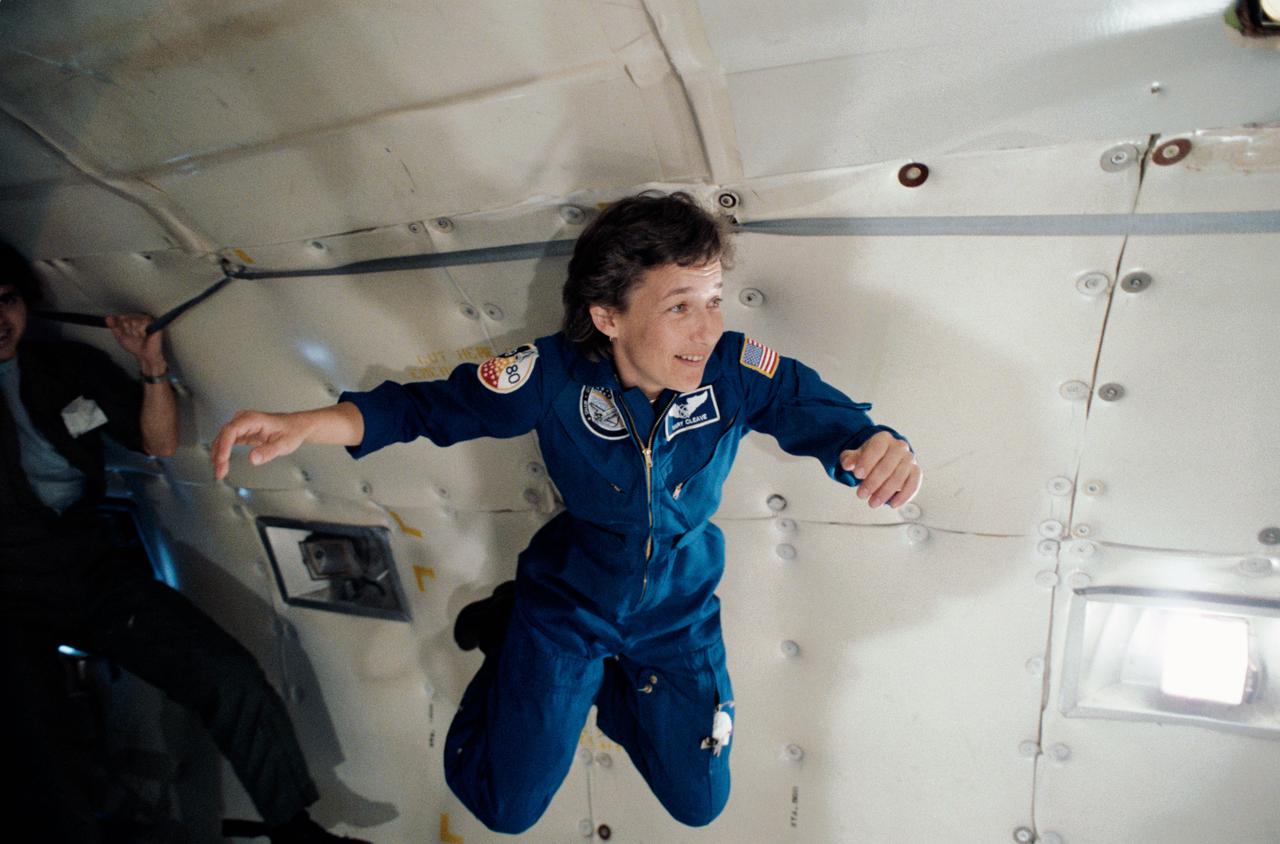
STS 61-B crewmembers training on the KC-135 in zero-G. Views include Payload specialist Charles D. Walker attempting to down the lower torso of his extravehicular mobility unit (EMU) in zero-G in the KC-135. He is being assisted by other participants in the training (39135); Payload specialist Rodolfo Neri floating in midair during training in the KC-135 (39136,39138); Mission specialist Mary L. Cleave floating in midair during her training aboard the KC-135 (39137); Astronaut Bryan D. O'Connor assists Astronaut Sherwood C. Spring in completing his donning of the EMU in the KC-135 (39139); Technicians aid Spring with his EMU in the KC-135 (39140); O'Connor appears to be leaping up in zero-G aboard the KC-135 (39141); Astronaut Brewster Shaw is assisted by a technician to don his EMU (39142); Shaw is attempting to don the EMU gloves while O'Connor watches (39143); Shaw does jumping jacks while Neri attempts to travel down a rope guideline (39144).
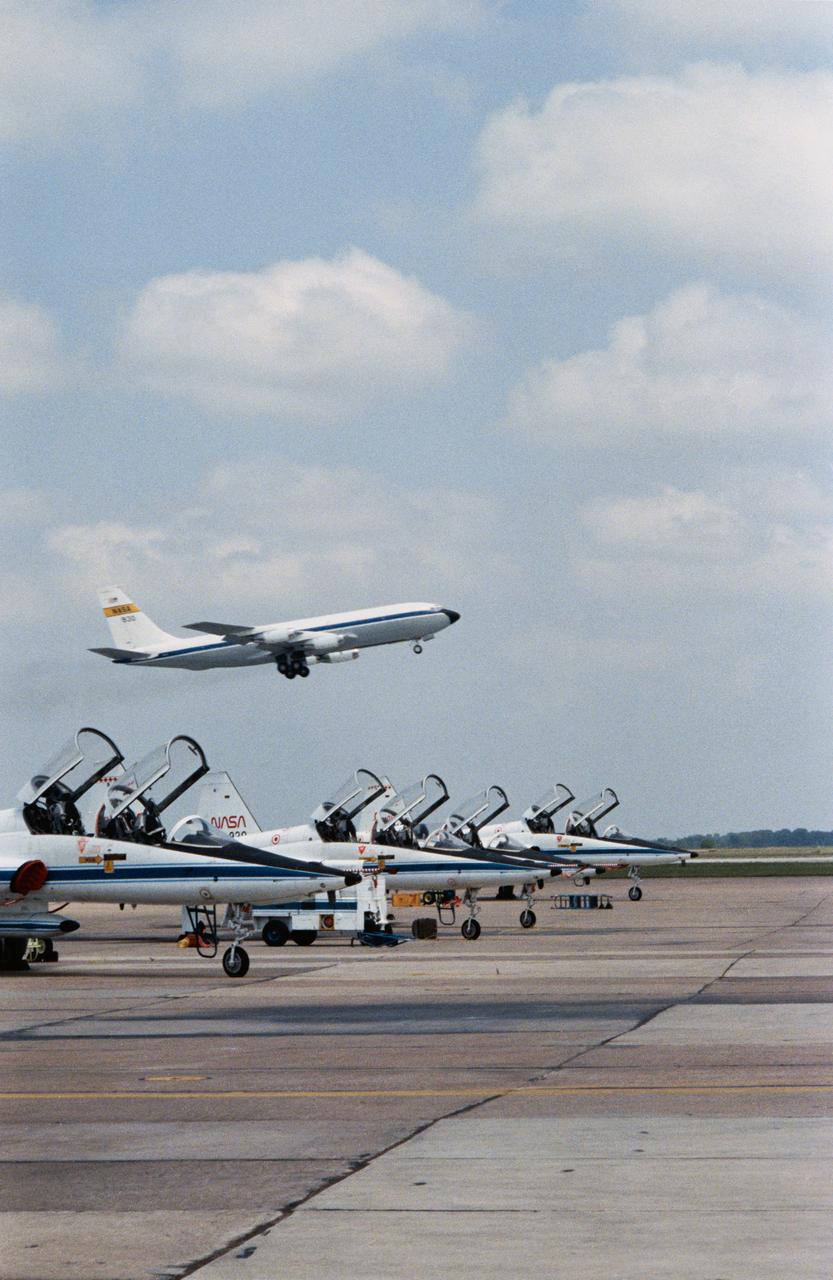
JSC/NASA aircraft operations at Ellington Field. T-38 aircraft are lined up on the parking apron. The KC-135 (NASA 930) Weightless environment trainer is taking off in the middle ground.

The 41-D crewmembers participate in suiting exercises in the weightless environment of the KC-135 aircraft.
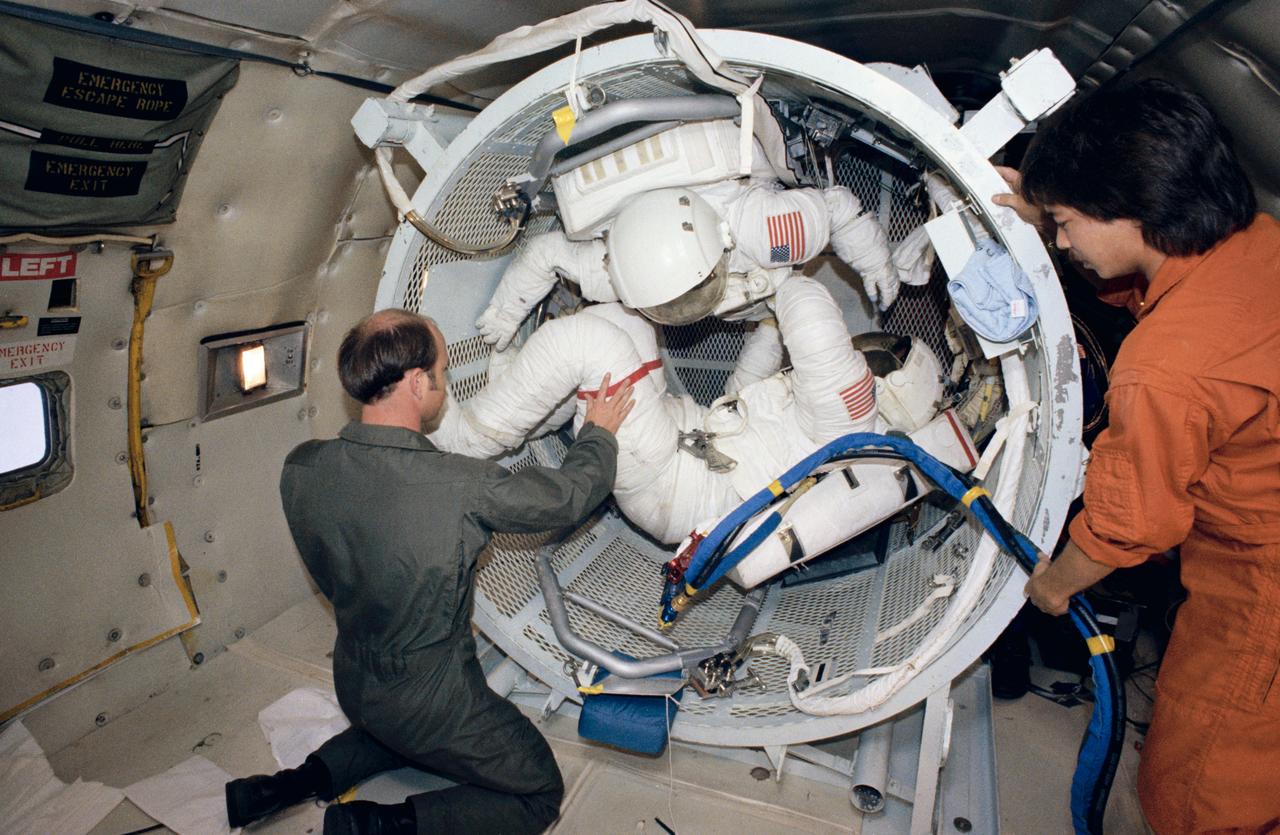
The 41-D crewmembers participate in suiting exercises in the weightless environment of the KC-135 aircraft.
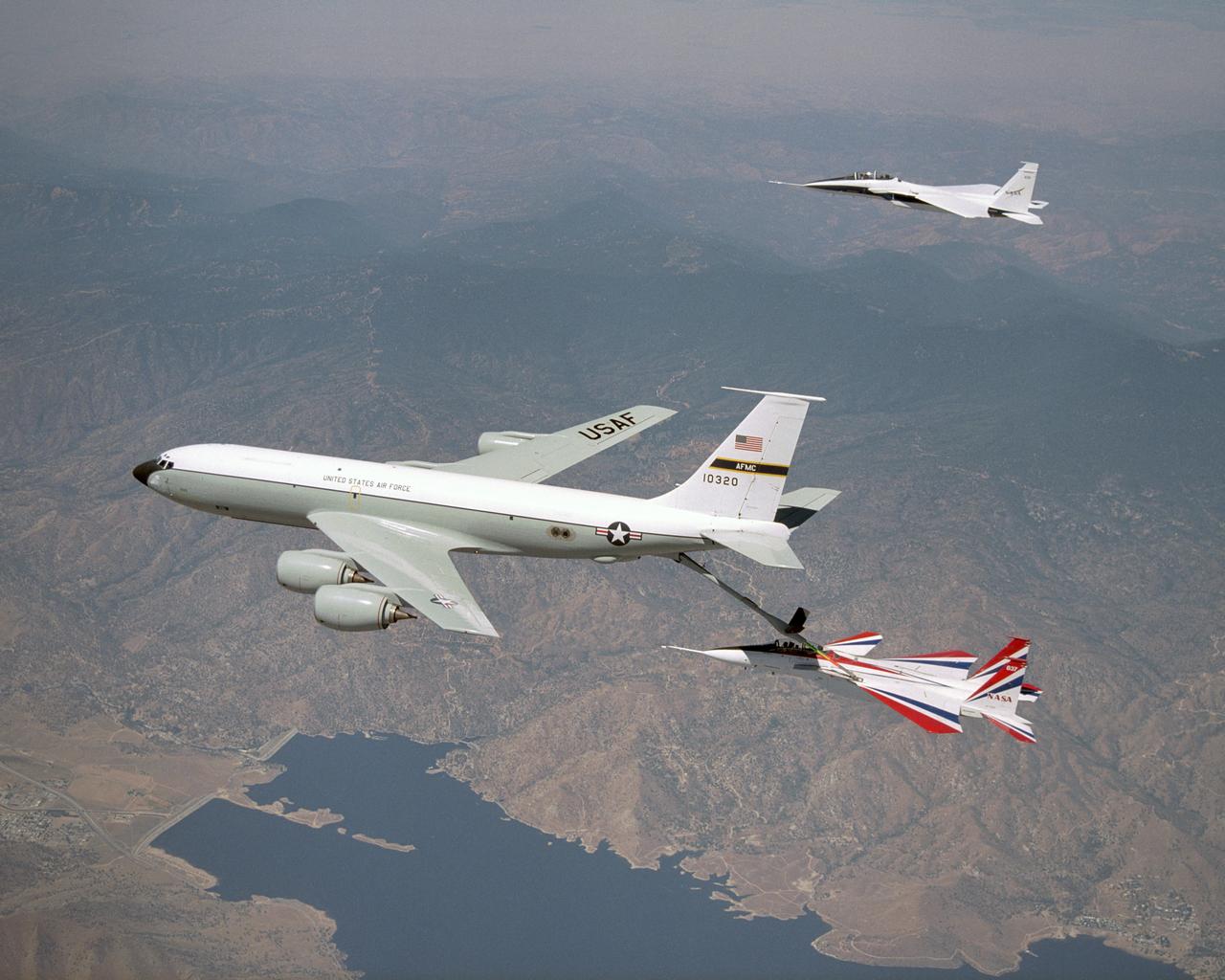
One of NASA's two F-15 research aircraft gets refueled in mid-air over Lake Isabella from a USAF KC-135 tanker while NASA's other F-15 flies chase alongside.
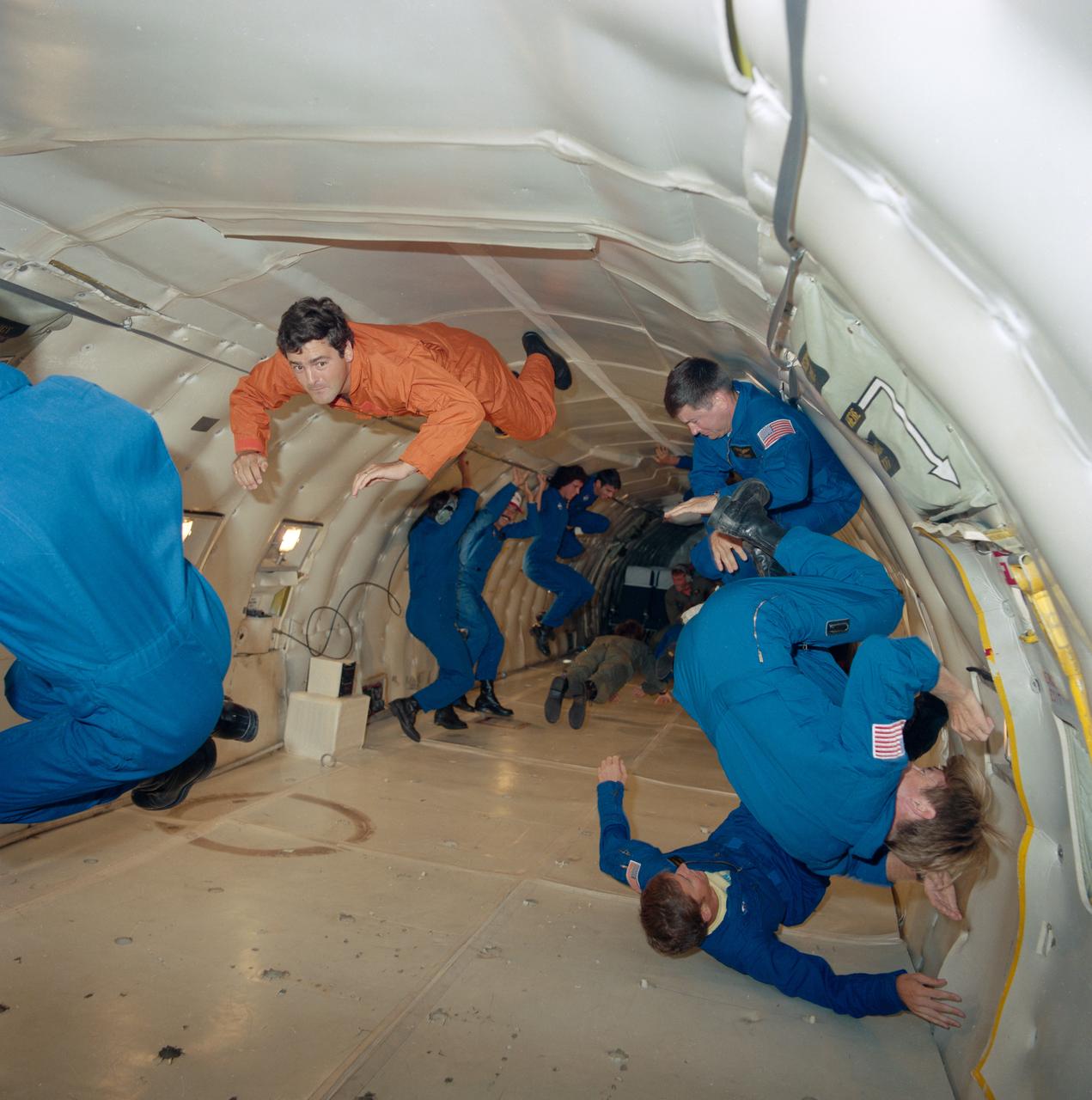
View of astronaut candidates and payload specialists during a training flight on the KC-135. The trainees are experiencing weightlessness in the hold of the aircraft.

Zero-g tests of involving Astronaut candidate Daniel C. Brandenstein. Brandenstein is shown flying in midair on the KC-135.
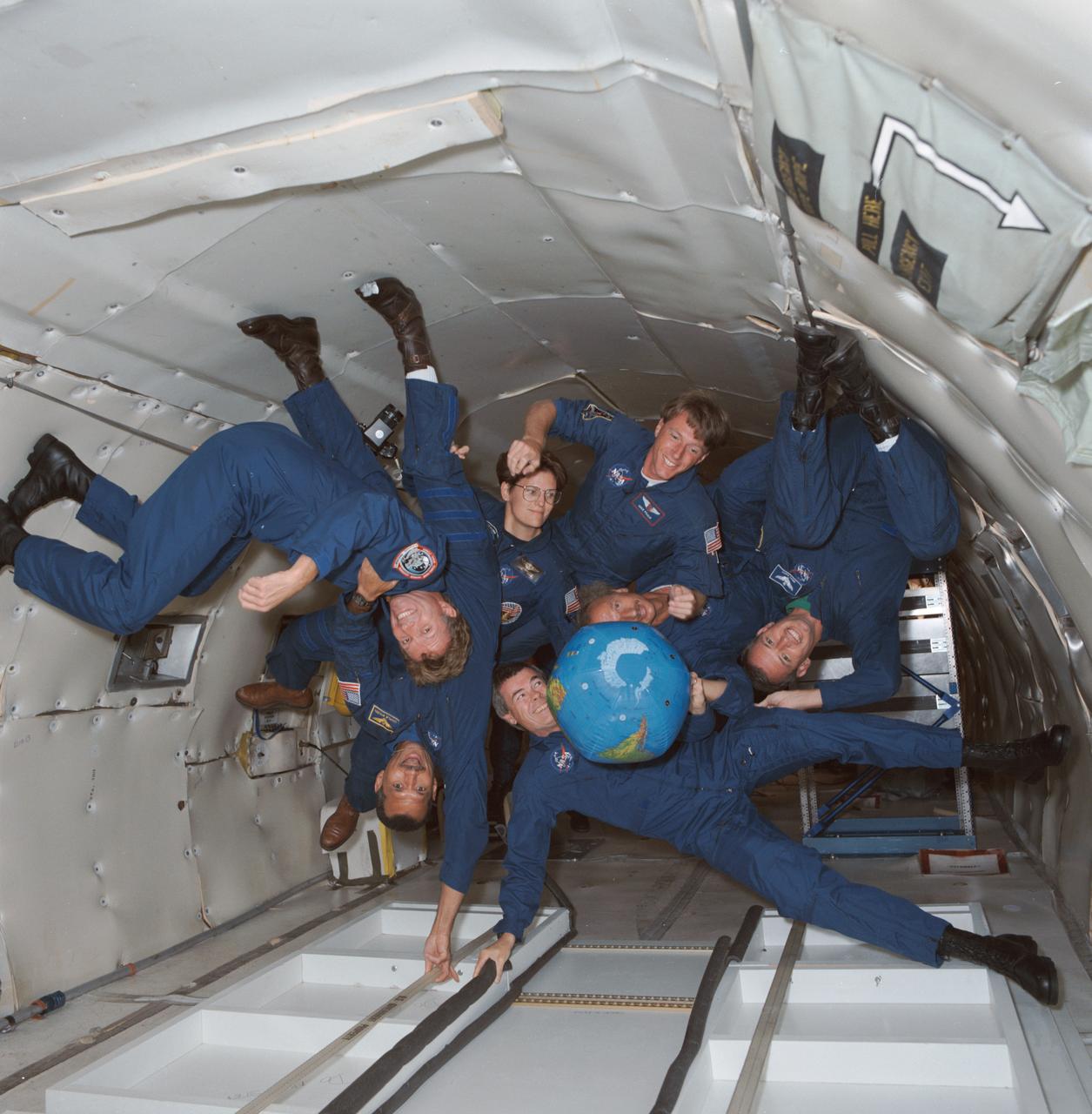
S91-44453 (21 Aug 1991) --- The crew of STS-45 is already training for its March 1992 mission, including stints on the KC-135 zero-gravity-simulating aircraft. Shown with an inflatable globe are, clockwise from the top, C. Michael Foale, mission specialist; Dirk Frimout, payload specialist; Brian Duffy, pilot; Charles R. (Rick) Chappell, backup payload specialist; Charles F. Bolden, mission commander; Byron K. Lichtenberg, payload specialist; and Kathryn D. Sullivan, payload commander.
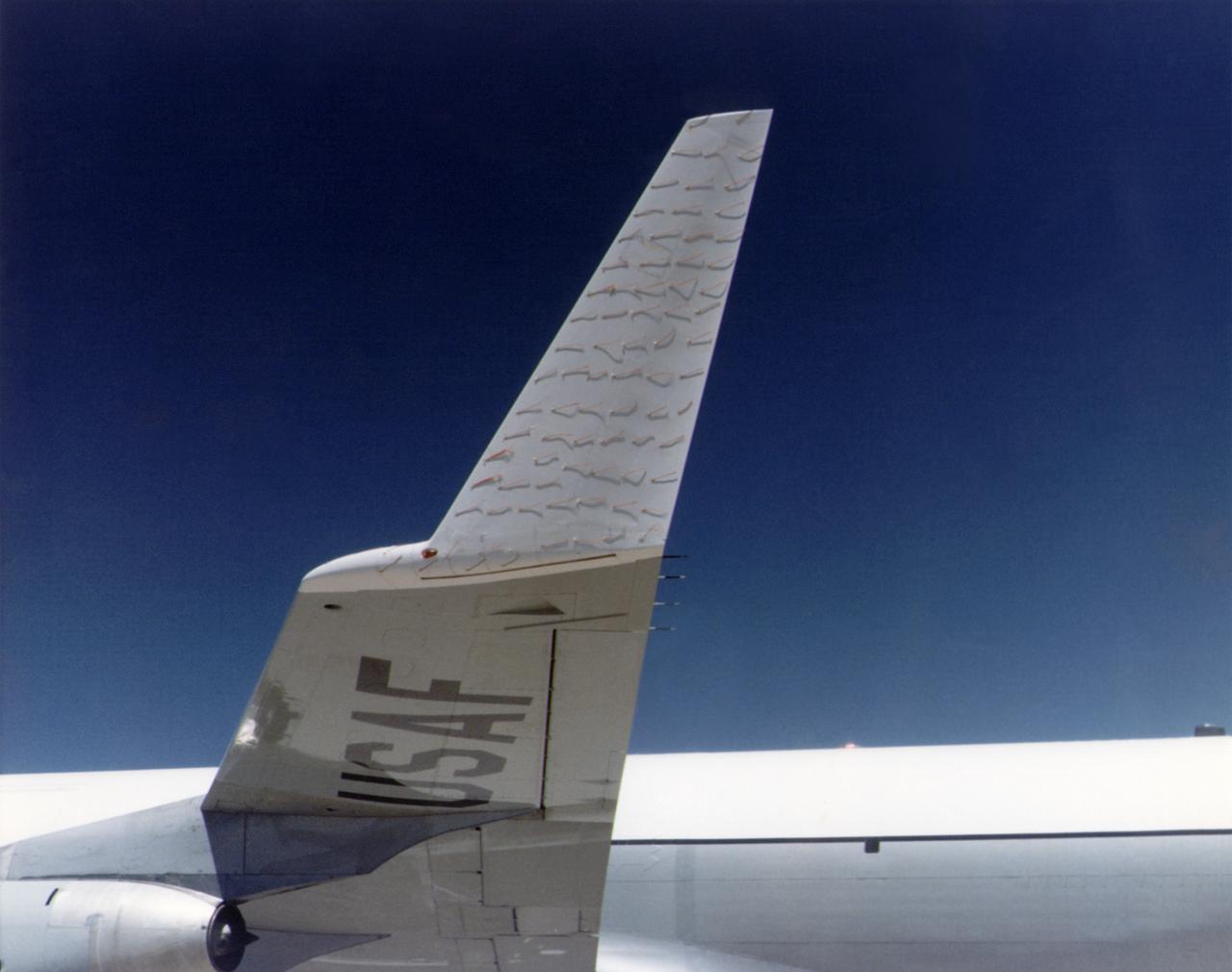
A chase plane view of the tufts on the KC-135 winglet. The use of tufts in flight research dates back to the early days of the NACA, and remains an effective means of observing airflow even today. In this procedure, rows of strings are attached to an airplane's surface, with one end of each string taped to the airplane and the other end free to swing about in the airflow. The movements of the tufts are photographed by on-board cameras or a chase plane. If the tufts are arrayed in neat rows, as seen here, then the airflow is smooth over the airplane's surface. If, however, they are moving about violently, it suggests turbulent airflow. Such motions may indicate high drag, flow separation (such as in a stall), or buffeting. In some cases, tufts will actually point forward, indicating the airflow has reversed direction.
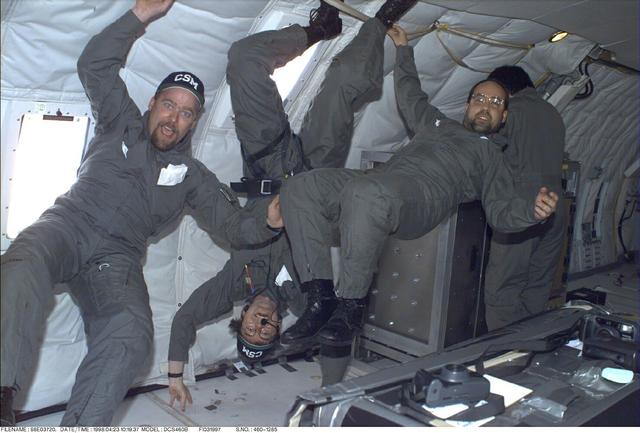
Members of the Water Mist experiment team float in the NASA KC-135 low-g aircraft during preflight tests of the experiment. At center is J. Thomas McKirnon (principal investigator); at right is Angel Abbud-Madrid (co-PI and project scientist). They are with the Center for Commercial Applications of Combustion in Space at the Colorado School of Mines. Water Mist will investigate how best to extinguish flames by using ultrafine droplets of water.
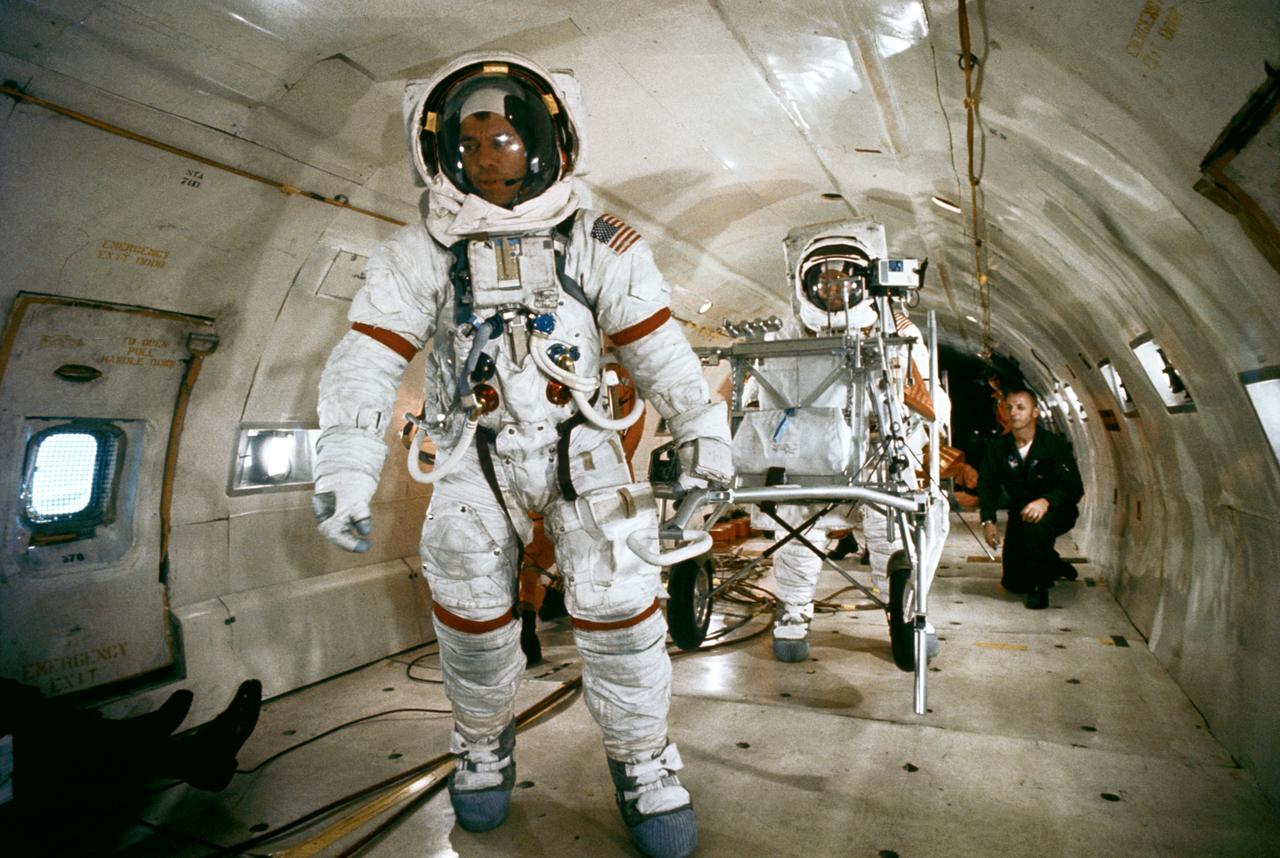
S70-53479 (4 Nov. 1970) -- Astronaut Alan B. Shepard Jr., Apollo 14 commander, pulls the modular equipment transporter (MET) under weightless conditions aboard an Air Force KC-135 out of Patrick Air Force Base. Astronaut Edgar D. Mitchell, Apollo 14 lunar module pilot, is behind the MET. The KC-135 aircraft, flying a parabolic curve, creates a weightless environment providing a training exercise in preparation for the astronauts' extravehicular activities (EVA) on the lunar surface. This training simulates the 1/6 gravity the astronauts will encounter on the moon.
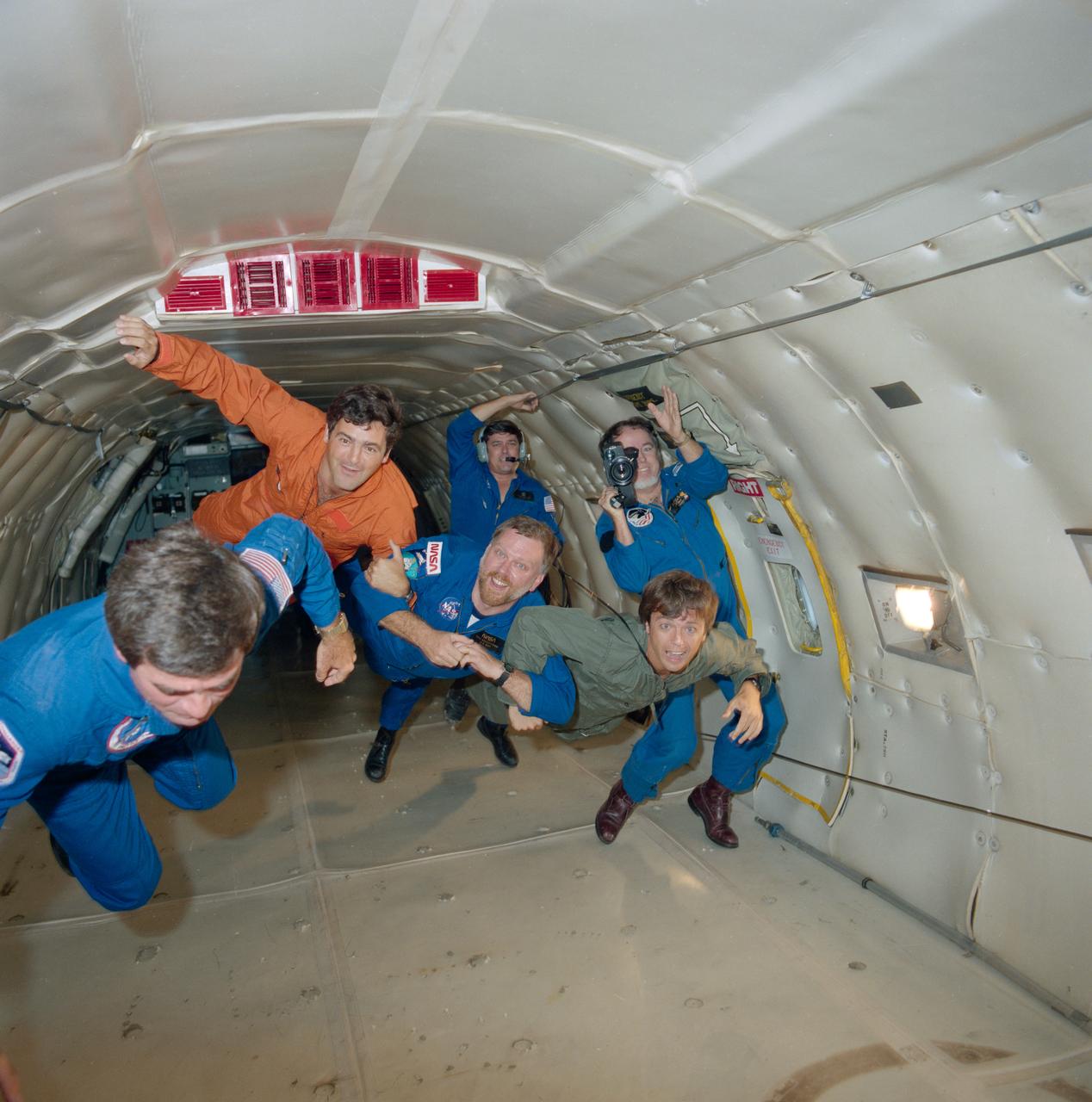
Paul Scully-Power, 41-G payload specialist, links arms with two others as they experience weightlessness in the KC-135 training aircraft. The trio appears to be flying toward the front of the aircraft while others take photos.

Astronaut Joe H. Engle, STS-2 commander, practices donning and doffing his extravehicular mobility unit (EMU) in the weightless environment afforded aboard a KC-135 "zero-gravity" aircraft.
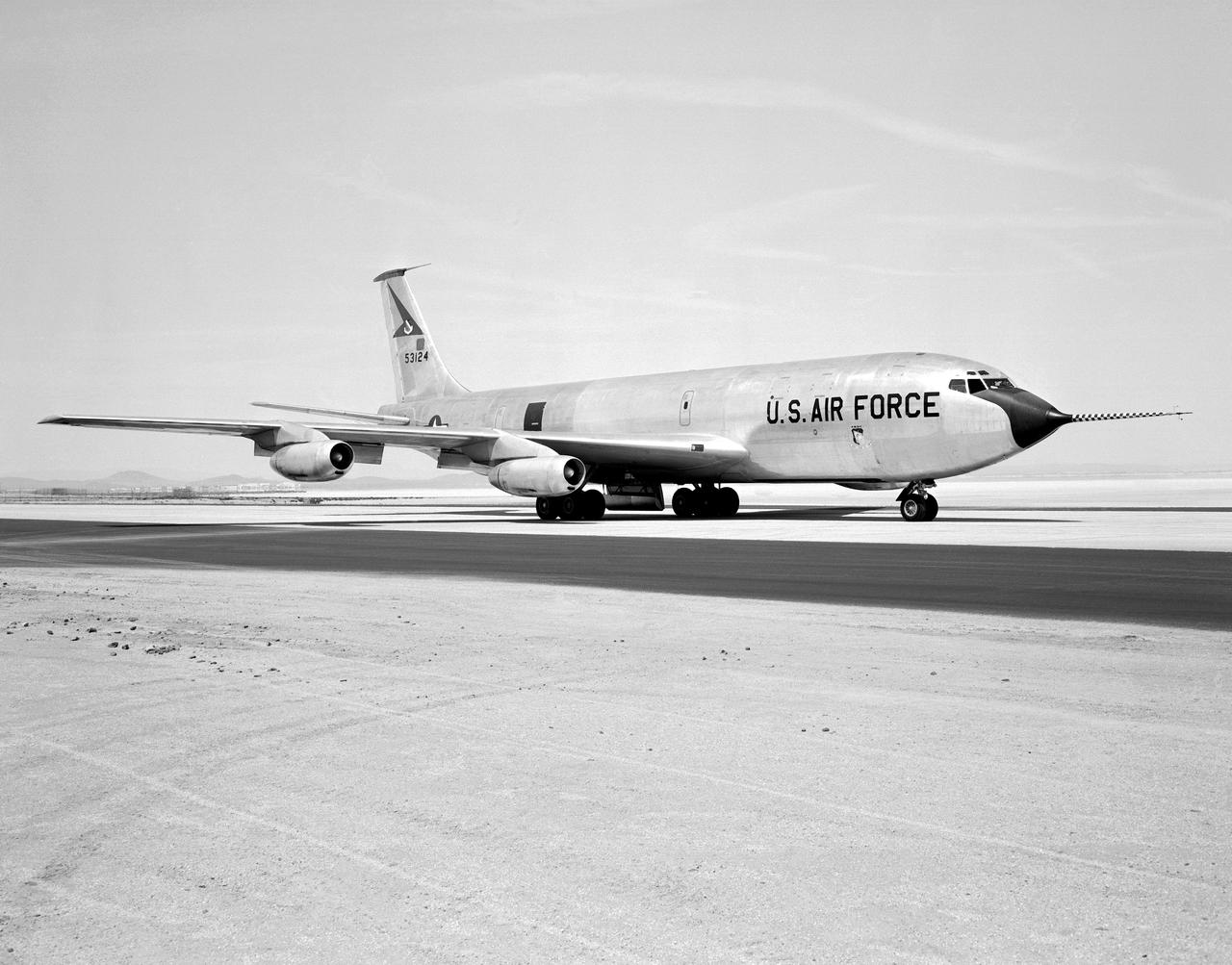
The Boeing KC-135 Stratotanker, besides being used extensively in its primary role as an inflight aircraft refueler, has assisted in several projects at the NASA Dryden Flight Research Center, Edwards, California. In 1957 and 1958, Dryden was asked by what was then the Civil Aeronautics Administration (later absorbed into the Federal Aviation Administration (FAA) in 1958) to help establish new approach procedure guidelines on cloud-ceiling and visibility minimums for Boeing's first jet airliner, the B-707. Dryden used a KC-135 (the military variant of the 707), seen here on the runway at Edwards Air Force Base, to aid the CAA in these tests. In 1979 and 1980, Dryden was again involved with general aviation research with the KC-135. This time, a special wingtip "winglet", developed by Richard Whitcomb of Langley Research Center, was tested on the jet aircraft. Winglets are small, nearly vertical fins installed on an airplane's wing tips to help produce a forward thrust in the vortices that typically swirl off the end of the wing, thereby reducing drag. This winglet idea was tested at the Dryden Flight Research Center on a KC-135A tanker loaned to NASA by the Air Force. The research showed that the winglets could increase an aircraft's range by as much as 7 percent at cruise speeds. The first application of NASA's winglet technology in industry was in general aviation business jets, but winglets are now being incorporated into most new commercial and military transport jets, including the Gulfstream III and IV business jets, the Boeing 747-400 and MD-11 airliners, and the C-17 military transport. In the 1980's, a KC-135 was used in support of the Space Shuttle program. Since the Shuttle was to be launched from Florida, researchers wanted to test the effect of rain on the sensitive thermal tiles. Tiles were mounted on special fixtures on an F-104 aircraft and a P-3 Orion. The F-104 was flown in actual rain conditions, and also behind the KC-135 spray tanker as it rel
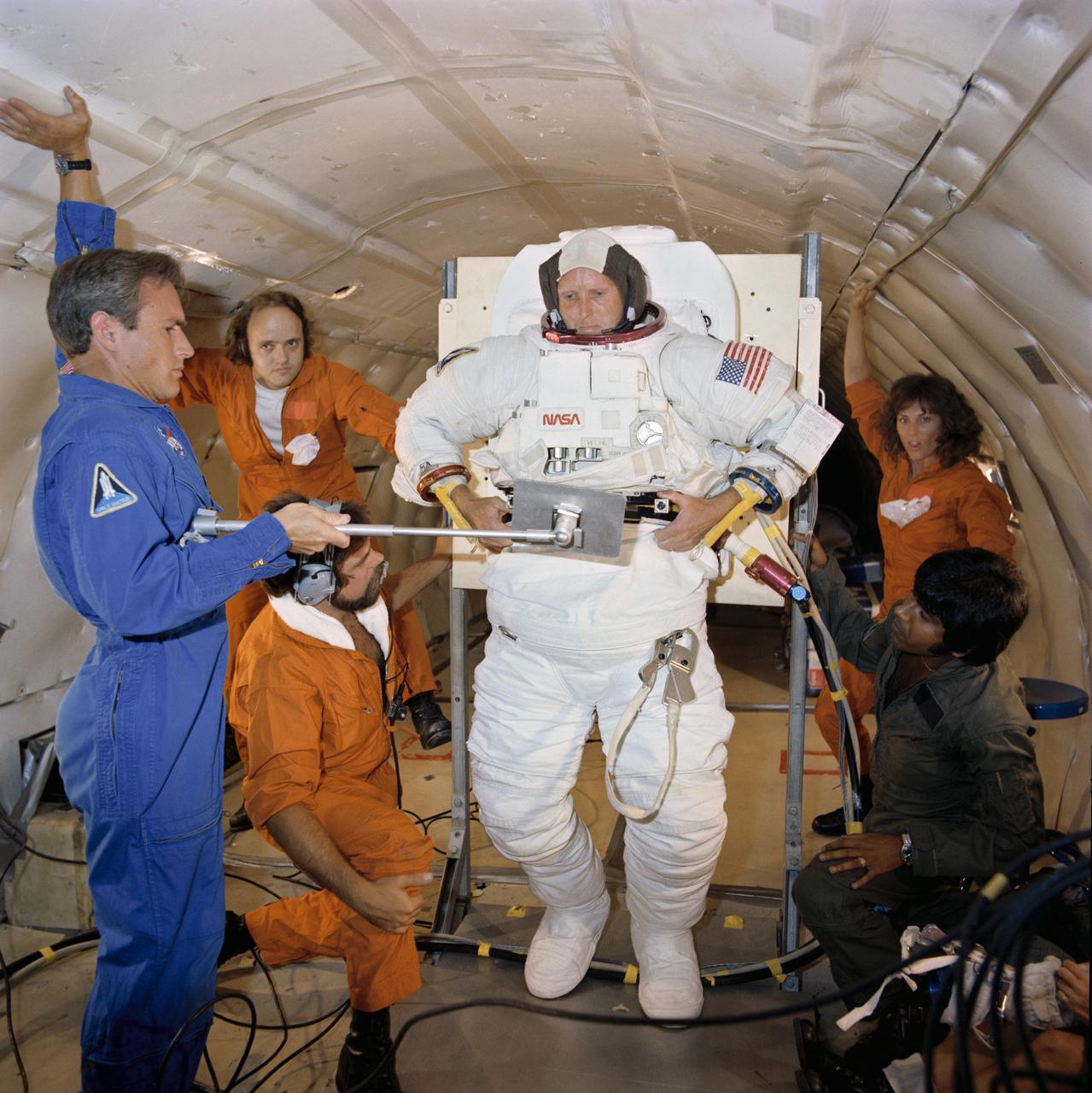
S81-34432 (July 1981) --- Astronaut C. Gordon Fullerton, STS-3 pilot, takes part in a suit donning and doffing exercise aboard a KC-135 "zero-gravity" aircraft. Mission specialist/astronaut William F. Fisher holds a mirror to assist Fullerton with hose and cable linkups to his suit. A special parabolic pattern flown by the KC-135 provides short durations of weightlessness. Fullerton's suit is an Extravehicular Mobility Unit (EMU), used by astronauts when leaving the shirt-sleeve environment of their shuttle orbiter to go outside and perform tasks in the vacuum of space. There are no such EVA plans on STS-3, but the crewmen are trained in this area in the event of a contingency. Photo credit: NASA
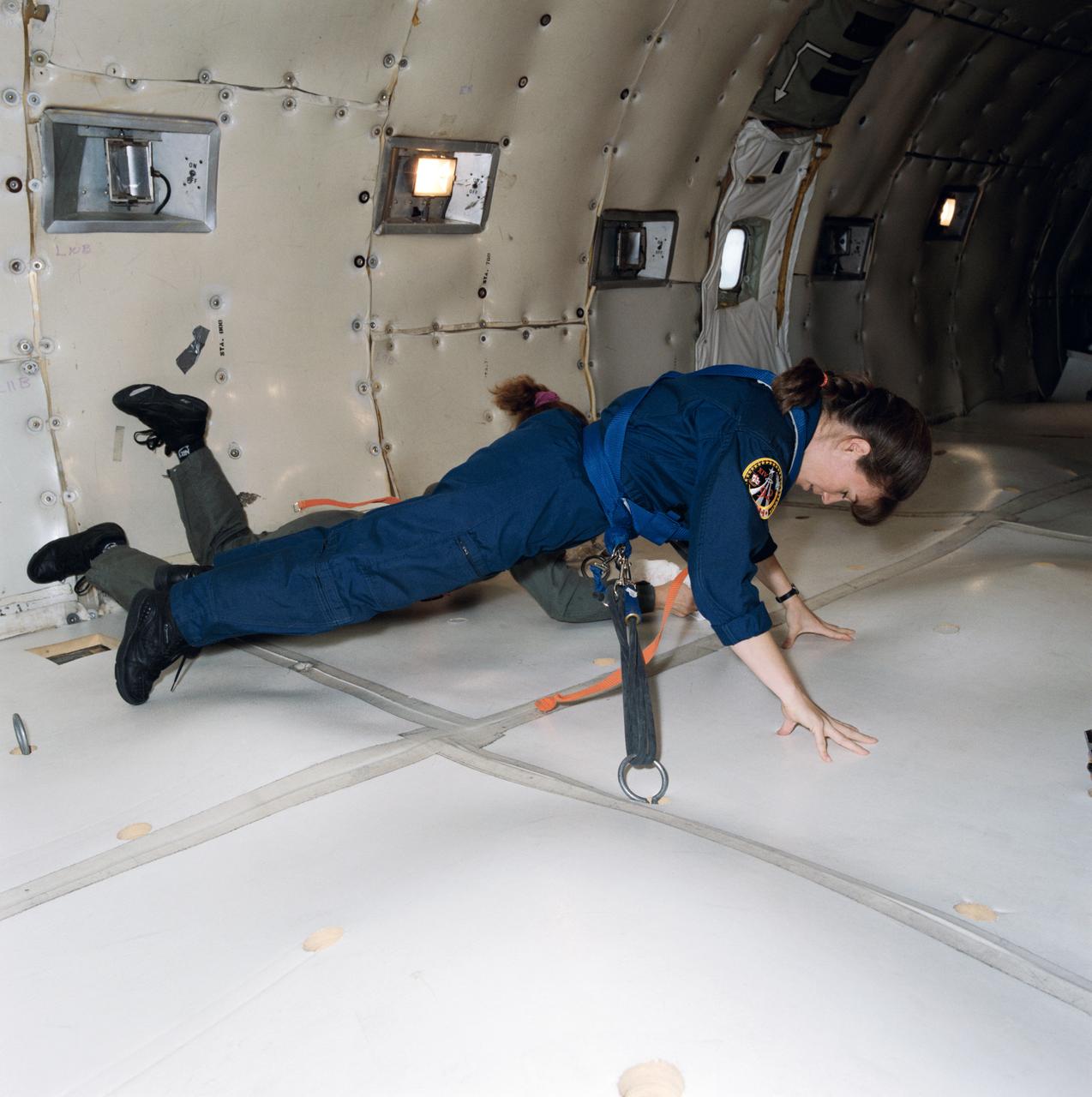
S94-35542 (June 1994) --- Astronaut Catherine G. Coleman, mission specialist, gets a preview of next year?s United States Microgravity Laboratory (USML-2) mission aboard the Space Shuttle Columbia. The weightless experience was afforded by a special parabolic pattern flown by NASA?s KC-135 ?zero gravity? aircraft.
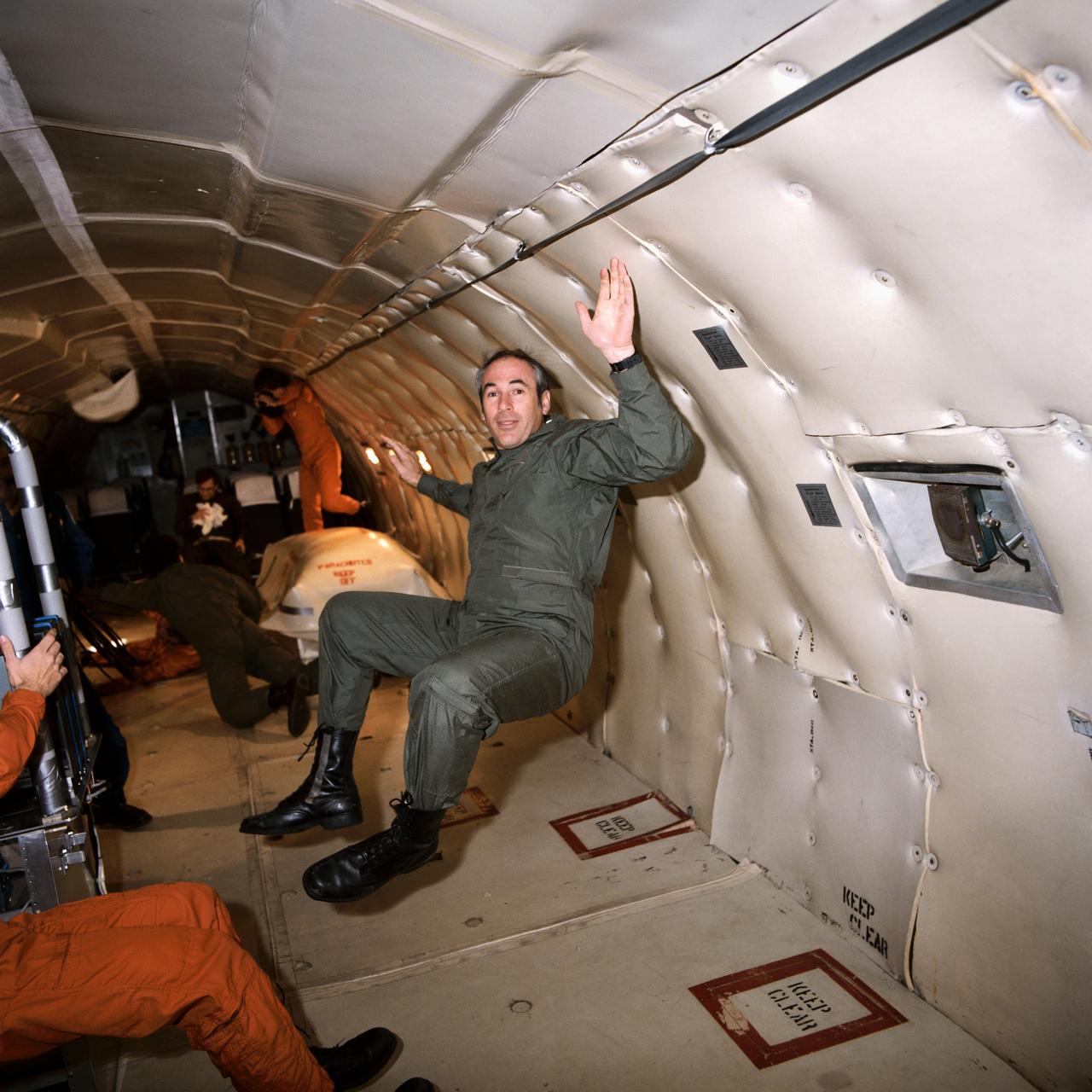
S85-26106 (25 Jan. 1985) --- Astronaut Gregory Jarvis gets a familiarization session in weightlessness aboard a KC-135 "zero gravity" aircraft. Jarvis was originally assigned as payload specialist to STS-51D but was reassigned to STS-51L. Photo credit: NASA
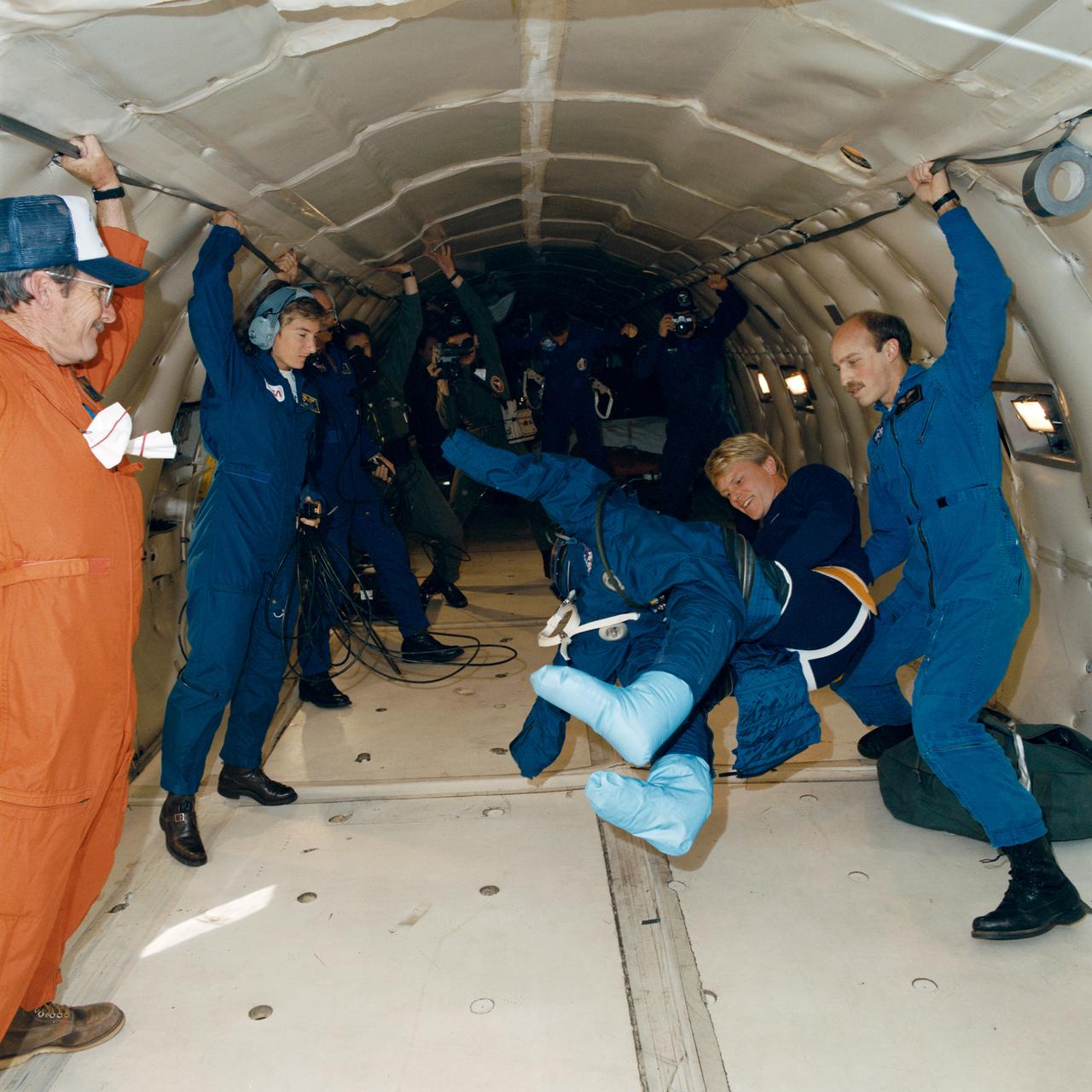
STS-26 Discovery, Orbiter Vehicle (OV) 103, Mission Specialist (MS) George D. Nelson practices donning and doffing new (navy blue) partial pressure suit (launch and entry suit (LES)) aboard KC-135 NASA 930 during zero gravity testing. Nelson is assisted by astronaut James P. Bagian as KC-135 flight crew (including Stephanie A. Wells) looks on and photographers document activities.
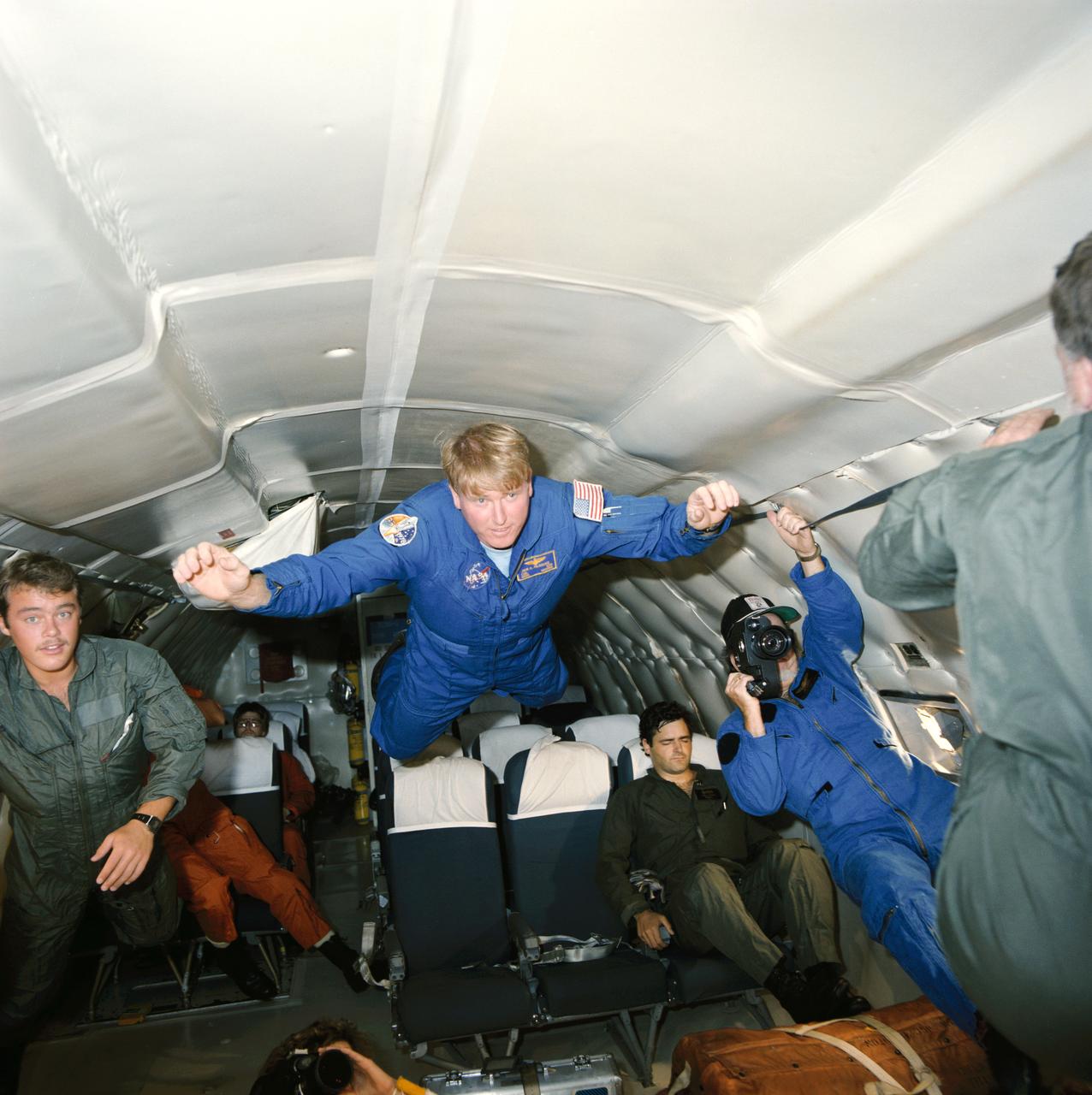
S84-37522 (18 July 1984) --- Astronaut Jon A. McBride, center, floats briefly aboard a NASA KC-135 aircraft during a flight designed as part of the training program for 41-G's seven crewmembers. McBride is pilot for that October 1984 flight. Marc Garneau, one of two payload specialists for the mission, is seated at right. Garneau represents the National Research Council of Canada.

JSC2002-E-31360 (23 July 2002) --- Astronaut Jeffrey S. Ashby (left), STS-112 mission commander, and instructor David L. Mumme are pictured near a KC-135 aircraft at Ellington Field near the Johnson Space Center (JSC). Although used primarily for the Zero Gravity program at JSC, the large aircraft also fits the bill for heavy aircraft familiarization. Most training for Shuttle landings takes place in the Shuttle Training Aircraft (STA), which is much lighter in gross weight than the Shuttle. It does a superb job of flying like the Shuttle while on final, but in the flare (right at landing) there are some subtleties to the dynamics of heavy aircraft that only a vehicle of similar weight can demonstrate. Astronauts practice landings in the KC-135 since it is more similar in gross weight to a Shuttle.
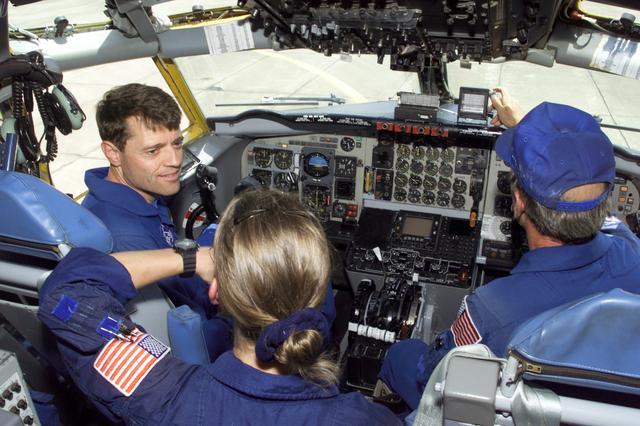
JSC2002-E-31362 (23 July 2002) --- Astronauts Jeffrey S. Ashby (left) and Pamela A. Melroy, STS-112 mission commander and pilot, respectively; along with instructor David L. Mumme, are photographed in the cockpit of a KC-135 aircraft at Ellington Field near the Johnson Space Center (JSC). Although used primarily for the Zero Gravity program at JSC, the large aircraft also fits the bill for heavy aircraft familiarization. Most training for Shuttle landings takes place in the Shuttle Training Aircraft (STA), which is much lighter in gross weight than the Shuttle. It does a superb job of flying like the Shuttle while on final, but in the flare (right at landing) there are some subtleties to the dynamics of heavy aircraft that only a vehicle of similar weight can demonstrate. Astronauts practice landings in the KC-135 since it is more similar in gross weight to a Shuttle.
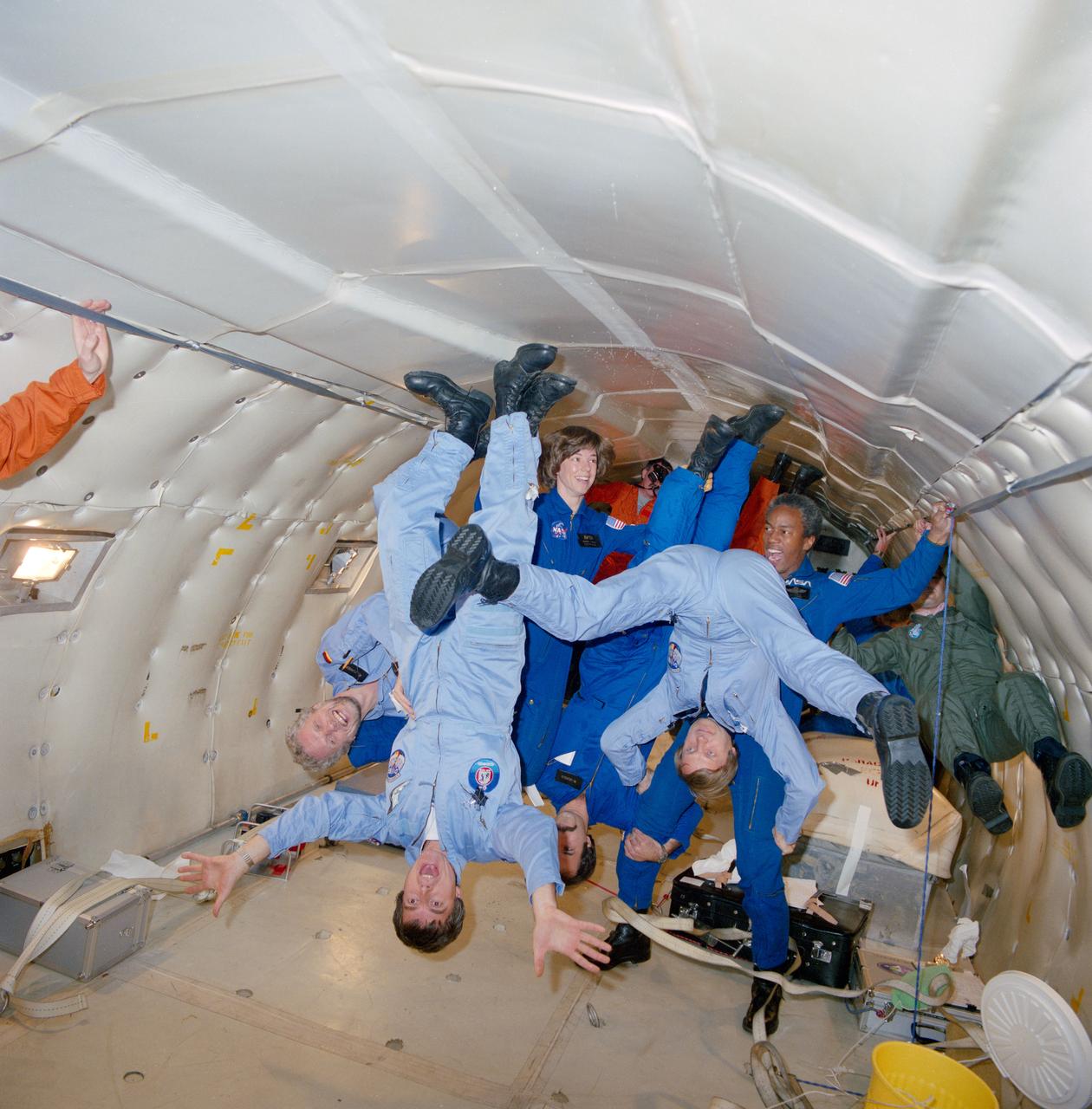
S84-47177 (17 Dec 1984) --- A recent flight in NASA's KC-135 aircraft gave the STS 61-A/Spacelab D-1 crewmembers a chance to get a preview of weightlessness. Mission specialists Bonnie J. Dunbar and Guion S. Bluford appear to be balancing several payload specialists during a few brief moments of microgravity. With heads near the floor are, left to right, Payload Specialists Reinhard Furrer, Ulf Merbold, Wubbo J. Ockels and Ernst Messerschmid. Ockels is from the Netherlands; the others, from Germany, with Merbold serving as backup.
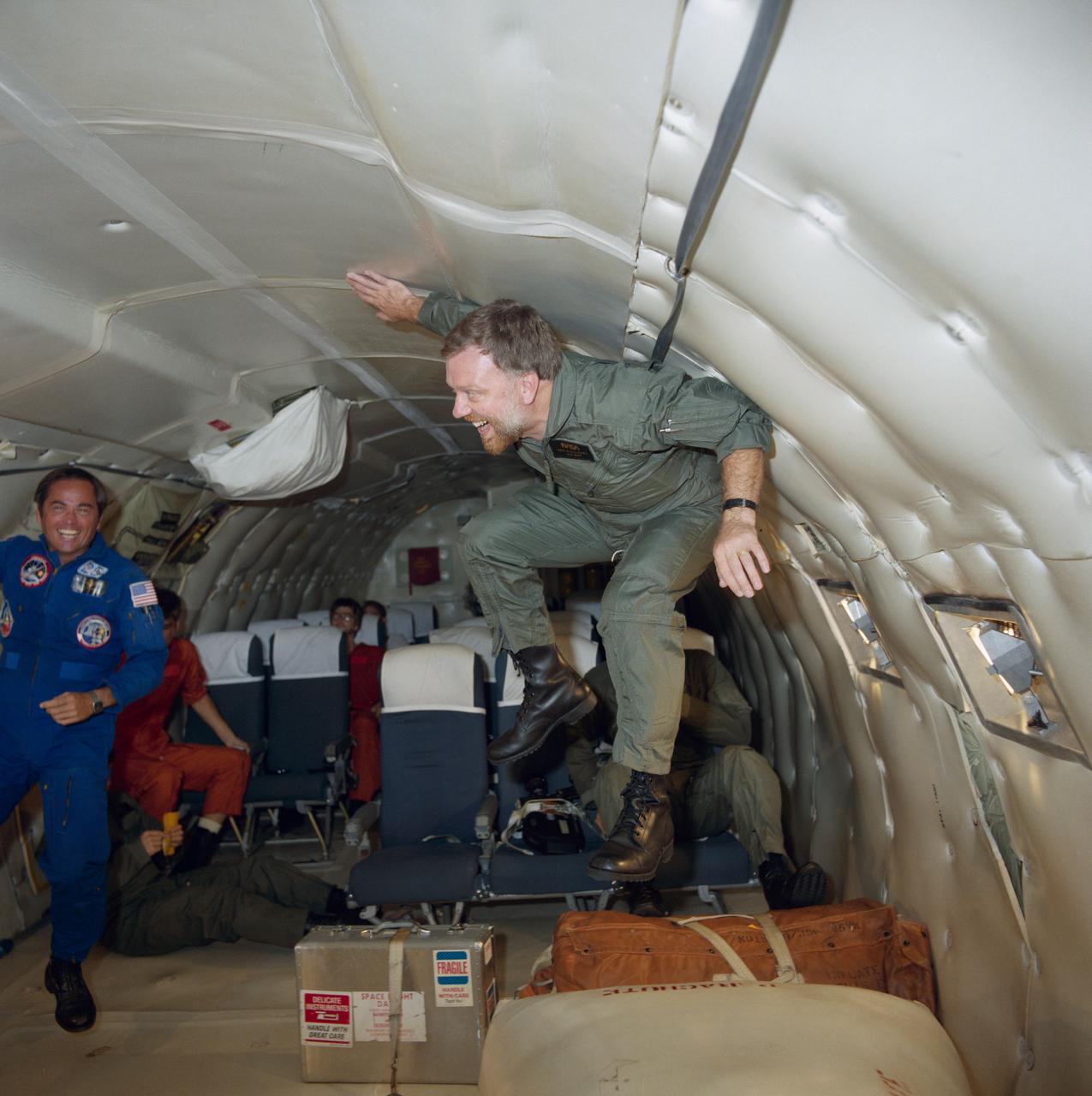
S84-37536 (18 July 1984) --- Astronaut Robert L. Crippen, left, 41-G crew commander watches as one of his fellow crewmembers gets an introduction to weightlessness aboard a KC-135, "zero-gravity" aircraft. Paul D. Scully-Power is the crew member literally floating here in the brief period of micro-gravity. Scully-Power, an oceanographer with the U.S. Navy, and Marc Garneau (partially visible in chair behind the floating Scully-Power)are payload specialists for 41-G. Garneau represents the National Research Council (Canada).
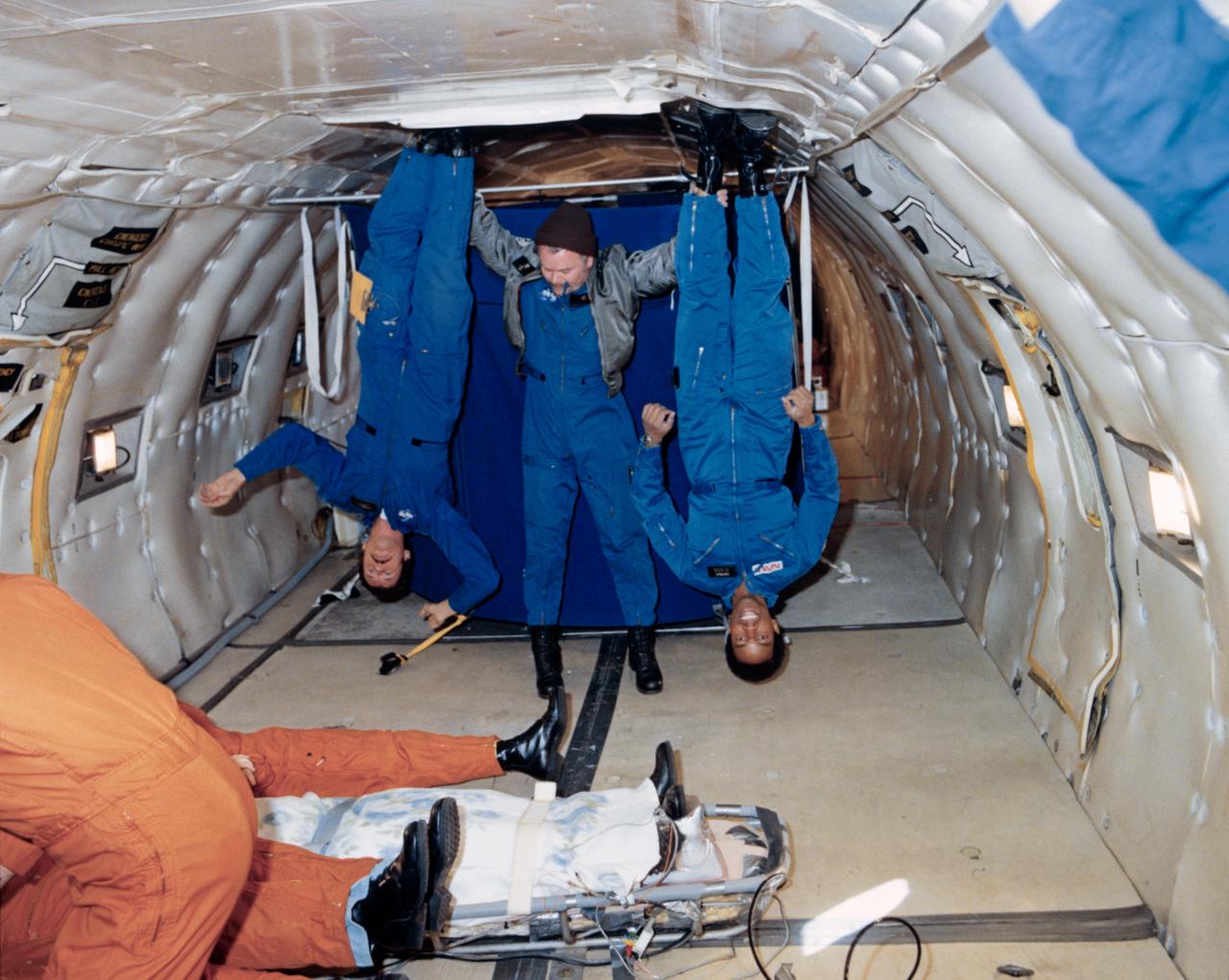
S79-28602 (2 March 1979) --- Astronaut candidate Guion S. Bluford and Aviation Safety Officer Charles F. Hayes got a unique perspective of their environment during a zero gravity flight. They are aboard a KC-135 aircraft, which flies a special pattern repeatedly to afford a series of 30-seconds-of-weightlessness sessions. Bluford and Hayes are being assisted by C. P. Stanley of the photography branch of the photographic technology division at Johnson Space Center (JSC). Some medical studies and a motion sickness experiment were conducted on this particular flight. Bluford is one of 20 scientist-astronaut candidates who began training at JSC in July of 1978. Photo credit: NASA
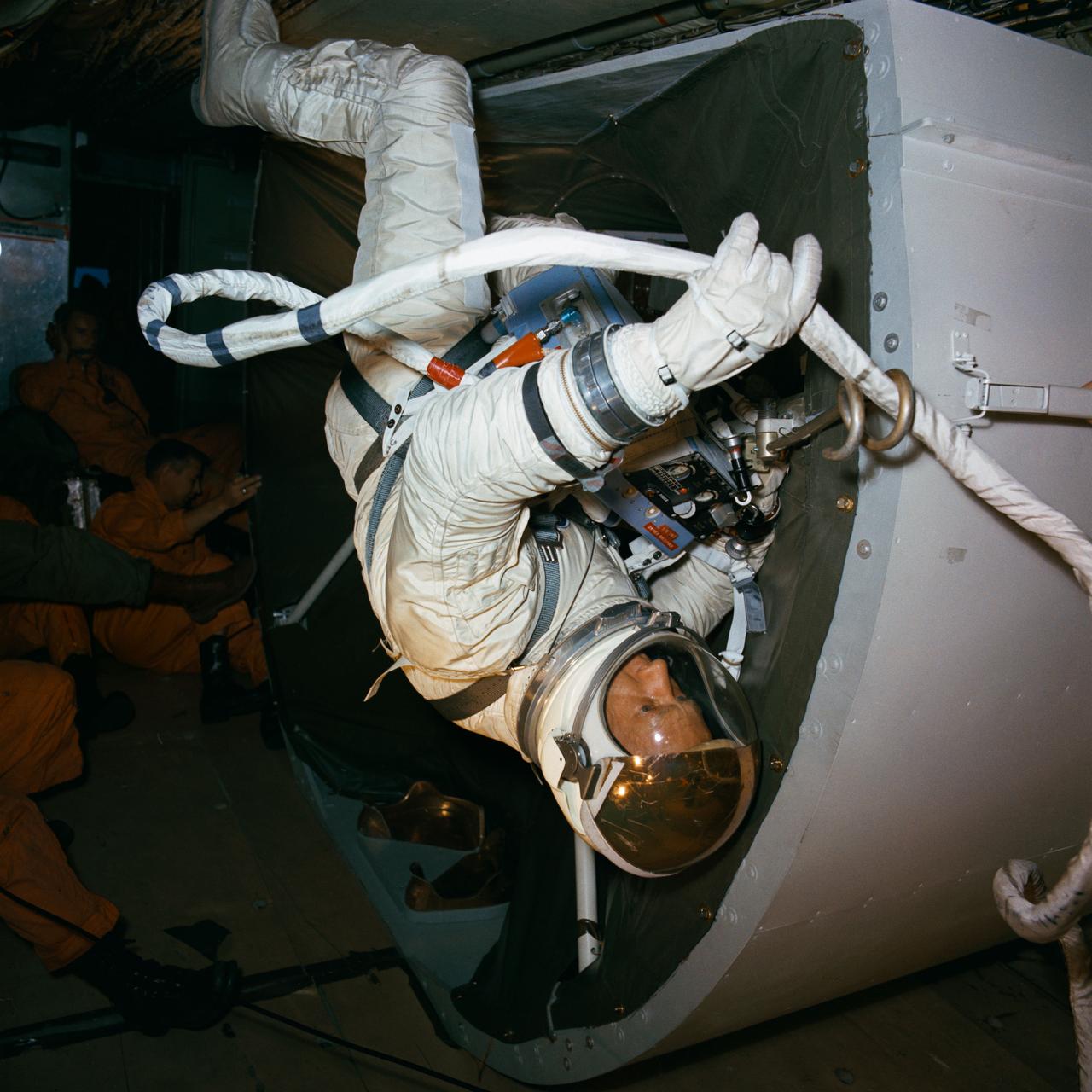
S66-57326 (13 Oct. 1966) --- Astronaut Edwin E. Aldrin Jr., pilot for the Gemini-12 spaceflight, attaches tether to hooks on mock-up of the adapter section of a Gemini spacecraft. He is taking part in zero-gravity training onboard an Air Force KC-135 jet aircraft in preparation for his extravehicular activity (EVA) during the actual mission. Photo credit: NASA
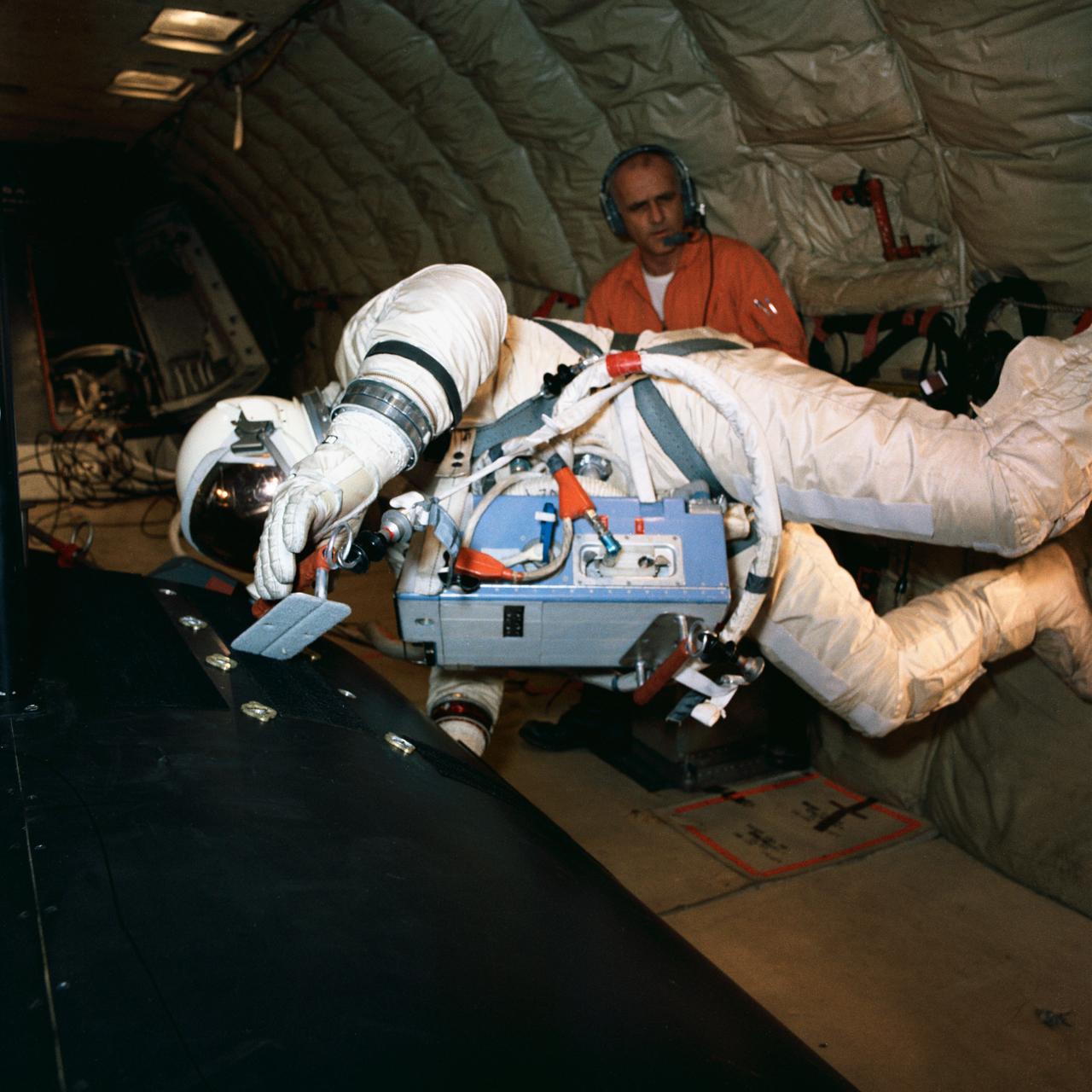
S66-57353 (13 Oct. 1966) --- Astronaut Edwin E. Aldrin Jr., pilot for the Gemini-12 spaceflight, practices work tasks on a mock-up of the adapter section of a spacecraft. Training took place onboard an Air Force KC-135 jet aircraft. He wears a life support chest pack during the exercise. Photo credit: NASA
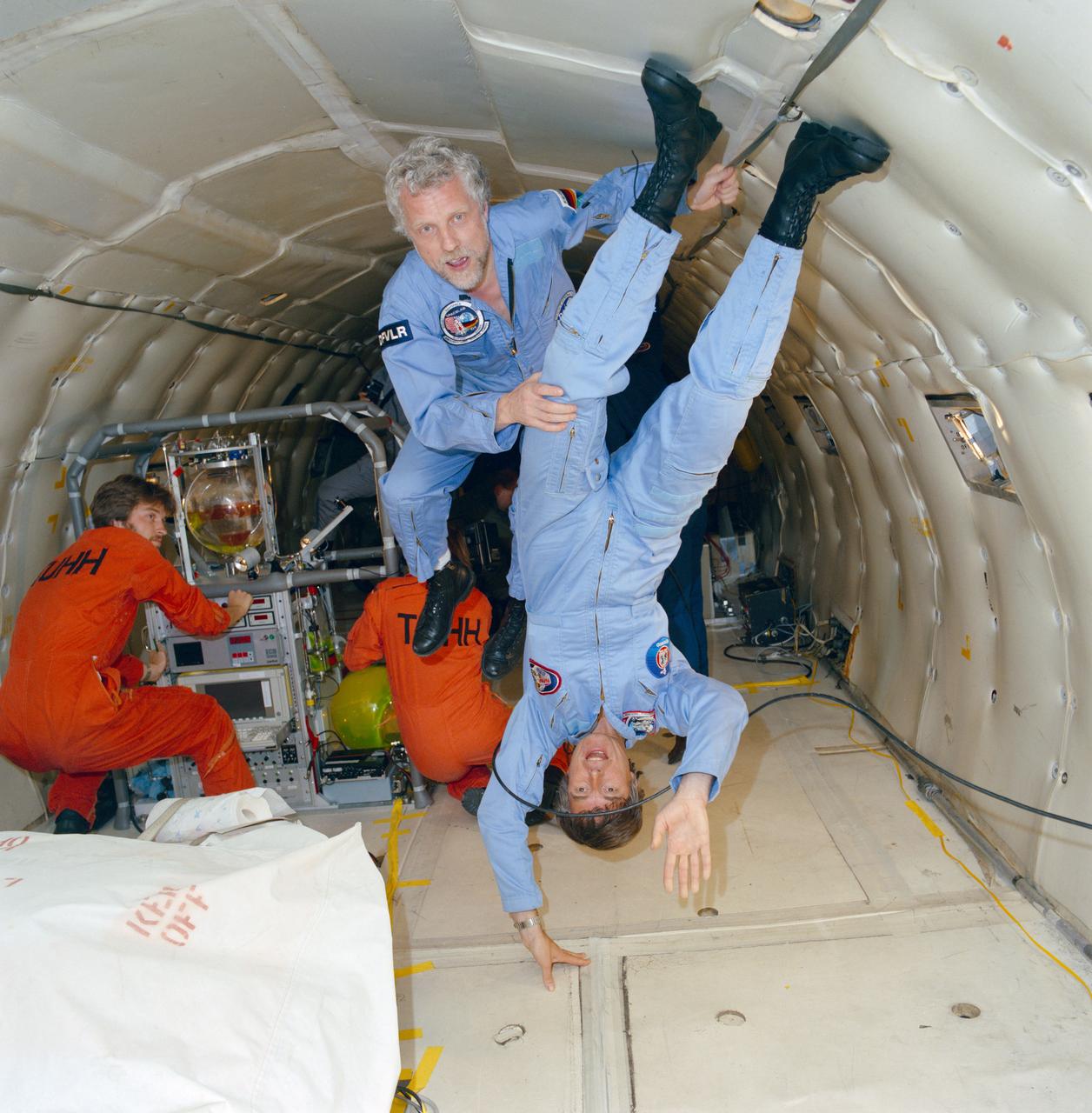
S88-37966 (2 Oct 1988) --- European Space Agency payload specialists Ulf Merbold (STS-42, right) and Reinhold Furrer (STS 61-A) get the "feel" of zero-gravity aboard NASA's KC-135 aircraft over the Gulf of Mexico.
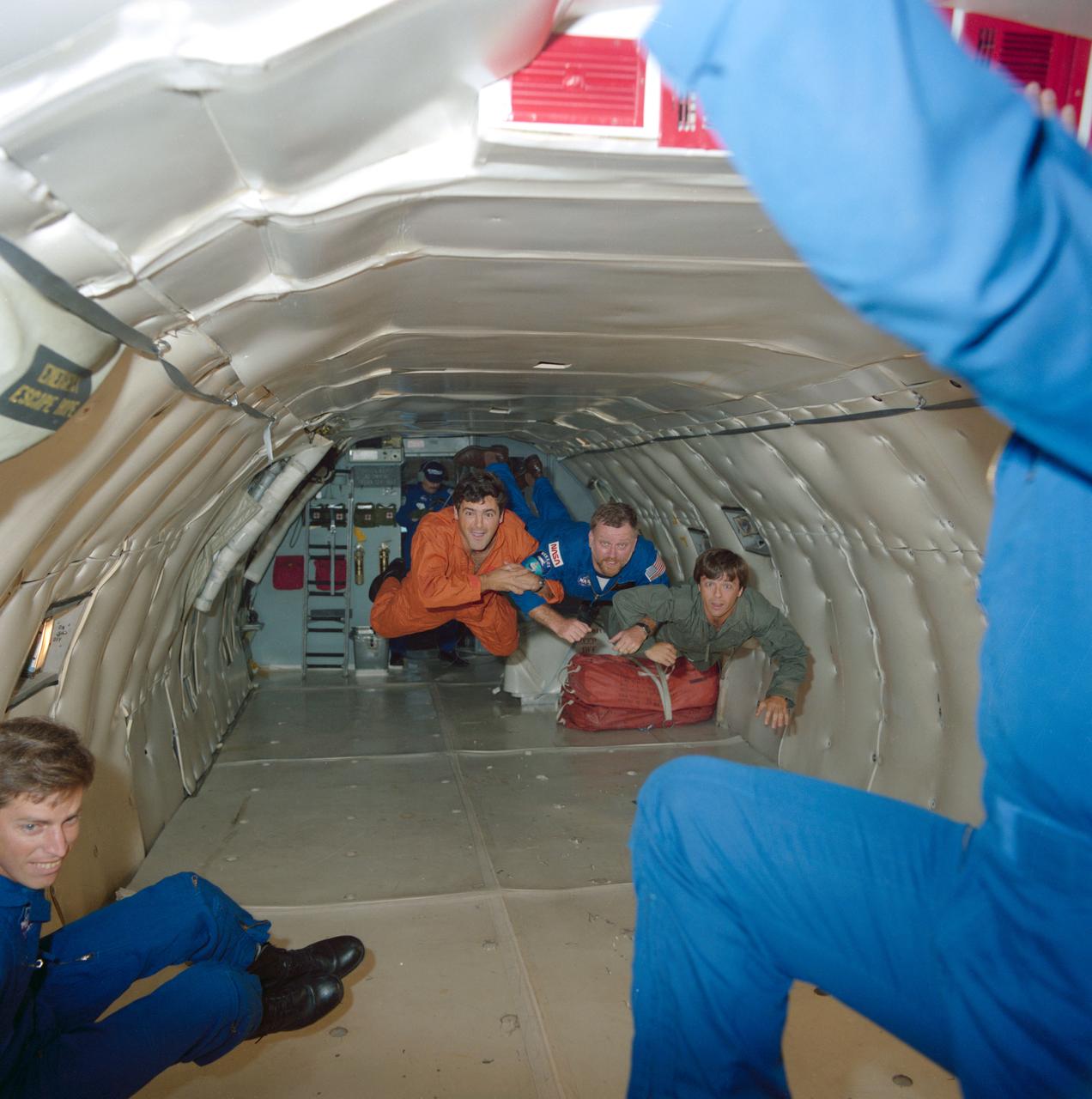
S84-40538 (24 Aug 1984) --- Two 41-G payload specialists and a backup for one of them appear to be at home in zero gravity in this scene photographed aboard a KC-135 "Zero gravity" aircraft flying one of its weightlessness opportunity parabolas. Paul D. Scully-Power, a civilian oceanographer with the U.S. Navey, is flanked by Marc Garneau (left) and Robert Thirsk, both representing the National Research Council of Canada. Thirsk is back up payload specialist for Garneau.
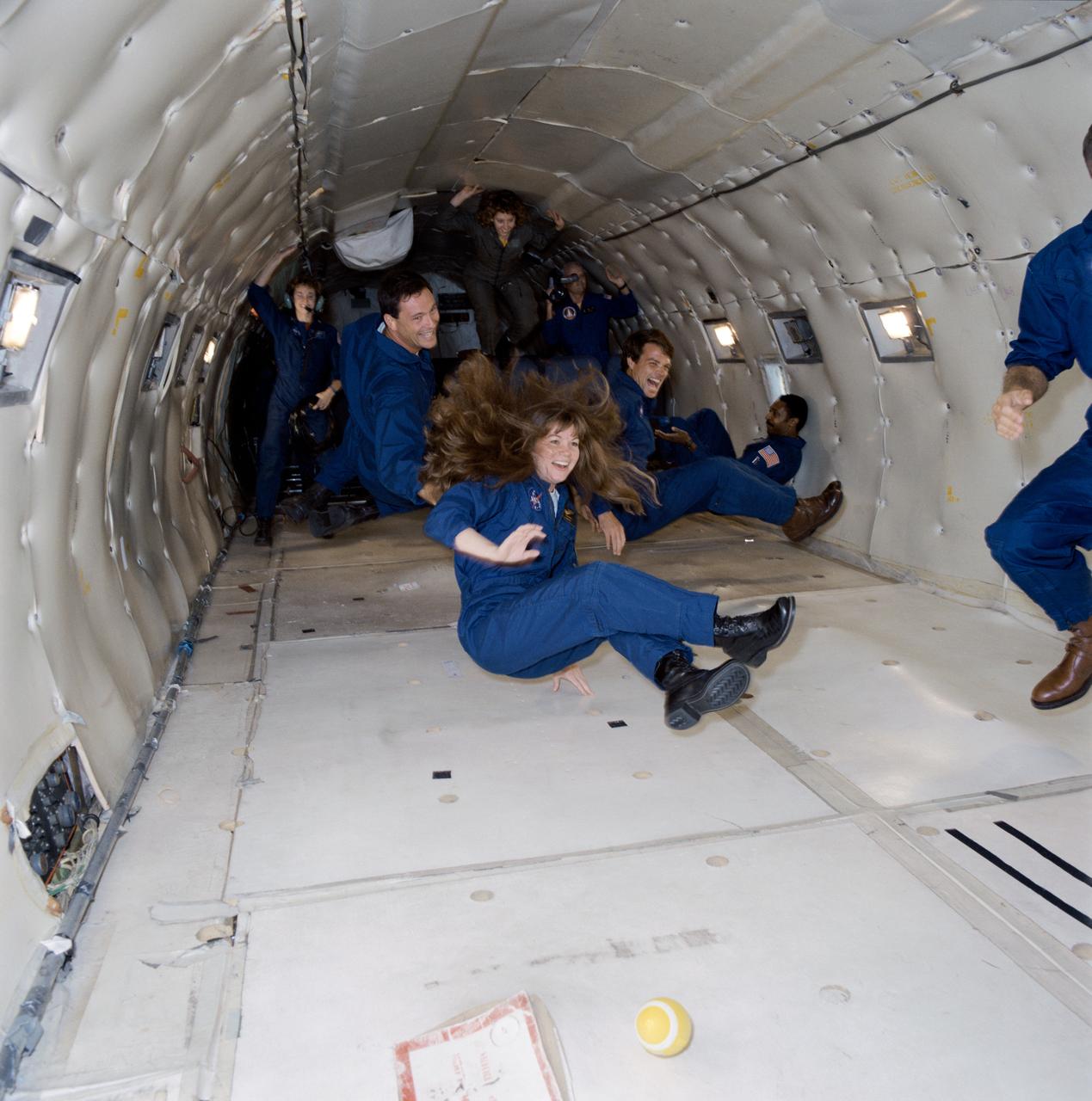
S94-26350 (10 Jan. 1994) --- Astronaut Catherine G. Coleman seems to enjoy the brief period of weightlessness she is sharing with fellow members of the 1992 class of astronauts. The weightless experience was afforded by a special parabolic pattern flown by NASA?s KC-135 ?zero gravity? aircraft. Left to right behind her are astronauts Michael E. Lopez-Alegria, Kevin R. Kregel and Winston E. Scott. EDITOR?S NOTE: Since this photograph was taken the four have been named to flights as follows: Kregel, STS-70; Scott, STS-72.
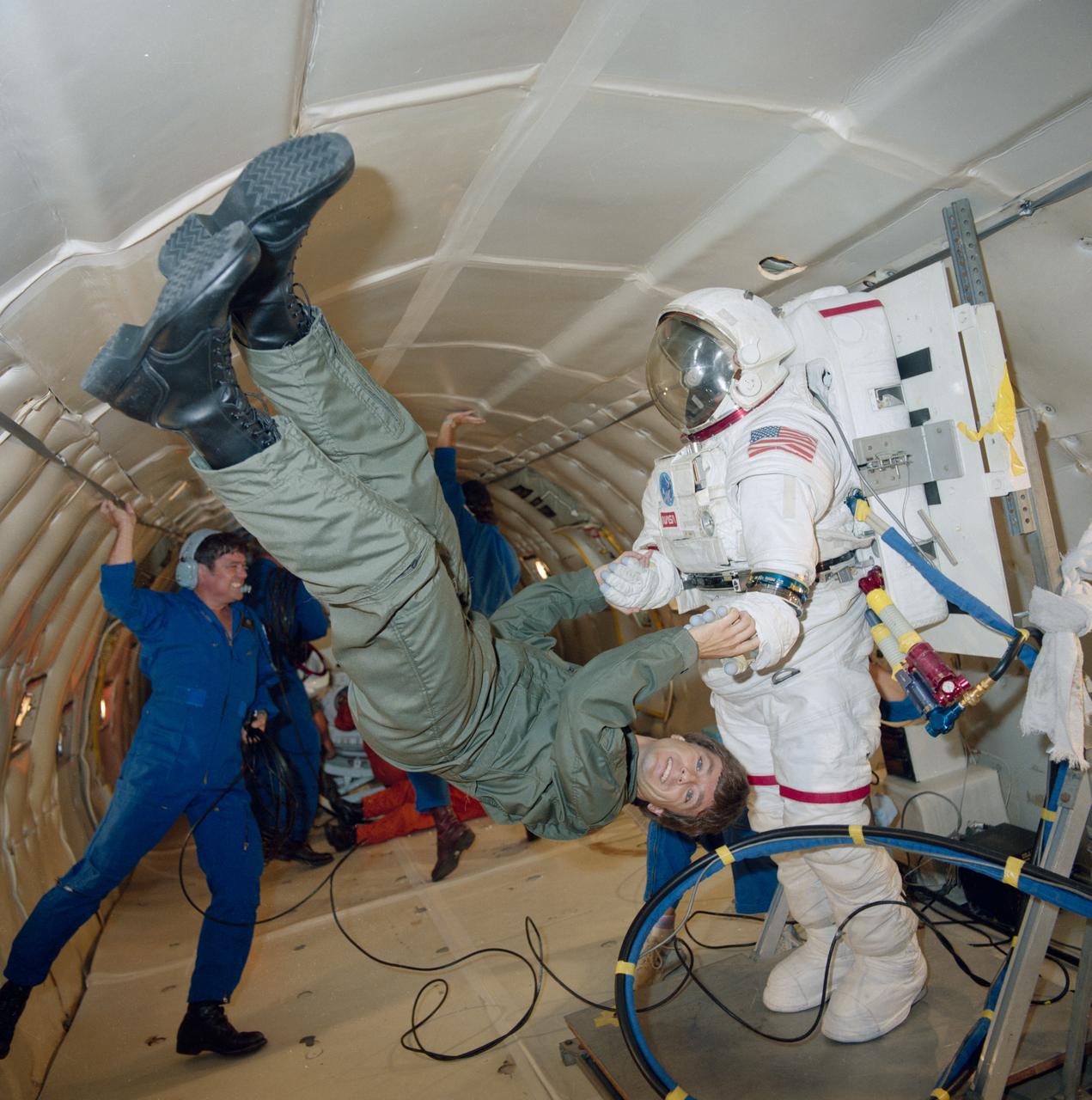
S84-37532 (18 July 1984) --? Robert B. Thirsk, backup payload specialist for 41-G appears to be shaking hands with an unoccupied extravehicular mobility unit (EMU) during a familiarization flight aboard NASA?s KC-135 aircraft. Thirsk, representing Canada?s National Research Council (NRC), serves as backup to Marc Garneau on the seven-member crew for Challenger?s October 1984 flight. This aircraft is used extensively for training and exposing Shuttle crewmembers to weightlessness as well as for evaluation of equipment and experiments scheduled for future flights.
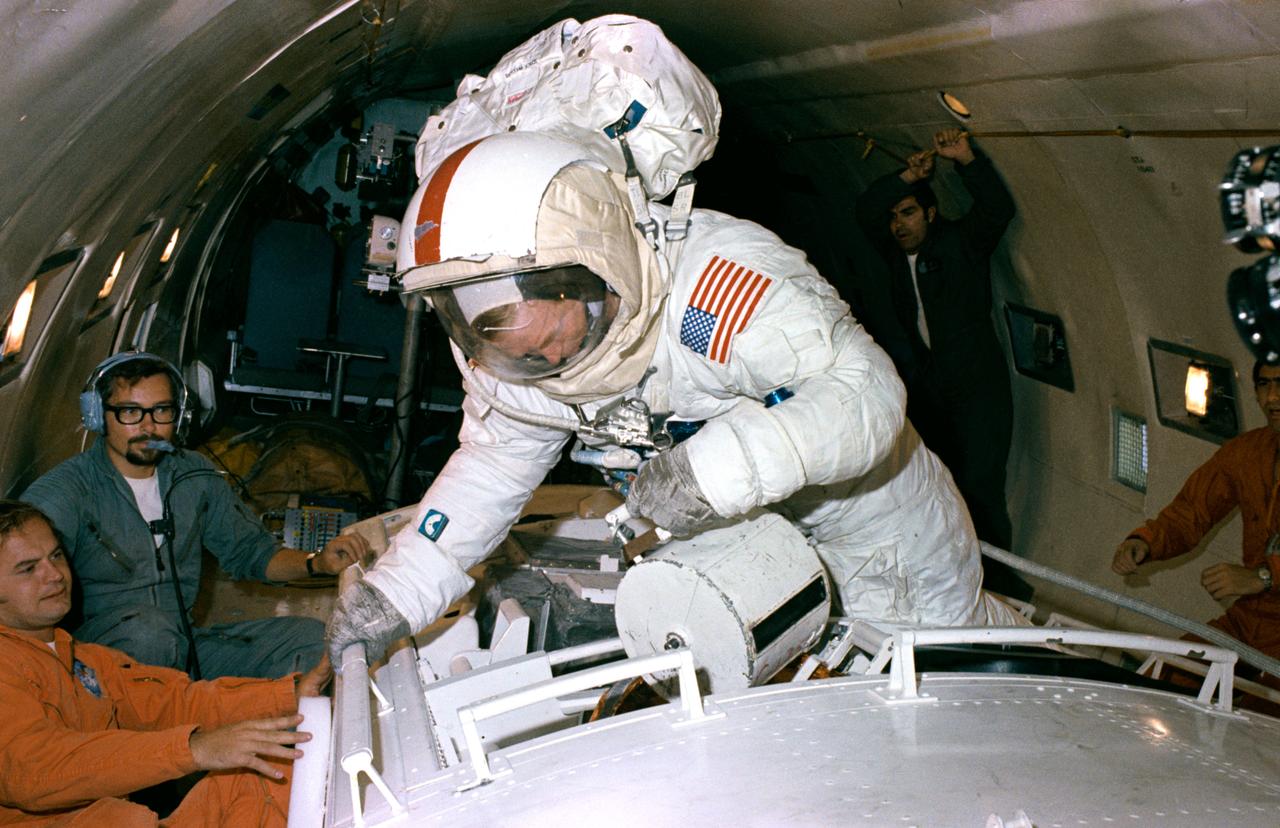
S72-50271 (September 1972) --- Astronaut Stuart A. Roosa, backup crew command module pilot of the Apollo 17 lunar landing mission, participates in extravehicular activity simulation training under zero-gravity conditions aboard a U. S. Air Force KC-135 aircraft. A mock-up of the Scientific Instrument Module (SIM) bay of the Apollo 17 Service Module is used in the exercise. Here, Roosa simulates retrieving the film cassette of the Mapping Camera from the SIM bay. Astronaut Ronald E. Evans, Apollo 17 prime crew command module pilot, is scheduled to receive film cassettes from the Mapping Camera, Panoramic Camera, and Lunar Sounder during Apollo 17 trans-Earth extravehicular activity.
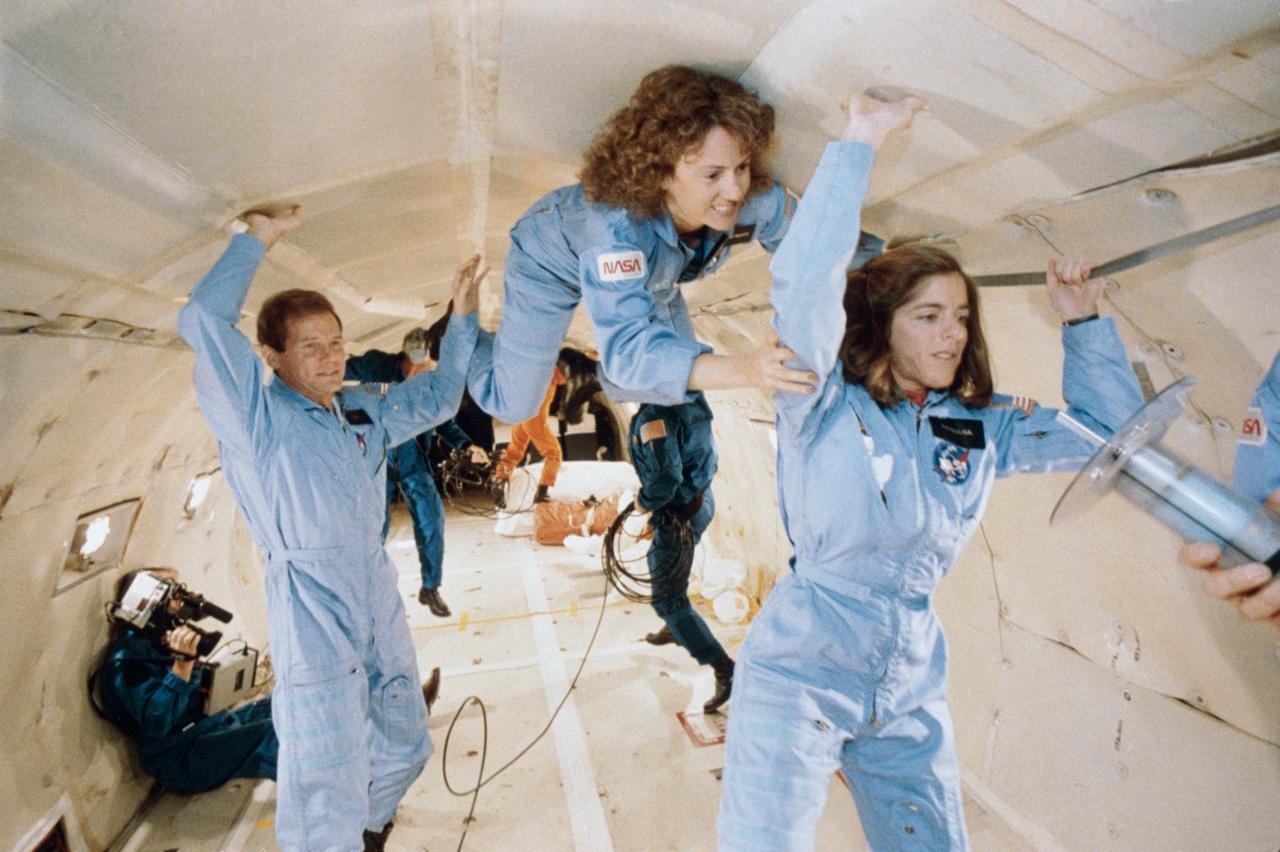
S86-25192 (January 1986) --- Two payload specialists in training for the STS-51L mission, and a payload specialist from STS-61C share a ?zero-gravity? flight aboard a KC-135 aircraft over the Gulf of Mexico. Left to right are United States Representative Bill Nelson (Democrat, Florida), Sharon Christa McAuliffe, and Barbara R. Morgan. The congressman is a payload specialist for the STS-61C mission. McAuliffe is the prime payload specialist for the Teacher-in-Space Project aboard the STS-51L mission; and Morgan is her backup. The photo was taken by Keith meyers of the New York Times. EDITOR?S NOTE: The STS-51L crew members lost their lives in the space shuttle Challenger accident moments after launch on Jan. 28, 1986 from the Kennedy Space Center (KSC). Photo credit: NASA
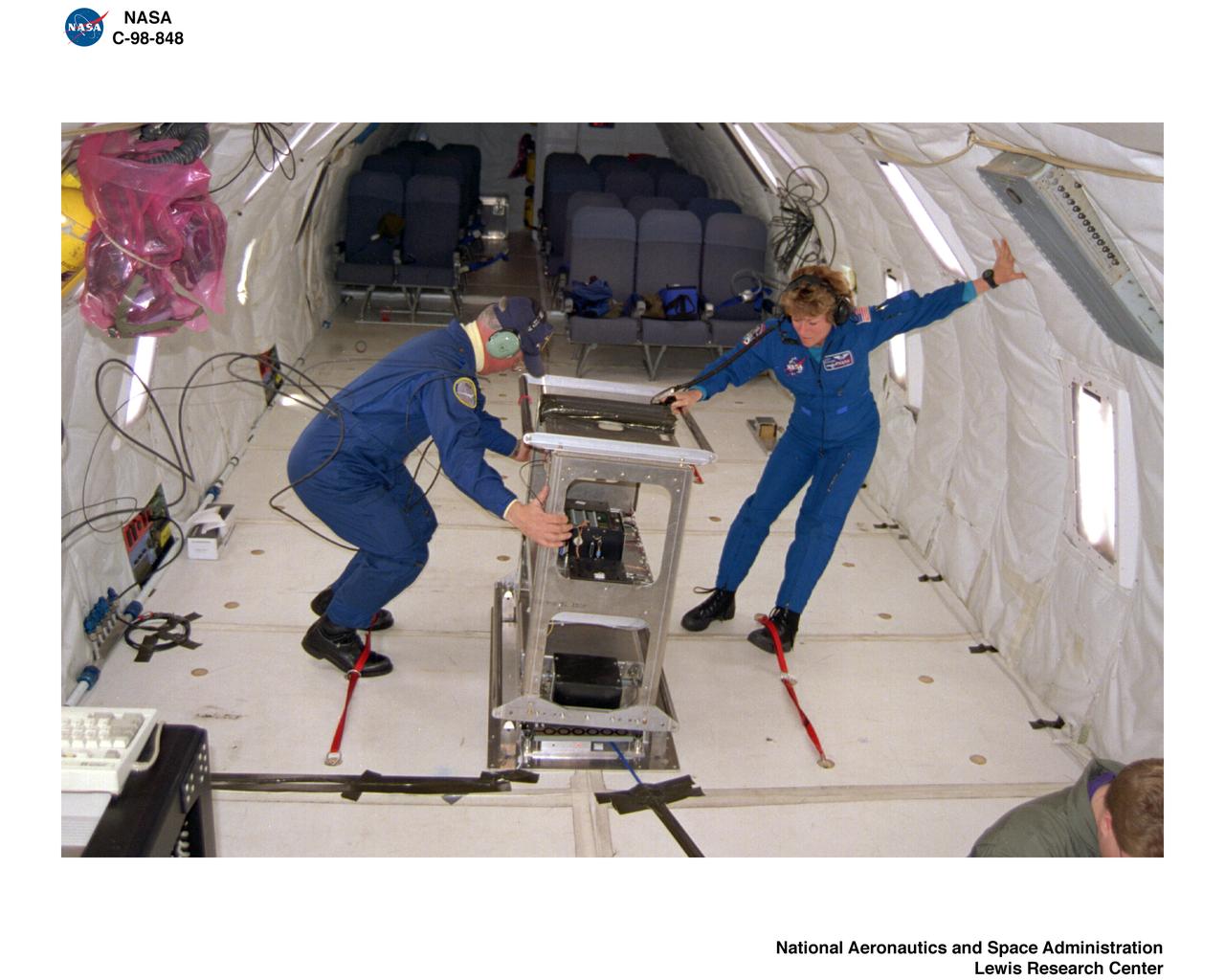
KC-135 AIRPLANE MICROGRAVITY FLIGHT
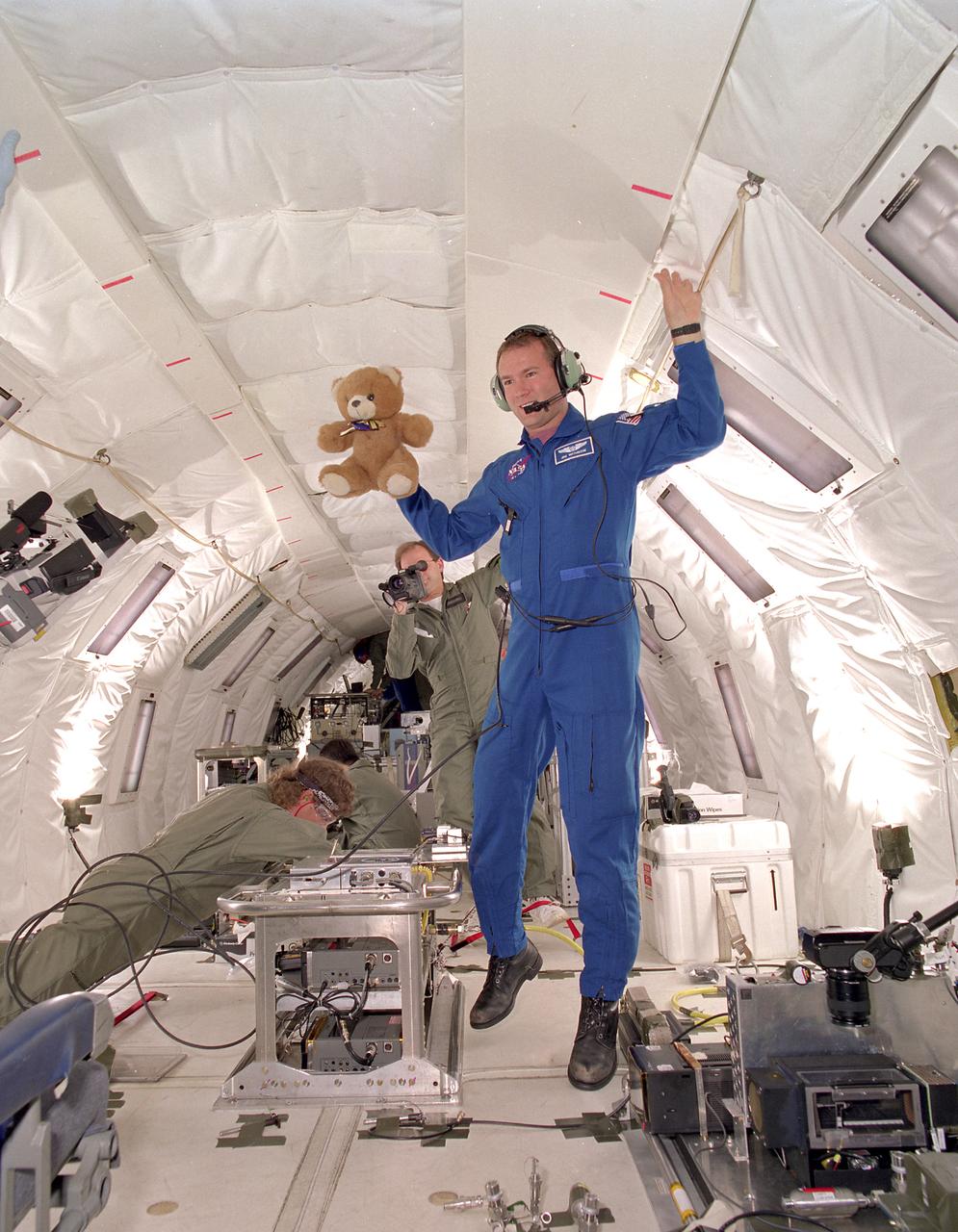
JIM WITHROW ON THE KC-135 AIRPLANE WITH BUCKEYE BEAR
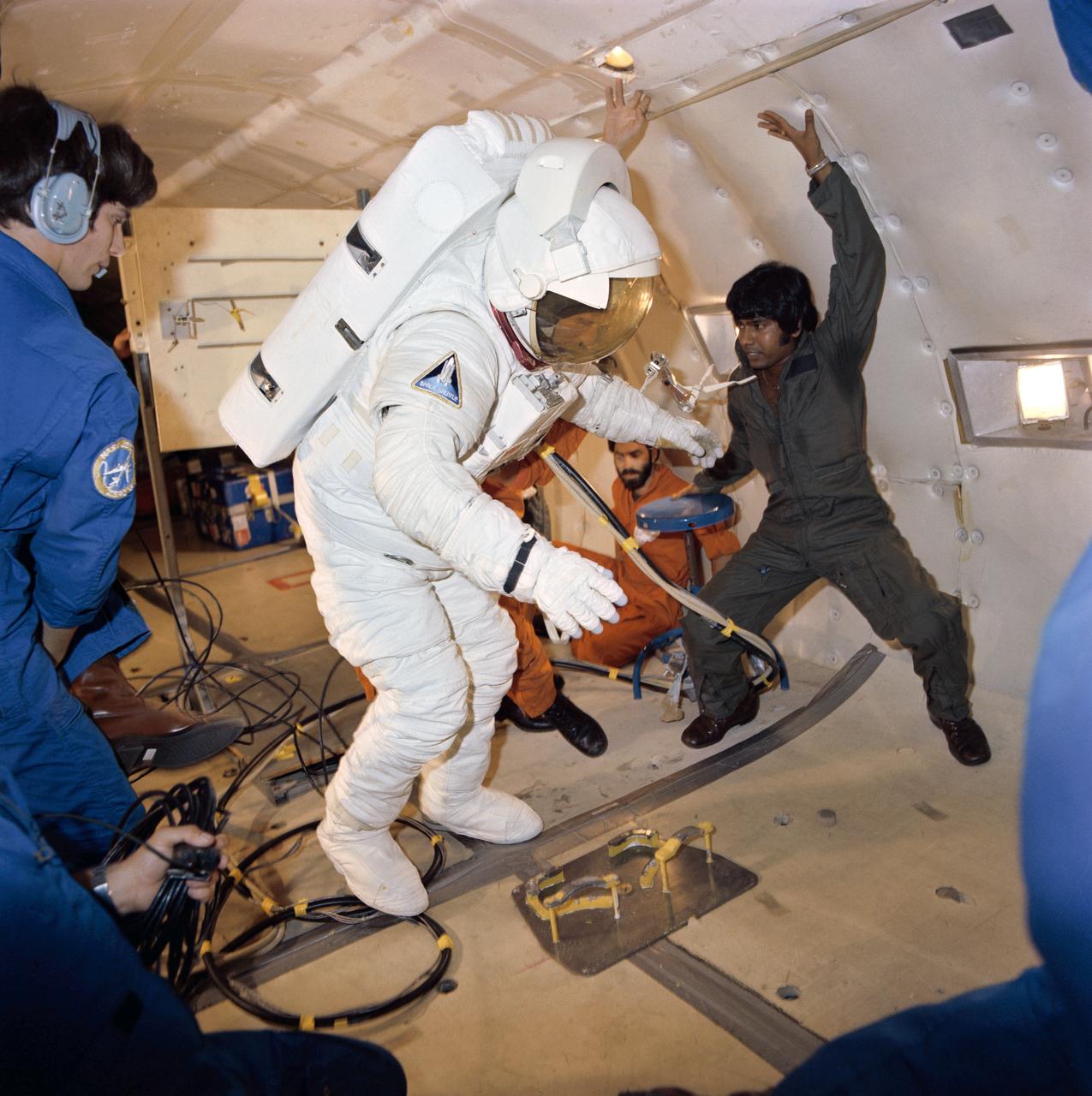
S81-34448 (July 1981) --- Astronaut C. Gordon Fullerton, STS-3 pilot, fully suited, gets a preview of what it might be like in space during a flight aboard NASA's KC-135 "zero-gravity" aircraft. A special parabolic pattern flown the aircraft provides short periods of weightlessness. Fullerton's suit is an Extravehicular Mobility Unit (EMU), used by astronauts when leaving the shirt-sleeve environment of their shuttle orbiter to go outside perform tasks in space. There are no such EVA plans on STS-3, but crew members are trained in this area in the event of the necessity to perform chores in space that for some reason or other can't be done remotely. The astronaut has just donned his suit during a parabola and now takes the opportunity to float around in the absence of gravity. Photo credit: NASA
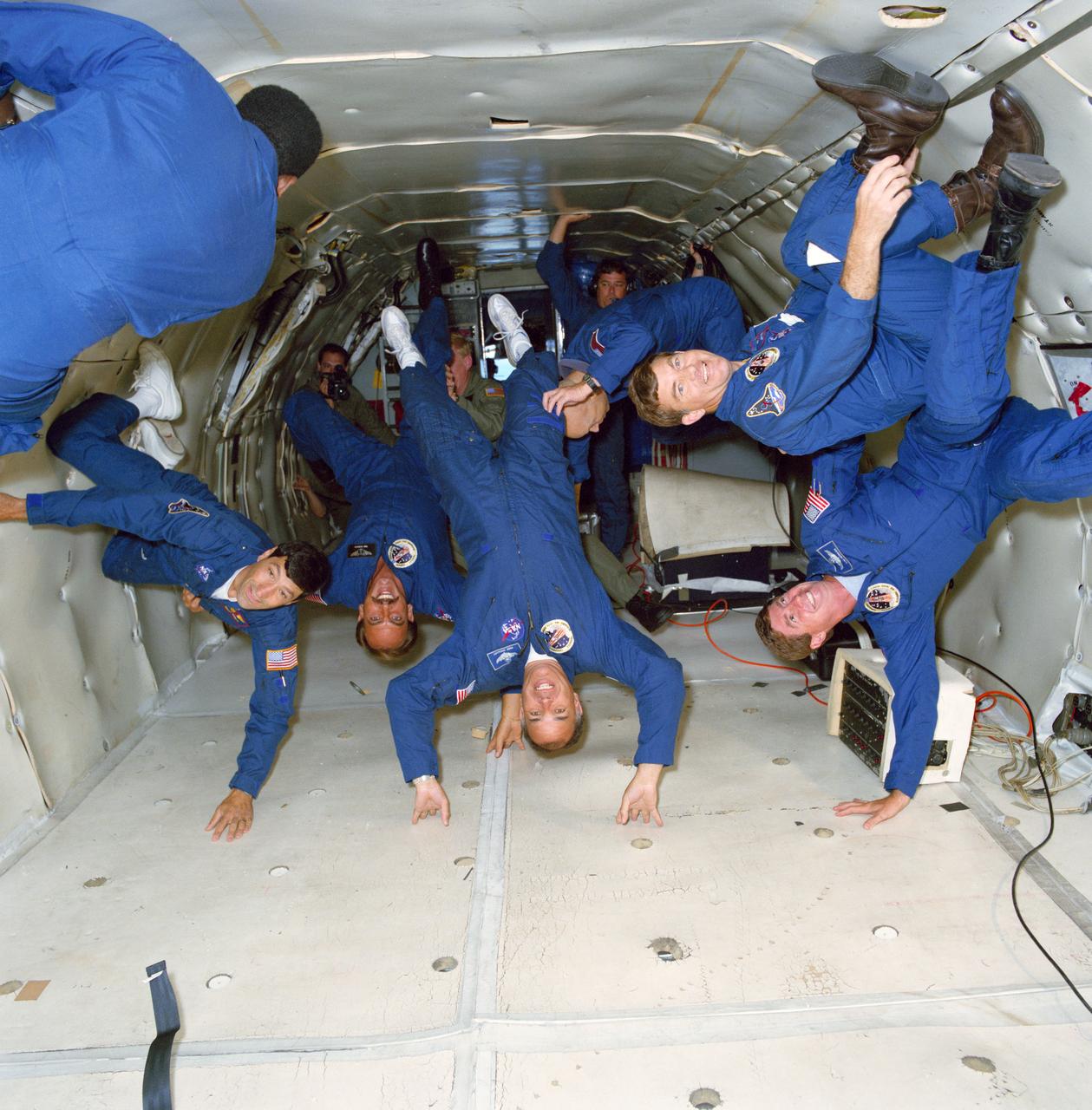
S91-38355 (28 May 1991) --- Seen floating about the vacant spaces of the Johnson Space Center's KC-135 "zero-gravity" aircraft are the six crewmembers for the STS 44 mission. Left to right are Terence T. Henricks, James S. Voss, F. Story Musgrave (partially obscured), Frederick D. Gregory, Thomas J. Hennen and Mario Runco Jr. Gregory is mission commander. Hennen is payload specialist for this flight, dedicated to the Department of Defense. The flight served as a refresher and a preview of the experience of weightlessness, as the special aircraft flew a series of parabolas which provided short sessions of zero-gravity.
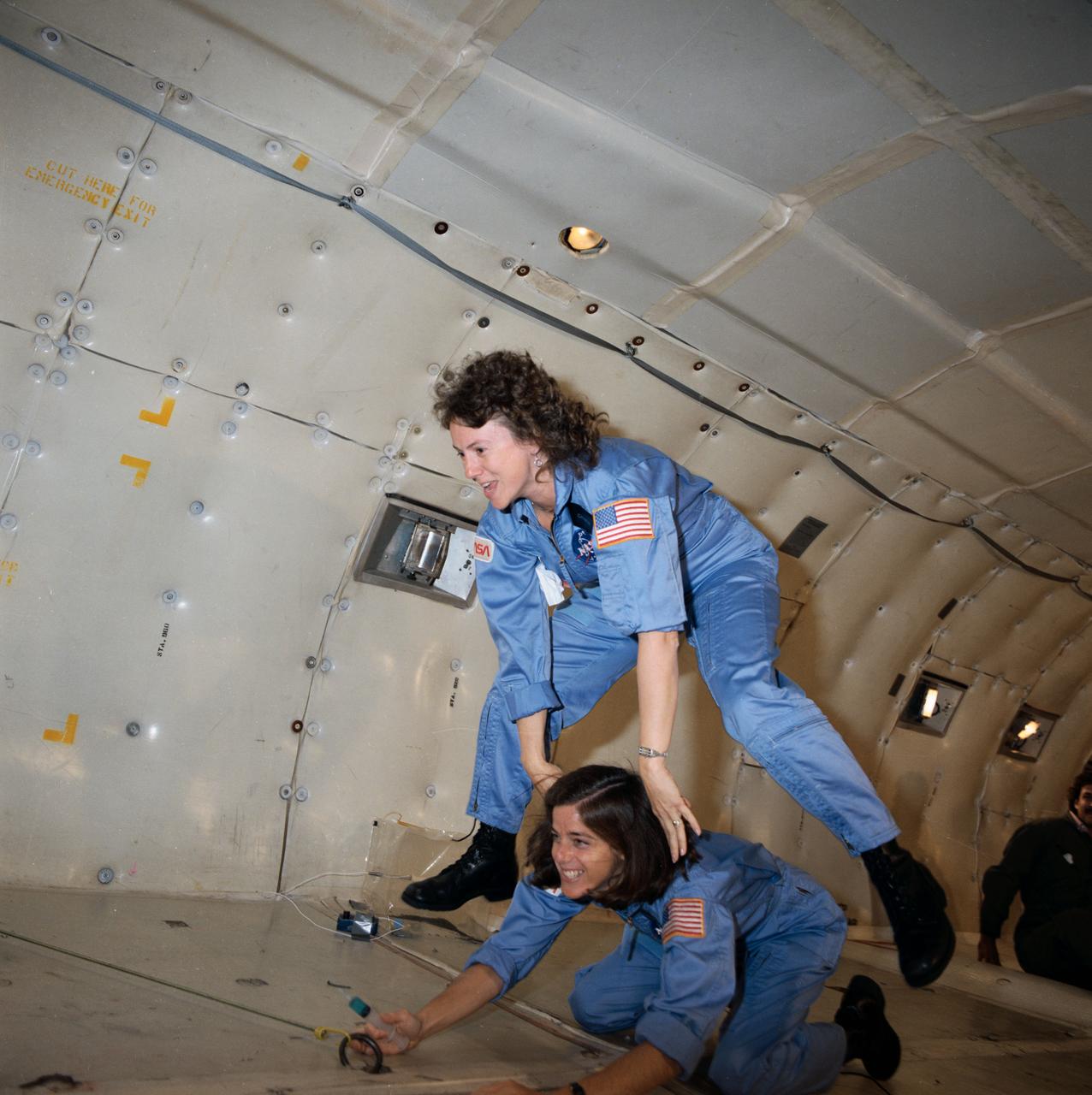
S85-42472 (16 Oct. 1985) --- Teacher-in-Space trainees on the KC-135 for zero-G training. Sharon Christa McAuliffe, right, and Barbara R. Morgan, play leap-frog in the temporary weightlessness of the KC-135. Photo credit: NASA
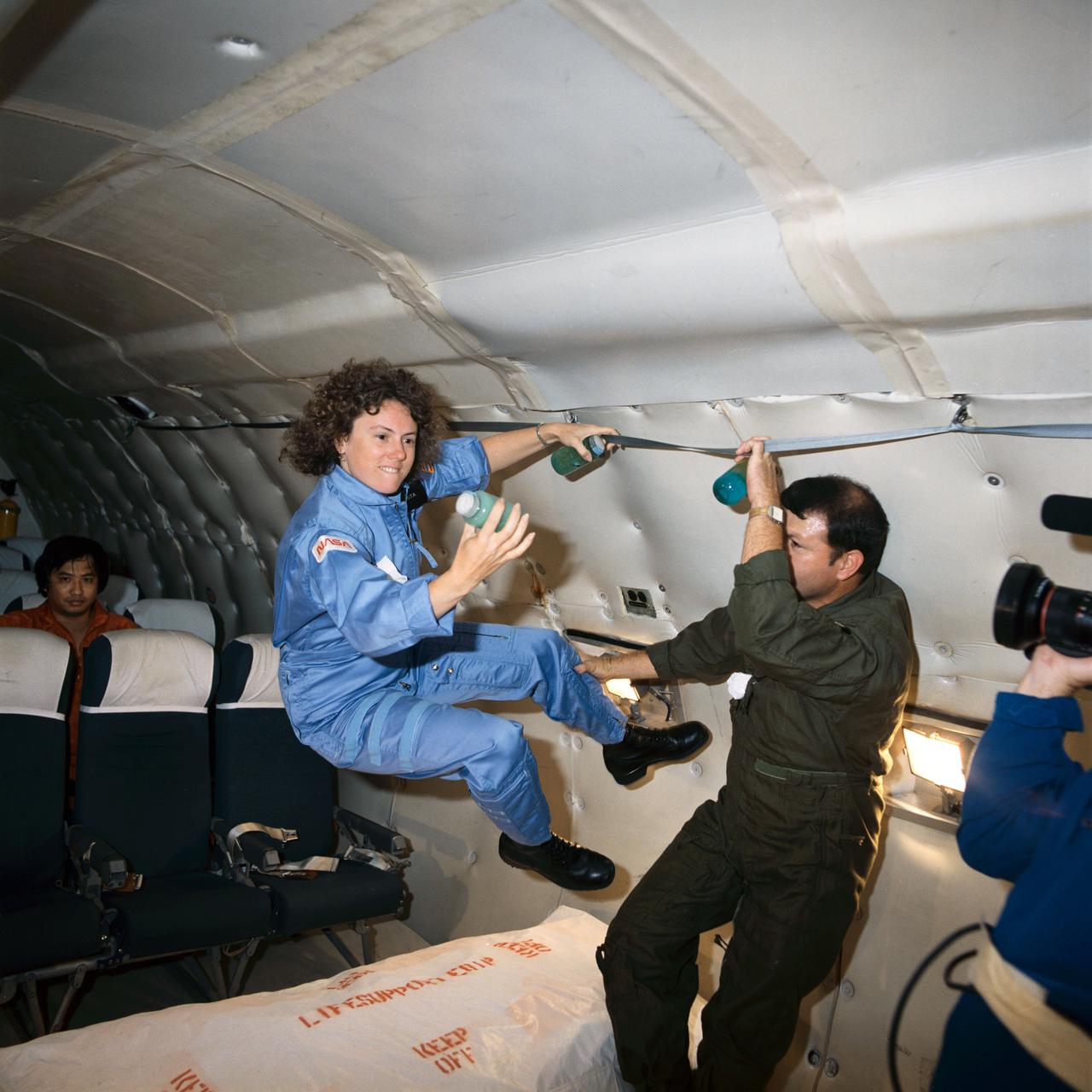
Teacher-in-Space trainees on the KC-135 for Zero-G training. Sharon Christa McAuliffe experiences a few moments of weightlessness provided by the KC-135. She and Bob Mayfield, a JSC Aerospace Education Specialist, are previewing a Molecular Mixing Experiment which was designed to demonstrate differences of separation process in 1-G and Zero-G.
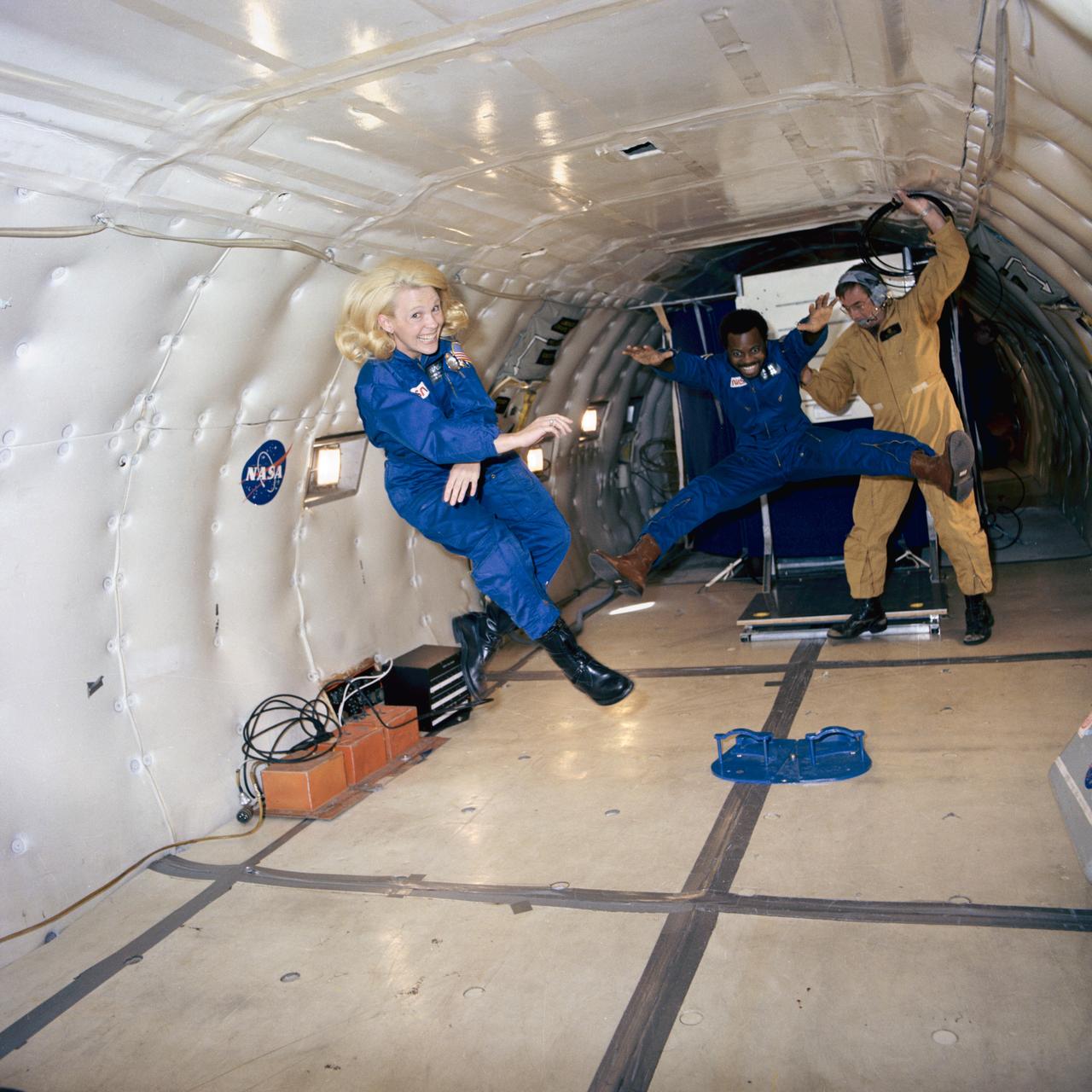
Zero-gravity experiments in KC-135 conducted by John Young, Robert L. Crippen, Joseph Kerwin, and Margaret Seddon. 1. Kerwin, Joseph - Zero-G 2. Seddon, Margaret - Zero-G 3. Young, John - Zero-G 4. Aircraft - KC-135
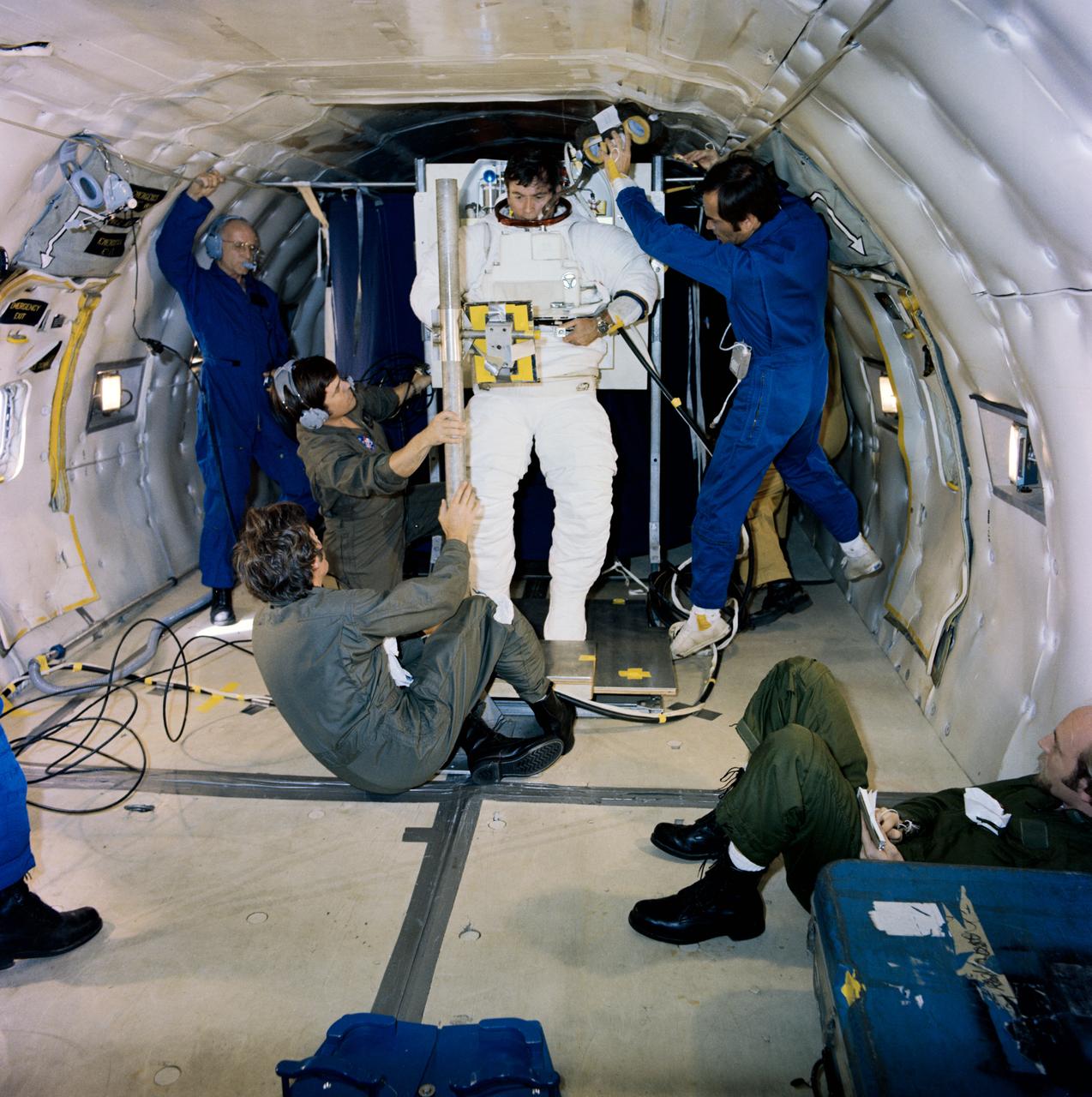
S79-30347 (31 March 1979) --- Taking advantage of a brief period of zero-gravity afforded aboard a KC-135 flying a parabolic curve, the flight crew of the first space shuttle orbital flight test (STS-1) goes through a spacesuit donning exercise. Astronaut John W. Young has just entered the hard-material torso of the shuttle spacesuit by approaching it from below. He is assisted by astronaut Robert L. Crippen. The torso is held in place by a special stand here, simulating the function provided by the airlock wall aboard the actual shuttle craft. The life support system is mated to the torso on Earth and remains so during the flight, requiring this type of donning and doffing exercise. Note Crippen?s suit is the type to be used for intravehicular activity in the shirt sleeve environment to be afforded aboard shuttle. The suit worn by Young is for extravehicular activity (EVA). Young will be STS-1 commander and Crippen, pilot. They will man the space shuttle orbiter 102 Columbia. Photo credit: NASA
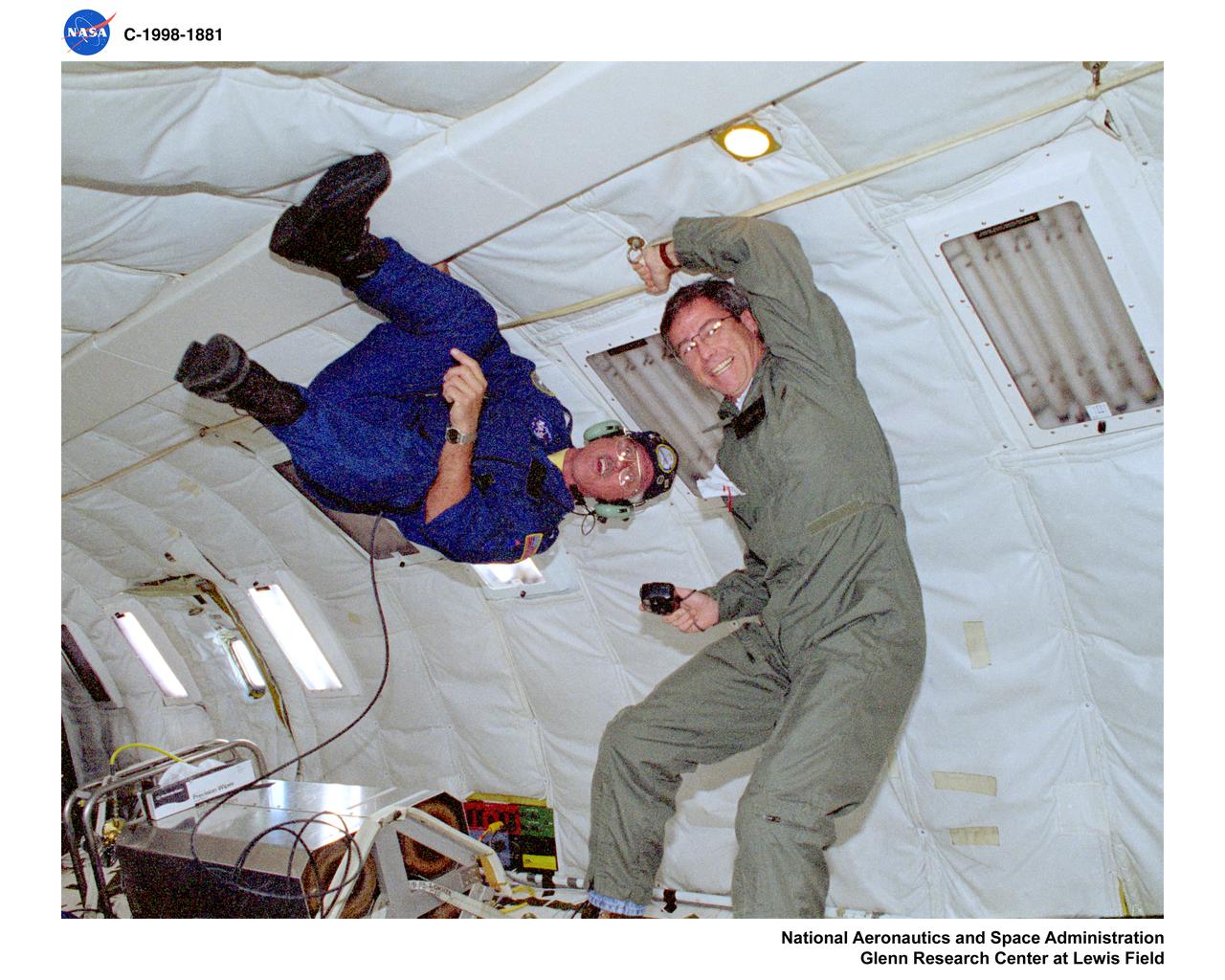
KC-135 AIRPLANE FLIGHT AT LEWIS RESEARCH CENTER DURING WEEK OF AUGUST 17 THROUGH 22 1998
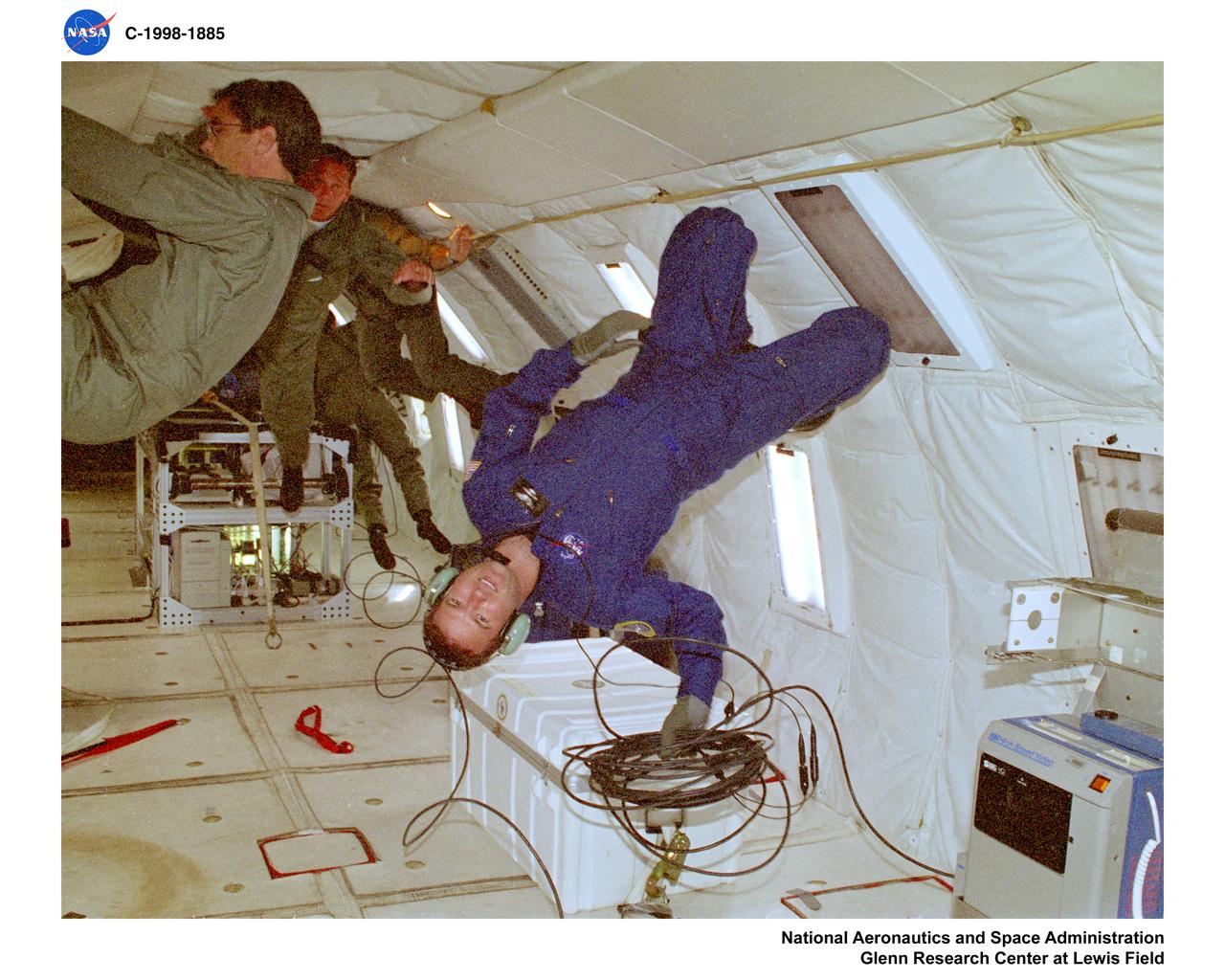
KC-135 AIRPLANE FLIGHT AT LEWIS RESEARCH CENTER DURING WEEK OF AUGUST 17 THROUGH 22 1998
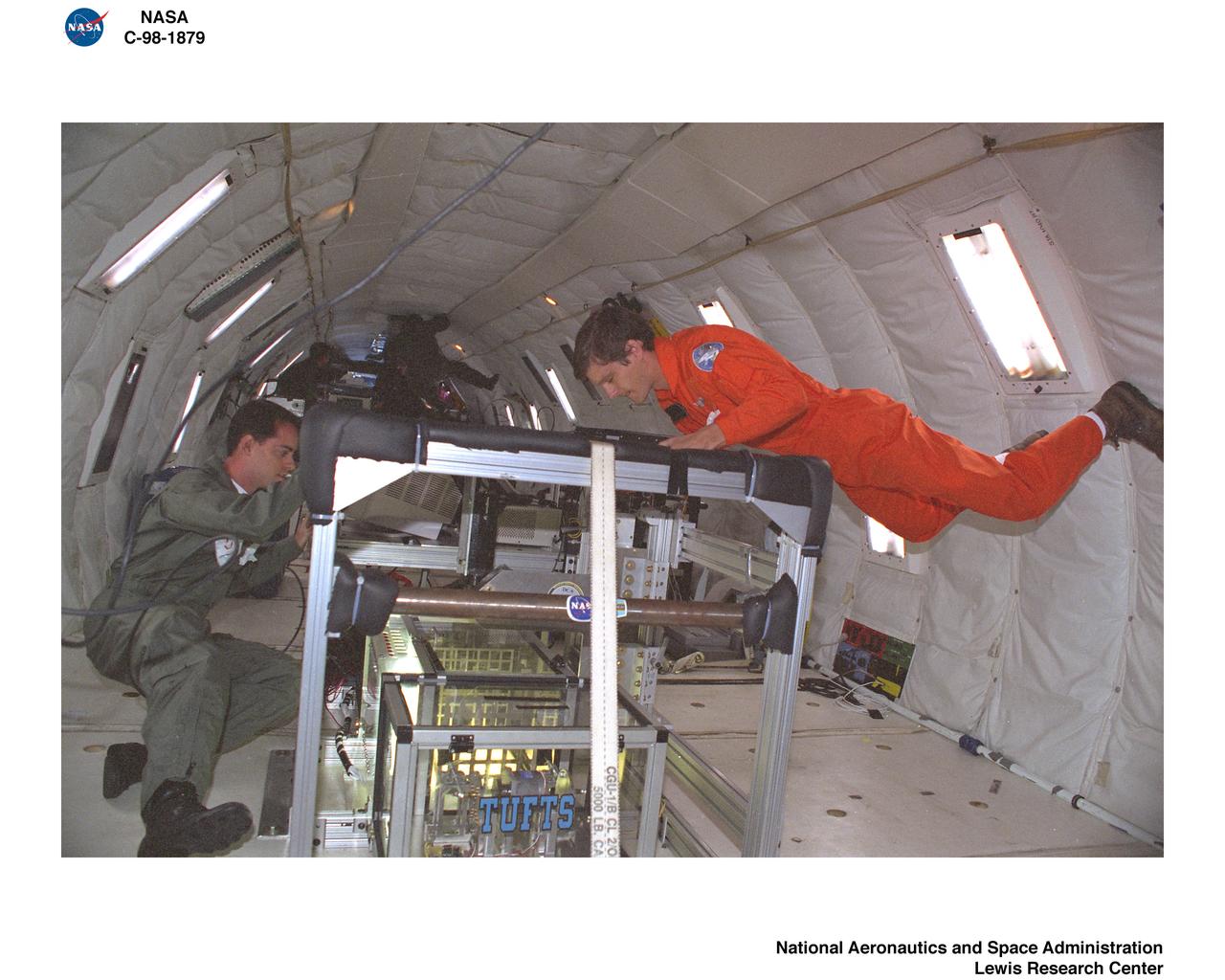
KC-135 AIRPLANE FLIGHT AT LEWIS RESEARCH CENTER DURING WEEK OF AUGUST 17 THROUGH 22 1998
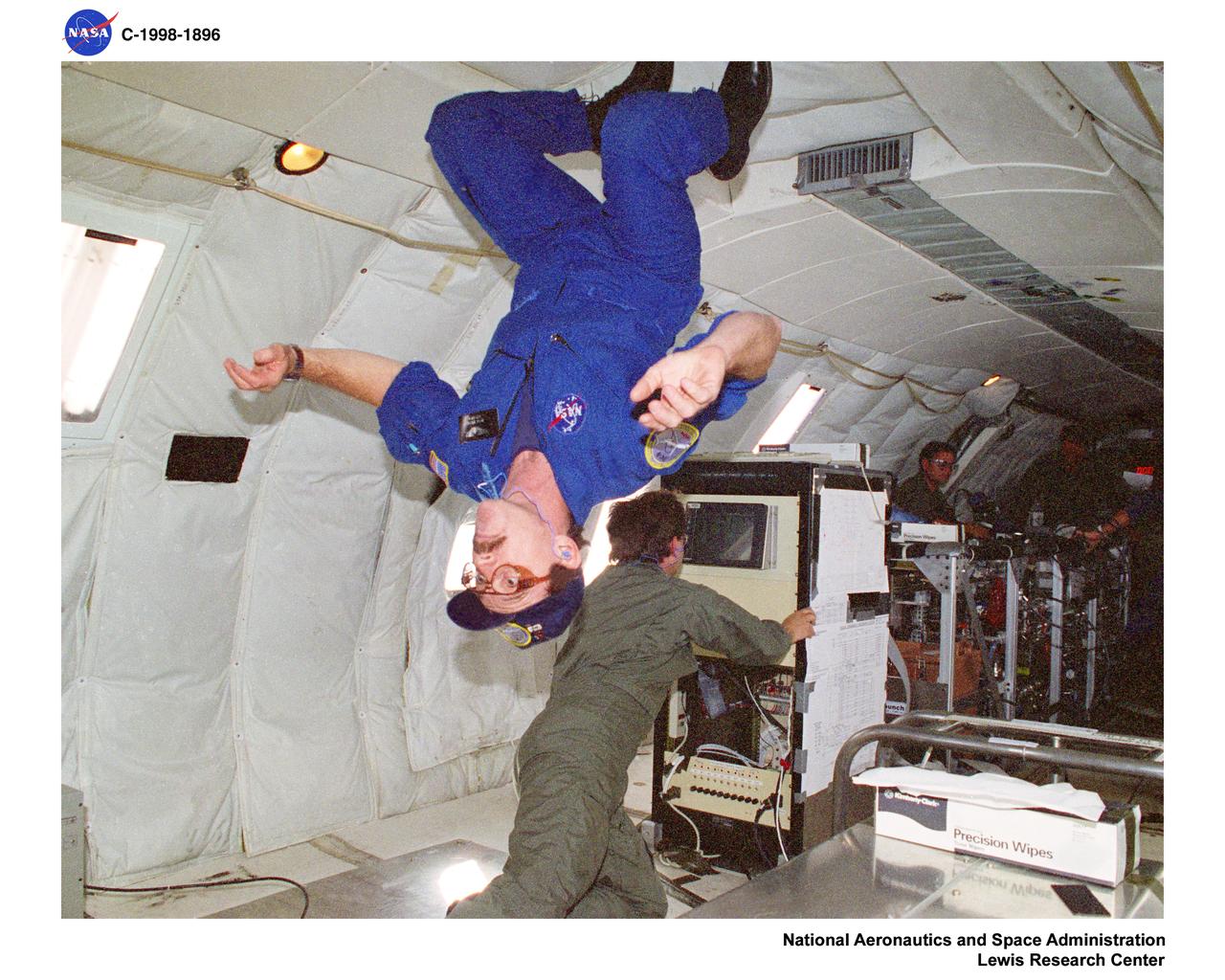
KC-135 AIRPLANE FLIGHT AT LEWIS RESEARCH CENTER DURING WEEK OF AUGUST 17 THROUGH 22 1998
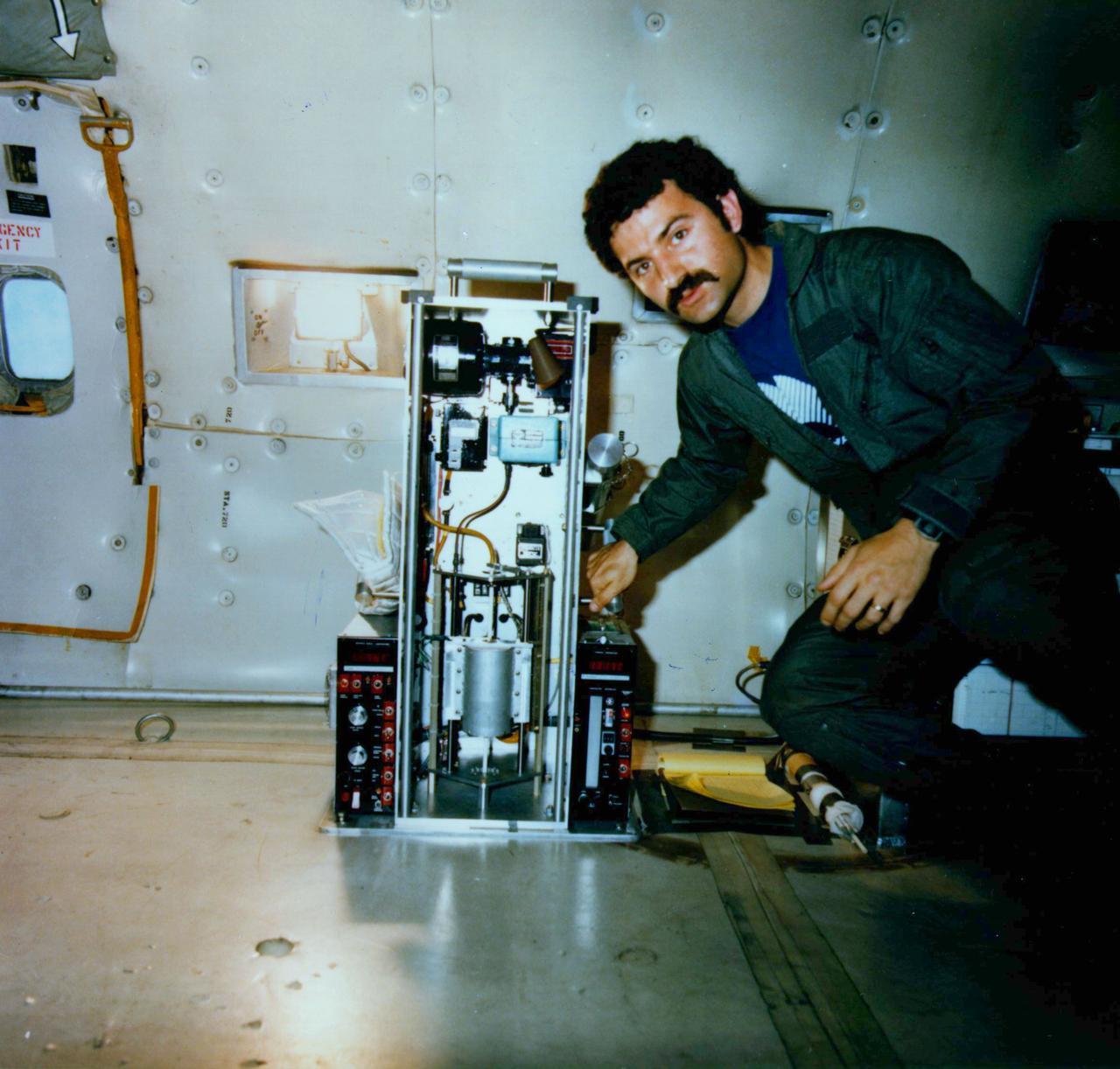
Peter Curerri with KC-135 experiment hardware, a prototype aircraft version of Advanced Automated Directional Solidification Furnace (AADSF).
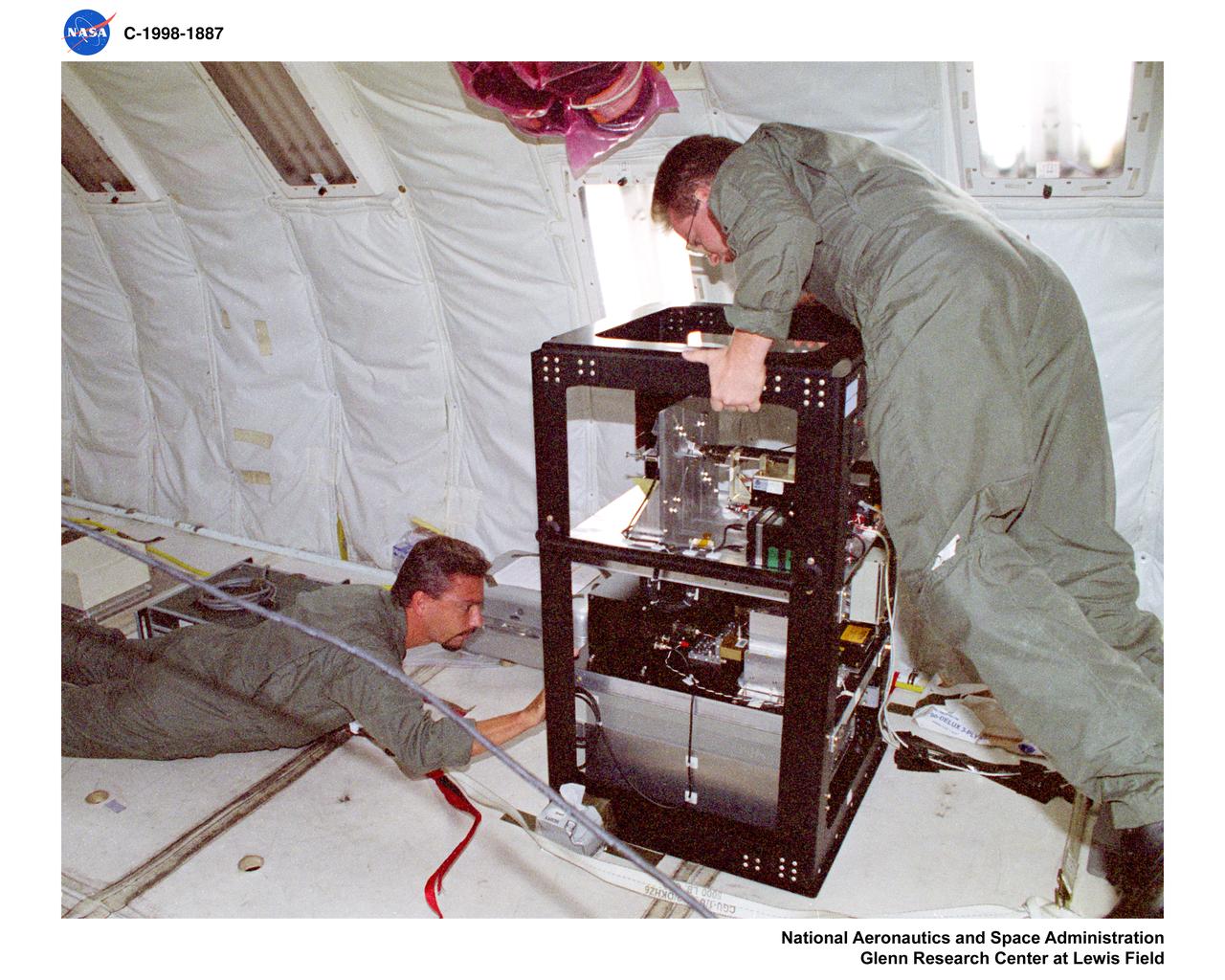
KC-135 AIRPLANE FLIGHT AT LEWIS RESEARCH CENTER DURING WEEK OF AUGUST 17 THROUGH 22 1998
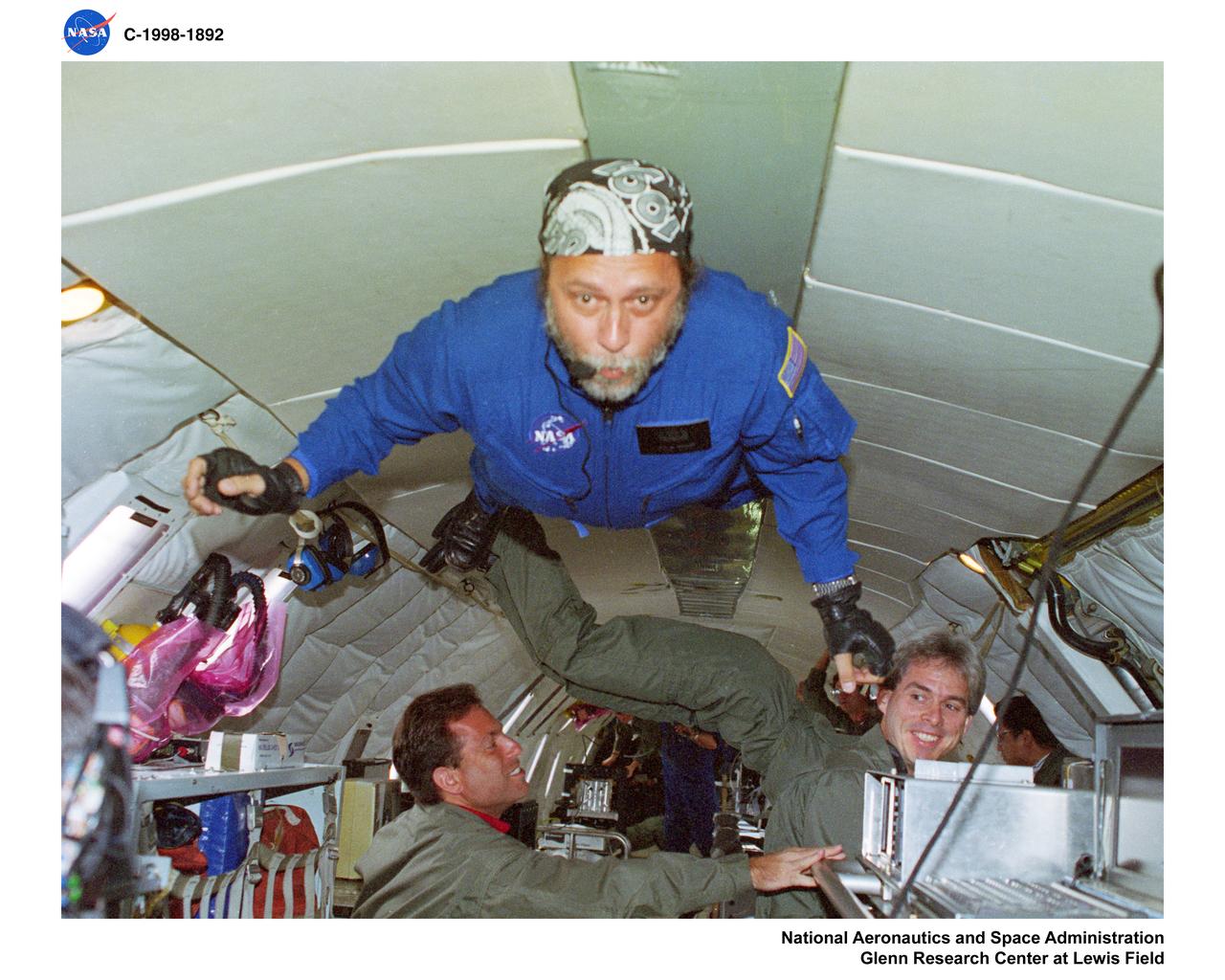
KC-135 AIRPLANE FLIGHT AT LEWIS RESEARCH CENTER DURING WEEK OF AUGUST 17 THROUGH 22 1998
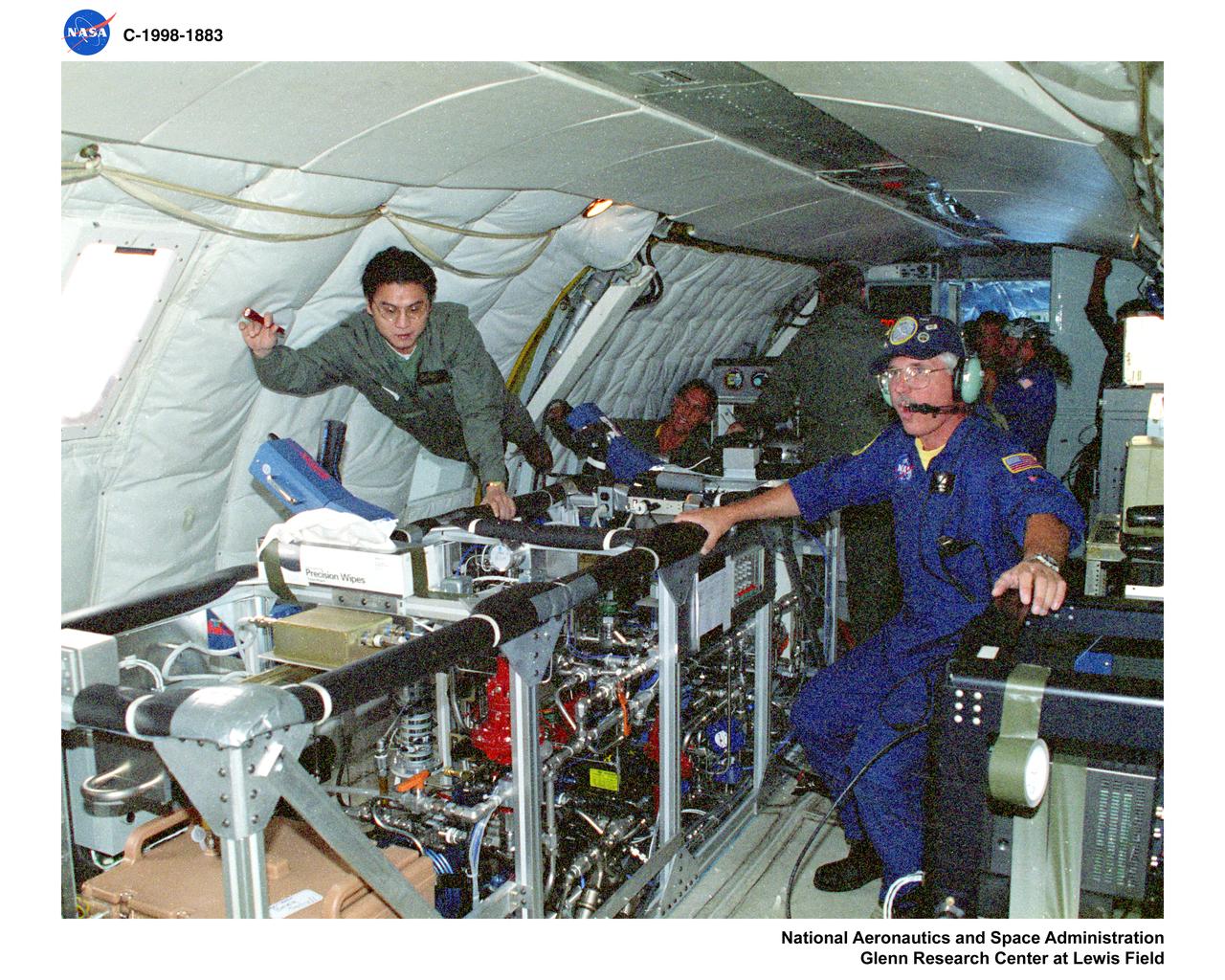
KC-135 AIRPLANE FLIGHT AT LEWIS RESEARCH CENTER DURING WEEK OF AUGUST 17 THROUGH 22 1998
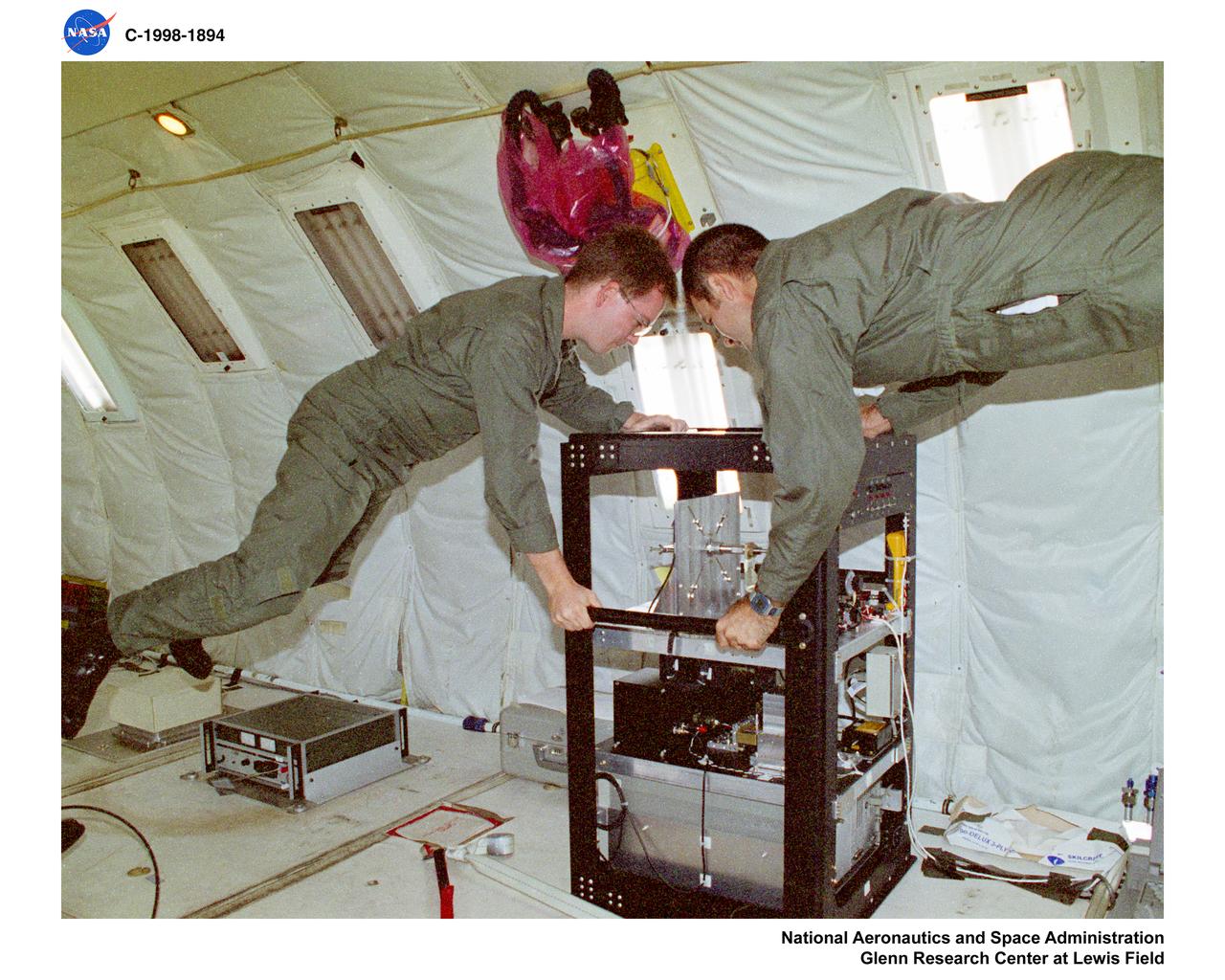
KC-135 AIRPLANE FLIGHT AT LEWIS RESEARCH CENTER DURING WEEK OF AUGUST 17 THROUGH 22 1998
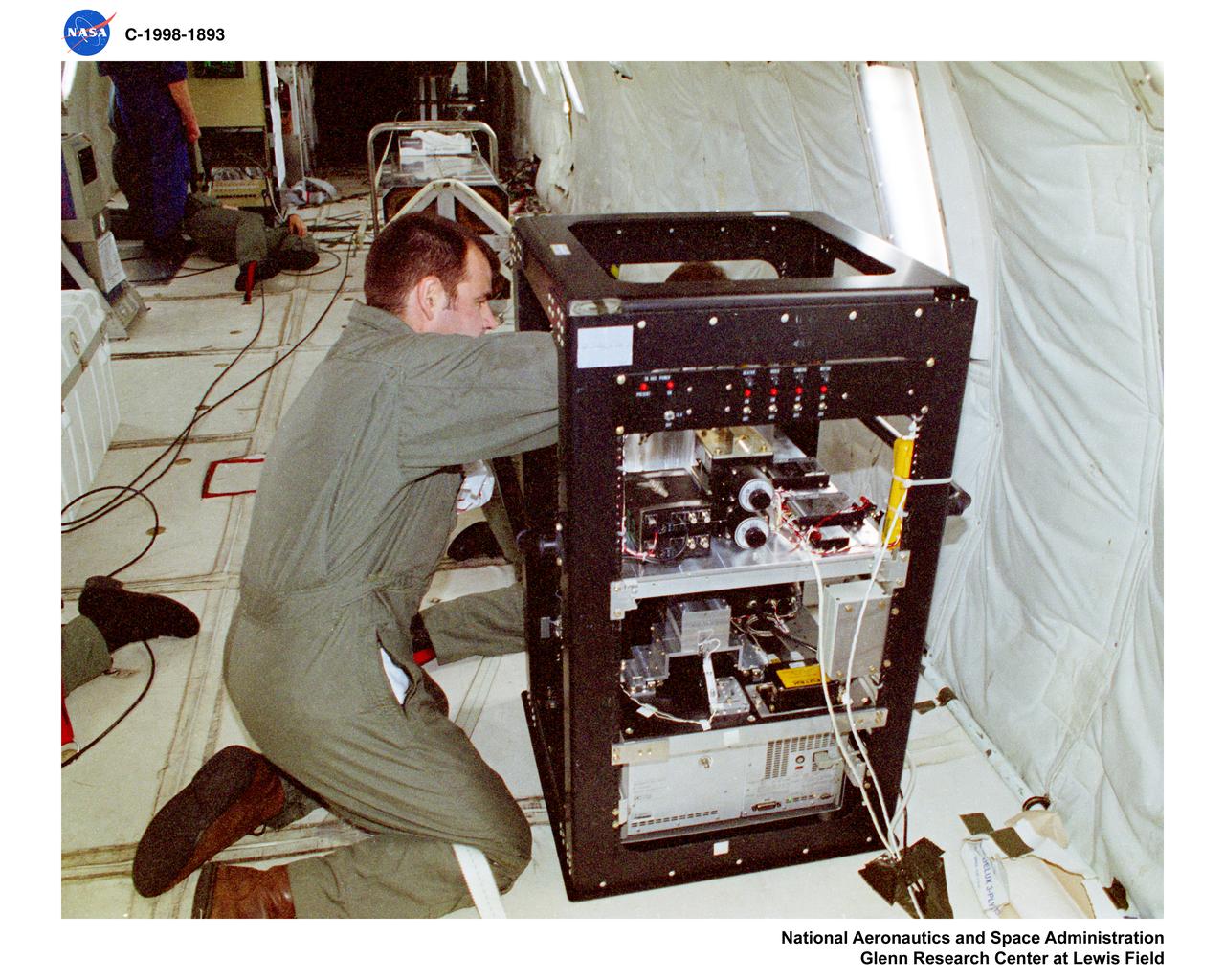
KC-135 AIRPLANE FLIGHT AT LEWIS RESEARCH CENTER DURING WEEK OF AUGUST 17 THROUGH 22 1998
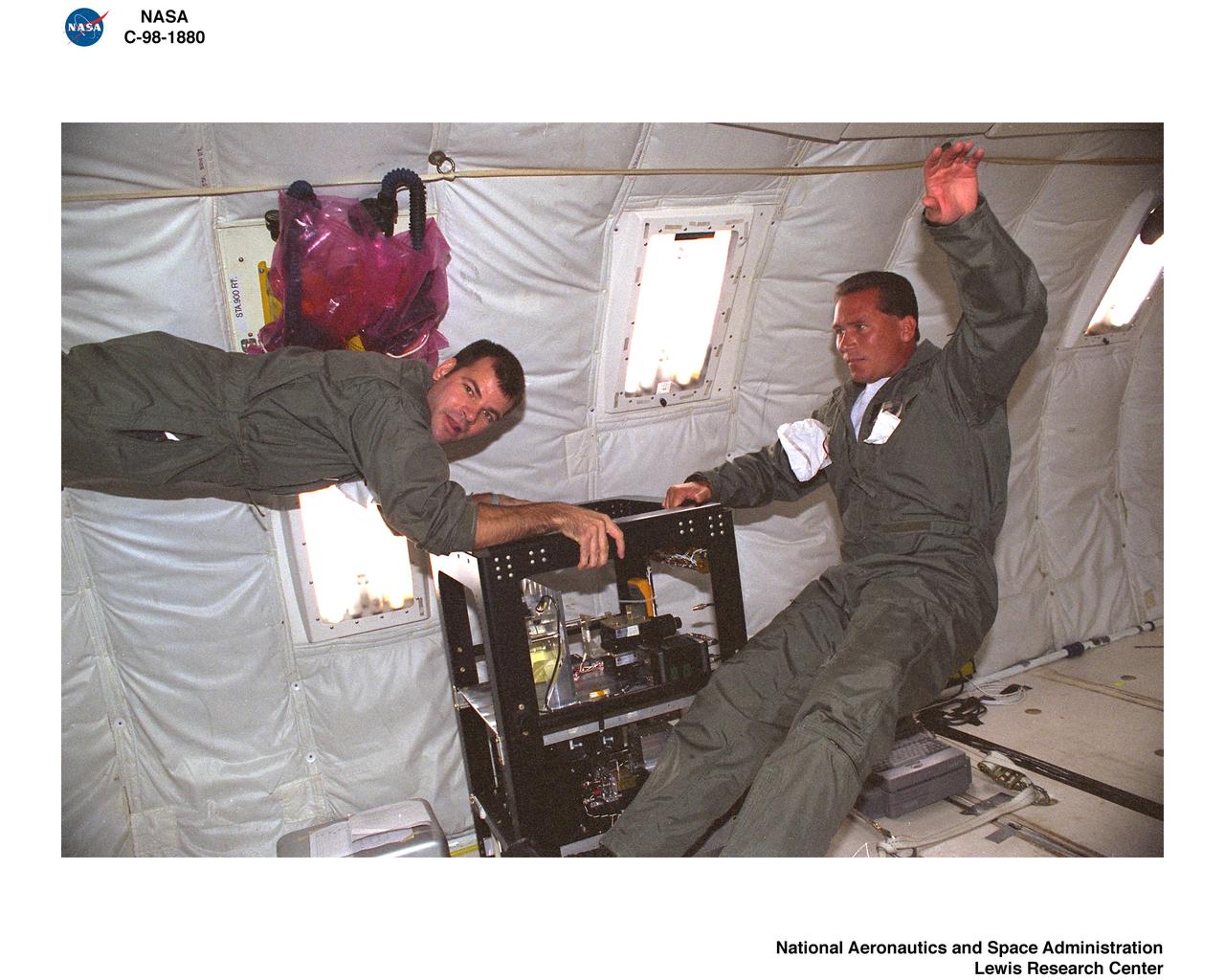
KC-135 AIRPLANE FLIGHT AT LEWIS RESEARCH CENTER DURING WEEK OF AUGUST 17 THROUGH 22 1998
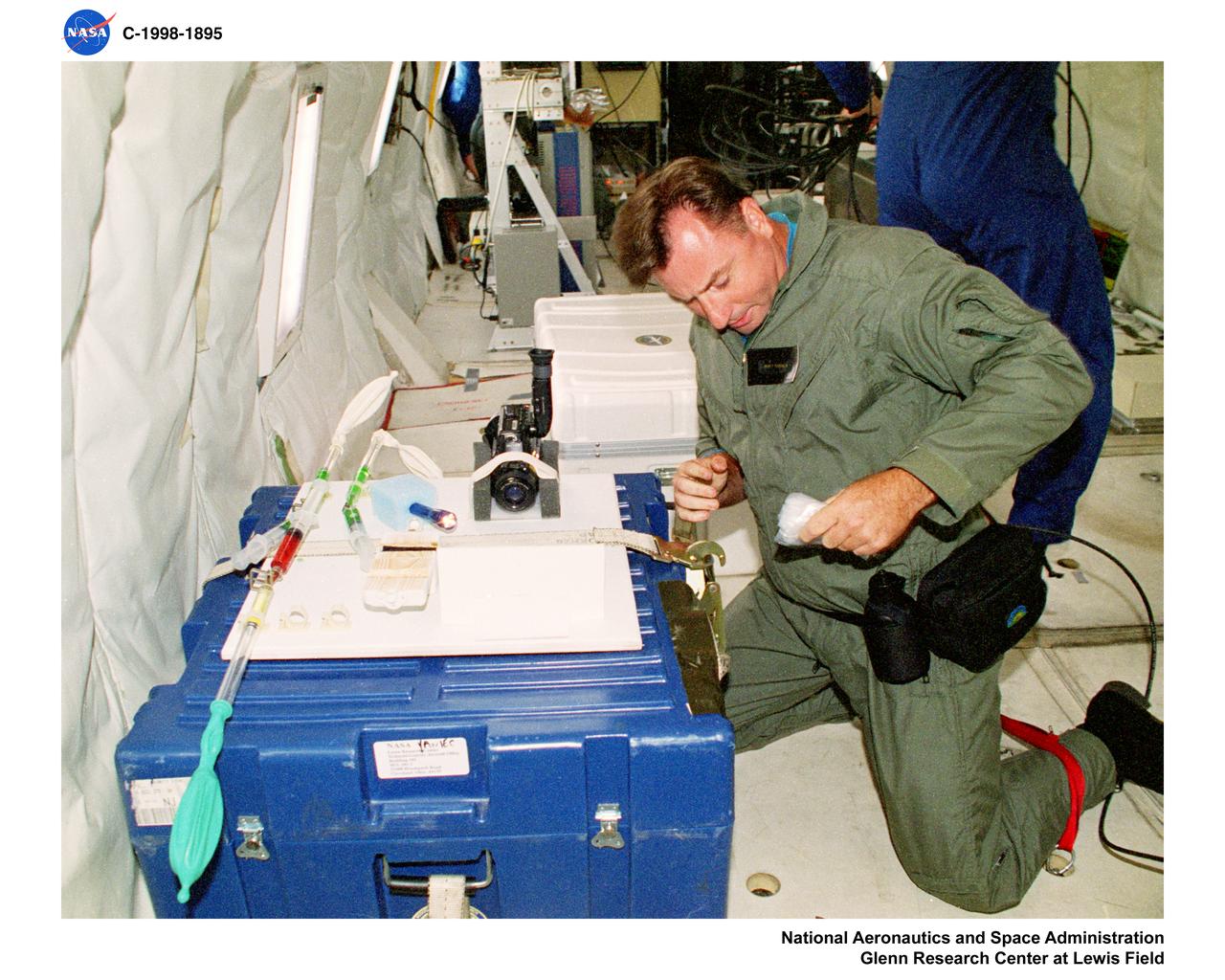
KC-135 AIRPLANE FLIGHT AT LEWIS RESEARCH CENTER DURING WEEK OF AUGUST 17 THROUGH 22 1998
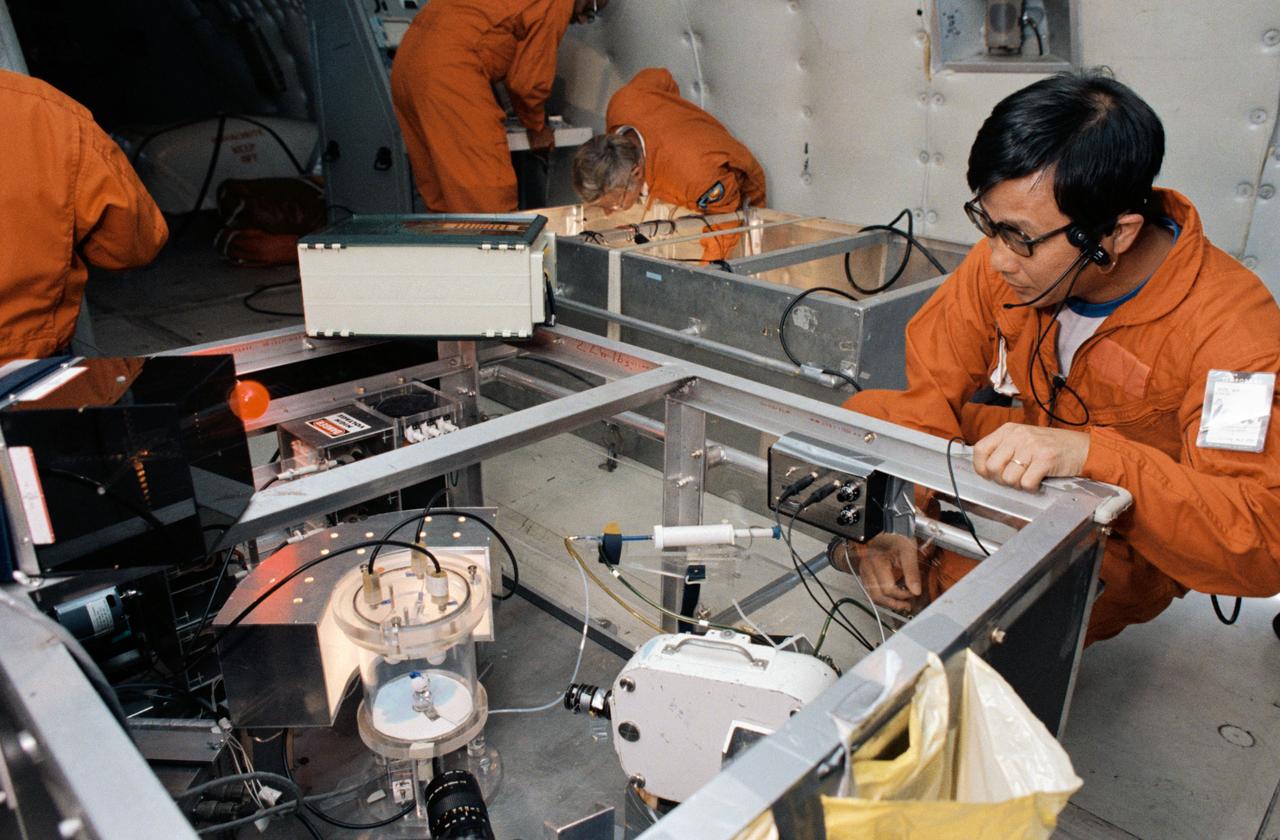
Weightless testing of the MSFC Materials Processing in Space Experiment onboard the KC-135, NASA 930, 10/26/1983.
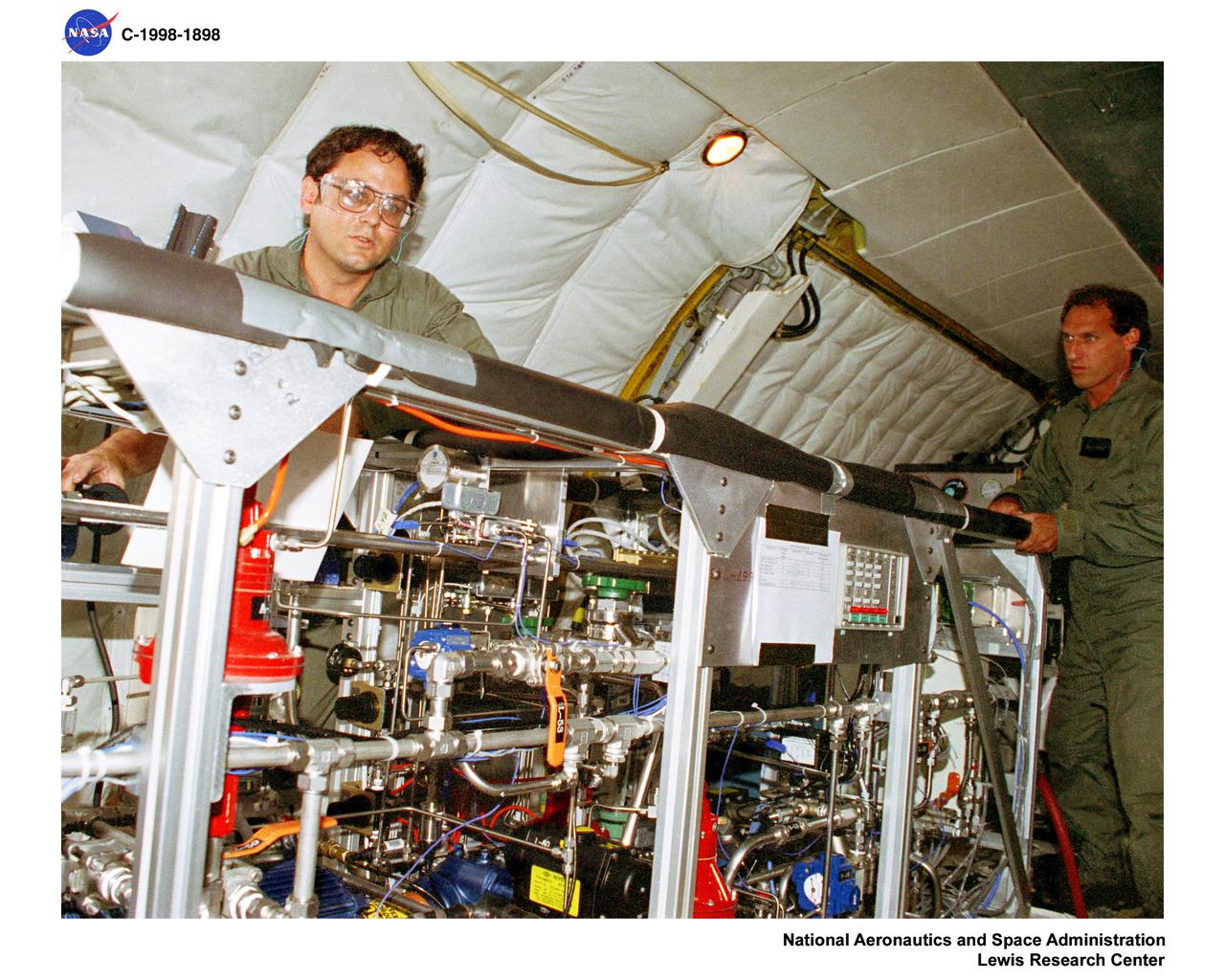
KC-135 AIRPLANE FLIGHT AT LEWIS RESEARCH CENTER DURING WEEK OF AUGUST 17 THROUGH 22 1998
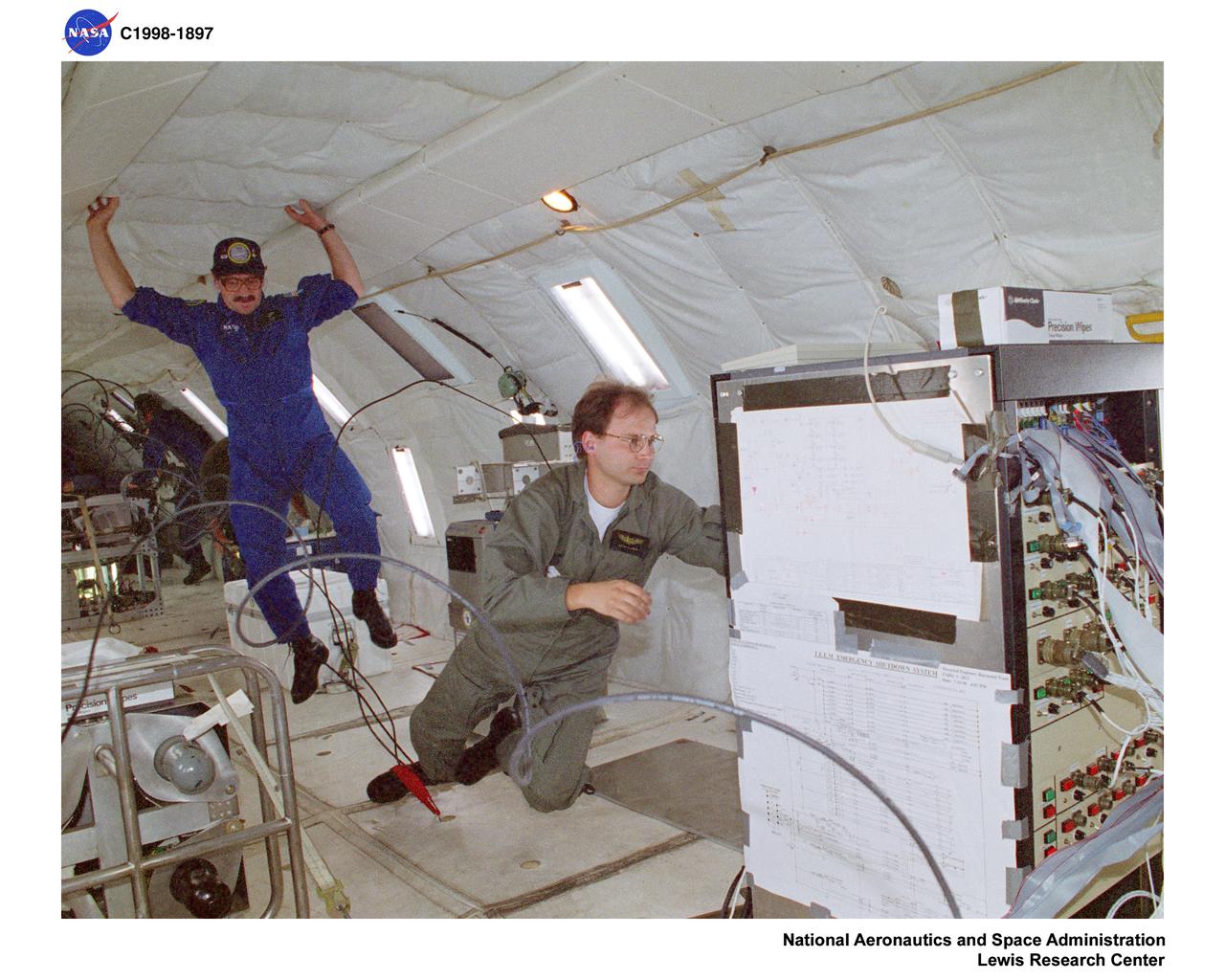
KC-135 AIRPLANE FLIGHT AT LEWIS RESEARCH CENTER DURING WEEK OF AUGUST 17 THROUGH 22 1998
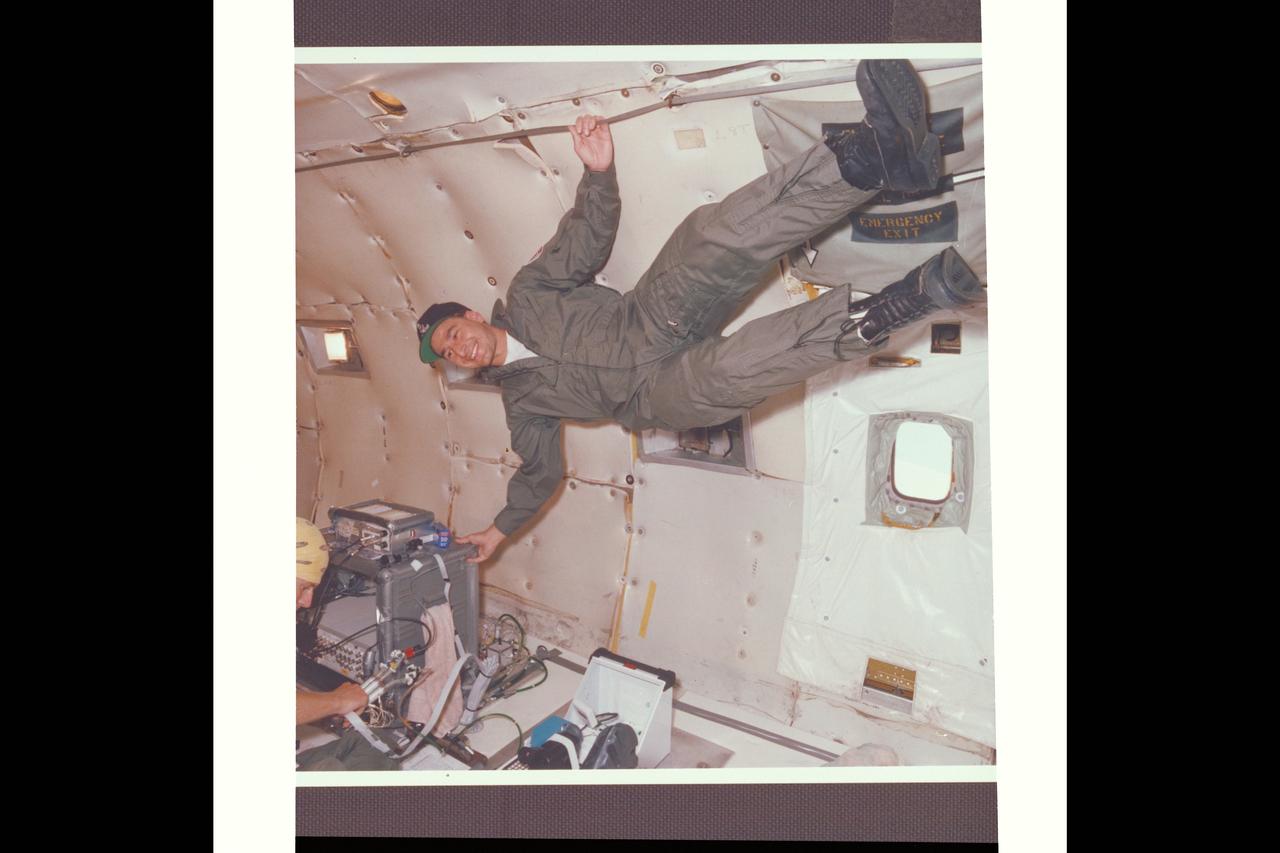
Free Floater Test Bed (FFTB) JSC KC-135 Flight, MacElroy Flight Group
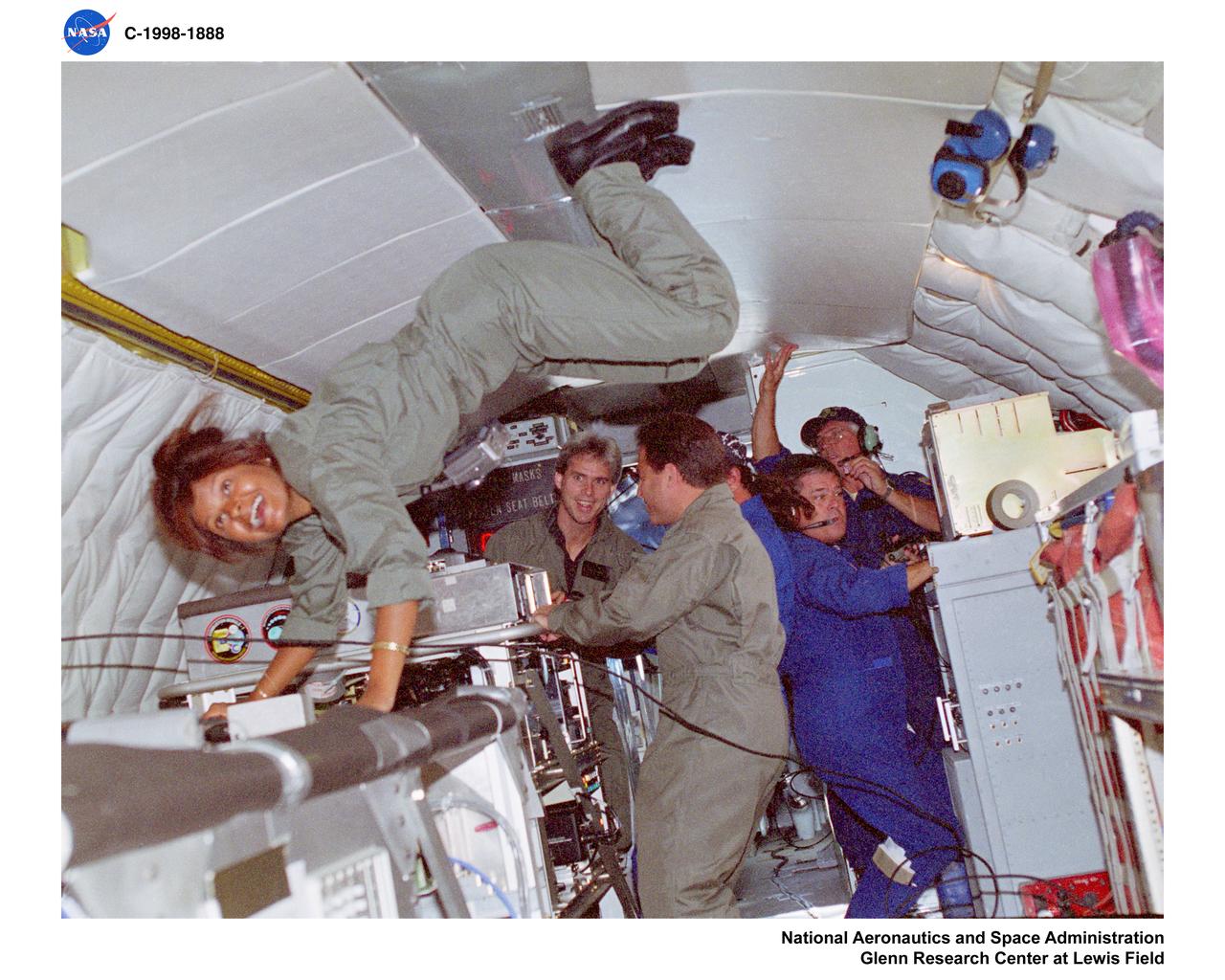
KC-135 AIRPLANE FLIGHT AT LEWIS RESEARCH CENTER DURING WEEK OF AUGUST 17 THROUGH 22 1998
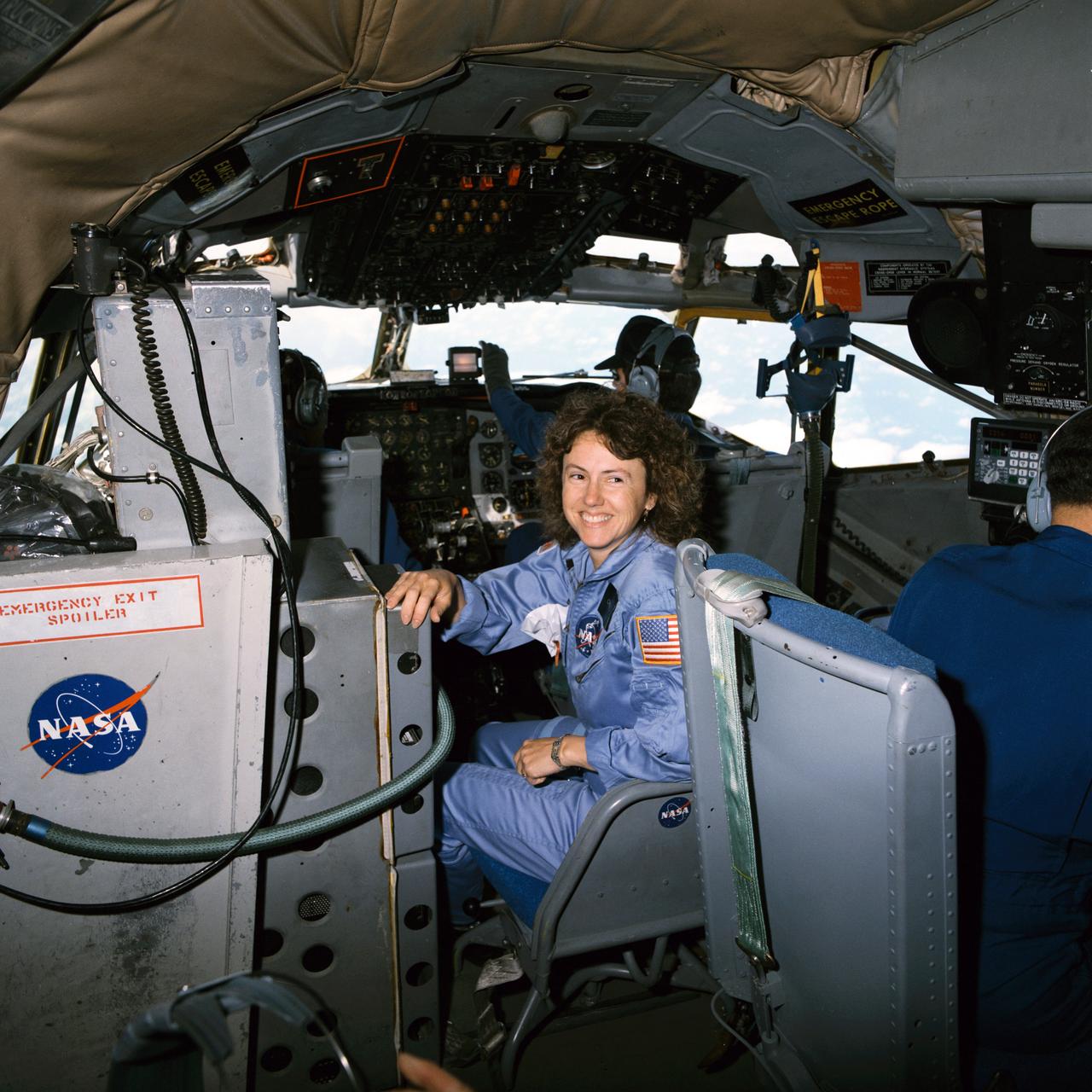
S85-42473 (16 Oct. 1985) --- Sharon Christa McAuliffe, a teacher-citizen observer on STS-51L, smiles before participating in some zero-G rehearsals for her upcoming flight. She is seated near the controls of the KC-135 aircraft, flying for the Johnson Space Center from Ellington Air Field. Referred to as the ?zero-gravity? aircraft, the KC-135 provides brief moments of weightlessness for shuttle crew members in training. Photo credit: NASA
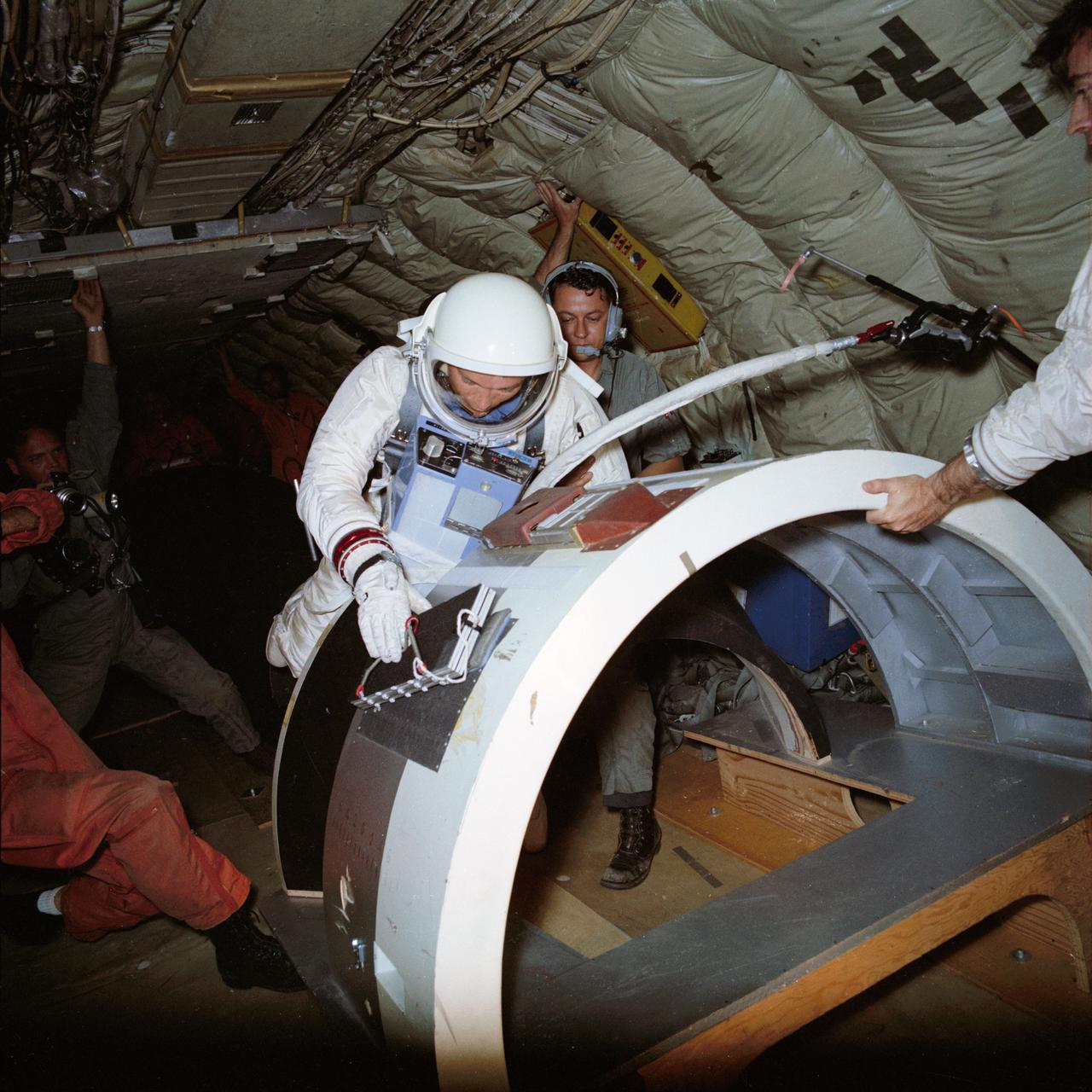
S66-40098 (17 June 1966) --- Astronaut Michael Collins, prime crew pilot of the Gemini-10 spaceflight, undergoes zero-gravity (weightlessness) training aboard an Air Force KC-135 aircraft. He practices with micrometeorite experiment-type equipment. The KC-135 flew a parabolic curve to create the zero-gravity condition. This training is in preparation for Collins' Gemini-10 extravehicular activity. Photo credit: NASA
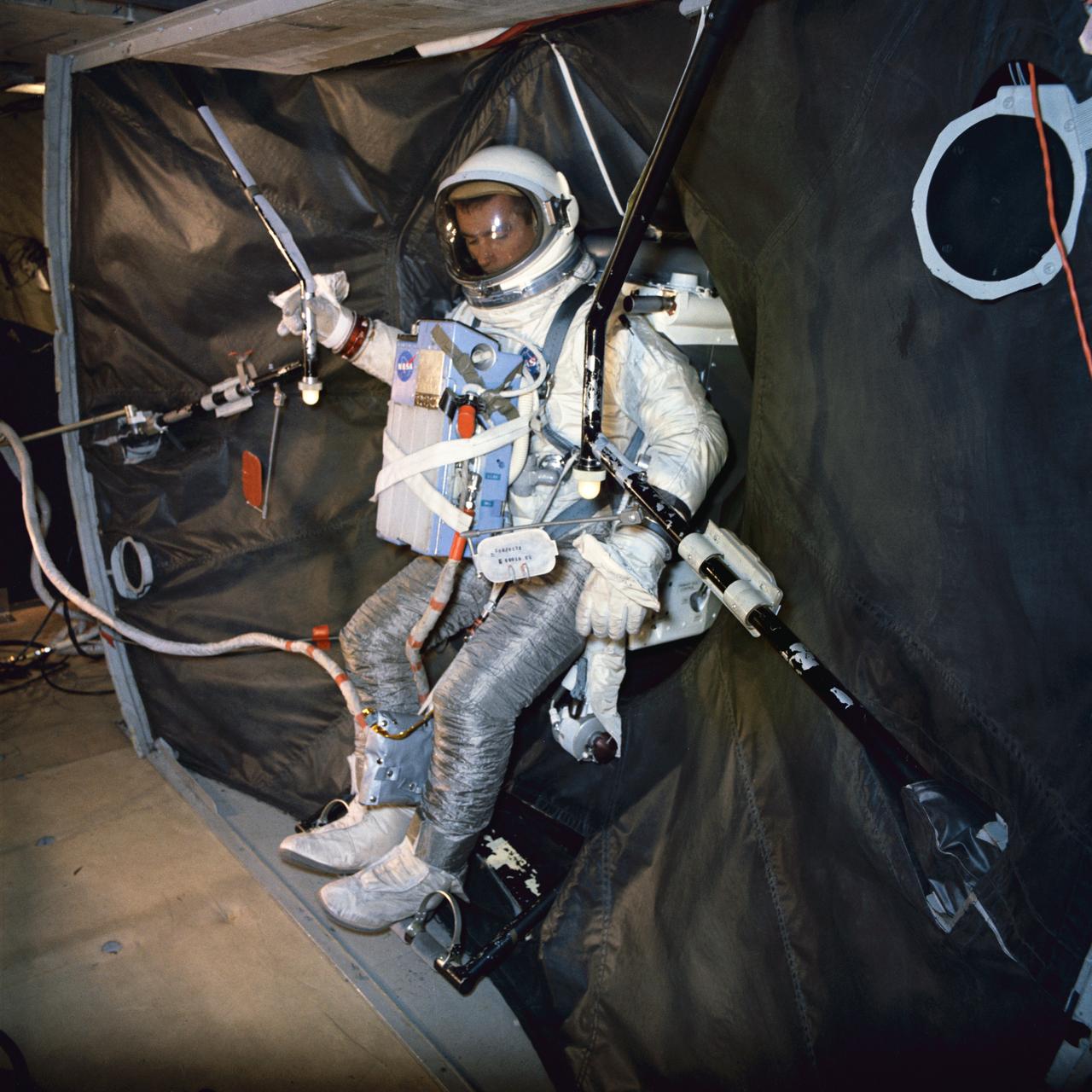
S66-31665 (3 May 1966) --- Astronaut Eugene A. Cernan, pilot of the Gemini-9 spaceflight, participates in extravehicular training under zero-gravity conditions aboard a KC-135 aircraft. Here, he is donning the Astronaut Maneuvering Unit (AMU) backpack after egressing a Gemini mock-up. The AMU backpack is mounted in the adapter equipment section of the mock-up. Cernan wears an extravehicular activity (EVA) life support system chest pack. Cernan will use the AMU during his scheduled EVA on the Gemini-9 mission. The KC-135 flew a parabolic curve to create the weightlessness condition for training purposes. Photo credit: NASA

S66-28770 (1 April 1966) --- Astronaut Michael Collins, prime crew pilot of the Gemini-10 spaceflight, undergoes zero-gravity egress training aboard a KC-135 Air Force plane. The plane, flying a parabolic curve, creates a weightless environment as a training exercise in preparation for spaceflight. Photo credit: NASA
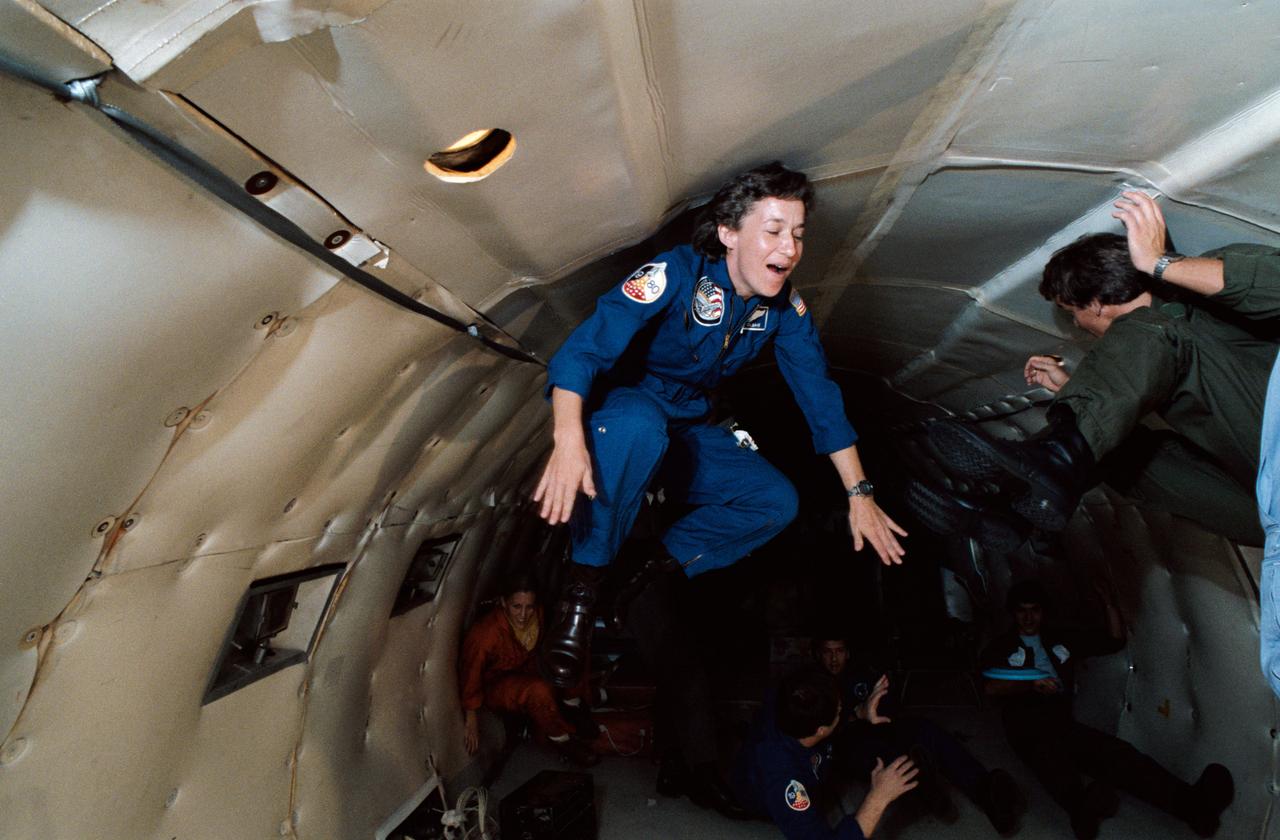
KC-135 inflight training of the STS-30/61B Crew for suit donning doffing and Zero-G orientation for Rudolfo Neri, Astronaut Mary Cleave, and Ricardo Peralta, Backup Neri. 1. Astronaut Cleave, Mary - Zero-G 2. Neri, Rodolfo - Zero-G 3. Peralta, Ricard - Zero-G
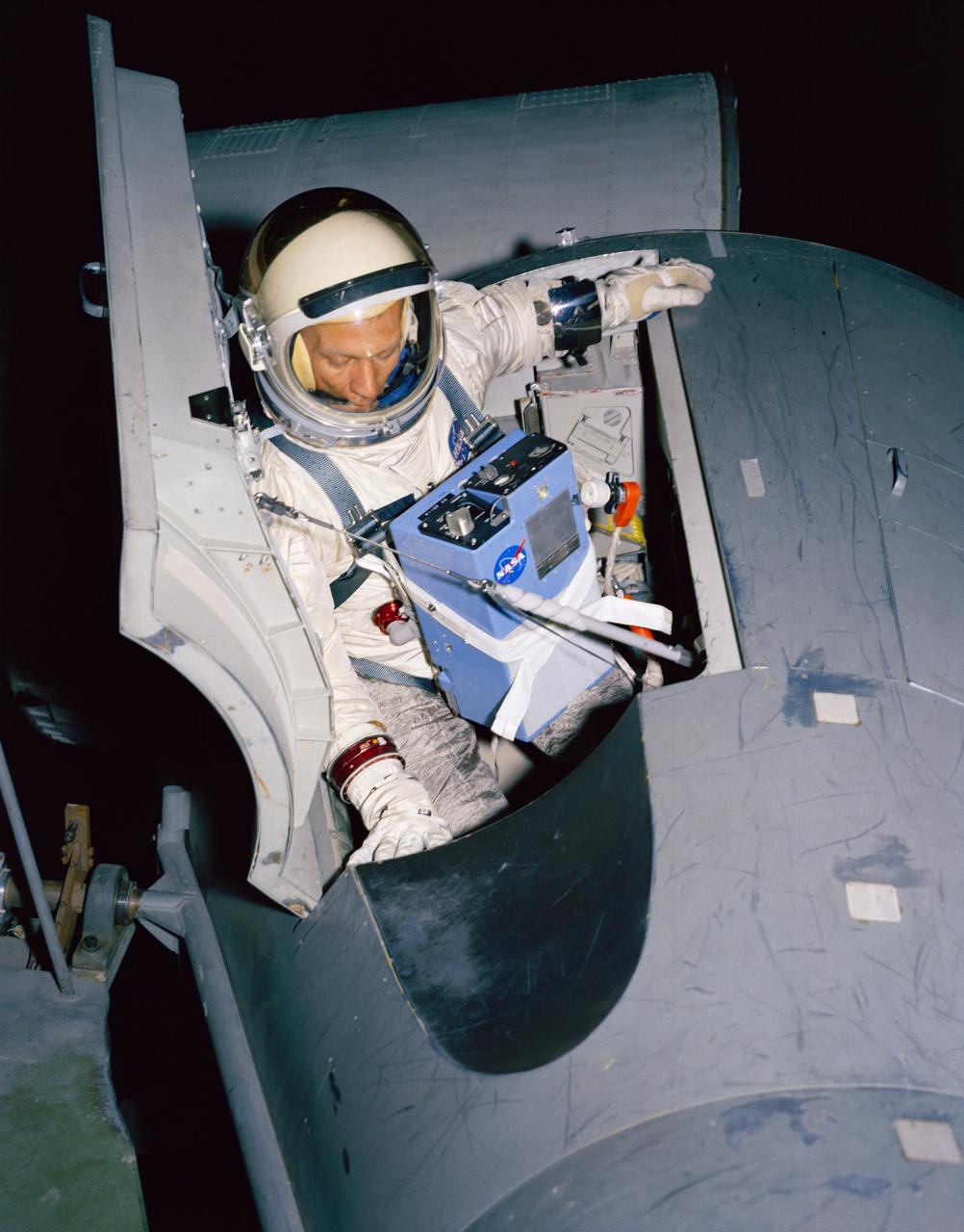
S66-28114 (1 April 1966) --- Astronaut Edwin E. Aldrin Jr., pilot of the Gemini-12 spaceflight, undergoes zero-gravity egress training. A KC-135 Air Force plane, flying a parabolic curve, creates a weightless environment as a training exercise in preparation for spaceflight. Photo credit: NASA

S66-56738 (4 Oct. 1966) --- Astronaut Edwin E. Aldrin Jr., prime crew pilot of the Gemini-12 spaceflight, undergoes zero-gravity ingress and egress training aboard an Air Force KC-135 aircraft. He practices using camera equipment. Photo credit: NASA
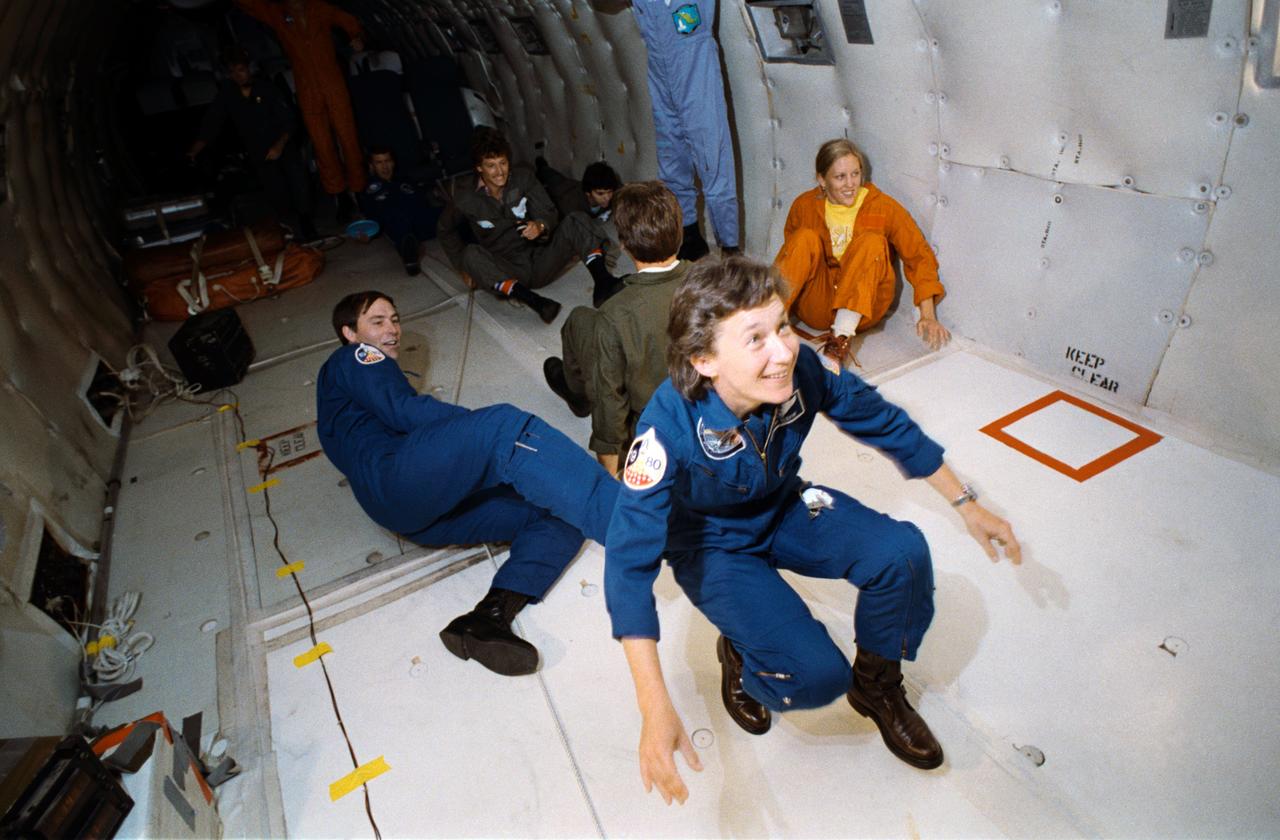
KC-135 inflight training of the STS-30/61B Crew for suit donning doffing and Zero-G orientation for Rudolfo Neri, Astronaut Mary Cleave, and Ricardo Peralta, Backup Neri. 1. Astronaut Cleave, Mary - Zero-G 2. Neri, Rodolfo - Zero-G 3. Peralta, Ricard - Zero-G
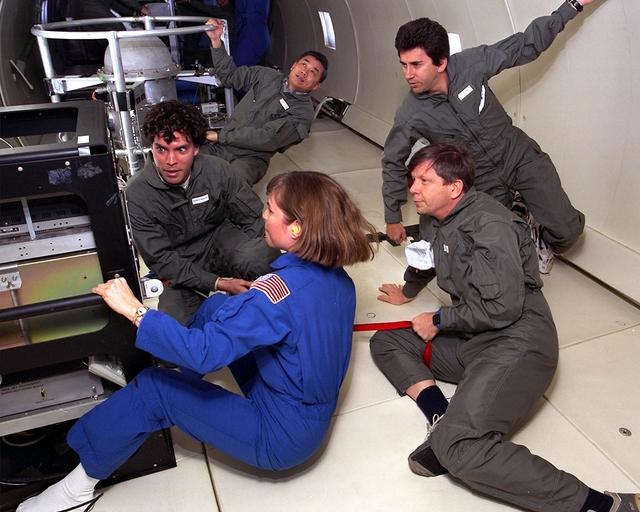
Mission specialist Janice Voss (center, foreground) trains with payload specialists Paul Rorney (right, background) and Roger Crouch (right, foreground) for the Materials Sciences Lab-1 (MSL-1) mission flown in 1997. They are aboard the NASA KC-135 low-g training aircraft.
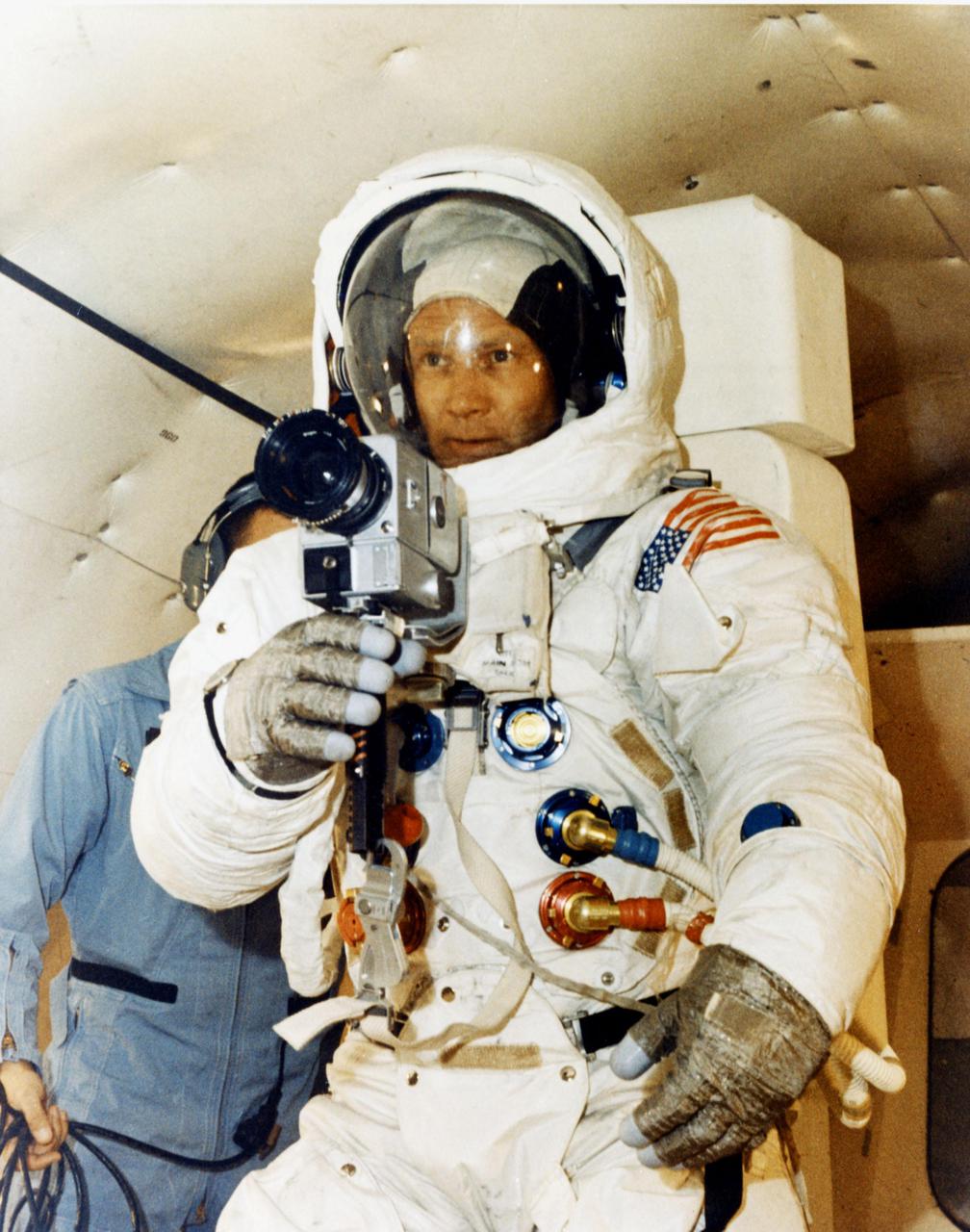
JOHNSON SPACE CENTER, HOUSTON, TEXAS - Flying in a KC-135 aircraft, Apollo 11 Lunar Module Pilot Edwin E. Aldrin Jr. takes pictures during training for the upcoming first manned lunar landing with astronauts Neil A. Armstrong Jr. and Michael Collins.
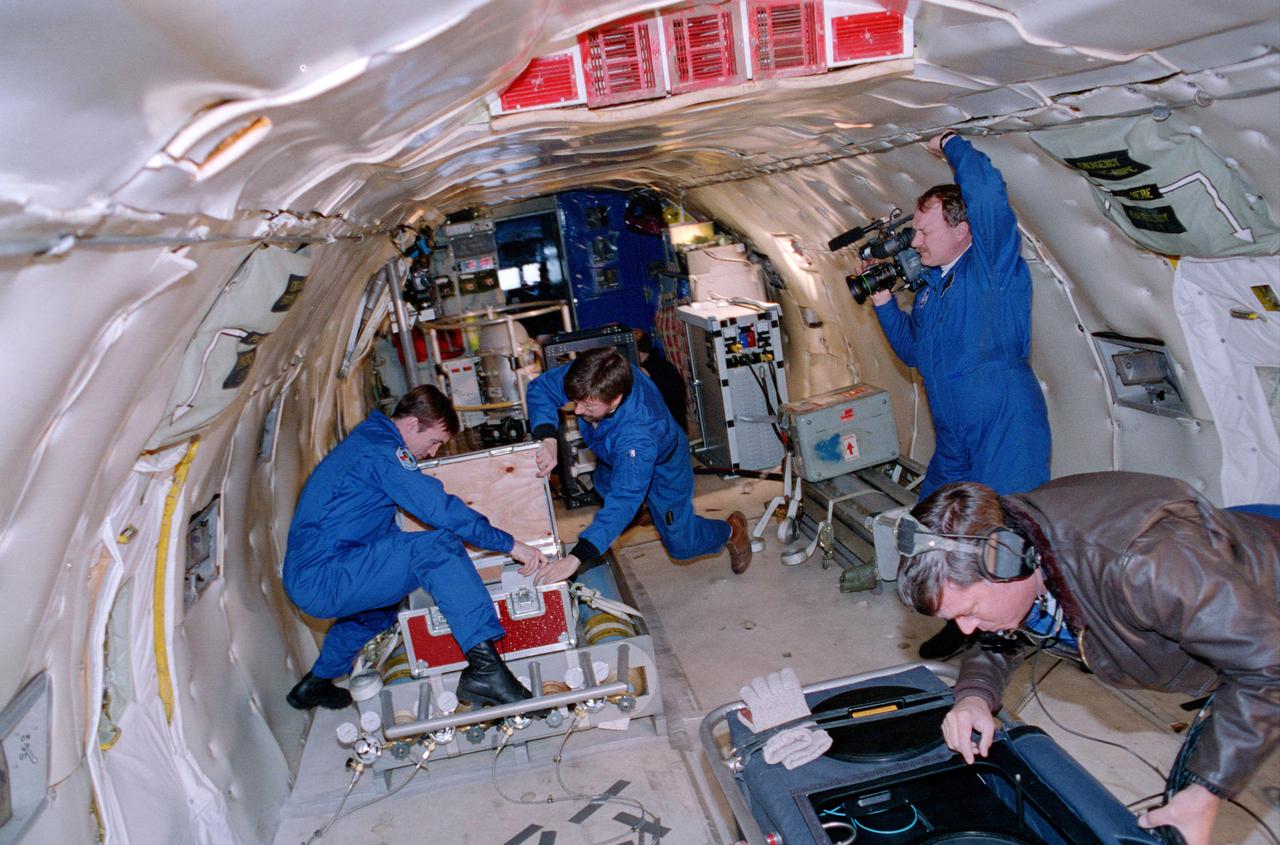
ZERO GRAVITY AIRCRAFT KC135 FLIGHTS AT LEWIS RESEARCH CENTER
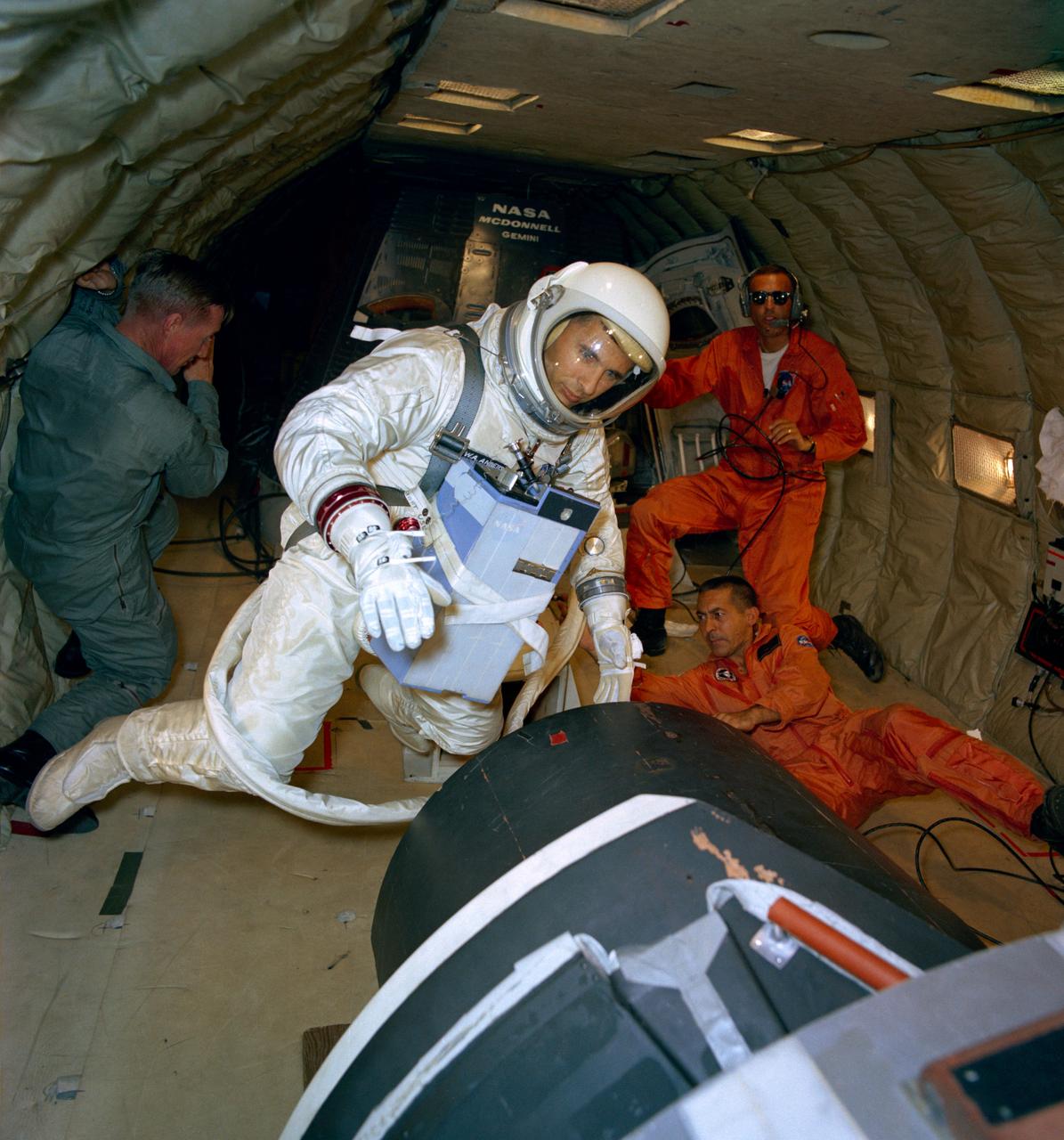
S66-47856 (11 Aug. 1966) --- Astronaut William A. Anders, backup crew pilot of the Gemini-11 spaceflight, participates in extravehicular activity (EVA) training under zero-gravity conditions aboard a KC-135 aircraft from Wright-Patterson Air Force Base, Dayton, Ohio. He is suited, and he also wears an Extravehicular Life Support System (ELSS) chest pack. Photo credit: NASA
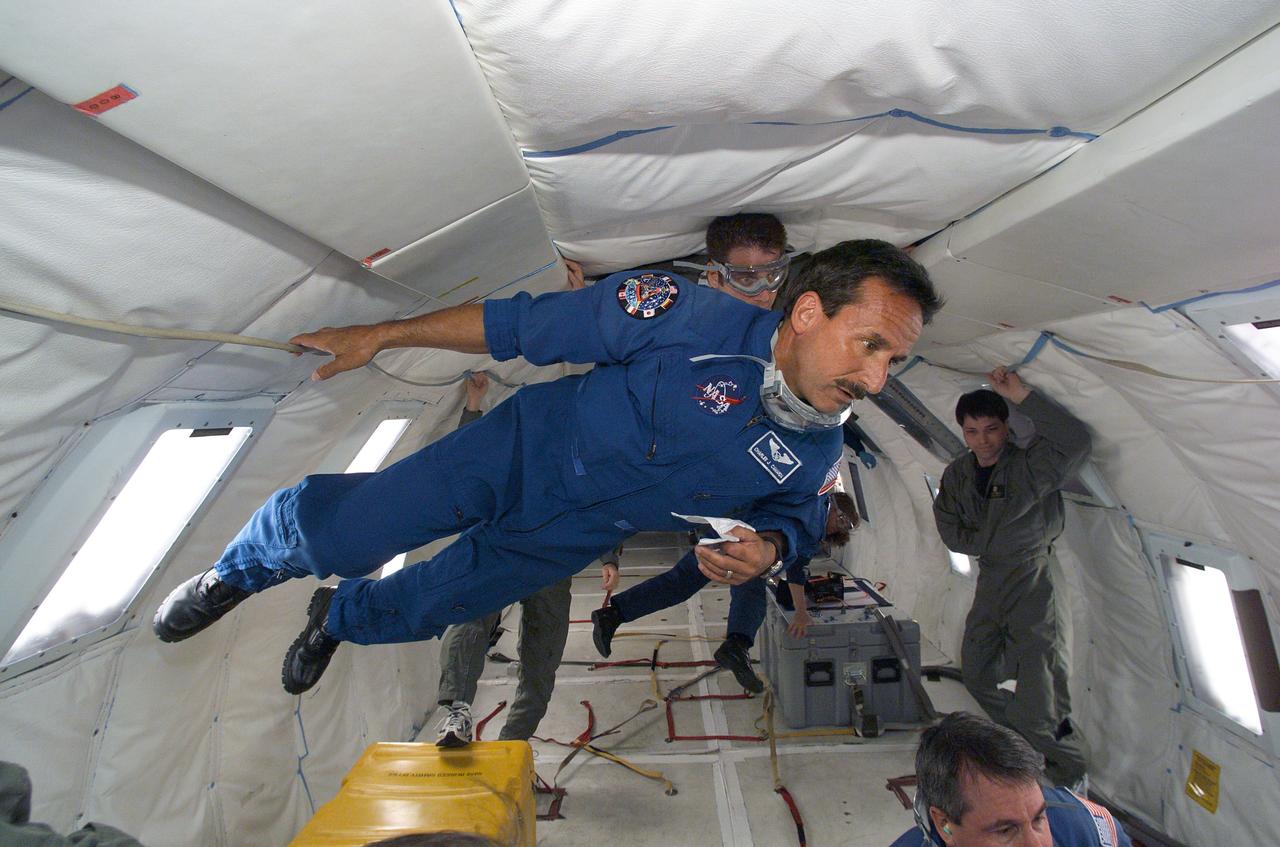
JSC2004-E-24534 (1 June 2004) --- Astronaut Charles J. Camarda, STS-114 mission specialist, participates in Return to Flight training aboard NASA’s KC-135 aircraft. The aircraft, based at Ellington Field near Johnson Space Center (JSC), frequently flies a series of parabola patterns over the Gulf of Mexico to afford opportunities for astronauts and investigators to experience brief periods of weightlessness.
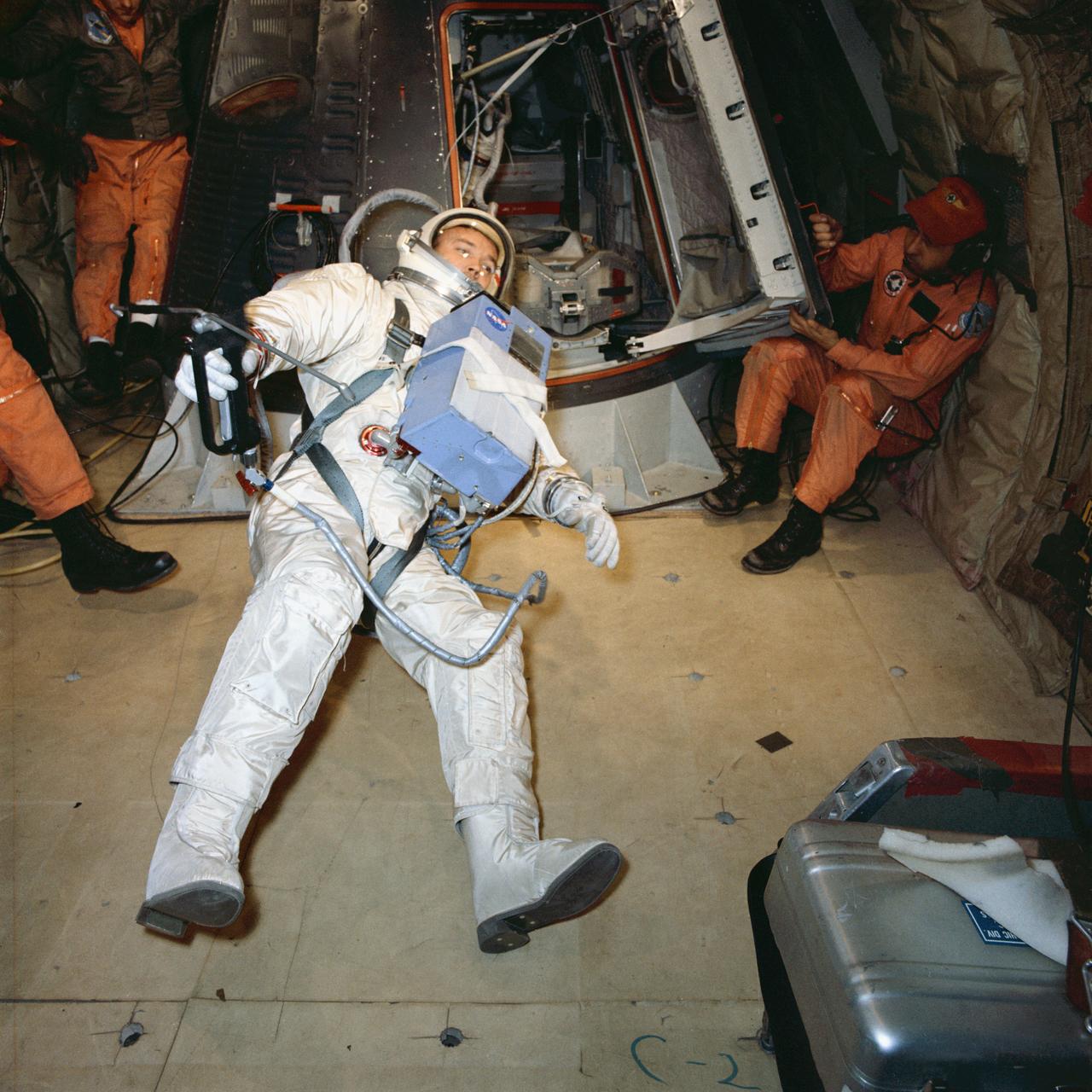
S66-28782 (1 April 1966) --- Astronaut Michael Collins, prime crew pilot of the Gemini-10 spaceflight, experiences a condition of weightlessness during zero-gravity egress training. A KC-135 Air Force plane, flying a parabolic curve, creates a weightless environment as a training exercise in preparation for spaceflight. The Hand-Held Maneuvering Unit in his right hand produces controlled thrust for moving about. Photo credit: NASA
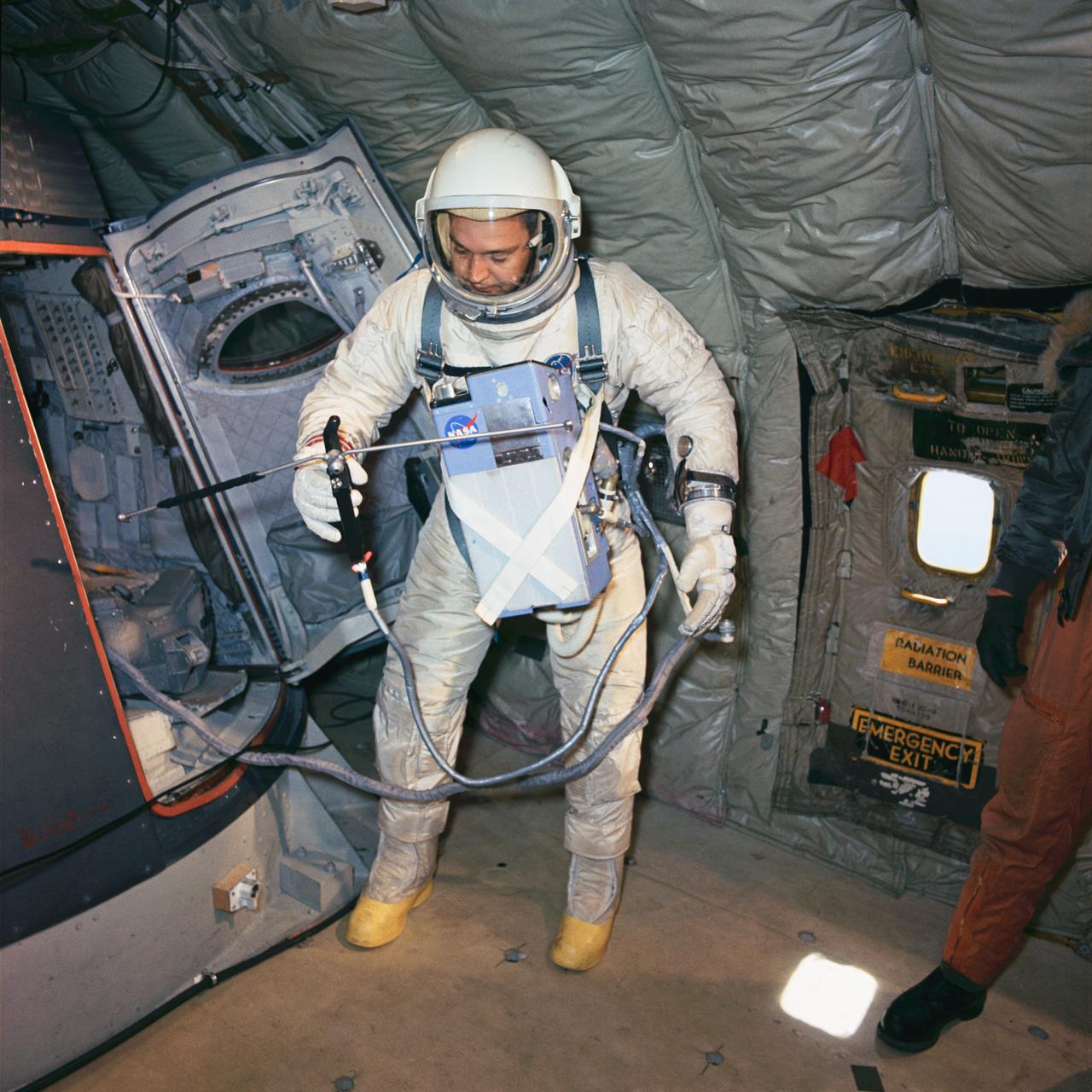
S66-28636 (1 April 1966) --- Astronaut Clifton C. Williams Jr., backup crew pilot of the Gemini-10 spaceflight, undergoes zero-gravity egress training. A KC-135 Air Force plane, flying a parabolic curve, creates a weightless environment as a training exercise in preparation for spaceflight. The Hand-Held Maneuvering Unit in his right hand produces controlled thrust for moving about. Photo credit: NASA
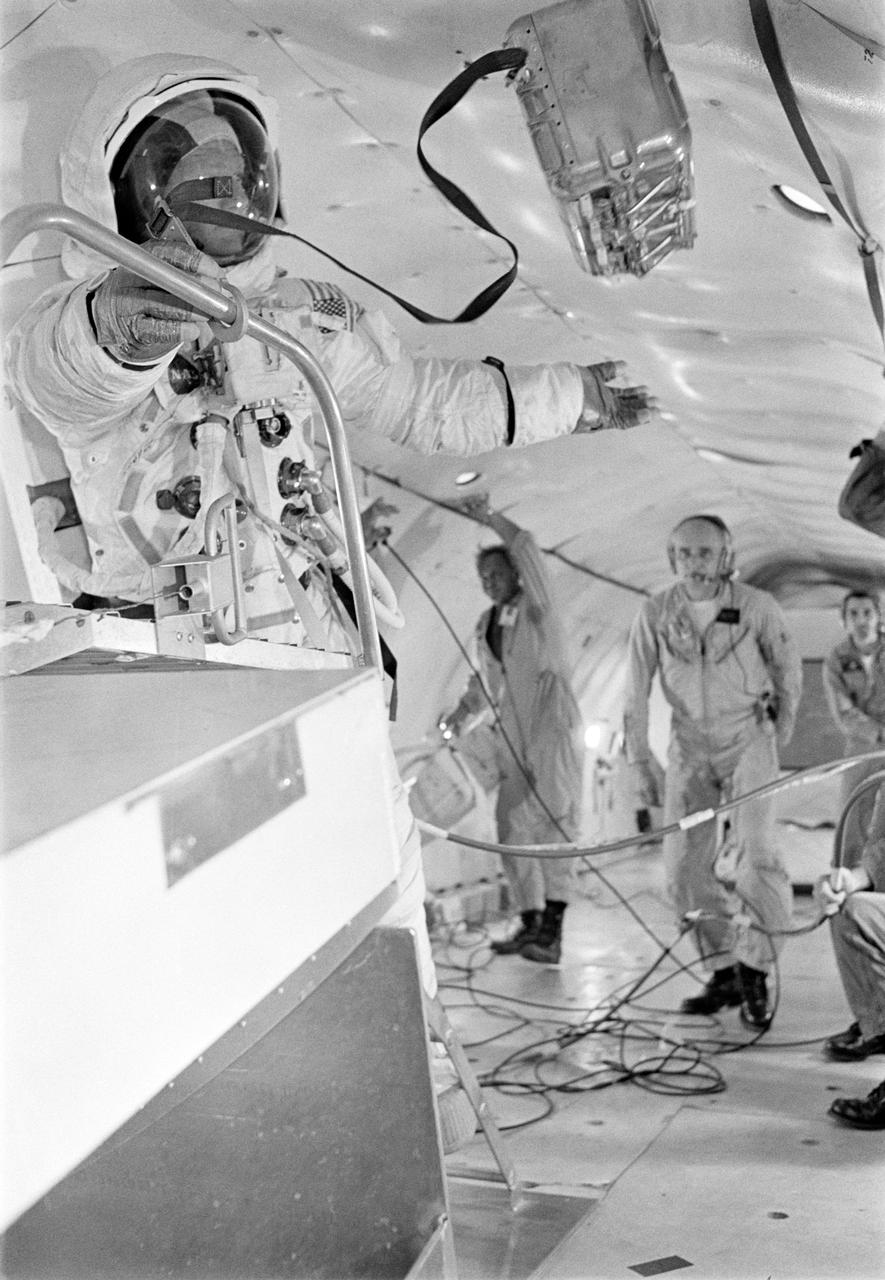
S69-39270 (10 July 1969) --- Astronaut Edwin E. Aldrin Jr., lunar module pilot of the Apollo 11 lunar landing mission, participates in lunar extravehicular activity training under weightlessness conditions aboard a U.S. Air Force KC-135 jet aircraft from nearby Patrick Air Force Base. Aldrin is wearing an Extravehicular Mobility Unit, the type of equipment which he will wear on the lunar surface.
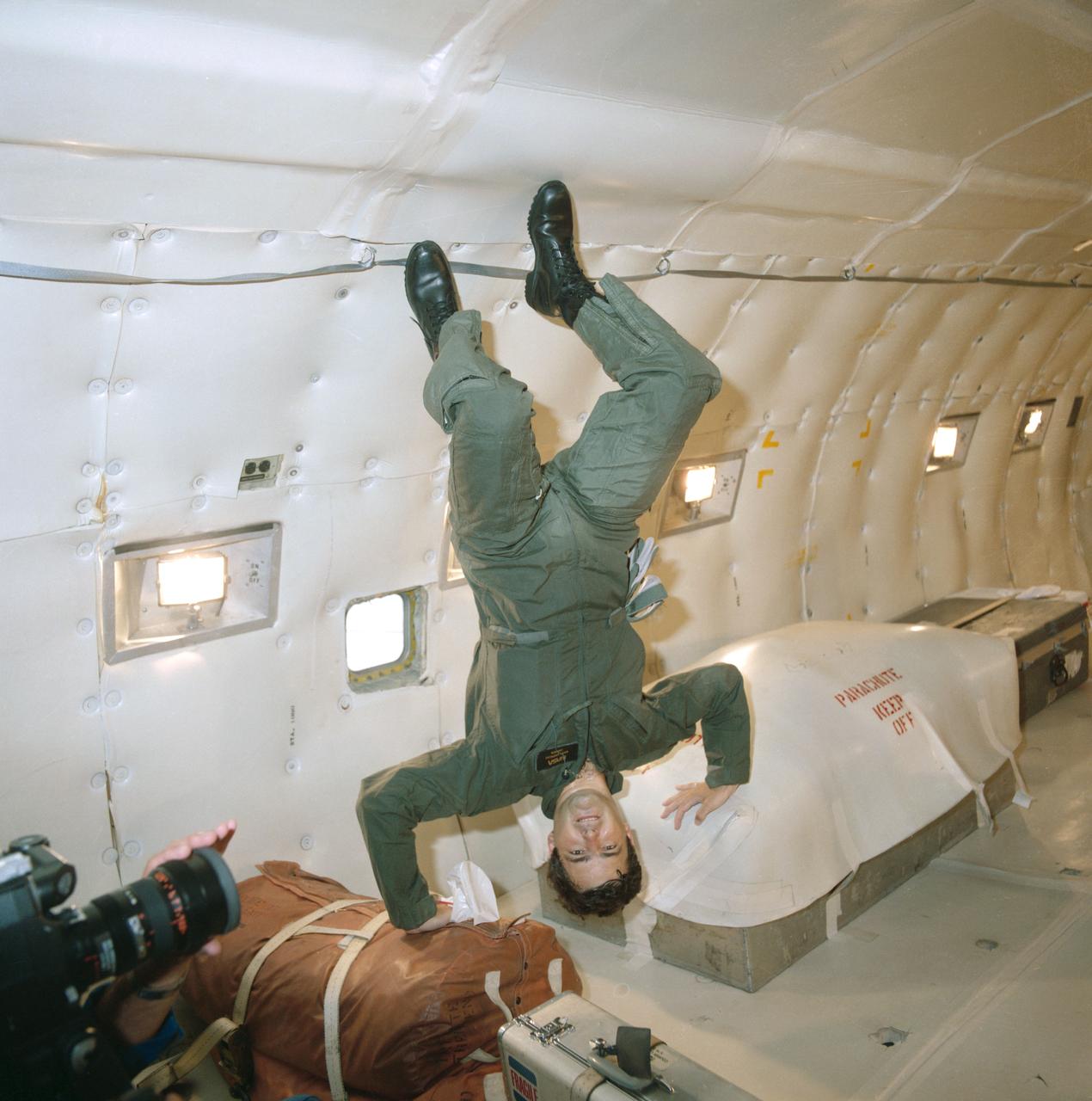
S84-37514 (18 July 1984) --- Marc Garneau, representing Canada's National Research Council as one of two 41-G payload specialists, gets the "feel" of zero gravity aboard a special NASA aircraft designed to create brief periods of weightlessness. Five astronauts and an oceanographer from the U.S. Dept. of the Navy will join Canada's first representative in space for the trip aboard Challenger later this year. This KC-135 aircraft is used extensively for evaluation of equipment and experiments scheduled for future missions.
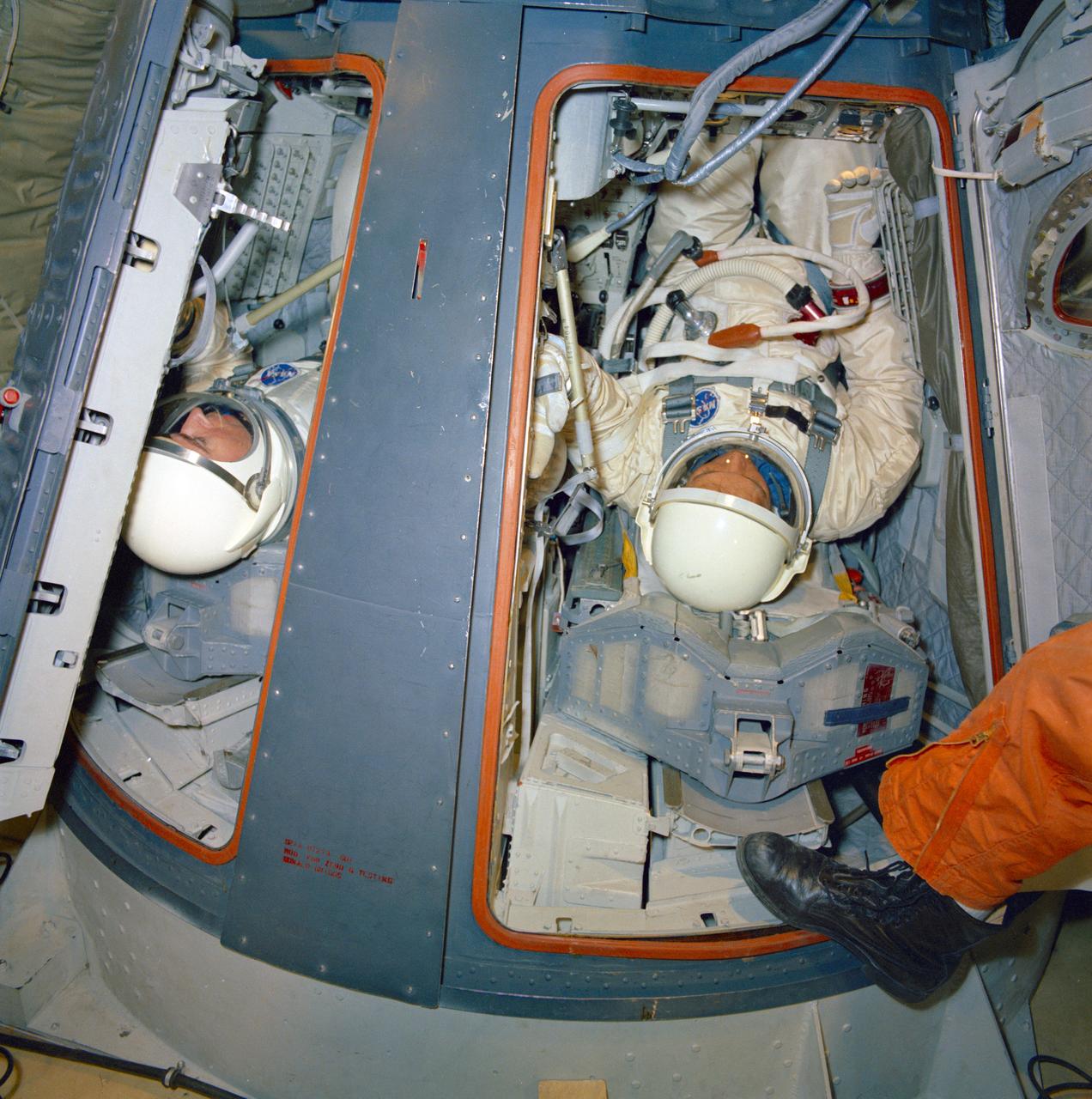
S66-28583 (1 April 1966) --- The Gemini-10 prime crew undergoes zero-gravity egress training aboard a KC-135 Air Force plane. Astronaut John W. Young, command pilot, is on left. On the right is astronaut Michael Collins, pilot. The airplane, flying a parabolic curve, creates a weightless environment as a training exercise in preparation for spaceflight Photo credit: NASA
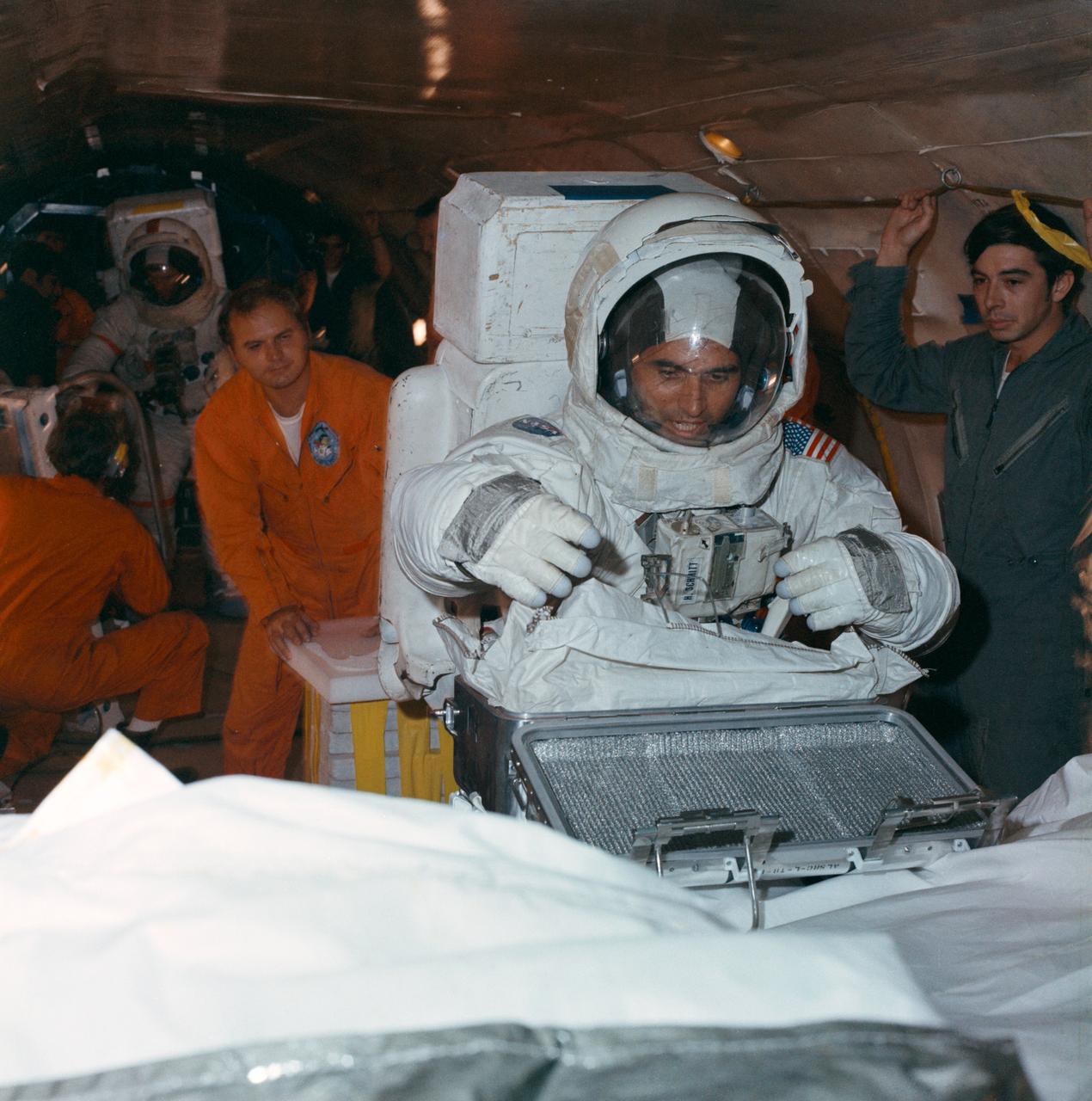
S72-50269 (September 1972) --- Scientist-astronaut Harrison H. Schmitt, lunar module pilot of the Apollo 17 lunar landing mission, seals an Apollo lunar sample return container during lunar surface extravehicular activity simulation training under one-sixth gravity conditions aboard a U.S. Air Force KC-135 aircraft. Astronaut Eugene A. Cernan, Apollo 17 commander, can be seen in the left background.
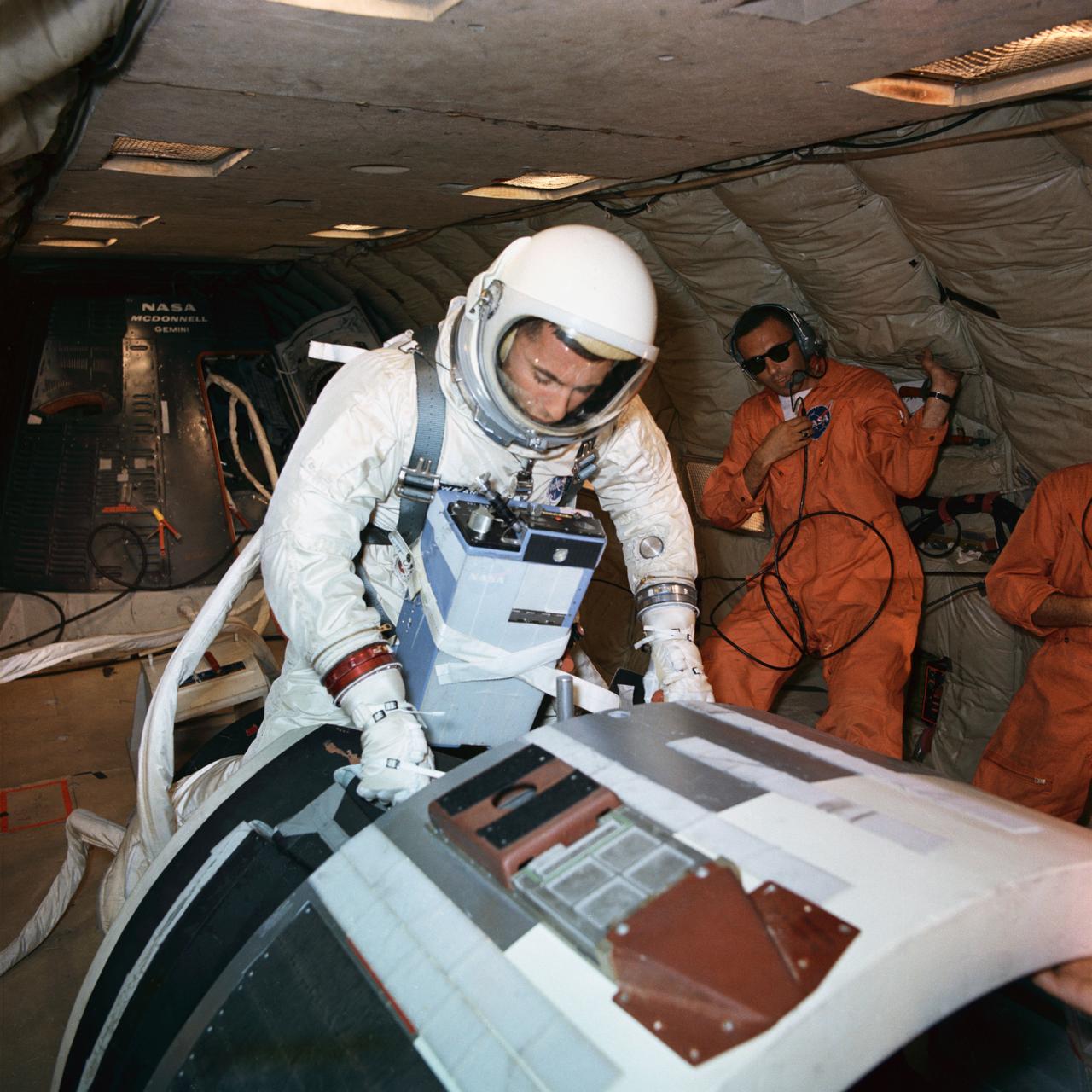
S66-47857 (11 Aug. 1966) --- Astronaut William A. Anders, backup crew pilot of the Gemini-11 spaceflight, participates in extravehicular activity (EVA) training under zero-gravity conditions aboard a KC-135 aircraft from Wright-Patterson Air Force Base, Dayton, Ohio. He is suited, and he also wears an Extravehicular Life Support System (ELSS) chest pack. Photo credit: NASA
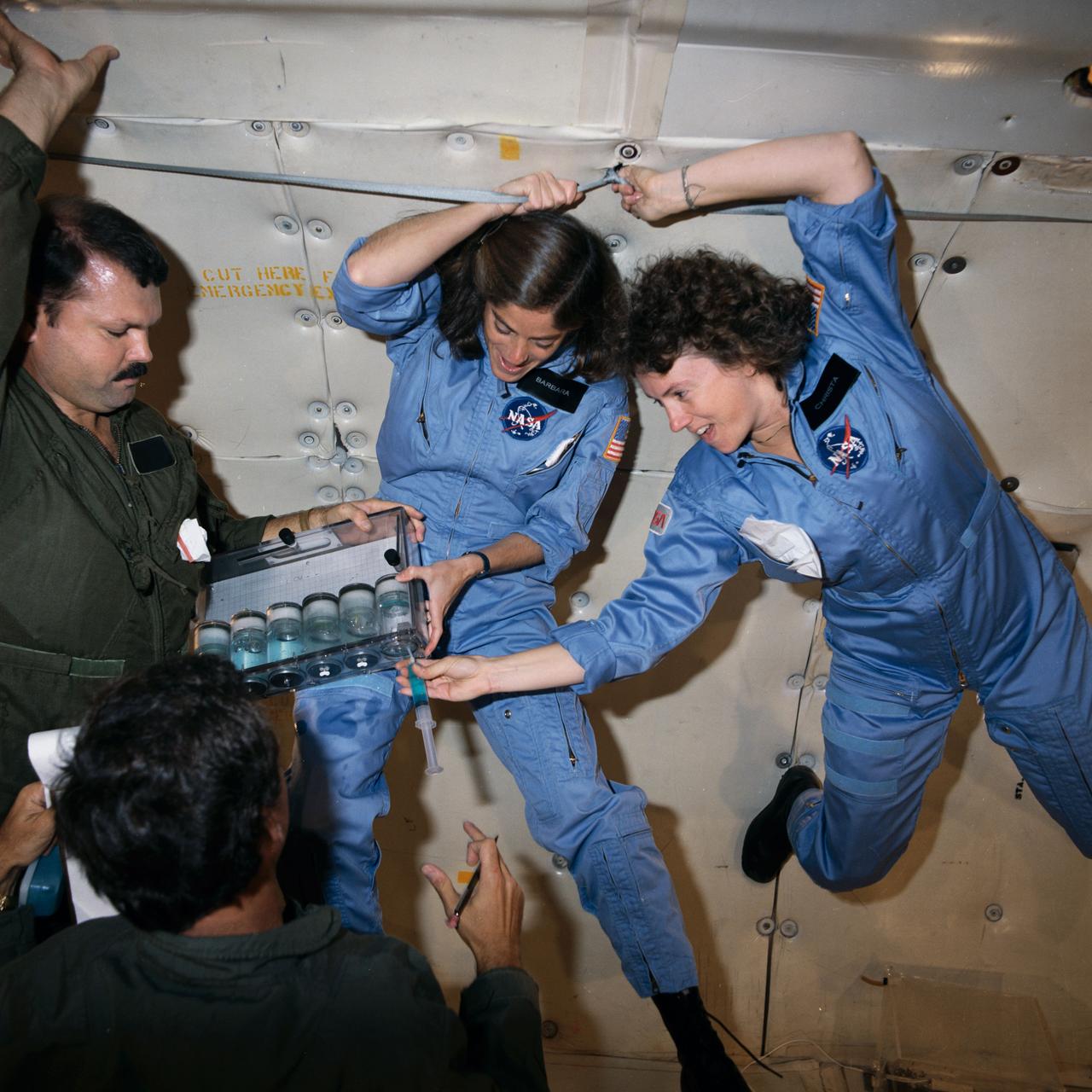
S85-42470 (16 Oct. 1985) --- Sharon Christa McAuliffe, right, and Barbara R. Morgan, participating in the Teacher-in-Space Project, team up with Bob Mayfield, a JSC aerospace educations specialist, to preview some experiments in zero-G. A KC-135 aircraft flies a special pattern to provide series of brief periods of weightlessness. McAuliffe, prime crew member for STS-51L, injects a hydroponic solution into a cylinder to review one of the experiments planned for the flight. Morgan is backup for McAuliffe on that mission. Photo credit: NASA
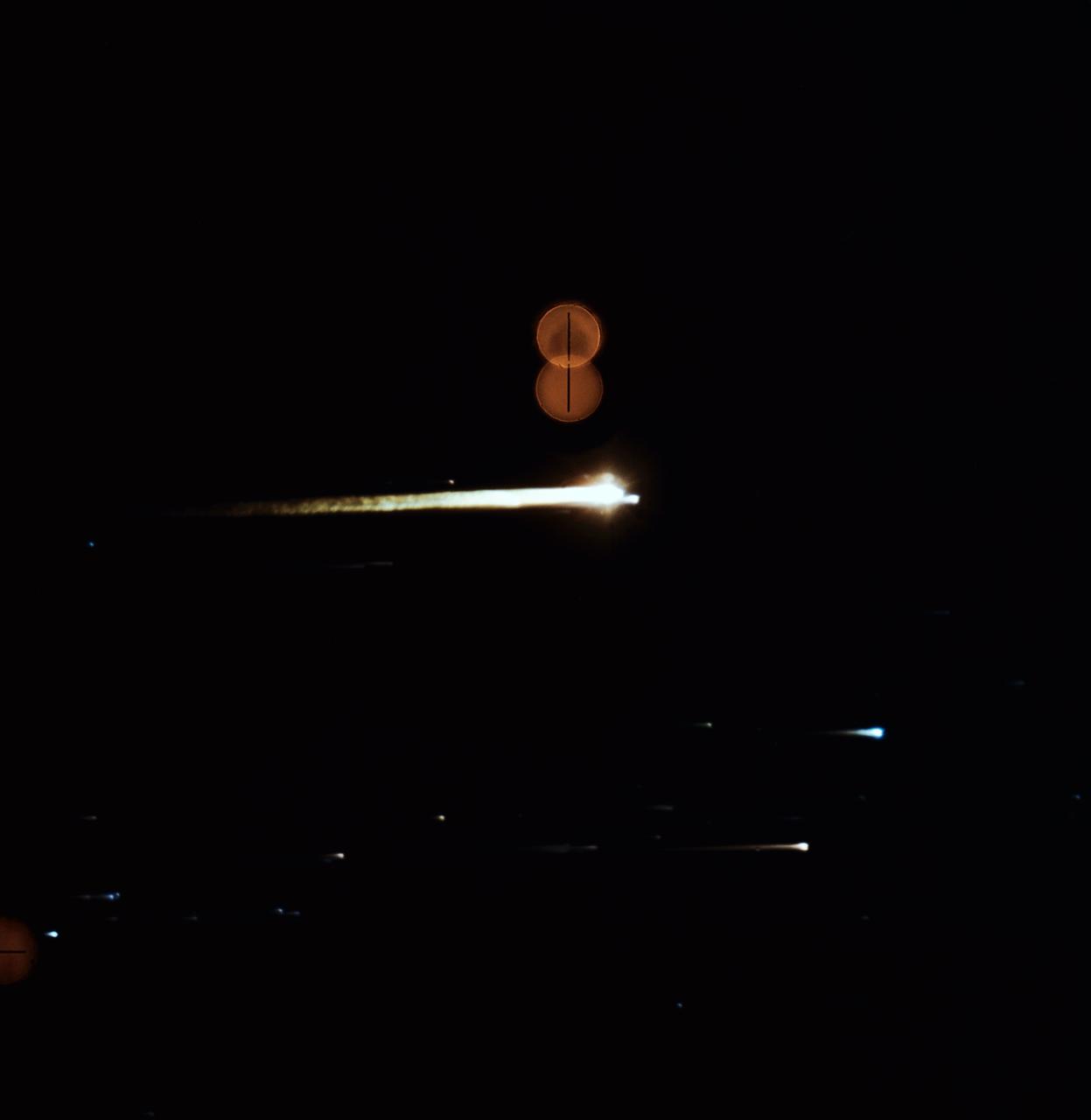
S69-15592 (27 Dec. 1968) --- This Apollo 8 re-entry photograph was taken by U.S. Air Force Airborne Lightweight Optical Tracking System (ALOTS) camera mounted on a KC-135-A aircraft flown at 40,000 feet altitude. Apollo 8, with astronauts Frank Borman, James A. Lovell Jr., and William A. Anders aboard, splashed down at 10:51 a.m. (EST) Dec. 27, 1968, in the central Pacific approximately 1,000 miles south-southwest of Hawaii.
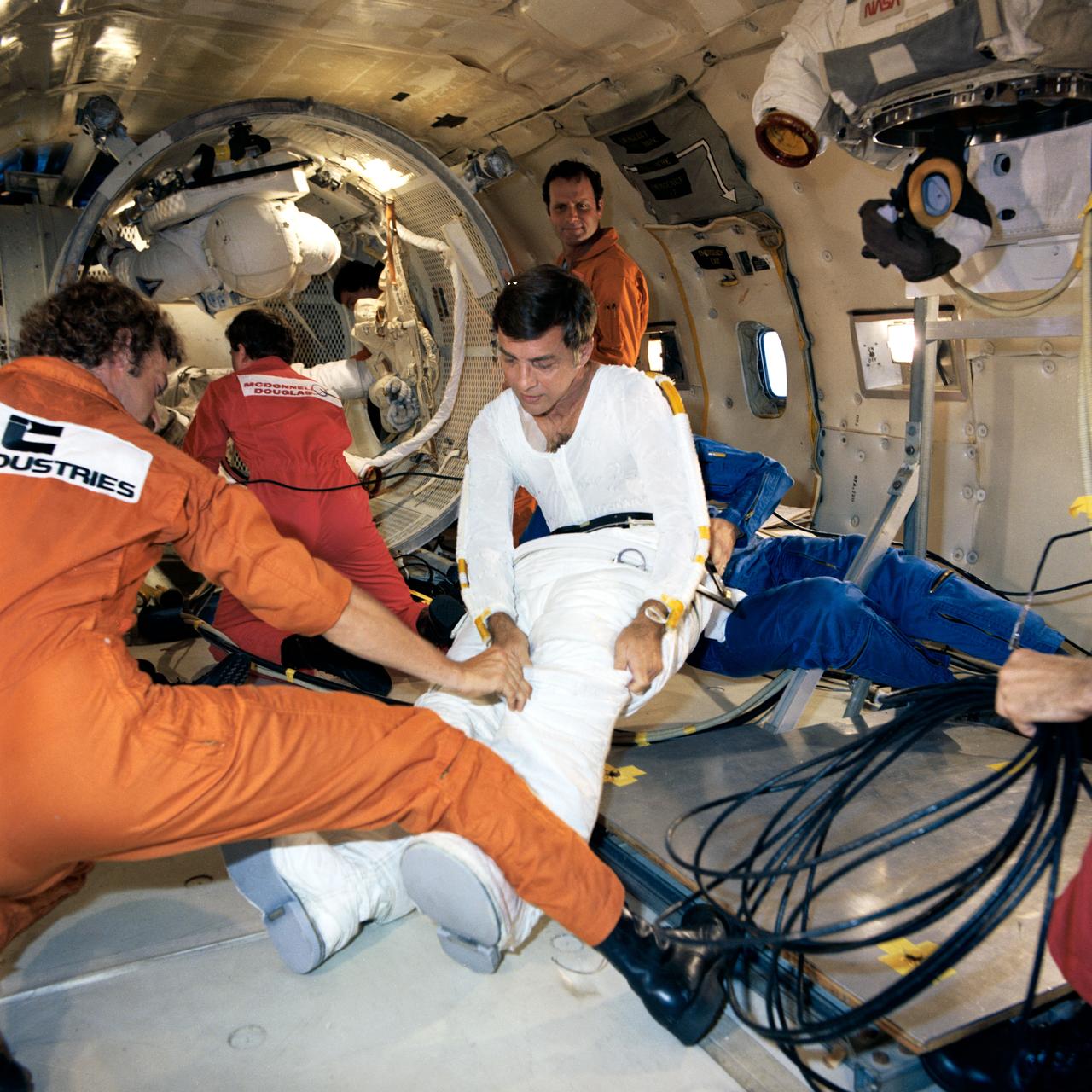
Spacesuit Donning and Doffing in Zero-G Training for Don Peterson of the STS-6 Crew with Astronaut Jerry Ross assisting; and, apparatus for testing the JSC Mechanically-Induced Settling Technology (MIST) Experiment. The training is being held aboard the KC-135 to simulate weightlessness. He is being assisted to don the lower torso of the Extravehicular Mobility Unit (EMU) by an ILC Technician. 1. ASTRONAUT ROSS, JERRY L. - ZERO-G SUITING 2. SHUTTLE - EXPERIMENTS (MIST)
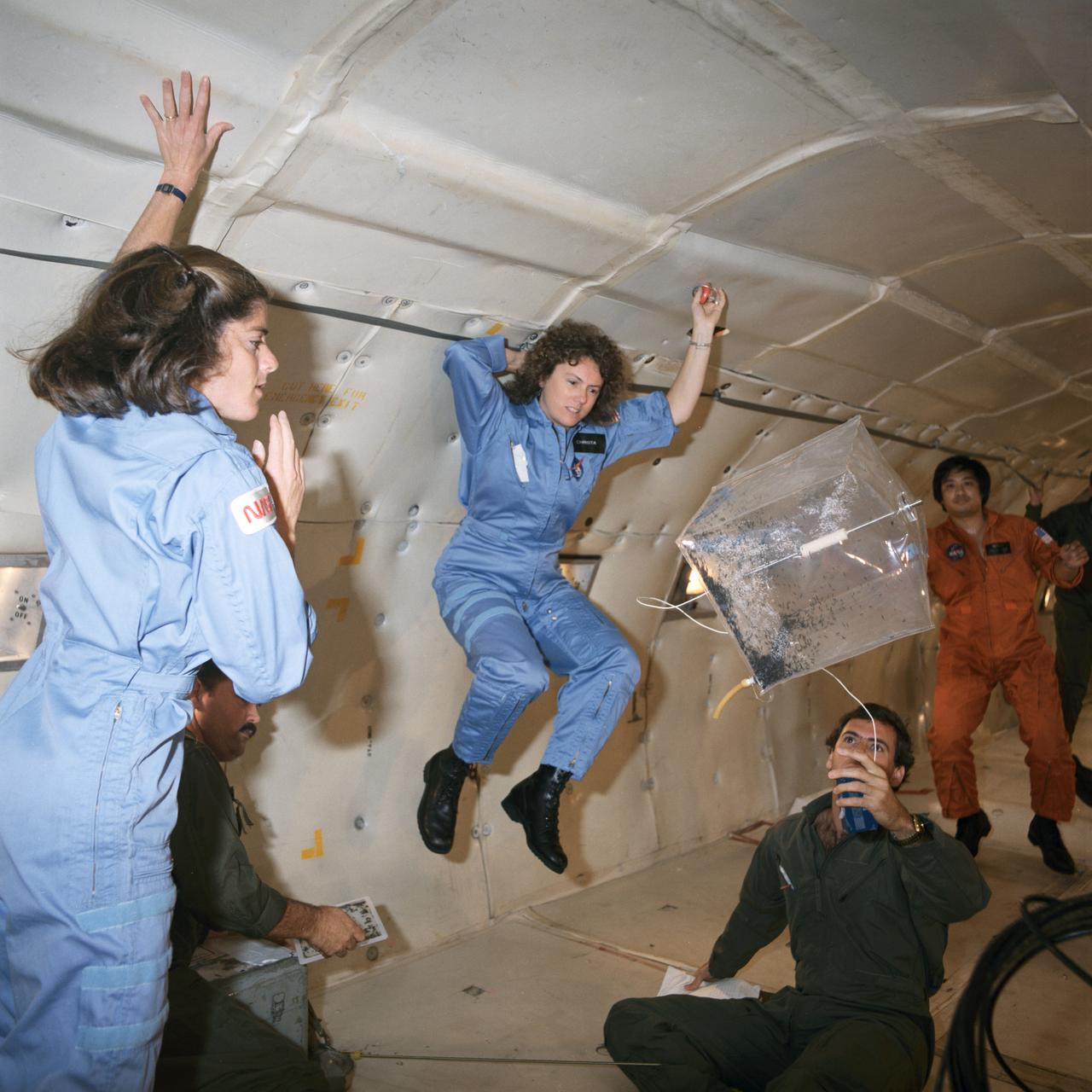
S85-42474 (16 Oct. 1985) --- A KC-135 aircraft provides a brief period of weightlessness as a preview for a teacher, in training to fly onboard a space shuttle for the Teacher-in-Space Project, and her backup. Sharon Christa McAuliffe (center frame), STS-51L prime crew member, and Barbara Morgan, her backup, monitor an experiment involving magnetic effects - one of the tests to be performed on the STS-51L flight. The experiment uses a control box, a square receptacle containing rubber tubing, stainless steel rod, a filter with desiccant, soft iron wire and a magnet. Photo credit: NASA
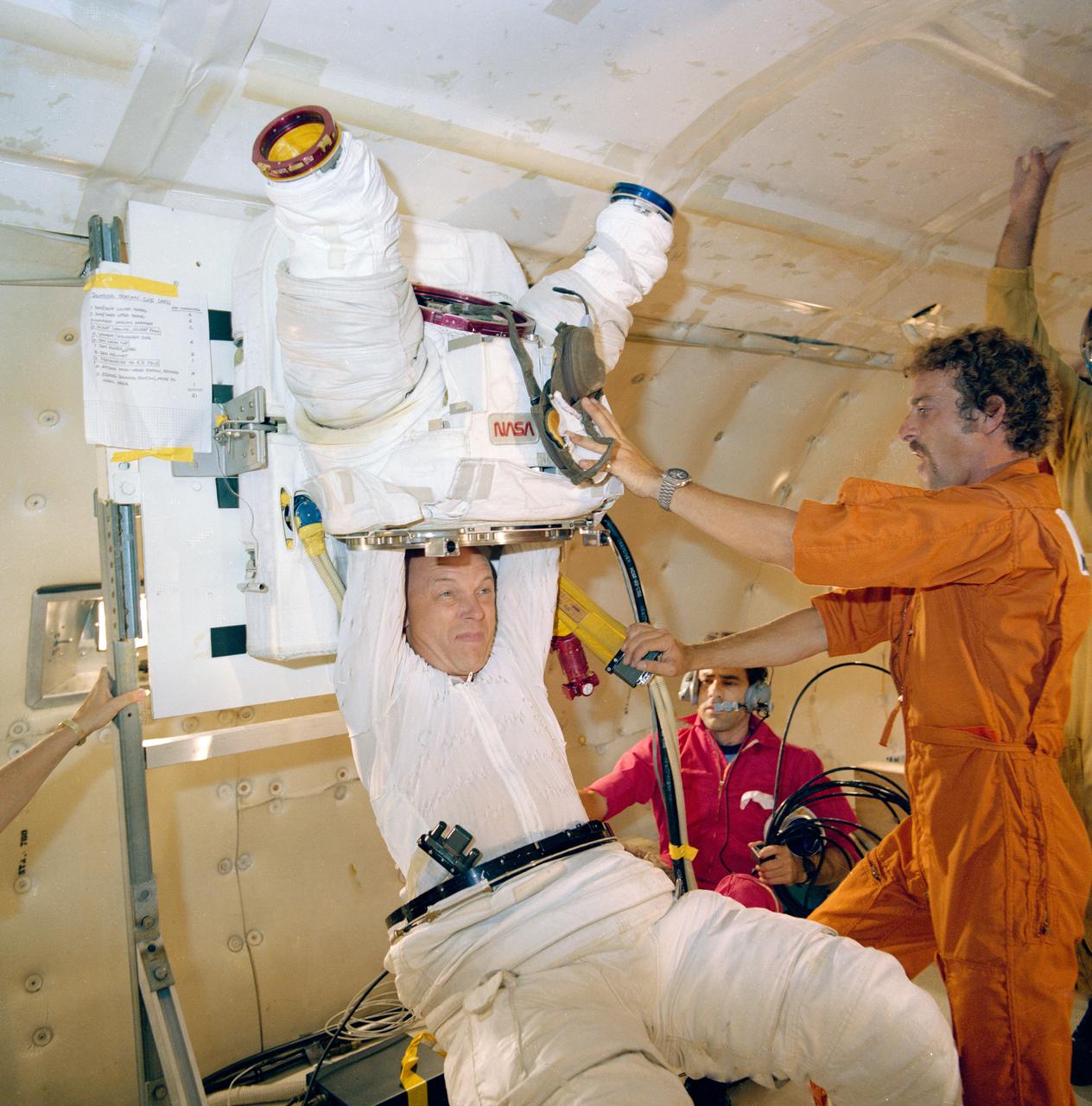
S82-33603 (November 1982) --- Astronaut F. Story Musgrave, STS-6 mission specialist, is assisted in a suit donning and doffing exercise in the weightlessness provided by a KC-135 ?zero-gravity? aircraft. Dr. Musgrave and the next mission?s other mission specialist, astronaut Donald H. Peterson, participated in the donning and doffing as a simulation for their preparations aboard the Challenger when they are called upon to perform an extravehicular activity (EVA) which was postponed from NASA?s first operational STS flight earlier this month. The suit is called an Extravehicular Mobility Unit (EMU). Photo credit: NASA
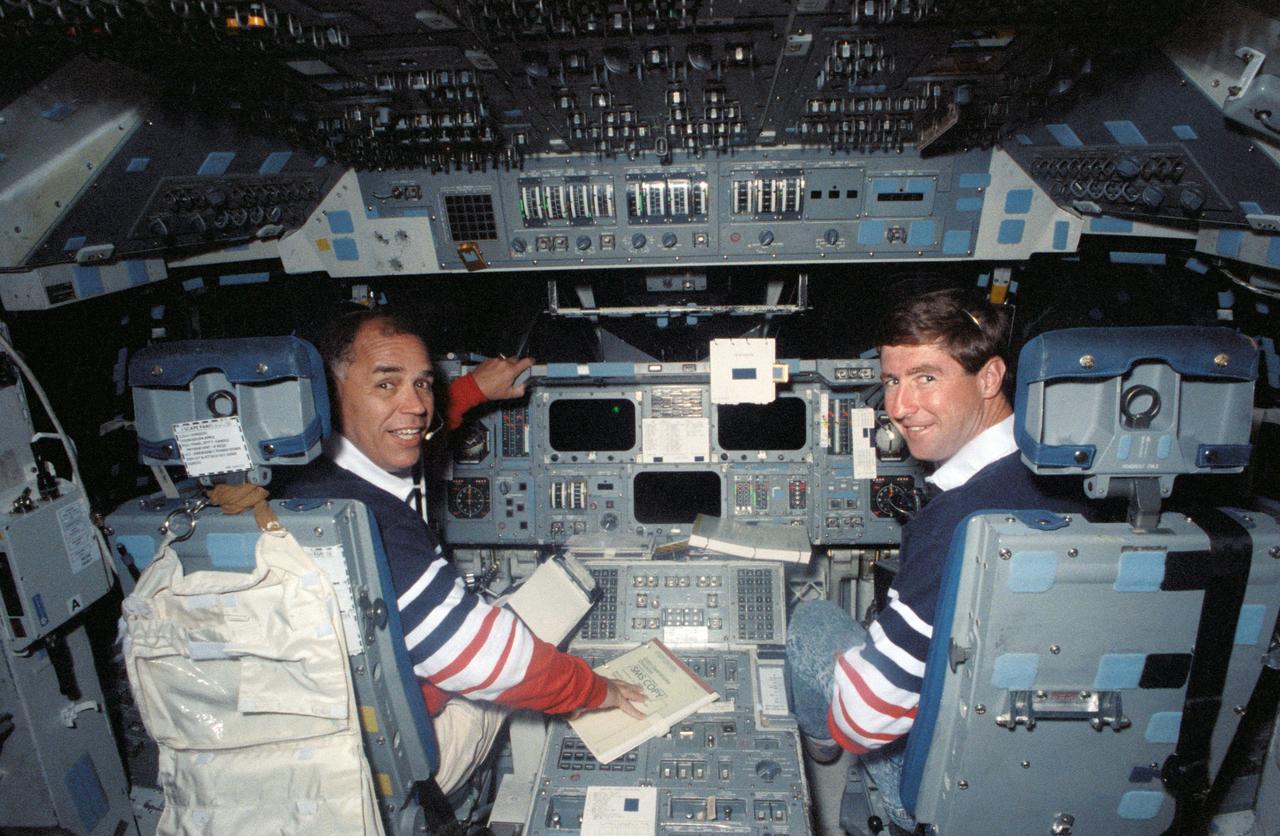
S91-38355 (28 May 1991) --- Seen floating about the vacant spaces of the Johnson Space Center's KC-135 "zero-gravity" aircraft are the six crewmembers for the STS 44 mission. Left to right are Terence T. Henricks, James S. Voss, F. Story Musgrave (partially obscured), Frederick D. Gregory, Thomas J. Hennen and Mario Runco Jr. Gregory is mission commander. Hennen is payload specialist for this flight, dedicated to the Department of Defense. The flight served as a refresher and a preview of the experience of weightlessness, as the special aircraft flew a series of parabolas which provided short sessions of zero-gravity.
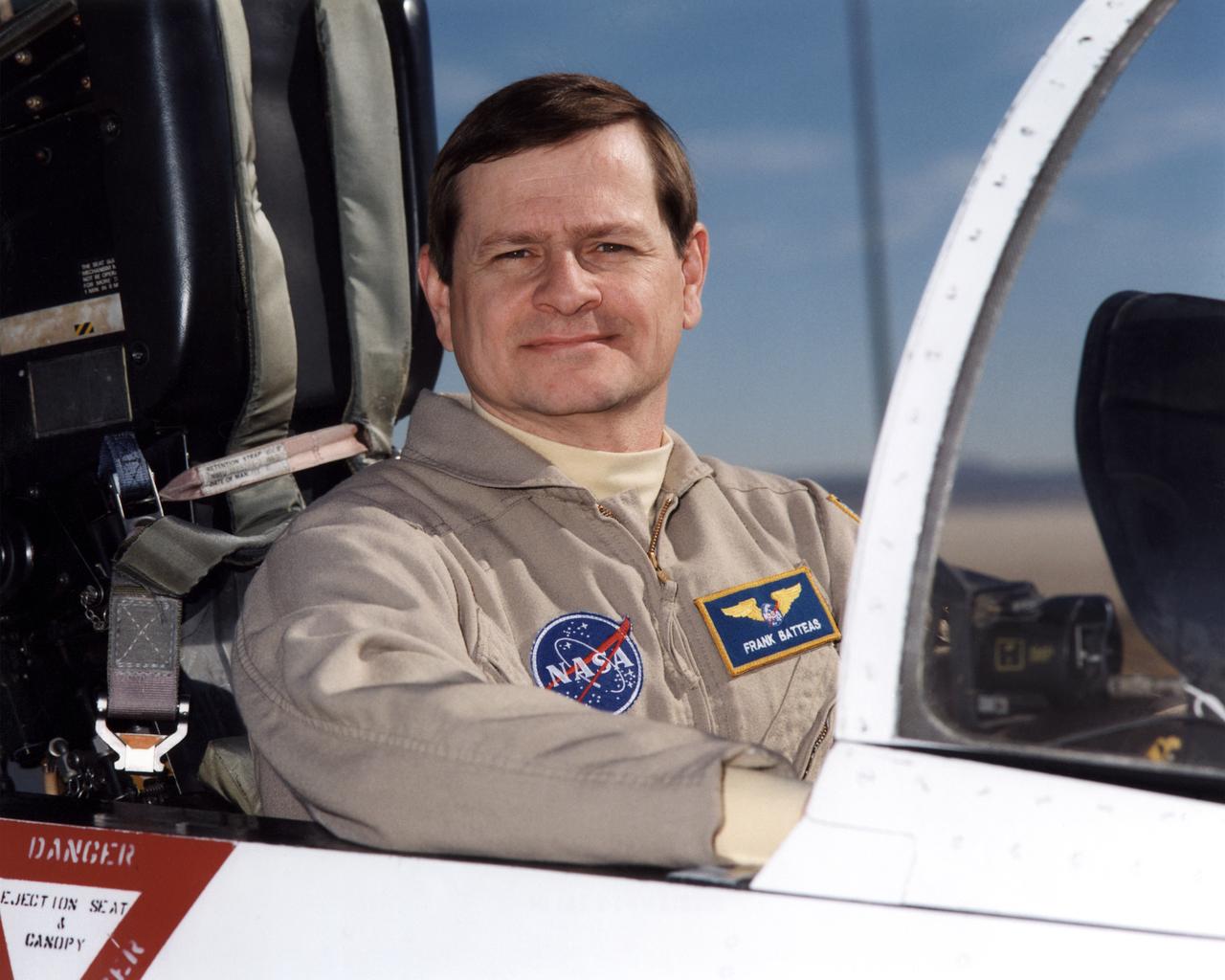
Frank Batteas is a research test pilot in the Flight Crew Branch of NASA's Dryden Flight Research Center, Edwards, California. He is currently a project pilot for the F/A-18 and C-17 flight research projects. In addition, his flying duties include operation of the DC-8 Flying Laboratory in the Airborne Science program, and piloting the B-52B launch aircraft, the King Air, and the T-34C support aircraft. Batteas has accumulated more than 4,700 hours of military and civilian flight experience in more than 40 different aircraft types. Batteas came to NASA Dryden in April 1998, following a career in the U.S. Air Force. His last assignment was at Wright-Patterson Air Force Base, Dayton, Ohio, where Lieutenant Colonel Batteas led the B-2 Systems Test and Evaluation efforts for a two-year period. Batteas graduated from Class 88A of the Air Force Test Pilot School, Edwards Air Force Base, California, in December 1988. He served more than five years as a test pilot for the Air Force's newest airlifter, the C-17, involved in nearly every phase of testing from flutter and high angle-of-attack tests to airdrop and air refueling envelope expansion. In the process, he achieved several C-17 firsts including the first day and night aerial refuelings, the first flight over the North Pole, and a payload-to-altitude world aviation record. As a KC-135 test pilot, he also was involved in aerial refueling certification tests on a number of other Air Force aircraft. Batteas received his commission as a second lieutenant in the U. S. Air Force through the Reserve Officer Training Corps and served initially as an engineer working on the Peacekeeper and Minuteman missile programs at the Ballistic Missile Office, Norton Air Force Base, Calif. After attending pilot training at Williams Air Force Base, Phoenix, Ariz., he flew operational flights in the KC-135 tanker aircraft and then was assigned to research flying at the 4950th Test Wing, Wright-Patterson. He flew extensively modified C-135
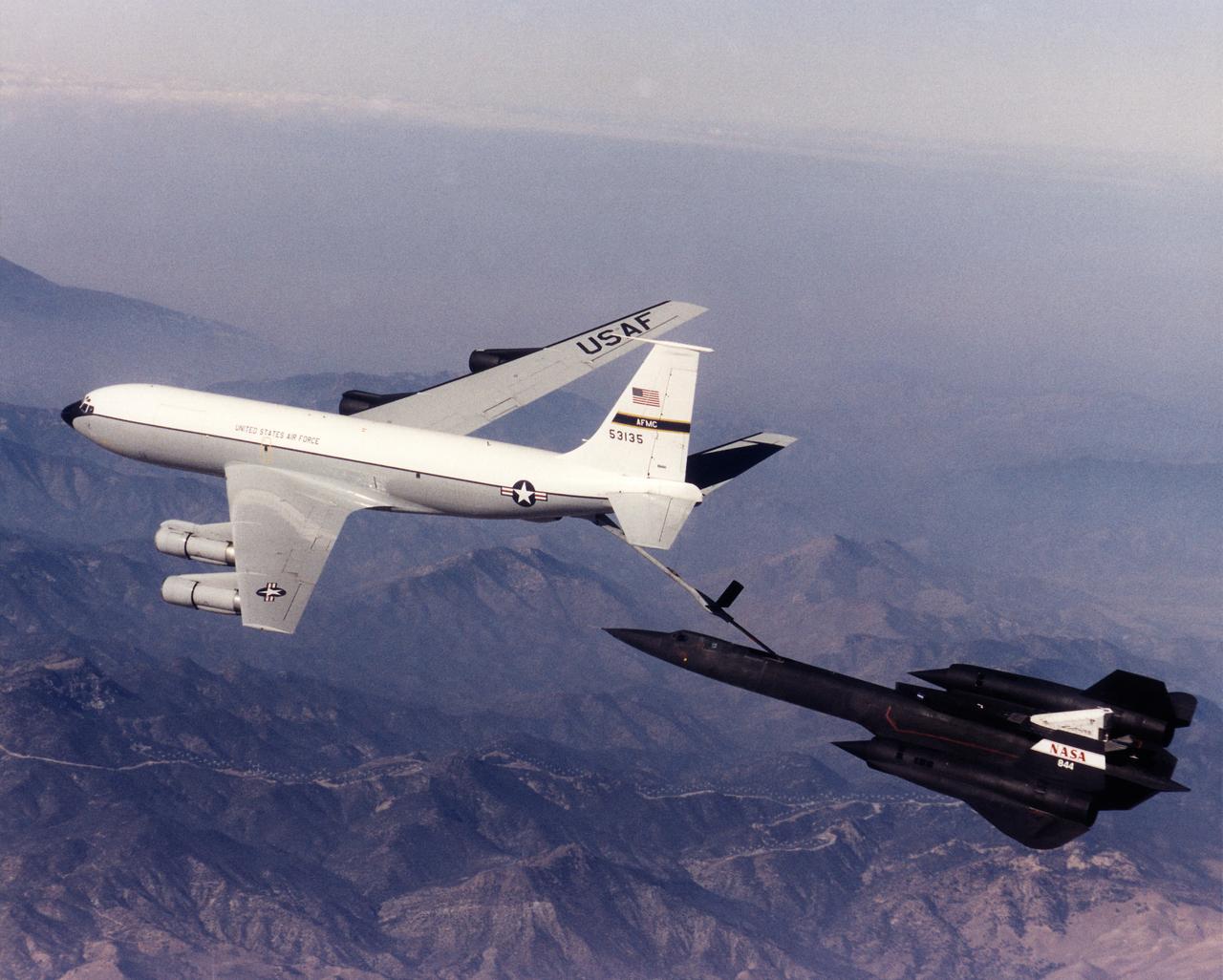
A NASA SR-71 refuels with an Edwards Air Force Base KC-135 during the first flight of the NASA/Rocketdyne/ Lockheed Martin Linear Aerospike SR-71 Experiment (LASRE). The flight took place Oct. 31 at NASA's Dryden Flight Research Center, Edwards, California. The SR-71 took off at 8:31 a.m. PST. The aircraft flew for one hour and fifty minutes, reaching a maximum speed of Mach 1.2 before landing at Edwards at 10:21 a.m. PST, successfully validating the SR-71/linear aerospike experiment configuration. The goal of the first flight was to evaluate the aerodynamic characteristics and the handling of the SR-71/linear aerospike experiment configuration. The engine was not fired during the flight.
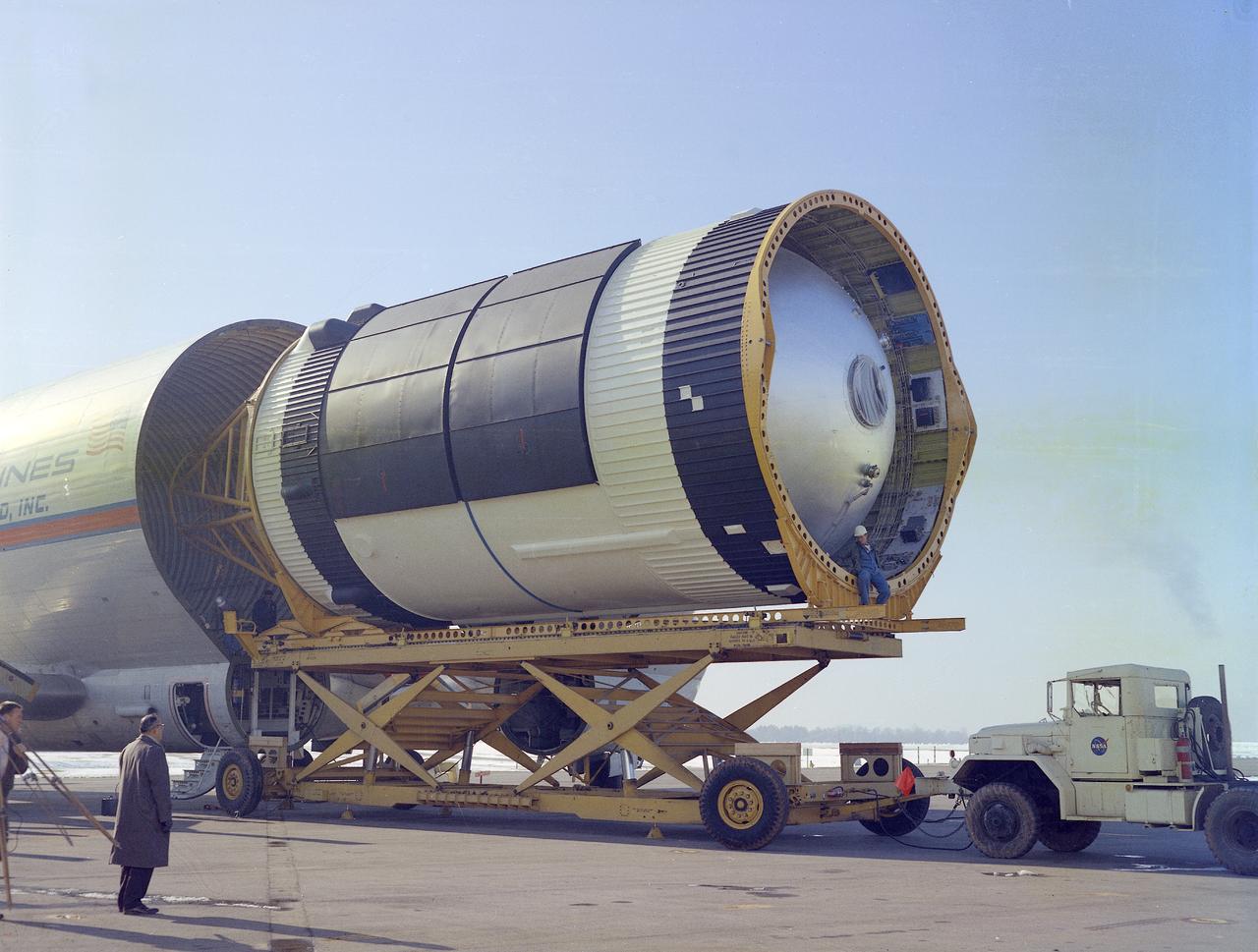
This photograph was taken at the Redstone airfield, Huntsville, Alabama, during the unloading of the Saturn V S-IVB stage that housed the Orbital Workshop (OWS) from the Super Guppy, the NASA plane that was specially built to carry oversized cargo. The OWS measured 22 feet (6.7 m) in diameter, and 48 feet (14.6 m) in length. The Saturn V S-IVB stage was modified at the McDornell Douglas facility at Huntington Beach, California, for a new role, which was to house the OWS. In addition to the test articles, engineering mockups, and flight equipment, both McDonnell Douglas and Martin Marietta built 0-G trainers, neutral buoyancy trainers, and high-fidelity mockups for the 1-G trainer to be used in the KC-135 aircraft. The Marshall Space Flight Center had program management responsibility for the development of Skylab hardware and experiments.
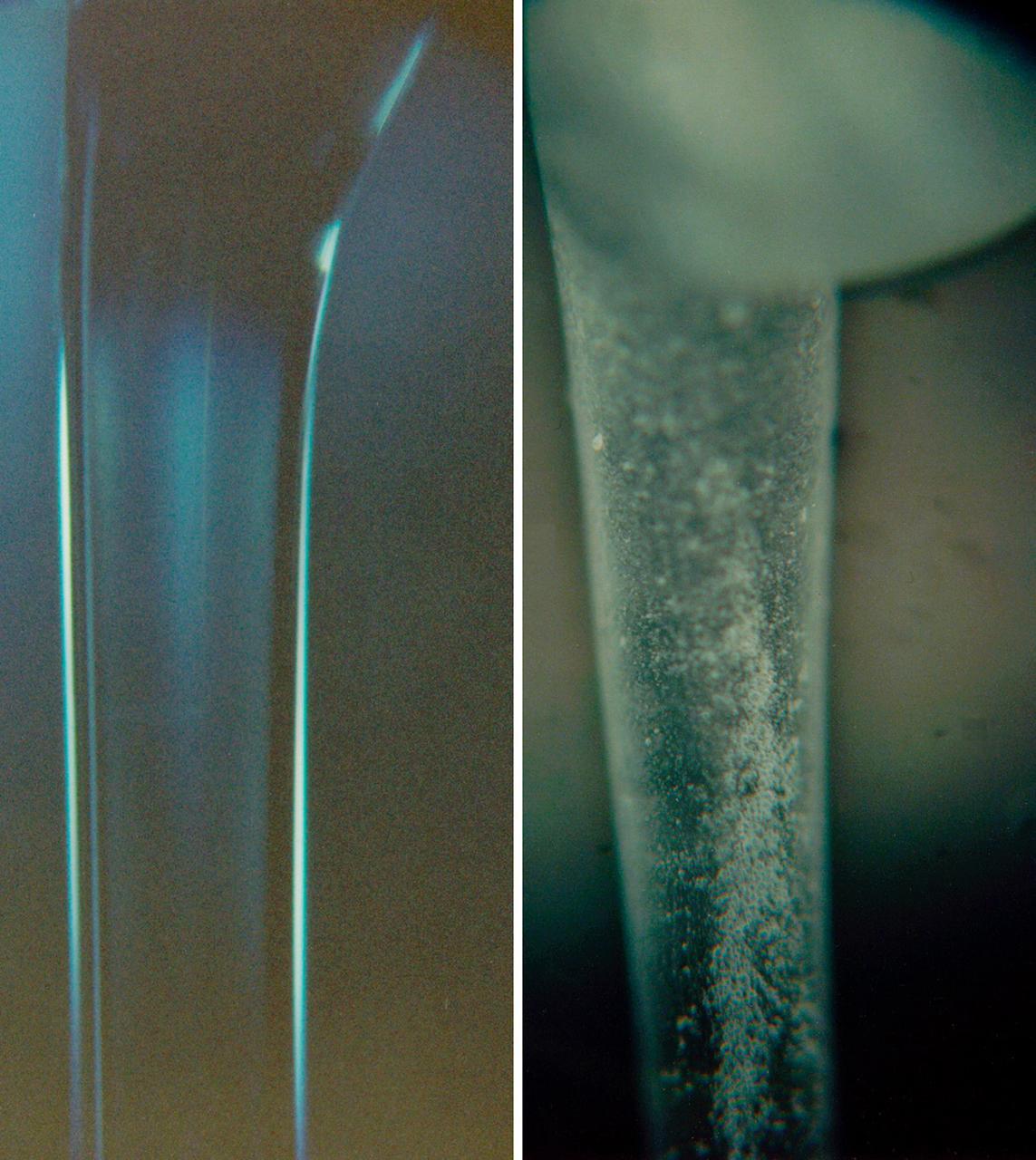
Sections of ZBLAN fibers pulled in a conventional 1-g process (right) and in experiments aboard NASA's KC-135 low-gravity aircraft (left). The rough surface of the 1-g fiber indicates surface defects that would scatter an optical signal and greatly degrade its quality. ZBLAN is part of the family of heavy-metal fluoride glasses (fluorine combined zirconium, barium, lanthanum, aluminum, and sodium). NASA is conducting research on pulling ZBLAN fibers in the low-g environment of space to prevent crystallization that limits ZBLAN's usefulness in optical fiber-based communications. ZBLAN is a heavy-metal fluoride glass that shows exceptional promise for high-throughput communications with infrared lasers. Photo credit: NASA/Marshall Space Flight Center
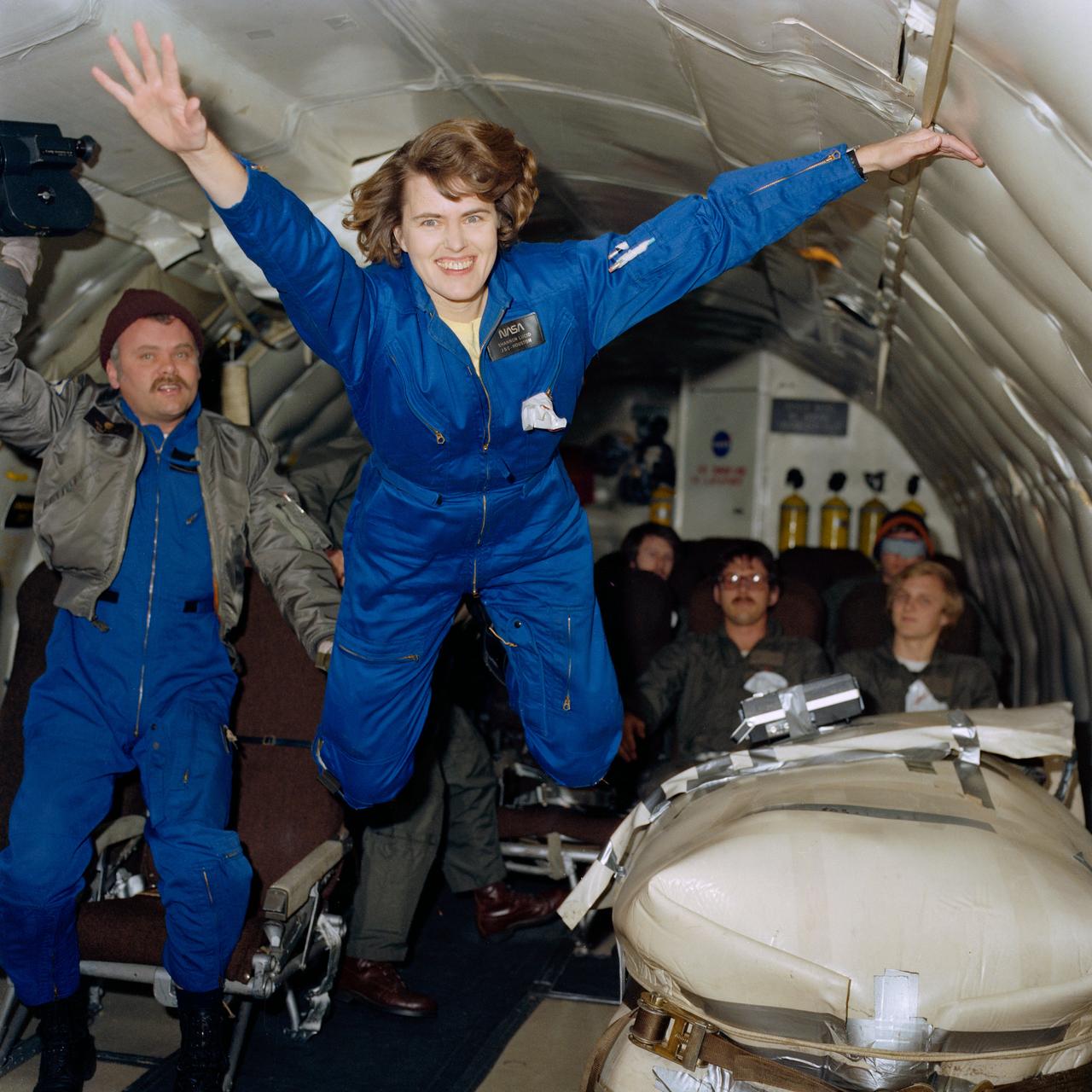
Astronaut -Candidate (ASCAN) Guion S. Bluford and Aviation Safety Officer Charles F. Hayes got a unique perspective of their environment during a zero- gravity flight. They are aboard a KC-135 Aircraft, which flies a special pattern repeatedly to afford a series of 30-seconds-of-weightlessness sessions. Astronauts Bluford and Hayes are being assisted by C. P. Stanley of the Photography Branch of the Photographic Technology Division (PTD) at Johnson Space Center (JSC). Some medical studies and a Motion Sickness Experiment were conducted on this particular flight. Astronaut Bluford is one of 20 Scientist/ASCAN's who began training at JSC, 07/1978. 1. Dr. Jeffrey A. Hoffman - Zero-G 2. ASCAN Shannon Lucid - Zero-G 3. ASCAN Guion Bluford - Zero-G