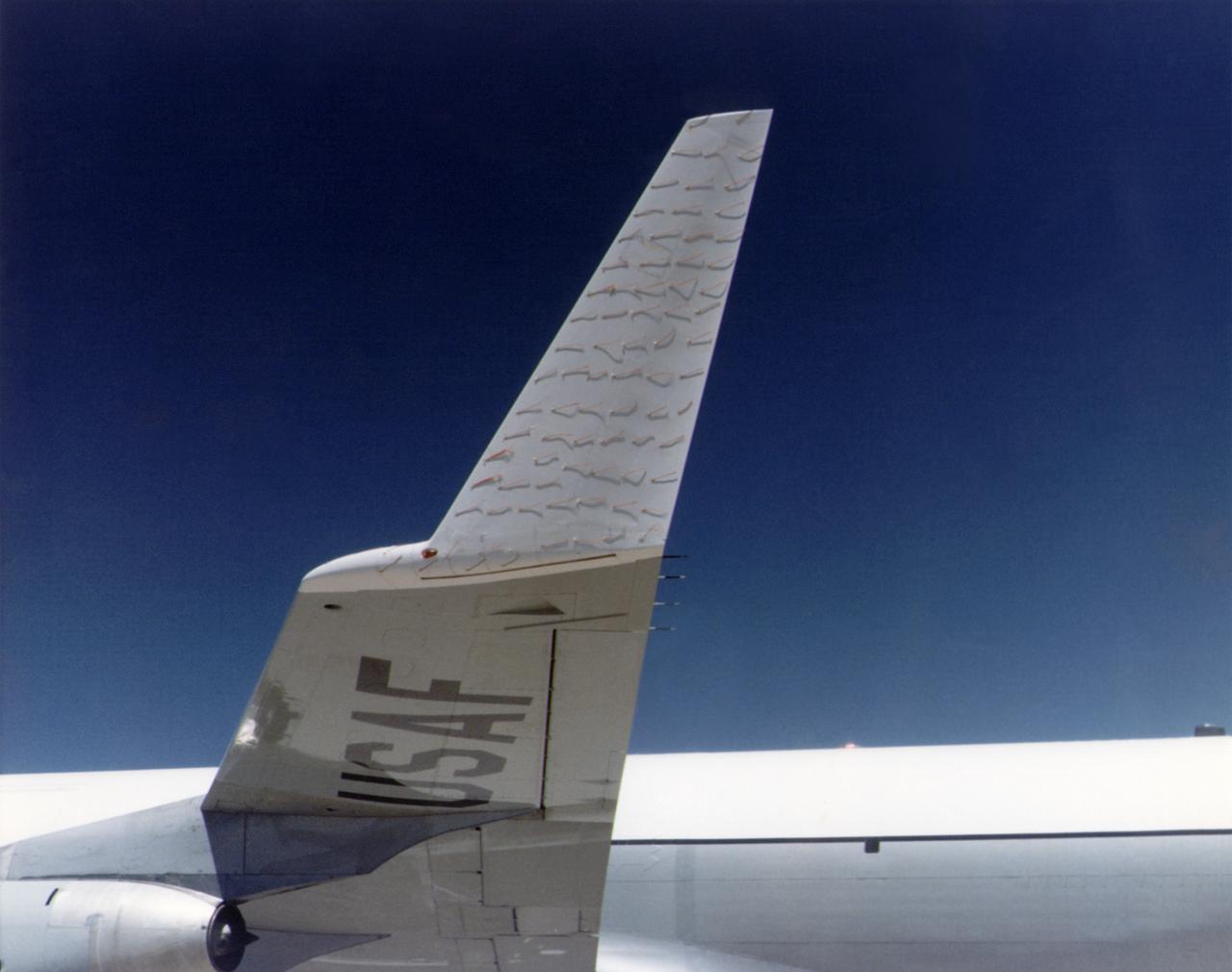
A chase plane view of the tufts on the KC-135 winglet. The use of tufts in flight research dates back to the early days of the NACA, and remains an effective means of observing airflow even today. In this procedure, rows of strings are attached to an airplane's surface, with one end of each string taped to the airplane and the other end free to swing about in the airflow. The movements of the tufts are photographed by on-board cameras or a chase plane. If the tufts are arrayed in neat rows, as seen here, then the airflow is smooth over the airplane's surface. If, however, they are moving about violently, it suggests turbulent airflow. Such motions may indicate high drag, flow separation (such as in a stall), or buffeting. In some cases, tufts will actually point forward, indicating the airflow has reversed direction.
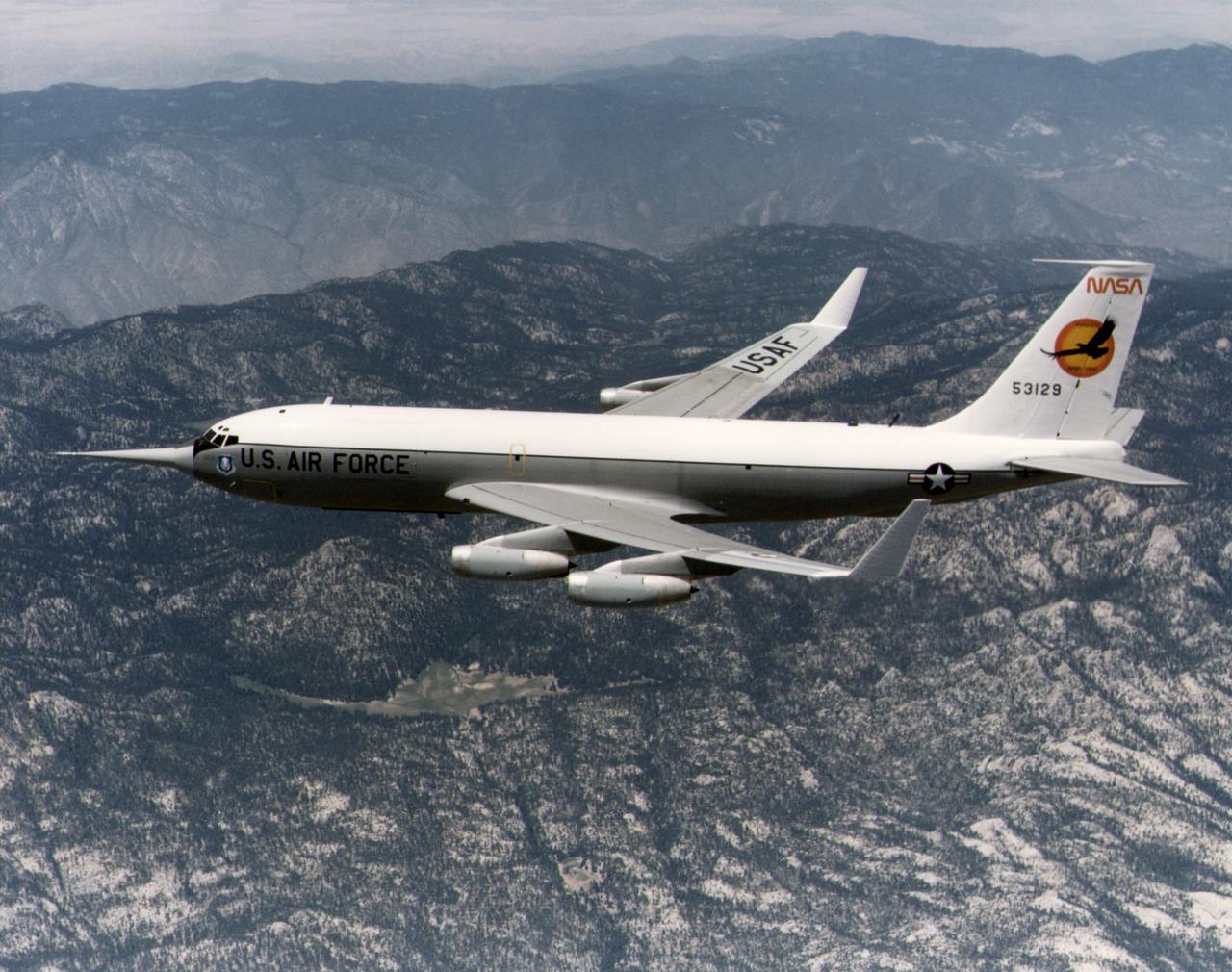
The KC-135 with the winglets in flight over the San Gabriel mountains, south of Edwards AFB. While wind tunnel tests suggested that winglets - developed by NASA Langley's Richard Whitcomb - would significantly reduce drag, flight research proved their usefulness. Winglets were installed on an Air Force KC-135 and research flights were made in 1979 and 1980. These showed drag in flight was reduced by as much as 7 percent. Winglets soon appeared on production aircraft, although these were smaller than those mounted on the KC-135.
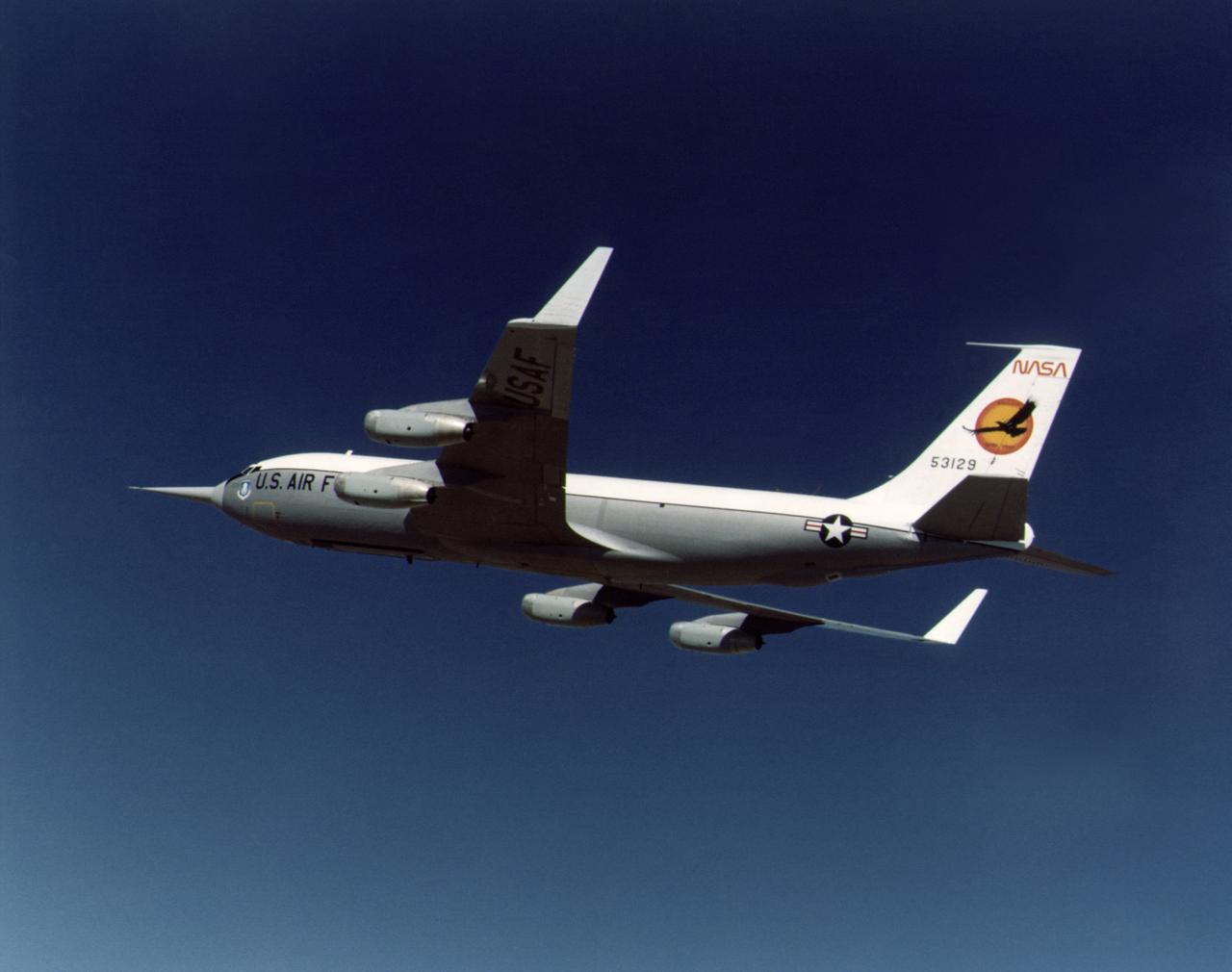
During the 1970s, the focus at Dryden shifted from high-speed and high-altitude flight to incremental improvements in technology and aircraft efficiency. One manifestation of this trend occurred in the winglet flight research carried out on a KC-135 during 1979 and 1980. Richard Whitcomb at the Langley Research Center had originated the idea of adding small vertical fins to an aircraft's wing tips. His wind tunnel tests indicated that winglets produced a forward thrust, which reduced the strength of the vortices generated by an aircraft's wing tips and resulted in a reduction of drag and an increase in aircraft range. Whitcomb, who had previously developed the area rule concept and the supercritical wing, selected the best winglet shape for flight tests on a KC-135 tanker. When the tests were completed, the data showed that the winglets provided a 7 percent improvement in range over the standard KC-135. The obvious economic advantage at a time of high fuel costs caused winglets to be adopted on business jets, airliners, and heavy military transports.