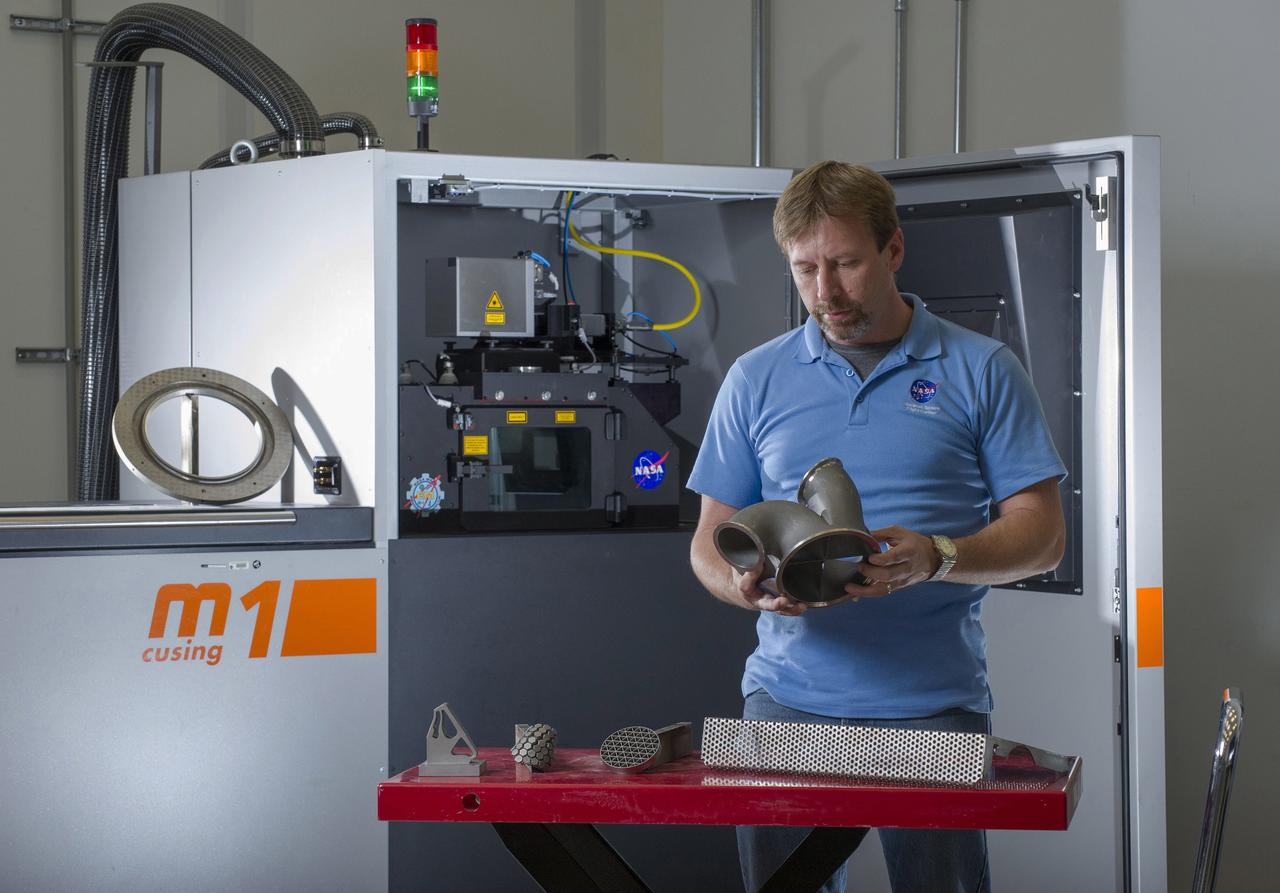
KEN COOPER, TEAM LEAD OF MSFC’S ADVANCED MANUFACTURING TEAM, WITH NICKEL ALLOY 718 PARTS FABRICATED USING THE M1 SELECTIVE LASER MELTING SYSTEM. THE M1 MACHINE IS DEDICATED TO BUILDING QUALIFICATION SAMPLES AND HARDWARE DEMONSTRATORS FOR THE RS25 ENGINE PROJECT.
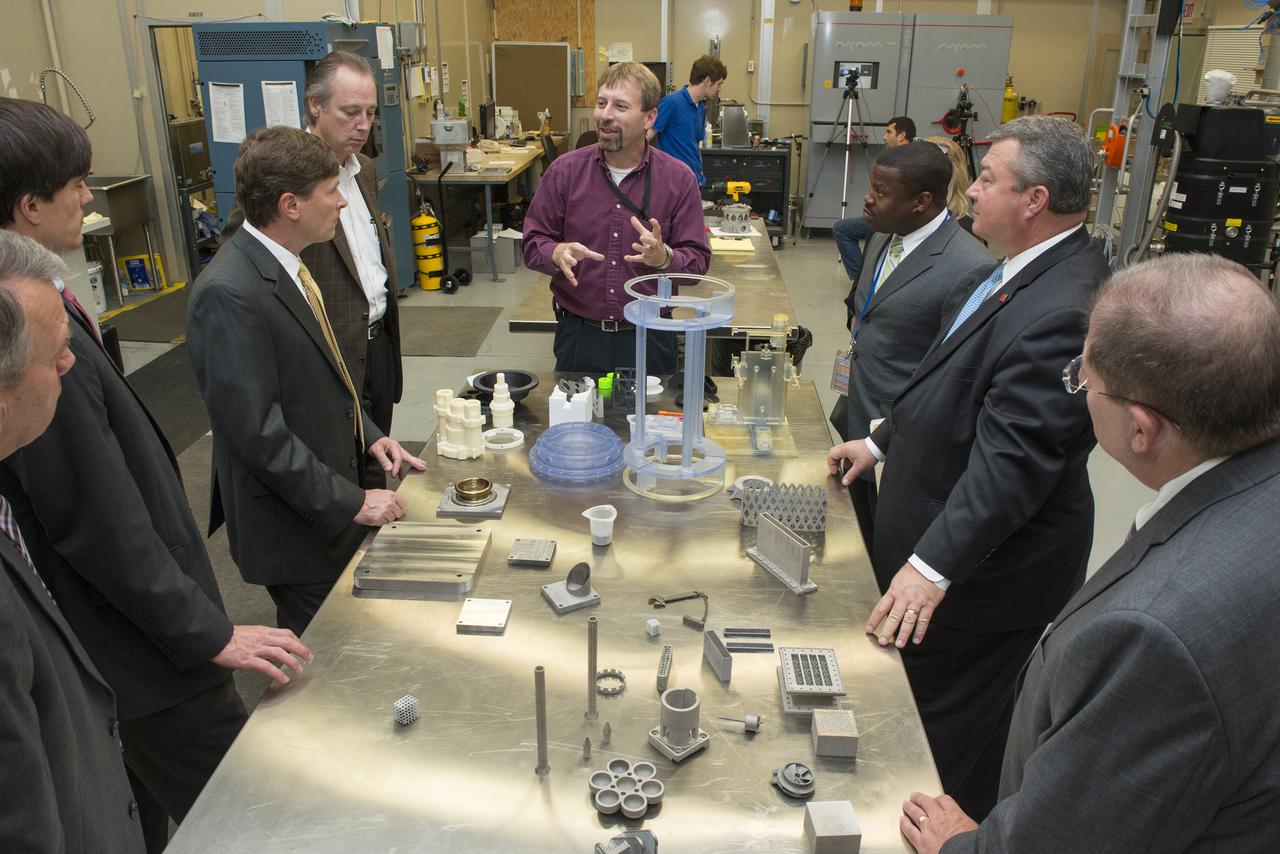
KEN COOPER GIVES AN OVERVIEW OF ADDITIVE MANUFACTURING TO STATE SENATOR BILL HOLTZCLAW, REPRESENTATIVE MAC MCCUTCHEON, GREG CANFIELD OF THE ALABAMA DEPARTMENT OF COMMERCE, GOVERNOR BENTLEY’S CHIEF OF STAFF, DAVID PERRY, AND LT. GOVERNOR STRANGES CHIEF OF STAFF, STEVE PELHAM.
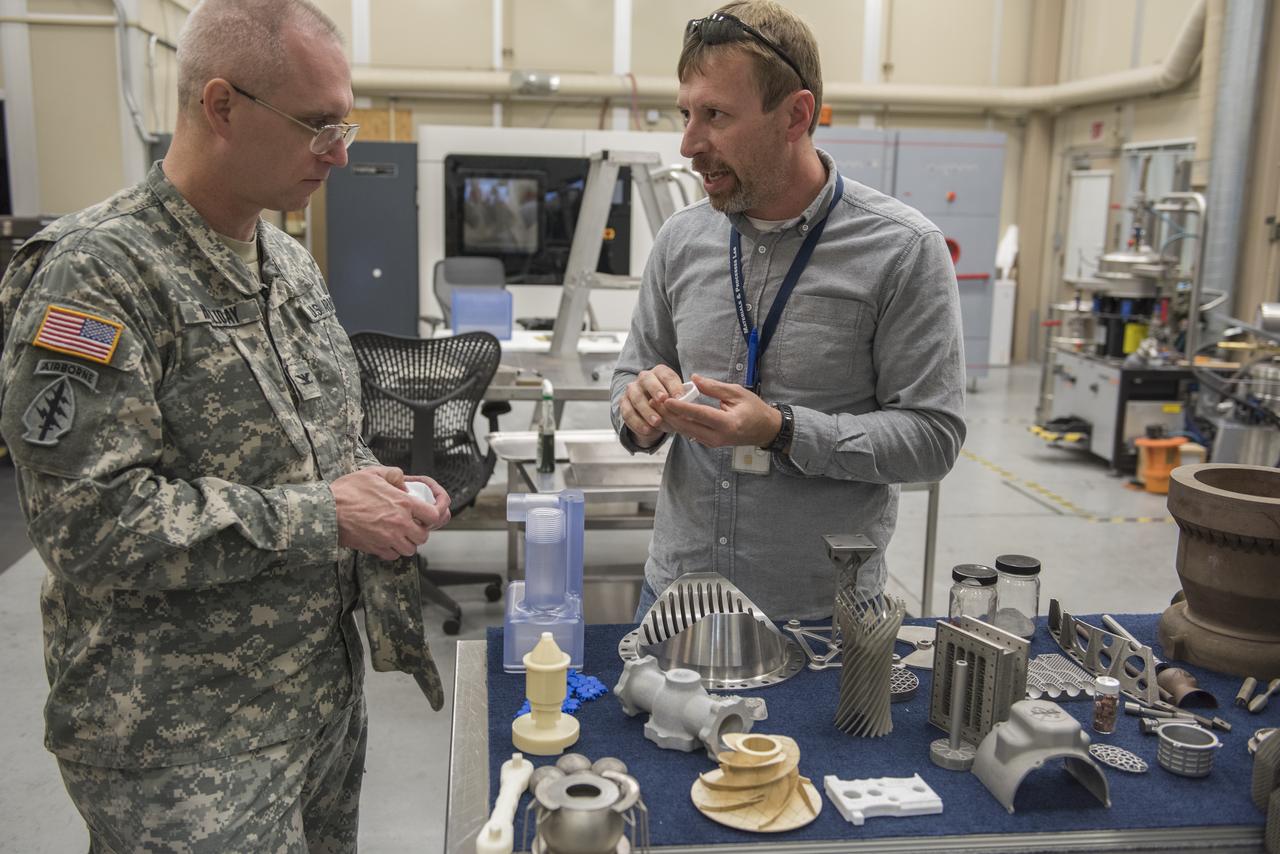
REDSTONE ARSENAL GARRISON COMMANDER COL. THOMAS "DOC" HOLLIDAY, LEFT, DISCUSSES THE PROCESSES AND HARDWARE USED IN NASA IN-SPACE MANUFACTURING TECHNIQUES WITH KEN COOPER, A STRUCTURAL MATERIALS ENGINEER AT NASA'S MARSHALL SPACE FLIGHT CENTER. COOPER, PART OF THE MARSHALL ENGINEERING DIRECTORATE'S ADVANCED MANUFACTURING AND DIGITAL SOLUTIONS TEAM, WAS AMONG NUMEROUS SUBJECT-MATTER EXPERTS WHO SHARED KEY MARSHALL CAPABILITIES DURING HOLLIDAY'S MARCH 3 MARSHALL TOUR. HOLLIDAY, A DECORATED OFFICER WHOSE MILITARY CAREER BEGAN IN 1992, GAINED FIRSTHAND INSIGHT INTO MARSHALL'S ADVANCED MANUFACTURING AND 3-D PRINTING TECHNIQUES; ROUND-THE-CLOCK INTERNATIONAL SPACE STATION SCIENCE AND COMMUNICATIONS SUPPORT BY THE PAYLOAD OPERATIONS INTEGRATION CENTER TEAM; AND THE LATEST UPGRADES TO MARSHALL TEST STANDS IN SUPPORT OF NEXT-GENERATION LAUNCH VEHICLE AND FLIGHT HARDWARE DEVELOPMENT. MARSHALL, A REDSTONE ARSENAL TENANT, ROUTINELY SHARES CUTTING-EDGE RESEARCH AND MANUFACTURING ADVANCES WITH ITS MILITARY AND FEDERAL AGENCY COUNTERPARTS, WORKING IN PARTNERSHIP TO ADVANCE NASA'S MISSION AND MAINTAIN THE NATION'S TECHNOLOGICAL LEADERSHIP.
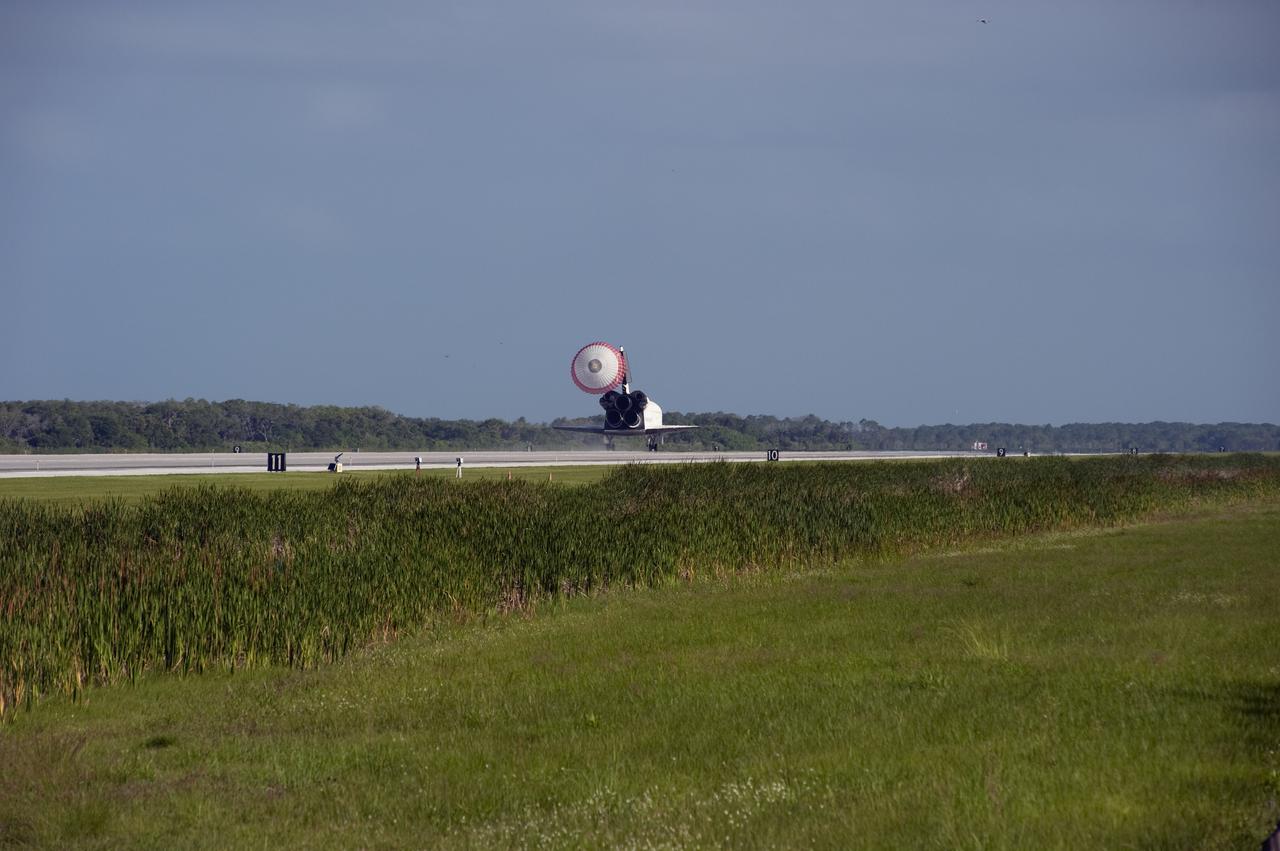
CAPE CANAVERAL, Fla. - The drag chute slows space shuttle Atlantis as it rolls down Runway 33 at the Shuttle Landing Facility at NASA's Kennedy Space Center in Florida. Landing was at 8:48 a.m. EDT, completing the 12-day STS-132 mission to the International Space Station. Main gear touchdown was at 8:48:11 a.m. EDT, followed by nose gear touchdown at 8:48:21 a.m. and wheelstop at 8:49:18 a.m. On board are Commander Ken Ham, Pilot Tony Antonelli, Mission Specialists Garrett Reisman, Michael Good, Steve Bowen and Piers Sellers. The six-member STS-132 crew carried the Russian-built Mini Research Module-1 to the International Space Station. STS-132 is the 34th shuttle mission to the station, the 132nd shuttle mission overall and the last planned flight for Atlantis. For information on the STS-132 mission and crew, visit www.nasa.gov_mission_pages_shuttle_shuttlemissions_sts132_index.html. Photo credit: NASA_Ben Cooper
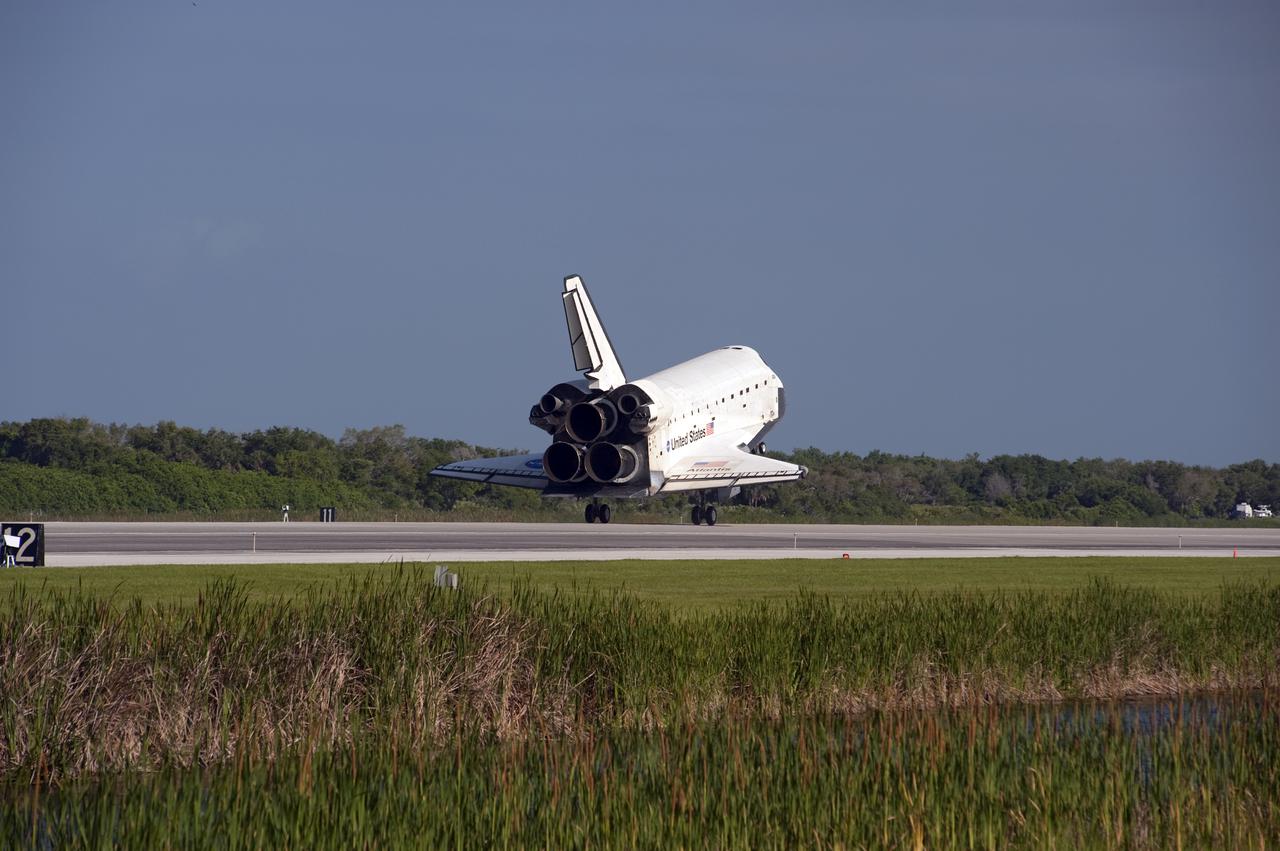
CAPE CANAVERAL, Fla. - Space shuttle Atlantis' main gear touches down on Runway 33 at the Shuttle Landing Facility at NASA's Kennedy Space Center in Florida. Landing was at 8:48 a.m. EDT, completing the 12-day STS-132 mission to the International Space Station. Main gear touchdown was at 8:48:11 a.m. EDT, followed by nose gear touchdown at 8:48:21 a.m. and wheelstop at 8:49:18 a.m. On board are Commander Ken Ham, Pilot Tony Antonelli, Mission Specialists Garrett Reisman, Michael Good, Steve Bowen and Piers Sellers. The six-member STS-132 crew carried the Russian-built Mini Research Module-1 to the International Space Station. STS-132 is the 34th shuttle mission to the station, the 132nd shuttle mission overall and the last planned flight for Atlantis. For information on the STS-132 mission and crew, visit www.nasa.gov_mission_pages_shuttle_shuttlemissions_sts132_index.html. Photo credit: NASA_Ben Cooper
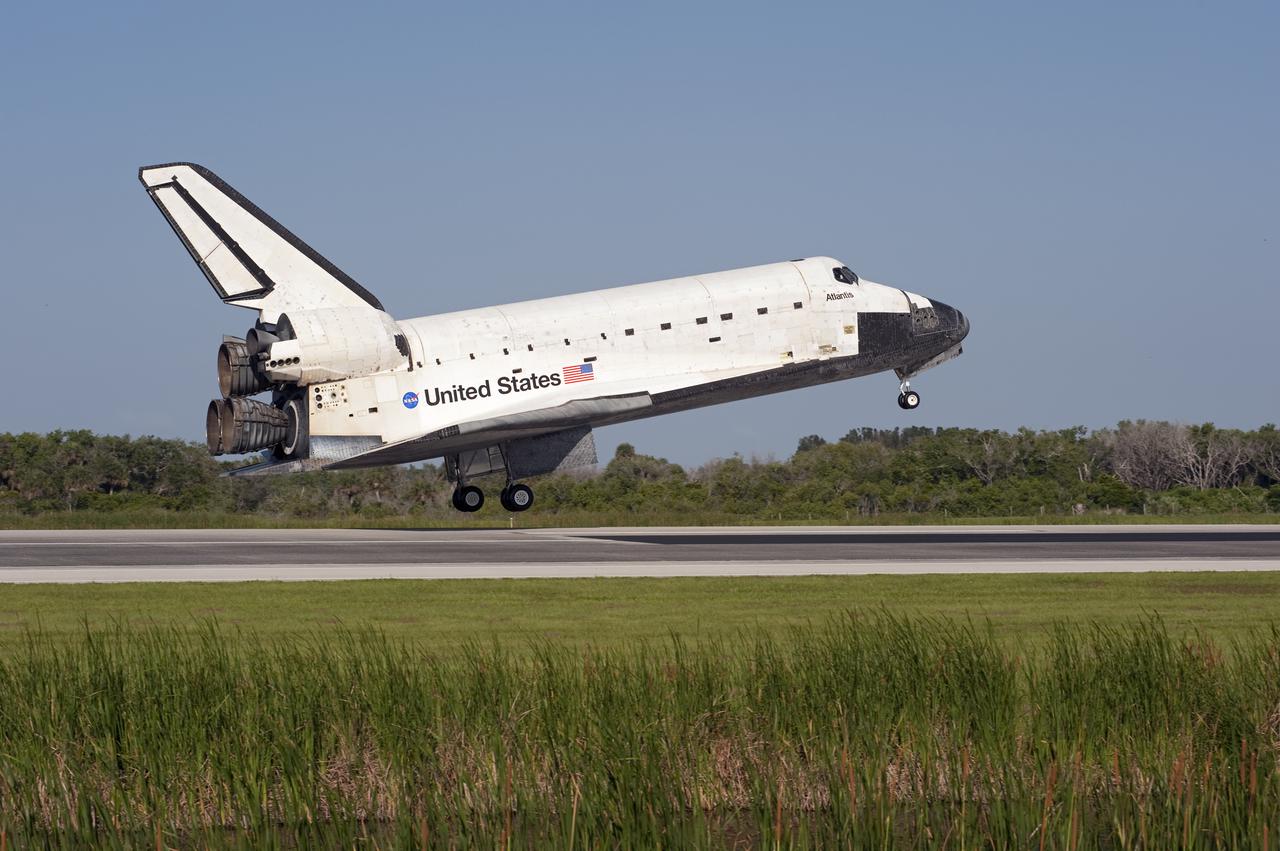
CAPE CANAVERAL, Fla. - Space shuttle Atlantis nears touchdown on Runway 33 at the Shuttle Landing Facility at NASA's Kennedy Space Center in Florida. Landing was at 8:48 a.m. EDT, completing the 12-day STS-132 mission to the International Space Station. Main gear touchdown was at 8:48:11 a.m. EDT, followed by nose gear touchdown at 8:48:21 a.m. and wheelstop at 8:49:18 a.m. On board are Commander Ken Ham, Pilot Tony Antonelli, Mission Specialists Garrett Reisman, Michael Good, Steve Bowen and Piers Sellers. The six-member STS-132 crew carried the Russian-built Mini Research Module-1 to the International Space Station. STS-132 is the 34th shuttle mission to the station, the 132nd shuttle mission overall and the last planned flight for Atlantis. For information on the STS-132 mission and crew, visit www.nasa.gov_mission_pages_shuttle_shuttlemissions_sts132_index.html. Photo credit: NASA_Ben Cooper
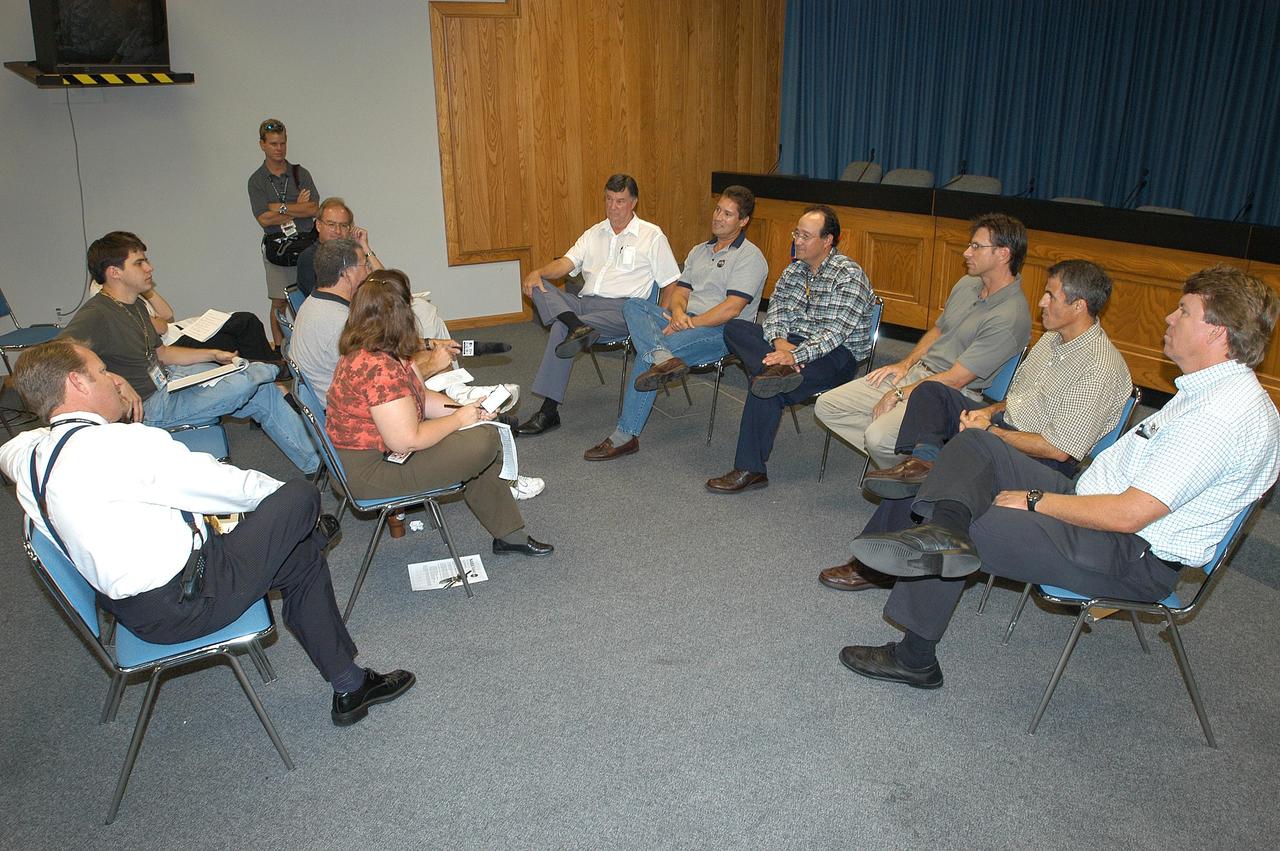
KENNEDY SPACE CENTER, FLA. - Reporters (left) take notes during an informal briefing concerning NASA’s Cassini spacecraft, launched aboard an Air Force Titan IV rocket from Cape Canaveral Air Force Station Oct. 15, 1997. Cassini launch team members at right discussed the challenge and experience of preparing Cassini for launch, integrating it with the Titan IV rocket and the countdown events of launch day. From left are Ron Gillett, NASA Safety and Lead Federal Agency official; Omar Baez, mechanical and propulsion systems engineer; Ray Lugo, NASA launch manager; Chuck Dovale, chief, Avionics Branch; George Haddad, Integration and Ground Systems mechanical engineer; and Ken Carr, Cassini assistant launch site support manager. Approximately 10:36 p.m. EDT, June 30, the Cassini-Huygens spacecraft will arrive at Saturn. After nearly a seven-year journey, it will be the first mission to orbit Saturn. The international cooperative mission plans a four-year tour of Saturn, its rings, icy moons, magnetosphere, and Titan, the planet’s largest moon.
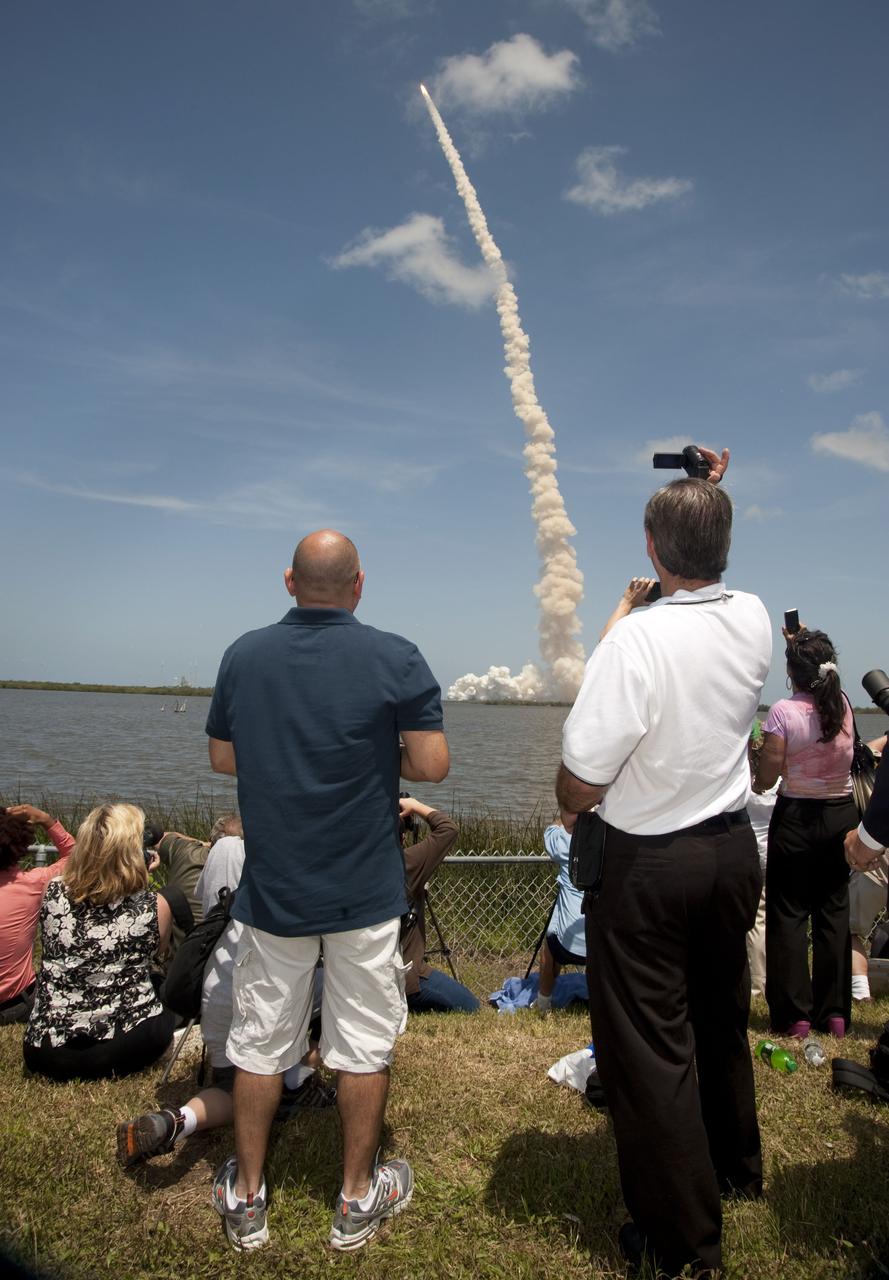
STS132-S-013 (14 May 2010) --- As visitors watch, the space shuttle Atlantis and its six-member STS-132 crew head toward Earth orbit and rendezvous with the International Space Station. Liftoff was at 2:20 p.m. (EDT) on May 14, 2010, from launch pad 39A at NASA's Kennedy Space Center. Onboard are NASA astronauts Ken Ham, commander; Tony Antonelli, pilot; Garrett Reisman, Michael Good, Steve Bowen and Piers Sellers, all mission specialists. The crew will deliver the Russian-built Mini-Research Module 1 (MRM-1) to the International Space Station. Named Rassvet, Russian for "dawn," the module is the second in a series of new pressurized components for Russia and will be permanently attached to the Earth-facing port of the Zarya Functional Cargo Block (FGB). Rassvet will be used for cargo storage and will provide an additional docking port to the station. Also aboard Atlantis is an Integrated Cargo Carrier, or ICC, an unpressurized flat bed pallet and keel yoke assembly used to support the transfer of exterior cargo from the shuttle to the station. STS-132 is the 34th mission to the station and the last scheduled flight for Atlantis. For more information on the STS-132 mission objectives, payload and crew, visit www.nasa.gov/mission_pages/shuttle/shuttlemissions/sts132/index.html. Photo Credit: NASA/Ben Cooper
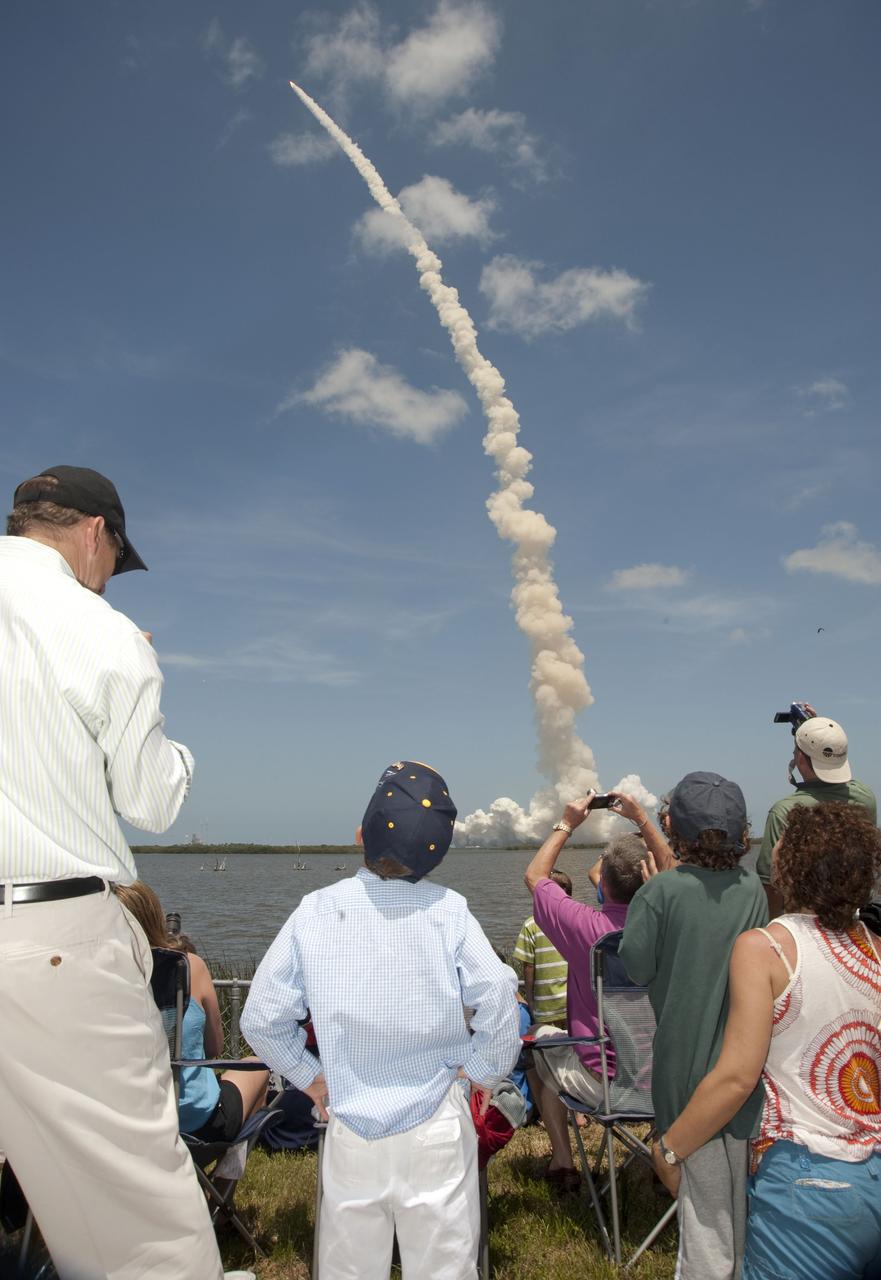
STS132-S-014 (14 May 2010) --- With visitors looking on, the space shuttle Atlantis and its six-member STS-132 crew head toward Earth orbit and rendezvous with the International Space Station. Liftoff was at 2:20 p.m. (EDT) on May 14, 2010, from launch pad 39A at NASA's Kennedy Space Center. Onboard are NASA astronauts Ken Ham, commander; Tony Antonelli, pilot; Garrett Reisman, Michael Good, Steve Bowen and Piers Sellers, all mission specialists. The crew will deliver the Russian-built Mini-Research Module 1 (MRM-1) to the International Space Station. Named Rassvet, Russian for "dawn," the module is the second in a series of new pressurized components for Russia and will be permanently attached to the Earth-facing port of the Zarya Functional Cargo Block (FGB). Rassvet will be used for cargo storage and will provide an additional docking port to the station. Also aboard Atlantis is an Integrated Cargo Carrier, or ICC, an unpressurized flat bed pallet and keel yoke assembly used to support the transfer of exterior cargo from the shuttle to the station. STS-132 is the 34th mission to the station and the last scheduled flight for Atlantis. For more information on the STS-132 mission objectives, payload and crew, visit www.nasa.gov/mission_pages/shuttle/shuttlemissions/sts132/index.html. Photo Credit: NASA/Ben Cooper
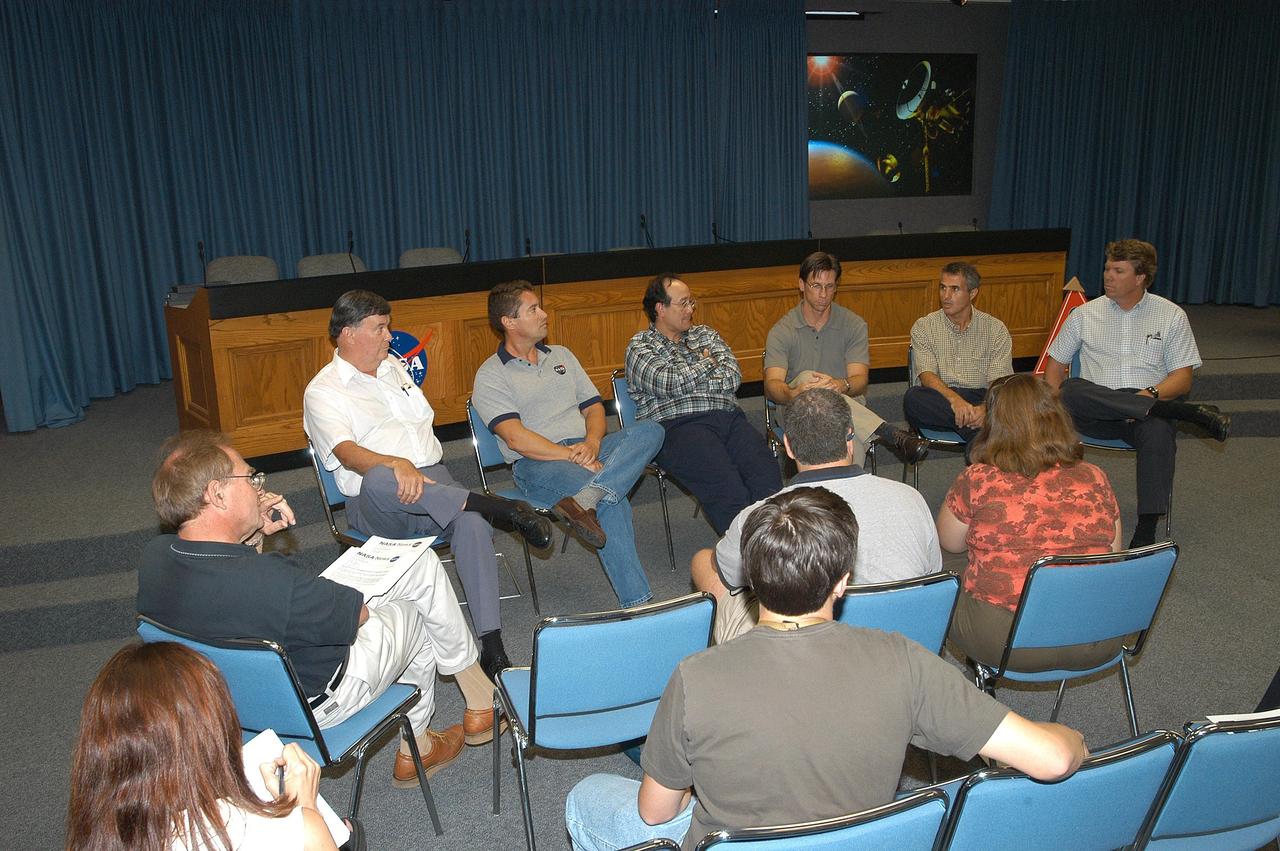
KENNEDY SPACE CENTER, FLA. - Reporters (bottom) take notes during an informal briefing concerning NASA’s Cassini spacecraft, launched aboard an Air Force Titan IV rocket from Cape Canaveral Air Force Station Oct. 15, 1997. Cassini launch team members seen here discussed the challenge and experience of preparing Cassini for launch, integrating it with the Titan IV rocket and the countdown events of launch day. Facing the camera (from left) are Ron Gillett, NASA Safety and Lead Federal Agency official; Omar Baez, mechanical and propulsion systems engineer; Ray Lugo, NASA launch manager; Chuck Dovale, chief, Avionics Branch; George Haddad, Integration and Ground Systems mechanical engineer; and Ken Carr, Cassini assistant launch site support manager. Approximately 10:36 p.m. EDT, June 30, the Cassini-Huygens spacecraft will arrive at Saturn. After nearly a seven-year journey, it will be the first mission to orbit Saturn. The international cooperative mission plans a four-year tour of Saturn, its rings, icy moons, magnetosphere, and Titan, the planet’s largest moon.