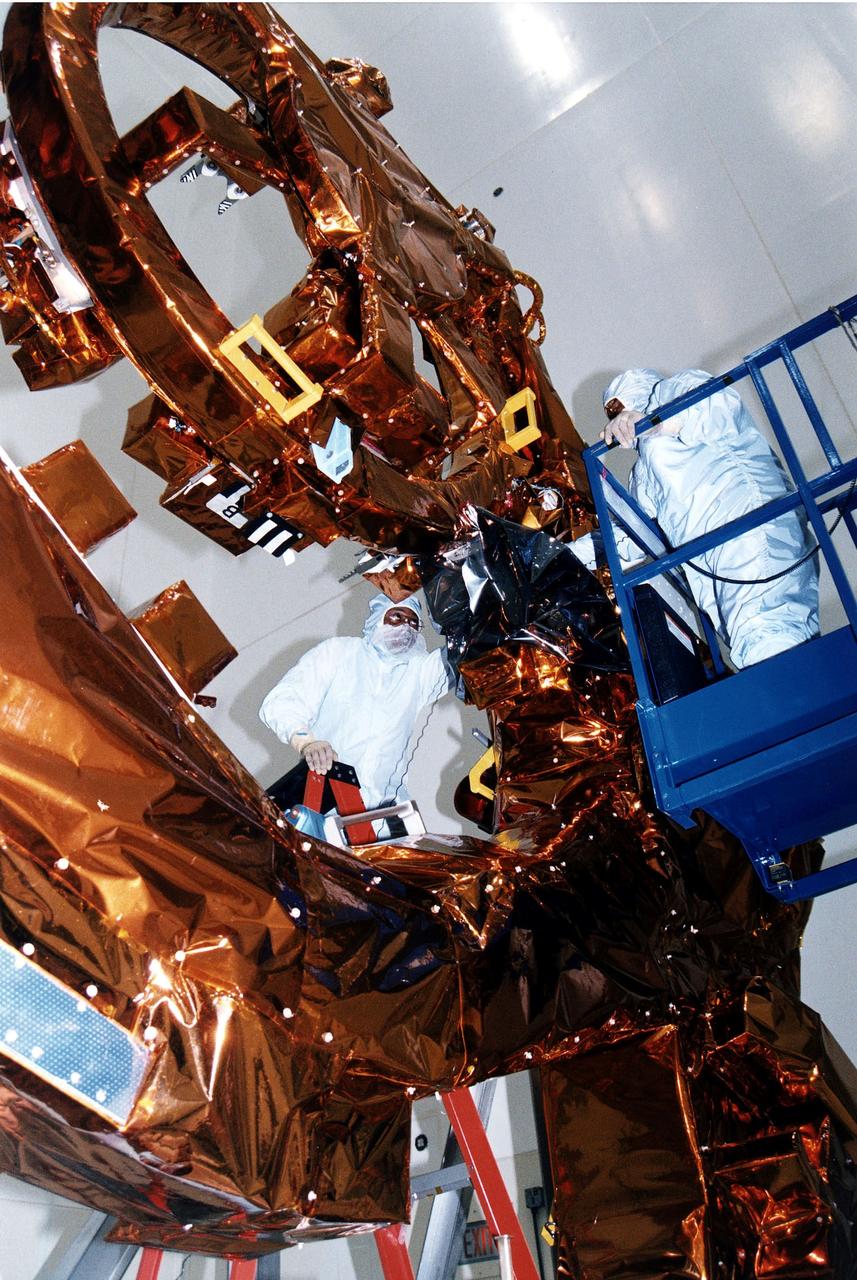
KENNEDY SPACE CENTER, FLA. - Workers in KSC's Vertical Processing Facility make final adjustments to the Flight Support System (FSS) for STS-82, the second Hubble Space Telescope servicing mission. The FSS is reusable flight hardware that provides the mechanical, structural and electrical interfaces between HST, the space support equipment and the orbiter for payload retrieval and on-orbit servicing. Liftoff aboard Discovery is targeted Feb. 11 with a crew of seven.
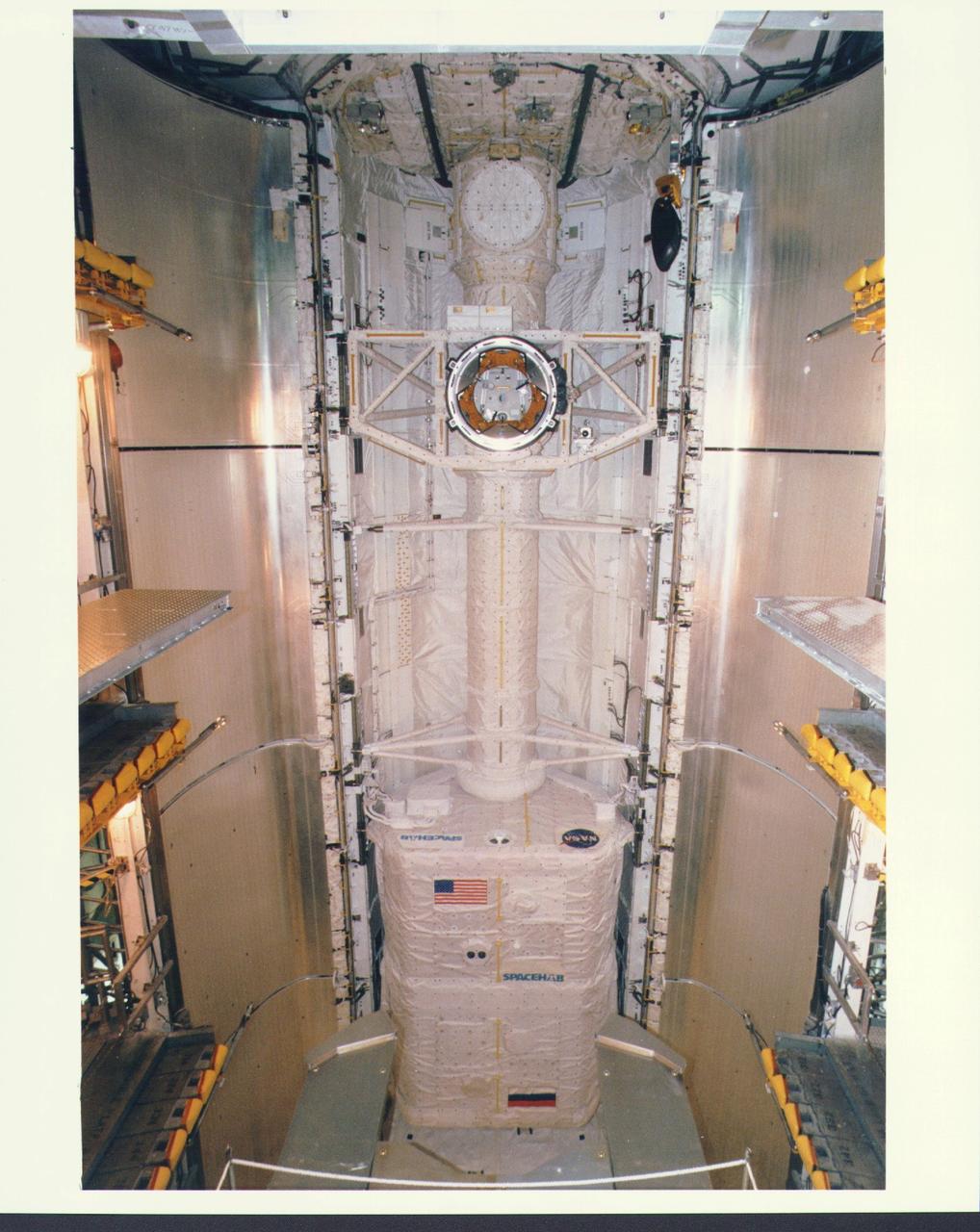
KENNEDY SPACE CENTER, FLA. - Workers in the Payload Changeout Room (PCR) at Launch Pad 39A are preparing to close the payload doors for flight on the Space Shuttle Atlantis, targeted for liftoff on Mission STS-79 around Sept. 12. The payloads in Atlantis' cargo bay will play key roles during the upcoming spaceflight, which will be highlighted by the fourth docking between the U.S. Shuttle and Russian Space Station Mir. Located in the aft (lowermost) area of the payload bay is the SPACEHAB Double Module, filled with supplies and other items slated for transfer to the Russian Space Station Mir as well as research equipment. The SPACEHAB is connected by tunnel to the Orbiter Docking System (ODS). This view looks directly at the top of the ODS and shows clearly the Androgynous Peripheral Docking System (APDS) that interfaces with the Docking Module on Mir to achieve a linkup.
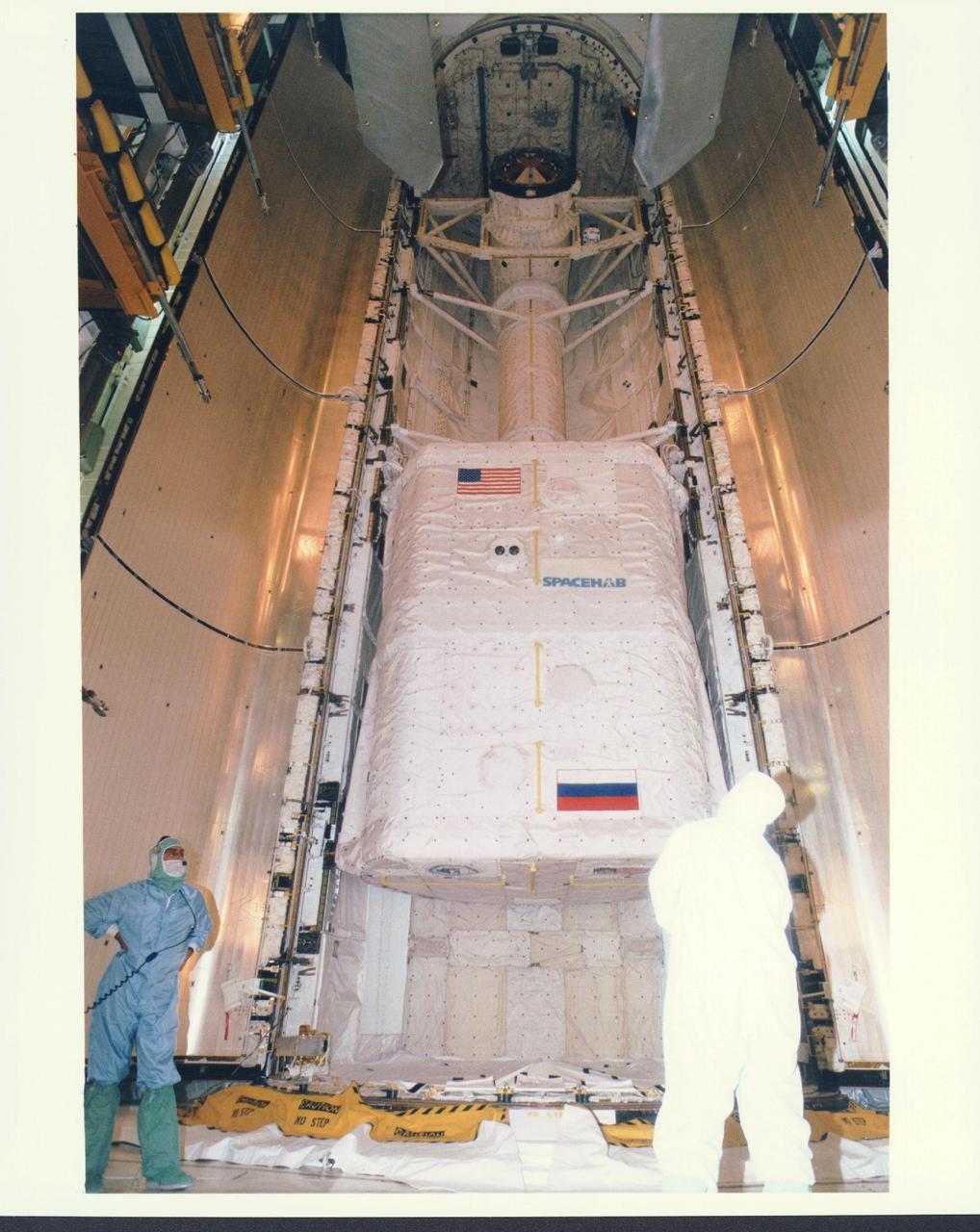
KENNEDY SPACE CENTER, FLA. - Workers in the Payload Changeout Room (PCR) at Launch Pad 39A are preparing to close the payload doors for flight on the Space Shuttle Atlantis, targeted for liftoff on Mission STS-79 around Sept. 12. The SPACEHAB Double Module located in the aft area of the payload bay is filled with supplies and other items slated for transfer to the Russian Space Station Mir. STS-79 marks the second flight of a SPACEHAB in support of the Shuttle-Mir dockings, and the first flight of the double-module configuration. The SPACEHAB is connected by tunnel to the Orbiter Docking System (ODS), with the Androgynous Peripheral Docking System (APDS) clearly visible on top of the ODS. The APDS provides the docking interface for the linkup with Mir, while the ODS provides a passageway from the orbiter to the Russian space station and the SPACEHAB.
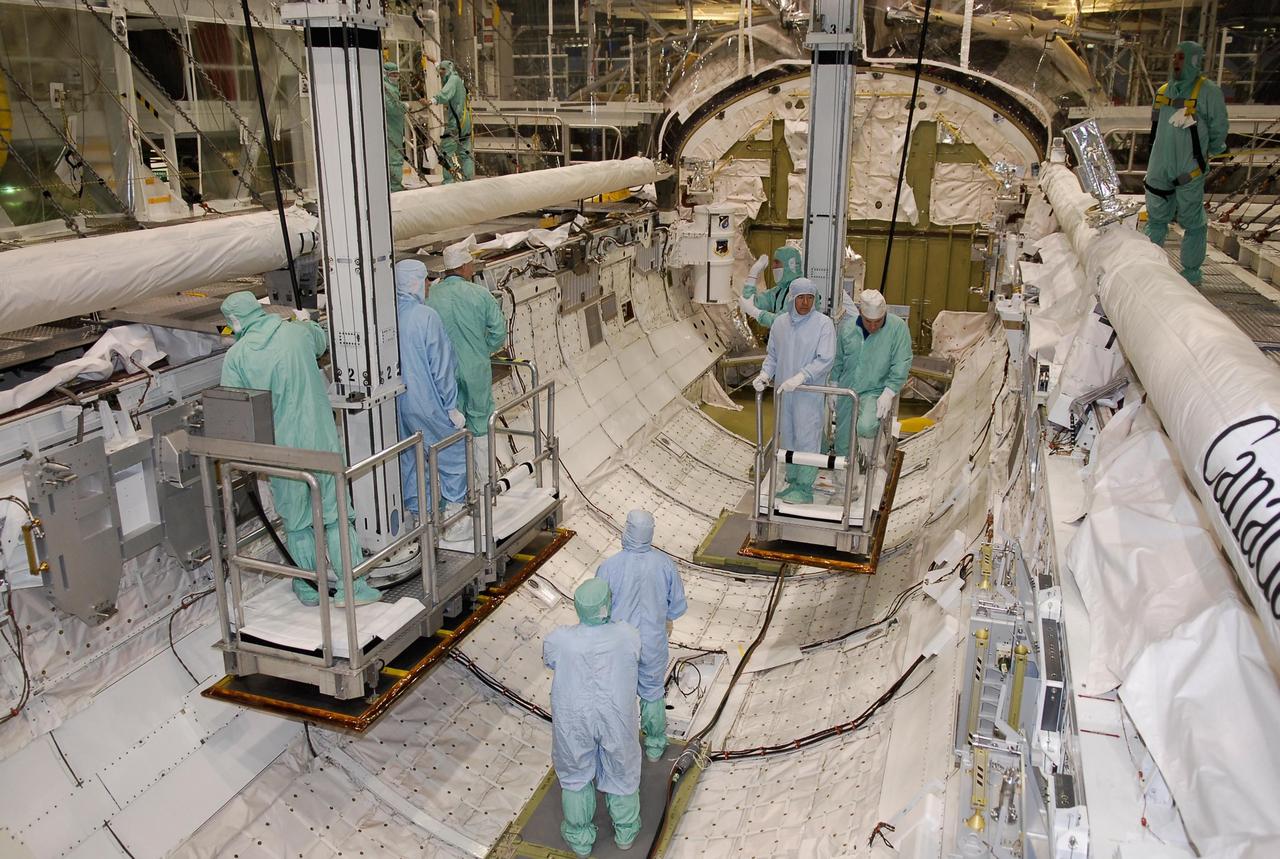
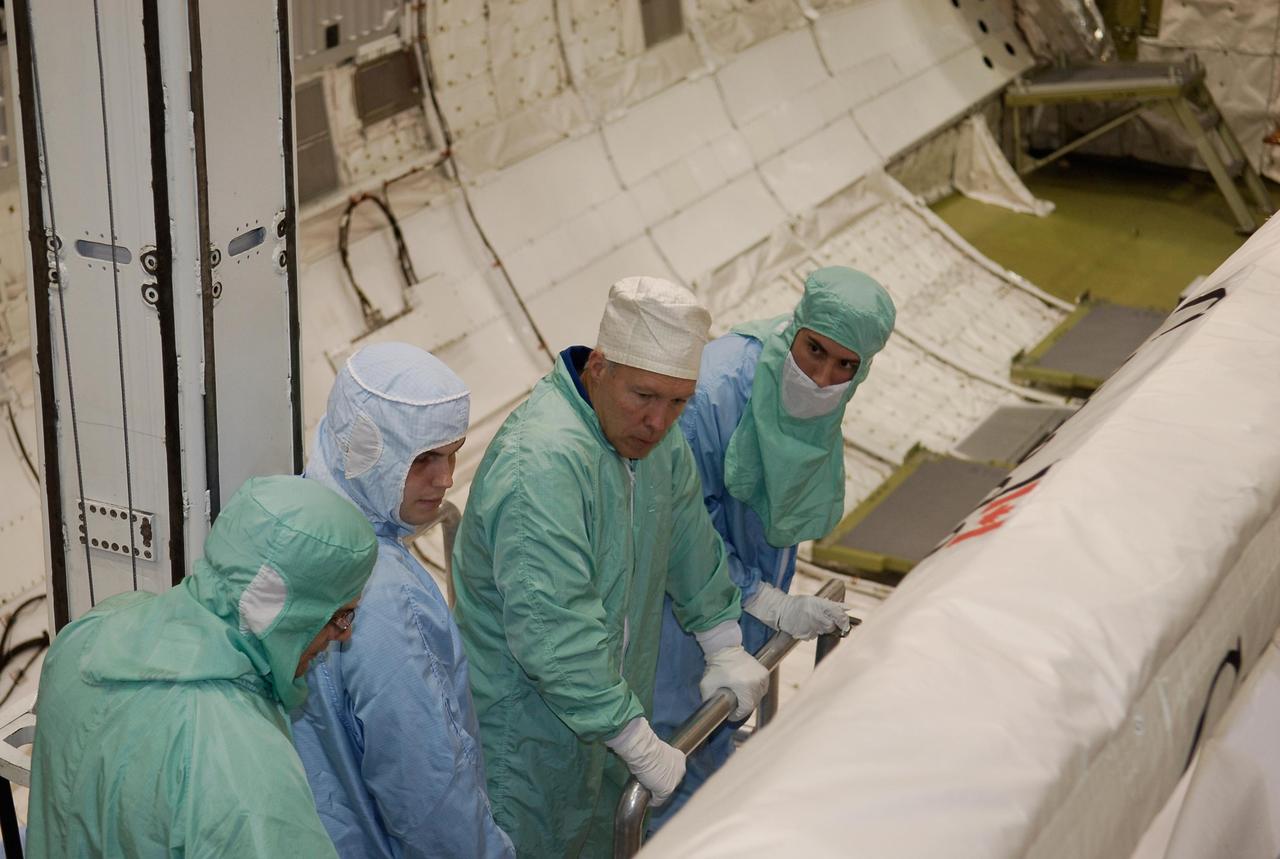
KENNEDY SPACE CENTER, FLA. -- In the Orbiter Processing Facility, STS-123 crew members get a close look inside space shuttle Endeavour's payload bay. The crew is at NASA's Kennedy Space Center for a crew equipment interface test, a process of familiarization with payloads, hardware and the space shuttle. Doi represents the Japanese Aerospace and Exploration Agency. The STS-123 mission is targeted for launch on space shuttle Endeavour on Feb. 14. It will be the 25th assembly flight of the station. Photo credit: NASA/Kim Shiflett
KENNEDY SPACE CENTER, FLA. -- In the Orbiter Processing Facility, STS-123 Pilot Dominic Gorie (second from right) checks out the orbiter boom sensor system in Endeavour's payload bay. He and other crew members are at NASA's Kennedy Space Center for a crew equipment interface test, a process of familiarization with payloads, hardware and the space shuttle. The STS-123 mission is targeted for launch on space shuttle Endeavour on Feb. 14. It will be the 25th assembly flight of the station. Photo credit: NASA/Kim Shiflett

KENNEDY SPACE CENTER, FLA. -- In the Orbiter Processing Facility, STS-123 Pilot Dominic Gorie (second from right) checks out the orbiter boom sensor system in Endeavour's payload bay. He and other crew members are at NASA's Kennedy Space Center for a crew equipment interface test, a process of familiarization with payloads, hardware and the space shuttle. The STS-123 mission is targeted for launch on space shuttle Endeavour on Feb. 14. It will be the 25th assembly flight of the station. Photo credit: NASA/Kim Shiflett
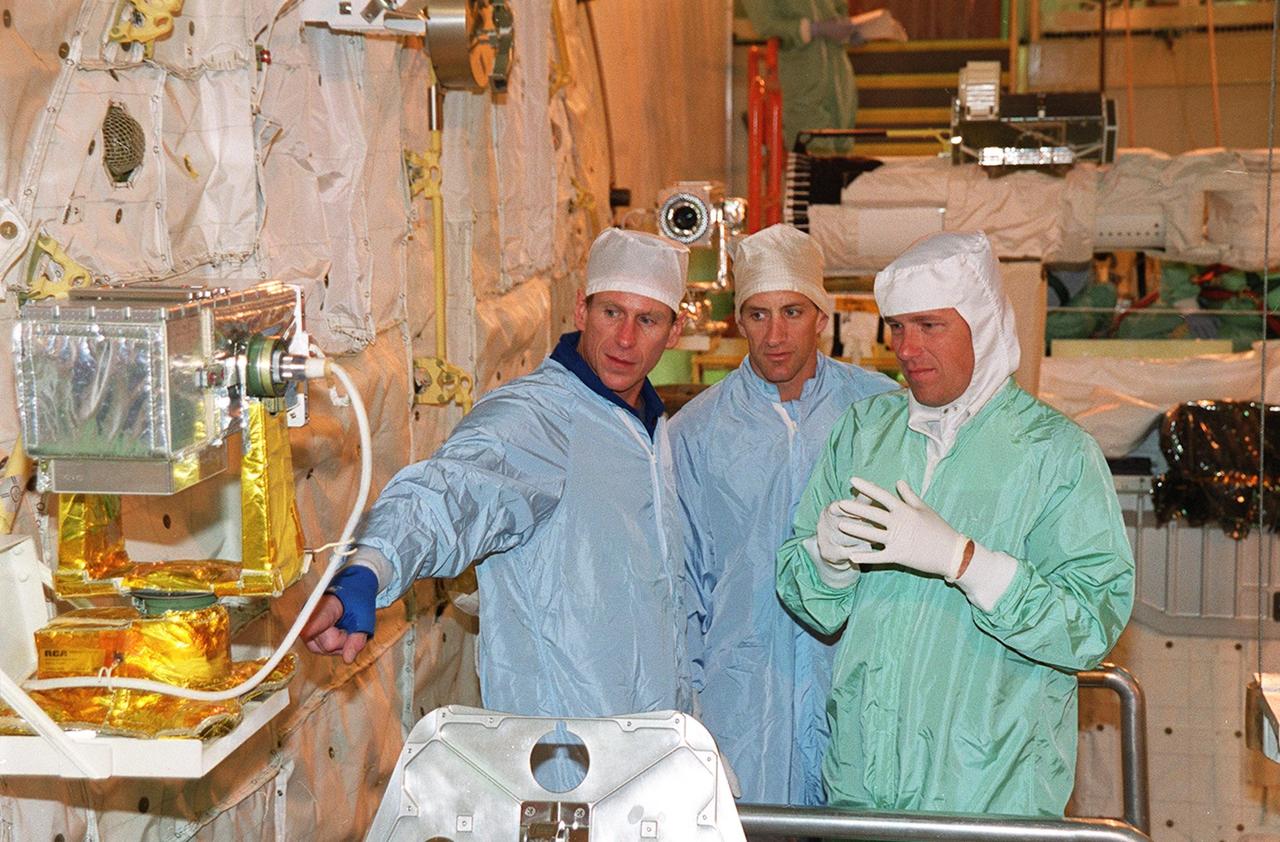
KENNEDY SPACE CENTER, FLA. -- In the Orbiter Processing Facility, STS-104 Mission Specialist Michael Gernhardt (left) and Pilot Charles Hobaugh (center) check out equipment in the payload bay of Atlantis. The STS-104 crew is at KSC to continue Crew Equipment Interface Test activities such as payload familiarization. The Joint Airlock Module is the primary payload on their mission, scheduled to launch no earlier than June 14, 2001, from Launch Pad 39B
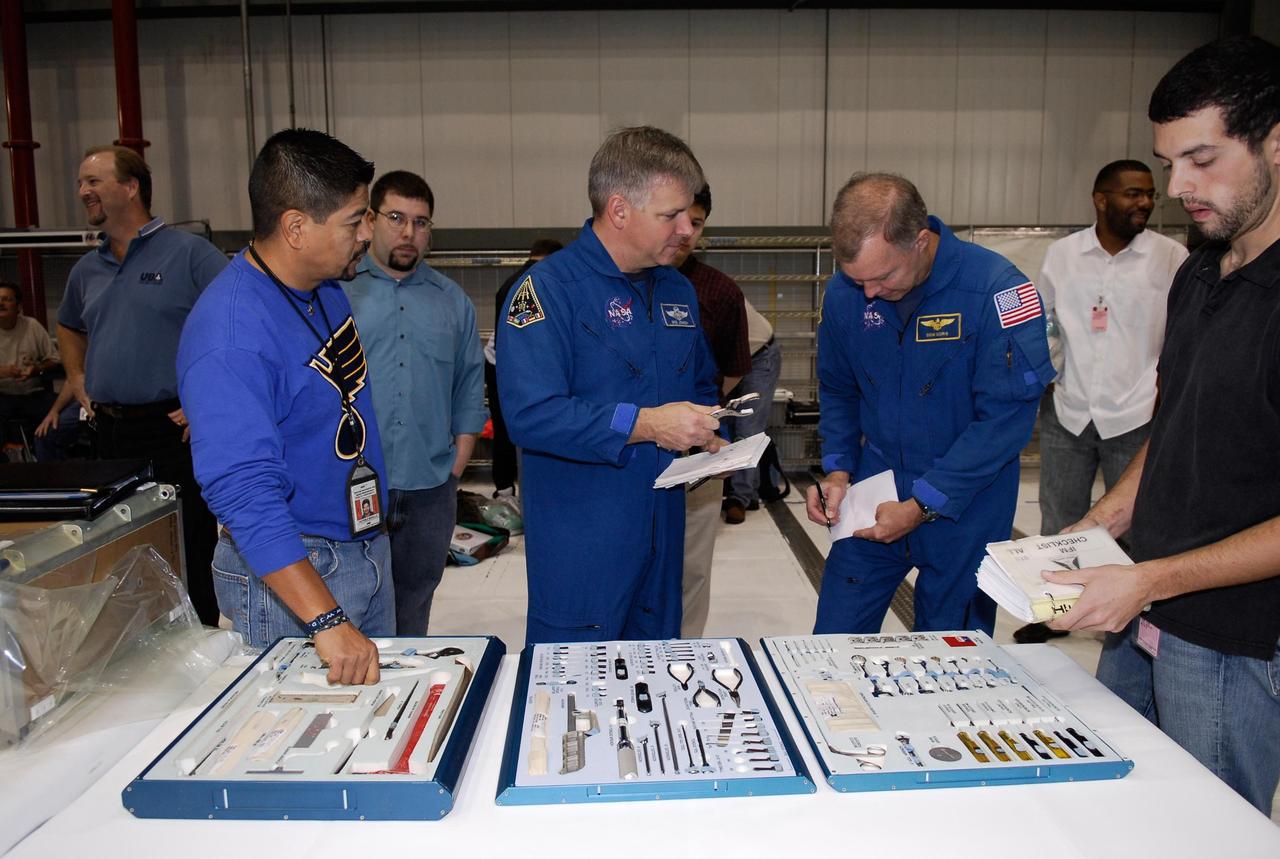
KENNEDY SPACE CENTER, FLA. -- In the Orbiter Processing Facility at NASA's Kennedy Space Center, space shuttle Endeavour's STS-123 Pilot Gregory Johnson (center) and Commander Dominic Gorie (right) look over tools that will be carried on the mission. The crew is at Kennedy for crew equipment interface test, a process of familiarization with payloads, hardware and the space shuttle. The STS-123 mission is targeted for launch on Feb. 14. It will be the 25th assembly flight of the station. Photo credit: NASA/Kim Shiflett
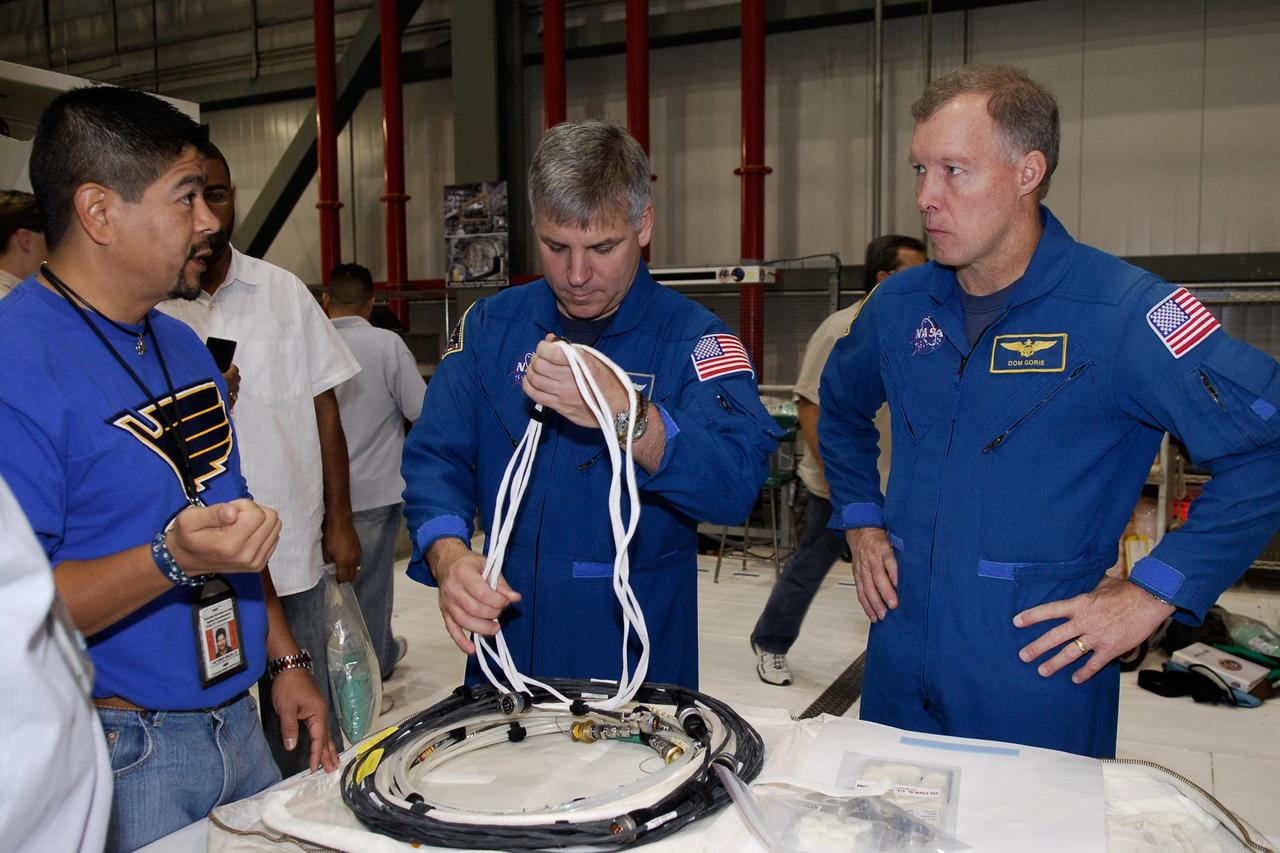
KENNEDY SPACE CENTER, FLA. -- In the Orbiter Processing Facility at NASA's Kennedy Space Center, space shuttle Endeavour's STS-123 Pilot Gregory Johnson (center) handles equipment that will be carried on the mission. At right, Commander Dominic Gorie listens to a technician describing the equipment. The crew is at Kennedy for crew equipment interface test, a process of familiarization with payloads, hardware and the space shuttle. The STS-123 mission is targeted for launch on Feb. 14. It will be the 25th assembly flight of the station. Photo credit: NASA/Kim Shiflett
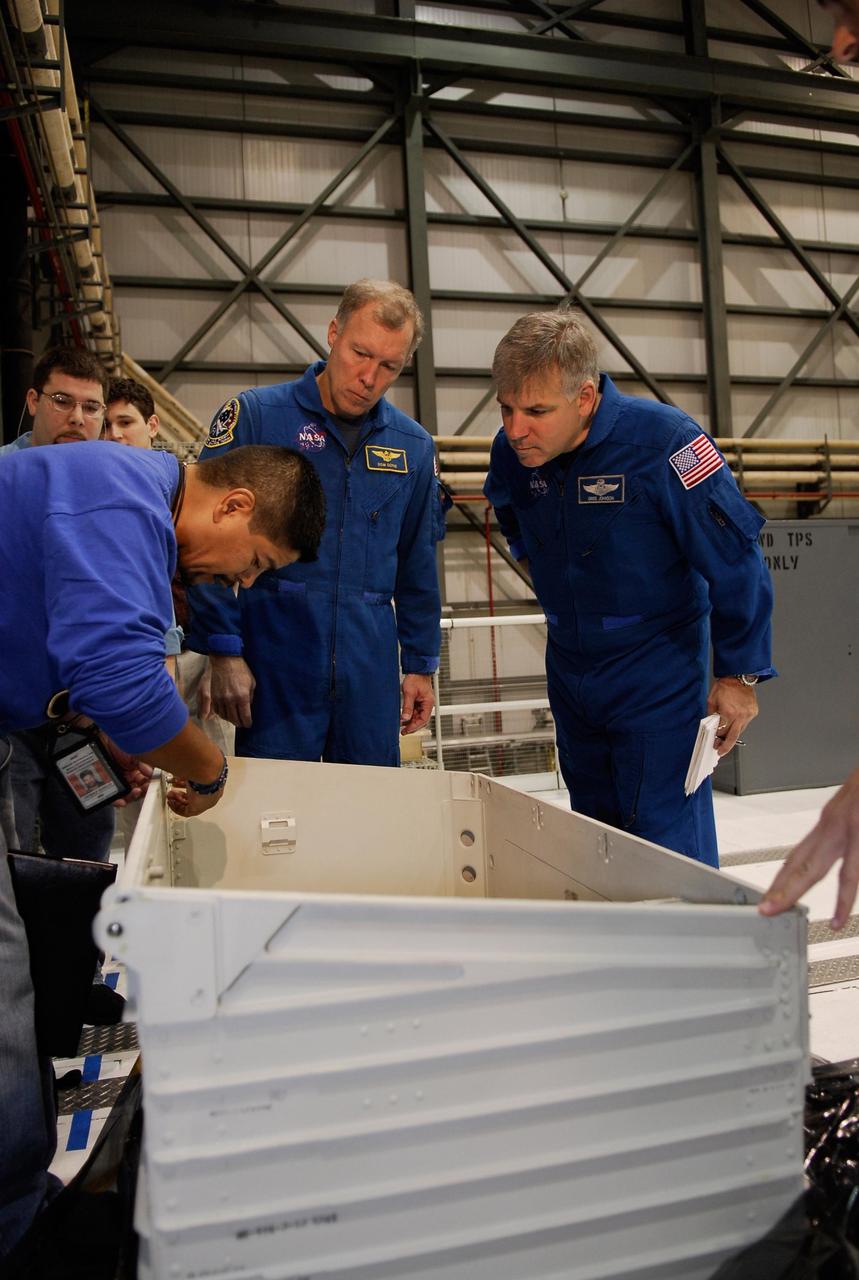
KENNEDY SPACE CENTER, FLA. -- In the Orbiter Processing Facility at NASA's Kennedy Space Center, space shuttle Endeavour's STS-123 Commander Dominic Gorie (center) and Pilot Gregory Johnson (right) look over equipment for the mission. The crew is at Kennedy for crew equipment interface test, a process of familiarization with payloads, hardware and the space shuttle. The STS-123 mission is targeted for launch on Feb. 14. It will be the 25th assembly flight of the station. Photo credit: NASA/Kim Shiflett
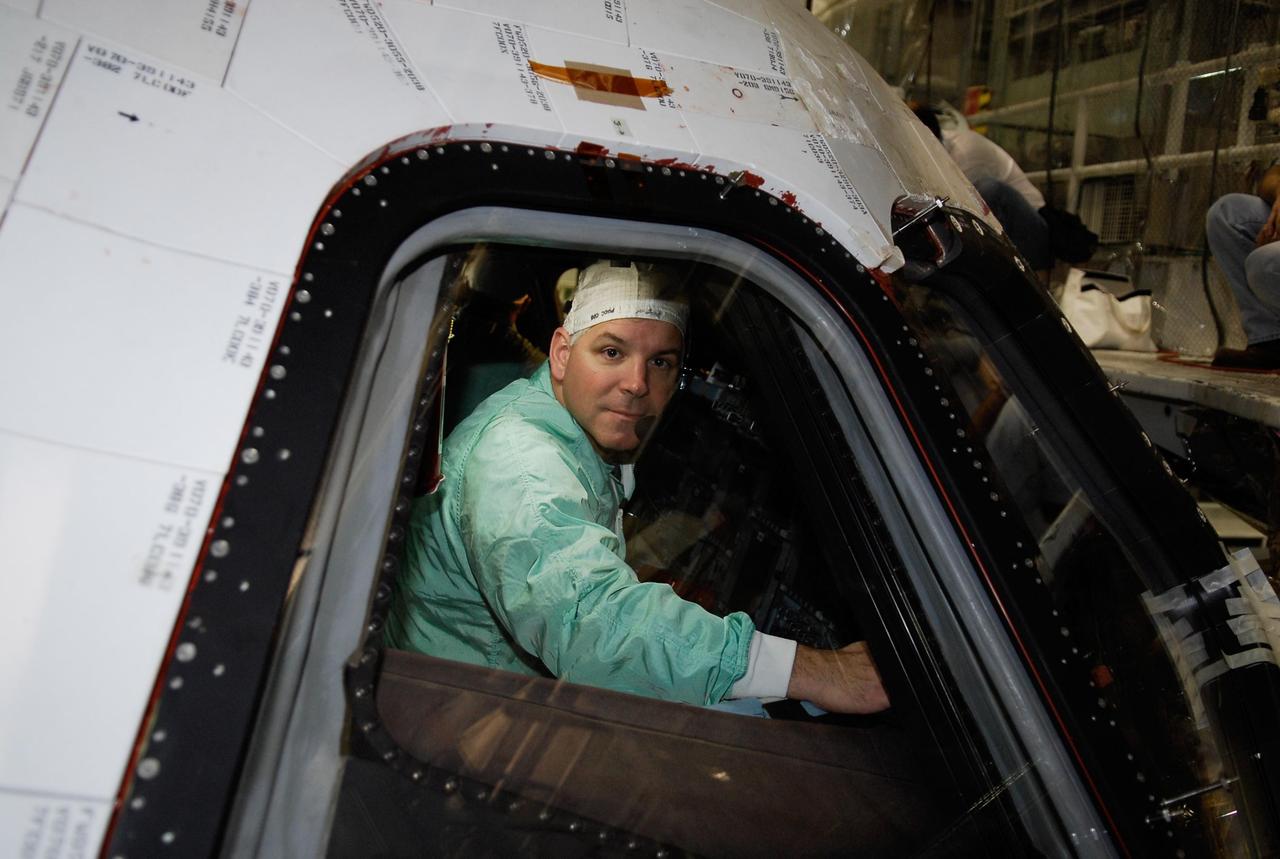
KENNEDY SPACE CENTER, FLA. -- In the Orbiter Processing Facility at NASA's Kennedy Space Center, space shuttle Endeavour's STS-123 Pilot Gregory Johnson inspects the window in space shuttle Endeavour. The crew is at Kennedy for crew equipment interface test, a process of familiarization with payloads, hardware and the space shuttle. The STS-123 mission is targeted for launch on Feb. 14. It will be the 25th assembly flight of the station. Photo credit: NASA/Kim Shiflett
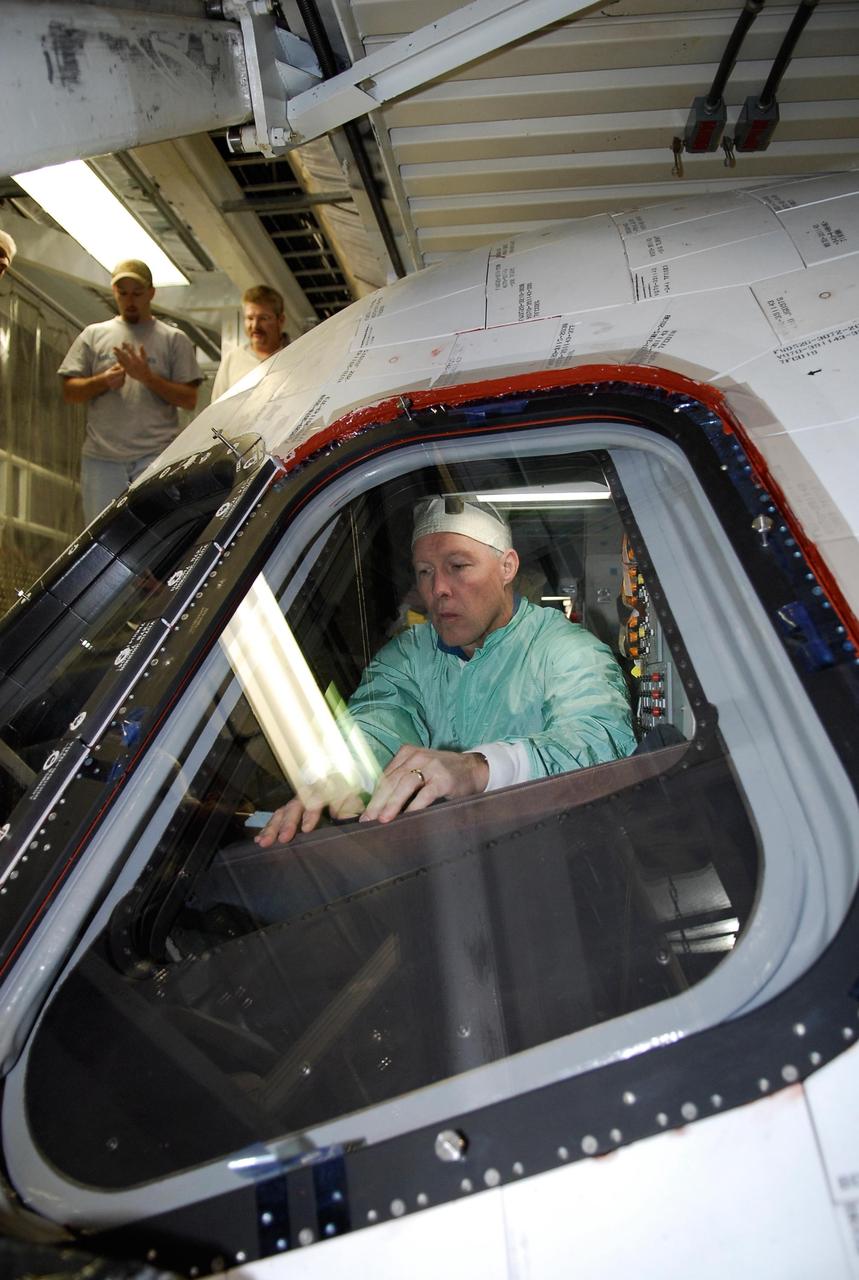
KENNEDY SPACE CENTER, FLA. -- In the Orbiter Processing Facility at NASA's Kennedy Space Center, space shuttle Endeavour's STS-123 Commander Dominic Gorie inspects the window in space shuttle Endeavour. The crew is at Kennedy for crew equipment interface test, a process of familiarization with payloads, hardware and the space shuttle. The STS-123 mission is targeted for launch on Feb. 14. It will be the 25th assembly flight of the station. Photo credit: NASA/Kim Shiflett
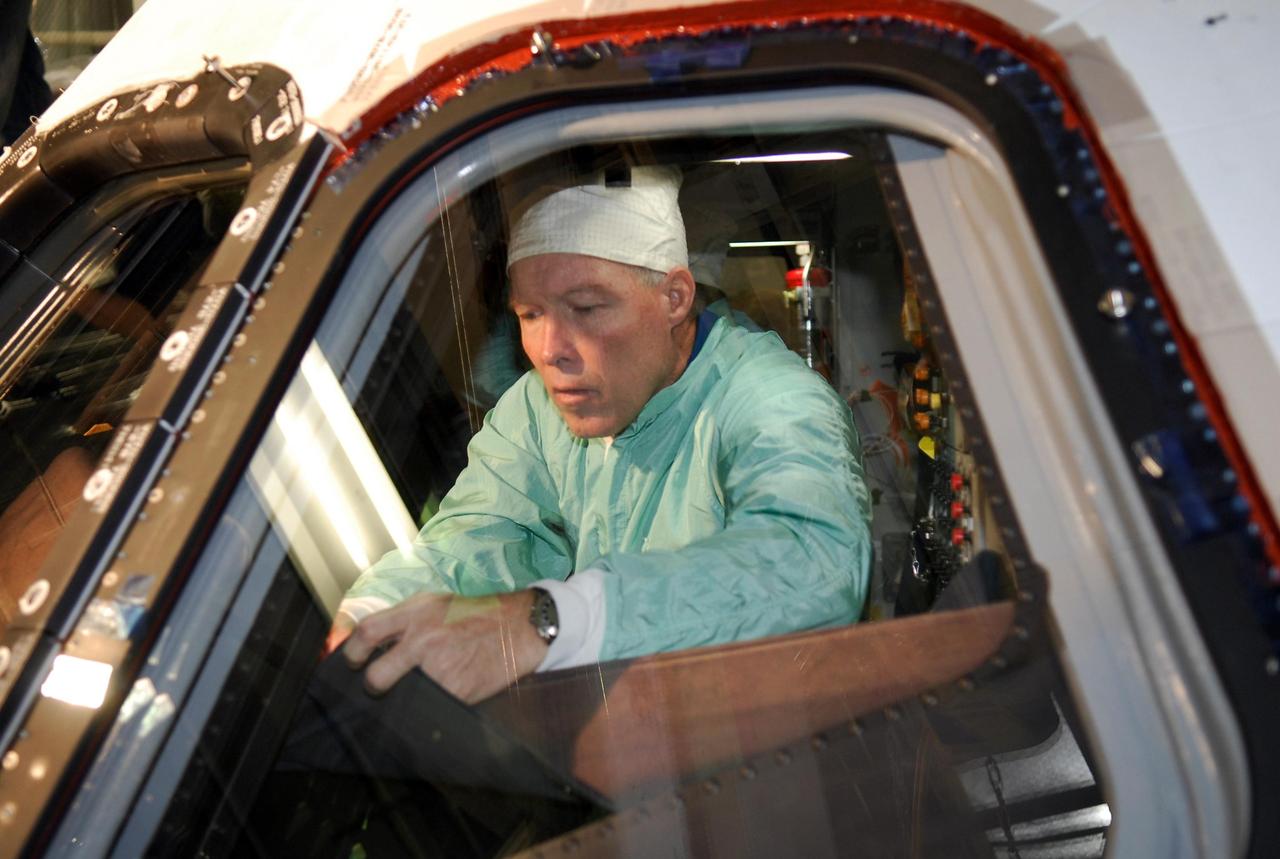
KENNEDY SPACE CENTER, FLA. -- In the Orbiter Processing Facility at NASA's Kennedy Space Center, space shuttle Endeavour's STS-123 Commander Dominic Gorie inspects the window in space shuttle Endeavour. The crew is at Kennedy for crew equipment interface test, a process of familiarization with payloads, hardware and the space shuttle. The STS-123 mission is targeted for launch on Feb. 14. It will be the 25th assembly flight of the station. Photo credit: NASA/Kim Shiflett
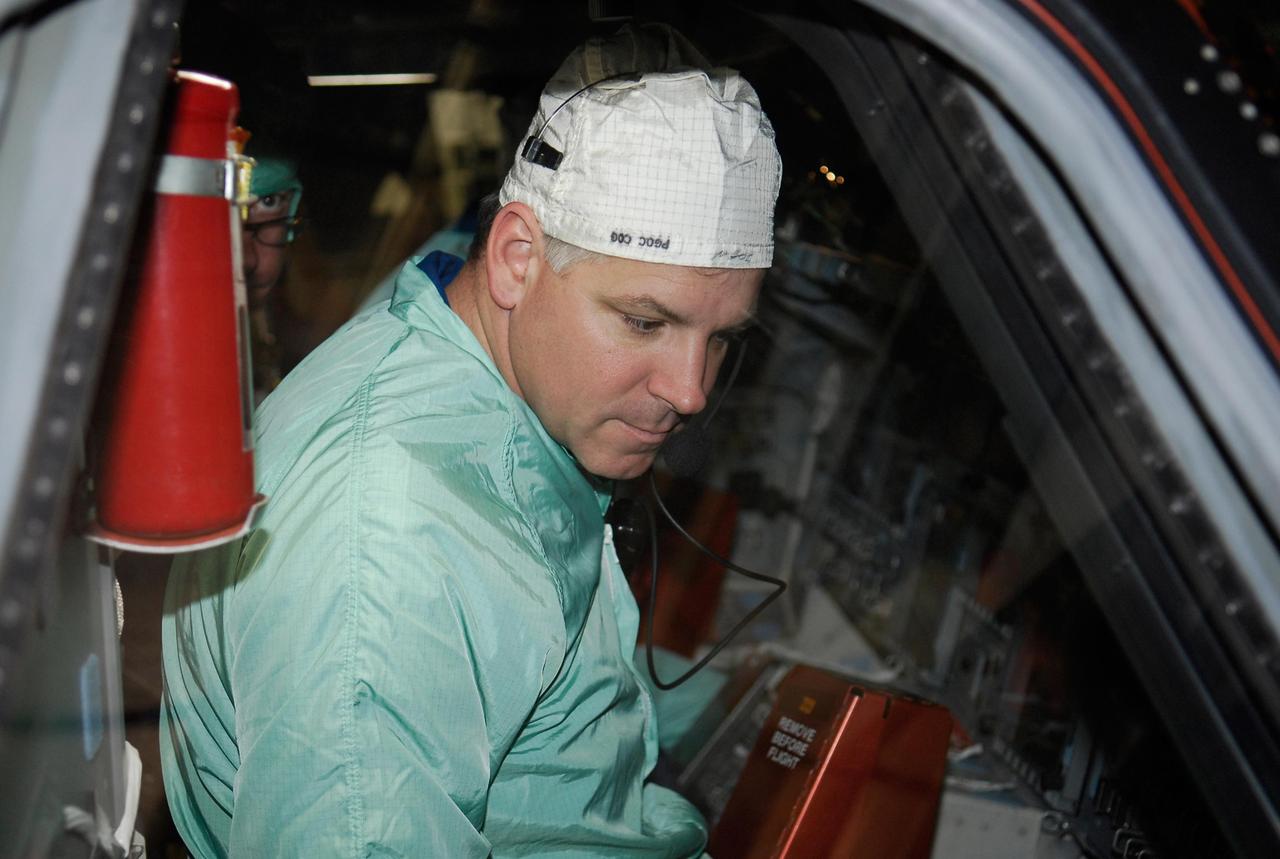
KENNEDY SPACE CENTER, FLA. -- In the Orbiter Processing Facility at NASA's Kennedy Space Center, space shuttle Endeavour's STS-123 Pilot Gregory Johnson inspects the window in space shuttle Endeavour. The crew is at Kennedy for crew equipment interface test, a process of familiarization with payloads, hardware and the space shuttle. The STS-123 mission is targeted for launch on Feb. 14. It will be the 25th assembly flight of the station. Photo credit: NASA/Kim Shiflett
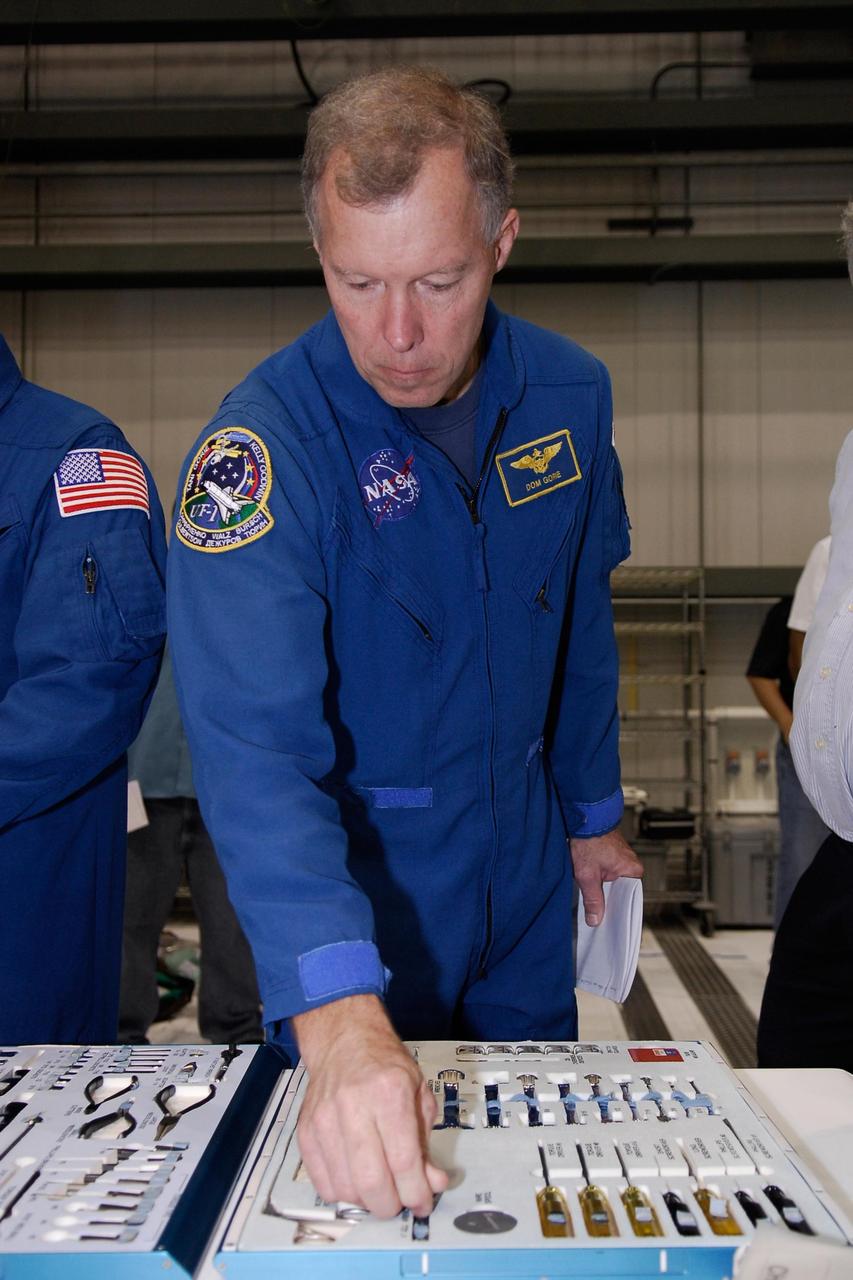
KENNEDY SPACE CENTER, FLA. -- In the Orbiter Processing Facility at NASA's Kennedy Space Center, space shuttle Endeavour's STS-123 Commander Dominic Gorie checks out tools that will be carried on the mission. The crew is at Kennedy for crew equipment interface test, a process of familiarization with payloads, hardware and the space shuttle. The STS-123 mission is targeted for launch on Feb. 14. It will be the 25th assembly flight of the station. Photo credit: NASA/Kim Shiflett
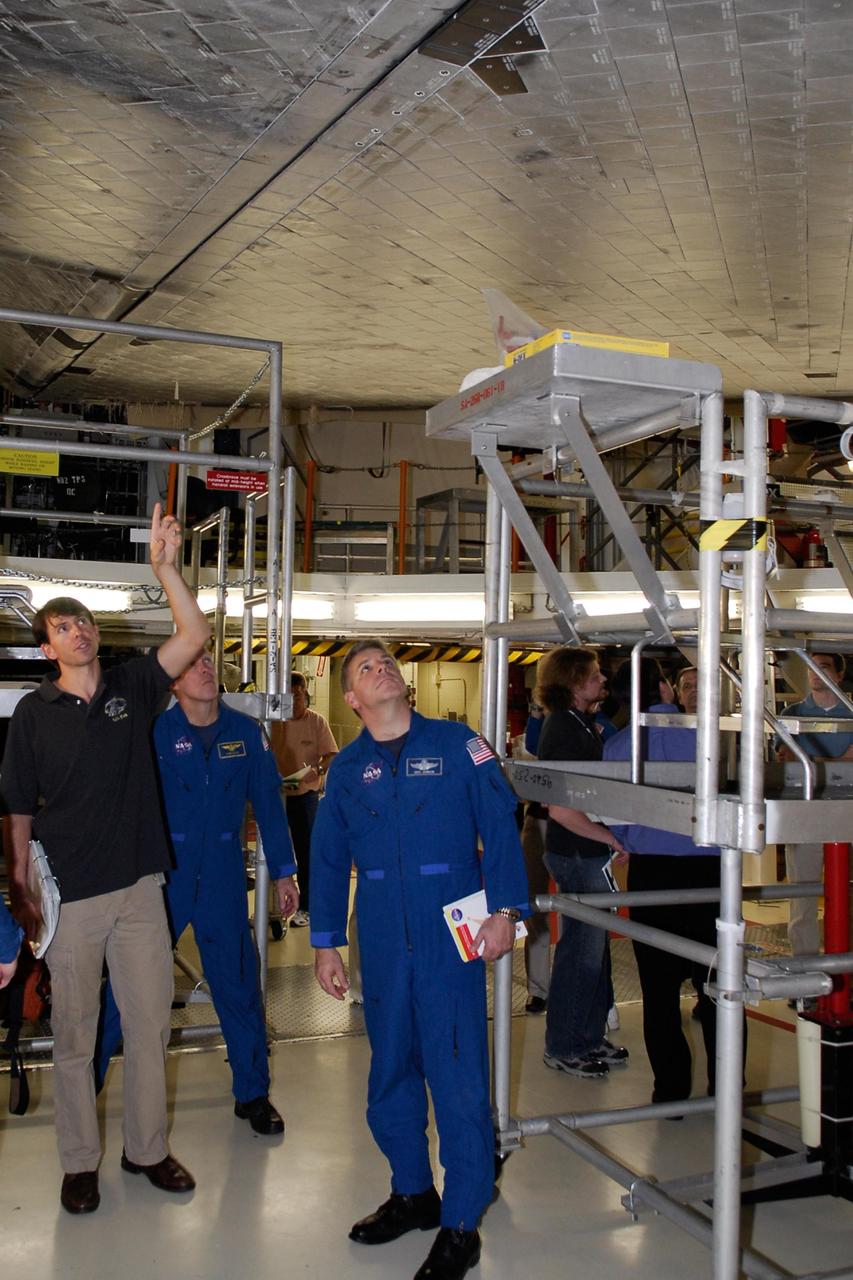
KENNEDY SPACE CENTER, FLA. -- In the Orbiter Processing Facility, STS-123 Commander Dominic Gorie (center) and Pilot Gregory Johnson (right) inspect the thermal protection system tiles on the underside of space shuttle Endeavour. They and other crew members are at NASA's Kennedy Space Center for a crew equipment interface test, a process of familiarization with payloads, hardware and the space shuttle. The STS-123 mission is targeted for launch on space shuttle Endeavour on Feb. 14. It will be the 25th assembly flight of the station. Photo credit: NASA/Kim Shiflett
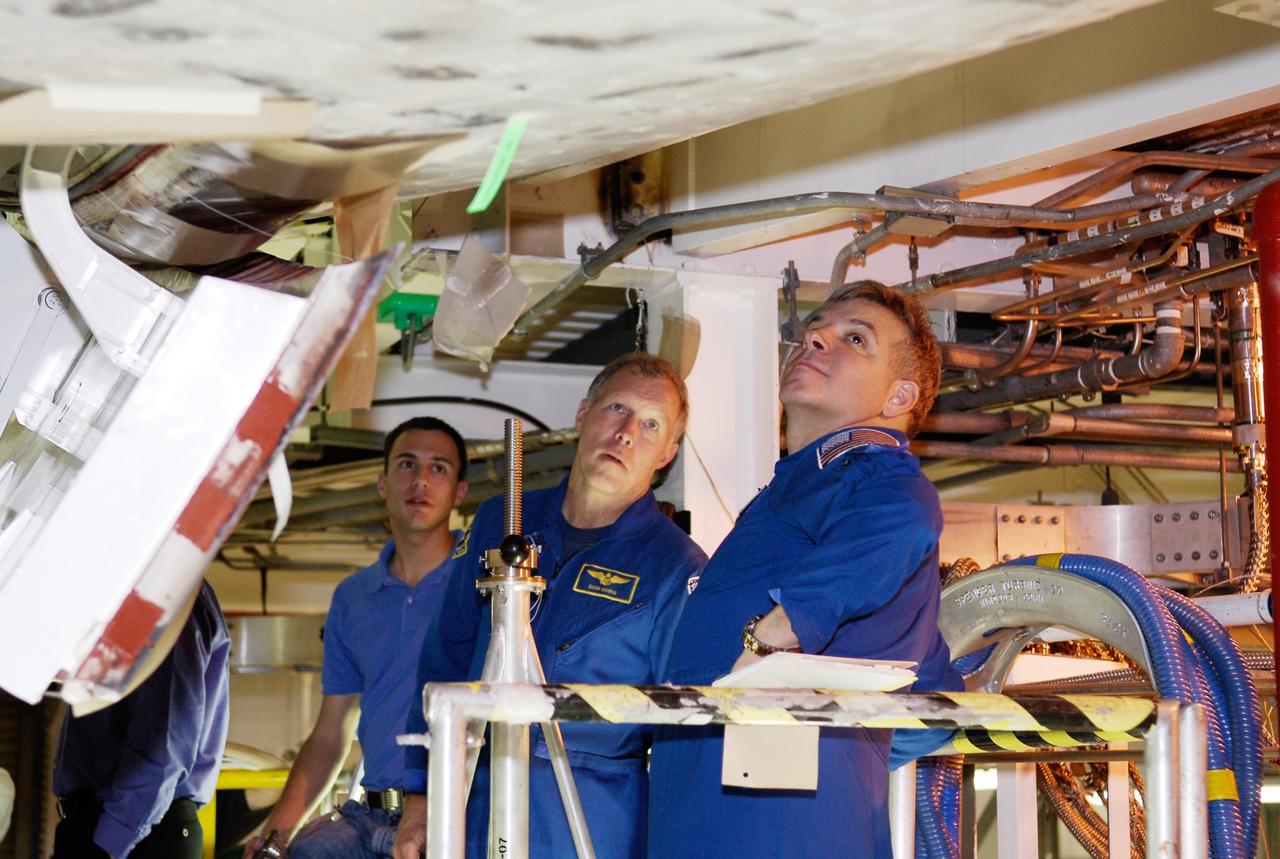
KENNEDY SPACE CENTER, FLA. -- In the Orbiter Processing Facility, STS-123 crew members inspect the thermal protection system tiles on the underside of space shuttle Endeavour. At center is Commander Dominic Gorie; at right is Pilot Gregory Johnson. They and other crew members are at NASA's Kennedy Space Center for a crew equipment interface test, a process of familiarization with payloads, hardware and the space shuttle. The STS-123 mission is targeted for launch on space shuttle Endeavour on Feb. 14. It will be the 25th assembly flight of the station. Photo credit: NASA/Kim Shiflett
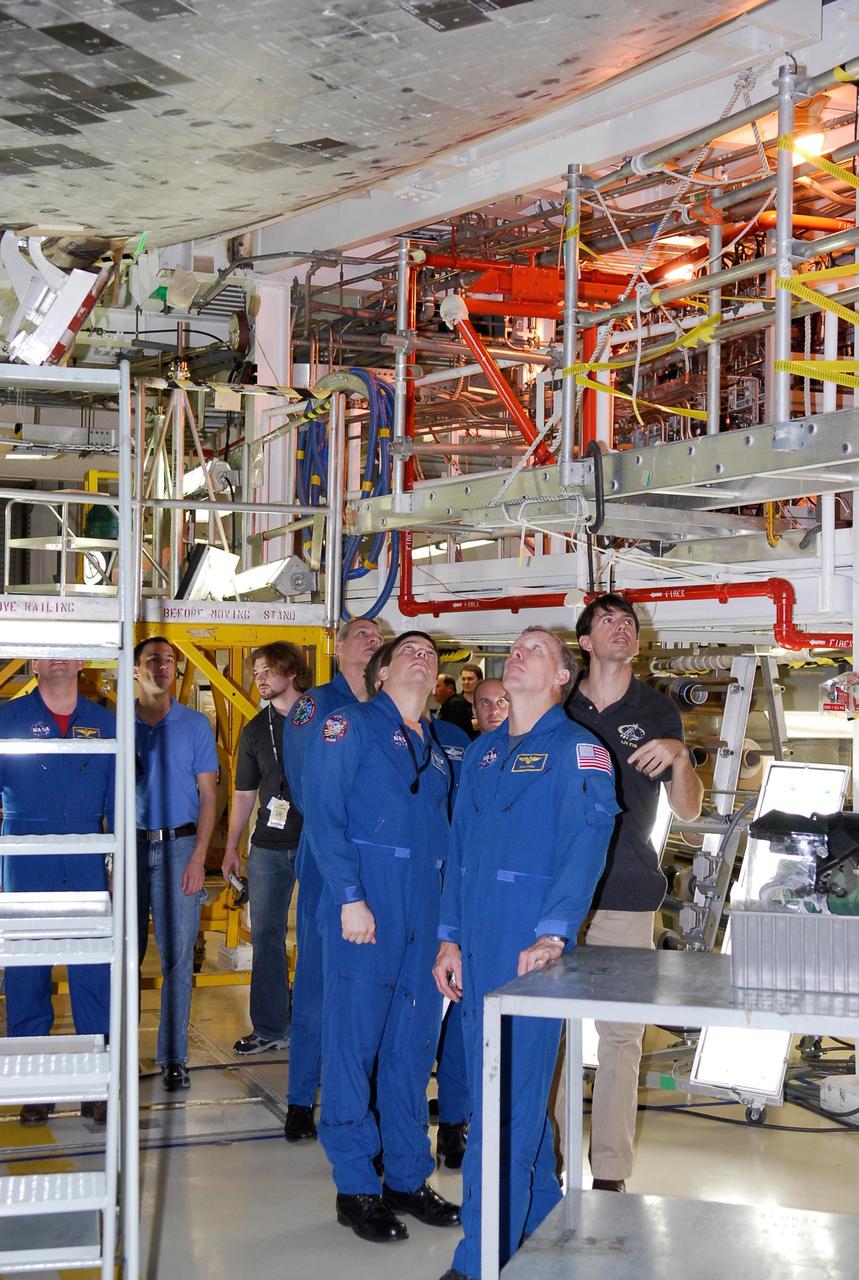
KENNEDY SPACE CENTER, FLA. -- In the Orbiter Processing Facility, STS-123 crew members inspect the thermal protection system tiles on the underside of space shuttle Endeavour. In the center are Mission Specialists Richard Linnehan and Robert Behnken, and Commander Dominic Gorie. They are at NASA's Kennedy Space Center for a crew equipment interface test, a process of familiarization with payloads, hardware and the space shuttle. The STS-123 mission is targeted for launch on space shuttle Endeavour on Feb. 14. It will be the 25th assembly flight of the station. Photo credit: NASA/Kim Shiflett
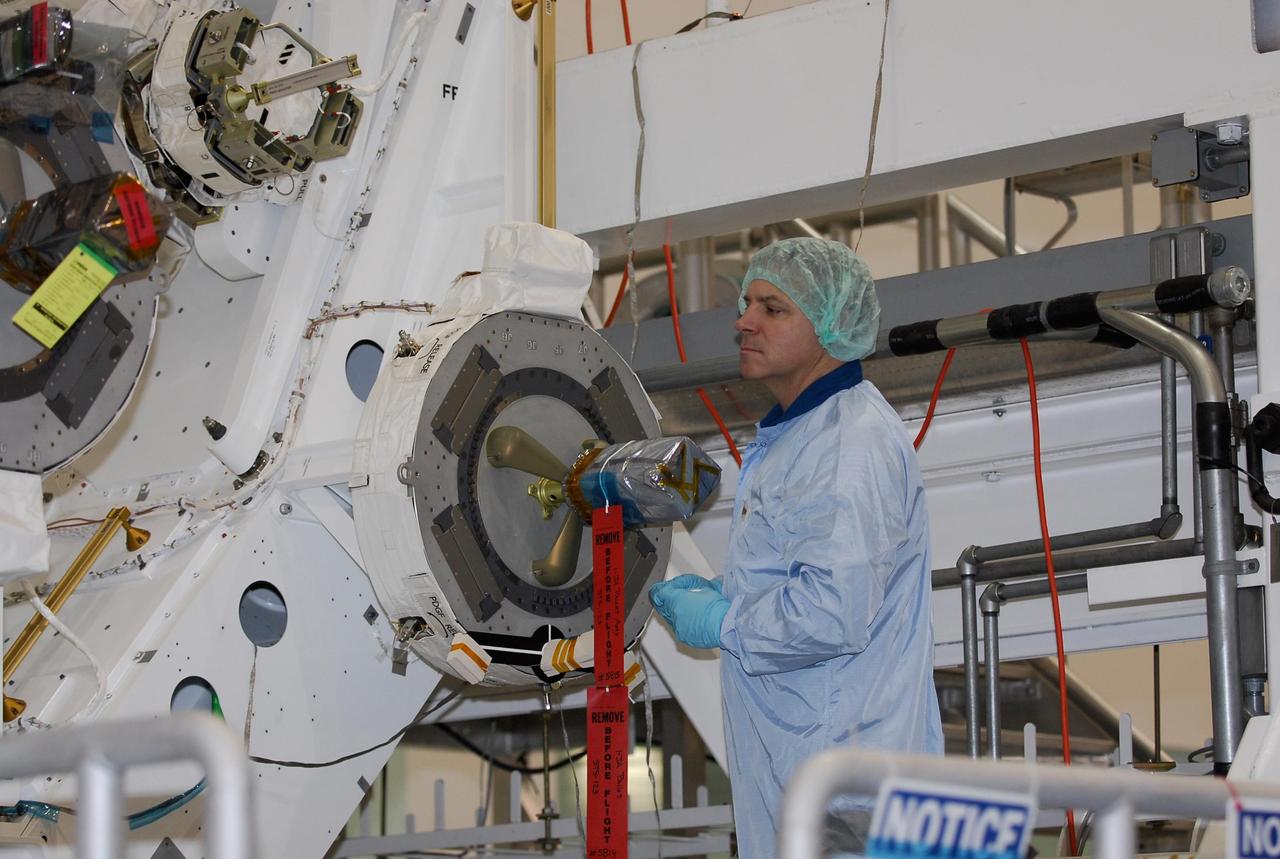
KENNEDY SPACE CENTER, FLA. -- In the Space Station Processing Facility at NASA's Kennedy Space Center, space shuttle Endeavour's STS-123 Pilot Gregory Johnson looks over part of the payload on the mission, the Special Purpose Dexterous Manipulator, known as Dextre. Dextre will work with the mobile base and Canadarm2 on the International Space Station to perform critical construction and maintenance tasks. The crew is at Kennedy for crew equipment interface test, a process of familiarization with payloads, hardware and the space shuttle. The STS-123 mission is targeted for launch on Feb. 14. It will be the 25th assembly flight of the station. Photo credit: NASA/Kim Shiflett
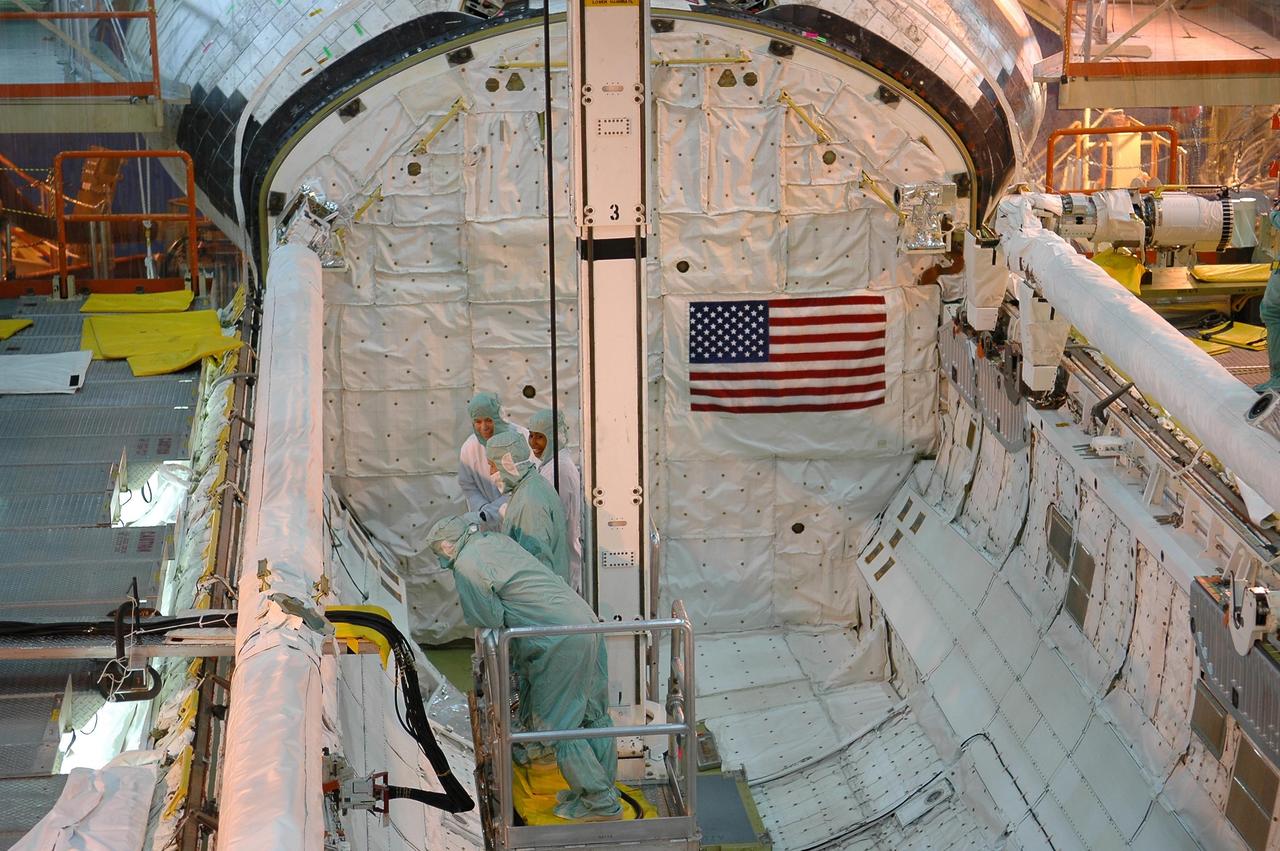
KENNEDY SPACE CENTER, FLA. - In NASA Kennedy Space Center's Orbiter Processing Facility bay 3, STS-121 Pilot Mark Kelly and Mission Specialist Stephanie Wilson are joined by two shuttle technicians in Discovery's payload bay as they examine equipment that will be on the mission. The crew is at Kennedy to take part in the crew equipment interface test, which provides hands-on experience with equipment to be used on-orbit. Launch of Space Shuttle Discovery on mission STS-121, the second return-to-flight mission, is scheduled no earlier than May.
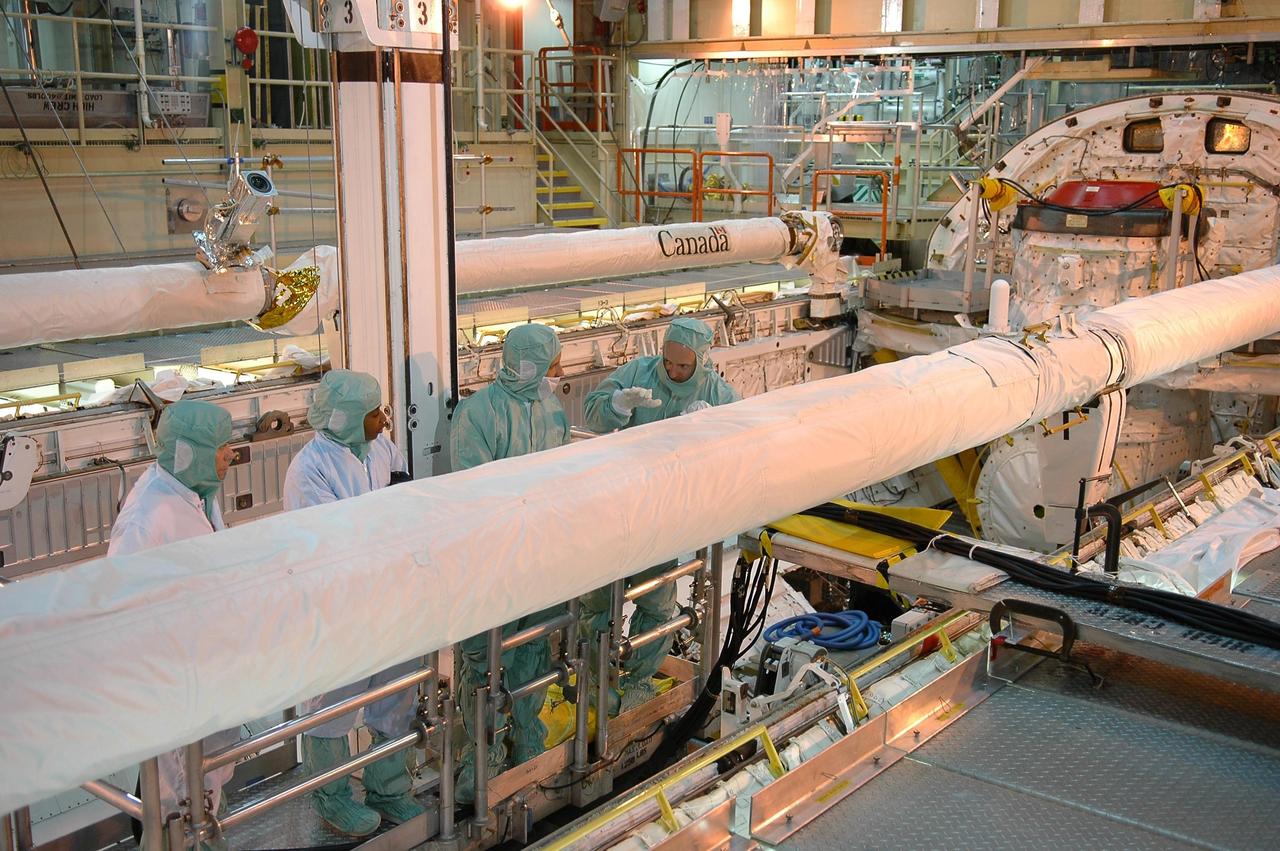
KENNEDY SPACE CENTER, FLA. - In NASA Kennedy Space Center's Orbiter Processing Facility bay 3, STS-121 Pilot Mark Kelly and Mission Specialist Stephanie Wilson are joined by two shuttle technicians as they examine the orbiter boom sensor system in Discovery's payload bay. The crew is at Kennedy to take part in the crew equipment interface test, which provides hands-on experience with equipment to be used on-orbit. Launch of Space Shuttle Discovery on mission STS-121, the second return-to-flight mission, is scheduled no earlier than May.
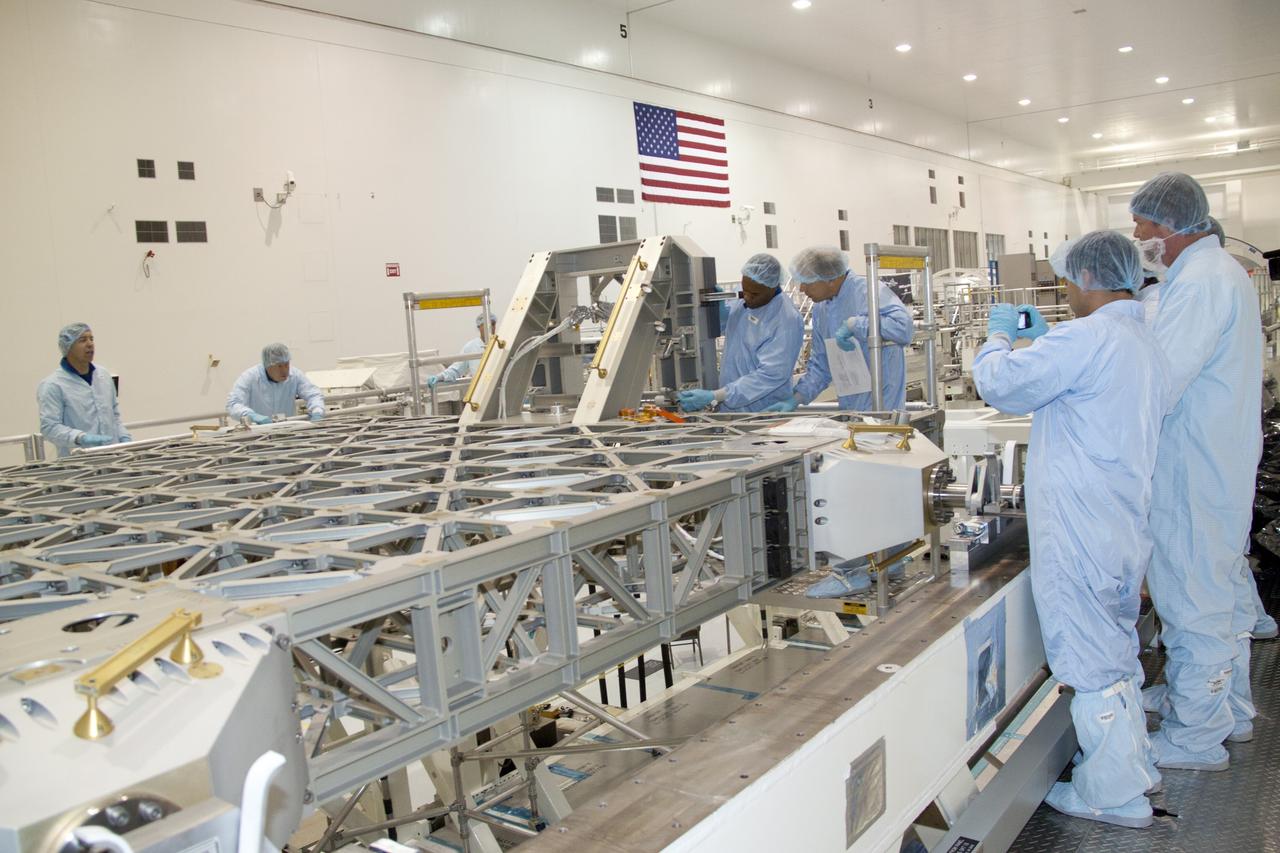
CAPE CANAVERAL, Fla. -- In the Space Station Processing Facility at NASA's Kennedy Space Center in Florida, space shuttle Discovery's STS-133 crew members are participating in the Payload Crew Equipment Interface Test, or CEIT. During this phase of CEIT the astronauts have an opportunity to inspect and handle the payload they'll be delivering to the International Space Station. Discovery is targeted to launch at 4:40 p.m. EDT Nov. 1. For more information visit www.nasa.gov/shuttle. Photo credit: NASA/Jack Pfaller
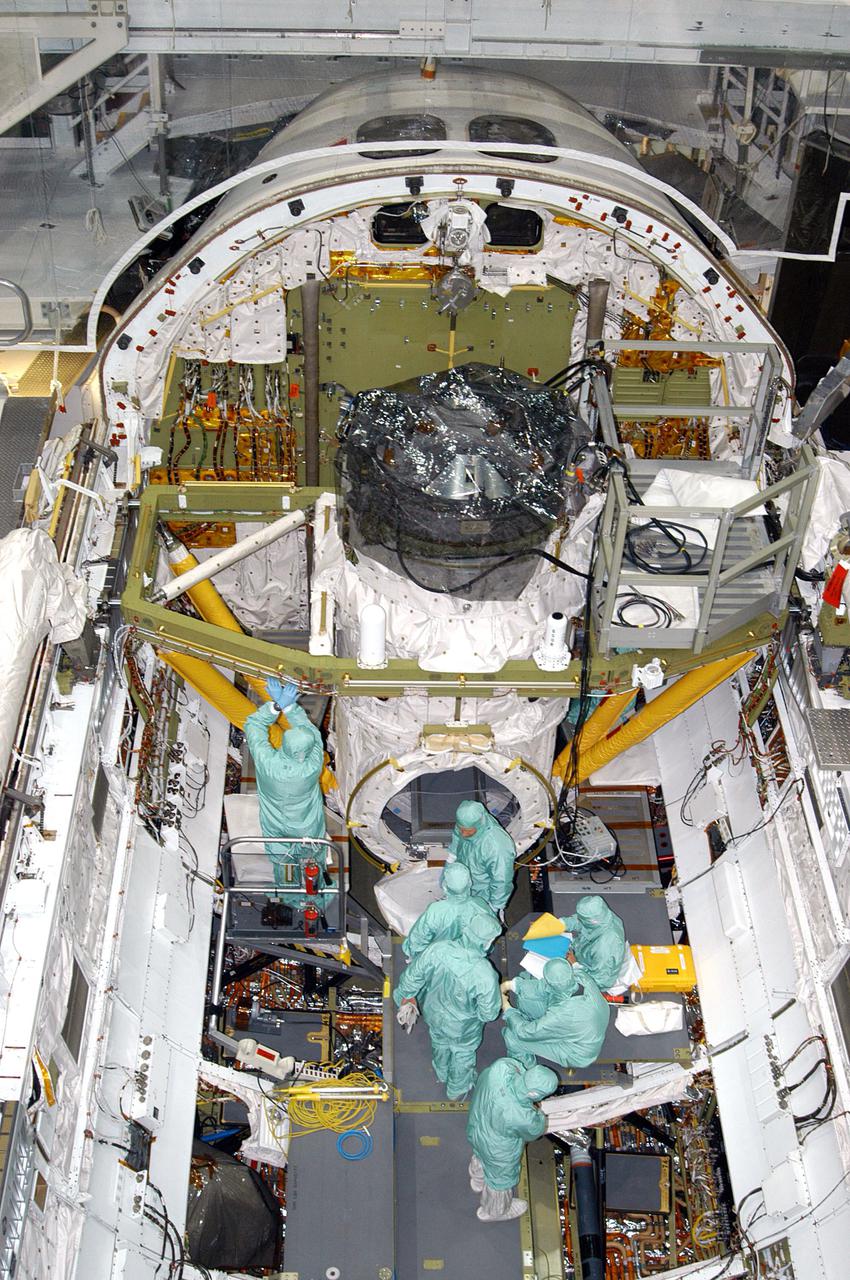
KENNEDY SPACE CENTER, FLA. - During Crew Equipment Interface Test (CEIT) in the Orbiter Processing Facility at NASA’s Kennedy Space Center, STS-121 crew members take a close look at equipment in the payload bay of Atlantis. The Airlock is in the center. During CEIT, the crew has an opportunity to get a hands-on look at the orbiter and equipment they will be working with on their mission. Mission STS-121 is scheduled to launch aboard Space Shuttle Atlantis in July.

CAPE CANAVERAL, Fla. -- In the Space Station Processing Facility at NASA's Kennedy Space Center in Florida, STS-127 crew members look at the SEDA-AP (Space Environment Data Acquisition Equipment-Attached Payload), part of the payload for the mission. The crew members are at Kennedy for a crew equipment interface test, or CEIT, which provides experience handling tools, equipment and hardware they will use on the mission. The payload will be launched to the International Space Station aboard space shuttle Endeavour on the STS-127 mission, targeted for launch on May 15, 2009. Photo credit: NASA/Dimitrios Gerondidakis

CAPE CANAVERAL, Fla. -- In the Space Station Processing Facility at NASA's Kennedy Space Center in Florida, STS-133 crew members look on as SSPF technicians below describe the payload. From left to right are Mission Specialists Tim Kopra, Nicole Stott, Michael Barratt and Pilot Eric Boe. The astronauts are at Kennedy to participate in the Payload Crew Equipment Interface Test, or CEIT, which gives the crew an opportunity for hands-on training with tools they'll be using in space and familiarization of the payload they will be delivering to the International Space Station. Launch of space shuttle Discovery is targeted for Nov. 1 at 4:40 p.m. EDT. For more information visit, www.nasa.gov/shuttle. Photo credit: NASA/Jack Pfaller
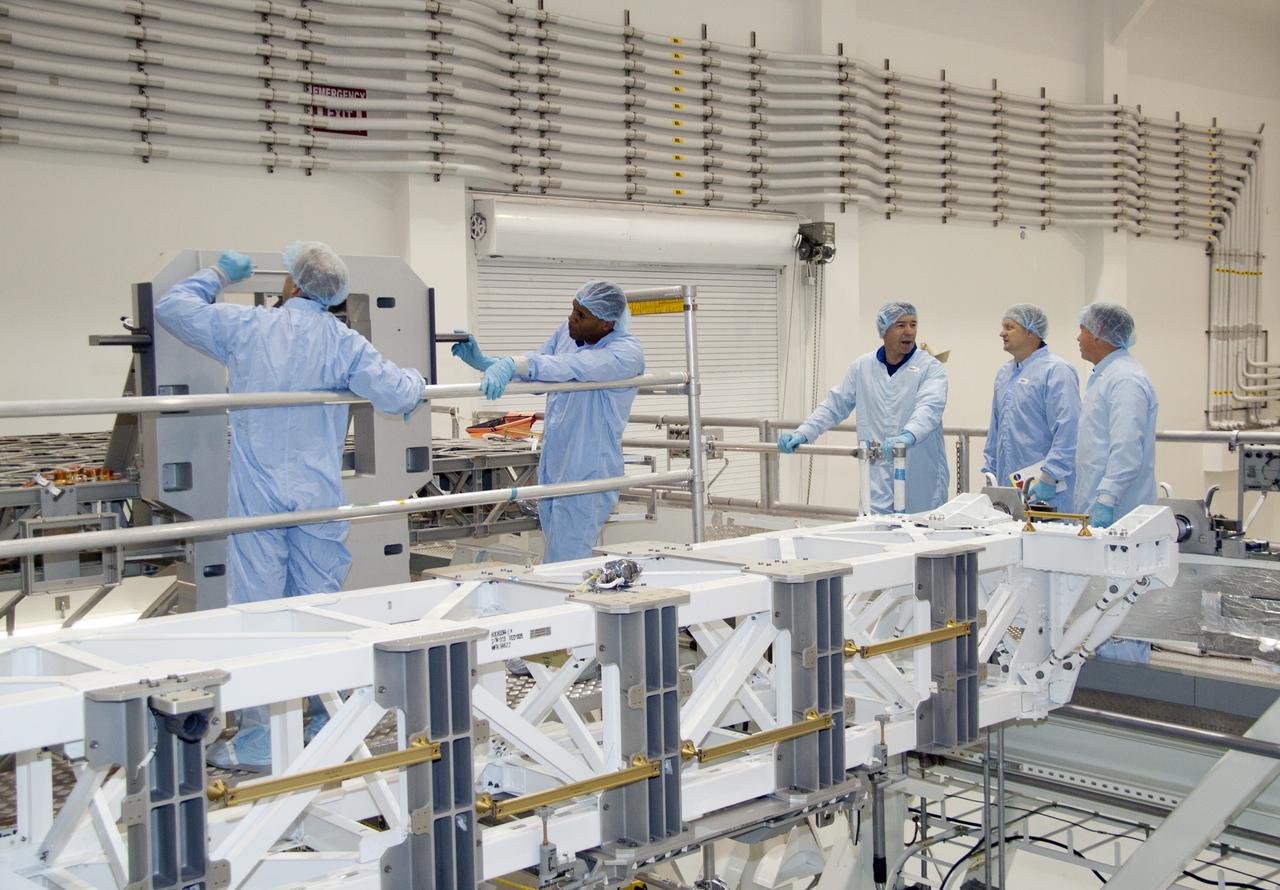
CAPE CANAVERAL, Fla. -- In the Space Station Processing Facility at NASA's Kennedy Space Center in Florida, STS-133 Mission Specialists Tim Kopra (left) and Alvin Drew inspect a component of the payload as Mission Specialist Michael Barratt and Pilot Eric Boe look on. The astronauts are at Kennedy to participate in the Payload Crew Equipment Interface Test, or CEIT, which gives the crew an opportunity for hands-on training with tools they'll be using in space and familiarization of the payload they will be delivering to the International Space Station. Launch of space shuttle Discovery is targeted for Nov. 1 at 4:40 p.m. EDT. For more information visit, www.nasa.gov/shuttle. Photo credit: NASA/Jack Pfaller
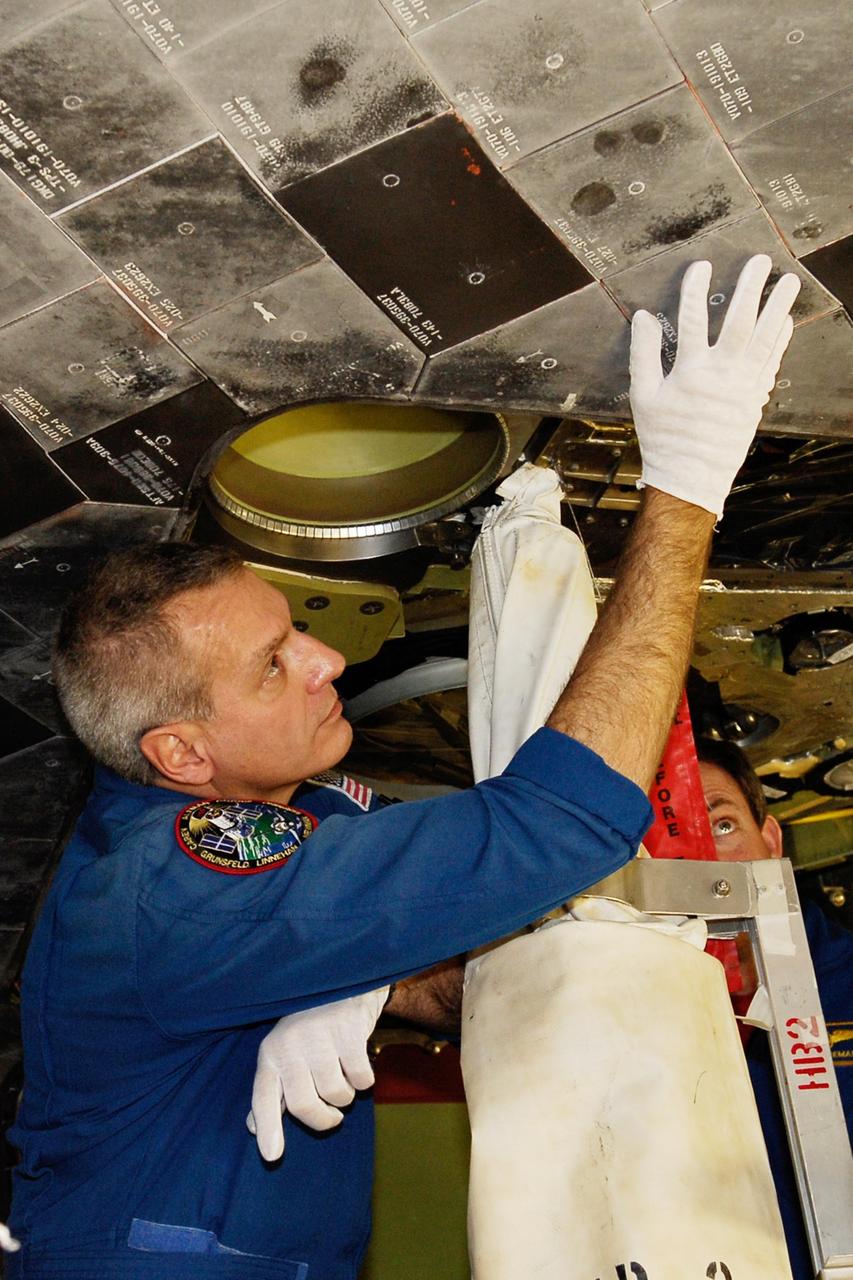
KENNEDY SPACE CENTER, FLA. -- In the Orbiter Processing Facility, STS-123 Mission Specialist Richard Linnehan makes a hands-on inspection of the thermal protection system tiles on the underside of space shuttle Endeavour. He and other crew members are at NASA's Kennedy Space Center for a crew equipment interface test, a process of familiarization with payloads, hardware and the space shuttle. The STS-123 mission is targeted for launch on space shuttle Endeavour on Feb. 14. It will be the 25th assembly flight of the station. Photo credit: NASA/Kim Shiflett

KENNEDY SPACE CENTER, FLA. -- In the Orbiter Processing Facility, STS-123 Mission Specialist Richard Linnehan inspects the thermal protection system tiles on the underside of space shuttle Endeavour. He and other crew members are at NASA's Kennedy Space Center for a crew equipment interface test, a process of familiarization with payloads, hardware and the space shuttle. The STS-123 mission is targeted for launch on space shuttle Endeavour on Feb. 14. It will be the 25th assembly flight of the station. Photo credit: NASA/Kim Shiflett
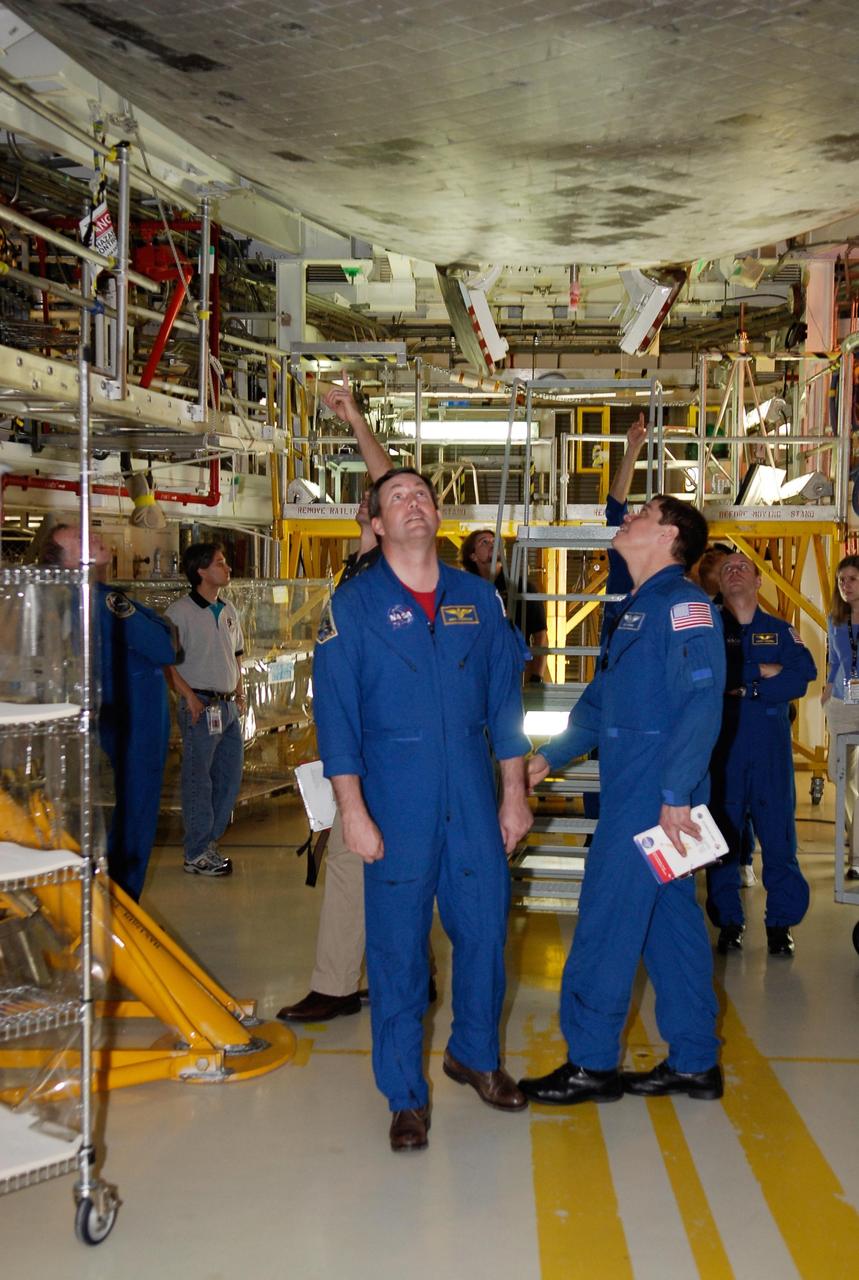
KENNEDY SPACE CENTER, FLA. -- In the Orbiter Processing Facility, STS-123 Mission Specialists Michael Foreman and Robert Behnken inspect the thermal protection system tiles on the underside of space shuttle Endeavour. They and other crew members are at NASA's Kennedy Space Center for a crew equipment interface test, a process of familiarization with payloads, hardware and the space shuttle. The STS-123 mission is targeted for launch on space shuttle Endeavour on Feb. 14. It will be the 25th assembly flight of the station. Photo credit: NASA/Kim Shiflett
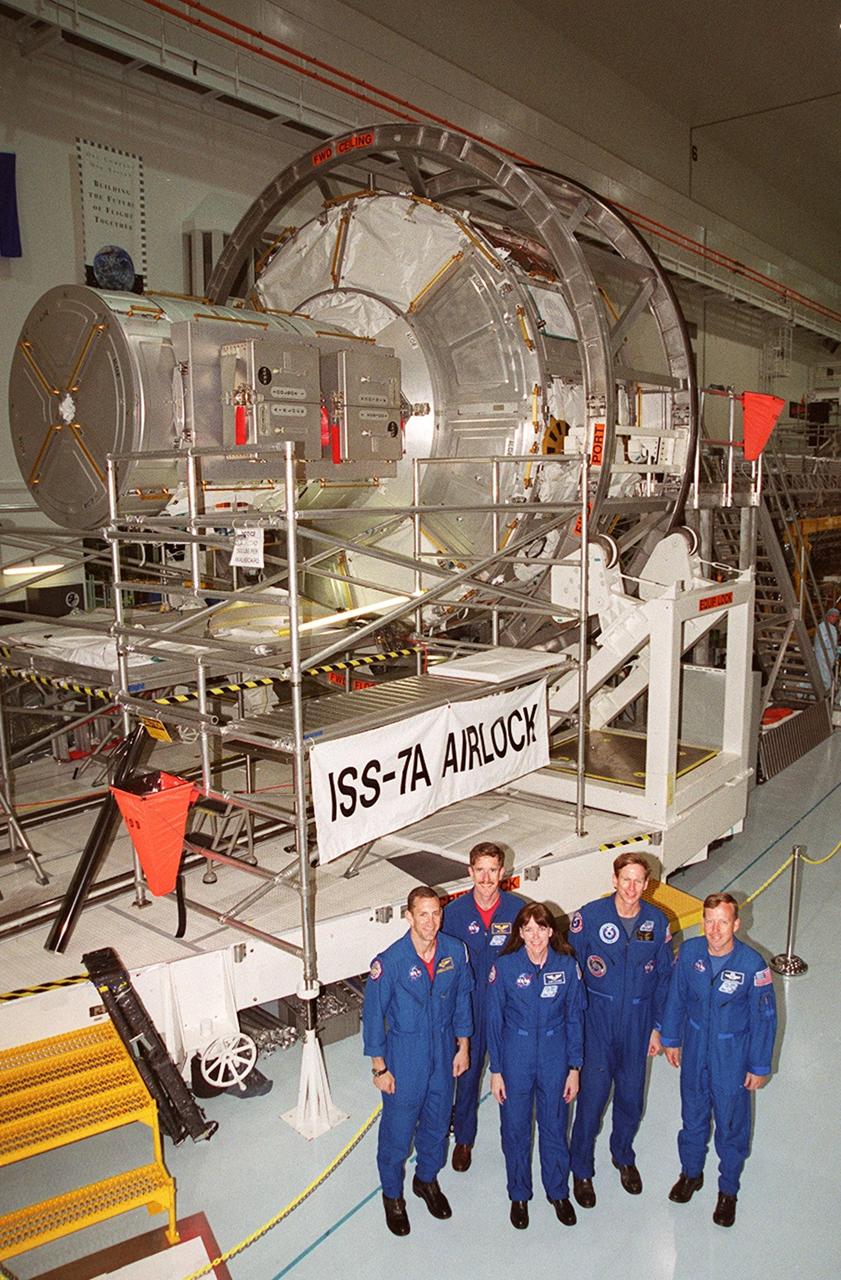
KENNEDY SPACE CENTER, FLA. -- The STS-104 crew poses in front of the Joint Airlock Module in the Space Station Processing Facility. Standing, left to right, are Pilot Charles Hobaugh, Mission Specialists James Reillly, Janet Kavandi and Michael Gernhardt, and Commander Steven Lindsey. They are at KSC to continue Crew Equipment Interface Test activities such as payload familiarization. The airlock is the primary payload on their mission, scheduled to launch no earlier than June 14, 2001, from Launch Pad 39B
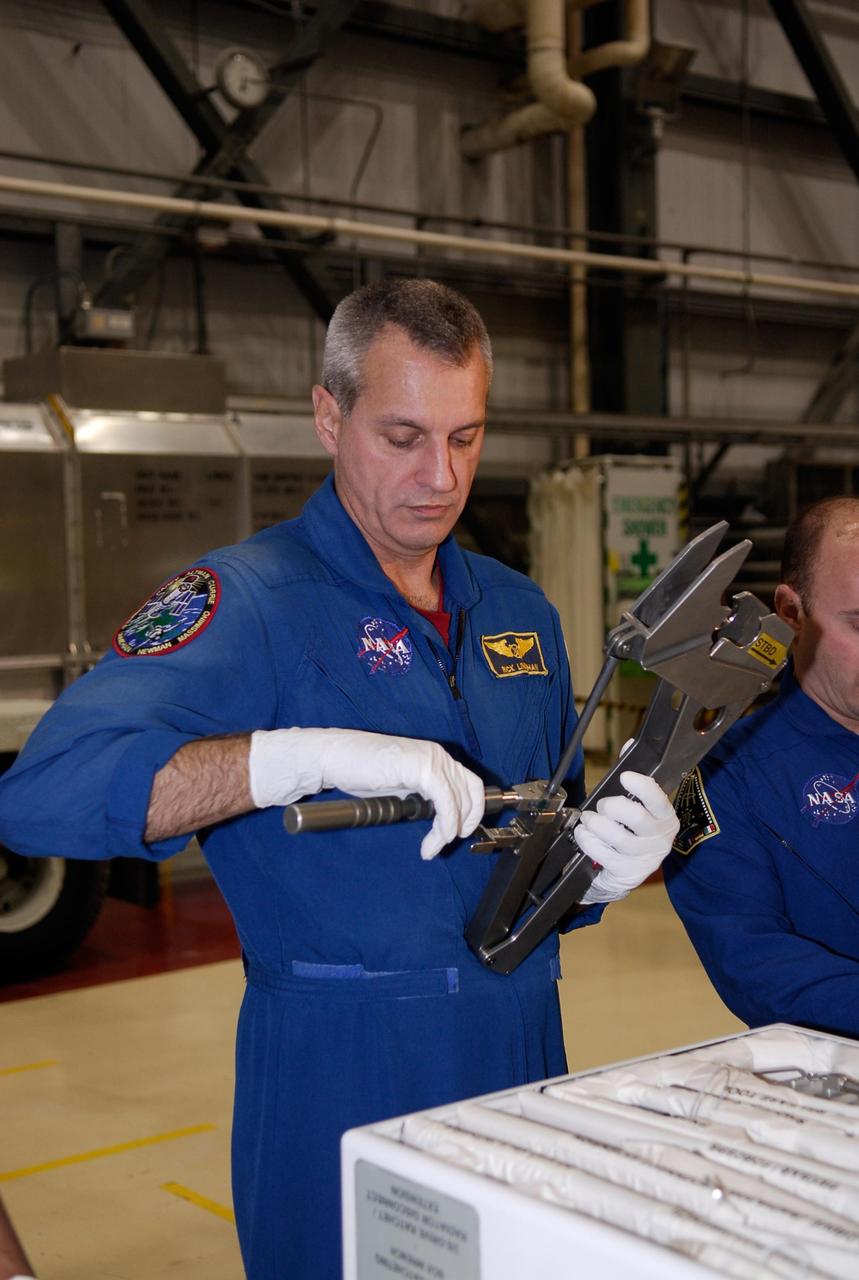
KENNEDY SPACE CENTER, FLA. -- In the Orbiter Processing Facility, STS-123 Mission Specialist Richard Linnehan practices with tools that will be used on the mission. He and other crew members are at NASA's Kennedy Space Center for a crew equipment interface test, a process of familiarization with payloads, hardware and the space shuttle. The STS-123 mission is targeted for launch on space shuttle Endeavour on Feb. 14. It will be the 25th assembly flight of the station. Photo credit: NASA/Kim Shiflett
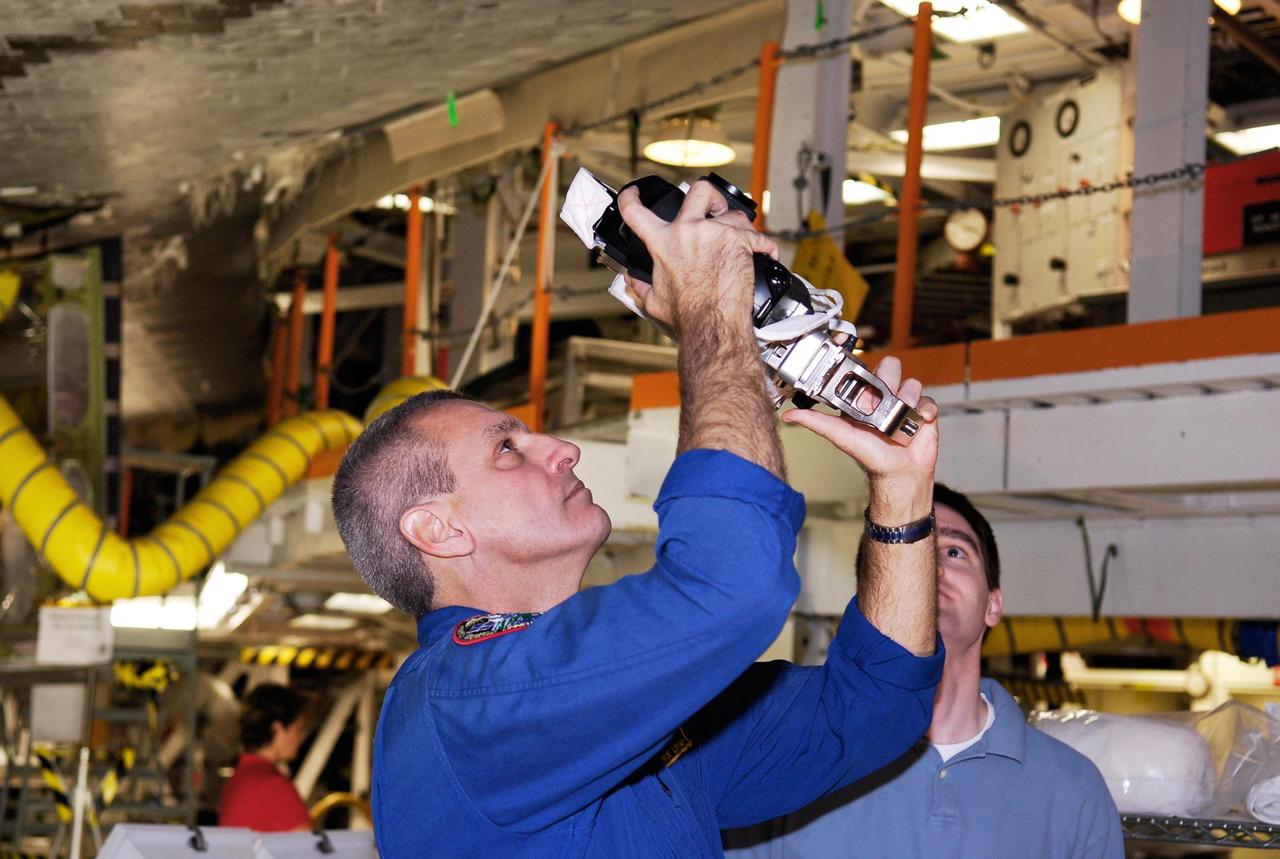
KENNEDY SPACE CENTER, FLA. -- In the Orbiter Processing Facility, STS-123 Mission Specialist Richard Linnehan tries out one of the cameras that will be used on the mission. He and other crew members are at NASA's Kennedy Space Center for a crew equipment interface test, a process of familiarization with payloads, hardware and the space shuttle. The STS-123 mission is targeted for launch on space shuttle Endeavour on Feb. 14. It will be the 25th assembly flight of the station. Photo credit: NASA/Kim Shiflett
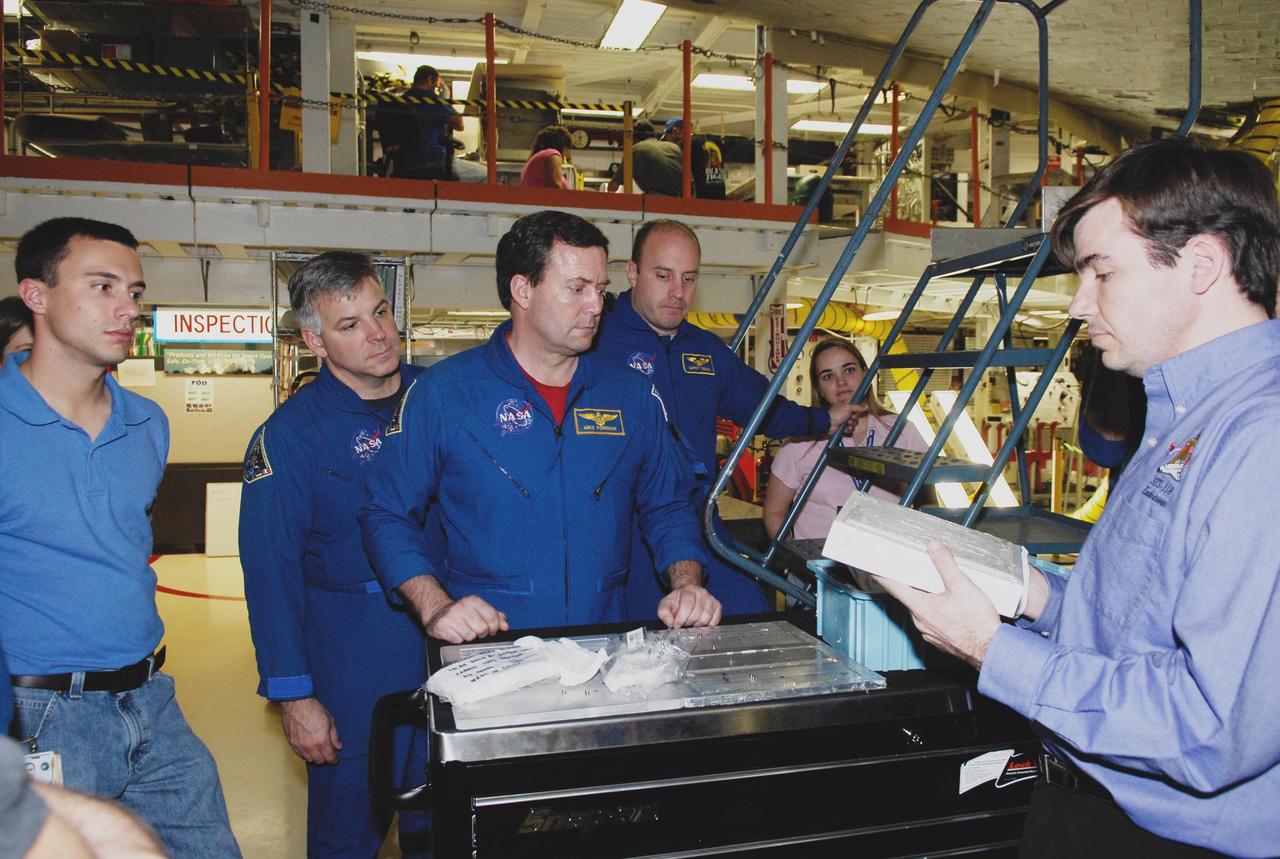
KENNEDY SPACE CENTER, FLA. -- In the Orbiter Processing Facility, STS-123 crew members look over some of the equipment for the mission. From left are Pilot Gregory Johnson and Mission Specialists Michael Foreman and Garrett Reisman. They and other crew members are at NASA's Kennedy Space Center for a crew equipment interface test, a process of familiarization with payloads, hardware and the space shuttle. The STS-123 mission is targeted for launch on space shuttle Endeavour on Feb. 14. It will be the 25th assembly flight of the station. Photo credit: NASA/Kim Shiflett
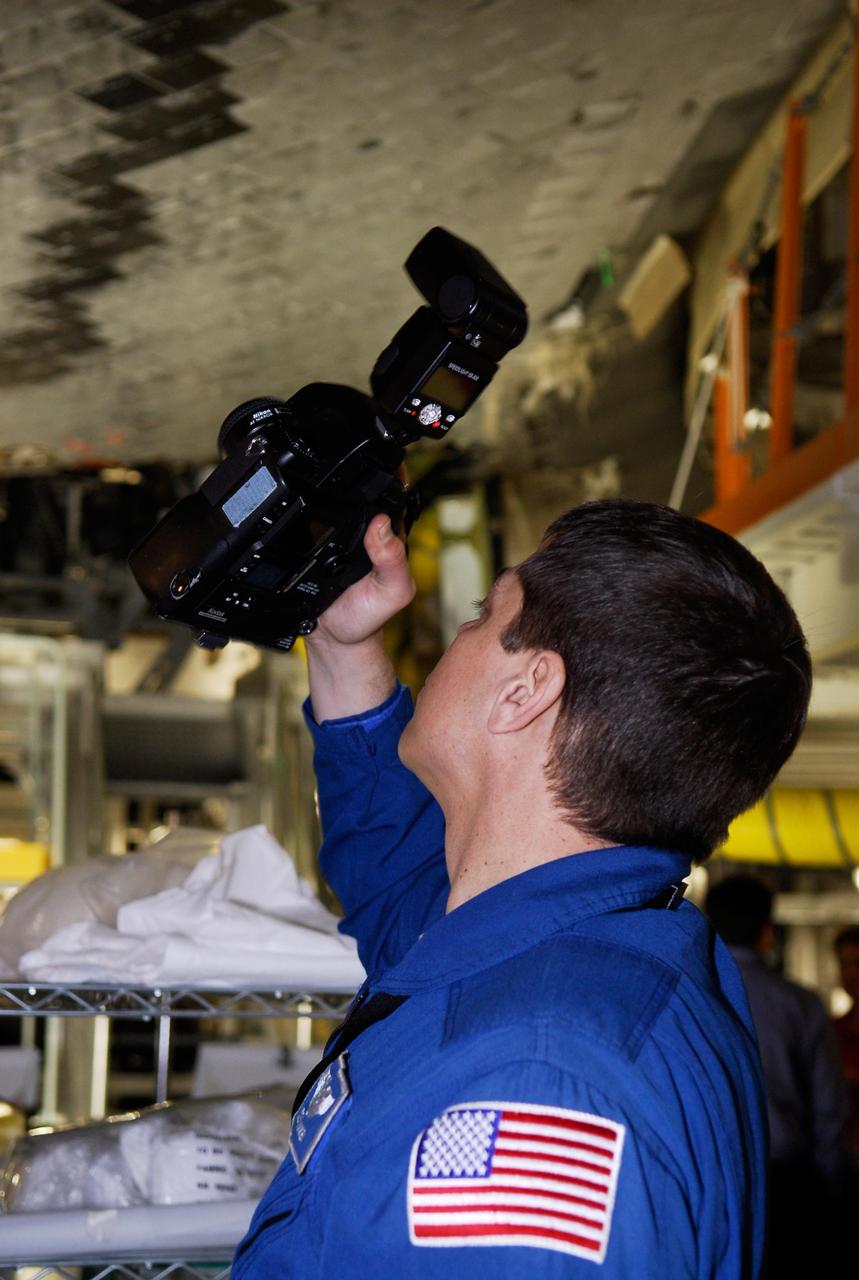
KENNEDY SPACE CENTER, FLA. -- In the Orbiter Processing Facility, STS-123 Mission Specialist Takao Doi tries out one of the cameras that will be used on the mission. Doi represents the Japanese Aerospace and Exploration Agency. He and other crew members are at NASA's Kennedy Space Center for a crew equipment interface test, a process of familiarization with payloads, hardware and the space shuttle. The STS-123 mission is targeted for launch on space shuttle Endeavour on Feb. 14. It will be the 25th assembly flight of the station. Photo credit: NASA/Kim Shiflett
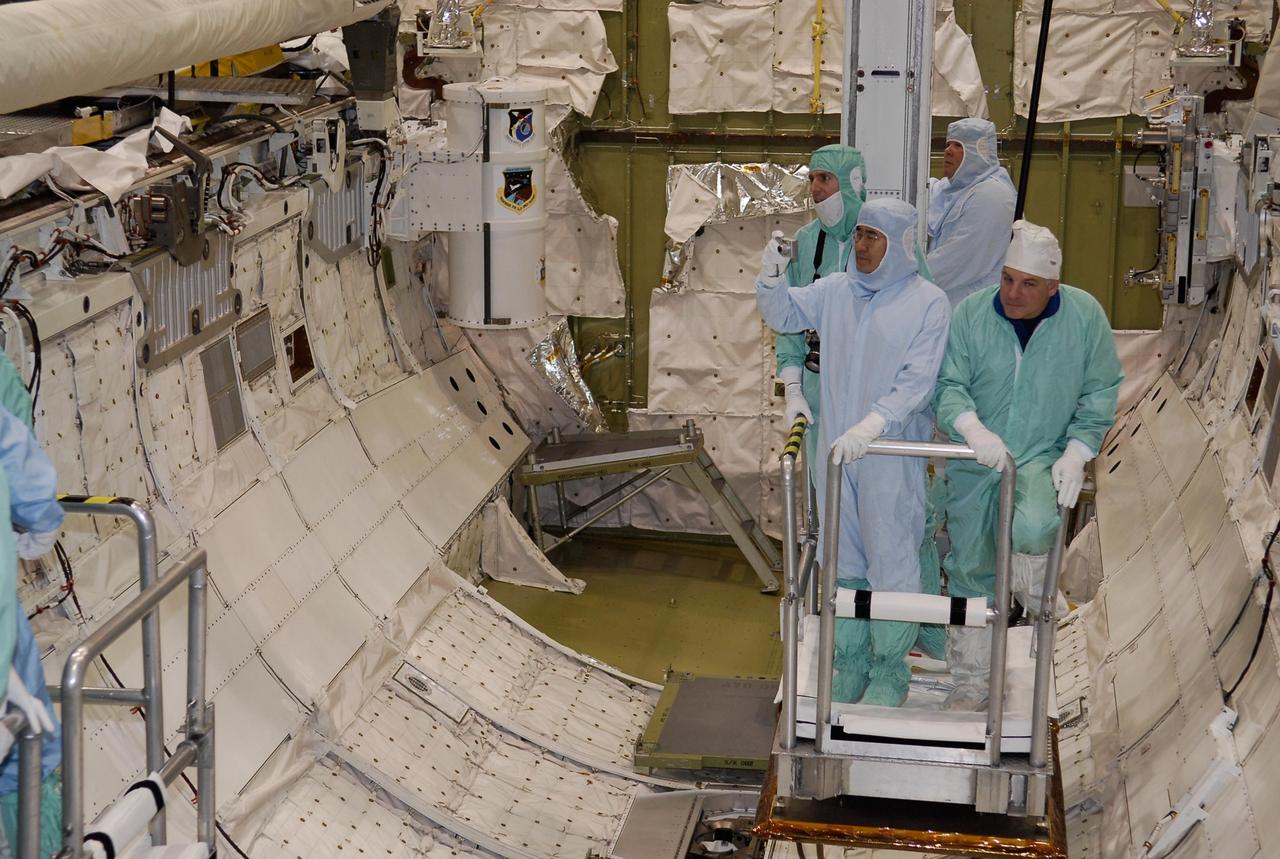
KENNEDY SPACE CENTER, FLA. -- In the Orbiter Processing Facility, STS-123 crew members are lowered into space shuttle Endeavour's payload bay to check out the equipment. At right is Mission Specialist Garrett Reisman; at left is Mission Specialist Takao Doi. The crew is at NASA's Kennedy Space Center for a crew equipment interface test, a process of familiarization with payloads, hardware and the space shuttle. Doi represents the Japanese Aerospace and Exploration Agency. Reisman will join the Expedition 16 crew on the International Space Station, replacing flight engineer Leopold Eyharts. The STS-123 mission is targeted for launch on space shuttle Endeavour on Feb. 14. It will be the 25th assembly flight of the station. Photo credit: NASA/Kim Shiflett
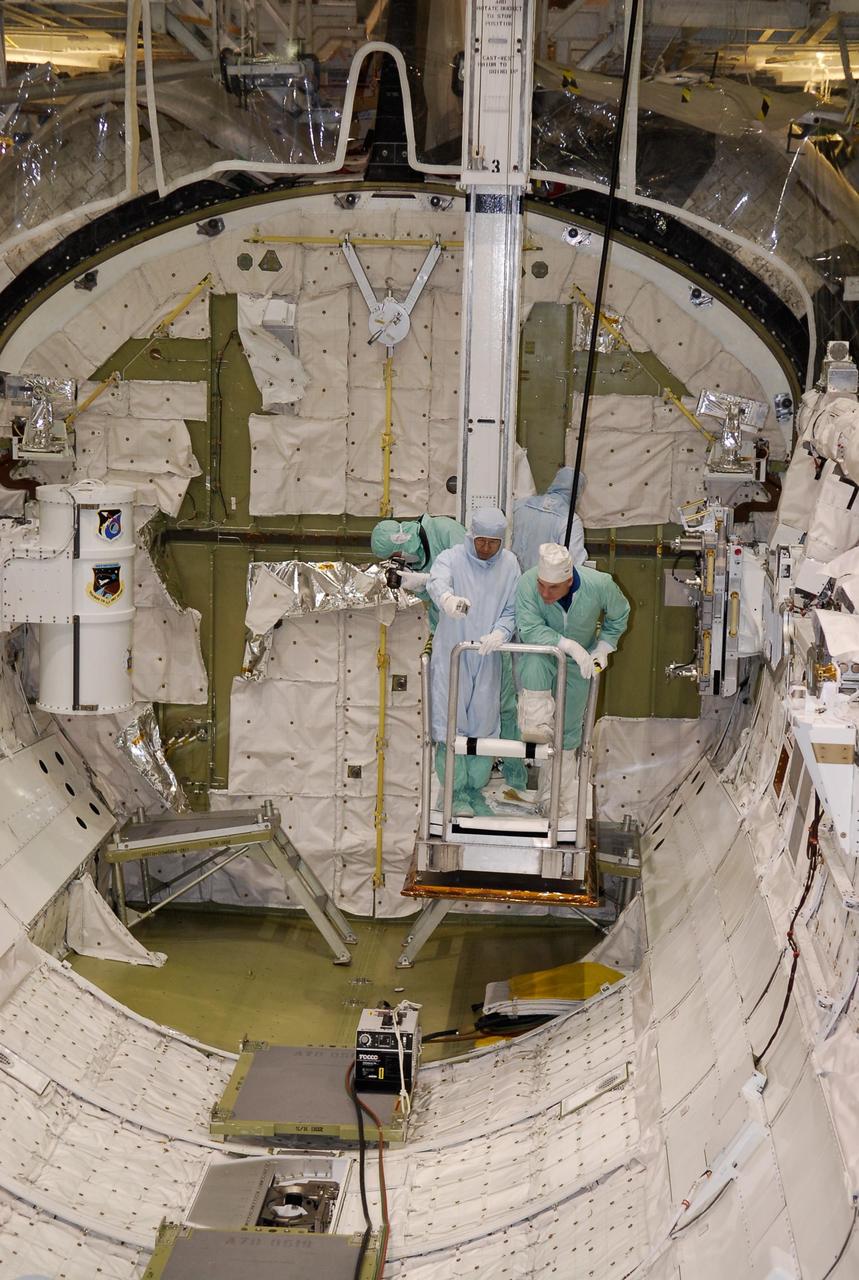
KENNEDY SPACE CENTER, FLA. -- In the Orbiter Processing Facility, STS-123 crew members are lowered into space shuttle Endeavour's payload bay to check out the equipment. At right is Mission Specialist Garrett Reisman; at left is Mission Specialist Takao Doi. The crew is at NASA's Kennedy Space Center for a crew equipment interface test, a process of familiarization with payloads, hardware and the space shuttle. Doi represents the Japanese Aerospace and Exploration Agency. Reisman will join the Expedition 16 crew on the International Space Station, replacing flight engineer Leopold Eyharts. The STS-123 mission is targeted for launch on space shuttle Endeavour on Feb. 14. It will be the 25th assembly flight of the station. Photo credit: NASA/Kim Shiflett
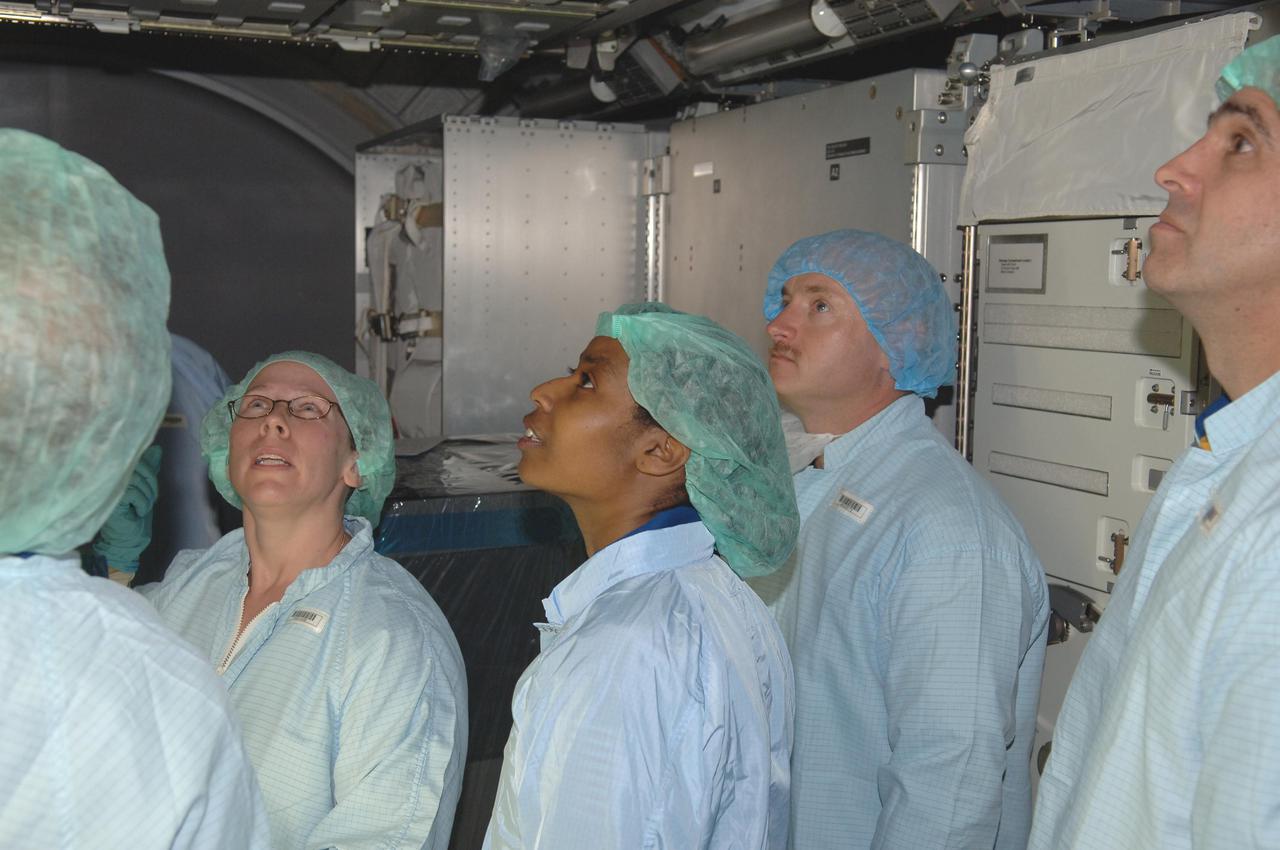
KENNEDY SPACE CENTER, FLA. - In the Space Station Processing Facility at NASA Kennedy Space Center, members of the STS-121 crew look at elements inside the Multi-Purpose Logistics Module Leonardo, which is part of the payload on the mission. The crew is at KSC to take part in Crew Equipment Interface Test activities, which provide hands-on experience with equipment they will use on-orbit. STS-121, the second Return to Flight mission, is targeted for launch in a lighted planning window of Sept. 9 to Sept. 25.
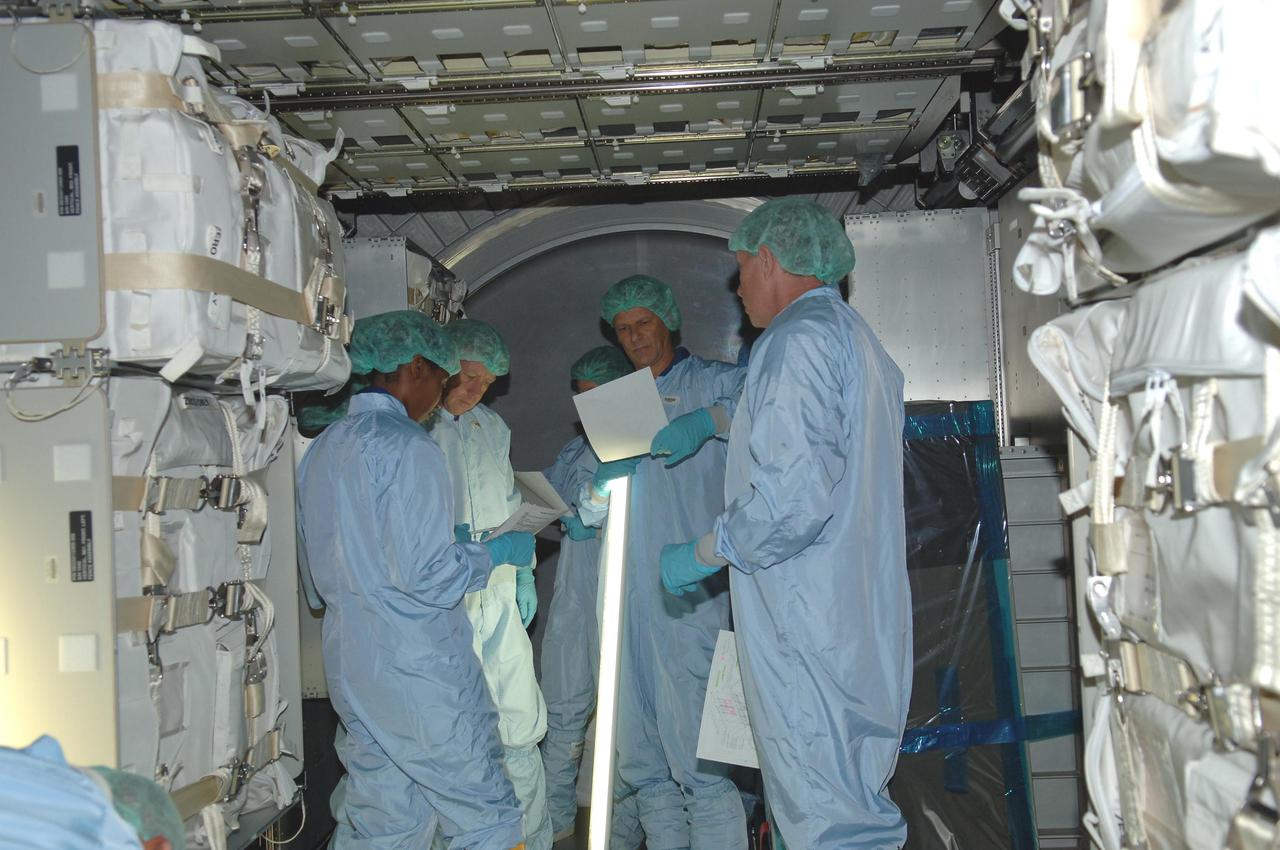
KENNEDY SPACE CENTER, FLA. - Members of the STS-121 crew take part in Crew Equipment Interface Test activities in the Space Station Processing Facility at NASA Kennedy Space Center. Here they are looking at elements inside the the Multi-Purpose Logistics Module Leonardo, which is part of the payload on the mission. STS-121, the second Return to Flight mission, is targeted for launch in a lighted planning window of Sept. 9 to Sept. 25.
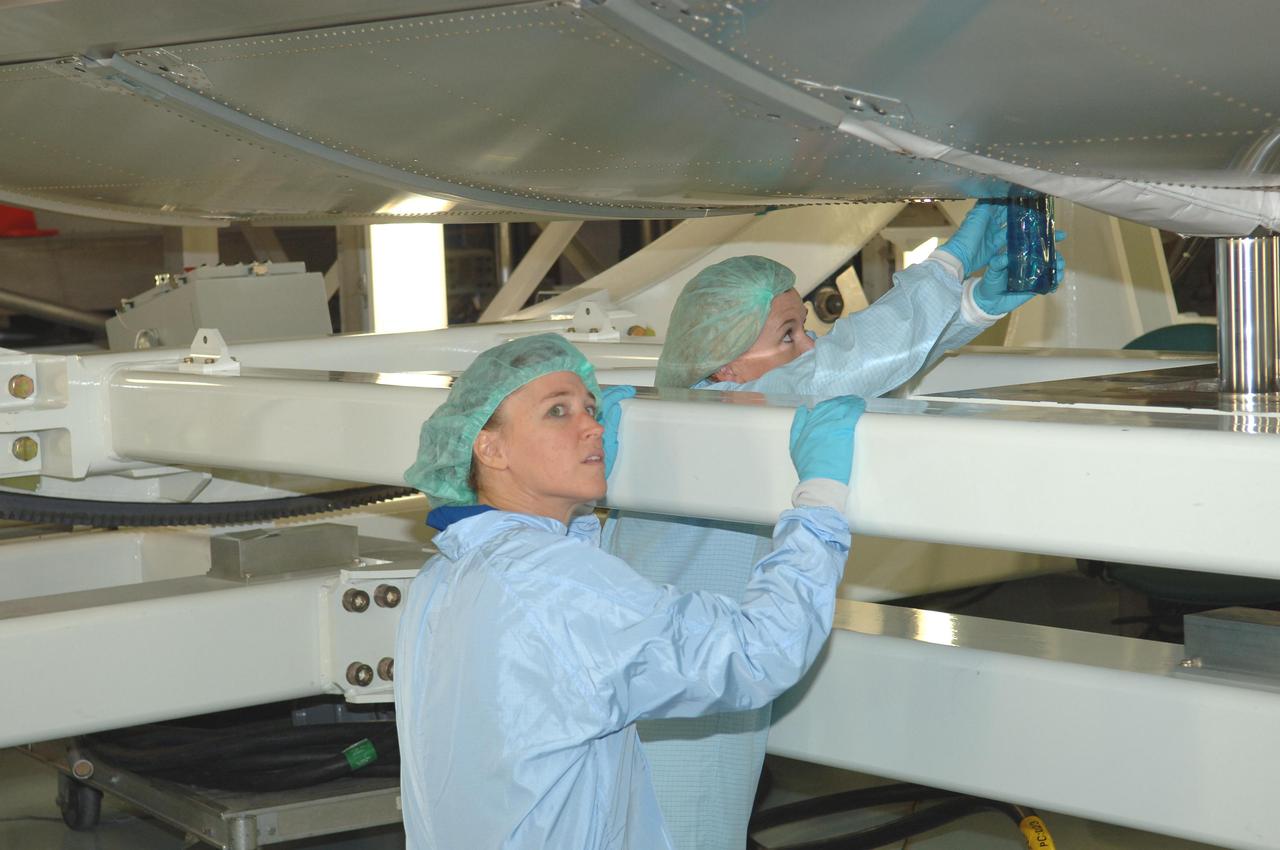
KENNEDY SPACE CENTER, FLA. - In the Space Station Processing Facility at NASA Kennedy Space Center, members of the STS-121 crew look at the underside of the Multi-Purpose Logistics Module Leonardo, which is part of the payload on the mission. The crew is at KSC to take part in Crew Equipment Interface Test activities, which provide hands-on experience with equipment they will use on-orbit. STS-121, the second Return to Flight mission, is targeted for launch in a lighted planning window of Sept. 9 to Sept. 25.
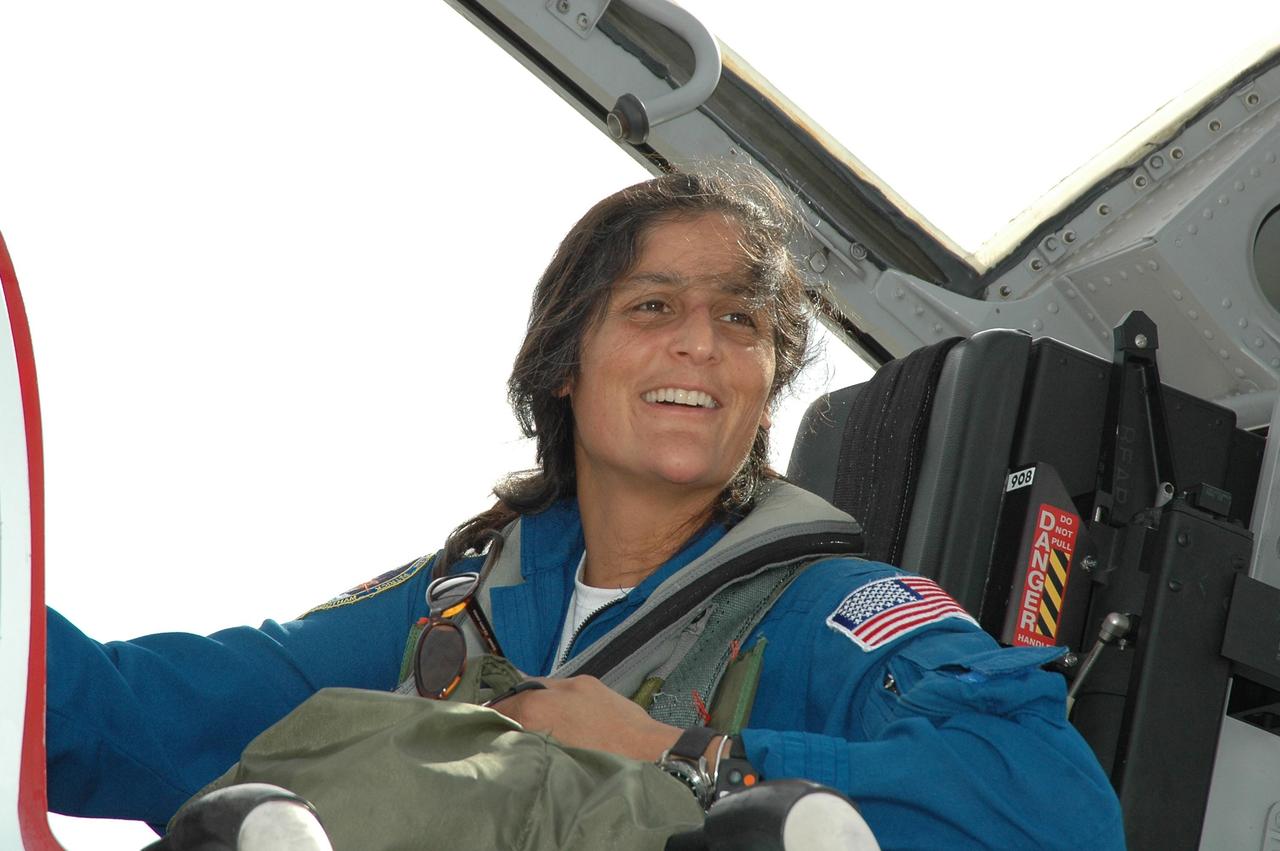
KENNEDY SPACE CENTER, FLA. - Mission STS-116 Mission Specialist Sunita Williams arrives at Kennedy Space Center’s Shuttle Landing Facility for the Crew Equipment Interface Test. Williams will join Expedition 14 in progress and serve as a flight engineer after traveling to the station on mission STS-116. Mission crews make frequent trips to the Space Coast to become familiar with the equipment and payloads they will be using. STS-116 will be mission No. 20 to the International Space Station and construction flight 12A.1. The mission payload is the SPACEHAB module, the P5 integrated truss structure and other key components. Launch is scheduled for no earlier than Dec. 7. Photo credit: NASA/Kim Shiflett
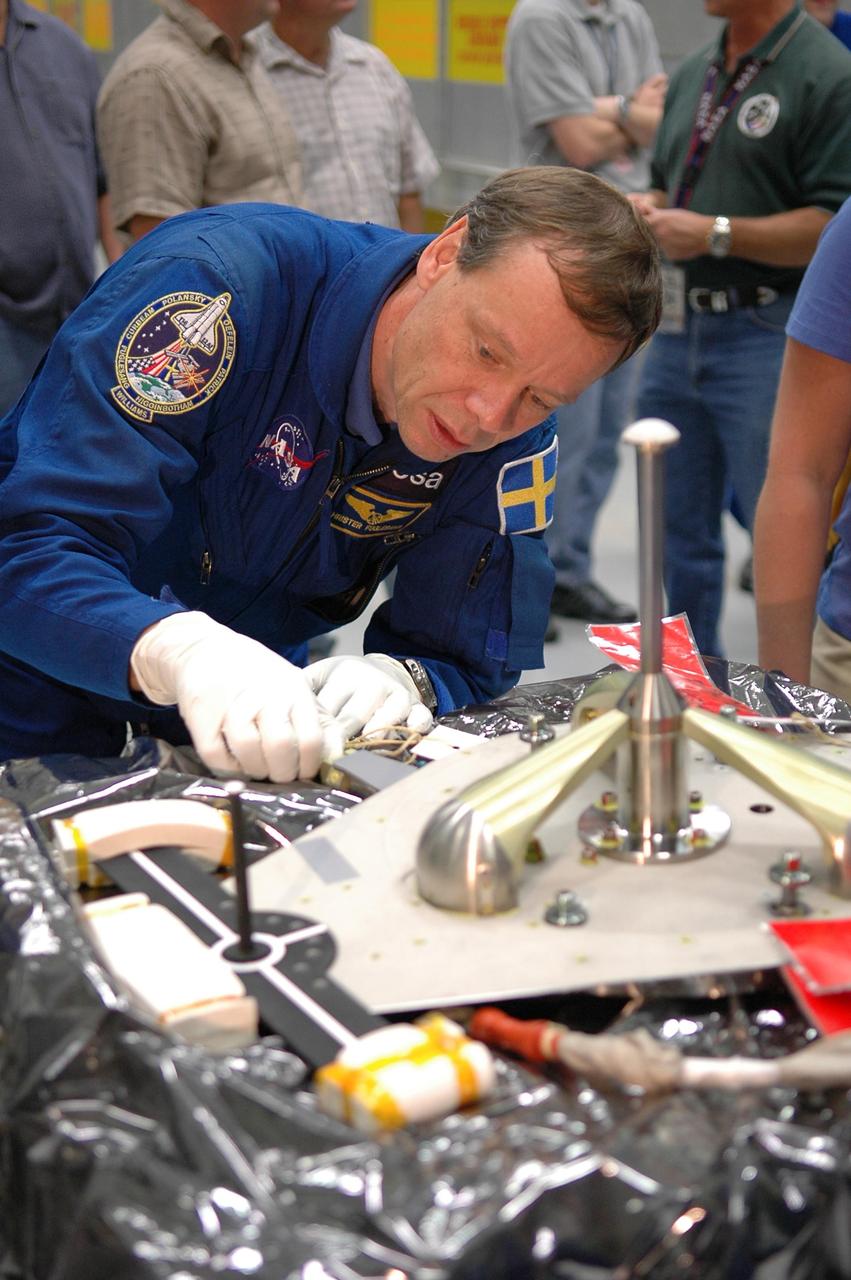
KENNEDY SPACE CENTER, FLA. - In the Orbiter Processing Facility, STS-116 Mission Specialist Christer Fugelsang, who represents the European Space Agency, gets hands-on experience working with a piece of flight hardware. He and other crew members are at KSC for a Crew Equipment Interface Test. Mission crews make frequent trips to the Kennedy Space Center to become familiar with the equipment and payloads they will be using. STS-116 will be mission No. 20 to the International Space Station and construction flight 12A.1. The mission payload is the SPACEHAB module, the P5 integrated truss structure and other key components. Launch is scheduled for no earlier than Dec. 7. Photo credit: NASA/Kim Shiflett
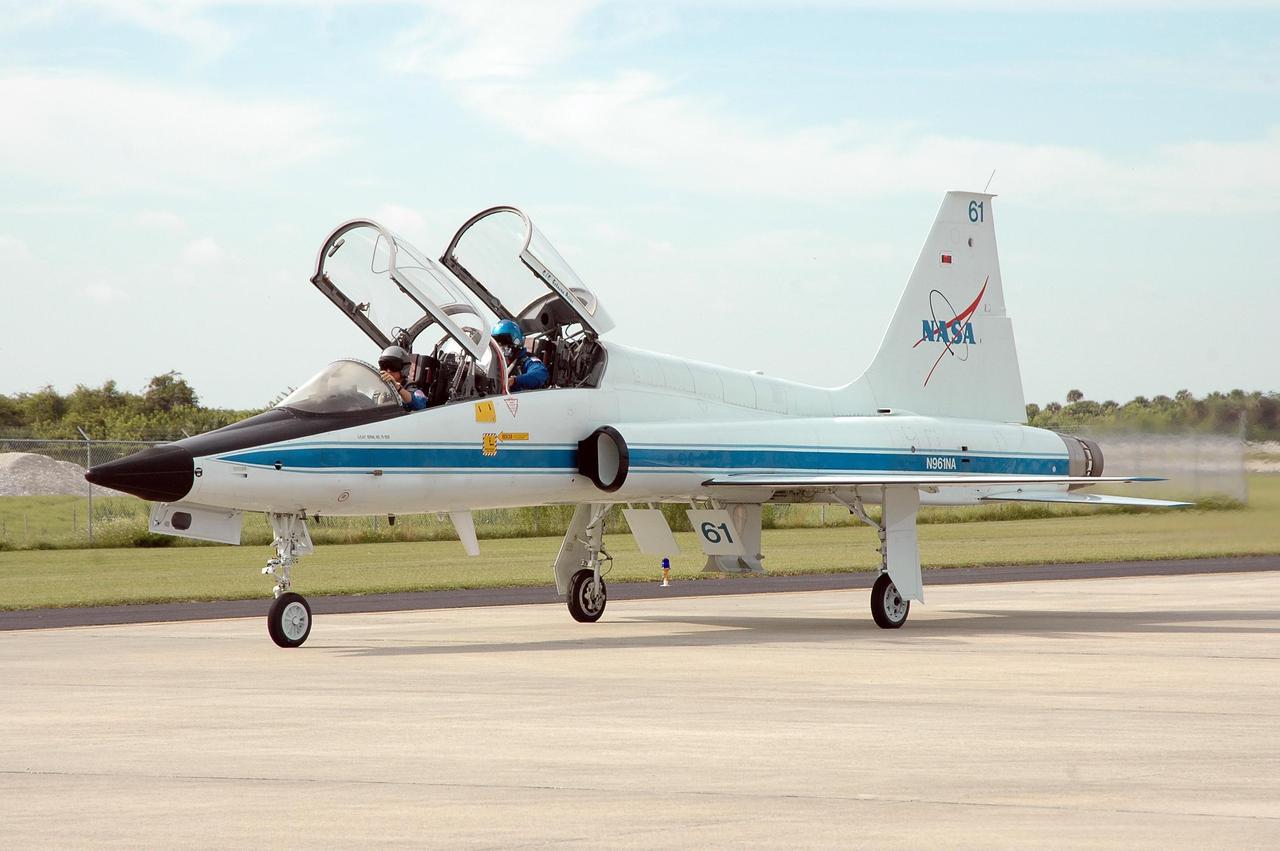
KENNEDY SPACE CENTER, FLA. - STS-116 Mission Specialist Robert Curbeam (in back) arrives at Kennedy Space Center’s Shuttle Landing Facility aboard a T-38 jet for the Crew Equipment Interface Test. Mission crews make frequent trips to the Space Coast to become familiar with the equipment and payloads they will be using. STS-116 will be mission No. 20 to the International Space Station and construction flight 12A.1. The mission payload is the SPACEHAB module, the P5 integrated truss structure and other key components. Launch is scheduled for no earlier than Dec. 7. Photo credit: NASA/Kim Shiflett
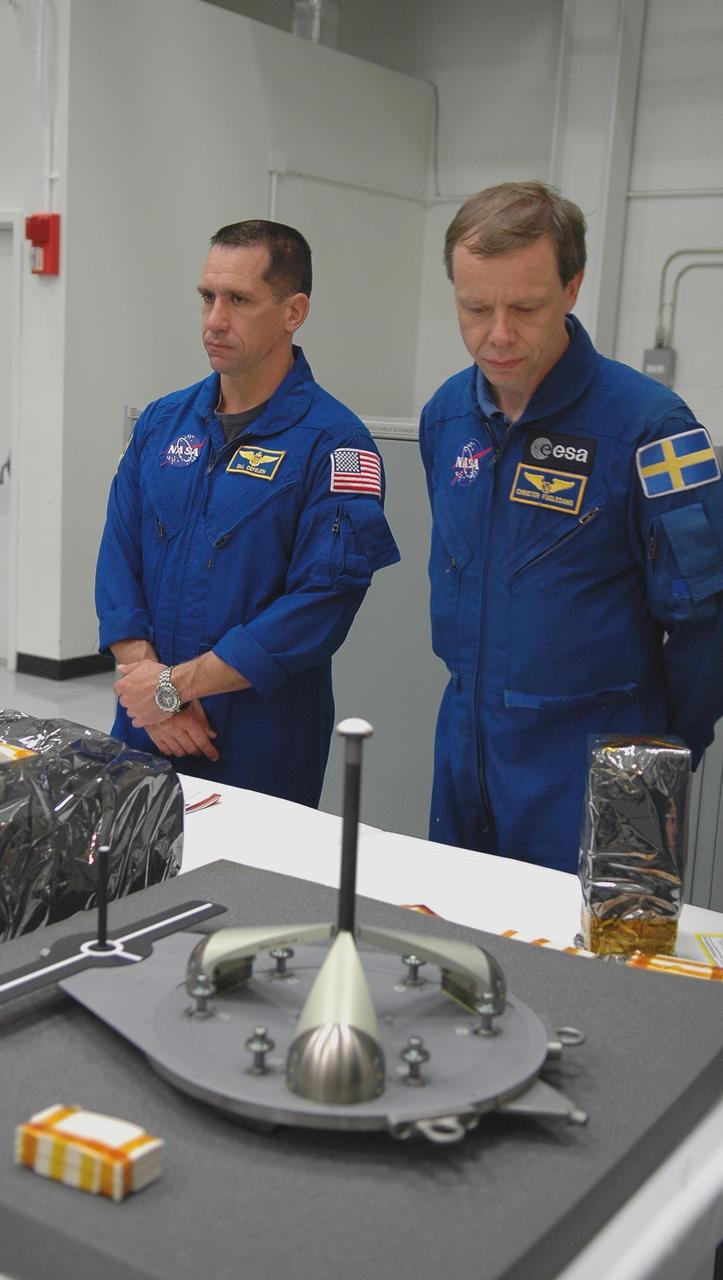
KENNEDY SPACE CENTER, FLA. - In the Orbiter Processing Facility, members of the STS-116 crew look over flight hardware during the Crew Equipment Interface Test. Seen here are Pilot William Oefelein (left) and Mission Specialist Christer Fugelsang, who represents the European Space Agency. Mission crews make frequent trips to the Kennedy Space Center to become familiar with the equipment and payloads they will be using. STS-116 will be mission No. 20 to the International Space Station and construction flight 12A.1. The mission payload is the SPACEHAB module, the P5 integrated truss structure and other key components. Launch is scheduled for no earlier than Dec. 7. Photo credit: NASA/Kim Shiflett
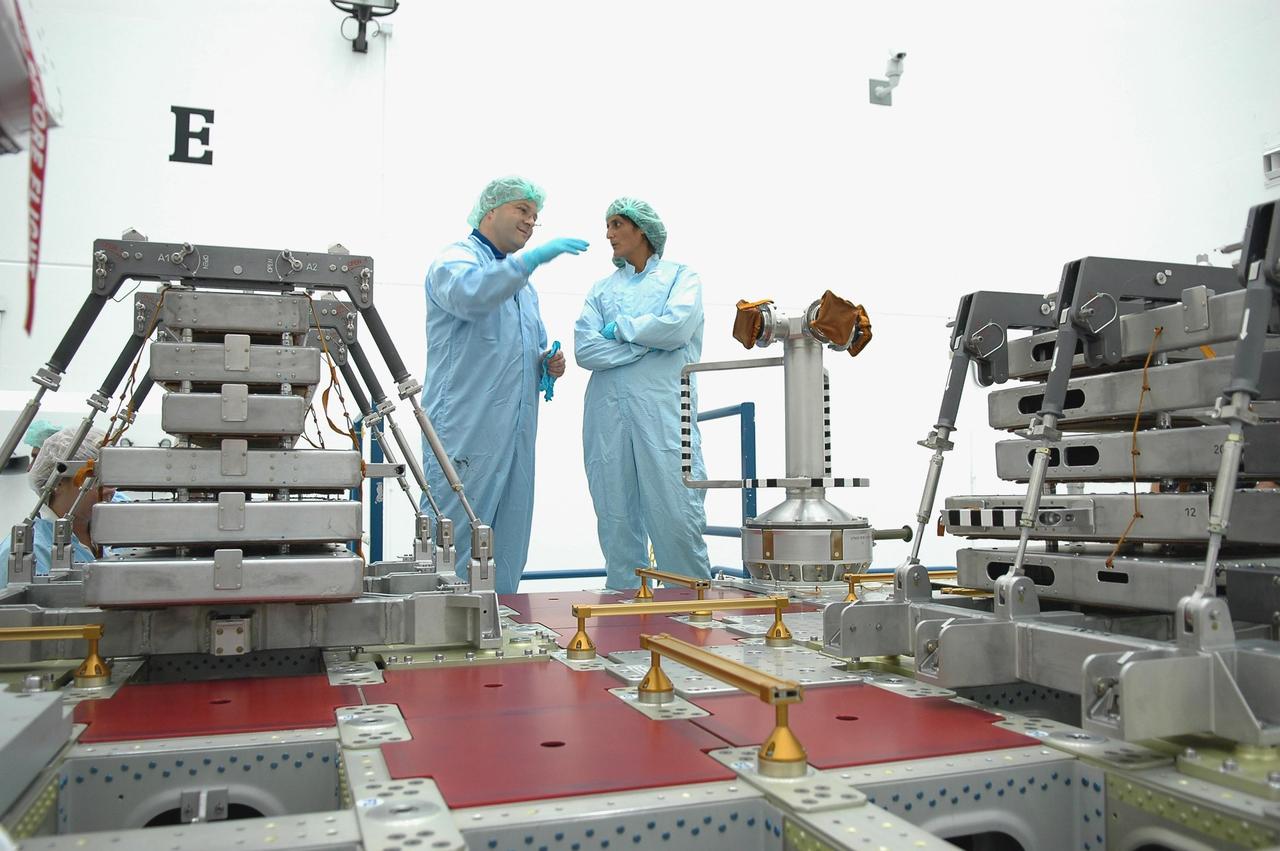
KENNEDY SPACE CENTER, FLA. - Inside Astrotech Space Operations in Titusville, Fla., STS-116 Mission Specialists Nicholas Patrick and Sunita Williams are inspecting flight hardware during the Crew Equipment Interface Test. Mission crews make frequent trips to the Kennedy Space Center to become familiar with the equipment and payloads they will be using. STS-116 will be mission No. 20 to the International Space Station and construction flight 12A.1. The mission payload is the SPACEHAB module, the P5 integrated truss structure and other key components. Launch is scheduled for no earlier than Dec. 7. Photo credit: NASA/Kim Shiflett
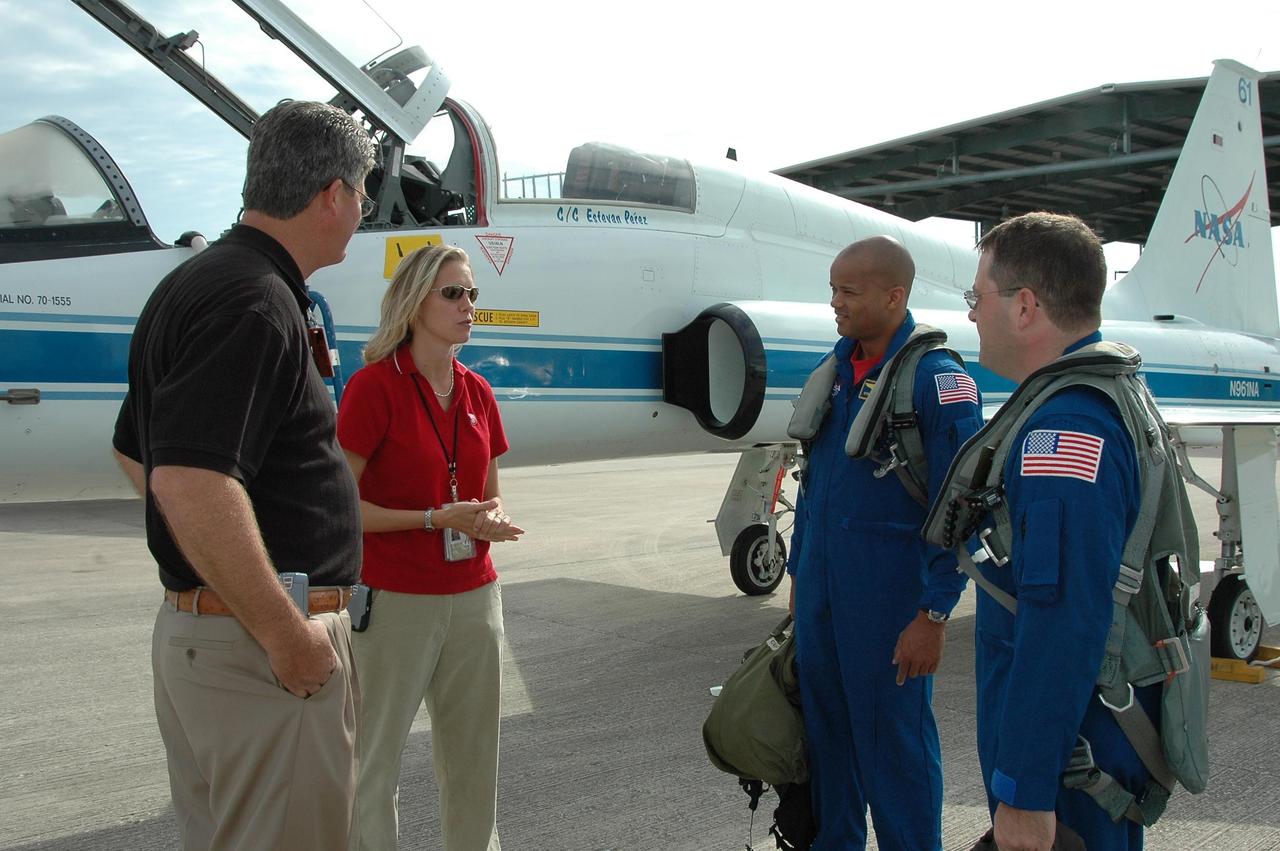
KENNEDY SPACE CENTER, FLA. - From left, at Kennedy Space Center’s Shuttle Landing Facility, Deputy Director William Parsons and Discovery Flow Director Stephanie Stilson greet STS-116 Mission Specialists Robert Curbeam and Nicholas Patrick after they arrive for the Crew Equipment Interface Test. Mission crews make frequent trips to the Space Coast to become familiar with the equipment and payloads they will be using. STS-116 will be mission No. 20 to the International Space Station and construction flight 12A.1. The mission payload is the SPACEHAB module, the P5 integrated truss structure and other key components. Launch is scheduled for no earlier than Dec. 7. Photo credit: NASA/Kim Shiflett
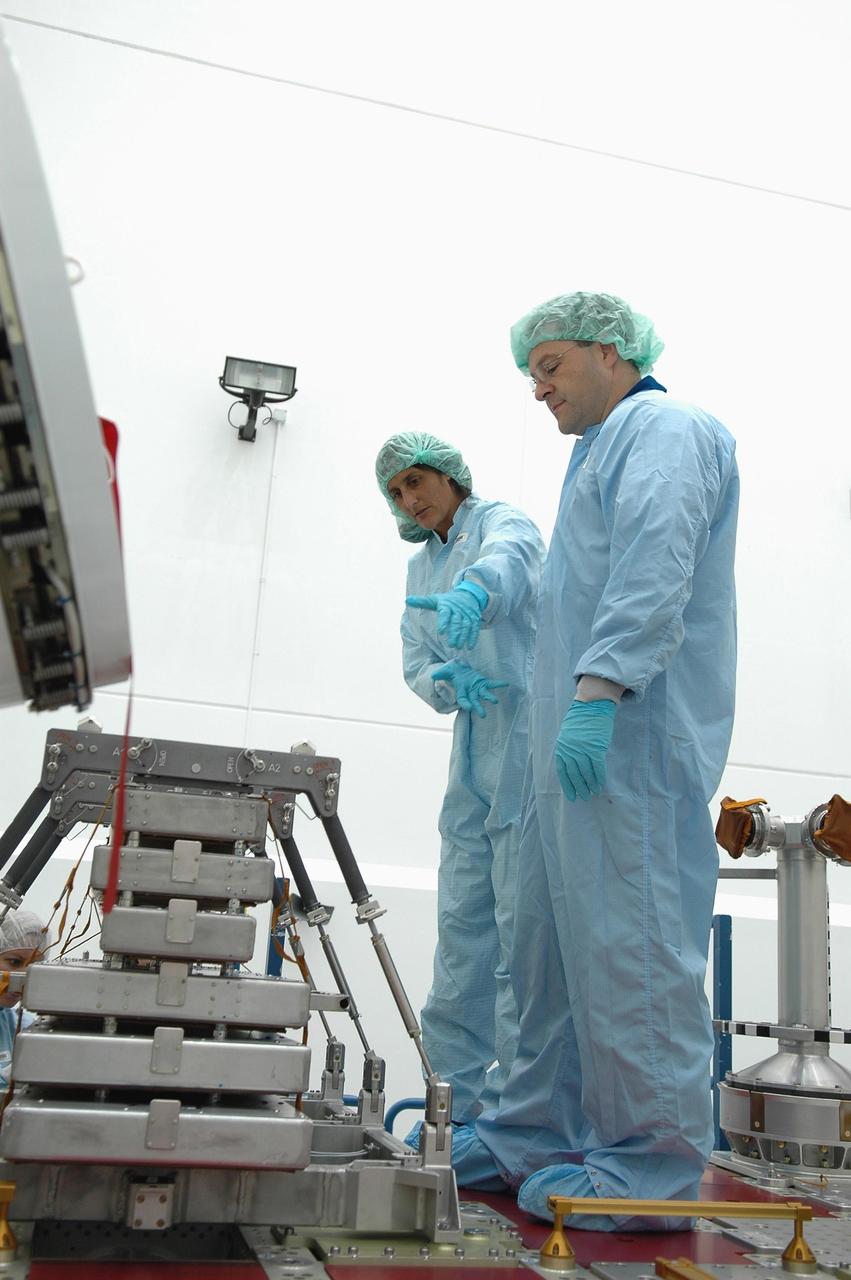
KENNEDY SPACE CENTER, FLA. - Inside Astrotech Space Operations in Titusville, Fla., STS-116 Mission Specialists Sunita Williams and Nicholas Patrick are inspecting flight hardware during the Crew Equipment Interface Test. Mission crews make frequent trips to the Kennedy Space Center to become familiar with the equipment and payloads they will be using. STS-116 will be mission No. 20 to the International Space Station and construction flight 12A.1. The mission payload is the SPACEHAB module, the P5 integrated truss structure and other key components. Launch is scheduled for no earlier than Dec. 7. Photo credit: NASA/Kim Shiflett
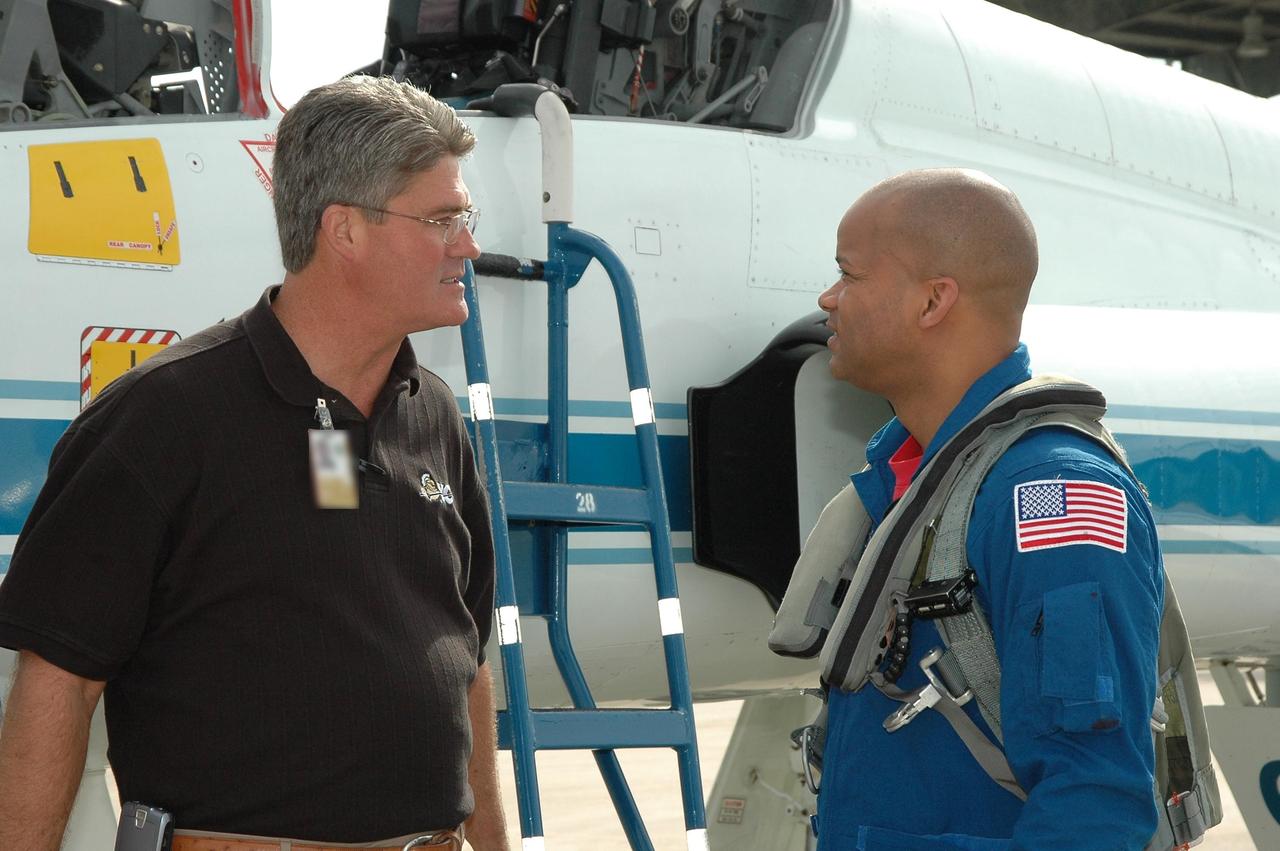
KENNEDY SPACE CENTER, FLA. - At Kennedy Space Center’s Shuttle Landing Facility, Deputy Director William Parsons (left) greets STS-116 Mission Specialist Robert Curbeam after his arrival for the Crew Equipment Interface Test. Mission crews make frequent trips to the Space Coast to become familiar with the equipment and payloads they will be using. STS-116 will be mission No. 20 to the International Space Station and construction flight 12A.1. The mission payload is the SPACEHAB module, the P5 integrated truss structure and other key components. Launch is scheduled for no earlier than Dec. 7. Photo credit: NASA/Kim Shiflett
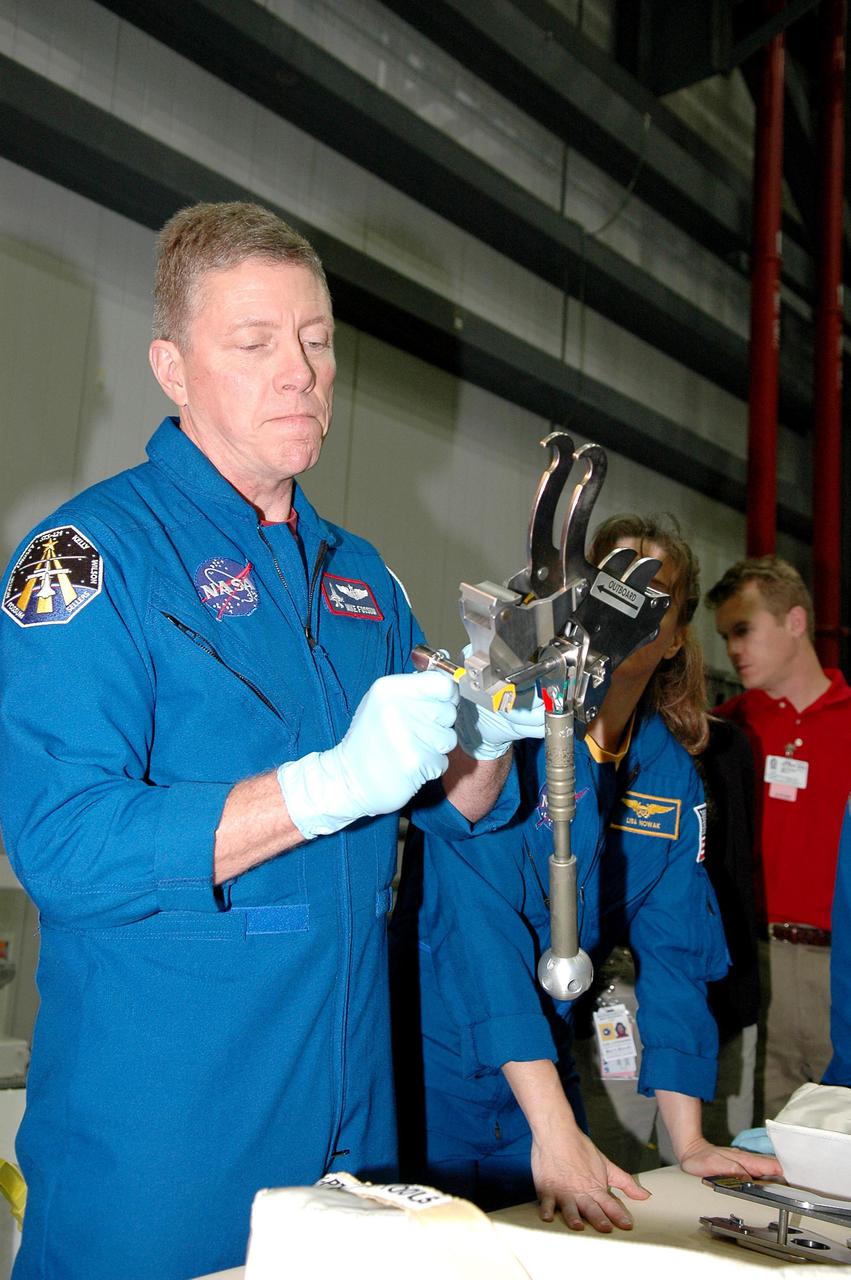
KENNEDY SPACE CENTER, FLA. - In the Orbiter Processing Facility at NASA’s Kennedy Space Center, STS-121 Mission Specialist Michael E. Fossum practices using the Emergency Payload Door Closure Device. At right is Mission Specialist Lisa Nowak. STS-121 is the second Return to Flight mission. The crew is at KSC to participate in the Crew Equipment Interface Test (CEIT). During CEIT, the crew has an opportunity to get a hands-on look at the orbiter and equipment they will be working with on their missions. Mission STS-121 is scheduled to launch aboard Atlantis in July.
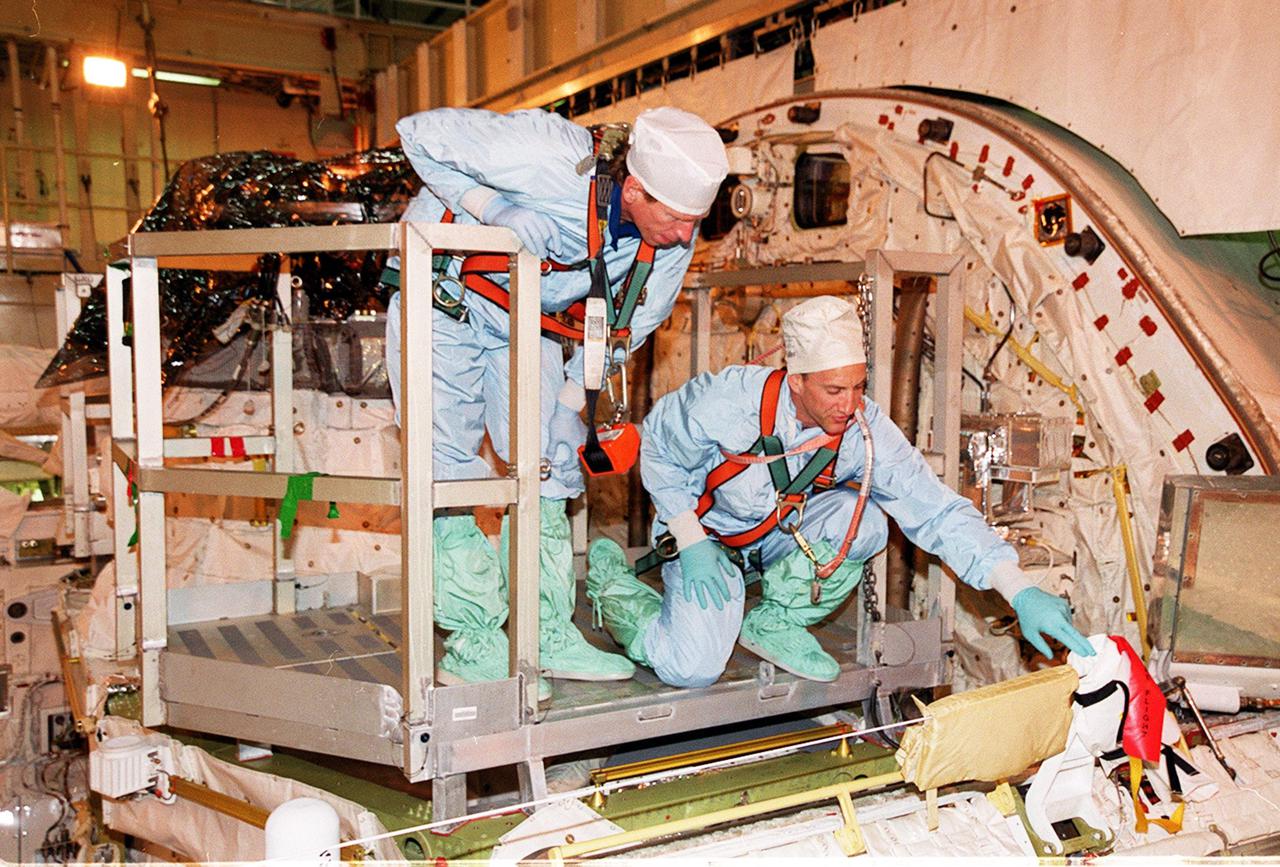
KENNEDY SPACE CENTER, FLA. -- In the Orbiter Processing Facility, STS-104 Mission Specialist Michael Gernhardt (left) and Pilot Charles Hobaugh (right) check out the slidewire used during extravehicular activities to keep the astronauts tethered to the orbiter. The STS-104 crew is at KSC to continue Crew Equipment Interface Test activities such as payload familiarization. The Joint Airlock Module is the primary payload on their mission, scheduled to launch no earlier than June 14, 2001, from Launch Pad 39B
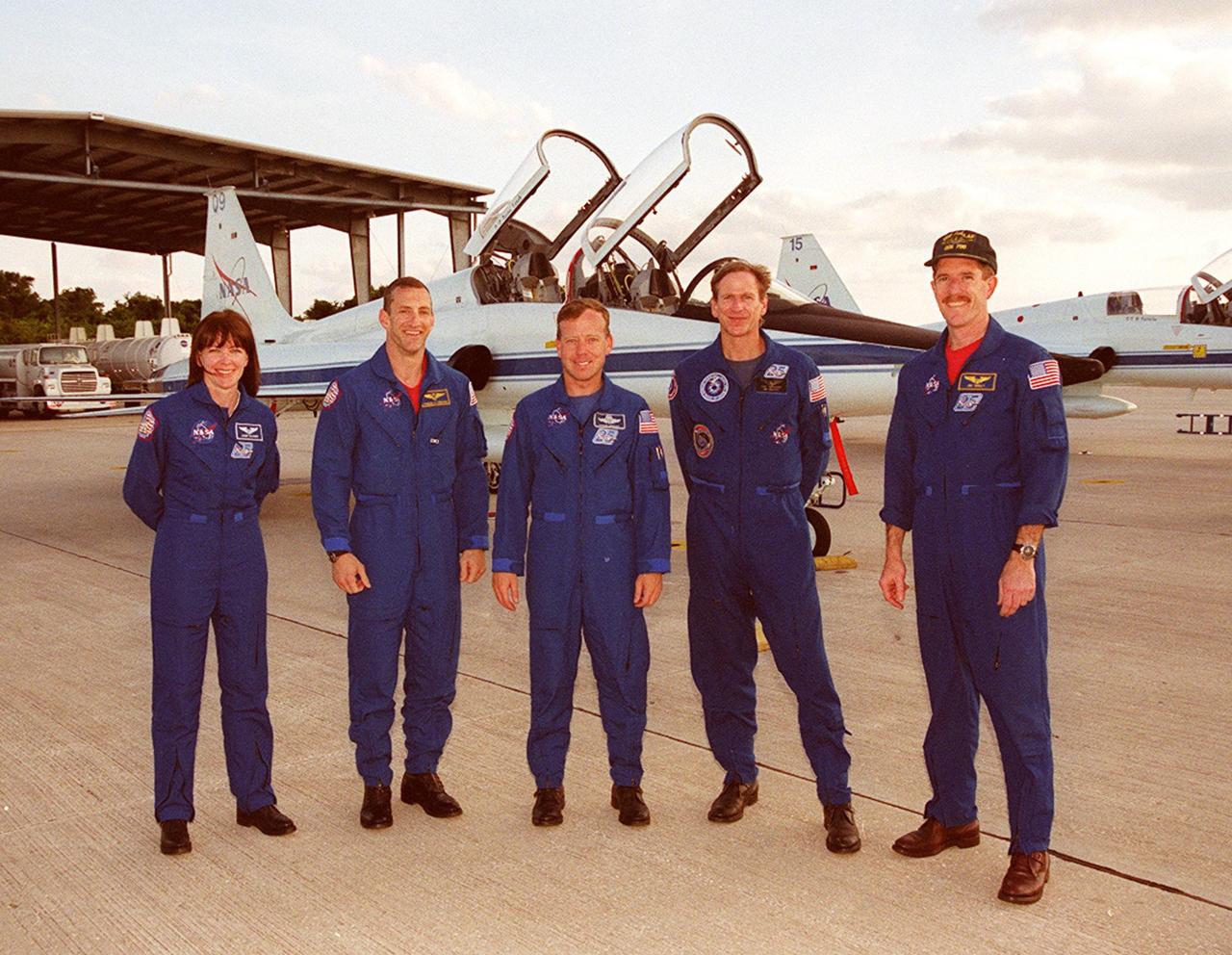
KENNEDY SPACE CENTER, FLA. -- After their arrival at the Shuttle Landing Facility, the STS-104 crew takes time to pose for a photo. Standing, left to right, are Mission Specialist Janet Kavandi, Pilot Charles Hobaugh, Commander Steven Lindsey, and Mission Specialists Michael Gernhardt and James Reilly. They are at KSC to continue Crew Equipment Interface Test activities such as payload familiarization. The airlock is the primary payload on their mission, scheduled to launch no earlier than June 14, 2001, from Launch Pad 39B

KENNEDY SPACE CENTER, FLA. - STS-107 Commander Rick Husband checks the window in Columbia during Crew Equipment Interface Test activities at KSC. The CEIT includes equipment and payload familiarization. STS-107 is a research mission, with the SHI Research Double Module (SHI/RDM), also known as SPACEHAB, as the primary payload, plus the Fast Reaction Experiments Enabling Science, Technology, Applications and Research (FREESTAR) that incorporates eight high priority secondary attached shuttle experiments. STS-107 is scheduled to launch July 19, 2002
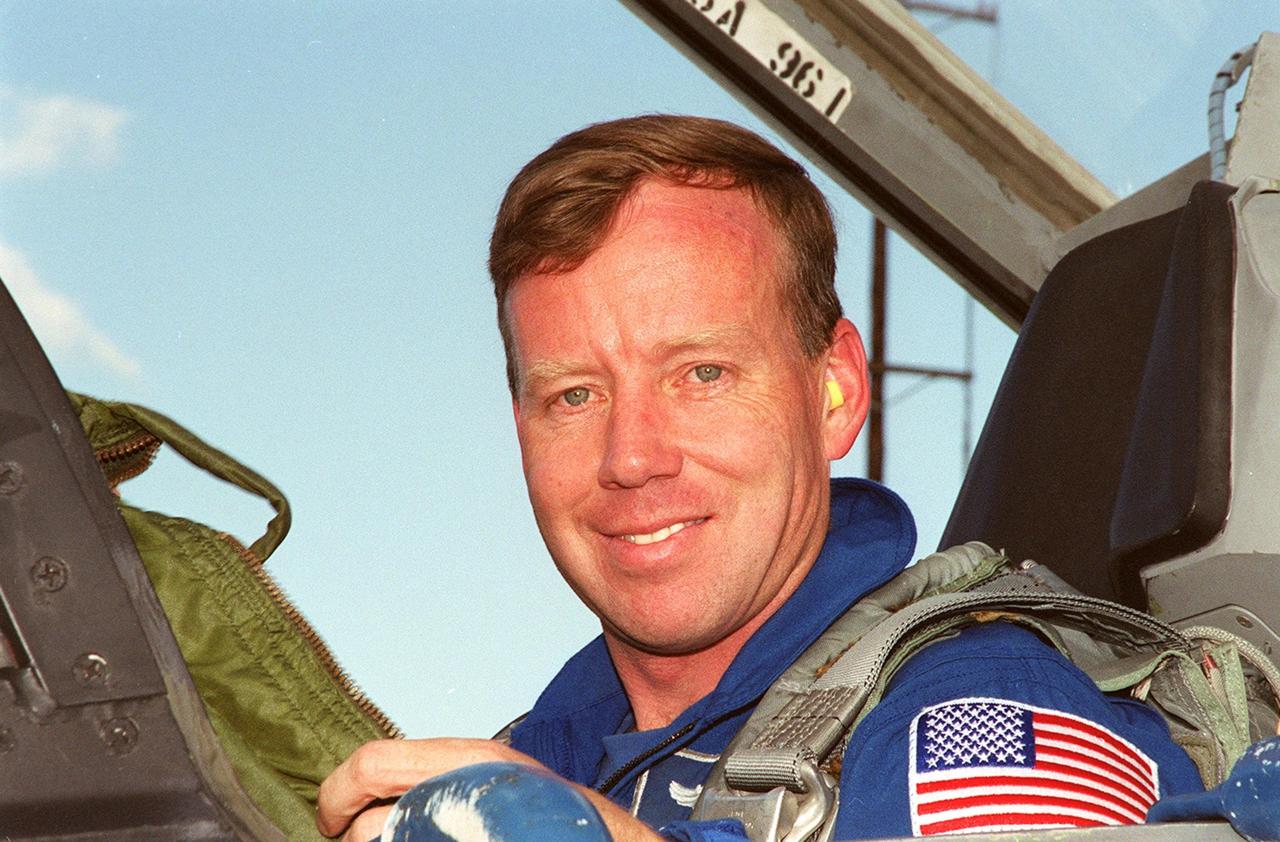
KENNEDY SPACE CENTER, FLA. -- Commander Steven Lindsey arrives at KSC’s Shuttle Landing Facility aboard a T-38 jet aircraft. He and the rest of the crew are taking part in Crew Equipment Interface Test activities such as payload familiarization. The Joint Airlock Module is the primary payload on their mission, scheduled to launch no earlier than June 14, 2001, from Launch Pad 39B
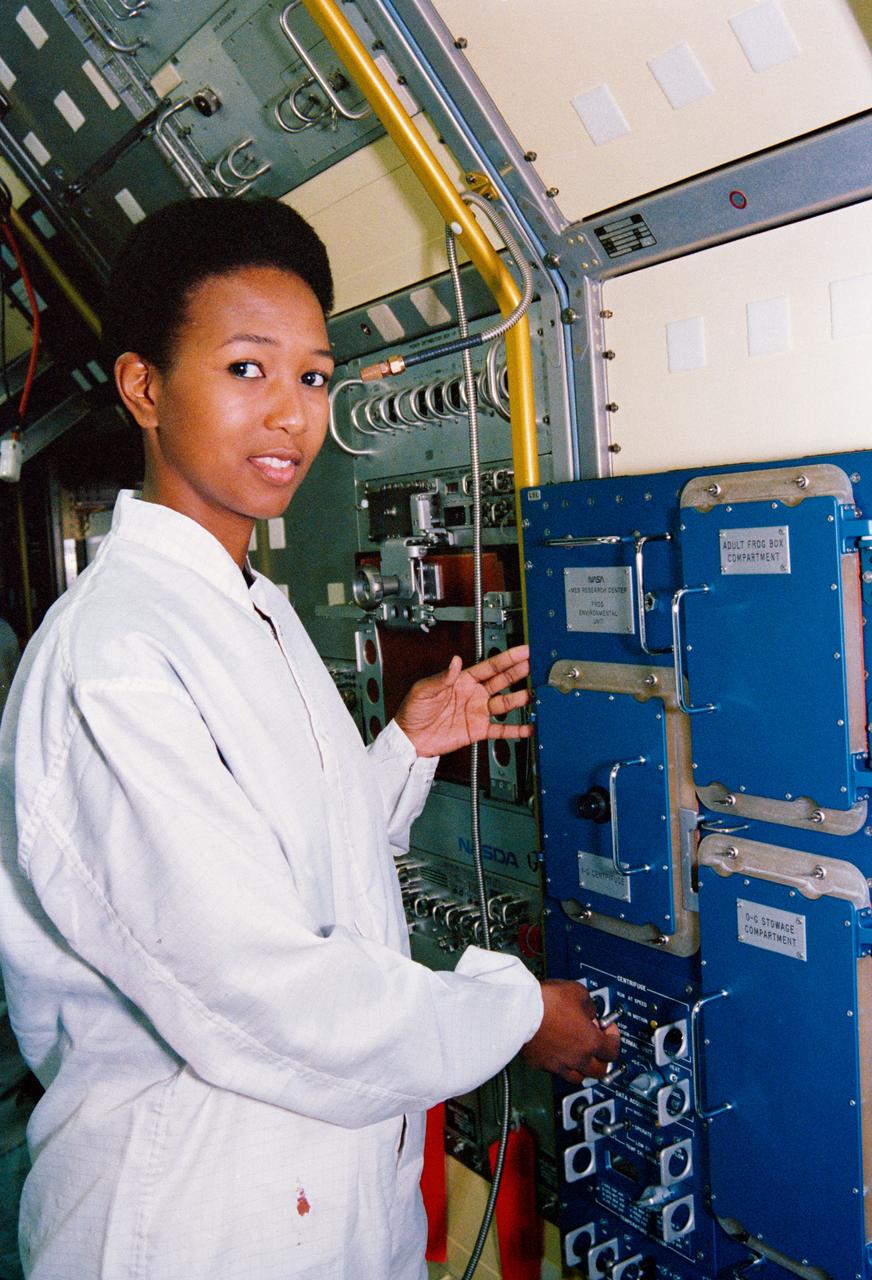
S92-44302 (25 July 1992) --- Astronaut Mae C. Jemison, mission specialist, examines the interior of the Spacelab-J laboratory module installed in Endeavour's cargo bay. The STS-47 crewmembers visited Endeavour, currently undergoing pre-flight processing in a high bay area of the Orbiter Processing Facility at the Kennedy Space Center. The Spacelab-J mission is currently scheduled for September of this year.
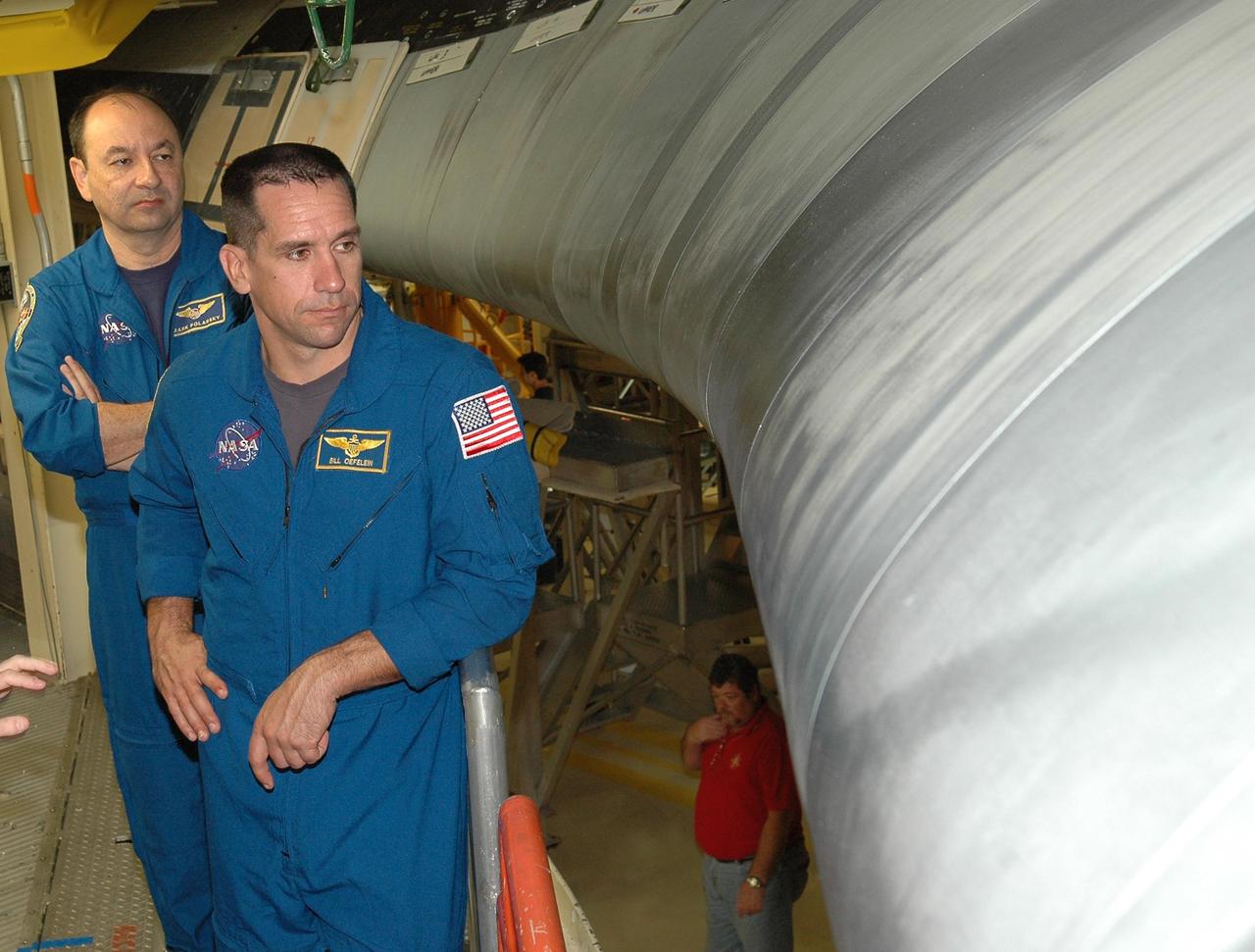
KENNEDY SPACE CENTER, FLA. - From a platform in the Orbiter Processing Facility, STS-116 Commander Mark Polansky (left) and Pilot William Oefelein look at one of Discovery’s reinforced carbon-carbon wing leading edge. They and other crew members are at KSC for a Crew Equipment Interface Test. Mission crews make frequent trips to the Kennedy Space Center to become familiar with the equipment and payloads they will be using. STS-116 will be mission No. 20 to the International Space Station and construction flight 12A.1. The mission payload is the SPACEHAB module, the P5 integrated truss structure and other key components. Launch is scheduled for no earlier than Dec. 7. Photo credit: NASA/Kim Shiflett
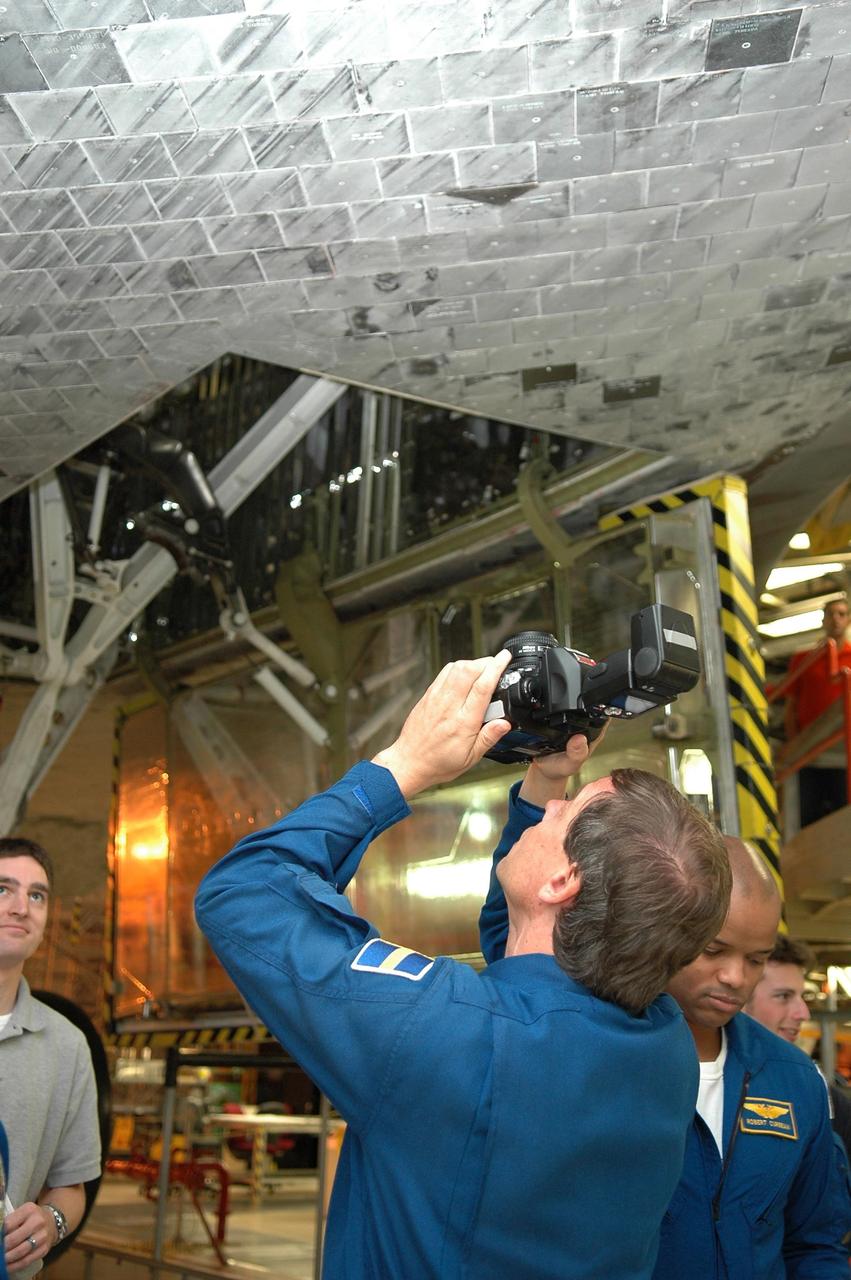
KENNEDY SPACE CENTER, FLA. - In the Orbiter Processing Facility, STS-116 Mission Specialist Christer Fugelsang practices photographing the orbiter Discovery with a camera similar to those the crew will use on the mission. At right is Mission Specialist Robert Curbeam. The crew is at KSC for a Crew Equipment Interface Test. Mission crews make frequent trips to the Kennedy Space Center to become familiar with the equipment and payloads they will be using. STS-116 will be mission No. 20 to the International Space Station and construction flight 12A.1. The mission payload is the SPACEHAB module, the P5 integrated truss structure and other key components. Launch is scheduled for no earlier than Dec. 7. Photo credit: NASA/Kim Shiflett
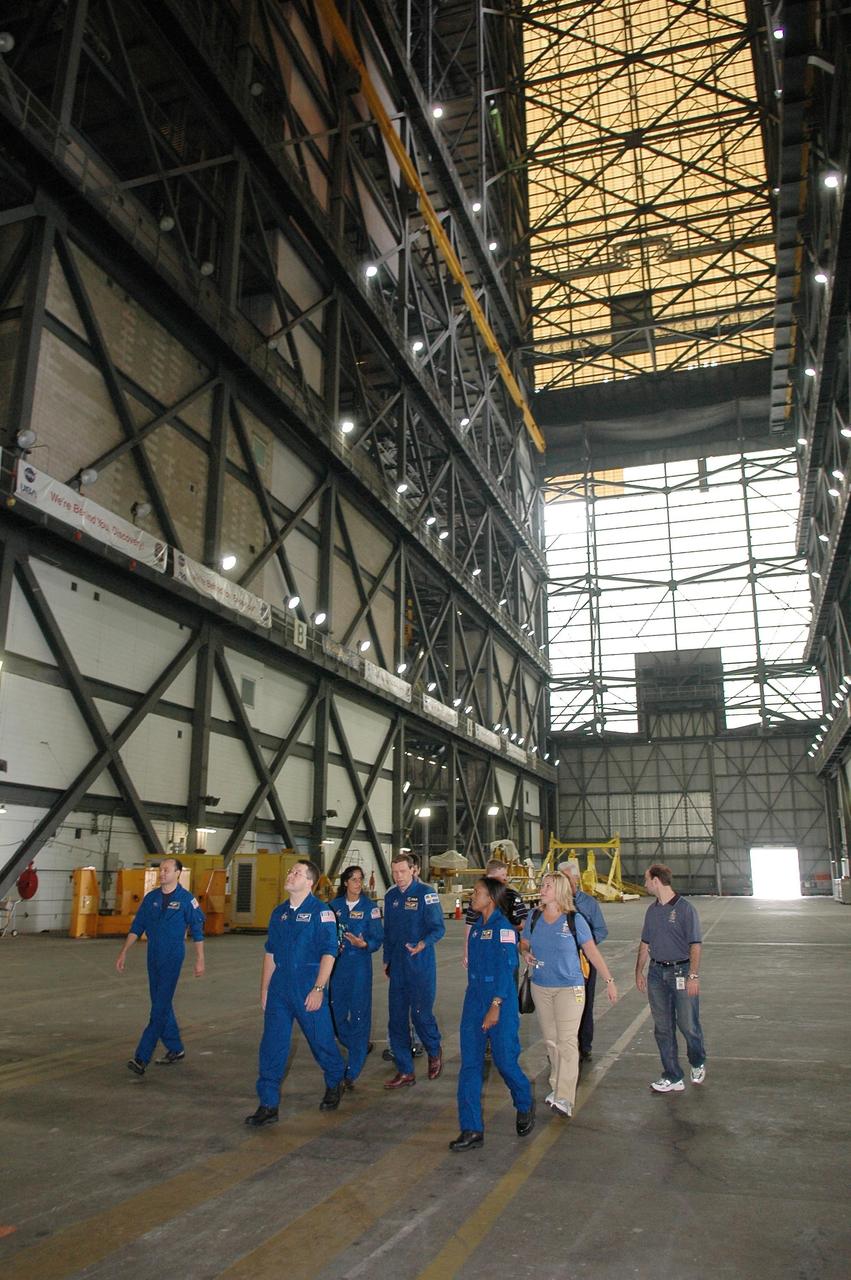
KENNEDY SPACE CENTER, FLA. - Striding through the Vehicle Assembly Building are STS-116 crew members (from left) Mark Polansky, commander; Nicholas Patrick, Sunita Williams, Christer Fugelsang and Joan Higginbotham, mission specialists. The crew is at KSC for a Crew Equipment Interface Test. Mission crews make frequent trips to the Kennedy Space Center to become familiar with the equipment and payloads they will be using. STS-116 will be mission No. 20 to the International Space Station and construction flight 12A.1. The mission payload is the SPACEHAB module, the P5 integrated truss structure and other key components. Launch is scheduled for no earlier than Dec. 7. Photo credit: NASA/Kim Shiflett
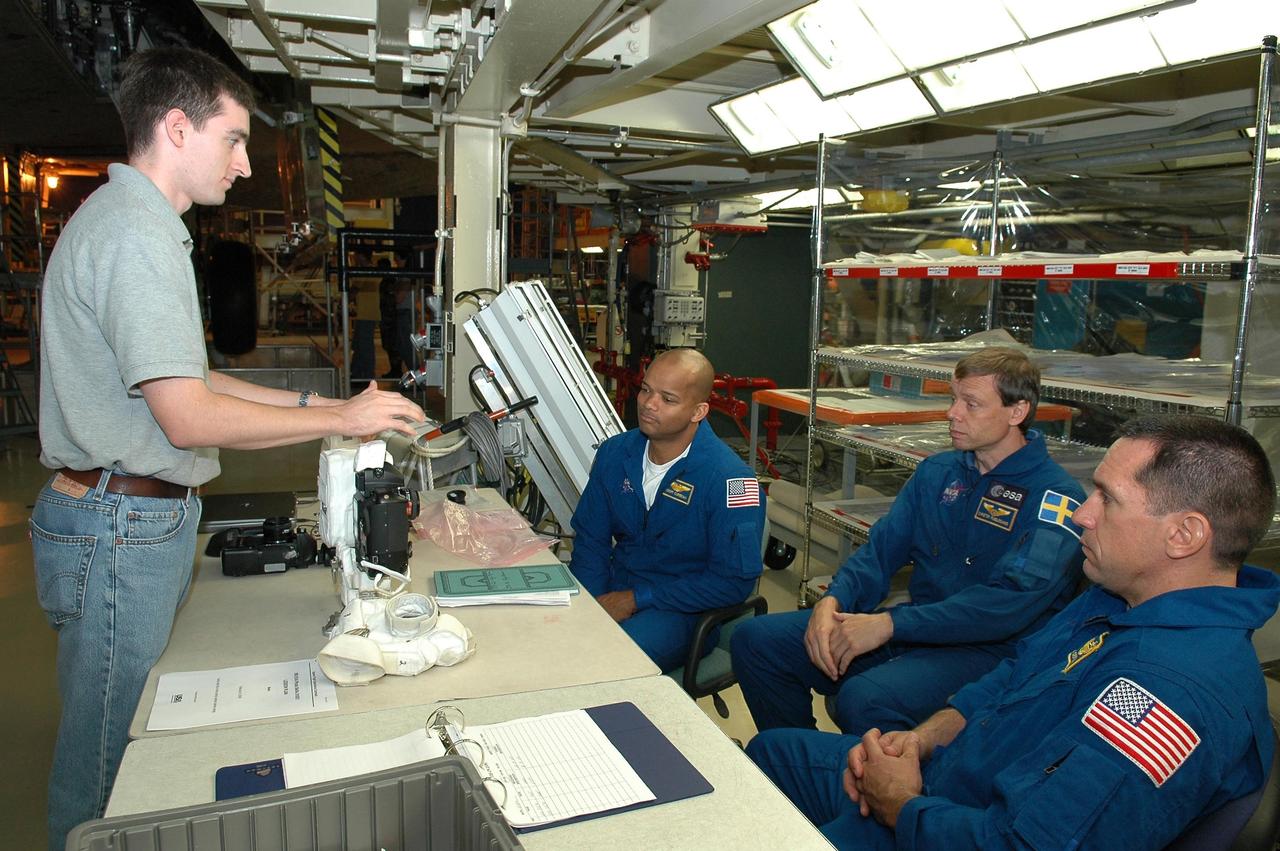
KENNEDY SPACE CENTER, FLA. - STS-116 crew members (at right) are briefed on the cameras they will be using during the mission. The astronauts are, from left, Mission Specialists Robert Curbeam and Christer Fugelsang and Pilot William Oefelein. The crew is at KSC for a Crew Equipment Interface Test. Mission crews make frequent trips to the Kennedy Space Center to become familiar with the equipment and payloads they will be using. STS-116 will be mission No. 20 to the International Space Station and construction flight 12A.1. The mission payload is the SPACEHAB module, the P5 integrated truss structure and other key components. Launch is scheduled for no earlier than Dec. 7. Photo credit: NASA/Kim Shiflett
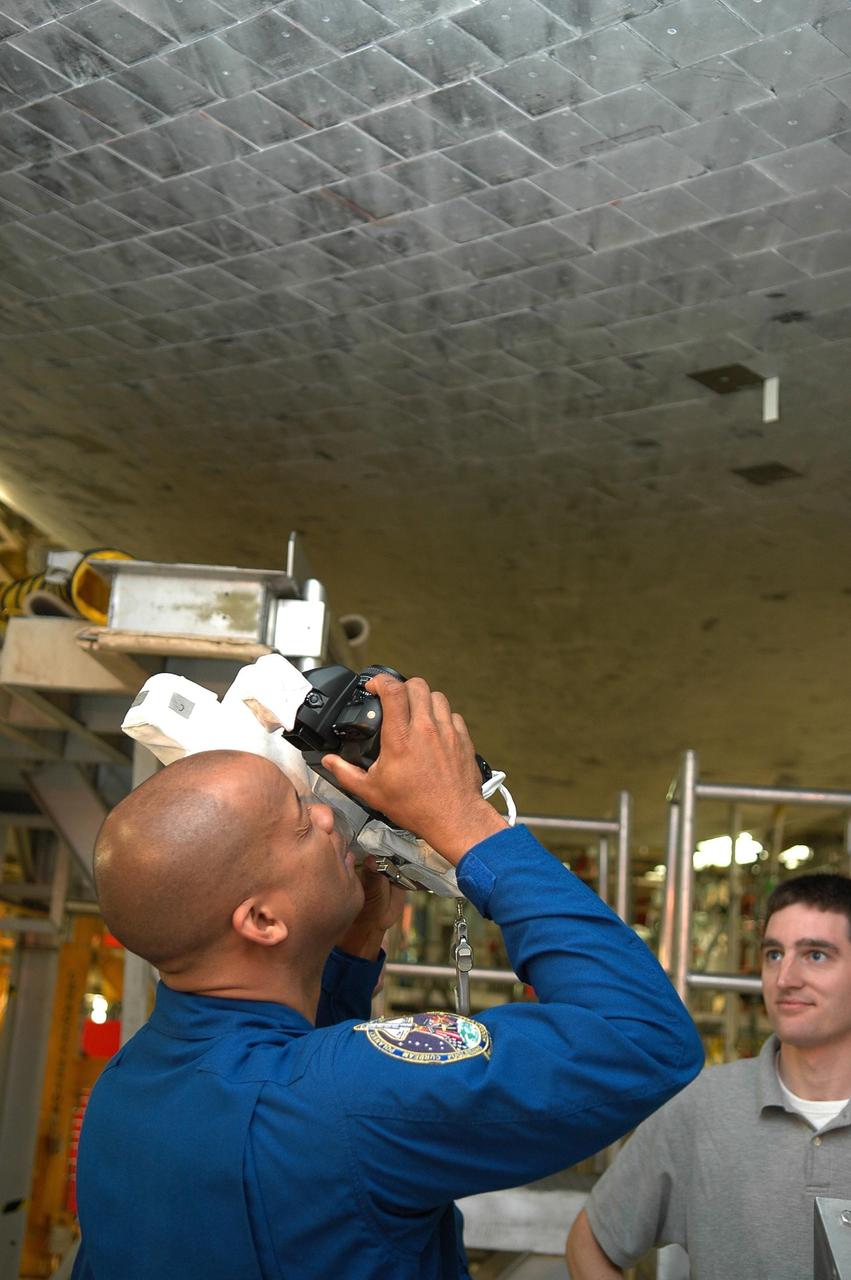
KENNEDY SPACE CENTER, FLA. - In the Orbiter Processing Facility, STS-116 Mission Specialist Robert Curbeam practices photographing the orbiter Discovery with a camera similar to those the crew will use on the mission. The crew is at KSC for a Crew Equipment Interface Test Mission crews make frequent trips to the Kennedy Space Center to become familiar with the equipment and payloads they will be using. STS-116 will be mission No. 20 to the International Space Station and construction flight 12A.1. The mission payload is the SPACEHAB module, the P5 integrated truss structure and other key components. Launch is scheduled for no earlier than Dec. 7. Photo credit: NASA/Kim Shiflett
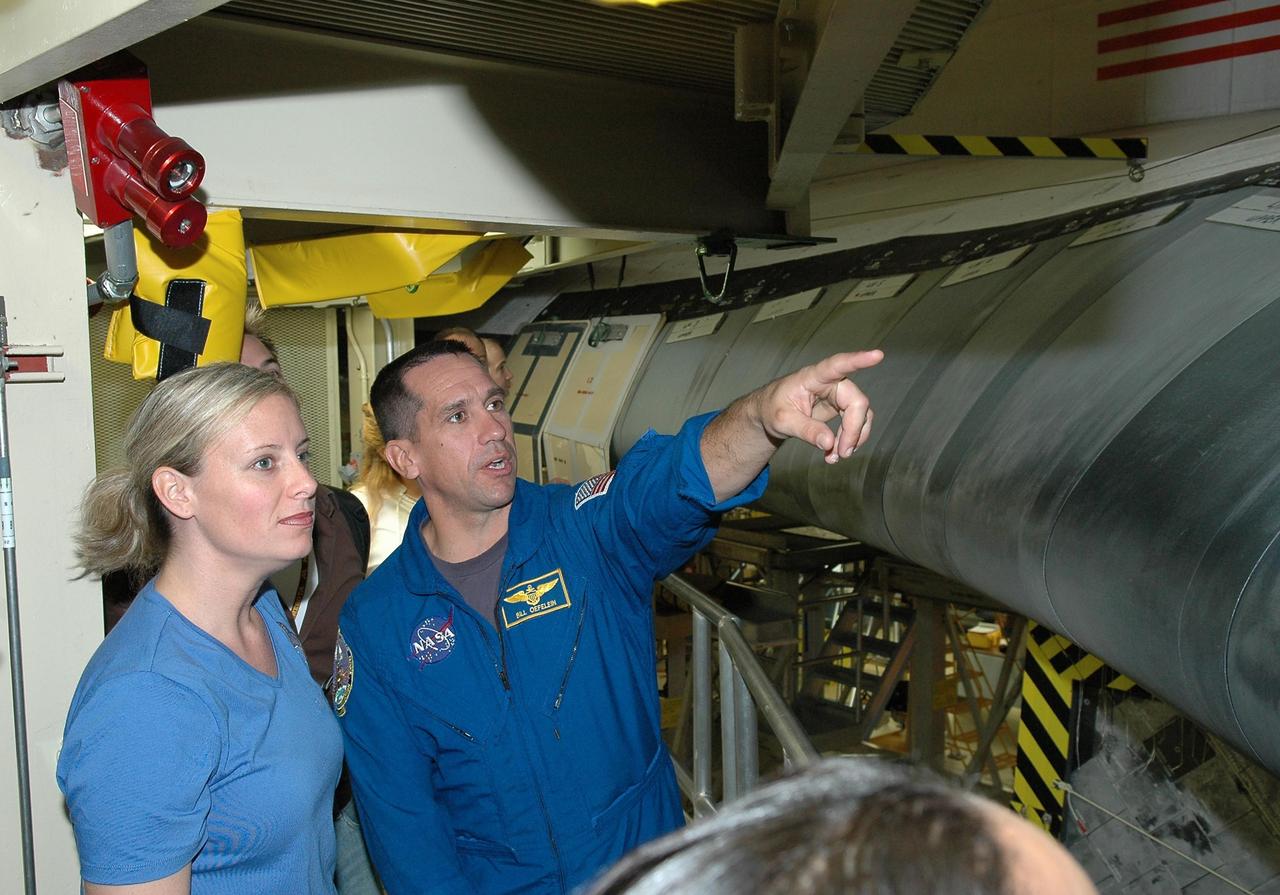
KENNEDY SPACE CENTER, FLA. - From a platform in the Orbiter Processing Facility, STS-116 Pilot William Oefelein points to Discovery’s reinforced carbon-carbon wing leading edge. He and other crew members are at KSC for a Crew Equipment Interface Test. Mission crews make frequent trips to the Kennedy Space Center to become familiar with the equipment and payloads they will be using. STS-116 will be mission No. 20 to the International Space Station and construction flight 12A.1. The mission payload is the SPACEHAB module, the P5 integrated truss structure and other key components. Launch is scheduled for no earlier than Dec. 7. Photo credit: NASA/Kim Shiflett
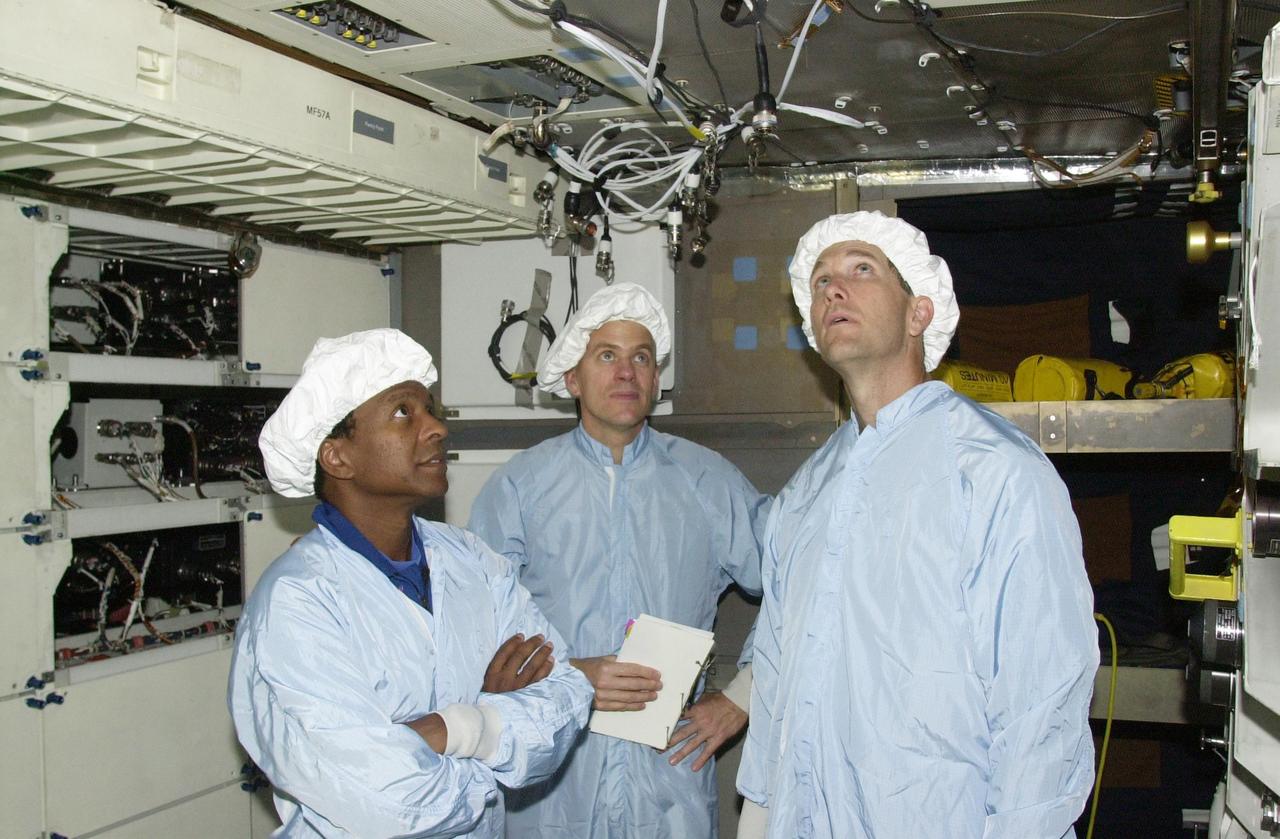
KENNEDY SPACE CENTER, FLA. -- STS-107 Payload Commander Michael Anderson (left), Pilot William "Willie" McCool (center) and Commander Rick Husband (right) look over equipment in the SHI Research Double Module (SHI/RDM), part of the payload on the mission. . They are taking part in Crew Equipment Interface Test activities, which include equipment and payload familiarization. A research mission, STS-107 also will carry the Fast Reaction Experiments Enabling Science, Technology, Applications and Research (FREESTAR) that incorporates eight high priority secondary attached shuttle experiments. STS-107 is scheduled to launch July 19, 2002
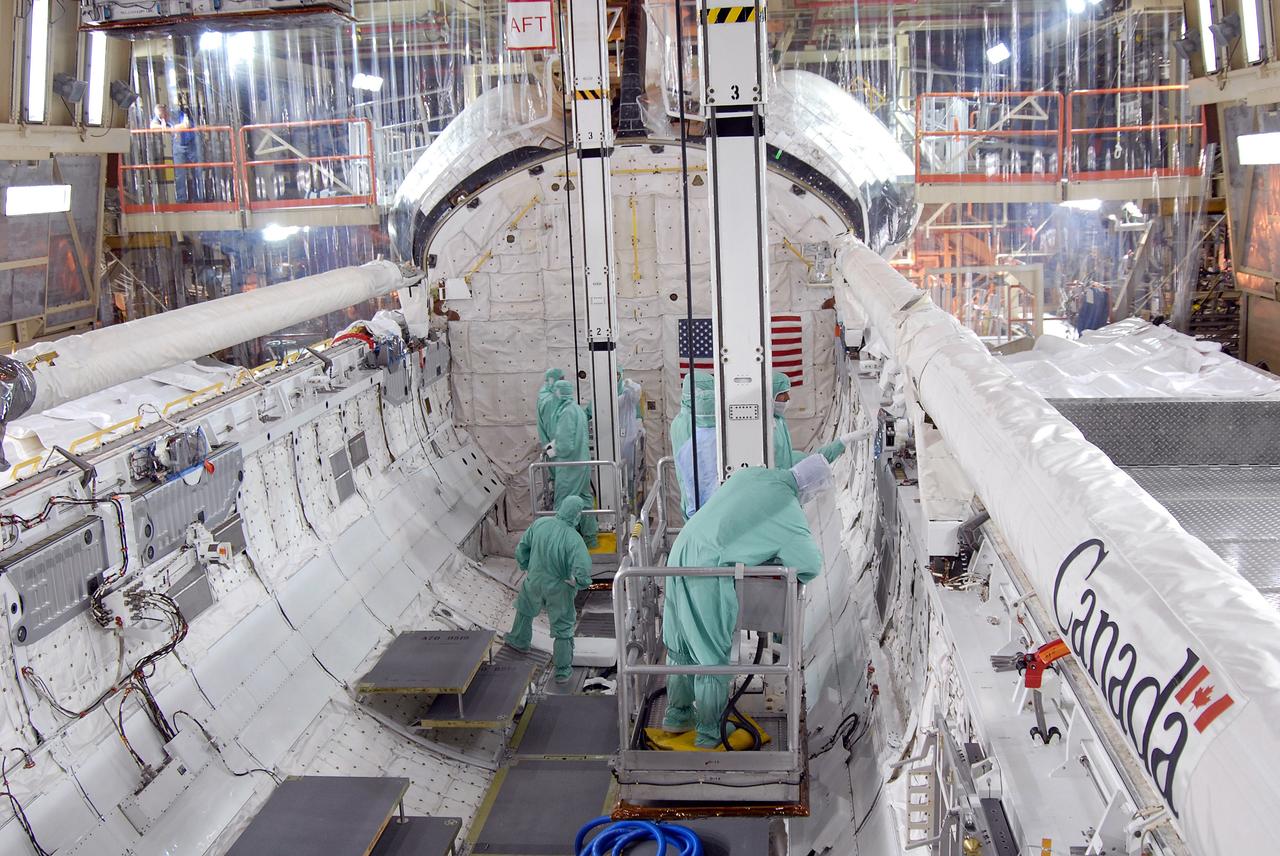
CAPE CANAVERAL, Fla. – In Orbiter Processing Facility 3 at NASA's Kennedy Space Center in Florida, STS-128 crew members are lowered into space shuttle Discovery's payload bay to get a close look at equipment. The crew is at Kennedy for a crew equipment interface test, or CEIT, which provides hands-on training and observation of shuttle and flight hardware. The STS-128 flight will carry science and storage racks to the International Space Station on Discovery. Launch is targeted for Aug. 7. Photo credit: NASA/Jim Grossmann
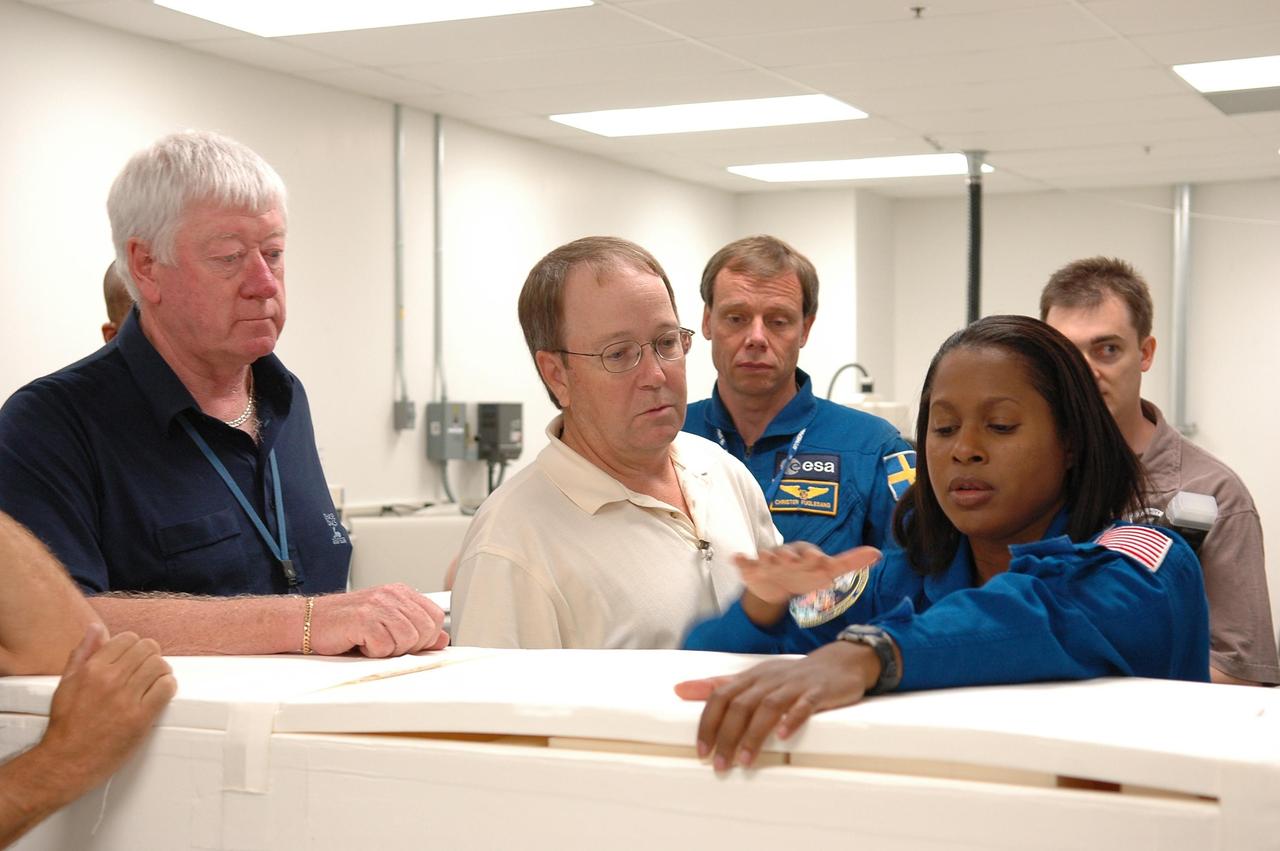
KENNEDY SPACE CENTER, FLA. - STS-116 Mission Specialists Joan Higgenbotham and Christer Fuglesang, who is with the European Space Agency, inspect flight hardware at the SPACEHAB Payload Processing Facility at Port Canaveral, Fla., during the Crew Equipment Interface Test. Mission crews make frequent trips to the Space Coast to become familiar with the equipment and payloads they will be using. STS-116 will be mission No. 20 to the International Space Station and construction flight 12A.1. The mission payload is the SPACEHAB module, the P5 integrated truss structure and other key components. Launch is scheduled for no earlier than Dec. 7. Photo credit: NASA/Kim Shiflett
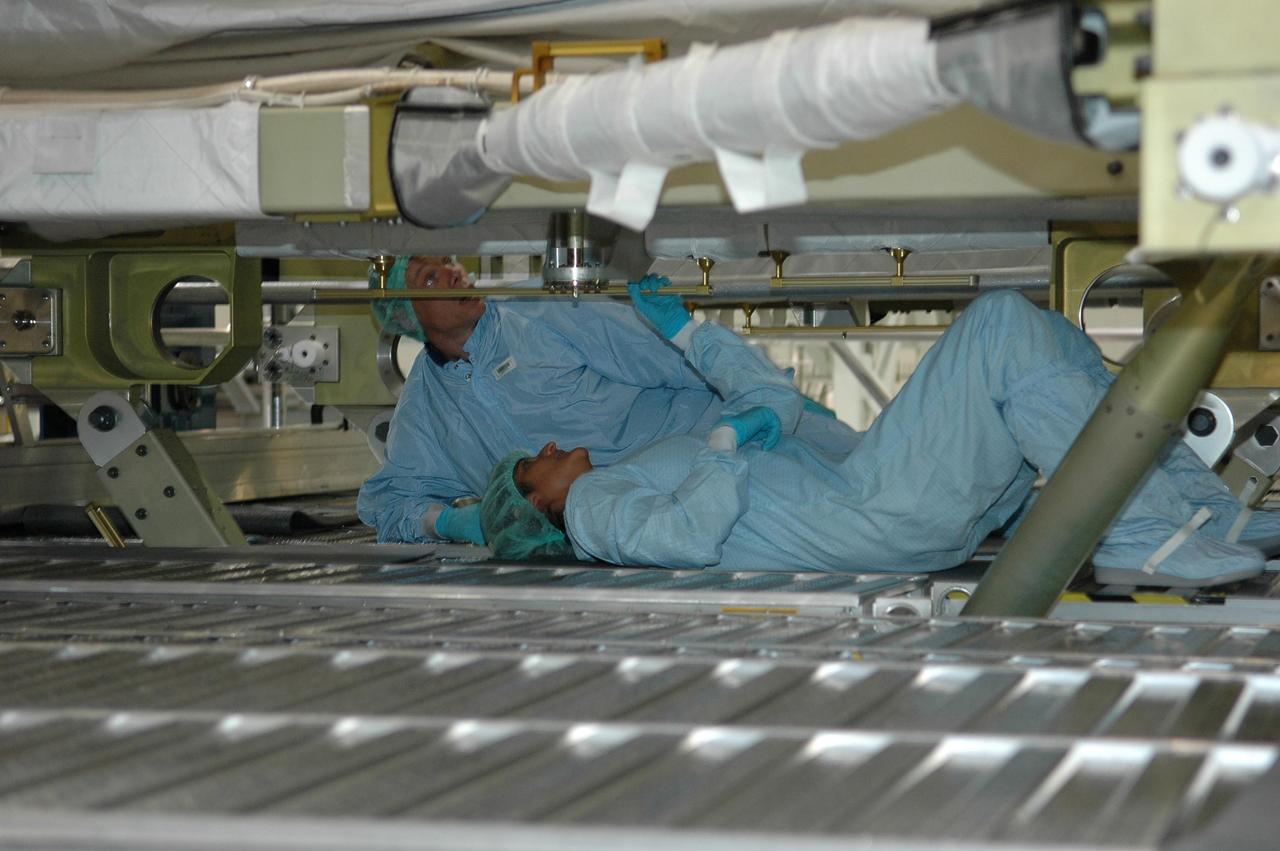
KENNEDY SPACE CENTER, FLA. - In the Space Station Processing Facility, STS-116 crew members check out the port integrated truss structure, P5, which is the primary payload on their mission. Seen here are Mission Specialists Christer Fugelsang, who represents the European Space Agency, and Sunita Williams. The crew is taking part in a Crew Equipment Interface Test that enables them to become familiar with the equipment and payloads they will be using. STS-116 will be mission No. 20 to the International Space Station and construction flight 12A.1. The mission payload is the SPACEHAB module, the P5 integrated truss structure and other key components. Launch is scheduled for no earlier than Dec. 7. Photo credit: NASA/Kim Shiflett
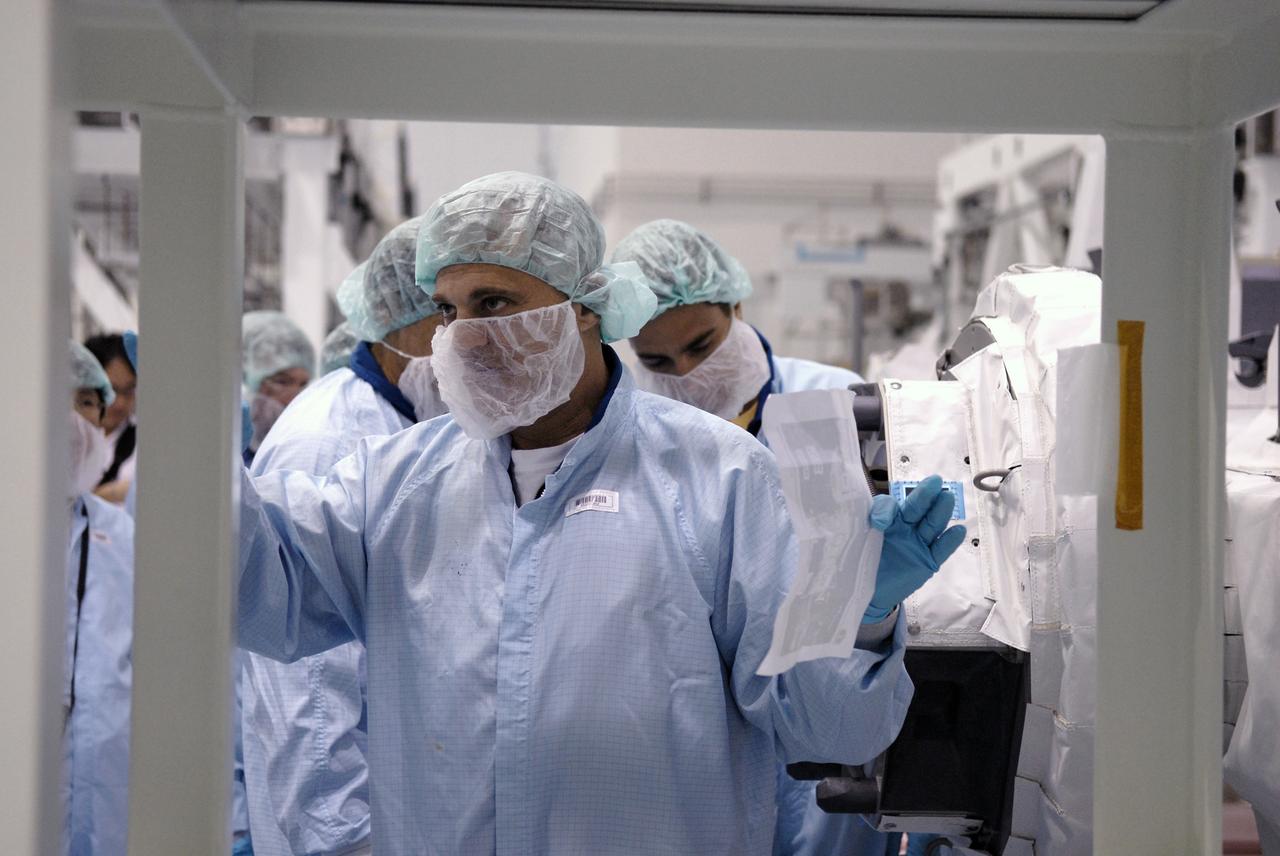
CAPE CANAVERAL, Fla. - In the Space Station Processing Facility at NASA's Kennedy Space Center in Florida, STS-127 crew members become familiar with the payload and hardware for their mission. Here they are looking at the Experiment Logistics Module - Exposed Section, or ELM-ES, berthing mechanism. The mission payload also includes the Extended Facility and the Inter Orbit Communication System Extended Facility, or ICS-EF. Equipment familiarization is part of a Crew Equipment Interface Test. The payload will be launched to the International Space Station aboard the space shuttle Endeavour on the STS-127 mission, targeted for launch on May 15, 2009. Photo credit: NASA/Kim Shiflett
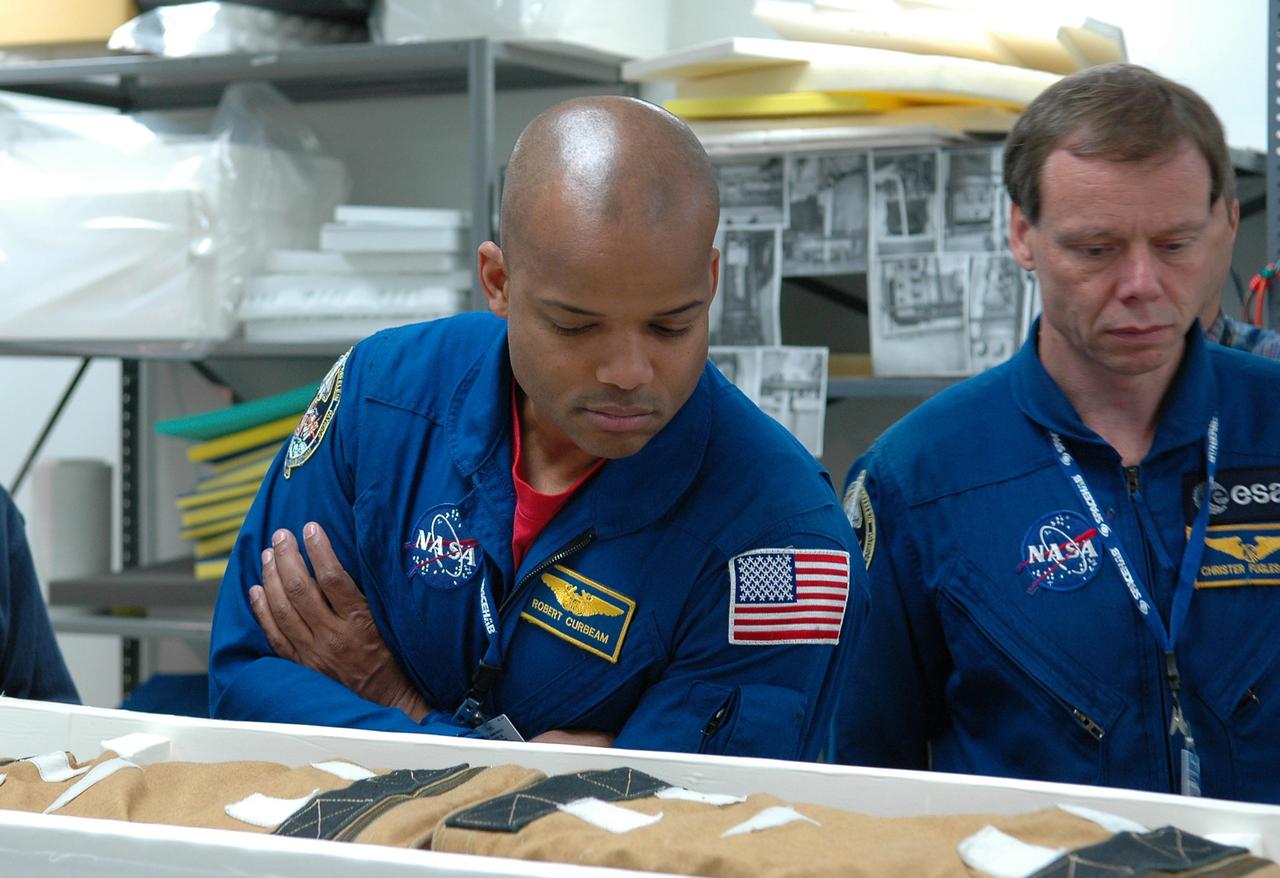
KENNEDY SPACE CENTER, FLA. - STS-116 Mission Specialists Robert Curbeam and Christer Fuglesang, who is with the European Space Agency, inspect flight hardware at the SPACEHAB Payload Processing Facility at Port Canaveral, Fla., during the Crew Equipment Interface Test. Mission crews make frequent trips to the Space Coast to become familiar with the equipment and payloads they will be using. STS-116 will be mission No. 20 to the International Space Station and construction flight 12A.1. The mission payload is the SPACEHAB module, the P5 integrated truss structure and other key components. Launch is scheduled for no earlier than Dec. 7. Photo credit: NASA/Kim Shiflett
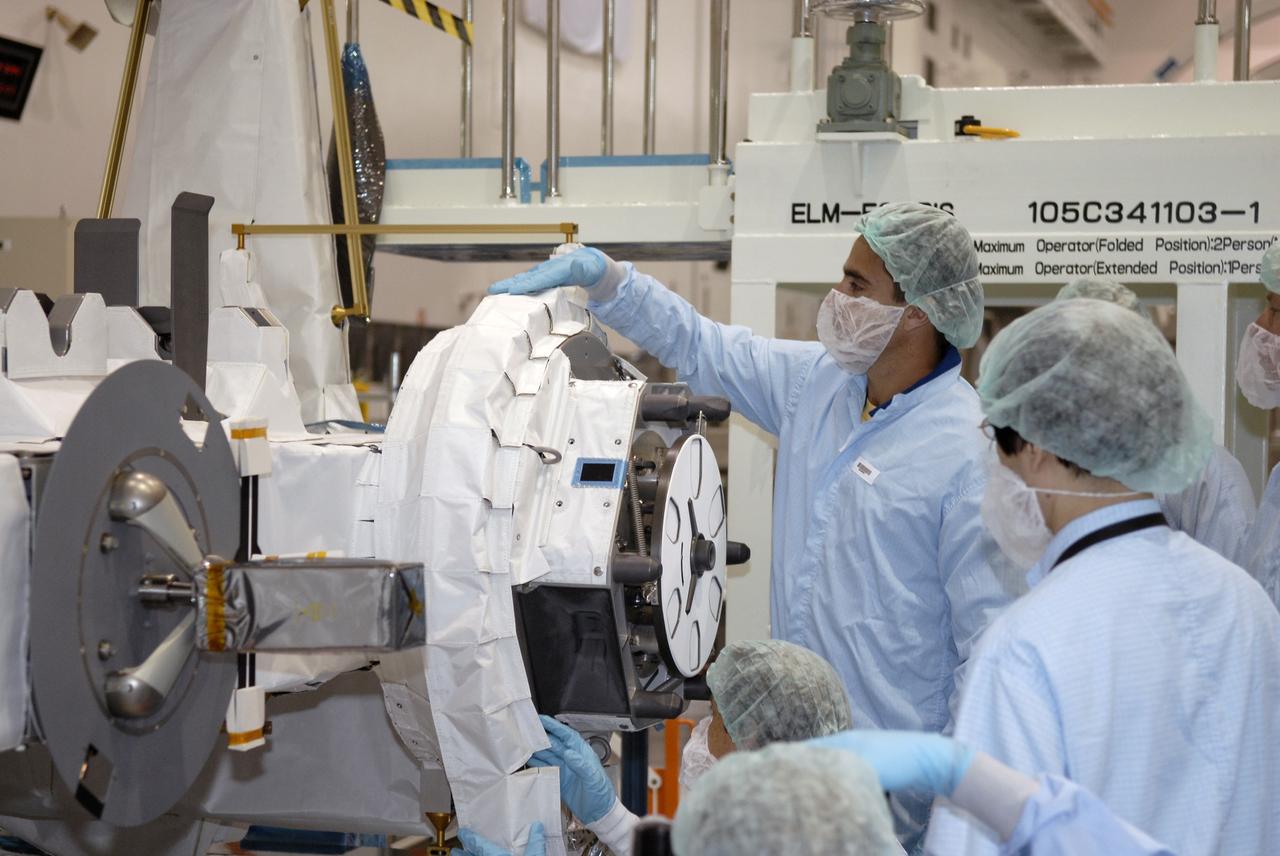
CAPE CANAVERAL, Fla. - In the Space Station Processing Facility at NASA's Kennedy Space Center in Florida, STS-127 crew members become familiar with the payload and hardware for their mission. Here they are looking at the Experiment Logistics Module - Exposed Section, or ELM-ES, berthing mechanism. The mission payload also includes the Extended Facility and the Inter Orbit Communication System Extended Facility, or ICS-EF. Equipment familiarization is part of a Crew Equipment Interface Test. The payload will be launched to the International Space Station aboard the space shuttle Endeavour on the STS-127 mission, targeted for launch on May 15, 2009. Photo credit: NASA/Kim Shiflett
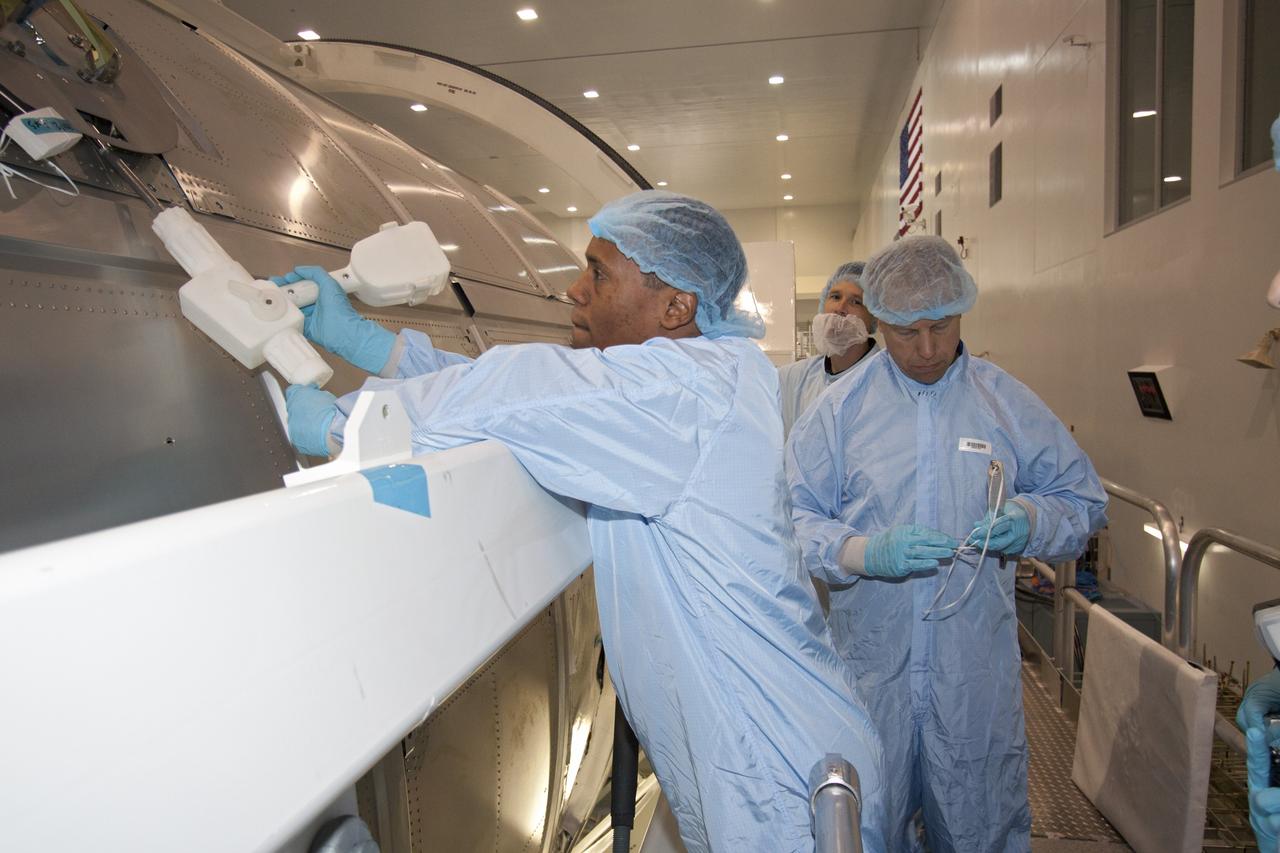
CAPE CANAVERAL, Fla. -- In the Space Station Processing Facility at NASA's Kennedy Space Center in Florida, STS-133 Mission Specialist Alvin Drew practices with a tool on the Permanent Multipurpose Module, or PMM, while Mission Specialist Tim Kopra (right) awaits his turn. The astronauts are at Kennedy to participate in the Payload Crew Equipment Interface Test, or CEIT, which gives the crew an opportunity for hands-on training with tools they'll be using in space and familiarization of the payload they will be delivering to the International Space Station. Launch of space shuttle Discovery is targeted for Nov. 1 at 4:40 p.m. EDT. For more information visit, www.nasa.gov/shuttle. Photo credit: NASA/Jack Pfaller
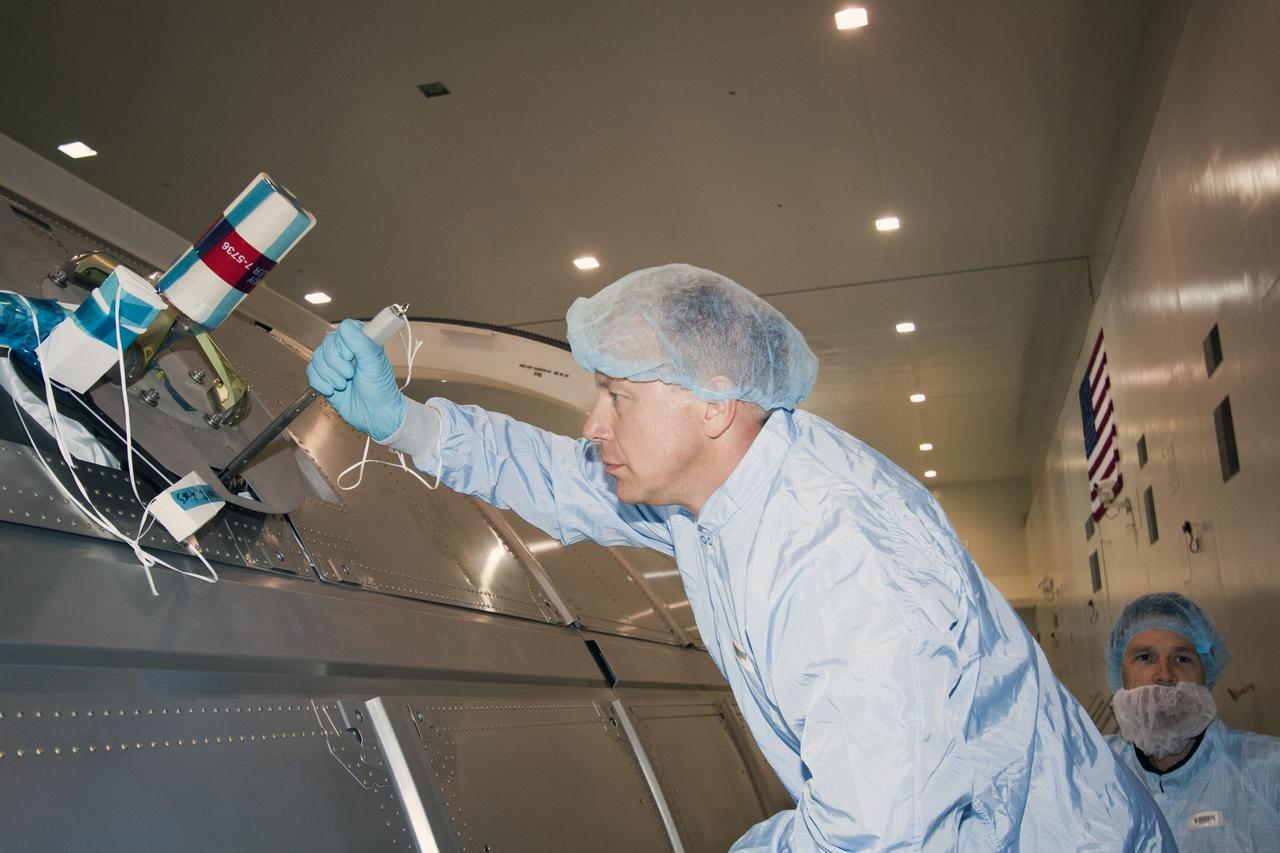
CAPE CANAVERAL, Fla. -- In the Space Station Processing Facility at NASA's Kennedy Space Center in Florida, STS-133 Mission Specialist Tim Kopra practices using a tool on the Permanent Multipurpose Module, or PMM. The astronauts are at Kennedy to participate in the Payload Crew Equipment Interface Test, or CEIT, which gives the crew an opportunity for hands-on training with tools they'll be using in space and familiarization of the payload they will be delivering to the International Space Station. Launch of space shuttle Discovery is targeted for Nov. 1 at 4:40 p.m. EDT. For more information visit, www.nasa.gov/shuttle. Photo credit: NASA/Jack Pfaller
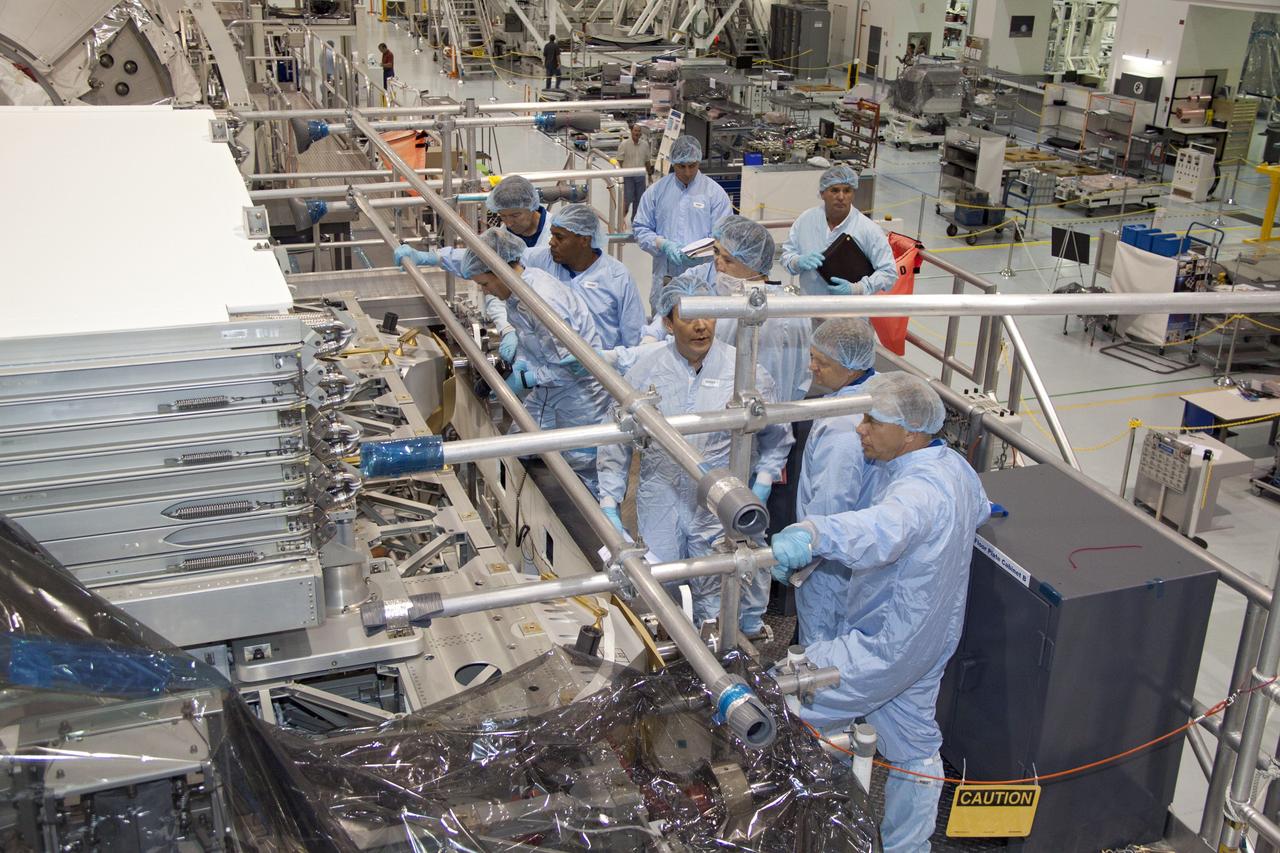
CAPE CANAVERAL, Fla. -- In the Space Station Processing Facility at NASA's Kennedy Space Center in Florida, the STS-133 crew members and processing technicians inspect the Express Logistics Carrier-3, or ELC-3. The astronauts are at Kennedy to participate in the Payload Crew Equipment Interface Test, or CEIT, which gives the crew an opportunity for hands-on training with tools they'll be using in space and familiarization of the payload they will be delivering to the International Space Station. Launch of space shuttle Discovery is targeted for Nov. 1 at 4:40 p.m. EDT. For more information visit, www.nasa.gov/shuttle. Photo credit: NASA/Jack Pfaller
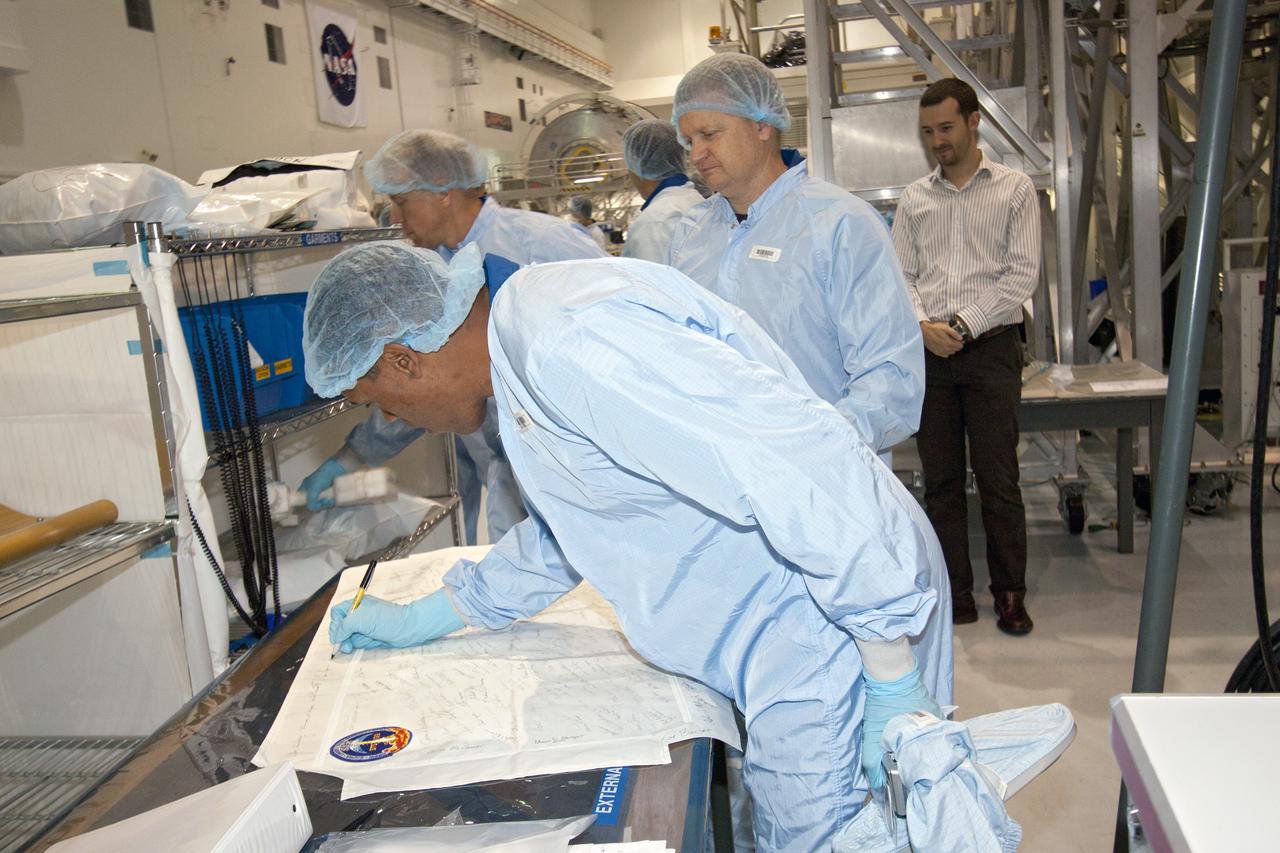
CAPE CANAVERAL, Fla. -- In the Space Station Processing Facility at NASA's Kennedy Space Center in Florida, STS-133 Mission Specialist Alvin Drew signs his name on a flag that will be flown on the mission, while Pilot Eric Boe looks on. The astronauts are at Kennedy to participate in the Payload Crew Equipment Interface Test, or CEIT, which gives the crew an opportunity for hands-on training with tools they'll be using in space and familiarization of the payload they will be delivering to the International Space Station. Launch of space shuttle Discovery is targeted for Nov. 1 at 4:40 p.m. EDT. For more information visit, www.nasa.gov/shuttle. Photo credit: NASA/Jack Pfaller
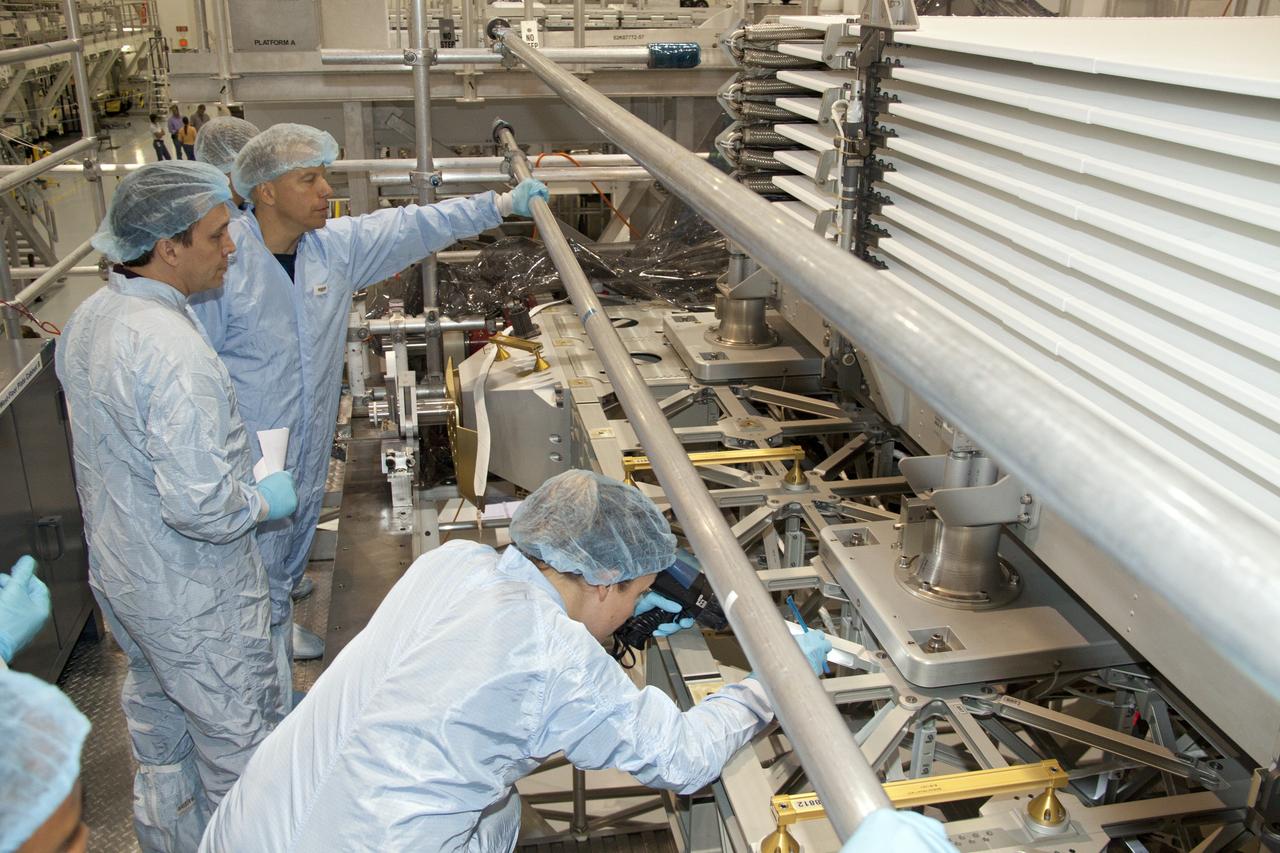
CAPE CANAVERAL, Fla. -- In the Space Station Processing Facility at NASA's Kennedy Space Center in Florida, STS-133 Mission Specialist Tim Kopra gets an up-close view of the Express Logistics Carrier-3, or ELC-3, accompanied by processing technicians. The astronauts are at Kennedy to participate in the Payload Crew Equipment Interface Test, or CEIT, which gives the crew an opportunity for hands-on training with tools they'll be using in space and familiarization of the payload they will be delivering to the International Space Station. Launch of space shuttle Discovery is targeted for Nov. 1 at 4:40 p.m. EDT. For more information visit, www.nasa.gov/shuttle. Photo credit: NASA/Jack Pfaller
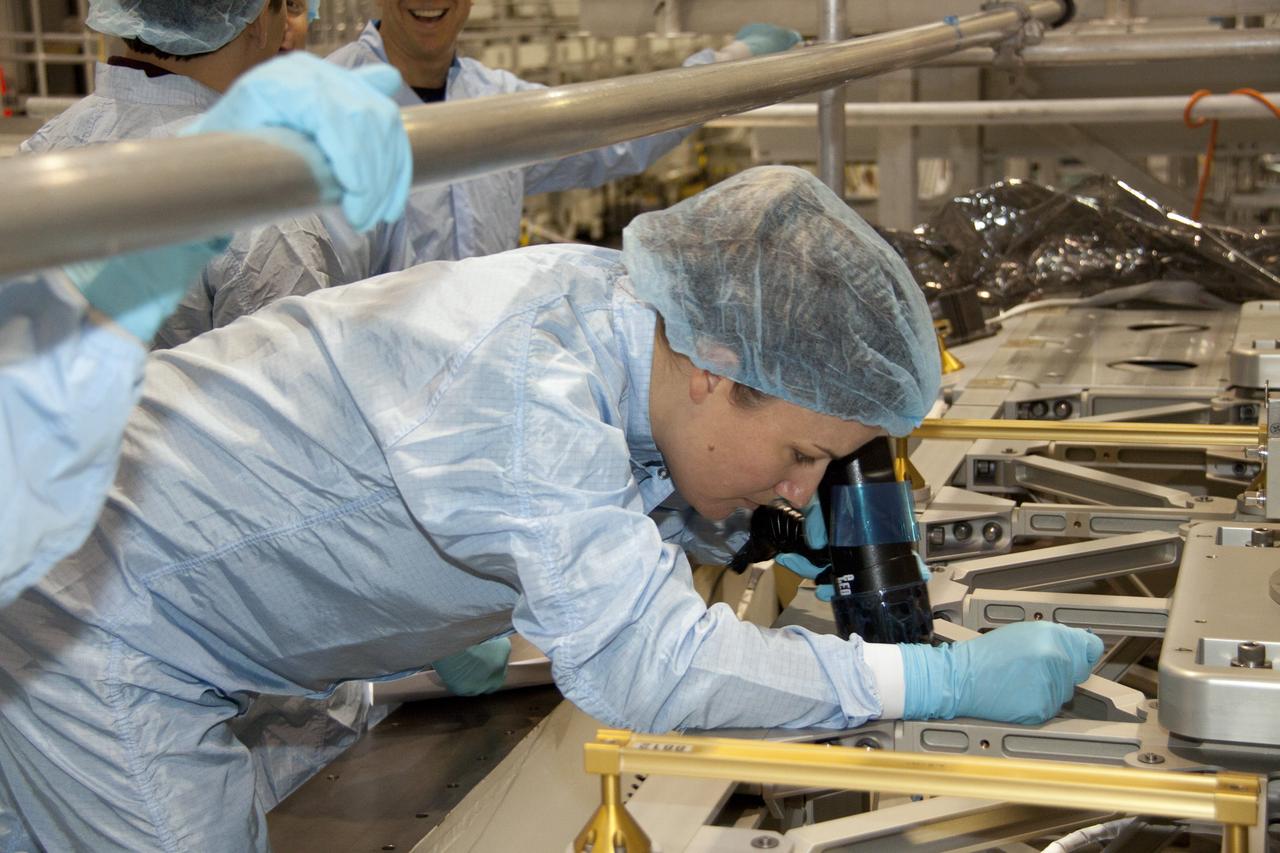
CAPE CANAVERAL, Fla. -- In the Space Station Processing Facility at NASA's Kennedy Space Center in Florida, a technician continues processing the Express Logistics Carrier-3, or ELC-3 while the STS-133 mission astronauts continue training. The astronauts are at Kennedy to participate in the Payload Crew Equipment Interface Test, or CEIT, which gives the crew an opportunity for hands-on training with tools they'll be using in space and familiarization of the payload they will be delivering to the International Space Station. Launch of space shuttle Discovery is targeted for Nov. 1 at 4:40 p.m. EDT. For more information visit, www.nasa.gov/shuttle. Photo credit: NASA/Jack Pfaller
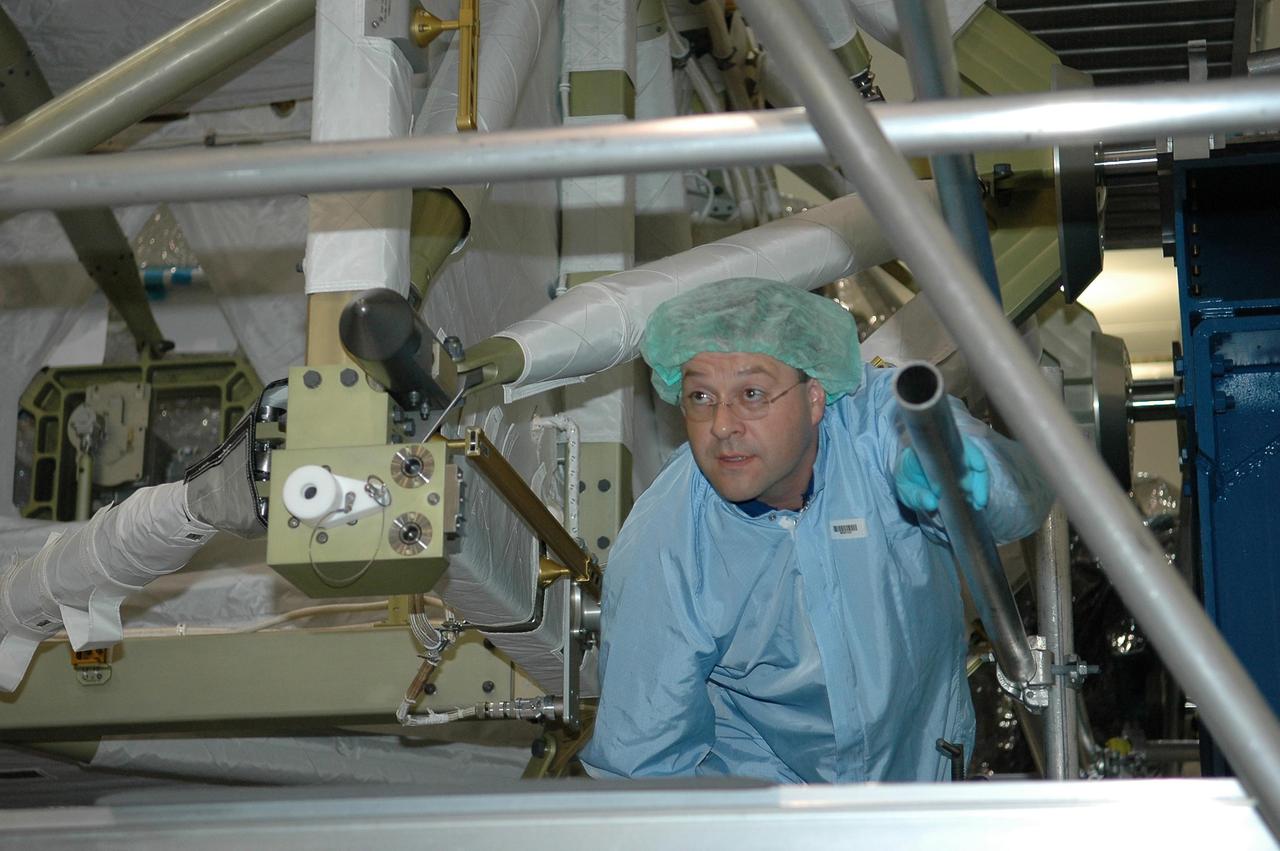
KENNEDY SPACE CENTER, FLA. - In the Space Station Processing Facility, STS-116 Mission Specialist Nicholas Patrick moves in close for a better look at the port integrated truss structure, P5, which is the primary payload on the mission. The crew is taking part in a Crew Equipment Interface Test that enables them to become familiar with the equipment and payloads they will be using. STS-116 will be mission No. 20 to the International Space Station and construction flight 12A.1. The mission payload is the SPACEHAB module, the P5 integrated truss structure and other key components. Launch is scheduled for no earlier than Dec. 7. Photo credit: NASA/Kim Shiflett
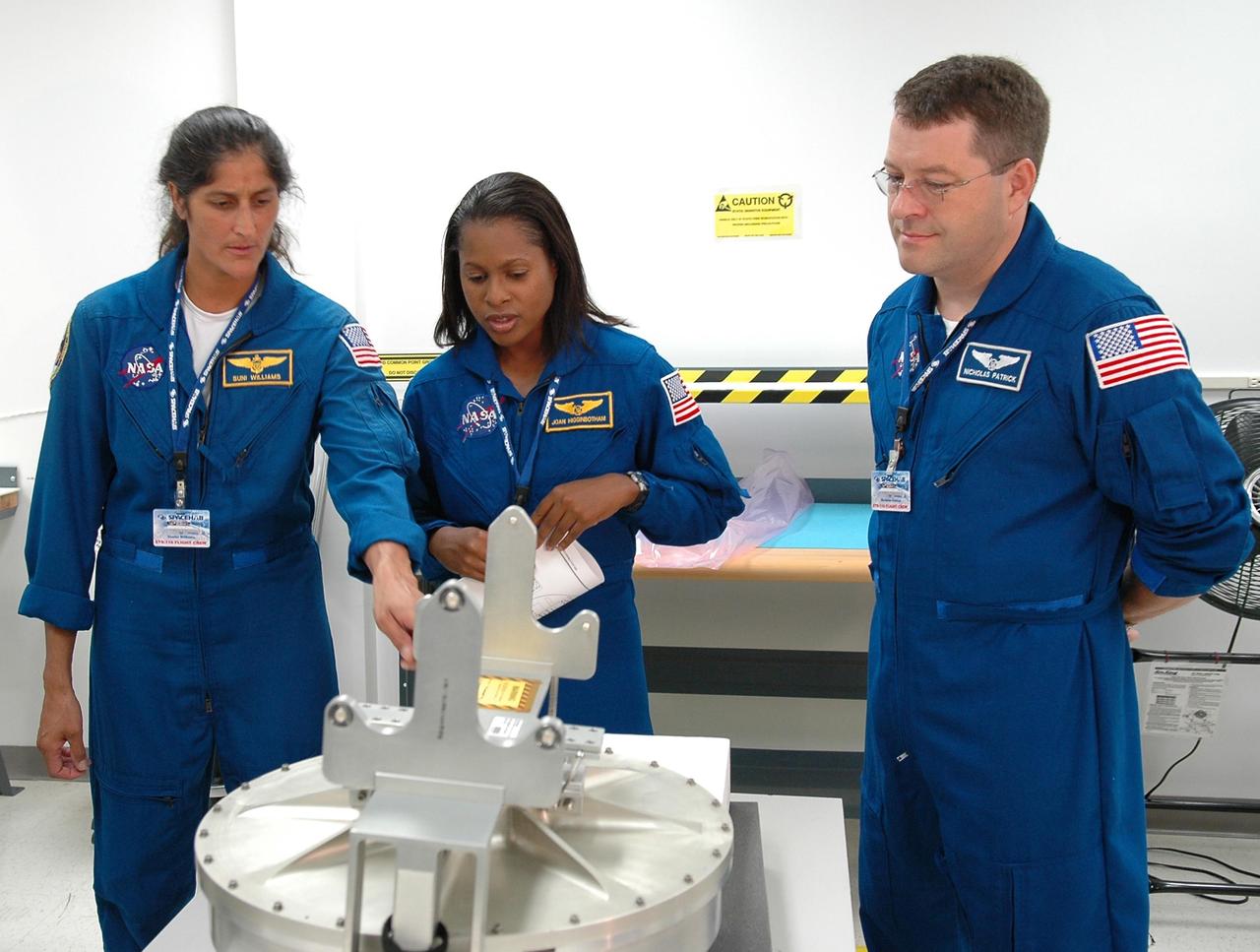
KENNEDY SPACE CENTER, FLA. - Inside the SPACEHAB Payload Processing Facility at Port Canaveral, Fla., STS-116 Mission Specialists (from left) Sunita Williams, Joan Higginbotham and Nicholas Patrick look over flight hardware during the Crew Equipment Interface Test. Mission crews make frequent trips to the Space Coast to become familiar with the equipment and payloads they will be using. STS-116 will be mission No. 20 to the International Space Station and construction flight 12A.1. The mission payload is the SPACEHAB module, the P5 integrated truss structure and other key components. Launch is scheduled for no earlier than Dec. 7. Photo credit: NASA/Kim Shiflett
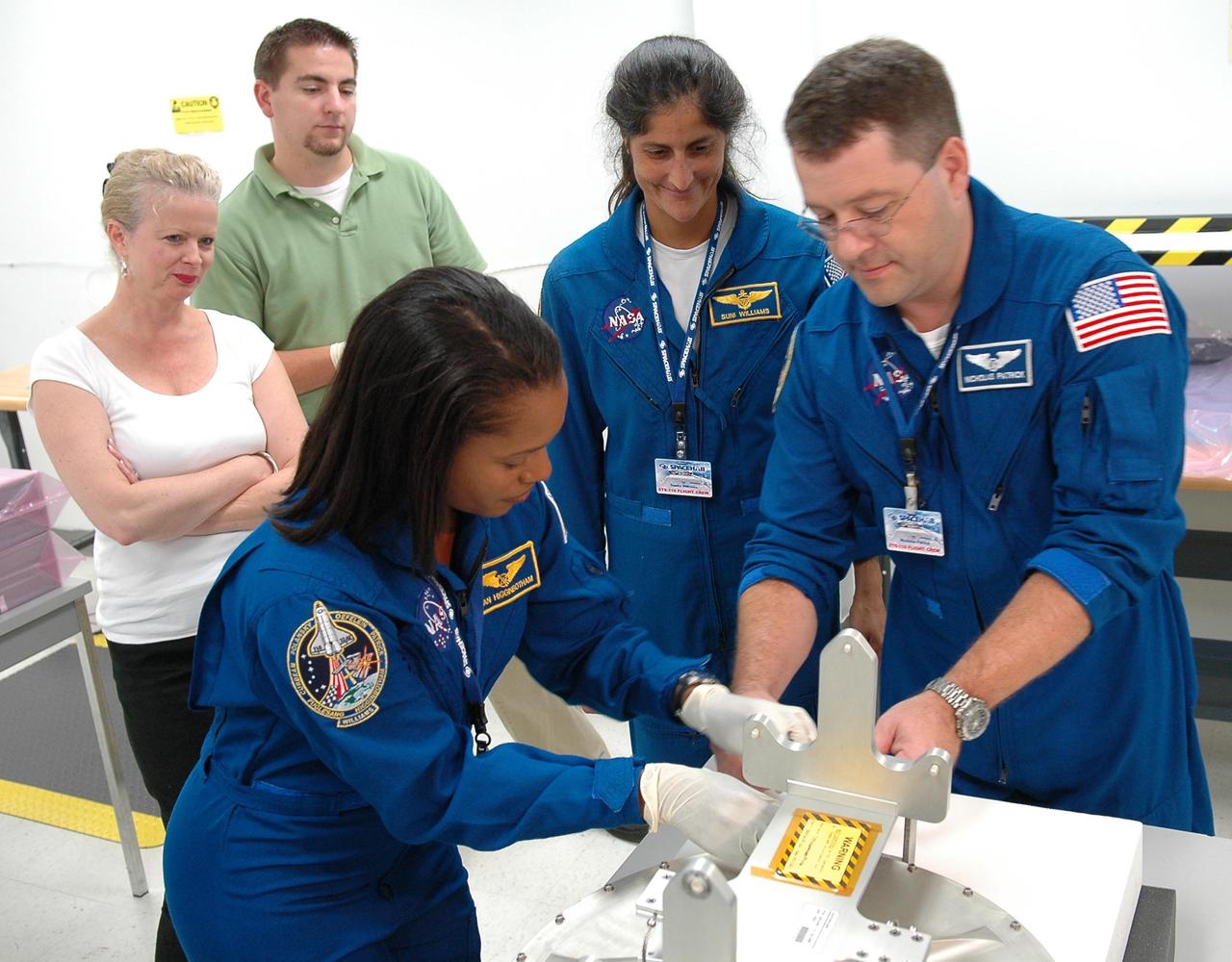
KENNEDY SPACE CENTER, FLA. - Inside the SPACEHAB Payload Processing Facility at Port Canaveral, Fla., STS-116 Mission Specialists (from left) Joan Higginbotham, Sunita Williams and Nicholas Patrick look over flight hardware during the Crew Equipment Interface Test. Mission crews make frequent trips to the Space Coast to become familiar with the equipment and payloads they will be using. STS-116 will be mission No. 20 to the International Space Station and construction flight 12A.1. The mission payload is the SPACEHAB module, the P5 integrated truss structure and other key components. Launch is scheduled for no earlier than Dec. 7. Photo credit: NASA/Kim Shiflett

KENNEDY SPACE CENTER, FLA. - Inside the SPACEHAB Payload Processing Facility at Port Canaveral, Fla., STS-116 Mission Specialists (from left) Joan Higginbotham, Sunita Williams and Nicholas Patrick look over flight hardware during the Crew Equipment Interface Test. Mission crews make frequent trips to the Space Coast to become familiar with the equipment and payloads they will be using. STS-116 will be mission No. 20 to the International Space Station and construction flight 12A.1. The mission payload is the SPACEHAB module, the P5 integrated truss structure and other key components. Launch is scheduled for no earlier than Dec. 7. Photo credit: NASA/Kim Shiflett
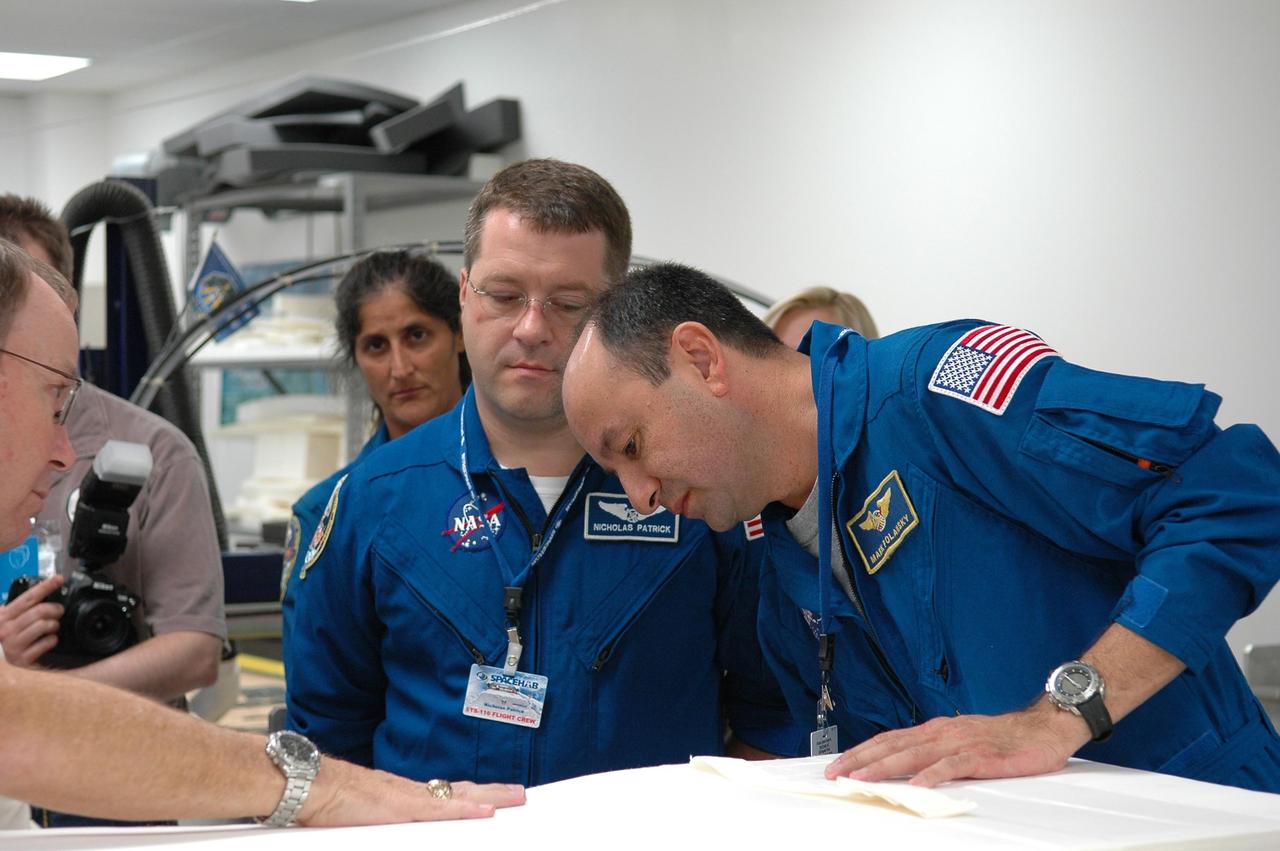
KENNEDY SPACE CENTER, FLA. - From left, STS-116 Mission Specialists Sunita Williams and Nicholas Patrick and Commander Mark Polansky inspect flight hardware at the SPACEHAB Payload Processing Facility at Port Canaveral, Fla., during the Crew Equipment Interface Test. Mission crews make frequent trips to the Space Coast to become familiar with the equipment and payloads they will be using. STS-116 will be mission No. 20 to the International Space Station and construction flight 12A.1. The mission payload is the SPACEHAB module, the P5 integrated truss structure and other key components. Launch is scheduled for no earlier than Dec. 7. Photo credit: NASA/Kim Shiflett
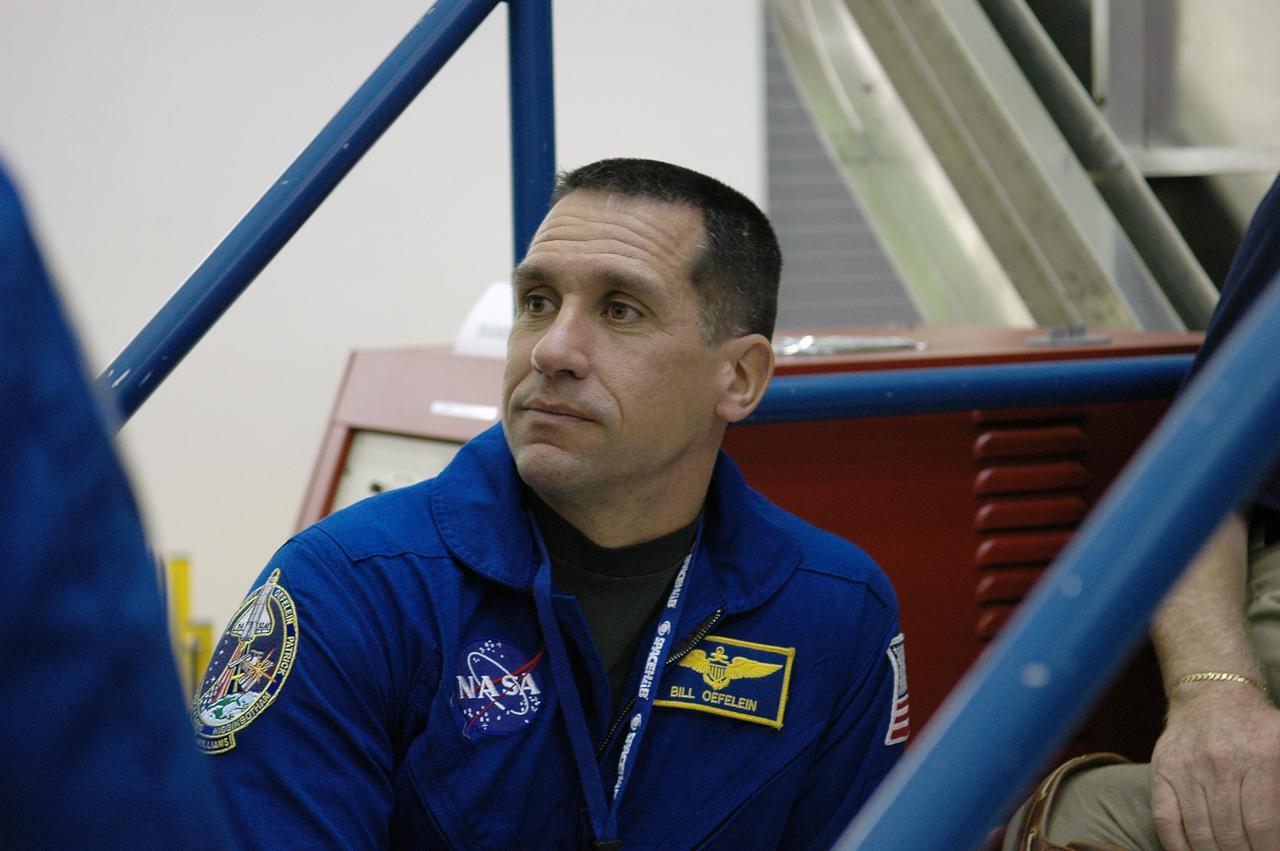
KENNEDY SPACE CENTER, FLA. - STS-116 Pilot William Oefelein participates in the Crew Equipment Interface Test at the SPACEHAB Payload Processing Facility at Port Canaveral, Fla. Mission crews make frequent trips to the Space Coast to become familiar with the equipment and payloads they will be using. STS-116 will be mission No. 20 to the International Space Station and construction flight 12A.1. The mission payload is the SPACEHAB module, the P5 integrated truss structure and other key components. Launch is scheduled for no earlier than Dec. 7. Photo credit: NASA/Kim Shiflett

KENNEDY SPACE CENTER, FLA. - Inside the SPACEHAB Payload Processing Facility at Port Canaveral, Fla., STS-116 Mission Specialist Joan Higginbotham looks over flight hardware during the Crew Equipment Interface Test. Mission crews make frequent trips to the Space Coast to become familiar with the equipment and payloads they will be using. STS-116 will be mission No. 20 to the International Space Station and construction flight 12A.1. The mission payload is the SPACEHAB module, the P5 integrated truss structure and other key components. Launch is scheduled for no earlier than Dec. 7. Photo credit: NASA/Kim Shiflett
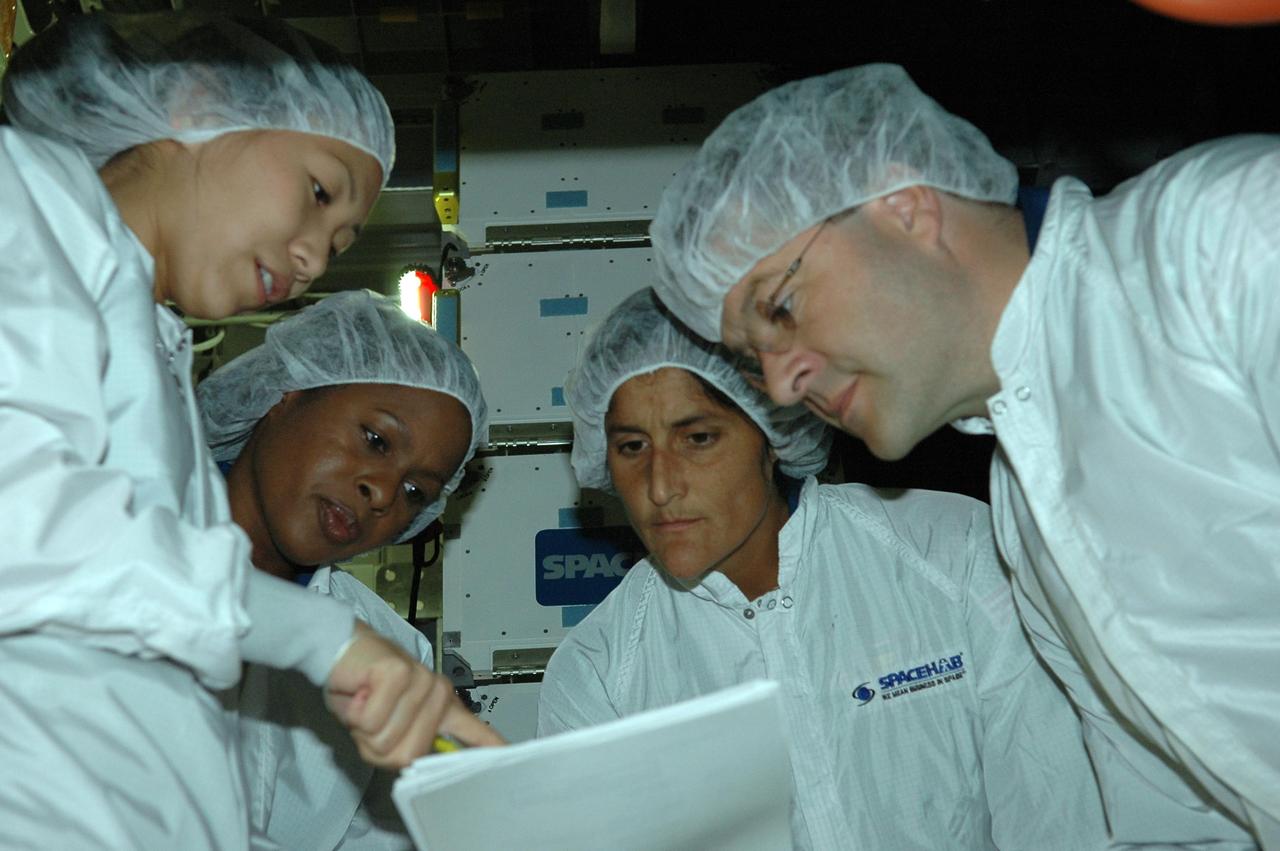
KENNEDY SPACE CENTER, FLA. - Inside the SPACEHAB Payload Processing Facility at Port Canaveral, Fla., (from left) a technician reviews procedures with STS-116 Mission Specialists Joan Higgenbotham, Sunita Williams and Nicholas Patrick during the Crew Equipment Interface Test. Mission crews make frequent trips to the Space Coast to become familiar with the equipment and payloads they will be using. STS-116 will be mission No. 20 to the International Space Station and construction flight 12A.1. The mission payload is the SPACEHAB module, the P5 integrated truss structure and other key components. Launch is scheduled for no earlier than Dec. 7. Photo credit: NASA/Kim Shiflett
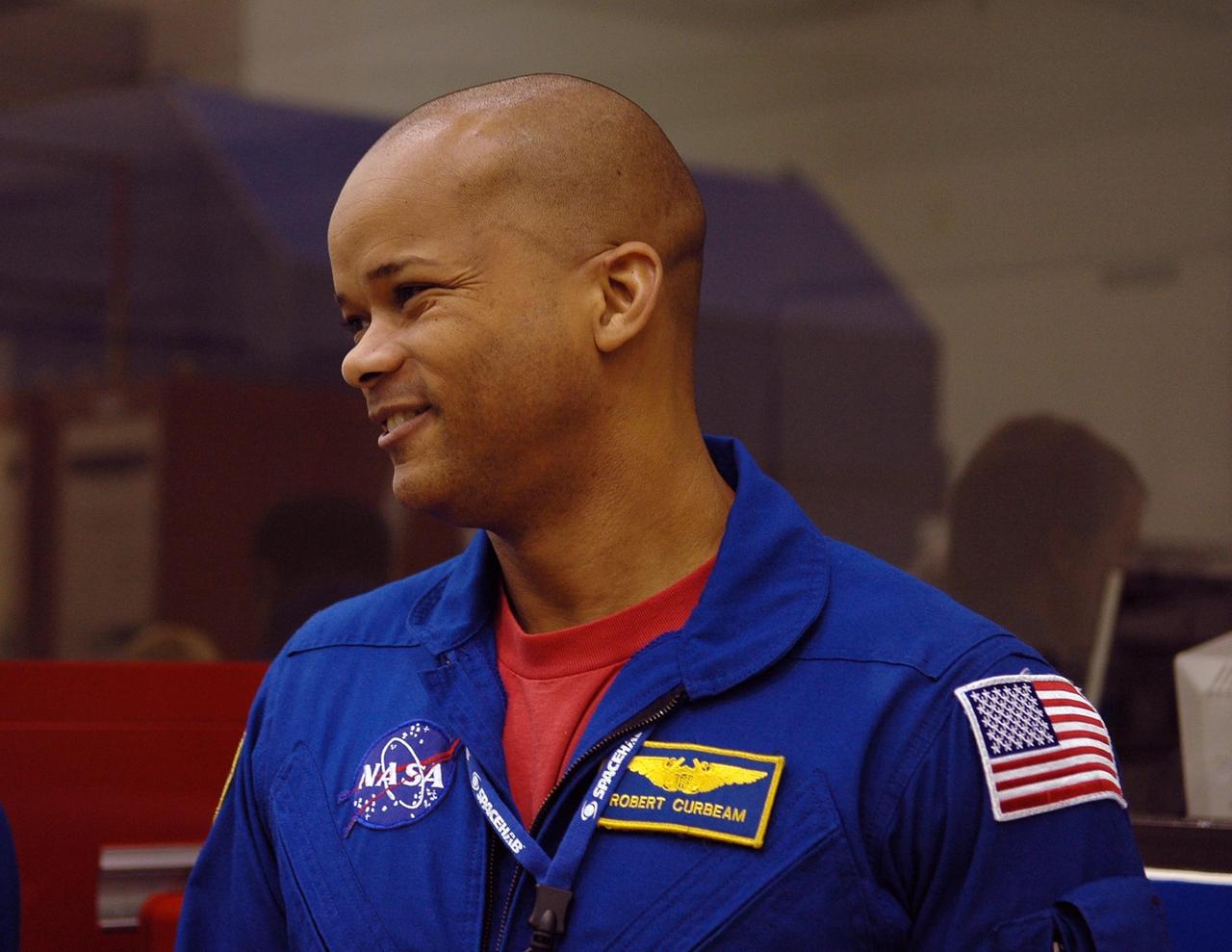
KENNEDY SPACE CENTER, FLA. - STS-116 Mission Specialist Robert Curbeam arrives at the SPACEHAB Payload Processing Facility at Port Canaveral, Fla., to participate in the Crew Equipment Interface Test. Mission crews make frequent trips to the Space Coast to become familiar with the equipment and payloads they will be using. STS-116 will be mission No. 20 to the International Space Station and construction flight 12A.1. The mission payload is the SPACEHAB module, the P5 integrated truss structure and other key components. Launch is scheduled for no earlier than Dec. 7. Photo credit: NASA/Kim Shiflett
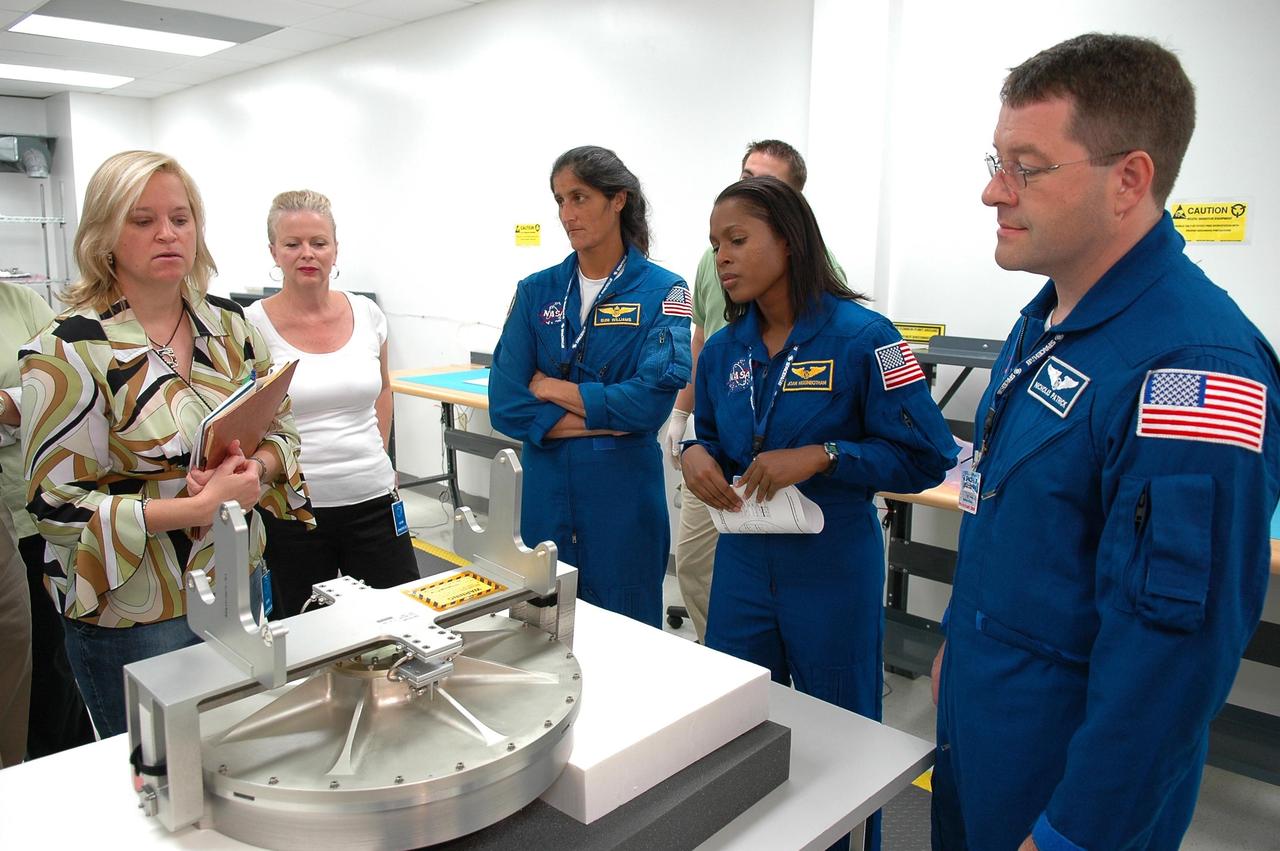
KENNEDY SPACE CENTER, FLA. - Inside the SPACEHAB Payload Processing Facility at Port Canaveral, Fla., STS-116 Mission Specialists (from left) Sunita Williams, Joan Higginbotham and Nicholas Patrick look over flight hardware during the Crew Equipment Interface Test. Mission crews make frequent trips to the Space Coast to become familiar with the equipment and payloads they will be using. STS-116 will be mission No. 20 to the International Space Station and construction flight 12A.1. The mission payload is the SPACEHAB module, the P5 integrated truss structure and other key components. Launch is scheduled for no earlier than Dec. 7. Photo credit: NASA/Kim Shiflett
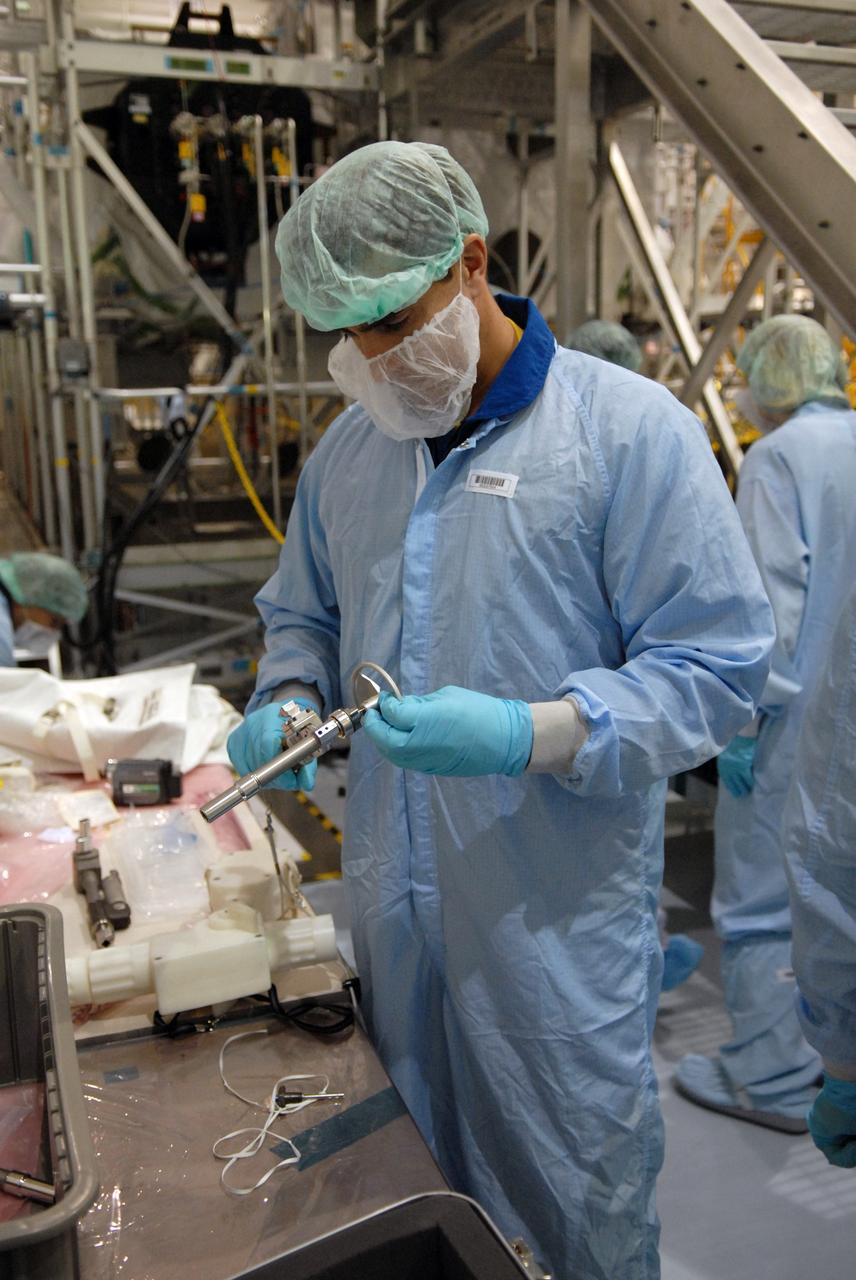
CAPE CANAVERAL, Fla. – In the Space Station Processing Facility at NASA's Kennedy Space Center in Florida, members of the STS-127 Mission Specialist Chris Cassidy prepares the tools he will use on-orbit to set up the Japanese Experiment Module's Experiment Logistics Module-Exposed Section, or ELM-ES, part of the payload on the mission. The crew members are at Kennedy for Crew Equipment Interface Test activities, or CEIT, which provides experience handling tools, equipment and hardware for the mission. The payload will be launched to the International Space Station aboard space shuttle Endeavour on the STS-127 mission, targeted for launch on May 15. Photo credit: NASA/Dimitrios Gerondidakis
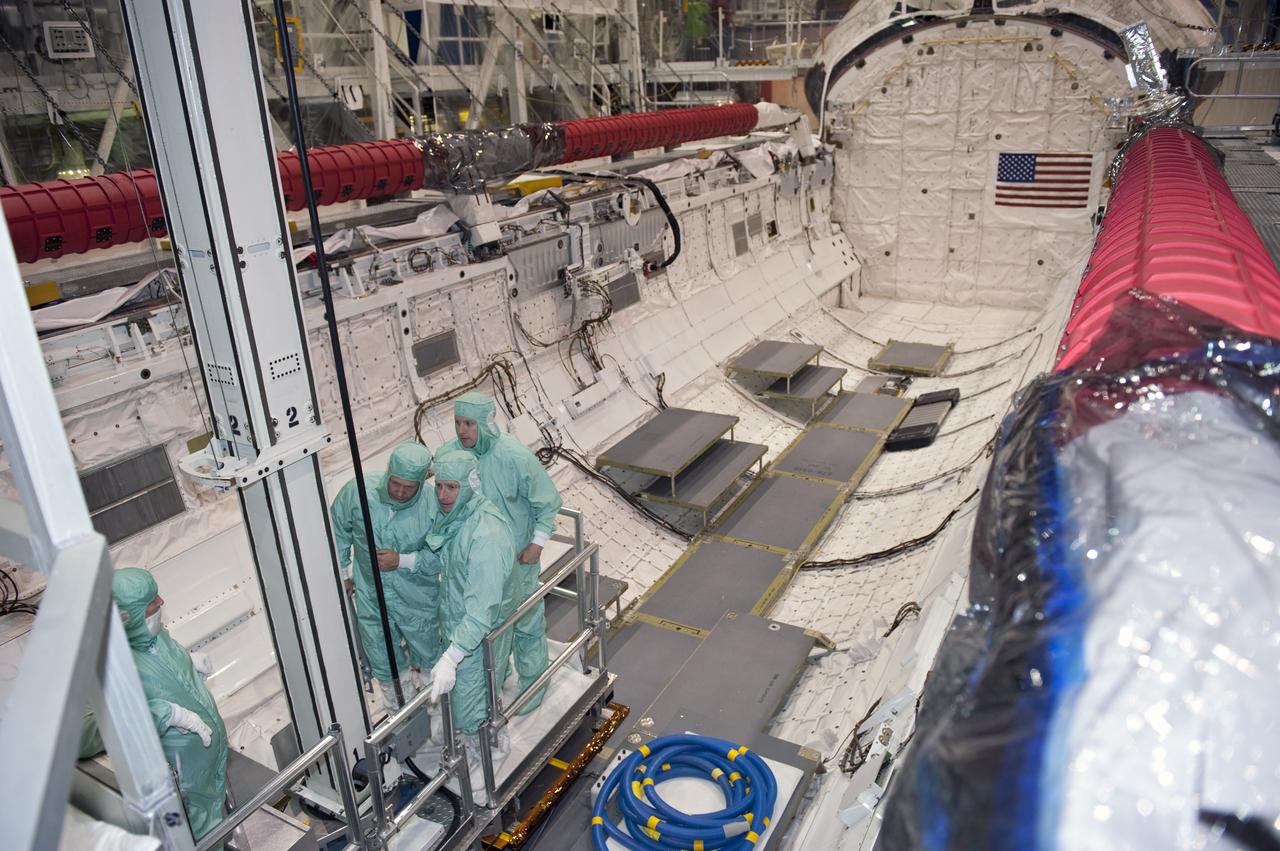
CAPE CANAVERAL, Fla. -- In Orbiter Processing Facility-1 at NASA's Kennedy Space Center in Florida, the STS-135 crew inspects shuttle Atlantis' payload bay. The four-member crew is at Kennedy to participate in the Crew Equipment Interface Test (CEIT), which gives them an opportunity for hands-on training with the tools and equipment they'll use in space and familiarization of the payload they'll deliver to the International Space Station. Atlantis is being prepared for the STS-135 mission, which will deliver Raffaello multi-purpose logistics module packed with supplies and spare parts to the station. Atlantis is targeted to launch June 28, and will be the last shuttle flight for the Space Shuttle Program. Photo credit: NASA/Kim Shiflett
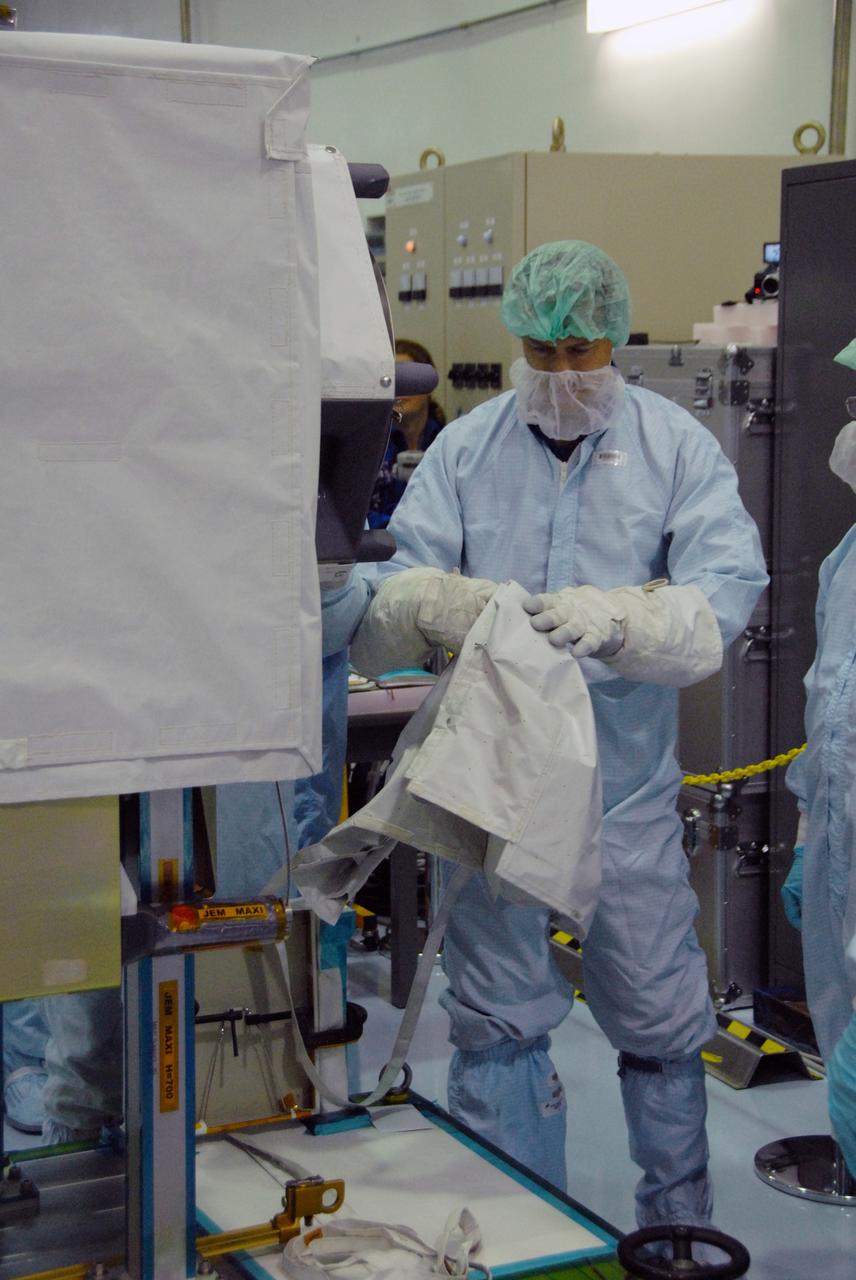
CAPE CANAVERAL, Fla. -- In the Space Station Processing Facility at NASA's Kennedy Space Center in Florida, a STS-127 crew member removes a portion of the cover on the MAXI (Monitor of All-Sky X-Ray Image), part of the payload for the mission. The crew members are at Kennedy for a crew equipment interface test, or CEIT, which provides experience handling tools, equipment and hardware they will use on the mission. The payload will be launched to the International Space Station aboard space shuttle Endeavour on the STS-127 mission, targeted for launch on May 15, 2009. Photo credit: NASA/Dimitrios Gerondidakis
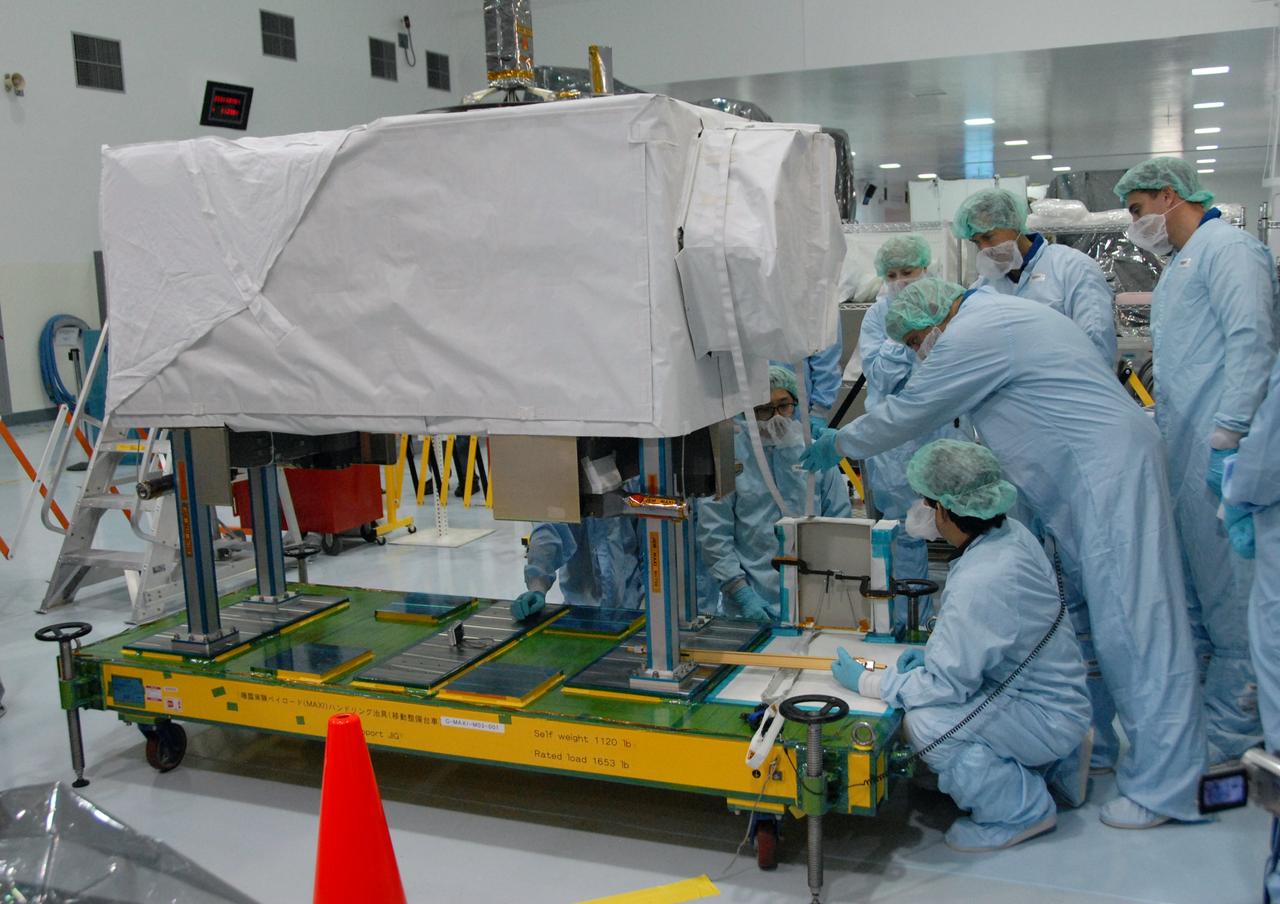
CAPE CANAVERAL, Fla. -- In the Space Station Processing Facility at NASA's Kennedy Space Center in Florida, STS-127 crew members look at the MAXI (Monitor of All-Sky X-Ray Image), part of the payload for their mission. The crew members are at Kennedy for a crew equipment interface test, or CEIT, which provides experience handling tools, equipment and hardware they will use on the mission. The payload will be launched to the International Space Station aboard space shuttle Endeavour on the STS-127 mission, targeted for launch on May 15, 2009. Photo credit: NASA/Dimitrios Gerondidakis
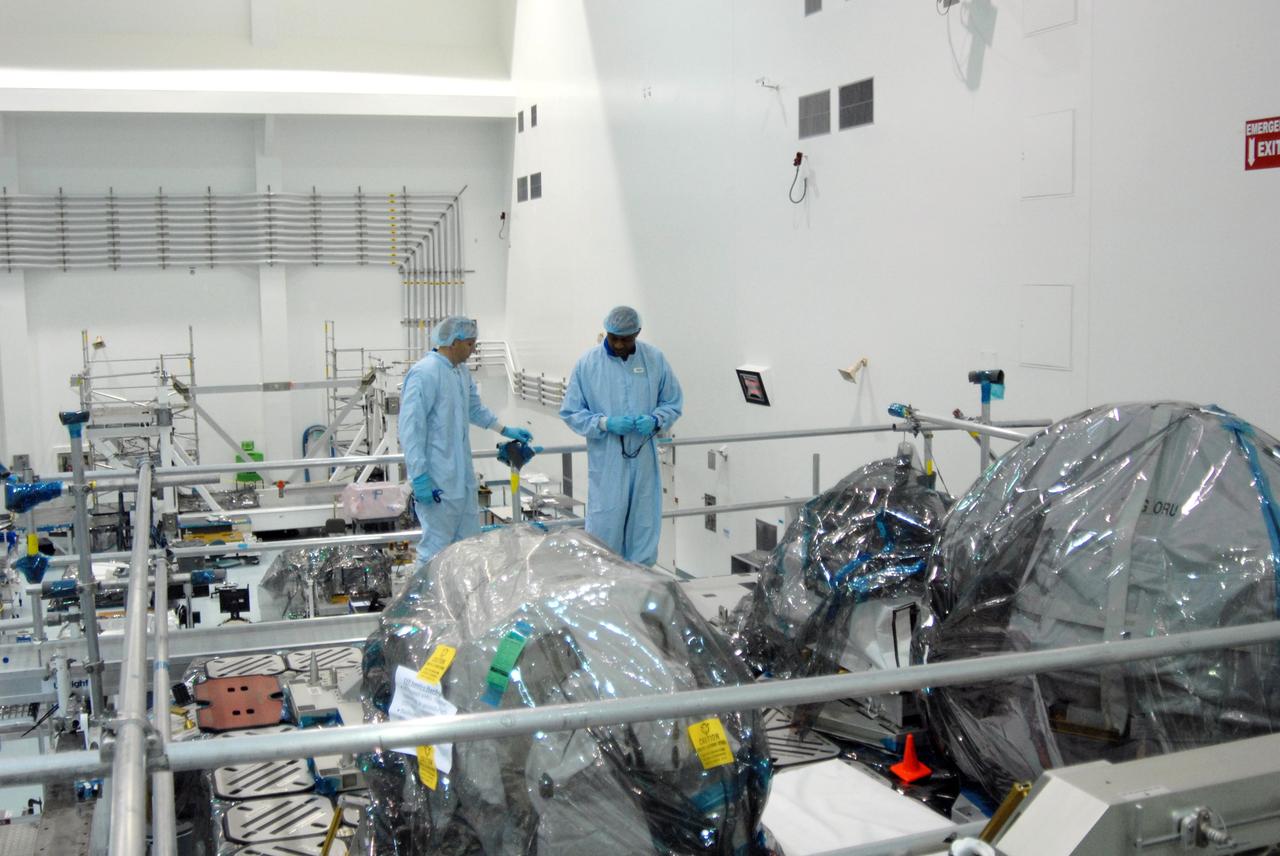
CAPE CANAVERAL, Fla. – Members of the STS-129 crew spend time in NASA Kennedy Space Center's Space Station Processing Facility looking over the payloads installed on the Express Logistics Carrier, or ELC. The crew is at Kennedy for a Crew Equipment Interface Test, which provides hands-on training and observation of shuttle and flight hardware. The carrier is part of the STS-129 payload on space shuttle Atlantis, which will deliver to the International Space Station two spare gyroscopes, two nitrogen tank assemblies, two pump modules, an ammonia tank assembly and a spare latching end effector for the station's robotic arm. STS-129 is targeted to launch Nov. 12. Photo credit: NASA/Jim Grossmann
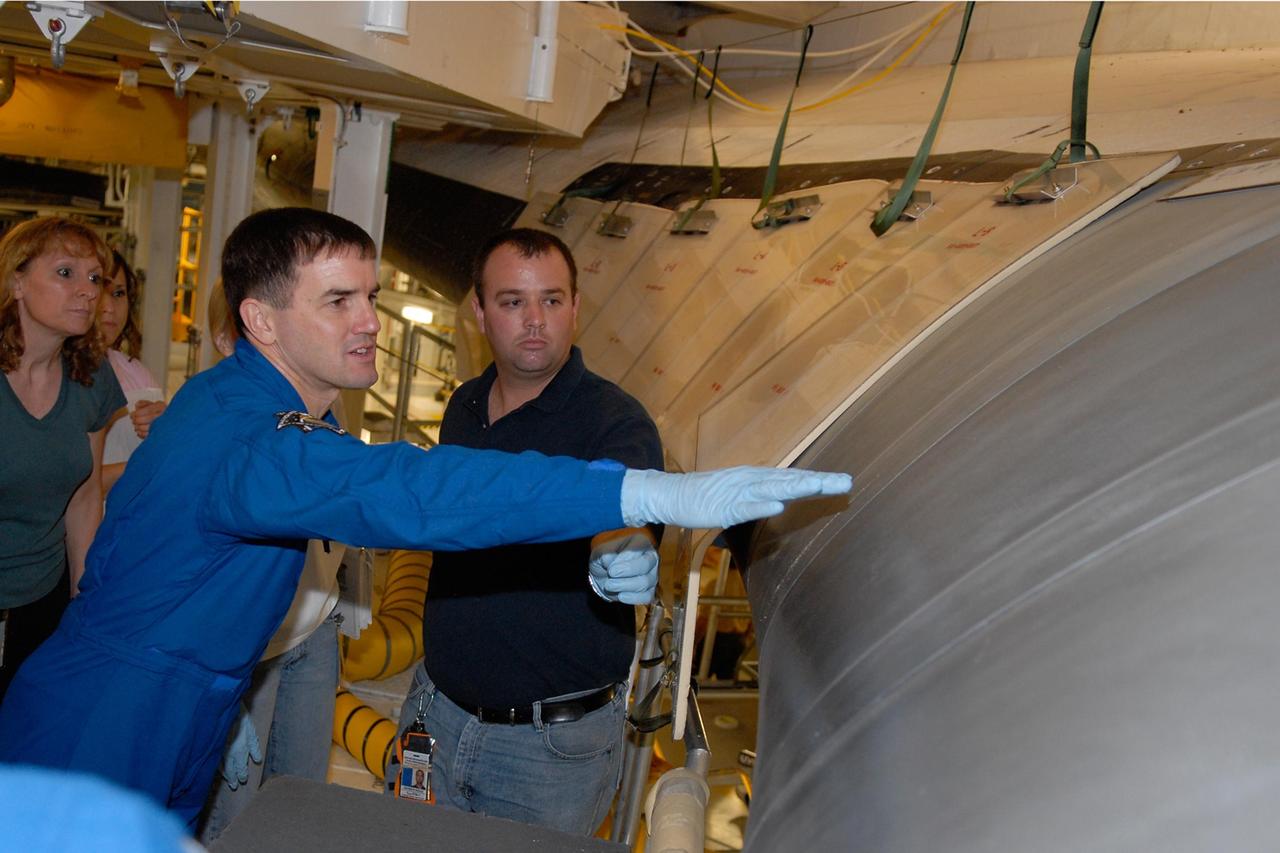
KENNEDY SPACE CENTER, FLA. -- In the Orbiter Processing Facility, STS-122 Mission Specialist Rex Walheim reaches toward the wing of space shuttle Atlantis. The crew is at Kennedy to take part in a crew equipment interface test, or CEIT, which helps familiarize them with equipment and payloads for the mission. Among the activities standard to a CEIT are harness training, inspection of the thermal protection system and camera operation for planned extravehicular activities, or EVAs. STS-122 is targeted for launch in December. Photo credit: NASA/Kim Shiflett
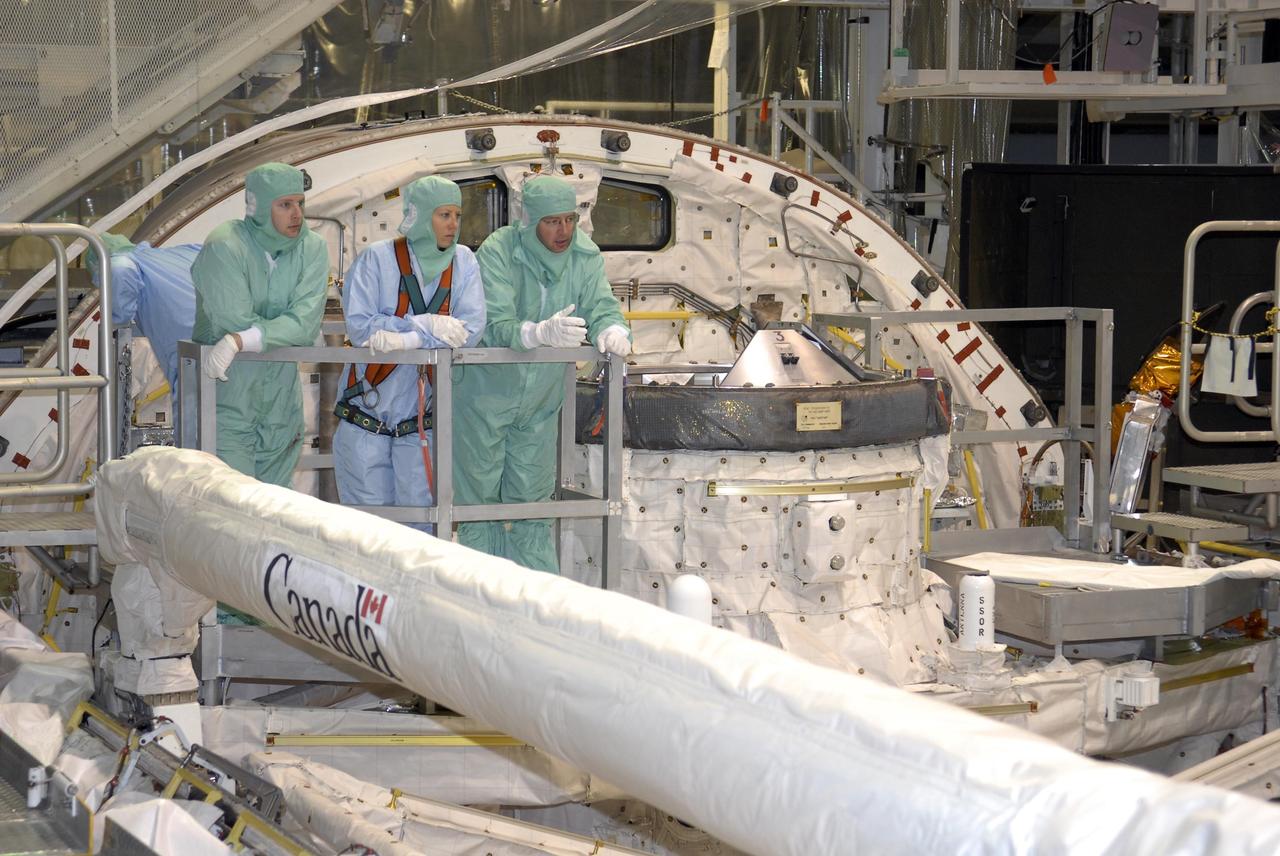
KENNEDY SPACE CENTER, FLA. -- During crew equipment interface test activities at KSC, STS-118 Mission Specialists Tracy Caldwell (center) and Dr. Dafydd Williams (right) look over the interior of the payload bay of orbiter Endeavour. The STS-118 mission will be delivering the third starboard truss segment, the ITS S5, to the International Space Station, as well as the SPACEHAB single cargo module filled with supplies and equipment. Launch aboard Space Shuttle Endeavour is targeted for Aug. 9. Photo credit: NASA/Kim Shiflett

KENNEDY SPACE CENTER, FLA. -- STS-113 Mission Specialists Michael Lopez-Alegria (left) and John Herrington (center) look over part of the payload for the mission during Crew Equipment Interface Test activities in the Space Station Processing Facility. The mission will be carrying the first port truss segment, P1 Truss, to be attached to the central truss segment, S0, on the International Space Station. Once delivered, the P1 truss will remain stowed until flight 12A.1. Launch date for STS-113 is under review.
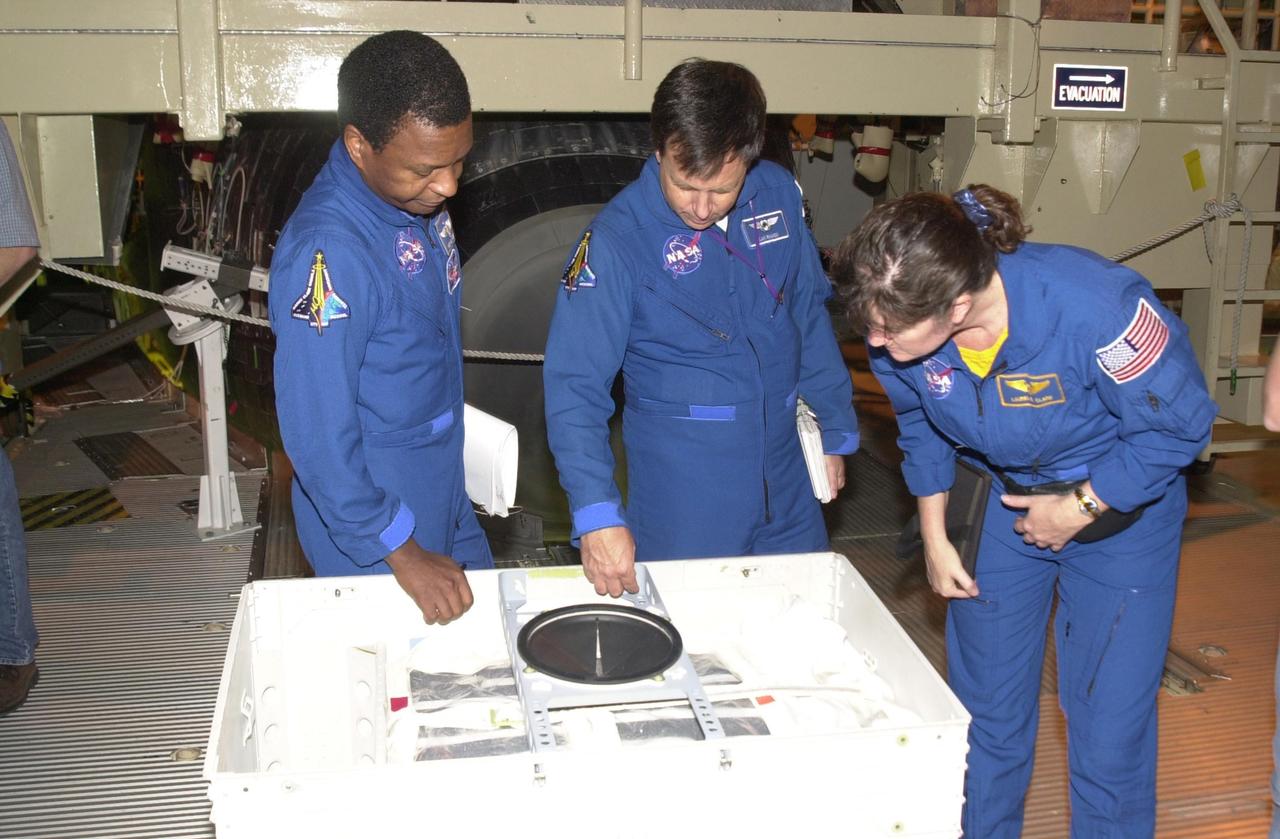
KENNEDY SPACE CENTER, FLA. -- During Crew Equipment Interface Test activities, the STS-107 crew looks at flight equipment in the Orbiter Processing Facility. From left are Payload Commander Michael Anderson, Payload Specialist Ilan Ramon (with the Israeli Space Agency), and Mission Specialist Laurel Clark. STS-107 is a research mission, with the SHI Research Double Module (SHI/RDM), also known as SPACEHAB, as the primary payload, plus the Fast Reaction Experiments Enabling Science, Technology, Applications and Research (FREESTAR) that incorporates eight high priority secondary attached shuttle experiments. STS-107 is scheduled to launch July 19, 2002

KENNEDY SPACE CENTER, FLA. -- At SPACEHAB, in Cape Canaveral, members of the STS-101 crew are taking part in a Crew Equipment Interface Test, which gives them an opportunity to look over equipment and payloads that will fly on the mission. At center are Mission Specialists Edward Tsang Lu and Mary Ellen Weber (Ph.D.). Space Shuttle Atlantis will be carrying the SPACEHAB Double Module, which carries internal logistics and resupply cargo for station outfitting. Launch of Atlantis on mission STS-101 is scheduled no earlier than April 13, 2000

KENNEDY SPACE CENTER, FLA. -- At SPACEHAB, in Cape Canaveral, members of the STS-101 crew are taking part in a Crew Equipment Interface Test, which gives them an opportunity to look over equipment and payloads that will fly on the mission. At center are Mission Specialists Edward Tsang Lu and Mary Ellen Weber (Ph.D.). Space Shuttle Atlantis will be carrying the SPACEHAB Double Module, which carries internal logistics and resupply cargo for station outfitting. Launch of Atlantis on mission STS-101 is scheduled no earlier than April 13, 2000
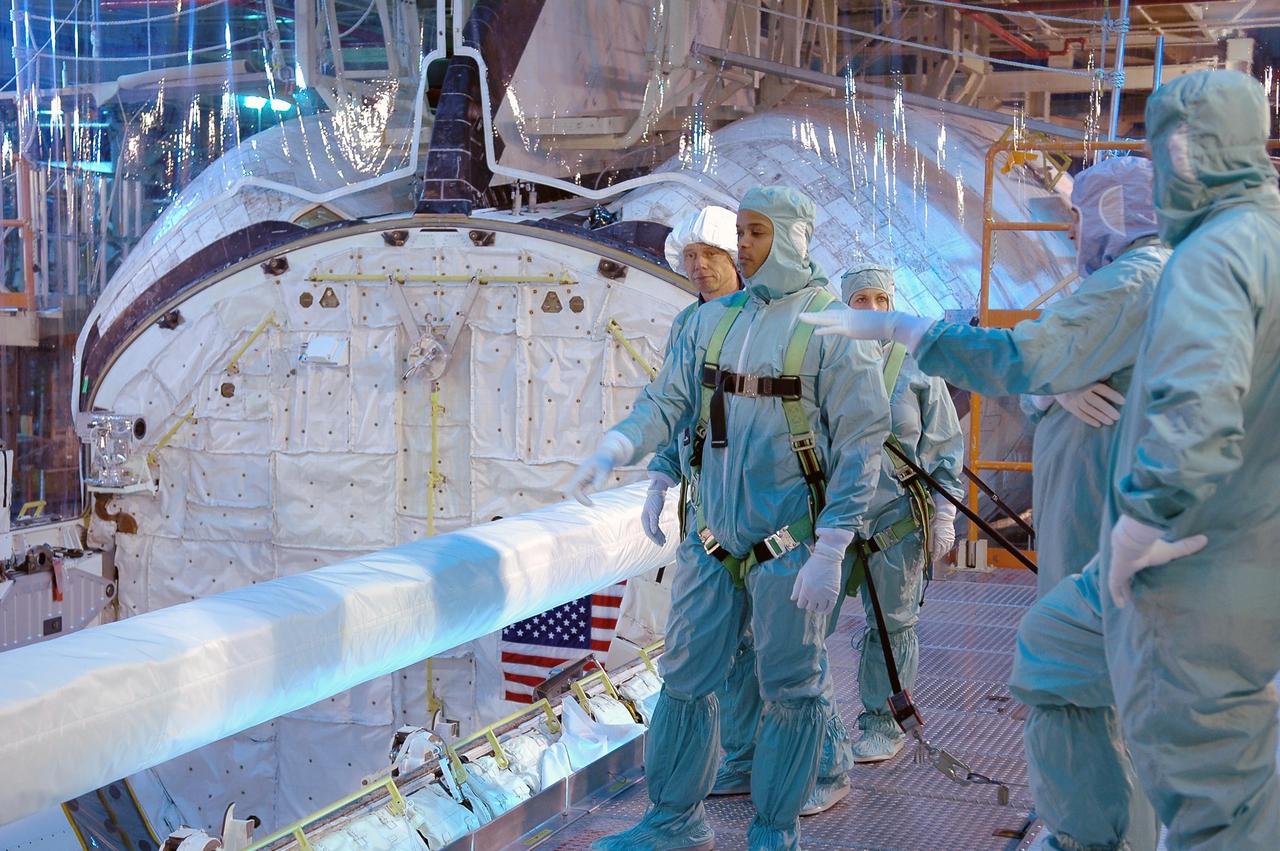
KENNEDY SPACE CENTER, FLA. - During a Crew Equipment Interface Test (CEIT) in the Orbiter Processing Facility, STS-116 crew members get information about the orbiter boom sensor system in Discovery’s payload bay. In the center are Mission Specialists Christer Fugelsang, who represents the European Space Agency, and Robert Curbeam. A CEIT allows astronauts to become familiar with equipment and hardware they will use on the mission. STS-116 will be mission No. 20 to the International Space Station and construction flight 12A.1. The mission payload is the SPACEHAB module, the P5 integrated truss structure and other key components. Launch is scheduled for no earlier than Dec. 7. Photo credit: NASA/Kim Shiflett
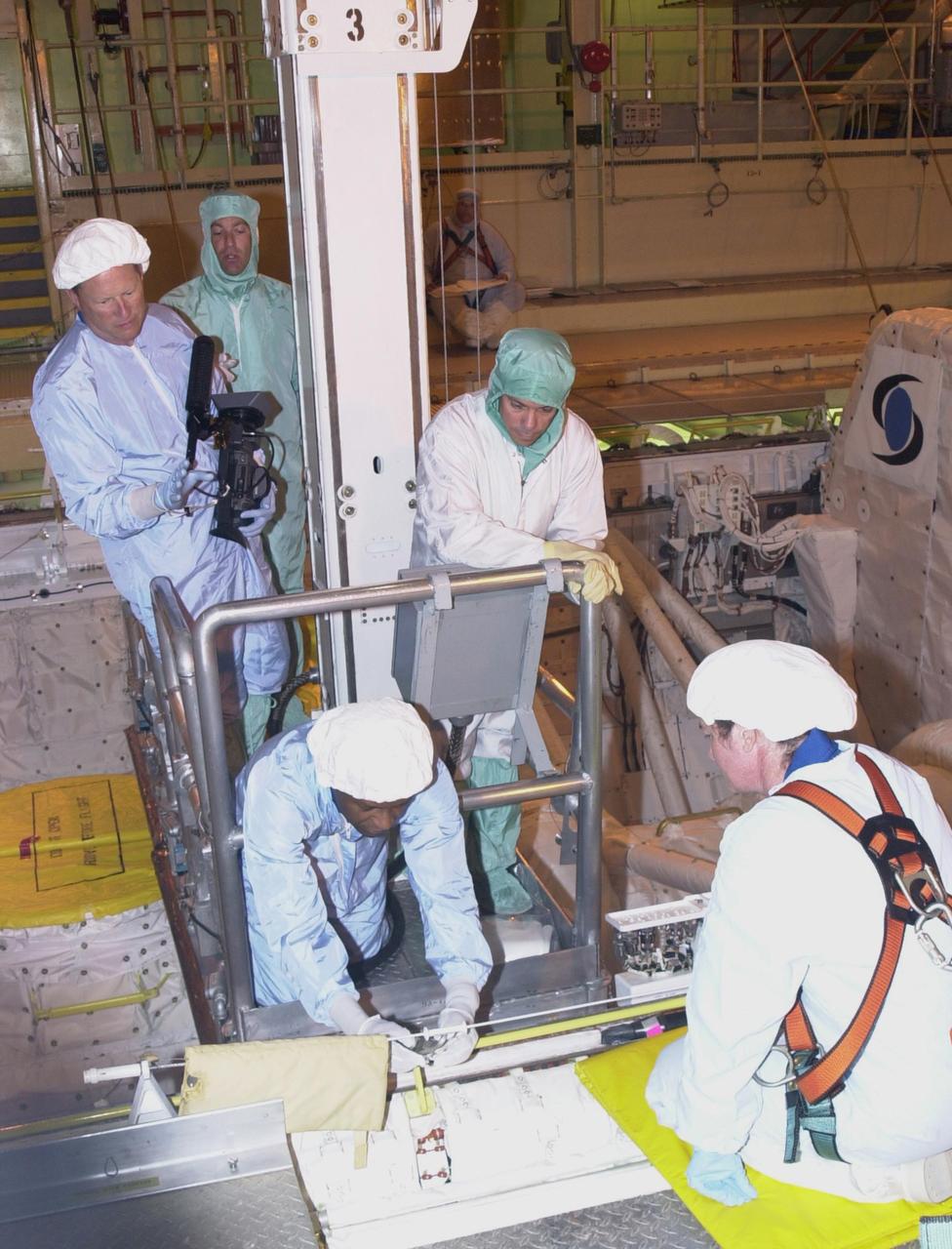
KENNEDY SPACE CENTER, FLA. -- During Crew Equipment Interface Test activities, STS-107 Payload Commander Michael Anderson looks over equipment from a lift in the payload bay of Columbia while technicians (right and rear) look on. Behind Anderson is Mission Specialist David Brown. STS-107 is a research mission, with the SHI Research Double Module (SHI/RDM), also known as SPACEHAB, as the primary payload, plus the Fast Reaction Experiments Enabling Science, Technology, Applications and Research (FREESTAR) that incorporates eight high priority secondary attached shuttle experiments. STS-107 is scheduled to launch July 19, 2002
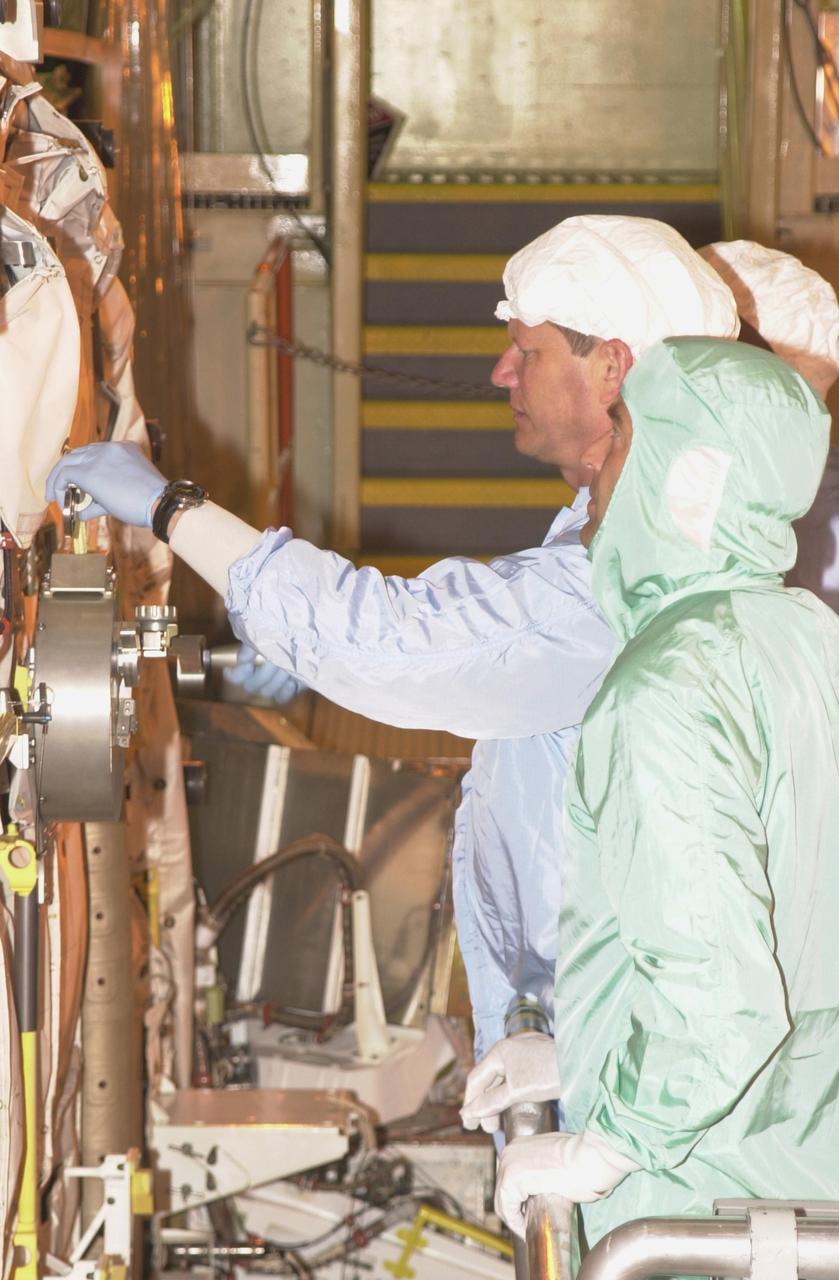
KENNEDY SPACE CENTER, FLA. - During Crew Equipment Interface Test activities, STS-107 Mission Specialist David Brown checks equipment in the payload bay of Columbia while a technician looks on. Behind Brown is Payload Commander Michael Anderson. STS-107 is a research mission, with the SHI Research Double Module (SHI/RDM), also known as SPACEHAB, as the primary payload, plus the Fast Reaction Experiments Enabling Science, Technology, Applications and Research (FREESTAR) that incorporates eight high priority secondary attached shuttle experiments. STS-107 is scheduled to launch July 19, 2002
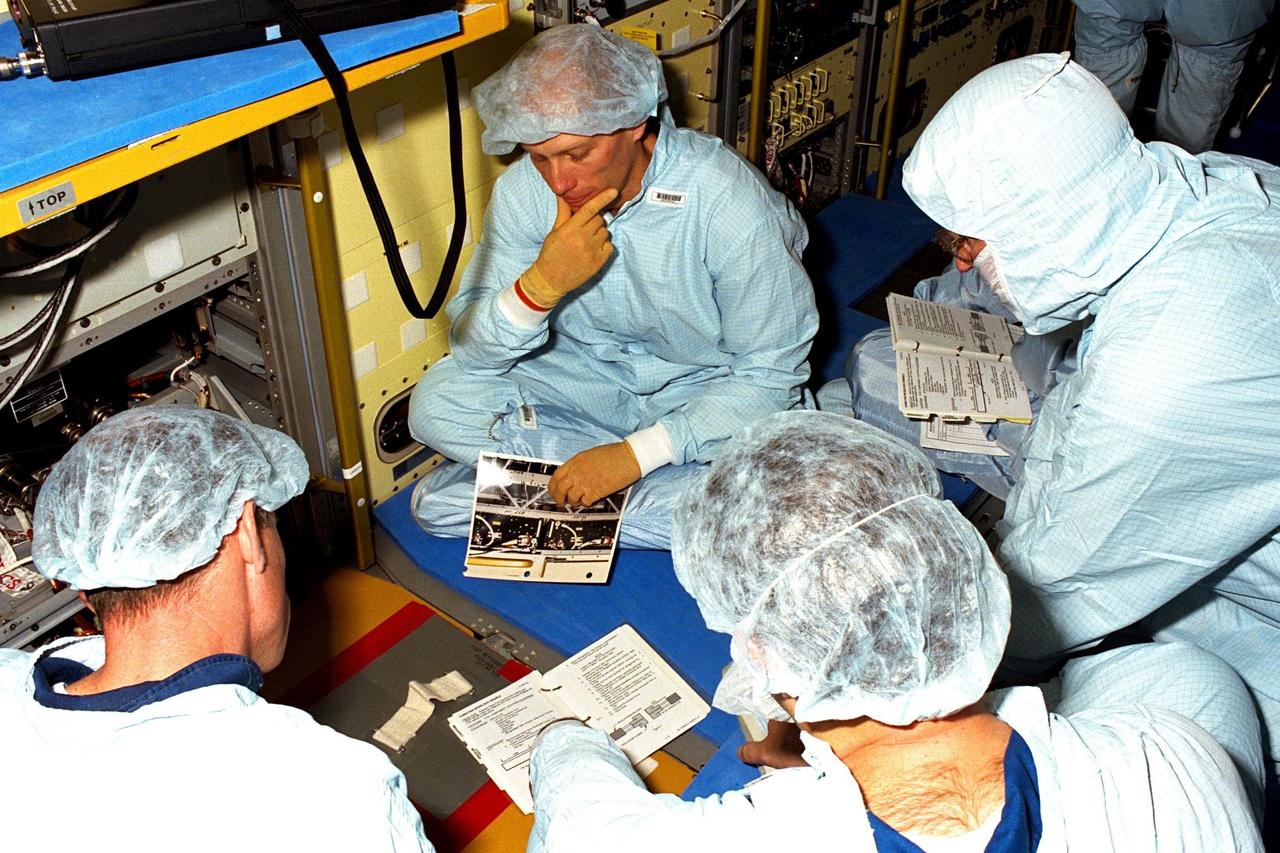
STS-90 crew members study manuals and drawings for the mission's Neurolab payload during the Crew Equipment Interface Test (CEIT) in Kennedy Space Center's (KSC's) Operations and Checkout Building, where the payload is undergoing processing. The CEIT gives astronauts an opportunity to get a hands-on look at the payloads with which they will be working on-orbit. STS-90 is scheduled to launch aboard the Shuttle Columbia from KSC on April 2. Investigations during the Neurolab mission will focus on the effects of microgravity on the nervous system. Specifically, experiments will study the adaptation of the vestibular system, the central nervous system, and the pathways that control the ability to sense location in the absence of gravity, as well as the effect of microgravity on a developing nervous system
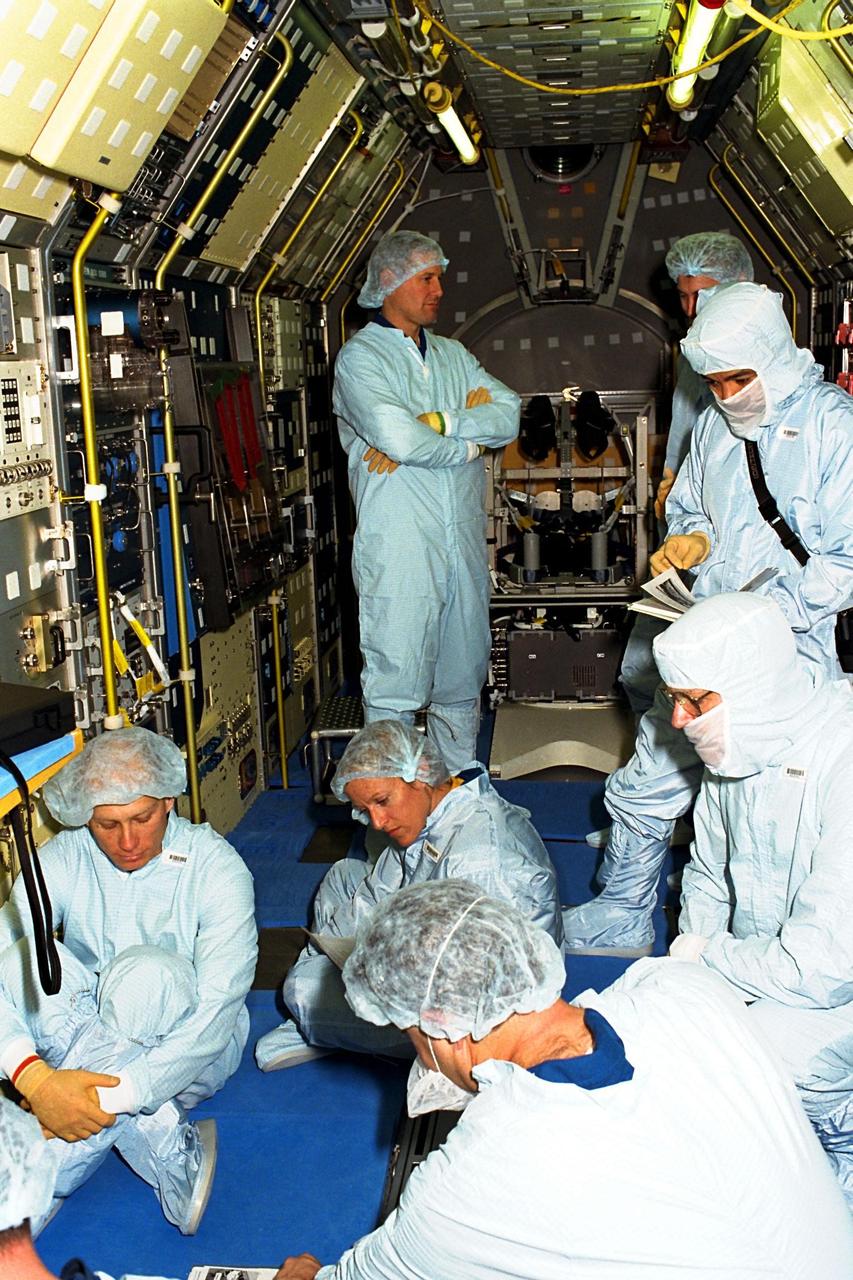
STS-90 crew members check out the inside of the module for the mission's Neurolab payload during the Crew Equipment Interface Test (CEIT) in Kennedy Space Center's (KSC's) Operations and Checkout Building, where the payload is undergoing processing. The CEIT gives astronauts an opportunity to get a hands-on look at the payloads with which they will be working on-orbit. STS-90 is scheduled to launch aboard the Shuttle Columbia from KSC on April 2. Investigations during the Neurolab mission will focus on the effects of microgravity on the nervous system. Specifically, experiments will study the adaptation of the vestibular system, the central nervous system, and the pathways that control the ability to sense location in the absence of gravity, as well as the effect of microgravity on a developing nervous system
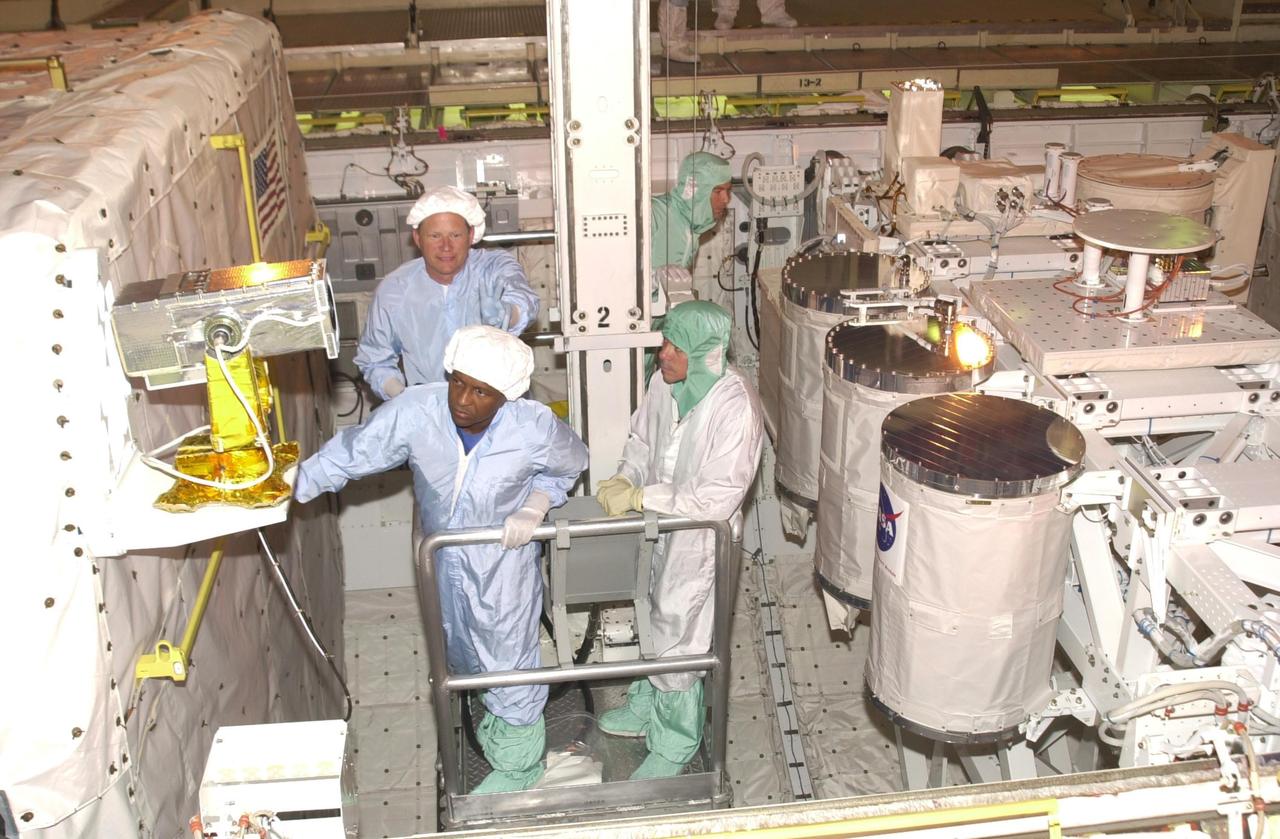
KENNEDY SPACE CENTER, FLA. -- During Crew Equipment Interface Test activities, STS-107 Payload Commander Michael Anderson looks over equipment in the payload bay of Columbia. Behind him is Mission Specialist David Brown. STS-107 is a research mission, with the SHI Research Double Module (SHI/RDM), also known as SPACEHAB, as the primary payload, plus the Fast Reaction Experiments Enabling Science, Technology, Applications and Research (FREESTAR) that incorporates eight high priority secondary attached shuttle experiments. STS-107 is scheduled to launch July 19, 2002
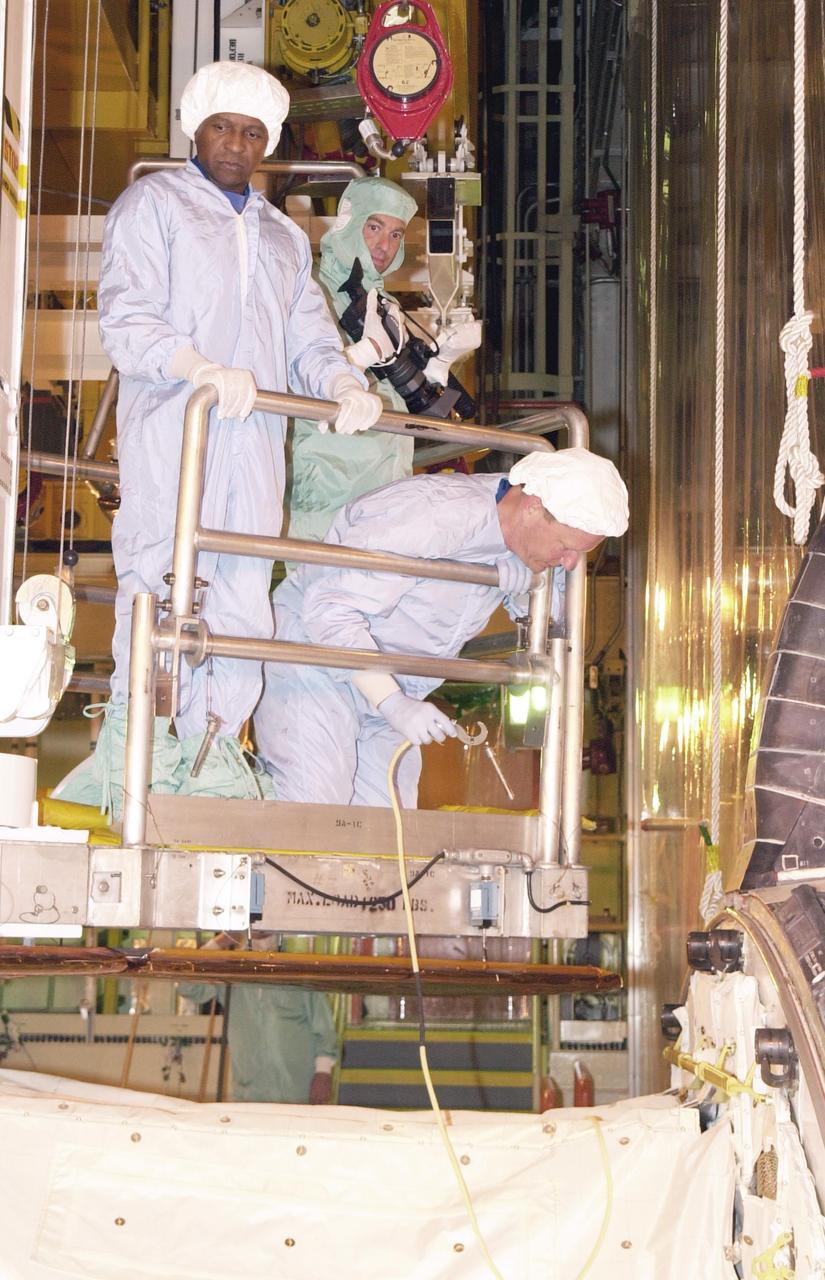
KENNEDY SPACE CENTER, FLA. -- - During Crew Equipment Interface Test activities, STS-107 Mission Specialist David Brown checks equipment in the payload bay of Columbia. At left is Payload Commander Michael Anderson. A technician holds a camera. STS-107 is a research mission, with the SHI Research Double Module (SHI/RDM), also known as SPACEHAB, as the primary payload, plus the Fast Reaction Experiments Enabling Science, Technology, Applications and Research (FREESTAR) that incorporates eight high priority secondary attached shuttle experiments. STS-107 is scheduled to launch July 19, 2002