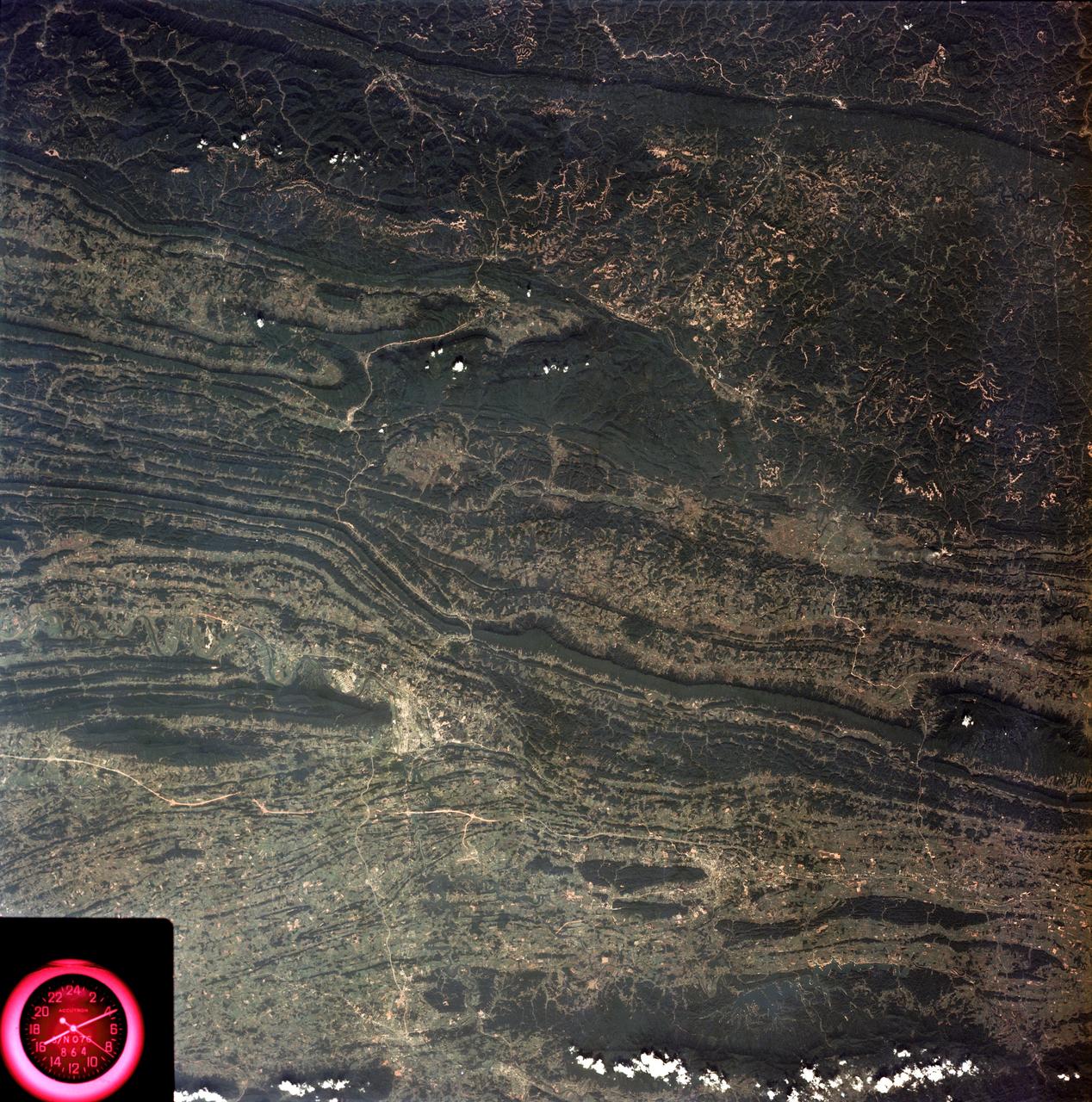
SL3-88-053 (July-September 1973) --- A near vertical view of the Tennessee-Virginia-Kentucky border area is seen in this Skylab 3 Earth Resources Experiments Package S190-B (five-inch Earth terrain camera) photograph taken from the Skylab space station in Earth orbit. The clock is in the most southerly corner of the picture. Interstate 81 under construction extends northeast-southwest across the bottom portion of the photograph. The larger urban area nearest the center of the picture is Kingsport, Tennessee. On the southern side of I-80 and east of Kingsport is the city of Bristol, Tennessee-Virginia. Johnson City, Tennessee is the urban area near the edge of the picture southeast of Kingsport. The Holston River, a tributary of the Tennessee River, meanders through the Kingsport area. The characteristic ridge and valley features in the Cumberland Plateau of Kentucky, Tennessee and Virginia are clearly visible. Forests (dark green) occur on the ridges and clearly outline the folded and faulted rock formations. The valleys (light) were formed in the softer rocks as a result of erosion. Agricultural areas are indicated by the characteristic rectangular patterns. Coal production is an important industry of this area; and it is mined by surface open pit operations. The irregular light areas in the Kentucky-Virginia border area are the strip mines which follow the contour of the land. Reclamation of the strip mine areas is aided through accurate knowledge of the mine and drainage systems. Dr. Ronald Brooks of the Wolf Research and Development Corporation can use this photograph in study of strip mine areas in the east central U.S. Federal agencies participating with NASA on the EREP project are the Departments of Agriculture, Commerce, Interior, the Environmental Protection Agency and the Corps of Engineers. All EREP photography is available to the public through the Department of Interior’s Earth Resources Observations Systems Data Center, Sioux Falls, South Dakota, 57198. Photo credit: NASA
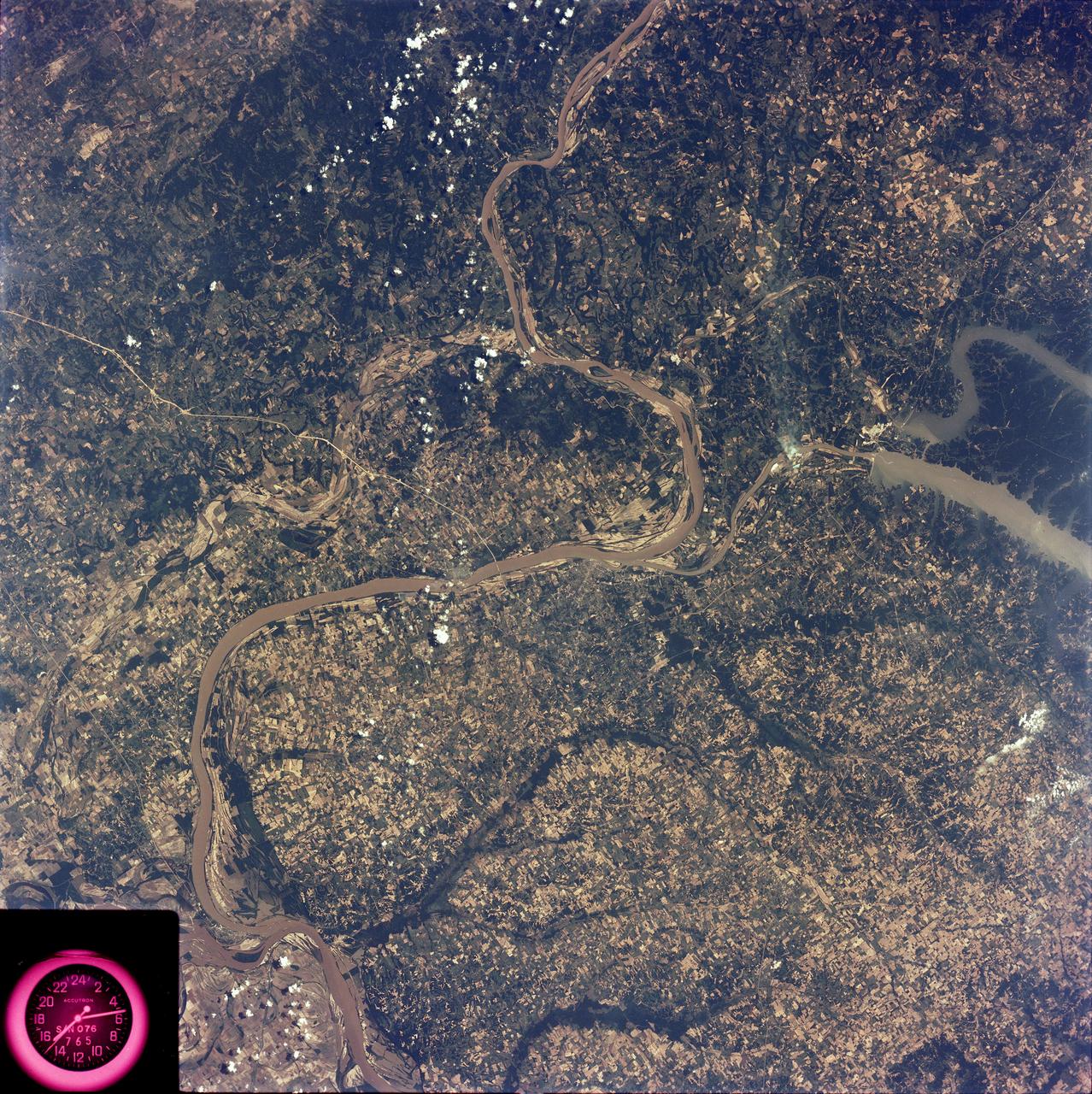
SL2-81-194 (22 June 1973) --- This view of southern Illinois and Western Kentucky (37.0N, 88.5W), with the winding Ohio River in between also illustrates the rich agriculture potential of the flood plains in the river bottom lands. To the east are the waters of Lake Kentucky and Lake Barkley which flow into the Ohio at Paducah, KY and may be seen stretching for several miles. Except for the Land Between the Lakes State Park, Extensive agriculture may be seen throughout the area. Photo credit: NASA
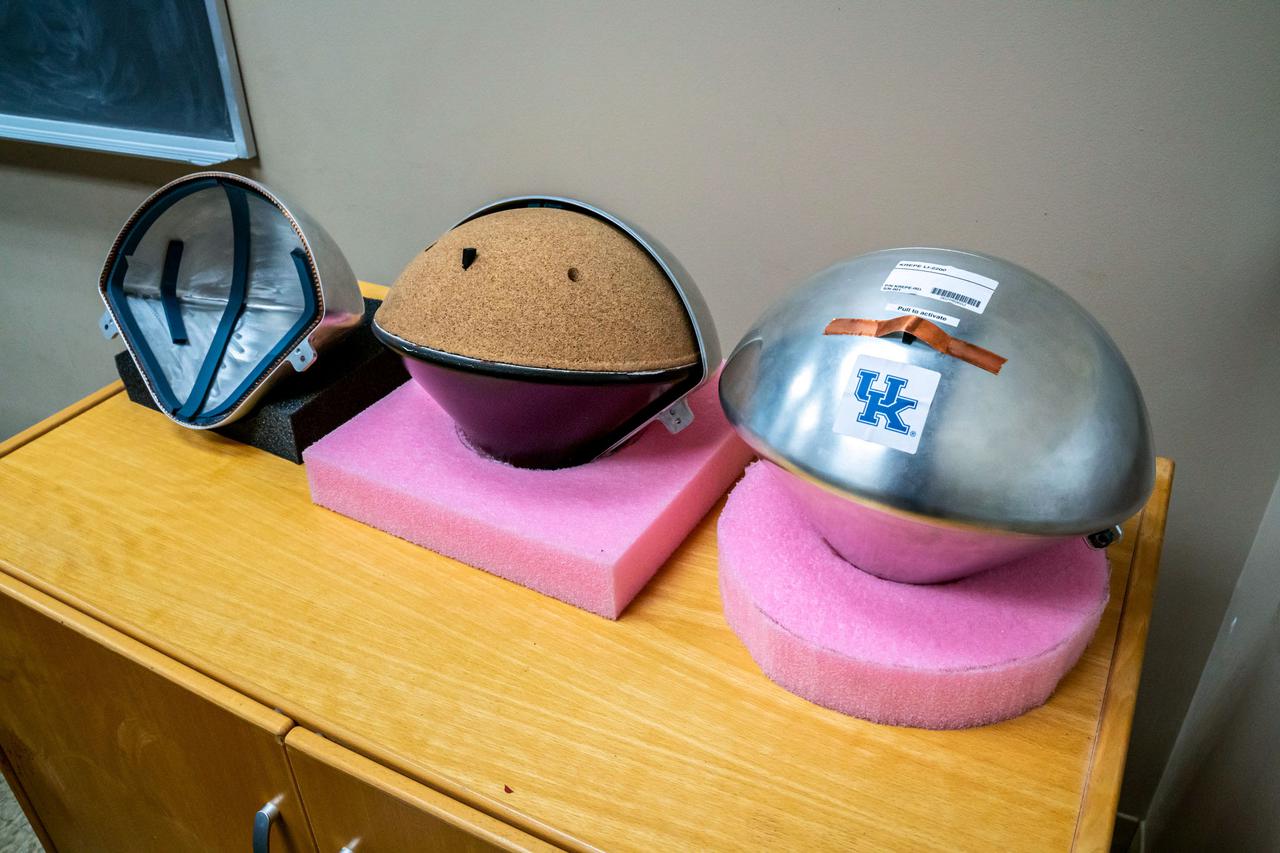
jsc2021e031158 (7/22/2021) --- A preflight view of the heat-shield on the KREPE Capsule. The Kentucky Re-Entry Probe Experiment (KREPE) demonstrates an affordable technology for re-entry experiments and provides flight data on Thermal Protection Systems (TPS) to help validate computational models. Photo courtesy of the University of Kentucky.
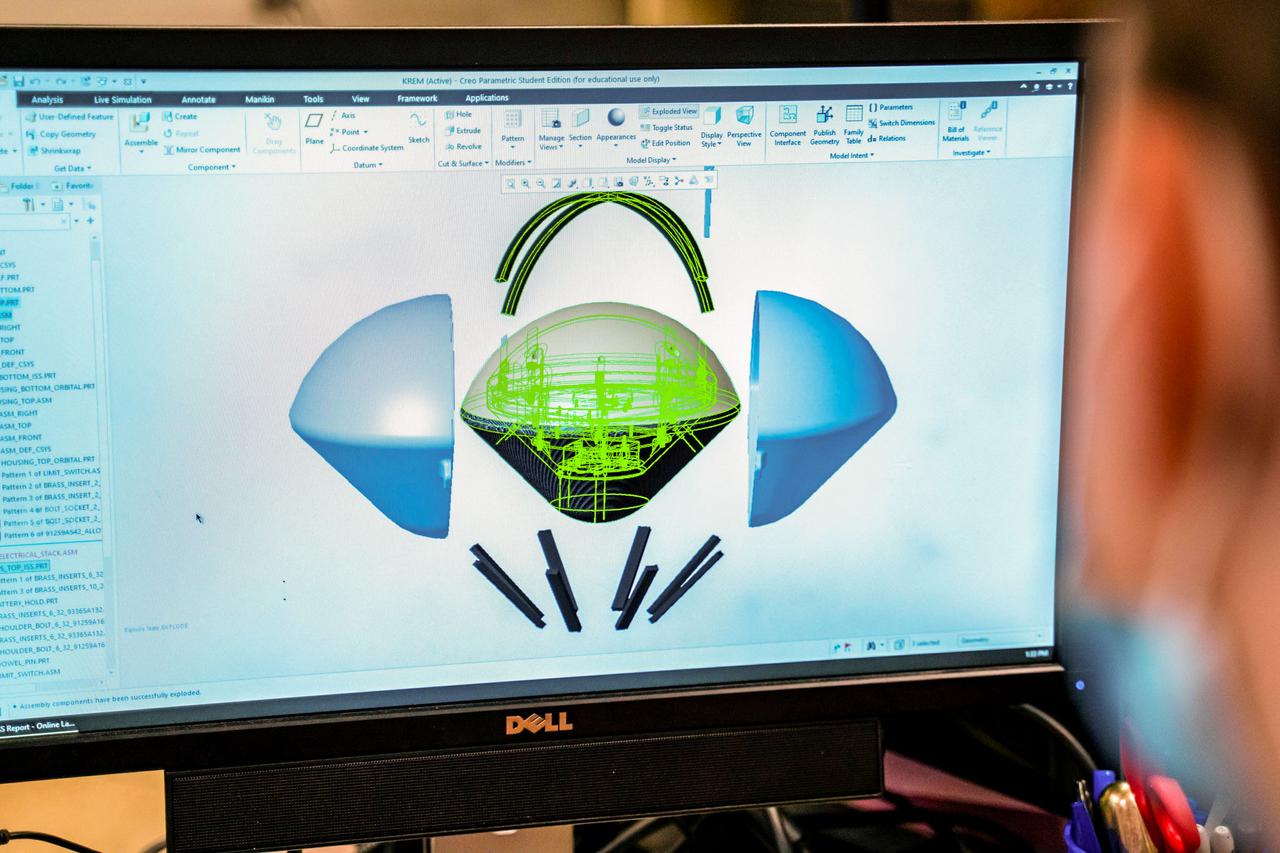
jsc2021e031157 (7/22/2021) --- A view of the KREP Ecapsule model. The Kentucky Re-Entry Probe Experiment (KREPE) demonstrates an affordable technology for re-entry experiments and provides flight data on Thermal Protection Systems (TPS) to help validate computational models. Photo courtesy of the University of Kentucky.
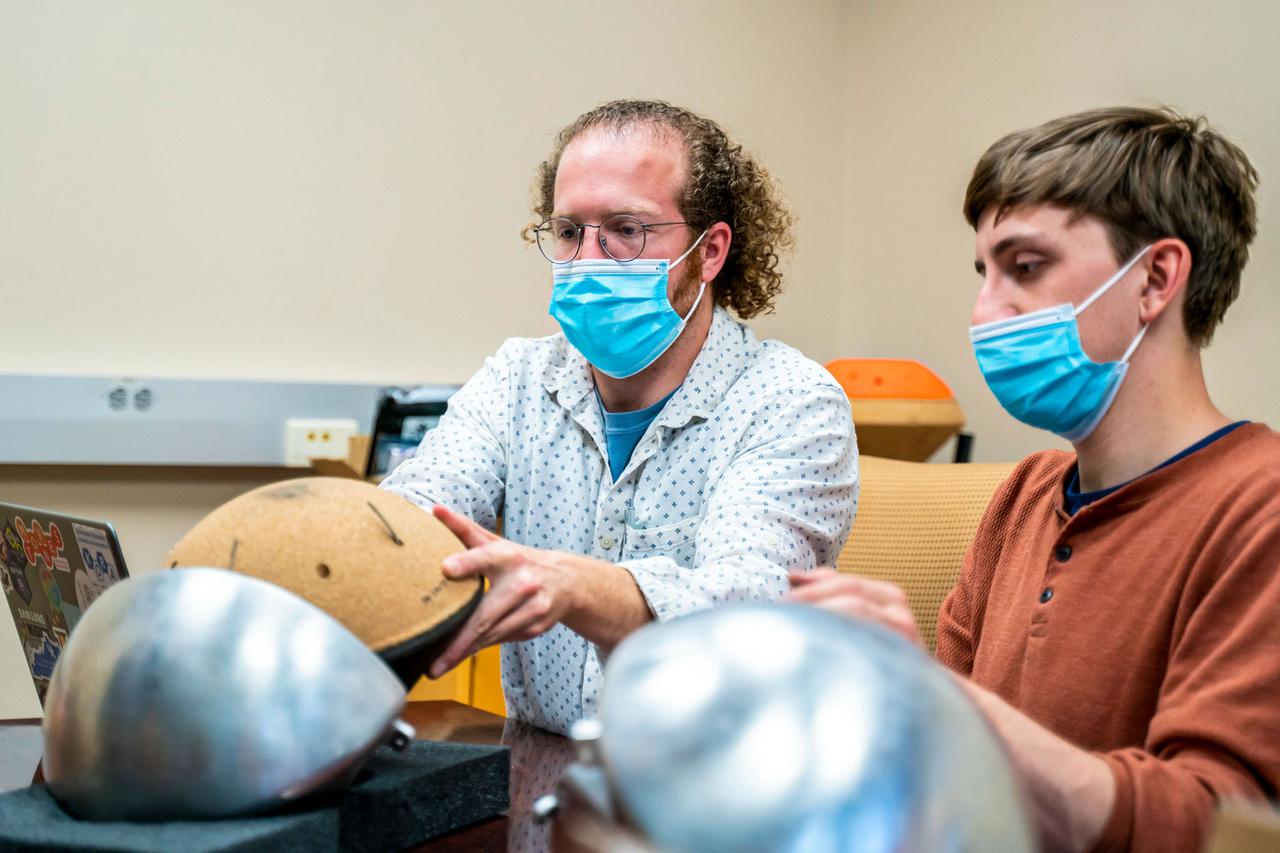
jsc2021e031159 (7/22/2021) --- John Schmidt, graduate student and mechanical engineering lead and Matthew Ruffner, graduate student and electrical engineering lead of KREPE. The Kentucky Re-Entry Probe Experiment (KREPE) demonstrates an affordable technology for re-entry experiments and provides flight data on Thermal Protection Systems (TPS) to help validate computational models. Photo courtesy of the University of Kentucky.
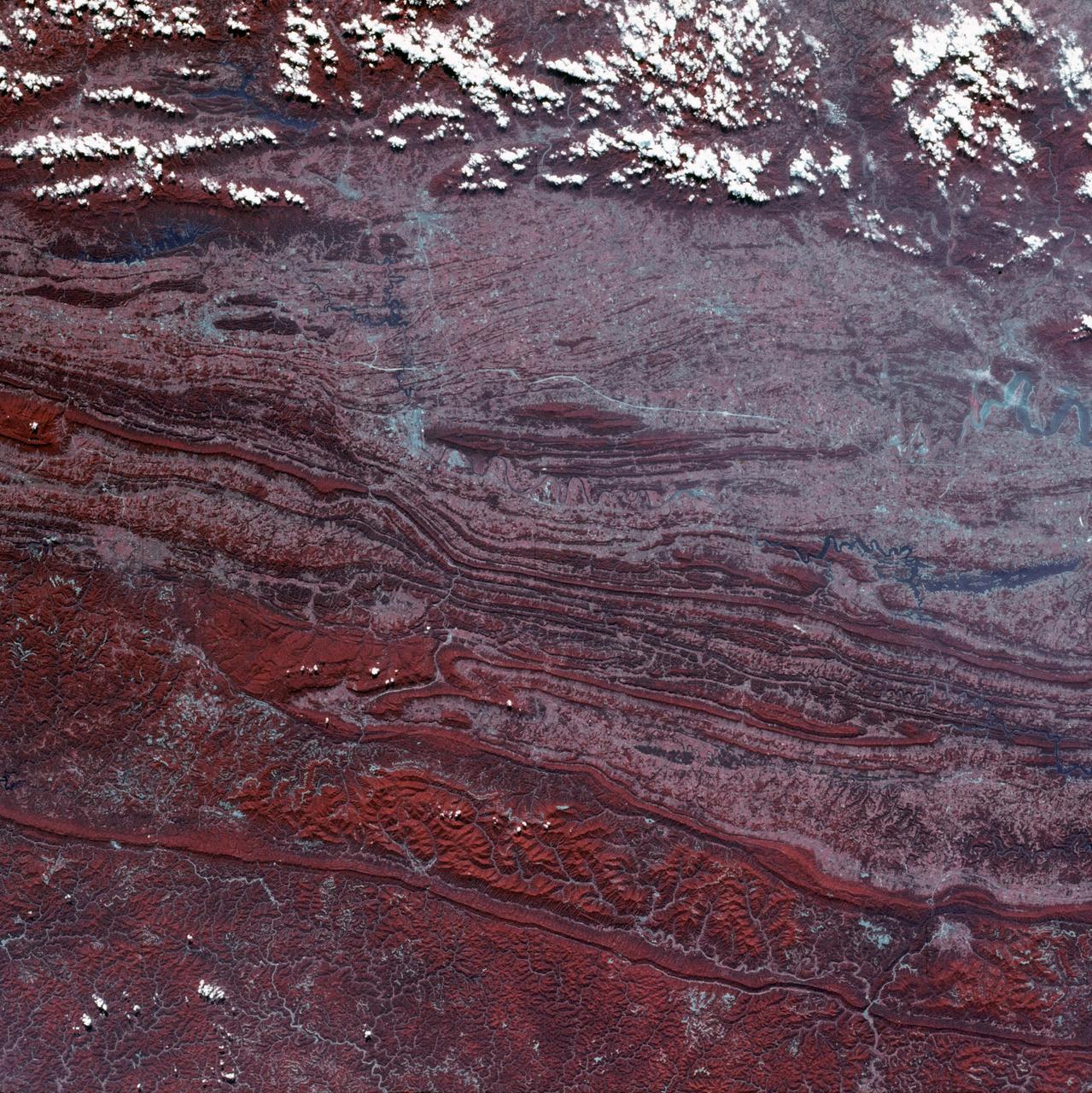
SL3-45-020 (July-September 1973) --- A vertical view of the Virginia-Tennessee-Kentucky border area as photographed from Earth orbit by one of the six lenses of the Itek-furnished S190-A Multispectral Photographic Facility Experiment aboard the Skylab space station. This picture was taken with type 2443 infrared color film. The S190-A experiment is part of the Skylab Earth Resources Experiments Package. The long, narrow ridge is Pine Mountain; and it is crossed by U.S. 25E at Pineville near its southernmost end. Some 25 miles south of Pineville U.S. 25E passes through the famed Cumberland Gap which at 1,600 feet elevation crosses Cumberland Mountain. Kingsport, Tennessee is located east of Cumberland Gap near the center of the picture. Bristol, Tennessee-Virginia is further east. Greenville and Elizabethton, Tennessee can also be seen in this photograph. The clouds across the southeast edge of the picture are over the Blue Ridge Mountains. Federal agencies participating with NASA on the EREP project are the Departments of Agriculture, Commerce, Interior, the Environmental Protection Agency and the Corps of Engineers. All EREP photography is available to the public through the Department of Interior?s Earth Resources Observations Systems Data Center, Sioux Falls, 57198. Photo credit: NASA
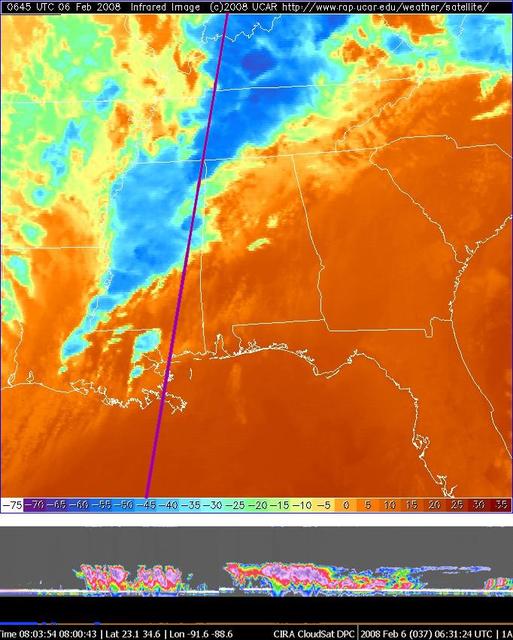
NASA CloudSat made a nighttime overpass approximately 0630 UTC of the thunderstorms responsible for the tornadic outbreak over Kentucky, Tennessee, and Mississippi on Tuesday, February 5, 2008.
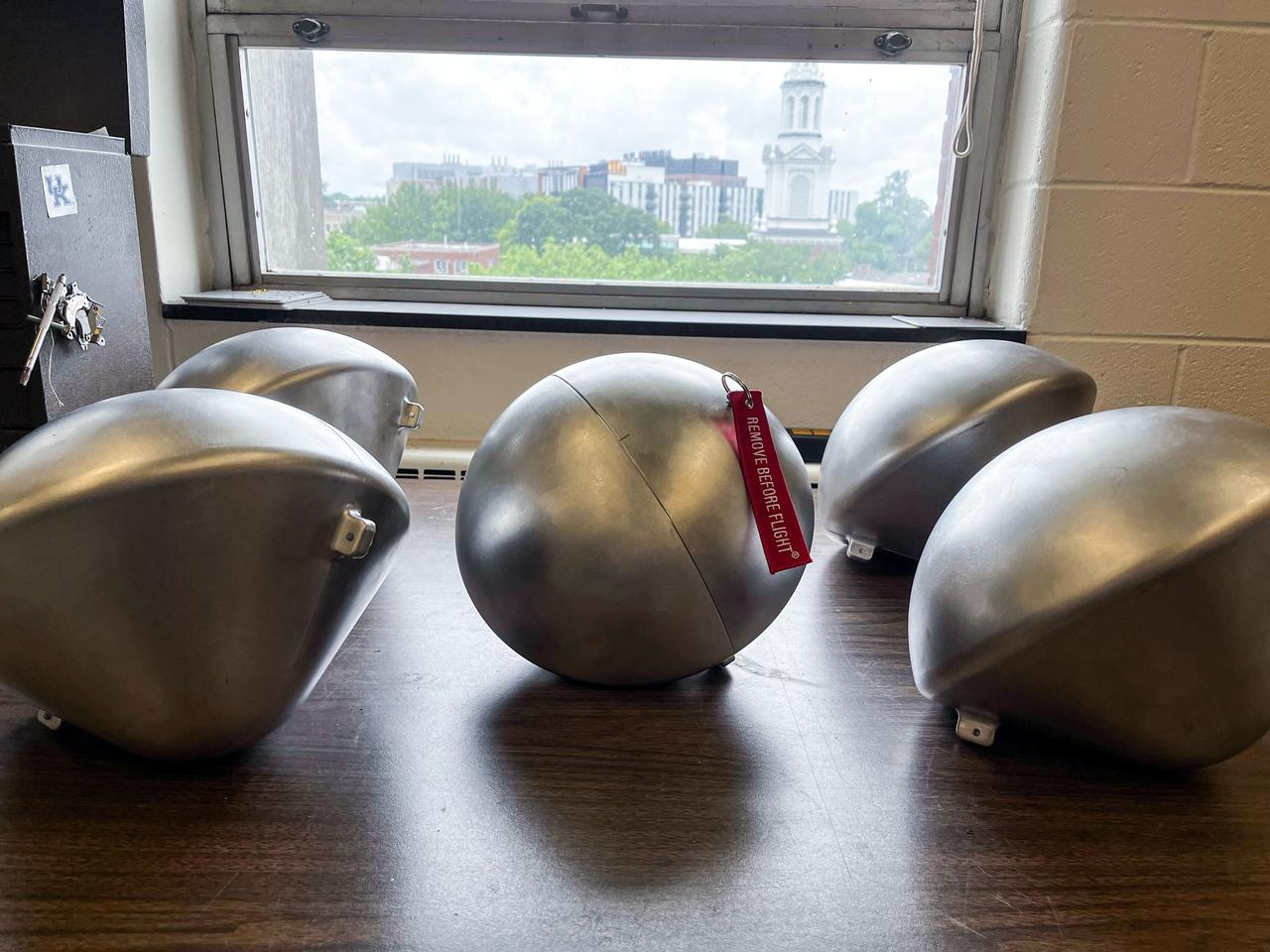
jsc2024e005968 (1/122024) --- The five Kentucky Re-Entry Universal Payload System (KRUPS) capsules of the KREPE-2 mission are pictured on the ground, encapsulated in the ISS-KREM shell. Thermal Protection Systems (TPS) technology uses three capsules outfitted with different heat shield materials and a variety of sensors to obtain data on actual reentry conditions. KREPE-2 tests new heat shields from NASA as well as a heat shield manufactured entirely at the University of Kentucky. Image courtesy of the University of Kentucky.
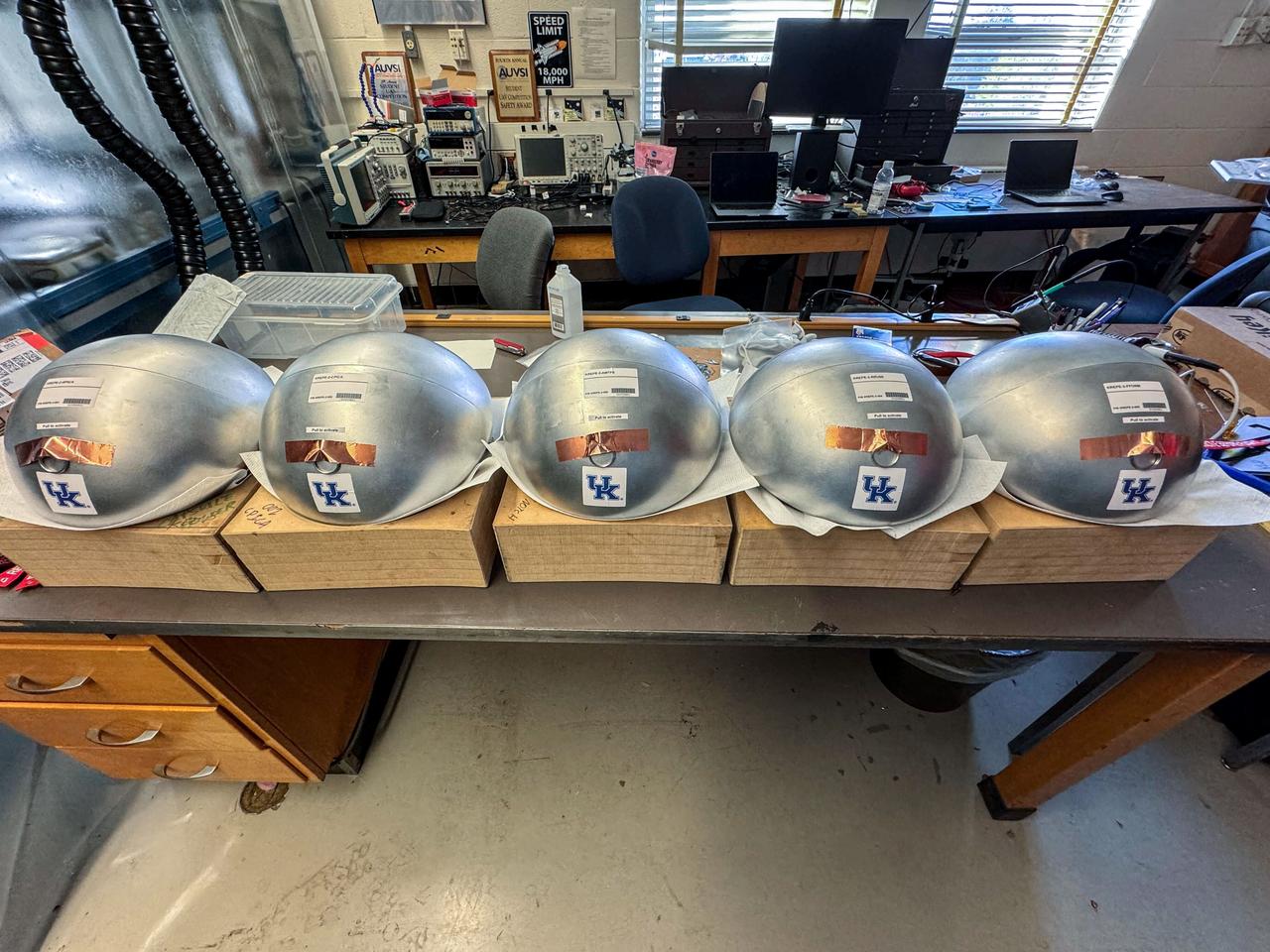
jsc2024e005967 (1/12/2024) --- The five Kentucky Re-Entry Universal Payload System (KRUPS) capsules of the KREPE-2 mission are pictured on the ground, encapsulated in the ISS-KREM shell. Thermal Protection Systems (TPS) technology uses three capsules outfitted with different heat shield materials and a variety of sensors to obtain data on actual reentry conditions. KREPE-2 tests new heat shields from NASA as well as a heat shield manufactured entirely at the University of Kentucky. Image courtesy of the University of Kentucky.
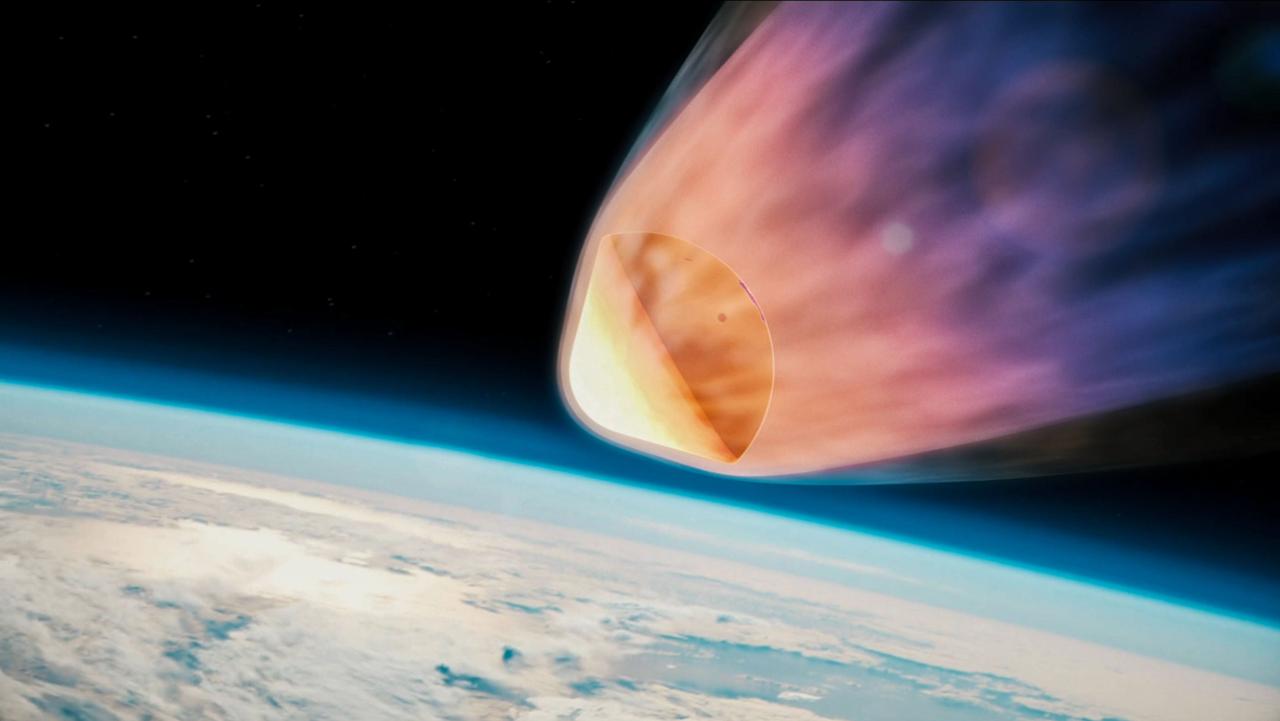
jsc2024e005969 (1/18/2024) --- Artist rendering of the Kentucky Re-Entry Universal Payload System (KRUPS) capsule during re-entry. KREPE-2 expands on prior research that aims to protect experiments and other cargo returning to Earth. Image courtesy of the University of Kentucky.
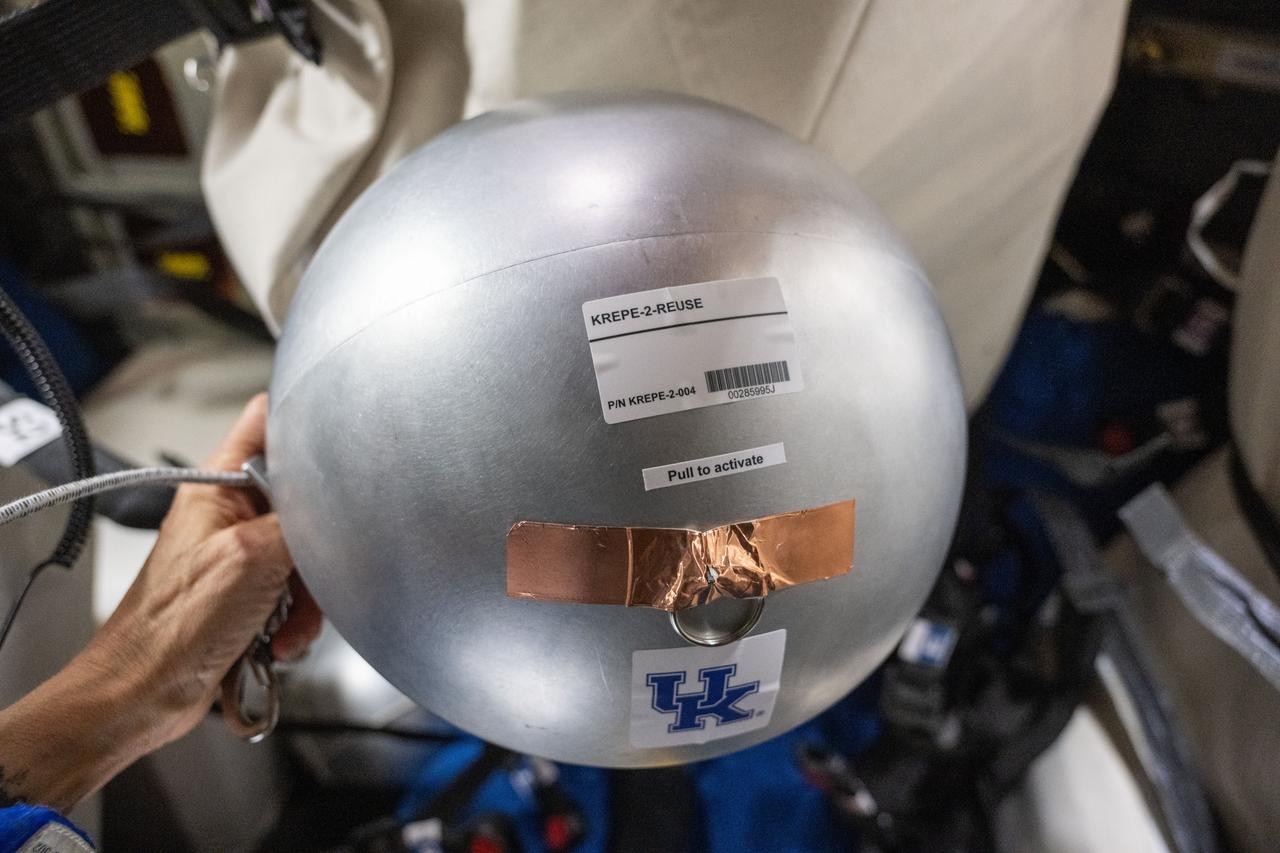
iss071e297186 (7/9/2024) --- One of the five Kentucky Re-Entry Universal Payload System (KRUPS) capsules of the Kentucky Re-entry Probe Experiment-2 (KREPE-2) mission aboard the International Space Station, encapsulated in the ISS-KREM shell. Thermal Protection Systems (TPS) technology uses three capsules outfitted with different heat shield materials and a variety of sensors to obtain data on actual reentry conditions. KREPE-2 tests new heat shields from NASA as well as a heat shield manufactured entirely at the University of Kentucky.
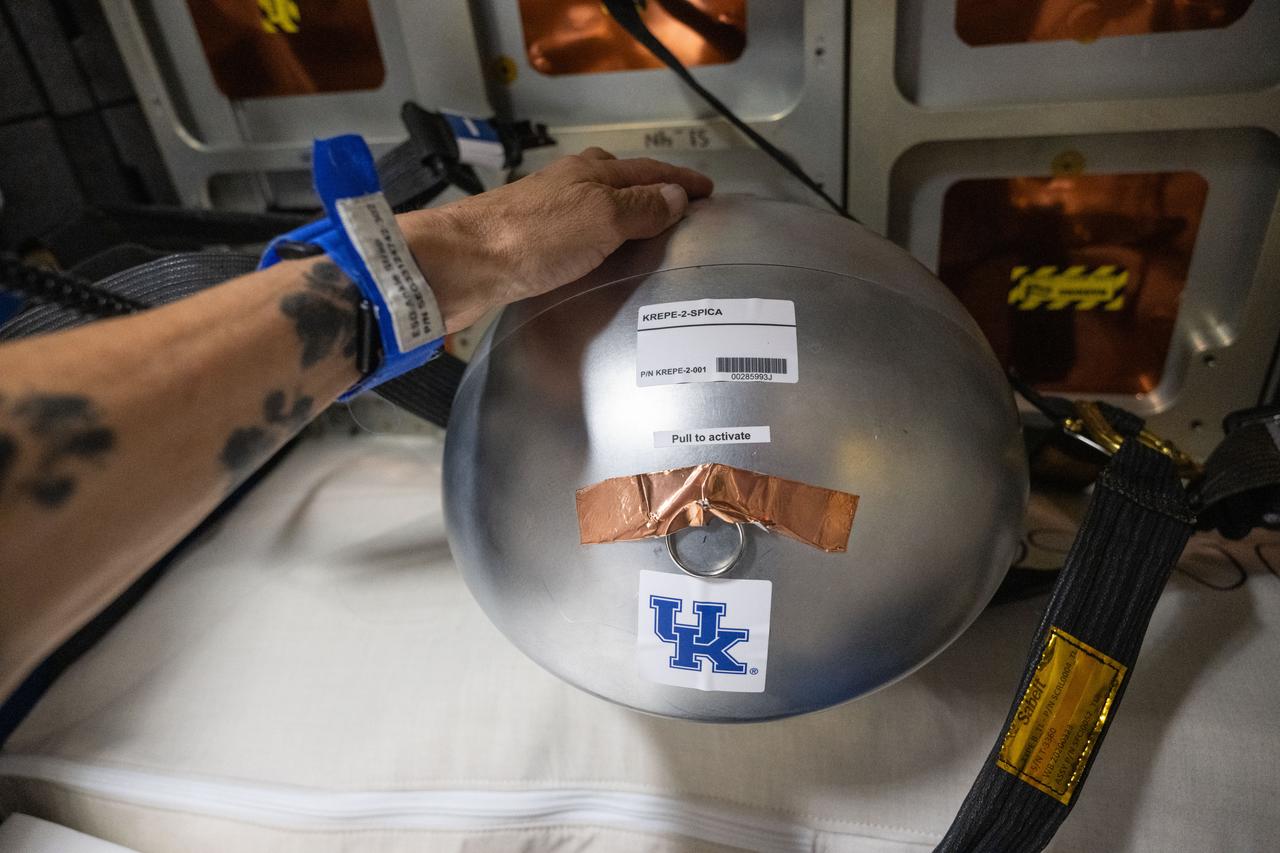
iss071e297164 (7/9/2024) --- One of the five Kentucky Re-Entry Universal Payload System (KRUPS) capsules of the Kentucky Re-entry Probe Experiment-2 (KREPE-2) mission aboard the International Space Station, encapsulated in the ISS-KREM shell. Thermal Protection Systems (TPS) technology uses three capsules outfitted with different heat shield materials and a variety of sensors to obtain data on actual reentry conditions. KREPE-2 tests new heat shields from NASA as well as a heat shield manufactured entirely at the University of Kentucky.
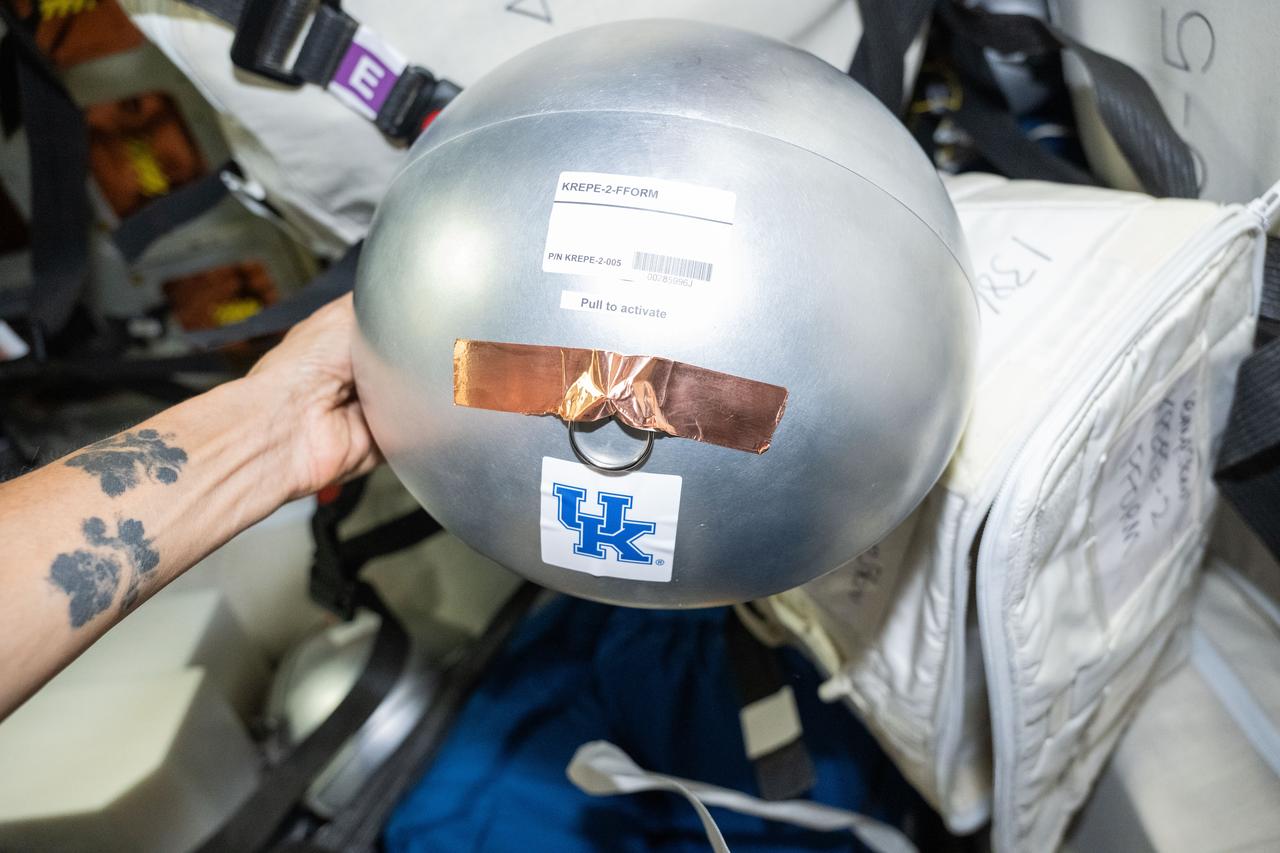
iss071e312452 (7/9/2024) --- One of the five Kentucky Re-Entry Universal Payload System (KRUPS) capsules of the Kentucky Re-entry Probe Experiment-2 (KREPE-2) mission aboard the International Space Station, encapsulated in the ISS-KREM shell. Thermal Protection Systems (TPS) technology uses three capsules outfitted with different heat shield materials and a variety of sensors to obtain data on actual reentry conditions. KREPE-2 tests new heat shields from NASA as well as a heat shield manufactured entirely at the University of Kentucky.
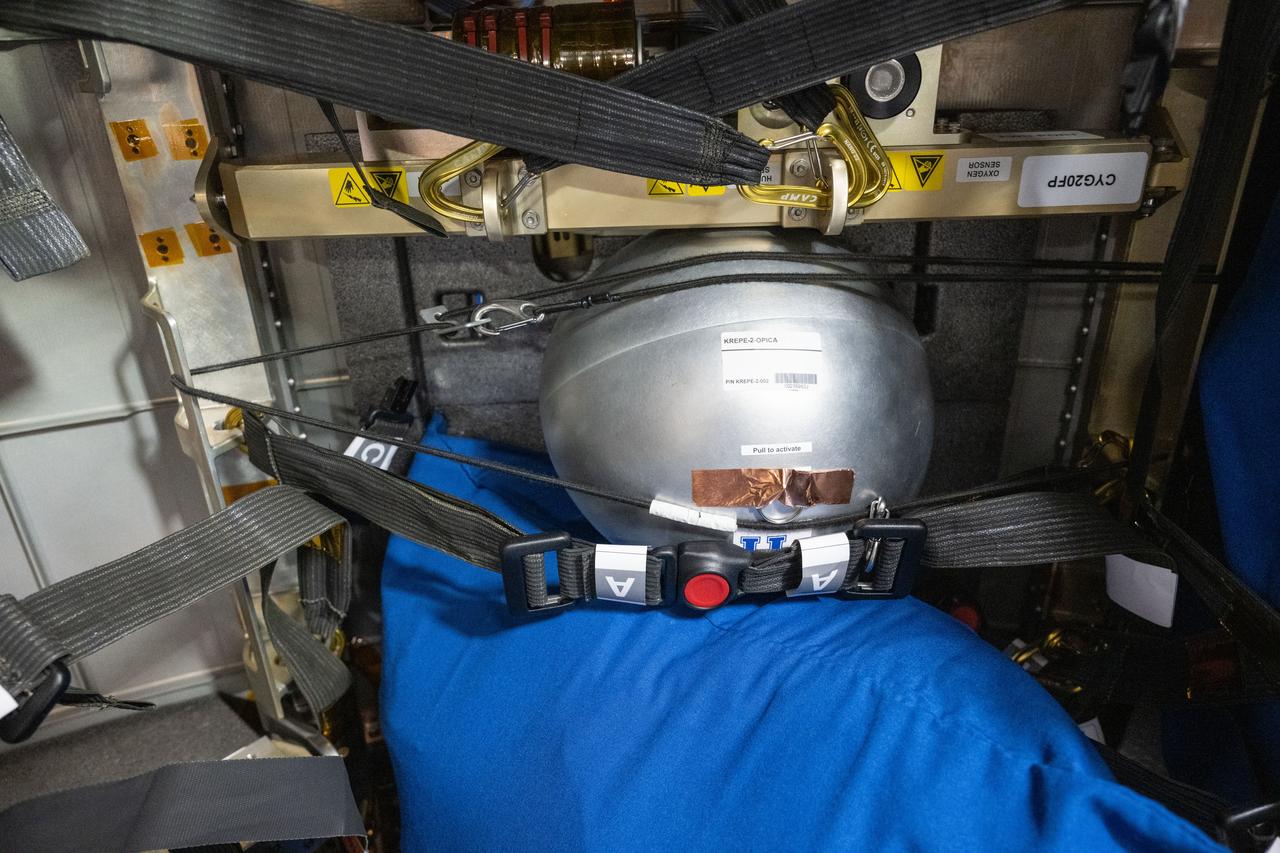
iss071e297176 (7/9/2024) --- One of the five Kentucky Re-Entry Universal Payload System (KRUPS) capsules of the Kentucky Re-entry Probe Experiment-2 (KREPE-2) mission aboard the International Space Station, encapsulated in the ISS-KREM shell. Thermal Protection Systems (TPS) technology uses three capsules outfitted with different heat shield materials and a variety of sensors to obtain data on actual reentry conditions. KREPE-2 tests new heat shields from NASA as well as a heat shield manufactured entirely at the University of Kentucky.
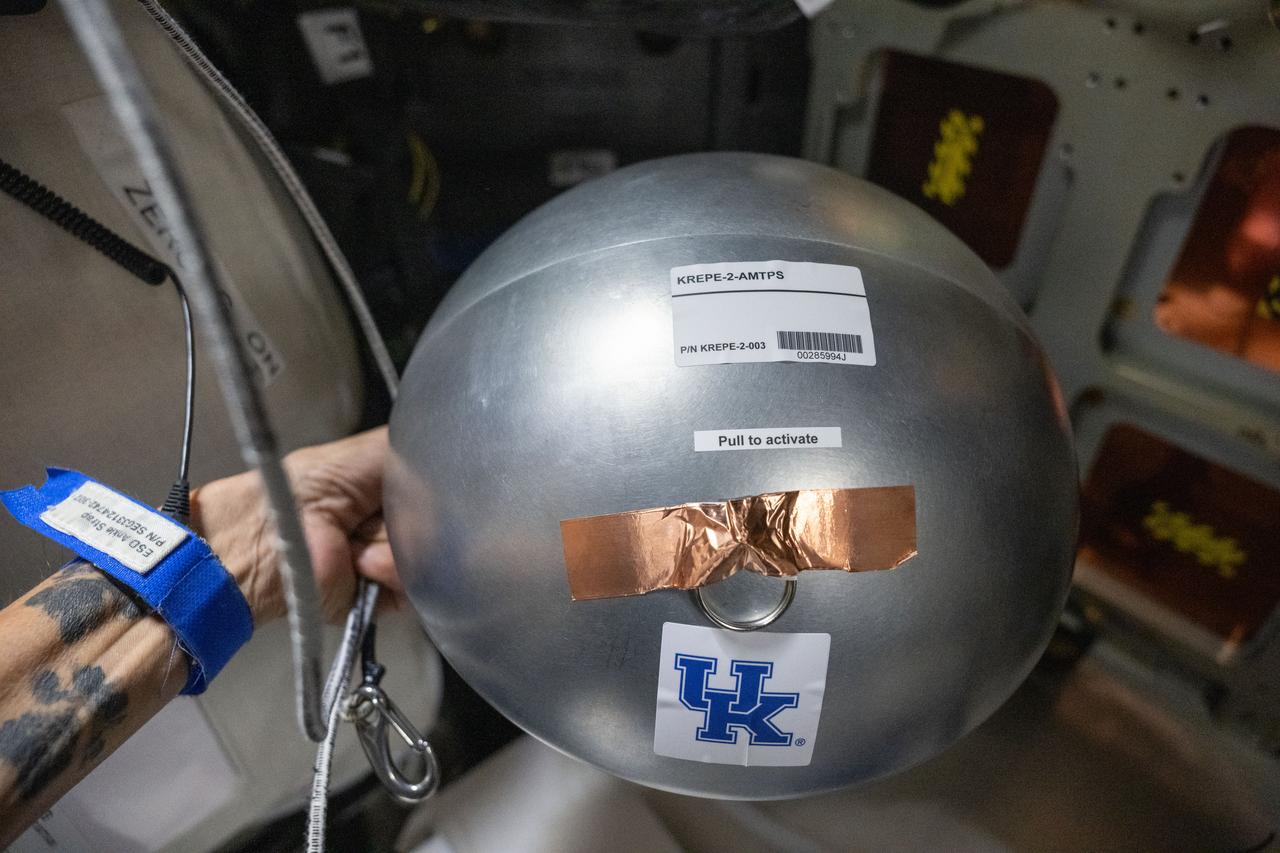
iss071e297177 (7/9/2024) --- One of the five Kentucky Re-Entry Universal Payload System (KRUPS) capsules of the Kentucky Re-entry Probe Experiment-2 (KREPE-2) mission aboard the International Space Station, encapsulated in the ISS-KREM shell. Thermal Protection Systems (TPS) technology uses three capsules outfitted with different heat shield materials and a variety of sensors to obtain data on actual reentry conditions. KREPE-2 tests new heat shields from NASA as well as a heat shield manufactured entirely at the University of Kentucky.
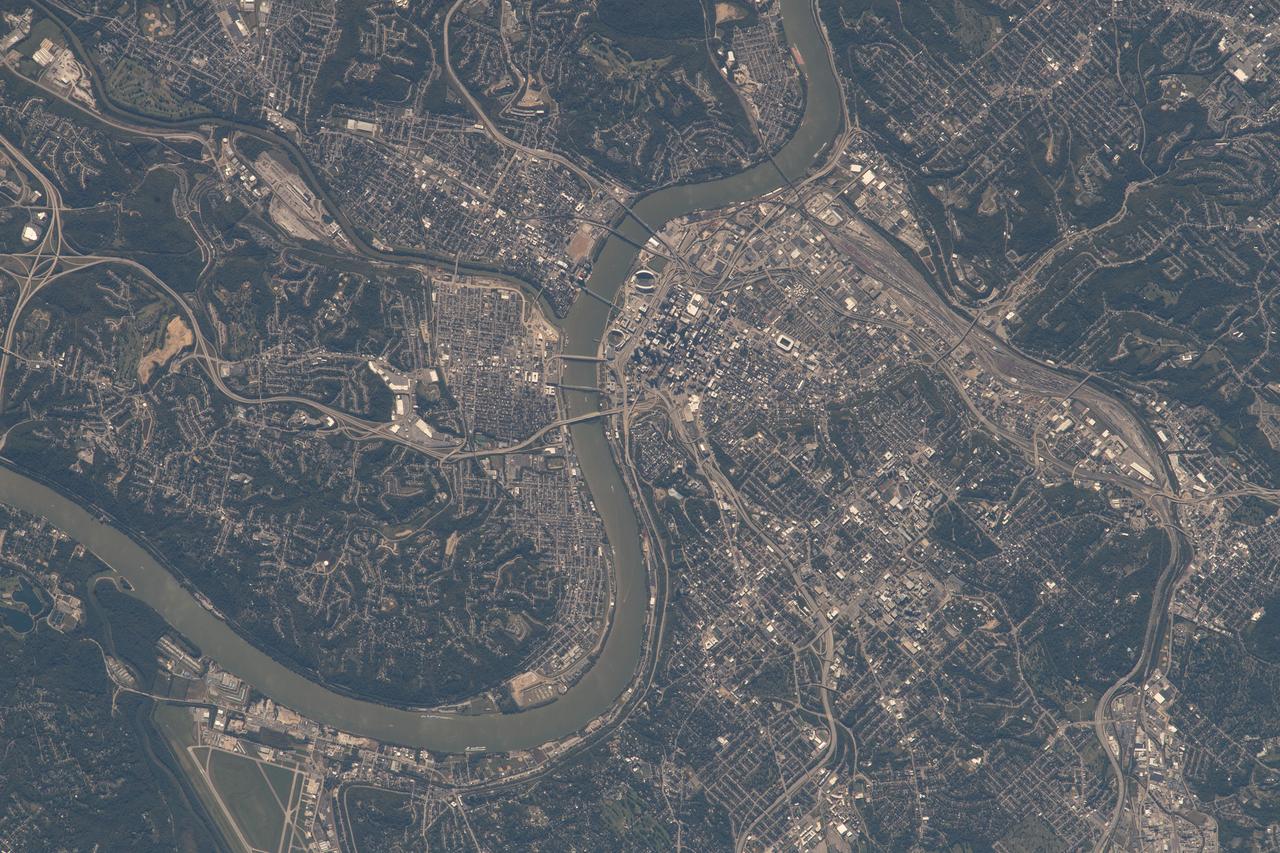
iss068e006622 (Sept. 30, 2022) --- The Ohio River splits the U.S. cities of Cincinnati, Ohio (right), and Covington, Kentucky (left), in this photograph of the International Space Station as it orbited 260 miles above the Buckeye State.
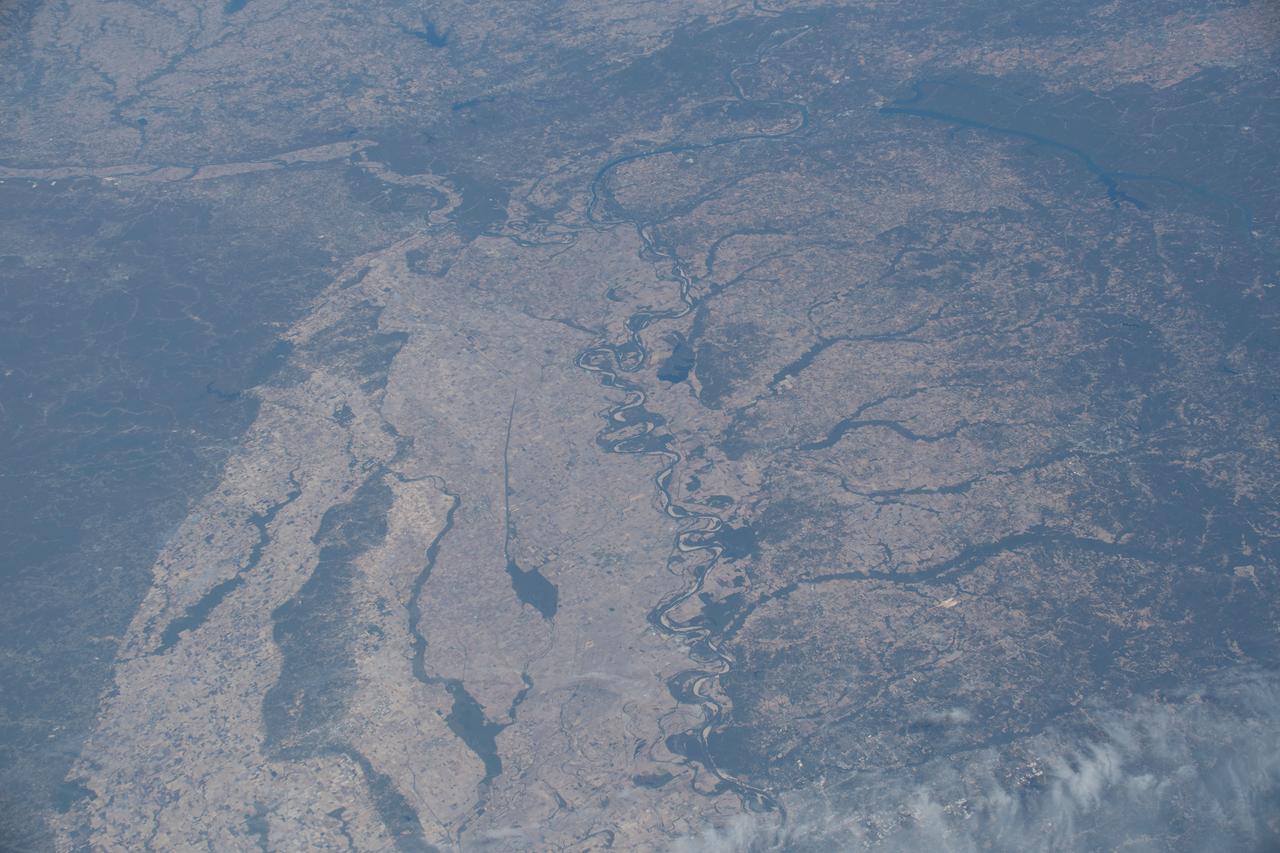
iss070e008440 (Oct. 22, 2023) --- The Mississippi River Valley and portions of the states of Arkansas, Missouri, Tennessee, Kentucky, and Illinois are pictured from the International Space Station as it orbited 261 miles above
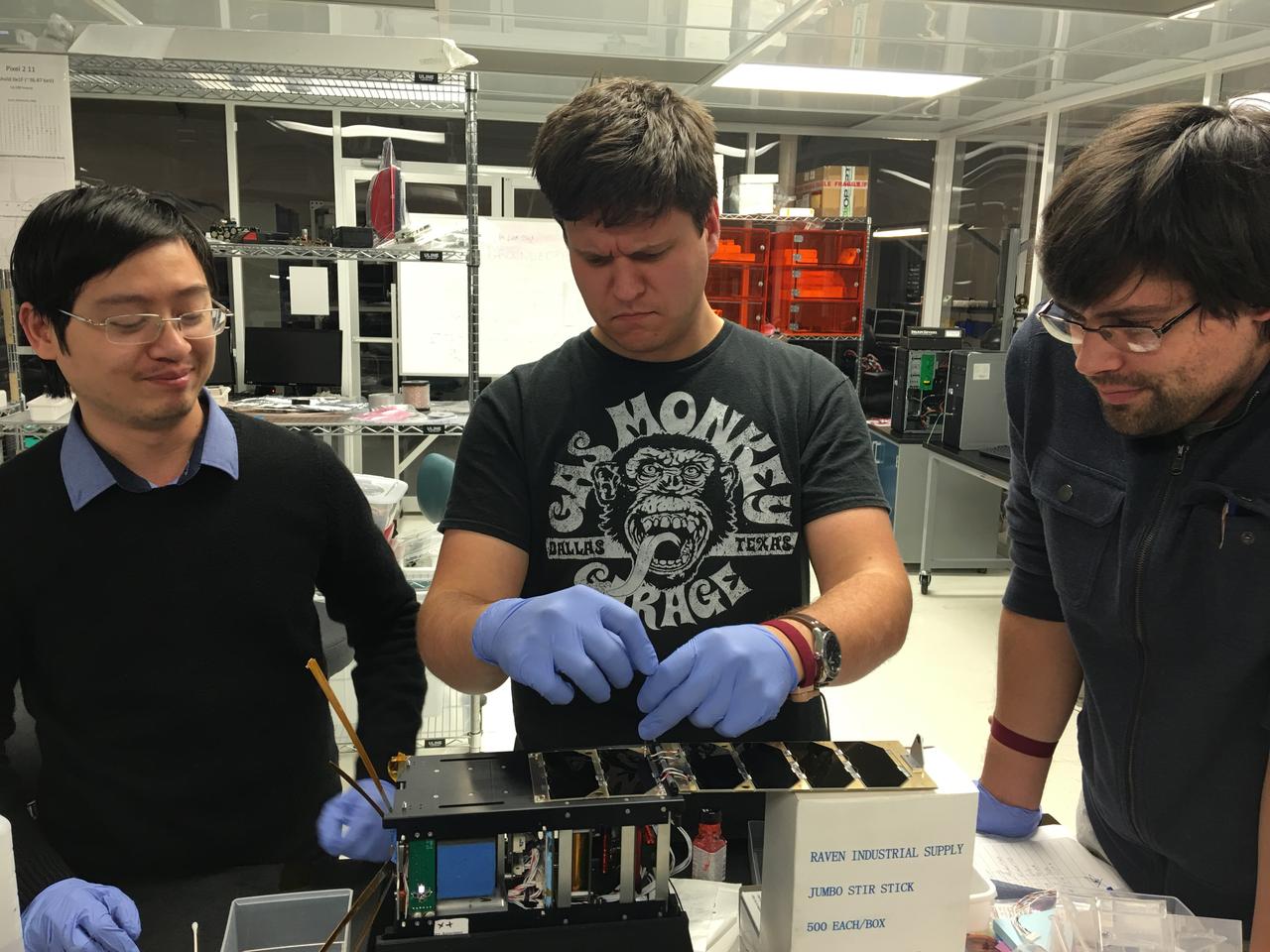
CXBN-2 Integration Team in the Morehead State University Spacecraft Integration and Assembly Facility. Left to right: Kein Dant, Yevgeniy Byleborodov, and Nate Richard. The Cosmic X-Ray Background NanoSat-2 (CXBN-2) CubeSat Mission developed by Morehead State University and its partners the Keldysh Institute (Moscow, Russia), the Maysville Community and Technical College (Morehead, KY) and KYSpace LLC (Lexington, KY) will increase the precision of measurements of the Cosmic X-Ray Background in the 30-50 keV range to a precision of <5%, thereby constraining models that attempt to explain the relative contribution of proposed sources lending insight into the underlying physics of the early universe. The mission addresses a fundamental science question that is central to our understanding of the structure, origin, and evolution of the universe by potentially lending insight into both the high-energy background radiation and into the evolution of primordial galaxies. Launched by NASA’s CubeSat Launch Initiative NET April 18, 2017 ELaNa XVII mission on the seventh Orbital-ATK Cygnus Commercial Resupply Services (OA-7) to the International Space Station and deployed on tbd.
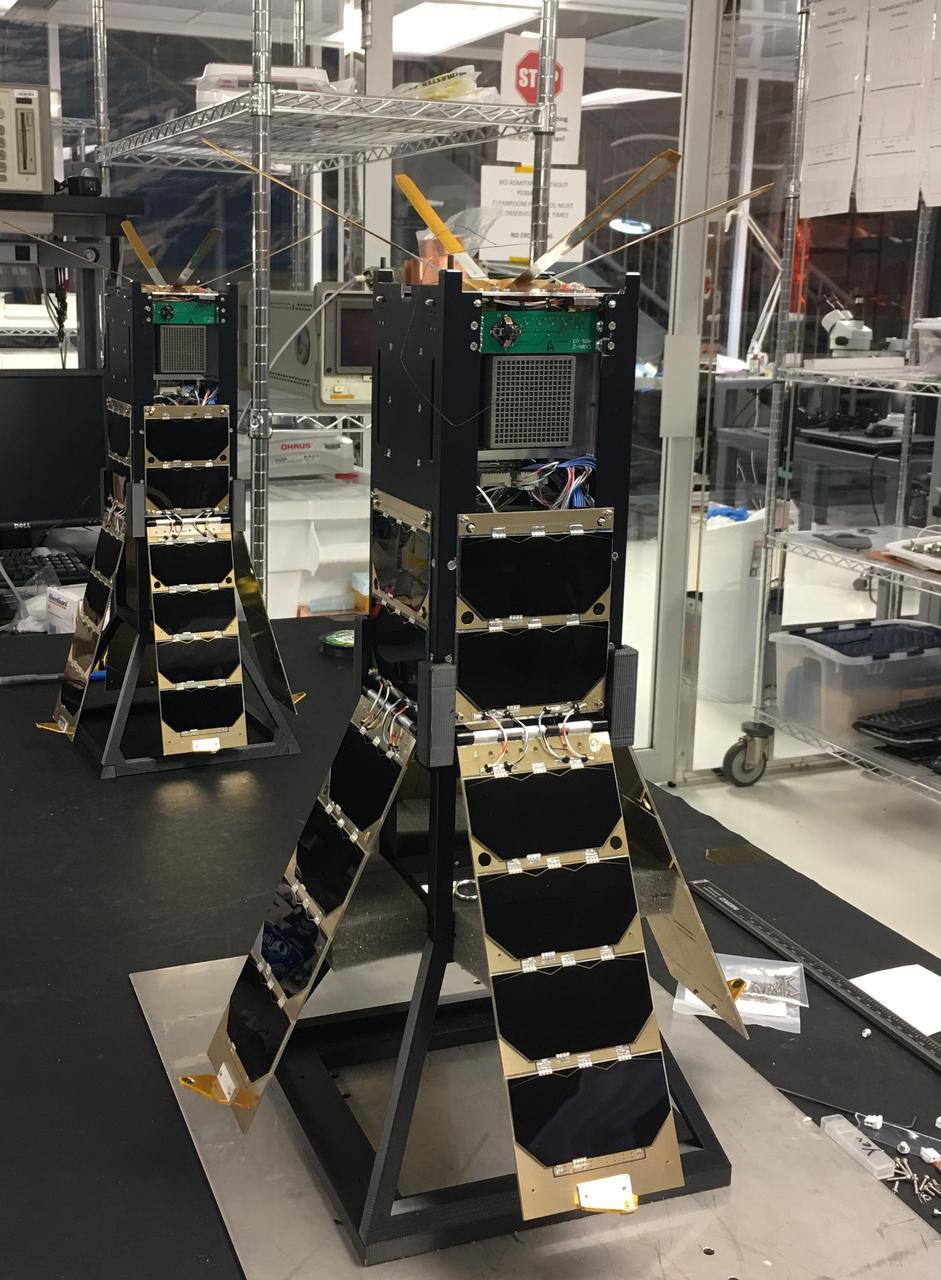
The Cosmic X-Ray Background NanoSat-2 (CXBN-2) CubeSat Mission developed by Morehead State University and its partners the Keldysh Institute (Moscow, Russia), the Maysville Community and Technical College (Morehead, KY) and KYSpace LLC (Lexington, KY) will increase the precision of measurements of the Cosmic X-Ray Background in the 30-50 keV range to a precision of <5%, thereby constraining models that attempt to explain the relative contribution of proposed sources lending insight into the underlying physics of the early universe. The mission addresses a fundamental science question that is central to our understanding of the structure, origin, and evolution of the universe by potentially lending insight into both the high-energy background radiation and into the evolution of primordial galaxies. Launched by NASA’s CubeSat Launch Initiative NET April 18, 2017 ELaNa XVII mission on the seventh Orbital-ATK Cygnus Commercial Resupply Services (OA-7) to the International Space Station and deployed on tbd.

iss067e188778 (July 16, 2022) --- NASA astronaut and Expedition 67 Flight Engineer Bob Hines activates a CubeLab Satellite to validate a new attitude control technology for small satellites. The experimental device, designed by the University of Kentucky in partnership with TangoLab, was launched to the International Space Station aboard Northrop Grumman's Cygnus space freighter.
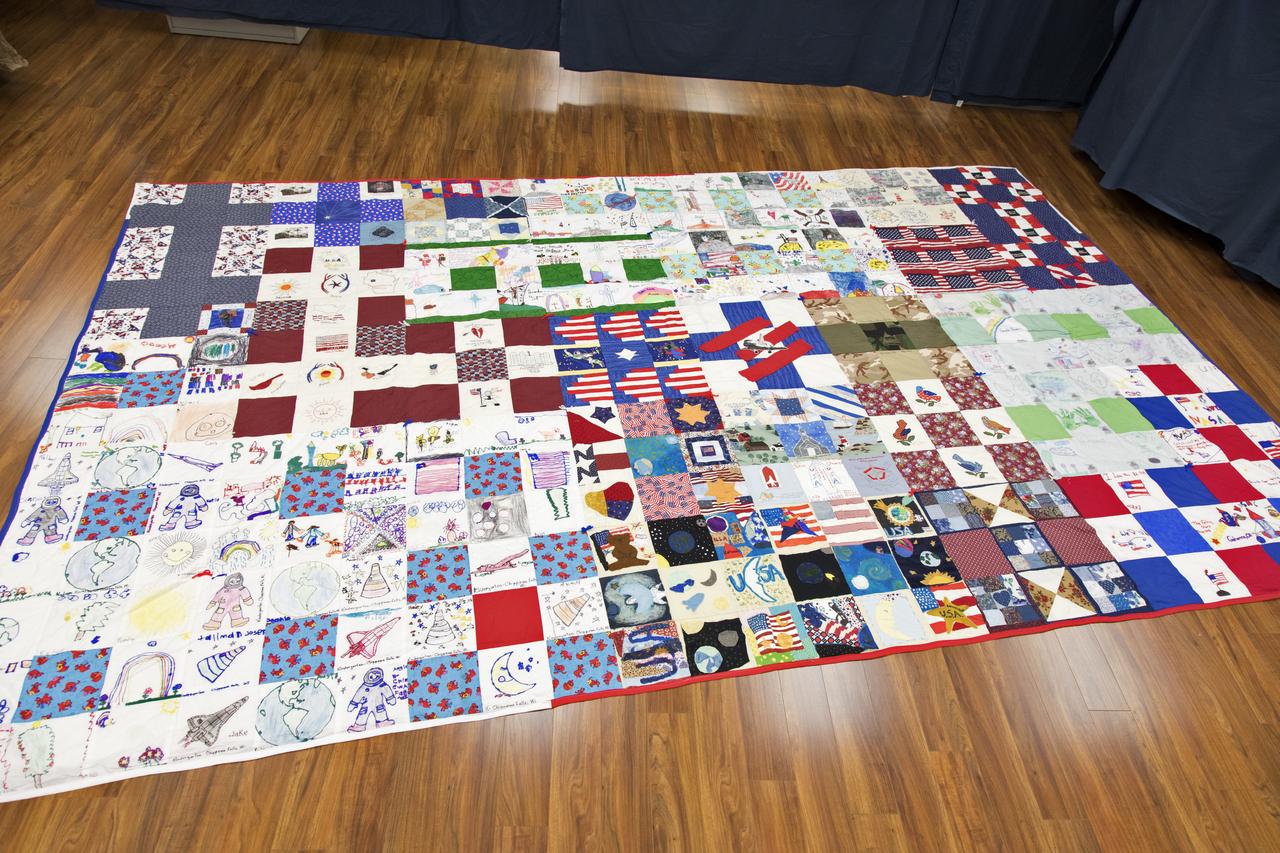
A giant hand-made quilt in honor of space shuttle Columbia and her crew was turned over to the Columbia Preservation Room inside the Vehicle Assembly Building at NASA's Kennedy Space Center in Florida. The quilt was made by Katherine Walsh, a lifelong NASA and space program fan originally from Kentucky.
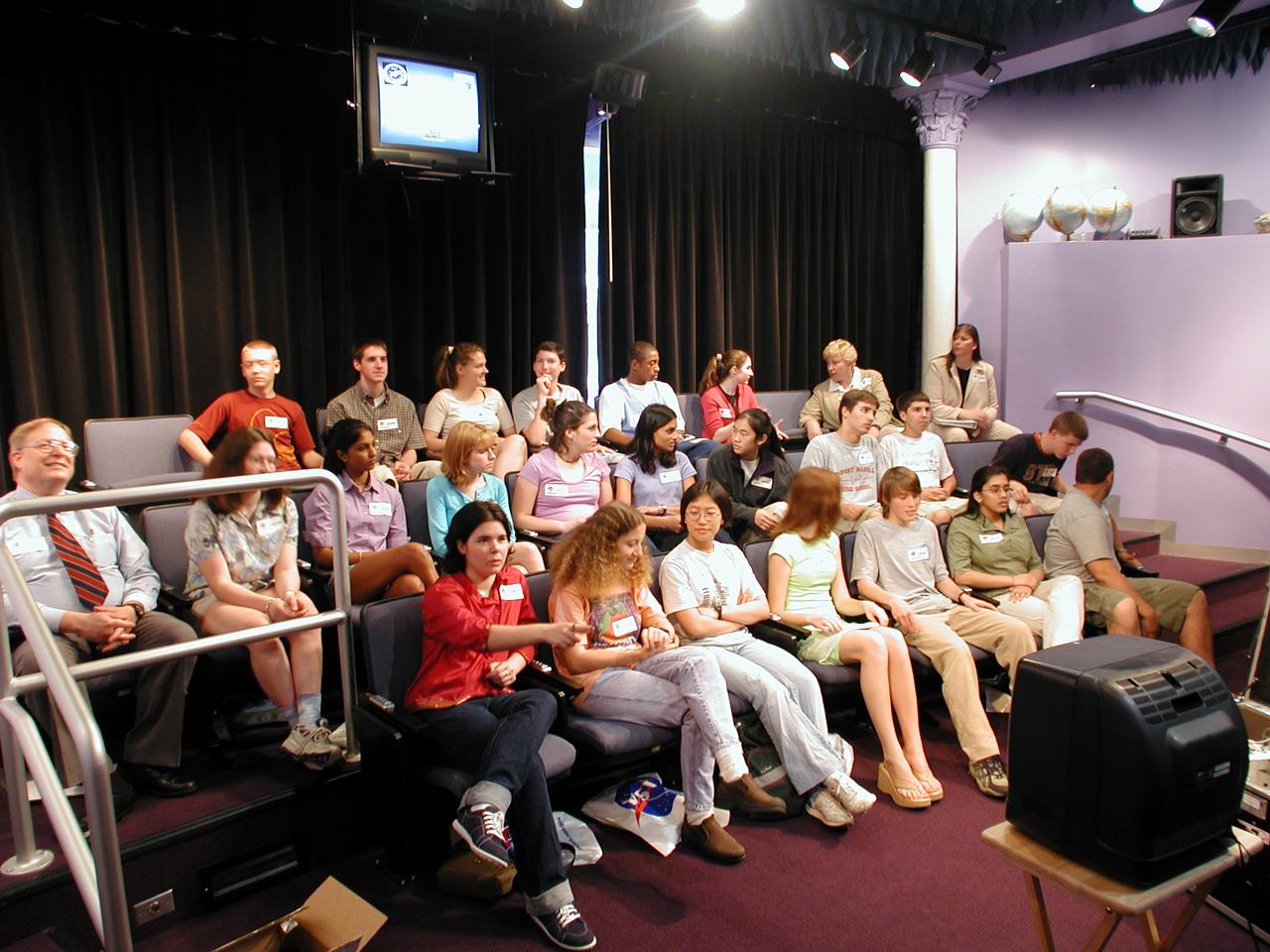
Students from DuPont Manual High School in Louisville, Kentucky participated in a video-teleconference during the Pan-Pacific Basin Workshop on Microgravity Sciences held in Pasadena, California. The event originated at the California Science Center in Los Angeles. The DuPont Manual students patched in to the event through the distance learning lab at the Louisville Science Center. This image is from a digital still camera; higher resolution is not available.
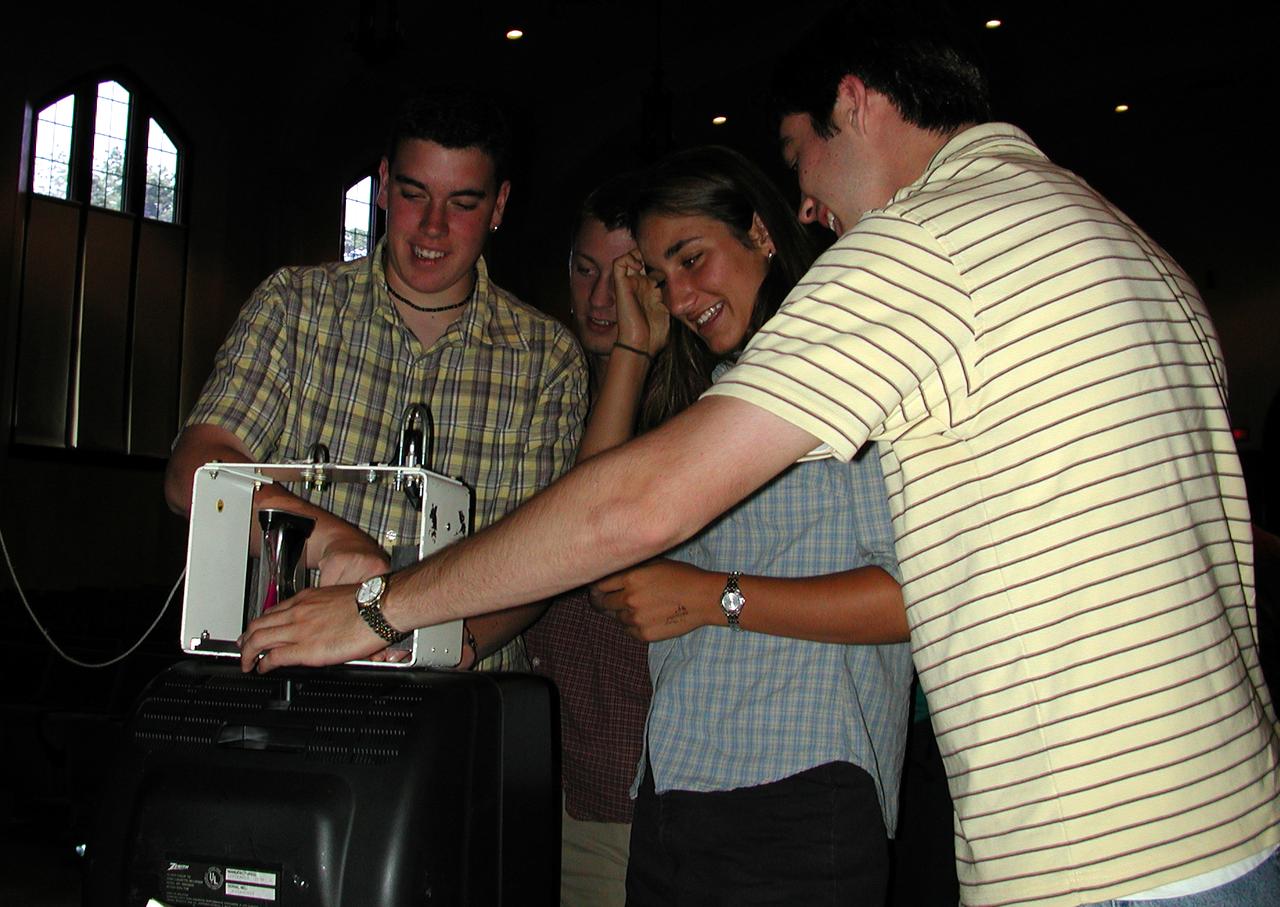
Marshall Space Flight Center employees visited DuPont Manual High School in Louisville, Kentucky. NASA's Mini Drop Tower was used to demonstrate free fall and a presentation was given on microgravity and the science performed in a microgravity environment. The visit coincided with the Pan-Pacific Basin Workshop on Microgravity Sciences held in Pasadena, California. Students experiment with the mini-drop tower. This image is from a digital still camera; higher resolution is not available.
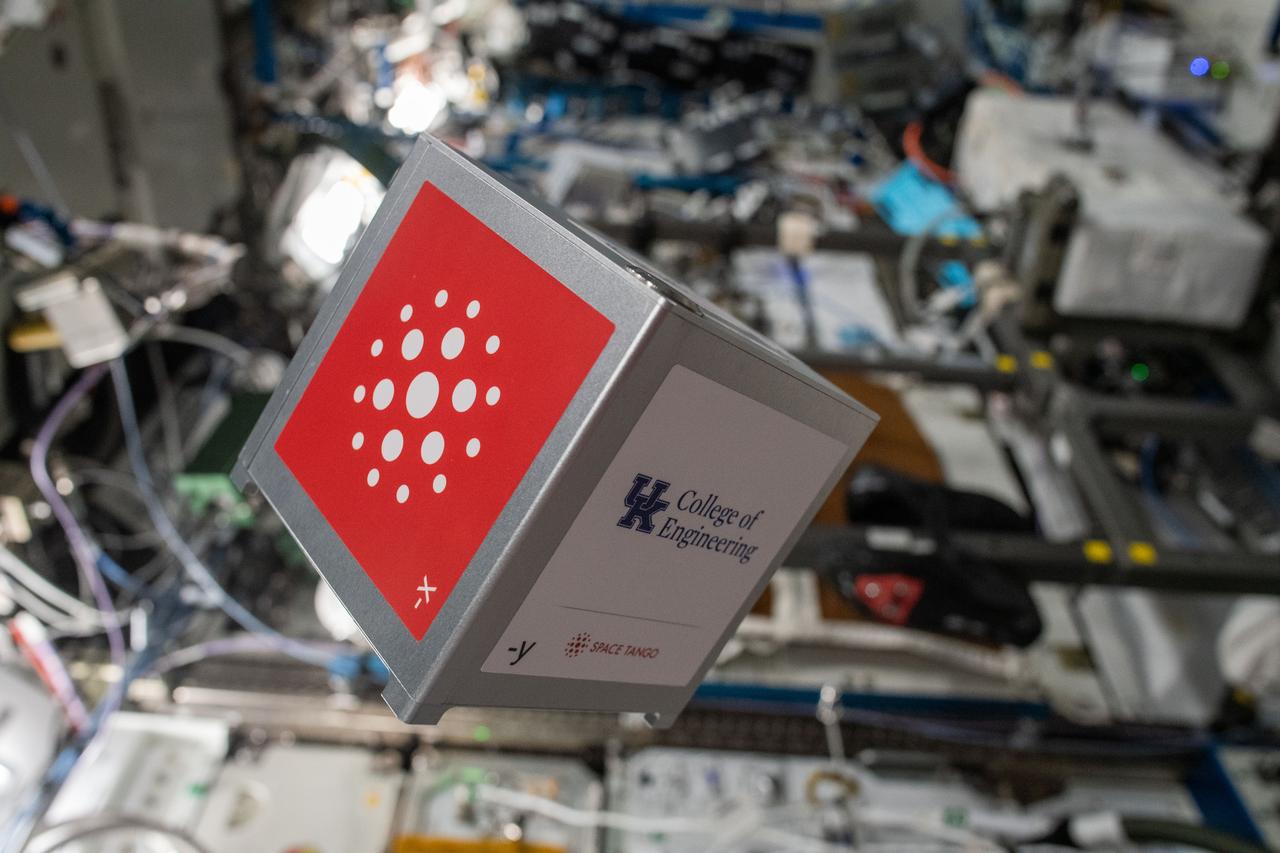
iss067e000403 (3/31/2022) --- A view of a Cube containing Space Tango - Cubelab Satellite Demonstrator, part of TangoLab Mission-25 aboard the International Space Station (ISS). Space Tango - University of Kentucky Cubelab Satellite Demonstrator (Space Tango - Cubelab Satellite Demonstrator) tests a new attitude-control technology for small satellites, which is an integral part of future space missions.
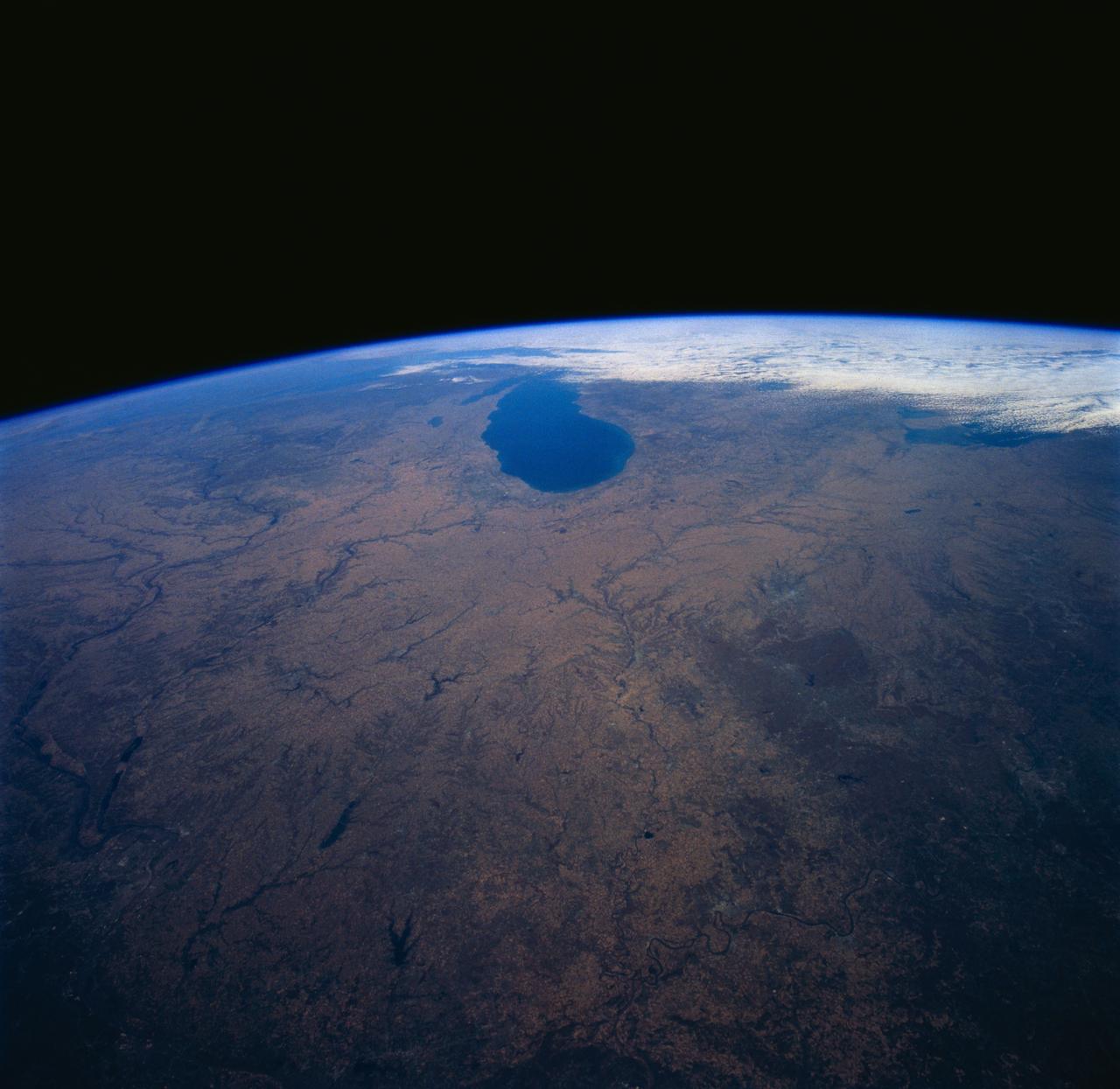
STS058-102-018 (18 Oct-1 Nov 1993) --- A cloud-free, wide-angle view from above western Tennessee to the northern edge of Lake Michigan. The view extends from Saint Louis, Missouri near the lower left-hand corner, past Evansville, Indiana and Louisville, Kentucky to Cincinnati, Ohio. A range of hills covered by trees in Fall foliage extends from the Ohio River toward Lake Michigan, ending just southwest of Indianapolis, Indiana.
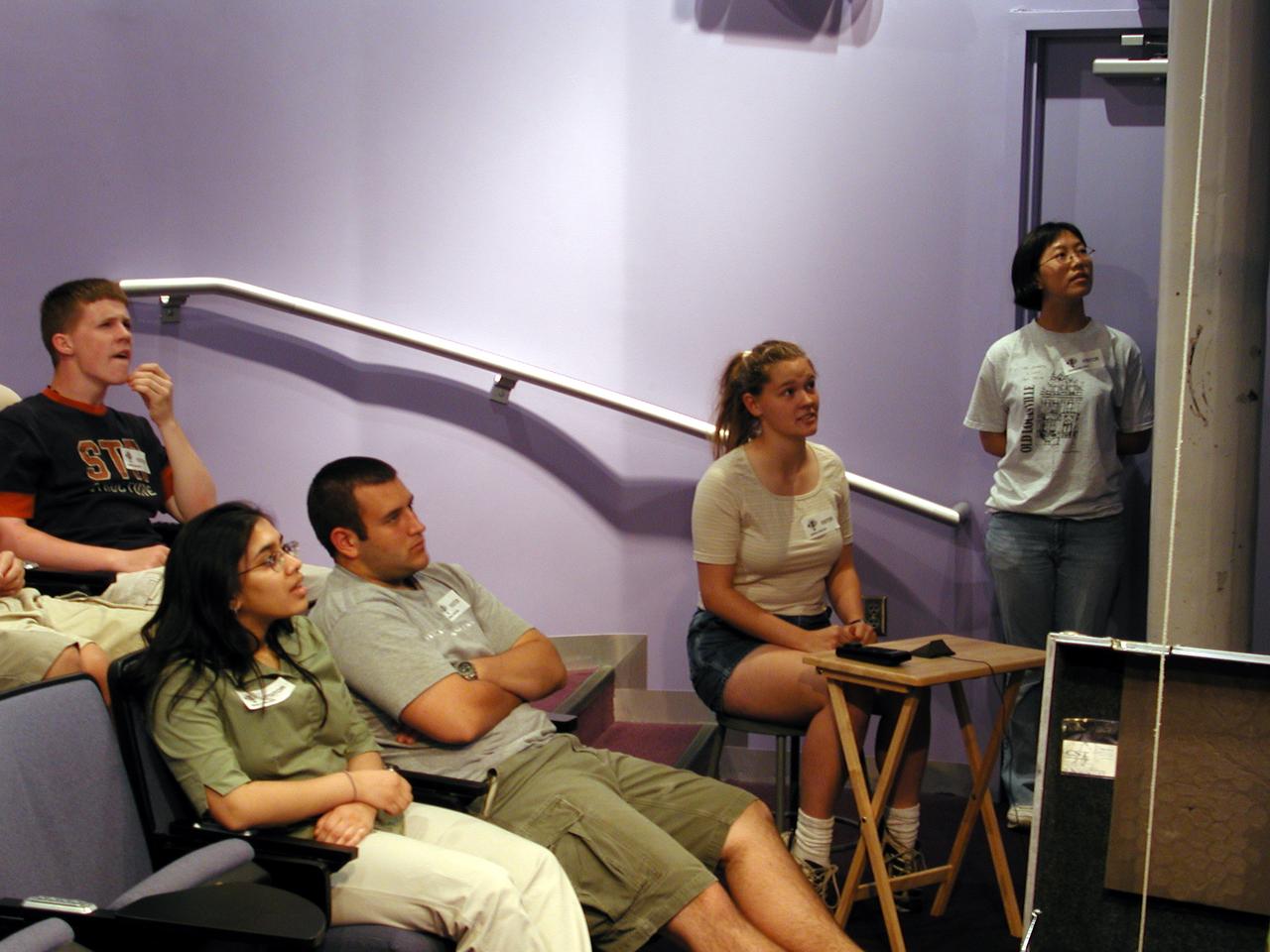
Suzarne Nichols (12th grade) from DuPont Manual High School in Louisville, Kentucky, asks a question of on of the on-line lecturers during the Pan-Pacific Basin Workshop on Microgravity Sciences held in Pasadena, California. The event originated at the California Science Center in Los Angeles. The DuPont Manual students patched in to the event through the distance learning lab at the Louisville Science Center. Jie Ma (grade 10, at right) waits her turn to ask a question. This image is from a digital still camera; higher resolution is not available.

STS029-S-047 (16 Mar 1989) --- Student experimenter John C. Vellinger, right, watches a TV monitor in the customer support room of Johnson Space Center's mission control center during a downlink from the spacecraft of astronaut John E. Blaha conducting the experiment in the incubator used for the test. The experiment is titled "Chicken Embryo Development in Space." Also visible are Neil Criestie and Robert N. Stuckey of JSC. The experiment's sponsor is Kentucky Fried Chicken.
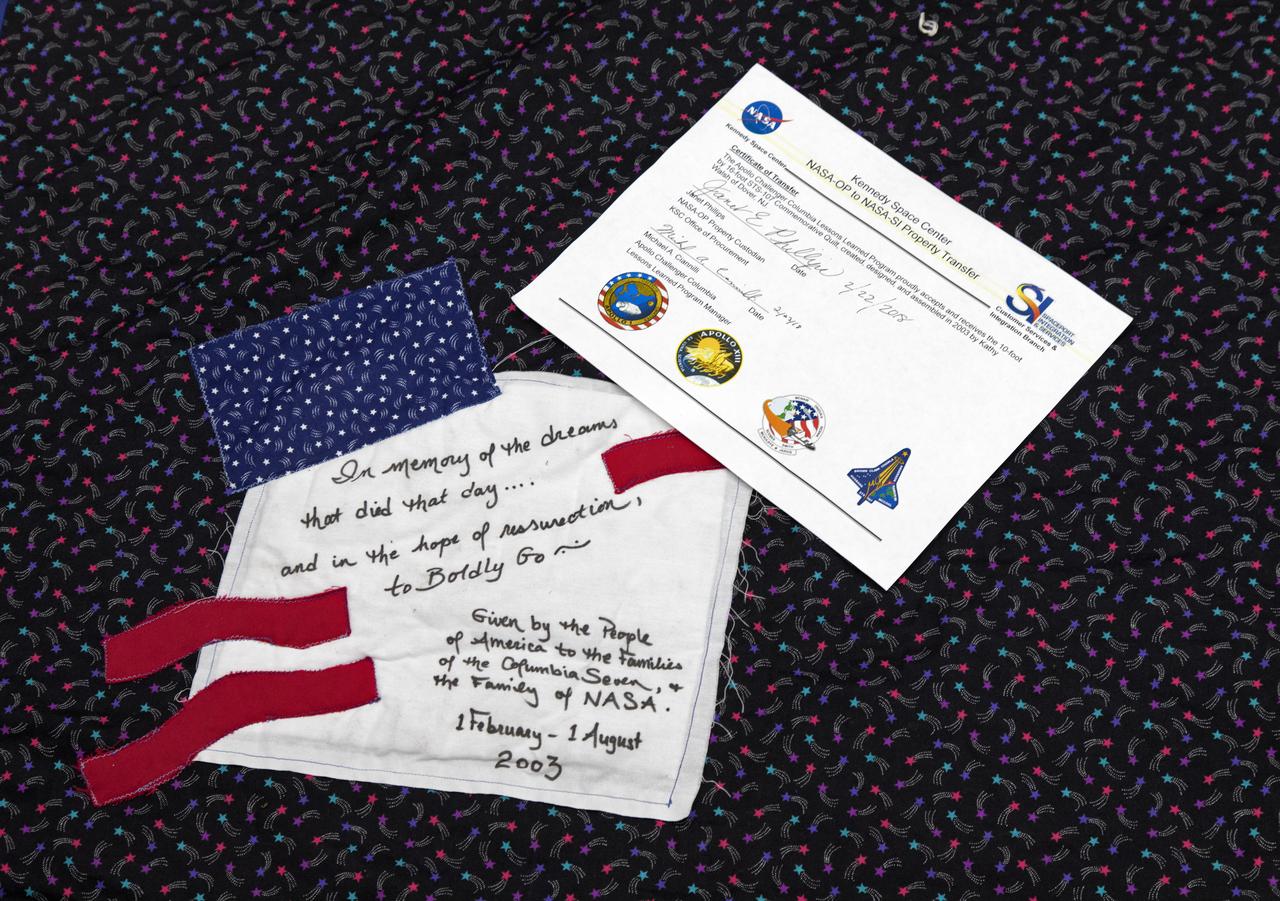
A certificate and quilt square are on display that confirms the transfer of a giant hand-made quilt in honor of space shuttle Columbia and her crew from the Office of Procurement to the Columbia Preservation Room inside the Vehicle Assembly Building at NASA's Kennedy Space Center in Florida. The quilt was made by Katherine Walsh, a lifelong NASA and space program fan originally from Kentucky. The quilt will be displayed in the preservation room with its certificate as part of NASA's Apollo, Challenger, Columbia Lessons Learned Program.
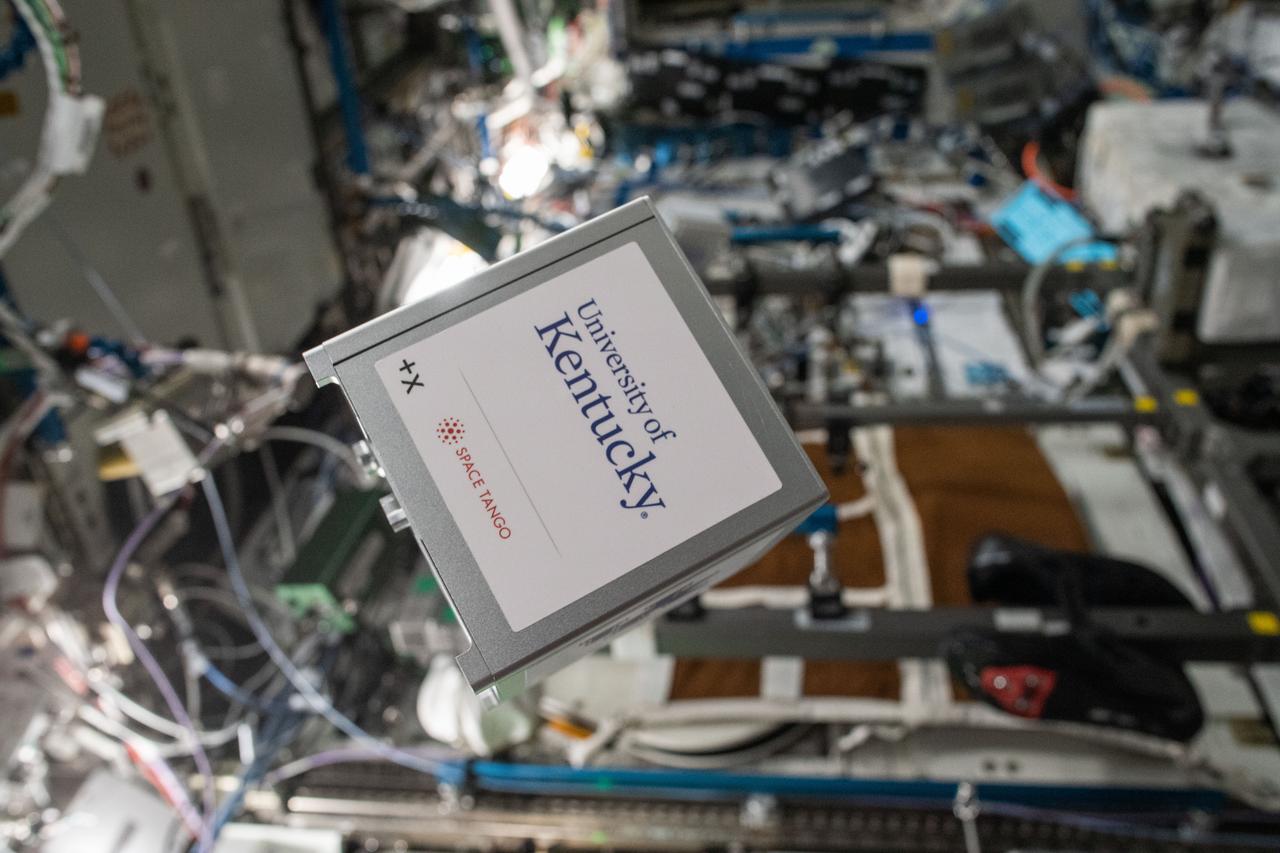
iss067e000411 (3/31/2022) --- A view of a Cube containing Space Tango - Cubelab Satellite Demonstrator, part of TangoLab Mission-25 aboard the International Space Station (ISS). Space Tango - University of Kentucky Cubelab Satellite Demonstrator (Space Tango - Cubelab Satellite Demonstrator) tests a new attitude-control technology for small satellites, which is an integral part of future space missions.
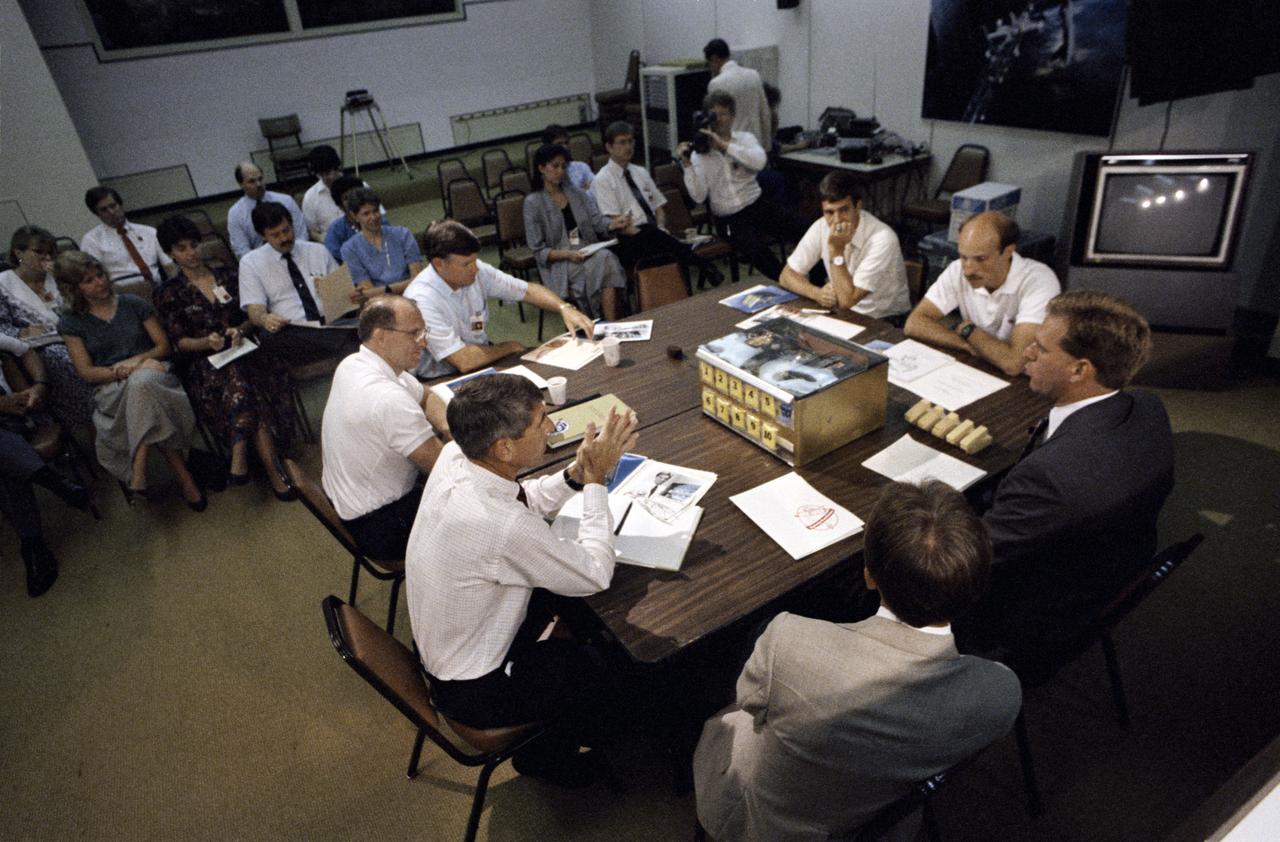
S88-44517 (13 Aug 1988) --- Student experimenter John C. Vellinger, right, explains operation of an incubator used in his experiment to be carried onboard the Discovery for NASA's STS-29 mission next year. His primary audience is made up of STS-29's five-man crew, who will monitor in-space operation of the experiment, titled "Chicken Embryo Development in Space." Kentucky Fried Chicken.
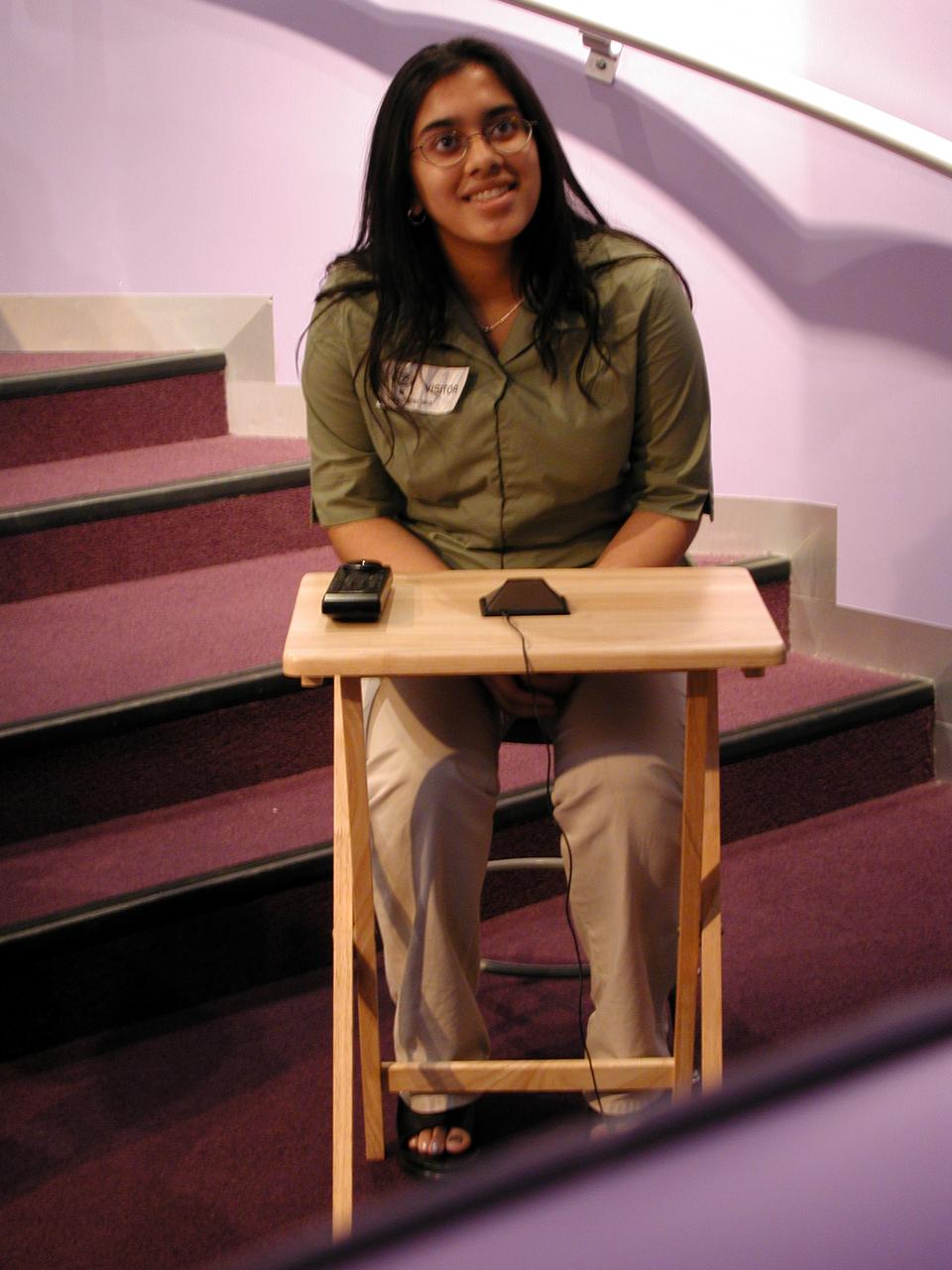
Sutta Chernubhotta (grade 10) from DuPont Manual High School in Louisville, Kentucky, asks a question of on of the on-line lecturers during the Pan-Pacific Basin Workshop on Microgravity Sciences held in Pasadena, California. The event originated at the California Science Center in Los Angeles. The DuPont Manual students patched in to the event through the distance learning lab at the Louisville Science Center. This image is from a digital still camera; higher resolution is not available.

A giant hand-made quilt in honor of space shuttle Columbia and her crew was turned over to the Columbia Preservation Room inside the Vehicle Assembly Building at NASA's Kennedy Space Center in Florida. The quilt was made by Katherine Walsh, a lifelong NASA and space program fan originally from Kentucky. From left, behind the quilt are Janet Phillips, property custodian in Kennedy's Office of Procurement; and Mike Ciannilli, Apollo, Challenger, Columbia Lessons Learned Program manager
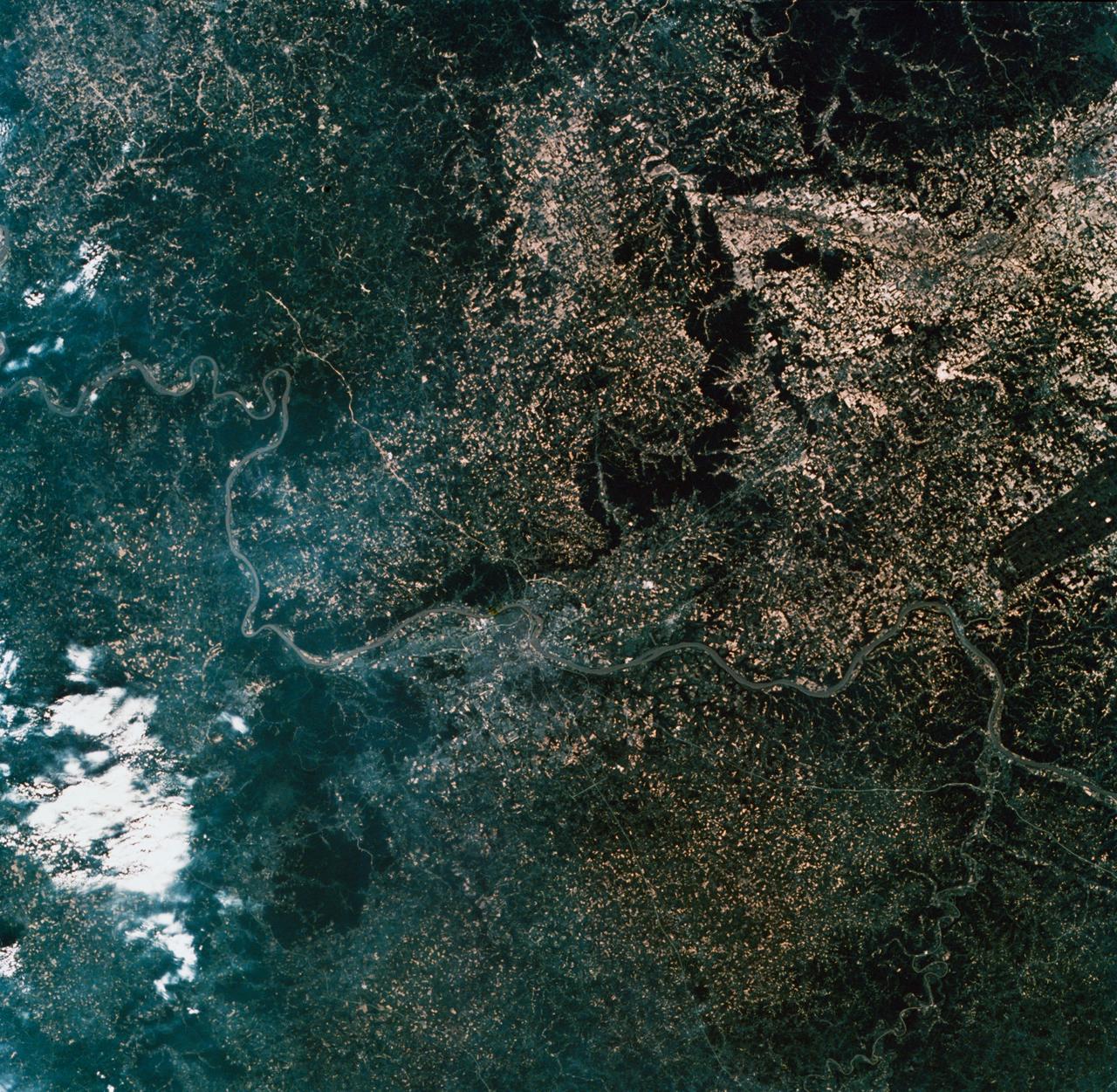
SL2-10-260 (22 June 1973) --- The meandering Ohio River bisecting this image is the border between Kentucky and Indiana. Louisville, KY (38.5N, 86.0W) on the south shore, is the main city seen in this predominately agricultural region where much of the native hardwood forests have been preserved in the hilly terrain. The main crops in this region include corn, alfalfa, wheat and soybeans. The dark rectangle in south Indiana near the river is The U.S. Army's Jefferson Proving Ground. Photo credit: NASA
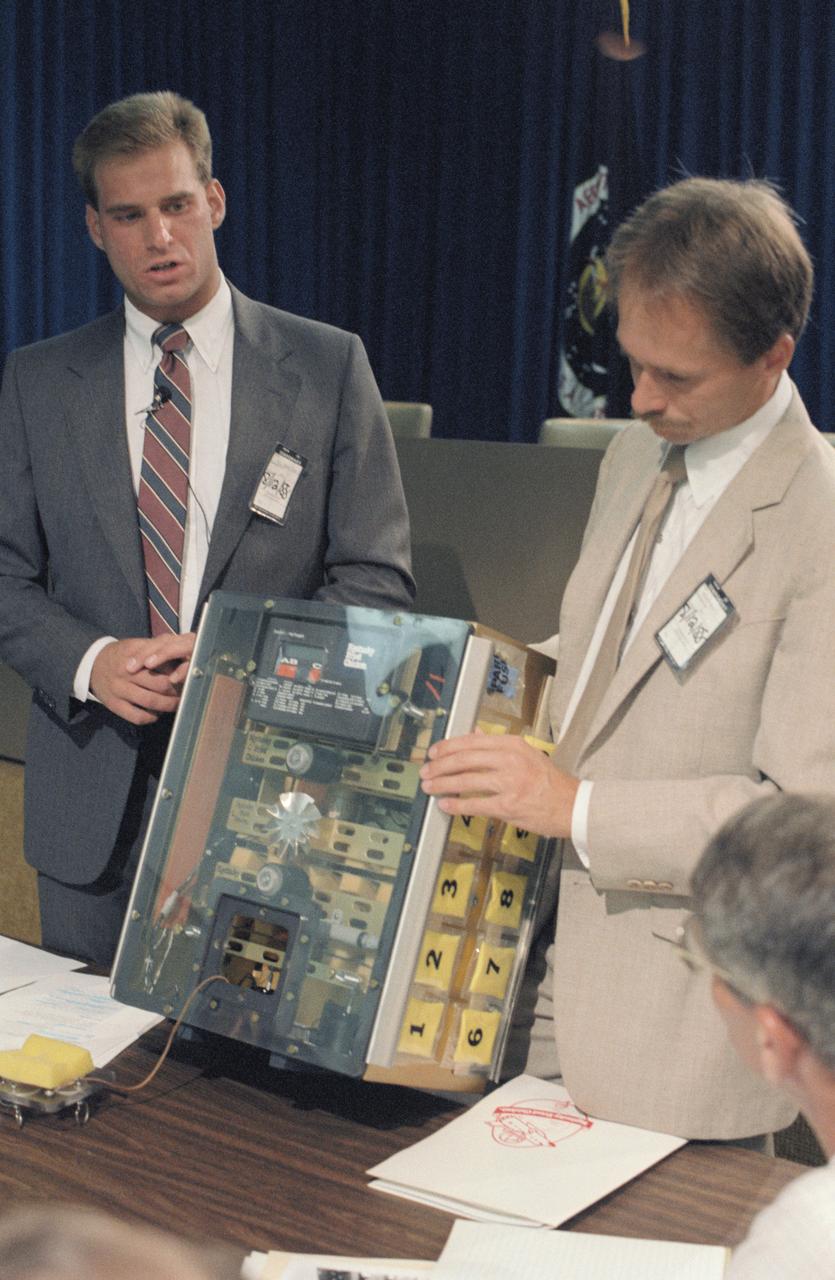
S88-44514 (13 Aug 1988) --- Student experimenter John C. Vellinger, left, explains components of an incubator used in his experiment to be carried onboard the Discovery for NASA's STS-29 mission next year. Mark S. Deusser, representing the sponsoring organization, holds up the incubator for inspection by members of the STS-29 crew who will monitor in-space operation of the experiment, titled "Chicken Embryo Development in Space." Astronaut Robert C. Springer is partially visible in lower right foreground. The student's sponsor is Kentucky Fried Chicken.
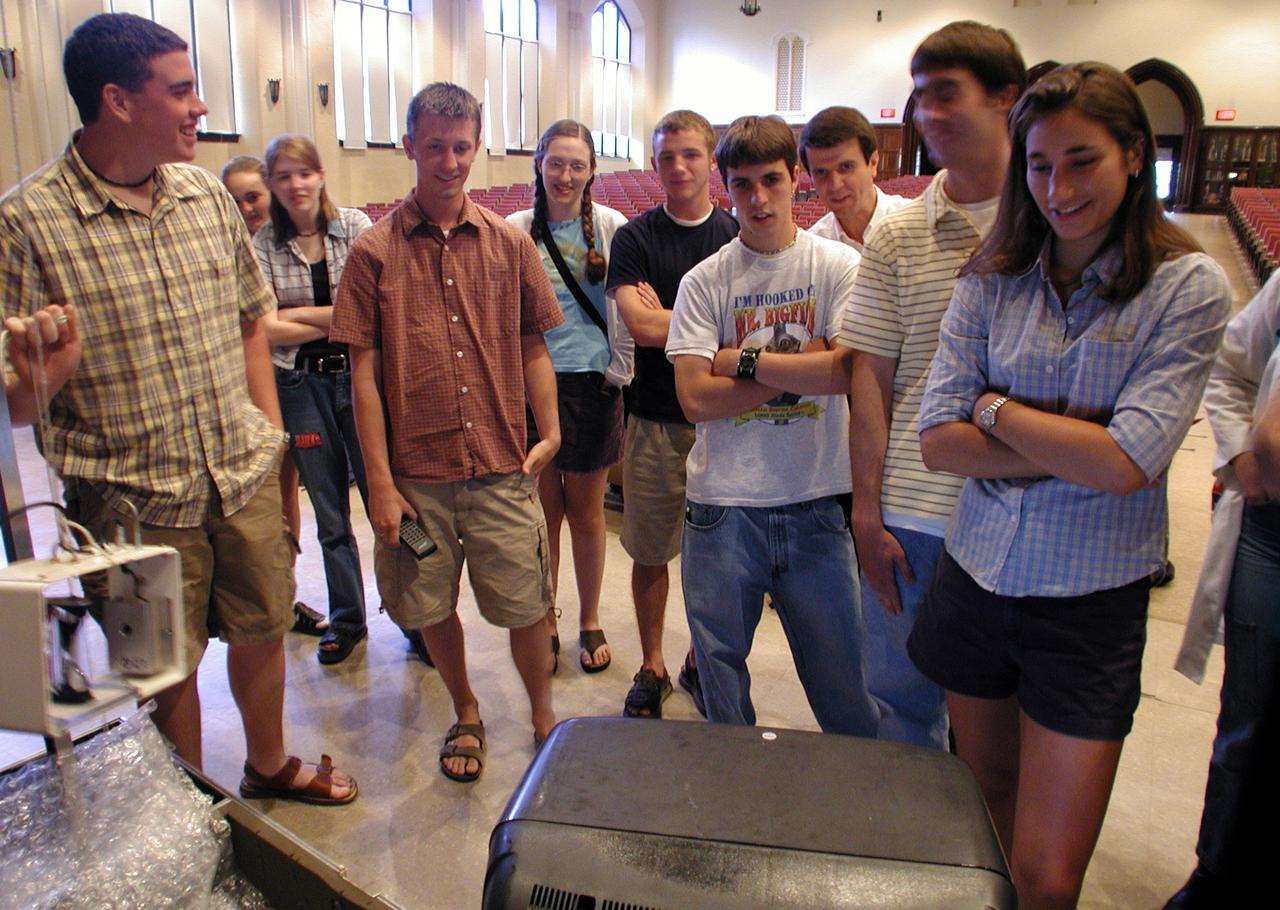
Marshall Space Flight Center employees visited DuPont Manual High School in Louisville, Kentucky. NASA's Mini Drop Tower was used to demonstrate free fall and a presentation was given on microgravity and the science performed in a microgravity environment. The visit coincided with the Pan-Pacific Basin Workshop on Microgravity Sciences held in Pasadena, California. Students watch the playback of video from the mini-drop tower. This image is from a digital still camera; higher resolution is not available.
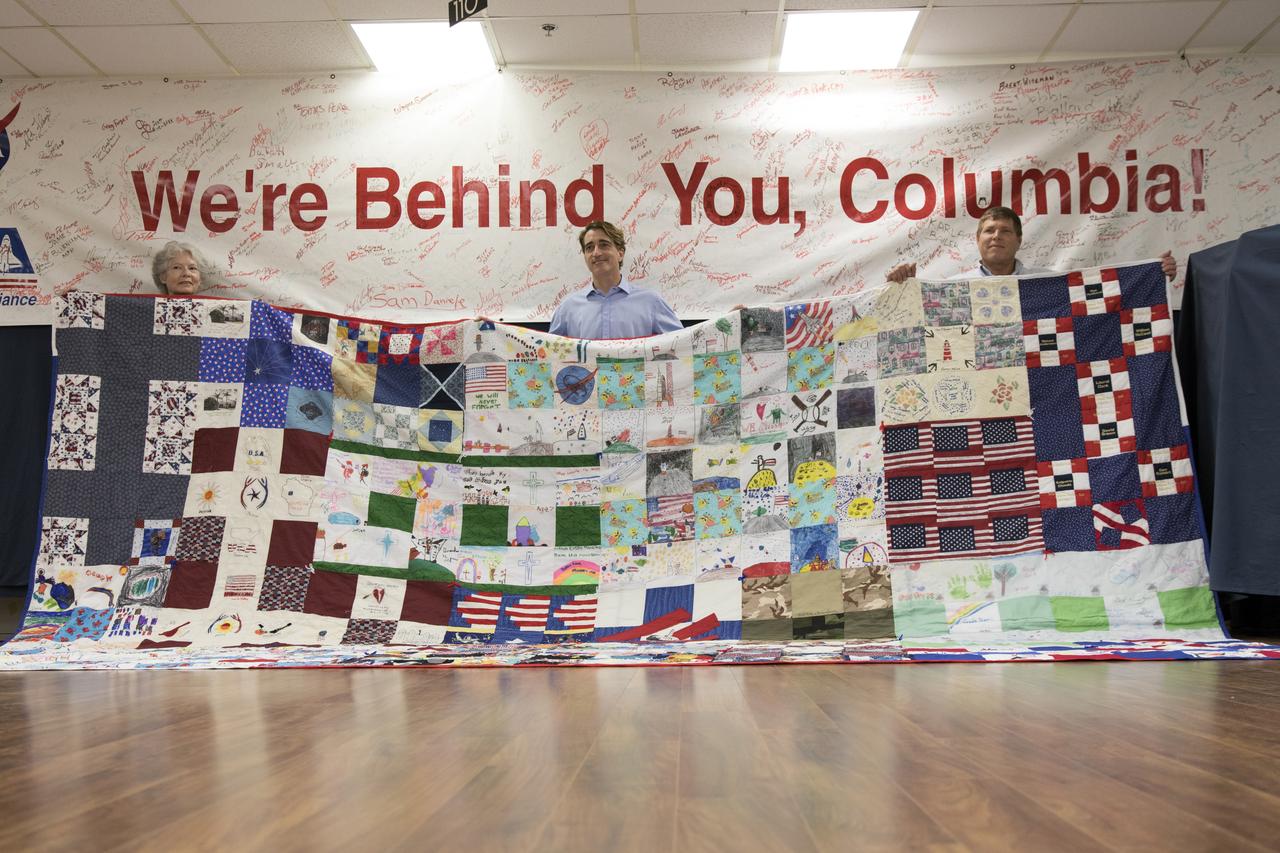
A giant hand-made quilt in honor of space shuttle Columbia and her crew was turned over to the Columbia Preservation Room inside the Vehicle Assembly Building at NASA's Kennedy Space Center in Florida. The quilt was made by Katherine Walsh, a lifelong NASA and space program fan originally from Kentucky. From left, behind the quilt are Janet Phillips, property custodian in Kennedy's Office of Procurement; Mike Ciannilli, Apollo, Challenger, Columbia Lessons Learned Program manager; and Kevin Panik, customer advocate in Spaceport Integration.
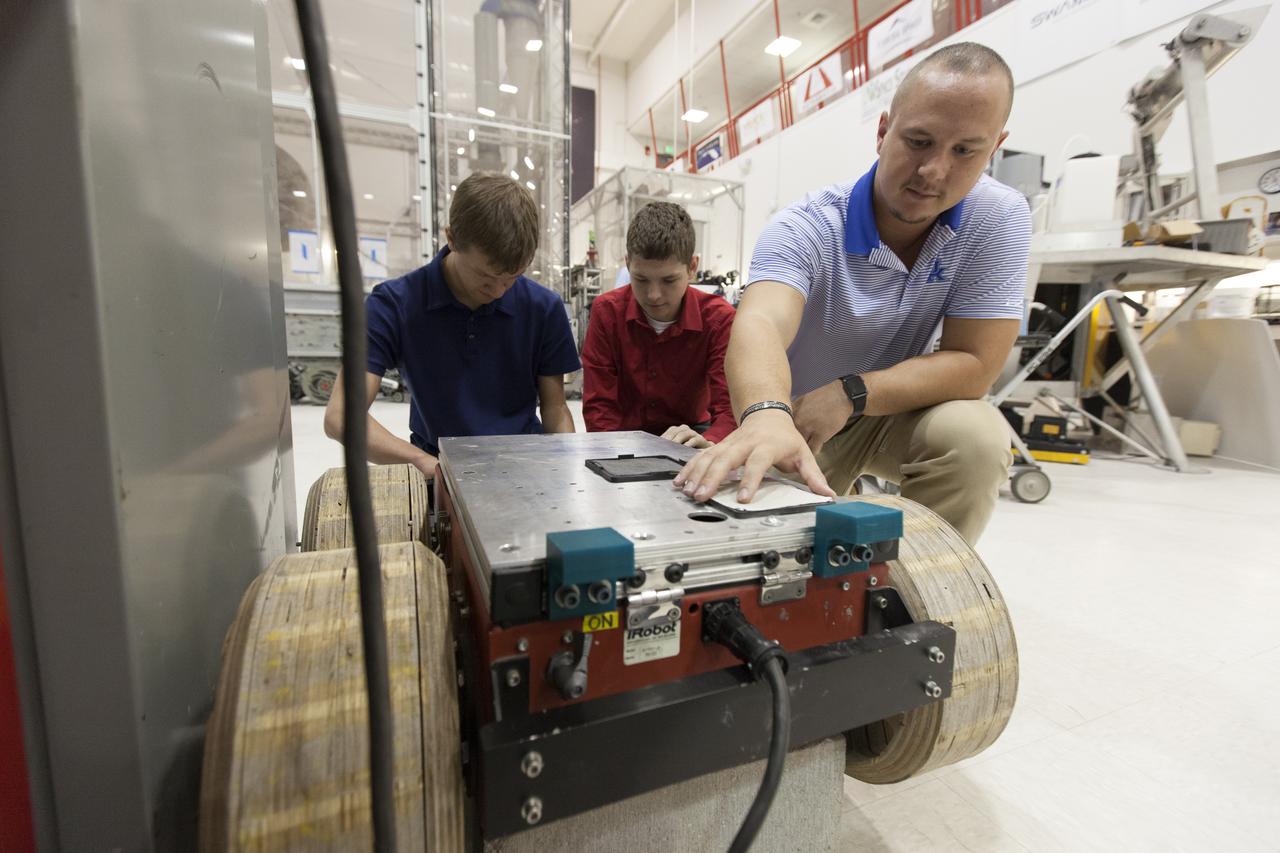
In the Swamp Works laboratory at NASA's Kennedy Space Center in Florida, student interns, from the left, Jeremiah House, Thomas Muller and Austin Langdon are joining agency scientists, contributing in the area of Exploration Research and Technology. House is studying computer/electrical engineering at John Brown University in Siloam Springs, Arkansas. Muller is pursuing a degree in computer engineering and control systems and Florida Tech. Langdon is an electrical engineering major at the University of Kentucky. The agency attracts its future workforce through the NASA Internship, Fellowships and Scholarships, or NIFS, Program.
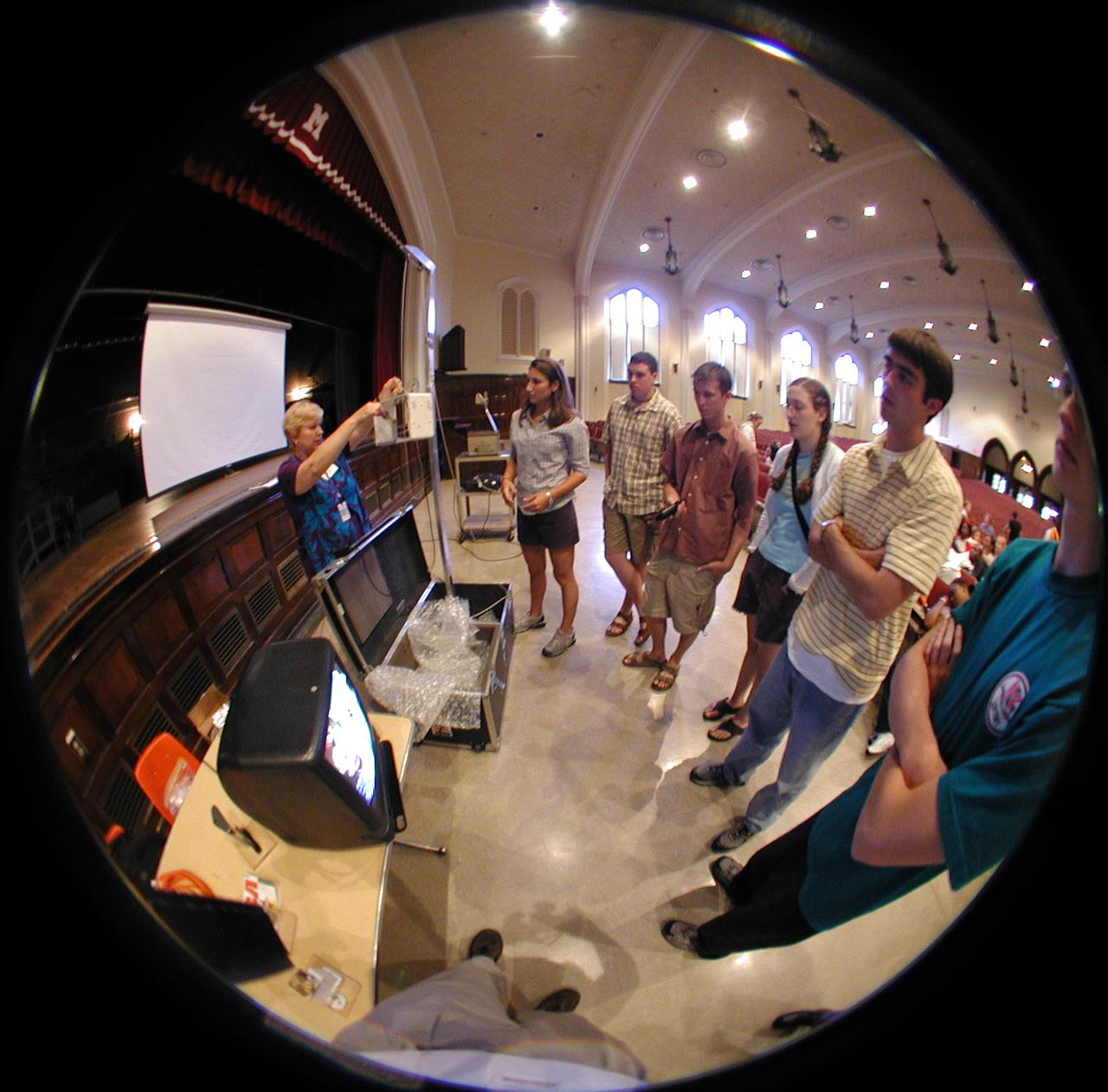
Marshall Space Flight Center employees visited DuPont Manual High School in Louisville, Kentucky. NASA's Mini Drop Tower was used to demonstrate free fall and a presentation was given on microgravity and the science performed in a microgravity environment. The visit coincided with the Pan-Pacific Basin Workshop on Microgravity Sciences held in Pasadena, California. Materials engineer Chris Cochrane explains the operation of the mini-drop tower. This image is from a digital still camera; higher resolution is not available.
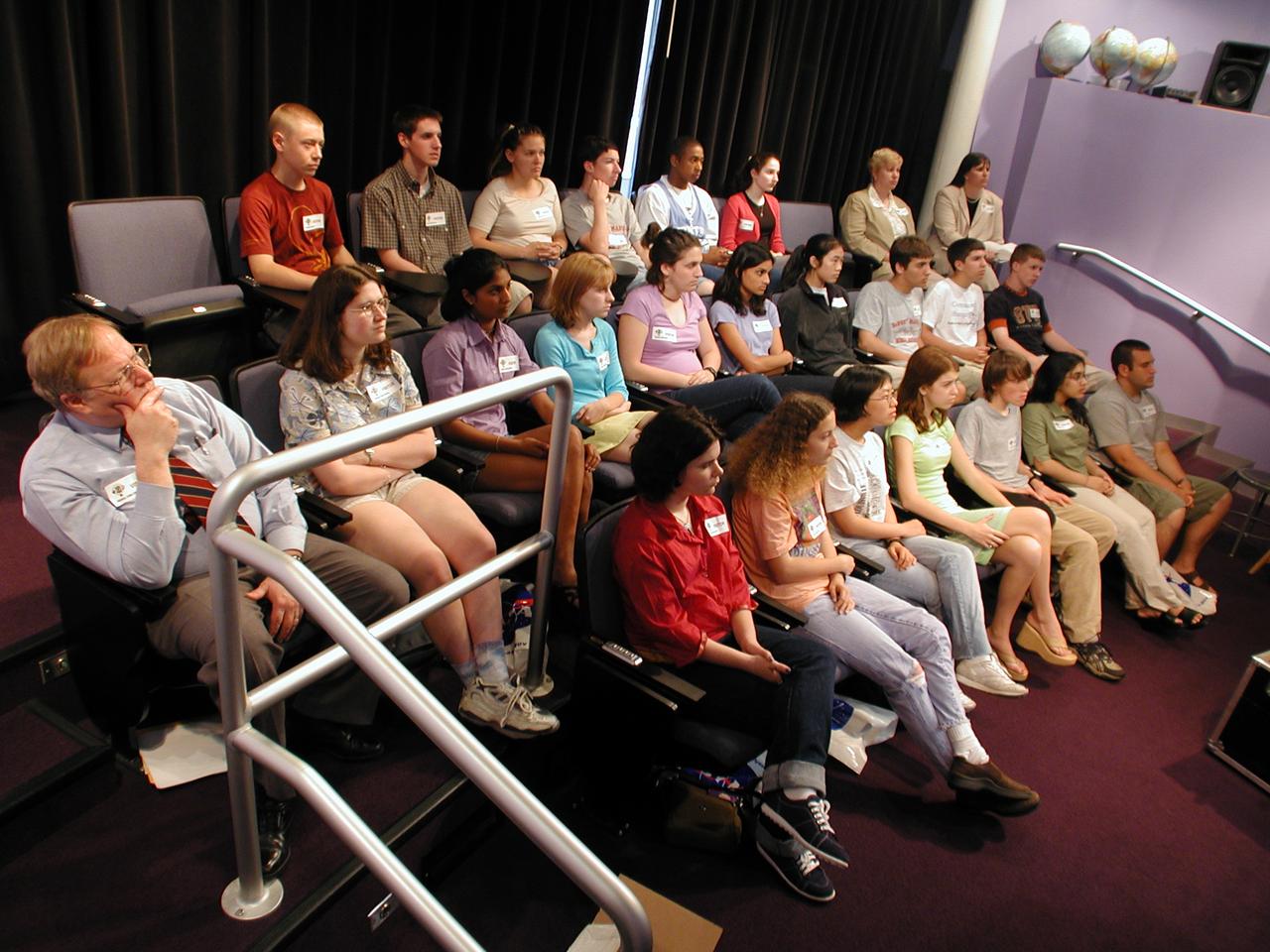
Students from DuPont Manual High School in Louisville, Kentucky participated in a video-teleconference during the Pan-Pacific Basin Workshop on Microgravity Sciences held in Pasadena, California. The event originated at the California Science Center in Los Angeles. The DuPont Manual students patched in to the event through the distance learning lab at the Louisville Science Center. This image is from a digital still camera; higher resolution is not available.
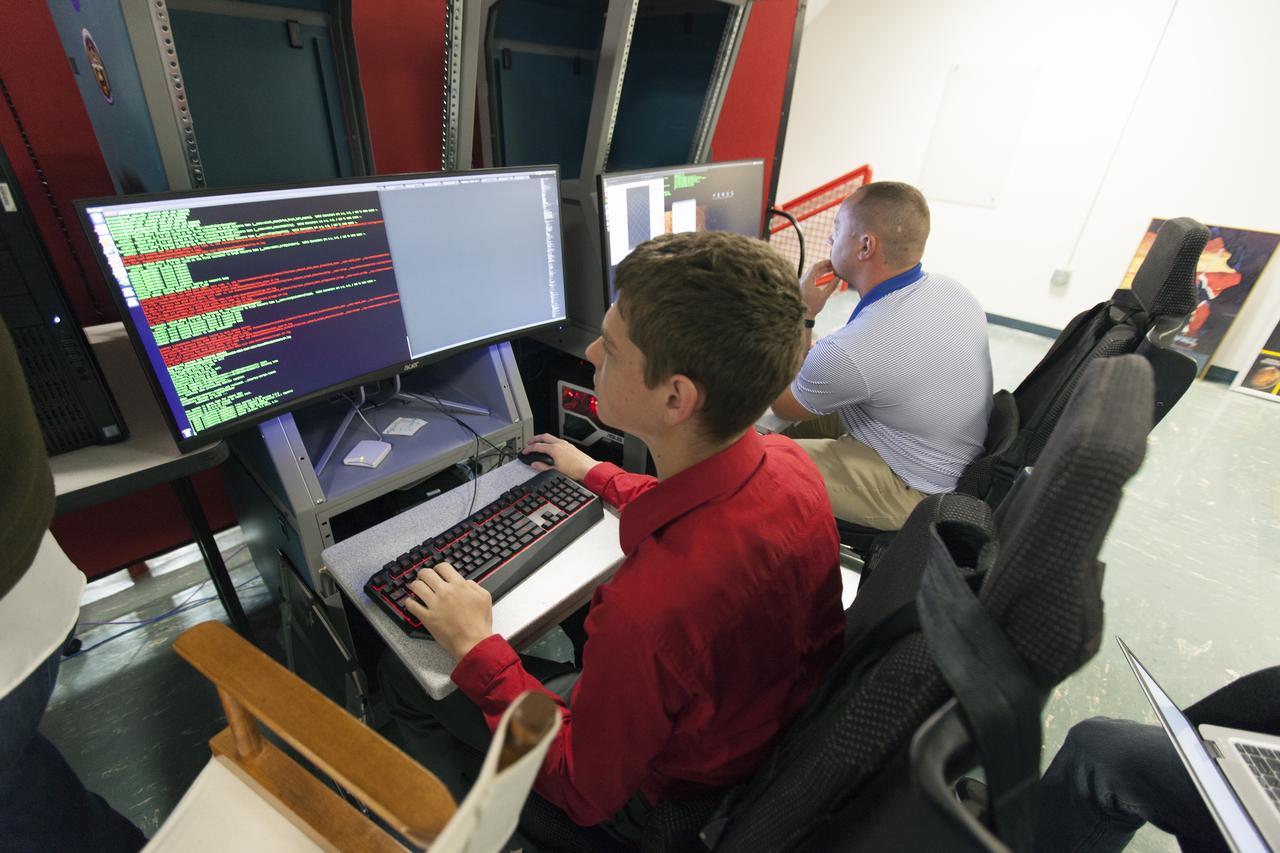
In the Swamp Works laboratory at NASA's Kennedy Space Center in Florida, student interns such as Thomas Muller, left, and Austin Langdon are joining agency scientists, contributing in the area of Exploration Research and Technology. Muller is pursuing a degree in computer engineering and control systems and Florida Tech. Langdon is an electrical engineering major at the University of Kentucky. The agency attracts its future workforce through the NASA Internship, Fellowships and Scholarships, or NIFS, Program.
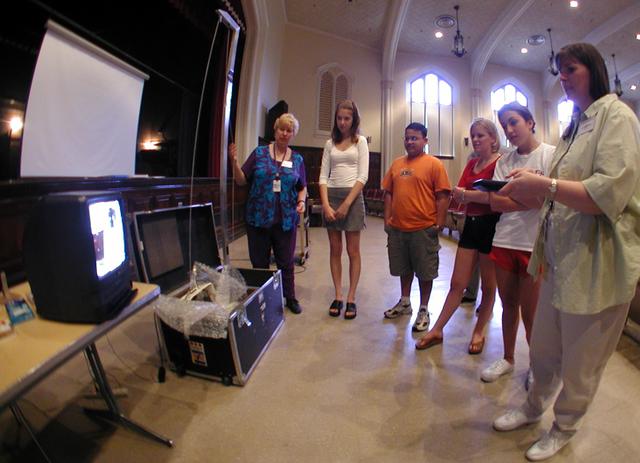
Marshall Space Flight Center employees visited DuPont Manual High School in Louisville, Kentucky. NASA's Mini Drop Tower was used to demonstrate free fall and a presentation was given on microgravity and the science performed in a microgravity environment. The visit coincided with the Pan-Pacific Basin Workshop on Microgravity Sciences held in Pasadena, California. Materials engineer Chris Cochrane explains the operation of the mini-drop tower. This image is from a digital still camera; higher resolution is not available.
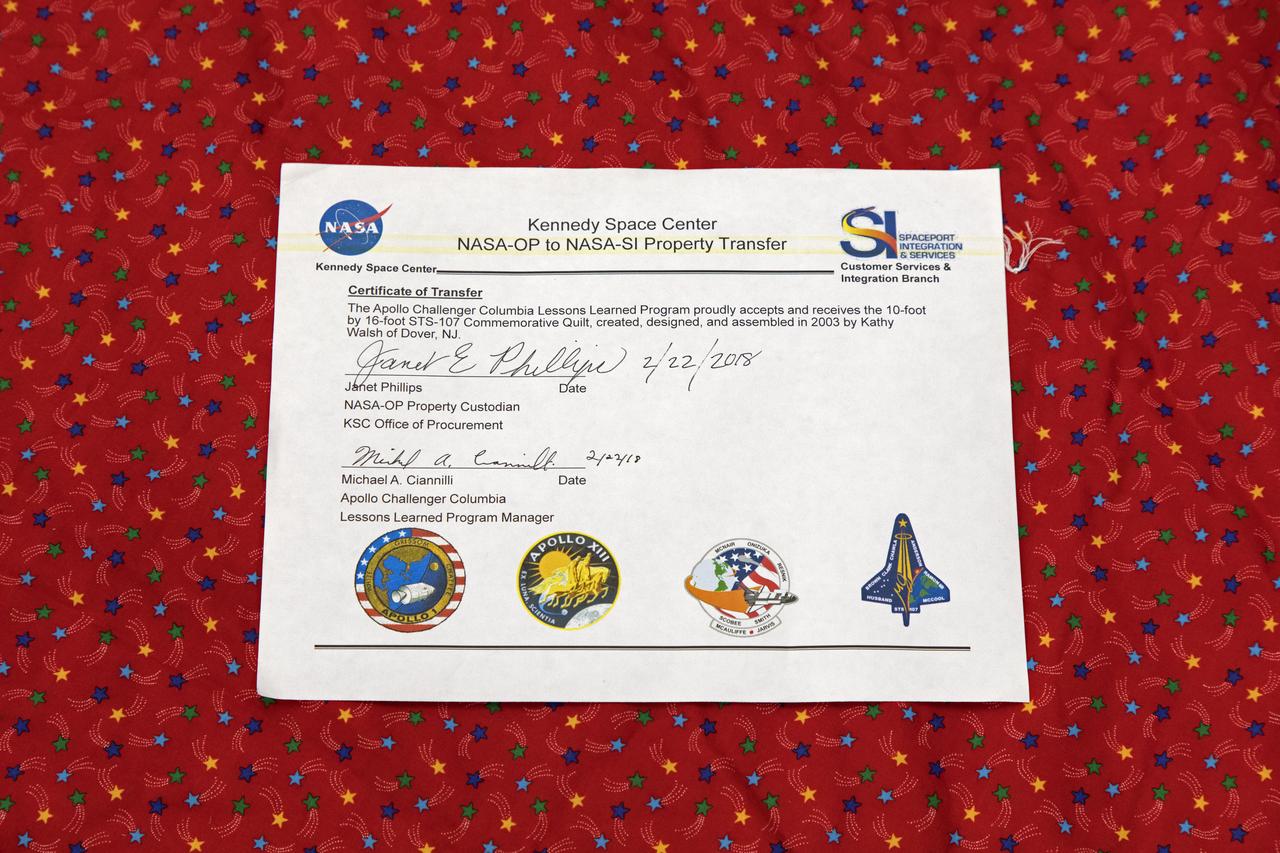
A certificate is on display that confirms the transfer of a giant hand-made quilt in honor of space shuttle Columbia and her crew from the Office of Procurement to the Columbia Preservation Room inside the Vehicle Assembly Building at NASA's Kennedy Space Center in Florida. The quilt was made by Katherine Walsh, a lifelong NASA and space program fan originally from Kentucky. The quilt will be displayed with its certificate in the preservation room as part of NASA's Apollo, Challenger, Columbia Lessons Learned Program.
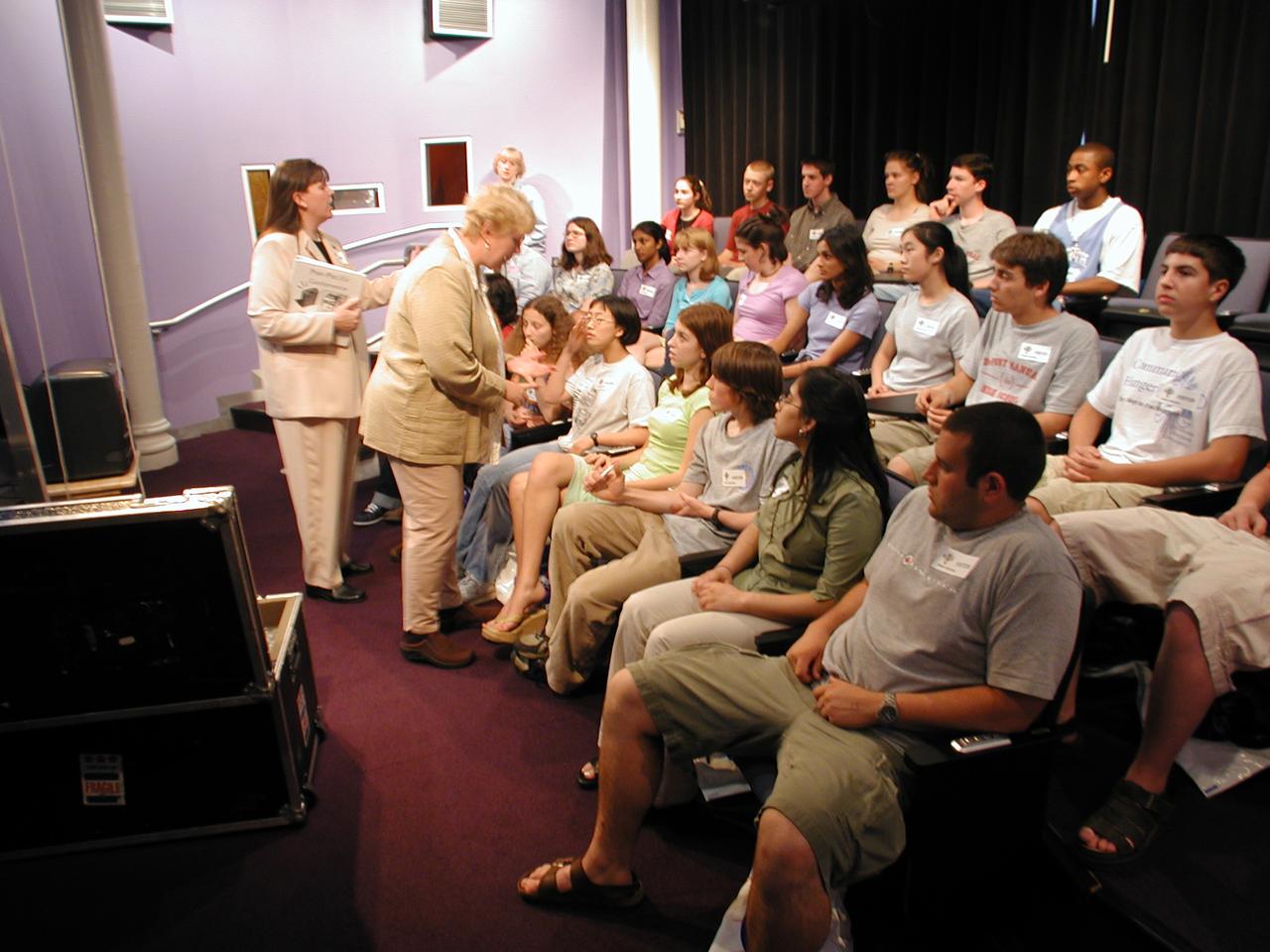
Students from DuPont Manual High School in Louisville, Kentucky participated in a video-teleconference during the Pan-Pacific Basin Workshop on Microgravity Sciences held in Pasadena, California. The event originated at the California Science Center in Los Angeles. The DuPont Manual students patched in to the event through the distance learning lab at the Louisville Science Center. Education coordinator Twila Schneider (left) of Infinity Technology and NASA materials engineer Chris Cochrane prepare students for the on-line workshop. This image is from a digital still camera; higher resolution is not available.

Mike Ciannilli, Apollo, Challenger, Columbia Lessons Learned Program manager, at right, accepts a certificate for turnover of a hand-made quilt in honor of space shuttle Columbia and her crew from Janet Phillips, property custodian in NASA Kennedy Space Center's Office of Procurement. Turnover of the quilt took place in the Columbia Preservation Room inside the Vehicle Assembly Building at Kennedy Space Center in Florida. The quilt was made by Katherine Walsh, a lifelong NASA and space program fan originally from Kentucky.
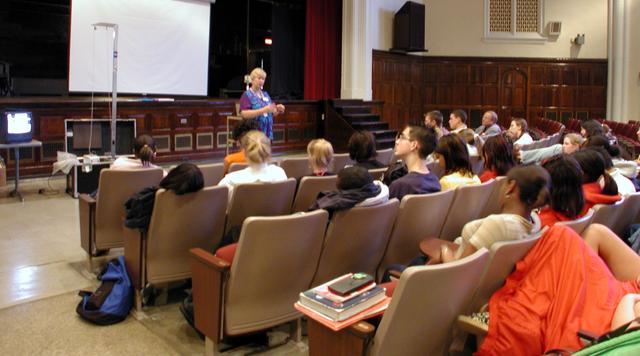
Marshall Space Flight Center employees visited DuPont Manual High School in Louisville, Kentucky. NASA's Mini Drop Tower was used to demonstrate free fall and a presentation was given on microgravity and the science performed in a microgravity environment. The visit coincided with the Pan-Pacific Basin Workshop on Microgravity Sciences held in Pasadena, California. Materials engineer Chris Cochrane explains the basics of microgravity research. This image is from a digital still camera; higher resolution is not available.
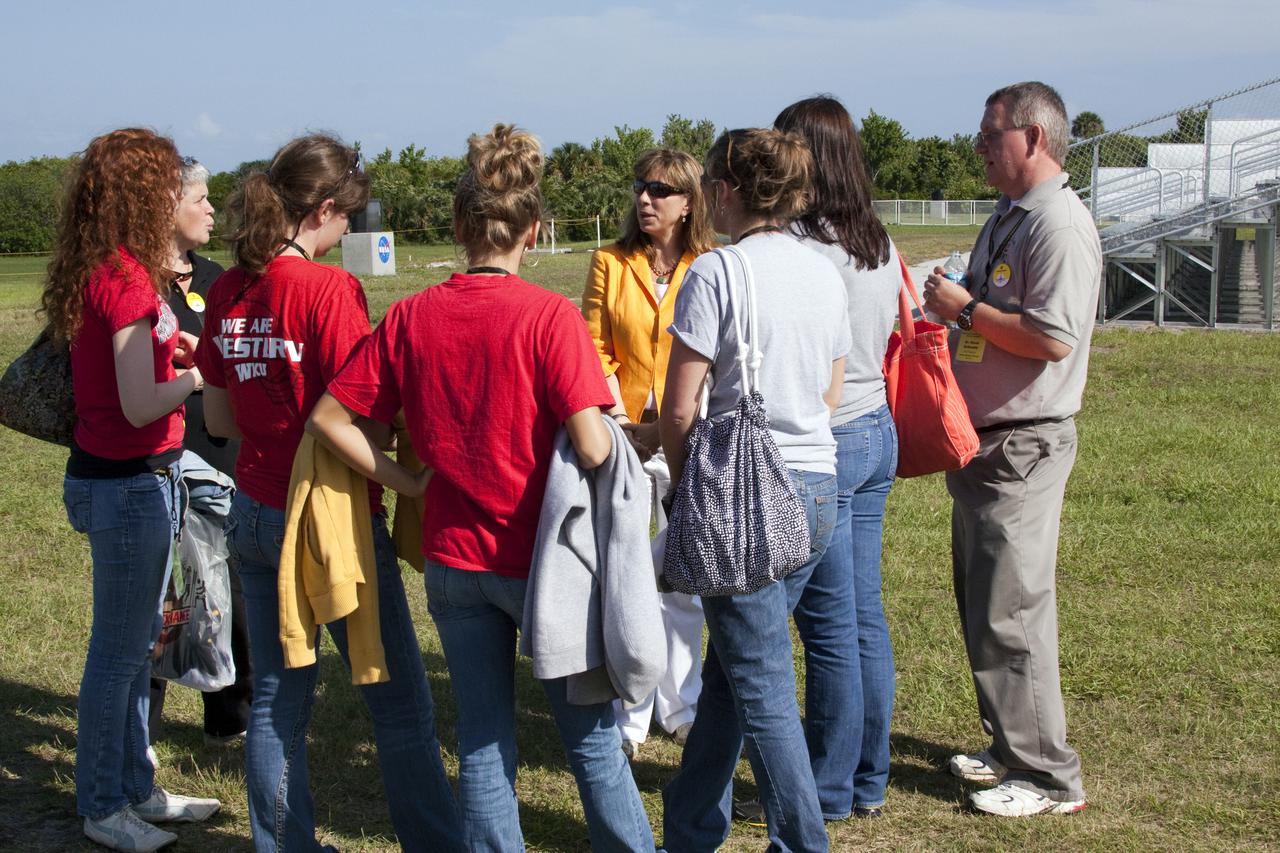
CAPE CANAVERAL, Fla. - At Kennedy Space Center in Florida, NASA Deputy Administrator Lori Garver talks with students from Western Kentucky University who are at the center for NASA's first Lunabotics Mining Competition on May 27-28. Atlantis wrapped up its 4.8-million-mile STS-132 mission to the International Space Station at 8:48 a.m. The six-member STS-132 crew carried the Russian-built Mini Research Module-1 to the space station. STS-132 is the 34th shuttle mission to the station, the 132nd shuttle mission overall and the last planned flight for Atlantis. For information on the STS-132 mission and crew, visit www.nasa.gov_mission_pages_shuttle_shuttlemissions_sts132_index.html. Photo credit: NASA_Jack Pfaller
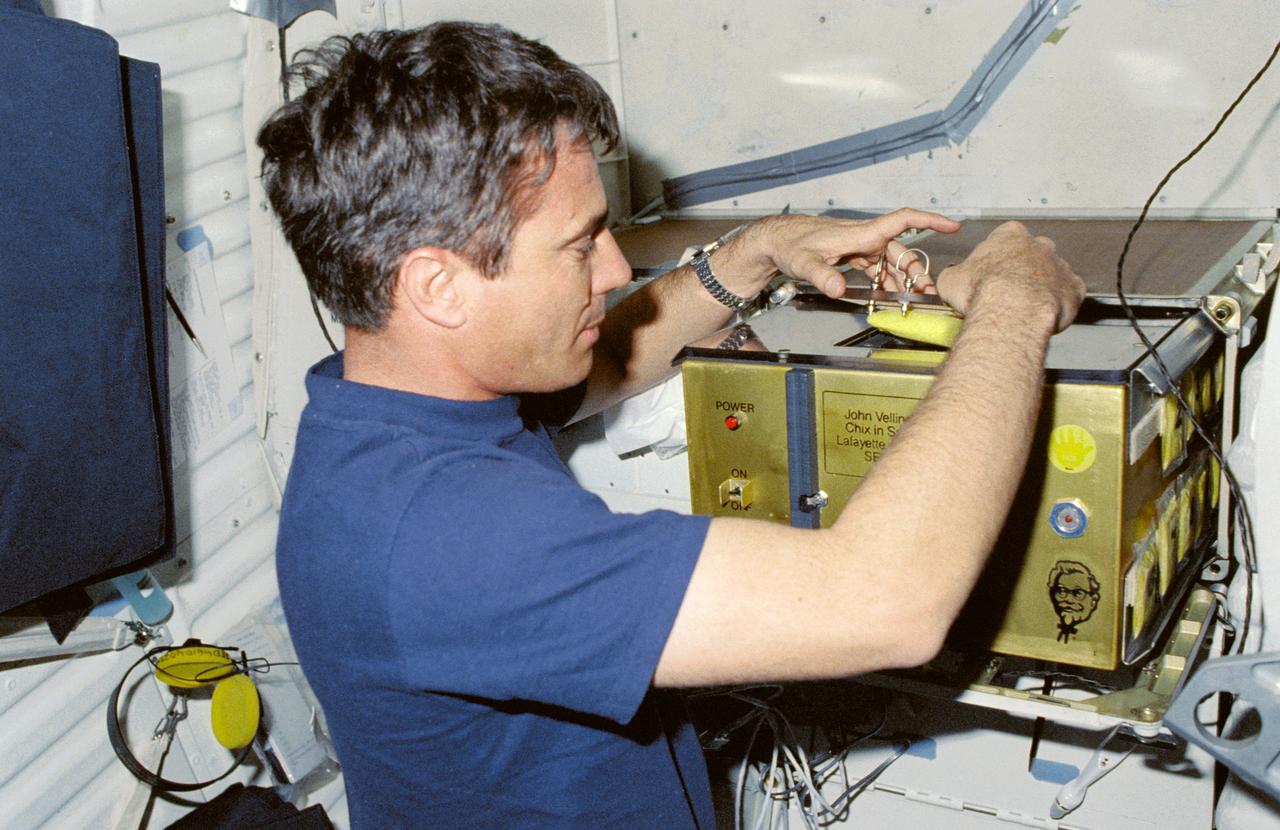
STS029-01-001 (16 Marach 1989) --- Astronaut John E. Blaha, STS-29 pilot, checks an incubator on the mid deck of Earth-orbiting Discovery during Flight Day 4 activity. The incubator is part of a student involvement program experiment titled, "Chicken Embryo Development in Space." The student experimenter is John C. Vellinger. The experiment's sponsor is Kentucky Fried Chicken. This photographic frame was among NASA's third STS-29 photo release. Monday, March 20, 1989. Crewmembers were Astronauts Michael L. Coats, John E. Blaha, James F. Buchli, Robert C. Springer and James P. Bagian.
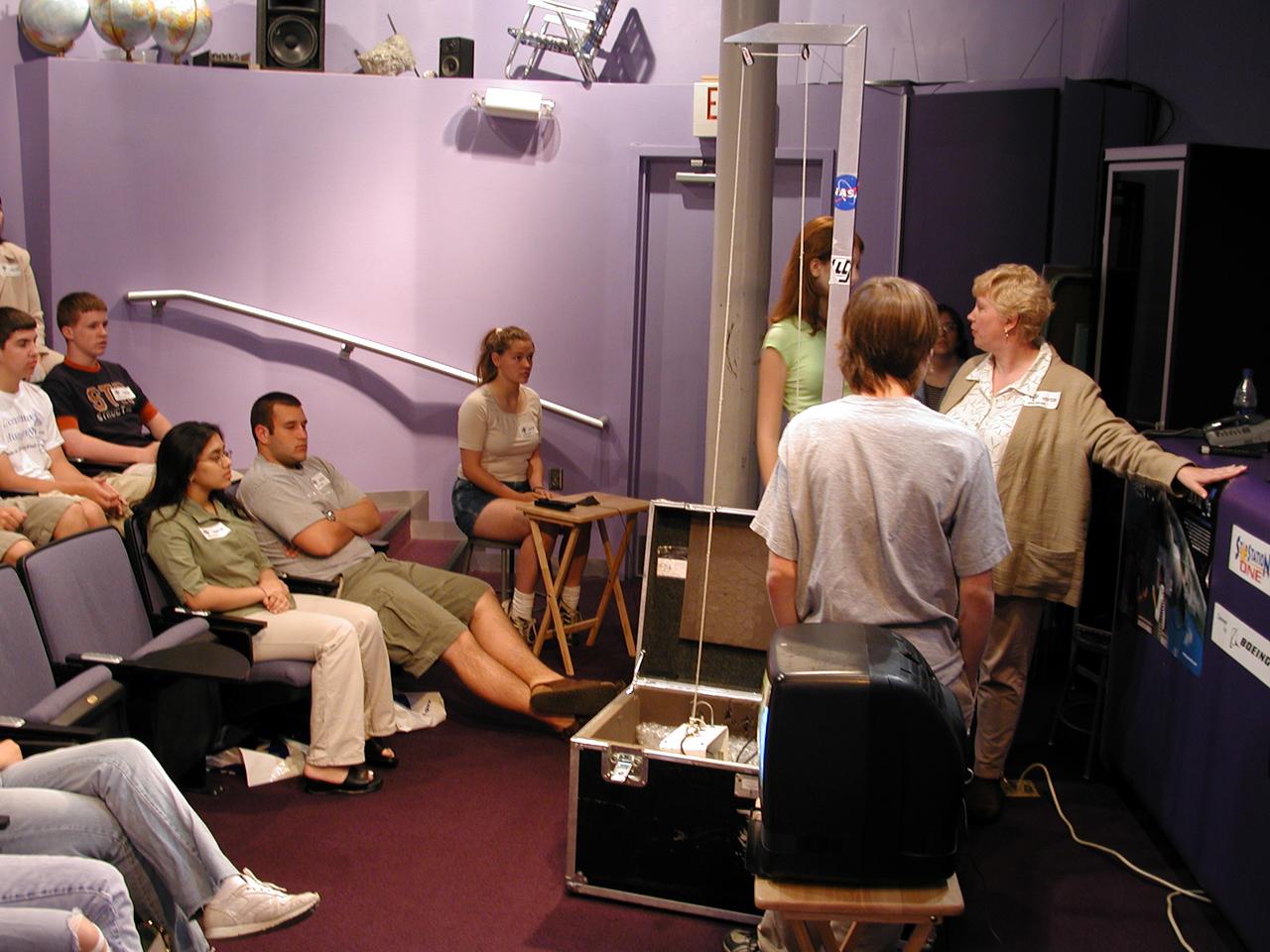
Suzarne Nichols (12th grade) from DuPont Manual High School in Louisville, Kentucky, asks a question of on of the on-line lecturers during the Pan-Pacific Basin Workshop on Microgravity Sciences held in Pasadena, California. The event originated at the California Science Center in Los Angeles. The DuPont Manual students patched in to the event through the distance learning lab at the Louisville Science Center. NASA materials engineer Chris Cochrane prepare students for the on-line workshop helps two students prepare a drop demonstration. This image is from a digital still camera; higher resolution is not available.
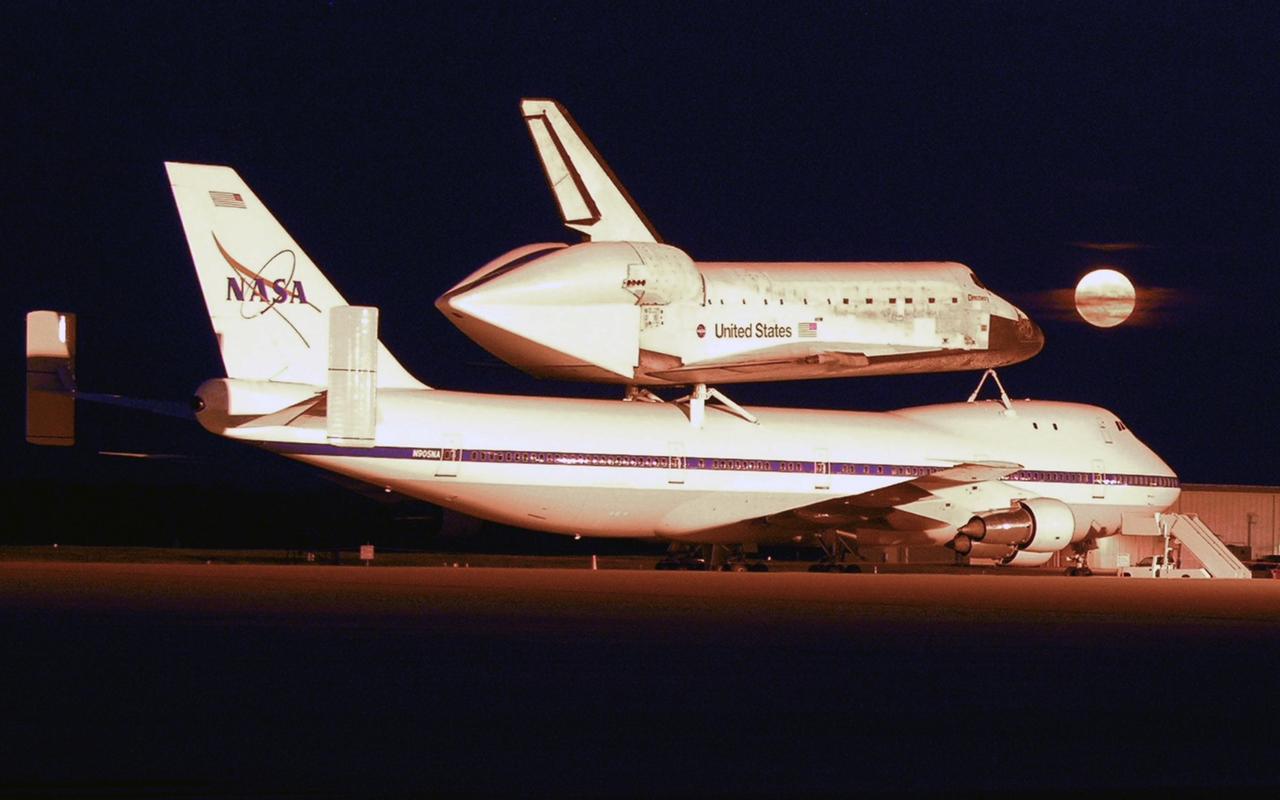
OFFUTT FIELD, NEB. -- The shuttle carrier aircraft, or SCA, and its piggyback passenger Atlantis are captured in the light of a full moon after landing at Offutt Field on the ferry flight from California to Florida. Atlantis landed at Edwards Air Force Base in California to end mission STS-117. Touchdown was at 8:27 a.m. EDT. The SCA is a modified Boeing 747 jetliner. The return to KSC began July 1 and took three days after stops across the country for fuel. The last stop was at Ft. Campbell in Kentucky. Weather conditions over the last leg postponed the return trip until July 3. Photo credit: NASA/Casey Wood
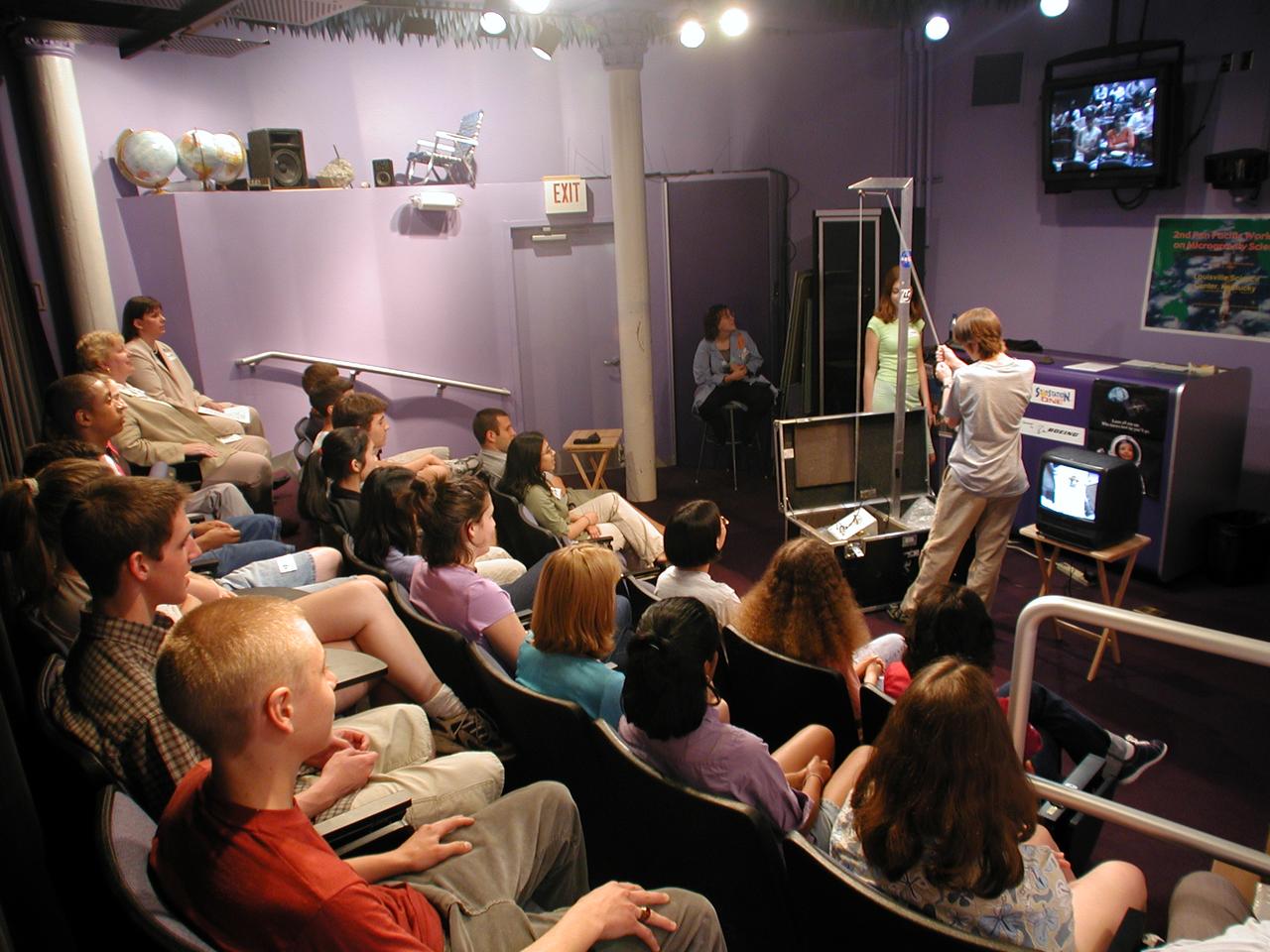
John Henson (grade 12) and Suzi Bryce (grade 10) from DuPont Manual High School in Louisville, Kentucky, conduct a drop with NASA's Microgravity Demonstrator. A camera and a TV/VCR unit let students play back recordings of how different physical devices behave differently during freefall as compared to 1-g. The activity was part of the education outreach segment of the Pan-Pacific Basin Workshop on Microgravity Sciences held in Pasadena, California. The event originated at the California Science Center in Los Angeles. The DuPont Manual students patched in to the event through the distance learning lab at the Louisville Science Center. This image is from a digital still camera; higher resolution is not available.
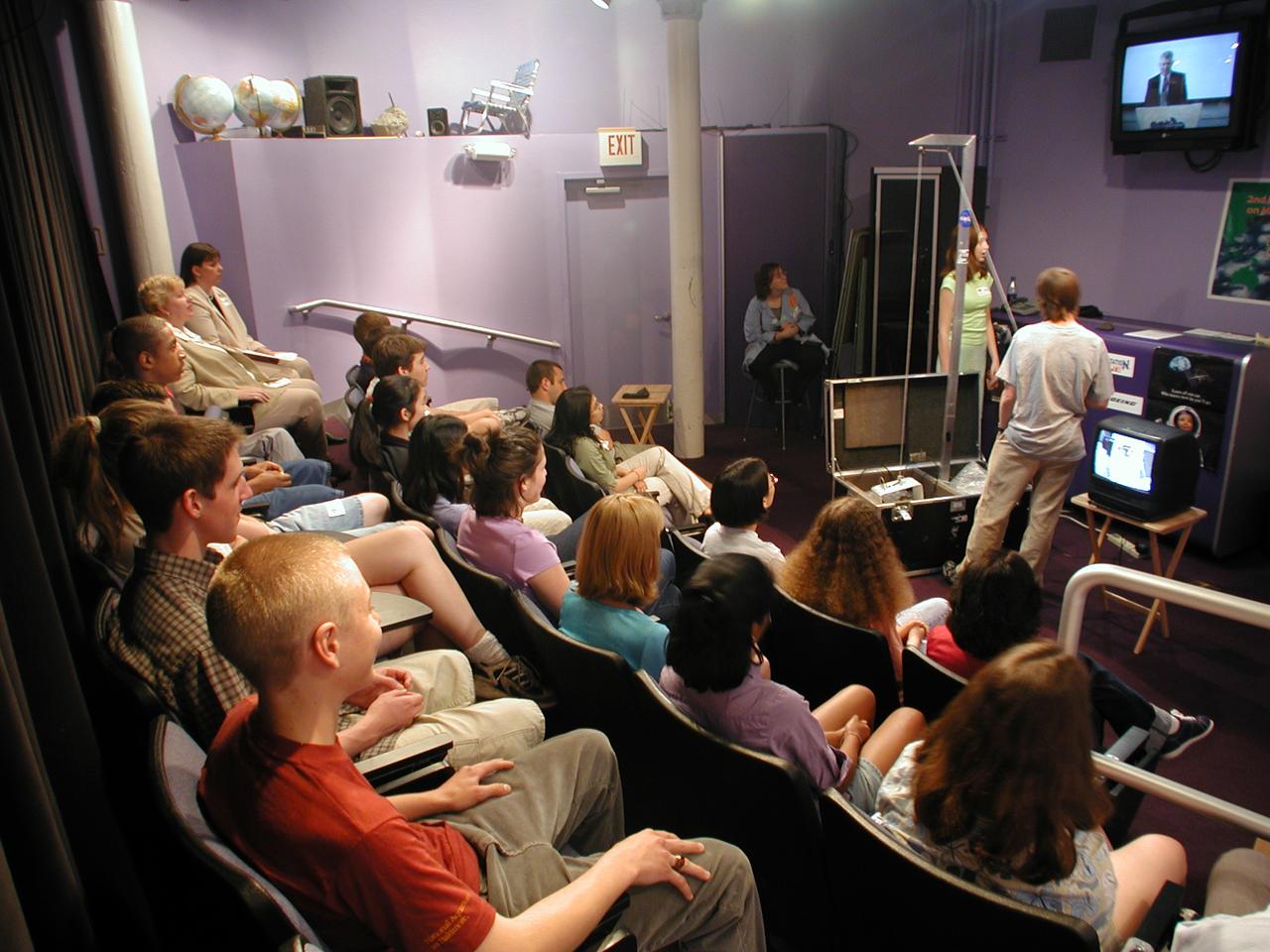
John Henson (grade 12) and Suzi Bryce (grade 10) conducted the drop from DuPont Manual High School in Louisville, Kentucky, conduct a drop with NASA's Microgravity Demonstrator. A camera and a TV/VCR unit let students play back recordings of how different physical devices behave differently during freefall as compared to 1-g. The activity was part of the education outreach segment of the Pan-Pacific Basin Workshop on Microgravity Sciences held in Pasadena, California. The event originated at the California Science Center in Los Angeles. The DuPont Manual students patched in to the event through the distance learning lab at the Louisville Science Center. This image is from a digital still camera; higher resolution is not available.
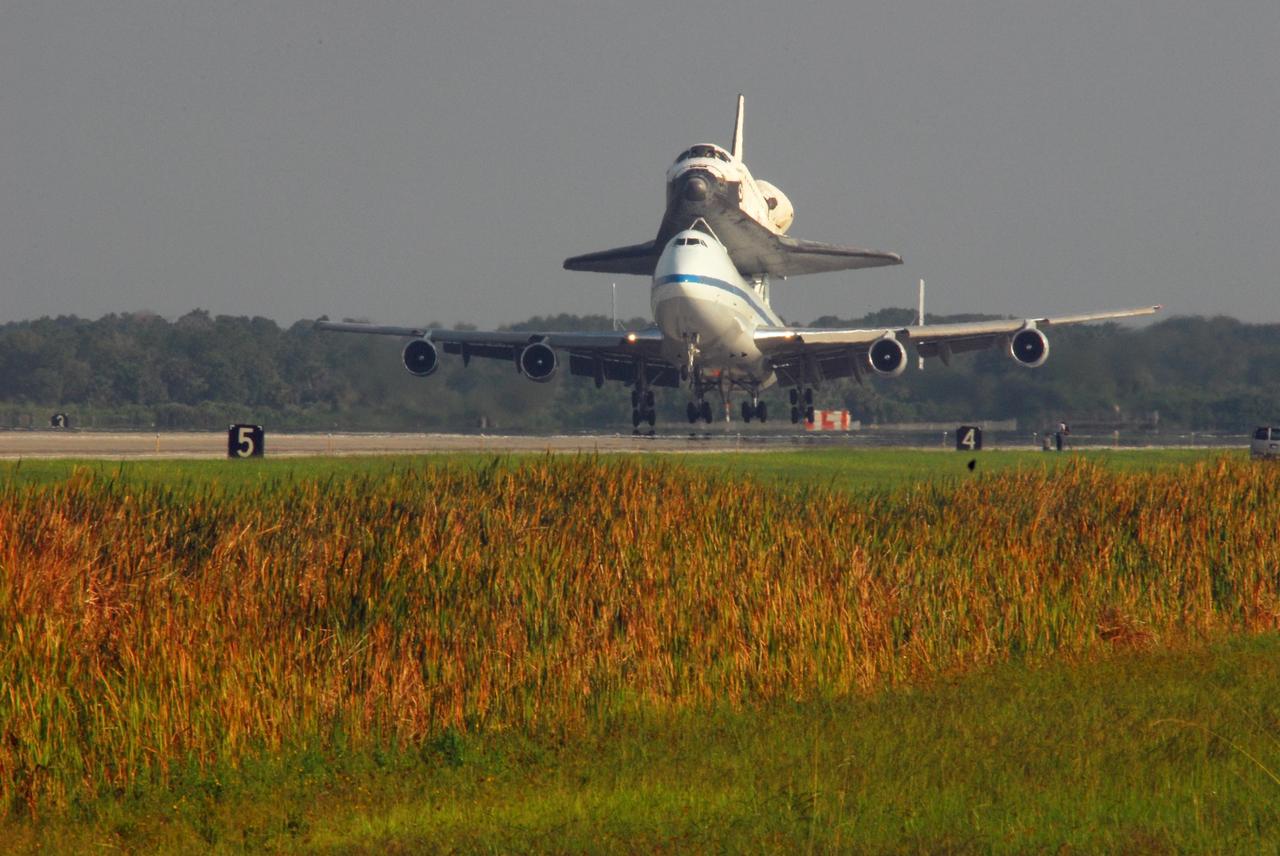
KENNEDY SPACE CENTER, FLA. -- The shuttle carrier aircraft, or SCA, and its piggyback passenger Atlantis near touchdown on the runway at the KSC Shuttle Landing Facility after a three-day trip from California. Touchdown was at 8:27 a.m. EDT. The SCA is a modified Boeing 747 jetliner. Atlantis landed at Edwards Air Force Base in California to end mission STS-117. The return to KSC began July 1 and took three days after stops across the country for fuel. The last stop was at Ft. Campbell in Kentucky. Weather conditions over the last leg postponed the return trip until July 3. Atlantis will be removed from the back of the SCA via the mate/demate device at the SLF. It will then be towed to the Orbiter Processing Facility to begin processing for its next launch, mission STS-122 in December. Photo credit: NASA/George Shelton
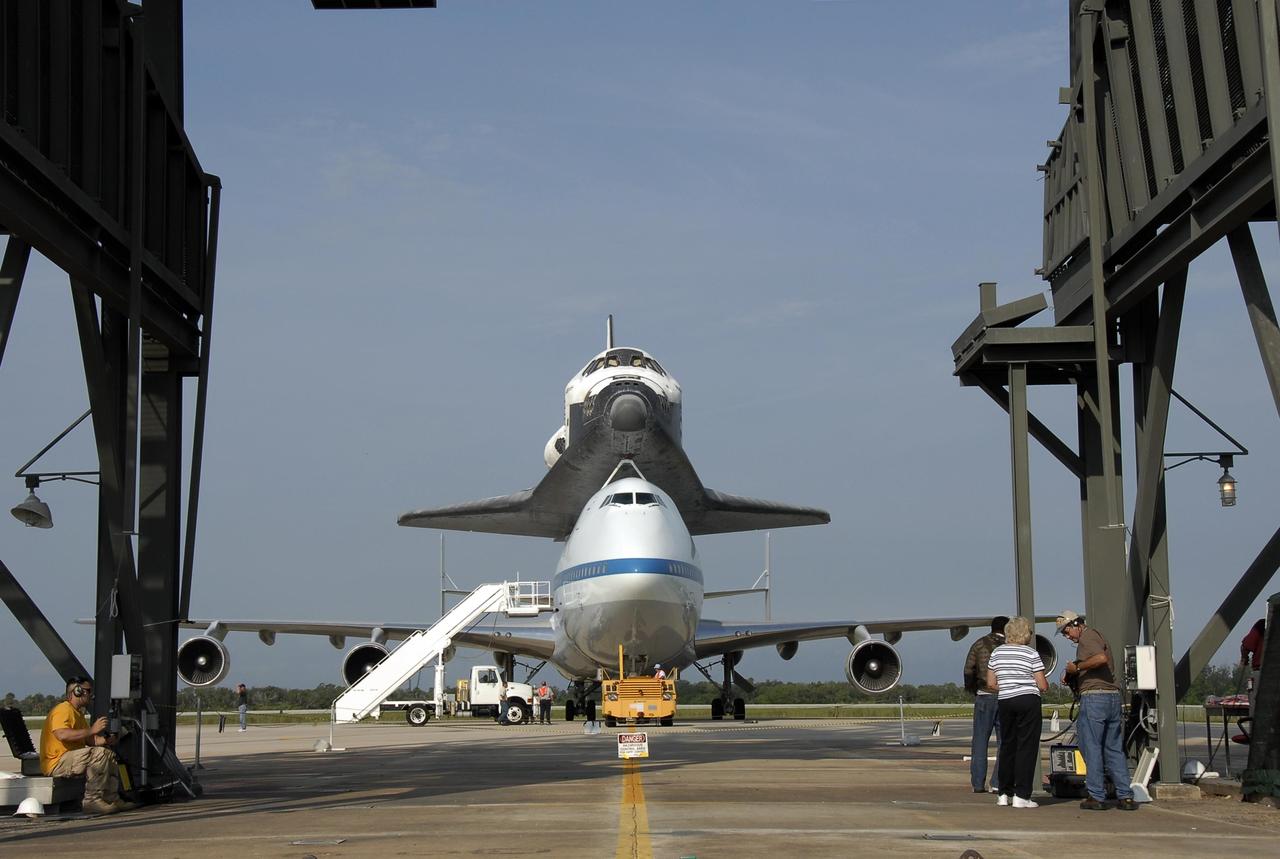
KENNEDY SPACE CENTER, FLA. -- The shuttle carrier aircraft, or SCA, and its piggyback passenger Atlantis are poised to be towed into the mate/demate device, in the foreground. The device will lift the orbiter and put it back on the ground. After a three-day, cross-country trip, the orbiter/SCA duo touched down at 8:27 a.m. EDT. The SCA is a modified Boeing 747 jetliner. Atlantis landed at Edwards Air Force Base in California to end mission STS-117. The return to KSC began July 1 and included several stops across the country for fuel. The last stop was at Ft. Campbell in Kentucky. Weather conditions over the last leg postponed the return trip until July 3. After demate, Atlantis will then be towed to the Orbiter Processing Facility to begin processing for its next launch, mission STS-122 in December. Photo credit: NASA/Kim Shiflett
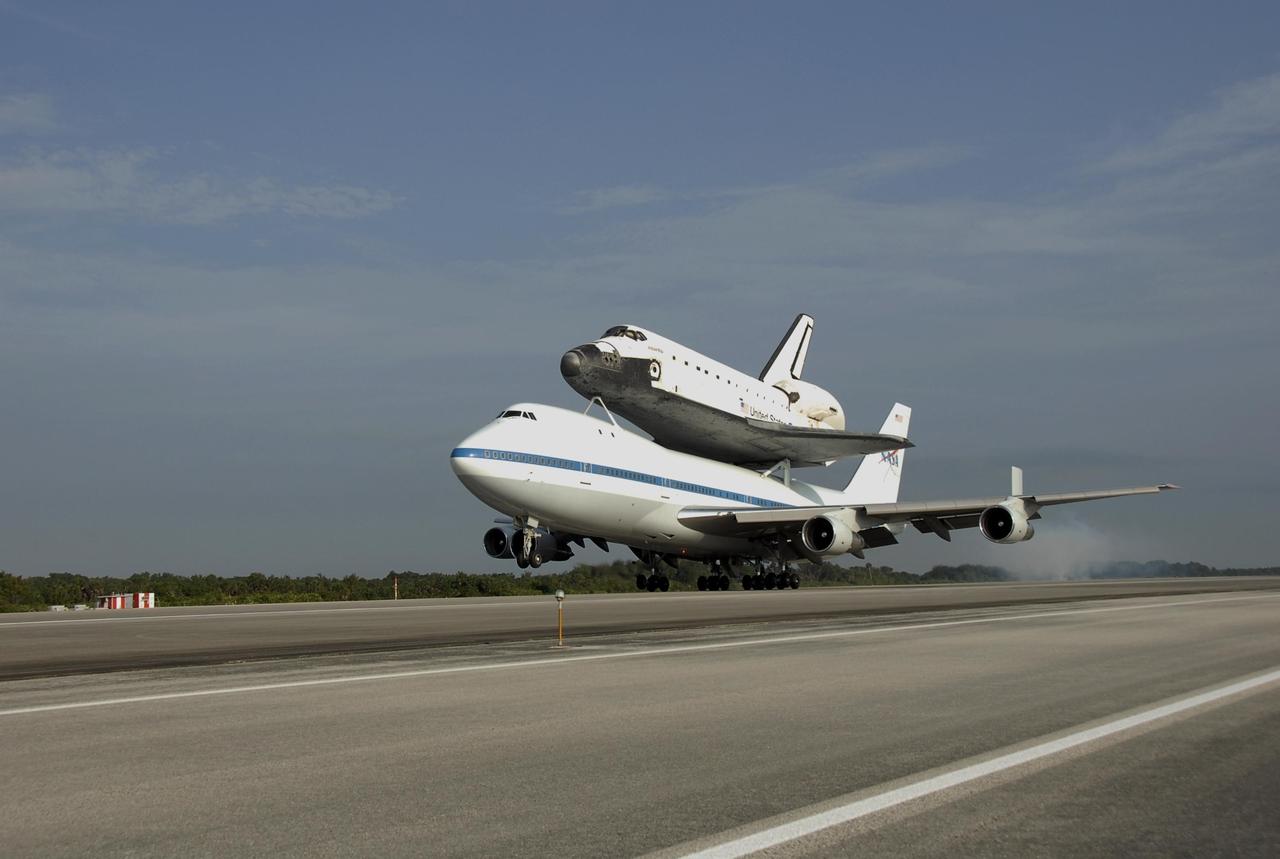
KENNEDY SPACE CENTER, FLA. -- The shuttle carrier aircraft, or SCA, and its piggyback passenger Atlantis kick up a little dust at touchdown on the KSC Shuttle Landing Facility. Touchdown was at 8:27 a.m. EDT. The SCA is a modified Boeing 747 jetliner. Atlantis landed at Edwards Air Force Base in California to end mission STS-117. The return to KSC began July 1 and took three days after stops across the country for fuel. The last stop was at Ft. Campbell in Kentucky. Weather conditions over the last leg postponed the return trip until July 3. Atlantis will be removed from the back of the SCA via the mate/demate device at the SLF. It will then be towed to the Orbiter Processing Facility to begin processing for its next launch, mission STS-122 in December. Photo credit: NASA/Kim Shiflett

KENNEDY SPACE CENTER, FLA. -- The shuttle carrier aircraft, or SCA, and its piggyback passenger Atlantis taxi down the runway after landing at the KSC Shuttle Landing Facility. Touchdown was at 8:27 a.m. EDT. The SCA is a modified Boeing 747 jetliner. Visible on Atlantis is the tail cone that covers and protects the main engines during the ferry flight. Atlantis landed at Edwards Air Force Base in California to end mission STS-117. The return to KSC began July 1 and took three days after stops across the country for fuel. The last stop was at Ft. Campbell in Kentucky. Weather conditions over the last leg postponed the return trip until July 3. Atlantis will be removed from the back of the SCA via the mate/demate device at the SLF. It will then be towed to the Orbiter Processing Facility to begin processing for its next launch, mission STS-122 in December. Photo credit: NASA/Jim Grossmann
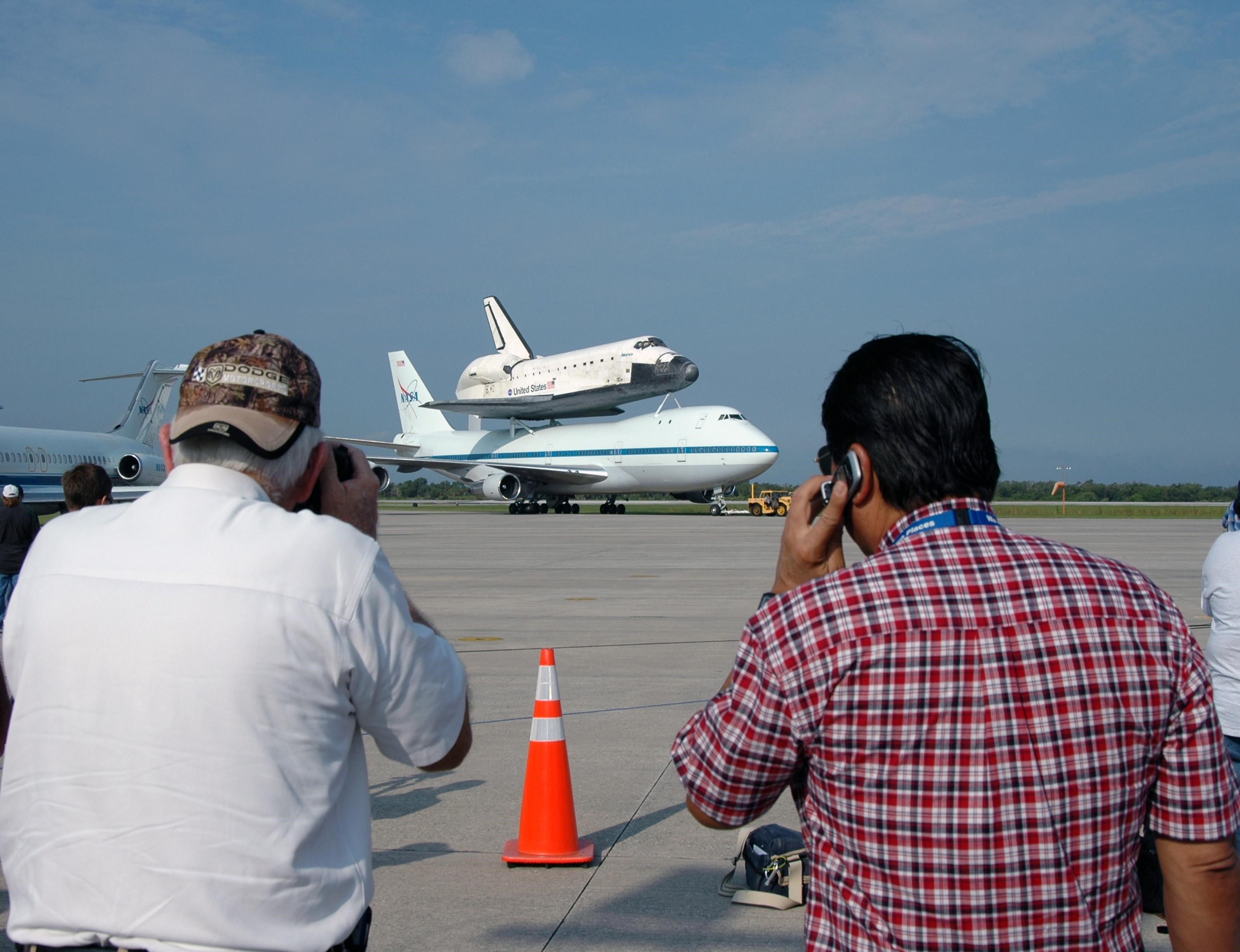
KENNEDY SPACE CENTER, FLA. -- Media are gathered at the KSC Shuttle Landing Facility to watch the arrival of the orbiter Atlantis on the back of the shuttle carrier aircraft, or SCA. Touchdown was at 8:27 a.m. EDT. The SCA is a modified Boeing 747 jetliner. Atlantis landed at Edwards Air Force Base in California to end mission STS-117. The return to KSC began July 1 and took three days after stops across the country for fuel. The last stop was at Ft. Campbell in Kentucky. Weather conditions over the last leg postponed the return trip until July 3. Atlantis will be removed from the back of the SCA via the mate/demate device at the SLF. It will then be towed to the Orbiter Processing Facility to begin processing for its next launch, mission STS-122 in December. Photo credit: NASA/Jim Grossmann
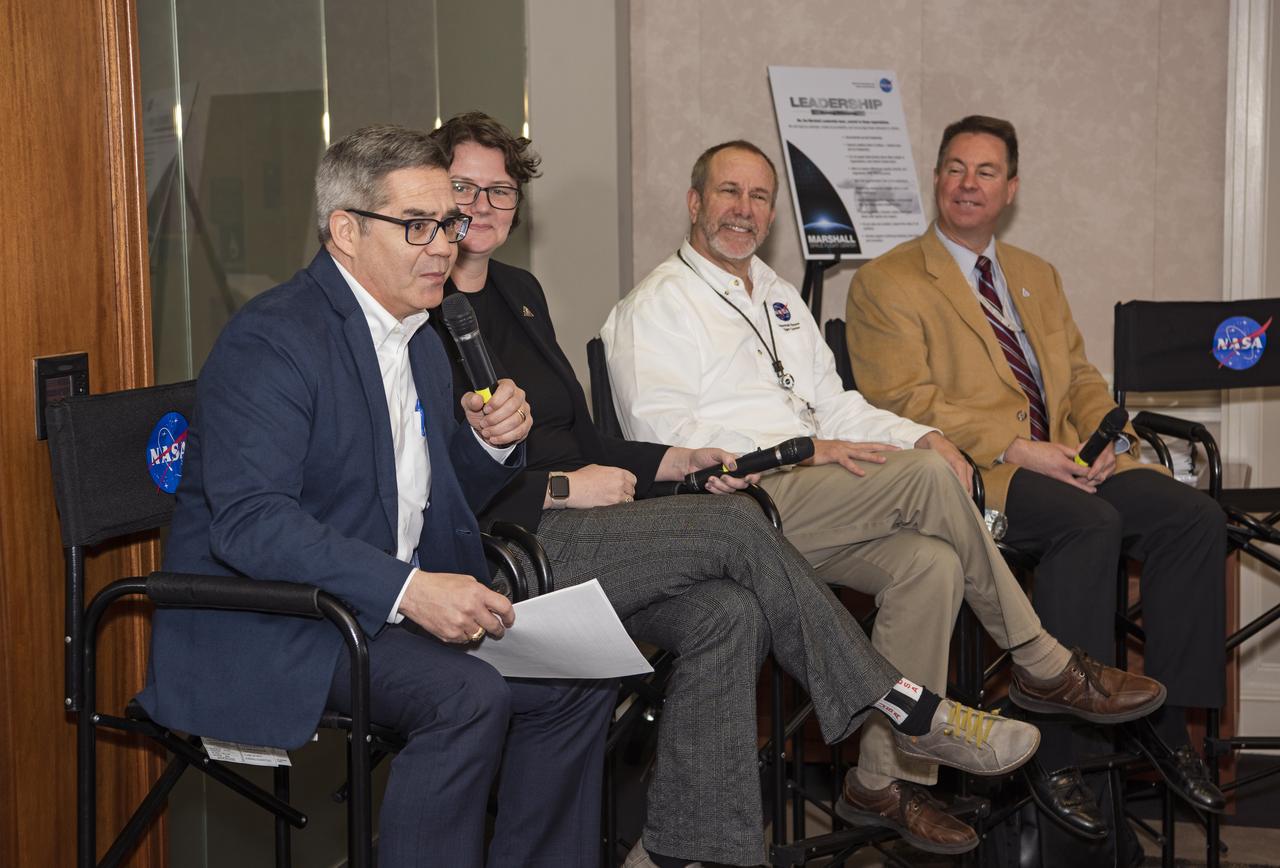
Sam Ortega, left, manager of the Partnerships Office at NASA’s Marshall Space Flight Center, moderates an Artemis Program panel featuring, second from left, Renee Weber, Marshall chief scientist; David Beaman, manager of Marshall’s Systems Engineering & Integration Office; and Don Krupp, associate program manager for the Human Landing System Program, during Universities of the Tennessee Valley Corridor activities Feb. 27 at Marshall. Leadership staff from eight universities and 10 junior colleges in Alabama, Tennessee and Kentucky also heard presentations on Office of STEM Engagement opportunities, partnership opportunities, Marshall’s Technology Transfer Office, the NASA software catalog and Marshall’s Advanced Concepts Office. The group toured several Marshall facilities to learn more about center capabilities.
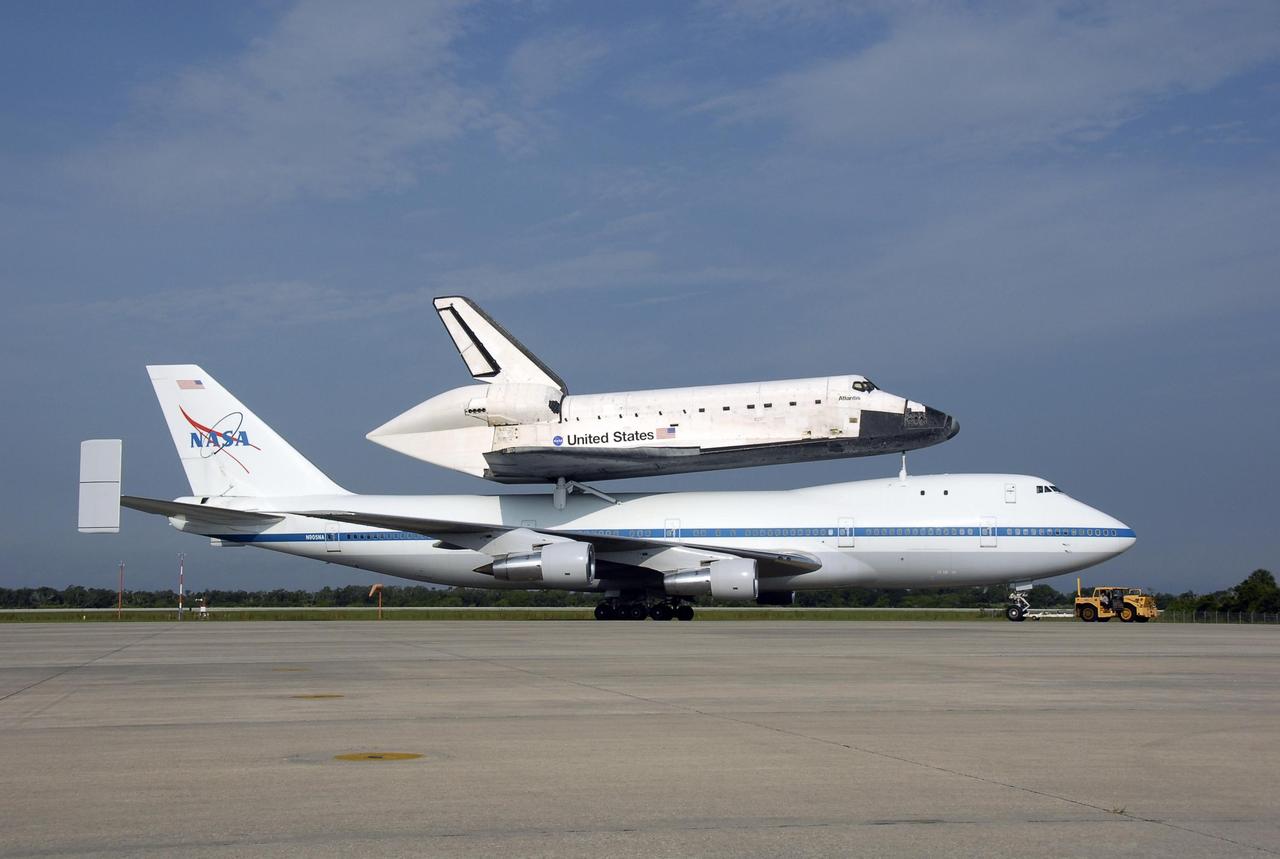
KENNEDY SPACE CENTER, FLA. -- After landing at the KSC Shuttle Landing Facility, the shuttle carrier aircraft, or SCA, and its piggyback passenger Atlantis are towed from the runway. Touchdown was at 8:27 a.m. EDT. The SCA is a modified Boeing 747 jetliner. Visible on Atlantis is the tail cone that covers and protects the main engines during the ferry flight. Atlantis landed at Edwards Air Force Base in California to end mission STS-117. The return to KSC began July 1 and included several stops across the country for fuel. The last stop was at Ft. Campbell in Kentucky. Weather conditions over the last leg postponed the return trip until July 3. Atlantis will be removed from the back of the SCA via the mate/demate device at the SLF. It will then be towed to the Orbiter Processing Facility to begin processing for its next launch, mission STS-122 in December. Photo credit: NASA/Kim Shiflett
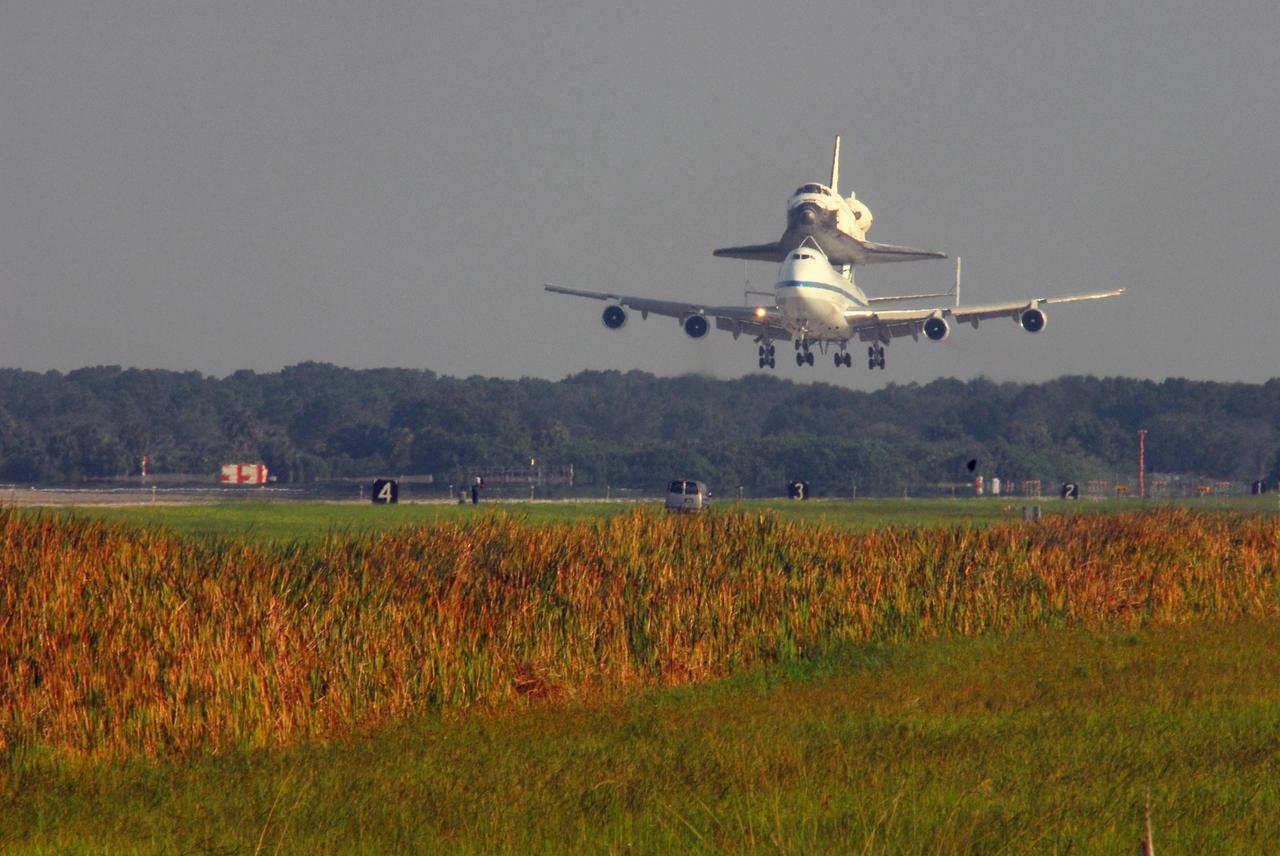
KENNEDY SPACE CENTER, FLA. -- The shuttle carrier aircraft, or SCA, and its piggyback passenger Atlantis approach the runway at the KSC Shuttle Landing Facility after a three-day trip from California. Touchdown was at 8:27 a.m. EDT. The SCA is a modified Boeing 747 jetliner. Atlantis landed at Edwards Air Force Base in California to end mission STS-117. The return to KSC began July 1 and took three days after stops across the country for fuel. The last stop was at Ft. Campbell in Kentucky. Weather conditions over the last leg postponed the return trip until July 3. Atlantis will be removed from the back of the SCA via the mate/demate device at the SLF. It will then be towed to the Orbiter Processing Facility to begin processing for its next launch, mission STS-122 in December. Photo credit: NASA/George Shelton
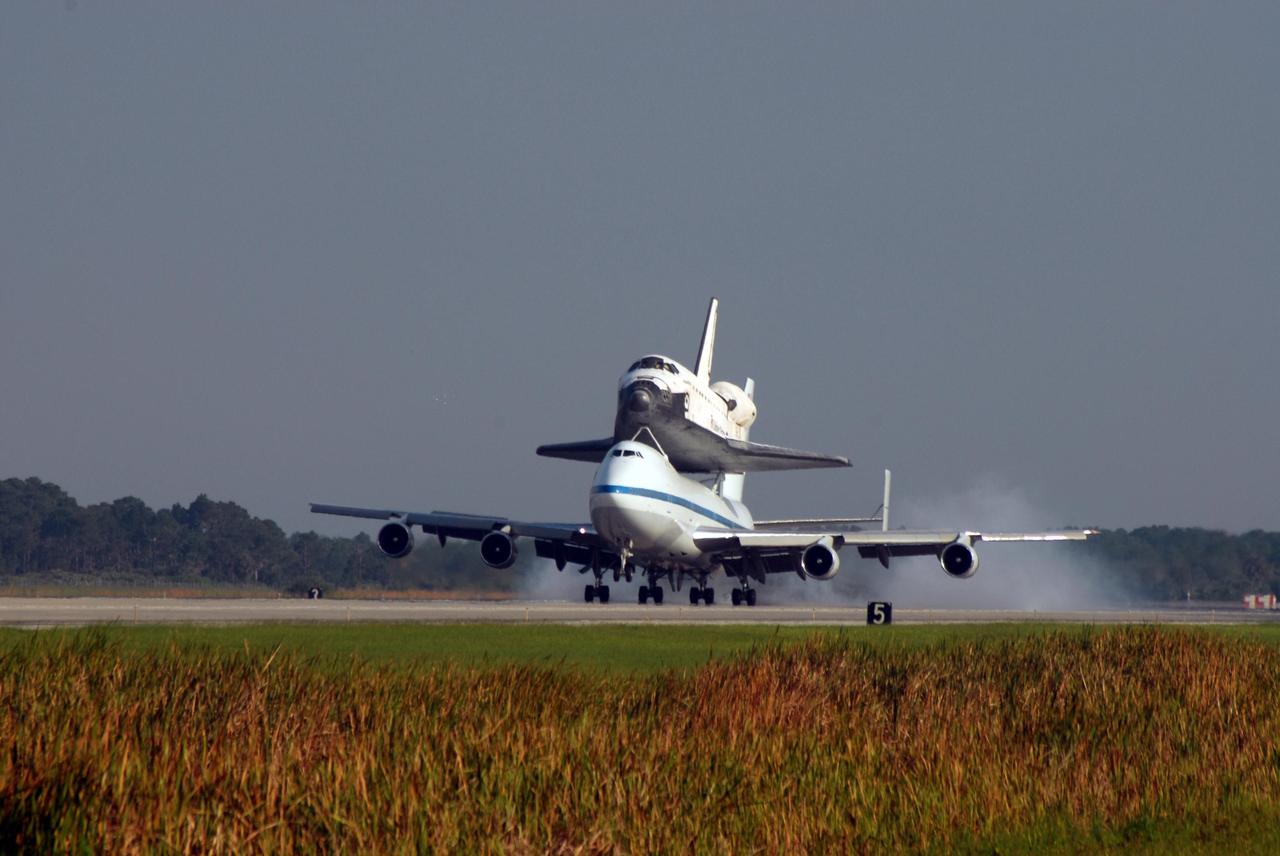
KENNEDY SPACE CENTER, FLA. -- After a three-day trip from California, the shuttle carrier aircraft, or SCA, and its piggyback passenger Atlantis kick up dust at landing on the KSC Shuttle Landing Facility runway. Touchdown was at 8:27 a.m. EDT. The SCA is a modified Boeing 747 jetliner. Atlantis landed at Edwards Air Force Base in California to end mission STS-117. The return to KSC began July 1 and took three days after stops across the country for fuel. The last stop was at Ft. Campbell in Kentucky. Weather conditions over the last leg postponed the return trip until July 3. Atlantis will be removed from the back of the SCA via the mate/demate device at the SLF. It will then be towed to the Orbiter Processing Facility to begin processing for its next launch, mission STS-122 in December. Photo credit: NASA/Ken Thornsley
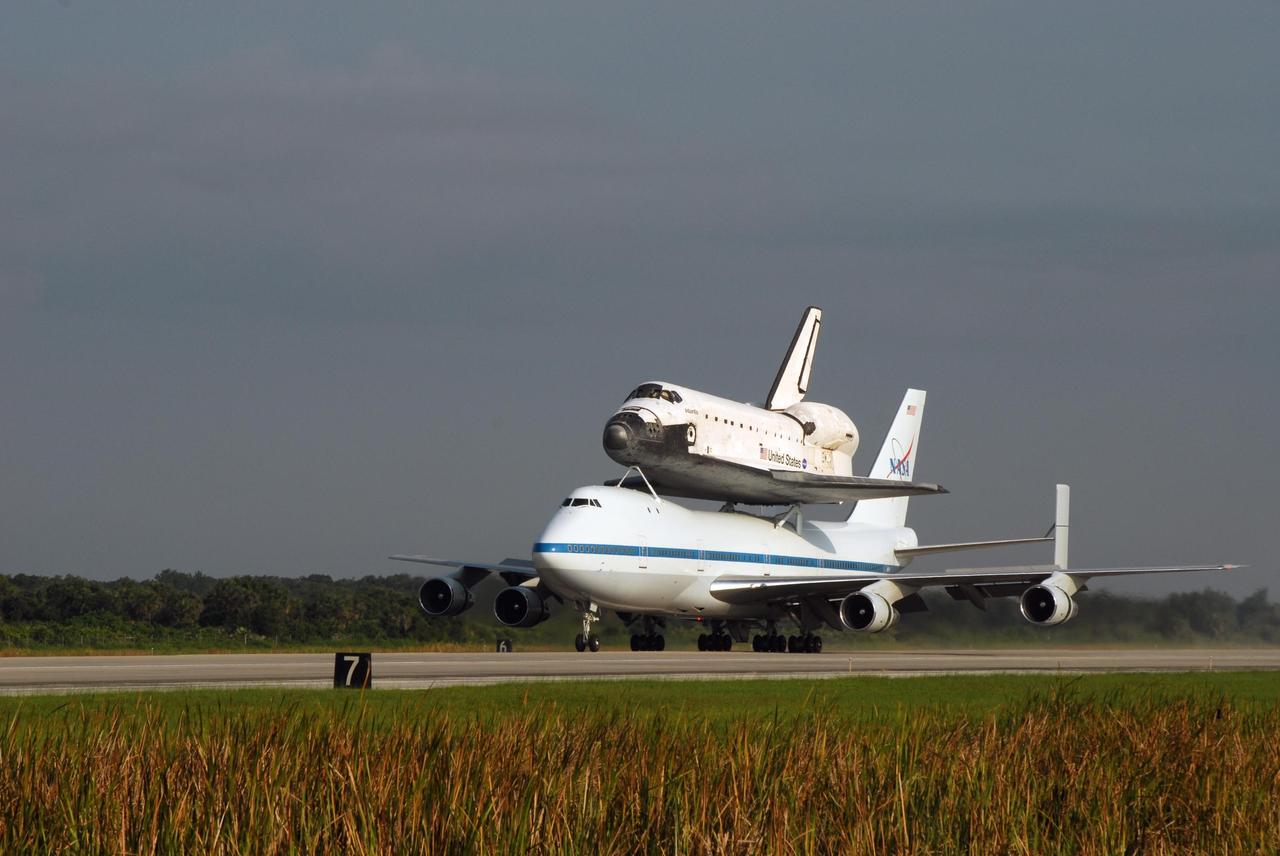
KENNEDY SPACE CENTER, FLA. -- After a three-day trip from California, the shuttle carrier aircraft, or SCA, and its piggyback passenger Atlantis roll down the KSC Shuttle Landing Facility runway. Touchdown was at 8:27 a.m. EDT. The SCA is a modified Boeing 747 jetliner. Atlantis landed at Edwards Air Force Base in California to end mission STS-117. The return to KSC began July 1 and took three days after stops across the country for fuel. The last stop was at Ft. Campbell in Kentucky. Weather conditions over the last leg postponed the return trip until July 3. Atlantis will be removed from the back of the SCA via the mate/demate device at the SLF. It will then be towed to the Orbiter Processing Facility to begin processing for its next launch, mission STS-122 in December. Photo credit: NASA/Ken Thornsley
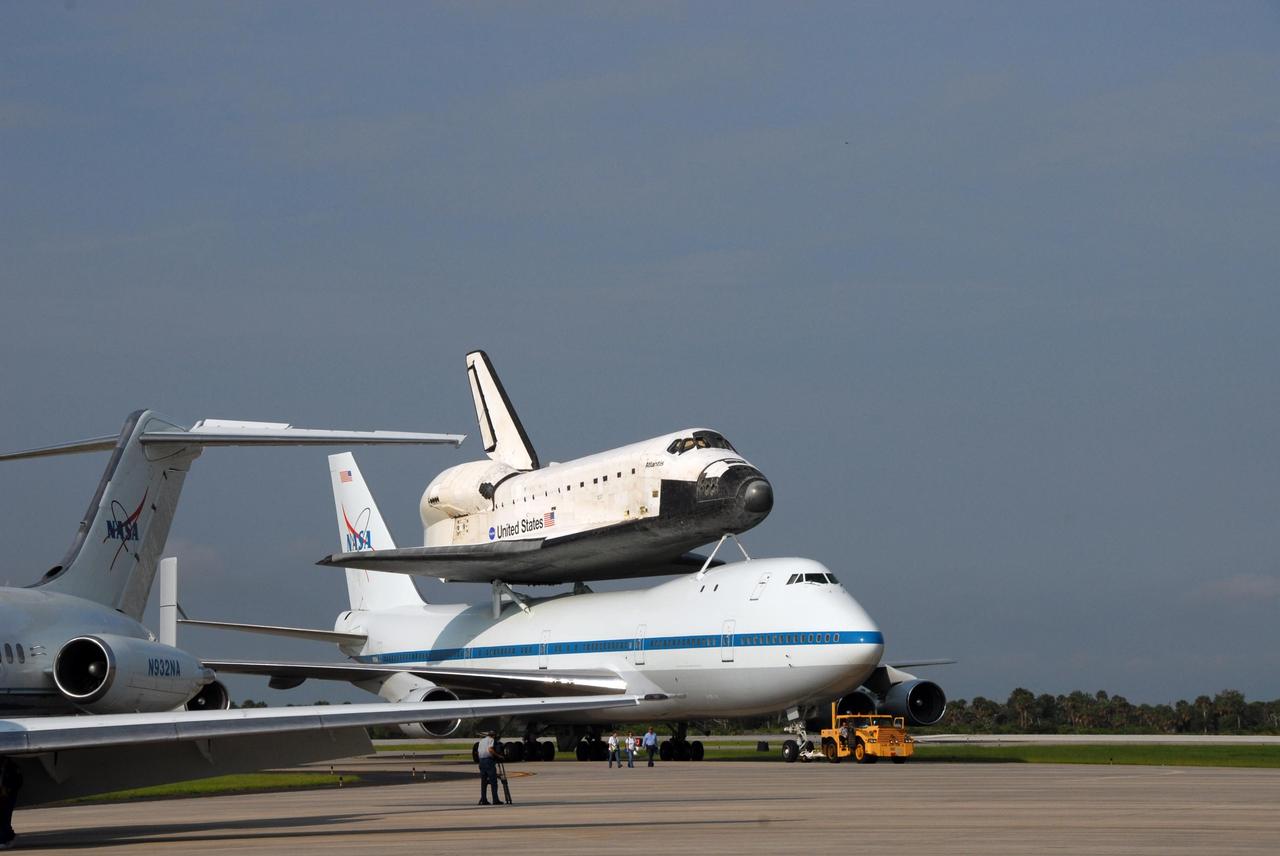
KENNEDY SPACE CENTER, FLA. -- After a three-day trip from California, the shuttle carrier aircraft, or SCA, and its piggyback passenger Atlantis are parked on the KSC Shuttle Landing Facility. Touchdown was at 8:27 a.m. EDT. The SCA is a modified Boeing 747 jetliner. Visible on Atlantis is the tail cone that covers and protects the main engines during the ferry flight. Atlantis landed at Edwards Air Force Base in California to end mission STS-117. The return to KSC began July 1 and took three days after stops across the country for fuel. The last stop was at Ft. Campbell in Kentucky. Weather conditions over the last leg postponed the return trip until July 3. Atlantis will be removed from the back of the SCA via the mate/demate device at the SLF. It will then be towed to the Orbiter Processing Facility to begin processing for its next launch, mission STS-122 in December. Photo credit: NASA/Ken Thornsley

KENNEDY SPACE CENTER, FLA. -- The shuttle carrier aircraft, or SCA, and its piggyback passenger Atlantis come to a rest near the mate/demate device on the KSC Shuttle Landing Facility. After a three-day, cross-country trip, the duo touched down at 8:27 a.m. EDT. The SCA is a modified Boeing 747 jetliner. Atlantis landed at Edwards Air Force Base in California to end mission STS-117. The return to KSC began July 1 and included several stops across the country for fuel. The last stop was at Ft. Campbell in Kentucky. Weather conditions over the last leg postponed the return trip until July 3. After demate, Atlantis will then be towed to the Orbiter Processing Facility to begin processing for its next launch, mission STS-122 in December. Photo credit: NASA/Kim Shiflett
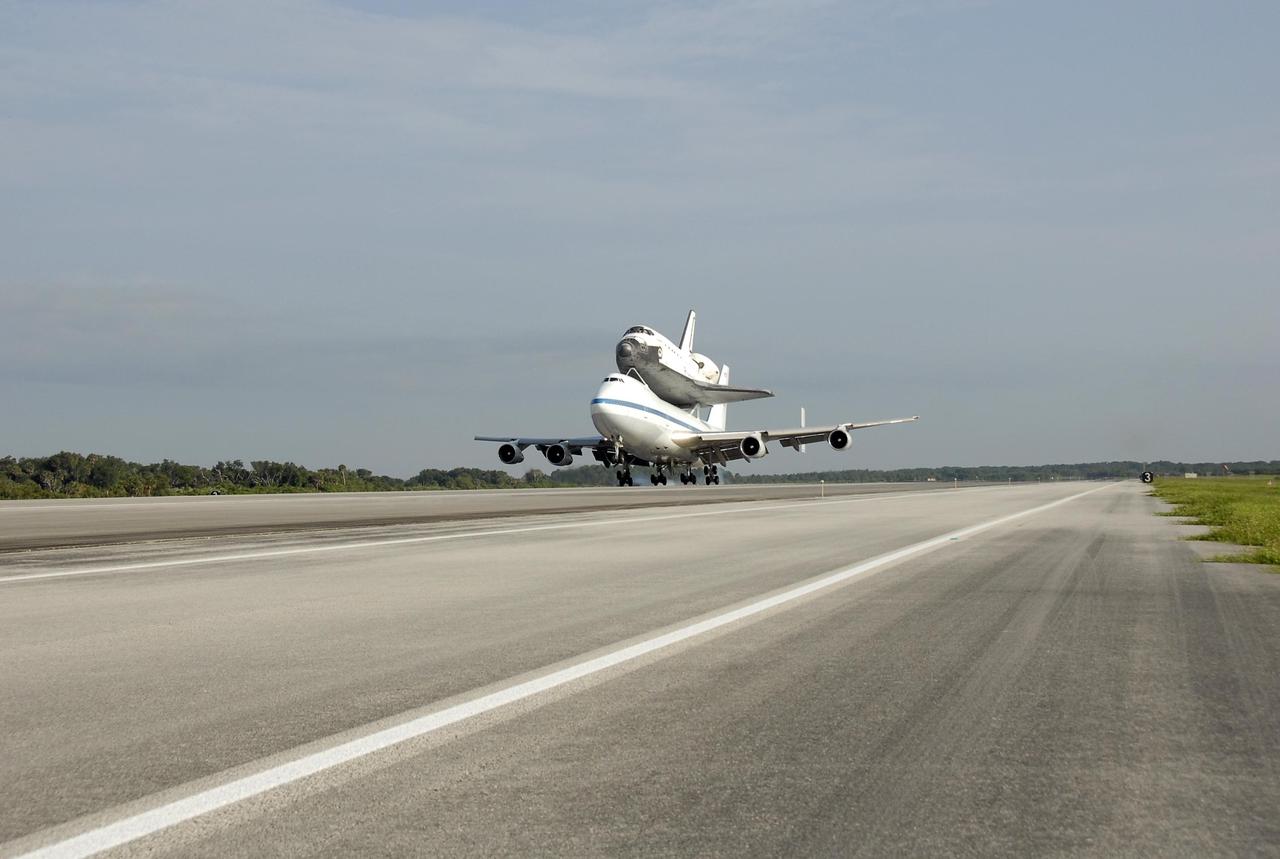
KENNEDY SPACE CENTER, FLA. -- The shuttle carrier aircraft, or SCA, and its piggyback passenger Atlantis kick up a little dust at touchdown on the KSC Shuttle Landing Facility. Touchdown was at 8:27 a.m. EDT. The SCA is a modified Boeing 747 jetliner. Atlantis landed at Edwards Air Force Base in California to end mission STS-117. The return to KSC began July 1 and took three days after stops across the country for fuel. The last stop was at Ft. Campbell in Kentucky. Weather conditions over the last leg postponed the return trip until July 3. Atlantis will be removed from the back of the SCA via the mate/demate device at the SLF. It will then be towed to the Orbiter Processing Facility to begin processing for its next launch, mission STS-122 in December. Photo credit: NASA/Kim Shiflett
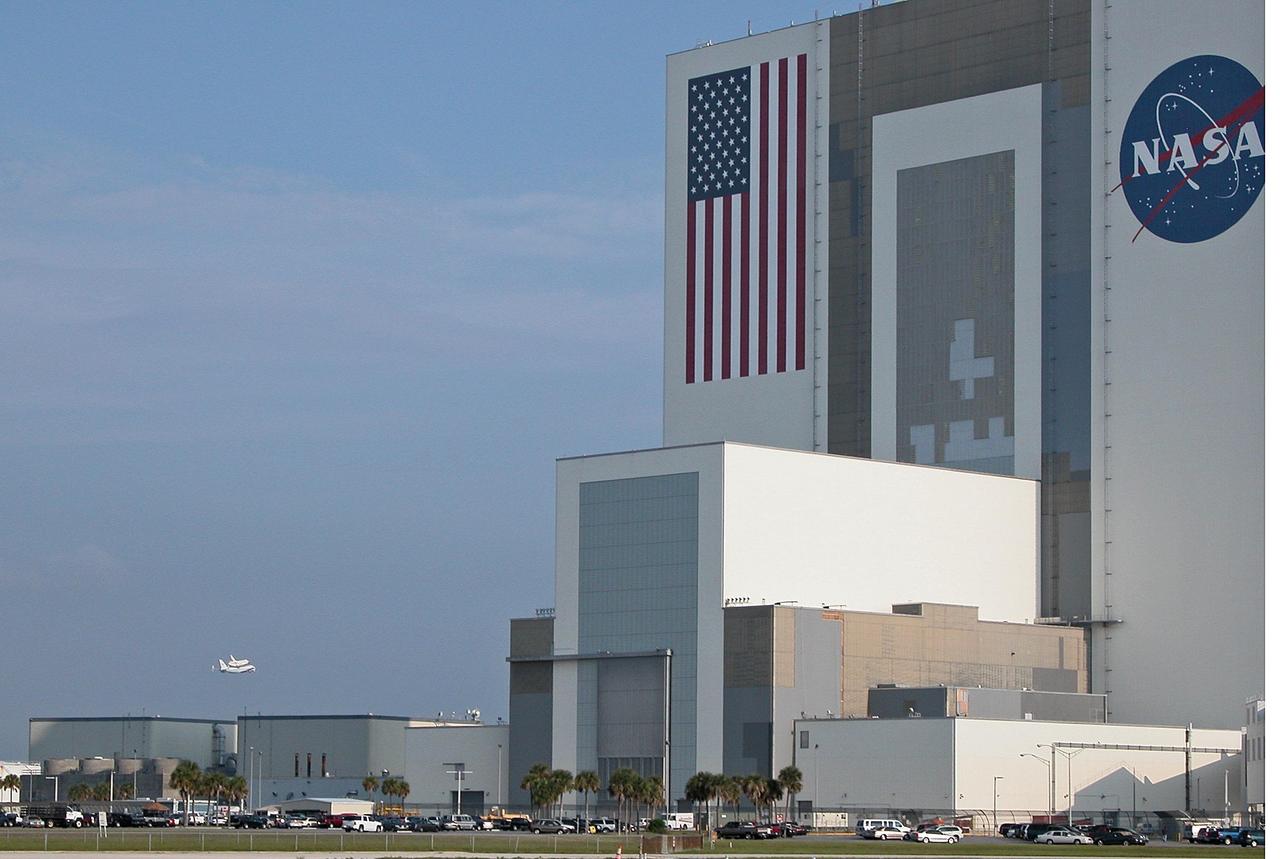
KENNEDY SPACE CENTER, FLA. -- Through broken clouds, the shuttle carrier aircraft, or SCA, and its passenger Atlantis ease their way past the Vehicle Assembly Building, at right, for a landing at the KSC Shuttle Landing Facility, known as the SLF. The aircraft is a modified Boeing 747 jetliner. Atlantis landed at Edwards Air Force Base in California to end mission STS-117. The return to KSC began July 1 and took three days after stops across the country for fuel. The last stop was at Ft. Campbell in Kentucky. Weather conditions over the last leg postponed the return trip until July 3. Touchdown was at 8:27 a.m. EDT. Atlantis will be removed from the back of the SCA via the mate/demate device at the SLF. It will then be towed to the Orbiter Processing Facility to begin processing for its next launch, mission STS-122 in December. Photo credit: NASA/Debbie Odom
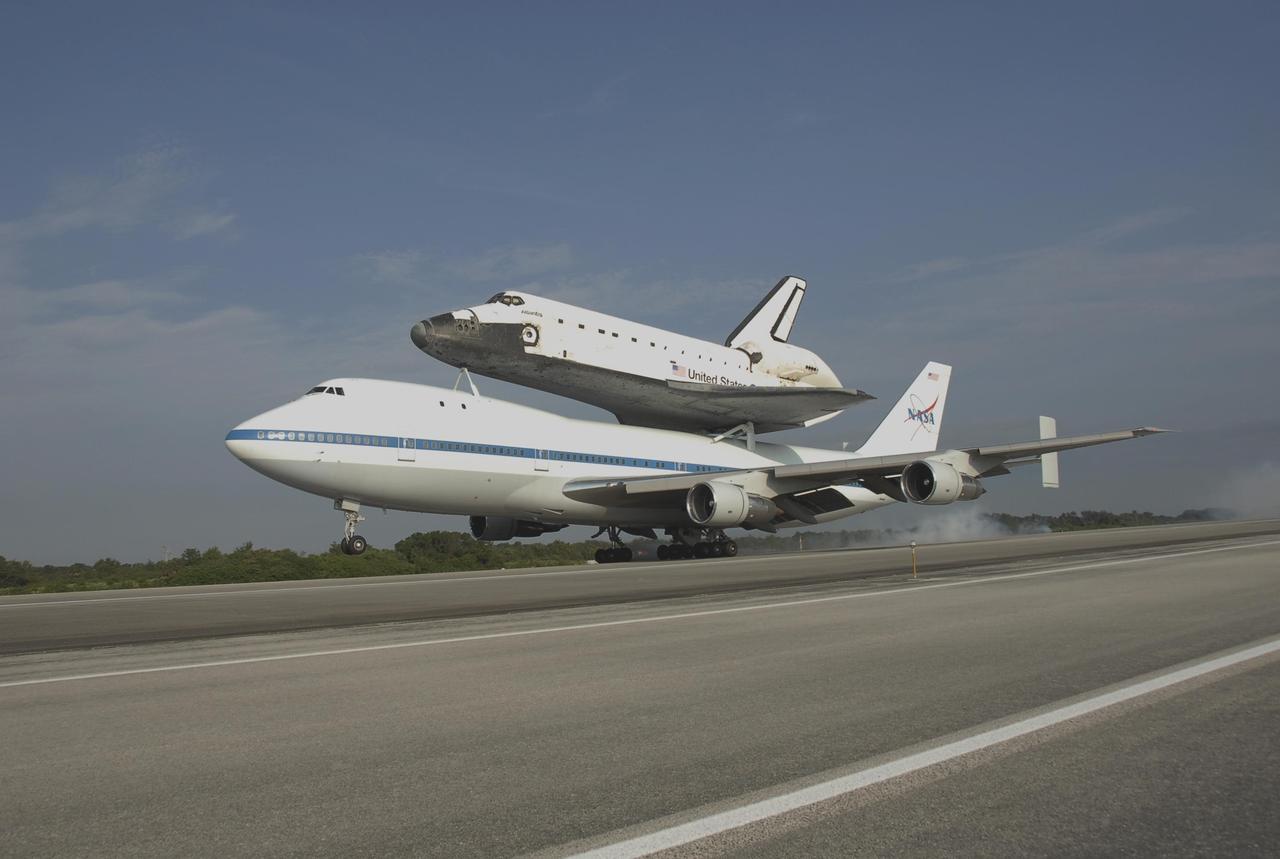
KENNEDY SPACE CENTER, FLA. -- Despite kicking up a little dust, the shuttle carrier aircraft, or SCA, and its piggyback passenger Atlantis make a smooth landing on the KSC Shuttle Landing Facility. Touchdown was at 8:27 a.m. EDT. The SCA is a modified Boeing 747 jetliner. Atlantis landed at Edwards Air Force Base in California to end mission STS-117. The return to KSC began July 1 and took three days after stops across the country for fuel. The last stop was at Ft. Campbell in Kentucky. Weather conditions over the last leg postponed the return trip until July 3. Atlantis will be removed from the back of the SCA via the mate/demate device at the SLF. It will then be towed to the Orbiter Processing Facility to begin processing for its next launch, mission STS-122 in December. Photo credit: NASA/Kim Shiflett
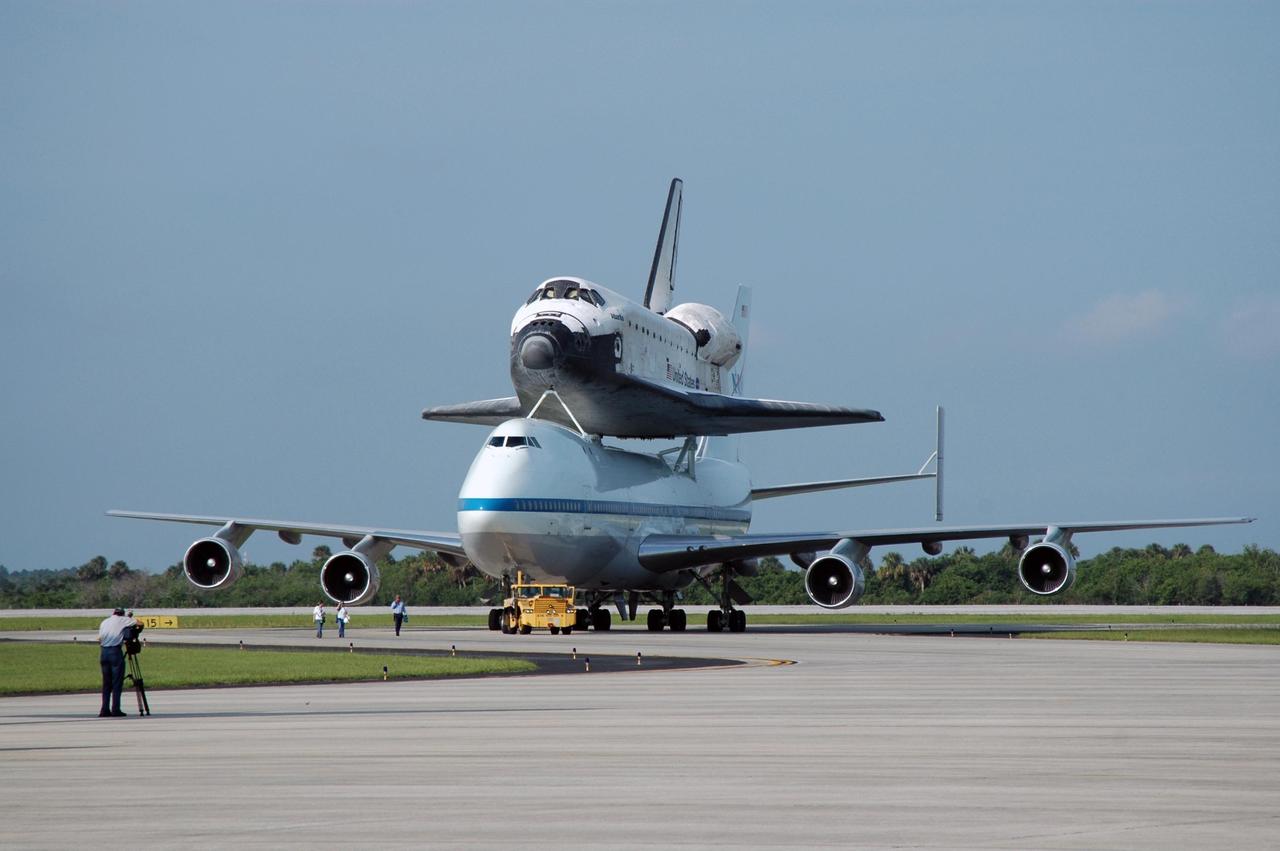
KENNEDY SPACE CENTER, FLA. -- After landing at the KSC Shuttle Landing Facility, the shuttle carrier aircraft, or SCA, and its piggyback passenger Atlantis are towed from the runway. Touchdown was at 8:27 a.m. EDT. The SCA is a modified Boeing 747 jetliner. Atlantis landed at Edwards Air Force Base in California to end mission STS-117. The return to KSC began July 1 and took three days after stops across the country for fuel. The last stop was at Ft. Campbell in Kentucky. Weather conditions over the last leg postponed the return trip until July 3. Atlantis will be removed from the back of the SCA via the mate/demate device at the SLF. It will then be towed to the Orbiter Processing Facility to begin processing for its next launch, mission STS-122 in December. Photo credit: NASA/Jim Grossmann
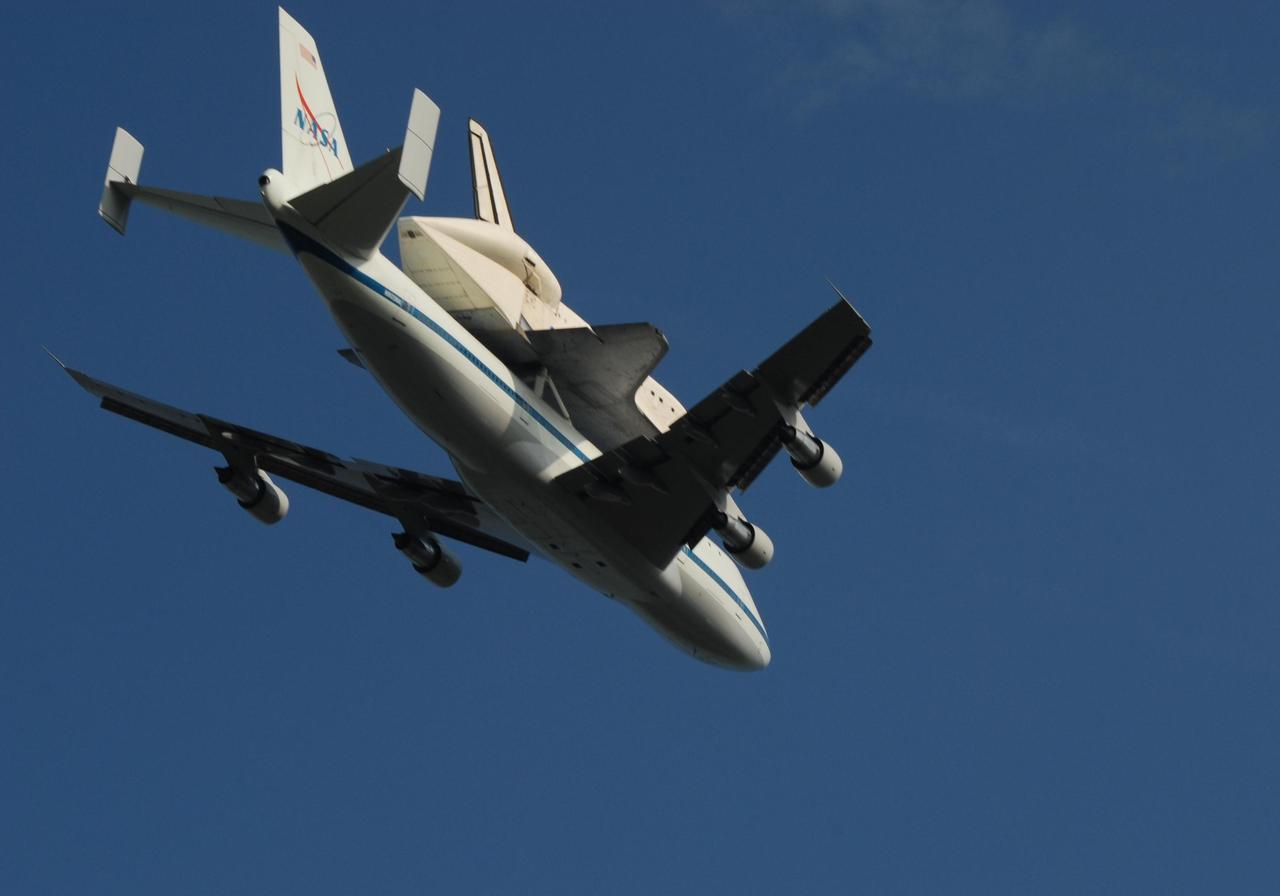
KENNEDY SPACE CENTER, FLA. -- After a three-day trip from California, the shuttle carrier aircraft, or SCA, and its piggyback passenger Atlantis fly over the Kennedy Space Center before landing on the KSC Shuttle Landing Facility runway. Touchdown was at 8:27 a.m. EDT. The SCA is a modified Boeing 747 jetliner. Atlantis landed at Edwards Air Force Base in California to end mission STS-117. The return to KSC began July 1 and took three days after stops across the country for fuel. The last stop was at Ft. Campbell in Kentucky. Weather conditions over the last leg postponed the return trip until July 3. Atlantis will be removed from the back of the SCA via the mate/demate device at the SLF. It will then be towed to the Orbiter Processing Facility to begin processing for its next launch, mission STS-122 in December. Photo credit: NASA/Ken Thornsley
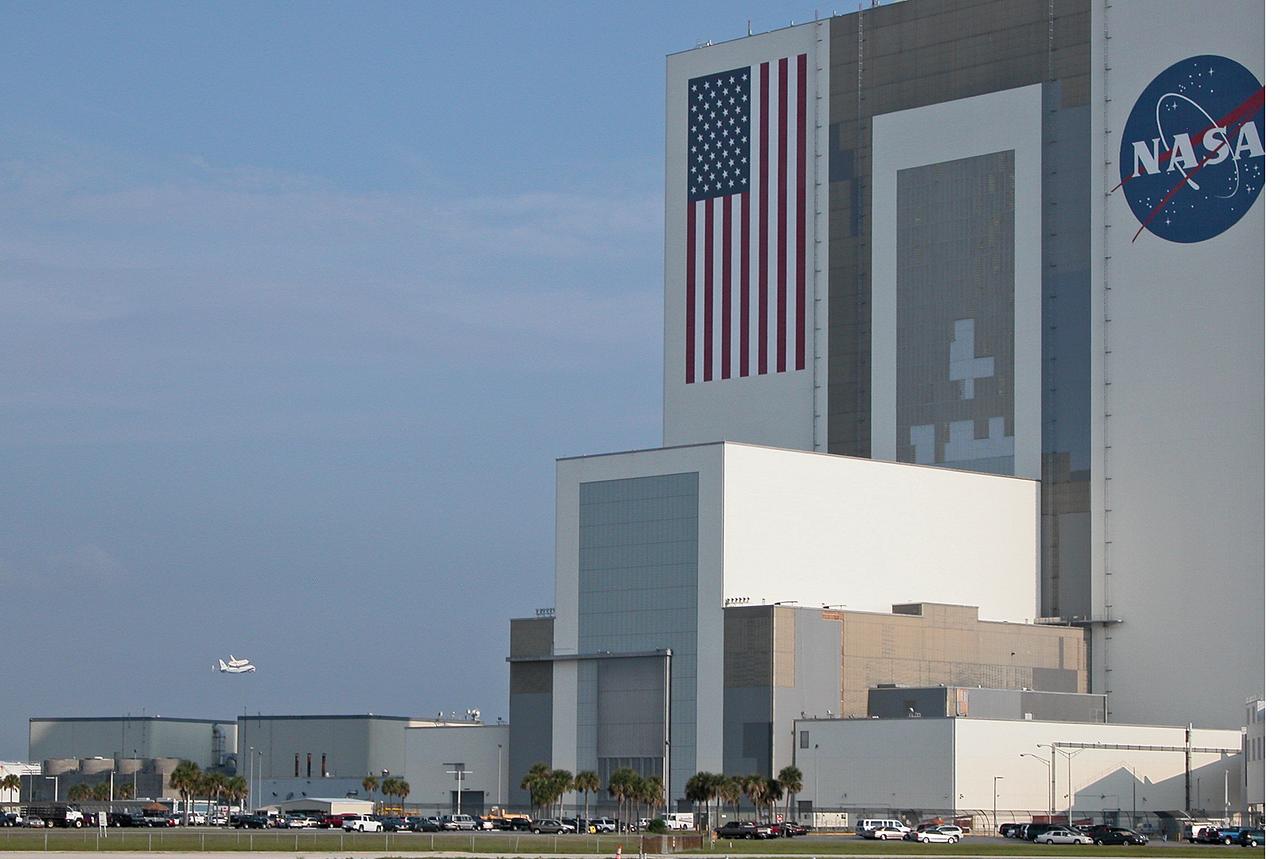
Through broken clouds, the shuttle carrier aircraft, or SCA, and its passenger Atlantis ease their way past the Vehicle Assembly Building, at right, for a landing at the KSC Shuttle Landing Facility, known as the SLF. The aircraft is a modified Boeing 747 jetliner. Atlantis landed at Edwards Air Force Base in California to end mission STS-117. The return to KSC began July 1 and took three days after stops across the country for fuel. The last stop was at Ft. Campbell in Kentucky. Weather conditions over the last leg postponed the return trip until July 3. Touchdown was at 8:27 a.m. EDT. Atlantis will be removed from the back of the SCA via the mate/demate device at the SLF. It will then be towed to the Orbiter Processing Facility to begin processing for its next launch, mission STS-122 in December.
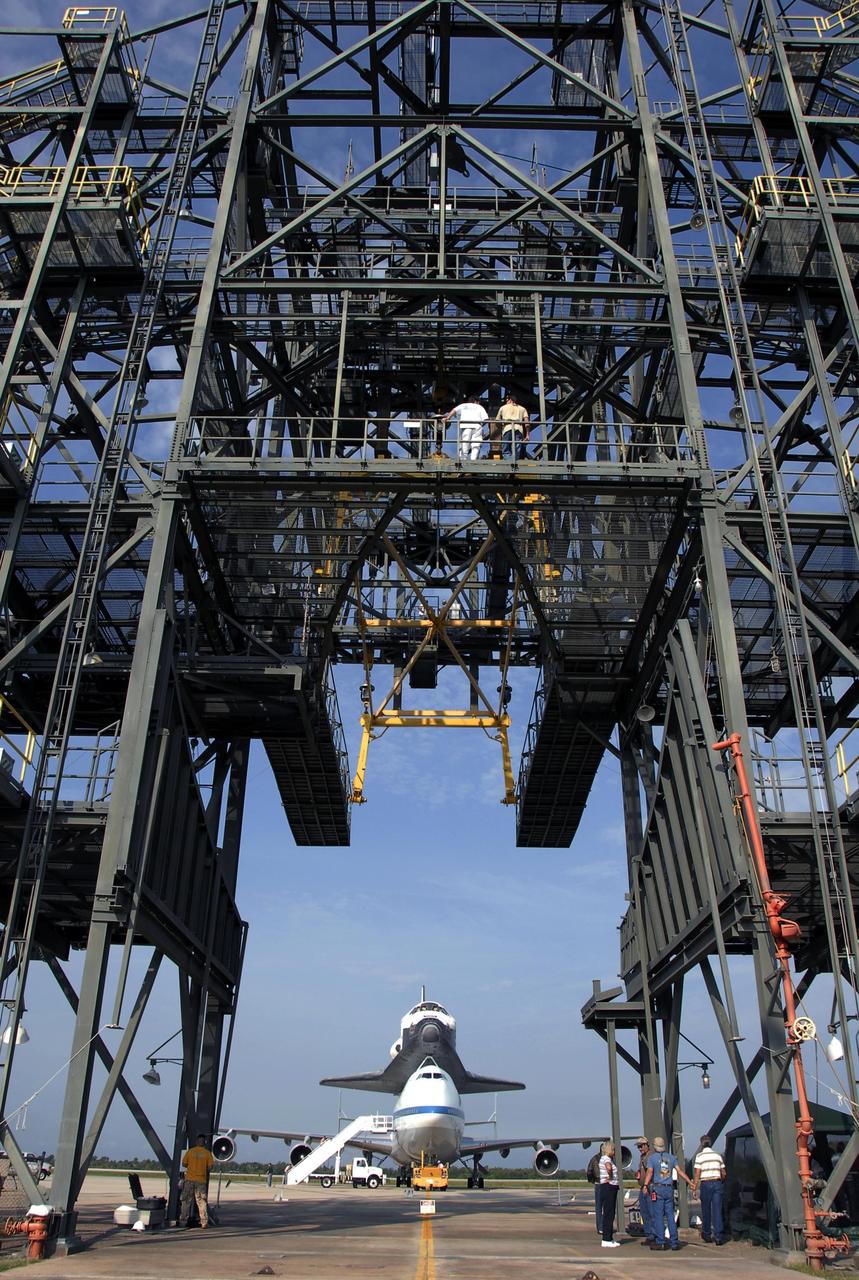
KENNEDY SPACE CENTER, FLA. -- The shuttle carrier aircraft, or SCA, and its piggyback passenger Atlantis are poised to be towed into the mate/demate device, in the foreground. The device will lift the orbiter and put it back on the ground. After a three-day, cross-country trip, the orbiter/SCA duo touched down at 8:27 a.m. EDT. The SCA is a modified Boeing 747 jetliner. Atlantis landed at Edwards Air Force Base in California to end mission STS-117. The return to KSC began July 1 and included several stops across the country for fuel. The last stop was at Ft. Campbell in Kentucky. Weather conditions over the last leg postponed the return trip until July 3. After demate, Atlantis will then be towed to the Orbiter Processing Facility to begin processing for its next launch, mission STS-122 in December. Photo credit: NASA/Kim Shiflett
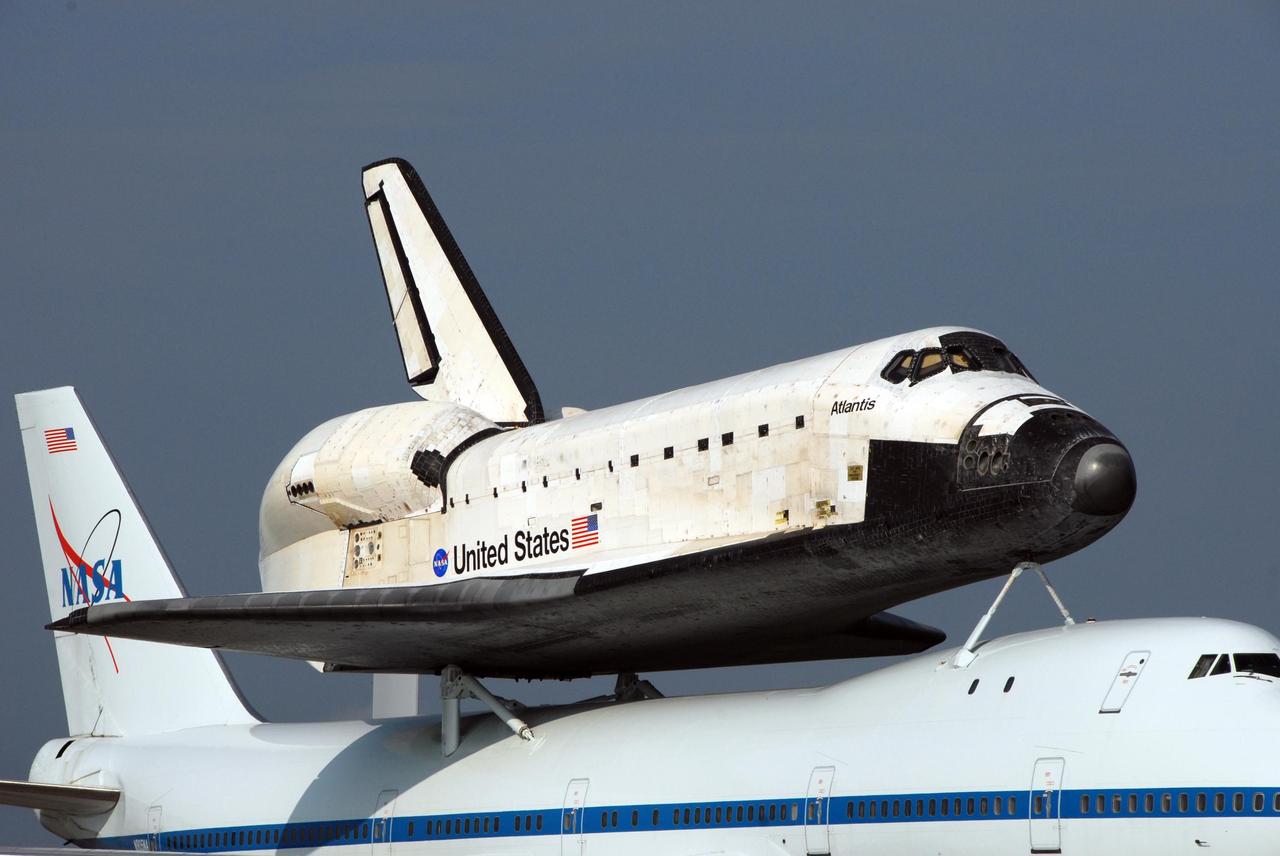
KENNEDY SPACE CENTER, FLA. -- Struts on the shuttle carrier aircraft, or SCA, attach the orbiter Atlantis for the piggyback flight. The plane and orbiter returned from California after three days. Touchdown was at 8:27 a.m. EDT. The SCA is a modified Boeing 747 jetliner. Visible on Atlantis is the tail cone that covers and protects the main engines during the ferry flight. Atlantis landed at Edwards Air Force Base in California to end mission STS-117. The return to KSC began July 1 and took three days after stops across the country for fuel. The last stop was at Ft. Campbell in Kentucky. Weather conditions over the last leg postponed the return trip until July 3. Atlantis will be removed from the back of the SCA via the mate/demate device at the SLF. It will then be towed to the Orbiter Processing Facility to begin processing for its next launch, mission STS-122 in December. Photo credit: NASA/Ken Thornsley
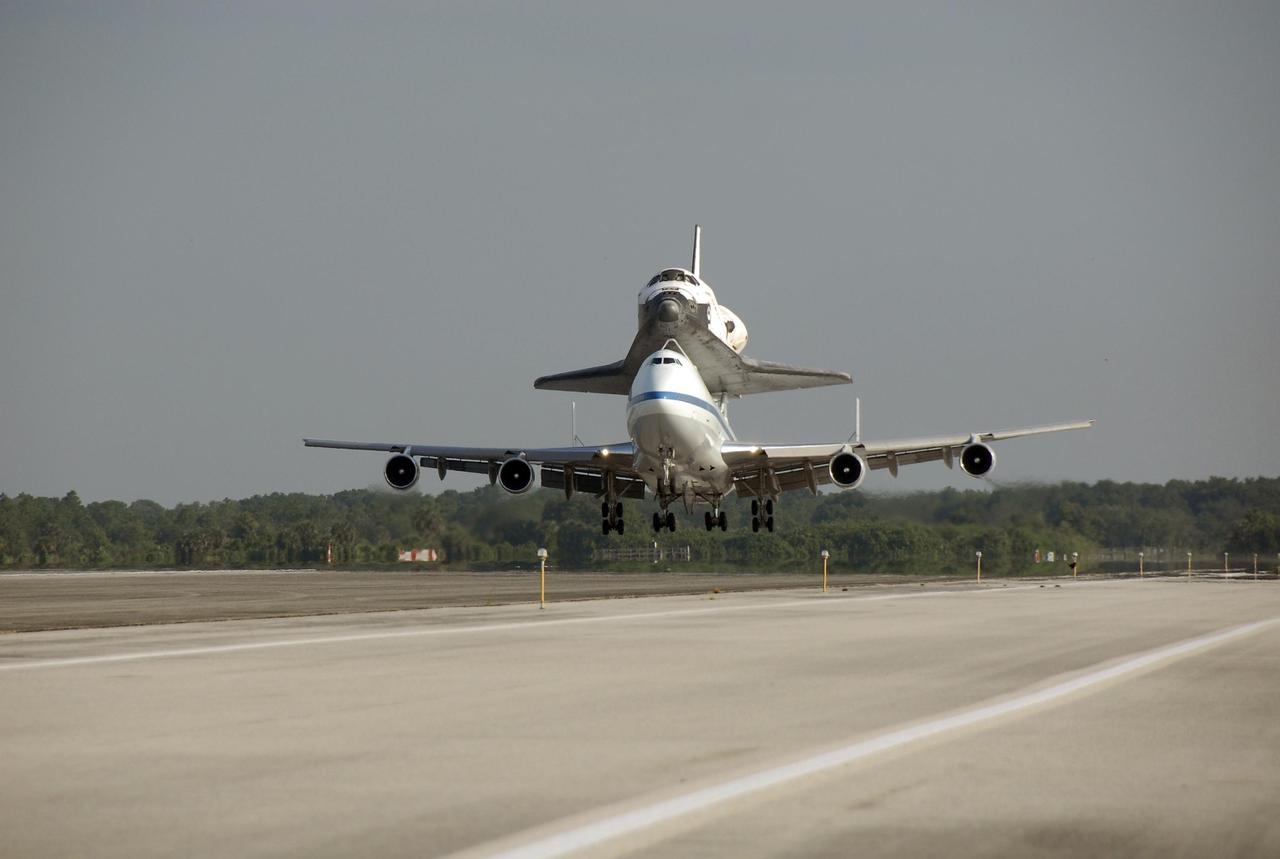
KENNEDY SPACE CENTER, FLA. -- The shuttle carrier aircraft, or SCA, and its piggyback passenger Atlantis near touchdown on the KSC Shuttle Landing Facility. The SCA is a modified Boeing 747 jetliner. Touchdown was at 8:27 a.m. EDT. Atlantis landed at Edwards Air Force Base in California to end mission STS-117. The return to KSC began July 1 and took three days after stops across the country for fuel. The last stop was at Ft. Campbell in Kentucky. Weather conditions over the last leg postponed the return trip until July 3. Atlantis will be removed from the back of the SCA via the mate/demate device at the SLF. It will then be towed to the Orbiter Processing Facility to begin processing for its next launch, mission STS-122 in December. Photo credit: NASA/Kim Shiflett

KENNEDY SPACE CENTER, FLA. -- After a three-day trip from California, the shuttle carrier aircraft, or SCA, and its piggyback passenger Atlantis fly over the Kennedy Space Center before landing on the KSC Shuttle Landing Facility runway. Touchdown was at 8:27 a.m. EDT. The SCA is a modified Boeing 747 jetliner. Atlantis landed at Edwards Air Force Base in California to end mission STS-117. The return to KSC began July 1 and took three days after stops across the country for fuel. The last stop was at Ft. Campbell in Kentucky. Weather conditions over the last leg postponed the return trip until July 3. Atlantis will be removed from the back of the SCA via the mate/demate device at the SLF. It will then be towed to the Orbiter Processing Facility to begin processing for its next launch, mission STS-122 in December. Photo credit: NASA/Ken Thornsley
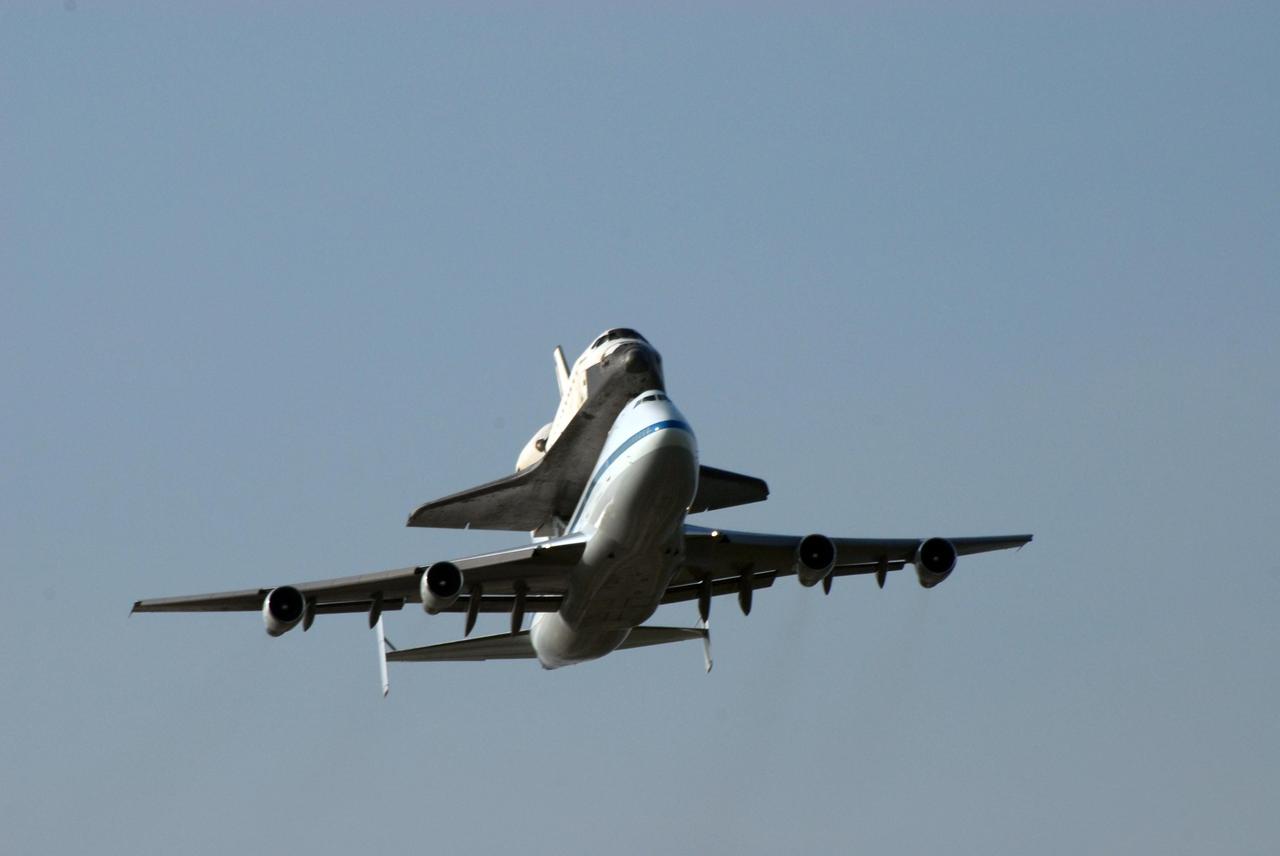
KENNEDY SPACE CENTER, FLA. -- After a three-day trip from California, the shuttle carrier aircraft, or SCA, and its piggyback passenger Atlantis fly around the Kennedy Space Center before landing on the KSC Shuttle Landing Facility runway. Touchdown was at 8:27 a.m. EDT. The SCA is a modified Boeing 747 jetliner. Atlantis landed at Edwards Air Force Base in California to end mission STS-117. The return to KSC began July 1 and took three days after stops across the country for fuel. The last stop was at Ft. Campbell in Kentucky. Weather conditions over the last leg postponed the return trip until July 3. Atlantis will be removed from the back of the SCA via the mate/demate device at the SLF. It will then be towed to the Orbiter Processing Facility to begin processing for its next launch, mission STS-122 in December. Photo credit: NASA/Ken Thornsley
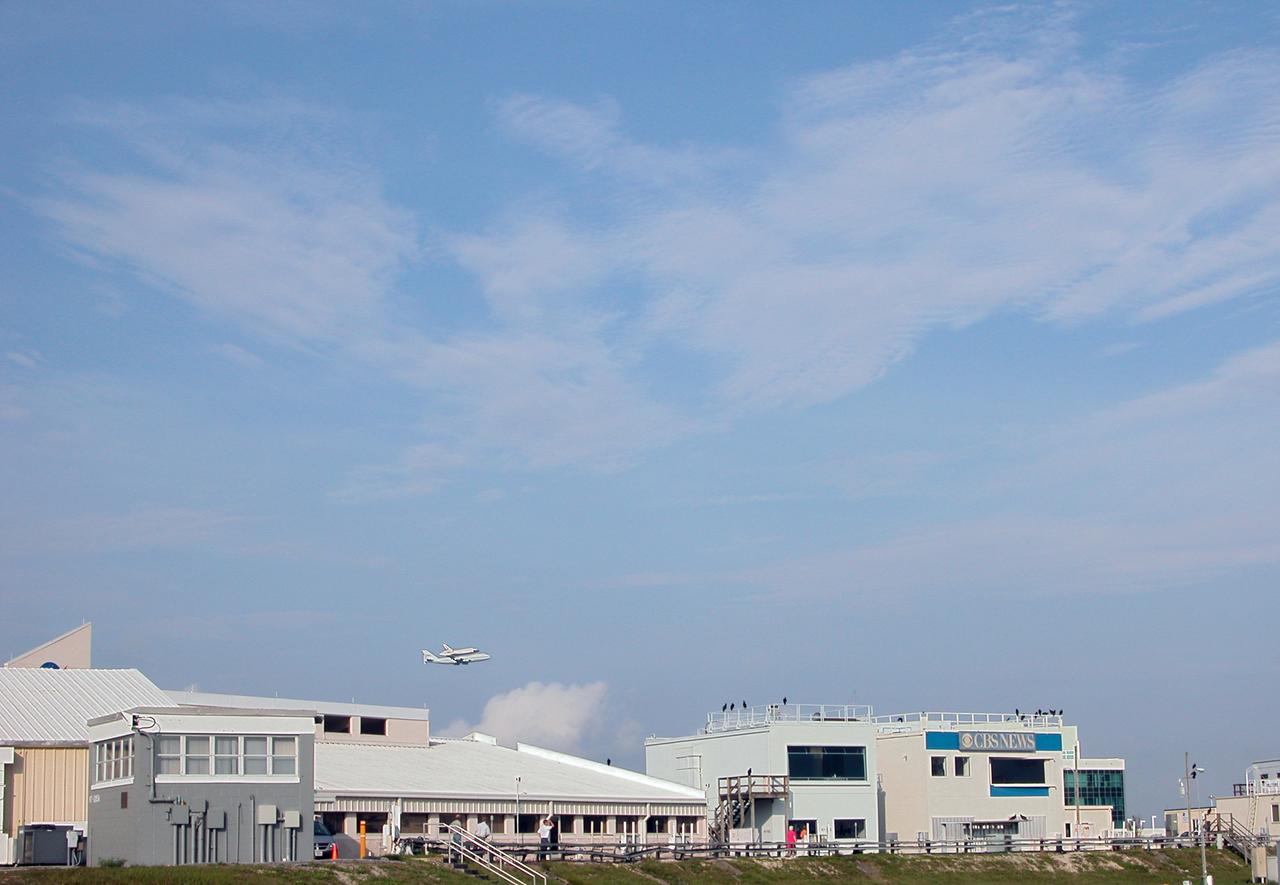
On a morning where broken clouds filled the sky of Central Florida, the shuttle carrier aircraft, or SCA, and its passenger Atlantis ease their way past the NASA News Center for a landing at the KSC Shuttle Landing Facility, known as the SLF. The aircraft is a modified Boeing 747 jetliner Atlantis landed at Edwards Air Force Base in California to end mission STS-117. The return to KSC began July 1 and took three days after stops across the country for fuel. The last stop was at Ft. Campbell in Kentucky. Weather conditions over the last leg postponed the return trip until July 3. Touchdown was at 8:27 a.m. EDT. Atlantis will be removed from the back of the SCA via the mate/demate device at the SLF. It will then be towed to the Orbiter Processing Facility to begin processing for its next launch, mission STS-122 in December.
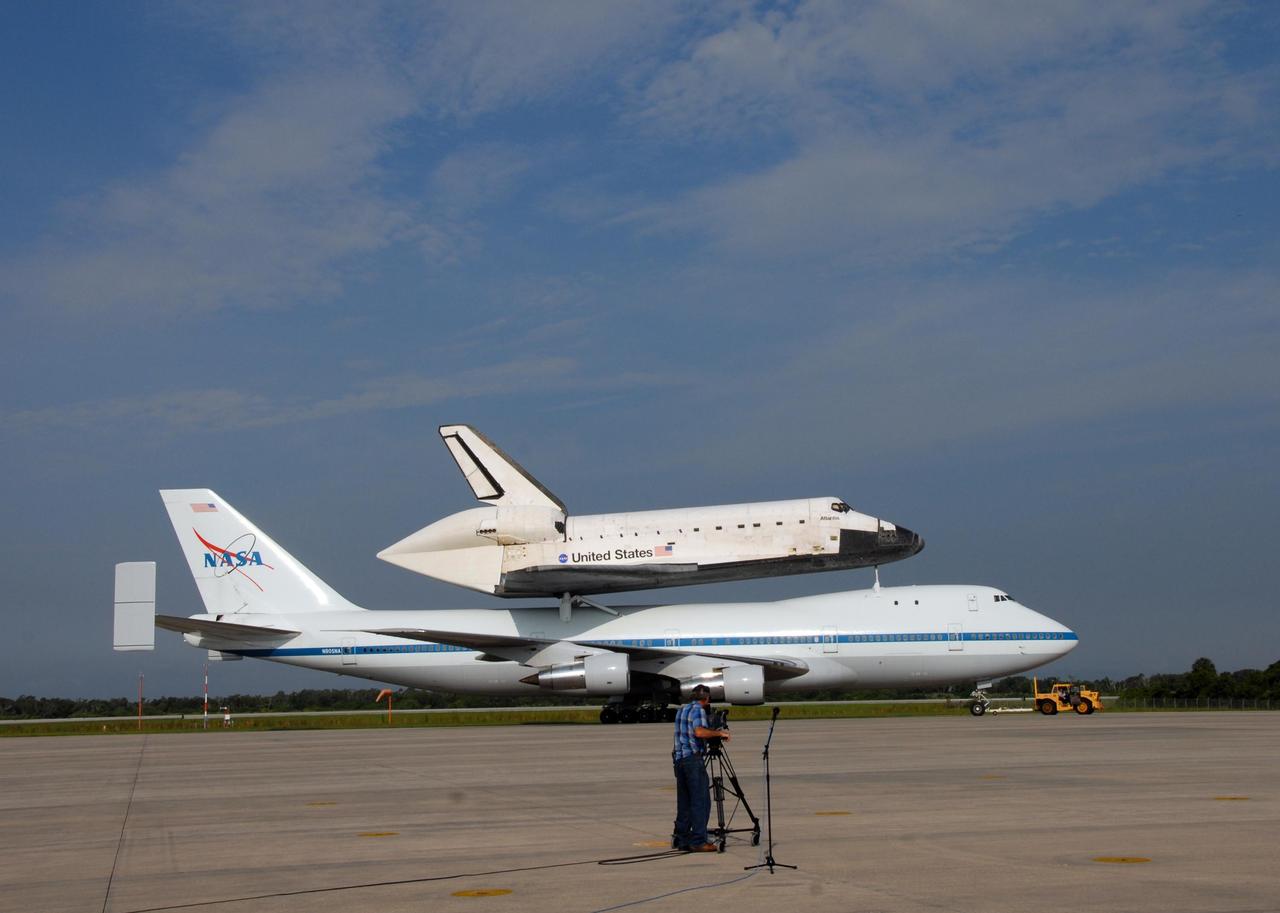
KENNEDY SPACE CENTER, FLA. -- The shuttle carrier aircraft, or SCA, and its piggyback passenger Atlantis are towed across the Shuttle Landing Facility after their landing. Touchdown was at 8:27 a.m. EDT. The SCA is a modified Boeing 747 jetliner. Visible on Atlantis is the tail cone that covers and protects the main engines during the ferry flight. Atlantis landed at Edwards Air Force Base in California to end mission STS-117. The return to KSC began July 1 and took three days after stops across the country for fuel. The last stop was at Ft. Campbell in Kentucky. Weather conditions over the last leg postponed the return trip until July 3. Atlantis will be removed from the back of the SCA via the mate/demate device at the SLF. It will then be towed to the Orbiter Processing Facility to begin processing for its next launch, mission STS-122 in December. Photo credit: NASA/Ken Thornsley
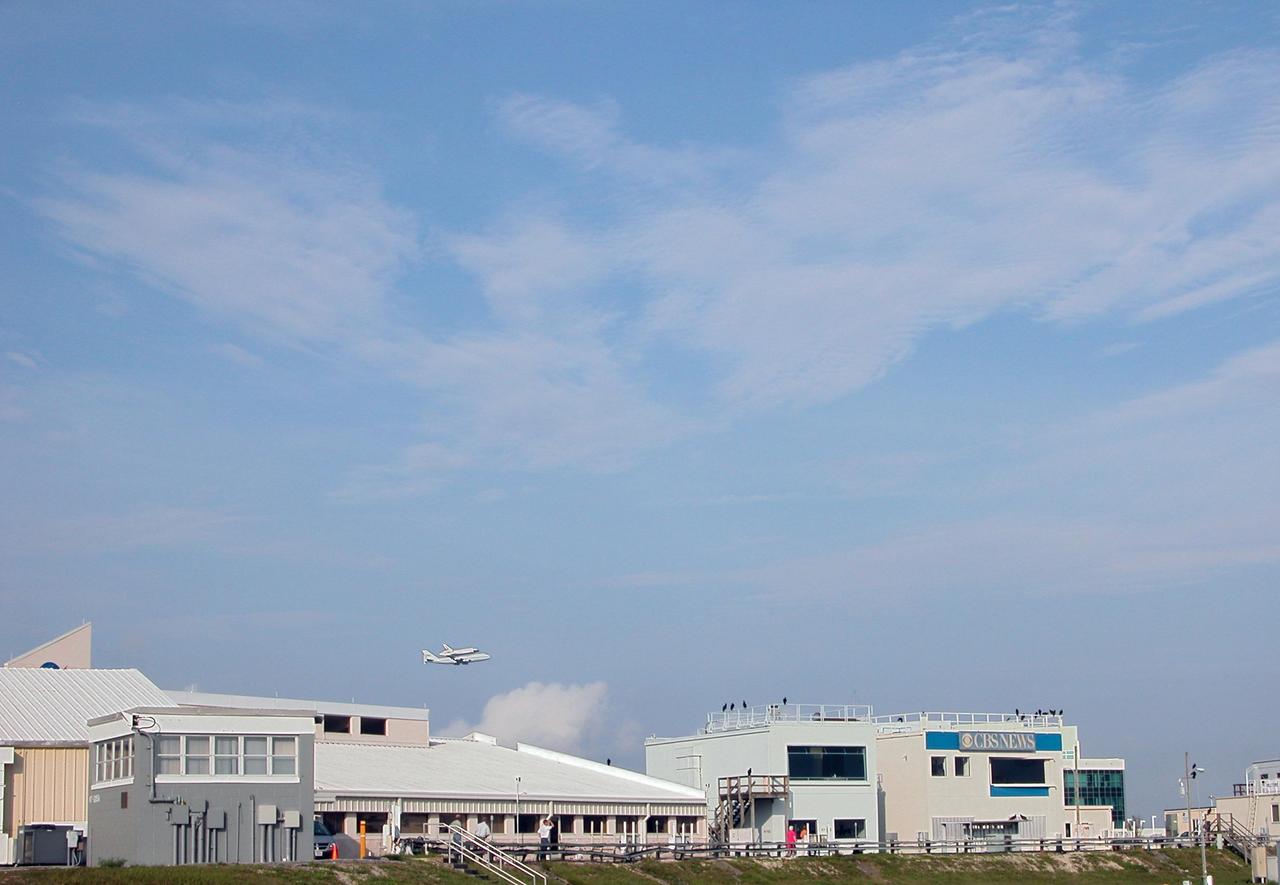
KENNEDY SPACE CENTER, FLA. -- On a morning where broken clouds filled the sky of Central Florida, the shuttle carrier aircraft, or SCA, and its passenger Atlantis ease their way past the NASA News Center for a landing at the KSC Shuttle Landing Facility, known as the SLF. The aircraft is a modified Boeing 747 jetliner Atlantis landed at Edwards Air Force Base in California to end mission STS-117. The return to KSC began July 1 and took three days after stops across the country for fuel. The last stop was at Ft. Campbell in Kentucky. Weather conditions over the last leg postponed the return trip until July 3. Touchdown was at 8:27 a.m. EDT. Atlantis will be removed from the back of the SCA via the mate/demate device at the SLF. It will then be towed to the Orbiter Processing Facility to begin processing for its next launch, mission STS-122 in December. Photo credit: NASA/Debbie Odom

KENNEDY SPACE CENTER, FLA. -- After a three-day trip from California, the shuttle carrier aircraft, or SCA, and its piggyback passenger Atlantis kick up dust as the wheels touch down on the KSC Shuttle Landing Facility runway. Touchdown was at 8:27 a.m. EDT. The SCA is a modified Boeing 747 jetliner. Atlantis landed at Edwards Air Force Base in California to end mission STS-117. The return to KSC began July 1 and took three days after stops across the country for fuel. The last stop was at Ft. Campbell in Kentucky. Weather conditions over the last leg postponed the return trip until July 3. Atlantis will be removed from the back of the SCA via the mate/demate device at the SLF. It will then be towed to the Orbiter Processing Facility to begin processing for its next launch, mission STS-122 in December. Photo credit: NASA/George Shelton
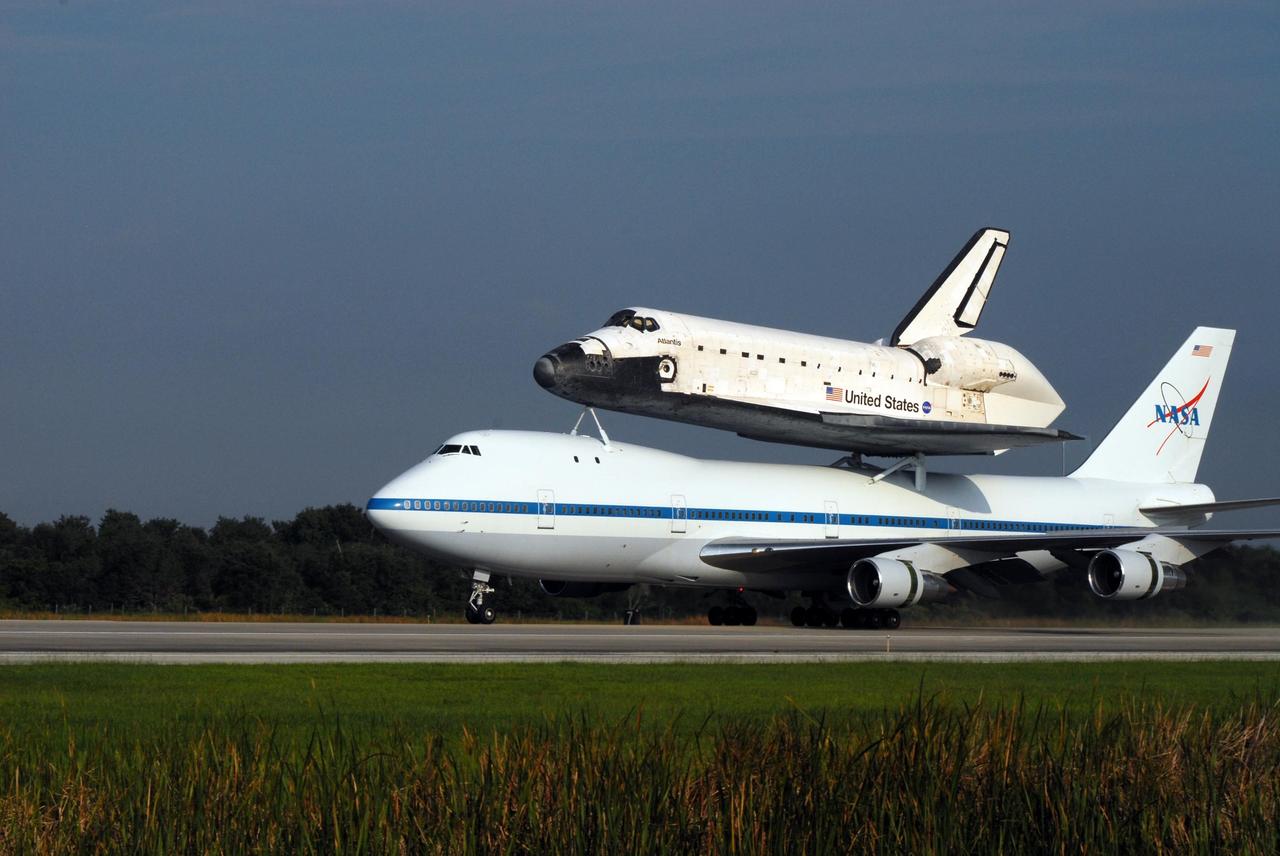
KENNEDY SPACE CENTER, FLA. -- After a three-day trip from California, the shuttle carrier aircraft, or SCA, and its piggyback passenger Atlantis land on the KSC Shuttle Landing Facility runway. Touchdown was at 8:27 a.m. EDT. The SCA is a modified Boeing 747 jetliner. Atlantis landed at Edwards Air Force Base in California to end mission STS-117. The return to KSC began July 1 and took three days after stops across the country for fuel. The last stop was at Ft. Campbell in Kentucky. Weather conditions over the last leg postponed the return trip until July 3. Atlantis will be removed from the back of the SCA via the mate/demate device at the SLF. It will then be towed to the Orbiter Processing Facility to begin processing for its next launch, mission STS-122 in December. Photo credit: NASA/Ken Thornsley
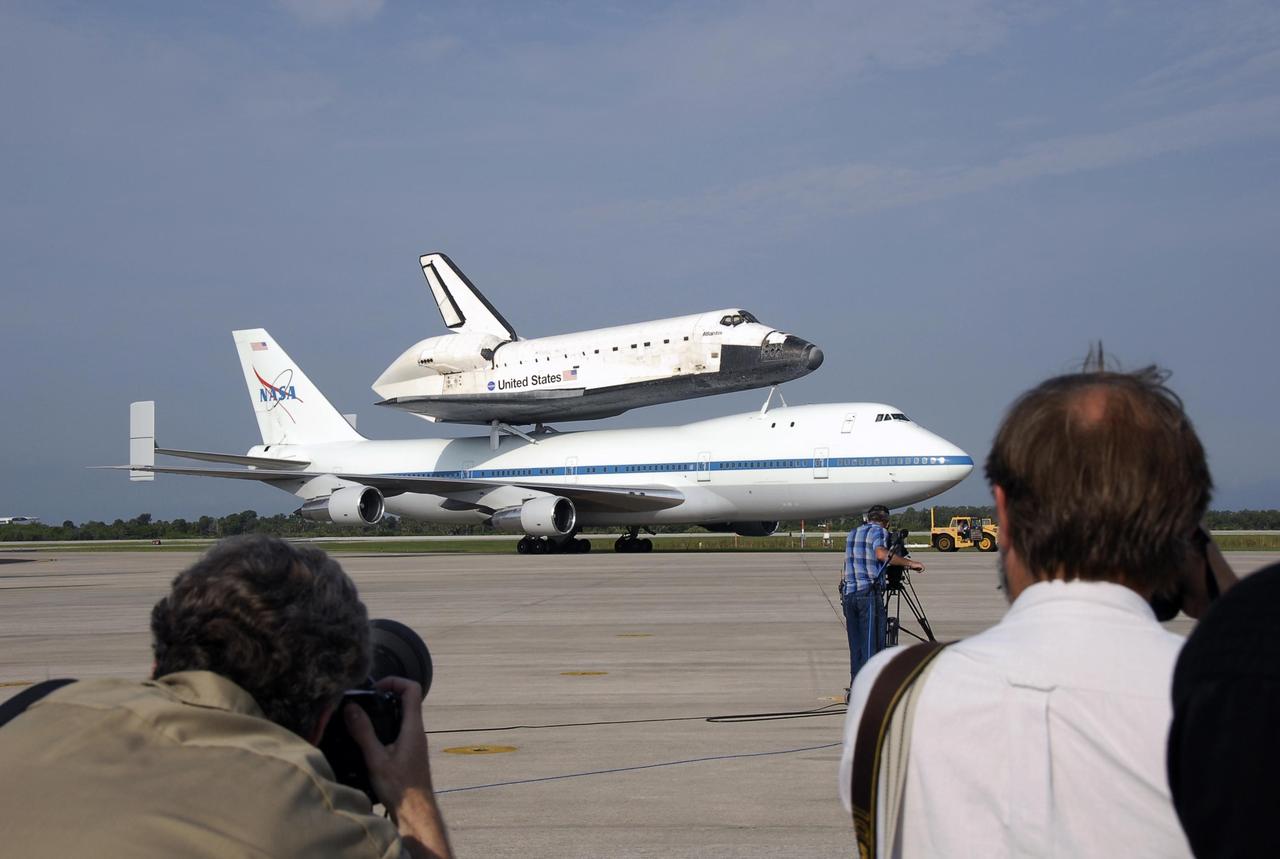
KENNEDY SPACE CENTER, FLA. -- Media gather at the KSC Shuttle Landing Facility to watch the arrival of the orbiter Atlantis on the back of the shuttle carrier aircraft, or SCA. Touchdown was at 8:27 a.m. EDT. The SCA is a modified Boeing 747 jetliner. Visible on Atlantis is the tail cone that covers and protects the main engines during the ferry flight. Atlantis landed at Edwards Air Force Base in California to end mission STS-117. The return to KSC began July 1 and included several stops across the country for fuel. The last stop was at Ft. Campbell in Kentucky. Weather conditions over the last leg postponed the return trip until July 3. Atlantis will be removed from the back of the SCA via the mate/demate device at the SLF. It will then be towed to the Orbiter Processing Facility to begin processing for its next launch, mission STS-122 in December. Photo credit: NASA/Kim Shiflett
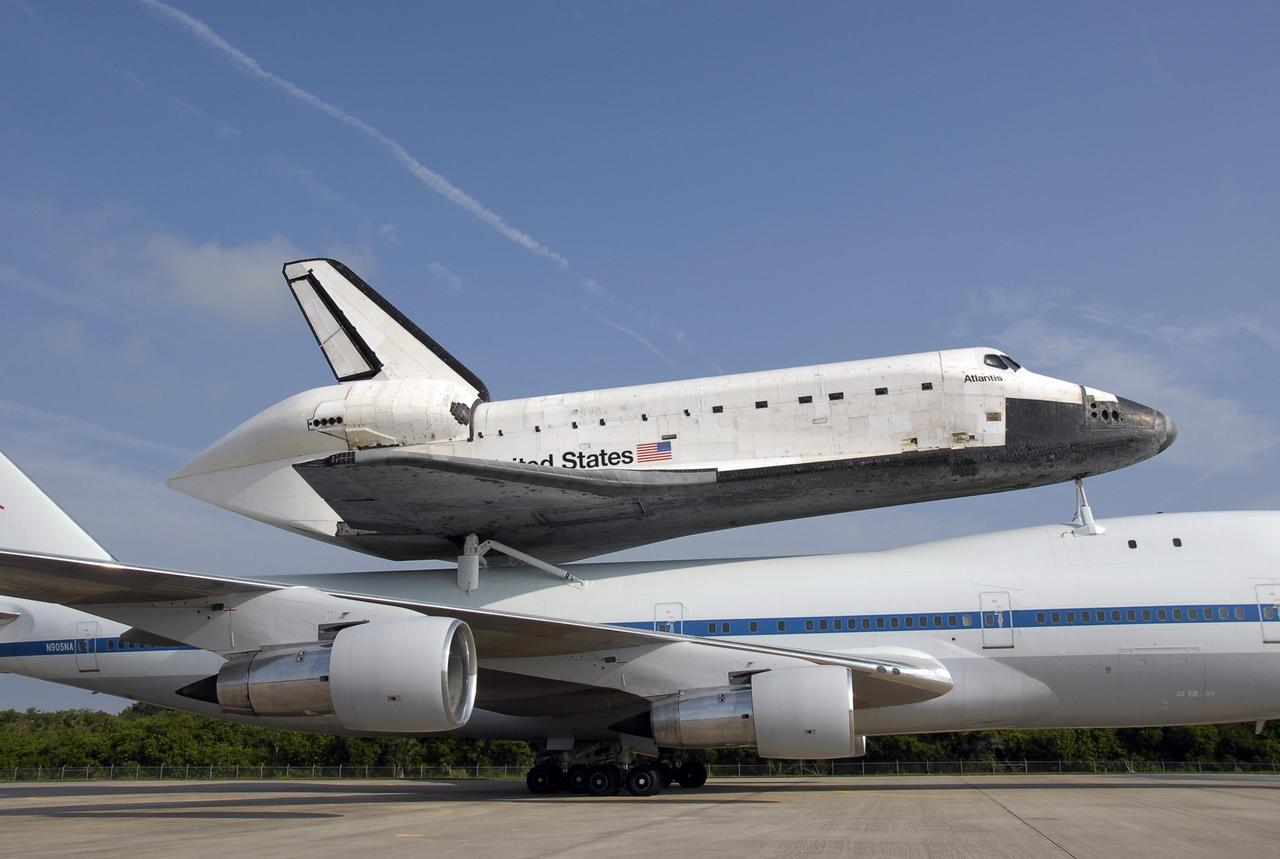
KENNEDY SPACE CENTER, FLA. -- After landing at the KSC Shuttle Landing Facility, the shuttle carrier aircraft, or SCA, and its piggyback passenger Atlantis are towed to the mate/demate device that will put the orbiter back on the ground. After a three-day, cross-country trip, the duo touched down at 8:27 a.m. EDT. The SCA is a modified Boeing 747 jetliner. Visible on Atlantis is the tail cone that covers and protects the main engines during the ferry flight. Atlantis landed at Edwards Air Force Base in California to end mission STS-117. The return to KSC began July 1 and included several stops across the country for fuel. The last stop was at Ft. Campbell in Kentucky. Weather conditions over the last leg postponed the return trip until July 3. After demate, Atlantis will then be towed to the Orbiter Processing Facility to begin processing for its next launch, mission STS-122 in December. Photo credit: NASA/Kim Shiflett
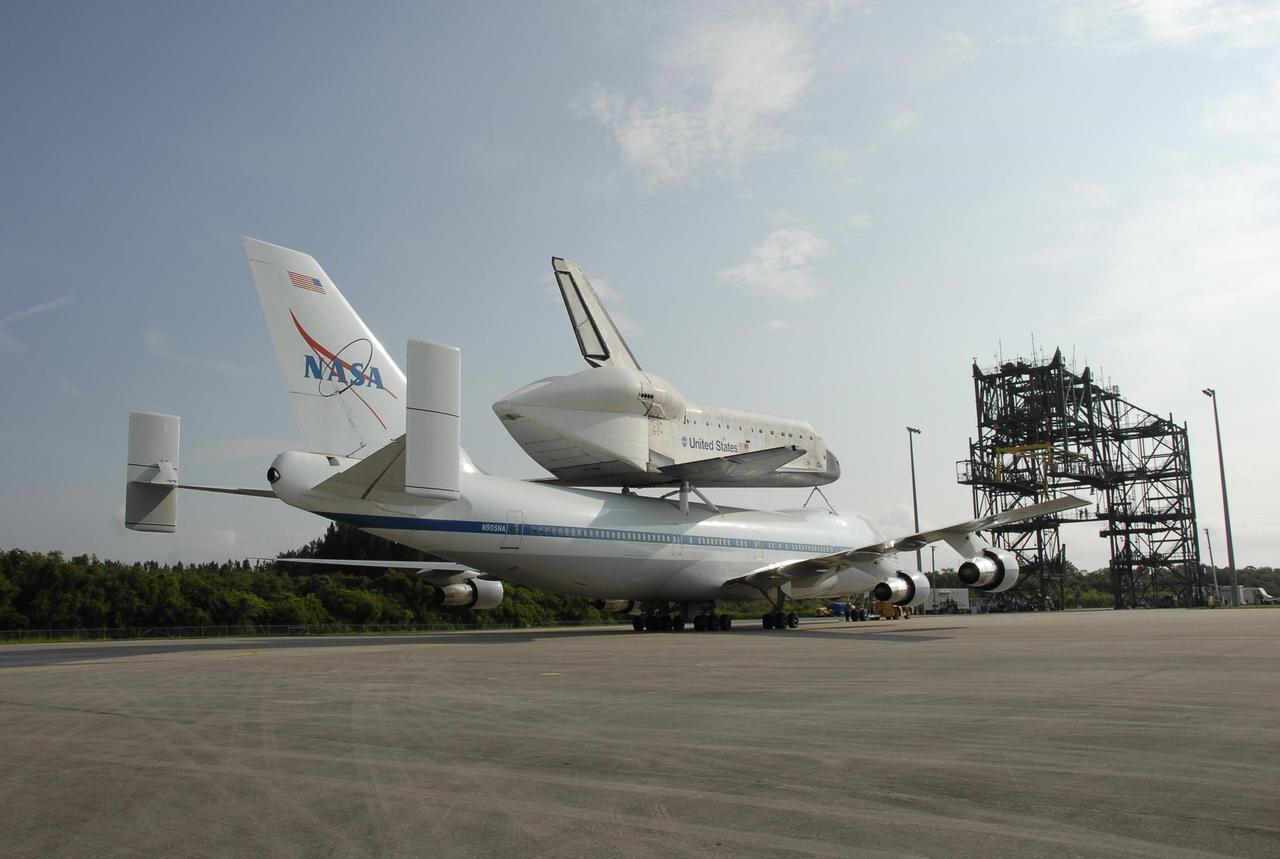
KENNEDY SPACE CENTER, FLA. -- After landing at the KSC Shuttle Landing Facility, the shuttle carrier aircraft, or SCA, and its piggyback passenger Atlantis are towed toward the mate/demate device that will put the orbiter back on the ground. After a three-day, cross-country trip, the duo touched down at 8:27 a.m. EDT. The SCA is a modified Boeing 747 jetliner. Visible on Atlantis is the tail cone that covers and protects the main engines during the ferry flight. Atlantis landed at Edwards Air Force Base in California to end mission STS-117. The return to KSC began July 1 and included several stops across the country for fuel. The last stop was at Ft. Campbell in Kentucky. Weather conditions over the last leg postponed the return trip until July 3. After demate, Atlantis will then be towed to the Orbiter Processing Facility to begin processing for its next launch, mission STS-122 in December. Photo credit: NASA/Kim Shiflett
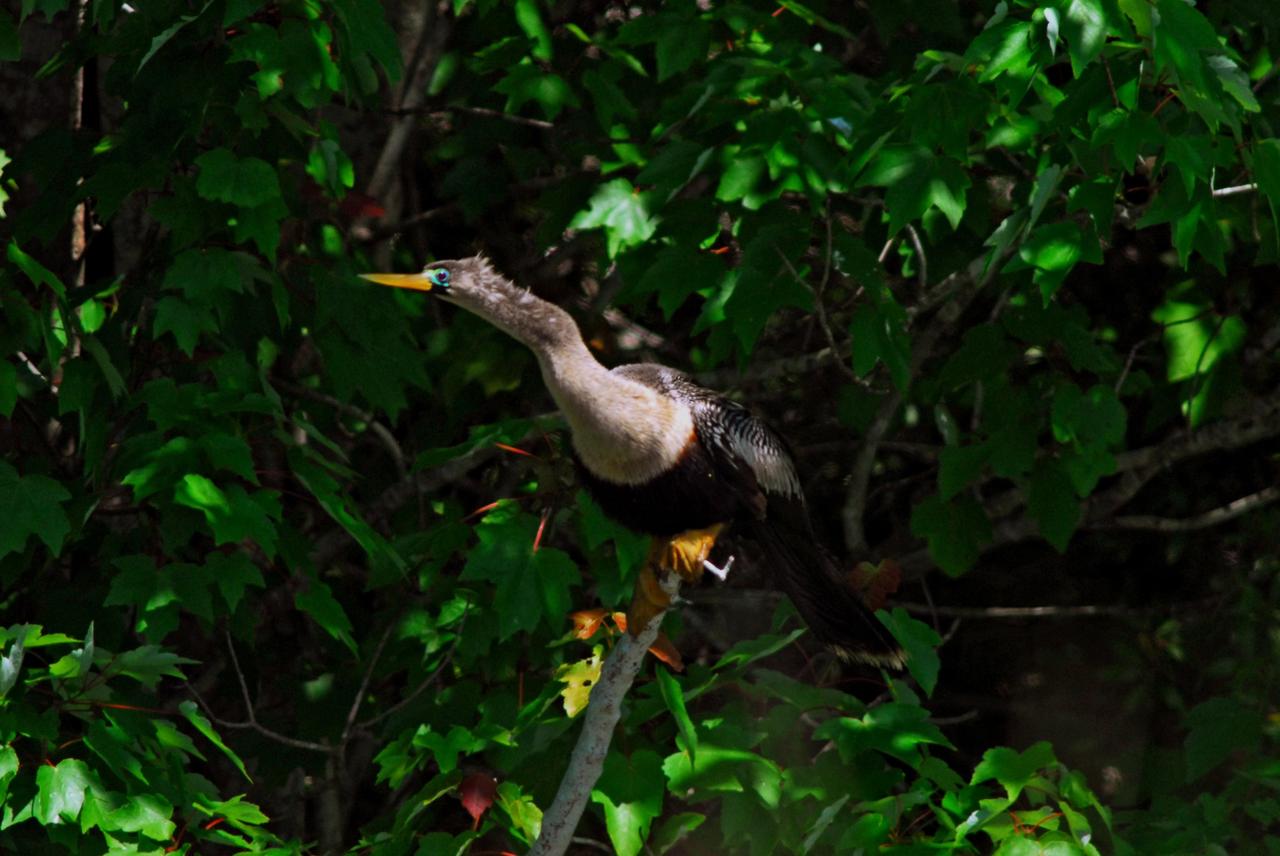
KENNEDY SPACE CENTER, FLA. -- A female anhinga roosts in branches near the water. Anhingas can be found in freshwater ponds and swamps where there is thick vegetation and tall trees. Male anhingas are black and gray; females are distinguished by a buff-colored neck and breast. When anhingas are in their breeding plumage they have a blue ring around their eyes, as seen here. The female lays three to five light blue eggs. The nest is in a tree and it is made of sticks and lined with leaves. The chicks hatch in about a month. Anhingas breed off the Gulf Coast and the Atlantic Coast from North Carolina to Texas and in the Mississippi Valley north to Kentucky and Missouri. They winter along the Gulf Coast north to North Carolina. The anhinga diet is primarily fish. Using their sharp bills, anhingas spear the fish, flip them in the air and swallow them head-first. KSC shares a boundary with the Merritt Island Wildlife Nature Refuge. The refuge is a habitat for more than 310 species of birds, 25 mammals, 117 fishes and 65 amphibians and reptiles. In addition, the Refuge supports 19 endangered or threatened wildlife species on Federal or State lists, more than any other single refuge in the U.S. Photo credit: NASA/Dimitri Gerondidakis
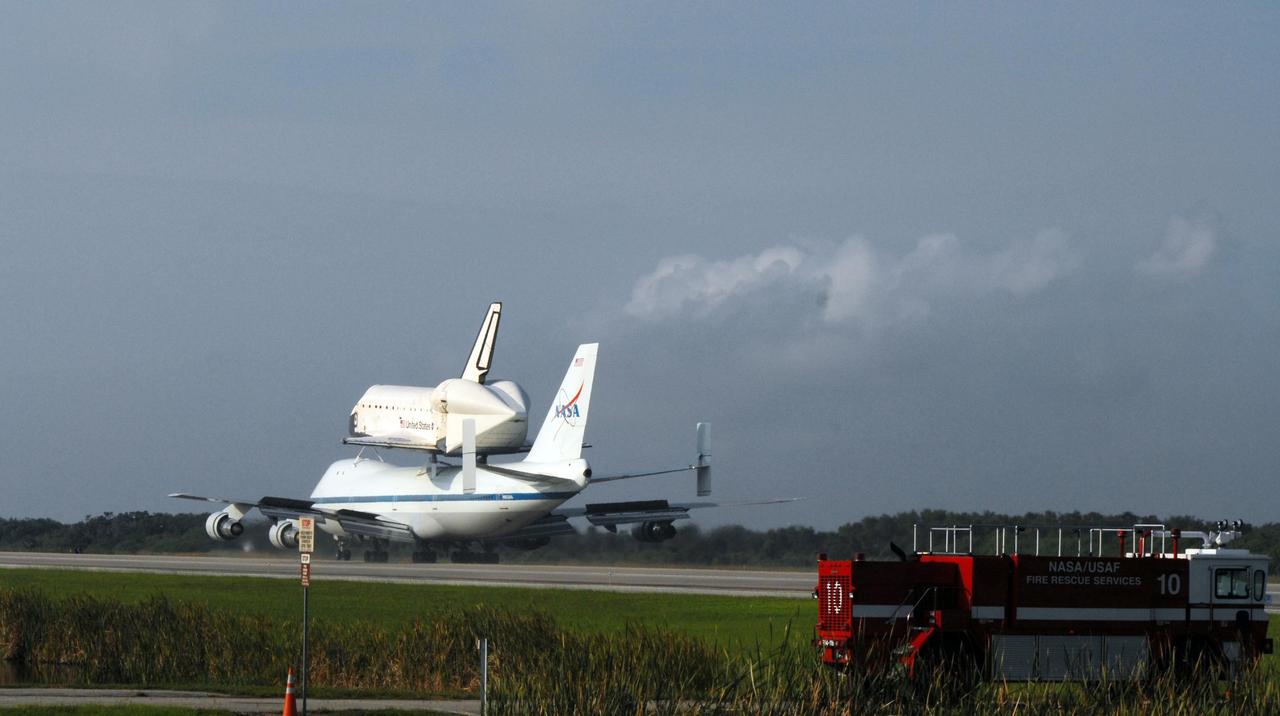
KENNEDY SPACE CENTER, FLA. -- After a three-day trip from California, the shuttle carrier aircraft, or SCA, and its piggyback passenger Atlantis taxi down the KSC Shuttle Landing Facility runway after landing. Touchdown was at 8:27 a.m. EDT. The SCA is a modified Boeing 747 jetliner. Visible on Atlantis is the tail cone that covers and protects the main engines during the ferry flight. Atlantis landed at Edwards Air Force Base in California to end mission STS-117. The return to KSC began July 1 and took three days after stops across the country for fuel. The last stop was at Ft. Campbell in Kentucky. Weather conditions over the last leg postponed the return trip until July 3. Atlantis will be removed from the back of the SCA via the mate/demate device at the SLF. It will then be towed to the Orbiter Processing Facility to begin processing for its next launch, mission STS-122 in December. Photo credit: NASA/Ken Thornsley
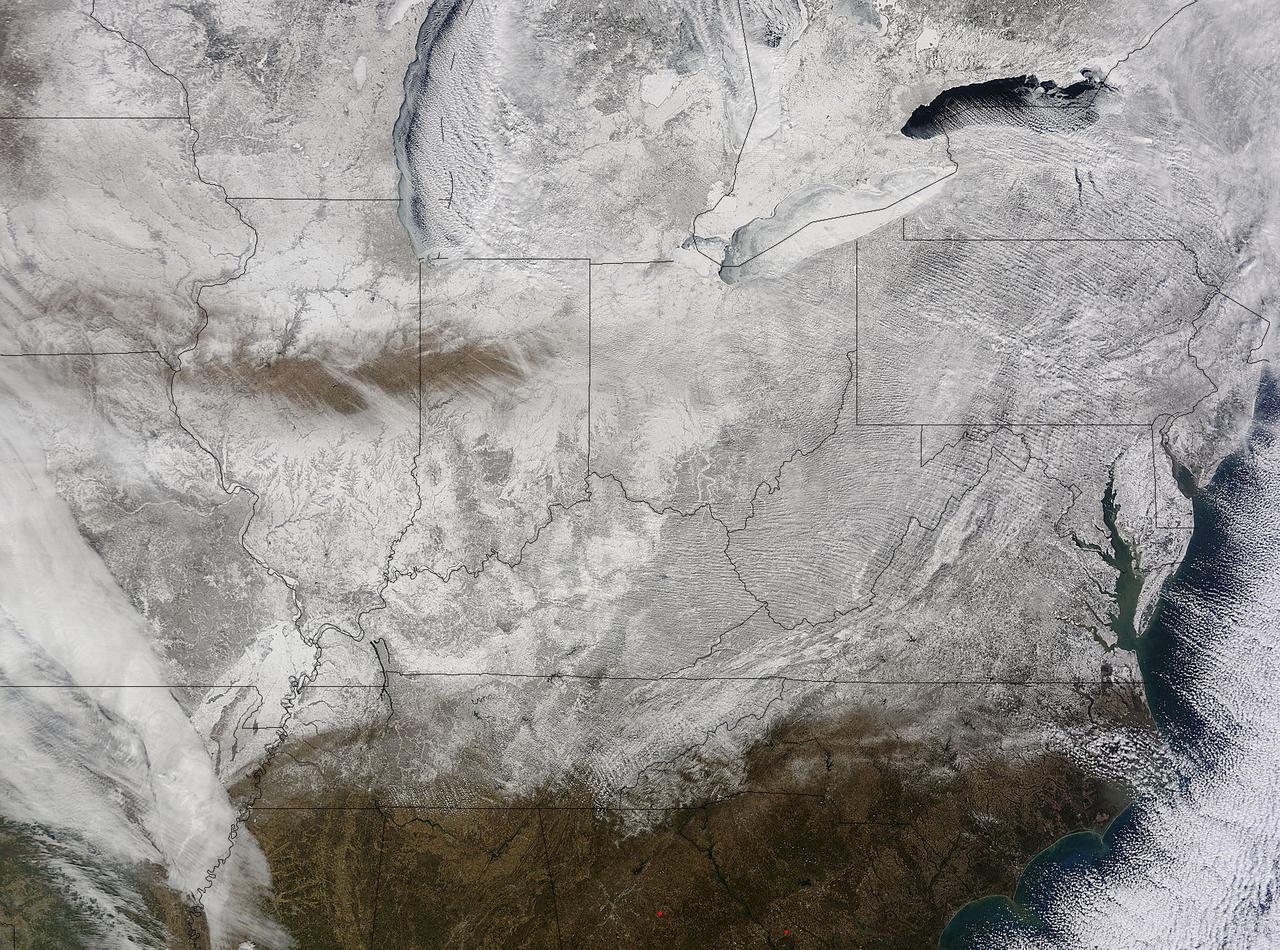
NASA's Terra satellite captured an image of the snow-covered eastern U.S. that looks like the states have been sitting in a freezer. In addition to the snow cover, Arctic and Siberian air masses have settled in over the Eastern U.S. triggering many record low temperatures in many states. On Feb. 19 at 16:40 UTC (11:40 a.m. EST), the Moderate Resolution Imaging Spectroradiometer (MODIS) instrument that flies aboard NASA's Terra satellite captured a picture of the snowy landscape. The snow cover combined with the frosty air mass made the eastern U.S. feel like the inside of freezer. The MODIS image was created at NASA's Goddard Space Flight Center in Greenbelt, Maryland. On the morning of Feb. 20, NOAA's Weather Prediction Center (WPC) noted, "There were widespread subzero overnight lows Thursday night (Feb. 19) extending from Illinois to western Virginia, and numerous record lows were set. Bitterly-cold arctic air is setting numerous temperature records across the eastern U.S. and will keep temperatures well below normal on Friday (Feb. 20)." In Baltimore, Maryland, a low temperature of 1F broke the record low for coldest morning recorded at the Thurgood Marshall Baltimore Washington-International Airport. In Louisville, Kentucky, temperatures dropped to -6F, breaking the old record low of 0F, according to meteorologist Brian Goode of WAVE-TV. Meanwhile, Richmond Kentucky bottomed out at a frigid -32F. In North Carolina, a record low temperature was set at Charlotte where the overnight temperature bottomed out at 7F breaking the old record of 13F in 1896. In Asheville, temperatures dropped to just 4F breaking the old record of 10F in 1979. Temperature records for Asheville extend back to 1876. Several records were also broken in Georgia, according to Matt Daniel, a meteorologist at WMAZ-TV, Macon Georgia, who cited data from the National Weather Service. Daniel said that Macon set a new record low when the temperature dropped to 18F, beating the previous record of 21F set in 1958. Athens broke a new record low, too dropping to 14F and beating the old record of 18F set in 1958/1928. NOAA's NPC noted that "Highs on Friday (Feb. 20) will struggle to get out of the teens from the Ohio Valley to the Mid-Atlantic region. After Friday, temperatures are forecast to moderate and get closer to February averages as a storm system approaches from the west." Image Credit: NASA Goddard MODIS Rapid Response Team <b><a href="http://www.nasa.gov/audience/formedia/features/MP_Photo_Guidelines.html" rel="nofollow">NASA image use policy.</a></b> <b><a href="http://www.nasa.gov/centers/goddard/home/index.html" rel="nofollow">NASA Goddard Space Flight Center</a></b> enables NASA’s mission through four scientific endeavors: Earth Science, Heliophysics, Solar System Exploration, and Astrophysics. Goddard plays a leading role in NASA’s accomplishments by contributing compelling scientific knowledge to advance the Agency’s mission. <b>Follow us on <a href="http://twitter.com/NASAGoddardPix" rel="nofollow">Twitter</a></b> <b>Like us on <a href="http://www.facebook.com/pages/Greenbelt-MD/NASA-Goddard/395013845897?ref=tsd" rel="nofollow">Facebook</a></b> <b>Find us on <a href="http://instagram.com/nasagoddard?vm=grid" rel="nofollow">Instagram</a></b>
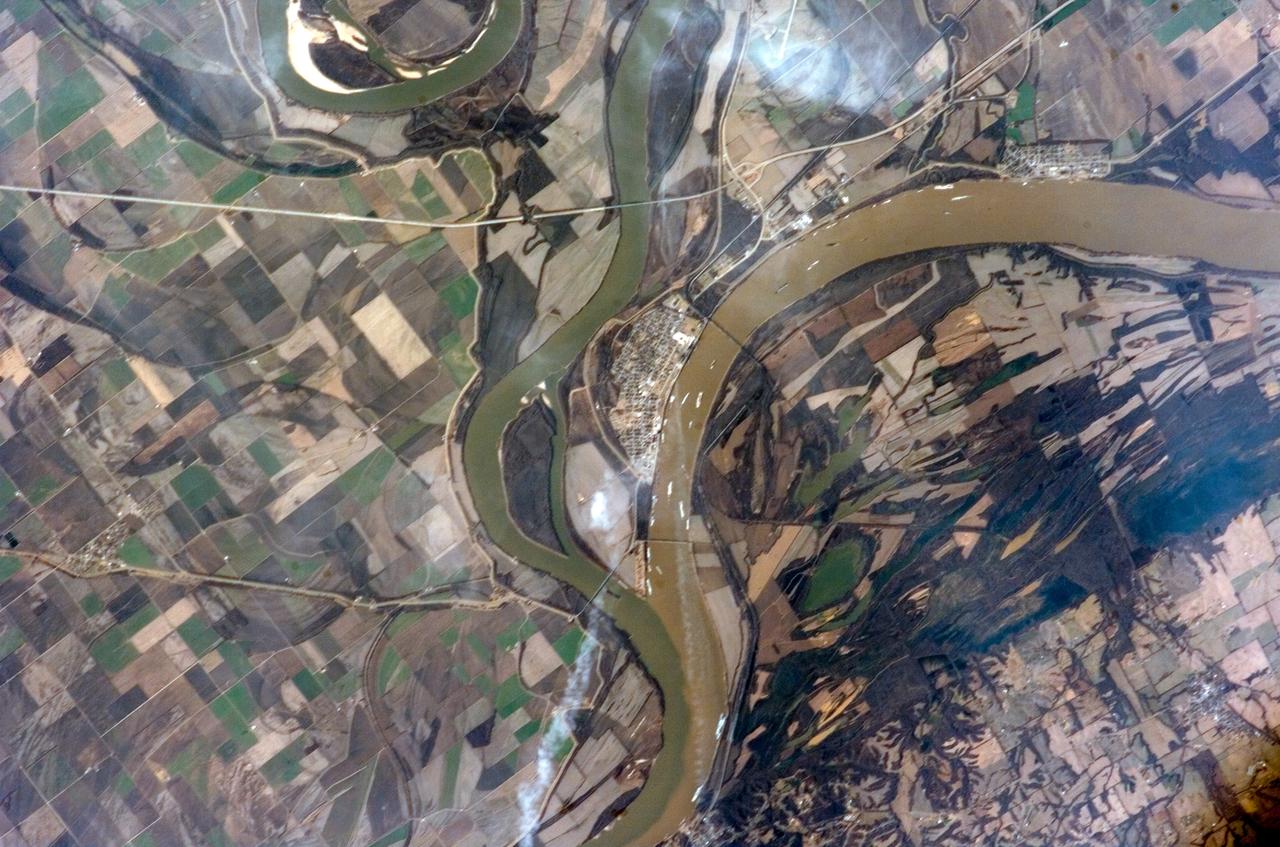
ISS012-E-15035 (12 Jan. 2006) --- The confluence of the Ohio and Mississippi Rivers at Cairo, Illinois is featured in this image photographed by an Expedition 12 crew member on the International Space Station. The Ohio River becomes a tributary of the Mississippi River directly to the south of Cairo, Illinois, a small city on the spit of land where the rivers converge (at center of image). Brown sediment-laden water flowing generally northeast to south from the Ohio River is distinct from the green and relatively sediment-poor water (northwest- to south-flowing) of the Mississippi River. The coloration of the rivers in this image is reversed from the usual condition of a green Ohio and a brown Mississippi. According to scientists, this suggests that recent precipitation in the Ohio River watershed, with very high rainfall over the Appalachians and the northeastern United States in December 2005, has led to a greater sediment load in the Ohio waters. The distinct boundary between the two river’s waters indicates that little to no mixing occurs even 3-4 miles (5-6 kilometers) downstream. The city of Cairo became a prosperous port following the Civil War due to increased riverboat and railroad commerce. Small features on the Ohio are river barges and indicate the continued importance of Cairo as a transport hub. Flooding of the Ohio and Mississippi Rivers presents a continual danger to the city; this danger is lessened by the Birds Point-New Madrid Floodway that begins directly to the south of the river confluence. The floodway lowers flood stages upstream (such as at Cairo) and adjacent to the floodway during major flood events. Part of the extensive levee system associated with flood control of the Mississippi River is visible in the image. Barlow Bottoms (image right), located in adjacent Kentucky, are a wetlands bird watching location that is replenished by periodic floods and releases of Ohio River water.
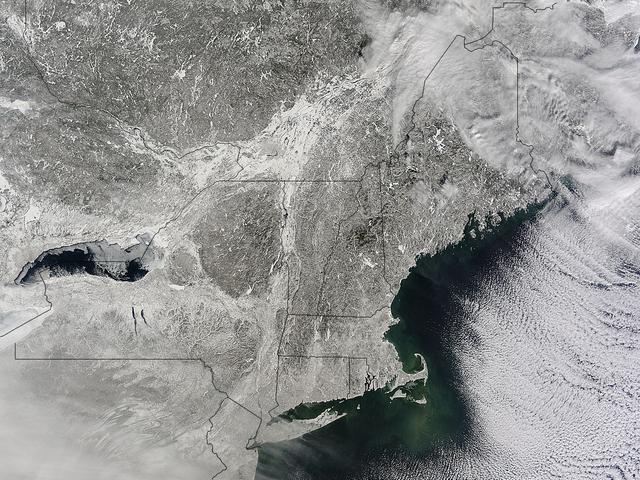
A winter storm that moved through the Mid-Atlantic on Feb. 16 and 17, 2015 extended the northeastern U.S. snowcover farther south. Until this storm hit, southern New Jersey and southeastern Pennsylvania appeared snow-free on satellite imagery from the previous week. The overnight storm blanketed the entire states of New Jersey and Pennsylvania, as seen on this Feb. 16 image. The image was taken from the MODIS or Moderate Resolution Imaging Spectroradiometer instrument that flies aboard NASA's Terra satellite. The snow cover from the storm actually extended even farther south than the image. Snowfall also blanketed West Virginia, Kentucky, Maryland, Delaware and Virginia, while freezing rain and icy conditions affected the Carolinas, Tennessee and Georgia. On Feb. 17, 2015, NOAA's National Weather Service noted "The winter storm that brought widespread snow, sleet and freezing rain to parts of the south-central U.S. and Mid-Atlantic will wind down as it moves offshore Tuesday. Lingering snow and freezing rain is possible early Tuesday for parts of the Northeast and mid-Atlantic, with rain across parts of the Southeast." Credit: NASA/GSFC/Jeff Schmaltz/MODIS Land Rapid Response Team <b><a href="http://www.nasa.gov/audience/formedia/features/MP_Photo_Guidelines.html" rel="nofollow">NASA image use policy.</a></b> <b><a href="http://www.nasa.gov/centers/goddard/home/index.html" rel="nofollow">NASA Goddard Space Flight Center</a></b> enables NASA’s mission through four scientific endeavors: Earth Science, Heliophysics, Solar System Exploration, and Astrophysics. Goddard plays a leading role in NASA’s accomplishments by contributing compelling scientific knowledge to advance the Agency’s mission. <b>Follow us on <a href="http://twitter.com/NASAGoddardPix" rel="nofollow">Twitter</a></b> <b>Like us on <a href="http://www.facebook.com/pages/Greenbelt-MD/NASA-Goddard/395013845897?ref=tsd" rel="nofollow">Facebook</a></b> <b>Find us on <a href="http://instagram.com/nasagoddard?vm=grid" rel="nofollow">Instagram</a></b>

Caption: In this composite image, visible-light observations by NASA’s Hubble Space Telescope are combined with infrared data from the ground-based Large Binocular Telescope in Arizona to assemble a dramatic view of the well-known Ring Nebula. Credit: NASA, ESA, C.R. Robert O’Dell (Vanderbilt University), G.J. Ferland (University of Kentucky), W.J. Henney and M. Peimbert (National Autonomous University of Mexico) Credit for Large Binocular Telescope data: David Thompson (University of Arizona) ---- The Ring Nebula's distinctive shape makes it a popular illustration for astronomy books. But new observations by NASA's Hubble Space Telescope of the glowing gas shroud around an old, dying, sun-like star reveal a new twist. "The nebula is not like a bagel, but rather, it's like a jelly doughnut, because it's filled with material in the middle," said C. Robert O'Dell of Vanderbilt University in Nashville, Tenn. He leads a research team that used Hubble and several ground-based telescopes to obtain the best view yet of the iconic nebula. The images show a more complex structure than astronomers once thought and have allowed them to construct the most precise 3-D model of the nebula. "With Hubble's detail, we see a completely different shape than what's been thought about historically for this classic nebula," O'Dell said. "The new Hubble observations show the nebula in much clearer detail, and we see things are not as simple as we previously thought." The Ring Nebula is about 2,000 light-years from Earth and measures roughly 1 light-year across. Located in the constellation Lyra, the nebula is a popular target for amateur astronomers. Read more: <a href="http://1.usa.gov/14VAOMk" rel="nofollow">1.usa.gov/14VAOMk</a> <b><a href="http://www.nasa.gov/audience/formedia/features/MP_Photo_Guidelines.html" rel="nofollow">NASA image use policy.</a></b> <b><a href="http://www.nasa.gov/centers/goddard/home/index.html" rel="nofollow">NASA Goddard Space Flight Center</a></b> enables NASA’s mission through four scientific endeavors: Earth Science, Heliophysics, Solar System Exploration, and Astrophysics. Goddard plays a leading role in NASA’s accomplishments by contributing compelling scientific knowledge to advance the Agency’s mission. <b>Follow us on <a href="http://twitter.com/NASA_GoddardPix" rel="nofollow">Twitter</a></b> <b>Like us on <a href="http://www.facebook.com/pages/Greenbelt-MD/NASA-Goddard/395013845897?ref=tsd" rel="nofollow">Facebook</a></b> <b>Find us on <a href="http://instagram.com/nasagoddard?vm=grid" rel="nofollow">Instagram</a></b>
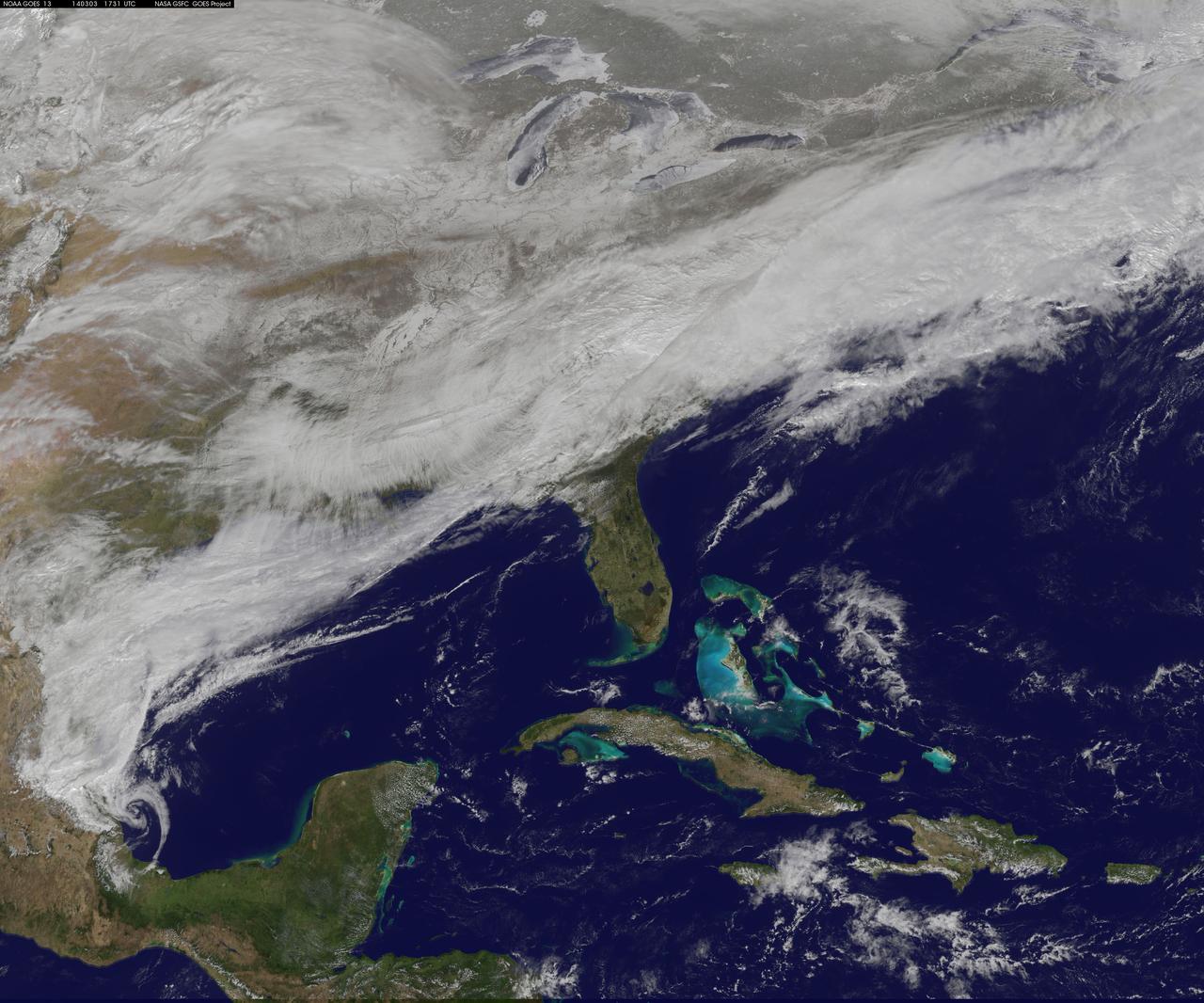
On March 3, a major winter storm brought snow to the mid-Atlantic, freezing rain to the Carolinas and rain and some freezing rain to the Gulf Coast states. NOAA's GOES-East satellite captured an image of the clouds associated with the winter storm on March 3 at 12:45 p.m. EST (1745 UTC)/ as it continued on its march over the mid-Atlantic. Bands of snow and sometimes heavy snow affected the Washington, D.C., region, Delaware and central Virginia, stretching west into West Virginia and eastern Kentucky. Snow also stretched back into the Ohio and Tennessee valleys while rain and freezing rain affected the Carolinas, and while the Gulf Coast states received rain. National Weather Service Winter Storm Warnings remained in effect until 6 p.m. EST on March 3 for Washington, D.C., and Baltimore, Md. In Richmond and Norfolk, Va., the Winter Storm warnings were in effect for six additional hours ending at midnight. On March 3, NOAA's National Weather Prediction Center in College Park, Md., noted the late-season winter storm will continue to shift eastward through the Tennessee Valley and the mid-Atlantic today, making for hazardous travel conditions. NOAA noted that unseasonably cold temperatures more typical of January will prevail east of the Rocky Mountains for the next few days keeping winter around for a while longer. The clouds are associated with a cold front that stretched from eastern Maine through Maryland and west into the Tennessee Valley. At NASA/NOAA's GOES Project at NASA's Goddard Space Flight Center in Greenbelt, Md., the cloud data from NOAA's GOES-East satellite were overlaid on a true-color image of land and ocean created by data from the Moderate Resolution Imaging Spectroradiometer, or MODIS, instrument that flies aboard NASA's Aqua and Terra satellites. Together, those data created the entire picture of the position of this major winter storm. GOES satellites provide the kind of continuous monitoring necessary for intensive data analysis. Geostationary describes an orbit in which a satellite is always in the same position with respect to the rotating Earth. This allows GOES to hover continuously over one position on Earth's surface, appearing stationary. As a result, GOES provide a constant vigil for the atmospheric "triggers" for severe weather conditions such as tornadoes, flash floods, hail storms and hurricanes. For updated information about the storm system, visit NOAA's NWS website: <a href="http://www.weather.gov" rel="nofollow">www.weather.gov</a> For more information about GOES satellites, visit: <a href="http://www.goes.noaa.gov/" rel="nofollow">www.goes.noaa.gov/</a> or goes.gsfc.nasa.gov/ Rob Gutro NASA's Goddard Space Flight Center, Greenbelt, Md. <b><a href="http://www.nasa.gov/audience/formedia/features/MP_Photo_Guidelines.html" rel="nofollow">NASA image use policy.</a></b> <b><a href="http://www.nasa.gov/centers/goddard/home/index.html" rel="nofollow">NASA Goddard Space Flight Center</a></b> enables NASA’s mission through four scientific endeavors: Earth Science, Heliophysics, Solar System Exploration, and Astrophysics. Goddard plays a leading role in NASA’s accomplishments by contributing compelling scientific knowledge to advance the Agency’s mission. <b>Follow us on <a href="http://twitter.com/NASAGoddardPix" rel="nofollow">Twitter</a></b> <b>Like us on <a href="http://www.facebook.com/pages/Greenbelt-MD/NASA-Goddard/395013845897?ref=tsd" rel="nofollow">Facebook</a></b> <b>Find us on <a href="http://instagram.com/nasagoddard?vm=grid" rel="nofollow">Instagram</a></b>
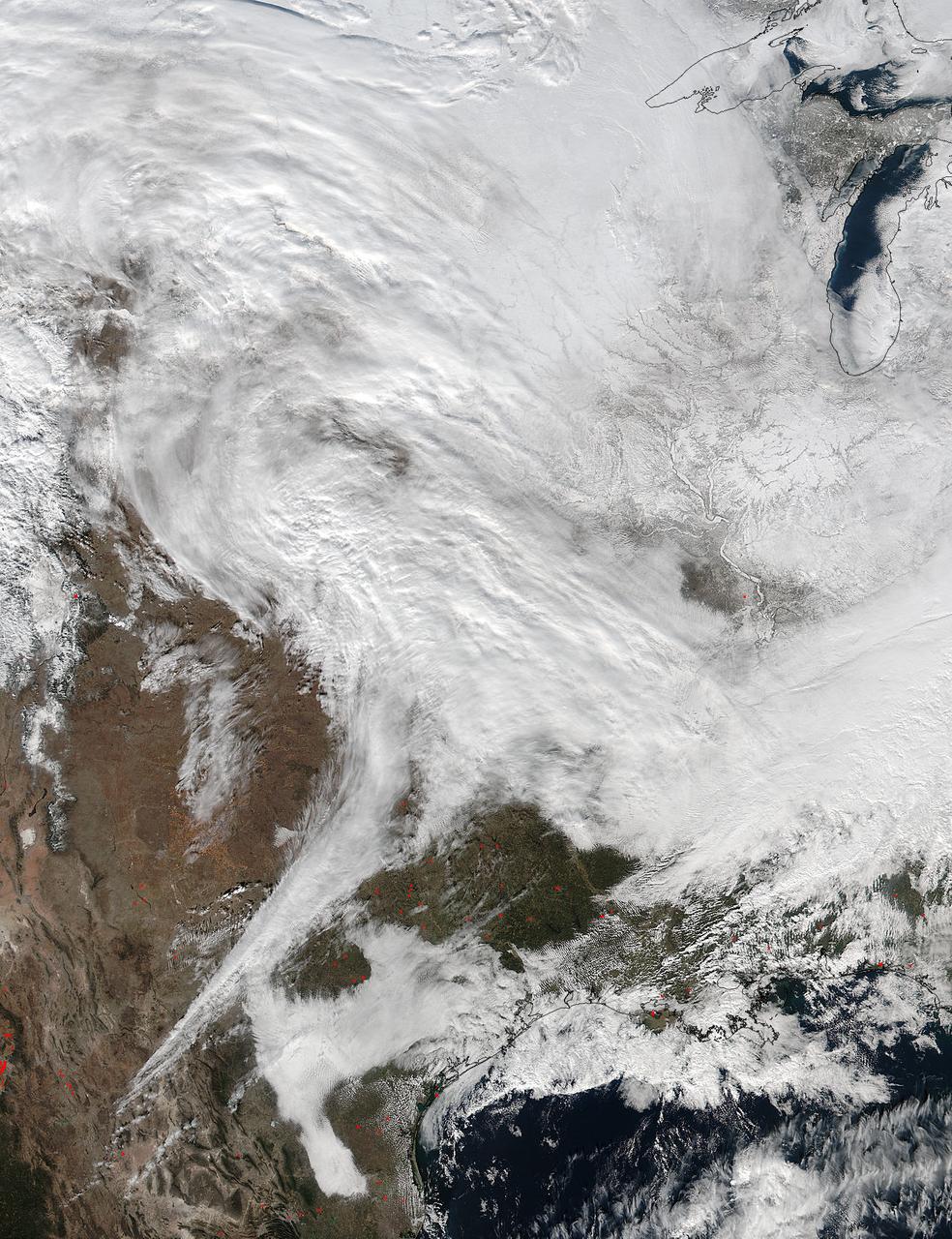
On Jan. 20 at 2:30 p.m. EST the VIIRS instrument aboard NASA-NOAA's Suomi NPP captured this image of the winter storm moving through the central U.S. Credits: NASA Goddard Rapid Response The low pressure area from the Eastern Pacific Ocean moved into the western U.S. and tracked across the four corners region into Texas where NASA-NOAA's Suomi NPP satellite observed the clouds associated with the storm. The Visible Infrared Imaging Radiometer Suite (VIIRS) instrument aboard Suomi NPP satellite captured the visible image on January 20, 2016 at 19:30 UTC (2:30 p.m. EST) when the storm was over the central U.S. In the image, snow cover is visible in the Rockies and southern Great Lakes states. VIIRS collects visible and infrared imagery and global observations of land, atmosphere, cryosphere and oceans. That low pressure system located over the south central United States on Jan. 21 is expected to track east across the Tennessee Valley and will give way to a deepening coastal low pressure area. The National Weather Service said "This latter feature takes over and becomes a dominant force in setting up heavy snow bands over the Mid-Atlantic and very gusty winds." The storm system is expected to bring an increased risk of severe weather from far southeastern Texas across southern Louisiana/Mississippi, and into the far western Florida Panhandle on Thursday, Jan. 21. That threat for severe weather will move east as the low pressure area continues heading in that direction. The National Weather Service Weather Prediction Center in College Park, Maryland said "A potentially crippling winter storm is anticipated for portions of the mid-Atlantic Friday into early Saturday. Snowfall may approach two feet for some locations, including the Baltimore and Washington, D.C. metro areas. Farther north, there is uncertainty in snowfall for the New York City-to-Boston corridor. Farther south, significant icing is likely for portions of Kentucky and North Carolina." <b><a href="http://www.nasa.gov/audience/formedia/features/MP_Photo_Guidelines.html" rel="nofollow">NASA image use policy.</a></b> <b><a href="http://www.nasa.gov/centers/goddard/home/index.html" rel="nofollow">NASA Goddard Space Flight Center</a></b> enables NASA’s mission through four scientific endeavors: Earth Science, Heliophysics, Solar System Exploration, and Astrophysics. Goddard plays a leading role in NASA’s accomplishments by contributing compelling scientific knowledge to advance the Agency’s mission. <b>Follow us on <a href="http://twitter.com/NASAGoddardPix" rel="nofollow">Twitter</a></b> <b>Like us on <a href="http://www.facebook.com/pages/Greenbelt-MD/NASA-Goddard/395013845897?ref=tsd" rel="nofollow">Facebook</a></b> <b>Find us on <a href="http://instagram.com/nasagoddard?vm=grid" rel="nofollow">Instagram</a></b>
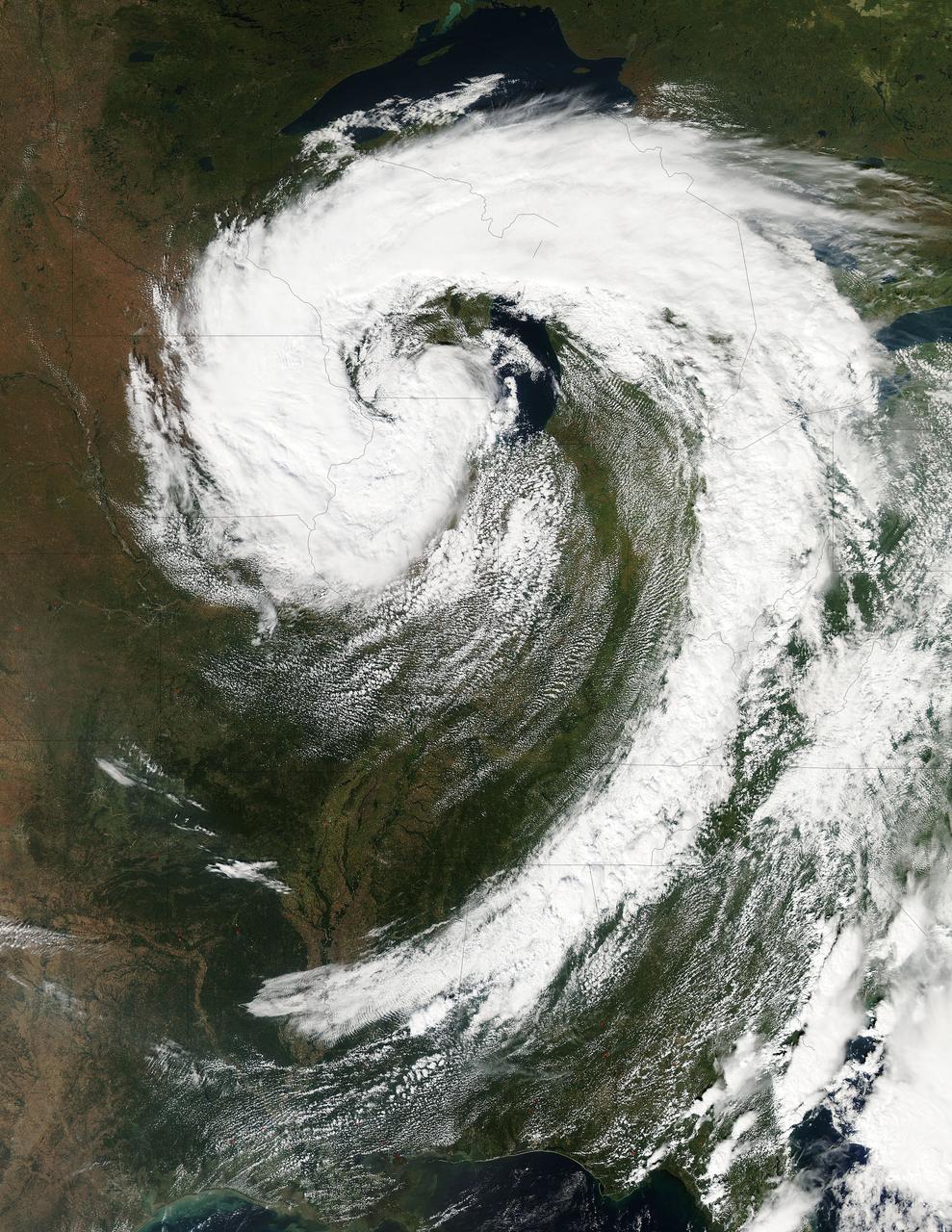
This visible image of the Great Lakes low pressure area was taken from the Moderate Resolution Imaging Spectroradiometer (MODIS) instrument on NASA's Aqua satellite. It was taken at 19:05 UTC (3:05 p.m. EDT) on Monday, Sept. 26, 2011. Credit: NASA Goddard MODIS Rapid Response Team Two Instruments on NASA's Aqua Satellite Catch the Pesky Great Lakes Low A low pressure area has been sitting over the Great Lakes region for about a week now, keeping the region and the U.S. northeast and Mid-Atlantic under cloud cover. NASA's Aqua satellite flew over head yesterday, Sept. 26, and captured two views of it from space. That low pressure area continues to spin counter-clockwise today over the Great Lakes. Its centered over northern Illinois and southeastern Wisconsin and is once again going to keep the region cloudy, cool and wet with showers. When the Aqua satellite passed overhead Monday afternoon at 3:05 p.m. EDT (Sept. 26) a detailed, clear image was captured from the Moderate Resolution Imaging Spectroradiometer (MODIS) instrument . The clouds from the low spread over Illinois, Wisconsin, parts of Iowa, northeastern Missouri, southeastern Minnesota, Michigan, Ohio, Indiana, Pennsylvania, Kentucky, Tennessee, Alabama, Mississippi, Georgia, and the northeastern and Mid-Atlantic states. A second visible image was captured by the Atmospheric Infrared Sounder (AIRS) instrument that also flies aboard NASA's Aqua satellite and showed the huge comma shape of the storm that spans the U.S. from its northern to southern borders. (seen here: <a href="http://www.flickr.com/photos/gsfc/6188946564">www.flickr.com/photos/gsfc/6188946564</a> ) According to the National Weather Service, the low will finally start moving to the east as an upper-atmospheric trough (an elongated area of low pressure) continues to strengthen and move into the upper Midwest. However, a ridge (elongated area) of high pressure will slow its move eastward, so it will be slow clearing this week in the northeastern and Mid-Atlantic U.S. Rob Gutro NASA's Goddard Space Flight Center <b><a href="http://www.nasa.gov/audience/formedia/features/MP_Photo_Guidelines.html" rel="nofollow">NASA image use policy.</a></b> <b><a href="http://www.nasa.gov/centers/goddard/home/index.html" rel="nofollow">NASA Goddard Space Flight Center</a></b> enables NASA’s mission through four scientific endeavors: Earth Science, Heliophysics, Solar System Exploration, and Astrophysics. Goddard plays a leading role in NASA’s accomplishments by contributing compelling scientific knowledge to advance the Agency’s mission. <b>Follow us on <a href="http://twitter.com/NASA_GoddardPix" rel="nofollow">Twitter</a></b> <b>Like us on <a href="http://www.facebook.com/pages/Greenbelt-MD/NASA-Goddard/395013845897?ref=tsd" rel="nofollow">Facebook</a></b> <b>Find us on <a href="http://instagrid.me/nasagoddard/?vm=grid" rel="nofollow">Instagram</a></b>