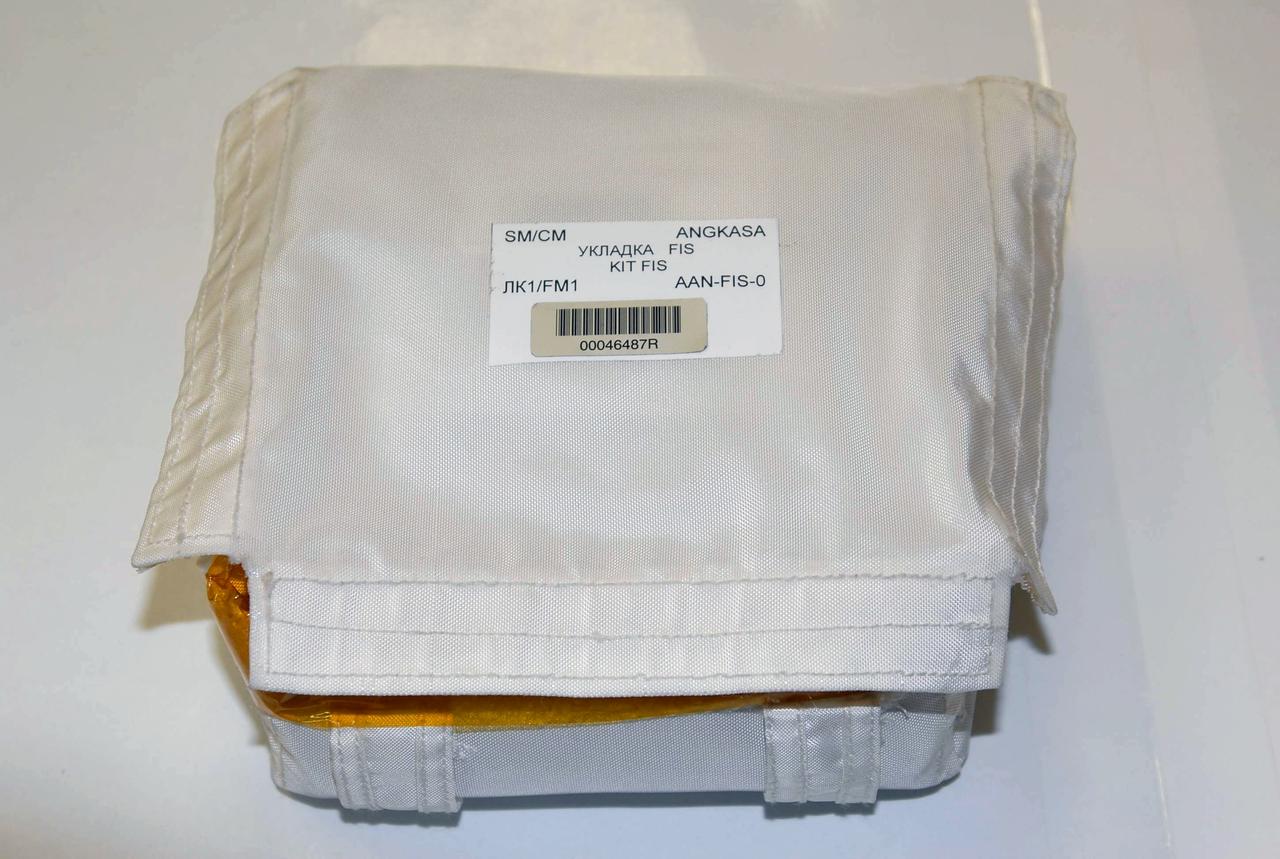
jsc2007e097957 (11/8/2007) --- A preflight view of a the FIS Kit. The FIS Kit consists of Malaysian food (nine types of food); FIS Logbook is a score sheet with a list of parameters (sensations: flavor, taste, texture, freshness, spice, sweetness and general acceptability), by which the food will be evaluated.

S81-26158 (Feb 1981) --- A close-up view of a training version of a STS-40/SLS-1 blood kit. Blood samples from crewmembers are critical to a number of Space Life Sciences-1 (SLS-1) investigations. One day's collection equipment, color coded for each crewmember, is neatly organized in the kit.
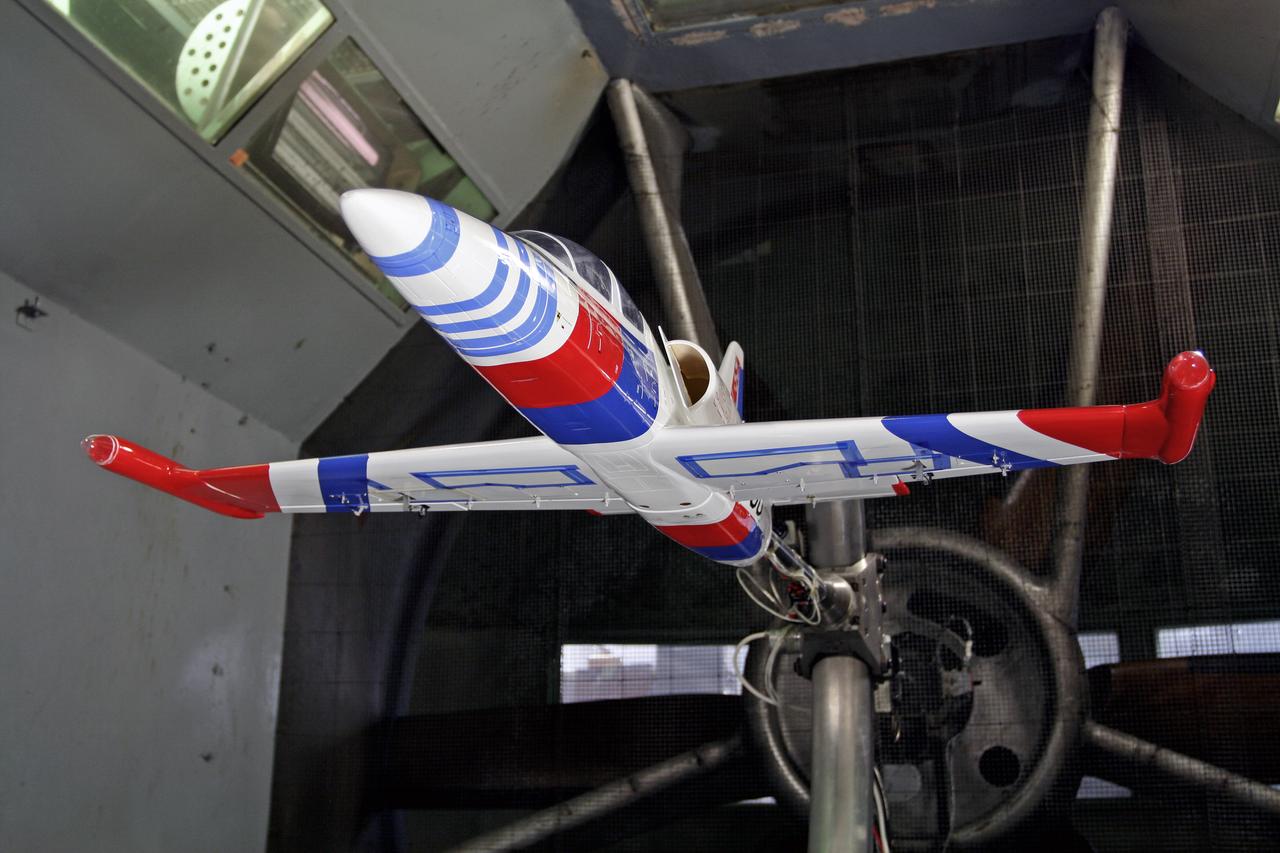
L59 RC Kit Model/Learn to fly test technique and modeling development Persons in the picture: Left to right: Jay Brandon, Sue Grafton, Wes O'Neal, Mark Croom, Earl Harris, and Eric Viken
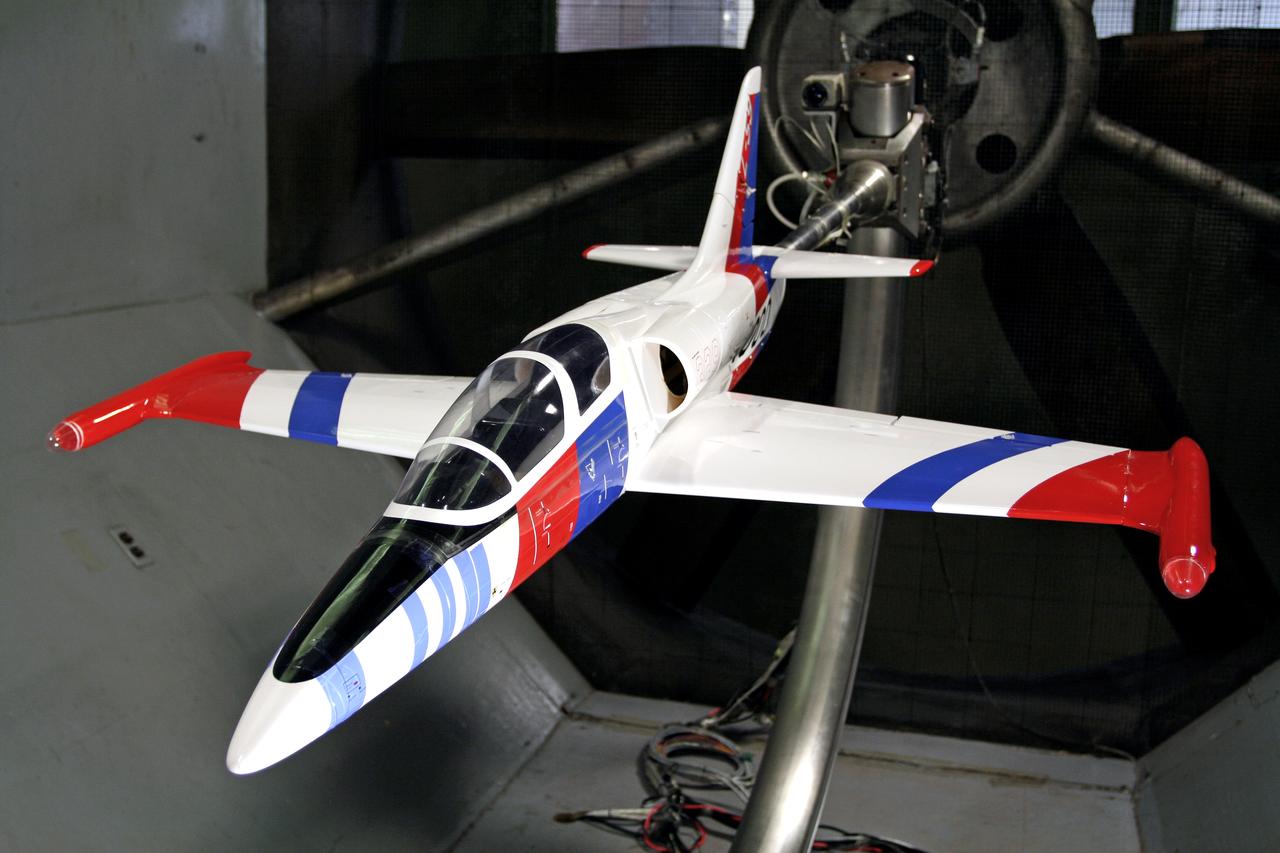
L59 RC Kit Model/Learn to fly test technique and modeling development Persons in the picture: Left to right: Jay Brandon, Sue Grafton, Wes O'Neal, Mark Croom, Earl Harris, and Eric Viken
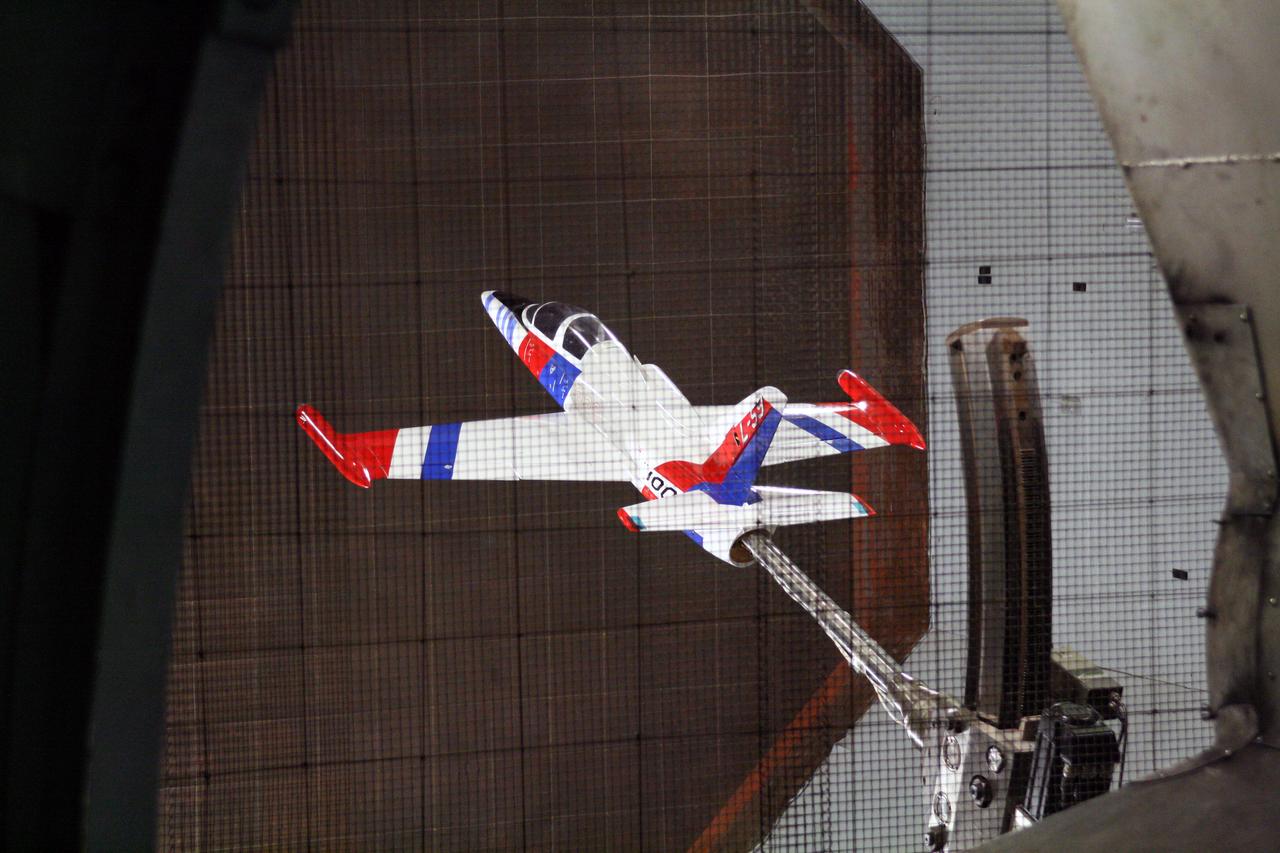
L59 RC Kit Model/Learn to fly test technique and modeling development Persons in the picture: Left to right: Jay Brandon, Sue Grafton, Wes O'Neal, Mark Croom, Earl Harris, and Eric Viken
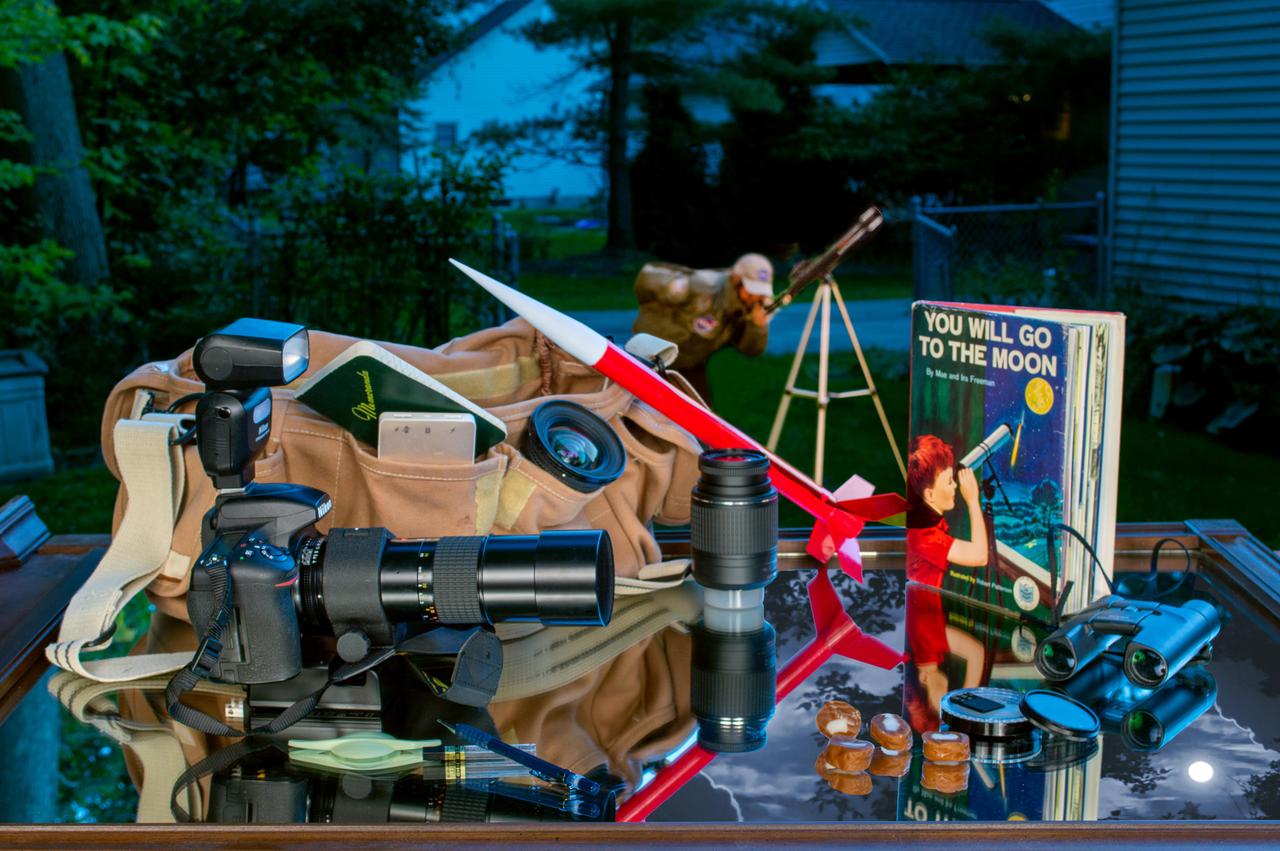
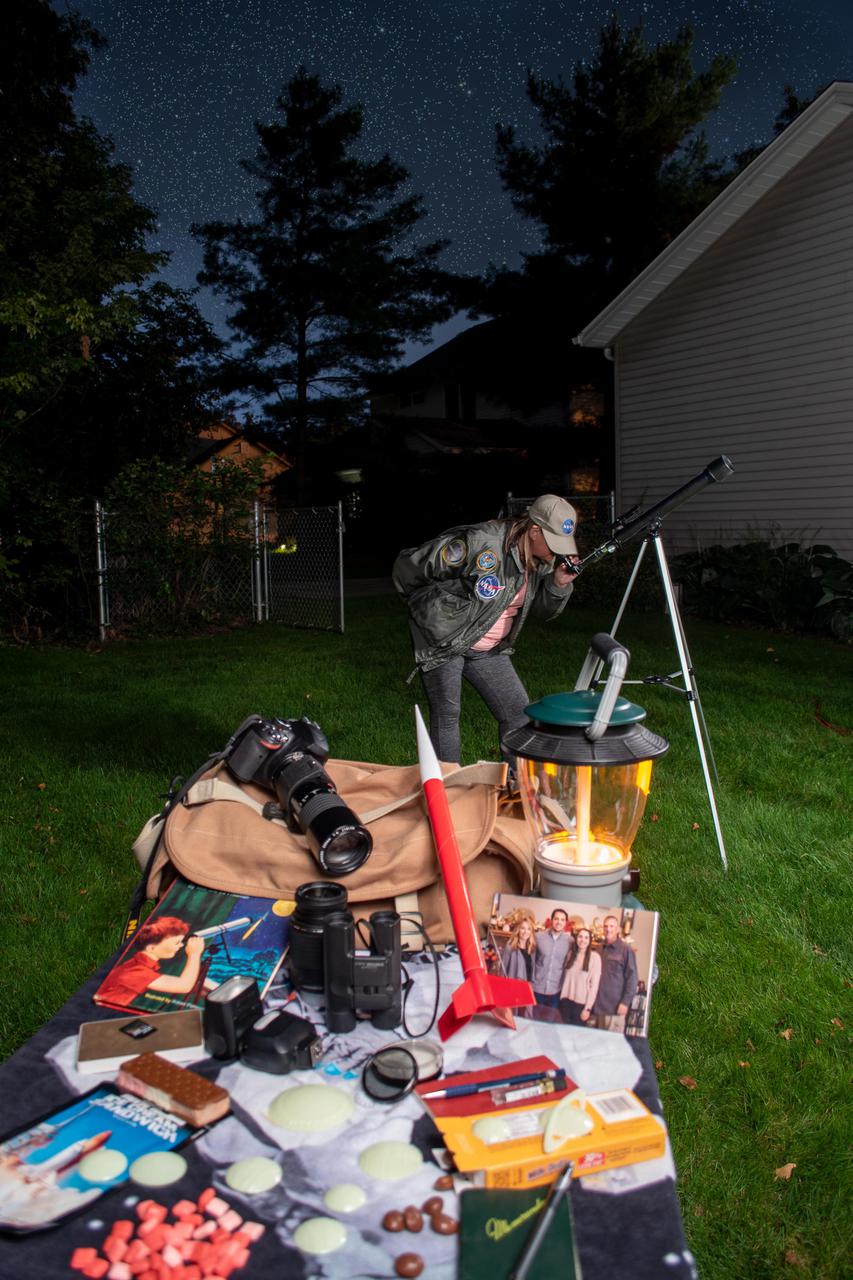
NASA Moon Kit of things I would take to the moon with me, The first thing I thought of for my Moon Kit was the first book I ever read when I was learning to read. It is titled, You Will Go To The Moon. I really liked that book and read it many times, looking at the illustrations and wondering about if I would ever actually go to the moon. Of the many belongings that I have lost through the years from moving, etc. that book has stayed with me and so it would of course go to the moon with me. Photography has always interested me and so a family photo was second to get packed. We always had photos taken and volumes of old family photos in the house and so photography has played an important role in my life and so my camera gear is third to get packed. As a kid I spend a lot of time and money building rockets and flying them. I bet my rocket would go very high on the moon. I also like a little candy wherever I go.
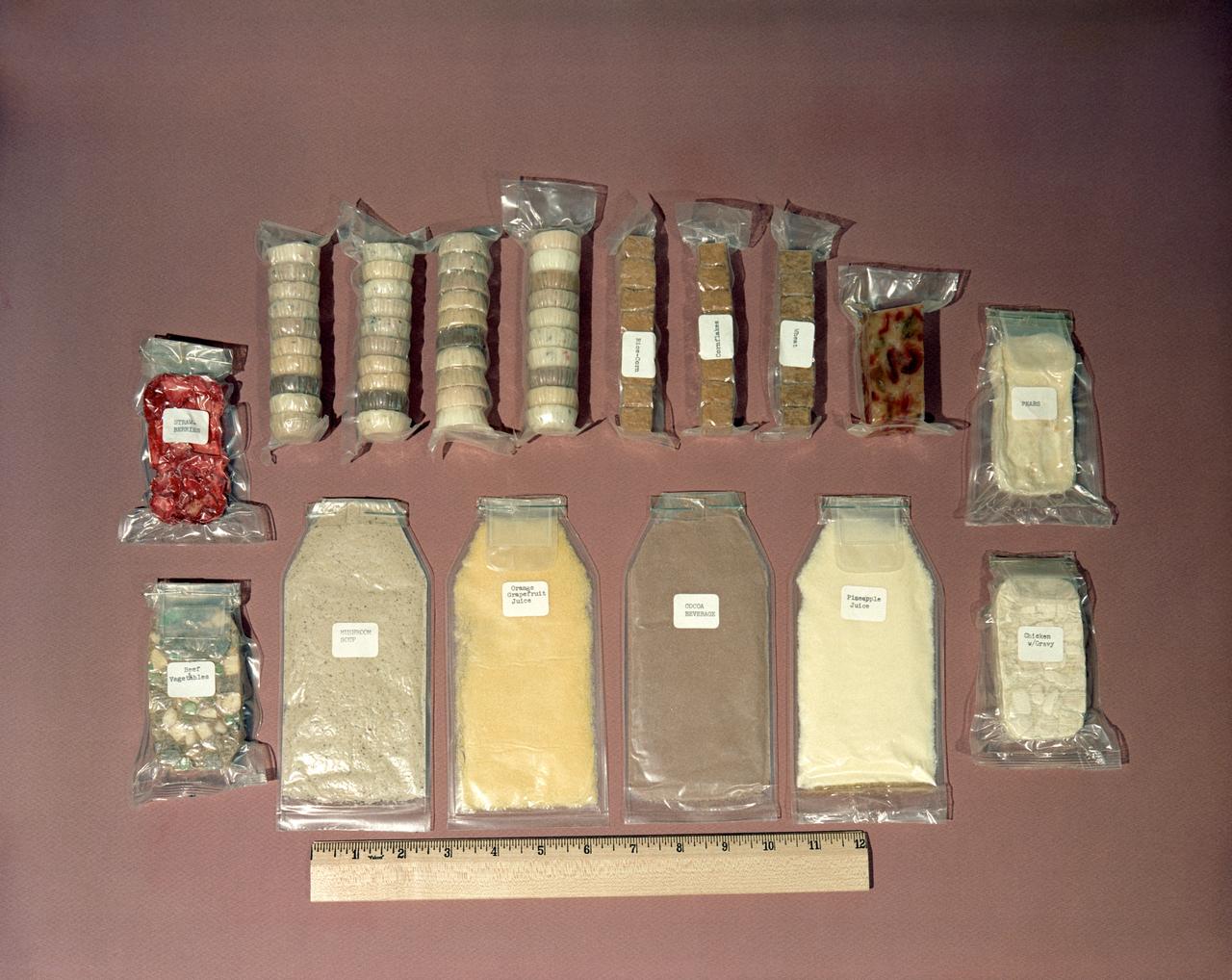
S62-08742 (1962) --- Food kit used by Mercury astronauts. Some is dehydrated and needs water, other packets are ready to eat. Size is measured relative to a ruler. Included are packets of mushroom soup, orange-grapefruit juice, cocoa beverage, pineapple juice, chicken with gravy, pears, strawberries, beef and vegetables and other assorted food containers. Photo credit: NASA
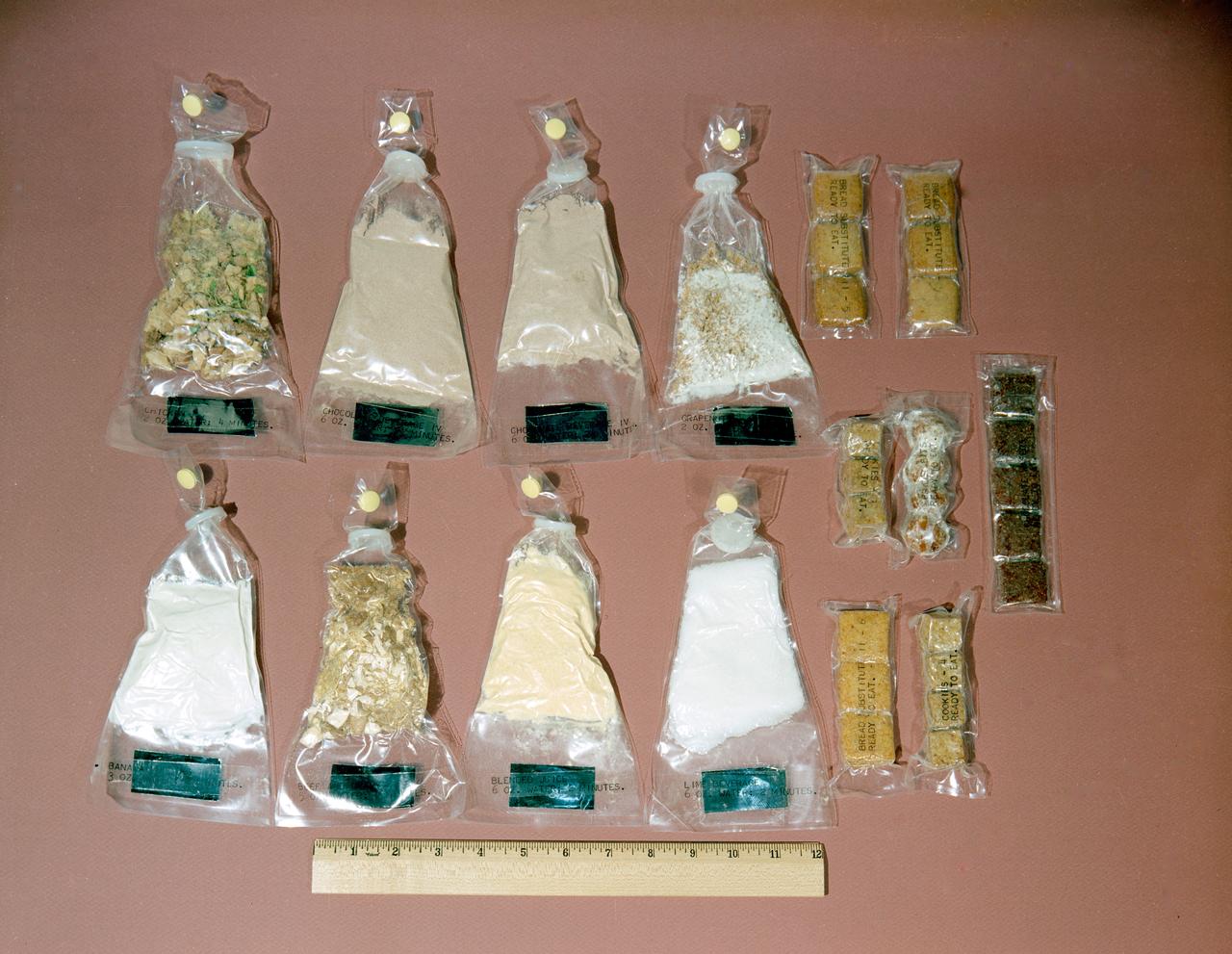
S62-08743 (1962) --- Food kit used by Mercury astronauts. Some is dehydrated and needs water, other packets are ready to eat. Size is measured relative to a ruler. Included are packets of mushroom soup, orange-grapefruit juice, cocoa beverage, pineapple juice, chicken with gravy, pears, strawberries, beef and vegetables and other assorted food containers. Photo credit: NASA
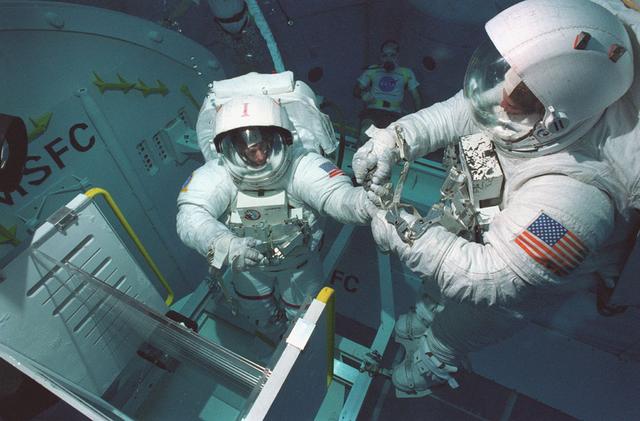
Marshall's Neutral Buoyancy Simulator (NBS) is used to simulate the gravitational fields and buoyancy effects outer space has on astronauts and their ability to perform tasks in this environment. In this example, a diver performs a temporary fluid line repair task using a repair kit developed by Marshall engineers. The analysis will determine the value of this repair kit and its feasibility.
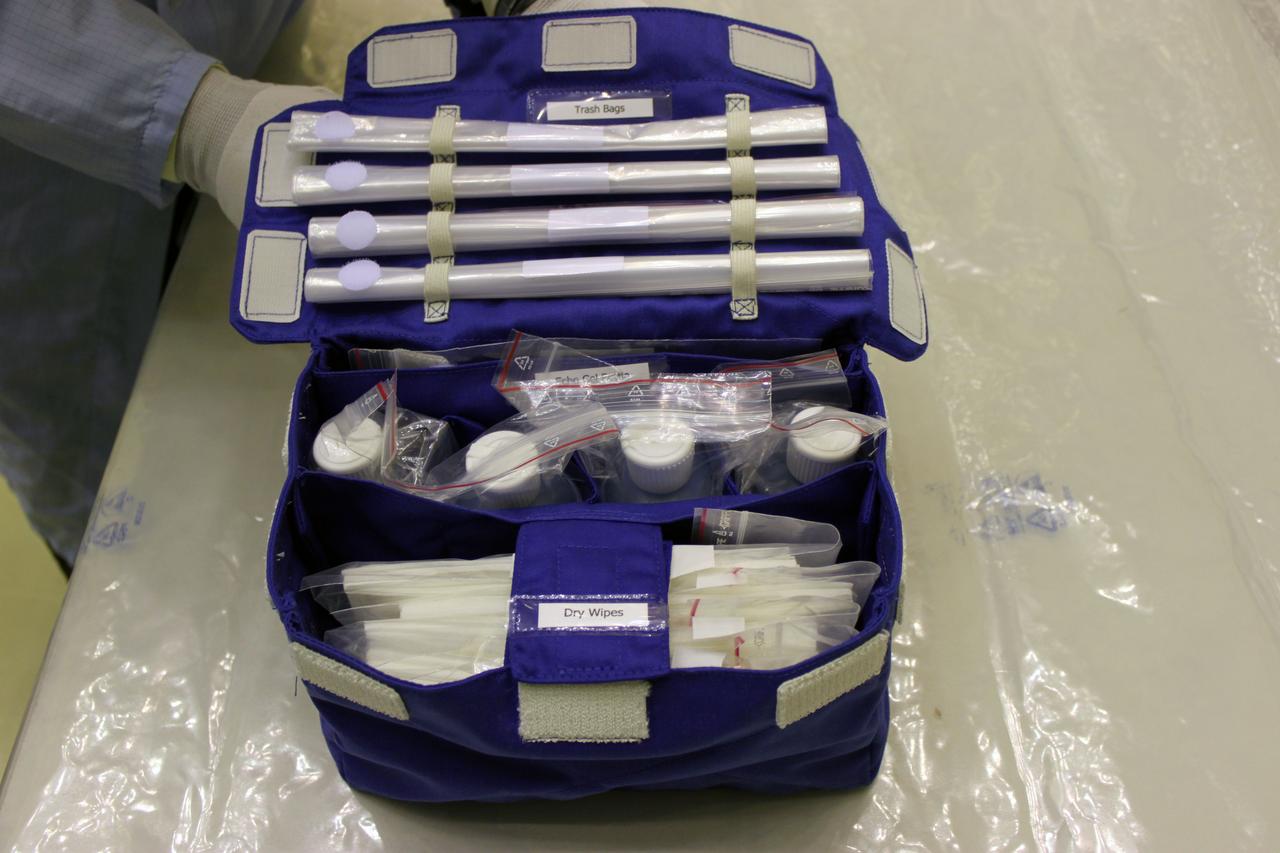
jsc2010e187274 (11/2/2010) --- Oblique-open view of Vessel Imaging Kit
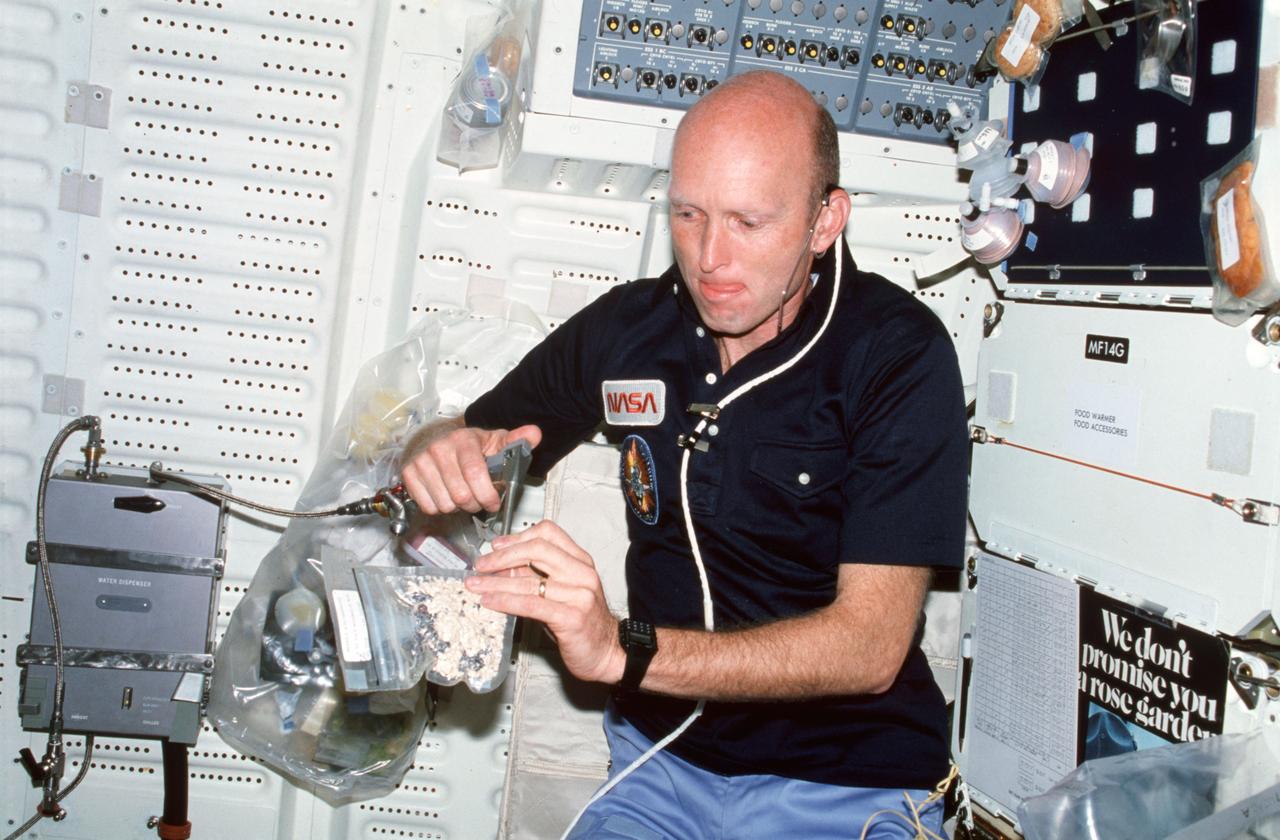
STS003-26-254 (30 March 1982) --- Astronaut Gordon Fullerton, STS-3 pilot, wearing communications kit assembly (ASSY) mini-headset (HDST), inserts the JSC water dispenser kit water gun in rehydratable plastic food (cereal) package to fill it with hot water. Photo credit: NASA
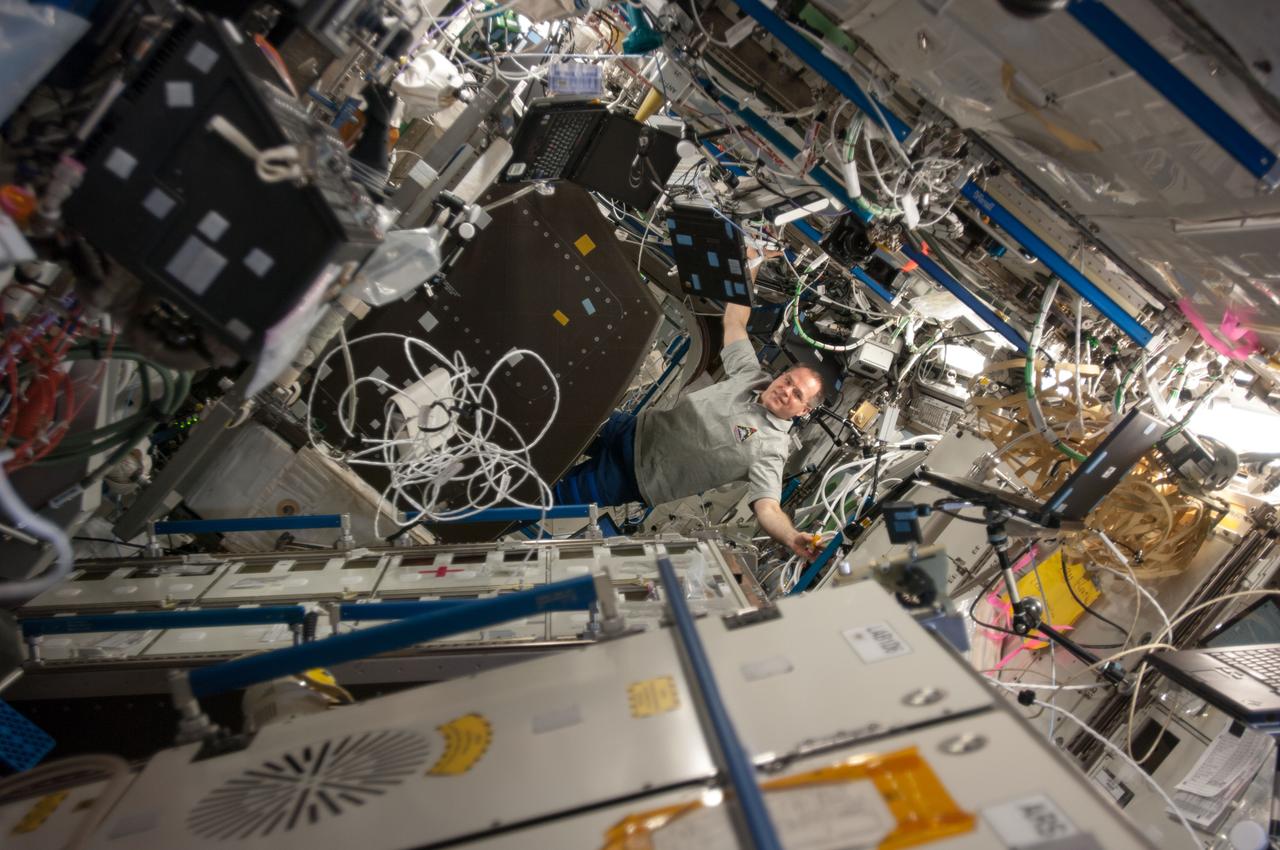
ISS034-E-030218 (16 Jan. 2013) --- NASA astronaut Kevin Ford, Expedition 34 commander, installs a Ultra-Sonic Background Noise Tests (UBNT) sensor kit behind a rack in the Destiny of the International Space Station.
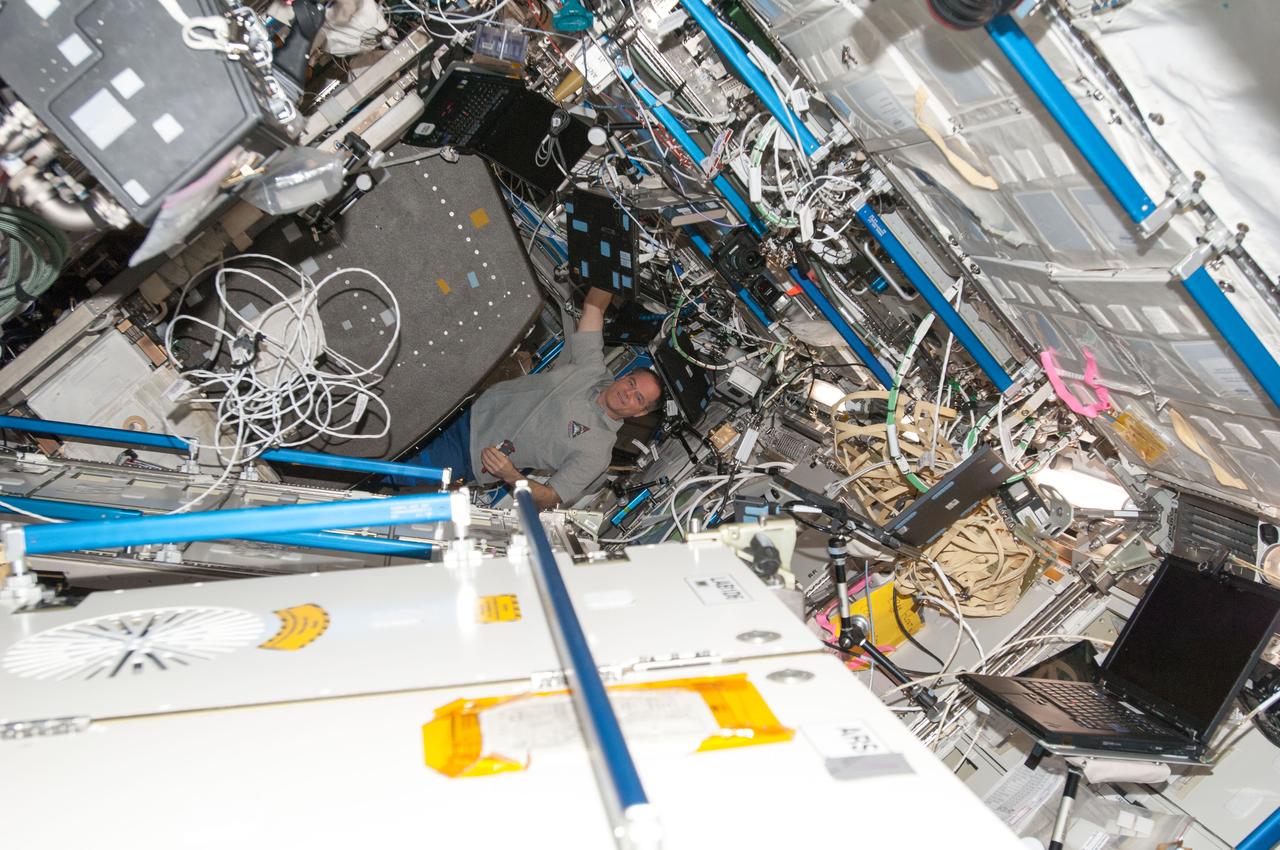
ISS034-E-030216 (16 Jan. 2013) --- NASA astronaut Kevin Ford, Expedition 34 commander, installs a Ultra-Sonic Background Noise Tests (UBNT) sensor kit behind a rack in the Destiny of the International Space Station.
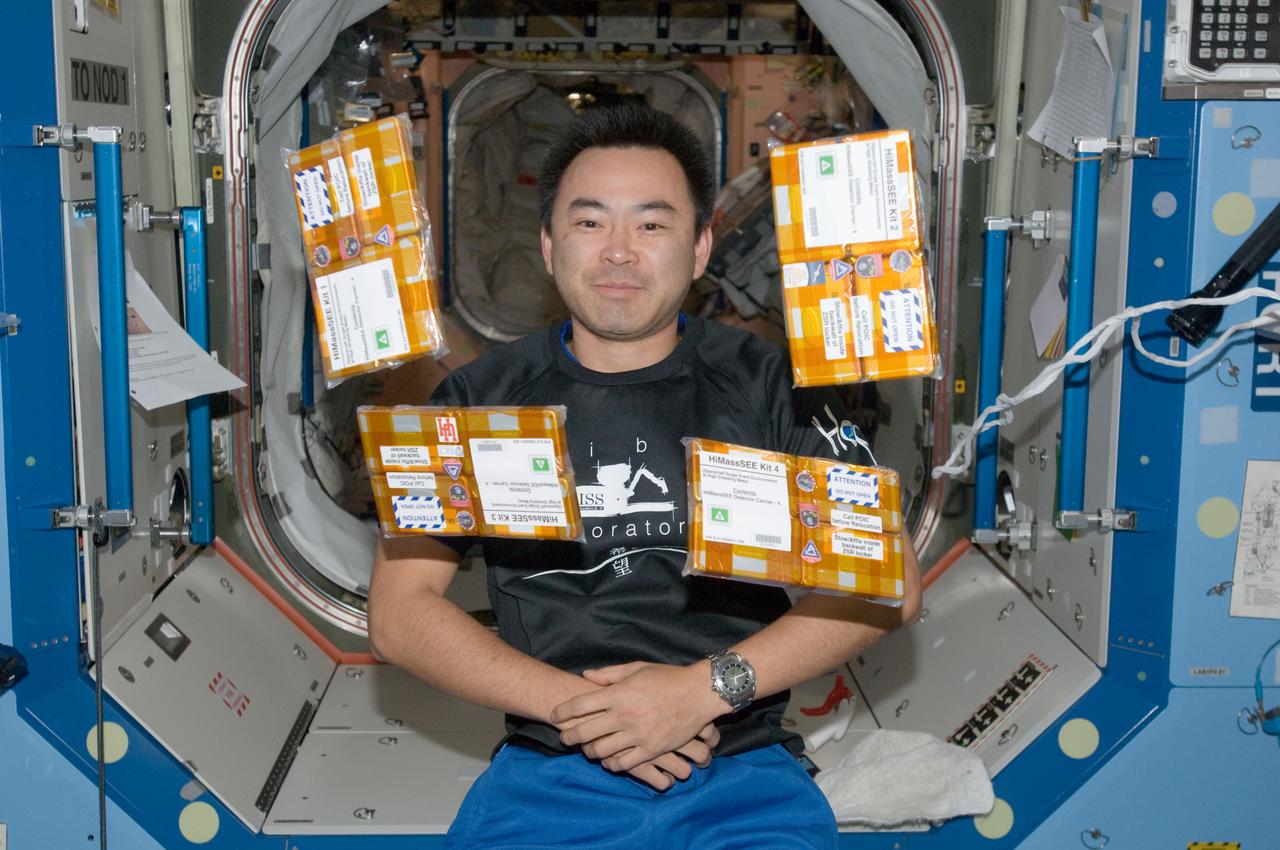
iss032e016946 (8/11/2012) --- Japan Aerospace Exploration Agency (JAXA) astronaut Akihiko Hoshide poses with the HiMassSEE (Spacecraft Single Event Environments at High Shielding Mass) kits 1,2,3 and 4 in the U.S. Lab aboard the International Space Station (ISS). Spacecraft Single Event Environments at High Shielding Mass (HiMassSEE) measures space radiation interactions with spacecraft structure and shielding using several passive track detector technologies to provide a more accurate definition of International Space Station (ISS) payload accommodations, radiation transport model validation, and flight demonstration data on advanced microelectronics and chemical dosimeters.
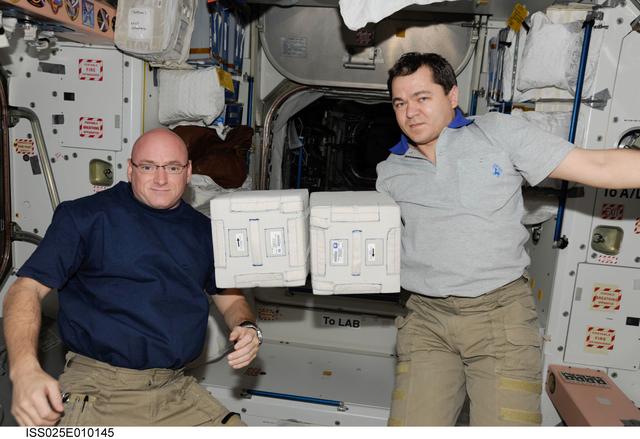
ISS025-E-010145 (31 Oct. 2010) --- NASA astronaut Scott Kelly (left) and Russian cosmonaut Oleg Skripochka, both Expedition 25 flight engineers, are pictured during transfer activities of the European Space Agency?s SPHINX (SPaceflight of Huvec: an Integrated eXperiment) Biobox kit in the Unity node of the International Space Station.
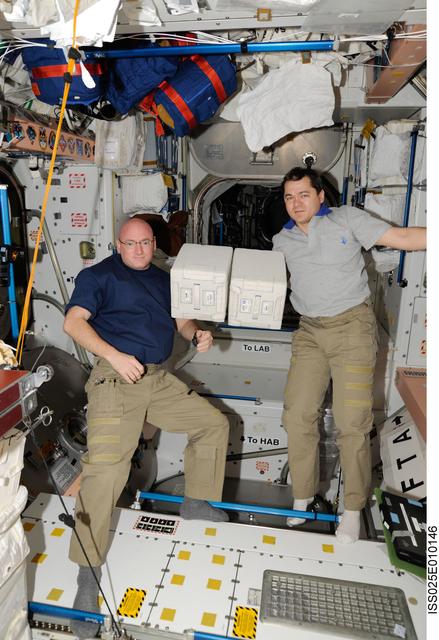
ISS025-E-010146 (31 Oct. 2010) --- NASA astronaut Scott Kelly (left) and Russian cosmonaut Oleg Skripochka, both Expedition 25 flight engineers, are pictured during transfer activities of the European Space Agency?s SPHINX (SPaceflight of Huvec: an Integrated eXperiment) Biobox kit in the Unity node of the International Space Station.
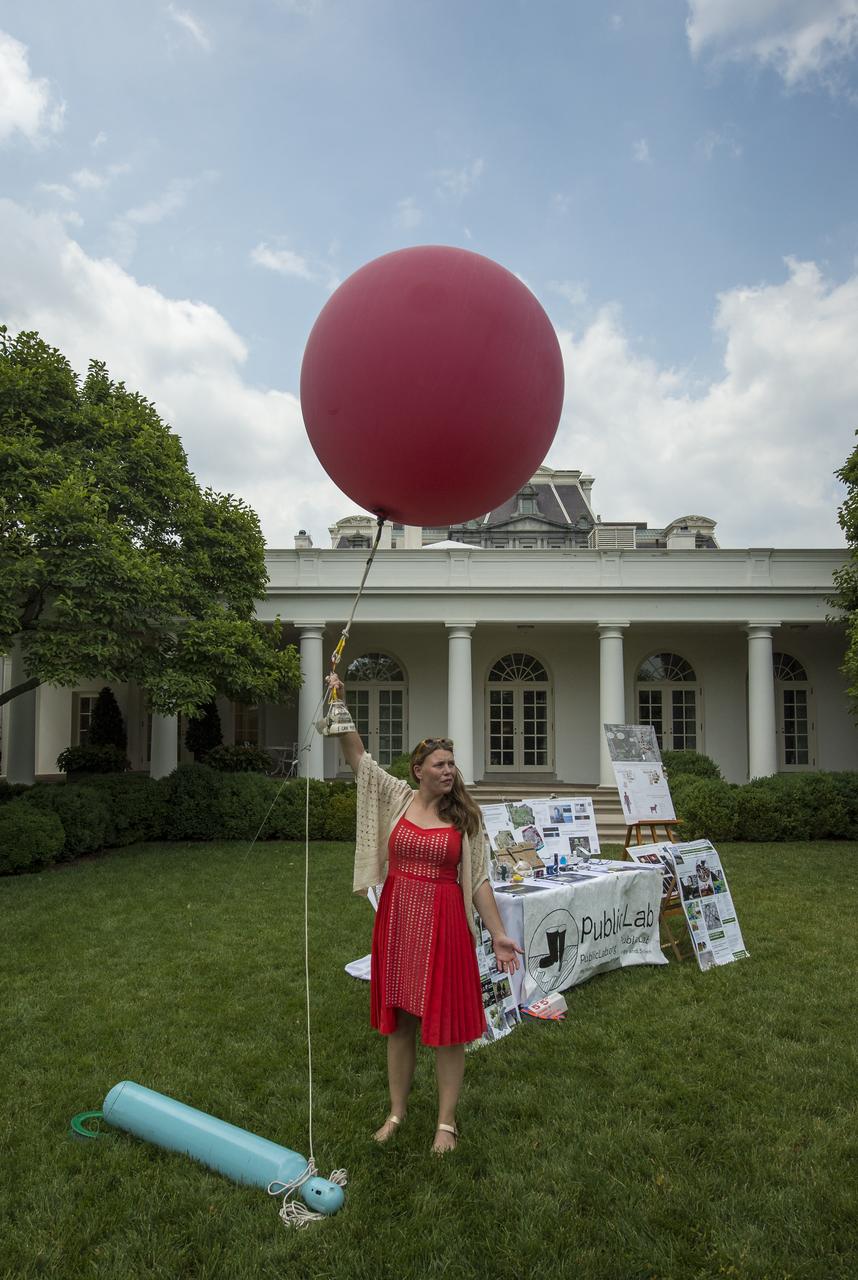
Sara Ann Wylie of Public Lab shows the do to yourself Balloon Mapping Kit, during the first ever White House Maker Faire, which brings together students, entrepreneurs, and everyday citizens who are using new tools and techniques to launch new businesses, learn vital skills in science, technology, engineering, and math (STEM), and fuel the renaissance in American manufacturing, at the White House, Wednesday, June 18, 2014 in Washington. The Balloon Mapping Kit enables you to take your own aerial photos from 1000 ft or higher. The President announced new steps the Administration and its partners are taking to support the ability of more Americans, young and old, to have to access to these tools and techniques and brings their ideas to life. Photo Credit: (NASA/Bill Ingalls)
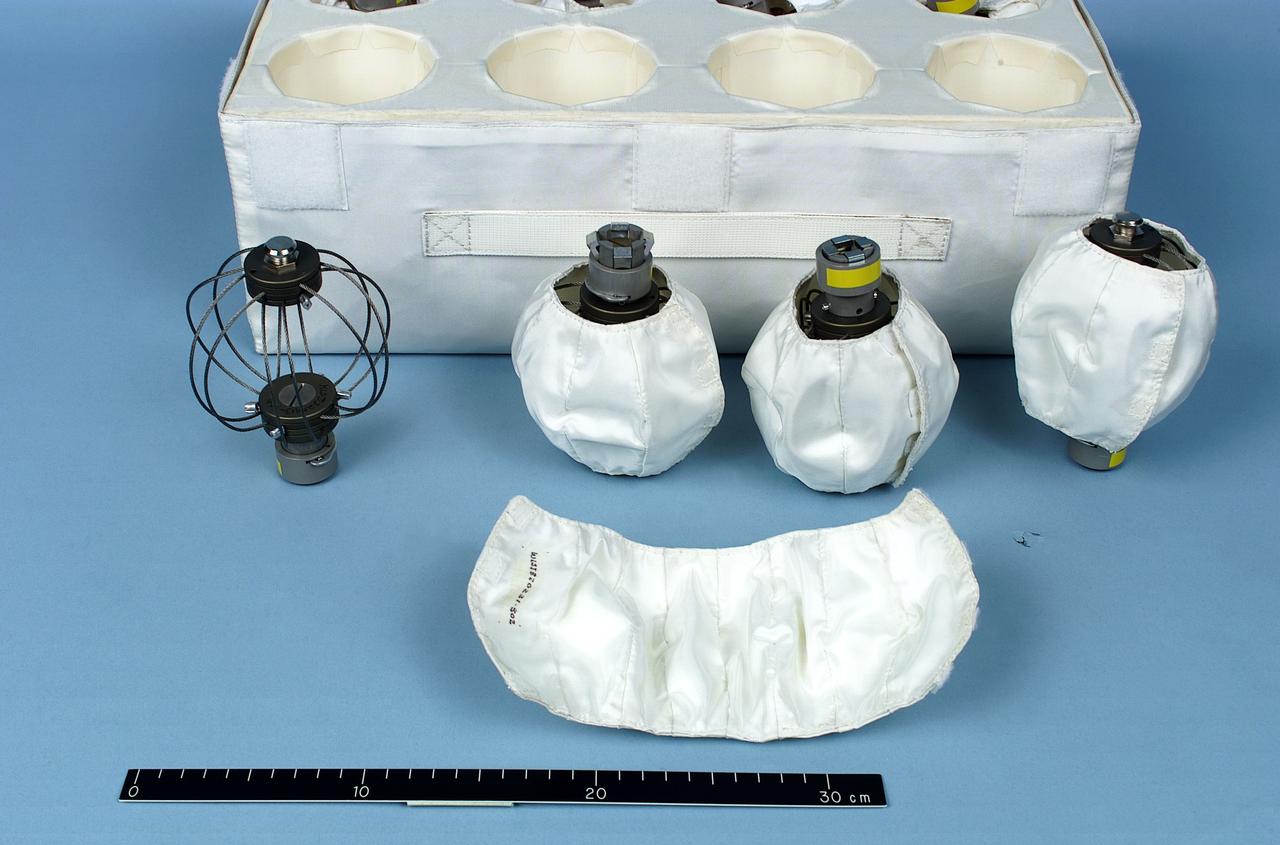
jsc2000e18537 (7/06/2000) --- The small isolators unpacked in front of the Cycle Ergometer / Vibration Isolation System (CEVIS) isolator kit.

STS008-04-106 (30 Aug-5 Sept 1983) --- On aft flight deck, Richard M. Truly, STS-8 commander, holds communication kit assembly (ASSY) headset (HDST) interface unit (HIU) and mini-HDST in front of the on orbit station. Hasselblad camera is positioned on overhead window W8.
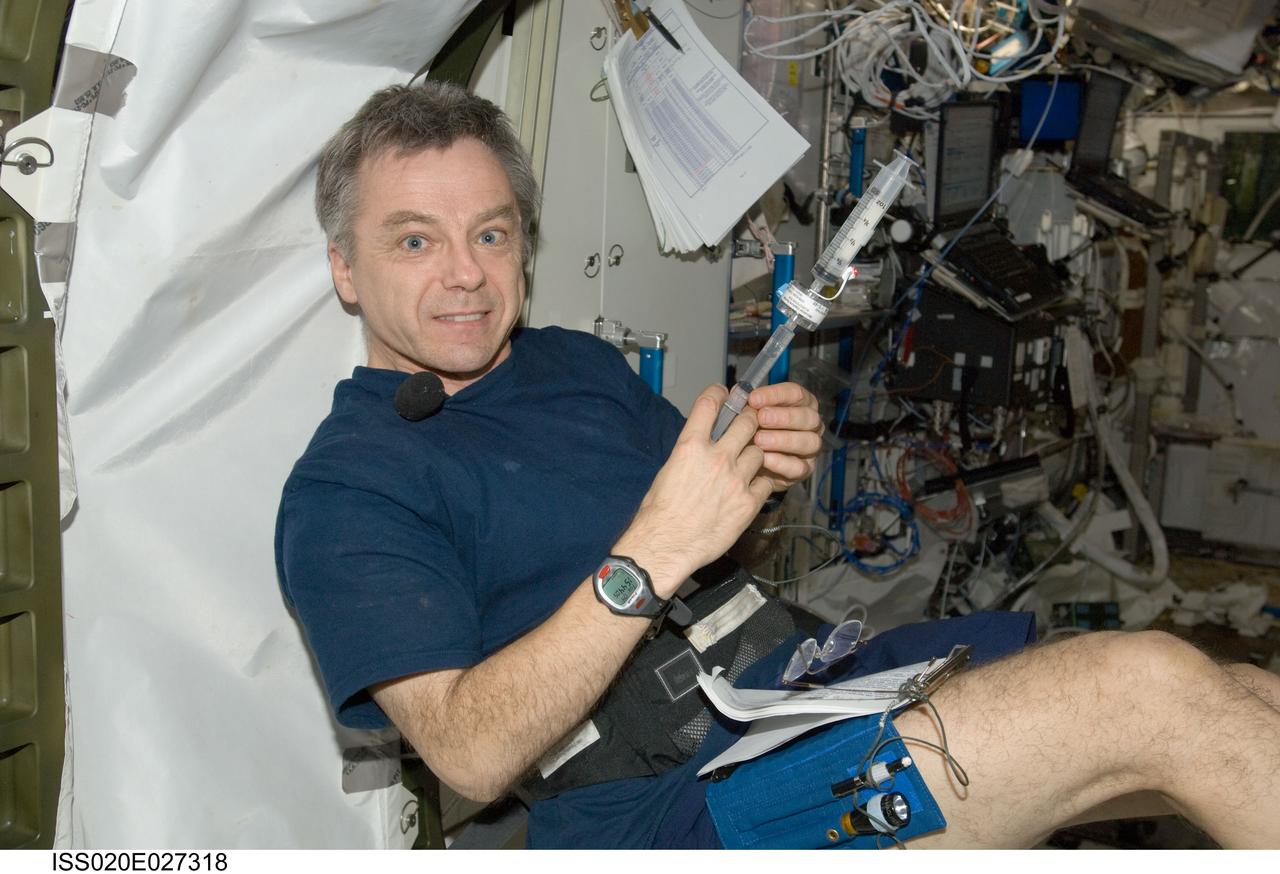
ISS020-E-027318 (4 Aug. 2009) --- Canadian Space Agency astronaut Robert Thirsk, Expedition 20 flight engineer, performs a subsequent in-flight analysis with a Water Microbiology Kit/Microbial Capture Devices (WMK MCD) for microbial traces in the Destiny laboratory of the International Space Station.
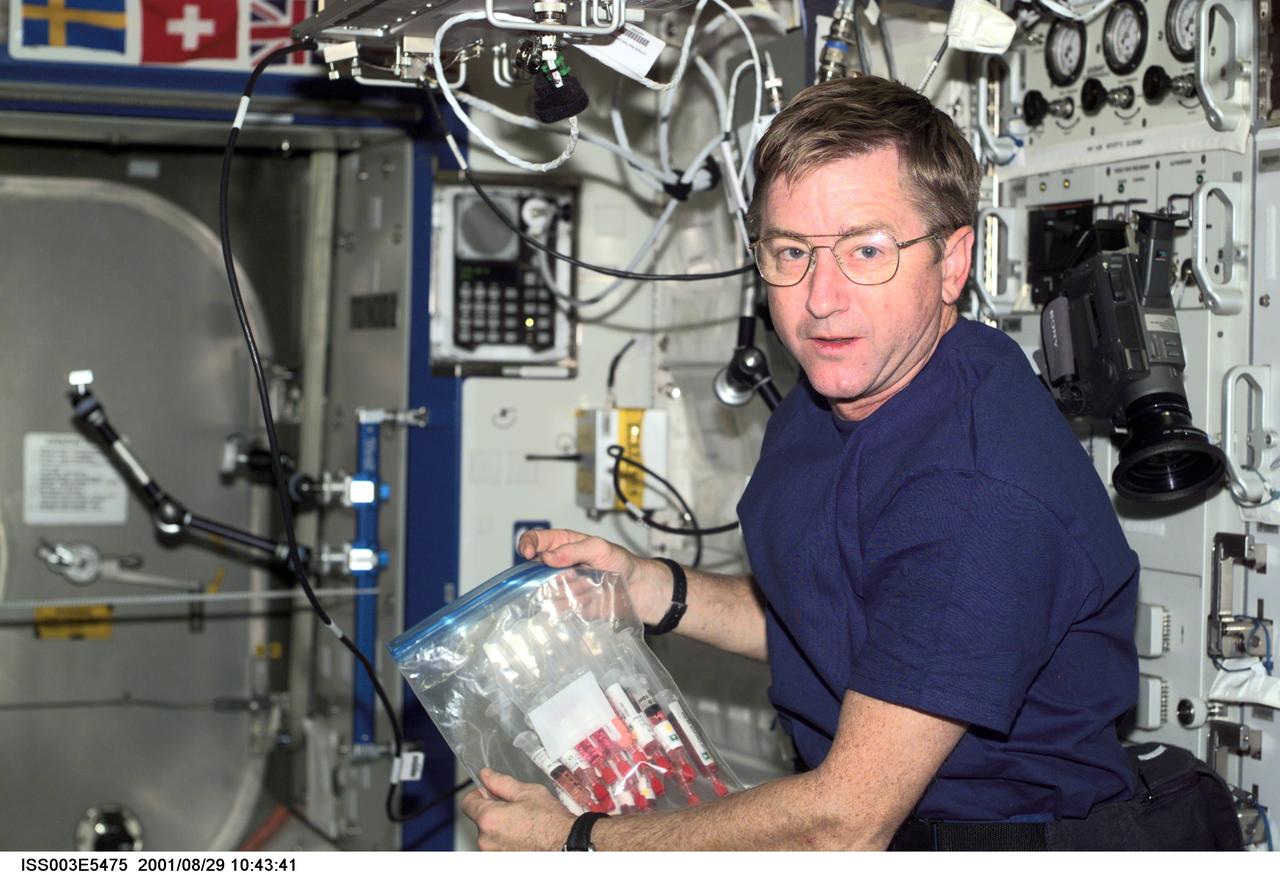
ISS003-E-5475 (29 August 2001) --- Astronaut Frank L. Culbertson, Expedition Three mission commander, holds a syringe kit to be used in the Quad Tissue Culture Module Assemblies (QTCMA) for the Biotechnology Specimen Temperature Controller (BSTC) experiment in the U.S. Laboratory.
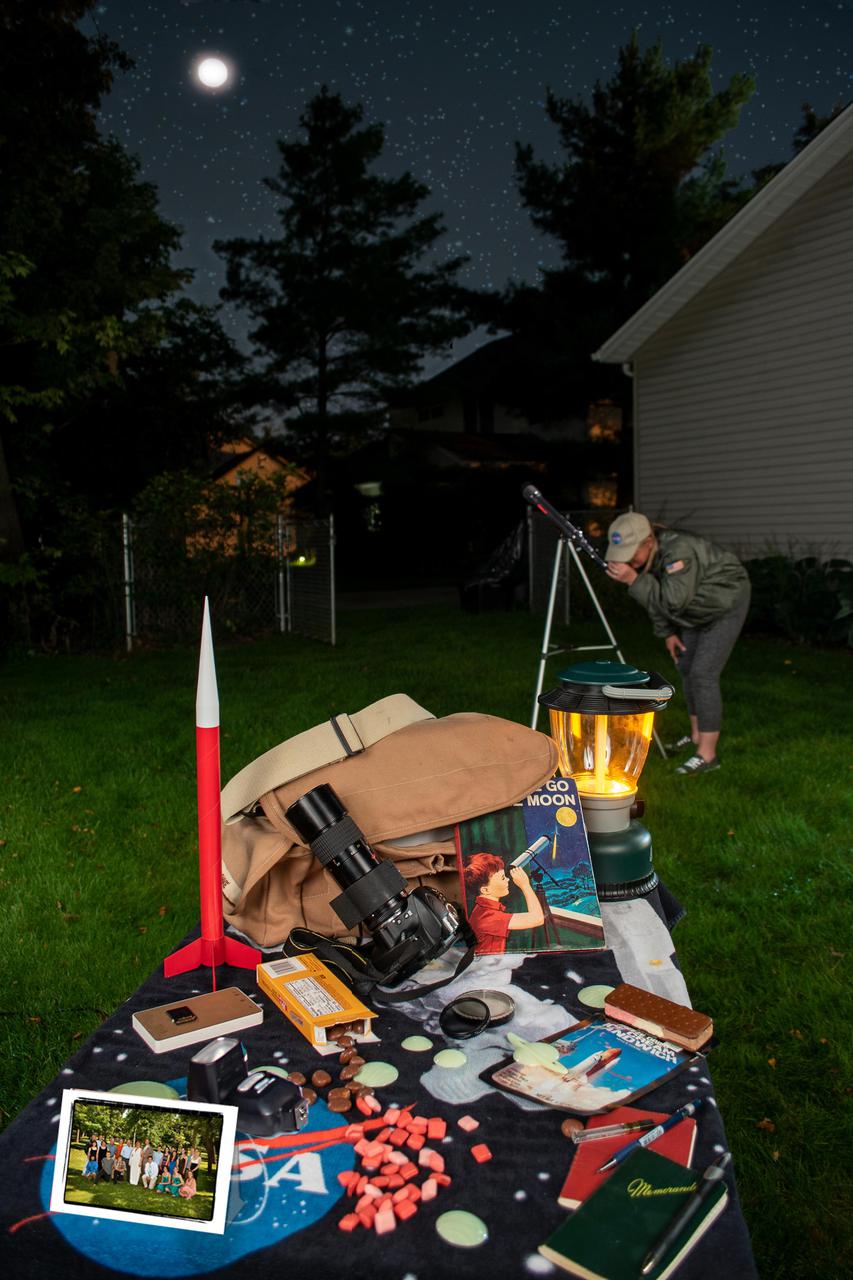
NASA Moon Kit of things I would take to the moon, The first thing I thought of for my Moon Kit was the first book I ever read when I was learning to read. It is titled, You Will Go To The Moon. I really liked that book and read it many times, looking at the illustrations and wondering about if I would ever actually go to the moon. Of the many belongings that I have lost through the years from moving, etc. that book has stayed with me and so it would of course go to the moon with me. Photography has always interested me and so a family photo was second to get packed. We always had photos taken and volumes of old family photos in the house and so photography has played an important role in my life and so my camera gear is third to get packed. As a kid I spend a lot of time and money building rockets and flying them. I bet my rocket would go very high on the moon. I also like a little candy wherever I go.
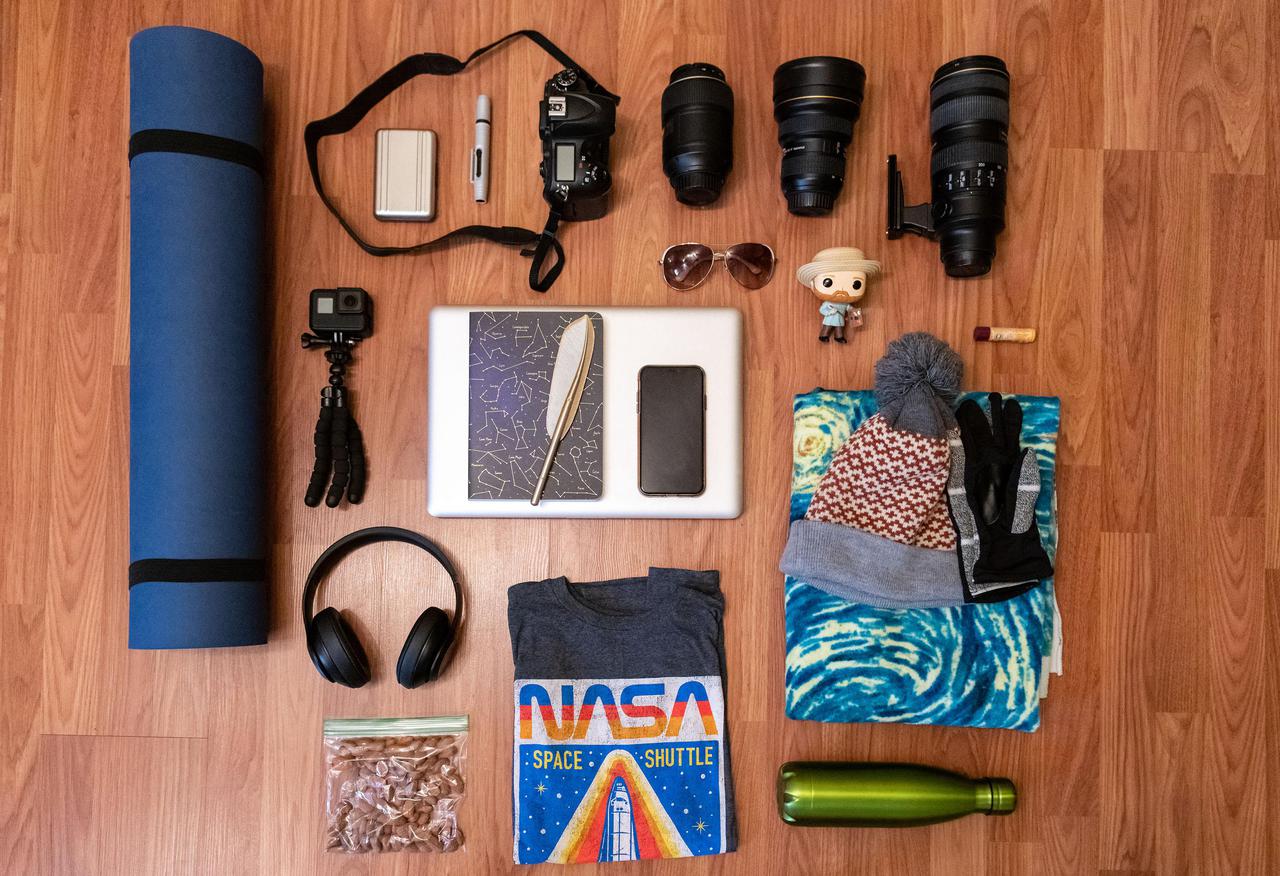
I may not always pack light, but I tried to only pack the essentials, with a couple of goodies. I get cold fairly easily hence the blanket, extra NASA shirt, hat and gloves. No trip is complete without my favorite snack of almonds, water, sunglasses, Chapstick, phone and my headphones to listen to some music. I figured I could bring my yoga mat, because who wouldn’t want to do yoga on the moon?? The most important part of this kit is my camera! I brought a couple of different lenses for a variety of options, along with a sports action camera, notebook and computer for editing. The Van Gogh doll was just for fun!
NASA Moon Kit of things I would take to the moon, I couldn’t go to the moon without my two mirrorless digital SLR cameras, Lens, my 120 6x4.5 film camera, several rolls of 120 film, my singing bowl (for meditation), my wireless printer, My son’s astronaut toy, Several pictures of both my sons and wife, My oldest sons first shoes (they are good luck), cell phone (for music and extra photos), Tablet and Pen (for editing and books), my Laptop and my water bottle (I take it everywhere).
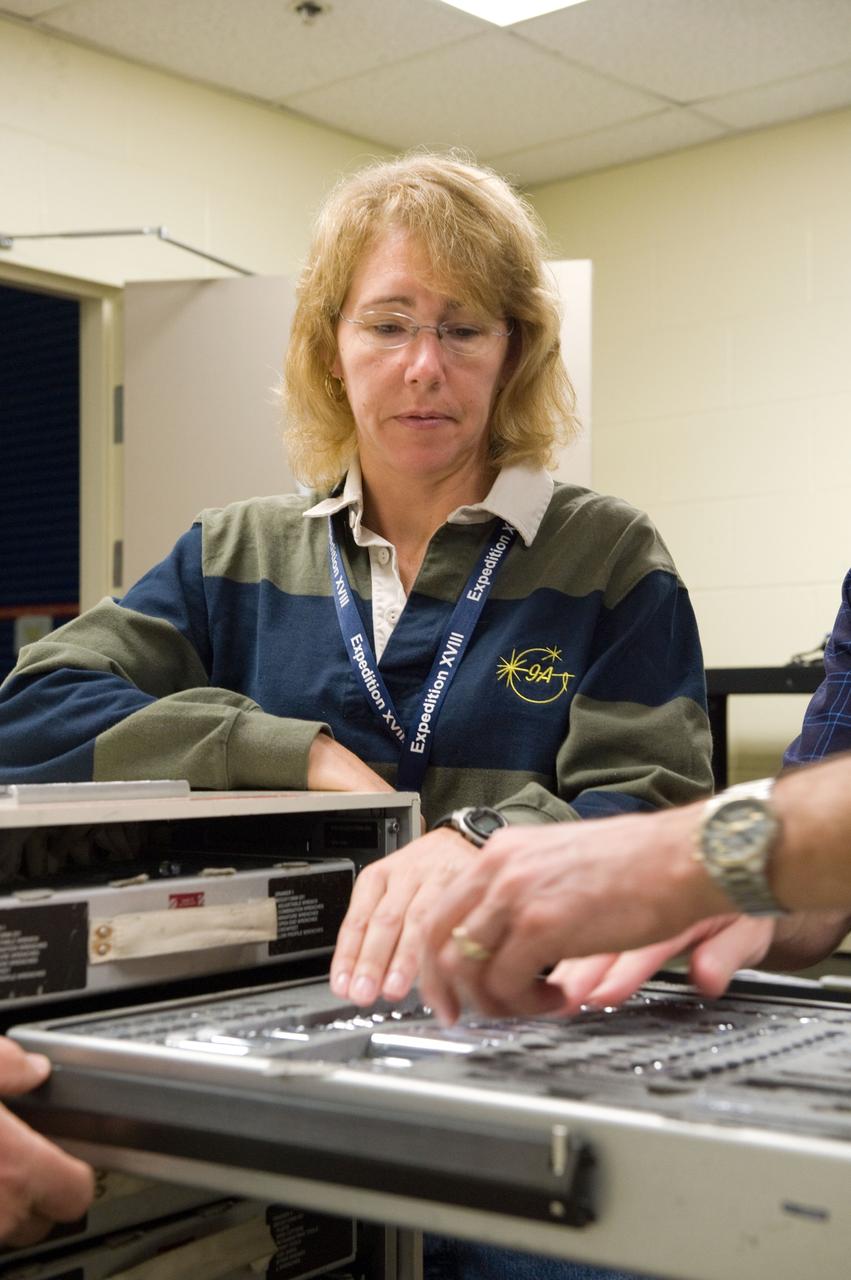
JSC2010-E-183214 (3 Nov. 2010) --- NASA astronaut Sandy Magnus, STS-135 mission specialist, participates in a tools and repair kits training session in the Space Vehicle Mock-up Facility at NASA's Johnson Space Center. STS-135 is planned to be the final mission of the space shuttle program. Photo credit: NASA or National Aeronautics and Space Administration
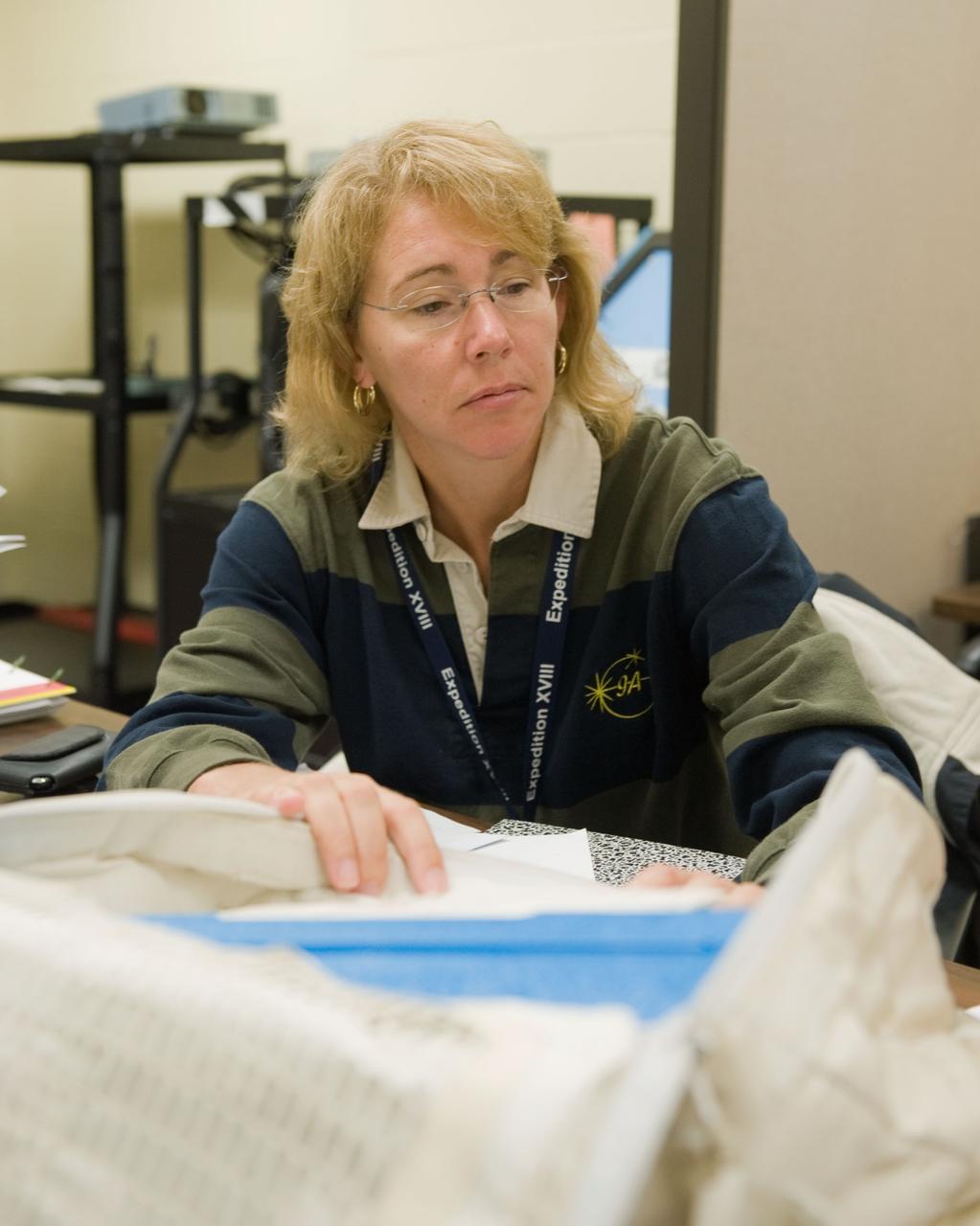
JSC2010-E-183228 (3 Nov. 2010) --- NASA astronaut Sandy Magnus, STS-135 mission specialist, participates in a tools and repair kits training session in the Space Vehicle Mock-up Facility at NASA's Johnson Space Center. STS-135 is planned to be the final mission of the space shuttle program. Photo credit: NASA or National Aeronautics and Space Administration
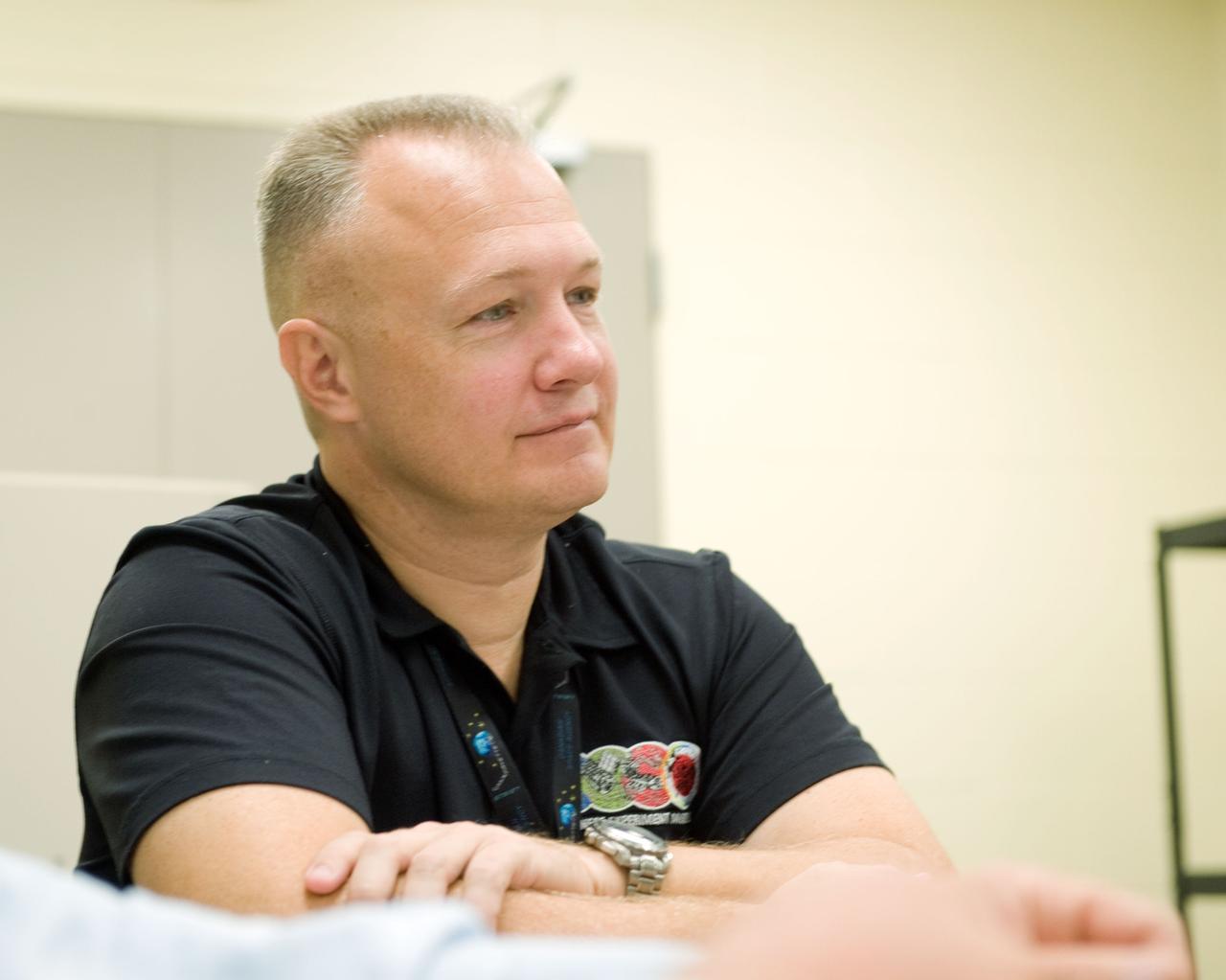
JSC2010-E-183232 (3 Nov. 2010) --- NASA astronaut Doug Hurley, STS-135 pilot, participates in a tools and repair kits training session in the Space Vehicle Mock-up Facility at NASA's Johnson Space Center. STS-135 is planned to be the final mission of the space shuttle program. Photo credit: NASA or National Aeronautics and Space Administration
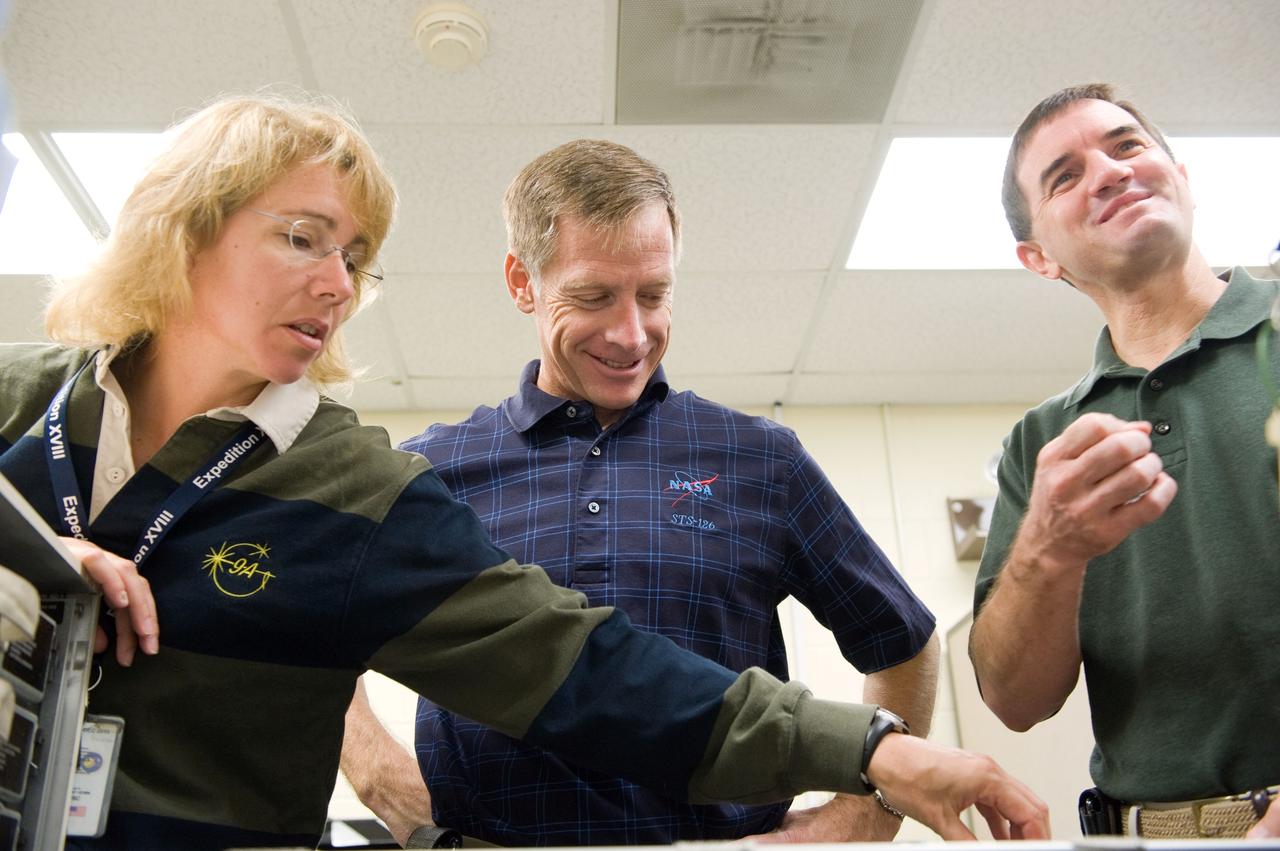
JSC2010-E-183219 (3 Nov. 2010) --- NASA astronauts Chris Ferguson (center), STS-135 commander; Sandra Magnus and Rex Walheim, both mission specialists, participate in a tools and repair kits training session in the Space Vehicle Mock-up Facility at NASA's Johnson Space Center. STS-135 is planned to be the final mission of the space shuttle program. Photo credit: NASA or National Aeronautics and Space Administration
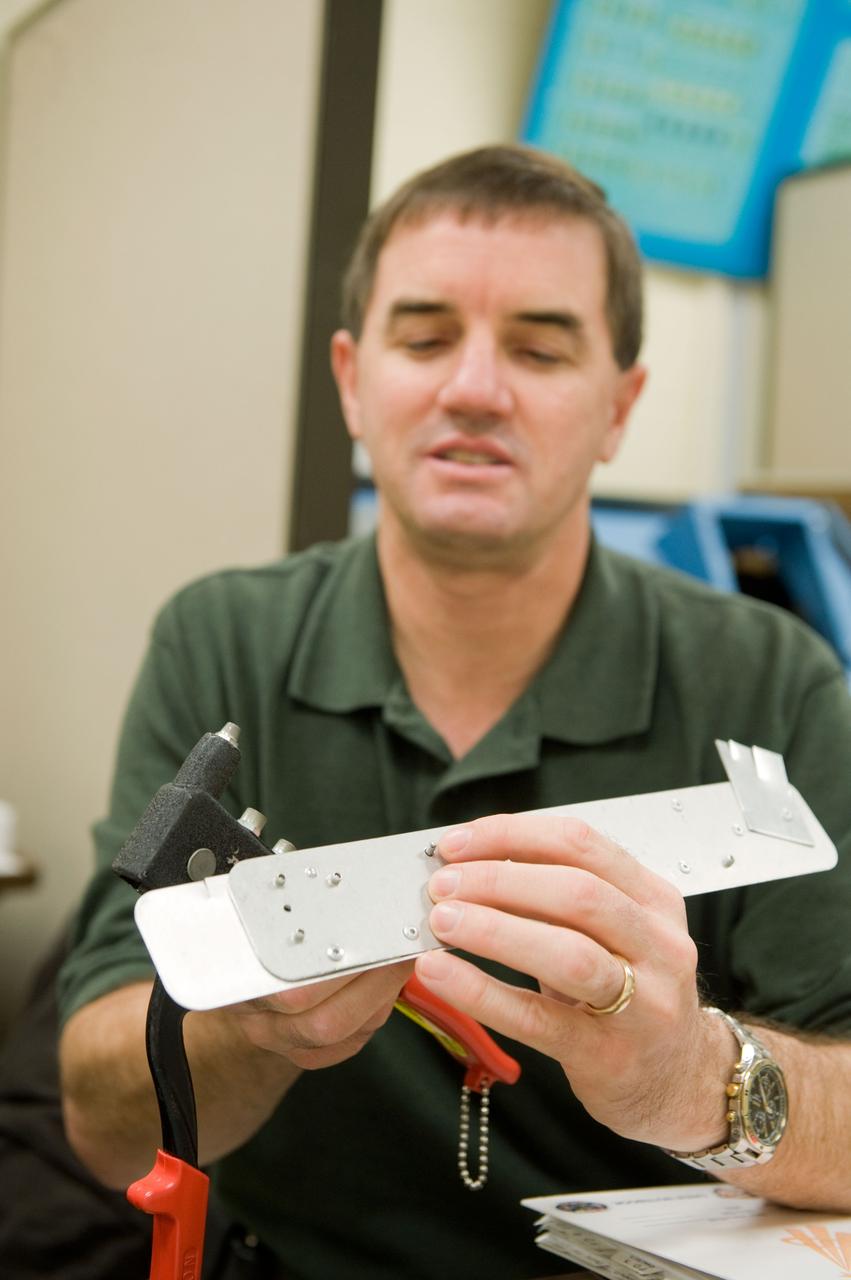
JSC2010-E-183239 (3 Nov. 2010) --- NASA astronaut Rex Walheim, STS-135 mission specialist, participates in a tools and repair kits training session in the Space Vehicle Mock-up Facility at NASA's Johnson Space Center. STS-135 is planned to be the final mission of the space shuttle program. Photo credit: NASA or National Aeronautics and Space Administration
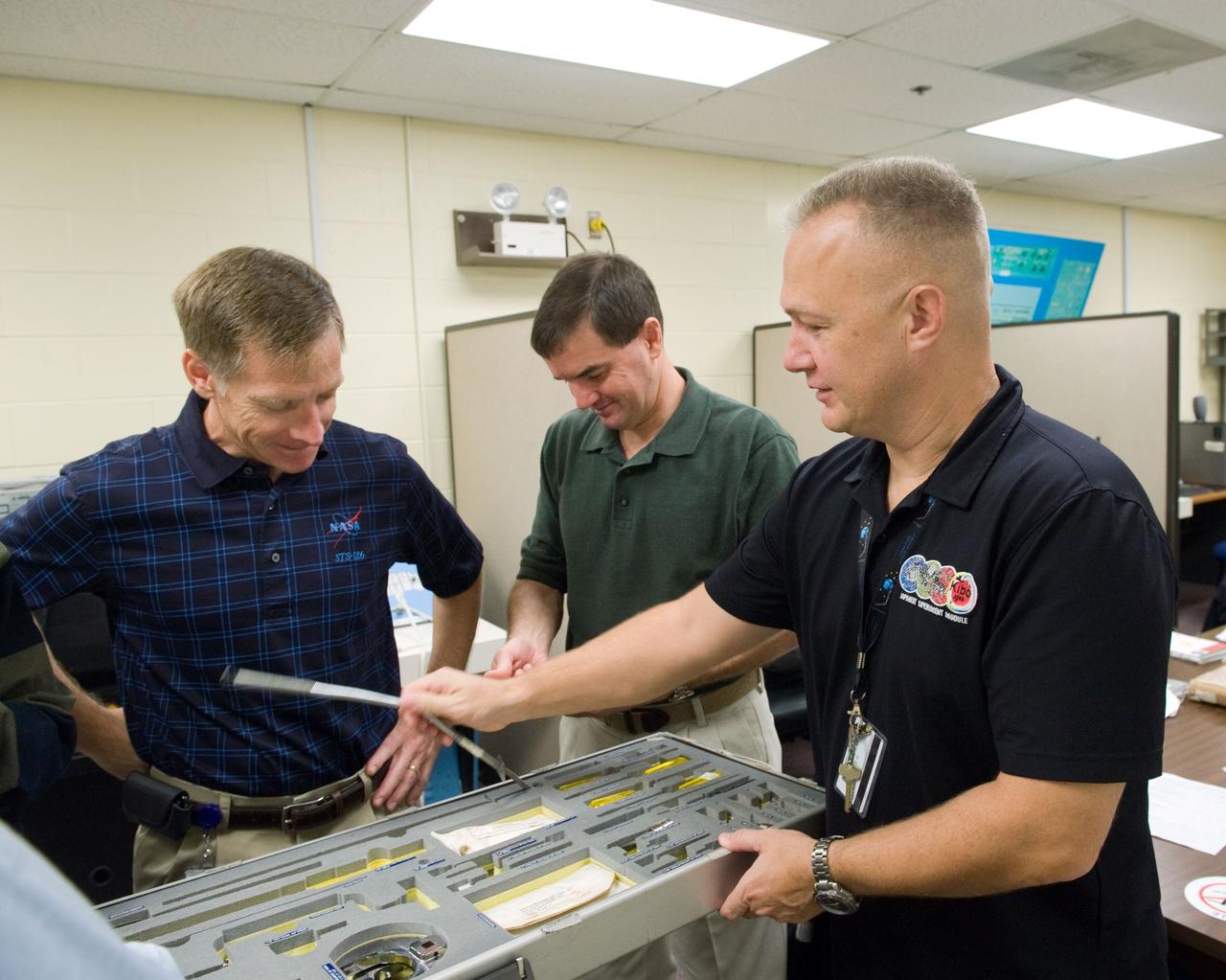
JSC2010-E-183216 (3 Nov. 2010) --- NASA astronauts Chris Ferguson (left), STS-135 commander; Doug Hurley (right), pilot; and Rex Walheim, mission specialist, participate in a tools and repair kits training session in the Space Vehicle Mock-up Facility at NASA's Johnson Space Center. STS-135 is planned to be the final mission of the space shuttle program. Photo credit: NASA or National Aeronautics and Space Administration
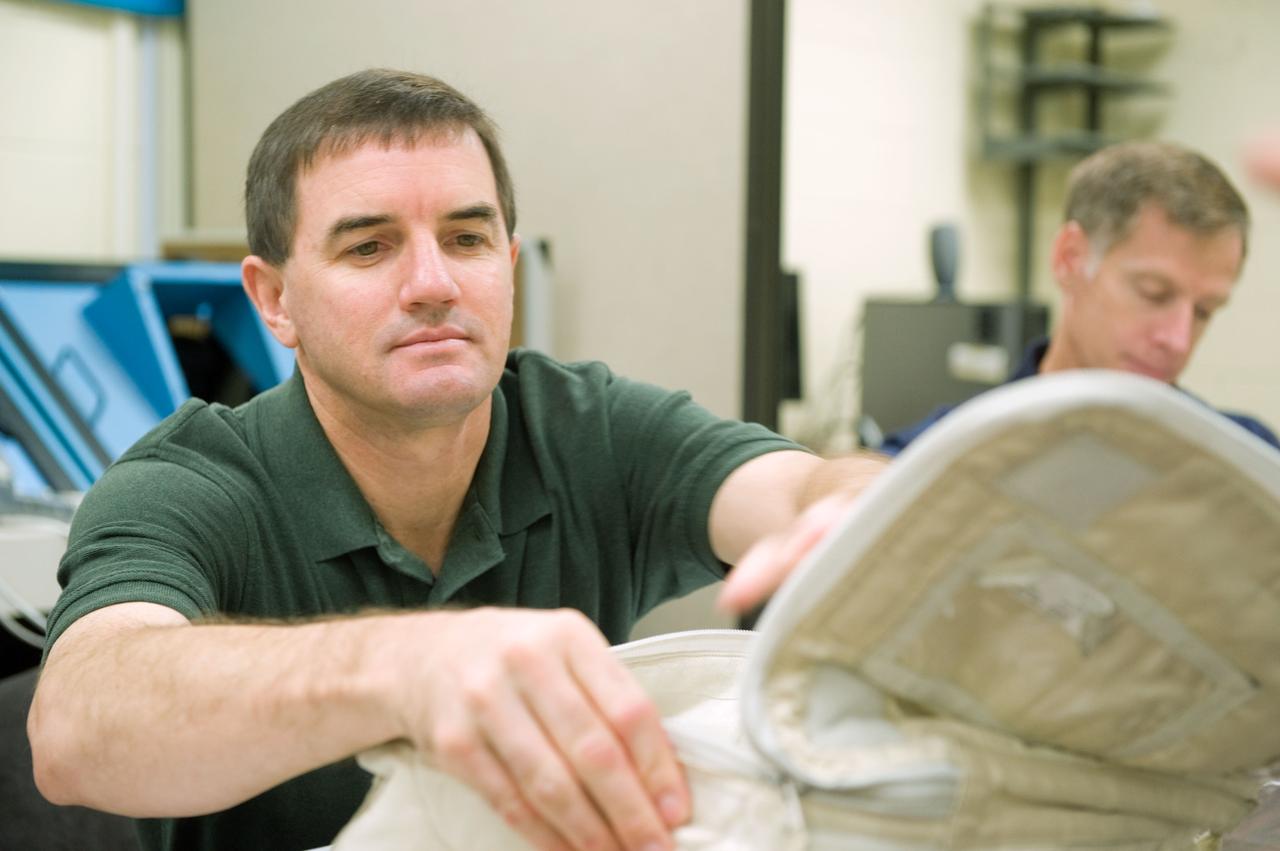
JSC2010-E-183226 (3 Nov. 2010) --- NASA astronaut Rex Walheim, STS-135 mission specialist, participates in a tools and repair kits training session in the Space Vehicle Mock-up Facility at NASA's Johnson Space Center. STS-135 is planned to be the final mission of the space shuttle program. Photo credit: NASA or National Aeronautics and Space Administration
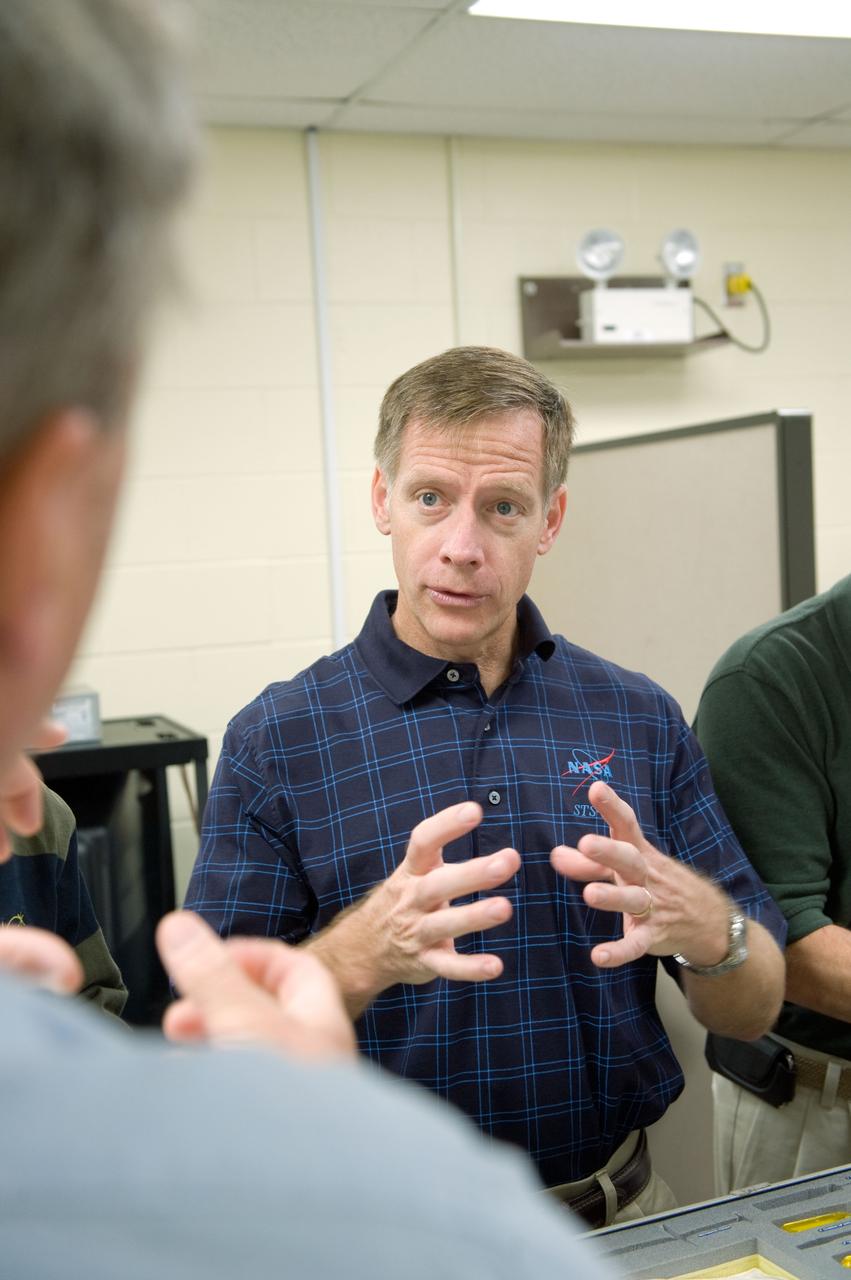
JSC2010-E-183218 (3 Nov. 2010) --- NASA astronaut Chris Ferguson, STS-135 commander, is pictured during a tools and repair kits training session in the Space Vehicle Mock-up Facility at NASA's Johnson Space Center. STS-135 is planned to be the final mission of the space shuttle program. Photo credit: NASA or National Aeronautics and Space Administration
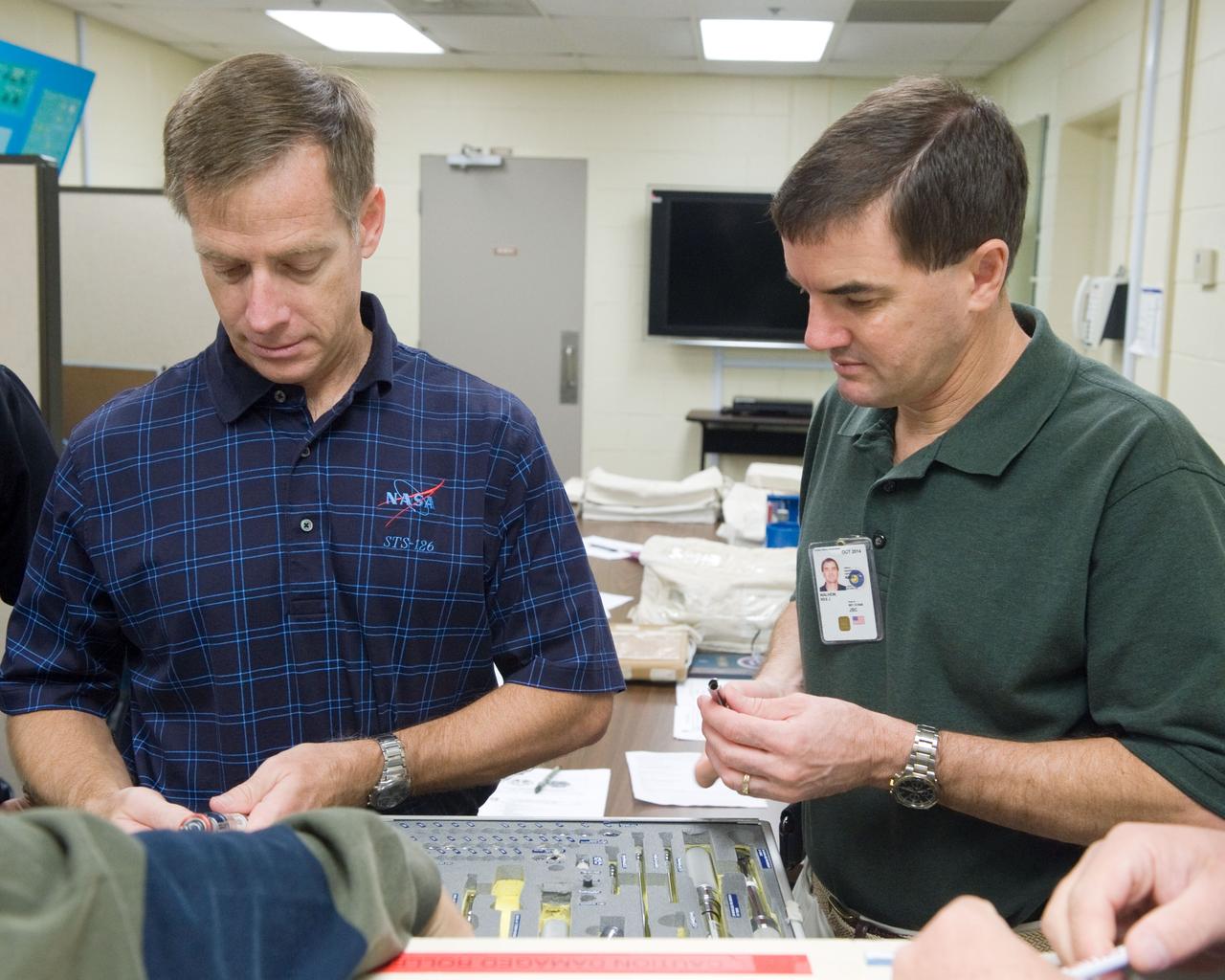
JSC2010-E-183213 (3 Nov. 2010) --- NASA astronauts Chris Ferguson (left), STS-135 commander; and Rex Walheim, mission specialist, participate in a tools and repair kits training session in the Space Vehicle Mock-up Facility at NASA's Johnson Space Center. STS-135 is planned to be the final mission of the space shuttle program. Photo credit: NASA or National Aeronautics and Space Administration
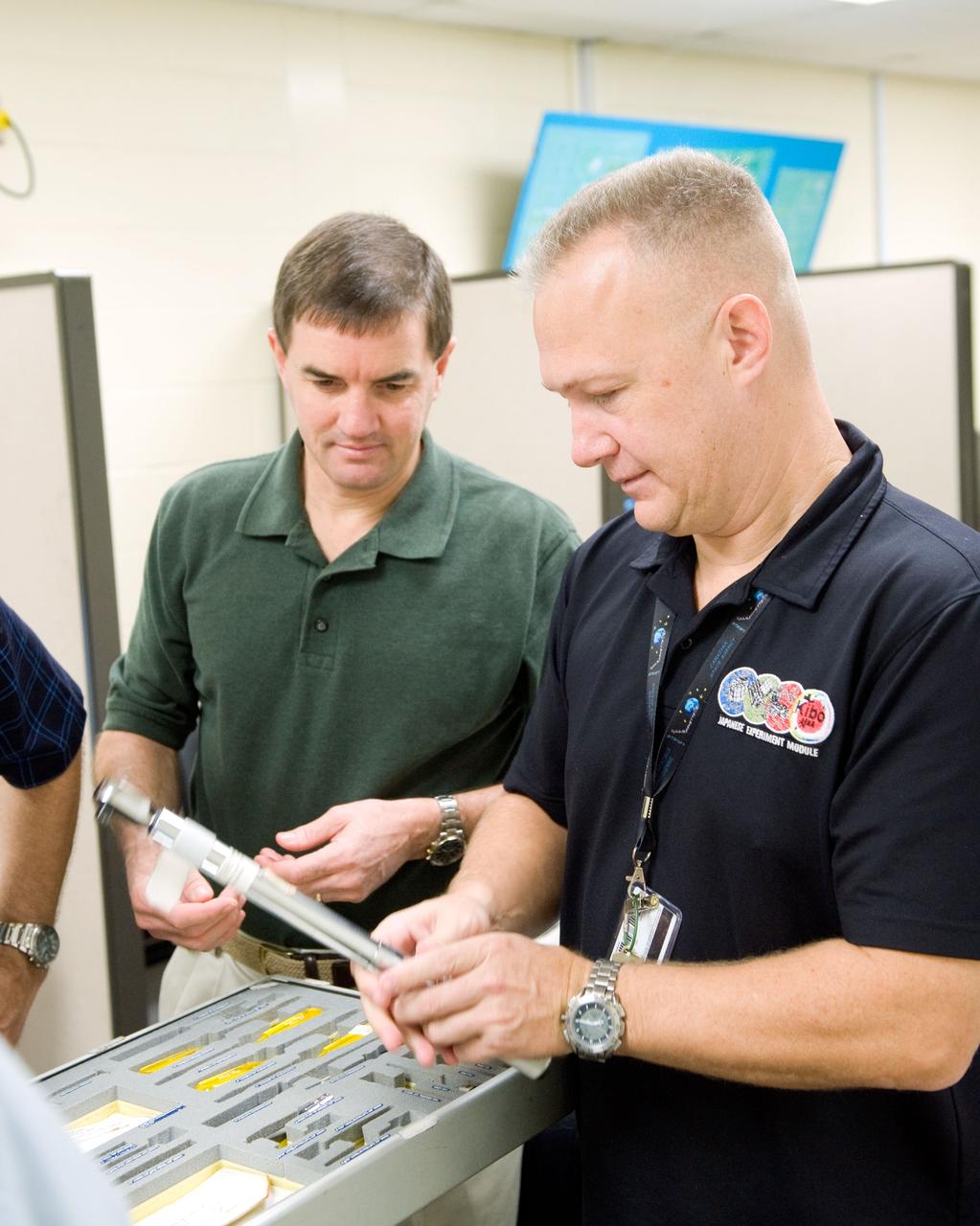
JSC2010-E-183217 (3 Nov. 2010) --- NASA astronauts Doug Hurley (right), STS-135 pilot; and Rex Walheim, mission specialist, participate in a tools and repair kits training session in the Space Vehicle Mock-up Facility at NASA's Johnson Space Center. STS-135 is planned to be the final mission of the space shuttle program. Photo credit: NASA or National Aeronautics and Space Administration
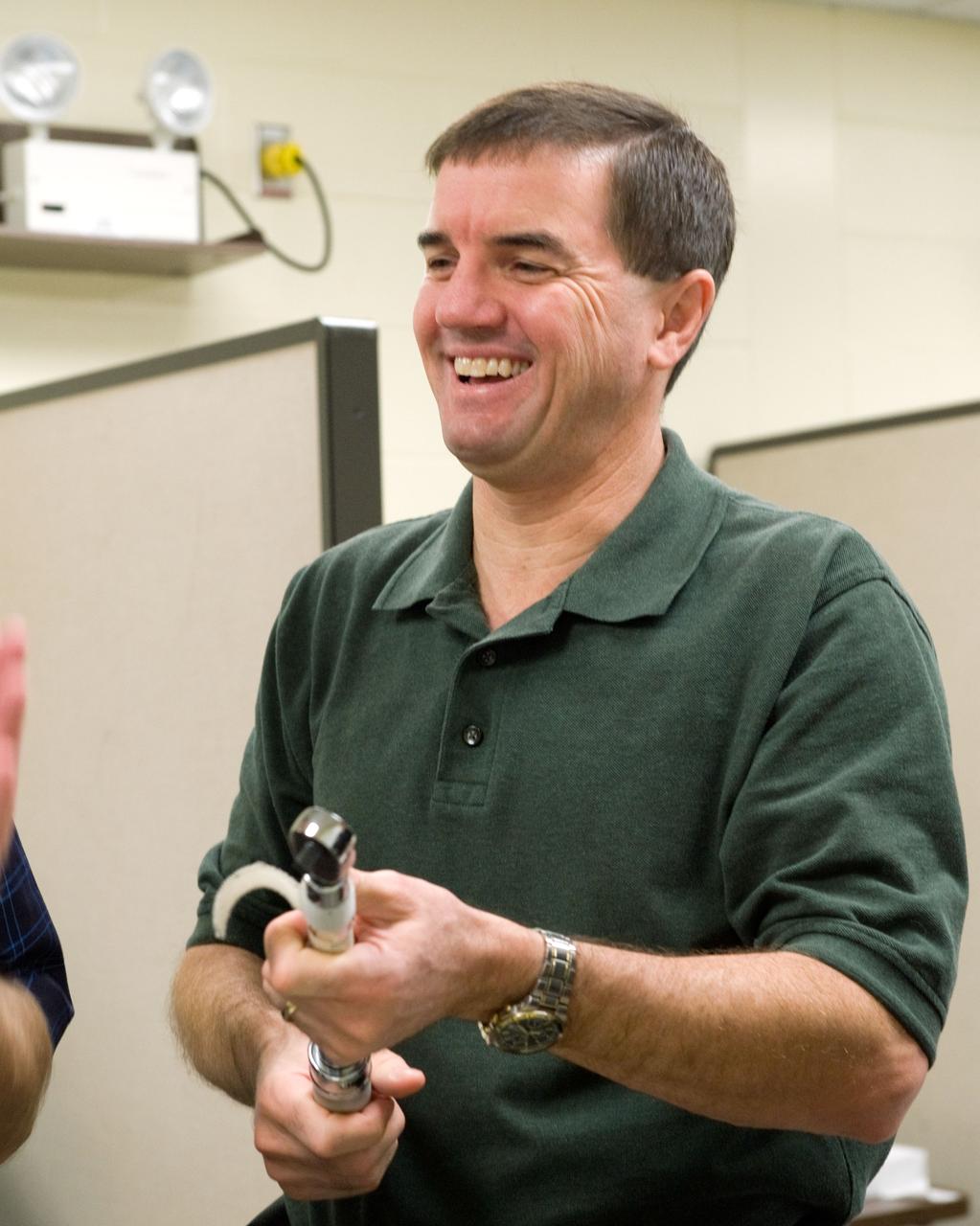
JSC2010-E-183215 (3 Nov. 2010) --- NASA astronaut Rex Walheim, STS-135 mission specialist, participates in a tools and repair kits training session in the Space Vehicle Mock-up Facility at NASA's Johnson Space Center. STS-135 is planned to be the final mission of the space shuttle program. Photo credit: NASA or National Aeronautics and Space Administration
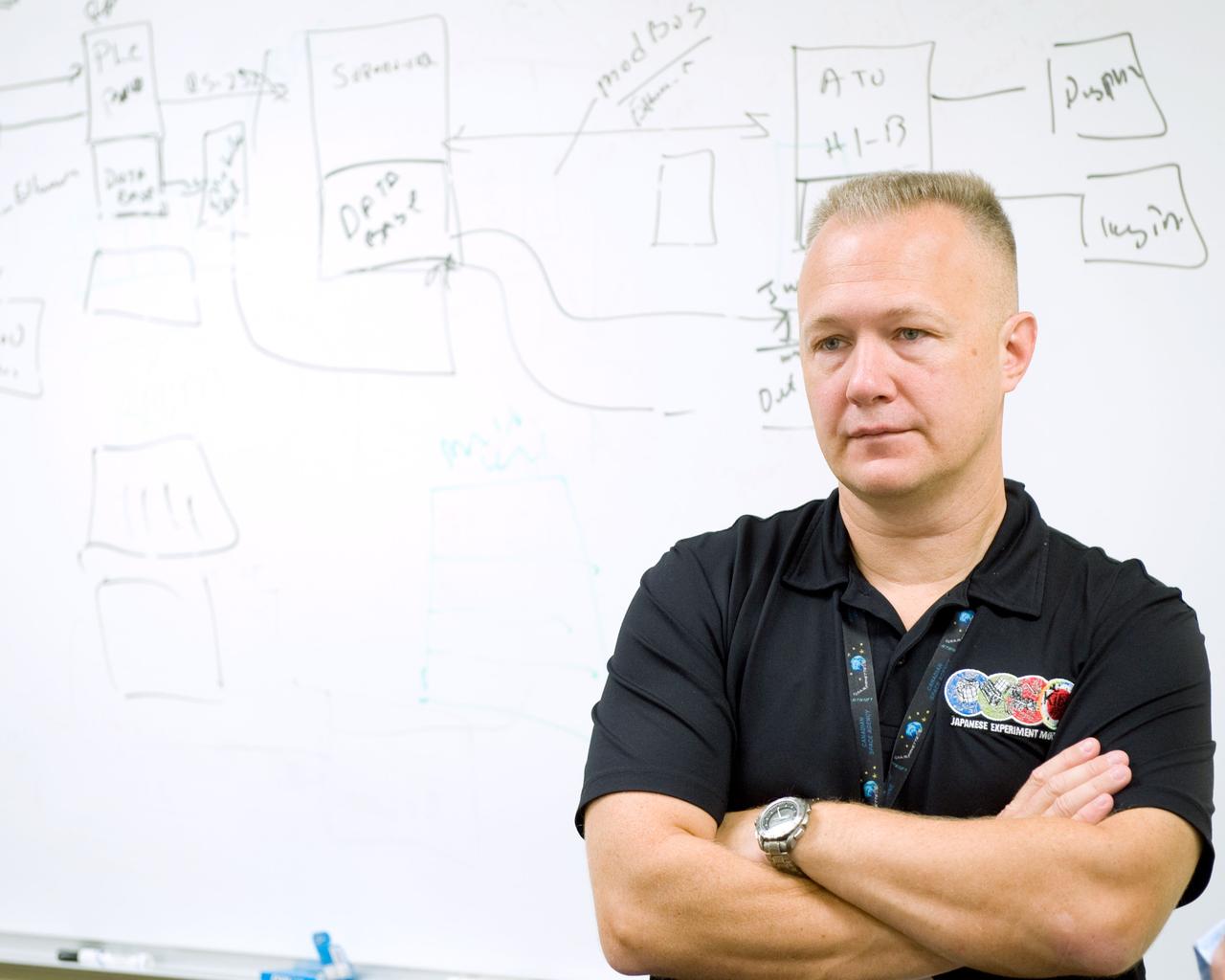
JSC2010-E-183223 (3 Nov. 2010) --- NASA astronaut Doug Hurley, STS-135 pilot, is pictured during a tools and repair kits training session in the Space Vehicle Mock-up Facility at NASA's Johnson Space Center. STS-135 is planned to be the final mission of the space shuttle program. Photo credit: NASA or National Aeronautics and Space Administration
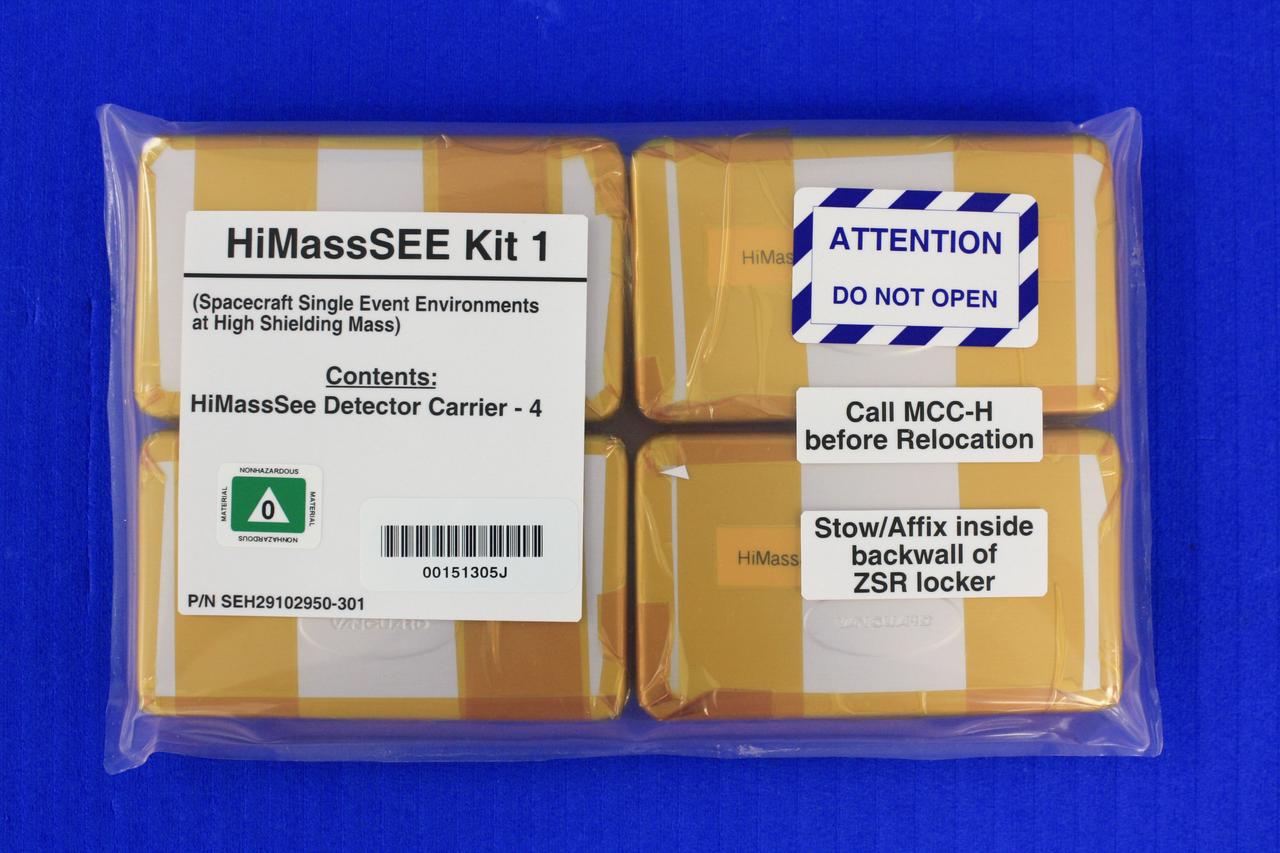
jsc2011e080236 (8/25/2011) --- A preflight view of Hi Shielding Mass Single Event Environment (HiMassSEE) Kit 1 within plastic bag. Spacecraft Single Event Environments at High Shielding Mass (HiMassSEE) measures space radiation interactions with spacecraft structure and shielding using several passive track detector technologies to provide a more accurate definition of International Space Station (ISS) payload accommodations, radiation transport model validation, and flight demonstration data on advanced microelectronics and chemical dosimeters.
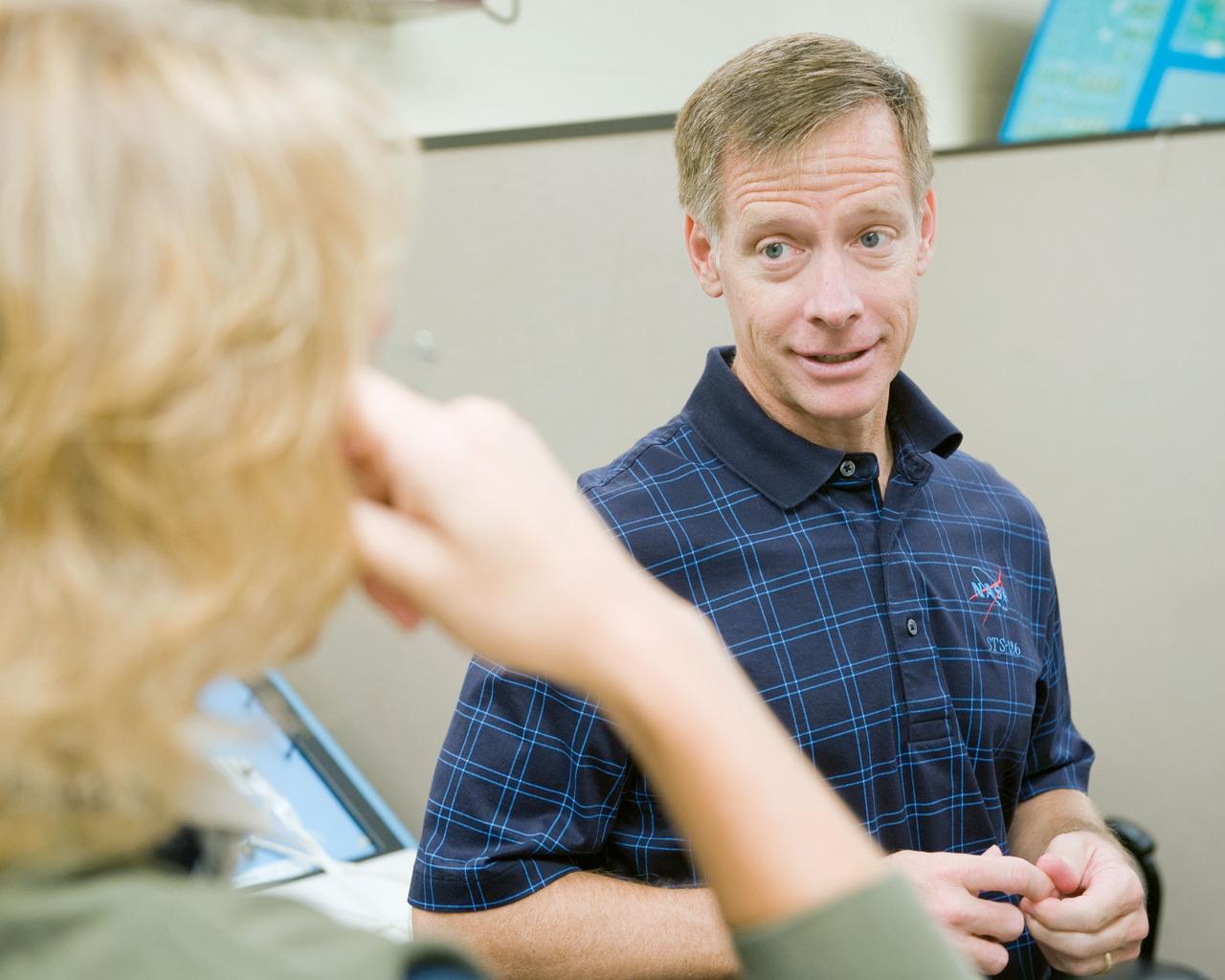
JSC2010-E-183222 (3 Nov. 2010) --- NASA astronaut Chris Ferguson, STS-135 commander, is pictured during a tools and repair kits training session in the Space Vehicle Mock-up Facility at NASA's Johnson Space Center. STS-135 is planned to be the final mission of the space shuttle program. Photo credit: NASA or National Aeronautics and Space Administration
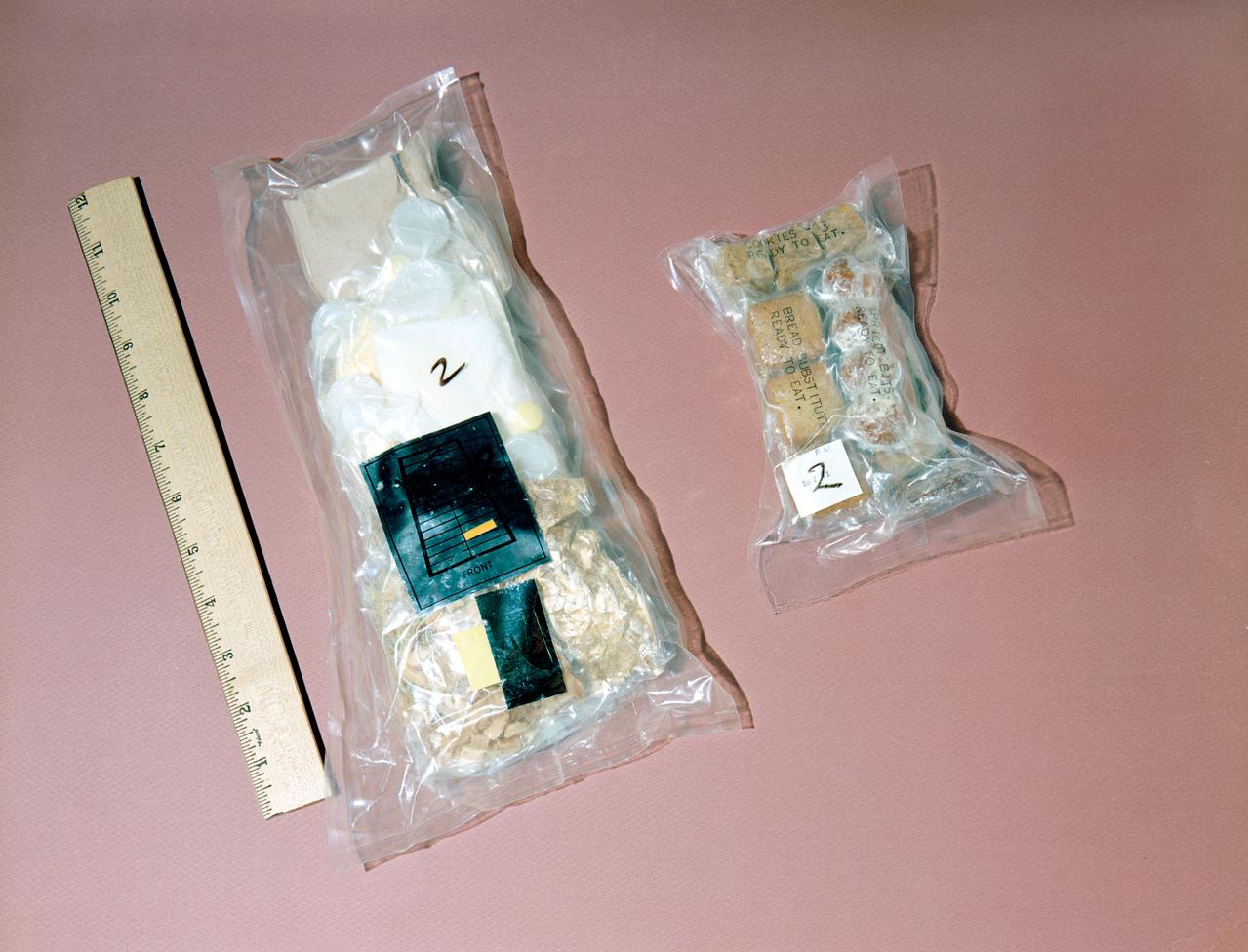
S62-08745 (1962) --- Group packets of ready to eat space food, with size being measured by a ruler, used by Mercury astronauts. Photo credit: NASA
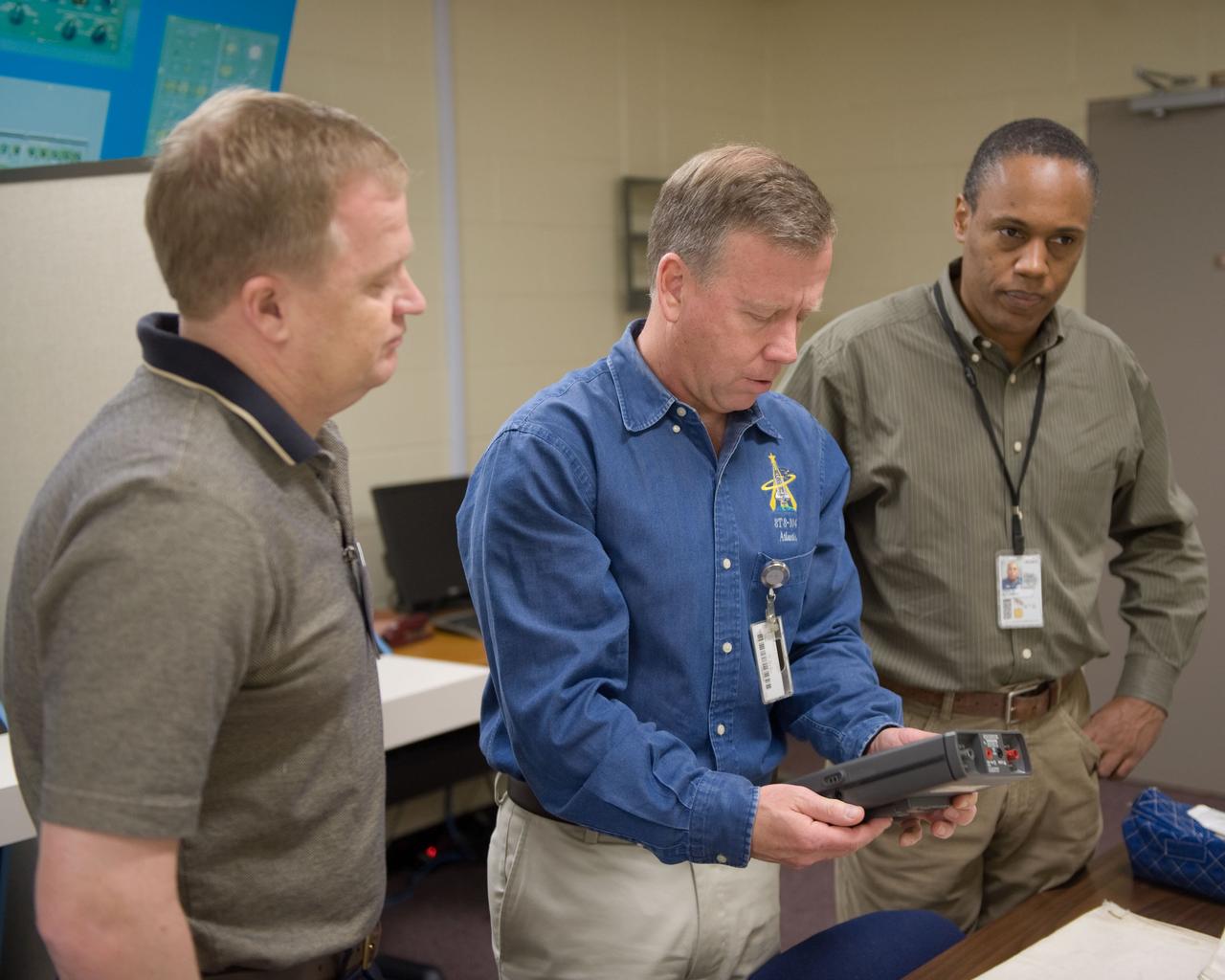
JSC2010-E-014267 (26 Jan. 2010) --- NASA astronauts Steve Lindsey (center), STS-133 commander; Eric Boe (left), pilot; and Alvin Drew, mission specialist, participate in an ISS tools and repair kits training session in the Space Vehicle Mock-up Facility at NASA's Johnson Space Center.
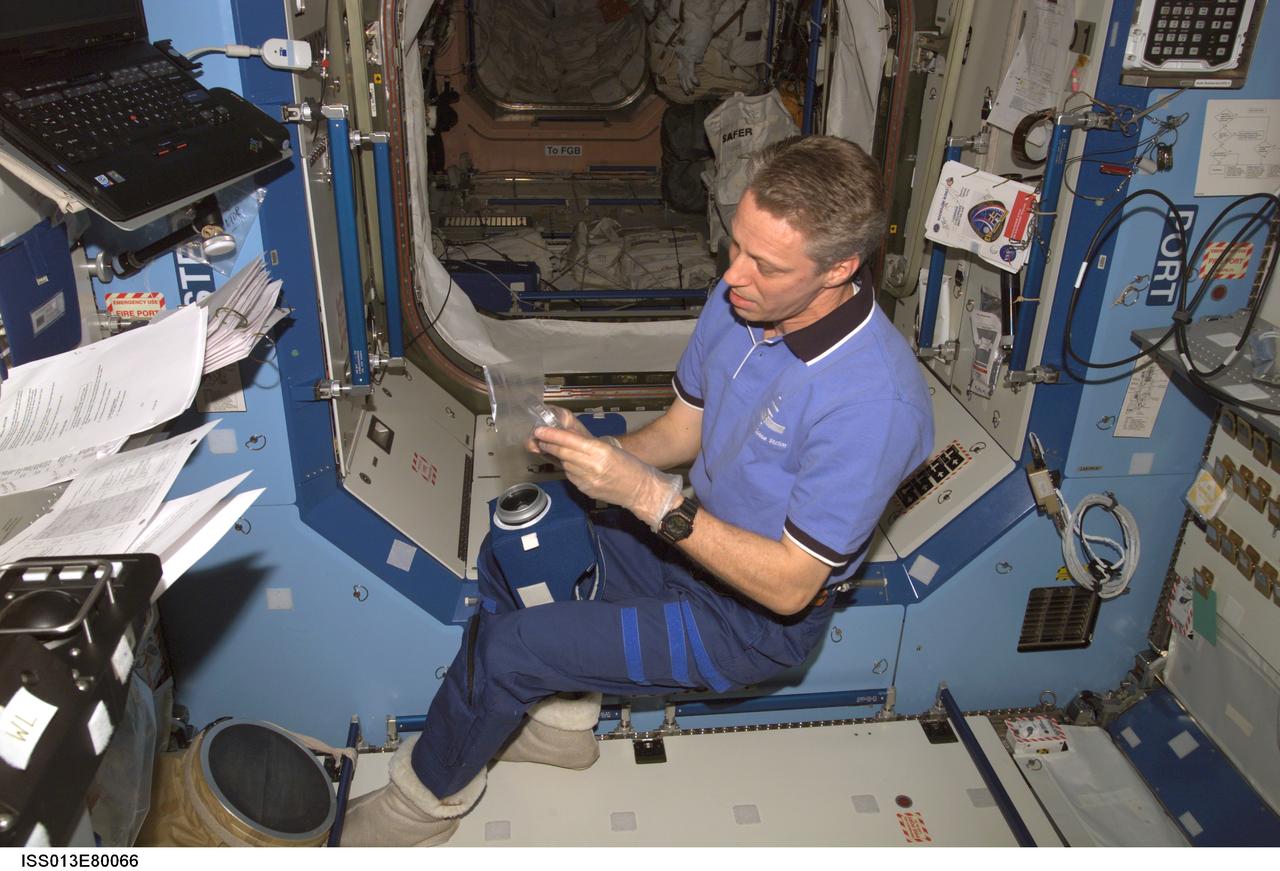
ISS013-E-80066 (10 Sept. 2006) --- European Space Agency (ESA) astronaut Thomas Reiter, Expedition 13 flight engineer, works with the surface, water and air biocharacterization (SWAB) air sampling device (ASD) filter kit in the Destiny laboratory of the International Space Station.
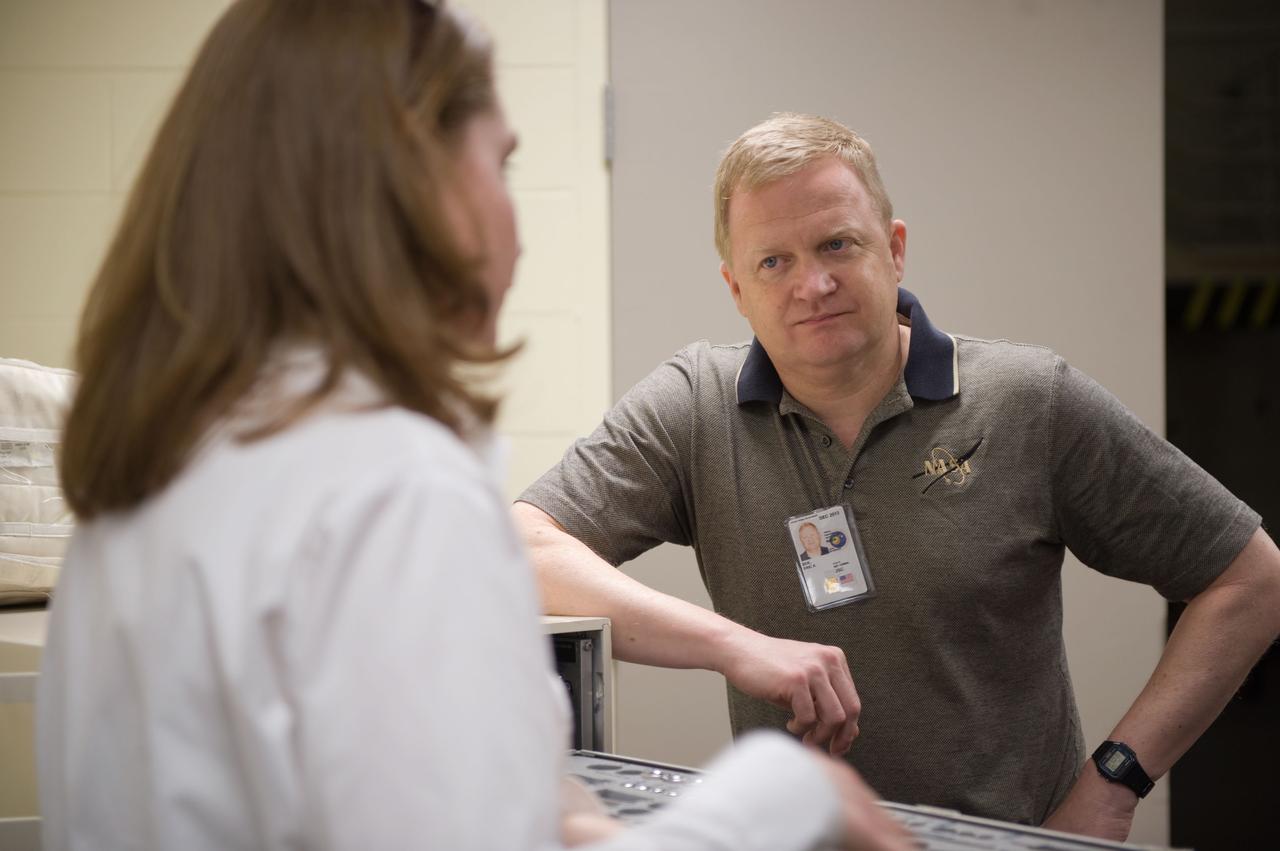
JSC2010-E-014264 (26 Jan. 2010) --- NASA astronaut Eric Boe, STS-133 pilot, participates in an ISS tools and repair kits training session in the Space Vehicle Mock-up Facility at NASA's Johnson Space Center. Instructor Ivy Apostolakopoulos assisted Boe.
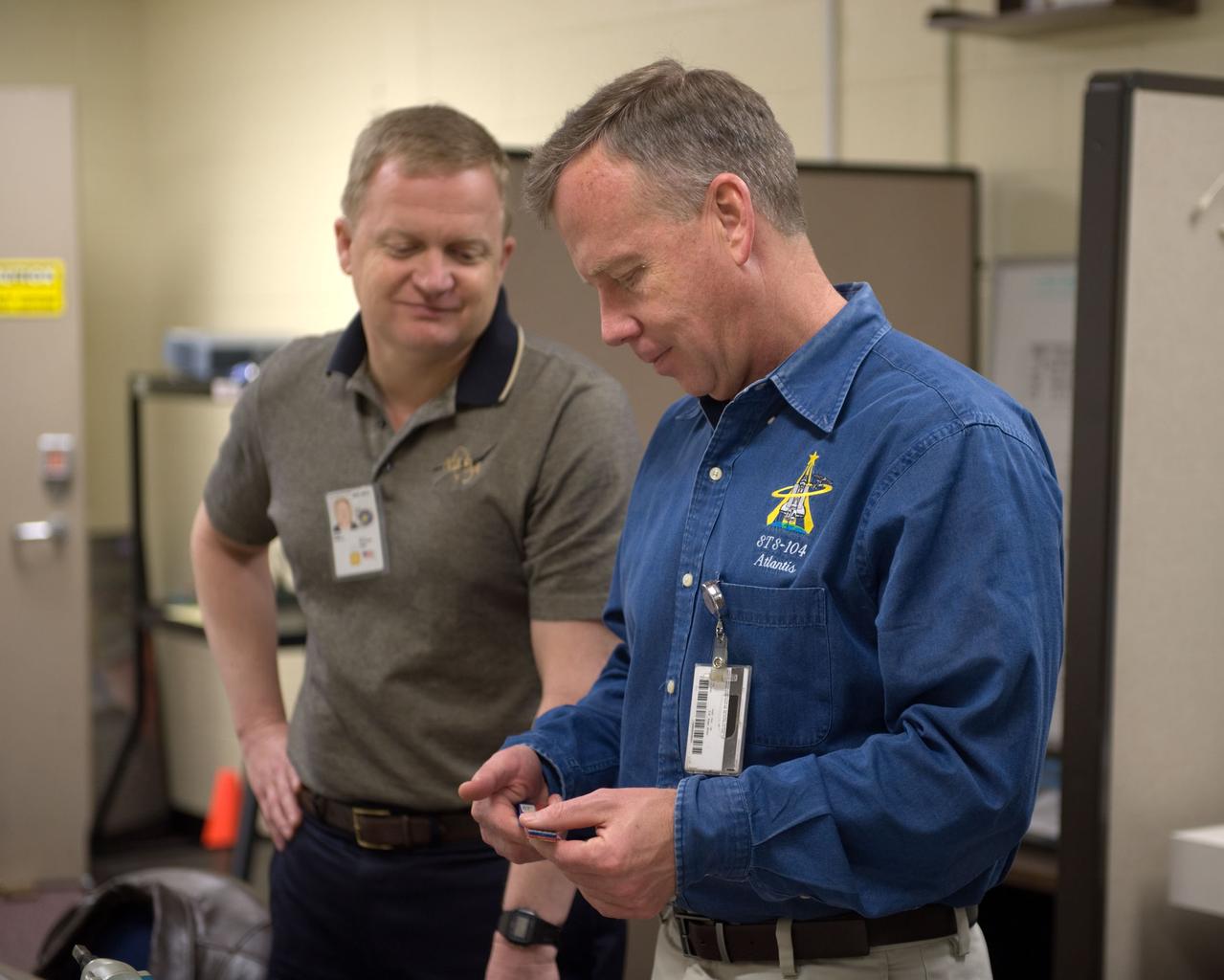
JSC2010-E-014266 (26 Jan. 2010) --- NASA astronauts Steve Lindsey (right), STS-133 commander; and Eric Boe, pilot, participate in an ISS tools and repair kits training session in the Space Vehicle Mock-up Facility at NASA's Johnson Space Center.
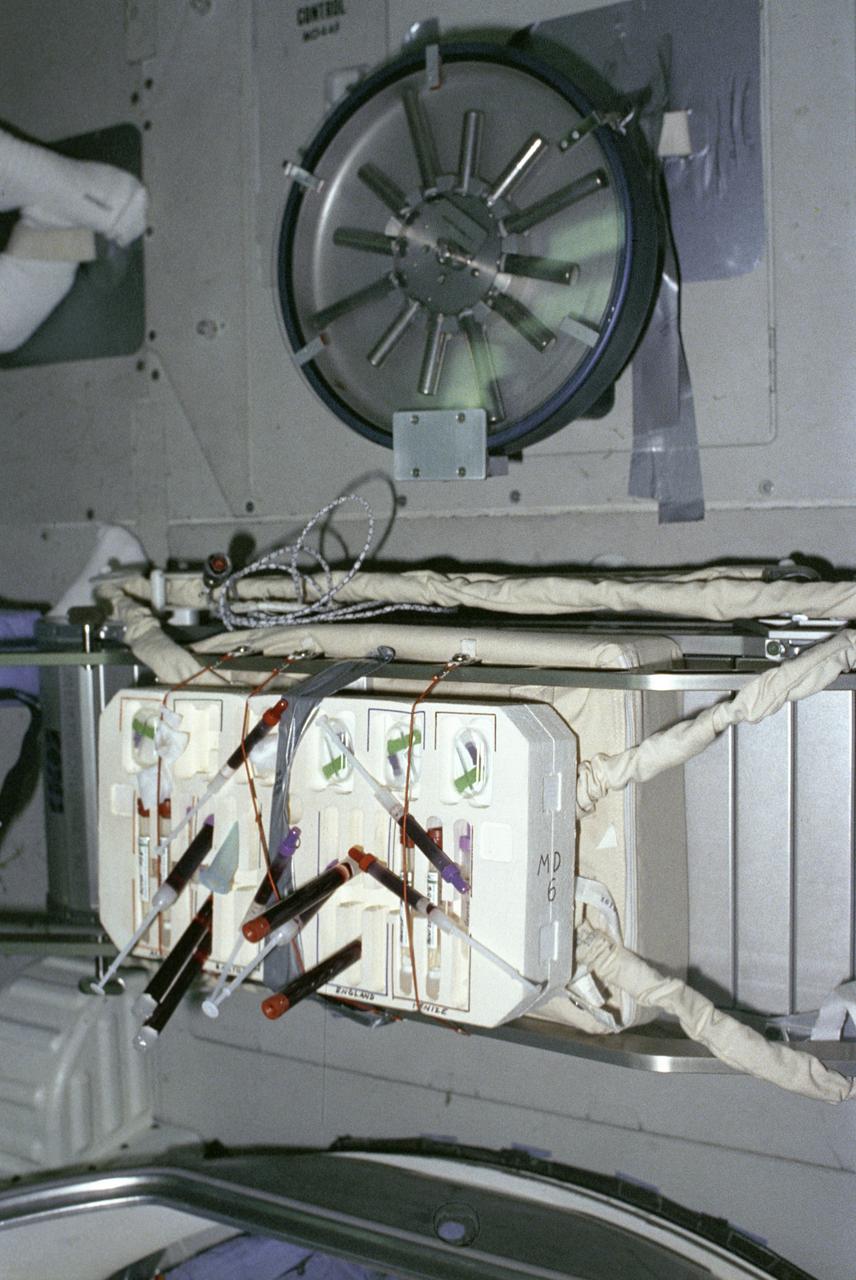
While instruments on the pallets in the payload bay observed the universe, biological experiments were performed in the middeck of the Shuttle Orbiter Challenger. Studying life processes in a microgravity environment can shed new light on the functioning of biological systems on Earth. These investigations can also help us understand how living organisms react to prolonged weightlessness. One such experiment was the vitamin D metabolites and bone demineralization experiment. This investigation measured the vitamin d metabolite levels of crew members to gain information on the cause of bone demineralization and mineral imbalance that occur during prolonged spaceflight as well as on Earth. Research into the biochemical nature of vitamin D has shown that the D-metabolites play a major role in regulating the body's calcium and phosphorus levels. One major function of the most biologically active vitamin D metabolite is to regulate the amount of calcium absorbed from the diet and taken out of bones. This investigation had two phases. The first was the developmental phase, which included extensive testing before flight, and the second, or final phase, involved the postflight analysis of the crew's blood samples. This photograph shows a blood draw test kit and centrifuge used for the experiment aboard the Spacelab-2. Marshall Space Flight Center had management responsibilities of all Spacelab missions.
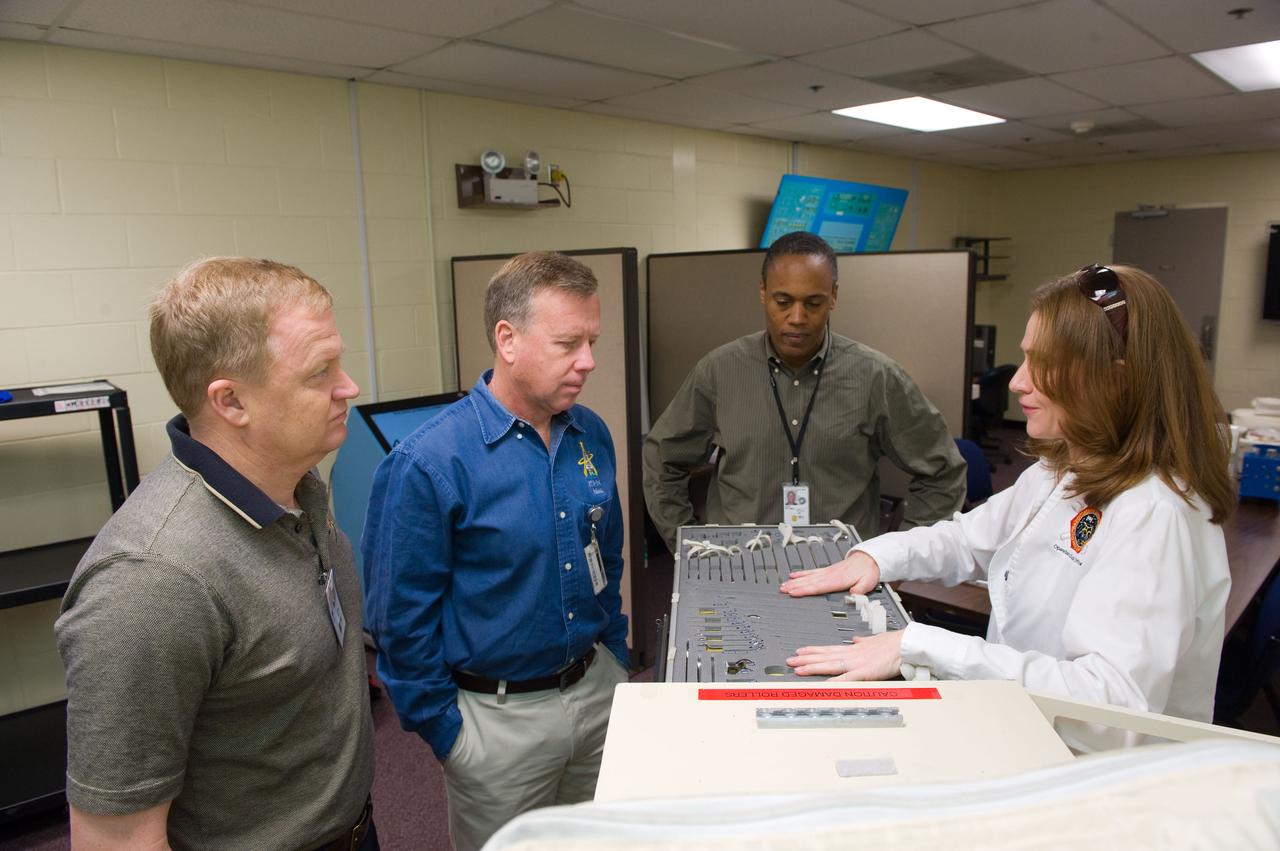
JSC2010-E-014262 (26 Jan. 2010) --- NASA astronauts Eric Boe (left), STS-133 pilot; Steve Lindsey, commander; and Alvin Drew, mission specialist, participate in an ISS tools and repair kits training session in the Space Vehicle Mock-up Facility at NASA's Johnson Space Center. Instructor Ivy Apostolakopoulos assisted the crew members.
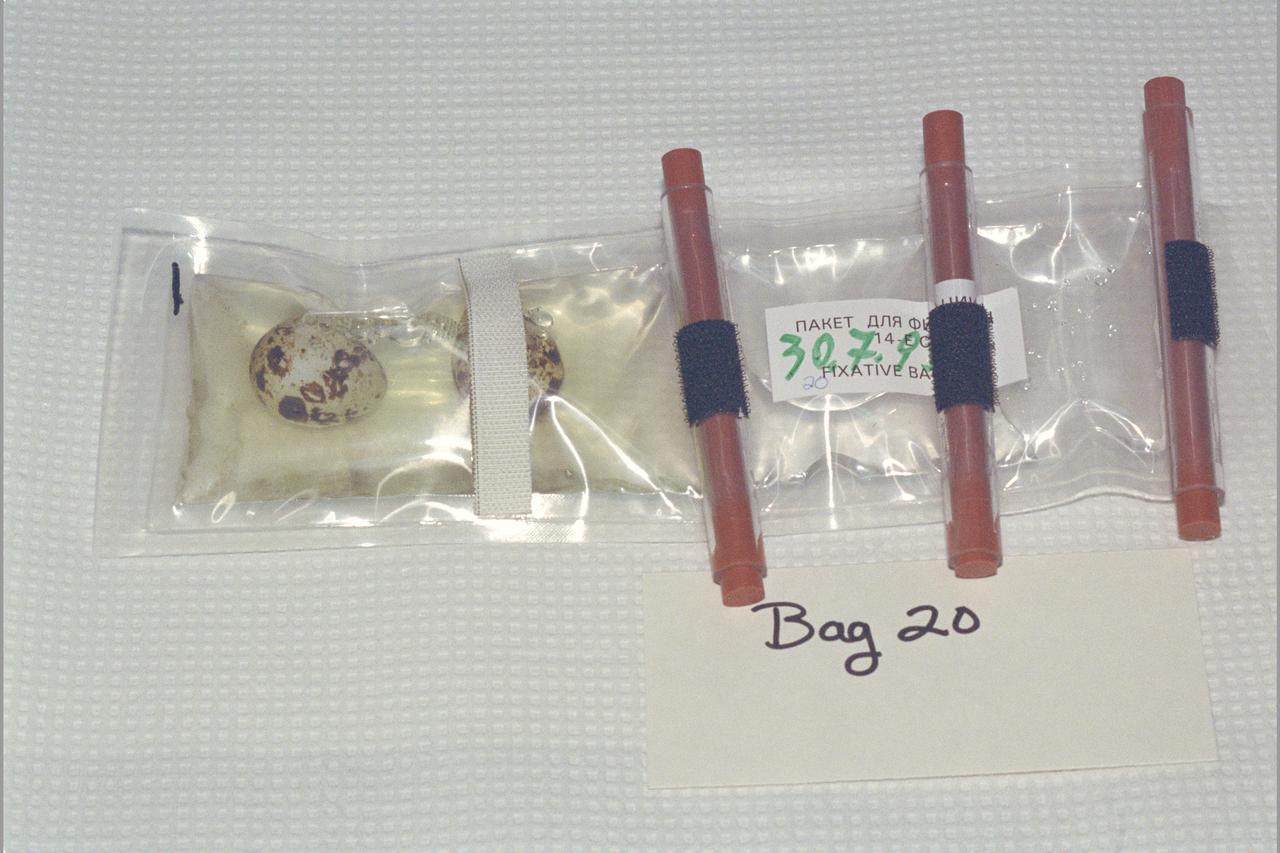
Space Shuttle STS-74 incubator fix kit; Quail Eggs from MIR Space Station
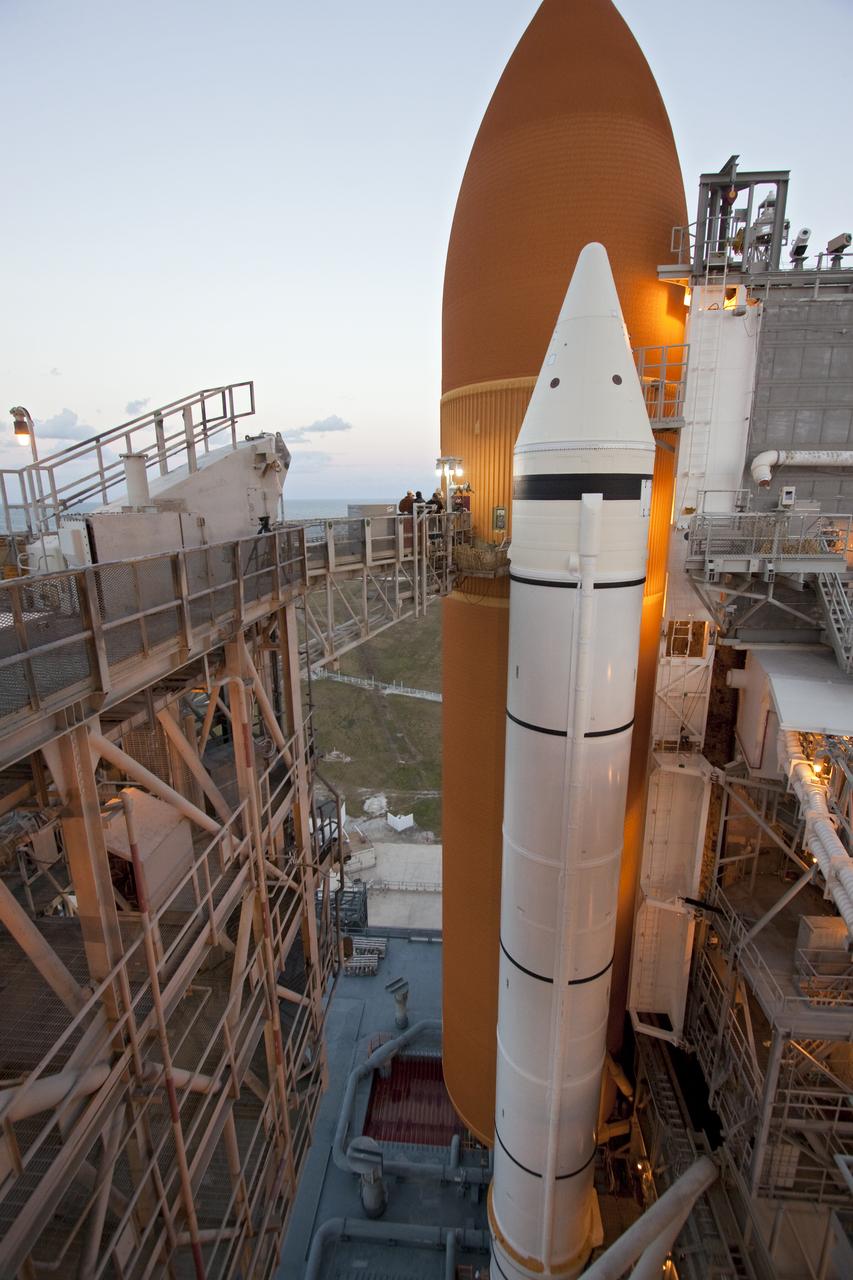
STS-133 DISCOVERY ET INNERTANK DOOR & ACCESS KIT INSTALLATION - ET-137
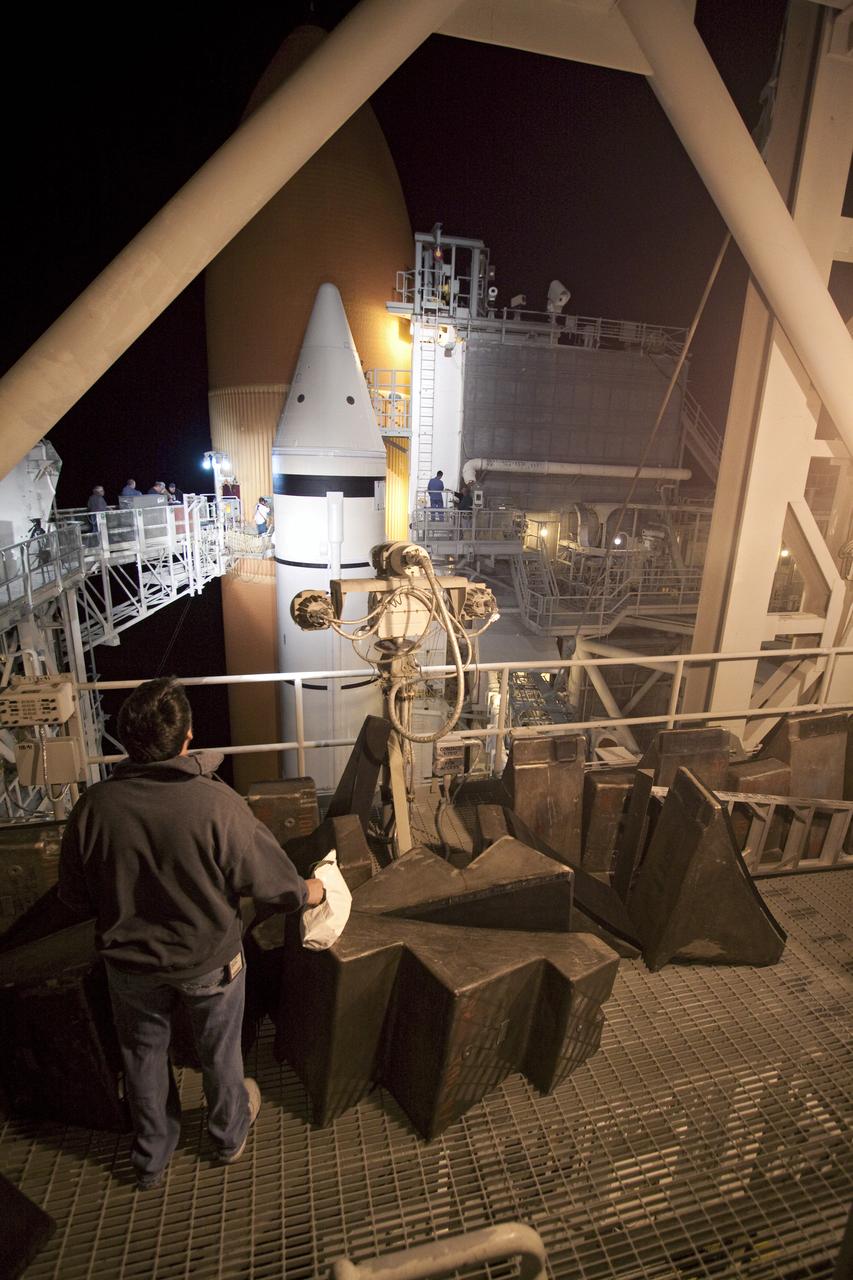
STS-133 DISCOVERY ET INNERTANK DOOR & ACCESS KIT INSTALLATION - ET-137
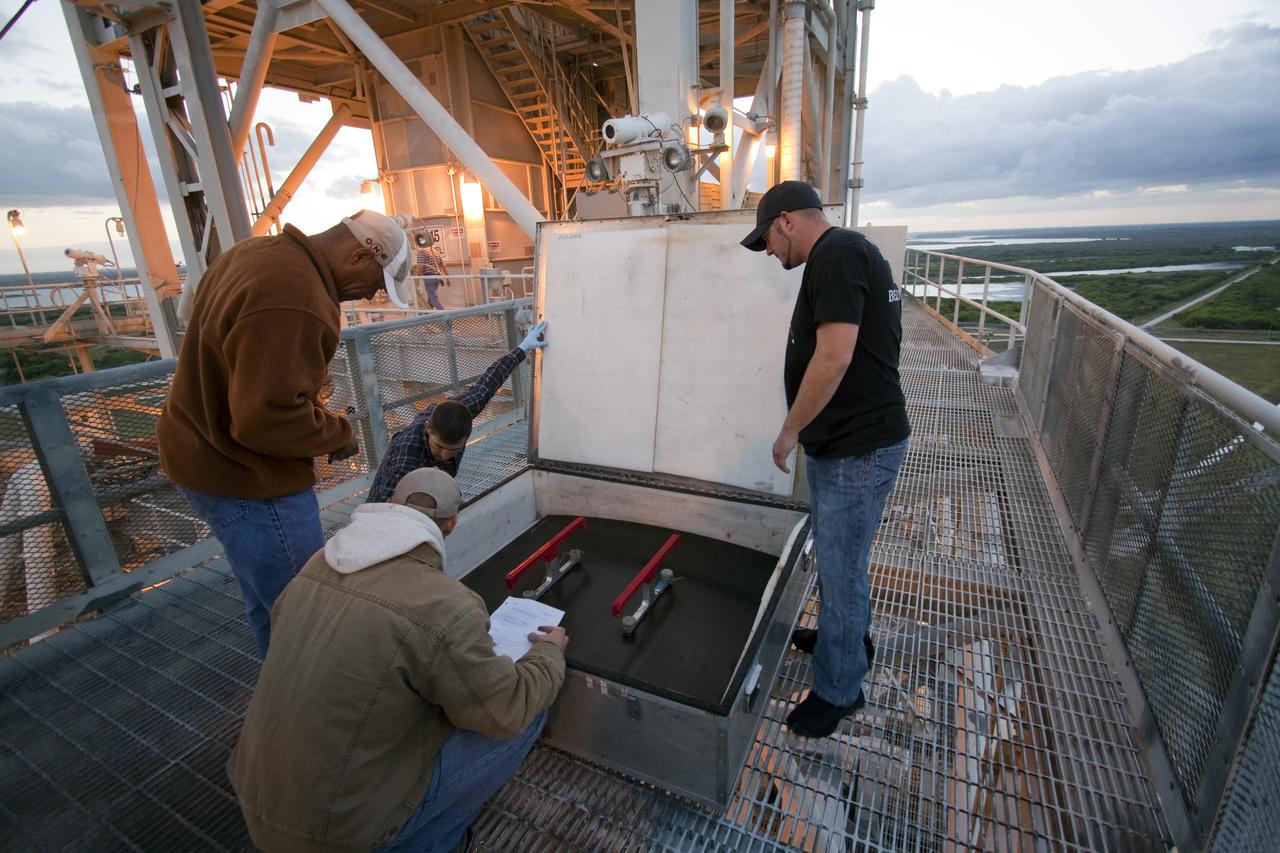
STS-133 DISCOVERY ET INNERTANK DOOR & ACCESS KIT INSTALLATION - ET-137
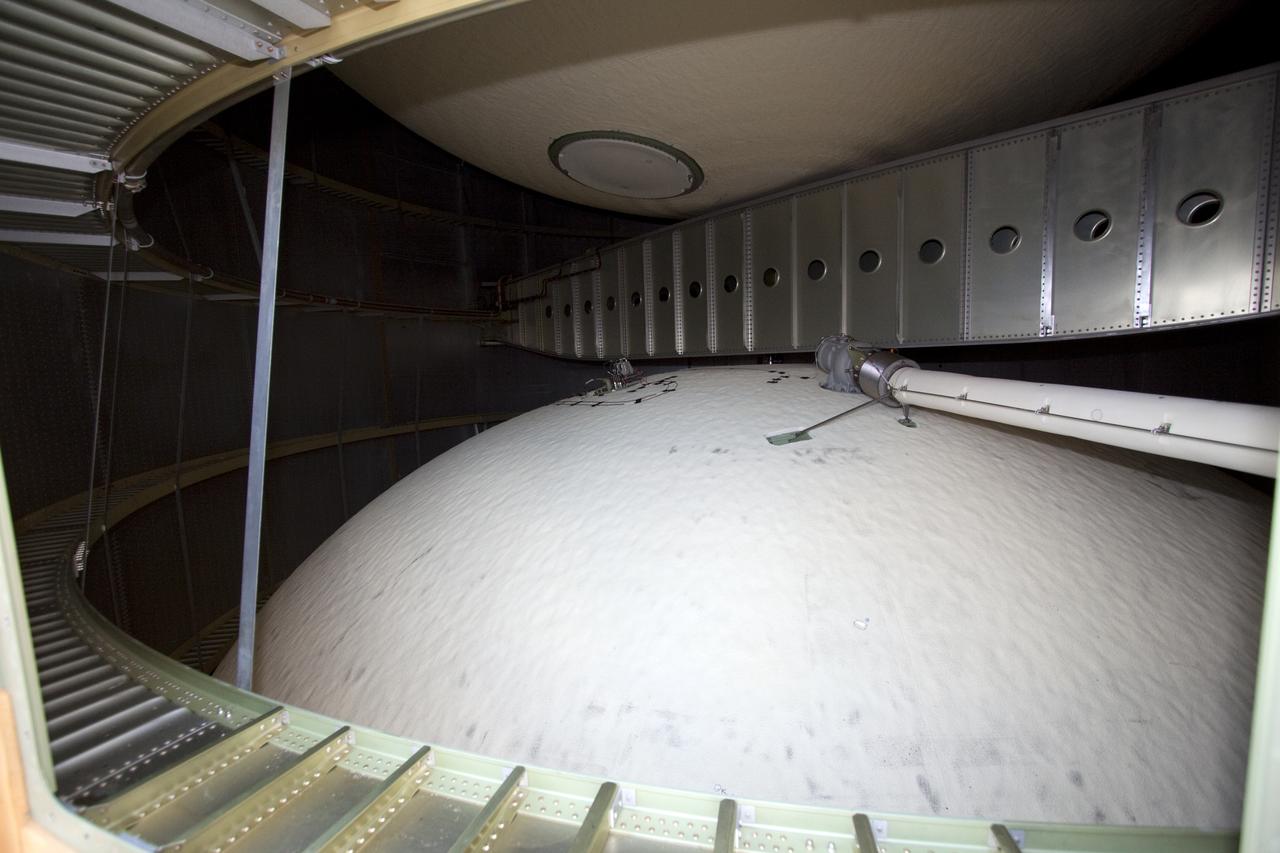
STS-133 DISCOVERY ET INNERTANK DOOR & ACCESS KIT INSTALLATION - ET-137
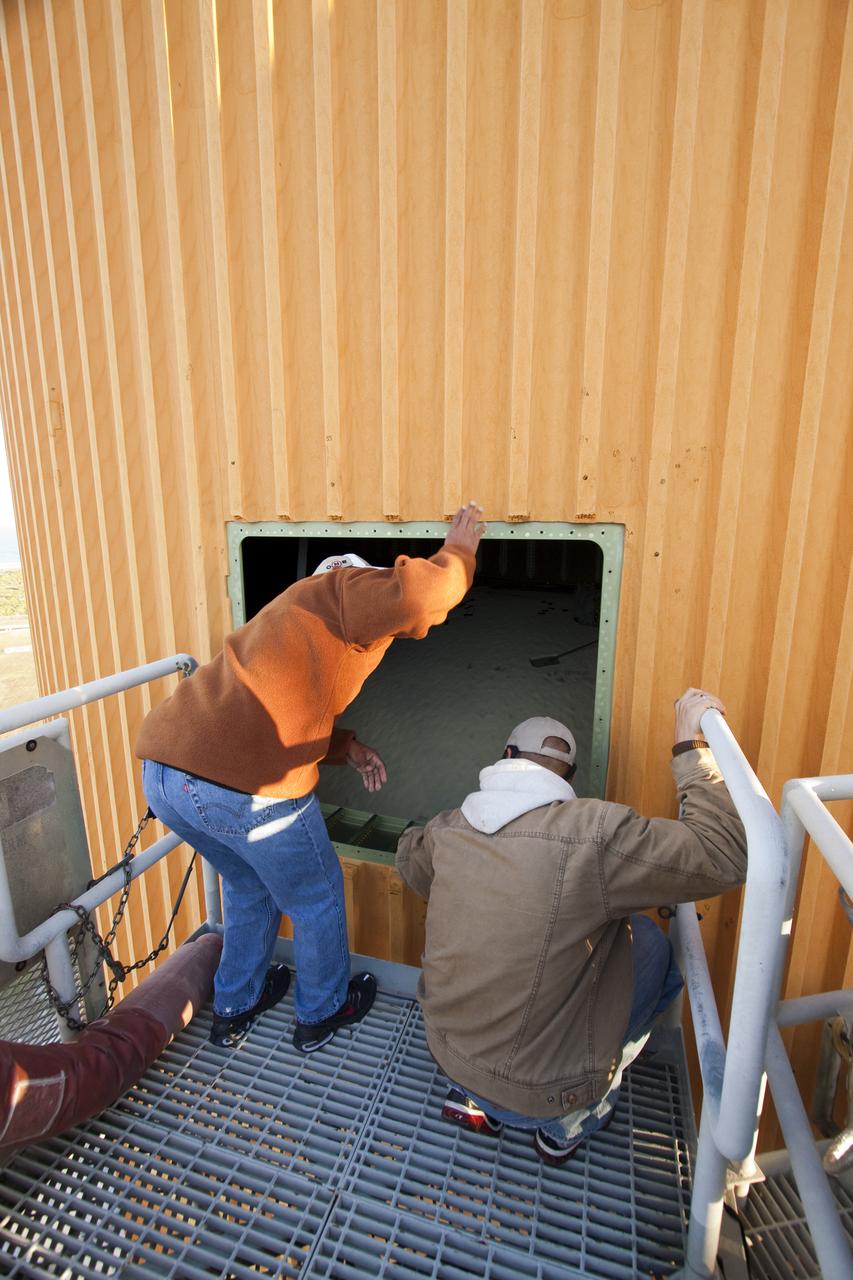
STS-133 DISCOVERY ET INNERTANK DOOR & ACCESS KIT INSTALLATION - ET-137
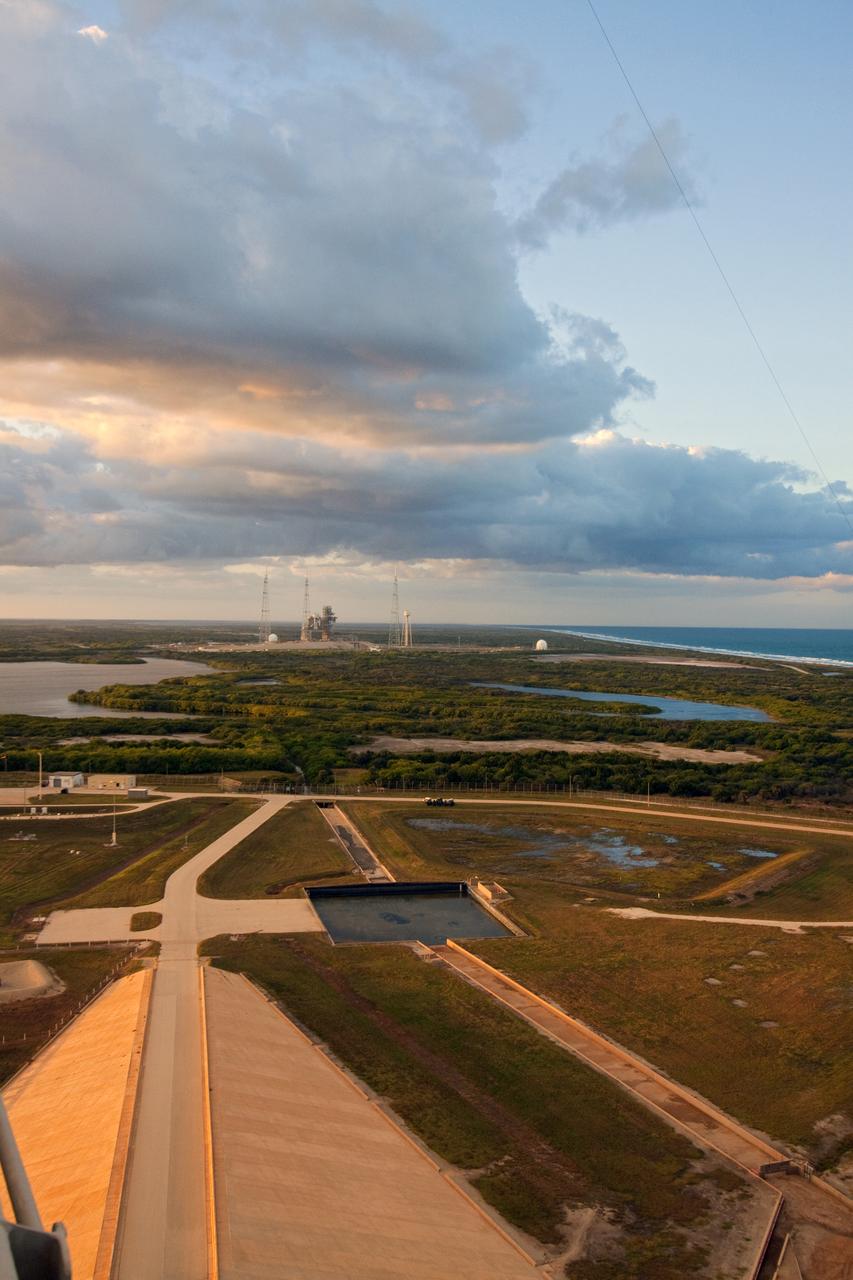
STS-133 DISCOVERY ET INNERTANK DOOR & ACCESS KIT INSTALLATION - ET-137
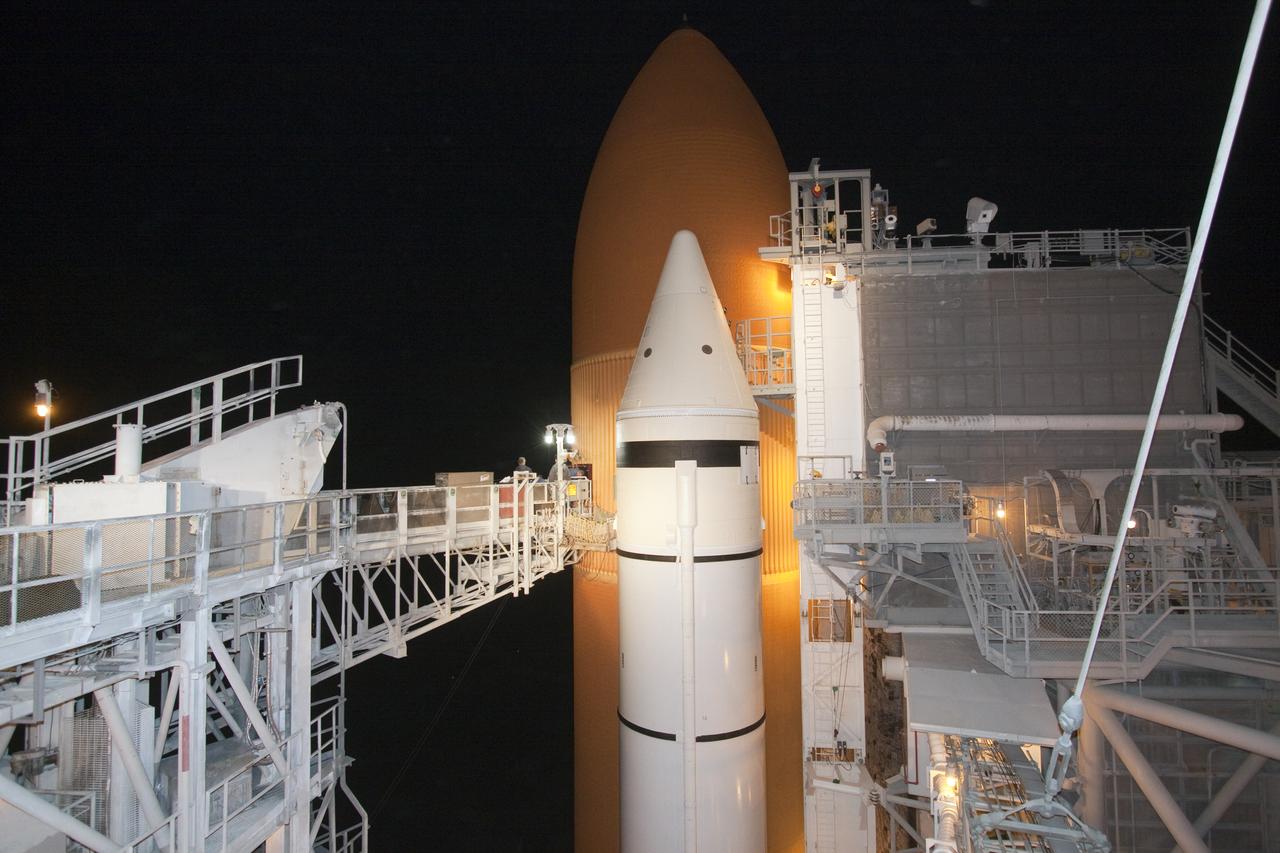
STS-133 DISCOVERY ET INNERTANK DOOR & ACCESS KIT INSTALLATION - ET-137
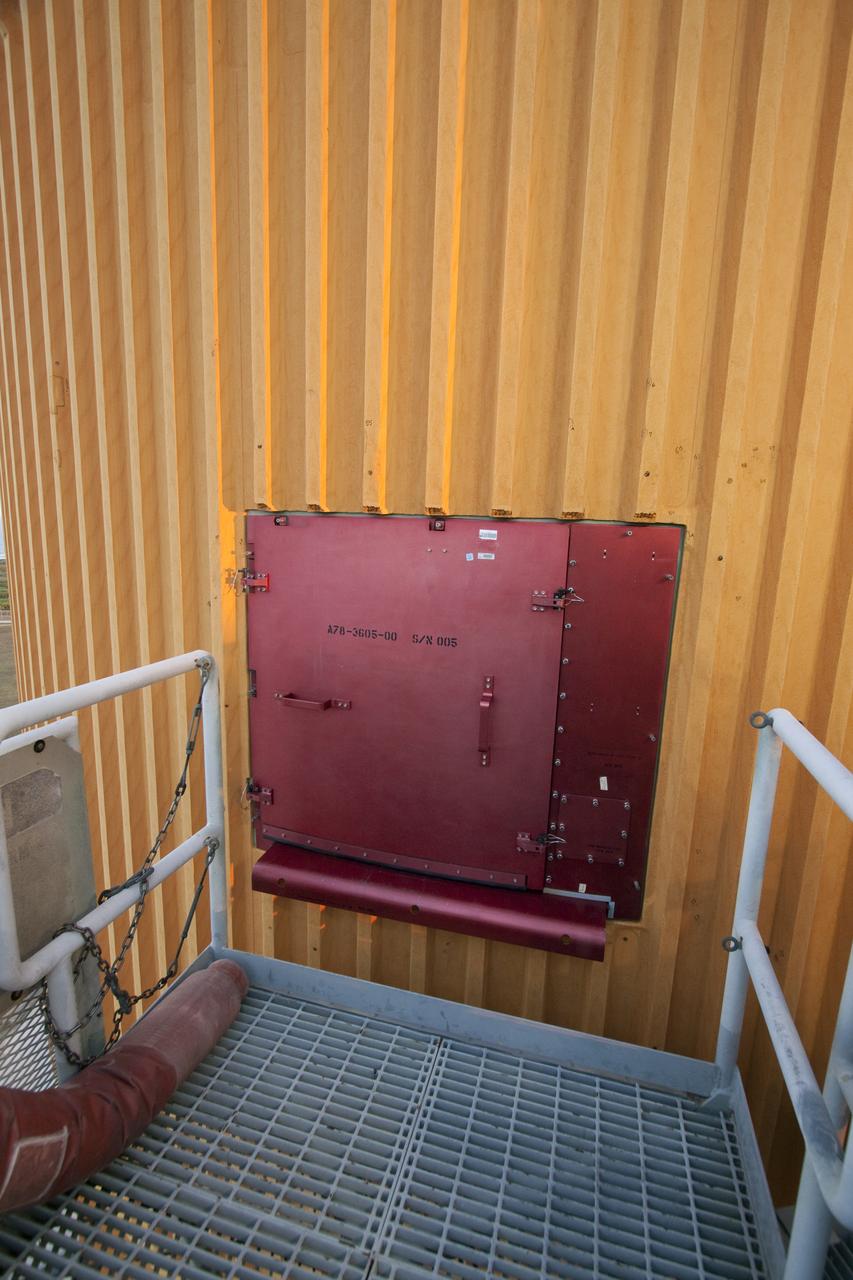
STS-133 DISCOVERY ET INNERTANK DOOR & ACCESS KIT INSTALLATION - ET-137
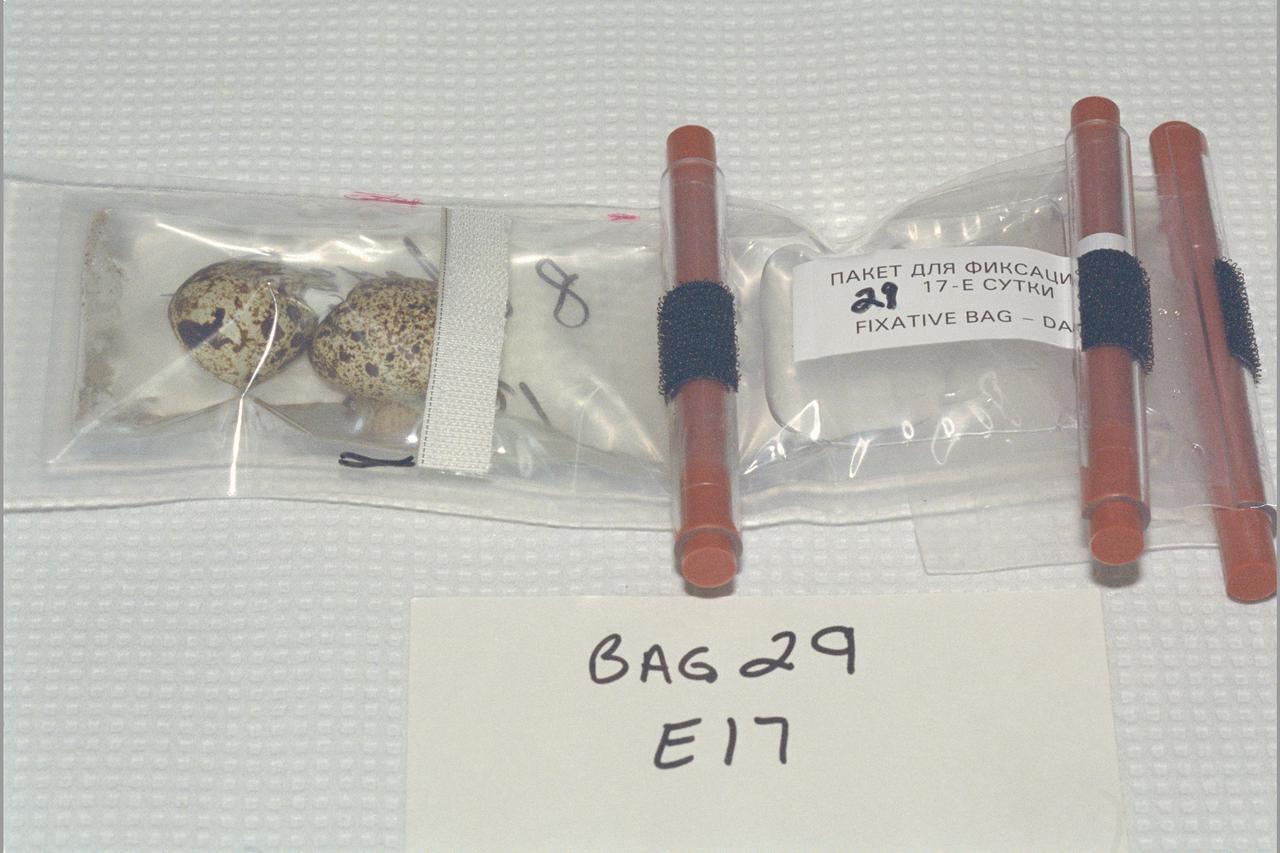
Space Shuttle STS-74 incubator fix kit; Quail Eggs from MIR Space Station
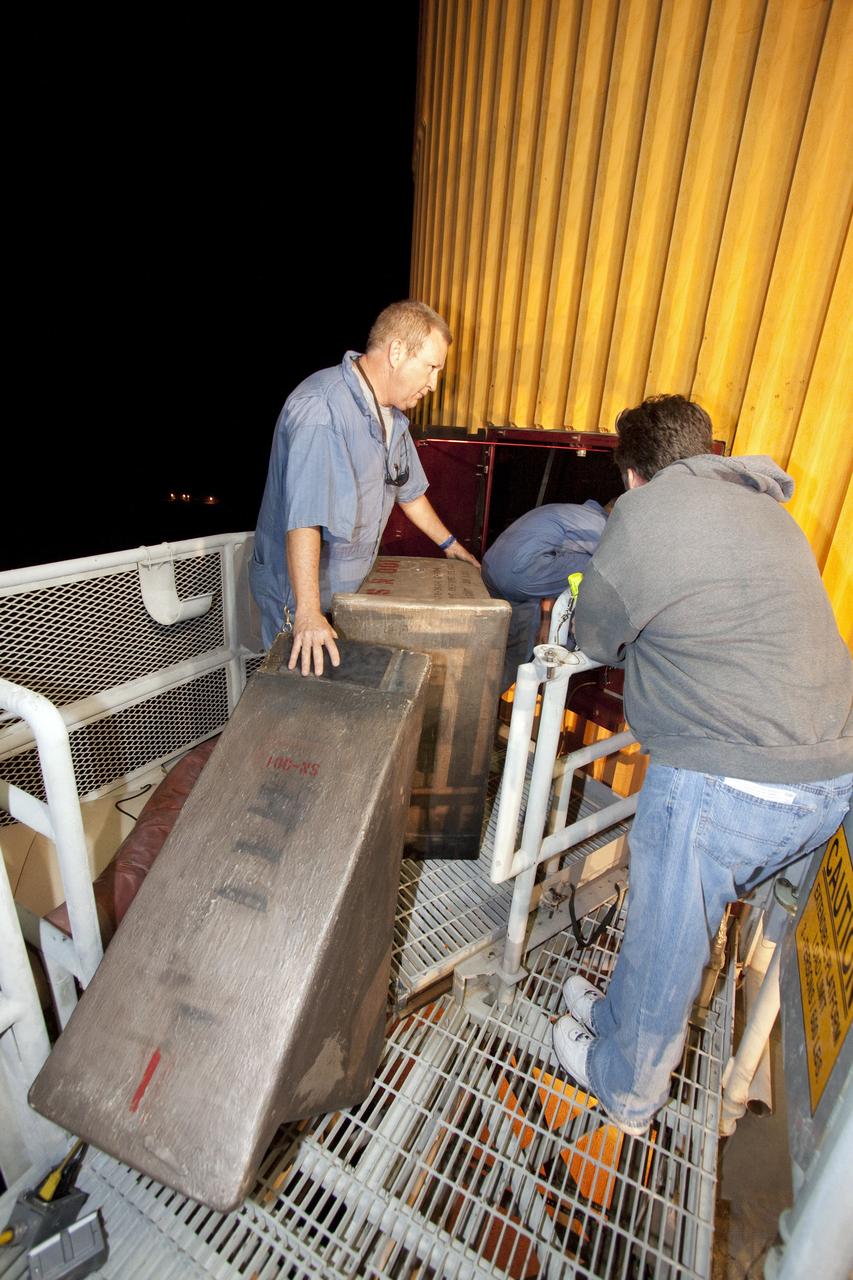
STS-133 DISCOVERY ET INNERTANK DOOR & ACCESS KIT INSTALLATION - ET-137
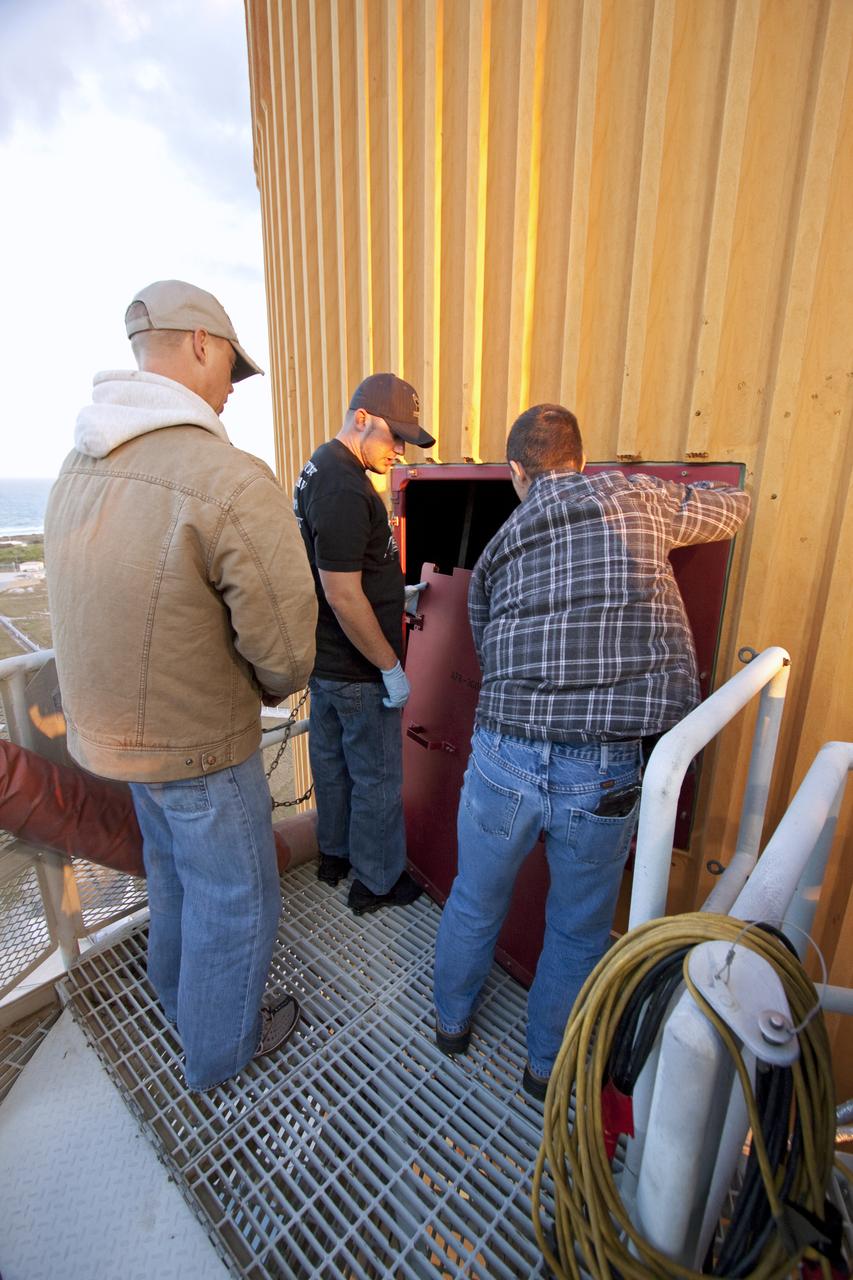
STS-133 DISCOVERY ET INNERTANK DOOR & ACCESS KIT INSTALLATION - ET-137
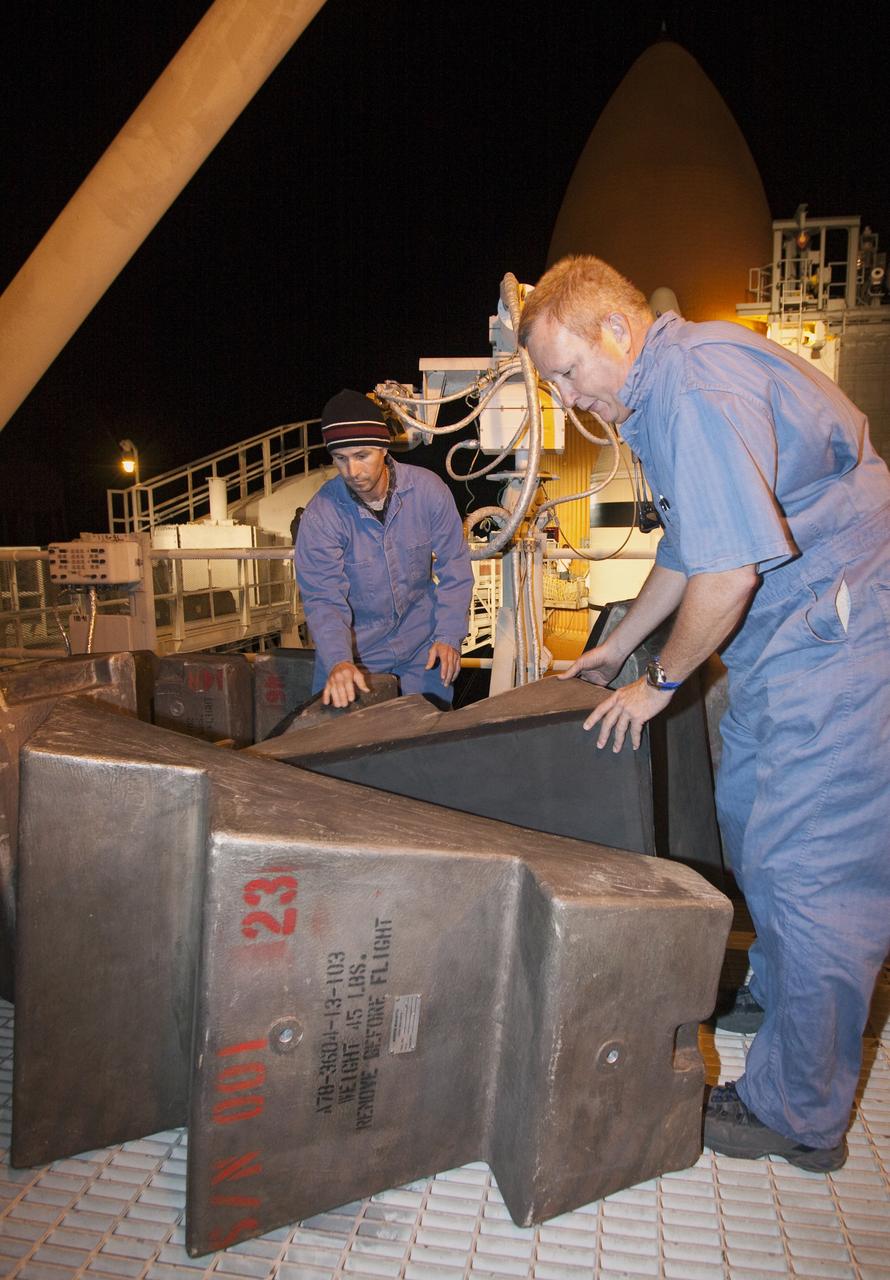
STS-133 DISCOVERY ET INNERTANK DOOR & ACCESS KIT INSTALLATION - ET-137
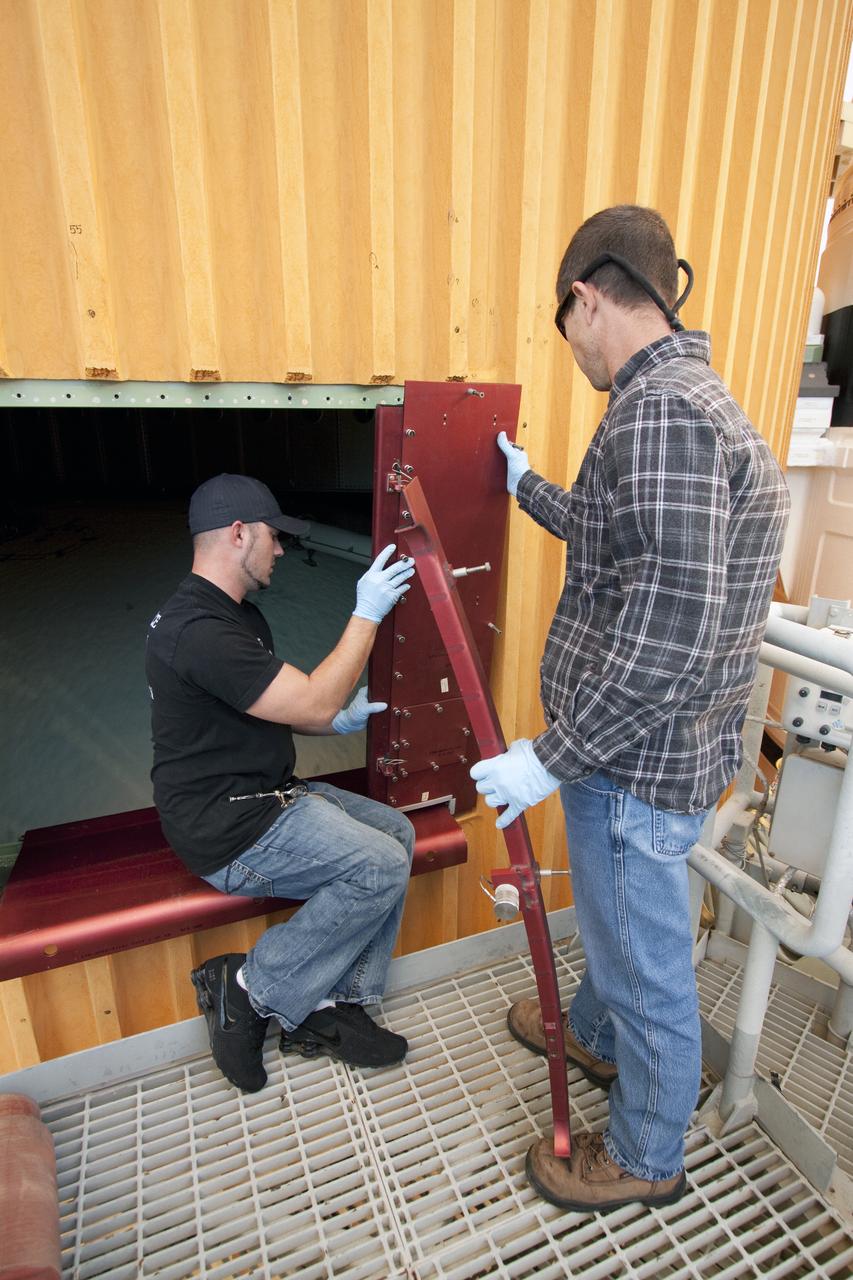
STS-133 DISCOVERY ET INNERTANK DOOR & ACCESS KIT INSTALLATION - ET-137
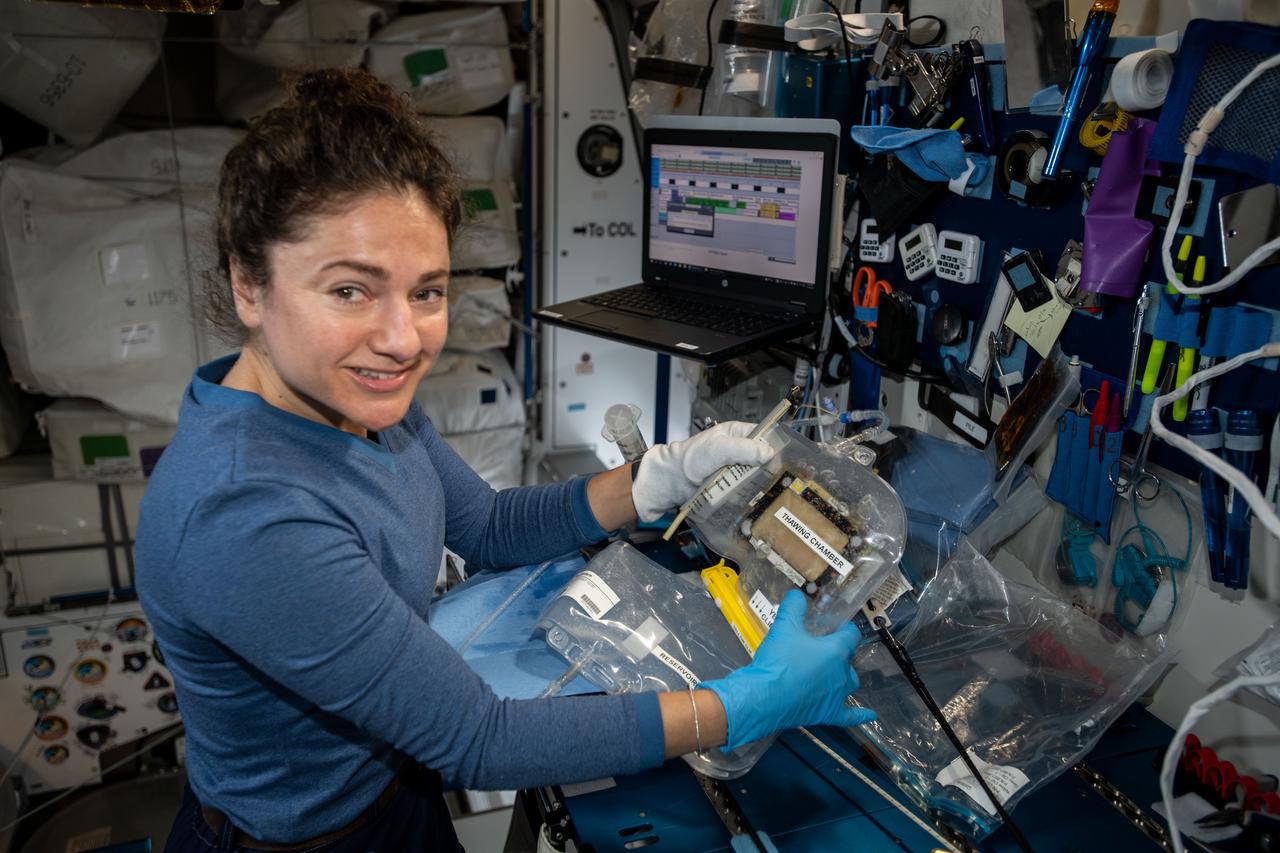
iss062e039026 (Feb. 21, 2020) --- NASA astronaut and Expedition 62 Flight Engineer Jessica Meir works with research hardware to support the OsteoOmics-02 bone investigation. The experiment is helping doctors to compare bone cells in space with samples on Earth that are levitated magnetically. Observations from the study could provide deeper insights into bone ailments on Earth, including osteoporosis.
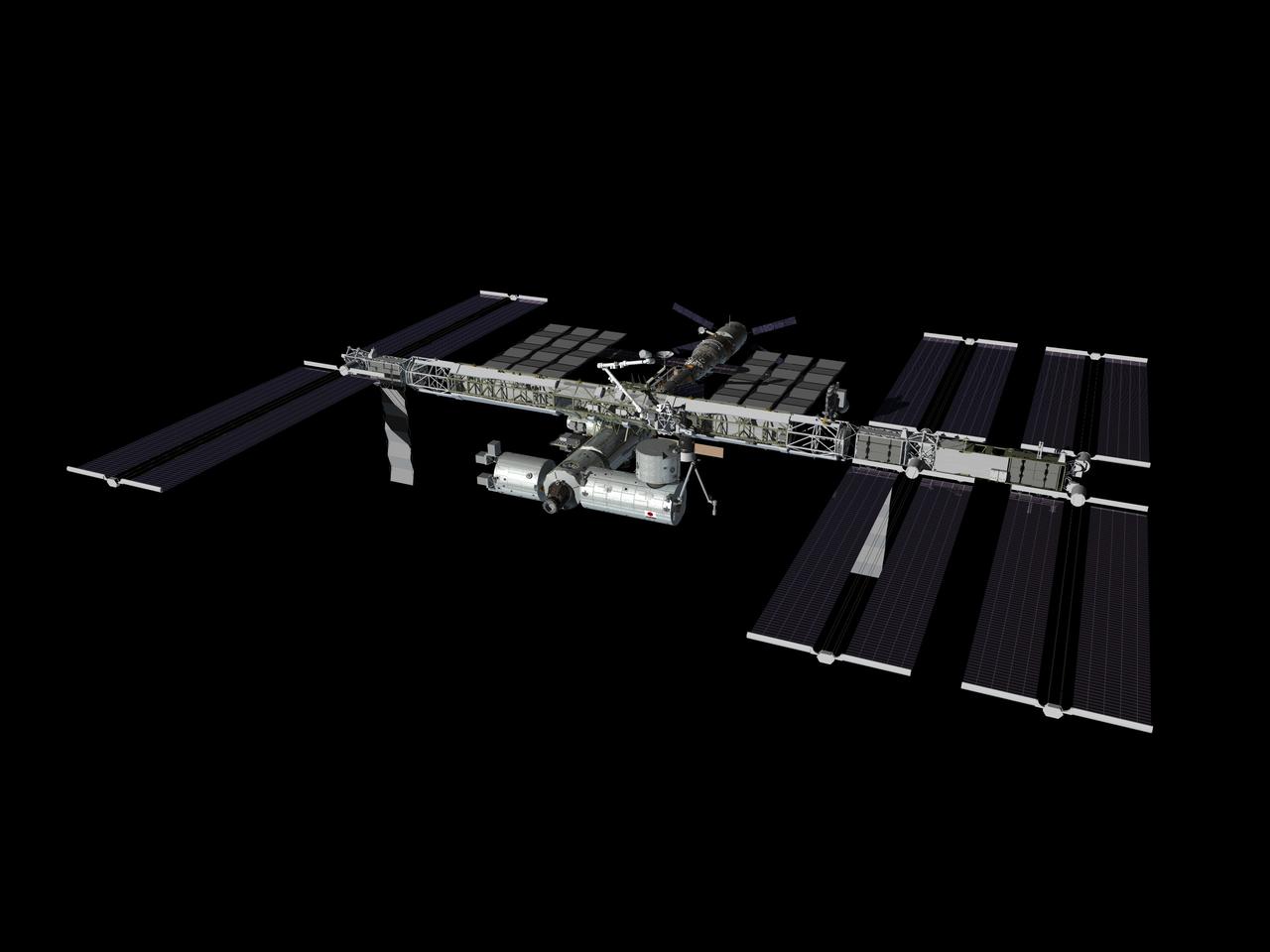
JSC2008-E-038662 (June 2008) --- Computer-generated artist's rendering of the International Space Station after flight STS-124/1J in June 2008. Kibo Japanese Experiment Module Pressurized Module (JEM-PM) and Japanese Remote Manipulator System (JEM-RMS) are installed. The Japanese Logistics Module - Pressurized Section (JLP), which was installed in a temporary location on the Harmony node during STS-123, is moved onto the JEM Pressurized Module. The STS-124 mission is the second of three flights that will launch components to complete the Kibo laboratory.
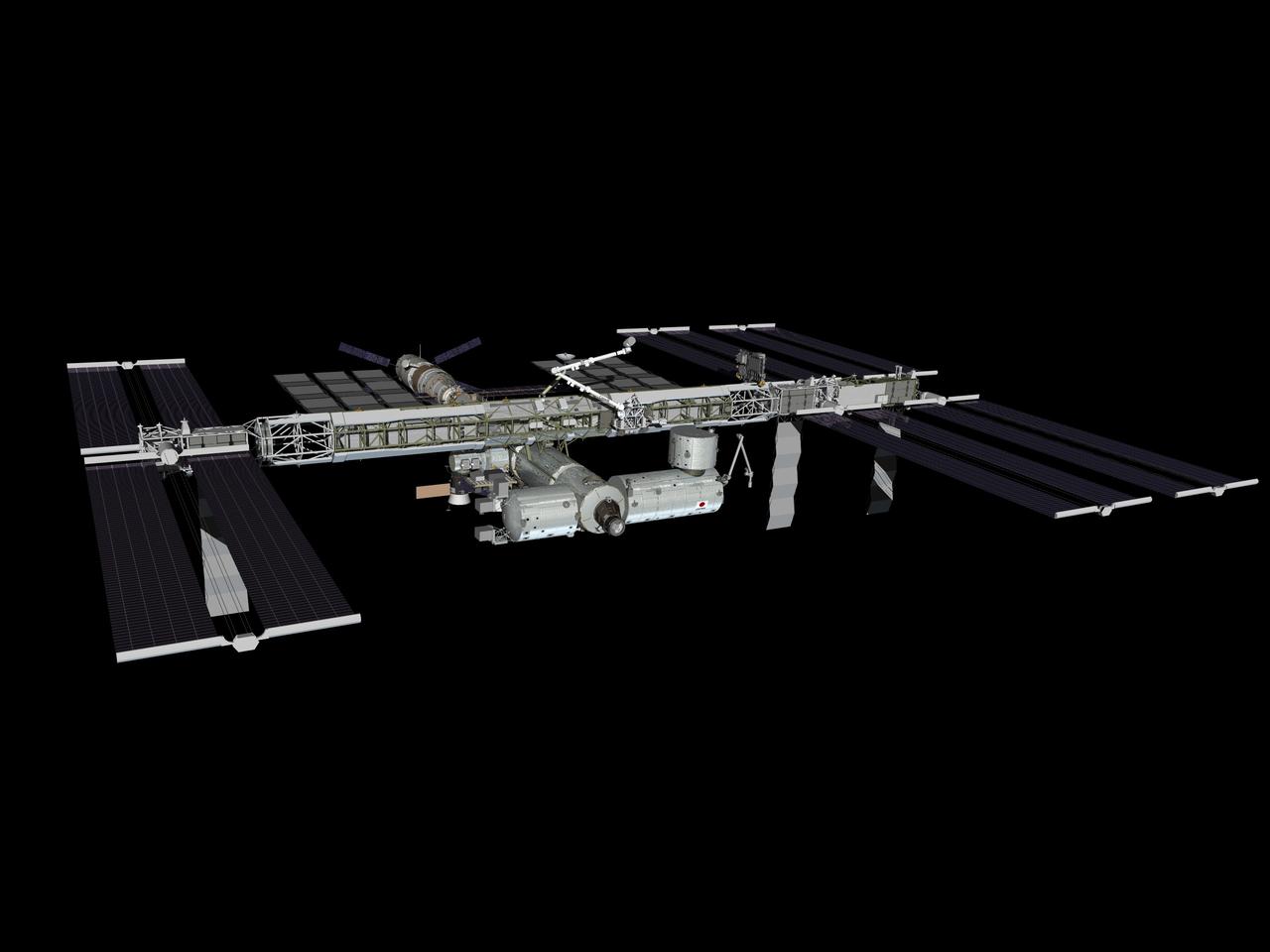
JSC2008-E-038663 (June 2008) --- Computer-generated artist's rendering of the International Space Station after flight STS-124/1J in June 2008. Kibo Japanese Experiment Module Pressurized Module (JEM-PM) and Japanese Remote Manipulator System (JEM-RMS) are installed. The Japanese Logistics Module - Pressurized Section (JLP), which was installed in a temporary location on the Harmony node during STS-123, is moved onto the JEM Pressurized Module. The STS-124 mission is the second of three flights that will launch components to complete the Kibo laboratory.
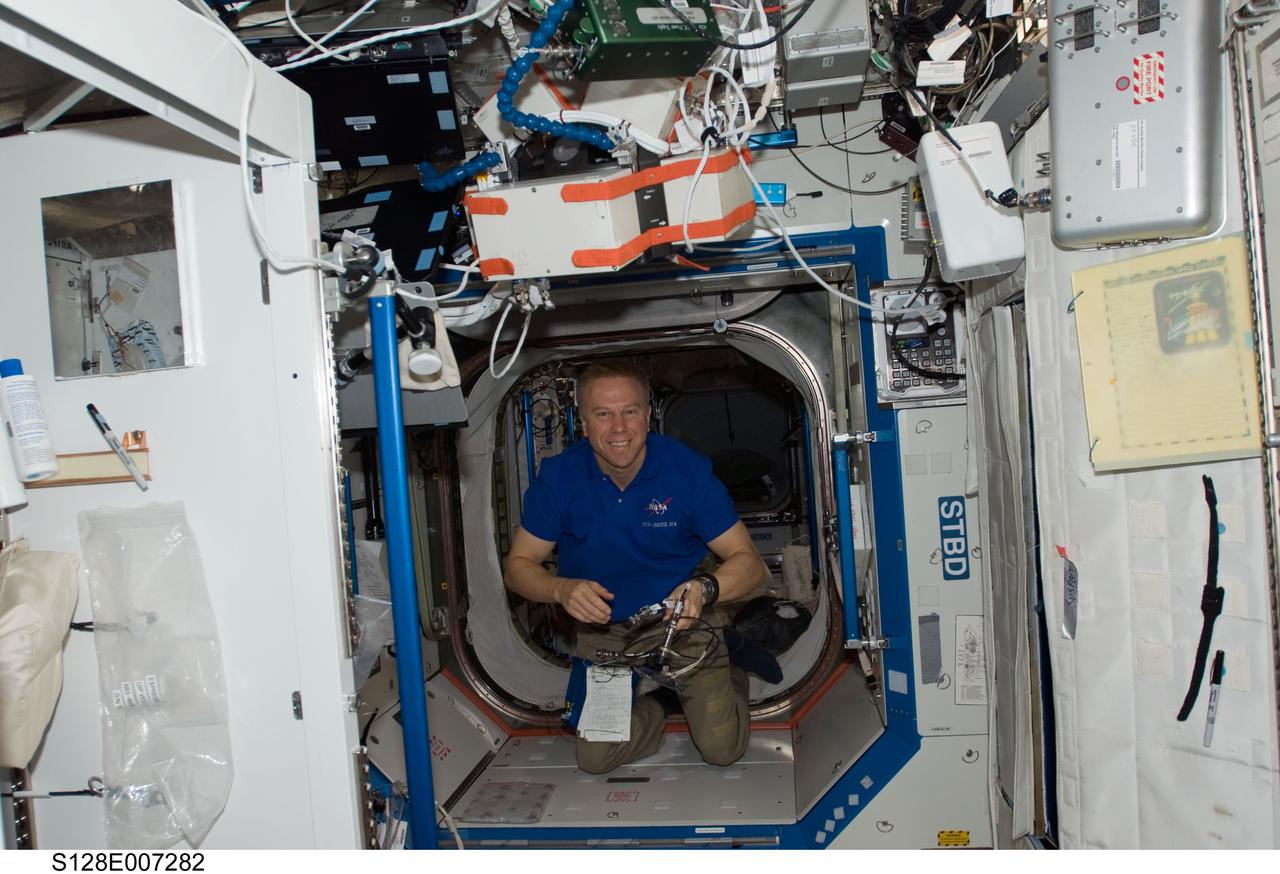
S128-E-007282 (4 Sept. 2009) --- Onboard the International Space Station since July, astronaut Tim Kopra is pictured on the orbital outpost a little less than a week before his scheduled return to Earth. Earlier this week, Kopra changed roles from Expedition 20 flight engineer to STS-128 mission specialist. Kopra came up to the station with the STS-127 crew and participated in a spacewalk on July 18. He will return to Earth aboard the Discovery on a scheduled Sept. 10 landing.
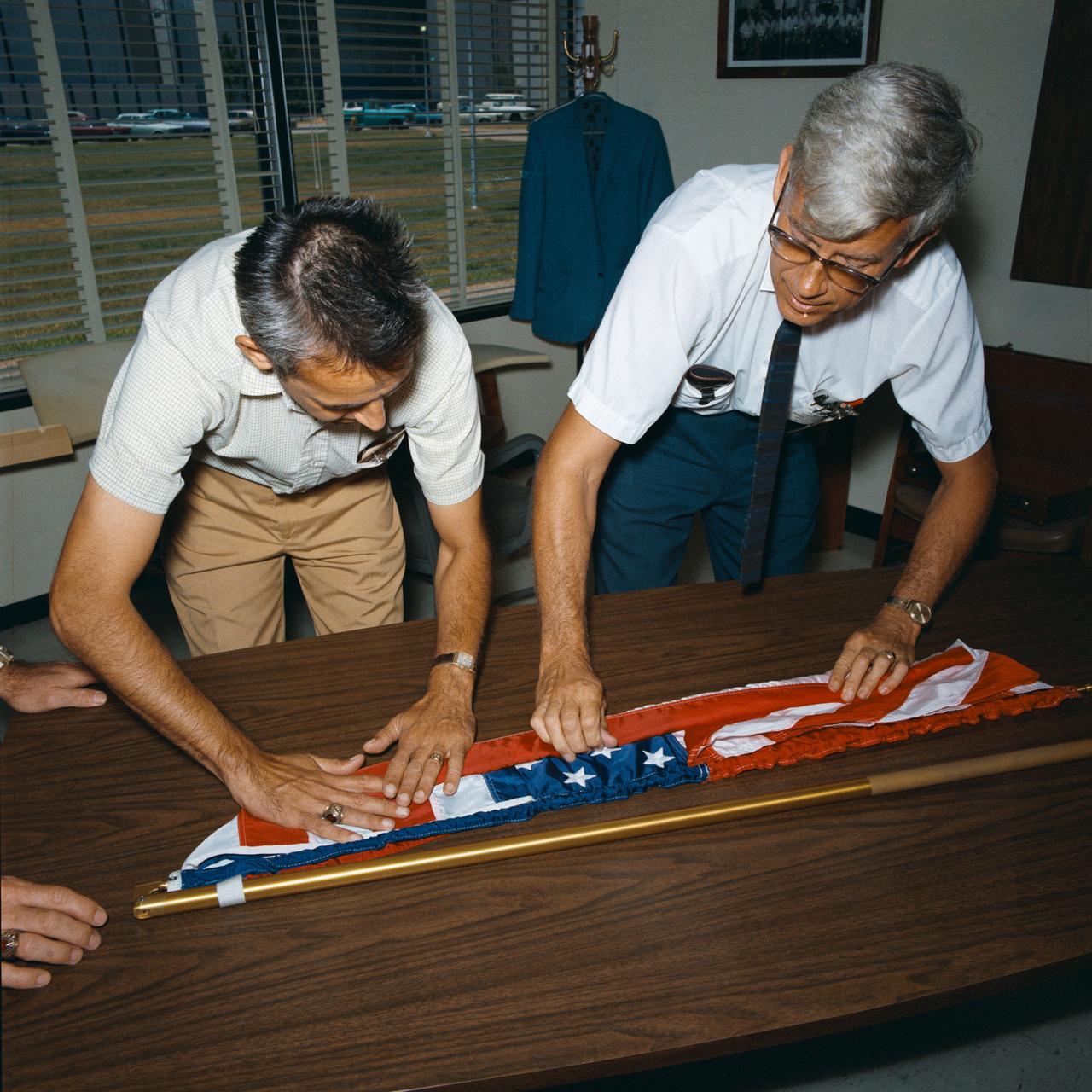
S69-38765 (1969) -- Jack Kinzler, right, with the U.S. flag kit for Apollo 11, seen in the technical services shop in Building 9.
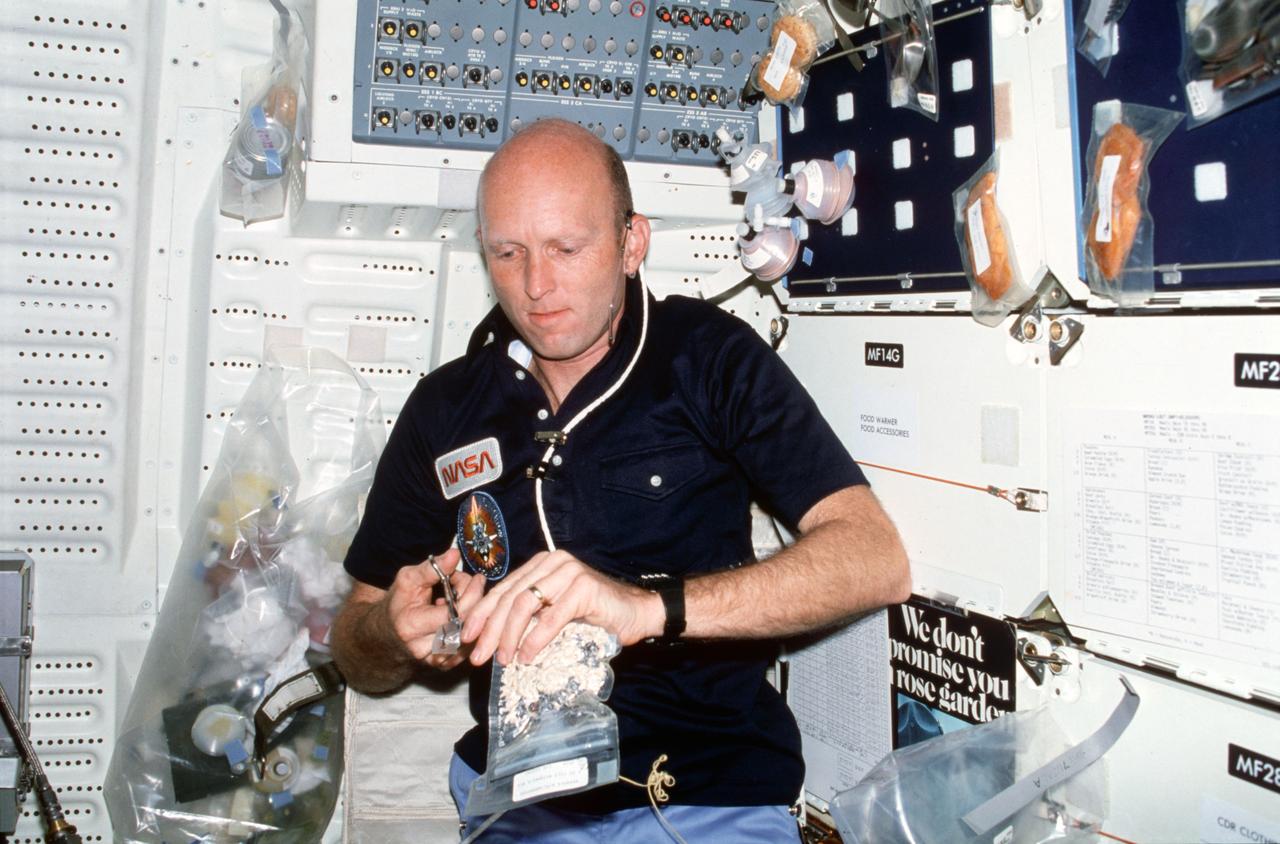
STS003-26-253 (30 March 1982) --- Astronaut Gordon Fullerton, STS-3 pilot, wearing communications kit assembly (assy) mini-headset (HDST), prepares meal on middeck. Fullerton clips corner of rehydratable food (cereal) package with scissors. The opening will allow Fullerton to insert JSC water dispenser kit water gun in order to heat contents with hot water. Meal tray assembly is secured to forward middeck locker and holds additional food packages and beverage containers. Photo credit: NASA
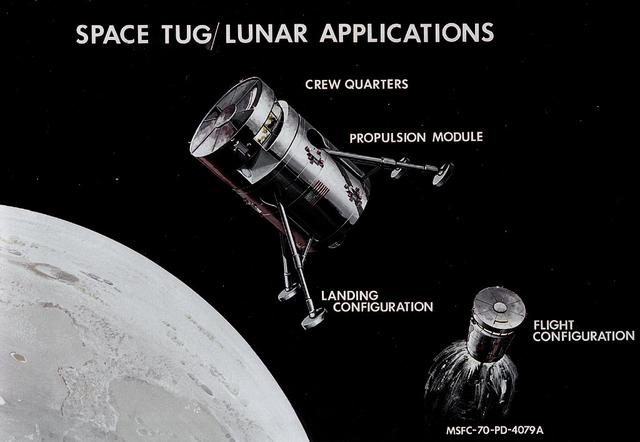
Managed by Marshall Space Flight Center, the Space Tug concept was intended to be a reusable multipurpose space vehicle designed to transport payloads to different orbital inclinations. Utilizing mission-specific combinations of its three primary modules (crew, propulsion, and cargo) and a variety of supplementary kits, the Space Tug was capable of numerous space applications. This 1970 artist's concept illustrates a Space Tug with an attached landing configuration kit as it prepares for a lunar application. The Space Tug program was cancelled and did not become a reality.
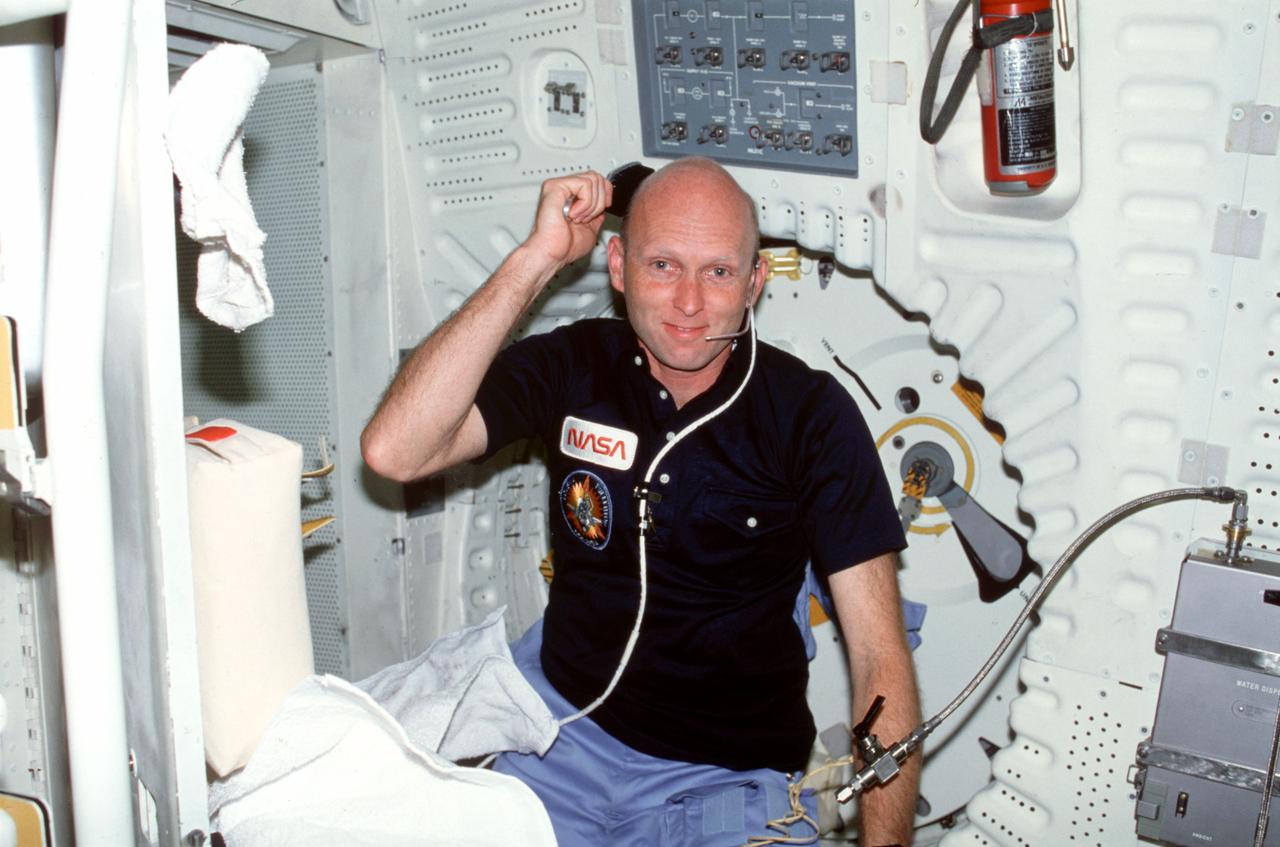
STS003-22-119 (30 March 1982) --- Astronaut Gordon Fullerton, STS-3 pilot, wearing communications kit assembly (ASSY) mini-headset (HDST), uses hygiene kit hair brush on aft middeck. He makes light of his lack of hair during a freshening up session. He makes a token effort with a hair brush. Side hatch and panel ML31C appear behind him. Photo credit: NASA
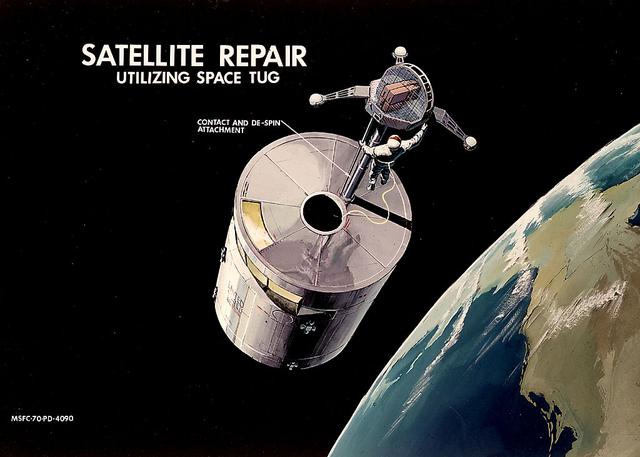
Managed by Marshall Space Flight Center, the Space Tug was a reusable multipurpose space vehicle designed to transport payloads to different orbital inclinations. Utilizing mission-specific combinations of its three primary modules (crew, propulsion, and cargo) and a variety of supplementary kits, the Space Tug was capable of numerous space applications. This 1970 artist's concept depicts the Space Tug during a satellite repair mission with the contact and de-spin attachment kit in place. An astronaut can be seen tethered to the Tug.
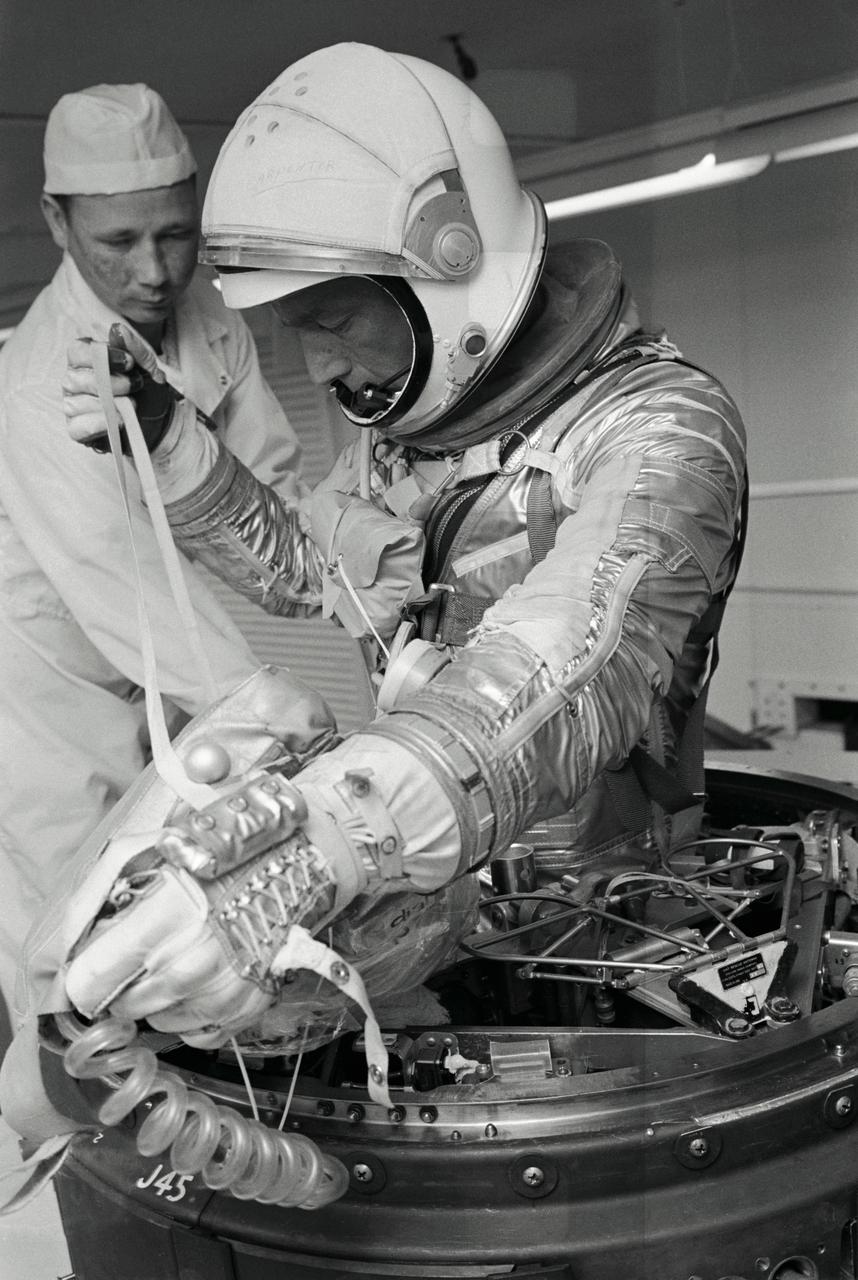
S62-01383 (1962) --- Project Mercury astronaut M. Scott Carpenter, prime pilot of the Mercury-Atlas 7 (the nation's second manned orbital flight), completes top egress training in the white room at Cape Canaveral, Florida. The line he is holding is known as the "man line" which attaches the survival kit to the astronaut. The bag is the survival kit he carries for contingency landings. Clearly visible around his neck is the bag containing the life vest. Photo credit: NASA
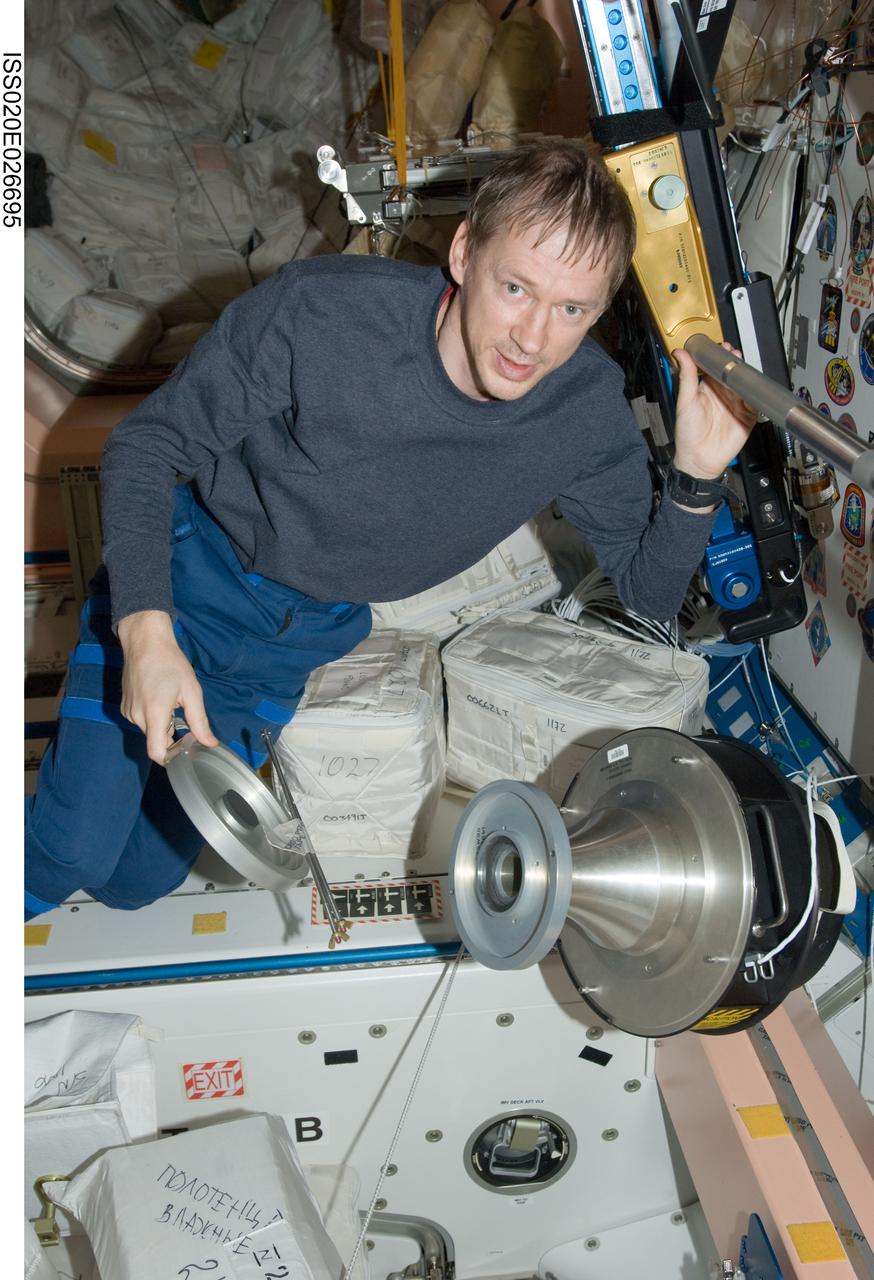
ISS020-E-026695 (31 July 2009) --- European Space Agency astronaut Frank De Winne, Expedition 20 flight engineer, works with a carbon dioxide removal kit adapter in the Unity node of the International Space Station.
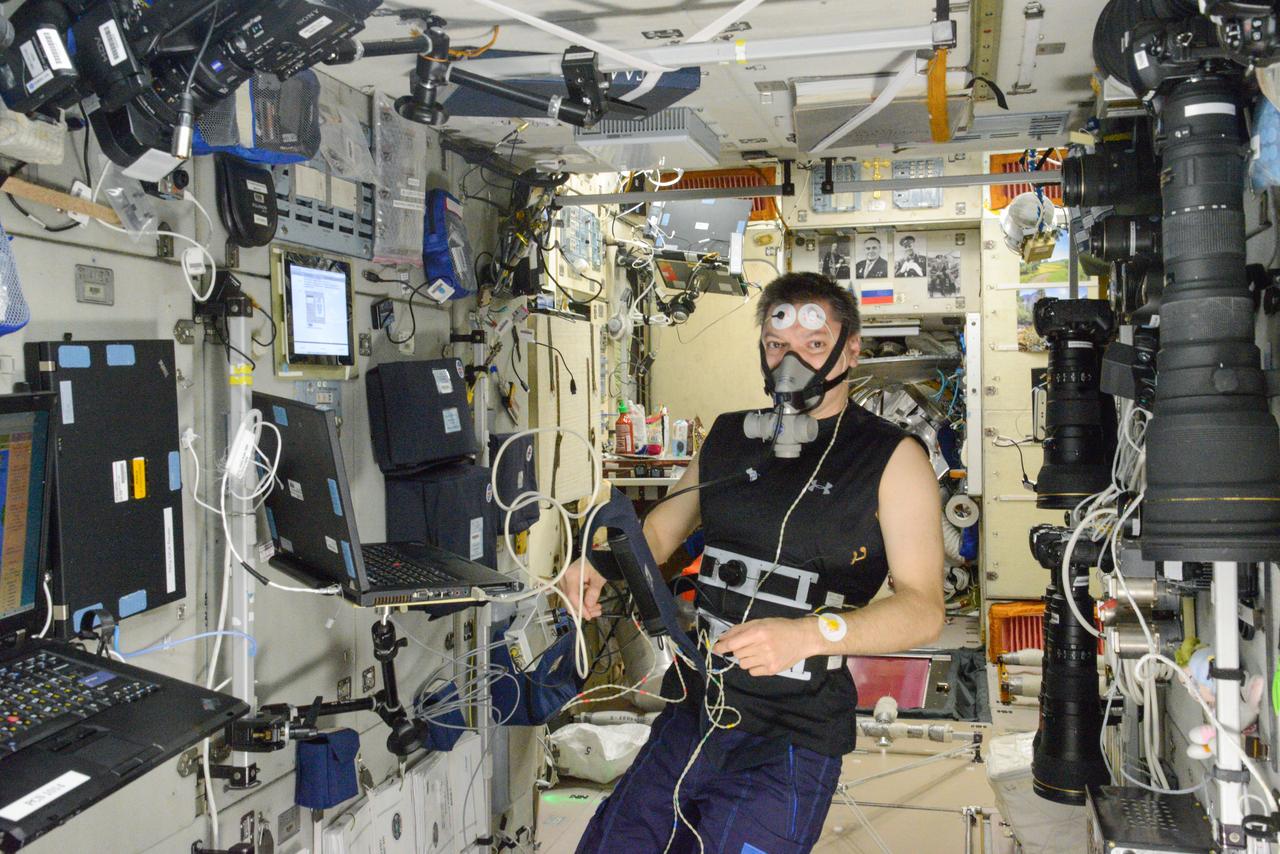
iss045e075926 (10/22/2015) --- Roscosmos cosmonaut Oleg Kononenko is photographed during UDOD experiment operations in the Zvezda Service Module (SM). He is using hardware from the Dykhanie-1 and Sprut-2 Kits.
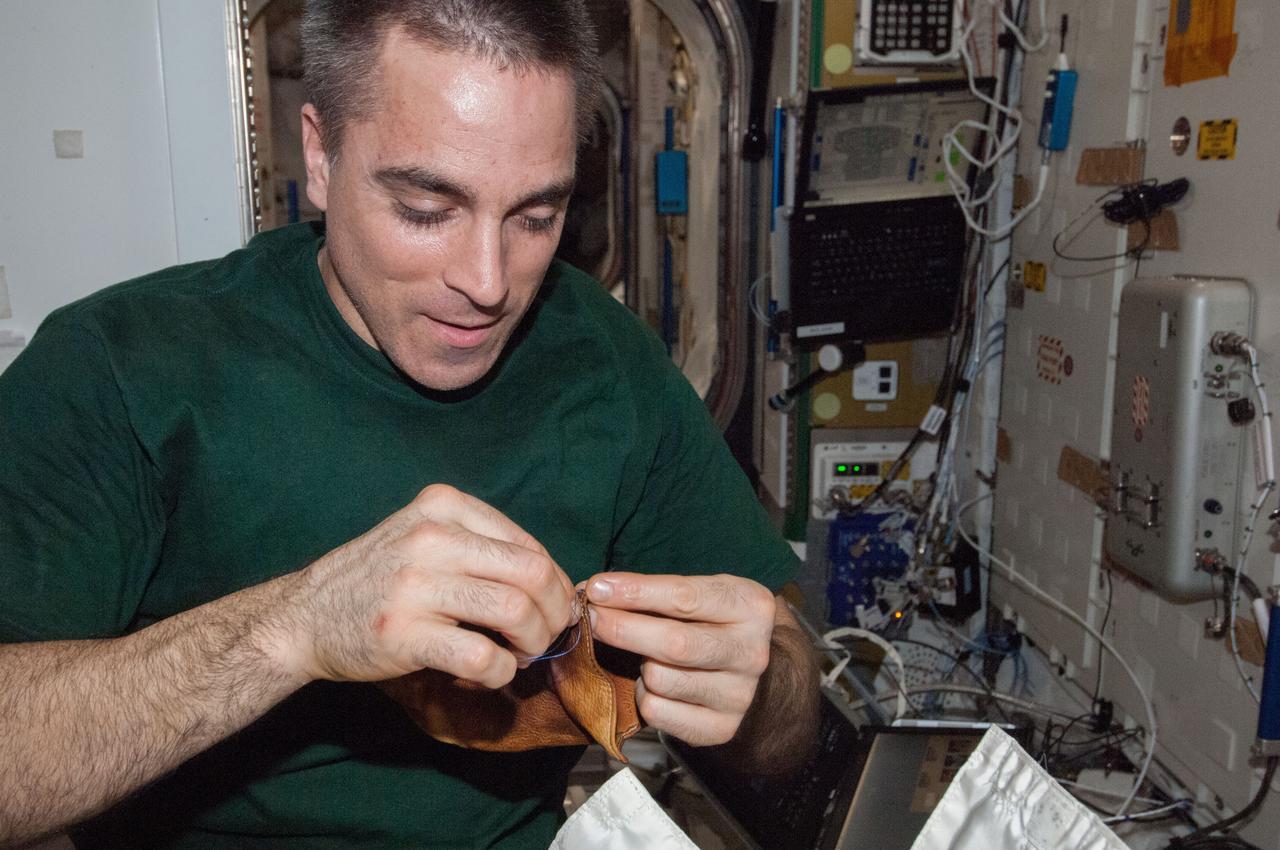
ISS036-E-021862 (21 July 2013) --- NASA astronaut Chris Cassidy, Expedition 36 flight engineer, uses a sewing kit to repair a glove in the Tranquility node of the International Space Station.
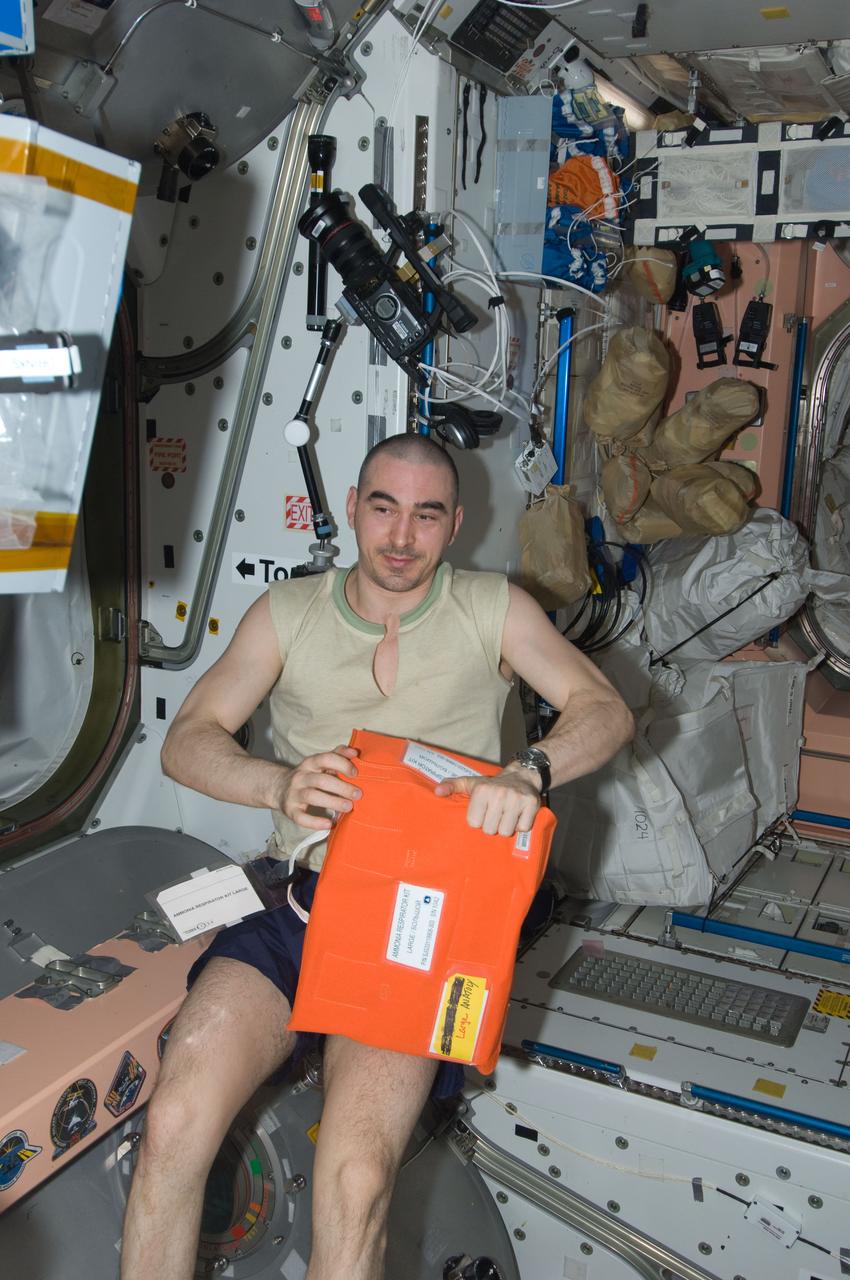
ISS030-E-117660 (8 Feb. 2012) --- Russian cosmonaut Anatoly Ivanishin, Expedition 30 flight engineer, holds an ammonia respirator kit in the Unity node of the International Space Station.
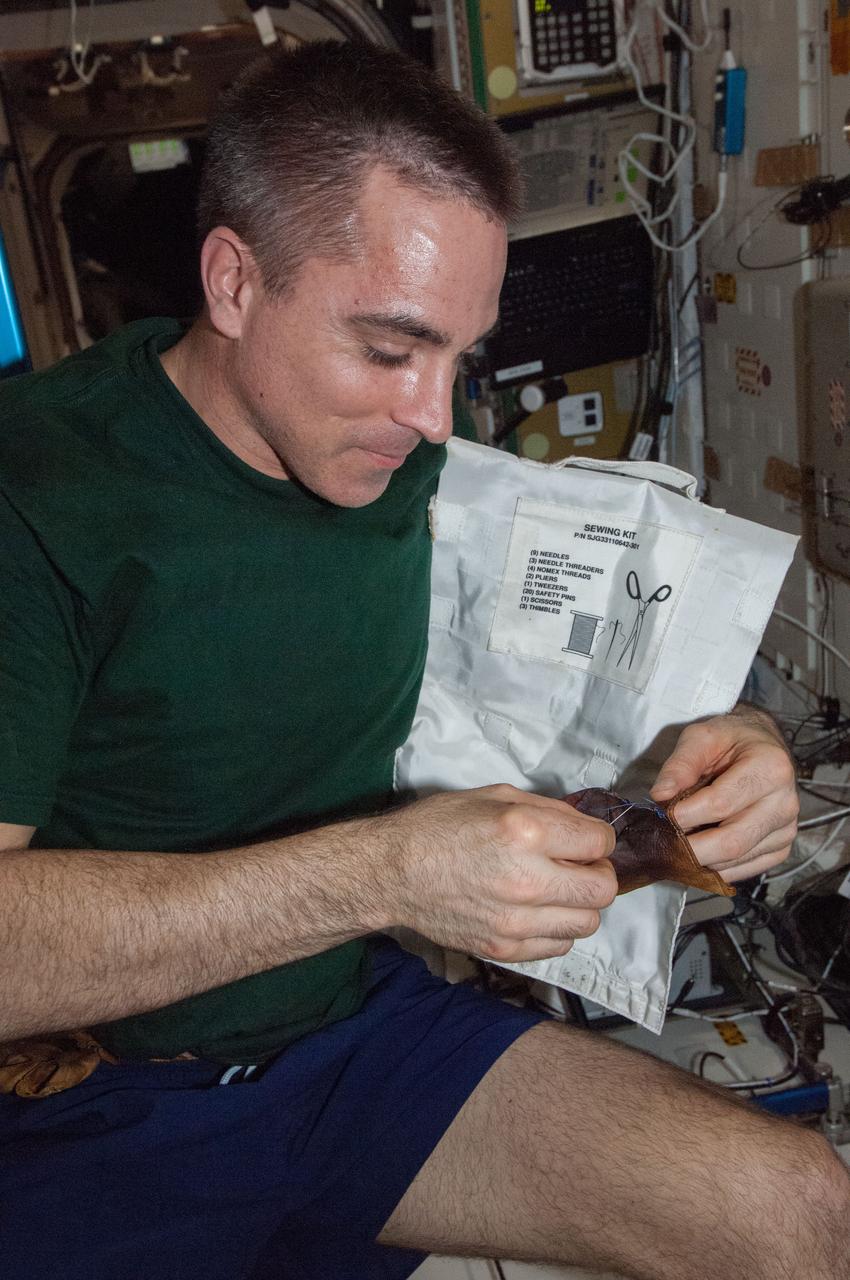
ISS036-E-021856 (21 July 2013) --- NASA astronaut Chris Cassidy, Expedition 36 flight engineer, uses a sewing kit to repair a glove in the Tranquility node of the International Space Station.
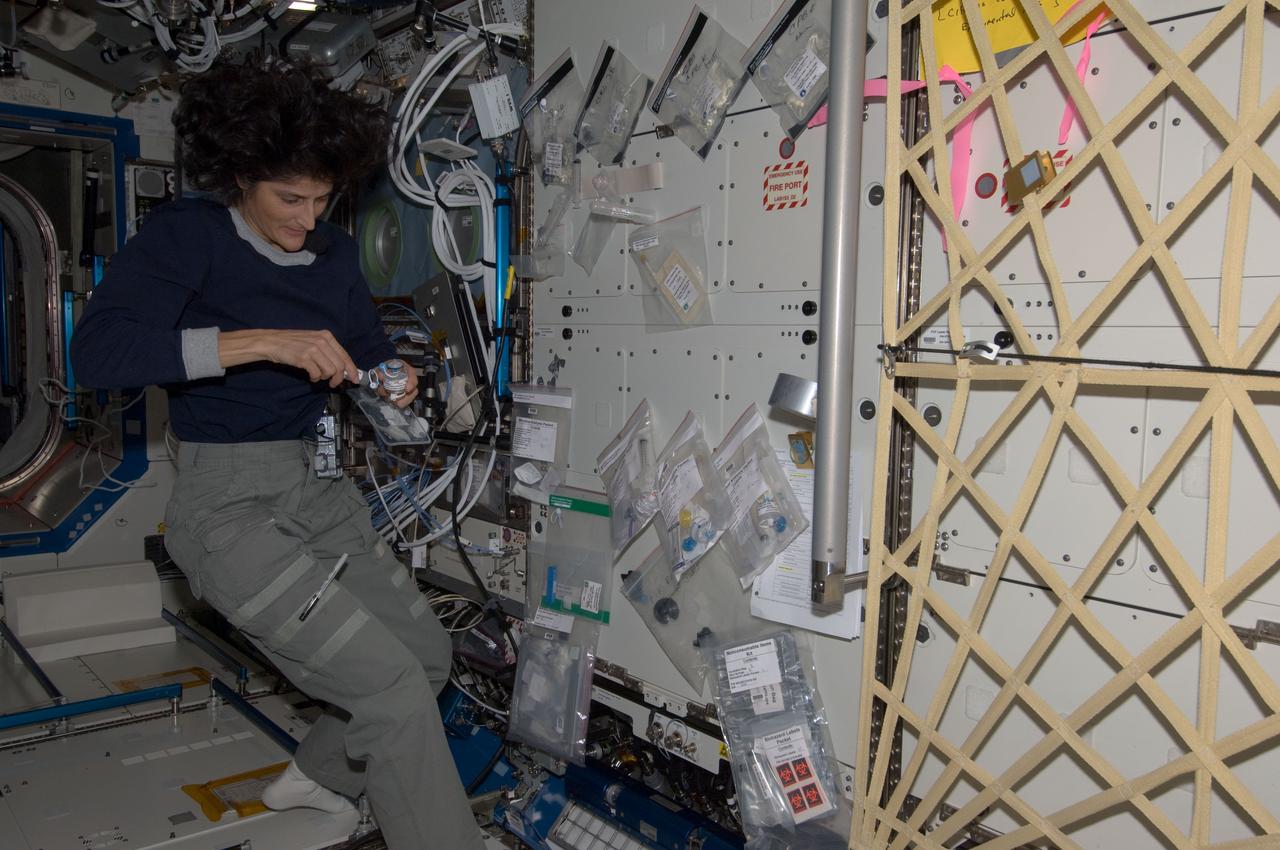
ISS032-E-026722 (11 Sept. 2012) --- NASA astronaut Sunita Williams, Expedition 32 flight engineer, works with a microbial analysis kit in the Destiny laboratory of the International Space Station.
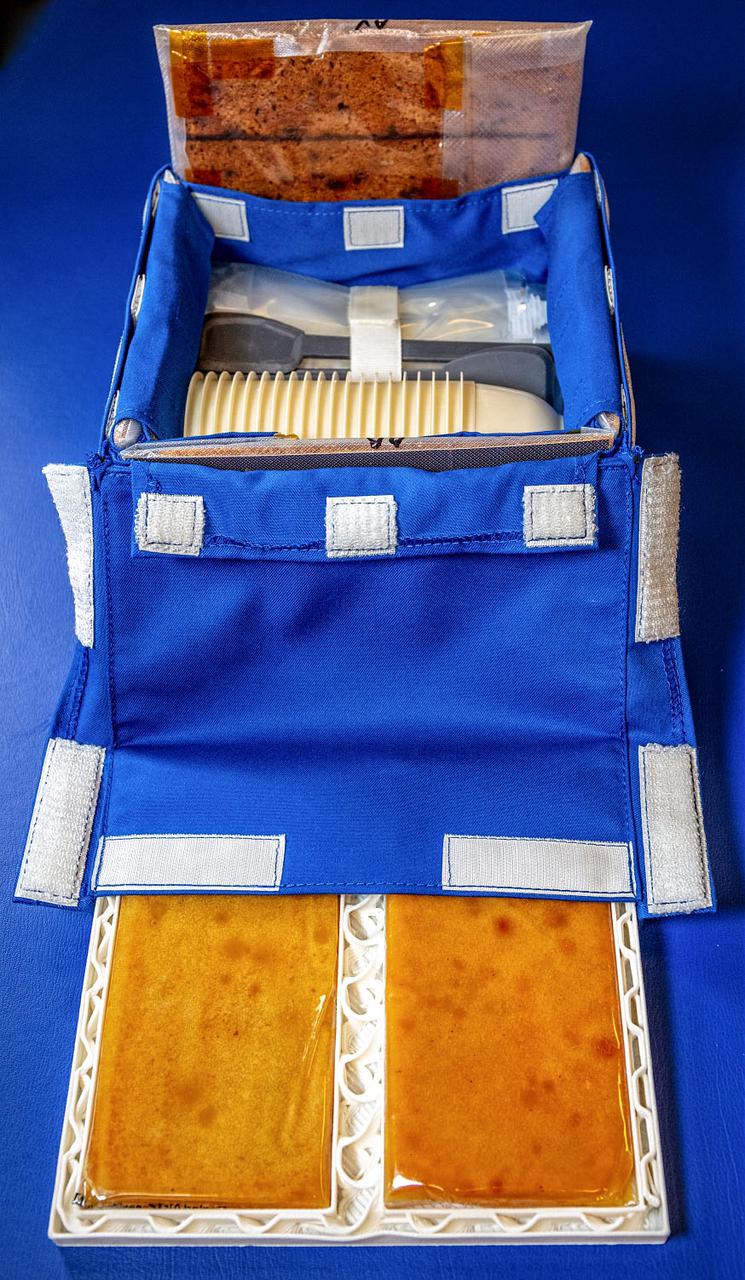
jsc2021e063281 (12/9/20210 --- Preflight image of the Food Processor consumables Kit which uses Edible prodcuts and Renewable pad as new protection Foam. © CNES/DE PRADA Thierry, 2020
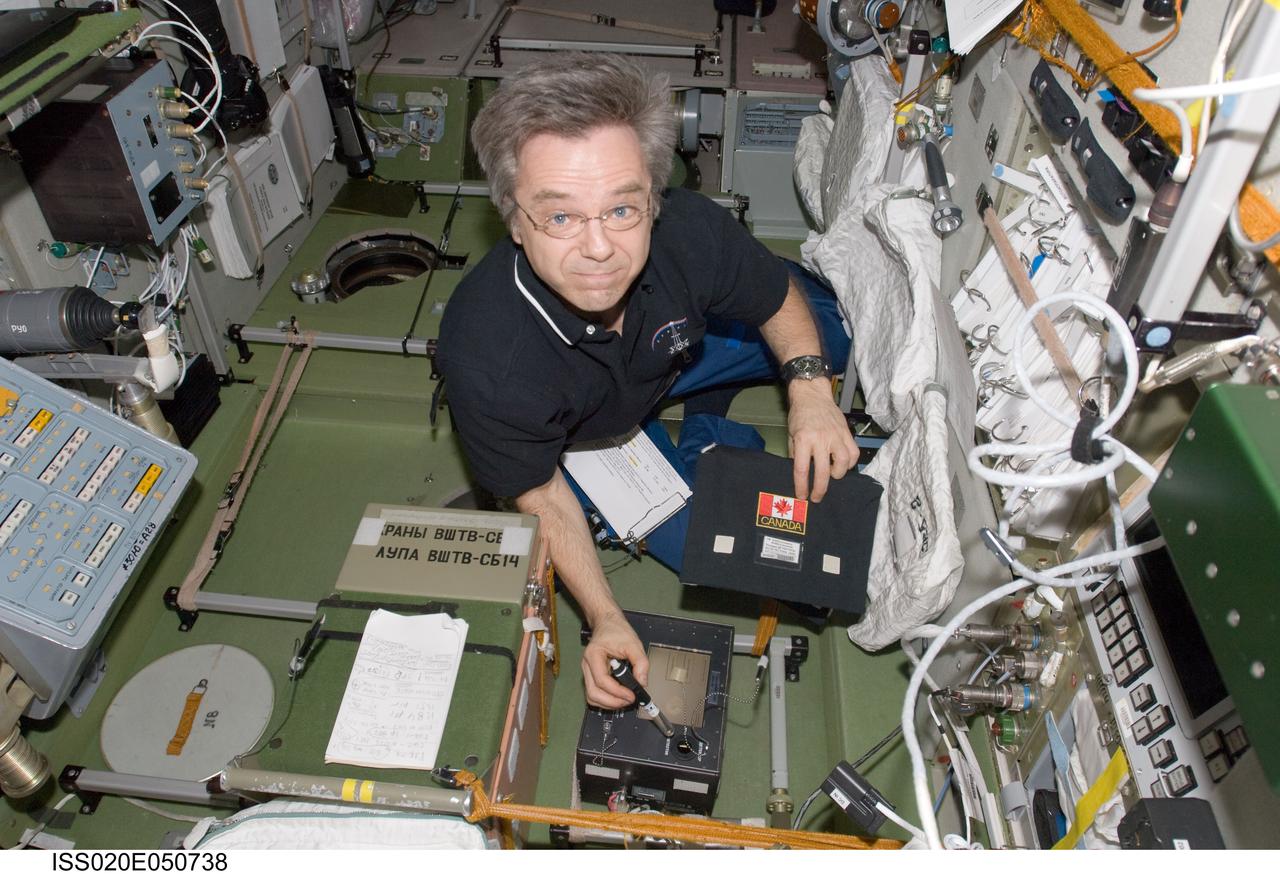
ISS020-E-050738 (10 Oct. 2009) --- Canadian Space Agency astronaut Robert Thirsk, Expedition 20/21 flight engineer, works in the Zvezda Service Module of the International Space Station.
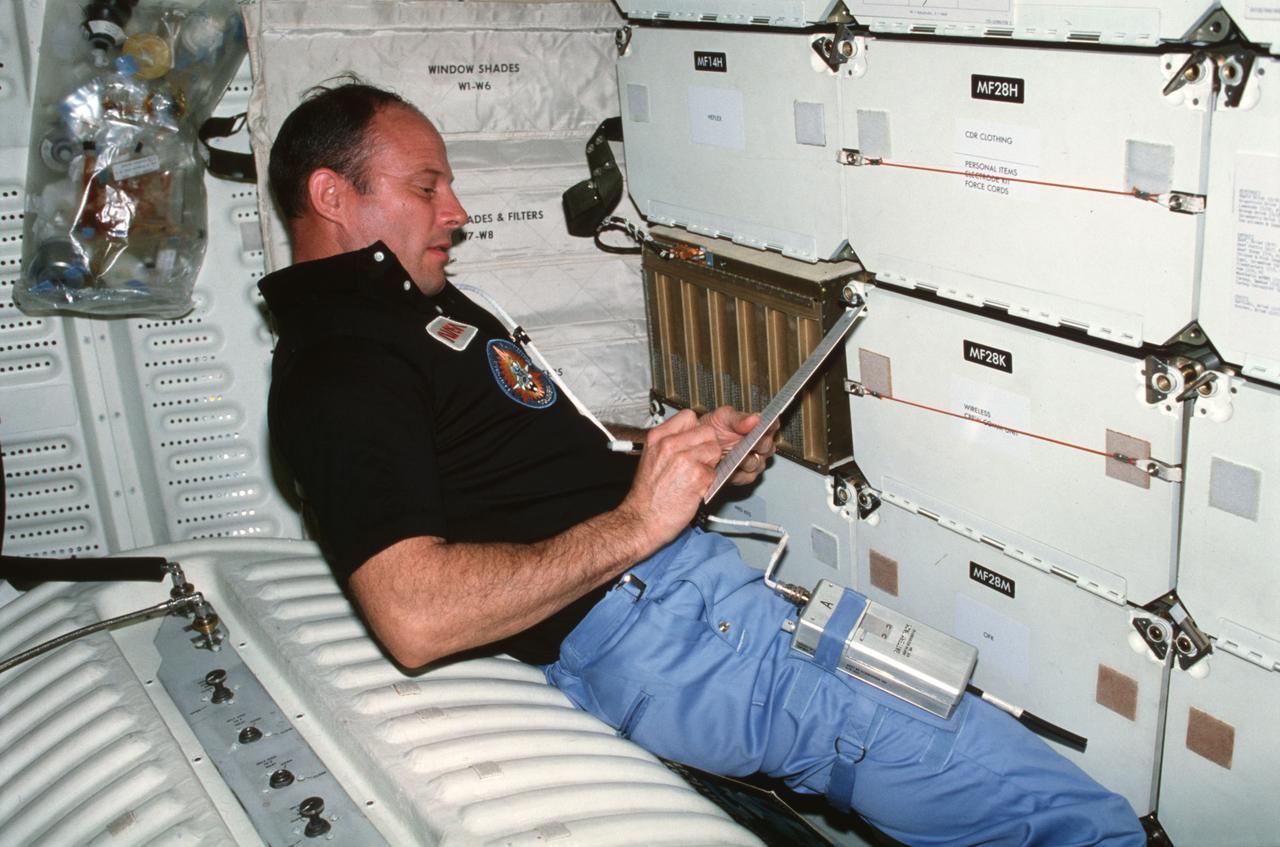
STS003-22-122 (30 March 1982) --- STS-3 Commander Lousma, wearing communications kit assembly (ASSY) mini-headset (HDST), records Plant Growth Unit (PGU) data for the Influence of Weightlessness on Plant Lignification Experiment at forward middeck locker MF14K. The experiment is designed to demonstrate the effect of weightlessness on the quantity and rate of lignin formation in different plant species during early stages of development. Port side bulkhead with window shade and filter kit appears behind Lousma and potable water tank below him. Trash bag also appears in view. Photo credit: NASA
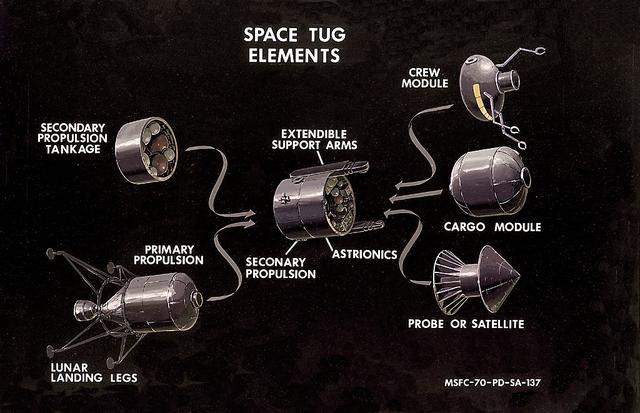
Managed by Marshall Space Flight Center, the Space Tug concept was intended to be a reusable multipurpose space vehicle designed to transport payloads to different orbital inclinations. Utilizing mission-specific combinations of its three primary modules (crew, propulsion, and cargo) and a variety of supplementary kits, the Space Tug would have been capable of numerous space applications. This 1970 illustration depicts the primary modules of the Space Tug system along with some of the supplementary kits: lunar landing legs, extendable support arms, astrionics, and the satellite probe. The Space Tug program was cancelled and did not become a reality.
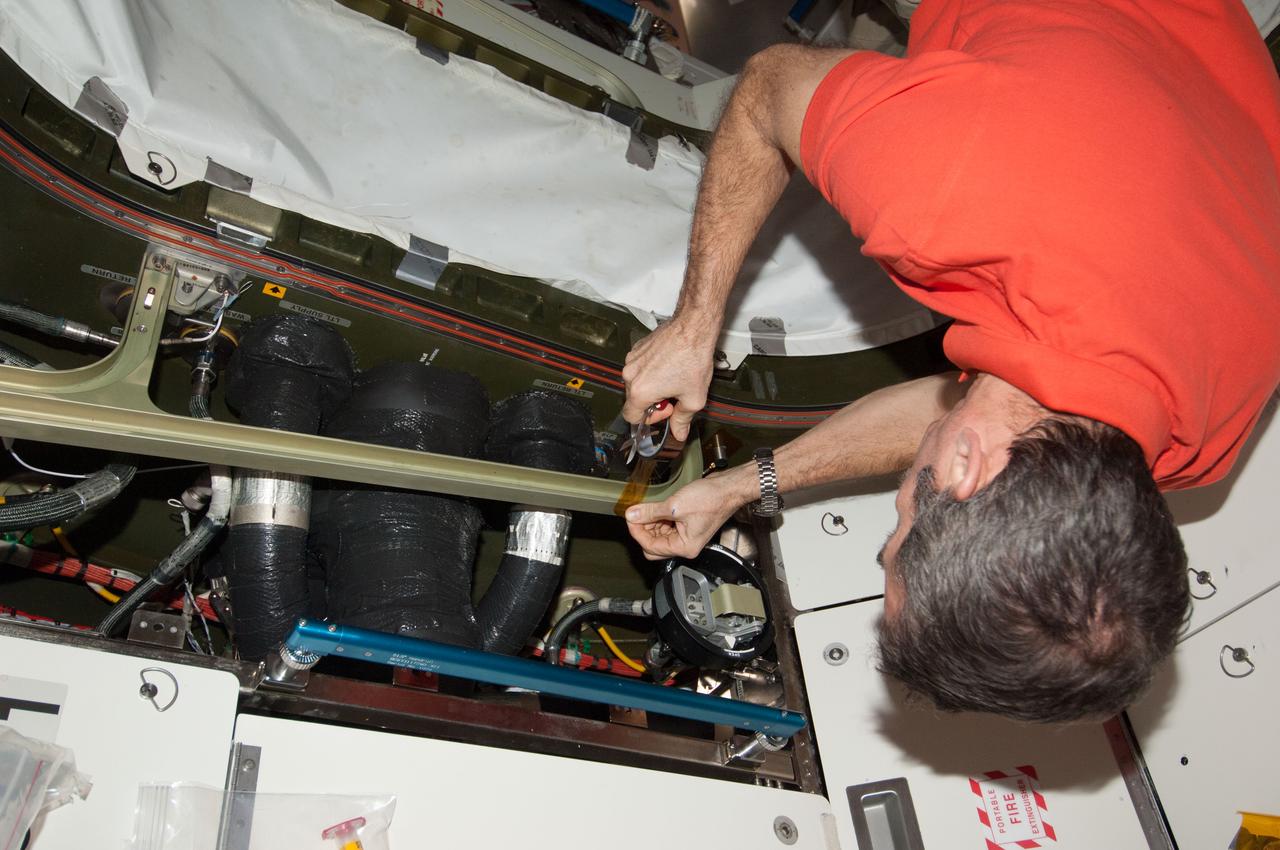
ISS034-E-037330 (31 Jan. 2013) --- Canadian Space Agency astronaut Chris Hadfield, Expedition 34 flight engineer, installs a Ultra-Sonic Background Noise Tests (UBNT) sensor kit behind a rack in the Destiny of the International Space Station.
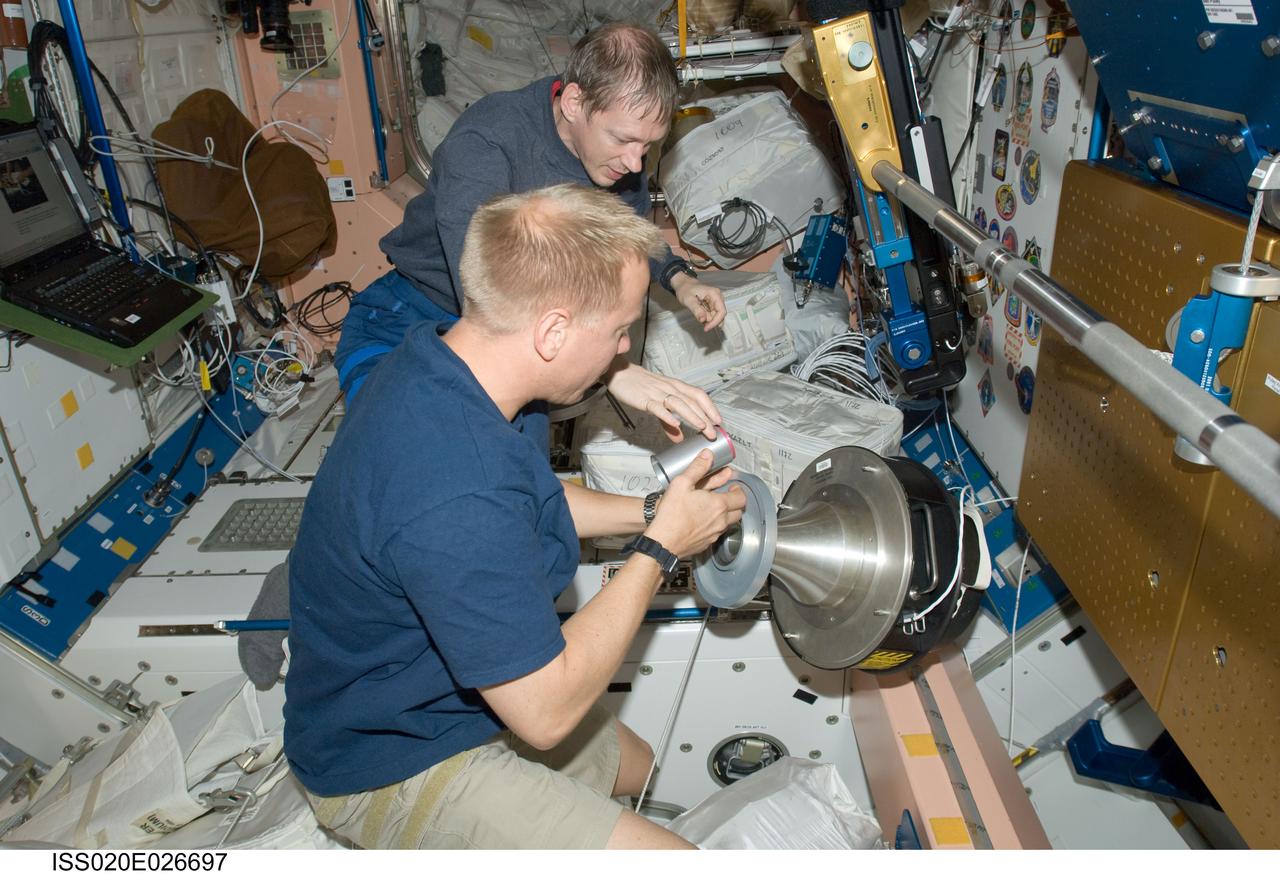
ISS020-E-026697 (31 July 2009) --- NASA astronaut Tim Kopra (foreground) and European Space Agency astronaut Frank De Winne, both Expedition 20 flight engineers, work with a carbon dioxide removal kit adapter in the Unity node of the International Space Station.
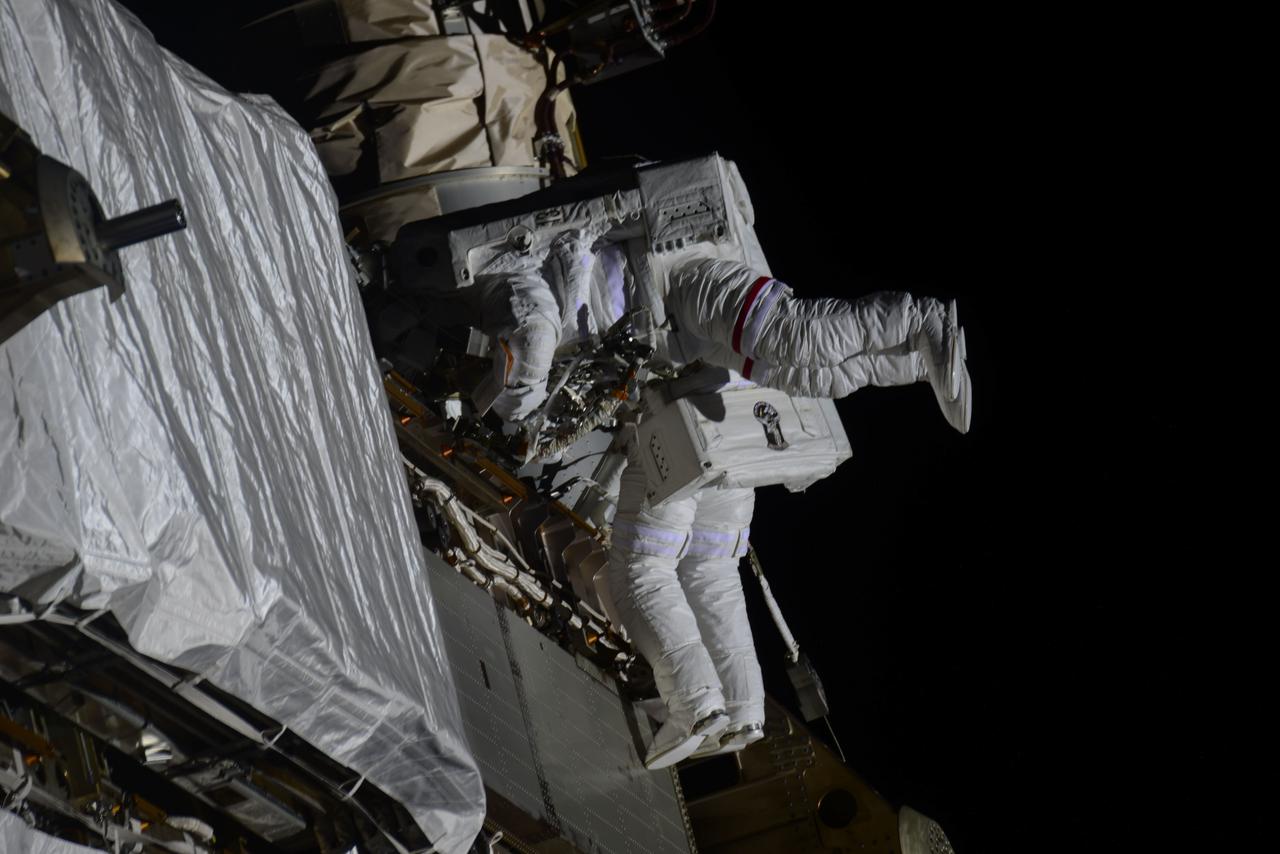
iss064e039327 (Feb. 28, 2021) --- NASA astronauts Kate Rubins (foreground) and Victor Glover are pictured during a spacewalk to install solar array modification kits on the International Space Station. The maintenance work will support new, more powerful solar arrays that will be delivered on upcoming SpaceX Dragon cargo missions. Credit: Roscosmos
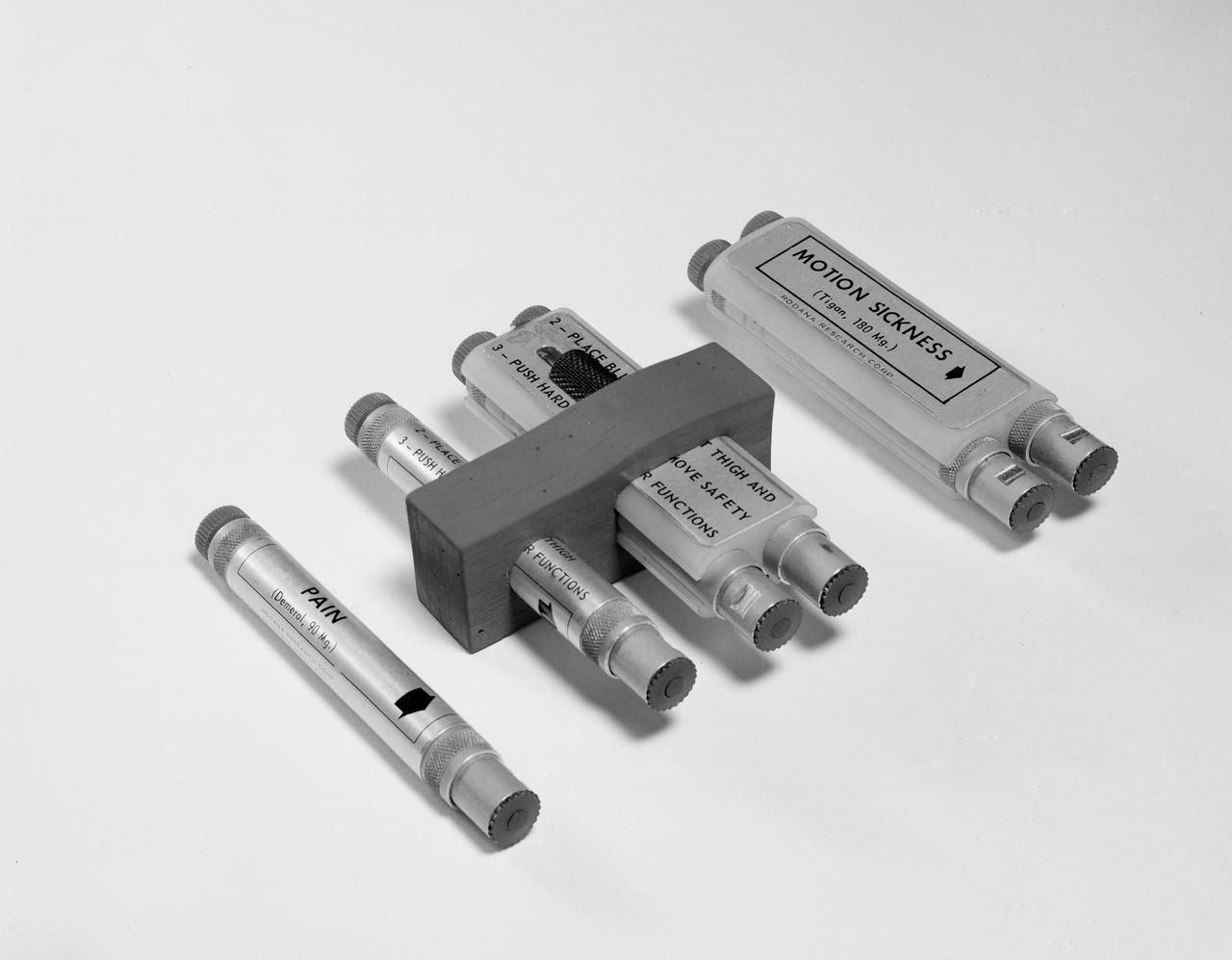
S62-08371 (1962) --- The automatic medical injectors carried on the Mercury-Atlas 9 flight. The injectors provide the astronaut with injection tubes of Tigan, for preventing motion sickness and Demerol, for relieving pain. The tubes encased in the block are stowed in the astronauts survival kit. The single injection tubes are placed in a pocket of the astronauts spacesuit. Photo credit: NASA
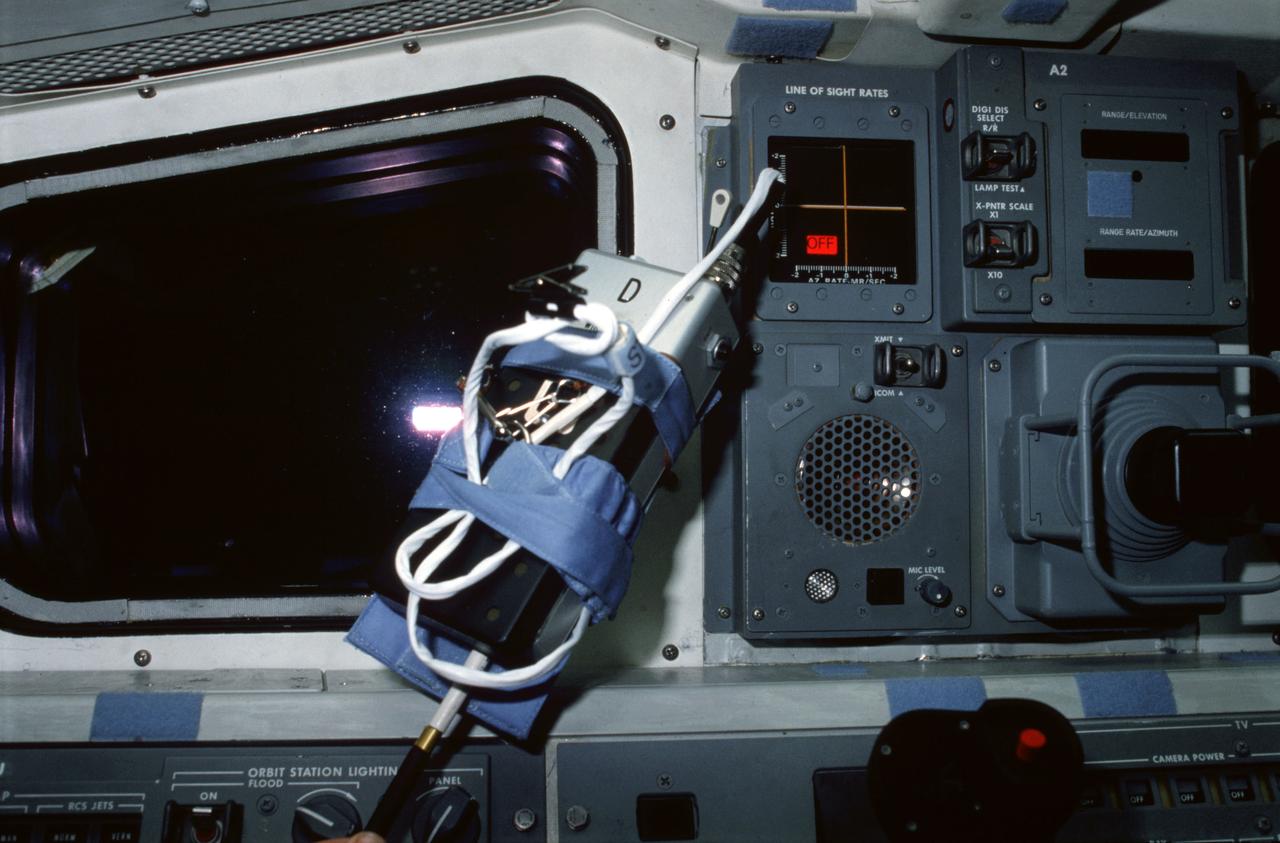
STS008-18-479 (5 Sept 1983) --- Aft flight deck documentation includes on orbit station with control panel A2, aft viewing window W9, and communications kit assembly (ASSY) headset (HDST) interface unit (HIU) and cable free floating in front of it.

ISS015-E-32031 (October 2007) --- Cosmonaut Oleg V. Kotov, Expedition 15 flight engineer representing Russia's Federal Space Agency, uses a Bioproby Kit to collect surface samples for analysis for the Russian Biodegradation experiment in the Zvezda Service Module of the International Space Station.
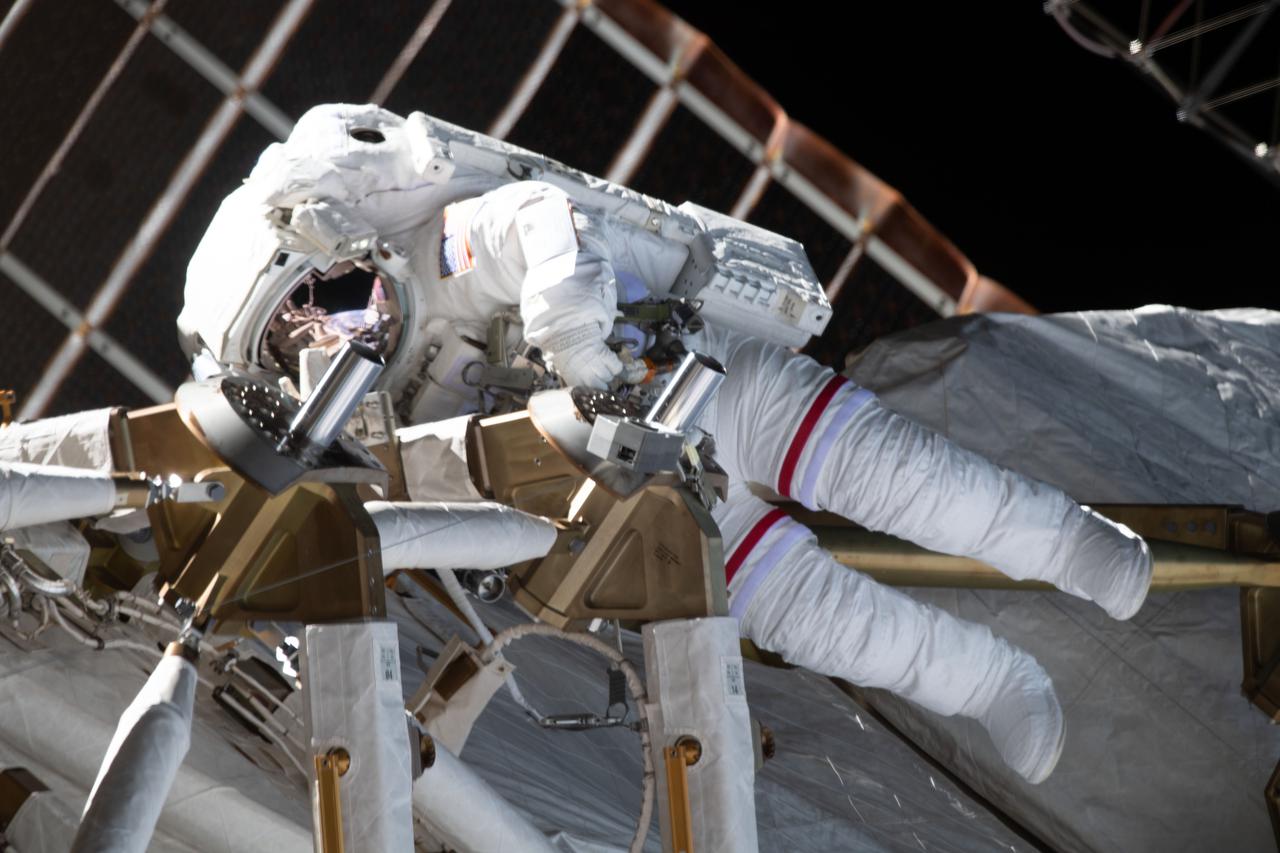
iss064e038494 (Feb. 28, 2021) --- NASA astronaut Kate Rubins is pictured during a spacewalk to install solar array modification kits on the International Space Station. The maintenance work will support new, more powerful solar arrays that will be delivered on upcoming SpaceX Dragon cargo missions.
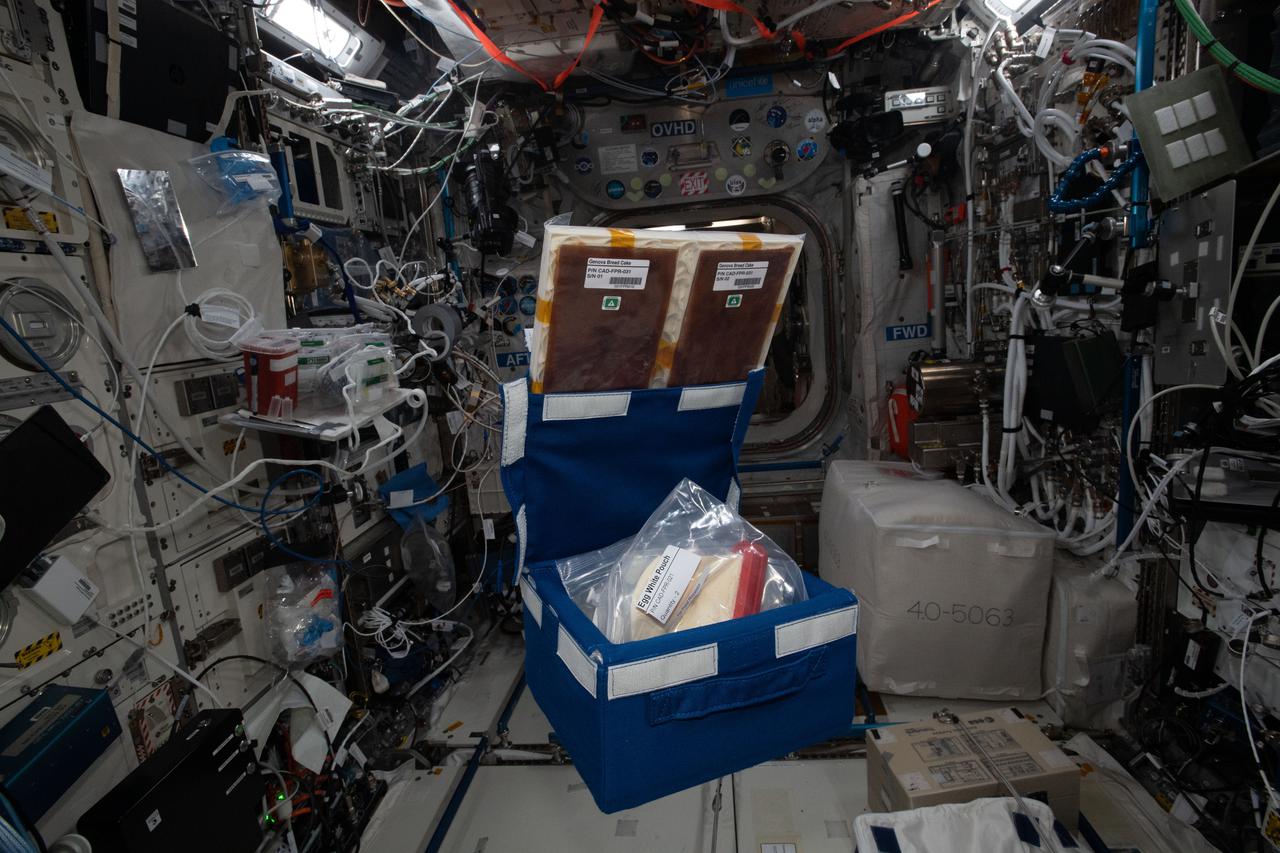
iss065e454902 (10/11/2021) --- A view of the Edible Foam in the Food Processor Consumables Kit aboard the International Space Station (ISS). Edible foam is made from PHA, a naturally occurring polymer synthesized by bacteria. It offers a high level of protection from isolated shocks and vibrations, which is particularly important during flights into space.
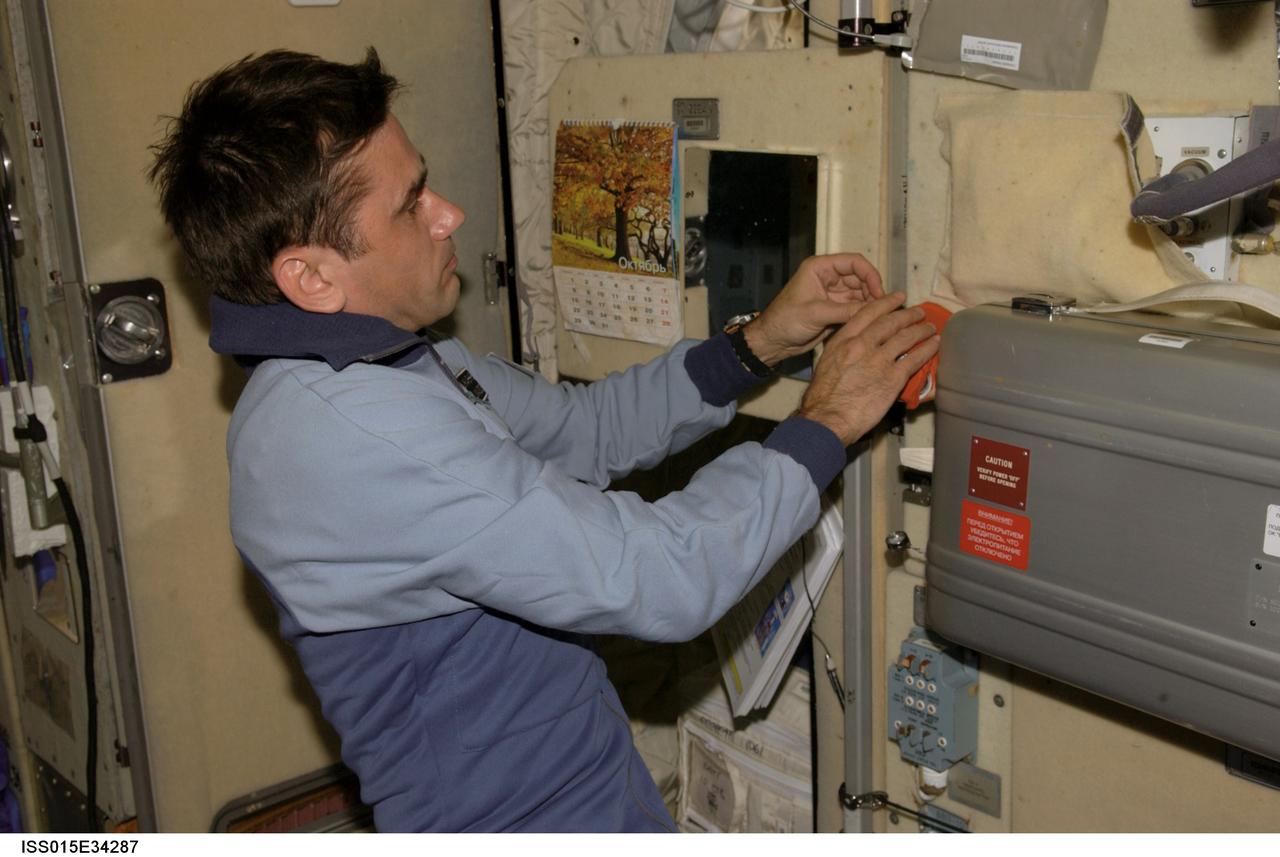
ISS015-E-34287 (13 Oct. 2007) --- Cosmonaut Yuri I. Malenchenko, Expedition 16 flight engineer representing Russia's Federal Space Agency, places hybridizers in orange Rekomb-kit in the Zvezda Service Module of the International Space Station.
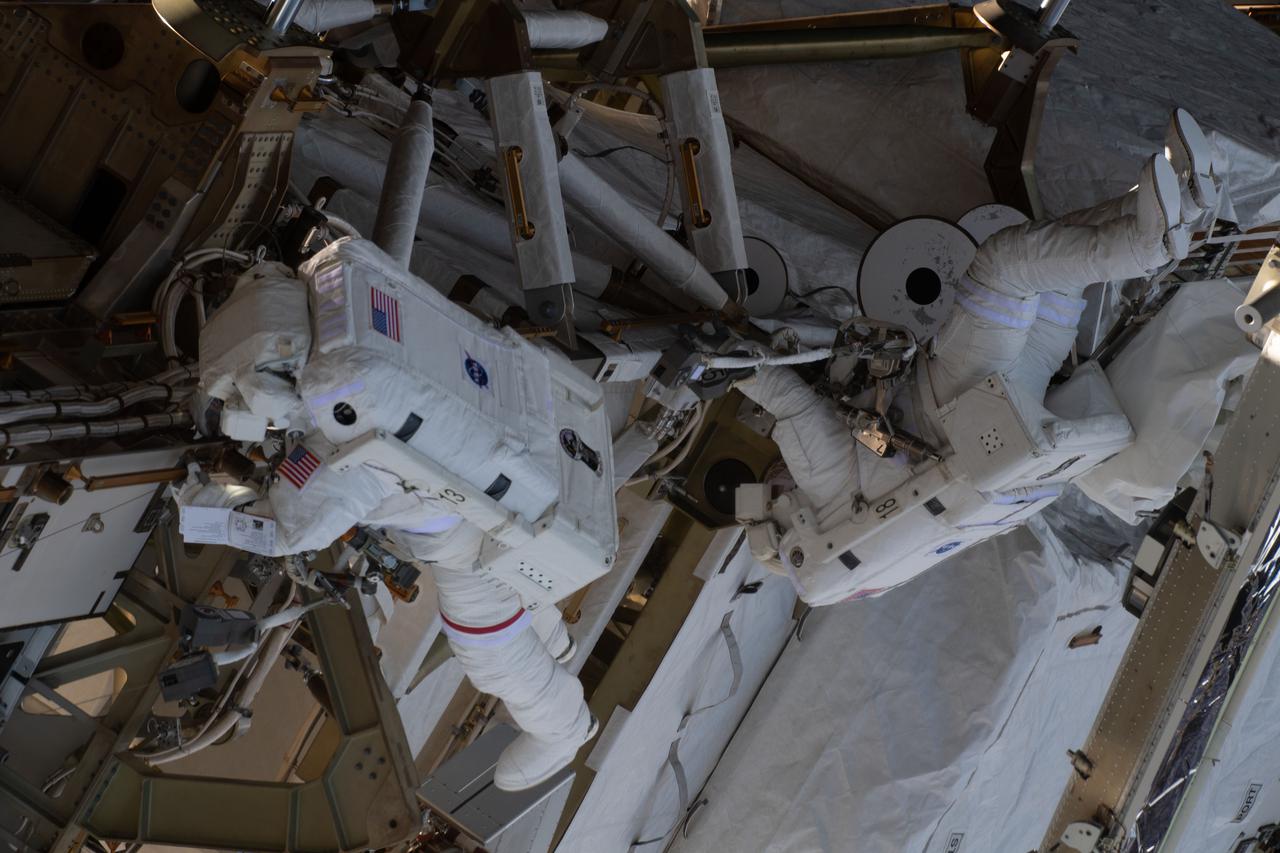
iss064e038352 (Feb. 28, 2021) -- -NASA astronauts Kate Rubins (left) and Victor Glover (right) are pictured during a spacewalk to install solar array modification kits on the International Space Station. The maintenance work will support new, more powerful solar arrays that will be delivered on upcoming SpaceX Dragon cargo missions.
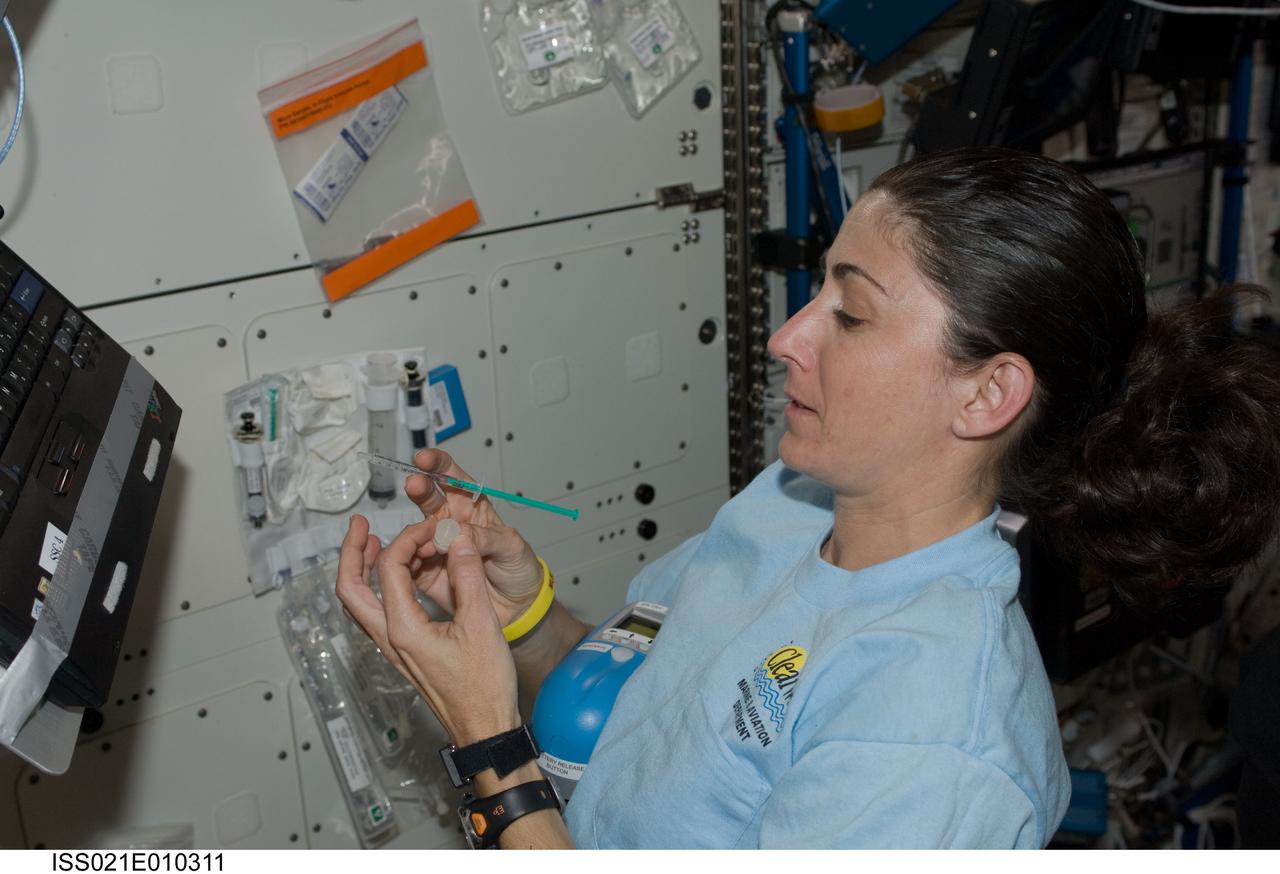
ISS021-E-010311 (20 Oct. 2009) --- NASA astronaut Nicole Stott, Expedition 21 flight engineer, conducts a water quality analysis using the Colorimetric Water Quality Monitoring Kit (CWQMK) in the Destiny laboratory of the International Space Station.
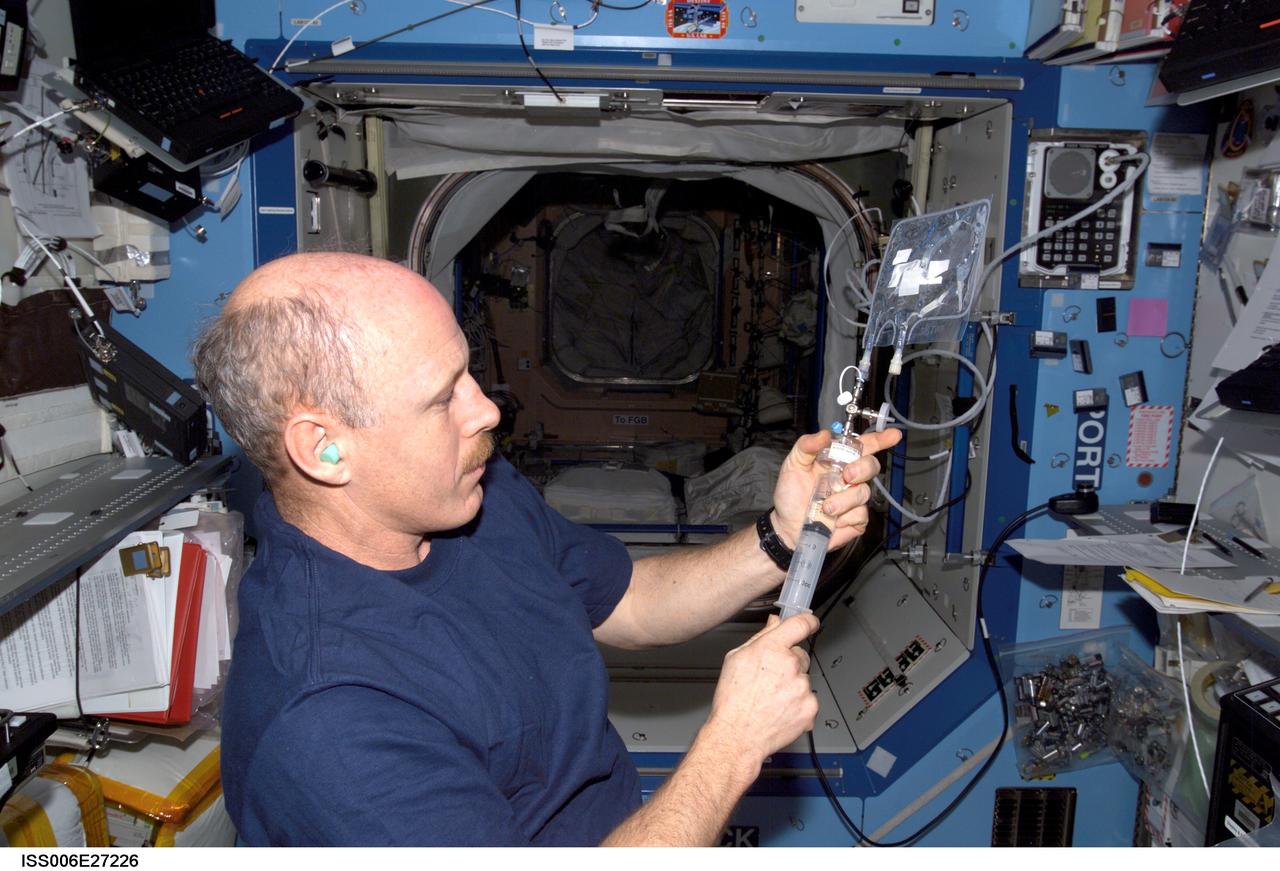
ISS006-E-27226 (17 February 2003) --- Astronaut Kenneth D. Bowersox, Expedition Six mission commander, uses the water microbiology kit (WMK) to collect water samples for in-flight chemistry/microbiology analysis in the Destiny laboratory on the International Space Station (ISS).
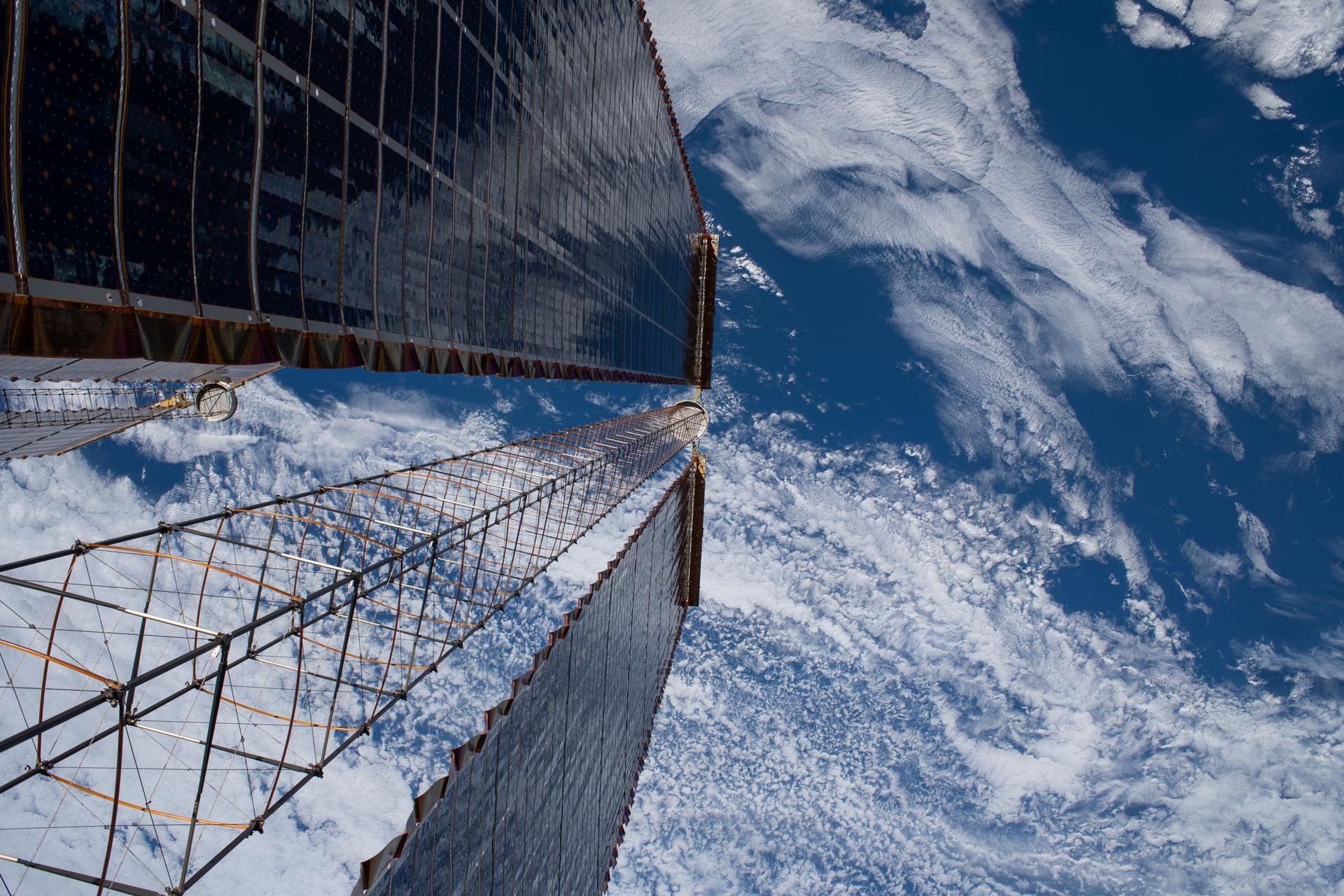
iss074e0403068 (March 18, 2026) -- A view peering down a pair of the International Space Station's roll-out solar arrays, photographed during a spacewalk conducted on March 18, 2026 to build and install a modification kit ahead of future solar array installation on the 2A power channel of the space station. Credit: NASA/Jessica Meir
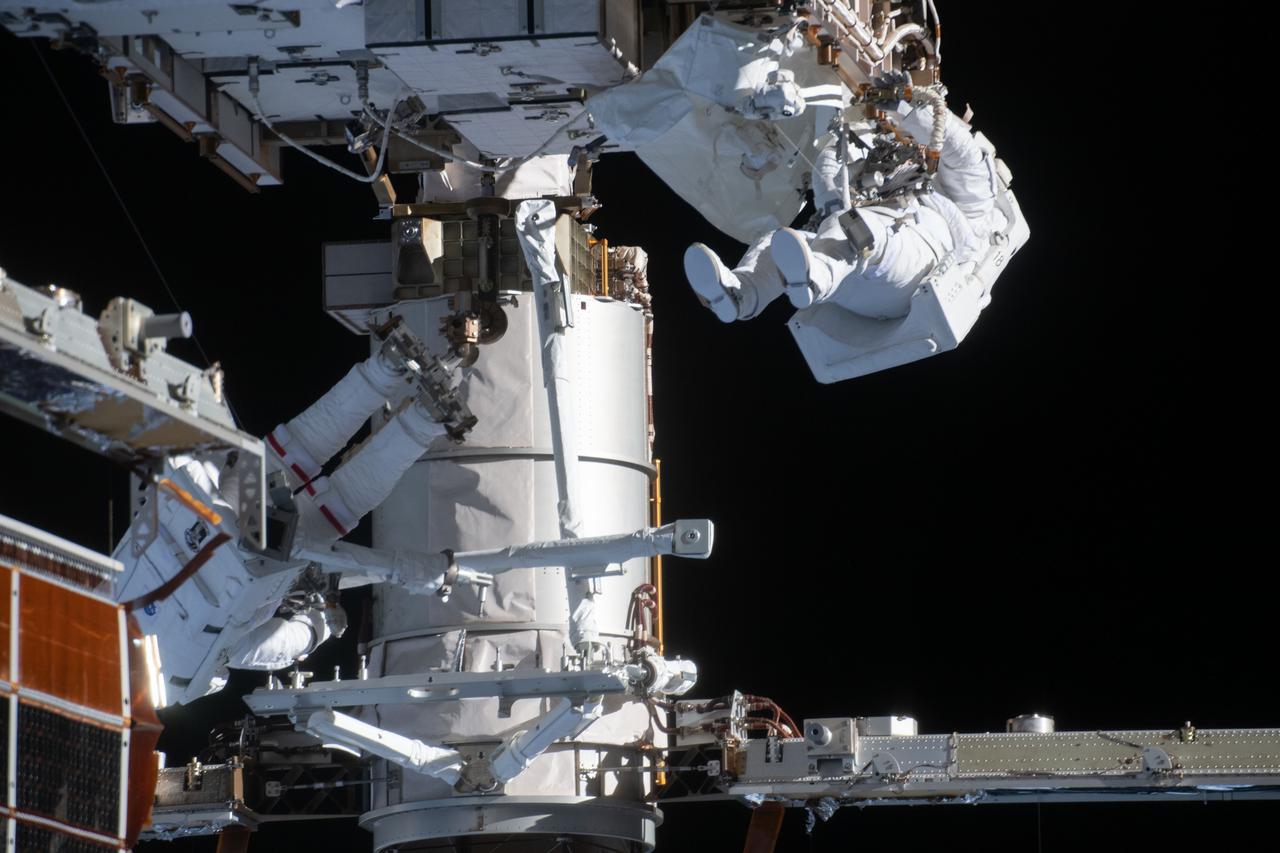
iss064e038304 (Feb. 28, 2021) --- NASA astronauts Kate Rubins (lower left) and Victor Glover (upper right) are pictured during a spacewalk to install solar array modification kits on the International Space Station. The maintenance work will support new, more powerful solar arrays that will be delivered on upcoming SpaceX Dragon cargo missions.
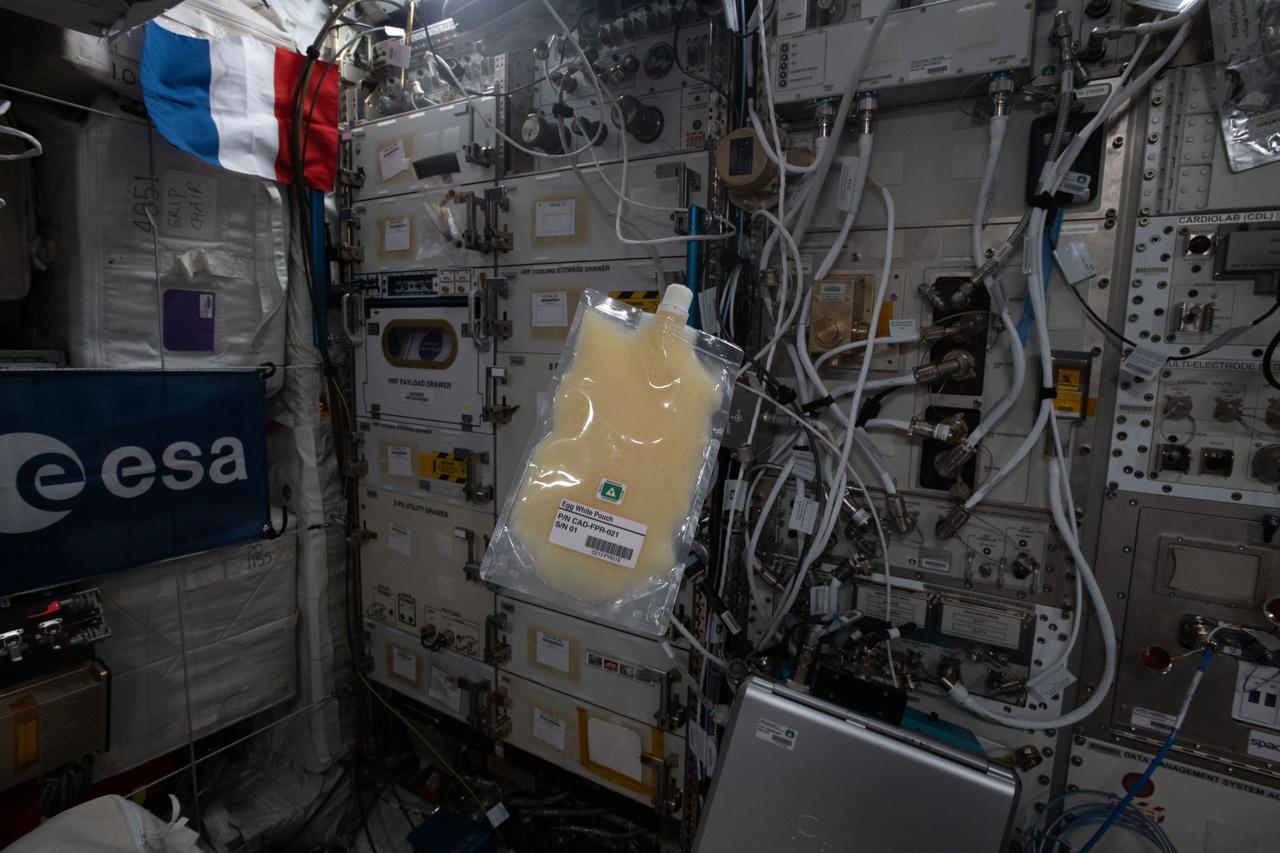
iss065e454868 (10/11/2021) --- A view of the Edible Foam in the Food Processor Consumables Kit aboard the International Space Station (ISS). Edible foam is made from PHA, a naturally occurring polymer synthesized by bacteria. It offers a high level of protection from isolated shocks and vibrations, which is particularly important during flights into space.
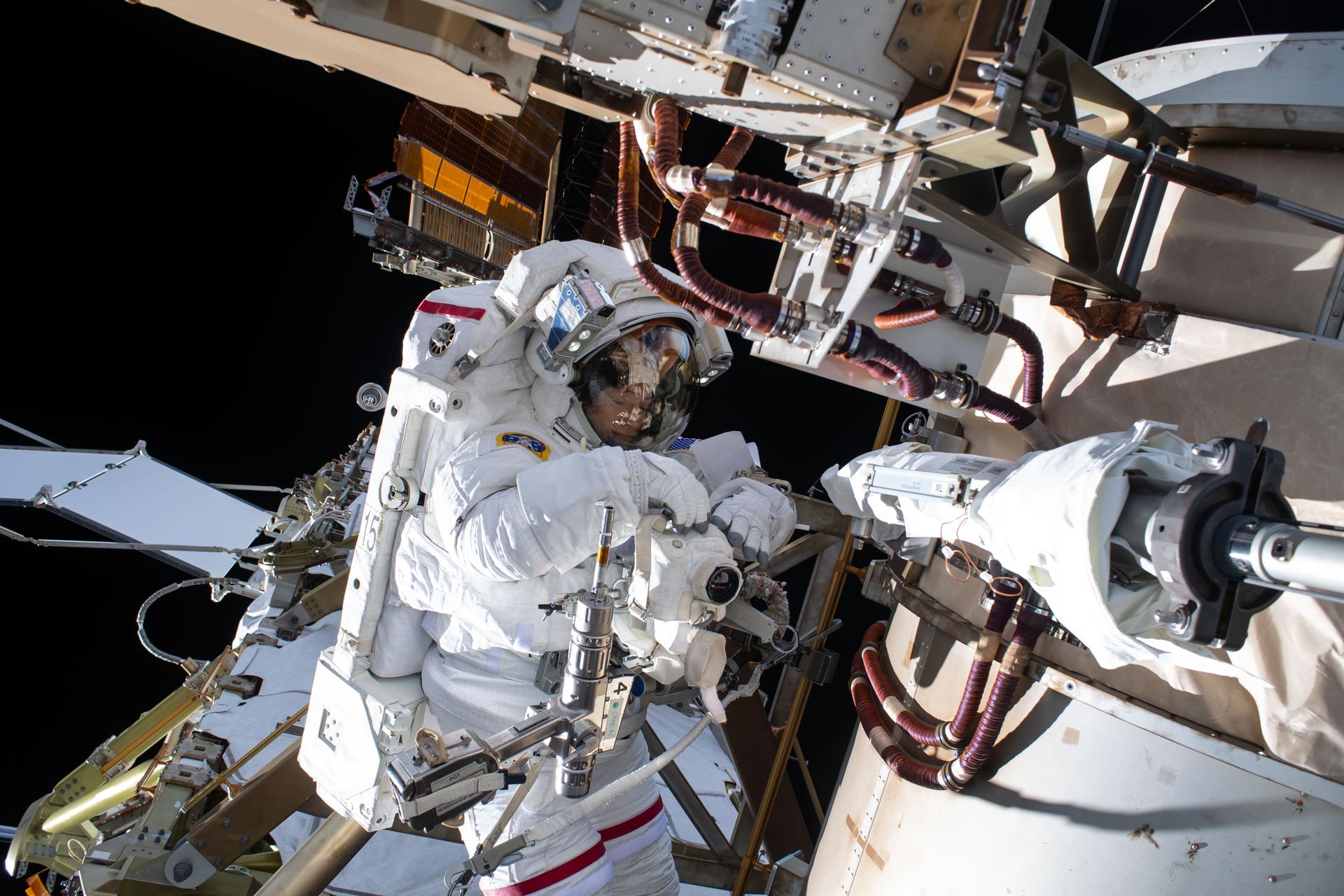
iss074e0403089 (March 18, 2026) -- NASA astronaut Jessica Meir installs a roll-out solar array modification kit to the exterior of the International Space Station during the 278th spacewalk in support of space station maintenance, assembly, and upgrades on March 18, 2026. Credit: NASA/Chris Williams
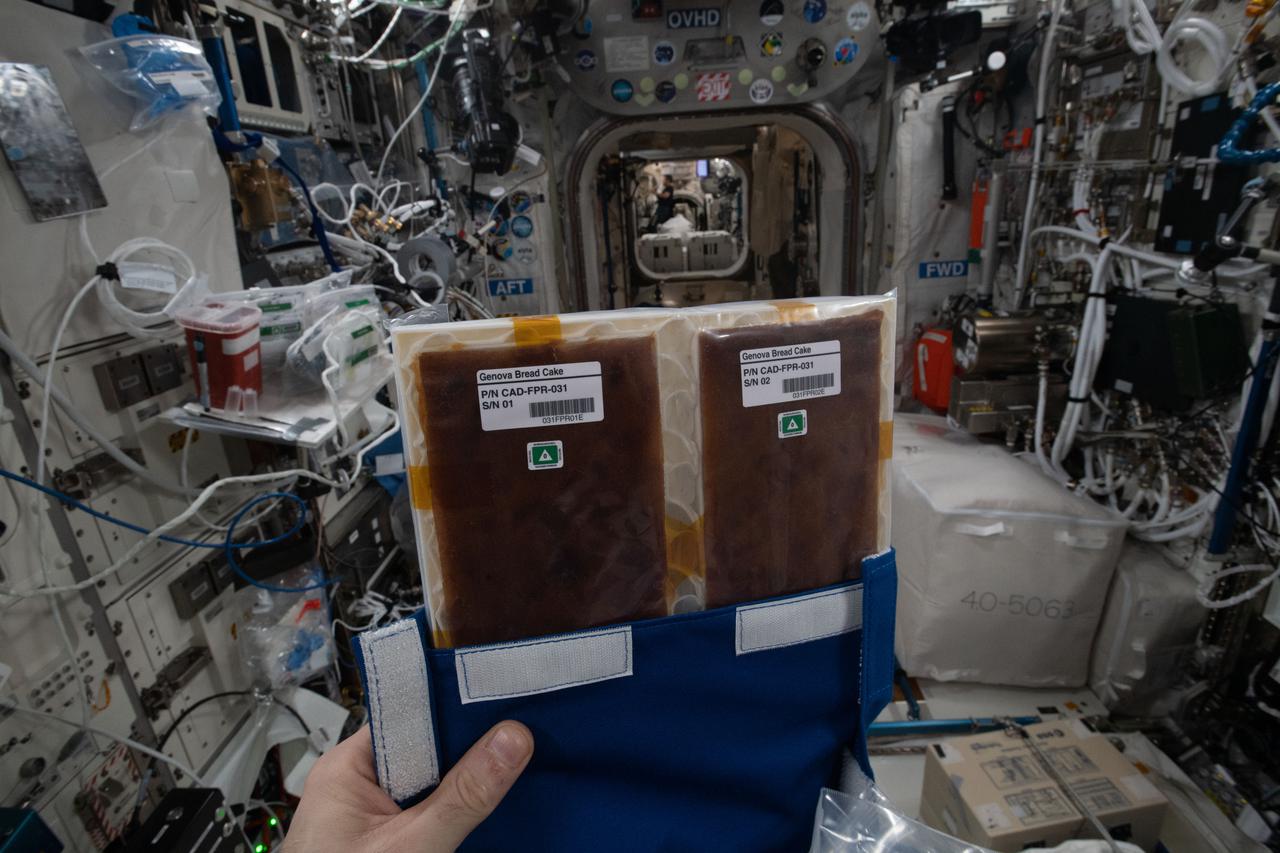
iss065e454878 (10/11/2021) --- A view of the Edible Foam in the Food Processor Consumables Kit aboard the International Space Station (ISS). Edible foam is made from PHA, a naturally occurring polymer synthesized by bacteria. It offers a high level of protection from isolated shocks and vibrations, which is particularly important during flights into space.
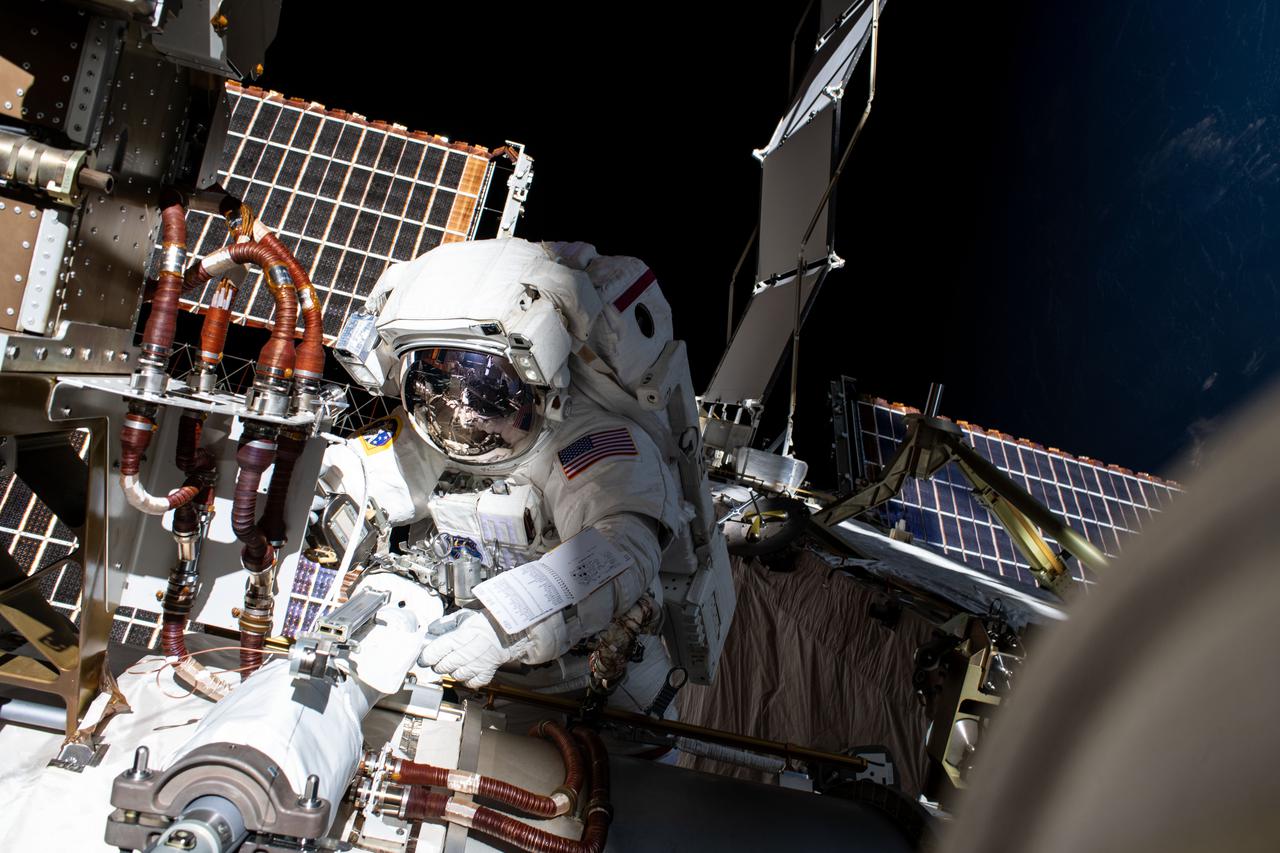
iss066e166221 (March 15, 2022) --- NASA astronaut Kayla Barron is pictured installing a modification kit on the International Space Station's Port-4 truss segment during a six-hour and 54-minute spacewalk setting it up for its next roll-out solar array.

iss065e454862 (10/11/2021) --- A view of the Edible Foam in the Food Processor Consumables Kit aboard the International Space Station (ISS). Edible foam is made from PHA, a naturally occurring polymer synthesized by bacteria. It offers a high level of protection from isolated shocks and vibrations, which is particularly important during flights into space.
iss074e0403089 (March 18, 2026) -- NASA astronaut Jessica Meir installs a roll-out solar array modification kit to the exterior of the International Space Station during the 278th spacewalk in support of space station maintenance, assembly, and upgrades on March 18, 2026. Credit: NASA/Chris Williams
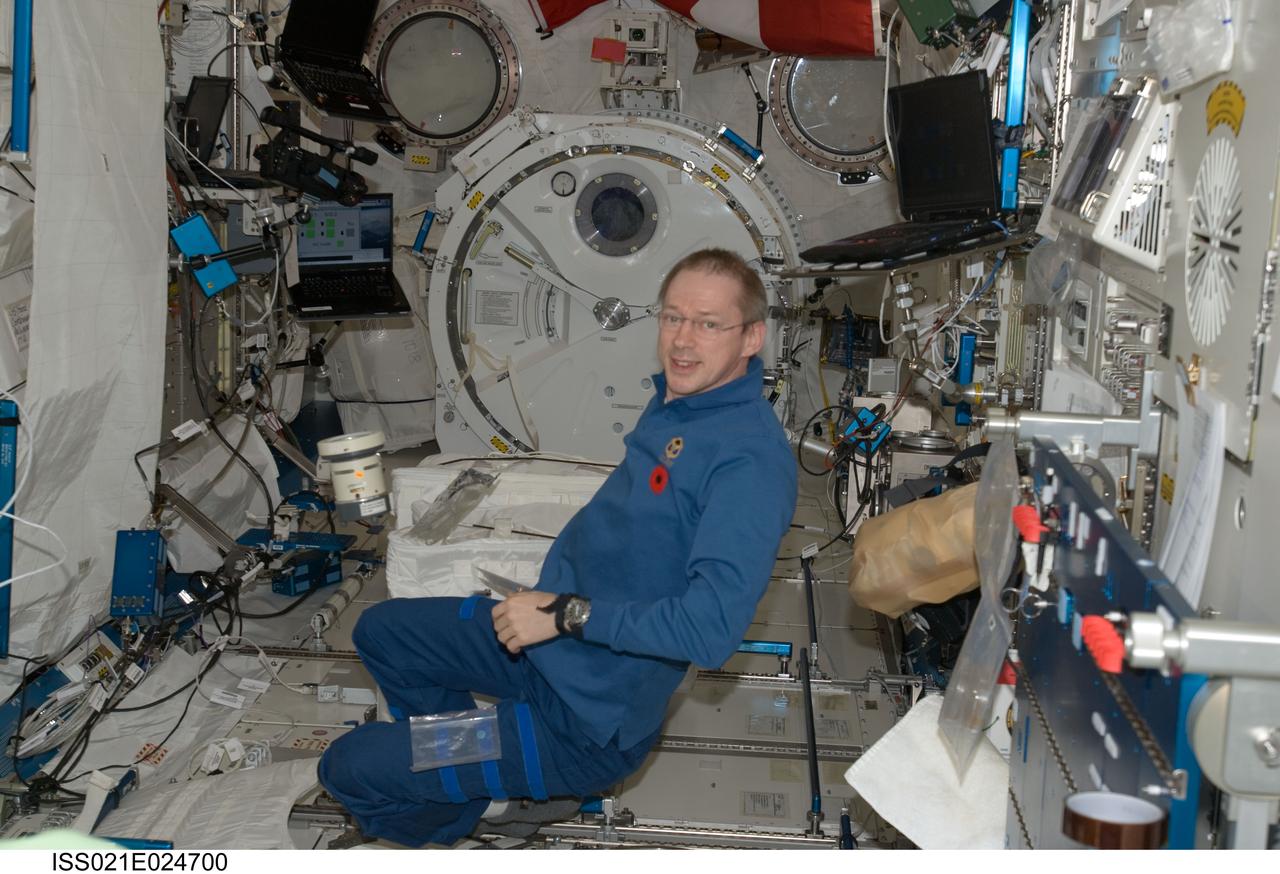
ISS021-E-024700 (11 Nov. 2009) --- European Space Agency astronaut Frank De Winne, Expedition 21 commander, uses the Microbial Air Sampler kit (floating freely near De Winne) to obtain microbiology (bacterial & fungal) air samples in the Kibo laboratory of the International Space Station.