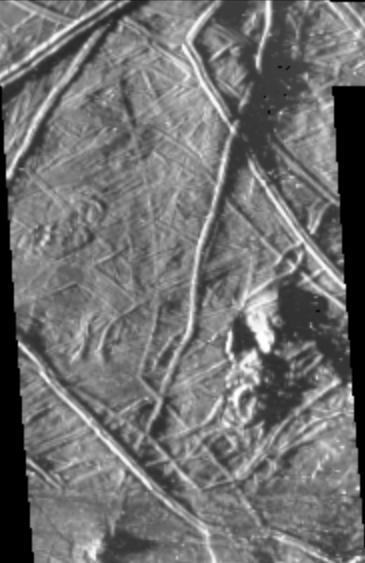
Topography on Europa....the Shadow Knows
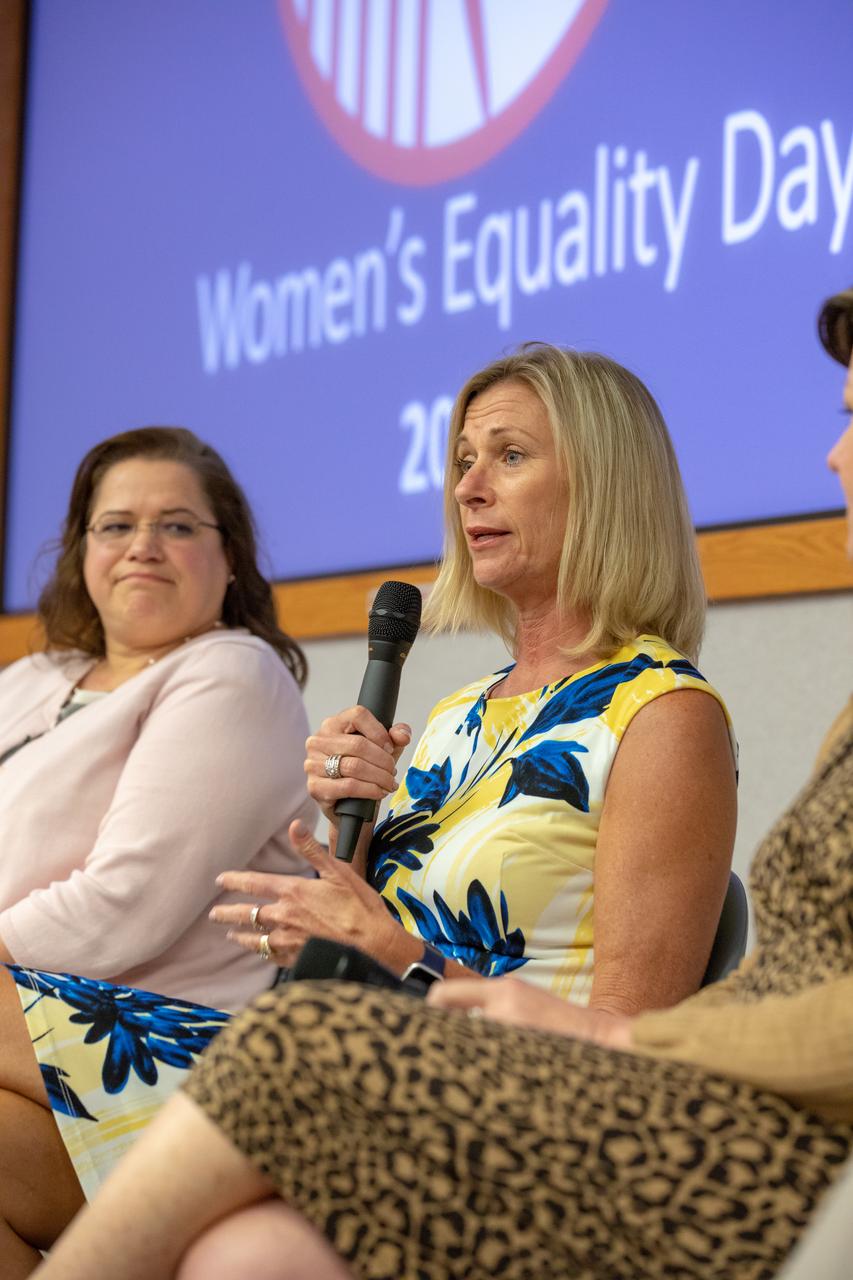
A panel discussion, featuring women in leadership roles at NASA’s Kennedy Space Center in Florida, is held on Aug. 26, 2019, to celebrate Women’s Equality Day. The event, sponsored by the Kennedy Networking Opportunities for Women (KNOW) employee resource group, honored the 100th anniversary of the passing of the 19th amendment guaranteeing all American women the right to vote. Nancy Bray, director of Spaceport Integration and Services, answers a question. At left is Digna Carballosa, director of the Human Resources Office. The purpose of KNOW is to provide focus on issues such as employment, retention, promotion, training, career and personal development, education, and identify and eliminate barriers that hinder the advancement of women in the workforce.
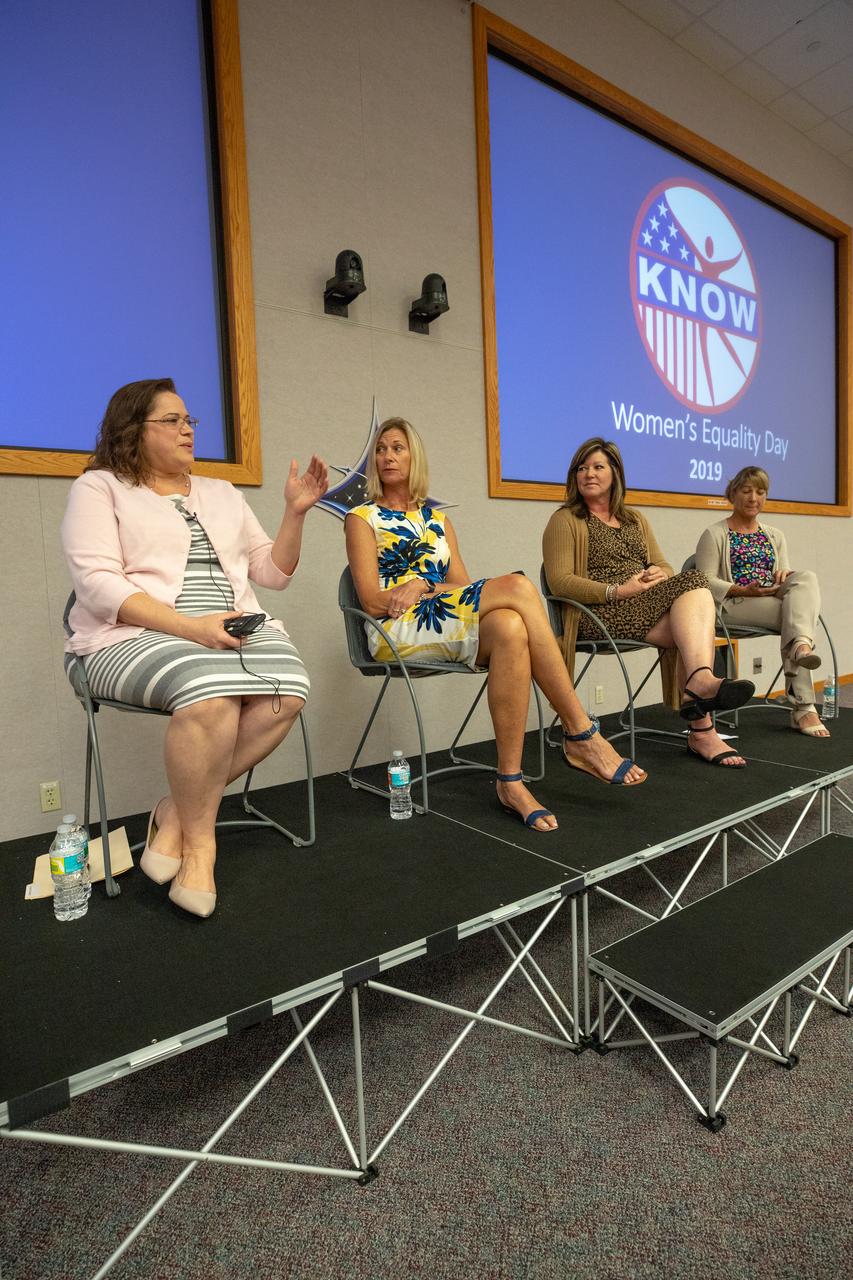
A panel discussion, featuring women in leadership roles at NASA’s Kennedy Space Center in Florida, is held on Aug. 26, 2019, to celebrate Women’s Equality Day. The event, sponsored by the Kennedy Networking Opportunities for Women (KNOW) employee resource group, honored the 100th anniversary of the passing of the 19th amendment guaranteeing all American women the right to vote. Seated from left, are Digna Carballosa, director of the Human Resources Office; Nancy Bray, director of Spaceport Integration and Services; Jennifer Kunz, director of Safety and Mission Assurance; and Amanda Mitskevich, Launch Services Program manager. The purpose of KNOW is to provide focus on issues such as employment, retention, promotion, training, career and personal development, education, and identify and eliminate barriers that hinder the advancement of women in the workforce.
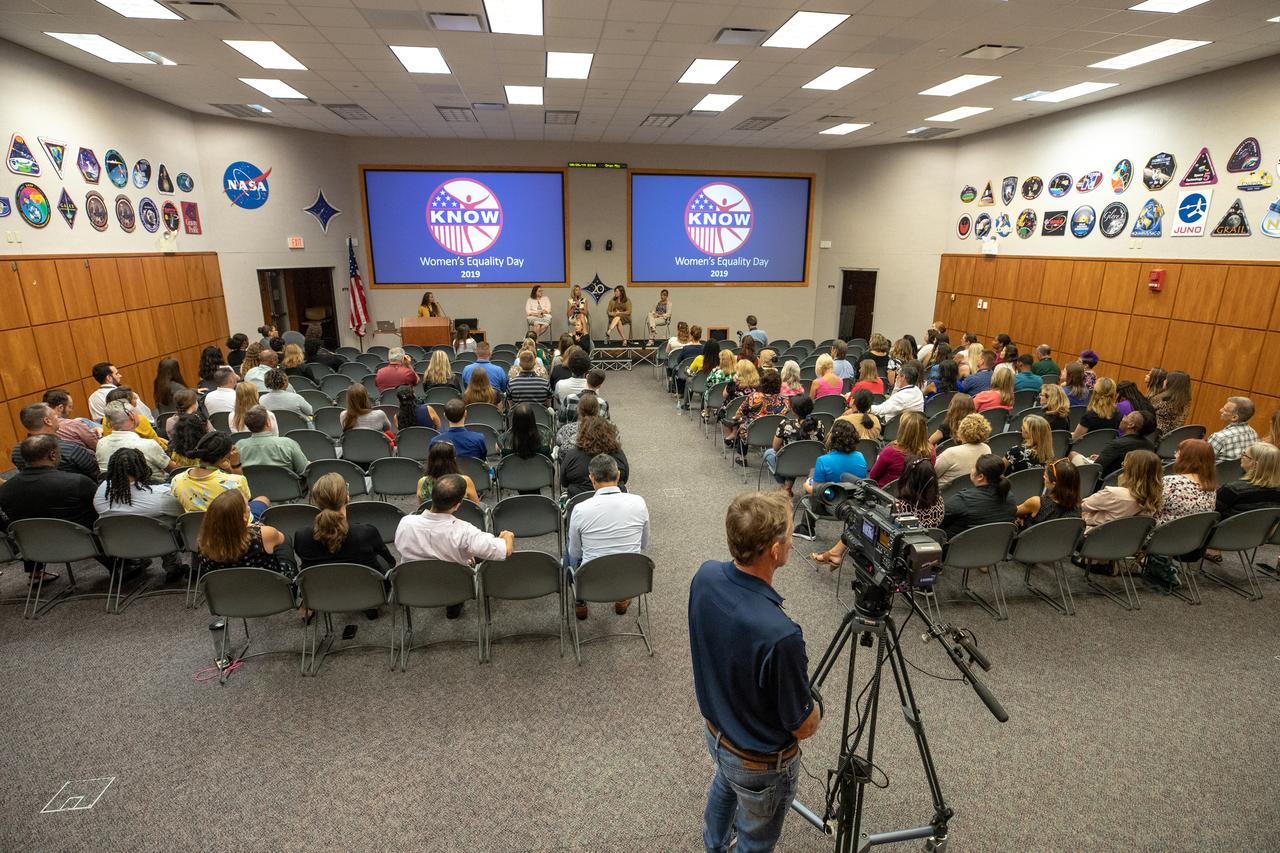
A panel discussion, featuring women in leadership roles at NASA’s Kennedy Space Center in Florida, is held on Aug. 26, 2019, to celebrate Women’s Equality Day. The event, sponsored by the Kennedy Networking Opportunities for Women (KNOW) employee resource group, honored the 100th anniversary of the passing of the 19th amendment guaranteeing all American women the right to vote. Seated in front from left, are Digna Carballosa, director of the Human Resources Office; Nancy Bray, director of Spaceport Integration and Services; Jennifer Kunz, director of Safety and Mission Assurance; and Amanda Mitskevich, Launch Services Program manager. At far left is Ashley Nelsen, Launch Service Program information manager and panel discussion moderator. The purpose of KNOW is to provide focus on issues such as employment, retention, promotion, training, career and personal development, education, and identify and eliminate barriers that hinder the advancement of women in the workforce.
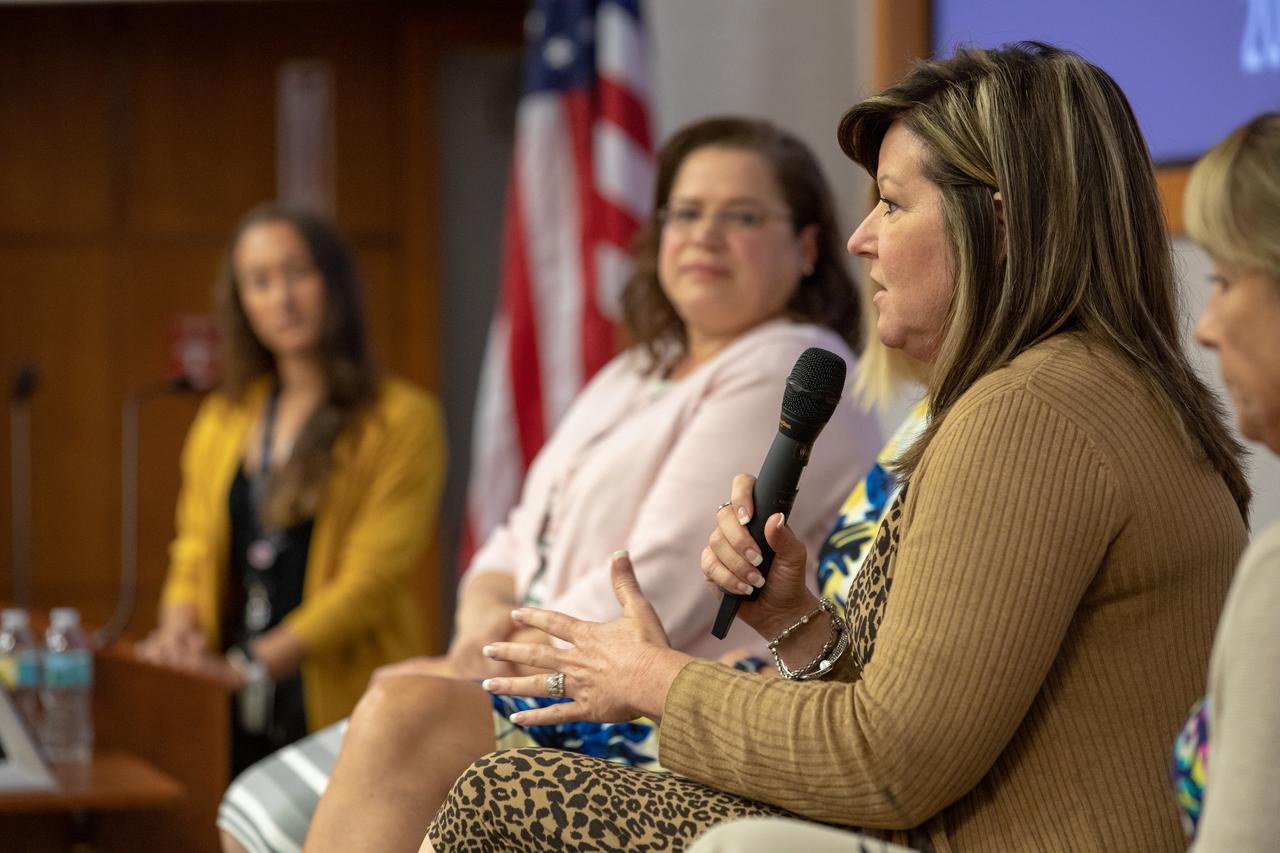
A panel discussion, featuring women in leadership roles at NASA’s Kennedy Space Center in Florida, is held on Aug. 26, 2019, to celebrate Women’s Equality Day. The event, sponsored by the Kennedy Networking Opportunities for Women (KNOW) employee resource group, honored the 100th anniversary of the passing of the 19th amendment guaranteeing all American women the right to vote. Jennifer Kunz, director of Safety and Mission Assurance, answers a question. Seated at left is Digna Carballosa, director of the Human Resources Office. At far left is Ashley Nelsen, Launch Service Program information manager and panel discussion moderator. The purpose of KNOW is to provide focus on issues such as employment, retention, promotion, training, career and personal development, education, and identify and eliminate barriers that hinder the advancement of women in the workforce.
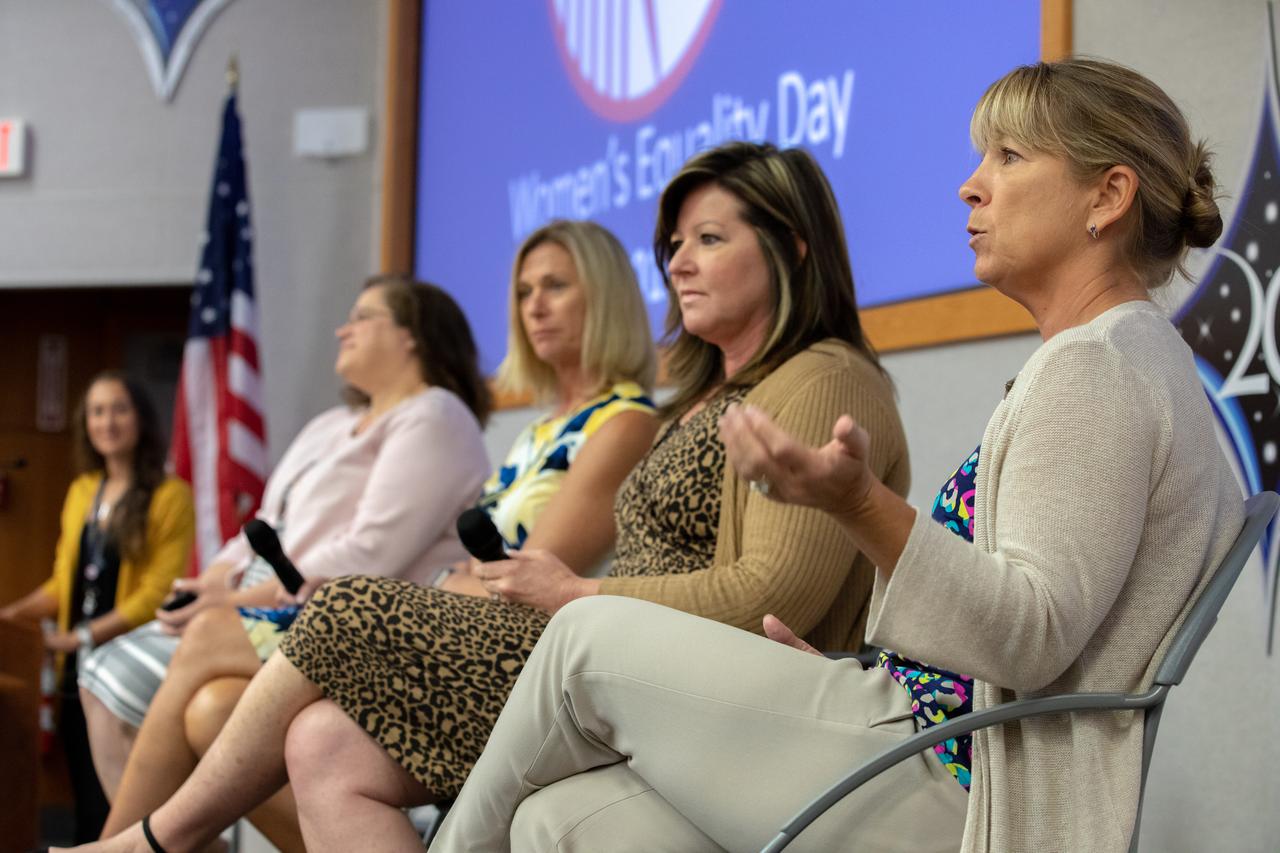
A panel discussion, featuring women in leadership roles at NASA’s Kennedy Space Center in Florida, is held on Aug. 26, 2019, to celebrate Women’s Equality Day. The event, sponsored by the Kennedy Networking Opportunities for Women (KNOW) employee resource group, honored the 100th anniversary of the passing of the 19th amendment guaranteeing all American women the right to vote. Seated in front from left, are Digna Carballosa, director of the Human Resources Office; Nancy Bray, director of Spaceport Integration and Services; Jennifer Kunz, director of Safety and Mission Assurance; and Amanda Mitskevich, Launch Services Program manager. At far left, is Ashley Nelsen, Launch Service Program information manager and panel discussion moderator. The purpose of KNOW is to provide focus on issues such as employment, retention, promotion, training, career and personal development, education, and identify and eliminate barriers that hinder the advancement of women in the workforce.
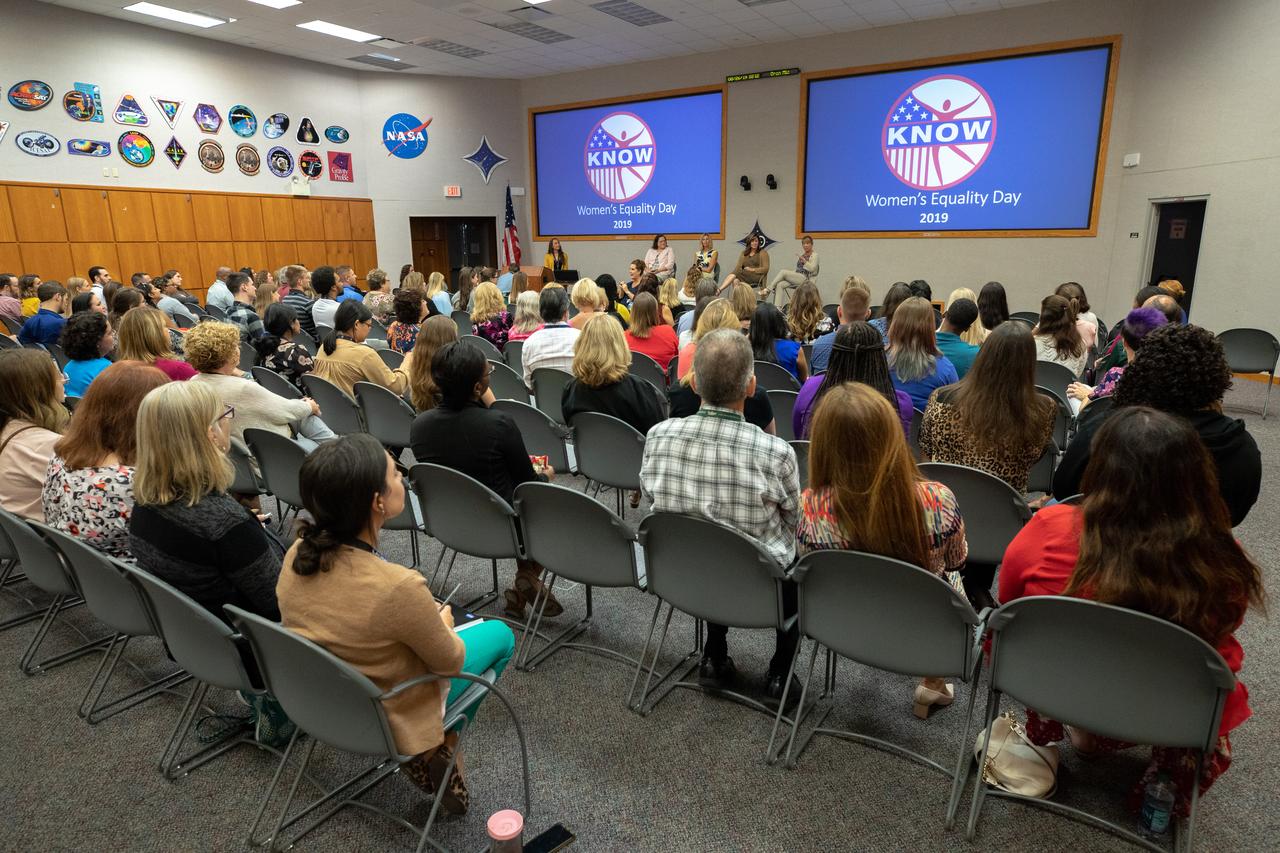
A panel discussion, featuring women in leadership roles at NASA’s Kennedy Space Center in Florida, is held on Aug. 26, 2019, to celebrate Women’s Equality Day. The event, sponsored by the Kennedy Networking Opportunities for Women (KNOW) employee resource group, honored the 100th anniversary of the passing of the 19th amendment guaranteeing all American women the right to vote. Seated in front from left, are Digna Carballosa, director of the Human Resources Office; Nancy Bray, director of Spaceport Integration and Services; Jennifer Kunz, director of Safety and Mission Assurance; and Amanda Mitskevich, Launch Services Program manager. At far left is Ashley Nelsen, Launch Service Program information manager and panel discussion moderator. The purpose of KNOW is to provide focus on issues such as employment, retention, promotion, training, career and personal development, education, and identify and eliminate barriers that hinder the advancement of women in the workforce.
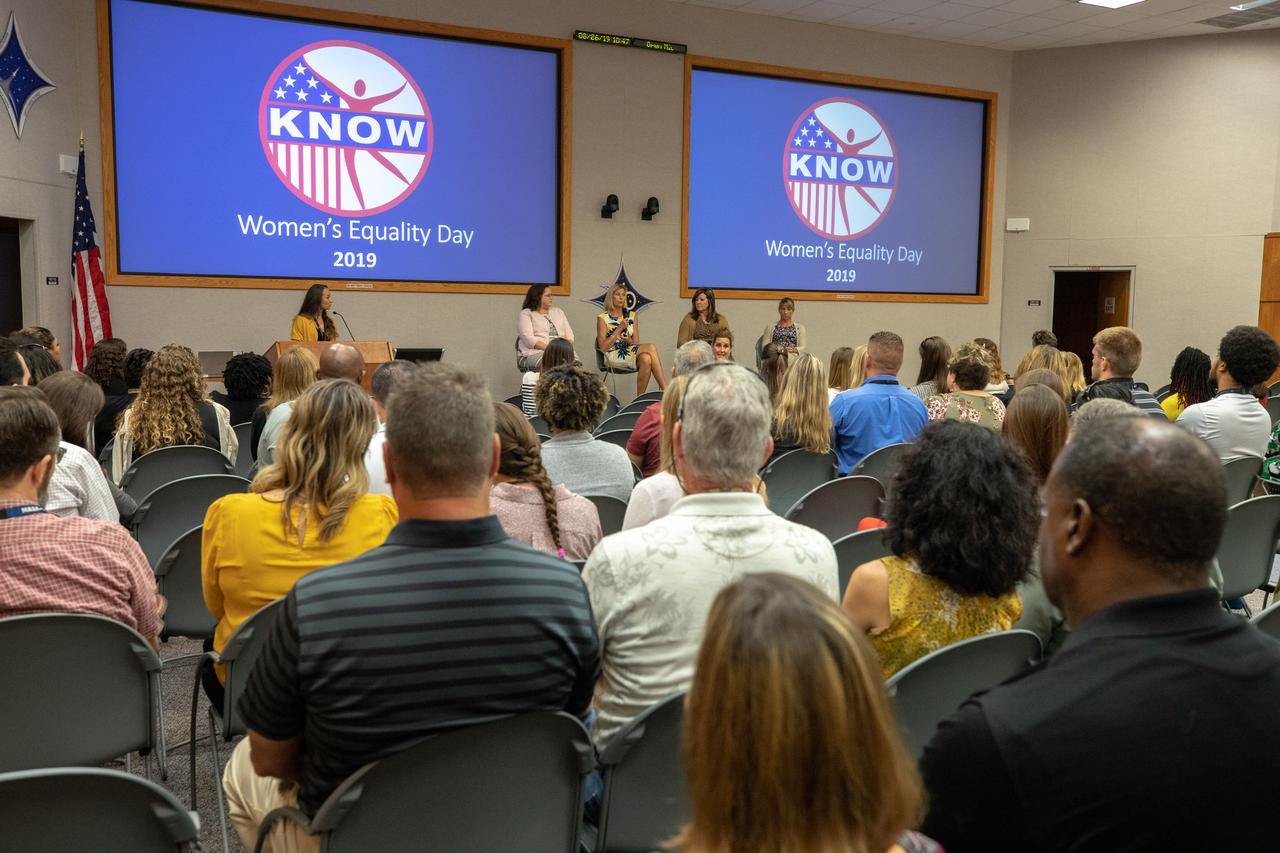
A panel discussion, featuring women in leadership roles at NASA’s Kennedy Space Center in Florida, is held on Aug. 26, 2019, to celebrate Women’s Equality Day. The event, sponsored by the Kennedy Networking Opportunities for Women (KNOW) employee resource group, honored the 100th anniversary of the passing of the 19th amendment guaranteeing all American women the right to vote. Seated in front from left, are Digna Carballosa, director of the Human Resources Office; Nancy Bray, director of Spaceport Integration and Services; Jennifer Kunz, director of Safety and Mission Assurance; and Amanda Mitskevich, Launch Services Program manager. At far left is Ashley Nelsen, Launch Service Program information manager and panel discussion moderator. The purpose of KNOW is to provide focus on issues such as employment, retention, promotion, training, career and personal development, education, and identify and eliminate barriers that hinder the advancement of women in the workforce.
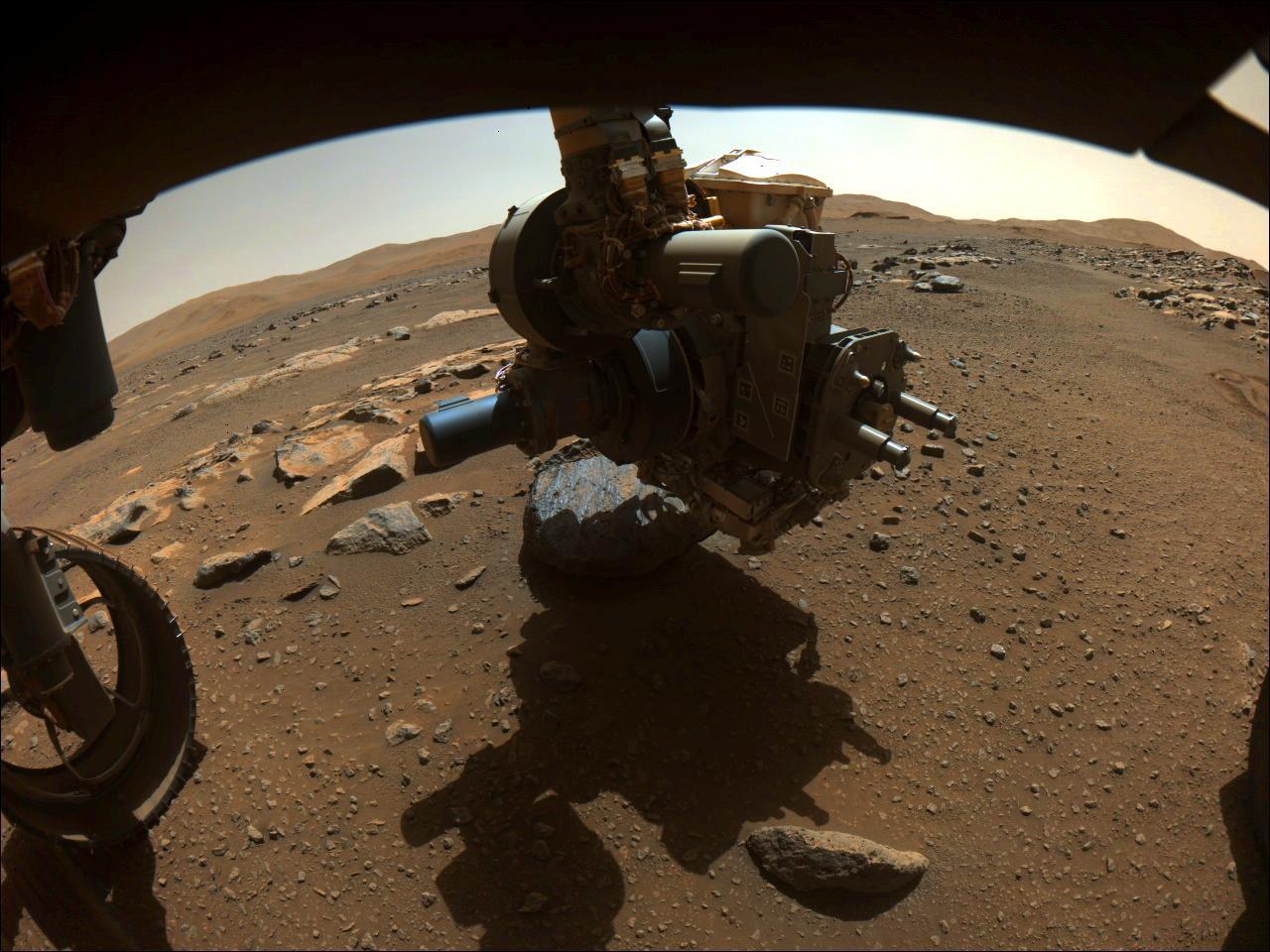
On Aug. 27, 2021, NASA's Perseverance rover captured this image of the science-instrument-laden turret at the end of its robotic arm getting close to the rock nicknamed "Rochette." Perseverance had just abraded a circular patch, nicknamed "Bellegarde," of the rock. This image was taken when the SHERLOC (Scanning Habitable Environments with Raman and Luminescence for Organics and Chemicals) instrument on the turret was using its WATSON (Wide Angle Topographic Sensor for Operations and eNgineering) camera to take a close-up image of Bellegarde on the 185th sol (Martian day) of Perseverance's mission. This image, taken by one of Perseverance's Hazard Avoidance Cameras, has been processed to enhance contrast. A key objective for Perseverance's mission on Mars is astrobiology, including the search for signs of ancient microbial life. The rover will characterize the planet's geology and past climate, pave the way for human exploration of the Red Planet, and be the first mission to collect and cache Martian rock and regolith. The Mars 2020 Perseverance mission is part of NASA's Moon to Mars exploration approach, which includes Artemis missions to the Moon that will help prepare for human exploration of the Red Planet. Subsequent NASA missions, in cooperation with ESA (European Space Agency), would send spacecraft to Mars to collect these sealed samples from the surface and return them to Earth for in-depth analysis. https://photojournal.jpl.nasa.gov/catalog/PIA24831
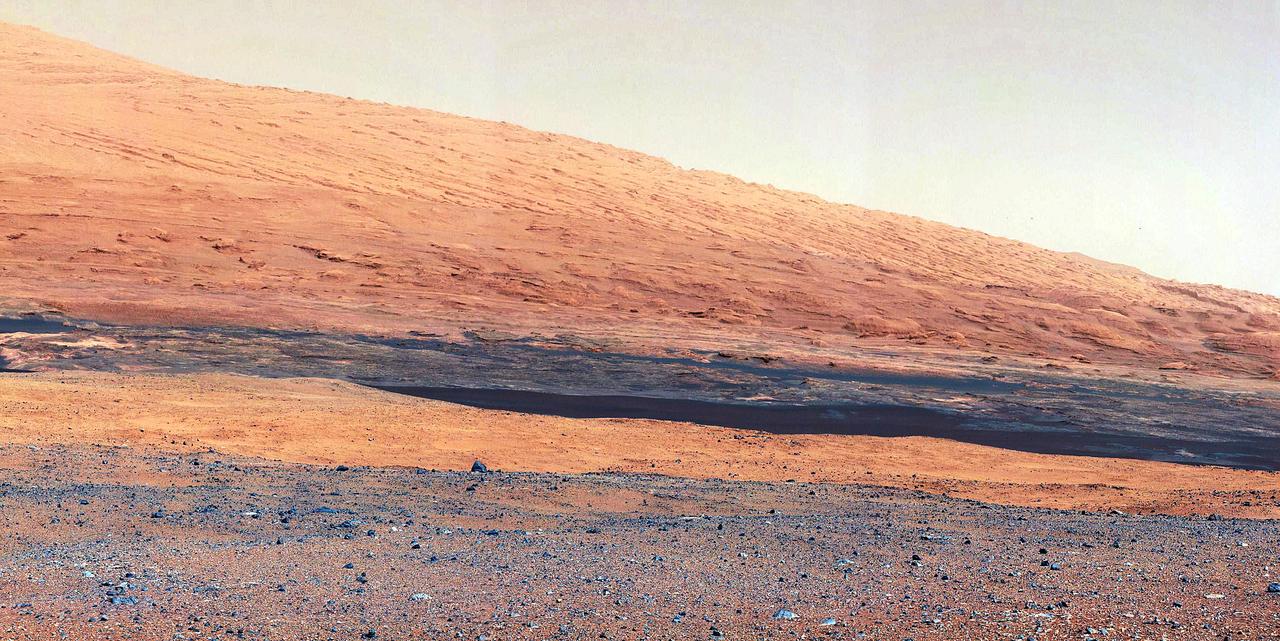
This image taken by the Mast Camera MastCam on NASA Curiosity rover highlights the interesting geology of Mount Sharp, a mountain inside Gale Crater, where the rover landed.

This ultraviolet image from NASA Galaxy Evolution Explorer shows the Southern Pinwheel galaxy, also know as Messier 83 or M83. It is located 15 million light-years away in the southern constellation Hydra.
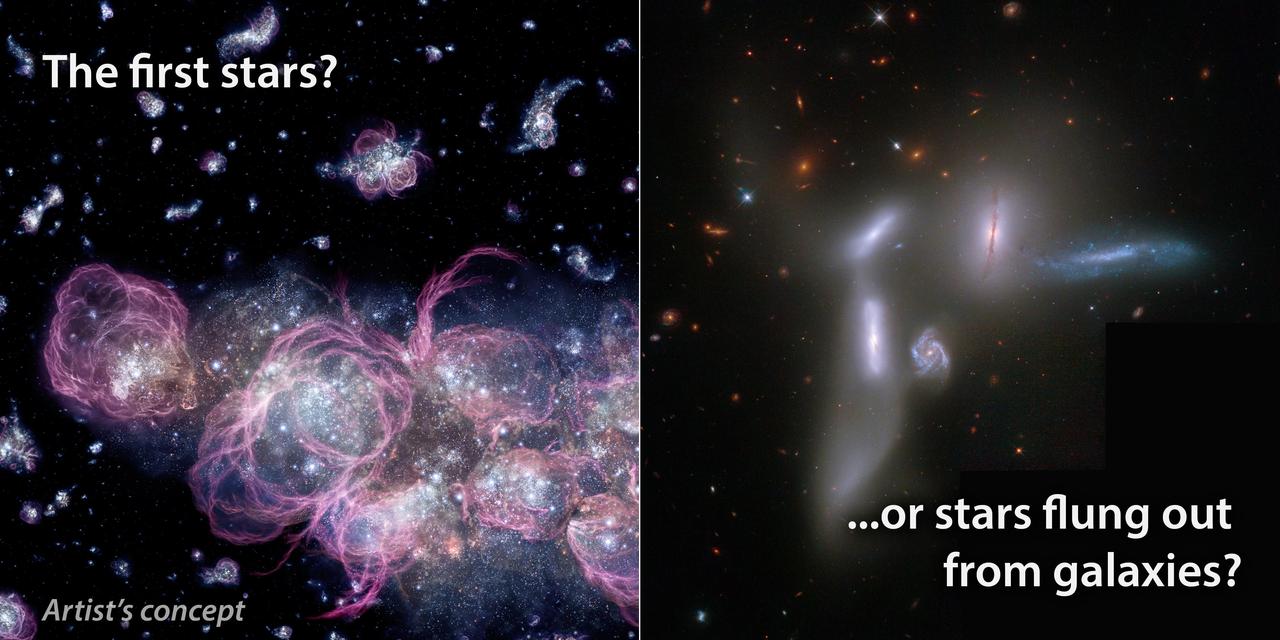
Our sky is filled with a diffuse background glow, known as the cosmic infrared background. Much of the light is from galaxies we know about, but previous Spitzer measurements have shown an extra component of unknown origin.
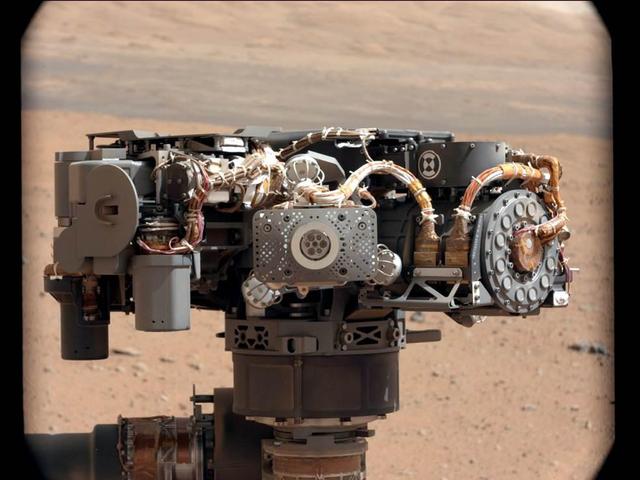
This image shows the Alpha Particle X-Ray Spectrometer APXS on NASA Curiosity rover, with the Martian landscape in the background. This image let researchers know that the APXS instrument had not become caked with dust during Curiosity landing.
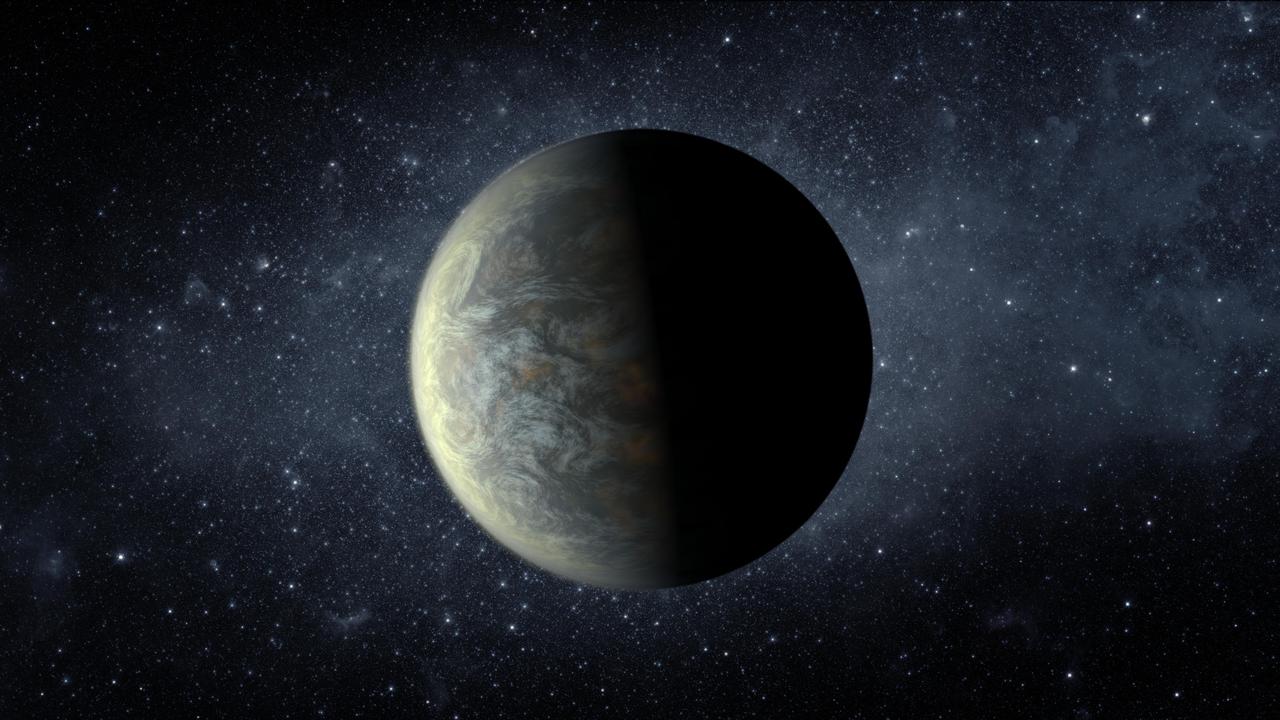
Kepler-20f is the closest object to the Earth in terms of size ever discovered. With an orbital period of 20 days and a surface temperature of 800 degrees Fahrenheit 430 degrees Celsius, it is too hot to host life, as we know it.
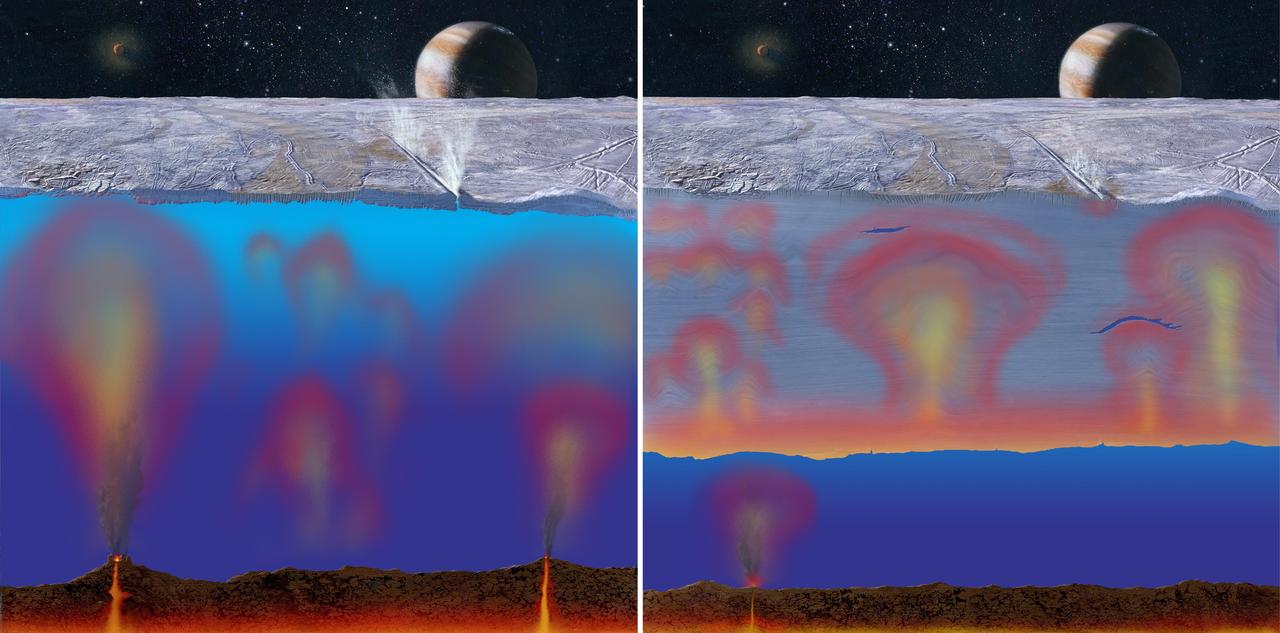
Scientists are all but certain that Europa has an ocean underneath its icy surface, but they do not know how thick this ice might be. This artist concept illustrates two possible cut-away views through Europa ice shell.
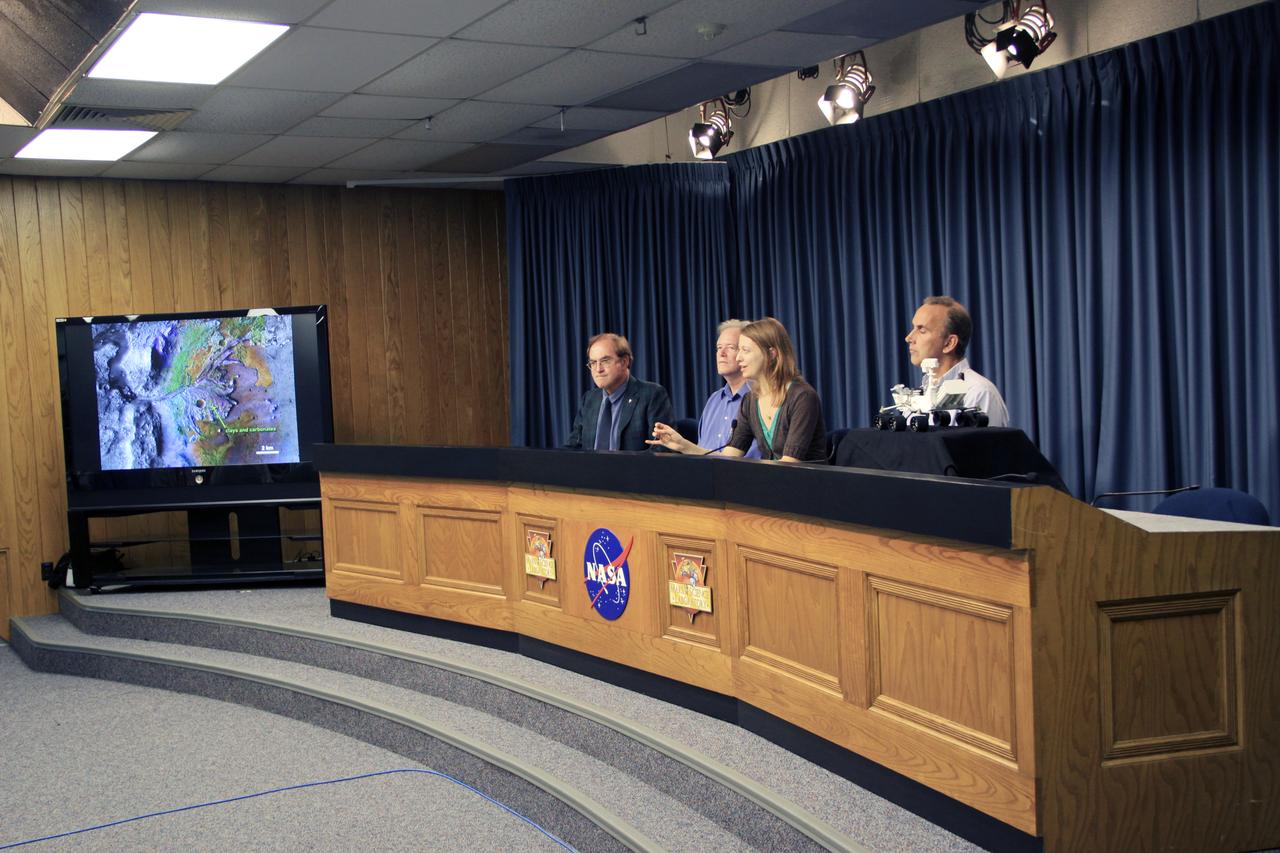
MSL - What Do We Know About Mars Press Conference
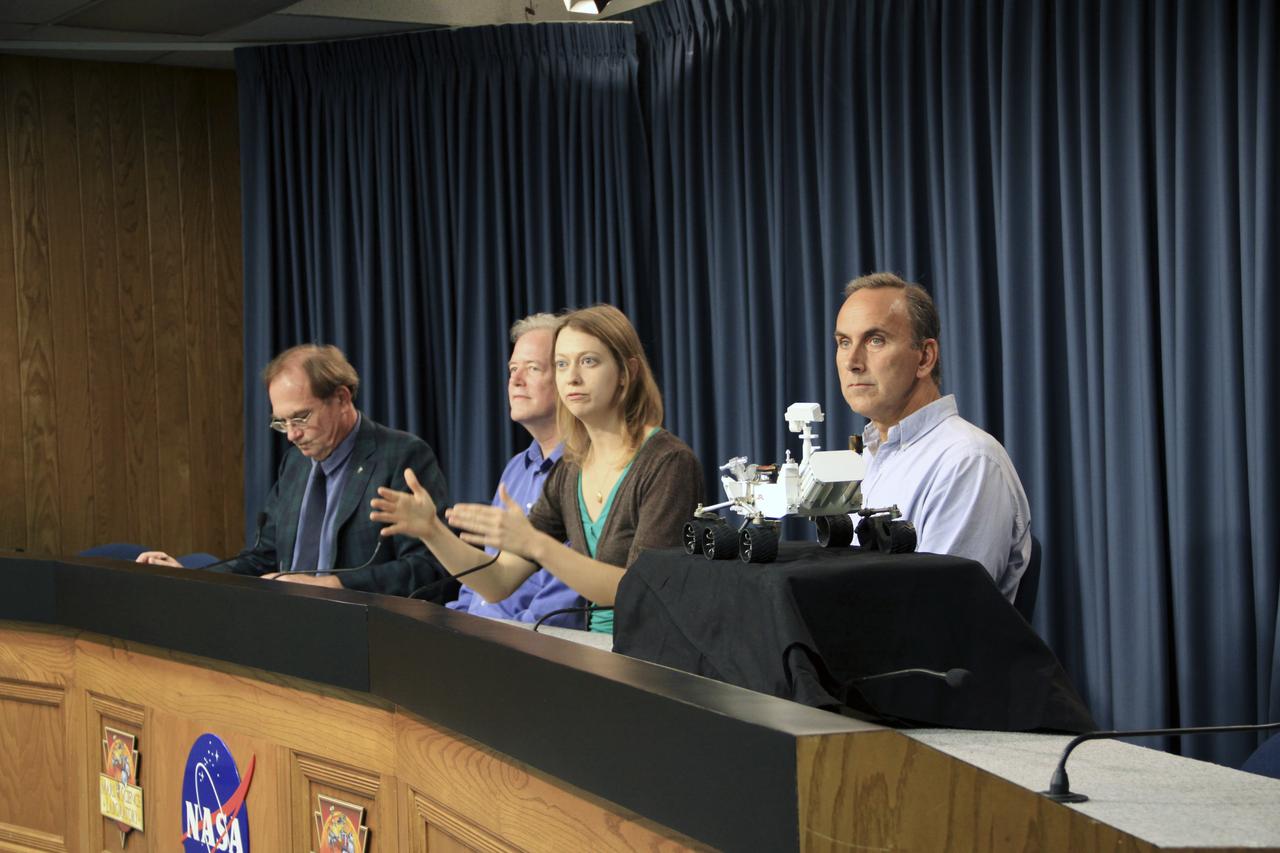
MSL - What Do We Know About Mars Press Conference
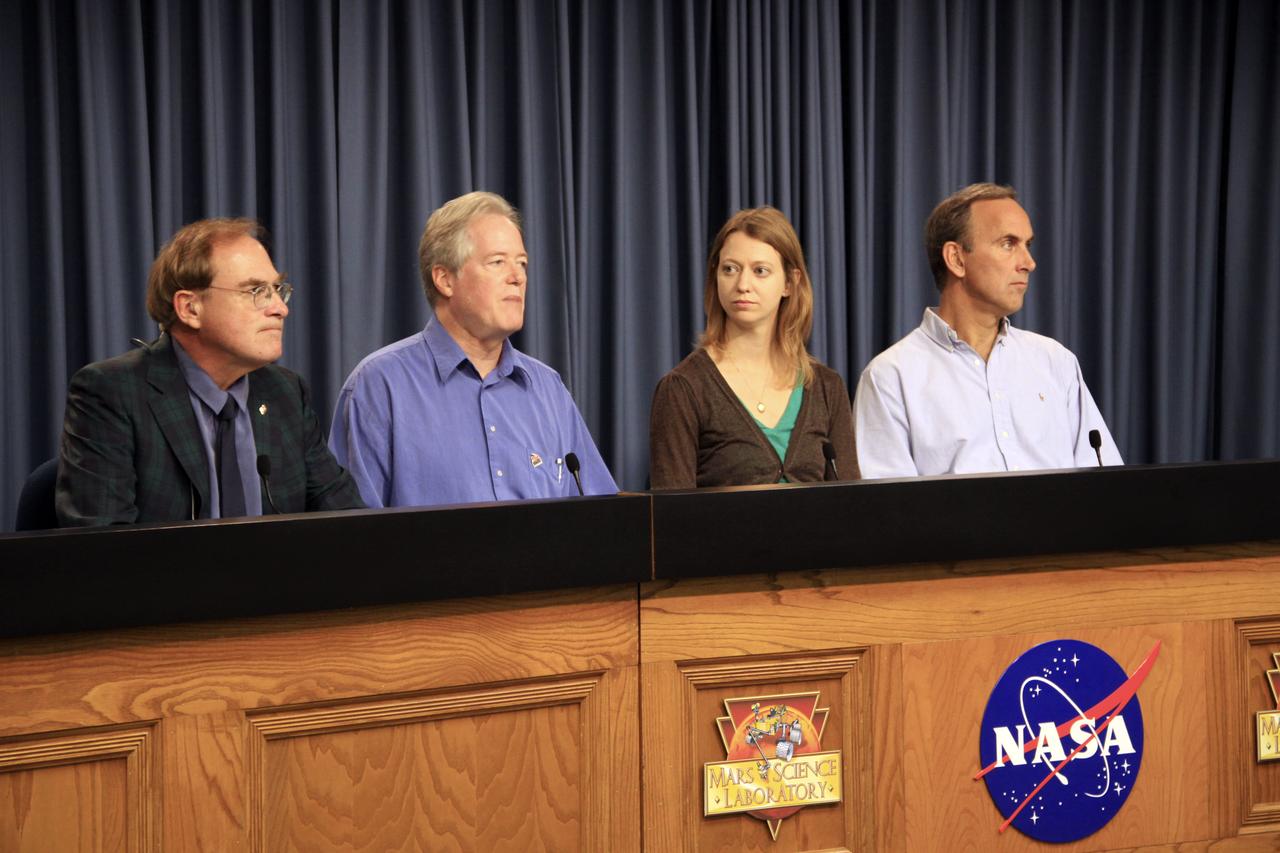
MSL - What Do We Know About Mars Press Conference
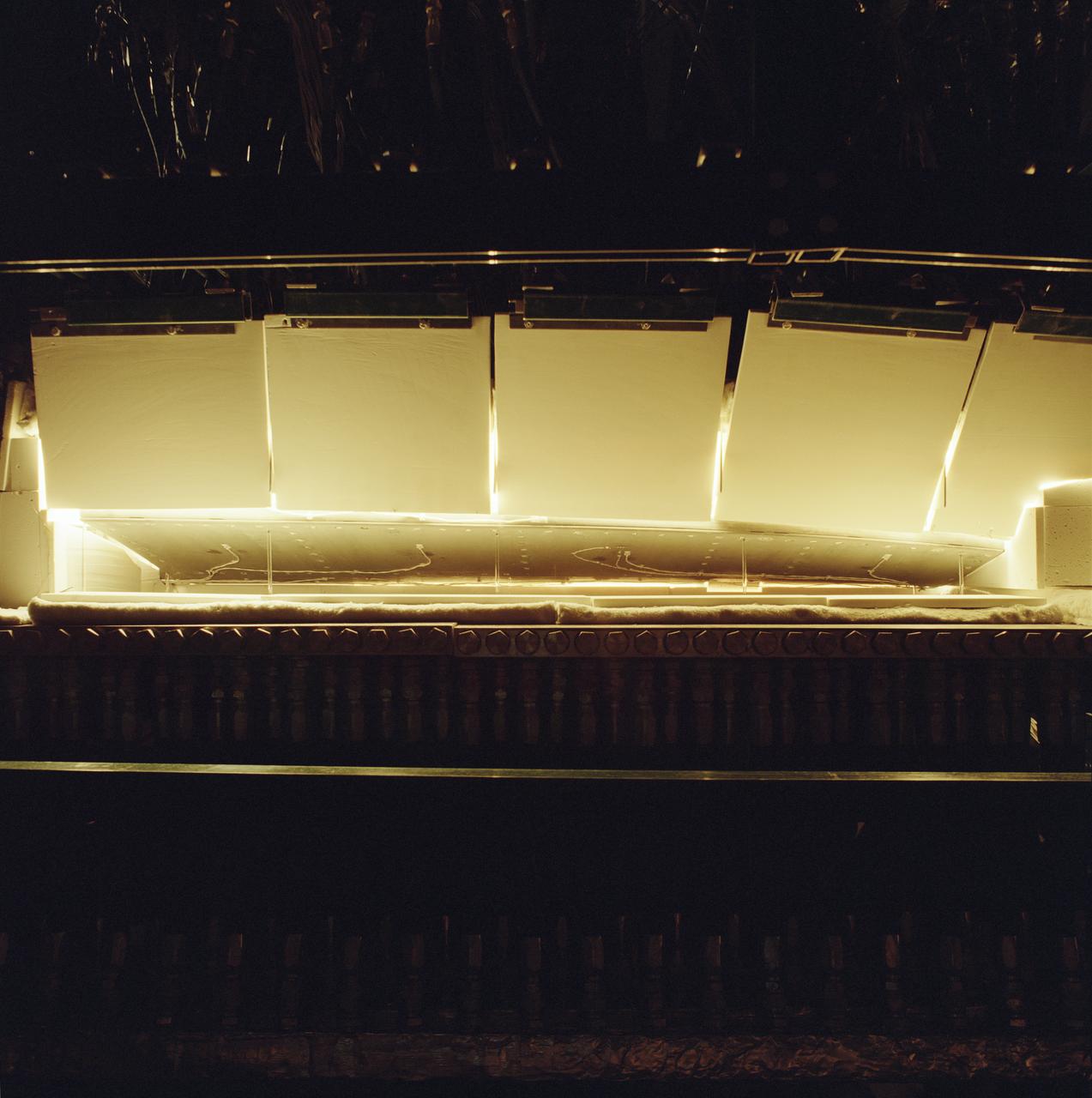
The X-37 advanced technology demonstrator flaperon unit was one of the first ever thermal and mechanical qualification tests of a carbon-carbon control surface designed for space flight. The test also featured extensive use of high-temperature fiber optic strain sensors. Peak temperatures reached 2,500 degrees Fahrenheit.
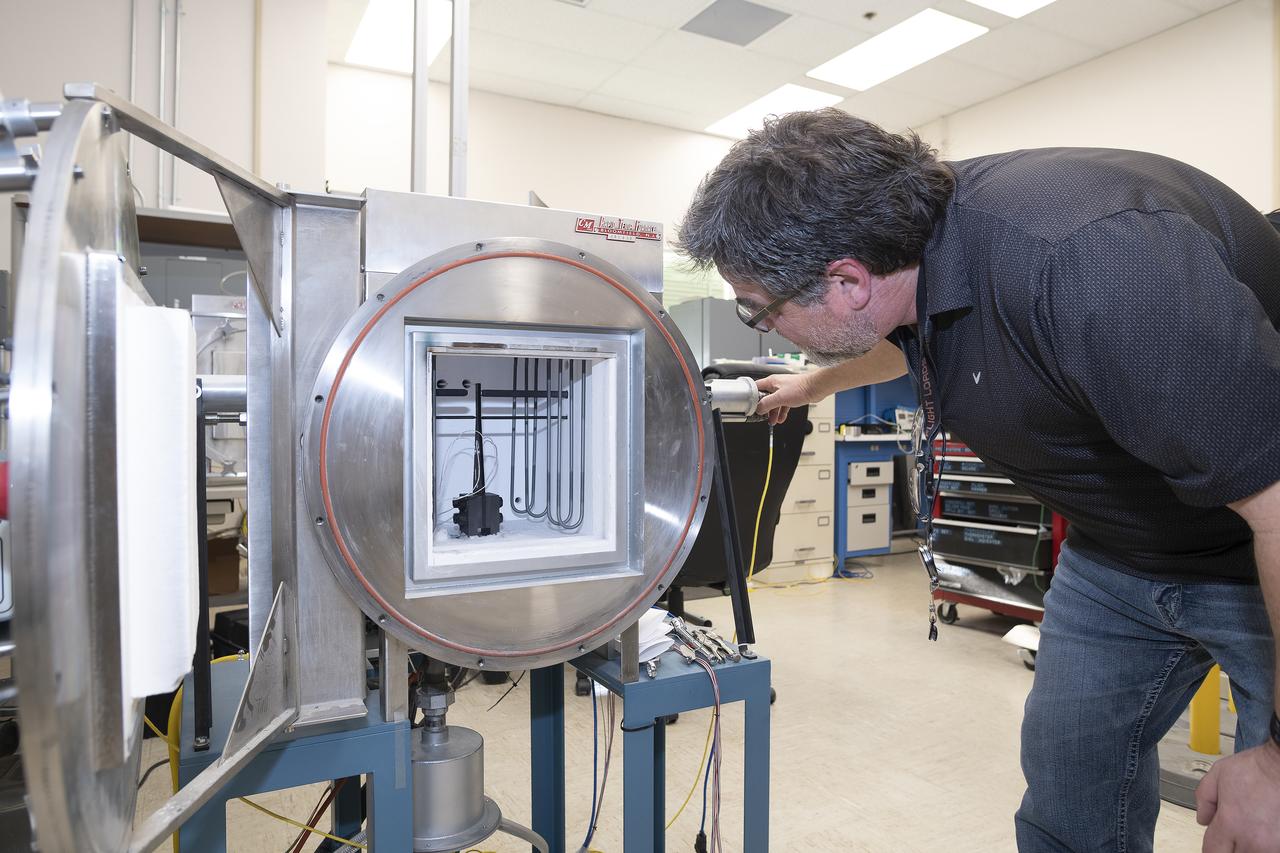
Anthony piazza, a researcher at NASA’s Armstrong Flight Research center in Edwards, California, works with high-temperature strain sensors. This test article is a bending load bar, which enables high-temperature optical strain sensor research up to 1,800 degrees Fahrenheit.
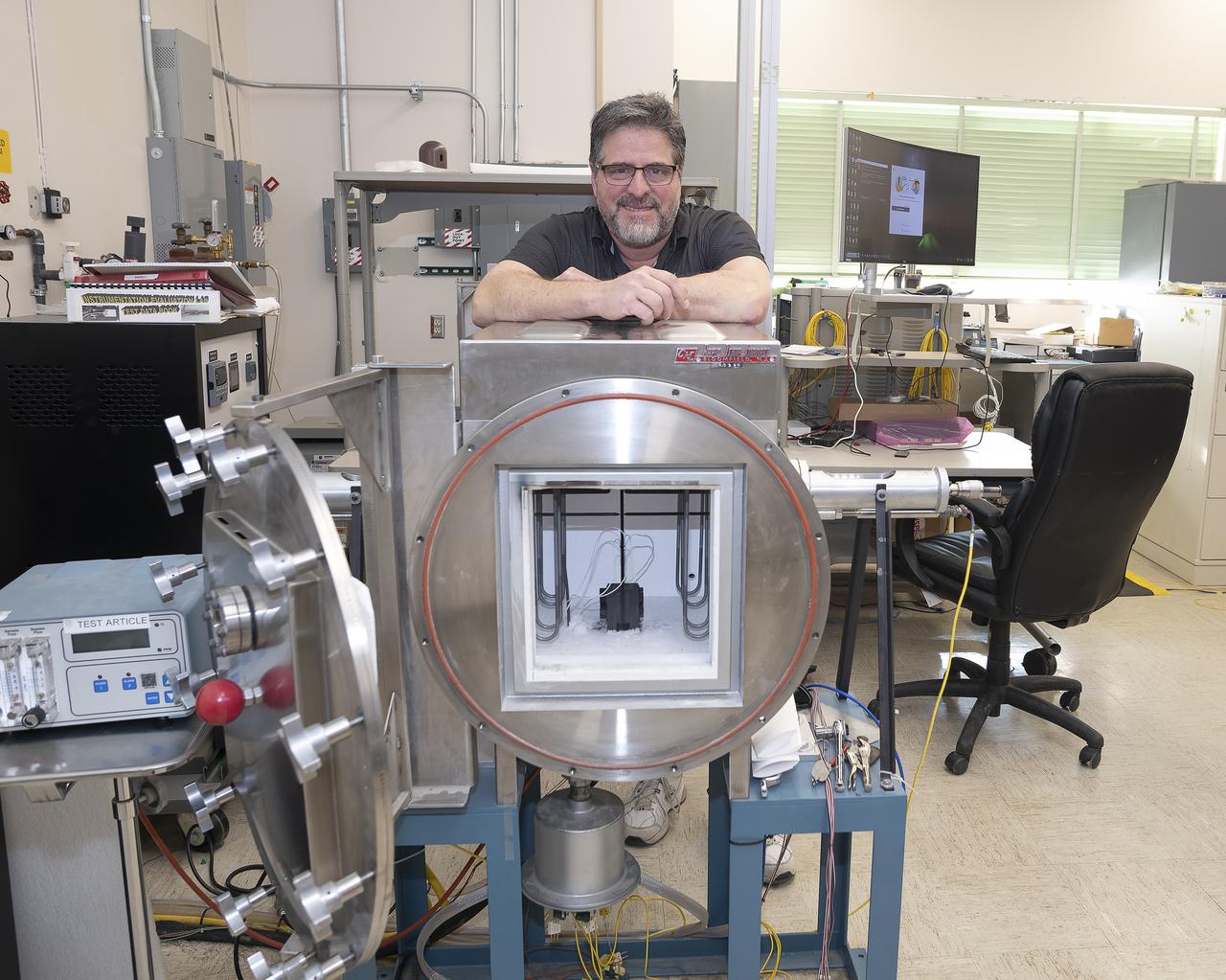
Anthony piazza, a researcher at NASA’s Armstrong Flight Research center in Edwards, California, works with high-temperature strain sensors. This test article is a bending load bar, which enables high-temperature optical strain sensor research up to 1,800 degrees Fahrenheit.
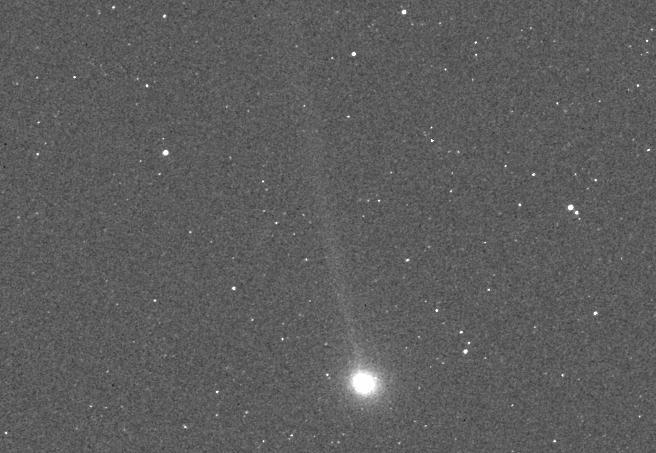
How did scientists know that NASA Voyager spacecraft entered interstellar space? Increase in the density of charged particles was the key piece of evidence. Our sun sits in a bubble, called the heliosphere, carved out by wind emitted from the hot sun.
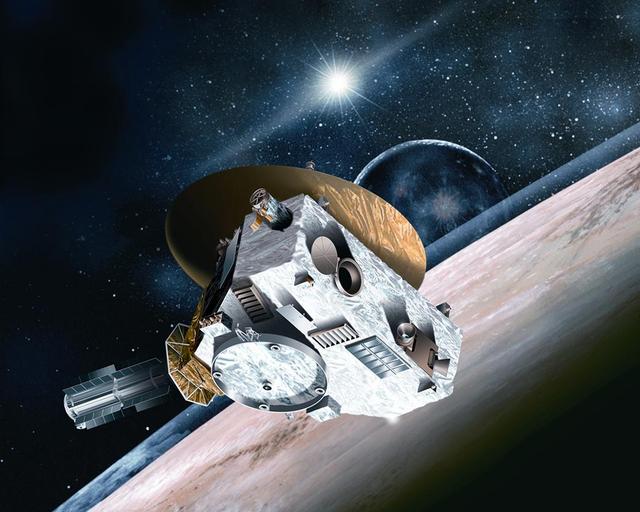
This artist concept shows NASA fleet of observatories busily gathering data before and after July 14, 2015 to help piece together what we know about Pluto, and what features New Horizons data might help explain. What's icy, has "wobbly" potato-shaped moons, and is arguably the world's favorite dwarf planet? The answer is Pluto, and NASA's New Horizons is speeding towards the edge of our solar system for a July 14 flyby. It won't be making observations alone; NASA's fleet of observatories will be busy gathering data before and after to help piece together what we know about Pluto, and what features New Horizons data might help explain. http://photojournal.jpl.nasa.gov/catalog/PIA19703

Measuring the mass and diameter of a planet reveals its density, which can give scientists clues about its composition. Scientists now know the density of the seven TRAPPIST-1 planets with a higher precision than any other planets in the universe, other than those in our own solar system. https://photojournal.jpl.nasa.gov/catalog/PIA23870
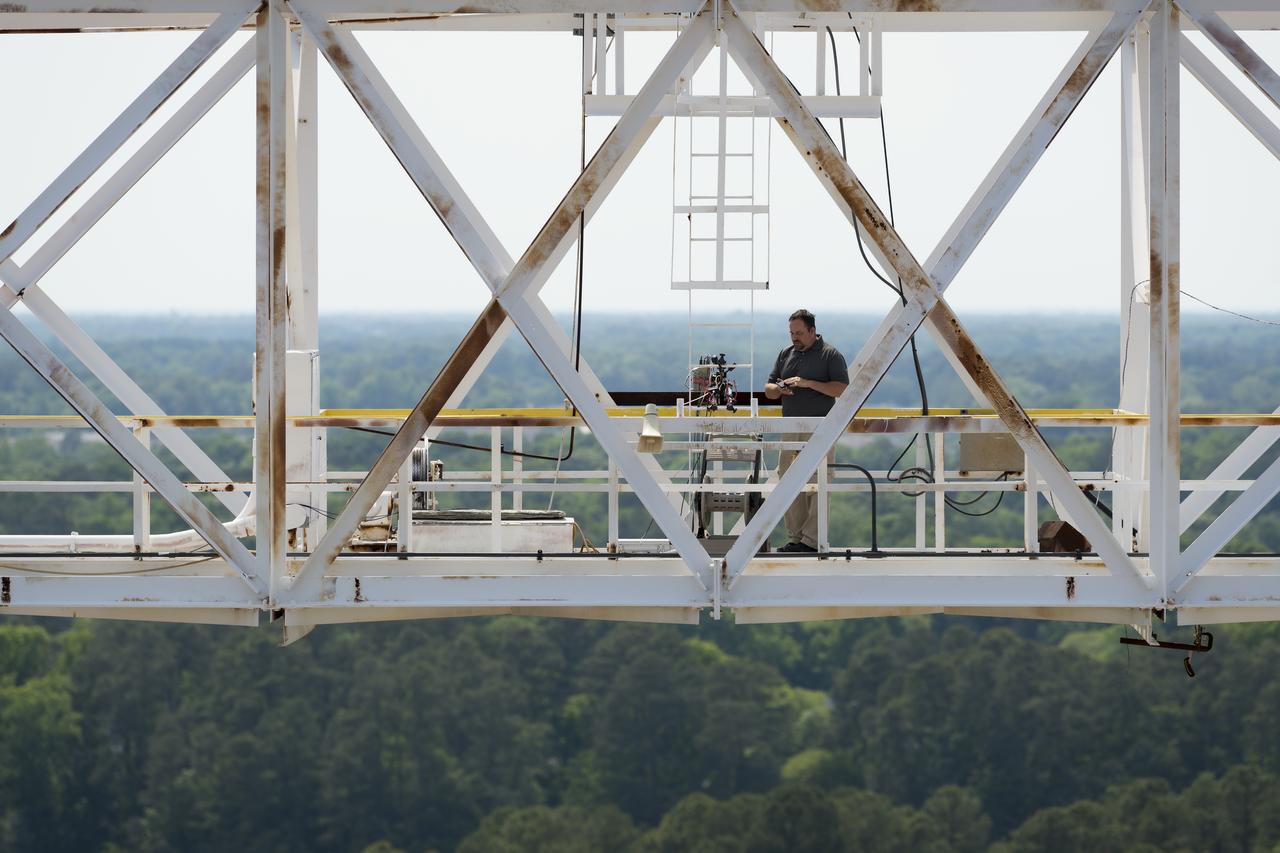
Images from Orion Structural Test Article (STA) vertical water impact testing (WIT) Swing Test 4, Photographer Harlen Capen at the top of the Impact Dynamics Facility or Gantry as it is know at NASA Langley Research Center.
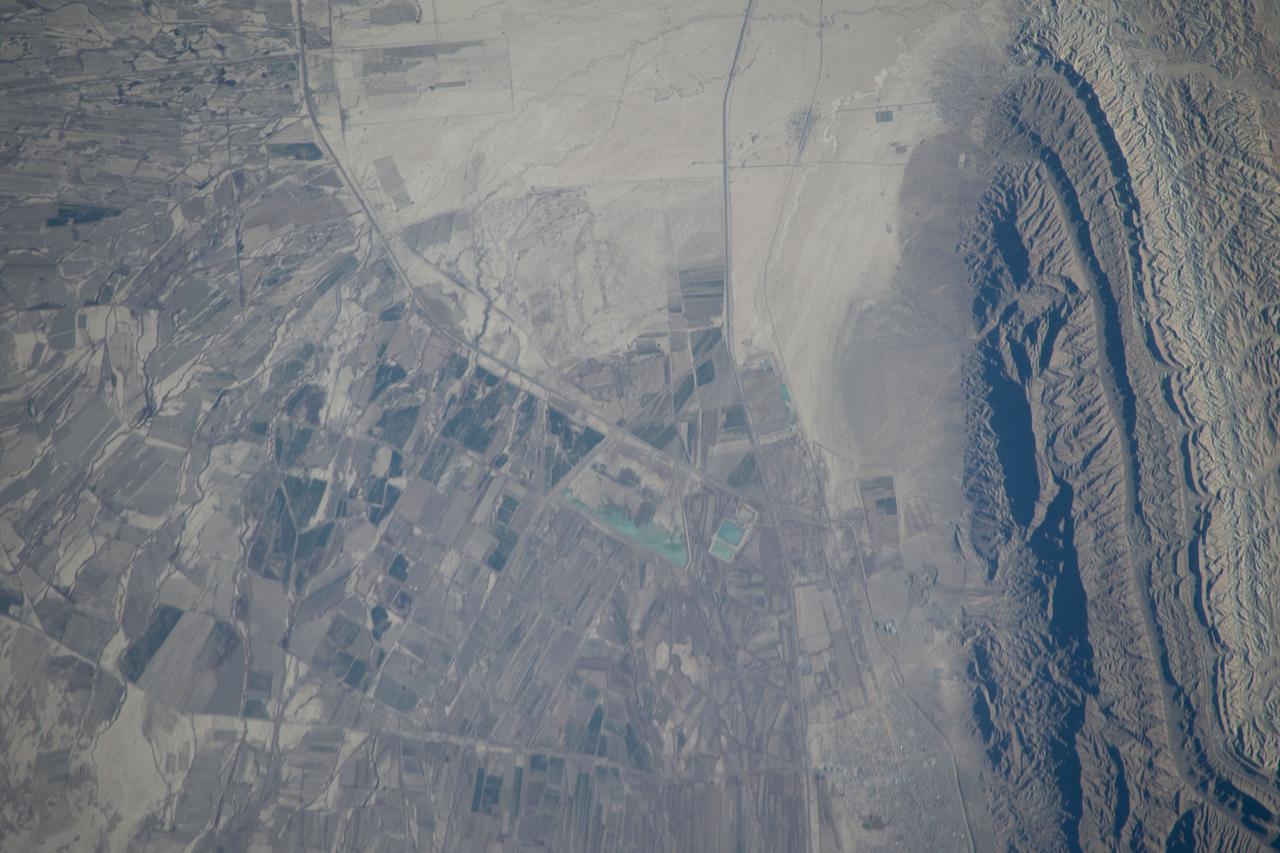
iss070e042555 (Dec. 17, 2023) --- The Balkan region of western Turkmenistan, know for its significant hydrocarbon reserves, is pictured from the International Space Station as it orbited 260 miles above the central Asian nation.
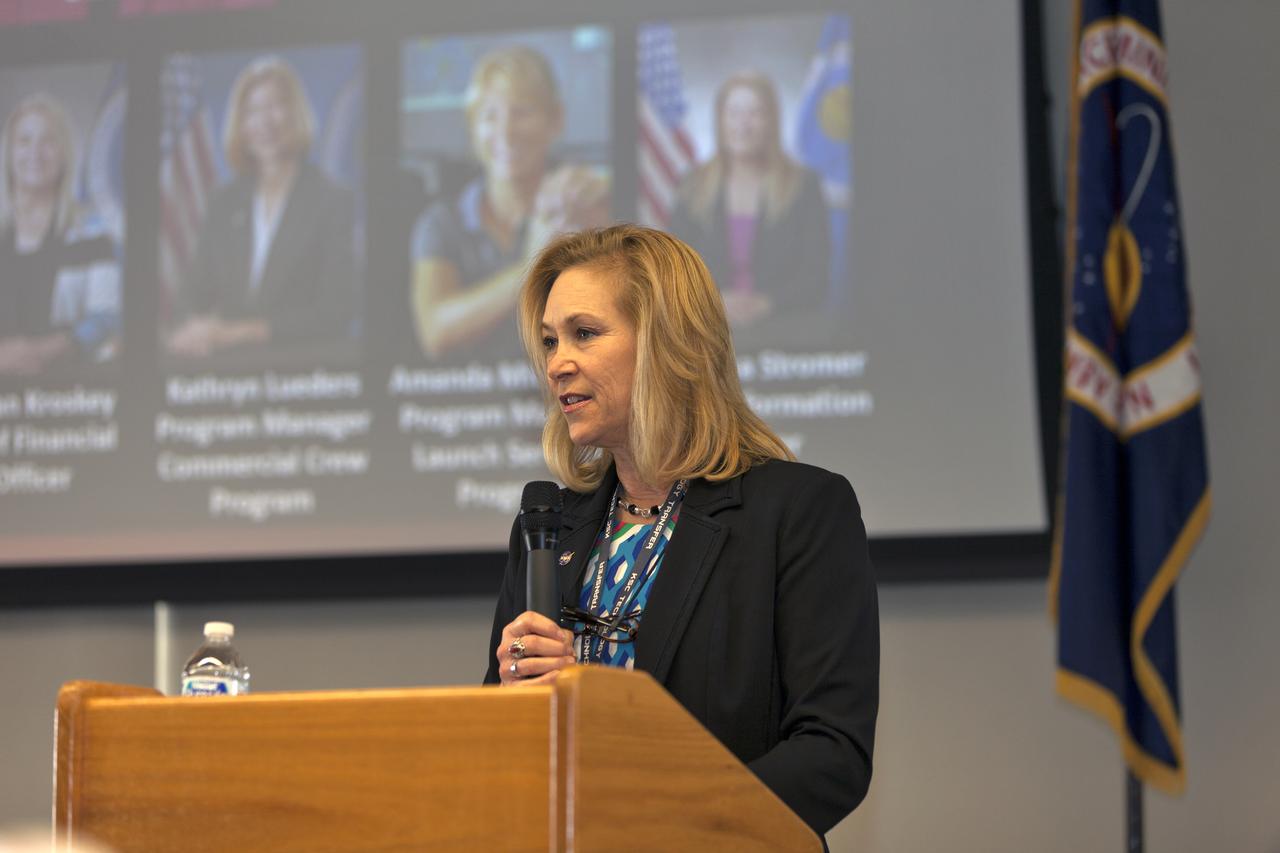
NASA Kennedy Space Center's Deputy Director Janet Petro welcomes workers to the center's Women's History Month event, with the theme "Nevertheless She Persisted." Keynote speaker, JoAnn Morgan, former associate director of the center, spoke to the group about her experience as the first female engineer working in the space program in the 1960s. Morgan was the first female in the Launch Control Center firing room during the Apollo 11 launch. The event was hosted by the center's Kennedy Networking Opportunities for Women (KNOW) and Launching Leaders organizations. The purpose of KNOW is to provide focus on issues such as employment, retention, promotion, training, career and personal development, education, and identify and eliminate barriers that hinder the advancement of women in the workforce.
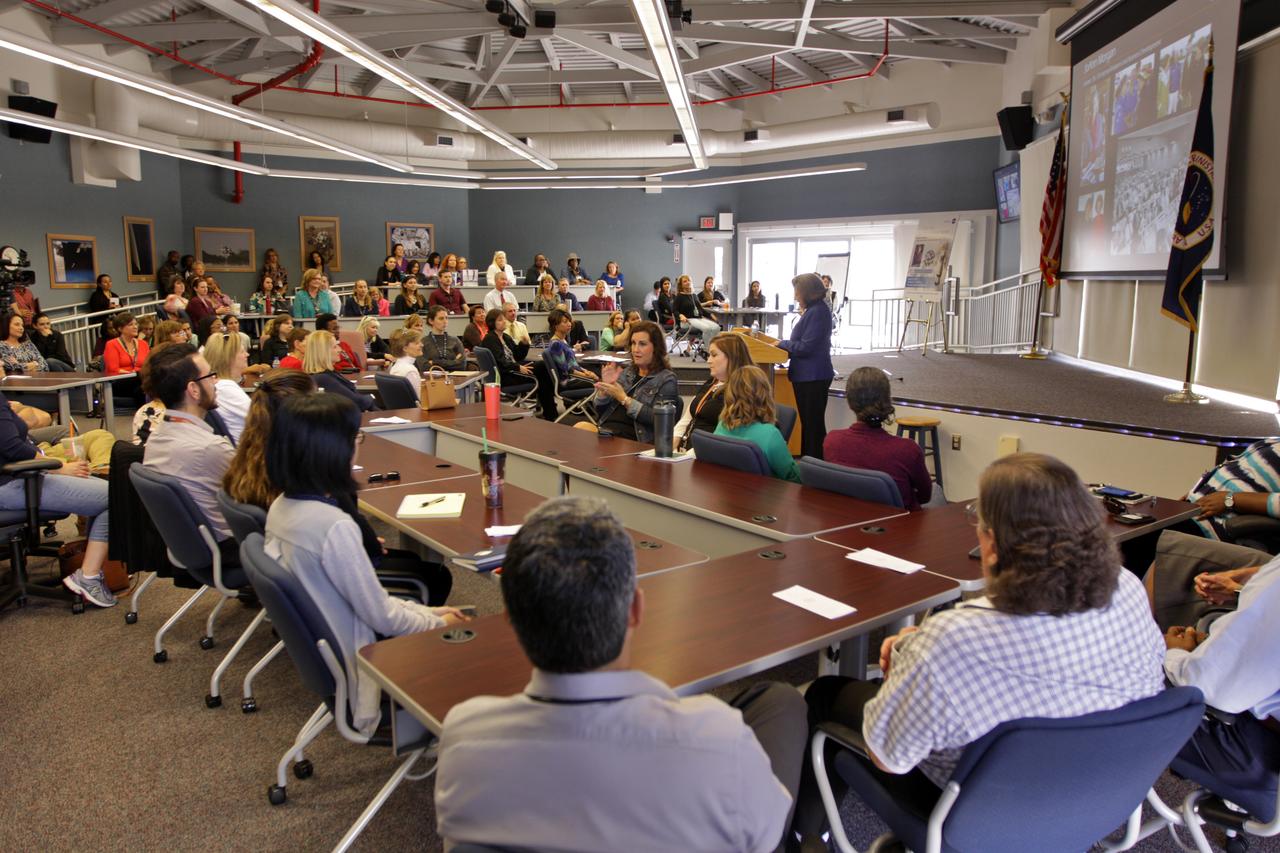
JoAnn Morgan, former associate director of NASA Kennedy Space Center, speaks to workers during a Women's History Month event at the center. With the theme "Nevertheless She Persisted," Morgan described her experience as the first female engineer working in the space program in the 1960s. Morgan was the first female in the Launch Control Center firing room during the Apollo 11 launch. The event was hosted by the center's Kennedy Networking Opportunities for Women (KNOW) and Launching Leaders organizations. The purpose of KNOW is to provide focus on issues such as employment, retention, promotion, training, career and personal development, education, and identify and eliminate barriers that hinder the advancement of women in the workforce.
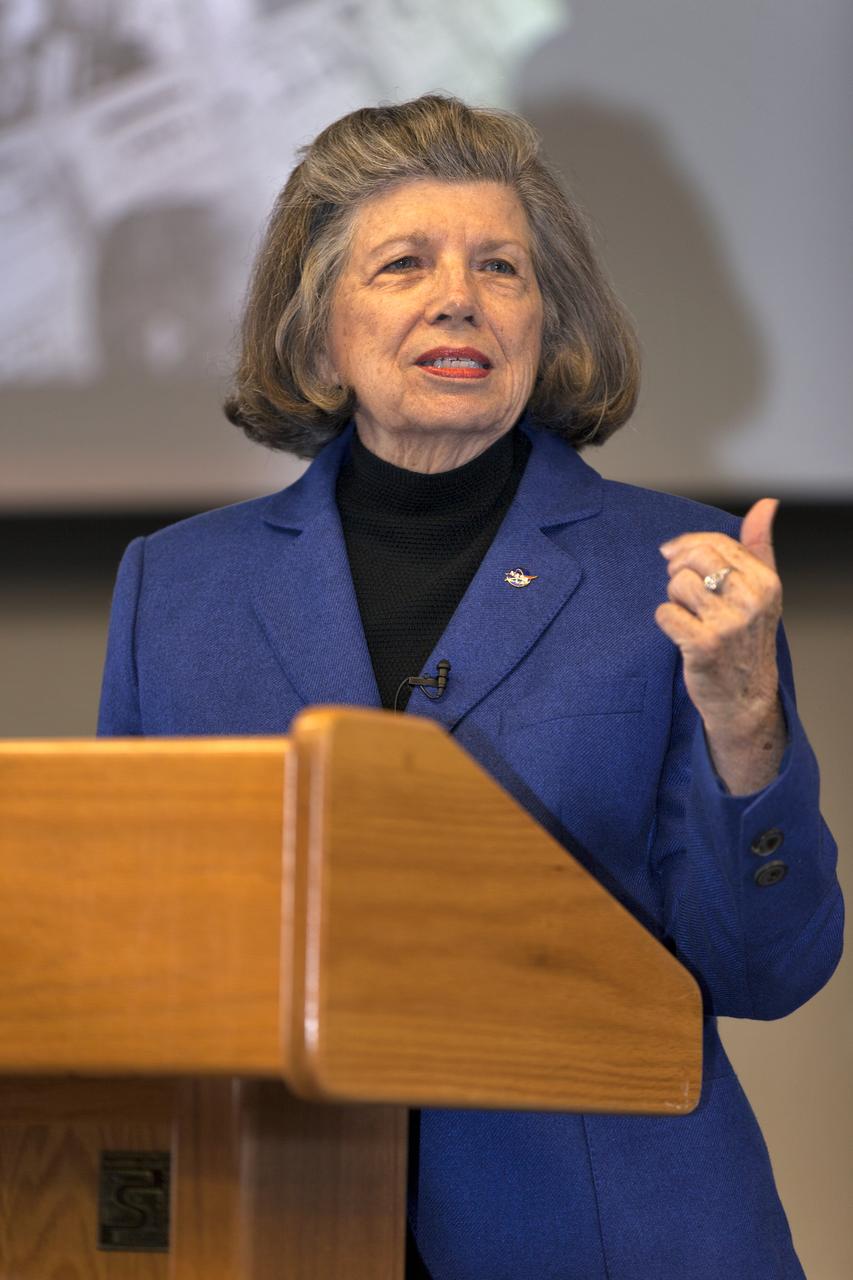
JoAnn Morgan, former associate director of NASA Kennedy Space Center, was the keynote speaker during a Women's History Month event at the center. With the theme "Nevertheless She Persisted," Morgan described her experience as the first female engineer working in the space program in the 1960s. Morgan was the first female in the Launch Control Center firing room during the Apollo 11 launch. The event was hosted by the center's Kennedy Networking Opportunities for Women (KNOW) and Launching Leaders organizations. The purpose of KNOW is to provide focus on issues such as employment, retention, promotion, training, career and personal development, education, and identify and eliminate barriers that hinder the advancement of women in the workforce.
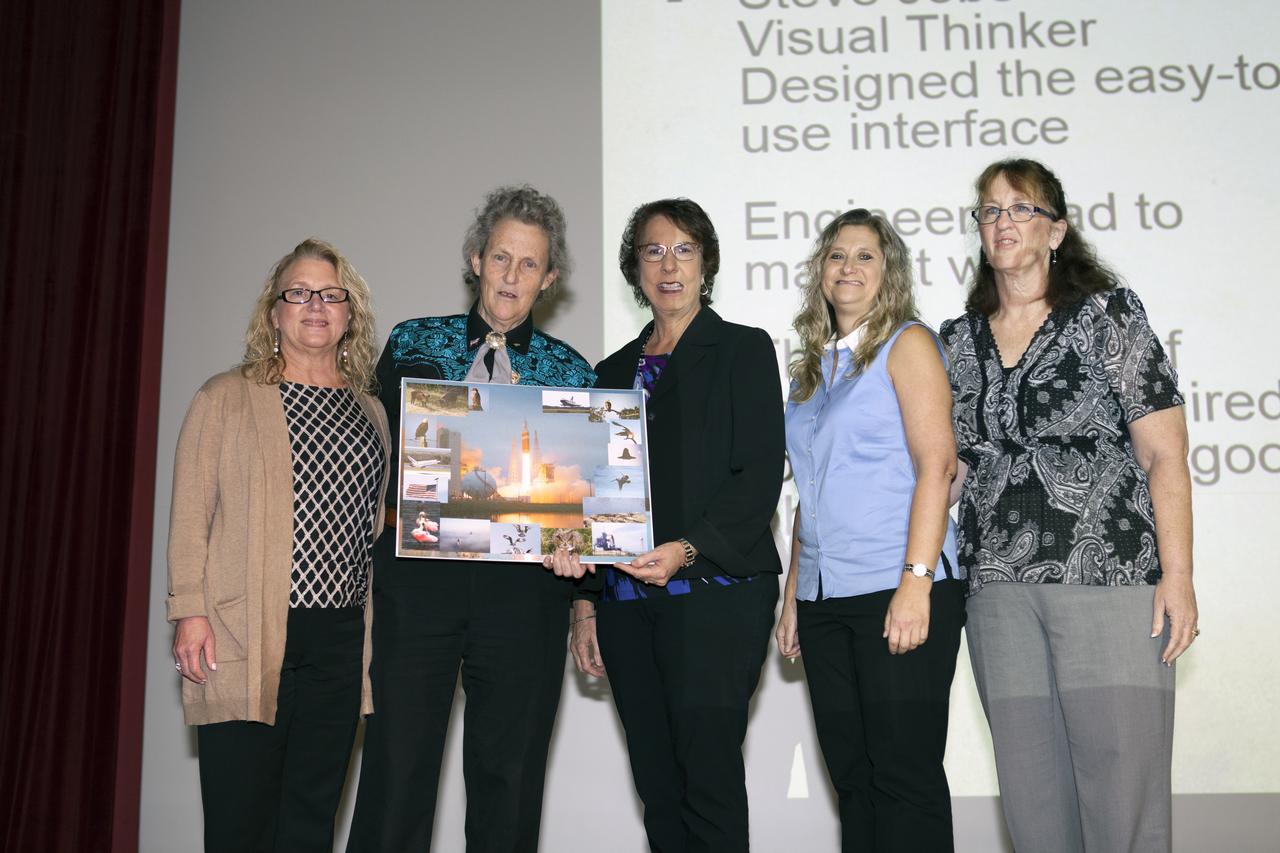
Dr. Temple Grandin, second from left, pauses for a photo after giving the keynote presentation at Kennedy Space Center's annual National Disability Employment Awareness Month (NDEAM) event. From left are Chief Financial Officer Susan Kroskey, executive champion of Kennedy's Disability Awareness and Action Working Group, or DAAWG; Grandin; Joette Feeney, chair of the Kennedy Networking Opportunities for Women group, or KNOW; and DAAWG Co-chairs Nicole Delvesco and Annie Williams. A prominent author and speaker on animal behavior and autism, Grandin is a professor of animal science at Colorado State University in Fort Collins, Colorado. Kennedy's DAAWG and KNOW groups partnered to sponsor the presentation.
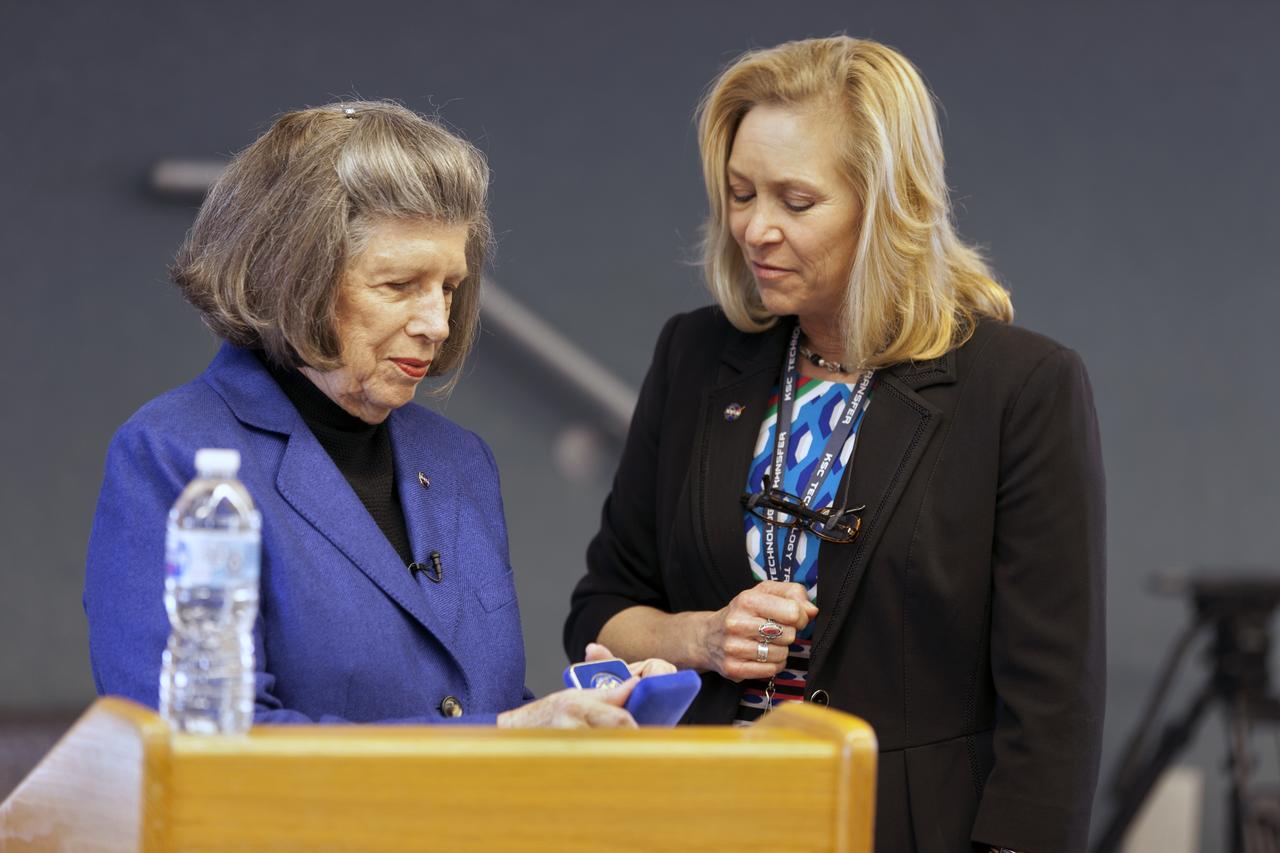
JoAnn Morgan, former associate director of Kennedy Space Center, at left, accepts a special coin from Janet Petro, deputy director of Kennedy, during a Women's History Month event at the center. With the theme "Nevertheless She Persisted," Morgan described her experience as the first female engineer working in the space program in the 1960s. Morgan was the first female in the Launch Control Center firing room during the Apollo 11 launch. The event was hosted by the center's Kennedy Networking Opportunities for Women (KNOW) and Launching Leaders organizations. The purpose of KNOW is to provide focus on issues such as employment, retention, promotion, training, career and personal development, education, and identify and eliminate barriers that hinder the advancement of women in the workforce.
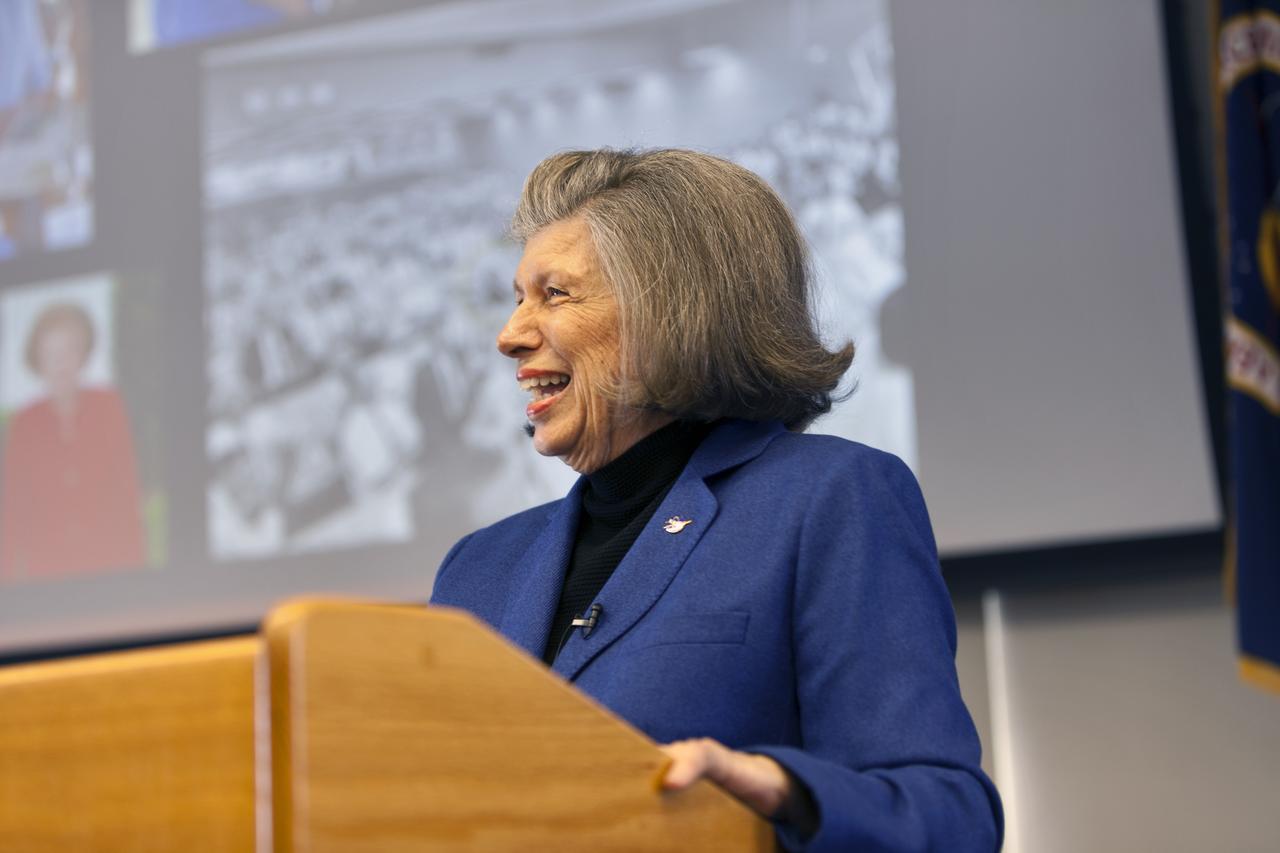
JoAnn Morgan, former associate director of Kennedy Space Center, was the keynote speaker during a Women's History Month event at the center. With the theme "Nevertheless She Persisted," Morgan described her experience as the first female engineer working in the space program in the 1960s. Morgan was the first female in the Launch Control Center firing room during the Apollo 11 launch. The event was hosted by the center's Kennedy Networking Opportunities for Women (KNOW) and Launching Leaders organizations. The purpose of KNOW is to provide focus on issues such as employment, retention, promotion, training, career and personal development, education, and identify and eliminate barriers that hinder the advancement of women in the workforce.
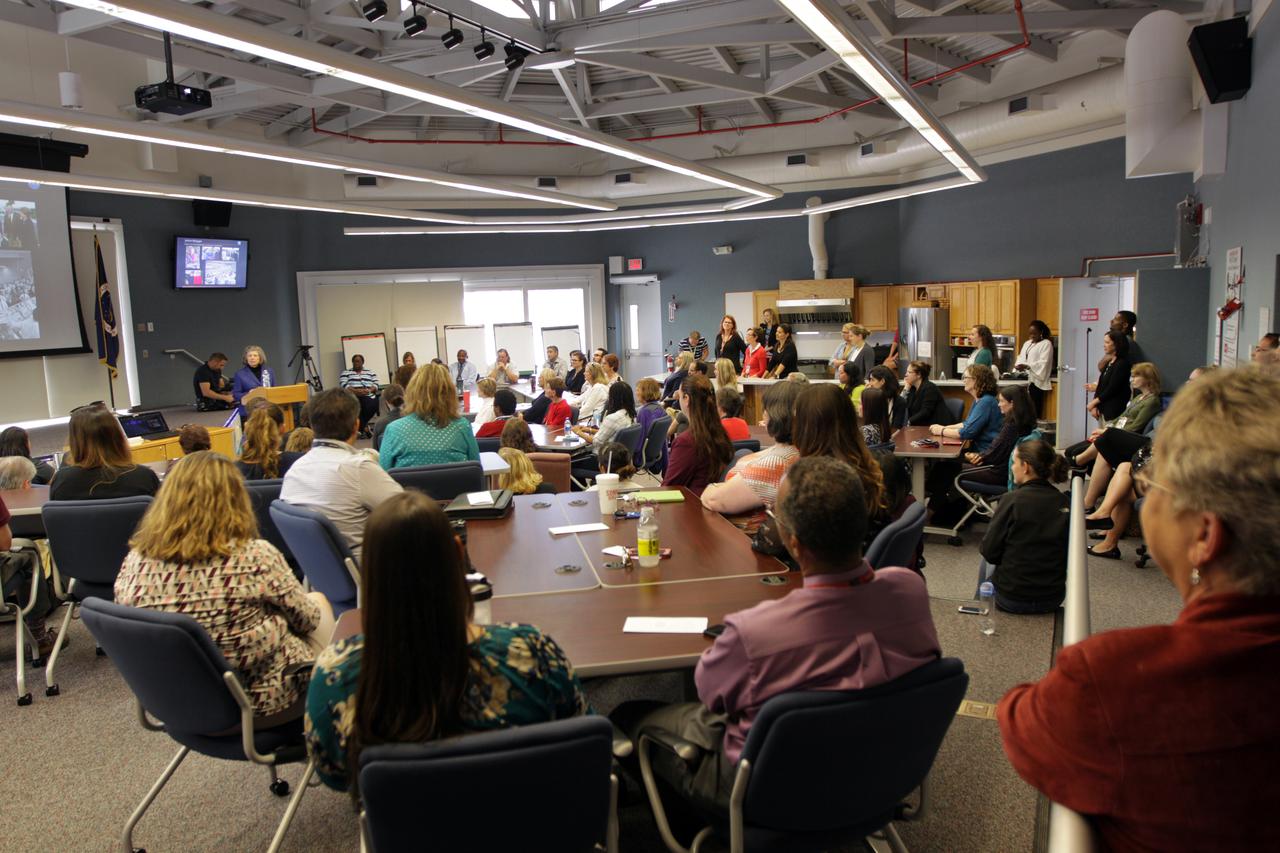
JoAnn Morgan, far left at the podium, former associate director of Kennedy Space Center, was the keynote speaker during a Women's History Month event at the center. With the theme "Nevertheless She Persisted," Morgan described her experience as the first female engineer working in the space program in the 1960s. Morgan was the first female in the Launch Control Center firing room during the Apollo 11 launch. The event was hosted by the center's Kennedy Networking Opportunities for Women (KNOW) and Launching Leaders organizations. The purpose of KNOW is to provide focus on issues such as employment, retention, promotion, training, career and personal development, education, and identify and eliminate barriers that hinder the advancement of women in the workforce.
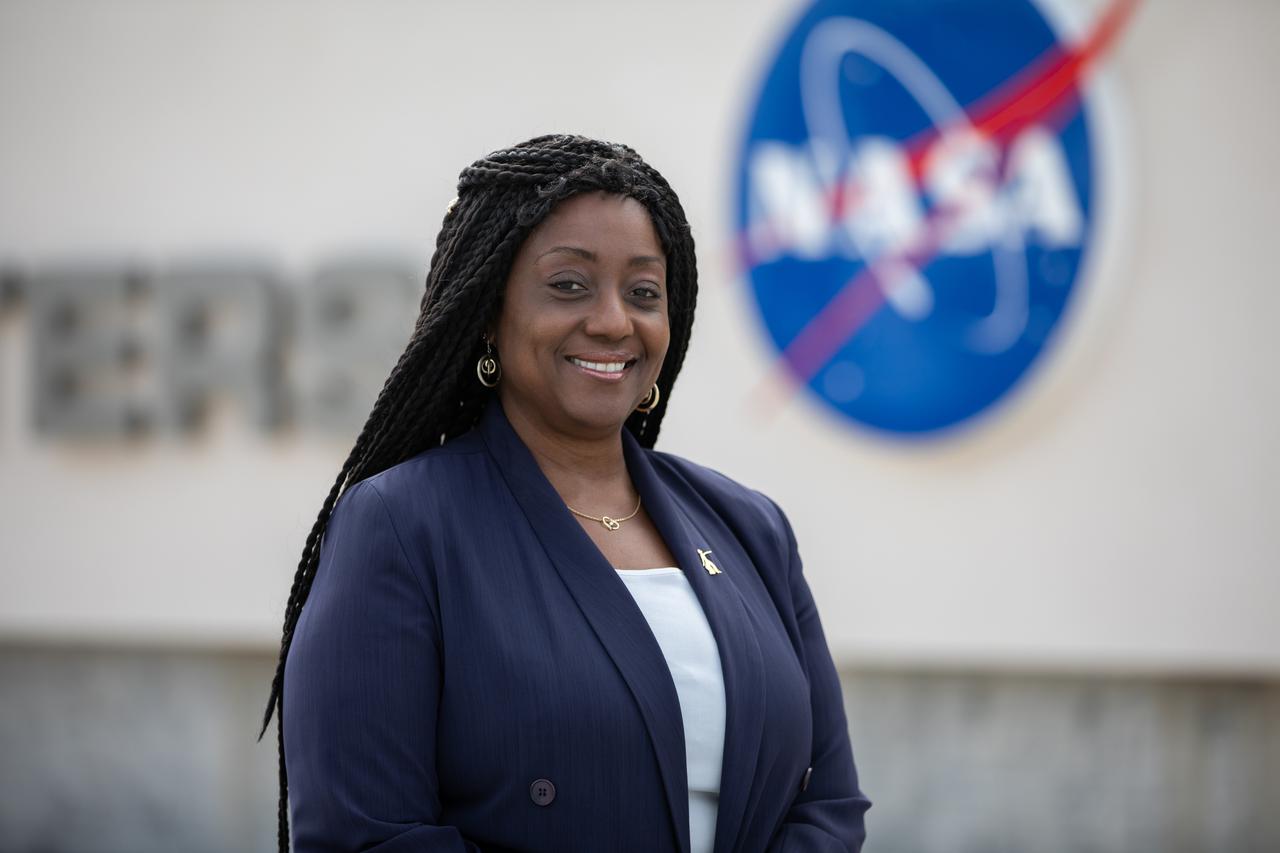
"I’ve worked in many different roles and what drives my passion is learning things that I don’t know. It is a part of my thirst for knowledge and knowing how things work. The harder the problem for me the better. When I first joined NASA as a full time employee, my supervisor would give me an assignment, and I would get it done quickly and come back to his desk and ask, ‘What do you have for me now?’ At one point, after about two months of working for him, he looked at me and kind of sighed. I said, ‘Okay, okay. If you don’t have anything for me right now, is it okay if I see if any of the other supervisors in the building need any help with anything?’ He agreed, and so I approached the other supervisors. "Now, here’s the interesting thing. I was a young Black female in an engineering role that was pretty much dominated by white males at the time, so it was not a norm for there to be females in the building – much less black females. I came to understand later that there was some skepticism on their part that I could do design engineering. I didn’t know that some of them, not all of them, were throwing things at me to show me I wasn’t qualified. But I would tackle their problems the same way I do anything else: if I don’t know it, I’ll go find it. I’ll research. I’ll dig. I’ll look for people that might have some experience that I don’t have and ask them. So, every hard problem that they threw at me, I solved. Eventually, my supervisor told me he didn't know what he was getting into when he agreed to let me go to the other supervisors because now, they were coming to him with their hardest problems, asking, 'Hey, can Barbara help with this?' So, I started to broaden my experience base right away." — Barbara Brown, Director of Exploration Research and Technology Programs, Kennedy Space Center Interviewer: NASA / Tahira Allen
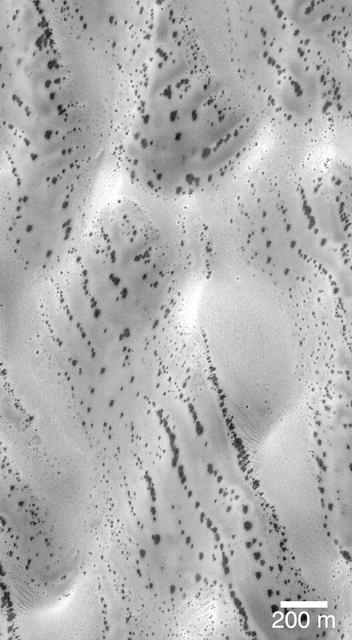
The patterns created by dark spots on defrosting south polar dunes are often strange and beautiful. This picture, which the Mars Orbiter Camera team has dubbed, "the snow leopard," shows a dune field located at 61.5°S, 18.9°W, as it appeared on July 1, 1999. The spots are areas where dark sand has been exposed from beneath bright frost as the south polar winter cap begins to retreat. Many of the spots have a diffuse, bright ring around them this is thought to be fresh frost that was re-precipitated after being removed from the dark spot. The spots seen on defrosting polar dunes are a new phenomenon that was not observed by previous spacecraft missions to Mars. Thus, there is much about these features that remains unknown. For example, no one yet knows why the dunes become defrosted by forming small spots that grow and grow over time. No one knows for sure if the bright rings around the dark spots are actually composed of re-precipitated frost. And no one knows for sure why some dune show spots that appear to be "lined-up" (as they do in the picture shown here). This Mars Global Surveyor Mars Orbiter Camera image is illuminated from the upper left. North is toward the upper right. The scale bar indicates a distance of 200 meters (656 feet). http://photojournal.jpl.nasa.gov/catalog/PIA02301
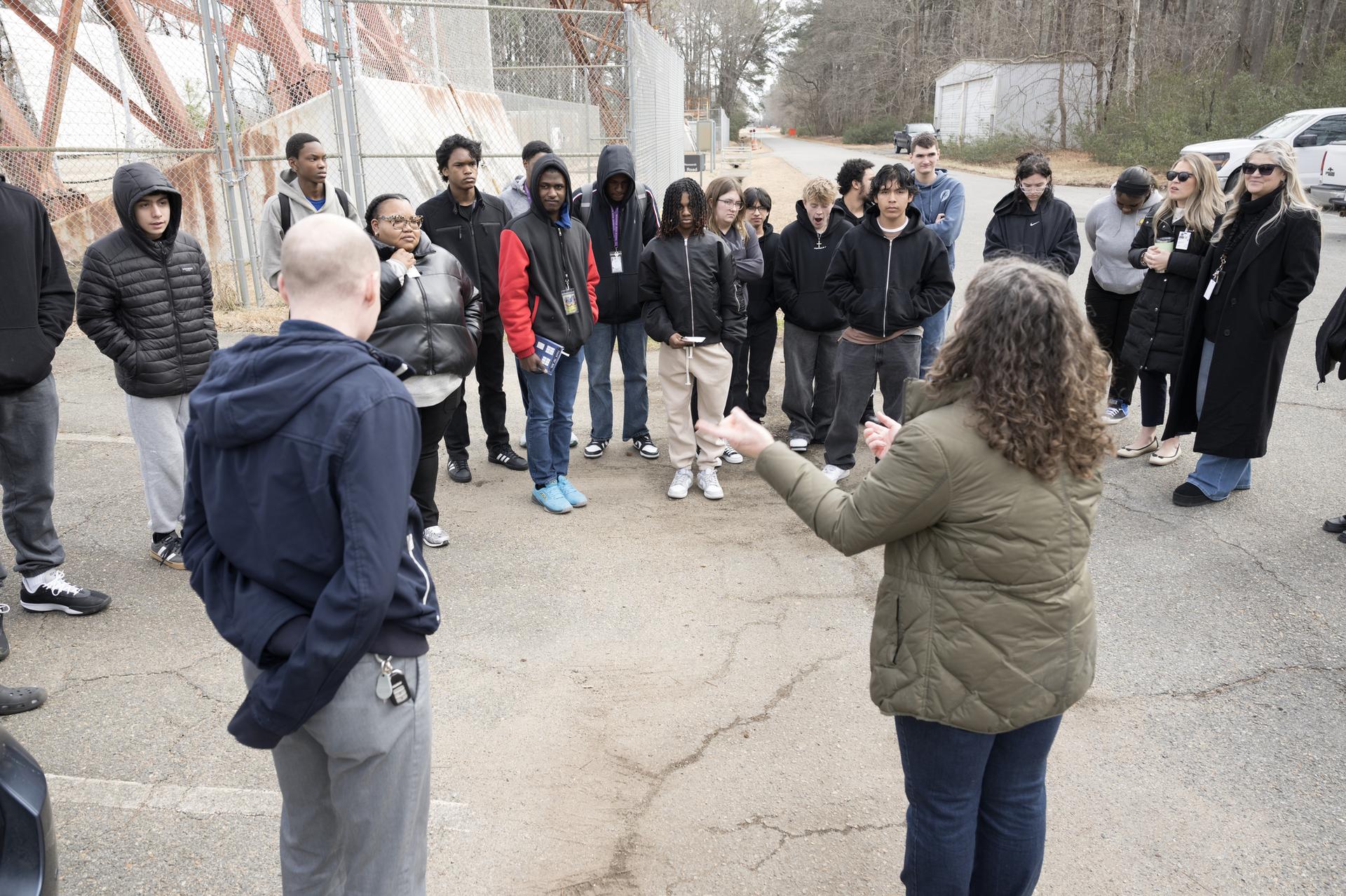
Old Dominion University's (ODU) Maritime Engineering and Environmental Studies Academy (MEESA) lab school juniors, tour the NASA Langley’s Landing and Impact Research Facility (LandIR), also know as the Gantry. The students were task to create an exhibit for the Vestil Aluminum/Steel Crane (VASC) of the crane used to build the Gantry.
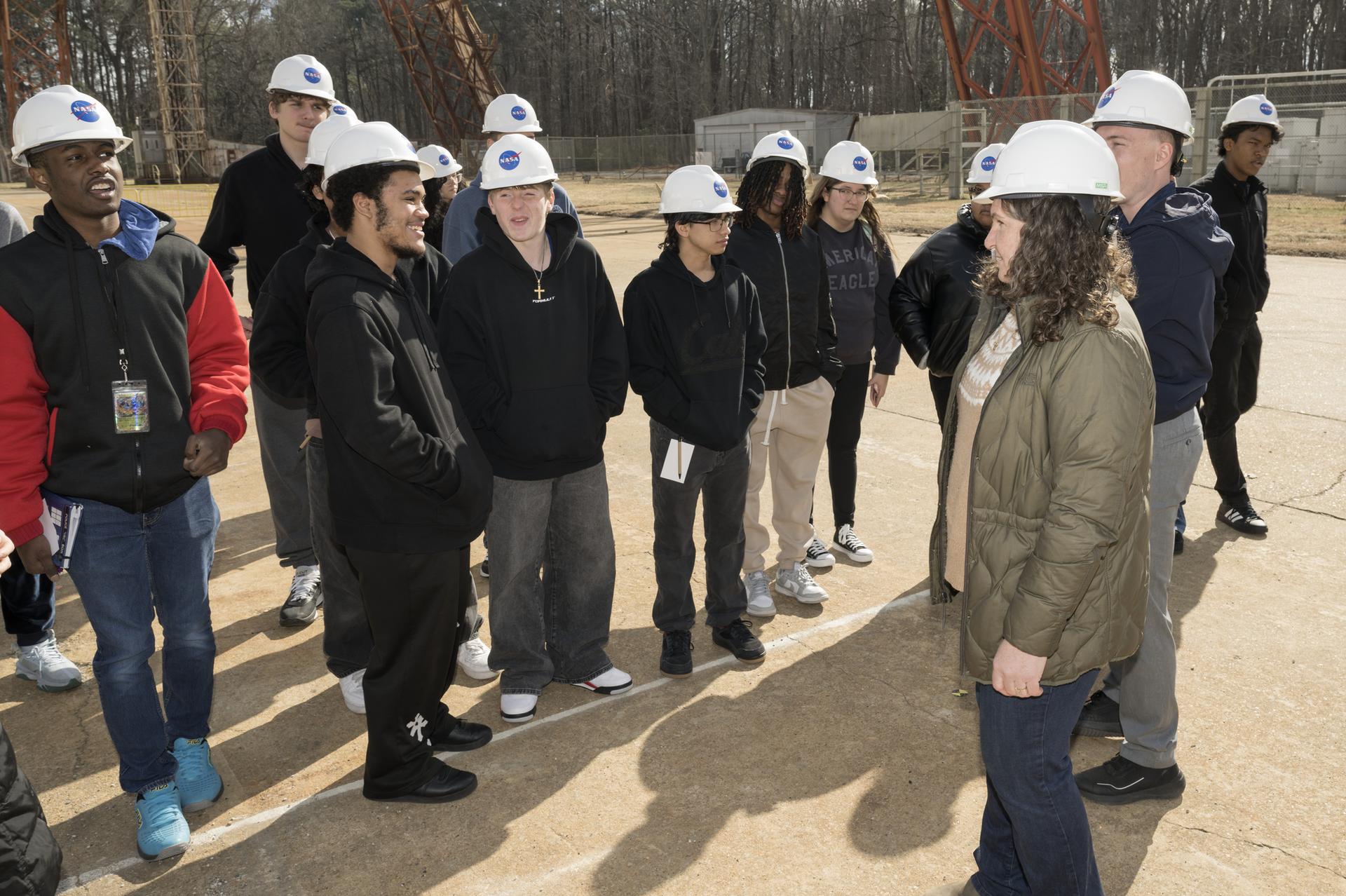
Old Dominion University's (ODU) Maritime Engineering and Environmental Studies Academy (MEESA) lab school juniors, tour the NASA Langley’s Landing and Impact Research Facility (LandIR), also know as the Gantry. The students were task to create an exhibit for the Vestil Aluminum/Steel Crane (VASC) of the crane used to build the Gantry.
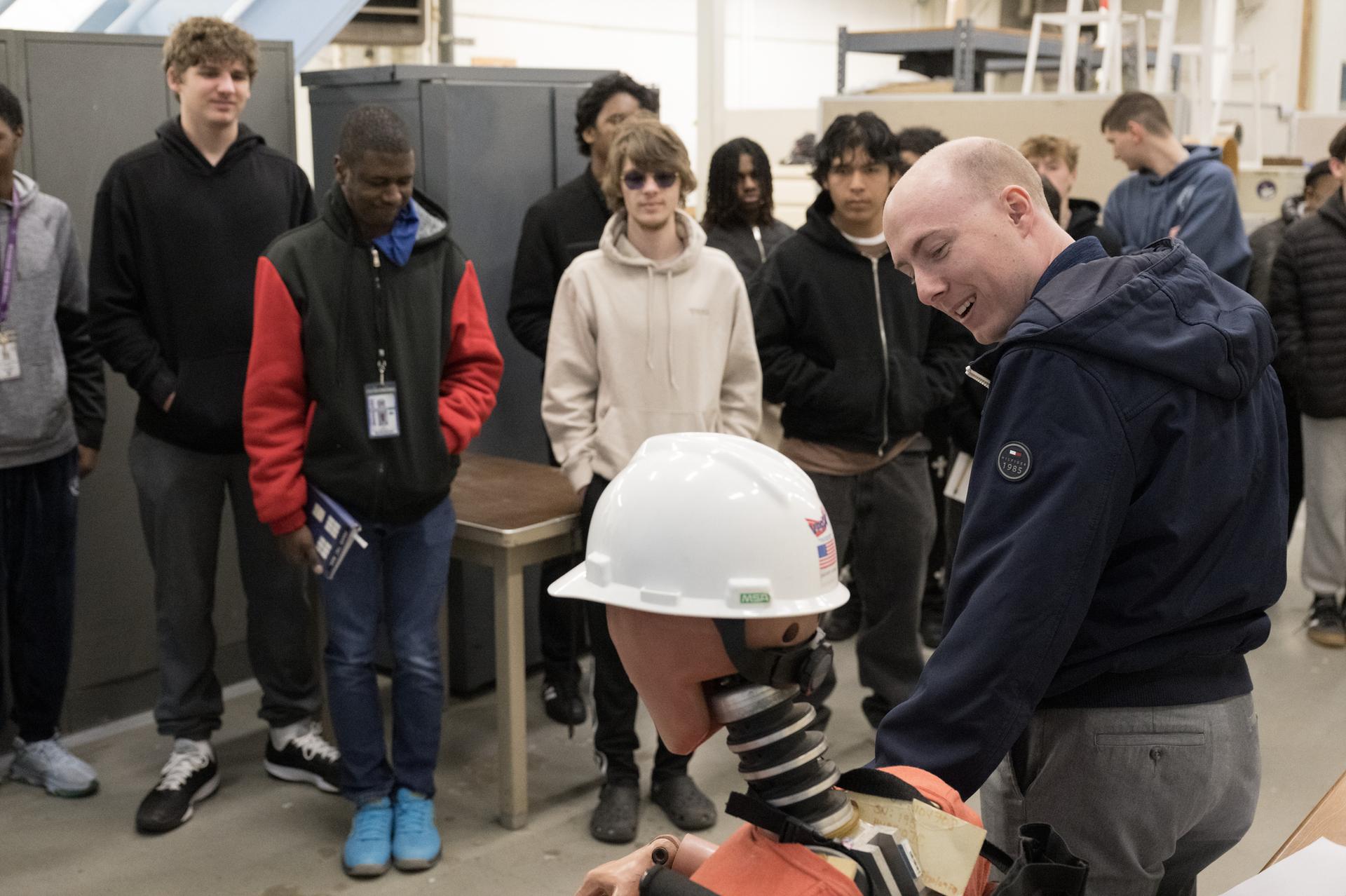
Old Dominion University's (ODU) Maritime Engineering and Environmental Studies Academy (MEESA) lab school juniors, tour the NASA Langley’s Landing and Impact Research Facility (LandIR), also know as the Gantry. The students were task to create an exhibit for the Vestil Aluminum/Steel Crane (VASC) of the crane used to build the Gantry.
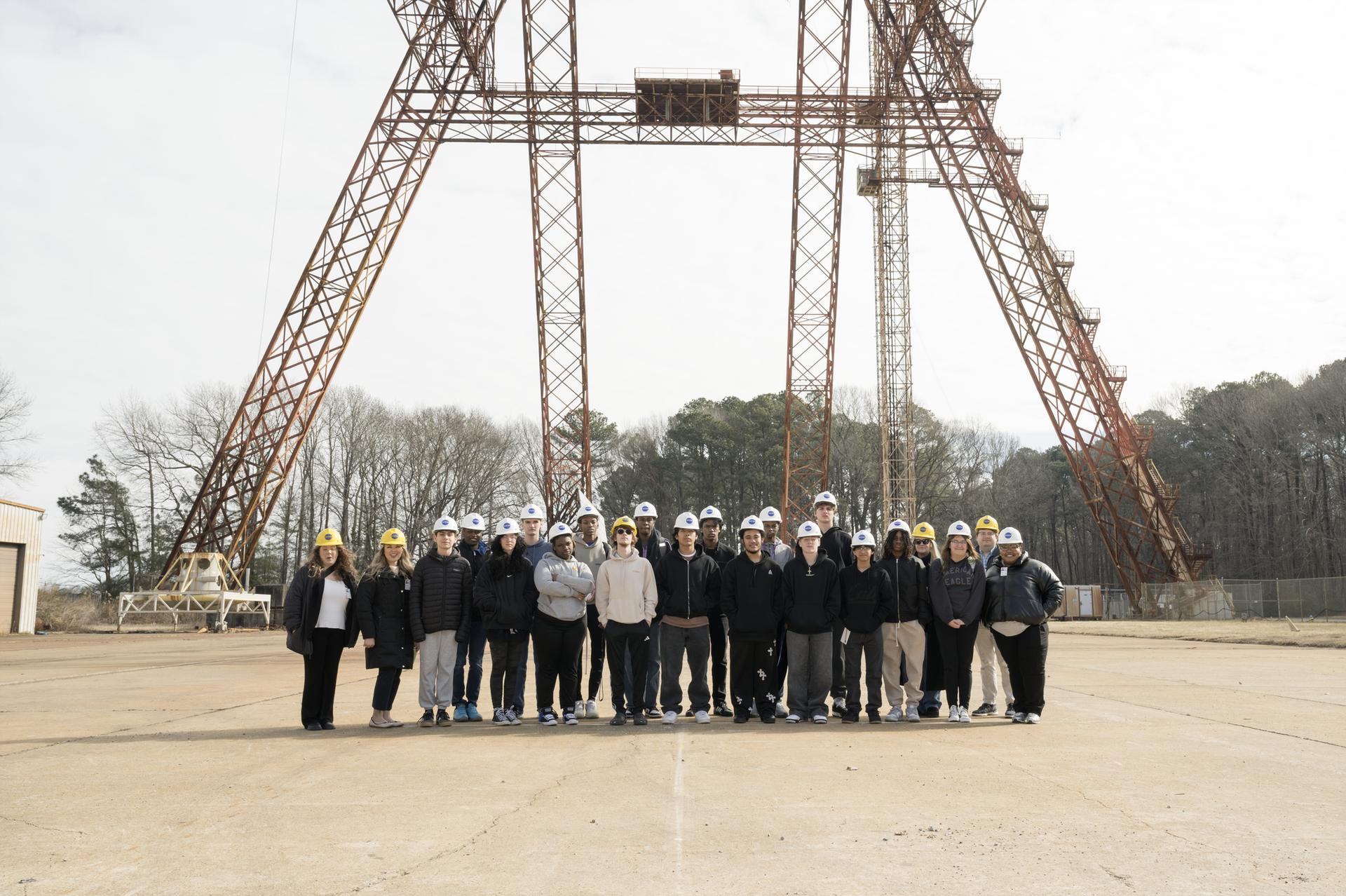
Old Dominion University's (ODU) Maritime Engineering and Environmental Studies Academy (MEESA) lab school juniors, tour the NASA Langley’s Landing and Impact Research Facility (LandIR), also know as the Gantry. The students were task to create an exhibit for the Vestil Aluminum/Steel Crane (VASC) of the crane used to build the Gantry.
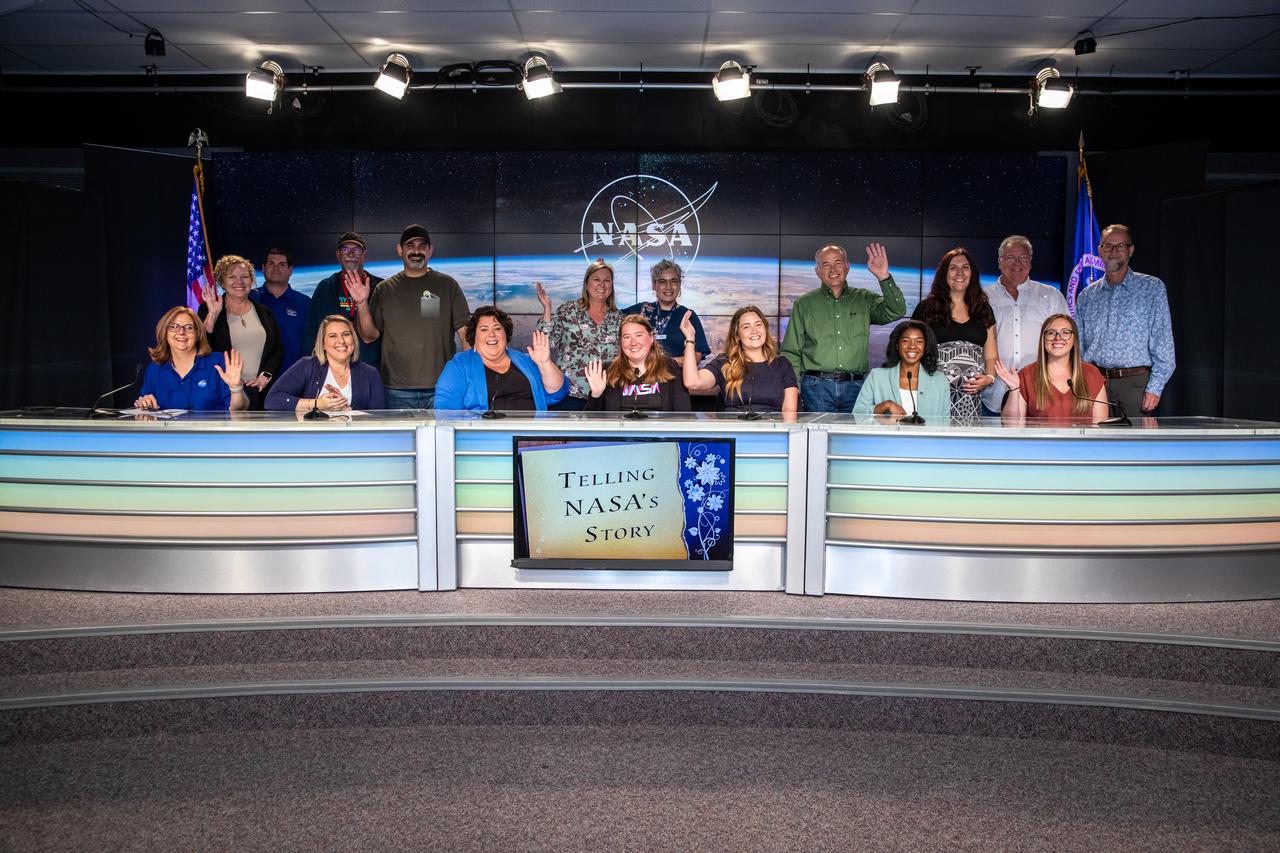
Employees who work at NASA’s Kennedy Space Center Press Site are photographed inside the News Auditorium at the Florida spaceport on March 23, 2023, following a panel discussion held to commemorate Women’s History Month. The event, titled “Celebrating the Women Who Tell Our Stories,” included women who typically work behind the scenes sharing what goes into conceiving, creating, and curating NASA stories. Panelists included Kennedy’s news chief, members of the broadcast team, public affairs specialists, a video producer, and a writer.
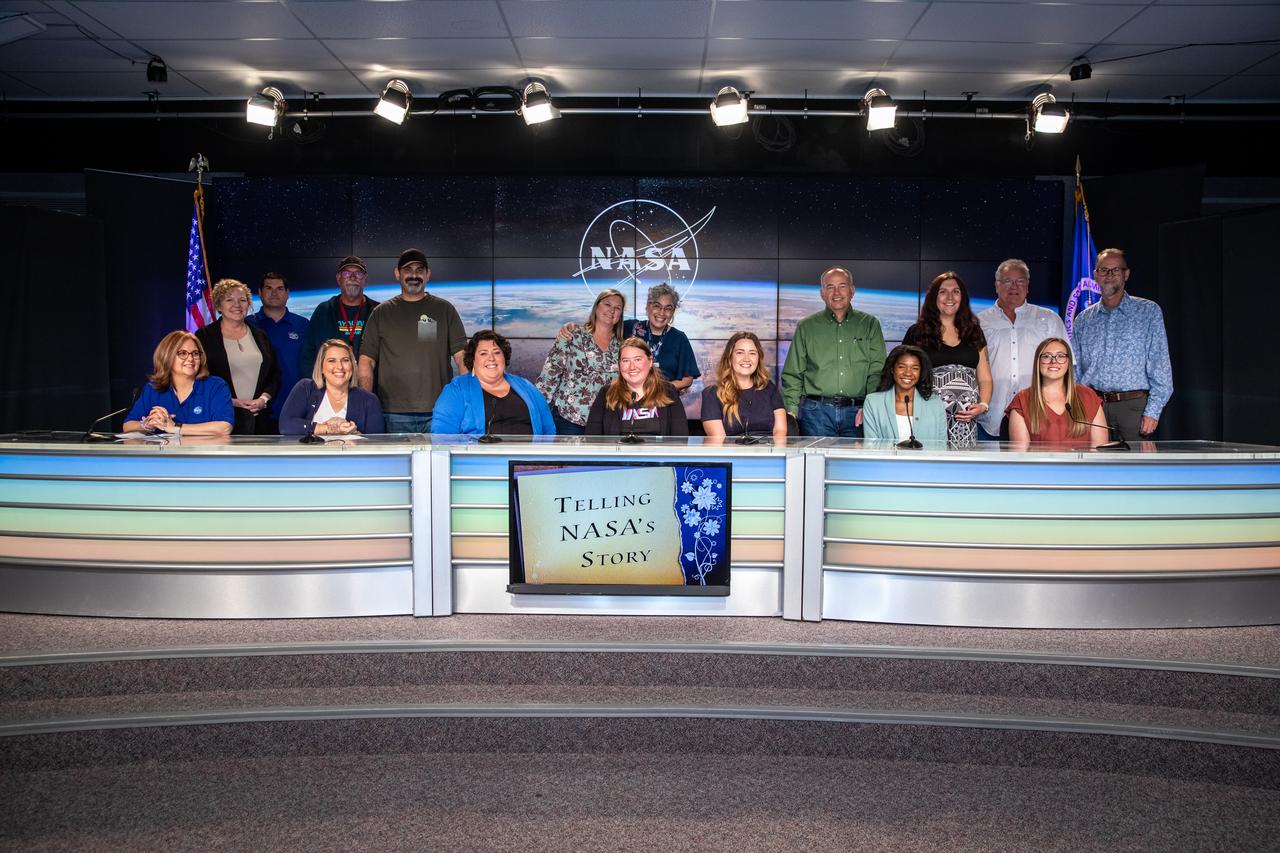
Employees who work at NASA’s Kennedy Space Center Press Site are photographed inside the News Auditorium at the Florida spaceport on March 23, 2023, following a panel discussion held to commemorate Women’s History Month. The event, titled “Celebrating the Women Who Tell Our Stories,” included women who typically work behind the scenes sharing what goes into conceiving, creating, and curating NASA stories. Panelists included Kennedy’s news chief, members of the broadcast team, public affairs specialists, a video producer, and a writer.
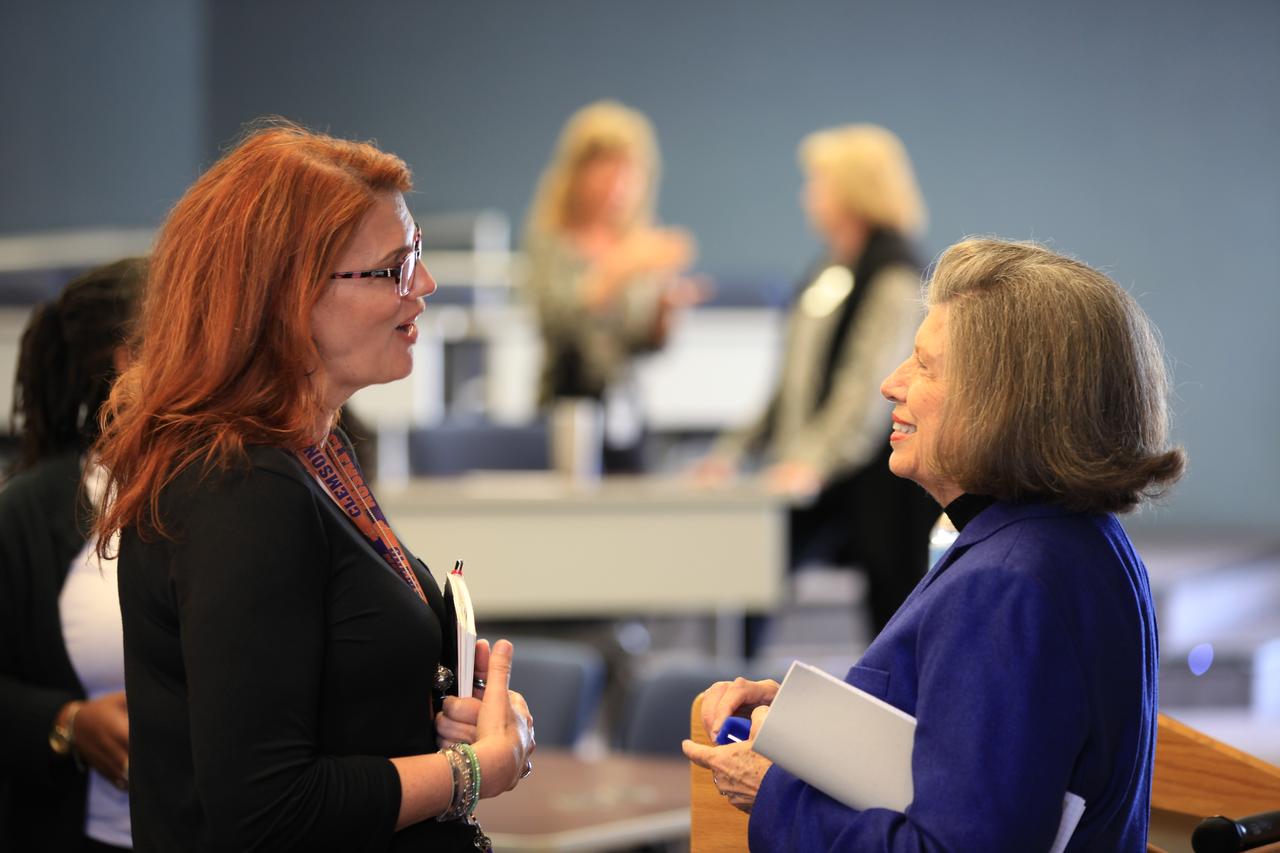
JoAnn Morgan, at right, former associate director of Kennedy Space Center, was the keynote speaker during a Women's History Month event at the center. With the theme "Nevertheless She Persisted," Morgan described her experience as the first female engineer working in the space program in the 1960s. Morgan was the first female in the Launch Control Center firing room during the Apollo 11 launch. Morgan is speaking to Charlie Blackwell-Thompson, the first female launch director, who will lead countdown and launch for Exploration Mission-1. The event was hosted by the center's Kennedy Networking Opportunities for Women (KNOW) and Launching Leaders organizations. The purpose of KNOW is to provide focus on issues such as employment, retention, promotion, training, career and personal development, education, and identify and eliminate barriers that hinder the advancement of women in the workforce.

JoAnn Morgan, former associate director of Kennedy Space Center, was the keynote speaker during a Women's History Month event at the center. With the theme "Nevertheless She Persisted," Morgan described her experience as the first female engineer working in the space program in the 1960s. Morgan was the first female in the Launch Control Center firing room during the Apollo 11 launch. Third from the left is Charlie Blackwell-Thompson, launch director for Exploration Mission-1. The event was hosted by the center's Kennedy Networking Opportunities for Women (KNOW) and Launching Leaders organizations. The purpose of KNOW is to provide focus on issues such as employment, retention, promotion, training, career and personal development, education, and identify and eliminate barriers that hinder the advancement of women in the workforce.
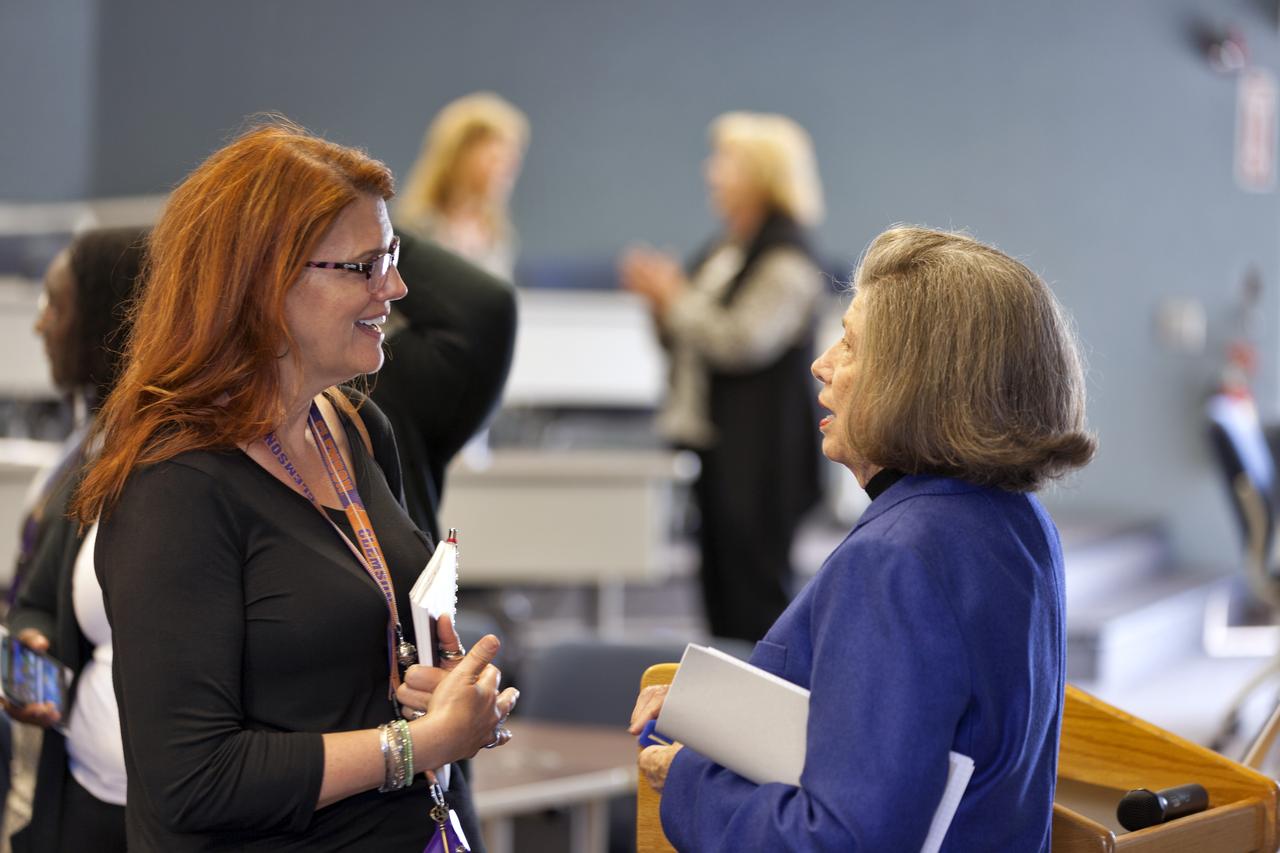
JoAnn Morgan, at right, former associate director of Kennedy Space Center, was the keynote speaker during a Women's History Month event at the center. With the theme "Nevertheless She Persisted," Morgan described her experience as the first female engineer working in the space program in the 1960s. Morgan was the first female in the Launch Control Center firing room during the Apollo 11 launch. Morgan is speaking to Charlie Blackwell-Thompson, the first female launch director, who will lead countdown and launch for Exploration Mission-1. The event was hosted by the center's Kennedy Networking Opportunities for Women (KNOW) and Launching Leaders organizations. The purpose of KNOW is to provide focus on issues such as employment, retention, promotion, training, career and personal development, education, and identify and eliminate barriers that hinder the advancement of women in the workforce.
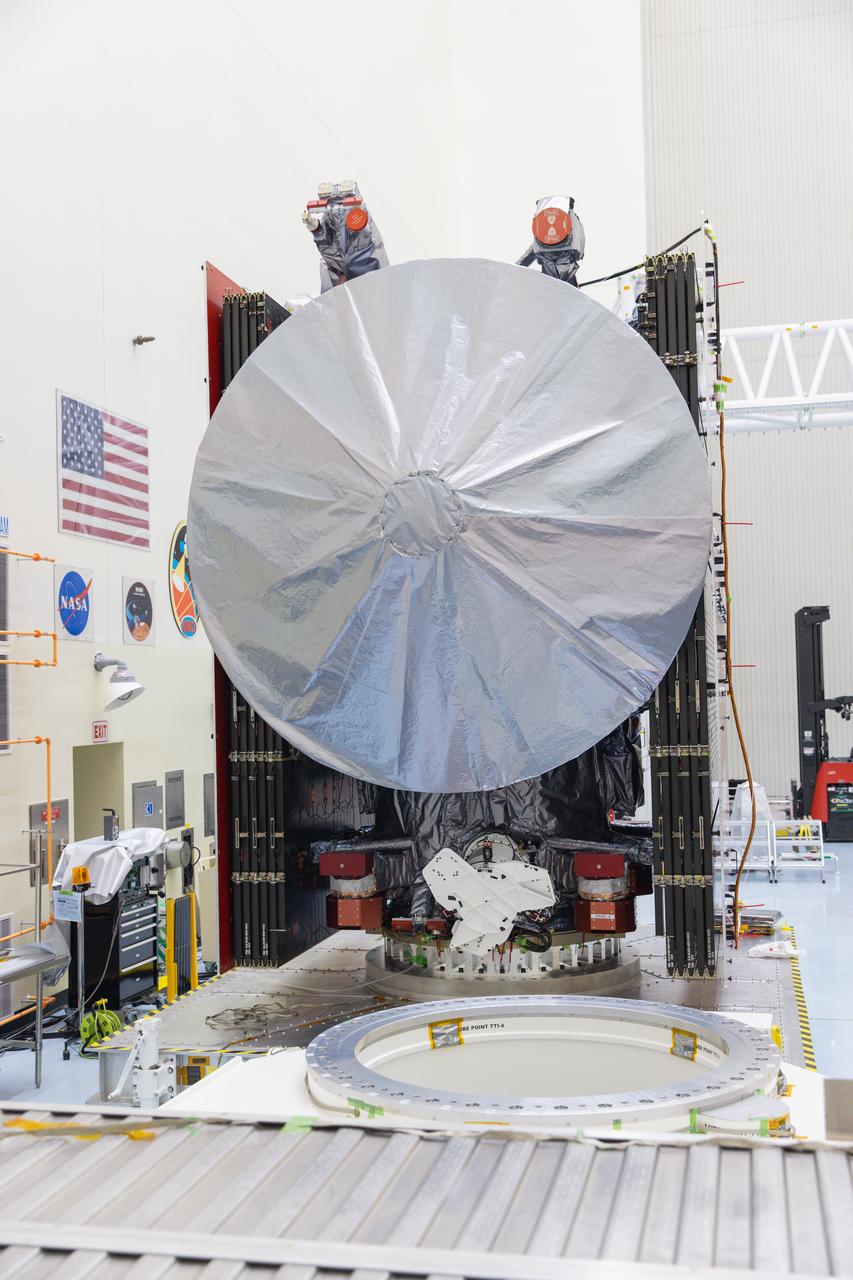
Technicians work to complete operations before propellant load occurs ahead of launch for NASA’s Europa Clipper spacecraft inside the Payload Hazardous Servicing Facility at the agency’s Kennedy Space Center in Florida on Tuesday, Sept. 11, 2024. Europa could have all the “ingredients” for life as we know it: water, organics, chemical energy, and stability. Europa Clipper’s launch period opens on October 10, 2024.

NASA Deputy Administrator Lori Garver discusses the progress being made on NASA's mission to capture, redirect, and explore an asteroid during the Asteroid Initiative Industry and Partner Day at NASA Headquarters on Tuesday, June 18, 2013 in Washington. NASA also announced an Asteroid Grand Challenge focused on finding all asteroid threats to human populations and knowing what to do about them. Photo Credit: (NASA/Bill Ingalls)
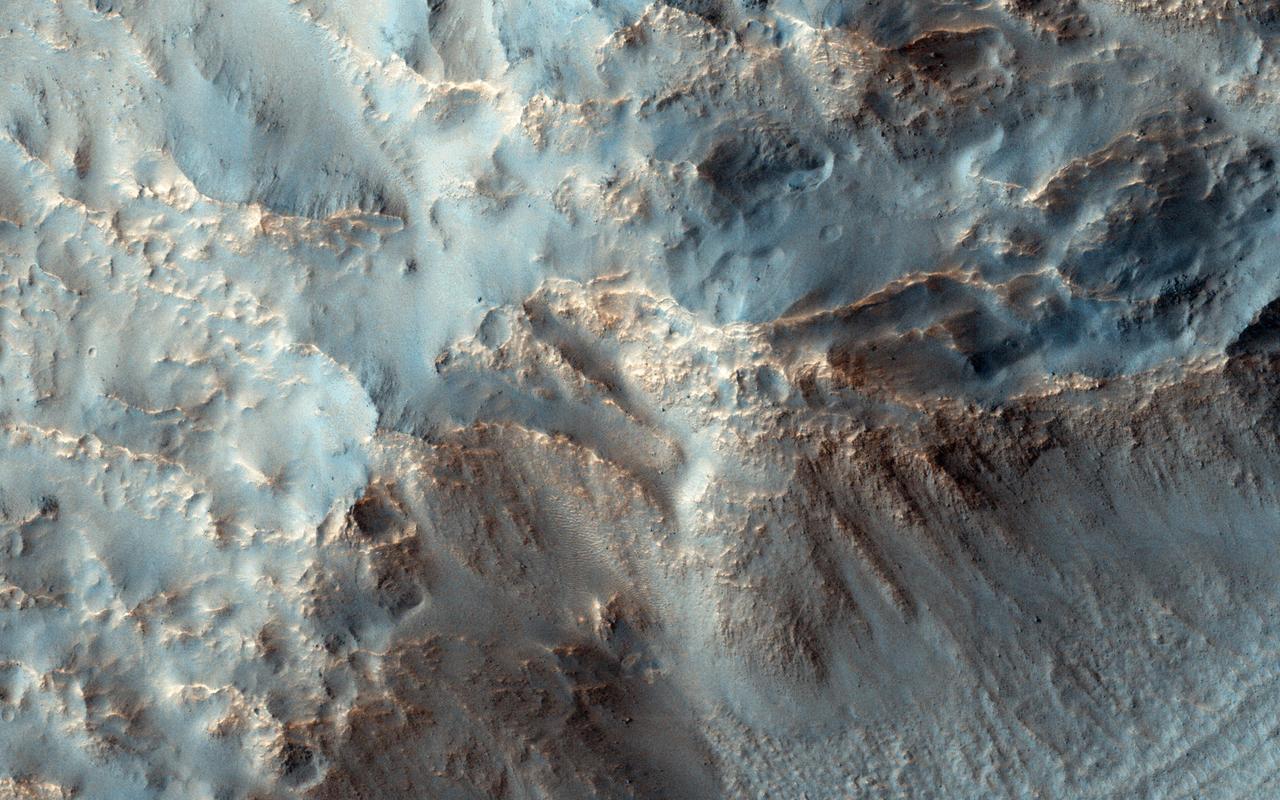
NASA Mars Reconnaissance Orbiter observes the southeast rim of Hale Crater, about 150 kilometers 90 miles in diameter and located in the mid-southern latitudes just north of the massive Argyre basin. RSL are often found on northwest-facing slopes, and they occur in the central peak of Hale. During the season when we know RSL appear, this observation at high resolution might help us see if they occur elsewhere. http://photojournal.jpl.nasa.gov/catalog/PIA19176
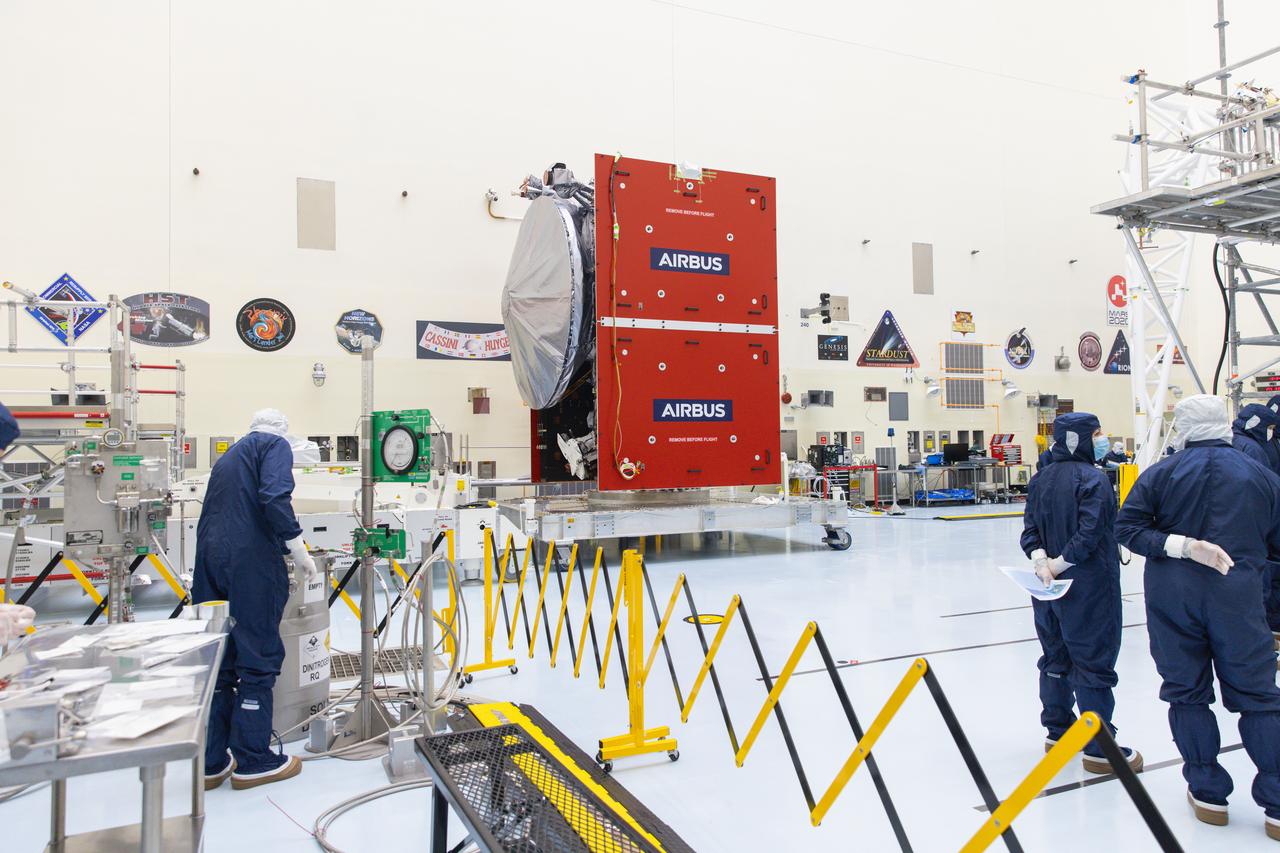
Technicians work to complete operations before propellant load occurs ahead of launch for NASA’s Europa Clipper spacecraft inside the Payload Hazardous Servicing Facility at the agency’s Kennedy Space Center in Florida on Tuesday, Sept. 11, 2024. Europa could have all the “ingredients” for life as we know it: water, organics, chemical energy, and stability. Europa Clipper’s launch period opens on October 10, 2024.
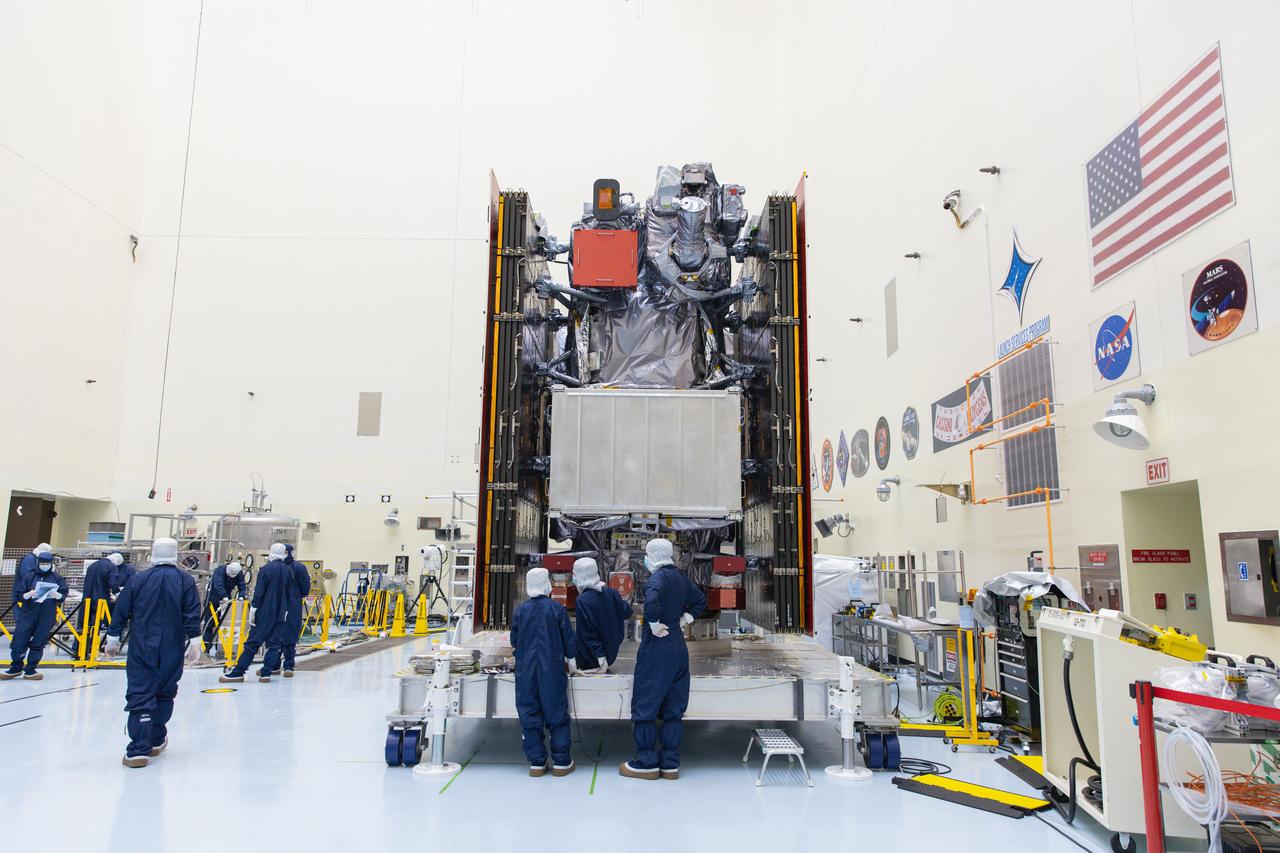
Technicians work to complete operations before propellant load occurs ahead of launch for NASA’s Europa Clipper spacecraft inside the Payload Hazardous Servicing Facility at the agency’s Kennedy Space Center in Florida on Tuesday, Sept. 11, 2024. Europa could have all the “ingredients” for life as we know it: water, organics, chemical energy, and stability. Europa Clipper’s launch period opens on October 10, 2024.
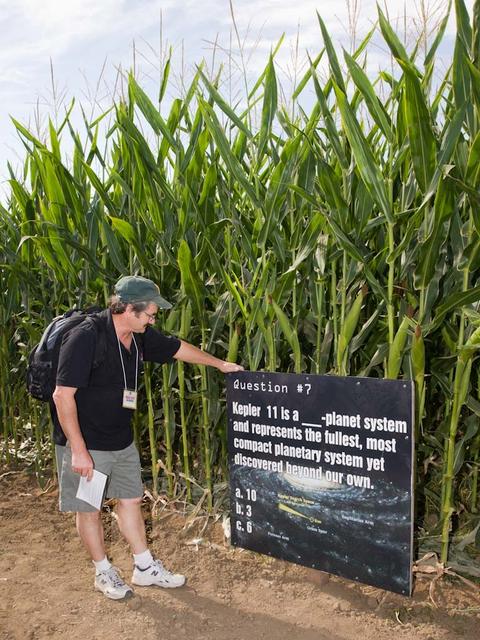
Space Farm 7 Program; NASA Day at the Dell'osso Family Farm, Lathrop,CA for the opening of the Kepler Corn Maze. Lots of fun activities were available and Kepler scientists gave talks and hands on demos to the audience of kids and adults alike to better understand Kepler and it's mission. Eric James, Ames photographer stops to read the Kepler maze know you mission sign. Photo take by Maria James.
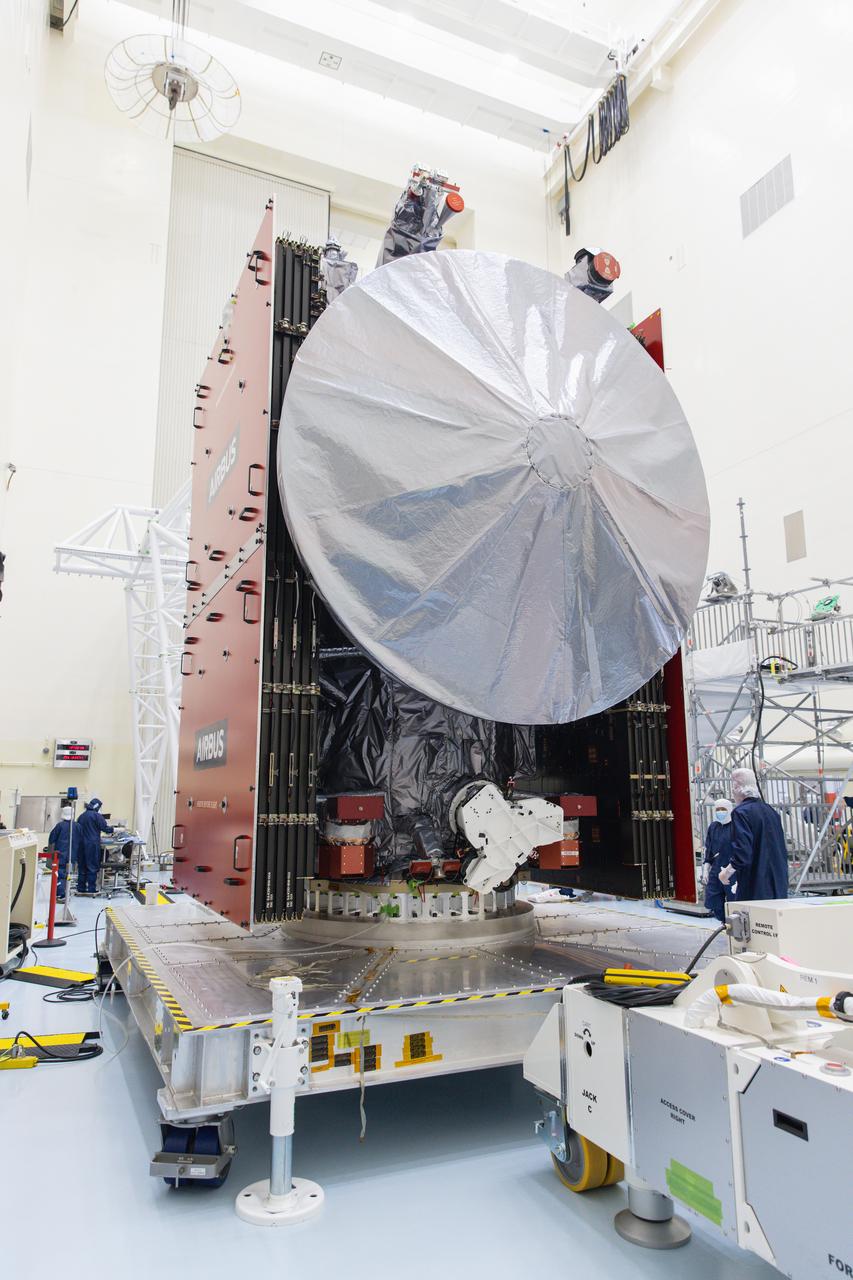
Technicians work to complete operations before propellant load occurs ahead of launch for NASA’s Europa Clipper spacecraft inside the Payload Hazardous Servicing Facility at the agency’s Kennedy Space Center in Florida on Tuesday, Sept. 11, 2024. Europa could have all the “ingredients” for life as we know it: water, organics, chemical energy, and stability. Europa Clipper’s launch period opens on October 10, 2024.

NASA Deputy Administrator Lori Garver discusses the progress being made on NASA's mission to capture, redirect, and explore an asteroid during the Asteroid Initiative Industry and Partner Day at NASA Headquarters on Tuesday, June 18, 2013 in Washington. NASA also announced an Asteroid Grand Challenge focused on finding all asteroid threats to human populations and knowing what to do about them. Photo Credit: (NASA/Bill Ingalls)
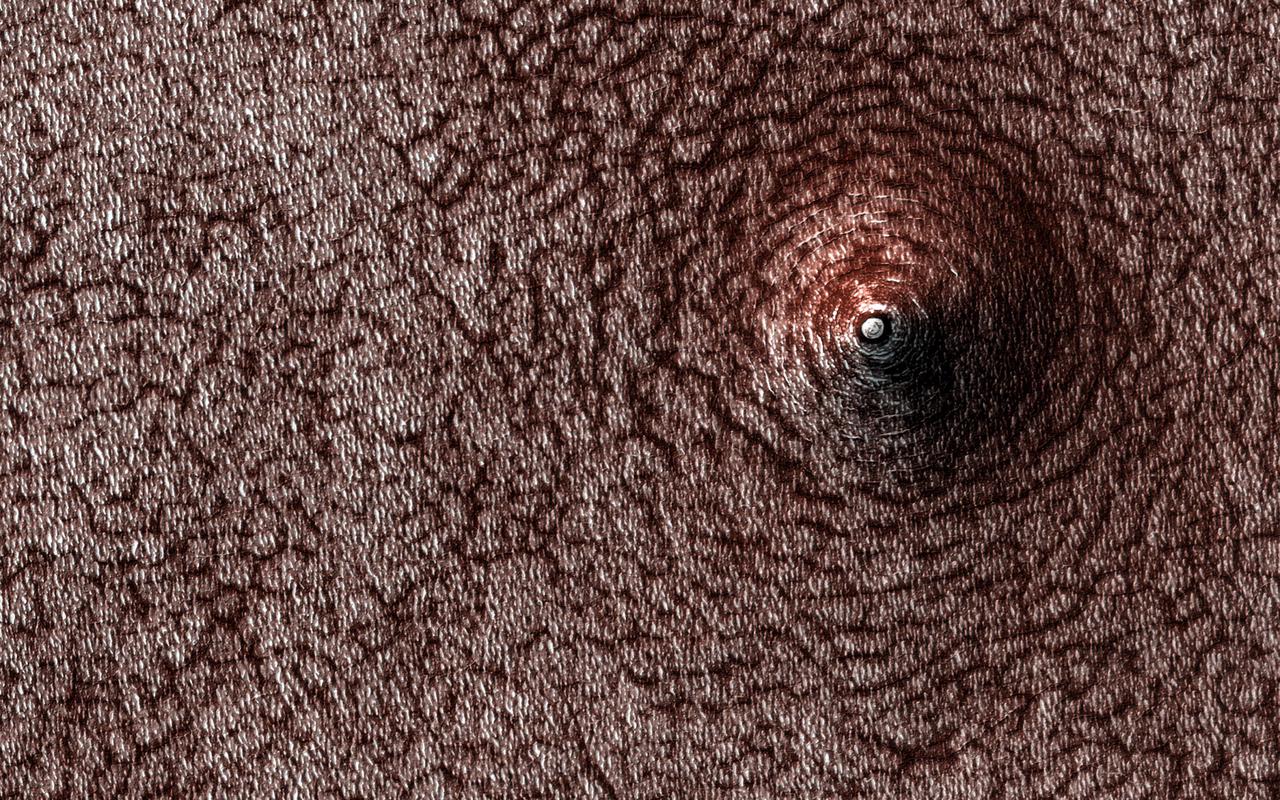
Do you see a dome or a pit? Sometimes it is hard to tell! In this case, the answer is that we're looking at a pit, if the title didn't already give it away. Levity aside, we can tell this is a pit because we know what direction the sunlight is coming from and which side should be in shadow. This pit has formed on the south polar layered deposits. Why did it collapse? That is the real question to be answered. https://photojournal.jpl.nasa.gov/catalog/PIA24614
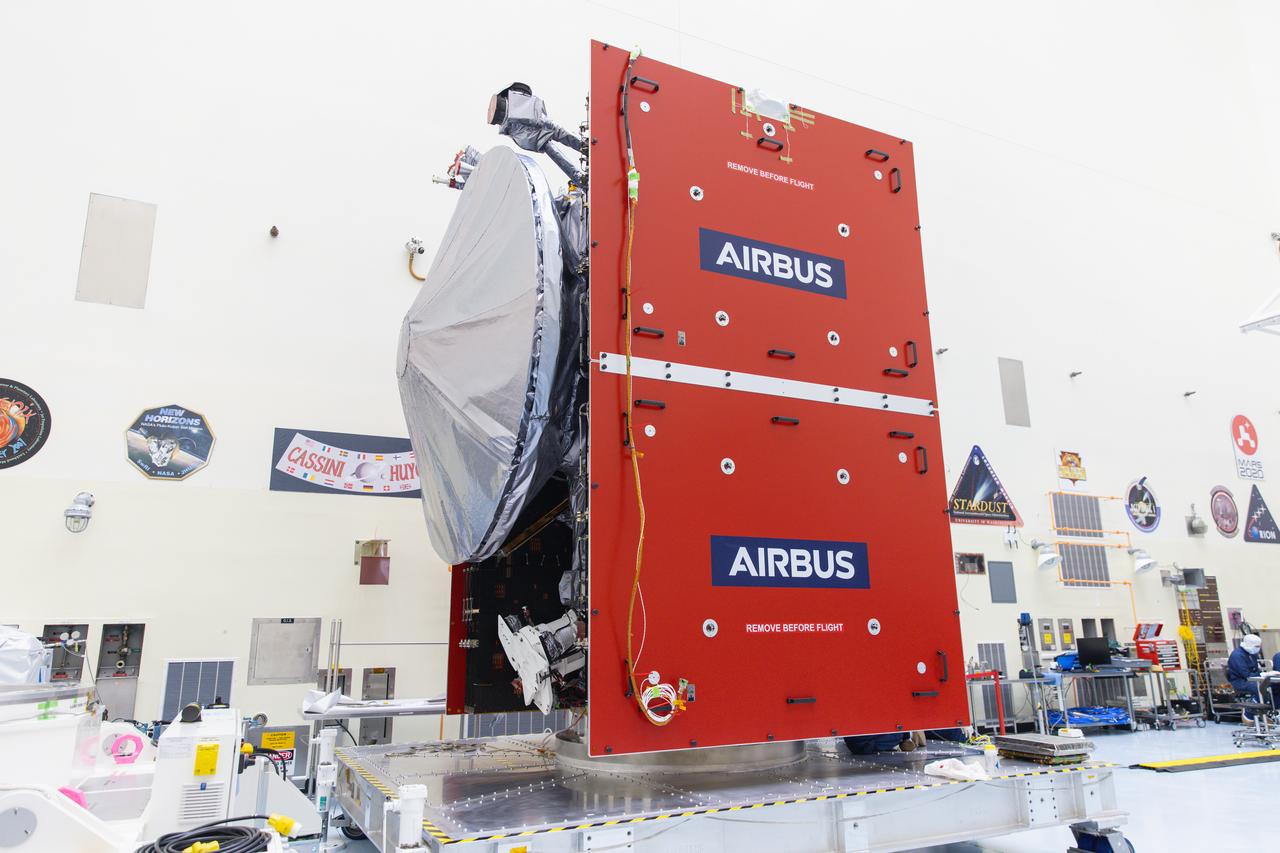
Technicians work to complete operations before propellant load occurs ahead of launch for NASA’s Europa Clipper spacecraft inside the Payload Hazardous Servicing Facility at the agency’s Kennedy Space Center in Florida on Tuesday, Sept. 11, 2024. Europa could have all the “ingredients” for life as we know it: water, organics, chemical energy, and stability. Europa Clipper’s launch period opens on October 10, 2024.

NASA Deputy Administrator Lori Garver discusses the progress being made on NASA's mission to capture, redirect, and explore an asteroid during the Asteroid Initiative Industry and Partner Day at NASA Headquarters on Tuesday, June 18, 2013 in Washington. NASA also announced an Asteroid Grand Challenge focused on finding all asteroid threats to human populations and knowing what to do about them. Photo Credit: (NASA/Bill Ingalls)
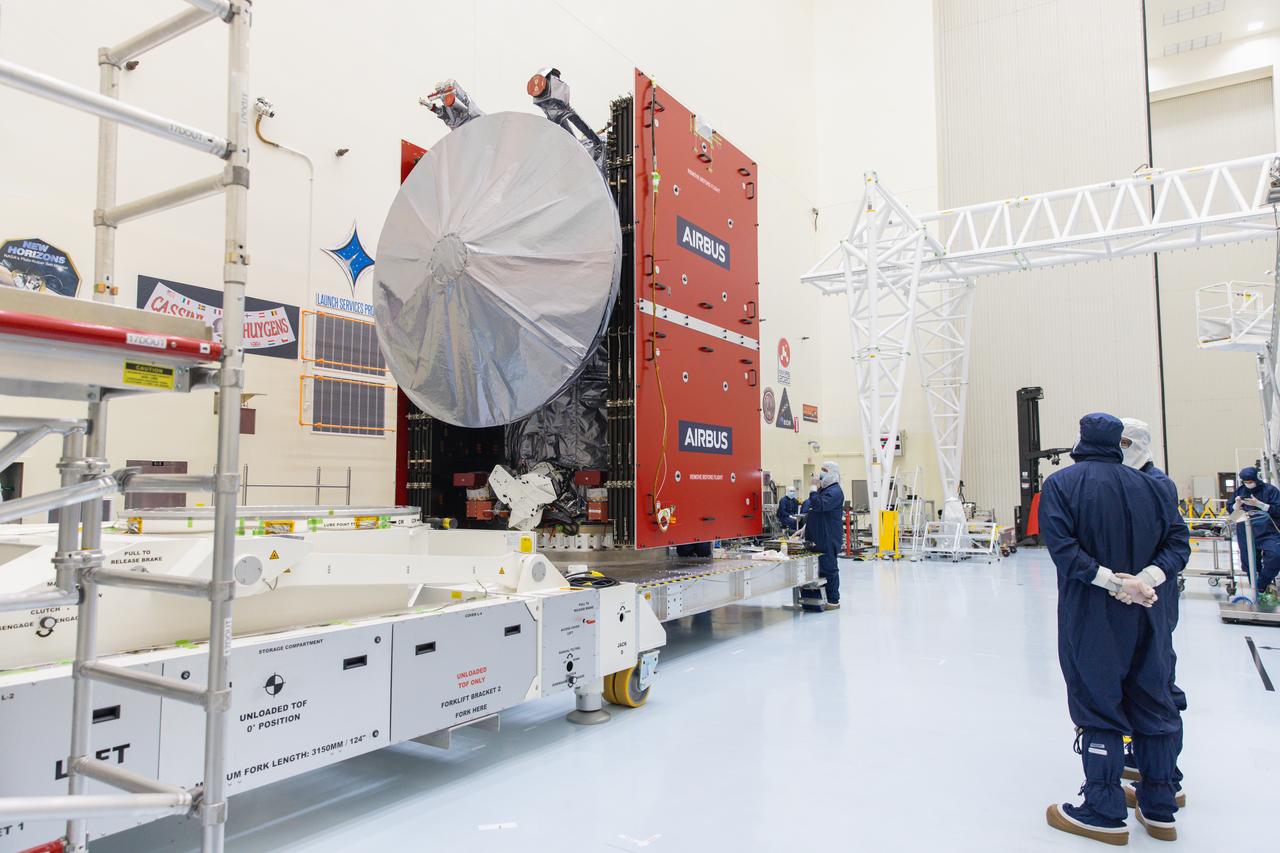
Technicians work to complete operations before propellant load occurs ahead of launch for NASA’s Europa Clipper spacecraft inside the Payload Hazardous Servicing Facility at the agency’s Kennedy Space Center in Florida on Tuesday, Sept. 11, 2024. Europa could have all the “ingredients” for life as we know it: water, organics, chemical energy, and stability. Europa Clipper’s launch period opens on October 10, 2024.
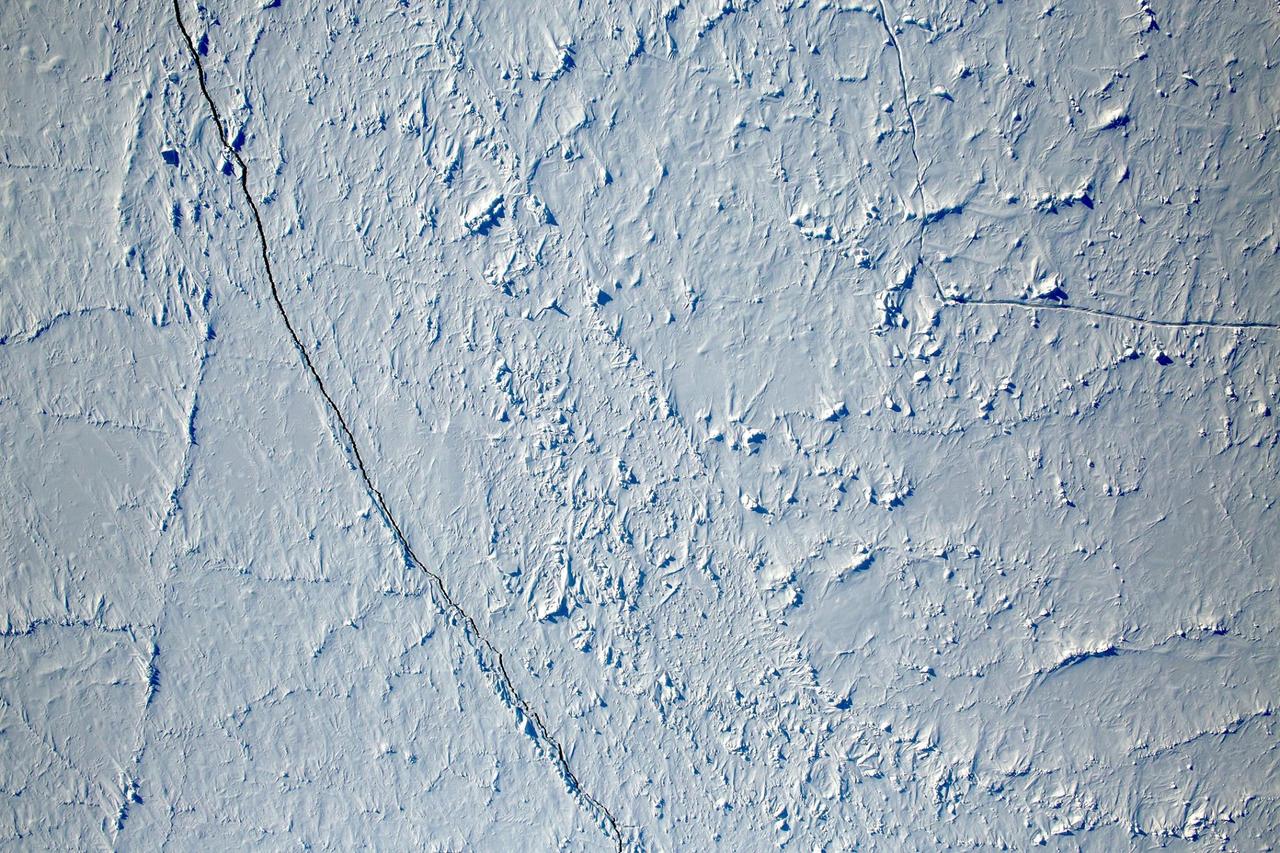
Want to know what the North Pole looked like yesterday afternoon? Well, our friends from NASA Operation IceBridge brought us this view from 500 meters about the North Pole. So what are you seeing? That's sea ice, with a few ridges and a bit of snow cover, and with a few small cracks, almost leads in the ice. Credit: NASA/Goddard/Operation IceBridge/Eric Fraim

61A-200-003 (30 Oct 1985) --- A large format Linhof camera onboard the Space Shuttle Columbia provided this coastal view of Somalia. The perspective is looking north from Muqdisho (foreground) to Raas Xaafuun at the horizon. Cumulus clouds cover the Somali Desert. The elongated, thinner steak of clouds follows a topographically depressed area, a wash know as Webi Shibeli.
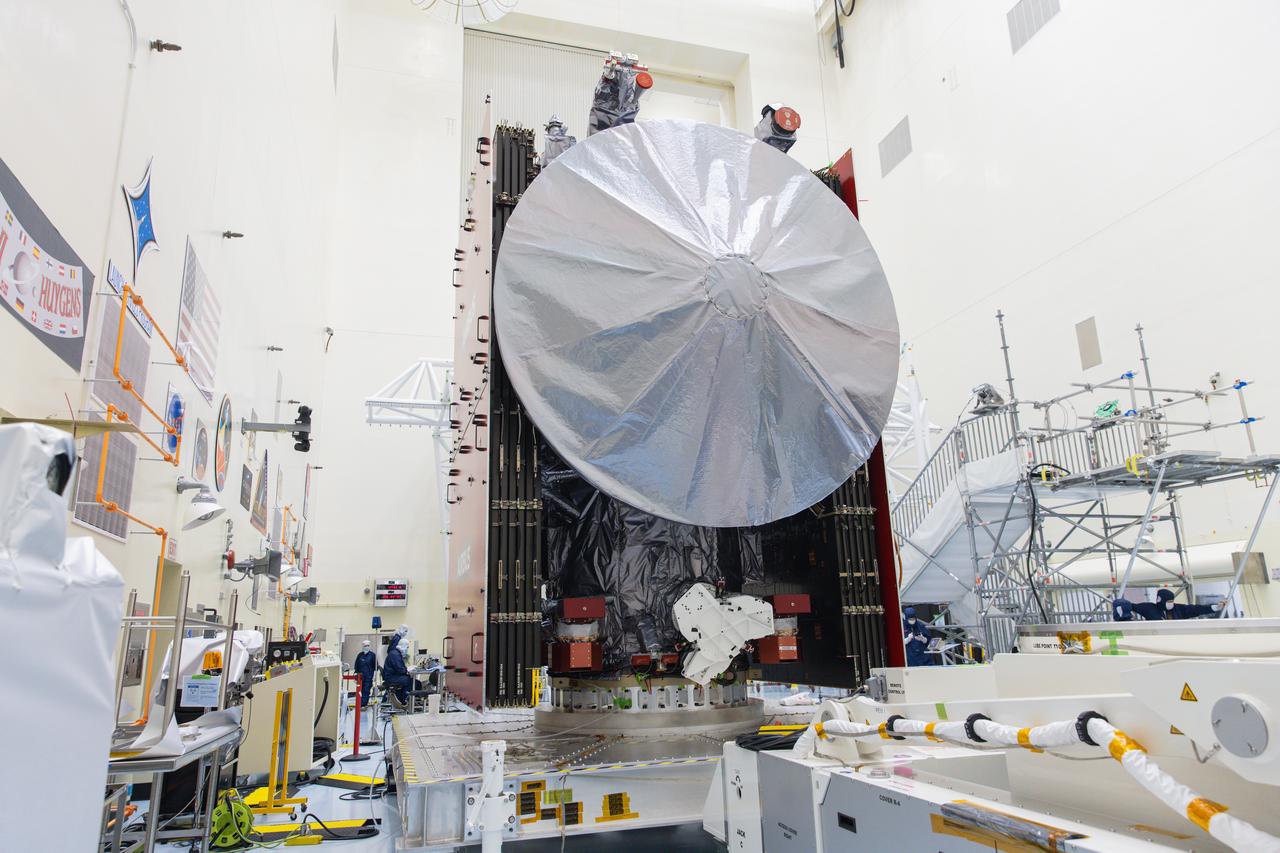
Technicians work to complete operations before propellant load occurs ahead of launch for NASA’s Europa Clipper spacecraft inside the Payload Hazardous Servicing Facility at the agency’s Kennedy Space Center in Florida on Tuesday, Sept. 11, 2024. Europa could have all the “ingredients” for life as we know it: water, organics, chemical energy, and stability. Europa Clipper’s launch period opens on October 10, 2024.

#NASAMoonKit campaign, I couldn’t go to the Moon without my camera, a 45-vinyl record (I really want to know how a record sounds in space. Gravity is what makes the needle lay on the record, will the change in gravity make it sound different?), a book to read, a photograph of my daughter, my phone or rather my communication and photo editing device, a snack and I definitely couldn’t go to the Moon without my moon boots!

NASA Associate Administrator Robert Lightfoot, talks during the Asteroid Initiative Industry and Partner Day at NASA Headquarters on Tuesday, June 18, 2013 in Washington. During the event NASA Deputy Administrator Lori Garver and other senior NASA officials discussed the progress being made on NASA's mission to capture, redirect, and explore an asteroid. NASA also announced an Asteroid Grand Challenge focused on finding all asteroid threats to human populations and knowing what to do about them. Photo Credit: (NASA/Bill Ingalls)
![“When I was a kid, I had a Lego set of one of the twin rovers, Spirit and Opportunity. It was like a Lego rover that could fold up the same way that the actual rover did. It’s crazy because I had that when I was like ten — and now, some of my current coworkers actually worked on that launch. So when I walked into my launch director’s office a couple of years ago, I saw that same Lego set sitting next to the people at Jet Propulsion Laboratory who actually built the rover. “Just being able to see it and touch it [as a kid] helps you impart your own imagination onto it. It’s really exciting. I wasn’t an action figure type of kid — but when I had stuff that seemed real, I really enjoyed putting it together. The project of putting it together was the thing that made my parents think that I was going to be a good engineer. Having it in front of you makes it real. So when you see it on TV, it’s like: ‘I know what that is. I know how that instrument works.’ There’s a connection there.” — Phillip Hargrove, Aerospace Engineer, Kennedy Space Center Interviewer: NASA / Thalia Patrinos](https://images-assets.nasa.gov/image/KSC-20210209-PH-KLS02_0030/KSC-20210209-PH-KLS02_0030~medium.jpg)
“When I was a kid, I had a Lego set of one of the twin rovers, Spirit and Opportunity. It was like a Lego rover that could fold up the same way that the actual rover did. It’s crazy because I had that when I was like ten — and now, some of my current coworkers actually worked on that launch. So when I walked into my launch director’s office a couple of years ago, I saw that same Lego set sitting next to the people at Jet Propulsion Laboratory who actually built the rover. “Just being able to see it and touch it [as a kid] helps you impart your own imagination onto it. It’s really exciting. I wasn’t an action figure type of kid — but when I had stuff that seemed real, I really enjoyed putting it together. The project of putting it together was the thing that made my parents think that I was going to be a good engineer. Having it in front of you makes it real. So when you see it on TV, it’s like: ‘I know what that is. I know how that instrument works.’ There’s a connection there.” — Phillip Hargrove, Aerospace Engineer, Kennedy Space Center Interviewer: NASA / Thalia Patrinos

In the summer of the year 1054 AD, Chinese astronomers saw a new "guest star," that appeared six times brighter than Venus. So bright in fact, it could be seen during the daytime for several months. This "guest star" was forgotten about until 700 years later with the advent of telescopes. Astronomers saw a tentacle-like nebula in the place of the vanished star and called it the Crab Nebula. Today we know it as the expanding gaseous remnant from a star that self-detonated as a supernova, briefly shining as brightly as 400 million suns. The explosion took place 6,500 light-years away. If the blast had instead happened 50 light-years away it would have irradiated Earth, wiping out most life forms. In the late 1960s astronomers discovered the crushed heart of the doomed star, an ultra-dense neutron star that is a dynamo of intense magnetic field and radiation energizing the nebula. Astronomers therefore need to study the Crab Nebula across a broad range of electromagnetic radiation, from X-rays to radio waves. This image combines data from five different telescopes: the VLA (radio) in red; Spitzer Space Telescope (infrared) in yellow; Hubble Space Telescope (visible) in green; XMM-Newton (ultraviolet) in blue; and Chandra X-ray Observatory (X-ray) in purple. More images and an animation are available at https://photojournal.jpl.nasa.gov/catalog/PIA21474
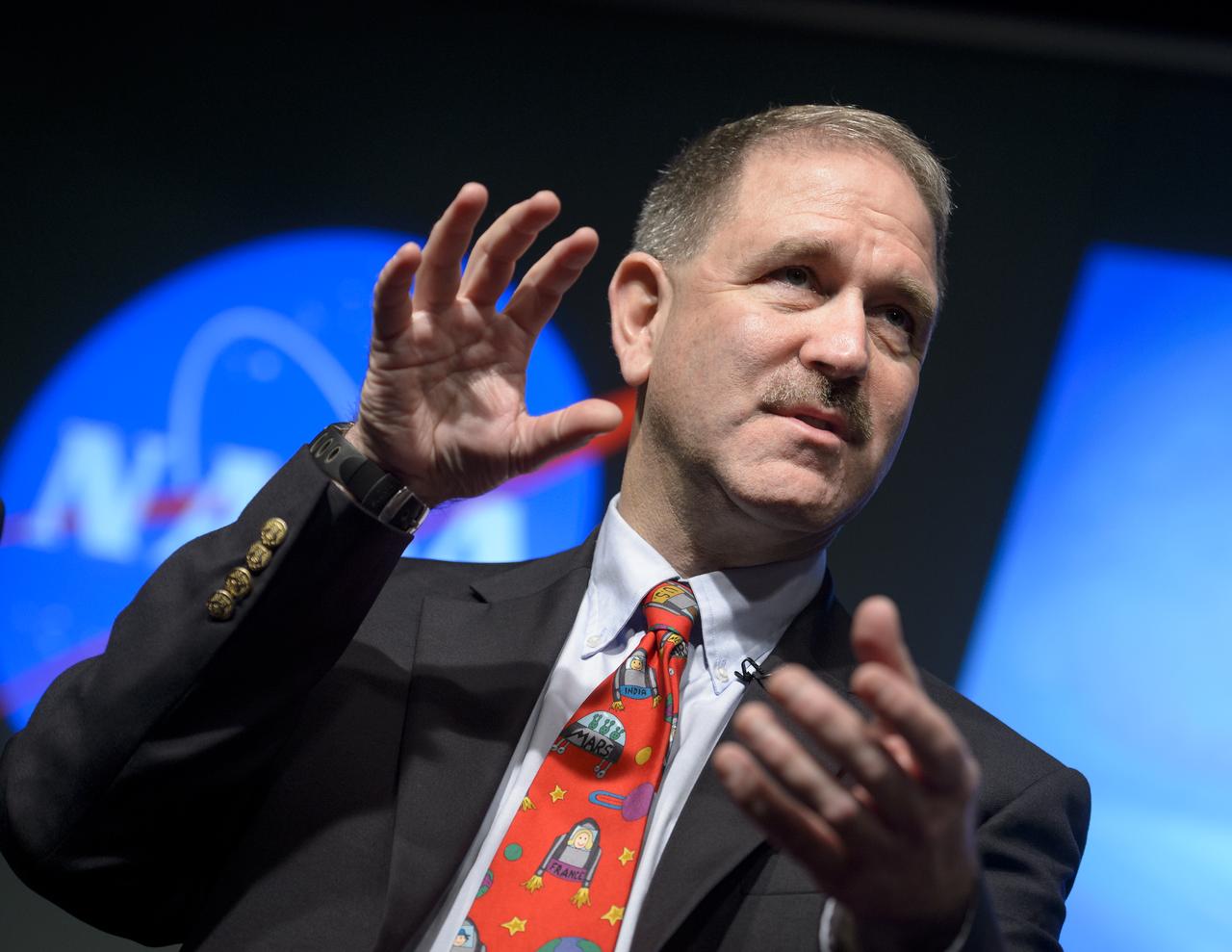
NASA Associate Administrator Science John Grunsfeld, Ph.D, talks during the Asteroid Initiative Industry and Partner Day at NASA Headquarters on Tuesday, June 18, 2013 in Washington. During the event NASA Deputy Administrator Lori Garver and other senior NASA officials discussed the progress being made on NASA's mission to capture, redirect, and explore an asteroid. NASA also announced an Asteroid Grand Challenge focused on finding all asteroid threats to human populations and knowing what to do about them. Photo Credit: (NASA/Bill Ingalls)

Tom Kalil, Deputy Director for Technology and Innovation, White House Office of Science and Technology Policy, talks during the Asteroid Initiative Industry and Partner Day at NASA Headquarters on Tuesday, June 18, 2013 in Washington. During the event NASA Deputy Administrator Lori Garver and other senior NASA officials discussed the progress being made on NASA's mission to capture, redirect, and explore an asteroid. NASA also announced an Asteroid Grand Challenge focused on finding all asteroid threats to human populations and knowing what to do about them. Photo Credit: (NASA/Bill Ingalls)
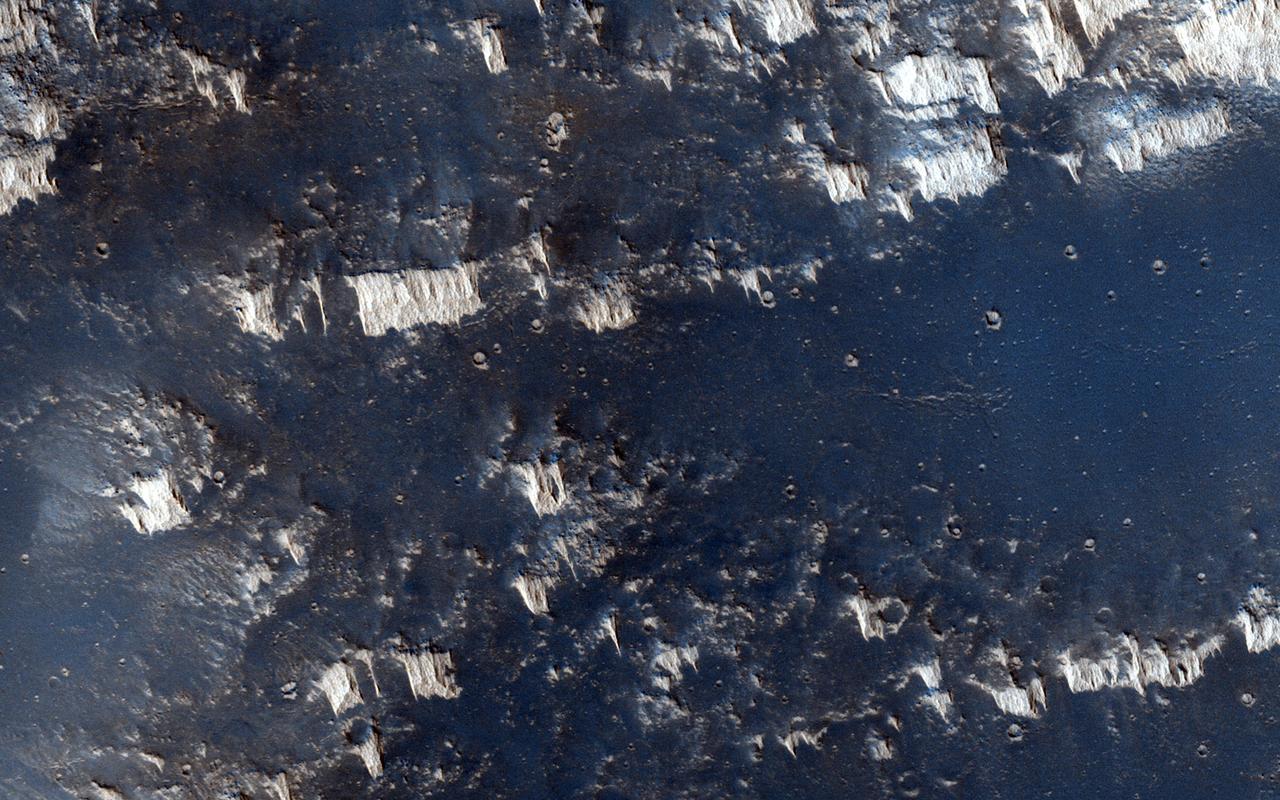
The terrain in this observation from NASA Mars Reconnaissance Orbiter looks like an ancient uplifted crustal block. The area is riddled with faults big cracks that allow rocks to slide and ridges that look like uncovered magma dikes. A Mars Orbital Camera picture shows the region to be moderately dusty, but rocks do poke out along the ridges. With a high resolution images, we want to know if the dikes are of the same composition as the flood lavas that surround this high terrain. And what material did the dikes intrude upon which can be eroded away? http://photojournal.jpl.nasa.gov/catalog/PIA19287

Jenn Gustetic, Prizes Program Executive, NASA Office of the Chief Technologist moderates the Asteroid Initiative Industry and Partner Day at NASA Headquarters on Tuesday, June 18, 2013 in Washington. During the event NASA Deputy Administrator Lori Garver and other senior NASA officials discussed the progress being made on NASA's mission to capture, redirect, and explore an asteroid. NASA also announced an Asteroid Grand Challenge focused on finding all asteroid threats to human populations and knowing what to do about them. Photo Credit: (NASA/Bill Ingalls)
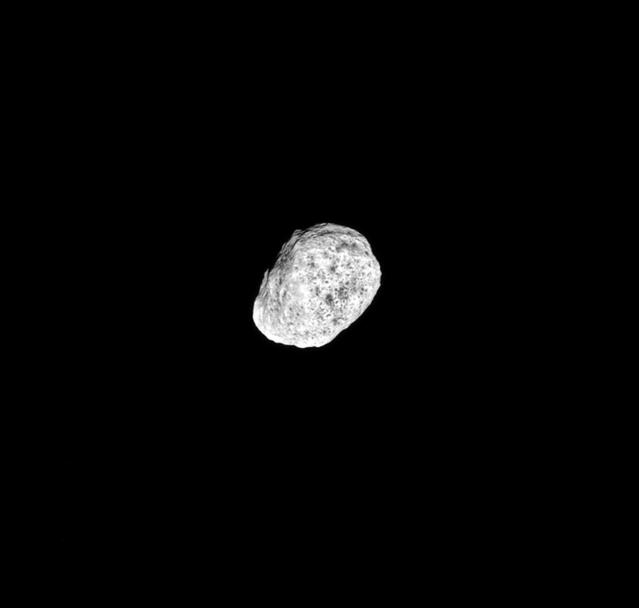
The moon Hyperion tumbles as it orbits Saturn. Hyperion's (168 miles or 270 kilometers across) spin axis has a chaotic orientation in time, meaning that it is essentially impossible to predict how the moon will be spinning in the future. So far, scientists only know of a few bodies with such chaotic spins. The image was taken in green light with the Cassini spacecraft narrow-angle camera on Aug. 22, 2016. The view was acquired at a distance of approximately 203,000 miles (326,000 kilometers) from Hyperion and at a Sun-Hyperion-spacecraft, or phase, angle of 10 degrees. Image scale is 1 mile (2 kilometers) per pixel. http://photojournal.jpl.nasa.gov/catalog/PIA20512
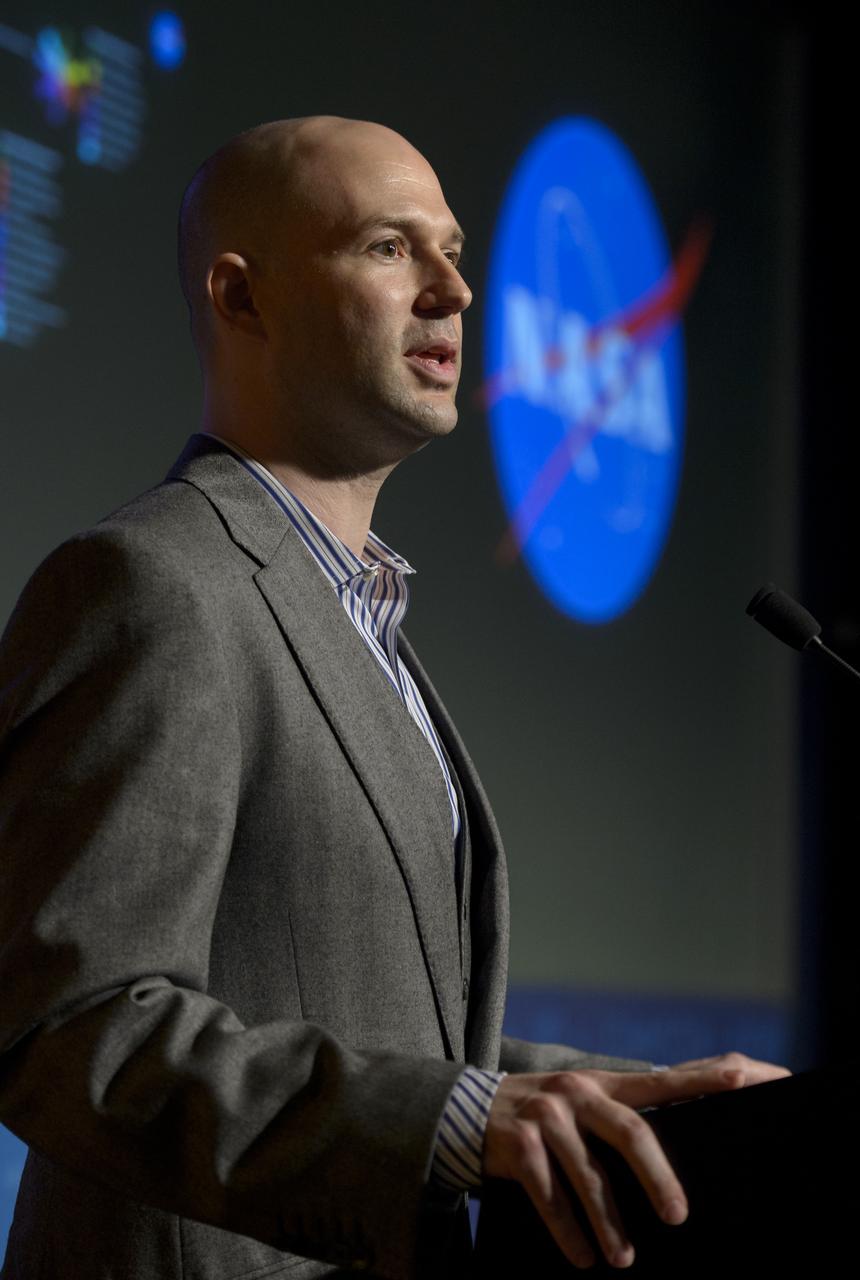
Jason Kessler, Special Projects Program Executive, NASA Office of the Chief Technologist, talks during the Asteroid Initiative Industry and Partner Day at NASA Headquarters on Tuesday, June 18, 2013 in Washington. During the event NASA Deputy Administrator Lori Garver and other senior NASA officials discussed the progress being made on NASA's mission to capture, redirect, and explore an asteroid. NASA also announced an Asteroid Grand Challenge focused on finding all asteroid threats to human populations and knowing what to do about them. Photo Credit: (NASA/Bill Ingalls)

The 2017 class of astronaut candidates are at United Launch Alliance's Space Launch Complex 41 at Cape Canaveral Air Force Station (CCAFS) in Florida for a familiarization tour. They also toured facilities at Kennedy Space Center, including the Neil Armstrong Operations and Checkout Building high bay; the Launch Control Center, Launch Complex 39B, the Vehicle Assembly Building, Boeing's Commercial Crew and Cargo Facility, and SpaceX's Launch Complex 39A. The candidates will spend about two years getting to know the space station systems and learning how to spacewalk, speak Russian, control the International Space Station's robotic arm and fly T-38s, before they're eligible to be assigned to a mission.
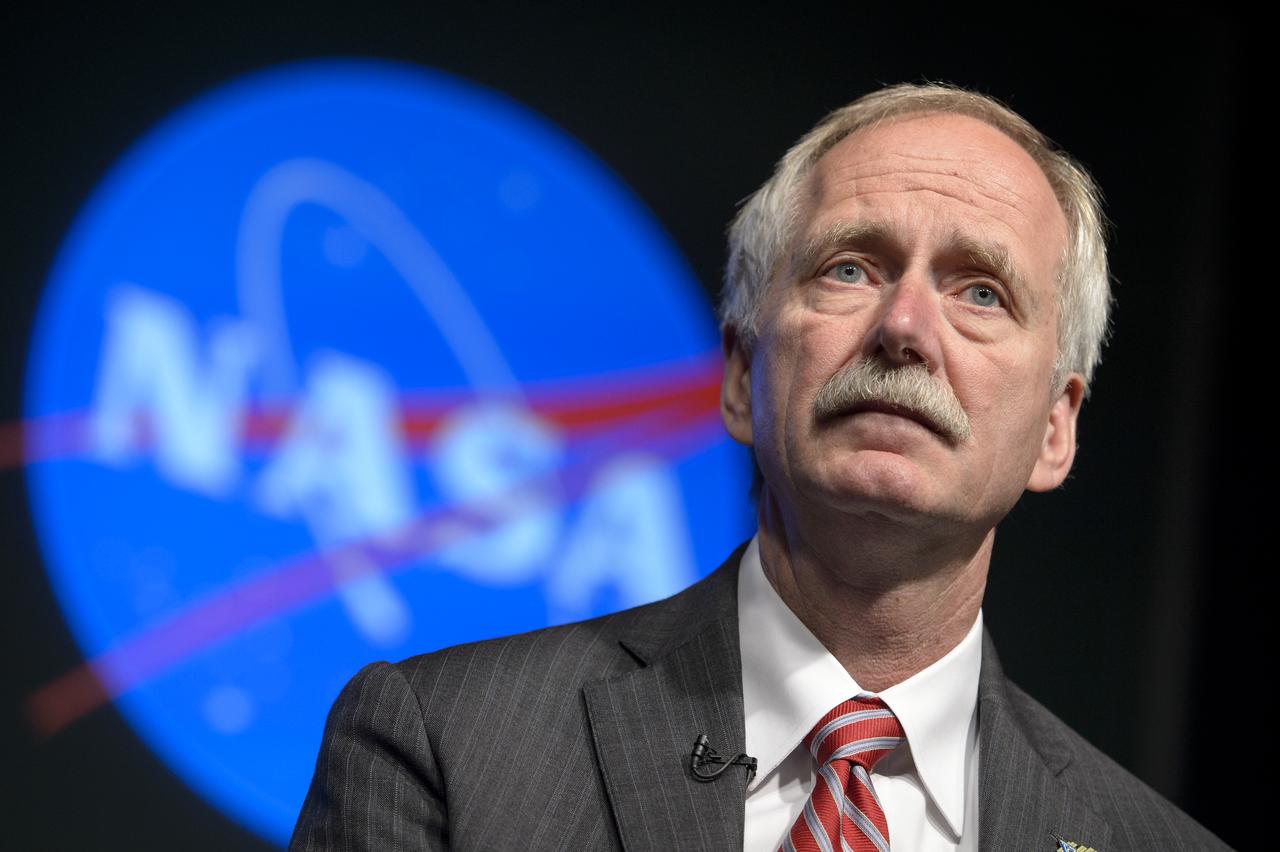
NASA Associate Administrator for Human Exploration and Operations, William Gerstenmaier, listens to a question from the audience during the Asteroid Initiative Industry and Partner Day at NASA Headquarters on Tuesday, June 18, 2013 in Washington. During the event NASA Deputy Administrator Lori Garver and other senior NASA officials discussed the progress being made on NASA's mission to capture, redirect, and explore an asteroid. NASA also announced an Asteroid Grand Challenge focused on finding all asteroid threats to human populations and knowing what to do about them. Photo Credit: (NASA/Bill Ingalls)
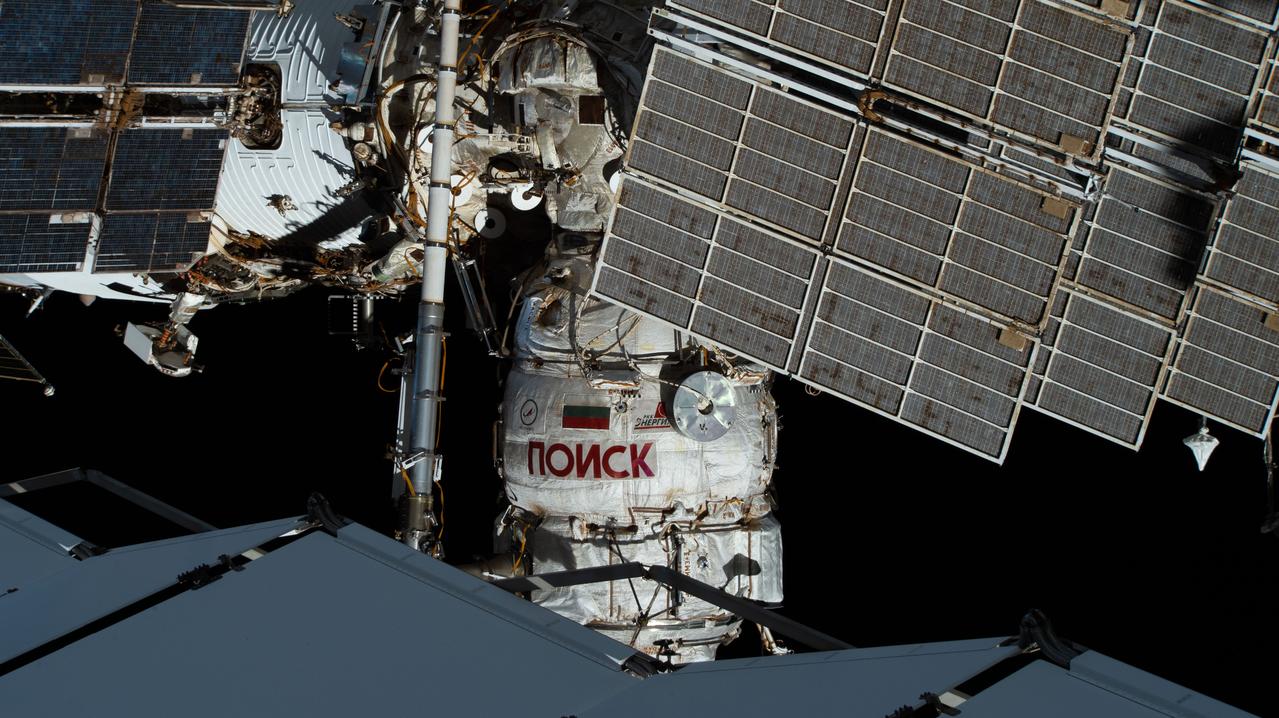
iss063e082811 (Sept. 3, 2020) --- Russia's Mini-Research Module 2, also know as the Poisk module, is pictured from an external high definition camera installed on the International Space Station. Poisk was attached to the space-facing port of the Zvezda service module in November of 2009 and has served as a docking port for Soyuz crew ships. It also provides a place to prepare for spacewalks, as well the refurbishing of the Russian Orlan spacesuits. The module from Roscosmos has the added bonus of extra space for scientific experiments, as well as power supply outlets. It is also equipped with both internal and external workstations to accommodate science payloads and make observations.
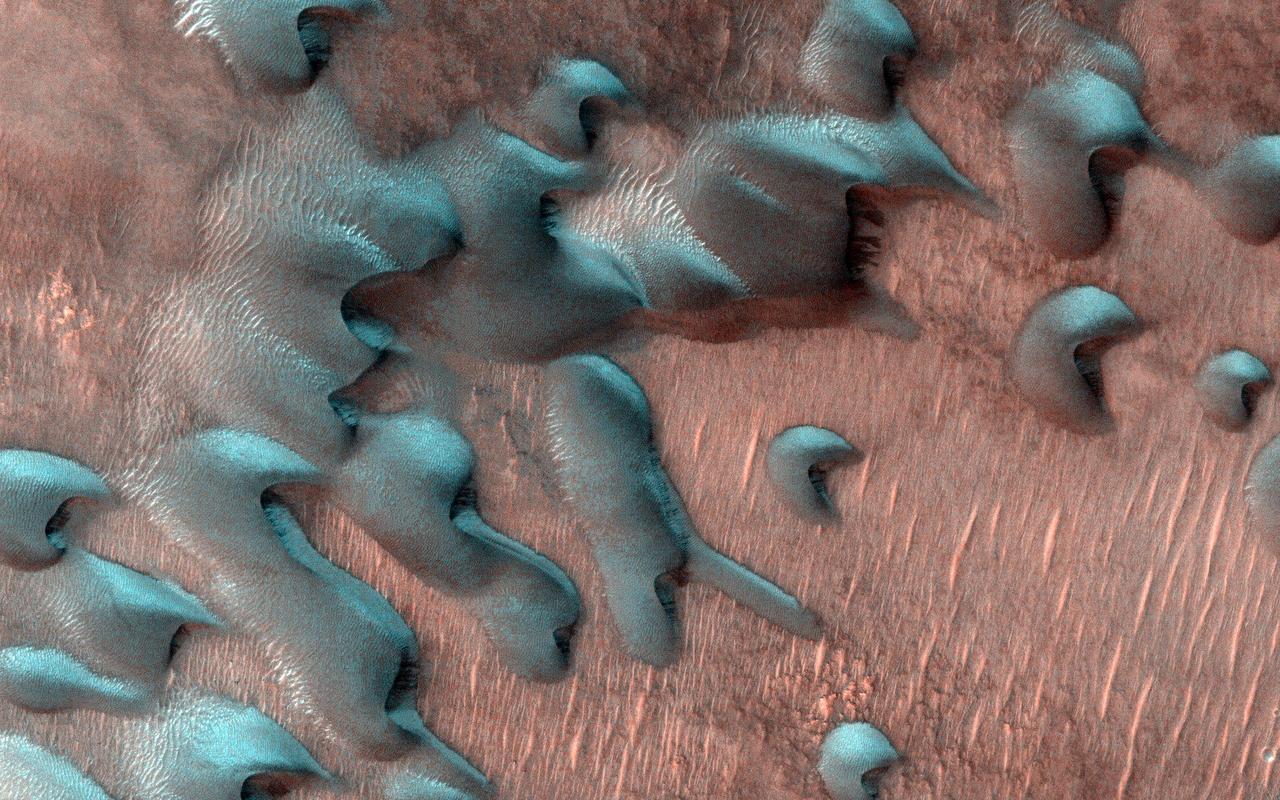
Usually, HiRISE takes pictures of well-illuminated terrain where there is plenty of light to produce clear images. Sometimes though, we would like to know what's going on in the dim wintertime areas. This picture was taken far north of the equator just two days after the winter solstice when the Sun was just a few degrees above the horizon. Sand dunes are moving across this landscape from top left to bottom right. Winter frost covers the colder, north-facing half of each dune (but not the warmer south-facing half). The frost here is a mixture of carbon dioxide ice and water ice and will disappear in a few months when spring arrives. https://photojournal.jpl.nasa.gov/catalog/PIA25552
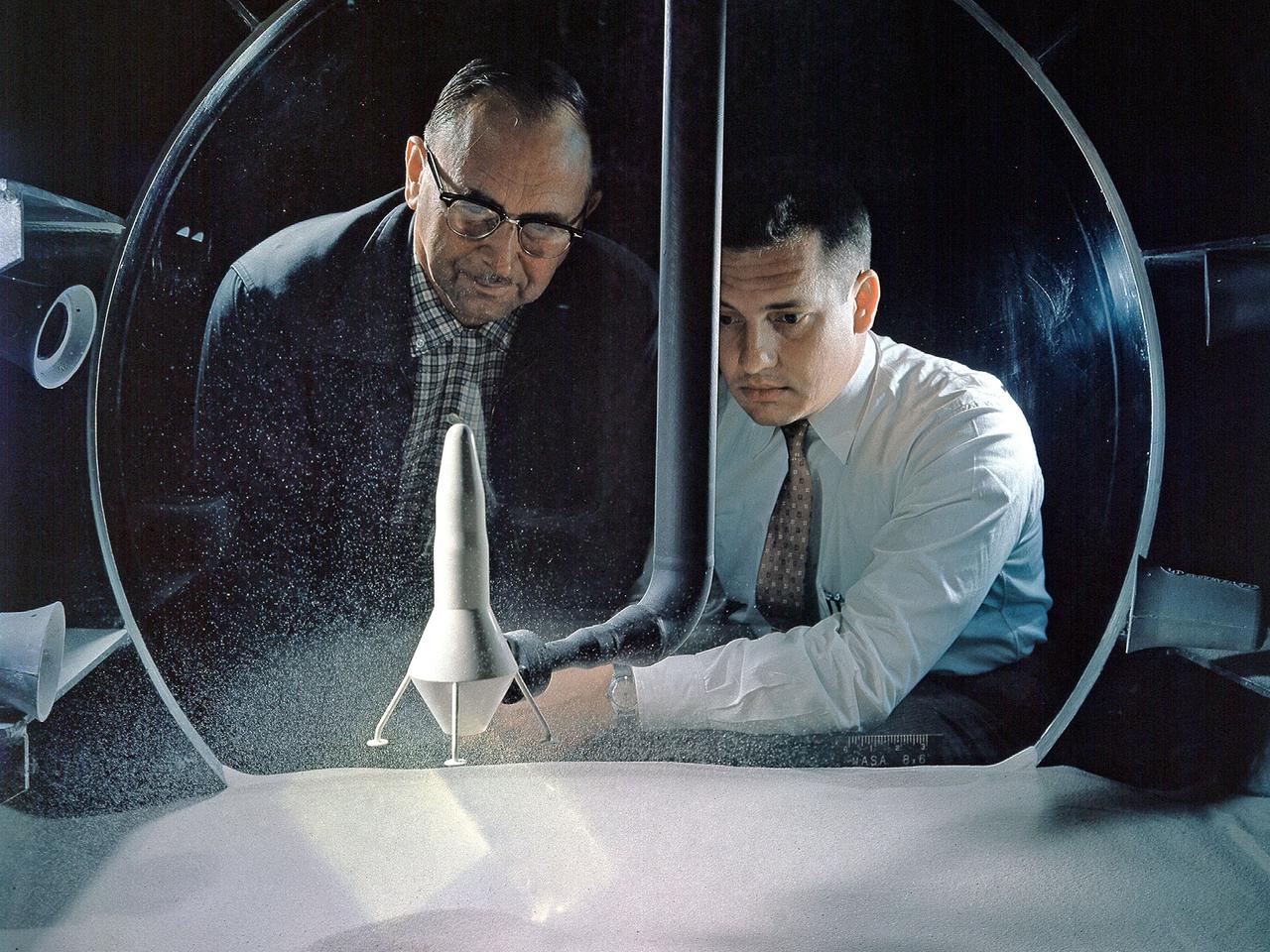
NASA Researchers view a demonstration of the moon dust simulator in the 8- by 6-Foot Supersonic Wind Tunnel facility at the National Aeronautics and Space Administration (NASA) Lewis Research Center. The researchers were studying the effect of the lunar lander’s retrorockets on the loose dust on the lunar surface. There was some concern that the retrorockets would kick up so much dust that the crew would lose the ability to see. They also did not know how the dust’s behavior would be affected by the space atmosphere. This small vacuum tank was built for very preliminary investigations into this matter. The pipe entering the top of the tank supplied the airflow to the lander model, which was affixed to the pipe. The researchers altered the vacuum levels and speed of the airflow.
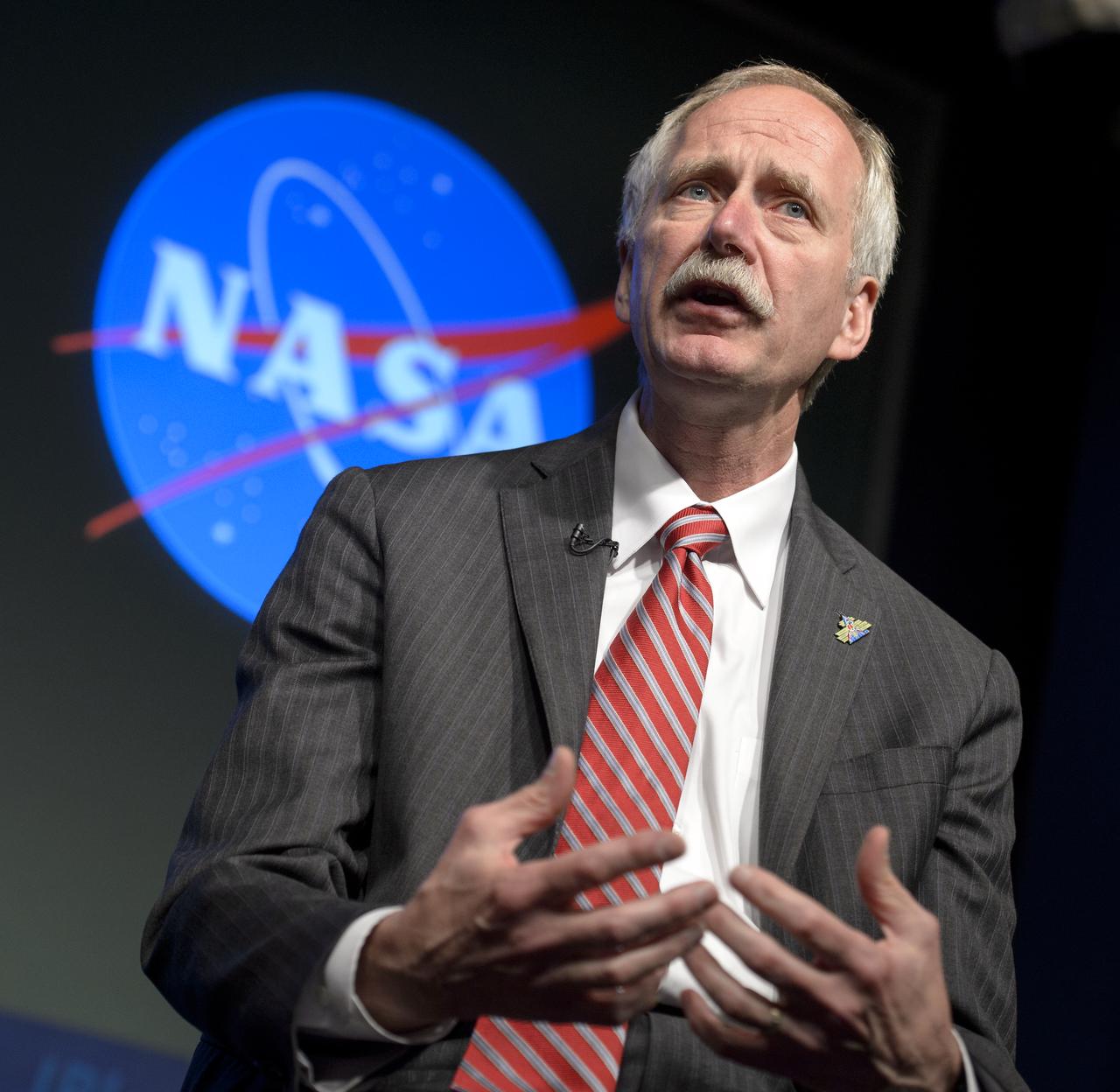
NASA Associate Administrator for Human Exploration and Operations, William Gerstenmaier, talks during the Asteroid Initiative Industry and Partner Day at NASA Headquarters on Tuesday, June 18, 2013 in Washington. During the event NASA Deputy Administrator Lori Garver and other senior NASA officials discussed the progress being made on NASA's mission to capture, redirect, and explore an asteroid. NASA also announced an Asteroid Grand Challenge focused on finding all asteroid threats to human populations and knowing what to do about them. Photo Credit: (NASA/Bill Ingalls)
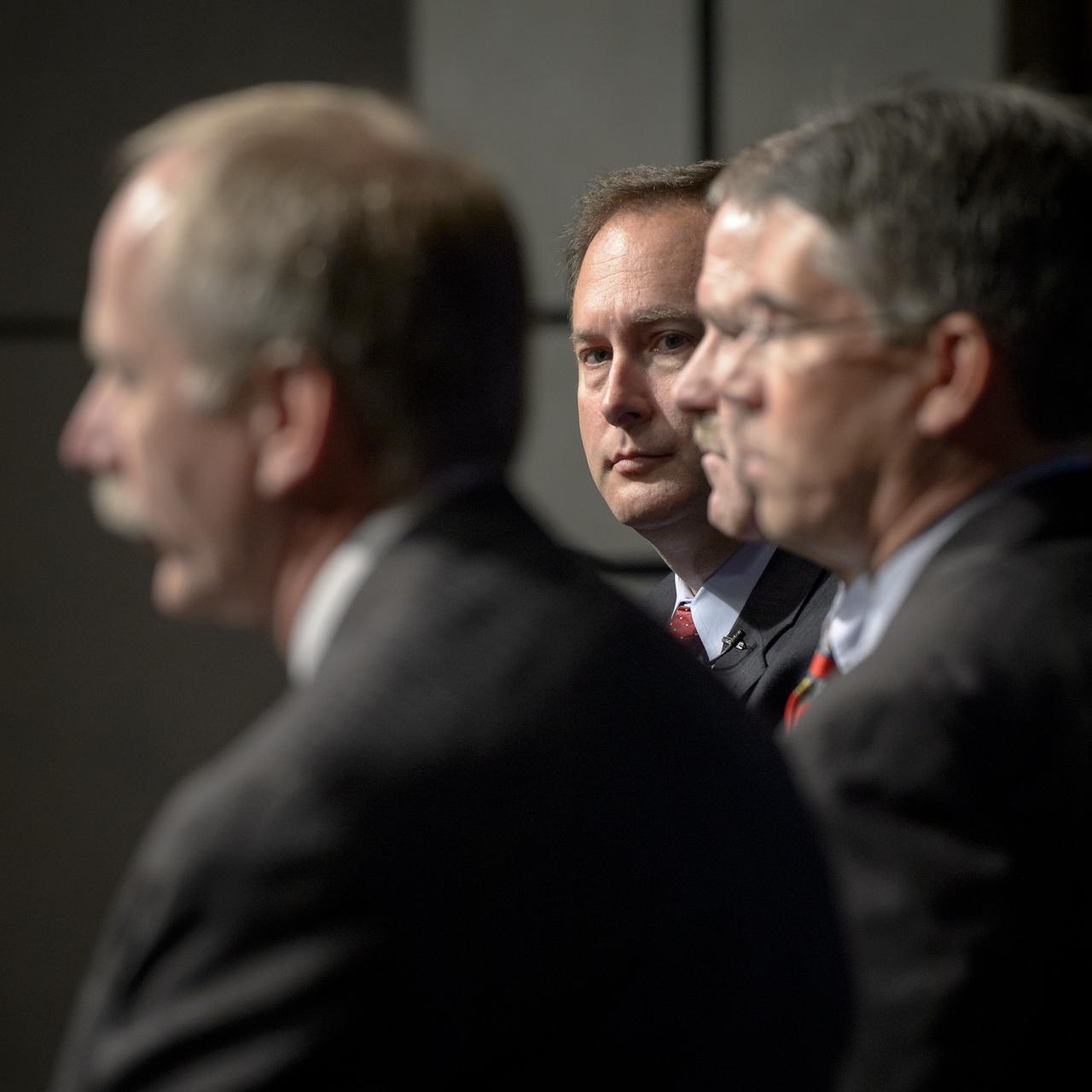
NASA Associate Administrator Robert Lightfoot, listens as other NASA senior leadership talk during the Asteroid Initiative Industry and Partner Day at NASA Headquarters on Tuesday, June 18, 2013 in Washington. During the event NASA Deputy Administrator Lori Garver and other senior NASA officials discussed the progress being made on NASA's mission to capture, redirect, and explore an asteroid. NASA also announced an Asteroid Grand Challenge focused on finding all asteroid threats to human populations and knowing what to do about them. Photo Credit: (NASA/Bill Ingalls)
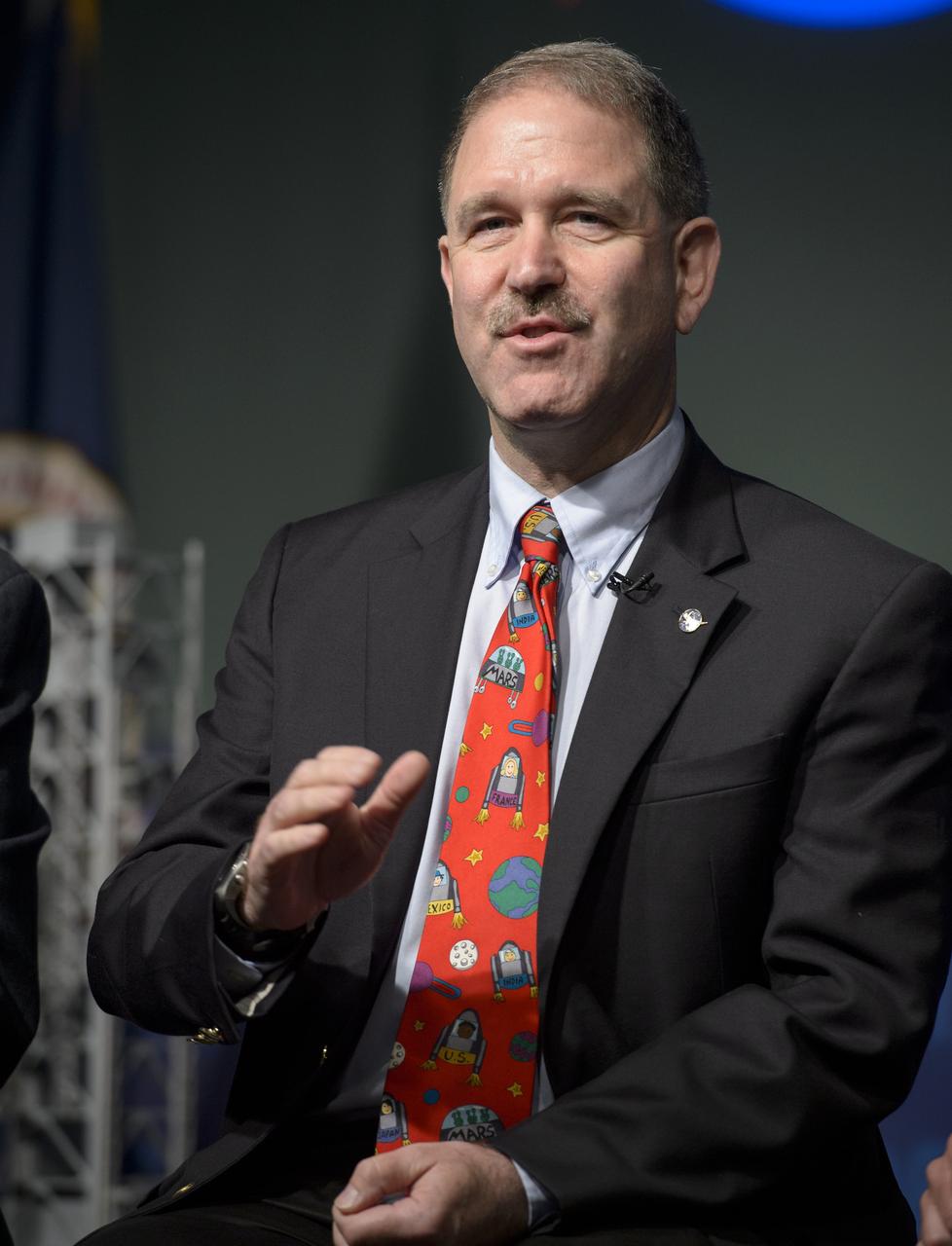
NASA Associate Administrator Science John Grunsfeld, Ph.D, talks during the Asteroid Initiative Industry and Partner Day at NASA Headquarters on Tuesday, June 18, 2013 in Washington. During the event NASA Deputy Administrator Lori Garver and other senior NASA officials discussed the progress being made on NASA's mission to capture, redirect, and explore an asteroid. NASA also announced an Asteroid Grand Challenge focused on finding all asteroid threats to human populations and knowing what to do about them. Photo Credit: (NASA/Bill Ingalls)

NASA Associate Administrator Robert Lightfoot, left, talks as NASA Associate Administrator Science John Grunsfeld, Ph.D, listens, during the Asteroid Initiative Industry and Partner Day at NASA Headquarters on Tuesday, June 18, 2013 in Washington. During the event NASA Deputy Administrator Lori Garver and other senior NASA officials discussed the progress being made on NASA's mission to capture, redirect, and explore an asteroid. NASA also announced an Asteroid Grand Challenge focused on finding all asteroid threats to human populations and knowing what to do about them. Photo Credit: (NASA/Bill Ingalls)
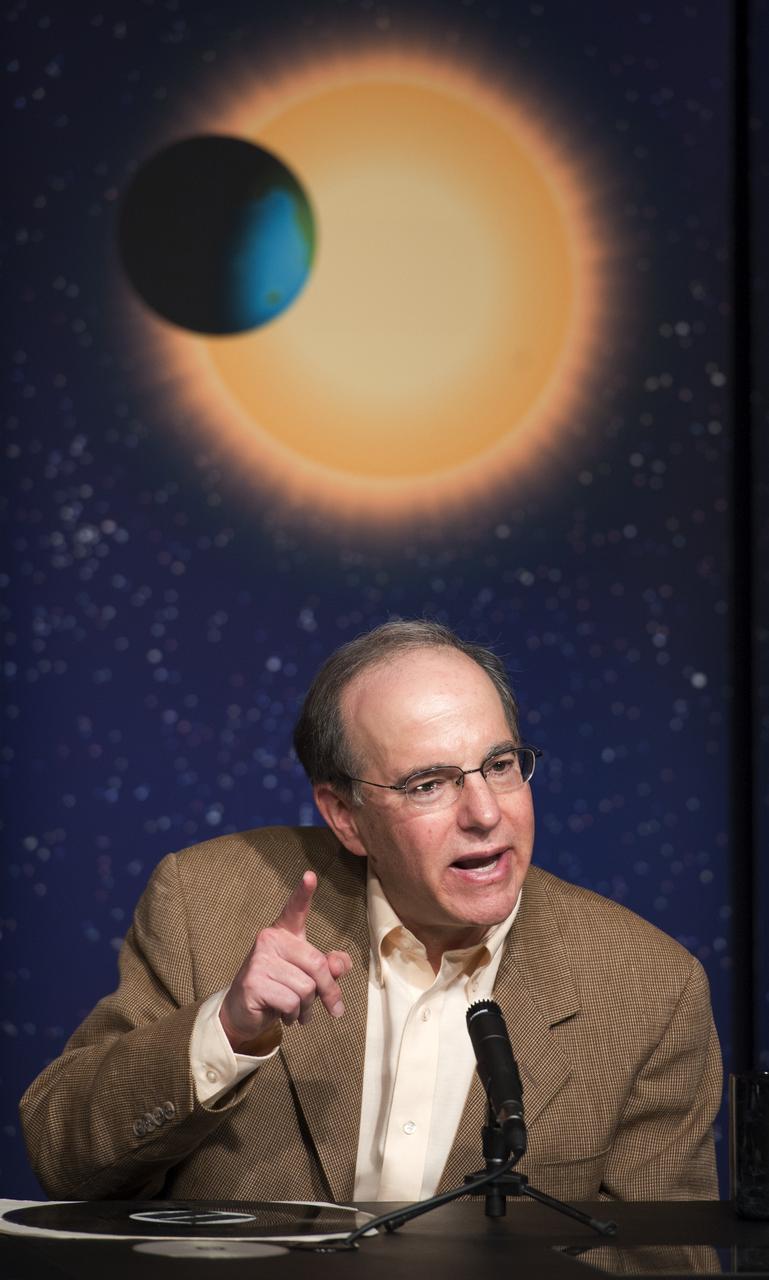
Jack Lissauer, a planetary scientist and a Kepler science team member at NASA's Ames Research Center, speaks during a news conference, Wednesday, Feb. 2, 2010, at NASA Headquarters in Washington. Scientists using NASA's Kepler, a space telescope, recently discovered six planets made of a mix of rock and gases orbiting a single sun-like star, known as Kepler-11, which is located approximately 2,000 light years from Earth. "It’s amazingly compact, it’s amazingly flat, there’s an amazingly large number of big planets orbiting close to their star - we didn’t know such systems could even exist," he said. Photo Credit: (NASA/Paul E. Alers)
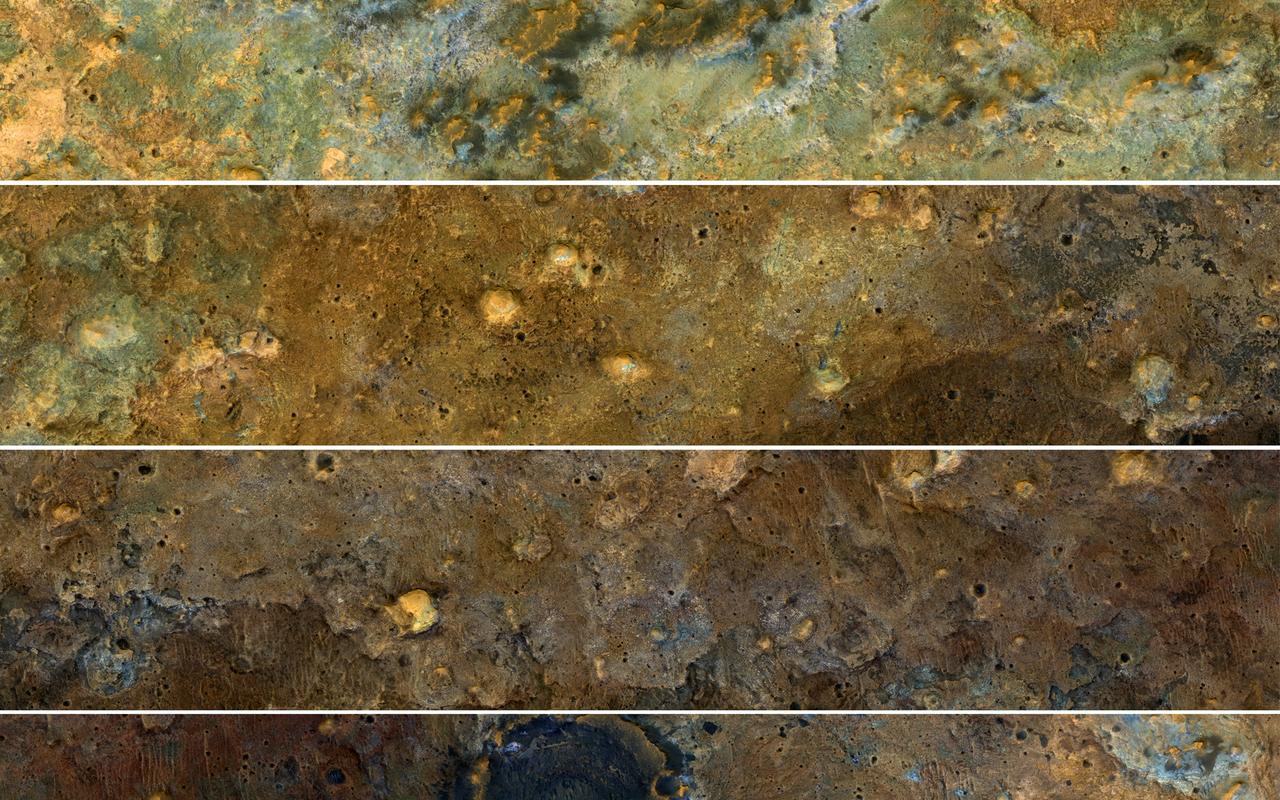
The clay-rich terrain surrounding Mawrth Vallis is one of the most scenic regions of Mars, a future interplanetary park, as seen by NASA's Mars Reconnaissance Orbiter. Here, we cut a long, oblique view into strips to see the full color coverage in more compact form. The origin of these altered layers is the subject of continued debates, perhaps to be resolved by a future rover on the surface. We do know that these layers are very ancient, dating back to a time when the environment of Mars was wetter and more habitable, if there were any inhabitants. https://photojournal.jpl.nasa.gov/catalog/PIA21871
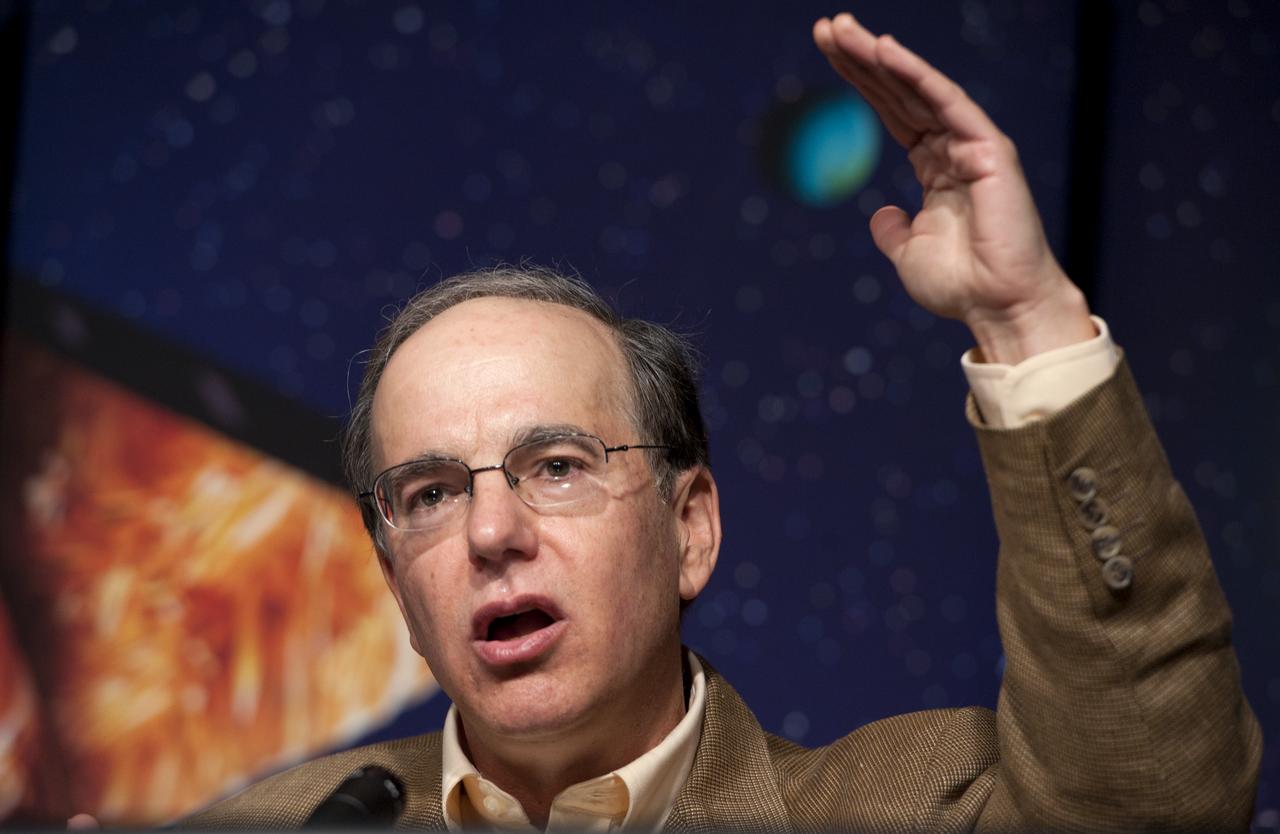
Jack Lissauer, a planetary scientist and a Kepler science team member at NASA's Ames Research Center, speaks during a news conference, Wednesday, Feb. 2, 2010, at NASA Headquarters in Washington. Scientists using NASA's Kepler, a space telescope, recently discovered six planets made of a mix of rock and gases orbiting a single sun-like star, known as Kepler-11, which is located approximately 2,000 light years from Earth."It’s amazingly compact, it’s amazingly flat, there’s an amazingly large number of big planets orbiting close to their star - we didn’t know such systems could even exist." Photo Credit: (NASA/Paul E. Alers)

Jason Kessler, Special Projects Program Executive, NASA Office of the Chief Technologist, talks during the Asteroid Initiative Industry and Partner Day at NASA Headquarters on Tuesday, June 18, 2013 in Washington. During the event NASA Deputy Administrator Lori Garver and other senior NASA officials discussed the progress being made on NASA's mission to capture, redirect, and explore an asteroid. NASA also announced an Asteroid Grand Challenge focused on finding all asteroid threats to human populations and knowing what to do about them. Photo Credit: (NASA/Bill Ingalls)
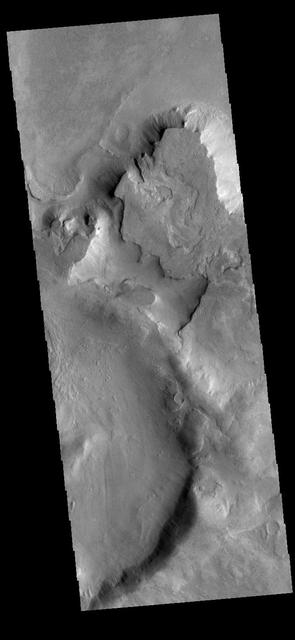
This VIS images shows part of two unnamed craters in Noachis Terra. The younger of the two craters is at the bottom of the image with one side visible in the image. The older and much larger crater has just part of the rim and floor visible towards the top of the image. The overlapping of one crater on top of another allows for relative dating to be done. We don't know the exact ages of each crater, but we can define which came first. Orbit Number: 65804 Latitude: -49.4751 Longitude: 14.2708 Instrument: VIS Captured: 2016-10-14 03:52 http://photojournal.jpl.nasa.gov/catalog/PIA21184
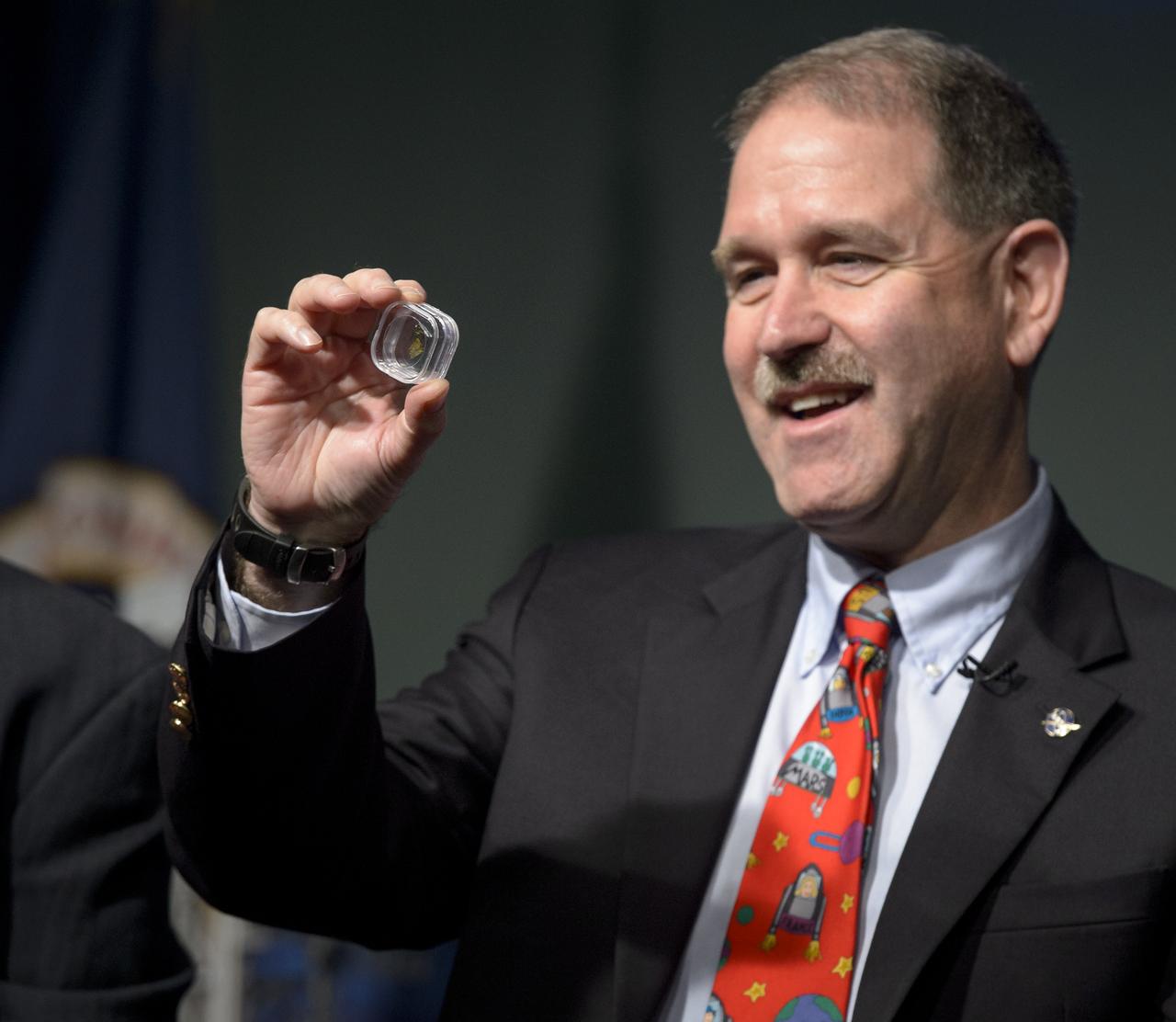
NASA Associate Administrator Science John Grunsfeld, Ph.D, displays a fragment of the Pallasite meteorite from Chubut, Argentina found in 1951 and given to him by his daughter on Father's Day during the Asteroid Initiative Industry and Partner Day at NASA Headquarters on Tuesday, June 18, 2013 in Washington. During the event NASA Deputy Administrator Lori Garver and other senior NASA officials discussed the progress being made on NASA's mission to capture, redirect, and explore an asteroid. NASA also announced an Asteroid Grand Challenge focused on finding all asteroid threats to human populations and knowing what to do about them. Photo Credit: (NASA/Bill Ingalls)
NASA Associate Administrator for Space Technology, Mike Gazarik, Ph.D, talks during the Asteroid Initiative Industry and Partner Day at NASA Headquarters on Tuesday, June 18, 2013 in Washington. During the event NASA Deputy Administrator Lori Garver and other senior NASA officials discussed the progress being made on NASA's mission to capture, redirect, and explore an asteroid. NASA also announced an Asteroid Grand Challenge focused on finding all asteroid threats to human populations and knowing what to do about them. Photo Credit: (NASA/Bill Ingalls)

NASA Associate Administrator for Human Exploration and Operations, William Gerstenmaier, talks during the Asteroid Initiative Industry and Partner Day at NASA Headquarters on Tuesday, June 18, 2013 in Washington. During the event NASA Deputy Administrator Lori Garver and other senior NASA officials discussed the progress being made on NASA's mission to capture, redirect, and explore an asteroid. NASA also announced an Asteroid Grand Challenge focused on finding all asteroid threats to human populations and knowing what to do about them. Photo Credit: (NASA/Bill Ingalls)
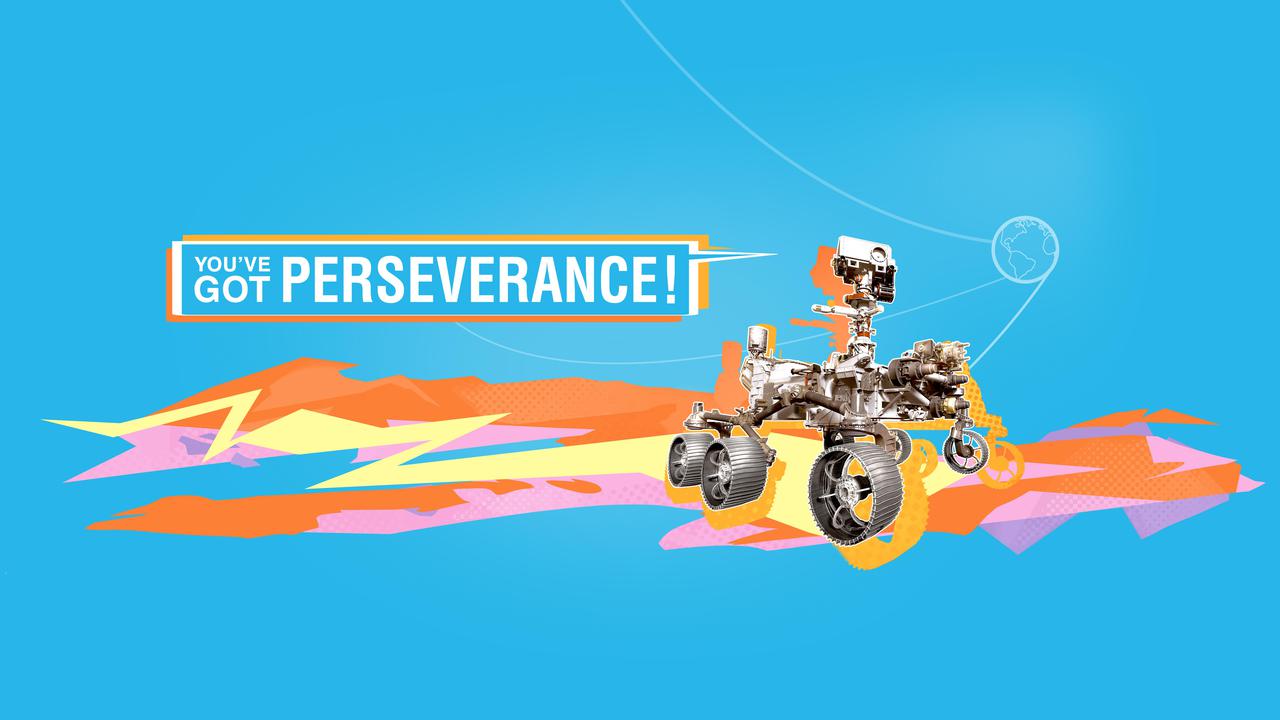
This colorful illustration depicts NASA's Perseverance Rover on Mars, where it landed in February 2021. The Perseverance team faced numerous technical and logistical challenges, including those presented by the COVID-19 pandemic, before and after launch and landing. Because they know how hard it can be to overcome obstacles, they're celebrating students who have persevered in the face of academic challenges. Awardees will receive a personal message beamed back from Mars by the rover. Find out how to nominate a student for "You've Got Perseverance!" at: go.nasa.gov/gotperseverance Animation available at https://photojournal.jpl.nasa.gov/catalog/PIA24948
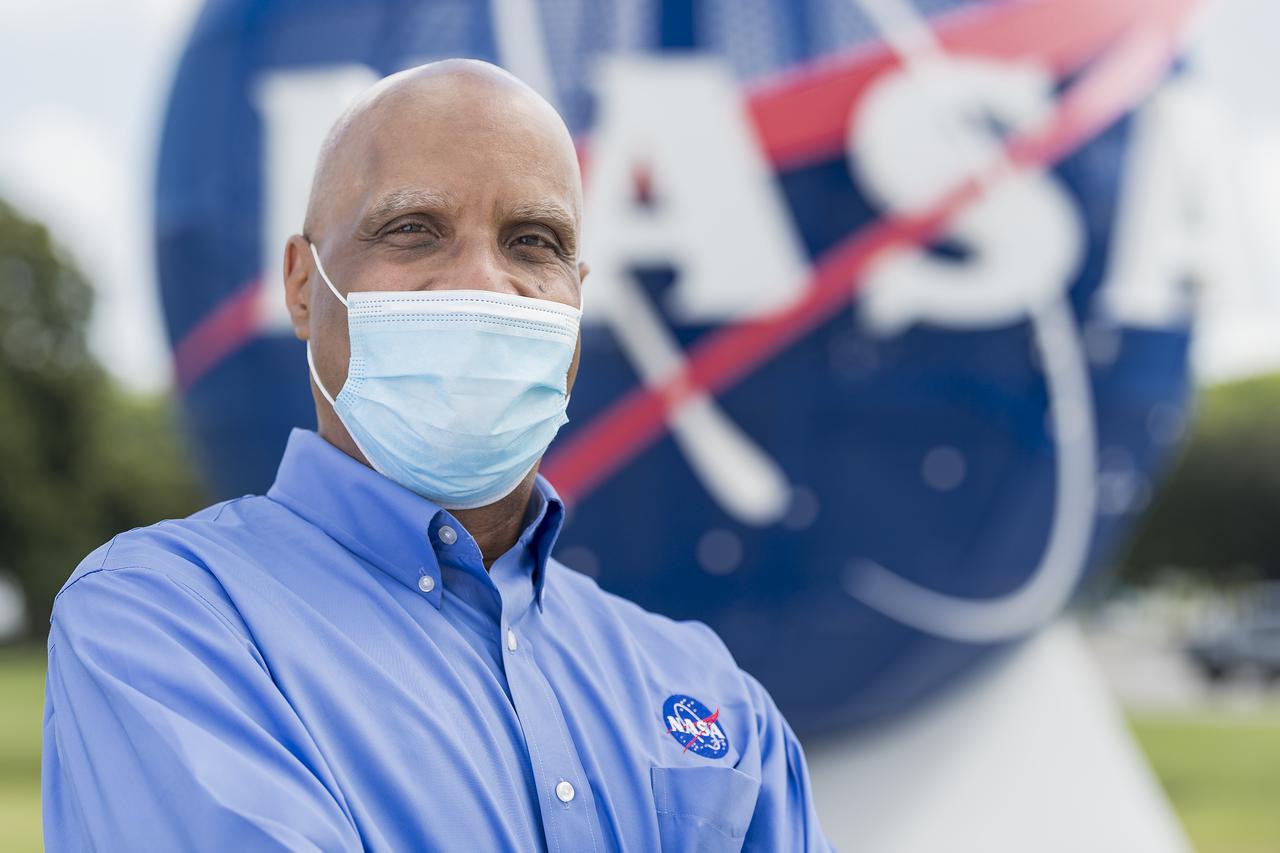
Portrait of Robin "Rob" Lee of the Office of Diversity & Equal Opp. Branch, in front of NASA Langley's "Meatball." The portrait was done for Thalia Patrinos at NASA Headquarters as part of "Faces of NASA" project. Due to the COVID-19 pandemic, masks were mandated by Governor Northam in Virginia in public settings. "Well, little did I know, even at a young age, he instilled in me the importance of seeing people for people. And being able to help people and being able to meet them in their time of need. And that carried me throughout my entire life. Even still today.” — Robin Lee, Director of Office of Diversity and Equal Opportunity, Langley Research Center

Jason Kessler, Special Projects Program Executive, NASA Office of the Chief Technologist, talks during the Asteroid Initiative Industry and Partner Day at NASA Headquarters on Tuesday, June 18, 2013 in Washington. During the event NASA Deputy Administrator Lori Garver and other senior NASA officials discussed the progress being made on NASA's mission to capture, redirect, and explore an asteroid. NASA also announced an Asteroid Grand Challenge focused on finding all asteroid threats to human populations and knowing what to do about them. Photo Credit: (NASA/Bill Ingalls)
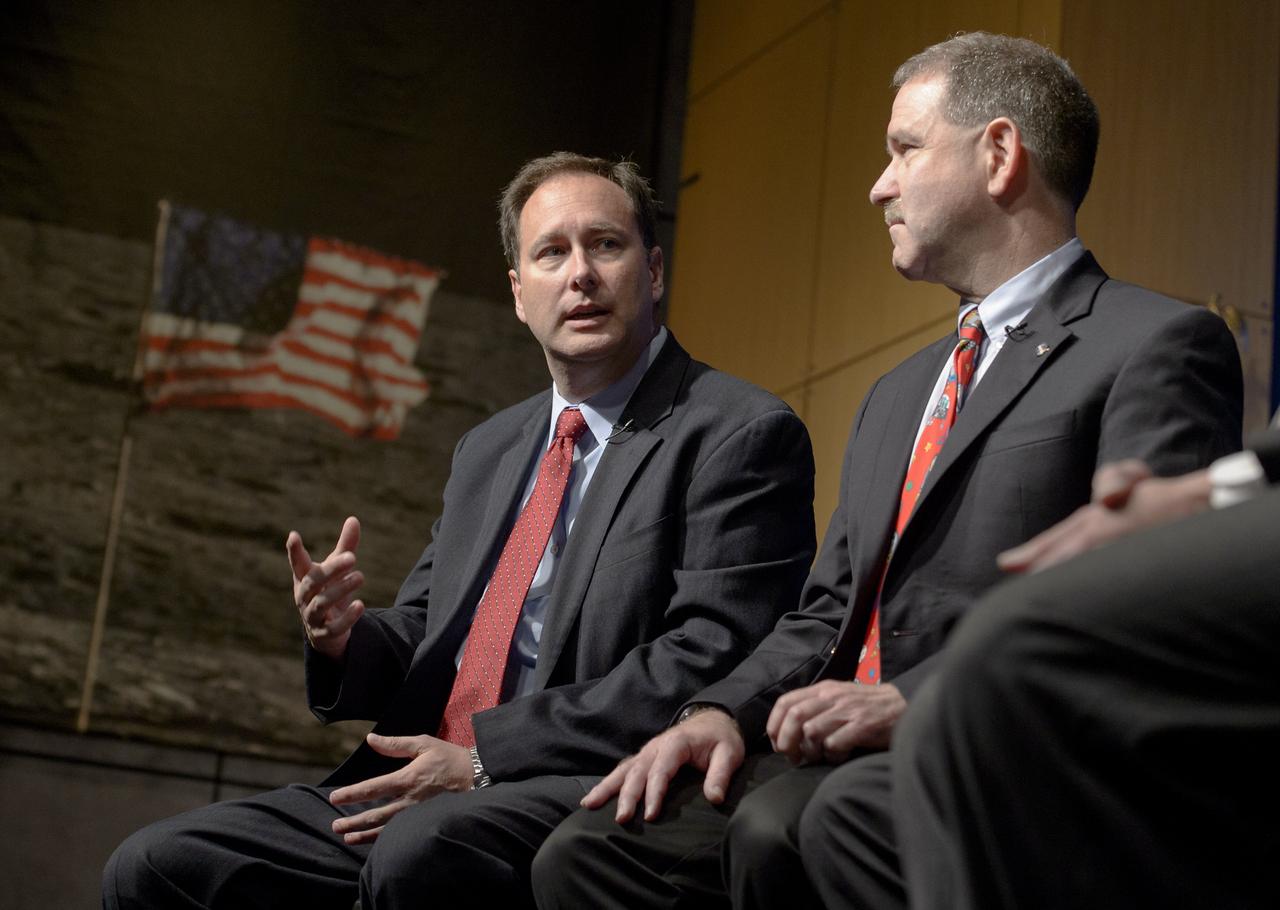
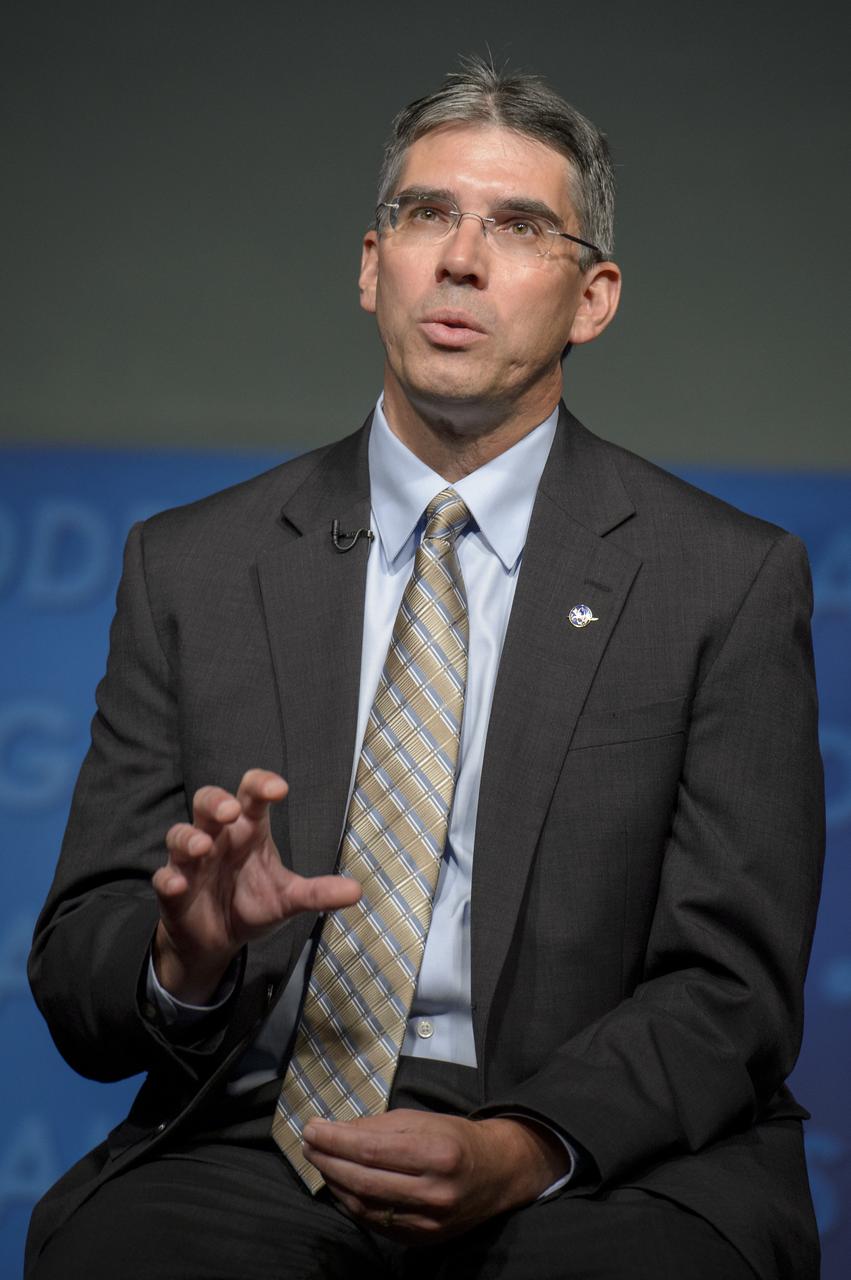
NASA Associate Administrator Robert Lightfoot, left, talks as NASA Associate Administrator Science John Grunsfeld, Ph.D, listens during the Asteroid Initiative Industry and Partner Day at NASA Headquarters on Tuesday, June 18, 2013 in Washington. During the event NASA Deputy Administrator Lori Garver and other senior NASA officials discussed the progress being made on NASA's mission to capture, redirect, and explore an asteroid. NASA also announced an Asteroid Grand Challenge focused on finding all asteroid threats to human populations and knowing what to do about them. Photo Credit: (NASA/Bill Ingalls)
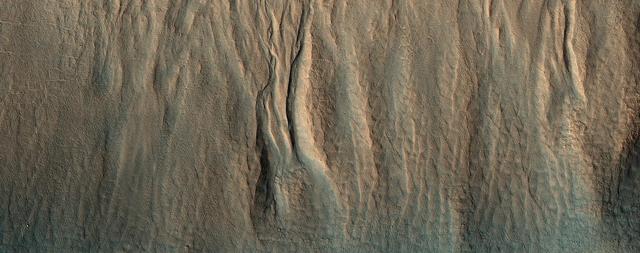
HiRISE has been operating since 2006, and lately many of our observations of gullies are repeat images designed to study changes. However, we are also collecting data over gullies never before seen at this resolution, to study their morphology and allow us to look for changes in the future. This is the first HiRISE look at a cluster of gullies that appear modified or degraded—the gully fans have ripples and ridges that have formed since the last major gully activity, suggesting that they don't change very often, but we won't know for sure unless we look! https://photojournal.jpl.nasa.gov/catalog/PIA23666
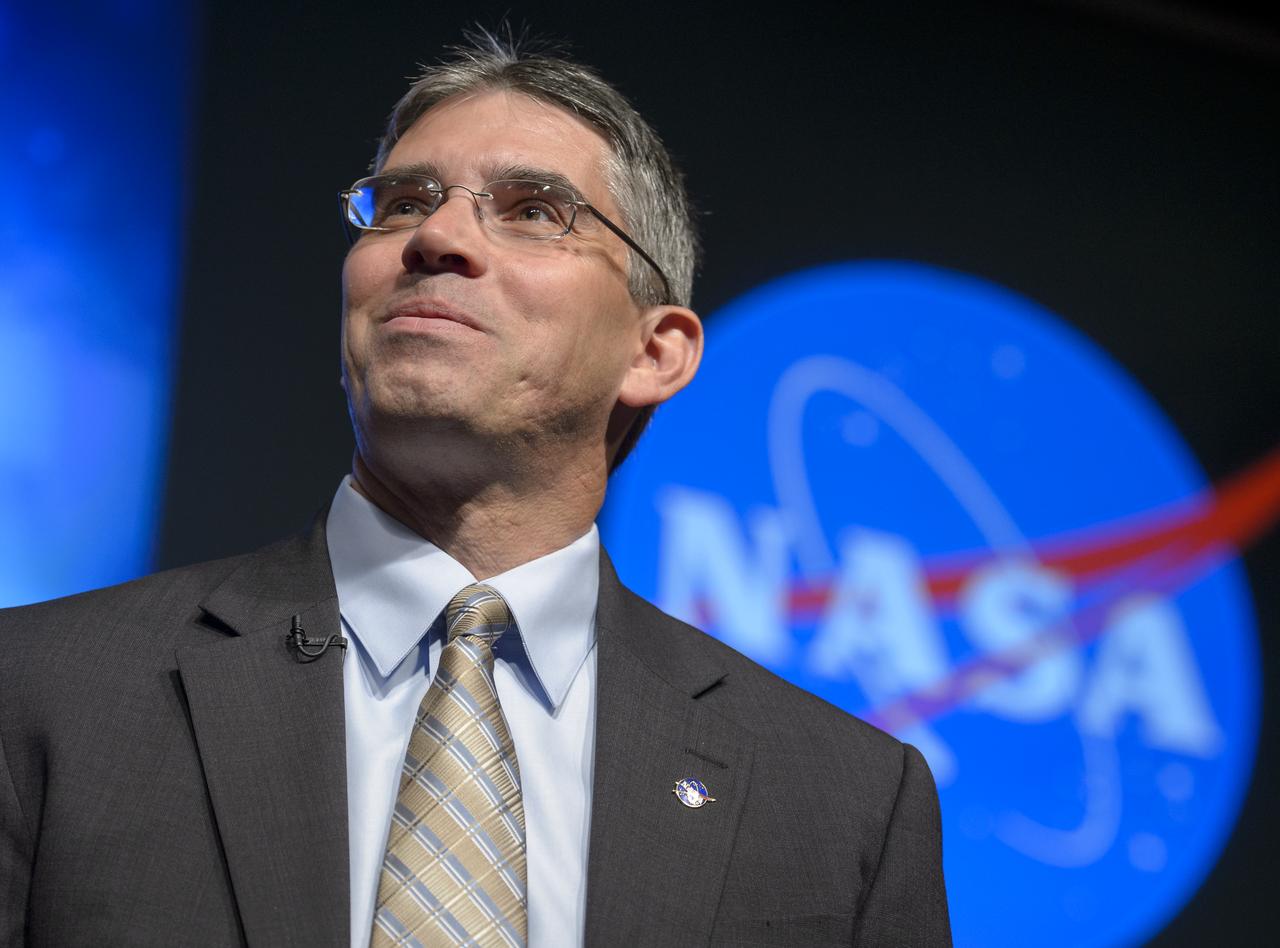
NASA Associate Administrator for Space Technology, Mike Gazarik, Ph.D, listens to a question from the audience during the Asteroid Initiative Industry and Partner Day at NASA Headquarters on Tuesday, June 18, 2013 in Washington. During the event NASA Deputy Administrator Lori Garver and other senior NASA officials discussed the progress being made on NASA's mission to capture, redirect, and explore an asteroid. NASA also announced an Asteroid Grand Challenge focused on finding all asteroid threats to human populations and knowing what to do about them. Photo Credit: (NASA/Bill Ingalls)
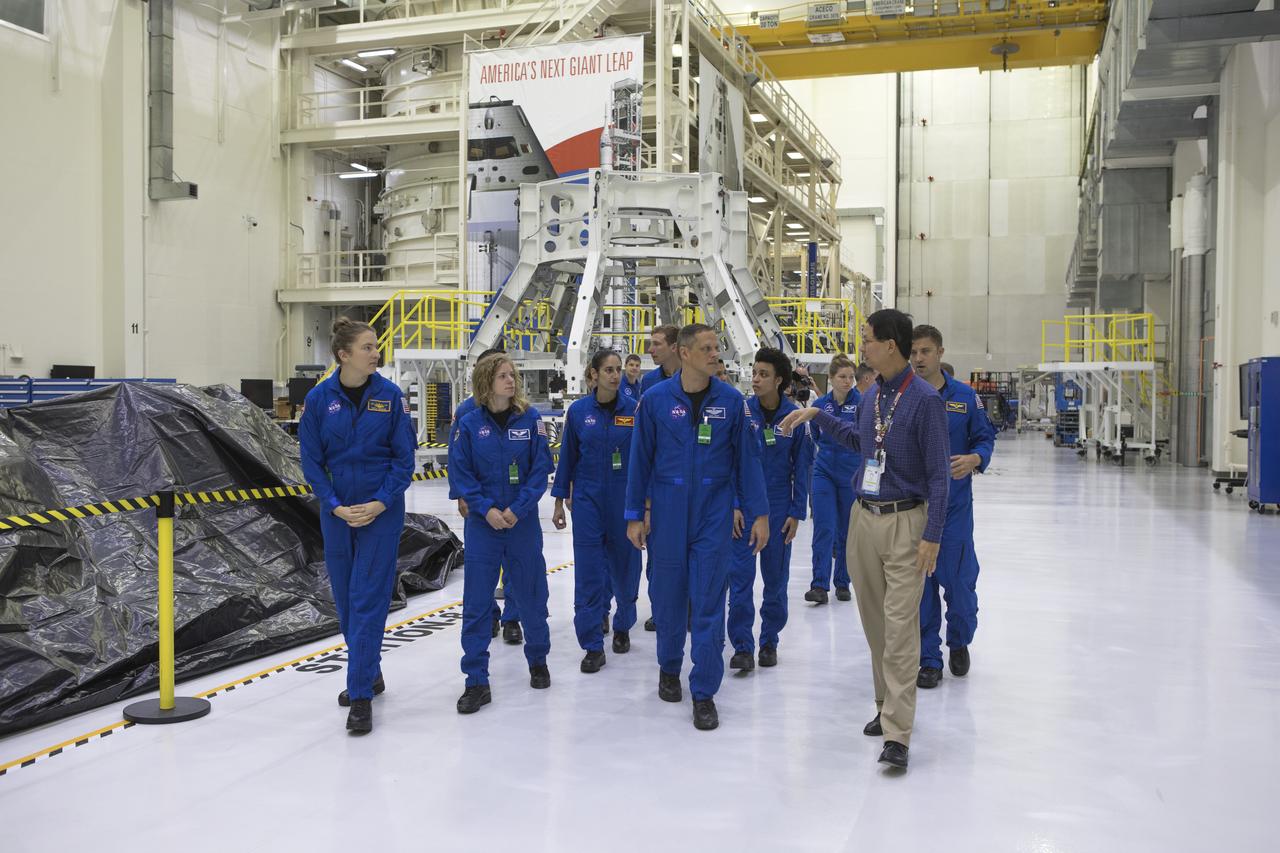
The 2017 class of astronaut candidates are inside the Neil Armstrong Operations and Checkout Building high bay during a familiarization tour of facilities at NASA's Kennedy Space Center in Florida. The candidates toured center facilities, including the Launch Control Center, Launch Pad 39B, the Vehicle Assembly Building and the Space Station Processing Facility. They also toured Boeing's Commercial Crew and Cargo Facility, United Launch Alliance's Space Launch Complex 41 at Cape Canaveral Air Force Station, and SpaceX's Launch Pad 39A at Kennedy. The candidates will spend about two years getting to know the space station systems and learning how to spacewalk, speak Russian, control the International Space Station's robotic arm and fly T-38s, before they're eligible to be assigned to a mission.
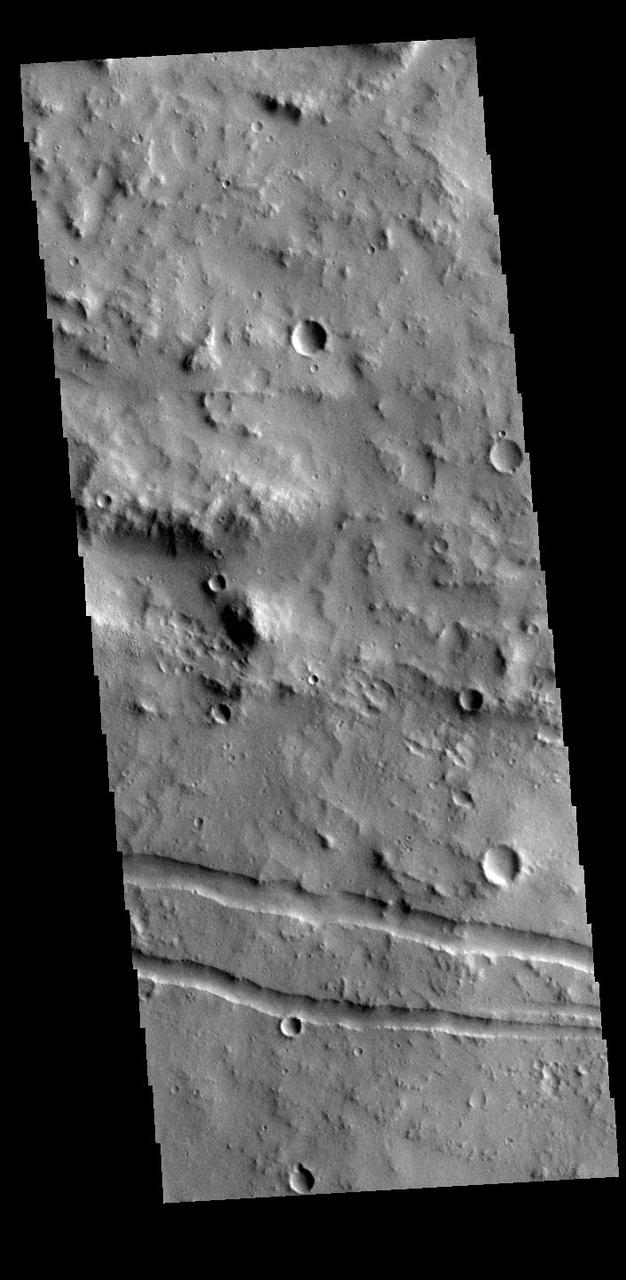
The linear features in the image are tectonic graben. Graben are formed by extension of the crust and faulting. When large amounts of pressure or tension are applied to rocks on timescales that are fast enough that the rock cannot respond by deforming, the rock breaks along faults. In the case of a graben, two parallel faults are formed by extension of the crust and the rock in between the faults drops downward into the space created by the extension. The graben visible in this THEMIS image trend east/west. Because the faults defining the graben are formed perpendicular to the direction of the applied stress, we know that extensional forces were pulling the crust apart in the north/south direction. These unnamed graben are located on the eastern margin of Orcus Patera. Orbit Number: 95005 Latitude: 13.7781 Longitude: 180.931 Instrument: VIS Captured: 2023-05-16 00:25 https://photojournal.jpl.nasa.gov/catalog/PIA26251
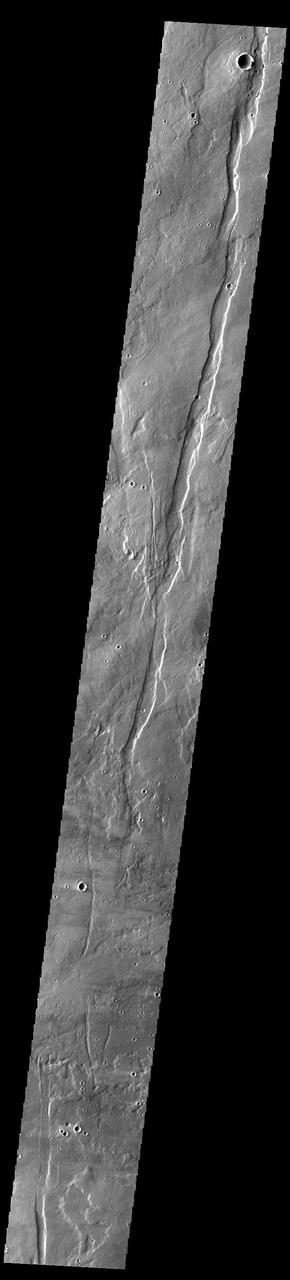
This VIS image shows part of Cerunius Fossae. The linear depressions are fault bounded features called graben. Graben are formed by extension of the crust and faulting. When large amounts of pressure or tension are applied to rocks on timescales that are fast enough that the rock cannot respond by deforming, the rock breaks along faults. In the case of a graben, two parallel faults are formed by extension of the crust and the rock in between the faults drops downward into the space created by the extension. The largest graben in this THEMIS image trends from almost north/south. Because the faults defining the graben are formed perpendicular to the direction of the applied stress, we know that extensional forces were pulling the crust apart in the east/west direction. Ceraunius Fossae is located on the southern part of Alba Mons and is 1166km (724 miles) long. Orbit Number: 94210 Latitude: 32.086 Longitude: 247.58 Instrument: VIS Captured: 2023-03-11 14:09 https://photojournal.jpl.nasa.gov/catalog/PIA25991
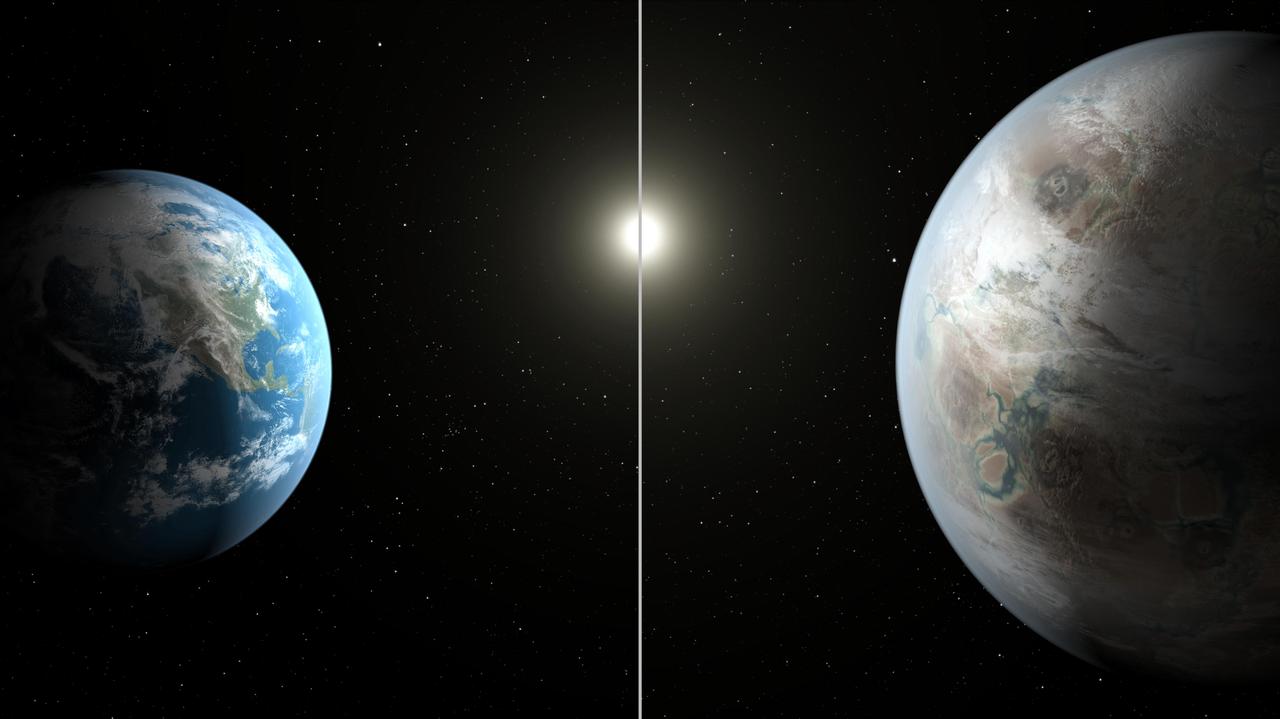
Scientists using data from NASA's Kepler mission have confirmed the first near-Earth-size planet orbiting in the habitable zone of a sun-like star. The habitable zone is the region around a star where temperatures are just right for water to exist in its liquid form. The artist's concept compares Earth (left) to the new planet, called Kepler-452b, which is about 60 percent larger. The illustration represents one possible appearance for Kepler-452b -- scientists do not know whether the planet has oceans and continents like Earth. Both planets orbit a G2-type star of about the same temperature; however, the star hosting Kepler-452b is 6 billion years old, 1.5 billion years older than our sun. As stars age, they become larger, hotter and brighter, as represented in the illustration. Kepler-452b's star appears a bit larger and brighter. http://photojournal.jpl.nasa.gov/catalog/PIA19825
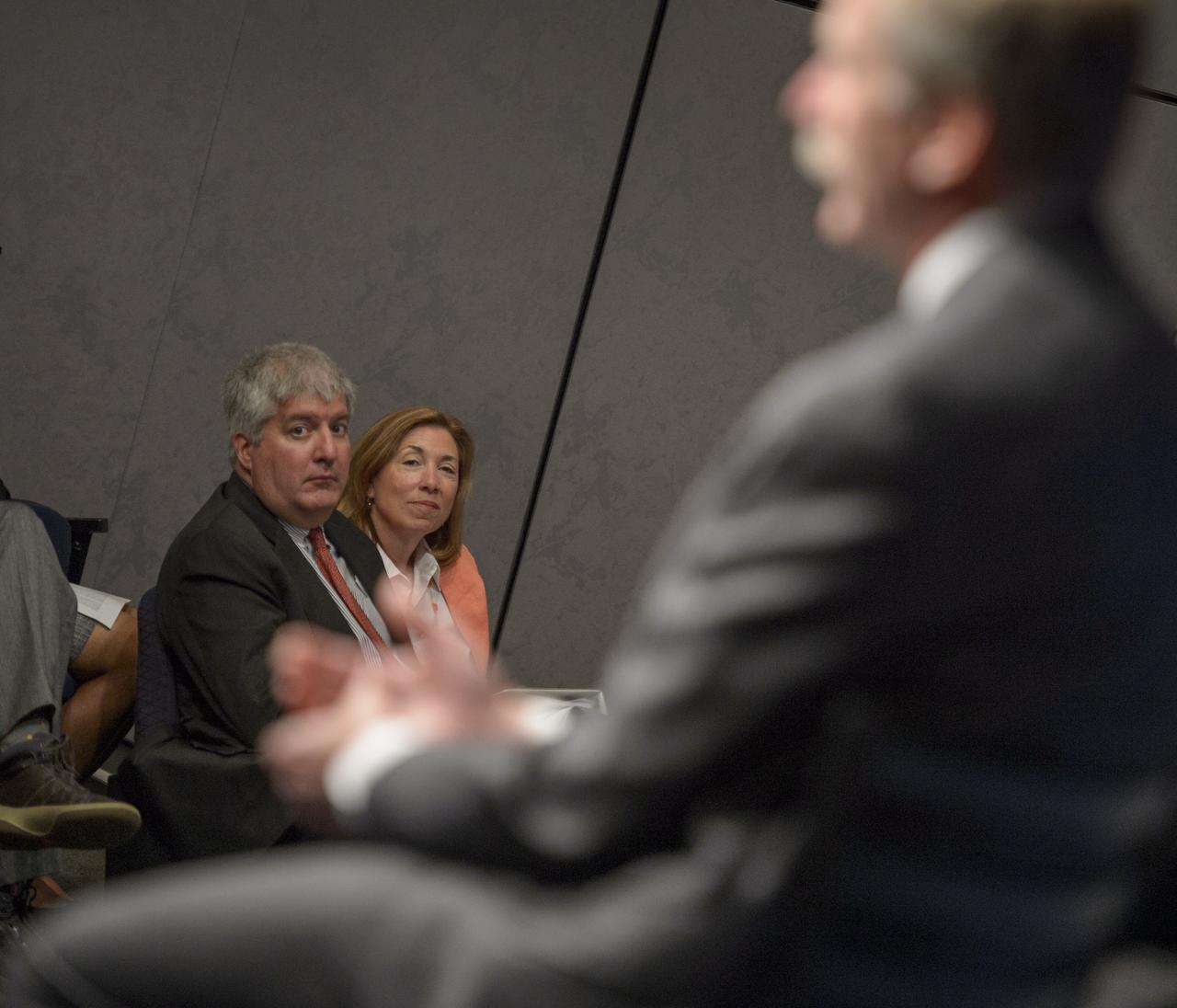
Tom Kalil, Deputy Director for Technology and Innovation, White House Office of Science and Technology Policy, and, NASA Deputy Administrator Lori Garver, listen as NASA Associate Administrator for Human Exploration and Operations, William Gerstenmaier, talks during the Asteroid Initiative Industry and Partner Day at NASA Headquarters on Tuesday, June 18, 2013 in Washington. During the event NASA Deputy Administrator Lori Garver and other senior NASA officials discussed the progress being made on NASA's mission to capture, redirect, and explore an asteroid. NASA also announced an Asteroid Grand Challenge focused on finding all asteroid threats to human populations and knowing what to do about them. Photo Credit: (NASA/Bill Ingalls)
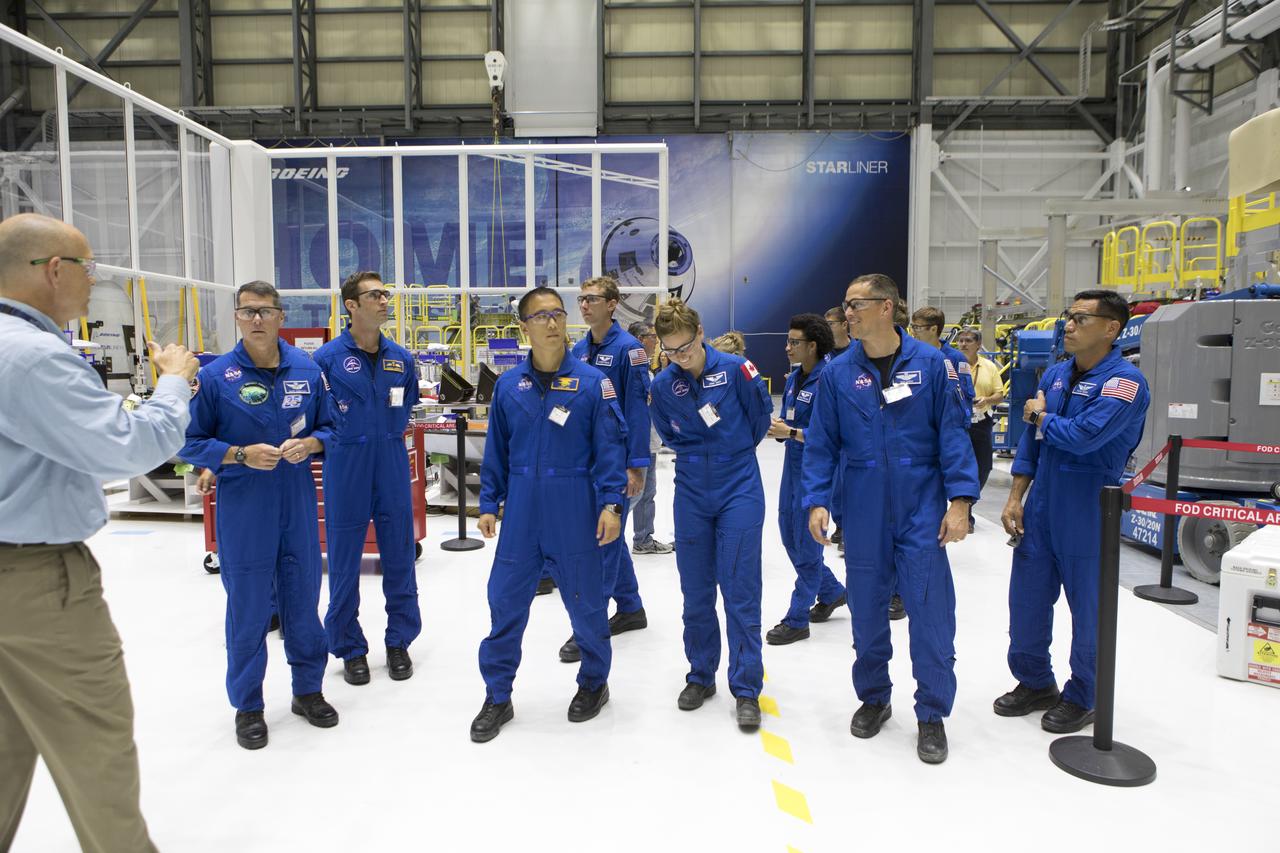
The 2017 class of astronaut candidates tour Boeing's Commercial Crew and Cargo Facility at NASA's Kennedy Space Center in Florida on May 1. They are at the center for a familiarization tour of facilities, including the Neil Armstrong Operations and Checkout Building high bay; the Launch Control Center, Launch Complex 39B, and the Vehicle Assembly Building. They also toured United Launch Alliance's Space Launch Complex 41 at Cape Canaveral Air Force Station, and SpaceX's Launch Complex 39A at Kennedy. The candidates will spend about two years getting to know the space station systems and learning how to spacewalk, speak Russian, control the International Space Station's robotic arm and fly T-38s, before they're eligible to be assigned to a mission.
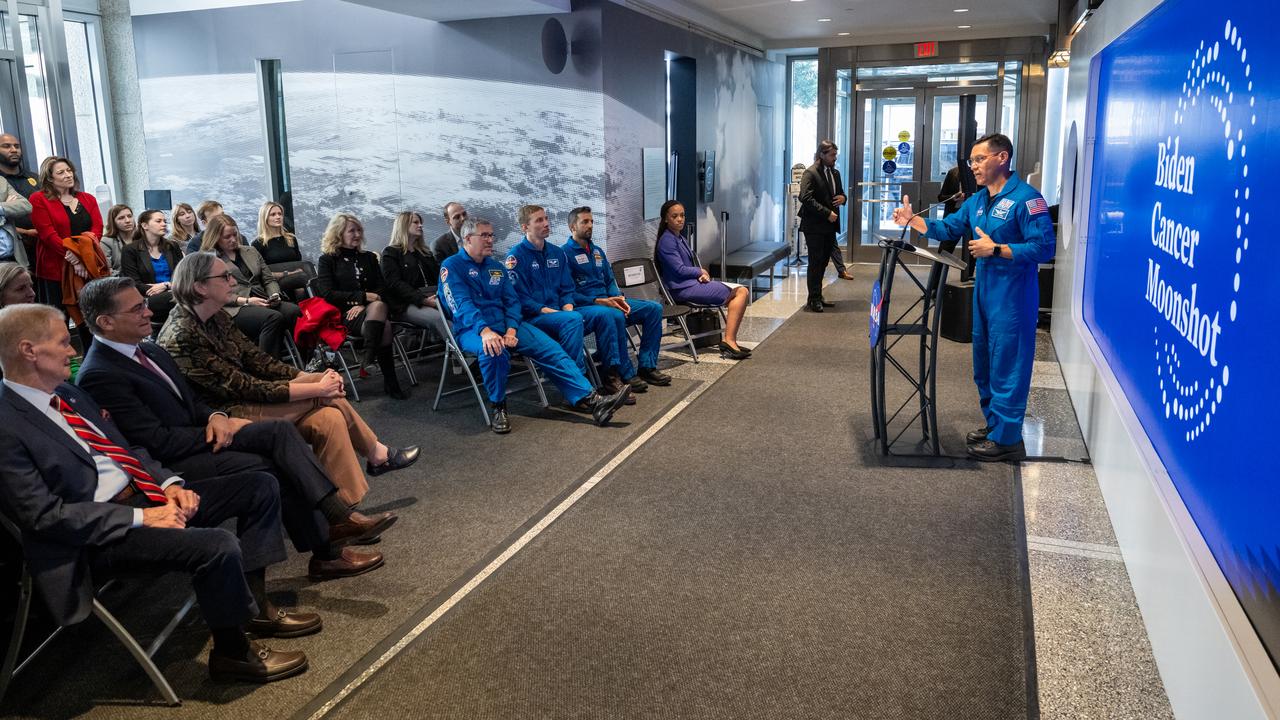
NASA astronaut Frank Rubio delivers remarks during an event with the Department of Health and Human Services (HHS) to highlight how the agencies are making progress toward President Joe Biden and First Lady Jill Biden’s Cancer Moonshot initiative, Thursday, March 21, 2024, in the Earth Information Center at the Mary W. Jackson NASA Headquarters building in Washington. NASA is working with agencies and researchers across the federal government to help cut the nation’s cancer death rate by at least 50% in the next 25 years, a goal of the Cancer Moonshot Initiative. Rubio recently returned from missions aboard the International Space Station, a hub for scientific research and technology including demonstrations to help end cancer as we know it. Photo Credit: (NASA/Keegan Barber)
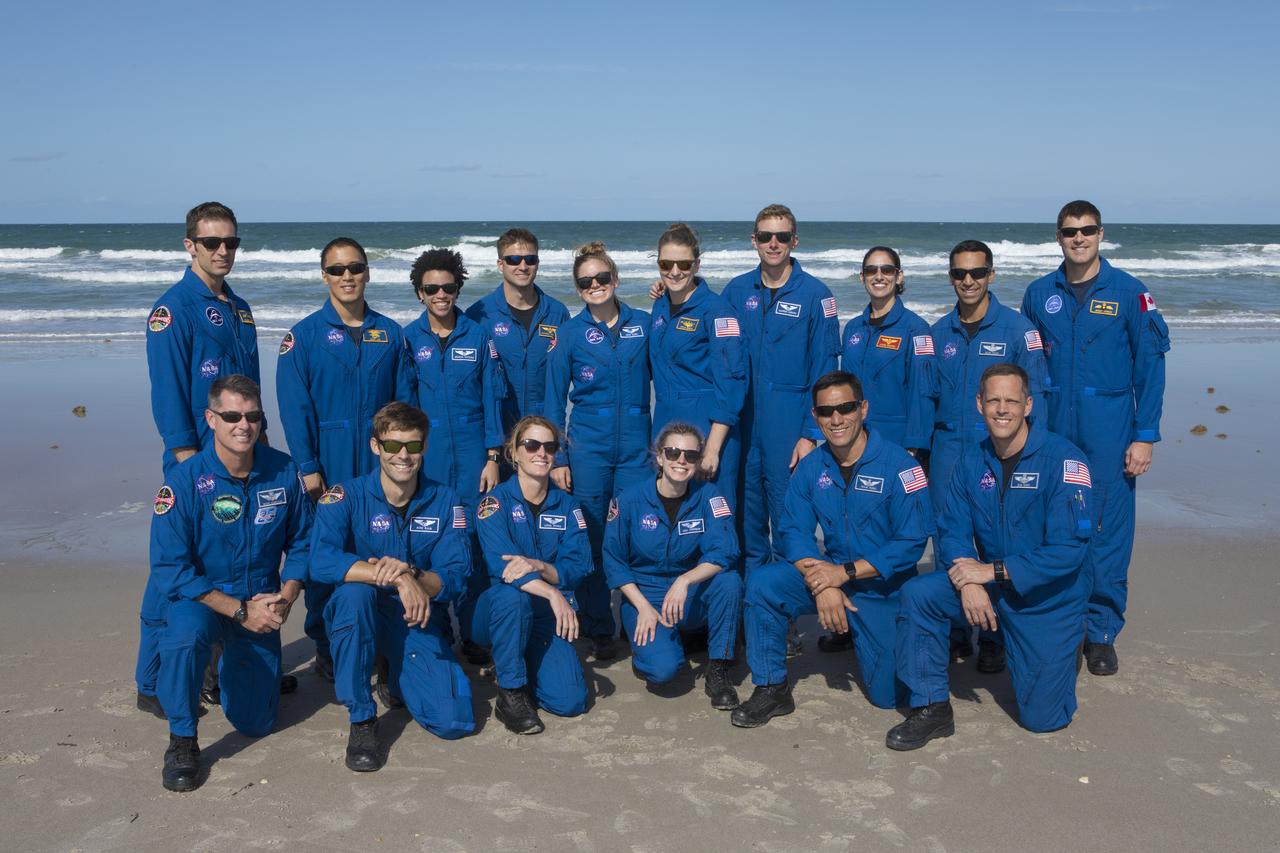
Members of the 2017 class of astronaut candidates pause for a group photo on the beach after a familiarization tour of the Beach House at NASA's Kennedy Space Center in Florida. The candidates toured center facilities, including the Vehicle Assembly Building, Launch Control Center, Neil Armstrong Operations and Checkout Building high bay, Launch Pad 39B and the Space Station Processing Facility. They also toured Boeing's Commercial Crew and Cargo Facility, United Launch Alliance's Space Launch Complex 41 at Cape Canaveral Air Force Station, and SpaceX's Launch Pad 39A at Kennedy. The candidates will spend about two years getting to know the space station systems and learning how to spacewalk, speak Russian, control the International Space Station's robotic arm and fly T-38s, before they're eligible to be assigned to a mission.