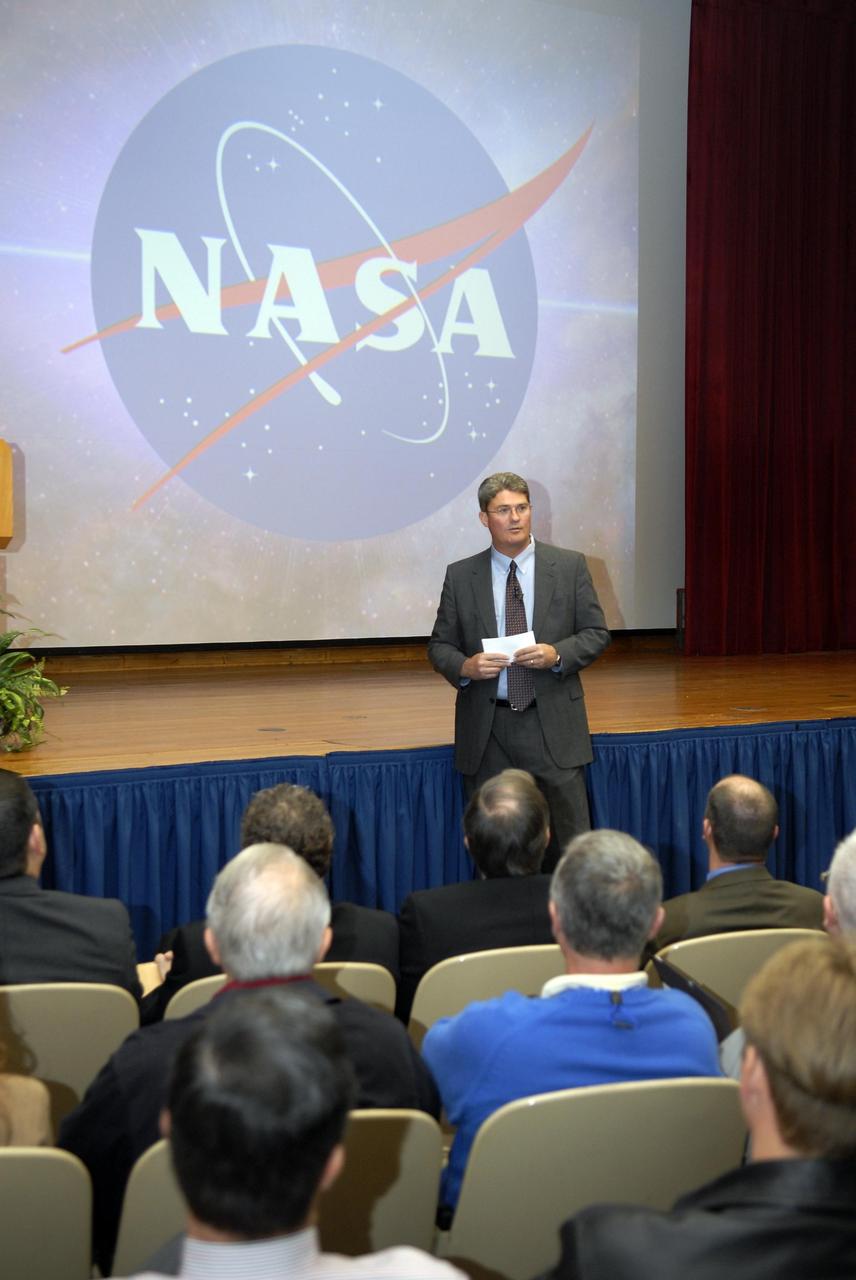
KENNEDY SPACE CENTER, FLA. -- Center Director Bill Parsons talks to employees in his first all-hands meeting of 2007 and his first as director. Topics discussed included the year ahead at KSC. A brief question-and-answer segment followed. Photo credit: NASA/Kim Shiflett

KENNEDY SPACE CENTER, FLA. -- Center Director Bill Parsons talks to employees in his first all-hands meeting of 2007 and his first as director. Topics discussed included the year ahead at KSC. A brief question-and-answer segment followed. Photo credit: NASA/Kim Shiflett
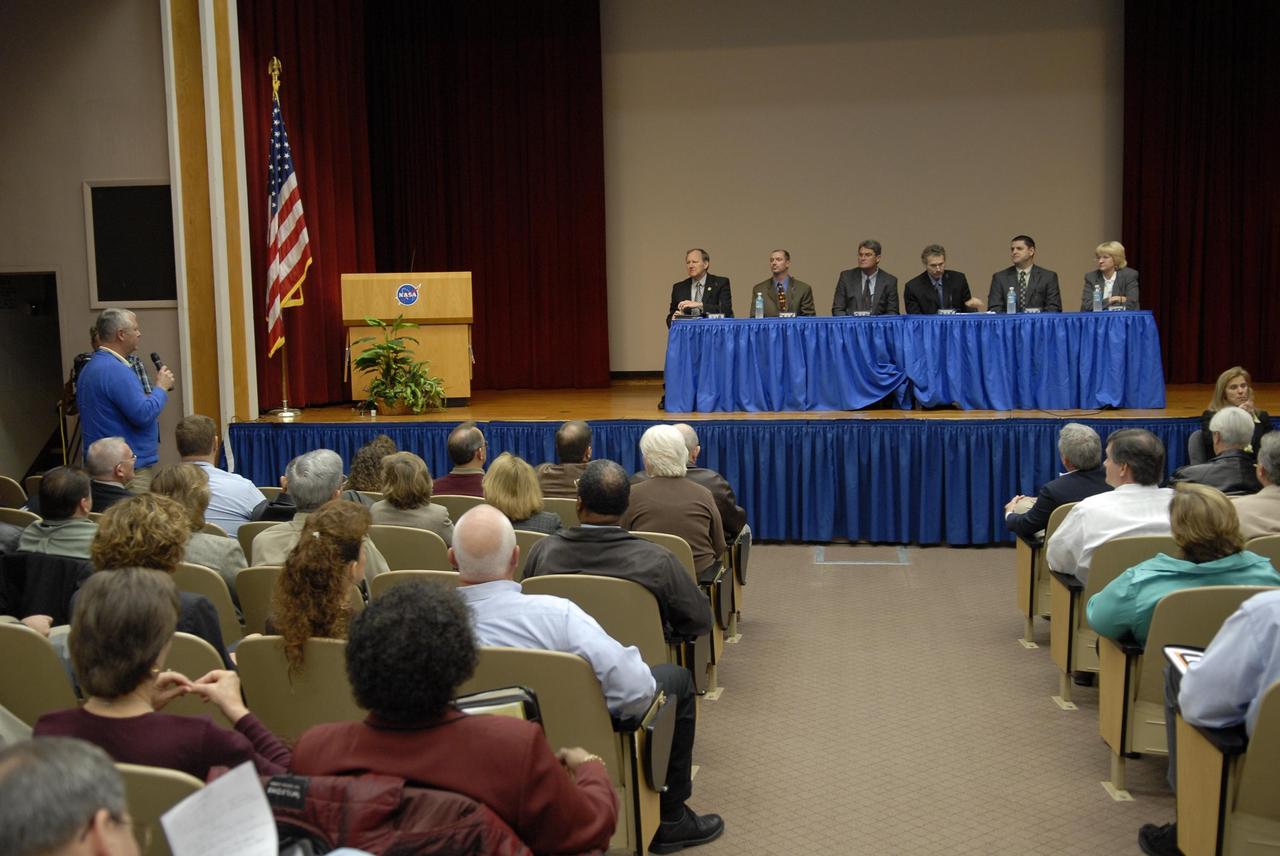
KENNEDY SPACE CENTER, FLA. -- During an all-hands meeting led by Center Director Bill Parsons (center left at the table), an employee asks for more information. Topics discussed included the year ahead at KSC. At the table on stage (from left) are Steve Francois, manager of Launch Services Program; Pepper Phillips, deputy director of the Constellation Program office; Parsons; Russ Romanella, director of the ISS & Spacecraft Processing Directorate; Jeff Angermeier, chief of the Project Control office in the Launch Vehicle Processing Directorate; and Shannon Bartell, director of NASA Safety and Mission Assurance. Photo credit: NASA/Kim Shiflett
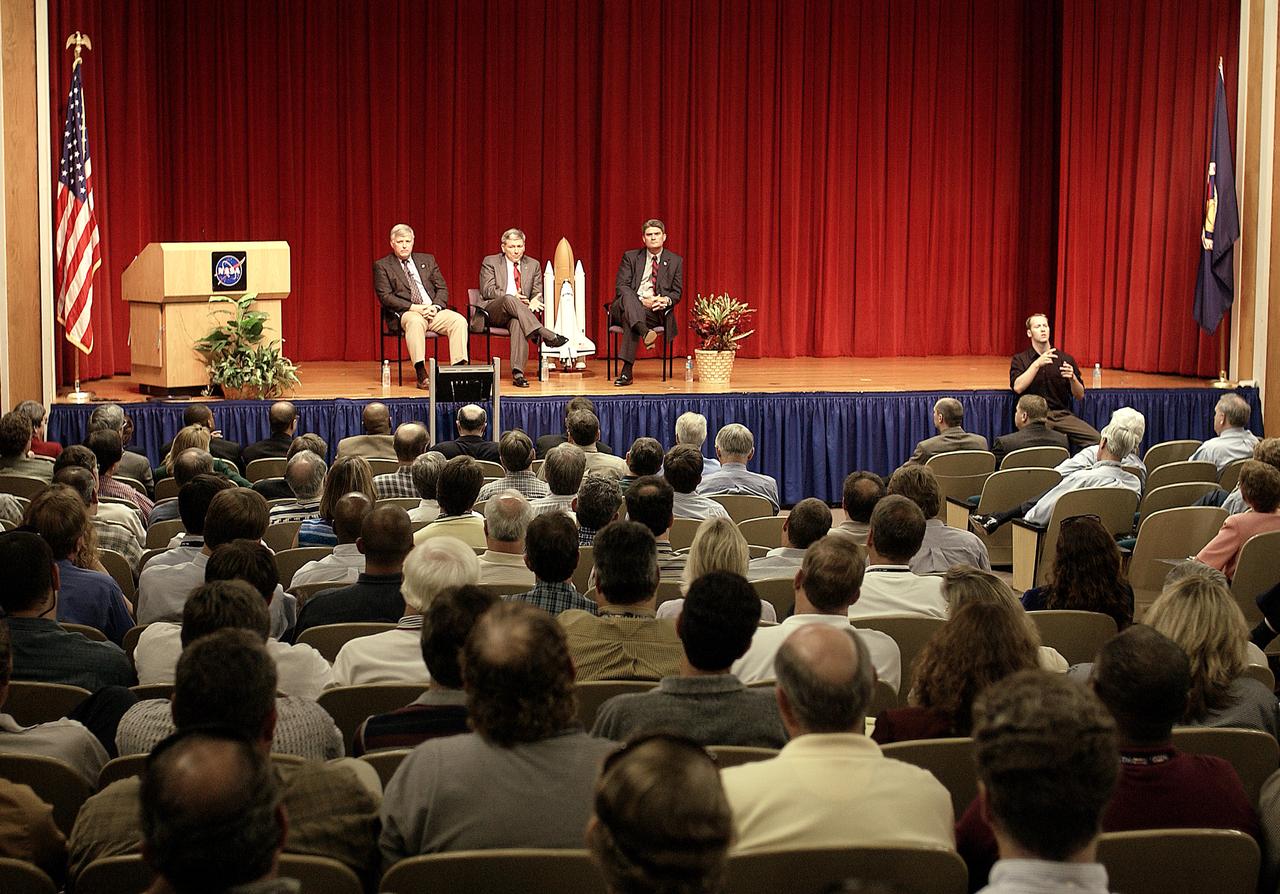
At an all-hands briefing in the Training Auditorium, Center Director Jim Kennedy, Mike Kostelnik, deputy associate administrator, Space Shuttle and International Space Station Programs, and Bill Parsons, Shuttle Program manager, respond to questions from KSC employees. Topics discussed were return to flight and the Shuttle program.
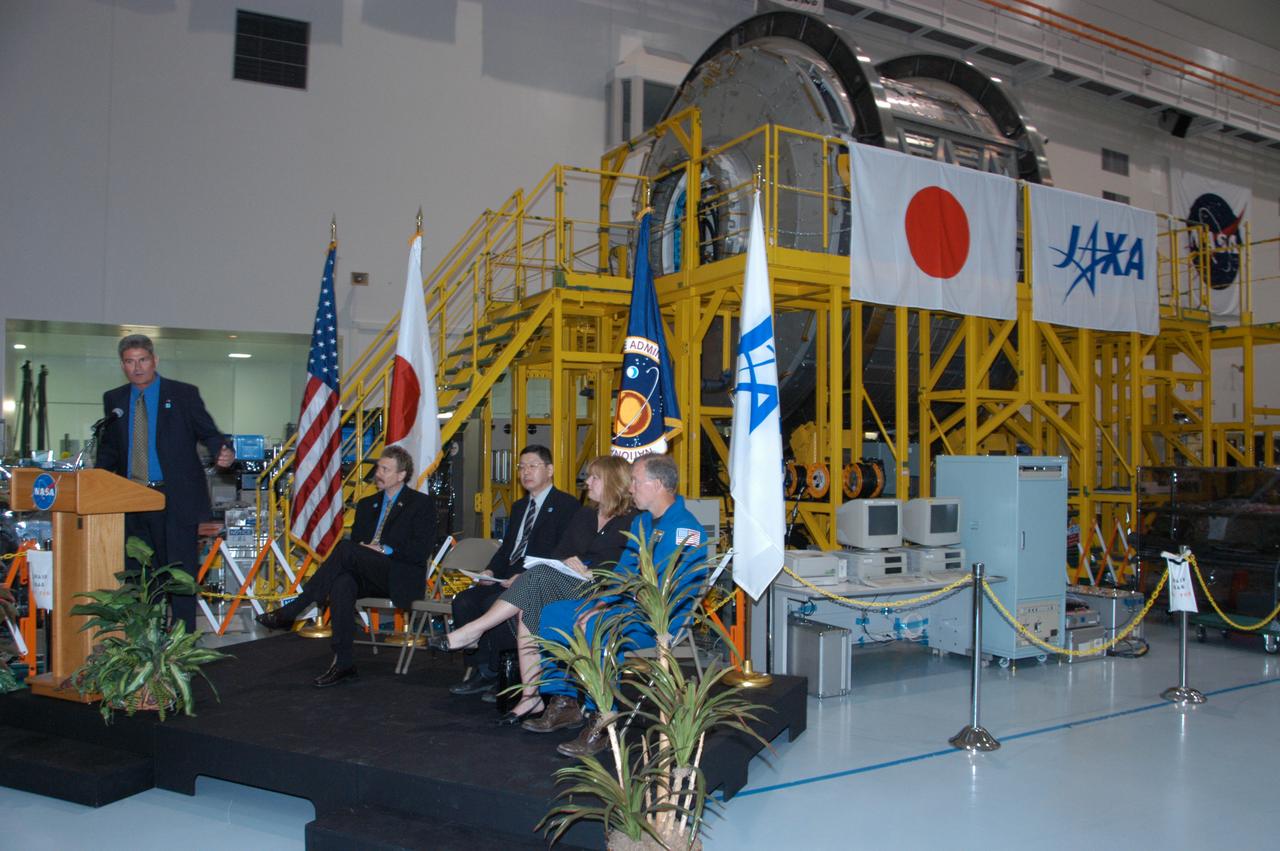
In the Space Station Processing Facility, NASA and Japanese Aerospace and Exploration Agency (JAXA) officials welcome the arrival of the Experiment Logistics Module Pressurized Section for the Japanese Experiment Module, or JEM, to the Kennedy Space Center. At the podium is Bill Parsons, director of Kennedy Space Center. Seated at right are Russ Romanella, director of International Space Station and Spacecraft Processing; Dr. Kichiro Imagawa, project manager of the JEM Development Project Team for JAXA; Melanie Saunders, associate manager of the International Space Station Program at Johnson Space Center; and Dominic Gorie, commander on mission STS-123 that will deliver the module to the space station. The new International Space Station component arrived at Kennedy March 12 to begin preparations for its future launch on mission STS-123. It will serve as an on-orbit storage area for materials, tools and supplies. It can hold up to eight experiment racks and will attach to the top of another larger pressurized module.
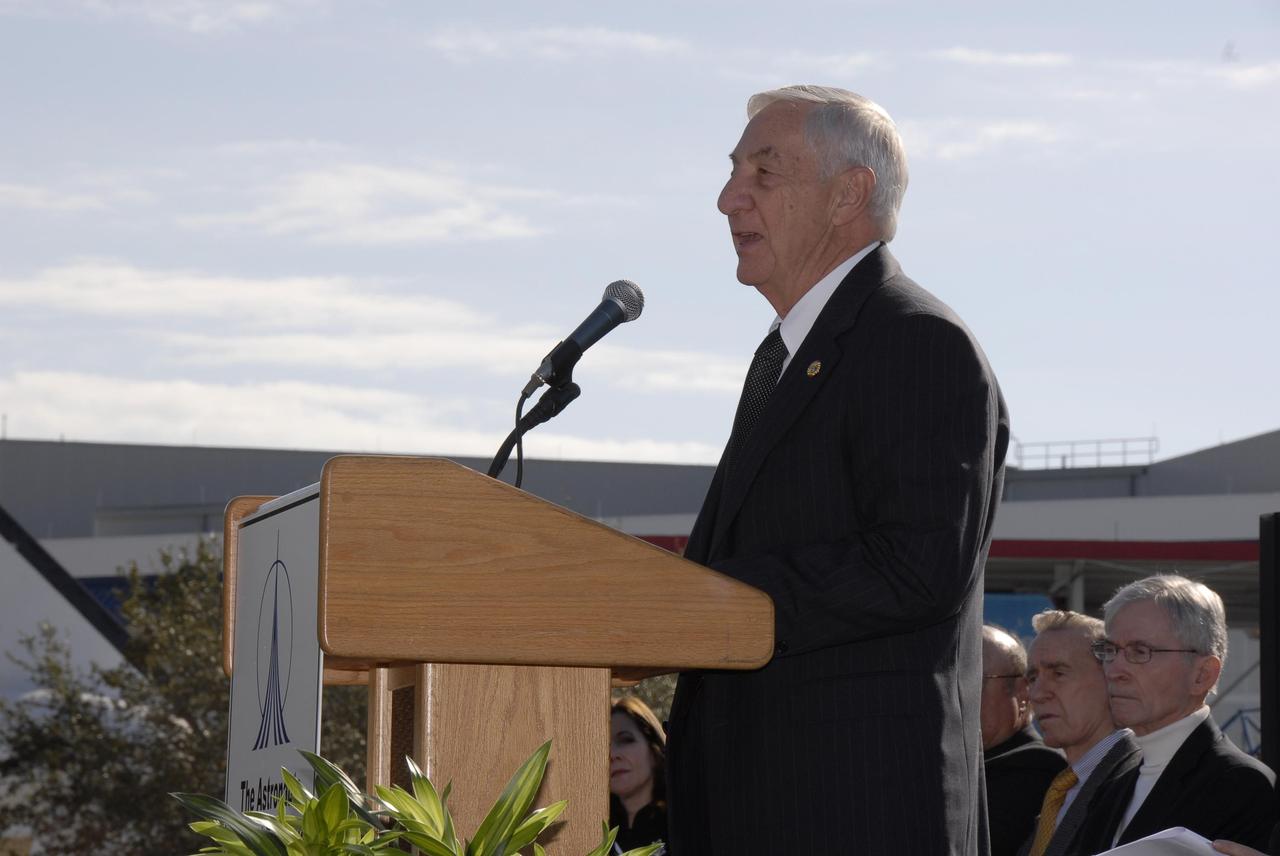
KENNEDY SPACE CENTER, FLA. -- Lowell Grissom addresses guests attending a ceremony at the KSC Visitor Complex held in remembrance of the astronauts lost in the Apollo 1 fire: Virgil "Gus" Grissom, Edward H. White II and Roger B. Chaffee. Grissom is the brother of Gus Grissom. Members of the Apollo 1 families, along with KSC Director Bill Parsons, Associate Administrator for Space Operations William Gerstenmaier, President of the Astronauts Memorial Foundation Stephen Feldman, Chairman of the Board of Directors of the Astronauts Memorial Foundation William Potter and former astronaut John Young (seen at lower right), attended the ceremony. Photo credit:NASA/Kim Shiflett
![Center Directors: Kennedy Space Center Directors around KSC – 1st row, left to right, Richard Smith [center] Bob Cabana [at the podium] Jay Honeycutt [far right]. 2nd row, left to right, Bob Crippen [left] Jim Kennedy Lieutenant General Forrest S. McCartney, USAF, ret. [far left]. 3rd row, left to right, Bill Parsons [far right] Lee Scherer Roy Bridges [2nd from right]. Poster designed by Kennedy Space Center Graphics Department/Greg Lee. Credit: NASA](https://images-assets.nasa.gov/image/KSC-2012-1848/KSC-2012-1848~medium.jpg)
Center Directors: Kennedy Space Center Directors around KSC – 1st row, left to right, Richard Smith [center] Bob Cabana [at the podium] Jay Honeycutt [far right]. 2nd row, left to right, Bob Crippen [left] Jim Kennedy Lieutenant General Forrest S. McCartney, USAF, ret. [far left]. 3rd row, left to right, Bill Parsons [far right] Lee Scherer Roy Bridges [2nd from right]. Poster designed by Kennedy Space Center Graphics Department/Greg Lee. Credit: NASA
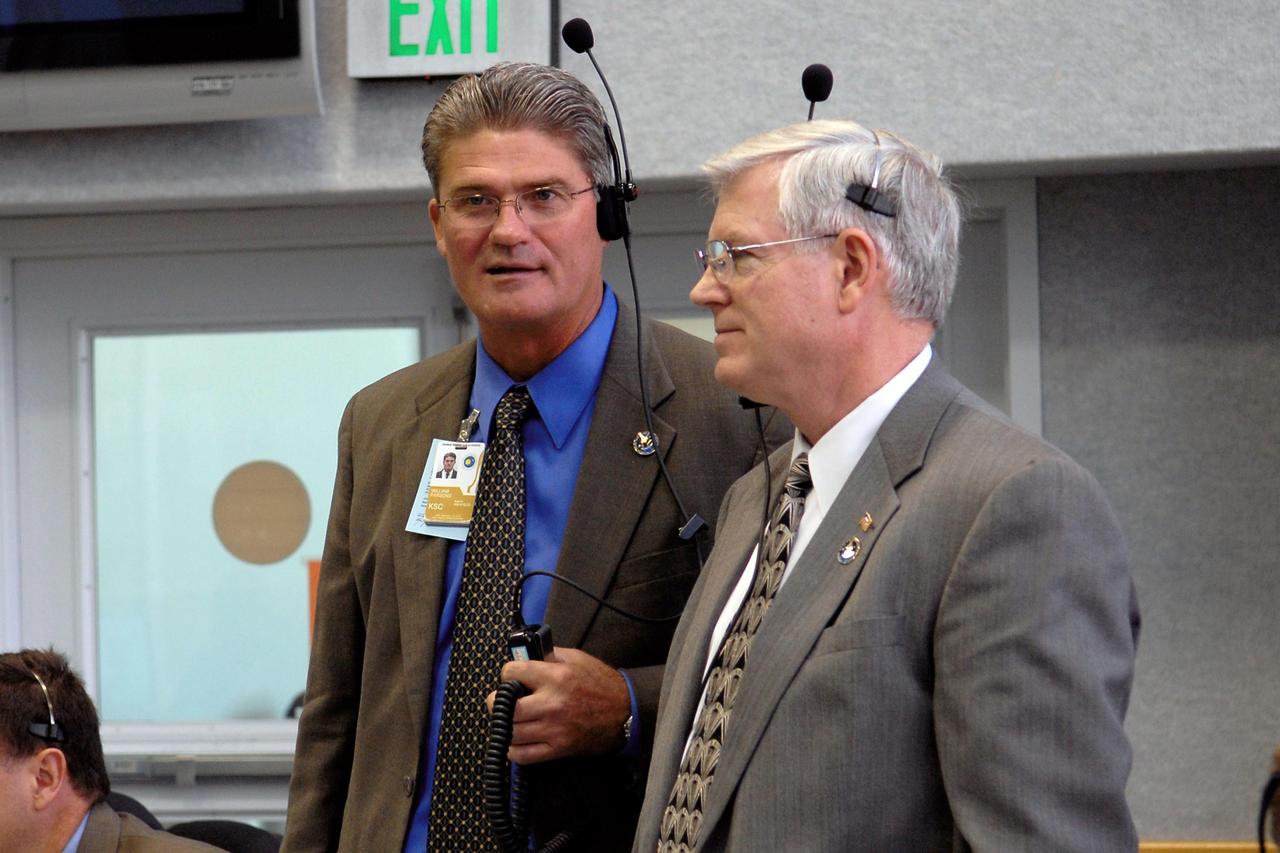
STS120-S-012 (23 Oct. 2007) --- In the firing room of the Launch Control Center at NASA's Kennedy Space Center, KSC Director Bill Parsons (left) and Johnson Space Center Director Michael Coats wait for the final countdown of Space Shuttle Discovery on mission STS-120. Liftoff was on time at 11:38:19 a.m. (EDT). Discovery carries the Italian-built U.S. Node 2, called Harmony. During the 14-day STS-120 mission, the crew will install Harmony and move the P6 solar arrays to their permanent position and deploy them.
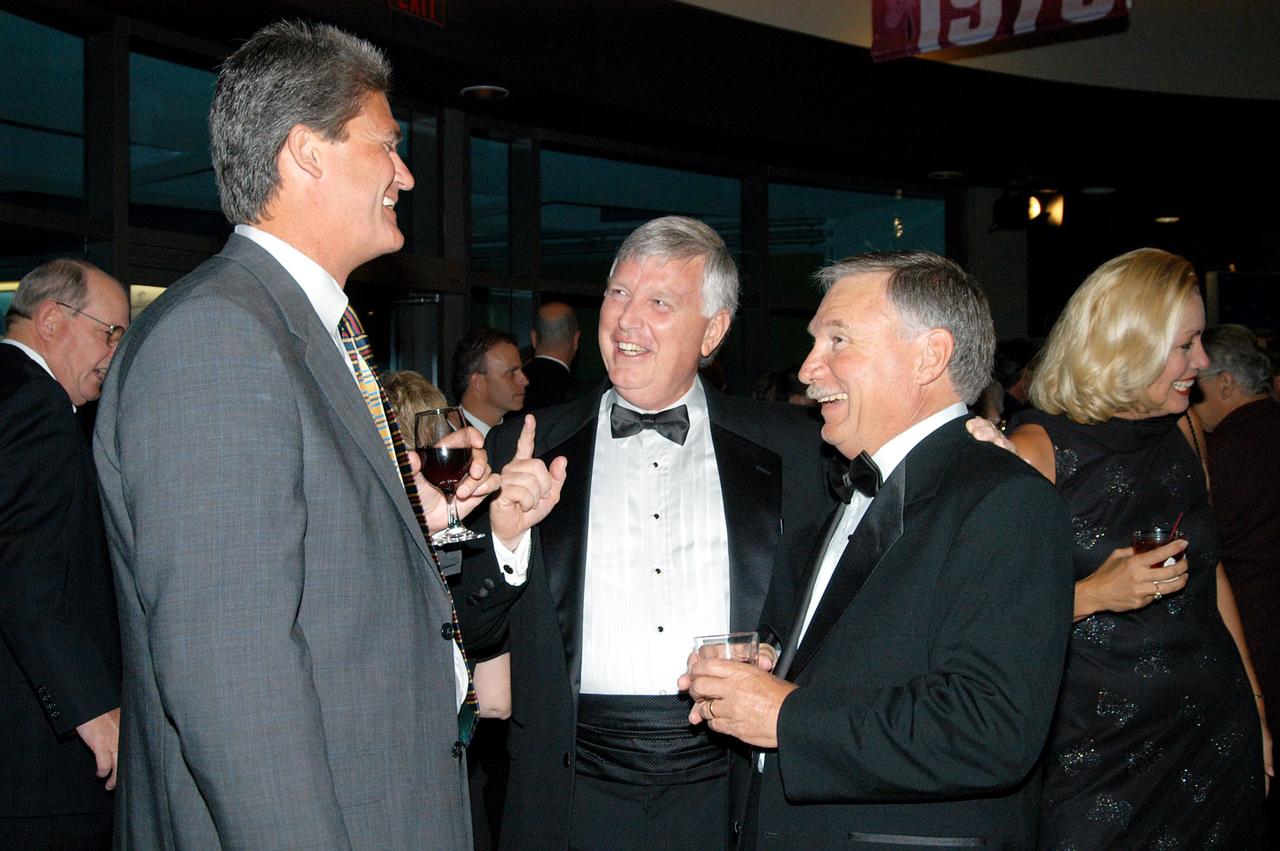
KENNEDY SPACE CENTER, FLA. -- John J. “Tip” Talone (right) shares a bit of humor with Shuttle Program Manager Bill Parsons (left) and Center Director Jim Kennedy during the annual National Space Club Debus Award Banquet. Talone received the award that was created by the National Space Club to recognize significant achievements made in Florida to American aerospace efforts. The event was held at the Dr. Kurt H. Debus Conference Facility in the Visitor Complex. Talone is director of the International Space Station/Payloads Processing directorate at KSC that is responsible for prelaunch and launch preparations for all Shuttle payloads. He was honored for his outstanding personal and professional efforts in supporting the U.S. space program, especially in his current role. The award was created by the National Space Club Florida Committee to recognize significant achievements and contributions made in Florida to American aerospace efforts. It is named for Dr. Kurt H. Debus, first director of KSC, from 1962 to 1974.
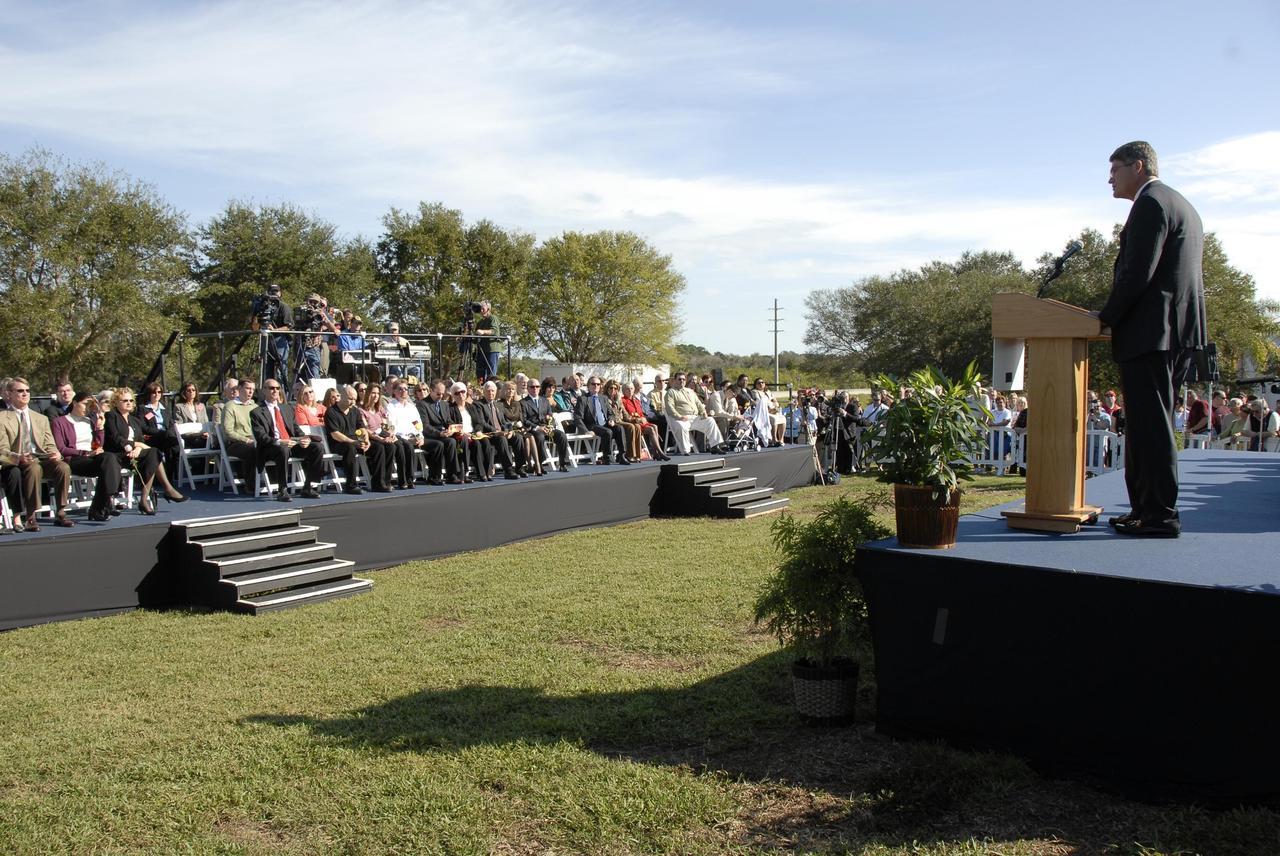
KENNEDY SPACE CENTER, FLA. -- Kennedy Space Center Director Bill Parsons (right) addresses guests attending a ceremony at the KSC Visitor Complex held in remembrance of the astronauts lost in the Apollo 1 fire: Virgil "Gus" Grissom, Edward H. White II and Roger B. Chaffee. Members of their families, along with Associate Administrator for Space Operations William Gerstenmaier, President of the Astronauts Memorial Foundation Stephen Feldman, Chairman of the Board of Directors of the Astronauts Memorial Foundation William Potter and former astronaut John Young, attended the ceremony. Photo credit:NASA/Kim Shiflett
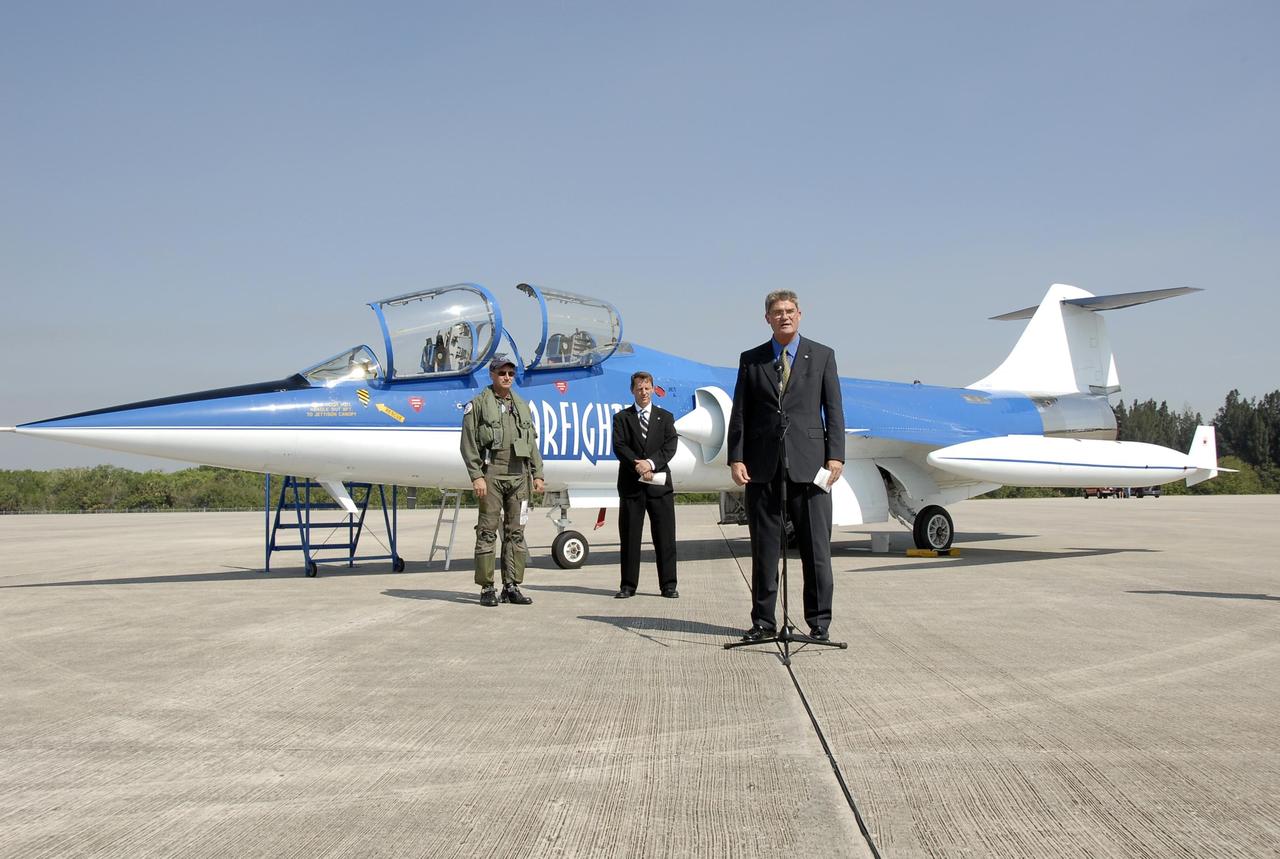
KENNEDY SPACE CENTER, FLA. -- Bill Parsons, director of Kennedy Space Center, addresses the media at the KSC Shuttle Landing Facility after a test flight of the Starfighter F-104. Behind Parsons, at left, is the pilot Rick Svetkoff. At right is Al Wassel, a representative from the FAA Office of Commercial Space. The aircraft is taking part in a series of pathfinder test missions from the space shuttle runway. Two flights will generate test data to validate sonic boom assumptions about the potential impacts of suborbital and orbital commercial spaceflight from the facility. NASA is assessing the environmental impact of such flights. Starfighters Inc. of Clearwater, Fla., will perform the flights to help in assessing suborbital space launch trajectories from the runway and paving the way for future commercial space tourism and research flights from the facility. Photo credit: NASA/Kim Shiflett
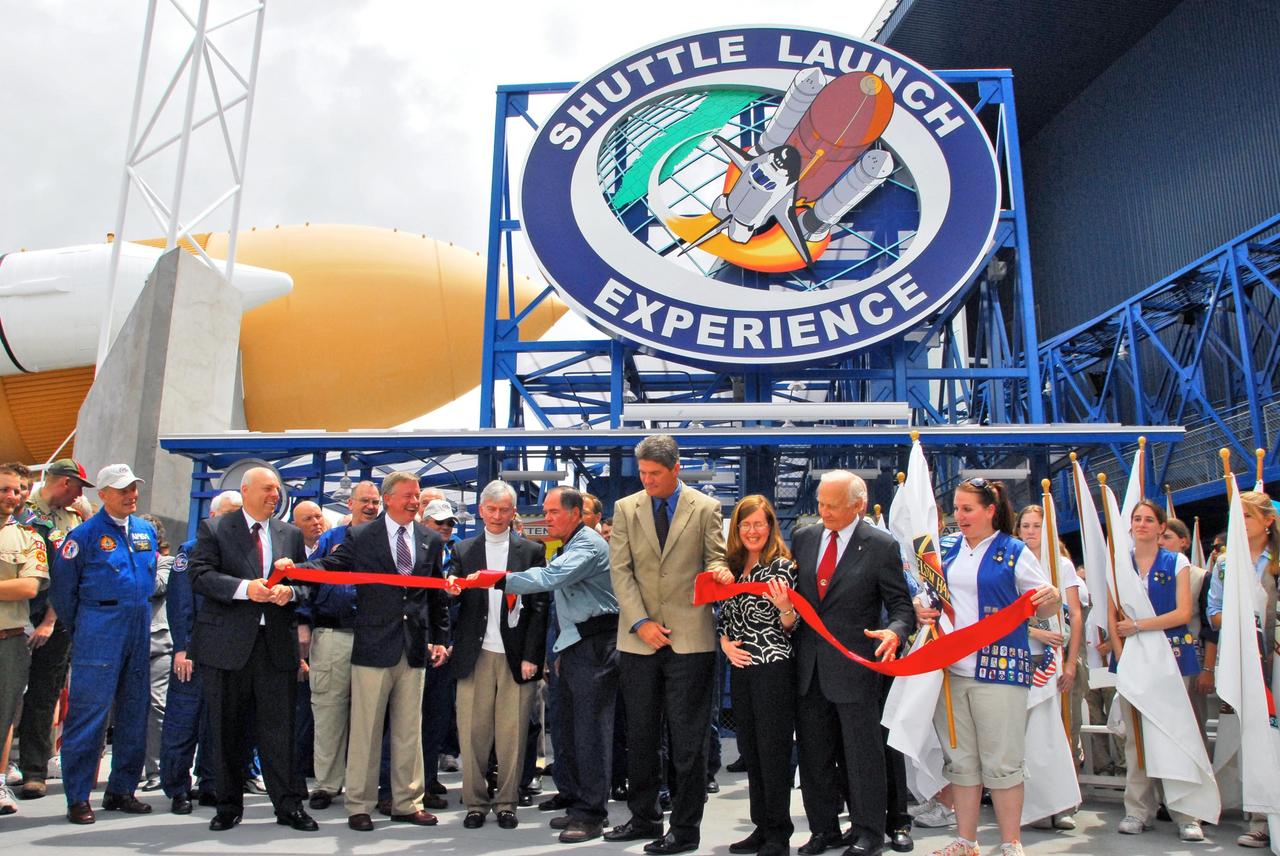
KENNEDY SPACE CENTER, FLA. -- NASA, Kennedy Space Center and State of Florida dignitaries helped launch the opening of the newest attraction at Kennedy Space Center's Visitor Complex, the Shuttle Launch Experience. Breaking the ribbon are (left to right) Dan LeBlanc, chief operating officer of the KSC Visitor Complex; Lt. Governor of Florida Jeff Kottkamp; former astronauts John Young and Bob Crippen; Center Director Bill Parsons; KSC Director of External Relations Lisa Malone; and former astronaut Buzz Aldrin. The attraction includes a simulated launch with the sights, sounds and sensations of launching into space. Find out more about the Visitor Complex and the Shuttle Launch Experience at <b>http://www.kennedyspacecenter.com/visitKSC/attractions/index.asp</b>. Photo credit: NASA/George Shelton
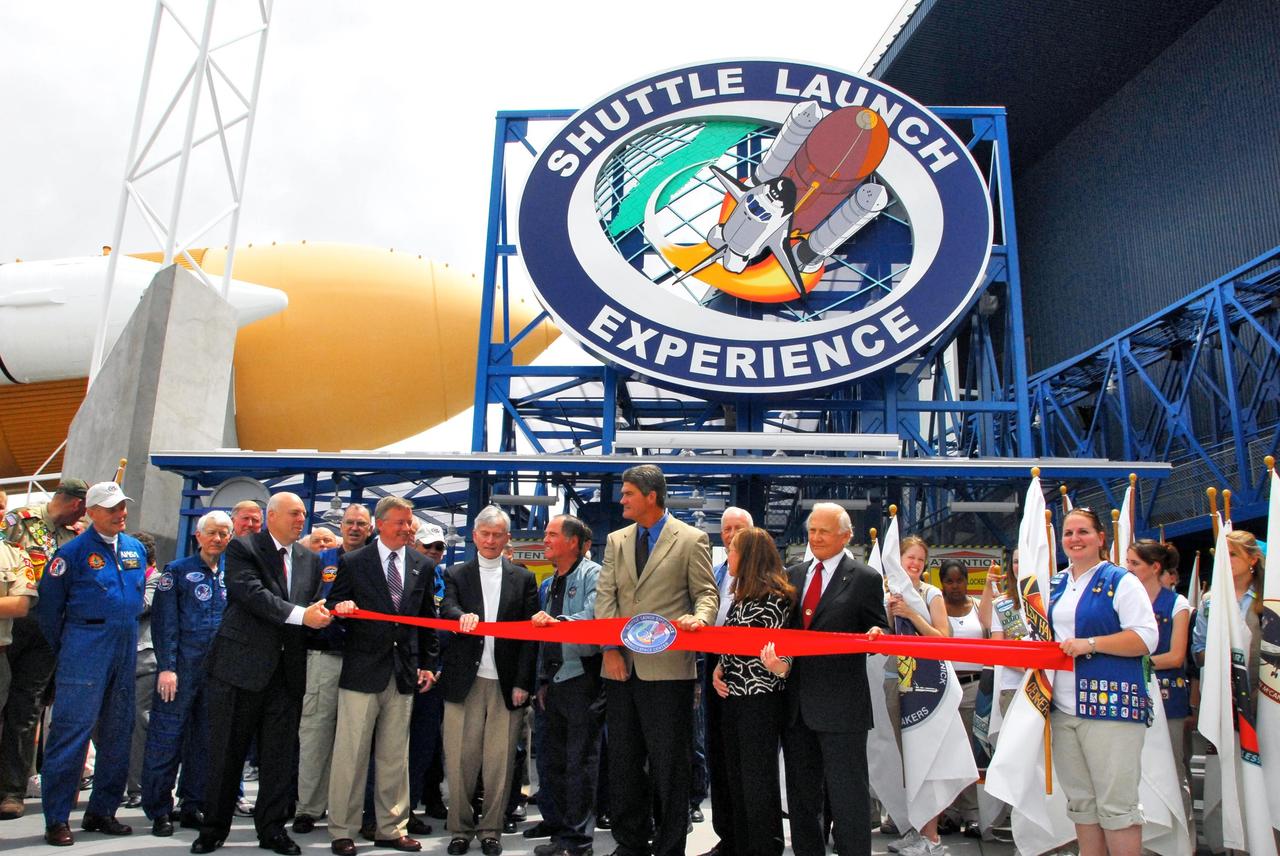
KENNEDY SPACE CENTER, FLA. -- NASA, Kennedy Space Center and State of Florida dignitaries helped launch the opening of the newest attraction at Kennedy Space Center's Visitor Complex, the Shuttle Launch Experience. Holding the ribbon for the breaking are (left to right) Dan LeBlanc, chief operating officer of the KSC Visitor Complex; Lt. Governor of Florida Jeff Kottkamp; former astronauts John Young and Bob Crippen; Center Director Bill Parsons; KSC Director of External Relations Lisa Malone; and former astronaut Buzz Aldrin. The attraction includes a simulated launch with the sights, sounds and sensations of launching into space. Find out more about the Visitor Complex and the Shuttle Launch Experience at <b>http://www.kennedyspacecenter.com/visitKSC/attractions/index.asp</b>. Photo credit: NASA/George Shelton
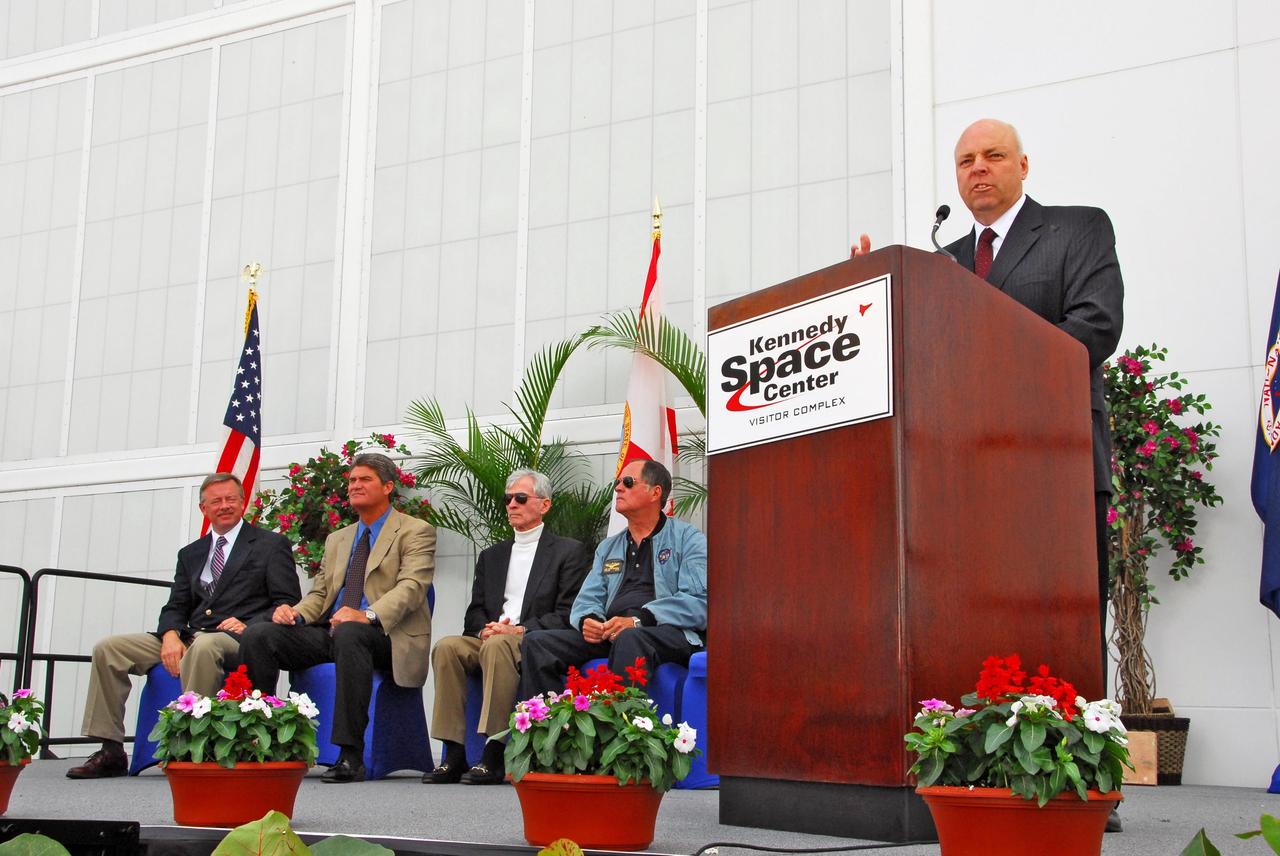
KENNEDY SPACE CENTER, FLA. -- NASA, Kennedy Space Center and State of Florida dignitaries helped launch the opening of the newest attraction at Kennedy Space Center's Visitor Complex, the Shuttle Launch Experience. At the dais is Dan LeBlanc, chief operating officer of the KSC Visitor Complex. Seated on stage are (from left) Lt. Governor of Florida Jeff Kottkamp, Center Director Bill Parsons, and former astronauts John Young and Bob Crippen. The attraction includes a simulated launch with the sights, sounds and sensations of launching into space. Find out more about the Visitor Complex and the Shuttle Launch Experience at <b>http://www.kennedyspacecenter.com/visitKSC/attractions/index.asp</b>. Photo credit: NASA/George Shelton
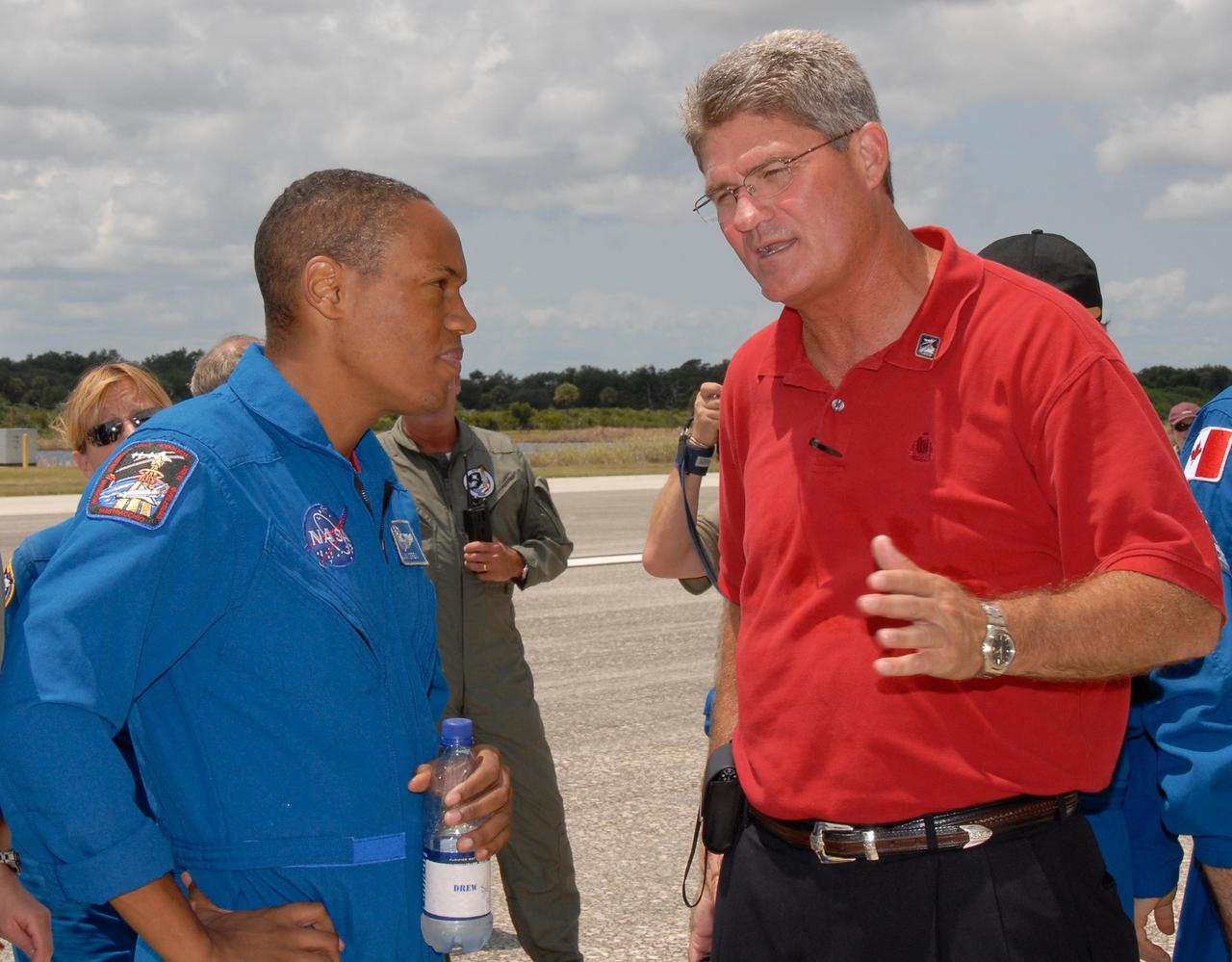
KENNEDY SPACE CENTER, FLA. -- KSC Director Bill Parsons (right) is one of the NASA officials present to welcome back the STS-118 crew from its mission to the International Space Station. Parsons is talking to Mission Specialist Alvin Drew. On the mission, the crew installed a new gyroscope, an external spare parts platform and another truss segment to the expanding station. Endeavour's main gear touched down at 12:32:16 p.m. EDT. Nose gear touchdown was at 12:32:29 p.m. and wheel stop was at 12:33:20 p.m. Endeavour landed on orbit 201. STS-118 was the 119th space shuttle flight, the 22nd flight to the station, the 20th flight for Endeavour and the second of four missions planned for 2007. This was the 65th landing of an orbiter at Kennedy. Photo credit: NASA/Kim Shiflett

KENNEDY SPACE CENTER, FLA. -- Ed White III touches his father's name engraved in the Space Mirror Memorial at the KSC Visitor Complex. White attended the ceremony held in remembrance of the astronauts lost in the Apollo 1 fire: Virgil "Gus" Grissom, Edward H. White II and Roger B. Chaffee. Members of their families, along with KSC Director Bill Parsons, Associate Administrator for Space Operations William Gerstenmaier, President of the Astronauts Memorial Foundation Stephen Feldman and Chairman of the Board of Directors of the Astronauts Memorial Foundation William Potter, attended the ceremony. The mirror was designated as a national memorial by Congress and President George Bush in 1991 to honor fallen astronauts. Their names are emblazoned on the monument’s 42-½-foot-high by 50-foot-wide black granite surface as if to be projected into the heavens. Photo credit:NASA/Kim Shiflett
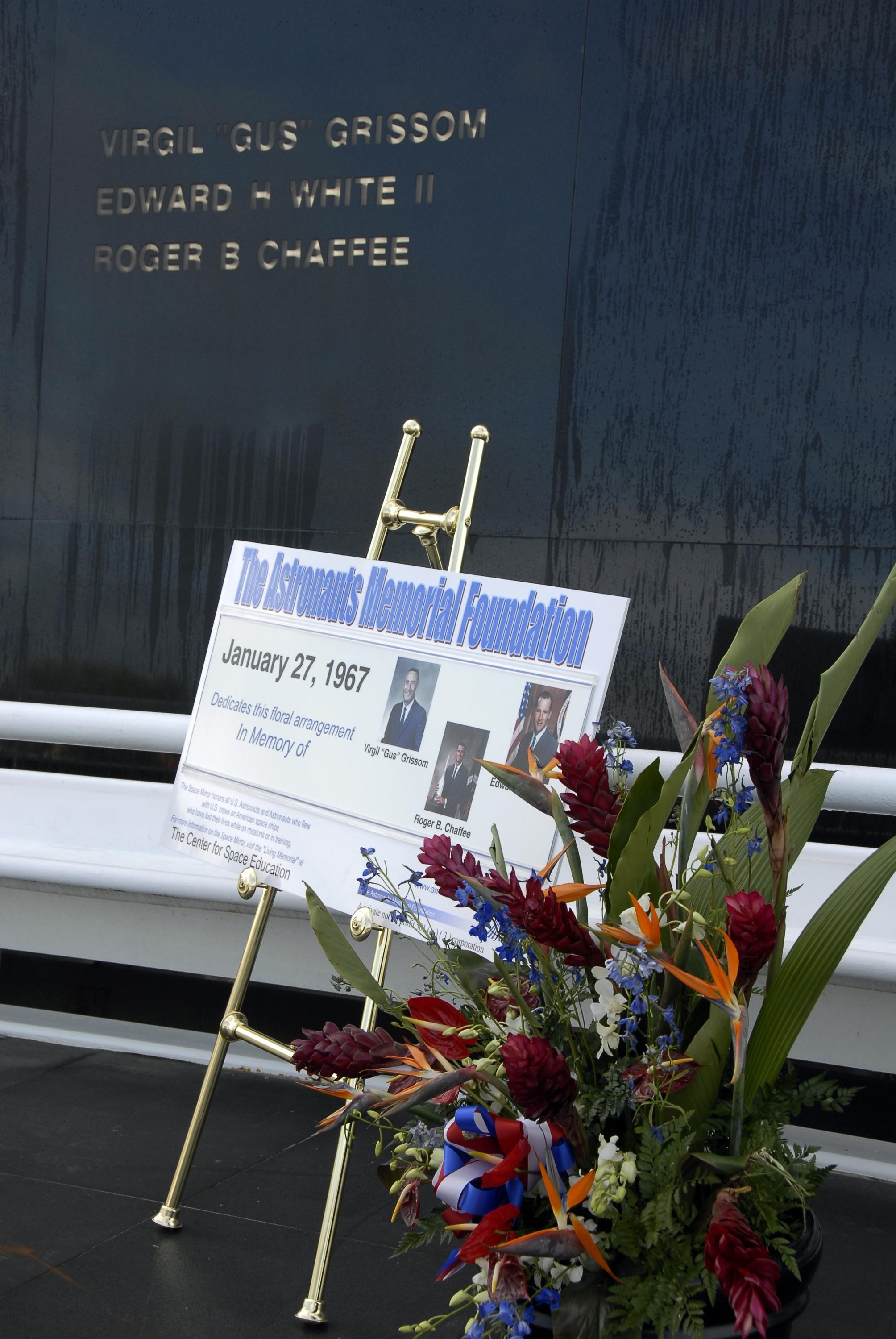
KENNEDY SPACE CENTER, FLA. -- Flowers and plaque are in place in front of the Space Mirror Memorial at the KSC Visitor Complex for the ceremony held in remembrance of the astronauts lost in the Apollo 1 fire: Virgil "Gus" Grissom, Edward H. White II and Roger B. Chaffee. Members of their families, along with KSC Director Bill Parsons, Associate Administrator for Space Operations William Gerstenmaier, President of the Astronauts Memorial Foundation Stephen Feldman and Chairman of the Board of Directors of the Astronauts Memorial Foundation William Potter, attended the ceremony. The mirror was designated as a national memorial by Congress and President George Bush in 1991 to honor fallen astronauts. Their names are emblazoned on the monument’s 42-½-foot-high by 50-foot-wide black granite surface as if to be projected into the heavens. Photo credit:NASA/Kim Shiflett
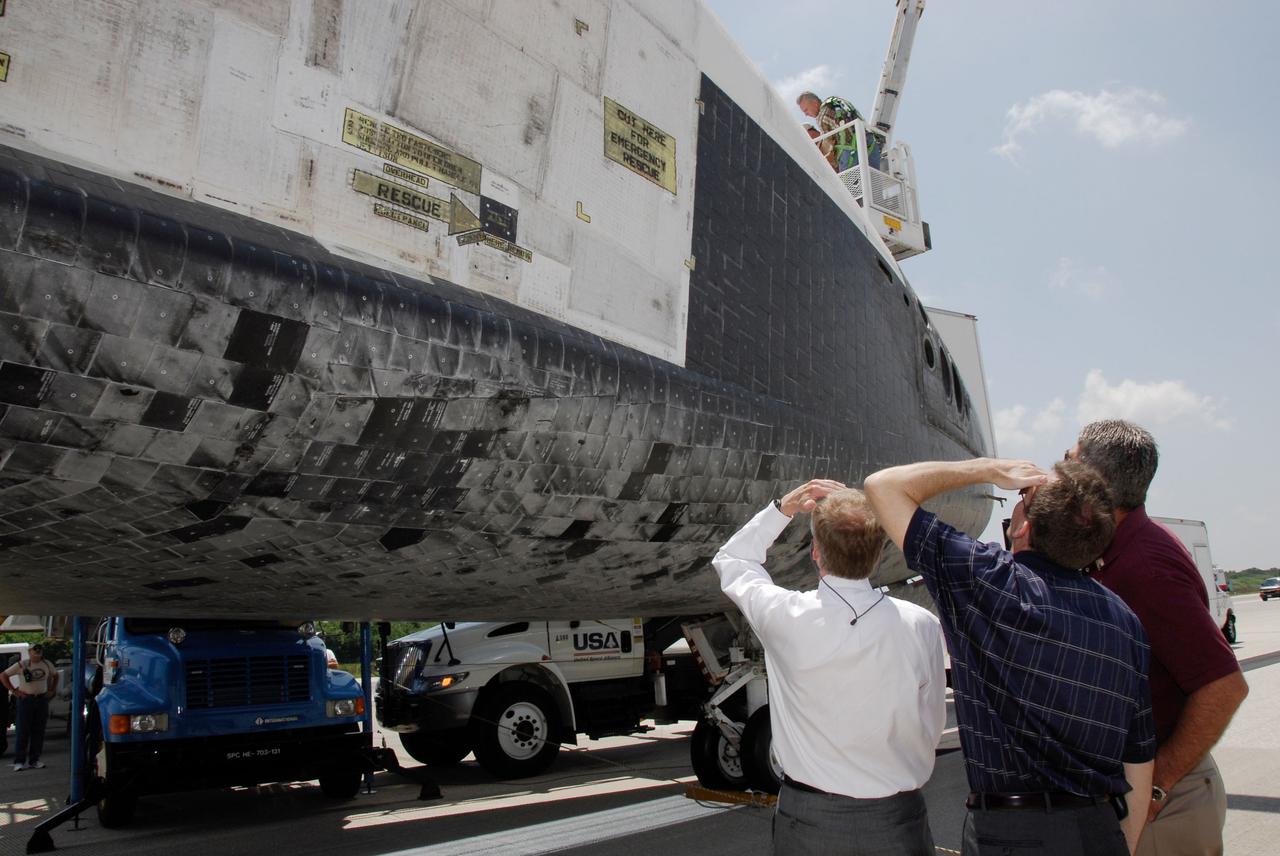
STS124-S-073 (14 June 2008) --- After Space Shuttle Discovery's landing on runway 15 at NASA's Kennedy Space Center (KSC), NASA VIPs take a close look at the orbiter. From the left are Bill Gerstenmaier, NASA associate administrator for Space Operations; LeRoy Cain, NASA deputy shuttle program manager; and KSC Director Bill Parsons. Discovery's landing ended the STS-124 mission, a 14-day flight to the International Space Station. The main landing gear touched down at 11:15:19 a.m. (EDT) on June 14, 2008. The nose landing gear touched down at 11:15:30 a.m. and wheel stop was at 11:16:19 a.m. During the mission, Discovery's crew installed the Japan Aerospace Exploration Agency's large Kibo laboratory and its remote manipulator system leaving a larger space station and one with increased science capabilities.
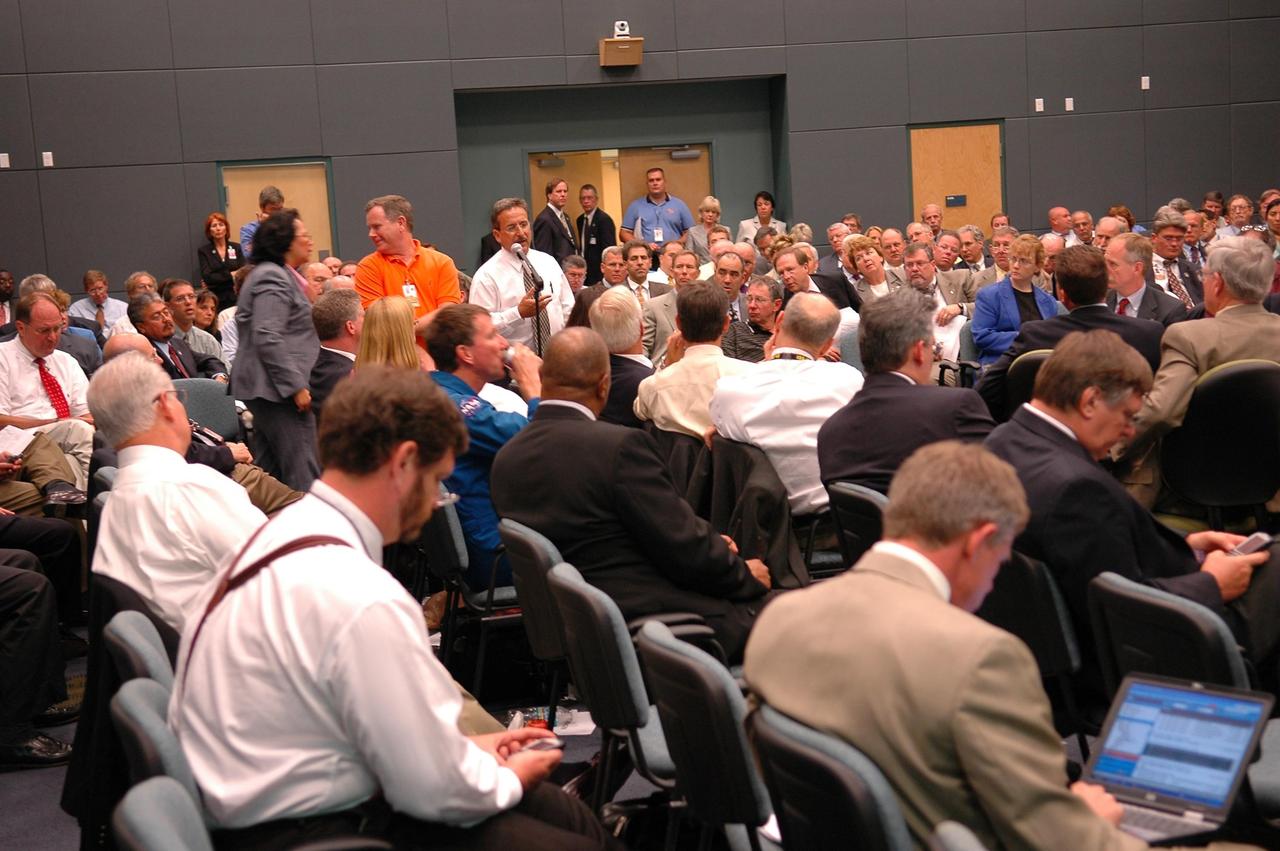
KENNEDY SPACE CENTER, FLA. - Space Shuttle Program and mission managers meet for the traditional Flight Readiness Review, a thorough assessment of preparations for the mission. Listening to a comment from attendees is NASA Administrator Mike Griffin (fourth to the right of the speaker) and Associate Administrator for Space Operations William Gerstenmaier and KSC Deputy Director Bill Parsons, at far right. The June 16-17 meeting is designed to produce a number of key decisions about Discovery's mission, STS-121, including selection of an official launch date. Photo credit: NASA/Kim Shiflett
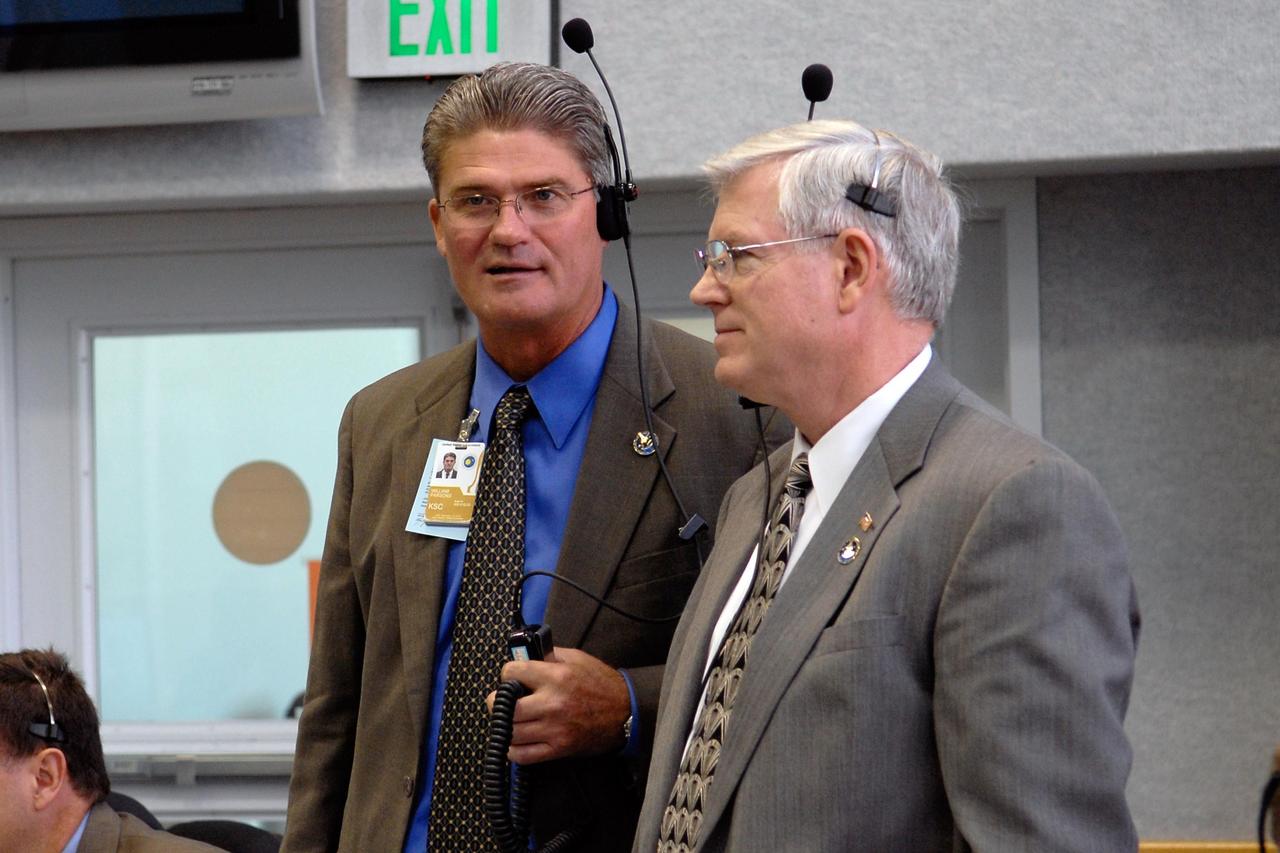
KENNEDY SPACE CENTER, FLA. -- In the firing room of the Launch Control Center at NASA's Kennedy Space Center, KSC Director Bill Parsons (left) and Johnson Space Center Director Michael Coats wait for the final countdown of space shuttle Discovery on mission STS-120. Liftoff was on time at 11:38:19 a.m. EDT. Discovery carries the Italian-built U.S. Node 2, called Harmony. During the 14-day STS-120 mission, the crew will install Harmony and move the P6 solar arrays to their permanent position and deploy them. Discovery is expected to complete its mission and return home at 4:47 a.m. EST on Nov. 6. Photo credit: NASA/Kim Shiflett
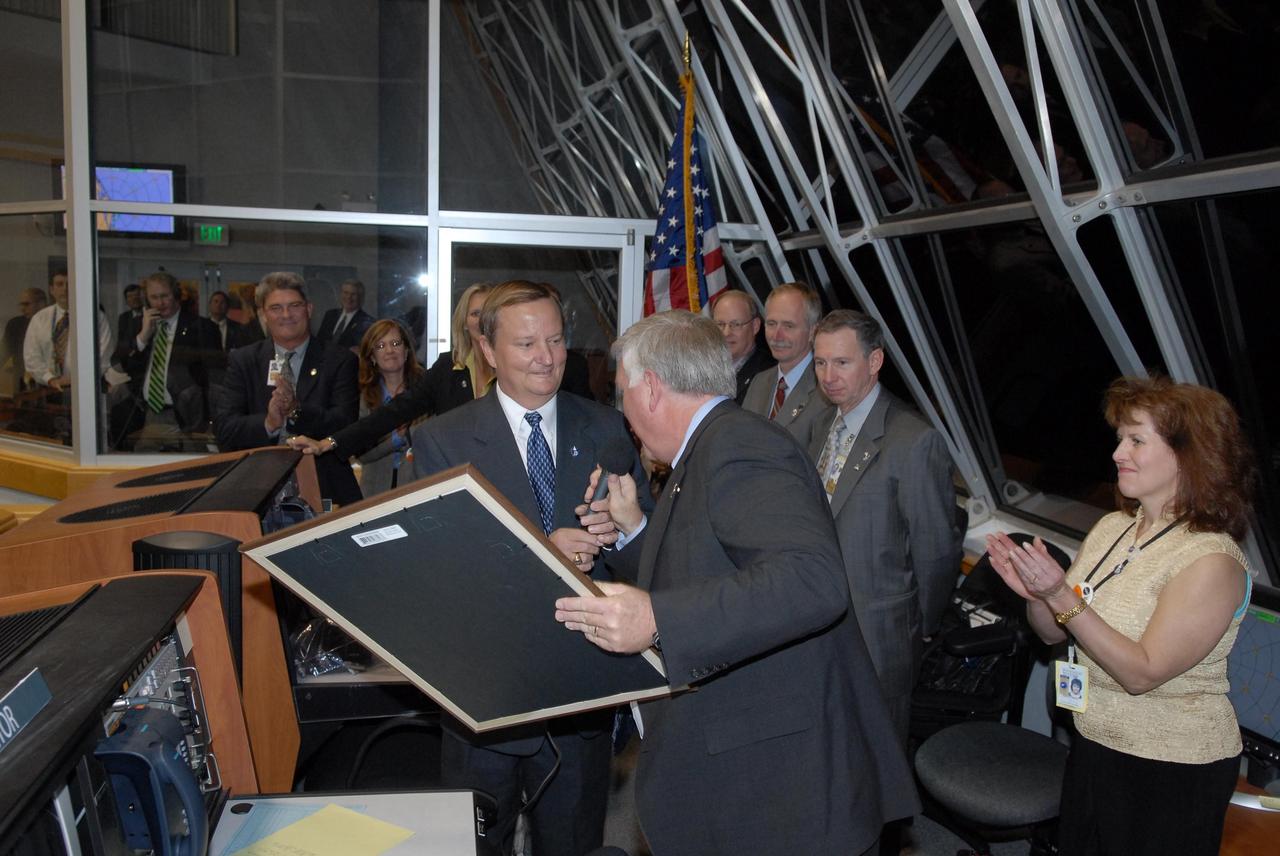
KENNEDY SPACE CENTER, FLA. -- In the firing room at the Launch Control Center, Shuttle Launch Director Mike Leinbach presents a memento of the night's successful launch of Space Shuttle Discovery to Kennedy Space Center Director Jim Kennedy, who is retiring in January. Behind Leinbach and Kennedy are, left to right, Deputy Director Bill Parsons, External Relations Director Lisa Malone, NASA Flow Director for Discovery Stephanie Stilson, NASA KSC News Chief Bruce Buckingham, Associate Administrator for Space Operations Mission William Gerstenmaier and NASA Administrator Mike Griffin and his wife, Becky. This was the second launch attempt for mission STS-116. The first launch attempt on Dec. 7 was postponed due a low cloud ceiling over Kennedy Space Center. This is Discovery's 33rd mission and the first night launch since 2002. The 20th shuttle mission to the International Space Station, STS-116 carries another truss segment, P5. It will serve as a spacer, mated to the P4 truss that was attached in September. After installing the P5, the crew will reconfigure and redistribute the power generated by two pairs of U.S. solar arrays. Landing is expected Dec. 21 at KSC. Photo credit: NASA/Kim Shiflett
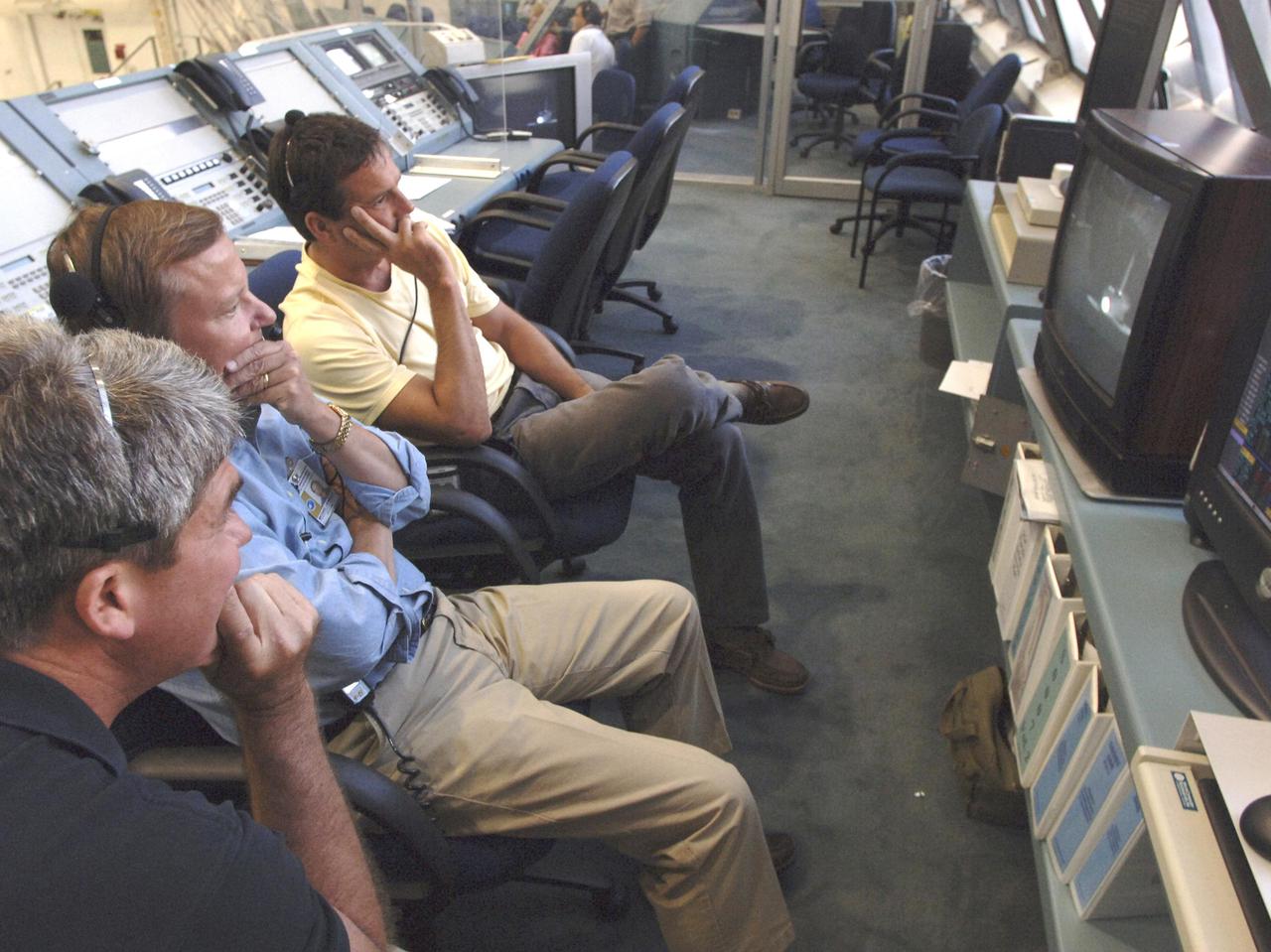
KENNEDY SPACE CENTER, FLA. - In the Firing Room of the Launch Control Center at NASA Kennedy Space Center, Space Shuttle Program Manager Bill Parsons, Shuttle Launch Director Mike Leinbach and Assistant Launch Director Doug Lyons applaud the successful landing of Space Shuttle Discovery on Runway 22 at Edwards Air Force Base in California. The landing was deferred to Edwards due to weather concerns at KSC. Landing time was 8:11:22 a.m. EDT, guided by Mission Commander Eileen Collins. Discovery spent two weeks in space on Return to Flight mission STS-114, where the crew demonstrated new methods to inspect and repair the Shuttle in orbit. The crew also delivered supplies, outfitted and performed maintenance on the International Space Station. A number of these tasks were conducted during three spacewalks. (Photo Credit: NASA_Bill Ingalls)
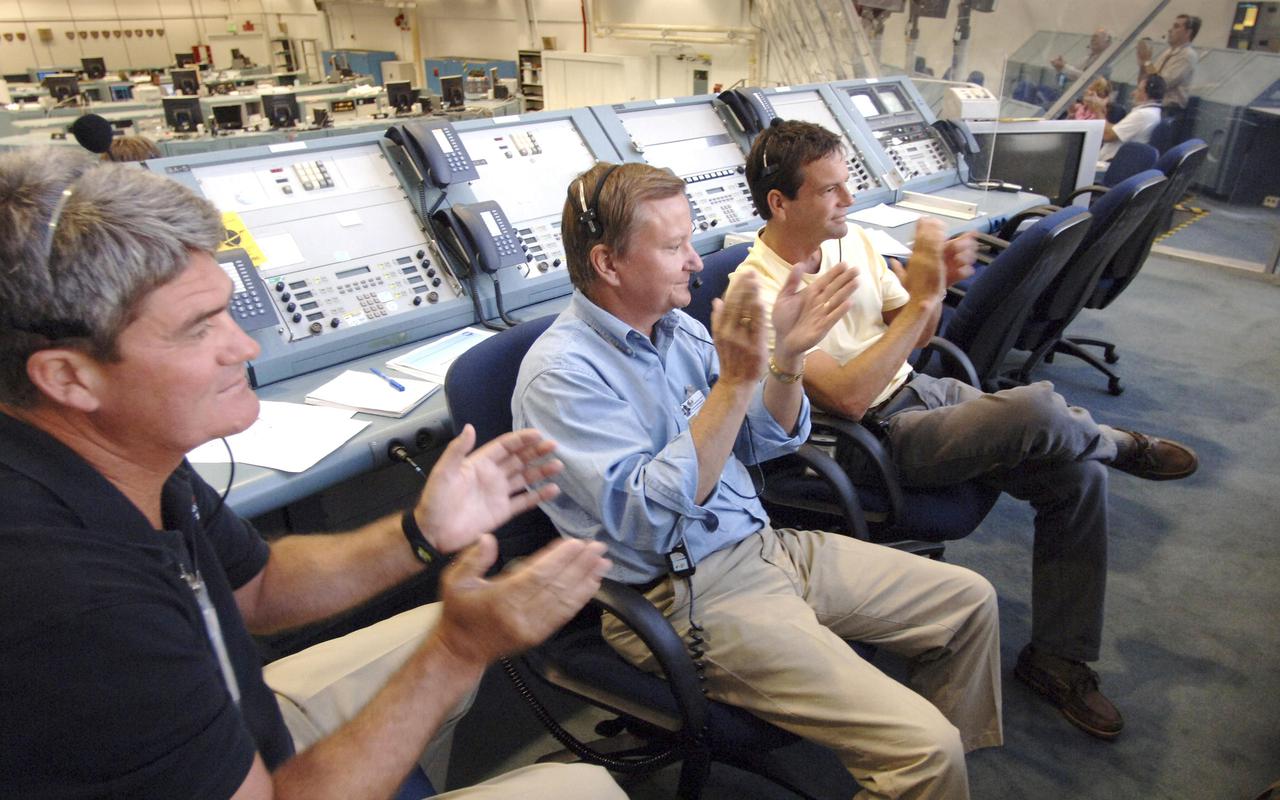
KENNEDY SPACE CENTER, FLA. - In the Firing Room of the Launch Control Center at NASA Kennedy Space Center, Space Shuttle Program Manager Bill Parsons, Shuttle Launch Director Mike Leinbach and Assistant Launch Director Doug Lyons applaud the successful landing of Space Shuttle Discovery on Runway 22 at Edwards Air Force Base in California. The landing was deferred to Edwards due to weather concerns at KSC. Landing time was 8:11:22 a.m. EDT, guided by Mission Commander Eileen Collins. Discovery spent two weeks in space on Return to Flight mission STS-114, where the crew demonstrated new methods to inspect and repair the Shuttle in orbit. The crew also delivered supplies, outfitted and performed maintenance on the International Space Station. A number of these tasks were conducted during three spacewalks. (Photo Credit: NASA_Bill Ingalls)
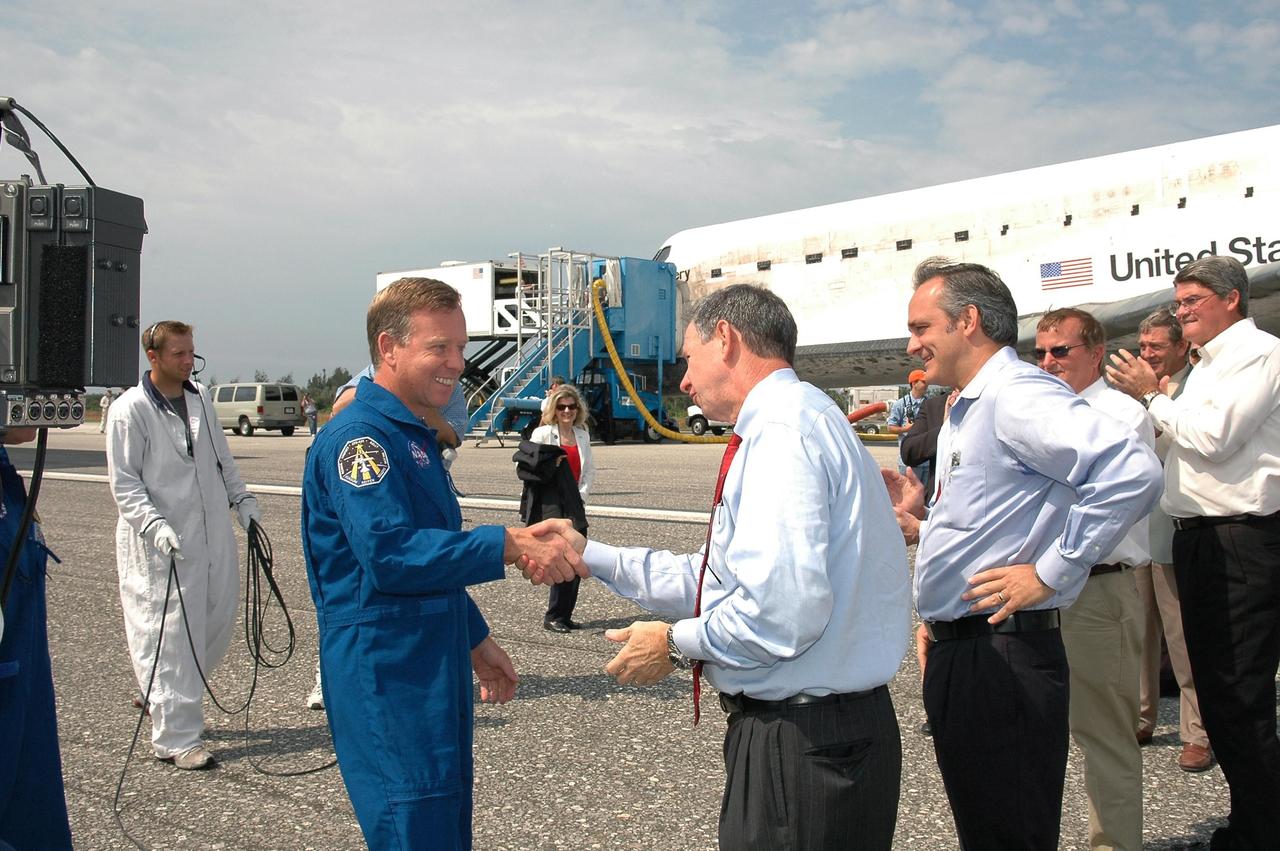
KENNEDY SPACE CENTER, FLA. - STS-121 Mission Commander Steven Lindsey is greeted by NASA Administrator Mike Griffin, Associate Administrator Rex Geveden, Shuttle Launch Director Mike Leinbach, KSC Deputy Director Bill Parsons and other senior managers after leaving the orbiter Discovery, in the background. The rest of the crew are Pilot Mark Kelly and Mission Specialists Piers Sellers, Lisa Nowak and Stephanie Wilson. Mission Specialist Thomas Reiter, who launched with the crew on July 4, remained on the station to join the Expedition 13 crew there. Discovery's smooth and perfect landing was on time at 9:14 a.m. EDT on Runway 15 of NASA's Shuttle Landing Facility after traveling 5.3 million miles on 202 orbits. Mission elapsed time was 12 days, 18 hours, 37 minutes and 54 seconds. The landing is the 62nd at Kennedy Space Center and the 32nd for Discovery. Photo credit: NASA/Kim Shiflett
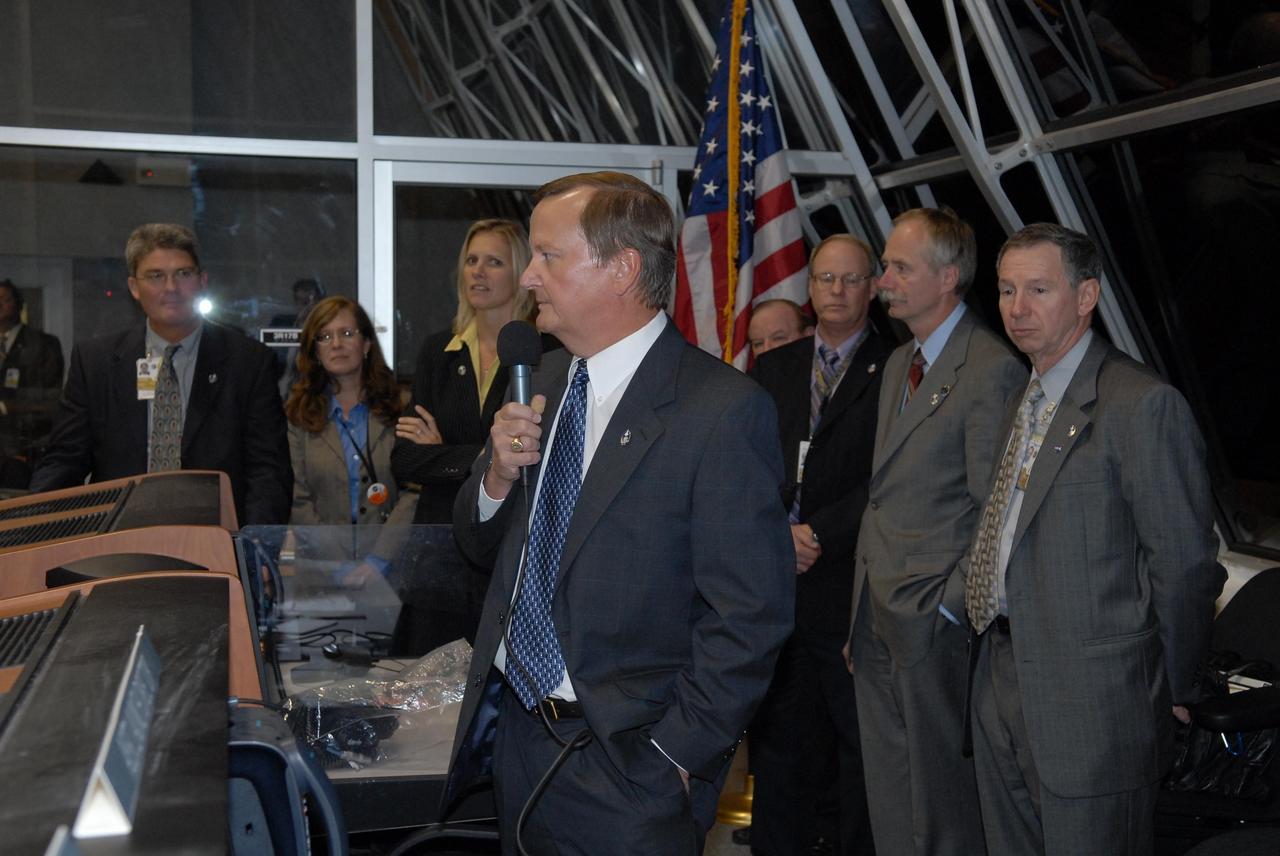
KENNEDY SPACE CENTER, FLA. -- In the firing room at the Launch Control Center, Shuttle Launch Director Mike Leinbach (center, with microphone) commends the mission management team for the successful second launch attempt of Space Shuttle Discovery on mission STS-116. Liftoff occurred on time at 8:47 p.m. EST. Others in the room are (left to right), Deputy Director Bill Parsons, External Relations Director Lisa Malone, NASA Flow Director for Discovery Stephanie Stilson, NASA KSC News Chief Bruce Buckingham, Associate Administrator for Space Operations Mission William Gerstenmaier and NASA Administrator Mike Griffin. This was the second launch attempt for mission STS-116. The first launch attempt on Dec. 7 was postponed due a low cloud ceiling over Kennedy Space Center. This is Discovery's 33rd mission and the first night launch since 2002. The 20th shuttle mission to the International Space Station, STS-116 carries another truss segment, P5. It will serve as a spacer, mated to the P4 truss that was attached in September. After installing the P5, the crew will reconfigure and redistribute the power generated by two pairs of U.S. solar arrays. Landing is expected Dec. 21 at KSC. Photo credit: NASA/Kim Shiflett
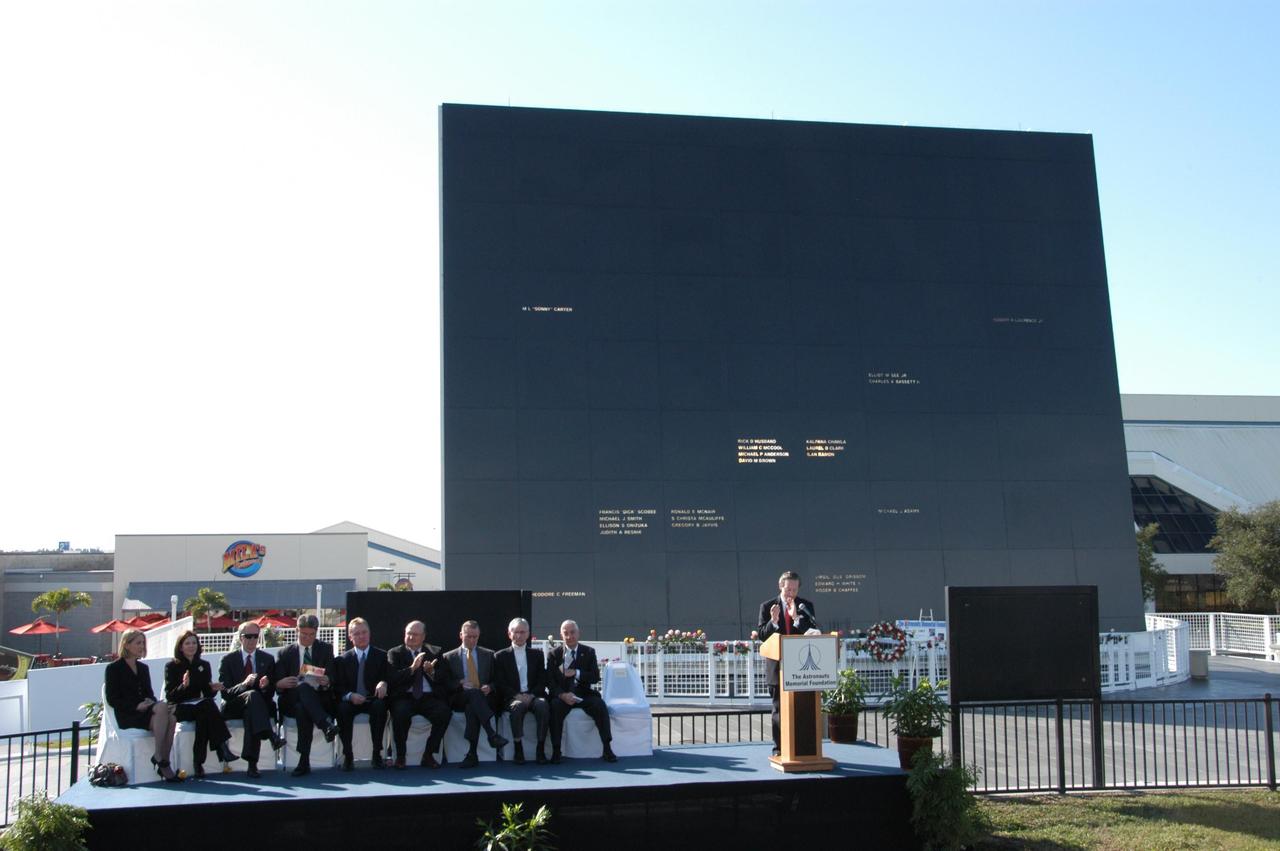
KENNEDY SPACE CENTER, FLA. -- Guests are gathered on stage during a ceremony at the KSC Visitor Complex held in remembrance of the astronauts lost in the Apollo 1 fire: Virgil "Gus" Grissom, Edward H. White II and Roger B. Chaffee. Among those gathered on stage are (from left) Faith Johnson, daughter of Theodore Freeman and Martha Chaffee, daughter of Roger Chaffee, Associate Administrator for Space Operations William Gerstenmaier and KSC Director Bill Parsons, plus former astronaut John Young (second from right). Members of the astronauts' families were guests at the ceremony. At the podium is Stephen Feldman, president of the Astronauts Memorial Foundation. Behind the stage is the Space Mirror Memorial, designated as a national memorial by Congress and President George Bush in 1991 to honor fallen astronauts. Their names are emblazoned on the monument’s 42-1/2-foot-high by 50-foot-wide black granite surface as if to be projected into the heavens. Photo credit:NASA/George Shelton
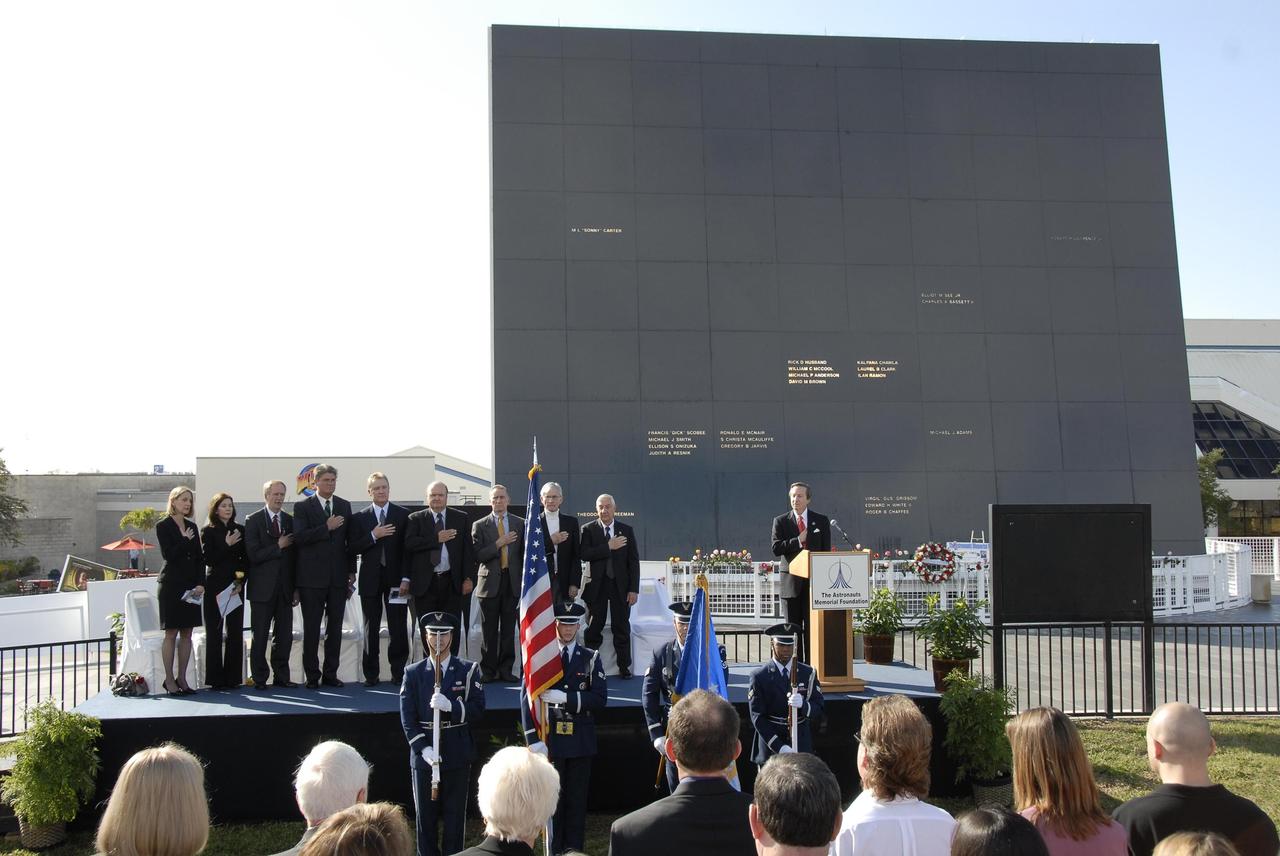
KENNEDY SPACE CENTER, FLA. -- Guests and attendees salute the U.S. flag during a ceremony at the KSC Visitor Complex held in remembrance of the astronauts lost in the Apollo 1 fire: Virgil "Gus" Grissom, Edward H. White II and Roger B. Chaffee. Among those gathered on stage are (from left) Faith Johnson, daughter of Theodore Freeman and Martha Chaffee, daughter of Roger Chaffee, Associate Administrator for Space Operations William Gerstenmaier and KSC Director Bill Parsons, plus former astronaut John Young and Lowell Grissom, brother of Gus Grissom (far right). At the podium is Stephen Feldman, president of the Astronauts Memorial Foundation. Behind the stage is the Space Mirror Memorial, designated as a national memorial by Congress and President George Bush in 1991 to honor fallen astronauts. Their names are emblazoned on the monument’s 42-½-foot-high by 50-foot-wide black granite surface as if to be projected into the heavens. Photo credit:NASA/Kim Shiflett
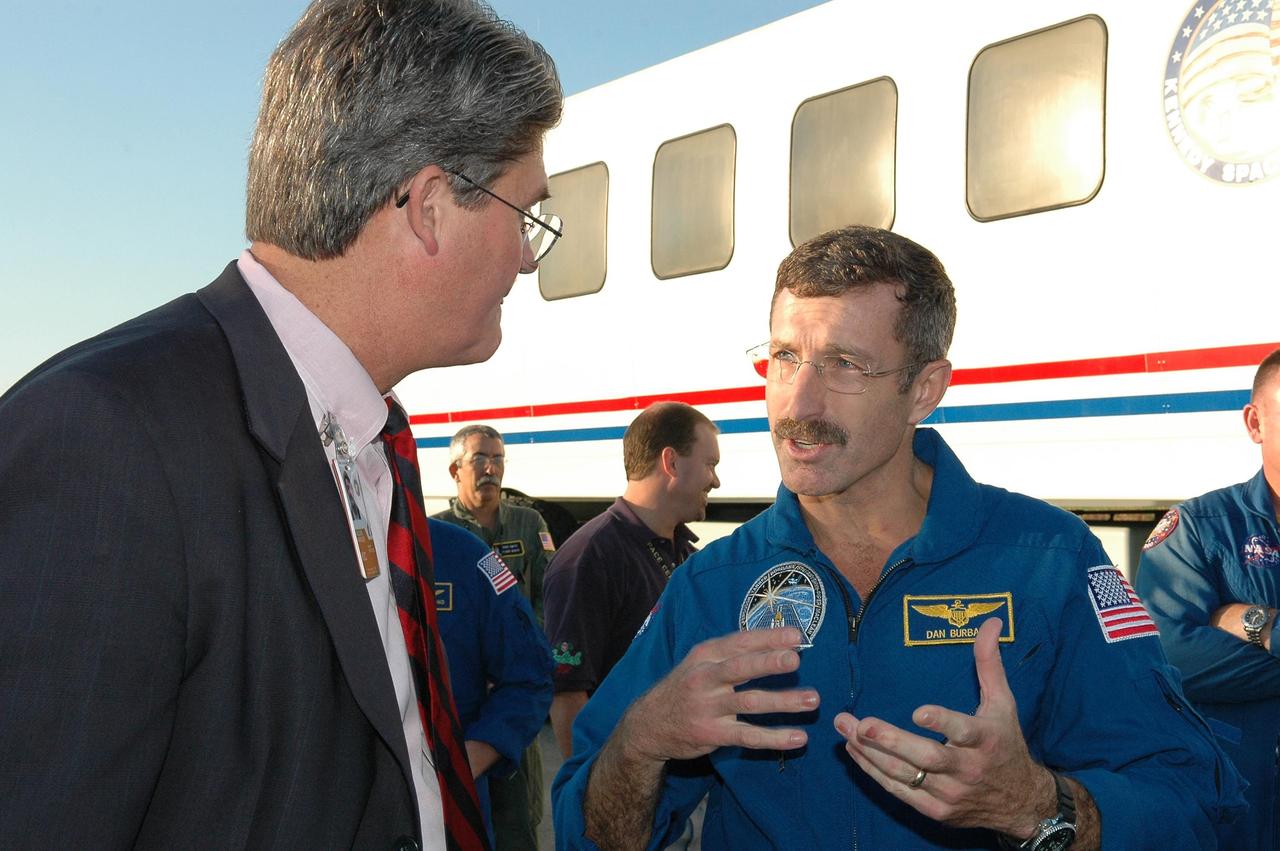
KENNEDY SPACE CENTER, FLA. - KSC Deputy Director Bill Parsons (left) talks with STS-115 Mission Specialist Daniel Burbank, who just returned from space. During the mission, astronauts completed three spacewalks to attach the P3/P4 integrated truss structure to the International Space Station. Main gear touchdown was at 6:21:30 a.m. EDT. Nose gear touchdown was at 6:21:36 a.m. and wheel stop was at 6:22:16 a.m. Atlantis traveled 4.9 million miles, landing on orbit 187. Mission elapsed time was 11 days, 19 hours, six minutes. This is the 15th night landing at KSC and the 23rd night landing overall. Photo credit: NASA/Kim Shiflett
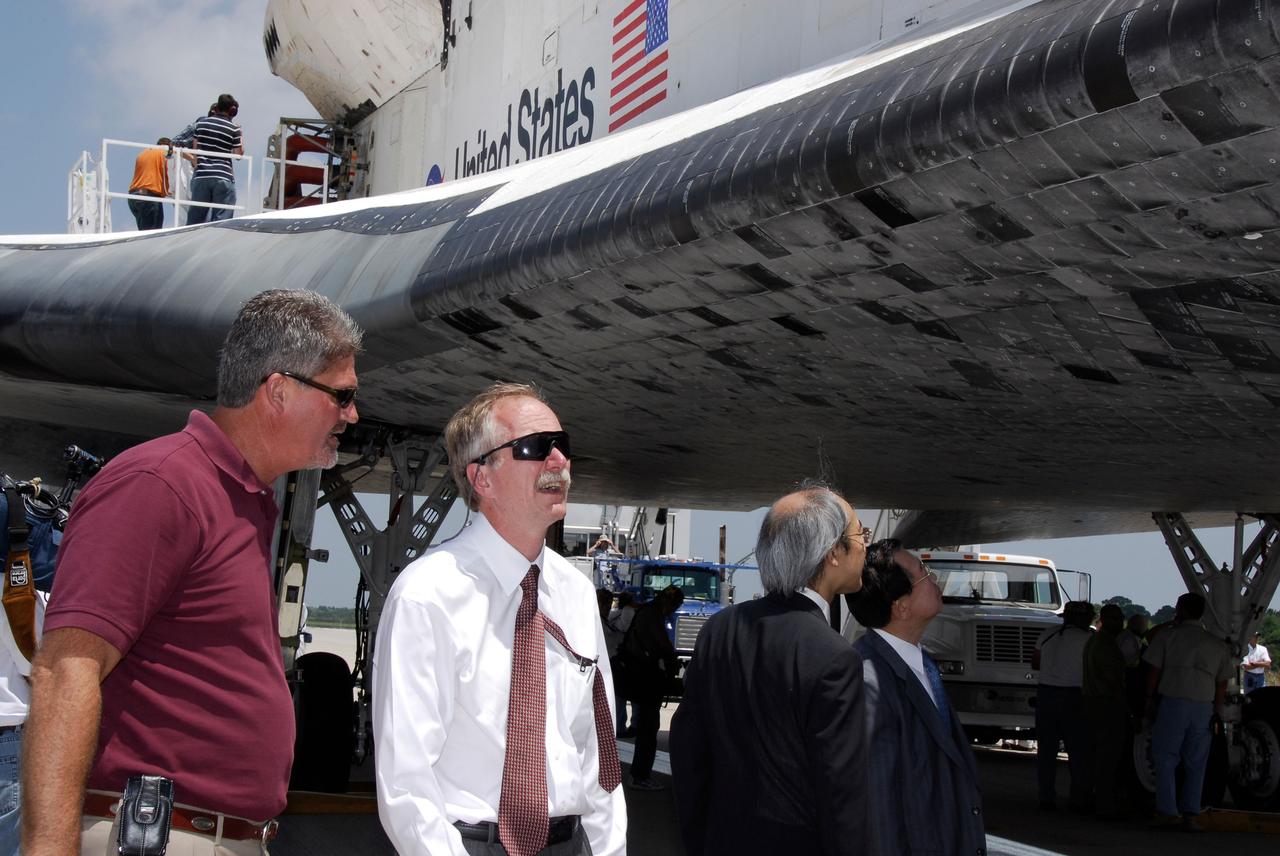
STS124-S-072 (14 June 2008) --- After Space Shuttle Discovery's landing on runway 15 at NASA's Kennedy Space Center (KSC), NASA VIPs take a close look at the orbiter. From the left are KSC Director Bill Parsons and Bill Gerstenmaier, NASA associate administrator for Space Operations. At right are the Japan Aerospace Exploration Agency's Director of Program Management and Integration Yuichi Yamaura and Vice President Kaoru Mamiya. Discovery's landing ended the STS-124 mission, a 14-day flight to the International Space Station. The main landing gear touched down at 11:15:19 a.m. (EDT) on June 14, 2008. The nose landing gear touched down at 11:15:30 a.m. and wheel stop was at 11:16:19 a.m. During the mission, Discovery's crew installed the Japan Aerospace Exploration Agency's large Kibo laboratory and its remote manipulator system leaving a larger space station and one with increased science capabilities.
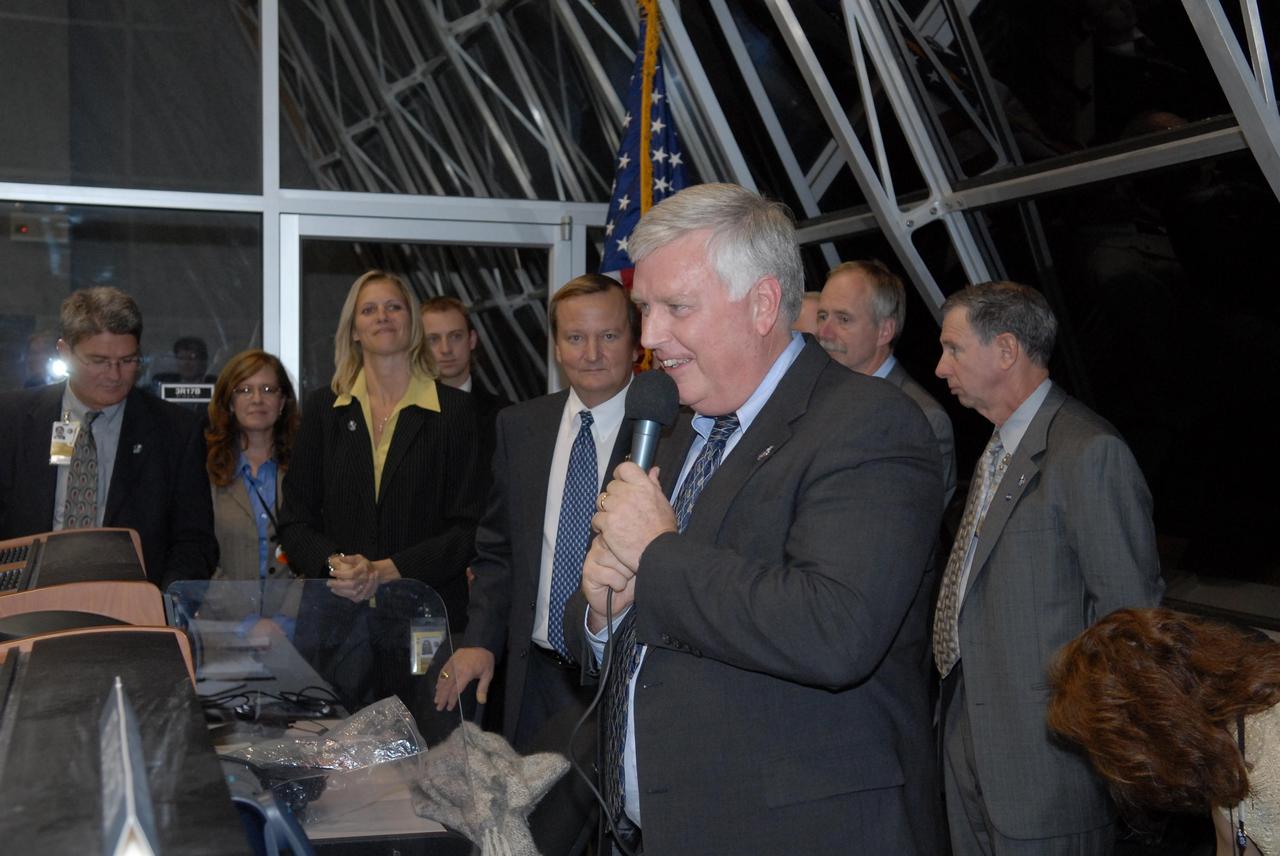
KENNEDY SPACE CENTER, FLA. -- In the firing room at the Launch Control Center, Kennedy Space Center Director Jim Kennedy (with microphone) congratulates the team for successful second launch attempt of Space Shuttle Discovery on mission STS-116. Liftoff occurred on time at 8:47 p.m. EST. Others in the room are (left to right), Deputy Director Bill Parsons, External Relations Director Lisa Malone, NASA Flow Director for Discovery Stephanie Stilson, Shuttle Launch Director Mike Leinbach, Associate Administrator for Space Operations Mission William Gerstenmaier and NASA Administrator Mike Griffin. The first launch attempt on Dec. 7 was postponed due a low cloud ceiling over Kennedy Space Center. This is Discovery's 33rd mission and the first night launch since 2002. The 20th shuttle mission to the International Space Station, STS-116 carries another truss segment, P5. It will serve as a spacer, mated to the P4 truss that was attached in September. After installing the P5, the crew will reconfigure and redistribute the power generated by two pairs of U.S. solar arrays. Landing is expected Dec. 21 at KSC. Photo credit: NASA/Kim Shiflett

KENNEDY SPACE CENTER, FLA. -- In the Launch Control Center, NASA and Kennedy Space Center officials observe proceedings before the launch of Space Shuttle Atlantis on mission STS-117 to the International Space Station. Second from left is KSC Director Bill Parsons. Second and third from the right are William Gerstenmeier, associate administrator for NASA Space Operations Mission, and Wayne Hale, shuttle program manager, Liftoff from Launch Pad 39A was on-time at 7:38:04 p.m. EDT. The shuttle is delivering a new segment to the starboard side of the International Space Station's backbone, known as the truss. Three spacewalks are planned to install the S3/S4 truss segment, deploy a set of solar arrays and prepare them for operation. STS-117 is the 118th space shuttle flight, the 21st flight to the station, the 28th flight for Atlantis and the first of four flights planned for 2007. Photo credit: NASA/Kim Shiflett
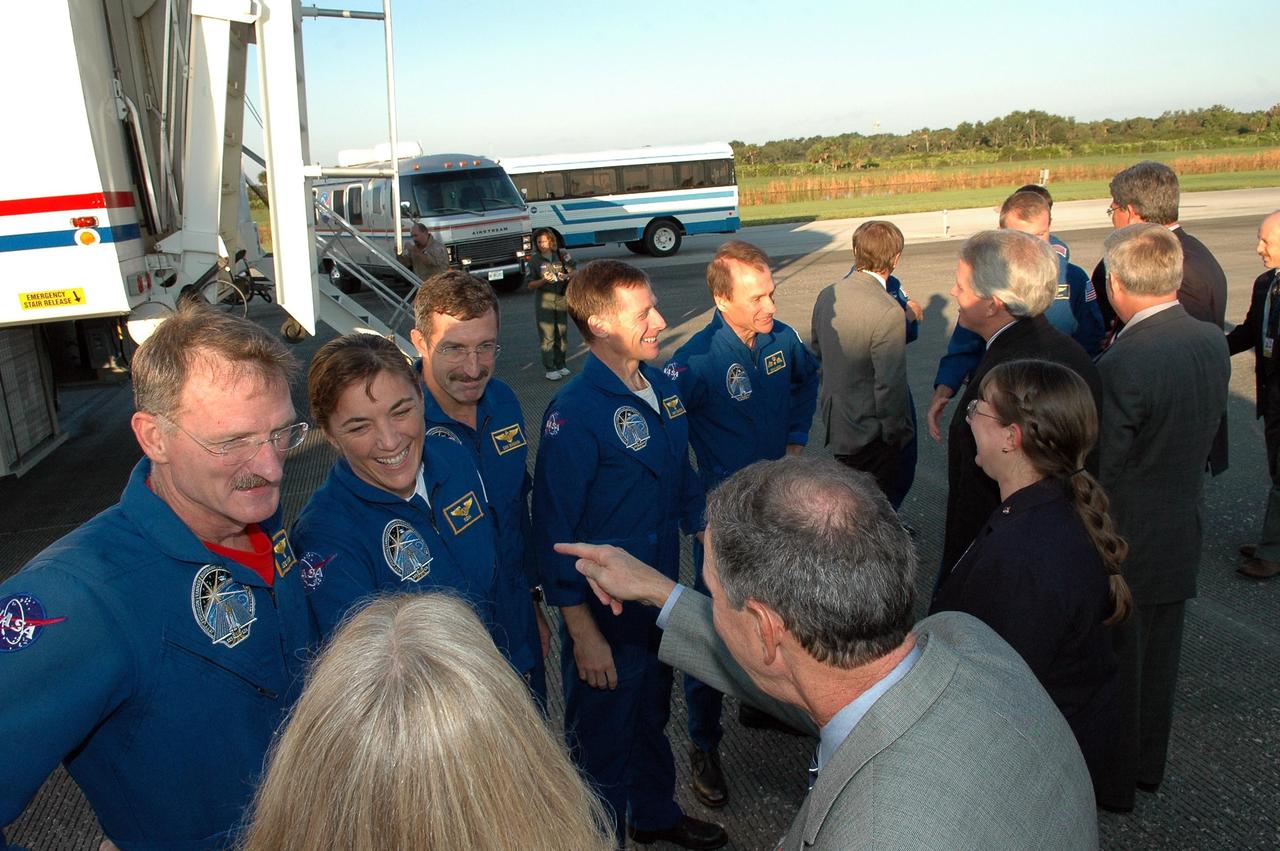
KENNEDY SPACE CENTER, FLA. - After their return from space, the STS-115 crew members are welcomed by NASA and KSC officials. The crew, from left, are Mission Specialists Joseph Tanner, Heidemarie Stefanyshyn-Piper and Daniel Burbank; Pilot Christopher Ferguson; and Mission Specialist Steven MacLean. On the right are At right are NASA Administrator Michael Griffin, Deputy Associate Administrator for Space Operations Lynn Cline, a representative of the Canadian Space Agency, KSC Director Jim Kennedy and Deputy Director Bill Parsons. During the mission, astronauts completed three spacewalks to attach the P3/P4 integrated truss structure to the International Space Station. Main gear touchdown was at 6:21:30 a.m. EDT. Nose gear touchdown was at 6:21:36 a.m. and wheel stop was at 6:22:16 a.m. At touchdown -- nominally about 2,500 ft. beyond the runway threshold -- the orbiter is traveling at a speed ranging from 213 to 226 mph. Atlantis traveled 4.9 million miles, landing on orbit 187. Mission elapsed time was 11 days, 19 hours, six minutes. This is the 15th night landing at KSC and the 23rd night landing overall. Photo credit: NASA/Kim Shiflett
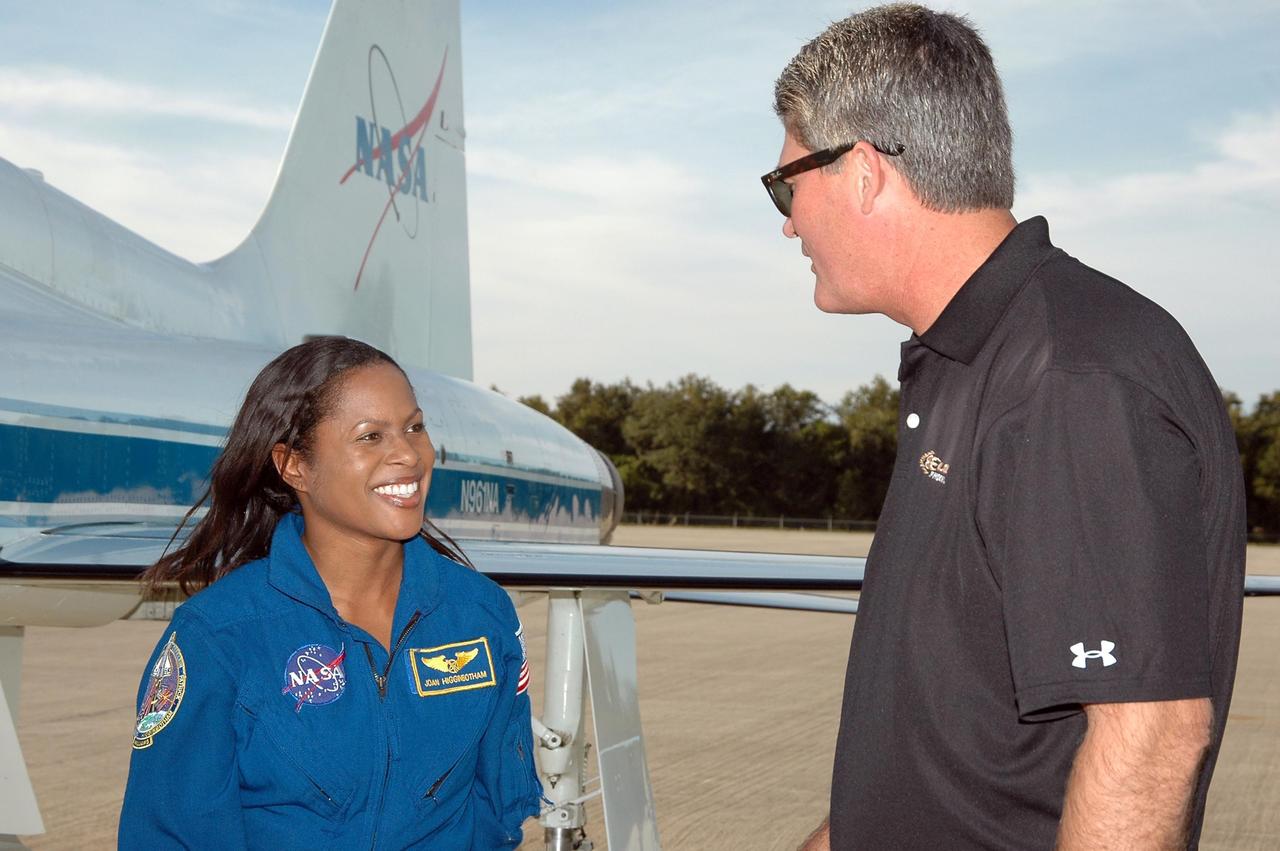
KENNEDY SPACE CENTER, FLA. -- STS-116 Mission Specialist Joan Higginbotham is greeted by Kennedy Space Center Deputy Director Bill Parsons at the Shuttle Landing Facility. The STS-116 crew has returned to KSC for the terminal countdown demonstration test, which are pre-launch preparations that include a simulated launch countdown. The crew also includes Commander Mark Polansky, Pilot William Oefelein, Mission Specialists Nicholas Patrick, Robert Curbeam, Christer Fuglesang and Flight Engineer Sunita Williams, joining Expedition 14 in progress. The mission is No. 20 to the International Space Station and construction flight 12A.1. The mission payload is the SPACEHAB module, the P5 integrated truss structure and other key components. Launch is scheduled for no earlier than Dec. 7. Photo credit: NASA/Kim Shiflett
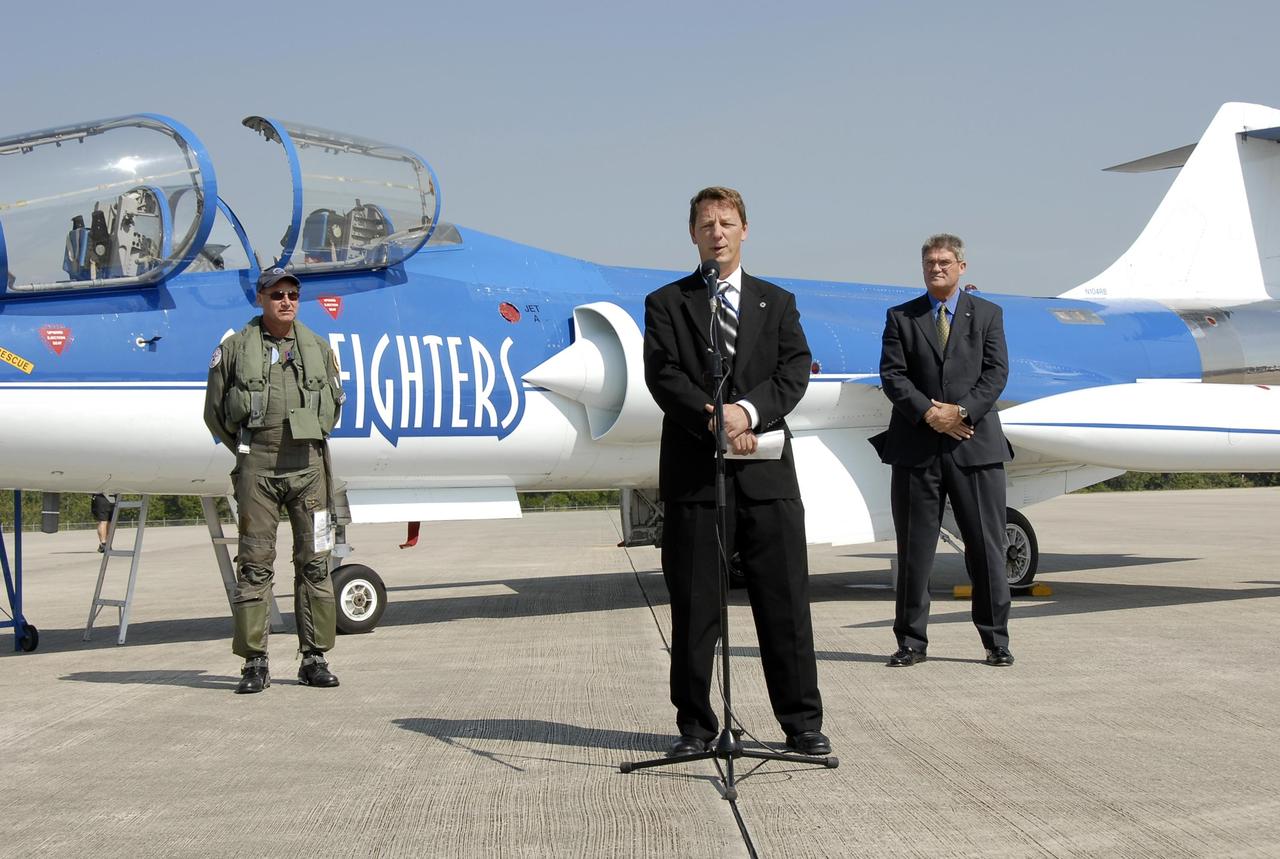
KENNEDY SPACE CENTER, FLA. -- After a test flight of the Starfighter F-104, Al Wassel, a representative from the FAA Office of Commercial Space, addresses the media on the KSC Shuttle Landing Facility. At left is the F-104 pilot, Rick Svetkoff. At right is Bill Parsons, director of Kennedy Space Center. The aircraft is taking part in a series of pathfinder test missions from the space shuttle runway. Two flights will generate test data to validate sonic boom assumptions about the potential impacts of suborbital and orbital commercial spaceflight from the facility. NASA is assessing the environmental impact of such flights. Starfighters Inc. of Clearwater, Fla., will perform the flights to help in assessing suborbital space launch trajectories from the runway and paving the way for future commercial space tourism and research flights from the facility. Photo credit: NASA/Kim Shiflett
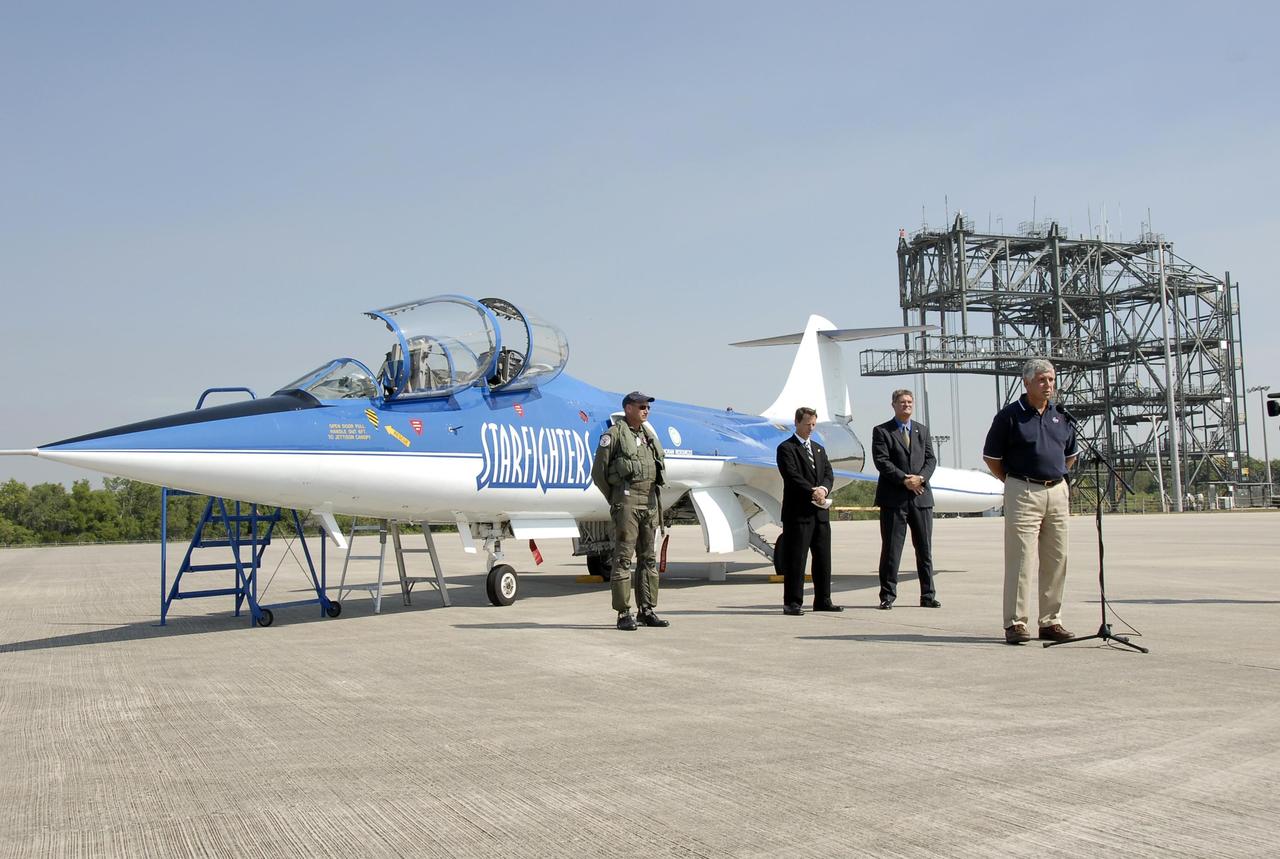
KENNEDY SPACE CENTER, FLA. -- After a test flight of the Starfighter F-104, Jim Ball, KSC Spaceport Development manager, addresses the media. Behind him are Pilot Rick Svetkoff; Al Wassel, a representative from the FAA Office of Commercial Space; and Bill Parsons, director of Kennedy Space Center. The aircraft is taking part in a series of pathfinder test missions from the space shuttle runway. Two flights will generate test data to validate sonic boom assumptions about the potential impacts of suborbital and orbital commercial spaceflight from the facility. NASA is assessing the environmental impact of such flights. Starfighters Inc. of Clearwater, Fla., will perform the flights to help in assessing suborbital space launch trajectories from the runway and paving the way for future commercial space tourism and research flights from the facility. Photo credit: NASA/Kim Shiflett
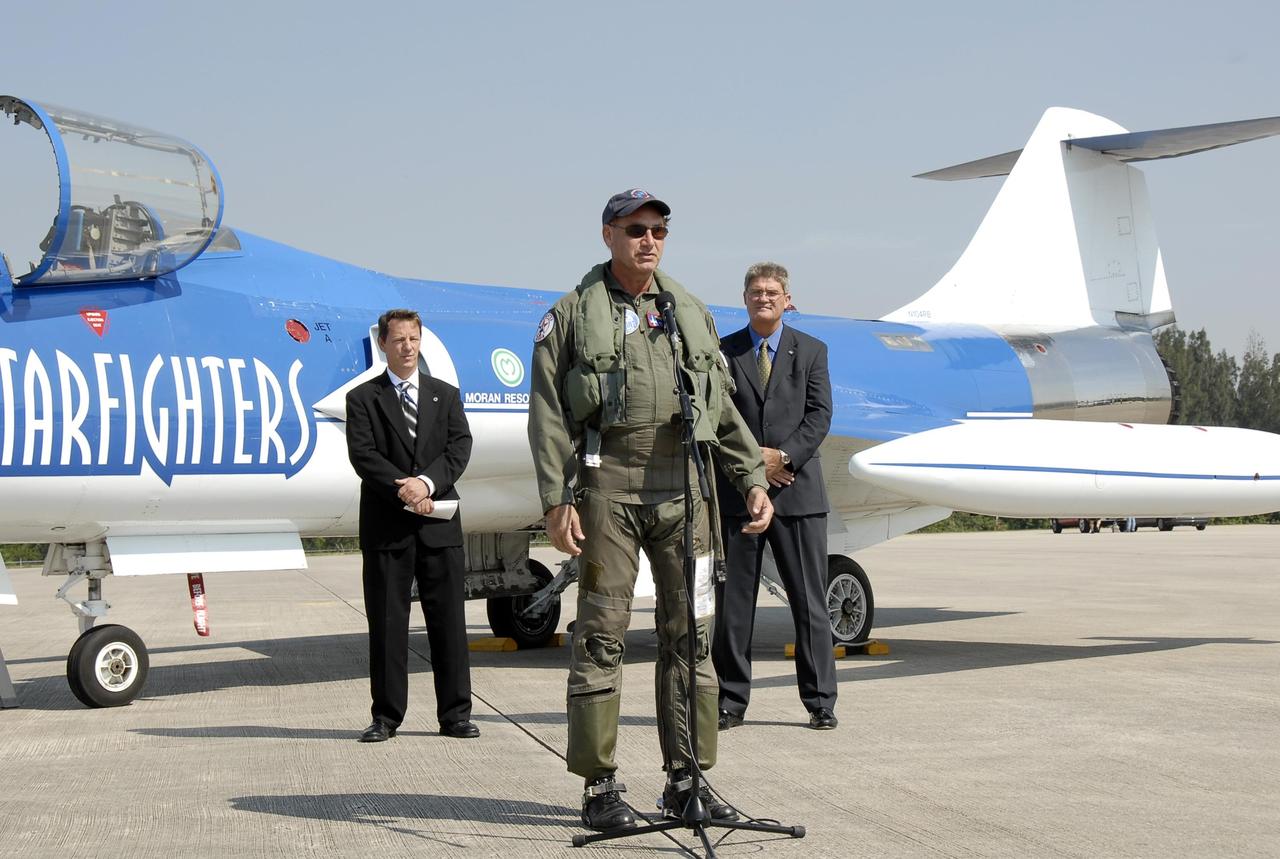
KENNEDY SPACE CENTER, FLA. -- After a test flight of the Starfighter F-104, Pilot Rick Svetkoff addresses the media on the KSC Shuttle Landing Facility. Behind him are Al Wassel (left), a representative from the FAA Office of Commercial Space, and (right) Bill Parsons, director of Kennedy Space Center. The aircraft is taking part in a series of pathfinder test missions from the space shuttle runway. Two flights will generate test data to validate sonic boom assumptions about the potential impacts of suborbital and orbital commercial spaceflight from the facility. NASA is assessing the environmental impact of such flights. Starfighters Inc. of Clearwater, Fla., will perform the flights to help in assessing suborbital space launch trajectories from the runway and paving the way for future commercial space tourism and research flights from the facility. Photo credit: NASA/Kim Shiflett
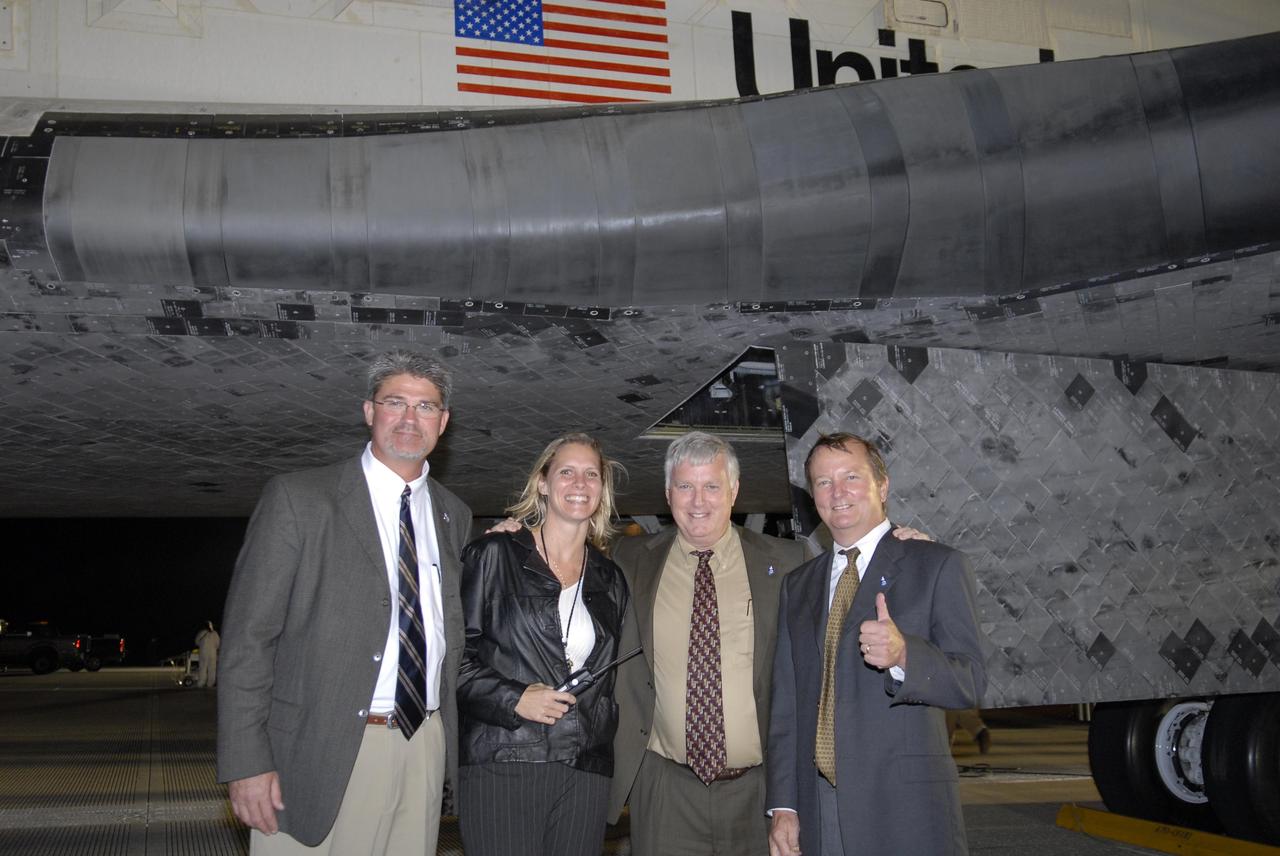
KENNEDY SPACE CENTER, FLA. -- Deputy Center Director Bill Parsons, Discovery Flow Director Stephanie Stilson, Center Director Jim Kennedy and Launch Director Mike Leinbach pose for the camera beneath Space Shuttle Discovery during post-landing inspections following mission STS-116 on Runway 15 at NASA Kennedy Space Center's Shuttle Landing Facility. During the STS-116 mission, three spacewalks attached the P5 integrated truss structure to the station, and completed the rewiring of the orbiting laboratory's power system. A fourth spacewalk retracted a stubborn solar array. Main gear touchdown was at 5:32 p.m. EST. Nose gear touchdown was at 5:32:12 p.m. and wheel stop was at 5:32:52 p.m. At touchdown -- nominally about 2,500 ft. beyond the runway threshold -- the orbiter is traveling at a speed ranging from 213 to 226 mph. Discovery traveled 5,330,000 miles, landing on orbit 204. Mission elapsed time was 12 days, 20 hours, 44 minutes and 16 seconds. This is the 64th landing at KSC. Photo credit: NASA/Kim Shiflett
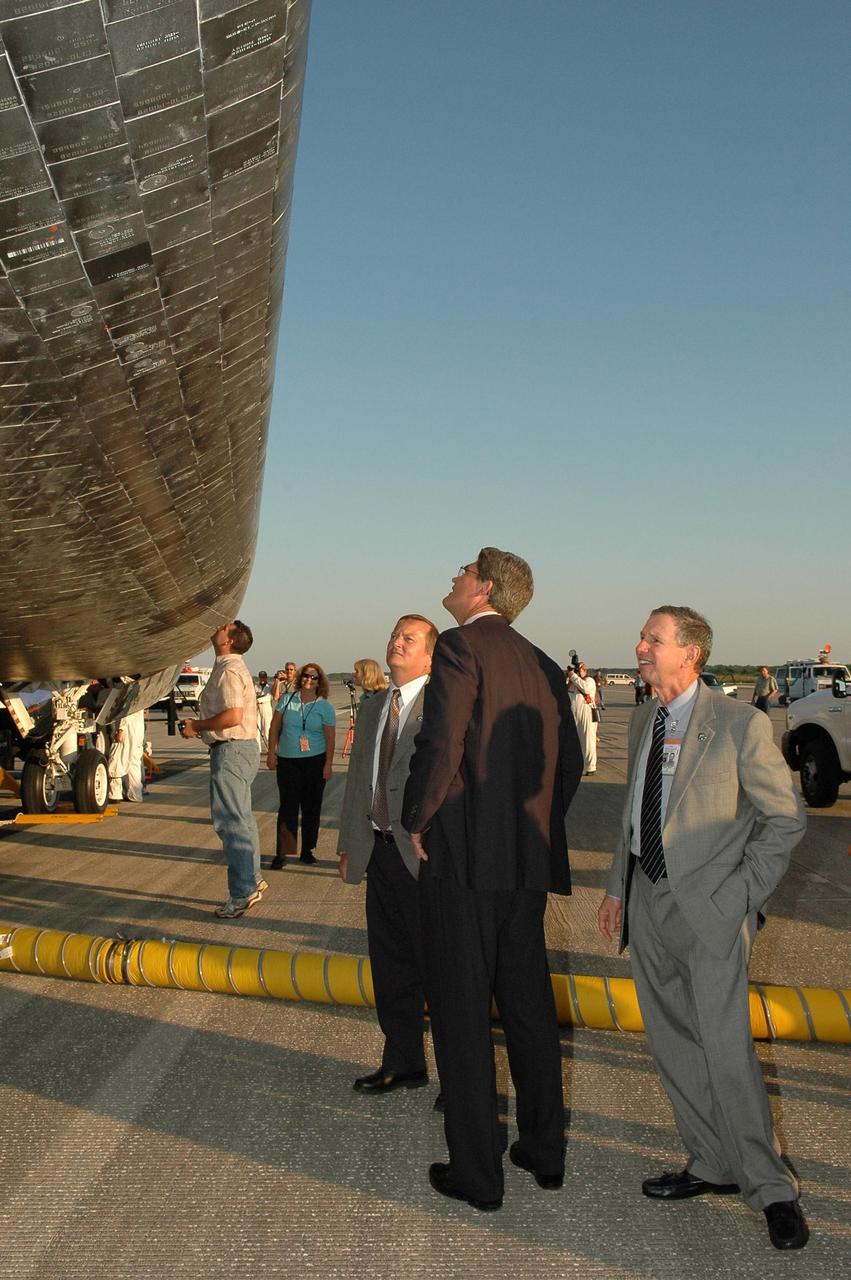
KENNEDY SPACE CENTER, FLA. - Before welcoming the STS-115 crew on their return from space, NASA officials look at the underside of the orbiter Atlantis on the Shuttle Landing Facility. From right are NASA Administrator Michael Griffin, KSC Deputy Director Bill Parsons and Shuttle Launch Director Mike Leinbach. During the mission, astronauts completed three spacewalks to attach the P3/P4 integrated truss structure to the International Space Station. Main gear touchdown was at 6:21:30 a.m. EDT. Nose gear touchdown was at 6:21:36 a.m. and wheel stop was at 6:22:16 a.m. At touchdown -- nominally about 2,500 ft. beyond the runway threshold -- the orbiter is traveling at a speed ranging from 213 to 226 mph. Atlantis traveled 4.9 million miles, landing on orbit 187. Mission elapsed time was 11 days, 19 hours, six minutes. This is the 15th night landing at KSC and the 23rd night landing overall. Photo credit: NASA/Kim Shiflett
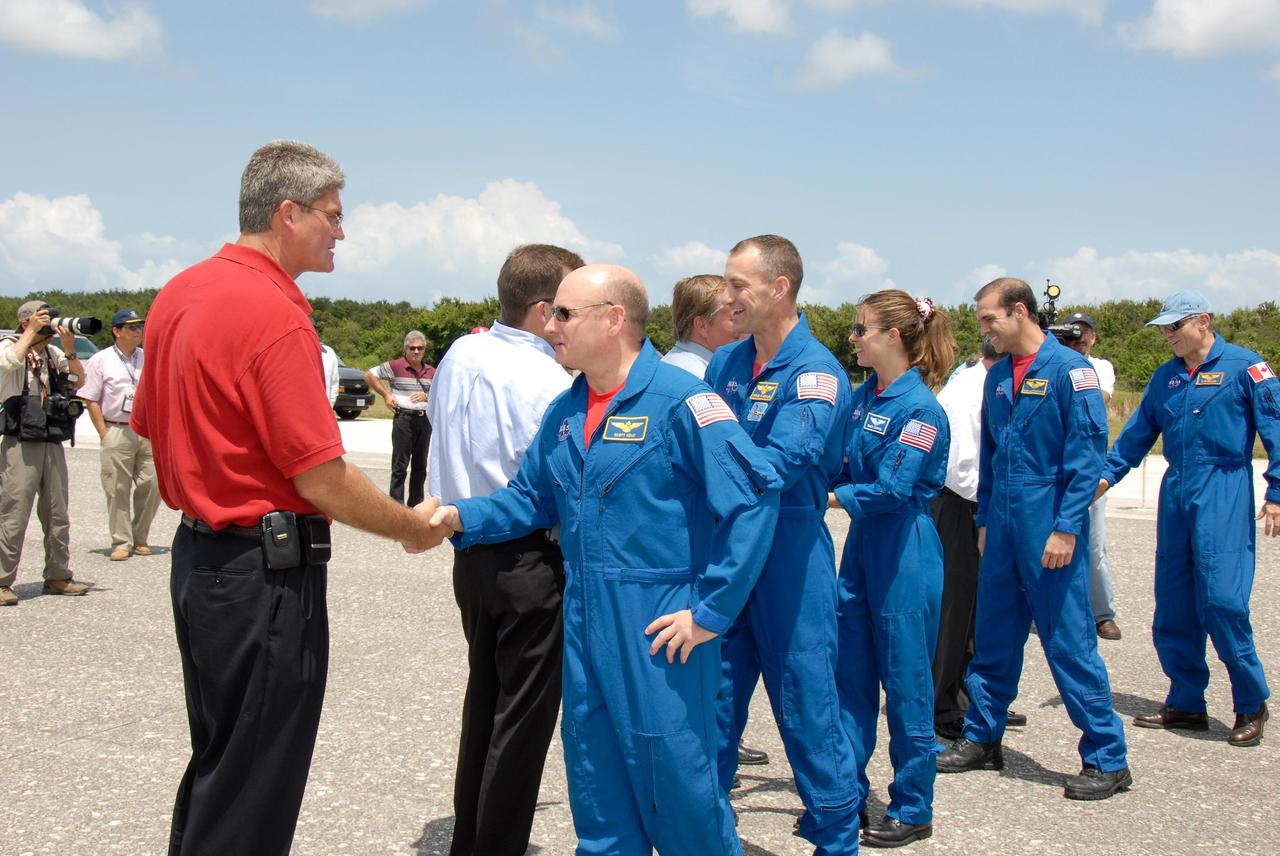
KENNEDY SPACE CENTER, FLA. -- The STS-118 crew is welcomed back to Earth by NASA officials after completing mission STS-118. From left are KSC Director Bill Parsons, Mission Launch Integration Director Leroy Cain, Commander Scott Kelly, Shuttle Launch Director Mike Leinbach, Pilot Charlie Hobaugh, and Mission Specialists Tracy Caldwell, Rick Mastracchio and Canadian astronaut Dave Williams. NASA Administrator Mike Griffin also greeted the astronauts. On the mission, the crew installed a new gyroscope, an external spare parts platform and another truss segment to the expanding station. Endeavour's main gear touched down at 12:32:16 p.m. EDT. Nose gear touchdown was at 12:32:29 p.m. and wheel stop was at 12:33:20 p.m. Endeavour landed on orbit 201. STS-118 was the 119th space shuttle flight, the 22nd flight to the station, the 20th flight for Endeavour and the second of four missions planned for 2007. This was the 65th landing of an orbiter at Kennedy. Photo credit: NASA/Kim Shiflett
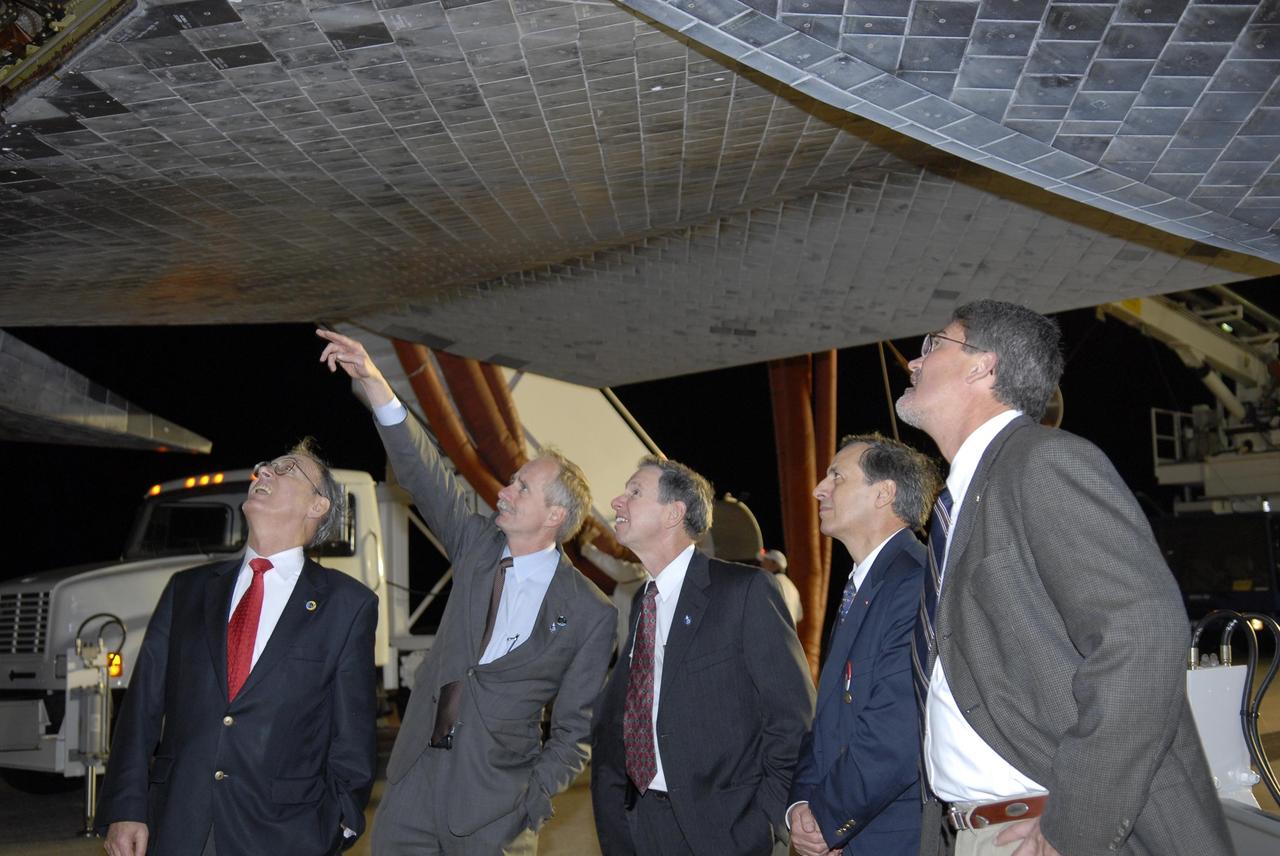
KENNEDY SPACE CENTER, FLA. -- Sigmar Wittig, head of the DLR, the German Space Agency; Bill Gerstenmaier, NASA associate administrator for Space Operations; Mike Griffin, NASA administrator; Michel Tognini, head of the European Astronaut Center; and Bill Parsons, Kennedy Space Center deputy director, examine the thermal protection system tiles beneath Space Shuttle Discovery following the landing of mission STS-116 on Runway 15 at NASA Kennedy Space Center's Shuttle Landing Facility. During the STS-116 mission, three spacewalks attached the P5 integrated truss structure to the station, and completed the rewiring of the orbiting laboratory's power system. A fourth spacewalk retracted a stubborn solar array. Main gear touchdown was at 5:32 p.m. EST. Nose gear touchdown was at 5:32:12 p.m. and wheel stop was at 5:32:52 p.m. At touchdown -- nominally about 2,500 ft. beyond the runway threshold -- the orbiter is traveling at a speed ranging from 213 to 226 mph. Discovery traveled 5,330,000 miles, landing on orbit 204. Mission elapsed time was 12 days, 20 hours, 44 minutes and 16 seconds. This is the 64th landing at KSC. Photo credit: NASA/Kim Shiflett
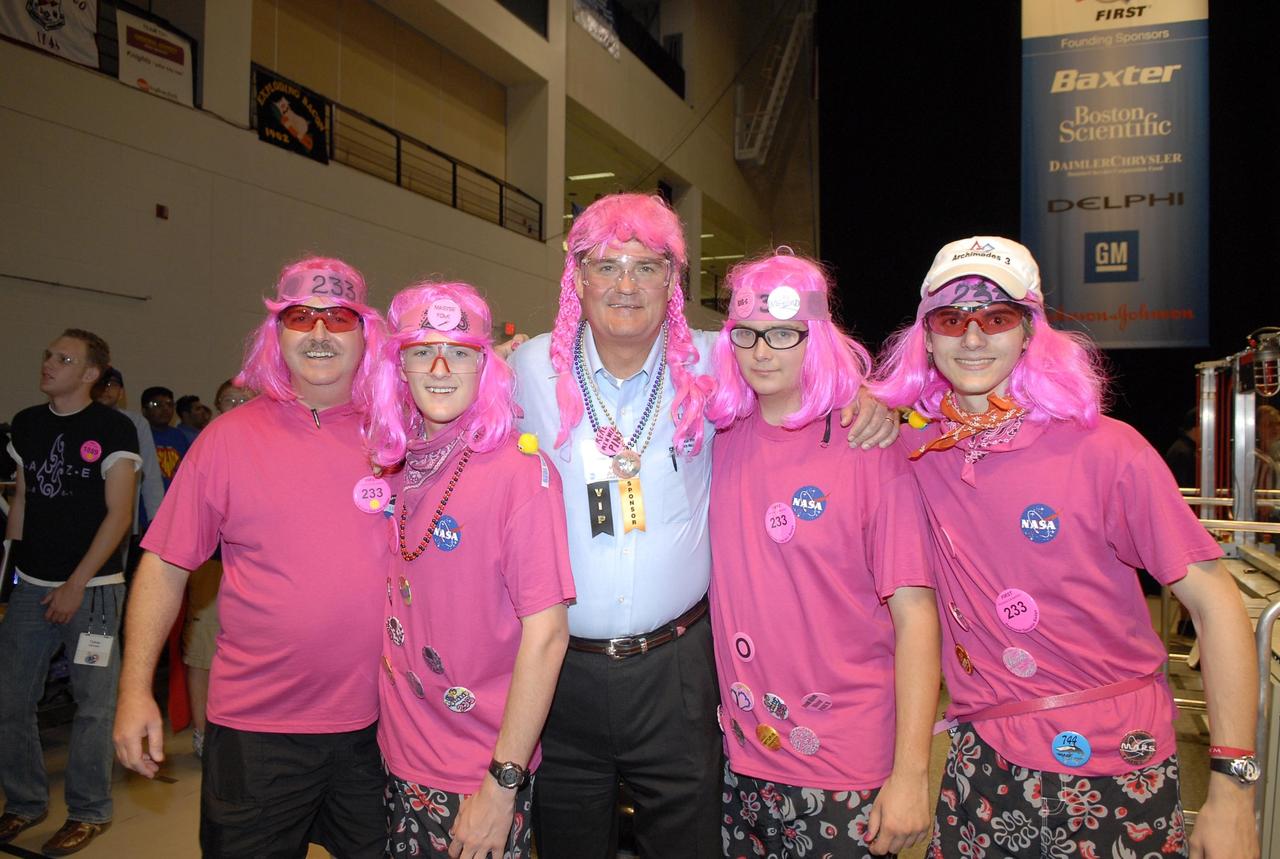
KENNEDY SPACE CENTER, FLA. -- During the FIRST robotics event held at the University of Central Florida Arena March 8-10, Center Director Bill Parsons (center) dons the pink wig that represents team no. 233, composed of students from Rockledge, Cocoa Beach and Viera High Schools in Central Florida. The team is cosponsored by NASA KSC. The FIRST, or For Inspiration and Recognition of Science and Technology, Robotics Competition challenges teams of young people and their mentors to solve a common problem in a six-week timeframe using a standard "kit of parts" and a common set of rules. Teams build robots from the parts and enter them in a series of competitions designed by FIRST founder Dean Kamen and Dr. Woodie Flowers, chairman and vice chairman of the Executive Advisory Board respectively, and a committee of engineers and other professionals. FIRST redefines winning for these students. Teams are rewarded for excellence in design, demonstrated team spirit, gracious professionalism and maturity, and ability to overcome obstacles. Scoring the most points is a secondary goal. Winning means building partnerships that last. Photo credit: NASA/Kim Shiflett