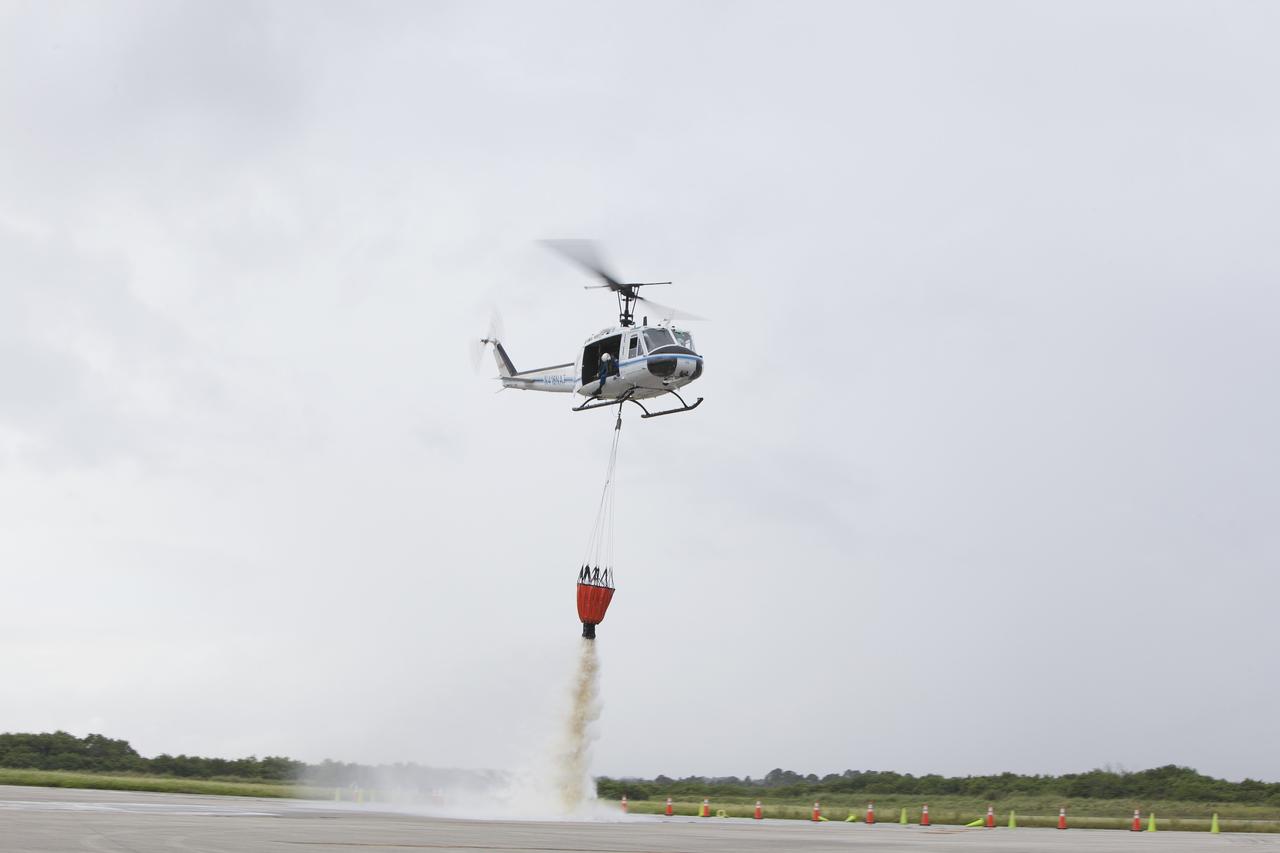
CAPE CANAVERAL, Fla. -- At NASA's Kennedy Space Center in Florida, a three-person helicopter crew recently practiced using a Bambi Bucket to pick up water from a nearby waterway and dropping it on simulated targets at the center’s Shuttle Landing Facility. Firefighters respond to wildfires with teams on the ground and in the air. The most up-to-date tools include helicopters that use Bambi Buckets large quantities of water. NASA Flight Operations teams are training to perfect the skills needed to ensure they are ready to use tools, such as the Bambi Bucket, in the event of an out-of-control blaze at the spaceport. Photo credit: NASA/Frankie Martin
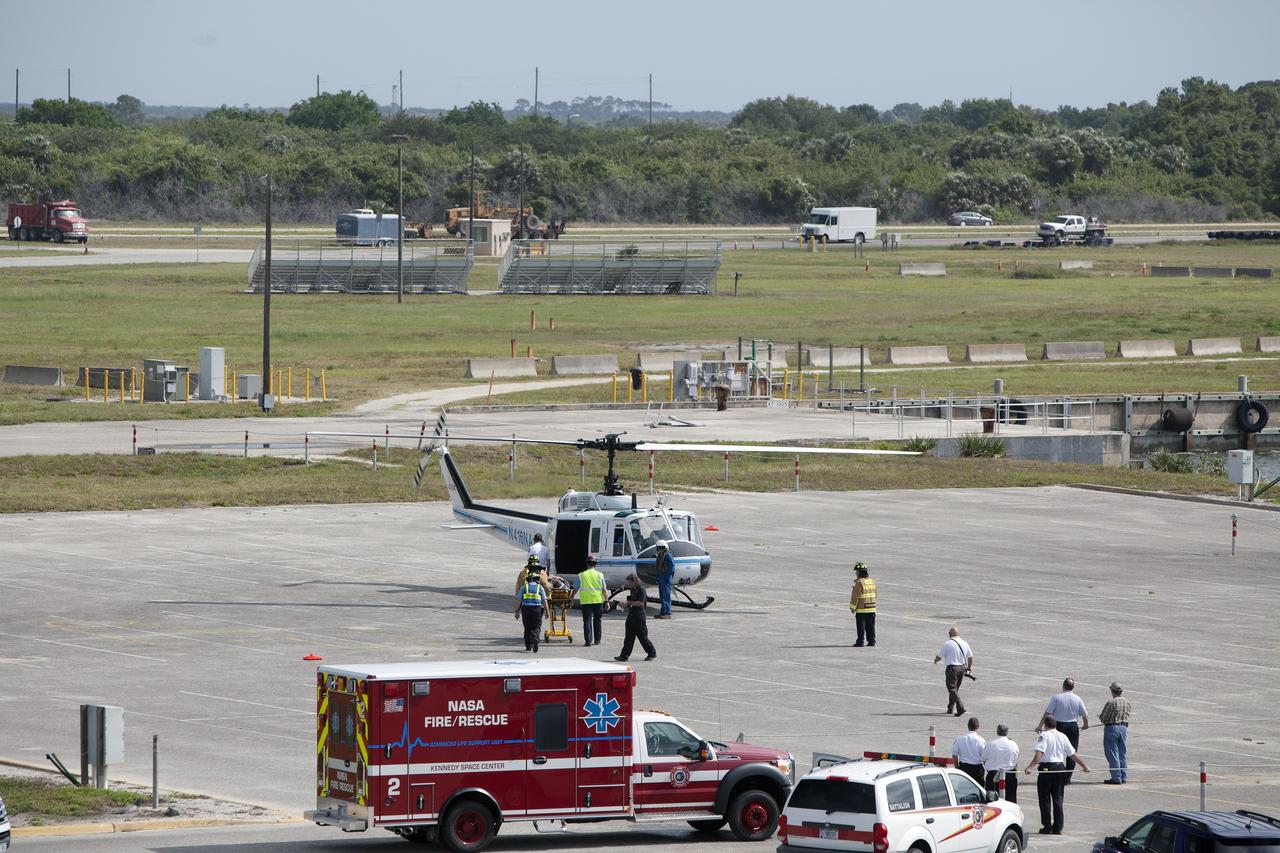
CAPE CANAVERAL, Fla. -- At NASA's Kennedy Space Center in Florida, paramedics and Fire Rescue personnel move a stretcher to the waiting helicopter as they work quickly to have the patient ready to transport five minutes after he was removed from a vehicle. The activity taking place in Kennedy's Launch Complex 39 turn-basin parking lot was only one of several drills. It was part of a new training program that was developed by Kennedy's Fire Rescue department along with NASA Aircraft Operations to sharpen the skills needed to help rescue personnel learn how to collaborate with helicopter pilots in taking injured patients to hospitals as quickly as possible. Photo credit: NASA/Dan Casper
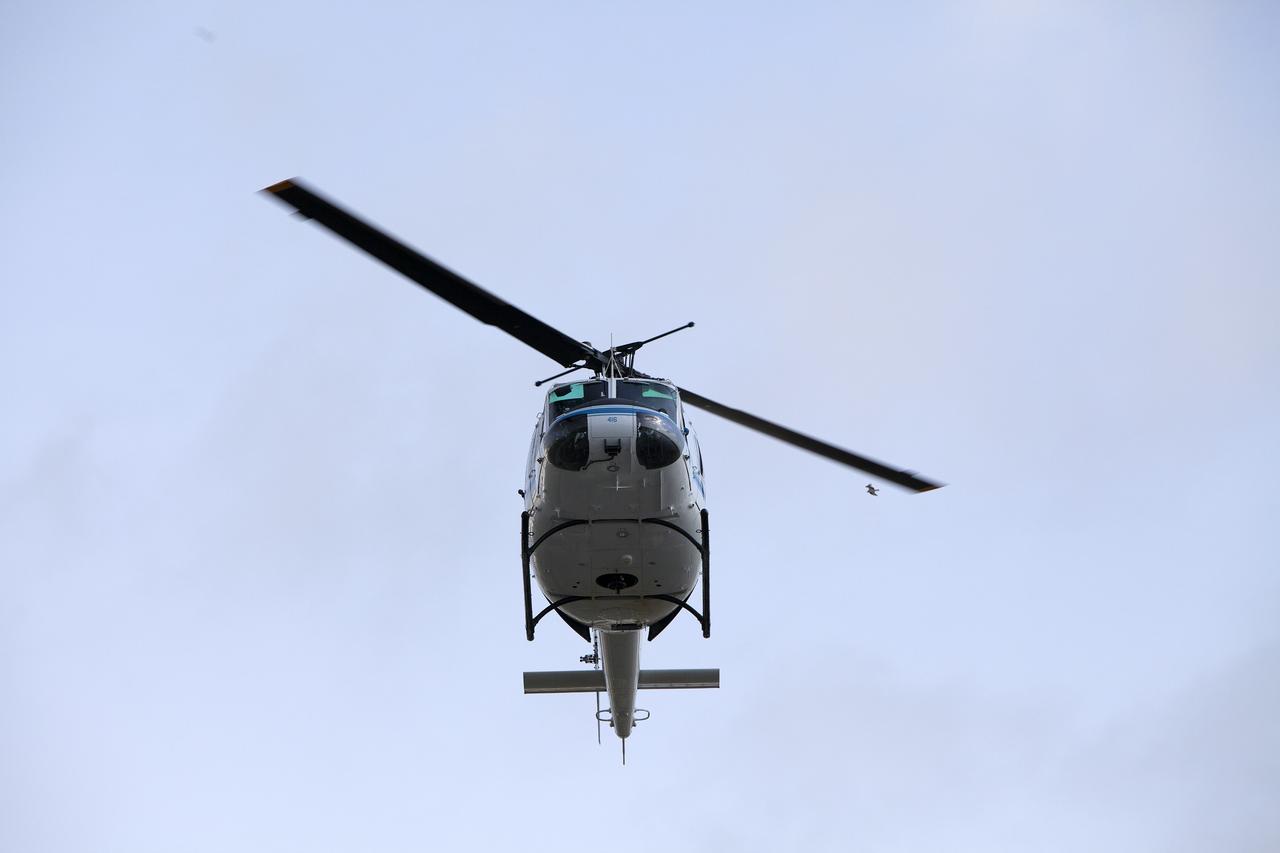
-- CAPE CANAVERAL, Fla. -- At NASA's Kennedy Space Center in Florida, an agency helicopter flies in to land during a training exercise. The activity taking place in Kennedy's Launch Complex 39 turn-basin parking lot was only one of several drills. It was part of a new training program that was developed by Kennedy's Fire Rescue department along with NASA Aircraft Operations to sharpen the skills needed to help rescue personnel learn how to collaborate with helicopter pilots in taking injured patients to hospitals as quickly as possible. Photo credit: NASA/Dan Casper
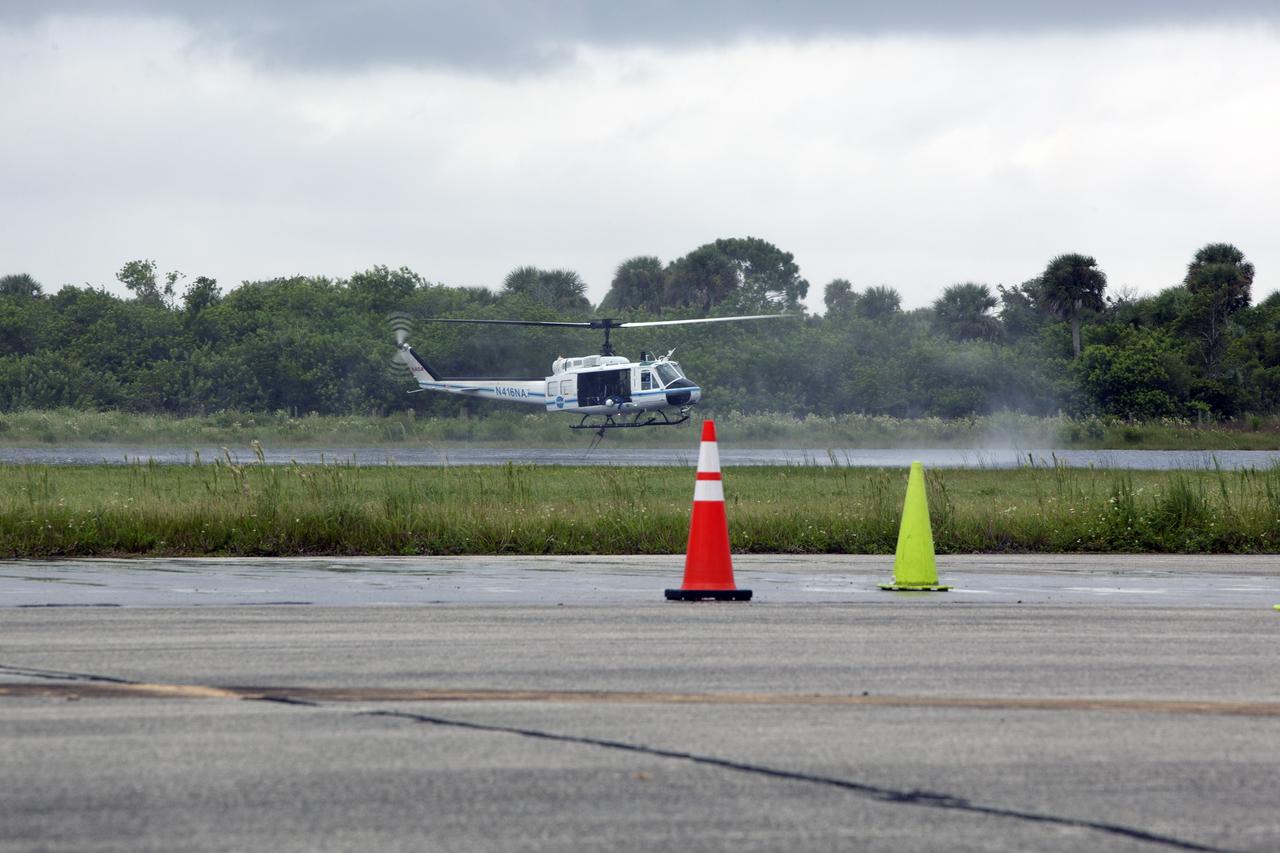
CAPE CANAVERAL, Fla. -- At NASA's Kennedy Space Center in Florida, the crew of the NASA helicopter carefully lowers a Bambi Bucket into a canal near the Shuttle Landing Facility. Minutes later, the water was dropped on the target cones in the foreground, using techniques that would be employed to fight a brush fire at the Kennedy Space Center. Firefighters respond to wildfires with teams on the ground and in the air. The most up-to-date tools include helicopters that use Bambi Buckets large quantities of water. NASA Flight Operations teams are training to perfect the skills needed to ensure they are ready to use tools, such as the Bambi Bucket, in the event of an out-of-control blaze at the spaceport. Photo credit: NASA/Frankie Martin
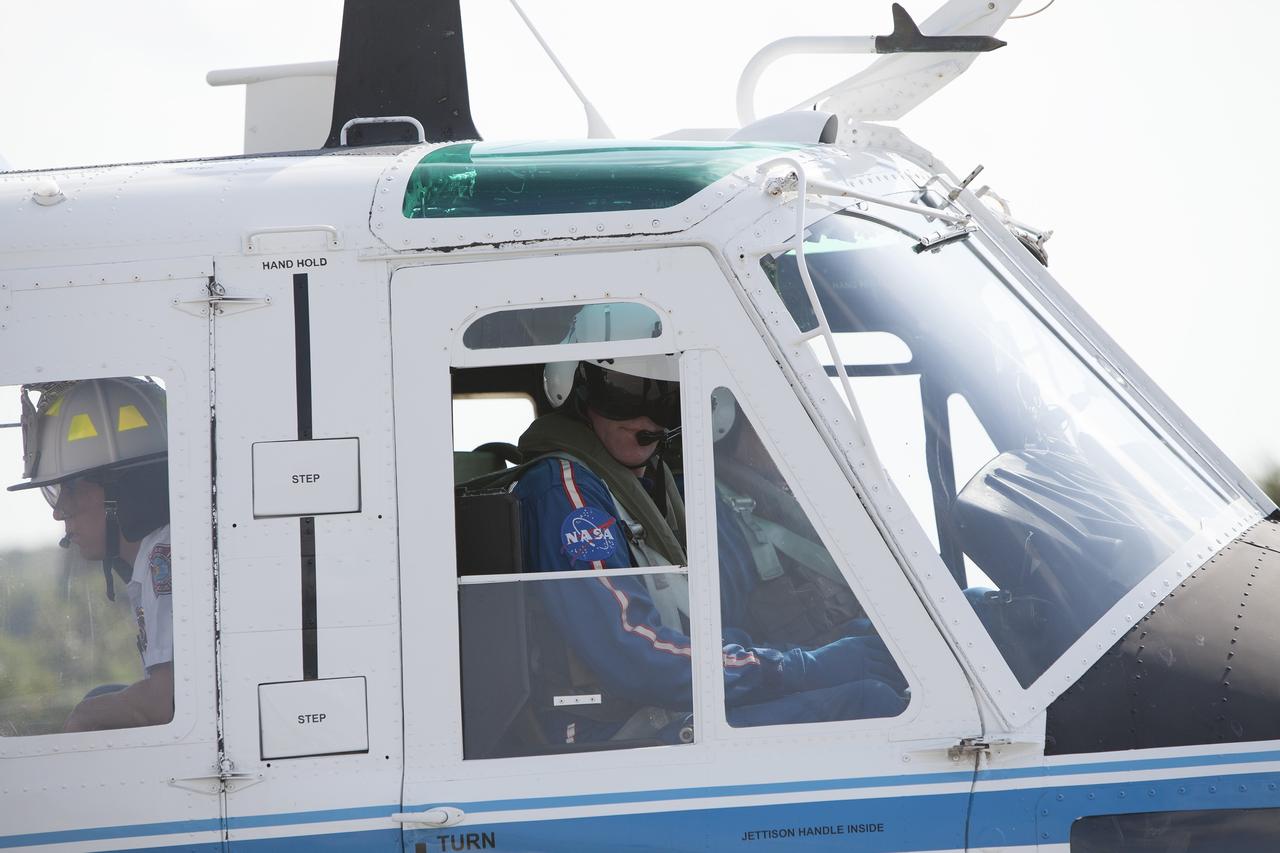
CAPE CANAVERAL, Fla. -- At NASA's Kennedy Space Center in Florida, agency helicopter pilots ensure all is clear before taking off during a training exercise. Helicopter pilot Bill Martin, a URS Federal Technical Services in the agency's Aircraft Operations, is seen in the front seat. Behind Martin on the left, is Mark Huetter, of Chenega Security & Support Solutions. Martin serves as assistant chief of Training for the center's Fire Rescue Department. The activity taking place in Kennedy's Launch Complex 39 turn-basin parking lot was only one of several drills. It was part of a new training program that was developed by Kennedy's Fire Rescue department along with NASA Aircraft Operations to sharpen the skills needed to help rescue personnel learn how to collaborate with helicopter pilots in taking injured patients to hospitals as quickly as possible. Photo credit: NASA/Dan Casper
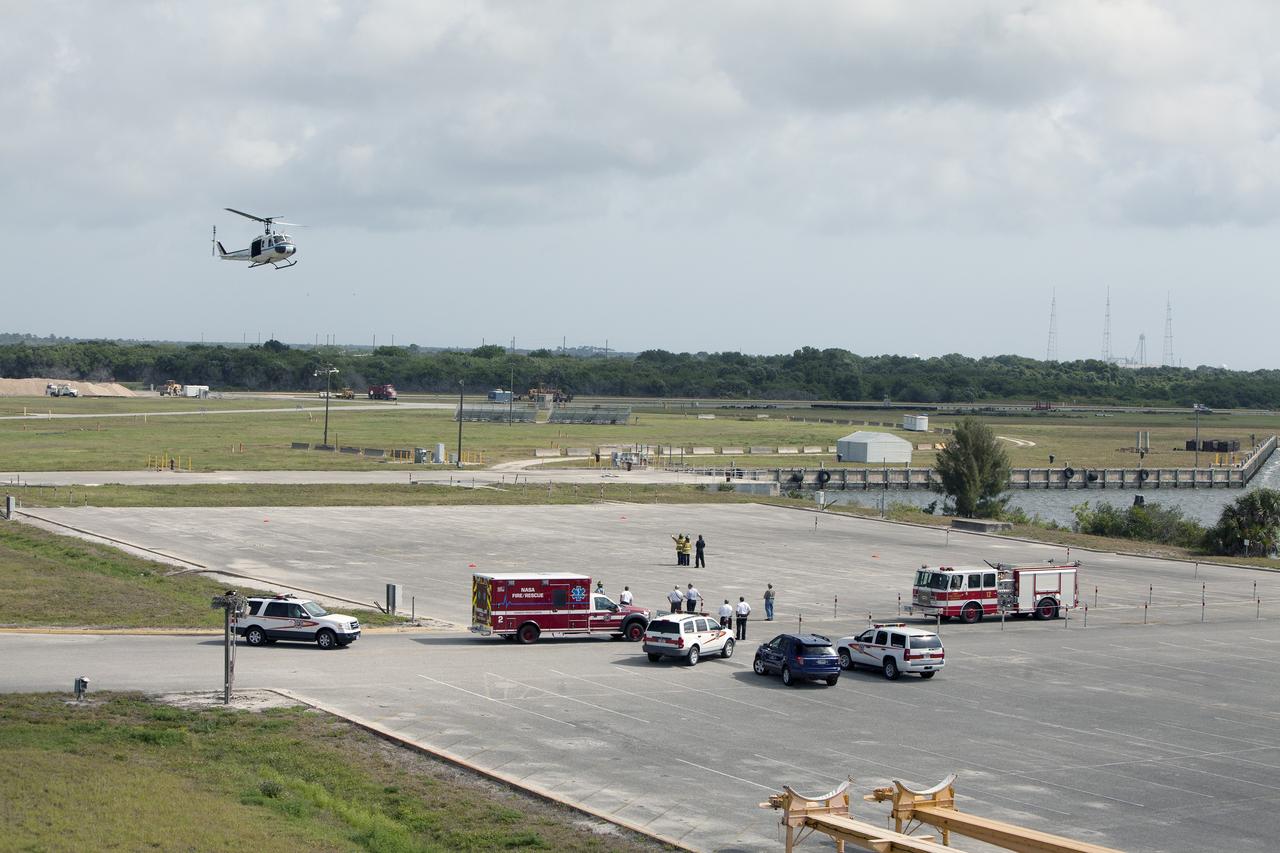
CAPE CANAVERAL, Fla. -- At NASA's Kennedy Space Center in Florida, an agency helicopter flies past the Vehicle Assembly Building prior to landing for a training exercise. The activity taking place in Kennedy's Launch Complex 39 turn-basin parking lot was only one of several drills. It was part of a new training program that was developed by Kennedy's Fire Rescue department along with NASA Aircraft Operations to sharpen the skills needed to help rescue personnel learn how to collaborate with helicopter pilots in taking injured patients to hospitals as quickly as possible. Photo credit: NASA/Dan Casper
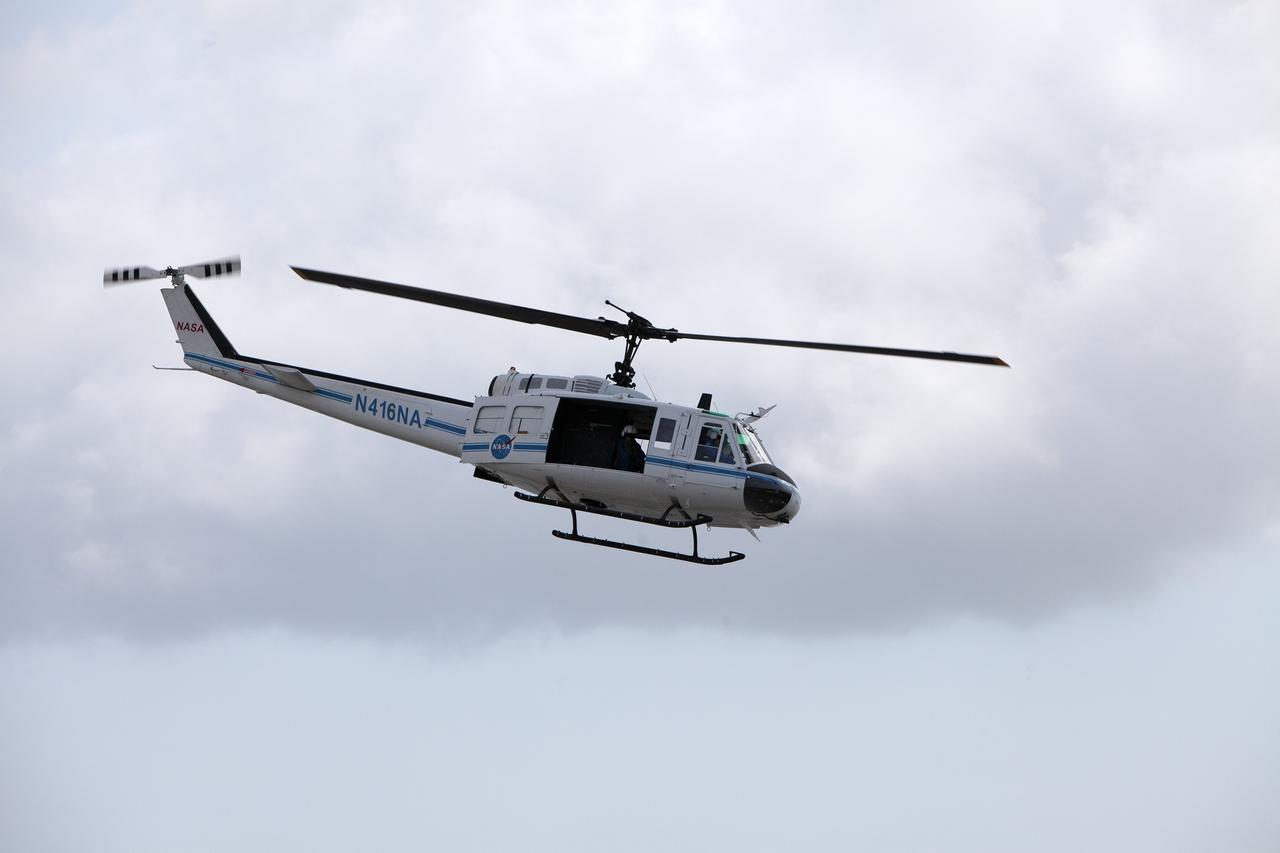
CAPE CANAVERAL, Fla. -- At NASA's Kennedy Space Center in Florida, agency helicopter takes off during a training exercise. The activity taking place in Kennedy's Launch Complex 39 turn-basin parking lot was only one of several drills. It was part of a new training program that was developed by Kennedy's Fire Rescue department along with NASA Aircraft Operations to sharpen the skills needed to help rescue personnel learn how to collaborate with helicopter pilots in taking injured patients to hospitals as quickly as possible. Photo credit: NASA/Dan Casper
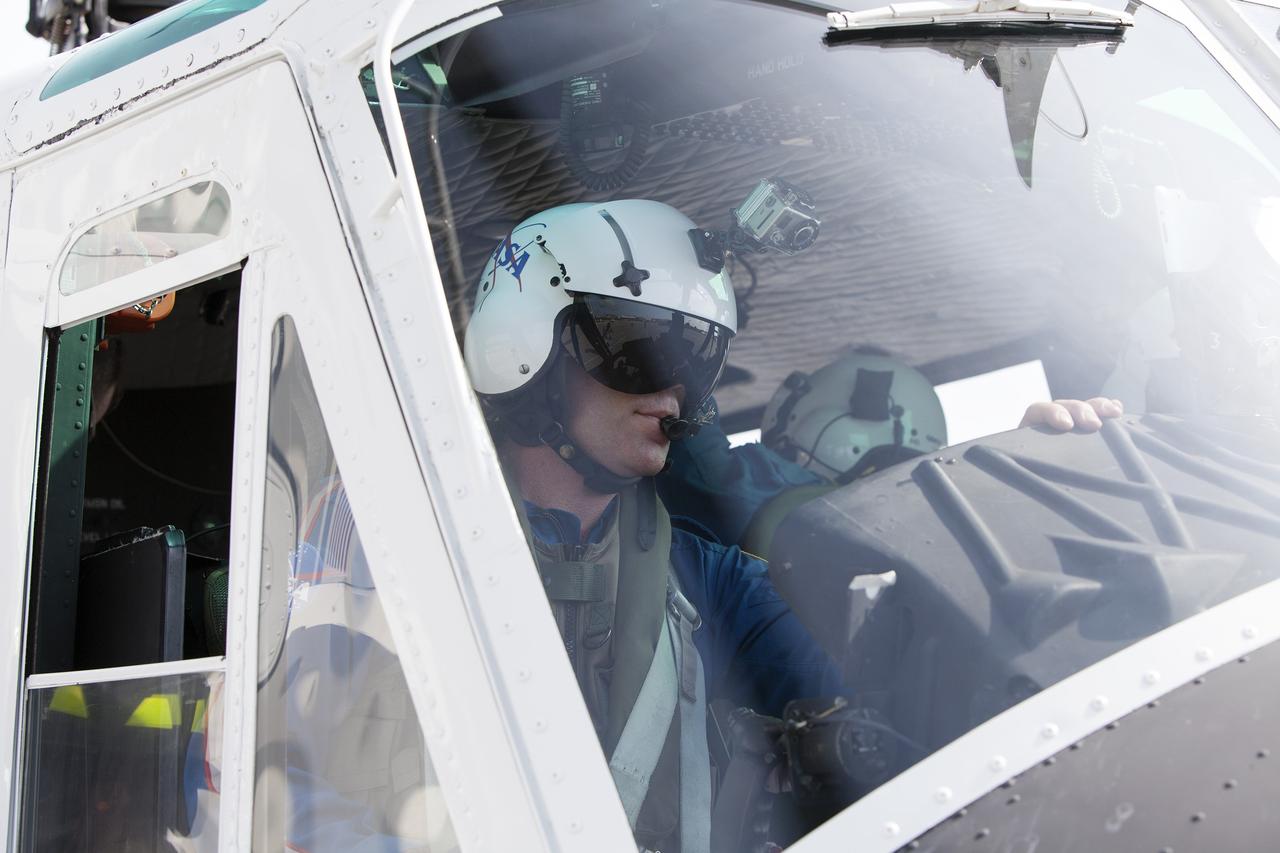
CAPE CANAVERAL, Fla. -- At NASA's Kennedy Space Center in Florida, helicopter pilot Bill Martin, a URS Federal Technical Services in the agency's Aircraft Operations, ensures all is clear before taking off during a training exercise. The activity taking place in Kennedy's Launch Complex 39 turn-basin parking lot was only one of several drills. It was part of a new training program that was developed by Kennedy's Fire Rescue department along with NASA Aircraft Operations to sharpen the skills needed to help rescue personnel learn how to collaborate with helicopter pilots in taking injured patients to hospitals as quickly as possible. Photo credit: NASA/Dan Casper
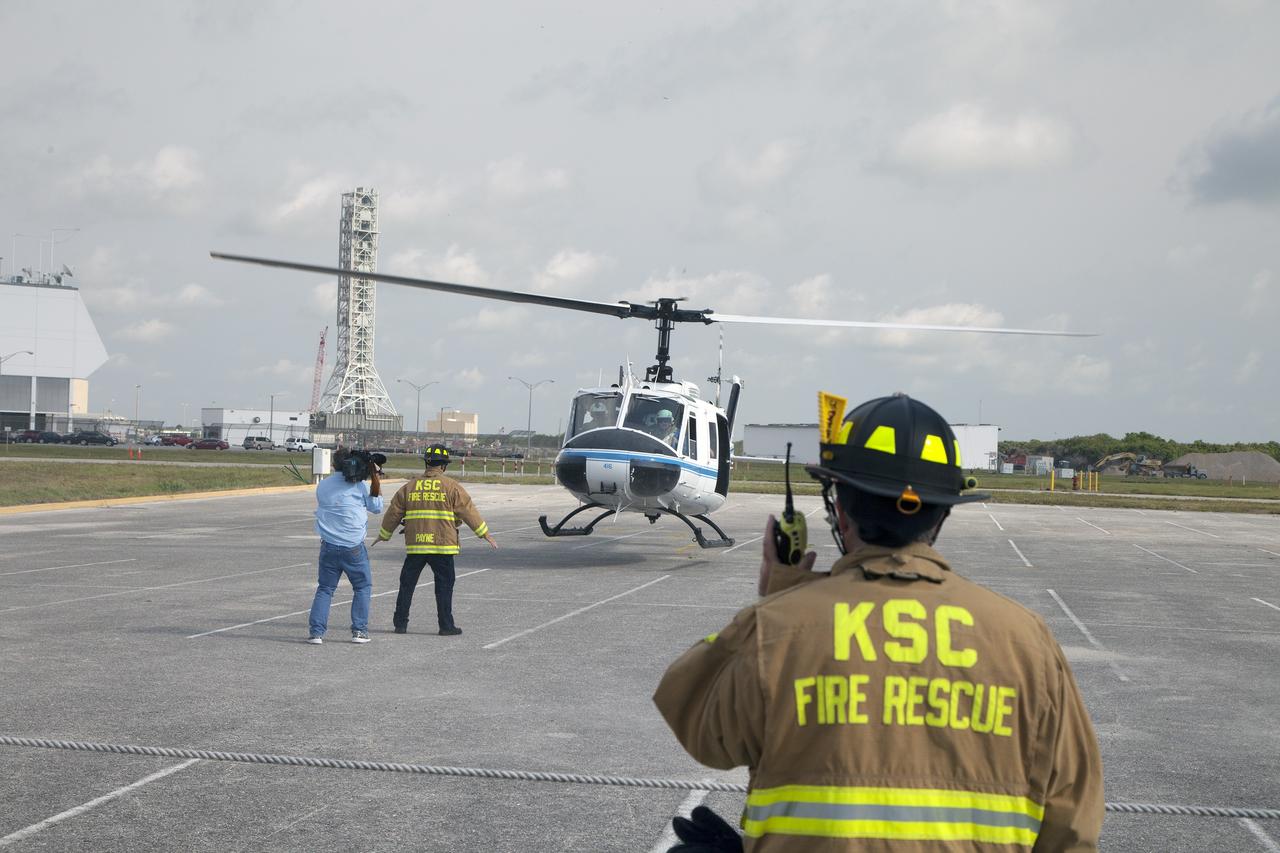
CAPE CANAVERAL, Fla. -- At NASA's Kennedy Space Center in Florida, agency Fire Rescue personnel direct an agency helicopter in for a landing during a training exercise. The activity taking place in Kennedy's Launch Complex 39 turn-basin parking lot was only one of several drills. It was part of a new training program that was developed by Kennedy's Fire Rescue department along with NASA Aircraft Operations to sharpen the skills needed to help rescue personnel learn how to collaborate with helicopter pilots in taking injured patients to hospitals as quickly as possible. Photo credit: NASA/Dan Casper

CAPE CANAVERAL, Fla. -- At NASA's Kennedy Space Center in Florida, an agency helicopter flies past the Vehicle Assembly Building prior to landing for a training exercise. The activity taking place in Kennedy's Launch Complex 39 turn-basin parking lot was only one of several drills. It was part of a new training program that was developed by Kennedy's Fire Rescue department along with NASA Aircraft Operations to sharpen the skills needed to help rescue personnel learn how to collaborate with helicopter pilots in taking injured patients to hospitals as quickly as possible. Photo credit: NASA/Dan Casper
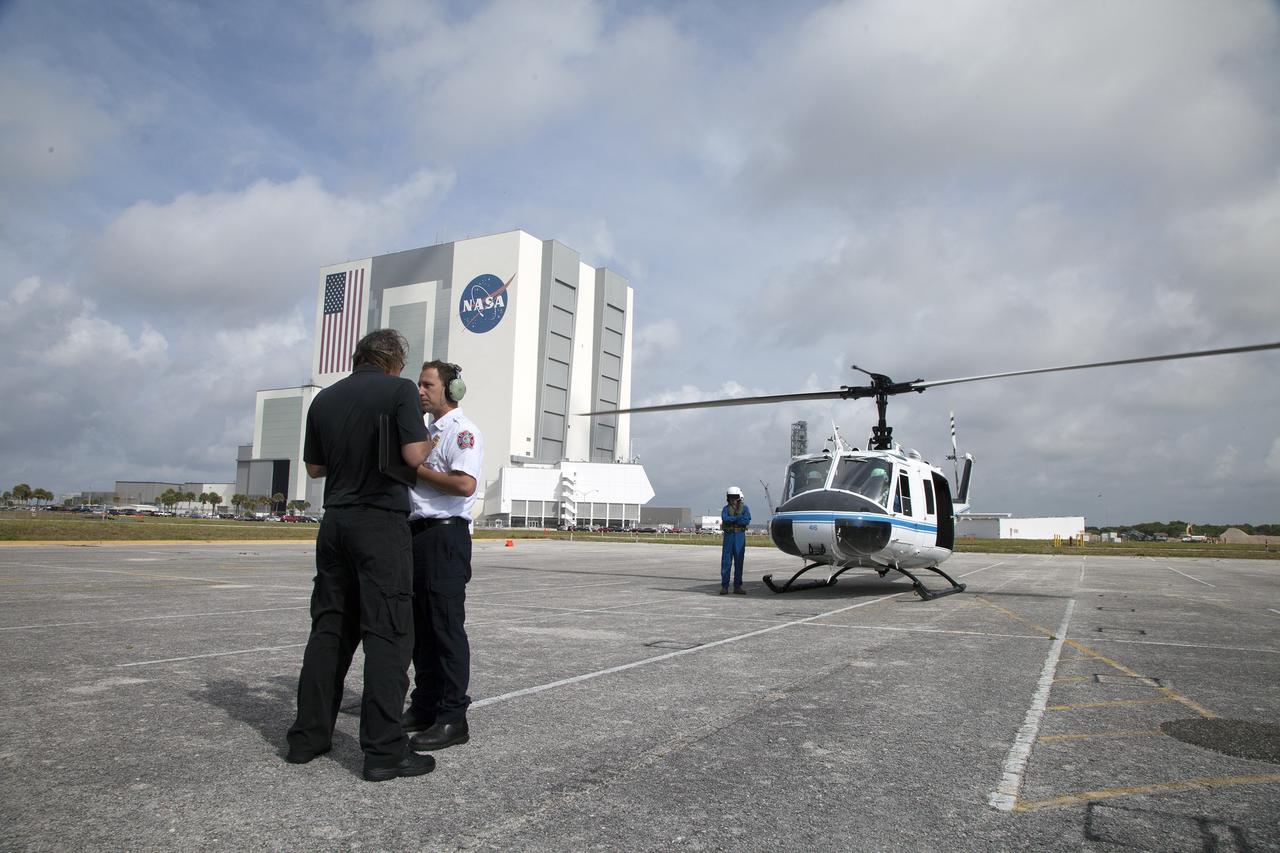
CAPE CANAVERAL, Fla. -- Following a training exercise at NASA's Kennedy Space Center in Florida, helicopter pilot Bill Martin, a URS Federal Technical Services in the agency's Aircraft Operations, left, confers with Mark Huetter of Chenega Security & Support Solutions. Martin serves as assistant chief of Training for the center's Fire Rescue Department. The activity taking place in Kennedy's Launch Complex 39 turn-basin parking lot was only one of several drills. It was part of a new training program that was developed by Kennedy's Fire Rescue department along with NASA Aircraft Operations to sharpen the skills needed to help rescue personnel learn how to collaborate with helicopter pilots in taking injured patients to hospitals as quickly as possible. Photo credit: NASA/Dan Casper
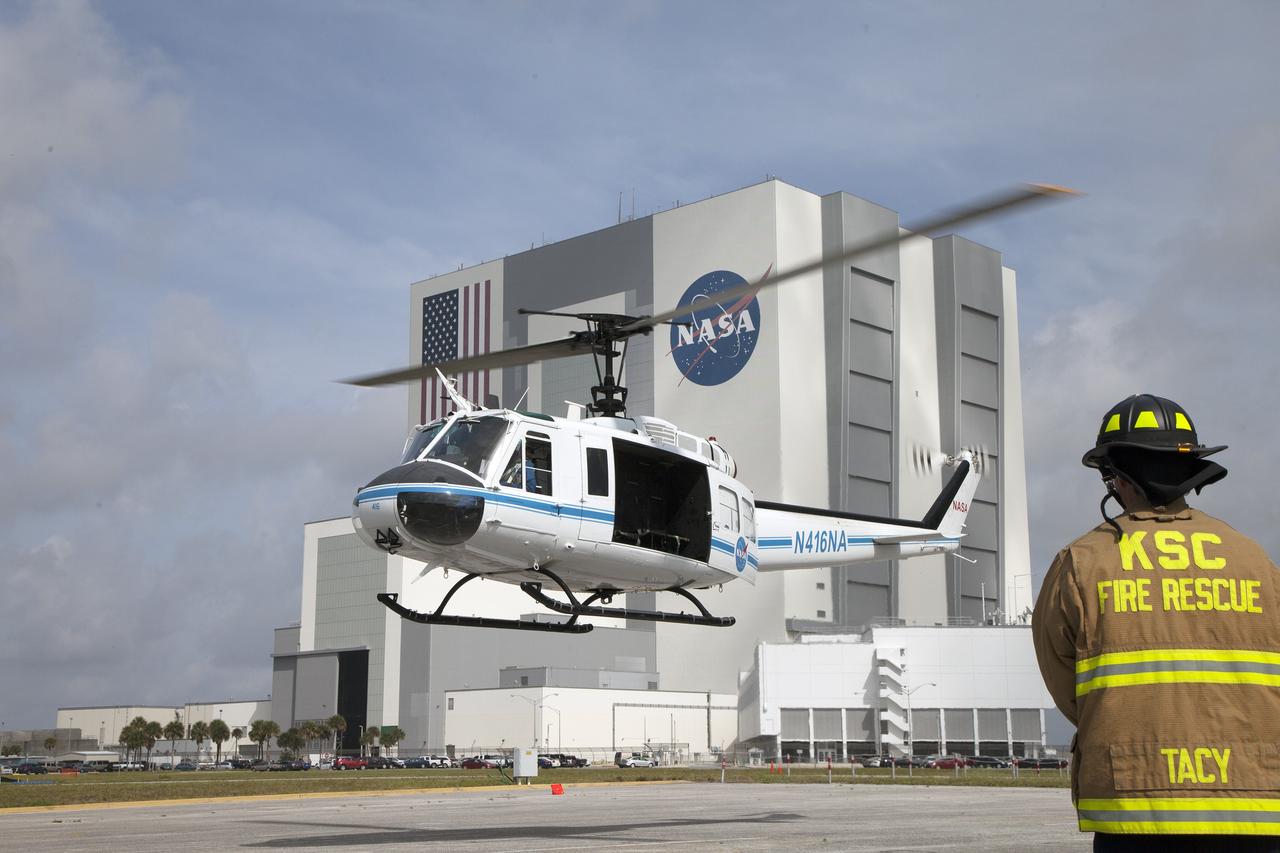
CAPE CANAVERAL, Fla. -- At NASA's Kennedy Space Center in Florida, NASA Fire Rescue Lt. David Tacy of Chenega Security & Support Solutions watches as an agency helicopter takes off as part of a training exercise. The activity taking place in Kennedy's Launch Complex 39 turn-basin parking lot was only one of several drills. It was part of a new training program that was developed by Kennedy's Fire Rescue department along with NASA Aircraft Operations to sharpen the skills needed to help rescue personnel learn how to collaborate with helicopter pilots in taking injured patients to hospitals as quickly as possible. Photo credit: NASA/Dan Casper
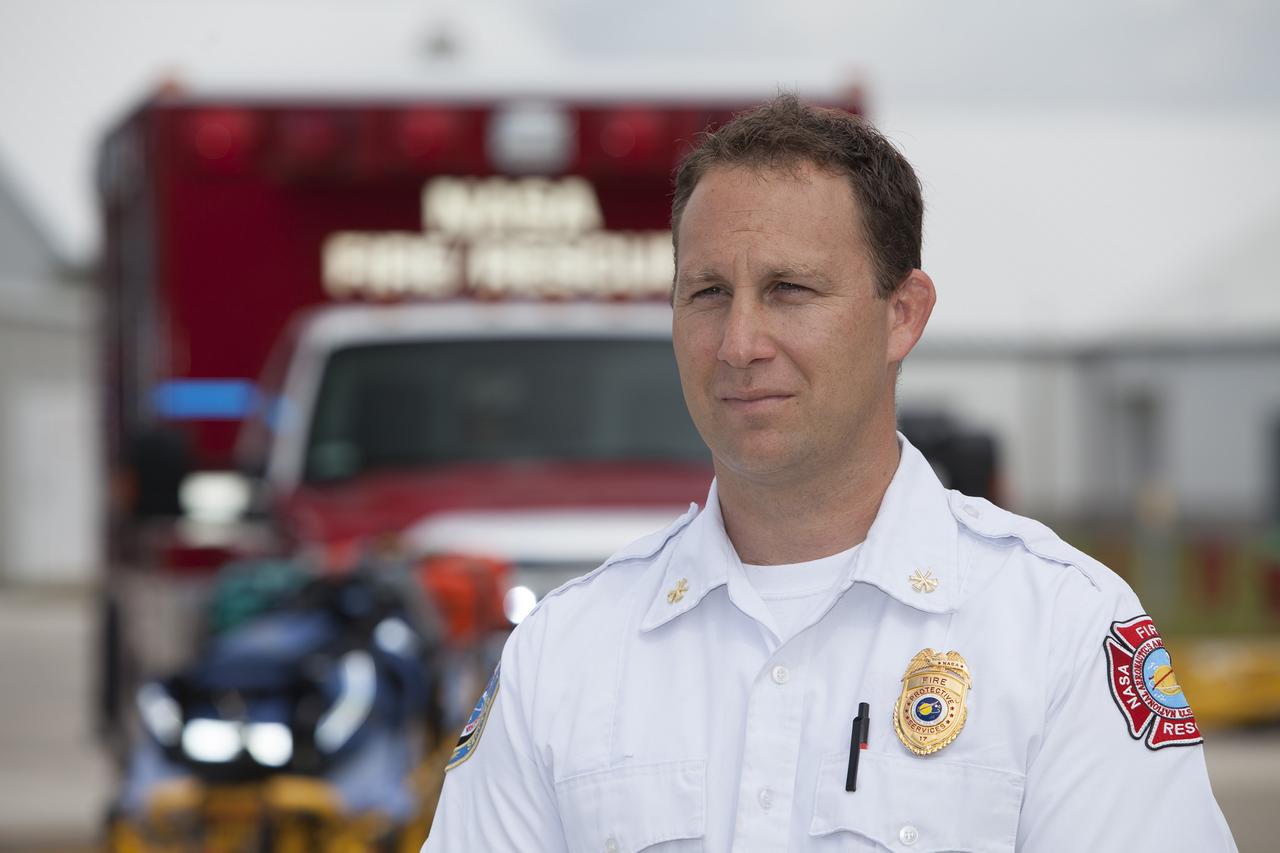
CAPE CANAVERAL, Fla. -- At NASA's Kennedy Space Center in Florida, Mark Huetter, assistant chief of Training for the center's Fire Rescue Department, is interviewed near the Shuttle Landing Facility. He discussed working with pilots in NASA Aircraft Operations to develop procedures for using agency helicopters to transport injured patients to a local hospital. The training activity took place in Kennedy's Launch Complex 39 turn-basin parking lot. It was part of a new training program developed by Kennedy's Fire Rescue department along with NASA Aircraft Operations to sharpen the skills needed to help rescue personnel learn how to collaborate with helicopter pilots in taking injured patients to hospitals as quickly as possible. Photo credit: NASA/Dimitri Gerondidakis
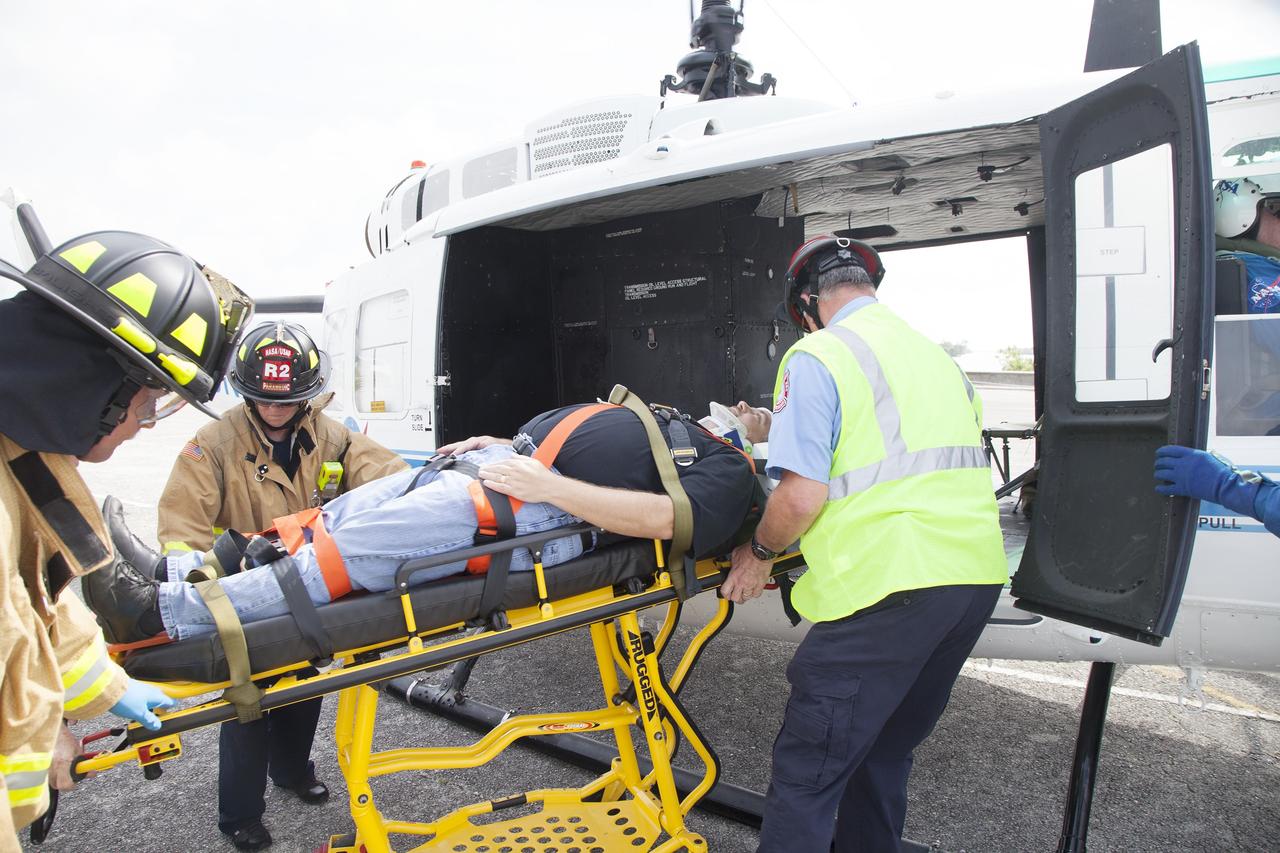
CAPE CANAVERAL, Fla. -- For a training exercise, "volunteer patient" George Jacobs, NASA's deputy director of Center Operations, is carefully placed aboard an agency helicopter at the Kennedy Space Center in Florida. In an actual emergency, the pilots could fly an injured person from Kennedy to a nearby trauma center in minutes. The activity taking place in Kennedy's Launch Complex 39 turn-basin parking lot was only one of several drills. It was part of a new training program that was developed by Kennedy's Fire Rescue department along with NASA Aircraft Operations to sharpen the skills needed to help rescue personnel learn how to collaborate with helicopter pilots in taking injured patients to hospitals as quickly as possible. Photo credit: NASA/Dan Casper
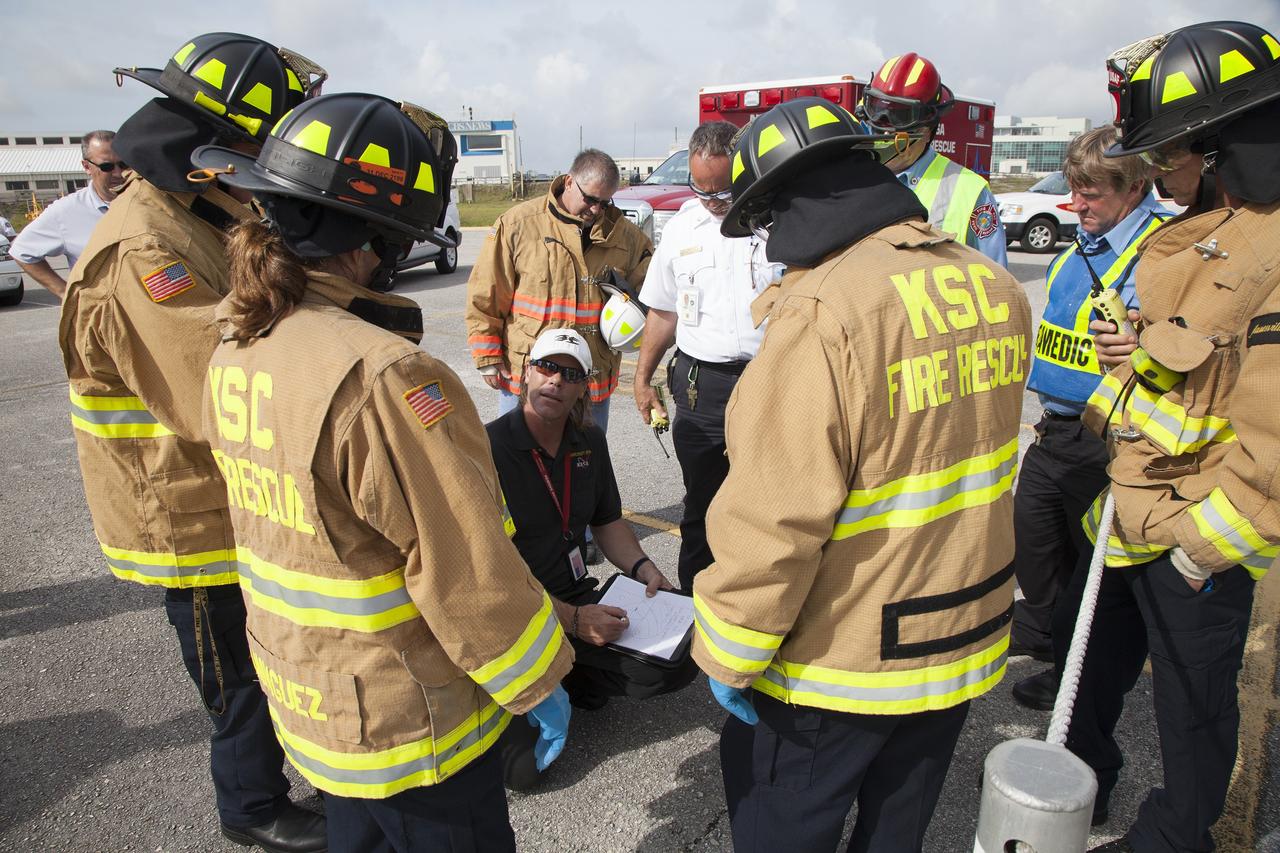
CAPE CANAVERAL, Fla. -- At NASA's Kennedy Space Center in Florida, Bill Martin, a URS Federal Technical Services helicopter pilot in NASA Aircraft Operations, kneeling, briefs NASA Fire Rescue personnel prior to the start of a simulated emergency. The activity taking place in Kennedy's Launch Complex 39 turn-basin parking lot was only one of several drills. It was part of a new training program that was developed by Kennedy's Fire Rescue department along with NASA Aircraft Operations to sharpen the skills needed to help rescue personnel learn how to collaborate with helicopter pilots in taking injured patients to hospitals as quickly as possible. Photo credit: NASA/Dan Casper
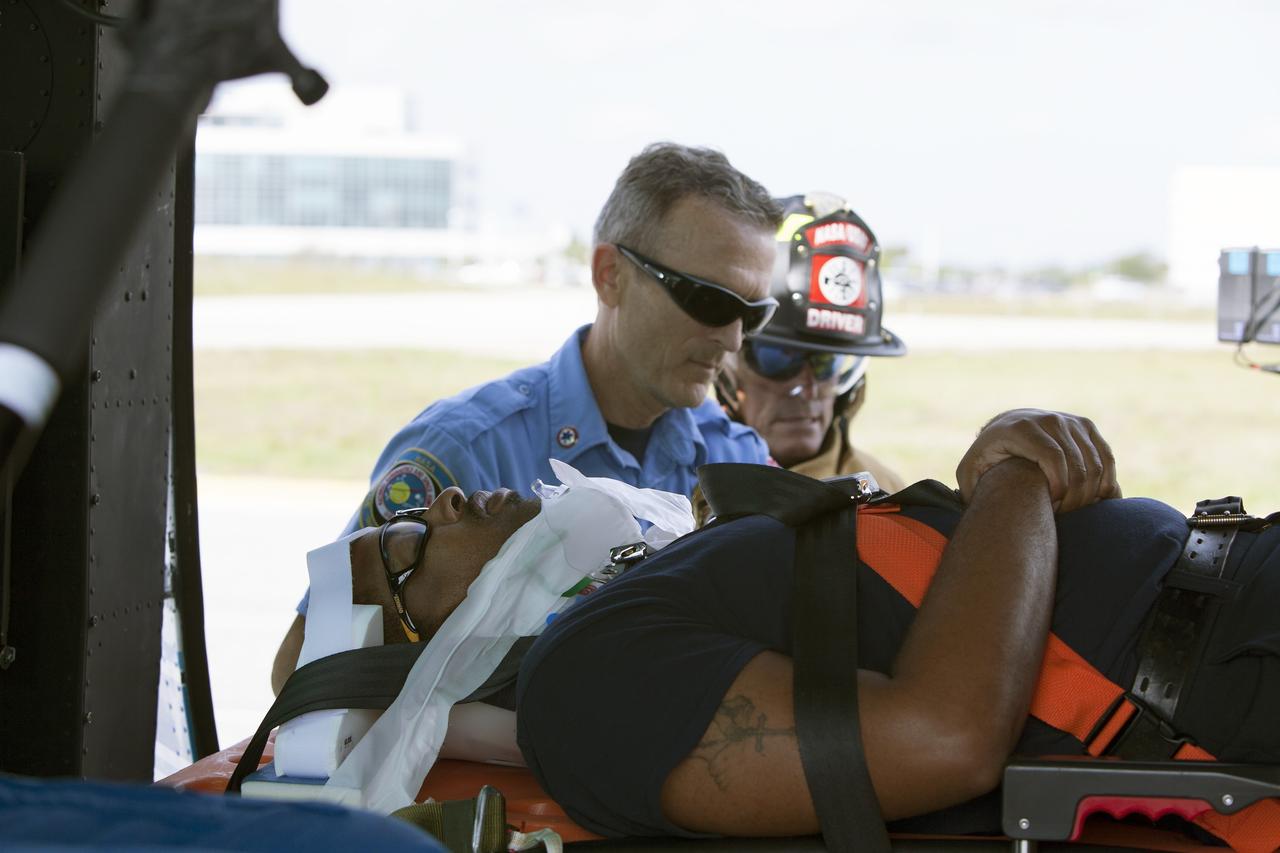
CAPE CANAVERAL, Fla. -- At NASA's Kennedy Space Center in Florida, a "volunteer patient" is carefully placed aboard a NASA helicopter as part of a training exercise. In an actual emergency, the pilots could fly an injured person from Kennedy to a nearby trauma center in minutes. The activity taking place in Kennedy's Launch Complex 39 turn-basin parking lot was only one of several drills. It was part of a new training program that was developed by Kennedy's Fire Rescue department along with NASA Aircraft Operations to sharpen the skills needed to help rescue personnel learn how to collaborate with helicopter pilots in taking injured patients to hospitals as quickly as possible. Photo credit: NASA/Dan Casper
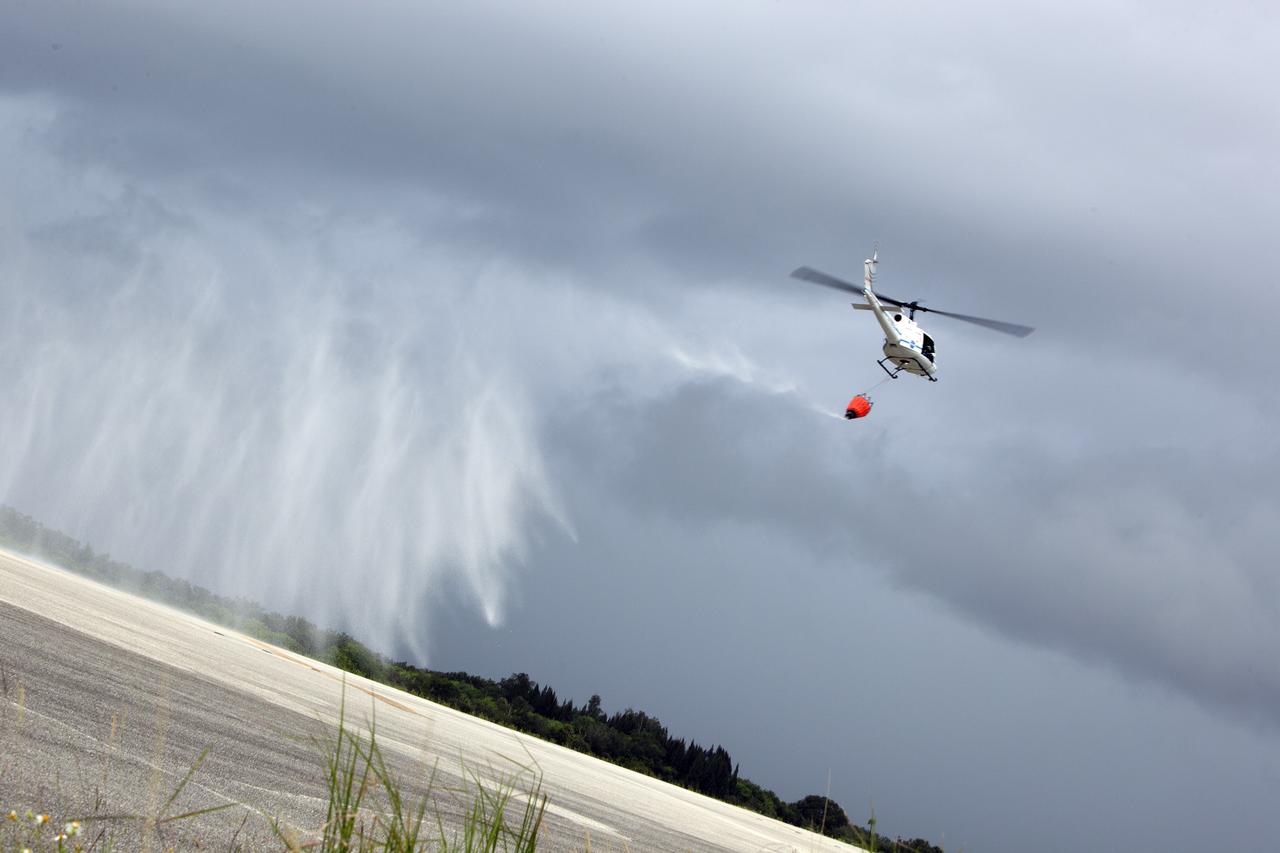
CAPE CANAVERAL, Fla. -- At NASA's Kennedy Space Center in Florida, a three-person helicopter crew recently practiced using a Bambi Bucket to pick up water from a nearby waterway and dropping it on simulated targets at the center’s Shuttle Landing Facility. Firefighters respond to wildfires with teams on the ground and in the air. The most up-to-date tools include helicopters that use Bambi Buckets large quantities of water. NASA Flight Operations teams are training to perfect the skills needed to ensure they are ready to use tools, such as the Bambi Bucket, in the event of an out-of-control blaze at the spaceport. Photo credit: NASA/Frankie Martin
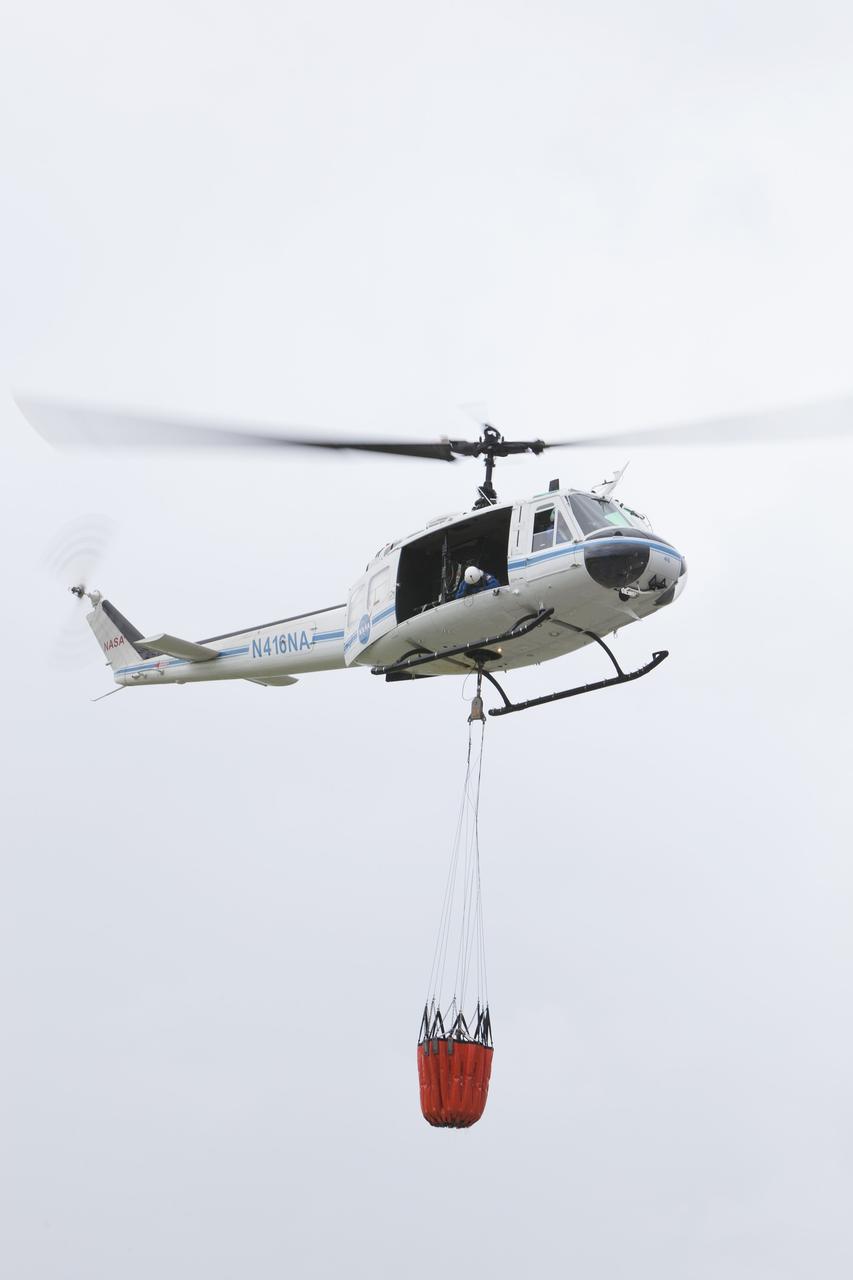
CAPE CANAVERAL, Fla. -- At NASA's Kennedy Space Center in Florida, crew chief Mark Smith of URS looks out the side door down at the Bambi Bucket. Securely strapped to the helicopter floor, his position allows him to tell the pilot precisely when to release the water over the target. Firefighters respond to wildfires with teams on the ground and in the air. The most up-to-date tools include helicopters that use Bambi Buckets large quantities of water. NASA Flight Operations teams are training to perfect the skills needed to ensure they are ready to use tools, such as the Bambi Bucket, in the event of an out-of-control blaze at the spaceport. Photo credit: NASA/Frankie Martin
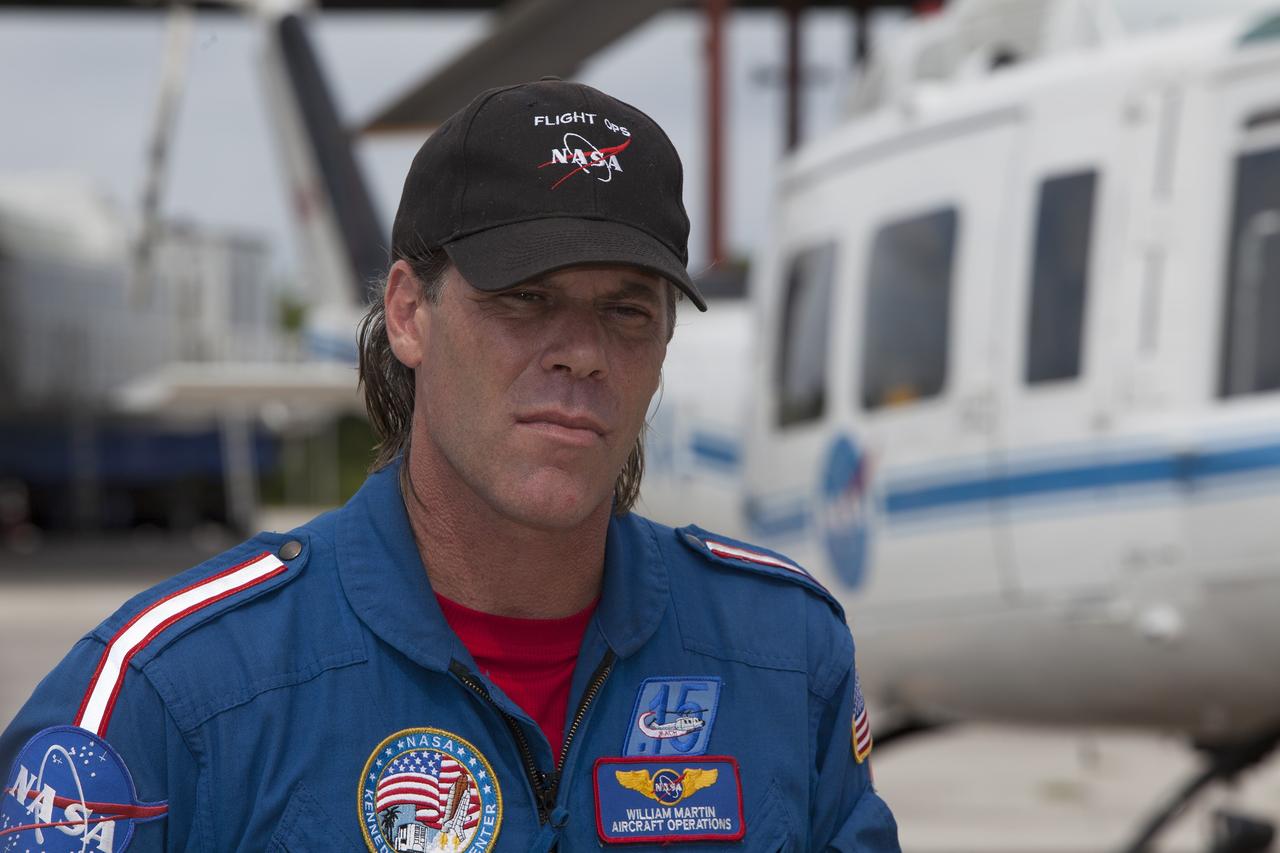
CAPE CANAVERAL, Fla. -- At NASA's Kennedy Space Center in Florida, Bill Martin, a URS Federal Technical Services helicopter pilot in the agency's Aircraft Operations, is interviewed near the Shuttle Landing Facility. He discussed working with spaceport Fire Rescue personnel to develop procedures for using agency helicopters to transport injured patients to a local hospital. The training activity took place in Kennedy's Launch Complex 39 turn-basin parking lot. It was part of a new training program developed by Kennedy's Fire Rescue department along with NASA Aircraft Operations to sharpen the skills needed to help rescue personnel learn how to collaborate with helicopter pilots in taking injured patients to hospitals as quickly as possible. Photo credit: NASA/Dimitri Gerondidakis
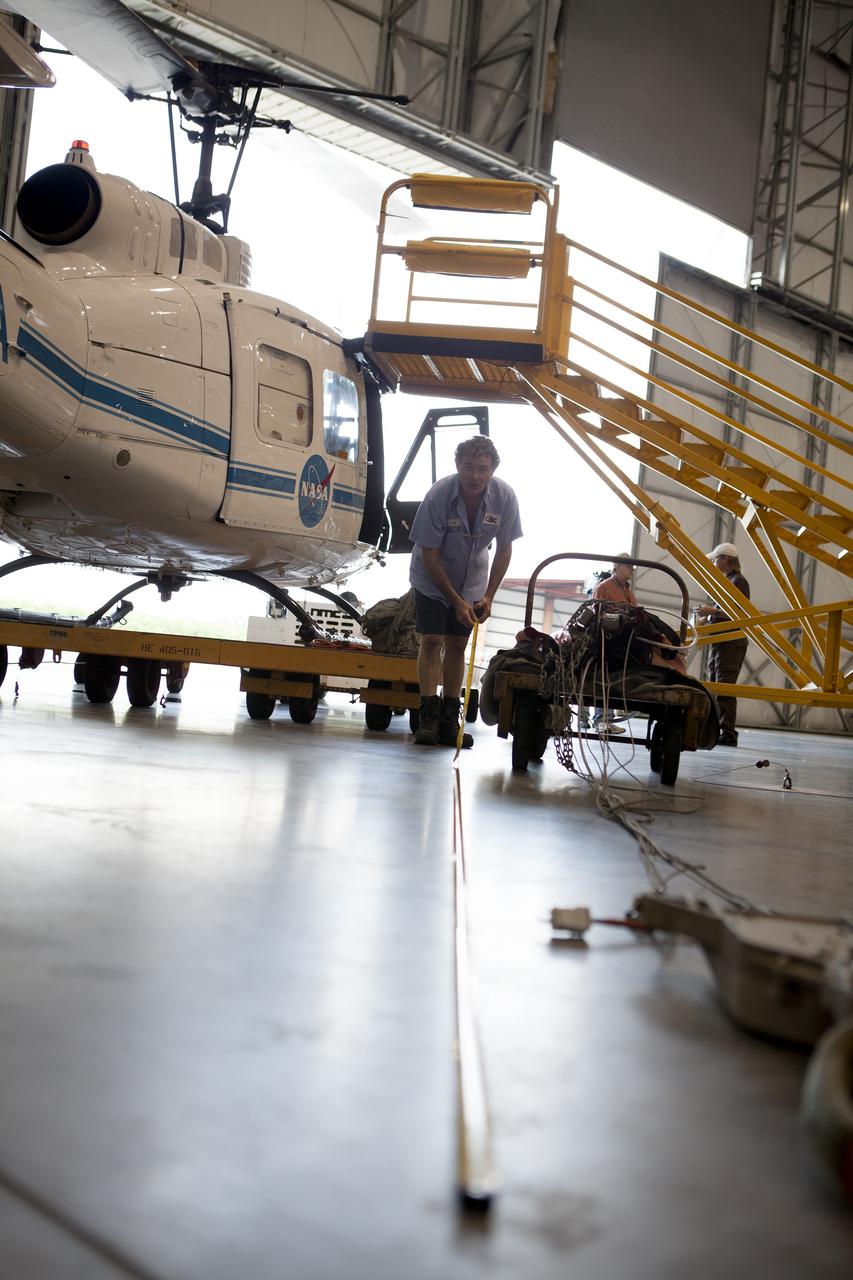
CAPE CANAVERAL, Fla. -- At NASA's Kennedy Space Center in Florida, 23-foot cables used to hold a Bambi Bucket are checked out prior to a training exercise to practice firefighting techniques. A three-person helicopter crew recently practiced using a Bambi Bucket to pick up water from a nearby waterway and dropping it on simulated targets at the center’s Shuttle Landing Facility. Firefighters respond to wildfires with teams on the ground and in the air. The most up-to-date tools include helicopters that use Bambi Buckets large quantities of water. NASA Flight Operations teams are training to perfect the skills needed to ensure they are ready to use tools, such as the Bambi Bucket, in the event of an out-of-control blaze at the spaceport. Photo credit: NASA/Frankie Martin
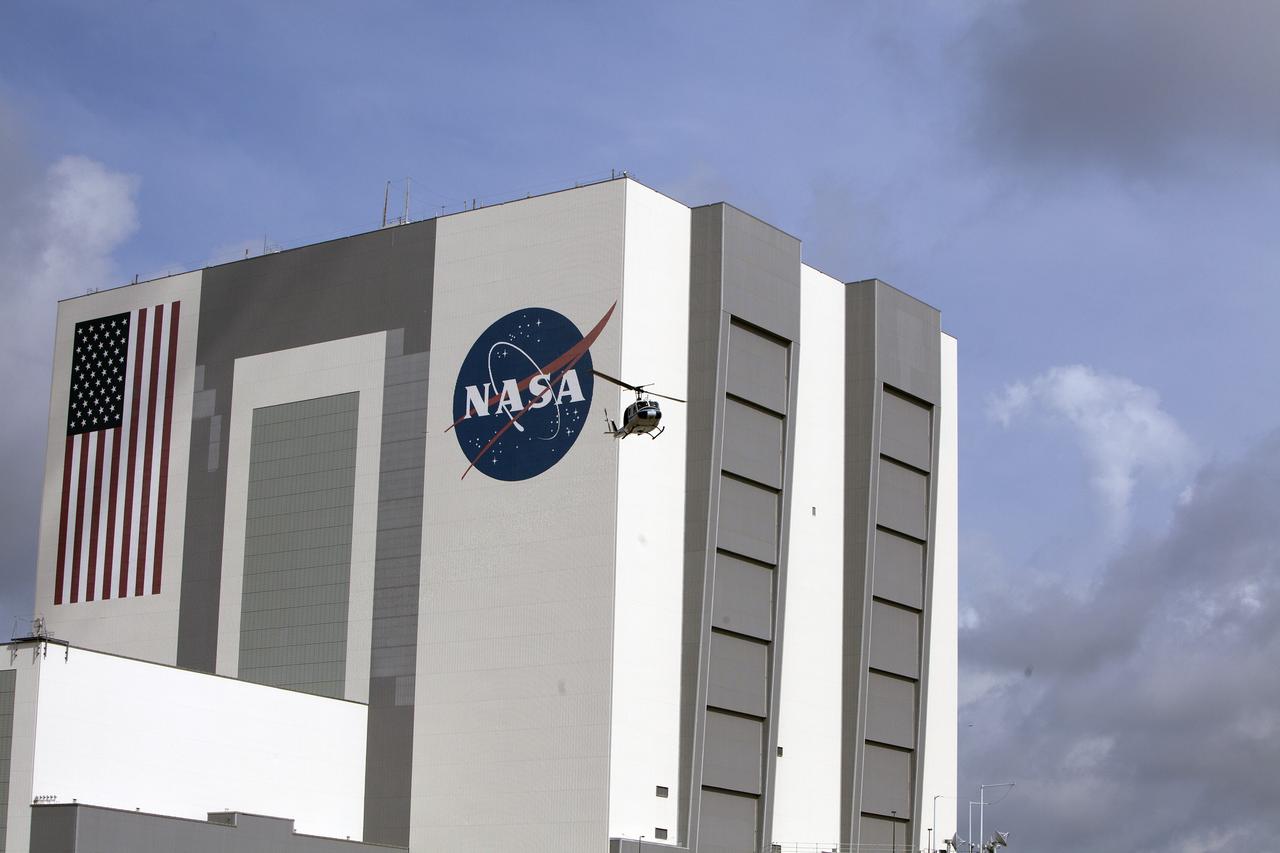
CAPE CANAVERAL, Fla. -- At NASA's Kennedy Space Center in Florida, an agency helicopter flies past the Vehicle Assembly Building prior to landing for a training exercise. The activity taking place in Kennedy's Launch Complex 39 turn-basin parking lot was only one of several drills. It was part of a new training program that was developed by Kennedy's Fire Rescue department along with NASA Aircraft Operations to sharpen the skills needed to help rescue personnel learn how to collaborate with helicopter pilots in taking injured patients to hospitals as quickly as possible. Photo credit: NASA/Dan Casper
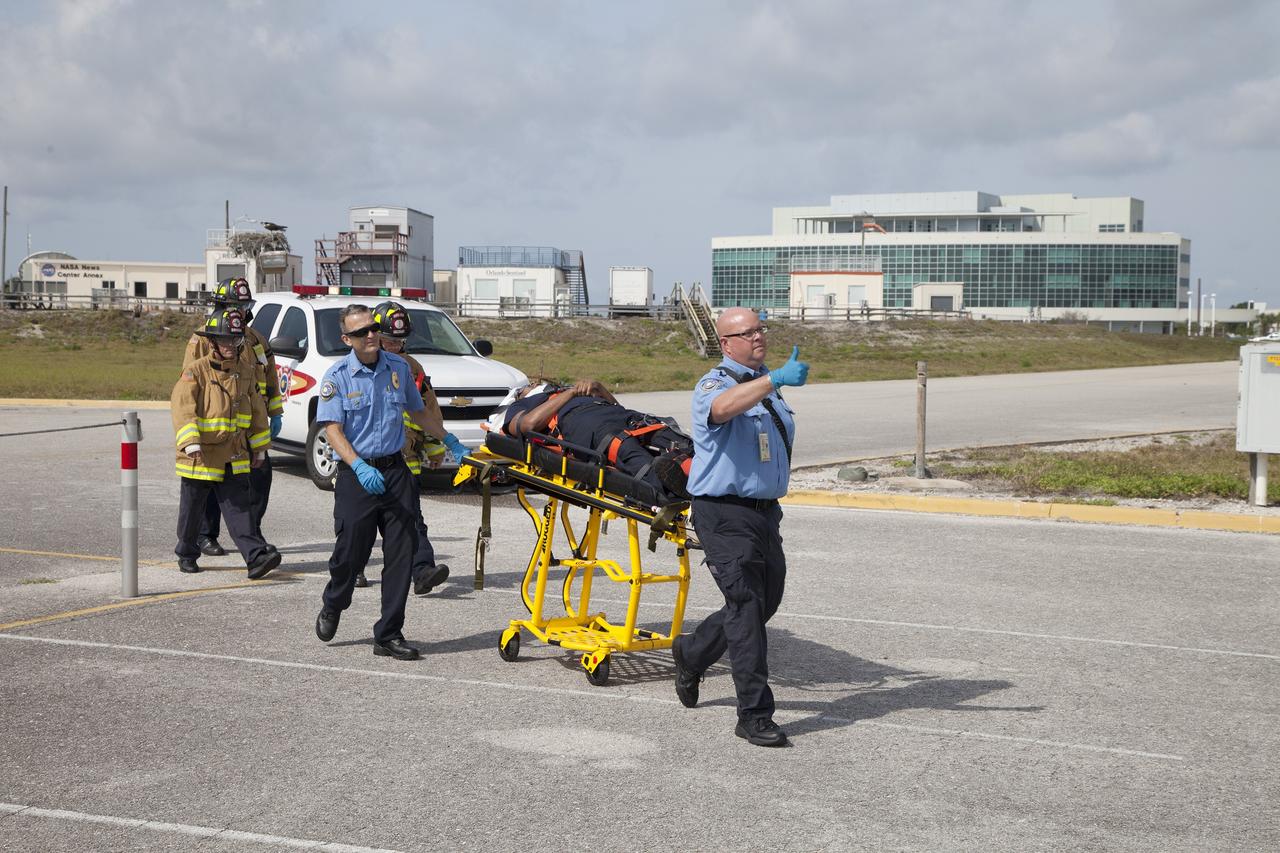
CAPE CANAVERAL, Fla. -- At NASA's Kennedy Space Center in Florida, paramedics and Fire Rescue personnel move a stretcher to the waiting helicopter as they work quickly to have the patient ready to transport after he was removed from a vehicle. The activity taking place in Kennedy's Launch Complex 39 turn-basin parking lot was only one of several drills. It was part of a new training program that was developed by Kennedy's Fire Rescue department along with NASA Aircraft Operations to sharpen the skills needed to help rescue personnel learn how to collaborate with helicopter pilots in taking injured patients to hospitals as quickly as possible. Photo credit: NASA/Dan Casper
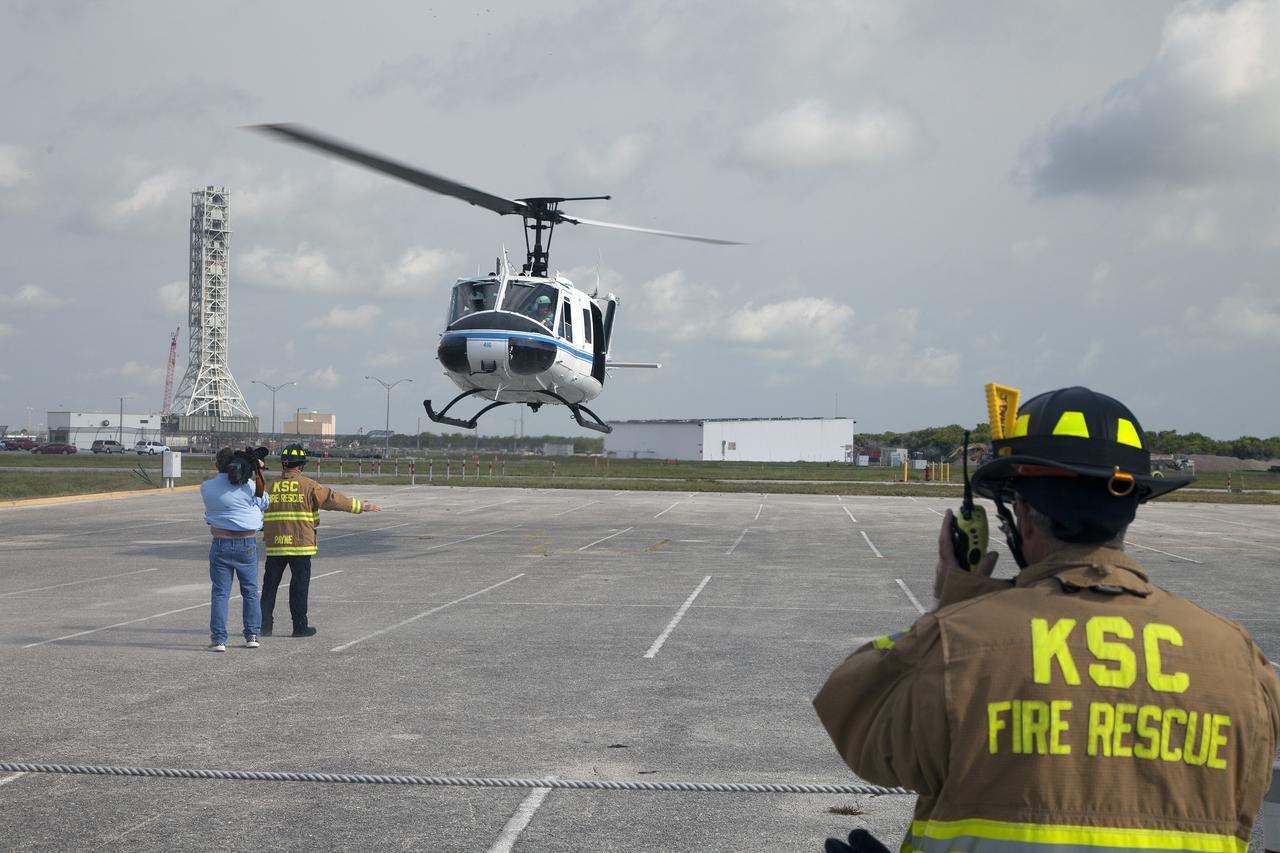
CAPE CANAVERAL, Fla. -- At NASA's Kennedy Space Center in Florida, agency Fire Rescue personnel direct an agency helicopter in for a landing during a training exercise. The activity taking place in Kennedy's Launch Complex 39 turn-basin parking lot was only one of several drills. It was part of a new training program that was developed by Kennedy's Fire Rescue department along with NASA Aircraft Operations to sharpen the skills needed to help rescue personnel learn how to collaborate with helicopter pilots in taking injured patients to hospitals as quickly as possible. Photo credit: NASA/Dan Casper
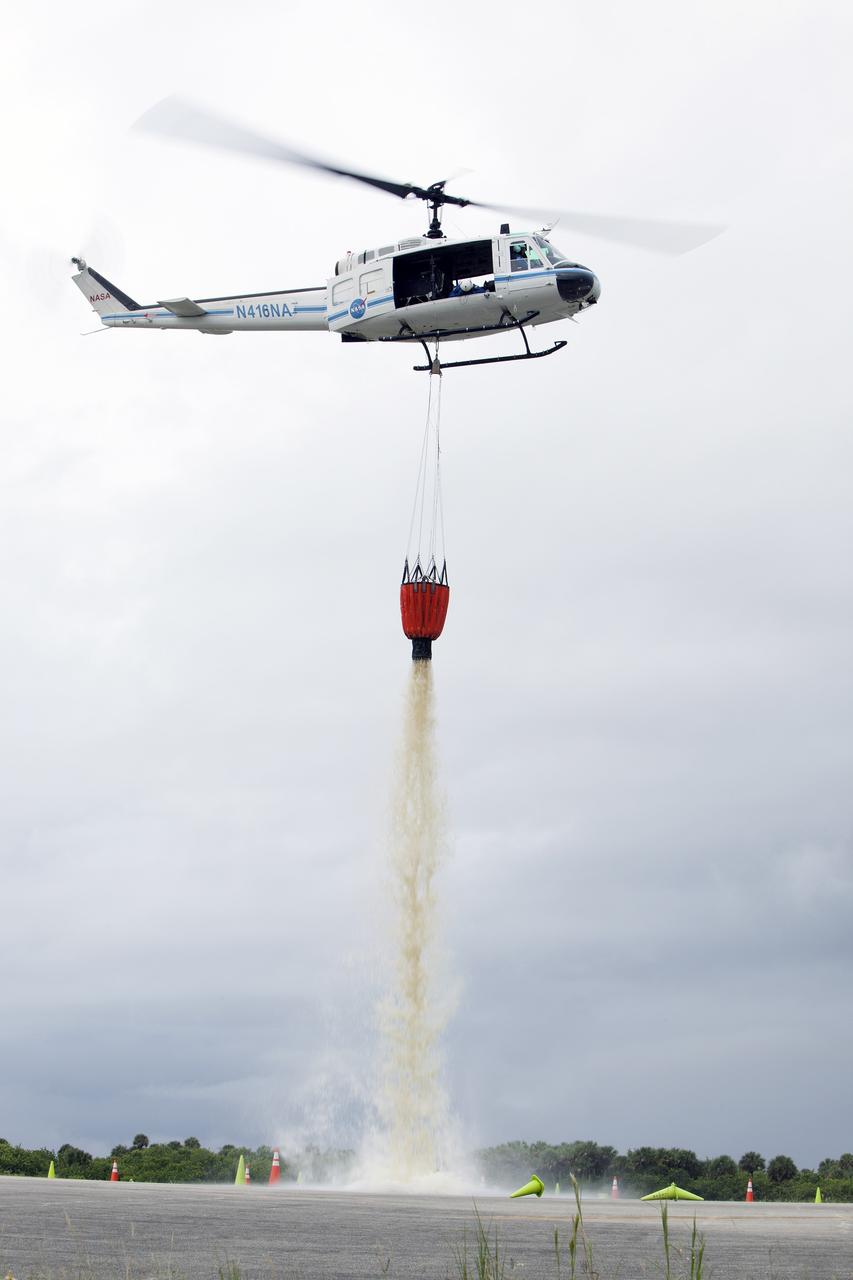
CAPE CANAVERAL, Fla. -- At NASA's Kennedy Space Center in Florida, a three-person helicopter crew recently practiced using a Bambi Bucket to pick up water from a nearby waterway and dropping it on simulated targets at the center’s Shuttle Landing Facility. Firefighters respond to wildfires with teams on the ground and in the air. The most up-to-date tools include helicopters that use Bambi Buckets large quantities of water. NASA Flight Operations teams are training to perfect the skills needed to ensure they are ready to use tools, such as the Bambi Bucket, in the event of an out-of-control blaze at the spaceport. Photo credit: NASA/Frankie Martin
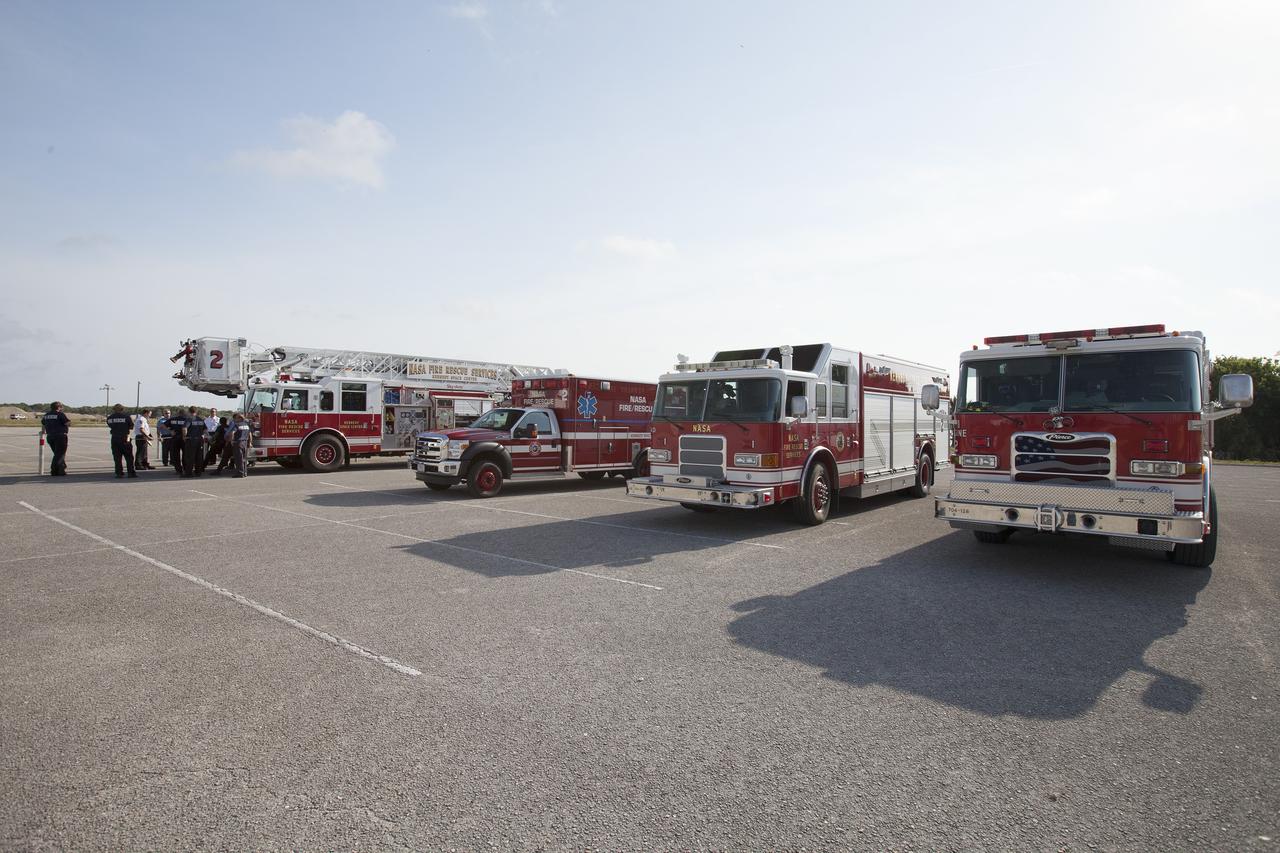
CAPE CANAVERAL, Fla. -- At NASA's Kennedy Space Center in Florida, Fire Rescue vehicles line up in a parking area near the Vehicle Assembly Building for training with pilots in NASA Aircraft Operations. The exercise is designed to develop procedures for using agency helicopters to transport injured patients to a local hospital. The activity taking place in Kennedy's Launch Complex 39 turn-basin parking lot was only one of several drills. It was part of a new training program that was developed by Kennedy's Fire Rescue department along with NASA Aircraft Operations to sharpen the skills needed to help rescue personnel learn how to collaborate with helicopter pilots in taking injured patients to hospitals as quickly as possible. Photo credit: NASA/Dan Casper
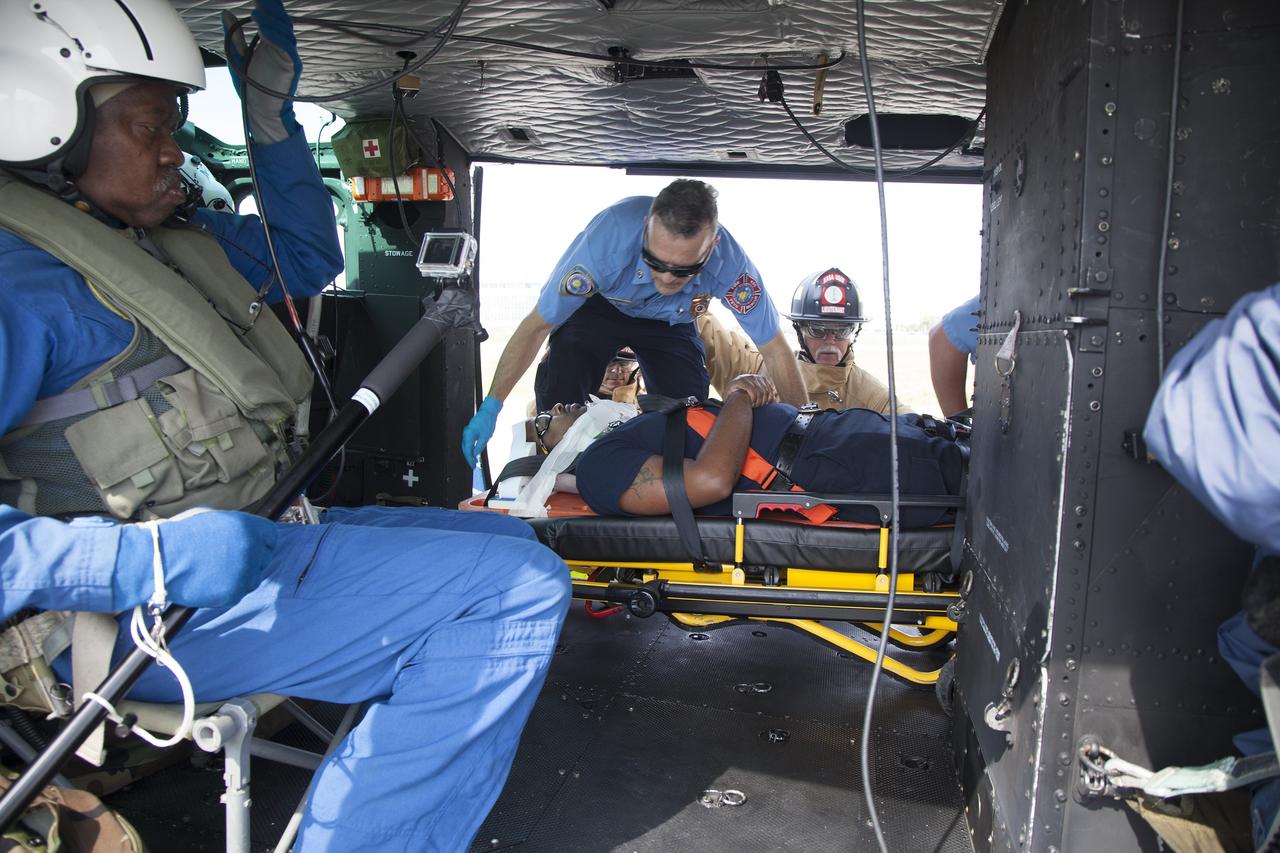
CAPE CANAVERAL, Fla. -- At NASA's Kennedy Space Center in Florida, a "volunteer patient" is carefully placed aboard a NASA helicopter as part of a training exercise. In an actual emergency, the pilots could fly an injured person from Kennedy to a nearby trauma center in minutes. The activity taking place in Kennedy's Launch Complex 39 turn-basin parking lot was only one of several drills. It was part of a new training program that was developed by Kennedy's Fire Rescue department along with NASA Aircraft Operations to sharpen the skills needed to help rescue personnel learn how to collaborate with helicopter pilots in taking injured patients to hospitals as quickly as possible. Photo credit: NASA/Dan Casper
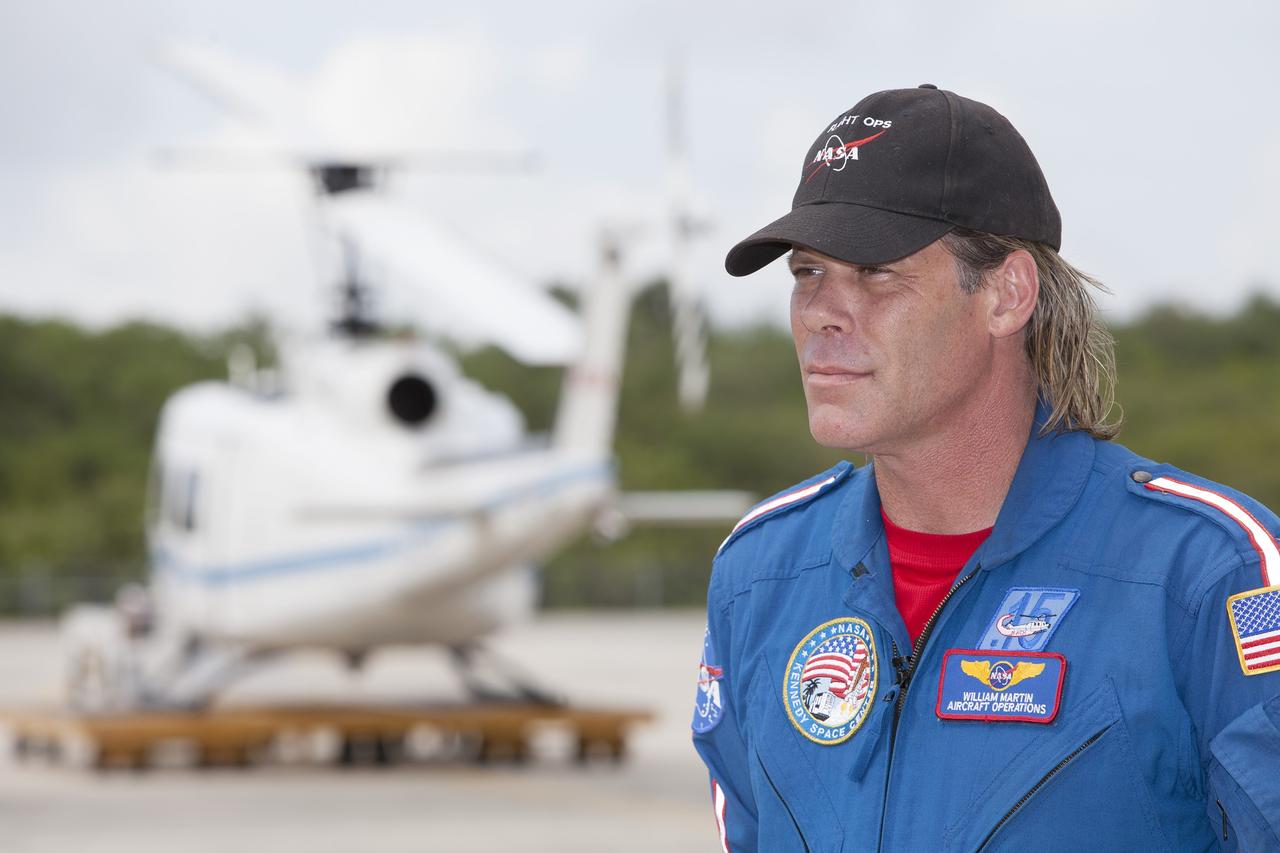
CAPE CANAVERAL, Fla. -- At NASA's Kennedy Space Center in Florida, Bill Martin, a URS Federal Technical Services helicopter pilot in the agency's Aircraft Operations, is interviewed near the Shuttle Landing Facility. He discussed working with spaceport Fire Rescue personnel to develop procedures for using agency helicopters to transport injured patients to a local hospital. The training activity took place in Kennedy's Launch Complex 39 turn-basin parking lot. It was part of a new training program developed by Kennedy's Fire Rescue department along with NASA Aircraft Operations to sharpen the skills needed to help rescue personnel learn how to collaborate with helicopter pilots in taking injured patients to hospitals as quickly as possible. Photo credit: NASA/Dimitri Gerondidakis
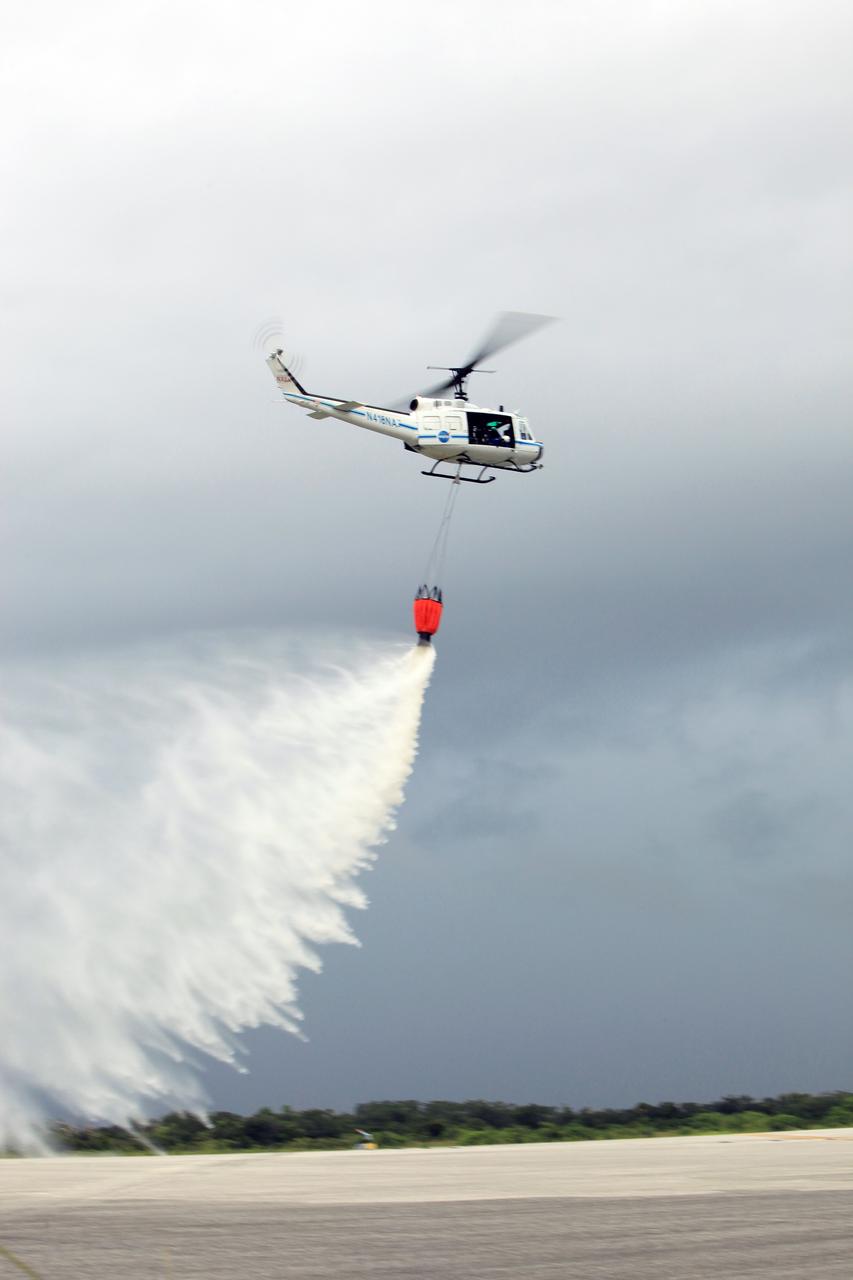
CAPE CANAVERAL, Fla. -- At NASA's Kennedy Space Center in Florida, a three-person helicopter crew recently practiced using a Bambi Bucket to pick up water from a nearby waterway and dropping it on simulated targets at the center’s Shuttle Landing Facility. Firefighters respond to wildfires with teams on the ground and in the air. The most up-to-date tools include helicopters that use Bambi Buckets large quantities of water. NASA Flight Operations teams are training to perfect the skills needed to ensure they are ready to use tools, such as the Bambi Bucket, in the event of an out-of-control blaze at the spaceport. Photo credit: NASA/Frankie Martin

CAPE CANAVERAL, Fla. -- At NASA's Kennedy Space Center in Florida, paramedics remove George Jacobs, NASA's deputy director of Center Operations, from a vehicle simulating a rescue operation. Jacobs served as a "volunteer patient" during the activity. The activity taking place in Kennedy's Launch Complex 39 turn-basin parking lot was only one of several drills. It was part of a new training program that was developed by Kennedy's Fire Rescue department along with NASA Aircraft Operations to sharpen the skills needed to help rescue personnel learn how to collaborate with helicopter pilots in taking injured patients to hospitals as quickly as possible. Photo credit: NASA/Dan Casper
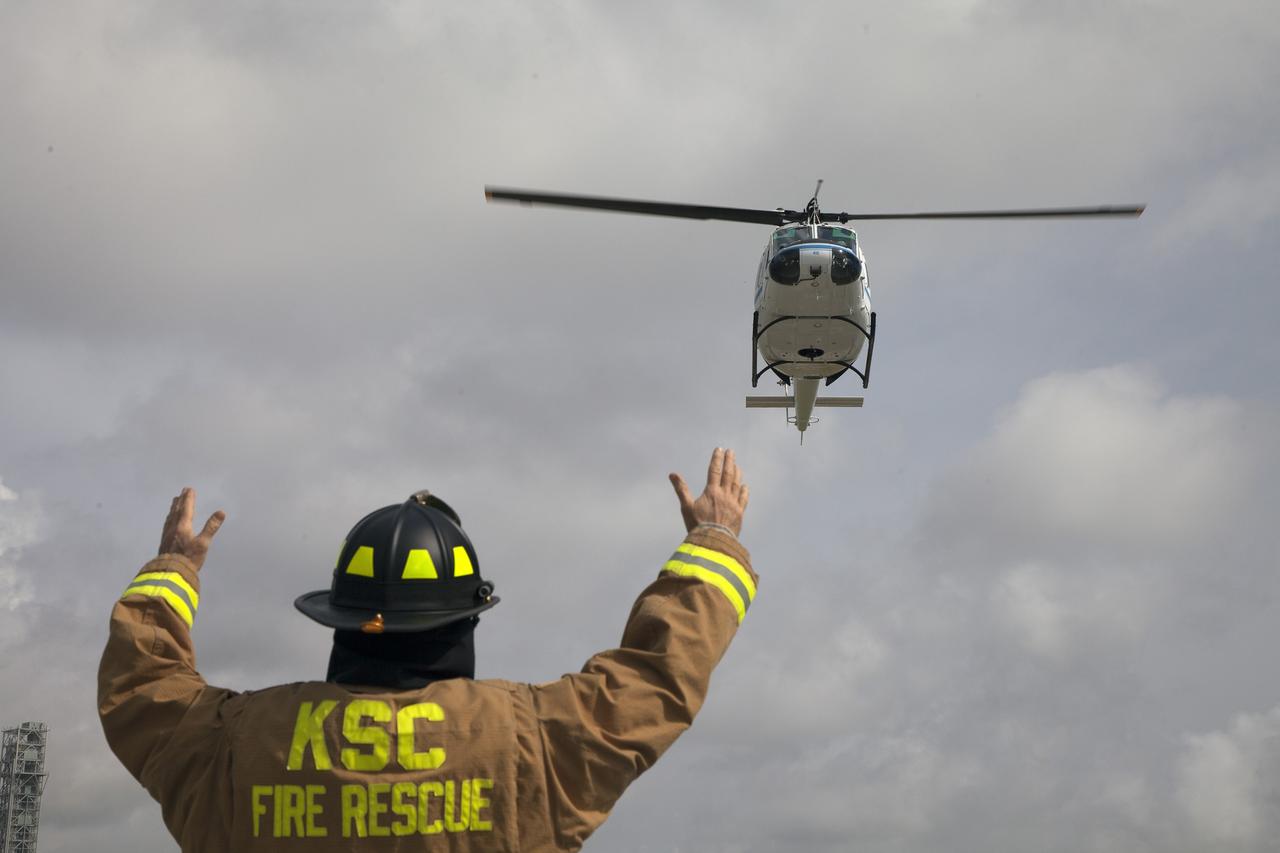
CAPE CANAVERAL, Fla. -- At NASA's Kennedy Space Center in Florida, NASA Fire Rescue Lt. David Tacy, of Chenega Security & Support Solutions, directs an agency helicopter in for a landing during a training exercise. The activity taking place in Kennedy's Launch Complex 39 turn-basin parking lot was only one of several drills. It was part of a new training program that was developed by Kennedy's Fire Rescue department along with NASA Aircraft Operations to sharpen the skills needed to help rescue personnel learn how to collaborate with helicopter pilots in taking injured patients to hospitals as quickly as possible. Photo credit: NASA/Dan Casper
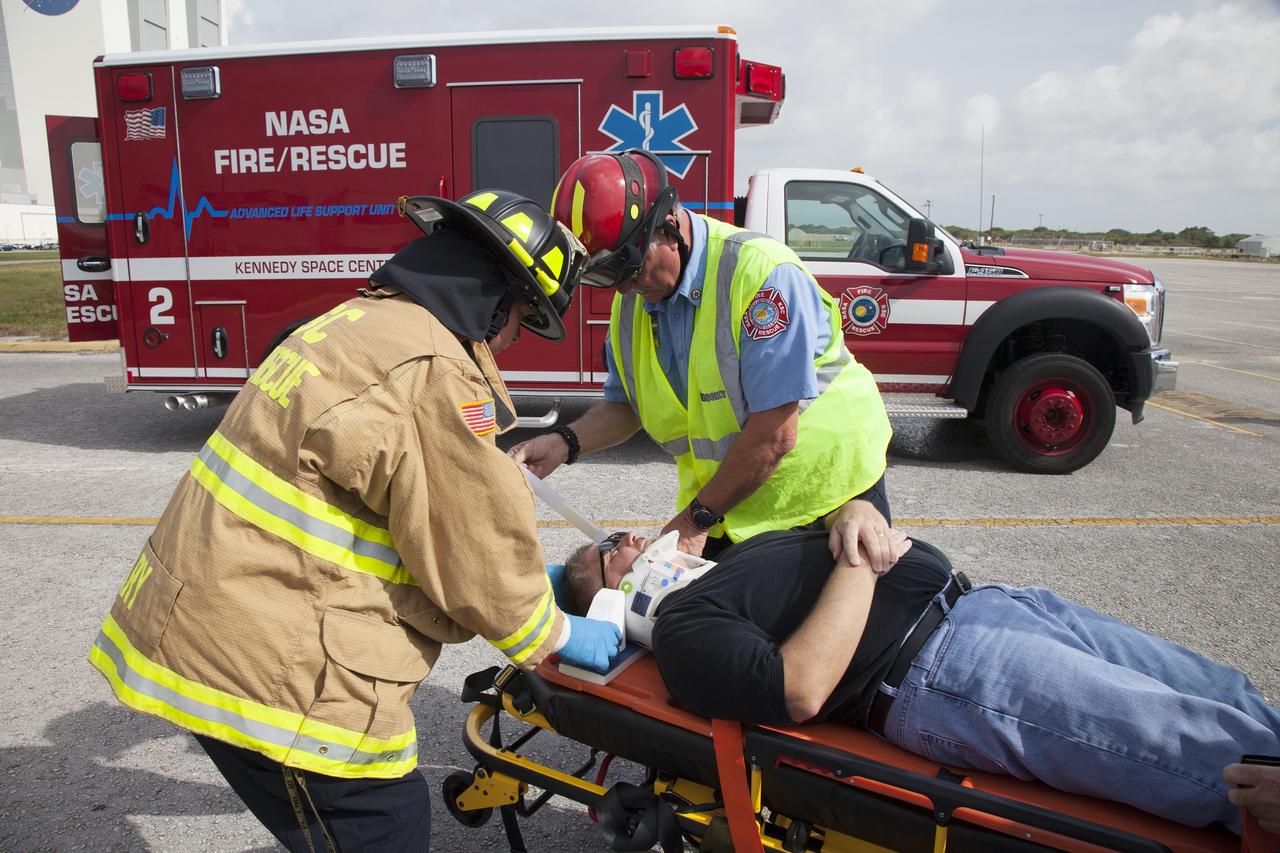
CAPE CANAVERAL, Fla. -- At NASA's Kennedy Space Center in Florida, George Jacobs, NASA's deputy director of Center Operations, serves as a "volunteer patient" and is secured on a stretcher for a simulated emergency operation. The activity taking place in Kennedy's Launch Complex 39 turn-basin parking lot was only one of several drills. It was part of a new training program that was developed by Kennedy's Fire Rescue department along with NASA Aircraft Operations to sharpen the skills needed to help rescue personnel learn how to collaborate with helicopter pilots in taking injured patients to hospitals as quickly as possible. Photo credit: NASA/Dan Casper
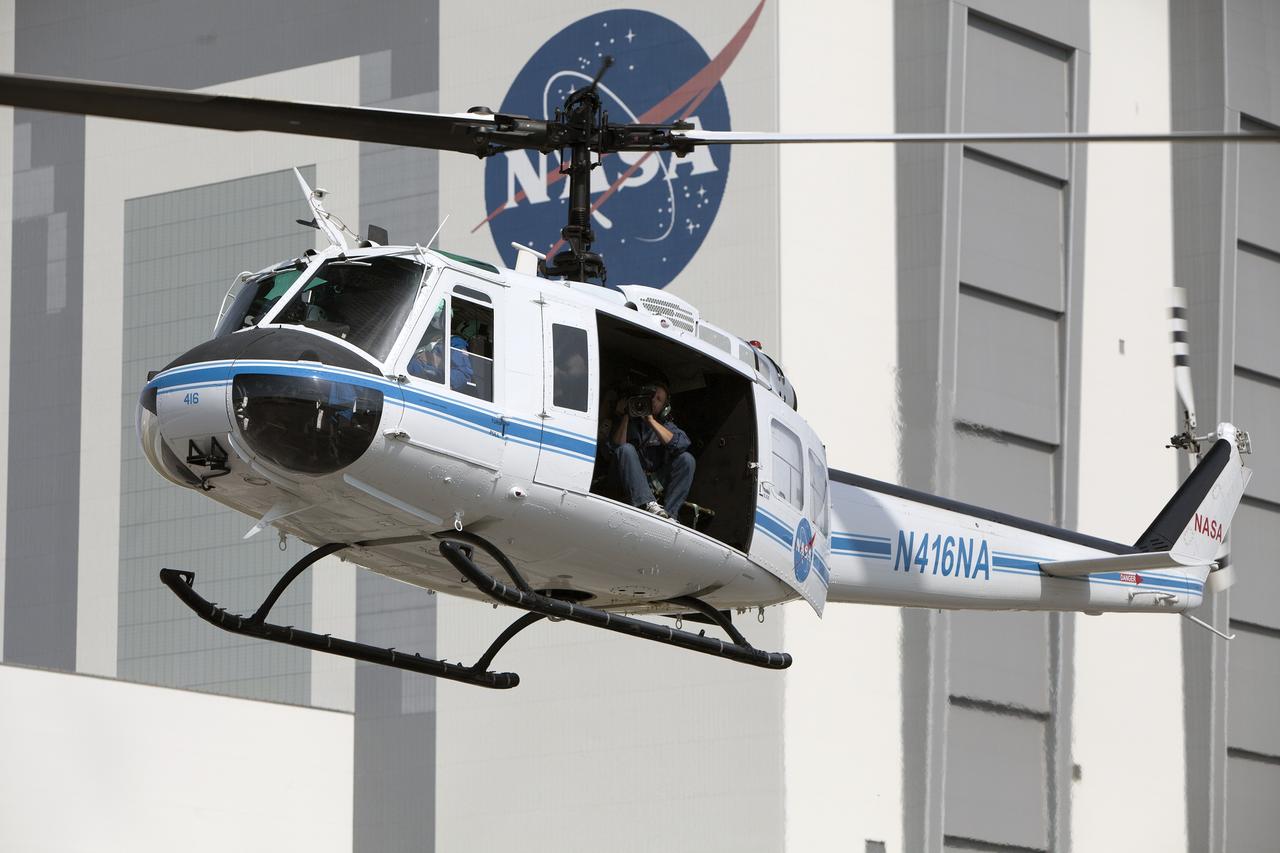
CAPE CANAVERAL, Fla. -- At NASA's Kennedy Space Center in Florida, an agency helicopter flies over the Vehicle Assembly Building prior to landing for a training exercise. The activity taking place in Kennedy's Launch Complex 39 turn-basin parking lot was only one of several drills. It was part of a new training program that was developed by Kennedy's Fire Rescue department along with NASA Aircraft Operations to sharpen the skills needed to help rescue personnel learn how to collaborate with helicopter pilots in taking injured patients to hospitals as quickly as possible. Photo credit: NASA/Dan Casper
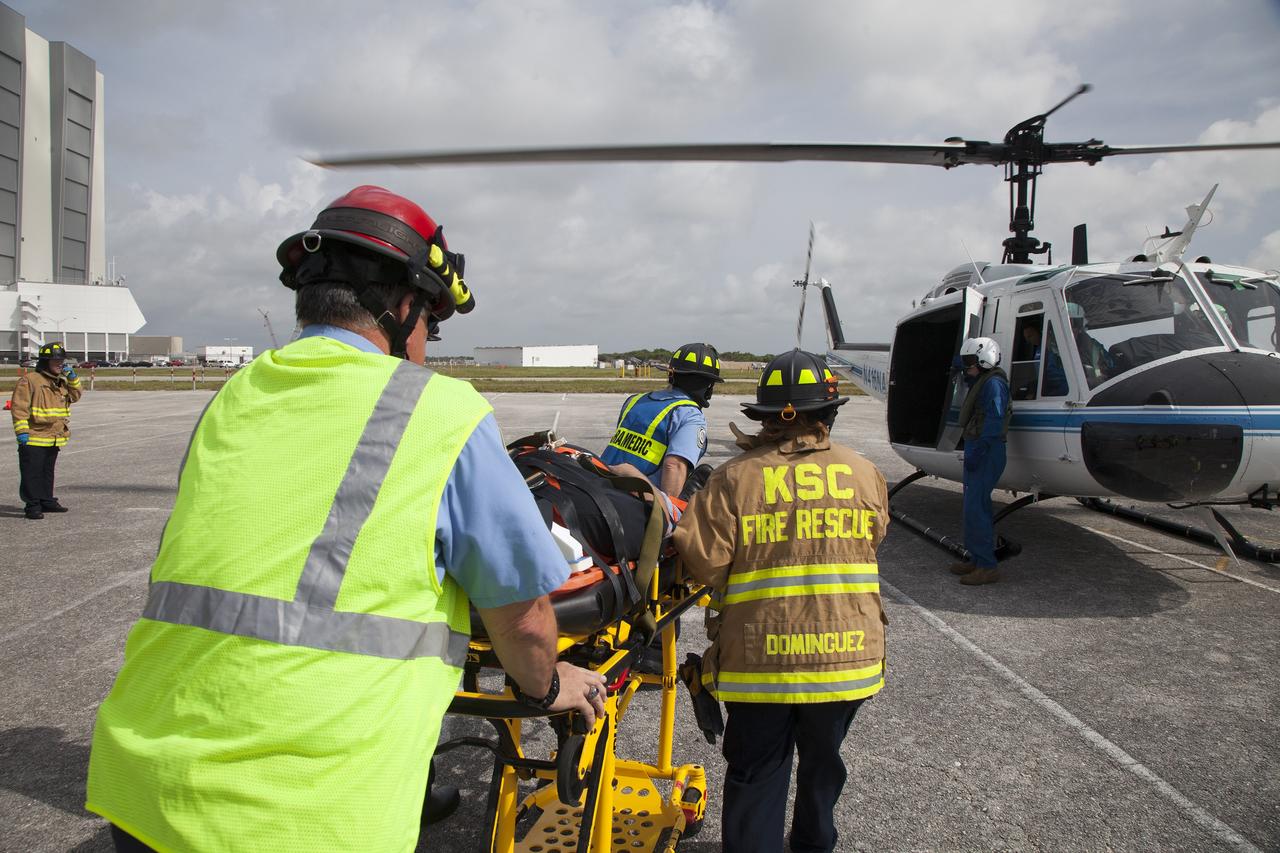
CAPE CANAVERAL, Fla. -- At NASA's Kennedy Space Center in Florida, Paramedics and Fire Rescue personnel move a stretcher to the waiting helicopter as they work quickly to have the patient ready to transport after he was removed from a vehicle. The activity taking place in Kennedy's Launch Complex 39 turn-basin parking lot was only one of several drills. It was part of a new training program that was developed by Kennedy's Fire Rescue department along with NASA Aircraft Operations to sharpen the skills needed to help rescue personnel learn how to collaborate with helicopter pilots in taking injured patients to hospitals as quickly as possible. Photo credit: NASA/Dan Casper
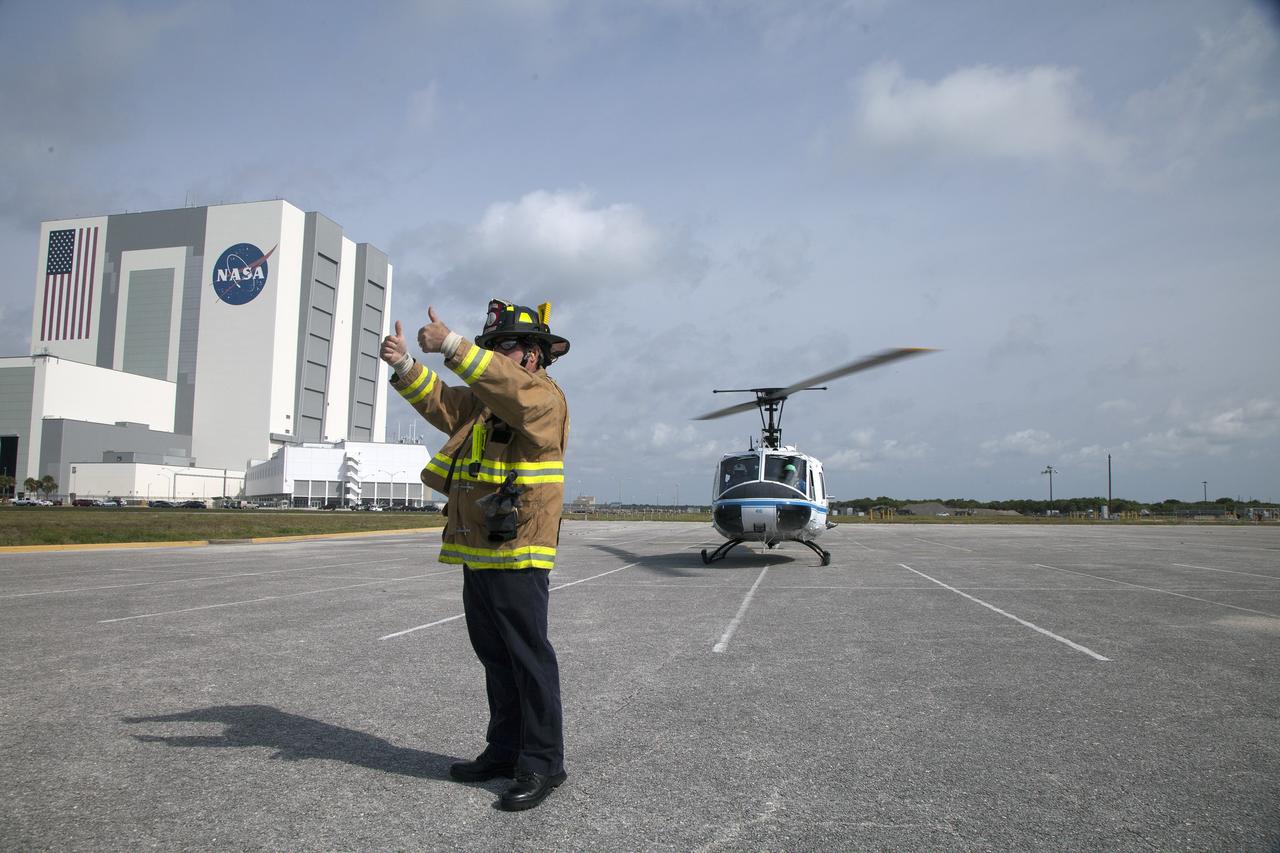
CAPE CANAVERAL, Fla. -- At NASA's Kennedy Space Center in Florida, an agency Fire Rescue team member gives "thumbs up" signaling that it is safe to bring in a stretcher with a "volunteer patient" to be placed aboard the nearby helicopter. The activity taking place in Kennedy's Launch Complex 39 turn-basin parking lot was only one of several drills. It was part of a new training program that was developed by Kennedy's Fire Rescue department along with NASA Aircraft Operations to sharpen the skills needed to help rescue personnel learn how to collaborate with helicopter pilots in taking injured patients to hospitals as quickly as possible. Photo credit: NASA/Dan Casper
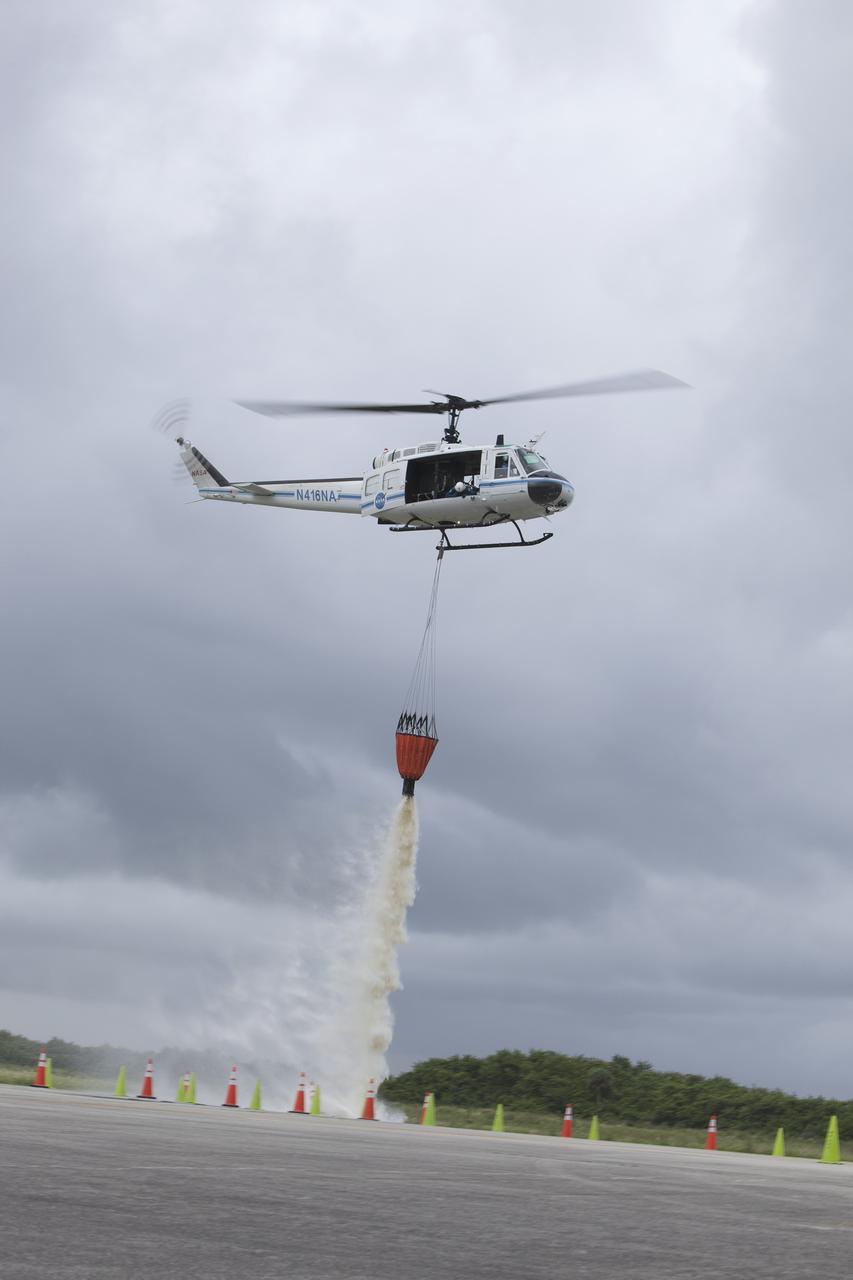
CAPE CANAVERAL, Fla. -- At NASA's Kennedy Space Center in Florida, a three-person helicopter crew recently practiced using a Bambi Bucket to pick up water from a nearby waterway and dropping it on simulated targets at the center’s Shuttle Landing Facility. Firefighters respond to wildfires with teams on the ground and in the air. The most up-to-date tools include helicopters that use Bambi Buckets large quantities of water. NASA Flight Operations teams are training to perfect the skills needed to ensure they are ready to use tools, such as the Bambi Bucket, in the event of an out-of-control blaze at the spaceport. Photo credit: NASA/Frankie Martin
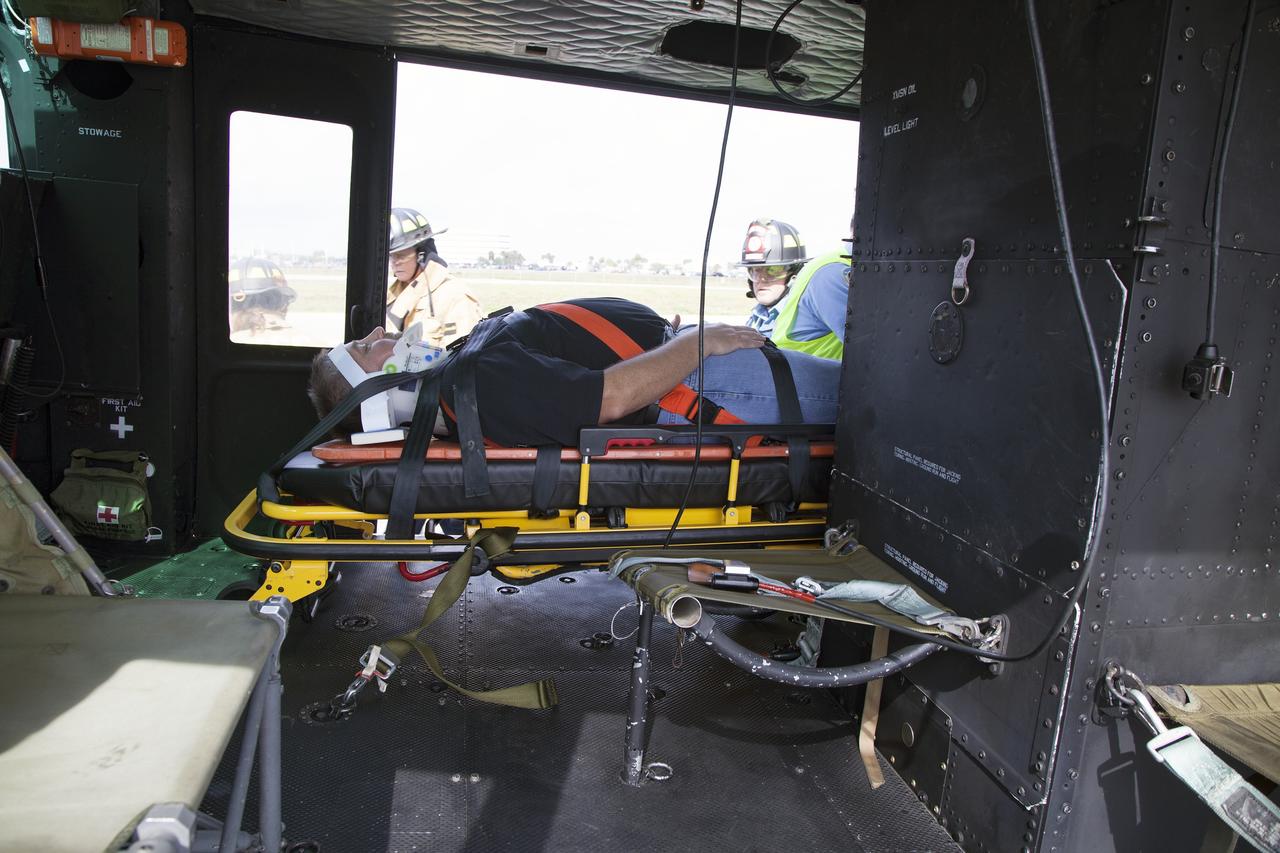
CAPE CANAVERAL, Fla. -- For a training exercise, "volunteer patient" George Jacobs, NASA's deputy director of Center Operations, has been carefully placed aboard an agency helicopter at the Kennedy Space Center in Florida. In an actual emergency, the pilots could fly an injured person from Kennedy to a nearby trauma center in minutes. The activity taking place in Kennedy's Launch Complex 39 turn-basin parking lot was only one of several drills. It was part of a new training program that was developed by Kennedy's Fire Rescue department along with NASA Aircraft Operations to sharpen the skills needed to help rescue personnel learn how to collaborate with helicopter pilots in taking injured patients to hospitals as quickly as possible. Photo credit: NASA/Dan Casper
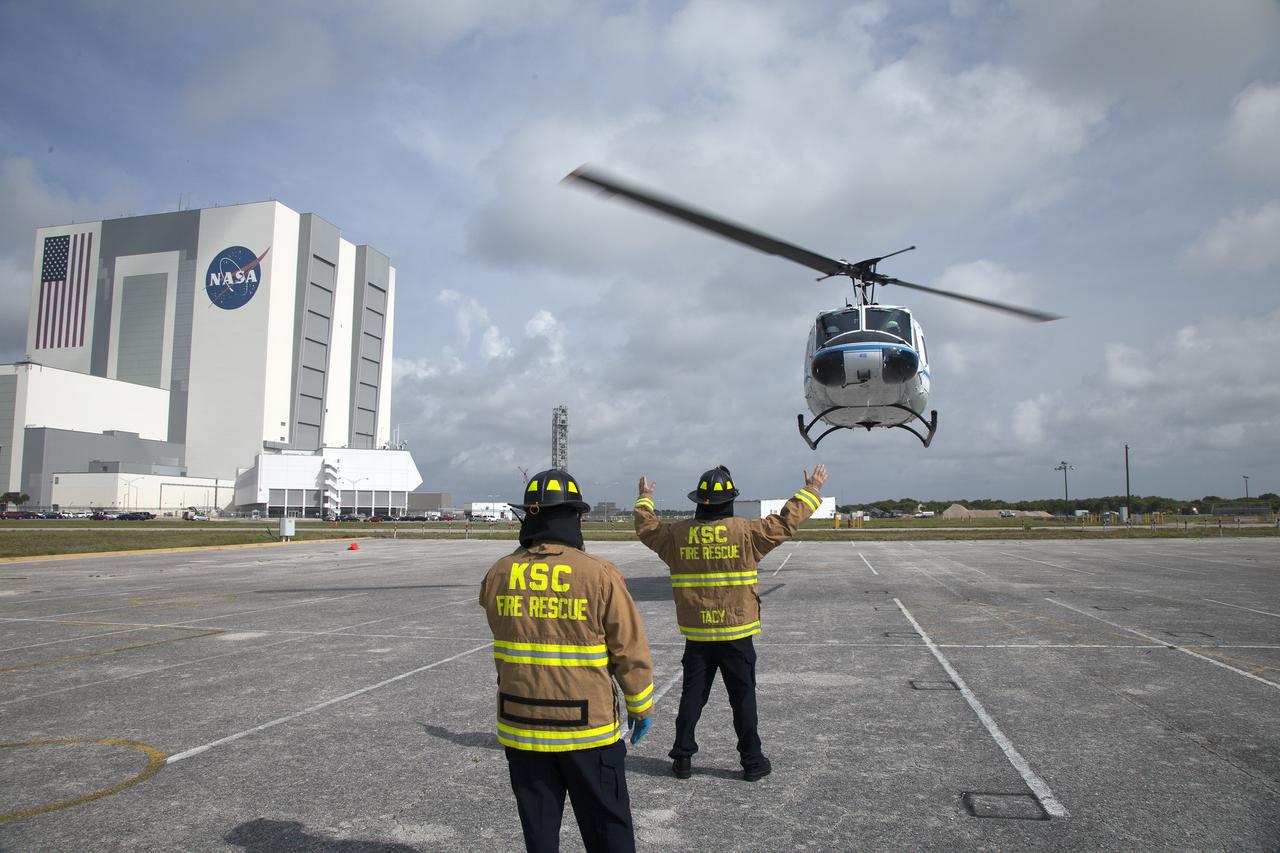
CAPE CANAVERAL, Fla. -- At NASA's Kennedy Space Center in Florida, NASA Fire Rescue Lt. David Tacy, background, and firefighter Alvis Hickey direct an agency helicopter in for a landing for a training exercise. Tacy and Hickey both work for Chenega Security & Support Solutions and serve in Kennedy Fire Rescue Operations. The activity taking place in Kennedy's Launch Complex 39 turn-basin parking lot was only one of several drills. It was part of a new training program that was developed by Kennedy's Fire Rescue department along with NASA Aircraft Operations to sharpen the skills needed to help rescue personnel learn how to collaborate with helicopter pilots in taking injured patients to hospitals as quickly as possible. Photo credit: NASA/Dan Casper
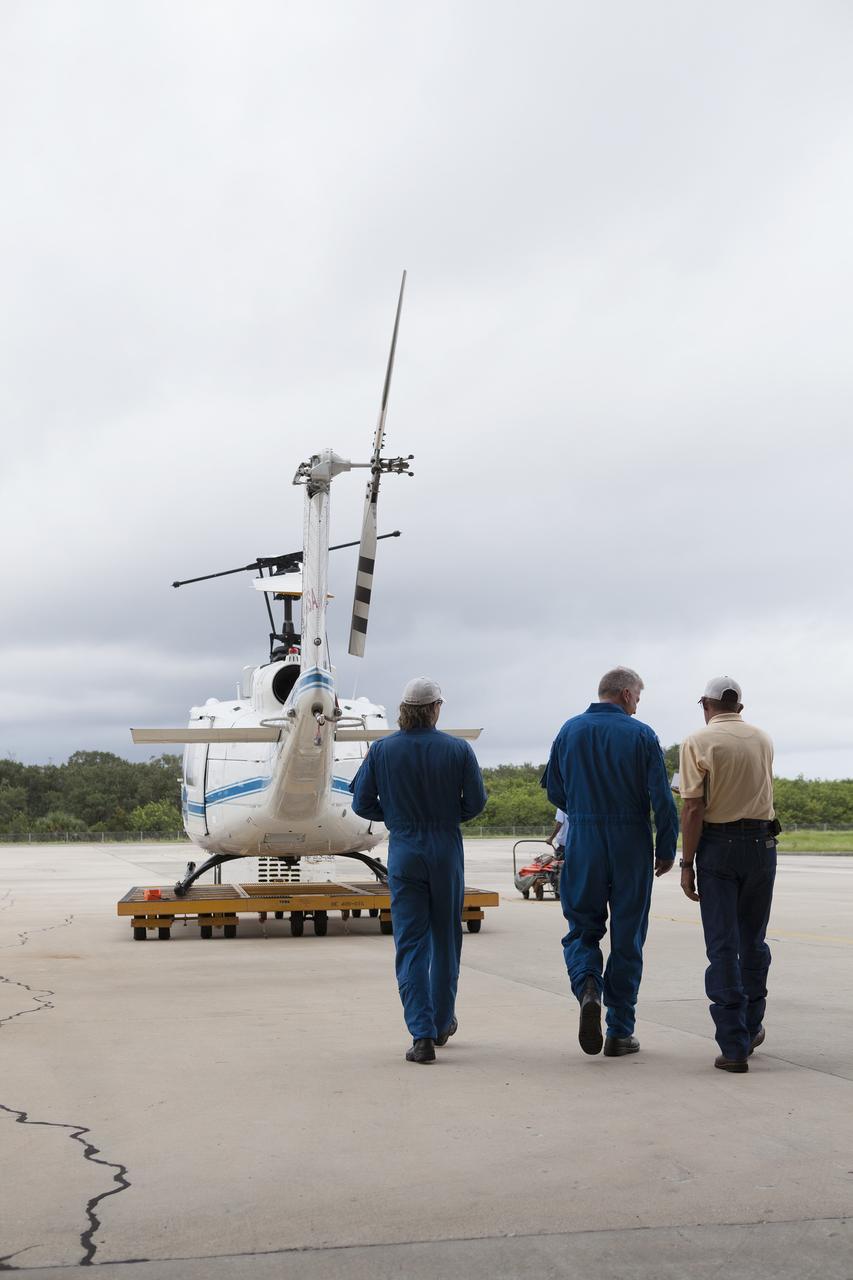
CAPE CANAVERAL, Fla. -- At NASA's Kennedy Space Center in Florida, helicopter pilots walk to their helicopter prior to practicing use of a Bambi Bucket to pick up water from a nearby waterway and dropping it on simulated targets at the center’s Shuttle Landing Facility. Firefighters respond to wildfires with teams on the ground and in the air. The most up-to-date tools include helicopters that use Bambi Buckets large quantities of water. NASA Flight Operations teams are training to perfect the skills needed to ensure they are ready to use tools, such as the Bambi Bucket, in the event of an out-of-control blaze at the spaceport. Photo credit: NASA/Frankie Martin

CAPE CANAVERAL, Fla. -- At NASA's Kennedy Space Center in Florida, Mike Tillema, chief of Flight Operations in the Operations Support Division of NASA Center Operations, center, discusses plans for a training session to practice use of a Bambi Bucket in honing firefighting techniques. Bill Martin, a URS Federal Technical Services pilot in NASA Flight Operations, is on the left, with crew chief Mark Smith, also of URS. Firefighters respond to wildfires with teams on the ground and in the air. The most up-to-date tools include helicopters that use Bambi Buckets large quantities of water. NASA Flight Operations teams are training to perfect the skills needed to ensure they are ready to use tools, such as the Bambi Bucket, in the event of an out-of-control blaze at the spaceport. Photo credit: NASA/Frankie Martin
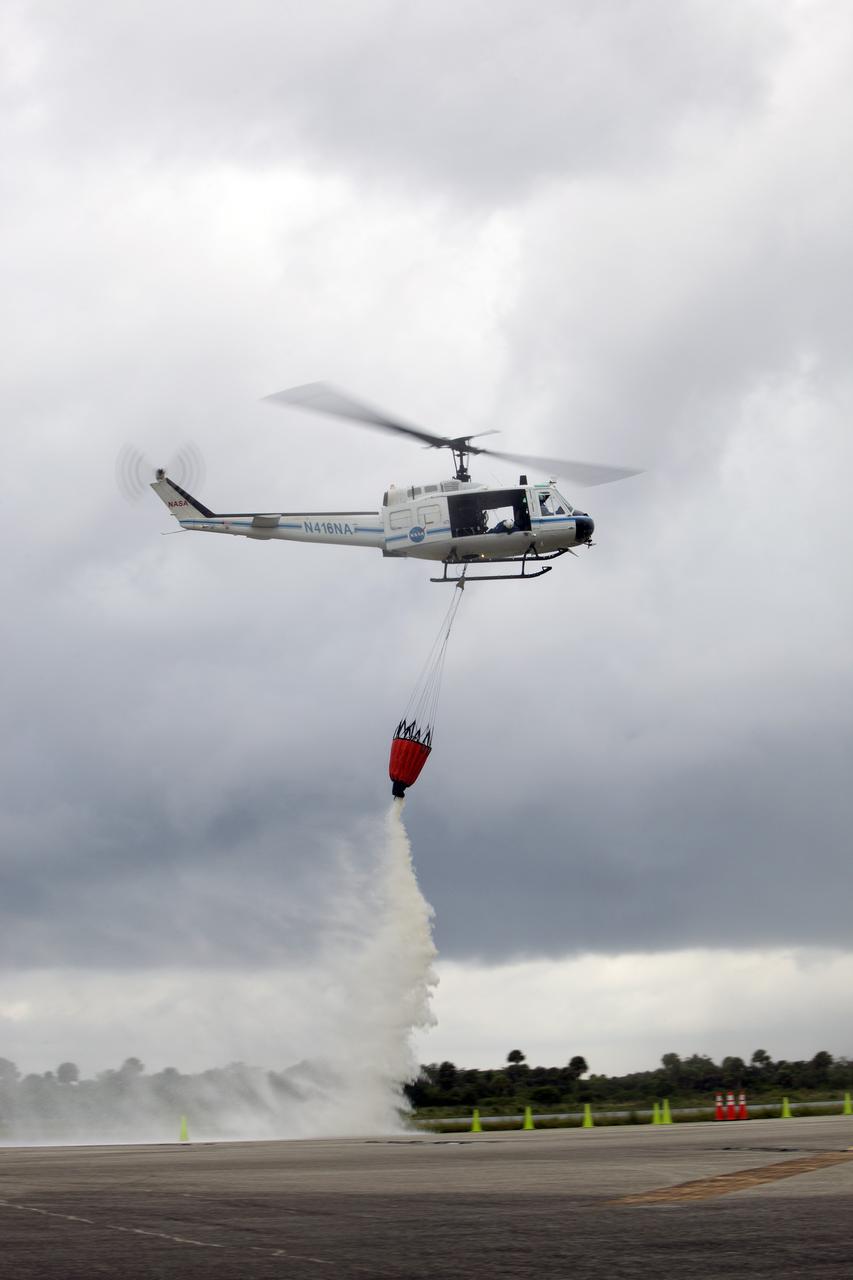
CAPE CANAVERAL, Fla. -- At NASA's Kennedy Space Center in Florida, a three-person helicopter crew recently practiced using a Bambi Bucket to pick up water from a nearby waterway and dropping it on simulated targets at the center’s Shuttle Landing Facility. Firefighters respond to wildfires with teams on the ground and in the air. The most up-to-date tools include helicopters that use Bambi Buckets large quantities of water. NASA Flight Operations teams are training to perfect the skills needed to ensure they are ready to use tools, such as the Bambi Bucket, in the event of an out-of-control blaze at the spaceport. Photo credit: NASA/Frankie Martin

CAPE CANAVERAL, Fla. -- At NASA's Kennedy Space Center in Florida, a Fire Rescue team member serves as a "volunteer patient" for a simulated emergency operation. Paramedics prepare to move his stretcher to an awaiting helicopter. The activity taking place in Kennedy's Launch Complex 39 turn-basin parking lot was only one of several drills. It was part of a new training program that was developed by Kennedy's Fire Rescue department along with NASA Aircraft Operations to sharpen the skills needed to help rescue personnel learn how to collaborate with helicopter pilots in taking injured patients to hospitals as quickly as possible. Photo credit: NASA/Dan Casper
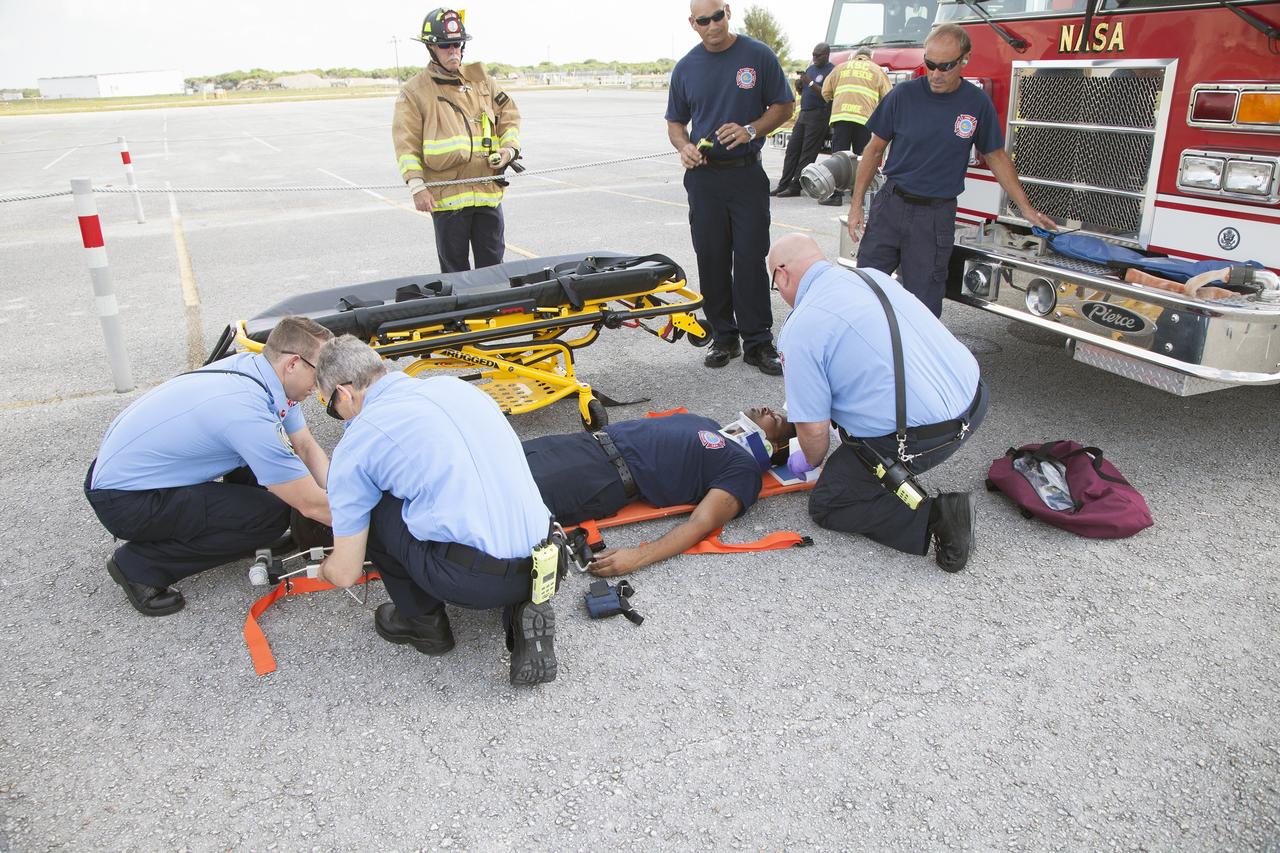
CAPE CANAVERAL, Fla. -- At NASA's Kennedy Space Center in Florida, a Fire Rescue team member serves as a "volunteer patient" for a simulated emergency operation. Paramedics are attaching a neck brace and leg splint. The activity taking place in Kennedy's Launch Complex 39 turn-basin parking lot was only one of several drills. It was part of a new training program that was developed by Kennedy's Fire Rescue department along with NASA Aircraft Operations to sharpen the skills needed to help rescue personnel learn how to collaborate with helicopter pilots in taking injured patients to hospitals as quickly as possible. Photo credit: NASA/Dan Casper
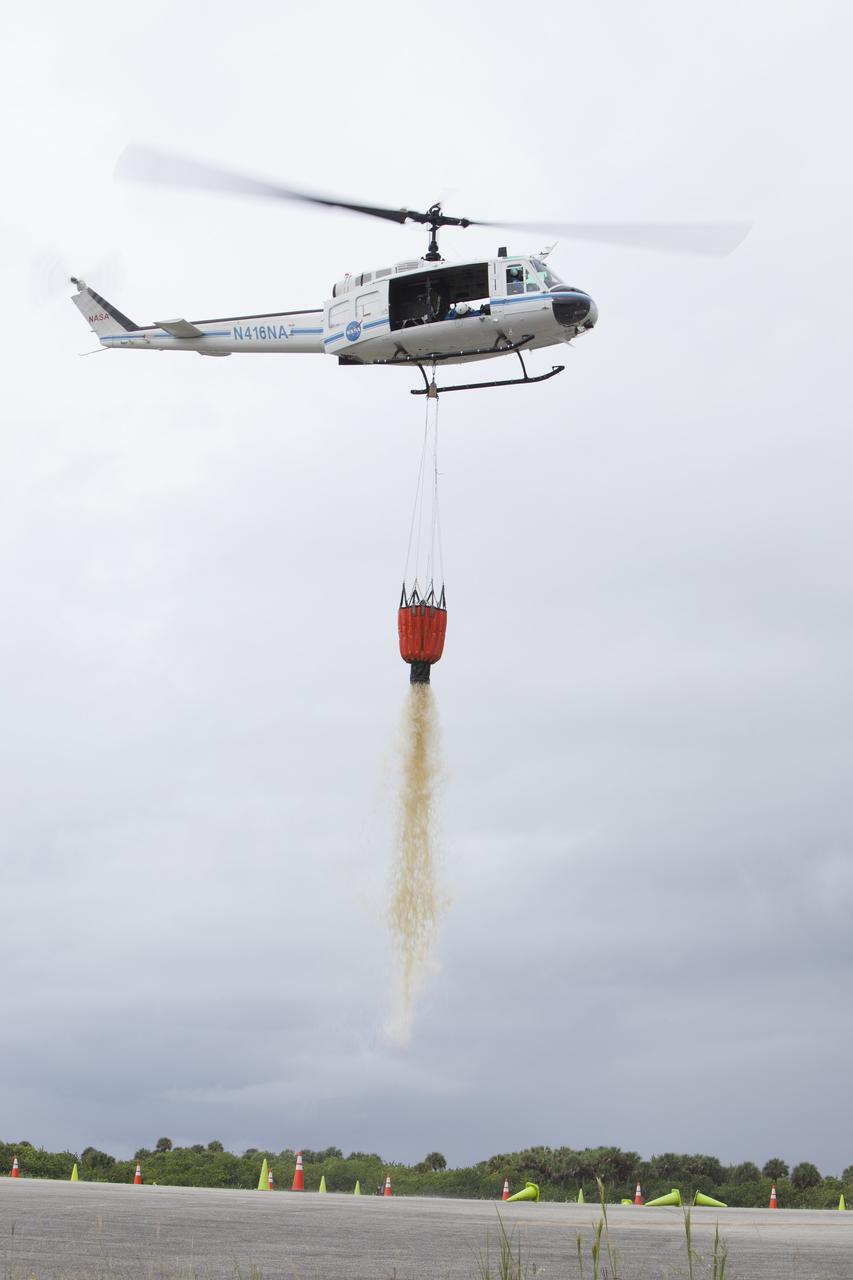
CAPE CANAVERAL, Fla. -- At NASA's Kennedy Space Center in Florida, a three-person helicopter crew recently practiced using a Bambi Bucket to pick up water from a nearby waterway and dropping it on simulated targets at the center’s Shuttle Landing Facility. Firefighters respond to wildfires with teams on the ground and in the air. The most up-to-date tools include helicopters that use Bambi Buckets large quantities of water. NASA Flight Operations teams are training to perfect the skills needed to ensure they are ready to use tools, such as the Bambi Bucket, in the event of an out-of-control blaze at the spaceport. Photo credit: NASA/Frankie Martin
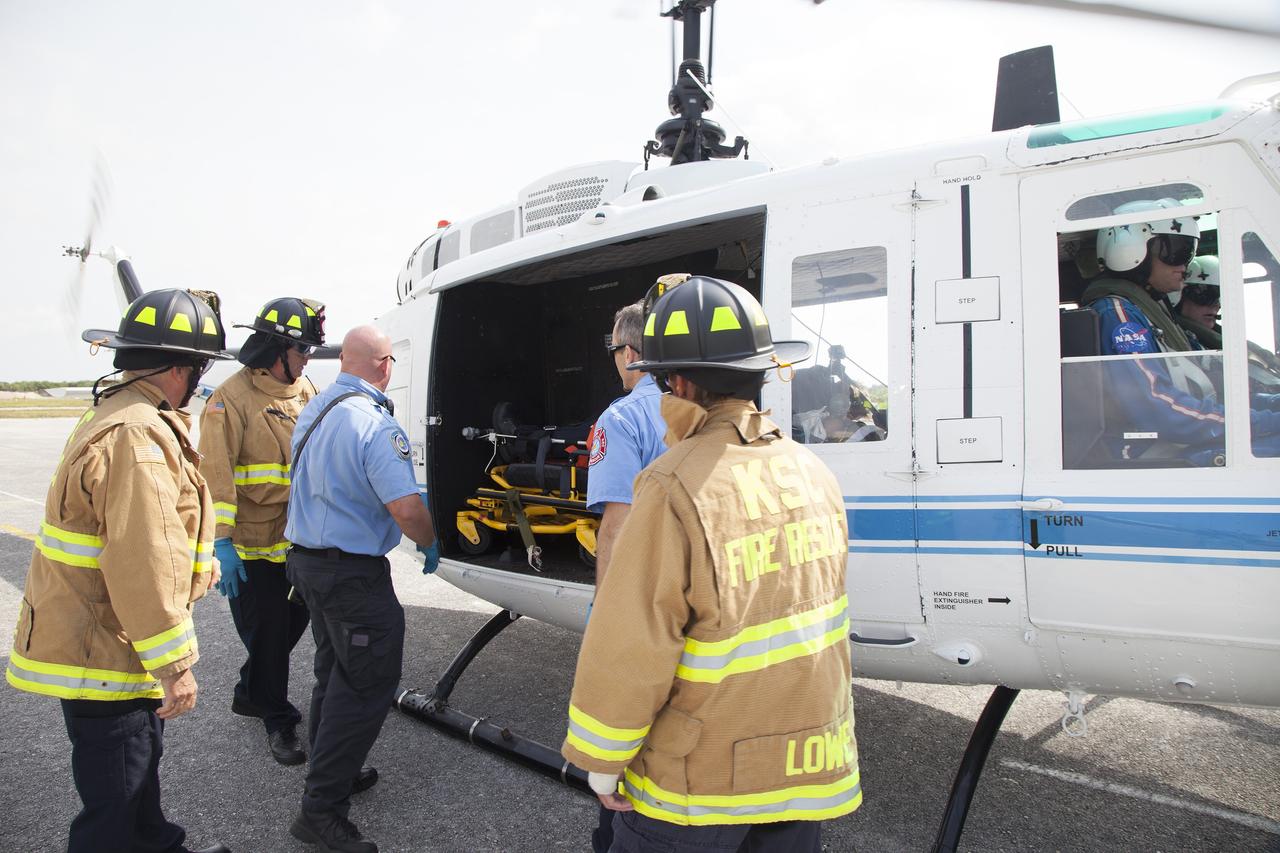
CAPE CANAVERAL, Fla. -- At NASA's Kennedy Space Center in Florida, a "volunteer patient" is carefully placed aboard a NASA helicopter as part of a training exercise. In an actual emergency, the pilots could fly an injured person from Kennedy to a nearby trauma center in minutes. The activity taking place in Kennedy's Launch Complex 39 turn-basin parking lot was only one of several drills. It was part of a new training program that was developed by Kennedy's Fire Rescue department along with NASA Aircraft Operations to sharpen the skills needed to help rescue personnel learn how to collaborate with helicopter pilots in taking injured patients to hospitals as quickly as possible. Photo credit: NASA/Dan Casper
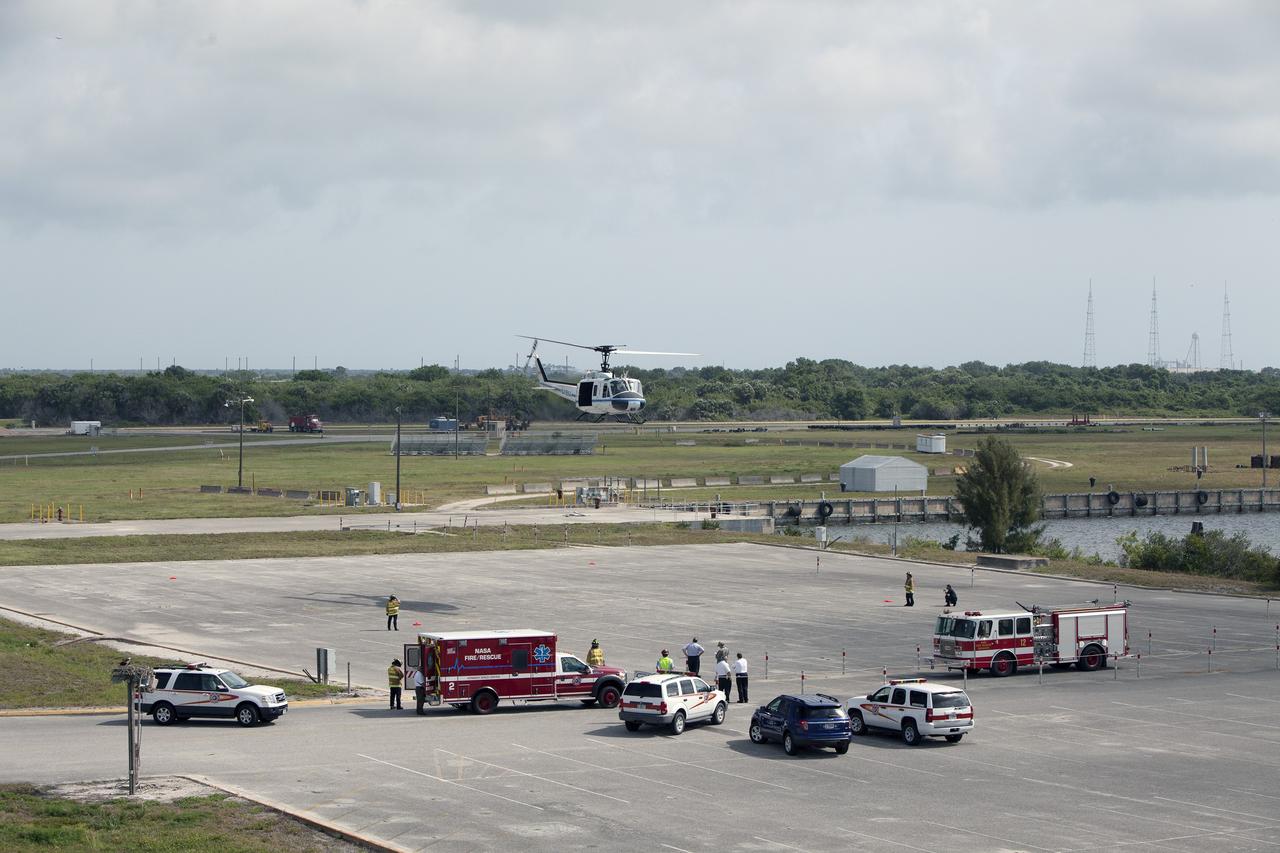
CAPE CANAVERAL, Fla. -- At NASA's Kennedy Space Center in Florida, agency helicopter takes off during a training exercise. The activity taking place in Kennedy's Launch Complex 39 turn-basin parking lot was only one of several drills. It was part of a new training program that was developed by Kennedy's Fire Rescue department along with NASA Aircraft Operations to sharpen the skills needed to help rescue personnel learn how to collaborate with helicopter pilots in taking injured patients to hospitals as quickly as possible. Photo credit: NASA/Dan Casper
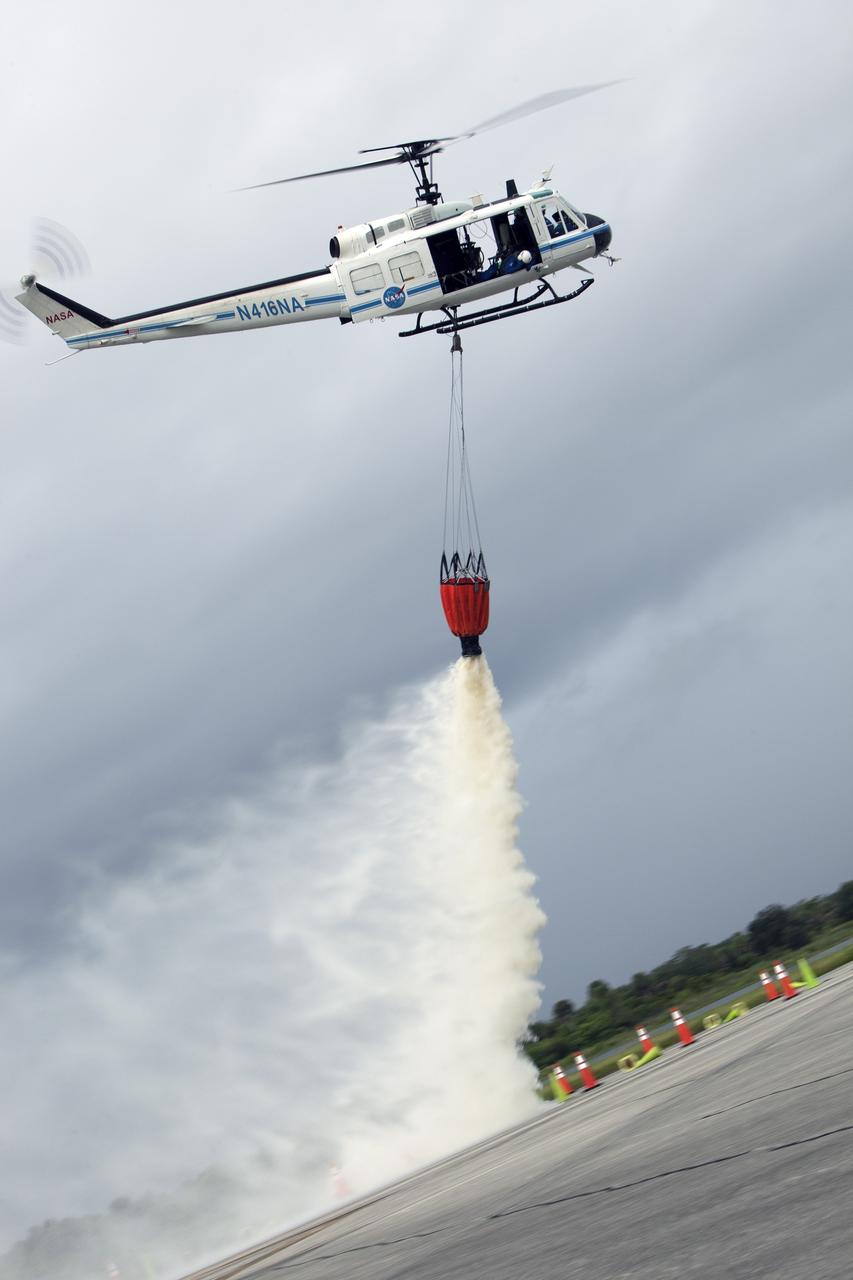
CAPE CANAVERAL, Fla. -- At NASA's Kennedy Space Center in Florida, a three-person helicopter crew recently practiced using a Bambi Bucket to pick up water from a nearby waterway and dropping it on simulated targets at the center’s Shuttle Landing Facility. Firefighters respond to wildfires with teams on the ground and in the air. The most up-to-date tools include helicopters that use Bambi Buckets large quantities of water. NASA Flight Operations teams are training to perfect the skills needed to ensure they are ready to use tools, such as the Bambi Bucket, in the event of an out-of-control blaze at the spaceport. Photo credit: NASA/Frankie Martin
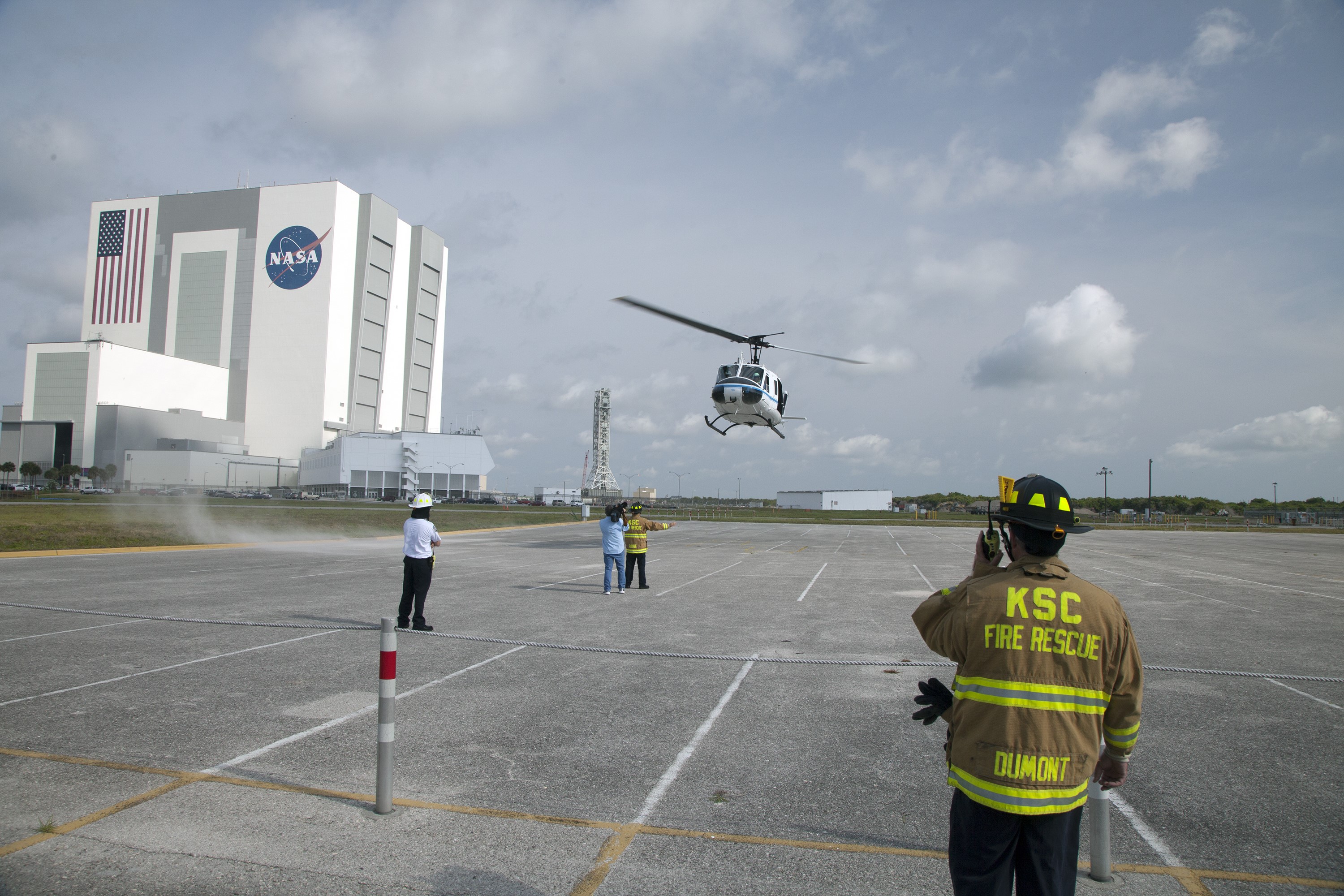
CAPE CANAVERAL, Fla. -- At NASA's Kennedy Space Center in Florida, agency Fire Rescue personnel direct an agency helicopter in for a landing during a training exercise. The activity taking place in Kennedy's Launch Complex 39 turn-basin parking lot was only one of several drills. It was part of a new training program that was developed by Kennedy's Fire Rescue department along with NASA Aircraft Operations to sharpen the skills needed to help rescue personnel learn how to collaborate with helicopter pilots in taking injured patients to hospitals as quickly as possible. Photo credit: NASA/Dan Casper
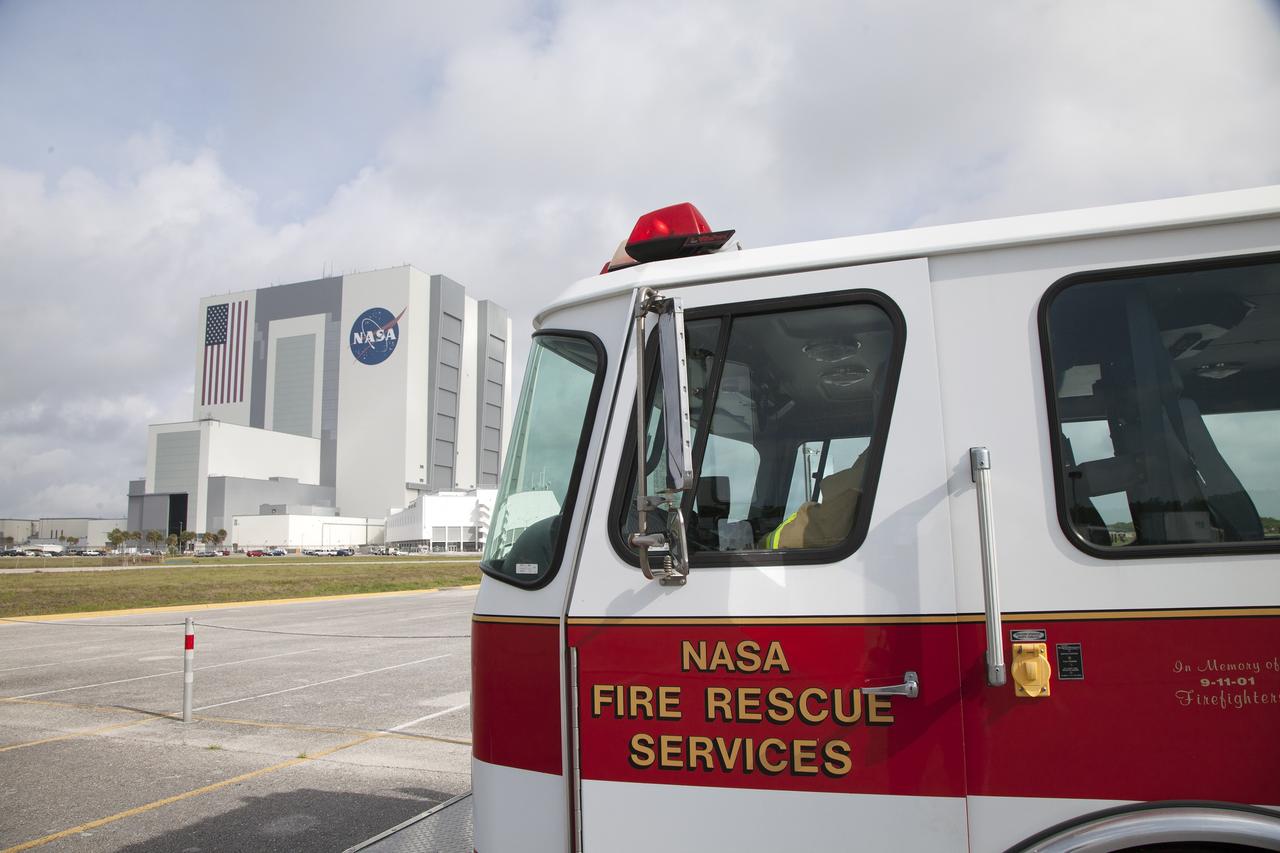
CAPE CANAVERAL, Fla. -- At NASA's Kennedy Space Center in Florida, a Fire Rescue vehicle stands by in a parking area near the Vehicle Assembly Building for training with pilots in NASA Aircraft Operations. The exercise is designed to develop procedures for using agency helicopters to transport injured patients to a local hospital. The activity taking place in Kennedy's Launch Complex 39 turn-basin parking lot was only one of several drills. It was part of a new training program that was developed by Kennedy's Fire Rescue department along with NASA Aircraft Operations to sharpen the skills needed to help rescue personnel learn how to collaborate with helicopter pilots in taking injured patients to hospitals as quickly as possible. Photo credit: NASA/Dan Casper
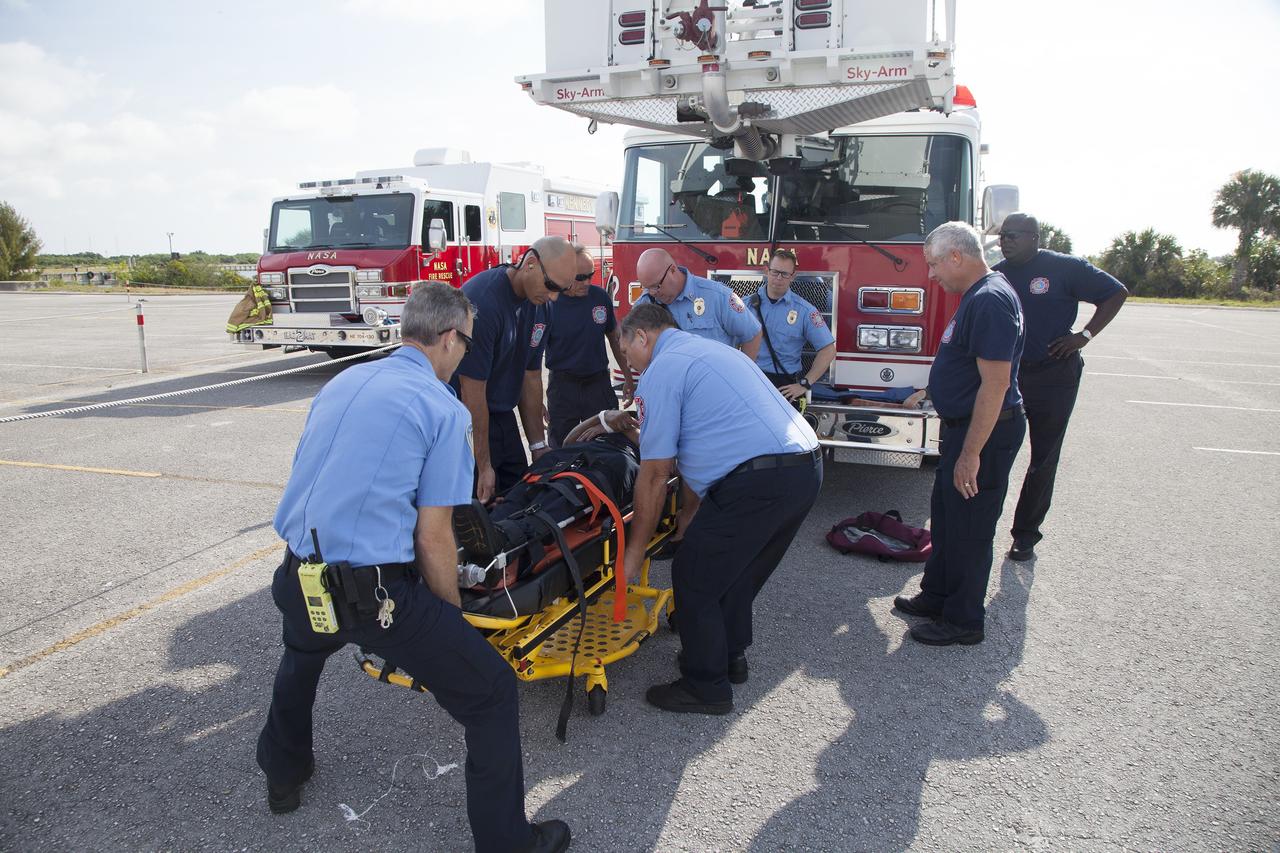
CAPE CANAVERAL, Fla. -- At NASA's Kennedy Space Center in Florida, a Fire Rescue team member serves as a "volunteer patient" for a simulated emergency operation. Paramedics prepare to move his stretcher to an awaiting helicopter. The activity taking place in Kennedy's Launch Complex 39 turn-basin parking lot was only one of several drills. It was part of a new training program that was developed by Kennedy's Fire Rescue department along with NASA Aircraft Operations to sharpen the skills needed to help rescue personnel learn how to collaborate with helicopter pilots in taking injured patients to hospitals as quickly as possible. Photo credit: NASA/Dan Casper
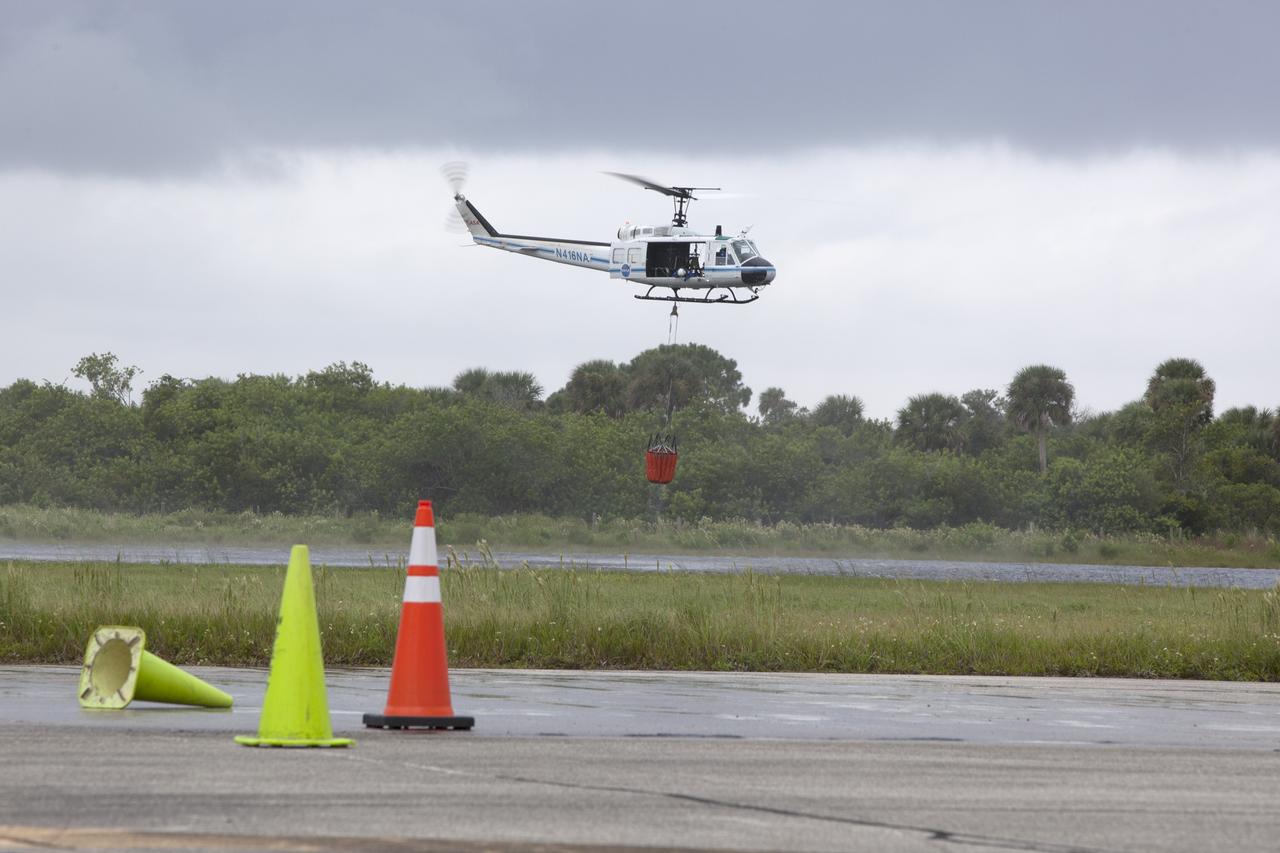
CAPE CANAVERAL, Fla. -- At NASA's Kennedy Space Center in Florida, the crew of the NASA helicopter carefully lifts a Bambi Bucket from a canal near the Shuttle Landing Facility. Minutes later, the water was dropped on the target cones in the foreground, using techniques that would be employed to fight a brush fire at the Kennedy Space Center. Firefighters respond to wildfires with teams on the ground and in the air. The most up-to-date tools include helicopters that use Bambi Buckets large quantities of water. NASA Flight Operations teams are training to perfect the skills needed to ensure they are ready to use tools, such as the Bambi Bucket, in the event of an out-of-control blaze at the spaceport. Photo credit: NASA/Frankie Martin
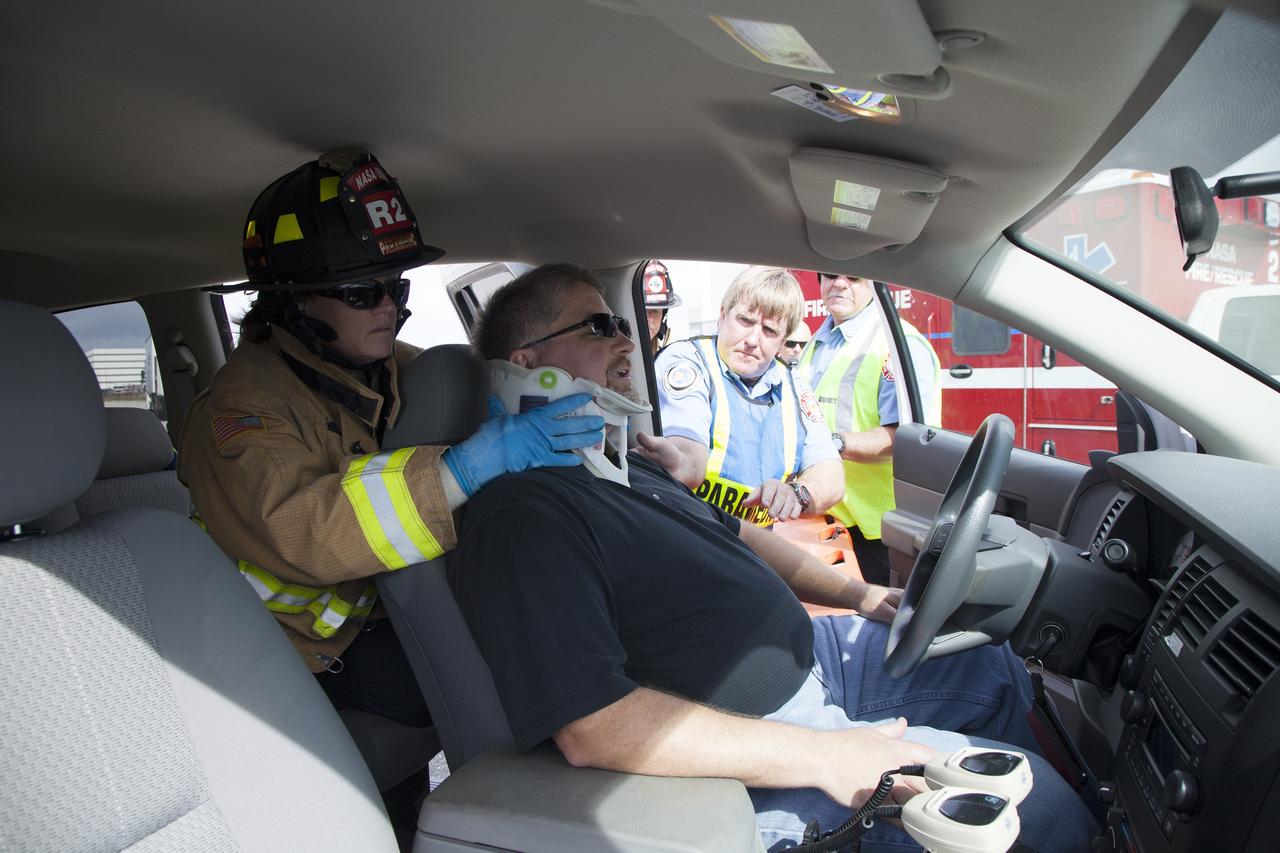
CAPE CANAVERAL, Fla. -- At NASA's Kennedy Space Center in Florida, Lois Dominguez of Chenega Security & Support Solutions, who works in Fire Rescue operations, places a neck brace on George Jacobs, NASA deputy director NASA Center Operations, who is serving as a "volunteer patient." The activity taking place in Kennedy's Launch Complex 39 turn-basin parking lot was only one of several drills. It was part of a new training program that was developed by Kennedy's Fire Rescue department along with NASA Aircraft Operations to sharpen the skills needed to help rescue personnel learn how to collaborate with helicopter pilots in taking injured patients to hospitals as quickly as possible. Photo credit: NASA/Dan Casper
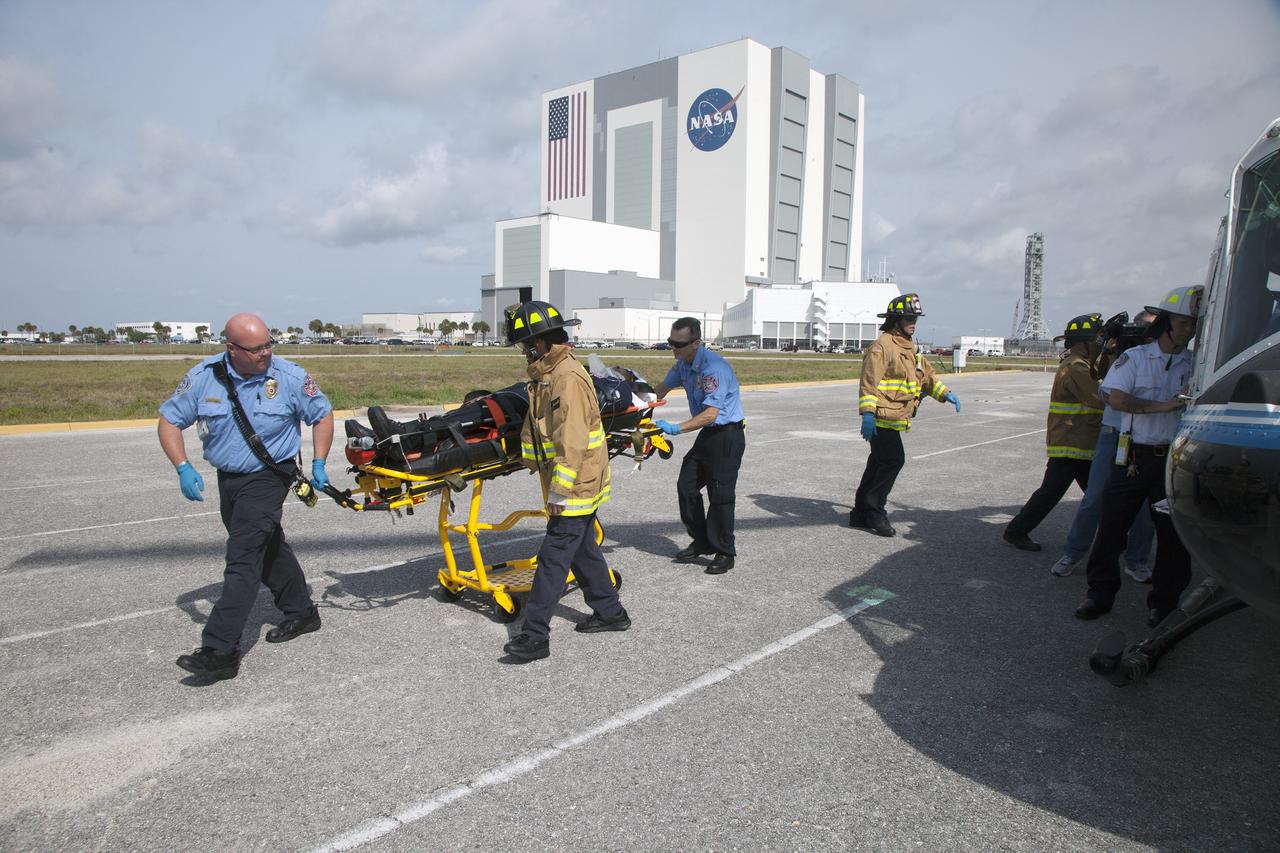
CAPE CANAVERAL, Fla. -- At NASA's Kennedy Space Center in Florida, paramedics and Fire Rescue personnel move a stretcher away from a helicopter after they practiced placing the "volunteer patient" aboard during a training exercise. The activity taking place in Kennedy's Launch Complex 39 turn-basin parking lot was only one of several drills. It was part of a new training program that was developed by Kennedy's Fire Rescue department along with NASA Aircraft Operations to sharpen the skills needed to help rescue personnel learn how to collaborate with helicopter pilots in taking injured patients to hospitals as quickly as possible. Photo credit: NASA/Dan Casper
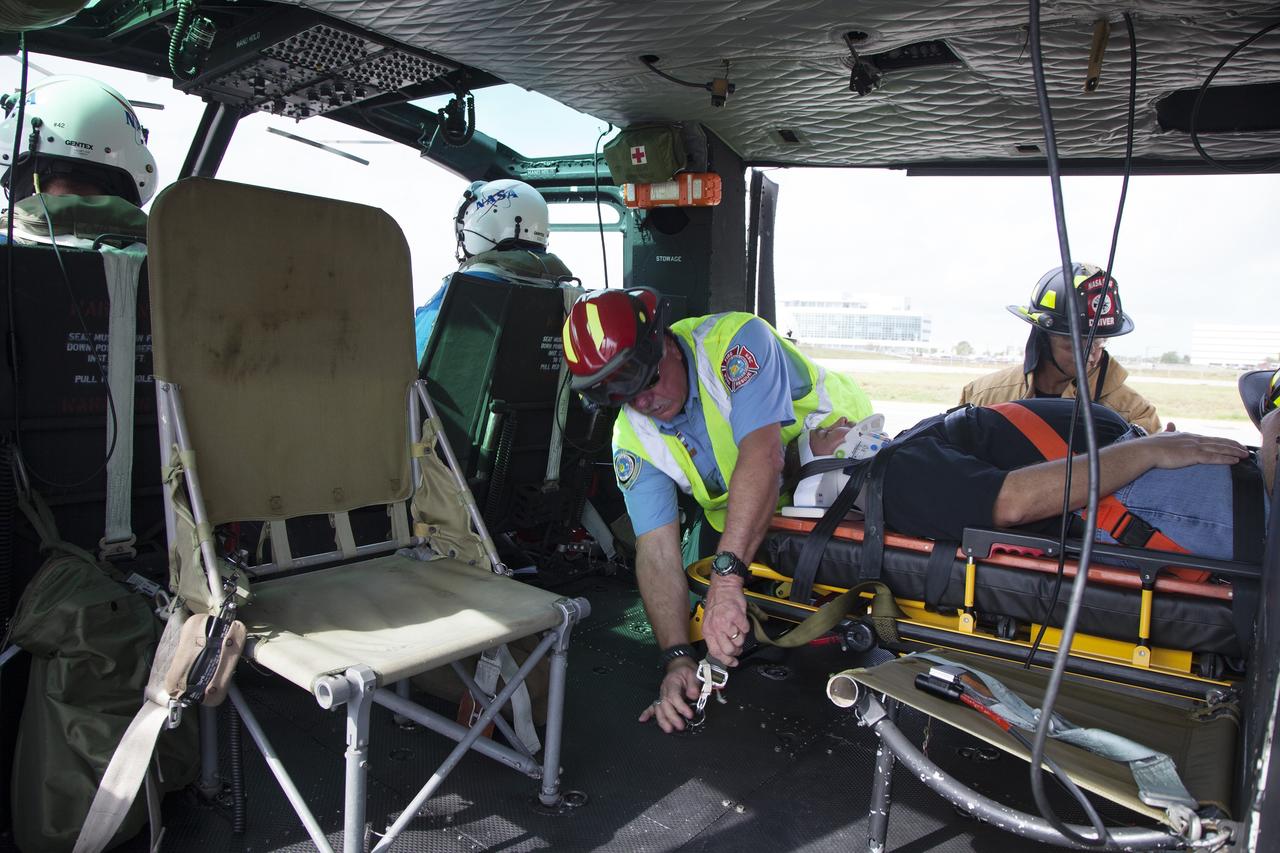
CAPE CANAVERAL, Fla. -- For a training exercise, "volunteer patient" George Jacobs, NASA's deputy director of Center Operations, is carefully placed aboard an agency helicopter at the Kennedy Space Center in Florida. In an actual emergency, the pilots could fly an injured person from Kennedy to a nearby trauma center in minutes. The activity taking place in Kennedy's Launch Complex 39 turn-basin parking lot was only one of several drills. It was part of a new training program that was developed by Kennedy's Fire Rescue department along with NASA Aircraft Operations to sharpen the skills needed to help rescue personnel learn how to collaborate with helicopter pilots in taking injured patients to hospitals as quickly as possible. Photo credit: NASA/Dan Casper

CAPE CANAVERAL, Fla. -- At NASA's Kennedy Space Center in Florida, an agency helicopter flies over the Vehicle Assembly Building prior to landing for a training exercise. The activity taking place in Kennedy's Launch Complex 39 turn-basin parking lot was only one of several drills. It was part of a new training program that was developed by Kennedy's Fire Rescue department along with NASA Aircraft Operations to sharpen the skills needed to help rescue personnel learn how to collaborate with helicopter pilots in taking injured patients to hospitals as quickly as possible. Photo credit: NASA/Dan Casper
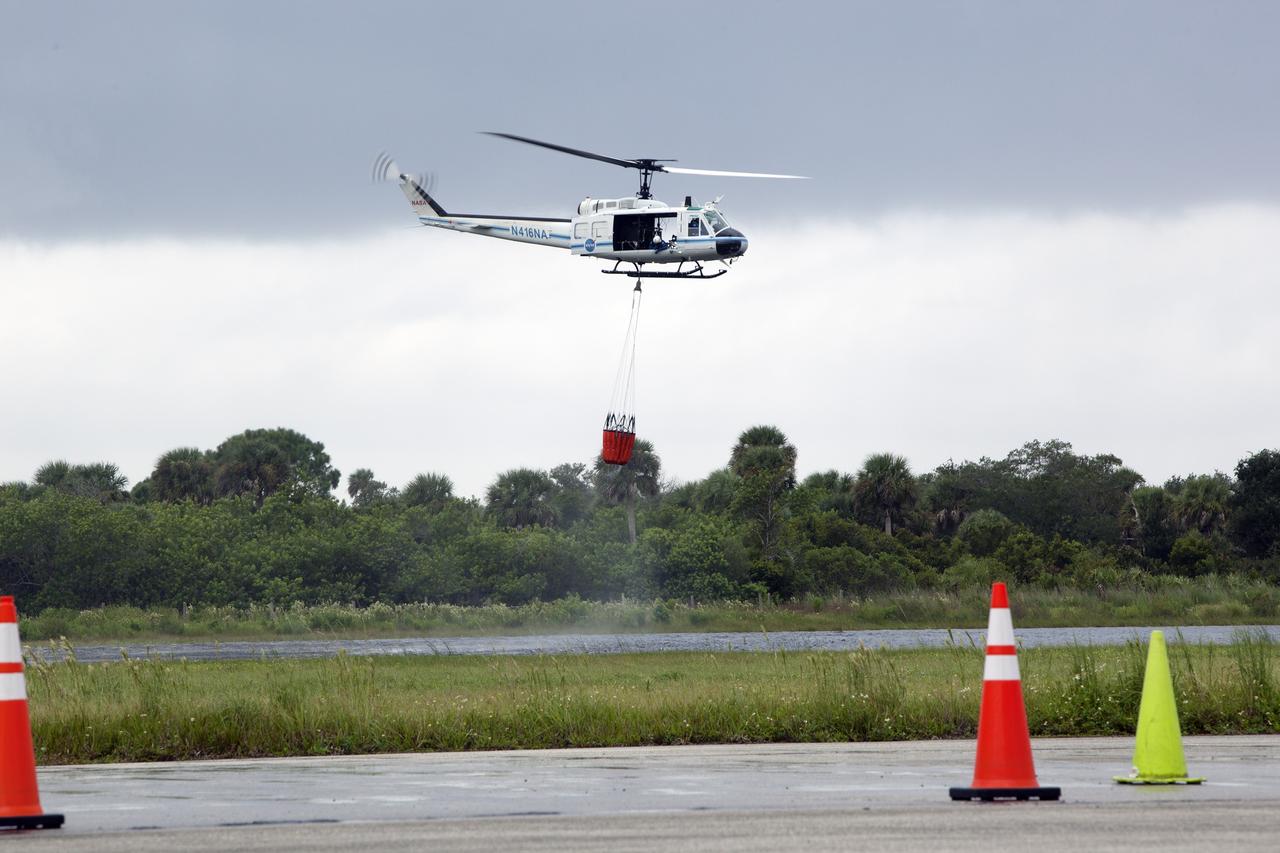
CAPE CANAVERAL, Fla. -- At NASA's Kennedy Space Center in Florida, the crew of the NASA helicopter carefully lifts a Bambi Bucket from a canal near the Shuttle Landing Facility. Minutes later, the water was dropped on the target cones in the foreground, using techniques that would be employed to fight a brush fire at the Kennedy Space Center. Firefighters respond to wildfires with teams on the ground and in the air. The most up-to-date tools include helicopters that use Bambi Buckets large quantities of water. NASA Flight Operations teams are training to perfect the skills needed to ensure they are ready to use tools, such as the Bambi Bucket, in the event of an out-of-control blaze at the spaceport. Photo credit: NASA/Frankie Martin

CAPE CANAVERAL, Fla. -- At NASA's Kennedy Space Center in Florida, agency Fire Rescue personnel direct an agency helicopter in for a landing during a training exercise. The activity taking place in Kennedy's Launch Complex 39 turn-basin parking lot was only one of several drills. It was part of a new training program that was developed by Kennedy's Fire Rescue department along with NASA Aircraft Operations to sharpen the skills needed to help rescue personnel learn how to collaborate with helicopter pilots in taking injured patients to hospitals as quickly as possible. Photo credit: NASA/Dan Casper
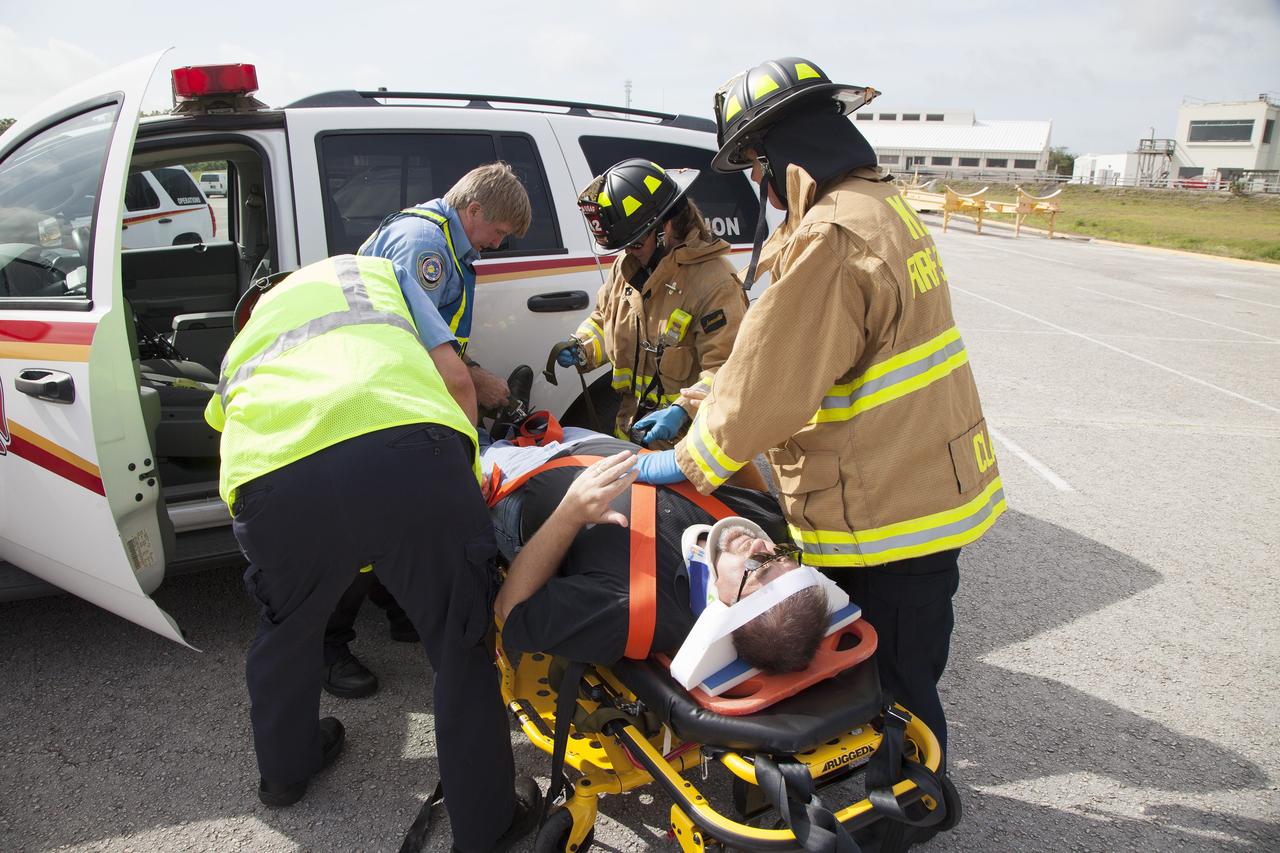
CAPE CANAVERAL, Fla. -- At NASA's Kennedy Space Center in Florida, George Jacobs, NASA's deputy director of Center Operations, serves as a "volunteer patient" and is secured on a stretcher for a simulated emergency operation. The activity taking place in Kennedy's Launch Complex 39 turn-basin parking lot was only one of several drills. It was part of a new training program that was developed by Kennedy's Fire Rescue department along with NASA Aircraft Operations to sharpen the skills needed to help rescue personnel learn how to collaborate with helicopter pilots in taking injured patients to hospitals as quickly as possible. Photo credit: NASA/Dan Casper
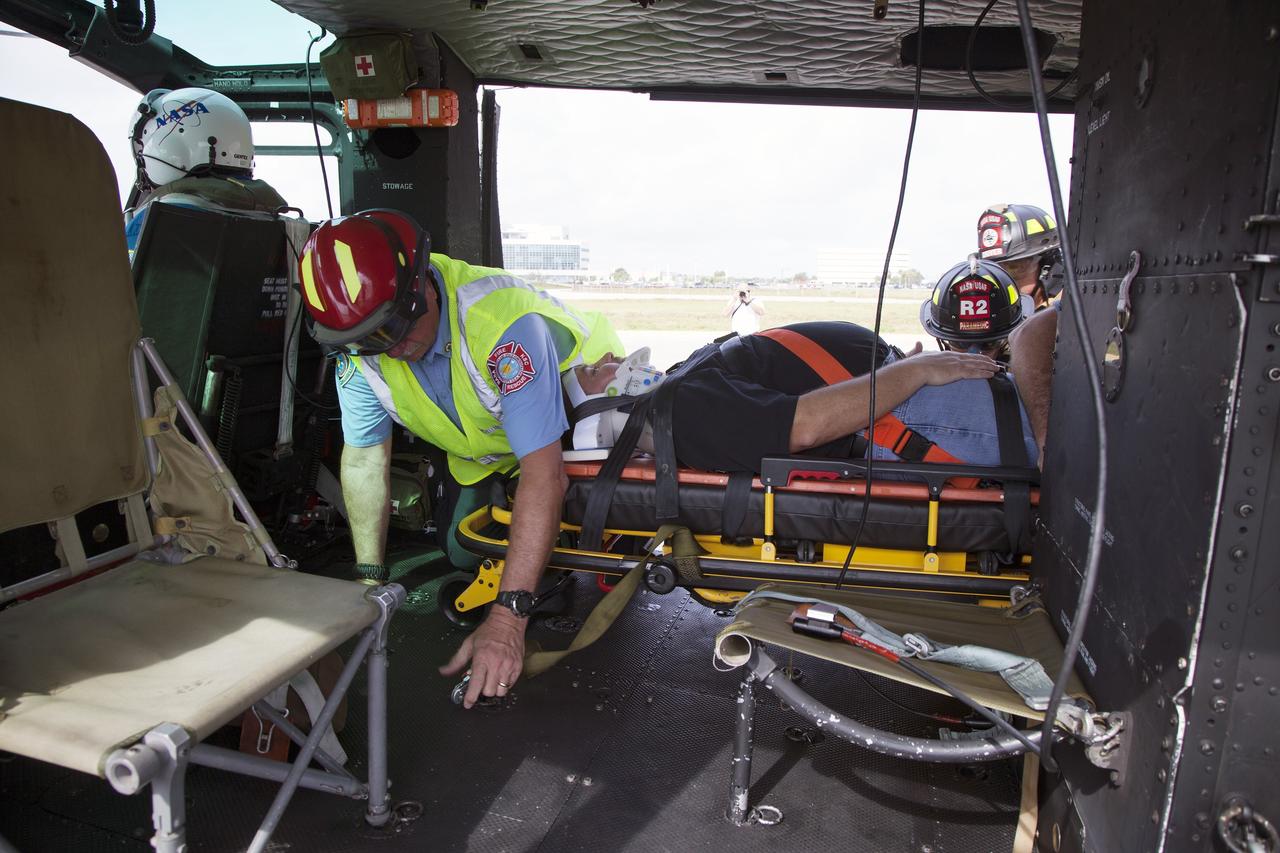
CAPE CANAVERAL, Fla. -- For a training exercise, "volunteer patient" George Jacobs, NASA's deputy director of Center Operations, is carefully placed aboard an agency helicopter at the Kennedy Space Center in Florida. In an actual emergency, the pilots could fly an injured person from Kennedy to a nearby trauma center in minutes. The activity taking place in Kennedy's Launch Complex 39 turn-basin parking lot was only one of several drills. It was part of a new training program that was developed by Kennedy's Fire Rescue department along with NASA Aircraft Operations to sharpen the skills needed to help rescue personnel learn how to collaborate with helicopter pilots in taking injured patients to hospitals as quickly as possible. Photo credit: NASA/Dan Casper
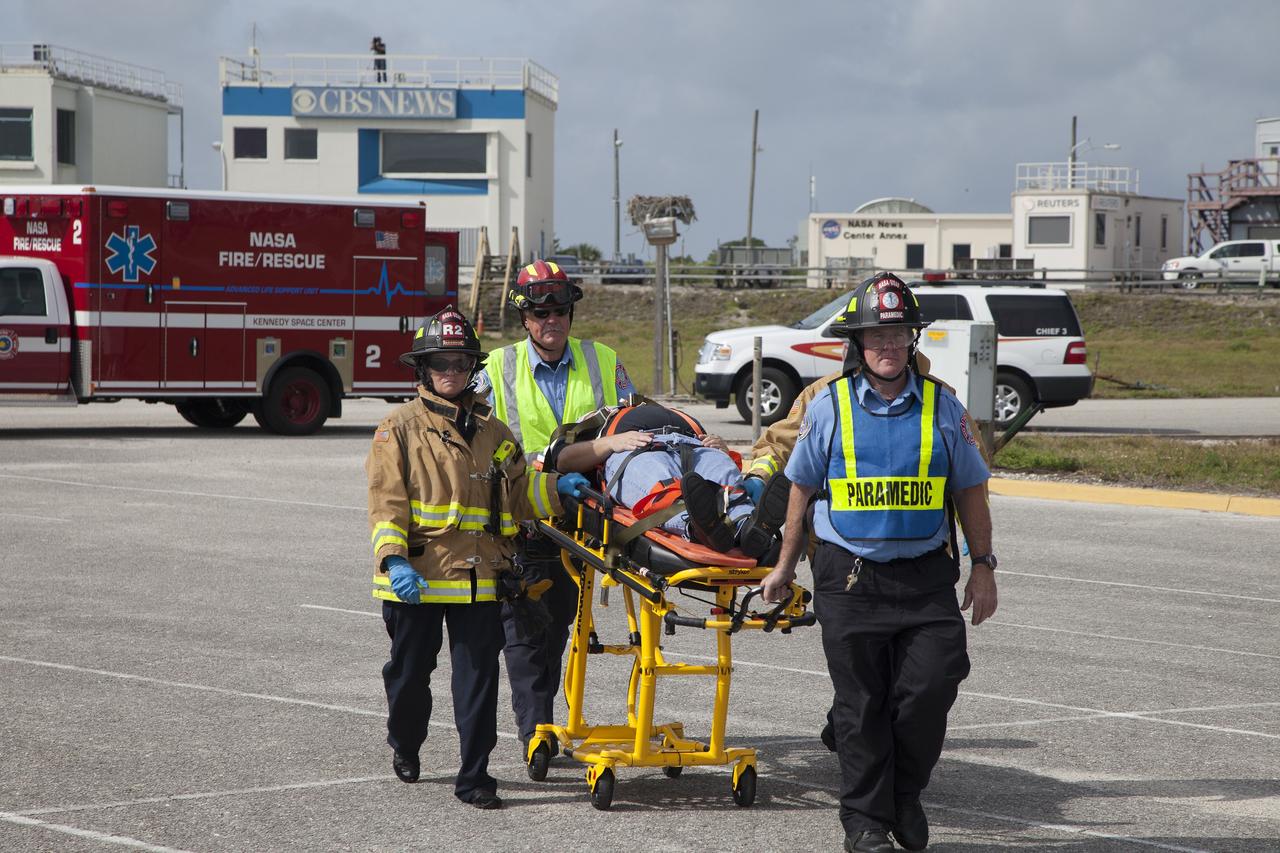
CAPE CANAVERAL, Fla. -- At NASA's Kennedy Space Center in Florida, Paramedics and Fire Rescue personnel move a stretcher to the waiting helicopter as they work quickly to have the patient ready to transport after he was removed from a vehicle. The activity taking place in Kennedy's Launch Complex 39 turn-basin parking lot was only one of several drills. It was part of a new training program that was developed by Kennedy's Fire Rescue department along with NASA Aircraft Operations to sharpen the skills needed to help rescue personnel learn how to collaborate with helicopter pilots in taking injured patients to hospitals as quickly as possible. Photo credit: NASA/Dan Casper
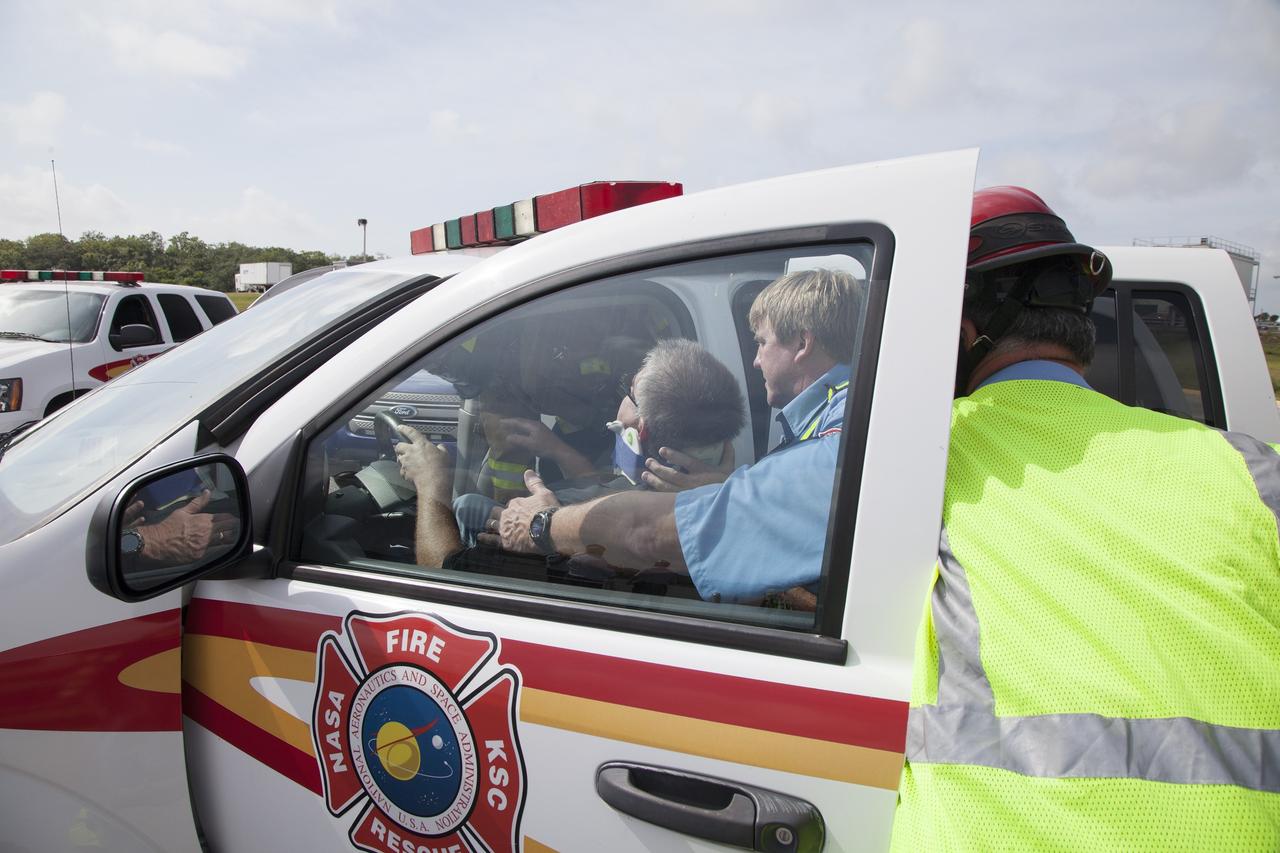
CAPE CANAVERAL, Fla. -- At NASA's Kennedy Space Center in Florida, paramedics remove George Jacobs, NASA's deputy director of Center Operations, from a vehicle simulating a rescue operation. Jacobs served as a "volunteer patient" during the activity. The activity taking place in Kennedy's Launch Complex 39 turn-basin parking lot was only one of several drills. It was part of a new training program that was developed by Kennedy's Fire Rescue department along with NASA Aircraft Operations to sharpen the skills needed to help rescue personnel learn how to collaborate with helicopter pilots in taking injured patients to hospitals as quickly as possible. Photo credit: NASA/Dan Casper
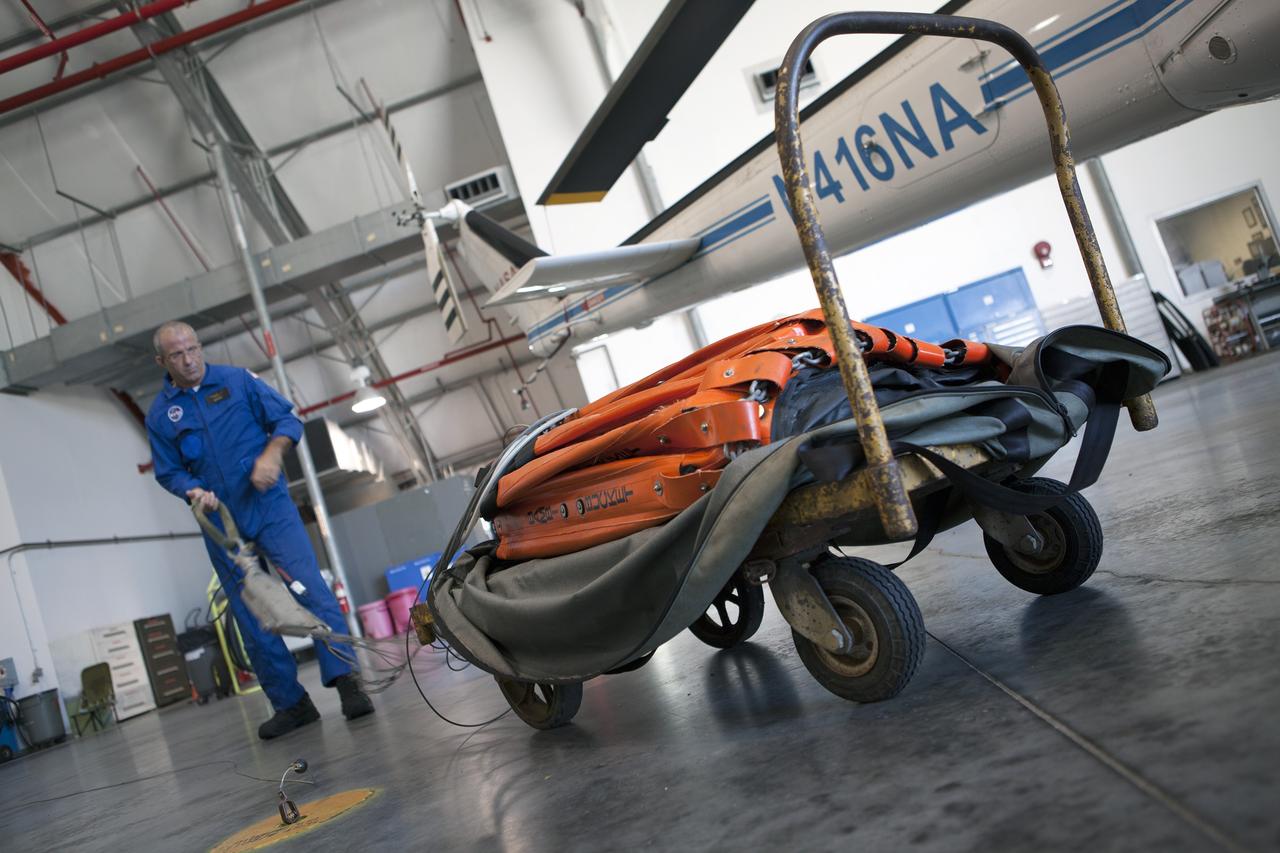
CAPE CANAVERAL, Fla. -- At NASA's Kennedy Space Center in Florida, helicopter crew chief Mark Smith, of URS Federal Technical Services Inc., checks out a Bambi Bucket prior to a training exercise to practice firefighting techniques. A three-person helicopter crew recently practiced using a Bambi Bucket to pick up water from a nearby waterway and dropping it on simulated targets at the center’s Shuttle Landing Facility. Firefighters respond to wildfires with teams on the ground and in the air. The most up-to-date tools include helicopters that use Bambi Buckets large quantities of water. NASA Flight Operations teams are training to perfect the skills needed to ensure they are ready to use tools, such as the Bambi Bucket, in the event of an out-of-control blaze at the spaceport. Photo credit: NASA/Frankie Martin
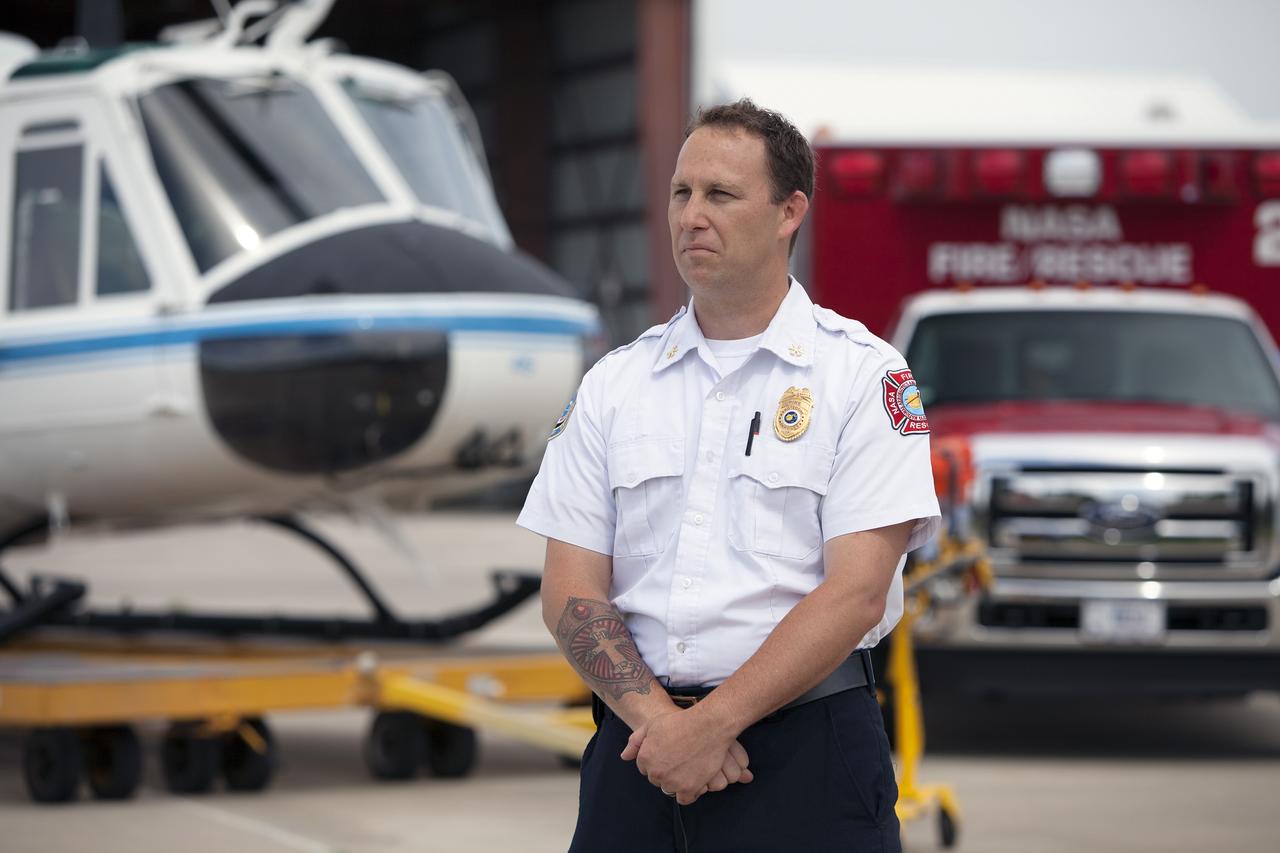
CAPE CANAVERAL, Fla. -- At NASA's Kennedy Space Center in Florida, Mark Huetter, assistant chief of Training for the center's Fire Rescue Department, is interviewed near the Shuttle Landing Facility. He discussed working with pilots in NASA Aircraft Operations to develop procedures for using agency helicopters to transport injured patients to a local hospital. The training activity took place in Kennedy's Launch Complex 39 turn-basin parking lot. It was part of a new training program developed by Kennedy's Fire Rescue department along with NASA Aircraft Operations to sharpen the skills needed to help rescue personnel learn how to collaborate with helicopter pilots in taking injured patients to hospitals as quickly as possible. Photo credit: NASA/Dimitri Gerondidakis
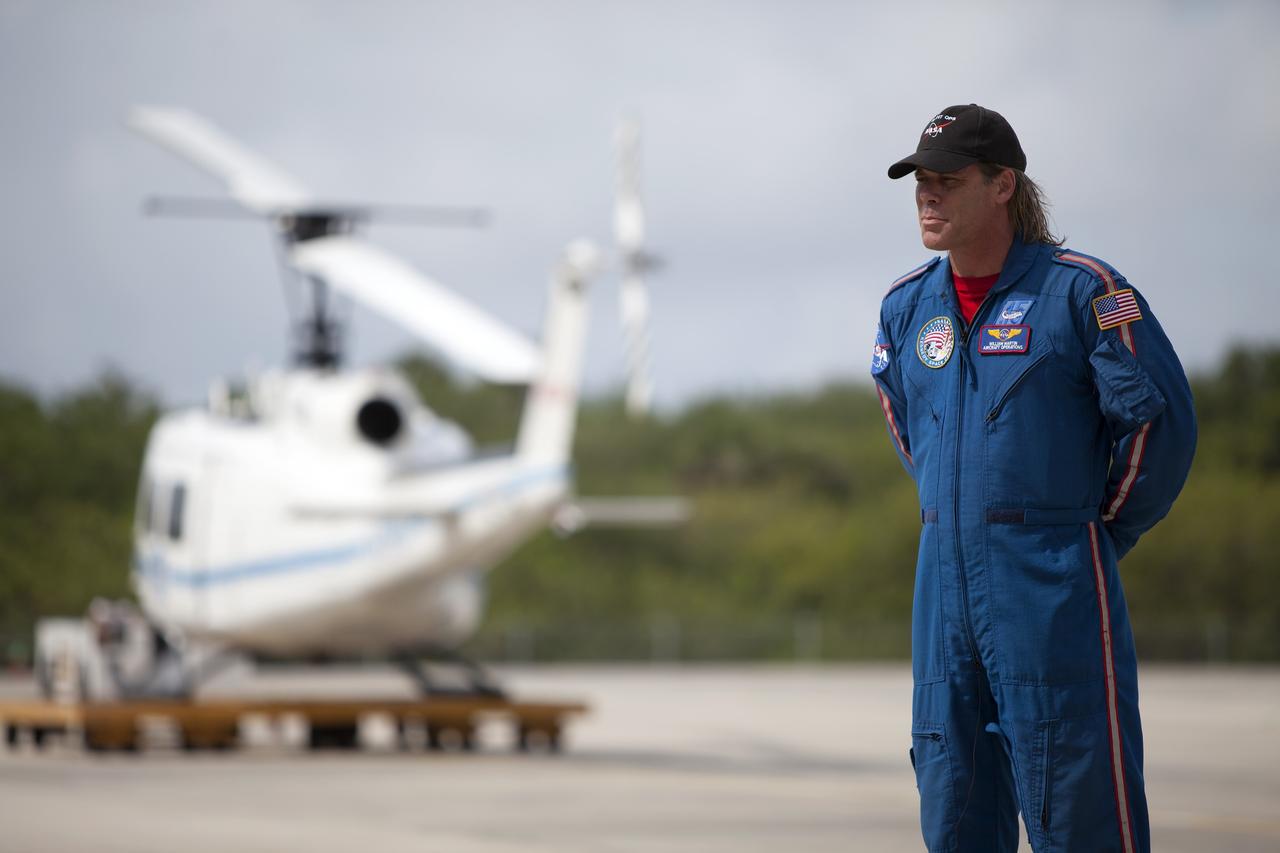
CAPE CANAVERAL, Fla. -- At NASA's Kennedy Space Center in Florida, Bill Martin, a URS Federal Technical Services helicopter pilot in the agency's Aircraft Operations, is interviewed near the Shuttle Landing Facility. He discussed working with spaceport Fire Rescue personnel to develop procedures for using agency helicopters to transport injured patients to a local hospital. The training activity took place in Kennedy's Launch Complex 39 turn-basin parking lot. It was part of a new training program developed by Kennedy's Fire Rescue department along with NASA Aircraft Operations to sharpen the skills needed to help rescue personnel learn how to collaborate with helicopter pilots in taking injured patients to hospitals as quickly as possible. Photo credit: NASA/Dimitri Gerondidakis
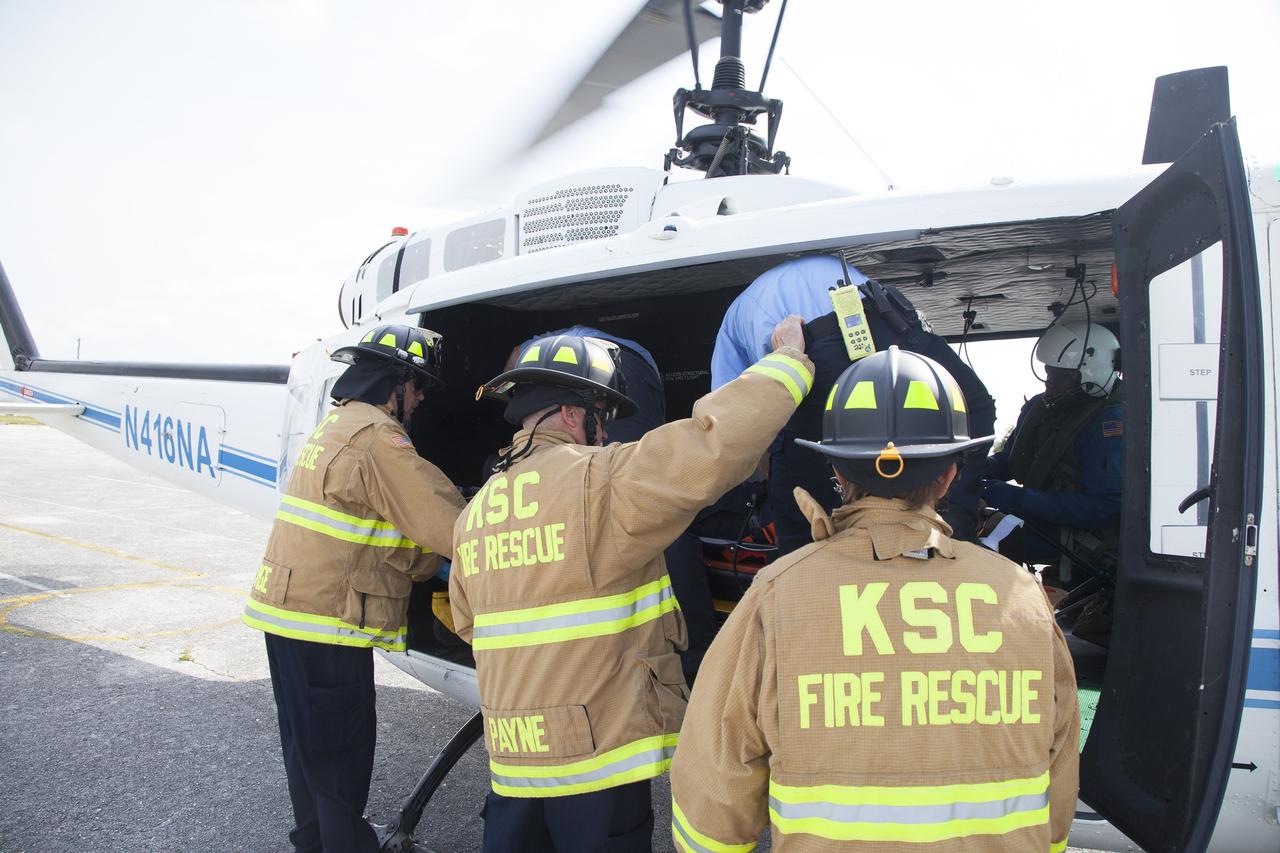
CAPE CANAVERAL, Fla. -- At NASA's Kennedy Space Center in Florida, a "volunteer patient" is carefully placed aboard a NASA helicopter as part of a training exercise. In an actual emergency, the pilots could fly an injured person from Kennedy to a nearby trauma center in minutes. The activity taking place in Kennedy's Launch Complex 39 turn-basin parking lot was only one of several drills. It was part of a new training program that was developed by Kennedy's Fire Rescue department along with NASA Aircraft Operations to sharpen the skills needed to help rescue personnel learn how to collaborate with helicopter pilots in taking injured patients to hospitals as quickly as possible. Photo credit: NASA/Dan Casper
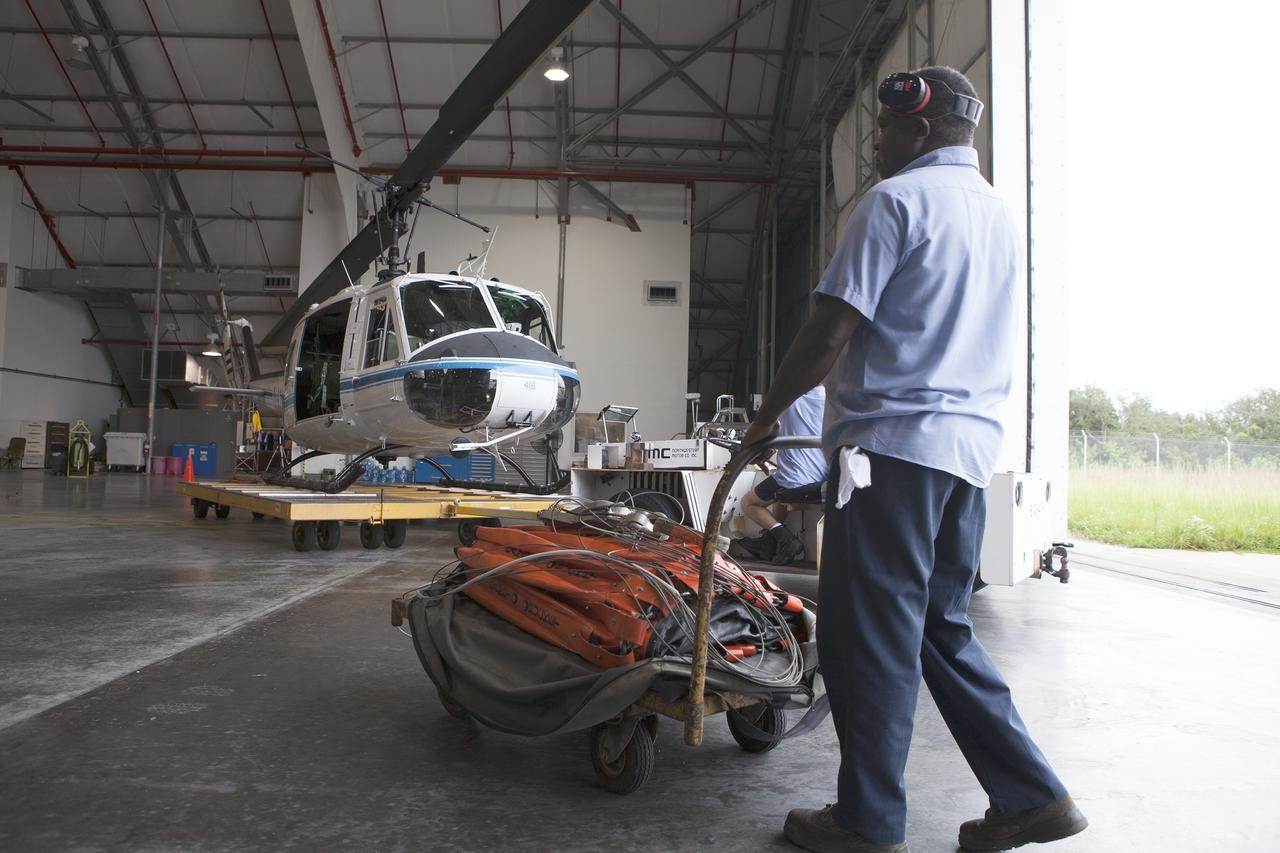
CAPE CANAVERAL, Fla. -- At NASA's Kennedy Space Center in Florida, John Miller of URS Federal Technical Services moves a Bambi Bucket and its associated cables are moved outside the Shuttle Landing Facility hangar prior to a training exercise to practice firefighting techniques. A three-person helicopter crew recently practiced using a Bambi Bucket to pick up water from a nearby waterway and dropping it on simulated targets at the center’s Shuttle Landing Facility. Firefighters respond to wildfires with teams on the ground and in the air. The most up-to-date tools include helicopters that use Bambi Buckets large quantities of water. NASA Flight Operations teams are training to perfect the skills needed to ensure they are ready to use tools, such as the Bambi Bucket, in the event of an out-of-control blaze at the spaceport. Photo credit: NASA/Frankie Martin