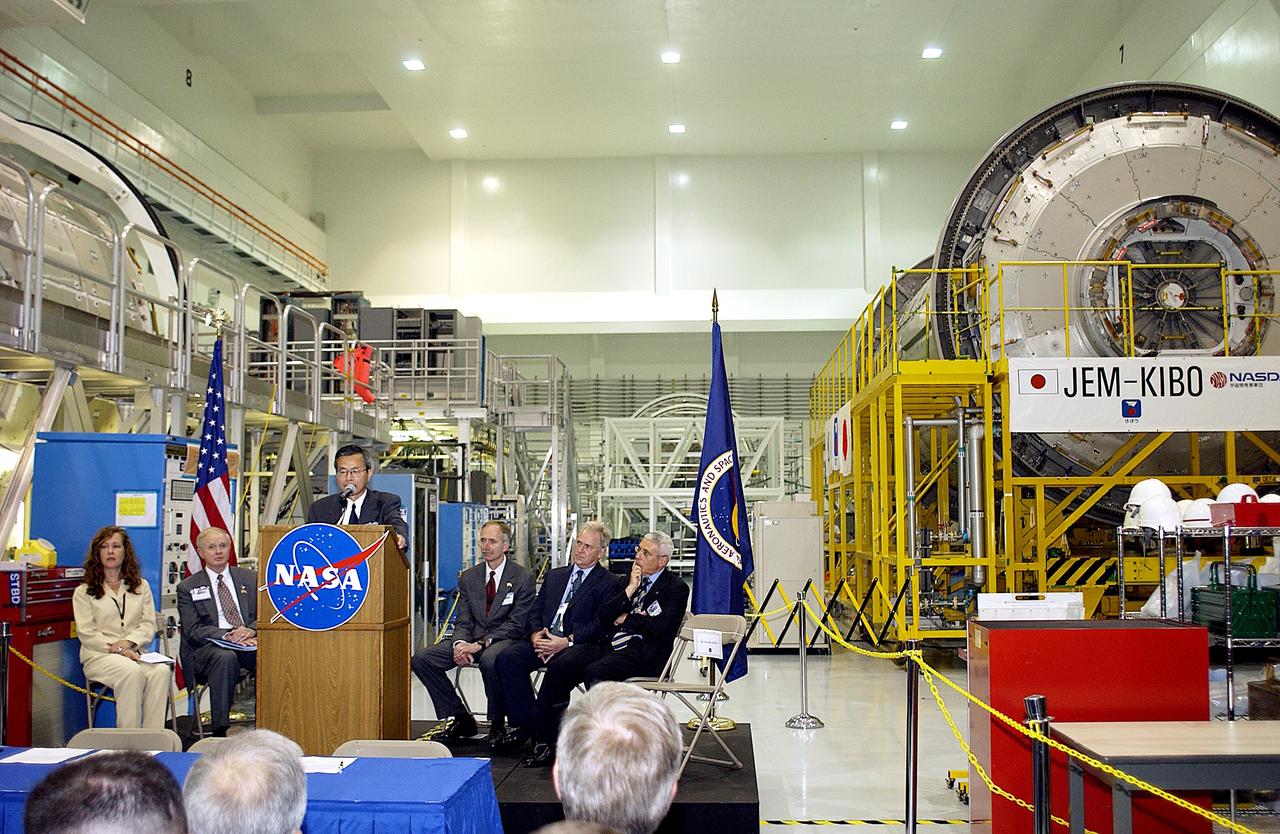
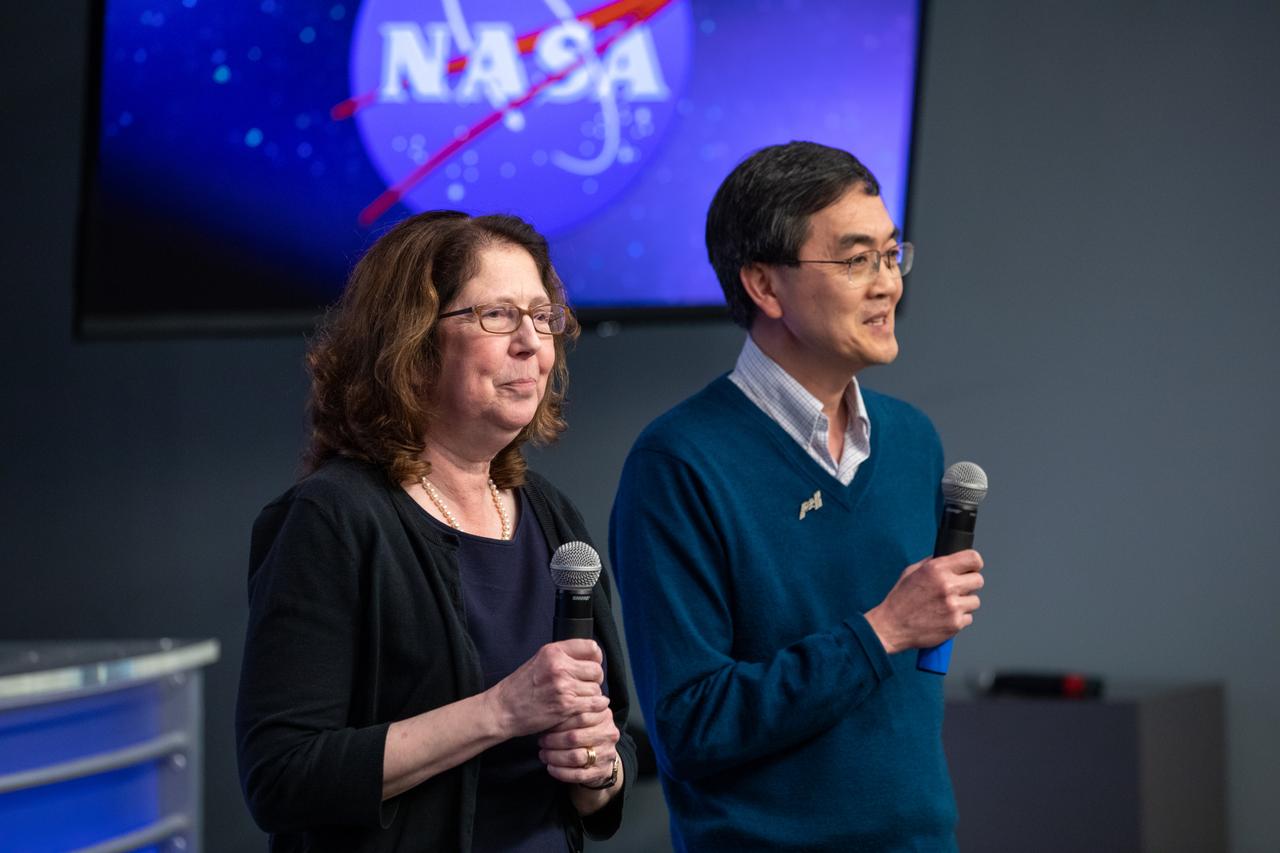
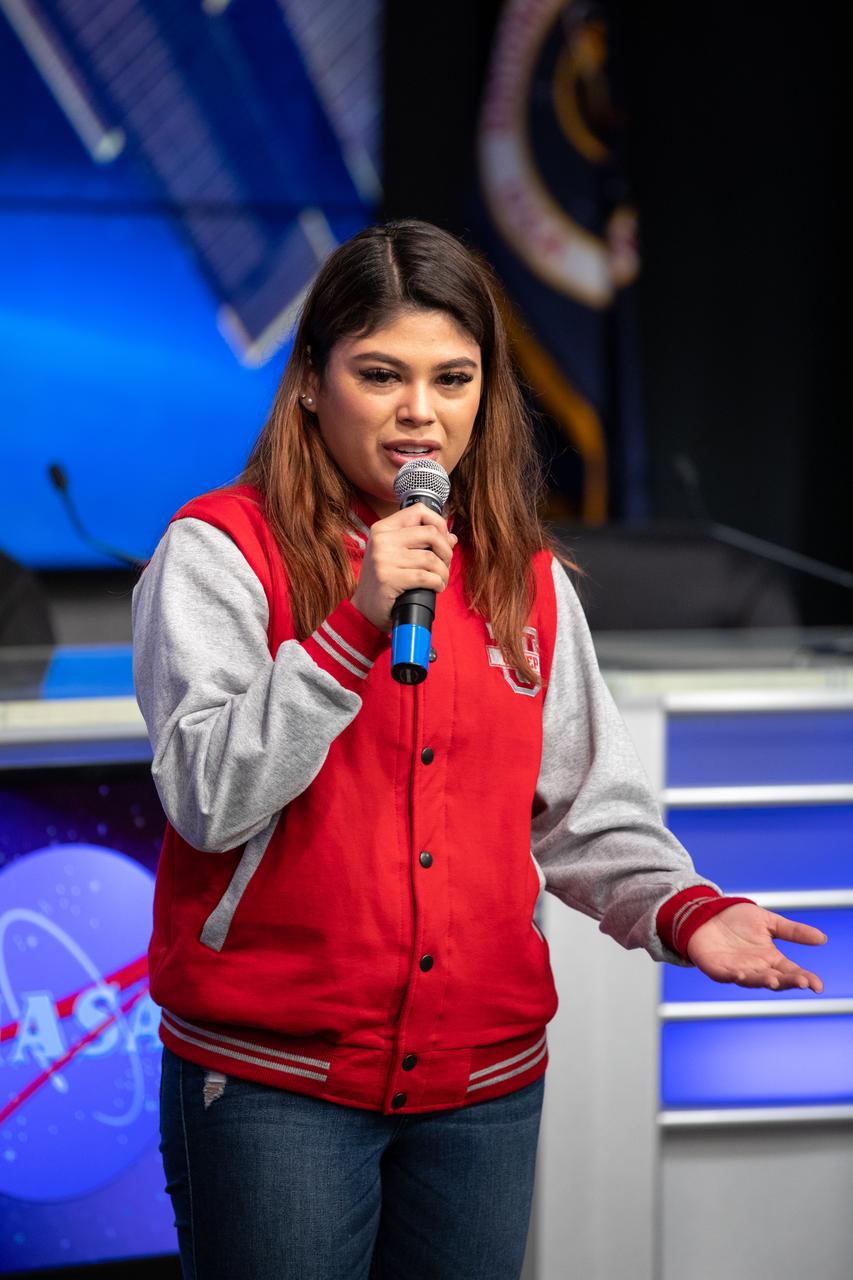
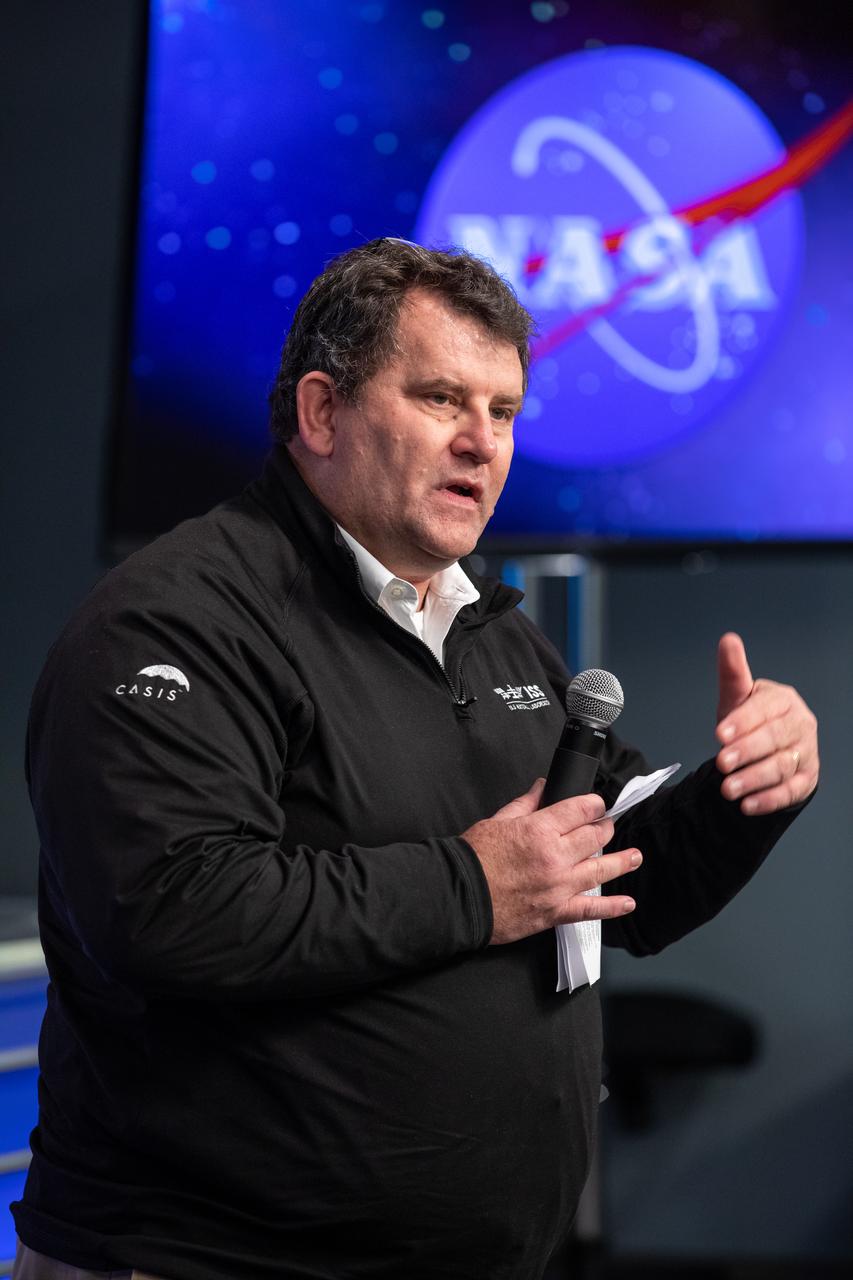
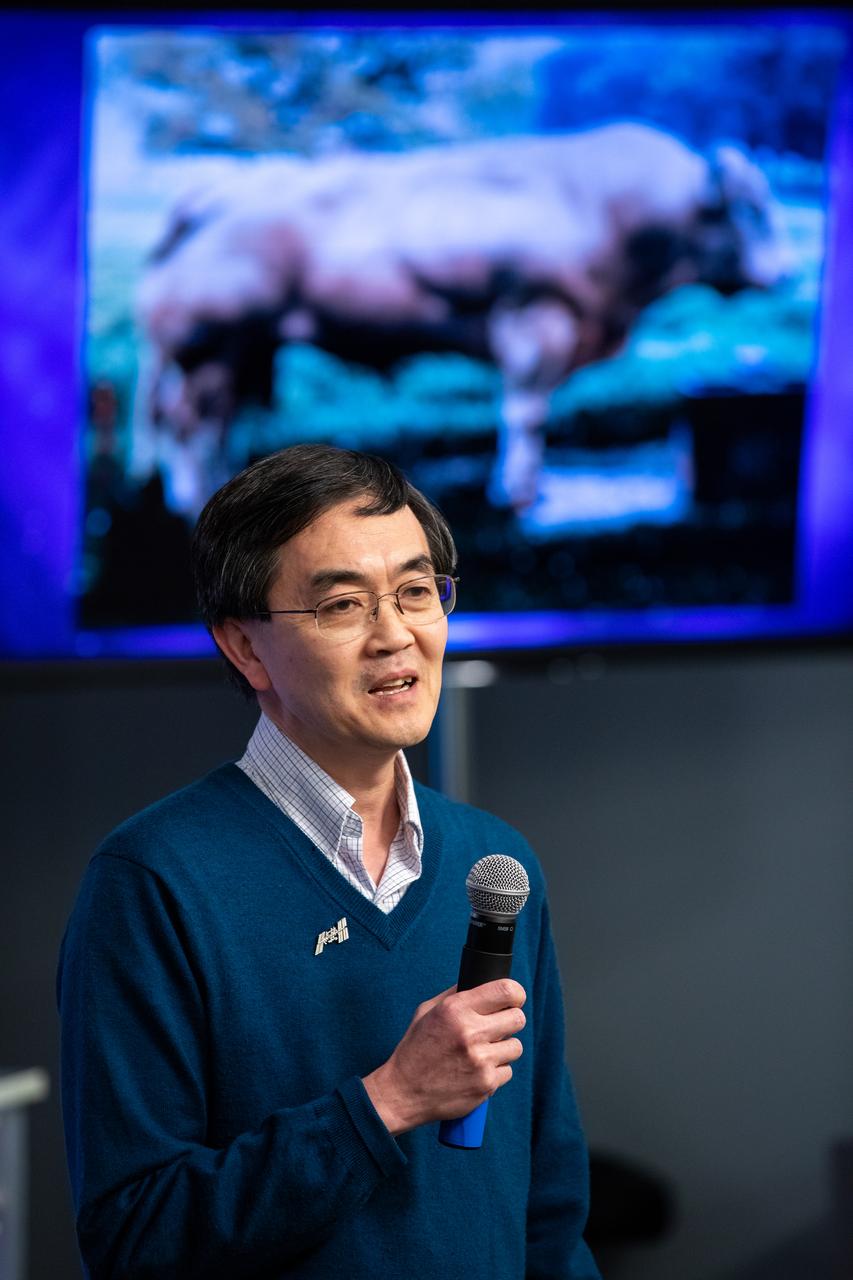
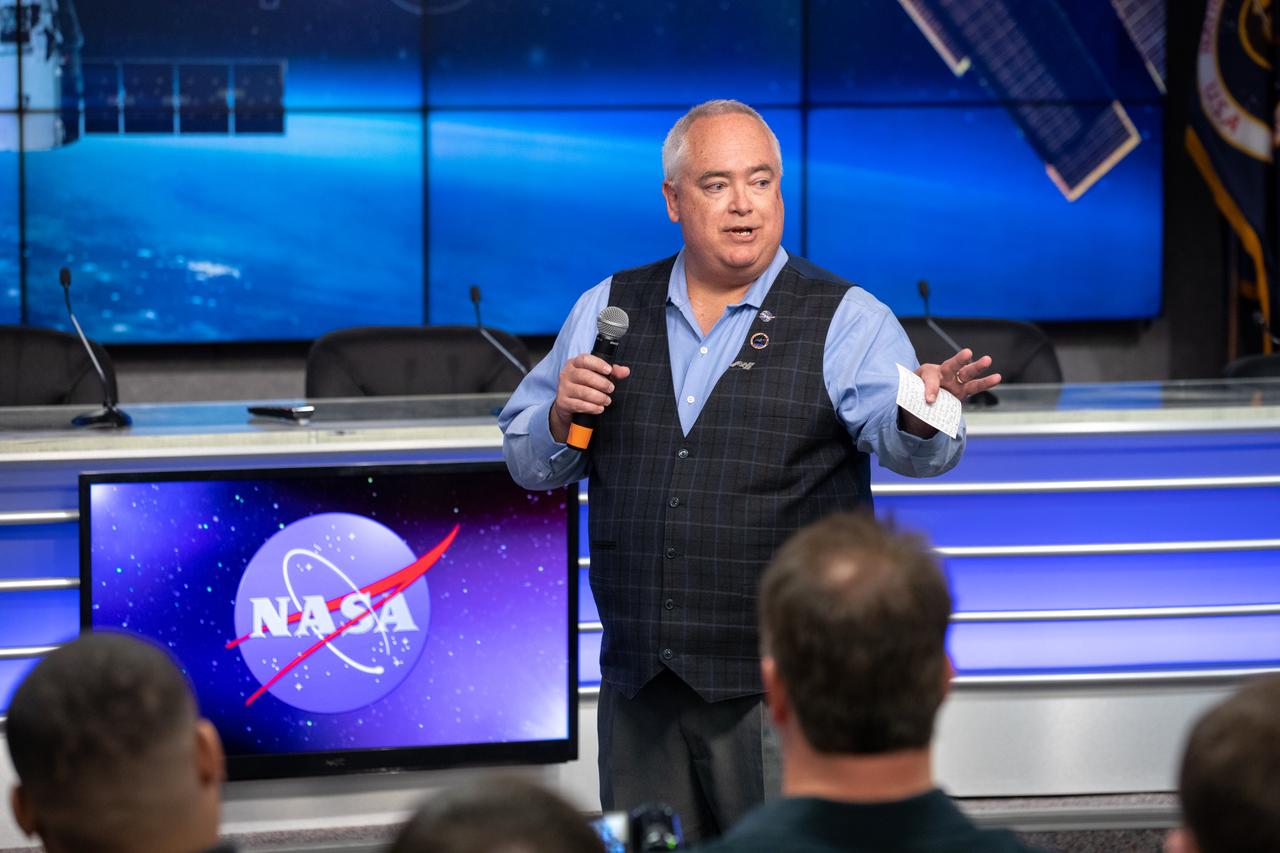
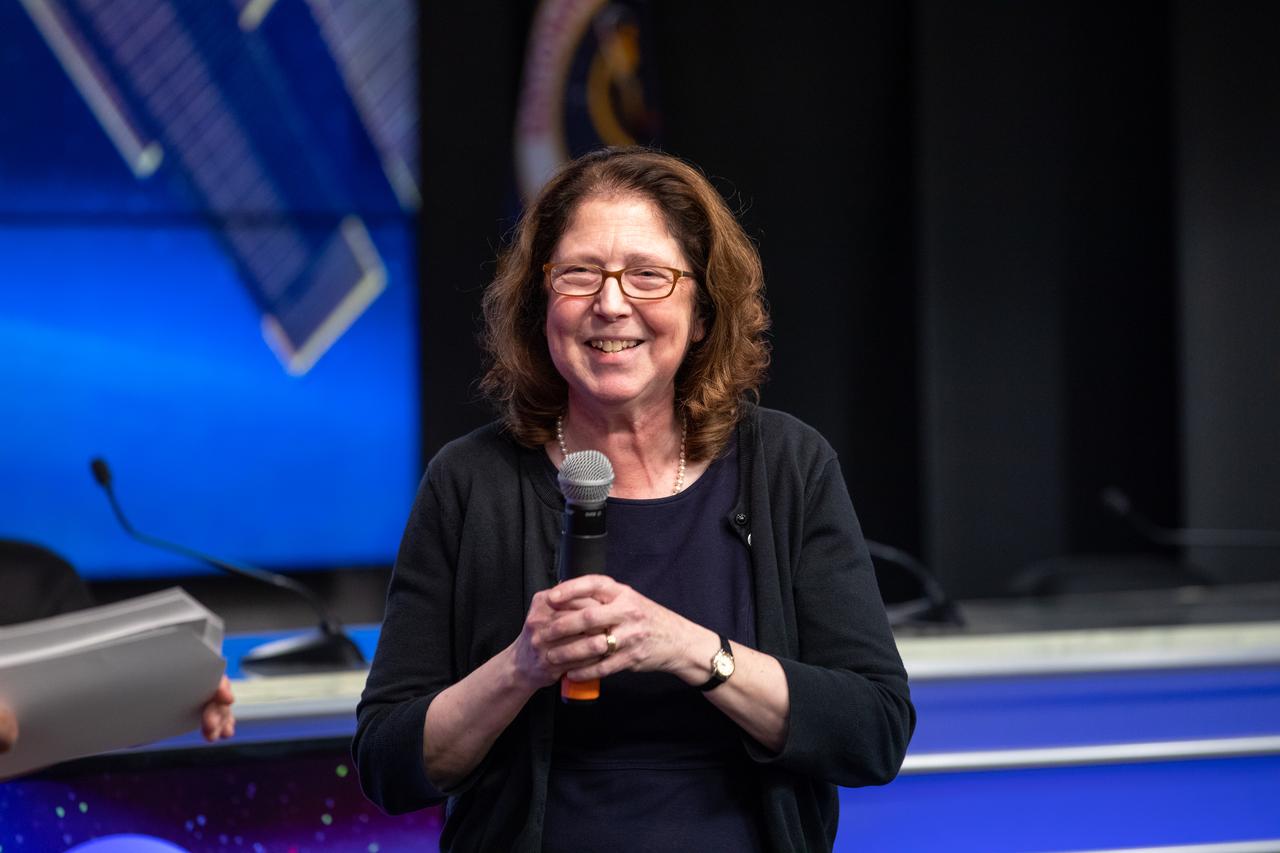
KENNEDY SPACE CENTER, FLA. -   Lisa Malone, deputy director of External Relations and Business Development at KSC, emcees a ceremony in the Space Station Processing Facility to highlight the arrival of two major components of the International Space Station.  NASA's Node 2, built by the European Space Agency (ESA) in Italy arrived at KSC on June 1. It will be the next pressurized module installed on the Station. The pressurized module of the Japanese Experiment Module (JEM), named "Kibo" (Hope) arrived at KSC on June 4. It is Japan's primary contribution to the Station. The ceremony held today included the official transfer of ownership signing of Node 2 between the ESA and NASA..  Speakers at the ceremony included KSC Director Roy Bridges Jr.; NASA's Michael C. Kostelnik, deputy associate administrator for International Space Station and Shuttle Programs, and William Gerstenmaier, International Space Station Program manager; Alan Thirkettle, International Space Station Program manager for Node 2, ESA; Andrea Lorenzoni, International Space Station Program manager for Node 2, Italian Space Agency; Kuniaki Shiraki, JEM Project manager, National Aerospace and Development Agency of Japan.
KENNEDY SPACE CENTER, FLA. - Lisa Malone, deputy director of External Relations and Business Development at KSC, emcees a ceremony in the Space Station Processing Facility to highlight the arrival of two major components of the International Space Station. NASA's Node 2, built by the European Space Agency (ESA) in Italy arrived at KSC on June 1. It will be the next pressurized module installed on the Station. The pressurized module of the Japanese Experiment Module (JEM), named "Kibo" (Hope) arrived at KSC on June 4. It is Japan's primary contribution to the Station. The ceremony held today included the official transfer of ownership signing of Node 2 between the ESA and NASA.. Speakers at the ceremony included KSC Director Roy Bridges Jr.; NASA's Michael C. Kostelnik, deputy associate administrator for International Space Station and Shuttle Programs, and William Gerstenmaier, International Space Station Program manager; Alan Thirkettle, International Space Station Program manager for Node 2, ESA; Andrea Lorenzoni, International Space Station Program manager for Node 2, Italian Space Agency; Kuniaki Shiraki, JEM Project manager, National Aerospace and Development Agency of Japan.
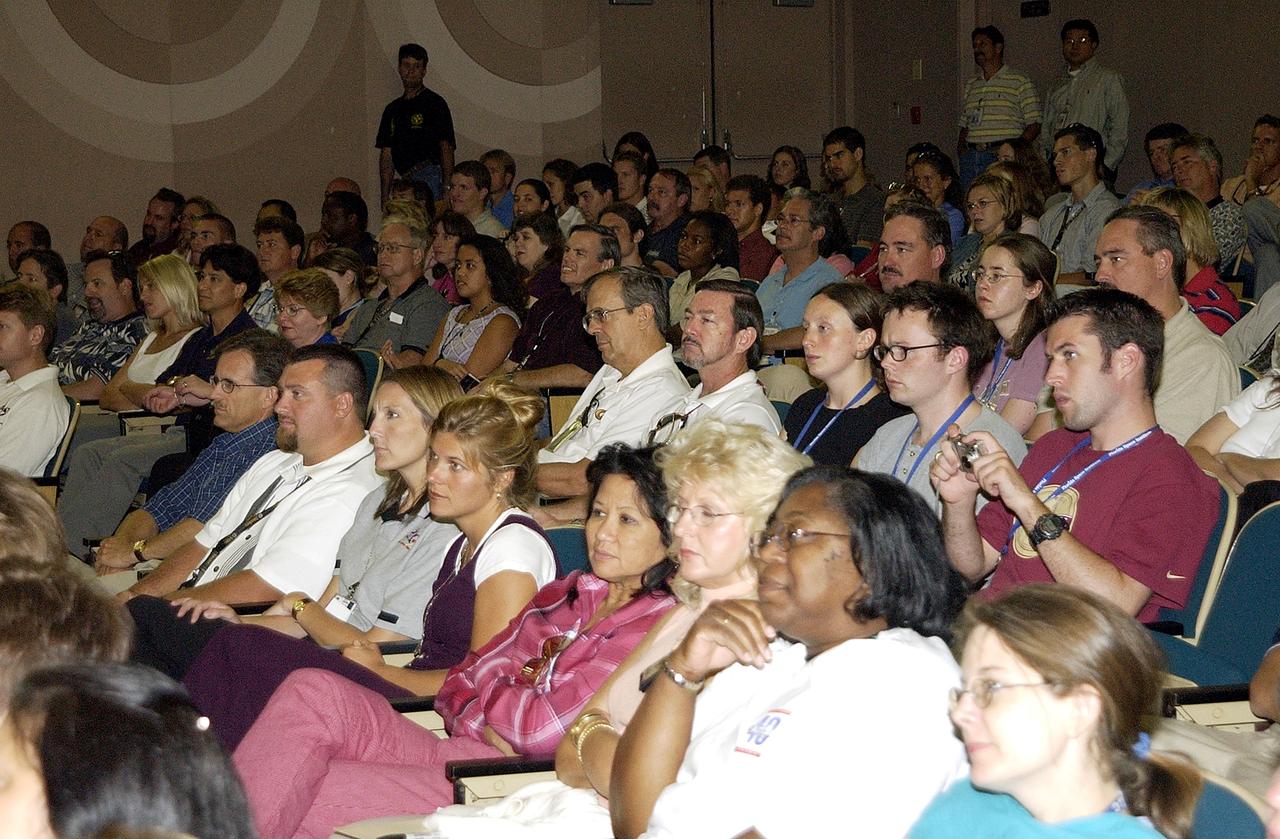
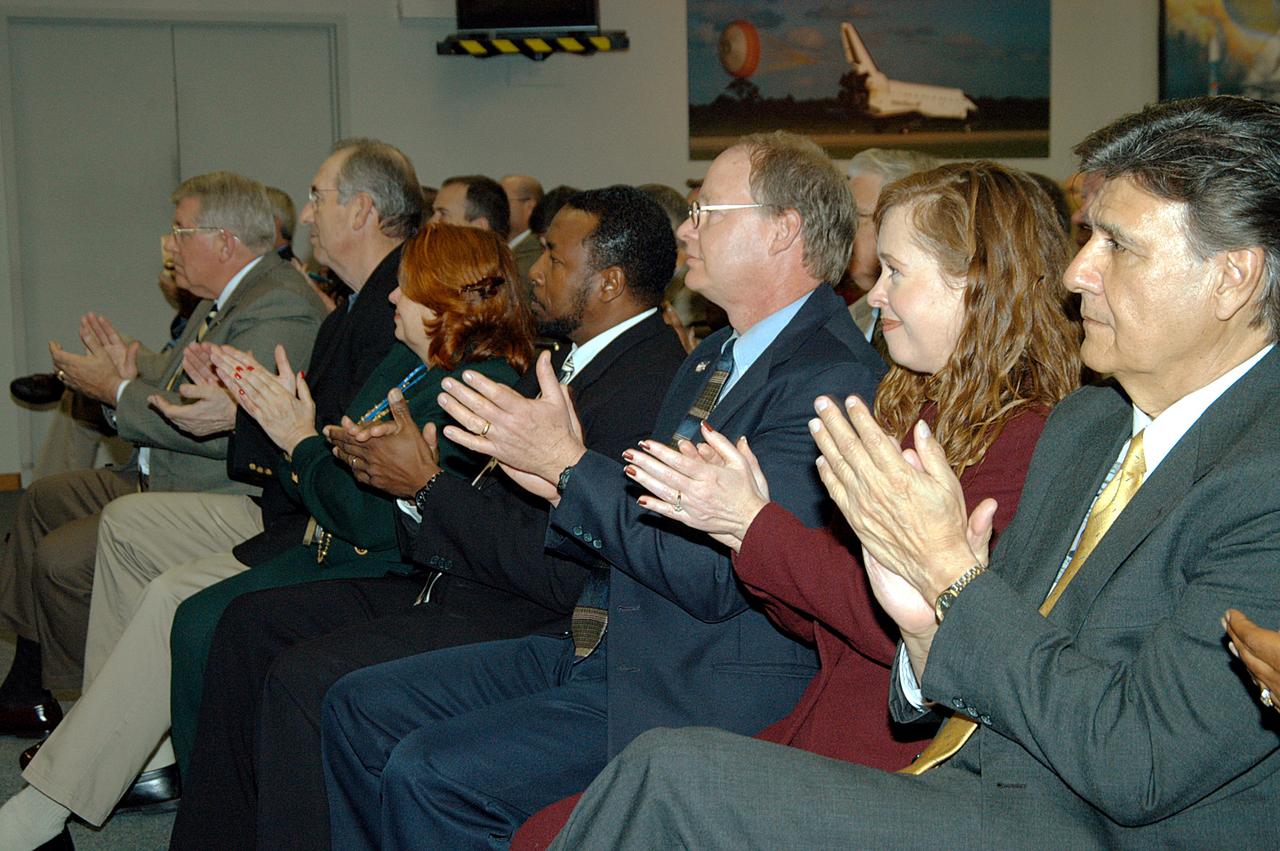
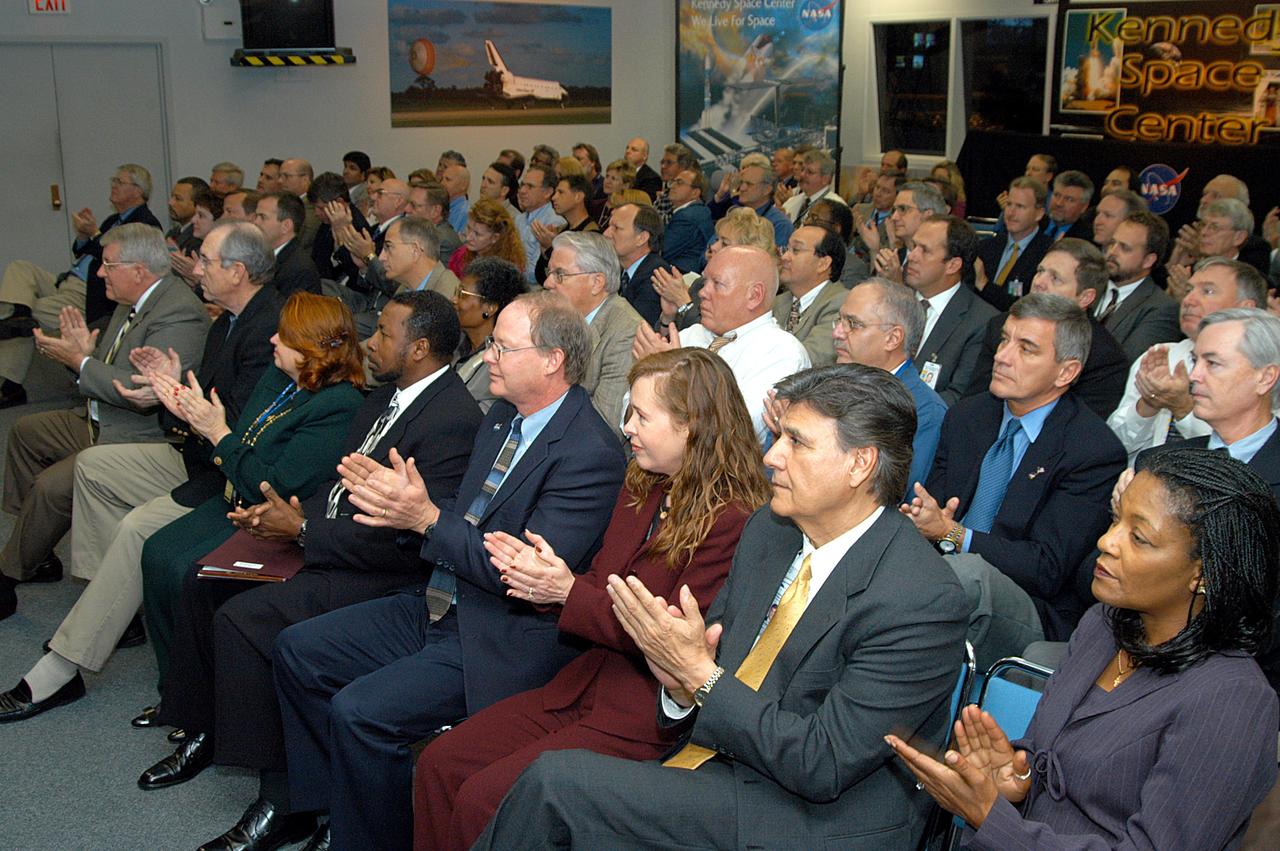
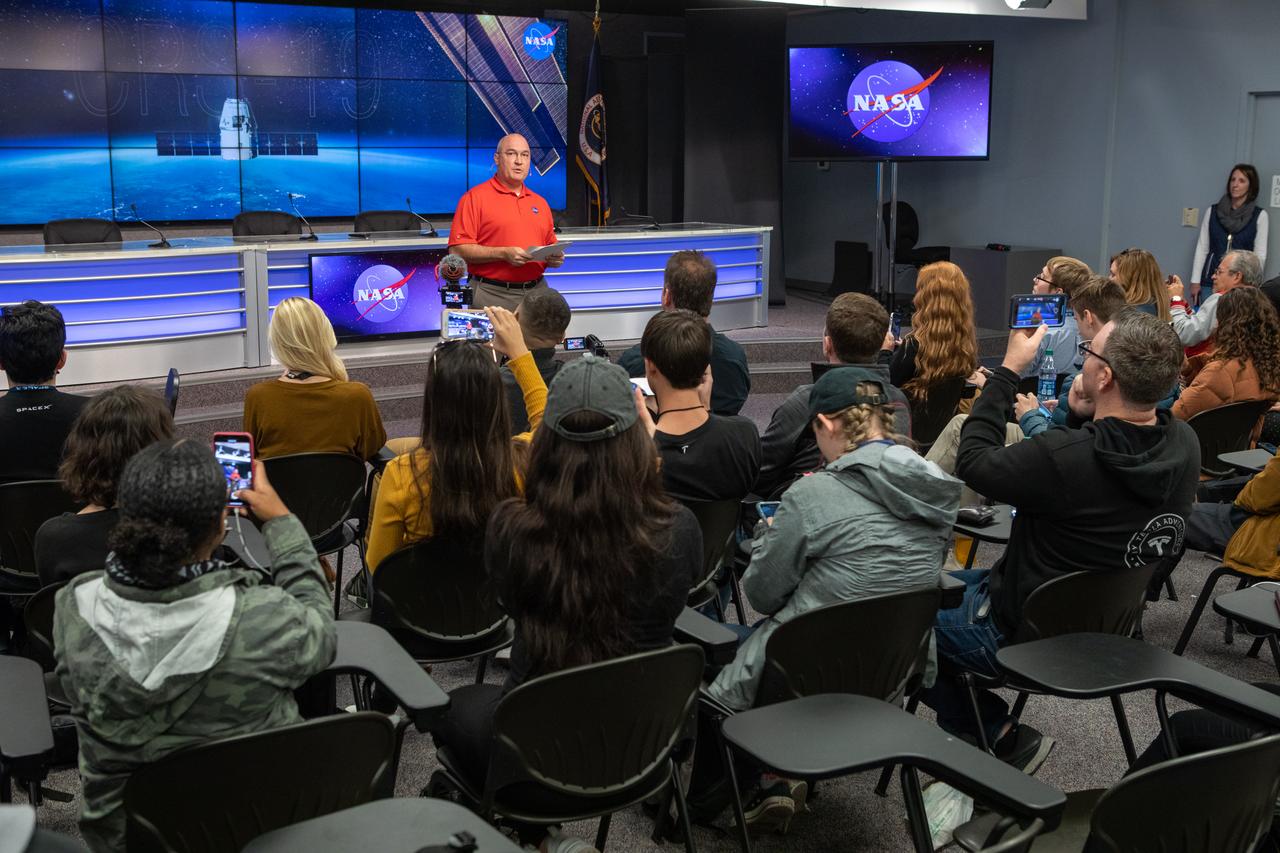
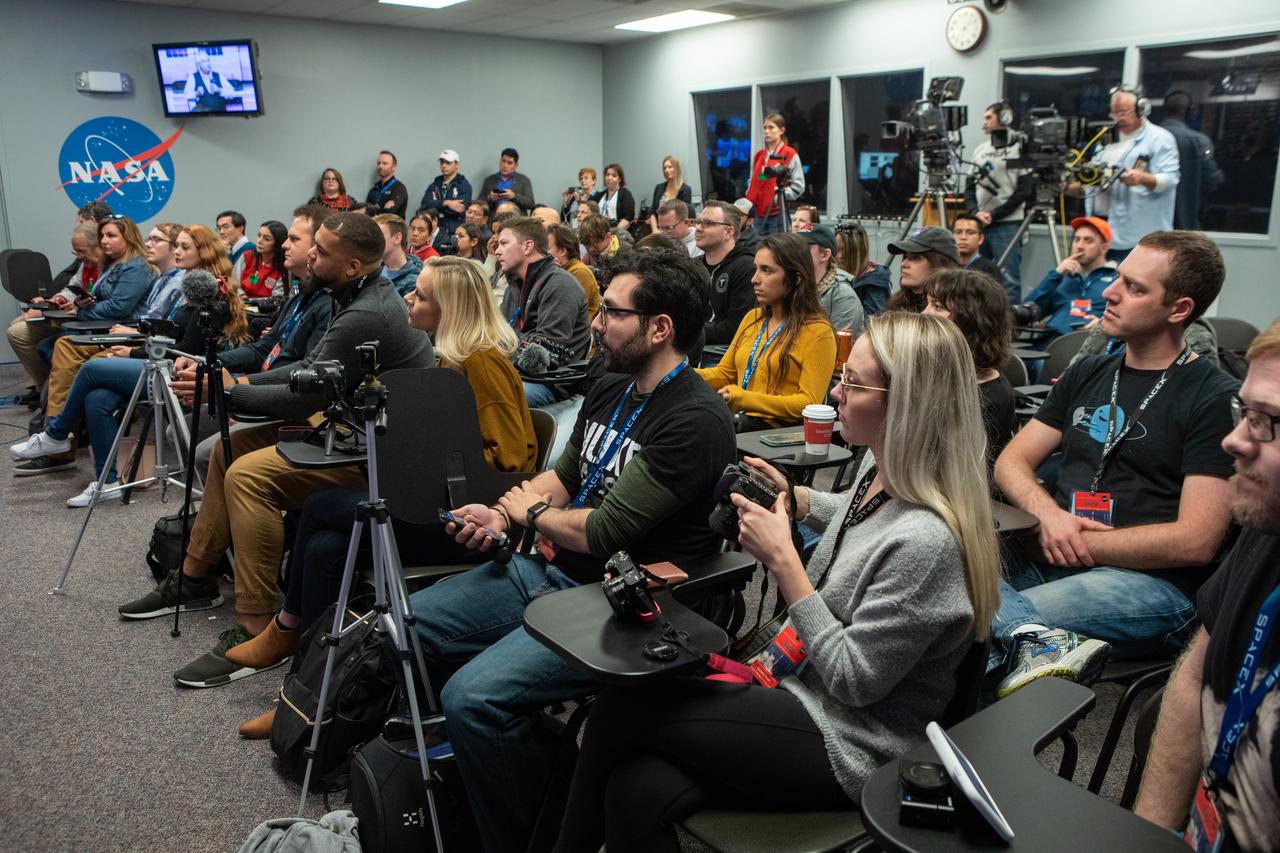
KENNEDY SPACE CENTER, FLA. -  In the Space Station Processing Facility, media and guests listen intently to remarks during a ceremony to highlight the arrival of two major components of the International Space Station.  NASA's Node 2, built by the European Space Agency (ESA) in Italy arrived at KSC on June 1. It will be the next pressurized module installed on the Station. The pressurized module of the Japanese Experiment Module (JEM), named "Kibo" (Hope) arrived at KSC on June 4. It is Japan's primary contribution to the Station. The ceremony held today included the official transfer of ownership signing of Node 2 between the ESA and NASA.. Emceed by Lisa Malone,  deputy director of External Relations and Business Development at KSC, the ceremony included these speakers: KSC Director Roy Bridges Jr.; NASA's Michael C. Kostelnik, deputy associate administrator for International Space Station and Shuttle Programs, and William Gerstenmaier, International Space Station Program manager; Alan Thirkettle, International Space Station Program manager for Node 2, ESA; Andrea Lorenzoni, International Space Station Program manager for Node 2, Italian Space Agency; Kuniaki Shiraki, JEM Project manager, National Aerospace and Development Agency of Japan.
KENNEDY SPACE CENTER, FLA. - In the Space Station Processing Facility, media and guests listen intently to remarks during a ceremony to highlight the arrival of two major components of the International Space Station. NASA's Node 2, built by the European Space Agency (ESA) in Italy arrived at KSC on June 1. It will be the next pressurized module installed on the Station. The pressurized module of the Japanese Experiment Module (JEM), named "Kibo" (Hope) arrived at KSC on June 4. It is Japan's primary contribution to the Station. The ceremony held today included the official transfer of ownership signing of Node 2 between the ESA and NASA.. Emceed by Lisa Malone, deputy director of External Relations and Business Development at KSC, the ceremony included these speakers: KSC Director Roy Bridges Jr.; NASA's Michael C. Kostelnik, deputy associate administrator for International Space Station and Shuttle Programs, and William Gerstenmaier, International Space Station Program manager; Alan Thirkettle, International Space Station Program manager for Node 2, ESA; Andrea Lorenzoni, International Space Station Program manager for Node 2, Italian Space Agency; Kuniaki Shiraki, JEM Project manager, National Aerospace and Development Agency of Japan.
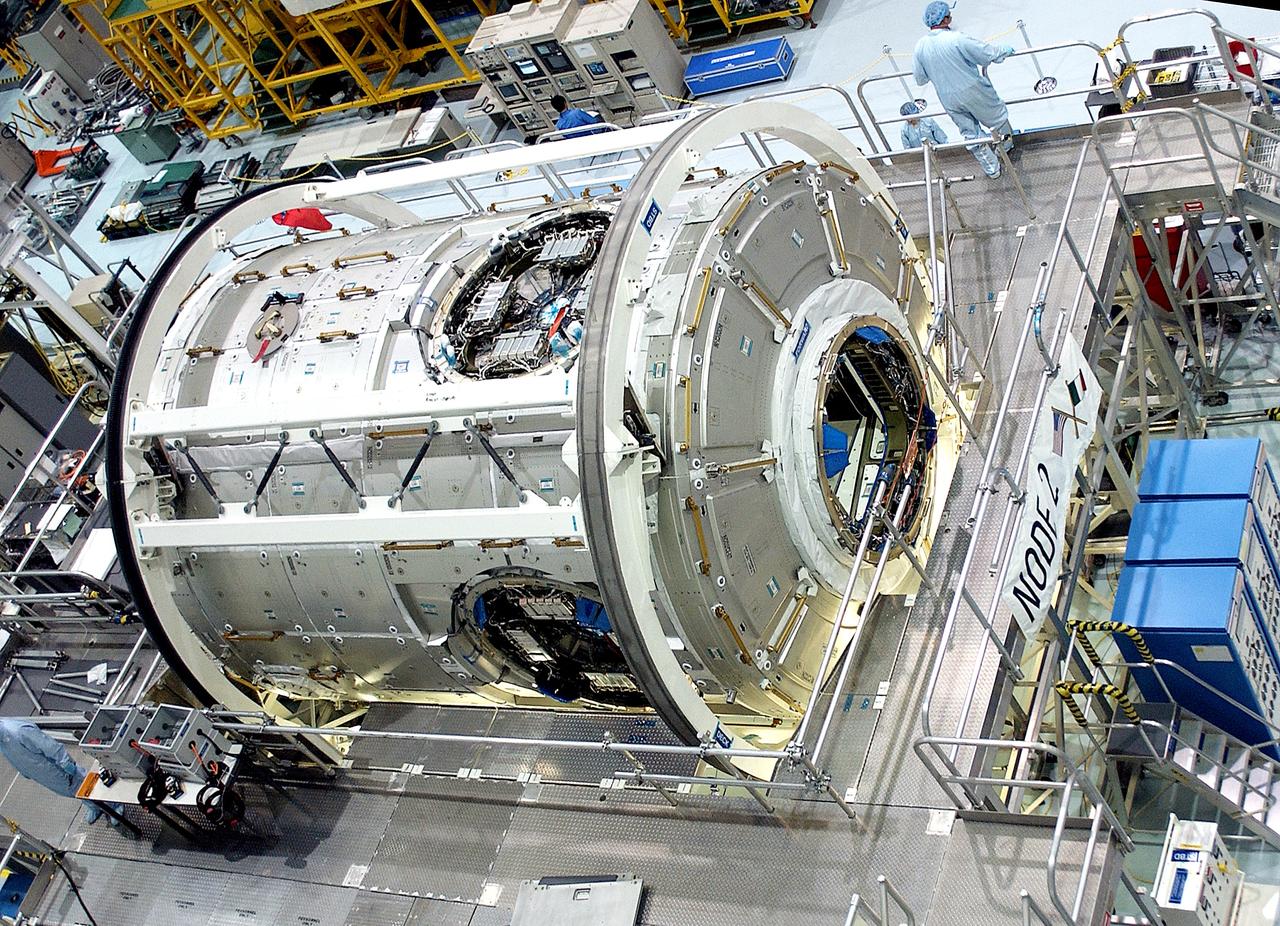
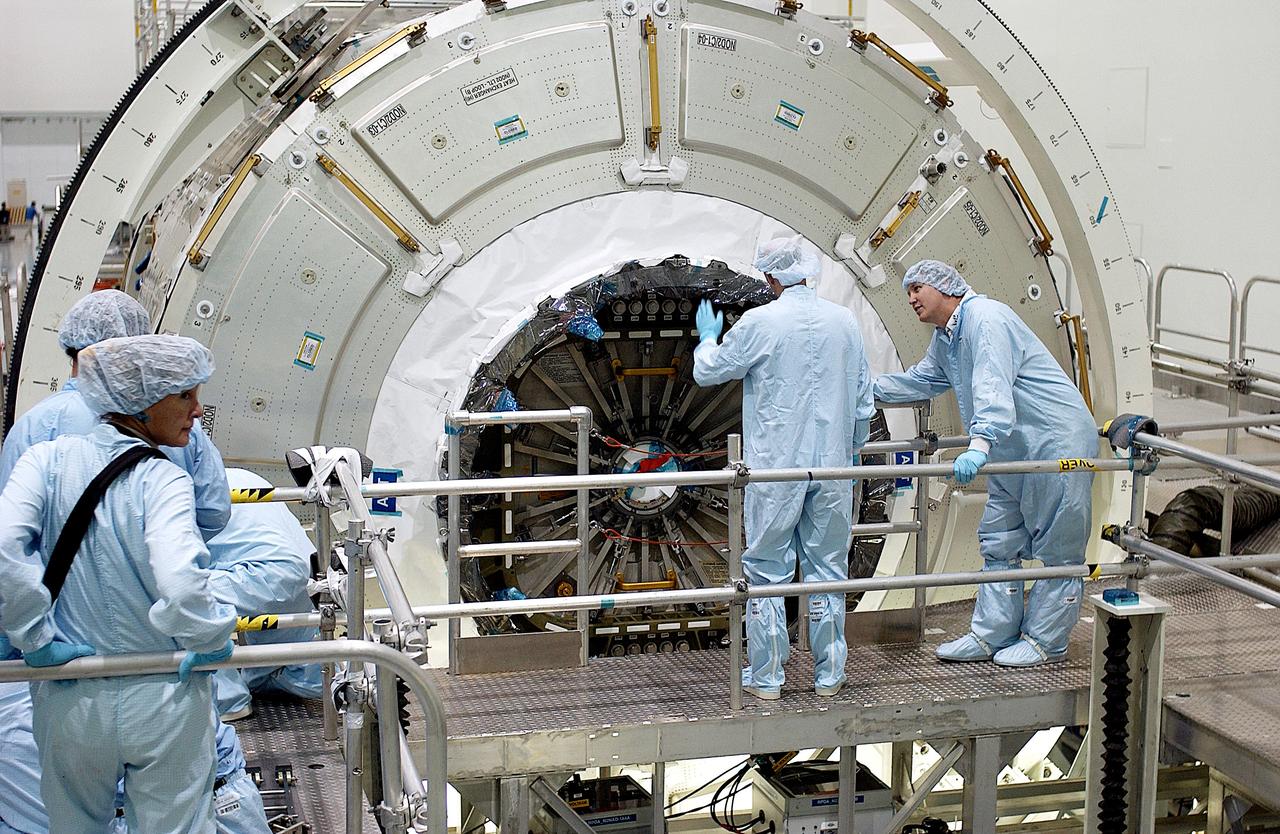
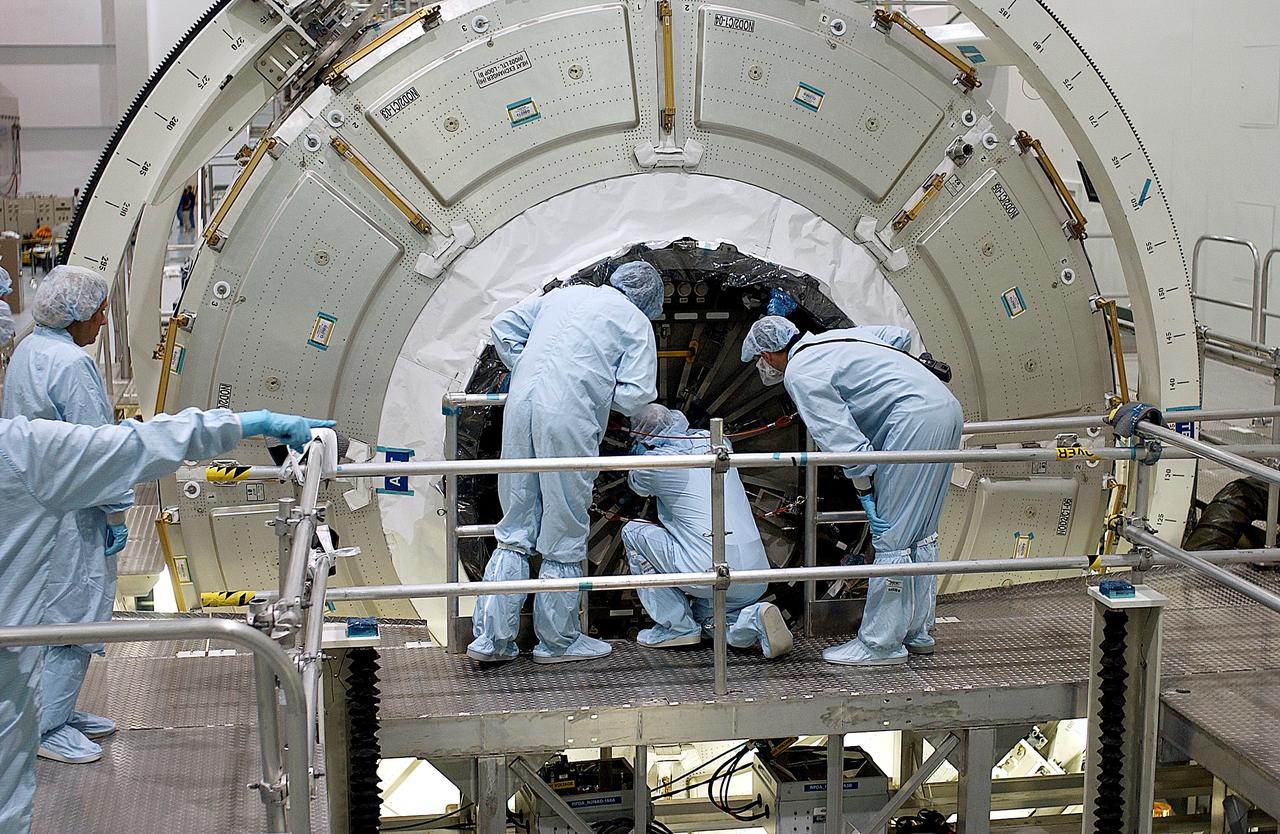
KENNEDY SPACE CENTER, FLA. -  International Space Station elements being processed for launch on upcoming Space Shuttle flights line the walls of the high bay in the Space Station Processing Facility. NASA's Node 2, built by the European Space Agency (ESA) in Italy, arrived at KSC on June 1. It will be the next pressurized module installed on the Station. The pressurized module of the Japanese Experiment Module (JEM), named "Kibo" (Hope), arrived at KSC on June 4. It is Japan's primary contribution to the Station.
KENNEDY SPACE CENTER, FLA. - International Space Station elements being processed for launch on upcoming Space Shuttle flights line the walls of the high bay in the Space Station Processing Facility. NASA's Node 2, built by the European Space Agency (ESA) in Italy, arrived at KSC on June 1. It will be the next pressurized module installed on the Station. The pressurized module of the Japanese Experiment Module (JEM), named "Kibo" (Hope), arrived at KSC on June 4. It is Japan's primary contribution to the Station.
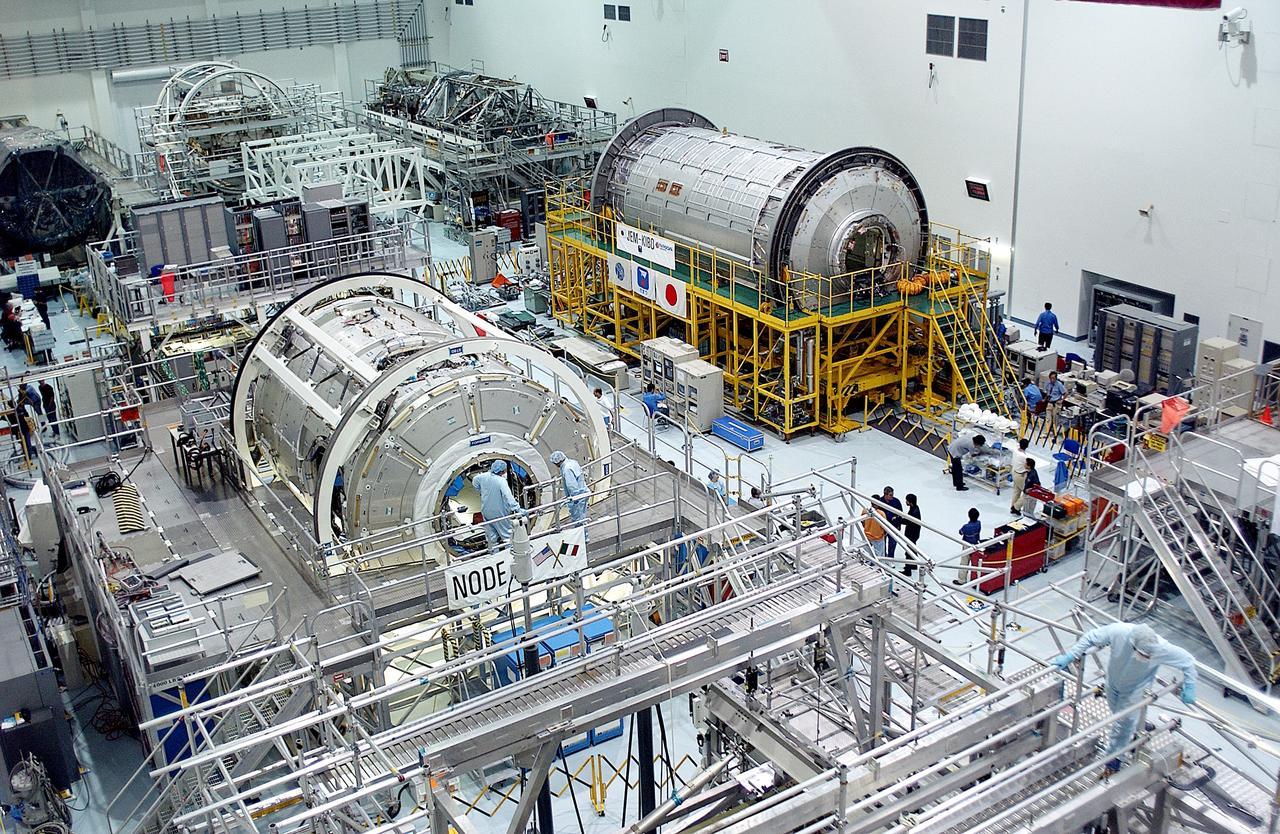
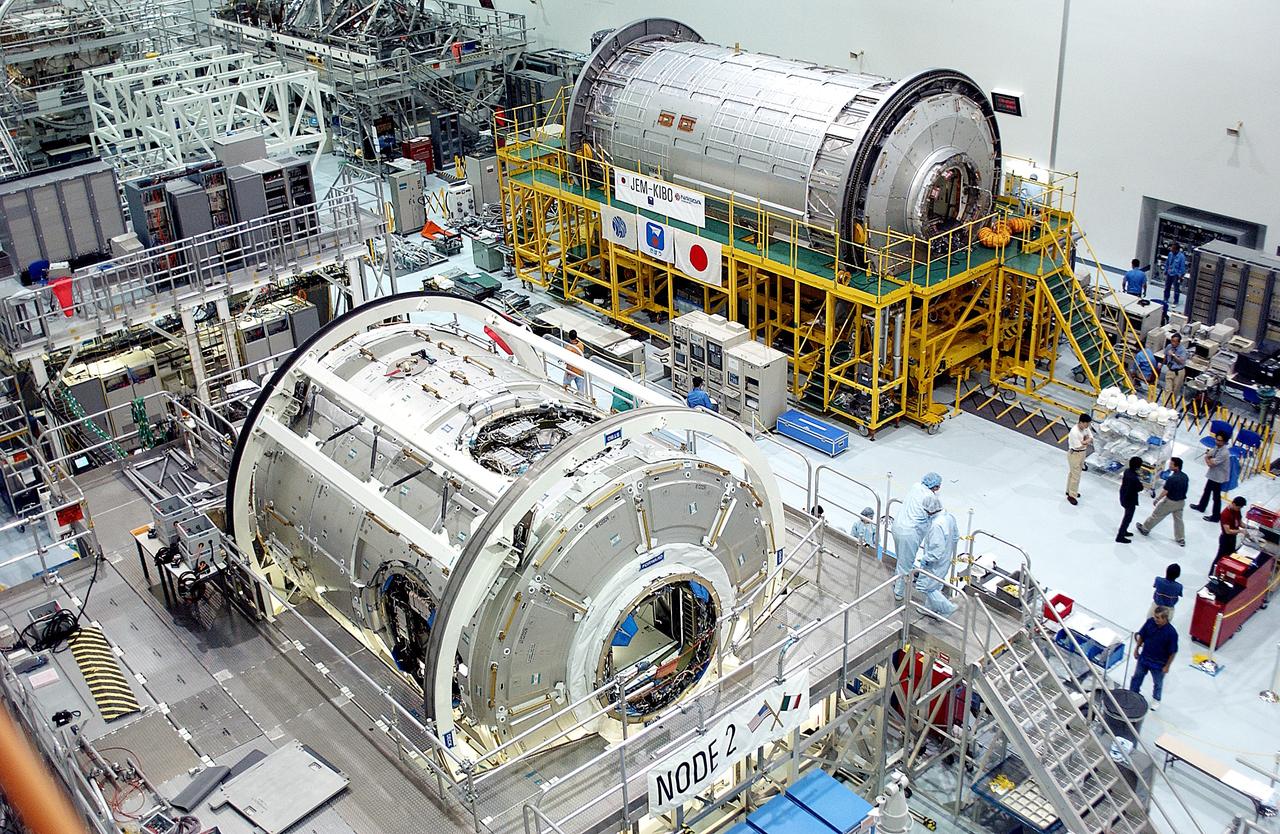
KENNEDY SPACE CENTER, FLA. -  International Space Station elements being processed for launch on upcoming Space Shuttle flights, including the Japanese Experiment Module (JEM) pressurized module (Kibo or Hope) and the U.S. Node 2, line the walls of the high bay in the Space Station Processing Facility.  NASA's Node 2, built by the European Space Agency (ESA) in Italy, arrived at KSC on June 1. It will be the next pressurized module installed on the Station. The JEM pressurized module arrived at KSC on June 4. It is Japan's primary contribution to the Station.
KENNEDY SPACE CENTER, FLA. - International Space Station elements being processed for launch on upcoming Space Shuttle flights, including the Japanese Experiment Module (JEM) pressurized module (Kibo or Hope) and the U.S. Node 2, line the walls of the high bay in the Space Station Processing Facility. NASA's Node 2, built by the European Space Agency (ESA) in Italy, arrived at KSC on June 1. It will be the next pressurized module installed on the Station. The JEM pressurized module arrived at KSC on June 4. It is Japan's primary contribution to the Station.
KENNEDY SPACE CENTER, FLA. -  International Space Station elements being processed for launch on upcoming Space Shuttle flights line the walls of the high bay in the Space Station Processing Facility. NASA's Node 2, built by the European Space Agency (ESA) in Italy, arrived at KSC on June 1. It will be the next pressurized module installed on the Station. The pressurized module of the Japanese Experiment Module (JEM), named "Kibo" (Hope), arrived at KSC on June 4. It is Japan's primary contribution to the Station.
KENNEDY SPACE CENTER, FLA. - International Space Station elements being processed for launch on upcoming Space Shuttle flights line the walls of the high bay in the Space Station Processing Facility. NASA's Node 2, built by the European Space Agency (ESA) in Italy, arrived at KSC on June 1. It will be the next pressurized module installed on the Station. The pressurized module of the Japanese Experiment Module (JEM), named "Kibo" (Hope), arrived at KSC on June 4. It is Japan's primary contribution to the Station.
KENNEDY SPACE CENTER, FLA. -   Alan Thirkettle, International Space Station Program manager for Node 2, European Space Agency (ESA), speaks to guests and the media gathered in the Space Station Processing Facility at a ceremony highlighting the arrival of two major components of the International Space Station.  NASA's Node 2, built by the European Space Agency (ESA) in Italy, arrived at KSC on June 1. It will be the next pressurized module installed on the Station. The pressurized module of the Japanese Experiment Module (JEM), named "Kibo" (Hope), arrived at KSC on June 4. It is Japan's primary contribution to the Station. The ceremony held today included the official transfer of ownership signing of Node 2 between the ESA and NASA.. Emceed by Lisa Malone, deputy director of External Relations and Business Development at KSC, the ceremony also included these speakers: Center Director Roy Bridges Jr.; NASA’s Michael C. Kostelnik, deputy associate administrator for International Space Station and Shuttle Programs and William Gerstenmaier, International Space Station Program manager; Andrea Lorenzoni, International Space Station Program manager for Node 2, Italian Space Agency; and Kuniaki Shiraki, JEM Project manager, National Aerospace and Development Agency of Japan.
KENNEDY SPACE CENTER, FLA. - Alan Thirkettle, International Space Station Program manager for Node 2, European Space Agency (ESA), speaks to guests and the media gathered in the Space Station Processing Facility at a ceremony highlighting the arrival of two major components of the International Space Station. NASA's Node 2, built by the European Space Agency (ESA) in Italy, arrived at KSC on June 1. It will be the next pressurized module installed on the Station. The pressurized module of the Japanese Experiment Module (JEM), named "Kibo" (Hope), arrived at KSC on June 4. It is Japan's primary contribution to the Station. The ceremony held today included the official transfer of ownership signing of Node 2 between the ESA and NASA.. Emceed by Lisa Malone, deputy director of External Relations and Business Development at KSC, the ceremony also included these speakers: Center Director Roy Bridges Jr.; NASA’s Michael C. Kostelnik, deputy associate administrator for International Space Station and Shuttle Programs and William Gerstenmaier, International Space Station Program manager; Andrea Lorenzoni, International Space Station Program manager for Node 2, Italian Space Agency; and Kuniaki Shiraki, JEM Project manager, National Aerospace and Development Agency of Japan.
KENNEDY SPACE CENTER, FLA. -   At a ceremony highlighting the arrival of two major components of the International Space Station, William Gerstenmaier, International Space Station Program manager, points to one of the components as he speaks to guests and the media gathered in the Space Station Processing Facility.  NASA's Node 2, built by the European Space Agency (ESA) in Italy, arrived at KSC on June 1. It will be the next pressurized module installed on the Station. The pressurized module of the Japanese Experiment Module (JEM), named "Kibo" (Hope), arrived at KSC on June 4. It is Japan's primary contribution to the Station. The ceremony held today included the official transfer of ownership signing of Node 2 between the ESA and NASA.. Emceed by Lisa Malone, deputy director of External Relations and Business Development at KSC, the ceremony also included these speakers: Center Director Roy Bridges Jr.; NASA’s Michael C. Kostelnik, deputy associate administrator for International Space Station and Shuttle Programs; Alan Thirkettle, International Space Station Program manager for Node 2, ESA; Andrea Lorenzoni, International Space Station Program manager for Node 2, Italian Space Agency; and Kuniaki Shiraki, JEM Project manager, National Aerospace and Development Agency of Japan.
KENNEDY SPACE CENTER, FLA. - At a ceremony highlighting the arrival of two major components of the International Space Station, William Gerstenmaier, International Space Station Program manager, points to one of the components as he speaks to guests and the media gathered in the Space Station Processing Facility. NASA's Node 2, built by the European Space Agency (ESA) in Italy, arrived at KSC on June 1. It will be the next pressurized module installed on the Station. The pressurized module of the Japanese Experiment Module (JEM), named "Kibo" (Hope), arrived at KSC on June 4. It is Japan's primary contribution to the Station. The ceremony held today included the official transfer of ownership signing of Node 2 between the ESA and NASA.. Emceed by Lisa Malone, deputy director of External Relations and Business Development at KSC, the ceremony also included these speakers: Center Director Roy Bridges Jr.; NASA’s Michael C. Kostelnik, deputy associate administrator for International Space Station and Shuttle Programs; Alan Thirkettle, International Space Station Program manager for Node 2, ESA; Andrea Lorenzoni, International Space Station Program manager for Node 2, Italian Space Agency; and Kuniaki Shiraki, JEM Project manager, National Aerospace and Development Agency of Japan.
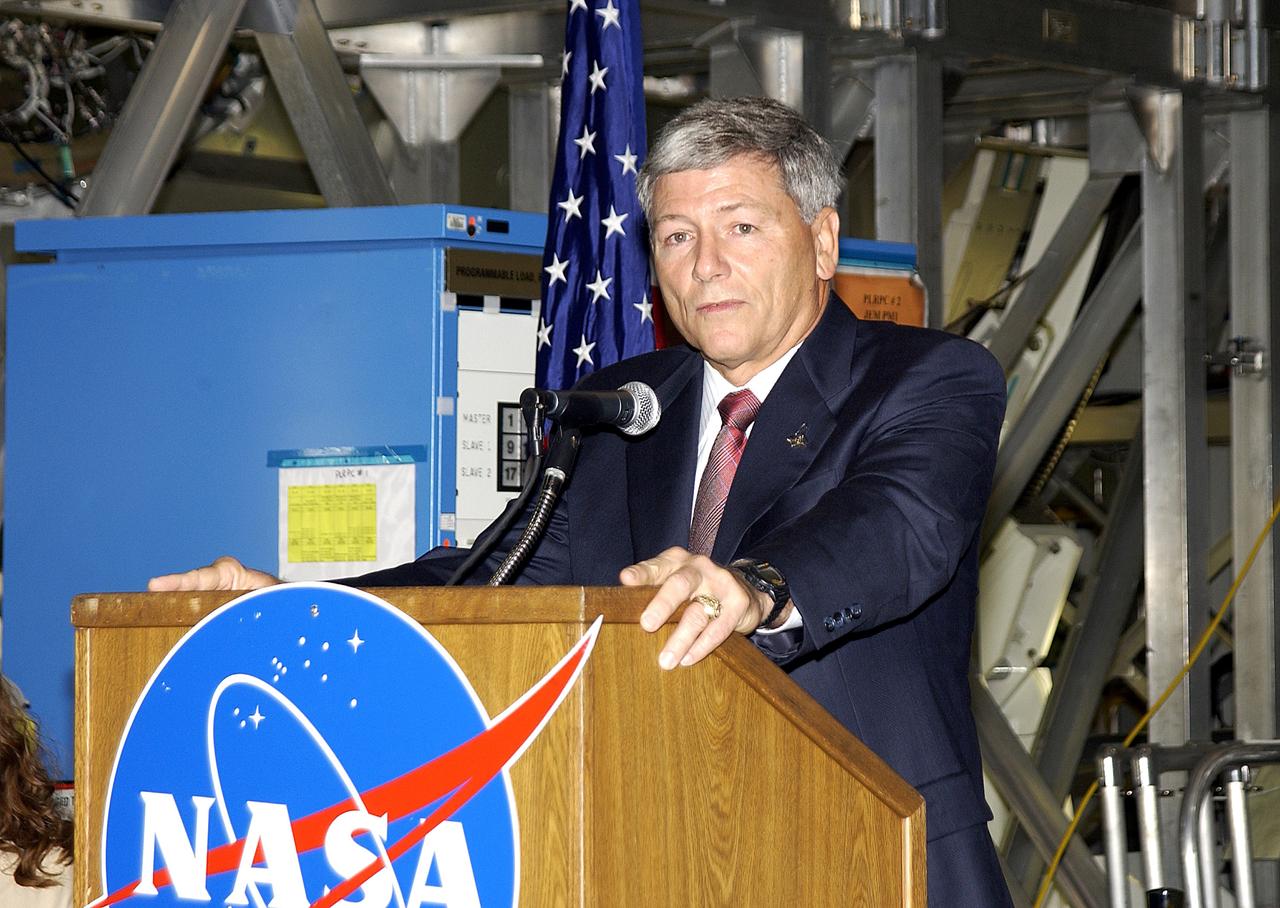
KENNEDY SPACE CENTER, FLA. -  NASA's Michael C. Kostelnik, deputy associate administrator for International Space Station and Shuttle Programs, speaks to guests and the media gathered in the Space Station Processing Facility for a ceremony to highlight the arrival of two major components of the International Space Station.  NASA's Node 2, built by the European Space Agency (ESA) in Italy arrived at KSC on June 1. It will be the next pressurized module installed on the Station. The pressurized module of the Japanese Experiment Module (JEM), named "Kibo" (Hope) arrived at KSC on June 4. It is Japan's primary contribution to the Station. The ceremony held today included the official transfer of ownership signing of Node 2 between the ESA and NASA.. Emceed by Lisa Malone (far left),  deputy director of External Relations and Business Development at KSC, the ceremony also included these speakers: Center Director Roy Bridges Jr. (second from left); William Gerstenmaier, International Space Station Program manager; Alan Thirkettle, International Space Station Program manager for Node 2, ESA; Andrea Lorenzoni, International Space Station Program manager for Node 2, Italian Space Agency; and Kuniaki Shiraki, JEM Project manager, National Aerospace and Development Agency of Japan.
KENNEDY SPACE CENTER, FLA. - NASA's Michael C. Kostelnik, deputy associate administrator for International Space Station and Shuttle Programs, speaks to guests and the media gathered in the Space Station Processing Facility for a ceremony to highlight the arrival of two major components of the International Space Station. NASA's Node 2, built by the European Space Agency (ESA) in Italy arrived at KSC on June 1. It will be the next pressurized module installed on the Station. The pressurized module of the Japanese Experiment Module (JEM), named "Kibo" (Hope) arrived at KSC on June 4. It is Japan's primary contribution to the Station. The ceremony held today included the official transfer of ownership signing of Node 2 between the ESA and NASA.. Emceed by Lisa Malone (far left), deputy director of External Relations and Business Development at KSC, the ceremony also included these speakers: Center Director Roy Bridges Jr. (second from left); William Gerstenmaier, International Space Station Program manager; Alan Thirkettle, International Space Station Program manager for Node 2, ESA; Andrea Lorenzoni, International Space Station Program manager for Node 2, Italian Space Agency; and Kuniaki Shiraki, JEM Project manager, National Aerospace and Development Agency of Japan.
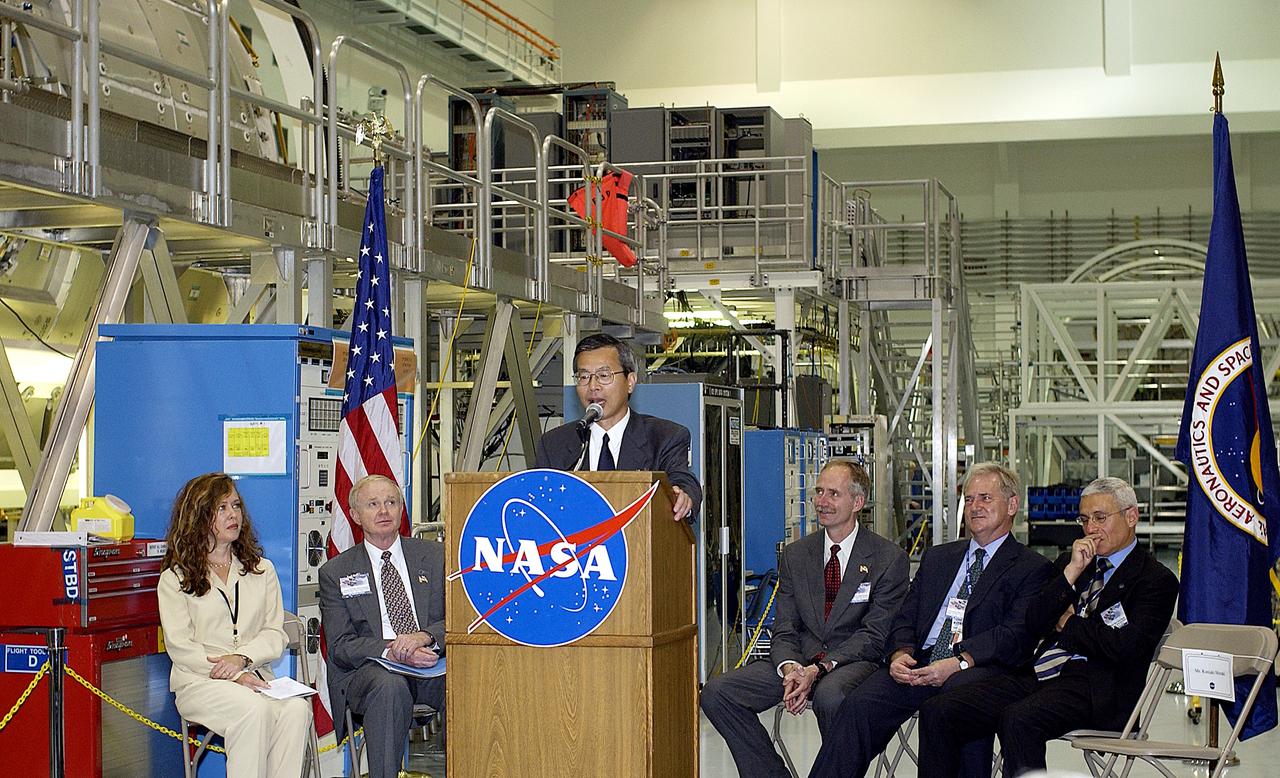
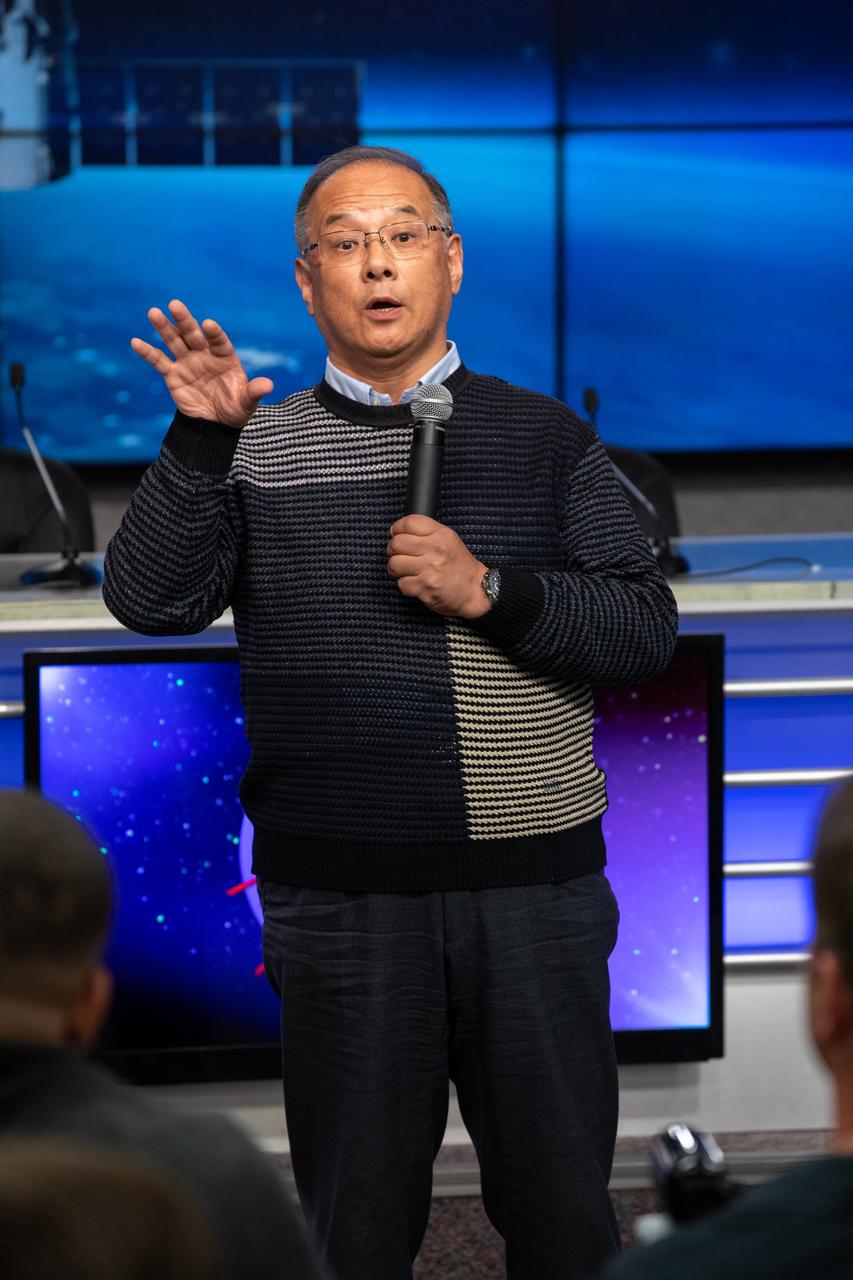
KENNEDY SPACE CENTER, FLA. -  Kuniaki Shiraki, JEM Project manager, National Aerospace and Development Agency of Japan,  speaks to guests and the media gathered in the Space Station Processing Facility at a ceremony highlighting the arrival of two major components of the International Space Station.  NASA's Node 2, built by the European Space Agency (ESA) in Italy, arrived at KSC on June 1. It will be the next pressurized module installed on the Station. The pressurized module of the Japanese Experiment Module (JEM), named "Kibo" (Hope), arrived at KSC on June 4. It is Japan's primary contribution to the Station. The ceremony held today included the official transfer of ownership signing of Node 2 between the ESA and NASA.. Emceed by Lisa Malone (far left), deputy director of External Relations and Business Development at KSC, the ceremony also included these speakers: Center Director Roy Bridges Jr. (second from left); NASA’s Michael C. Kostelnik, deputy associate administrator for International Space Station and Shuttle Programs and William Gerstenmaier, International Space Station Program manager; Alan Thirkettle, International Space Station Program manager for Node 2, ESA; and Andrea Lorenzoni, International Space Station Program manager for Node 2, Italian Space Agency.
KENNEDY SPACE CENTER, FLA. - Kuniaki Shiraki, JEM Project manager, National Aerospace and Development Agency of Japan, speaks to guests and the media gathered in the Space Station Processing Facility at a ceremony highlighting the arrival of two major components of the International Space Station. NASA's Node 2, built by the European Space Agency (ESA) in Italy, arrived at KSC on June 1. It will be the next pressurized module installed on the Station. The pressurized module of the Japanese Experiment Module (JEM), named "Kibo" (Hope), arrived at KSC on June 4. It is Japan's primary contribution to the Station. The ceremony held today included the official transfer of ownership signing of Node 2 between the ESA and NASA.. Emceed by Lisa Malone (far left), deputy director of External Relations and Business Development at KSC, the ceremony also included these speakers: Center Director Roy Bridges Jr. (second from left); NASA’s Michael C. Kostelnik, deputy associate administrator for International Space Station and Shuttle Programs and William Gerstenmaier, International Space Station Program manager; Alan Thirkettle, International Space Station Program manager for Node 2, ESA; and Andrea Lorenzoni, International Space Station Program manager for Node 2, Italian Space Agency.
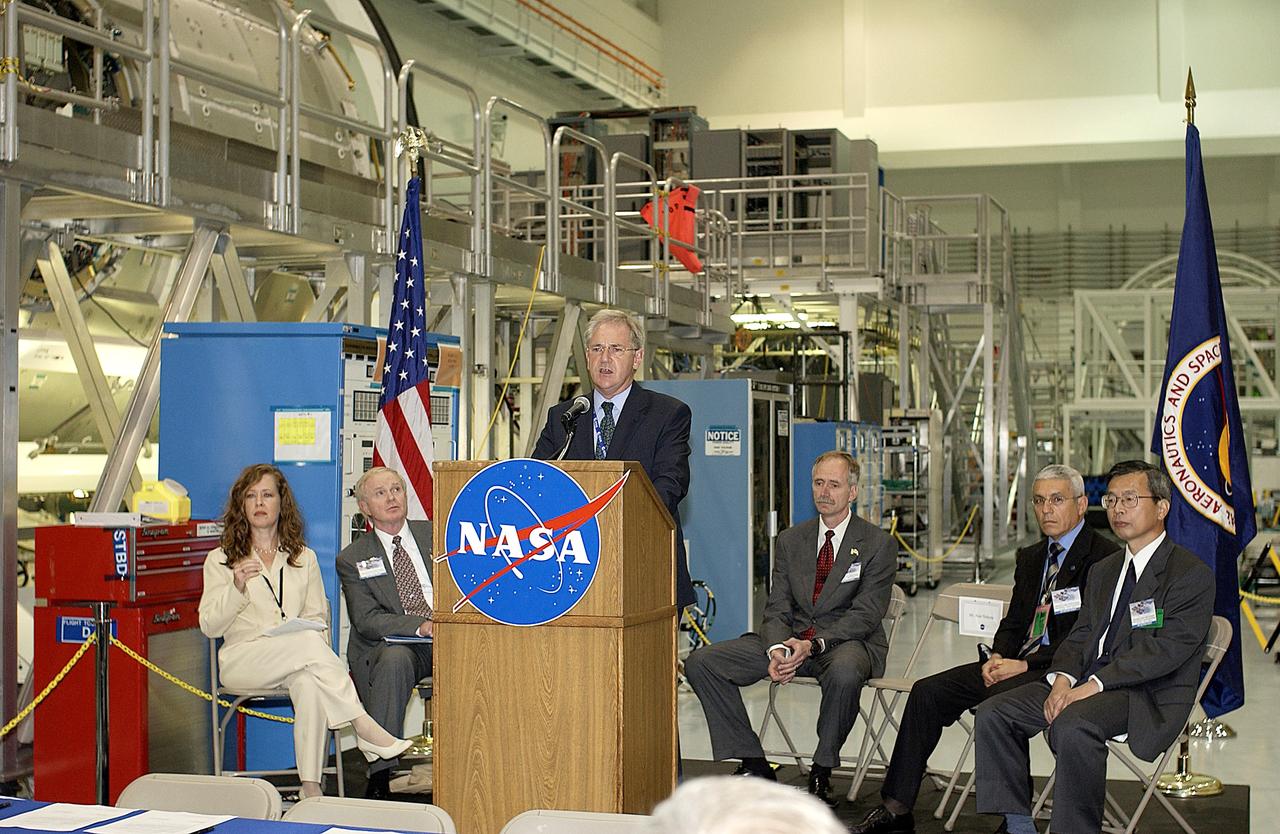
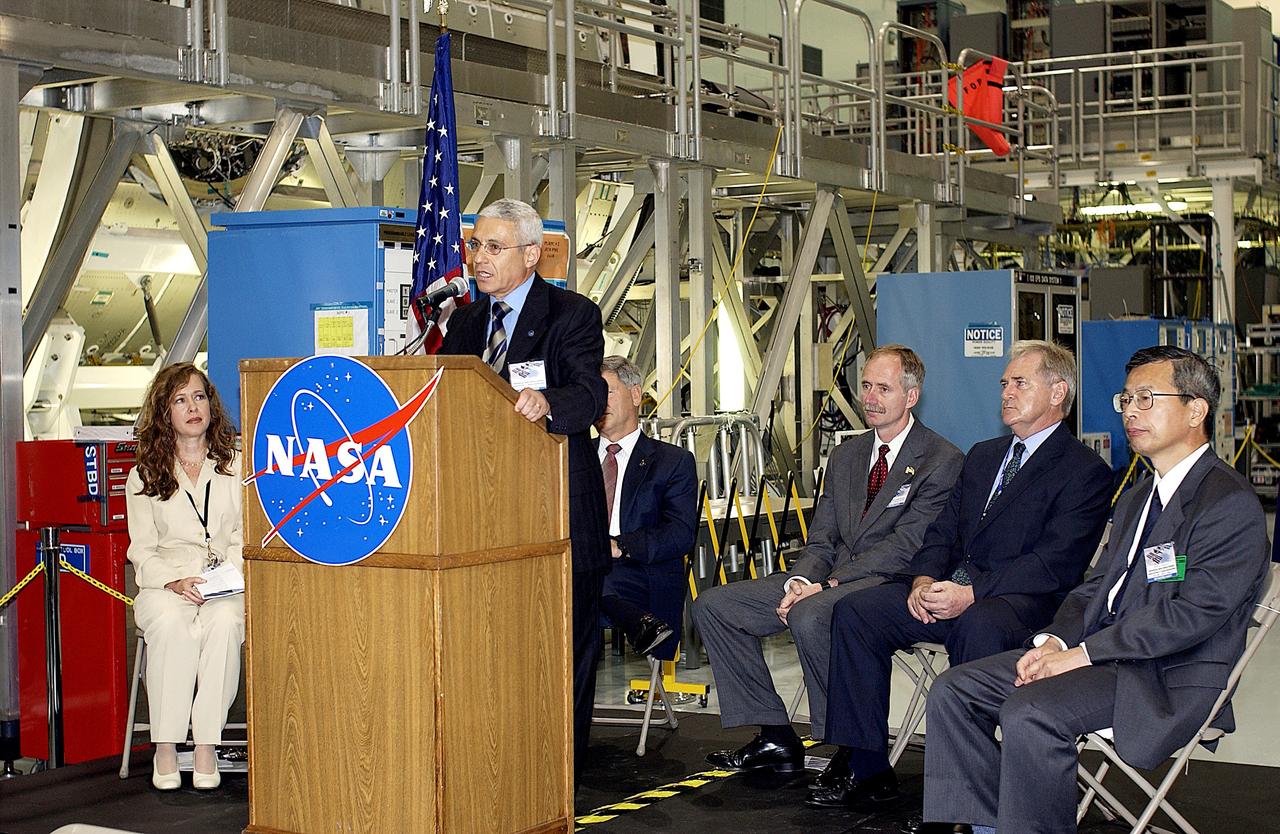
KENNEDY SPACE CENTER, FLA. -  Center Director Roy Bridges Jr. speaks to the media and guests gathered in the Space Station Processing Facility for a ceremony to highlight the arrival of two major components of the International Space Station.  NASA's Node 2, built by the European Space Agency (ESA) in Italy arrived at KSC on June 1. It will be the next pressurized module installed on the Station. The pressurized module of the Japanese Experiment Module (JEM), named "Kibo" (Hope) arrived at KSC on June 4. It is Japan's primary contribution to the Station. The ceremony held today included the official transfer of ownership signing of Node 2 between the ESA and NASA.. Emceed by Lisa Malone (left),  deputy director of External Relations and Business Development at KSC, the ceremony also included these speakers: NASA's Michael C. Kostelnik, deputy associate administrator for International Space Station and Shuttle Programs, and William Gerstenmaier, International Space Station Program manager; Alan Thirkettle, International Space Station Program manager for Node 2, ESA; Andrea Lorenzoni, International Space Station Program manager for Node 2, Italian Space Agency; Kuniaki Shiraki, JEM Project manager, National Aerospace and Development Agency of Japan.
KENNEDY SPACE CENTER, FLA. - Center Director Roy Bridges Jr. speaks to the media and guests gathered in the Space Station Processing Facility for a ceremony to highlight the arrival of two major components of the International Space Station. NASA's Node 2, built by the European Space Agency (ESA) in Italy arrived at KSC on June 1. It will be the next pressurized module installed on the Station. The pressurized module of the Japanese Experiment Module (JEM), named "Kibo" (Hope) arrived at KSC on June 4. It is Japan's primary contribution to the Station. The ceremony held today included the official transfer of ownership signing of Node 2 between the ESA and NASA.. Emceed by Lisa Malone (left), deputy director of External Relations and Business Development at KSC, the ceremony also included these speakers: NASA's Michael C. Kostelnik, deputy associate administrator for International Space Station and Shuttle Programs, and William Gerstenmaier, International Space Station Program manager; Alan Thirkettle, International Space Station Program manager for Node 2, ESA; Andrea Lorenzoni, International Space Station Program manager for Node 2, Italian Space Agency; Kuniaki Shiraki, JEM Project manager, National Aerospace and Development Agency of Japan.
KENNEDY SPACE CENTER, FLA. -  Center Director Roy Bridges Jr. speaks to the media and guests gathered in the Space Station Processing Facility for a ceremony to highlight the arrival of two major components of the International Space Station.  NASA's Node 2, built by the European Space Agency (ESA) in Italy arrived at KSC on June 1. It will be the next pressurized module installed on the Station. The pressurized module of the Japanese Experiment Module (JEM), named "Kibo" (Hope) arrived at KSC on June 4. It is Japan's primary contribution to the Station. The ceremony held today included the official transfer of ownership signing of Node 2 between the ESA and NASA.. Emceed by Lisa Malone (left) ,  deputy director of External Relations and Business Development at KSC, the ceremony also included these speakers: NASA's Michael C. Kostelnik, deputy associate administrator for International Space Station and Shuttle Programs, and William Gerstenmaier, International Space Station Program manager; Alan Thirkettle, International Space Station Program manager for Node 2, ESA; Andrea Lorenzoni, International Space Station Program manager for Node 2, Italian Space Agency; Kuniaki Shiraki, JEM Project manager, National Aerospace and Development Agency of Japan.
KENNEDY SPACE CENTER, FLA. - Center Director Roy Bridges Jr. speaks to the media and guests gathered in the Space Station Processing Facility for a ceremony to highlight the arrival of two major components of the International Space Station. NASA's Node 2, built by the European Space Agency (ESA) in Italy arrived at KSC on June 1. It will be the next pressurized module installed on the Station. The pressurized module of the Japanese Experiment Module (JEM), named "Kibo" (Hope) arrived at KSC on June 4. It is Japan's primary contribution to the Station. The ceremony held today included the official transfer of ownership signing of Node 2 between the ESA and NASA.. Emceed by Lisa Malone (left) , deputy director of External Relations and Business Development at KSC, the ceremony also included these speakers: NASA's Michael C. Kostelnik, deputy associate administrator for International Space Station and Shuttle Programs, and William Gerstenmaier, International Space Station Program manager; Alan Thirkettle, International Space Station Program manager for Node 2, ESA; Andrea Lorenzoni, International Space Station Program manager for Node 2, Italian Space Agency; Kuniaki Shiraki, JEM Project manager, National Aerospace and Development Agency of Japan.
KENNEDY SPACE CENTER, FLA. -   NASA's Michael C. Kostelnik, deputy associate administrator for International Space Station and Shuttle Programs, speaks to guests and the media gathered in the Space Station Processing Facility for a ceremony to highlight the arrival of two major components of the International Space Station.  NASA's Node 2, built by the European Space Agency (ESA) in Italy arrived at KSC on June 1. It will be the next pressurized module installed on the Station. The pressurized module of the Japanese Experiment Module (JEM), named "Kibo" (Hope) arrived at KSC on June 4. It is Japan's primary contribution to the Station. The ceremony held today included the official transfer of ownership signing of Node 2 between the ESA and NASA.. Emceed by Lisa Malone (far left),  deputy director of External Relations and Business Development at KSC, the ceremony also included these speakers: Center Director Roy Bridges Jr. (second from left); William Gerstenmaier, International Space Station Program manager; Alan Thirkettle, International Space Station Program manager for Node 2, ESA; Andrea Lorenzoni, International Space Station Program manager for Node 2, Italian Space Agency; and Kuniaki Shiraki, JEM Project manager, National Aerospace and Development Agency of Japan.
KENNEDY SPACE CENTER, FLA. - NASA's Michael C. Kostelnik, deputy associate administrator for International Space Station and Shuttle Programs, speaks to guests and the media gathered in the Space Station Processing Facility for a ceremony to highlight the arrival of two major components of the International Space Station. NASA's Node 2, built by the European Space Agency (ESA) in Italy arrived at KSC on June 1. It will be the next pressurized module installed on the Station. The pressurized module of the Japanese Experiment Module (JEM), named "Kibo" (Hope) arrived at KSC on June 4. It is Japan's primary contribution to the Station. The ceremony held today included the official transfer of ownership signing of Node 2 between the ESA and NASA.. Emceed by Lisa Malone (far left), deputy director of External Relations and Business Development at KSC, the ceremony also included these speakers: Center Director Roy Bridges Jr. (second from left); William Gerstenmaier, International Space Station Program manager; Alan Thirkettle, International Space Station Program manager for Node 2, ESA; Andrea Lorenzoni, International Space Station Program manager for Node 2, Italian Space Agency; and Kuniaki Shiraki, JEM Project manager, National Aerospace and Development Agency of Japan.
KENNEDY SPACE CENTER, FLA. - Kuniaki Shiraki, JEM Project manager, National Aerospace and Development Agency of Japan,  speaks to guests and the media gathered in the Space Station Processing Facility at a ceremony highlighting the arrival of two major components of the International Space Station.  NASA's Node 2, built by the European Space Agency (ESA) in Italy, arrived at KSC on June 1. It will be the next pressurized module installed on the Station. The pressurized module (above right)  of the Japanese Experiment Module (JEM),  named "Kibo" (Hope), arrived at KSC on June 4. It is Japan's primary contribution to the Station. The ceremony held today included the official transfer of ownership signing of Node 2 between the ESA and NASA.. Emceed by Lisa Malone (far left), deputy director of External Relations and Business Development at KSC, the ceremony also included these speakers: Center Director Roy Bridges Jr. (second from left); NASA’s Michael C. Kostelnik, deputy associate administrator for International Space Station and Shuttle Programs and William Gerstenmaier, International Space Station Program manager ; Alan Thirkettle, International Space Station Program manager for Node 2, ESA; and Andrea Lorenzoni, International Space Station Program manager for Node 2, Italian Space Agency.
KENNEDY SPACE CENTER, FLA. - Kuniaki Shiraki, JEM Project manager, National Aerospace and Development Agency of Japan, speaks to guests and the media gathered in the Space Station Processing Facility at a ceremony highlighting the arrival of two major components of the International Space Station. NASA's Node 2, built by the European Space Agency (ESA) in Italy, arrived at KSC on June 1. It will be the next pressurized module installed on the Station. The pressurized module (above right) of the Japanese Experiment Module (JEM), named "Kibo" (Hope), arrived at KSC on June 4. It is Japan's primary contribution to the Station. The ceremony held today included the official transfer of ownership signing of Node 2 between the ESA and NASA.. Emceed by Lisa Malone (far left), deputy director of External Relations and Business Development at KSC, the ceremony also included these speakers: Center Director Roy Bridges Jr. (second from left); NASA’s Michael C. Kostelnik, deputy associate administrator for International Space Station and Shuttle Programs and William Gerstenmaier, International Space Station Program manager ; Alan Thirkettle, International Space Station Program manager for Node 2, ESA; and Andrea Lorenzoni, International Space Station Program manager for Node 2, Italian Space Agency.
KENNEDY SPACE CENTER, FLA. -  Kuniaki Shiraki, JEM Project manager, National Aerospace and Development Agency of Japan,  speaks to guests and the media gathered in the Space Station Processing Facility at a ceremony highlighting the arrival of two major components of the International Space Station.  NASA's Node 2, built by the European Space Agency (ESA) in Italy, arrived at KSC on June 1. It will be the next pressurized module installed on the Station. The pressurized module of the Japanese Experiment Module (JEM), named "Kibo" (Hope), arrived at KSC on June 4. It is Japan's primary contribution to the Station. The ceremony held today included the official transfer of ownership signing of Node 2 between the ESA and NASA.. Emceed by Lisa Malone, deputy director of External Relations and Business Development at KSC, the ceremony also included these speakers: Center Director Roy Bridges Jr.; NASA’s Michael C. Kostelnik, deputy associate administrator for International Space Station and Shuttle Programs and William Gerstenmaier, International Space Station Program manager ; Alan Thirkettle, International Space Station Program manager for Node 2, ESA; and Andrea Lorenzoni, International Space Station Program manager for Node 2, Italian Space Agency.
KENNEDY SPACE CENTER, FLA. - Kuniaki Shiraki, JEM Project manager, National Aerospace and Development Agency of Japan, speaks to guests and the media gathered in the Space Station Processing Facility at a ceremony highlighting the arrival of two major components of the International Space Station. NASA's Node 2, built by the European Space Agency (ESA) in Italy, arrived at KSC on June 1. It will be the next pressurized module installed on the Station. The pressurized module of the Japanese Experiment Module (JEM), named "Kibo" (Hope), arrived at KSC on June 4. It is Japan's primary contribution to the Station. The ceremony held today included the official transfer of ownership signing of Node 2 between the ESA and NASA.. Emceed by Lisa Malone, deputy director of External Relations and Business Development at KSC, the ceremony also included these speakers: Center Director Roy Bridges Jr.; NASA’s Michael C. Kostelnik, deputy associate administrator for International Space Station and Shuttle Programs and William Gerstenmaier, International Space Station Program manager ; Alan Thirkettle, International Space Station Program manager for Node 2, ESA; and Andrea Lorenzoni, International Space Station Program manager for Node 2, Italian Space Agency.
KENNEDY SPACE CENTER, FLA. -   Alan Thirkettle, International Space Station Program manager for Node 2, European Space Agency (ESA), speaks to guests and the media gathered in the Space Station Processing Facility at a ceremony highlighting the arrival of two major components of the International Space Station.  NASA's Node 2, built by ESA in Italy, arrived at KSC on June 1. It will be the next pressurized module installed on the Station. The pressurized module of the Japanese Experiment Module (JEM), named "Kibo" (Hope), arrived at KSC on June 4. It is Japan's primary contribution to the Station. The ceremony held today included the official transfer of ownership signing of Node 2 between the ESA and NASA.. Emceed by Lisa Malone, deputy director of External Relations and Business Development at KSC, the ceremony also included these speakers: Center Director Roy Bridges Jr.; NASA’s Michael C. Kostelnik, deputy associate administrator for International Space Station and Shuttle Programs and William Gerstenmaier, International Space Station Program manager; Andrea Lorenzoni, International Space Station Program manager for Node 2, Italian Space Agency; and Kuniaki Shiraki, JEM Project manager, National Aerospace and Development Agency of Japan.
KENNEDY SPACE CENTER, FLA. - Alan Thirkettle, International Space Station Program manager for Node 2, European Space Agency (ESA), speaks to guests and the media gathered in the Space Station Processing Facility at a ceremony highlighting the arrival of two major components of the International Space Station. NASA's Node 2, built by ESA in Italy, arrived at KSC on June 1. It will be the next pressurized module installed on the Station. The pressurized module of the Japanese Experiment Module (JEM), named "Kibo" (Hope), arrived at KSC on June 4. It is Japan's primary contribution to the Station. The ceremony held today included the official transfer of ownership signing of Node 2 between the ESA and NASA.. Emceed by Lisa Malone, deputy director of External Relations and Business Development at KSC, the ceremony also included these speakers: Center Director Roy Bridges Jr.; NASA’s Michael C. Kostelnik, deputy associate administrator for International Space Station and Shuttle Programs and William Gerstenmaier, International Space Station Program manager; Andrea Lorenzoni, International Space Station Program manager for Node 2, Italian Space Agency; and Kuniaki Shiraki, JEM Project manager, National Aerospace and Development Agency of Japan.
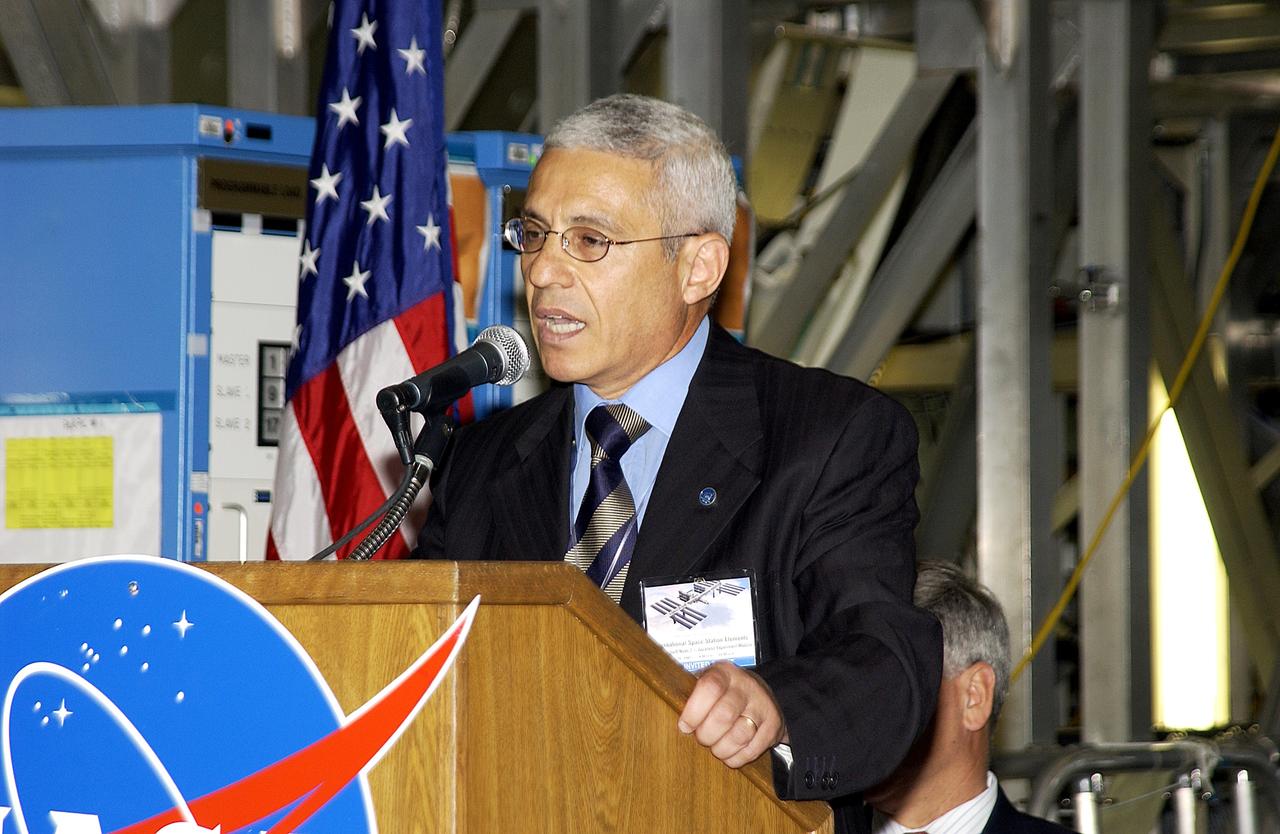
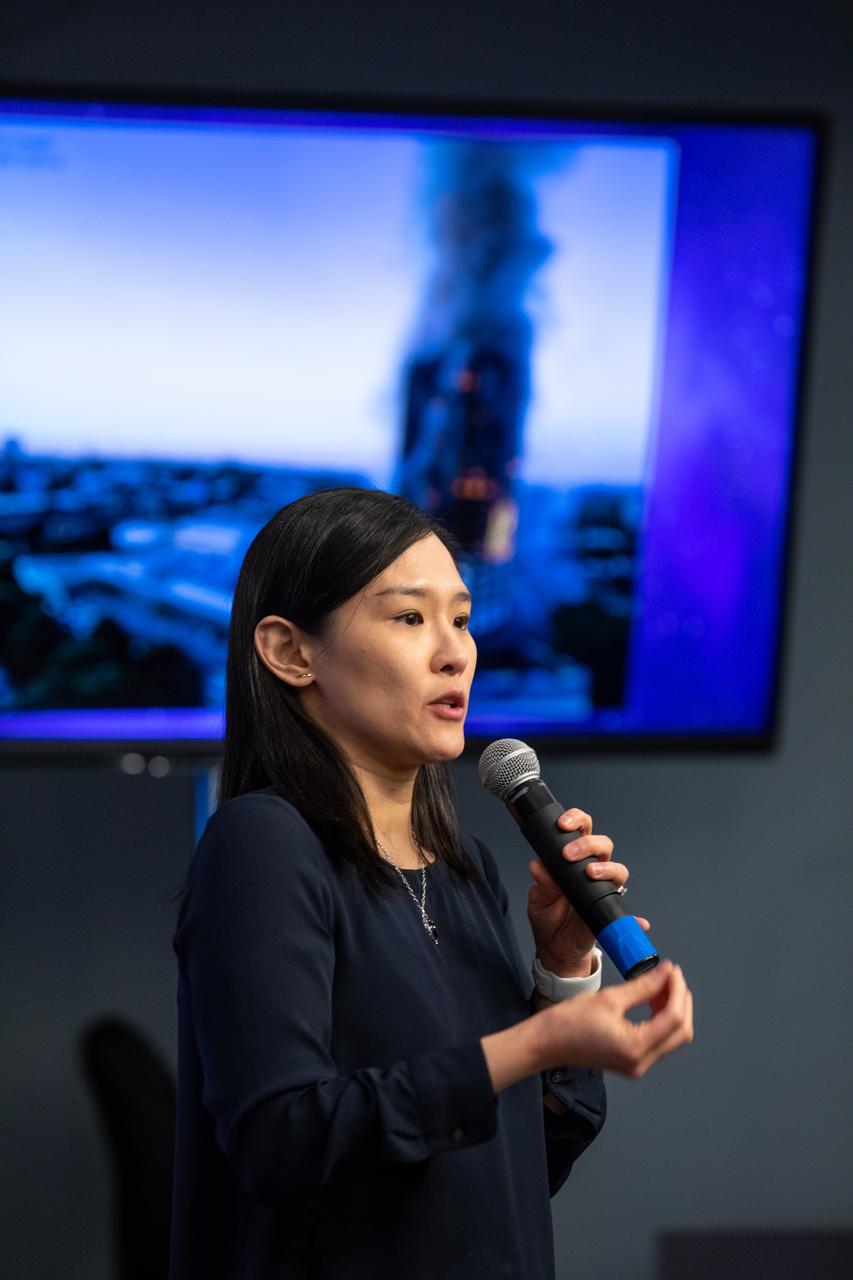
KENNEDY SPACE CENTER, FLA. -  Andrea Lorenzoni, International Space Station Program manager for Node 2, Italian Space Agency, speaks to guests and the media gathered in the Space Station Processing Facility at a ceremony highlighting the arrival of two major components of the International Space Station.  NASA's Node 2, built by the European Space Agency (ESA) in Italy, arrived at KSC on June 1. It will be the next pressurized module installed on the Station. The pressurized module of the Japanese Experiment Module (JEM), named "Kibo" (Hope), arrived at KSC on June 4. It is Japan's primary contribution to the Station. The ceremony held today included the official transfer of ownership signing of Node 2 between the ESA and NASA.. Emceed by Lisa Malone, deputy director of External Relations and Business Development at KSC, the ceremony also included these speakers: Center Director Roy Bridges Jr.; NASA’s Michael C. Kostelnik, deputy associate administrator for International Space Station and Shuttle Programs and William Gerstenmaier, International Space Station Program manager; Alan Thirkettle, International Space Station Program manager for Node 2, ESA; and Kuniaki Shiraki, JEM Project manager, National Aerospace and Development Agency of Japan.
KENNEDY SPACE CENTER, FLA. - Andrea Lorenzoni, International Space Station Program manager for Node 2, Italian Space Agency, speaks to guests and the media gathered in the Space Station Processing Facility at a ceremony highlighting the arrival of two major components of the International Space Station. NASA's Node 2, built by the European Space Agency (ESA) in Italy, arrived at KSC on June 1. It will be the next pressurized module installed on the Station. The pressurized module of the Japanese Experiment Module (JEM), named "Kibo" (Hope), arrived at KSC on June 4. It is Japan's primary contribution to the Station. The ceremony held today included the official transfer of ownership signing of Node 2 between the ESA and NASA.. Emceed by Lisa Malone, deputy director of External Relations and Business Development at KSC, the ceremony also included these speakers: Center Director Roy Bridges Jr.; NASA’s Michael C. Kostelnik, deputy associate administrator for International Space Station and Shuttle Programs and William Gerstenmaier, International Space Station Program manager; Alan Thirkettle, International Space Station Program manager for Node 2, ESA; and Kuniaki Shiraki, JEM Project manager, National Aerospace and Development Agency of Japan.
KENNEDY SPACE CENTER, FLA. -  Center Director Roy Bridges Jr. speaks to the media and guests gathered in the Space Station Processing Facility for a ceremony to highlight the arrival of two major components of the International Space Station.  NASA's Node 2, built by the European Space Agency (ESA) in Italy arrived at KSC on June 1. It will be the next pressurized module installed on the Station. The pressurized module of the Japanese Experiment Module (JEM), named "Kibo" (Hope) arrived at KSC on June 4. It is Japan's primary contribution to the Station. The ceremony held today included the official transfer of ownership signing of Node 2 between the ESA and NASA.. Emceed by Lisa Malone (far left),  deputy director of External Relations and Business Development at KSC, the ceremony also included these speakers: NASA's Michael C. Kostelnik, deputy associate administrator for International Space Station and Shuttle Programs, and William Gerstenmaier, International Space Station Program manager; Alan Thirkettle, International Space Station Program manager for Node 2, ESA; Andrea Lorenzoni, International Space Station Program manager for Node 2, Italian Space Agency; Kuniaki Shiraki, JEM Project manager, National Aerospace and Development Agency of Japan.
KENNEDY SPACE CENTER, FLA. - Center Director Roy Bridges Jr. speaks to the media and guests gathered in the Space Station Processing Facility for a ceremony to highlight the arrival of two major components of the International Space Station. NASA's Node 2, built by the European Space Agency (ESA) in Italy arrived at KSC on June 1. It will be the next pressurized module installed on the Station. The pressurized module of the Japanese Experiment Module (JEM), named "Kibo" (Hope) arrived at KSC on June 4. It is Japan's primary contribution to the Station. The ceremony held today included the official transfer of ownership signing of Node 2 between the ESA and NASA.. Emceed by Lisa Malone (far left), deputy director of External Relations and Business Development at KSC, the ceremony also included these speakers: NASA's Michael C. Kostelnik, deputy associate administrator for International Space Station and Shuttle Programs, and William Gerstenmaier, International Space Station Program manager; Alan Thirkettle, International Space Station Program manager for Node 2, ESA; Andrea Lorenzoni, International Space Station Program manager for Node 2, Italian Space Agency; Kuniaki Shiraki, JEM Project manager, National Aerospace and Development Agency of Japan.
KENNEDY SPACE CENTER, FLA. -   Andrea Lorenzoni, International Space Station Program manager for Node 2, Italian Space Agency, speaks to guests and the media gathered in the Space Station Processing Facility at a ceremony highlighting the arrival of two major components of the International Space Station.  NASA's Node 2, built by the European Space Agency (ESA) in Italy, arrived at KSC on June 1. It will be the next pressurized module installed on the Station. The pressurized module of the Japanese Experiment Module (JEM), named "Kibo" (Hope), arrived at KSC on June 4. It is Japan's primary contribution to the Station. The ceremony held today included the official transfer of ownership signing of Node 2 between the ESA and NASA.. Emceed by Lisa Malone (far left), deputy director of External Relations and Business Development at KSC, the ceremony also included these speakers: Center Director Roy Bridges Jr.; NASA’s Michael C. Kostelnik, deputy associate administrator for International Space Station and Shuttle Programs, and William Gerstenmaier, International Space Station Program manager ; Alan Thirkettle, International Space Station Program manager for Node 2, ESA; and Kuniaki Shiraki, JEM Project manager, National Aerospace and Development Agency of Japan.
KENNEDY SPACE CENTER, FLA. - Andrea Lorenzoni, International Space Station Program manager for Node 2, Italian Space Agency, speaks to guests and the media gathered in the Space Station Processing Facility at a ceremony highlighting the arrival of two major components of the International Space Station. NASA's Node 2, built by the European Space Agency (ESA) in Italy, arrived at KSC on June 1. It will be the next pressurized module installed on the Station. The pressurized module of the Japanese Experiment Module (JEM), named "Kibo" (Hope), arrived at KSC on June 4. It is Japan's primary contribution to the Station. The ceremony held today included the official transfer of ownership signing of Node 2 between the ESA and NASA.. Emceed by Lisa Malone (far left), deputy director of External Relations and Business Development at KSC, the ceremony also included these speakers: Center Director Roy Bridges Jr.; NASA’s Michael C. Kostelnik, deputy associate administrator for International Space Station and Shuttle Programs, and William Gerstenmaier, International Space Station Program manager ; Alan Thirkettle, International Space Station Program manager for Node 2, ESA; and Kuniaki Shiraki, JEM Project manager, National Aerospace and Development Agency of Japan.
KENNEDY SPACE CENTER, FLA. -   NASA’s Michael C. Kostelnik, deputy associate administrator for International Space Station and Shuttle Programs, speaks to guests and the media gathered in the Space Station Processing Facility for a ceremony to highlight the arrival of two major components of the International Space Station.  NASA's Node 2, built by the European Space Agency (ESA) in Italy arrived at KSC on June 1. It will be the next pressurized module installed on the Station. The pressurized module of the Japanese Experiment Module (JEM), named "Kibo" (Hope) arrived at KSC on June 4. It is Japan's primary contribution to the Station. The ceremony held today included the official transfer of ownership signing of Node 2 between the ESA and NASA.. Emceed by Lisa Malone, deputy director of External Relations and Business Development at KSC, the ceremony also included these speakers: Center Director Roy Bridges Jr.; William Gerstenmaier, International Space Station Program manager; Alan Thirkettle, International Space Station Program manager for Node 2, ESA; Andrea Lorenzoni, International Space Station Program manager for Node 2, Italian Space Agency; and Kuniaki Shiraki, JEM Project manager, National Aerospace and Development Agency of Japan.
KENNEDY SPACE CENTER, FLA. - NASA’s Michael C. Kostelnik, deputy associate administrator for International Space Station and Shuttle Programs, speaks to guests and the media gathered in the Space Station Processing Facility for a ceremony to highlight the arrival of two major components of the International Space Station. NASA's Node 2, built by the European Space Agency (ESA) in Italy arrived at KSC on June 1. It will be the next pressurized module installed on the Station. The pressurized module of the Japanese Experiment Module (JEM), named "Kibo" (Hope) arrived at KSC on June 4. It is Japan's primary contribution to the Station. The ceremony held today included the official transfer of ownership signing of Node 2 between the ESA and NASA.. Emceed by Lisa Malone, deputy director of External Relations and Business Development at KSC, the ceremony also included these speakers: Center Director Roy Bridges Jr.; William Gerstenmaier, International Space Station Program manager; Alan Thirkettle, International Space Station Program manager for Node 2, ESA; Andrea Lorenzoni, International Space Station Program manager for Node 2, Italian Space Agency; and Kuniaki Shiraki, JEM Project manager, National Aerospace and Development Agency of Japan.
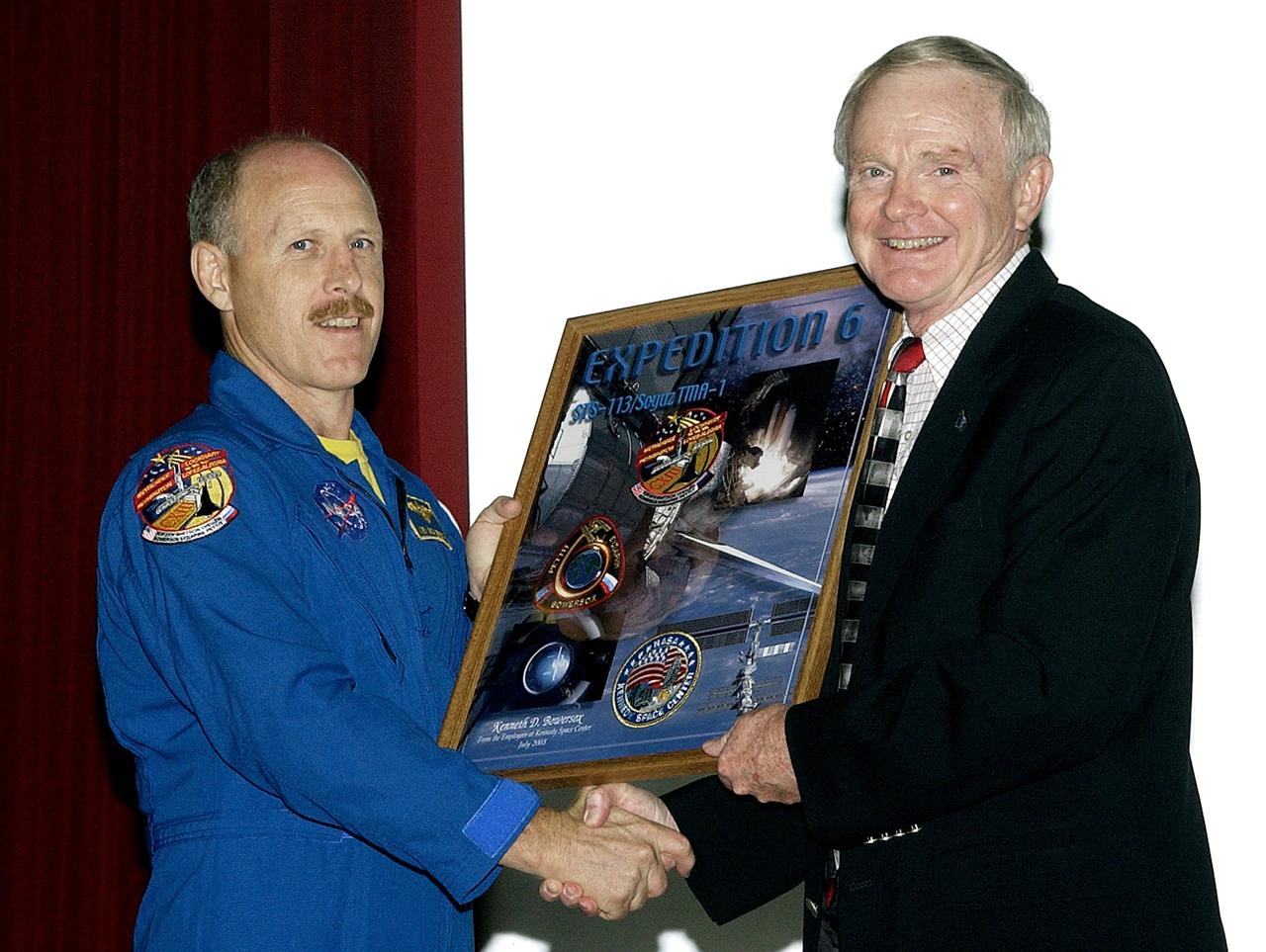
KENNEDY SPACE CENTER, FLA. -  Expedition 6 Commander Ken Bowersox speaks to KSC employees about his mission and residence on the International Space Station from November 25, 2002, to May 3, 2003.
KENNEDY SPACE CENTER, FLA. - Expedition 6 Commander Ken Bowersox speaks to KSC employees about his mission and residence on the International Space Station from November 25, 2002, to May 3, 2003.
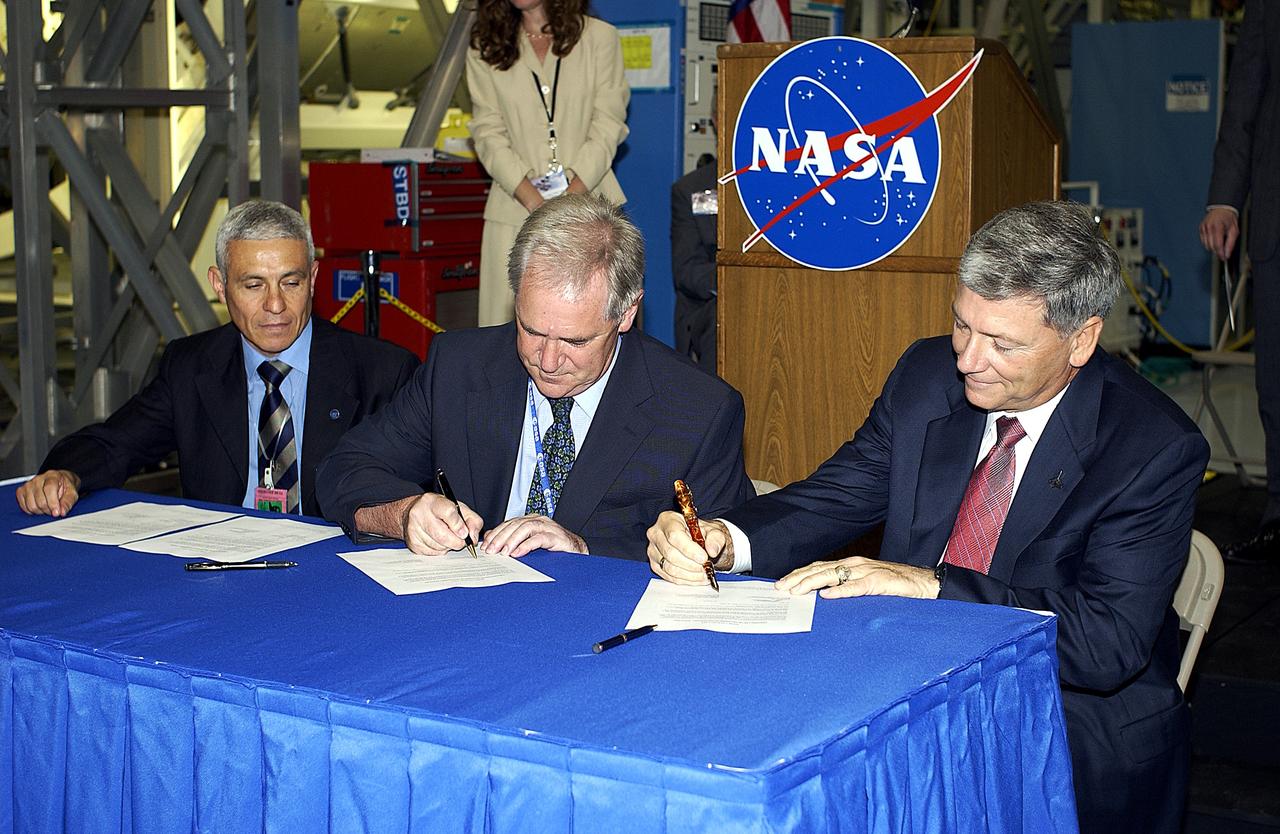
KENNEDY SPACE CENTER, FLA. - Andrea Lorenzoni, International Space Station Program manager for Node 2, Italian Space Agency; Alan Thirkettle, International Space Station Program manager for Node 2, European Space Agency (ESA); and NASA’s Michael C. Kostelnik, deputy associate administrator for International Space Station and Shuttle Programs, sign documents officially transferring ownership of Node 2 between the ESA and NASA. The signing was part of a  ceremony highlighting the arrival of two major components of the International Space Station.  NASA's Node 2, built by the European Space Agency (ESA) in Italy, arrived at KSC on June 1. It will be the next pressurized module installed on the Station. The pressurized module (above right) of the Japanese Experiment Module (JEM),  named "Kibo" (Hope), arrived at KSC on June 4. It is Japan's primary contribution to the Station. Emceed by Lisa Malone (far left), deputy director of External Relations and Business Development at KSC, the ceremony also included these speakers: Center Director Roy Bridges Jr.; NASA’s William Gerstenmaier, International Space Station Program manager; and Kuniaki Shiraki, JEM Project manager, National Aerospace and Development Agency of Japan.
KENNEDY SPACE CENTER, FLA. - Andrea Lorenzoni, International Space Station Program manager for Node 2, Italian Space Agency; Alan Thirkettle, International Space Station Program manager for Node 2, European Space Agency (ESA); and NASA’s Michael C. Kostelnik, deputy associate administrator for International Space Station and Shuttle Programs, sign documents officially transferring ownership of Node 2 between the ESA and NASA. The signing was part of a ceremony highlighting the arrival of two major components of the International Space Station. NASA's Node 2, built by the European Space Agency (ESA) in Italy, arrived at KSC on June 1. It will be the next pressurized module installed on the Station. The pressurized module (above right) of the Japanese Experiment Module (JEM), named "Kibo" (Hope), arrived at KSC on June 4. It is Japan's primary contribution to the Station. Emceed by Lisa Malone (far left), deputy director of External Relations and Business Development at KSC, the ceremony also included these speakers: Center Director Roy Bridges Jr.; NASA’s William Gerstenmaier, International Space Station Program manager; and Kuniaki Shiraki, JEM Project manager, National Aerospace and Development Agency of Japan.
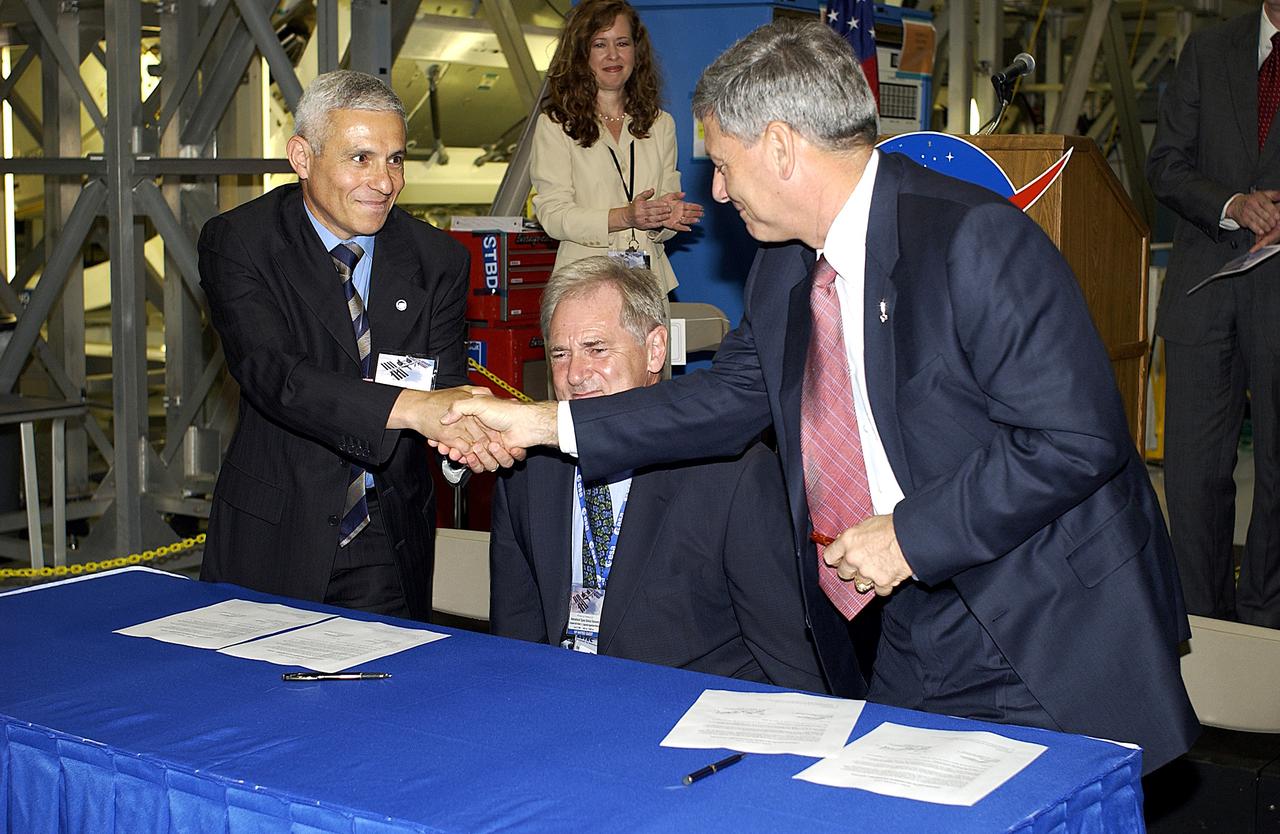
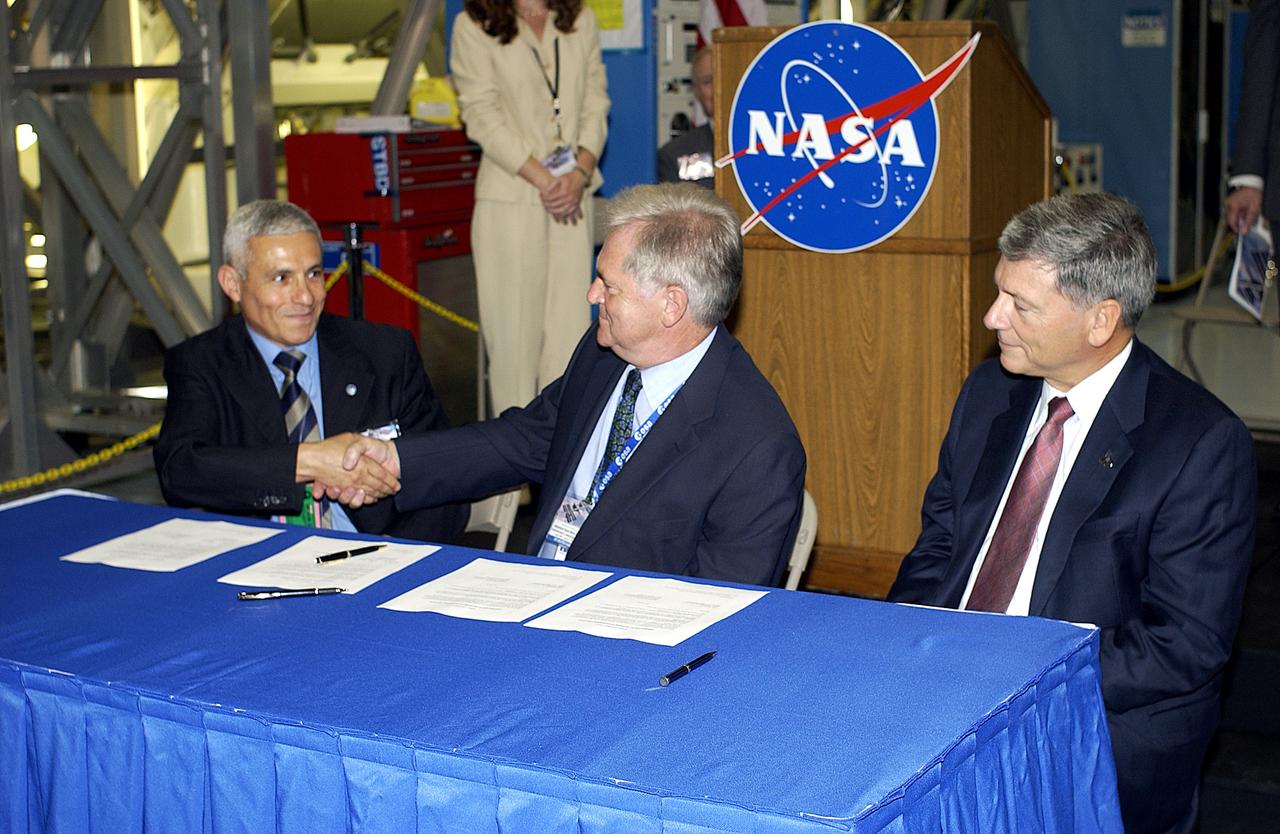
KENNEDY SPACE CENTER, FLA. - At ceremony highlighting the arrival of two major components of the International Space Station, Node 2 and the Japanese Experiment Module (JEM), ownership of Node 2 was officially transferred between the European Space Agency and NASA.  Shaking hands after the signing are Andrea Lorenzoni, International Space Station Program manager for Node 2, Italian Space Agency; and Alan Thirkettle, International Space Station Program manager for Node 2, European Space Agency (ESA).  At right is NASA’s Michael C. Kostelnik, deputy associate administrator for International Space Station and Shuttle Programs.  NASA's Node 2, built by ESA in Italy, arrived at KSC on June 1. It will be the next pressurized module installed on the Station. The pressurized module of the Japanese Experiment Module (JEM),  named "Kibo" (Hope), arrived at KSC on June 4. It is Japan's primary contribution to the Station. Emceed by Lisa Malone, deputy director of External Relations and Business Development at KSC, the ceremony also included these speakers: Center Director Roy Bridges Jr.; NASA’s William Gerstenmaier, International Space Station Program manager; and Kuniaki Shiraki, JEM Project manager, National Aerospace and Development Agency of Japan.
KENNEDY SPACE CENTER, FLA. - At ceremony highlighting the arrival of two major components of the International Space Station, Node 2 and the Japanese Experiment Module (JEM), ownership of Node 2 was officially transferred between the European Space Agency and NASA. Shaking hands after the signing are Andrea Lorenzoni, International Space Station Program manager for Node 2, Italian Space Agency; and Alan Thirkettle, International Space Station Program manager for Node 2, European Space Agency (ESA). At right is NASA’s Michael C. Kostelnik, deputy associate administrator for International Space Station and Shuttle Programs. NASA's Node 2, built by ESA in Italy, arrived at KSC on June 1. It will be the next pressurized module installed on the Station. The pressurized module of the Japanese Experiment Module (JEM), named "Kibo" (Hope), arrived at KSC on June 4. It is Japan's primary contribution to the Station. Emceed by Lisa Malone, deputy director of External Relations and Business Development at KSC, the ceremony also included these speakers: Center Director Roy Bridges Jr.; NASA’s William Gerstenmaier, International Space Station Program manager; and Kuniaki Shiraki, JEM Project manager, National Aerospace and Development Agency of Japan.
KENNEDY SPACE CENTER, FLA. - At a ceremony highlighting the arrival of two major components of the International Space Station, Node 2 and the Japanese Experiment Module (JEM), ownership of Node 2 was officially transferred between the European Space Agency (ESA) and NASA.  Shaking hands after the signing are (left) Andrea Lorenzoni, International Space Station Program manager for Node 2, Italian Space Agency, and (right) NASA’s Michael C. Kostelnik (right), deputy associate administrator for International Space Station and Shuttle Programs.  Also part of the signing is (center) Alan Thirkettle (center), International Space Station Program manager for Node 2, European Space Agency.  NASA's Node 2, built by ESA in Italy, arrived at KSC on June 1. It will be the next pressurized module installed on the Station. The pressurized module of the Japanese Experiment Module (JEM),  named "Kibo" (Hope), arrived at KSC on June 4. It is Japan's primary contribution to the Station. Emceed by Lisa Malone (background, left),  deputy director of External Relations and Business Development at KSC, the ceremony also included these speakers: Center Director Roy Bridges Jr.; NASA’s William Gerstenmaier, International Space Station Program manager; and Kuniaki Shiraki, JEM Project manager, National Aerospace and Development Agency of Japan.
KENNEDY SPACE CENTER, FLA. - At a ceremony highlighting the arrival of two major components of the International Space Station, Node 2 and the Japanese Experiment Module (JEM), ownership of Node 2 was officially transferred between the European Space Agency (ESA) and NASA. Shaking hands after the signing are (left) Andrea Lorenzoni, International Space Station Program manager for Node 2, Italian Space Agency, and (right) NASA’s Michael C. Kostelnik (right), deputy associate administrator for International Space Station and Shuttle Programs. Also part of the signing is (center) Alan Thirkettle (center), International Space Station Program manager for Node 2, European Space Agency. NASA's Node 2, built by ESA in Italy, arrived at KSC on June 1. It will be the next pressurized module installed on the Station. The pressurized module of the Japanese Experiment Module (JEM), named "Kibo" (Hope), arrived at KSC on June 4. It is Japan's primary contribution to the Station. Emceed by Lisa Malone (background, left), deputy director of External Relations and Business Development at KSC, the ceremony also included these speakers: Center Director Roy Bridges Jr.; NASA’s William Gerstenmaier, International Space Station Program manager; and Kuniaki Shiraki, JEM Project manager, National Aerospace and Development Agency of Japan.
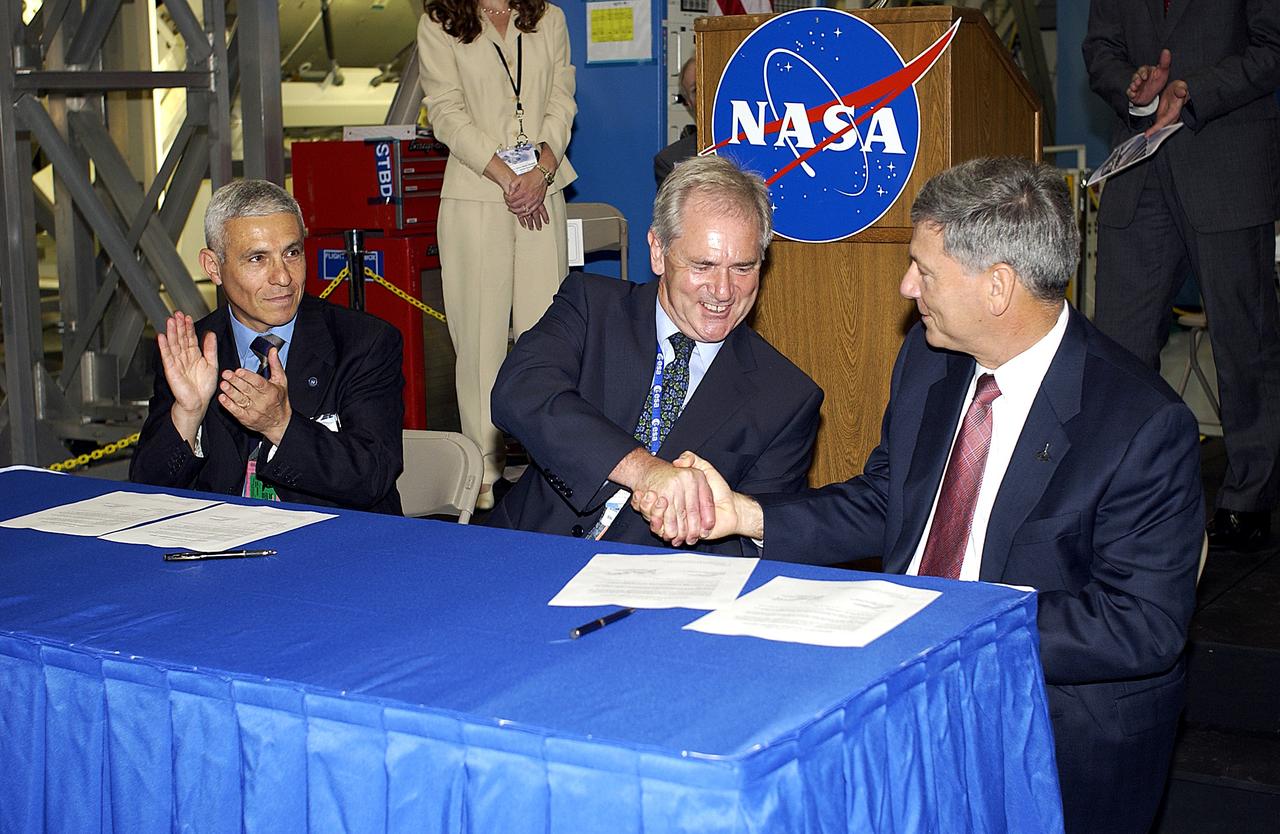
KENNEDY SPACE CENTER, FLA. - At a ceremony highlighting the arrival of two major components of the International Space Station, Node 2 and the Japanese Experiment Module (JEM), ownership of Node 2 was officially transferred between the European Space Agency (ESA) and NASA.  Shaking hands after the signing are Alan Thirkettle (center), International Space Station Program manager for Node 2, ESA; and NASA’s Michael C. Kostelnik (right), deputy associate administrator for International Space Station and Shuttle Programs.  At left, also part of the signing, is Andrea Lorenzoni (left), International Space Station Program manager for Node 2, Italian Space Agency.  NASA's Node 2, built by ESA in Italy, arrived at KSC on June 1. It will be the next pressurized module installed on the Station. The pressurized module of the Japanese Experiment Module (JEM),  named "Kibo" (Hope), arrived at KSC on June 4. It is Japan's primary contribution to the Station. Emceed by Lisa Malone, deputy director of External Relations and Business Development at KSC, the ceremony also included these speakers: Center Director Roy Bridges Jr.; NASA’s William Gerstenmaier, International Space Station Program manager; and Kuniaki Shiraki, JEM Project manager, National Aerospace and Development Agency of Japan.
KENNEDY SPACE CENTER, FLA. - At a ceremony highlighting the arrival of two major components of the International Space Station, Node 2 and the Japanese Experiment Module (JEM), ownership of Node 2 was officially transferred between the European Space Agency (ESA) and NASA. Shaking hands after the signing are Alan Thirkettle (center), International Space Station Program manager for Node 2, ESA; and NASA’s Michael C. Kostelnik (right), deputy associate administrator for International Space Station and Shuttle Programs. At left, also part of the signing, is Andrea Lorenzoni (left), International Space Station Program manager for Node 2, Italian Space Agency. NASA's Node 2, built by ESA in Italy, arrived at KSC on June 1. It will be the next pressurized module installed on the Station. The pressurized module of the Japanese Experiment Module (JEM), named "Kibo" (Hope), arrived at KSC on June 4. It is Japan's primary contribution to the Station. Emceed by Lisa Malone, deputy director of External Relations and Business Development at KSC, the ceremony also included these speakers: Center Director Roy Bridges Jr.; NASA’s William Gerstenmaier, International Space Station Program manager; and Kuniaki Shiraki, JEM Project manager, National Aerospace and Development Agency of Japan.
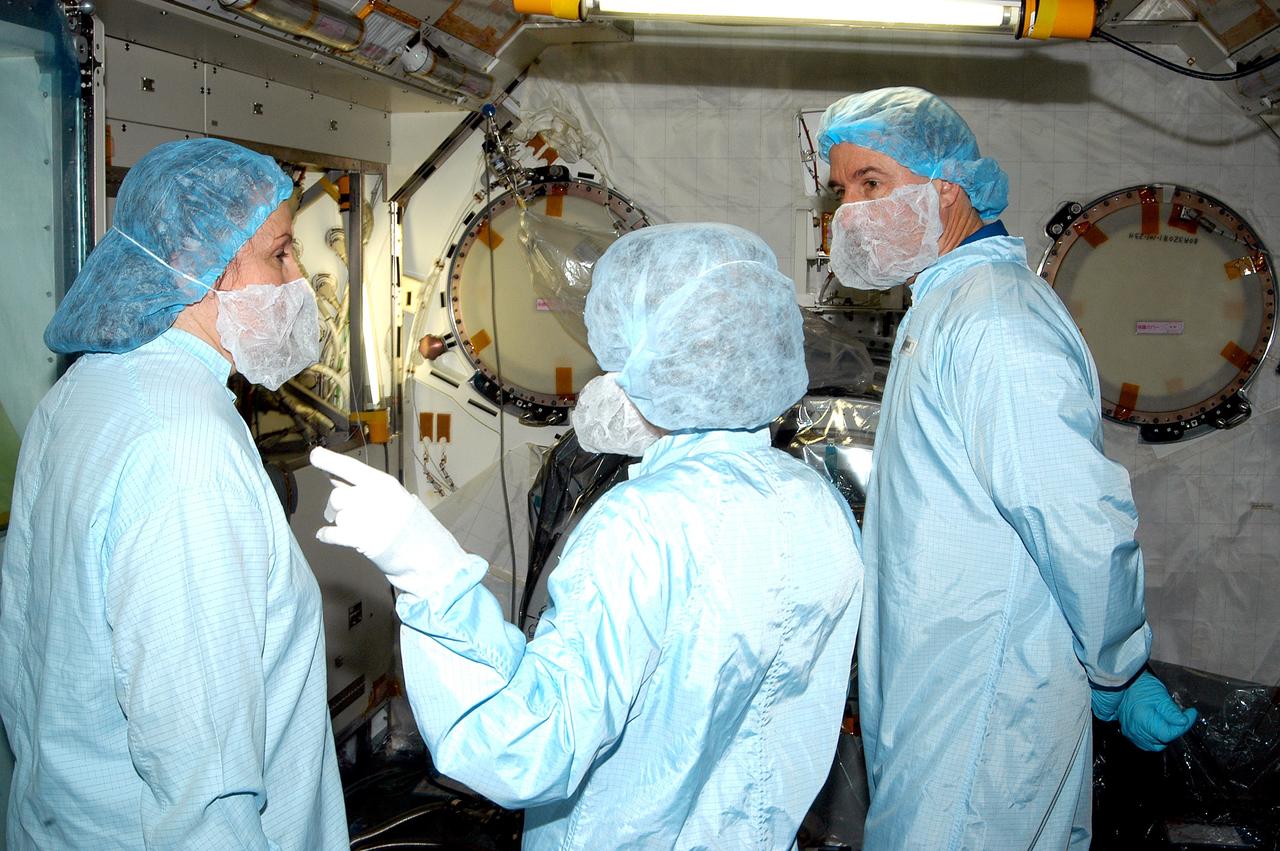
KENNEDY SPACE CENTER, FLA. - In the Space Station Processing Facility, STS-114 Mission Specialist Stephen Robinson (right) learns about the Japanese Experiment Module (JEM) from Louise Kleba (left), with United Space Alliance at KSC, and Jennifer Goldsmith (center), with USA at Johnson Space Center. Crew members are at KSC becoming familiar with Shuttle and mission equipment. The mission is Logistics Flight 1, which is scheduled to deliver supplies and equipment plus the external stowage platform to the International Space Station.
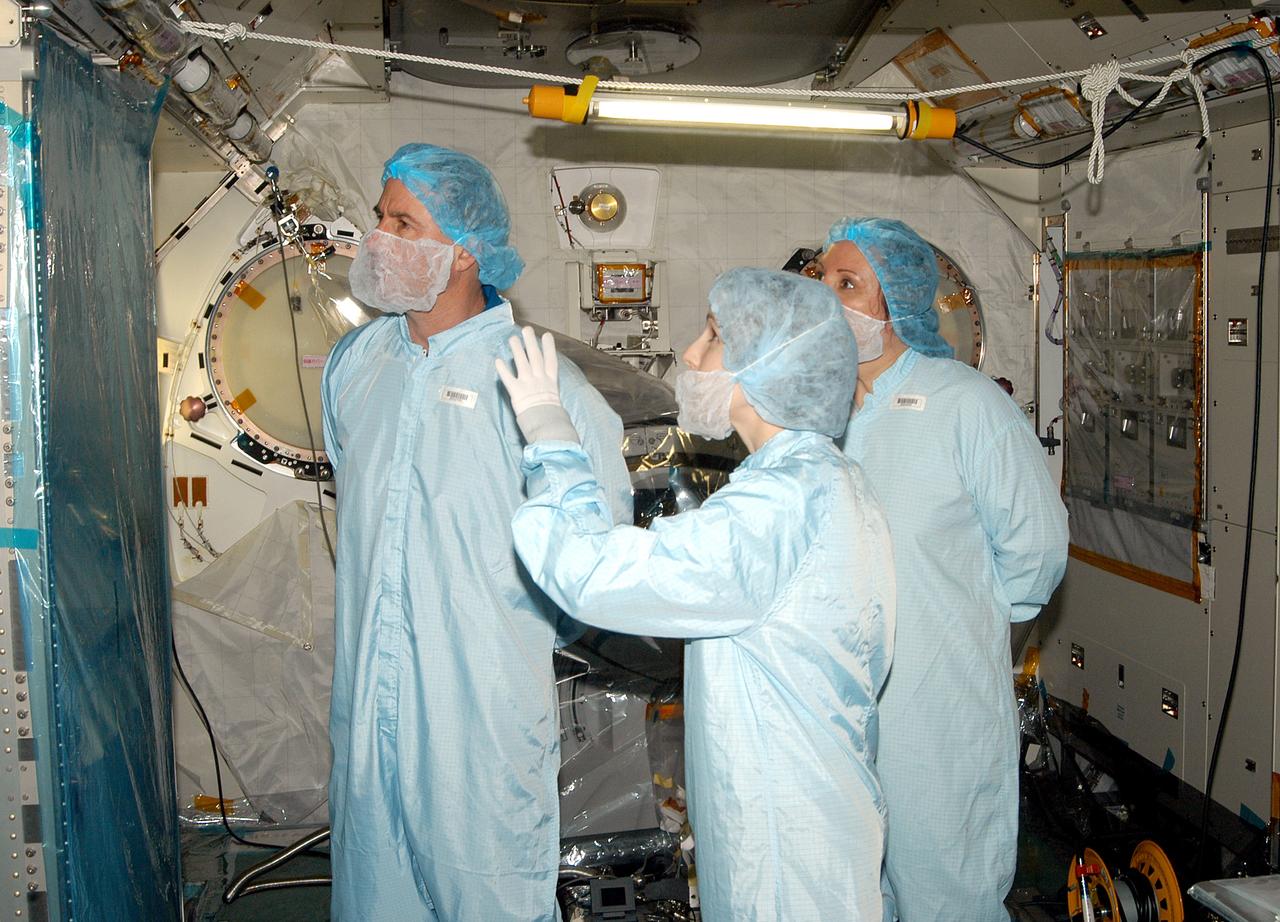
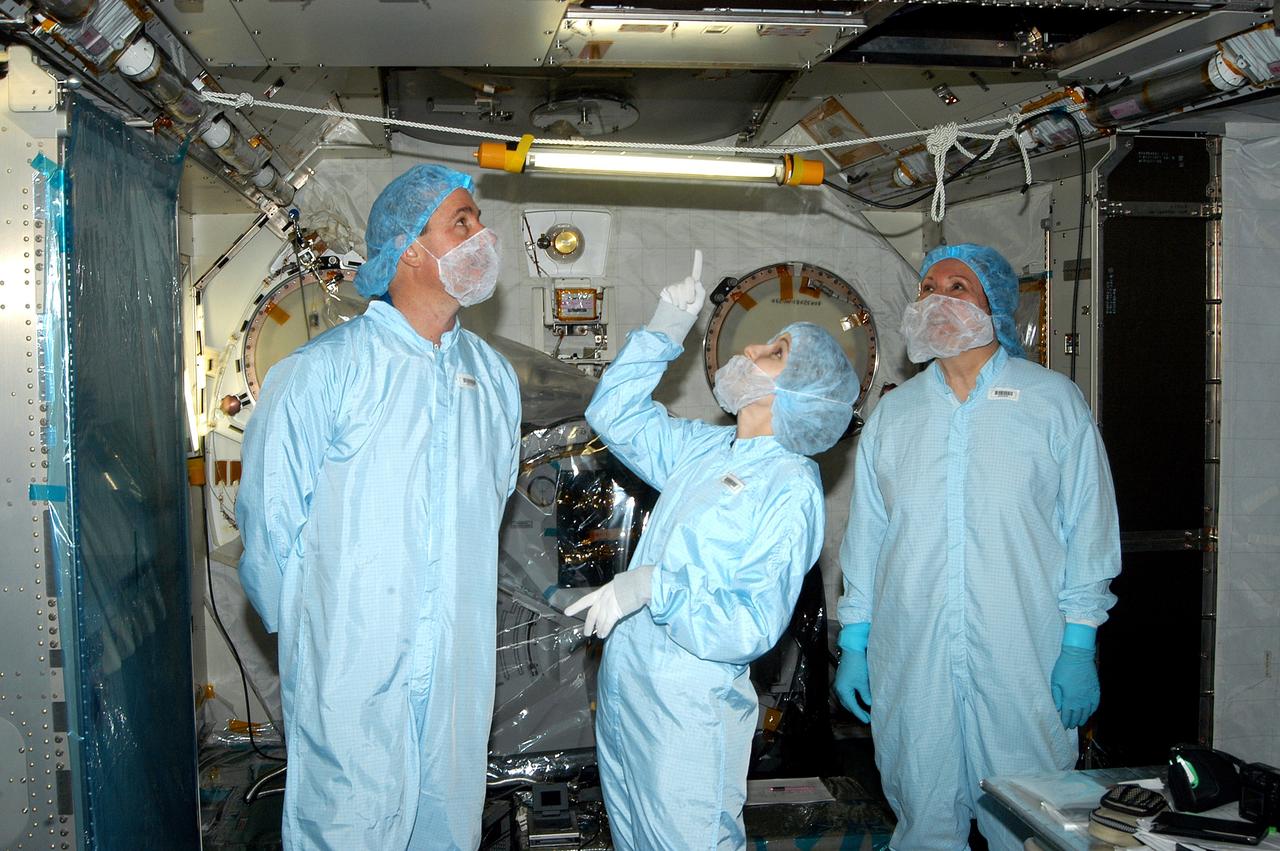
KENNEDY SPACE CENTER, FLA. - In the Space Station Processing Facility, STS-114 Mission Specialist Stephen Robinson (left) looks at an area overhead in the Japanese Experiment Module (JEM). In the center is Jennifer Goldsmith, with United Space Alliance at Johnson Space Center, and at right is Louise Kleba, with USA at KSC.  Crew members are at KSC becoming familiar with Shuttle and mission equipment. The mission is Logistics Flight 1, which is scheduled to deliver supplies and equipment plus the external stowage platform to the International Space Station.
KENNEDY SPACE CENTER, FLA. - In the Space Station Processing Facility, STS-114 Mission Specialist Stephen Robinson (left) looks at an area overhead in the Japanese Experiment Module (JEM). In the center is Jennifer Goldsmith, with United Space Alliance at Johnson Space Center, and at right is Louise Kleba, with USA at KSC. Crew members are at KSC becoming familiar with Shuttle and mission equipment. The mission is Logistics Flight 1, which is scheduled to deliver supplies and equipment plus the external stowage platform to the International Space Station.
KENNEDY SPACE CENTER, FLA. - - In the Space Station Processing Facility, STS-114 Mission Specialist Stephen Robinson (left) learns about the Japanese Experiment Module (JEM) from Jennifer Goldsmith (center), with United Space Alliance at Johnson Space Center, and Louise Kleba (right), with USA at KSC.  Crew members are at KSC to become familiar with Shuttle and mission equipment. The mission is Logistics Flight 1, which is scheduled to deliver supplies and equipment plus the external stowage platform to the International Space Station.
KENNEDY SPACE CENTER, FLA. - - In the Space Station Processing Facility, STS-114 Mission Specialist Stephen Robinson (left) learns about the Japanese Experiment Module (JEM) from Jennifer Goldsmith (center), with United Space Alliance at Johnson Space Center, and Louise Kleba (right), with USA at KSC. Crew members are at KSC to become familiar with Shuttle and mission equipment. The mission is Logistics Flight 1, which is scheduled to deliver supplies and equipment plus the external stowage platform to the International Space Station.
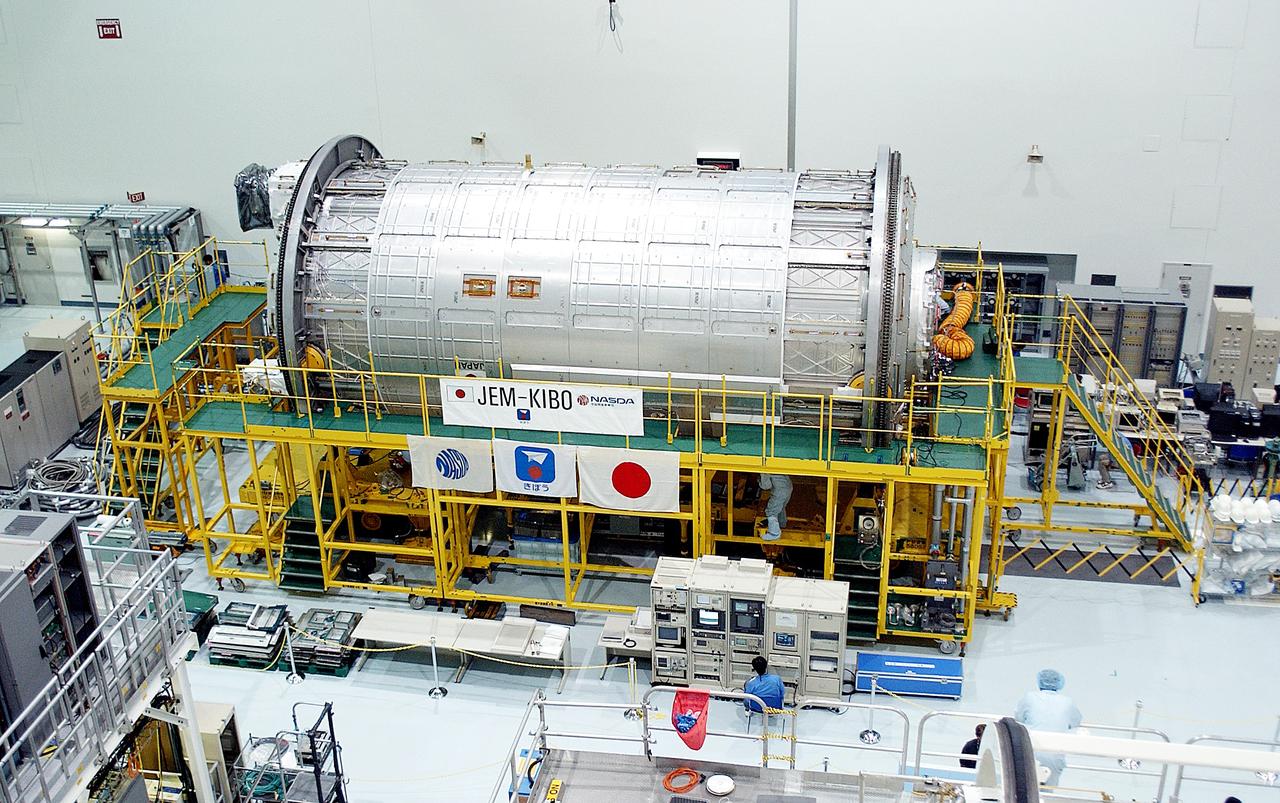
KENNEDY SPACE CENTER, FLA. -  International Space Station elements being processed for launch on upcoming Space Shuttle flights, including the U.S. Node 2 and the Japanese Experiment Module (JEM) pressurized module, line the walls of the high bay in the Space Station Processing Facility. NASA's Node 2, built by the European Space Agency (ESA) in Italy, arrived at KSC on June 1. It will be the next pressurized module installed on the Station. The JEM pressurized module, named "Kibo" (Hope), arrived at KSC on June 4. It is Japan's primary contribution to the Station.
KENNEDY SPACE CENTER, FLA. - International Space Station elements being processed for launch on upcoming Space Shuttle flights, including the U.S. Node 2 and the Japanese Experiment Module (JEM) pressurized module, line the walls of the high bay in the Space Station Processing Facility. NASA's Node 2, built by the European Space Agency (ESA) in Italy, arrived at KSC on June 1. It will be the next pressurized module installed on the Station. The JEM pressurized module, named "Kibo" (Hope), arrived at KSC on June 4. It is Japan's primary contribution to the Station.
KENNEDY SPACE CENTER, FLA. -  International Space Station elements being processed for launch on upcoming Space Shuttle flights, including the U.S. Node 2 and the Japanese Experiment Module (JEM) pressurized module, line the walls of the high bay in the Space Station Processing Facility. NASA's Node 2, built by the European Space Agency (ESA) in Italy, arrived at KSC on June 1. It will be the next pressurized module installed on the Station. The JEM pressurized module, named "Kibo" (Hope), arrived at KSC on June 4. It is Japan's primary contribution to the Station.
KENNEDY SPACE CENTER, FLA. - International Space Station elements being processed for launch on upcoming Space Shuttle flights, including the U.S. Node 2 and the Japanese Experiment Module (JEM) pressurized module, line the walls of the high bay in the Space Station Processing Facility. NASA's Node 2, built by the European Space Agency (ESA) in Italy, arrived at KSC on June 1. It will be the next pressurized module installed on the Station. The JEM pressurized module, named "Kibo" (Hope), arrived at KSC on June 4. It is Japan's primary contribution to the Station.
KENNEDY SPACE CENTER, FLA. - Alan Thirkettle (center), International Space Station Program manager for Node 2, European Space Agency (ESA); and NASA’s Michael C. Kostelnik (right), deputy associate administrator for International Space Station and Shuttle Programs, sign documents officially transferring ownership of Node 2 between the ESA and NASA.  At left, also part of the signing, is Andrea Lorenzoni (left), International Space Station Program manager for Node 2, Italian Space Agency.  NASA's Node 2, built by ESA in Italy, arrived at KSC on June 1. It will be the next pressurized module installed on the Station. The pressurized module of the Japanese Experiment Module (JEM),  named "Kibo" (Hope), arrived at KSC on June 4. It is Japan's primary contribution to the Station. Emceed by Lisa Malone, deputy director of External Relations and Business Development at KSC, the ceremony also included these speakers: Center Director Roy Bridges Jr.; NASA’s William Gerstenmaier, International Space Station Program manager; and Kuniaki Shiraki, JEM Project manager, National Aerospace and Development Agency of Japan.
KENNEDY SPACE CENTER, FLA. - Alan Thirkettle (center), International Space Station Program manager for Node 2, European Space Agency (ESA); and NASA’s Michael C. Kostelnik (right), deputy associate administrator for International Space Station and Shuttle Programs, sign documents officially transferring ownership of Node 2 between the ESA and NASA. At left, also part of the signing, is Andrea Lorenzoni (left), International Space Station Program manager for Node 2, Italian Space Agency. NASA's Node 2, built by ESA in Italy, arrived at KSC on June 1. It will be the next pressurized module installed on the Station. The pressurized module of the Japanese Experiment Module (JEM), named "Kibo" (Hope), arrived at KSC on June 4. It is Japan's primary contribution to the Station. Emceed by Lisa Malone, deputy director of External Relations and Business Development at KSC, the ceremony also included these speakers: Center Director Roy Bridges Jr.; NASA’s William Gerstenmaier, International Space Station Program manager; and Kuniaki Shiraki, JEM Project manager, National Aerospace and Development Agency of Japan.
KENNEDY SPACE CENTER, FLA. -  International Space Station elements being processed for launch on upcoming Space Shuttle flights, including the U.S. Node 2, line the walls of the high bay in the Space Station Processing Facility. NASA's Node 2, built by the European Space Agency (ESA) in Italy, arrived at KSC on June 1. It will be the next pressurized module installed on the Station.
KENNEDY SPACE CENTER, FLA. - International Space Station elements being processed for launch on upcoming Space Shuttle flights, including the U.S. Node 2, line the walls of the high bay in the Space Station Processing Facility. NASA's Node 2, built by the European Space Agency (ESA) in Italy, arrived at KSC on June 1. It will be the next pressurized module installed on the Station.
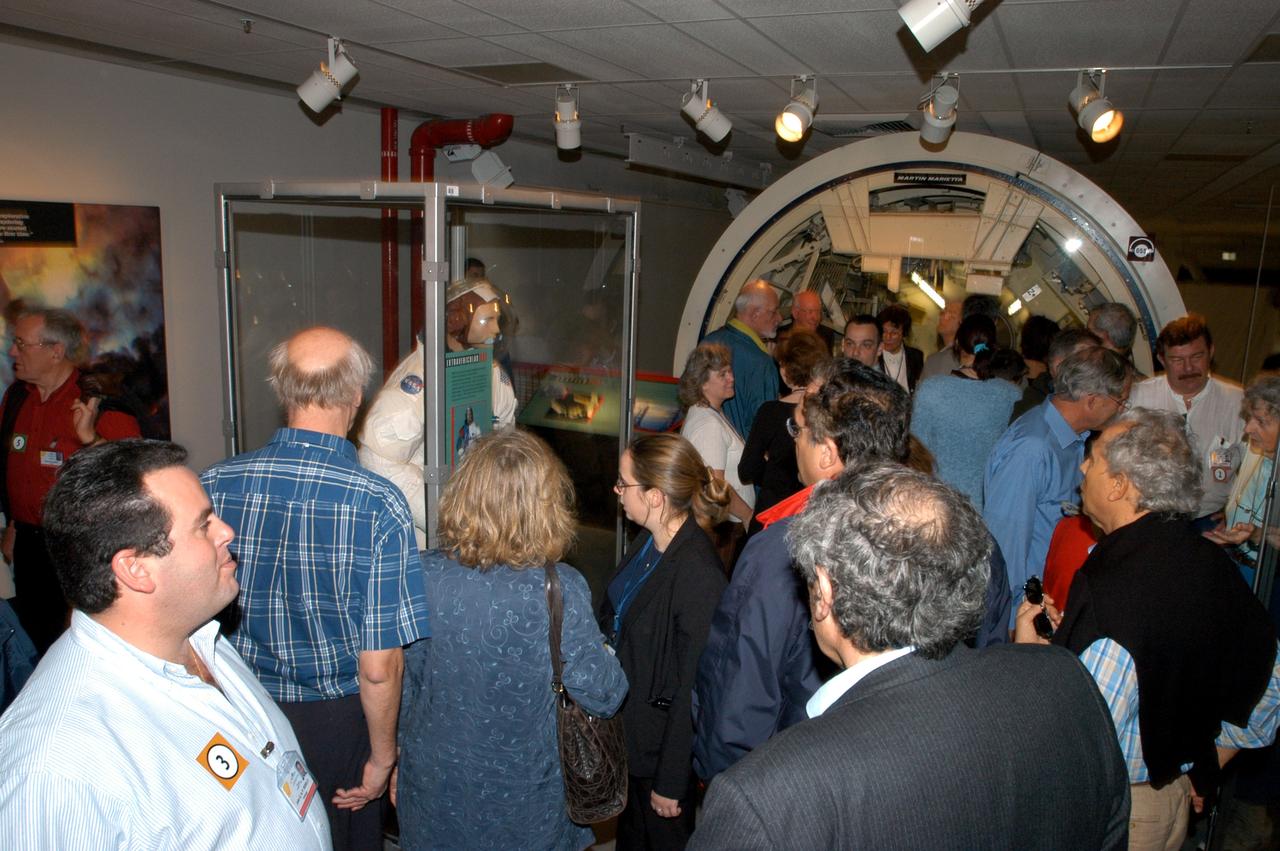
KENNEDY SPACE CENTER, FLA. -  Members of the North American Treaty Organization (NATO) Parliamentary Assembly stop at the Space Station Processing Facility’s International Space Station observation room during their tour of KSC.  The members are meeting in Orlando this year for their 49th annual gathering.  They chose to visit KSC with their families during their one-day excursion break from meetings.
KENNEDY SPACE CENTER, FLA. - Members of the North American Treaty Organization (NATO) Parliamentary Assembly stop at the Space Station Processing Facility’s International Space Station observation room during their tour of KSC. The members are meeting in Orlando this year for their 49th annual gathering. They chose to visit KSC with their families during their one-day excursion break from meetings.
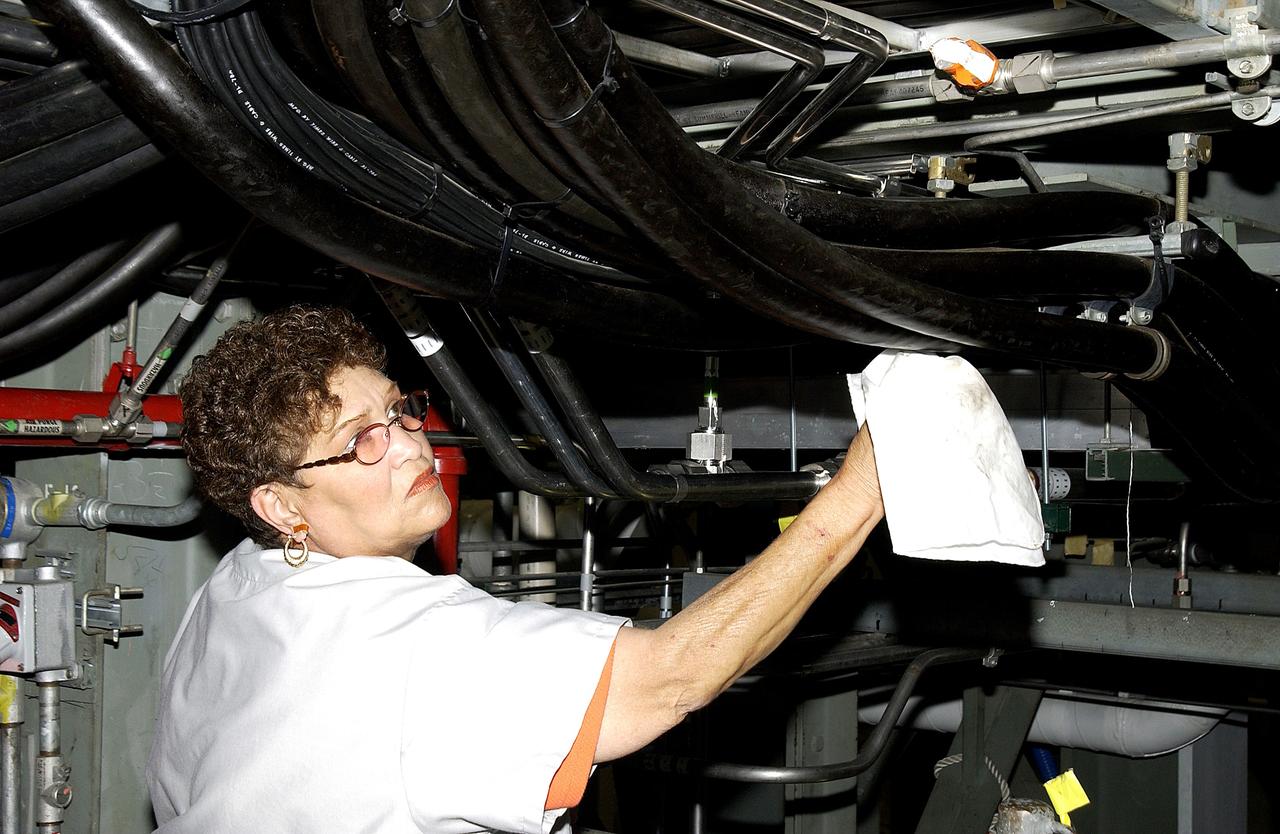
KENNEDY SPACE CENTER, FLA. - A KSC employee wipes down some of the hoses of the ground support equipment in the Orbiter Processing Facility (OPF) where Space Shuttle Atlantis is being processed for flight.  Preparations are under way for the next launch of Atlantis on mission STS-114, a utilization and logistics flight to the International Space Station.
KENNEDY SPACE CENTER, FLA. - A KSC employee wipes down some of the hoses of the ground support equipment in the Orbiter Processing Facility (OPF) where Space Shuttle Atlantis is being processed for flight. Preparations are under way for the next launch of Atlantis on mission STS-114, a utilization and logistics flight to the International Space Station.
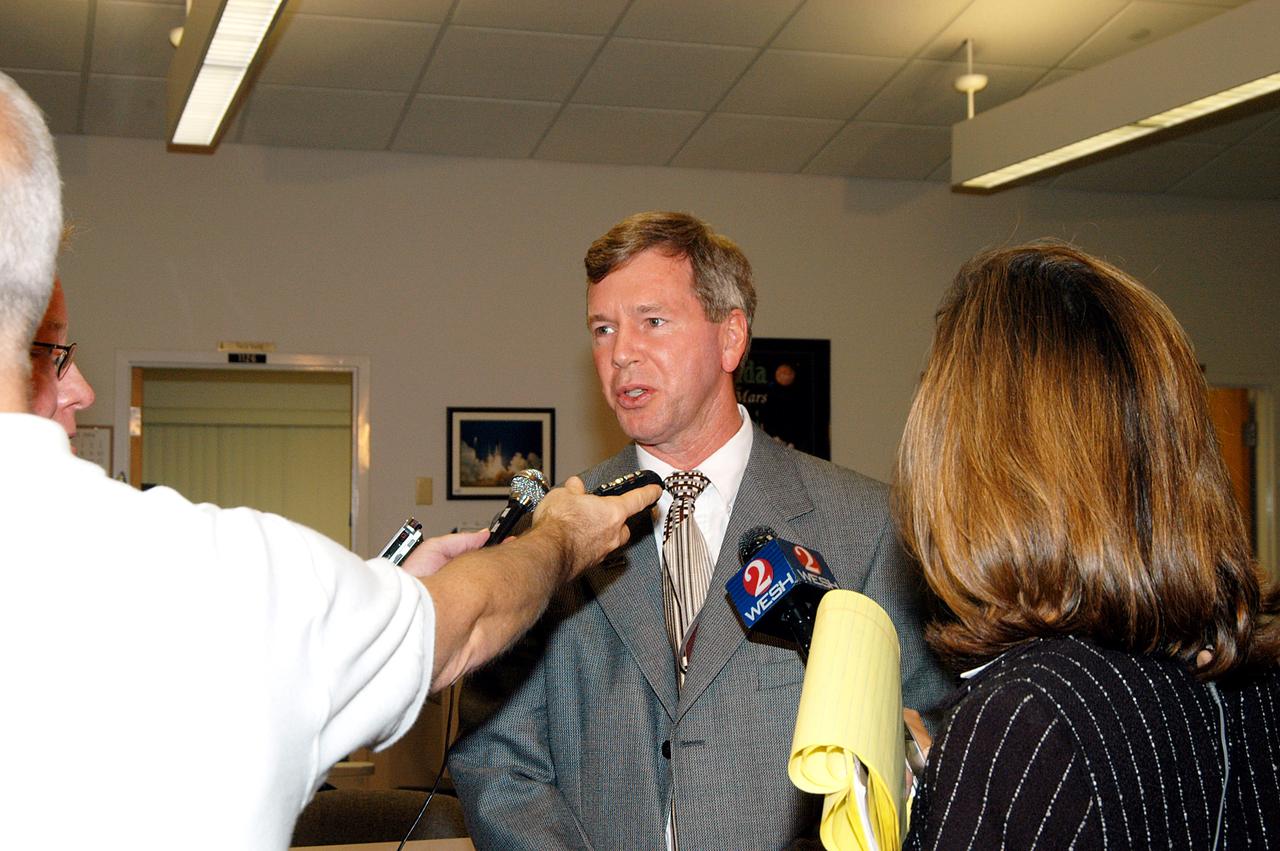
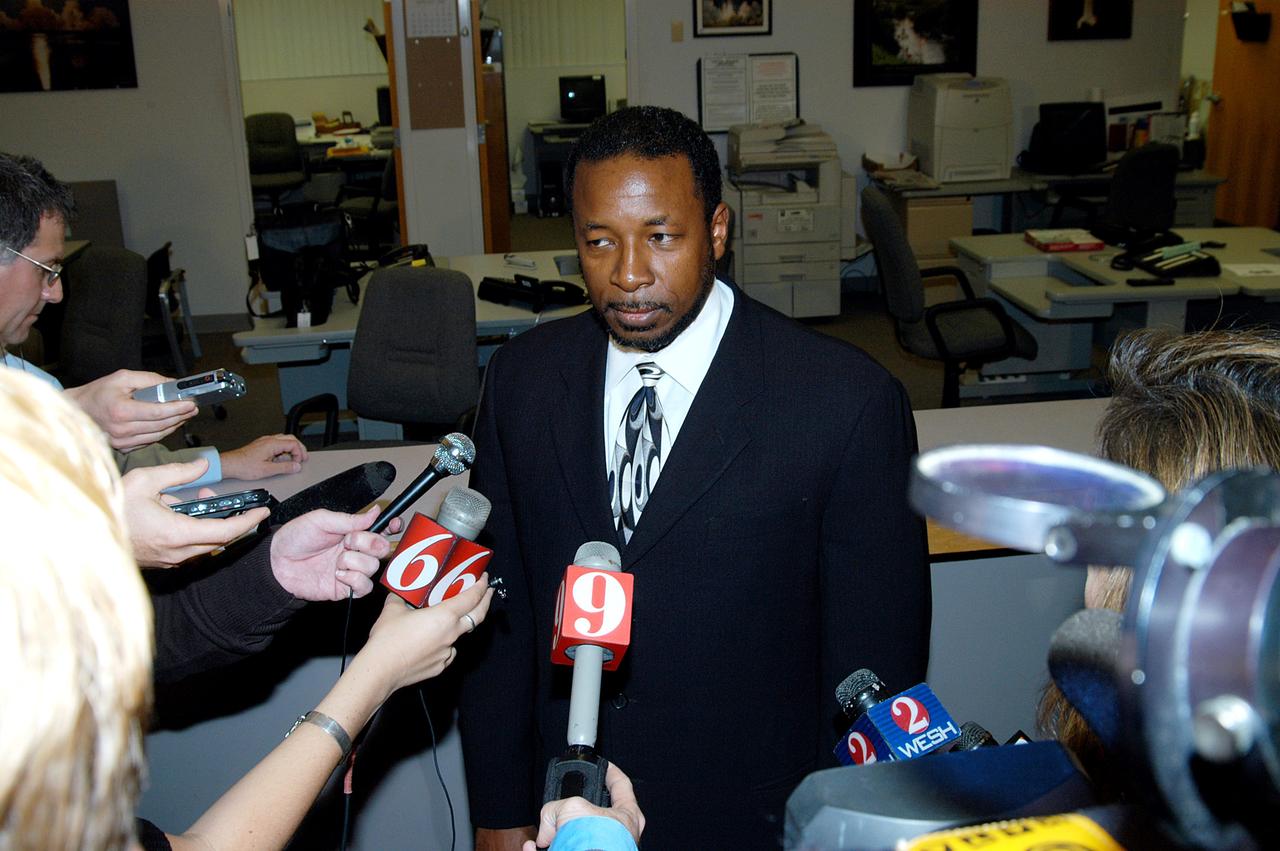
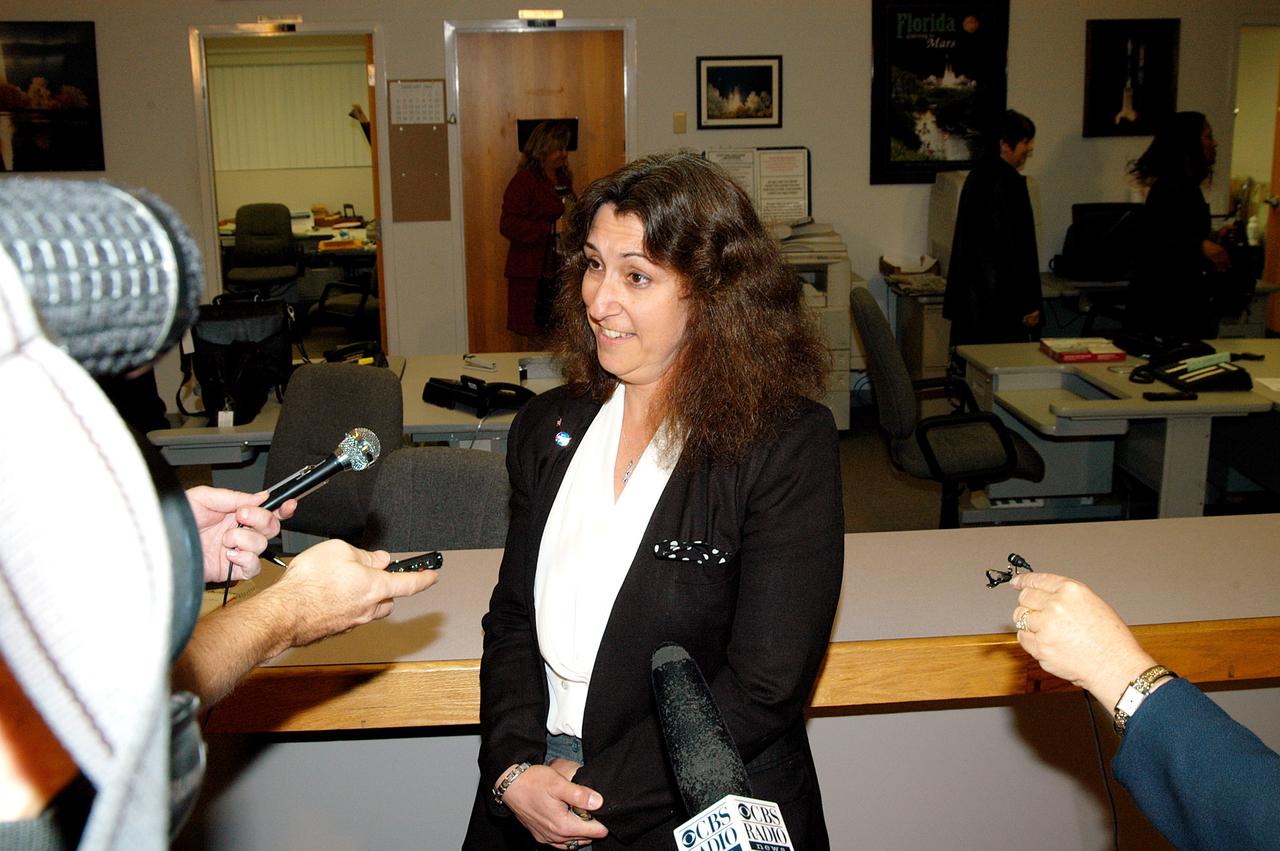
KENNEDY SPACE CENTER, FLA. -- Mike O’Neal, with the KSC Spaceport Technology Development Office, talks to the media at the NASA-KSC News Center after viewing President George W. Bush’s message on the future of NASA.  The President stated his goals for NASA’s new mission: Completing the International Space Station, retiring the Space Shuttle orbiters, developing a new crew exploration vehicle, and returning to the moon and beyond within the next two decades.   Pres. Bush was welcomed by NASA Administrator Sean O’Keefe and Expedition 8 Commander Michael Foale, who greeted him from the International Space Station.
KENNEDY SPACE CENTER, FLA. -- Mike O’Neal, with the KSC Spaceport Technology Development Office, talks to the media at the NASA-KSC News Center after viewing President George W. Bush’s message on the future of NASA. The President stated his goals for NASA’s new mission: Completing the International Space Station, retiring the Space Shuttle orbiters, developing a new crew exploration vehicle, and returning to the moon and beyond within the next two decades. Pres. Bush was welcomed by NASA Administrator Sean O’Keefe and Expedition 8 Commander Michael Foale, who greeted him from the International Space Station.
KENNEDY SPACE CENTER, FLA. -- Dr. Woodrow Whitlow, KSC deputy director, talks to the media at the NASA-KSC News Center after viewing President George W. Bush’s message on the future of NASA.  The President stated his goals for NASA’s new mission: Completing the International Space Station, retiring the Space Shuttle orbiters, developing a new crew exploration vehicle, and returning to the moon and beyond within the next two decades.   Pres. Bush was welcomed by NASA Administrator Sean O’Keefe and Expedition 8 Commander Michael Foale, who greeted him from the International Space Station.
KENNEDY SPACE CENTER, FLA. -- Dr. Woodrow Whitlow, KSC deputy director, talks to the media at the NASA-KSC News Center after viewing President George W. Bush’s message on the future of NASA. The President stated his goals for NASA’s new mission: Completing the International Space Station, retiring the Space Shuttle orbiters, developing a new crew exploration vehicle, and returning to the moon and beyond within the next two decades. Pres. Bush was welcomed by NASA Administrator Sean O’Keefe and Expedition 8 Commander Michael Foale, who greeted him from the International Space Station.
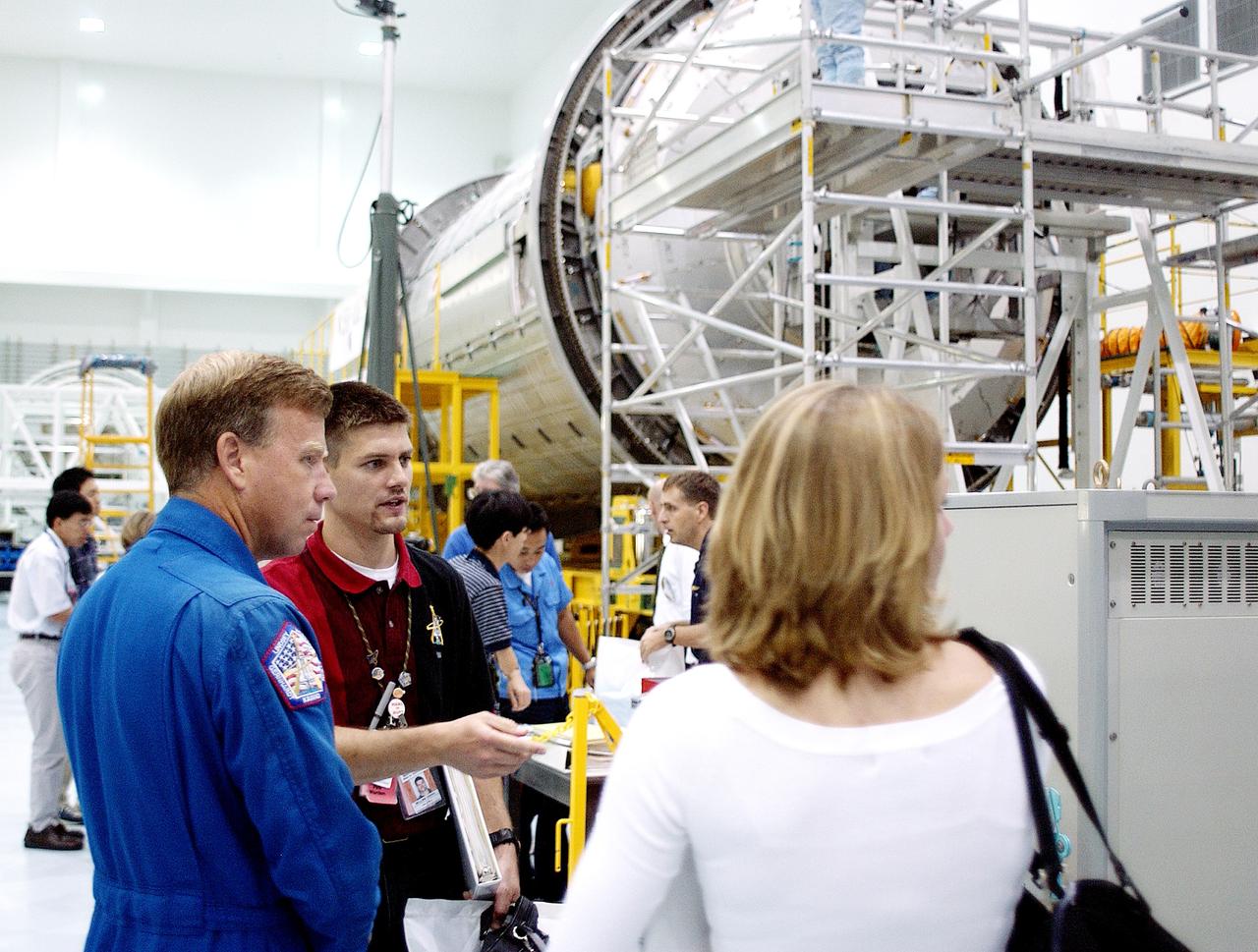
KENNEDY SPACE CENTER, FLA. -  NASA astronaut Steven W. Lindsey (left) listens to a briefing about the pressurized module of the Japanese Experiment Module (JEM) in the Space Station Processing Facility.  This major component of JEM, named "Kibo" (Hope), is Japan's primary contribution to the International Space Station and arrived at KSC on June 4.  Lindsey is assigned to command STS-119, an upcoming Space Shuttle flight to the Station.
KENNEDY SPACE CENTER, FLA. - NASA astronaut Steven W. Lindsey (left) listens to a briefing about the pressurized module of the Japanese Experiment Module (JEM) in the Space Station Processing Facility. This major component of JEM, named "Kibo" (Hope), is Japan's primary contribution to the International Space Station and arrived at KSC on June 4. Lindsey is assigned to command STS-119, an upcoming Space Shuttle flight to the Station.
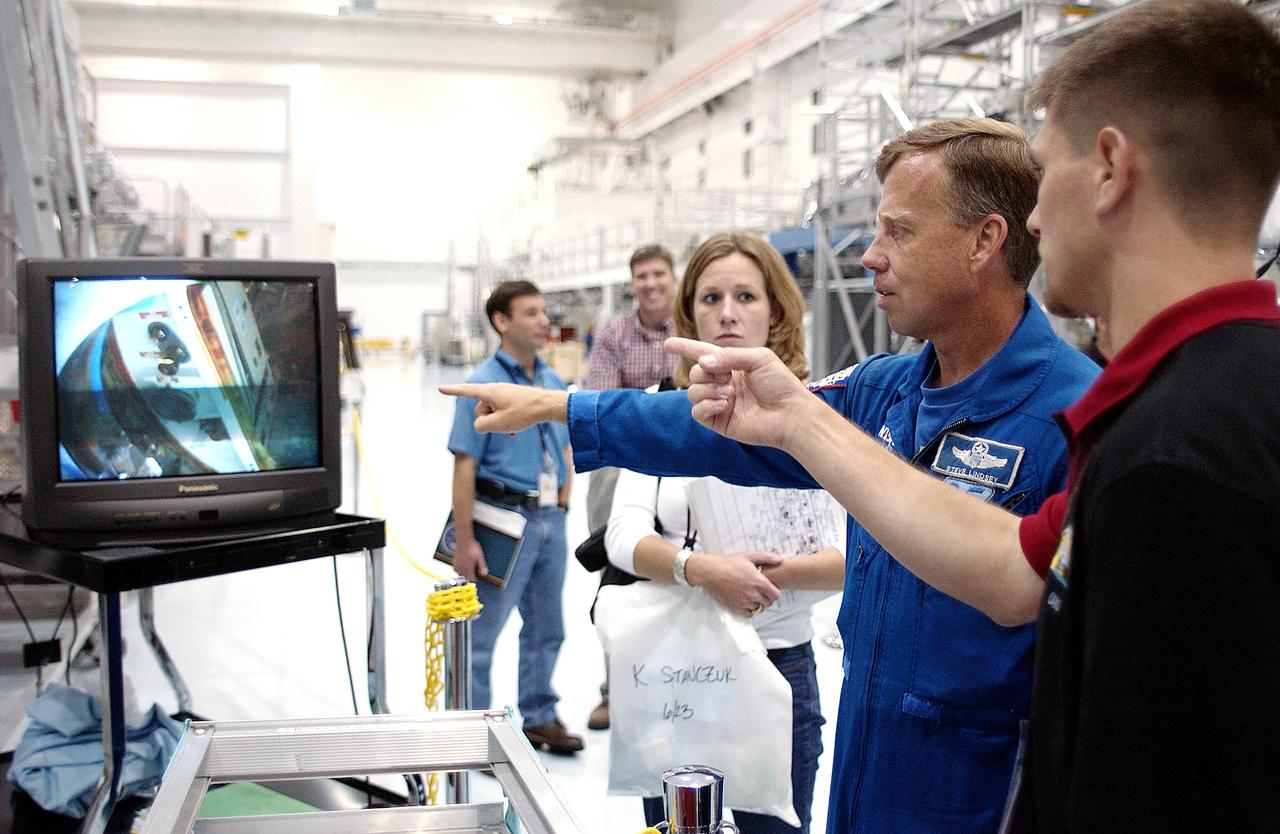
KENNEDY SPACE CENTER, FLA. -  NASA astronaut Steven W. Lindsey (second from right) views the interior of the pressurized module of the Japanese Experiment Module (JEM) on a television monitor in the Space Station Processing Facility.  This major component of JEM, named "Kibo" (Hope), is Japan's primary contribution to the International Space Station and arrived at KSC on June 4.  Lindsey is assigned to command STS-119, an upcoming Space Shuttle flight to the Station.
KENNEDY SPACE CENTER, FLA. - NASA astronaut Steven W. Lindsey (second from right) views the interior of the pressurized module of the Japanese Experiment Module (JEM) on a television monitor in the Space Station Processing Facility. This major component of JEM, named "Kibo" (Hope), is Japan's primary contribution to the International Space Station and arrived at KSC on June 4. Lindsey is assigned to command STS-119, an upcoming Space Shuttle flight to the Station.
KENNEDY SPACE CENTER, FLA. -  International Space Station elements being processed for launch on upcoming Space Shuttle flights, including the Japanese Experiment Module (JEM) pressurized module, line the walls of the high bay in the Space Station Processing Facility. The JEM pressurized module, named "Kibo" (Hope), arrived at KSC on June 4. It is Japan's primary contribution to the Station.
KENNEDY SPACE CENTER, FLA. - International Space Station elements being processed for launch on upcoming Space Shuttle flights, including the Japanese Experiment Module (JEM) pressurized module, line the walls of the high bay in the Space Station Processing Facility. The JEM pressurized module, named "Kibo" (Hope), arrived at KSC on June 4. It is Japan's primary contribution to the Station.
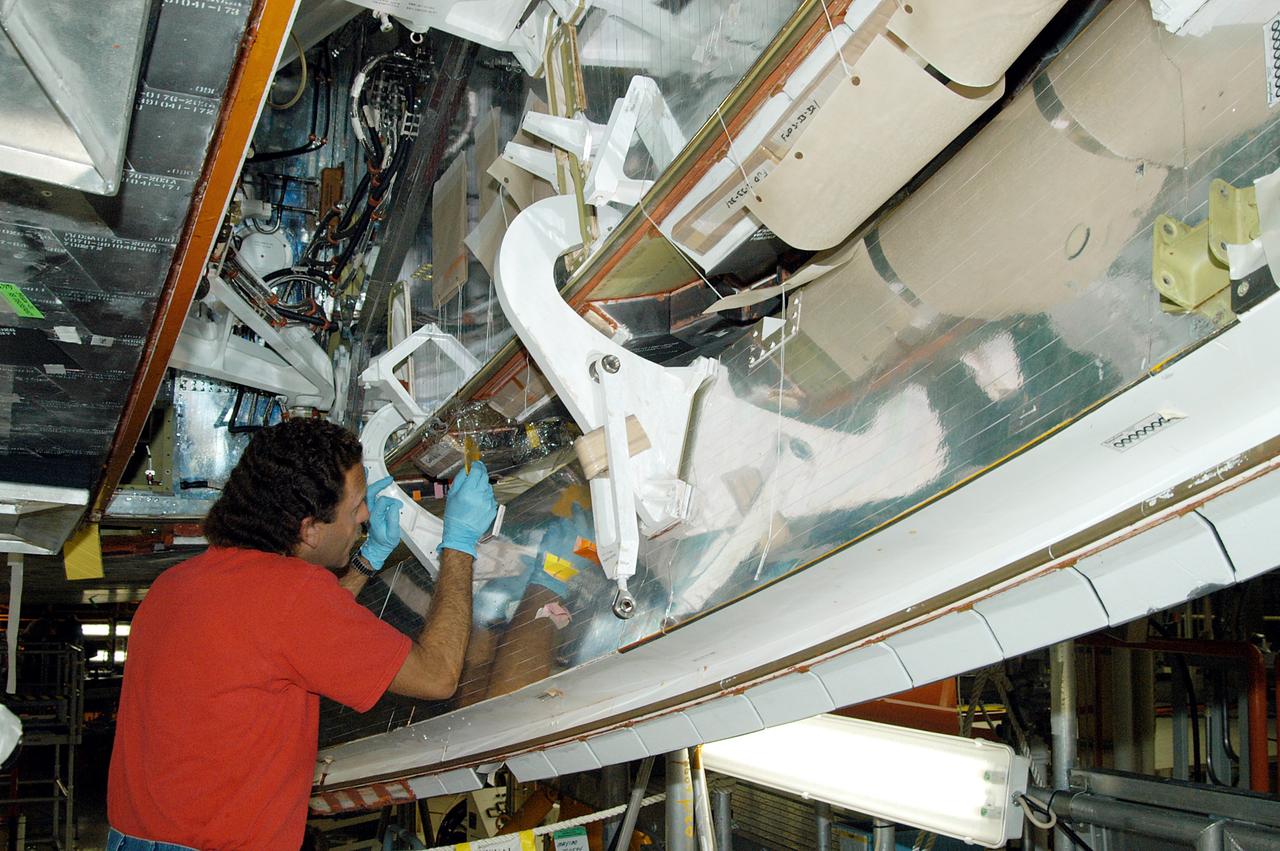
KENNEDY SPACE CENTER, FLA. -  In the Orbiter Processing Facility, KSC employee Gene Peavler works in the wheel area on the orbiter Discovery.  The vehicle has undergone Orbiter Major Modifications in the past year.  Discovery is scheduled to fly on mission STS-121 to the International Space Station.
KENNEDY SPACE CENTER, FLA. - In the Orbiter Processing Facility, KSC employee Gene Peavler works in the wheel area on the orbiter Discovery. The vehicle has undergone Orbiter Major Modifications in the past year. Discovery is scheduled to fly on mission STS-121 to the International Space Station.
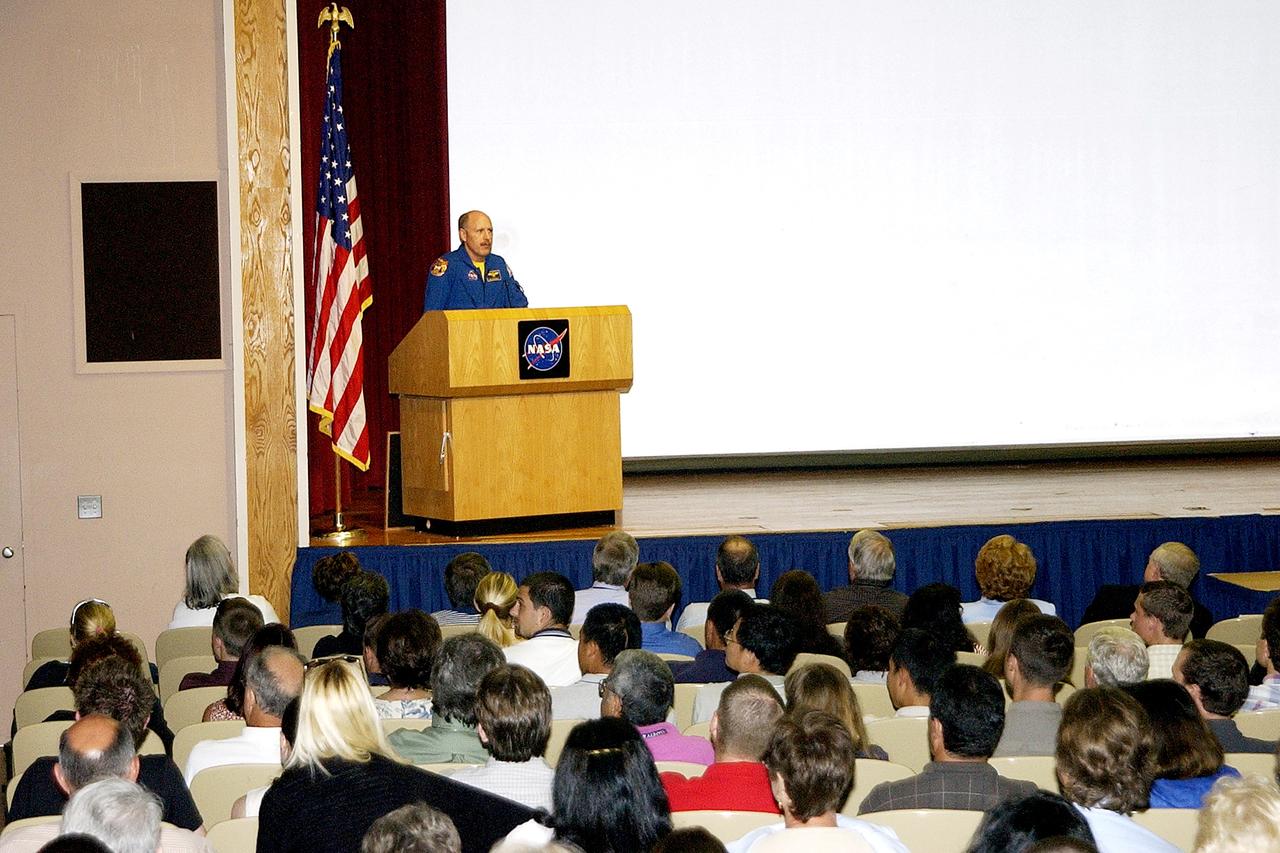
KENNEDY SPACE CENTER, FLA. -  KSC employees fill the Training Auditorium to hear comments from Expedition 6 Commander Ken Bowersox about his mission and residence on the International Space Station from November 25, 2002, to May 3, 2003.
KENNEDY SPACE CENTER, FLA. - KSC employees fill the Training Auditorium to hear comments from Expedition 6 Commander Ken Bowersox about his mission and residence on the International Space Station from November 25, 2002, to May 3, 2003.
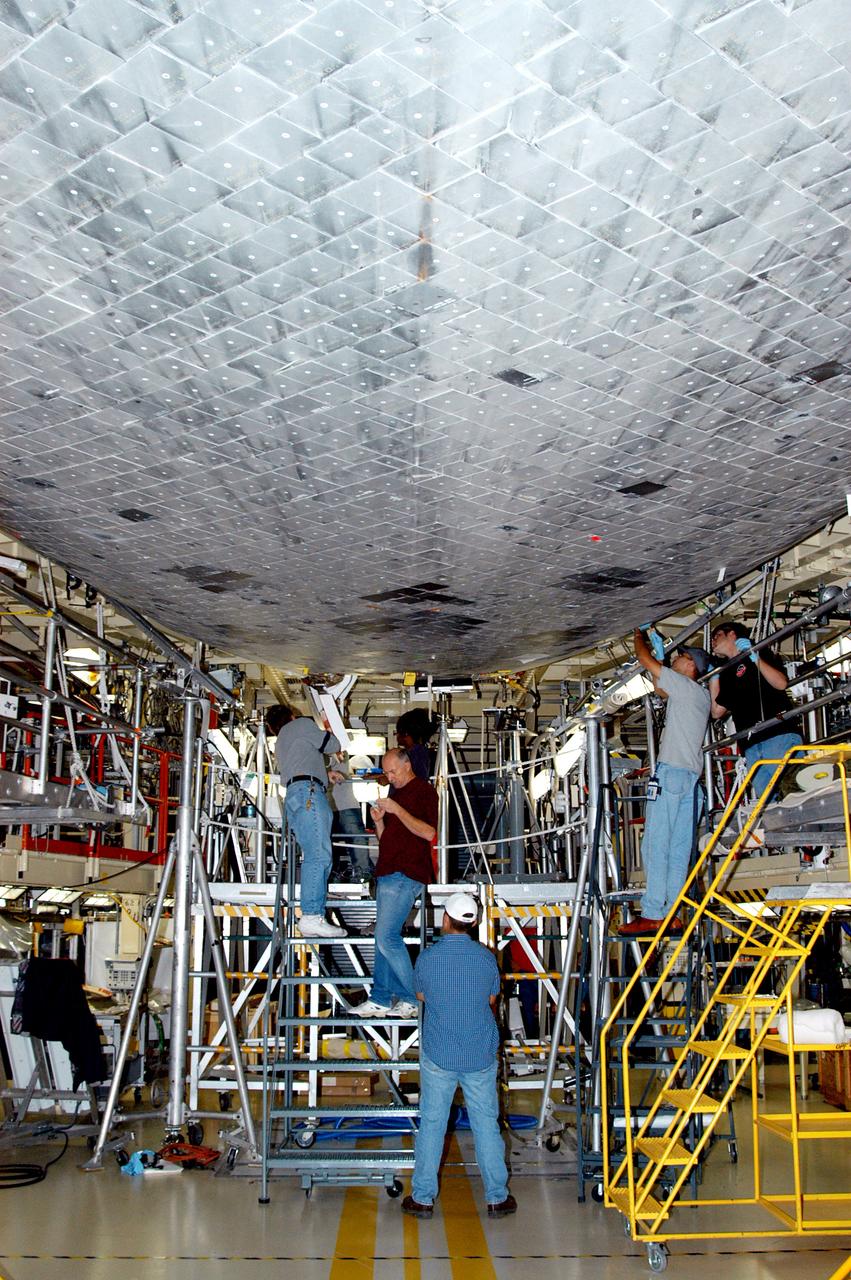
KENNEDY SPACE CENTER, FLA. -  In the Orbiter Processing Facility, KSC technicians work on the underbody of the orbiter Discovery.  The vehicle has undergone Orbiter Major Modifications in the past year.  Discovery is scheduled to fly on mission STS-121 to the International Space Station.
KENNEDY SPACE CENTER, FLA. - In the Orbiter Processing Facility, KSC technicians work on the underbody of the orbiter Discovery. The vehicle has undergone Orbiter Major Modifications in the past year. Discovery is scheduled to fly on mission STS-121 to the International Space Station.
KENNEDY SPACE CENTER, FLA. -   Expedition 6 Commander Ken Bowersox poses for a photo with KSC employees after his presentation about his mission and residence on the International Space Station from November 25, 2002, to May 3, 2003.
KENNEDY SPACE CENTER, FLA. - Expedition 6 Commander Ken Bowersox poses for a photo with KSC employees after his presentation about his mission and residence on the International Space Station from November 25, 2002, to May 3, 2003.
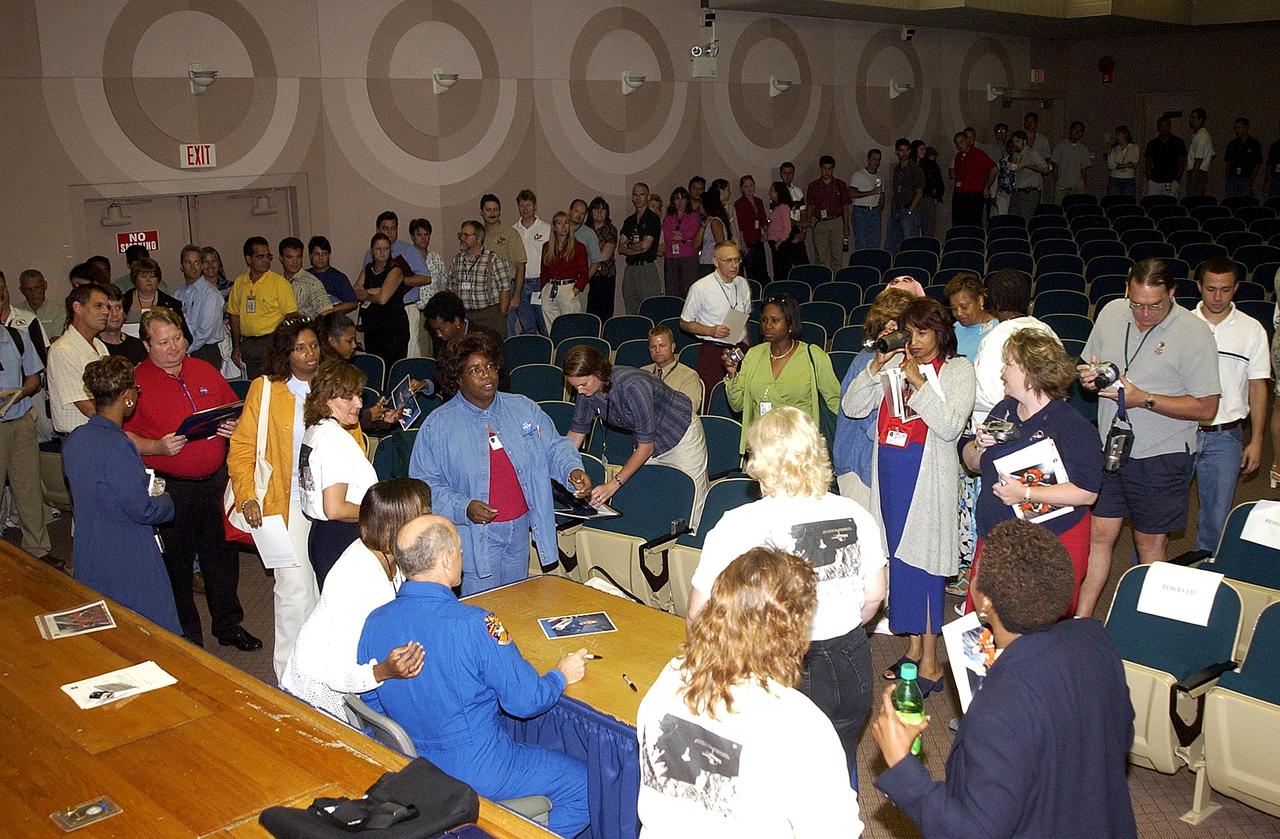
KENNEDY SPACE CENTER, FLA. -   Expedition 6 Commander Ken Bowersox happily signs autographs for KSC employees after his presentation about his mission and residence on the International Space Station from November 25, 2002, to May 3, 2003.
KENNEDY SPACE CENTER, FLA. - Expedition 6 Commander Ken Bowersox happily signs autographs for KSC employees after his presentation about his mission and residence on the International Space Station from November 25, 2002, to May 3, 2003.
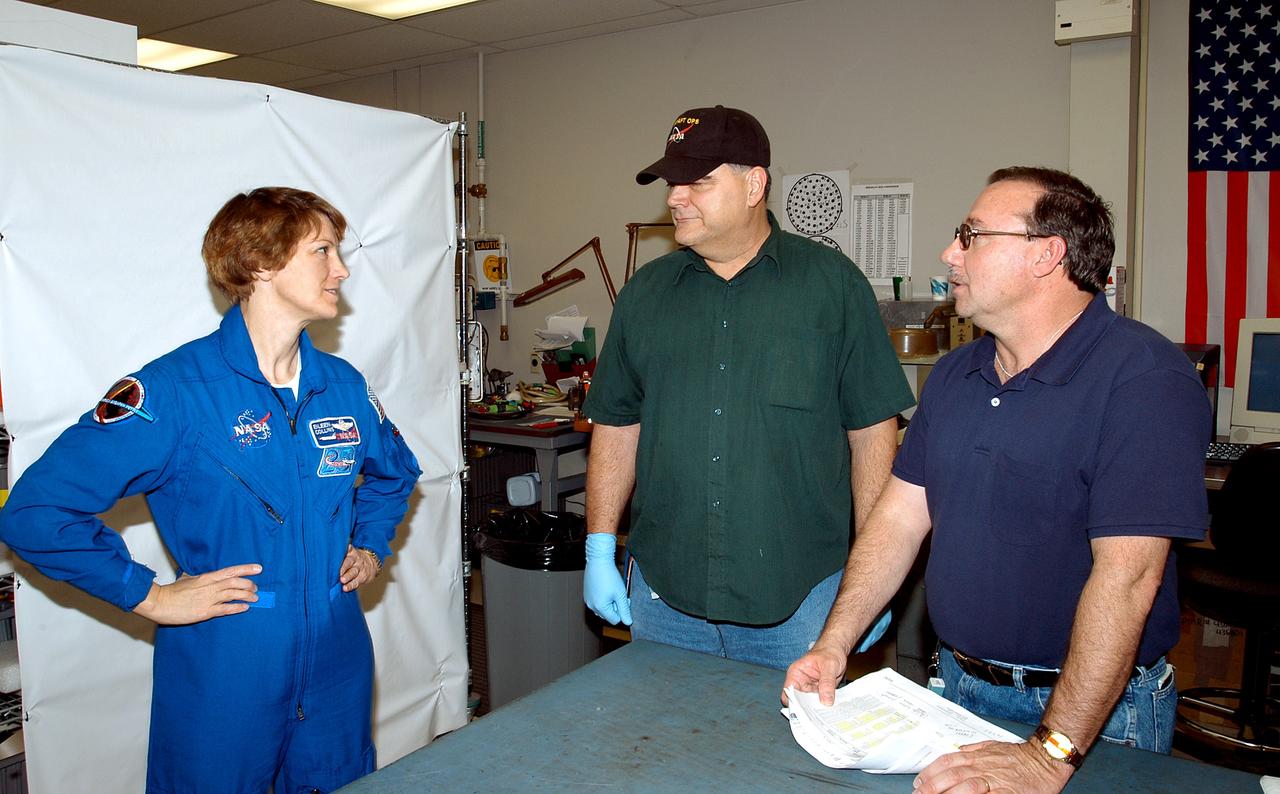
KENNEDY SPACE CENTER, FLA. - STS-114 Commander Eileen Collins talks with workers in the Orbiter Processing Facility.  She and other crew members are at KSC to become familiar with Shuttle and mission equipment.  The mission is Logistics Flight 1, which is scheduled to deliver supplies and equipment plus the external stowage platform to the International Space Station.
KENNEDY SPACE CENTER, FLA. - STS-114 Commander Eileen Collins talks with workers in the Orbiter Processing Facility. She and other crew members are at KSC to become familiar with Shuttle and mission equipment. The mission is Logistics Flight 1, which is scheduled to deliver supplies and equipment plus the external stowage platform to the International Space Station.
KENNEDY SPACE CENTER, FLA. -   Japanese girls from Urawa Daiichi Girls High School, Urawa, Japan, pose for a group photo during a visit to the Space Station Processing Facility. They were awarded the trip to Kennedy Space Center when their experiments were chosen to fly on mission STS-107. The girls are accompanied by American students from Melbourne and Jacksonville, Fla.  The National Space Development Agency of Japan (NASDA) and the KSC International Space Station/Payload Processing Directorate worked with the NASA KSC Education Programs and University Research Division to coordinate the students’ visit.
KENNEDY SPACE CENTER, FLA. - Japanese girls from Urawa Daiichi Girls High School, Urawa, Japan, pose for a group photo during a visit to the Space Station Processing Facility. They were awarded the trip to Kennedy Space Center when their experiments were chosen to fly on mission STS-107. The girls are accompanied by American students from Melbourne and Jacksonville, Fla. The National Space Development Agency of Japan (NASDA) and the KSC International Space Station/Payload Processing Directorate worked with the NASA KSC Education Programs and University Research Division to coordinate the students’ visit.
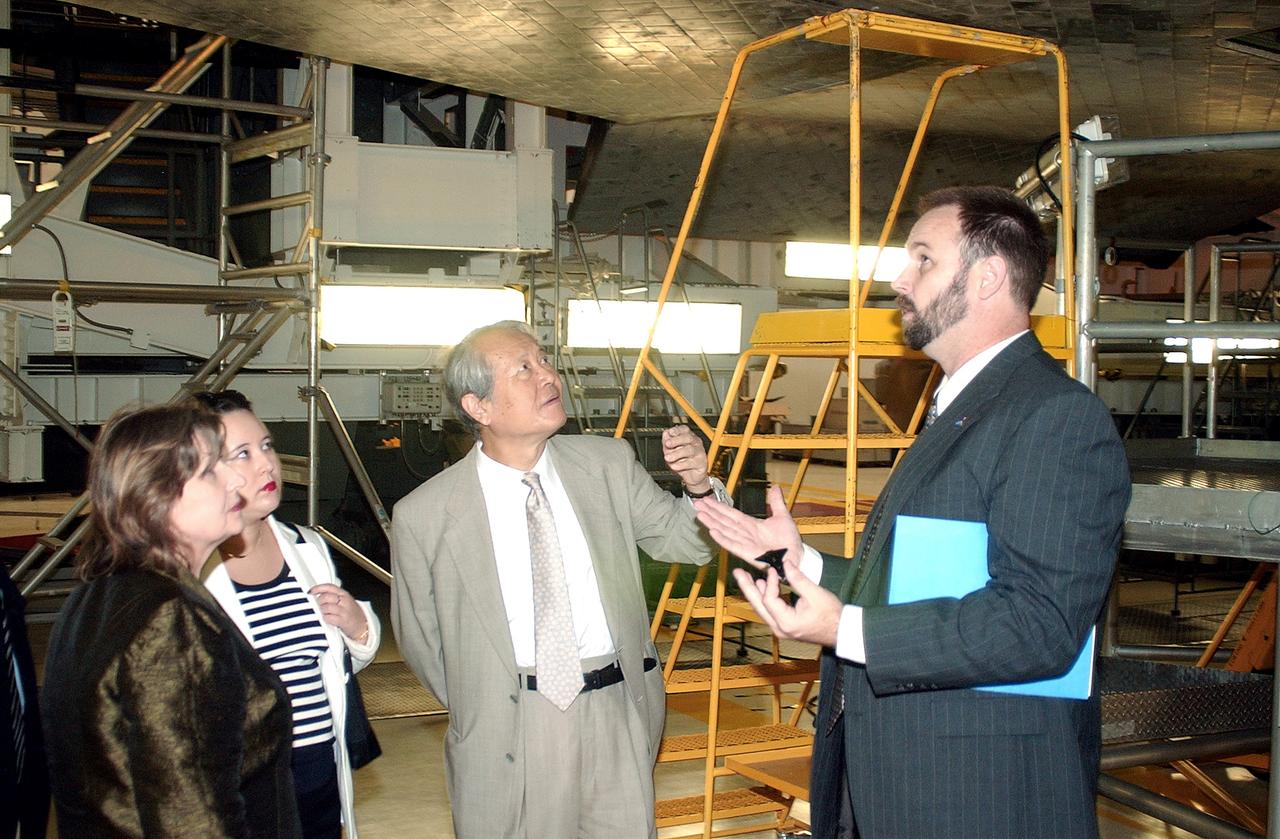
KENNEDY SPACE CENTER, FLA. - NASA Manager Steve Cain explains aspects of Space Shuttle processing to Consul General of Japan Ko Kodaira and his family in the Orbiter Processing Facility during their visit to Kennedy Space Center (KSC). From left are Kodaira's wife Marie, his daughter Reiko, Kodaira, and Cain, Senior Future International Space Station Element Manager. Kodaira is touring the facilities at KSC at the invitation of the local office of the National Space Development Agency of Japan (NASDA) to acquaint him with KSC's unique processing capabilities.
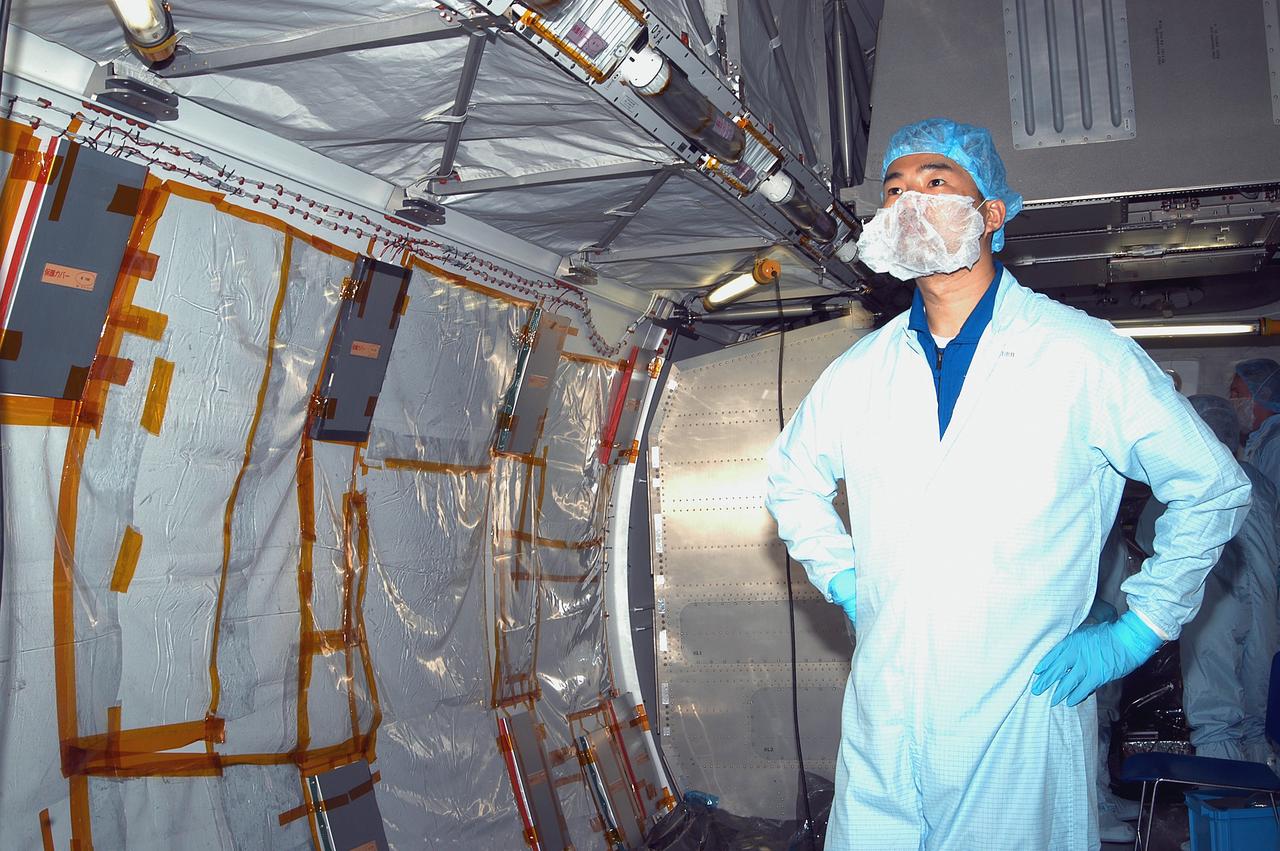
KENNEDY SPACE CENTER, FLA. - STS-114 Mission Specialist Soichi Noguchi, who is with the Japanese Aerospace and Exploration Agency, looks at the inside of the Japanese Experiment Module (JEM) in the Space Station Processing Facility.  He and other crew members are at KSC becoming familiar with Shuttle and mission equipment. The mission is Logistics Flight 1, which is scheduled to deliver supplies and equipment plus the external stowage platform to the International Space Station.
KENNEDY SPACE CENTER, FLA. - STS-114 Mission Specialist Soichi Noguchi, who is with the Japanese Aerospace and Exploration Agency, looks at the inside of the Japanese Experiment Module (JEM) in the Space Station Processing Facility. He and other crew members are at KSC becoming familiar with Shuttle and mission equipment. The mission is Logistics Flight 1, which is scheduled to deliver supplies and equipment plus the external stowage platform to the International Space Station.
KENNEDY SPACE CENTER, FLA. -- Maria Littlefield, chief technologist with the Launch Services Program Office, talks to the media at the NASA-KSC News Center after viewing President George W. Bush’s message on the future of NASA.  The President stated his goals for NASA’s new mission: Completing the International Space Station, retiring the Space Shuttle orbiters, developing a new crew exploration vehicle, and returning to the moon and beyond within the next two decades.   Pres. Bush was welcomed by NASA Administrator Sean O’Keefe and Expedition 8 Commander Michael Foale, who greeted him from the International Space Station.
KENNEDY SPACE CENTER, FLA. -- Maria Littlefield, chief technologist with the Launch Services Program Office, talks to the media at the NASA-KSC News Center after viewing President George W. Bush’s message on the future of NASA. The President stated his goals for NASA’s new mission: Completing the International Space Station, retiring the Space Shuttle orbiters, developing a new crew exploration vehicle, and returning to the moon and beyond within the next two decades. Pres. Bush was welcomed by NASA Administrator Sean O’Keefe and Expedition 8 Commander Michael Foale, who greeted him from the International Space Station.
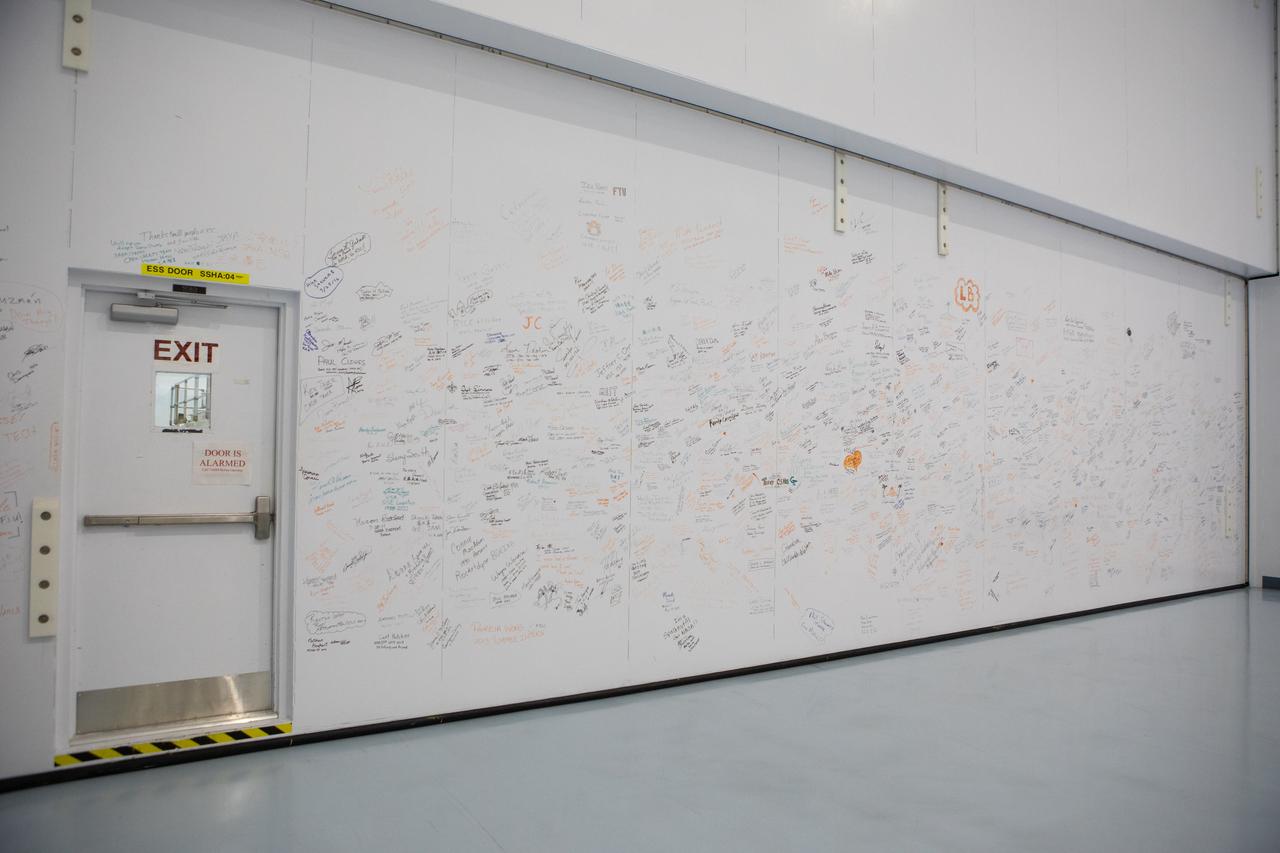
A photograph taken on May 16, 2019, shows a wall inside the Space Station Processing Facility (SSPF) at NASA's Kennedy Space Center in Florida, containing signatures of many of those who worked on the International Space Station Program.  The center is celebrating the SSPF’s 25th anniversary. The facility was built to process elements for the space station. Now it is providing support for current and future NASA and commercial provider programs, including Commercial Resupply Services, Artemis 1, sending the first woman and next man to the Moon, and deep space destinations including Mars.
SSPF - 25 Year Anniversary Then & Now
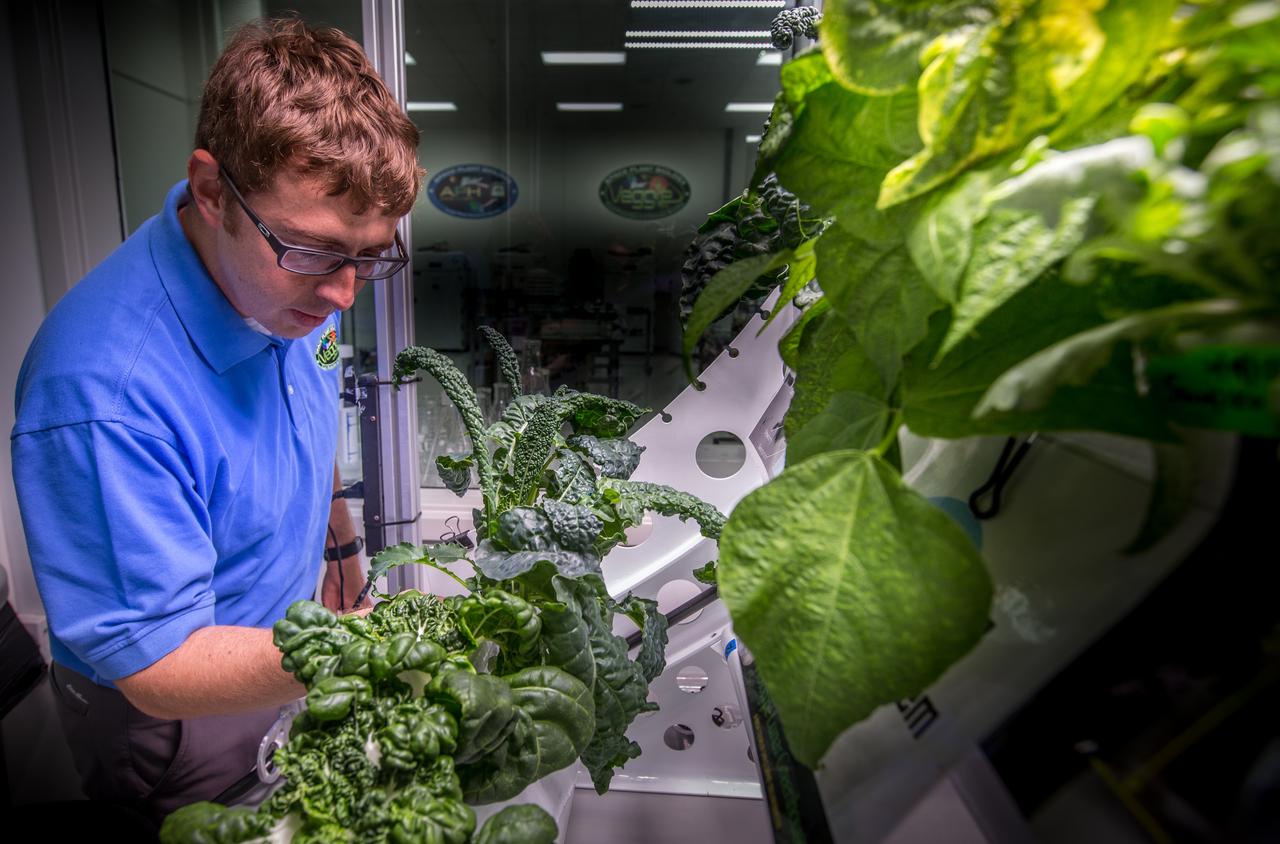
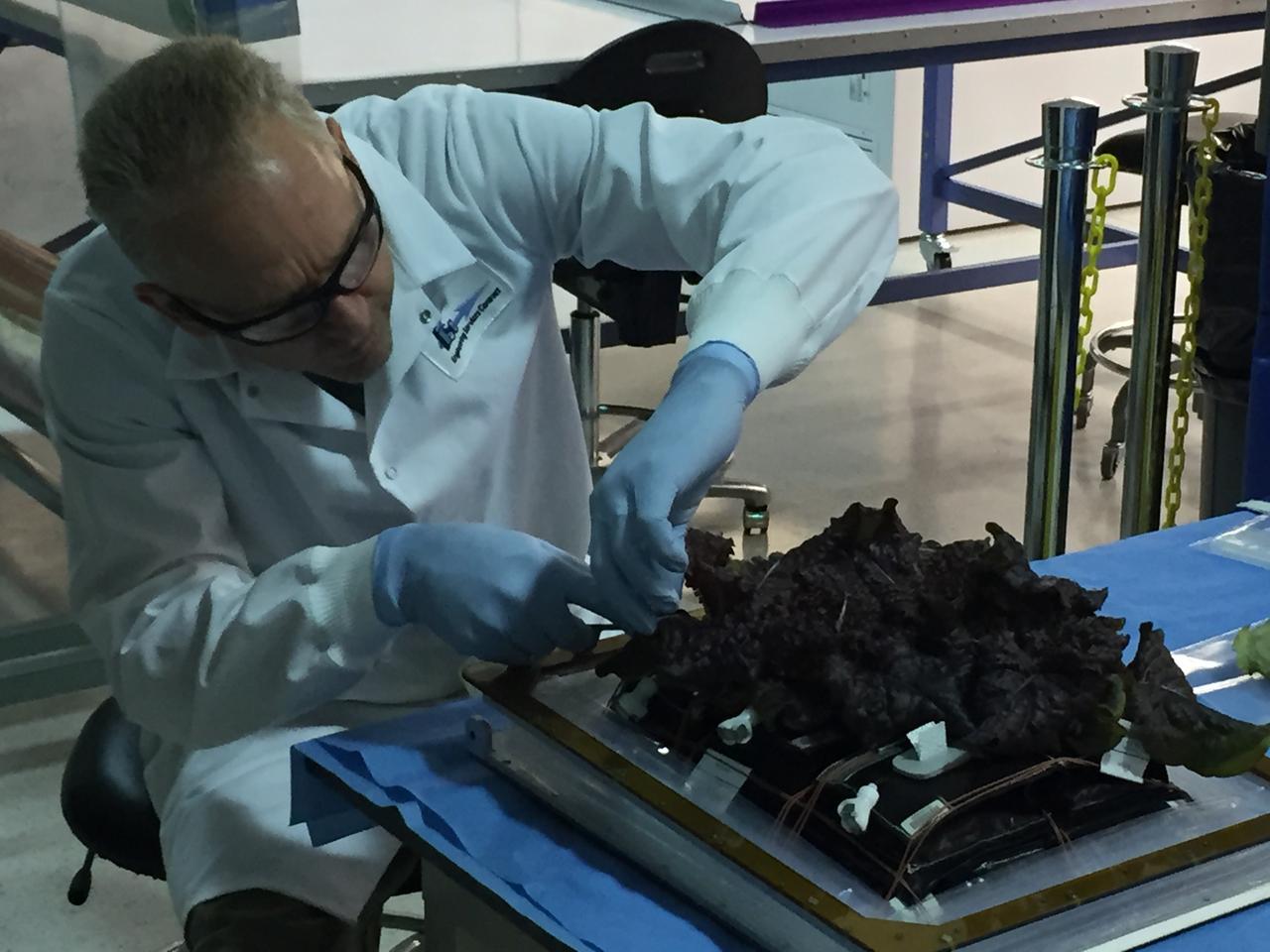
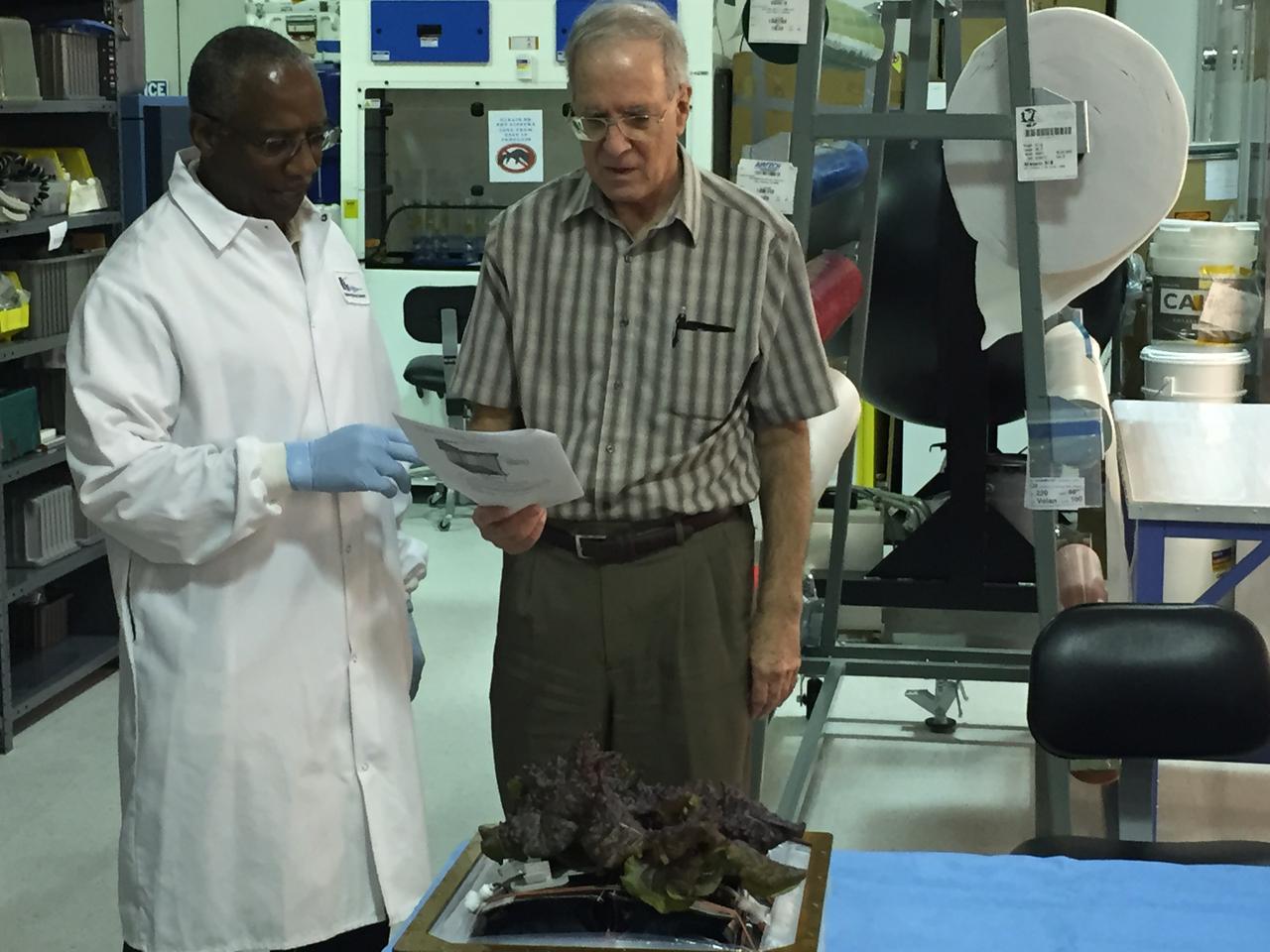
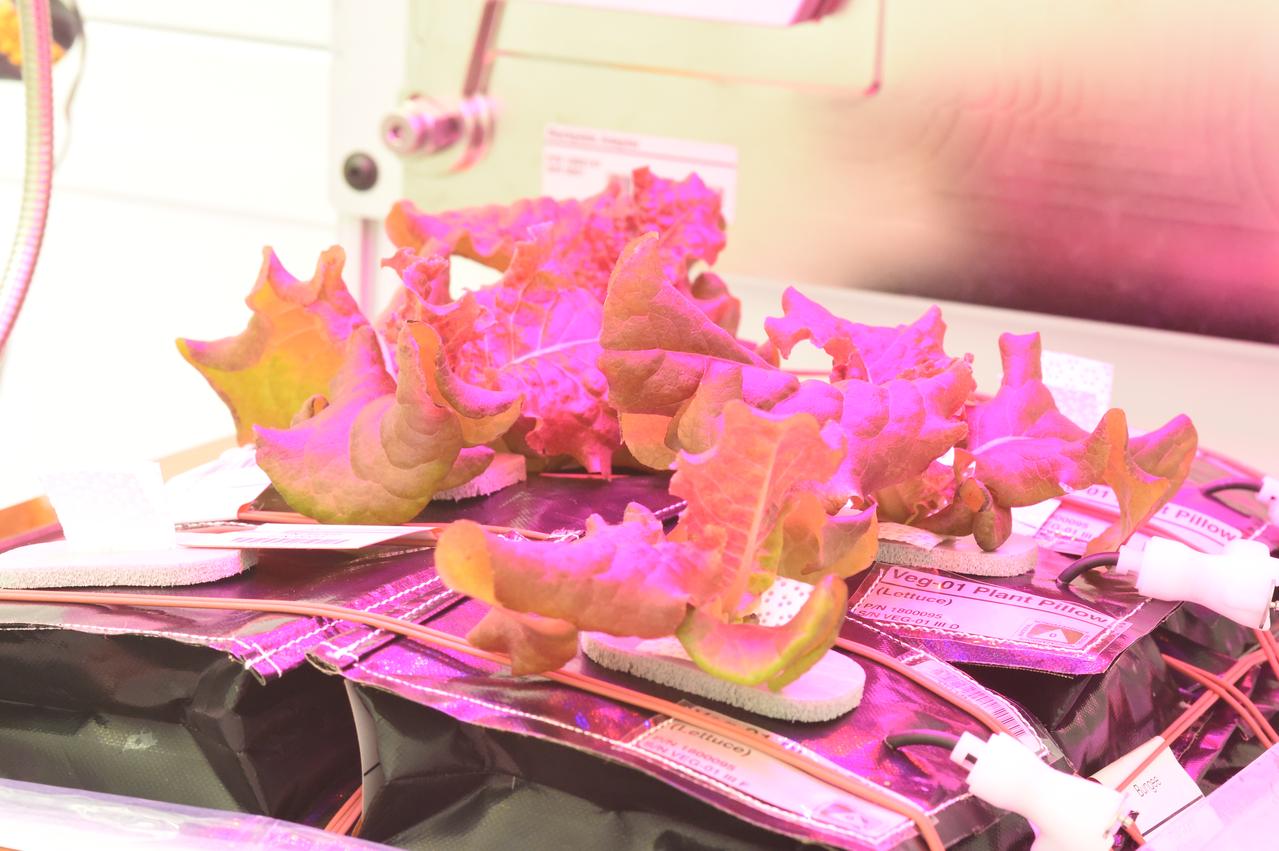
NASA's Matt Romeyn in the Veggie Lab of the Space Station Processing Facility at the agency's Kennedy Space Center in Florida.
Matt Romeyn in Veggie Lab
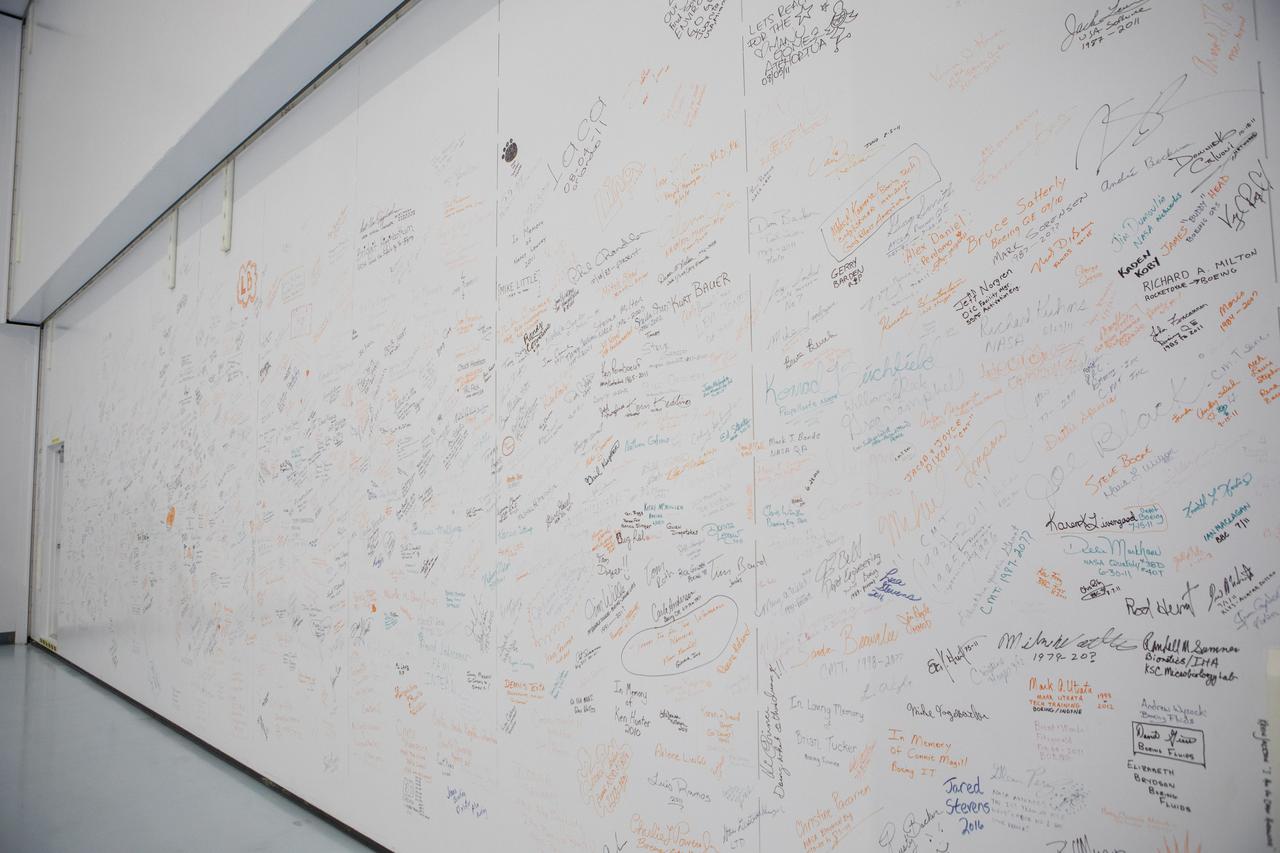
A photograph taken on May 16, 2019, shows a wall inside the Space Station Processing Facility (SSPF) at NASA's Kennedy Space Center in Florida, containing signatures of many of those who worked on the International Space Station Program.  The center is celebrating the SSPF’s 25th anniversary. The facility was built to process elements for the space station. Now it is providing support for current and future NASA and commercial provider programs, including Commercial Resupply Services, Artemis 1, sending the first woman and next man to the Moon, and deep space destinations including Mars.
SSPF - 25 Year Anniversary Then & Now
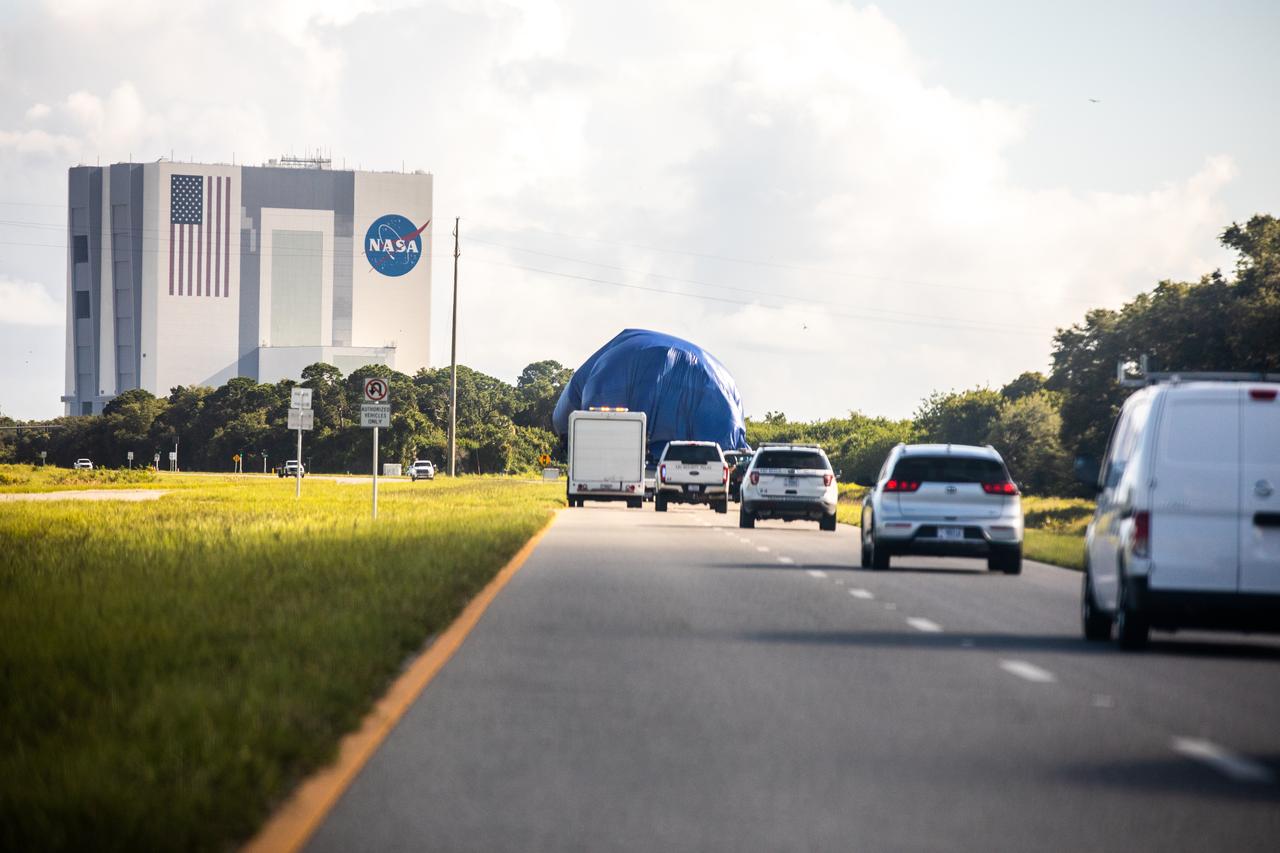
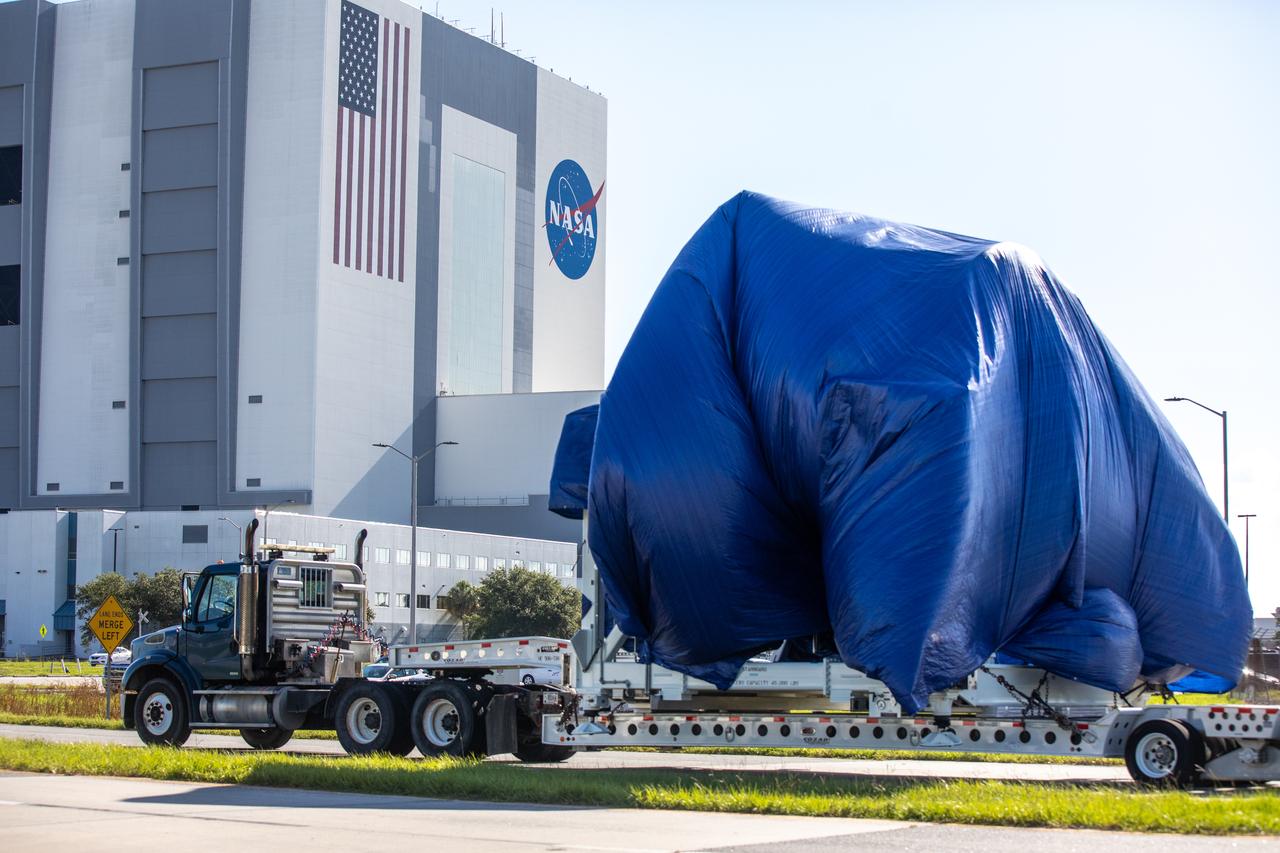
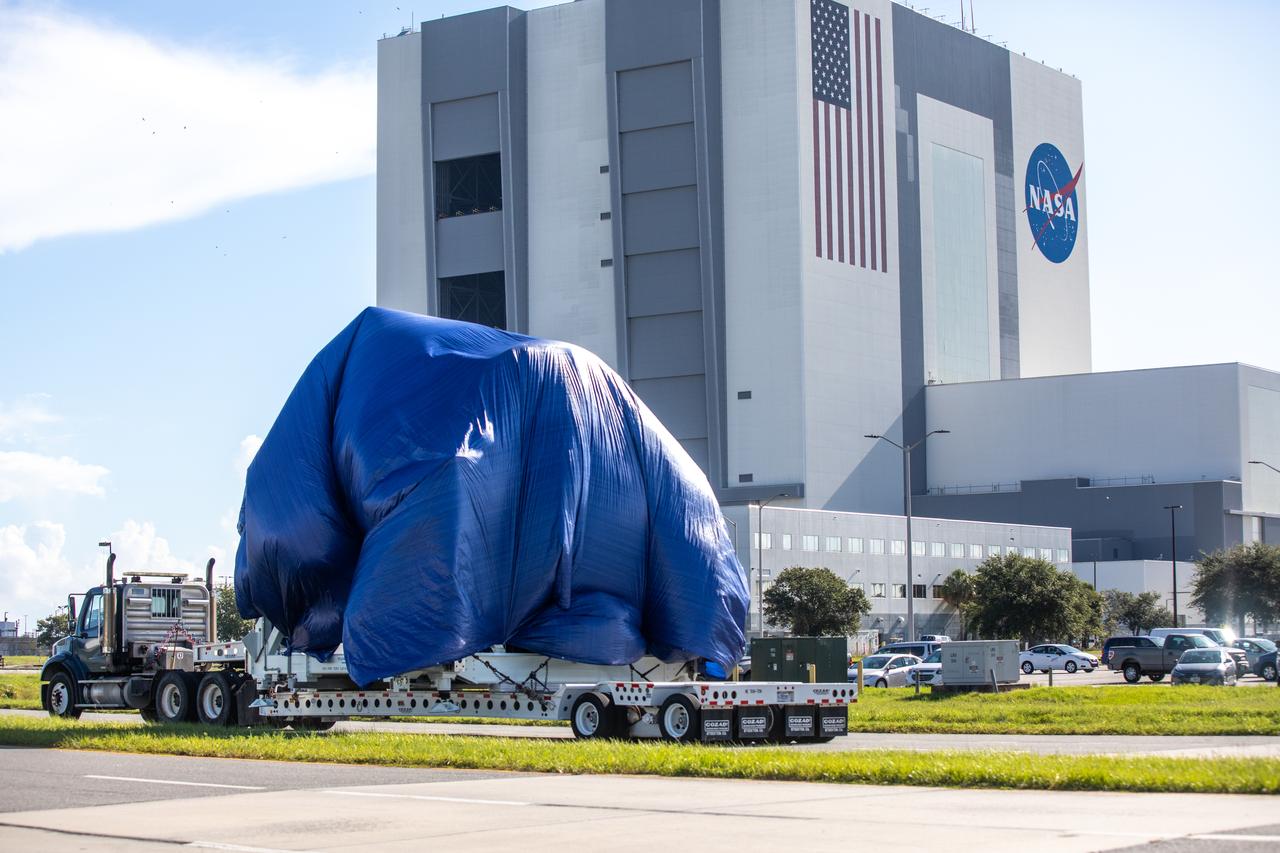
A flatbed truck, carrying the node structural test article (STA), is on its way to the Launch and Landing Facility from the Space Station Processing Facility (SSPF) at NASA’s Kennedy Space Center in Florida on July 20, 2020. In view is the iconic Vehicle Assembly Building. The Node STA was used to prove the manufacturing processes and procedures were robust for extended human spaceflight. Those same processes and procedures were then used to build Node 1, which Kennedy Center Director Bob Cabana flew to the space station on STS 88. NASA has stored the node STA in the SSPF, and it is moving to a new location to allow for more space in the facility’s high bay to support the agency’s space exploration and commercialization efforts in low-Earth orbit.
STA Node Move From SSPF
A flatbed truck, carrying the node structural test article (STA), is on its way to the Launch and Landing Facility from the Space Station Processing Facility (SSPF) at NASA’s Kennedy Space Center in Florida on July 20, 2020. In view is the iconic Vehicle Assembly Building. The Node STA was used to prove the manufacturing processes and procedures were robust for extended human spaceflight. Those same processes and procedures were then used to build Node 1, which Kennedy Center Director Bob Cabana flew to the space station on STS 88. NASA has stored the node STA in the SSPF, and it is moving to a new location to allow for more space in the facility’s high bay to support the agency’s space exploration and commercialization efforts in low-Earth orbit.
STA Node Move From SSPF
A flatbed truck, carrying the node structural test article (STA), is on its way to the Launch and Landing Facility from the Space Station Processing Facility (SSPF) at NASA’s Kennedy Space Center in Florida on July 20, 2020. In view is the iconic Vehicle Assembly Building. The Node STA was used to prove the manufacturing processes and procedures were robust for extended human spaceflight. Those same processes and procedures were then used to build Node 1, which Kennedy Center Director Bob Cabana flew to the space station on STS 88. NASA has stored the node STA in the SSPF, and it is moving to a new location to allow for more space in the facility’s high bay to support the agency’s space exploration and commercialization efforts in low-Earth orbit.
STA Node Move From SSPF
KENNEDY SPACE CENTER, FLA. - Expedition 6 Commander Ken Bowersox (left) accepts from Center Director Roy Bridges Jr. a framed graphic commemorating his stay on the International Space Station.  Bowersox spoke to KSC employees about his mission and residence on the Station from November 25, 2002, to May 3, 2003.
KENNEDY SPACE CENTER, FLA. - Expedition 6 Commander Ken Bowersox (left) accepts from Center Director Roy Bridges Jr. a framed graphic commemorating his stay on the International Space Station. Bowersox spoke to KSC employees about his mission and residence on the Station from November 25, 2002, to May 3, 2003.
KENNEDY SPACE CENTER, FLA. -   Japanese girls from Urawa Daiichi Girls High School, Urawa, Japan, pose for a group photo during a visit to the Orbiter Processing Facility. They were awarded the trip to Kennedy Space Center when their experiments were chosen to fly on mission STS-107. The girls are accompanied by American students from Melbourne and Jacksonville, Fla.  The National Space Development Agency of Japan (NASDA) and the KSC International Space Station/Payload Processing Directorate worked with the NASA KSC Education Programs and University Research Division to coordinate the students’ visit.
KENNEDY SPACE CENTER, FLA. - Japanese girls from Urawa Daiichi Girls High School, Urawa, Japan, pose for a group photo during a visit to the Orbiter Processing Facility. They were awarded the trip to Kennedy Space Center when their experiments were chosen to fly on mission STS-107. The girls are accompanied by American students from Melbourne and Jacksonville, Fla. The National Space Development Agency of Japan (NASDA) and the KSC International Space Station/Payload Processing Directorate worked with the NASA KSC Education Programs and University Research Division to coordinate the students’ visit.
KENNEDY SPACE CENTER, FLA. -  Workers in the Space Station Processing Facility attempt to open the hatch on the Italian-built Node 2, a future element of the International Space Station.  Node 2 arrived at KSC June 1.  The second of three Station connecting modules, the module  attaches to the end of the U.S. Lab and provides attach locations for the Japanese laboratory, European laboratory, the Centrifuge Accommodation Module and, later, Multipurpose Logistics Modules. It will provide the primary docking location for the Shuttle when a pressurized mating adapter is attached to Node 2.  Installation of the module will complete  the U.S. Core of the ISS.  Node 2 is the designated payload for mission STS-120.  No orbiter or launch date has been determined yet.
KENNEDY SPACE CENTER, FLA. - Workers in the Space Station Processing Facility attempt to open the hatch on the Italian-built Node 2, a future element of the International Space Station. Node 2 arrived at KSC June 1. The second of three Station connecting modules, the module attaches to the end of the U.S. Lab and provides attach locations for the Japanese laboratory, European laboratory, the Centrifuge Accommodation Module and, later, Multipurpose Logistics Modules. It will provide the primary docking location for the Shuttle when a pressurized mating adapter is attached to Node 2. Installation of the module will complete the U.S. Core of the ISS. Node 2 is the designated payload for mission STS-120. No orbiter or launch date has been determined yet.
KENNEDY SPACE CENTER, FLA. -  Workers in the Space Station Processing Facility look over the hatch on the Italian-built Node 2, a future element of the International Space Station.  Node 2 arrived at KSC June 1.  The second of three Station connecting modules, the module  attaches to the end of the U.S. Lab and provides attach locations for the Japanese laboratory, European laboratory, the Centrifuge Accommodation Module and, later, Multipurpose Logistics Modules. It will provide the primary docking location for the Shuttle when a pressurized mating adapter is attached to Node 2.  Installation of the module will complete  the U.S. Core of the ISS.  Node 2 is the designated payload for mission STS-120.  No orbiter or launch date has been determined yet.
KENNEDY SPACE CENTER, FLA. - Workers in the Space Station Processing Facility look over the hatch on the Italian-built Node 2, a future element of the International Space Station. Node 2 arrived at KSC June 1. The second of three Station connecting modules, the module attaches to the end of the U.S. Lab and provides attach locations for the Japanese laboratory, European laboratory, the Centrifuge Accommodation Module and, later, Multipurpose Logistics Modules. It will provide the primary docking location for the Shuttle when a pressurized mating adapter is attached to Node 2. Installation of the module will complete the U.S. Core of the ISS. Node 2 is the designated payload for mission STS-120. No orbiter or launch date has been determined yet.
KENNEDY SPACE CENTER, FLA. -- In the KSC television studio, KSC management and other employees applaud President George W. Bush, who addressed the public and an assembly of government officials at NASA Headquarters as he outlined a new focus and vision for the space agency.  Seated in the front row, left to right, are Bill Pickavance vice president and associate program manager of Florida Operations, United Space Alliance (USA) ; Howard DeCastro, vice president and Space Shuttle program manager, USA; Shannon Roberts, with External Affairs; Woodrow Whitlow, KSC deputy director; Bruce Buckingham, assistant to Dr. Whitlow; Lisa Malone, director of External Affairs; Ken Aguilar, chief, Equal Opportunity office; and Cheryl Cox, External Affairs.  The President stated his goals for NASA’s new mission: Completing the International Space Station, retiring the Space Shuttle orbiters, developing a new crew exploration vehicle, and returning to the moon and beyond within the next two decades.   Pres. Bush was welcomed by NASA Administrator Sean O’Keefe and Expedition 8 Commander Michael Foale, who greeted him from the International Space Station.  Members of the Washington, D.C., audience included astronauts Eileen Collins, Ed Lu and Michael Lopez-Alegria, and former astronaut Gene Cernan.
KENNEDY SPACE CENTER, FLA. -- In the KSC television studio, KSC management and other employees applaud President George W. Bush, who addressed the public and an assembly of government officials at NASA Headquarters as he outlined a new focus and vision for the space agency. Seated in the front row, left to right, are Bill Pickavance vice president and associate program manager of Florida Operations, United Space Alliance (USA) ; Howard DeCastro, vice president and Space Shuttle program manager, USA; Shannon Roberts, with External Affairs; Woodrow Whitlow, KSC deputy director; Bruce Buckingham, assistant to Dr. Whitlow; Lisa Malone, director of External Affairs; Ken Aguilar, chief, Equal Opportunity office; and Cheryl Cox, External Affairs. The President stated his goals for NASA’s new mission: Completing the International Space Station, retiring the Space Shuttle orbiters, developing a new crew exploration vehicle, and returning to the moon and beyond within the next two decades. Pres. Bush was welcomed by NASA Administrator Sean O’Keefe and Expedition 8 Commander Michael Foale, who greeted him from the International Space Station. Members of the Washington, D.C., audience included astronauts Eileen Collins, Ed Lu and Michael Lopez-Alegria, and former astronaut Gene Cernan.
KENNEDY SPACE CENTER, FLA. -- In the KSC television studio, KSC management and other employees applaud President George W. Bush, who addressed the public and an assembly of government officials at NASA Headquarters as he outlined a new focus and vision for the space agency.  Seated in the front row, left to right, are Bill Pickavance vice president and associate program manager of Florida Operations, United Space Alliance (USA) ; Howard DeCastro, vice president and Space Shuttle program manager, USA; Shannon Roberts, with External Affairs; Woodrow Whitlow, KSC deputy director; Bruce Buckingham, assistant to Dr. Whitlow; Lisa Malone, director of External Affairs; and Ken Aguilar, chief, Equal Opportunity office.  The President stated his goals for NASA’s new mission: Completing the International Space Station, retiring the Space Shuttle orbiters, developing a new crew exploration vehicle, and returning to the moon and beyond within the next two decades.   Pres. Bush was welcomed by NASA Administrator Sean O’Keefe and Expedition 8 Commander Michael Foale, who greeted him from the International Space Station.  Members of the Washington, D.C., audience included astronauts Eileen Collins, Ed Lu and Michael Lopez-Alegria, and former astronaut Gene Cernan.
KENNEDY SPACE CENTER, FLA. -- In the KSC television studio, KSC management and other employees applaud President George W. Bush, who addressed the public and an assembly of government officials at NASA Headquarters as he outlined a new focus and vision for the space agency. Seated in the front row, left to right, are Bill Pickavance vice president and associate program manager of Florida Operations, United Space Alliance (USA) ; Howard DeCastro, vice president and Space Shuttle program manager, USA; Shannon Roberts, with External Affairs; Woodrow Whitlow, KSC deputy director; Bruce Buckingham, assistant to Dr. Whitlow; Lisa Malone, director of External Affairs; and Ken Aguilar, chief, Equal Opportunity office. The President stated his goals for NASA’s new mission: Completing the International Space Station, retiring the Space Shuttle orbiters, developing a new crew exploration vehicle, and returning to the moon and beyond within the next two decades. Pres. Bush was welcomed by NASA Administrator Sean O’Keefe and Expedition 8 Commander Michael Foale, who greeted him from the International Space Station. Members of the Washington, D.C., audience included astronauts Eileen Collins, Ed Lu and Michael Lopez-Alegria, and former astronaut Gene Cernan.
KENNEDY SPACE CENTER, FLA.  -     Japanese girls from Urawa Daiichi Girls High School, Urawa, Japan, carry a floral tribute to the crew of Columbia to place at the STS-107 memorial stone at the Spacehab facility, Cape Canaveral, Fla.   The group was  awarded the trip to Florida when their experiments were chosen to fly on mission STS-107.  The group was also meeting with American students from Melbourne and Jacksonville, Fla.   The National Space Development  Agency of Japan (NASDA) and the KSC International Space Station and Payloads Processing Directorate worked with the NASA KSC Education Programs and University Research Division to coordinate the students’ visit.
KENNEDY SPACE CENTER, FLA. - Japanese girls from Urawa Daiichi Girls High School, Urawa, Japan, carry a floral tribute to the crew of Columbia to place at the STS-107 memorial stone at the Spacehab facility, Cape Canaveral, Fla. The group was awarded the trip to Florida when their experiments were chosen to fly on mission STS-107. The group was also meeting with American students from Melbourne and Jacksonville, Fla. The National Space Development Agency of Japan (NASDA) and the KSC International Space Station and Payloads Processing Directorate worked with the NASA KSC Education Programs and University Research Division to coordinate the students’ visit.
KENNEDY SPACE CENTER, FLA.  -    Japanese girls from Urawa Daiichi Girls High School, Urawa, Japan, carry a floral tribute to the crew of Columbia to place at the STS-107 memorial stone at the Spacehab facility, Cape Canaveral, Fla.   The group was  awarded the trip to Florida when their experiments were chosen to fly on mission STS-107.  The group was also meeting with American students from Melbourne and Jacksonville, Fla.   The National Space Development  Agency of Japan (NASDA) and the KSC International Space Station and Payloads Processing Directorate worked with the NASA KSC Education Programs and University Research Division to coordinate the students’ visit.
KENNEDY SPACE CENTER, FLA. - Japanese girls from Urawa Daiichi Girls High School, Urawa, Japan, carry a floral tribute to the crew of Columbia to place at the STS-107 memorial stone at the Spacehab facility, Cape Canaveral, Fla. The group was awarded the trip to Florida when their experiments were chosen to fly on mission STS-107. The group was also meeting with American students from Melbourne and Jacksonville, Fla. The National Space Development Agency of Japan (NASDA) and the KSC International Space Station and Payloads Processing Directorate worked with the NASA KSC Education Programs and University Research Division to coordinate the students’ visit.
KENNEDY SPACE CENTER, FLA.  -   Japanese girls from Urawa Daiichi Girls High School, Urawa, Japan, pose for a group photo on their visit to the Spacehab facility in Cape Canaveral, Fla.  They were awarded the trip when their experiments were chosen to fly on mission STS-107.  The group was also meeting with American students from Melbourne and Jacksonville, Fla.  The girls planned a floral tribute at the STS-107 memorial stone at the facility.  The National Space Development  Agency of Japan (NASDA) and the KSC International Space Station and Payloads Processing Directorate worked with the NASA KSC Education Programs and University Research Division to coordinate the students’ visit.
KENNEDY SPACE CENTER, FLA. - Japanese girls from Urawa Daiichi Girls High School, Urawa, Japan, pose for a group photo on their visit to the Spacehab facility in Cape Canaveral, Fla. They were awarded the trip when their experiments were chosen to fly on mission STS-107. The group was also meeting with American students from Melbourne and Jacksonville, Fla. The girls planned a floral tribute at the STS-107 memorial stone at the facility. The National Space Development Agency of Japan (NASDA) and the KSC International Space Station and Payloads Processing Directorate worked with the NASA KSC Education Programs and University Research Division to coordinate the students’ visit.
KENNEDY SPACE CENTER, FLA.  -   Japanese girls from Urawa Daiichi Girls High School, Urawa, Japan, carry a floral tribute to the crew of Columbia to place at the STS-107 memorial stone at the Spacehab facility, Cape Canaveral, Fla.   The group was  awarded the trip to Florida when their experiments were chosen to fly on mission STS-107.  The group was also meeting with American students from Melbourne and Jacksonville, Fla.   The National Space Development  Agency of Japan (NASDA) and the KSC International Space Station and Payloads Processing Directorate worked with the NASA KSC Education Programs and University Research Division to coordinate the students’ visit.
KENNEDY SPACE CENTER, FLA. - Japanese girls from Urawa Daiichi Girls High School, Urawa, Japan, carry a floral tribute to the crew of Columbia to place at the STS-107 memorial stone at the Spacehab facility, Cape Canaveral, Fla. The group was awarded the trip to Florida when their experiments were chosen to fly on mission STS-107. The group was also meeting with American students from Melbourne and Jacksonville, Fla. The National Space Development Agency of Japan (NASDA) and the KSC International Space Station and Payloads Processing Directorate worked with the NASA KSC Education Programs and University Research Division to coordinate the students’ visit.
KENNEDY SPACE CENTER, FLA.  -   Japanese girls from Urawa Daiichi Girls High School, Urawa, Japan, place a floral tribute to the crew of Columbia at the STS-107 memorial stone at the Spacehab facility, Cape Canaveral, Fla.   The group was  awarded the trip to Florida when their experiments were chosen to fly on mission STS-107.  The group was also meeting with American students from Melbourne and Jacksonville, Fla.   The National Space Development  Agency of Japan (NASDA) and the KSC International Space Station and Payloads Processing Directorate worked with the NASA KSC Education Programs and University Research Division to coordinate the students’ visit.
KENNEDY SPACE CENTER, FLA. - Japanese girls from Urawa Daiichi Girls High School, Urawa, Japan, place a floral tribute to the crew of Columbia at the STS-107 memorial stone at the Spacehab facility, Cape Canaveral, Fla. The group was awarded the trip to Florida when their experiments were chosen to fly on mission STS-107. The group was also meeting with American students from Melbourne and Jacksonville, Fla. The National Space Development Agency of Japan (NASDA) and the KSC International Space Station and Payloads Processing Directorate worked with the NASA KSC Education Programs and University Research Division to coordinate the students’ visit.
A What’s On Board Briefing for SpaceX’s 19th Commercial Resupply Services (CRS-19) mission for NASA to the International Space Station took place on Dec. 3, 2019, at the agency’s Kennedy Space Center in Florida. Shoichiro Mihara, mission manager for  the Hyperspectral Imager Suite (HISUI) developed by the Japanese government, discusses the next-generation, hyperspectral Earth imaging system. The SpaceX Falcon 9 rocket and Dragon cargo module are scheduled to launch on Dec. 4, 2019, from Space Launch Complex 40 on Cape Canaveral Air Force Station in Florida
SpaceX CRS-19 What's On Board Science Briefing
A What’s On Board Briefing for SpaceX’s 19th Commercial Resupply Services (CRS-19) mission for NASA to the International Space Station took place on Dec. 3, 2019, at the agency’s Kennedy Space Center in Florida. Paul Ferkul, an investigator for the Confined Combustion experiment, discuss the investigation which studies how fire spreads and behaves in confined spaces. The SpaceX Falcon 9 rocket and Dragon cargo module are scheduled to launch on Dec. 4, 2019, from Space Launch Complex 40 on Cape Canaveral Air Force Station in Florida.
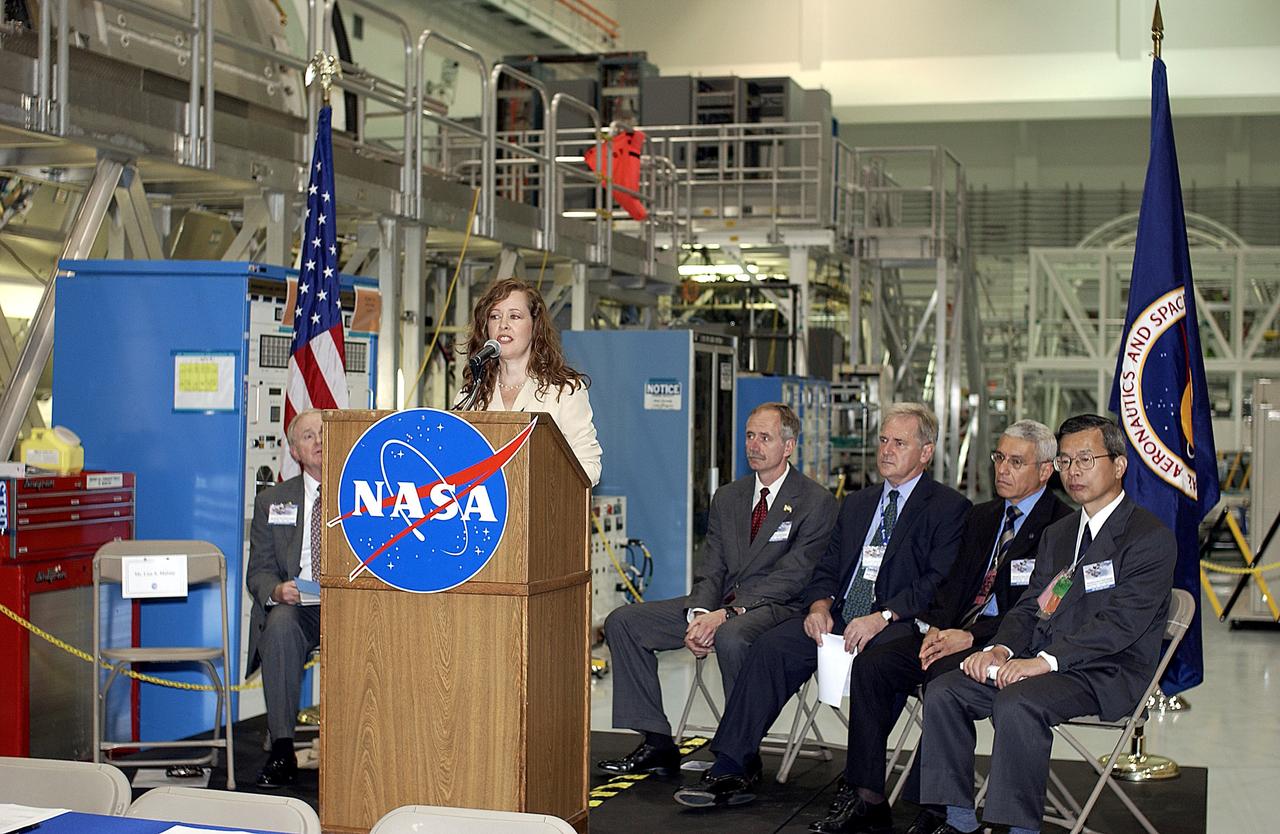
SpaceX CRS-19 What's On Board Science Briefing
A What’s On Board Briefing for SpaceX’s 19th Commercial Resupply Services (CRS-19) mission for NASA to the International Space Station took place on Dec. 3, 2019, at the agency’s Kennedy Space Center in Florida. Se-Jin Lee, professor at the Jackson Laboratory and University of Connecticut School of Medicine, and principal investigator of Rodent Research-19 presents his research to members of the media. He discussed the research on molecular signaling pathways that influence muscle degradation to prevent skeletal muscle and bone loss during spaceflight, and enhance recovery following return to Earth. The SpaceX Falcon 9 rocket and Dragon cargo module are scheduled to launch on Dec. 4, 2019, from Space Launch Complex 40 on Cape Canaveral Air Force Station in Florida.
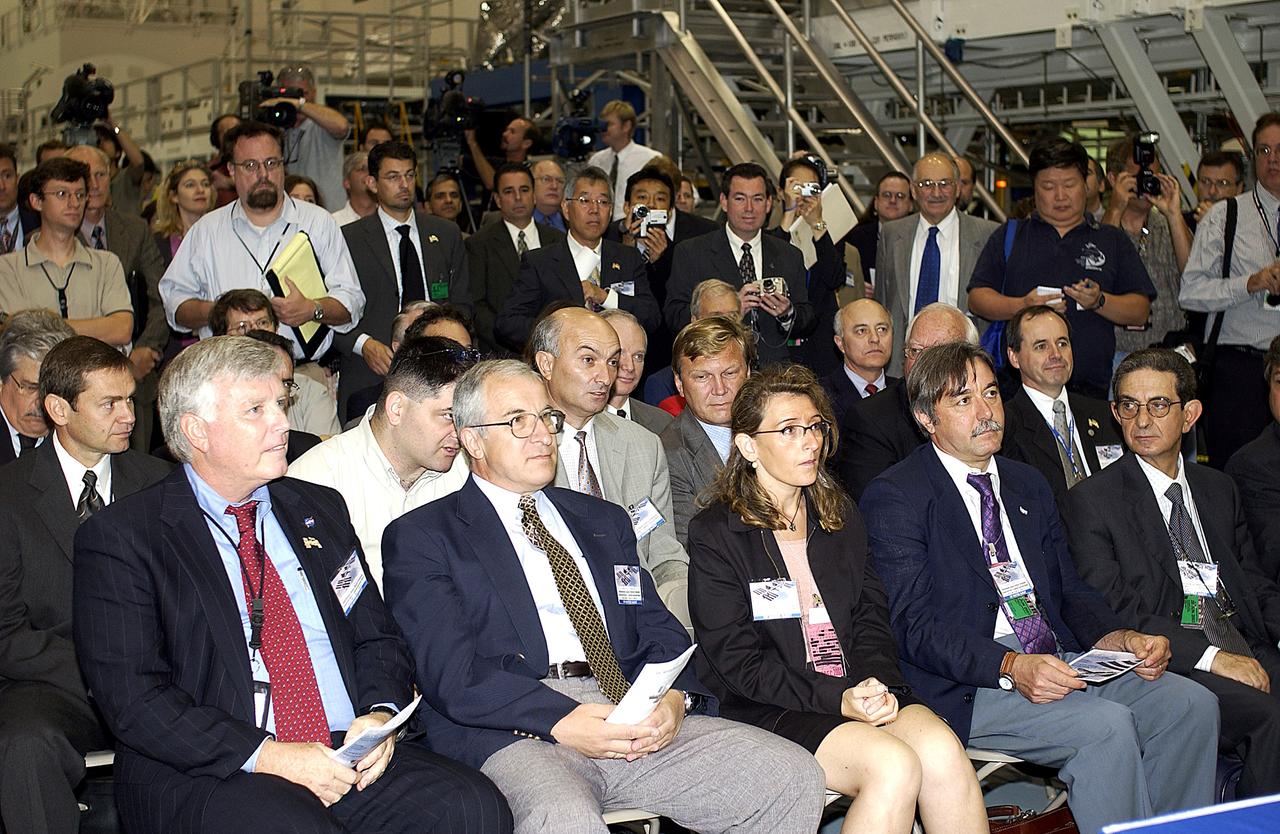
SpaceX CRS-19 What's On Board Science Briefing
A What’s On Board Briefing for SpaceX’s 19th Commercial Resupply Services (CRS-19) mission for NASA to the International Space Station took place on Dec. 3, 2019, at the agency’s Kennedy Space Center in Florida. Se-Jin Lee (at right) professor at the Jackson Laboratory and University of Connecticut School of Medicine, and principal investigator of Rodent Research-19, and Emily Germain-Lee, professor at the University of Connecticut School of Medicine and chief of endocrinology and diabetes, Connecticut Children’s Medical Center, present their research to members of the media. They discussed the research on molecular signaling pathways that influence muscle degradation to prevent skeletal muscle and bone loss during spaceflight, and enhance recovery following return to Earth. The SpaceX Falcon 9 rocket and Dragon cargo module are scheduled to launch on Dec. 4, 2019, from Space Launch Complex 40 on Cape Canaveral Air Force Station in Florida.
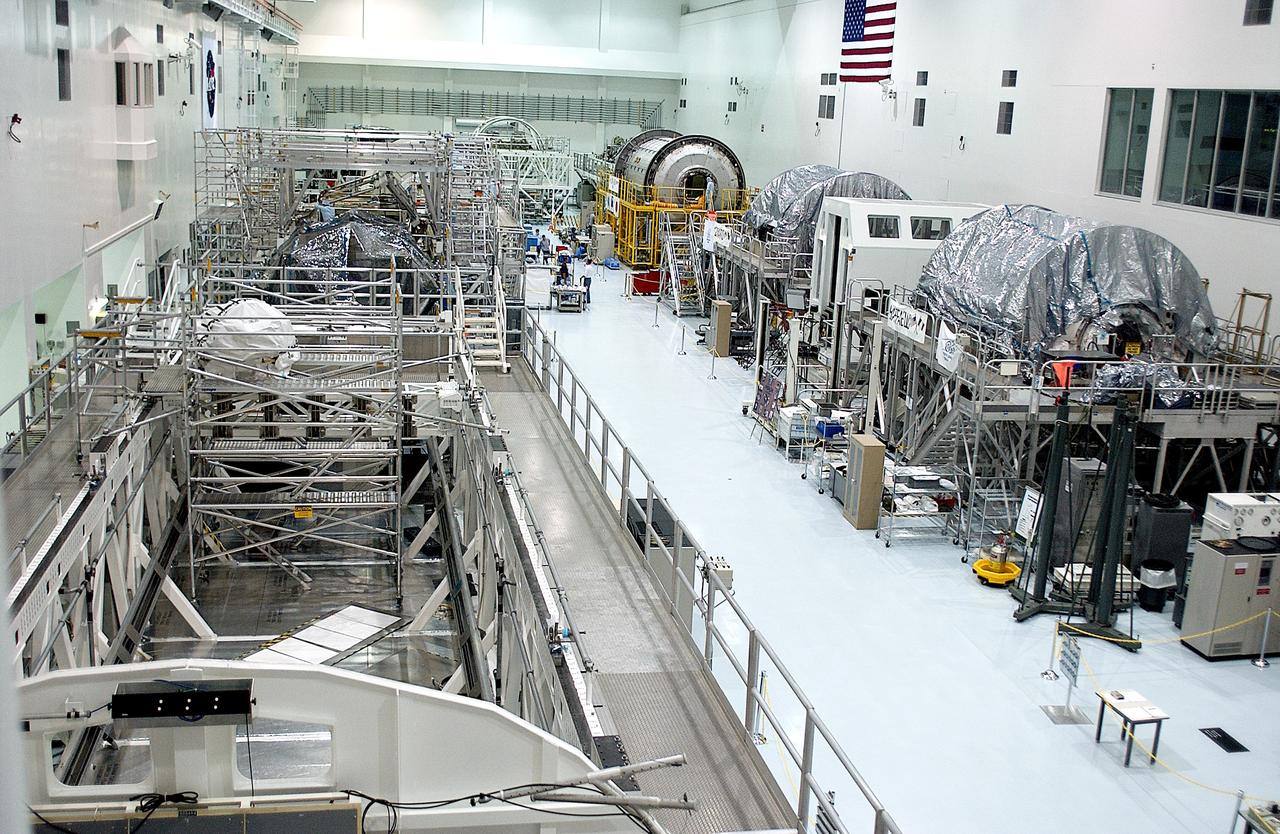
SpaceX CRS-19 What's On Board Science Briefing
A What’s On Board Briefing for SpaceX’s 19th Commercial Resupply Services (CRS-19) mission for NASA to the International Space Station took place on Dec. 3, 2019, at the agency’s Kennedy Space Center in Florida. Ya-Ting Liao, an investigator for the Confined Combustion experiment, discusses the investigation which studies how fire spreads and behaves in confined spaces. The SpaceX Falcon 9 rocket and Dragon cargo module are scheduled to launch on Dec. 4, 2019, from Space Launch Complex 40 on Cape Canaveral Air Force Station in Florida.
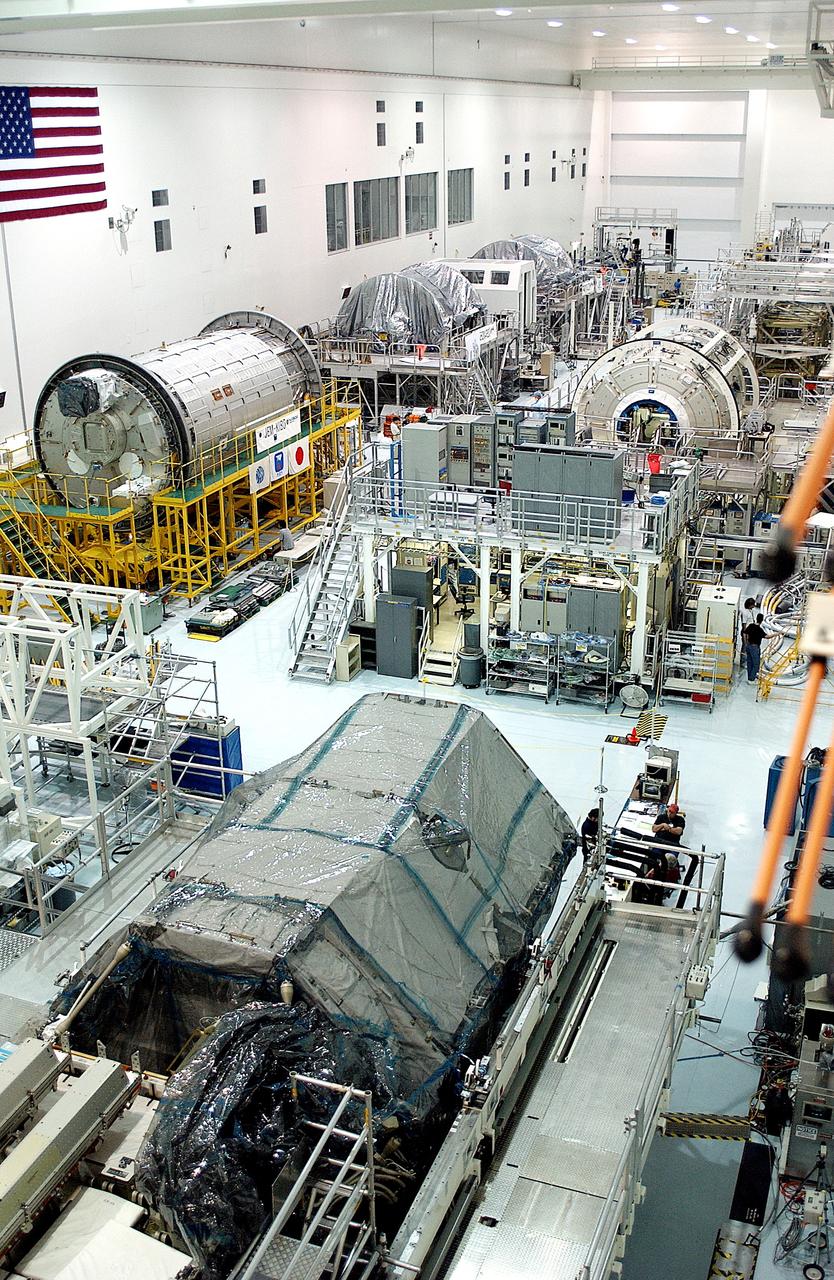
SpaceX CRS-19 What's On Board Science Briefing
A What’s On Board Briefing for SpaceX’s 19th Commercial Resupply Services (CRS-19) mission for NASA to the International Space Station took place on Dec. 3, 2019, at the agency’s Kennedy Space Center in Florida. Akira Iwasaki, professor at the University of Tokyo and principal investigator for the Hyperspectral Imager Suite (HISUI) developed by the Japanese government, discusses the next-generation, hyperspectral Earth imaging system. The SpaceX Falcon 9 rocket and Dragon cargo module are scheduled to launch on Dec. 4, 2019, from Space Launch Complex 40 on Cape Canaveral Air Force Station in Florida
SpaceX CRS-19 What's On Board Science Briefing
A What’s On Board Briefing for SpaceX’s 19th Commercial Resupply Services (CRS-19) mission for NASA to the International Space Station took place on Dec. 3, 2019, at the agency’s Kennedy Space Center in Florida. Andres Martinez, principal investigator  for AzTechSat-1, the first Mexican-developed nanosatellite to be launched from the space station, discusses how the investigation will demonstrate communication between a CubeSat and the GlobalStar Constellation satellite network in low-Earth orbit. The SpaceX Falcon 9 rocket and Dragon cargo module are scheduled to launch on Dec. 4, 2019, from Space Launch Complex 40 on Cape Canaveral Air Force Station in Florida.
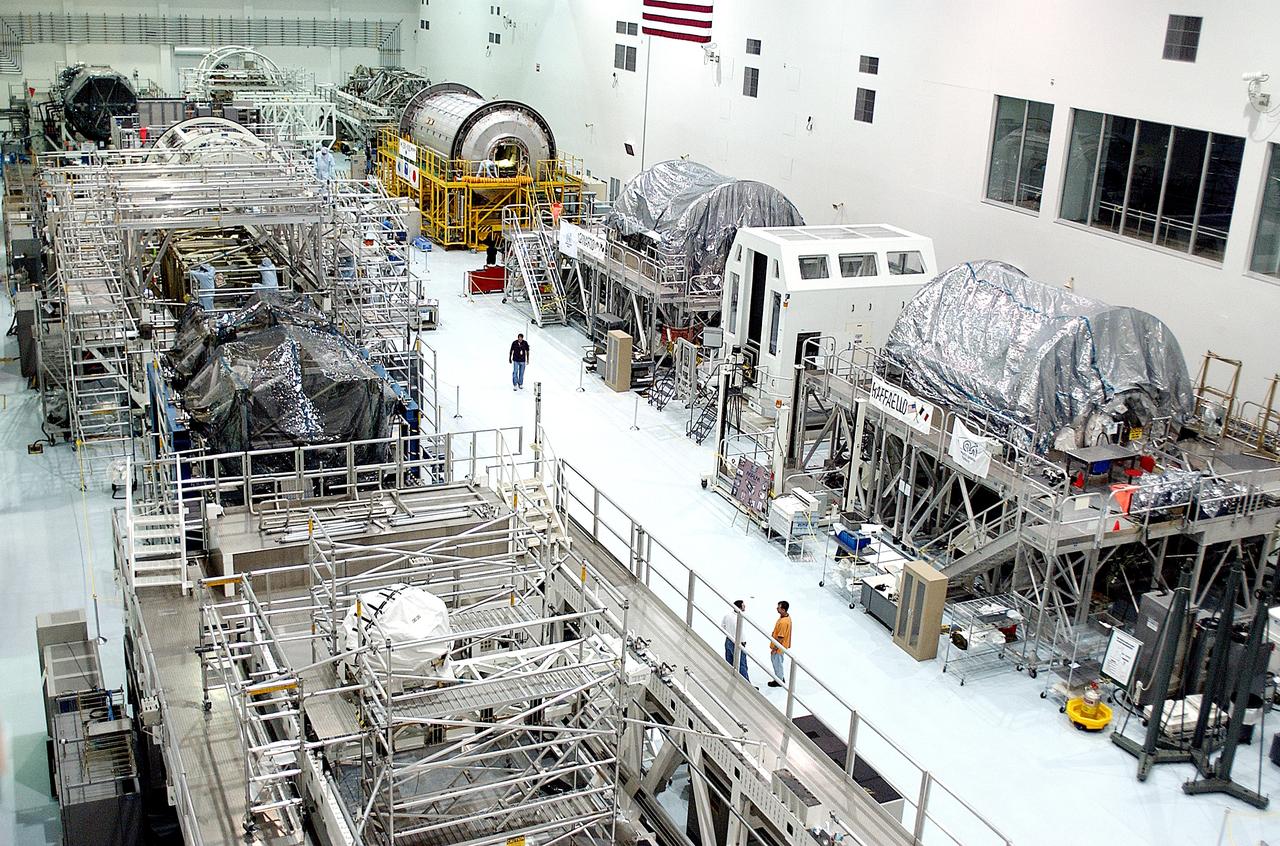
SpaceX CRS-19 What's On Board Science Briefing
A What’s On Board Briefing for SpaceX’s 19th Commercial Resupply Services (CRS-19) mission for NASA to the International Space Station took place on Dec. 3, 2019, at the agency’s Kennedy Space Center in Florida. Rosa Reyna gonzales, student researcher for AzTechSat-1, the first Mexican-developed nanosatellite to be launched from the space station, discusses her role in the experiment and how the investigation will demonstrate communication between a CubeSat and the GlobalStar Constellation satellite network in low-Earth orbit. The SpaceX Falcon 9 rocket and Dragon cargo module are scheduled to launch on Dec. 4, 2019, from Space Launch Complex 40 on Cape Canaveral Air Force Station in Florida.
SpaceX CRS-19 What's On Board Science Briefing
A What’s On Board Briefing for SpaceX’s 19th Commercial Resupply Services (CRS-19) mission for NASA to the International Space Station took place on Dec. 3, 2019, at the agency’s Kennedy Space Center in Florida. Michael Roberts, interim chief scientist for the International Space Station U.S. National Laboratory, discusses the lab’s work in advancing science in space, and in developing partnerships that drive industrialization through microgravity research. The SpaceX Falcon 9 rocket and Dragon cargo module are scheduled to launch on Dec. 4, 2019, from Space Launch Complex 40 on Cape Canaveral Air Force Station in Florida.
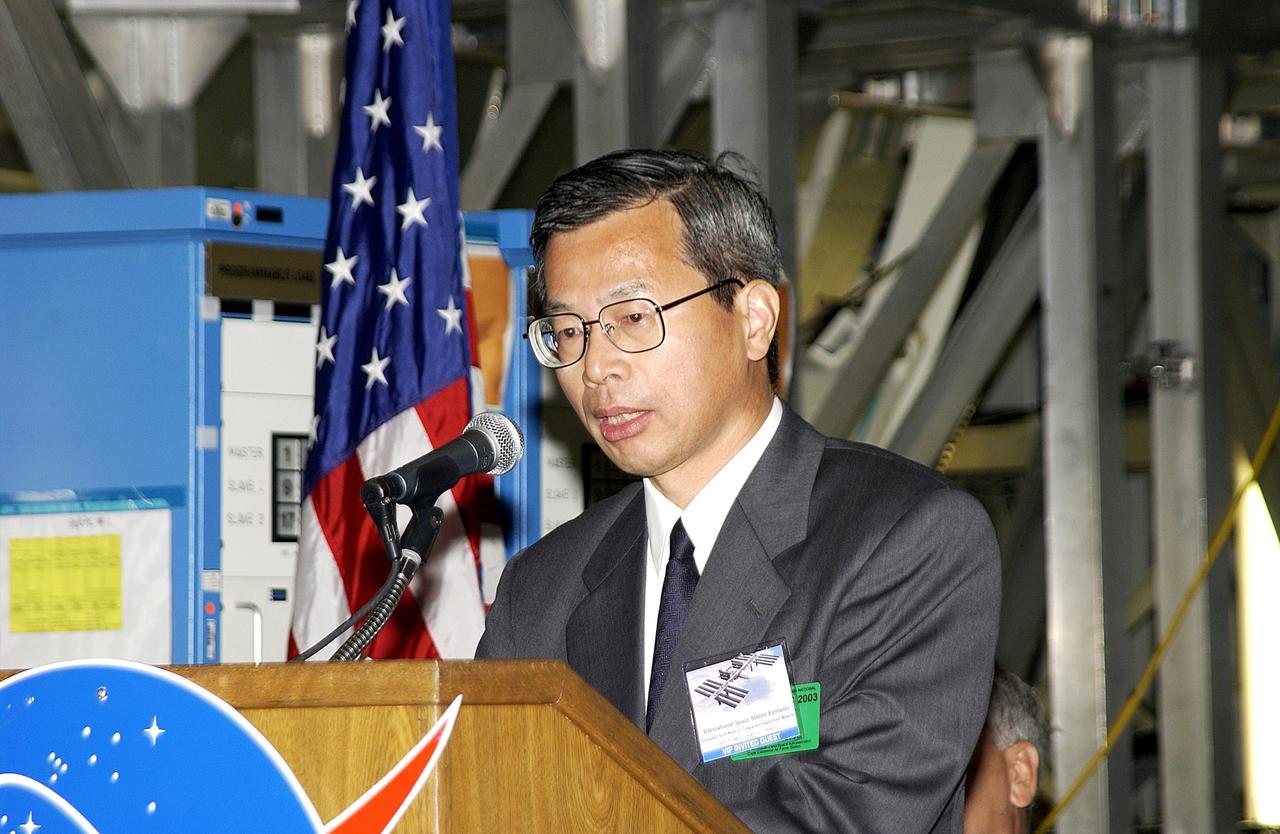
SpaceX CRS-19 What's On Board Science Briefing
A What’s On Board Briefing for SpaceX’s 19th Commercial Resupply Services (CRS-19) mission for NASA to the International Space Station took place on Dec. 3, 2019, at the agency’s Kennedy Space Center in Florida. Emily Germain-Lee, professor at the University of Connecticut School of Medicine and chief of endocrinology and diabetes, Connecticut Children’s Medical Center, discussed her on molecular signaling pathways that influence muscle degradation to prevent skeletal muscle and bone loss during spaceflight, and enhance recovery following return to Earth. The SpaceX Falcon 9 rocket and Dragon cargo module are scheduled to launch on Dec. 4, 2019, from Space Launch Complex 40 on Cape Canaveral Air Force Station in Florida.
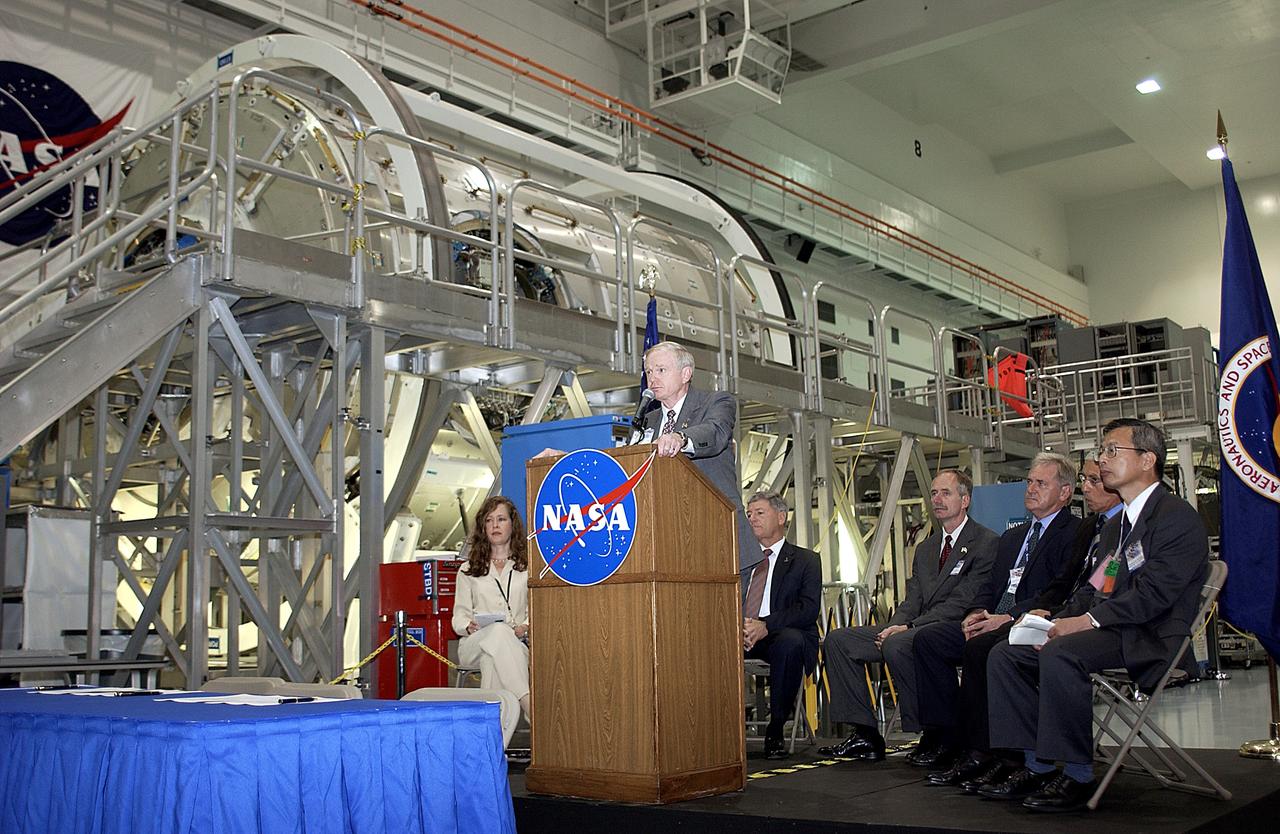
SpaceX CRS-19 What's On Board Science Briefing
Members of the news and social media listen to a What's On Board Briefing on Dec. 3, 2019, for SpaceX's 19th Commercial Resupply Services (CRS-19) mission for NASA to the International Space Station at the agency's Kennedy Space Center in Florida. The SpaceX Falcon 9 rocket and Dragon cargo module are scheduled to launch on Dec. 4, 2019, from Space Launch Complex 40 on Cape Canaveral Air Force Station in Florida.
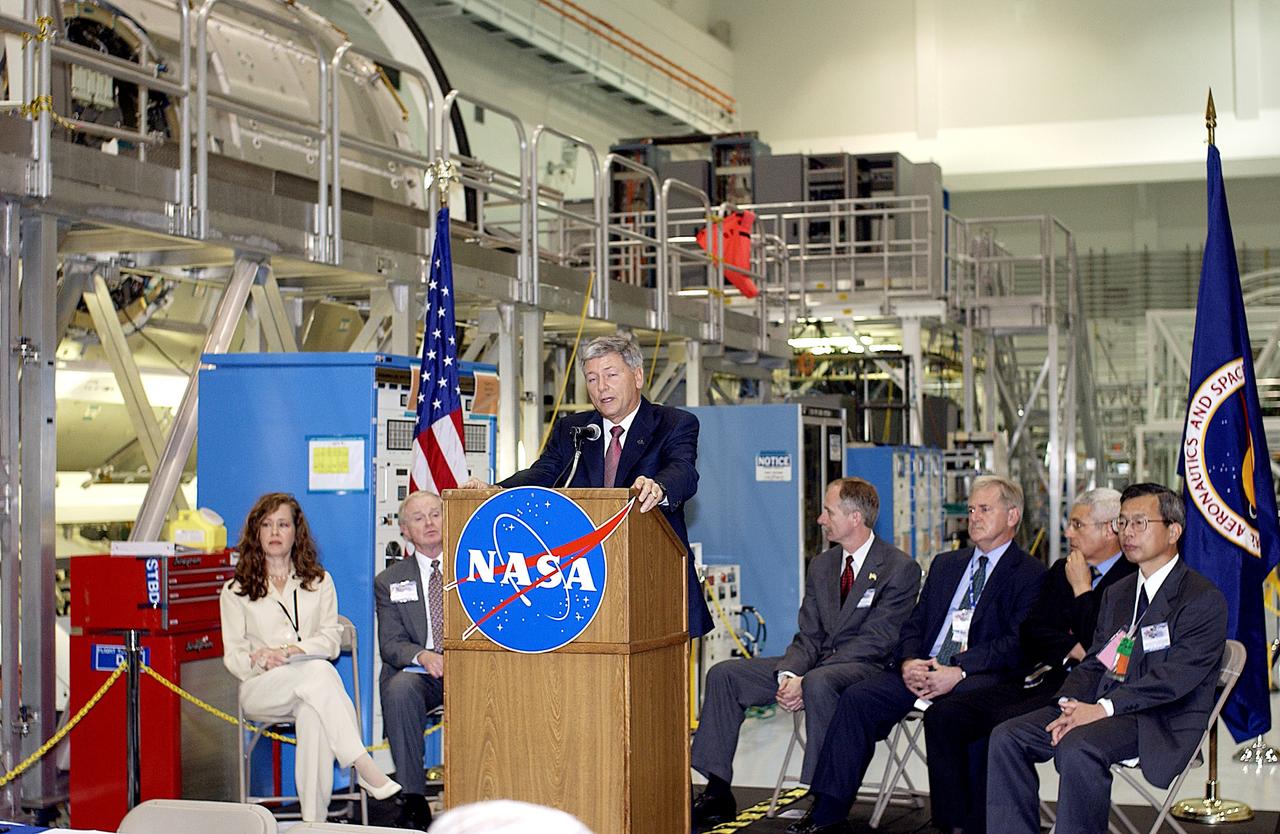
SpaceX CRS-19 What's On Board Science Briefing
A What's on Board Briefing for SpaceX's 19th Commercial Resupply Services (CRS-19) mission for NASA to the International Space Station took place on Dec. 3, 2019, at the agency's Kennedy Space Center in Florida. Bryan Dansberry, assistant program scientist for NASA's International Space Station Program Science Office shares an overview of the research being conducted aboard the space station and how it benefits exploration and humanity. The SpaceX Falcon 9 rocket and Dragon cargo module are scheduled to launch on Dec. 4, 2019, from Space Launch Complex 40 at Cape Canaveral Air Force Station in Florida.
SpaceX CRS-19 What's On Board Science Briefing
Greg Harland, NASA Communications, moderates a What’s On Board Briefing for SpaceX’s 19th Commercial Resupply Services (CRS-19) mission for NASA to the International Space Station on Dec. 3, 2019, at the agency’s Kennedy Space Center in Florida. The SpaceX Falcon 9 rocket and Dragon cargo module are scheduled to launch on Dec. 4, 2019, from Space Launch Complex 40 on Cape Canaveral Air Force Station in Florida.
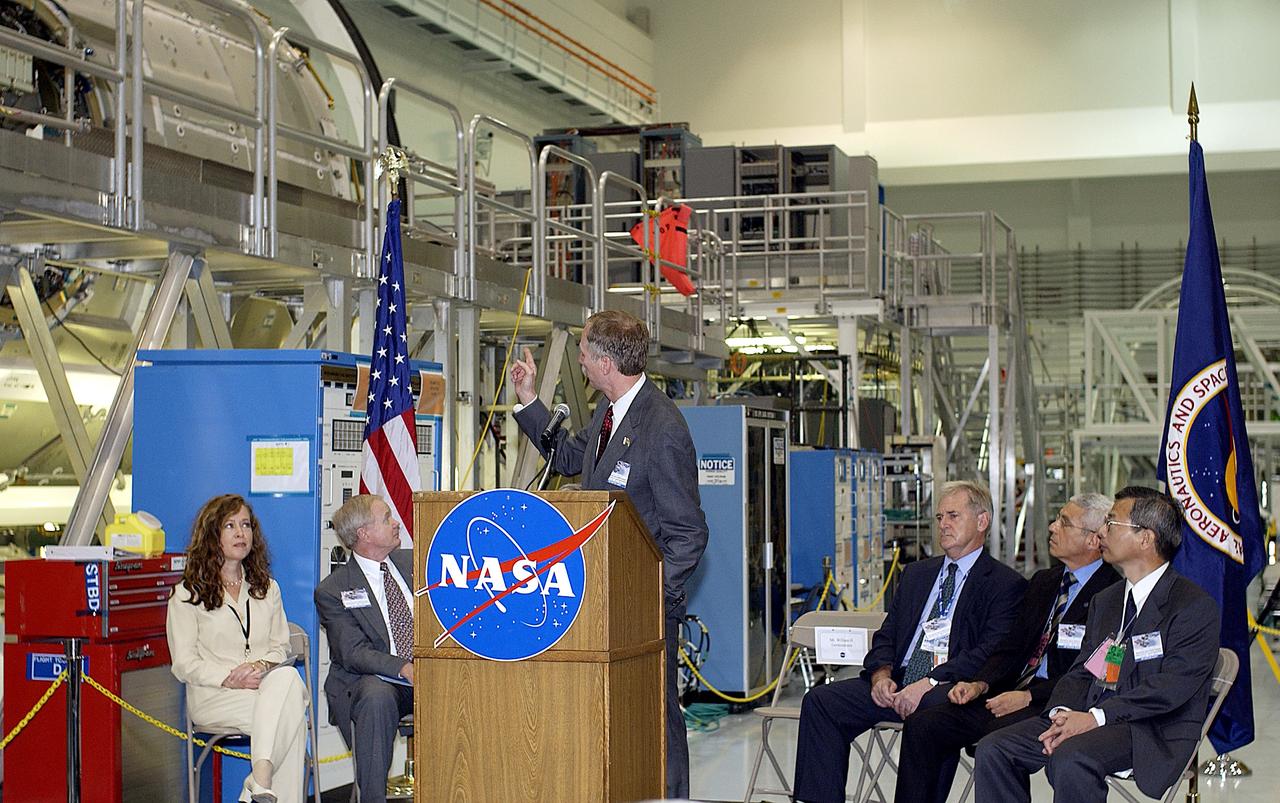
SpaceX CRS-19 What's On Board Science Briefing
Astronaut Scott Kelly initiated VEG-01 B, the second crop of lettuce, on July, 8, 2015, and both Kelly and Astronaut Kjell Lindgren cared for the plants. The crop grew for 33 days. VEG-01 B included one set of six plant pillows planted with red romaine lettuce seeds. On Aug. 10, 2015, the crew harvested and consumed leaves from each plant. This was the first crop grown and consumed in NASA hardware. They harvested the rest of the plant tissue and froze it in the station’s Minus Eighty-Degree Laboratory Freezer for ISS (MELFI) for return to Earth for further study including microbial analysis, antioxidant capacity, mineral analysis and anthocyanin concentration.
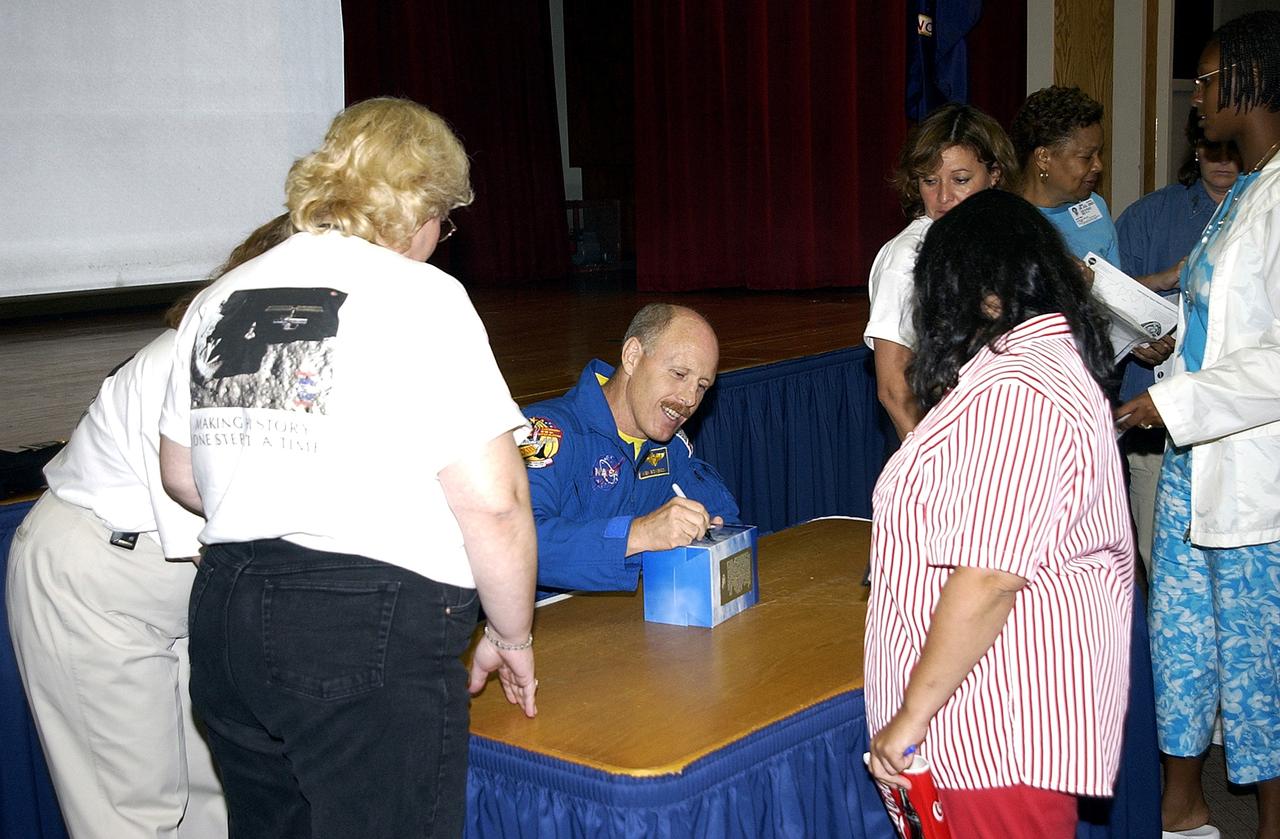
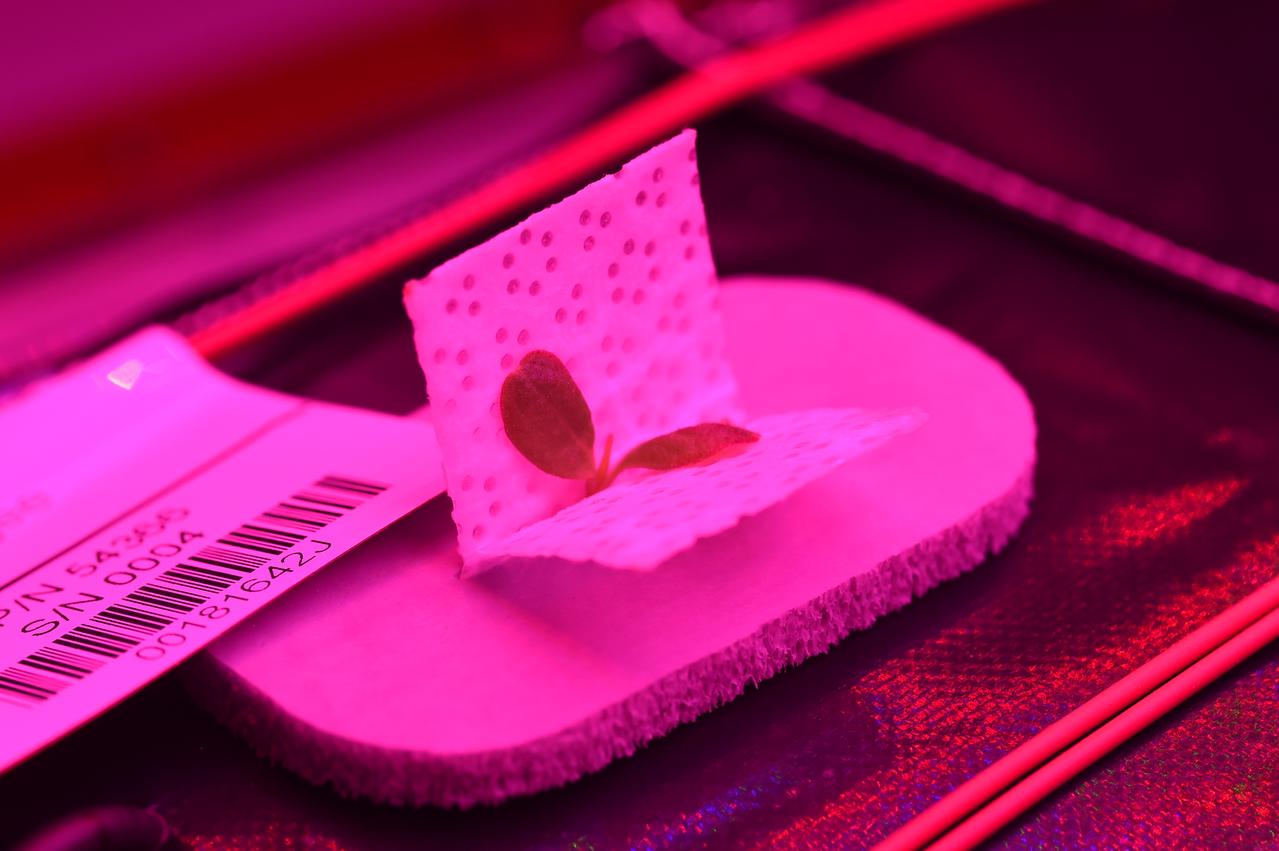
Flight Photos - VEG-01B Day 30 GMT 219
Astronaut Scott Kelly initiated VEG-01 B, the second crop of lettuce, on July, 8, 2015, and both Kelly and Astronaut Kjell Lindgren cared for the plants. The crop grew for 33 days. VEG-01 B included one set of six plant pillows planted with red romaine lettuce seeds. On Aug. 10, 2015, the crew harvested and consumed leaves from each plant. This was the first crop grown and consumed in NASA hardware. They harvested the rest of the plant tissue and froze it in the station’s Minus Eighty-Degree Laboratory Freezer for ISS (MELFI) for return to Earth for further study including microbial analysis, antioxidant capacity, mineral analysis and anthocyanin concentration.
Flight Photos - VEG-01B Day 32
Astronaut Scott Kelly initiated VEG-01 B, the second crop of lettuce, on July, 8, 2015, and both Kelly and Astronaut Kjell Lindgren cared for the plants. The crop grew for 33 days. VEG-01 B included one set of six plant pillows planted with red romaine lettuce seeds. On Aug. 10, 2015, the crew harvested and consumed leaves from each plant. This was the first crop grown and consumed in NASA hardware. They harvested the rest of the plant tissue and froze it in the station’s Minus Eighty-Degree Laboratory Freezer for ISS (MELFI) for return to Earth for further study including microbial analysis, antioxidant capacity, mineral analysis and anthocyanin concentration.
Flight Photos - VEG-01B Day 18 GMT 207
Astronaut Scott Kelly initiated VEG-01 B, the second crop of lettuce, on July, 8, 2015, and both Kelly and Astronaut Kjell Lindgren cared for the plants. The crop grew for 33 days. VEG-01 B included one set of six plant pillows planted with red romaine lettuce seeds. On Aug. 10, 2015, the crew harvested and consumed leaves from each plant. This was the first crop grown and consumed in NASA hardware. They harvested the rest of the plant tissue and froze it in the station’s Minus Eighty-Degree Laboratory Freezer for ISS (MELFI) for return to Earth for further study including microbial analysis, antioxidant capacity, mineral analysis and anthocyanin concentration.
Ground Photos - 7 DAI VEG-01B Plant Thinning
Astronaut Scott Kelly initiated VEG-01 B, the second crop of lettuce, on July, 8, 2015, and both Kelly and Astronaut Kjell Lindgren cared for the plants. The crop grew for 33 days. VEG-01 B included one set of six plant pillows planted with red romaine lettuce seeds. On Aug. 10, 2015, the crew harvested and consumed leaves from each plant. This was the first crop grown and consumed in NASA hardware. They harvested the rest of the plant tissue and froze it in the station’s Minus Eighty-Degree Laboratory Freezer for ISS (MELFI) for return to Earth for further study including microbial analysis, antioxidant capacity, mineral analysis and anthocyanin concentration.
Ground Photos - 3 DAI VEG-01B GC Wick Opening
Astronaut Scott Kelly initiated VEG-01 B, the second crop of lettuce, on July, 8, 2015, and both Kelly and Astronaut Kjell Lindgren cared for the plants. The crop grew for 33 days. VEG-01 B included one set of six plant pillows planted with red romaine lettuce seeds. On Aug. 10, 2015, the crew harvested and consumed leaves from each plant. This was the first crop grown and consumed in NASA hardware. They harvested the rest of the plant tissue and froze it in the station’s Minus Eighty-Degree Laboratory Freezer for ISS (MELFI) for return to Earth for further study including microbial analysis, antioxidant capacity, mineral analysis and anthocyanin concentration.
Flight Photos - VEG-01B Day 7 GMT 196 Thinning
Astronaut Scott Kelly initiated VEG-01 B, the second crop of lettuce, on July, 8, 2015, and both Kelly and Astronaut Kjell Lindgren cared for the plants. The crop grew for 33 days. VEG-01 B included one set of six plant pillows planted with red romaine lettuce seeds. On Aug. 10, 2015, the crew harvested and consumed leaves from each plant. This was the first crop grown and consumed in NASA hardware. They harvested the rest of the plant tissue and froze it in the station’s Minus Eighty-Degree Laboratory Freezer for ISS (MELFI) for return to Earth for further study including microbial analysis, antioxidant capacity, mineral analysis and anthocyanin concentration.
Ground Photos - 7 DAI VEG-01B Plant Thinning
Astronaut Scott Kelly initiated VEG-01 B, the second crop of lettuce, on July, 8, 2015, and both Kelly and Astronaut Kjell Lindgren cared for the plants. The crop grew for 33 days. VEG-01 B included one set of six plant pillows planted with red romaine lettuce seeds. On Aug. 10, 2015, the crew harvested and consumed leaves from each plant. This was the first crop grown and consumed in NASA hardware. They harvested the rest of the plant tissue and froze it in the station’s Minus Eighty-Degree Laboratory Freezer for ISS (MELFI) for return to Earth for further study including microbial analysis, antioxidant capacity, mineral analysis and anthocyanin concentration.
Flight Photos - VEG-01B Day 18 GMT 207
Astronaut Scott Kelly initiated VEG-01 B, the second crop of lettuce, on July, 8, 2015, and both Kelly and Astronaut Kjell Lindgren cared for the plants. The crop grew for 33 days. VEG-01 B included one set of six plant pillows planted with red romaine lettuce seeds. On Aug. 10, 2015, the crew harvested and consumed leaves from each plant. This was the first crop grown and consumed in NASA hardware. They harvested the rest of the plant tissue and froze it in the station’s Minus Eighty-Degree Laboratory Freezer for ISS (MELFI) for return to Earth for further study including microbial analysis, antioxidant capacity, mineral analysis and anthocyanin concentration.
Ground Photos - 15 DAI VEG-01B GC
Astronaut Scott Kelly initiated VEG-01 B, the second crop of lettuce, on July, 8, 2015, and both Kelly and Astronaut Kjell Lindgren cared for the plants. The crop grew for 33 days. VEG-01 B included one set of six plant pillows planted with red romaine lettuce seeds. On Aug. 10, 2015, the crew harvested and consumed leaves from each plant. This was the first crop grown and consumed in NASA hardware. They harvested the rest of the plant tissue and froze it in the station’s Minus Eighty-Degree Laboratory Freezer for ISS (MELFI) for return to Earth for further study including microbial analysis, antioxidant capacity, mineral analysis and anthocyanin concentration.
Ground Photos - 33 DAI VEG-01B - Ground Harvest
Astronaut Scott Kelly initiated VEG-01 B, the second crop of lettuce, on July, 8, 2015, and both Kelly and Astronaut Kjell Lindgren cared for the plants. The crop grew for 33 days. VEG-01 B included one set of six plant pillows planted with red romaine lettuce seeds. On Aug. 10, 2015, the crew harvested and consumed leaves from each plant. This was the first crop grown and consumed in NASA hardware. They harvested the rest of the plant tissue and froze it in the station’s Minus Eighty-Degree Laboratory Freezer for ISS (MELFI) for return to Earth for further study including microbial analysis, antioxidant capacity, mineral analysis and anthocyanin concentration.
Ground Photos - 7 DAI VEG-01B Plant Thinning
Astronaut Scott Kelly initiated VEG-01 B, the second crop of lettuce, on July, 8, 2015, and both Kelly and Astronaut Kjell Lindgren cared for the plants. The crop grew for 33 days. VEG-01 B included one set of six plant pillows planted with red romaine lettuce seeds. On Aug. 10, 2015, the crew harvested and consumed leaves from each plant. This was the first crop grown and consumed in NASA hardware. They harvested the rest of the plant tissue and froze it in the station’s Minus Eighty-Degree Laboratory Freezer for ISS (MELFI) for return to Earth for further study including microbial analysis, antioxidant capacity, mineral analysis and anthocyanin concentration.
Ground Photos - 33 DAI VEG-01B - Ground Harvest
Astronaut Scott Kelly initiated VEG-01 B, the second crop of lettuce, on July, 8, 2015, and both Kelly and Astronaut Kjell Lindgren cared for the plants. The crop grew for 33 days. VEG-01 B included one set of six plant pillows planted with red romaine lettuce seeds. On Aug. 10, 2015, the crew harvested and consumed leaves from each plant. This was the first crop grown and consumed in NASA hardware. They harvested the rest of the plant tissue and froze it in the station’s Minus Eighty-Degree Laboratory Freezer for ISS (MELFI) for return to Earth for further study including microbial analysis, antioxidant capacity, mineral analysis and anthocyanin concentration.
Ground Photos - 15 DAI VEG-01B GC
Astronaut Scott Kelly initiated VEG-01 B, the second crop of lettuce, on July, 8, 2015, and both Kelly and Astronaut Kjell Lindgren cared for the plants. The crop grew for 33 days. VEG-01 B included one set of six plant pillows planted with red romaine lettuce seeds. On Aug. 10, 2015, the crew harvested and consumed leaves from each plant. This was the first crop grown and consumed in NASA hardware. They harvested the rest of the plant tissue and froze it in the station’s Minus Eighty-Degree Laboratory Freezer for ISS (MELFI) for return to Earth for further study including microbial analysis, antioxidant capacity, mineral analysis and anthocyanin concentration.
Ground Photos - 14 DAI VEG-01B GC
Astronaut Scott Kelly initiated VEG-01 B, the second crop of lettuce, on July, 8, 2015, and both Kelly and Astronaut Kjell Lindgren cared for the plants. The crop grew for 33 days. VEG-01 B included one set of six plant pillows planted with red romaine lettuce seeds. On Aug. 10, 2015, the crew harvested and consumed leaves from each plant. This was the first crop grown and consumed in NASA hardware. They harvested the rest of the plant tissue and froze it in the station’s Minus Eighty-Degree Laboratory Freezer for ISS (MELFI) for return to Earth for further study including microbial analysis, antioxidant capacity, mineral analysis and anthocyanin concentration.
Flight Photos - VEG-01B Day 9 GMT 198
Astronaut Scott Kelly initiated VEG-01 B, the second crop of lettuce, on July, 8, 2015, and both Kelly and Astronaut Kjell Lindgren cared for the plants. The crop grew for 33 days. VEG-01 B included one set of six plant pillows planted with red romaine lettuce seeds. On Aug. 10, 2015, the crew harvested and consumed leaves from each plant. This was the first crop grown and consumed in NASA hardware. They harvested the rest of the plant tissue and froze it in the station’s Minus Eighty-Degree Laboratory Freezer for ISS (MELFI) for return to Earth for further study including microbial analysis, antioxidant capacity, mineral analysis and anthocyanin concentration.
Ground Photos - 7 DAI VEG-01B Plant Thinning
Astronaut Scott Kelly initiated VEG-01 B, the second crop of lettuce, on July, 8, 2015, and both Kelly and Astronaut Kjell Lindgren cared for the plants. The crop grew for 33 days. VEG-01 B included one set of six plant pillows planted with red romaine lettuce seeds. On Aug. 10, 2015, the crew harvested and consumed leaves from each plant. This was the first crop grown and consumed in NASA hardware. They harvested the rest of the plant tissue and froze it in the station’s Minus Eighty-Degree Laboratory Freezer for ISS (MELFI) for return to Earth for further study including microbial analysis, antioxidant capacity, mineral analysis and anthocyanin concentration.
Ground Photos - 4 DAI VEG-01B GC Pillow B Prime and E Inspection
Astronaut Scott Kelly initiated VEG-01 B, the second crop of lettuce, on July, 8, 2015, and both Kelly and Astronaut Kjell Lindgren cared for the plants. The crop grew for 33 days. VEG-01 B included one set of six plant pillows planted with red romaine lettuce seeds. On Aug. 10, 2015, the crew harvested and consumed leaves from each plant. This was the first crop grown and consumed in NASA hardware. They harvested the rest of the plant tissue and froze it in the station’s Minus Eighty-Degree Laboratory Freezer for ISS (MELFI) for return to Earth for further study including microbial analysis, antioxidant capacity, mineral analysis and anthocyanin concentration.
Ground Photos - 33 DAI VEG-01B - Ground Harvest
Astronaut Scott Kelly initiated VEG-01 B, the second crop of lettuce, on July, 8, 2015, and both Kelly and Astronaut Kjell Lindgren cared for the plants. The crop grew for 33 days. VEG-01 B included one set of six plant pillows planted with red romaine lettuce seeds. On Aug. 10, 2015, the crew harvested and consumed leaves from each plant. This was the first crop grown and consumed in NASA hardware. They harvested the rest of the plant tissue and froze it in the station’s Minus Eighty-Degree Laboratory Freezer for ISS (MELFI) for return to Earth for further study including microbial analysis, antioxidant capacity, mineral analysis and anthocyanin concentration.
Ground Photos - 33 DAI VEG-01B - Ground Harvest
Astronaut Scott Kelly initiated VEG-01 B, the second crop of lettuce, on July, 8, 2015, and both Kelly and Astronaut Kjell Lindgren cared for the plants. The crop grew for 33 days. VEG-01 B included one set of six plant pillows planted with red romaine lettuce seeds. On Aug. 10, 2015, the crew harvested and consumed leaves from each plant. This was the first crop grown and consumed in NASA hardware. They harvested the rest of the plant tissue and froze it in the station’s Minus Eighty-Degree Laboratory Freezer for ISS (MELFI) for return to Earth for further study including microbial analysis, antioxidant capacity, mineral analysis and anthocyanin concentration.
Ground Photos - 30 DAI VEG-01B GC
Astronaut Scott Kelly initiated VEG-01 B, the second crop of lettuce, on July, 8, 2015, and both Kelly and Astronaut Kjell Lindgren cared for the plants. The crop grew for 33 days. VEG-01 B included one set of six plant pillows planted with red romaine lettuce seeds. On Aug. 10, 2015, the crew harvested and consumed leaves from each plant. This was the first crop grown and consumed in NASA hardware. They harvested the rest of the plant tissue and froze it in the station’s Minus Eighty-Degree Laboratory Freezer for ISS (MELFI) for return to Earth for further study including microbial analysis, antioxidant capacity, mineral analysis and anthocyanin concentration.
Flight Photos - VEG-01B Day 12 GMT 201
Astronaut Scott Kelly initiated VEG-01 B, the second crop of lettuce, on July, 8, 2015, and both Kelly and Astronaut Kjell Lindgren cared for the plants. The crop grew for 33 days. VEG-01 B included one set of six plant pillows planted with red romaine lettuce seeds. On Aug. 10, 2015, the crew harvested and consumed leaves from each plant. This was the first crop grown and consumed in NASA hardware. They harvested the rest of the plant tissue and froze it in the station’s Minus Eighty-Degree Laboratory Freezer for ISS (MELFI) for return to Earth for further study including microbial analysis, antioxidant capacity, mineral analysis and anthocyanin concentration.
Flight Photos - VEG-01B Day 8 GMT 197