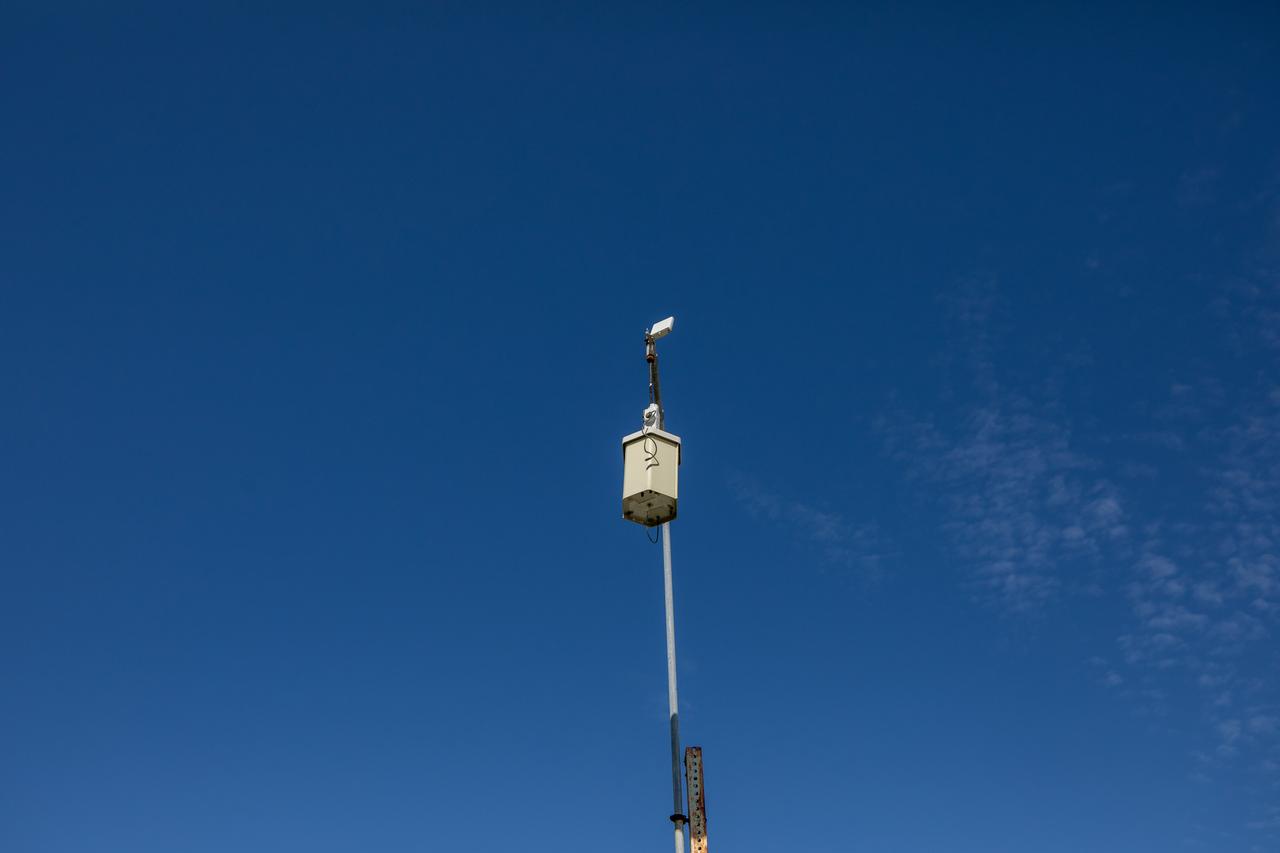
One of several Environmental Continuous Air Monitors, or ECAMS, is located in the Space Coast area on July 27, 2020, in preparation for launch of NASA’s Mars 2020 mission on July 30. The ECAMS are updated versions of those that were used for the launch of Curiosity. The Data Collection and Assessment Center uses information from the network of remote monitoring devises, including several that are located in areas for specific weather forecasting reported back to the operations center.
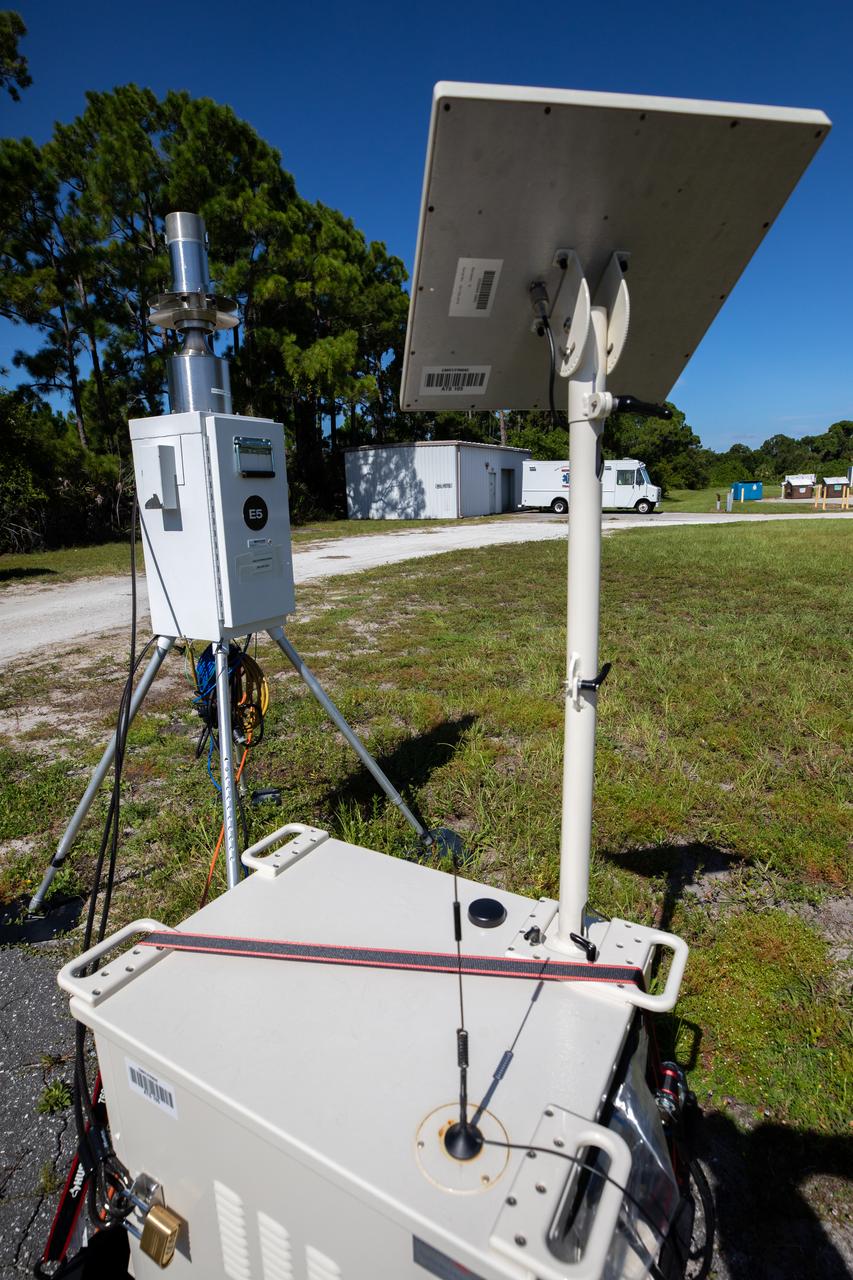
A close-up view of one of several Environmental Continuous Air Monitors, or ECAMS, located in the Space Coast area on July 27, 2020, in preparation for launch of NASA’s Mars 2020 mission on July 30. The ECAMS are updated versions of those that were used for the launch of Curiosity. The Data Collection and Assessment Center uses information from the network of remote monitoring devises, including several that are located in areas for specific weather forecasting reported back to the operations center.
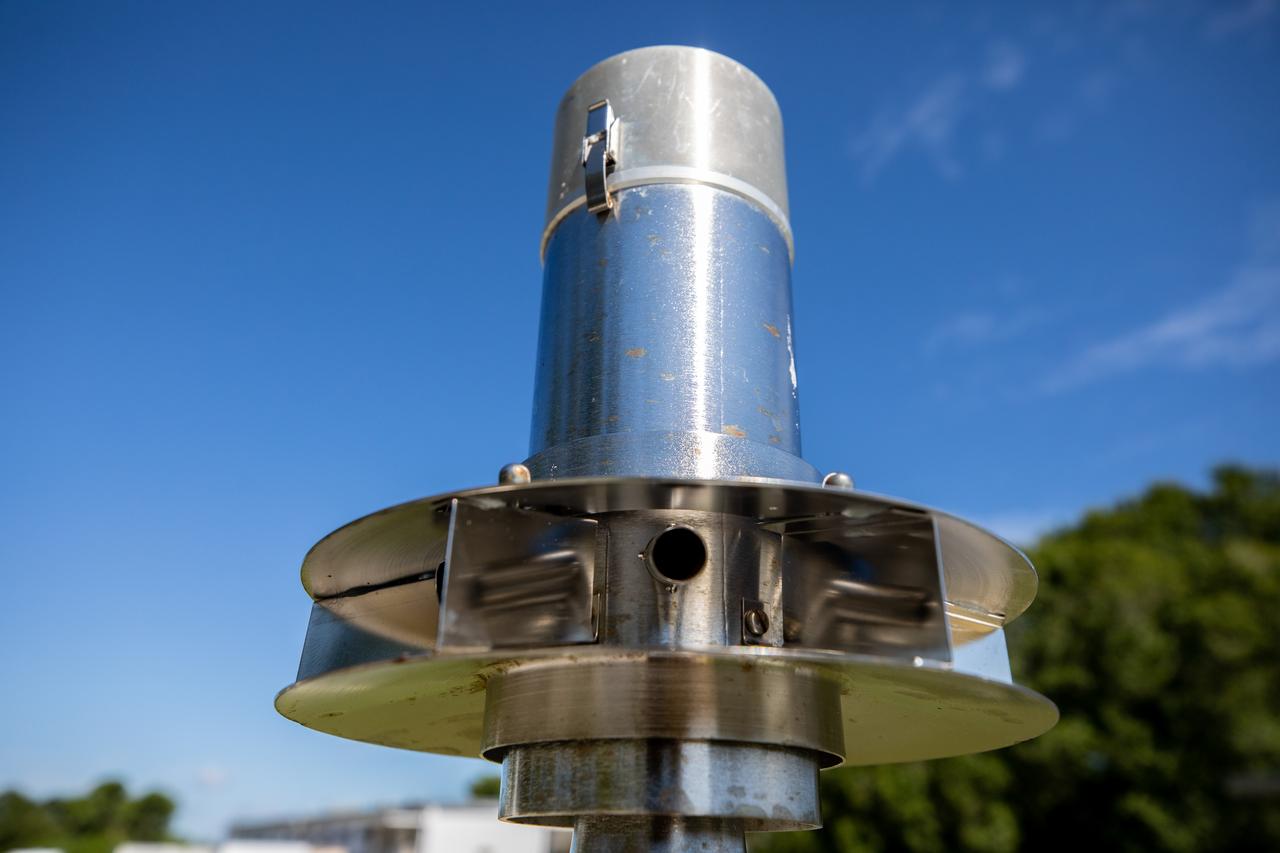
A close-up view of one of several Environmental Continuous Air Monitors, or ECAMS, located in the Space Coast area on July 27, 2020, in preparation for launch of NASA’s Mars 2020 mission on July 30. The ECAMS are updated versions of those that were used for the launch of Curiosity. The Data Collection and Assessment Center uses information from the network of remote monitoring devises, including several that are located in areas for specific weather forecasting reported back to the operations center.
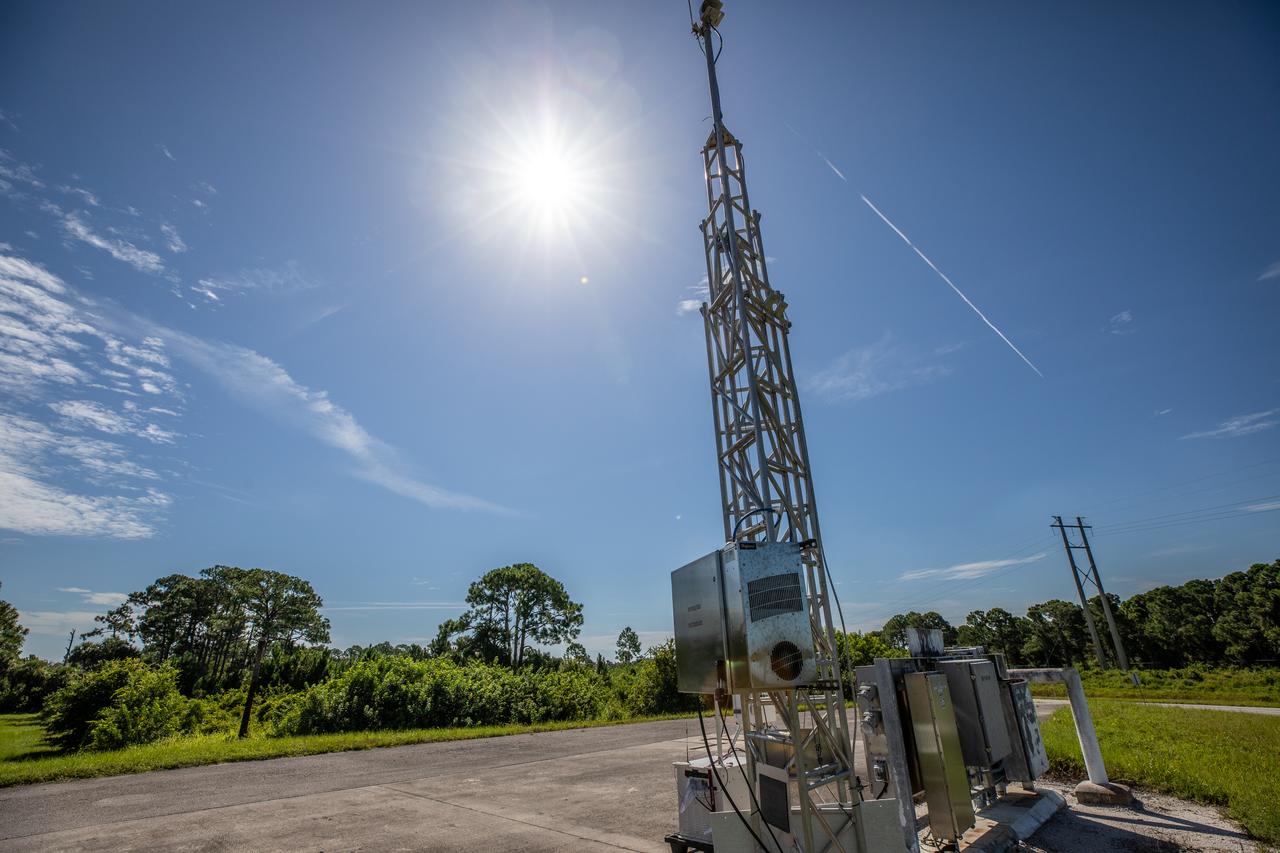
One of several Environmental Continuous Air Monitors, or ECAMS, is located in the Space Coast area on July 27, 2020, in preparation for launch of NASA’s Mars 2020 mission on July 30. The ECAMS are updated versions of those that were used for the launch of Curiosity. The Data Collection and Assessment Center uses information from the network of remote monitoring devises, including several that are located in areas for specific weather forecasting reported back to the operations center.
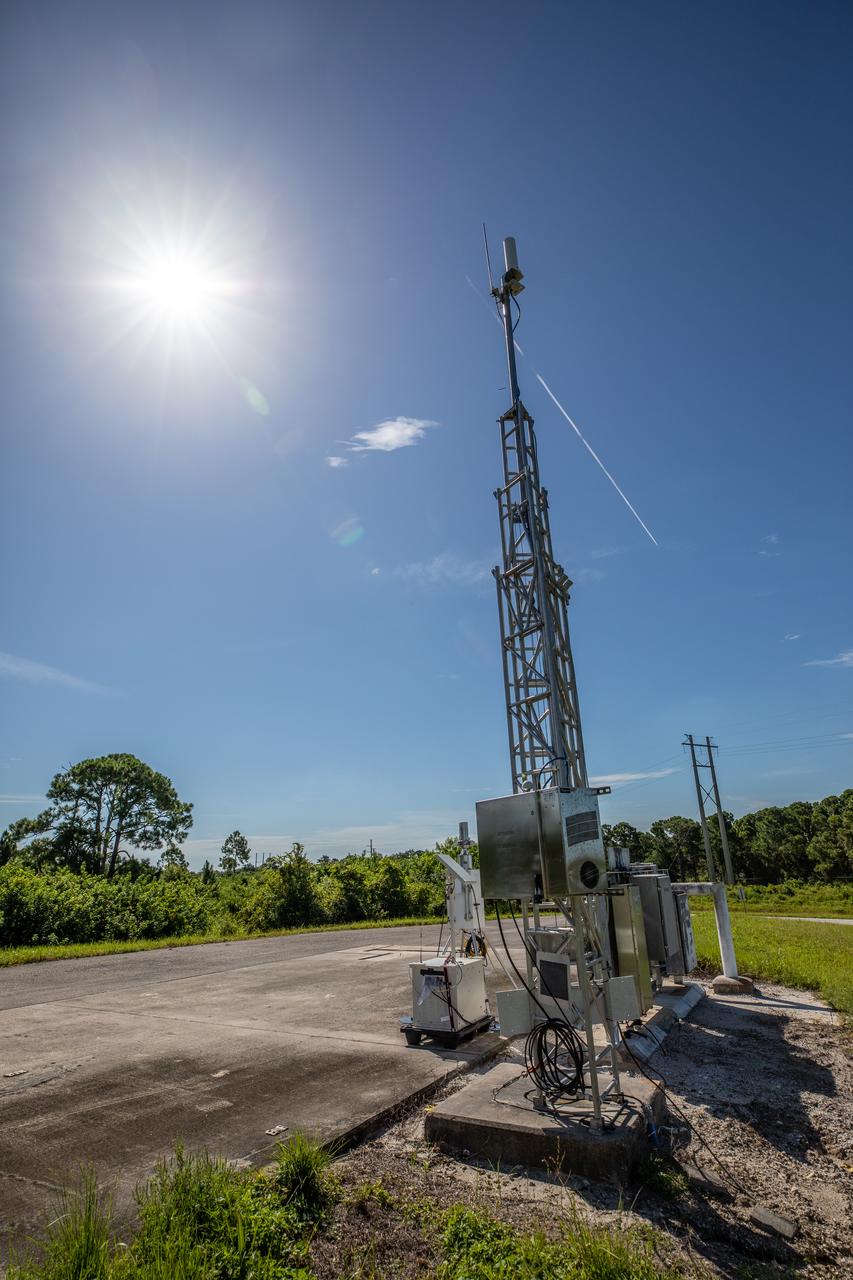
One of several Environmental Continuous Air Monitors, or ECAMS, is located in the Space Coast area on July 27, 2020, in preparation for launch of NASA’s Mars 2020 mission on July 30. The ECAMS are updated versions of those that were used for the launch of Curiosity. The Data Collection and Assessment Center uses information from the network of remote monitoring devises, including several that are located in areas for specific weather forecasting reported back to the operations center.

One of several Environmental Continuous Air Monitors, or ECAMS, is located in the Space Coast area on July 27, 2020, in preparation for launch of NASA’s Mars 2020 mission on July 30. The ECAMS are updated versions of those that were used for the launch of Curiosity. The Data Collection and Assessment Center uses information from the network of remote monitoring devises, including several that are located in areas for specific weather forecasting reported back to the operations center.
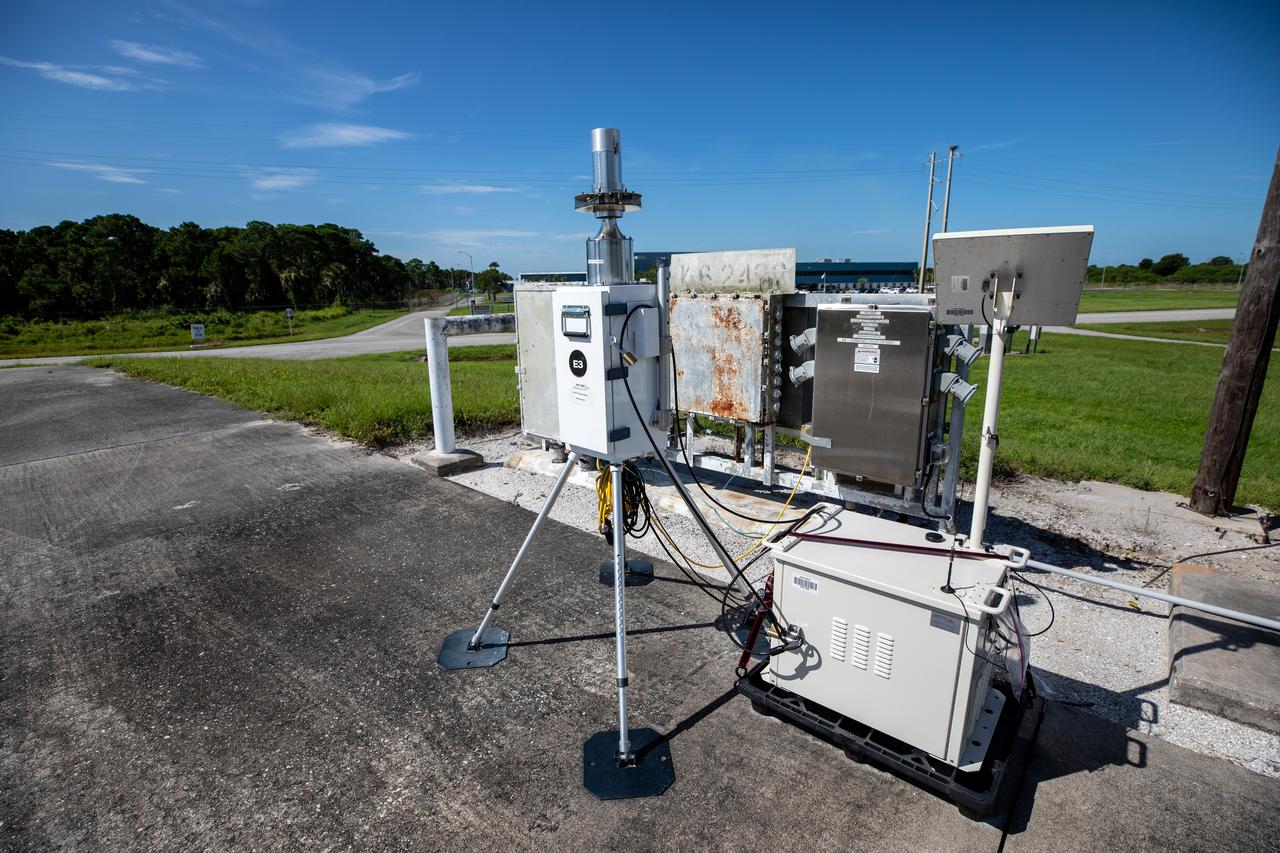
A close-up view of one of several Environmental Continuous Air Monitors, or ECAMS, located in the Space Coast area on July 27, 2020, in preparation for launch of NASA’s Mars 2020 mission on July 30. The ECAMS are updated versions of those that were used for the launch of Curiosity. The Data Collection and Assessment Center uses information from the network of remote monitoring devises, including several that are located in areas for specific weather forecasting reported back to the operations center.
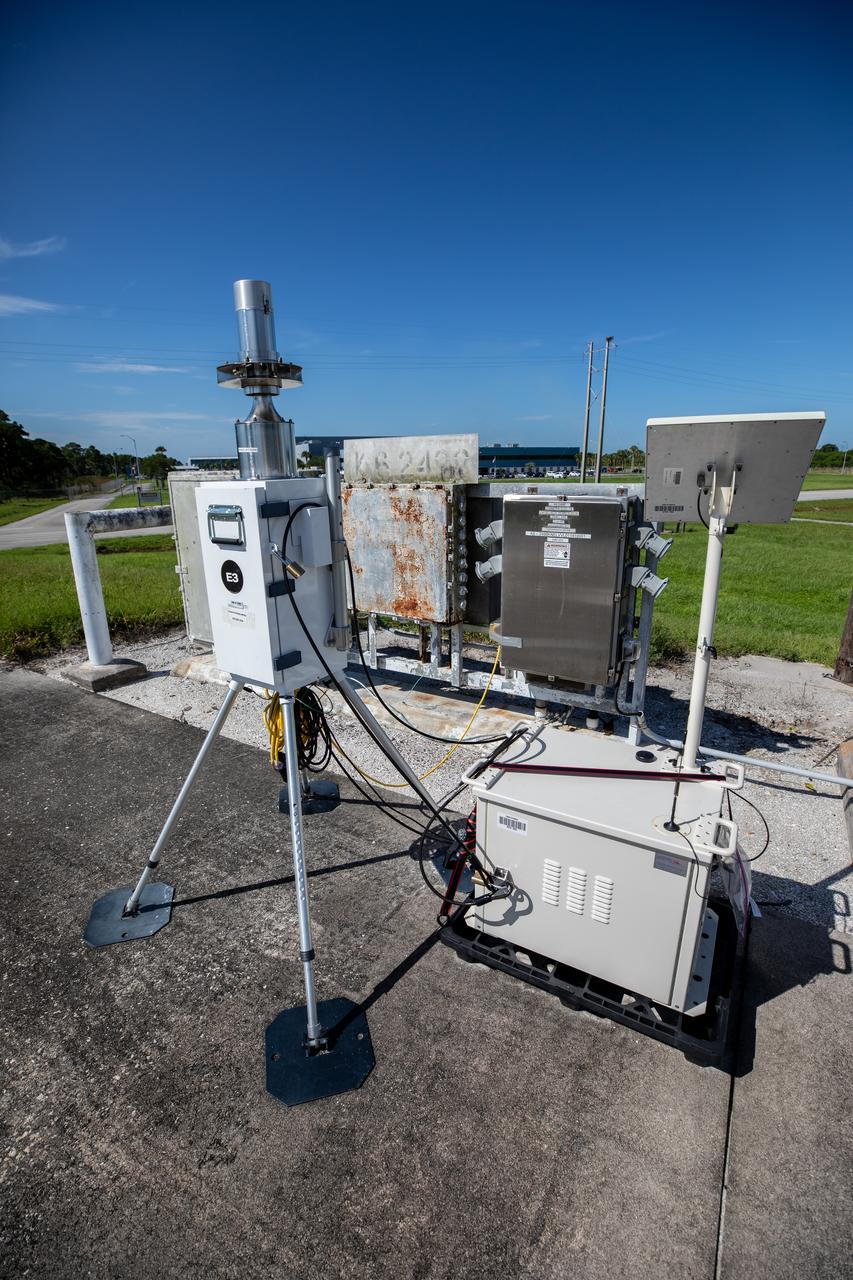
A close-up view of one of several Environmental Continuous Air Monitors, or ECAMS, located in the Space Coast area on July 27, 2020, in preparation for launch of NASA’s Mars 2020 mission on July 30. The ECAMS are updated versions of those that were used for the launch of Curiosity. The Data Collection and Assessment Center uses information from the network of remote monitoring devises, including several that are located in areas for specific weather forecasting reported back to the operations center.
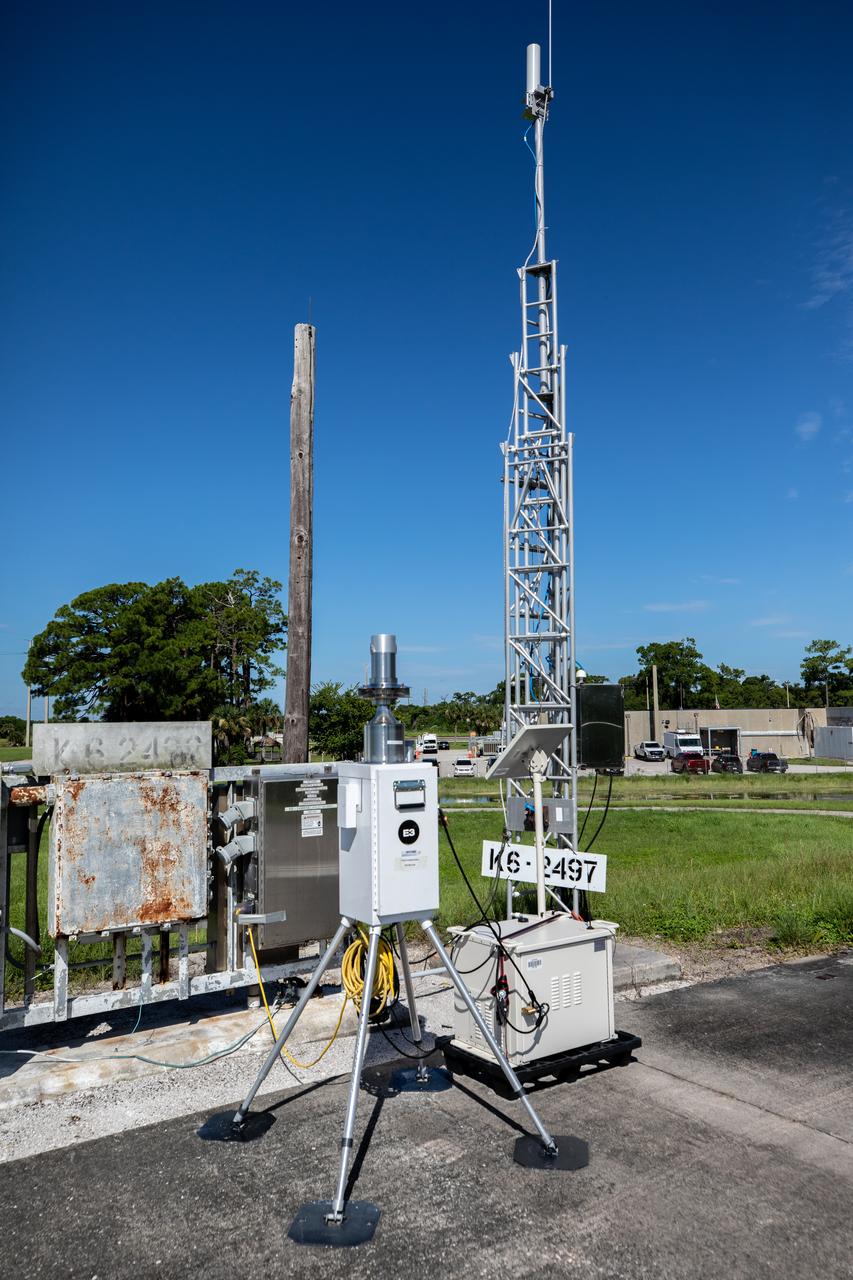
A close-up view of one of several Environmental Continuous Air Monitors, or ECAMS, located in the Space Coast area on July 27, 2020, in preparation for launch of NASA’s Mars 2020 mission on July 30. The ECAMS are updated versions of those that were used for the launch of Curiosity. The Data Collection and Assessment Center uses information from the network of remote monitoring devises, including several that are located in areas for specific weather forecasting reported back to the operations center.
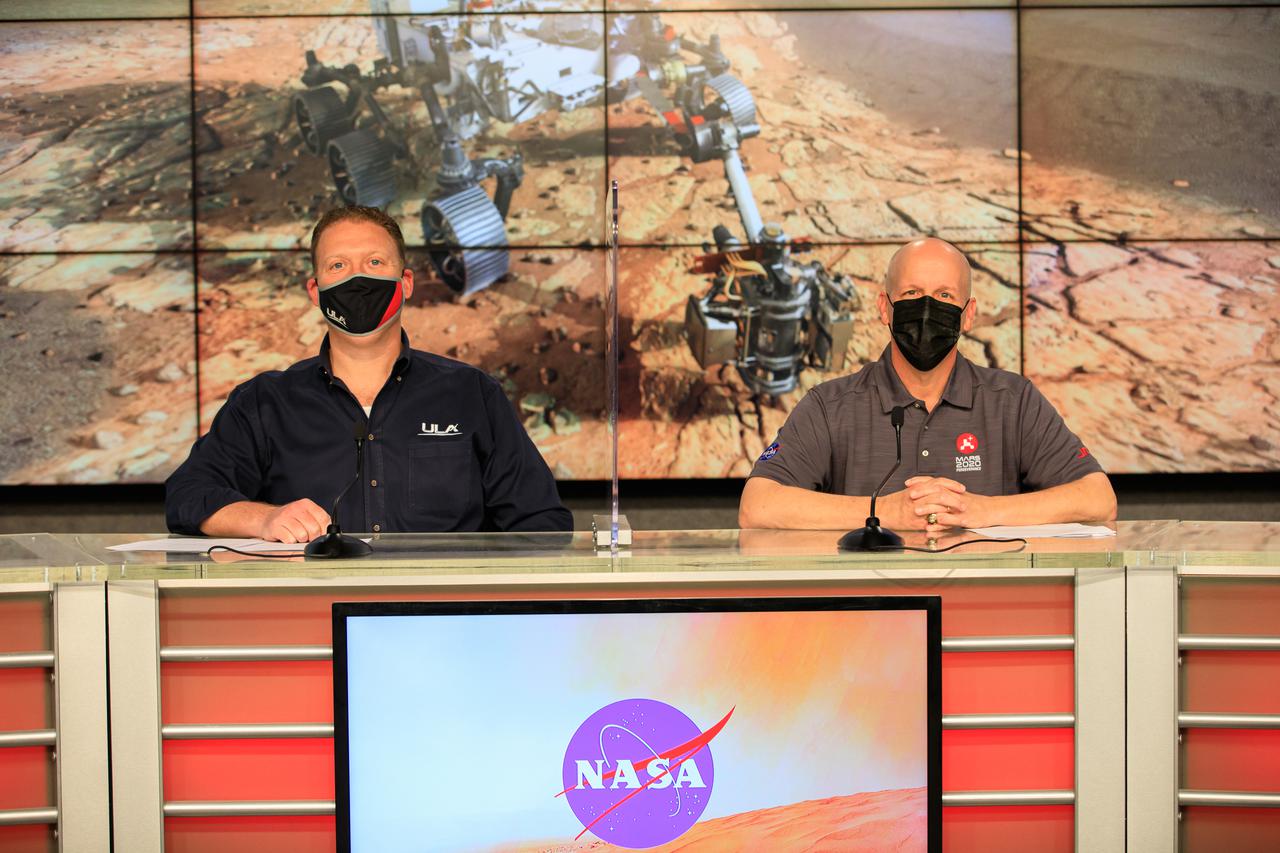
United Launch Alliance (ULA) Launch Conductor Dillon Rice, left, and NASA’s Launch Services Program (LSP) Launch Director Tim Dunn participate in a Mars 2020 Facebook live event inside the Press Site auditorium at NASA’s Kennedy Space Center in Florida on Feb. 12, 2021. During the event, Rice and Dunn discussed the partnership between ULA and LSP, as well as major milestones that led to the Mars 2020 launch, and how launches to Mars have changed over time. NASA’s Mars Perseverance rover lifted off from Cape Canaveral Space Force Station’s Space Launch Complex 41 on July 30, 2020, and is slated to touch down on the Red Planet Feb. 18, 2021.

NASA Communications’ Jasmine Hopkins moderates a Mars 2020 Facebook live event inside the Press Site auditorium at NASA’s Kennedy Space Center in Florida on Feb. 12, 2021. Participants included United Launch Alliance (ULA) Launch Conductor Dillon Rice and NASA’s Launch Services Program (LSP) Launch Director Tim Dunn. During the event, Rice and Dunn discussed the partnership between ULA and LSP, as well as major milestones that led to the Mars 2020 launch, and how launches to Mars have changed over time. NASA’s Mars Perseverance rover lifted off from Cape Canaveral Space Force Station’s Space Launch Complex 41 on July 30, 2020, and is slated to touch down on the Red Planet Feb. 18, 2021.
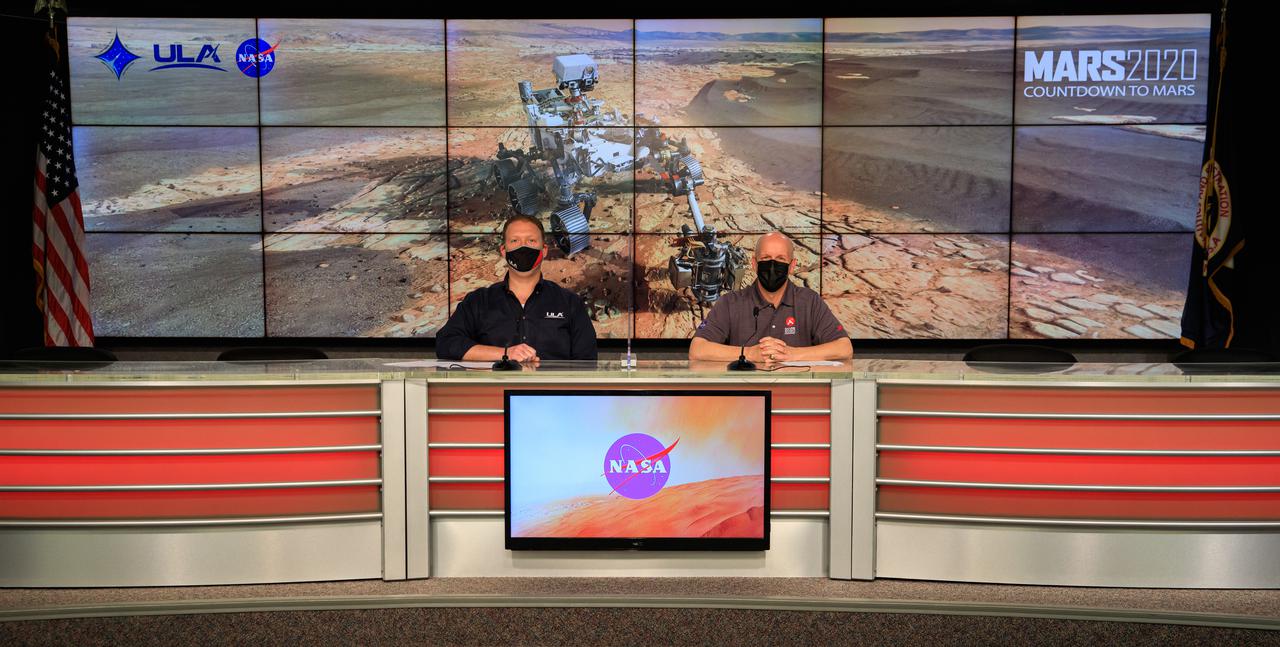
United Launch Alliance (ULA) Launch Conductor Dillon Rice, left, and NASA’s Launch Services Program (LSP) Launch Director Tim Dunn participate in a Mars 2020 Facebook live event inside the Press Site auditorium at NASA’s Kennedy Space Center in Florida on Feb. 12, 2021. During the event, Rice and Dunn discussed the partnership between ULA and LSP, as well as major milestones that led to the Mars 2020 launch, and how launches to Mars have changed over time. NASA’s Mars Perseverance rover lifted off from Cape Canaveral Space Force Station’s Space Launch Complex 41 on July 30, 2020, and is slated to touch down on the Red Planet Feb. 18, 2021.

NASA’s Launch Services Program (LSP) Launch Director Tim Dunn participates in a Mars 2020 Facebook live event inside the Press Site auditorium at NASA’s Kennedy Space Center in Florida on Feb. 12, 2021. During the event, Dunn and Dillon Rice, launch conductor for United Launch Alliance (ULA), discussed the partnership between ULA and LSP, as well as major milestones that led to the Mars 2020 launch, and how launches to Mars have changed over time. NASA’s Mars Perseverance rover lifted off from Cape Canaveral Space Force Station’s Space Launch Complex 41 on July 30, 2020, and is slated to touch down on the Red Planet Feb. 18, 2021.

United Launch Alliance (ULA) Launch Conductor Dillon Rice participates in a Mars 2020 Facebook live event inside the Press Site auditorium at NASA’s Kennedy Space Center in Florida on Feb. 12, 2021. During the event, Rice and Tim Dunn, launch director for NASA’s Launch Services Program (LSP), discussed the partnership between ULA and LSP, as well as major milestones that led to the Mars 2020 launch, and how launches to Mars have changed over time. NASA’s Mars Perseverance rover lifted off from Cape Canaveral Space Force Station’s Space Launch Complex 41 on July 30, 2020, and is slated to touch down on the Red Planet Feb. 18, 2021.
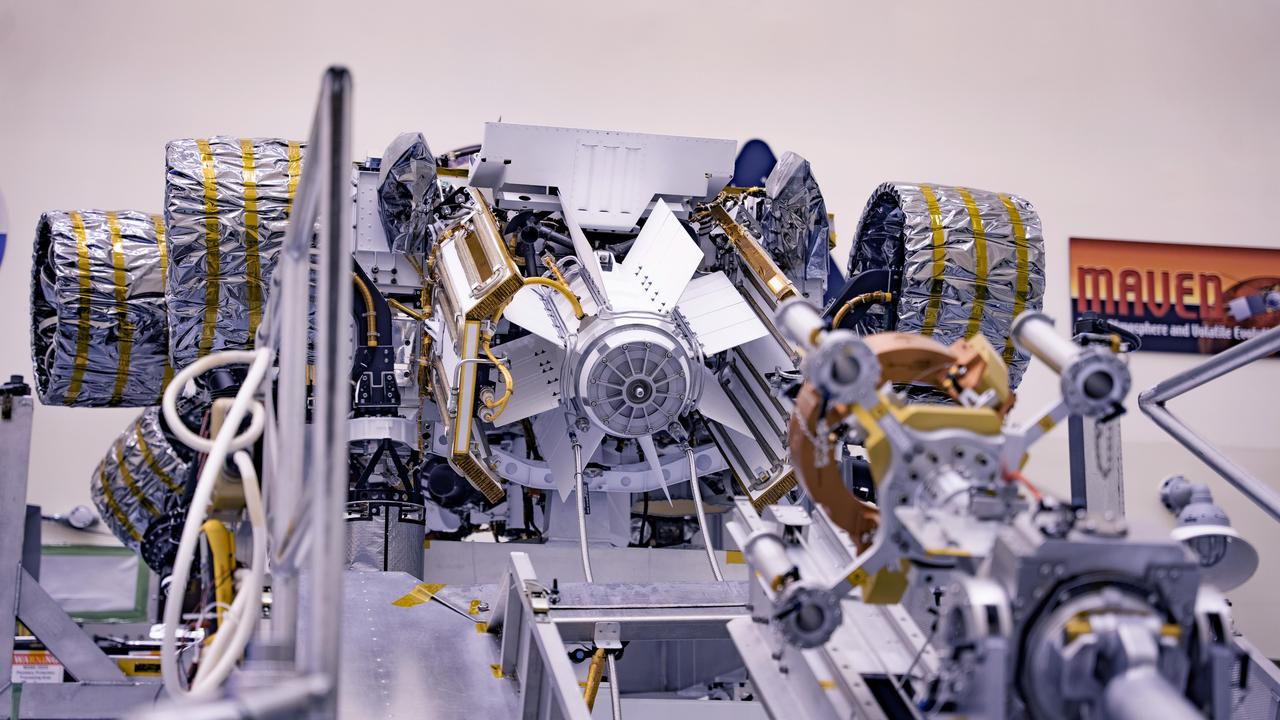
The Multi-Mission Radioisotope Thermoelectric Generator for NASA'S Mars 2020 Perseverance rover is shown during a fit check with the rover in a payload processing facility at NASA's Kennedy Space Center in Florida on April 16-17, 2020. The Multi-Mission Radioisotope Thermoelectric Generator is designed and built by the U.S. Department of Energy, and provided to NASA as part of the space agency's Radioisotope Power Systems Program. It arrived at NASA KSC in April 2020 following its final assembly and transport from the Department of Energy's Idaho National Laboratory. The fit check is the first time that the fueled flight generator is connected to the rover. After the successful fit check, the Multi-Mission Radioisotope Thermoelectric Generator was disconnected; it will be connected to the rover for the final time on the launch pad atop the mission's Atlas V launch vehicle in July, before the planned launch of the Mars 2020 mission. The Multi-Mission Radioisotope Thermoelectric Generator is a space nuclear power system that produces about 110 watts of electrical power to run the rover's systems and science instruments, and extra heat to keep them warm during the frigid Martian nights and winter seasons. It converts the heat from the natural radioactive decay of plutonium dioxide into electricity using thermocouples with no moving parts. The choice of a Multi-Mission Radioisotope Thermoelectric Generator as the rover's power system gave mission planners significantly more flexibility in selecting the rover's landing site and in planning its surface operations. https://photojournal.jpl.nasa.gov/catalog/PIA23981
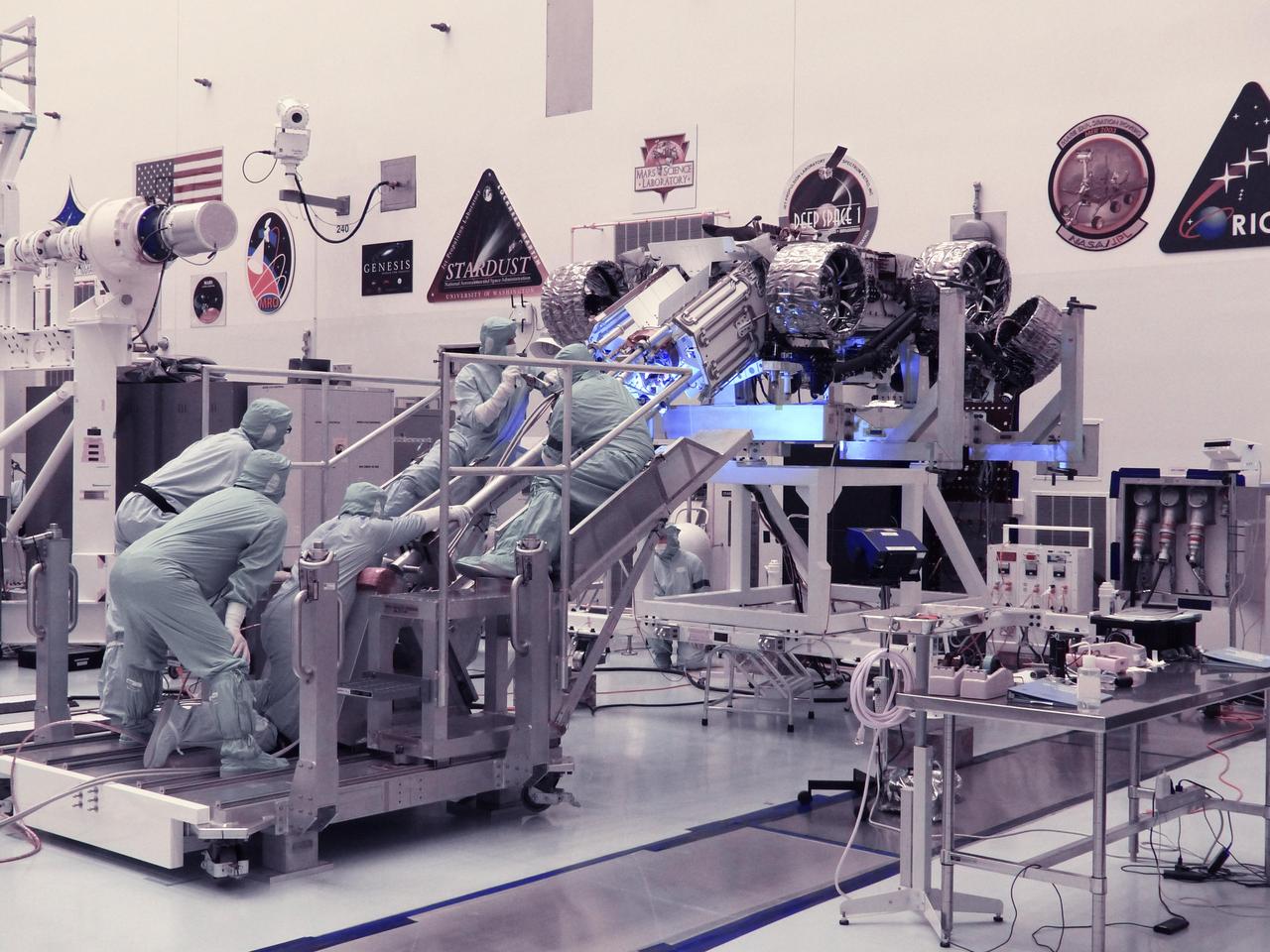
Technicians in the payload processing facility at NASA's Kennedy Space Center in Florida perform a fit check between NASA'S Mars 2020 Perseverance rover and its Multi-Mission Radioisotope Thermoelectric Generator on April 16-17, 2020. The Multi-Mission Radioisotope Thermoelectric Generator is designed and built by the U.S. Department of Energy, and provided to NASA as part of the space agency's Radioisotope Power Systems Program. It arrived at NASA KSC in April 2020 following its final assembly and transport from the Department of Energy's Idaho National Laboratory. The fit check is the first time that the fueled flight generator is connected to the rover. After the successful fit check, the Multi-Mission Radioisotope Thermoelectric Generator was disconnected; it will be connected to the rover for the final time on the launch pad atop the mission's Atlas V launch vehicle in July, before the planned launch of the Mars 2020 mission. The Multi-Mission Radioisotope Thermoelectric Generator is a space nuclear power system that produces about 110 watts of electrical power to run the rover's systems and science instruments, and extra heat to keep them warm during the frigid Martian nights and winter seasons. It converts the heat from the natural radioactive decay of plutonium dioxide into electricity using thermocouples with no moving parts. The choice of a Multi-Mission Radioisotope Thermoelectric Generator as the rover's power system gave mission planners significantly more flexibility in selecting the rover's landing site and in planning its surface operations. https://photojournal.jpl.nasa.gov/catalog/PIA23827
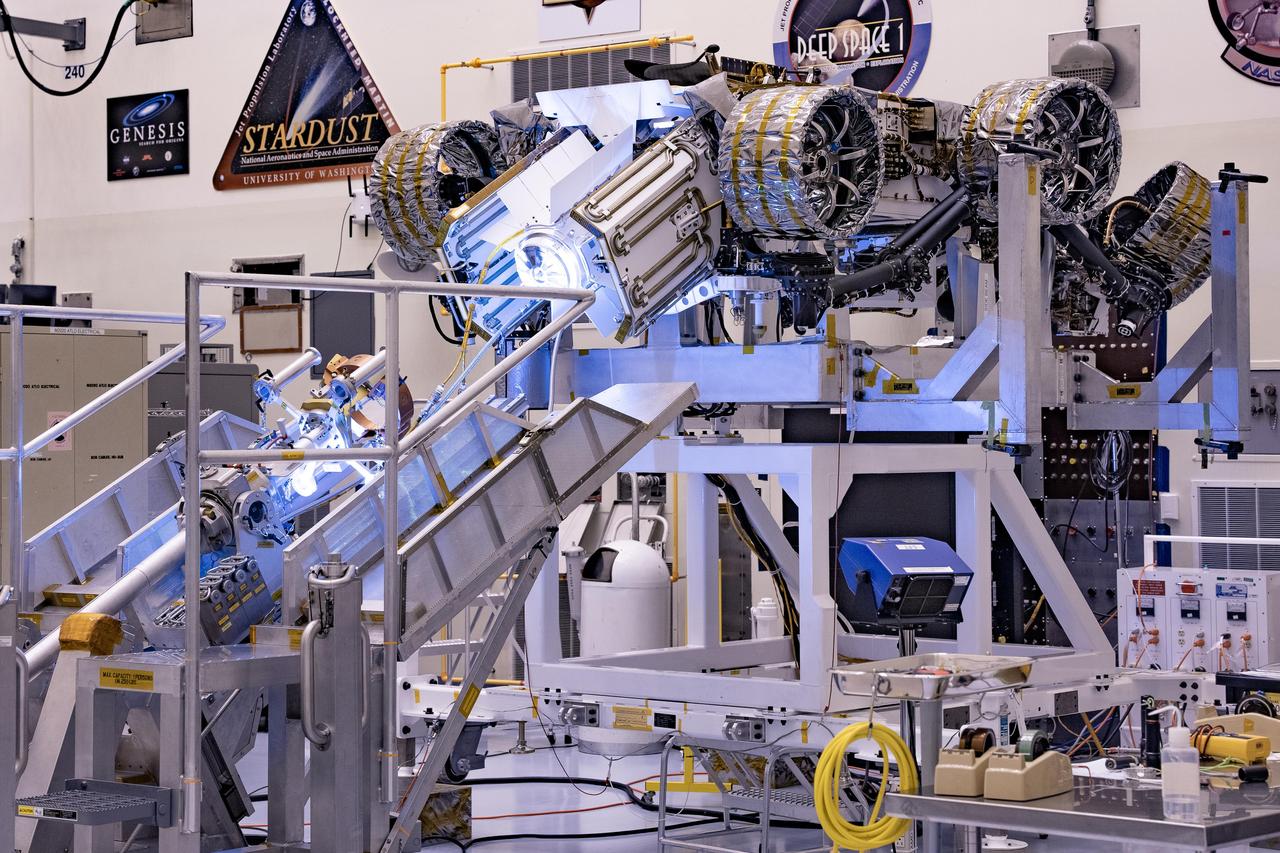
This image shows the Multi-Mission Radioisotope Thermoelectric Generator for NASA'S Mars 2020 Perseverance rover during a fit check with the rover in the payload processing facility at NASA's Kennedy Space Center in Florida on April 16-17, 2020. The Multi-Mission Radioisotope Thermoelectric Generator is designed and built by the U.S. Department of Energy, and provided to NASA as part of the space agency's Radioisotope Power Systems Program. It arrived at NASA KSC in April 2020 following its final assembly and transport from the Department of Energy's Idaho National Laboratory. The fit check is the first time that the fueled flight generator is connected to the rover. After the successful fit check, the Multi-Mission Radioisotope Thermoelectric Generator was disconnected; it will be connected to the rover for the final time on the launch pad atop the mission's Atlas V launch vehicle in July, before the planned launch of the Mars 2020 mission. The Multi-Mission Radioisotope Thermoelectric Generator is a space nuclear power system that produces about 110 watts of electrical power to run the rover's systems and science instruments, and extra heat to keep them warm during the frigid Martian nights and winter seasons. It converts the heat from the natural radioactive decay of plutonium dioxide into electricity using thermocouples with no moving parts. The choice of a Multi-Mission Radioisotope Thermoelectric Generator as the rover's power system gave mission planners significantly more flexibility in selecting the rover's landing site and in planning its surface operations. https://photojournal.jpl.nasa.gov/catalog/PIA23982
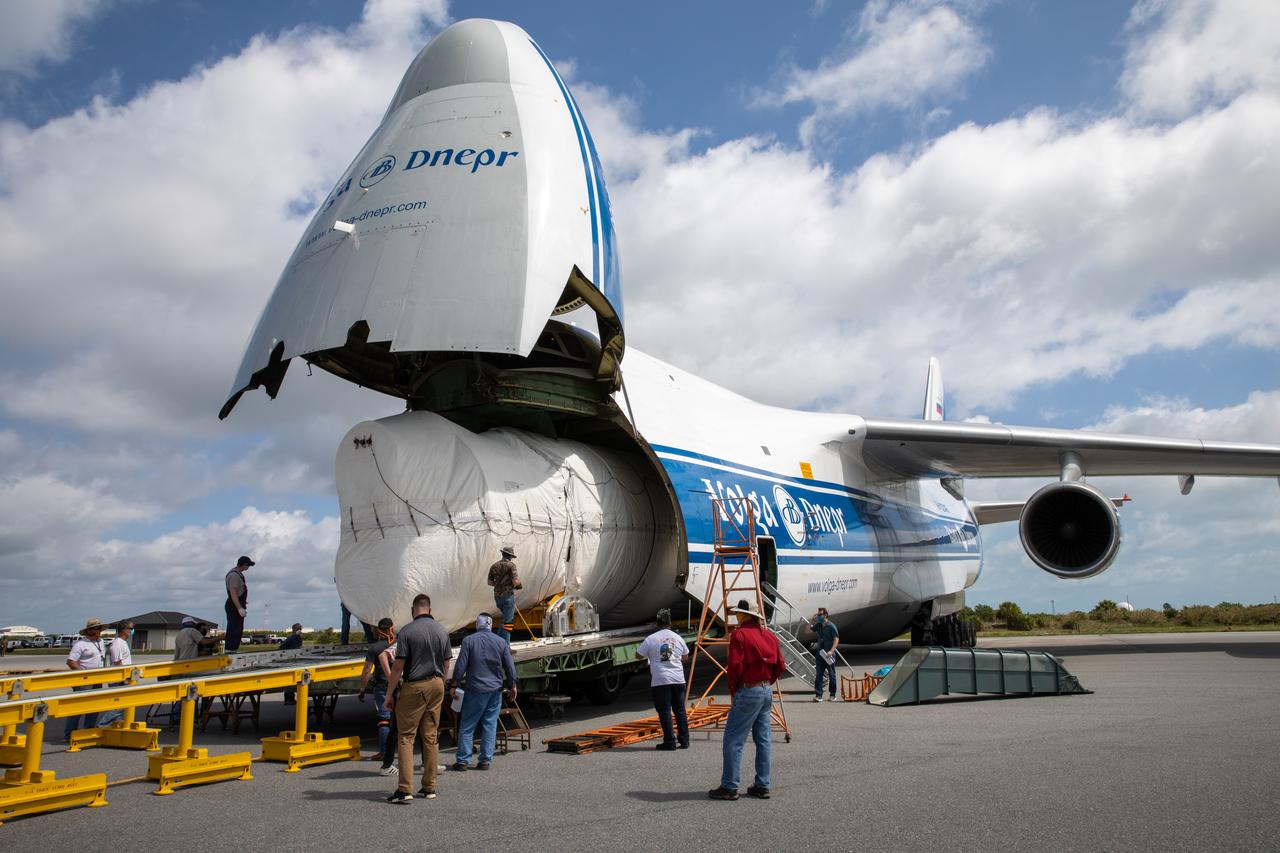
Workers help offload the United Launch Alliance booster for NASA’s Mars Perseverance rover from the Antonov 124 cargo aircraft at the Skid Strip at Cape Canaveral Air Force Station (CCAFS) in Florida on May 19, 2020. The Mars Perseverance rover is scheduled to launch in mid-July atop a United Launch Alliance Atlas V 541 rocket from Pad 41 at CCAFS. The rover is part of NASA’s Mars Exploration Program, a long-term effort of robotic exploration of the Red Planet. The rover will search for habitable conditions in the ancient past and signs of past microbial life on Mars. The Launch Services Program at Kennedy is responsible for launch management.
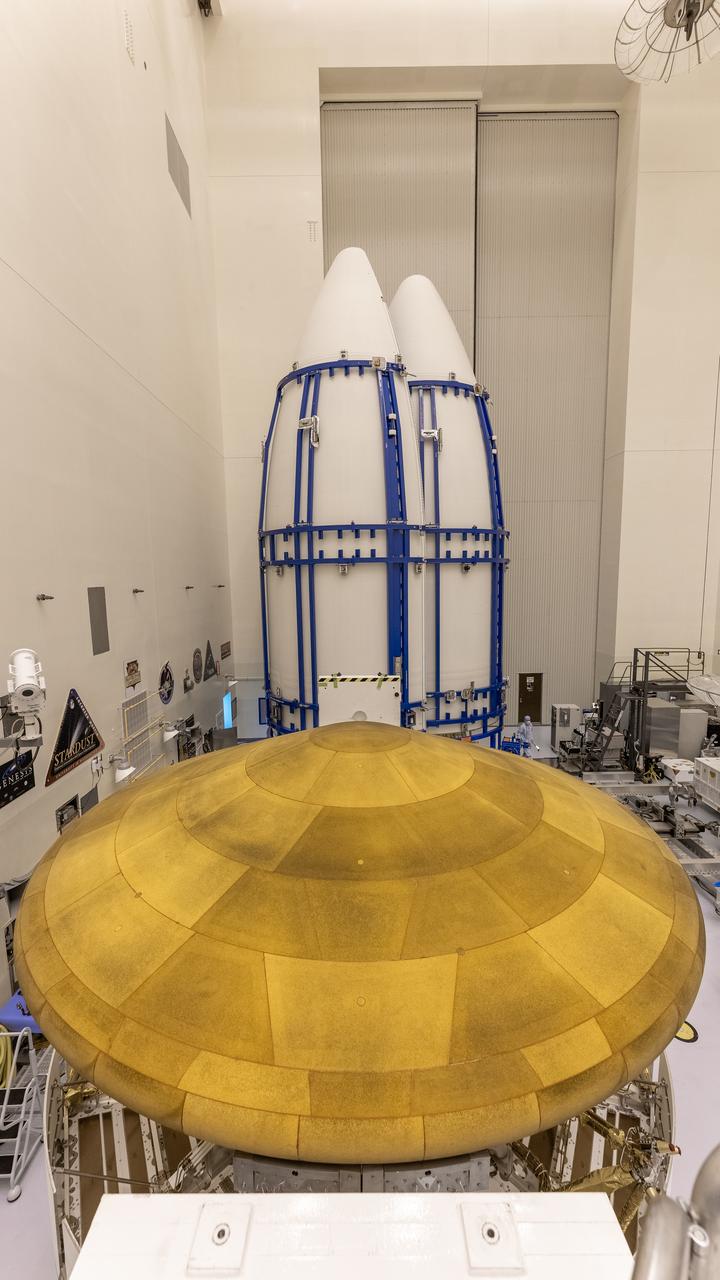
Inside the Payload Hazardous Servicing Facility at NASA’s Kennedy Space Center in Florida, the Backshell-Powered Descent Vehicle, in view, and Entry Vehicle assemblies are being attached to the Mars Perseverance rover on May 29, 2020. The cone-shaped backshell contains the parachute, and along with the mission’s heat shield, provides protection for the rover and descent stage during Martian atmospheric entry. The Mars Perseverance rover is scheduled to launch on July 20 atop a United Launch Alliance Atlas V 541 rocket from Pad 41 at nearby Cape Canaveral Air Force Station. The rover is part of NASA’s Mars Exploration Program, a long-term effort of robotic exploration of the Red Planet. The rover will search for habitable conditions in the ancient past and signs of past microbial life on Mars. The Launch Services Program at Kennedy is responsible for launch management.
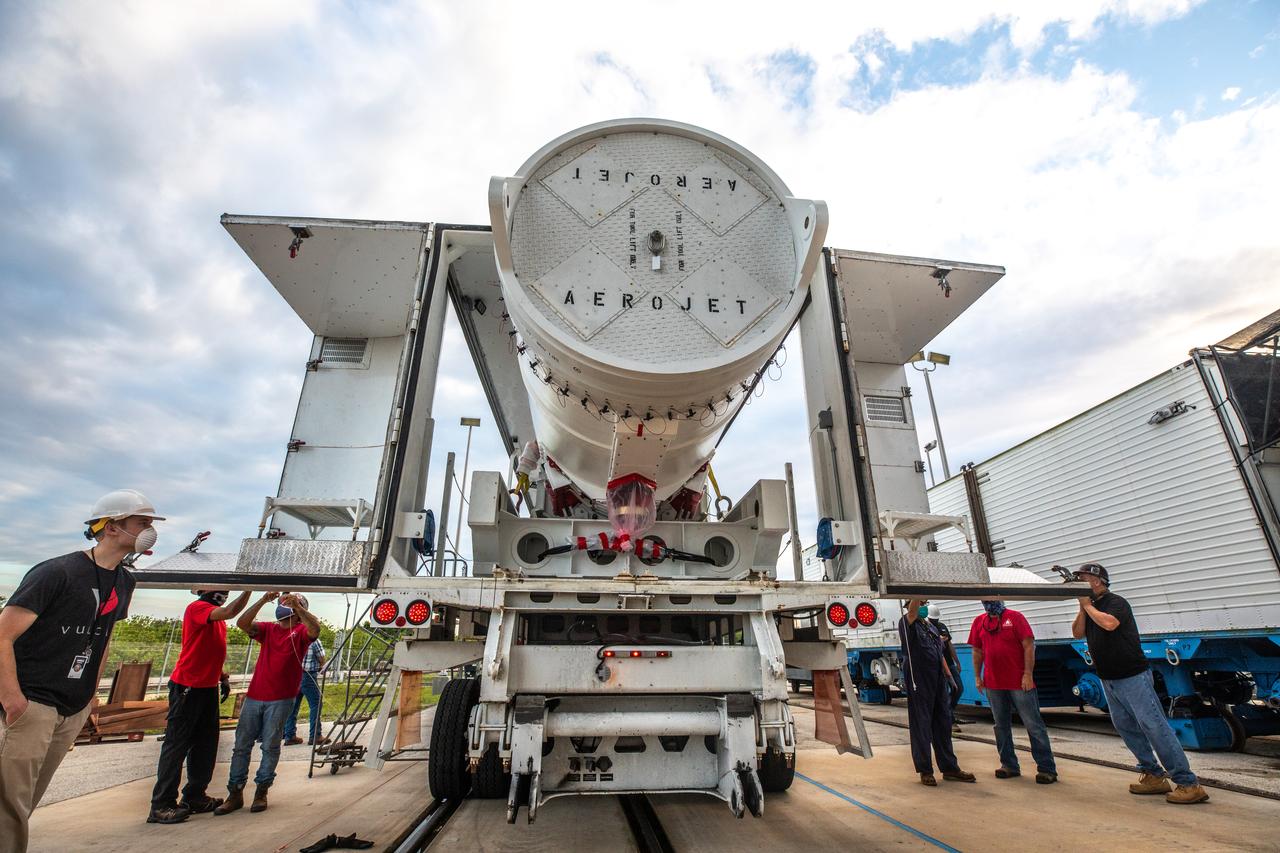
The first solid rocket booster (SRB) for the United Launch Alliance Atlas V 541 rocket for NASA’s Mars 2020 mission with the Perseverance rover arrives near the Vertical Integration Facility (VIF) at Space Launch Complex 41 at Cape Canaveral Air Force Station (CCAFS) in Florida on May 29, 2020. The SRB will be prepared for lift and mating to the Atlas V booster in the VIF. The Mars Perseverance rover is scheduled to launch in mid-July atop the Atlas V rocket from Pad 41. The rover is part of NASA’s Mars Exploration Program, a long-term effort of robotic exploration of the Red Planet. The rover will search for habitable conditions in the ancient past and signs of past microbial life on Mars. The Launch Services Program at Kennedy is responsible for launch management.
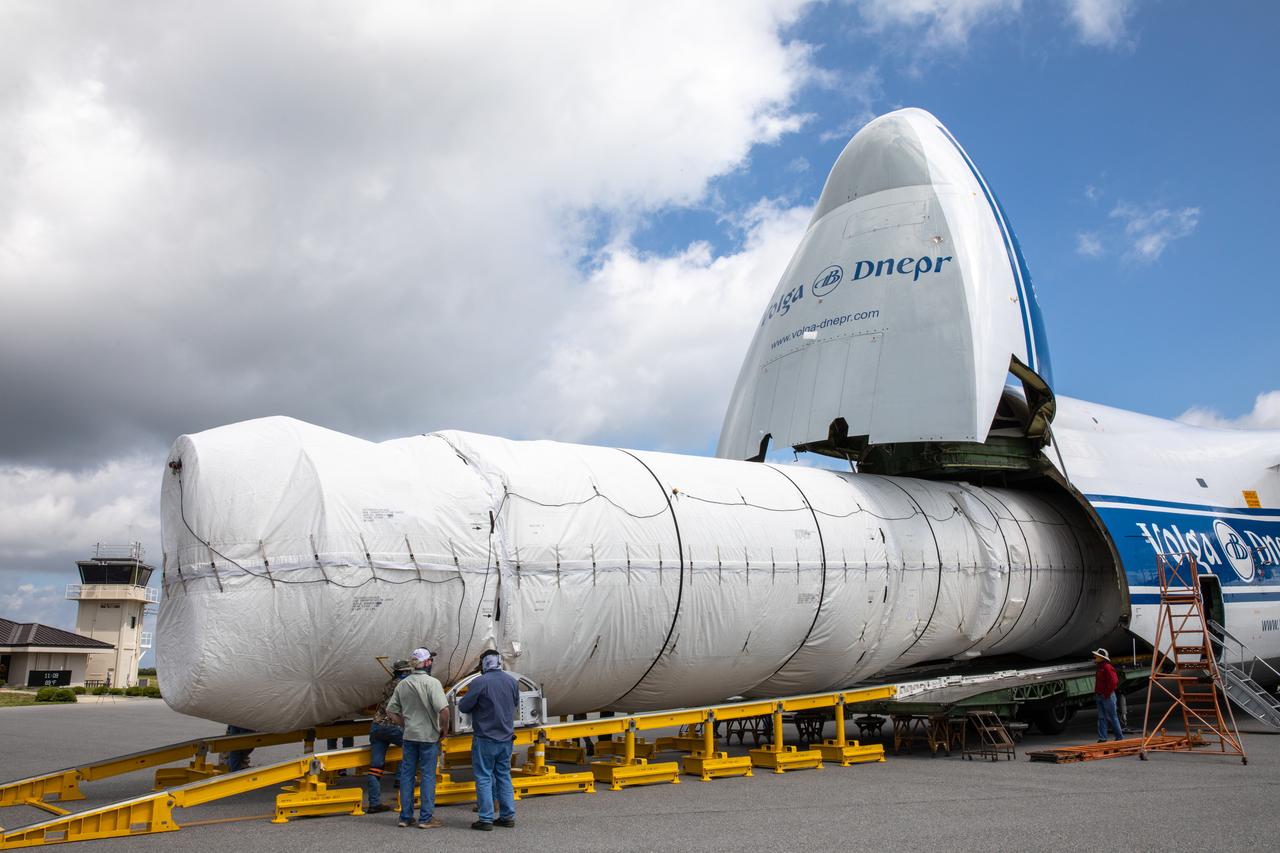
The United Launch Alliance booster for NASA’s Mars Perseverance rover is offloaded from the Antonov 124 cargo aircraft at the Skid Strip at Cape Canaveral Air Force Station (CCAFS) in Florida on May 19, 2020. The Mars Perseverance rover is scheduled to launch in mid-July atop a United Launch Alliance Atlas V 541 rocket from Pad 41 at CCAFS. The rover is part of NASA’s Mars Exploration Program, a long-term effort of robotic exploration of the Red Planet. The rover will search for habitable conditions in the ancient past and signs of past microbial life on Mars. The Launch Services Program at Kennedy is responsible for launch management.
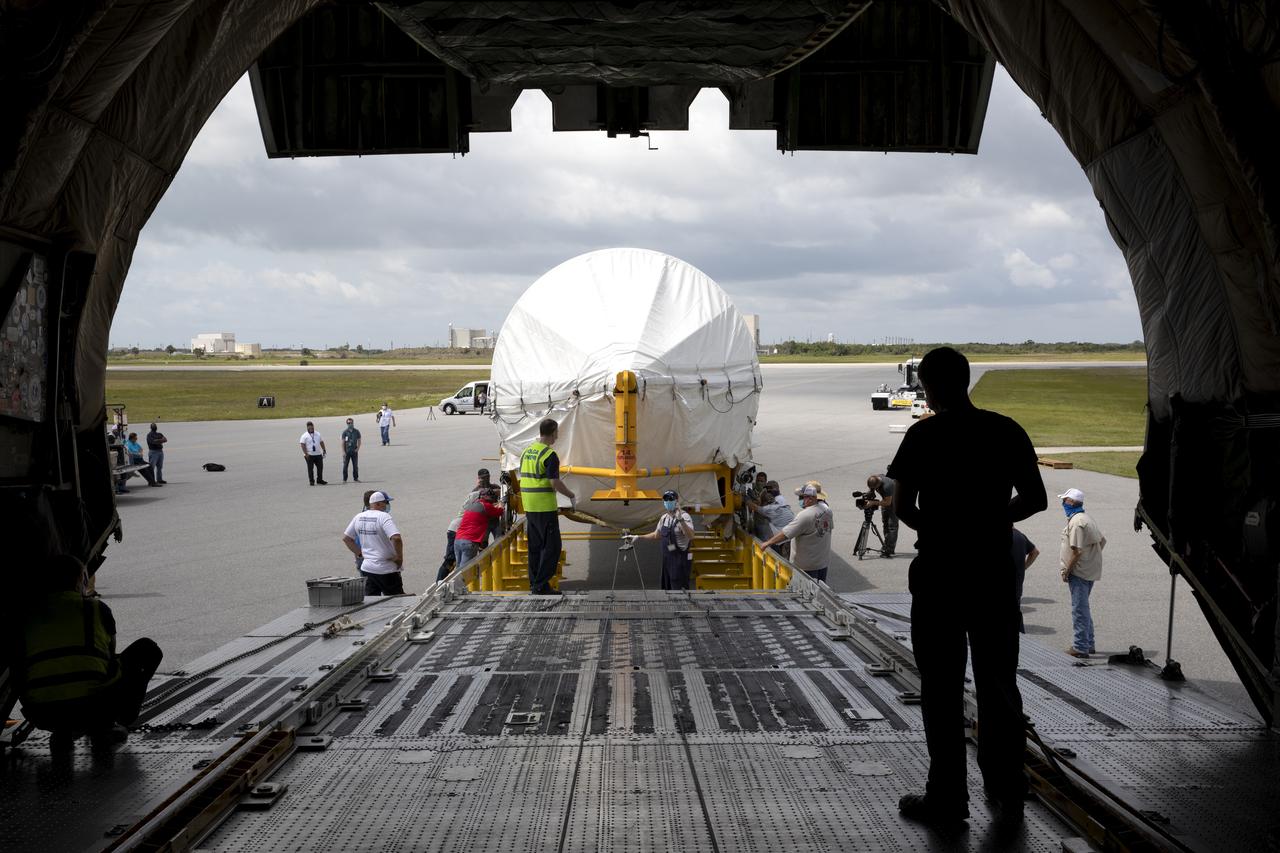
In this view from inside the Antonov 124 cargo aircraft, the United Launch Alliance booster for NASA’s Mars Perseverance rover is offloaded at the Skid Strip at Cape Canaveral Air Force Station (CCAFS) in Florida on May 19, 2020. The Mars Perseverance rover is scheduled to launch in mid-July atop a United Launch Alliance Atlas V 541 rocket from Pad 41 at CCAFS. The rover is part of NASA’s Mars Exploration Program, a long-term effort of robotic exploration of the Red Planet. The rover will search for habitable conditions in the ancient past and signs of past microbial life on Mars. The Launch Services Program at Kennedy is responsible for launch management.
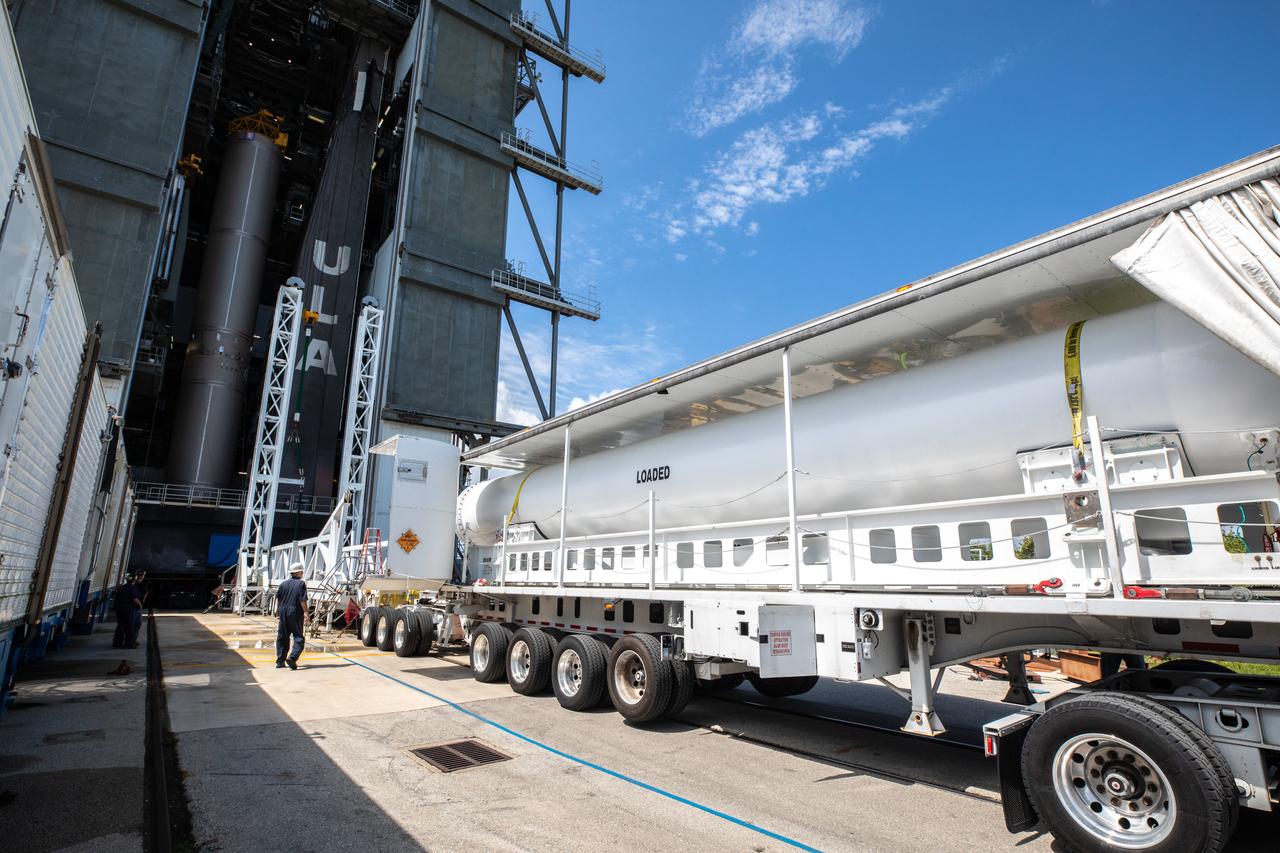
The first solid rocket booster (SRB) for the United Launch Alliance Atlas V 541 rocket for NASA’s Mars 2020 mission with the Perseverance rover arrives at the Vertical Integration Facility (VIF) at Space Launch Complex 41 at Cape Canaveral Air Force Station (CCAFS) in Florida on May 29, 2020. The SRB will be prepared for lift and mating to the Atlas V booster in the VIF. The Mars Perseverance rover is scheduled to launch in mid-July atop the Atlas V rocket from Pad 41. The rover is part of NASA’s Mars Exploration Program, a long-term effort of robotic exploration of the Red Planet. The rover will search for habitable conditions in the ancient past and signs of past microbial life on Mars. The Launch Services Program at Kennedy is responsible for launch management.
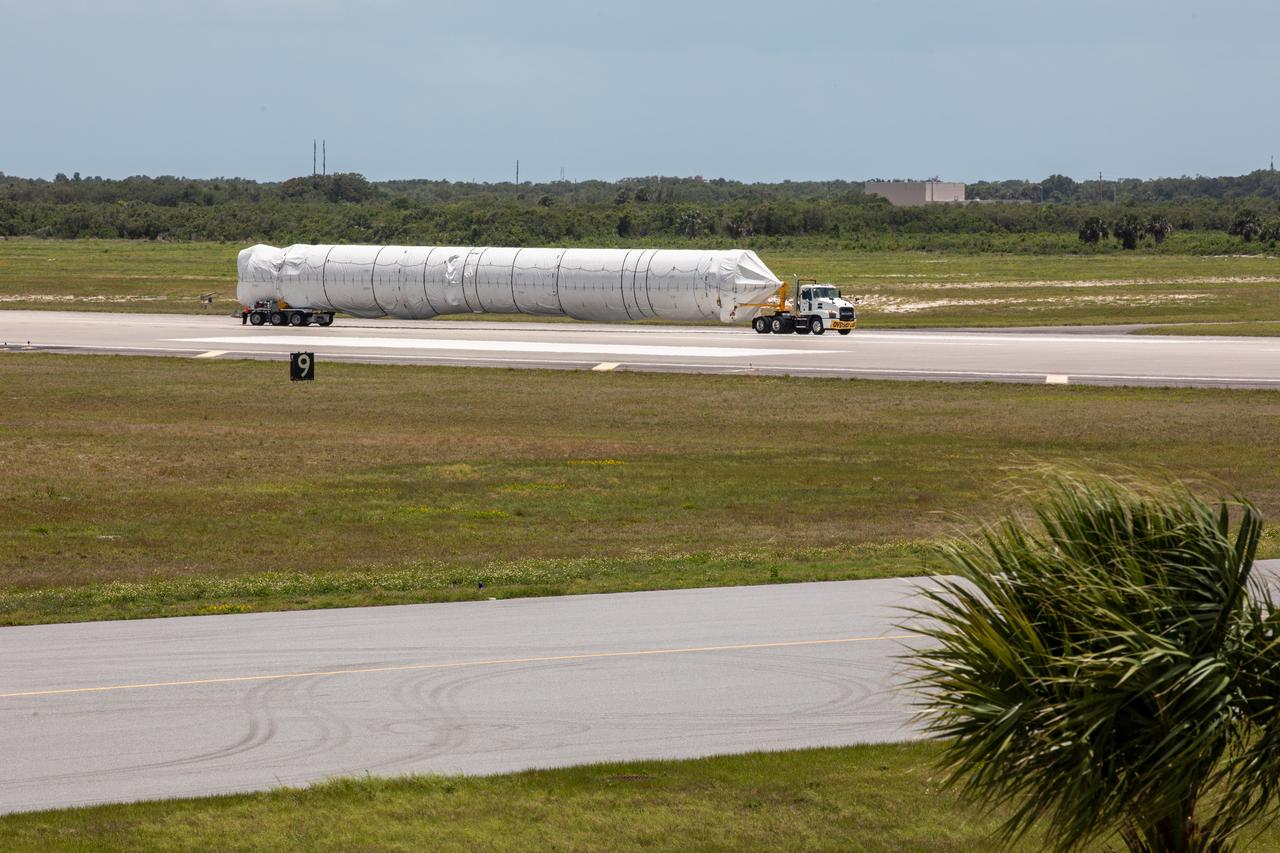
A flatbed truck carrying the United Launch Alliance booster for NASA’s Mars Perseverance rover departs the Skid Strip at Cape Canaveral Air Force Station (CCAFS) in Florida on May 19, 2020. The booster arrived aboard the Antonov 124 cargo aircraft at the Skid Strip on May 18, 2020. The Mars Perseverance rover is scheduled to launch in mid-July atop a United Launch Alliance Atlas V 541 rocket from Pad 41 at CCAFS. The rover is part of NASA’s Mars Exploration Program, a long-term effort of robotic exploration of the Red Planet. The rover will search for habitable conditions in the ancient past and signs of past microbial life on Mars. The Launch Services Program at Kennedy is responsible for launch management.
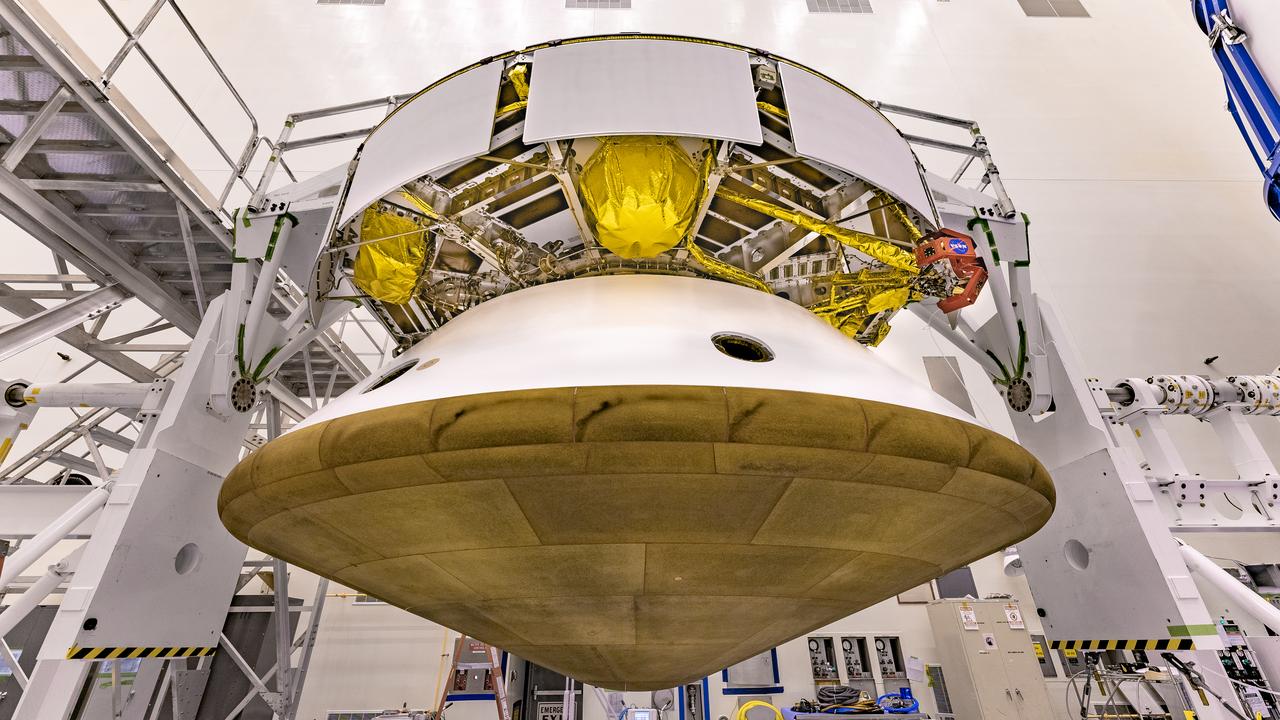
Inside the Payload Hazardous Servicing Facility at NASA’s Kennedy Space Center in Florida, the Backshell-Powered Descent Vehicle and Entry Vehicle assemblies are being attached to the Mars Perseverance rover on May 28, 2020. The cone-shaped backshell contains the parachute, and along with the mission’s heat shield, provides protection for the rover and descent stage during Martian atmospheric entry. The Mars Perseverance rover is scheduled to launch on July 20 atop a United Launch Alliance Atlas V 541 rocket from Pad 41 at nearby Cape Canaveral Air Force Station. The rover is part of NASA’s Mars Exploration Program, a long-term effort of robotic exploration of the Red Planet. The rover will search for habitable conditions in the ancient past and signs of past microbial life on Mars. The Launch Services Program at Kennedy is responsible for launch management.
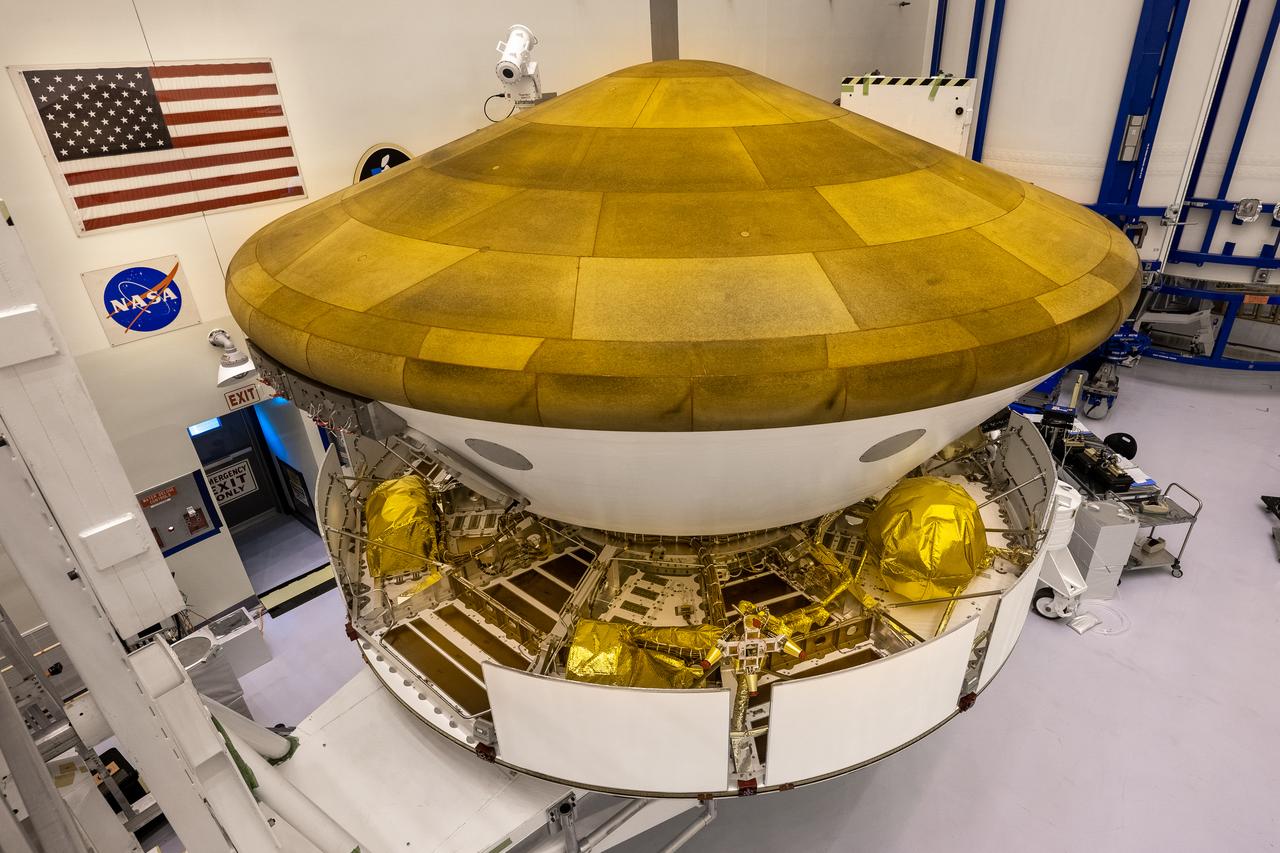
Inside the Payload Hazardous Servicing Facility at NASA’s Kennedy Space Center in Florida, the Backshell-Powered Descent Vehicle, in view, and Entry Vehicle assemblies are being attached to the Mars Perseverance rover on May 29, 2020. The cone-shaped backshell contains the parachute, and along with the mission’s heat shield, provides protection for the rover and descent stage during Martian atmospheric entry. The Mars Perseverance rover is scheduled to launch on July 20 atop a United Launch Alliance Atlas V 541 rocket from Pad 41 at nearby Cape Canaveral Air Force Station. The rover is part of NASA’s Mars Exploration Program, a long-term effort of robotic exploration of the Red Planet. The rover will search for habitable conditions in the ancient past and signs of past microbial life on Mars. The Launch Services Program at Kennedy is responsible for launch management.
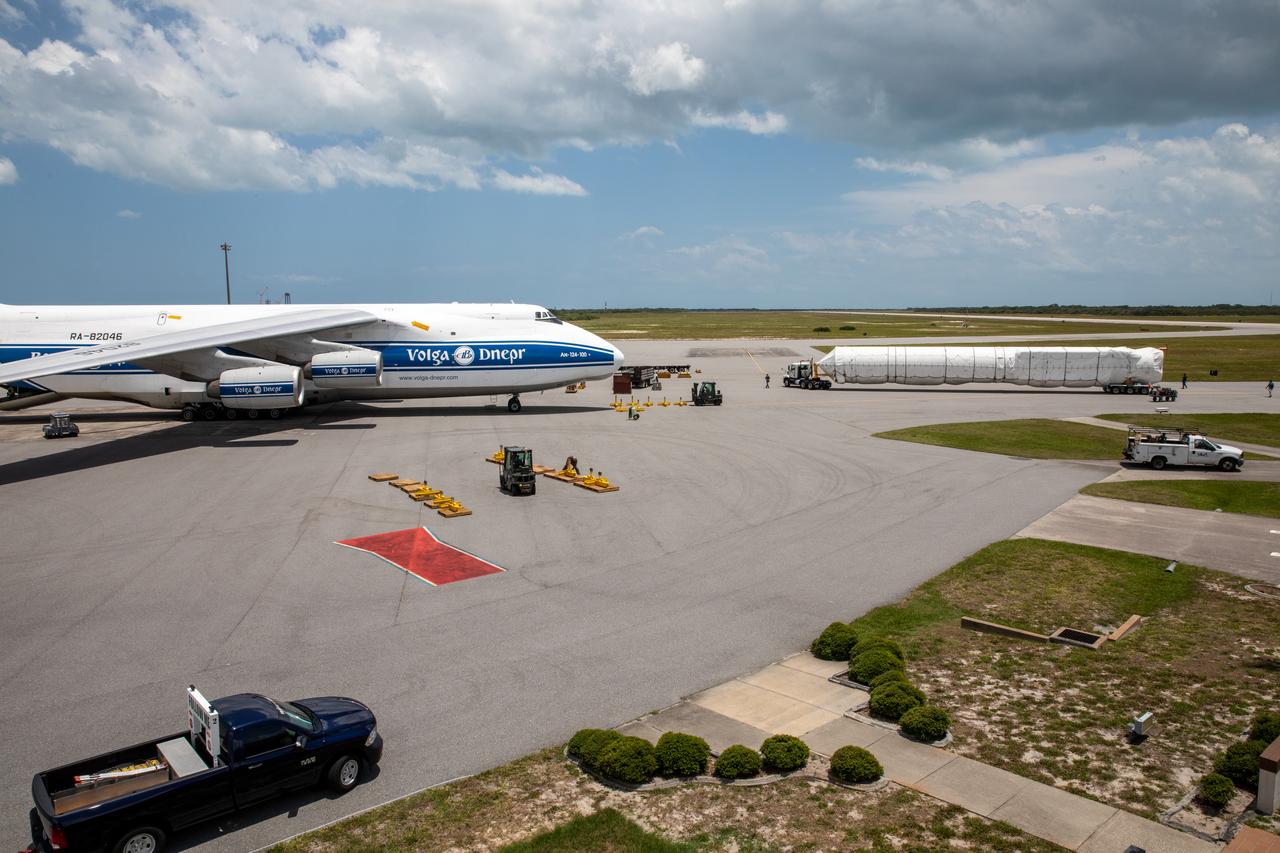
The United Launch Alliance booster for NASA’s Mars Perseverance rover is secured on a flatbed truck after being offloaded from the Antonov 124 cargo aircraft at the Skid Strip at Cape Canaveral Air Force Station (CCAFS) in Florida on May 19, 2020. The Mars Perseverance rover is scheduled to launch in mid-July atop a United Launch Alliance Atlas V 541 rocket from Pad 41 at CCAFS. The rover is part of NASA’s Mars Exploration Program, a long-term effort of robotic exploration of the Red Planet. The rover will search for habitable conditions in the ancient past and signs of past microbial life on Mars. The Launch Services Program at Kennedy is responsible for launch management.
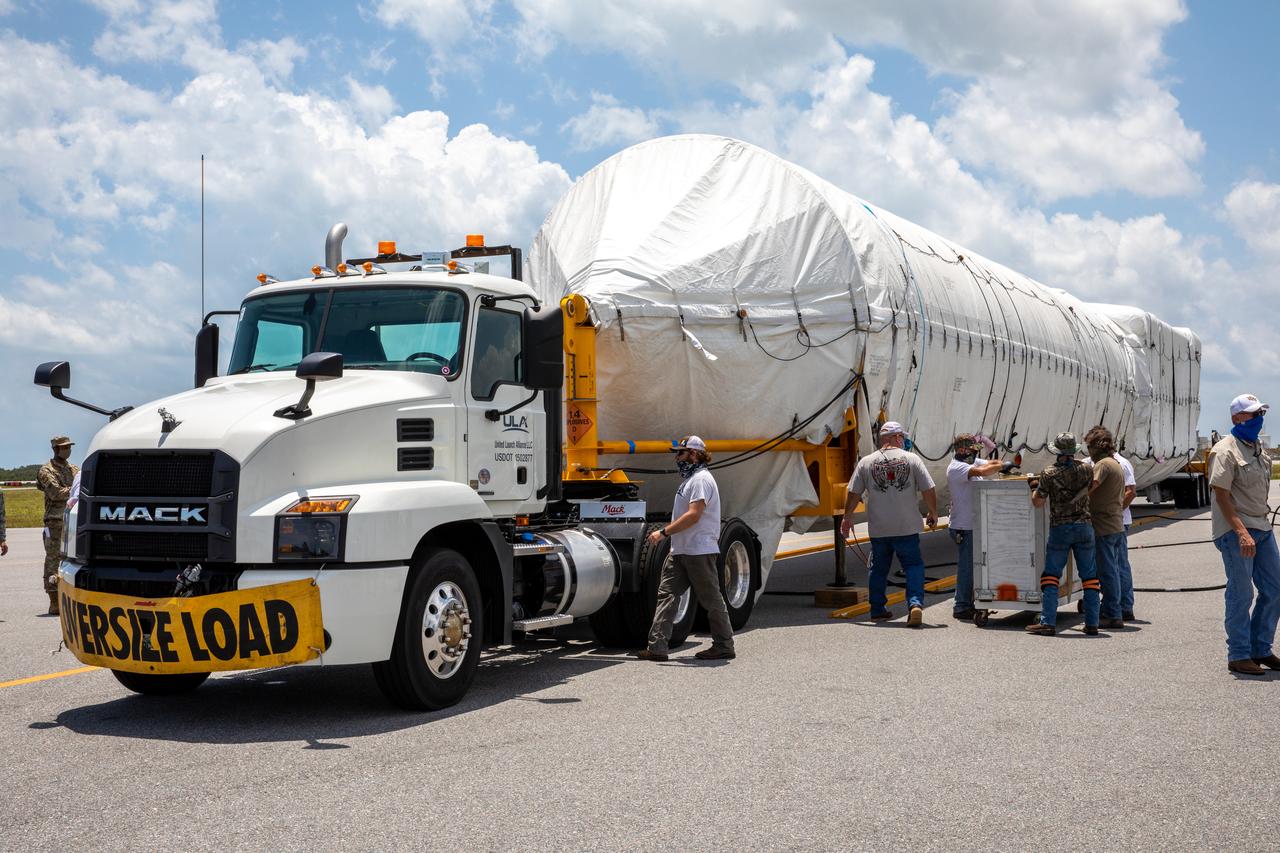
The United Launch Alliance booster for NASA’s Mars Perseverance rover is secured on a flatbed truck after being offloaded from the Antonov 124 cargo aircraft at the Skid Strip at Cape Canaveral Air Force Station (CCAFS) in Florida on May 19, 2020. The Mars Perseverance rover is scheduled to launch in mid-July atop a United Launch Alliance Atlas V 541 rocket from Pad 41 at CCAFS. The rover is part of NASA’s Mars Exploration Program, a long-term effort of robotic exploration of the Red Planet. The rover will search for habitable conditions in the ancient past and signs of past microbial life on Mars. The Launch Services Program at Kennedy is responsible for launch management.
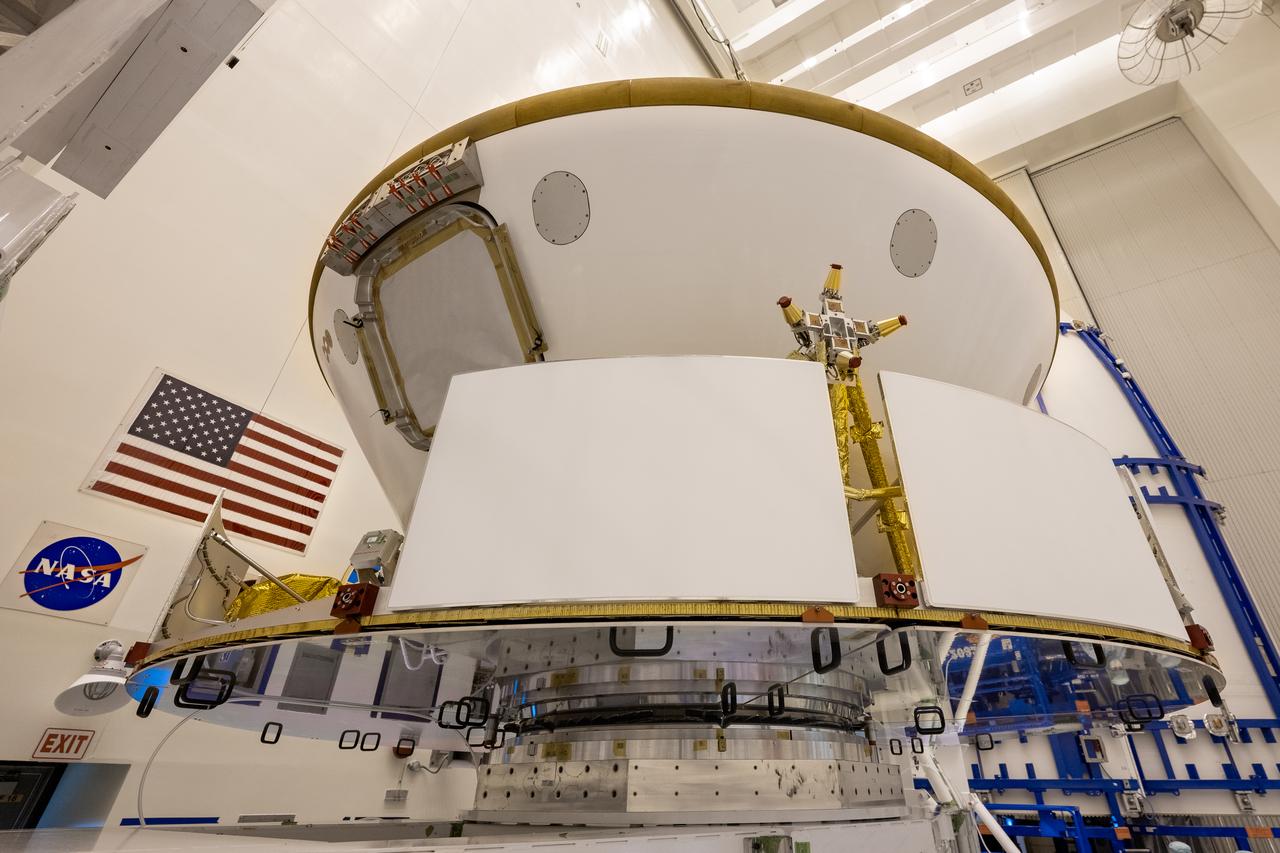
Inside the Payload Hazardous Servicing Facility at NASA’s Kennedy Space Center in Florida, the Backshell-Powered Descent Vehicle and Entry Vehicle assemblies are being attached to the Mars Perseverance rover on May 29, 2020. The cone-shaped backshell contains the parachute, and along with the mission’s heat shield, provides protection for the rover and descent stage during Martian atmospheric entry. The Mars Perseverance rover is scheduled to launch on July 20 atop a United Launch Alliance Atlas V 541 rocket from Pad 41 at nearby Cape Canaveral Air Force Station. The rover is part of NASA’s Mars Exploration Program, a long-term effort of robotic exploration of the Red Planet. The rover will search for habitable conditions in the ancient past and signs of past microbial life on Mars. The Launch Services Program at Kennedy is responsible for launch management.
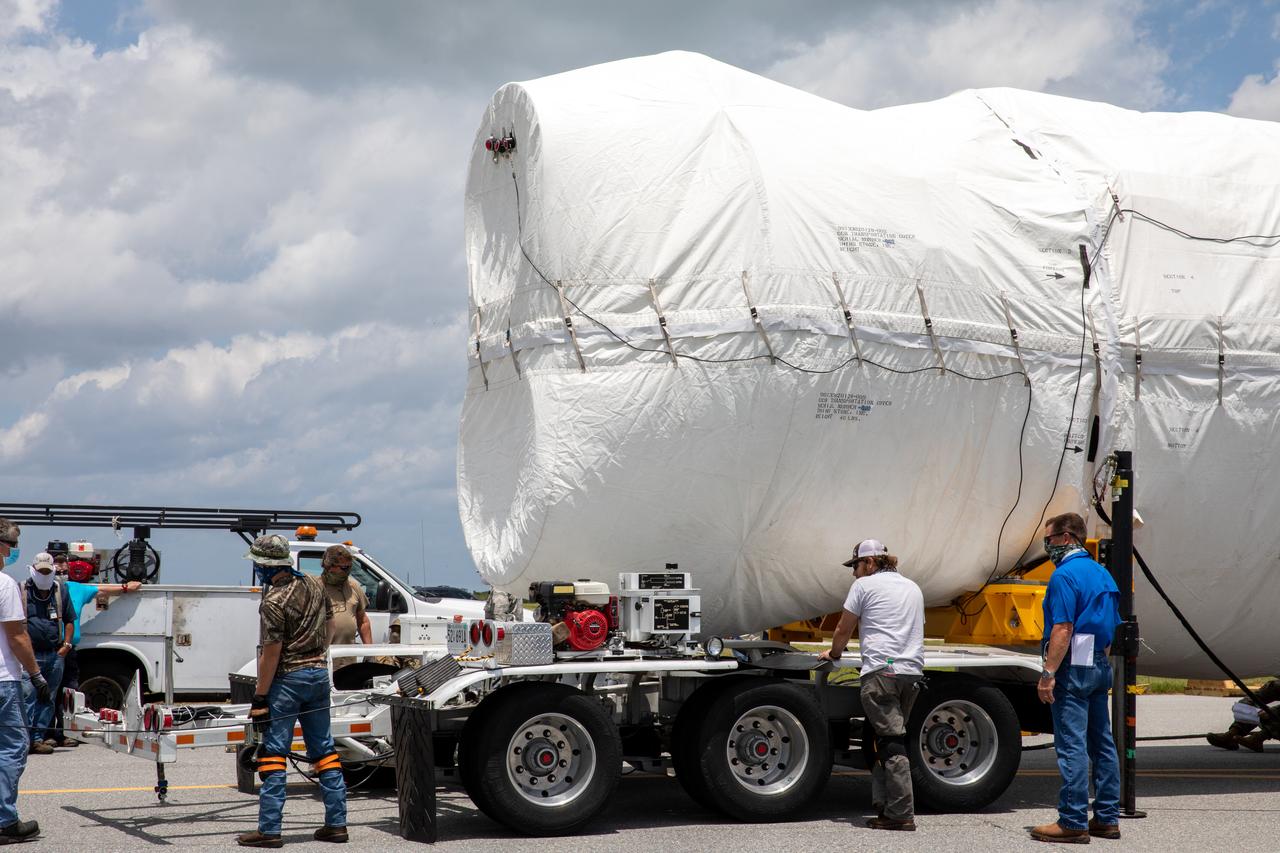
The United Launch Alliance booster for NASA’s Mars Perseverance rover is secured on a flatbed truck after being offloaded from the Antonov 124 cargo aircraft at the Skid Strip at Cape Canaveral Air Force Station (CCAFS) in Florida on May 19, 2020. The Mars Perseverance rover is scheduled to launch in mid-July atop a United Launch Alliance Atlas V 541 rocket from Pad 41 at CCAFS. The rover is part of NASA’s Mars Exploration Program, a long-term effort of robotic exploration of the Red Planet. The rover will search for habitable conditions in the ancient past and signs of past microbial life on Mars. The Launch Services Program at Kennedy is responsible for launch management.
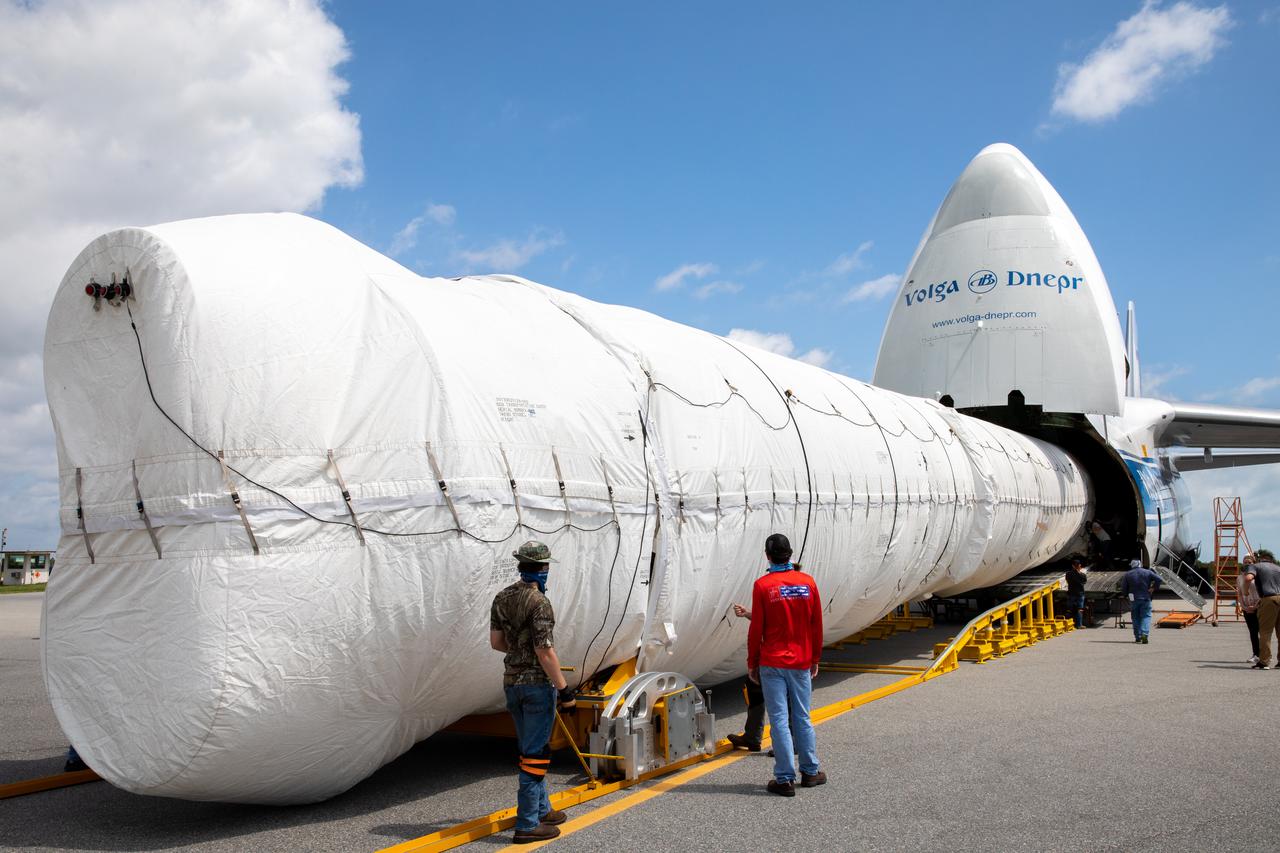
The United Launch Alliance booster for NASA’s Mars Perseverance rover is offloaded from the Antonov 124 cargo aircraft at the Skid Strip at Cape Canaveral Air Force Station (CCAFS) in Florida on May 19, 2020. The Mars Perseverance rover is scheduled to launch in mid-July atop a United Launch Alliance Atlas V 541 rocket from Pad 41 at CCAFS. The rover is part of NASA’s Mars Exploration Program, a long-term effort of robotic exploration of the Red Planet. The rover will search for habitable conditions in the ancient past and signs of past microbial life on Mars. The Launch Services Program at Kennedy is responsible for launch management.

Inside the Payload Hazardous Servicing Facility at NASA’s Kennedy Space Center in Florida, the Backshell-Powered Descent Vehicle and Entry Vehicle assemblies are being attached to the Mars Perseverance rover on May 28, 2020. The cone-shaped backshell contains the parachute, and along with the mission’s heat shield, provides protection for the rover and descent stage during Martian atmospheric entry. The Mars Perseverance rover is scheduled to launch on July 20 atop a United Launch Alliance Atlas V 541 rocket from Pad 41 at nearby Cape Canaveral Air Force Station. The rover is part of NASA’s Mars Exploration Program, a long-term effort of robotic exploration of the Red Planet. The rover will search for habitable conditions in the ancient past and signs of past microbial life on Mars. The Launch Services Program at Kennedy is responsible for launch management.
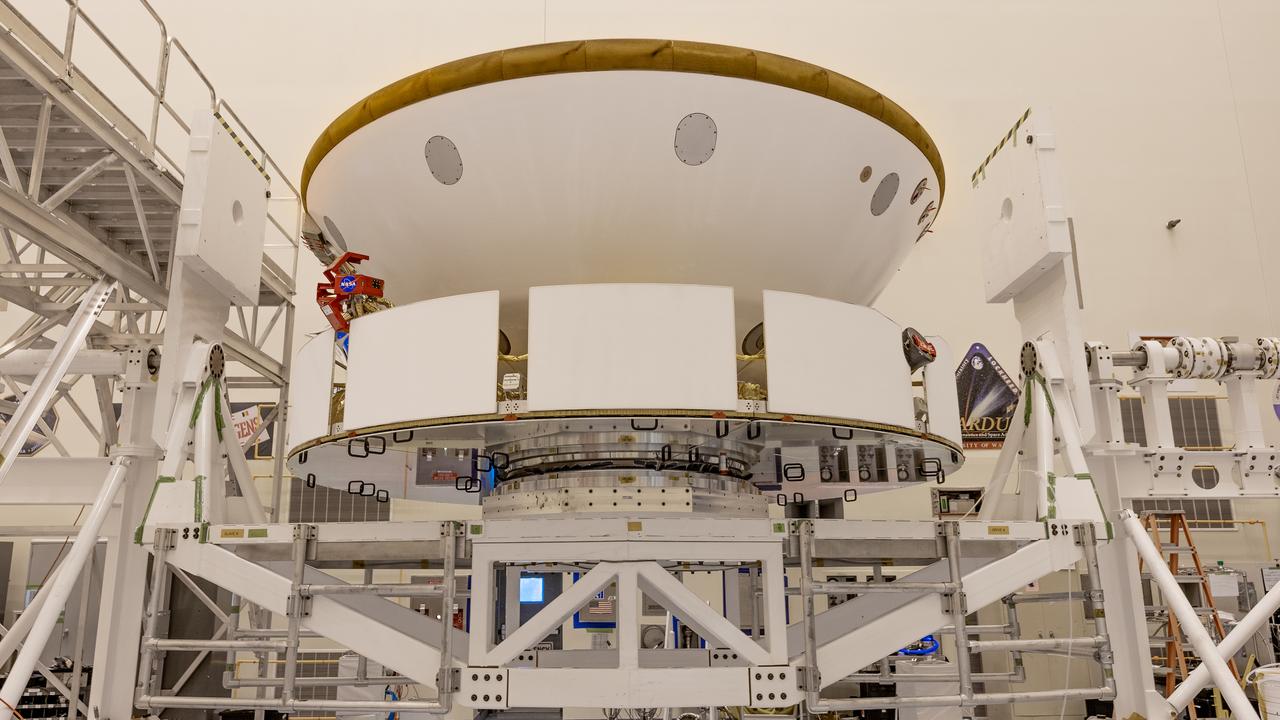
Inside the Payload Hazardous Servicing Facility at NASA’s Kennedy Space Center in Florida, the Backshell-Powered Descent Vehicle and Entry Vehicle assemblies are being attached to the Mars Perseverance rover on May 29, 2020. The cone-shaped backshell contains the parachute, and along with the mission’s heat shield, provides protection for the rover and descent stage during Martian atmospheric entry. The Mars Perseverance rover is scheduled to launch on July 20 atop a United Launch Alliance Atlas V 541 rocket from Pad 41 at nearby Cape Canaveral Air Force Station. The rover is part of NASA’s Mars Exploration Program, a long-term effort of robotic exploration of the Red Planet. The rover will search for habitable conditions in the ancient past and signs of past microbial life on Mars. The Launch Services Program at Kennedy is responsible for launch management.
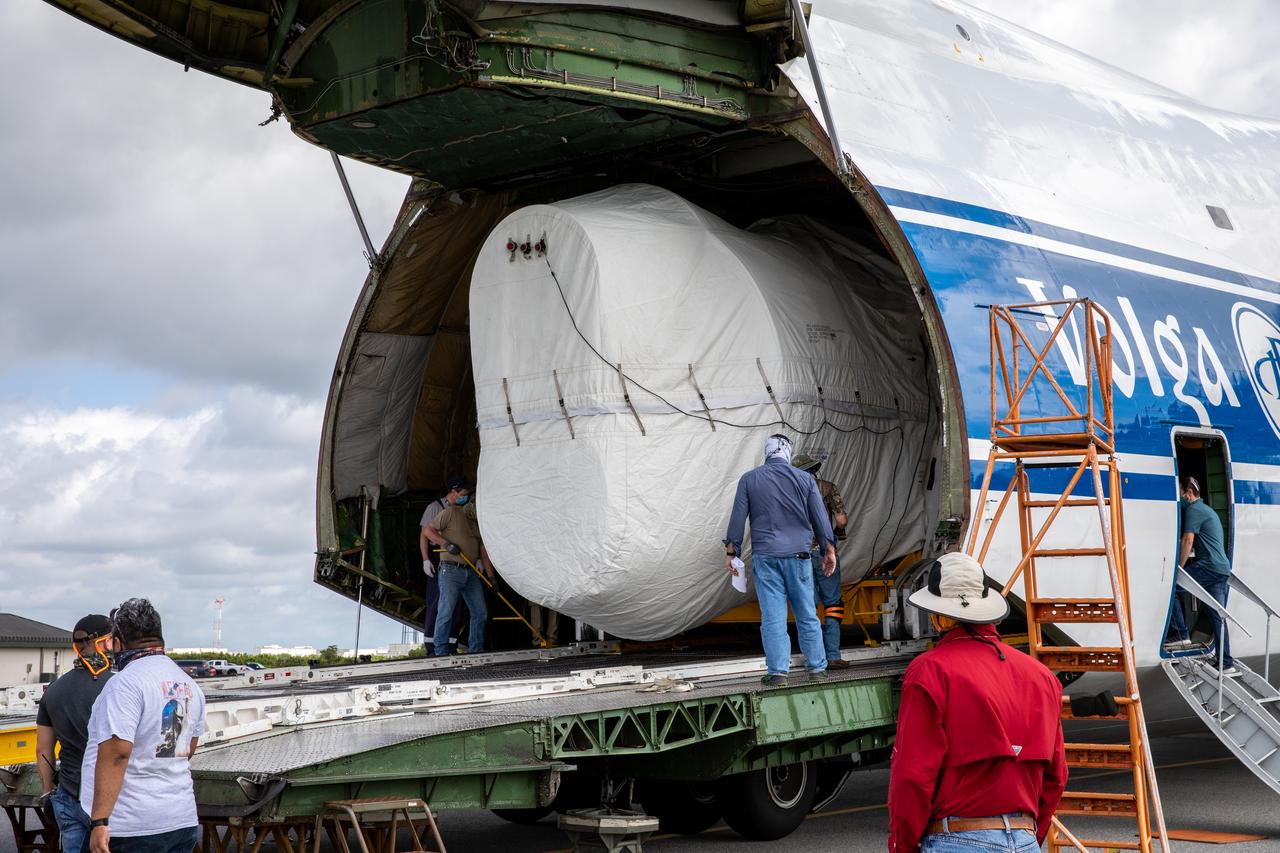
Preparations are underway to offload the United Launch Alliance booster for NASA’s Mars Perseverance rover from the Antonov 124 cargo aircraft at the Skid Strip at Cape Canaveral Air Force Station (CCAFS) in Florida on May 19, 2020. The Mars Perseverance rover is scheduled to launch in mid-July atop a United Launch Alliance Atlas V 541 rocket from Pad 41 at CCAFS. The rover is part of NASA’s Mars Exploration Program, a long-term effort of robotic exploration of the Red Planet. The rover will search for habitable conditions in the ancient past and signs of past microbial life on Mars. The Launch Services Program at Kennedy is responsible for launch management.
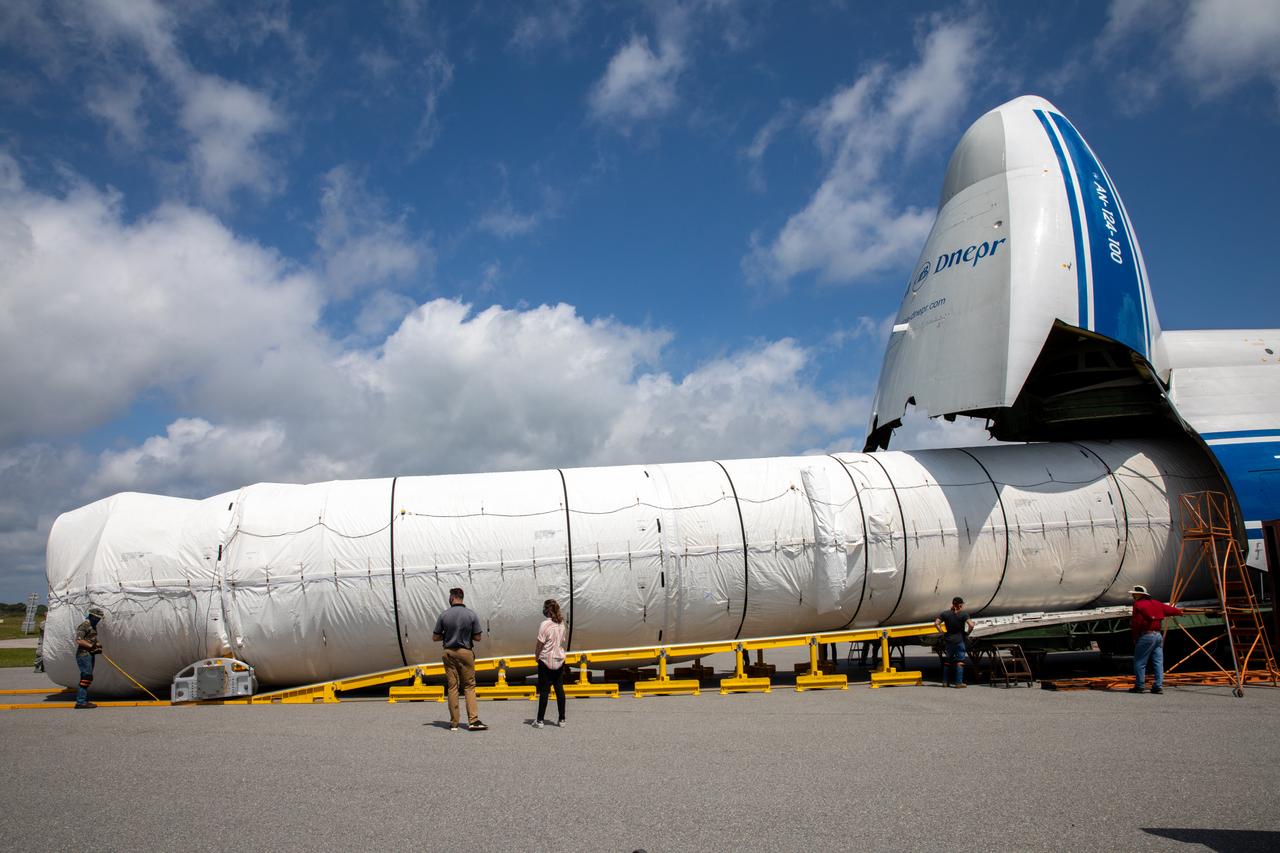
The United Launch Alliance booster for NASA’s Mars Perseverance rover is offloaded from the Antonov 124 cargo aircraft at the Skid Strip at Cape Canaveral Air Force Station (CCAFS) in Florida on May 19, 2020. The Mars Perseverance rover is scheduled to launch in mid-July atop a United Launch Alliance Atlas V 541 rocket from Pad 41 at CCAFS. The rover is part of NASA’s Mars Exploration Program, a long-term effort of robotic exploration of the Red Planet. The rover will search for habitable conditions in the ancient past and signs of past microbial life on Mars. The Launch Services Program at Kennedy is responsible for launch management.
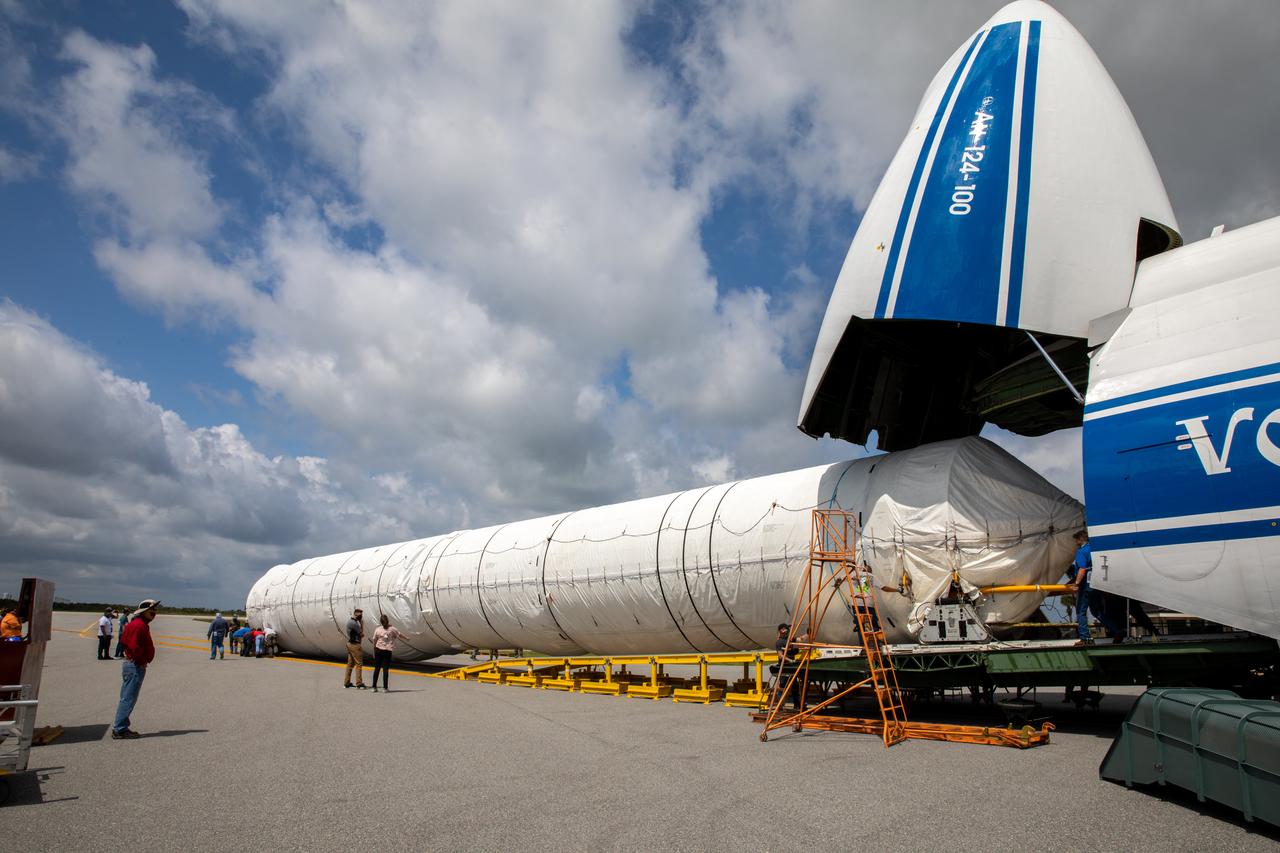
The United Launch Alliance booster for NASA’s Mars Perseverance rover is offloaded from the Antonov 124 cargo aircraft at the Skid Strip at Cape Canaveral Air Force Station (CCAFS) in Florida on May 19, 2020. The Mars Perseverance rover is scheduled to launch in mid-July atop a United Launch Alliance Atlas V 541 rocket from Pad 41 at CCAFS. The rover is part of NASA’s Mars Exploration Program, a long-term effort of robotic exploration of the Red Planet. The rover will search for habitable conditions in the ancient past and signs of past microbial life on Mars. The Launch Services Program at Kennedy is responsible for launch management.
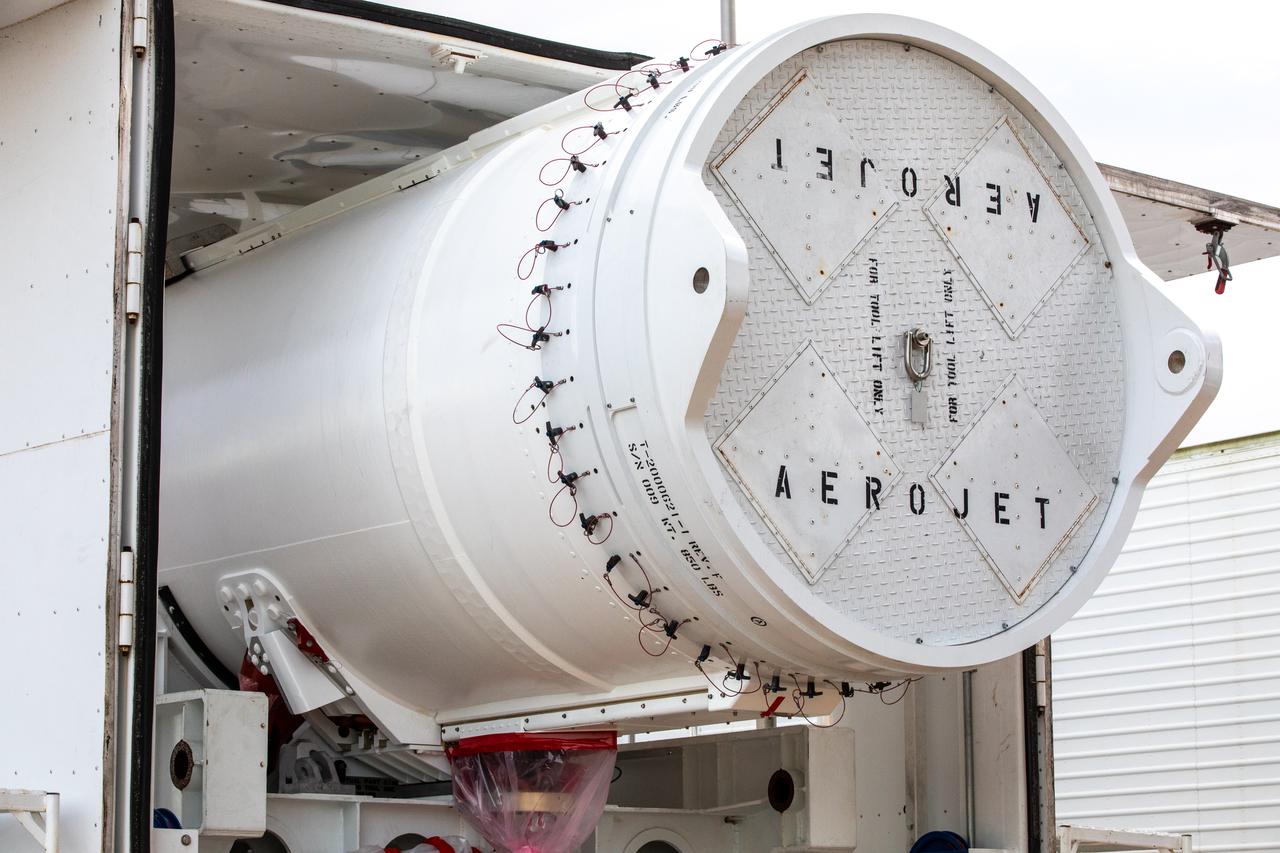
The first solid rocket booster (SRB) for the United Launch Alliance Atlas V 541 rocket for NASA’s Mars 2020 mission with the Perseverance rover departs for the Vertical Integration Facility (VIF) at Space Launch Complex 41 at Cape Canaveral Air Force Station (CCAFS) in Florida on May 29, 2020. The SRB will be prepared for lift and mating to the Atlas V booster in the VIF. The Mars Perseverance rover is scheduled to launch in mid-July atop the Atlas V rocket from Pad 41. The rover is part of NASA’s Mars Exploration Program, a long-term effort of robotic exploration of the Red Planet. The rover will search for habitable conditions in the ancient past and signs of past microbial life on Mars. The Launch Services Program at Kennedy is responsible for launch management.
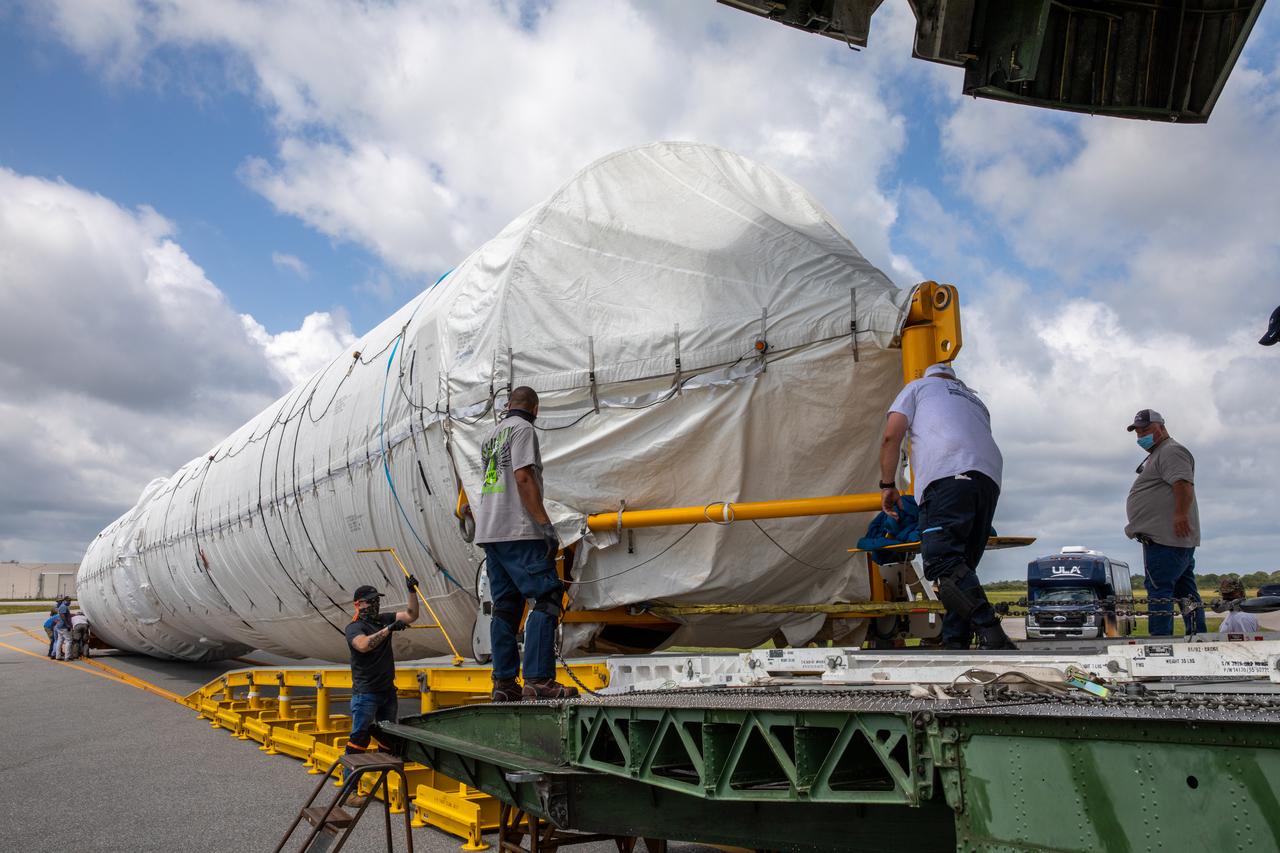
Workers secure the United Launch Alliance booster for NASA’s Mars Perseverance rover as it is offloaded from the Antonov 124 cargo aircraft at the Skid Strip at Cape Canaveral Air Force Station (CCAFS) in Florida on May 19, 2020. The Mars Perseverance rover is scheduled to launch in mid-July atop a United Launch Alliance Atlas V 541 rocket from Pad 41 at CCAFS. The rover is part of NASA’s Mars Exploration Program, a long-term effort of robotic exploration of the Red Planet. The rover will search for habitable conditions in the ancient past and signs of past microbial life on Mars. The Launch Services Program at Kennedy is responsible for launch management.
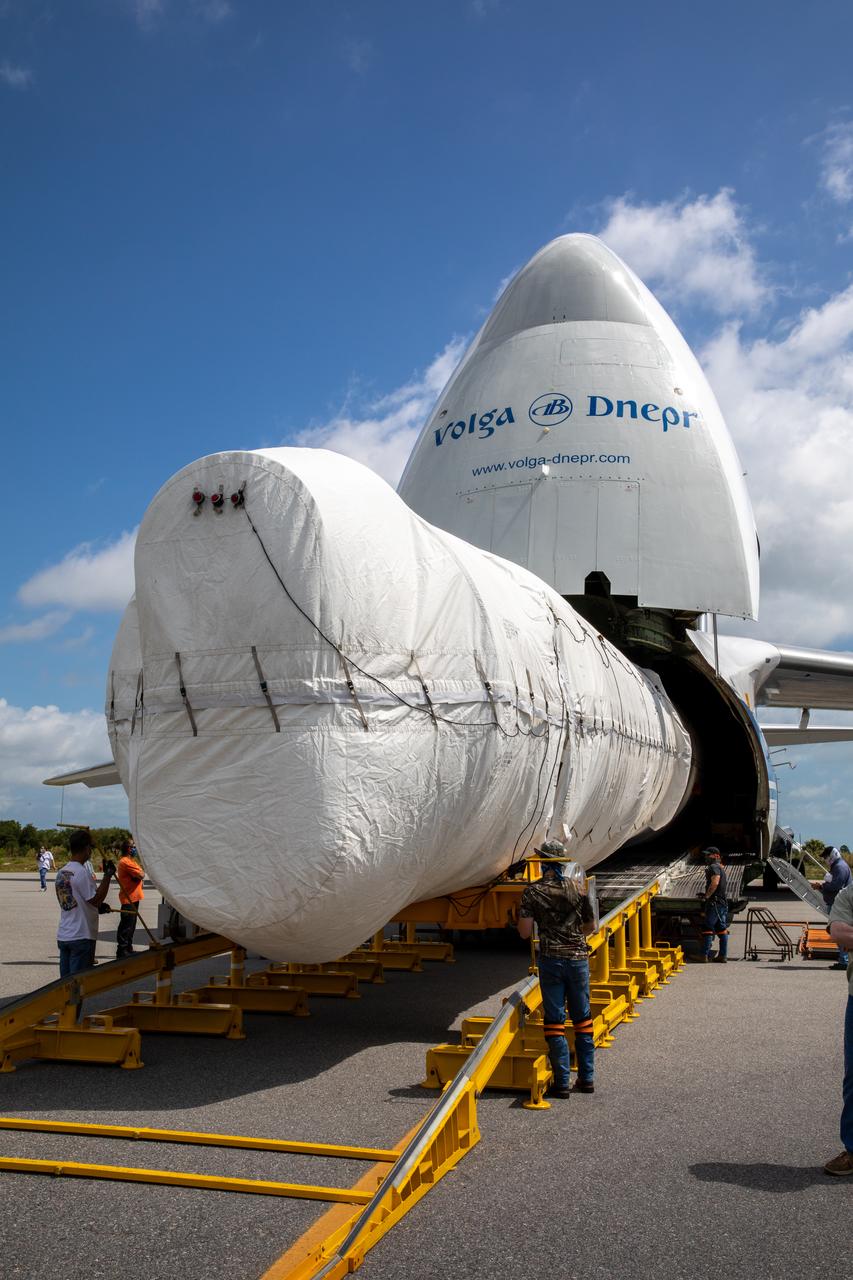
The United Launch Alliance booster for NASA’s Mars Perseverance rover is offloaded from the Antonov 124 cargo aircraft at the Skid Strip at Cape Canaveral Air Force Station (CCAFS) in Florida on May 19, 2020. The Mars Perseverance rover is scheduled to launch in mid-July atop a United Launch Alliance Atlas V 541 rocket from Pad 41 at CCAFS. The rover is part of NASA’s Mars Exploration Program, a long-term effort of robotic exploration of the Red Planet. The rover will search for habitable conditions in the ancient past and signs of past microbial life on Mars. The Launch Services Program at Kennedy is responsible for launch management.
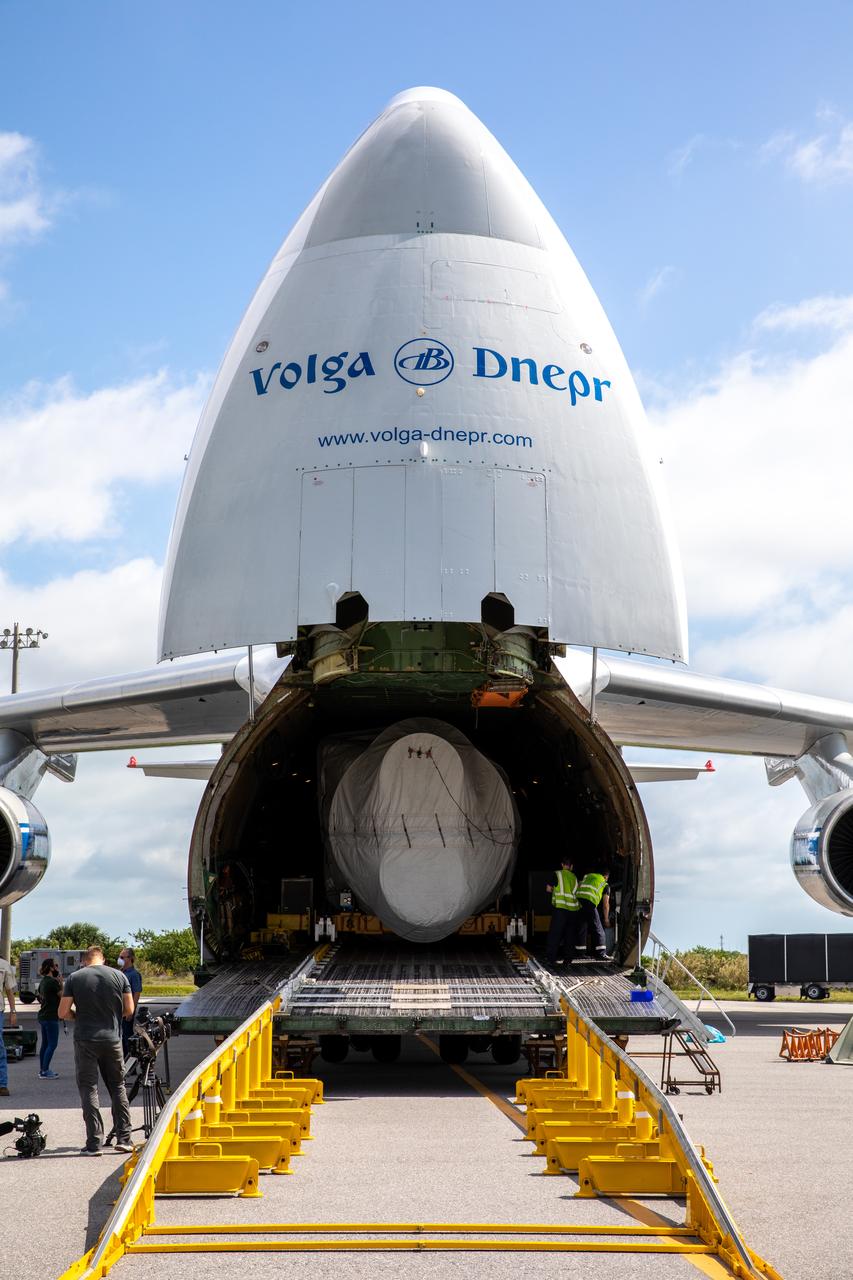
Preparations are underway to offload the United Launch Alliance booster for NASA’s Mars Perseverance rover from the Antonov 124 cargo aircraft at the Skid Strip at Cape Canaveral Air Force Station (CCAFS) in Florida on May 19, 2020. The Mars Perseverance rover is scheduled to launch in mid-July atop a United Launch Alliance Atlas V 541 rocket from Pad 41 at CCAFS. The rover is part of NASA’s Mars Exploration Program, a long-term effort of robotic exploration of the Red Planet. The rover will search for habitable conditions in the ancient past and signs of past microbial life on Mars. The Launch Services Program at Kennedy is responsible for launch management.
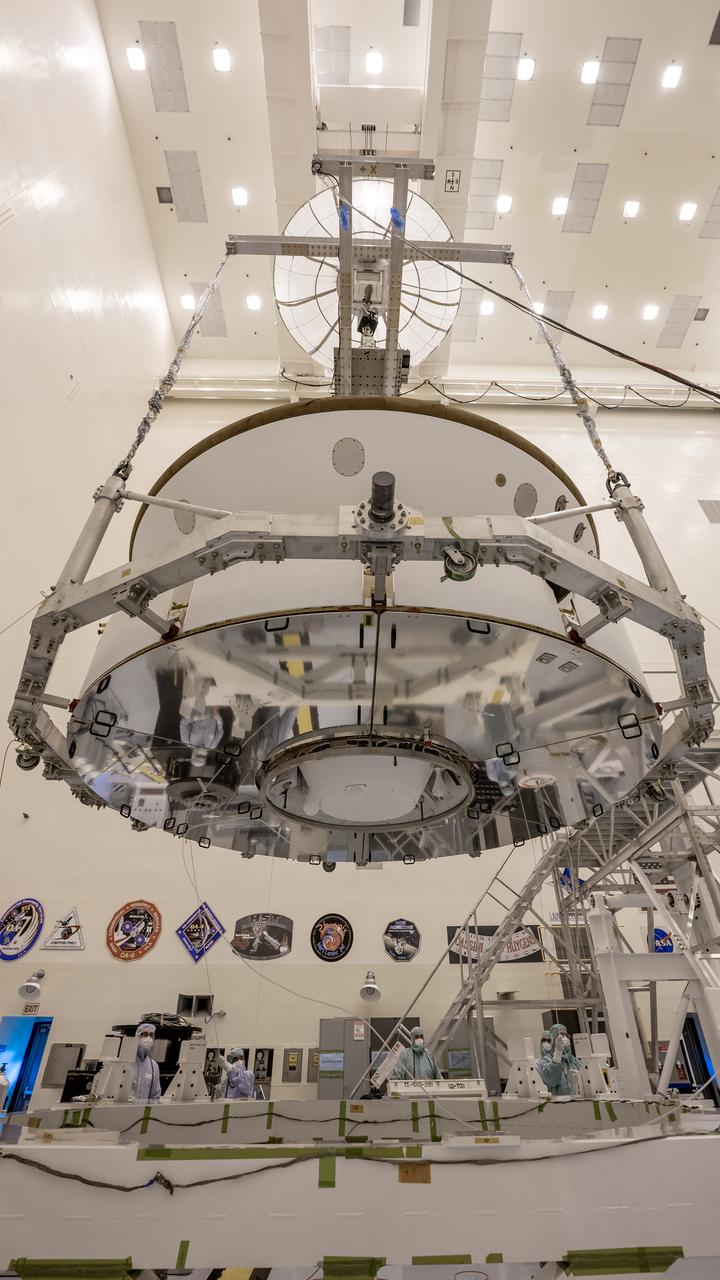
Inside the Payload Hazardous Servicing Facility at NASA’s Kennedy Space Center in Florida, the Mars Perseverance rover, with its Backshell-Powered Descent Vehicle and Entry Vehicle assemblies attached, is lifted by crane on May 29, 2020. The cone-shaped backshell contains the parachute, and along with the mission’s heat shield, provides protection for the rover and descent stage during Martian atmospheric entry. The Mars Perseverance rover is scheduled to launch on July 20 atop a United Launch Alliance Atlas V 541 rocket from Pad 41 at nearby Cape Canaveral Air Force Station. The rover is part of NASA’s Mars Exploration Program, a long-term effort of robotic exploration of the Red Planet. The rover will search for habitable conditions in the ancient past and signs of past microbial life on Mars. The Launch Services Program at Kennedy is responsible for launch management.
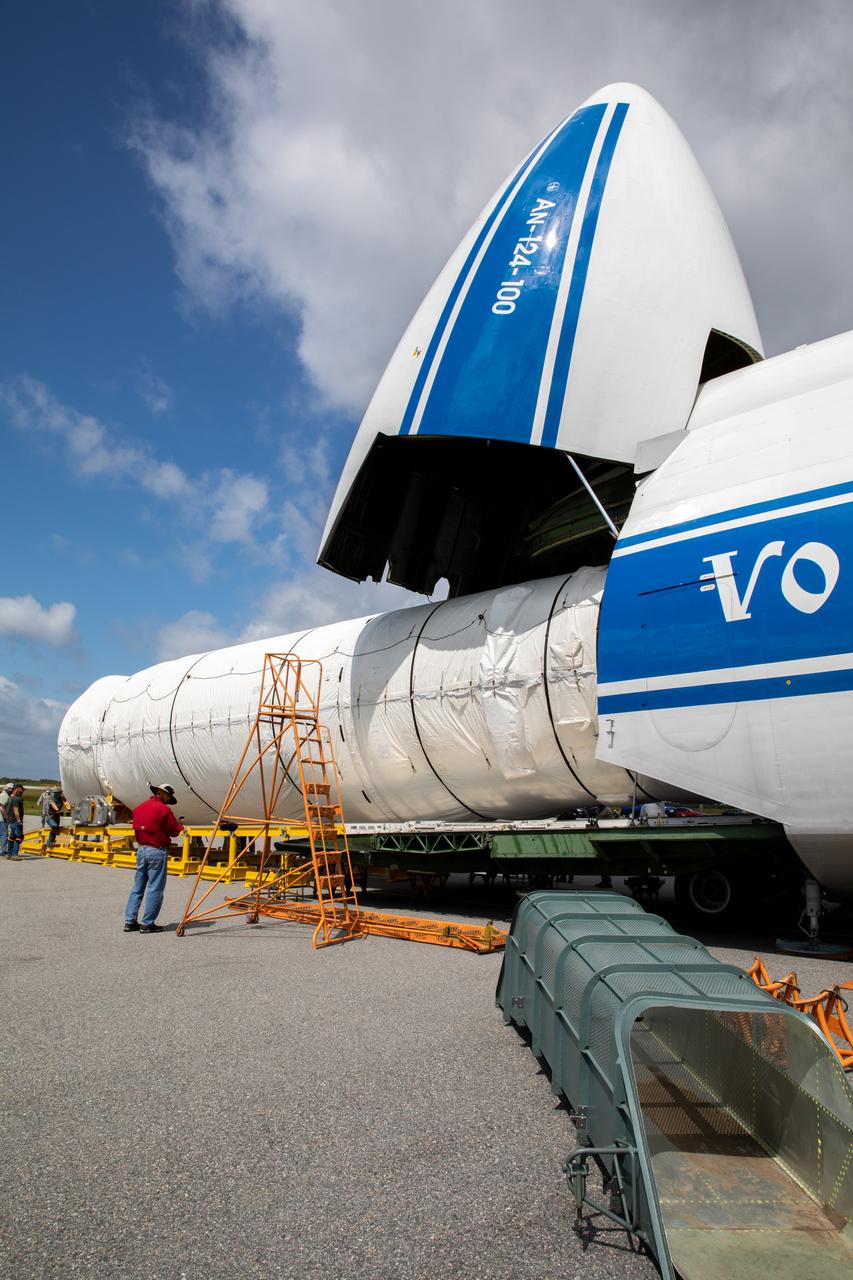
The United Launch Alliance booster for NASA’s Mars Perseverance rover is offloaded from the Antonov 124 cargo aircraft at the Skid Strip at Cape Canaveral Air Force Station (CCAFS) in Florida on May 19, 2020. The Mars Perseverance rover is scheduled to launch in mid-July atop a United Launch Alliance Atlas V 541 rocket from Pad 41 at CCAFS. The rover is part of NASA’s Mars Exploration Program, a long-term effort of robotic exploration of the Red Planet. The rover will search for habitable conditions in the ancient past and signs of past microbial life on Mars. The Launch Services Program at Kennedy is responsible for launch management.
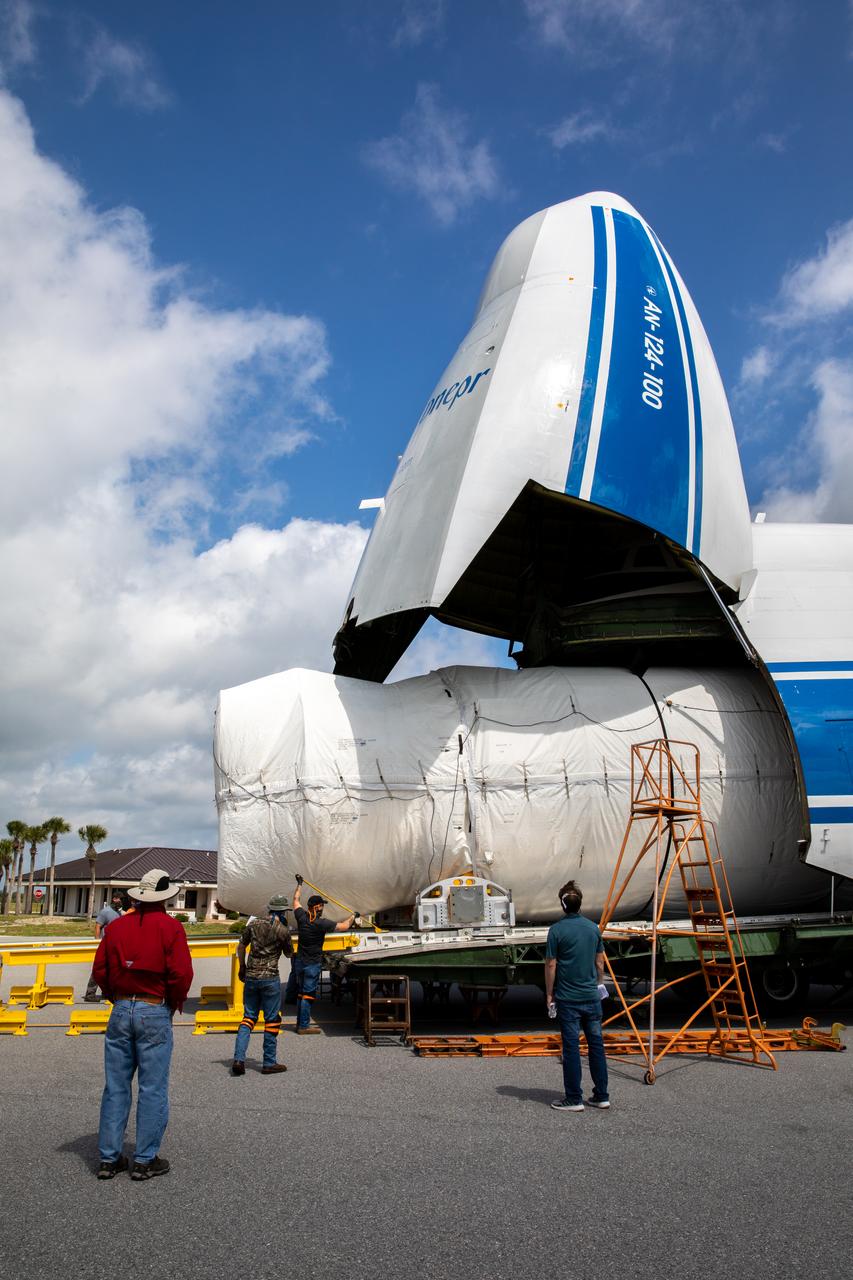
Workers help offload the United Launch Alliance booster for NASA’s Mars Perseverance rover from the Antonov 124 cargo aircraft at the Skid Strip at Cape Canaveral Air Force Station (CCAFS) in Florida on May 19, 2020. The Mars Perseverance rover is scheduled to launch in mid-July atop a United Launch Alliance Atlas V 541 rocket from Pad 41 at CCAFS. The rover is part of NASA’s Mars Exploration Program, a long-term effort of robotic exploration of the Red Planet. The rover will search for habitable conditions in the ancient past and signs of past microbial life on Mars. The Launch Services Program at Kennedy is responsible for launch management.
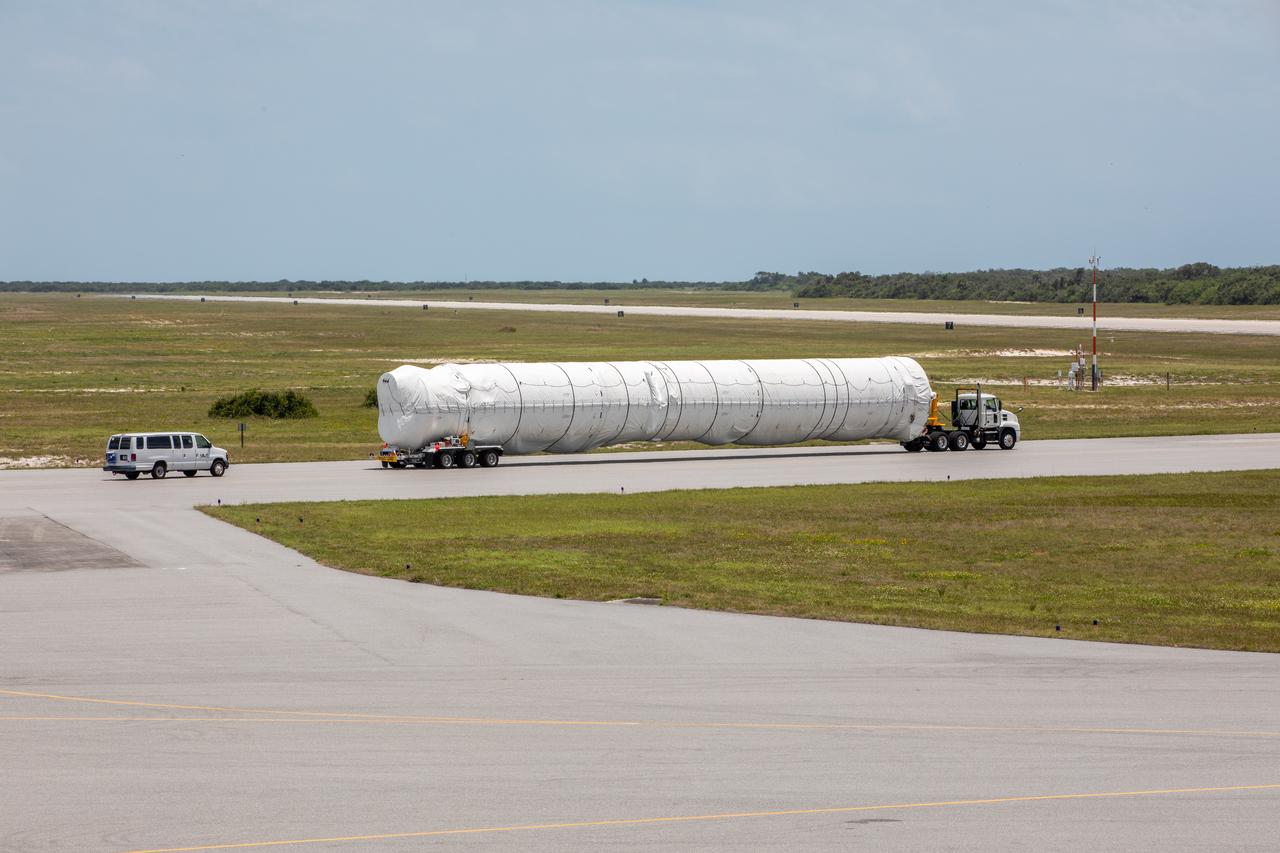
A flatbed truck carrying the United Launch Alliance booster for NASA’s Mars Perseverance rover departs the Skid Strip at Cape Canaveral Air Force Station (CCAFS) in Florida on May 19, 2020. The booster arrived aboard the Antonov 124 cargo aircraft at the Skid Strip on May 18, 2020. The Mars Perseverance rover is scheduled to launch in mid-July atop a United Launch Alliance Atlas V 541 rocket from Pad 41 at CCAFS. The rover is part of NASA’s Mars Exploration Program, a long-term effort of robotic exploration of the Red Planet. The rover will search for habitable conditions in the ancient past and signs of past microbial life on Mars. The Launch Services Program at Kennedy is responsible for launch management.
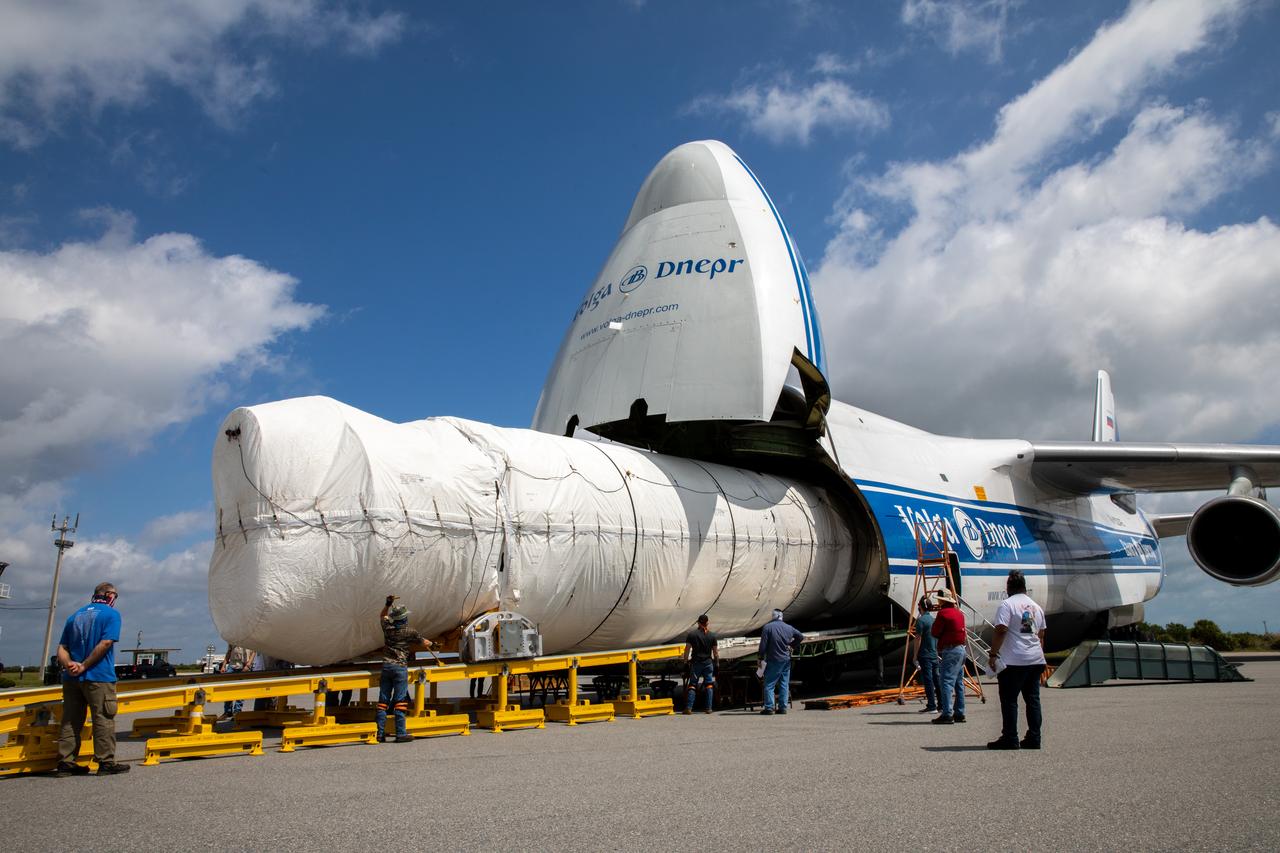
The United Launch Alliance booster for NASA’s Mars Perseverance rover is offloaded from the Antonov 124 cargo aircraft at the Skid Strip at Cape Canaveral Air Force Station (CCAFS) in Florida on May 19, 2020. The Mars Perseverance rover is scheduled to launch in mid-July atop a United Launch Alliance Atlas V 541 rocket from Pad 41 at CCAFS. The rover is part of NASA’s Mars Exploration Program, a long-term effort of robotic exploration of the Red Planet. The rover will search for habitable conditions in the ancient past and signs of past microbial life on Mars. The Launch Services Program at Kennedy is responsible for launch management.
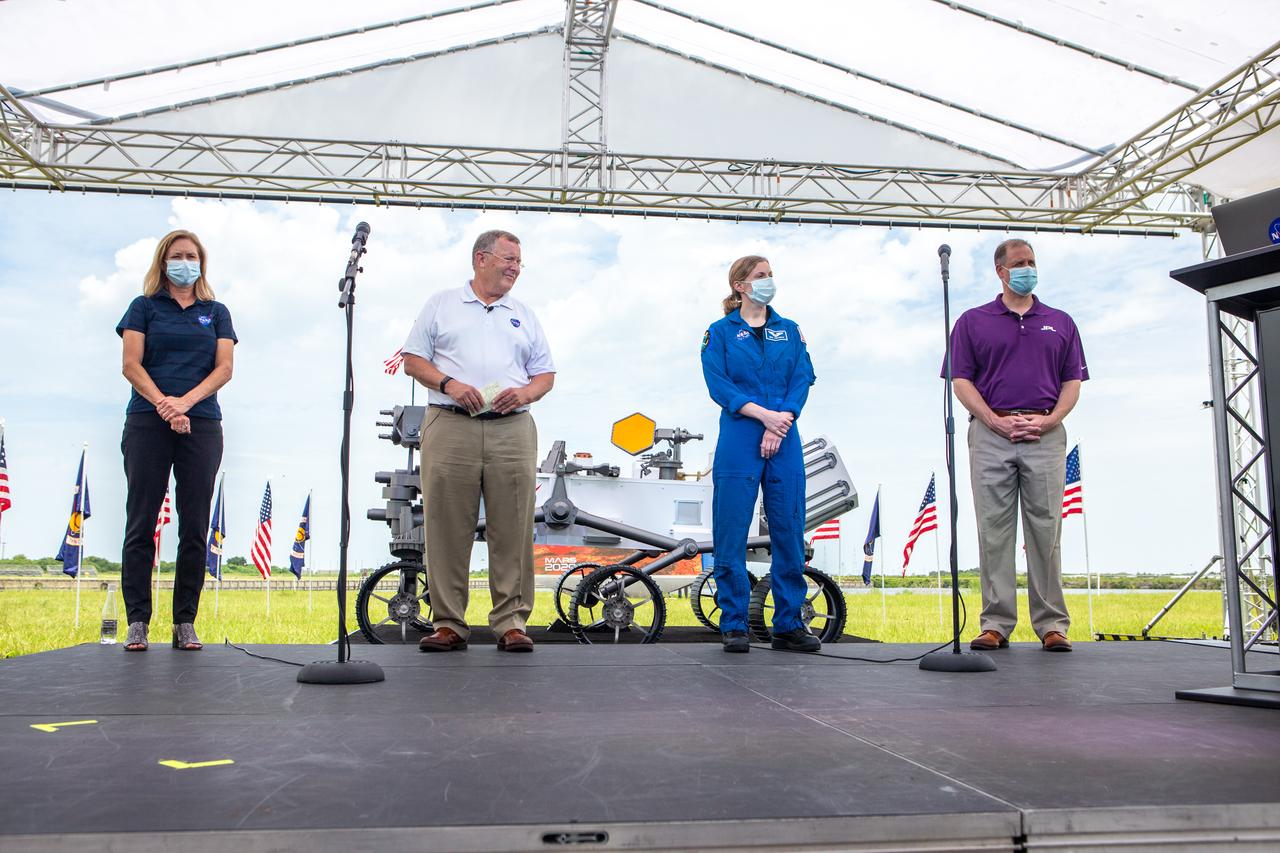
A Mars 2020 NASA Social is held at Kennedy Space Center’s News Center in Florida on July 29, 2020. Participants from left are Kennedy Deputy Director Janet Petro, NASA Deputy Administrator Jim Morhard, NASA astronaut Zena Cardman, and NASA Administrator Jim Bridenstine. The Mars Perseverance rover and Ingenuity helicopter are scheduled to launch July 30, on a United Launch Alliance Atlas V 541 rocket from Space Launch Complex 41 at nearby Cape Canaveral Air Force Station. The rover is part of NASA’s Mars Exploration Program, a long-term effort of robotic exploration of the Red Planet. The rover will search for habitable conditions in the ancient past and signs of past microbial life on Mars. The Launch Services Program at Kennedy is responsible for launch management.

A full-scale mockup of NASA’s Mars 2020 Perseverance rover is on display at the News Center at the agency’s Kennedy Space Center in Florida on July 29, 2020. A Mars 2020 NASA Social is in progress featuring, right to left, Kennedy Space Center Deputy Director Janet Petro, NASA Deputy Administrator Jim Morhard, NASA astronaut Zena Cardman, and NASA Administrator Jim Bridenstine. The Mars Perseverance rover and Ingenuity helicopter are scheduled to launch July 30, on a United Launch Alliance Atlas V 541 rocket from Space Launch Complex 41 at nearby Cape Canaveral Air Force Station. The rover is part of NASA’s Mars Exploration Program, a long-term effort of robotic exploration of the Red Planet. The rover will search for habitable conditions in the ancient past and signs of past microbial life on Mars. The Launch Services Program at Kennedy is responsible for launch management.
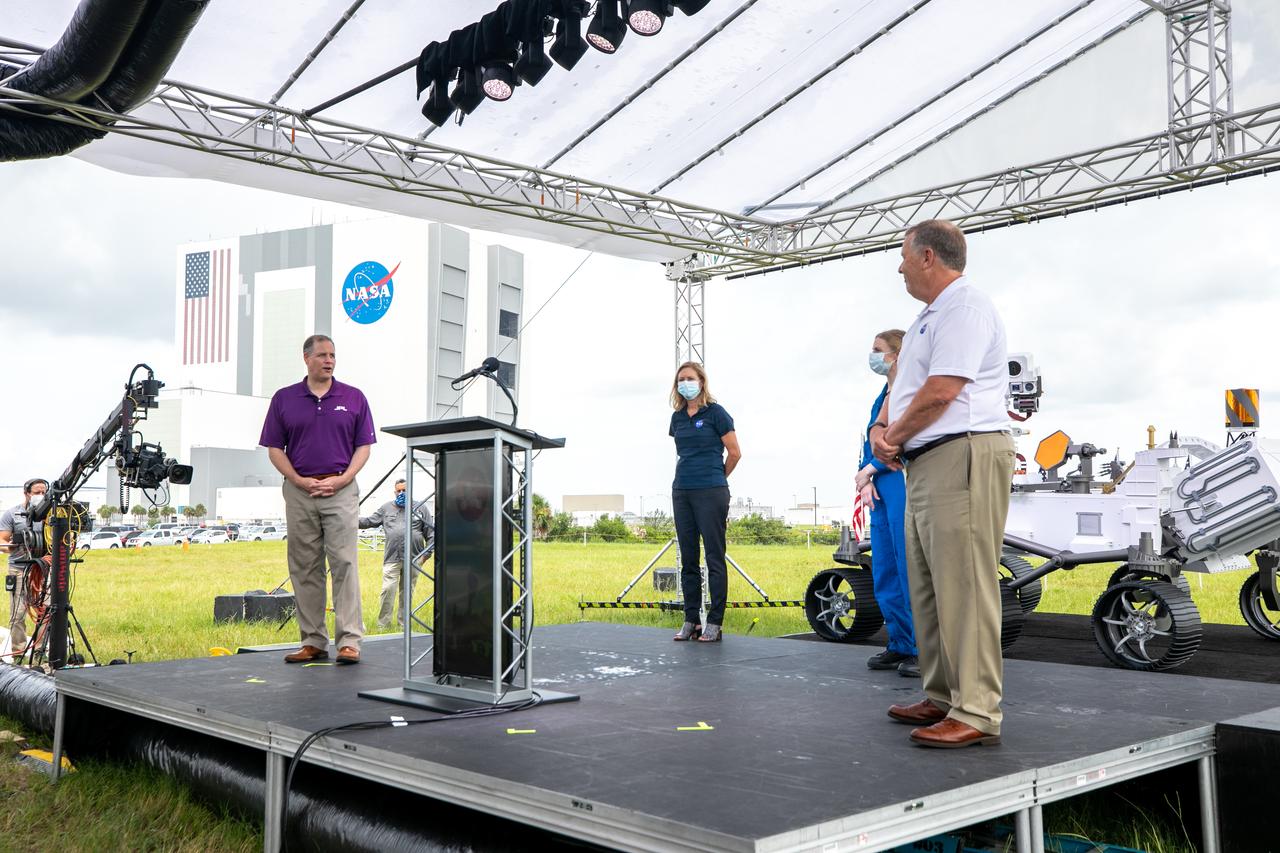
NASA Administrator Jim Bridenstine, far left, conducts a briefing at the agency’s Kennedy Space Center in Florida on July 29, 2020, in advance of the launch of the Mars 2020 Perseverance rover and Ingenuity helicopter scheduled for July 30. Joining him, from left are Kennedy Deputy Director Janet Petro, NASA astronaut Zena Cardman, partially hidden, and NASA Deputy Administrator Jim Morhard. Mars 2020 will lift off aboard a United Launch Alliance Atlas V 541 rocket from Space Launch Complex 41 at Cape Canaveral Air Force Station. The two-hour launch window opens at 7:50 a.m. EDT. NASA’s Launch Services Program, based at Kennedy, is managing the launch.
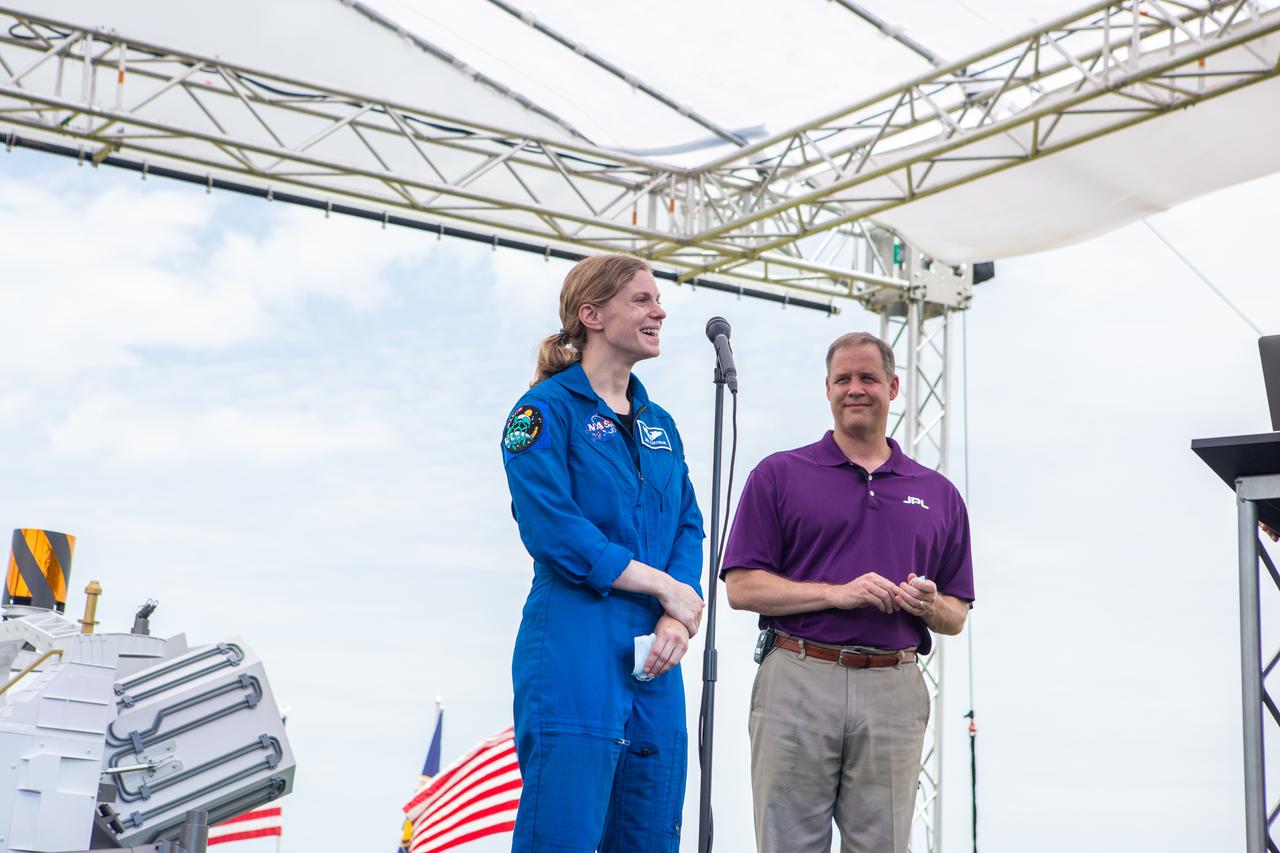
NASA astronaut Zena Cardman answers a question during a Mars 2020 NASA Social at Kennedy Space Center’s News Center in Florida on July 29, 2020. At right is NASA Administrator Jim Bridenstine. The Mars Perseverance rover and Ingenuity helicopter are scheduled to launch July 30, on a United Launch Alliance Atlas V 541 rocket from Space Launch Complex 41 at nearby Cape Canaveral Air Force Station. The rover is part of NASA’s Mars Exploration Program, a long-term effort of robotic exploration of the Red Planet. The rover will search for habitable conditions in the ancient past and signs of past microbial life on Mars. The Launch Services Program at Kennedy is responsible for launch management.
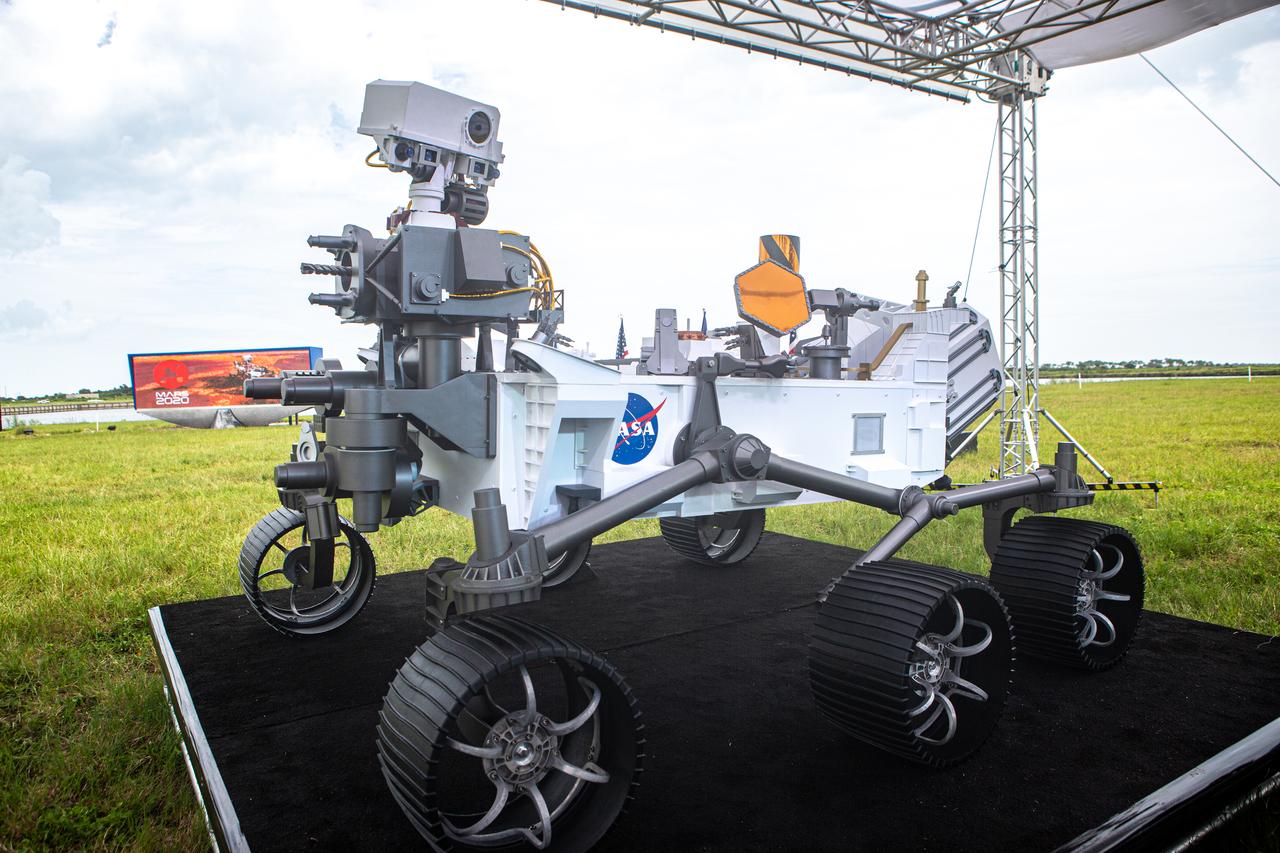
A full-scale mockup of NASA’s Mars 2020 Perseverance rover is on display at the News Center at the agency’s Kennedy Space Center in Florida on July 29, 2020. The rover and Ingenuity helicopter are scheduled to launch July 30, on a United Launch Alliance Atlas V 541 rocket from Space Launch Complex 41 at nearby Cape Canaveral Air Force Station. The rover is part of NASA’s Mars Exploration Program, a long-term effort of robotic exploration of the Red Planet. The rover will search for habitable conditions in the ancient past and signs of past microbial life on Mars. The Launch Services Program at Kennedy is responsible for launch management.

NASA Deputy Administrator Jim Morhard answers questions during a Mars 2020 NASA Social at Kennedy Space Center’s News Center in Florida on July 29, 2020. The Mars Perseverance rover and Ingenuity helicopter are scheduled to launch July 30, on a United Launch Alliance Atlas V 541 rocket from Space Launch Complex 41 at nearby Cape Canaveral Air Force Station. The rover is part of NASA’s Mars Exploration Program, a long-term effort of robotic exploration of the Red Planet. The rover will search for habitable conditions in the ancient past and signs of past microbial life on Mars. The Launch Services Program at Kennedy is responsible for launch management.
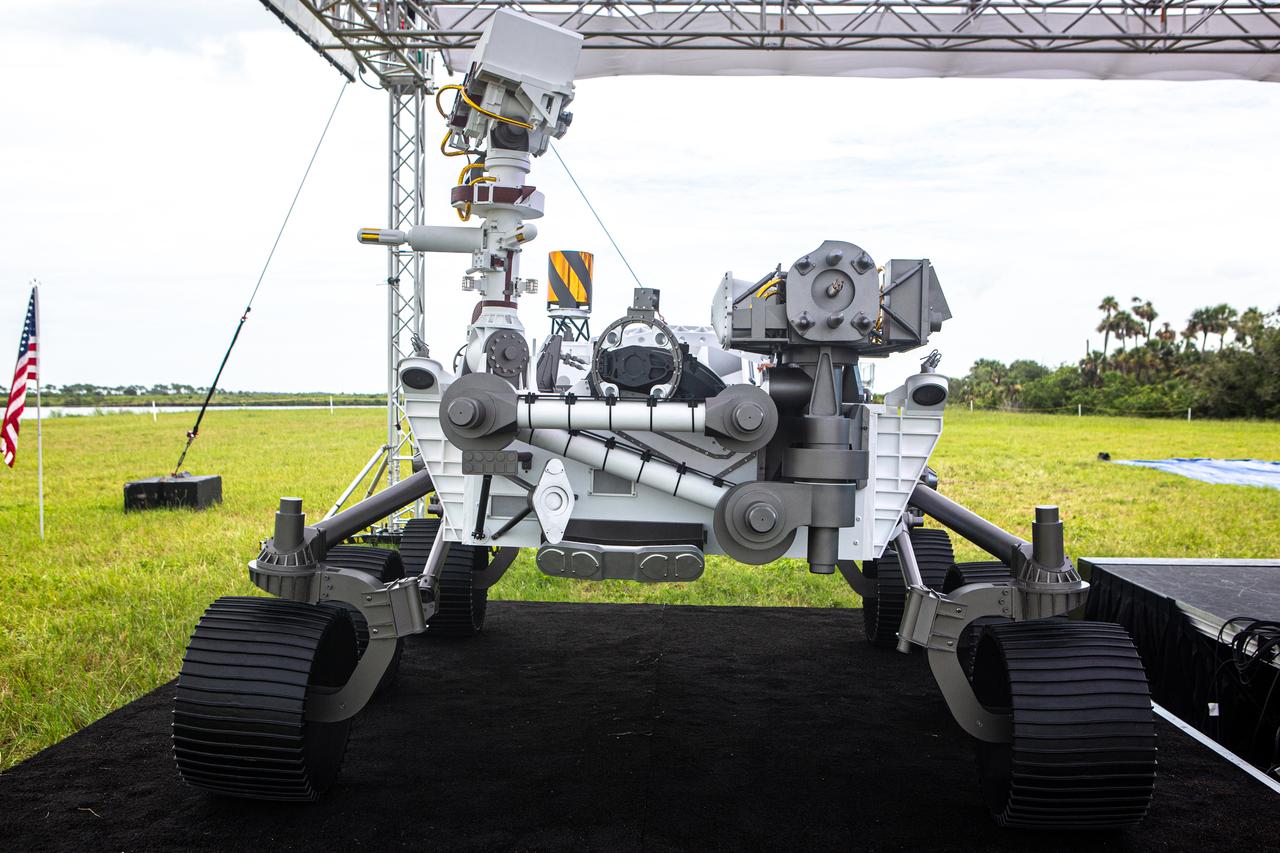
A full-scale mockup of NASA’s Mars 2020 Perseverance rover is on display at the News Center at the agency’s Kennedy Space Center in Florida on July 29, 2020. The rover and Ingenuity helicopter are scheduled to launch July 30, on a United Launch Alliance Atlas V 541 rocket from Space Launch Complex 41 at nearby Cape Canaveral Air Force Station. The rover is part of NASA’s Mars Exploration Program, a long-term effort of robotic exploration of the Red Planet. The rover will search for habitable conditions in the ancient past and signs of past microbial life on Mars. The Launch Services Program at Kennedy is responsible for launch management.

NASA Deputy Administrator Jim Morhard speaks at the podium during a briefing at the agency’s Kennedy Space Center in Florida on July 29, 2020, in advance of the launch of the Mars 2020 Perseverance rover and Ingenuity helicopter scheduled for July 30. Joining him are, from left, NASA Administrator Jim Bridenstine, and NASA astronaut Zena Cardman. Mars 2020 will lift off aboard a United Launch Alliance Atlas V 541 rocket from Space Launch Complex 41 at Cape Canaveral Air Force Station. The two-hour launch window opens at 7:50 a.m. EDT. NASA’s Launch Services Program, based at Kennedy, is managing the launch.

Kennedy Space Center Deputy Director Janet Petro answers questions during a Mars 2020 NASA Social at the center’s News Center in Florida on July 29, 2020. At right is NASA Deputy Administrator Jim Morhard. The Mars Perseverance rover and Ingenuity helicopter are scheduled to launch July 30, on a United Launch Alliance Atlas V 541 rocket from Space Launch Complex 41 at nearby Cape Canaveral Air Force Station. The rover is part of NASA’s Mars Exploration Program, a long-term effort of robotic exploration of the Red Planet. The rover will search for habitable conditions in the ancient past and signs of past microbial life on Mars. The Launch Services Program at Kennedy is responsible for launch management.
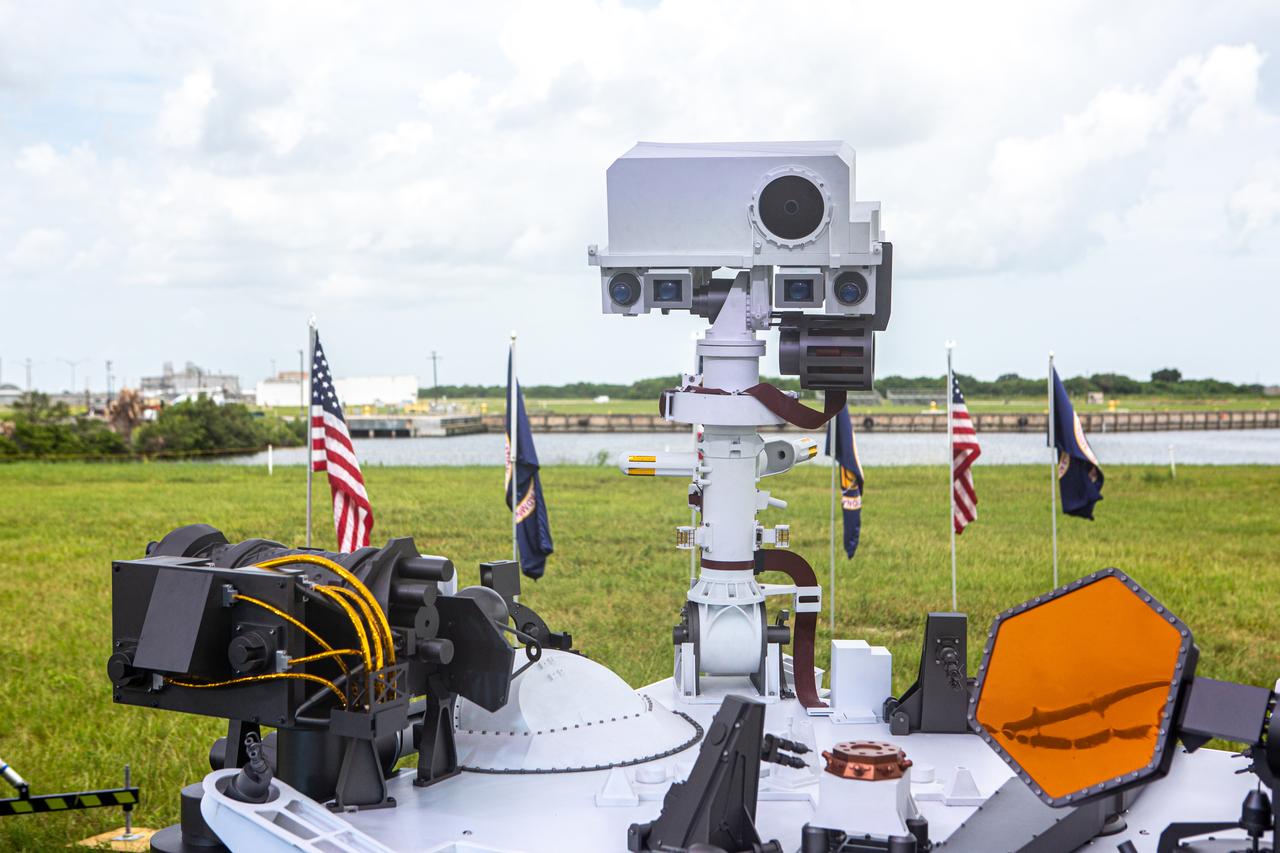
A full-scale mockup of NASA’s Mars 2020 Perseverance rover is on display at the News Center at the agency’s Kennedy Space Center in Florida on July 29, 2020. The rover and Ingenuity helicopter are scheduled to launch July 30, on a United Launch Alliance Atlas V 541 rocket from Space Launch Complex 41 at nearby Cape Canaveral Air Force Station. The rover is part of NASA’s Mars Exploration Program, a long-term effort of robotic exploration of the Red Planet. The rover will search for habitable conditions in the ancient past and signs of past microbial life on Mars. The Launch Services Program at Kennedy is responsible for launch management.
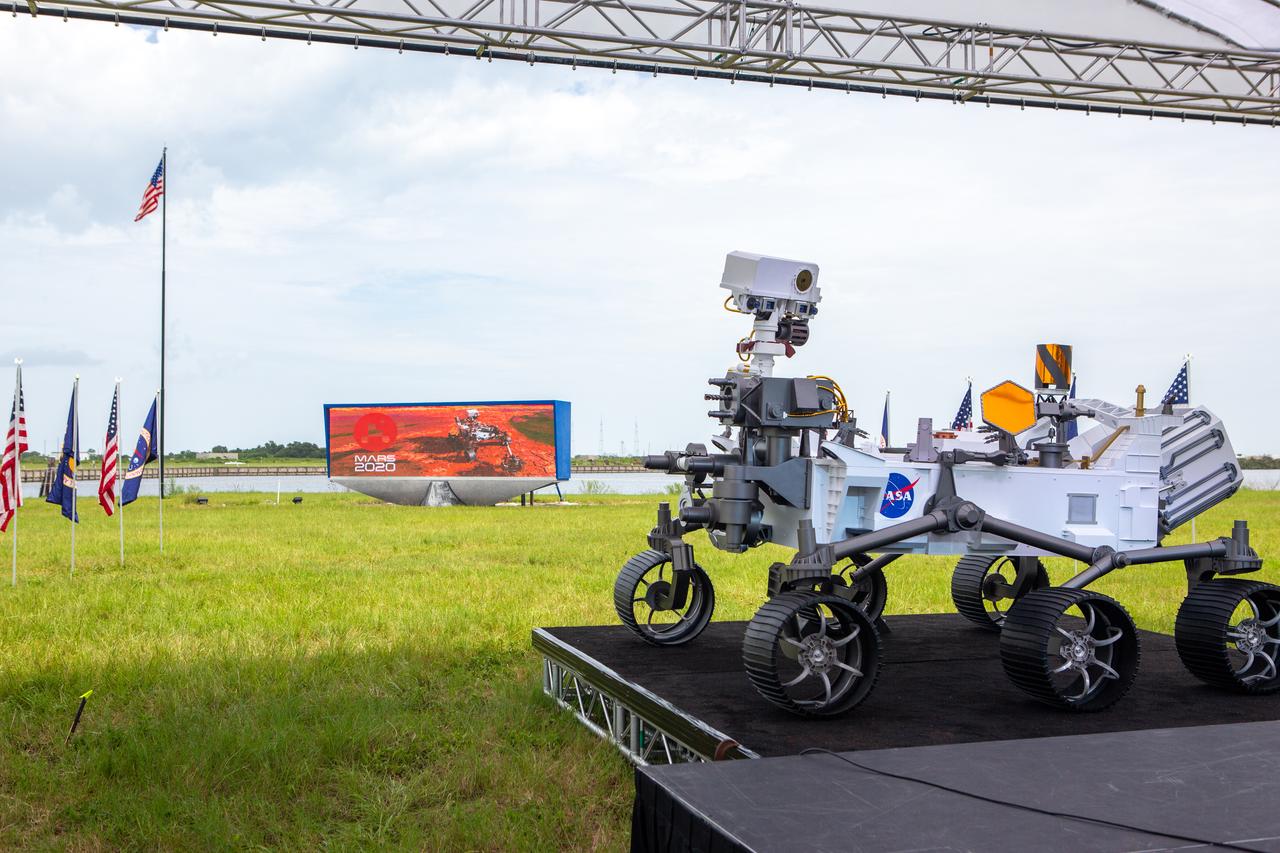
A full-scale mockup of NASA’s Mars 2020 Perseverance rover is on display near the countdown clock at the News Center at the agency’s Kennedy Space Center in Florida on July 29, 2020. The rover and Ingenuity helicopter are scheduled to launch July 30, on a United Launch Alliance Atlas V 541 rocket from Space Launch Complex 41 at nearby Cape Canaveral Air Force Station. The rover is part of NASA’s Mars Exploration Program, a long-term effort of robotic exploration of the Red Planet. The rover will search for habitable conditions in the ancient past and signs of past microbial life on Mars. The Launch Services Program at Kennedy is responsible for launch management.
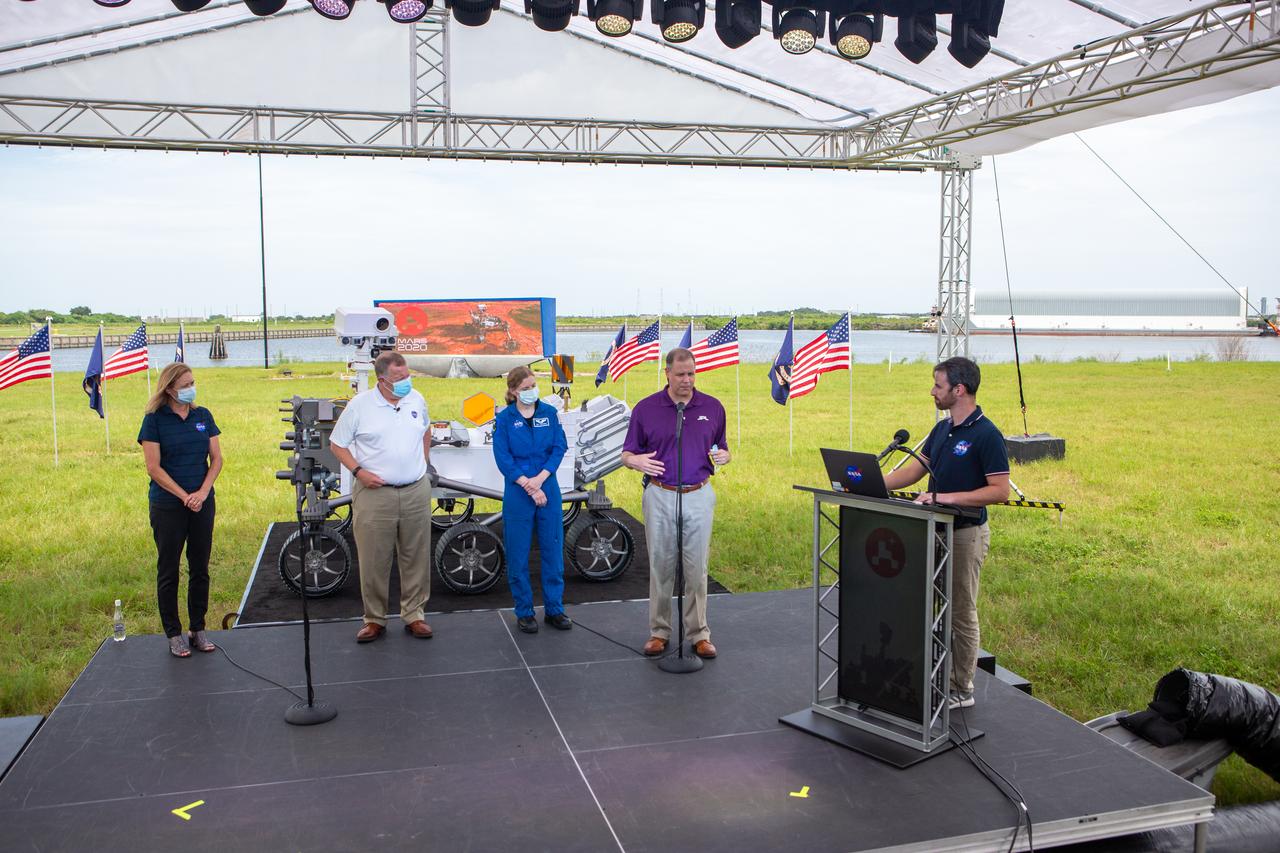
Joshua Santora, at the podium, NASA Communications, moderates a Mars 2020 NASA Social at Kennedy Space Center’s News Center in Florida on July 29, 2020. Participants from left are Kennedy Deputy Director Janet Petro, NASA Deputy Administrator Jim Morhard, NASA astronaut Zena Cardman, and NASA Administrator Jim Bridenstine. The Mars Perseverance rover and Ingenuity helicopter are scheduled to launch July 30, on a United Launch Alliance Atlas V 541 rocket from Space Launch Complex 41 at nearby Cape Canaveral Air Force Station. The rover is part of NASA’s Mars Exploration Program, a long-term effort of robotic exploration of the Red Planet. The rover will search for habitable conditions in the ancient past and signs of past microbial life on Mars. The Launch Services Program at Kennedy is responsible for launch management.
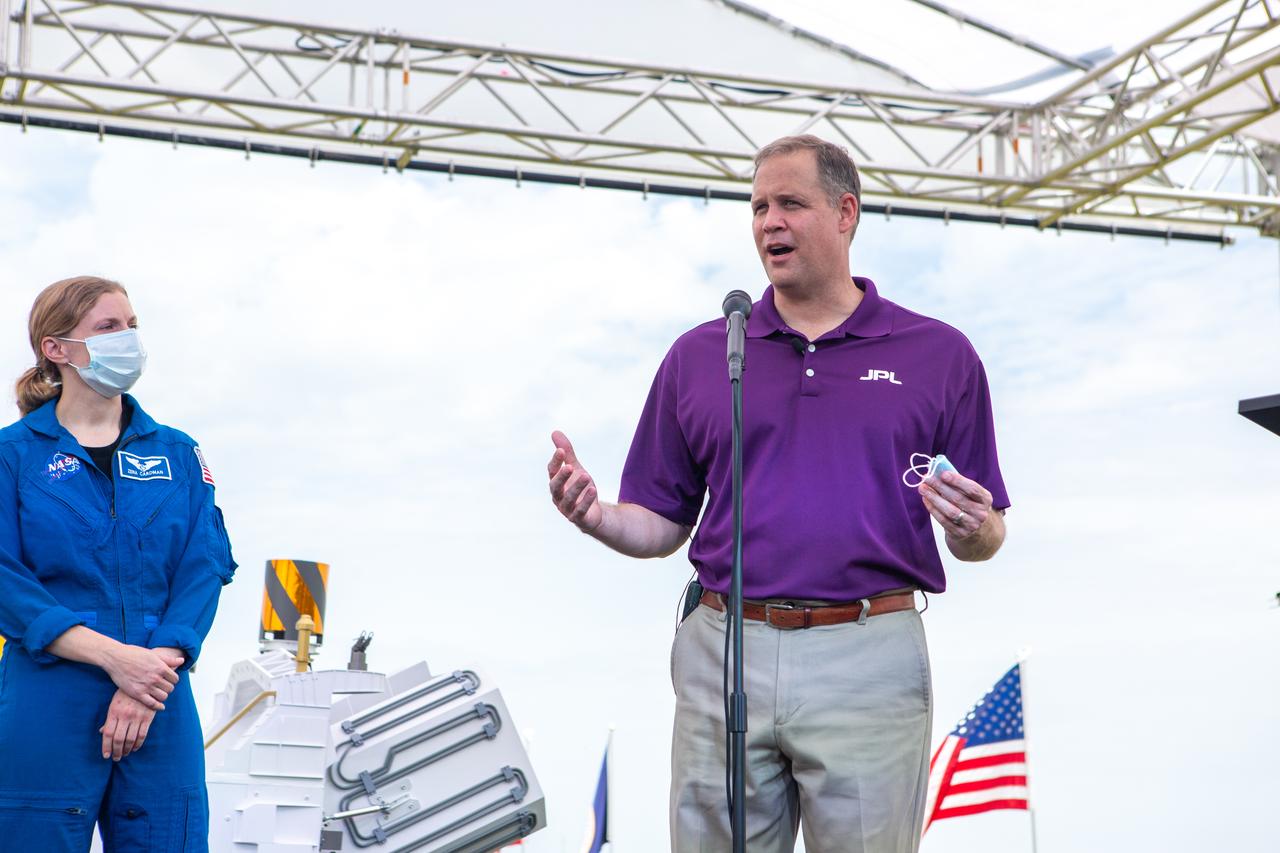
NASA Administrator Jim Bridenstine answers a question during a Mars 2020 NASA Social at Kennedy Space Center’s News Center in Florida on July 29, 2020. At left is NASA astronaut Zena Cardman. The Mars Perseverance rover and Ingenuity helicopter are scheduled to launch July 30, on a United Launch Alliance Atlas V 541 rocket from Space Launch Complex 41 at nearby Cape Canaveral Air Force Station. The rover is part of NASA’s Mars Exploration Program, a long-term effort of robotic exploration of the Red Planet. The rover will search for habitable conditions in the ancient past and signs of past microbial life on Mars. The Launch Services Program at Kennedy is responsible for launch management.
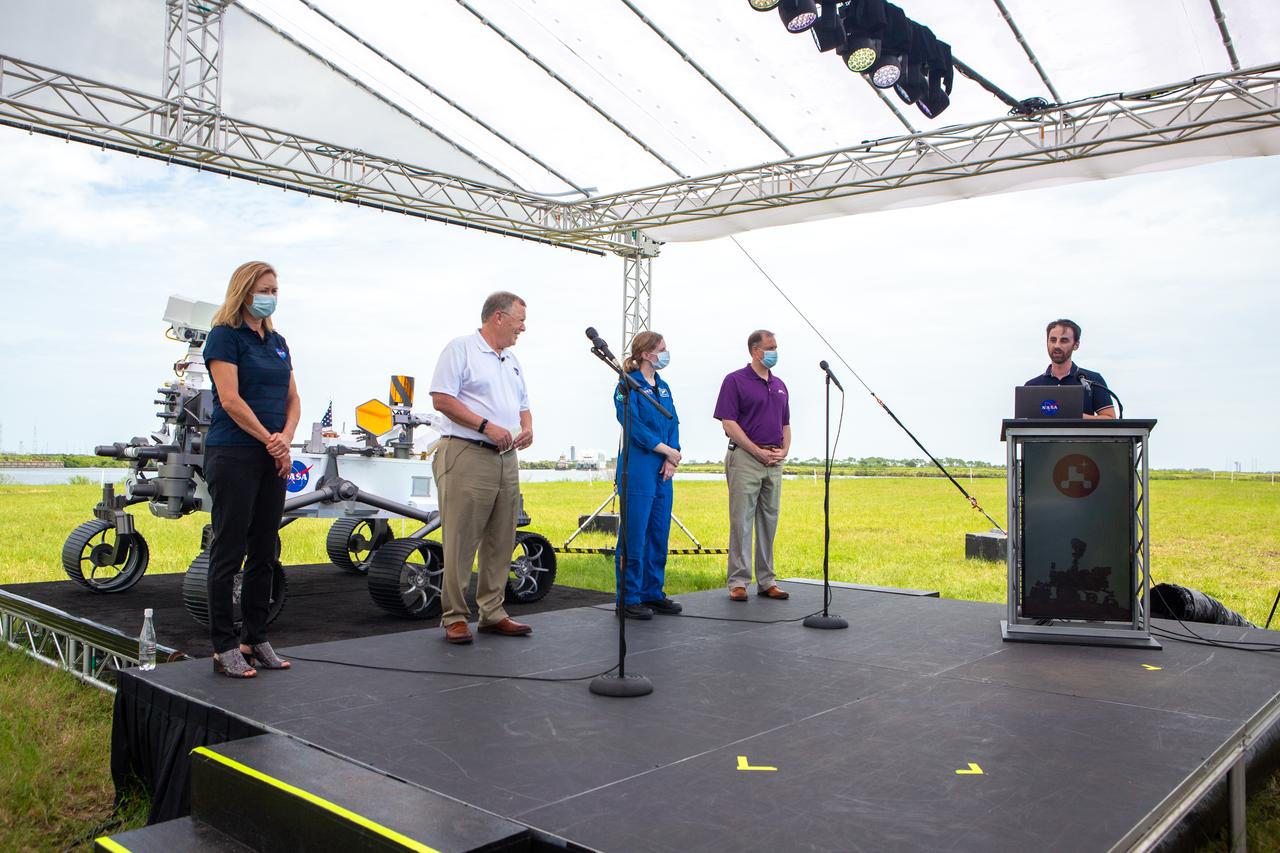
Joshua Santora, at the podium, NASA Communications, moderates a Mars 2020 NASA Social at Kennedy Space Center’s News Center in Florida on July 29, 2020. Participants from left are Kennedy Deputy Director Janet Petro, NASA Deputy Administrator Jim Morhard, NASA astronaut Zena Cardman, and NASA Administrator Jim Bridenstine. The Mars Perseverance rover and Ingenuity helicopter are scheduled to launch July 30, on a United Launch Alliance Atlas V 541 rocket from Space Launch Complex 41 at nearby Cape Canaveral Air Force Station. The rover is part of NASA’s Mars Exploration Program, a long-term effort of robotic exploration of the Red Planet. The rover will search for habitable conditions in the ancient past and signs of past microbial life on Mars. The Launch Services Program at Kennedy is responsible for launch management.
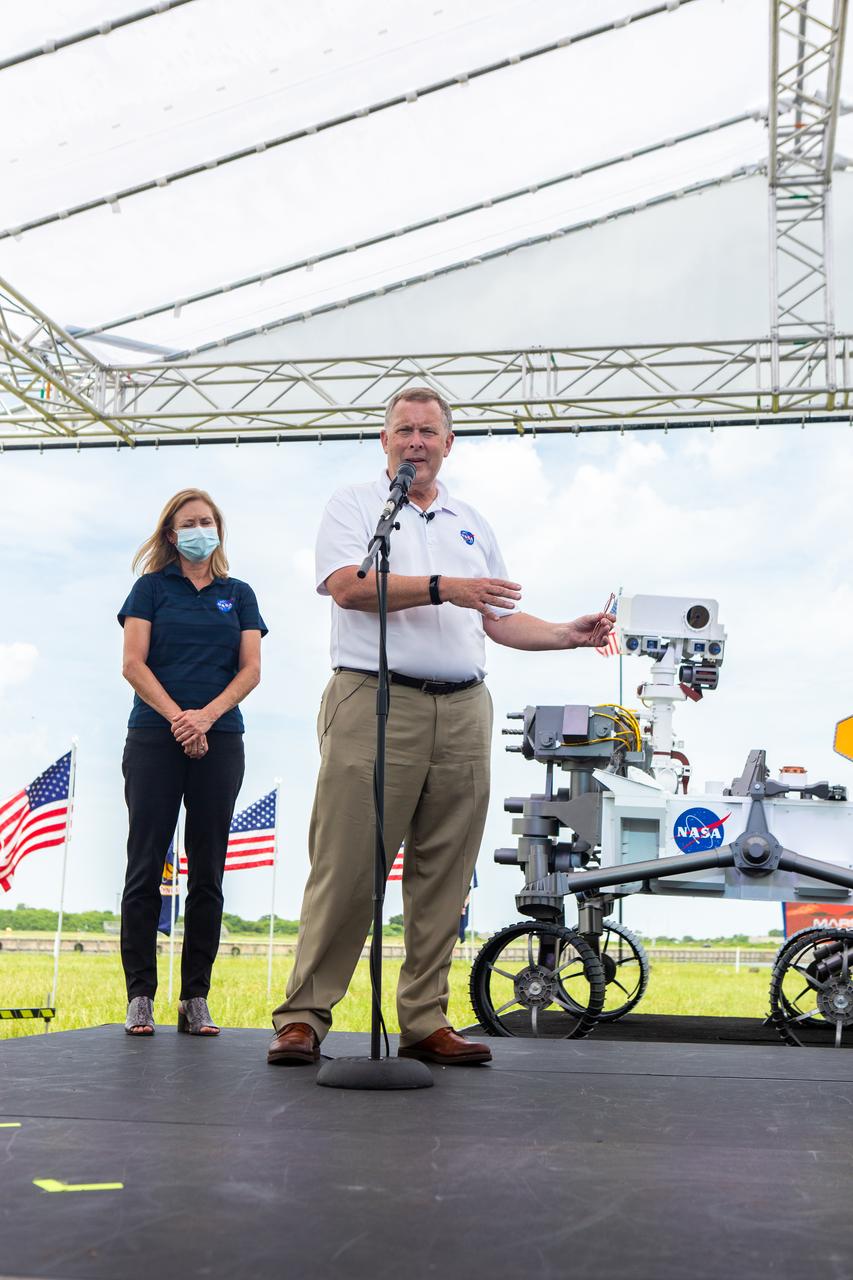
NASA Deputy Administrator Jim Morhard answers questions during a Mars 2020 NASA Social at Kennedy Space Center’s News Center in Florida on July 29, 2020. Standing behind him is Kennedy Deputy Director Janet Petro. The Mars Perseverance rover and Ingenuity helicopter are scheduled to launch July 30, on a United Launch Alliance Atlas V 541 rocket from Space Launch Complex 41 at nearby Cape Canaveral Air Force Station. The rover is part of NASA’s Mars Exploration Program, a long-term effort of robotic exploration of the Red Planet. The rover will search for habitable conditions in the ancient past and signs of past microbial life on Mars. The Launch Services Program at Kennedy is responsible for launch management.
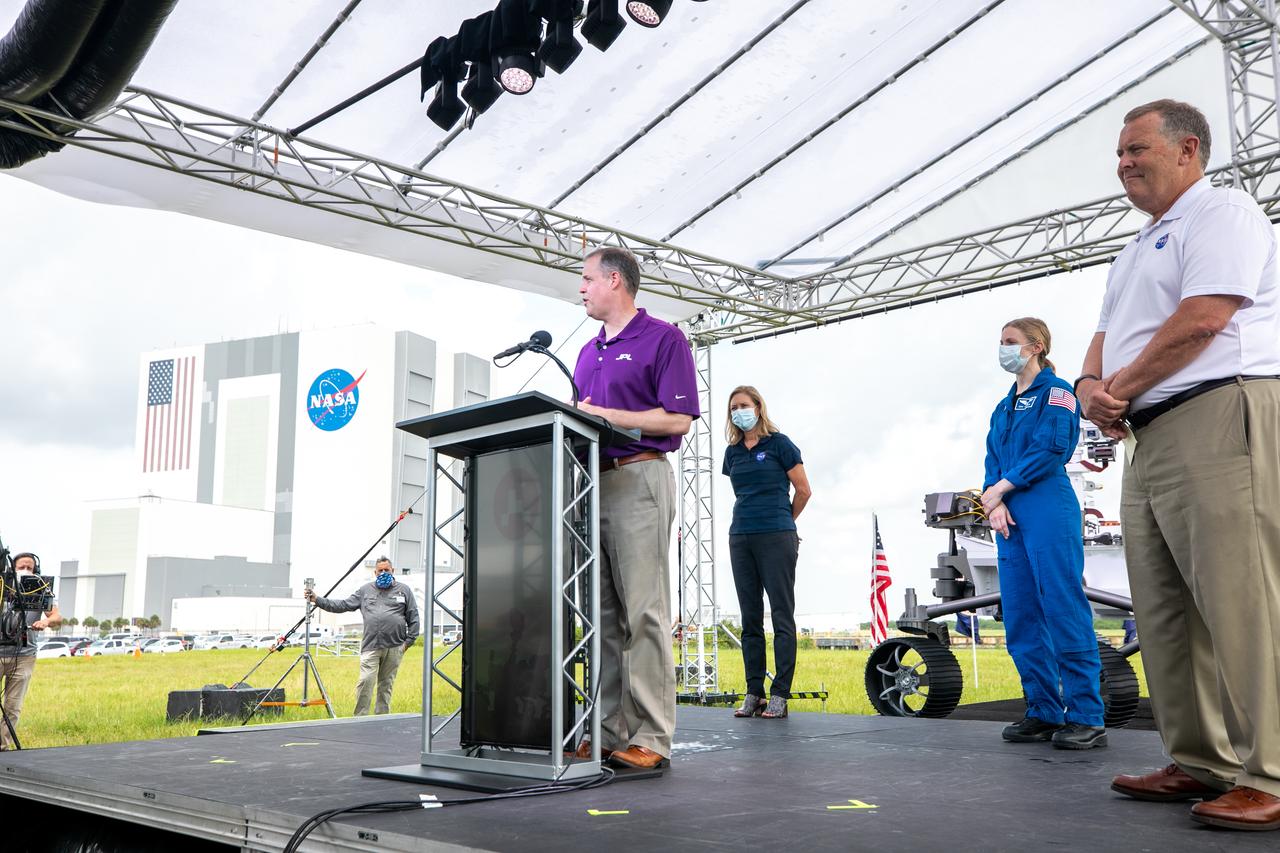
NASA Administrator Jim Bridenstine, far left, conducts a briefing at the agency’s Kennedy Space Center in Florida on July 29, 2020, in advance of the launch of the Mars 2020 Perseverance rover and Ingenuity helicopter scheduled for July 30. Joining him, from left are Kennedy Deputy Director Janet Petro, NASA astronaut Zena Cardman, and NASA Deputy Administrator Jim Morhard. Mars 2020 will lift off aboard a United Launch Alliance Atlas V 541 rocket from Space Launch Complex 41 at Cape Canaveral Air Force Station. The two-hour launch window opens at 7:50 a.m. EDT. NASA’s Launch Services Program, based at Kennedy, is managing the launch.
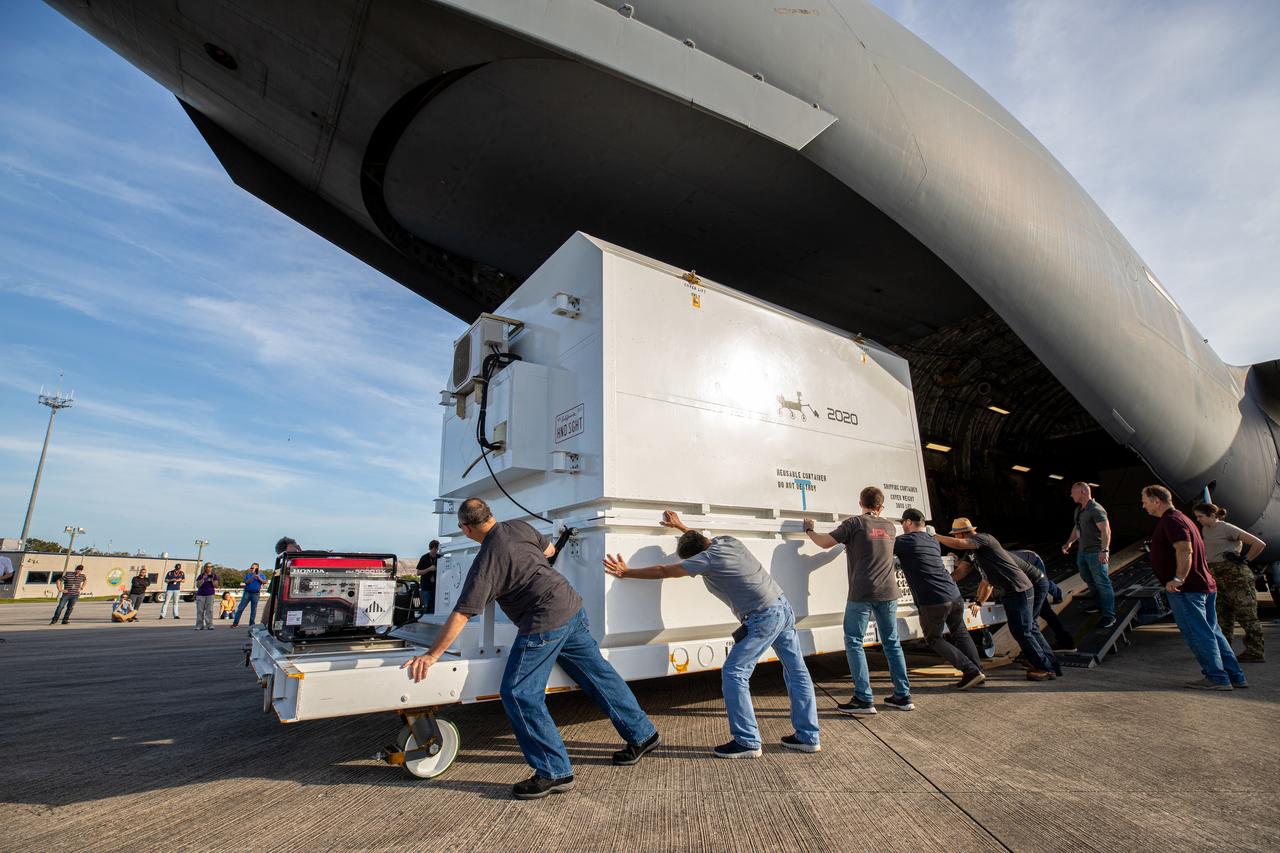
The Mars 2020 rover is offloaded from a C-17 aircraft at the Launch and Landing Facility, formerly known as the Shuttle Landing Facility, at NASA’s Kennedy Space Center on Feb. 12, 2020. The rover made a cross-country trip to the Florida spaceport that started at NASA’s Jet Propulsion Laboratory in Pasadena, California. The mission, targeted for mid-July 2020, will launch aboard an Atlas V 541 rocket from Cape Canaveral Air Force Station. NASA’s Launch Services Program based at Kennedy is managing the launch.

The Mars 2020 rover arrives at the Launch and Landing Facility, formerly known as the Shuttle Landing Facility, at NASA’s Kennedy Space Center on Feb. 12, 2020. The rover was delivered to the Florida spaceport on a C-17 aircraft, making a cross-country trip that started at NASA’s Jet Propulsion Laboratory in Pasadena, California. The mission, targeted for mid-July 2020, will launch aboard an Atlas V 541 rocket from Cape Canaveral Air Force Station. NASA’s Launch Services Program based at Kennedy is managing the launch.
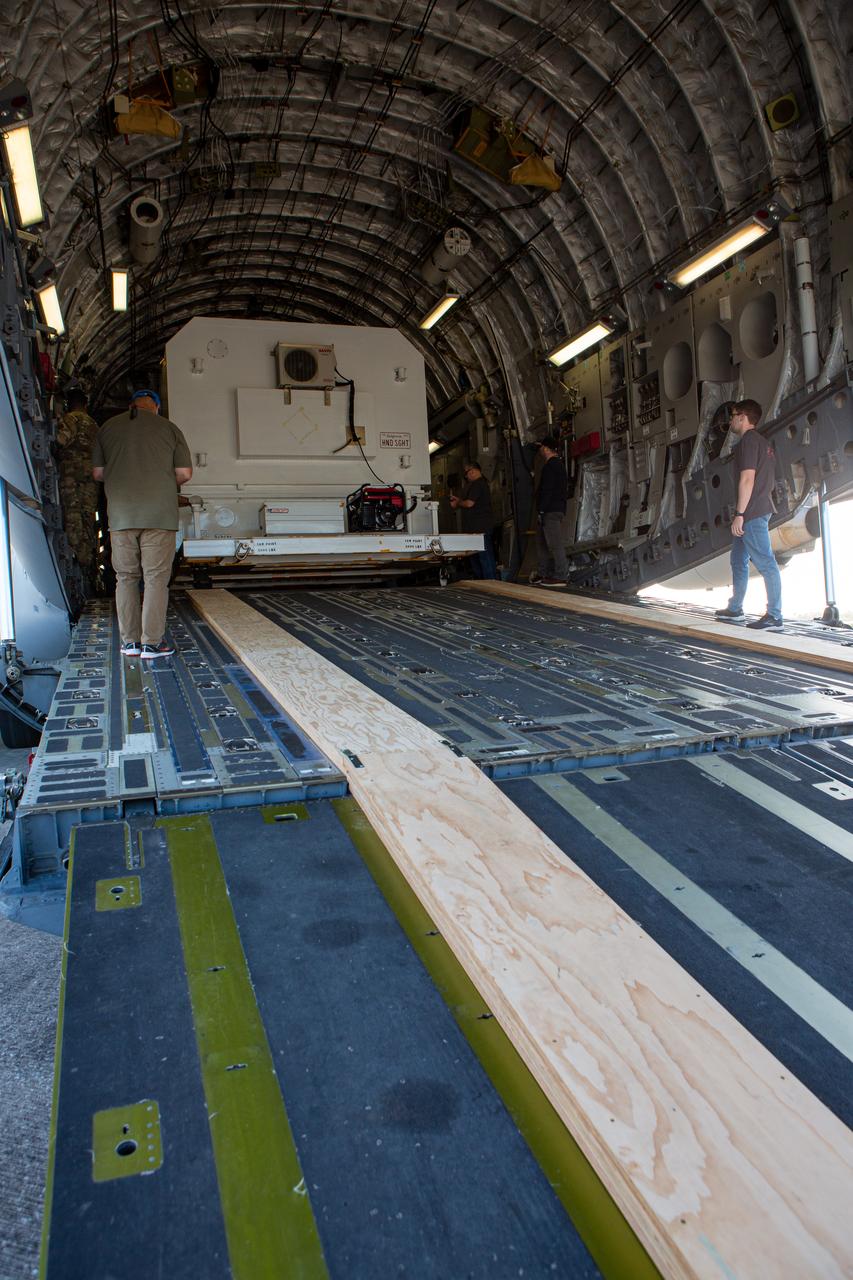
The Mars 2020 rover arrives at the Launch and Landing Facility, formerly known as the Shuttle Landing Facility, at NASA’s Kennedy Space Center on Feb. 12, 2020. The rover was delivered to the Florida spaceport on a C-17 aircraft, making a cross-country trip that started at NASA’s Jet Propulsion Laboratory in Pasadena, California. The mission, targeted for mid-July 2020, will launch aboard an Atlas V 541 rocket from Cape Canaveral Air Force Station. NASA’s Launch Services Program based at Kennedy is managing the launch.
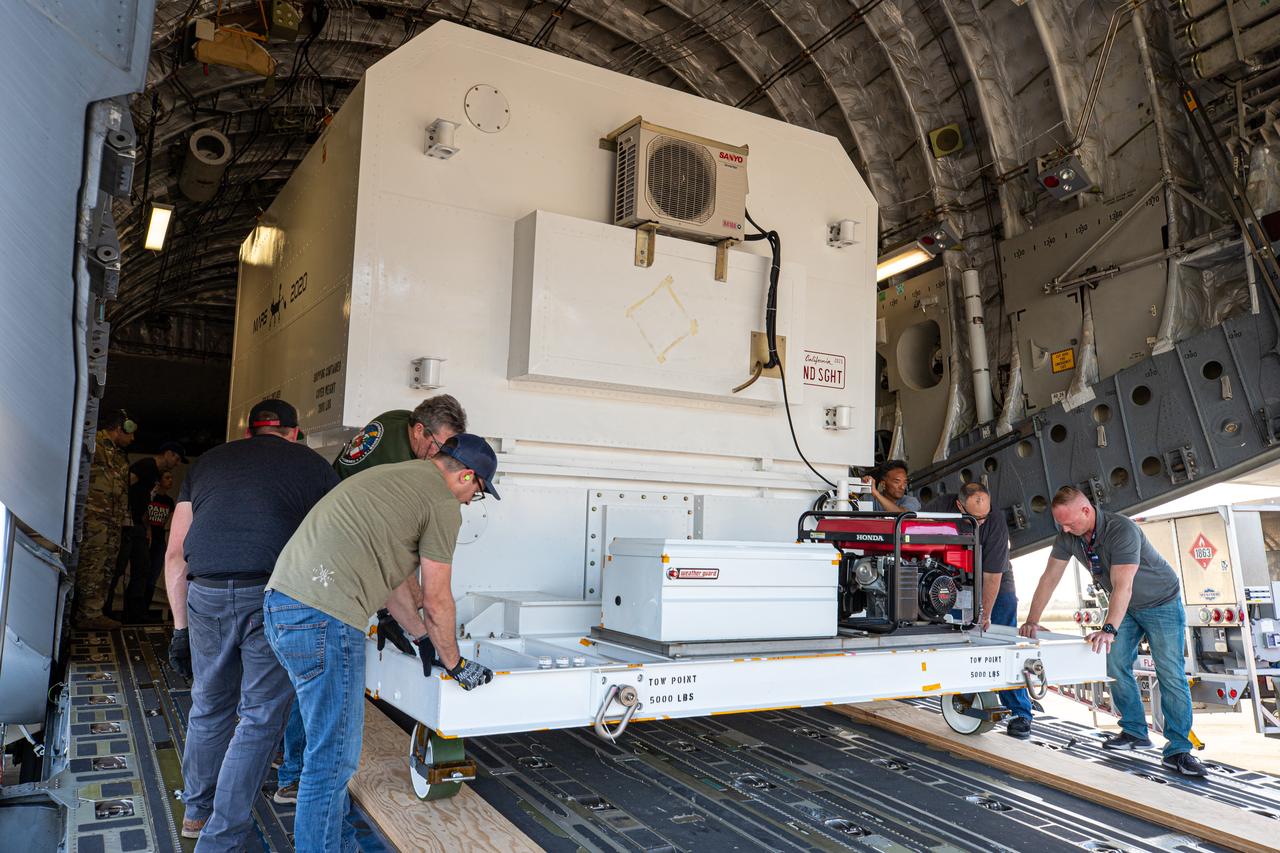
The Mars 2020 rover is offloaded from a C-17 aircraft at the Launch and Landing Facility, formerly known as the Shuttle Landing Facility, at NASA’s Kennedy Space Center on Feb. 12, 2020. The rover made a cross-country trip to the Florida spaceport that started at NASA’s Jet Propulsion Laboratory in Pasadena, California. The mission, targeted for mid-July 2020, will launch aboard an Atlas V 541 rocket from Cape Canaveral Air Force Station. NASA’s Launch Services Program based at Kennedy is managing the launch.
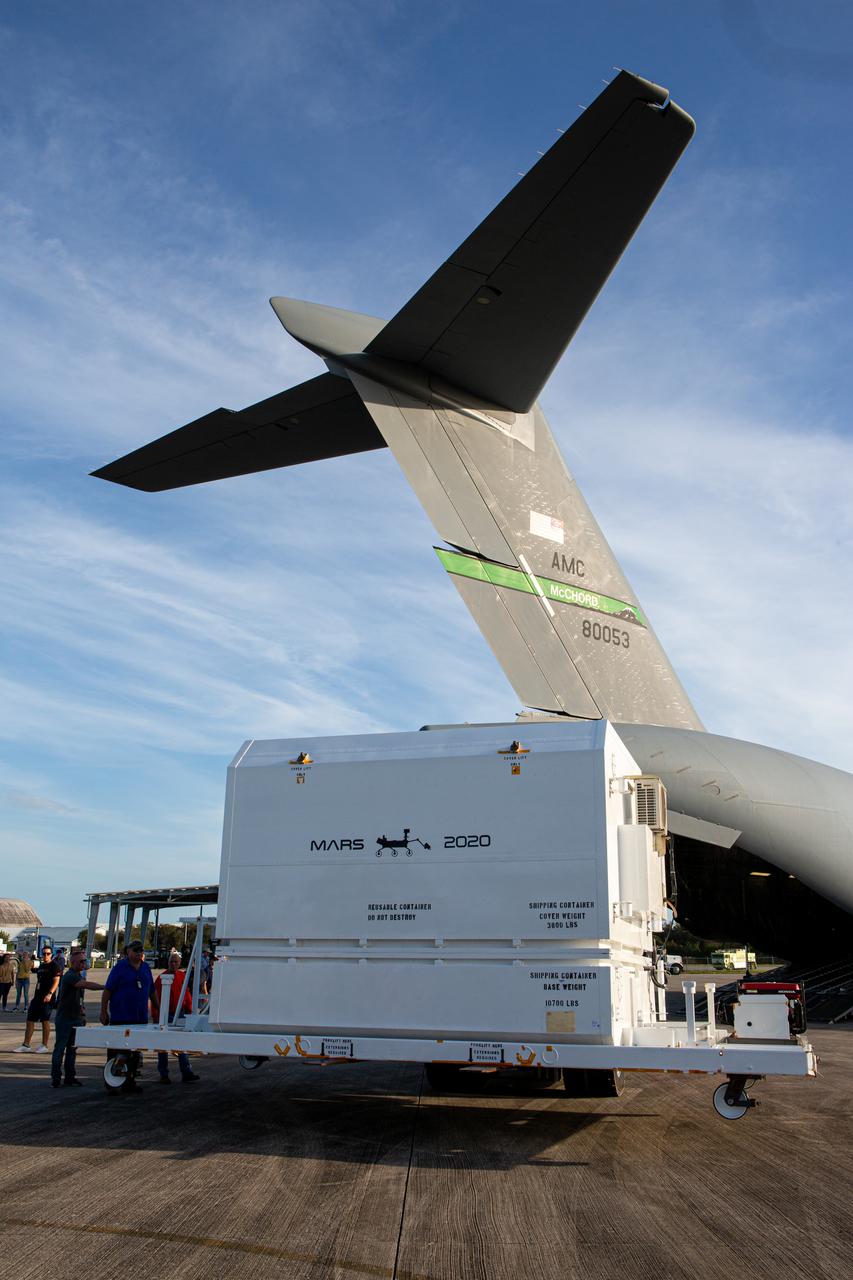
The Mars 2020 rover is pictured outside of the C-17 aircraft that delivered it to the Launch and Landing Facility, formerly known as the Shuttle Landing Facility, at NASA’s Kennedy Space Center in Florida on Feb. 12, 2020. The rover made a cross-country trip that started at NASA’s Jet Propulsion Laboratory in Pasadena, California. The mission, targeted for mid-July 2020, will launch aboard an Atlas V 541 rocket from Cape Canaveral Air Force Station. NASA’s Launch Services Program based at Kennedy is managing the launch.
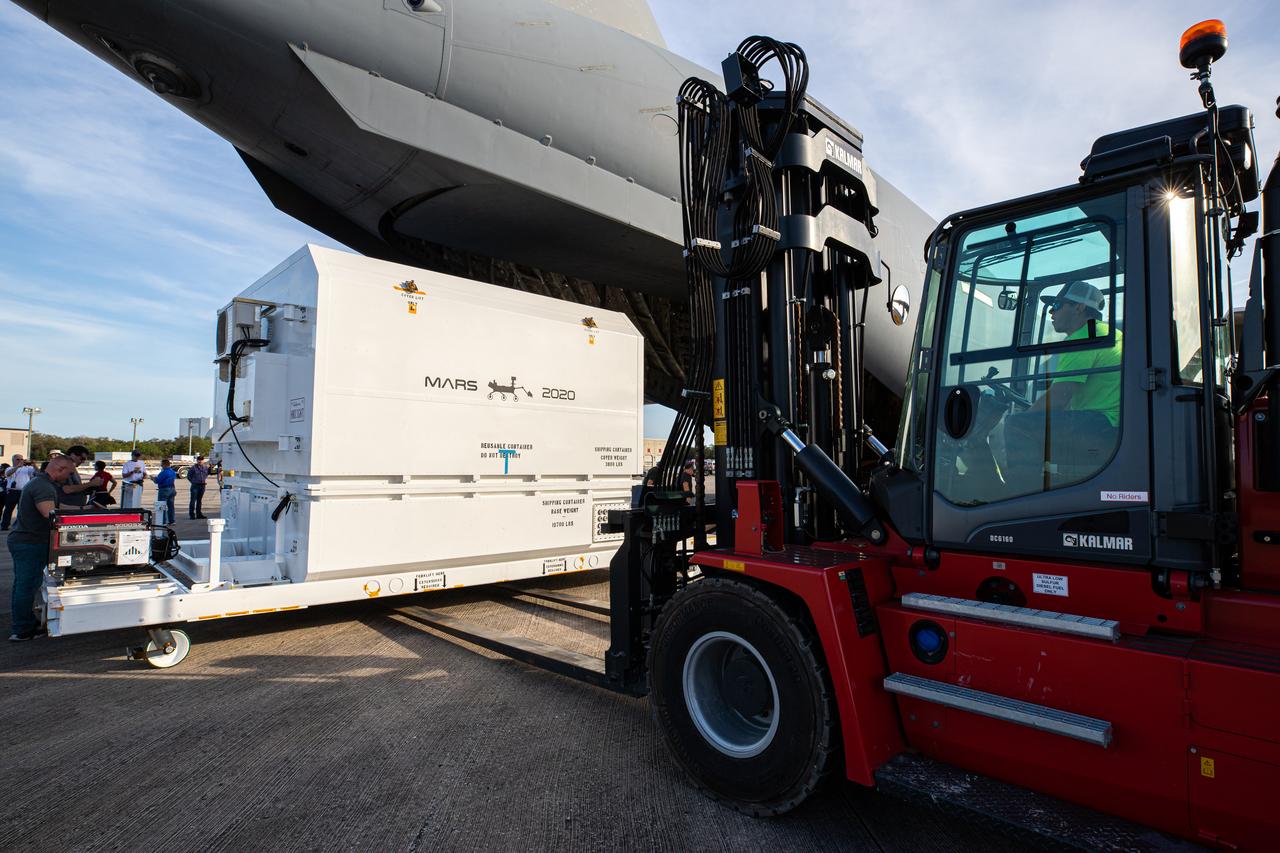
The Mars 2020 rover is offloaded from a C-17 aircraft at the Launch and Landing Facility, formerly known as the Shuttle Landing Facility, at NASA’s Kennedy Space Center on Feb. 12, 2020. The rover made a cross-country trip to the Florida spaceport that started at NASA’s Jet Propulsion Laboratory in Pasadena, California. The mission, targeted for mid-July 2020, will launch aboard an Atlas V 541 rocket from Cape Canaveral Air Force Station. NASA’s Launch Services Program based at Kennedy is managing the launch.

The Mars 2020 rover is offloaded from a C-17 aircraft at the Launch and Landing Facility, formerly known as the Shuttle Landing Facility, at NASA’s Kennedy Space Center on Feb. 12, 2020. The rover made a cross-country trip to the Florida spaceport that started at NASA’s Jet Propulsion Laboratory in Pasadena, California. The mission, targeted for mid-July 2020, will launch aboard an Atlas V 541 rocket from Cape Canaveral Air Force Station. NASA’s Launch Services Program based at Kennedy is managing the launch.
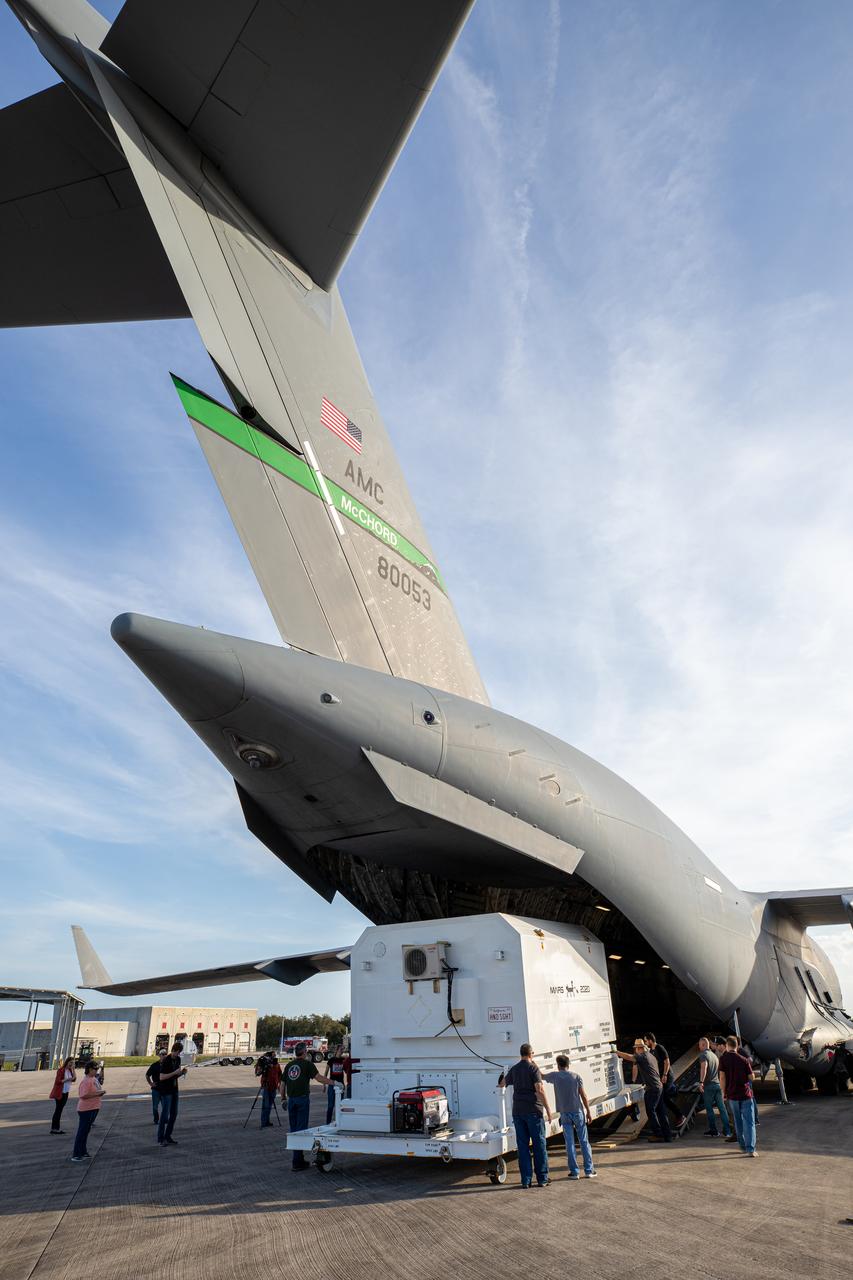
The Mars 2020 rover is offloaded from a C-17 aircraft at the Launch and Landing Facility, formerly known as the Shuttle Landing Facility, at NASA’s Kennedy Space Center on Feb. 12, 2020. The rover made a cross-country trip to the Florida spaceport that started at NASA’s Jet Propulsion Laboratory in Pasadena, California. The mission, targeted for mid-July 2020, will launch aboard an Atlas V 541 rocket from Cape Canaveral Air Force Station. NASA’s Launch Services Program based at Kennedy is managing the launch.
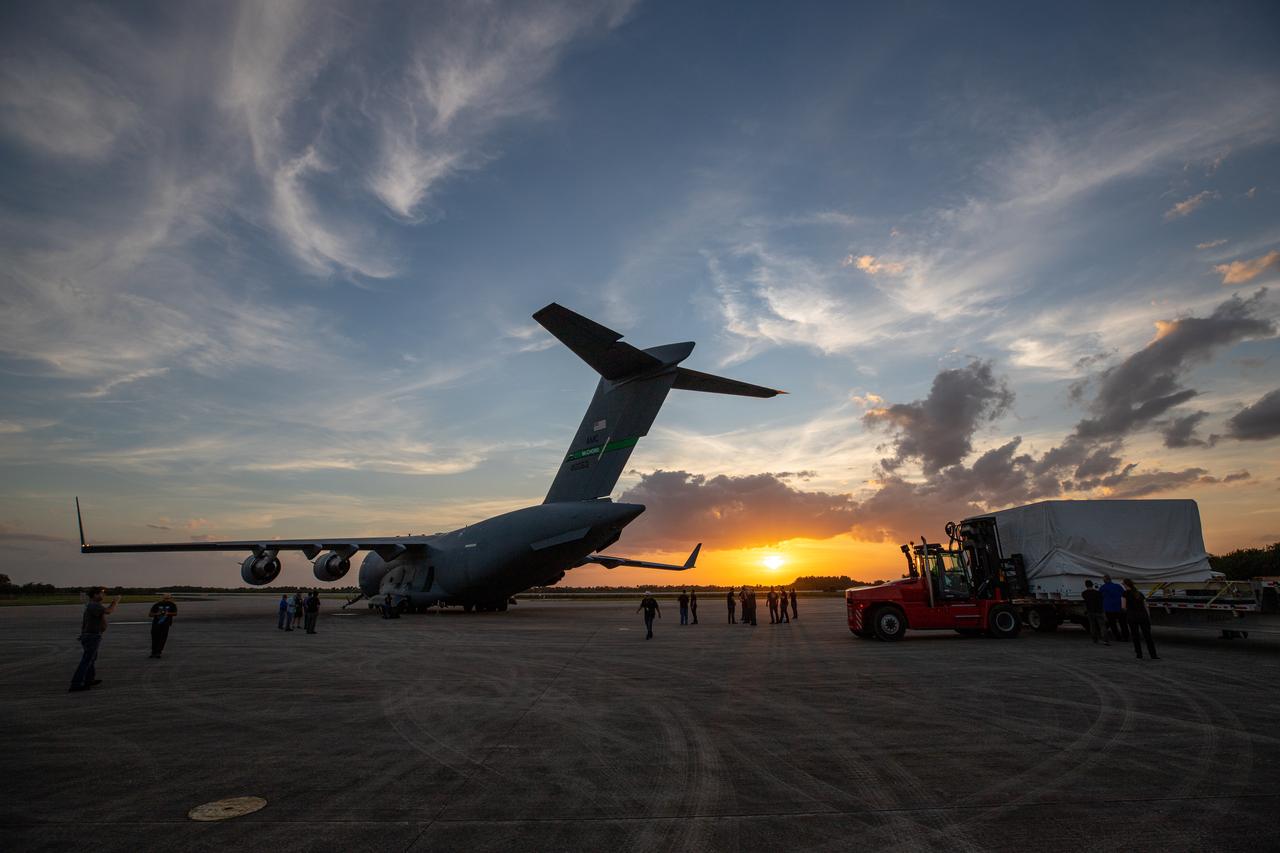
The Mars 2020 rover arrives at the Launch and Landing Facility, formerly known as the Shuttle Landing Facility, at NASA’s Kennedy Space Center on Feb. 12, 2020. The rover was delivered to the Florida spaceport on a C-17 aircraft, making a cross-country trip that started at NASA’s Jet Propulsion Laboratory in Pasadena, California. The mission, targeted for mid-July 2020, will launch aboard an Atlas V 541 rocket from Cape Canaveral Air Force Station. NASA’s Launch Services Program based at Kennedy is managing the launch.
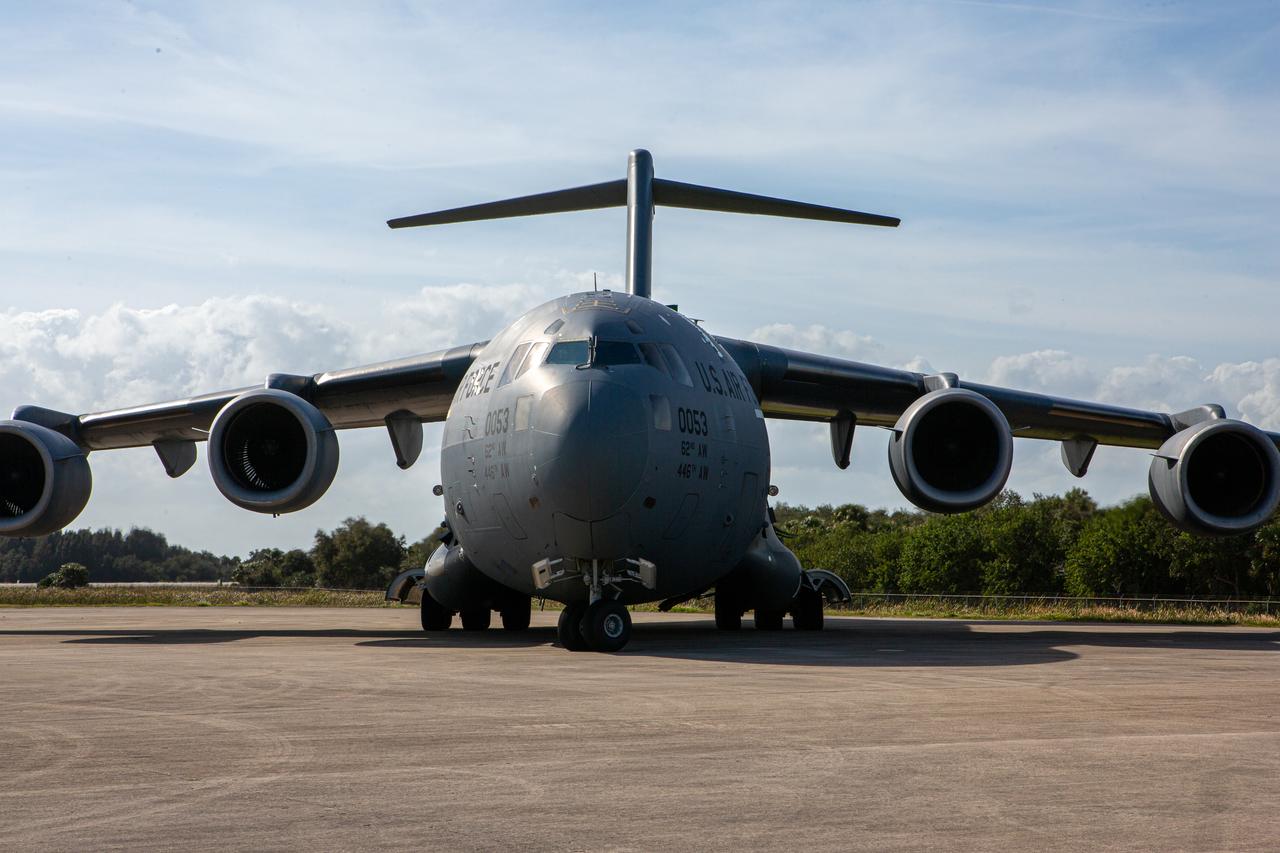
The C-17 aircraft that delivered the Mars 2020 rover sits at the Launch and Landing Facility, formerly known as the Shuttle Landing Facility, at NASA’s Kennedy Space Center on Feb. 12, 2020. The rover made a cross-country trip to the Florida spaceport that started at NASA’s Jet Propulsion Laboratory in Pasadena, California. The mission, targeted for mid-July 2020, will launch aboard an Atlas V 541 rocket from Cape Canaveral Air Force Station. NASA’s Launch Services Program based at Kennedy is managing the launch.
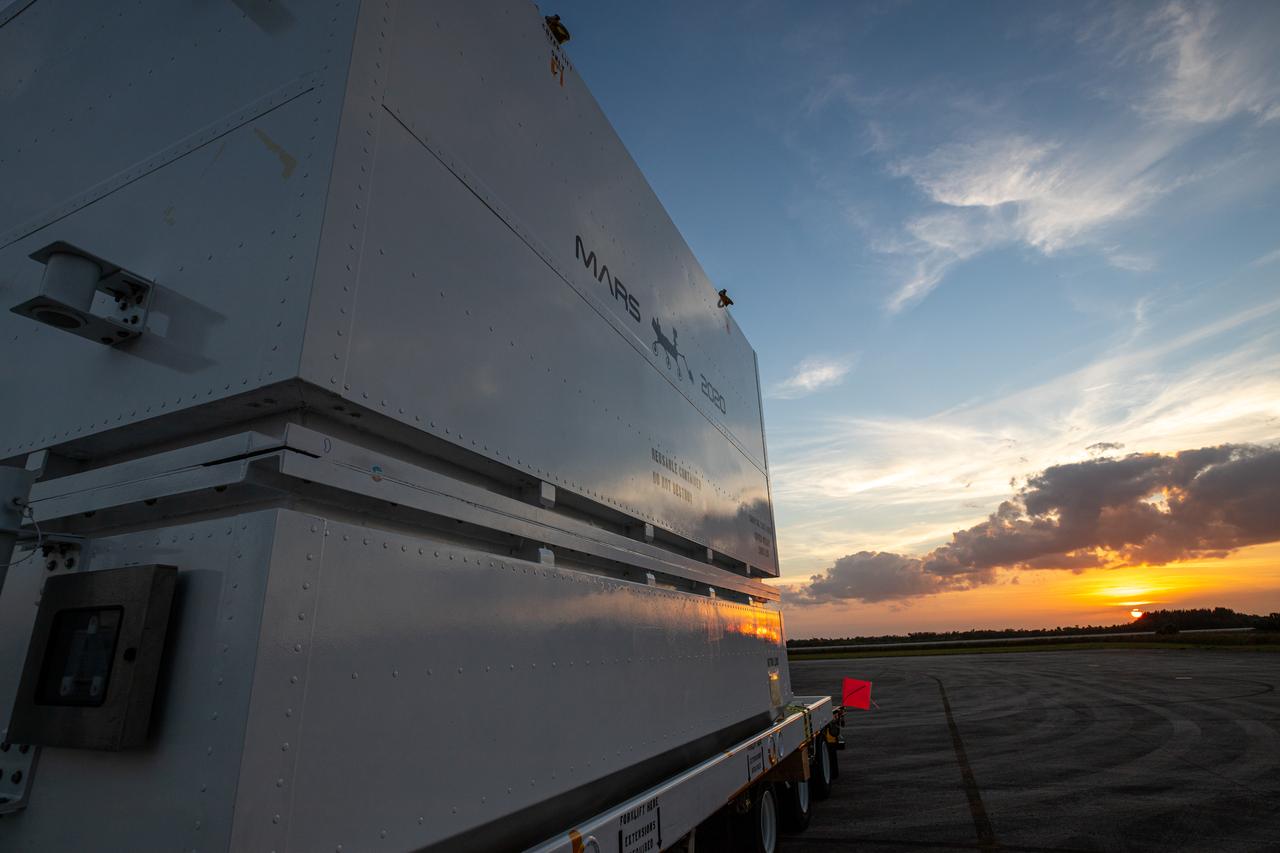
The Mars 2020 is pictured at the Launch and Landing Facility, formerly known as the Shuttle Landing Facility, at NASA’s Kennedy Space Center on Feb. 12, 2020. The rover was delivered to the Florida spaceport on a C-17 aircraft, making a cross-country trip that started at NASA’s Jet Propulsion Laboratory in Pasadena, California. The mission, targeted for mid-July 2020, will launch aboard an Atlas V 541 rocket from Cape Canaveral Air Force Station. NASA’s Launch Services Program based at Kennedy is managing the launch.
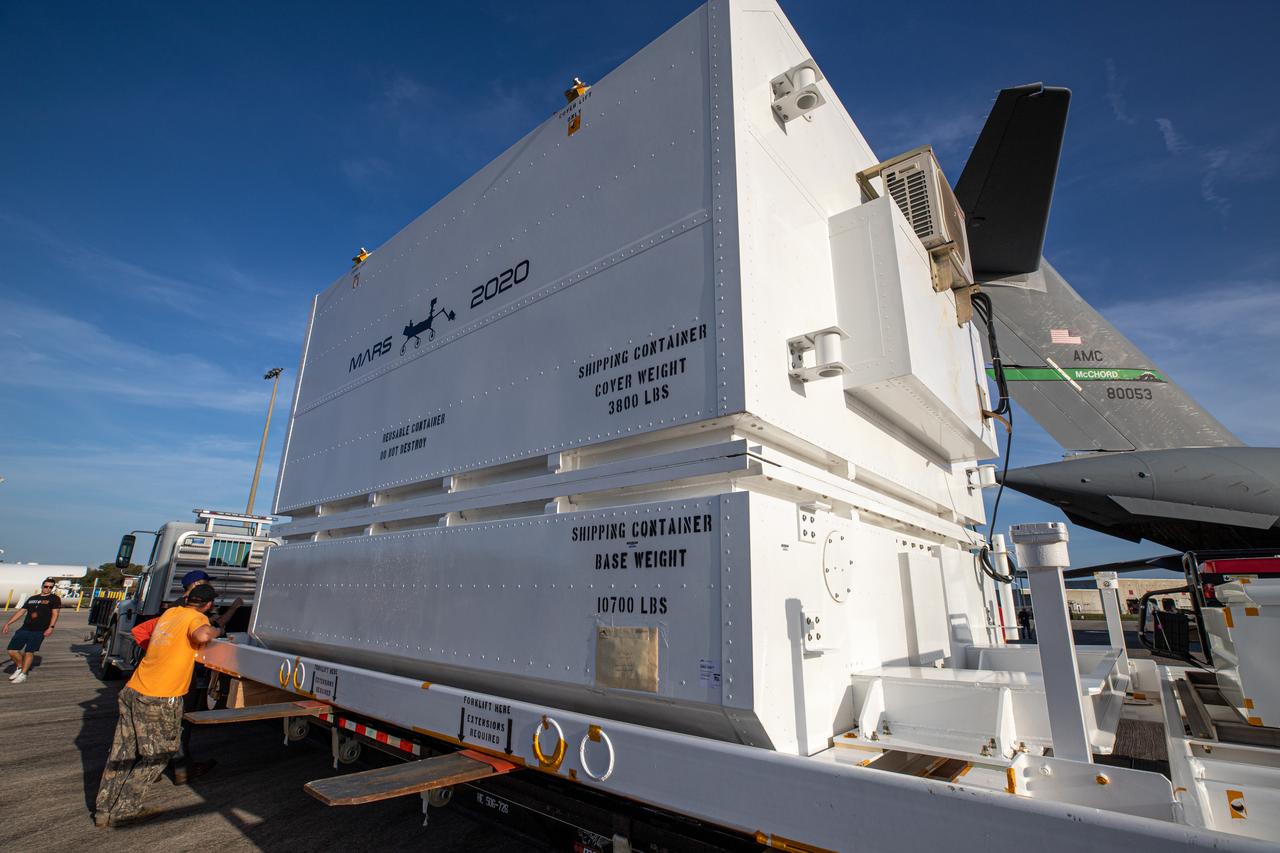
The Mars 2020 rover is offloaded from a C-17 aircraft at the Launch and Landing Facility, formerly known as the Shuttle Landing Facility, at NASA’s Kennedy Space Center on Feb. 12, 2020. The rover made a cross-country trip to the Florida spaceport that started at NASA’s Jet Propulsion Laboratory in Pasadena, California. The mission, targeted for mid-July 2020, will launch aboard an Atlas V 541 rocket from Cape Canaveral Air Force Station. NASA’s Launch Services Program based at Kennedy is managing the launch.
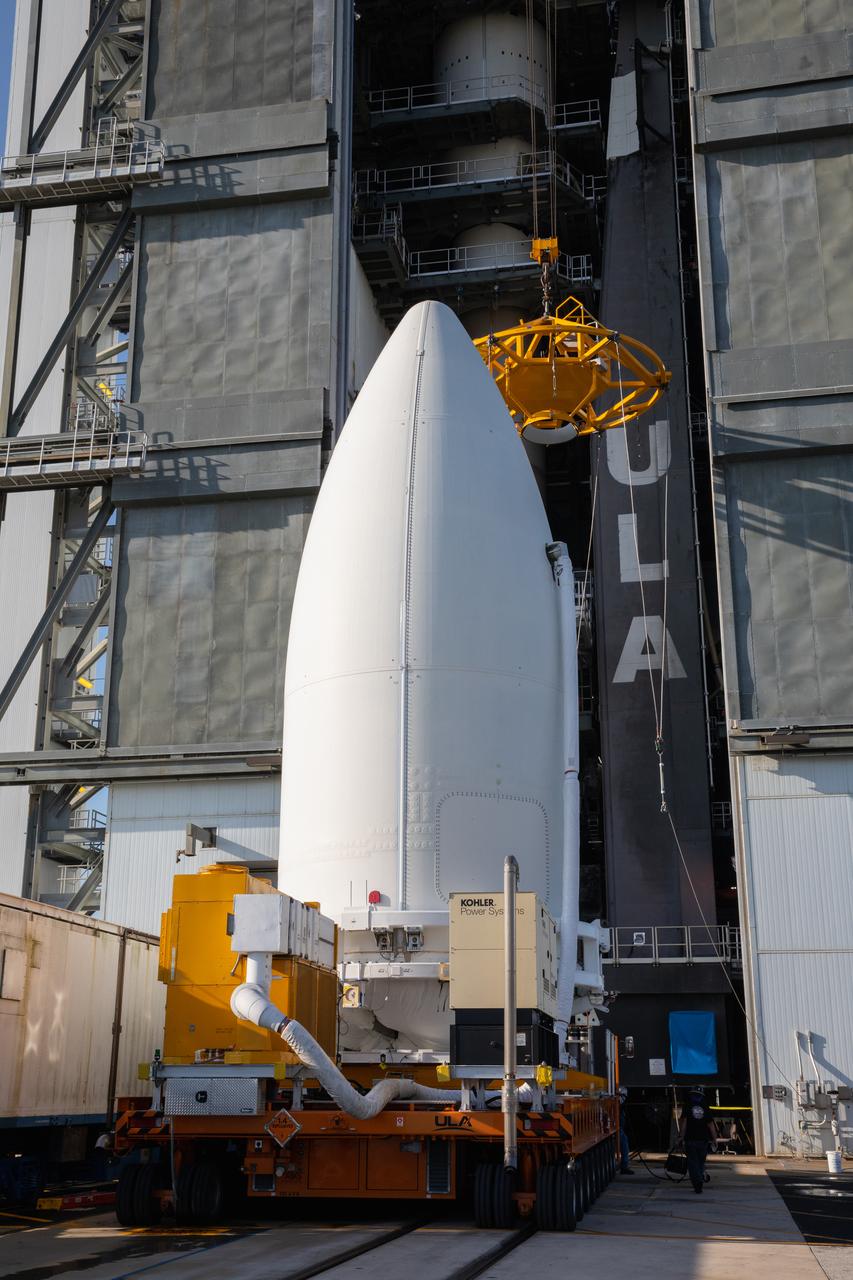
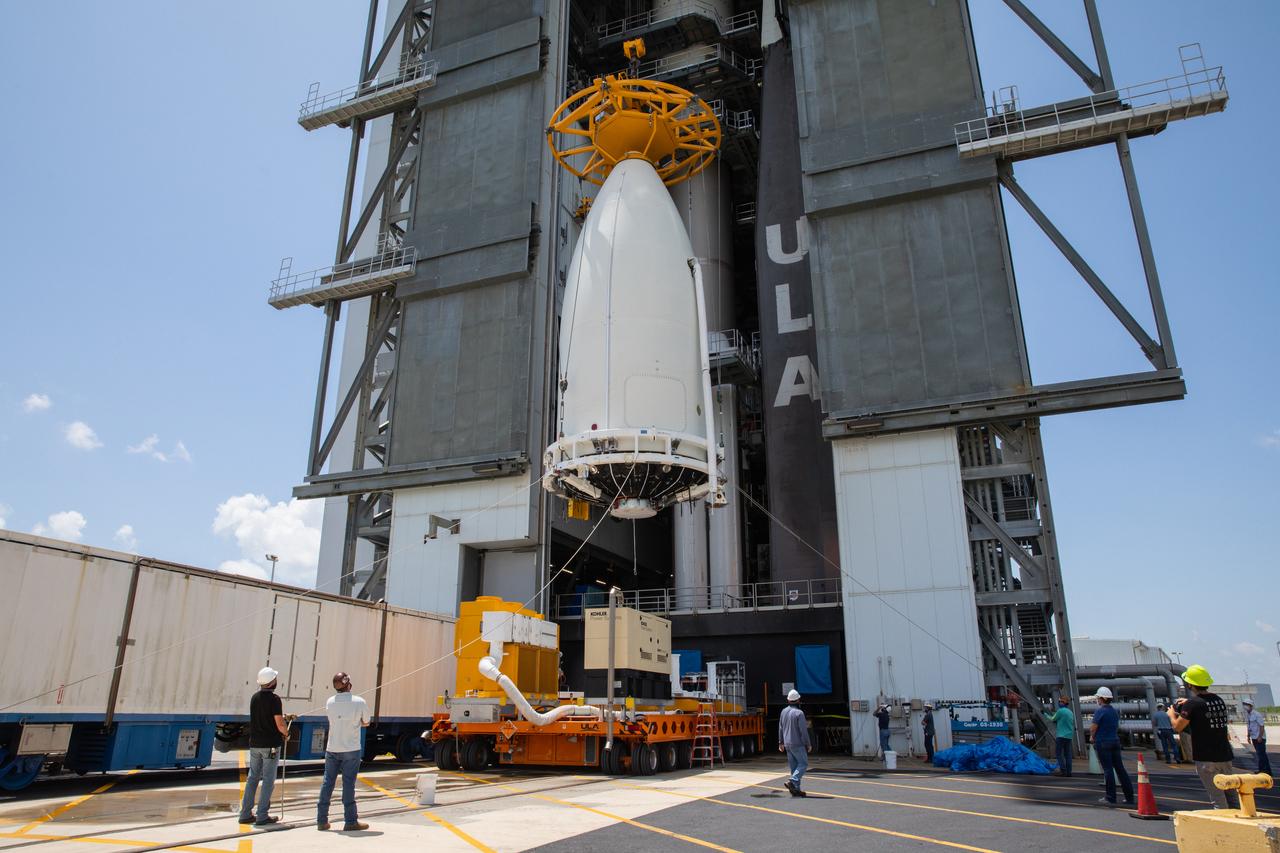
Preparations are underway to lift the United Launch Alliance (ULA) payload fairing with NASA’s Mars 2020 Perseverance rover secured inside up into the Vertical Integration Facility (VIF) at Space Launch Complex 41 at Cape Canaveral Air Force Station in Florida on July 7, 2020. Inside the VIF, the payload fairing will be lifted up by crane and secured on the ULA Atlas V rocket. The Mars Perseverance rover is scheduled to launch atop the Atlas V 541 rocket from Pad 41 on July 30. The rover is part of NASA’s Mars Exploration Program, a long-term effort of robotic exploration of the Red Planet. The rover’s seven instruments will search for habitable conditions in the ancient past and signs of past microbial life on Mars. The Launch Services Program at Kennedy is responsible for launch management.
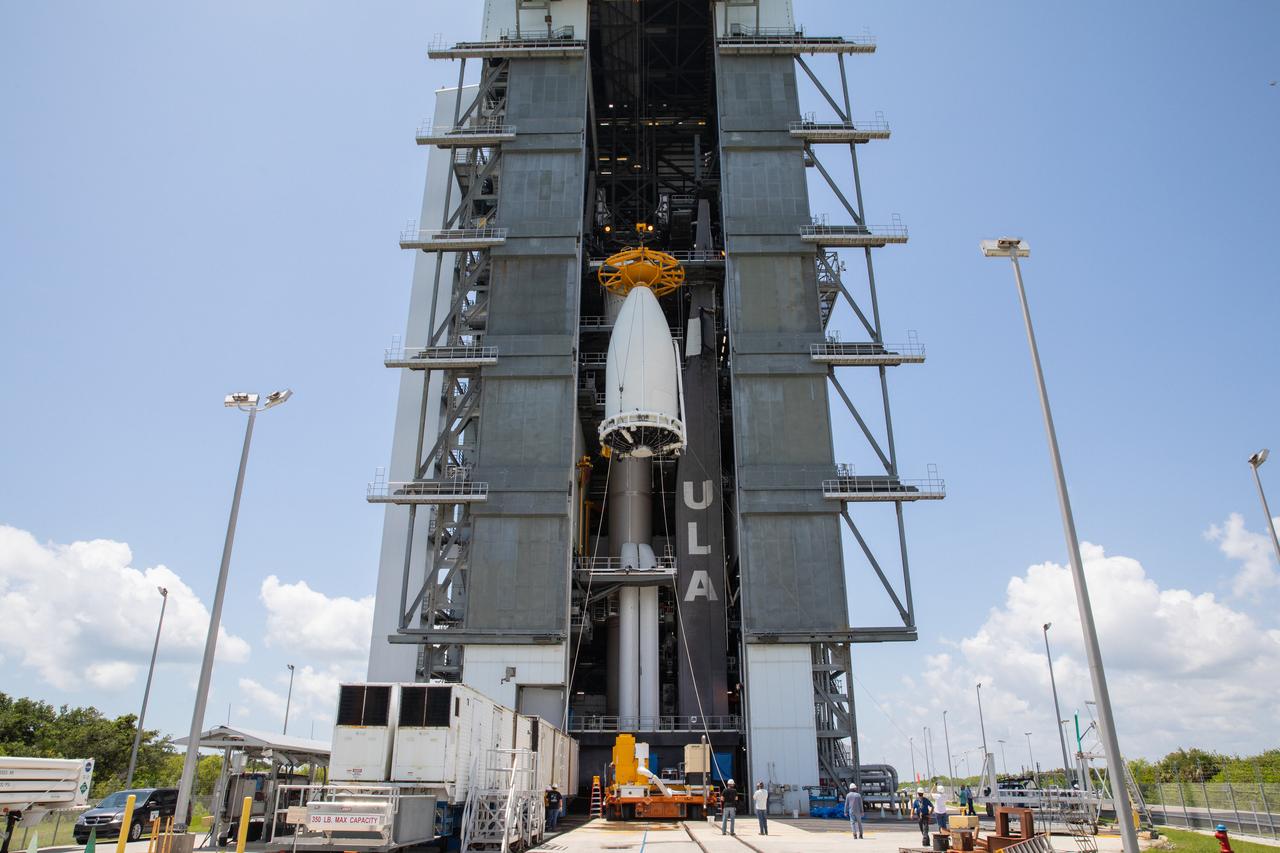
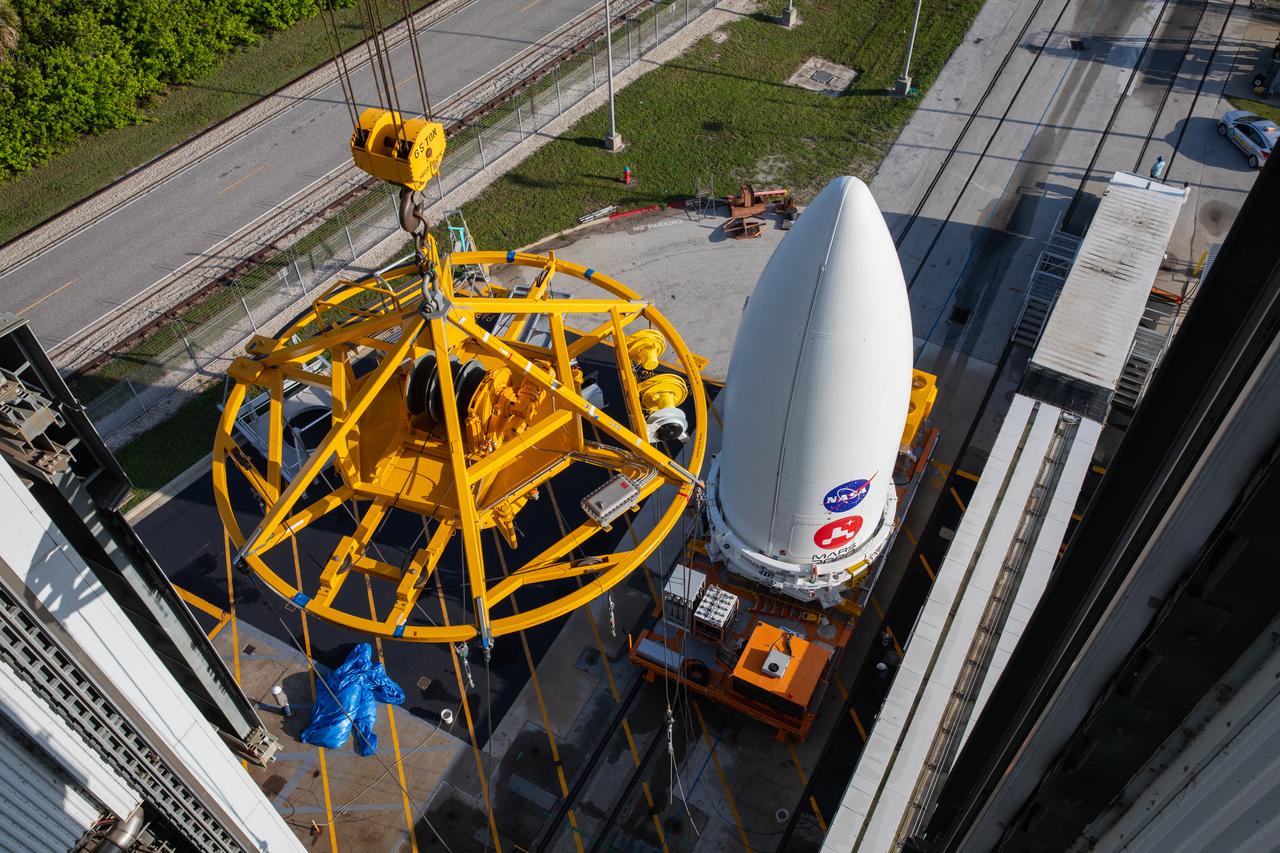
A crane lifts the United Launch Alliance (ULA) payload fairing with NASA’s Mars 2020 Perseverance rover secured inside at the Vertical Integration Facility (VIF) at Space Launch Complex 41 at Cape Canaveral Air Force Station in Florida on July 7, 2020. Inside the VIF, the payload fairing will be secured on the ULA Atlas V rocket. The Mars Perseverance rover is scheduled to launch atop the Atlas V 541 rocket from Pad 41 on July 30. The rover is part of NASA’s Mars Exploration Program, a long-term effort of robotic exploration of the Red Planet. The rover’s seven instruments will search for habitable conditions in the ancient past and signs of past microbial life on Mars. The Launch Services Program at Kennedy is responsible for launch management.
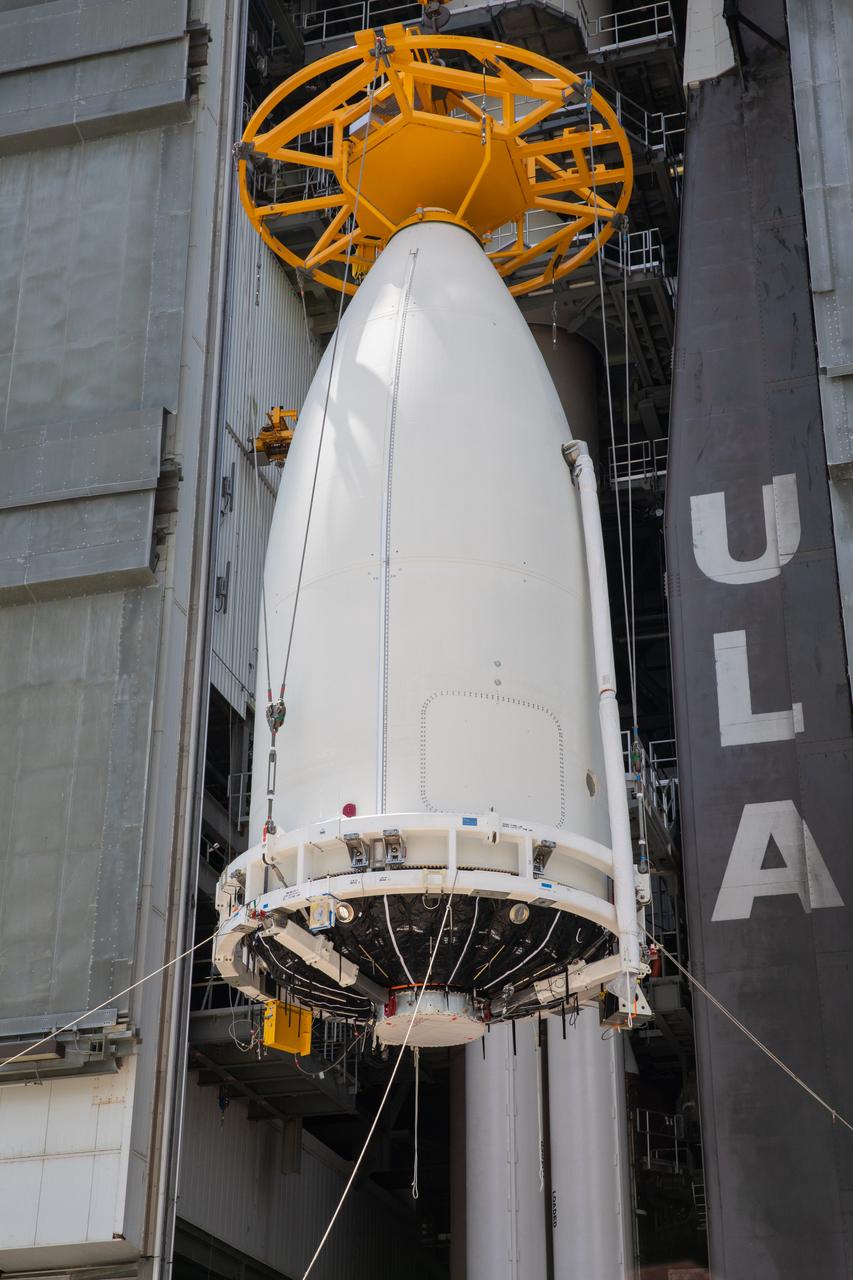
A crane lifts the United Launch Alliance (ULA) payload fairing with NASA’s Mars 2020 Perseverance rover secured inside at the Vertical Integration Facility (VIF) at Space Launch Complex 41 at Cape Canaveral Air Force Station in Florida on July 7, 2020. Inside the VIF, the payload fairing will be secured on the ULA Atlas V rocket. The Mars Perseverance rover is scheduled to launch atop the Atlas V 541 rocket from Pad 41 on July 30. The rover is part of NASA’s Mars Exploration Program, a long-term effort of robotic exploration of the Red Planet. The rover’s seven instruments will search for habitable conditions in the ancient past and signs of past microbial life on Mars. The Launch Services Program at Kennedy is responsible for launch management.
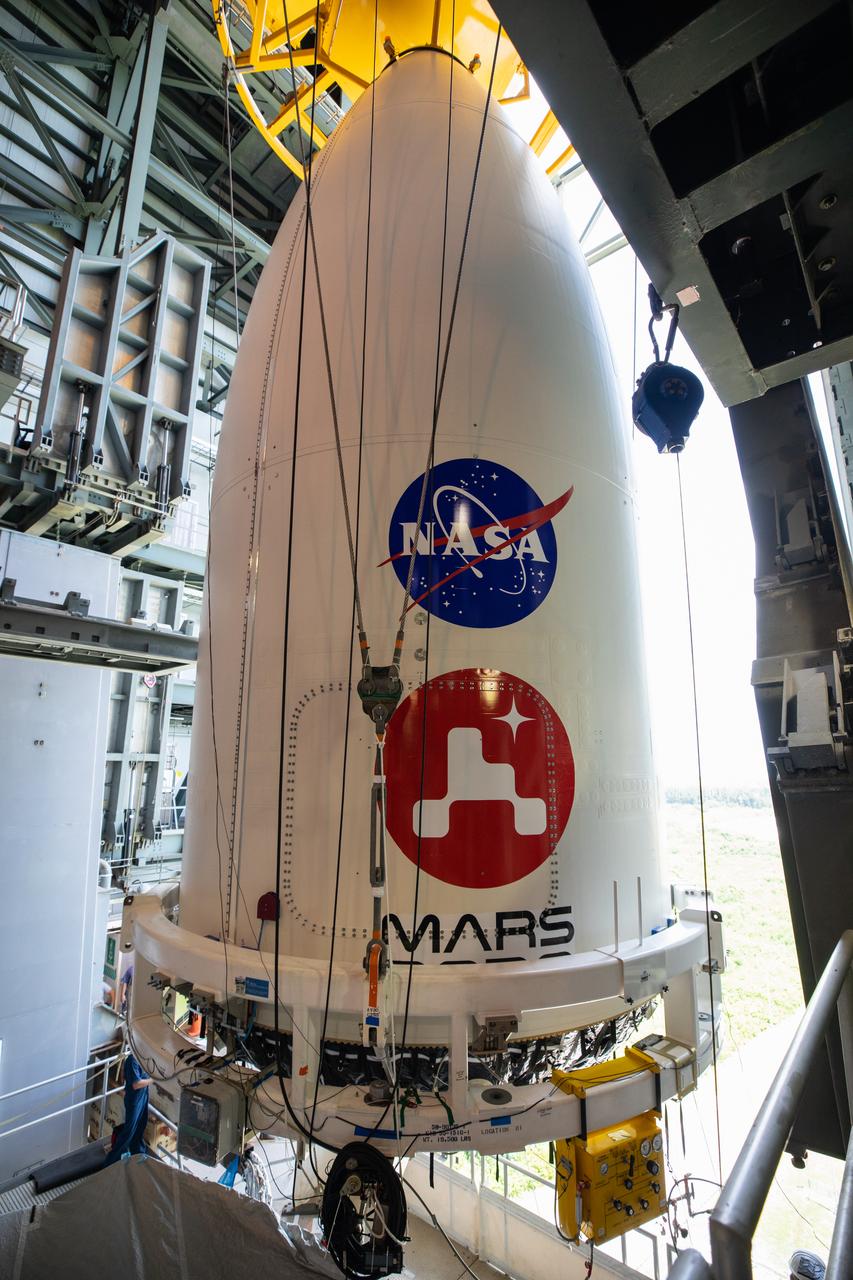
The United Launch Alliance (ULA) payload fairing with NASA’s Mars 2020 Perseverance rover secured inside is positioned on top of the ULA Atlas V rocket inside the Vertical Integration Facility (VIF) at Space Launch Complex 41 at Cape Canaveral Air Force Station in Florida on July 7, 2020. The payload fairing will be secured on the ULA Atlas V rocket. The Mars Perseverance rover is scheduled to launch atop the Atlas V 541 rocket from Pad 41 on July 30. The rover is part of NASA’s Mars Exploration Program, a long-term effort of robotic exploration of the Red Planet. The rover’s seven instruments will search for habitable conditions in the ancient past and signs of past microbial life on Mars. The Launch Services Program at Kennedy is responsible for launch management.
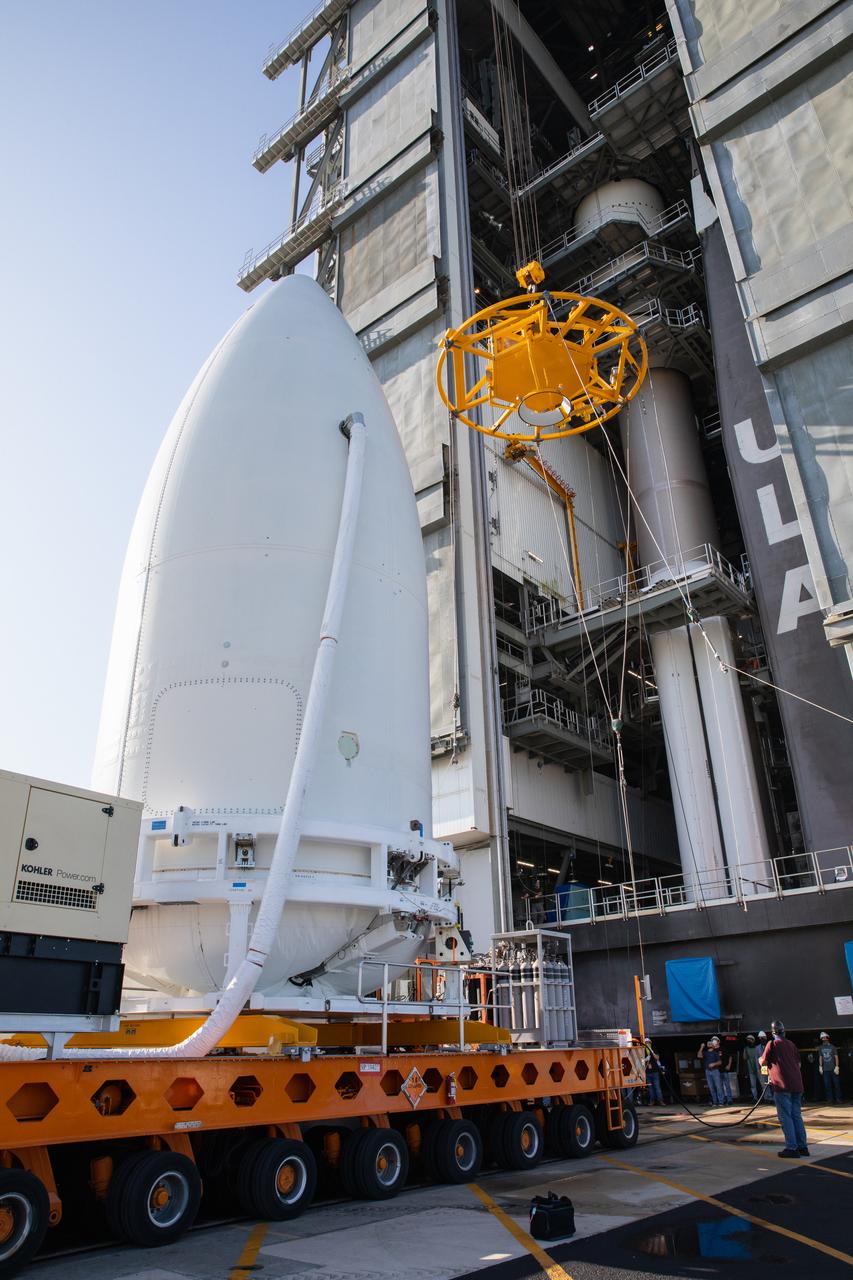
Preparations are underway to lift the United Launch Alliance (ULA) payload fairing with NASA’s Mars 2020 Perseverance rover secured inside up into the Vertical Integration Facility (VIF) at Space Launch Complex 41 at Cape Canaveral Air Force Station in Florida on July 7, 2020. Inside the VIF, the payload fairing will be lifted up by crane and secured on the ULA Atlas V rocket. The Mars Perseverance rover is scheduled to launch atop the Atlas V 541 rocket from Pad 41 on July 30. The rover is part of NASA’s Mars Exploration Program, a long-term effort of robotic exploration of the Red Planet. The rover’s seven instruments will search for habitable conditions in the ancient past and signs of past microbial life on Mars. The Launch Services Program at Kennedy is responsible for launch management.
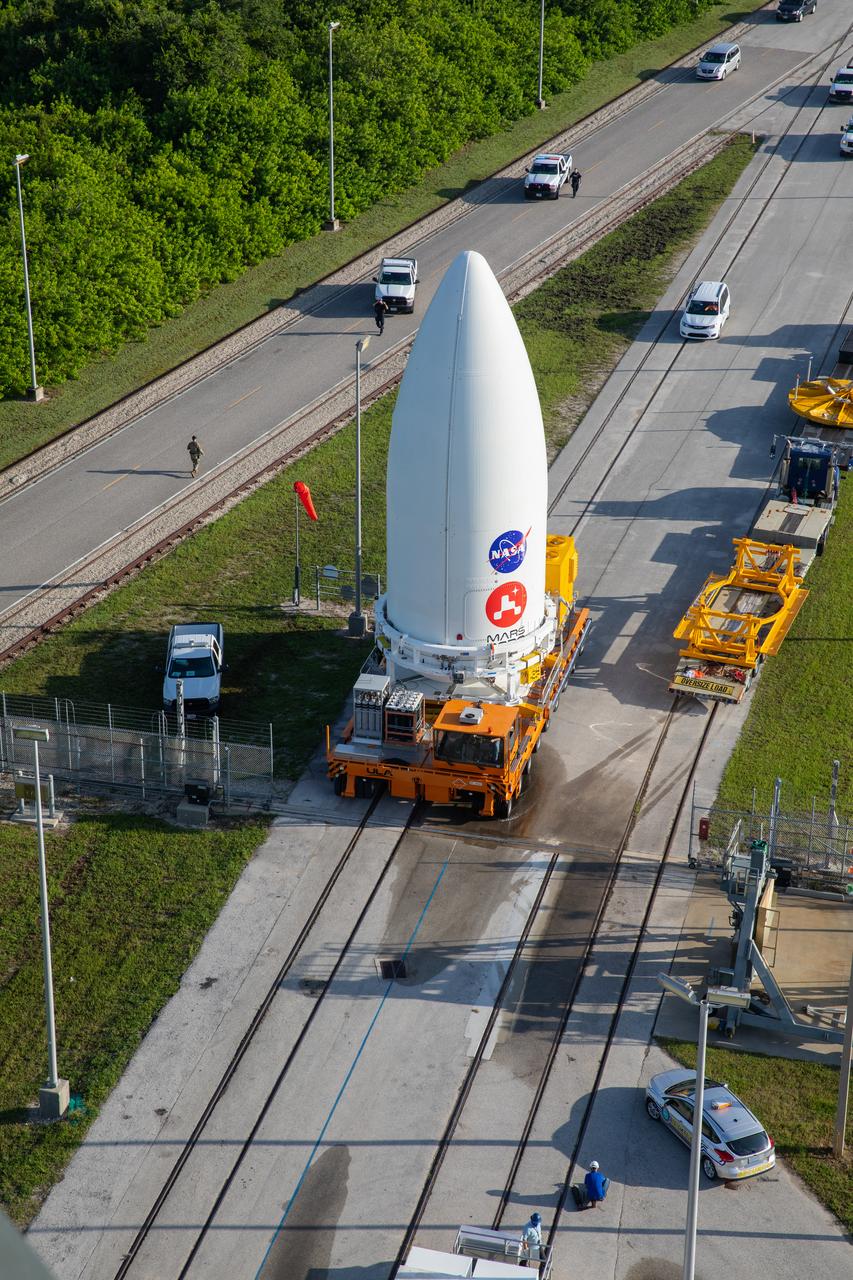
The United Launch Alliance (ULA) payload fairing with NASA’s Mars 2020 Perseverance rover secured inside is transported to Space Launch Complex 41 at Cape Canaveral Air Force Station in Florida on July 7, 2020. The payload fairing will be lifted up by crane and moved into the Vertical Integration Facility where it will be secured on the ULA Atlas V rocket. The Mars Perseverance rover is scheduled to launch atop the Atlas V 541 rocket from Pad 41 on July 30. The rover is part of NASA’s Mars Exploration Program, a long-term effort of robotic exploration of the Red Planet. The rover’s seven instruments will search for habitable conditions in the ancient past and signs of past microbial life on Mars. The Launch Services Program at Kennedy is responsible for launch management.
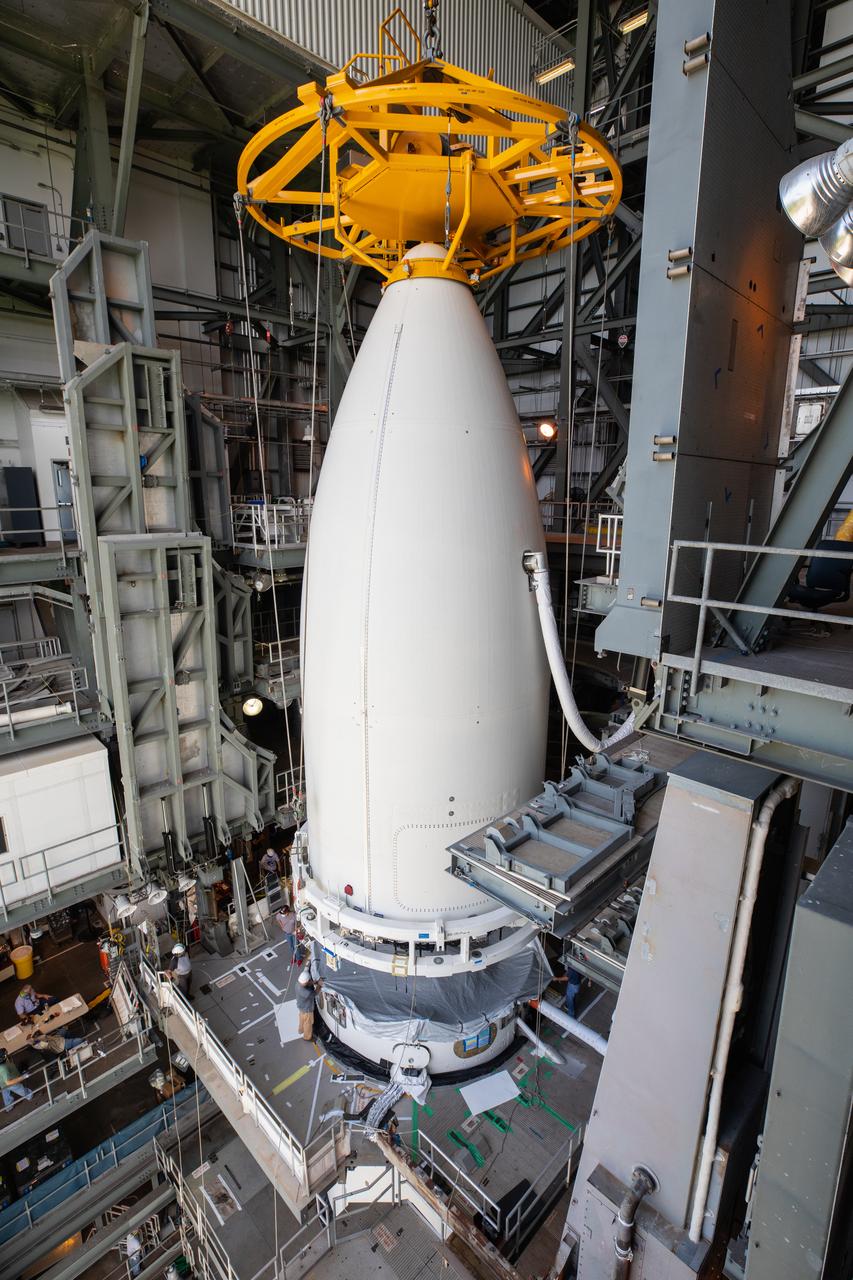
Inside the Vertical Integration Facility (VIF) at Space Launch Complex 41 at Cape Canaveral Air Force Station in Florida, the United Launch Alliance (ULA) payload fairing with NASA’s Mars 2020 Perseverance rover inside is secured on top of the ULA Atlas V rocket on July 7, 2020. The Mars Perseverance rover is scheduled to launch atop the Atlas V 541 rocket from Pad 41 on July 30. The rover is part of NASA’s Mars Exploration Program, a long-term effort of robotic exploration of the Red Planet. The rover’s seven instruments will search for habitable conditions in the ancient past and signs of past microbial life on Mars. The Launch Services Program at Kennedy is responsible for launch management.
A crane is attached to the United Launch Alliance (ULA) payload fairing with NASA’s Mars 2020 Perseverance rover secured inside at the Vertical Integration Facility (VIF) at Space Launch Complex 41 at Cape Canaveral Air Force Station in Florida on July 7, 2020. Inside the VIF, the payload fairing will be lifted up and secured on the ULA Atlas V rocket. The Mars Perseverance rover is scheduled to launch atop the Atlas V 541 rocket from Pad 41 on July 30. The rover is part of NASA’s Mars Exploration Program, a long-term effort of robotic exploration of the Red Planet. The rover’s seven instruments will search for habitable conditions in the ancient past and signs of past microbial life on Mars. The Launch Services Program at Kennedy is responsible for launch management.
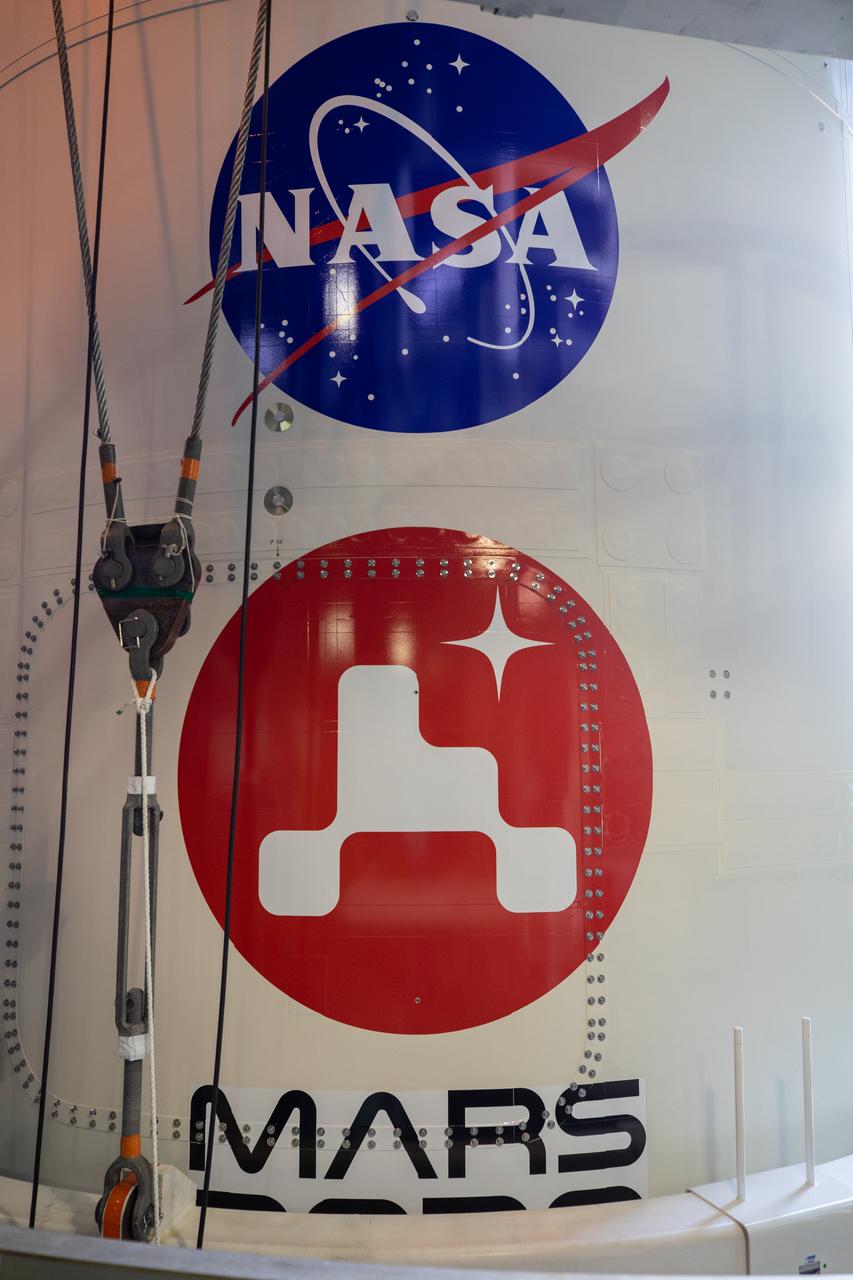
A close-up view of the United Launch Alliance (ULA) payload fairing with NASA’s Mars 2020 Perseverance rover inside in the Vertical Integration Facility (VIF) at Space Launch Complex 41 at Cape Canaveral Air Force Station in Florida on July 7, 2020. The payload fairing is being secured on the ULA Atlas V rocket. The Mars Perseverance rover is scheduled to launch atop the Atlas V 541 rocket from Pad 41 on July 30. The rover is part of NASA’s Mars Exploration Program, a long-term effort of robotic exploration of the Red Planet. The rover’s seven instruments will search for habitable conditions in the ancient past and signs of past microbial life on Mars. The Launch Services Program at Kennedy is responsible for launch management.
The United Launch Alliance (ULA) payload fairing with NASA’s Mars 2020 Perseverance rover secured inside arrives at the Vertical Integration Facility (VIF) at Space Launch Complex 41 at Cape Canaveral Air Force Station in Florida on July 7, 2020. The payload fairing will be lifted up by crane and moved into the VIF where it will be secured on the ULA Atlas V rocket. The Mars Perseverance rover is scheduled to launch atop the Atlas V 541 rocket from Pad 41 on July 30. The rover is part of NASA’s Mars Exploration Program, a long-term effort of robotic exploration of the Red Planet. The rover’s seven instruments will search for habitable conditions in the ancient past and signs of past microbial life on Mars. The Launch Services Program at Kennedy is responsible for launch management.
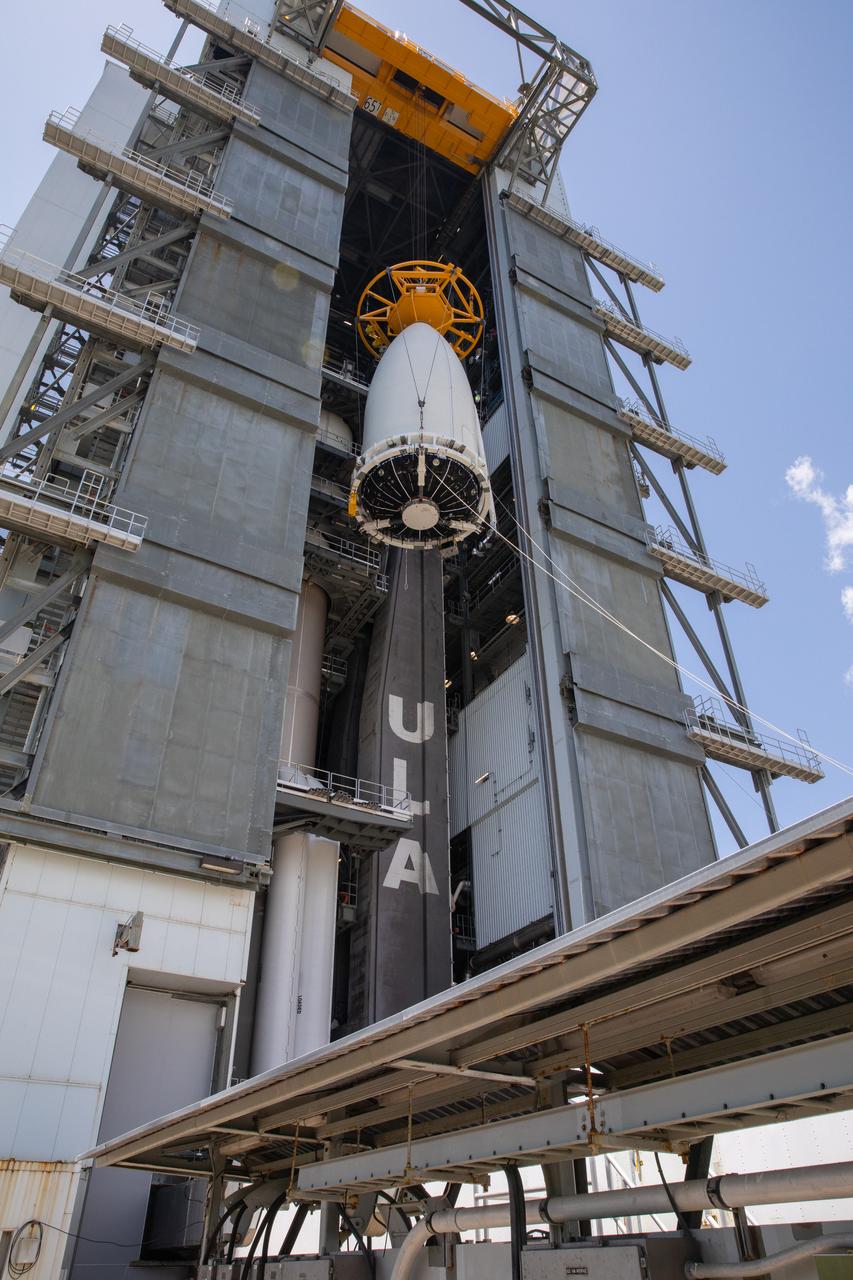
The United Launch Alliance (ULA) payload fairing with NASA’s Mars 2020 Perseverance rover secured inside is lifted high up inside the Vertical Integration Facility (VIF) at Space Launch Complex 41 at Cape Canaveral Air Force Station in Florida on July 7, 2020. Inside the VIF, the payload fairing will be secured on the ULA Atlas V rocket. The Mars Perseverance rover is scheduled to launch atop the Atlas V 541 rocket from Pad 41 on July 30. The rover is part of NASA’s Mars Exploration Program, a long-term effort of robotic exploration of the Red Planet. The rover’s seven instruments will search for habitable conditions in the ancient past and signs of past microbial life on Mars. The Launch Services Program at Kennedy is responsible for launch management.
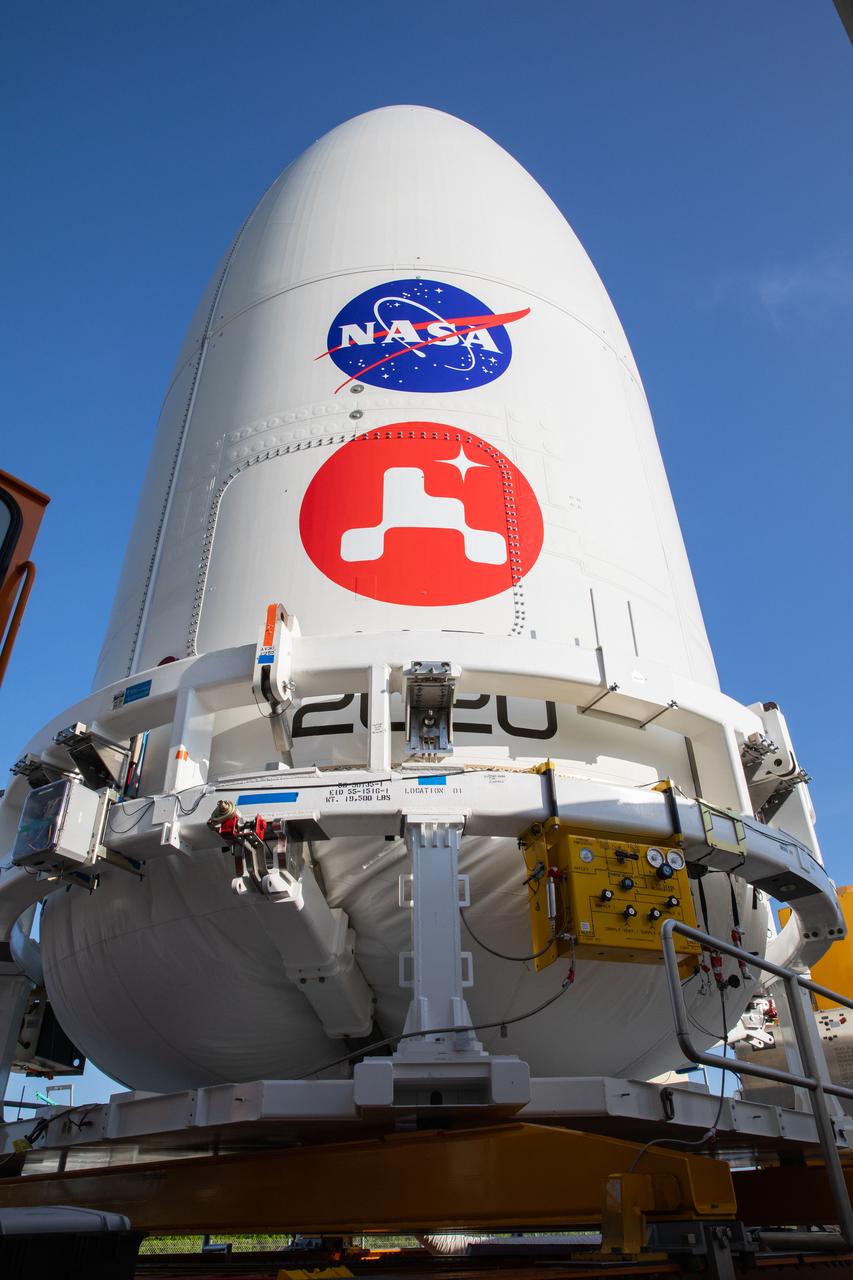
The United Launch Alliance (ULA) payload fairing with NASA’s Mars 2020 Perseverance rover secured inside arrives at the Vertical Integration Facility (VIF) at Space Launch Complex 41 at Cape Canaveral Air Force Station in Florida on July 7, 2020. The payload fairing will be lifted up by crane and moved into the VIF where it will be secured on the ULA Atlas V rocket. The Mars Perseverance rover is scheduled to launch atop the Atlas V 541 rocket from Pad 41 on July 30. The rover is part of NASA’s Mars Exploration Program, a long-term effort of robotic exploration of the Red Planet. The rover’s seven instruments will search for habitable conditions in the ancient past and signs of past microbial life on Mars. The Launch Services Program at Kennedy is responsible for launch management.The United Launch Alliance (ULA) payload fairing with NASA’s Mars 2020 Perseverance rover secured inside arrives at the Vertical Integration Facility (VIF) at Space Launch Complex 41 at Cape Canaveral Air Force Station in Florida on July 7, 2020. The payload fairing will be lifted up by crane and moved into the VIF where it will be secured on the ULA Atlas V rocket. The Mars Perseverance rover is scheduled to launch atop the Atlas V 541 rocket from Pad 41 on July 30. The rover is part of NASA’s Mars Exploration Program, a long-term effort of robotic exploration of the Red Planet. The rover’s seven instruments will search for habitable conditions in the ancient past and signs of past microbial life on Mars. The Launch Services Program at Kennedy is responsible for launch management.
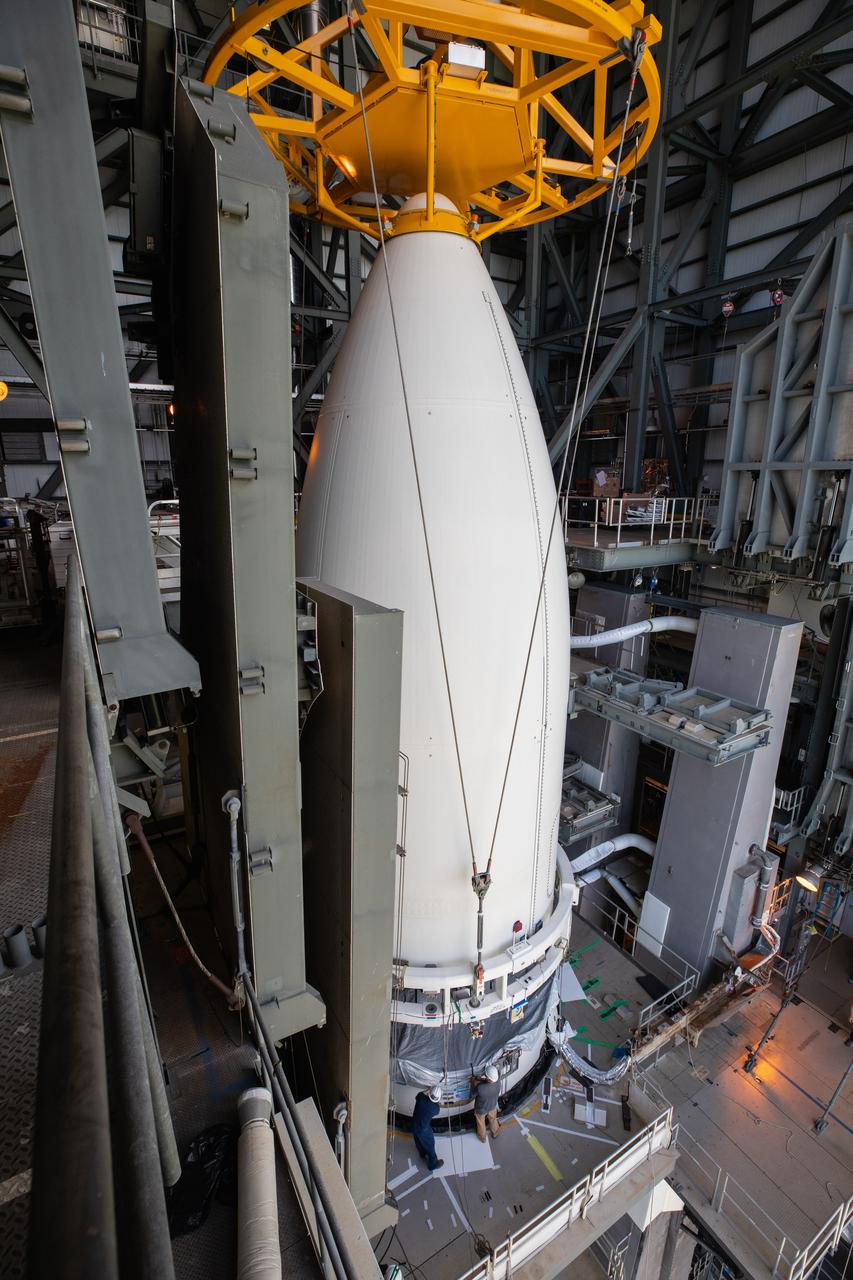
Inside the Vertical Integration Facility (VIF) at Space Launch Complex 41 at Cape Canaveral Air Force Station in Florida, the United Launch Alliance (ULA) payload fairing with NASA’s Mars 2020 Perseverance rover inside is secured on top of the ULA Atlas V rocket on July 7, 2020. The Mars Perseverance rover is scheduled to launch atop the Atlas V 541 rocket from Pad 41 on July 30. The rover is part of NASA’s Mars Exploration Program, a long-term effort of robotic exploration of the Red Planet. The rover’s seven instruments will search for habitable conditions in the ancient past and signs of past microbial life on Mars. The Launch Services Program at Kennedy is responsible for launch management.
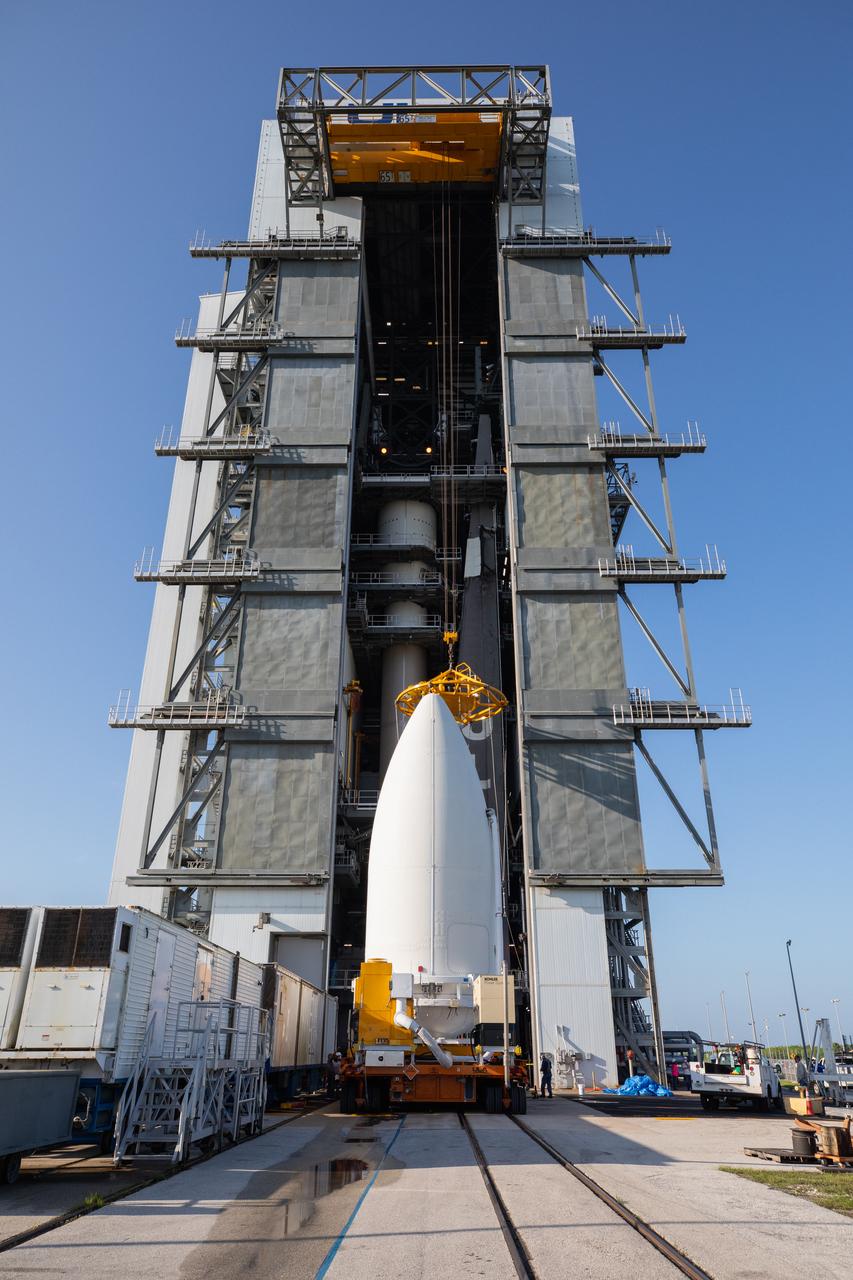
Preparations are underway to lift the United Launch Alliance (ULA) payload fairing with NASA’s Mars 2020 Perseverance rover secured inside up into the Vertical Integration Facility (VIF) at Space Launch Complex 41 at Cape Canaveral Air Force Station in Florida on July 7, 2020. Inside the VIF, the payload fairing will be lifted up by crane and secured on the ULA Atlas V rocket. The Mars Perseverance rover is scheduled to launch atop the Atlas V 541 rocket from Pad 41 on July 30. The rover is part of NASA’s Mars Exploration Program, a long-term effort of robotic exploration of the Red Planet. The rover’s seven instruments will search for habitable conditions in the ancient past and signs of past microbial life on Mars. The Launch Services Program at Kennedy is responsible for launch management.
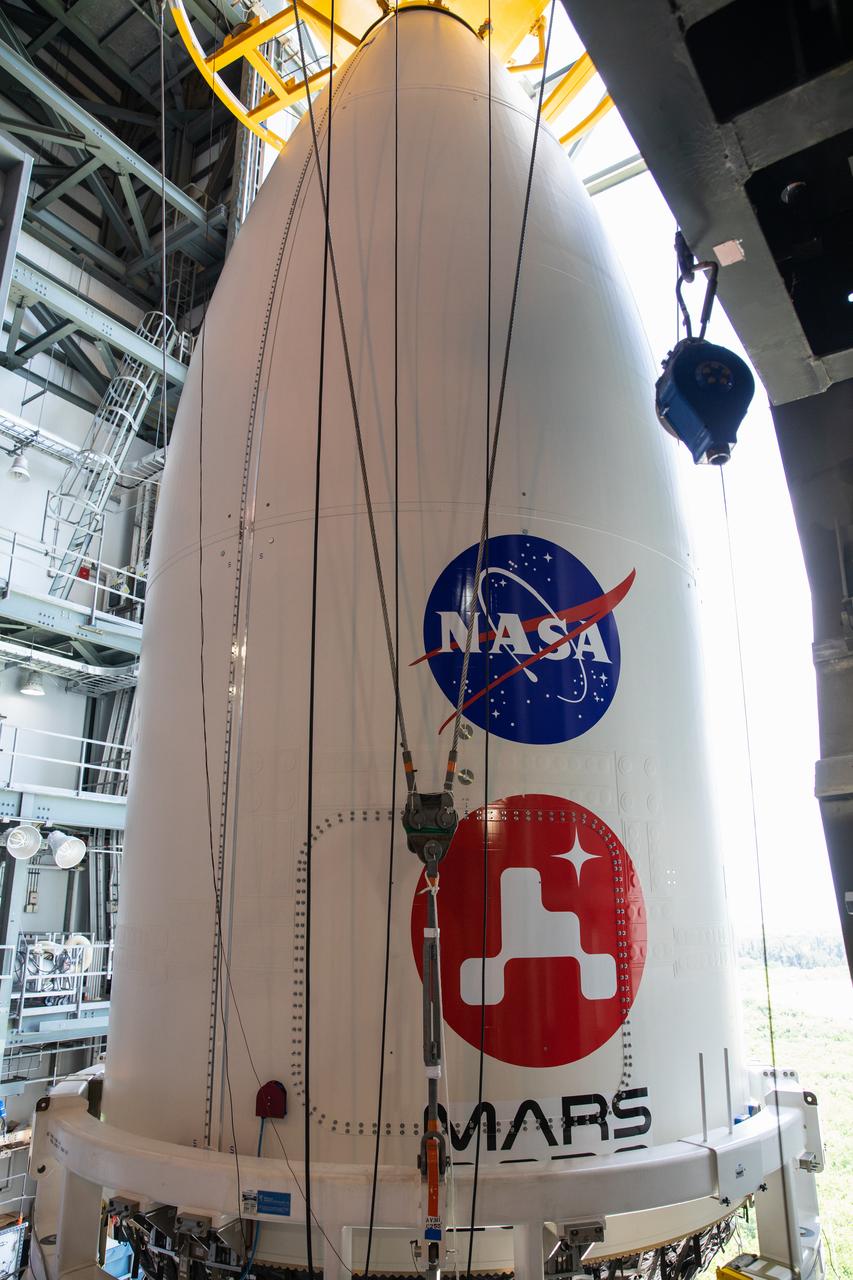
The United Launch Alliance (ULA) payload fairing with NASA’s Mars 2020 Perseverance rover secured inside is positioned on top of the ULA Atlas V rocket inside the Vertical Integration Facility (VIF) at Space Launch Complex 41 at Cape Canaveral Air Force Station in Florida on July 7, 2020. The payload fairing will be secured on the ULA Atlas V rocket. The Mars Perseverance rover is scheduled to launch atop the Atlas V 541 rocket from Pad 41 on July 30. The rover is part of NASA’s Mars Exploration Program, a long-term effort of robotic exploration of the Red Planet. The rover’s seven instruments will search for habitable conditions in the ancient past and signs of past microbial life on Mars. The Launch Services Program at Kennedy is responsible for launch management.

The United Launch Alliance (ULA) payload fairing with NASA’s Mars 2020 Perseverance rover secured inside arrives at the Vertical Integration Facility (VIF) at Space Launch Complex 41 at Cape Canaveral Air Force Station in Florida on July 7, 2020. The payload fairing will be lifted up by crane and moved into the VIF where it will be secured on the ULA Atlas V rocket. The Mars Perseverance rover is scheduled to launch atop the Atlas V 541 rocket from Pad 41 on July 30. The rover is part of NASA’s Mars Exploration Program, a long-term effort of robotic exploration of the Red Planet. The rover’s seven instruments will search for habitable conditions in the ancient past and signs of past microbial life on Mars. The Launch Services Program at Kennedy is responsible for launch management.
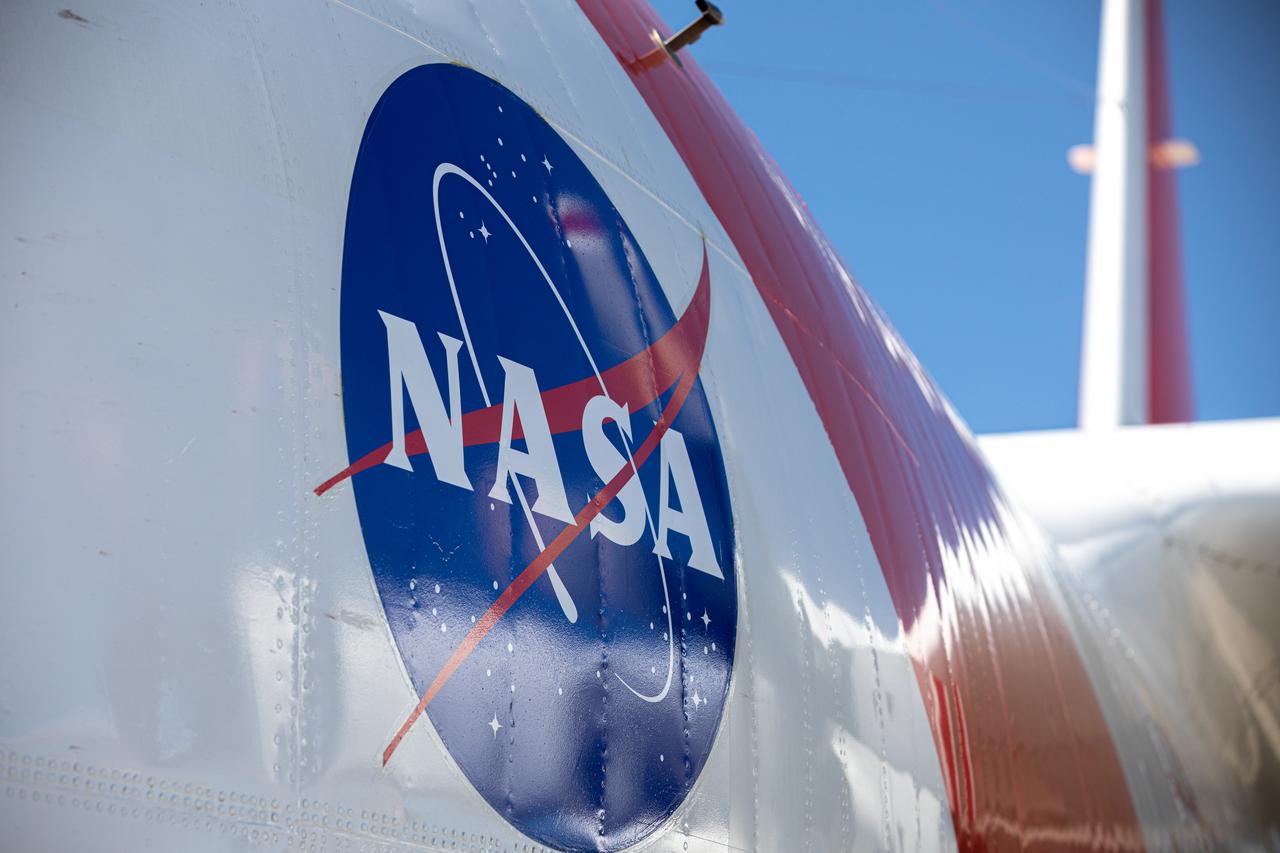
A close-up view of NASA’s C-130 aircraft that carries the Adaptive Caching Assembly (ACA) for NASA’s Mars Perseverance rover as it arrives at Kennedy Space Center’s Launch and Landing Facility in Florida on May 11, 2020. The ACA consists of seven motors and more than 3,000 parts, all working in unison to collect samples from the surface of Mars. A chief component of the assembly is the Sample Handling Arm, which will move sample tubes to the main robotic arm's coring drill and then transfer the filled sample tubes into a space to be sealed and stored. The Mars Perseverance rover is scheduled to launch in mid-July atop a United Launch Alliance Atlas V 541 rocket from Pad 41 at nearby Cape Canaveral Air Force Station. The rover is part of NASA’s Mars Exploration Program, a long-term effort of robotic exploration of the Red Planet. The rover will search for habitable conditions in the ancient past and signs of past microbial life on Mars. The Launch Services Program at Kennedy is responsible for launch management.
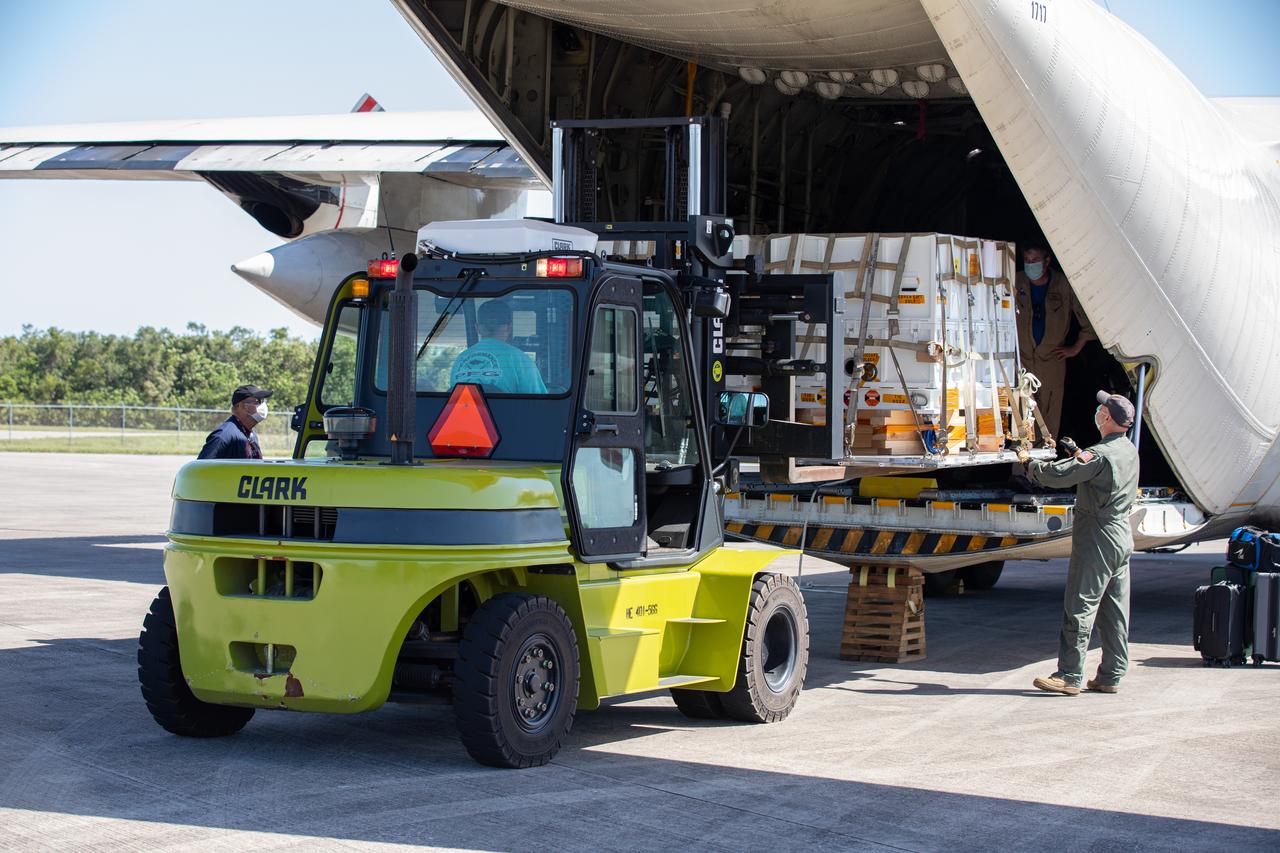
Workers offload the Adaptive Caching Assembly (ACA) for NASA’s Mars Perseverance rover from the agency’s C-130 aircraft at Kennedy Space Center’s Launch and Landing Facility in Florida on May 11, 2020. The ACA consists of seven motors and more than 3,000 parts, all working in unison to collect samples from the surface of Mars. A chief component of the assembly is the Sample Handling Arm, which will move sample tubes to the main robotic arm's coring drill and then transfer the filled sample tubes into a space to be sealed and stored. The Mars Perseverance rover is scheduled to launch in mid-July atop a United Launch Alliance Atlas V 541 rocket from Pad 41 at nearby Cape Canaveral Air Force Station. The rover is part of NASA’s Mars Exploration Program, a long-term effort of robotic exploration of the Red Planet. The rover will search for habitable conditions in the ancient past and signs of past microbial life on Mars. The Launch Services Program at Kennedy is responsible for launch management.
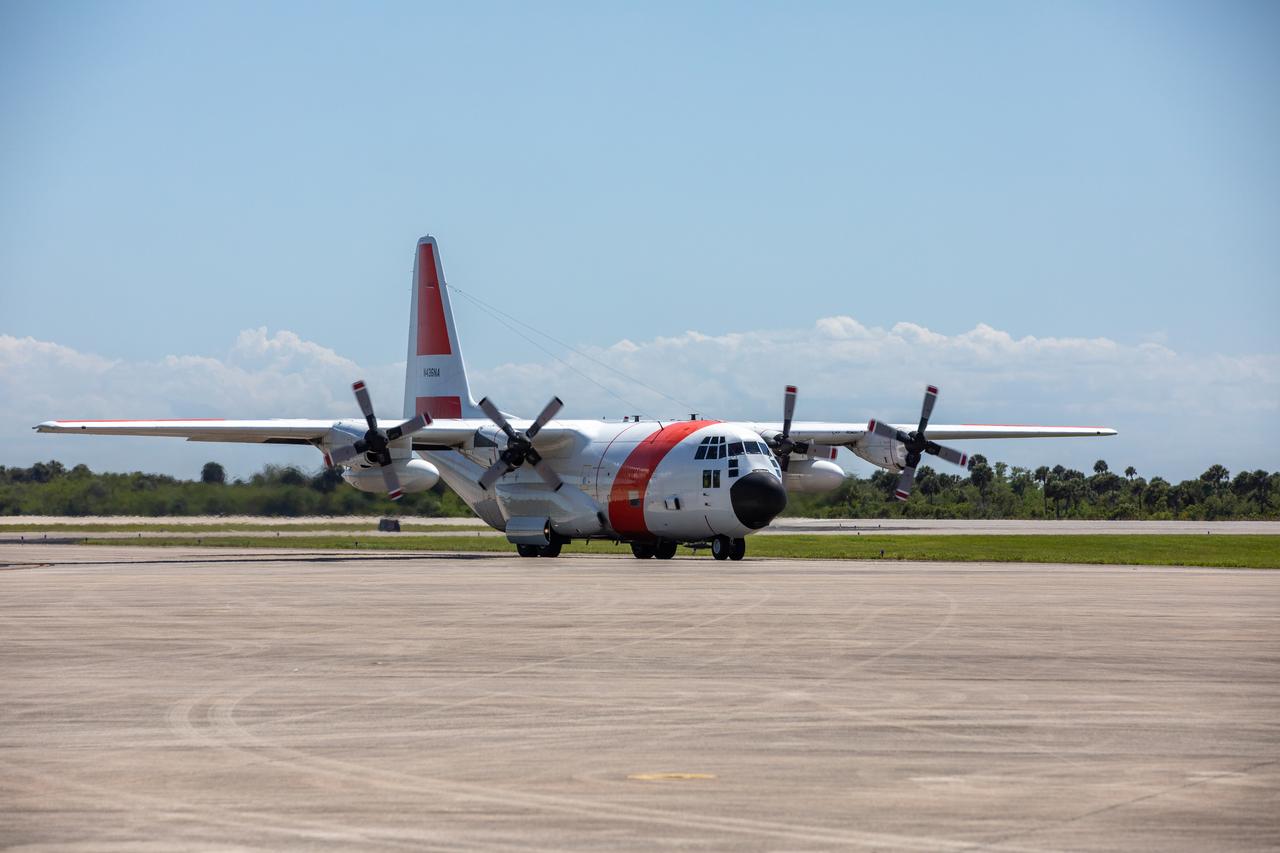
The Adaptive Caching Assembly (ACA) for NASA’s Mars Perseverance rover arrives aboard NASA’s C-130 aircraft at the Launch and Landing Facility at the agency’s Kennedy Space Center in Florida on May 11, 2020. The ACA consists of seven motors and more than 3,000 parts, all working in unison to collect samples from the surface of Mars. A chief component of the assembly is the Sample Handling Arm, which will move sample tubes to the main robotic arm's coring drill and then transfer the filled sample tubes into a space to be sealed and stored. The Mars Perseverance rover is scheduled to launch in mid-July atop a United Launch Alliance Atlas V 541 rocket from Pad 41 at nearby Cape Canaveral Air Force Station. The rover is part of NASA’s Mars Exploration Program, a long-term effort of robotic exploration of the Red Planet. The rover will search for habitable conditions in the ancient past and signs of past microbial life on Mars. The Launch Services Program at Kennedy is responsible for launch management.
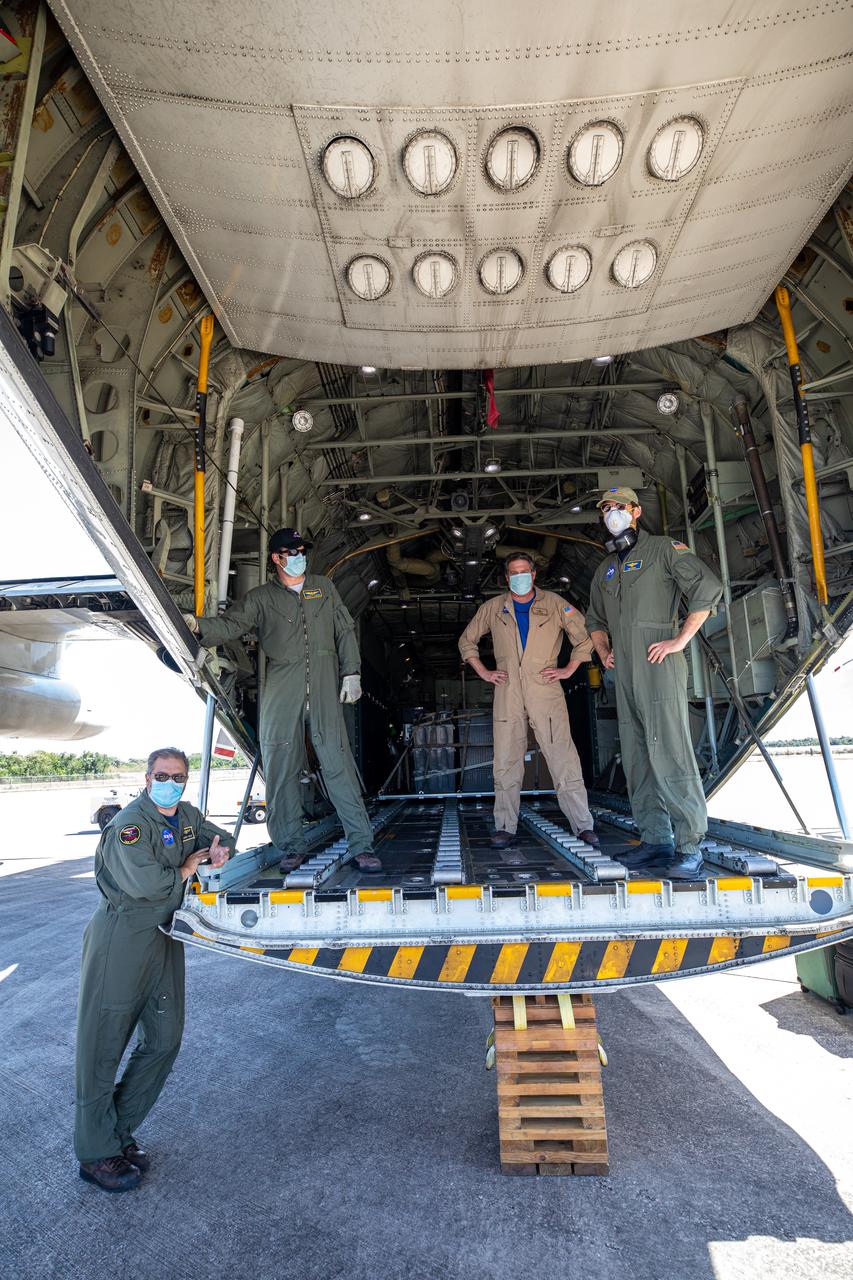
Workers prepare to offload the Adaptive Caching Assembly (ACA) for NASA’s Mars Perseverance rover from the agency’s C-130 aircraft at Kennedy Space Center’s Launch and Landing Facility in Florida on May 11, 2020. The ACA consists of seven motors and more than 3,000 parts, all working in unison to collect samples from the surface of Mars. A chief component of the assembly is the Sample Handling Arm, which will move sample tubes to the main robotic arm's coring drill and then transfer the filled sample tubes into a space to be sealed and stored. The Mars Perseverance rover is scheduled to launch in mid-July atop a United Launch Alliance Atlas V 541 rocket from Pad 41 at nearby Cape Canaveral Air Force Station. The rover is part of NASA’s Mars Exploration Program, a long-term effort of robotic exploration of the Red Planet. The rover will search for habitable conditions in the ancient past and signs of past microbial life on Mars. The Launch Services Program at Kennedy is responsible for launch management.
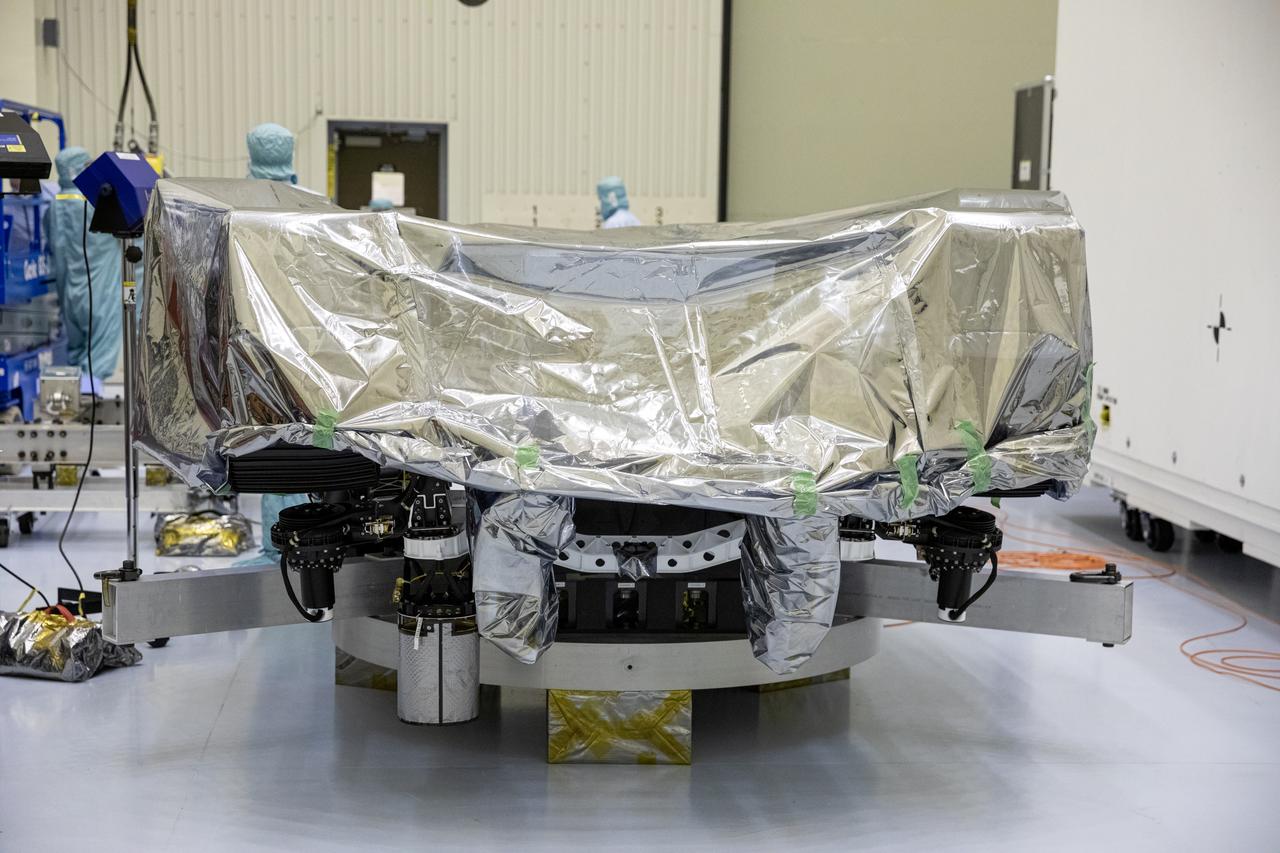
The Mars 2020 rover undergoes processing inside the Payload Hazardous Servicing Facility at NASA’s Kennedy Space Center in Florida on Feb. 13, 2020. The spacecraft was flown to Kennedy from California aboard a C-17 aircraft on Feb. 12. Targeted for mid-July 2020, the mission is scheduled to launch aboard an Atlas V 541 rocket from Cape Canaveral Air Force Station. The launch is managed by the Launch Services Program. The Mars 2020 rover will search for signs of past microbial life, characterize the planet’s climate and geology, collect samples for future return to Earth and pave the way for human exploration of Mars.
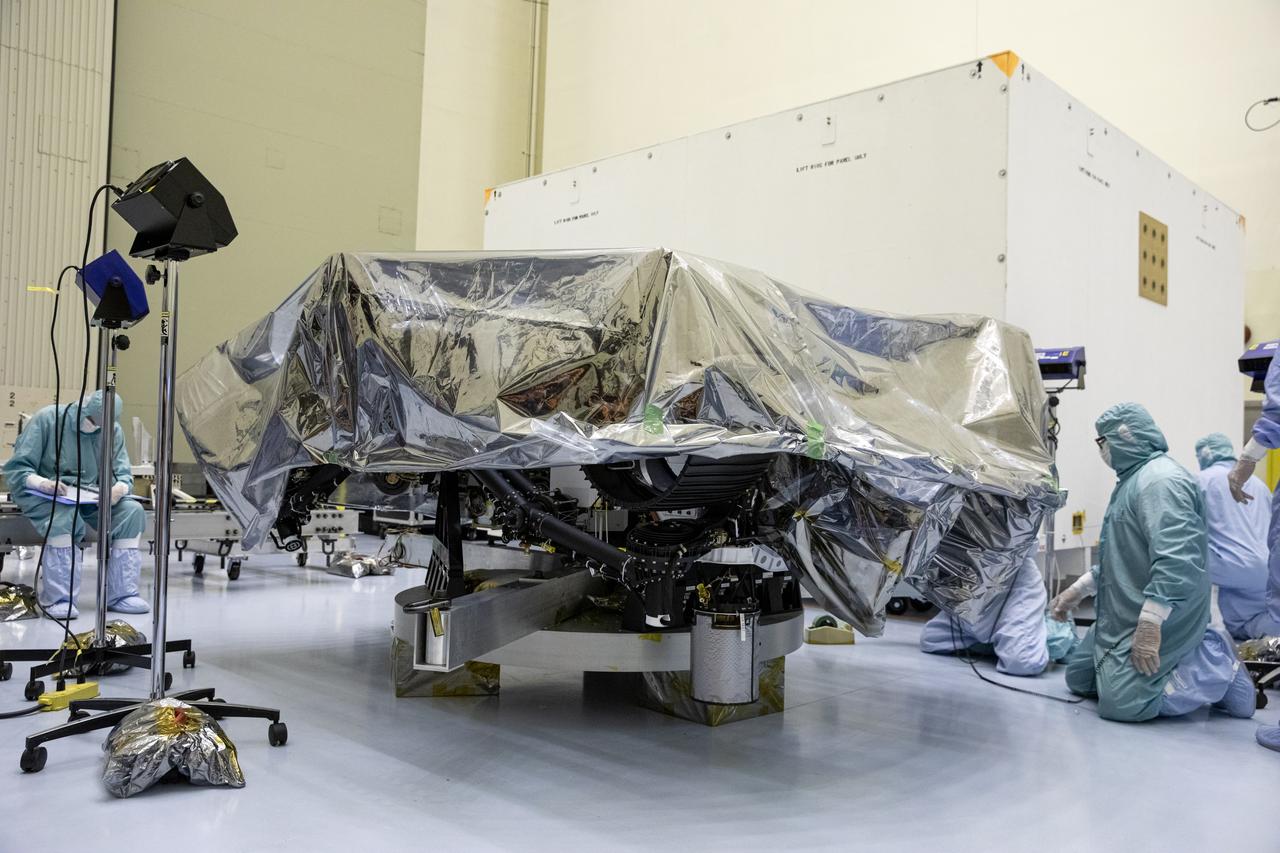
The Mars 2020 rover undergoes processing inside the Payload Hazardous Servicing Facility at NASA’s Kennedy Space Center in Florida on Feb. 13, 2020. The spacecraft was flown to Kennedy from California aboard a C-17 aircraft on Feb. 12. Targeted for mid-July 2020, the mission is scheduled to launch aboard an Atlas V 541 rocket from Cape Canaveral Air Force Station. The launch is managed by the Launch Services Program. The Mars 2020 rover will search for signs of past microbial life, characterize the planet’s climate and geology, collect samples for future return to Earth and pave the way for human exploration of Mars.
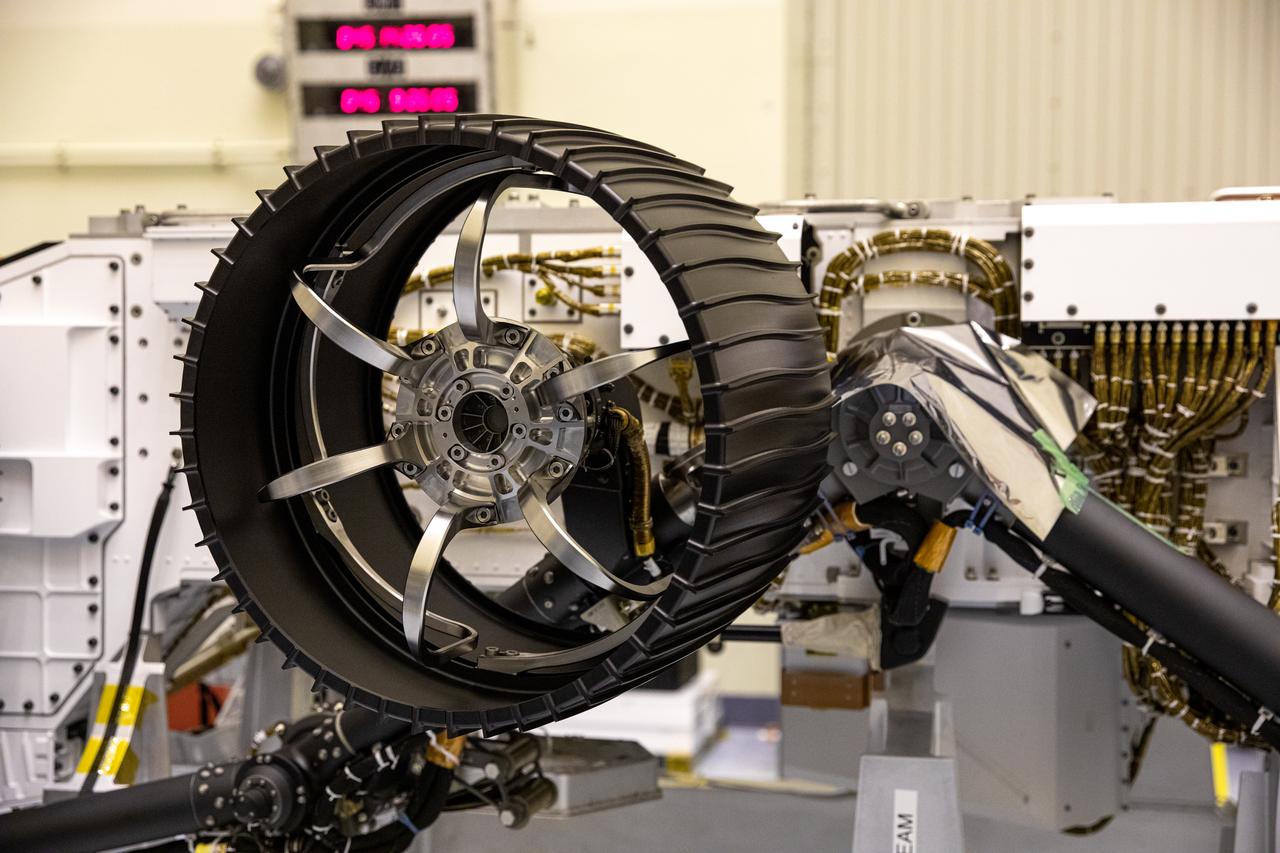
The Mars 2020 rover undergoes processing inside the Payload Hazardous Servicing Facility at NASA’s Kennedy Space Center in Florida on Feb. 14, 2020. Initial processing took place on Feb. 13, one day after a C-17 aircraft, with the rover aboard, touched down at the Launch and Landing Facility at Kennedy. The cross-country trip began at NASA’s Jet Propulsion Laboratory, where the rover was manufactured. The mission, targeted for mid-July 2020, will launch aboard an Atlas V 541 rocket from Cape Canaveral Air Force Station. NASA’s Launch Services Program based at Kennedy is managing the launch. Click here for more information on the Mars 2020 rover mission.
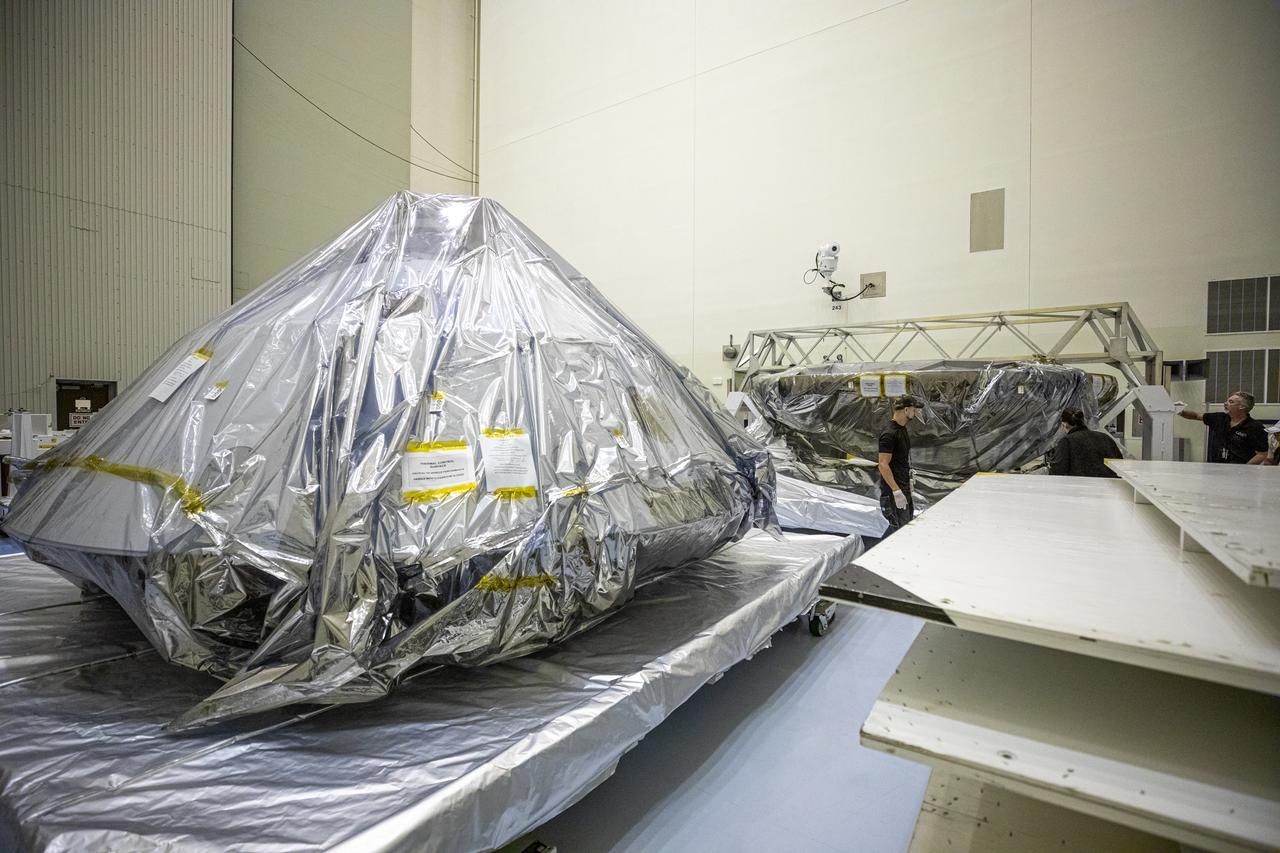
The heat shield and back shell for the Mars 2020 rover are unboxed inside the Payload Hazardous Servicing Facility at NASA’s Kennedy Space Center on Dec. 13, 2019. The two integral pieces of equipment, which were flown to the Florida spaceport from Lockheed Martin Space in Denver, Colorado, will protect the rover during its passage to Mars. The Mars 2020 rover is being manufactured at NASA’s Jet Propulsion Laboratory in California. When completed, the rover will be delivered to Kennedy in mid-February, 2020, with the mission scheduled to launch in the summer of 2020.

Workers use a special handling device to offload the Adaptive Caching Assembly (ACA) for NASA’s Mars Perseverance rover from the agency’s C-130 aircraft at Kennedy Space Center’s Launch and Landing Facility in Florida on May 11, 2020. The ACA consists of seven motors and more than 3,000 parts, all working in unison to collect samples from the surface of Mars. A chief component of the assembly is the Sample Handling Arm, which will move sample tubes to the main robotic arm's coring drill and then transfer the filled sample tubes into a space to be sealed and stored. The Mars Perseverance rover is scheduled to launch in mid-July atop a United Launch Alliance Atlas V 541 rocket from Pad 41 at nearby Cape Canaveral Air Force Station. The rover is part of NASA’s Mars Exploration Program, a long-term effort of robotic exploration of the Red Planet. The rover will search for habitable conditions in the ancient past and signs of past microbial life on Mars. The Launch Services Program at Kennedy is responsible for launch management.
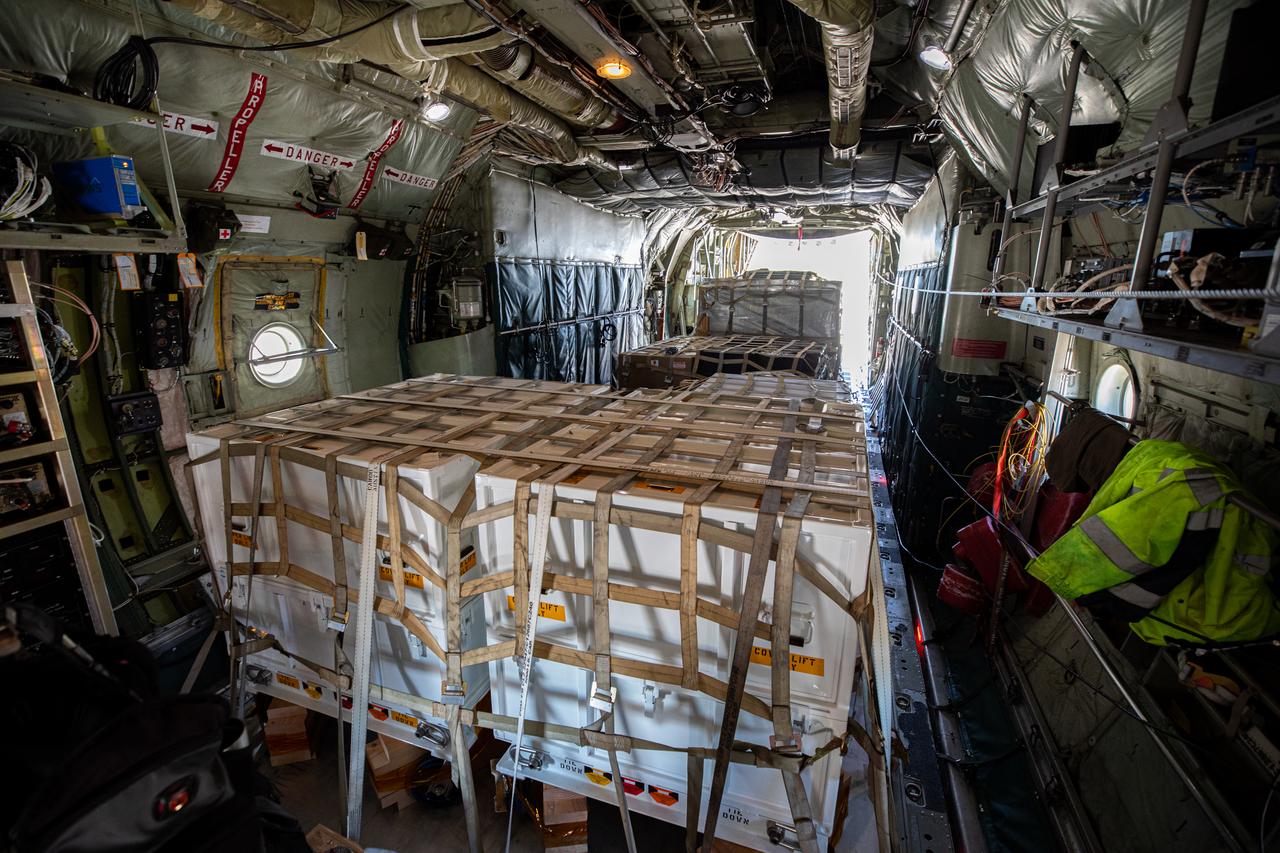
Preparations are underway to offload the Adaptive Caching Assembly (ACA) for NASA’s Mars Perseverance rover from the agency’s C-130 aircraft at Kennedy Space Center’s Launch and Landing Facility in Florida on May 11, 2020. The ACA consists of seven motors and more than 3,000 parts, all working in unison to collect samples from the surface of Mars. A chief component of the assembly is the Sample Handling Arm, which will move sample tubes to the main robotic arm's coring drill and then transfer the filled sample tubes into a space to be sealed and stored. The Mars Perseverance rover is scheduled to launch in mid-July atop a United Launch Alliance Atlas V 541 rocket from Pad 41 at nearby Cape Canaveral Air Force Station. The rover is part of NASA’s Mars Exploration Program, a long-term effort of robotic exploration of the Red Planet. The rover will search for habitable conditions in the ancient past and signs of past microbial life on Mars. The Launch Services Program at Kennedy is responsible for launch management.
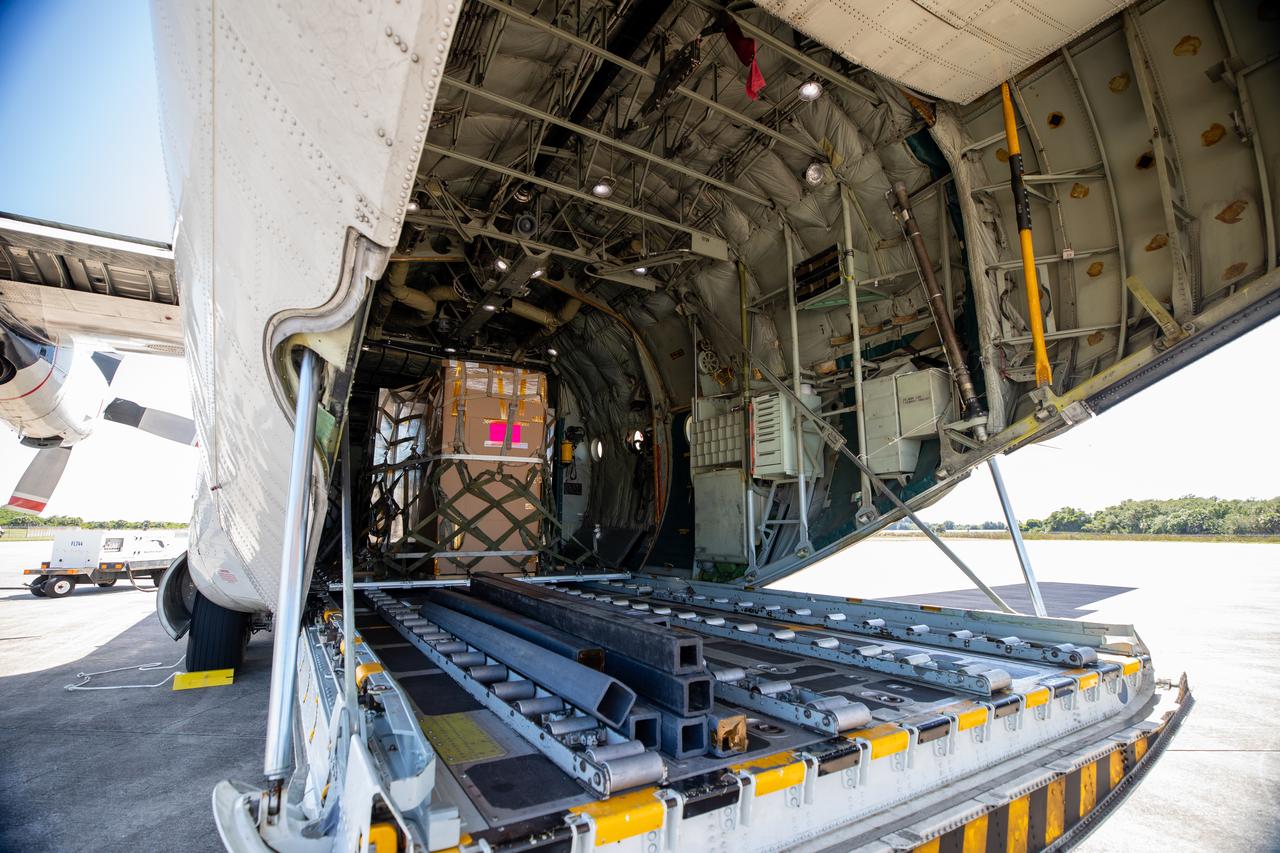
NASA’s C-130 aircraft cargo hold is open for offloading of the Adaptive Caching Assembly (ACA) for NASA’s Mars Perseverance rover at Kennedy Space Center’s Launch and Landing Facility in Florida on May 11, 2020. The ACA consists of seven motors and more than 3,000 parts, all working in unison to collect samples from the surface of Mars. A chief component of the assembly is the Sample Handling Arm, which will move sample tubes to the main robotic arm's coring drill and then transfer the filled sample tubes into a space to be sealed and stored. The Mars Perseverance rover is scheduled to launch in mid-July atop a United Launch Alliance Atlas V 541 rocket from Pad 41 at nearby Cape Canaveral Air Force Station. The rover is part of NASA’s Mars Exploration Program, a long-term effort of robotic exploration of the Red Planet. The rover will search for habitable conditions in the ancient past and signs of past microbial life on Mars. The Launch Services Program at Kennedy is responsible for launch management.