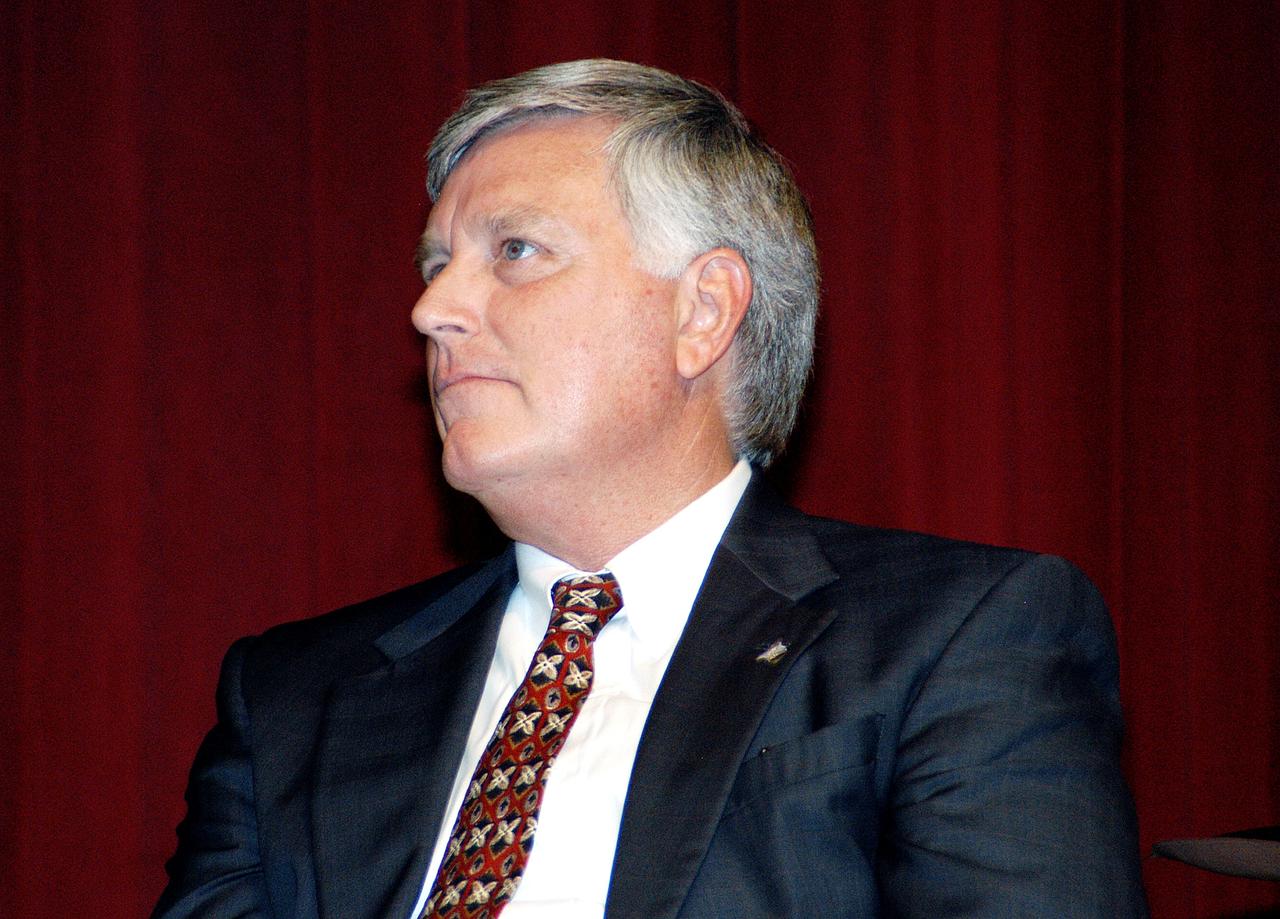
KENNEDY SPACE CENTER, FLA. - KSC Deputy Director James W. Kennedy receives the news of his appointment as the next director of the NASA Kennedy Space Center (KSC) before a group of KSC employees assembled in the KSC Training Auditorium. Kennedy has served as KSC's deputy director since November 2002. He will succeed KSC Director Roy D. Bridges, who was appointed on June 13 to lead NASA's Langley Research Center, Hampton, Va.
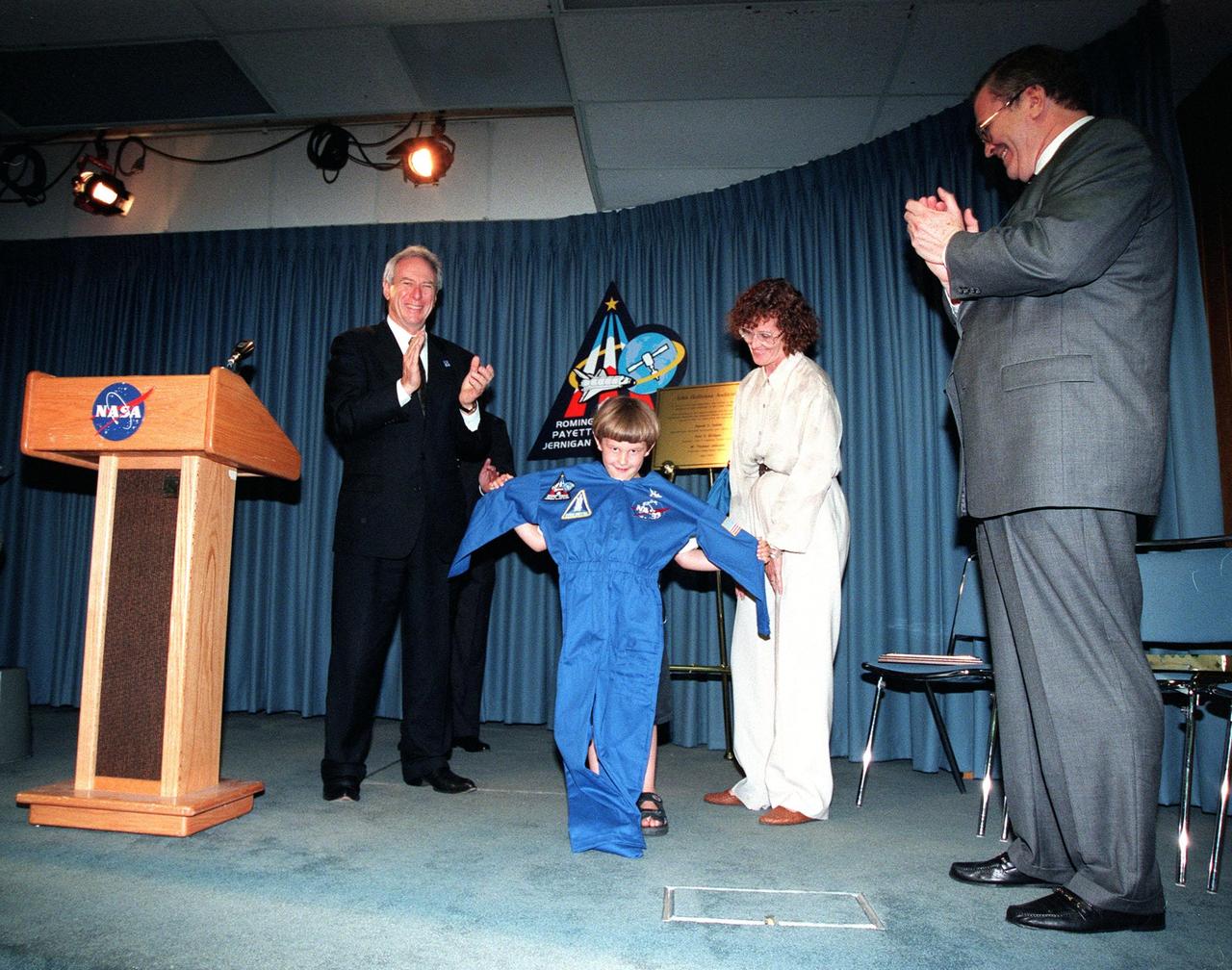
A ceremony dedicated the KSC Press Site auditorium as the John Holliman Auditorium to honor the correspondent for his enthusiastic, dedicated coverage of America's space program. The auditorium was built in 1980 and has been the focal point for news coverage of Space Shuttle launches. The ceremony followed the 94th launch of a Space Shuttle, on mission STS-96, earlier this morning

From left, Center Director Roy Bridges and NASA Administrator Daniel S. Goldin applaud as Jay Holliman, with the help of his mother, Mrs. Dianne Holliman, unveils a plaque honoring his father, the late John Holliman. At right is Tom Johnson, news group chairman of CNN. The occasion was the dedication of the KSC Press Site auditorium as the John Holliman Auditorium to honor the CNN national correspondent for his enthusiastic, dedicated coverage of America's space program. The auditorium was built in 1980 and has been the focal point for new coverage of Space Shuttle launches. The ceremony followed the 94th launch of a Space Shuttle, on mission STS-96, earlier this morning
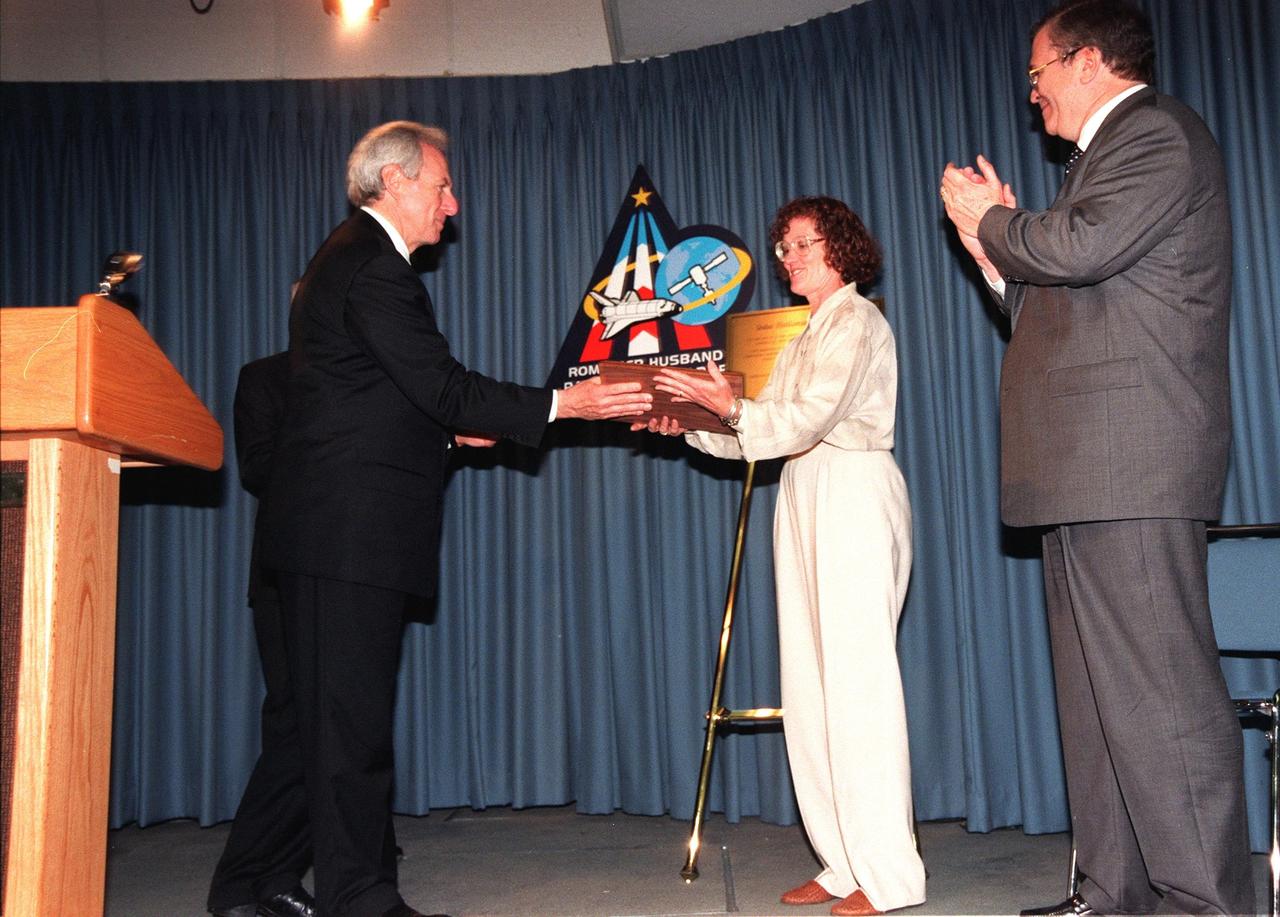
NASA Administrator Daniel S. Goldin hands Mrs. Dianne Holliman a plaque honoring her late husband, John Holliman, a CNN national correspondent. Standing behind Goldin is Center Director Roy Bridges. At right is Tom Johnson, news group chairman of CNN. A ceremony dedicated the KSC Press Site auditorium as the John Holliman Auditorium to honor the correspondent for his enthusiastic, dedicated coverage of America's space program. The auditorium was built in 1980 and has been the focal point for new coverage of Space Shuttle launches. The ceremony followed the 94th launch of a Space Shuttle, on mission STS-96, earlier this morning
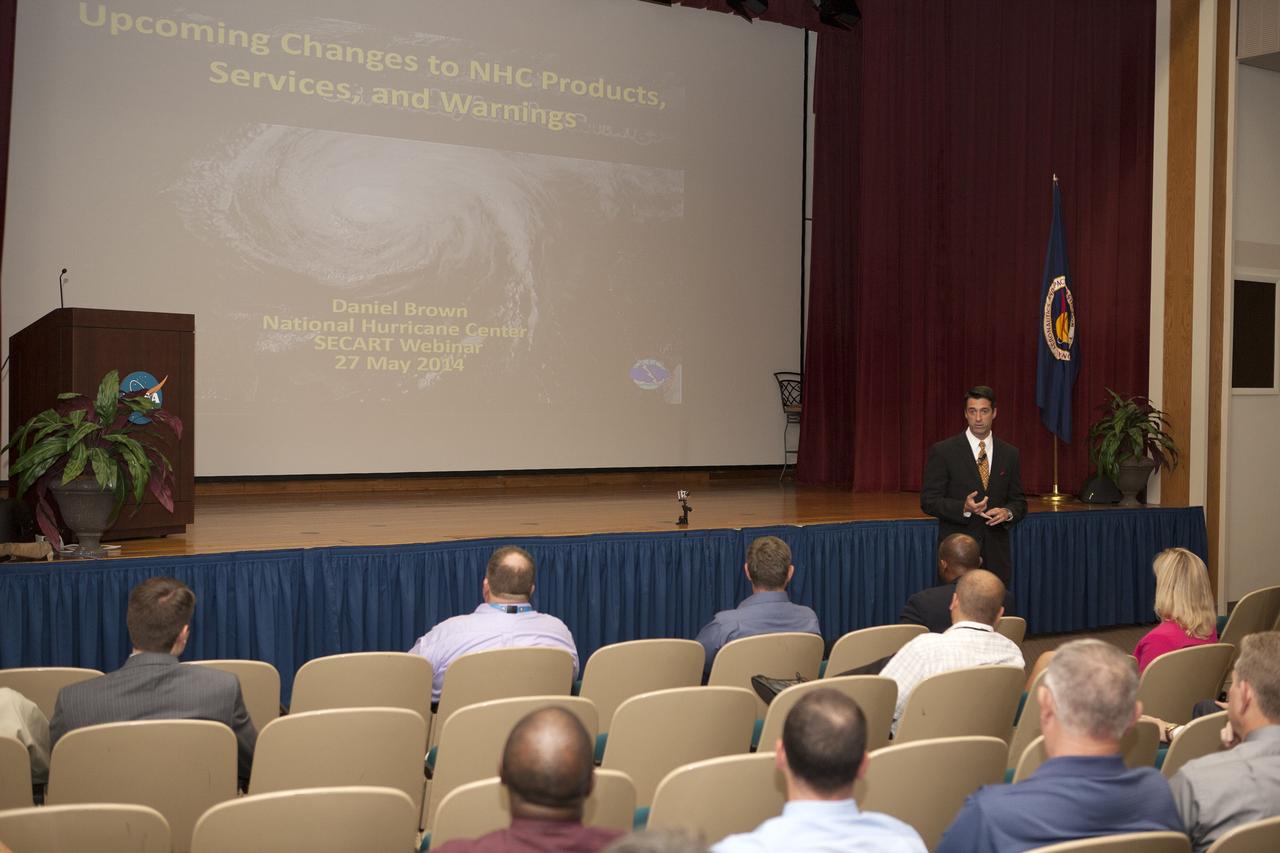
CAPE CANAVERAL, Fla. -- Tony Mainolfi, chief meteorologist of WESH 2 news, outlines the products, services and warnings provided by the National Hurricane Center for the audience of the annual hurricane awareness briefing at NASA's Kennedy Space Center in Florida. The briefing, held at the start of the 2014 hurricane season, is attended by the center's emergency hurricane coordinators and other interested employees in the KSC Training Auditorium. The briefing also is broadcast to the workforce. For more information, visit http://www.patrick.af.mil/weather. Photo credit: NASA/Kim Shiflett
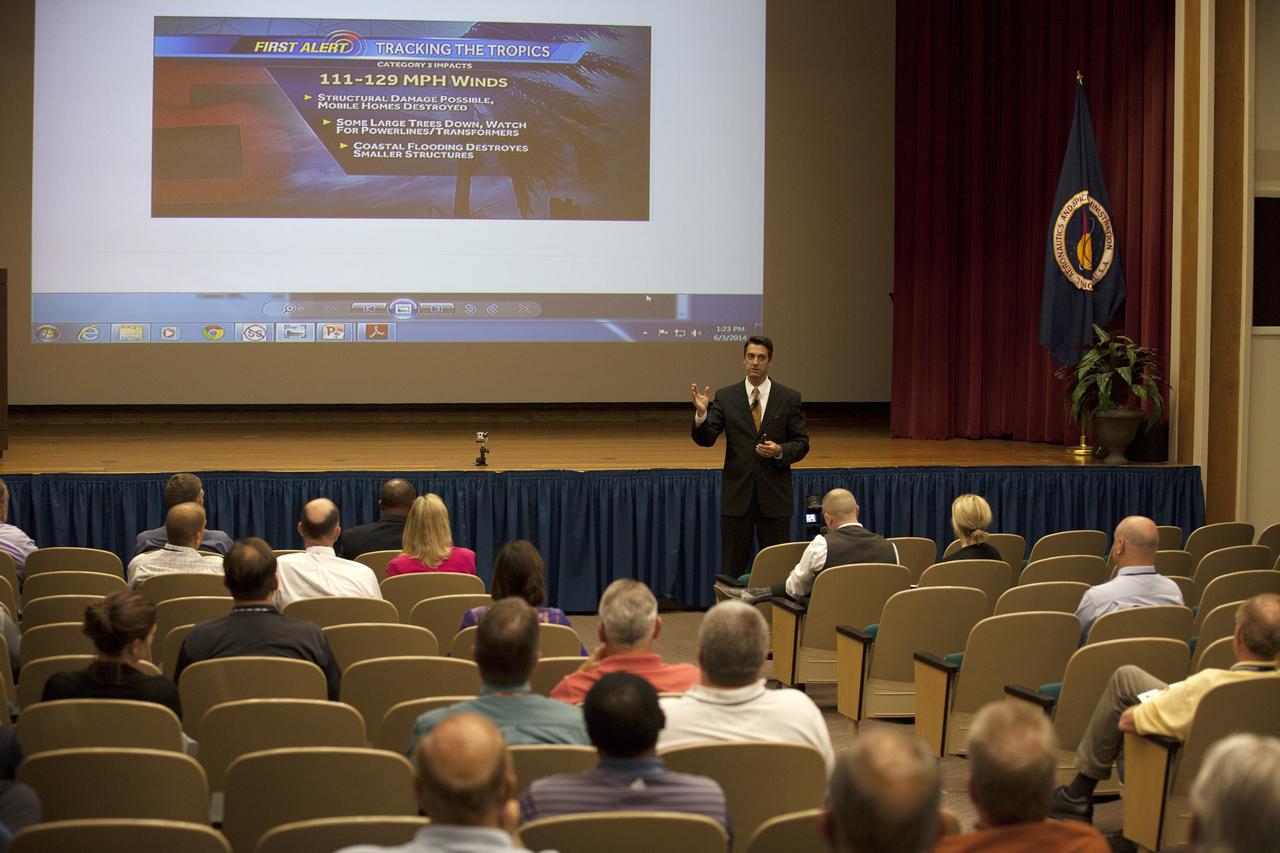
CAPE CANAVERAL, Fla. -- Tony Mainolfi, chief meteorologist of WESH 2 news, explains the categories of tropical weather disturbances to the audience of the annual hurricane awareness briefing at NASA's Kennedy Space Center in Florida. The briefing, held at the start of the 2014 hurricane season, is attended by the center's emergency hurricane coordinators and other interested employees in the KSC Training Auditorium. The briefing also is broadcast to the workforce. For more information, visit http://www.patrick.af.mil/weather. Photo credit: NASA/Kim Shiflett
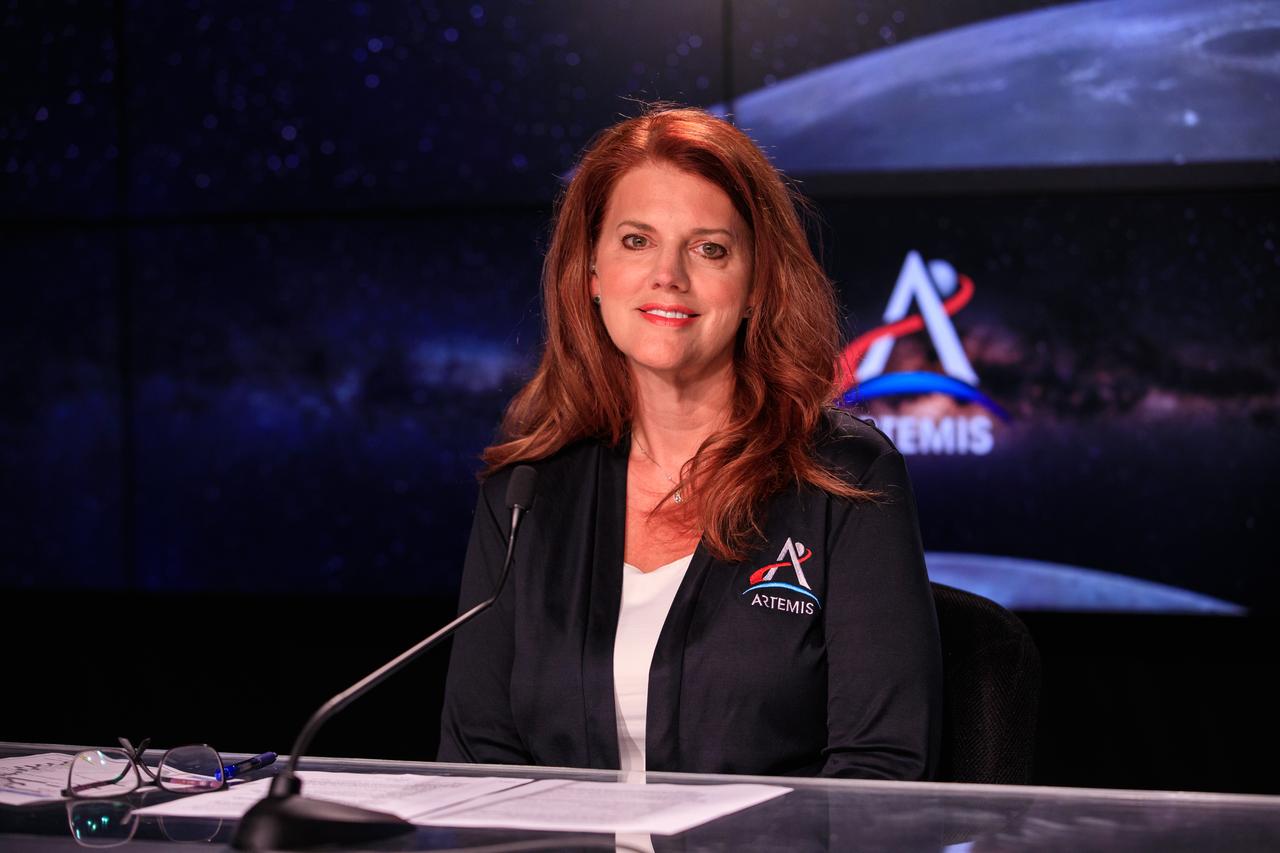
Launch Director Charlie Blackwell-Thompson participates in an Artemis I mission overview briefing inside the Press Site auditorium at NASA’s Kennedy Space Center in Florida on Aug. 3, 2022. Also participating in the briefing from various locations were NASA Administrator Bill Nelson; Associate Administrator for Technology, Policy, and Strategy Bhavya Lal; Mission Manager Mike Sarafin; Space Launch System (SLS) Program Manager John Honeycutt; and Orion Program Manager Howard Hu. The first in an increasingly complex series of missions, Artemis I will test the SLS rocket and Orion spacecraft as an integrated system prior to crewed flights to the Moon. Through Artemis, NASA will land the first woman and first person of color on the lunar surface, paving the way for long-term lunar presence and serving as a steppingstone before venturing to Mars.
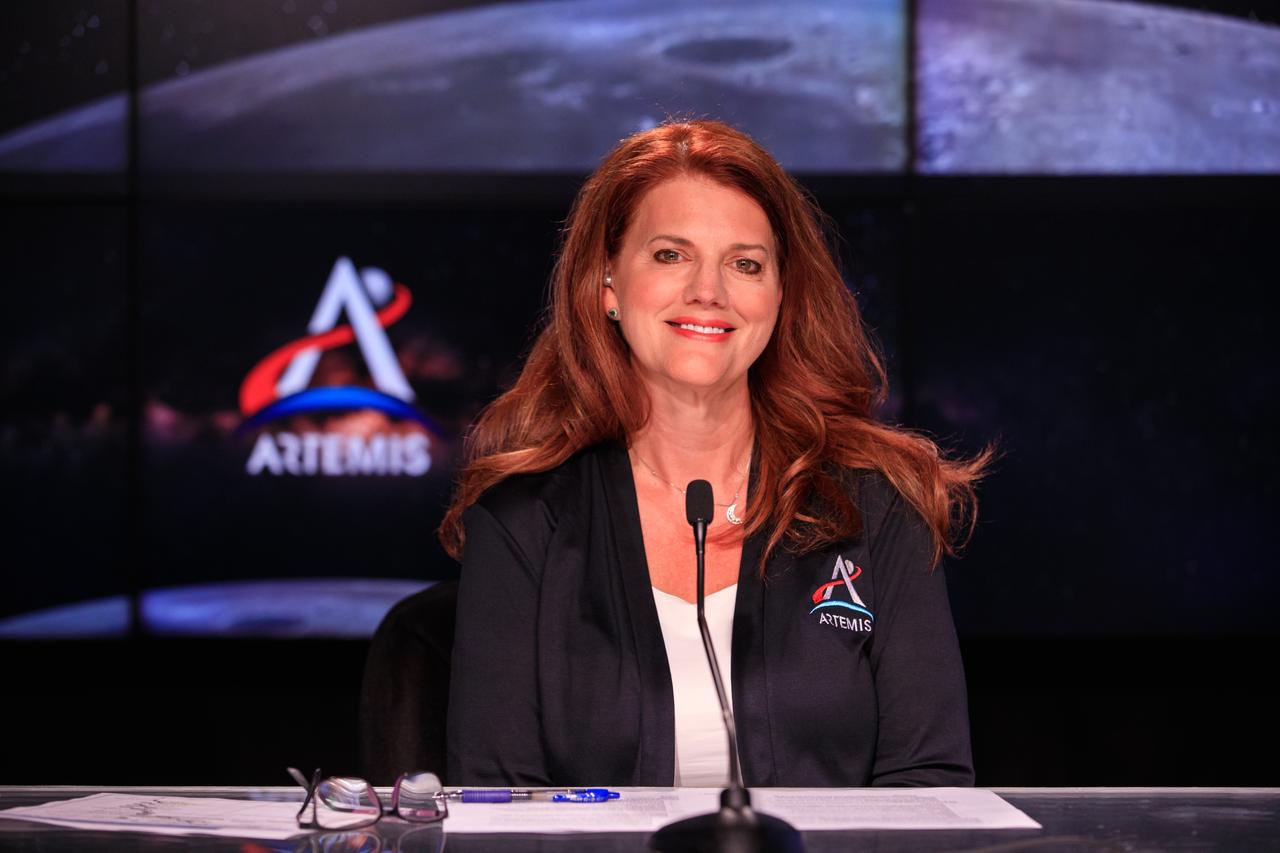
Launch Director Charlie Blackwell-Thompson participates in an Artemis I mission overview briefing inside the Press Site auditorium at NASA’s Kennedy Space Center in Florida on Aug. 3, 2022. Also participating in the briefing from various locations were NASA Administrator Bill Nelson; Associate Administrator for Technology, Policy, and Strategy Bhavya Lal; Mission Manager Mike Sarafin; Space Launch System (SLS) Program Manager John Honeycutt; and Orion Program Manager Howard Hu. The first in an increasingly complex series of missions, Artemis I will test the SLS rocket and Orion spacecraft as an integrated system prior to crewed flights to the Moon. Through Artemis, NASA will land the first woman and first person of color on the lunar surface, paving the way for long-term lunar presence and serving as a steppingstone before venturing to Mars.
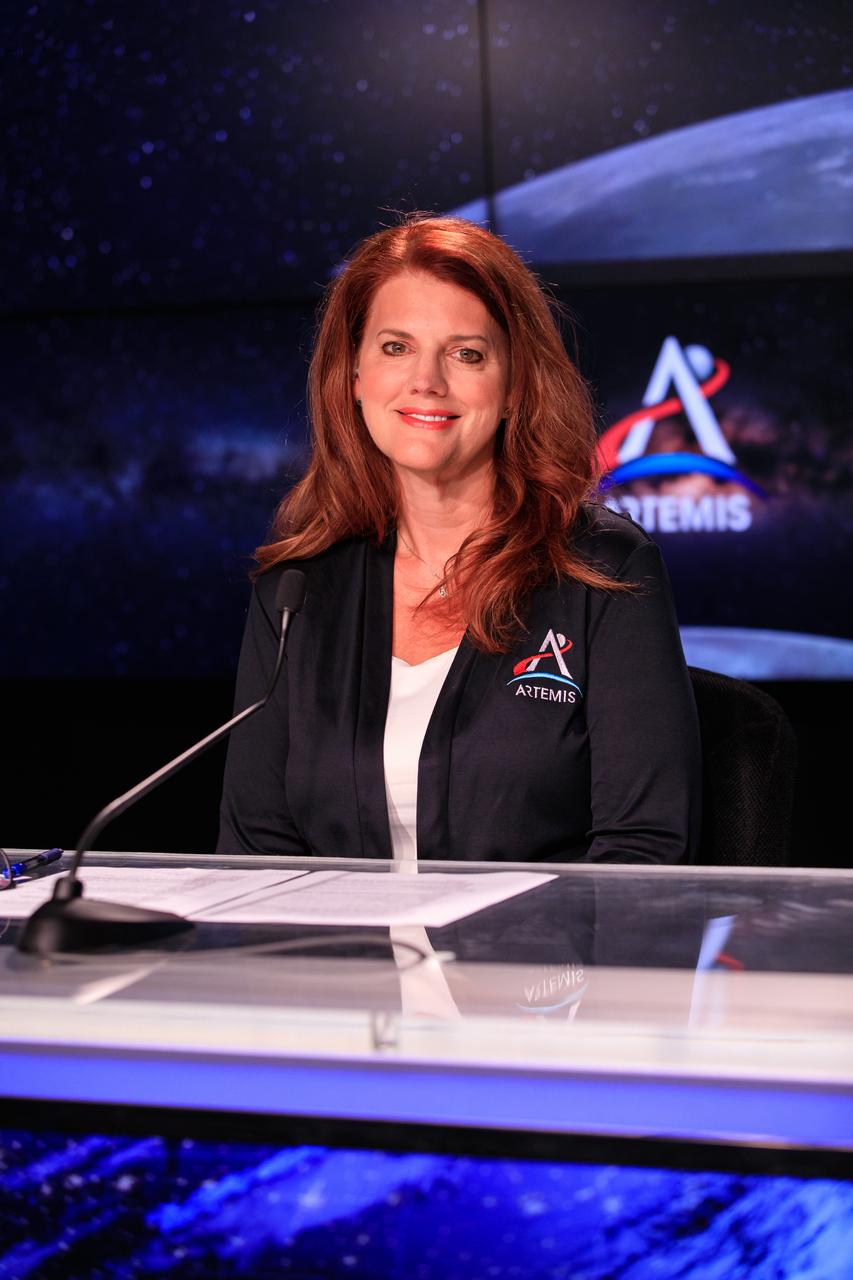
Launch Director Charlie Blackwell-Thompson participates in an Artemis I mission overview briefing inside the Press Site auditorium at NASA’s Kennedy Space Center in Florida on Aug. 3, 2022. Also participating in the briefing from various locations were NASA Administrator Bill Nelson; Associate Administrator for Technology, Policy, and Strategy Bhavya Lal; Mission Manager Mike Sarafin; Space Launch System (SLS) Program Manager John Honeycutt; and Orion Program Manager Howard Hu. The first in an increasingly complex series of missions, Artemis I will test the SLS rocket and Orion spacecraft as an integrated system prior to crewed flights to the Moon. Through Artemis, NASA will land the first woman and first person of color on the lunar surface, paving the way for long-term lunar presence and serving as a steppingstone before venturing to Mars.
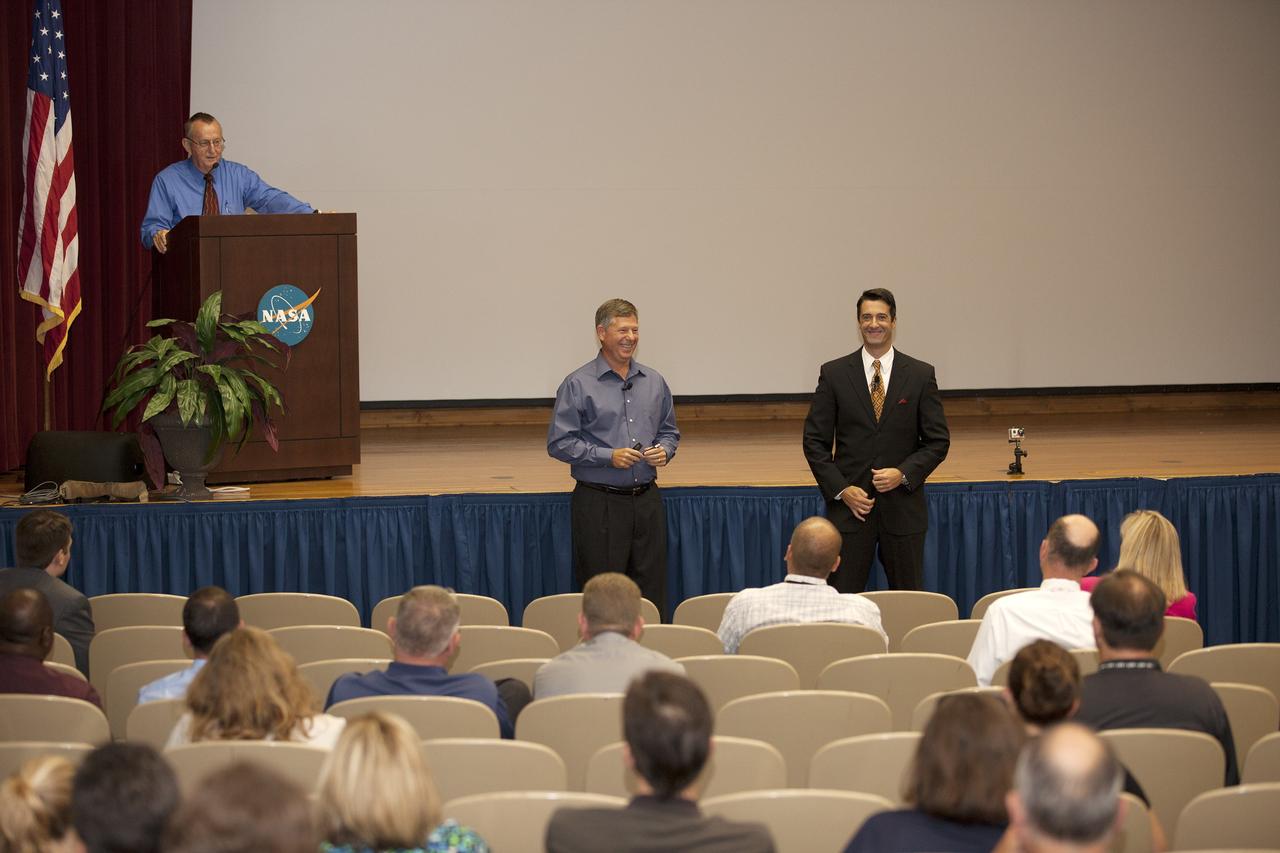
CAPE CANAVERAL, Fla. -- Todd McNamara, center, meteorologist with the 45th Weather Squadron at Patrick Air Force Base, and Tony Mainolfi, right, chief meteorologist of WESH 2 news, take questions from the audience of the annual hurricane awareness briefing at NASA's Kennedy Space Center in Florida. At the podium is moderator Wayne Kee, NASA emergency manager for the center. The briefing, held at the start of the 2014 hurricane season, is attended by the center's emergency hurricane coordinators and other interested employees in the KSC Training Auditorium. The briefing also is broadcast to the workforce. For more information, visit http://www.patrick.af.mil/weather. Photo credit: NASA/Kim Shiflett
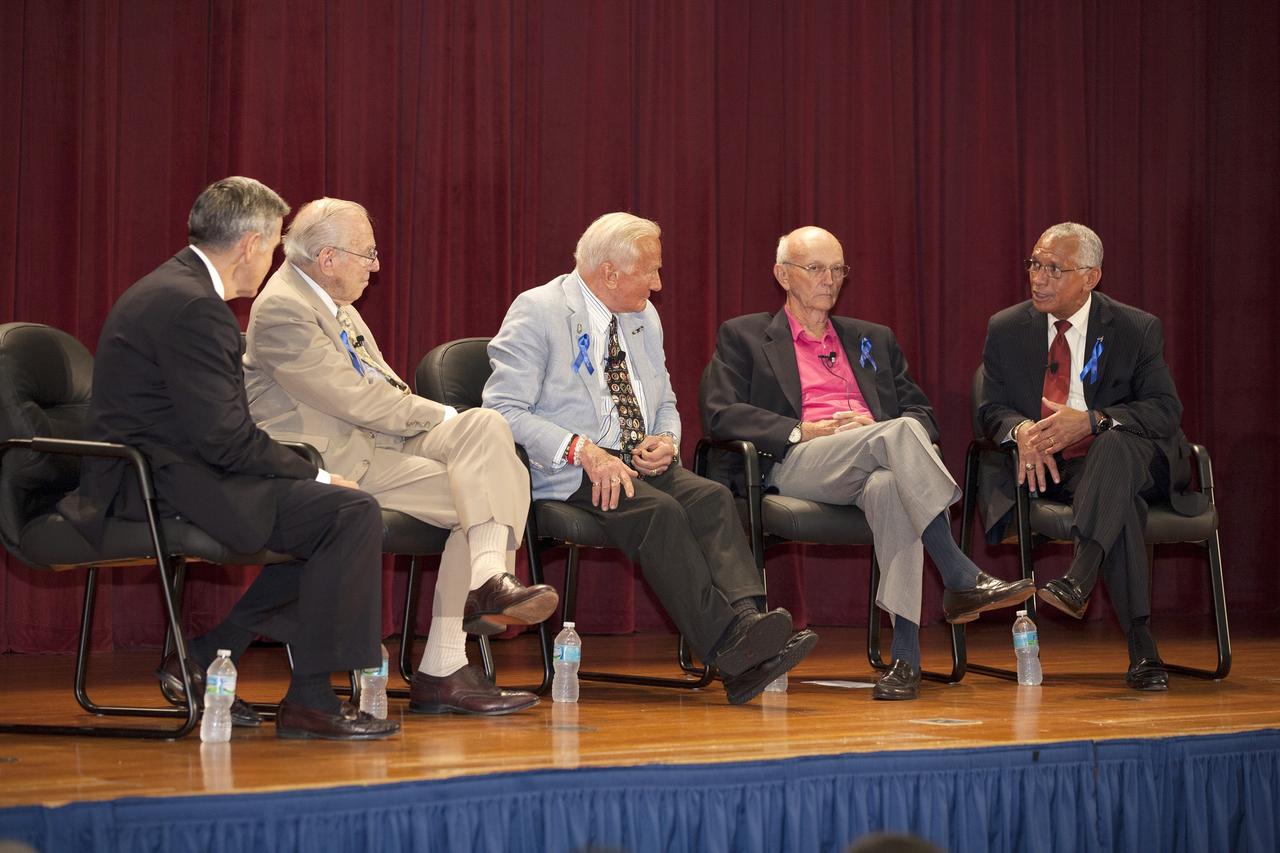
CAPE CANAVERAL, Fla. -- Apollo astronauts participate in a panel discussion held for employees in the KSC Training Auditorium at NASA's Kennedy Space Center in Florida. From left are Center Director Robert Cabana, Apollo 8 and Apollo 13 crew member Jim Lovell, Apollo 11 moonwalker Buzz Aldrin, Apollo 11 command module pilot Michael Collins, and NASA Administrator Charles Bolden. Cabana and Bolden, both shuttle astronauts, asked the questions to which the panel members responded. The panel discussion followed a ceremony renaming the refurbished Operations and Checkout Building for Apollo 11 astronaut Neil Armstrong, the first person to set foot on the moon. The building's high bay, the site for the ceremony, is being used to support the agency's new Orion spacecraft and is the same spaceport facility where the Apollo 11 command/service module and lunar module were prepped for the first lunar landing mission in 1969. Orion is designed to take humans farther than they’ve ever gone before, serving as the exploration vehicle that will carry astronauts to deep space and sustain the crew during travel to destinations such as an asteroid or Mars. The ceremony and panel discussion were part of NASA's 45th anniversary celebration of the Apollo 11 moon landing. As the world watched, Neil Armstrong and Buzz Aldrin landed in the moon's Sea of Tranquility on July 20, 1969, aboard the lunar module Eagle. Meanwhile, crewmate Michael Collins orbited above in the command module Columbia. For more, visit http://www.nasa.gov/press/2014/july/nasa-honors-historic-first-moon-landing-eyes-first-mars-mission. Photo credit: NASA/Kim Shiflett
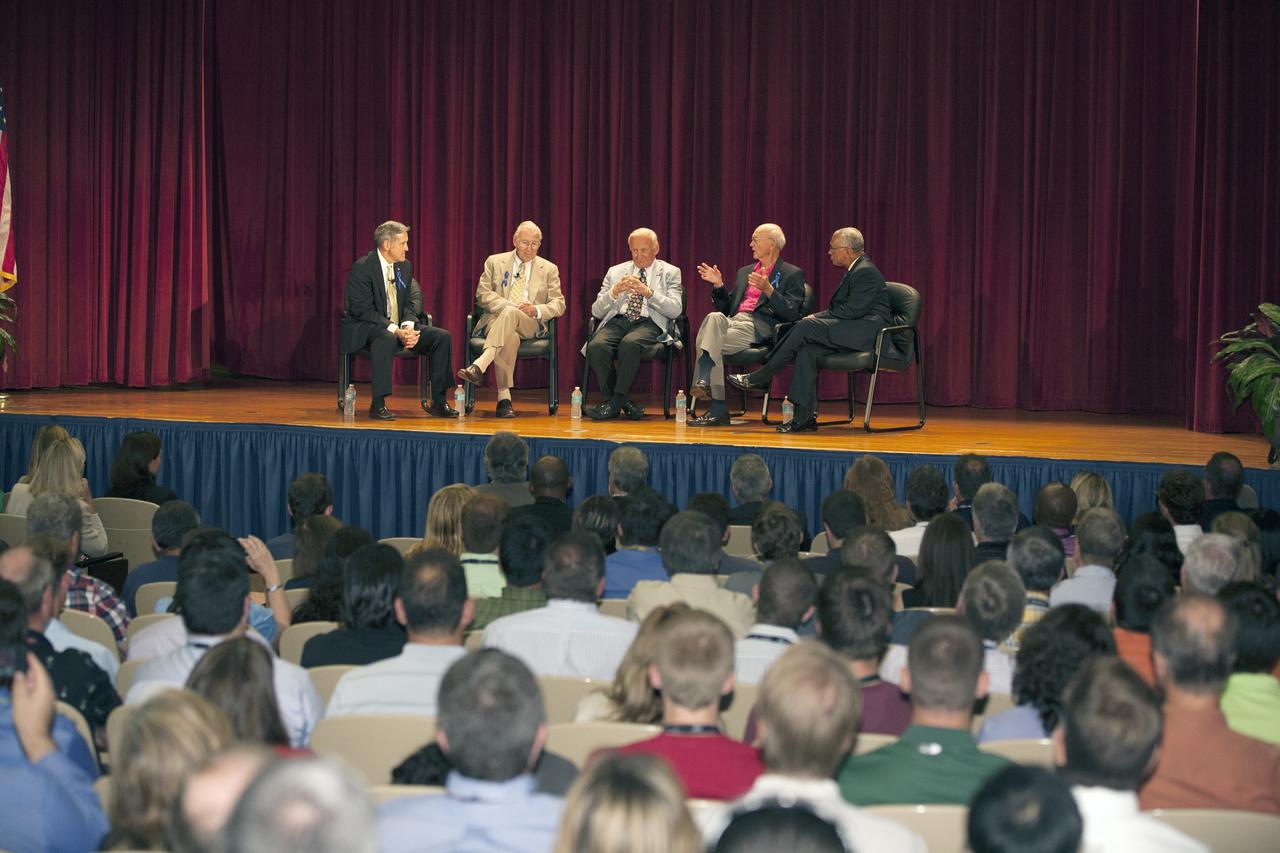
CAPE CANAVERAL, Fla. -- Apollo astronauts participate in a panel discussion held for employees in the KSC Training Auditorium at NASA's Kennedy Space Center in Florida. From left are Center Director Robert Cabana, Apollo 8 and Apollo 13 crew member Jim Lovell, Apollo 11 moonwalker Buzz Aldrin, Apollo 11 command module pilot Michael Collins, and NASA Administrator Charles Bolden. Cabana and Bolden, both shuttle astronauts, asked the questions to which the panel members responded. The panel discussion followed a ceremony renaming the refurbished Operations and Checkout Building for Apollo 11 astronaut Neil Armstrong, the first person to set foot on the moon. The building's high bay, the site for the ceremony, is being used to support the agency's new Orion spacecraft and is the same spaceport facility where the Apollo 11 command/service module and lunar module were prepped for the first lunar landing mission in 1969. Orion is designed to take humans farther than they’ve ever gone before, serving as the exploration vehicle that will carry astronauts to deep space and sustain the crew during travel to destinations such as an asteroid or Mars. The ceremony and panel discussion were part of NASA's 45th anniversary celebration of the Apollo 11 moon landing. As the world watched, Neil Armstrong and Buzz Aldrin landed in the moon's Sea of Tranquility on July 20, 1969, aboard the lunar module Eagle. Meanwhile, crewmate Michael Collins orbited above in the command module Columbia. For more, visit http://www.nasa.gov/press/2014/july/nasa-honors-historic-first-moon-landing-eyes-first-mars-mission. Photo credit: NASA/Kim Shiflett
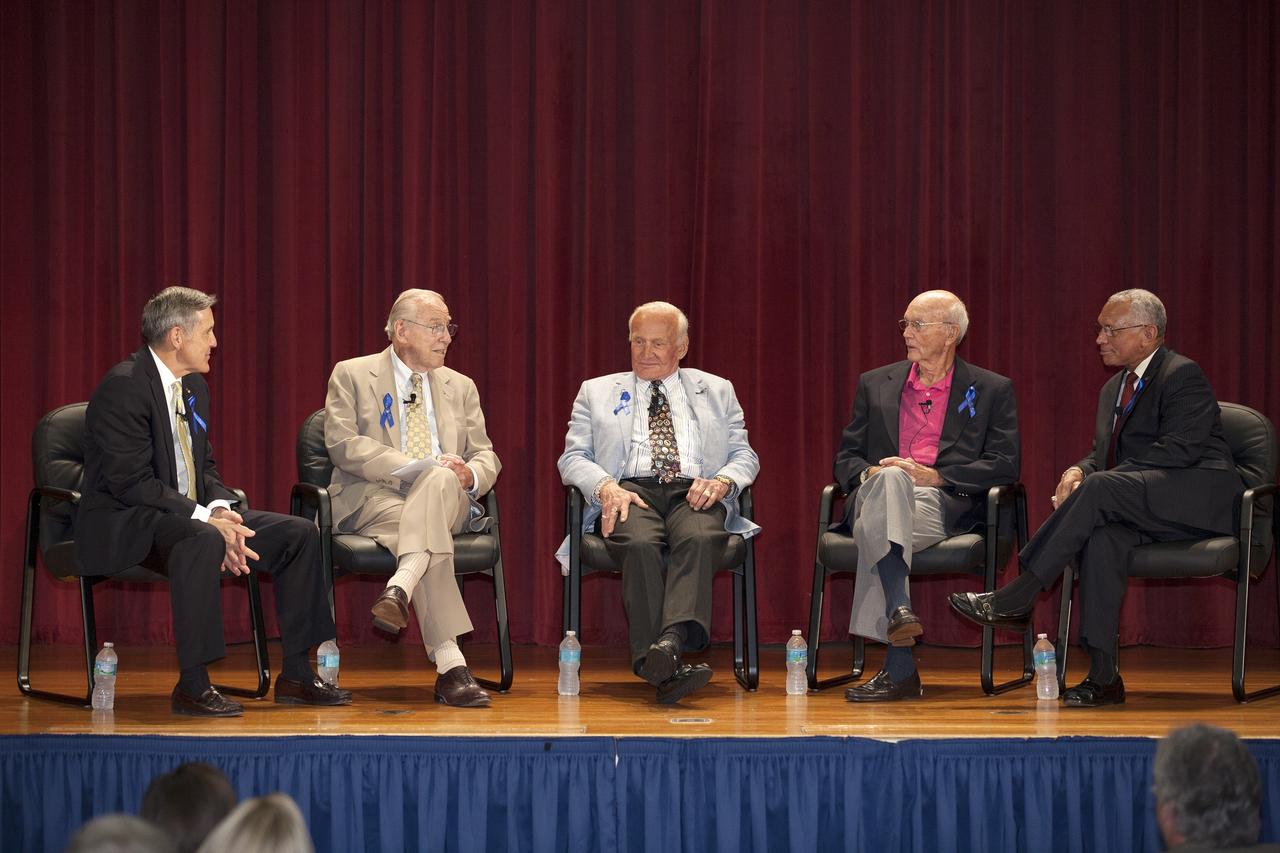
CAPE CANAVERAL, Fla. -- Apollo astronauts participate in a panel discussion held for employees in the KSC Training Auditorium at NASA's Kennedy Space Center in Florida. From left are Center Director Robert Cabana, Apollo 8 and Apollo 13 crew member Jim Lovell, Apollo 11 moonwalker Buzz Aldrin, Apollo 11 command module pilot Michael Collins, and NASA Administrator Charles Bolden. Cabana and Bolden, both shuttle astronauts, asked the questions to which the panel members responded. The panel discussion followed a ceremony renaming the refurbished Operations and Checkout Building for Apollo 11 astronaut Neil Armstrong, the first person to set foot on the moon. The building's high bay, the site for the ceremony, is being used to support the agency's new Orion spacecraft and is the same spaceport facility where the Apollo 11 command/service module and lunar module were prepped for the first lunar landing mission in 1969. Orion is designed to take humans farther than they’ve ever gone before, serving as the exploration vehicle that will carry astronauts to deep space and sustain the crew during travel to destinations such as an asteroid or Mars. The ceremony and panel discussion were part of NASA's 45th anniversary celebration of the Apollo 11 moon landing. As the world watched, Neil Armstrong and Buzz Aldrin landed in the moon's Sea of Tranquility on July 20, 1969, aboard the lunar module Eagle. Meanwhile, crewmate Michael Collins orbited above in the command module Columbia. For more, visit http://www.nasa.gov/press/2014/july/nasa-honors-historic-first-moon-landing-eyes-first-mars-mission. Photo credit: NASA/Kim Shiflett
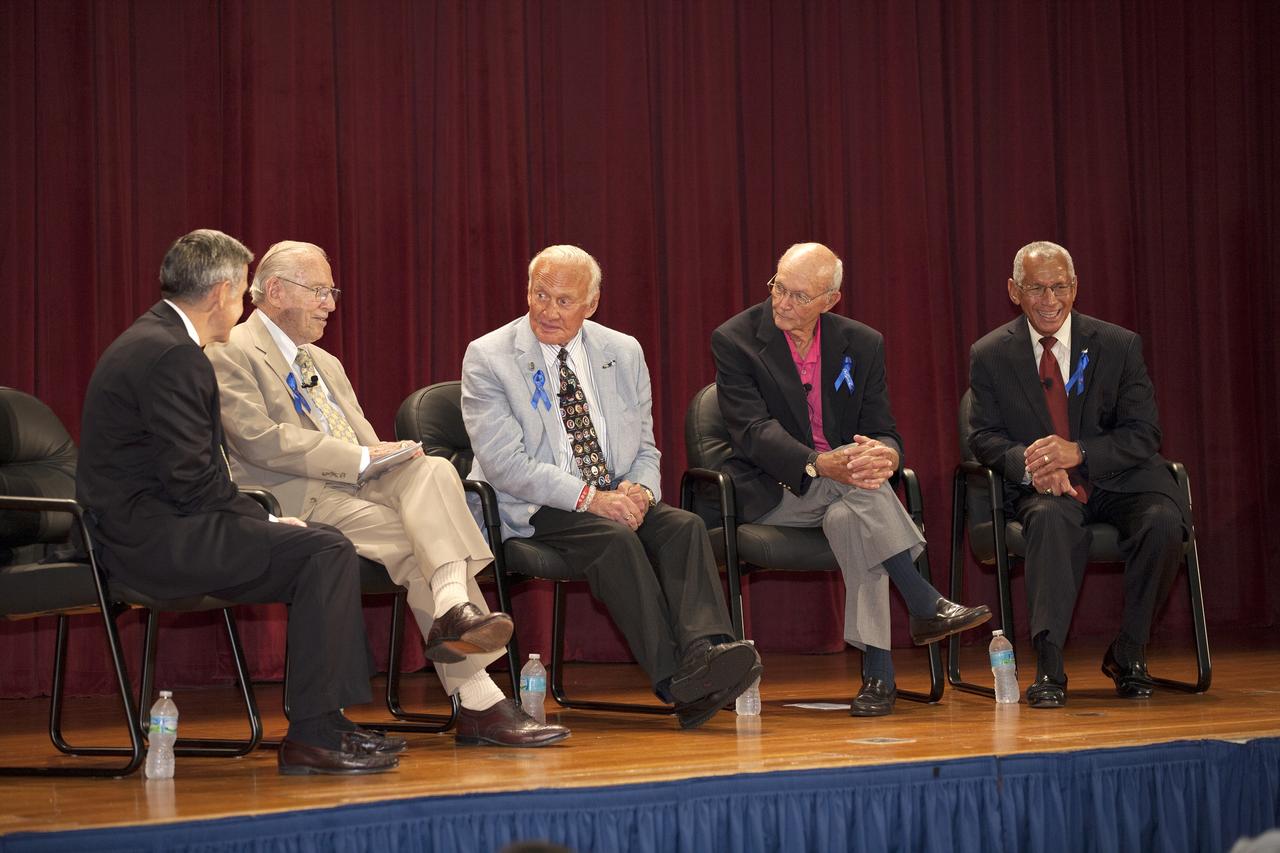
CAPE CANAVERAL, Fla. -- Apollo astronauts participate in a panel discussion held for employees in the KSC Training Auditorium at NASA's Kennedy Space Center in Florida. From left are Center Director Robert Cabana, Apollo 8 and Apollo 13 crew member Jim Lovell, Apollo 11 moonwalker Buzz Aldrin, Apollo 11 command module pilot Michael Collins, and NASA Administrator Charles Bolden. Cabana and Bolden, both shuttle astronauts, asked the questions to which the panel members responded. The panel discussion followed a ceremony renaming the refurbished Operations and Checkout Building for Apollo 11 astronaut Neil Armstrong, the first person to set foot on the moon. The building's high bay, the site for the ceremony, is being used to support the agency's new Orion spacecraft and is the same spaceport facility where the Apollo 11 command/service module and lunar module were prepped for the first lunar landing mission in 1969. Orion is designed to take humans farther than they’ve ever gone before, serving as the exploration vehicle that will carry astronauts to deep space and sustain the crew during travel to destinations such as an asteroid or Mars. The ceremony and panel discussion were part of NASA's 45th anniversary celebration of the Apollo 11 moon landing. As the world watched, Neil Armstrong and Buzz Aldrin landed in the moon's Sea of Tranquility on July 20, 1969, aboard the lunar module Eagle. Meanwhile, crewmate Michael Collins orbited above in the command module Columbia. For more, visit http://www.nasa.gov/press/2014/july/nasa-honors-historic-first-moon-landing-eyes-first-mars-mission. Photo credit: NASA/Kim Shiflett