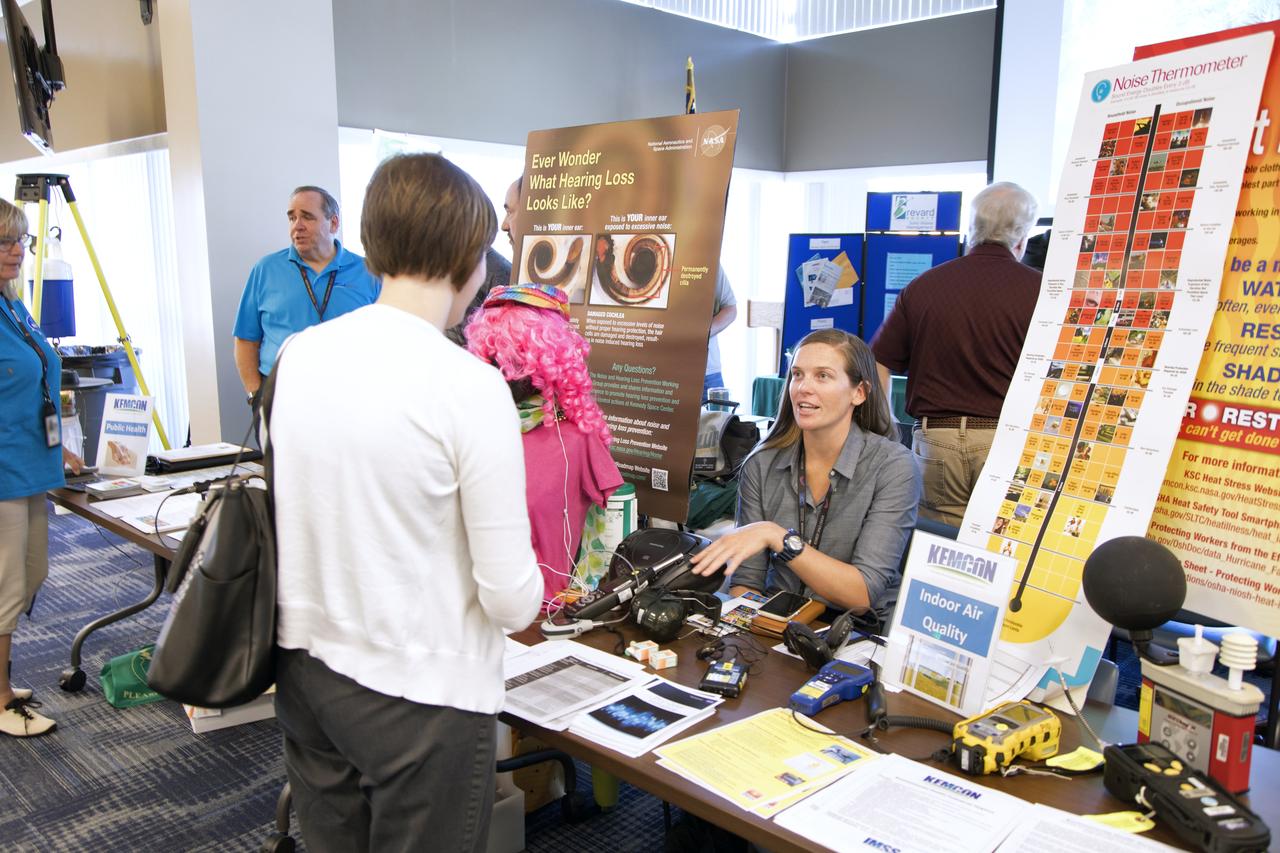
An employee learns about indoor air quality at the Kennedy Space Center (KSC) Environmental and Medical Contract (KEMCON) booth at the center’s annual Earth Day celebration. The two-day event featured approximately 50 exhibitors offering information on a variety of topics, including electric vehicles, sustainable lighting, renewable energy, Florida-friendly landscaping tips, Florida’s biking trails and more.
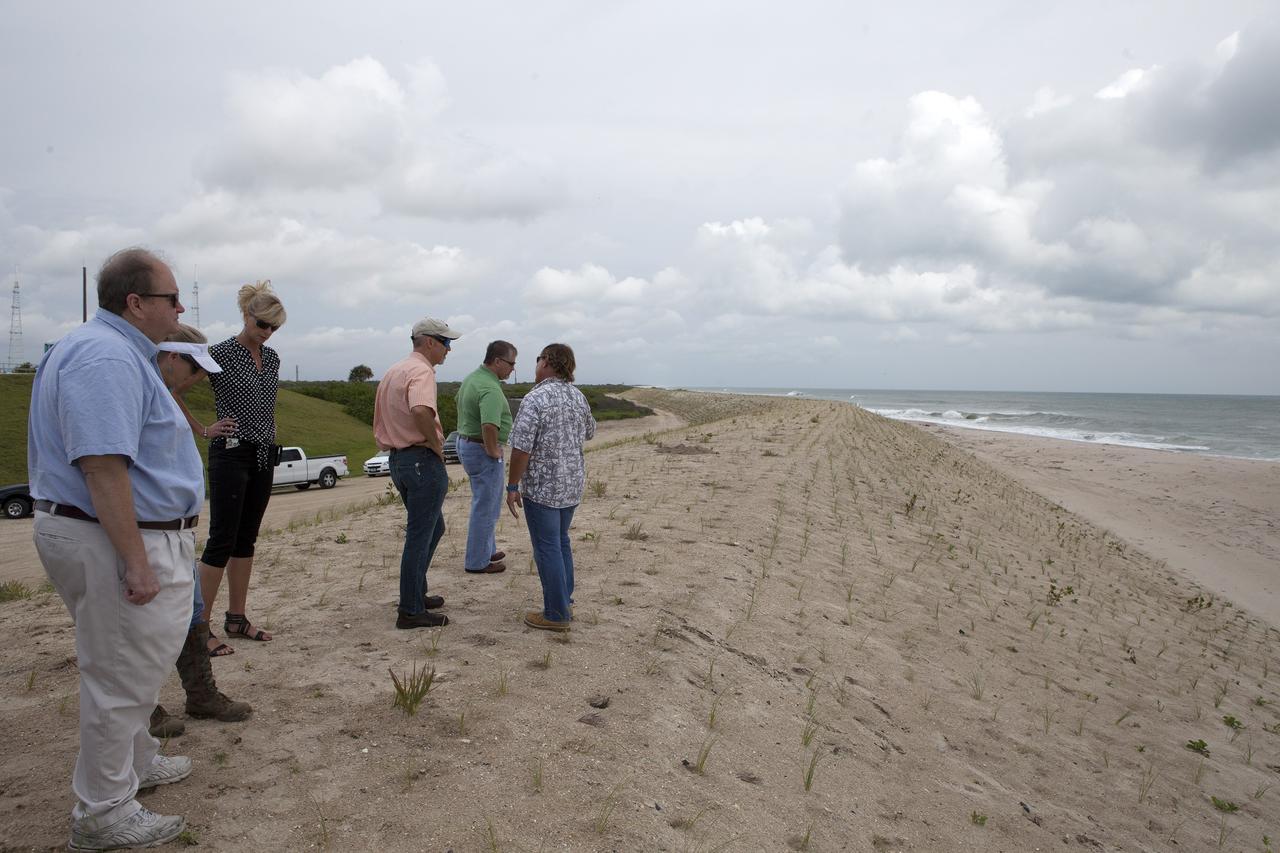
CAPE CANAVERAL, Fla. -- At the Kennedy Space Center in Florida, Burton Summerfield, senior advisor for Institutional Management in the office of the associate director of Kennedy, far left, and others survey restored sand dunes along a 1.2-mile stretch of shoreline near Launch Pads 39A and B. Constant pounding from tropical storms, such as Hurricane Sandy in October of 2012, other weather systems and higher than usual tides, destroyed sand dunes protecting infrastructure at the spaceport. Photo credit: NASA/Dan Casper
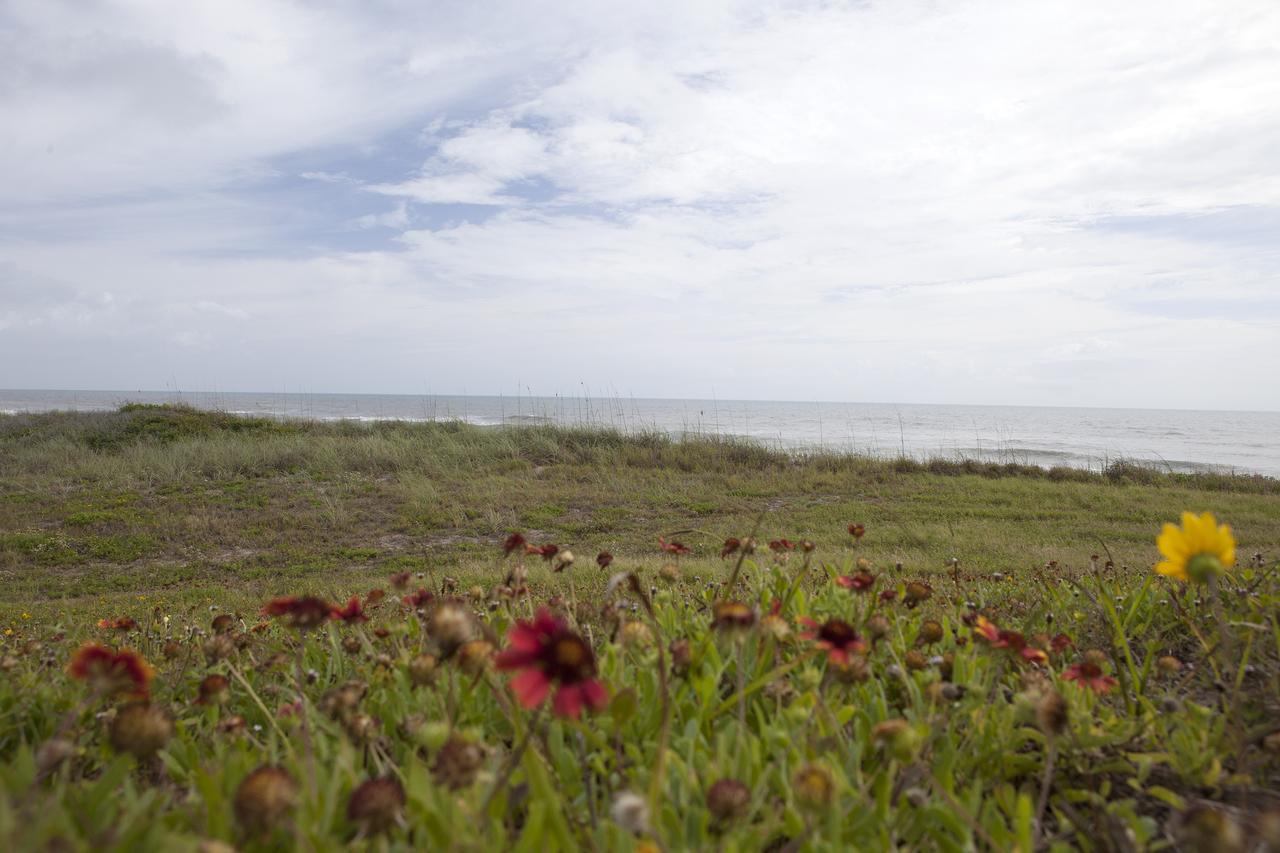
CAPE CANAVERAL, Fla. -- At the Kennedy Space Center in Florida, the sand dunes along a 1.2 mile stretch of shoreline near Launch Pads 39A and B were restored during a six-month effort using 90,000 cubic yards of sand. To help prevent erosion, 180,000 shrubs, including grasses, sunflowers, vines, sea grapes and palmettos were planted. Constant pounding from tropical storms, such as Hurricane Sandy in October of 2012, other weather systems and higher than usual tides, destroyed sand dunes protecting infrastructure at the spaceport. Photo credit: NASA/Dan Casper
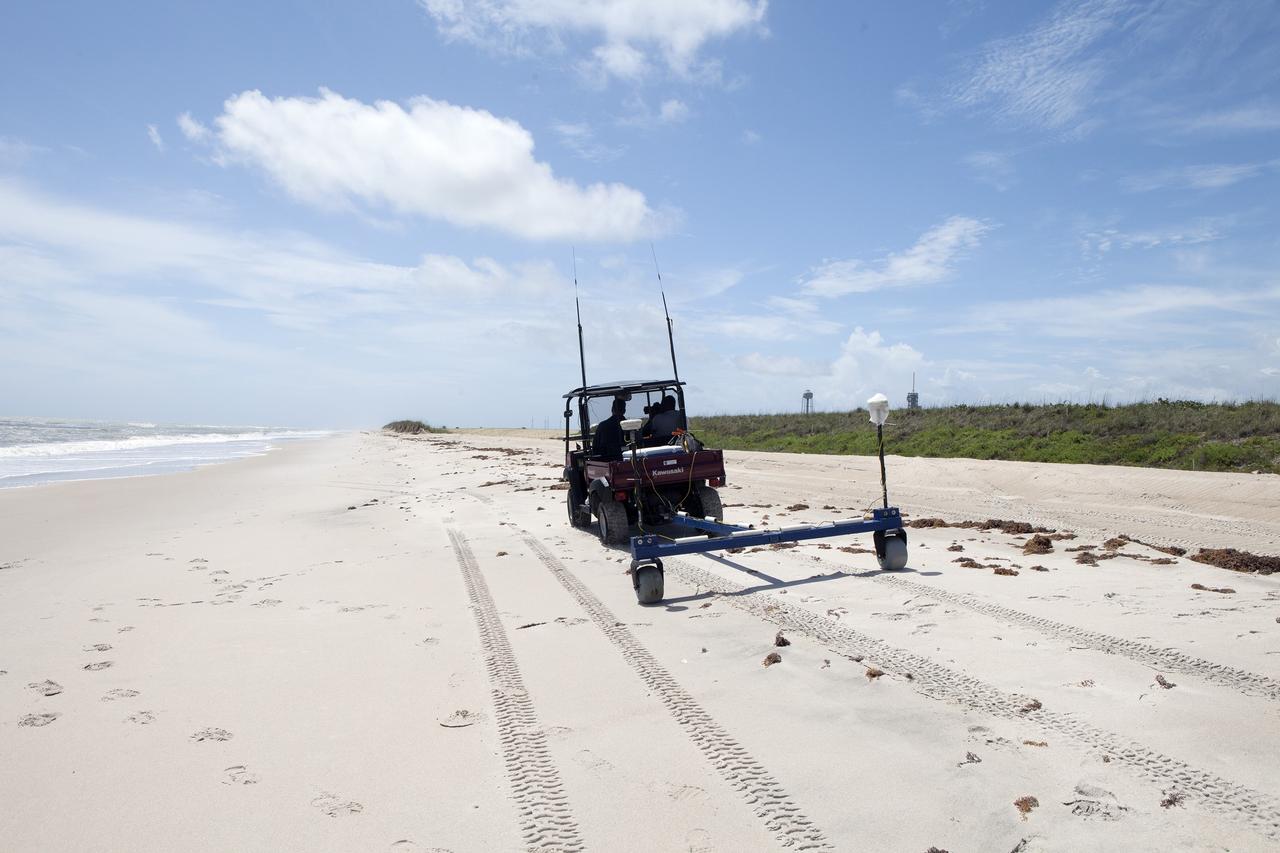
CAPE CANAVERAL, Fla. -- Rich MacKenzie, who earned a doctorate in geological sciences at the University of Florida, collects Global Positioning System survey measurements along a restored 1.2 mile stretch of shoreline near Launch Pads 39A and B. Experts from University of Florida are working with NASA scientists to better understand beach erosion. Constant pounding from tropical storms, such as Hurricane Sandy in October of 2012, other weather systems and higher than usual tides, destroyed sand dunes protecting infrastructure at the spaceport. Photo credit: NASA/Dan Casper
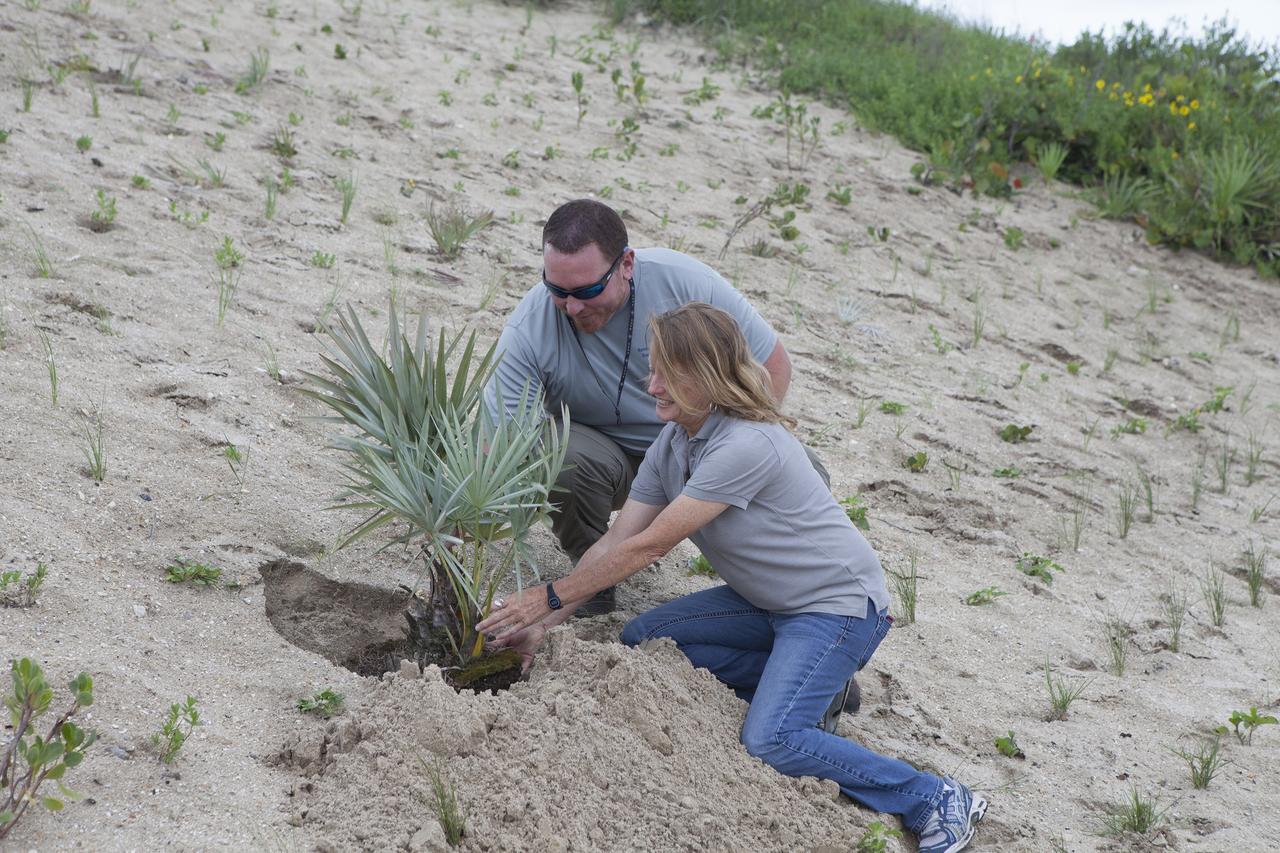
CAPE CANAVERAL, Fla. -- At the Kennedy Space Center in Florida, Don Dankert, a biological scientist in the NASA Environmental Management Branch of Center Operations, left, and Becky Bolt, a wildlife ecologist with InoMedic Health Applications Inc, plant the final shrub that is among 180,000 planted on a new 1.2-mile stretch of shoreline near Launch Pads 39A and B. Constant pounding from tropical storms, such as Hurricane Sandy in October of 2012, other weather systems and higher than usual tides, destroyed sand dunes protecting infrastructure at the spaceport. Photo credit: NASA/Dan Casper
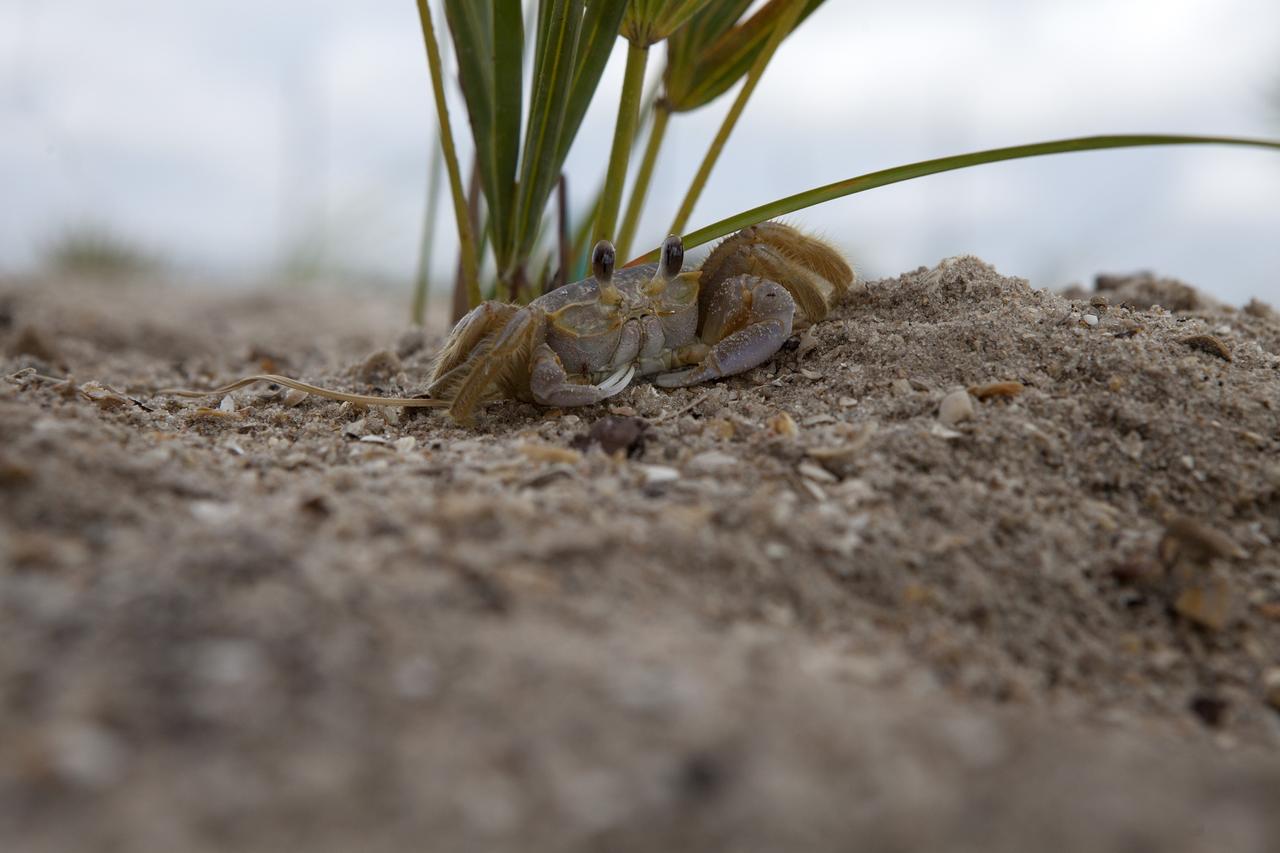
CAPE CANAVERAL, Fla. -- At the Kennedy Space Center in Florida, a small crab sits atop a restored sand dune along a 1.2 mile stretch of shoreline near Launch Pads 39A and B. As part of a six-month effort to help prevent further erosion, 180,000 shrubs, including grasses, sunflowers, vines, sea grapes and palmettos were planted. Constant pounding from tropical storms, such as Hurricane Sandy in October of 2012, other weather systems and higher than usual tides, destroyed sand dunes protecting infrastructure at the spaceport. Photo credit: NASA/Dan Casper
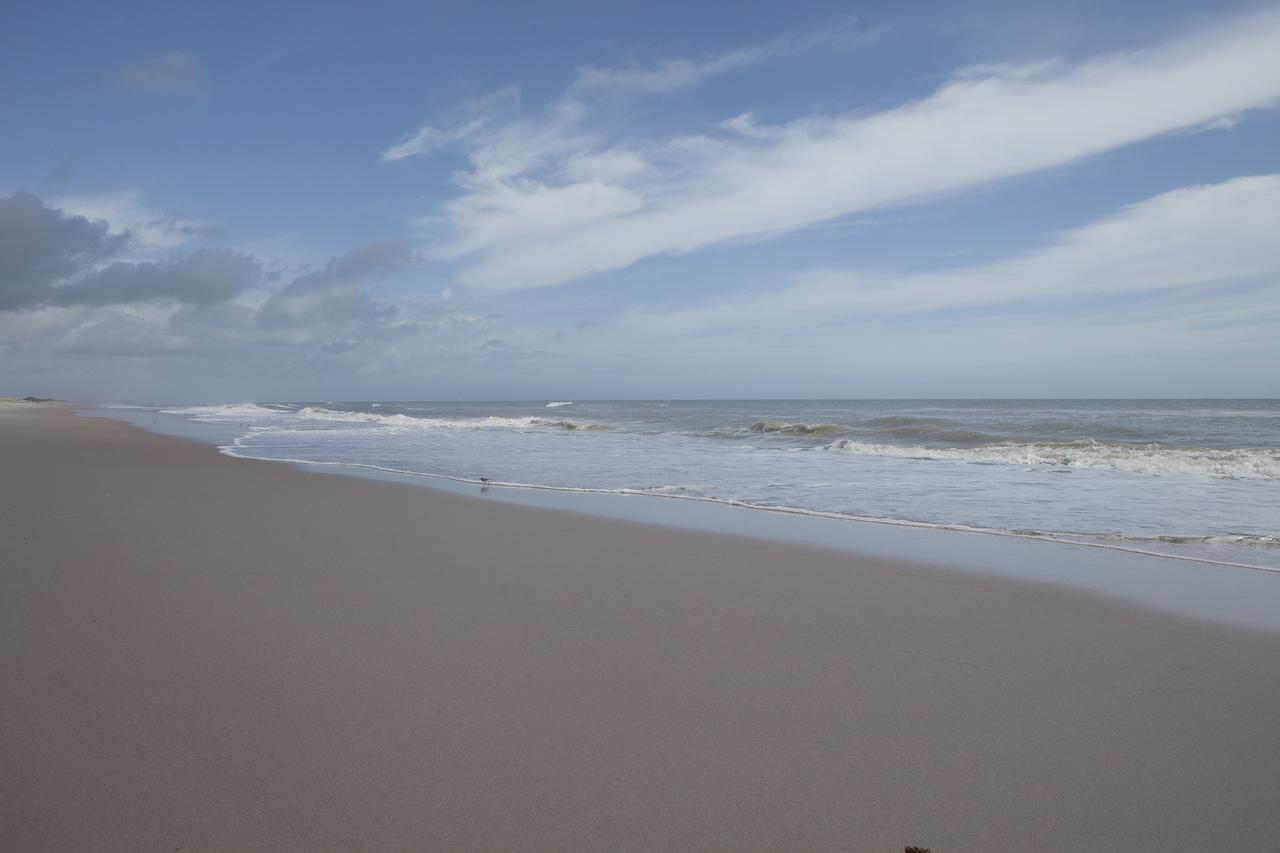
CAPE CANAVERAL, Fla. -- At the Kennedy Space Center in Florida, the Atlantic Ocean surf is seen adjacent to sand dunes restored along a 1.2 mile stretch of shoreline near Launch Pads 39A and B. As part of a six-month effort to help prevent further erosion, 180,000 shrubs, including grasses, sunflowers, vines, sea grapes and palmettos were planted. Constant pounding from tropical storms, such as Hurricane Sandy in October of 2012, other weather systems and higher than usual tides, destroyed sand dunes protecting infrastructure at the spaceport. Photo credit: NASA/Dan Casper
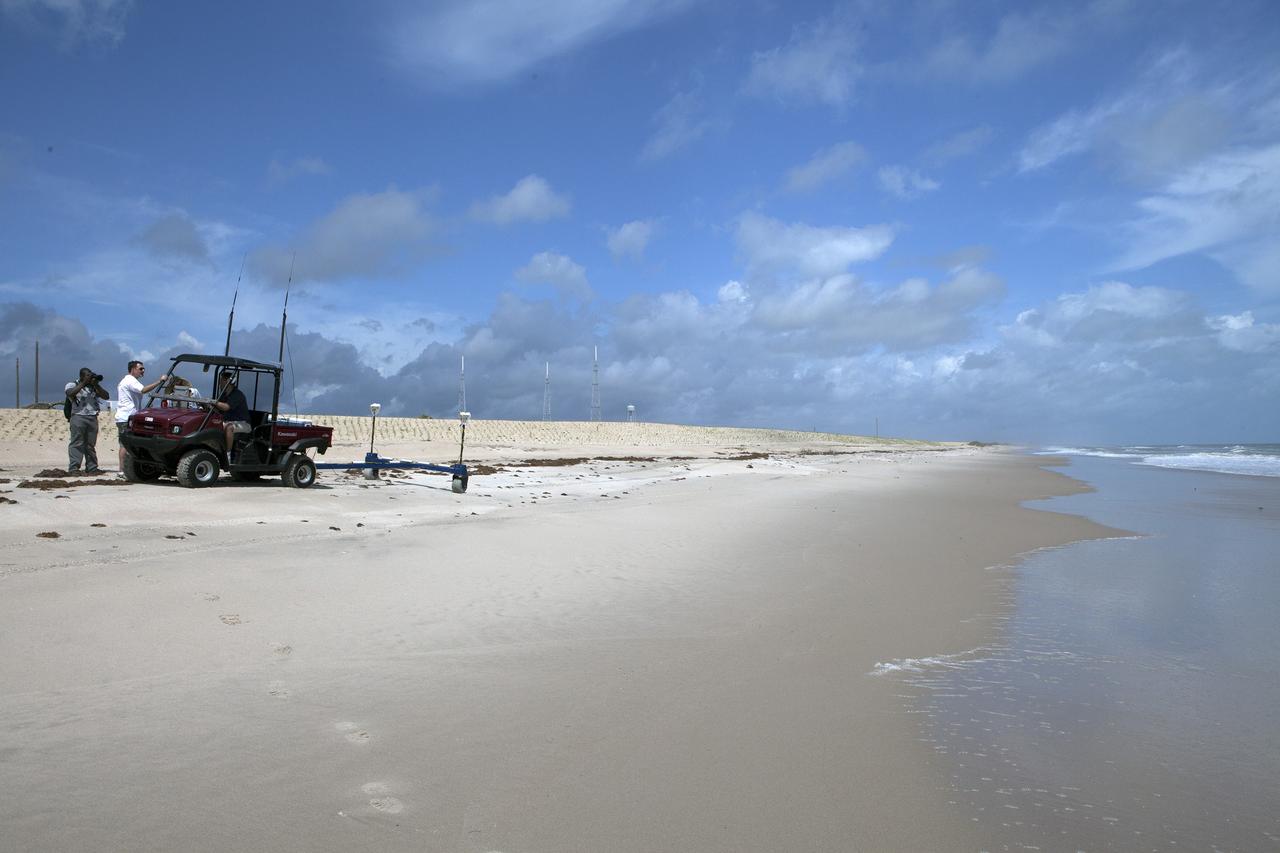
CAPE CANAVERAL, Fla. -- At the Kennedy Space Center in Florida, University of Florida geologists and NASA biologists use an all-terrain vehicle to survey sand dunes that have been restored along a 1.2 mile stretch of shoreline near Launch Pads 39A and B. As part of a six-month effort to help prevent further erosion, 180,000 shrubs, including grasses, sunflowers, vines, sea grapes and palmettos were planted. Constant pounding from tropical storms, such as Hurricane Sandy in October of 2012, other weather systems and higher than usual tides, destroyed sand dunes protecting infrastructure at the spaceport. Photo credit: NASA/Dan Casper
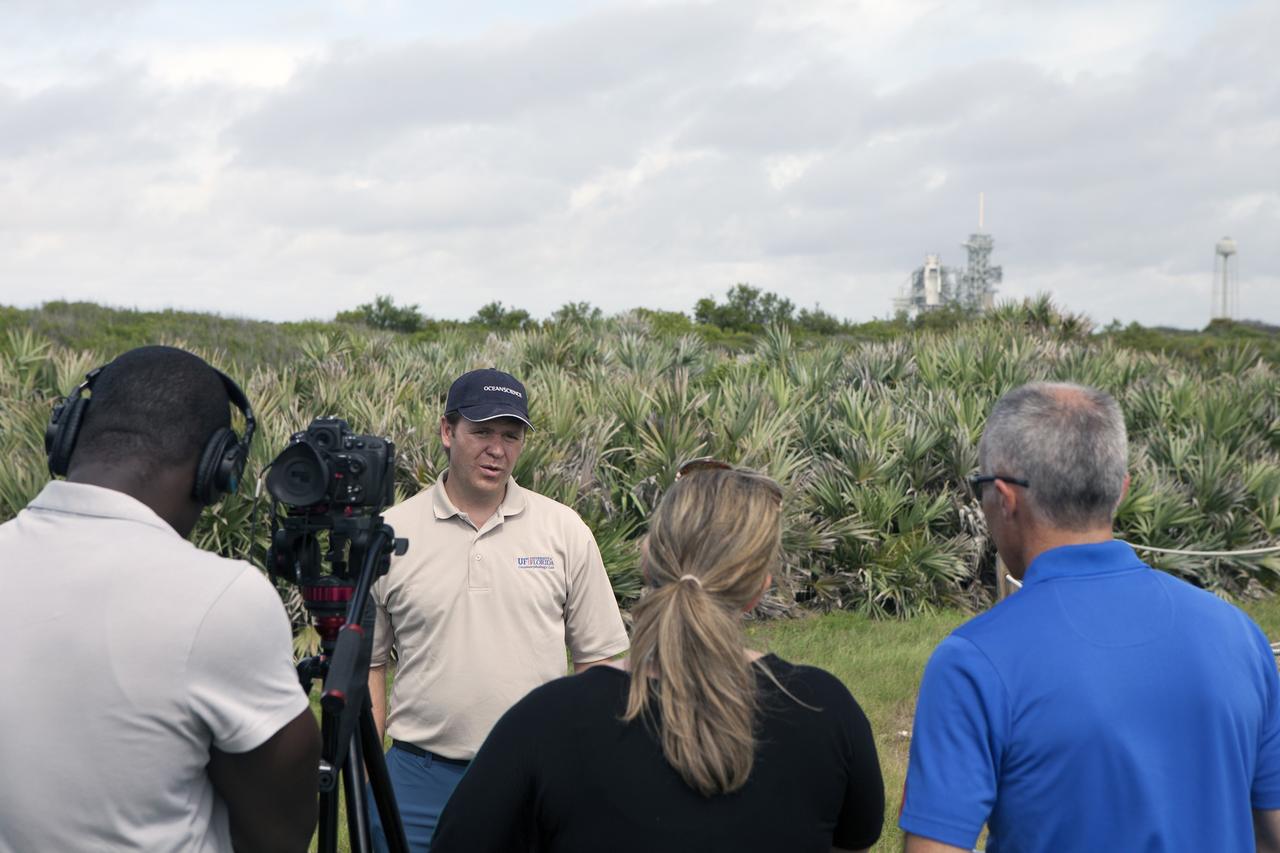
CAPE CANAVERAL, Fla. -- University of Florida geologist, Pete Adams, discusses a six-month effort to restore the sand dunes along a 1.2 mile stretch of shoreline near Launch Pads 39A and B at the Kennedy Space Center in Florida. Experts from University of Florida are working with NASA scientists to better understand beach erosion. Constant pounding from tropical storms, such as Hurricane Sandy in October of 2012, other weather systems and higher than usual tides, destroyed sand dunes protecting infrastructure at the spaceport. Photo credit: NASA/Dan Casper
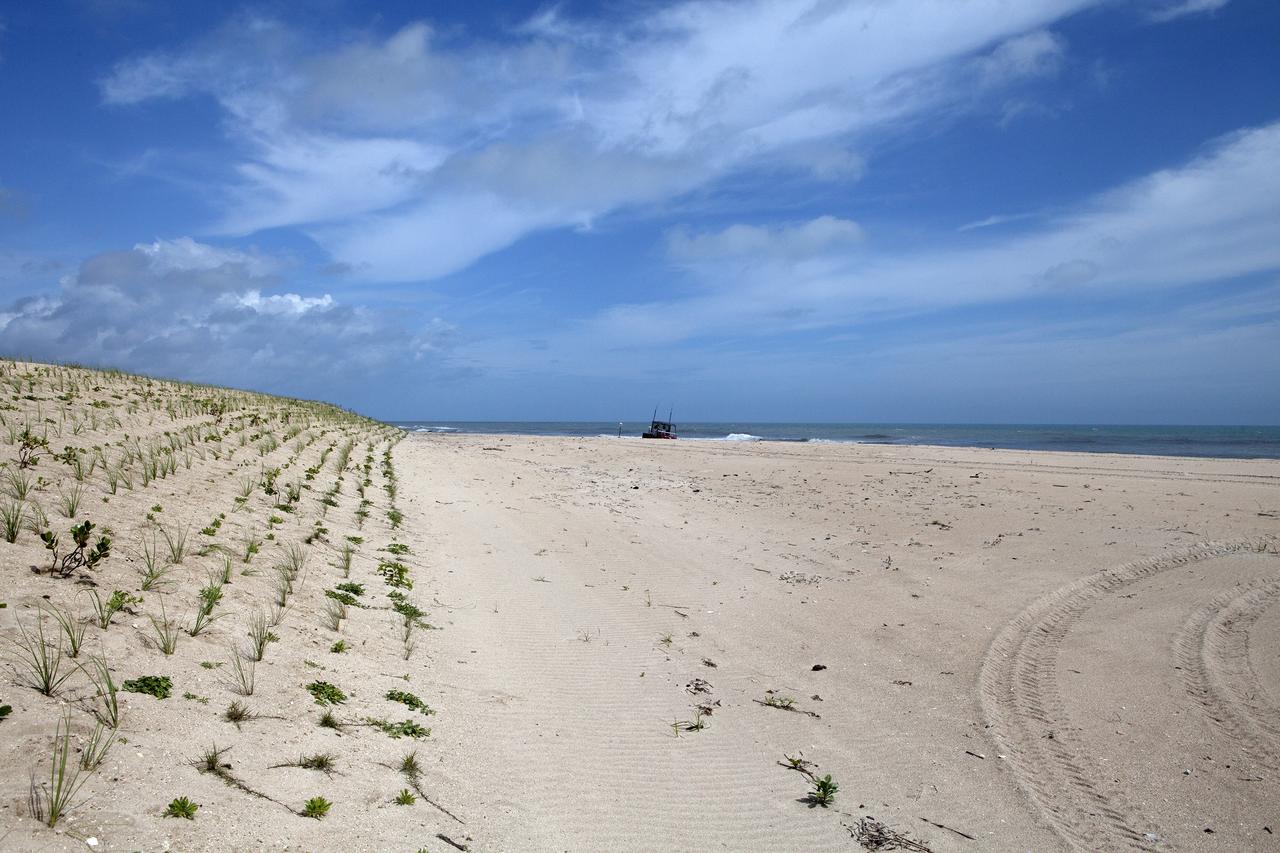
CAPE CANAVERAL, Fla. -- At the Kennedy Space Center in Florida, sand dunes have been restored along a 1.2 mile stretch of shoreline near Launch Pads 39A and B. As part of a six-month effort to help prevent further erosion, 180,000 shrubs, including grasses, sunflowers, vines, sea grapes and palmettos were planted. Constant pounding from tropical storms, such as Hurricane Sandy in October of 2012, other weather systems and higher than usual tides, destroyed sand dunes protecting infrastructure at the spaceport. Photo credit: NASA/Dan Casper
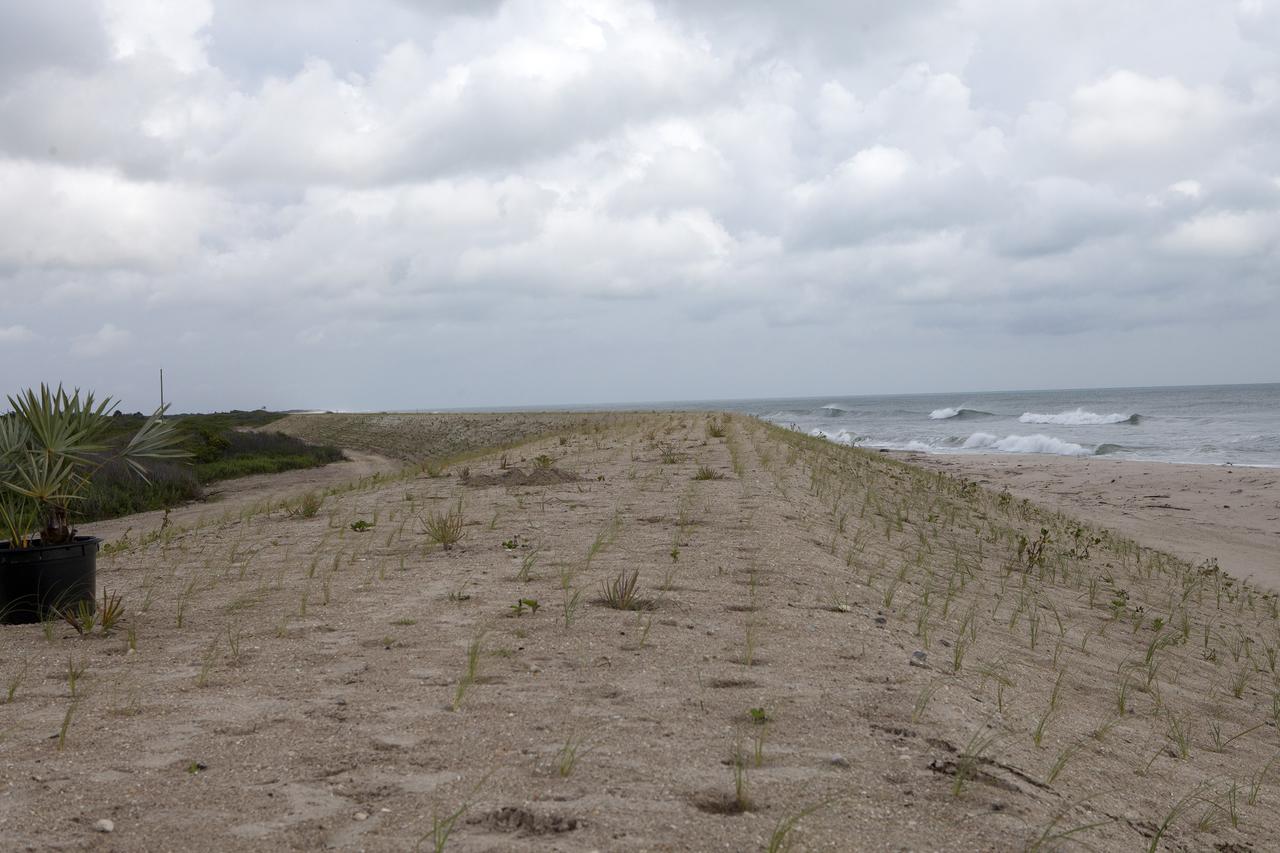
CAPE CANAVERAL, Fla. -- At the Kennedy Space Center in Florida, the sand dunes along a 1.2 mile stretch of shoreline near Launch Pads 39A and B were restored during a six-month effort using 90,000 cubic yards of sand. To help prevent future erosion, 180,000 shrubs, including grasses, sunflowers, vines, sea grapes and palmettos were planted. Constant pounding from tropical storms, such as Hurricane Sandy in October of 2012, other weather systems and higher than usual tides, destroyed sand dunes protecting infrastructure at the spaceport. Photo credit: NASA/Dan Casper
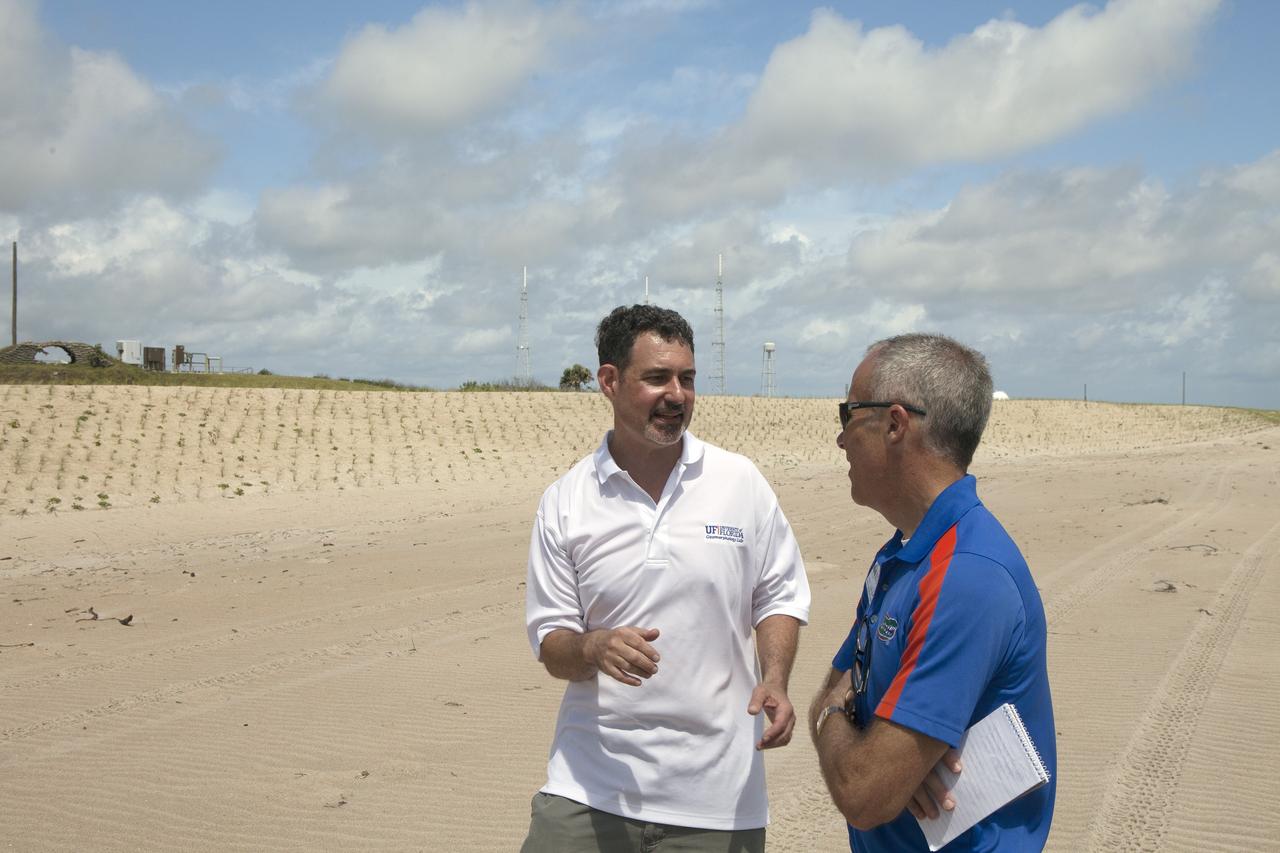
CAPE CANAVERAL, Fla. -- University of Florida geologist, John Jaeger, left, and Steve Orlando, senior director Media Relations at the University, discuss a six-month effort to restore the sand dunes along a 1.2 mile stretch of shoreline near Launch Pads 39A and B at the Kennedy Space Center in Florida. Experts from University of Florida are working with NASA scientists to better understand beach erosion. Constant pounding from tropical storms, such as Hurricane Sandy in October of 2012, other weather systems and higher than usual tides, destroyed sand dunes protecting infrastructure at the spaceport. Photo credit: NASA/Dan Casper
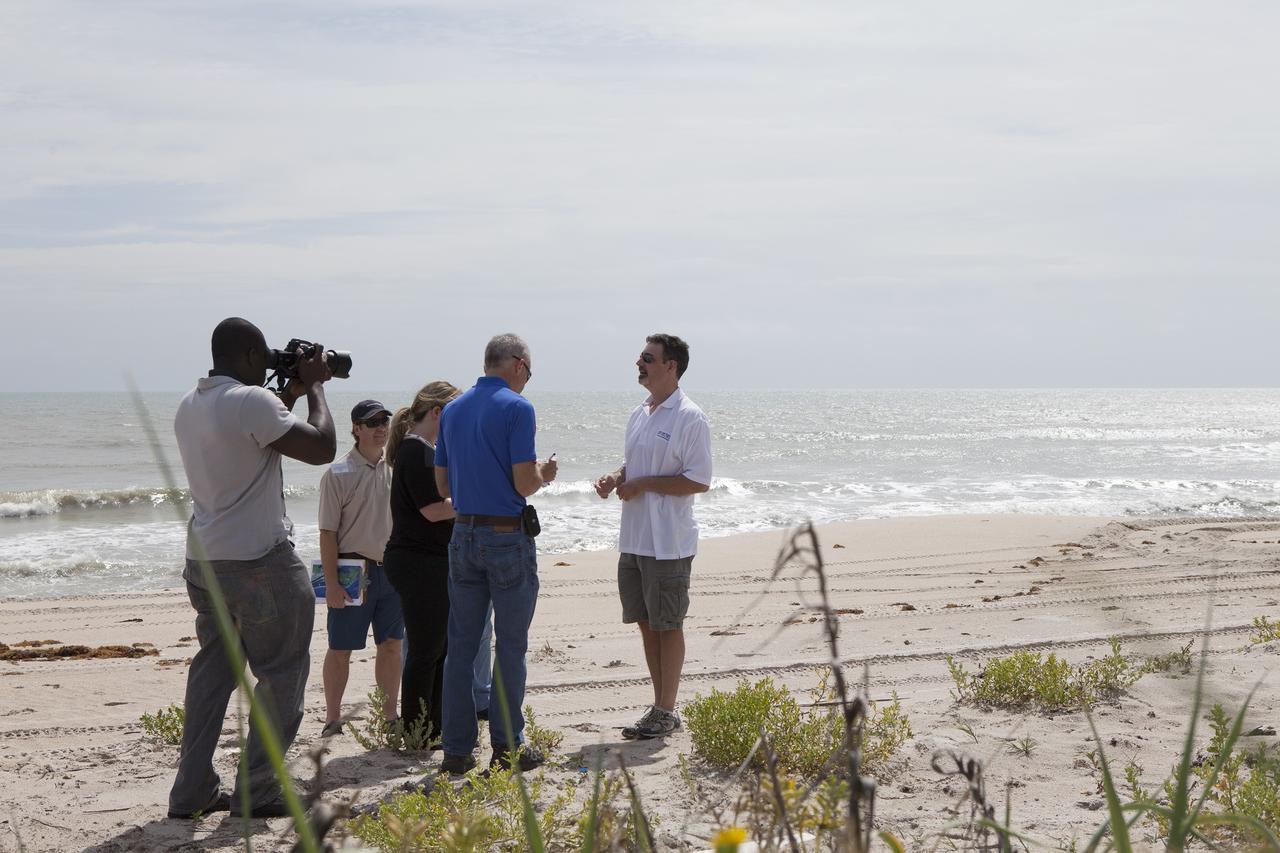
CAPE CANAVERAL, Fla. -- University of Florida geologist, John Jaeger, discusses a six-month effort to restore the sand dunes along a 1.2 mile stretch of shoreline near Launch Pads 39A and B at the Kennedy Space Center in Florida. Experts from University of Florida are working with NASA scientists to better understand beach erosion. Constant pounding from tropical storms, such as Hurricane Sandy in October of 2012, other weather systems and higher than usual tides, destroyed sand dunes protecting infrastructure at the spaceport. Photo credit: NASA/Dan Casper
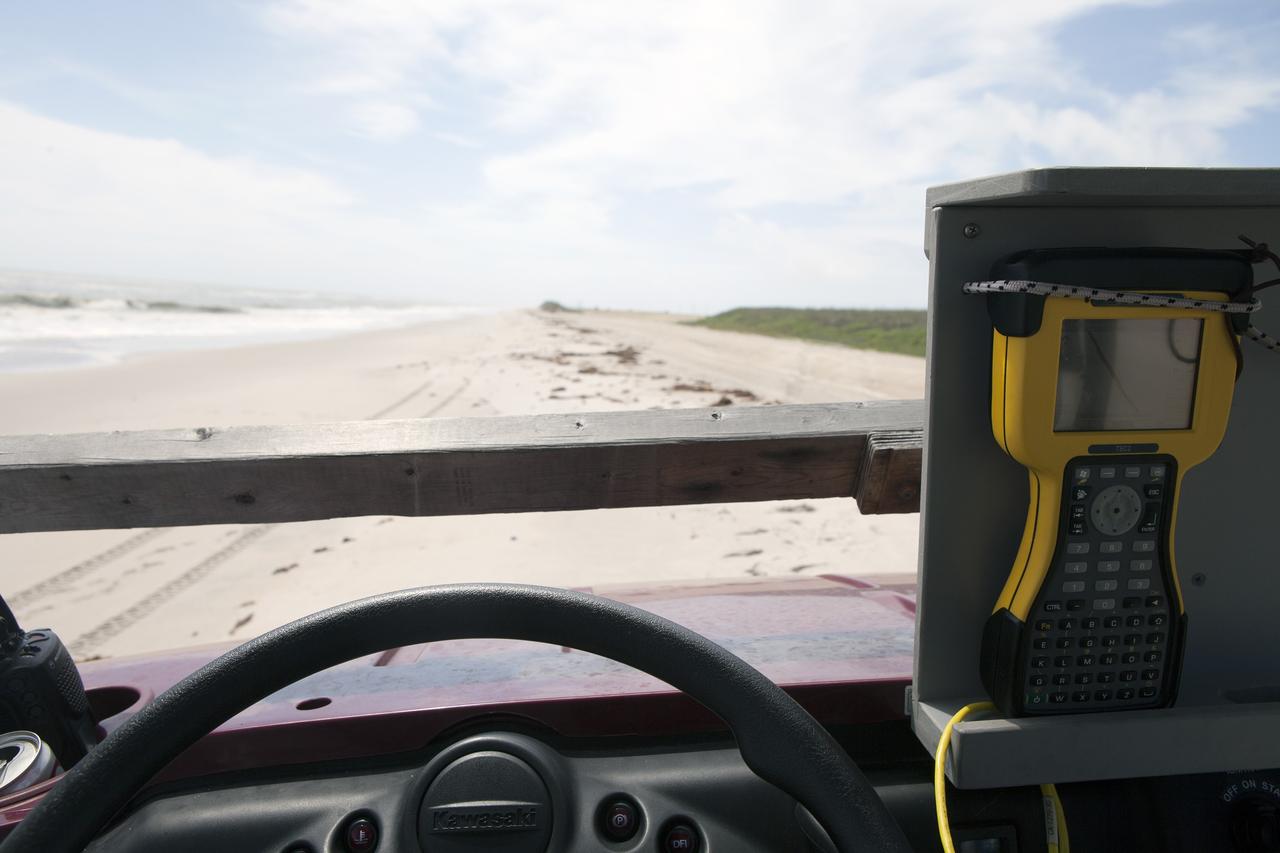
CAPE CANAVERAL, Fla. -- At the Kennedy Space Center in Florida, University of Florida geologists and NASA biologists use an all-terrain vehicle to survey sand dunes that have been restored along a 1.2 mile stretch of shoreline near Launch Pads 39A and B. As part of a six-month effort to help prevent further erosion, 180,000 shrubs, including grasses, sunflowers, vines, sea grapes and palmettos were planted. Constant pounding from tropical storms, such as Hurricane Sandy in October of 2012, other weather systems and higher than usual tides, destroyed sand dunes protecting infrastructure at the spaceport. Photo credit: NASA/Dan Casper
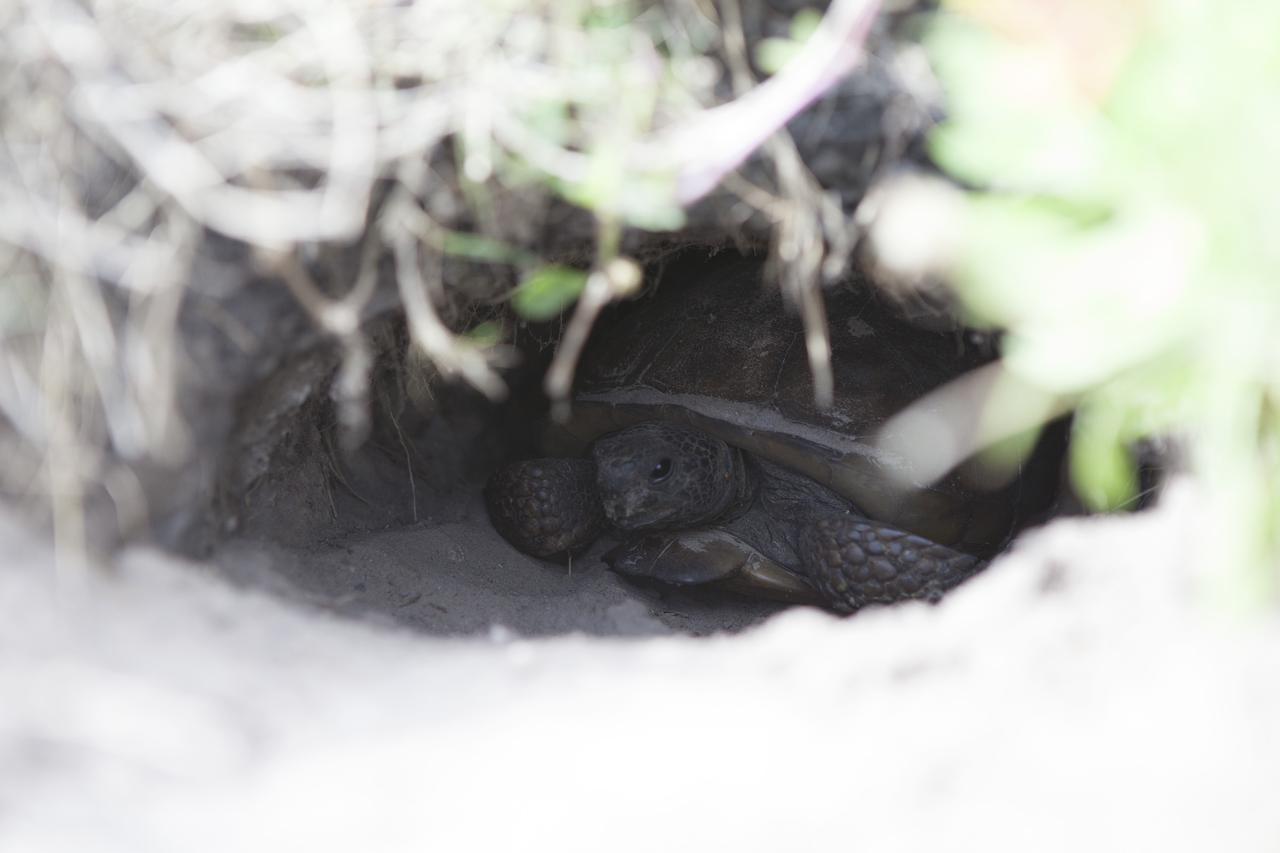
CAPE CANAVERAL, Fla. -- At the Kennedy Space Center in Florida, a turtle has burrowed into a restored sand dune along a 1.2 mile stretch of shoreline near Launch Pads 39A and B. As part of a six-month effort to help prevent further erosion, 180,000 shrubs, including grasses, sunflowers, vines, sea grapes and palmettos were planted. Constant pounding from tropical storms, such as Hurricane Sandy in October of 2012, other weather systems and higher than usual tides, destroyed sand dunes protecting infrastructure at the spaceport. Photo credit: NASA/Dan Casper
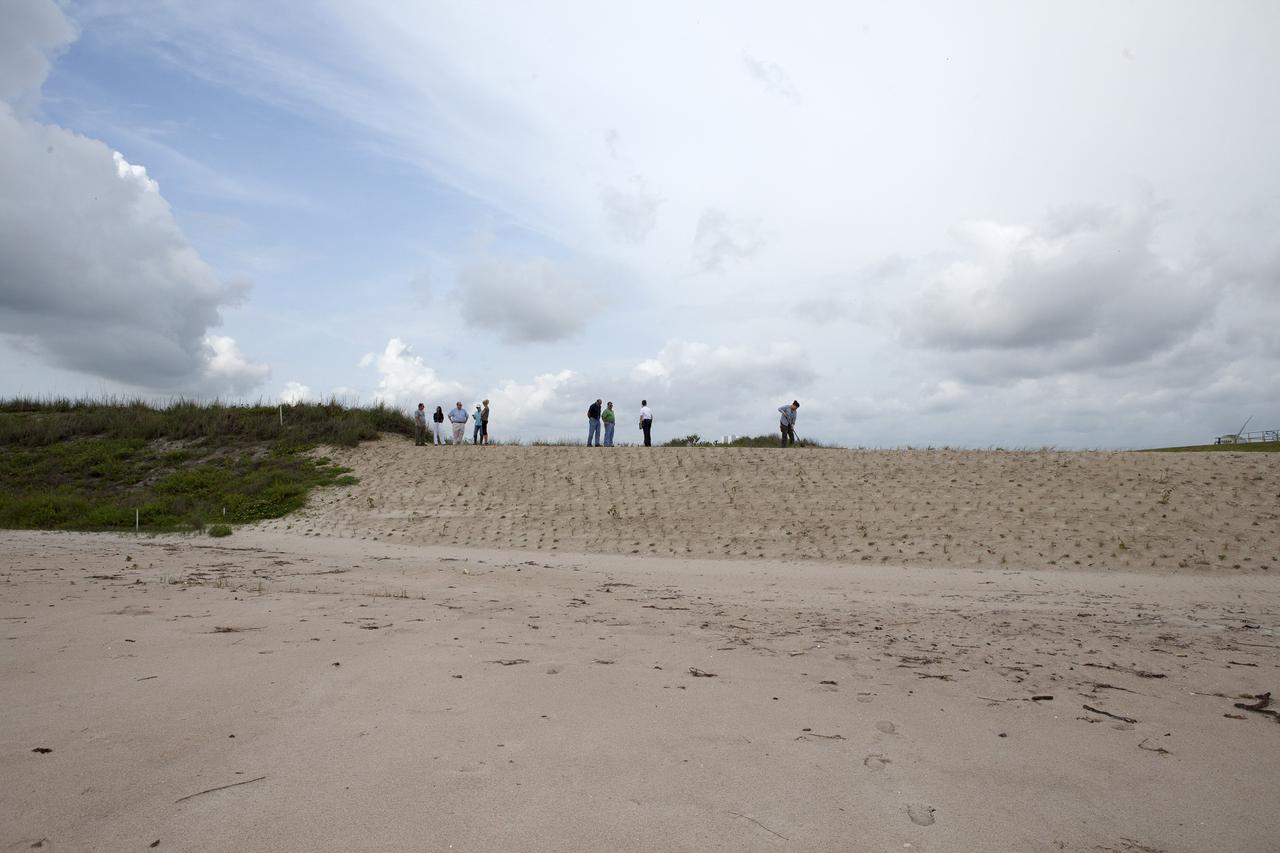
CAPE CANAVERAL, Fla. -- At the Kennedy Space Center in Florida, guests survey restored sand dunes along a 1.2-mile stretch of shoreline near Launch Pads 39A and B. Constant pounding from tropical storms, such as Hurricane Sandy in October of 2012, other weather systems and higher than usual tides, destroyed sand dunes protecting infrastructure at the spaceport. Photo credit: NASA/Dan Casper
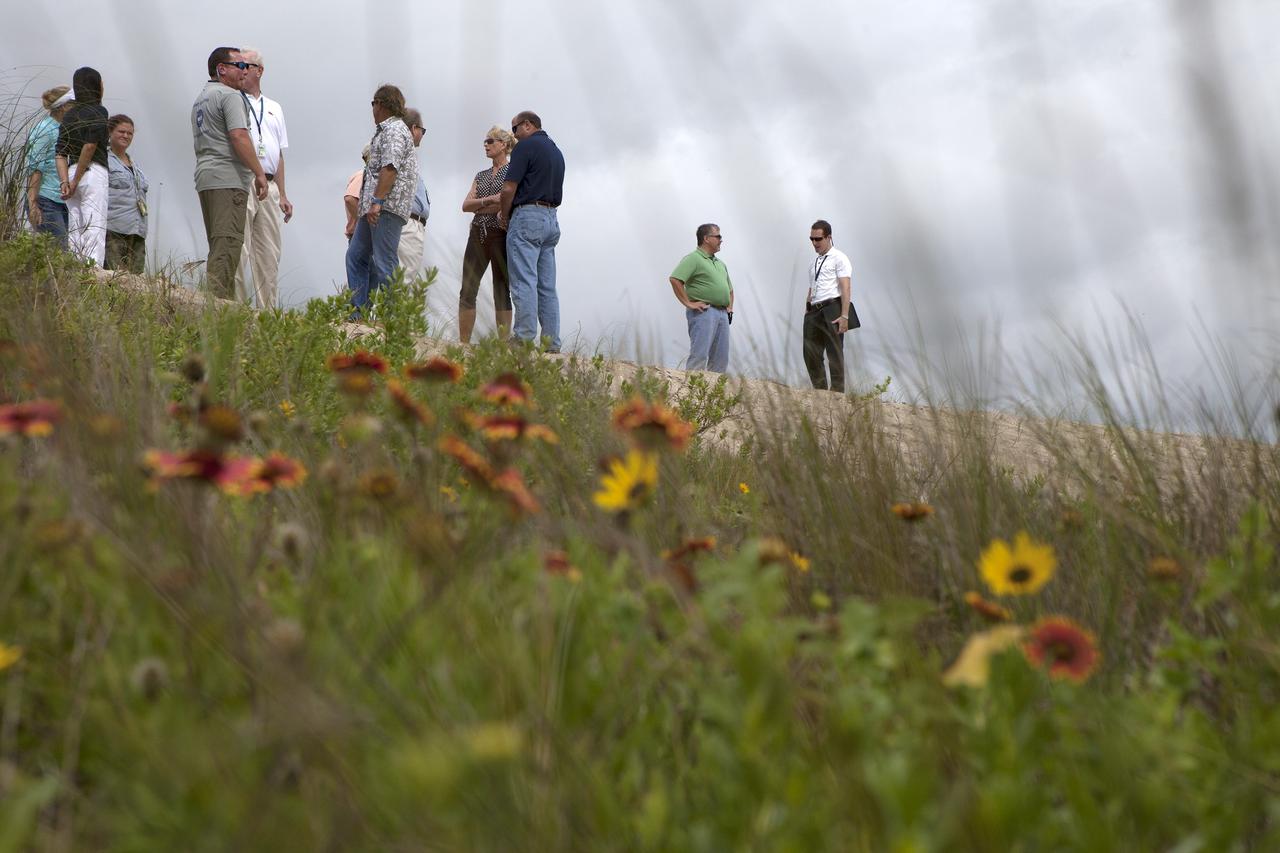
CAPE CANAVERAL, Fla. -- At the Kennedy Space Center in Florida, guests survey restored sand dunes along a 1.2-mile stretch of shoreline near Launch Pads 39A and B. Constant pounding from tropical storms, such as Hurricane Sandy in October of 2012, other weather systems and higher than usual tides, destroyed sand dunes protecting infrastructure at the spaceport. Photo credit: NASA/Dan Casper
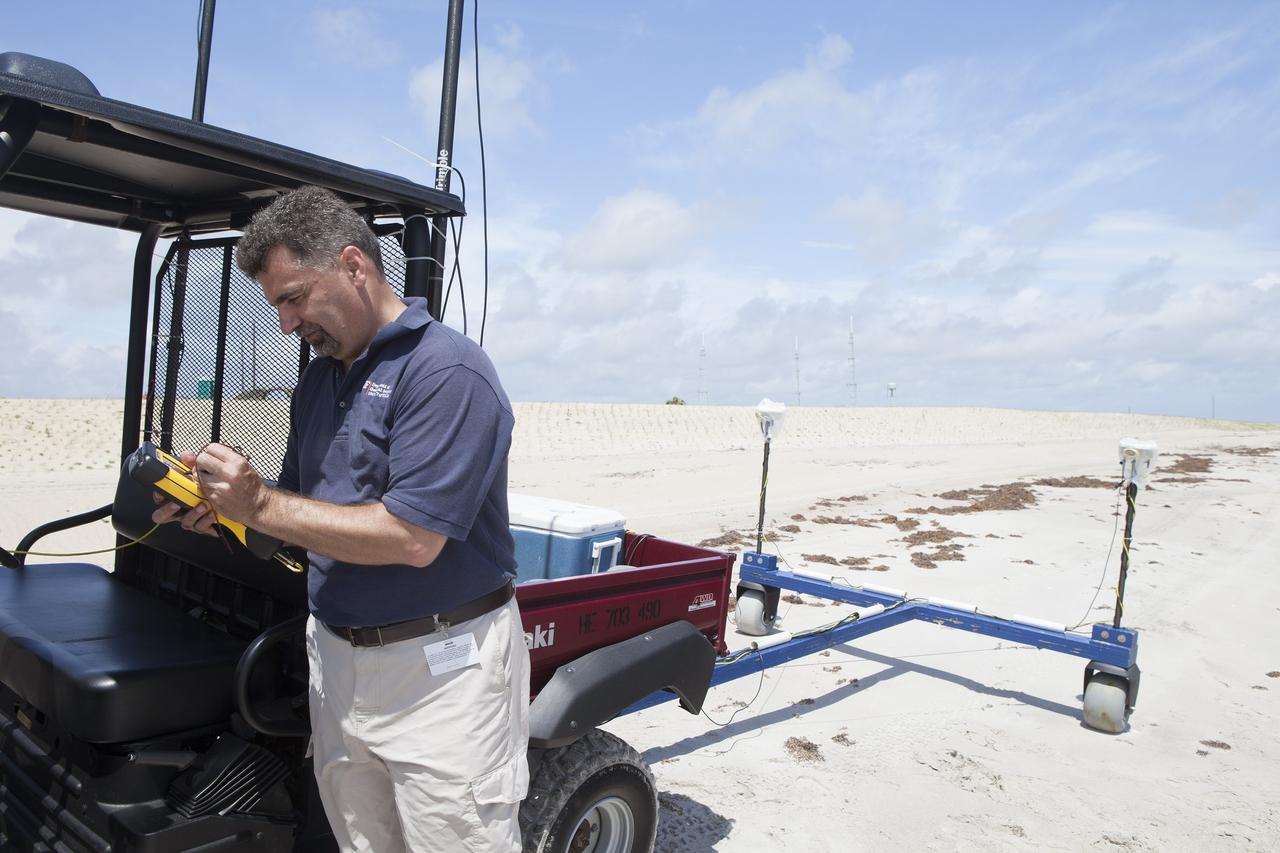
CAPE CANAVERAL, Fla. -- At the Kennedy Space Center in Florida, University of Florida geologists and NASA biologists use an all-terrain vehicle to survey sand dunes that have been restored along a 1.2 mile stretch of shoreline near Launch Pads 39A and B. As part of a six-month effort to help prevent further erosion, 180,000 shrubs, including grasses, sunflowers, vines, sea grapes and palmettos were planted. Constant pounding from tropical storms, such as Hurricane Sandy in October of 2012, other weather systems and higher than usual tides, destroyed sand dunes protecting infrastructure at the spaceport. Photo credit: NASA/Dan Casper
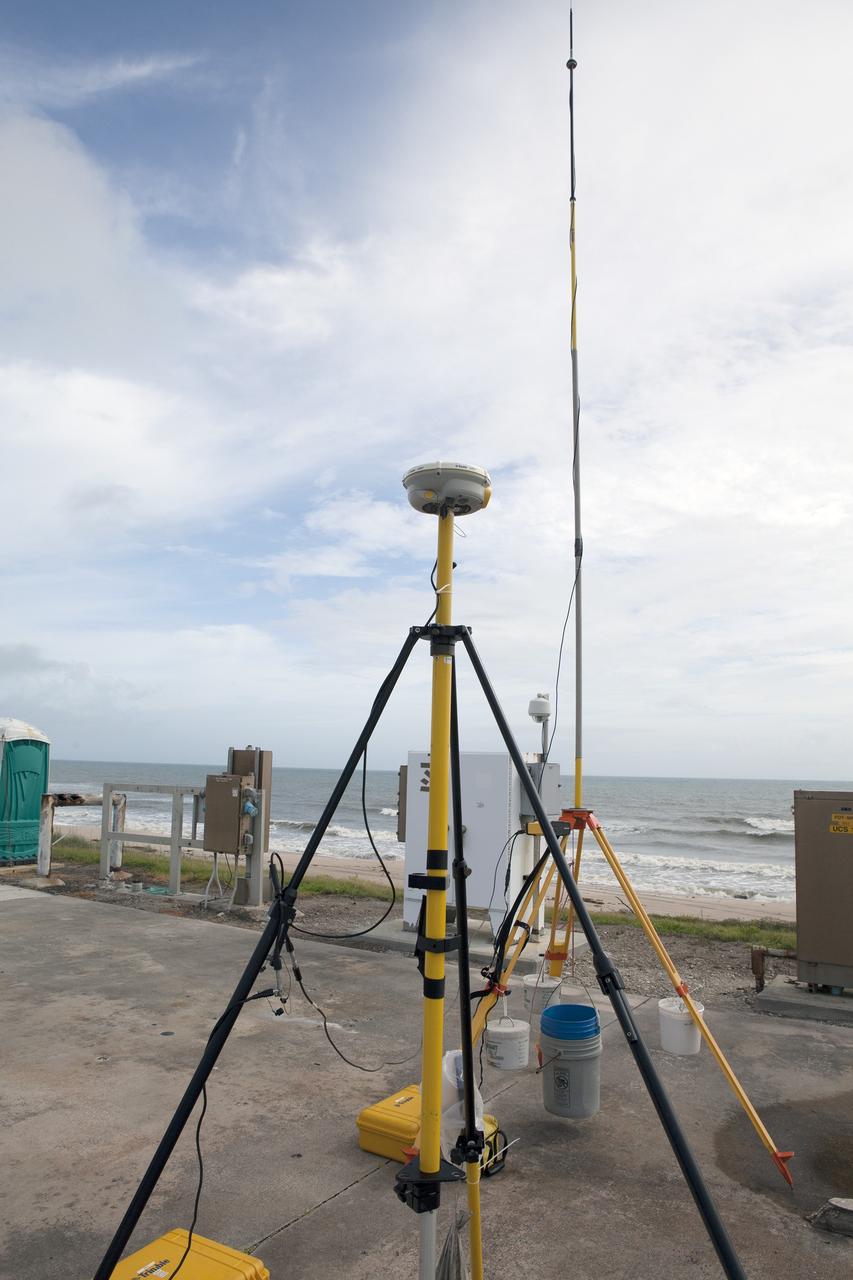
CAPE CANAVERAL, Fla. -- At the Kennedy Space Center in Florida, the sand dunes along a 1.2 mile stretch of shoreline near Launch Pads 39A and B were restored during a six-month effort. In a joint effort with NASA, University of Florida geologists are using weather instrumentation to study the shores of the center to better understand beach erosion. Constant pounding from tropical storms, such as Hurricane Sandy in October of 2012, other weather systems and higher than usual tides, destroyed sand dunes protecting infrastructure at the spaceport. Photo credit: NASA/Dan Casper

CAPE CANAVERAL, Fla. -- At the Kennedy Space Center in Florida, sand dunes have been restored along a 1.2 mile stretch of shoreline near Launch Pads 39A and B. As part of a six-month effort to help prevent further erosion, 180,000 shrubs, including grasses, sunflowers, vines, sea grapes and palmettos were planted. Constant pounding from tropical storms, such as Hurricane Sandy in October of 2012, other weather systems and higher than usual tides, destroyed sand dunes protecting infrastructure at the spaceport. Photo credit: NASA/Dan Casper
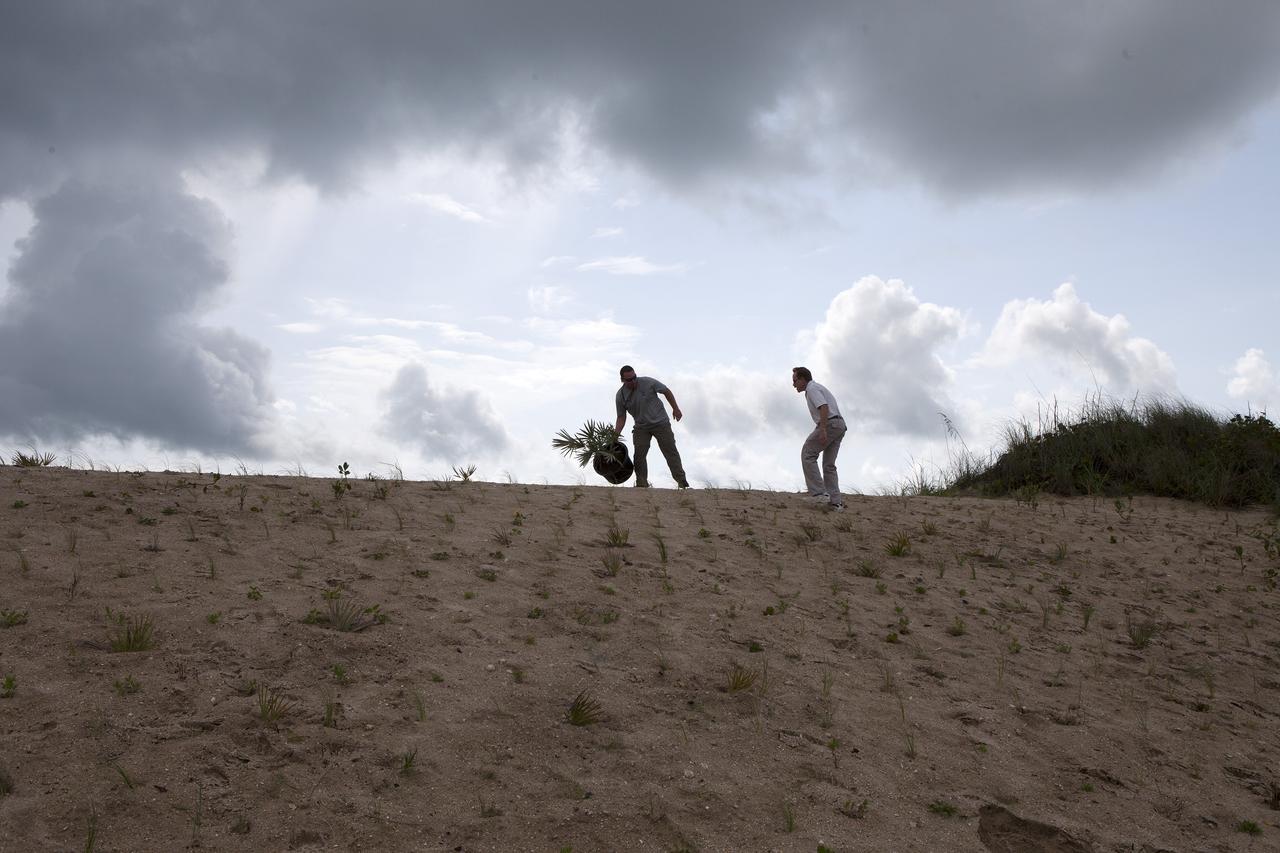
CAPE CANAVERAL, Fla. -- At the Kennedy Space Center in Florida, Don Dankert, a biological scientist in the NASA Environmental Management Branch of Center Operations, left, and Glenn Semmel, chief of the Environmental Management Branch of Center Operations retrieve the final shrub that is among 180,000 planted on a new 1.2-mile stretch of shoreline near Launch Pads 39A and B. Constant pounding from tropical storms, such as Hurricane Sandy in October of 2012, other weather systems and higher than usual tides, destroyed sand dunes protecting infrastructure at the spaceport. Photo credit: NASA/Dan Casper
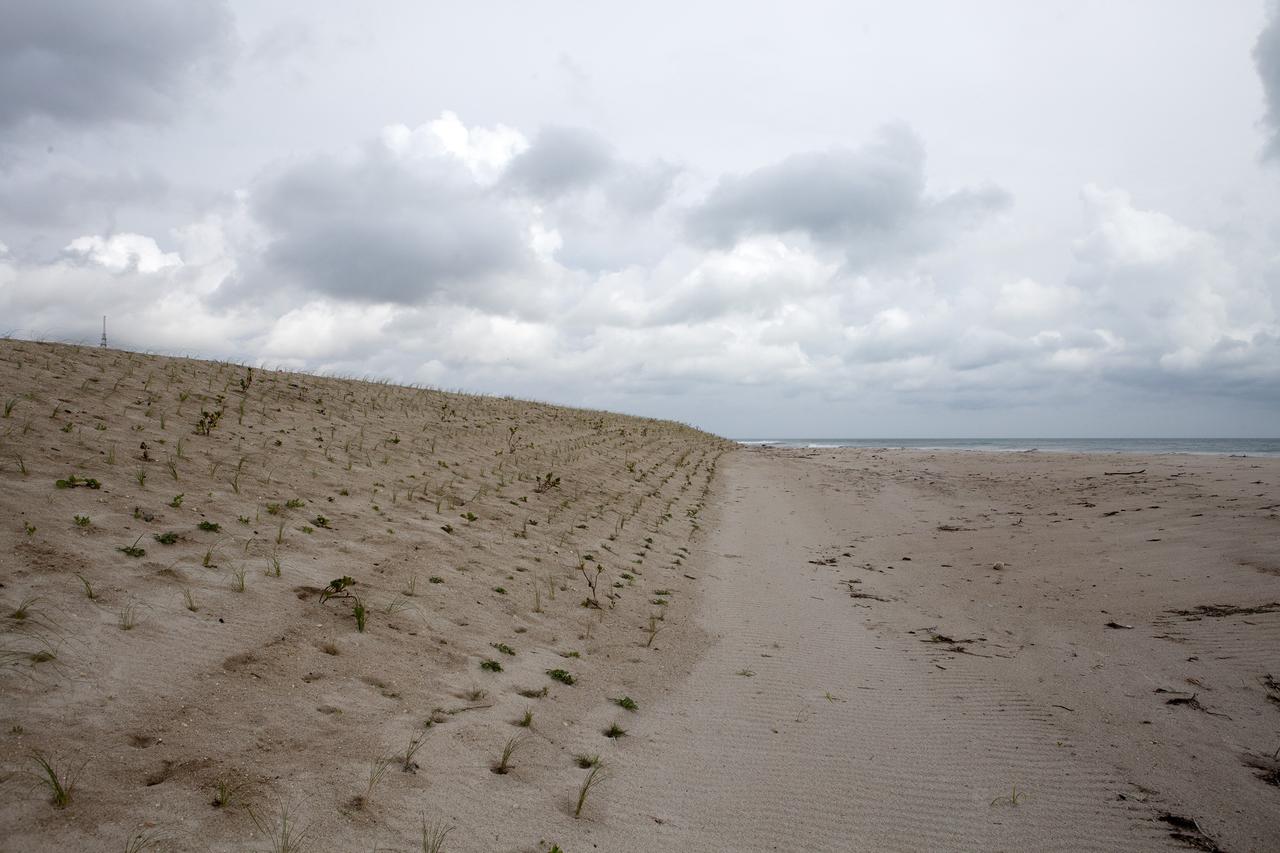
CAPE CANAVERAL, Fla. -- At the Kennedy Space Center in Florida, the sand dunes along a 1.2 mile stretch of shoreline near Launch Pads 39A and B were restored during a six-month effort using 90,000 cubic yards of sand. To help prevent erosion, 180,000 shrubs, including grasses, sunflowers, vines, sea grapes and palmettos were planted. Constant pounding from tropical storms, such as Hurricane Sandy in October of 2012, other weather systems and higher than usual tides, destroyed sand dunes protecting infrastructure at the spaceport. Photo credit: NASA/Dan Casper
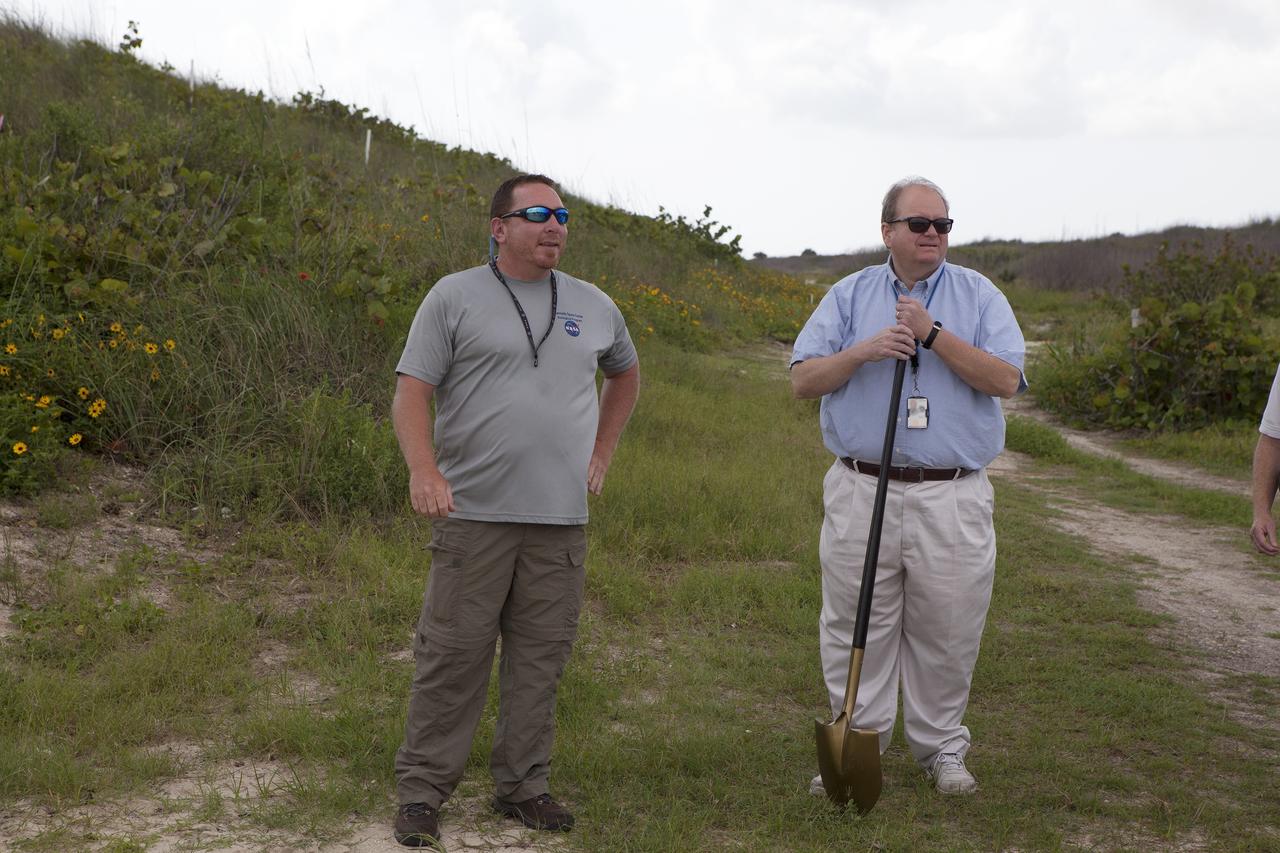
CAPE CANAVERAL, Fla. -- At the Kennedy Space Center in Florida, Don Dankert, a biological scientist in the NASA Environmental Management Branch of Center Operations, left, and Burton Summerfield, senior advisor for Institutional Management in the office of the associate director of Kennedy speak to guests during ceremonies to commemorate the completion of a six-month effort to restore 1.2 mile stretch of shoreline near Launch Pads 39A and B. To help prevent erosion, 180,000 shrubs, including grasses, sunflowers, vines, sea grapes and palmettos also were planted on the new dunes. Constant pounding from tropical storms, such as Hurricane Sandy in October of 2012, other weather systems and higher than usual tides, destroyed sand dunes protecting infrastructure at the spaceport. Photo credit: NASA/Dan Casper
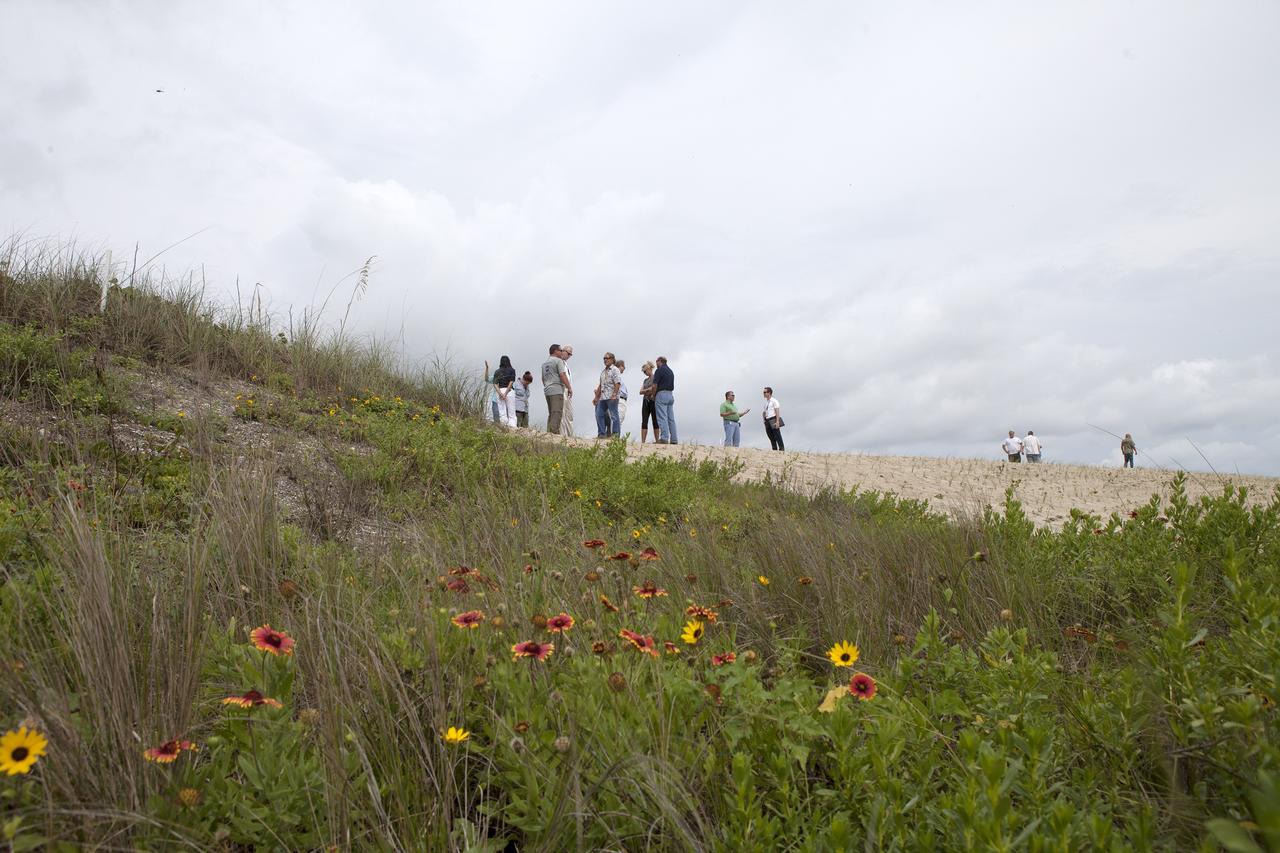
CAPE CANAVERAL, Fla. -- At the Kennedy Space Center in Florida, guests survey restored sand dunes along a 1.2-mile stretch of shoreline near Launch Pads 39A and B. Constant pounding from tropical storms, such as Hurricane Sandy in October of 2012, other weather systems and higher than usual tides, destroyed sand dunes protecting infrastructure at the spaceport. Photo credit: NASA/Dan Casper
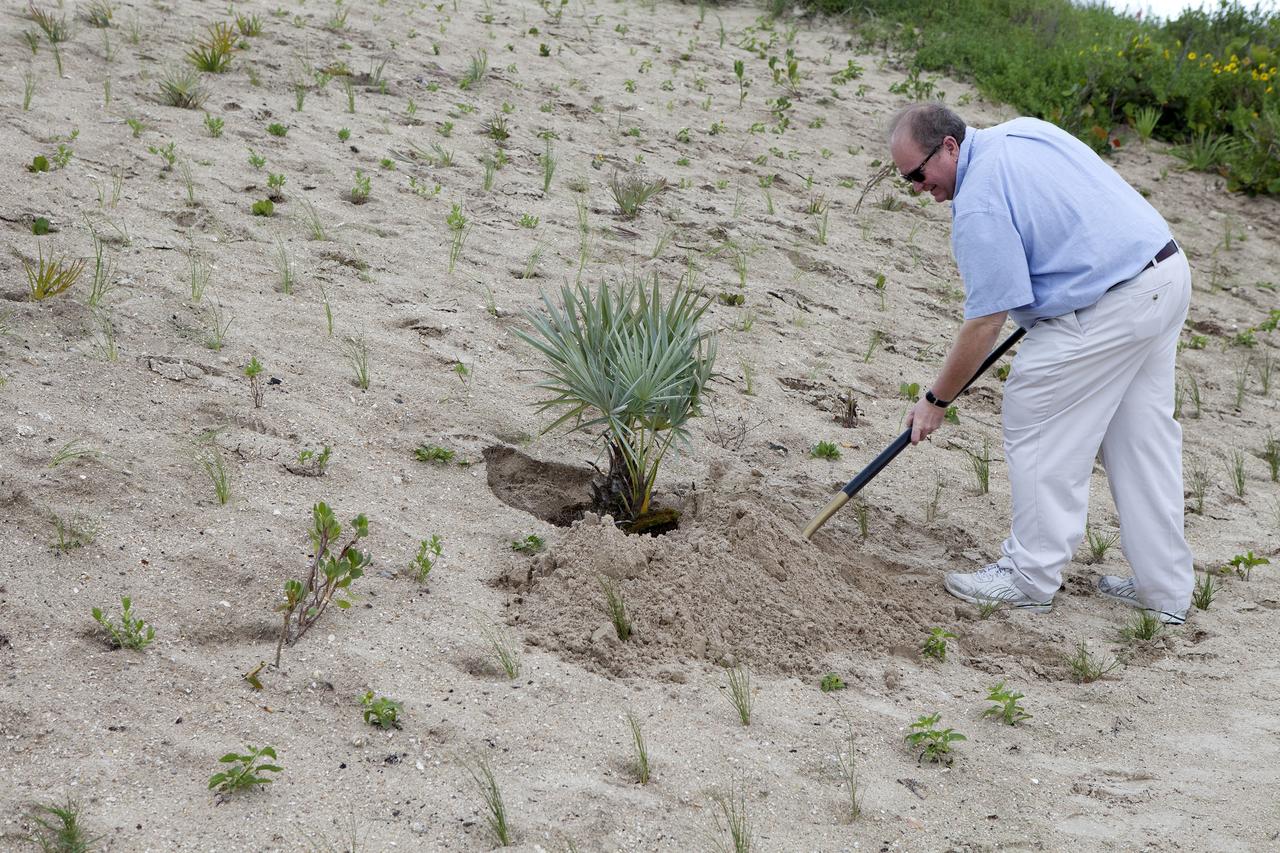
CAPE CANAVERAL, Fla. -- At the Kennedy Space Center in Florida, Burton Summerfield, senior advisor for Institutional Management in the office of the associate director at Kennedy, plants the final shrub that is among 180,000 planted on a new 1.2-mile stretch of shoreline near Launch Pads 39A and B. Constant pounding from tropical storms, such as Hurricane Sandy in October of 2012, other weather systems and higher than usual tides, destroyed sand dunes protecting infrastructure at the spaceport. Photo credit: NASA/Dan Casper
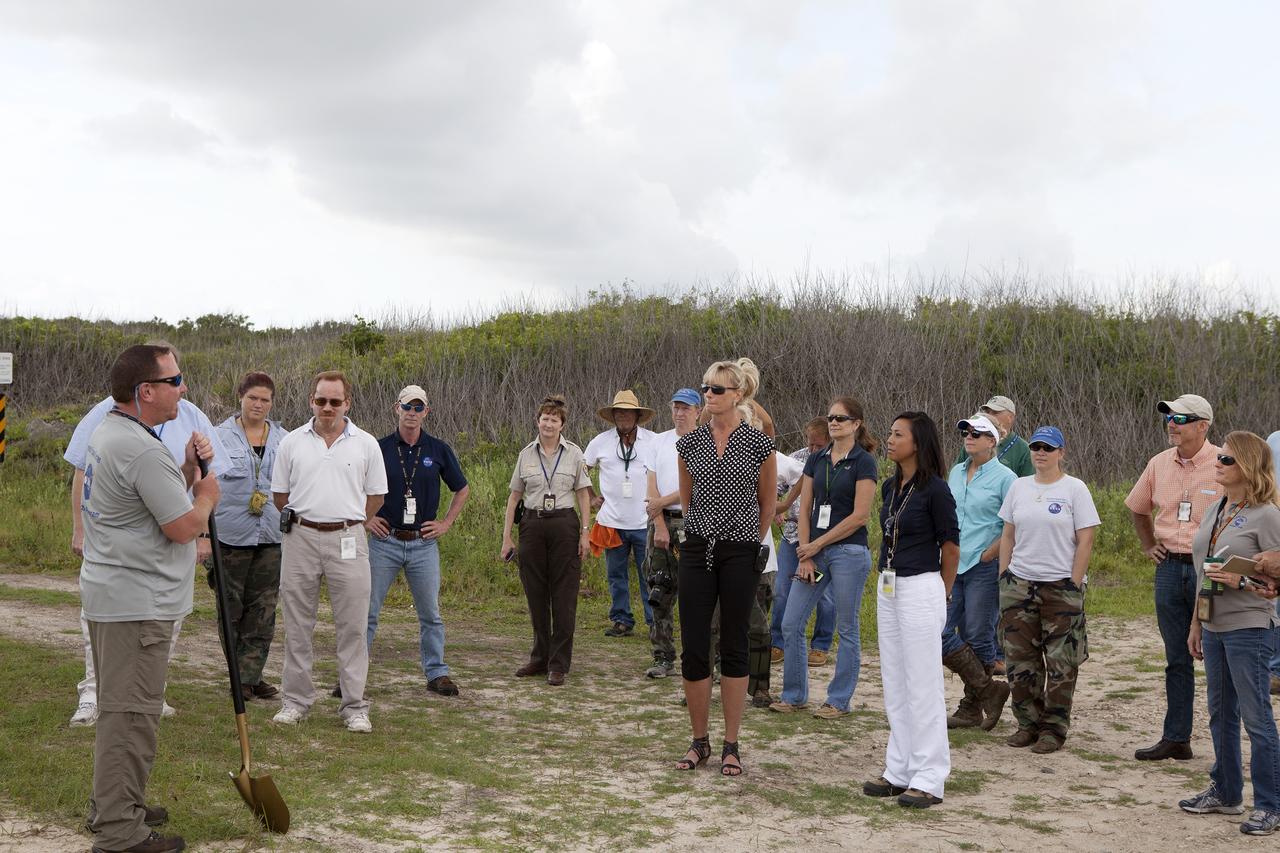
CAPE CANAVERAL, Fla. -- At the Kennedy Space Center in Florida, Don Dankert, a biological scientist in the NASA Environmental Management Branch of Center Operations, far left, speaks to guests during ceremonies to commemorate the completion of a six-month effort to restore 1.2 mile stretch of shoreline near Launch Pads 39A and B. To help prevent erosion, 180,000 shrubs, including grasses, sunflowers, vines, sea grapes and palmettos also were planted on the new dunes. Constant pounding from tropical storms, such as Hurricane Sandy in October of 2012, other weather systems and higher than usual tides, destroyed sand dunes protecting infrastructure at the spaceport. Photo credit: NASA/Dan Casper
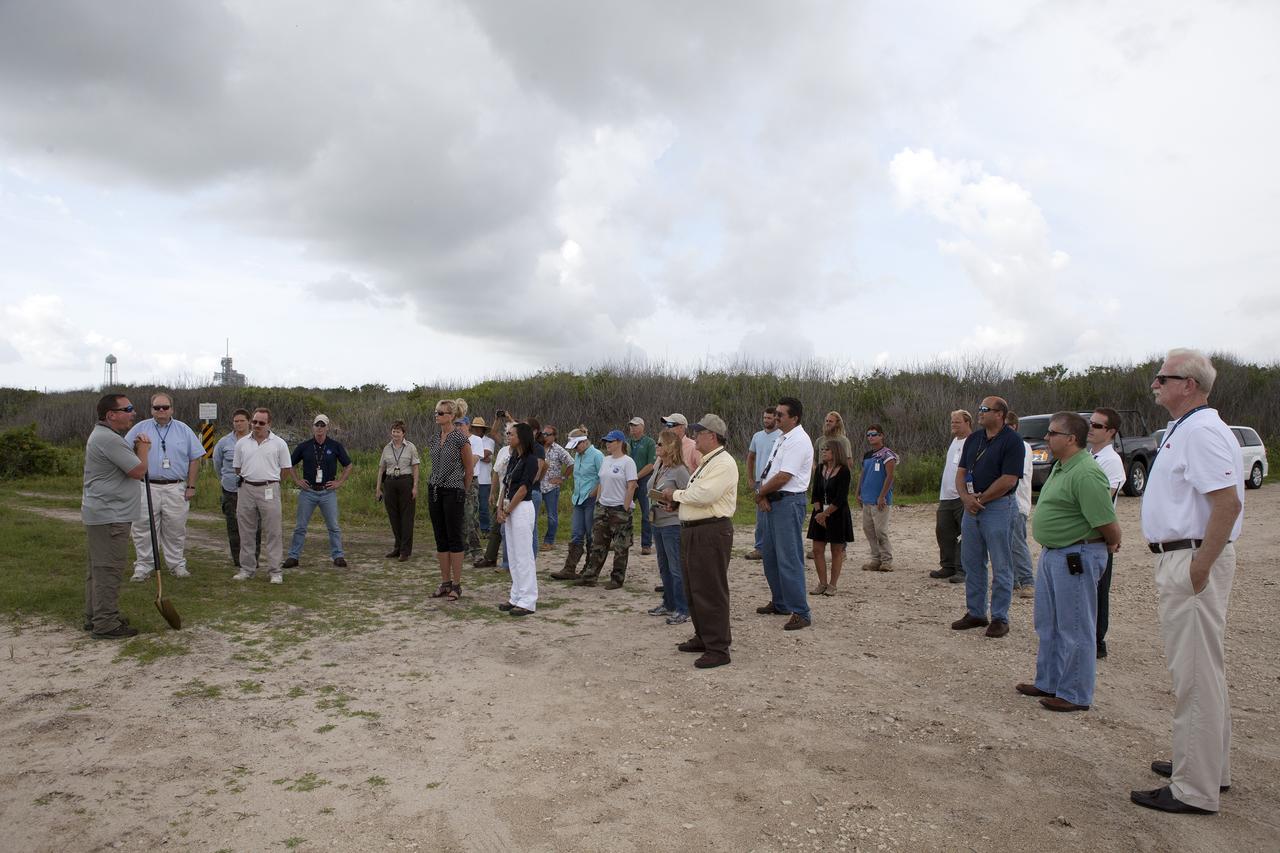
CAPE CANAVERAL, Fla. -- At the Kennedy Space Center in Florida, Don Dankert, a biological scientist in the NASA Environmental Management Branch of Center Operations, far left, speaks to guests during ceremonies to commemorate the completion of a six-month effort to restore 1.2 mile stretch of shoreline near Launch Pads 39A and B. To help prevent erosion, 180,000 shrubs, including grasses, sunflowers, vines, sea grapes and palmettos also were planted on the new dunes. Constant pounding from tropical storms, such as Hurricane Sandy in October of 2012, other weather systems and higher than usual tides, destroyed sand dunes protecting infrastructure at the spaceport. Photo credit: NASA/Dan Casper
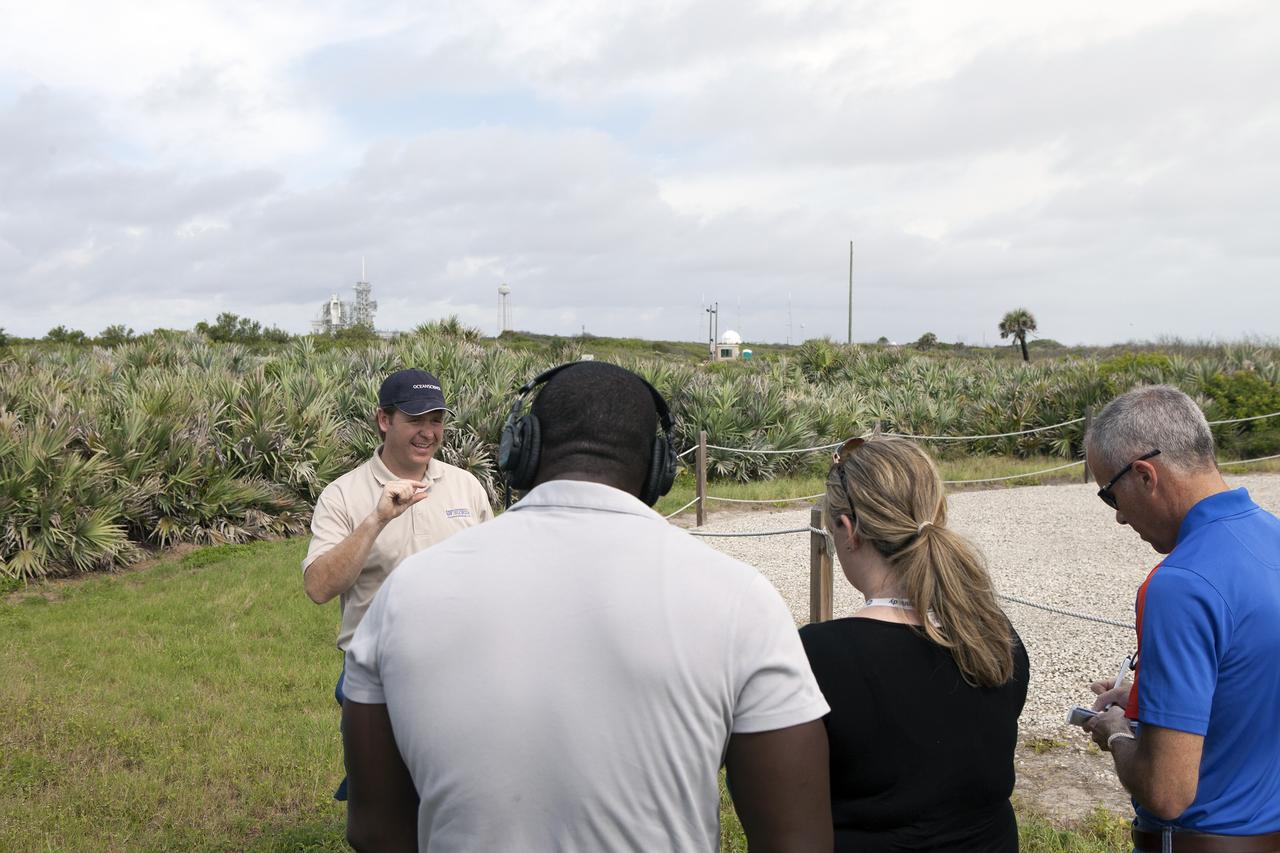
CAPE CANAVERAL, Fla. -- University of Florida geologist, Pete Adams, discusses a six-month effort to restore the sand dunes along a 1.2 mile stretch of shoreline near Launch Pads 39A and B at the Kennedy Space Center in Florida. Experts from University of Florida are working with NASA scientists to better understand beach erosion. Constant pounding from tropical storms, such as Hurricane Sandy in October of 2012, other weather systems and higher than usual tides, destroyed sand dunes protecting infrastructure at the spaceport. Photo credit: NASA/Dan Casper

A close-up view of a wildflower called Helianthus debilis (Dune sunflower) in a field at NASA’s Kennedy Space Center in Florida on June 13, 2023. The center shares a boundary with the Merritt Island National Wildlife Refuge. Along with wildflowers, Kennedy and the wildlife refuge are home to more than 300 native and migratory bird species, 65 amphibian and reptile species, and more than 1,000 different types of plants.
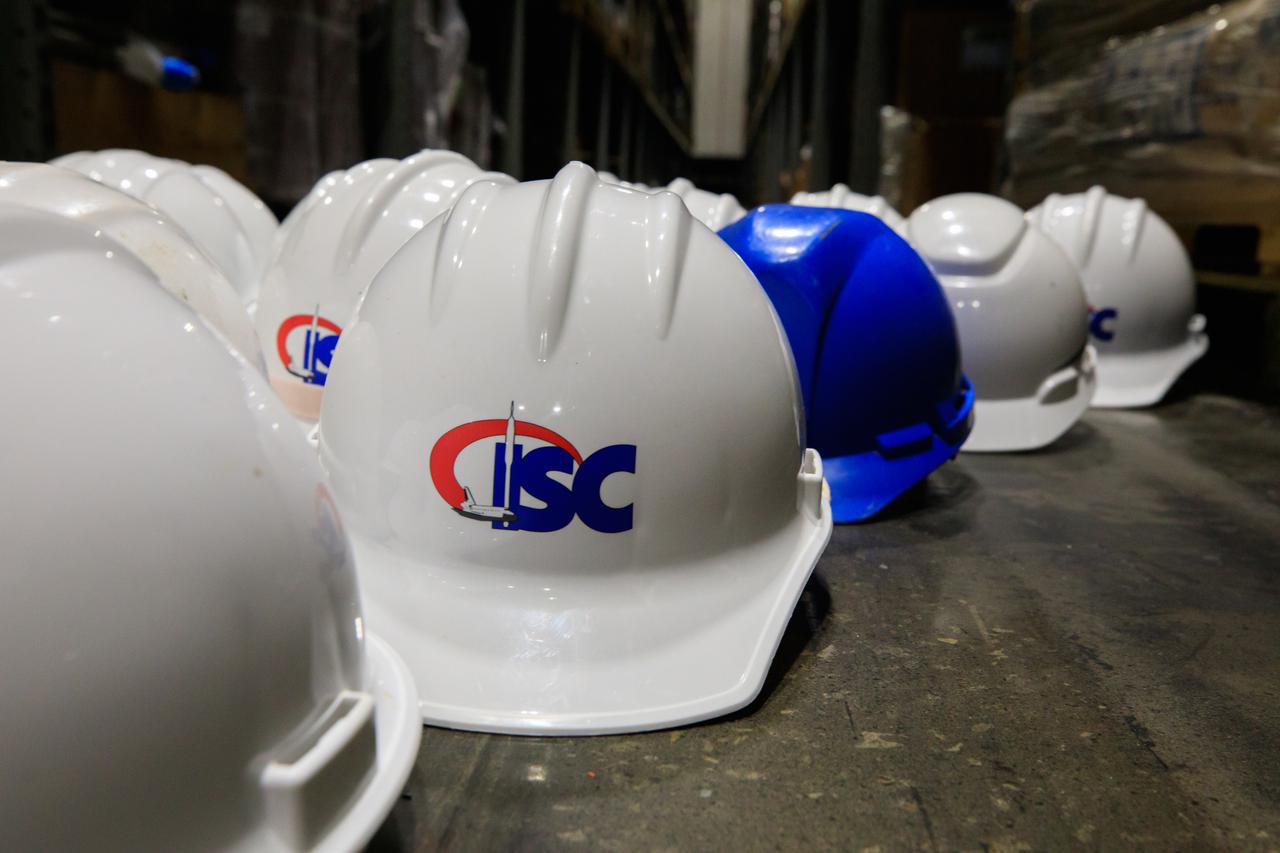
The Test and Operations Support Contract (TOSC) Kimberly-Clark RightCycle program team of April Smith and An Huynh recently earned a Fiscal Year 2021 Sustainable Environment Awareness (SEA) Award Citation. The Kennedy Space Center employees received the honor in SEA’s Waste Management category. Personal Protective Equipment (PPE) is being replaced with Kimberly-Clark brand, where possible, as collection containers are placed in all applicable TOSC facilities at Kennedy. All supplier PPE is collected, placed in a container, and shipped back to the company to be recycled into usable products.
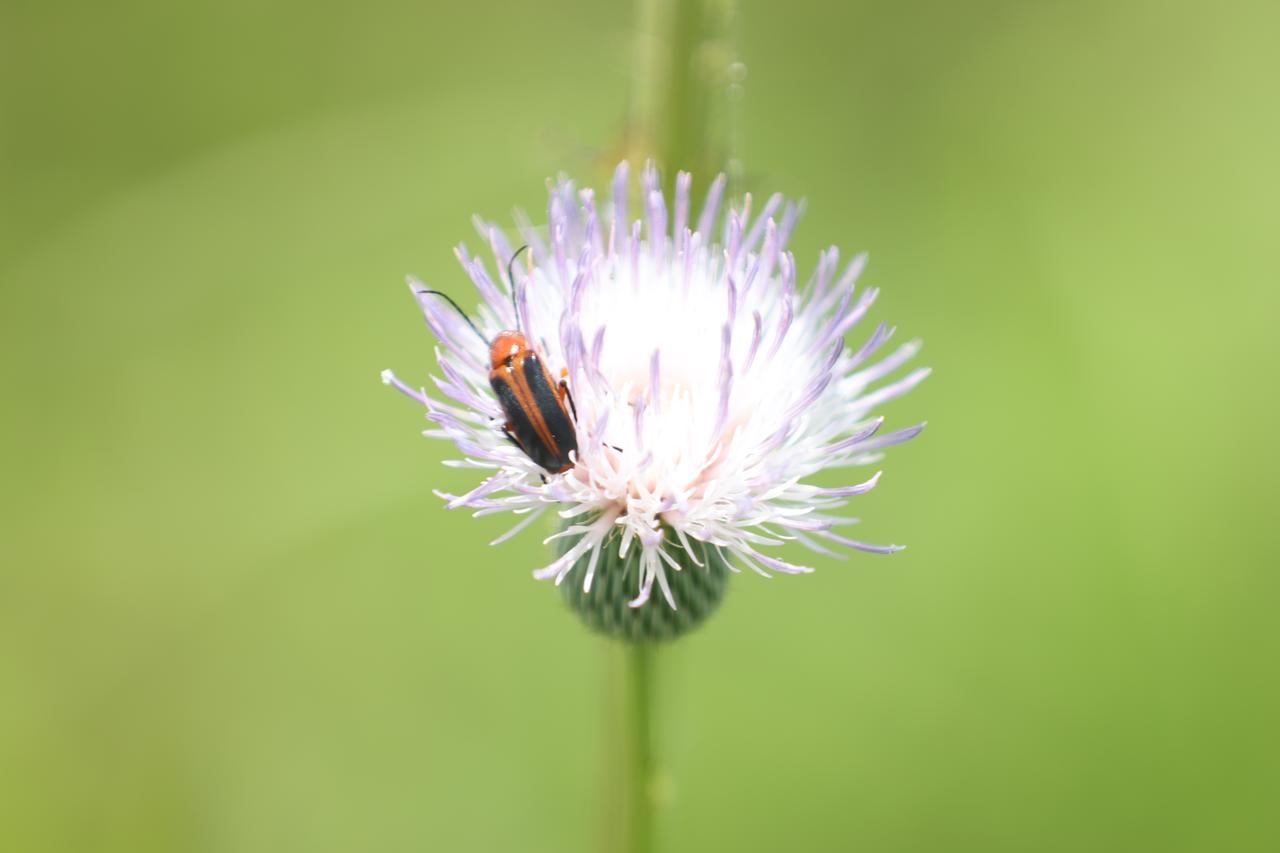
An orange blister beetle sits on a wildflower called Cirsium nuttallii (Nuttall’s thistle) in a field at NASA’s Kennedy Space Center in Florida on June 13, 2023. The center shares a boundary with the Merritt Island National Wildlife Refuge. Along with wildflowers, Kennedy and the wildlife refuge are home to more than 300 native and migratory bird species, 65 amphibian and reptile species, and more than 1,000 different types of plants.
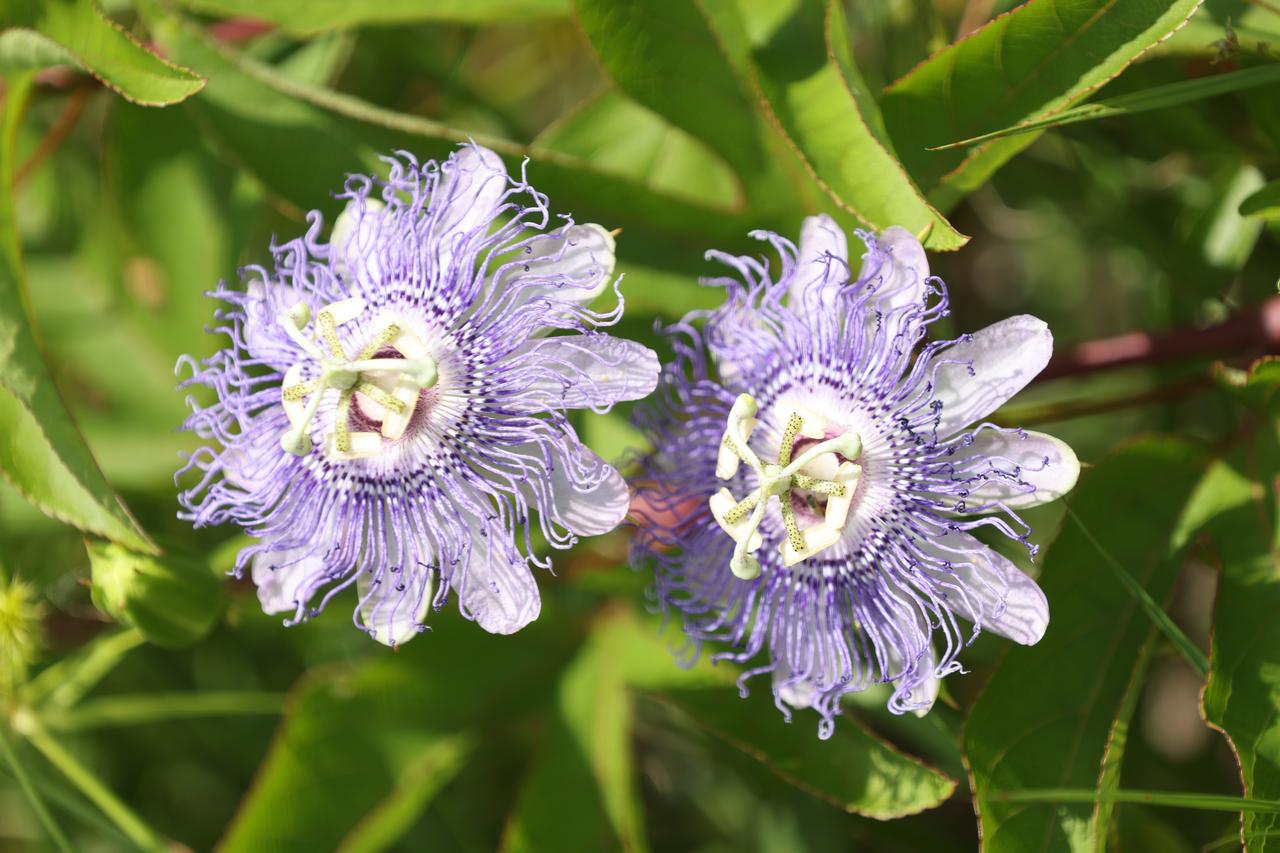
A close-up view of wildflowers called Passiflora incarnata (purple passionflower) in a field at NASA’s Kennedy Space Center in Florida on June 13, 2023. The center shares a boundary with the Merritt Island National Wildlife Refuge. Along with wildflowers, Kennedy and the wildlife refuge are home to more than 300 native and migratory bird species, 65 amphibian and reptile species, and more than 1,000 different types of plants.
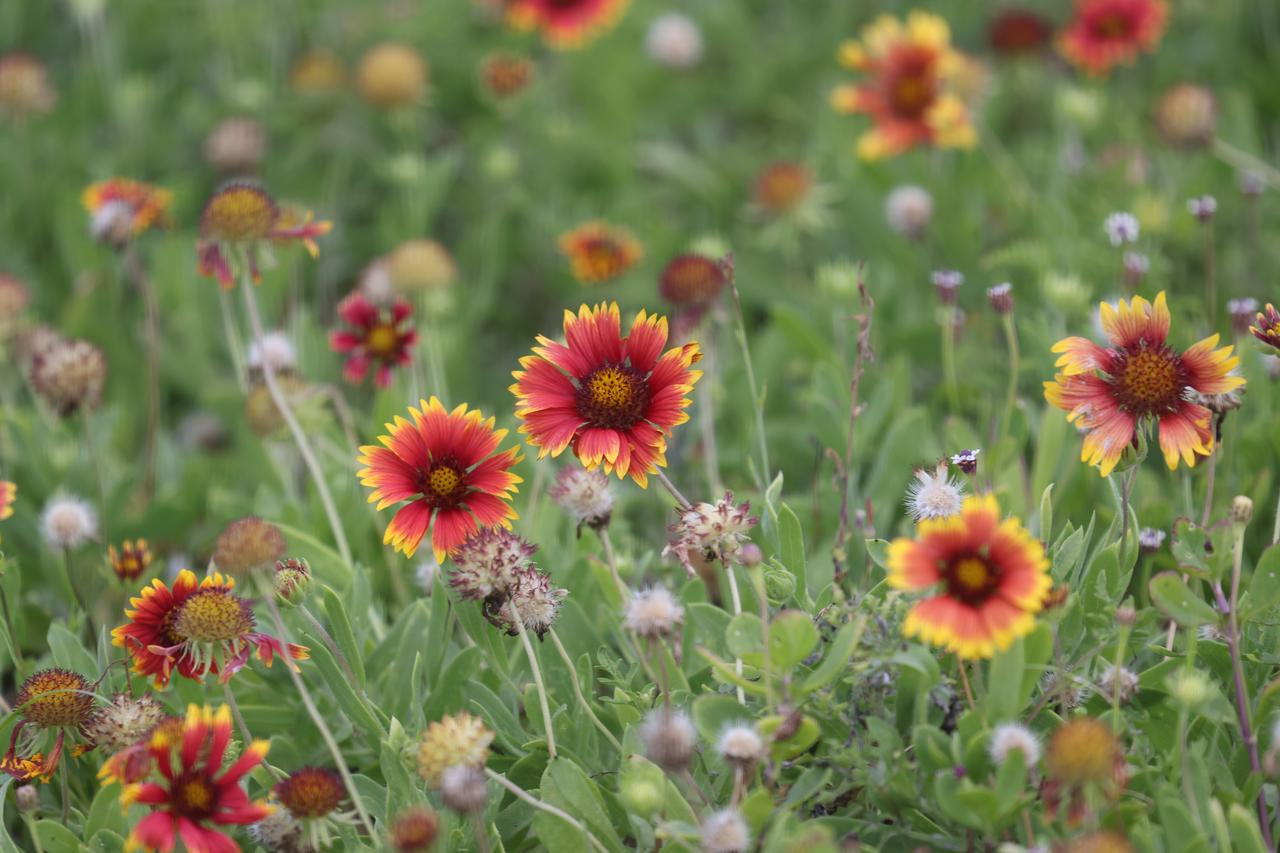
Wildflowers called Gaillardia pulchella (Firewheel) are in view in a field at NASA’s Kennedy Space Center in Florida on June 13, 2023. The center shares a boundary with the Merritt Island National Wildlife Refuge. Along with wildflowers, Kennedy and the wildlife refuge are home to more than 300 native and migratory bird species, 65 amphibian and reptile species, and more than 1,000 different types of plants.
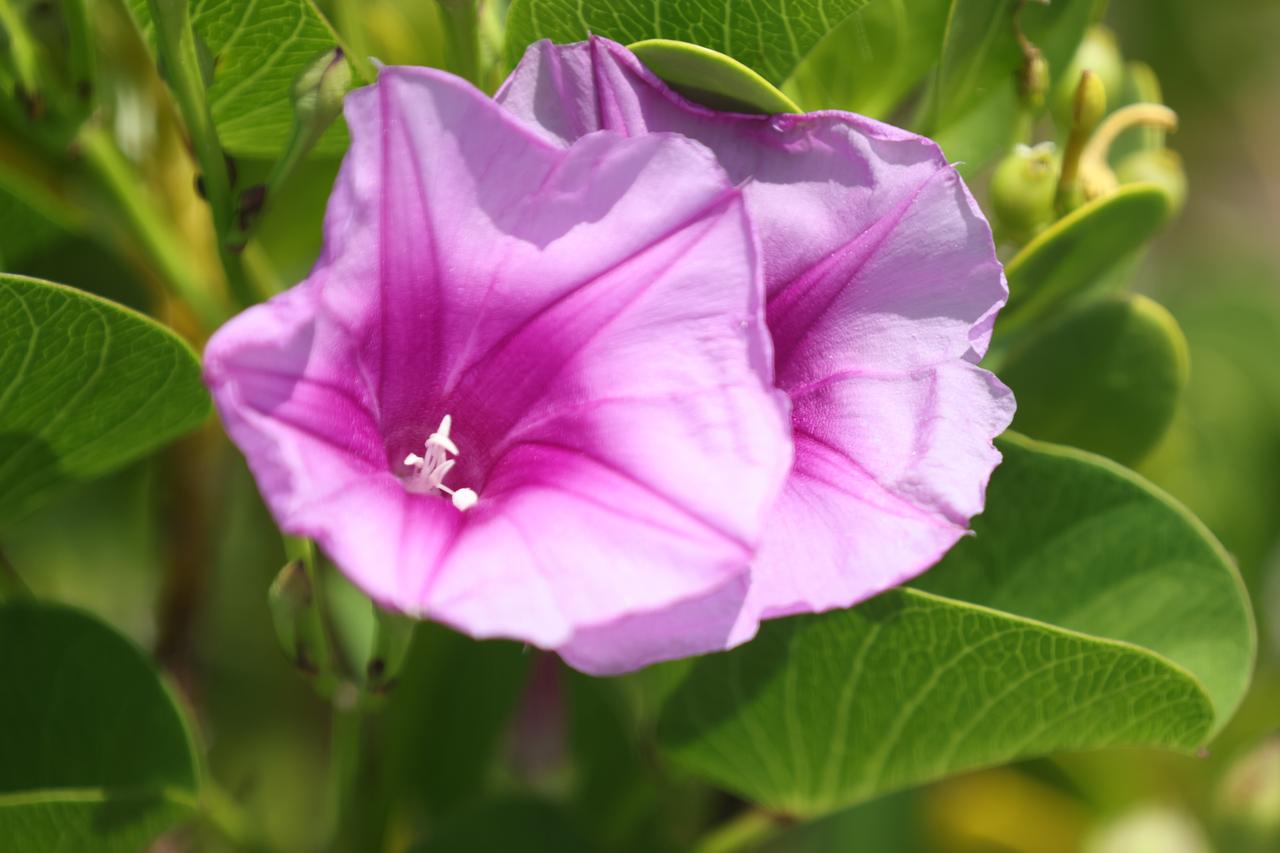
A close-up view of wildflowers called Ipomoea Pes-caprae (railroad vine) in a field at NASA’s Kennedy Space Center in Florida on June 13, 2023. The center shares a boundary with the Merritt Island National Wildlife Refuge. Along with wildflowers, Kennedy and the wildlife refuge are home to more than 300 native and migratory bird species, 65 amphibian and reptile species, and more than 1,000 different types of plants.
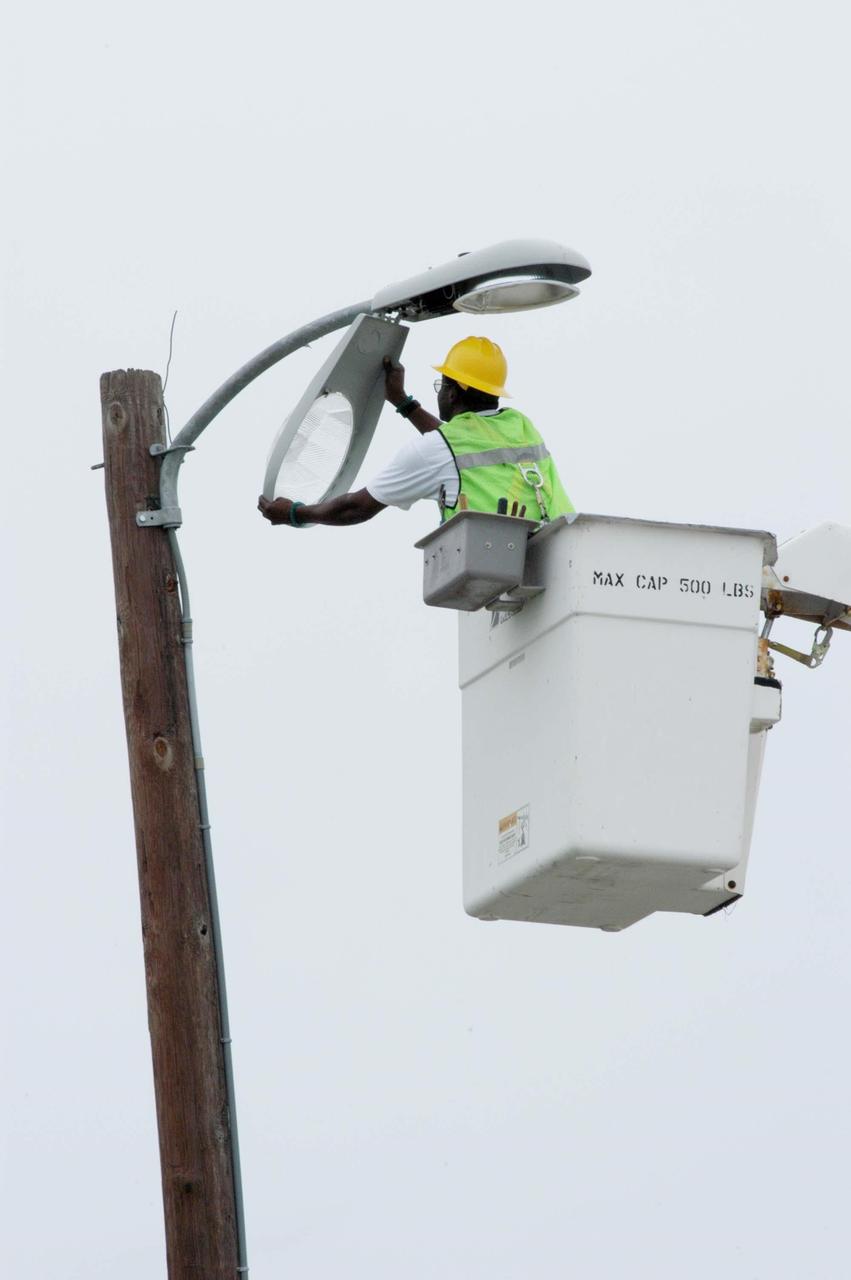
KENNEDY SPACE CENTER, FLA. - A repair crew replaces a light fixture damaged by Hurricane Frances as it passed over Central Florida during the Labor Day weekend. The maximum wind at the surface from Hurricane Frances was 94 mph from the northeast at 6:40 a.m. on Sunday, September 5. It was recorded at a weather tower located on the east shore of the Mosquito Lagoon near the Cape Canaveral National Seashore. The highest sustained wind at KSC was 68 mph. KSC sustained damage to the south wall and roof of the Vehicle Assembly Building plus the roof of the Thermal Protection System Facility.
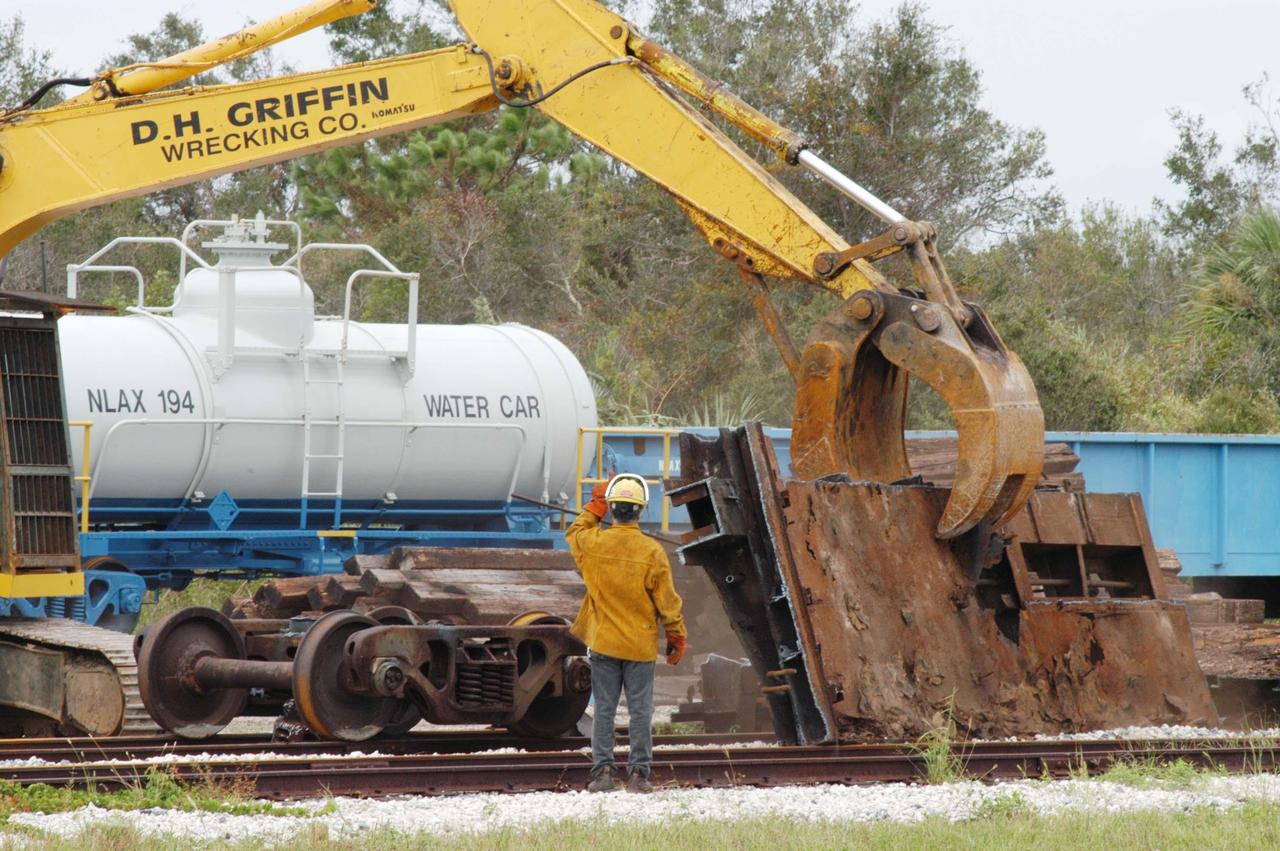
KENNEDY SPACE CENTER, FLA. - Repair crews clean up debris at the railroad yard left behind after Hurricane Frances as it passed over Central Florida during the Labor Day weekend. The maximum wind at the surface from Hurricane Frances was 94 mph from the northeast at 6:40 a.m. on Sunday, September 5. It was recorded at a weather tower located on the east shore of the Mosquito Lagoon near the Cape Canaveral National Seashore. The highest sustained wind at KSC was 68 mph. KSC sustained damage to the south wall and roof of the Vehicle Assembly Building plus the roof of the Thermal Protection System Facility.
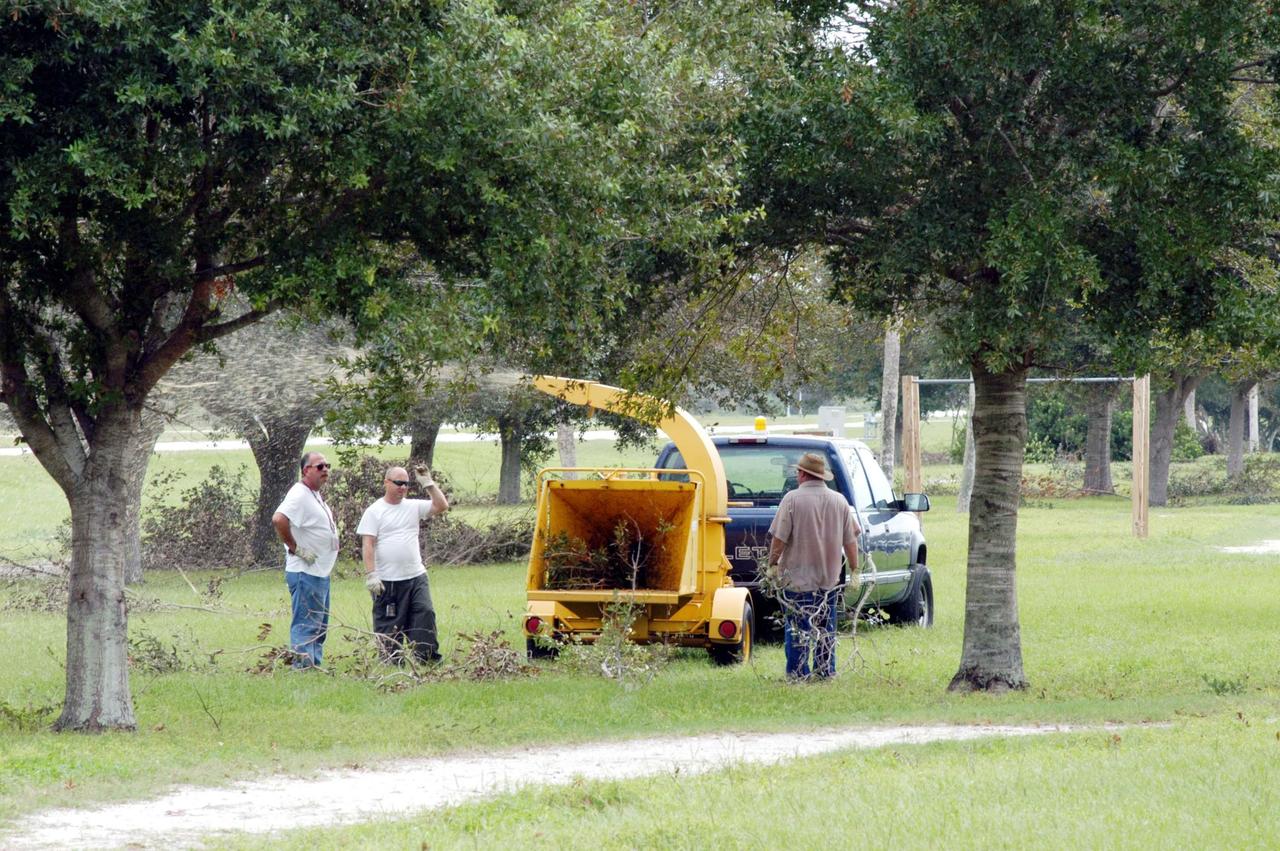
KENNEDY SPACE CENTER, FLA. - Repair crews clean up debris left behind after Hurricane Frances as it passed over Central Florida during the Labor Day weekend. The maximum wind at the surface from Hurricane Frances was 94 mph from the northeast at 6:40 a.m. on Sunday, September 5. It was recorded at a weather tower located on the east shore of the Mosquito Lagoon near the Cape Canaveral National Seashore. The highest sustained wind at KSC was 68 mph. Hurricane damage sustained at KSC included the south wall and roof of the Vehicle Assembly Building plus the roof of the Thermal Protection System Facility.
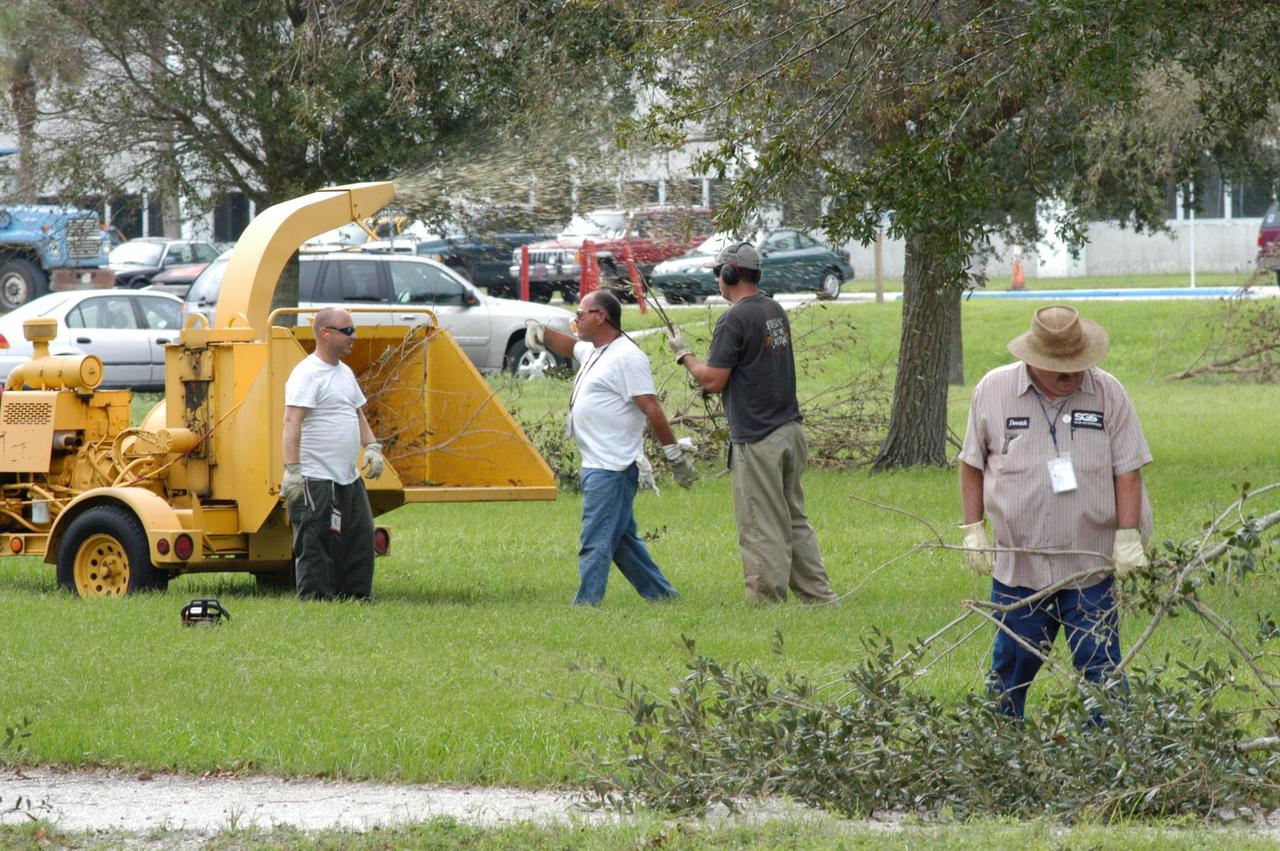
KENNEDY SPACE CENTER, FLA. - Repair crews clean up debris left behind after Hurricane Frances as it passed over Central Florida during the Labor Day weekend. The maximum wind at the surface from Hurricane Frances was 94 mph from the northeast at 6:40 a.m. on Sunday, September 5. It was recorded at a weather tower located on the east shore of the Mosquito Lagoon near the Cape Canaveral National Seashore. The highest sustained wind at KSC was 68 mph. KSC sustained damage to the south wall and roof of the Vehicle Assembly Building plus the roof of the Thermal Protection System Facility.
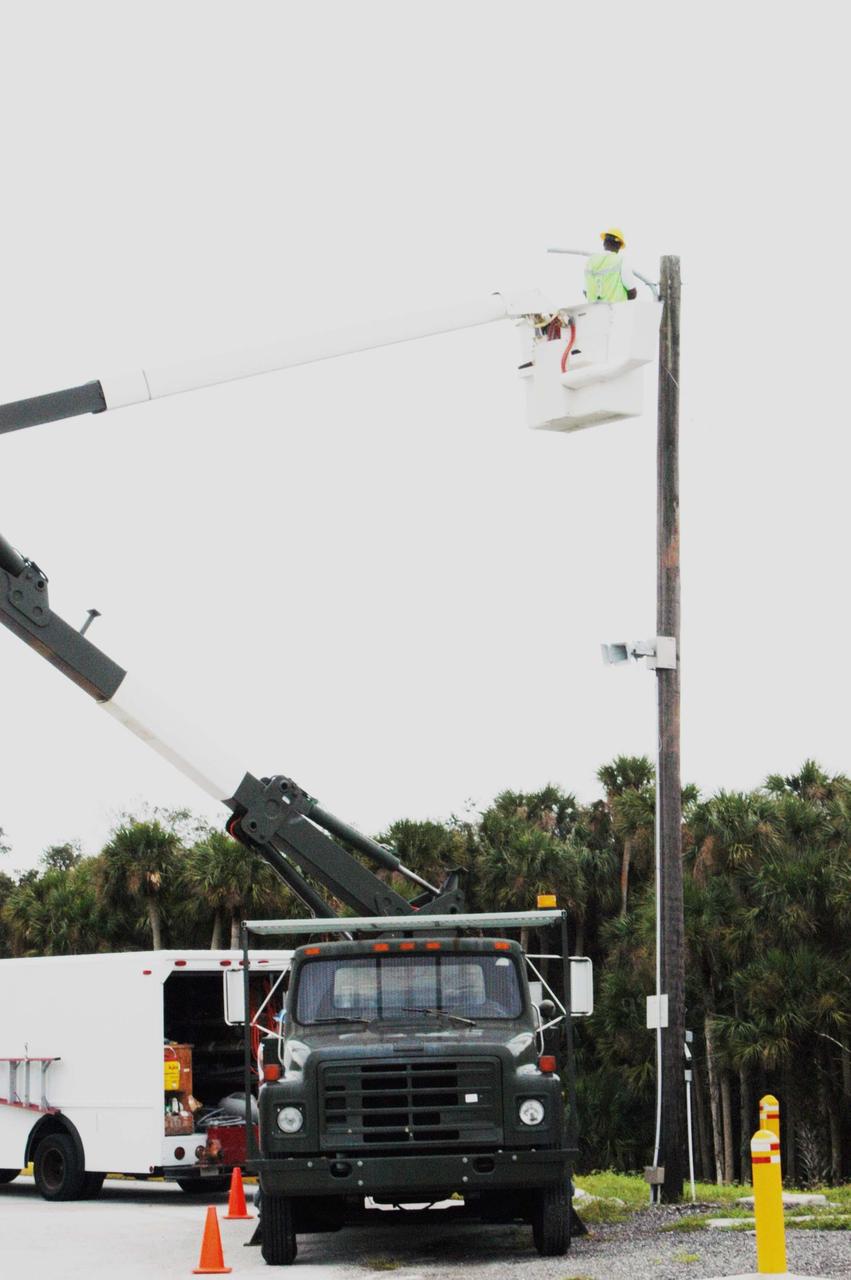
KENNEDY SPACE CENTER, FLA. - A repair crew replaces a light fixture damaged by Hurricane Frances as it passed over Central Florida during the Labor Day weekend. The maximum wind at the surface from Hurricane Frances was 94 mph from the northeast at 6:40 a.m. on Sunday, September 5. It was recorded at a weather tower located on the east shore of the Mosquito Lagoon near the Cape Canaveral National Seashore. The highest sustained wind at KSC was 68 mph. Hurricane damage sustained at KSC included the south wall and roof of the Vehicle Assembly Building plus the roof of the Thermal Protection System Facility.
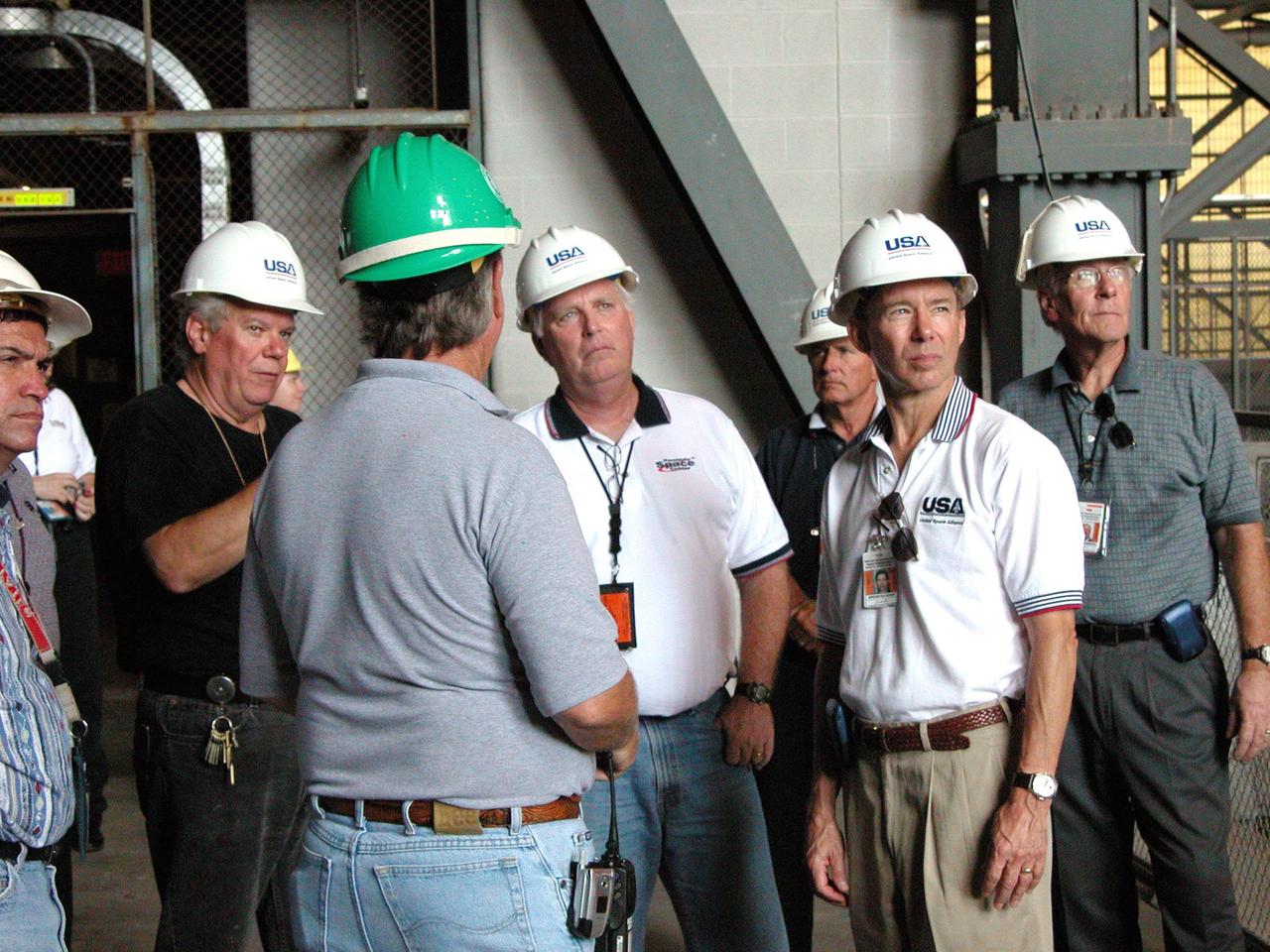
KENNEDY SPACE CENTER, FLA. - Members of the United Space Alliance (USA) safety team brief KSC Director Jim Kennedy (center), USA Chief Operating Officer Brewster Shaw (second from right), and USA Vice President Joe Hammond (right) following Hurricane Frances on damage sustained by KSC facilities. The storm's path over Florida took it through Cape Canaveral and KSC property during Labor Day weekend.
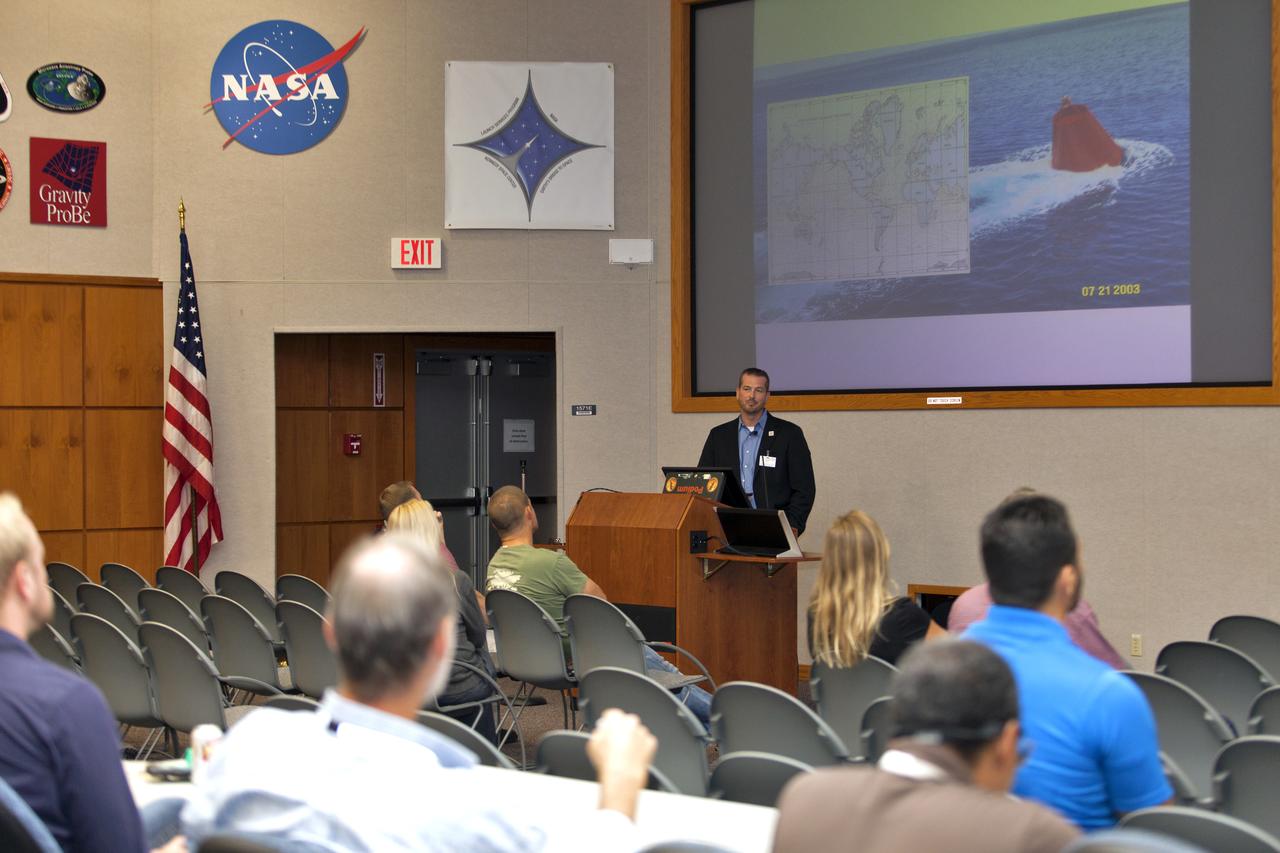
Guest speaker Gabriel Alsenas discusses ocean renewable energy sources with NASA Kennedy Space Center employees in the spaceport’s Mission Briefing Room on Thursday, Oct. 11, 2018. Alsenas is director of the Southeast National Marine Renewable Energy Center at Florida Atlantic University in Boca Raton. The “lunch and learn” event is one of two scheduled during October in conjunction with Energy Awareness Month, which aims to recognize the importance of energy management for our national prosperity, security and environmental sustainability.
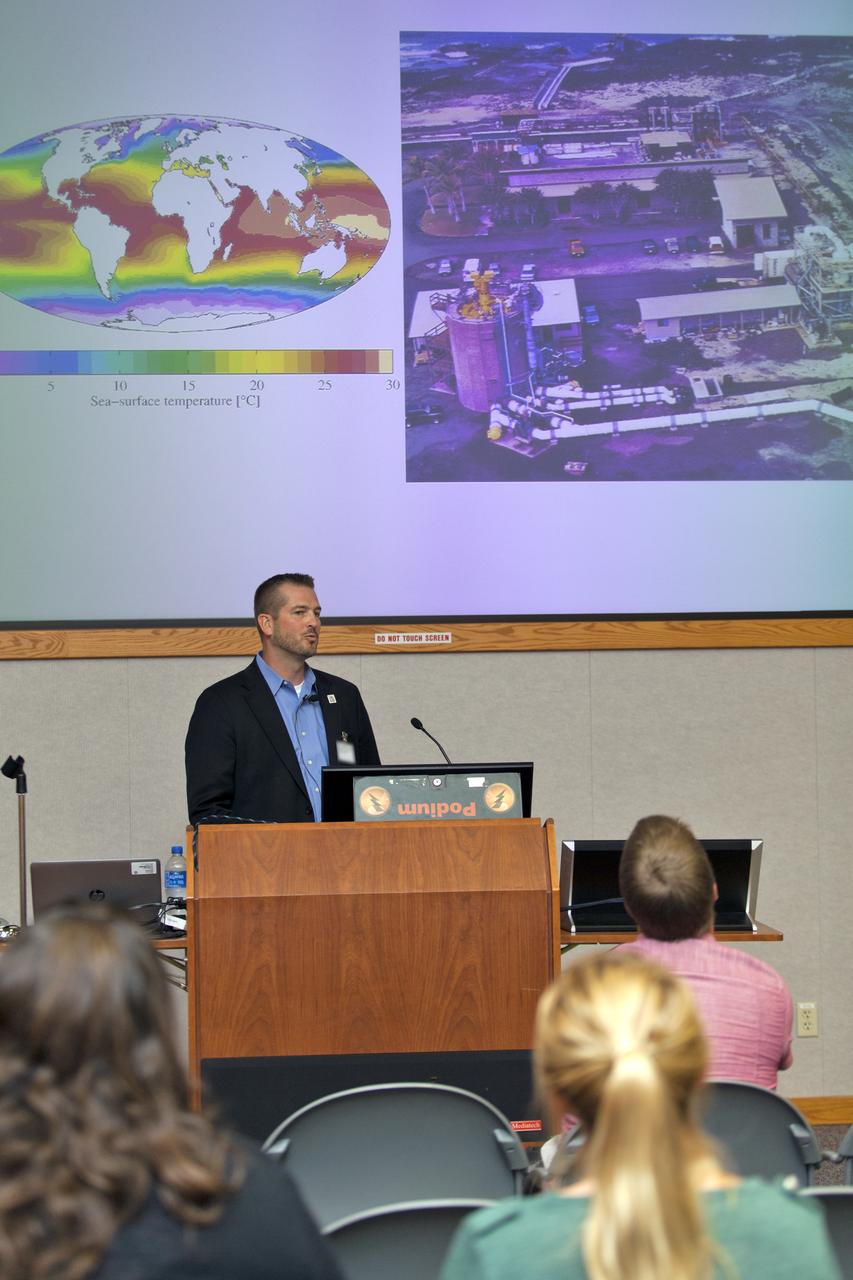
Guest speaker Gabriel Alsenas discusses ocean renewable energy sources with NASA Kennedy Space Center employees in the spaceport’s Mission Briefing Room on Thursday, Oct. 11, 2018. Alsenas is director of the Southeast National Marine Renewable Energy Center at Florida Atlantic University in Boca Raton. The “lunch and learn” event is one of two scheduled during October in conjunction with Energy Awareness Month, which aims to recognize the importance of energy management for our national prosperity, security and environmental sustainability.

Guest speaker Gabriel Alsenas discusses ocean renewable energy sources with NASA Kennedy Space Center employees in the spaceport’s Mission Briefing Room on Thursday, Oct. 11, 2018. Alsenas is director of the Southeast National Marine Renewable Energy Center at Florida Atlantic University in Boca Raton. The “lunch and learn” event is one of two scheduled during October in conjunction with Energy Awareness Month, which aims to recognize the importance of energy management for our national prosperity, security and environmental sustainability.
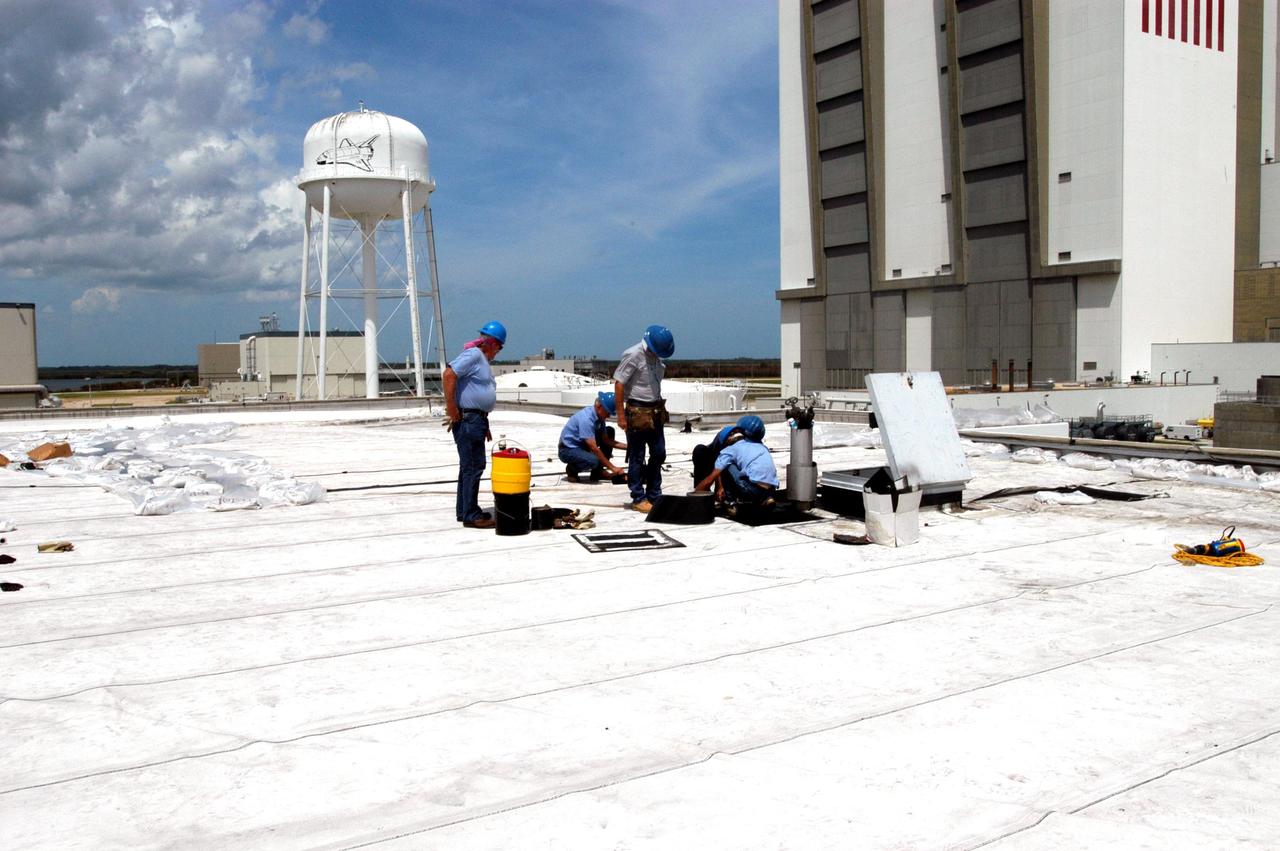
KENNEDY SPACE CENTER, FLA. - KSC employees secure the roof of the Processing Control Center which sustained damage from Hurricane Frances. The storm's path over Florida took it through Cape Canaveral and KSC property during Labor Day weekend. Located in Launch Complex 39 adjacent to the Vehicle Assembly Building (background right), the facility houses some of the staff and computers responsible for Launch Processing System (LPS) software development, launch team training, and LPS maintenance.
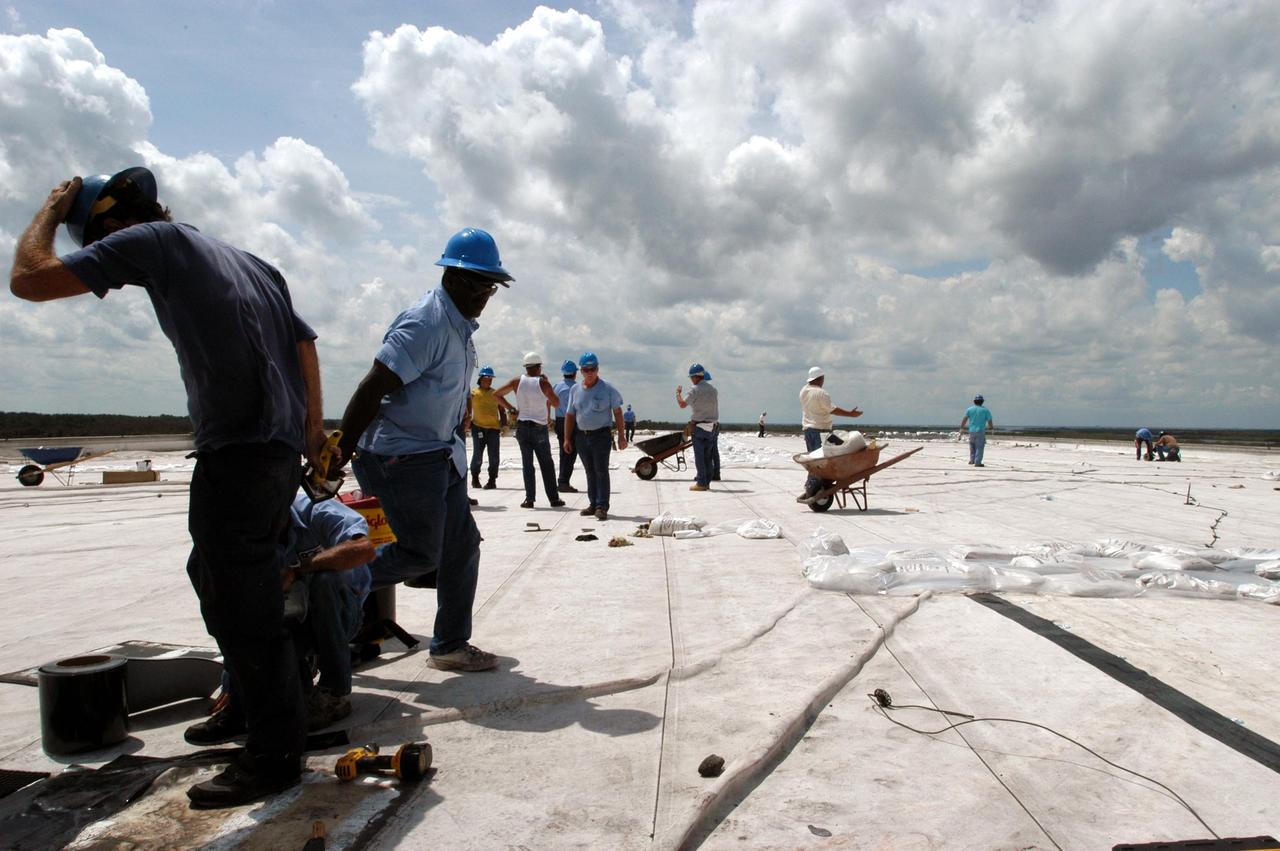
KENNEDY SPACE CENTER, FLA. - KSC employees begin the work to clean up and secure the roof of the Processing Control Center which sustained damage from Hurricane Frances. The storm's path over Florida took it through Cape Canaveral and KSC property during Labor Day weekend. Located in Launch Complex 39, the facility houses some of the staff and computers responsible for Launch Processing System (LPS) software development, launch team training, and LPS maintenance.
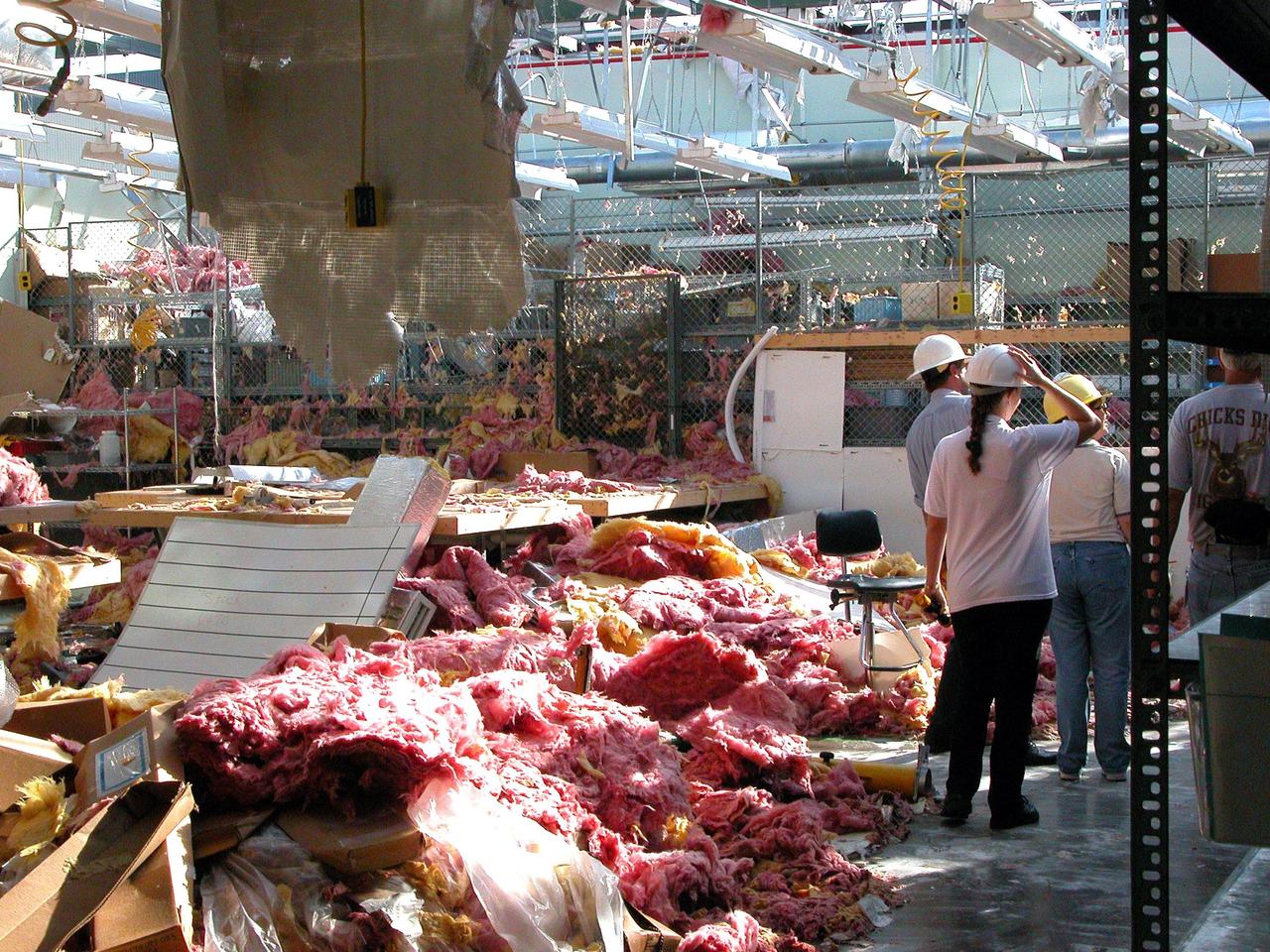
KENNEDY SPACE CENTER, FLA. - KSC workers survey the considerable damage sustained by the second floor of the Thermal Protection System Facility from Hurricane Frances. The storm's path over Florida took it through Cape Canaveral and KSC property during Labor Day weekend. Located in Launch Complex 39, the facility is used to manufacture both internal and external insulation products for the Space Shuttle orbiters.
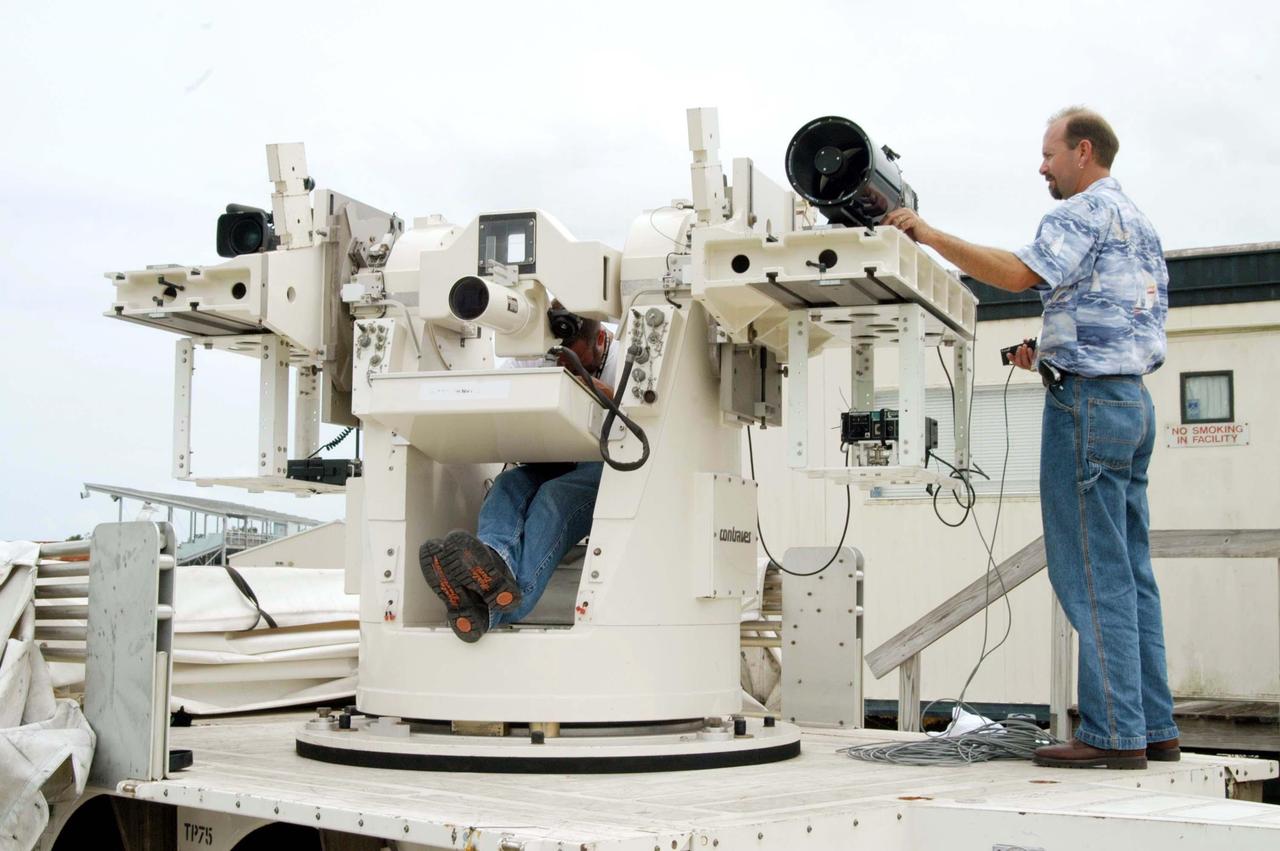
KENNEDY SPACE CENTER, FLA. - KSC videographer Glenn Benson adjusts a high definition camera being used to photograph the south wall of the Vehicle Assembly Building (VAB) that sustained damage from Hurricane Frances as it passed over Central Florida during the Labor Day weekend. The maximum wind at the surface from Hurricane Frances was 94 mph from the northeast at 6:40 a.m. on Sunday, September 5. It was recorded at a weather tower located on the east shore of the Mosquito Lagoon near the Cape Canaveral National Seashore. The highest sustained wind at KSC was 68 mph. The VAB lost 820, 4- x 16-foot panels or more than 52,000 square feet of its surface. There was damage to the roof as well.
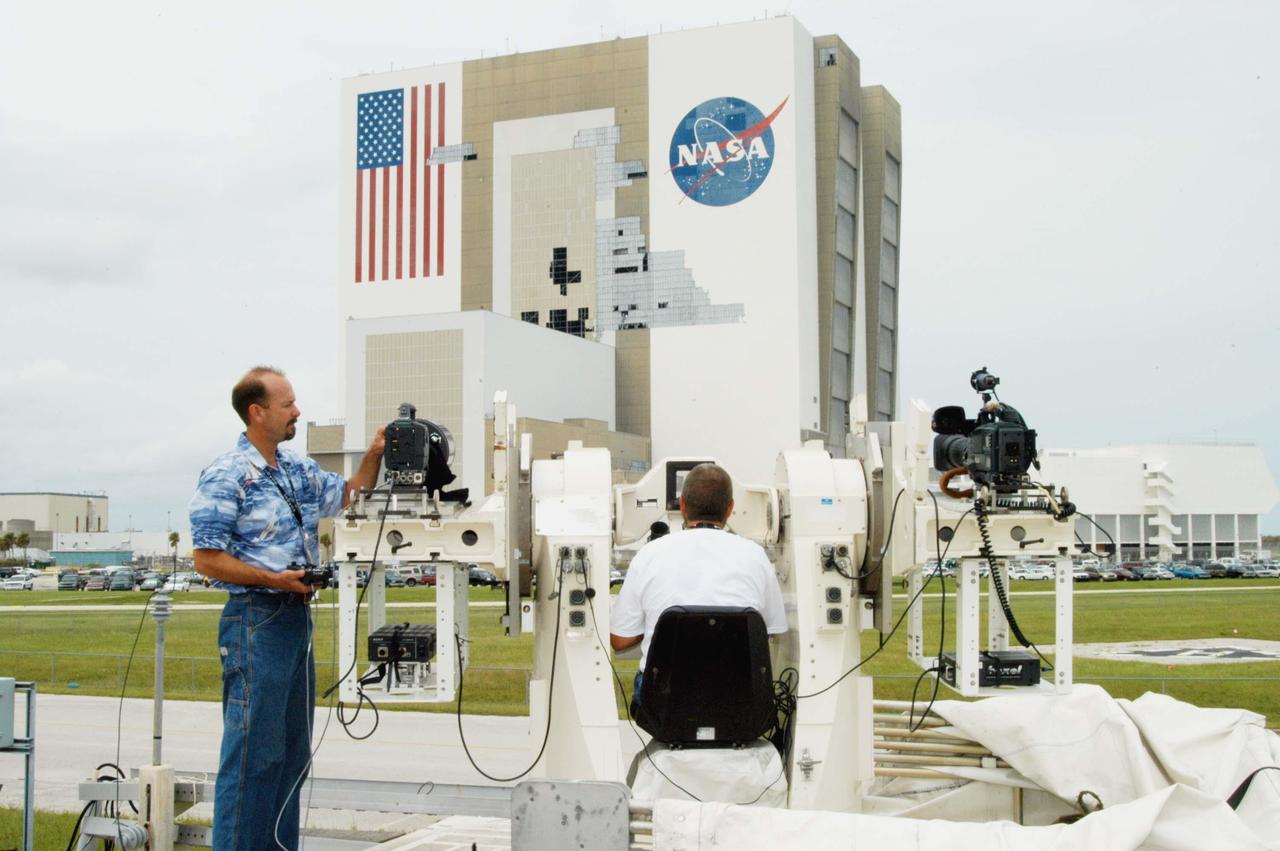
KENNEDY SPACE CENTER, FLA. - KSC videographer Glenn Benson adjusts a high definition camera being used to photograph the south wall of the Vehicle Assembly Building that sustained damage from Hurricane Frances as it passed over Central Florida during the Labor Day weekend. The maximum wind at the surface from Hurricane Frances was 94 mph from the northeast at 6:40 a.m. on Sunday, September 5. It was recorded at a weather tower located on the east shore of the Mosquito Lagoon near the Cape Canaveral National Seashore. The highest sustained wind at KSC was 68 mph. The VAB lost 820, 4- x 16-foot panels or more than 52,000 square feet of its surface. There was damage to the roof as well.
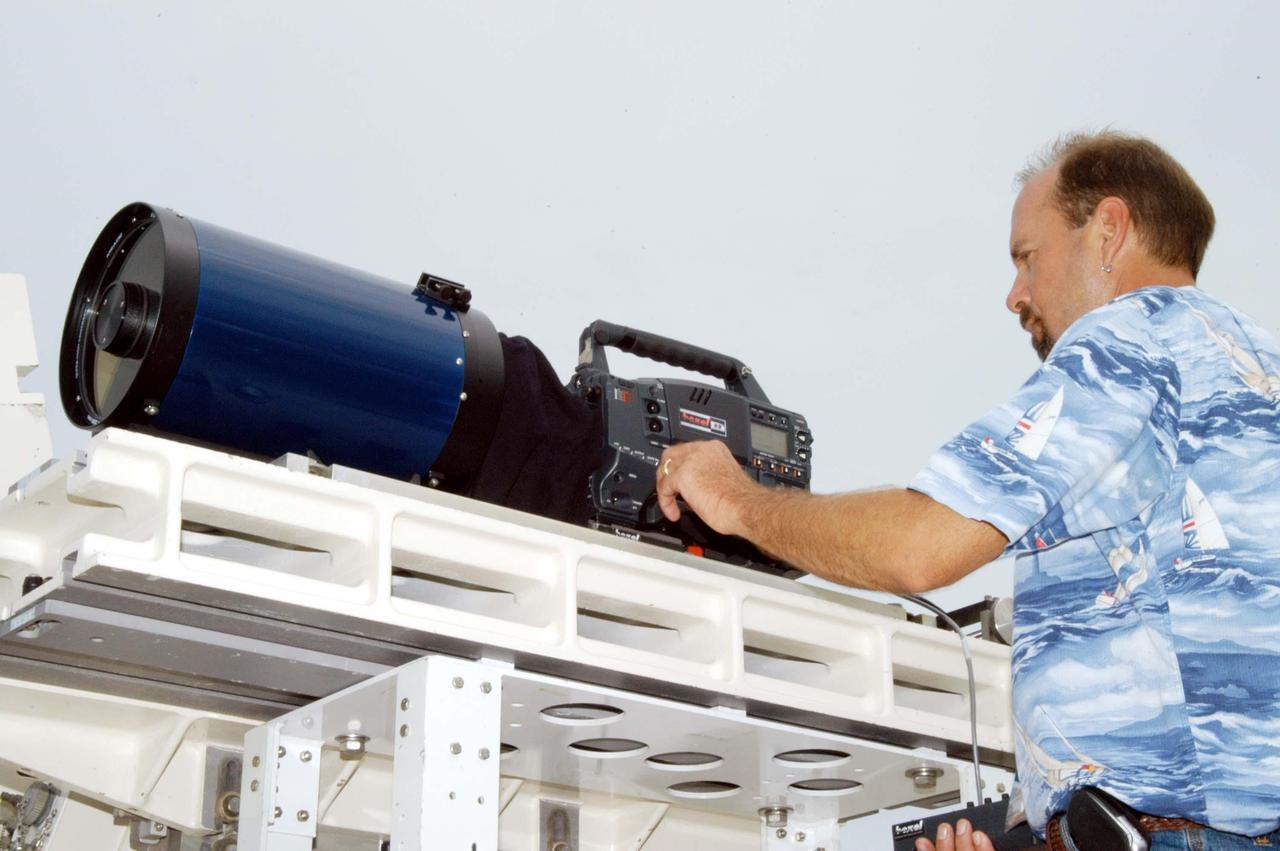
KENNEDY SPACE CENTER, FLA. - KSC videographer Glenn Benson adjusts a high definition camera being used to photograph the south wall of the Vehicle Assembly Building that sustained damage from Hurricane Frances as it passed over Central Florida during the Labor Day weekend. The maximum wind at the surface from Hurricane Frances was 94 mph from the northeast at 6:40 a.m. on Sunday, September 5. It was recorded at a weather tower located on the east shore of the Mosquito Lagoon near the Cape Canaveral National Seashore. The highest sustained wind at KSC was 68 mph. The VAB lost 820, 4- x 16-foot panels or more than 52,000 square feet of its surface. There was damage to the roof as well.
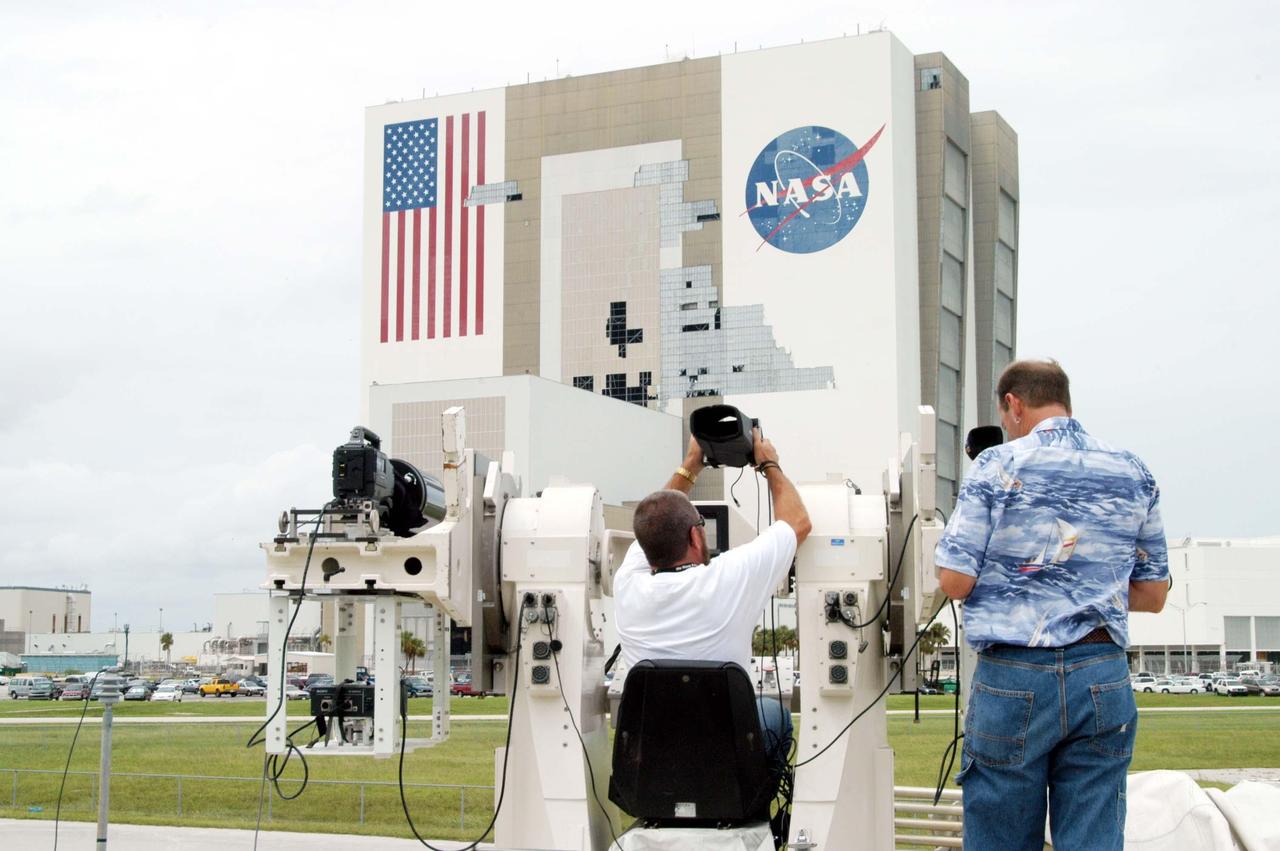
KENNEDY SPACE CENTER, FLA. - KSC videographer Glenn Benson and photographer Kenny Allen photograph damage incurred on the south wall of the Vehicle Assembly Building (VAB) that sustained damage from Hurricane Frances as it passed over Central Florida during the Labor Day weekend. The maximum wind at the surface from Hurricane Frances was 94 mph from the northeast at 6:40 a.m. on Sunday, September 5. It was recorded at a weather tower located on the east shore of the Mosquito Lagoon near the Cape Canaveral National Seashore. The highest sustained wind at KSC was 68 mph. The VAB lost 820, 4- x 16-foot panels or more than 52,000 square feet of its surface. There was damage to the roof as well.
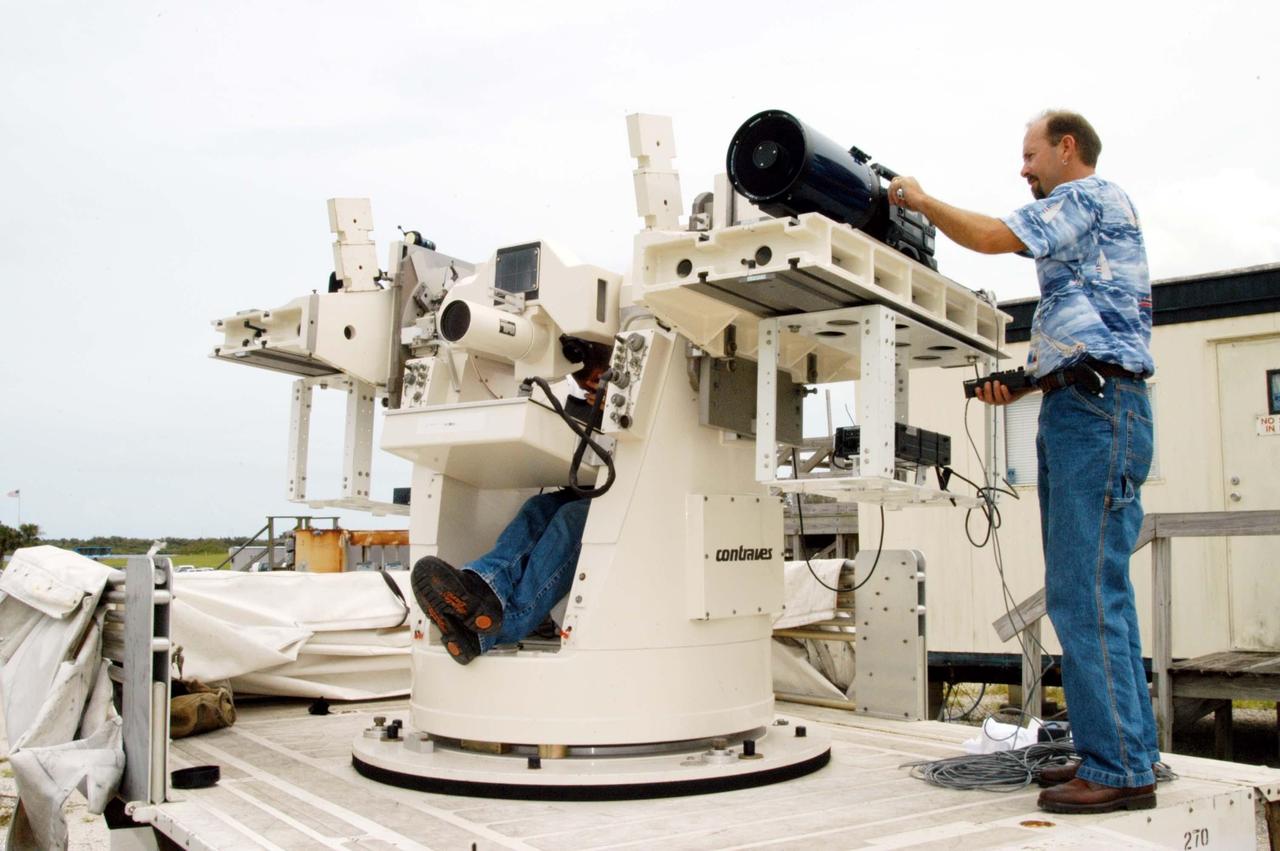
KENNEDY SPACE CENTER, FLA. - KSC videographer Glenn Benson adjusts a high definition camera being used to photograph the south wall of the Vehicle Assembly Building that sustained damage from Hurricane Frances as it passed over Central Florida during the Labor Day weekend. The maximum wind at the surface from Hurricane Frances was 94 mph from the northeast at 6:40 a.m. on Sunday, September 5. It was recorded at a weather tower located on the east shore of the Mosquito Lagoon near the Cape Canaveral National Seashore. The highest sustained wind at KSC was 68 mph. The VAB lost 820, 4- x 16-foot panels or more than 52,000 square feet of its surface. There was damage to the roof as well.
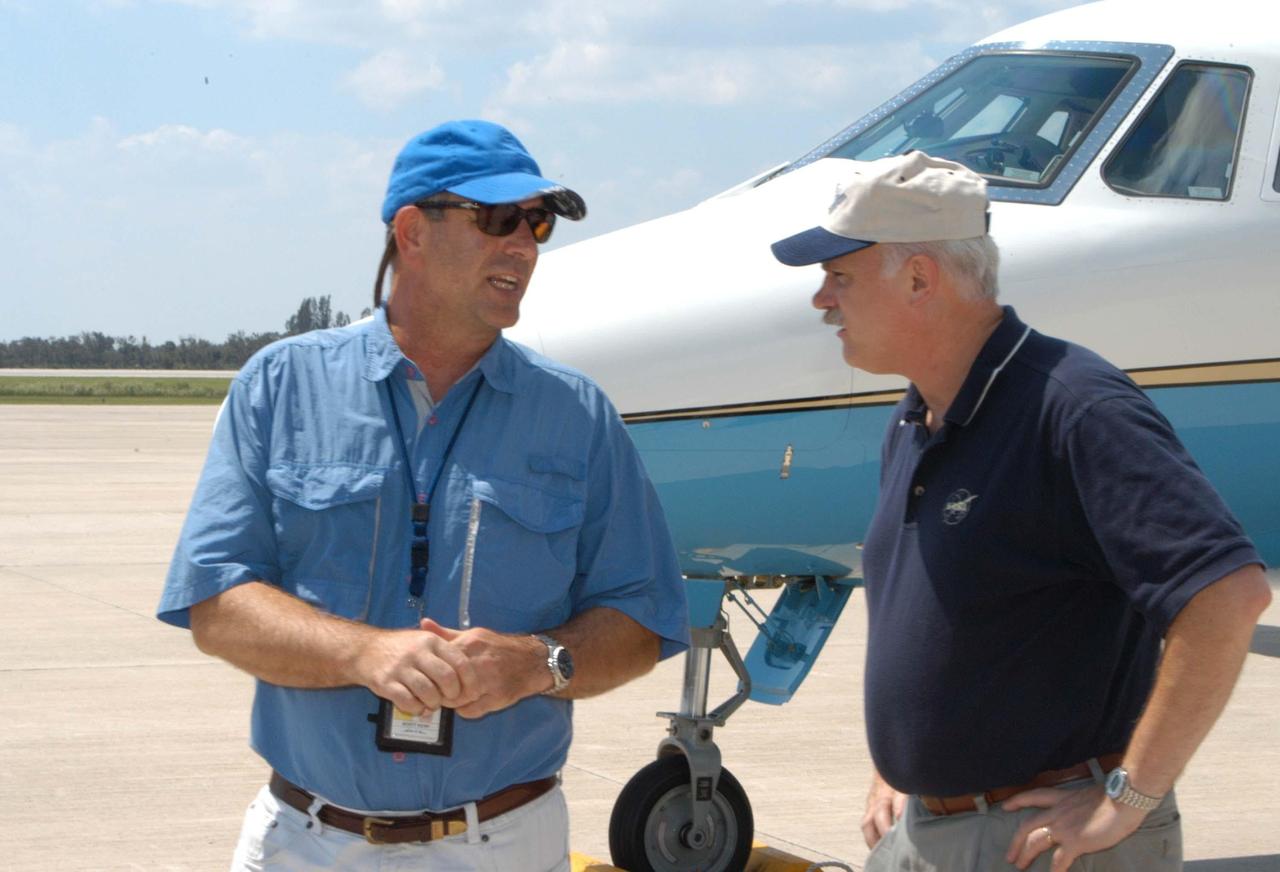
KENNEDY SPACE CENTER, FLA. - KSC Director of Spaceport Services Scott Kerr (left) talks to NASA Associate Administrator of the Space Operations Mission Directorate William Readdy at the Shuttle Landing Facility. NASA Administrator Sean O’Keefe and Readdy are visiting KSC to survey the damage sustained by KSC facilities from Hurricane Frances over Labor Day weekend. The Vehicle Assembly Building, Thermal Protection System Facility, and Processing Control Center all received significant damage from the storm. Additionally, the Operations and Checkout Building, Vertical Processing Facility, Hangar AE, Hangar S and Hangar AF Small Parts Facility each received substantial damage. However, well-protected and unharmed were NASA’s three Space Shuttle orbiters -- Discovery, Atlantis and Endeavour - along with the Shuttle launch pads, all of the critical flight hardware for the orbiters and the International Space Station, and NASA’s Swift spacecraft that is awaiting launch in October.
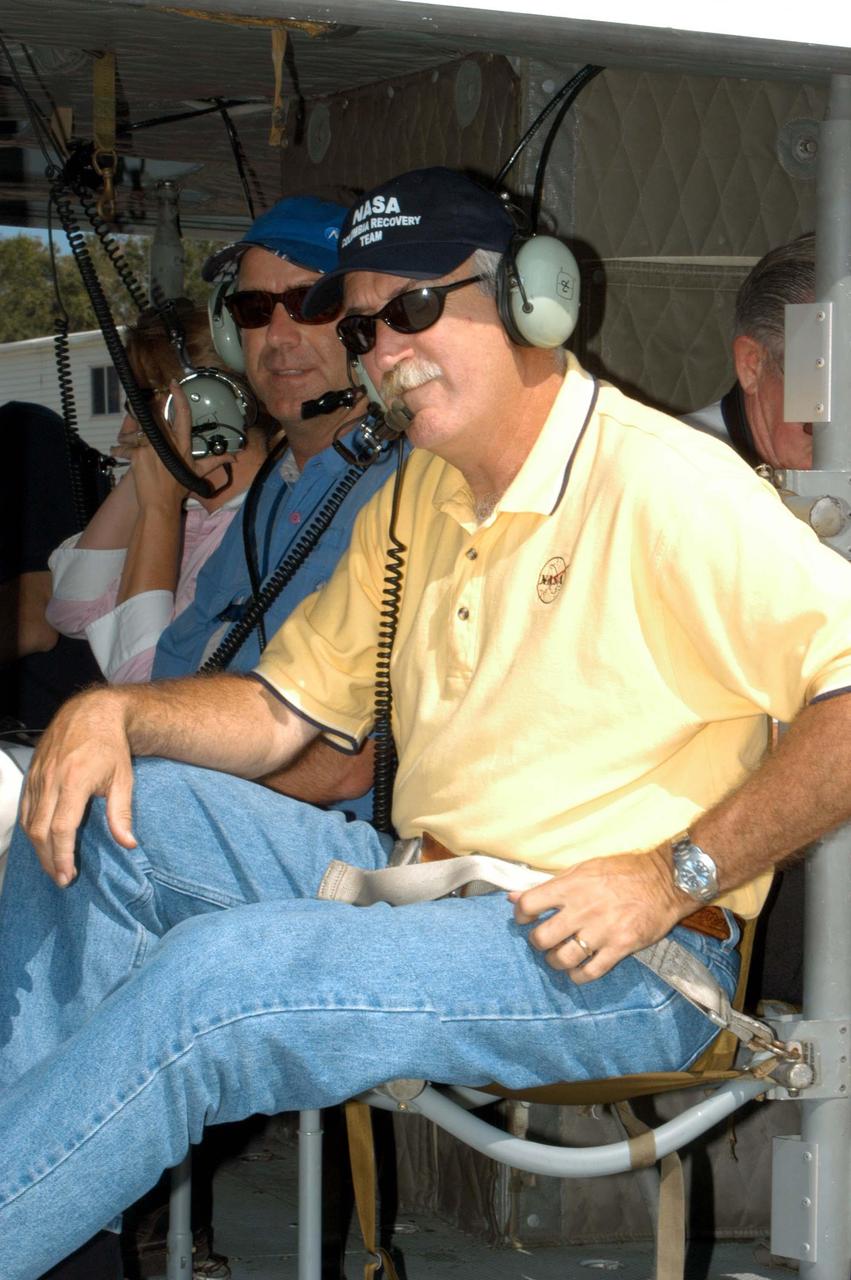
KENNEDY SPACE CENTER, FLA. - NASA Administrator Sean O’Keefe (right) sits next to KSC Director of Spaceport Services Scott Kerr in the helicopter from which they will observe overall damage at the Center from Hurricane Frances. O’Keefe and NASA Associate Administrator of Space Operations Mission Directorate William Readdy are visiting KSC to survey the damage sustained by KSC facilities from the hurricane. The Labor Day storm caused significant damage to the Vehicle Assembly Building, Thermal Protection System Facility, and Processing Control Center. Additionally, the Operations and Checkout Building, Vertical Processing Facility, Hangar AE, Hangar S and Hangar AF Small Parts Facility each received substantial damage. However, well-protected and unharmed were NASA’s three Space Shuttle orbiters -- Discovery, Atlantis and Endeavour - along with the Shuttle launch pads, all of the critical flight hardware for the orbiters and the International Space Station, and NASA’s Swift spacecraft that is awaiting launch in October.
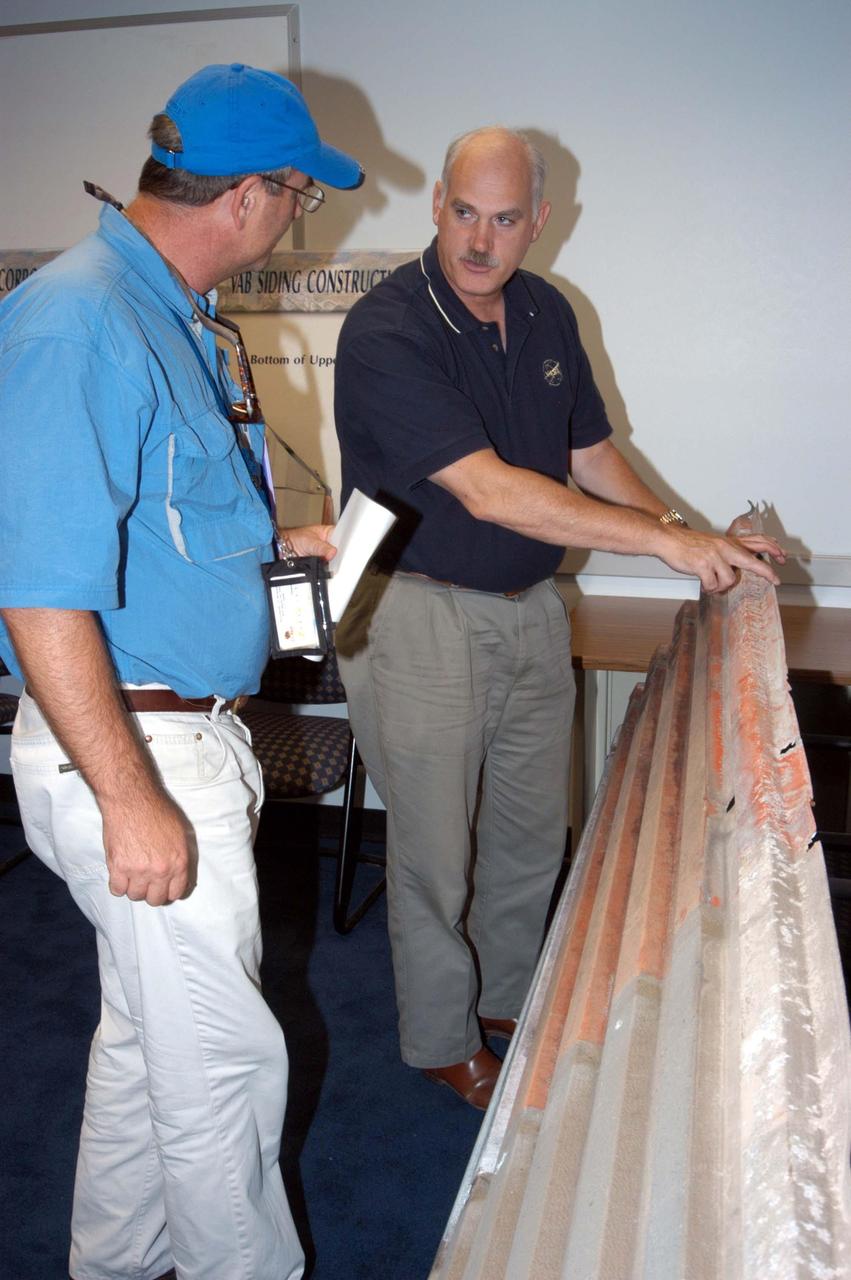
KENNEDY SPACE CENTER, FLA. - KSC Director of the Spaceport Services Scott Kerr (left) and NASA Associate Administrator of the Space Operations Mission Directorate William Readdy examine one of the panels that was blown off the Vehicle Assembly Building. NASA Administrator Sean O’Keefe and Readdy are visiting KSC to survey the damage sustained by KSC facilities from Hurricane Frances over Labor Day weekend. The Vehicle Assembly Building, Thermal Protection System Facility, and Processing Control Center all received significant damage from the storm. Additionally, the Operations and Checkout Building, Vertical Processing Facility, Hangar AE, Hangar S and Hangar AF Small Parts Facility each received substantial damage. NASA’s three Space Shuttle orbiters -- Discovery, Atlantis and Endeavour - along with the Shuttle launch pads, all of the critical flight hardware for the orbiters and the International Space Station, and NASA’s Swift spacecraft, awaiting launch in October, were well protected and unharmed.

KENNEDY SPACE CENTER, FLA. - In the Columbia debris hangar at KSC, a United Space Alliance worker lines up air heaters salvaged from the hurricane-ravaged Thermal Protection System Facility (TPSF) in order to dry them out. The TPSF, which creates the TPS tiles, blankets and all the internal thermal control systems for the Space Shuttles, is almost totally unserviceable at this time after losing approximately 35 percent of its roof due to Hurricane Frances, which blew across Central Florida Sept. 4-5. Undamaged equipment has been moved to the RLV hangar at KSC. The maximum wind at the surface from Hurricane Frances was 94 mph from the northeast at 6:40 a.m. on Sunday, September 5. It was recorded at a weather tower located on the east shore of the Mosquito Lagoon near the Cape Canaveral National Seashore. The highest sustained wind at KSC was 68 mph.
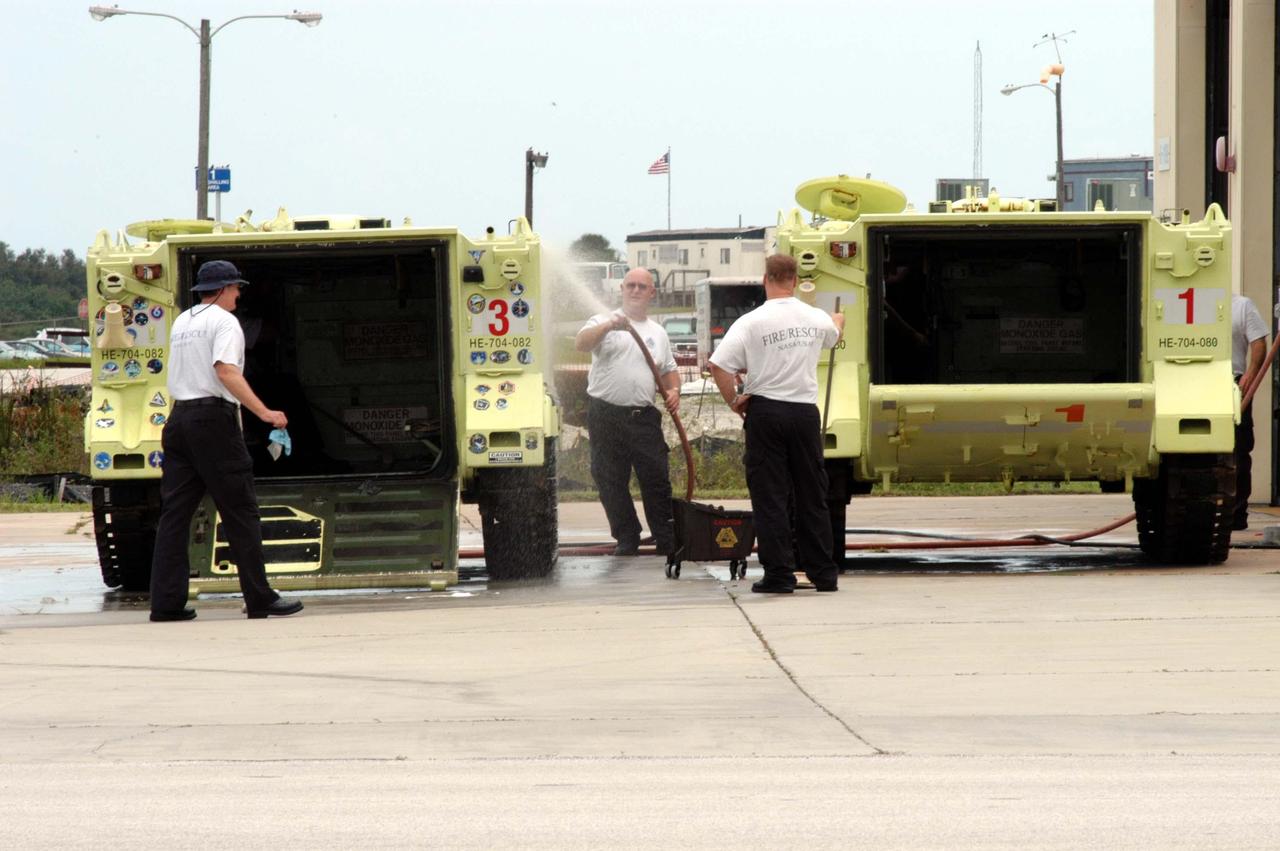
KENNEDY SPACE CENTER, FLA. - Fire and Rescue team members clean up the vehicles after Hurricane Frances, which passed over Central Florida during the Labor Day weekend. The maximum wind at the surface from Hurricane Frances was 94 mph from the northeast at 6:40 a.m. on Sunday, September 5. It was recorded at a weather tower located on the east shore of the Mosquito Lagoon near the Cape Canaveral National Seashore. The highest sustained wind at KSC was 68 mph.
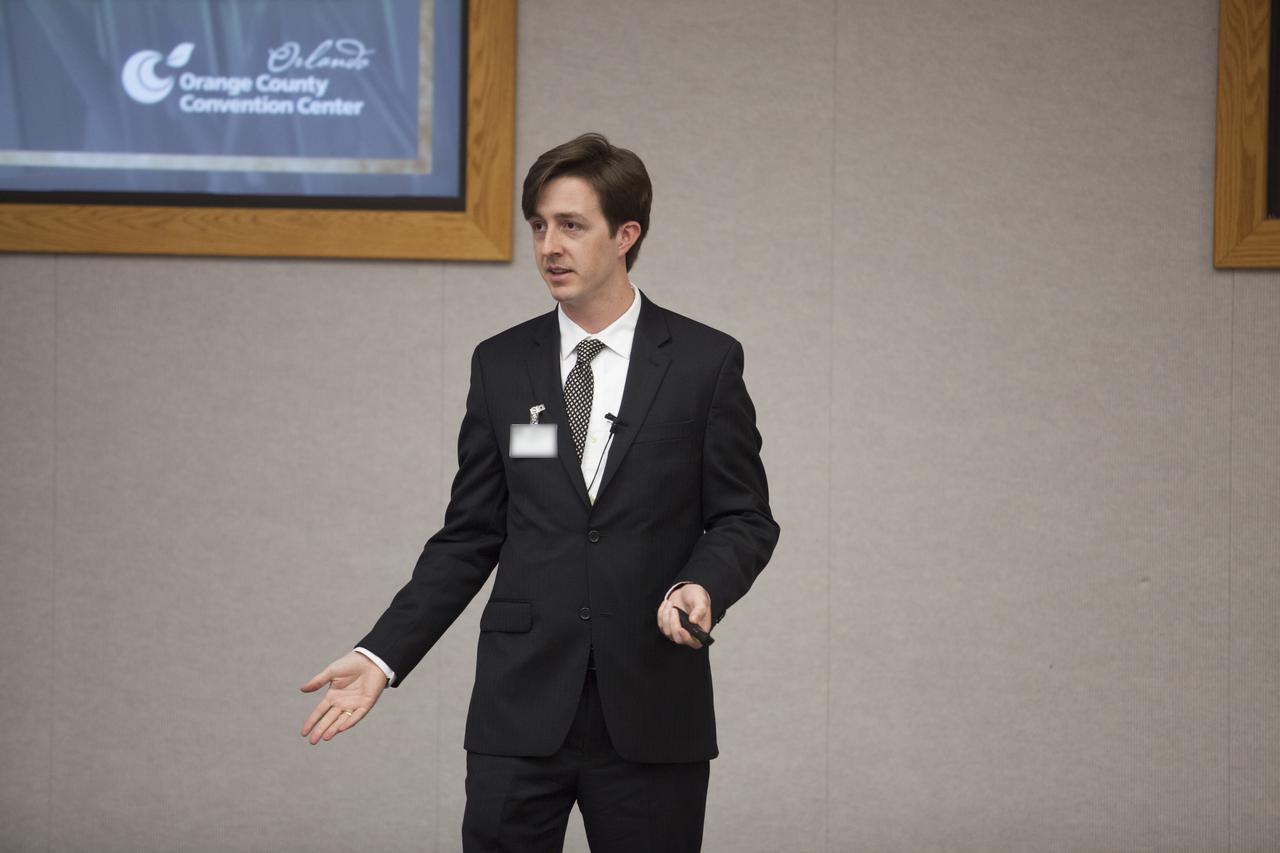
John Culver, Sustainability Program manager with the Orange County Convention Center in Orlando, was one of the featured speakers at the 2017 Innovation Expo at NASA's Kennedy Space Center in Florida. The purpose of the annual two-day event is to help foster innovation and creativity among the Kennedy workforce. The event included several keynote speakers, training opportunities, an innovation showcase and the KSC Kickstart competition.
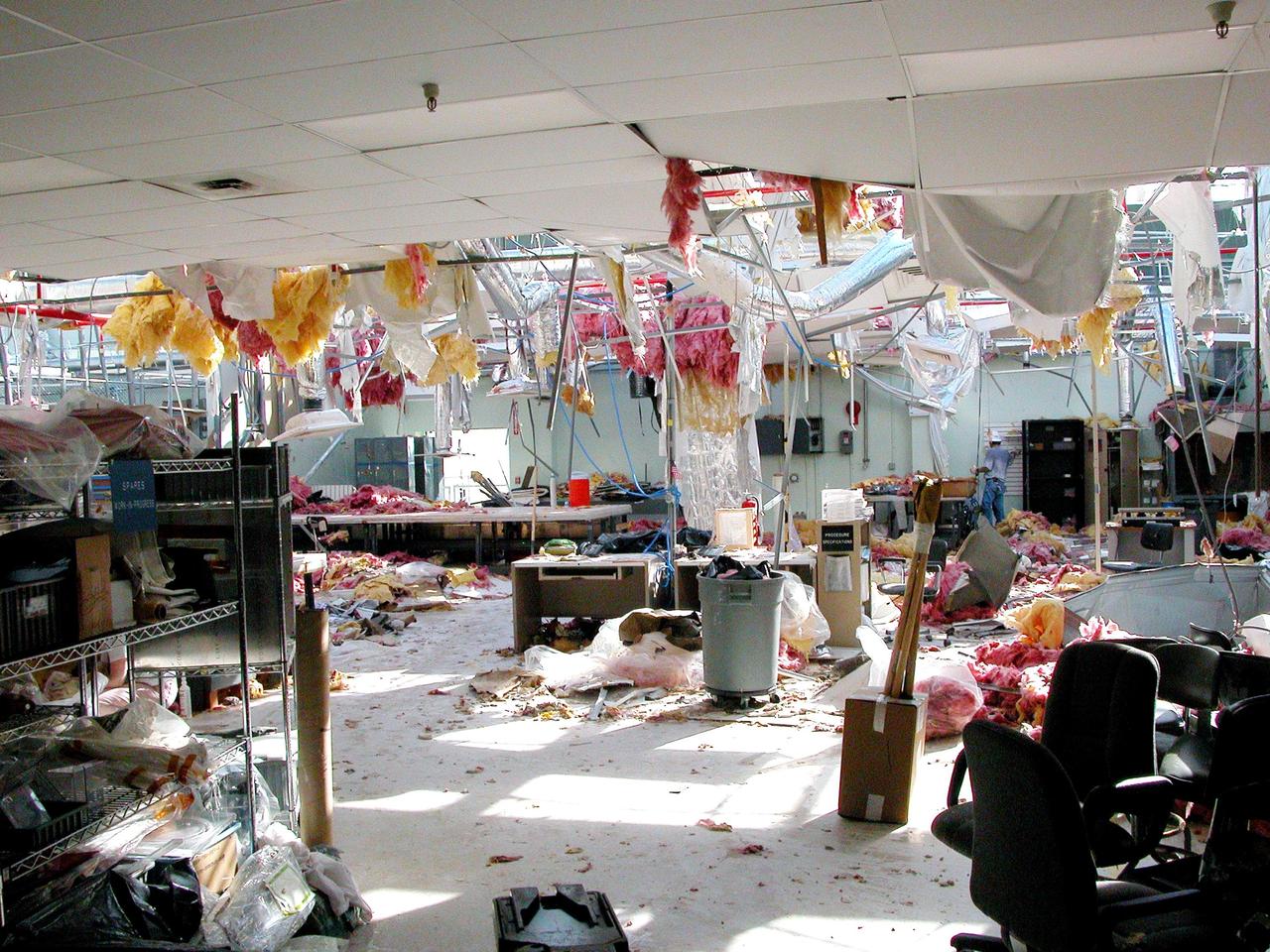
KENNEDY SPACE CENTER, FLA. - The second floor of the Thermal Protection System Facility sustained significant damage from Hurricane Frances. The storm's path over Florida took it through Cape Canaveral and KSC property during Labor Day weekend. Located in Launch Complex 39, the facility is used to manufacture both internal and external insulation products for the Space Shuttle orbiters.
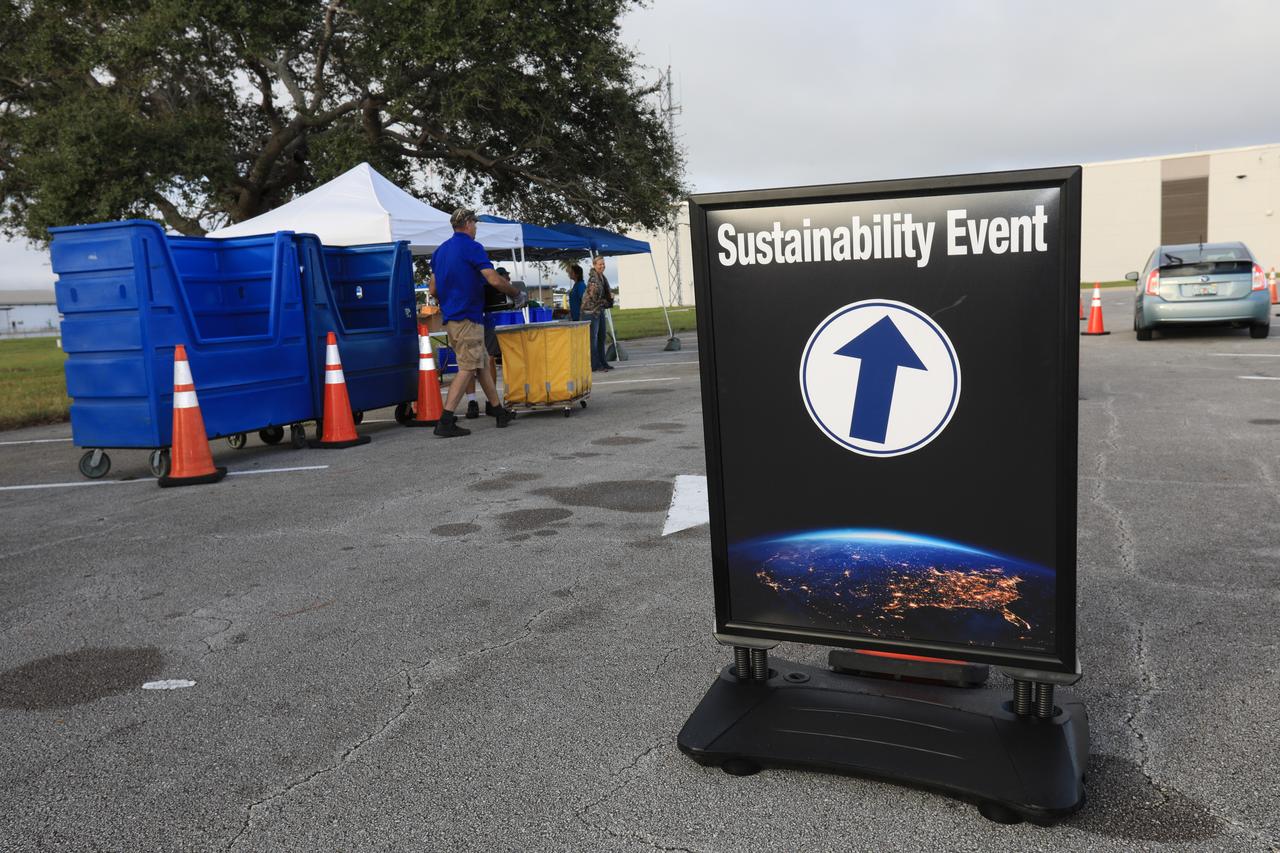
In the parking lot of the Data Center at NASA's Kennedy Space Center in Florida, employees turn in used household material for recycling as part of America Recycles Day (ARD) led by the center's Sustainability organization. The annual event is a nationally recognized initiative dedicated to promoting recycling in the United States. This year, KSC is partnered with Goodwill Industries and several other local organizations to receive donation material from employees such as gently used household items, personal electronic waste, greeting cards and serviceable eyeglasses.
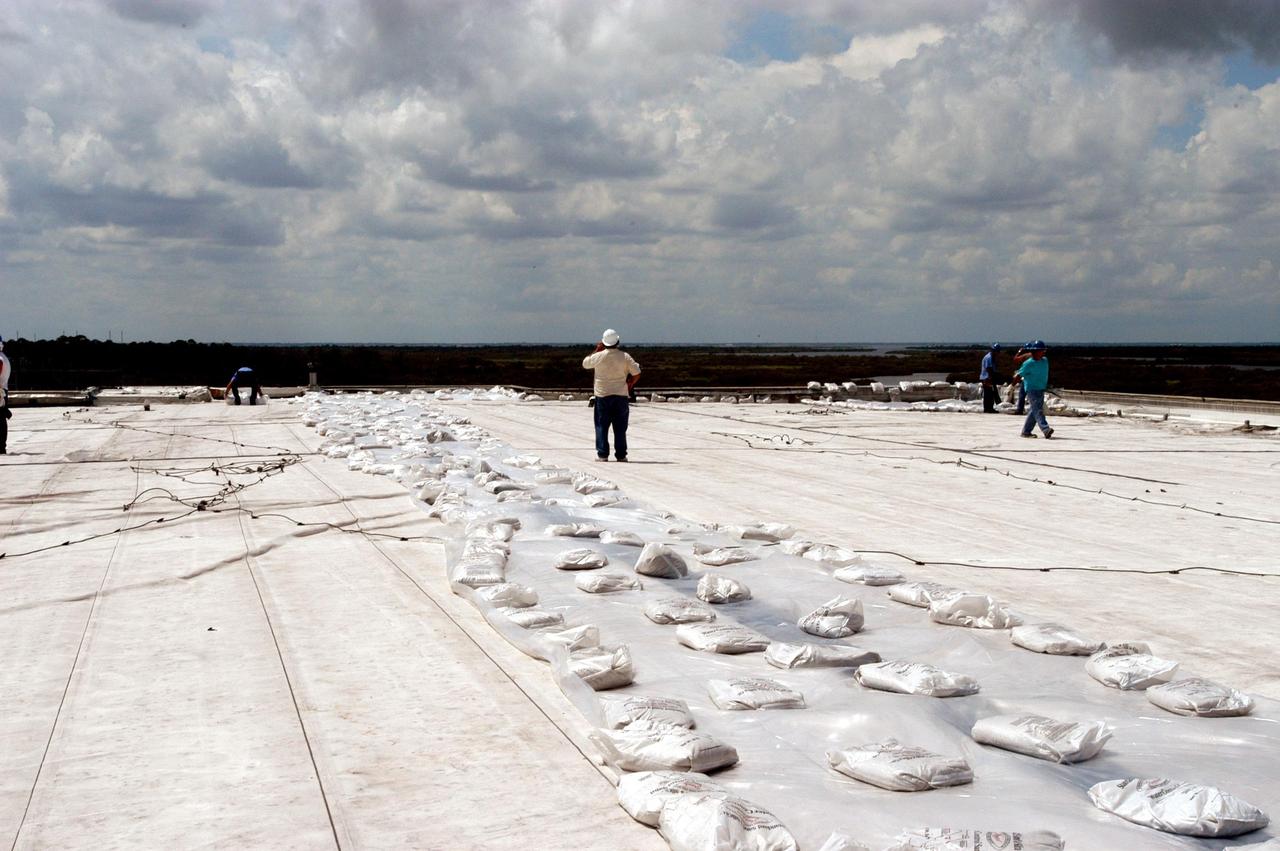
KENNEDY SPACE CENTER, FLA. - The work to clean up and secure the roof of the Processing Control Center which sustained damage from Hurricane Frances is under way. The storm's path over Florida took it through Cape Canaveral and KSC property during Labor Day weekend. Located in Launch Complex 39, the facility houses some of the staff and computers responsible for Launch Processing System (LPS) software development, launch team training, and LPS maintenance.
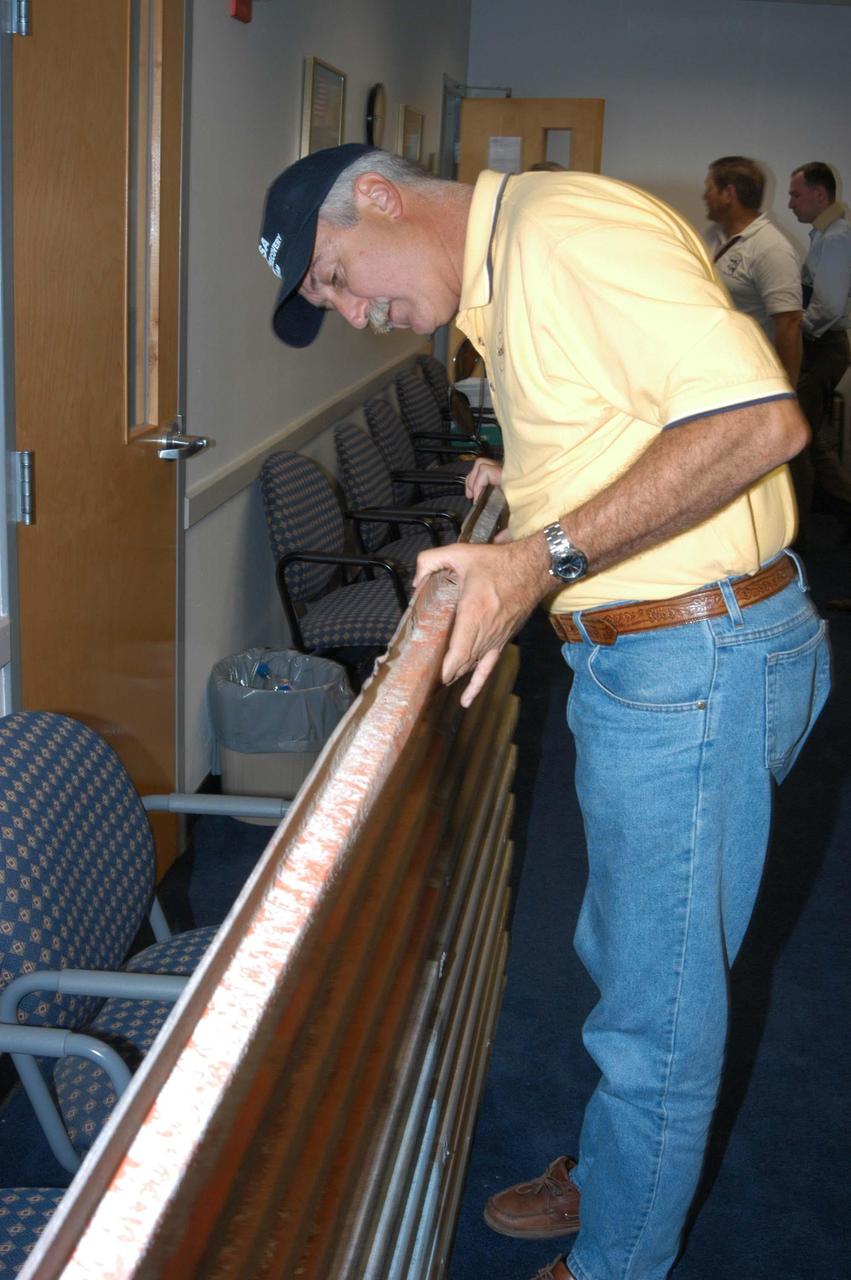
KENNEDY SPACE CENTER, FLA. - NASA Administrator Sean O’Keefe examines one of the panels that was blown off the Vehicle Assembly Building. O’Keefe is visiting KSC to survey the damage sustained by KSC facilities from Hurricane Frances over Labor Day weekend. The Vehicle Assembly Building, Thermal Protection System Facility, and Processing Control Center all received significant damage from the storm. Additionally, the Operations and Checkout Building, Vertical Processing Facility, Hangar AE, Hangar S and Hangar AF Small Parts Facility each received substantial damage. NASA’s three Space Shuttle orbiters -- Discovery, Atlantis and Endeavour - along with the Shuttle launch pads, all of the critical flight hardware for the orbiters and the International Space Station, and NASA’s Swift spacecraft, awaiting launch in October, were well protected and unharmed.
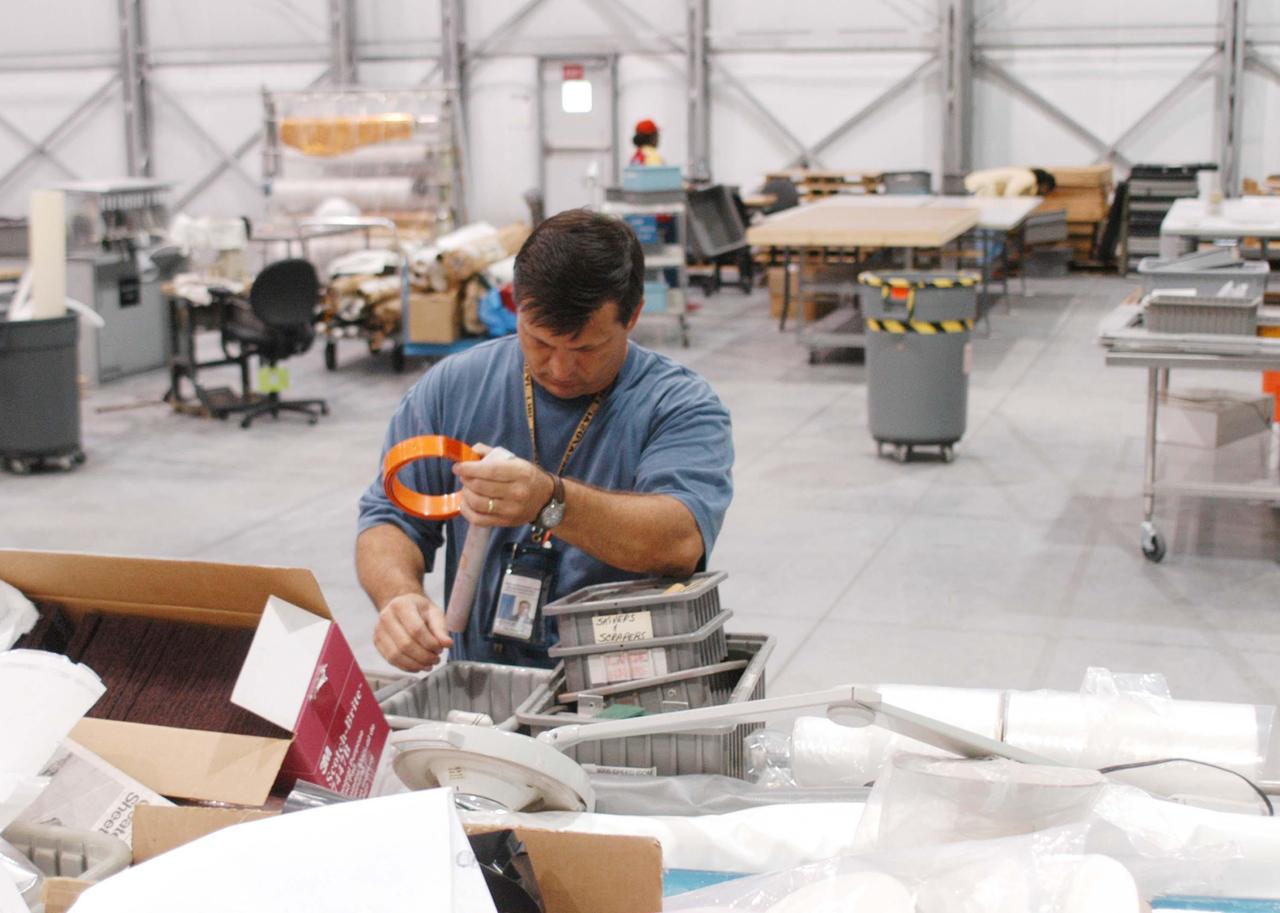
KENNEDY SPACE CENTER, FLA. - In the RLV hangar at KSC, United Space Alliance worker Steve Mitchell unpacks equipment that was removed from the hurricane-ravaged Thermal Protection System Facility (TPSF). The facility, which creates the TPS tiles, blankets and all the internal thermal control systems for the Space Shuttles, is almost totally unserviceable at this time after losing approximately 35 percent of its roof due to Hurricane Frances, which blew across Central Florida Sept. 4-5. The maximum wind at the surface from Hurricane Frances was 94 mph from the northeast at 6:40 a.m. on Sunday, September 5. It was recorded at a weather tower located on the east shore of the Mosquito Lagoon near the Cape Canaveral National Seashore. The highest sustained wind at KSC was 68 mph.
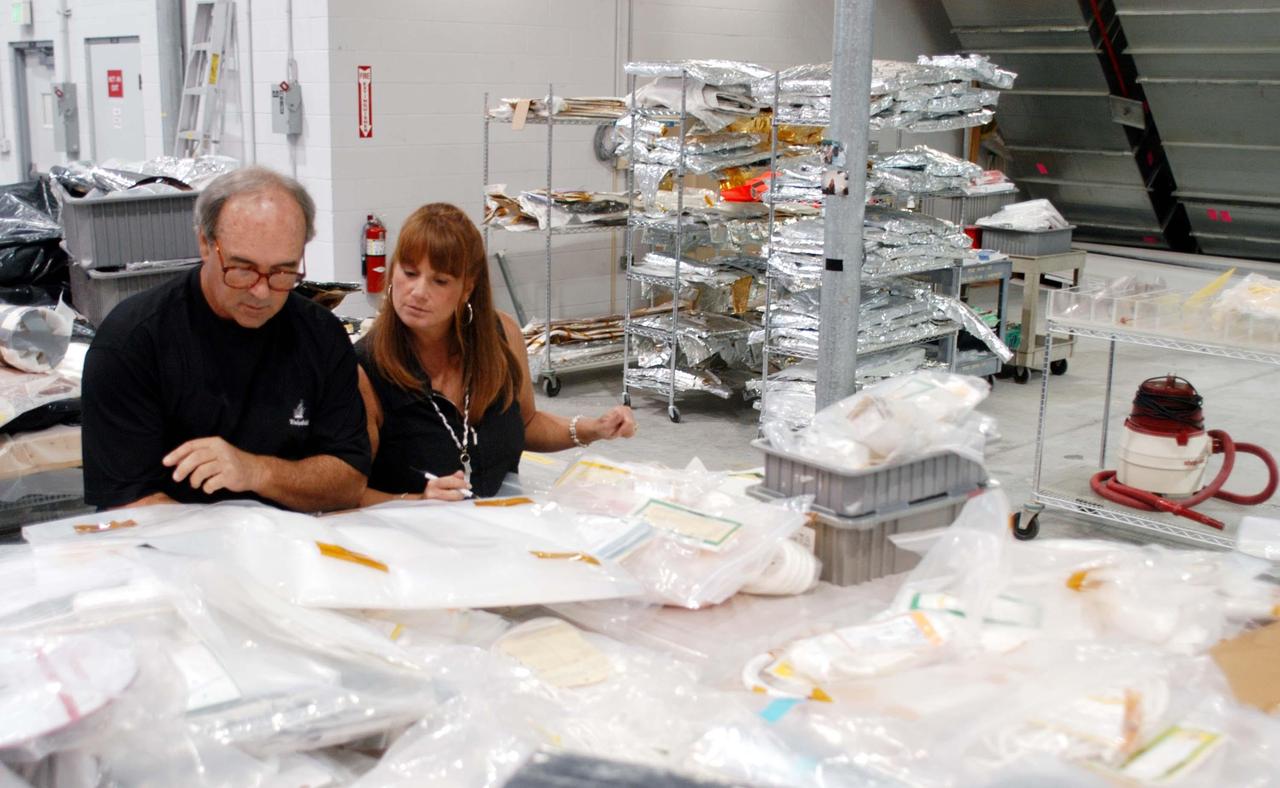
KENNEDY SPACE CENTER, FLA. - In the RLV hangar at KSC, United Space Alliance workers Frank Rhodes and Lynn Rosenbauer look at wrapped material removed from the hurricane-ravaged Thermal Protection System Facility (TPSF). The facility, which creates the TPS tiles, blankets and all the internal thermal control systems for the Space Shuttles, is almost totally unserviceable at this time after losing approximately 35 percent of its roof due to Hurricane Frances, which blew across Central Florida Sept. 4-5. The maximum wind at the surface from Hurricane Frances was 94 mph from the northeast at 6:40 a.m. on Sunday, September 5. It was recorded at a weather tower located on the east shore of the Mosquito Lagoon near the Cape Canaveral National Seashore. The highest sustained wind at KSC was 68 mph.
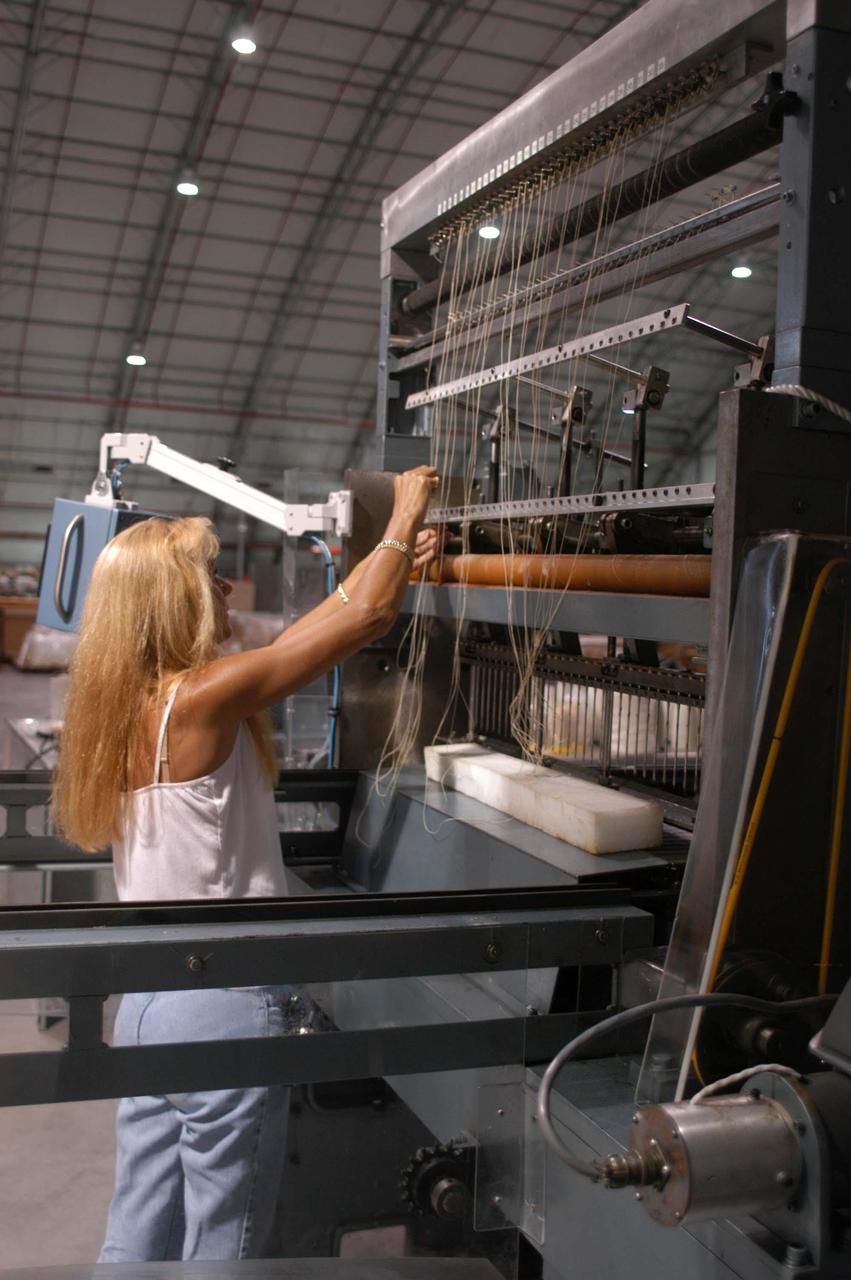
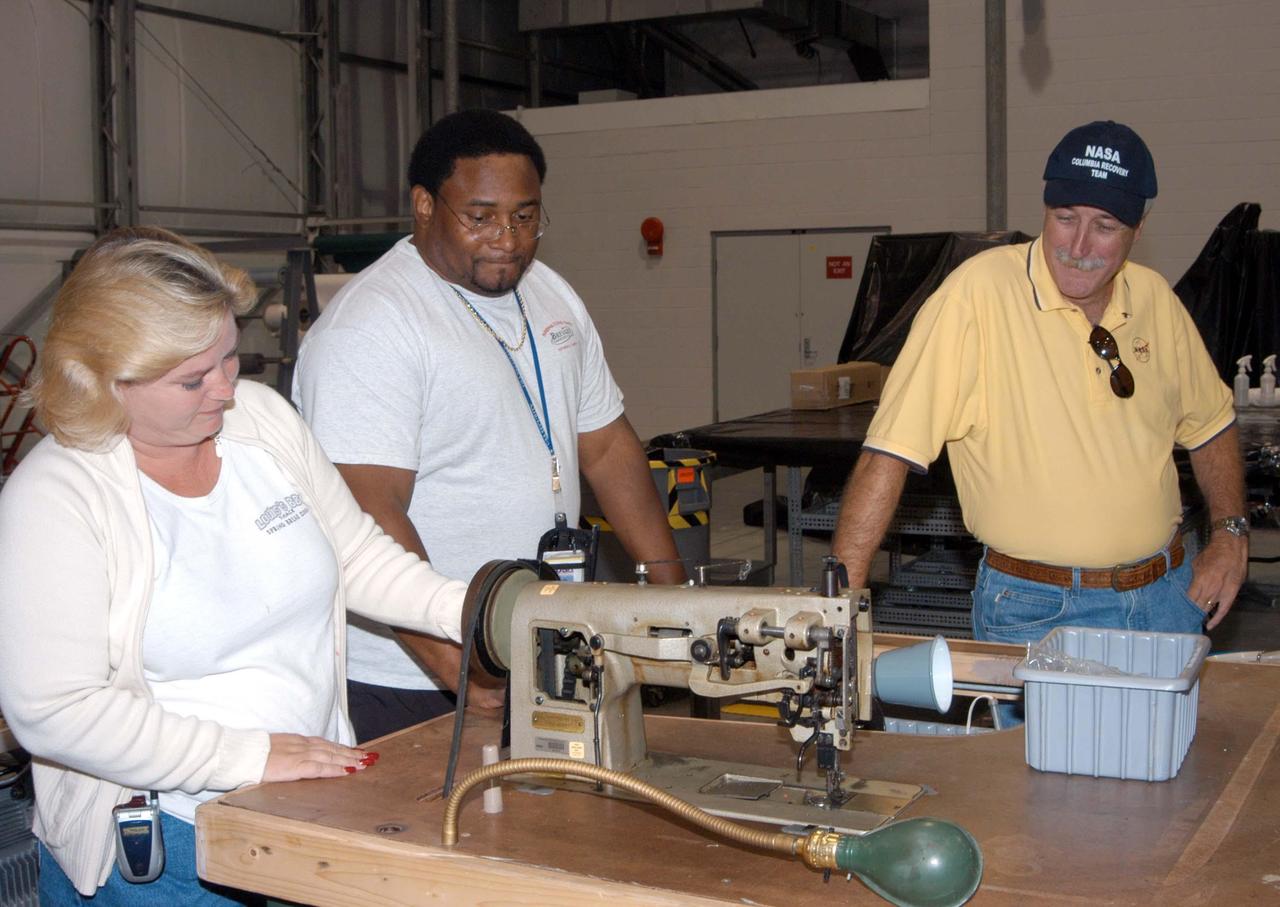
KENNEDY SPACE CENTER, FLA. - United Space Alliance worker Bab Jarosz works with the 30-needle sewing machines from the Thermal Protection System Facility (TPSF). A temporary tile shop has been set up in the RLV hangar at KSC after equipment was removed from the hurricane-ravaged facility. The TPSF, which creates the TPS tiles, blankets and all the internal thermal control systems for the Space Shuttles, is almost totally unserviceable at this time after losing approximately 35 percent of its roof due to Hurricane Frances, which blew across Central Florida Sept. 4-5. The maximum wind at the surface from Hurricane Frances was 94 mph from the northeast at 6:40 a.m. on Sunday, September 5. It was recorded at a weather tower located on the east shore of the Mosquito Lagoon near the Cape Canaveral National Seashore. The highest sustained wind at KSC was 68 mph.
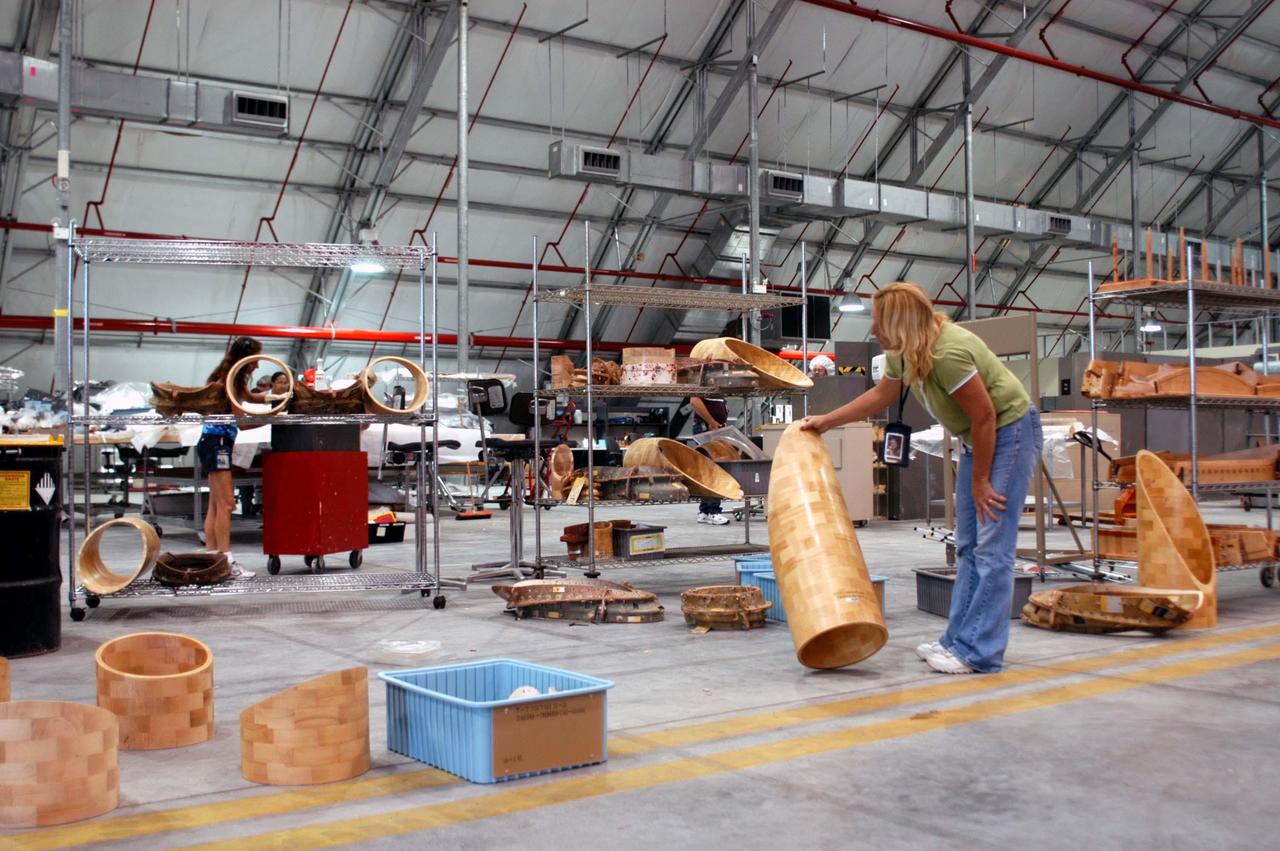
KENNEDY SPACE CENTER, FLA. - United Space Alliance worker Janet Mills stores equipment removed from the hurricane-ravaged Thermal Protection System Facility (TPSF) in the RLV hangar at KSC. The TPSF, which creates the TPS tiles, blankets and all the internal thermal control systems for the Space Shuttles, is almost totally unserviceable at this time after losing approximately 35 percent of its roof due to Hurricane Frances, which blew across Central Florida Sept. 4-5. Undamaged equipment has been moved to the hangar. The maximum wind at the surface from Hurricane Frances was 94 mph from the northeast at 6:40 a.m. on Sunday, September 5. It was recorded at a weather tower located on the east shore of the Mosquito Lagoon near the Cape Canaveral National Seashore. The highest sustained wind at KSC was 68 mph.
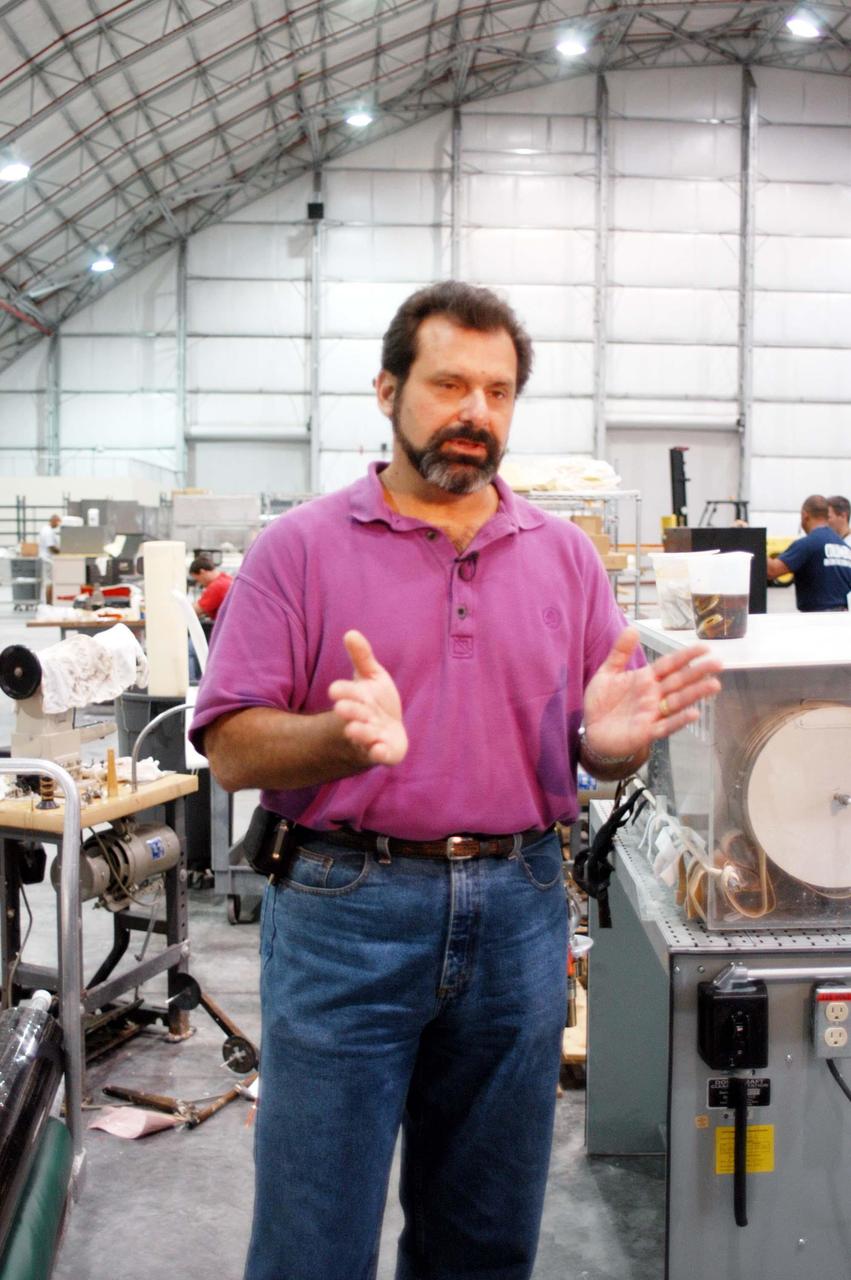
KENNEDY SPACE CENTER, FLA. - In the RLV hangar at KSC, Kevin Harrington, manager of Softgoods Production, talks to workers about the equipment removed from the hurricane-ravaged Thermal Protection System Facility (TPSF) now being stored in the hangar. The facility, which creates the TPS tiles, blankets and all the internal thermal control systems for the Space Shuttles, is almost totally unserviceable at this time after losing approximately 35 percent of its roof due to Hurricane Frances, which blew across Central Florida Sept. 4-5. The maximum wind at the surface from Hurricane Frances was 94 mph from the northeast at 6:40 a.m. on Sunday, September 5. It was recorded at a weather tower located on the east shore of the Mosquito Lagoon near the Cape Canaveral National Seashore. The highest sustained wind at KSC was 68 mph.
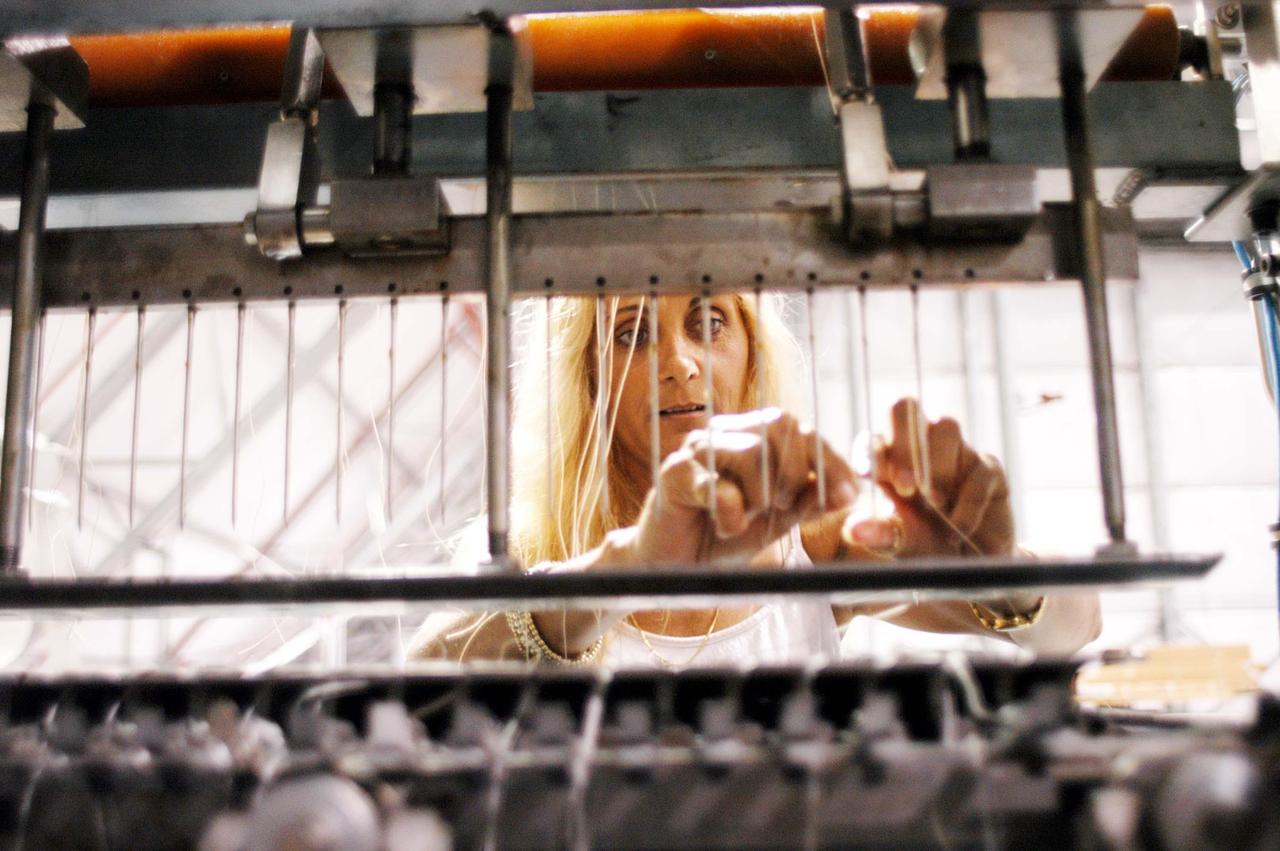
KENNEDY SPACE CENTER, FLA. - United Space Alliance worker Bab Jarosz works with the 30-needle sewing machines from the Thermal Protection System Facility (TPSF). A temporary tile shop has been set up in the RLV hangar at KSC after equipment was removed from the hurricane-ravaged facility. The TPSF, which creates the TPS tiles, blankets and all the internal thermal control systems for the Space Shuttles, is almost totally unserviceable at this time after losing approximately 35 percent of its roof due to Hurricane Frances, which blew across Central Florida Sept. 4-5. The maximum wind at the surface from Hurricane Frances was 94 mph from the northeast at 6:40 a.m. on Sunday, September 5. It was recorded at a weather tower located on the east shore of the Mosquito Lagoon near the Cape Canaveral National Seashore. The highest sustained wind at KSC was 68 mph.
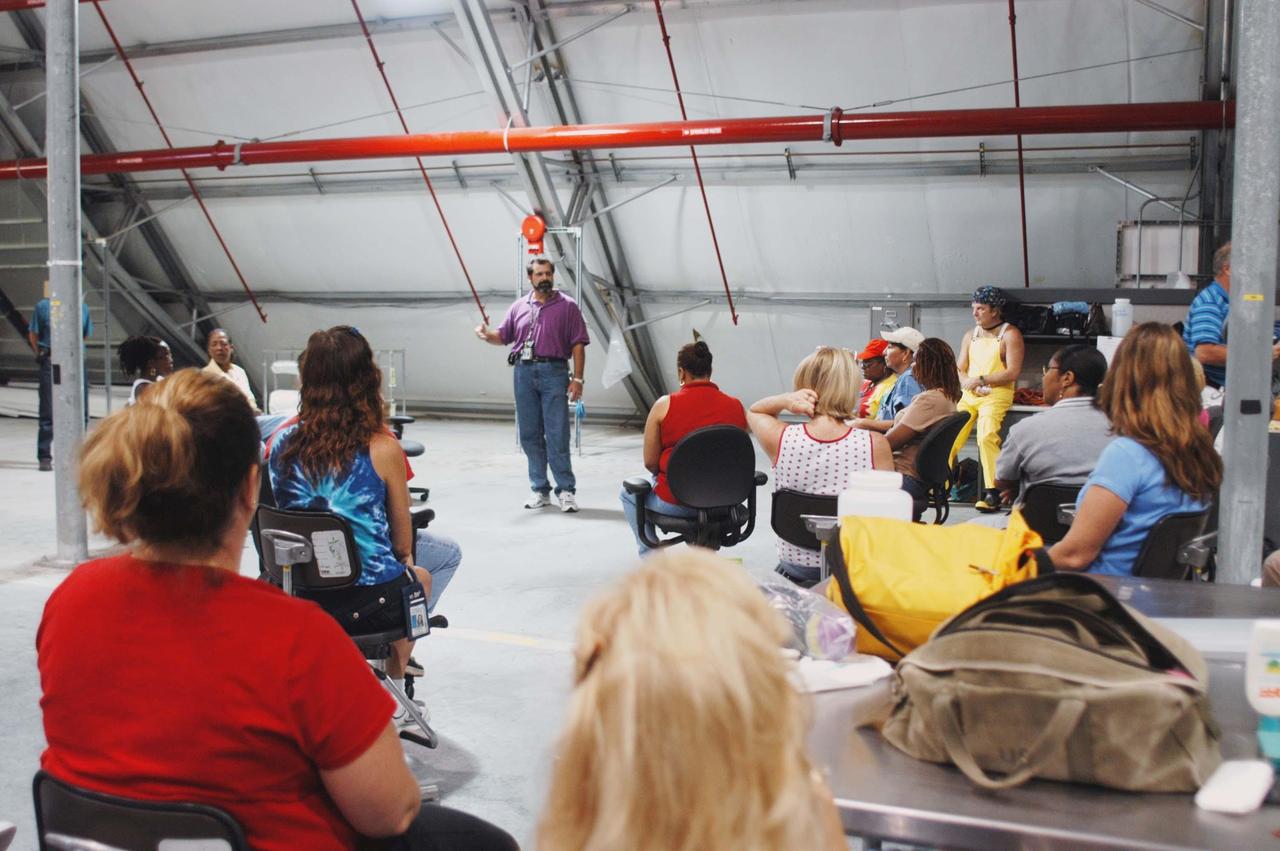
KENNEDY SPACE CENTER, FLA. - In the RLV hangar at KSC, Steve Harrington talks to workers about the equipment removed from the hurricane-ravaged Thermal Protection System Facility (TPSF) now being stored in the hangar. The facility, which creates the TPS tiles, blankets and all the internal thermal control systems for the Space Shuttles, is almost totally unserviceable at this time after losing approximately 35 percent of its roof due to Hurricane Frances, which blew across Central Florida Sept. 4-5. The maximum wind at the surface from Hurricane Frances was 94 mph from the northeast at 6:40 a.m. on Sunday, September 5. It was recorded at a weather tower located on the east shore of the Mosquito Lagoon near the Cape Canaveral National Seashore. The highest sustained wind at KSC was 68 mph.
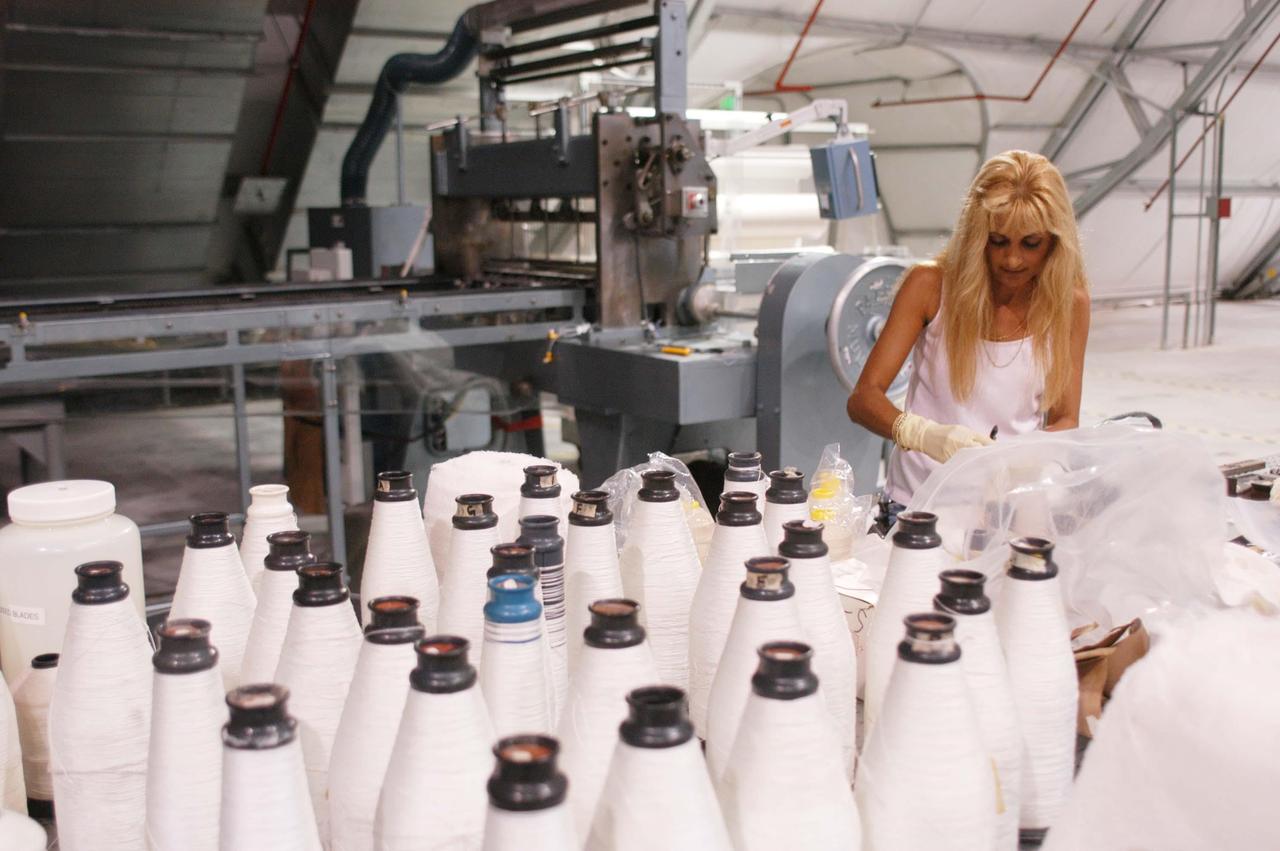
KENNEDY SPACE CENTER, FLA. - A temporary tile shop has been set up in the RLV hangar at KSC after equipment was removed from the hurricane-ravaged Thermal Protection System Facility (TPSF). Here United Space Alliance worker Bab Jarosz works with the 30-needle sewing machines. The TPSF, which creates the TPS tiles, blankets and all the internal thermal control systems for the Space Shuttles, is almost totally unserviceable at this time after losing approximately 35 percent of its roof due to Hurricane Frances, which blew across Central Florida Sept. 4-5. The maximum wind at the surface from Hurricane Frances was 94 mph from the northeast at 6:40 a.m. on Sunday, September 5. It was recorded at a weather tower located on the east shore of the Mosquito Lagoon near the Cape Canaveral National Seashore. The highest sustained wind at KSC was 68 mph.
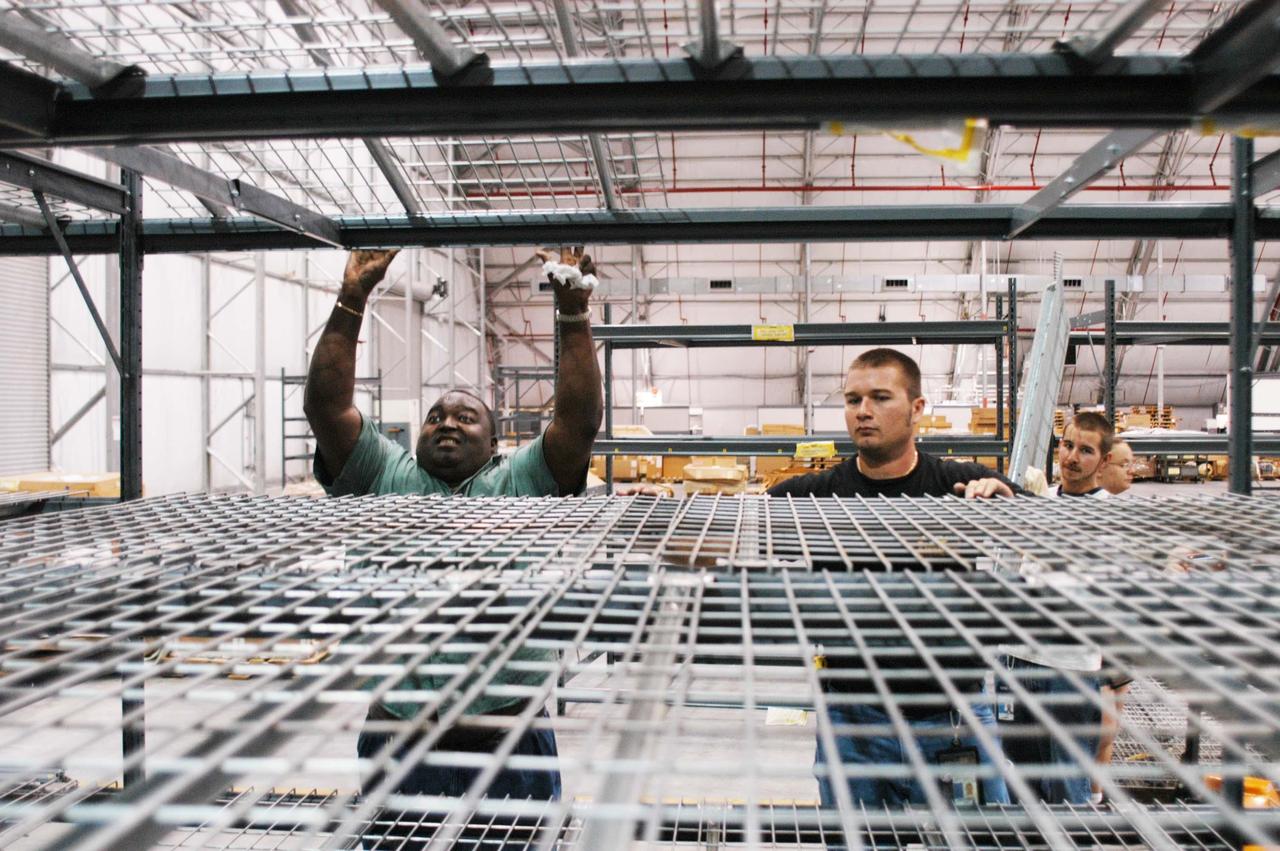
KENNEDY SPACE CENTER, FLA. - In the RLV hangar at KSC, United Space Alliance workers Matt Carter (left) and Mike Sherman set up racks to hold equipment removed from the hurricane-ravaged Thermal Protection System Facility (TPSF). The facility, which creates the TPS tiles, blankets and all the internal thermal control systems for the Space Shuttles, is almost totally unserviceable at this time after losing approximately 35 percent of its roof due to Hurricane Frances, which blew across Central Florida Sept. 4-5. The maximum wind at the surface from Hurricane Frances was 94 mph from the northeast at 6:40 a.m. on Sunday, September 5. It was recorded at a weather tower located on the east shore of the Mosquito Lagoon near the Cape Canaveral National Seashore. The highest sustained wind at KSC was 68 mph.
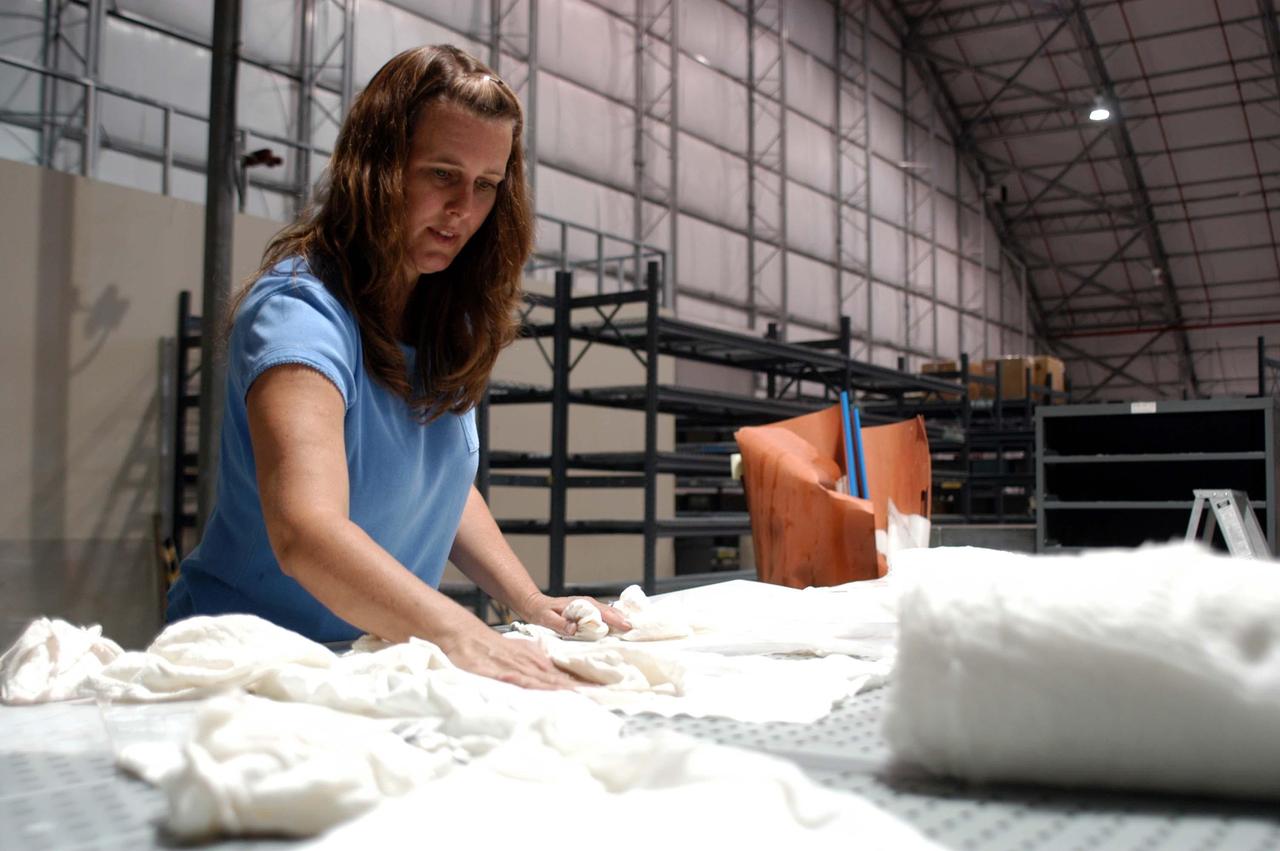
KENNEDY SPACE CENTER, FLA. - In the RLV hangar at KSC, Terri McCall cleans up equipment removed from the hurricane-ravaged Thermal Protection System Facility (TPSF). The facility, which creates the TPS tiles, blankets and all the internal thermal control systems for the Space Shuttles, is almost totally unserviceable at this time after losing approximately 35 percent of its roof due to Hurricane Frances, which blew across Central Florida Sept. 4-5. The maximum wind at the surface from Hurricane Frances was 94 mph from the northeast at 6:40 a.m. on Sunday, September 5. It was recorded at a weather tower located on the east shore of the Mosquito Lagoon near the Cape Canaveral National Seashore. The highest sustained wind at KSC was 68 mph.
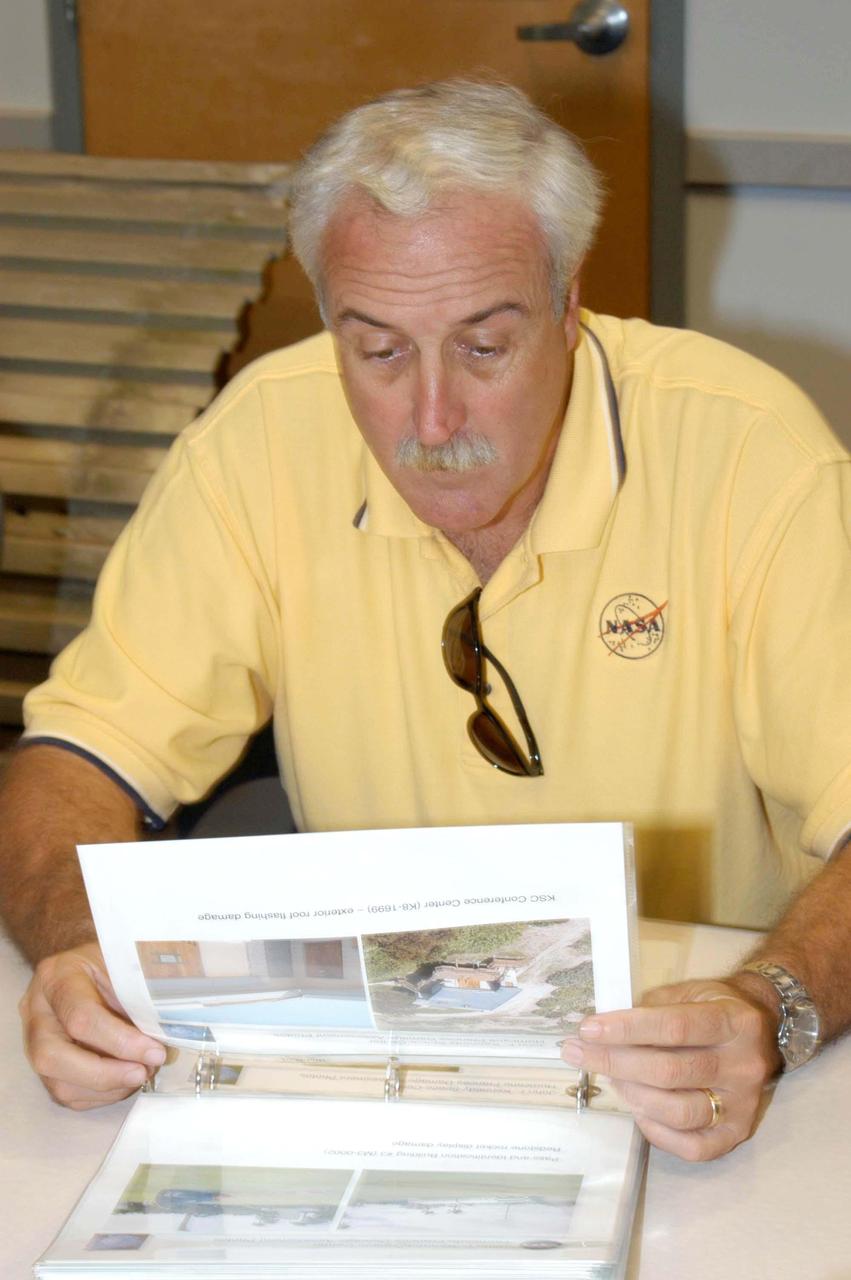
KENNEDY SPACE CENTER, FLA. - NASA Administrator Sean O’Keefe looks at images of damaged KSC facilities in the RLV Hangar before surveying the damage sustained by KSC facilities from Hurricane Frances over Labor Day weekend. The Vehicle Assembly Building, Thermal Protection System Facility, and Processing Control Center all received significant damage from the storm. Additionally, the Operations and Checkout Building, Vertical Processing Facility, Hangar AE, Hangar S and Hangar AF Small Parts Facility each received substantial damage. NASA’s three Space Shuttle orbiters -- Discovery, Atlantis and Endeavour - along with the Shuttle launch pads, all of the critical flight hardware for the orbiters and the International Space Station, and NASA’s Swift spacecraft, awaiting launch in October, were well protected and unharmed.
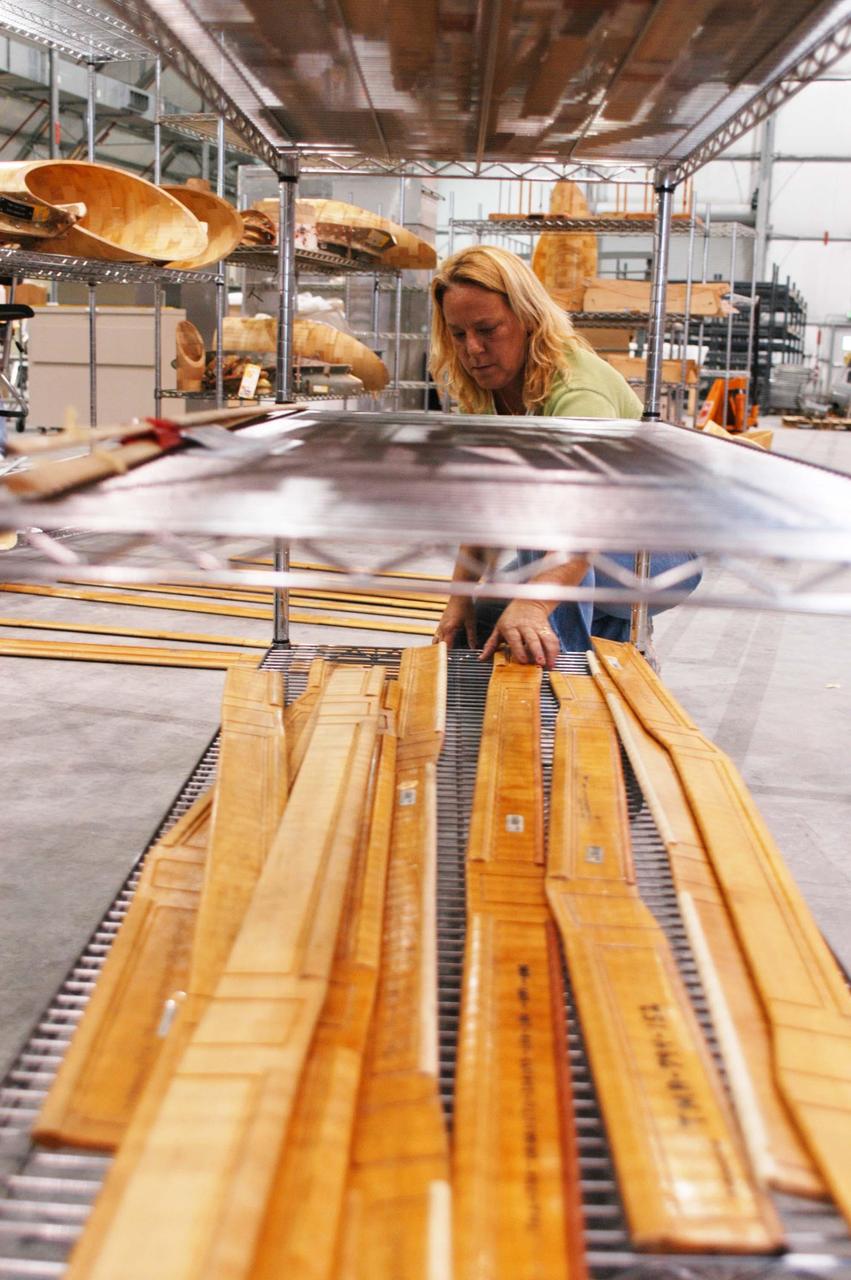
KENNEDY SPACE CENTER, FLA. - United Space Alliance worker Janet Mills works on equipment in the temporary tile shop set up in the RLV hangar at KSC. The hurricane-ravaged Thermal Protection System Facility (TPSF), which creates the TPS tiles, blankets and all the internal thermal control systems for the Space Shuttles, is almost totally unserviceable at this time after losing approximately 35 percent of its roof due to Hurricane Frances, which blew across Central Florida Sept. 4-5. Undamaged equipment was removed from the TPSF and stored in the hangar. The maximum wind at the surface from Hurricane Frances was 94 mph from the northeast at 6:40 a.m. on Sunday, September 5. It was recorded at a weather tower located on the east shore of the Mosquito Lagoon near the Cape Canaveral National Seashore. The highest sustained wind at KSC was 68 mph.
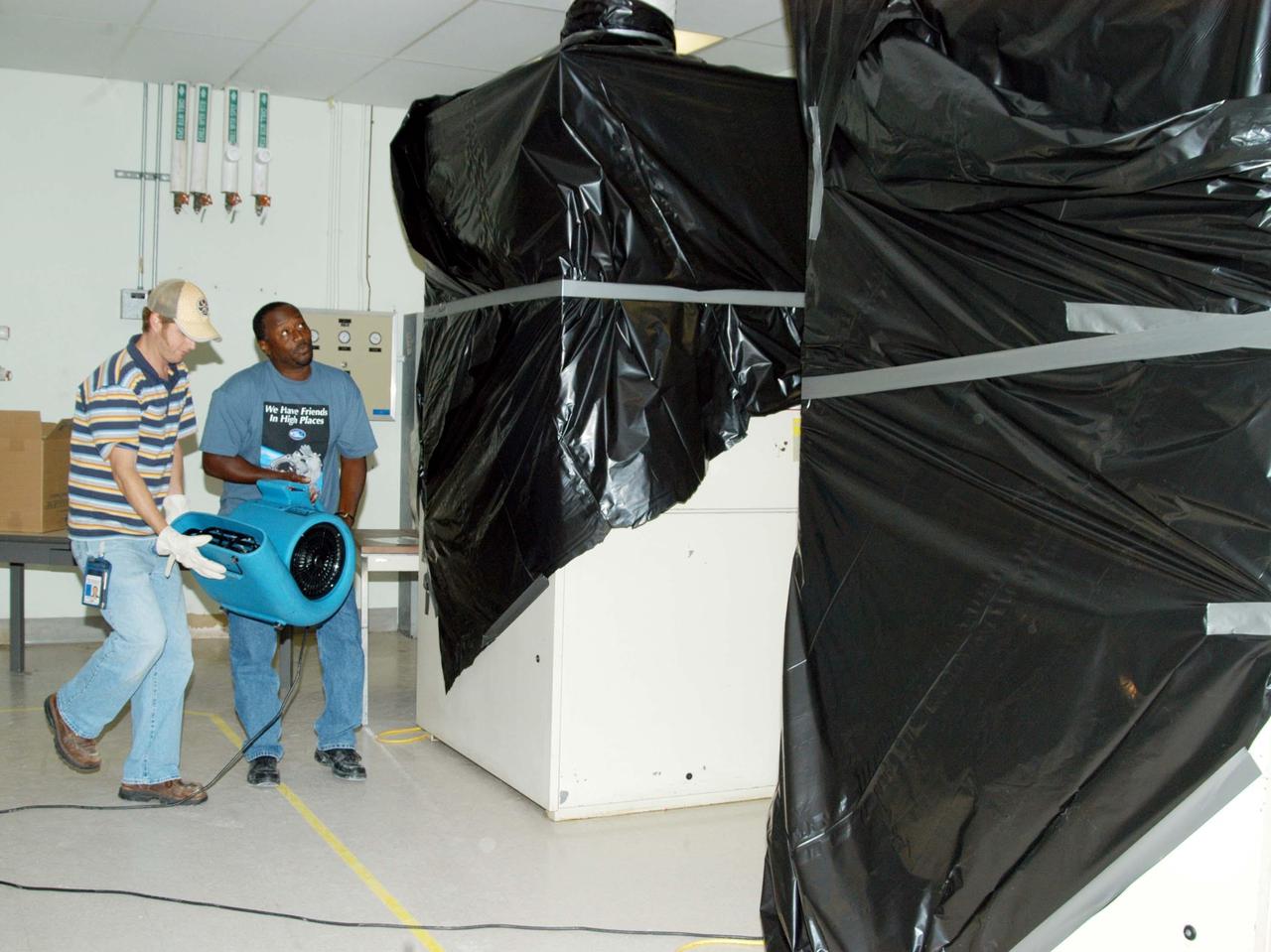
KENNEDY SPACE CENTER, FLA. - United Space Alliance workers Dallas Lewis (left) and Damon Petty carry out equipment from the Thermal Protection System Facility (TPSF). The TPSF, which creates the TPS tiles, blankets and all the internal thermal control systems for the Space Shuttles, is almost totally unserviceable at this time after losing approximately 35 percent of its roof due to Hurricane Frances, which blew across Central Florida Sept. 4-5. Undamaged equipment is being moved to the RLV hangar at KSC. The maximum wind at the surface from Hurricane Frances was 94 mph from the northeast at 6:40 a.m. on Sunday, September 5. It was recorded at a weather tower located on the east shore of the Mosquito Lagoon near the Cape Canaveral National Seashore. The highest sustained wind at KSC was 68 mph.
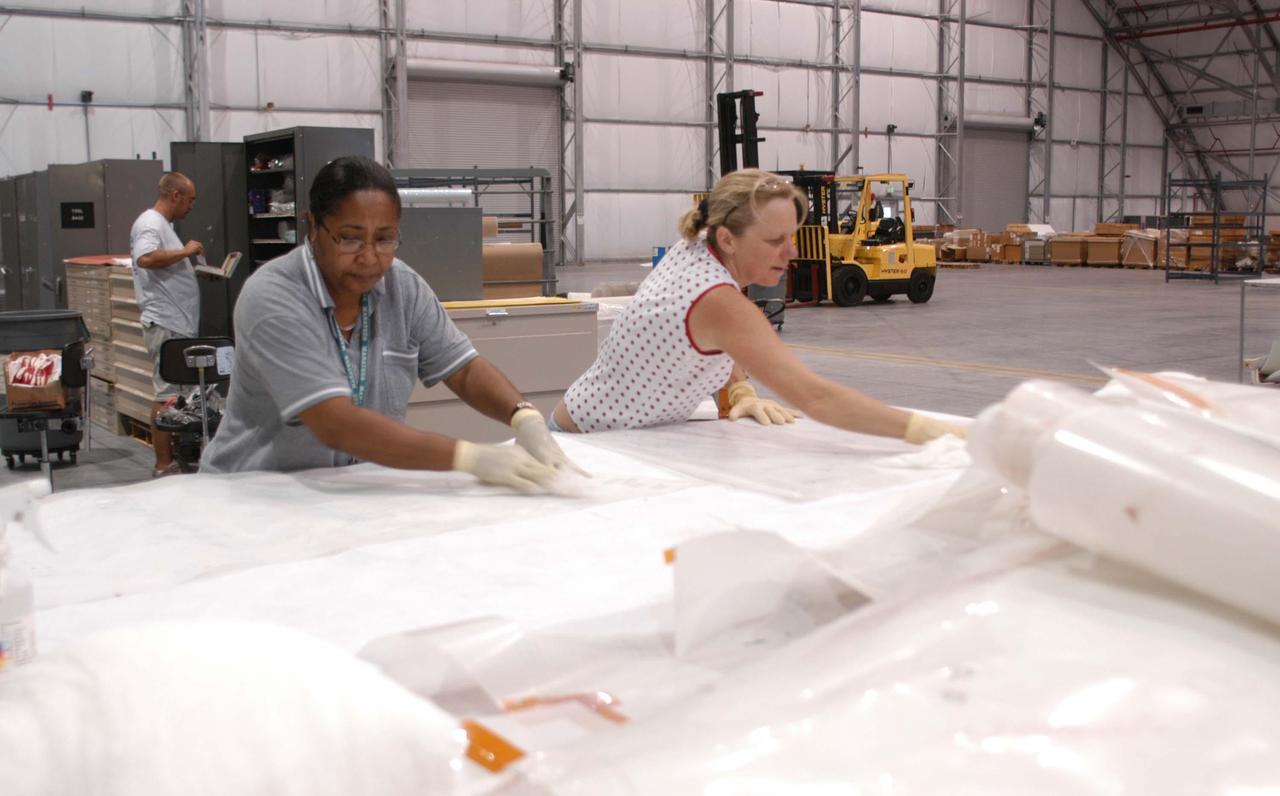
KENNEDY SPACE CENTER, FLA. - In the RLV hangar at KSC, United Space Alliance workers Beth Smith (left) and Theresa Haygood unwrap equipment removed from the hurricane-ravaged Thermal Protection System Facility (TPSF). The facility, which creates the TPS tiles, blankets and all the internal thermal control systems for the Space Shuttles, is almost totally unserviceable at this time after losing approximately 35 percent of its roof due to Hurricane Frances, which blew across Central Florida Sept. 4-5. The maximum wind at the surface from Hurricane Frances was 94 mph from the northeast at 6:40 a.m. on Sunday, September 5. It was recorded at a weather tower located on the east shore of the Mosquito Lagoon near the Cape Canaveral National Seashore. The highest sustained wind at KSC was 68 mph.
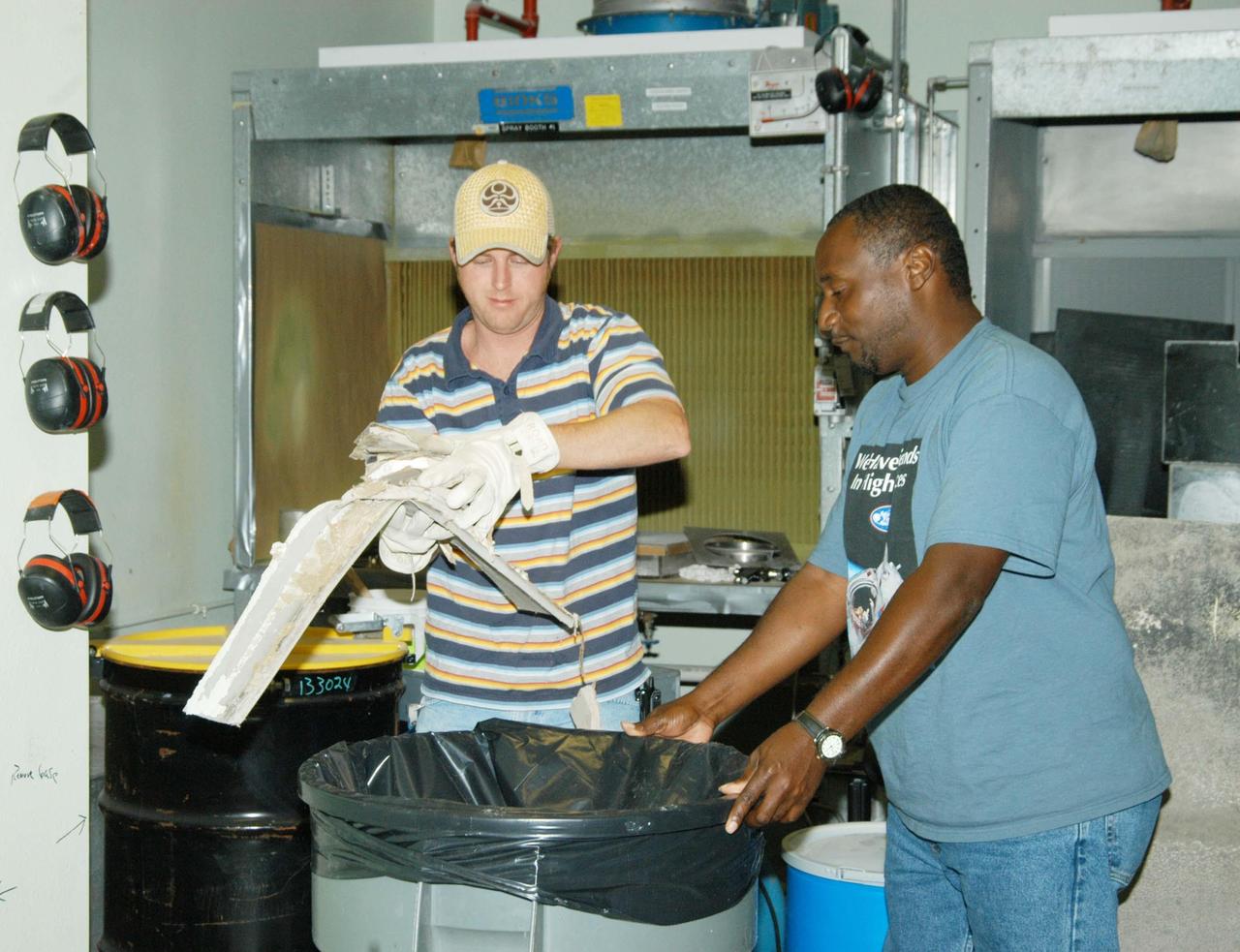
KENNEDY SPACE CENTER, FLA. - United Space Alliance workers Dallas Lewis (left) and Damon Petty clean up hurricane debris inside the Thermal Protection System Facility (TPSF). Much of the roof was torn off by Hurricane Frances as it passed over Central Florida during the Labor Day weekend. Undamaged equipment has been moved to the RLV hangar at KSC. The TPSF, which creates the TPS tiles, blankets and all the internal thermal control systems for the Space Shuttles, is almost totally unserviceable at this time after losing approximately 35 percent of its roof. The maximum wind at the surface from Hurricane Frances was 94 mph from the northeast at 6:40 a.m. on Sunday, September 5. It was recorded at a weather tower located on the east shore of the Mosquito Lagoon near the Cape Canaveral National Seashore. The highest sustained wind at KSC was 68 mph.
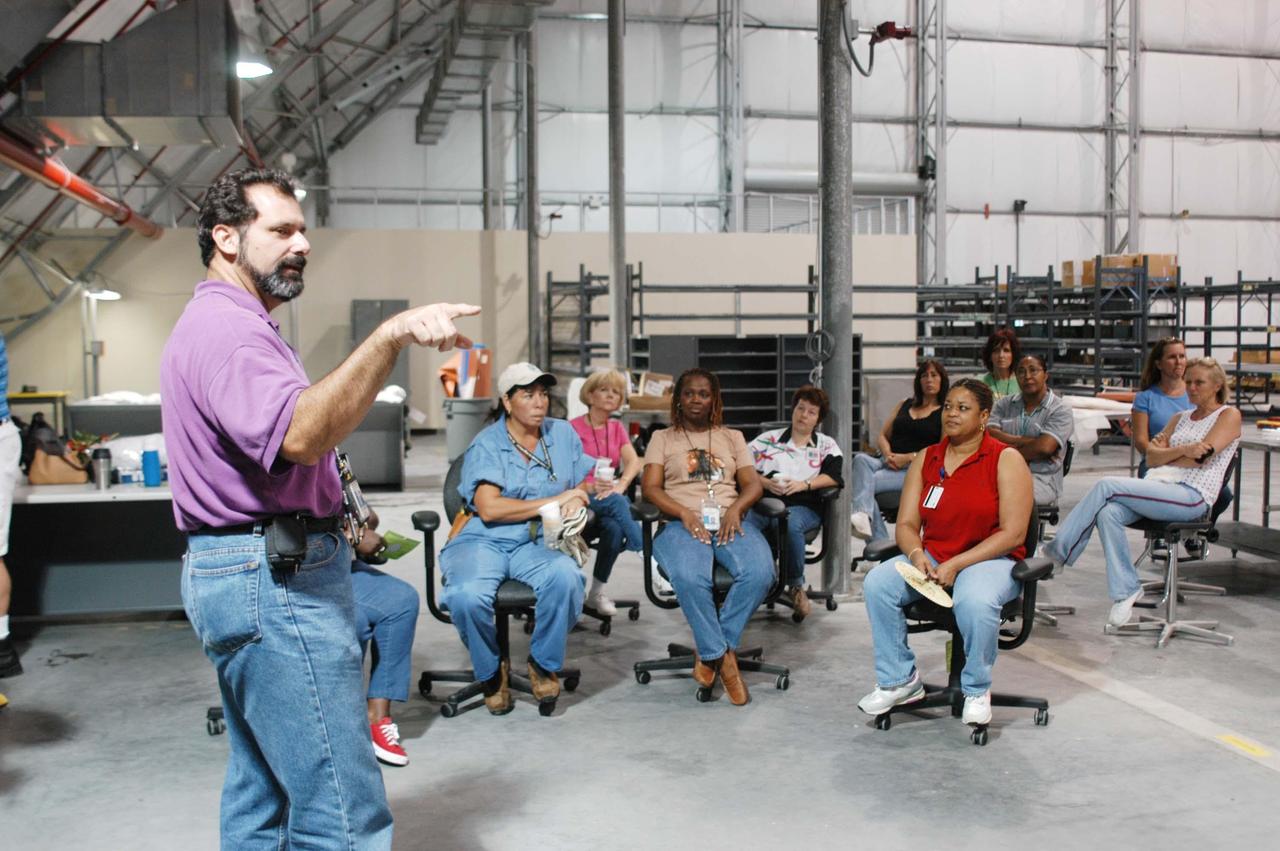
KENNEDY SPACE CENTER, FLA. - In the RLV hangar at KSC, Steve Harrington talks to workers about the equipment removed from the hurricane-ravaged Thermal Protection System Facility (TPSF) now being stored in the hangar. The facility, which creates the TPS tiles, blankets and all the internal thermal control systems for the Space Shuttles, is almost totally unserviceable at this time after losing approximately 35 percent of its roof due to Hurricane Frances, which blew across Central Florida Sept. 4-5. The maximum wind at the surface from Hurricane Frances was 94 mph from the northeast at 6:40 a.m. on Sunday, September 5. It was recorded at a weather tower located on the east shore of the Mosquito Lagoon near the Cape Canaveral National Seashore. The highest sustained wind at KSC was 68 mph.
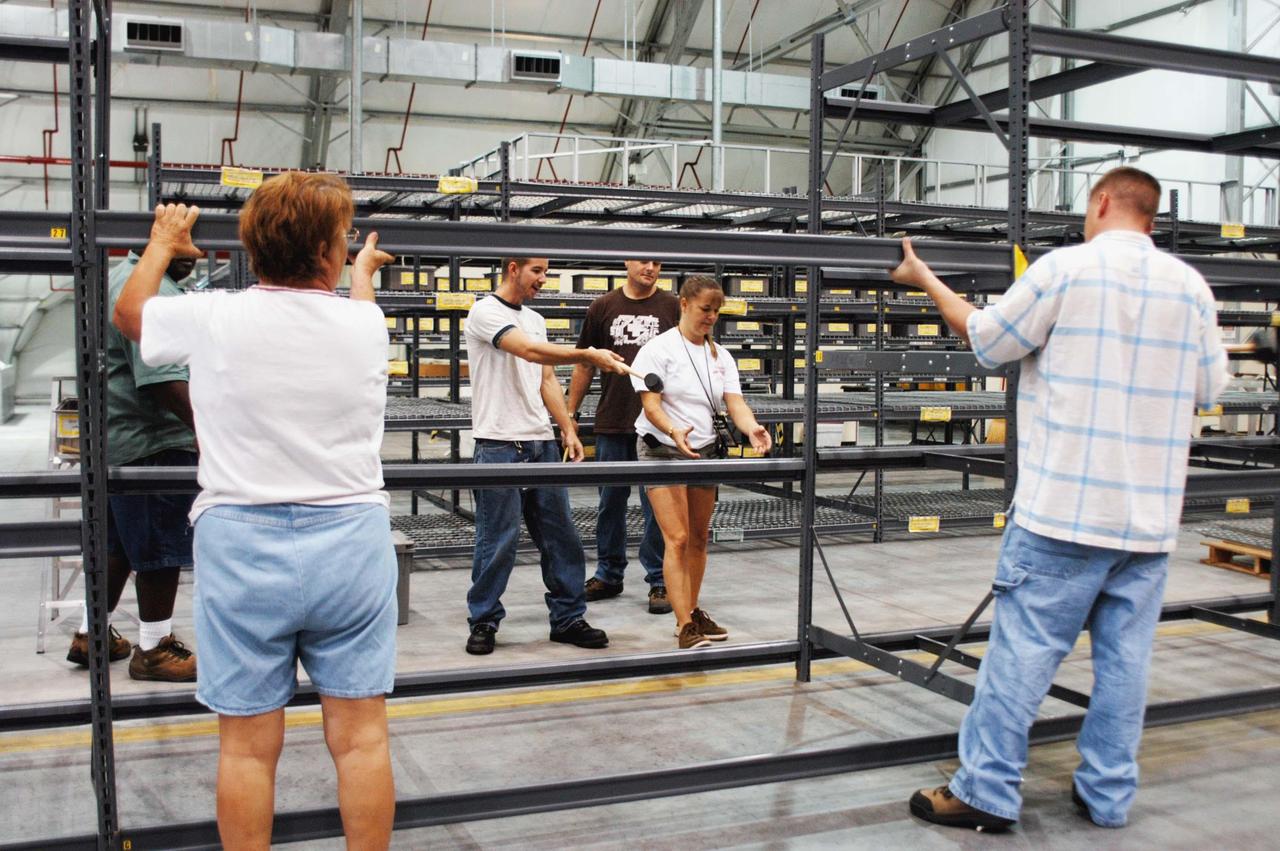
KENNEDY SPACE CENTER, FLA. - In the RLV hangar at KSC, United Space Alliance workers set up shelves for equipment removed from the hurricane-ravaged Thermal Protection System Facility (TPSF) and now being stored in the hangar. The facility, which creates the TPS tiles, blankets and all the internal thermal control systems for the Space Shuttles, is almost totally unserviceable at this time after losing approximately 35 percent of its roof due to Hurricane Frances, which blew across Central Florida Sept. 4-5. The maximum wind at the surface from Hurricane Frances was 94 mph from the northeast at 6:40 a.m. on Sunday, September 5. It was recorded at a weather tower located on the east shore of the Mosquito Lagoon near the Cape Canaveral National Seashore. The highest sustained wind at KSC was 68 mph.
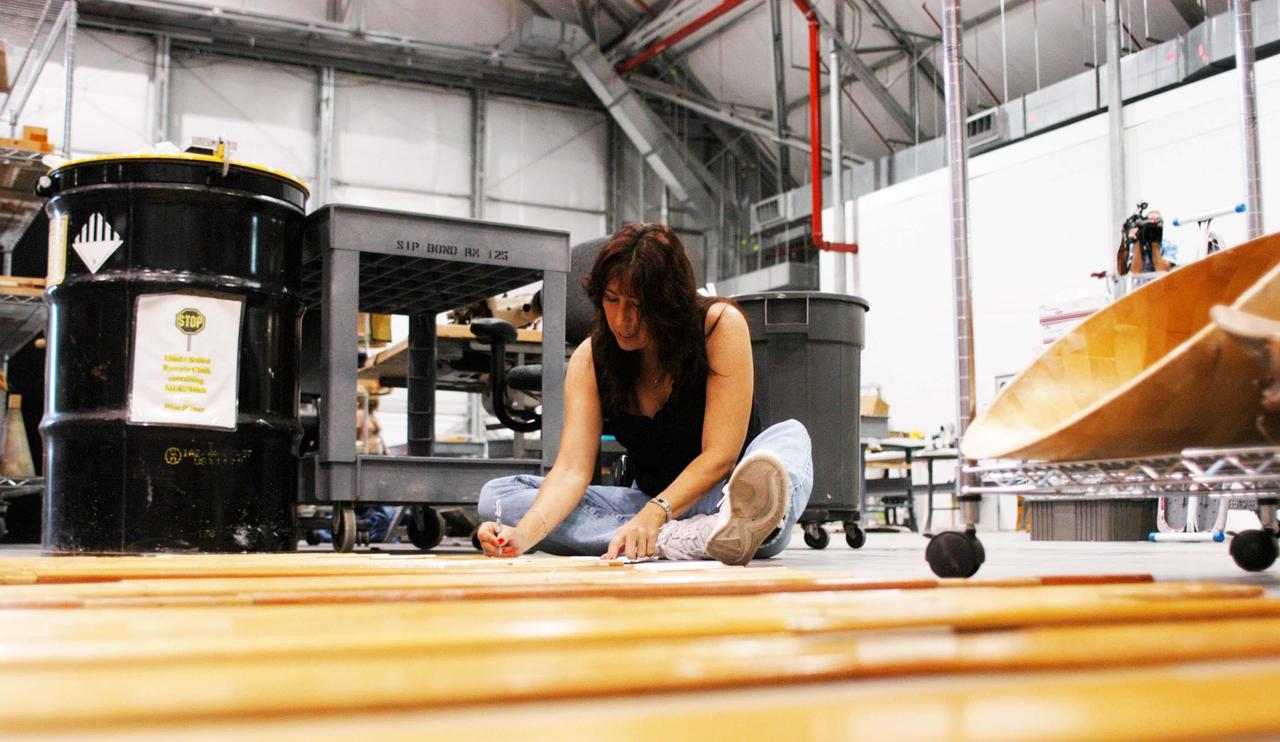
KENNEDY SPACE CENTER, FLA. - United Space Alliance worker Kathy Evans works on equipment in the temporary tile shop set up in the RLV hangar at KSC. The hurricane-ravaged Thermal Protection System Facility (TPSF), which creates the TPS tiles, blankets and all the internal thermal control systems for the Space Shuttles, is almost totally unserviceable at this time after losing approximately 35 percent of its roof due to Hurricane Frances, which blew across Central Florida Sept. 4-5. Undamaged equipment was removed from the TPSF and stored in the hangar. The maximum wind at the surface from Hurricane Frances was 94 mph from the northeast at 6:40 a.m. on Sunday, September 5. It was recorded at a weather tower located on the east shore of the Mosquito Lagoon near the Cape Canaveral National Seashore. The highest sustained wind at KSC was 68 mph.
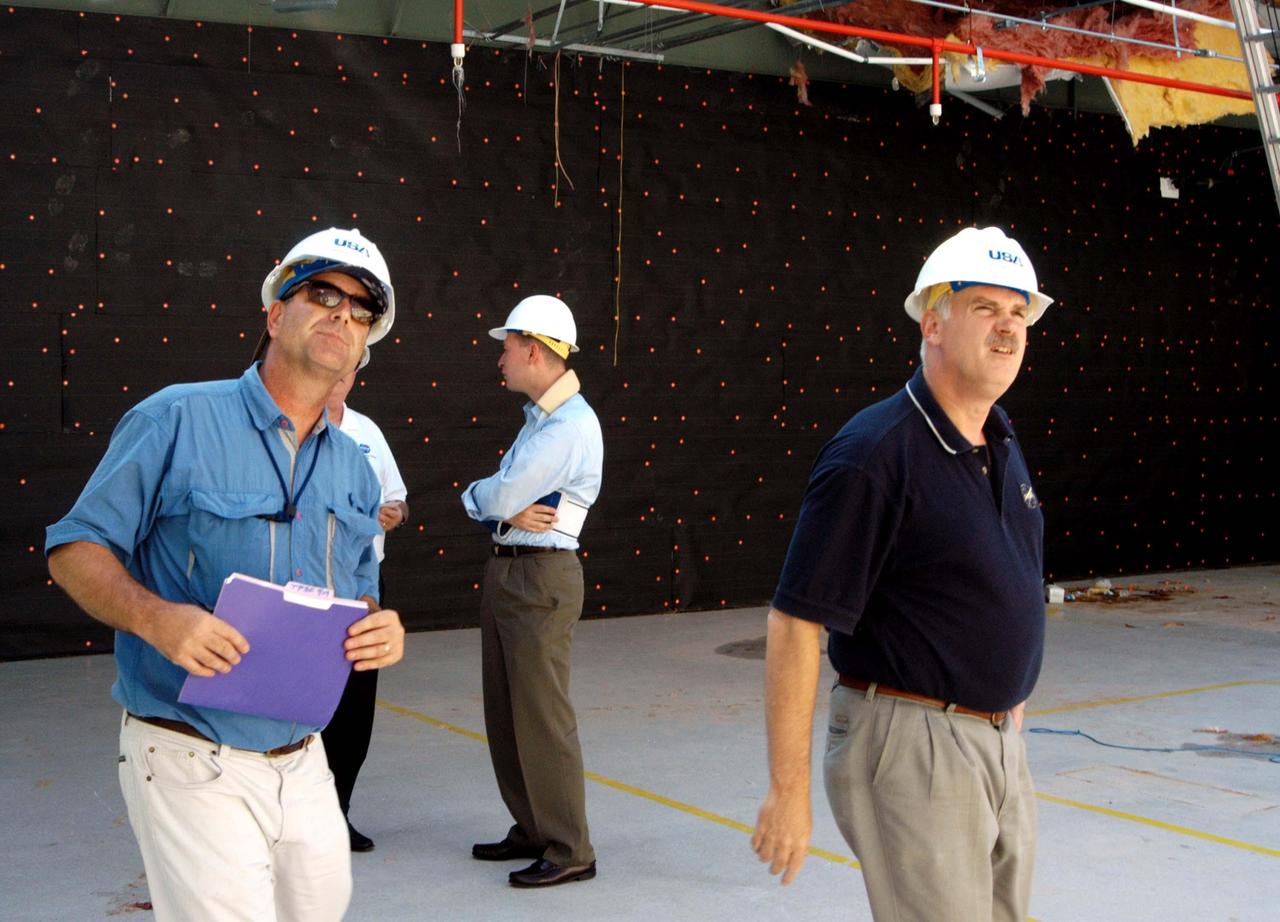
KENNEDY SPACE CENTER, FLA. - Looking at damage inside the hurricane-ravaged Thermal Protection System Facility are KSC Director of Spaceport Services Scott Kerr (left) and NASA Associate Administrator of Space Operations Mission Directorate William Readdy (right). The TPSF, which creates the TPS tiles, blankets and all the internal thermal control systems for the Space Shuttles, is almost totally unserviceable at this time after losing approximately 35 percent of its roof during Hurricane Frances, which blew across Central Florida Sept. 4-5. Readdy and NASA Administrator Sean O’Keefe are visiting KSC to survey the damage sustained by KSC facilities from the hurricane. The Labor Day storm also caused significant damage to the Vehicle Assembly Building and Processing Control Center. Additionally, the Operations and Checkout Building, Vertical Processing Facility, Hangar AE, Hangar S and Hangar AF Small Parts Facility each received substantial damage. However, well-protected and unharmed were NASA’s three Space Shuttle orbiters - Discovery, Atlantis and Endeavour - along with the Shuttle launch pads, all of the critical flight hardware for the orbiters and the International Space Station, and NASA’s Swift spacecraft that is awaiting launch in October.
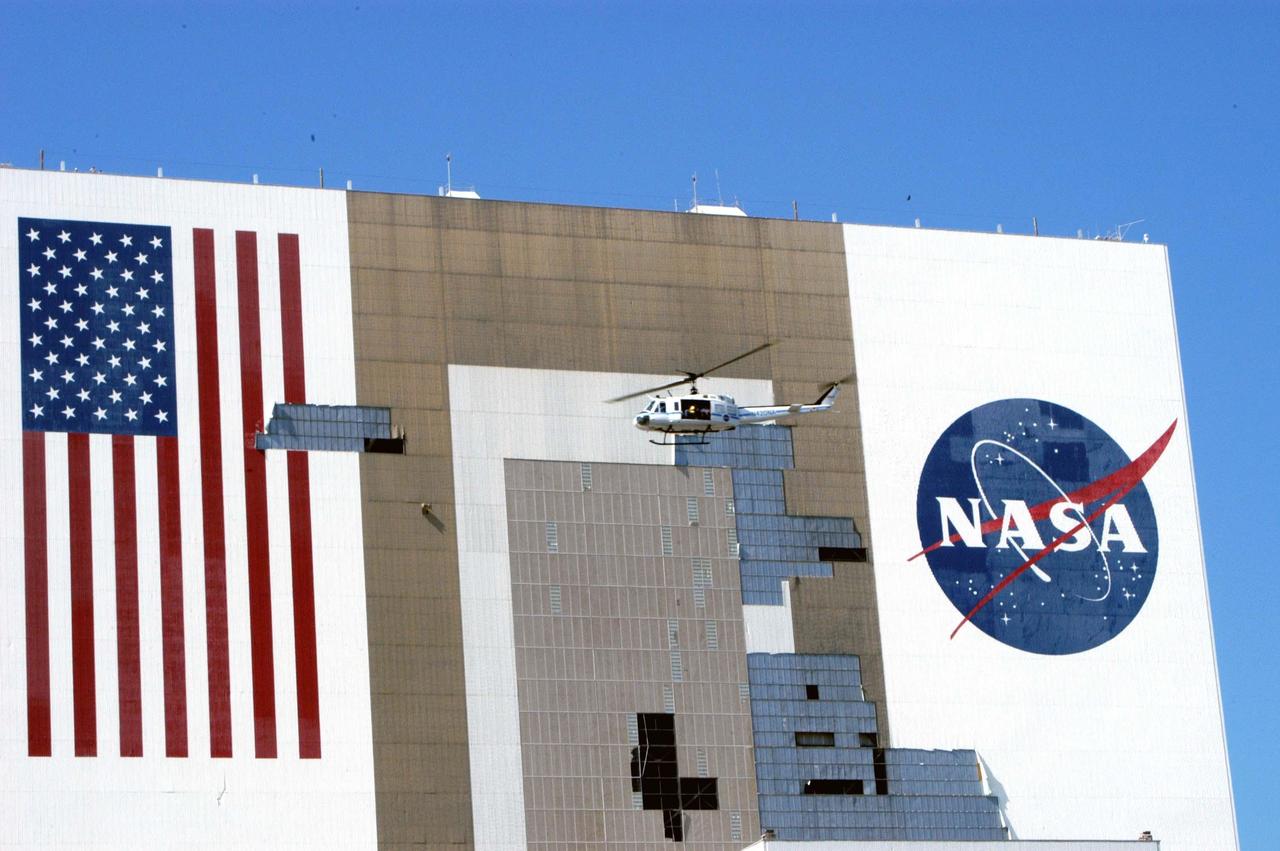
KENNEDY SPACE CENTER, FLA. - The helicopter carrying NASA Administrator Sean O’Keefe and KSC Director of Spaceport Services Scott Kerr passes by the Vehicle Assembly Building (VAB) to observe the damage inflicted by Hurricane Frances over the Labor Day weekend. The VAB lost approximately 850 tiles on the south wall, seen here. O’Keefe and NASA Associate Administrator of Space Operations Mission Directorate William Readdy are visiting KSC to survey the damage sustained by KSC facilities from the hurricane. The storm also caused significant damage to the Thermal Protection System Facility and Processing Control Center. Additionally, the Operations and Checkout Building, Vertical Processing Facility, Hangar AE, Hangar S and Hangar AF Small Parts Facility each received substantial damage. However, well-protected and unharmed were NASA’s three Space Shuttle orbiters -- Discovery, Atlantis and Endeavour - along with the Shuttle launch pads, all of the critical flight hardware for the orbiters and the International Space Station, and NASA’s Swift spacecraft that is awaiting launch in October.
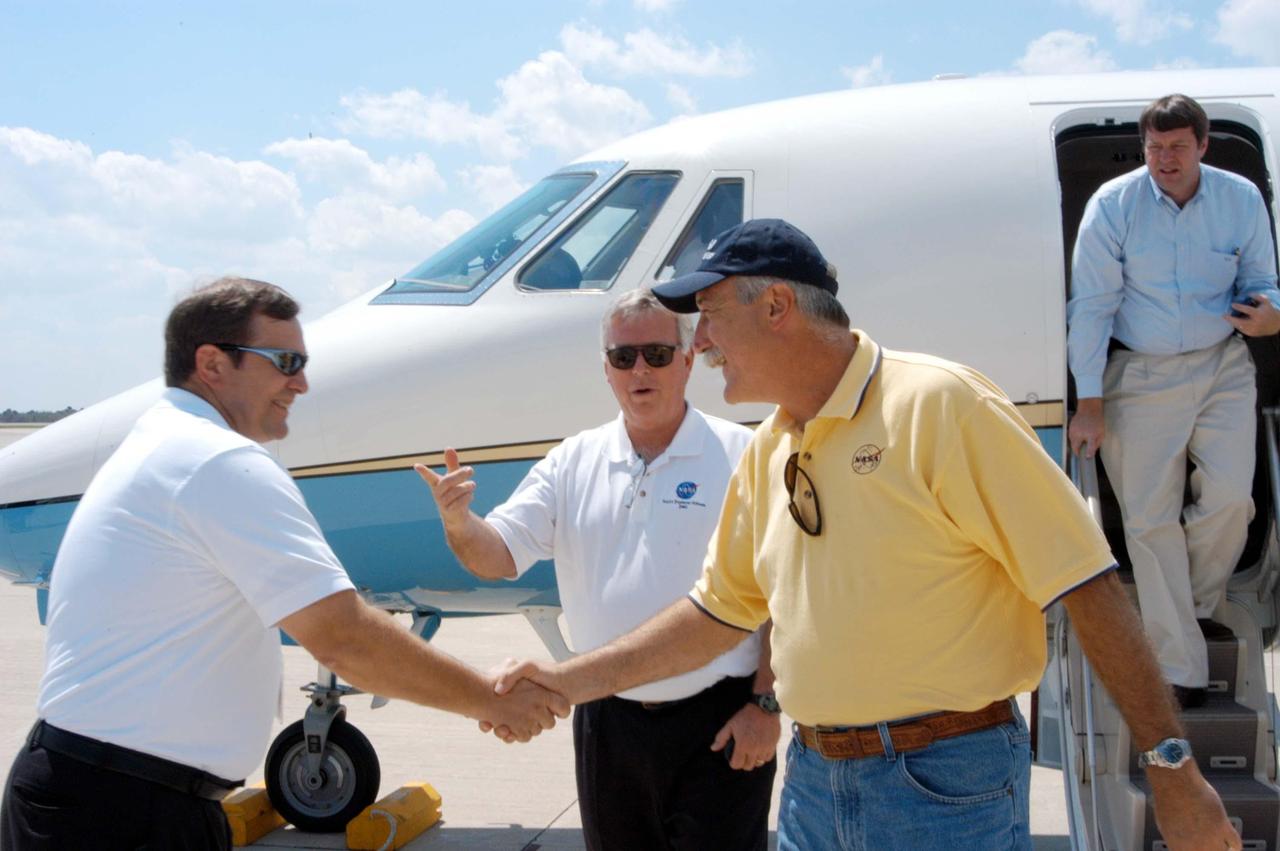
KENNEDY SPACE CENTER, FLA. - KSC Director of Shuttle Processing Michael E. Wetmore (left) greets NASA Administrator Sean O’Keefe upon his arrival at the Shuttle Landing Facility. O’Keefe is visiting KSC to survey the damage sustained by KSC facilities from Hurricane Frances over Labor Day weekend. Center Director Jim Kennedy (center) was also on hand to welcome O’Keefe. The Vehicle Assembly Building, Thermal Protection System Facility, and Processing Control Center all received significant damage from the storm. Additionally, the Operations and Checkout Building, Vertical Processing Facility, Hangar AE, Hangar S and Hangar AF Small Parts Facility each received substantial damage. However, well-protected and unharmed were NASA’s three Space Shuttle orbiters -- Discovery, Atlantis and Endeavour - along with the Shuttle launch pads, all of the critical flight hardware for the orbiters and the International Space Station, and NASA’s Swift spacecraft that is awaiting launch in October.
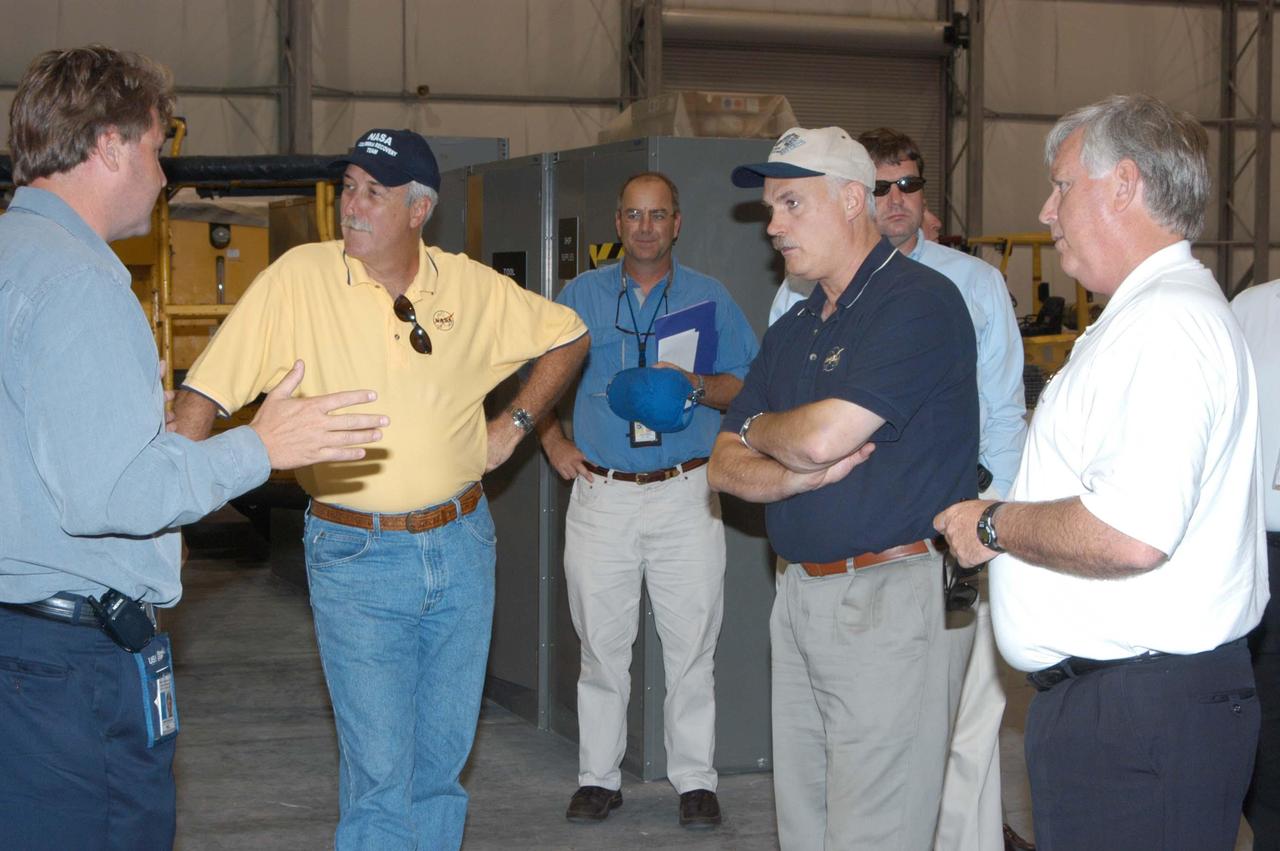
KENNEDY SPACE CENTER, FLA. - From left, Martin Wilson, manager of Thermal Protection System (TPS) operations for United Space Alliance, briefs NASA Administrator Sean O’Keefe, KSC Director of the Spaceport Services Scott Kerr, NASA Associate Administrator of the Space Operations Mission Directorate William Readdy, and Center Director James Kennedy (right) on the temporary tile shop set up in the RLV hangar. O’Keefe and Readdy are visiting KSC to survey the damage sustained by KSC facilities from Hurricane Frances. The Thermal Protection System Facility (TPSF), which creates the TPS tiles, blankets and all the internal thermal control systems for the Space Shuttles, is almost totally unserviceable at this time after losing approximately 35 percent of its roof in the storm, which blew across Central Florida Sept. 4-5. Undamaged equipment was removed from the TPSF and stored in the hangar. NASA’s three Space Shuttle orbiters -- Discovery, Atlantis and Endeavour - along with the Shuttle launch pads, all of the critical flight hardware for the orbiters and the International Space Station, and NASA’s Swift spacecraft, awaiting launch in October, were well protected and unharmed.
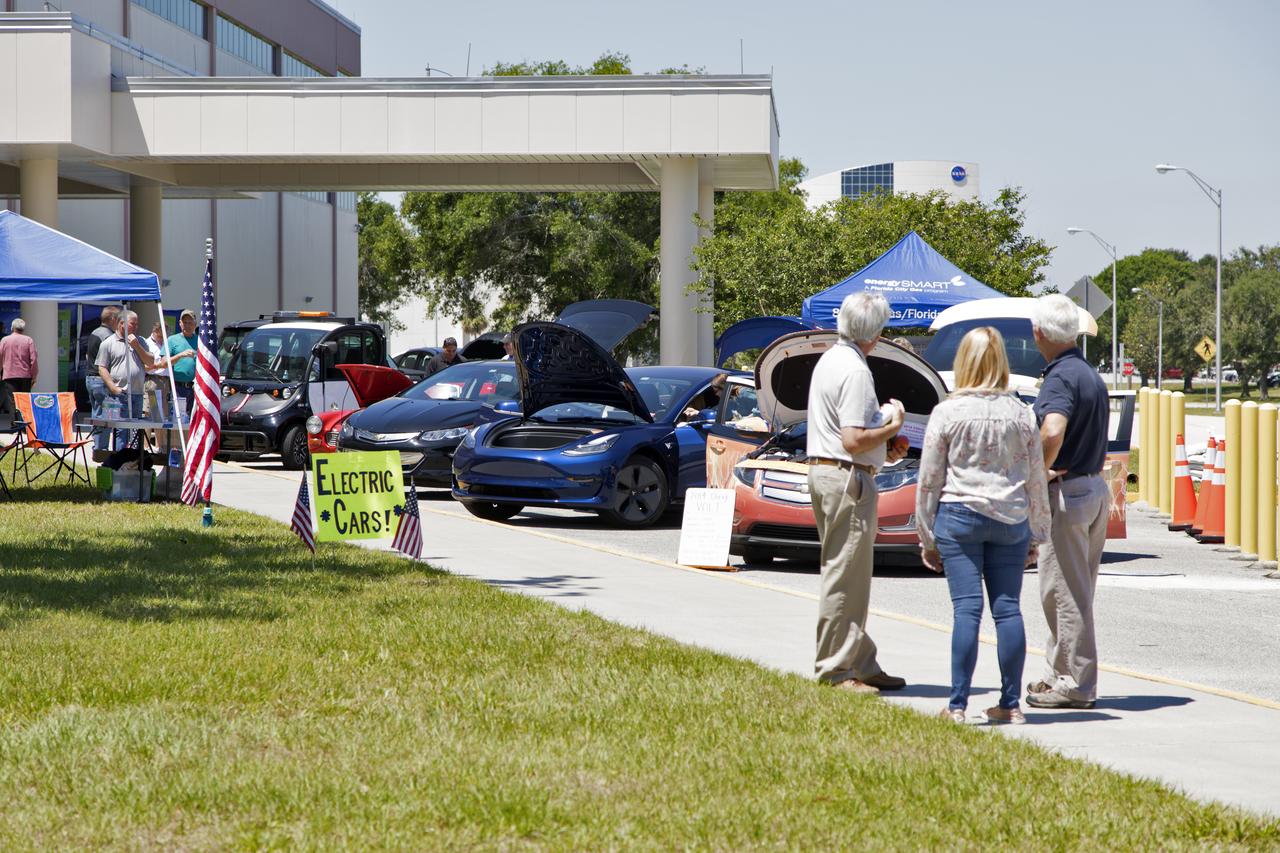
An array of electric vehicles are on display for Kennedy Space Center employees during the center’s annual Earth Day celebration. The two-day event featured approximately 50 exhibitors offering information on a variety of topics, including electric vehicles, sustainable lighting, renewable energy, Florida-friendly landscaping tips, Florida’s biking trails and more.
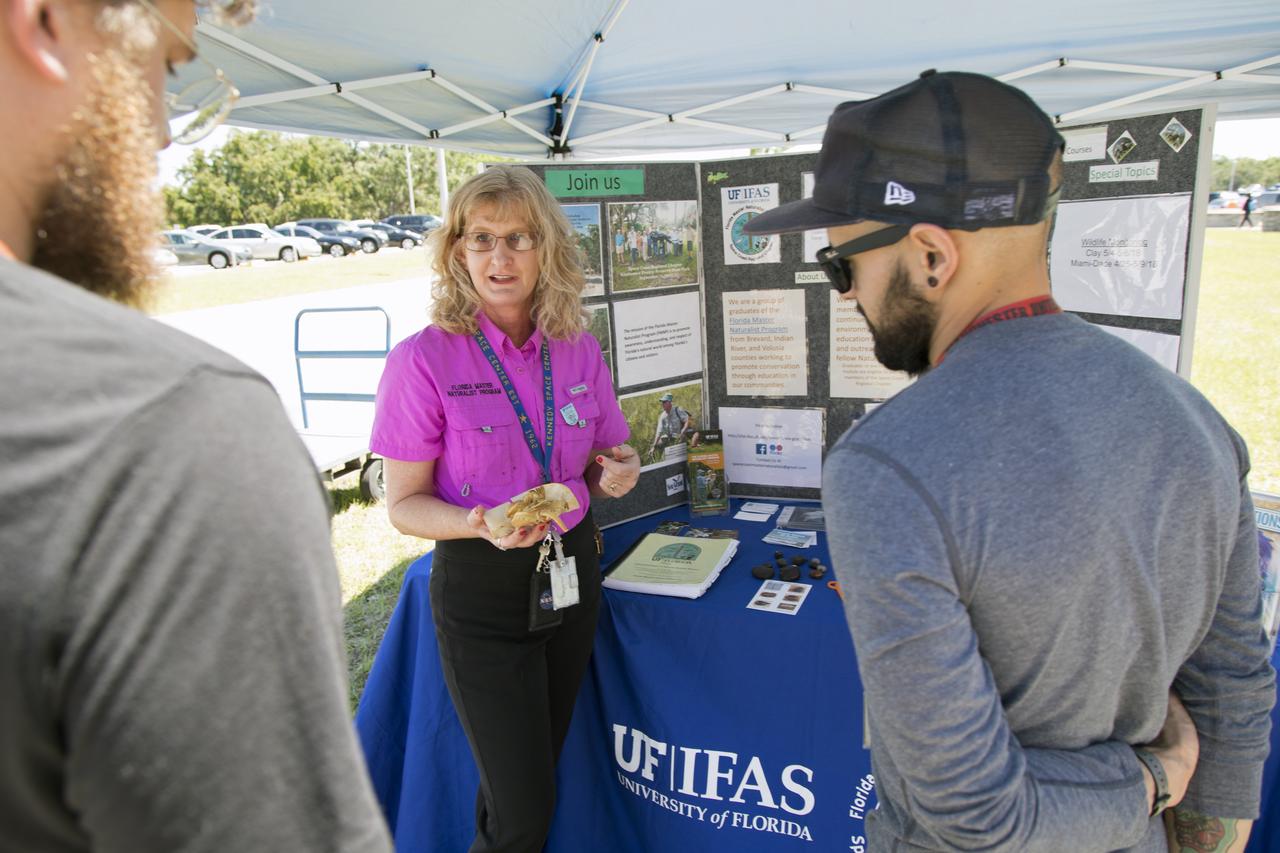
Employees get an up-close look at some Florida marine life during a visit to the University of Florida's Institute of Food and Agricultural Sciences booth at Kennedy Space Center’s annual Earth Day celebration. The two-day event featured approximately 50 exhibitors offering information on a variety of topics, including electric vehicles, sustainable lighting, renewable energy, Florida-friendly landscaping tips, Florida’s biking trails and more.
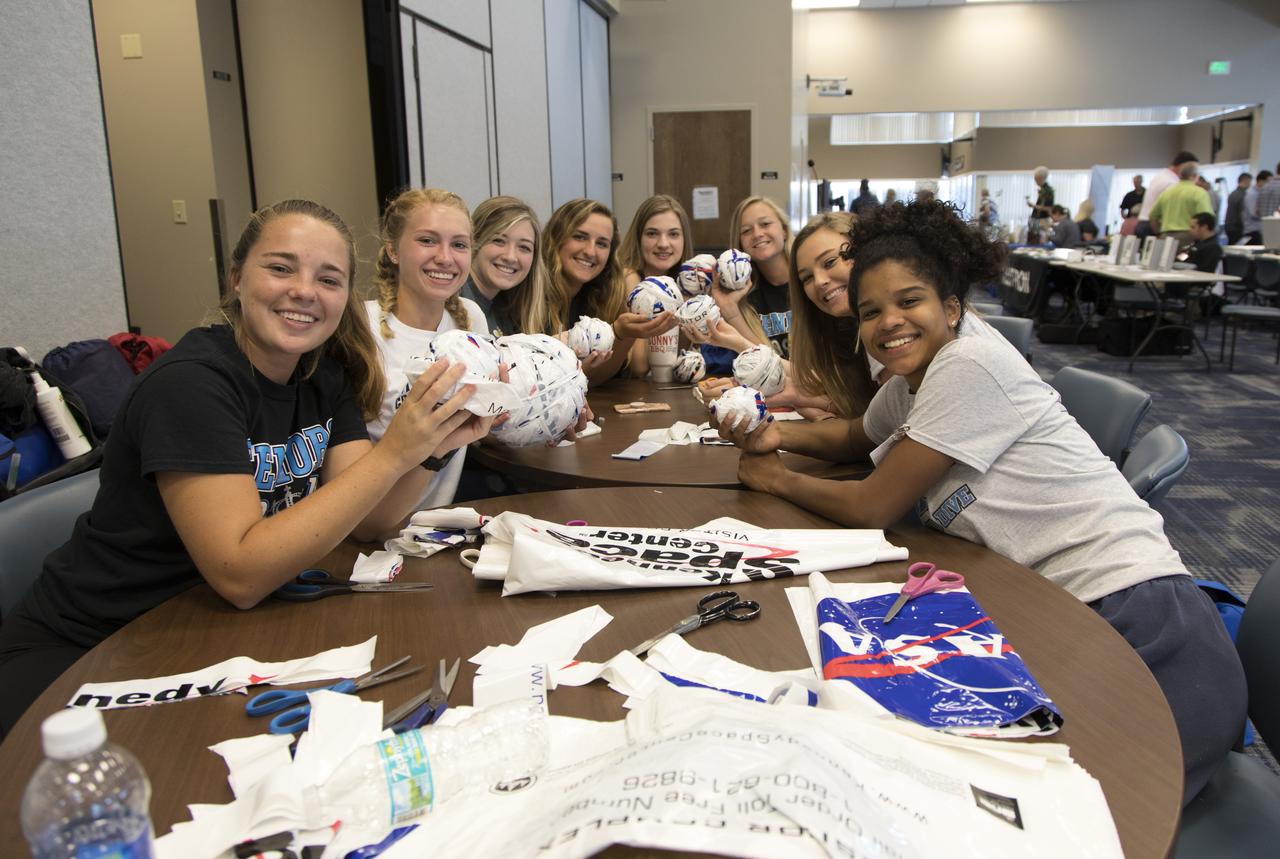
Students from Rockledge High School in Rockledge, Fla., make “plarn” – plastic yarn -- out of used plastic bags during Kennedy Space Center’s annual Earth Day celebration. The plarn was donated to be woven into mats for homeless veterans. The two-day Earth Day event featured approximately 50 exhibitors offering information on a variety of topics, including electric vehicles, sustainable lighting, renewable energy, Florida-friendly landscaping tips, Florida’s biking trails and more.
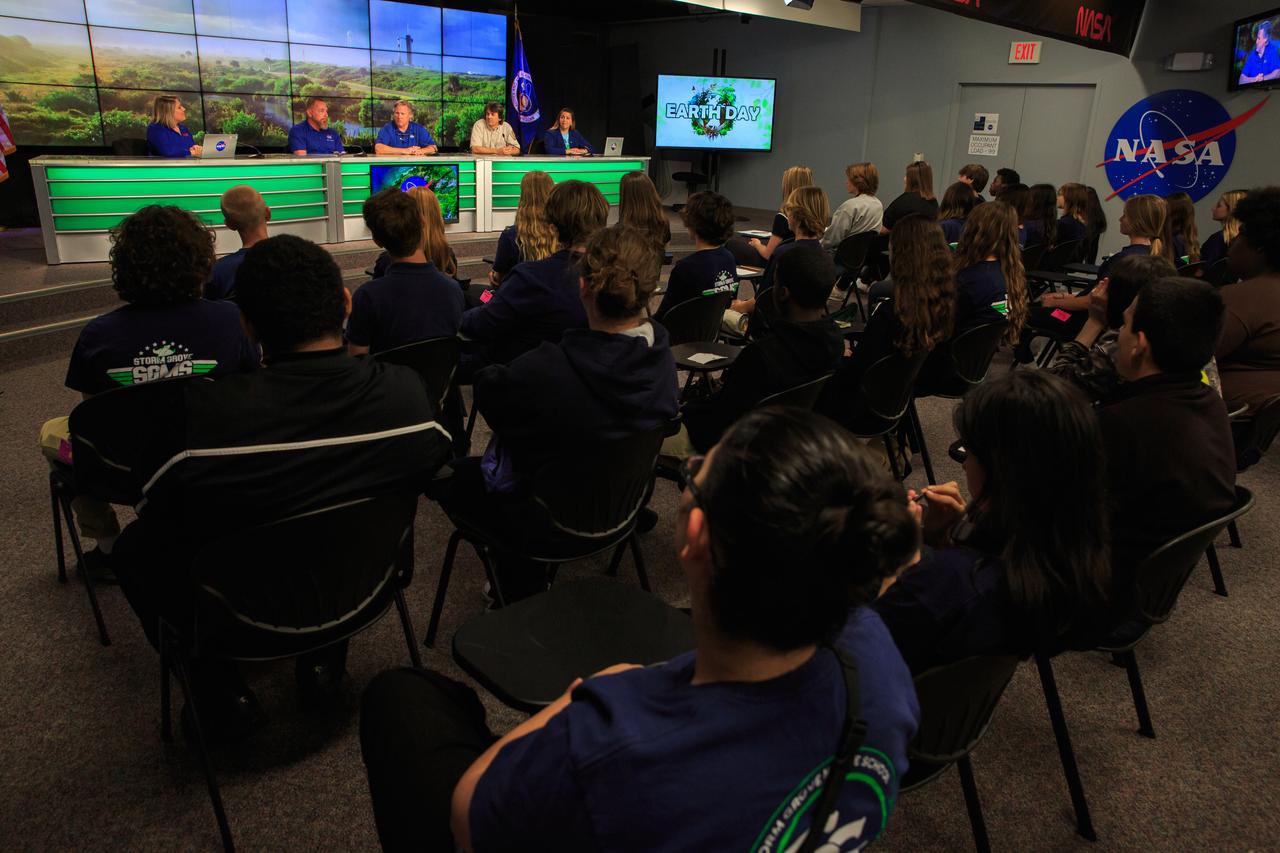
As part of NASA’s NextGen STEM project, students from Florida’s Montverde Academy, Storm Grove Middle School, and Whispering Pines School, as well as a homeschool collective from Georgia, participate in an environmentally focused Earth Day briefing inside the News Auditorium at NASA’s Kennedy Space Center in Florida on April 20, 2023. Along with the students participating in person, middle- and high-school students across the country had the opportunity to ask questions of the panel via phone to discuss how technology and science coexist with nature at Kennedy.
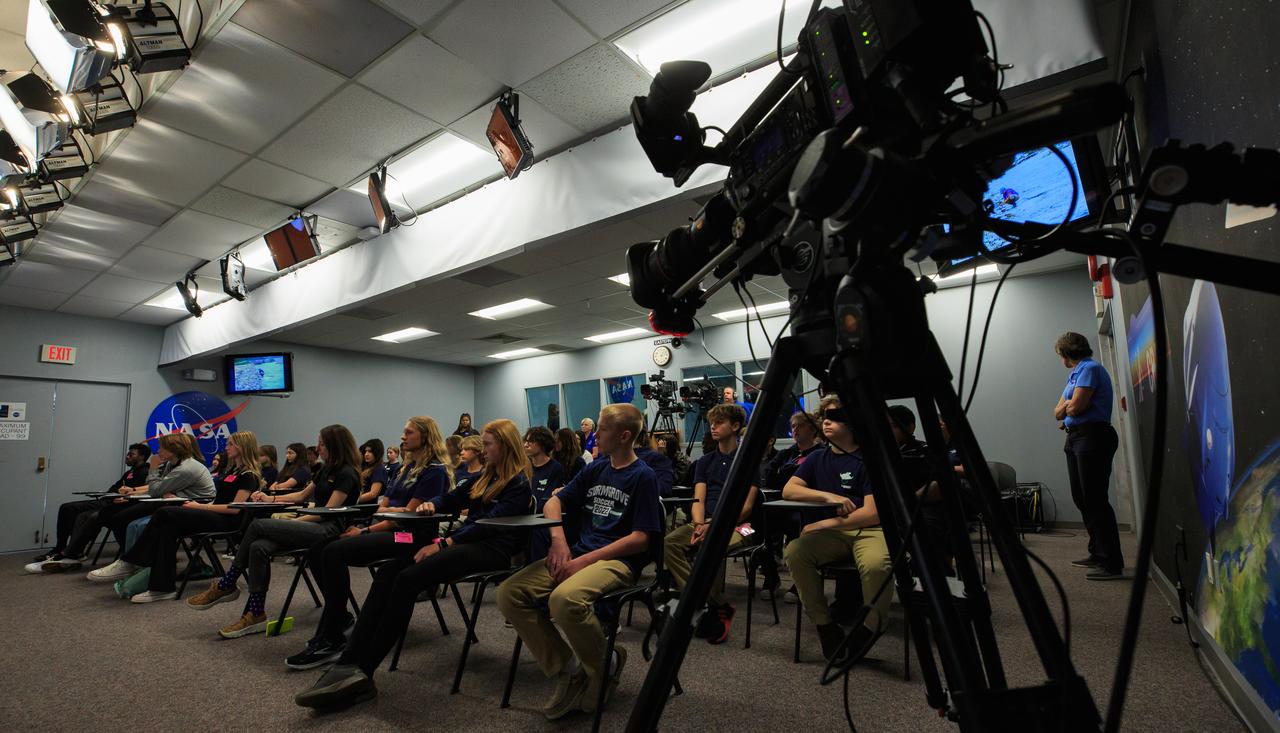
As part of NASA’s NextGen STEM project, students from Florida’s Montverde Academy, Storm Grove Middle School, and Whispering Pines School, as well as a homeschool collective from Georgia, participate in an environmentally focused Earth Day briefing inside the News Auditorium at NASA’s Kennedy Space Center in Florida on April 20, 2023. Along with the students participating in person, middle- and high-school students across the country had the opportunity to ask questions of the panel via phone to discuss how technology and science coexist with nature at Kennedy.
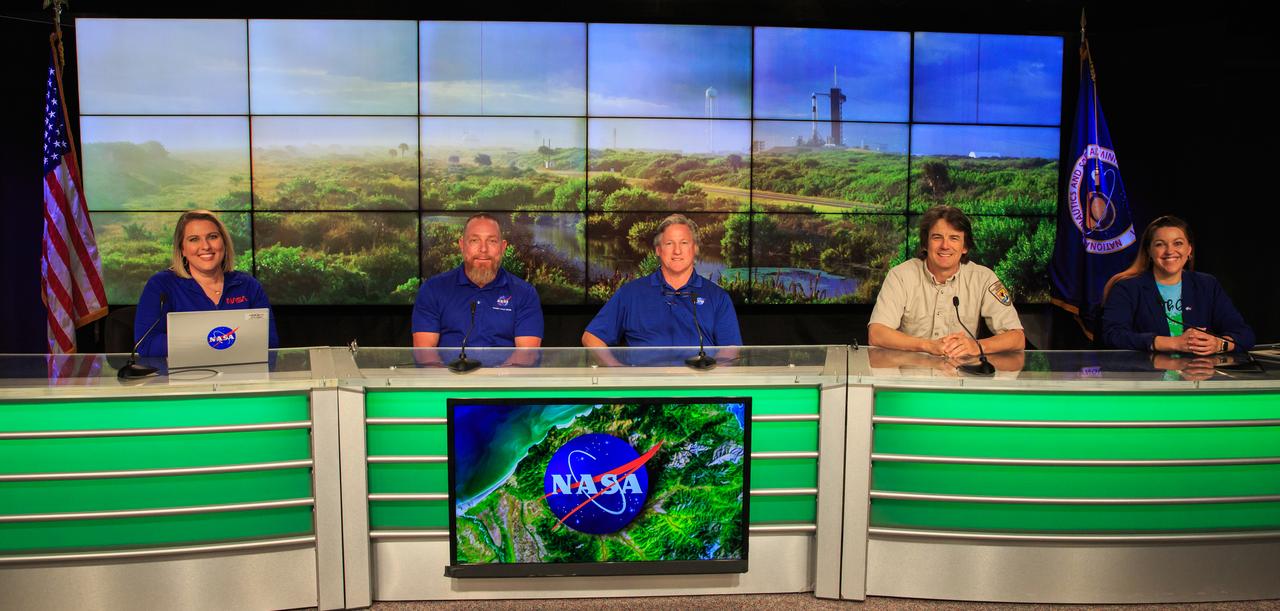
From left, NASA Communications’ Leah Martin; Environmental Planning Group Lead in Kennedy Space Center's Environmental Management Branch Don Dankert; Kennedy Environmental Protection Specialist Jeff Collins; Florida Fish and Wildlife Conservation Commission Officer Stanley Howater; and Stennis Space Center's Kelly McCarthy participate in an environmentally focused Earth Day briefing inside the News Auditorium at the Florida spaceport on April 20, 2023. As part of NASA’s NextGen STEM project, students from Florida’s Montverde Academy, Storm Grove Middle School, and Whispering Pines School, as well as a homeschool collective from Georgia, participated in person during the briefing, while middle- and high-school students across the country had the opportunity to ask questions of the panel via phone to discuss how technology and science coexist with nature at Kennedy.
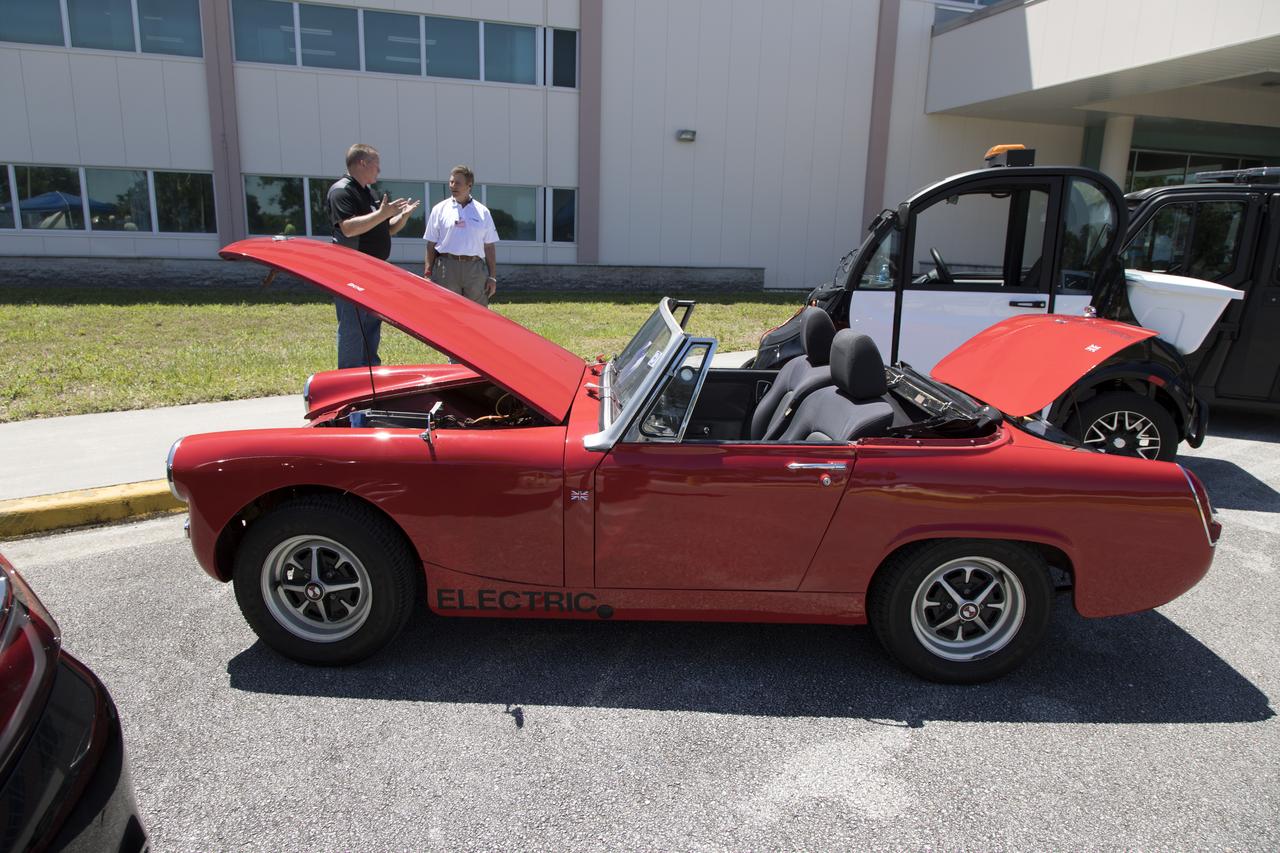
Employees discuss one of the electric vehicles on display during Kennedy Space Center’s annual Earth Day celebration. The two-day event featured approximately 50 exhibitors offering information on a variety of topics, including electric vehicles, sustainable lighting, renewable energy, Florida-friendly landscaping tips, Florida’s biking trails and more.
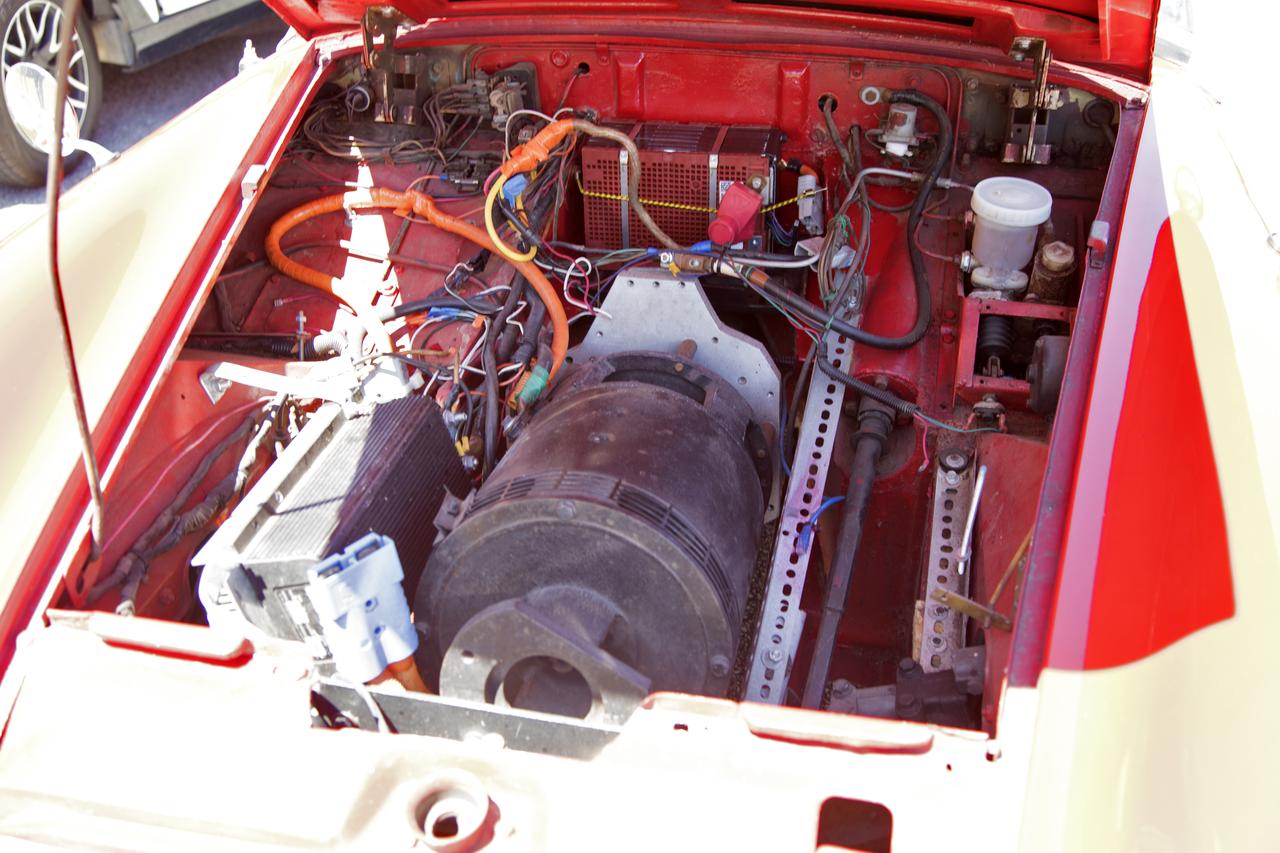
Employees had the opportunity to take a look under the hood of an electric vehicle on display during Kennedy Space Center’s annual Earth Day celebration. The two-day event featured approximately 50 exhibitors offering information on a variety of topics, including electric vehicles, sustainable lighting, renewable energy, Florida-friendly landscaping tips, Florida’s biking trails and more.
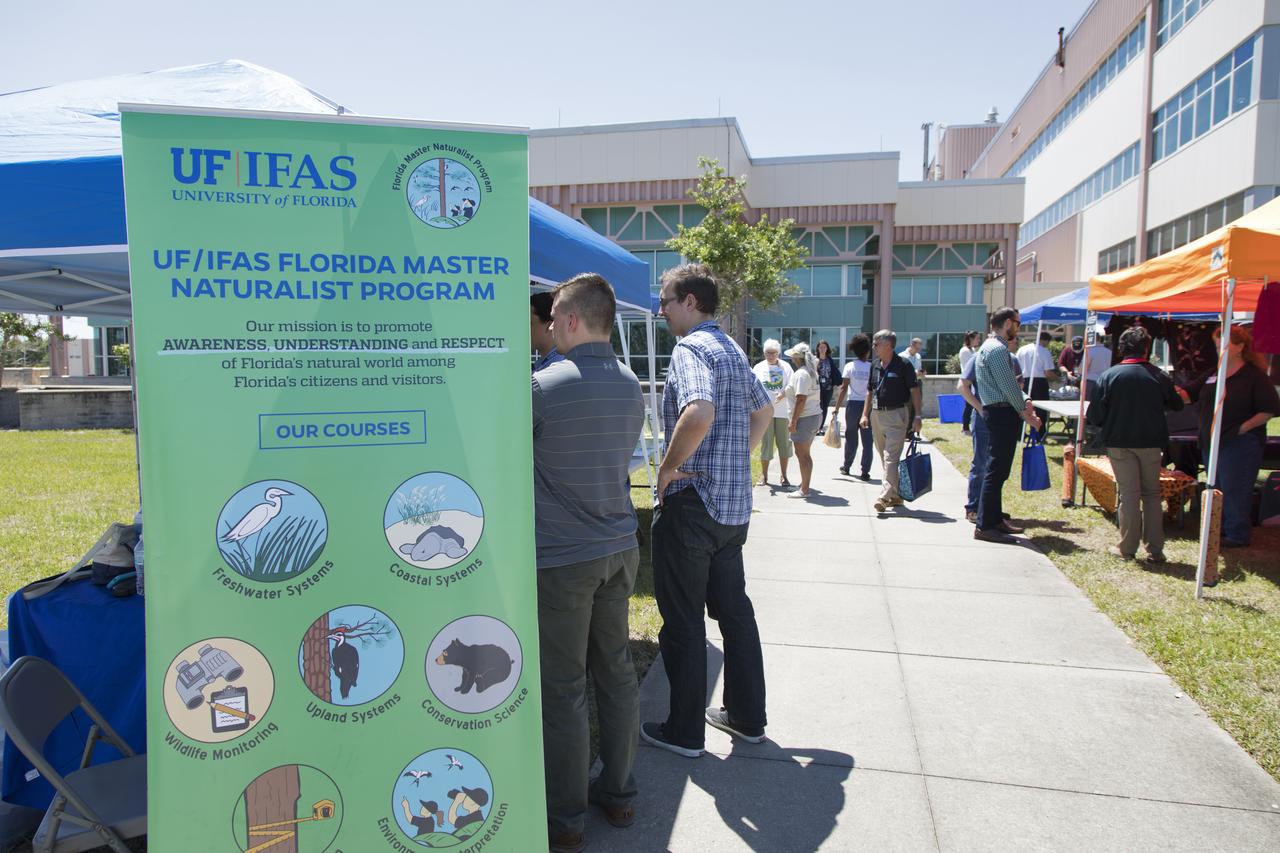
Employees stop by the University of Florida's Institute of Food and Agricultural Sciences booth at Kennedy Space Center’s annual Earth Day celebration. The two-day event featured approximately 50 exhibitors offering information on a variety of topics, including electric vehicles, sustainable lighting, renewable energy, Florida-friendly landscaping tips, Florida’s biking trails and more.
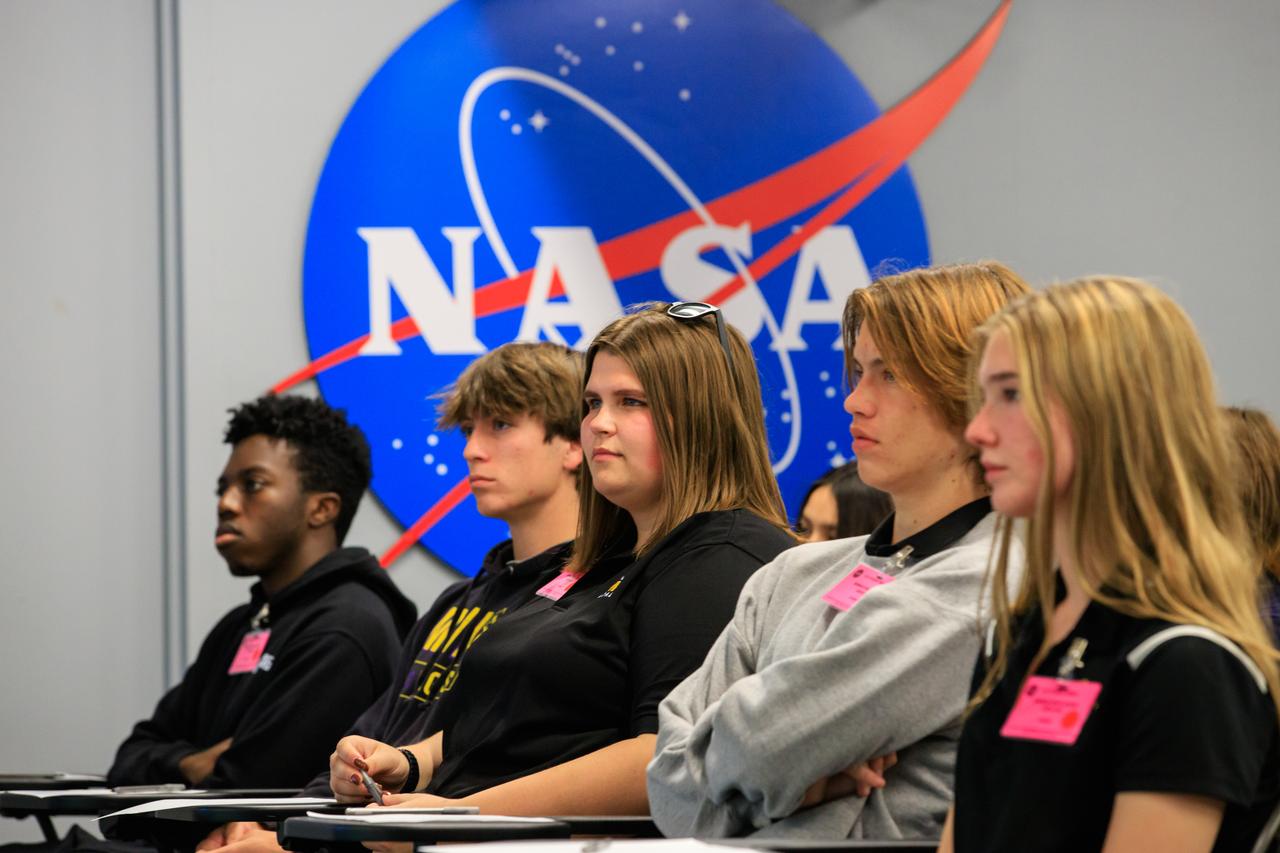
As part of NASA’s NextGen STEM project, students from Florida’s Montverde Academy, Storm Grove Middle School, and Whispering Pines School, as well as a homeschool collective from Georgia, participate in an environmentally focused Earth Day briefing inside the News Auditorium at NASA’s Kennedy Space Center in Florida on April 20, 2023. Along with the students participating in person, middle- and high-school students across the country had the opportunity to ask questions of the panel via phone to discuss how technology and science coexist with nature at Kennedy.
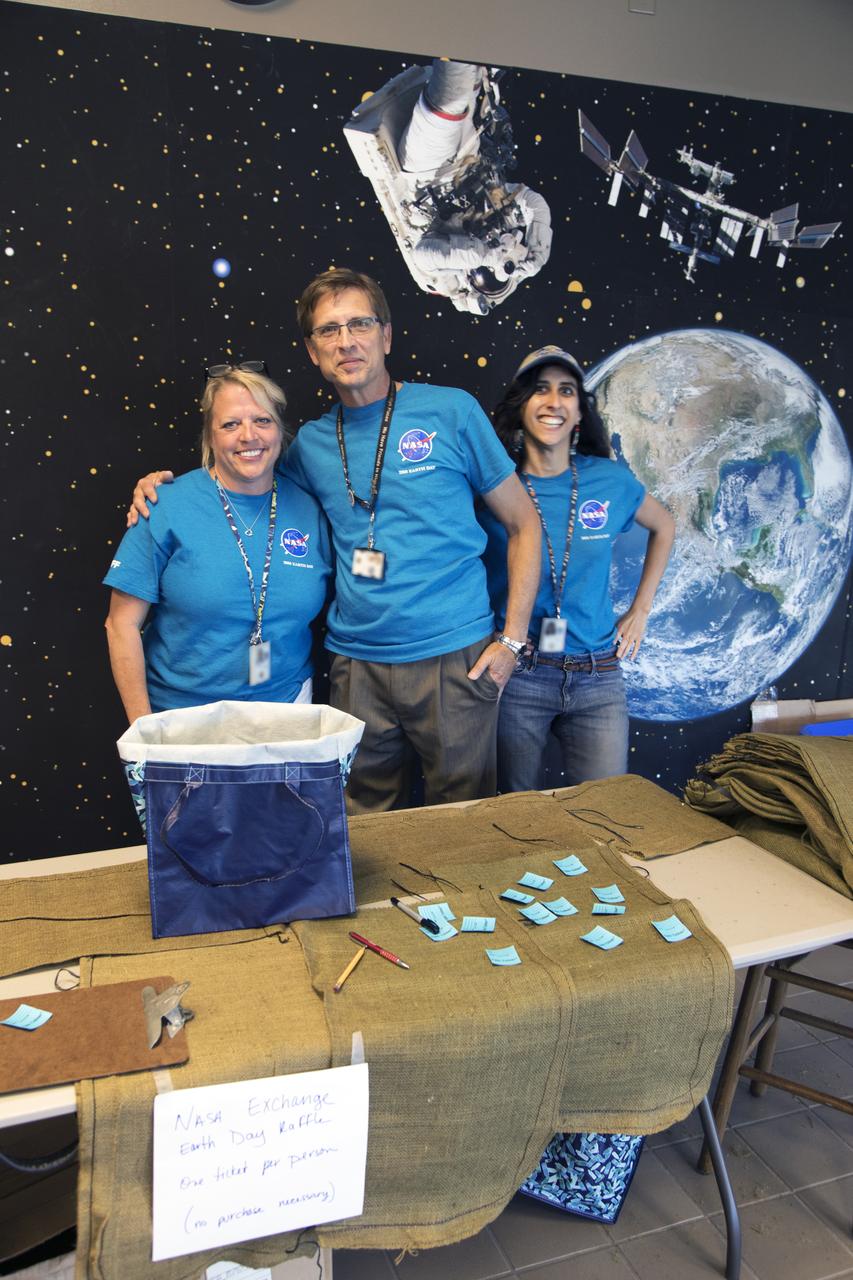
Organizers and volunteers for Kennedy Space Center’s Earth Day celebration gather for a photo at the NASA Exchange raffle booth. From left to right are Jeanne Ryba, Environmental Sustainability program specialist; Robert Smith, Earth Day volunteer; and Natasha Darre, Cultural Resources Specialist. The two-day event featured approximately 50 exhibitors offering information on a variety of topics, including electric vehicles, sustainable lighting, renewable energy, Florida-friendly landscaping tips, Florida’s biking trails and more.
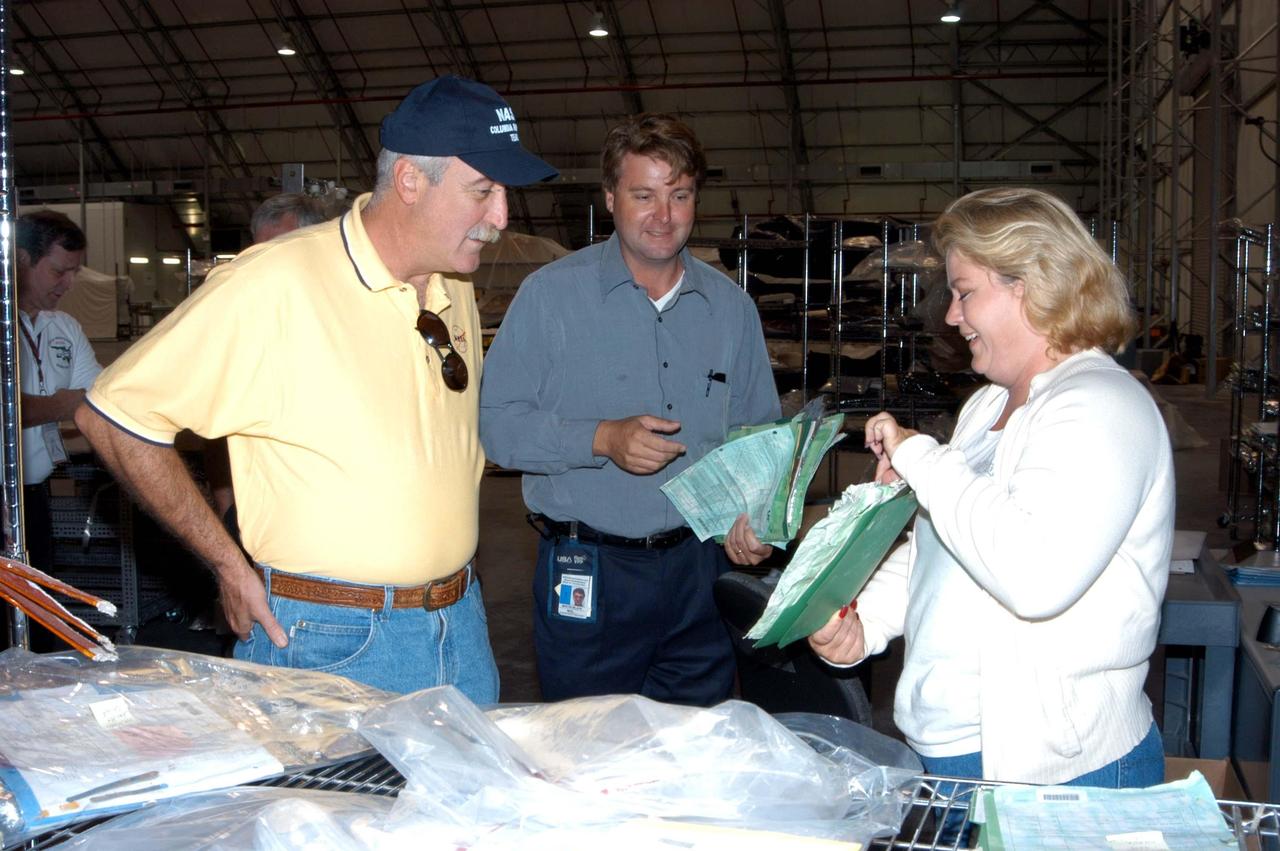
KENNEDY SPACE CENTER, FLA. - - United Space Alliance technician Shelly Kipp (right) shows some of the material salvaged from the storm-ravaged Thermal Protection System Facility (TPSF) to NASA Administrator Sean O’Keefe (left). Martin Wilson (center), manager of TPS operations for USA, looks on. The TPSF, which creates the TPS tiles, blankets and all the internal thermal control systems for the Space Shuttles, is almost totally unserviceable at this time after losing approximately 35 percent of its roof during Hurricane Frances, which blew across Central Florida Sept. 4-5. O’Keefe and NASA Associate Administrator of Space Operations Mission Directorate William Readdy are visiting KSC to survey the damage sustained by KSC facilities from the hurricane. Undamaged equipment was removed from the TPSF and stored in the RLV hangar. The Labor Day storm also caused significant damage to the Vehicle Assembly Building and Processing Control Center. Additionally, the Operations and Checkout Building, Vertical Processing Facility, Hangar AE, Hangar S and Hangar AF Small Parts Facility each received substantial damage. However, well-protected and unharmed were NASA’s three Space Shuttle orbiters -- Discovery, Atlantis and Endeavour - along with the Shuttle launch pads, all of the critical flight hardware for the orbiters and the International Space Station, and NASA’s Swift spacecraft that is awaiting launch in October.
KENNEDY SPACE CENTER, FLA. - - NASA Administrator Sean O’Keefe (right) looks at equipment moved from the Thermal Protection System Facility to the RLV Hangar. At left are United Space Alliance technicians Shelly Kipp and Eric Moss. O’Keefe and NASA Associate Administrator of Space Operations Mission Directorate William Readdy are visiting KSC to survey the damage sustained by KSC facilities from Hurricane Frances. The Thermal Protection System Facility (TPSF), which creates the TPS tiles, blankets and all the internal thermal control systems for the Space Shuttles, is almost totally unserviceable at this time after losing approximately 35 percent of its roof in the storm, which blew across Central Florida Sept. 4-5. Undamaged equipment was removed from the TPSF and stored in the hangar. The Labor Day storm also caused significant damage to the Vehicle Assembly Building and Processing Control Center. Additionally, the Operations and Checkout Building, Vertical Processing Facility, Hangar AE, Hangar S and Hangar AF Small Parts Facility each received substantial damage. However, well-protected and unharmed were NASA’s three Space Shuttle orbiters - Discovery, Atlantis and Endeavour - along with the Shuttle launch pads, all of the critical flight hardware for the orbiters and the International Space Station, and NASA’s Swift spacecraft that is awaiting launch in October.
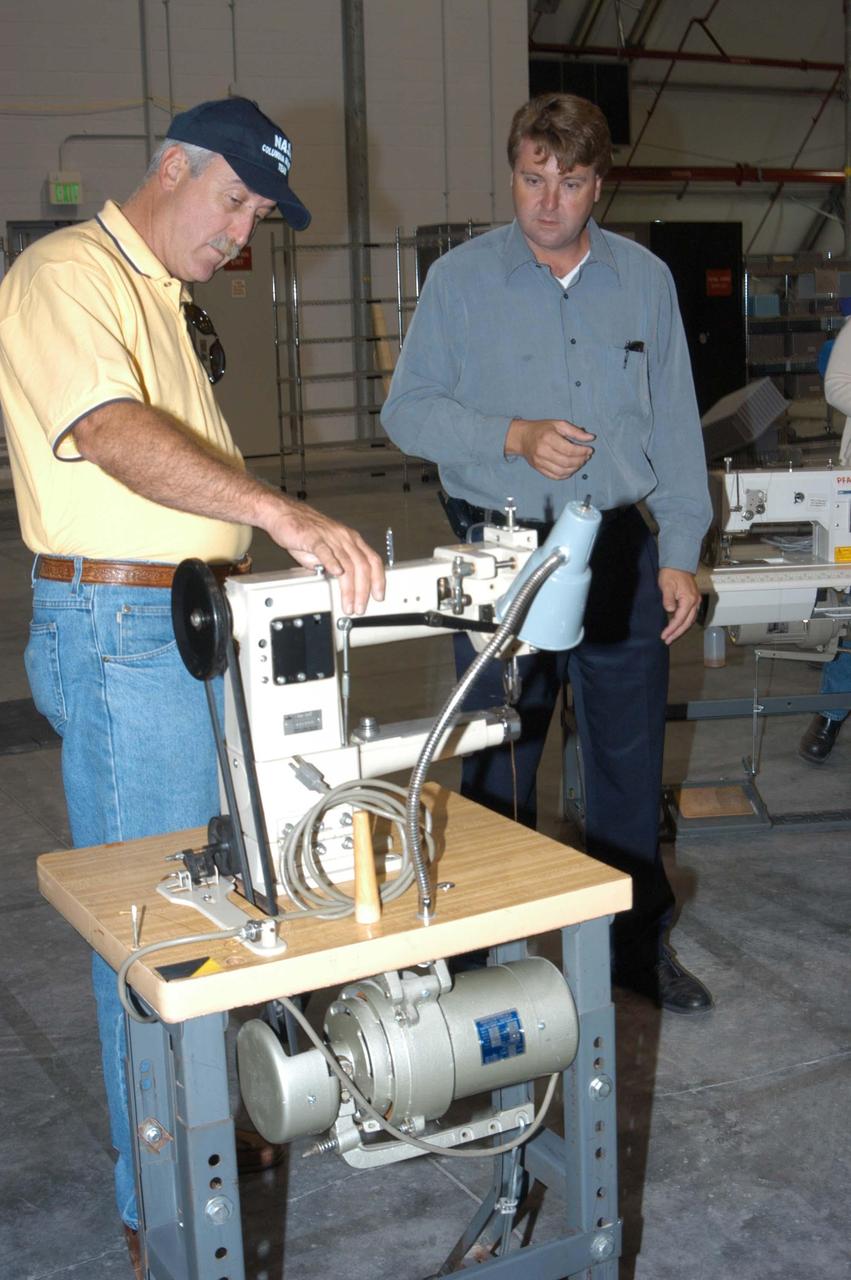
KENNEDY SPACE CENTER, FLA. - NASA Administrator Sean O’Keefe looks at equipment moved from the Thermal Protection System Facility to the RLV Hangar. AT right is Martin Wilson, manager of TPS operations for United Space Alliance. O’Keefe and NASA Associate Administrator of Space Operations Mission Directorate William Readdy are visiting KSC to survey the damage sustained by KSC facilities from Hurricane Frances. The Thermal Protection System Facility (TPSF), which creates the TPS tiles, blankets and all the internal thermal control systems for the Space Shuttles, is almost totally unserviceable at this time after losing approximately 35 percent of its roof in the storm, which blew across Central Florida Sept. 4-5. Undamaged equipment was removed from the TPSF and stored in the hangar. The Labor Day storm also caused significant damage to the Vehicle Assembly Building and Processing Control Center. Additionally, the Operations and Checkout Building, Vertical Processing Facility, Hangar AE, Hangar S and Hangar AF Small Parts Facility each received substantial damage. However, well-protected and unharmed were NASA’s three Space Shuttle orbiters -- Discovery, Atlantis and Endeavour - along with the Shuttle launch pads, all of the critical flight hardware for the orbiters and the International Space Station, and NASA’s Swift spacecraft that is awaiting launch in October.
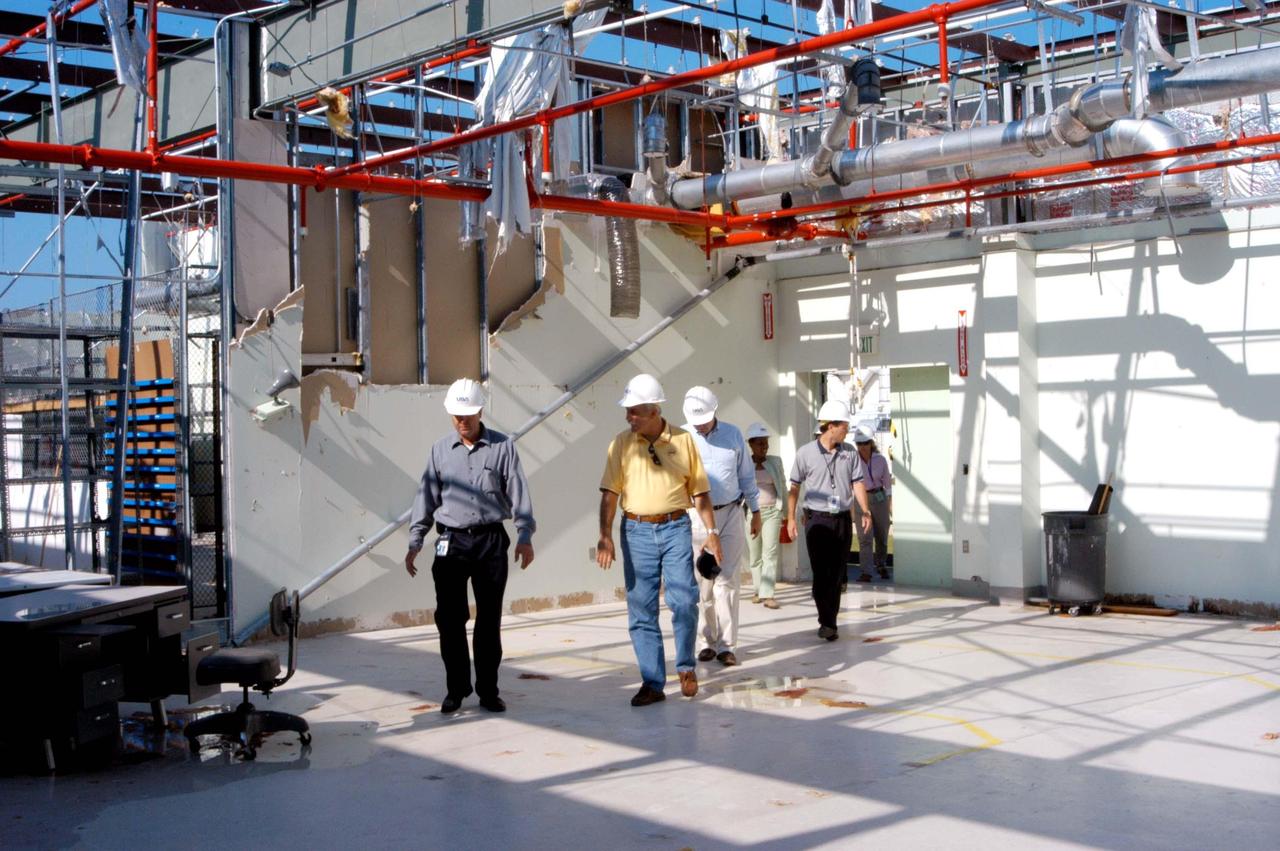
KENNEDY SPACE CENTER, FLA. - Martin Wilson (far left), manager of Thermal Protection System (TPS) operations for United Space Alliance (USA), leads NASA Administrator Sean O’Keefe (second from left) on a tour of the hurricane-ravaged Thermal Protection System Facility. The TPSF, which creates the TPS tiles, blankets and all the internal thermal control systems for the Space Shuttles, is almost totally unserviceable at this time after losing approximately 35 percent of its roof in the storm, which blew across Central Florida Sept. 4-5. Undamaged equipment was removed from the TPSF and stored in the RLV hangar. O’Keefe and NASA Associate Administrator of Space Operations Mission Directorate William Readdy are visiting KSC to survey the damage sustained by KSC facilities from the hurricane. The Labor Day storm also caused significant damage to the Vehicle Assembly Building and Processing Control Center. Additionally, the Operations and Checkout Building, Vertical Processing Facility, Hangar AE, Hangar S and Hangar AF Small Parts Facility each received substantial damage. However, well-protected and unharmed were NASA’s three Space Shuttle orbiters - Discovery, Atlantis and Endeavour - along with the Shuttle launch pads, all of the critical flight hardware for the orbiters and the International Space Station, and NASA’s Swift spacecraft that is awaiting launch in October.
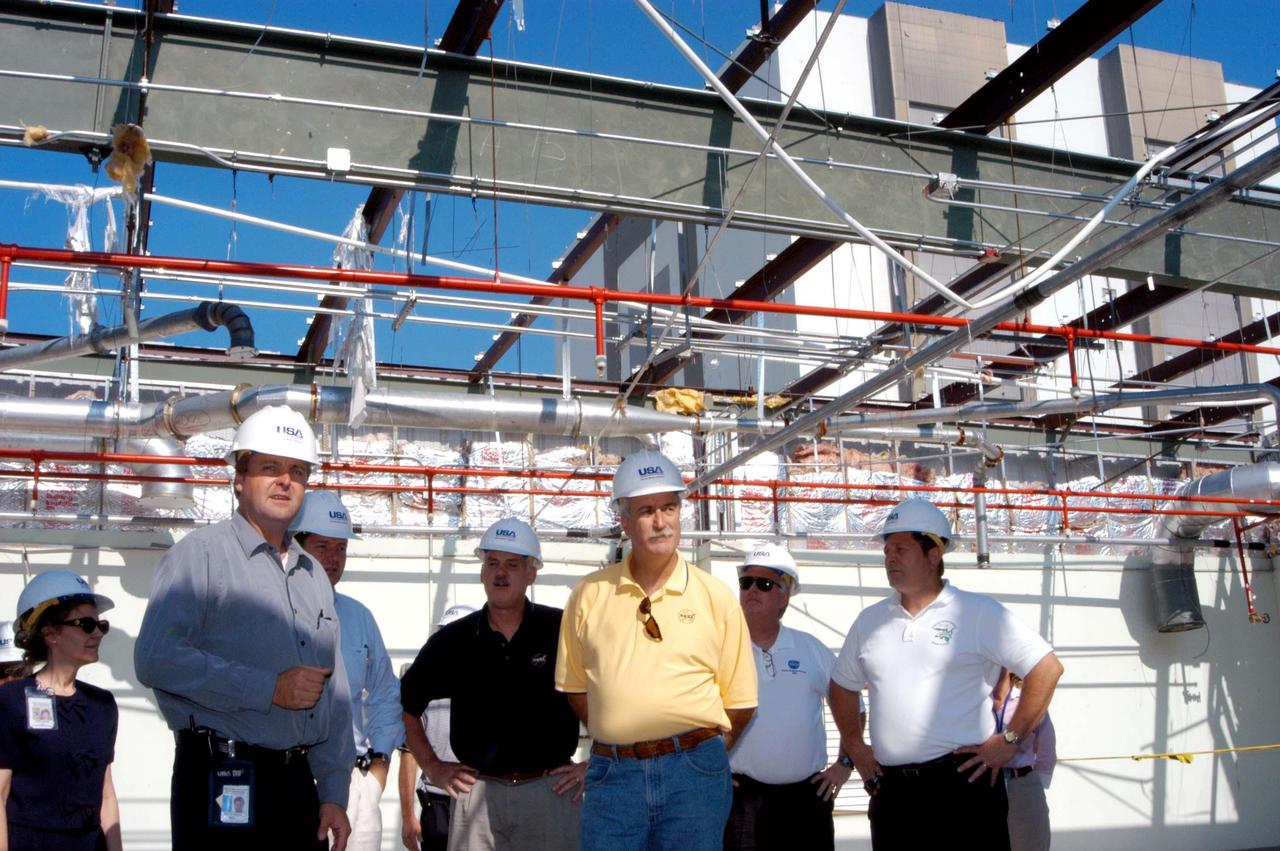
KENNEDY SPACE CENTER, FLA. - Martin Wilson (left, in foreground), manager of Thermal Protection System (TPS) operations for United Space Alliance (USA), gives a tour of the hurricane-ravaged Thermal Protection System Facility to (from center) NASA Associate Administrator of Space Operations Mission Directorate William Readdy, NASA Administrator Sean O’Keefe, Center Director James Kennedy and Director of Shuttle Processing Michael E. Wetmore. The TPSF, which creates the TPS tiles, blankets and all the internal thermal control systems for the Space Shuttles, is almost totally unserviceable at this time after losing approximately 35 percent of its roof during Hurricane Frances, which blew across Central Florida Sept. 4-5. O’Keefe and Readdy are visiting KSC to survey the damage sustained by KSC facilities from the hurricane. The Labor Day storm also caused significant damage to the Vehicle Assembly Building and Processing Control Center. Additionally, the Operations and Checkout Building, Vertical Processing Facility, Hangar AE, Hangar S and Hangar AF Small Parts Facility each received substantial damage. However, well-protected and unharmed were NASA’s three Space Shuttle orbiters - Discovery, Atlantis and Endeavour - along with the Shuttle launch pads, all of the critical flight hardware for the orbiters and the International Space Station, and NASA’s Swift spacecraft that is awaiting launch in October.
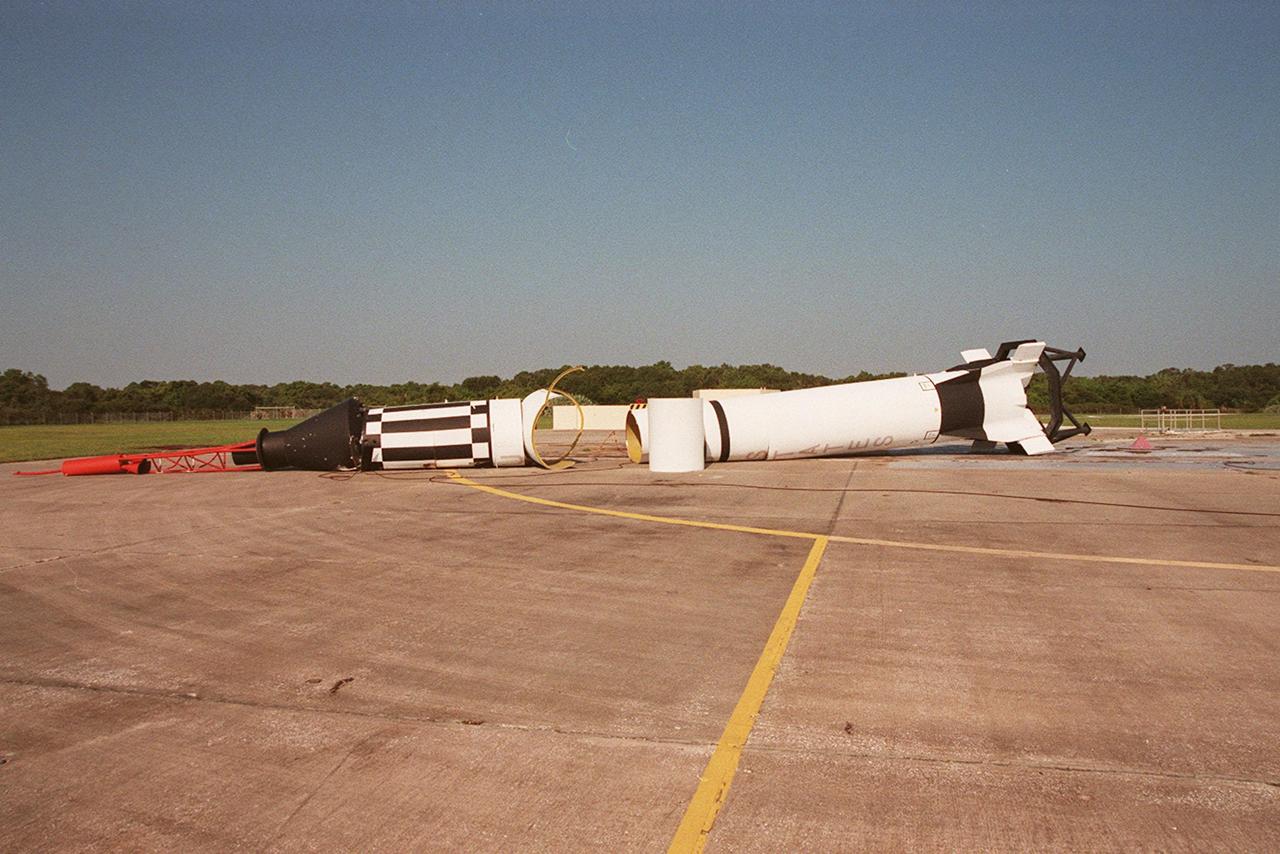
At Cape Canaveral Air Station's Complex 5/6, a Redstone rocket lies broken on the pad after Hurricane Floyd passed along the East Coast of Florida, Sept. 14-15. The complex, now dismantled, was the site of the first manned launch May 5, 1961. At a weather tower located between Shuttle Launch Pad 39A and Launch Complex 41, the highest winds recorded during the superstorm were 91 mph from the NNW at 4:50 a.m. on Wednesday, Sept. 15. The maximum sustained winds were recorded at 66 mph. The highest amount of rain recorded at KSC was 2.82 inches as the eye of Hurricane Floyd passed 121 miles east of Cape Canaveral at 4 a.m. Wednesday. A preliminary review of conditions at the Kennedy Space Center was positive, however, after the worst of Hurricane Floyd passed. There appeared to be no major damage to NASA assets, including the launch pads, the four Space Shuttle Orbiters, and flight hardware